Happy New Year, everyone! It’s 2023 in the present day and 1965 here at the Stitchcraft Sixties.
We are now solidly in the mid-60s fashion era of miniskirts, Twiggy and the “Space Age” look, but Stitchcraft was a conservative magazine, so hemlines are still at least knee length and the “country casual” look prevails. To be fair, it’s also January, so the focus is on practical, warm garments for both outdoors and in (good central heating was still not available in many British homes) and homeware projects to keep hands busy during the long, dark winter evenings.
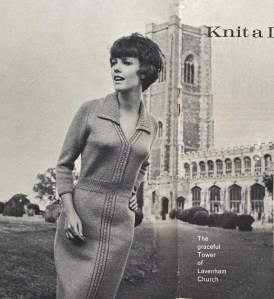
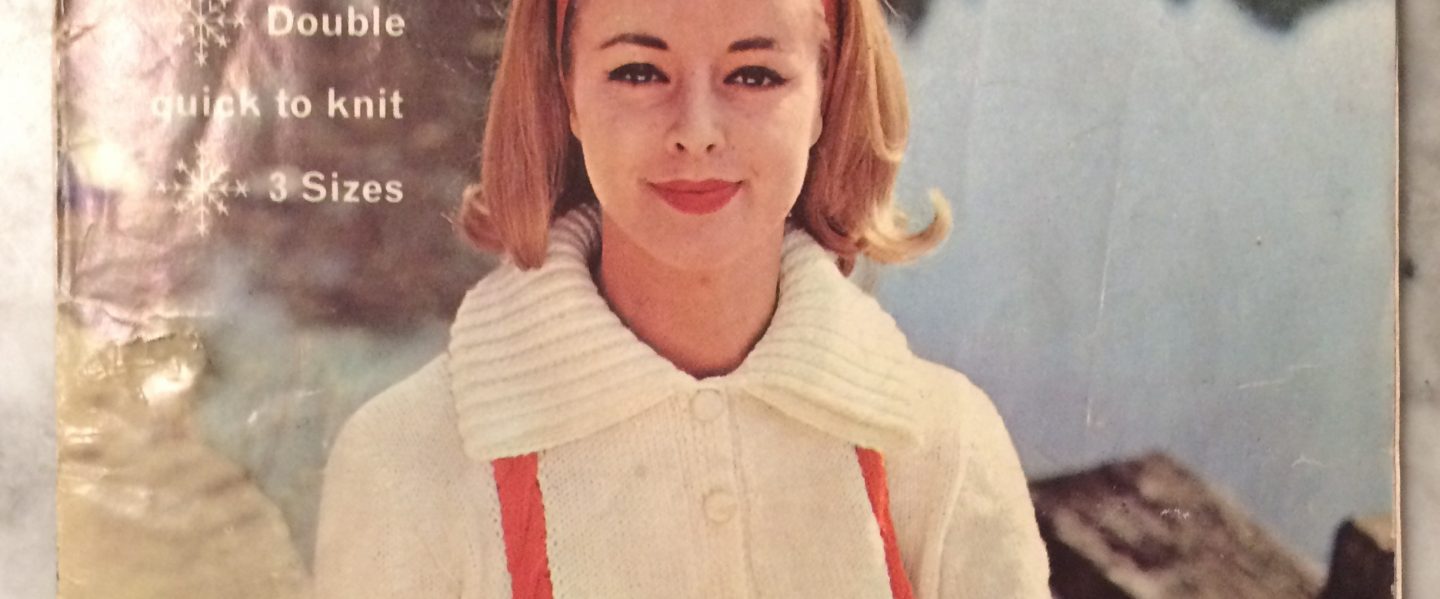
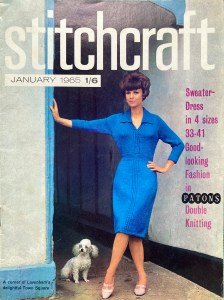
The January 1965 issue was photographed in Lavenham, a medieval town noted for its timber-frame houses and its connection to the wool industry in the 16th century — a fitting setting for knitting magazine photos! Our model poses for the cover in “A corner of Lavenham’s delightful town square” whose entryway arch perfectly matches her bright blue sweater-dress (I don’t know if the poodle is hers or just happened to stop by for the photo) and for the inside photo in front of the historic St. Peter and St. Paul Church, whose construction was financed primarily by merchants in the wool and cloth business.
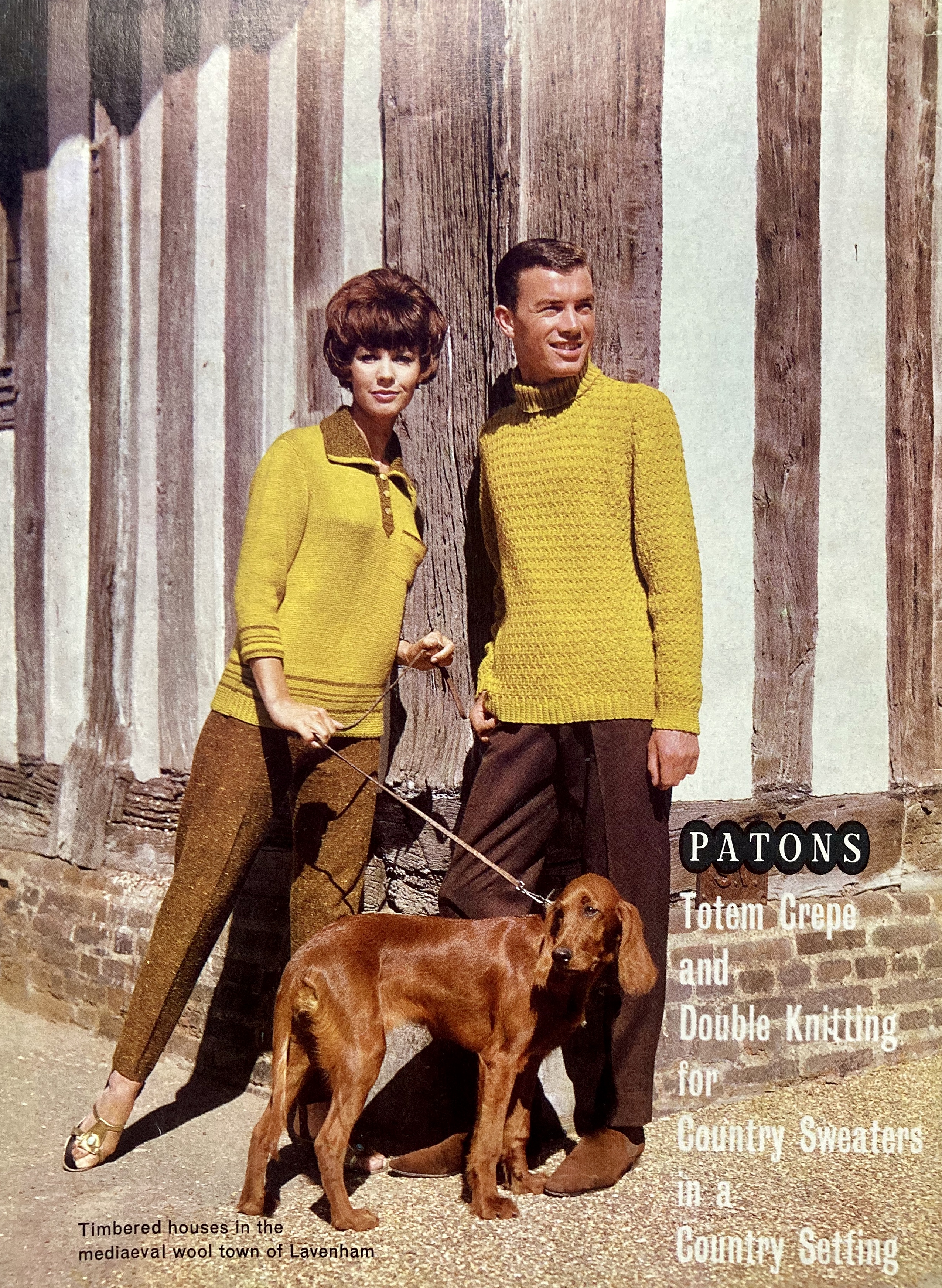
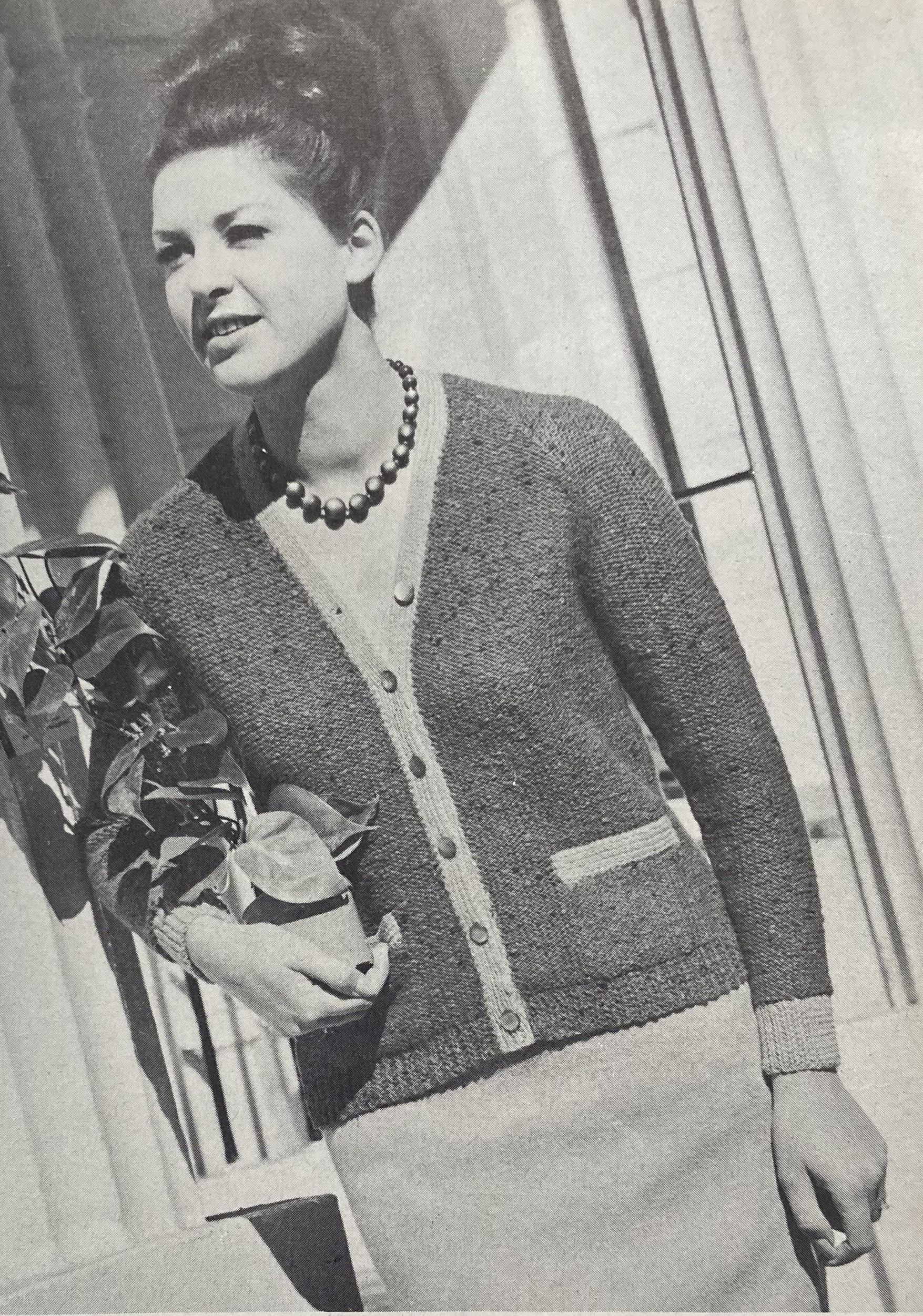
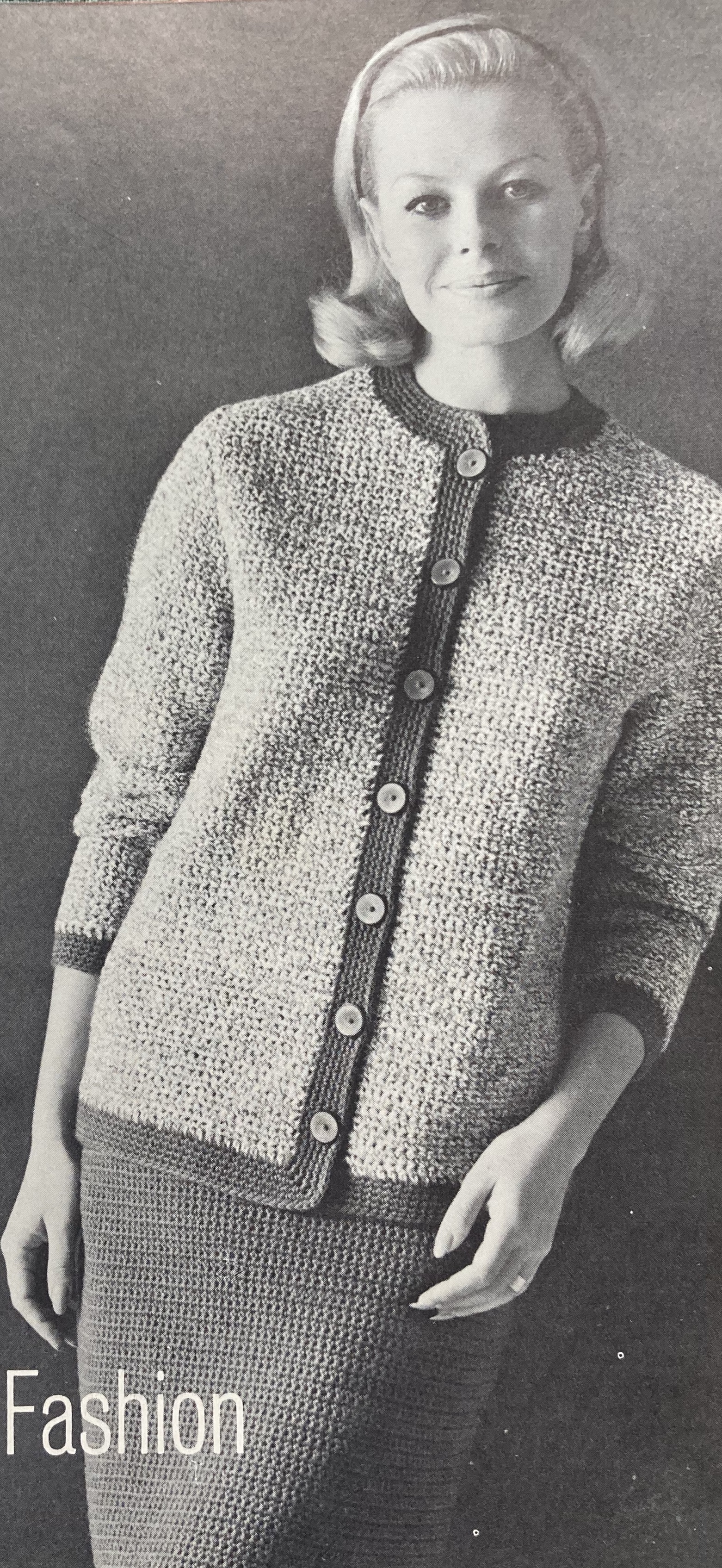
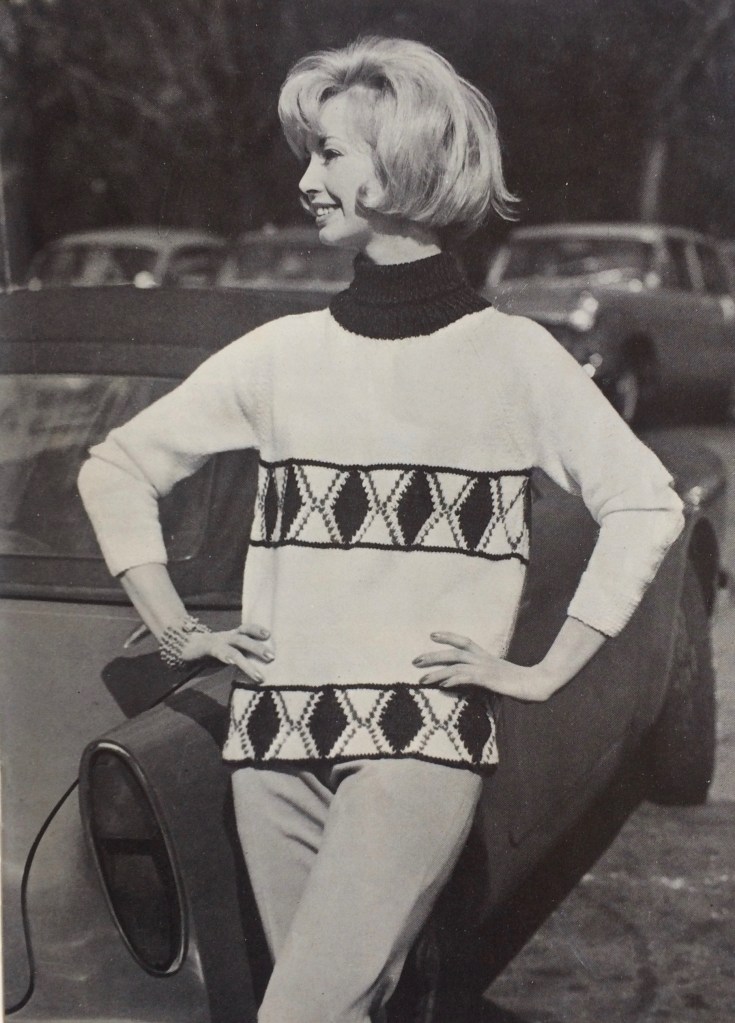
Other warm “sweater” garments for adults include a shirt-style pullover for women and a smocked-cable pullover for men in shades of gold and brown, a tweed cardigan in larger sizes (up to 43 inch bust), a crocheted skirt suit, and a “senior pullover” for “Father’s Classic Look”. All of them are in DK-weight or heavier wool. With the exception of the cover dress and the larger-sizes cardigan, both made in bright blue, tweedy, marled colours of brown, gold, copper and olive green prevail. Photographic fashion favours strong, straight-standing poses for the “bold” look, often with the camera held at a diagonal angle.

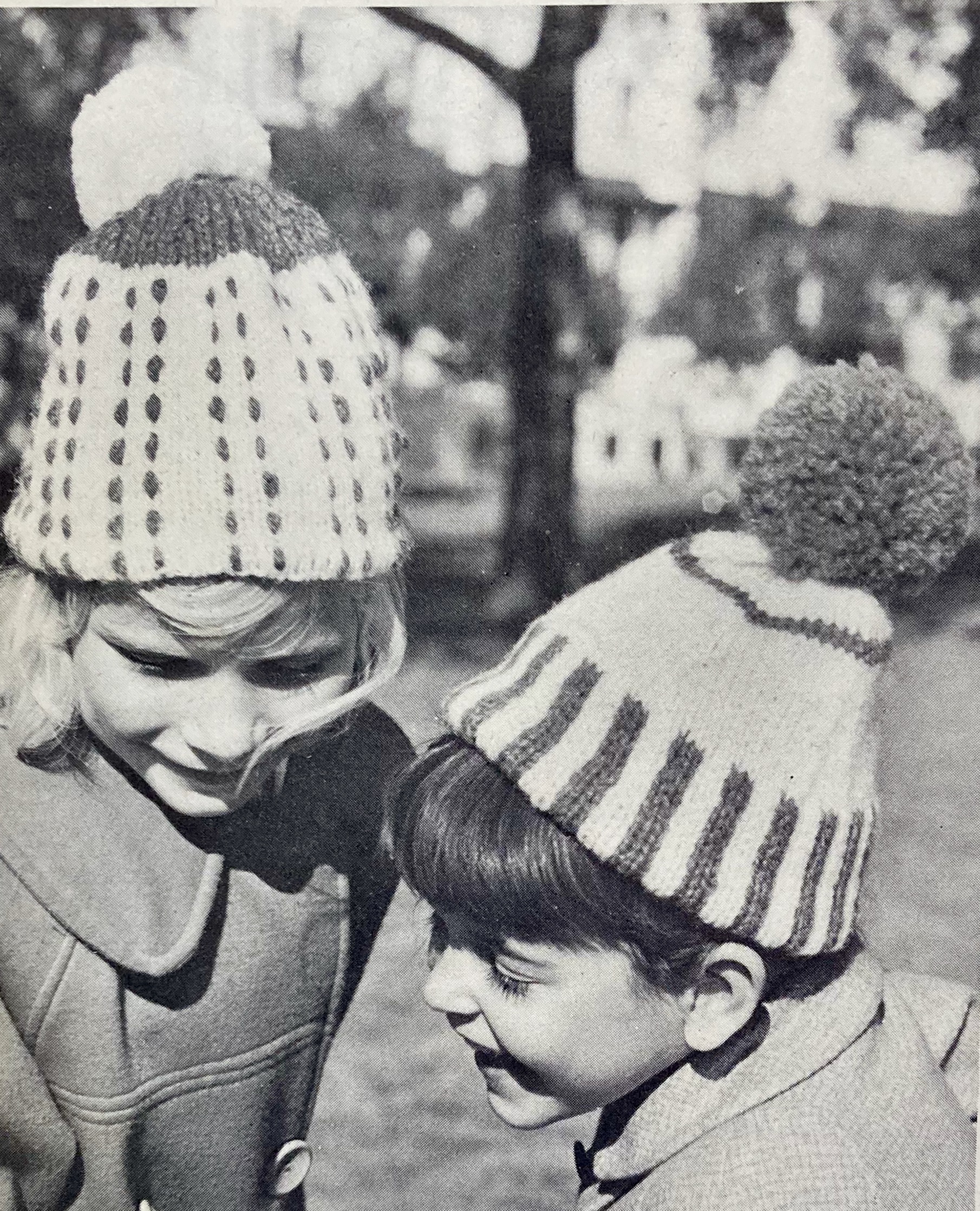
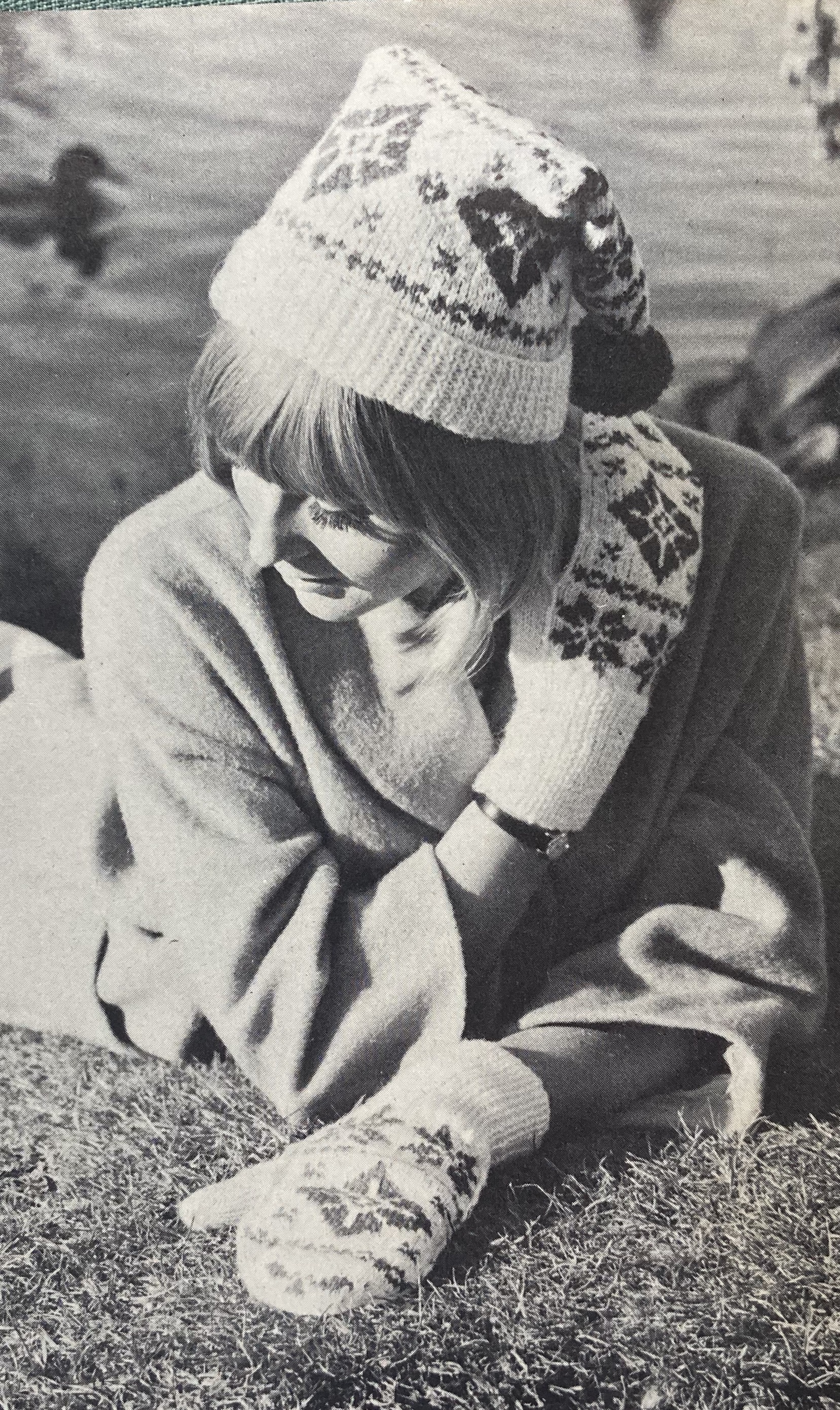
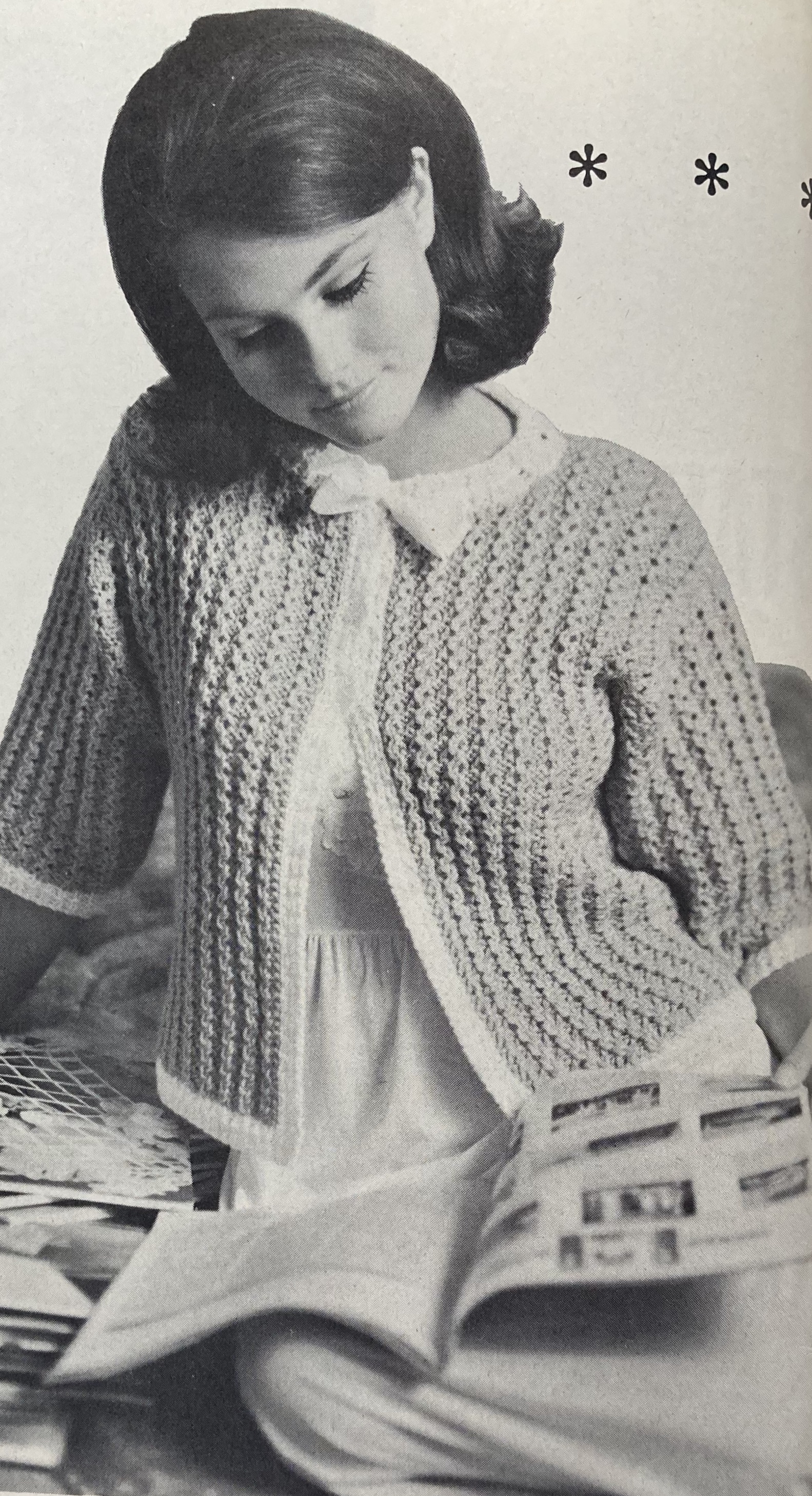
Winter means warm, quickly knit accessories as well, and this issue has some fun hats and mittens with Norwegian or blocky stripe patterns (the one with the broken lines is done by saddle-stitching embroidery on the finished cap.) No harvest golds and burnished coppers here: the caps are all made in red and white or royal blue and white for a typical wintery snowflake look. The cosy bedjacket is also blue and white and features a soft, squishy slipped-stitch lace pattern that is presumably very warm and comfortable.
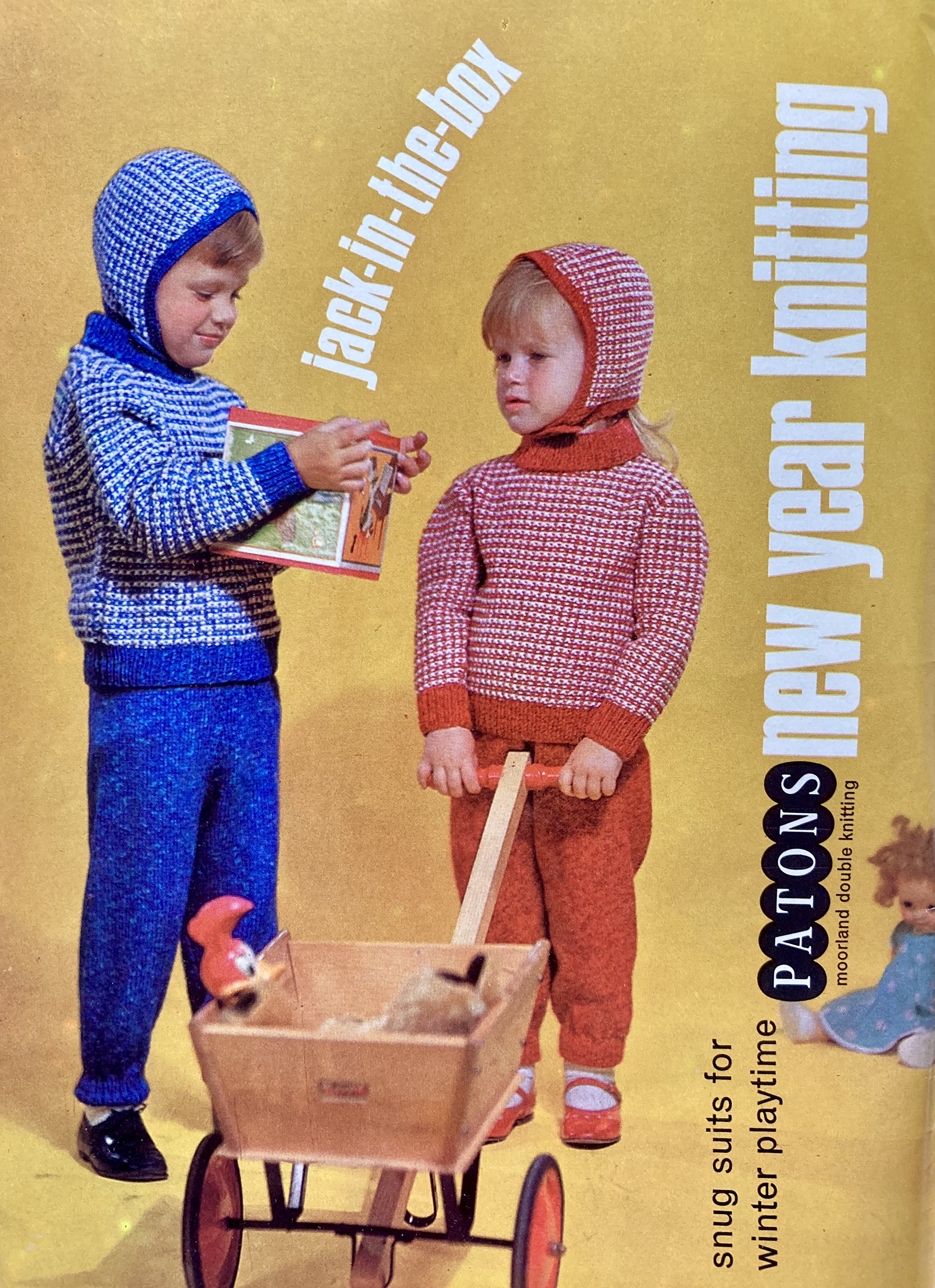
Younger children can wear a truly cosy “snug suit for winter playtime”: a set of pullover and “helmet”-style cap in a thick slipped-stitch pattern with knitted leggings. Blue and white or red and white are the colour choices here as well. There’s also a pullover for “Junior” (three sizes to fit 24-29 inch chest) in light blue and dark blue. The “crunchy” stitch pattern looks complicated, but is made entirely using normal knit and purl stitches in a combination of stocking-stitch, reverse stocking-stitch and small bobbles made by knitting, purling, knitting into the same stitch on one row and purling 3 together three rows later.

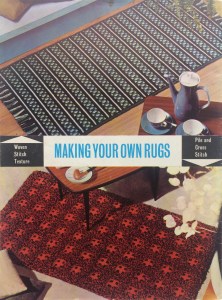
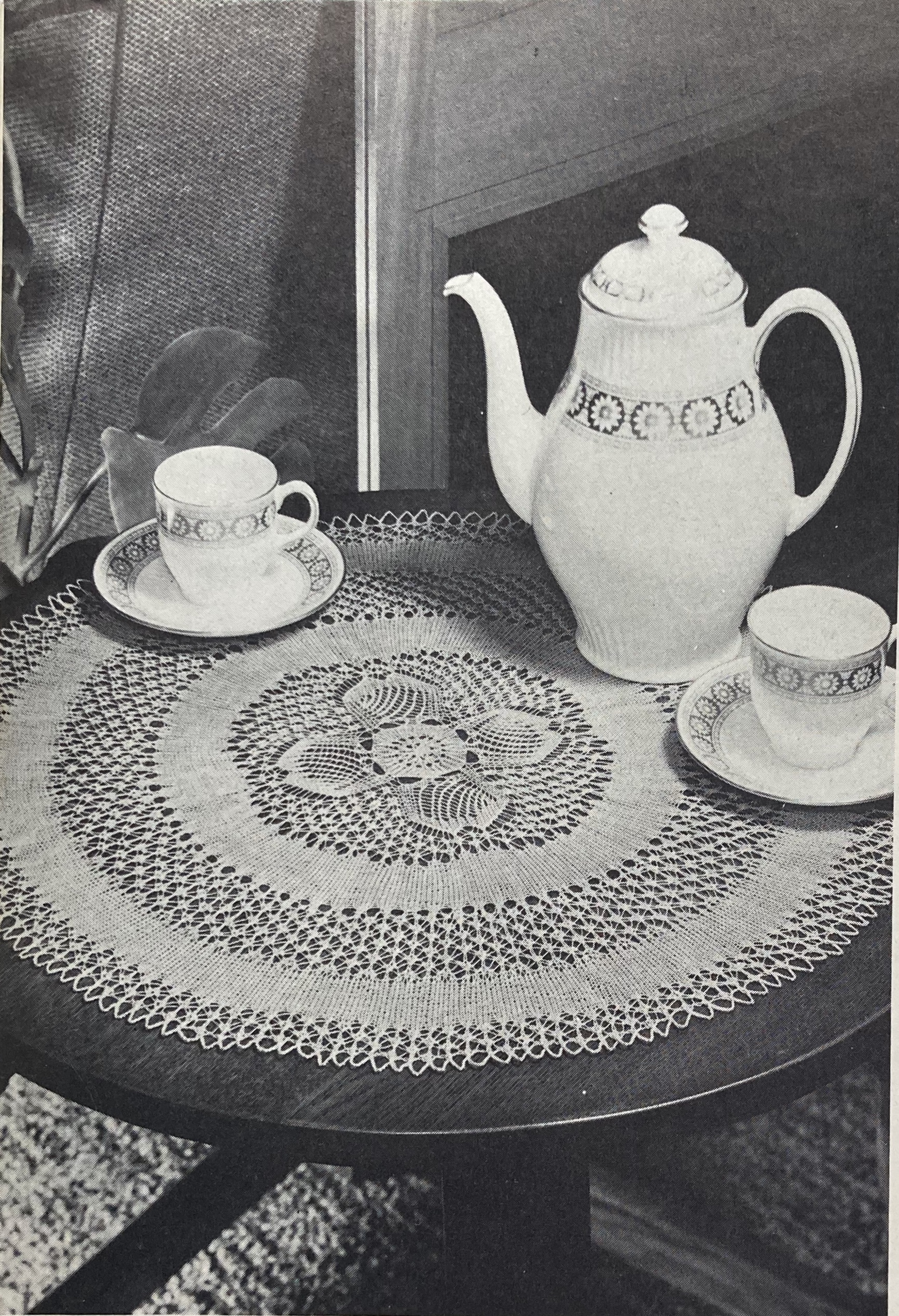
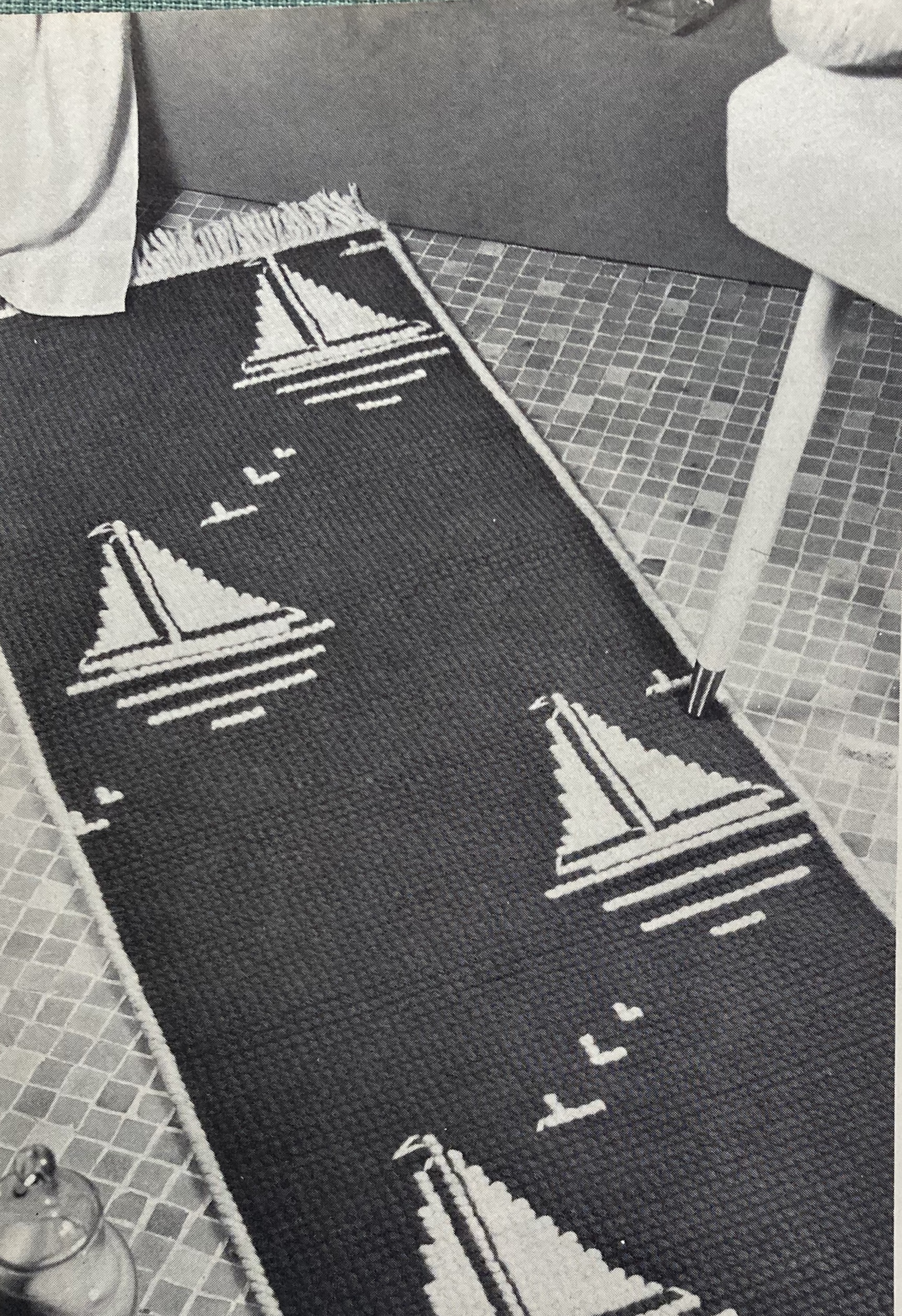
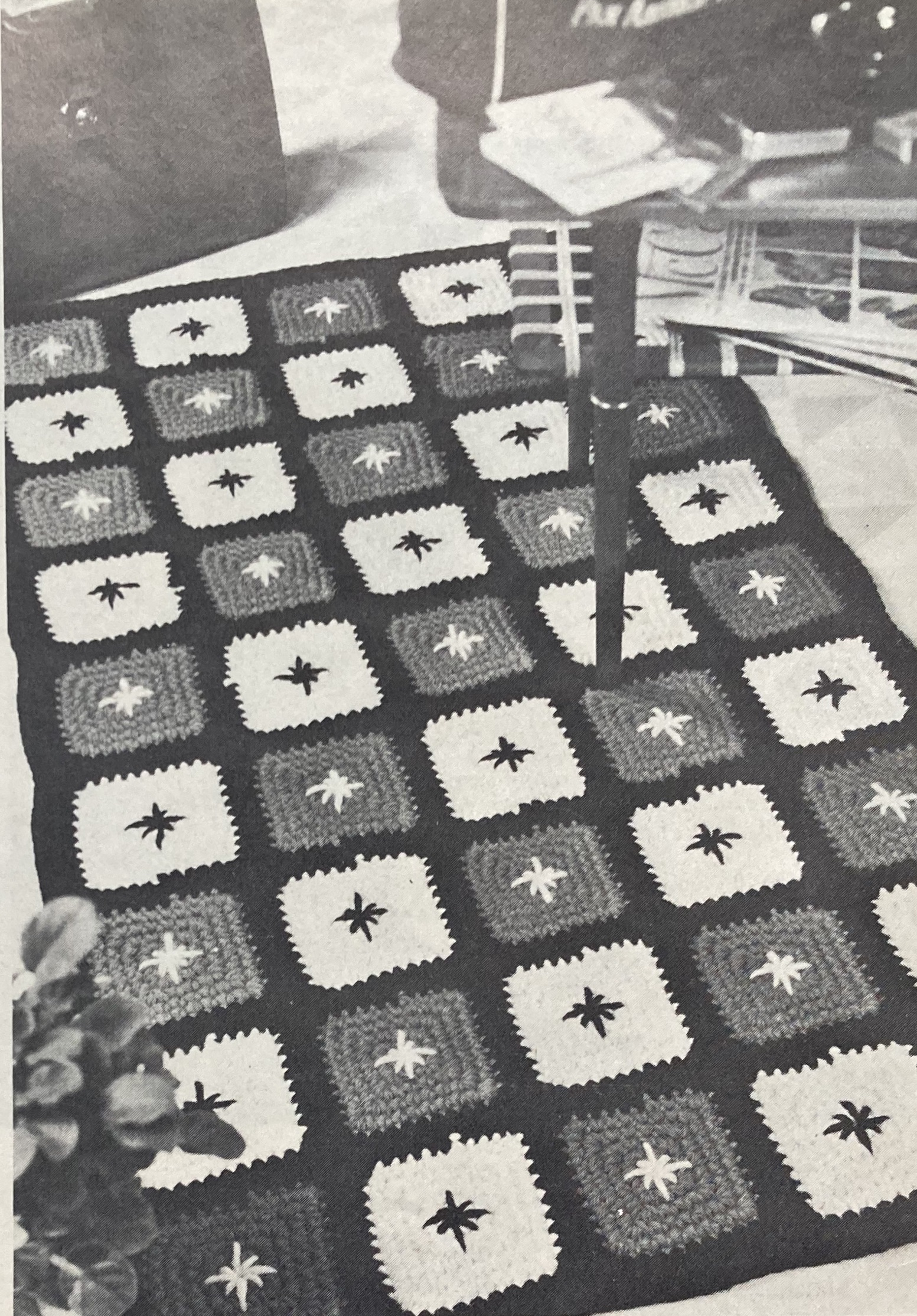
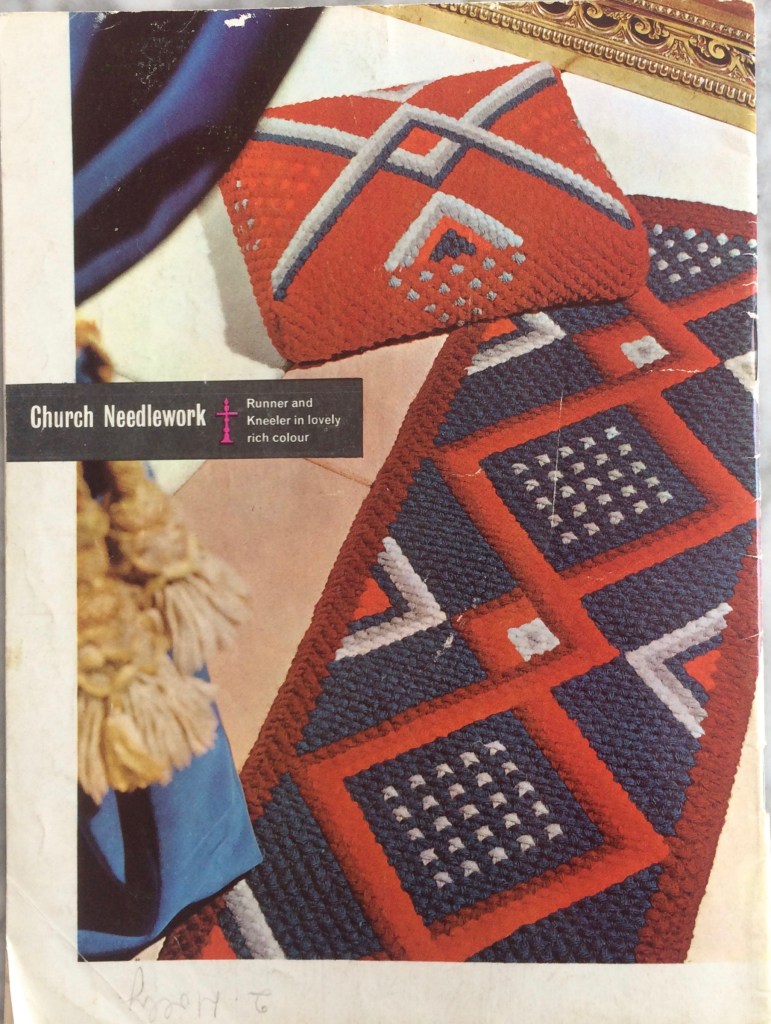
There are plenty of homeware projects as well: like the knitted items, everything except the lace doily is more serviceable than fancy. There are stitched and crocheted rugs– and a conveniently placed advertisement for rugmaking which is one of the very few advertisements of this era that show a man working on handcrafts.

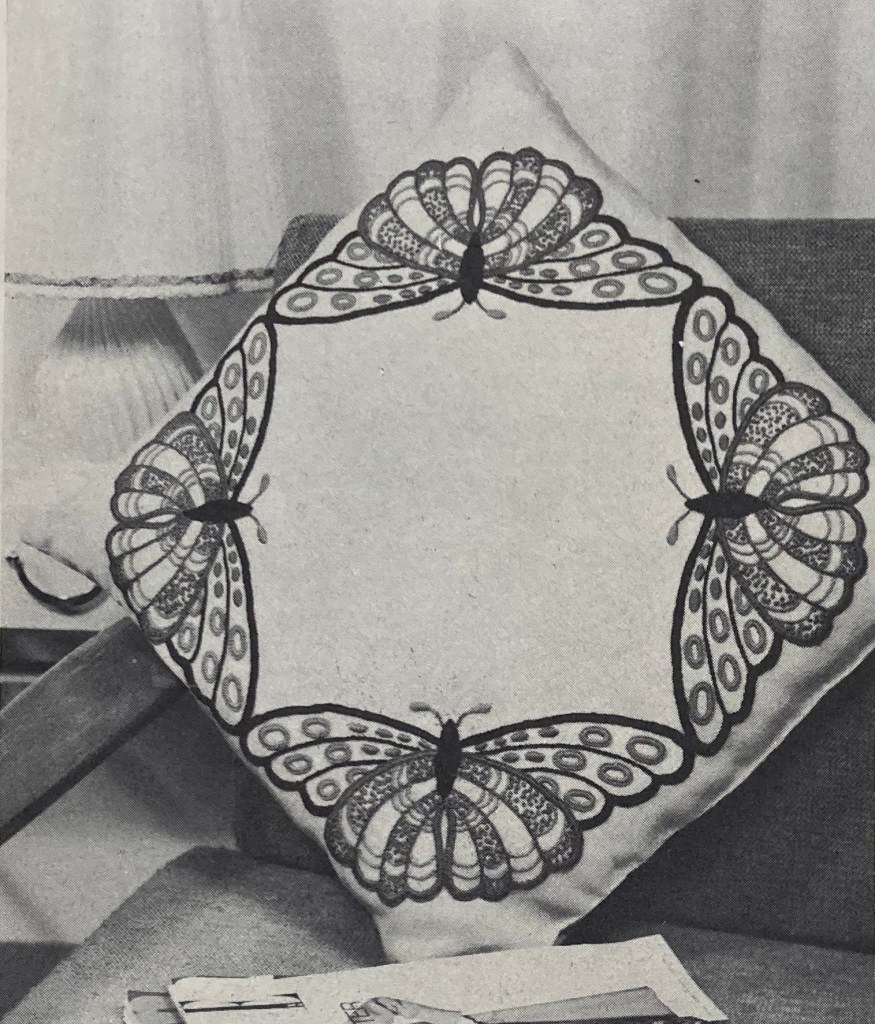
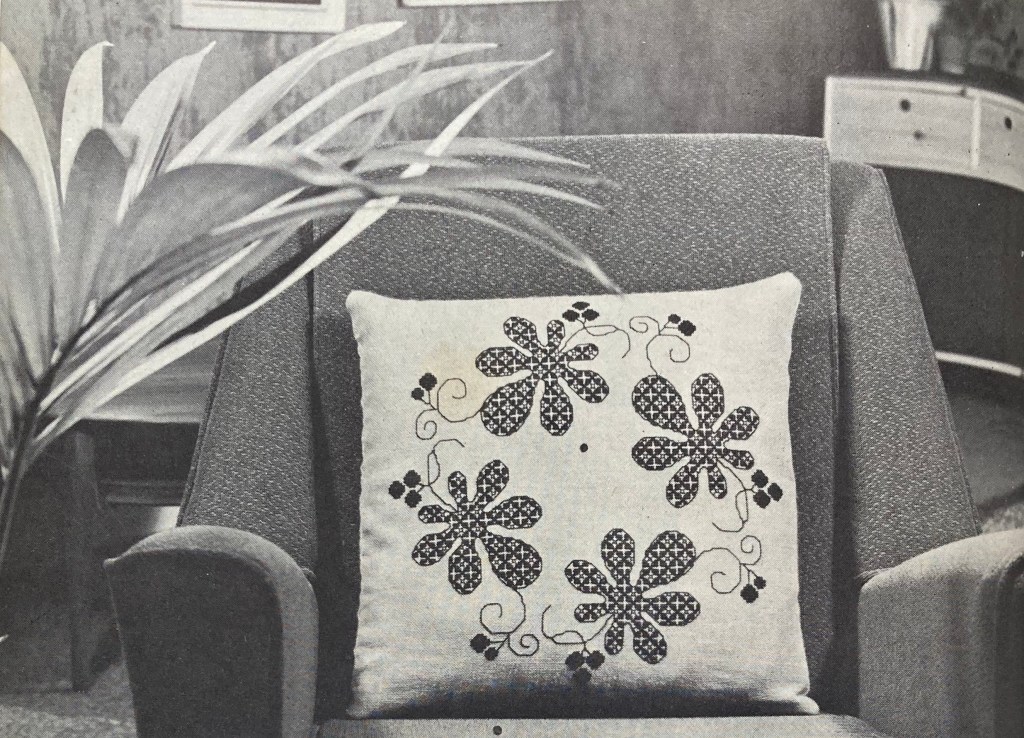
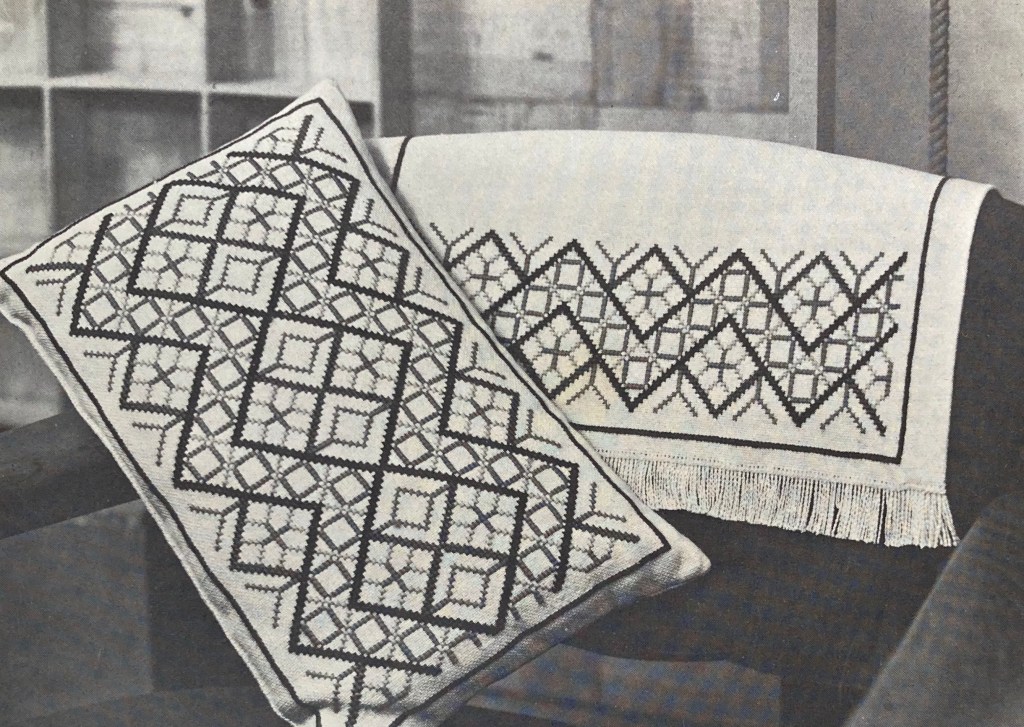
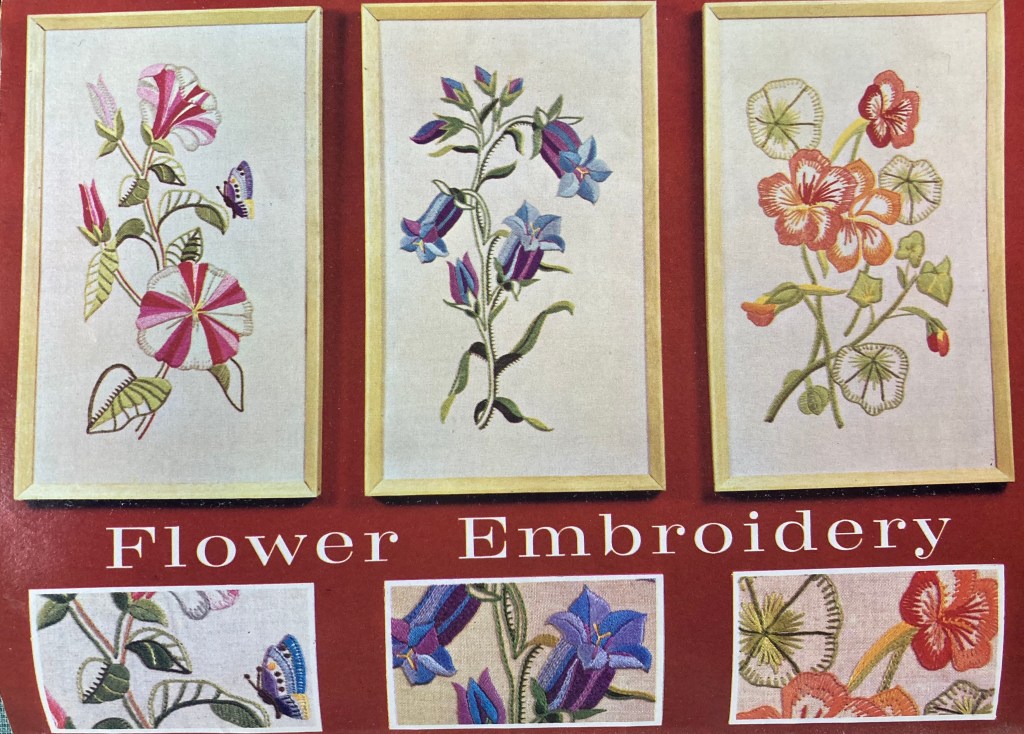
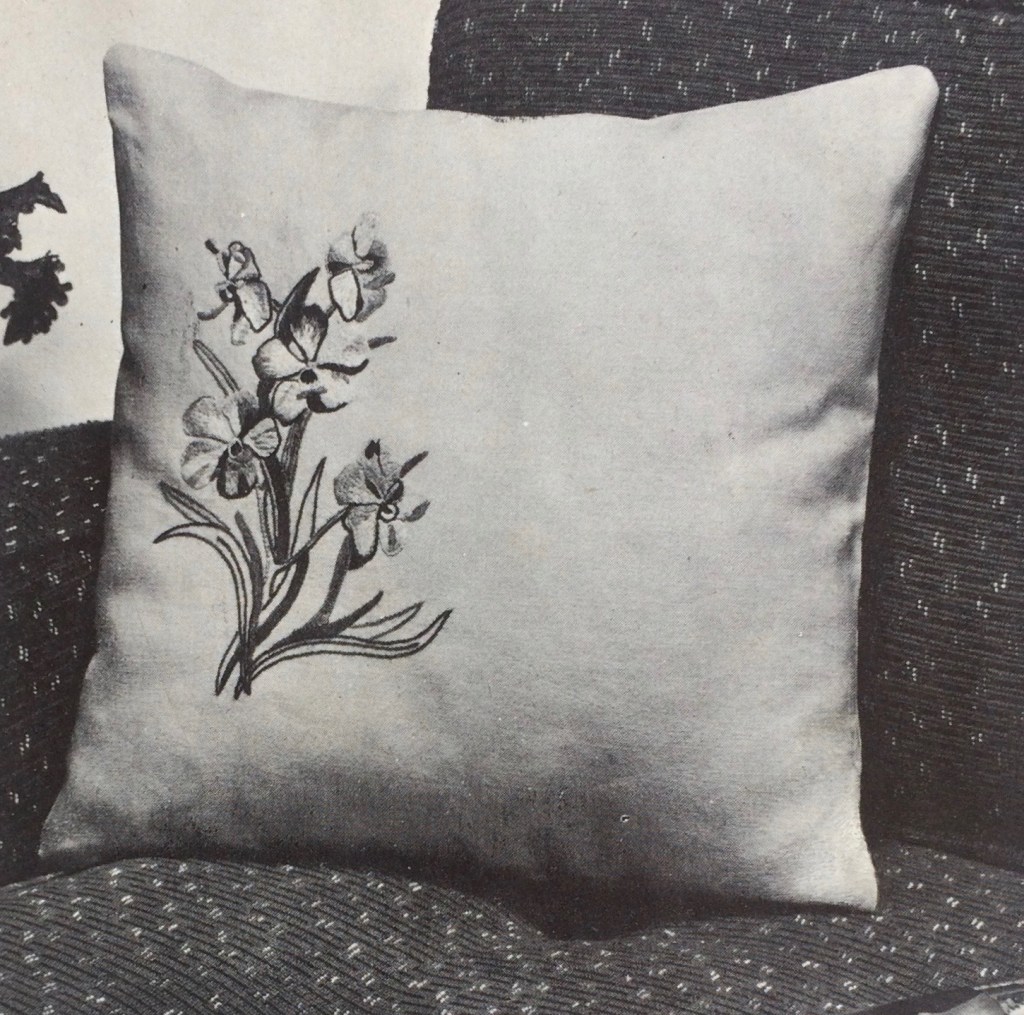
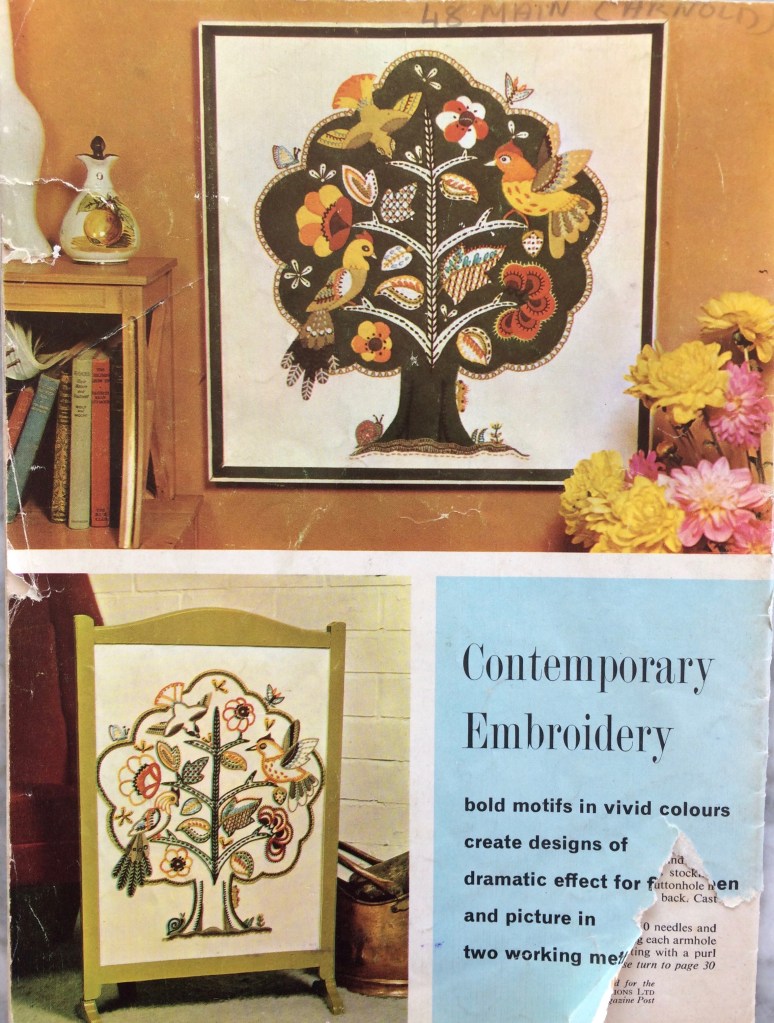
There’s a butterfly design in cutwork or as wool embroidery on a cushion in mid-60s shades of brown and dark green as well as more cushions in Tudor blackwork design or a geometric “peasant” pattern. The latter two take up the “bold” colour scheme idea with black on bright red or royal blue, scarlet, gold and jade on natural fabric. Finally, there are three flower panels than can be worked individually or combined to decorate a folding 3-part screen.
That’s this issue! My project will be the Norwegian cap and mitts in trending 1965 colours of blue and white. Happy New Year to you all.





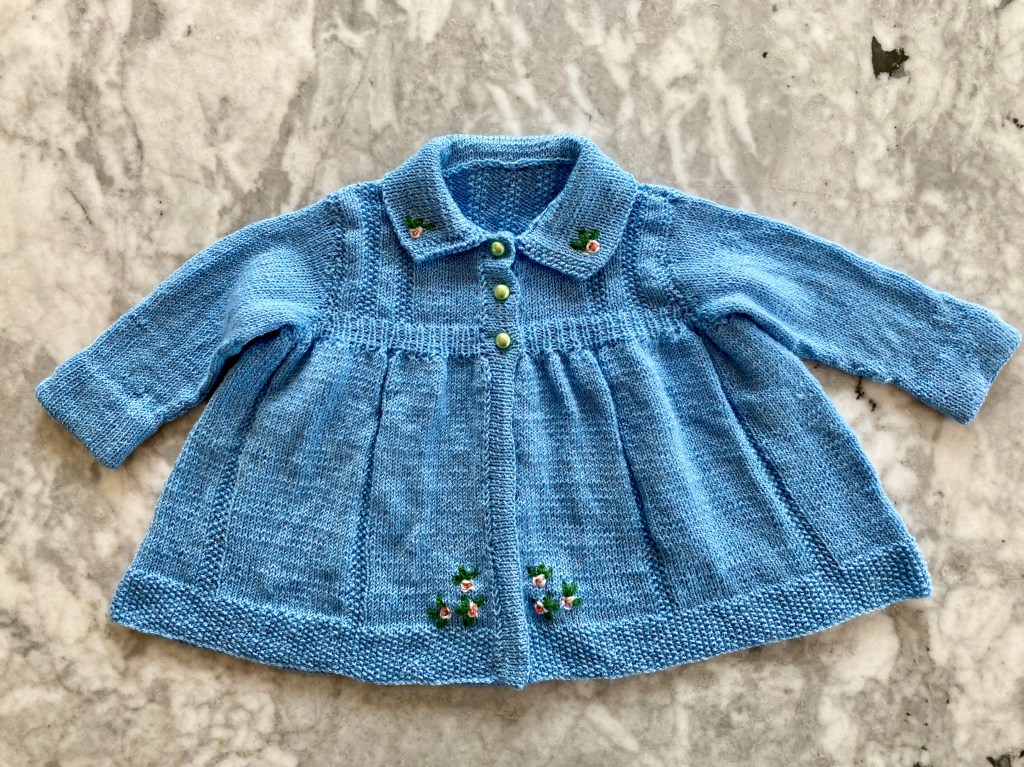
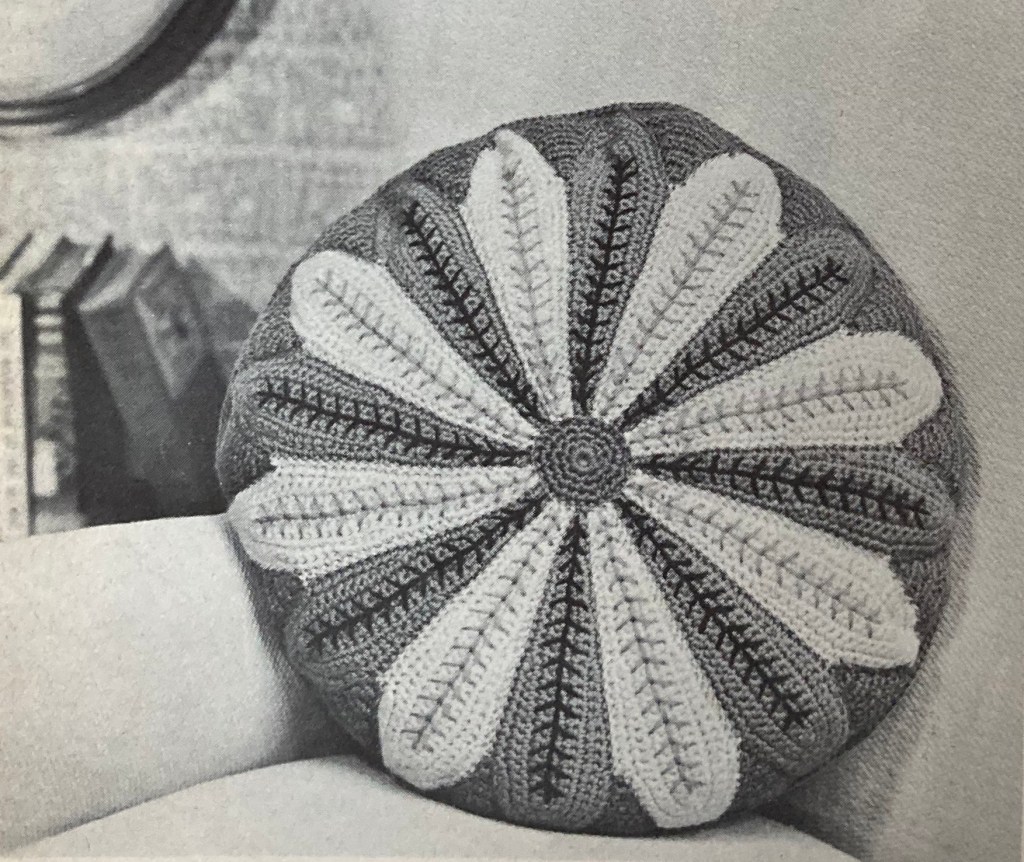


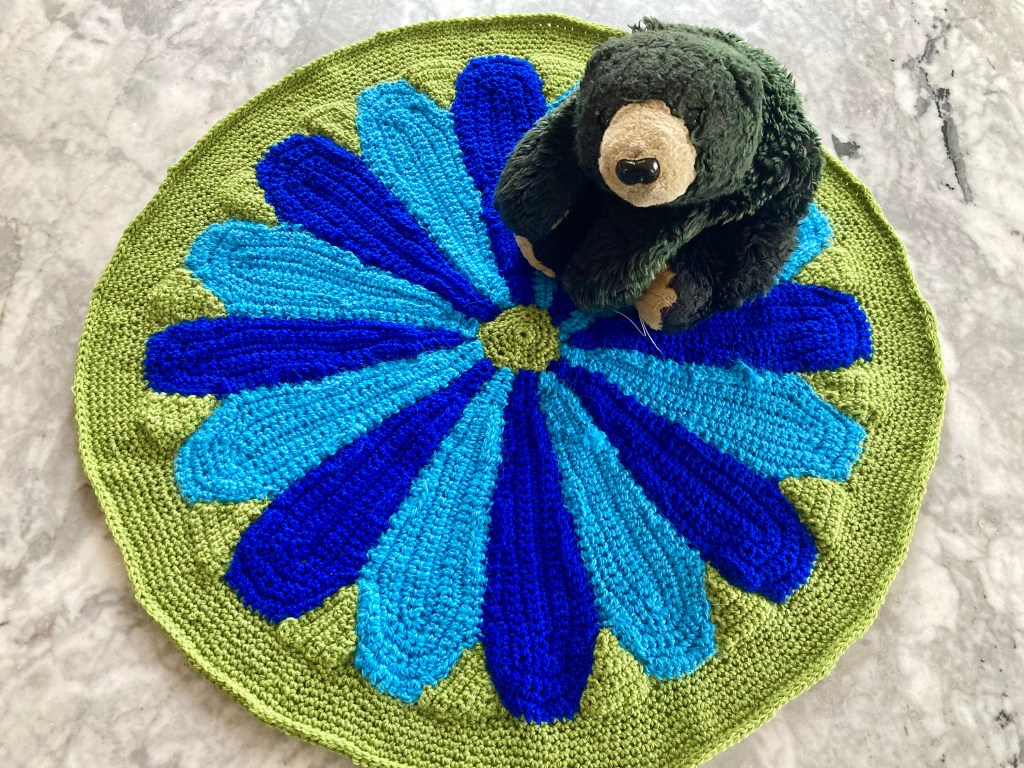
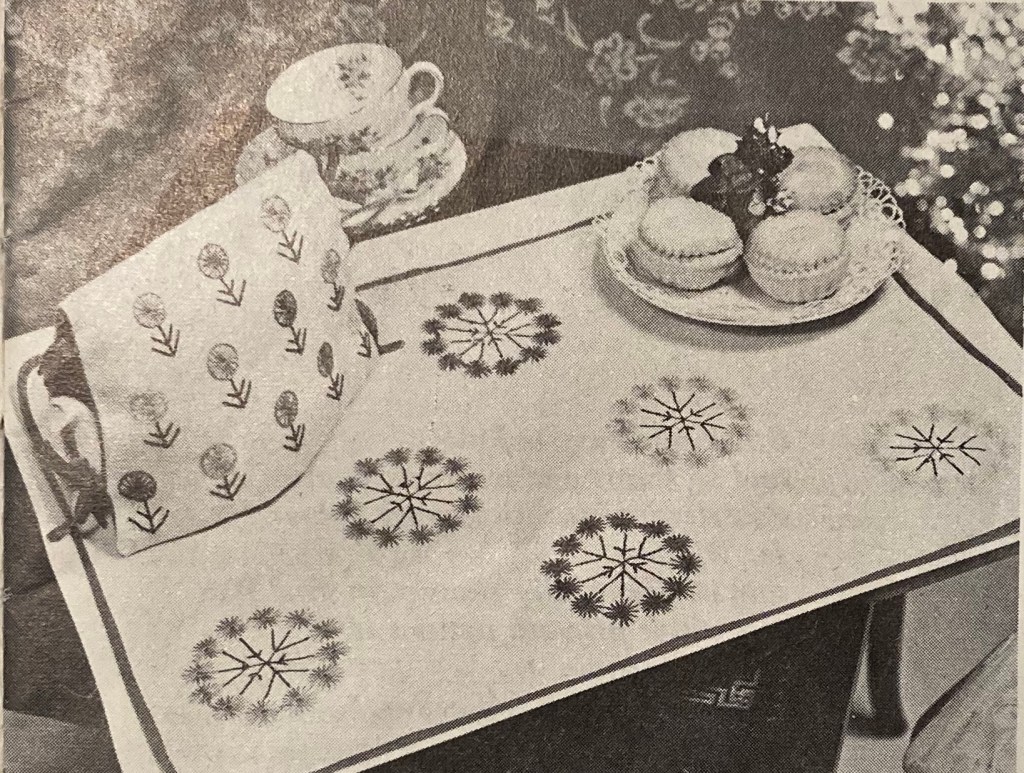




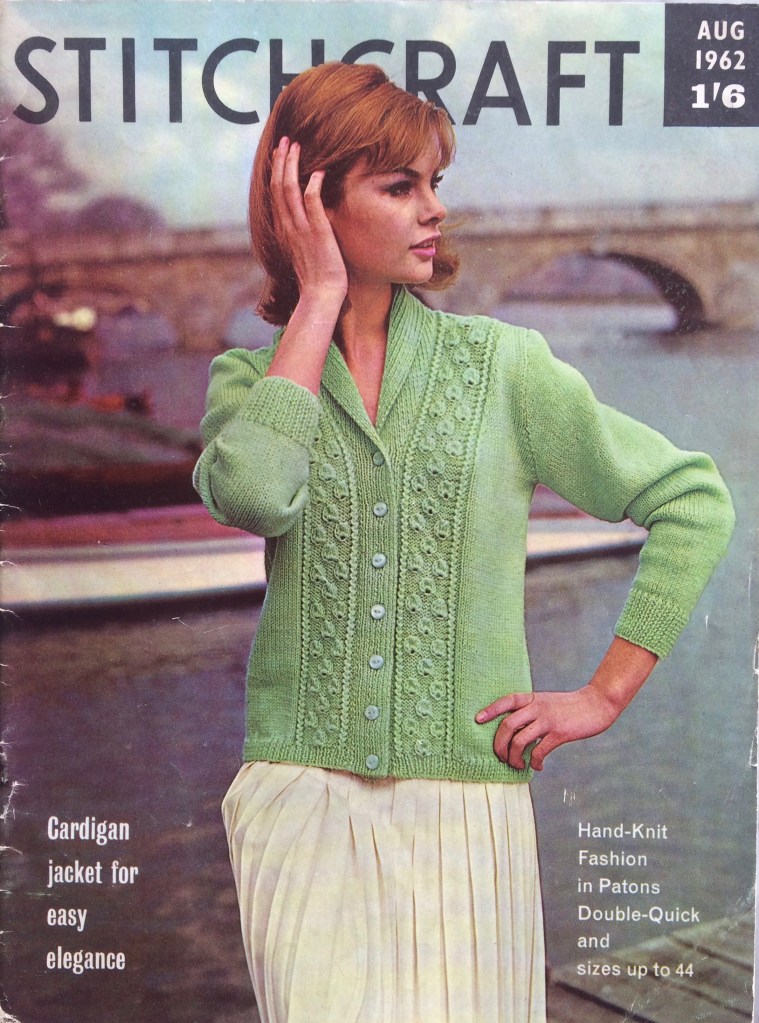
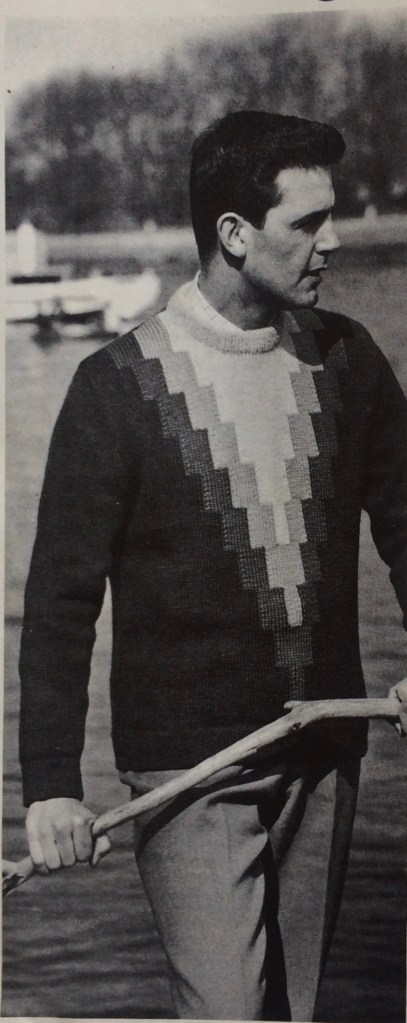
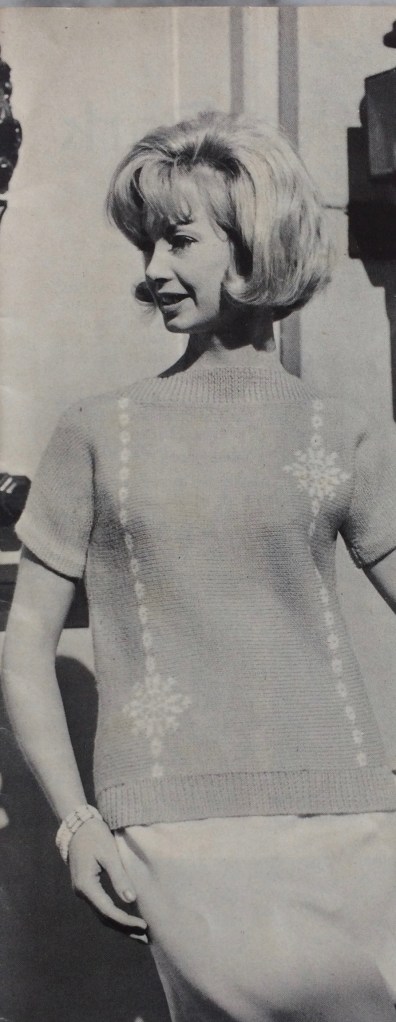
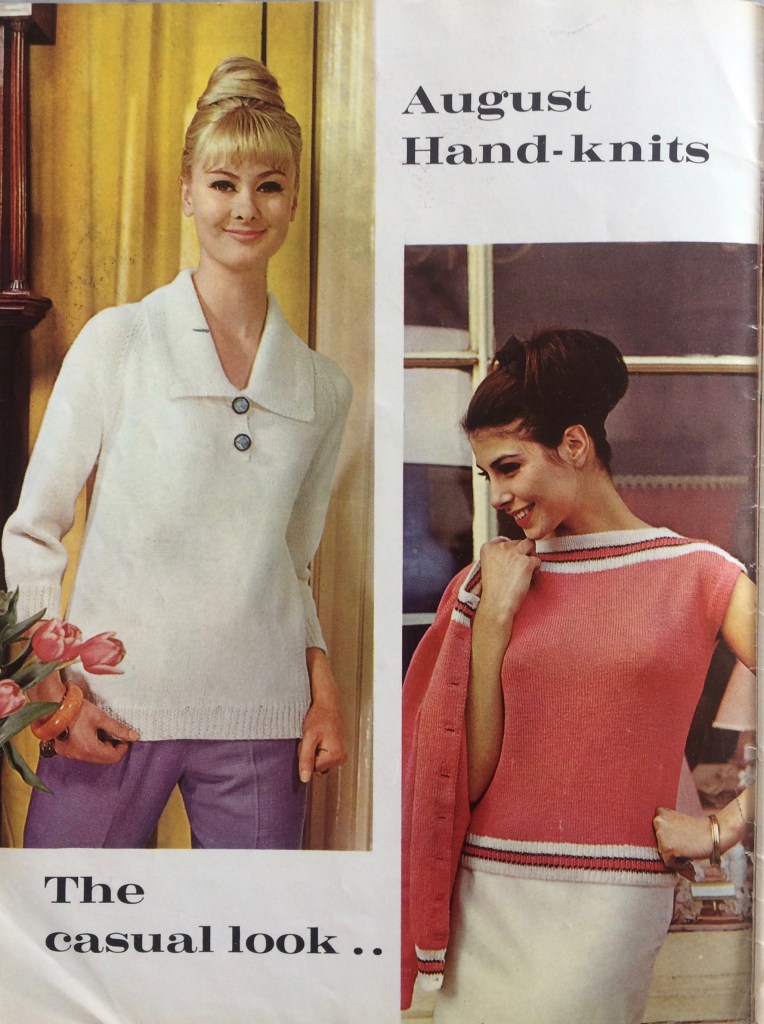
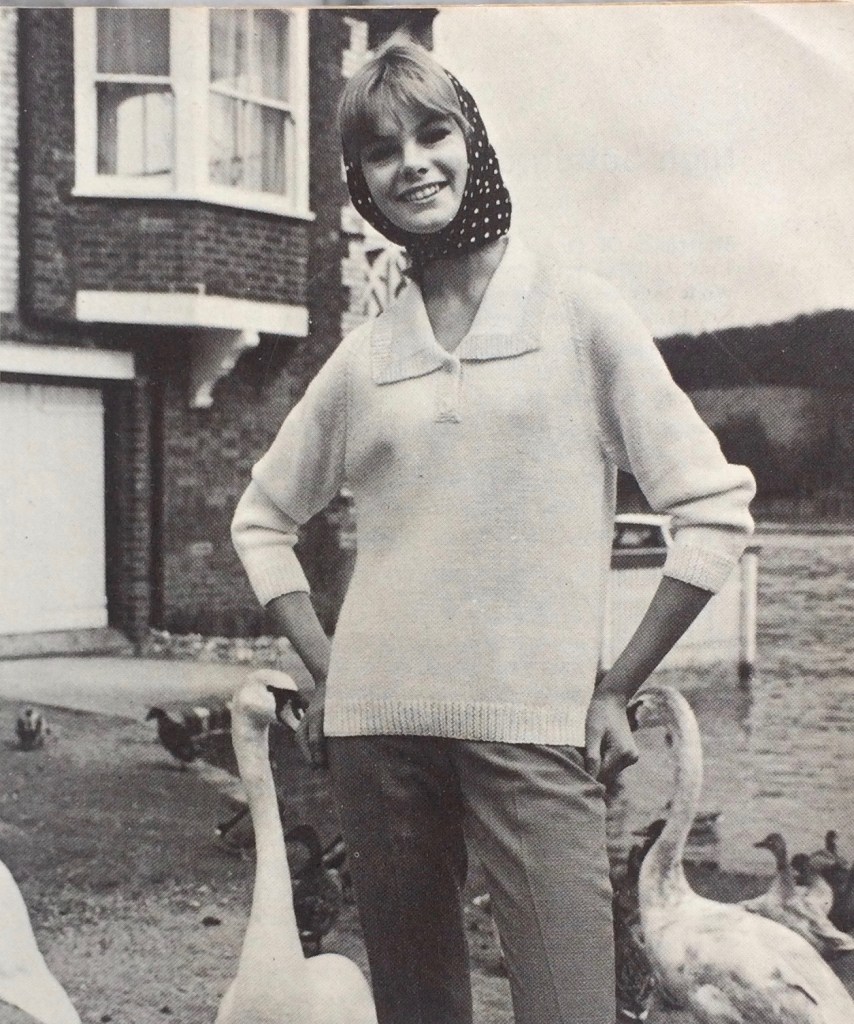
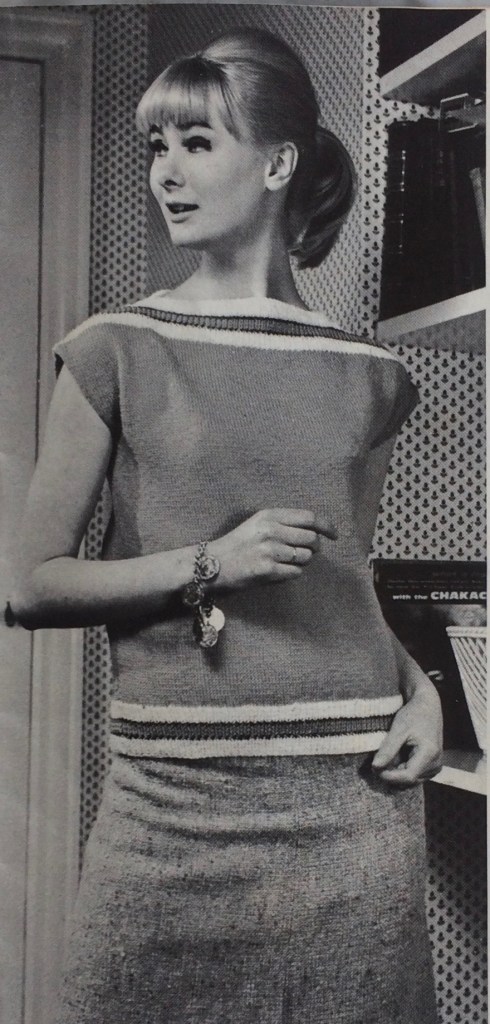
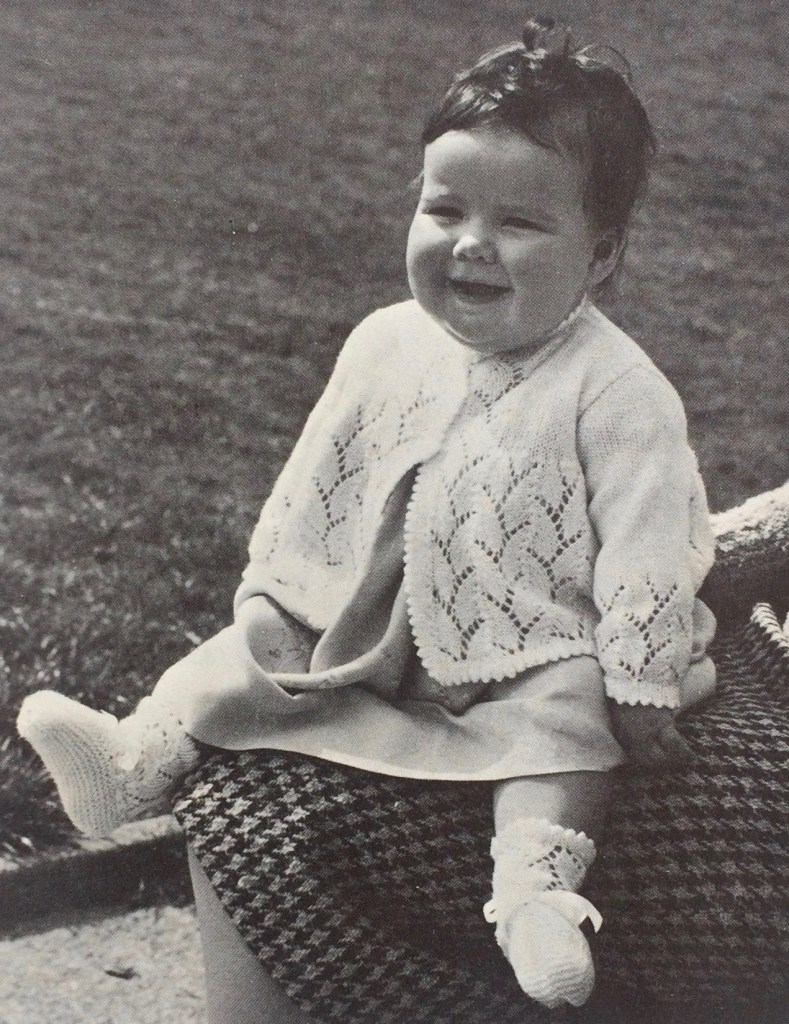
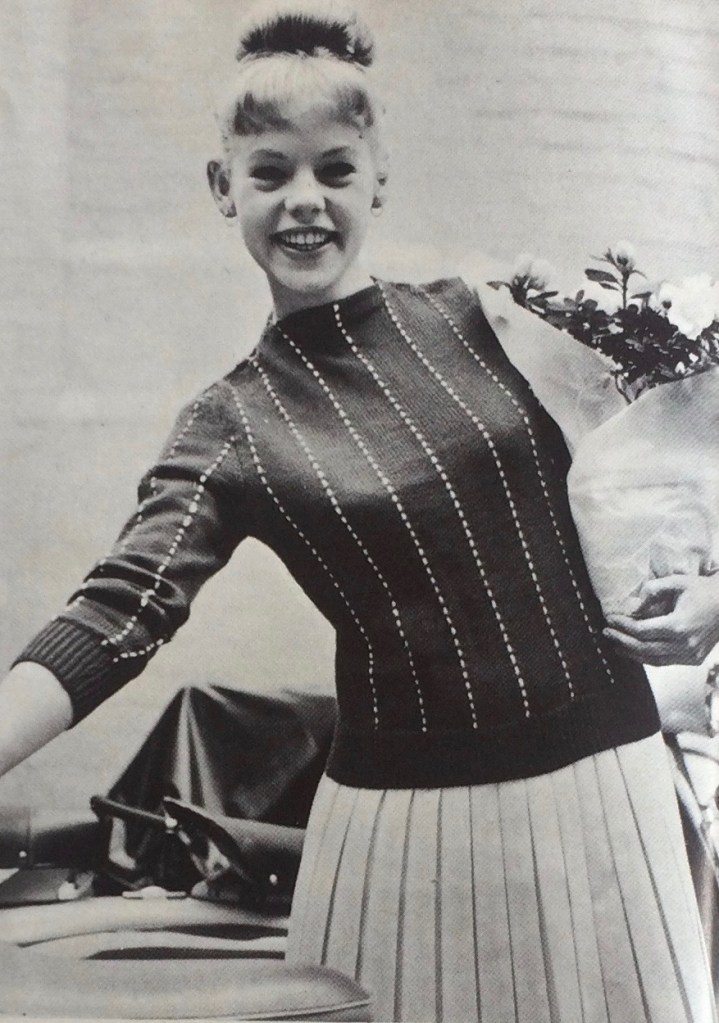
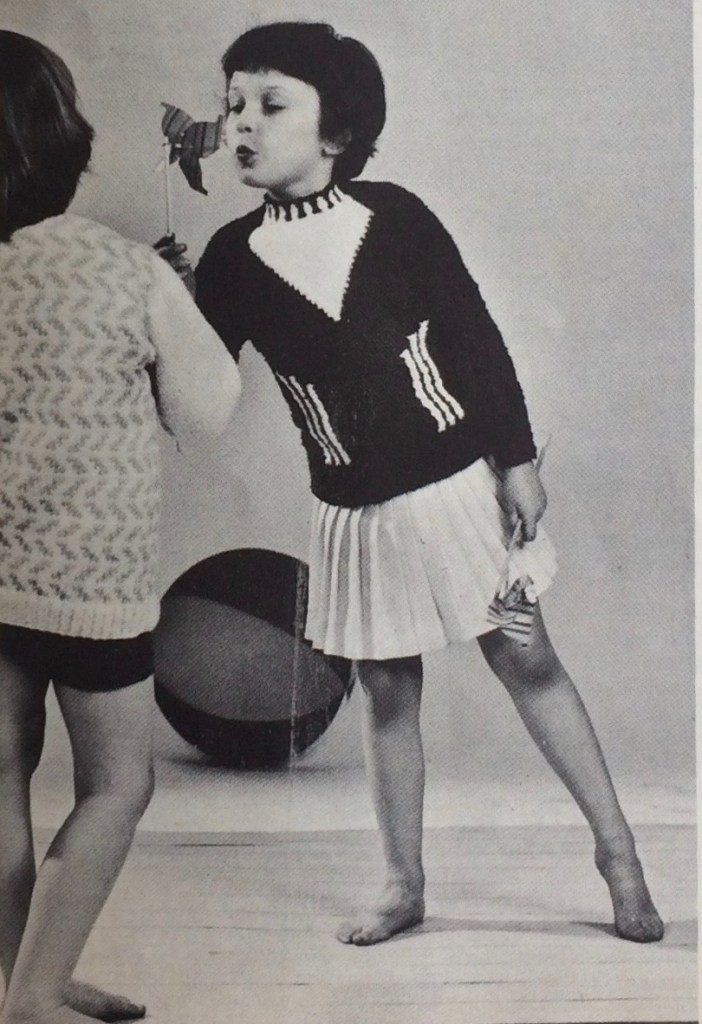
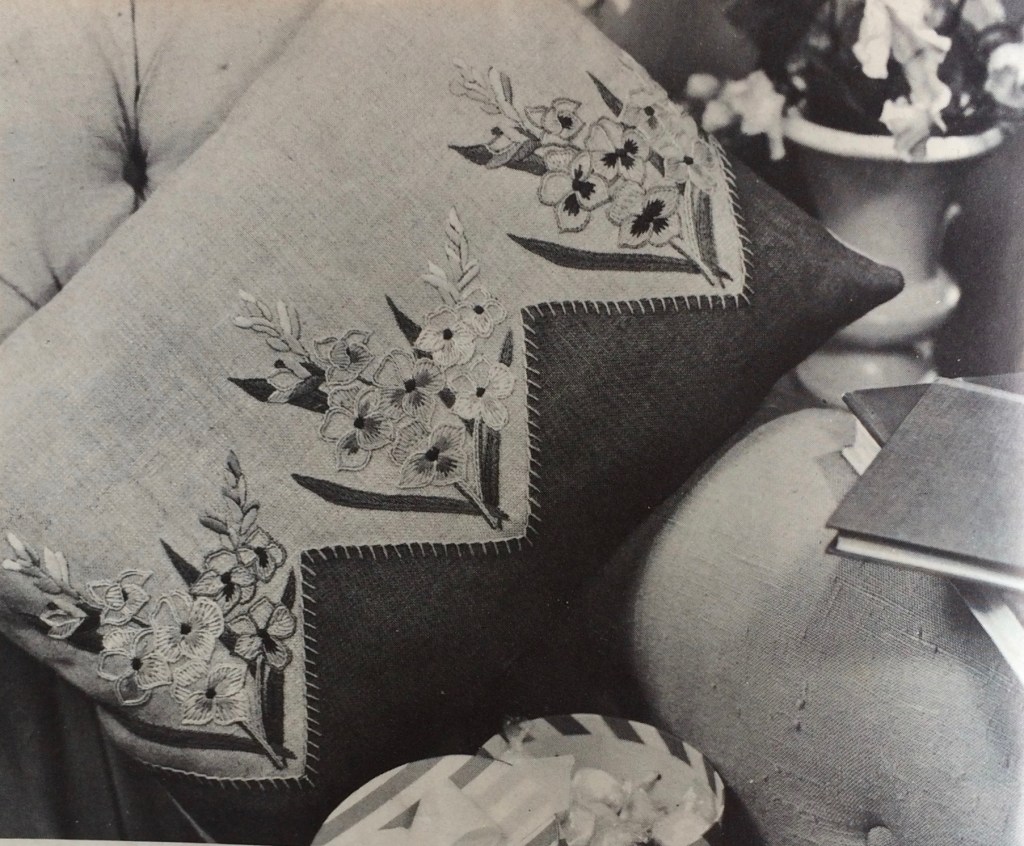

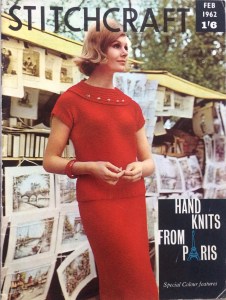 Put on your best traveling suit, pack your Aeros and have your Kodak Instamatic in hand, because it’s February 1962 and Stitchcraft is going to Paris! This month’s issue features Paris-inspired designs (whatever that means) and extra pages in colour to show off the latest knitwear against a backdrop of Parisian tourist classics.


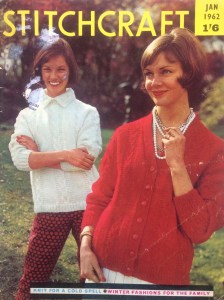 Happy New Year, everyone! It’s 2020 in my real world and 1962 in my blog world. Where will Stitchcraft take us?


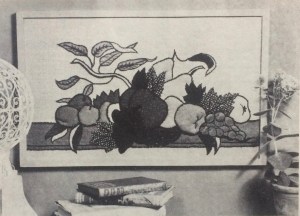
 Technically, it was more of a “star-spangled burlap bag”, but that doesn’t have quite the same ring to it. Happy December, everyone! The 1961 festive holiday season, as envisioned by Stitchcraft magazine, involved at least a couple of glamorous parties and evenings out, for which this white satin drawstring clutch bag could be the perfect accessory.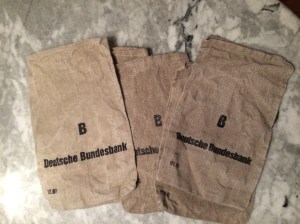
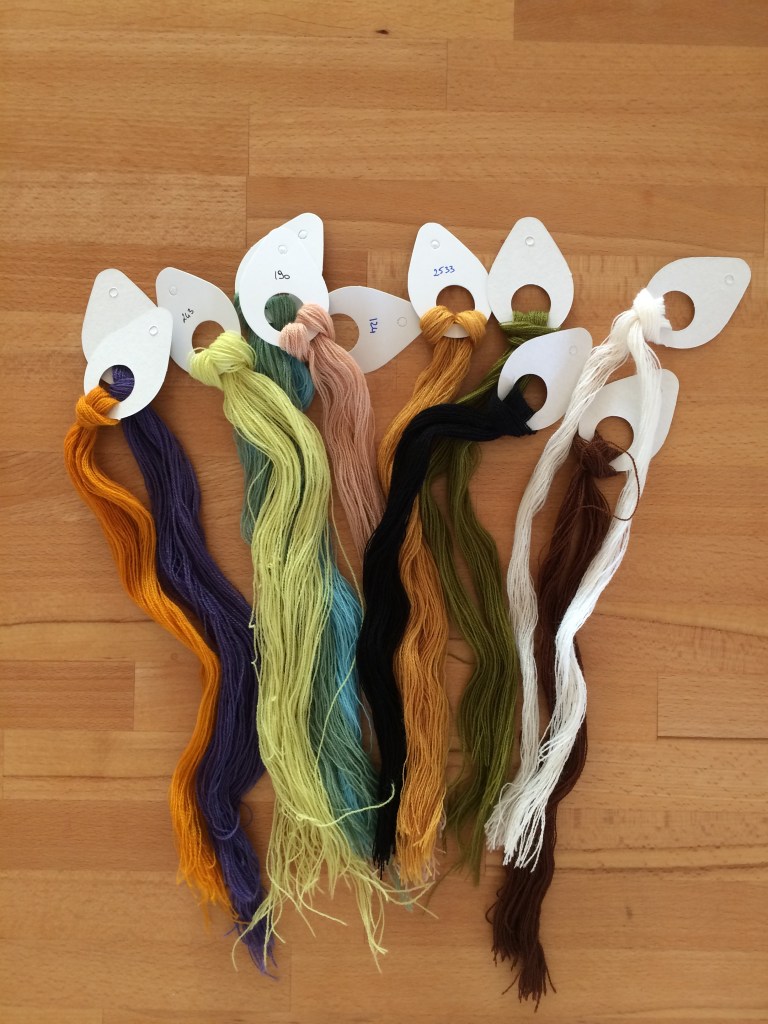
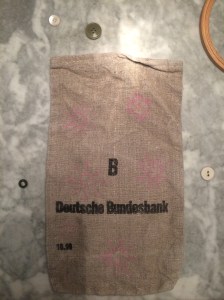 wink, and who knows if they had been treated with some kind of additional preservative chemical), I drew the motifs onto the bag with a wax embroidery-transfer pen, tracing around different sizes of button to get the circles, and embroidered them using leftover bits of pink and green embroidery cotton. I decided to forego the pearls and sequins and just made French knots instead. I also didn’t care too much about perfect symmetry or absolutely “clean” lines — I wanted it to look a little bit rough and homemade.


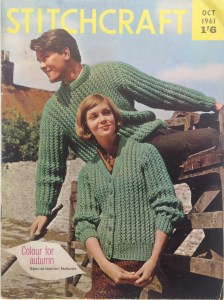 October 1961 gives us “Colour for autumn” with “special fashion features” and a great center spread with colour photos. “I always think October is a nice friendly month,” writes “editress” Patience Horne on the facing page, and I have to agree.
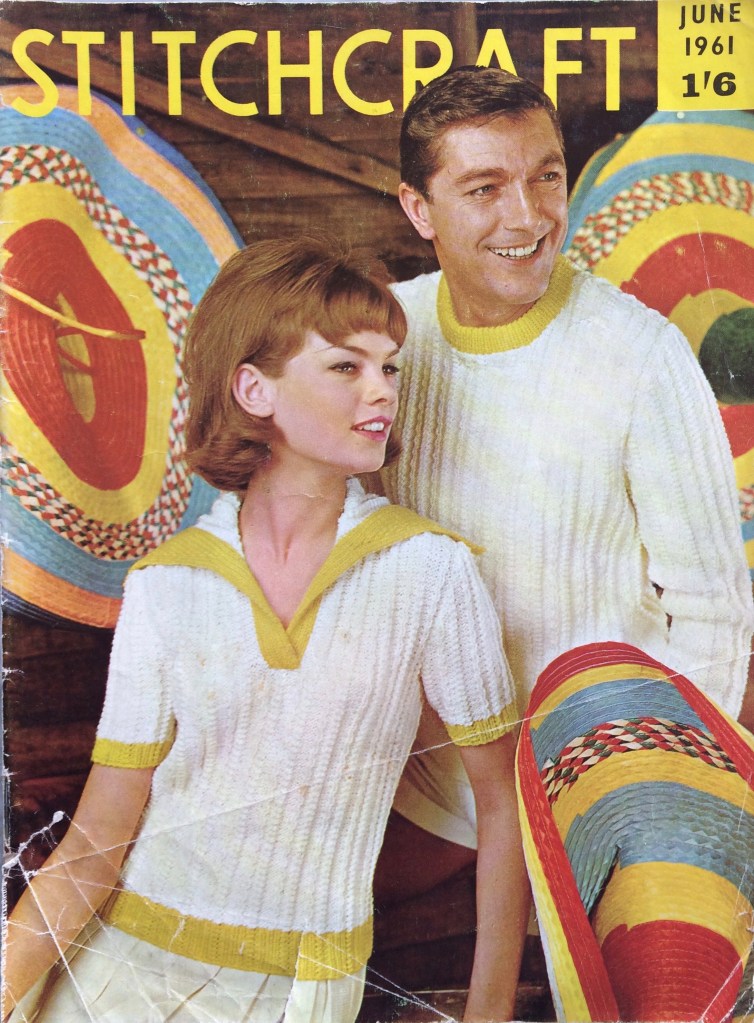
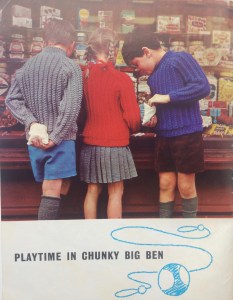 stitches play a prominent role in this month’s issue, starting with the partner-look pullover and cardigan on the front cover. Both are made in the same drop-stitch rib pattern — basically 2×2 ribbing, but you drop a stitch down 3 rows every 4th row and pick it up again in the next row to make a long vertical rib. Children get twisted-rib raglan pullovers to keep their upper bodies nice and warm while their legs freeze in tiny shorts and mini-skirts, typical for the era.