EDIT September 26, 2026: Finally finished!
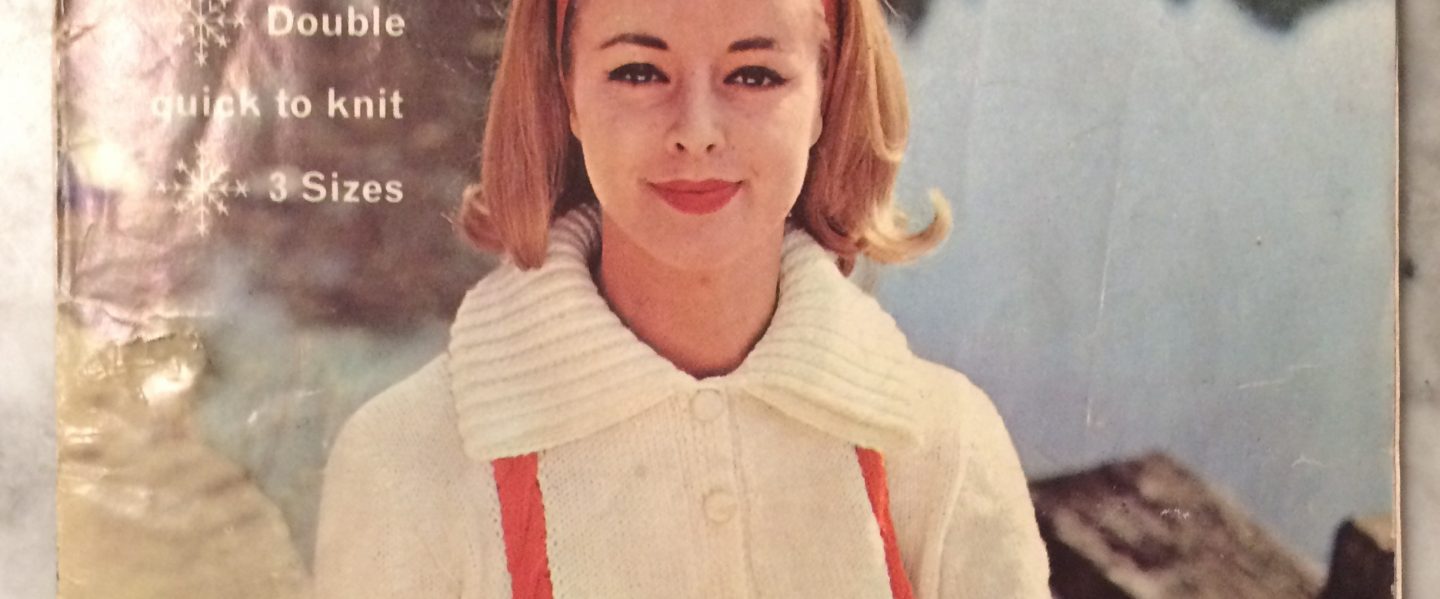
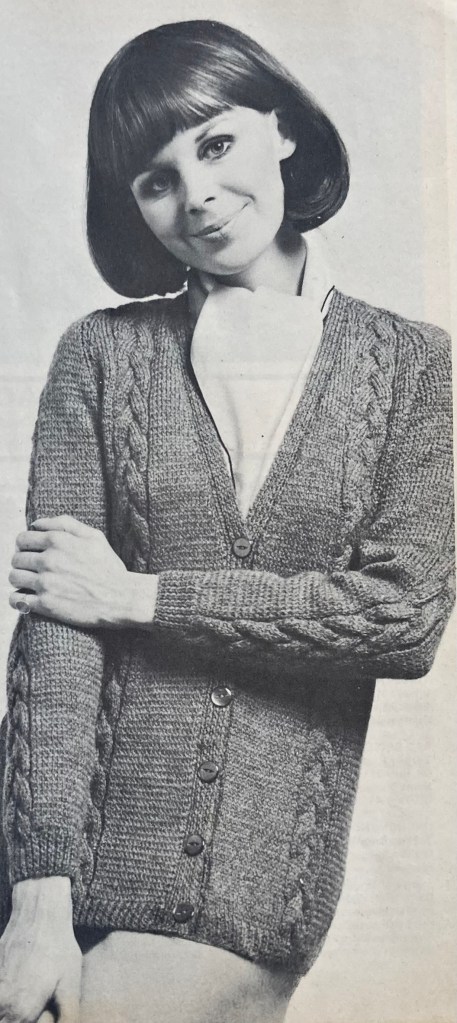
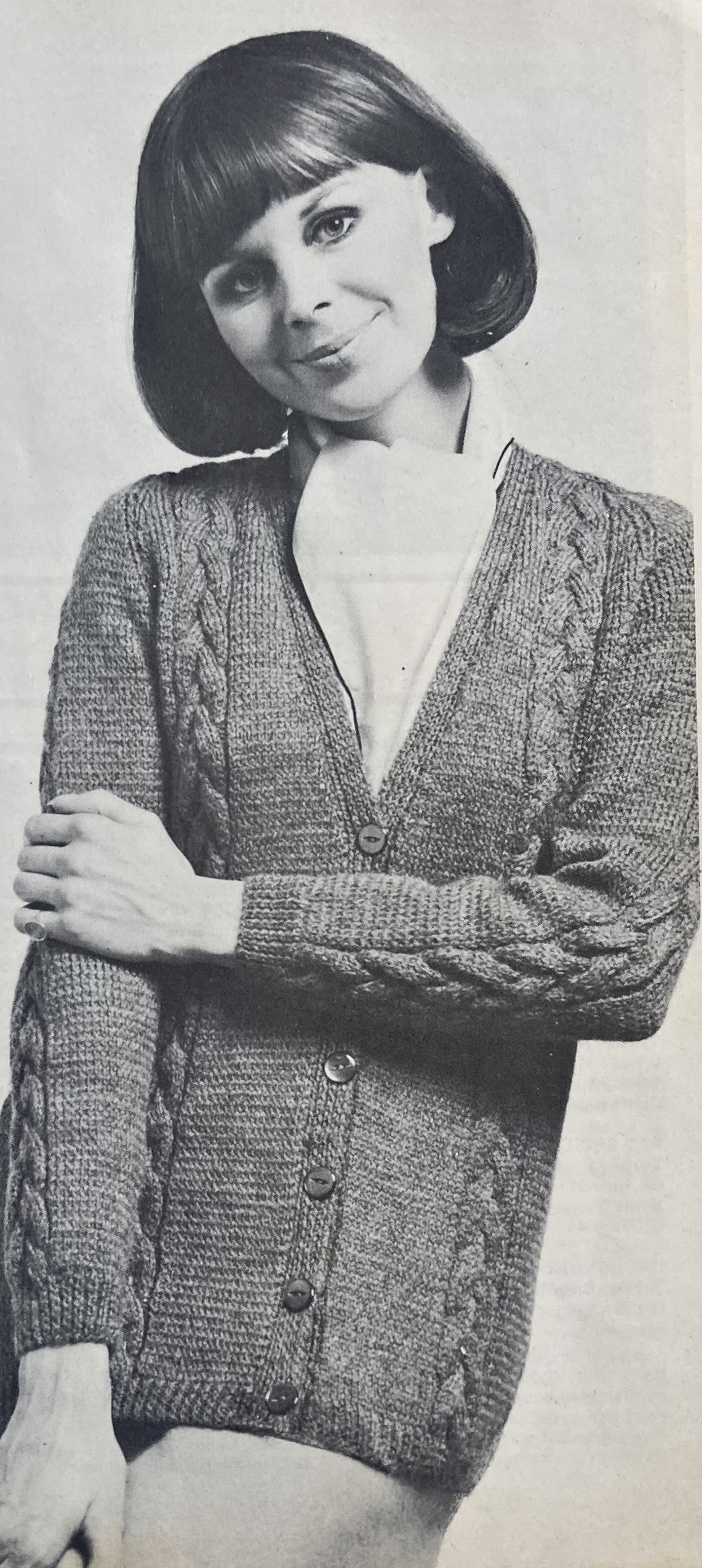
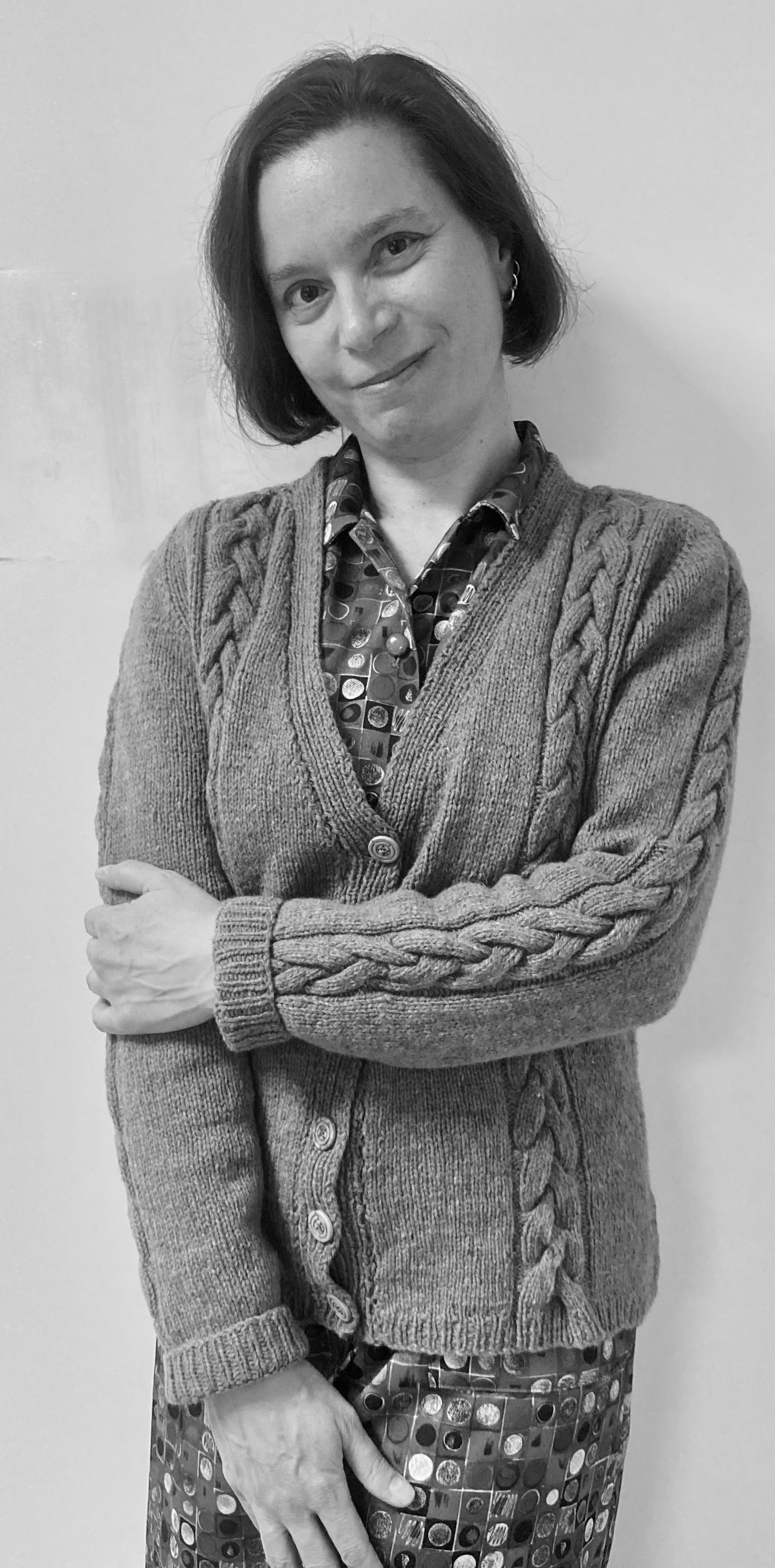
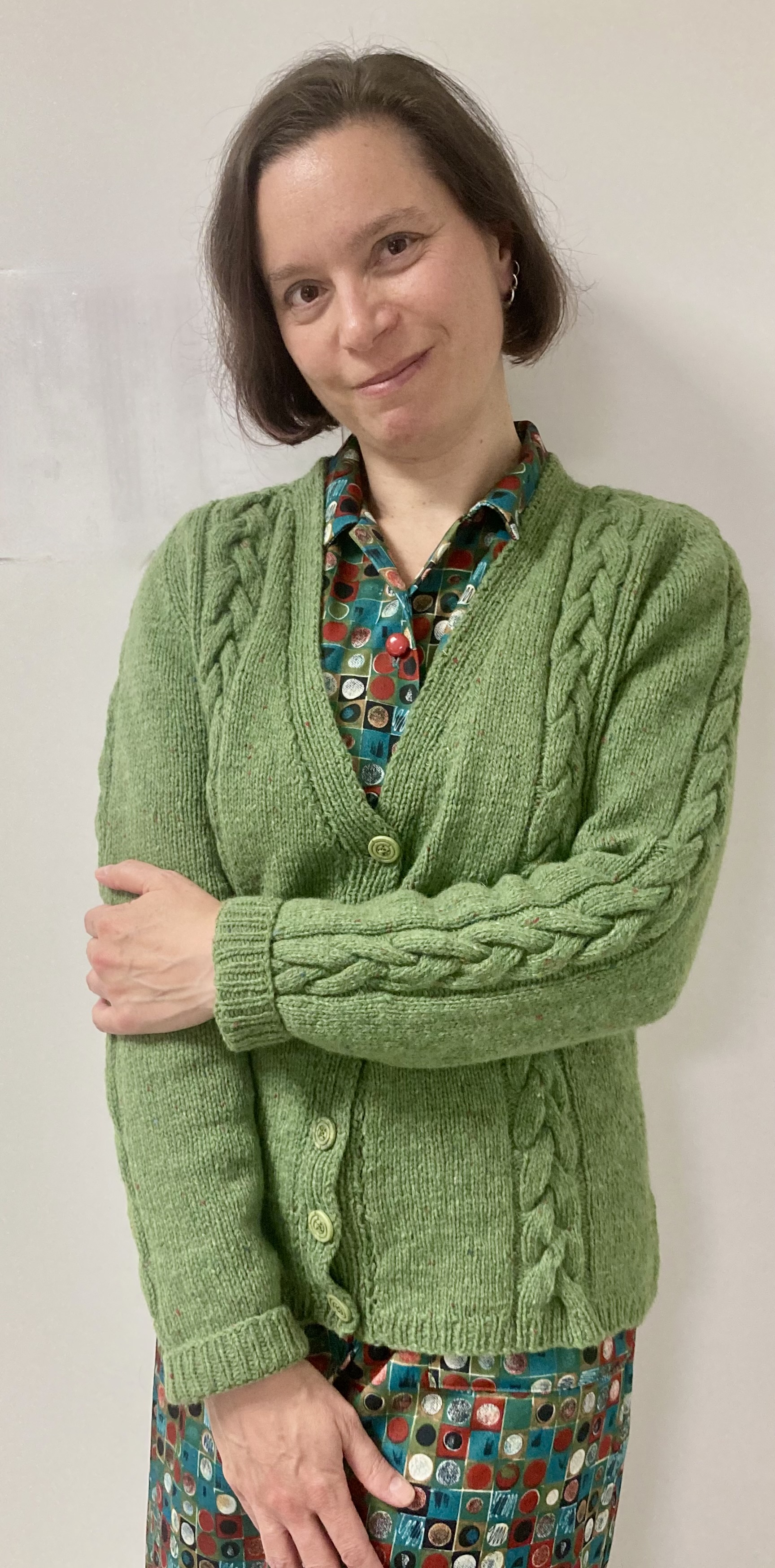
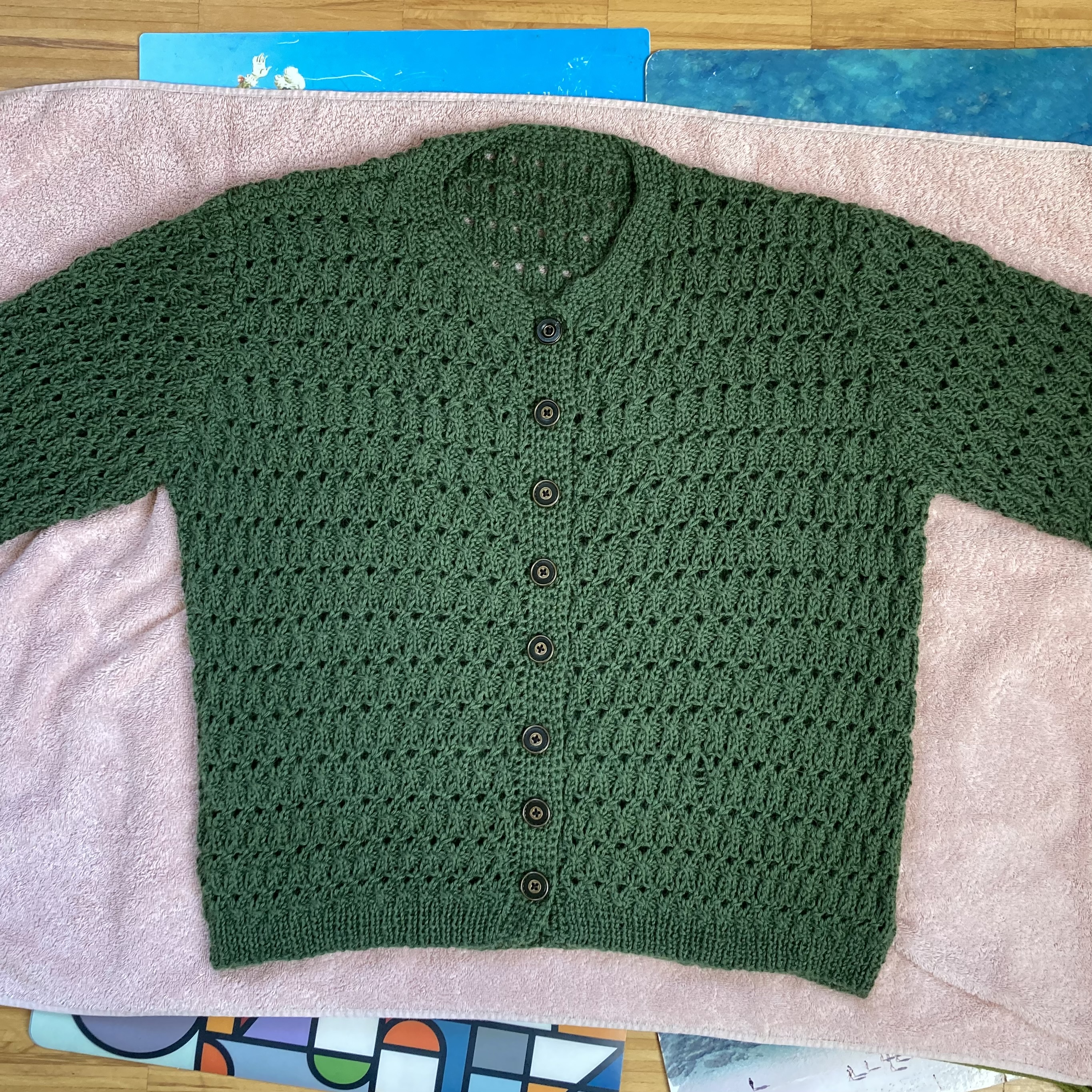
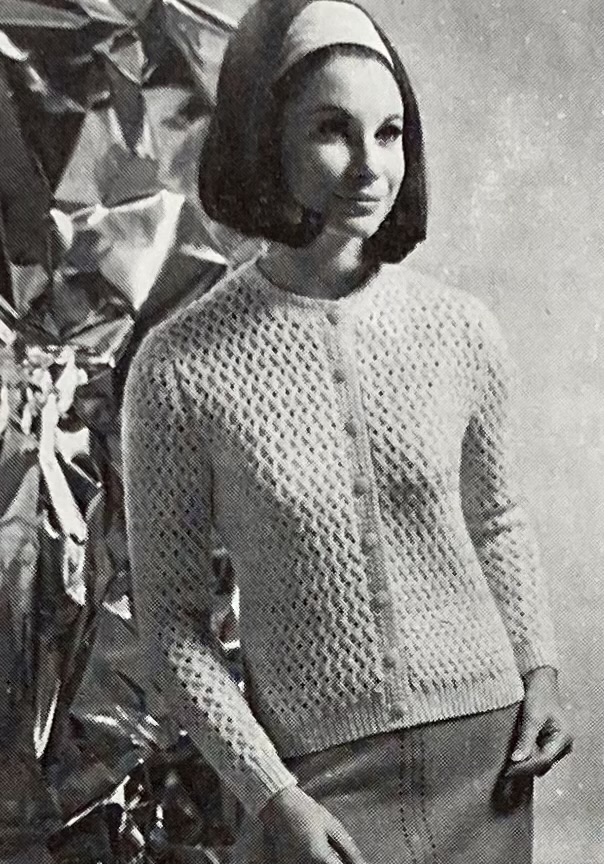
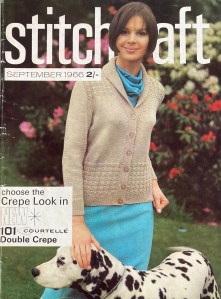
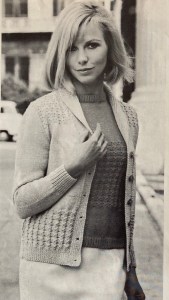
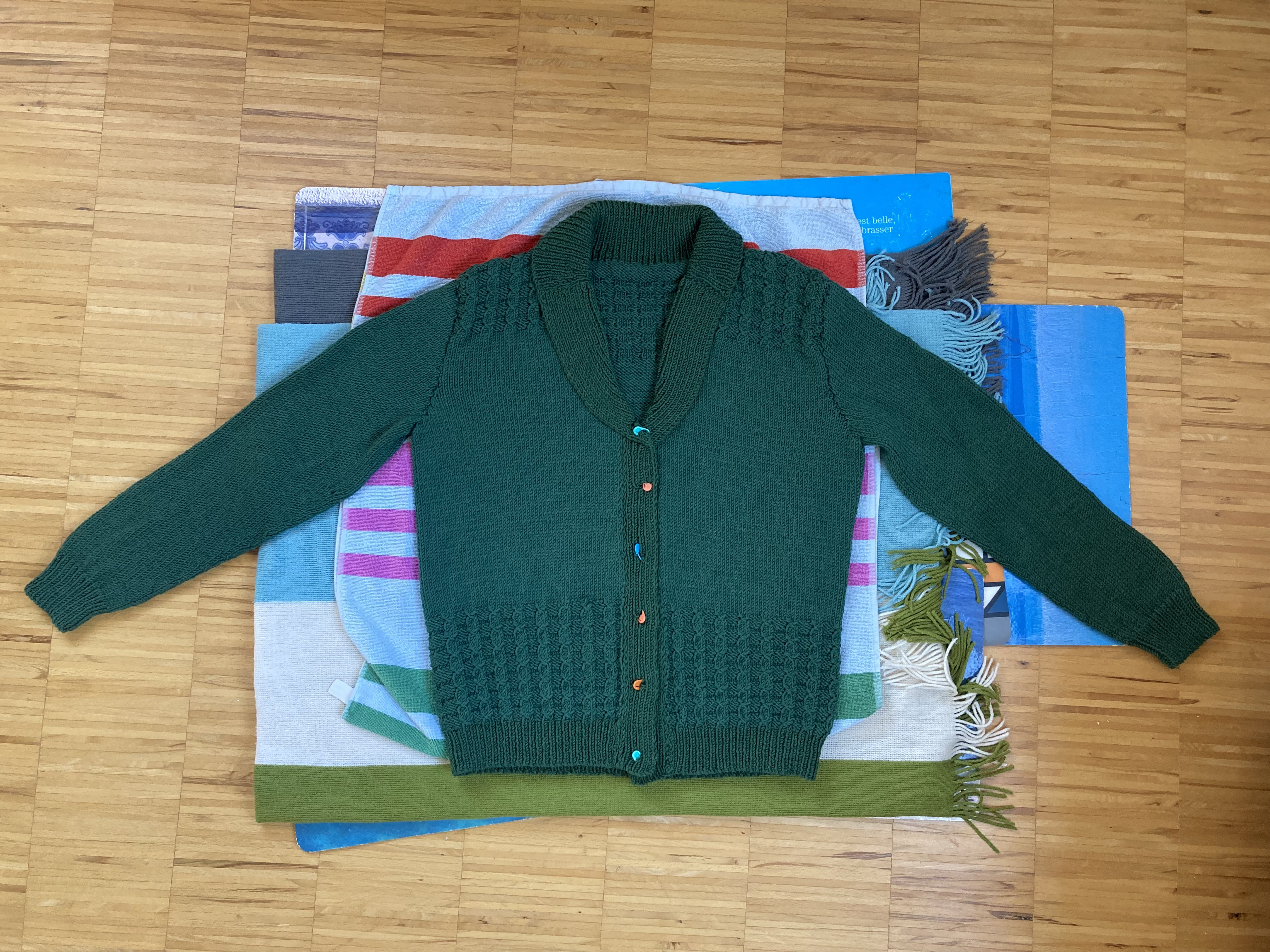
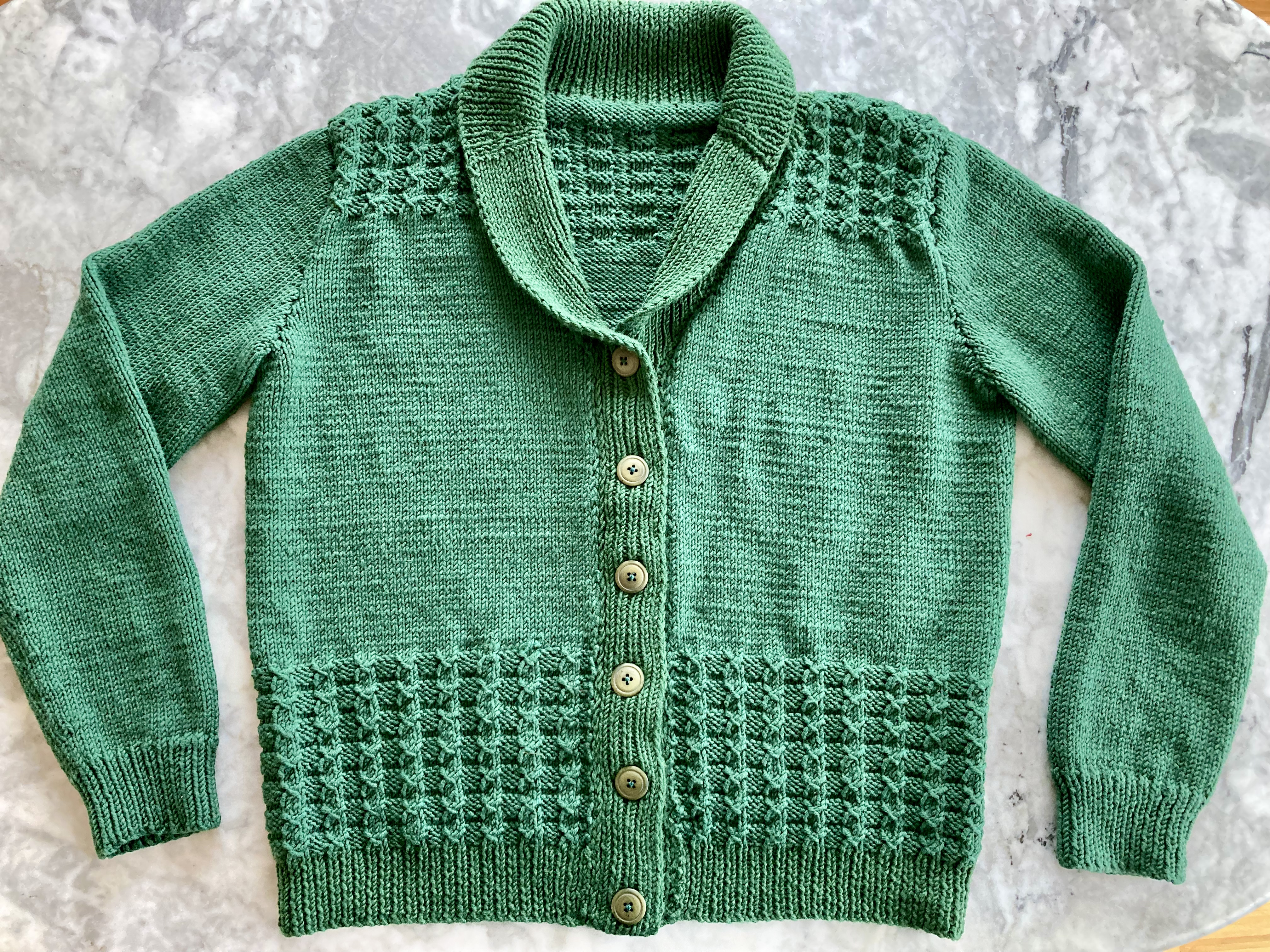
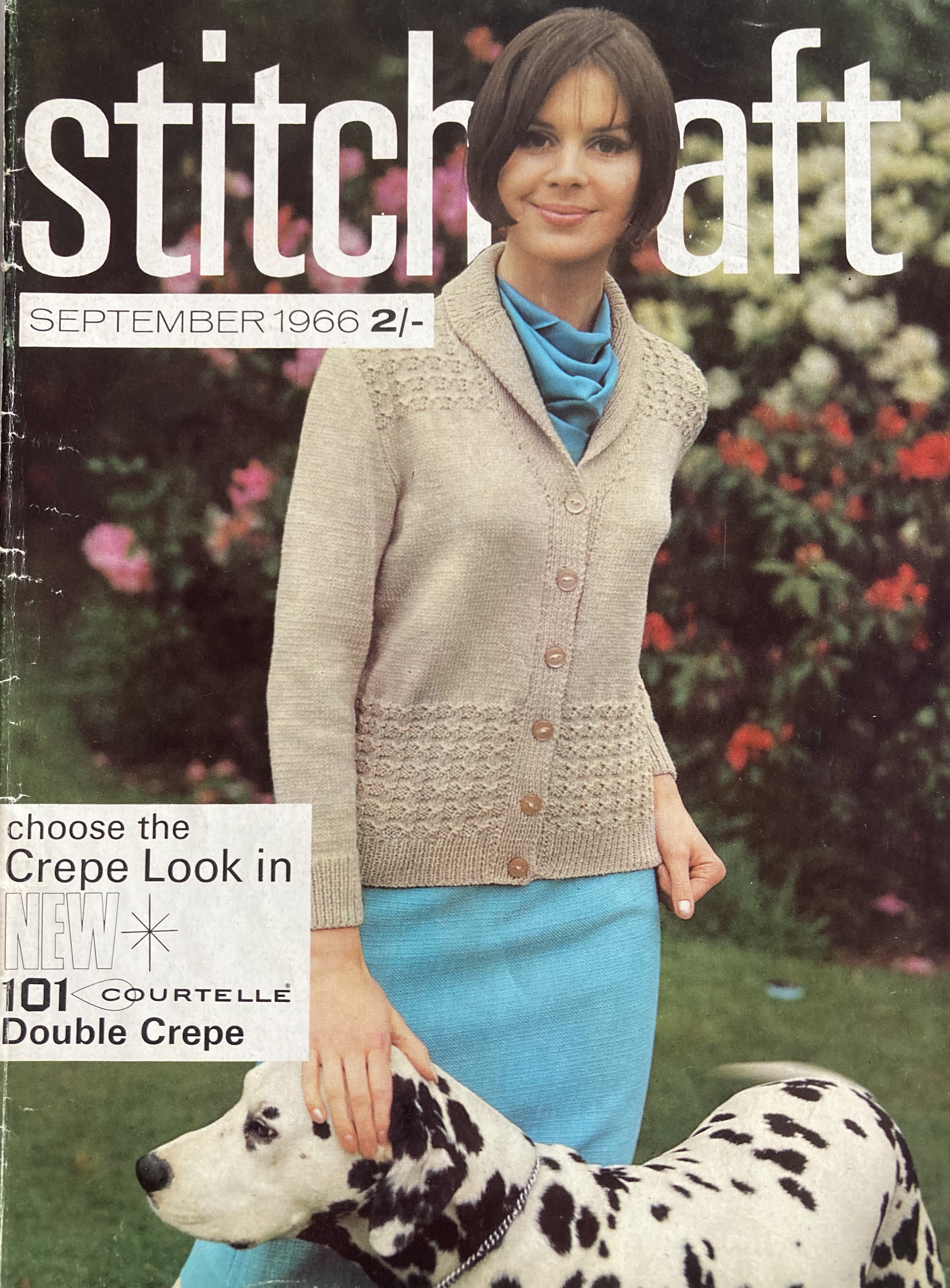
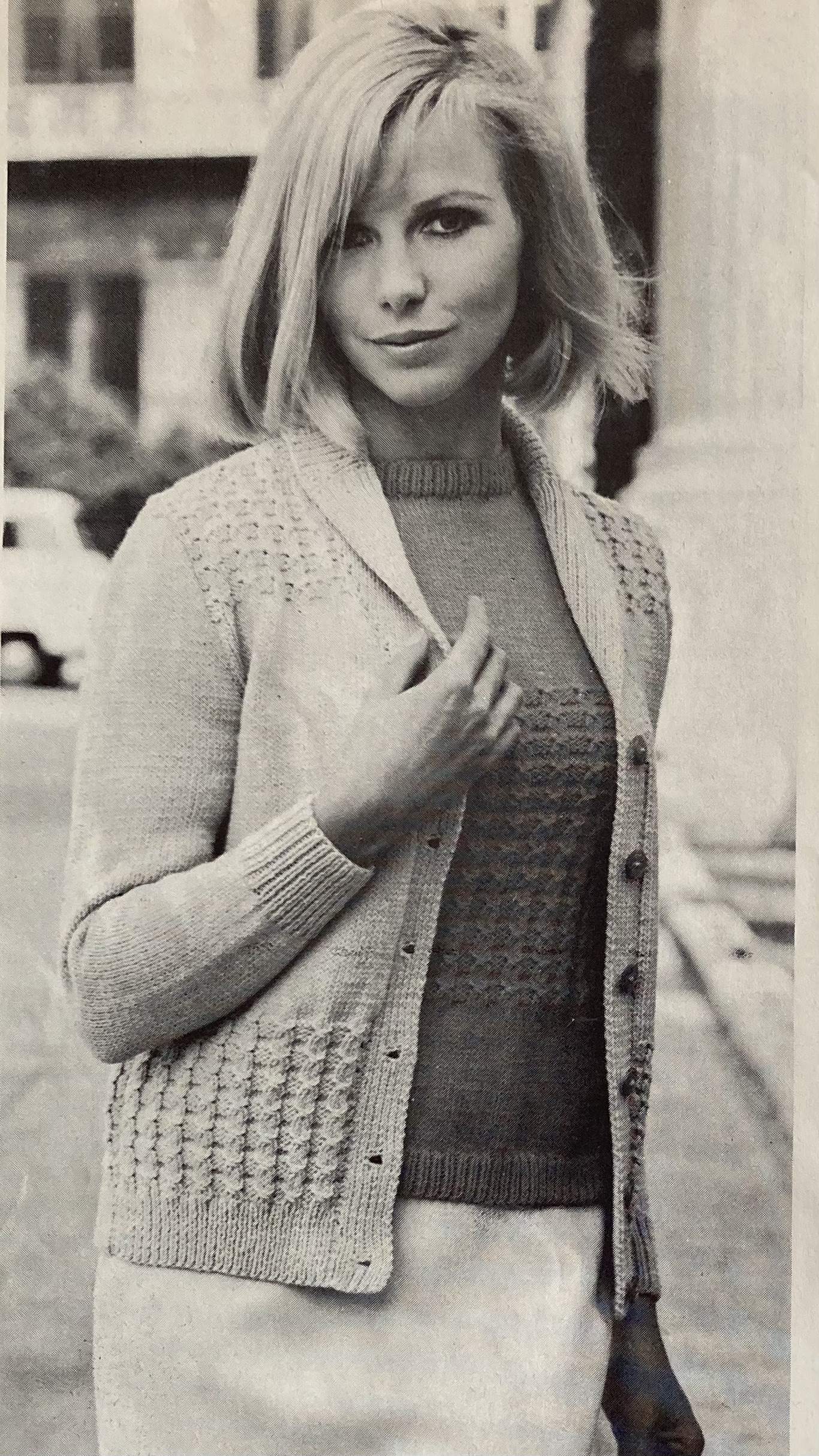
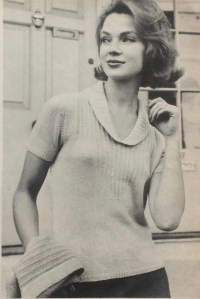
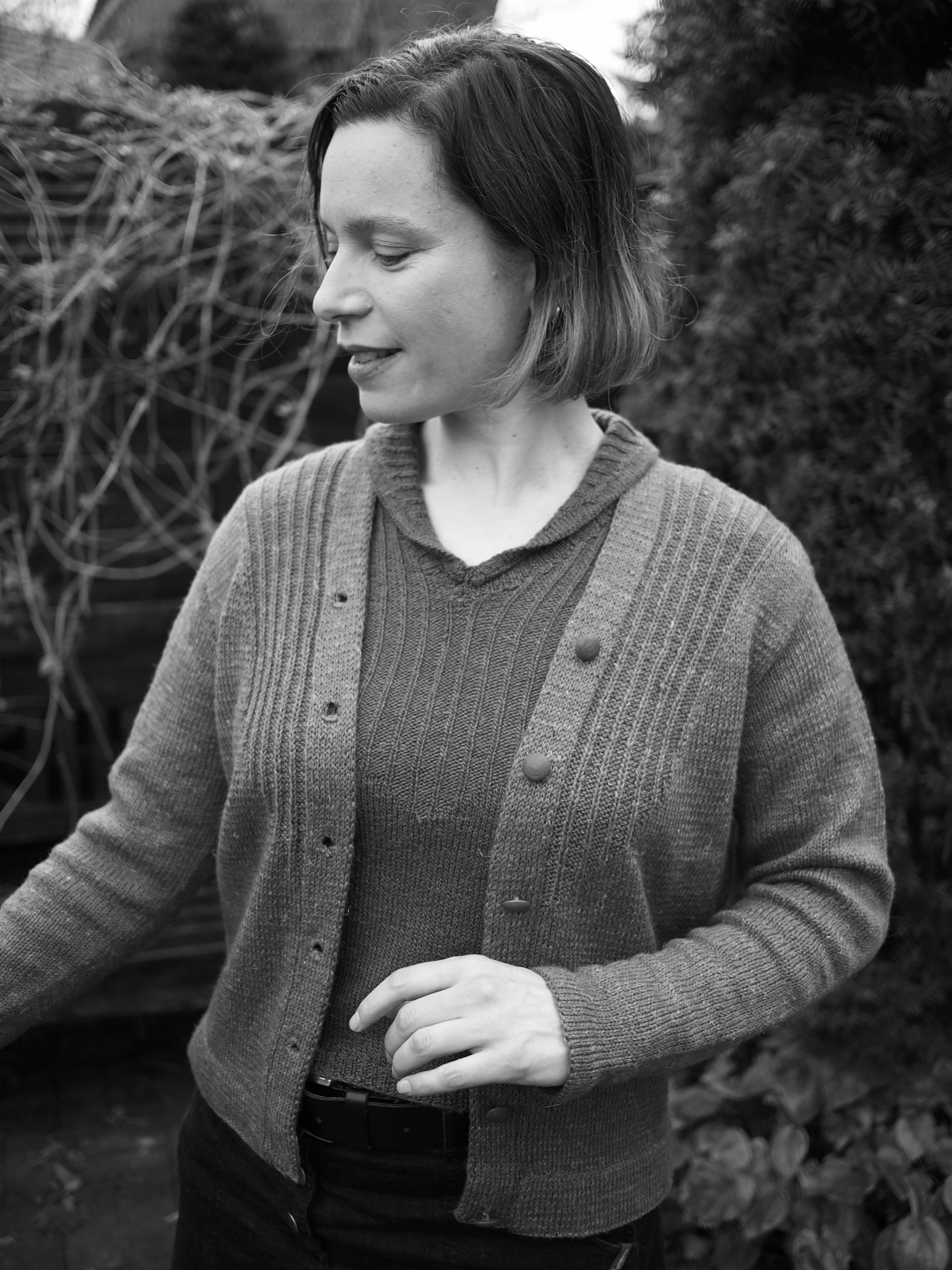
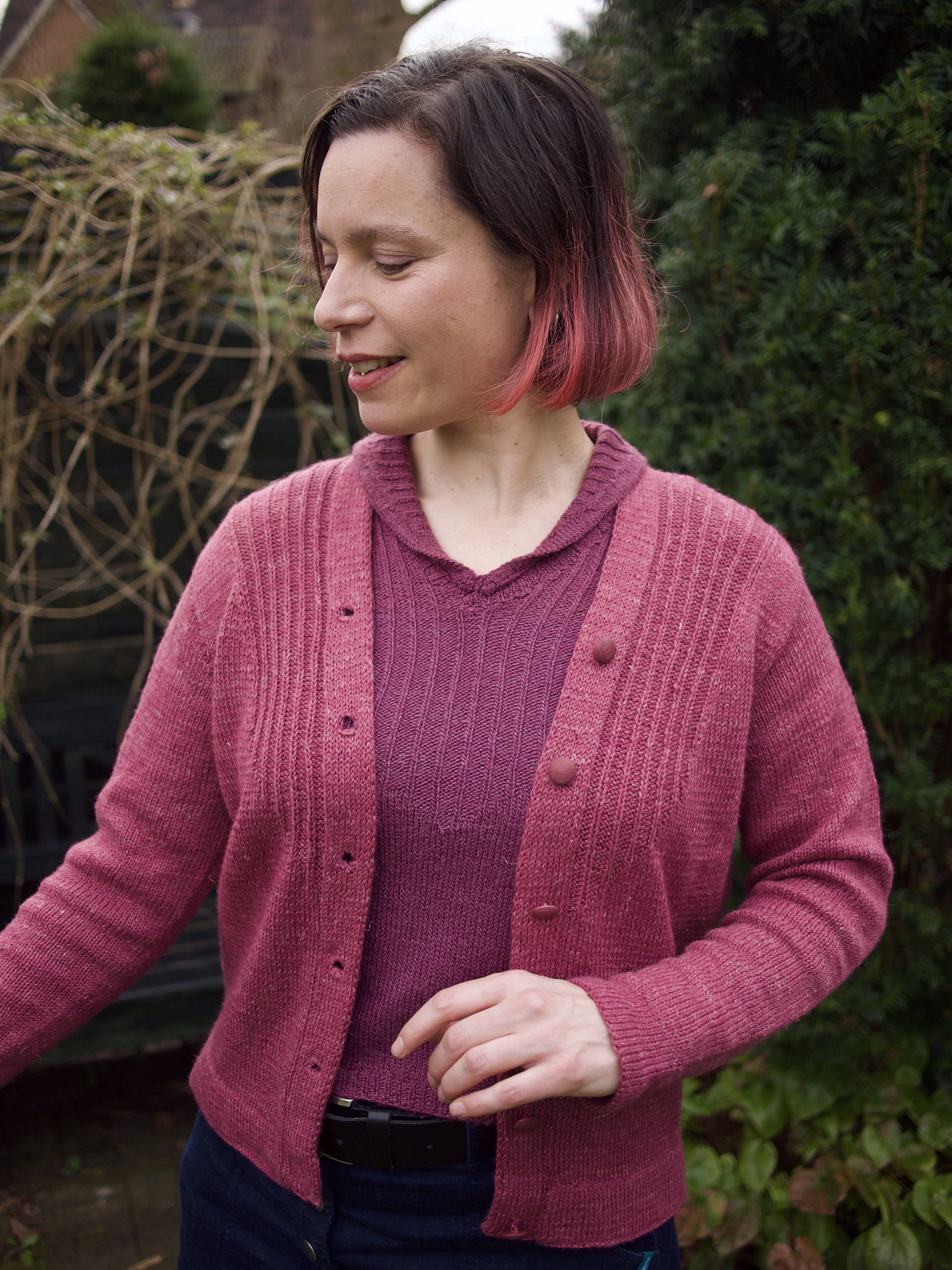
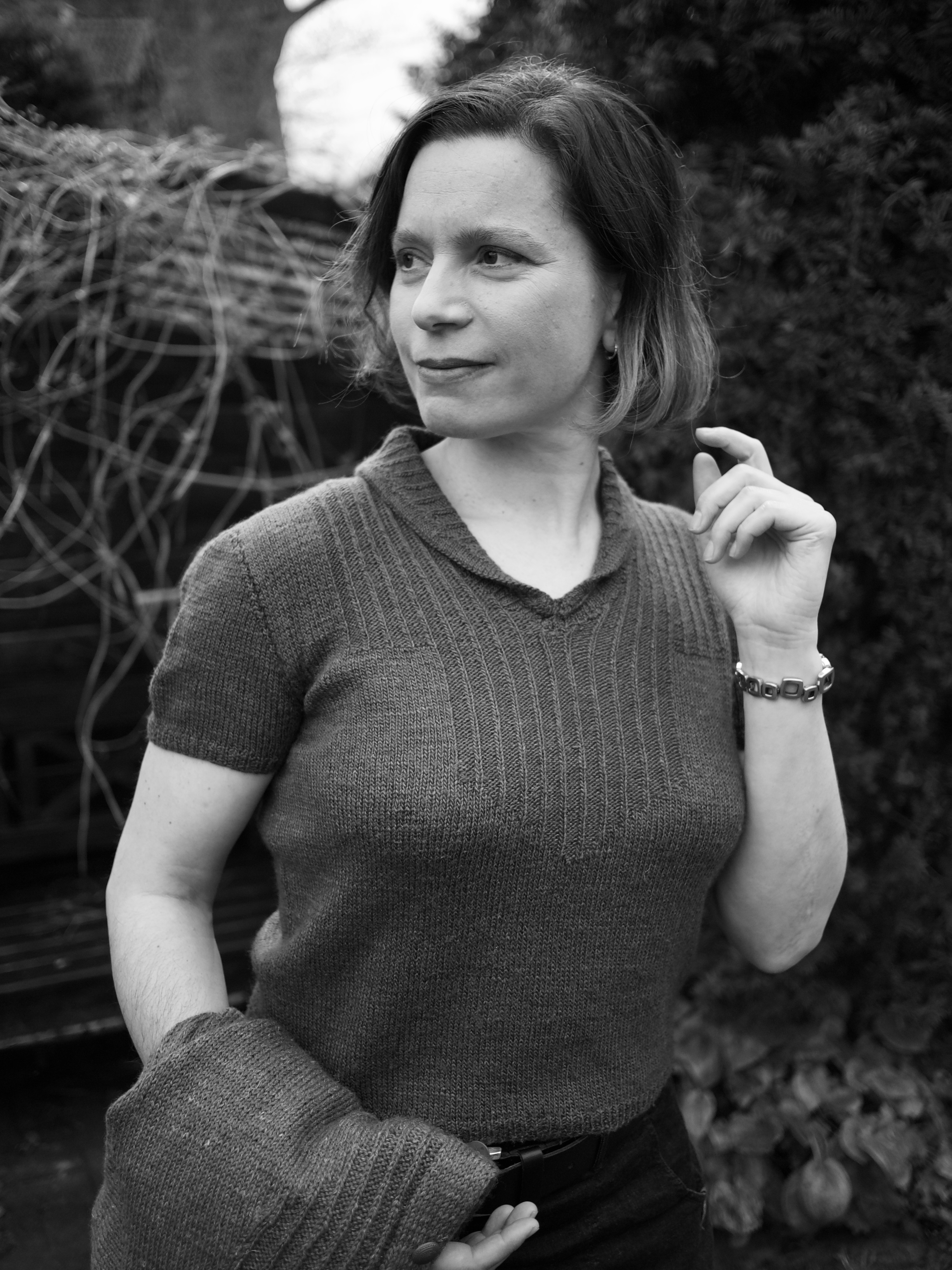
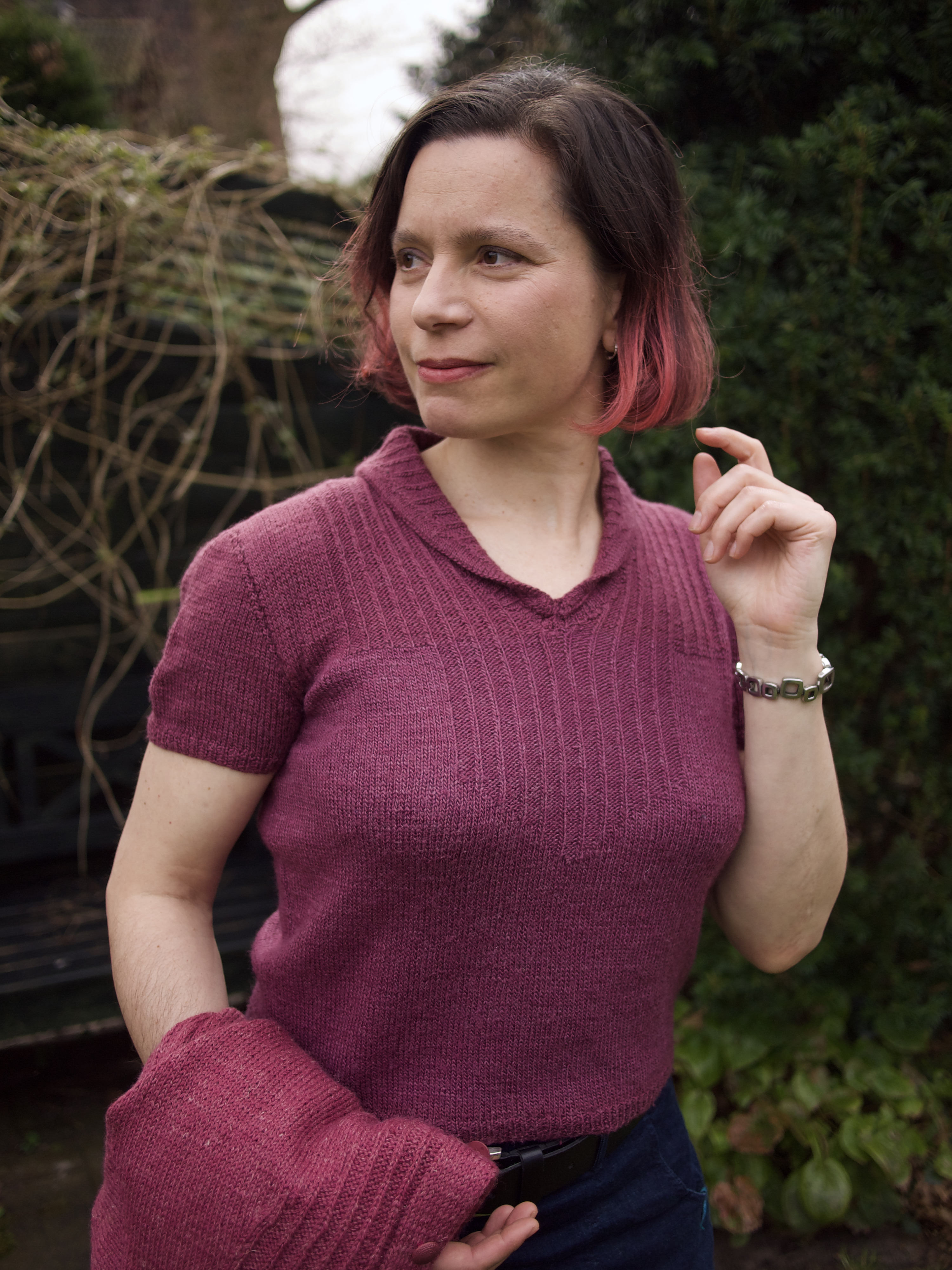
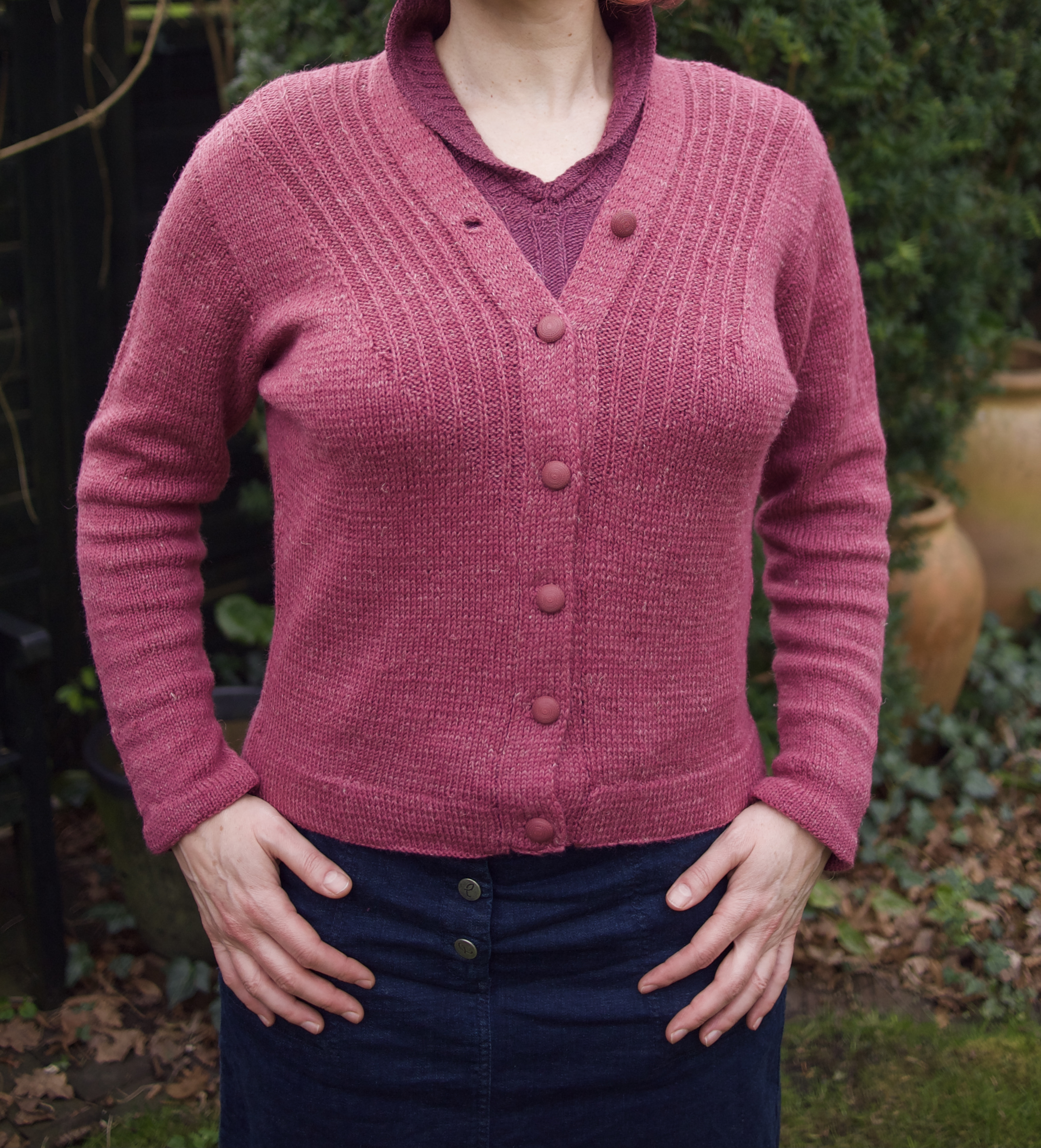
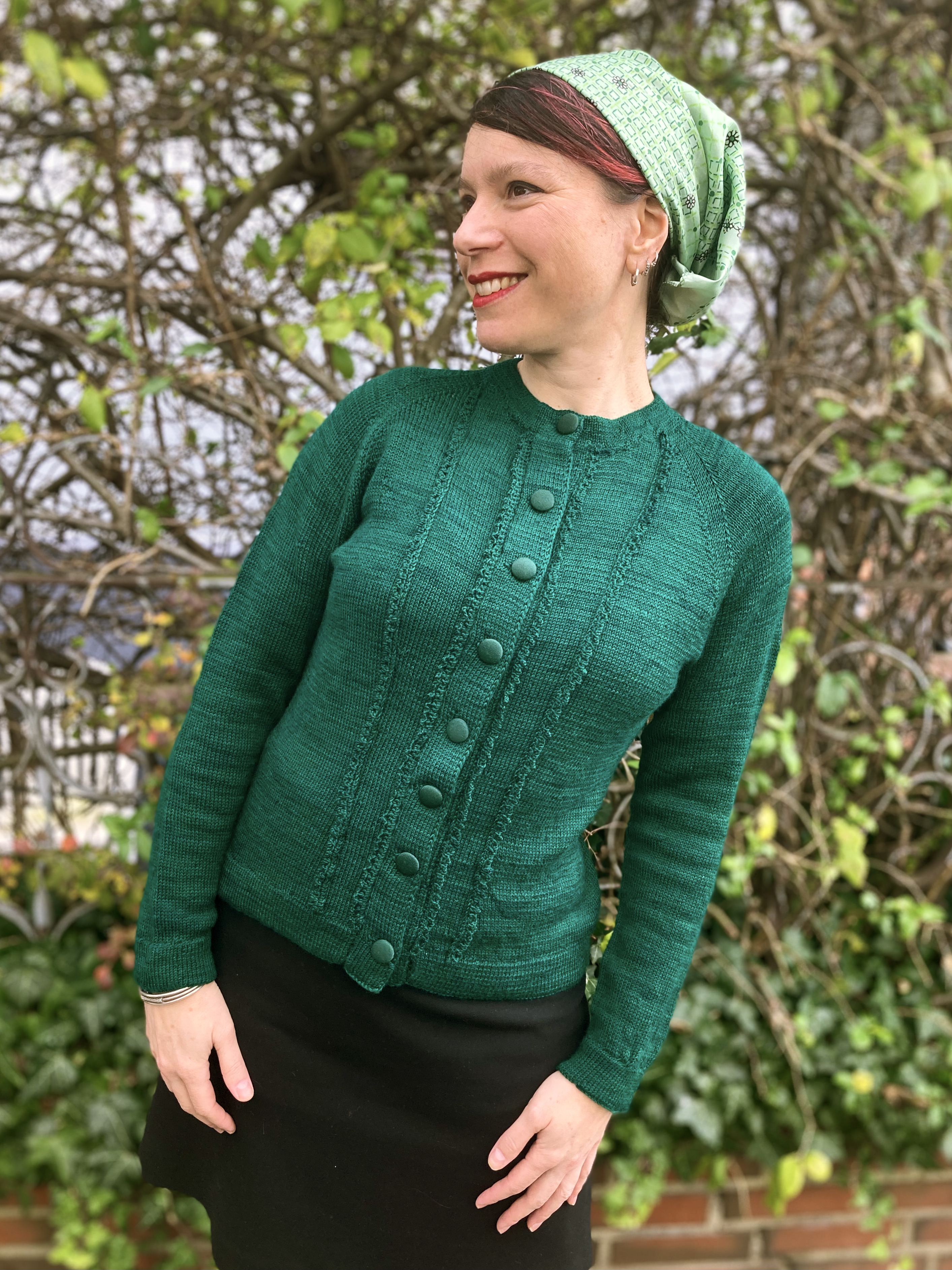
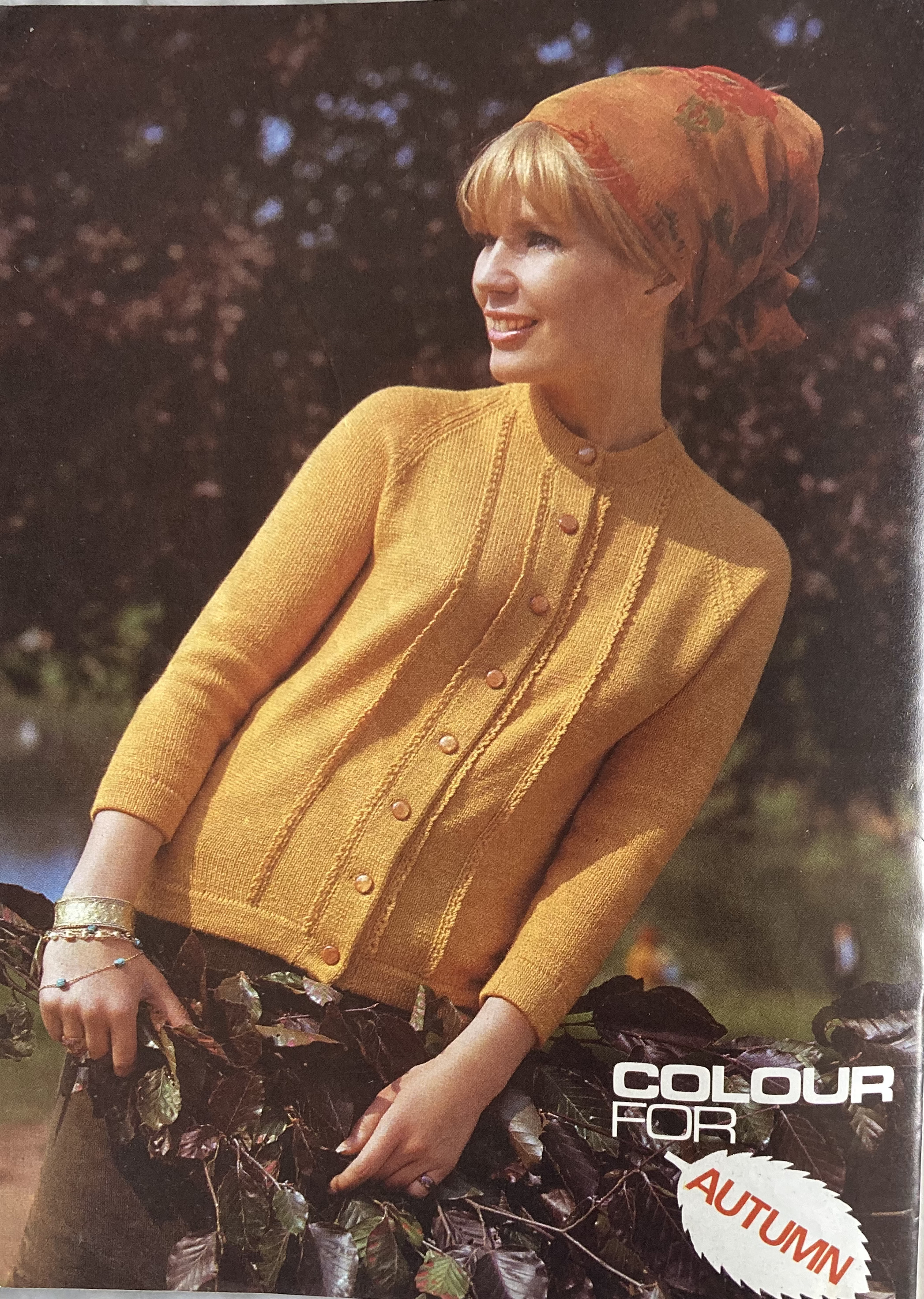
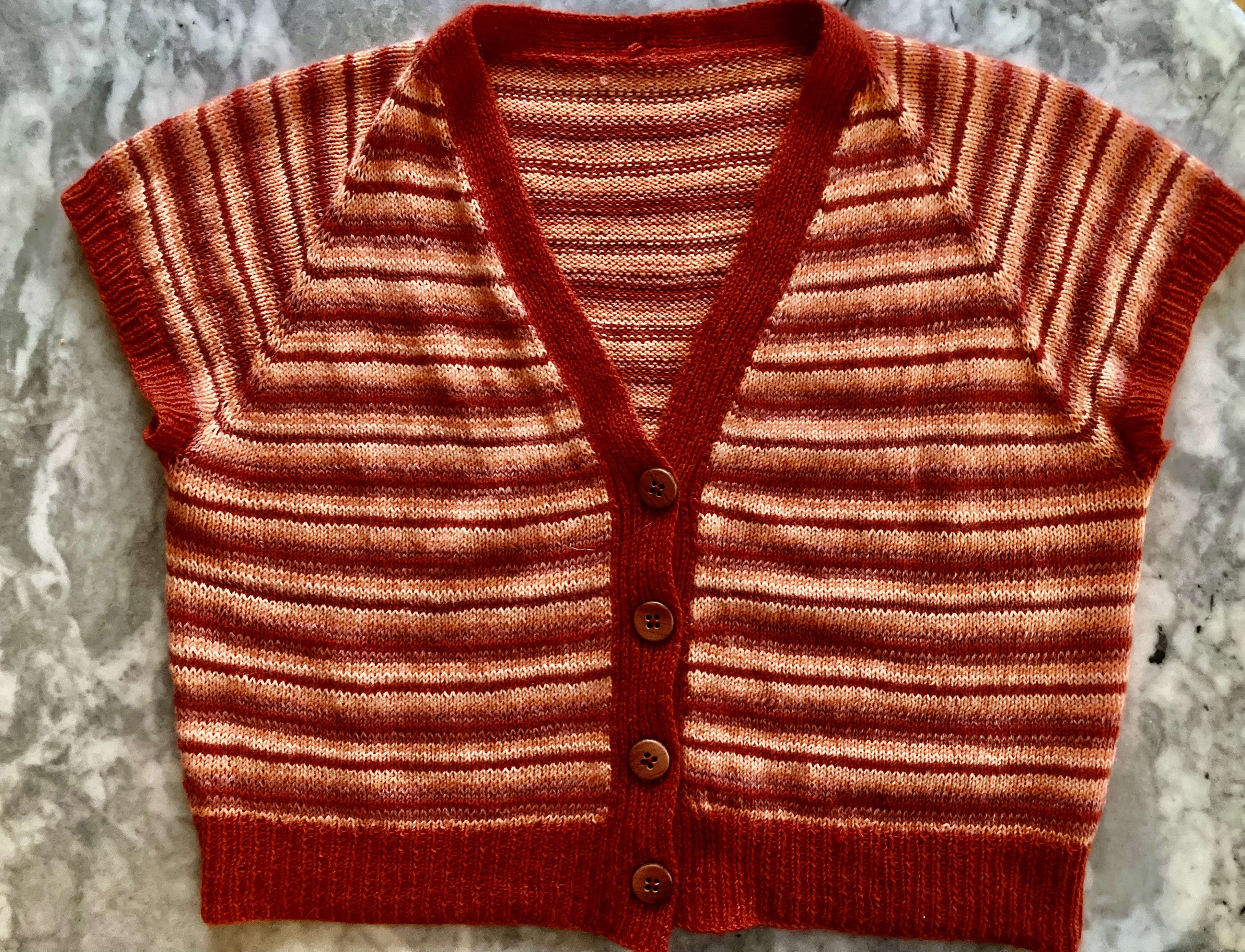
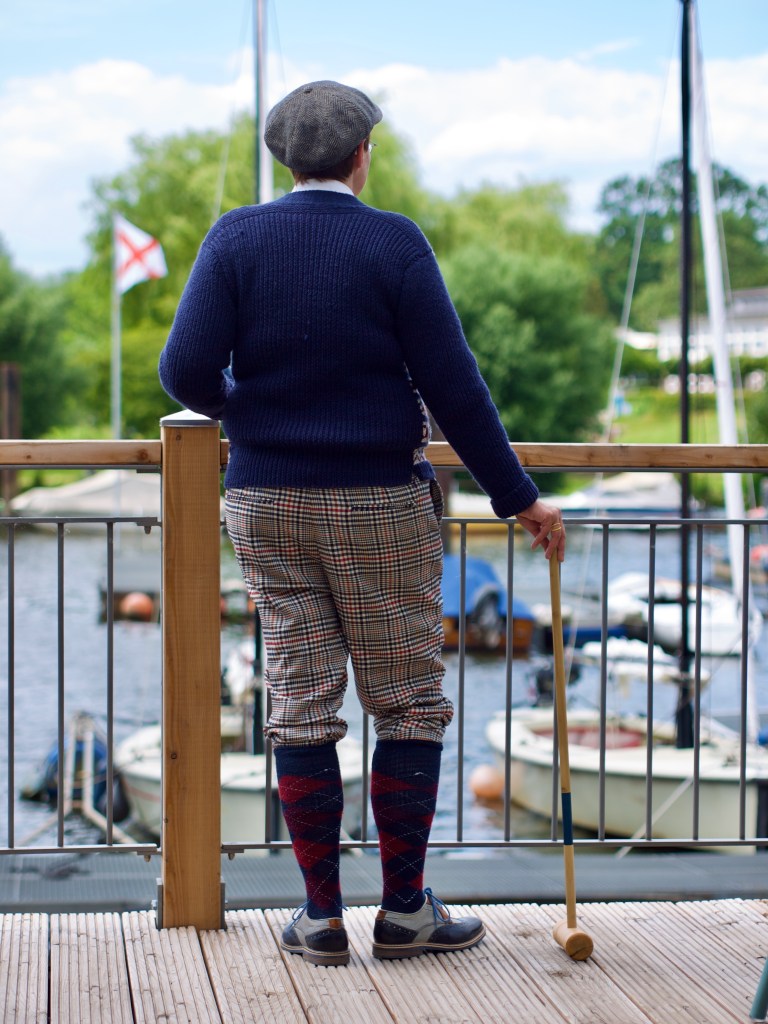
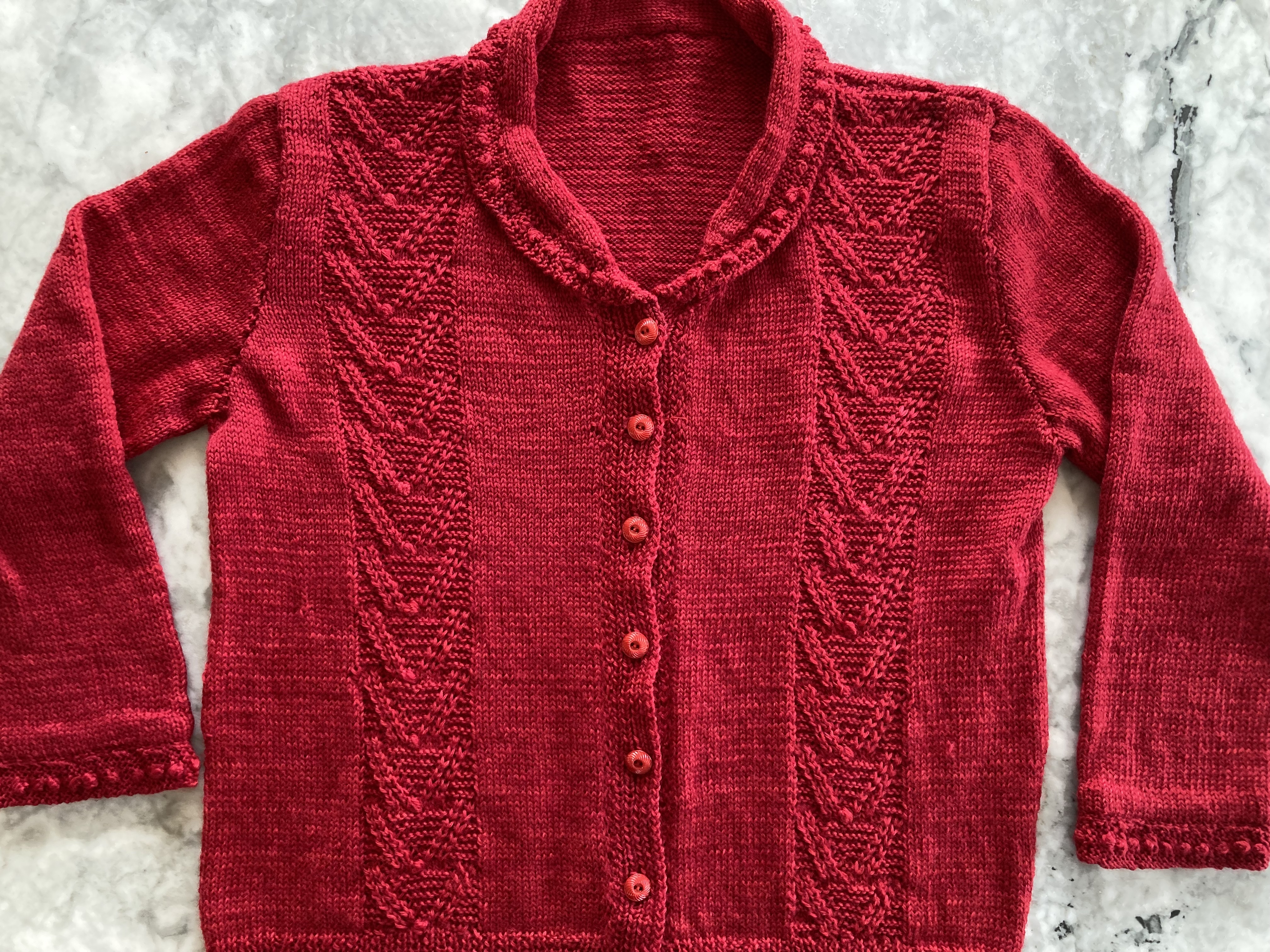
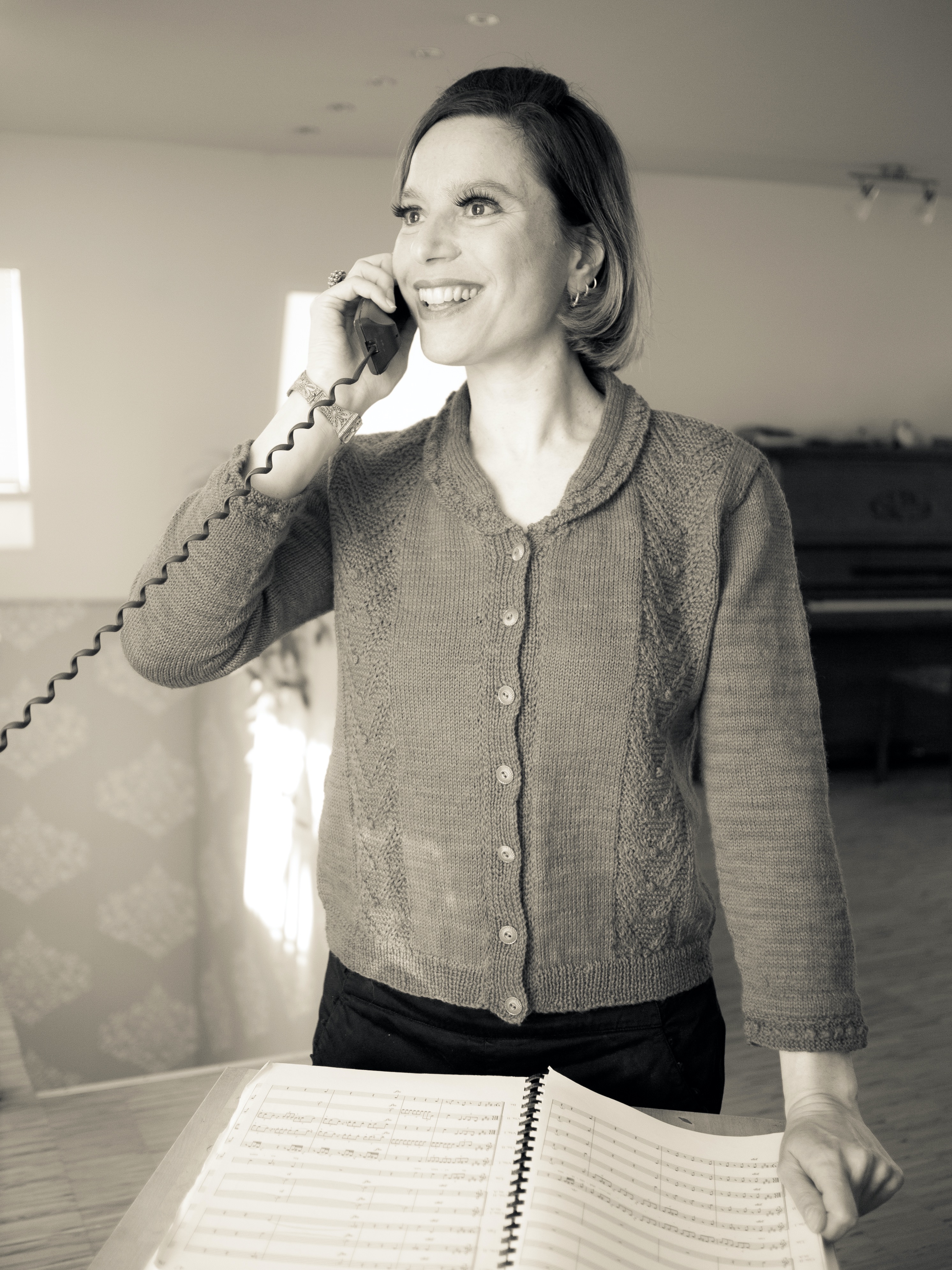
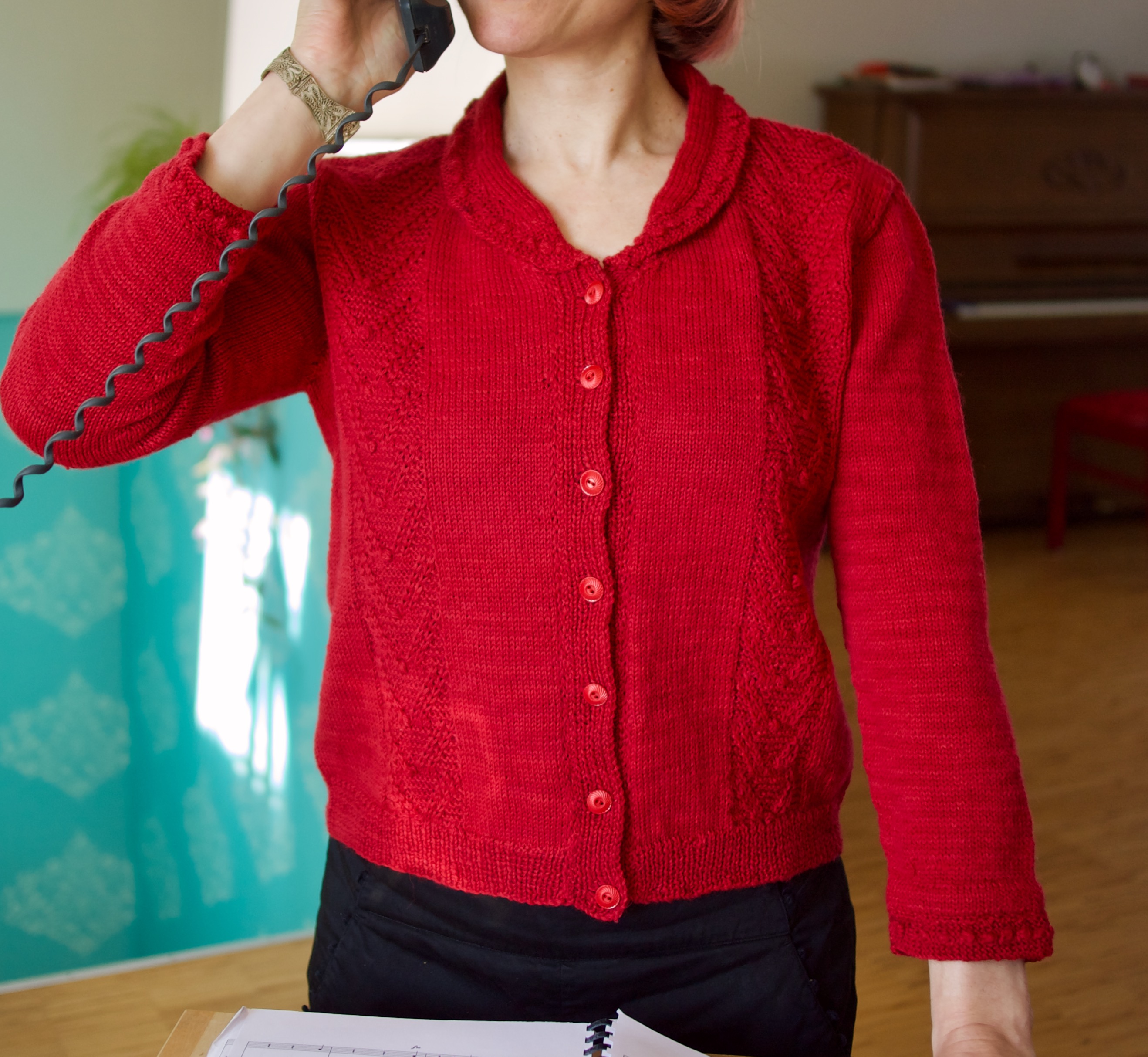
My April project (which took forever!) was the “long-line Shetland cardigan” from the April 1968 issue of Stitchcraft, “Country Knits”. Longer, slightly narrower garments and cabled, twisted or nubbly stitch patterns were all trending.
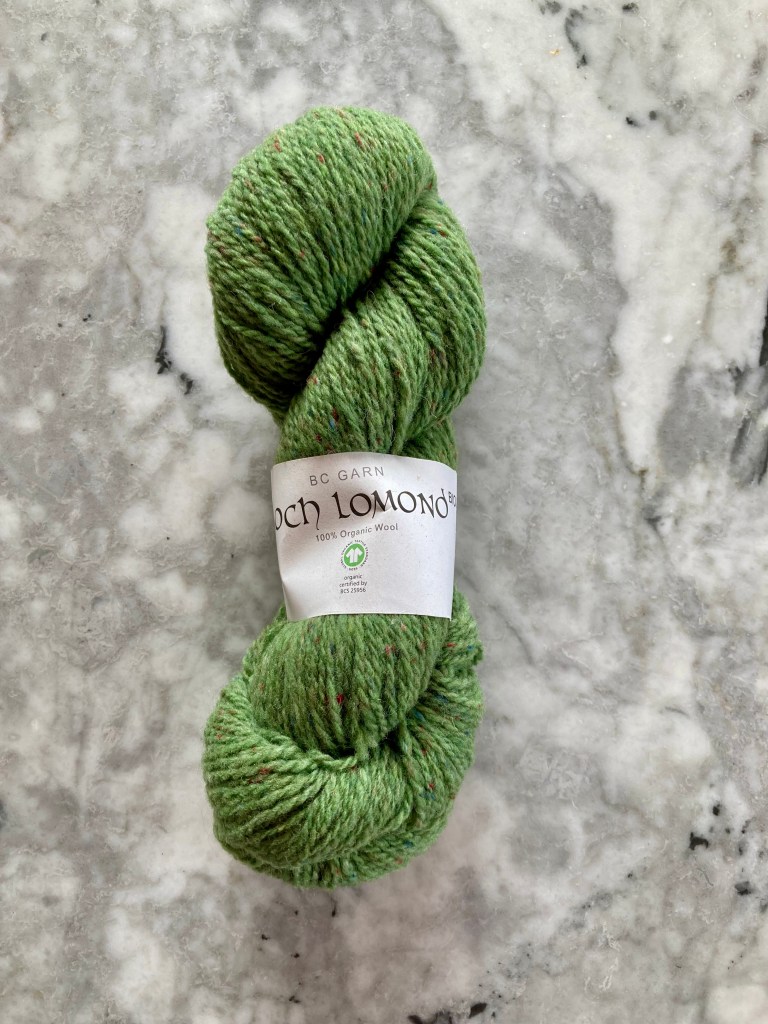
The cardigan in question is written for Patons “Fiona”, a DK/worsted blend of Shetland wool and synthetic fibre. I used “Loch Lomond” by BC Garn, which is a tweedy, loosely plied DK/worsted wool, softer than Shetland wool and a little bit less hairy, but similarly fluffy. I had bought it to make a cardigan from a modern pattern and had made most of the cardigan before realising that I didn’t like either the fit or the lace pattern on the fronts. It sat around for a while while I worked on other projects, until I decided to cannibalise it in order to make this Stitchcraft cardigan.
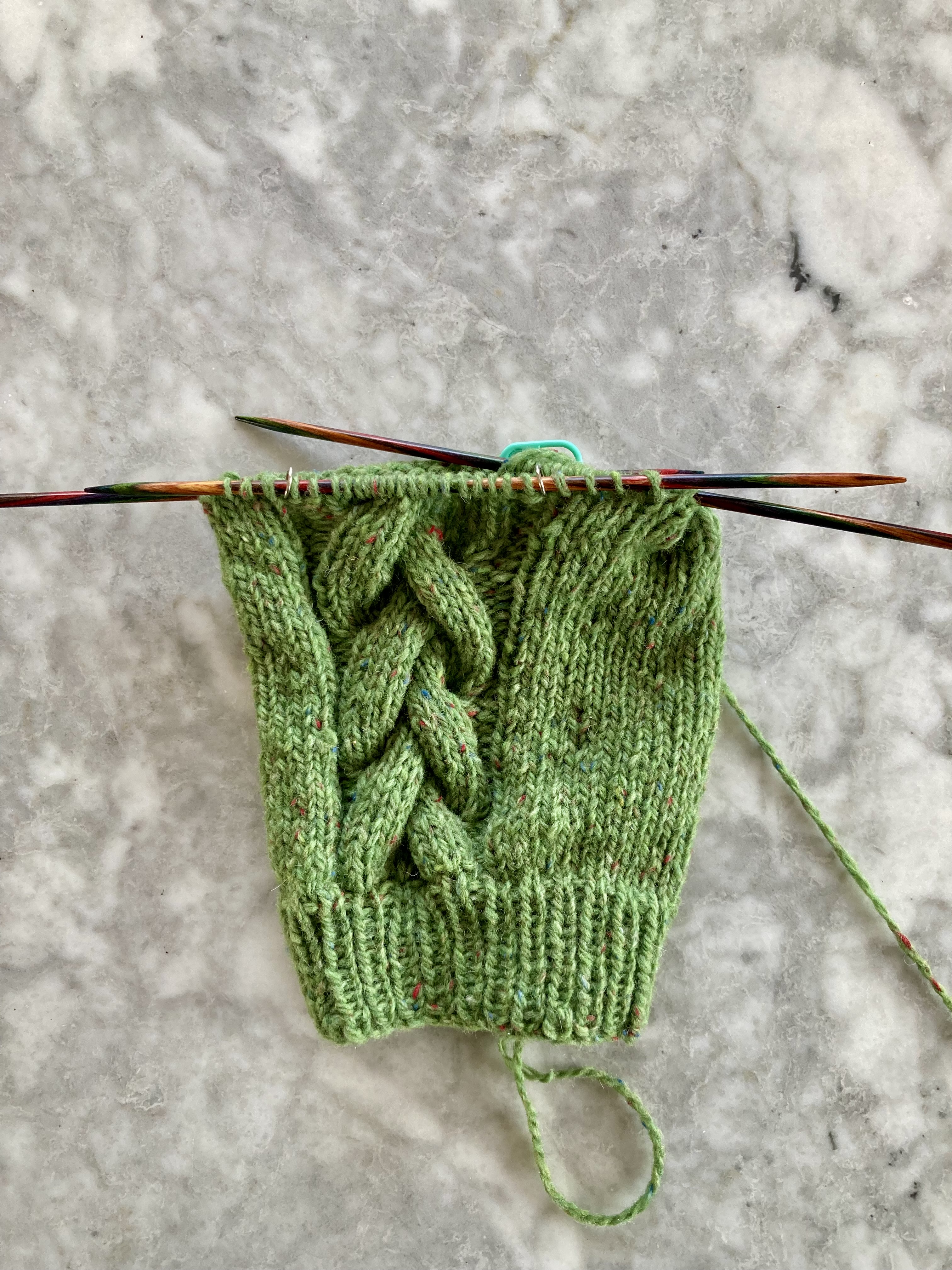
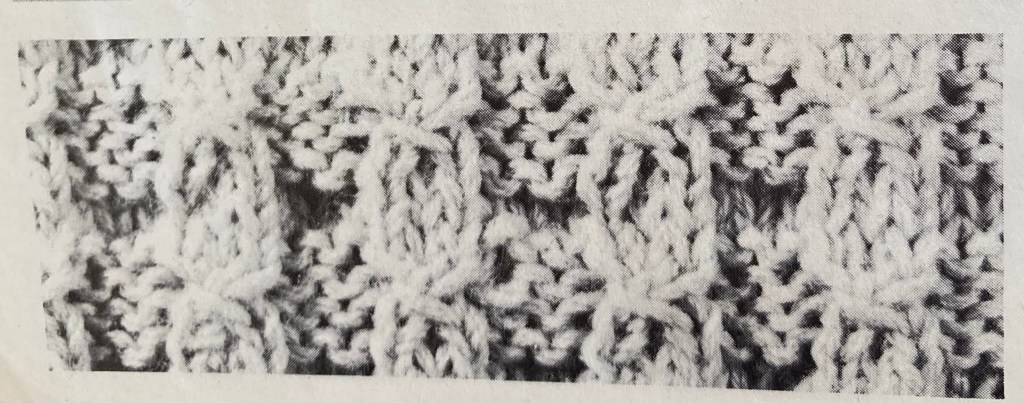
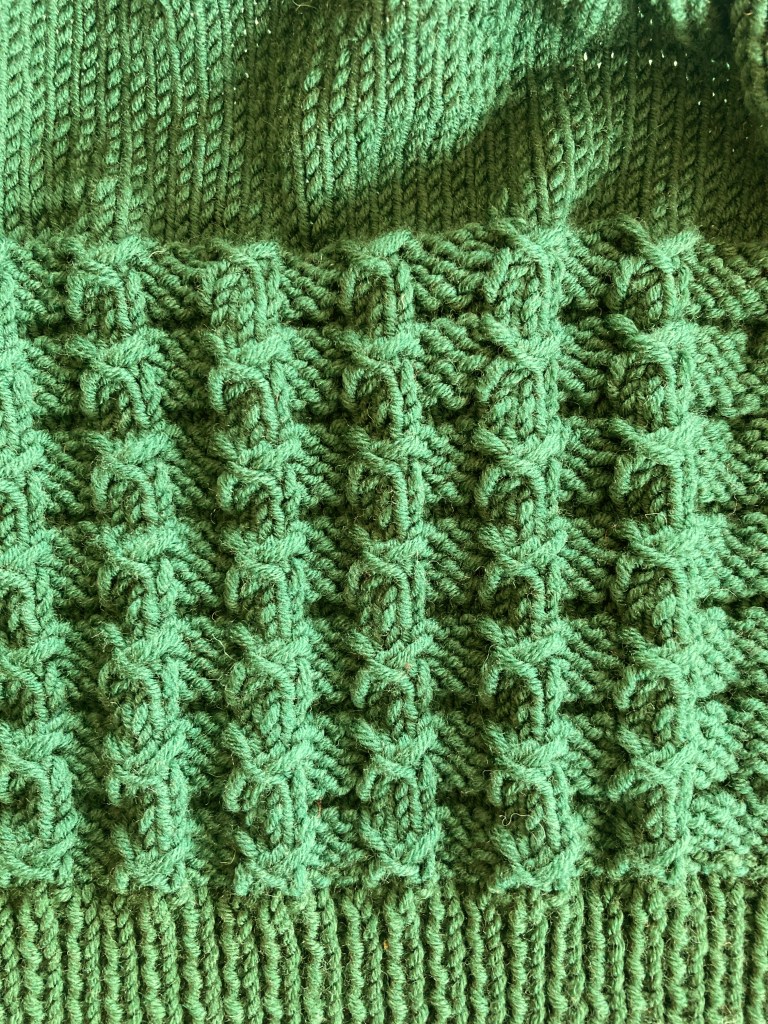
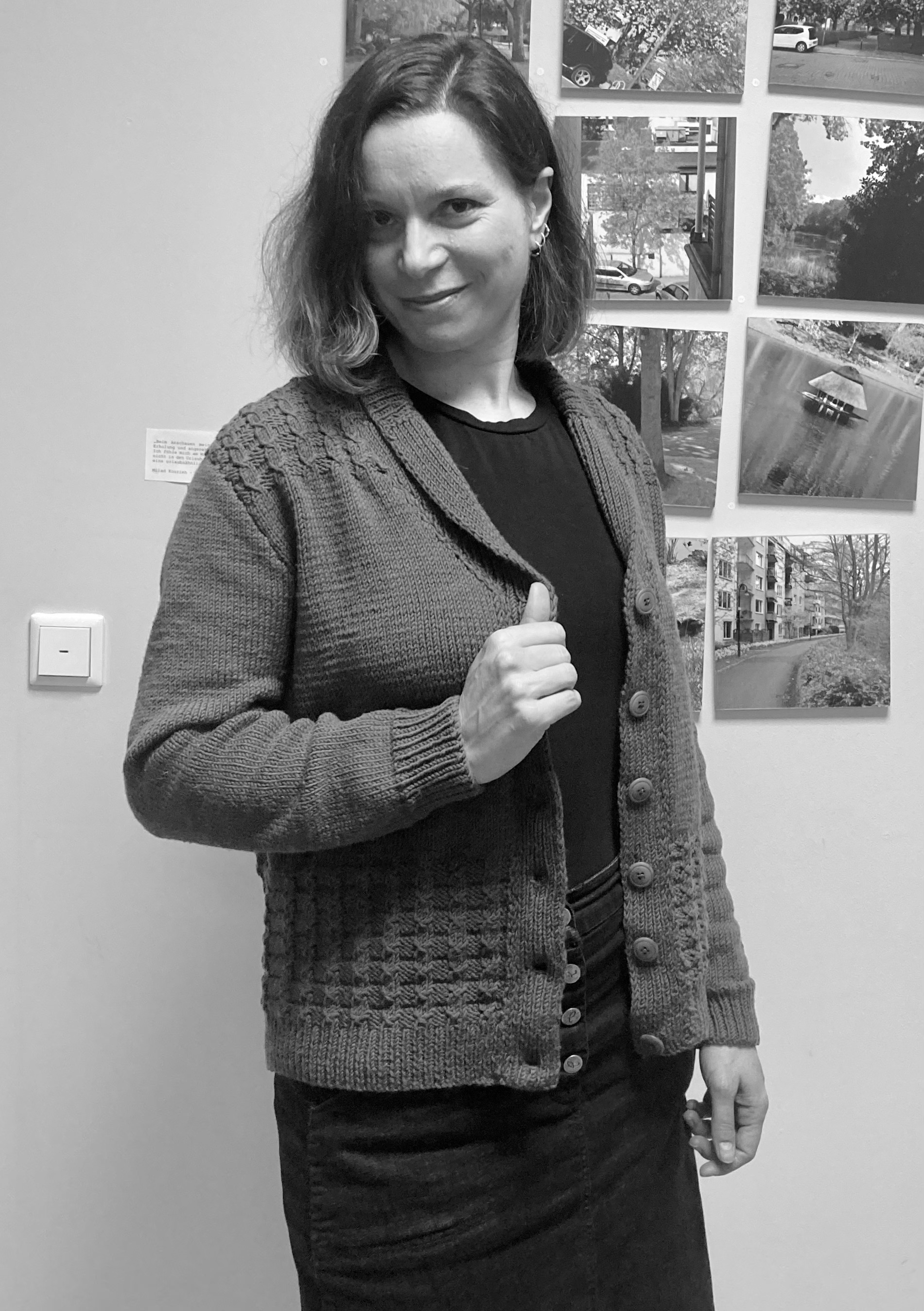
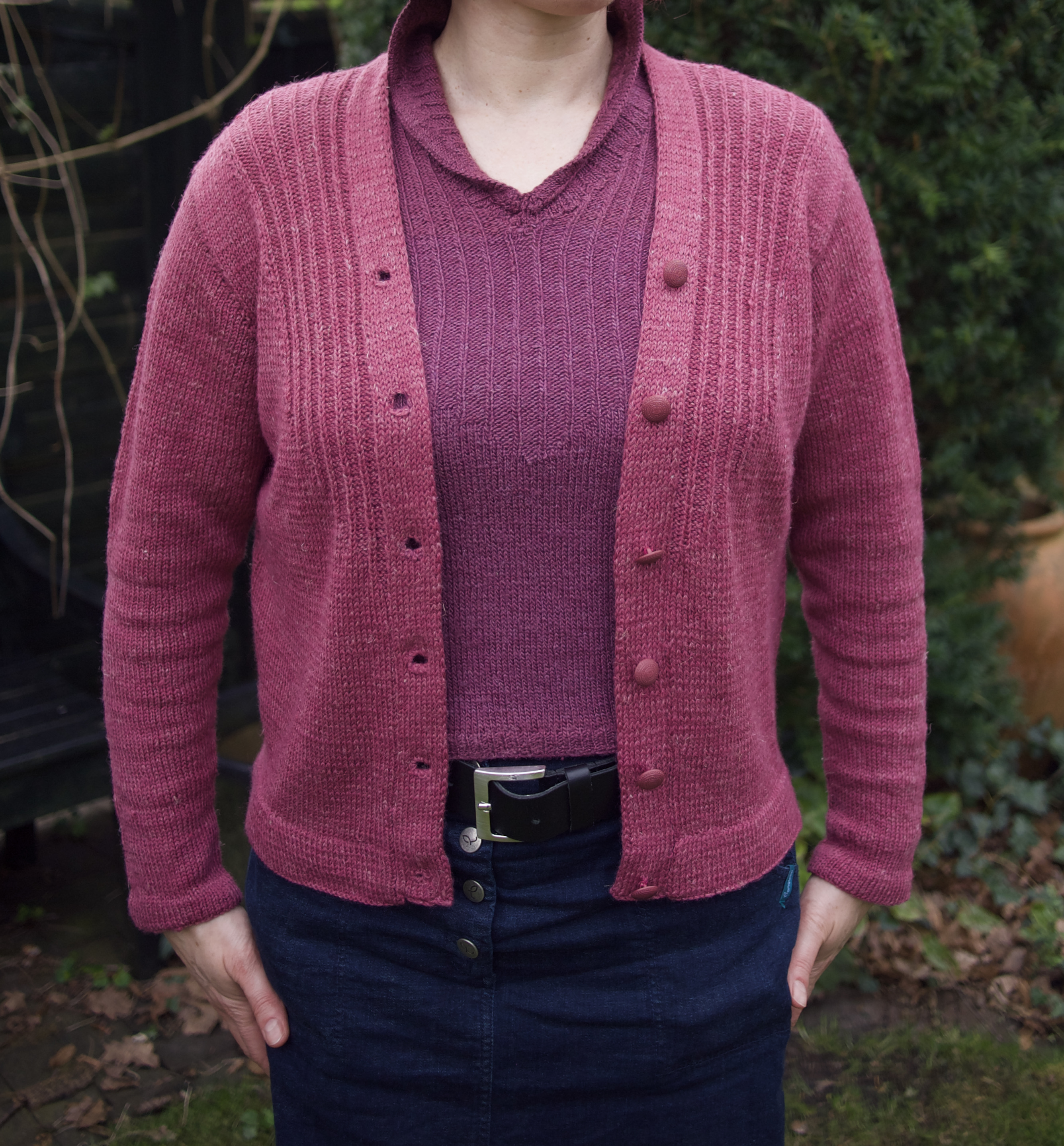
The pattern is written from the bottom up, in pieces and seamed, with raglan sleeves. The cables are a 5/5/5 stitch braid with the crosses on rows 5 and 11 of the 12-stitch pattern repeat, and only featured on the fronts — the back is knit plain. I chose to make it with the front and back knit flat in one piece and a seamless raglan yoke, and added a little bit of waist shaping as well as two cables on the back (without changing the total stitch count) to keep it from looking too sack-like or ballooning in the back.
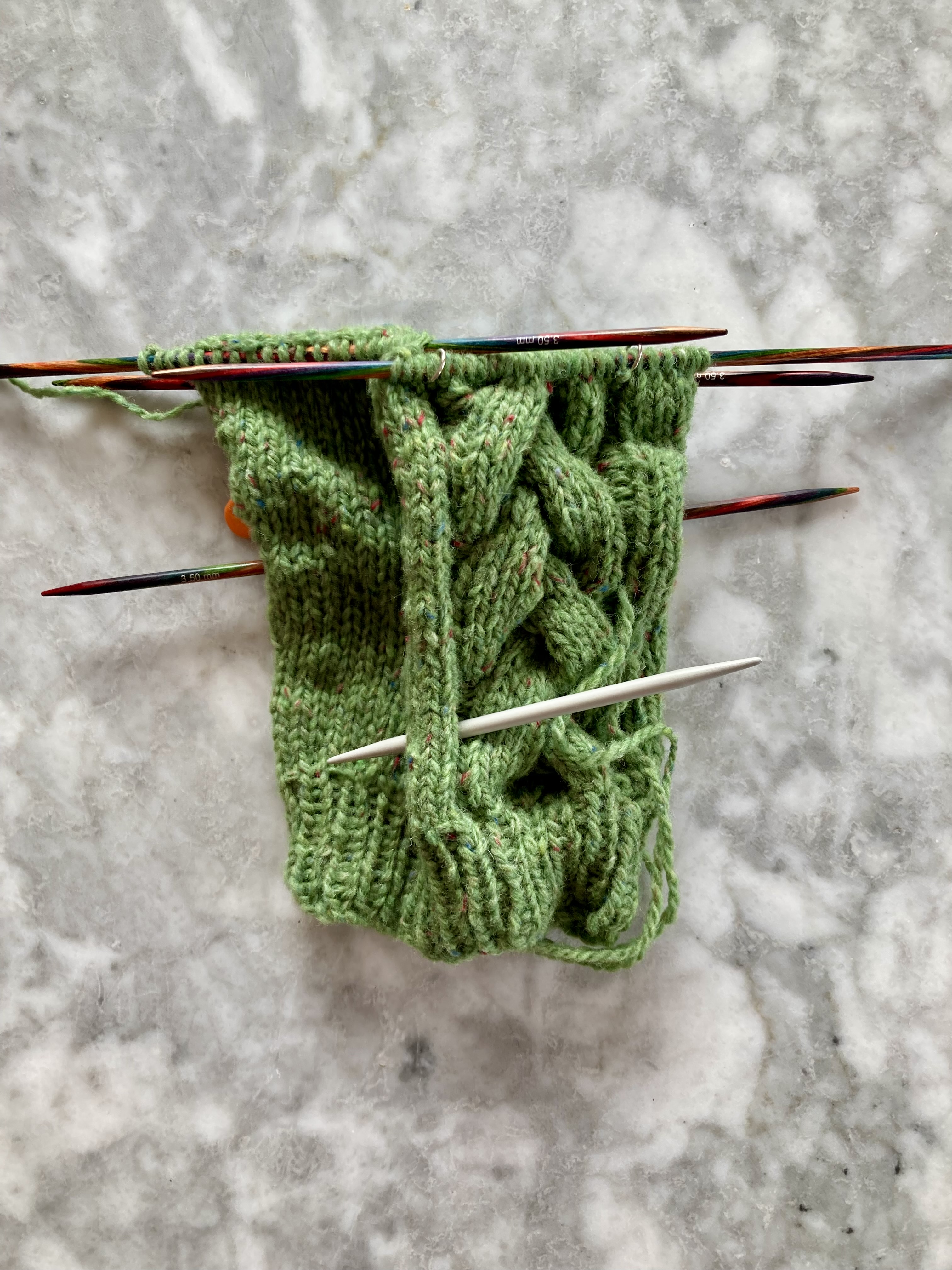
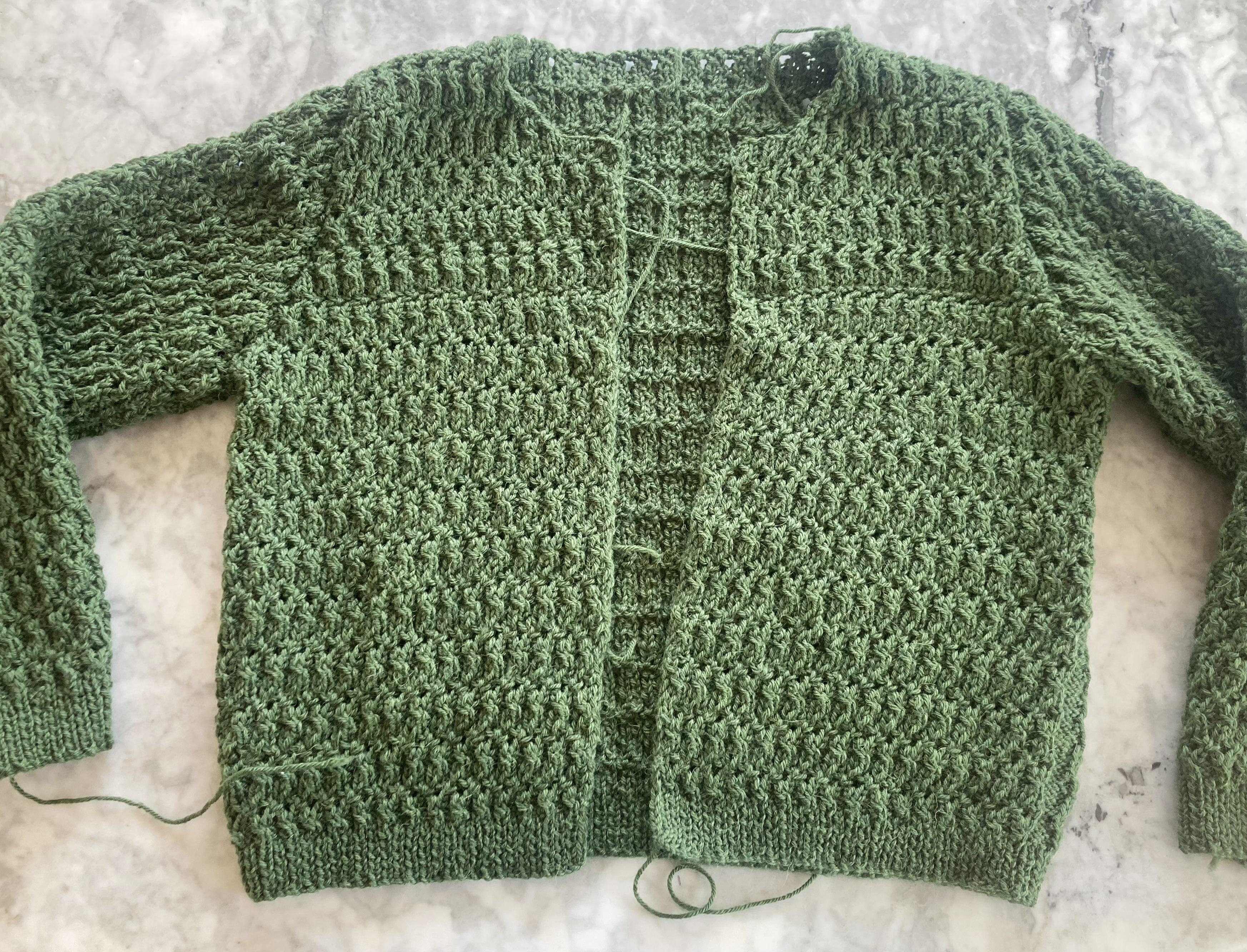
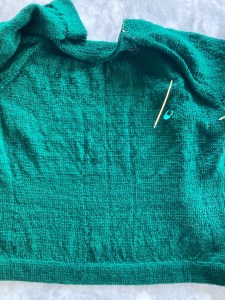
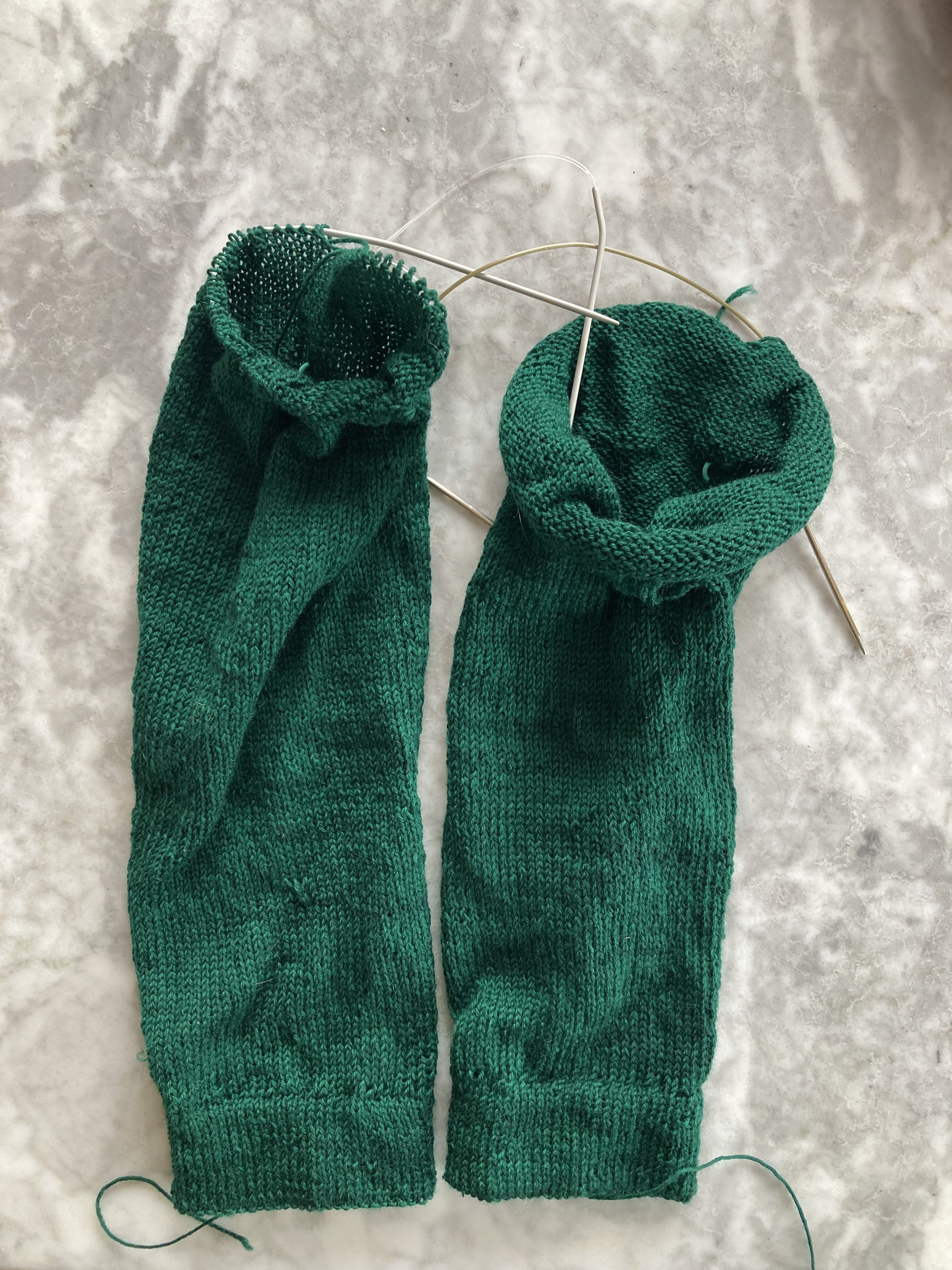
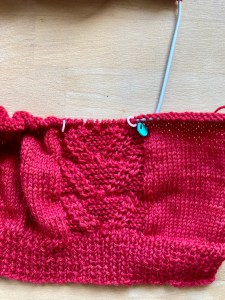
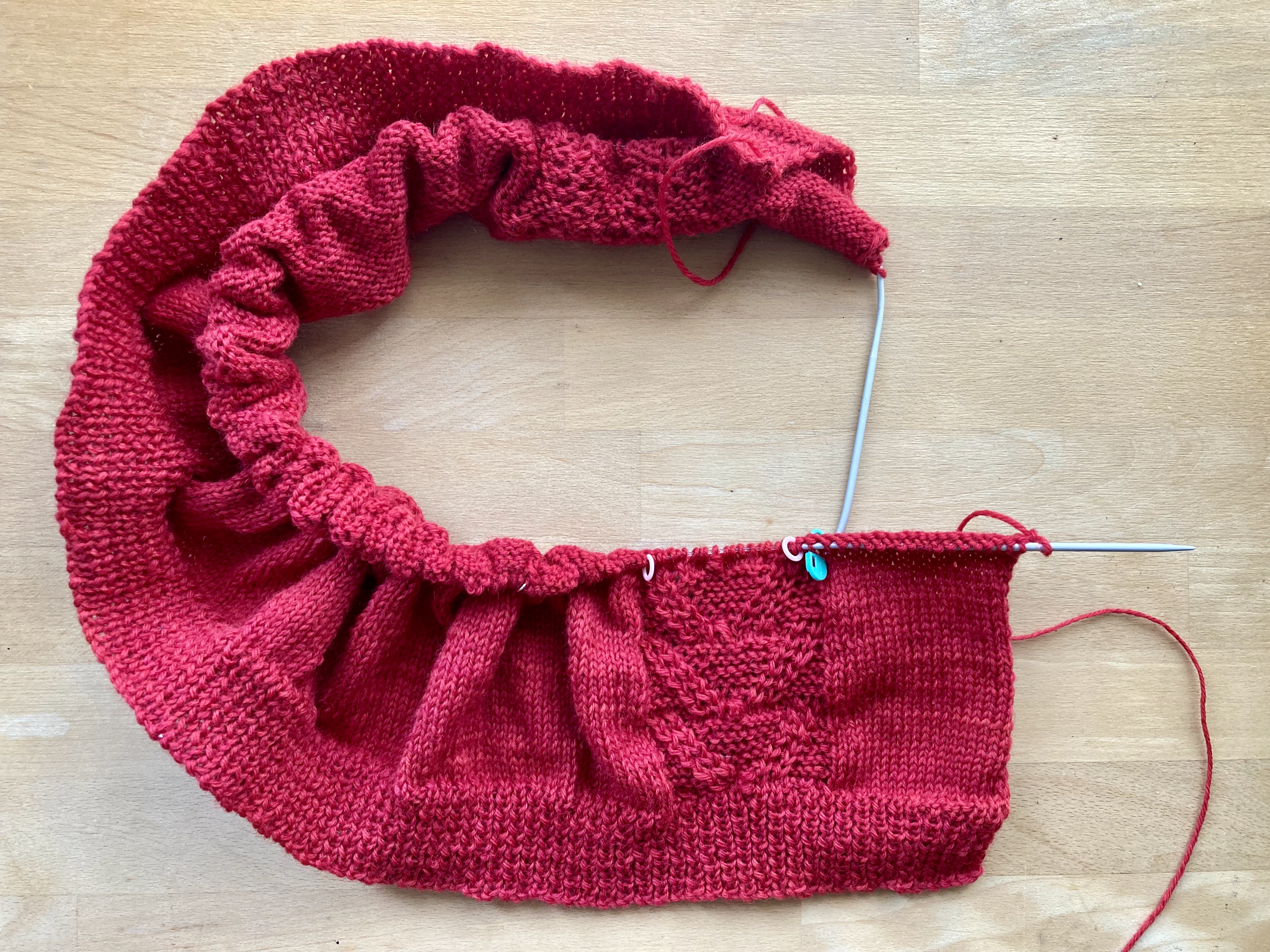
I started with the sleeves to check for fit and tension, and as of April 27th had only completed 1 1/2 sleeves up to the armholes — not very much! The pattern is not difficult, but it was a really busy month. The fabric was a little stiff on 3.5 needles, but I decided to stick with it, which turned out to be a good and important decision. The cables had great definition. The pattern was easy, the colour fantastic, and the yarn pleasantly squishy and tweedy. I just needed to find the time to get it done.
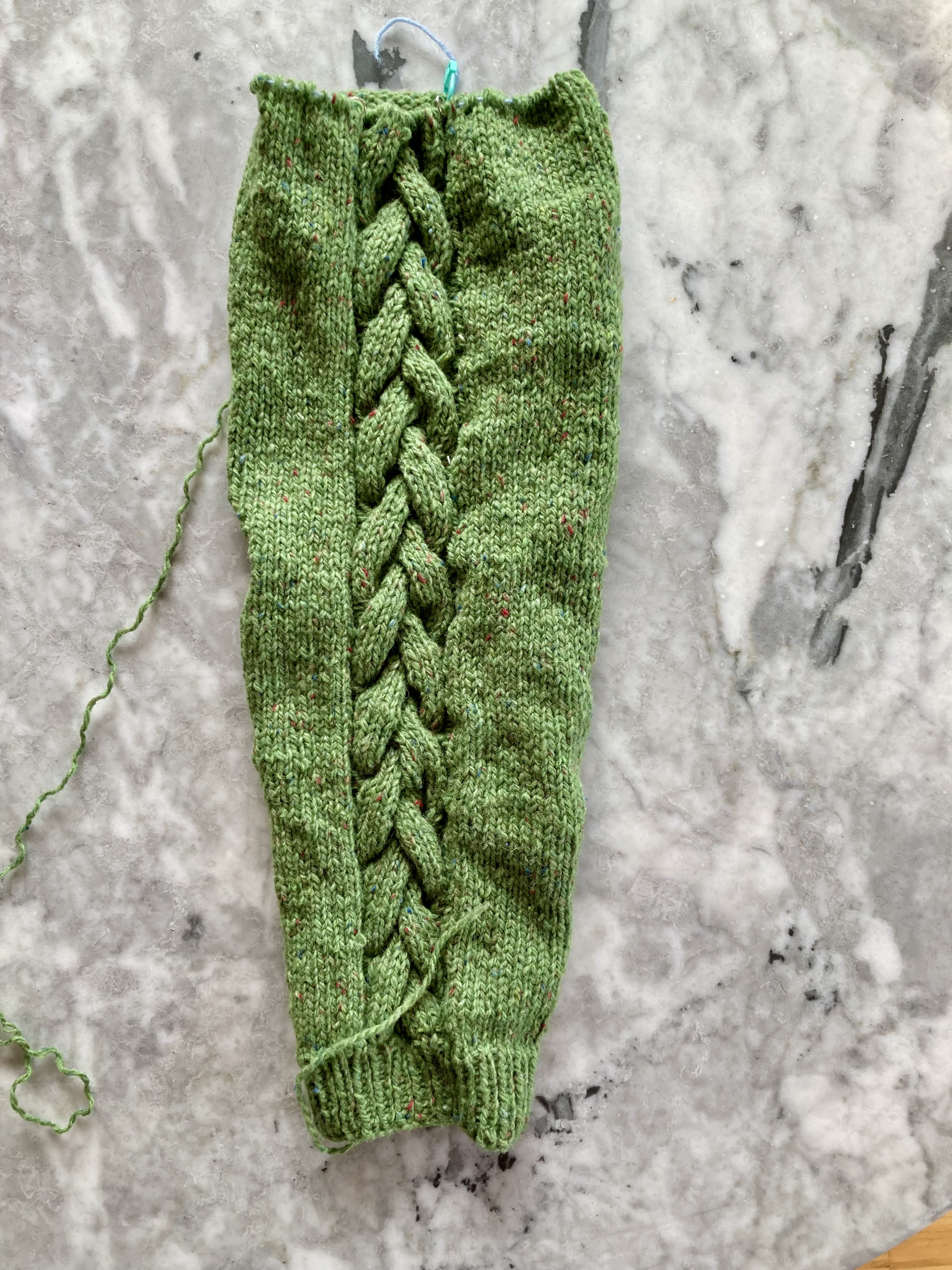
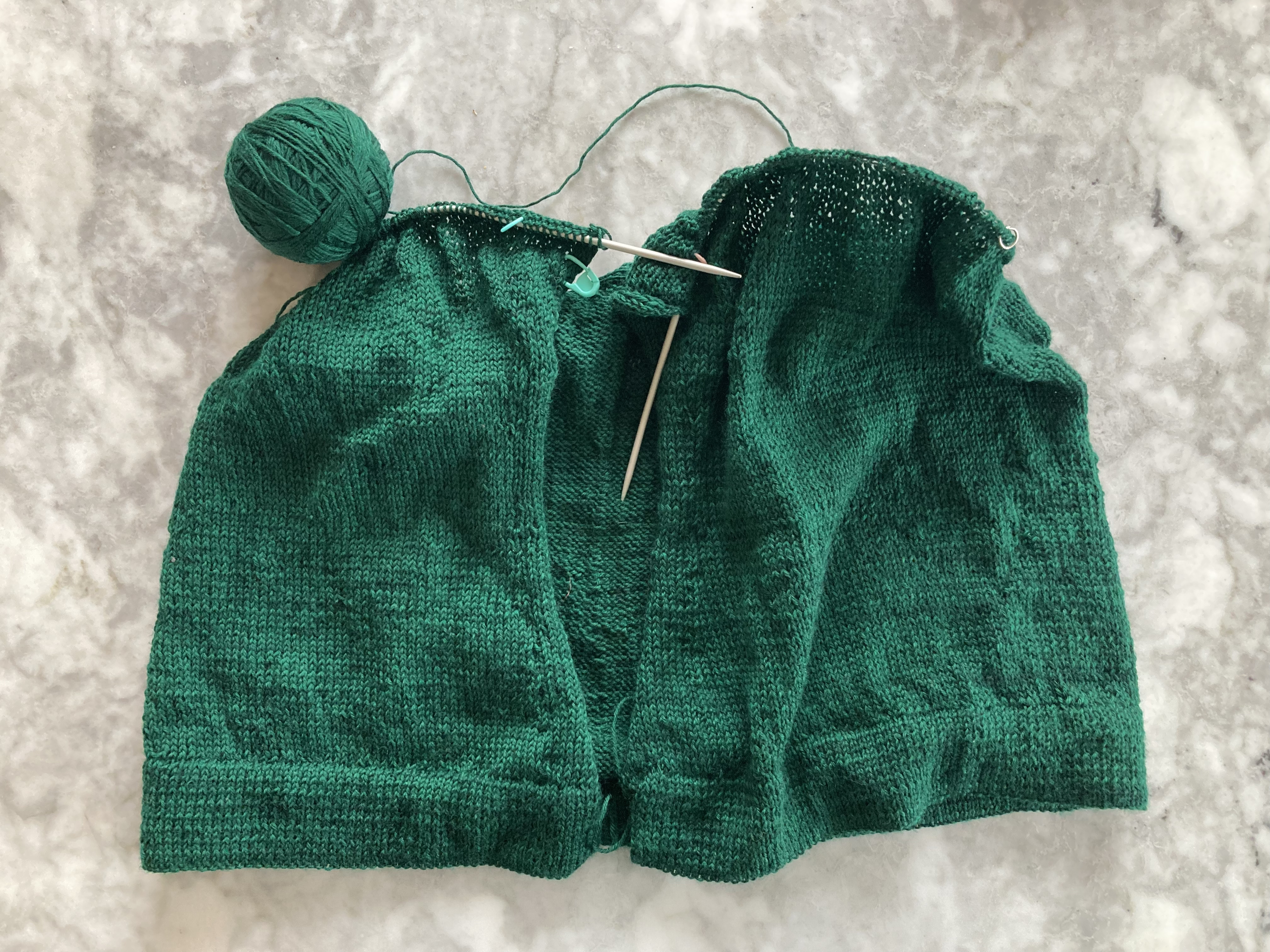
For whatever reason, this project just stayed in the WIP cabinet for a long time. The summer was really hot (up to 35 degrees C and it is really never that hot where I live) and I couldn’t deal with holding warm, wintery wool in my hands. I finished the sleeves to the armholes and worked on the body little by little until it took shape.
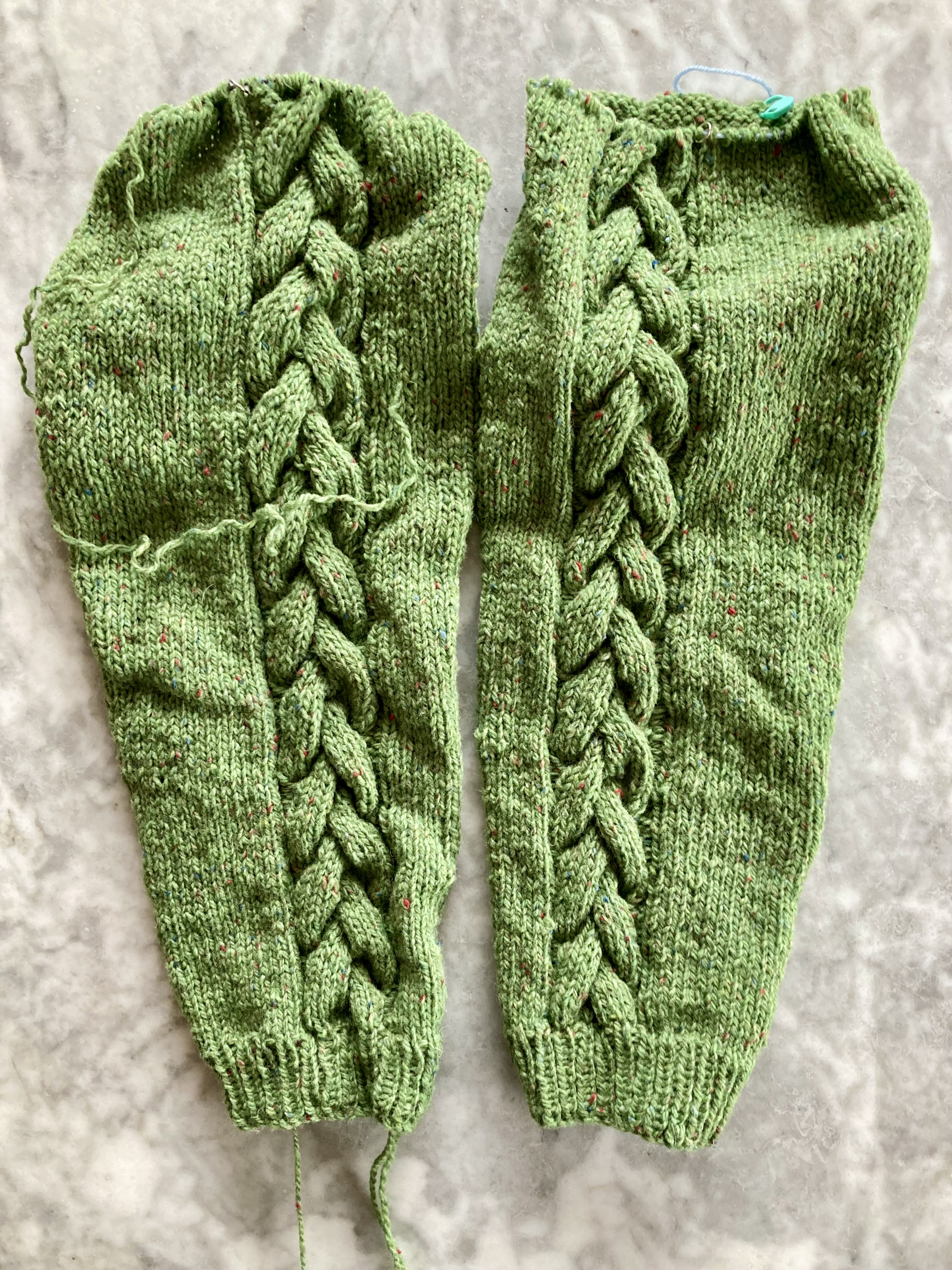
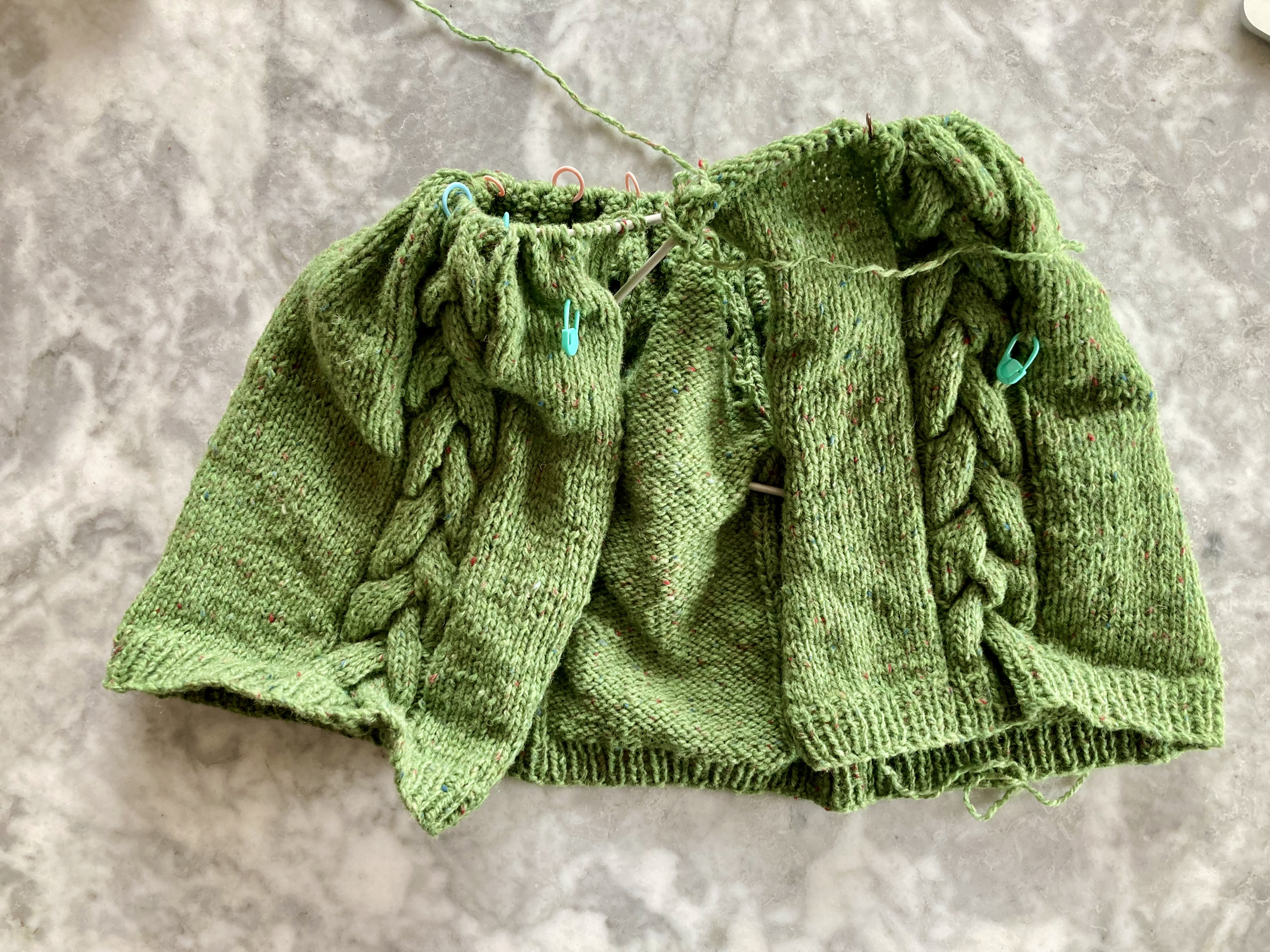
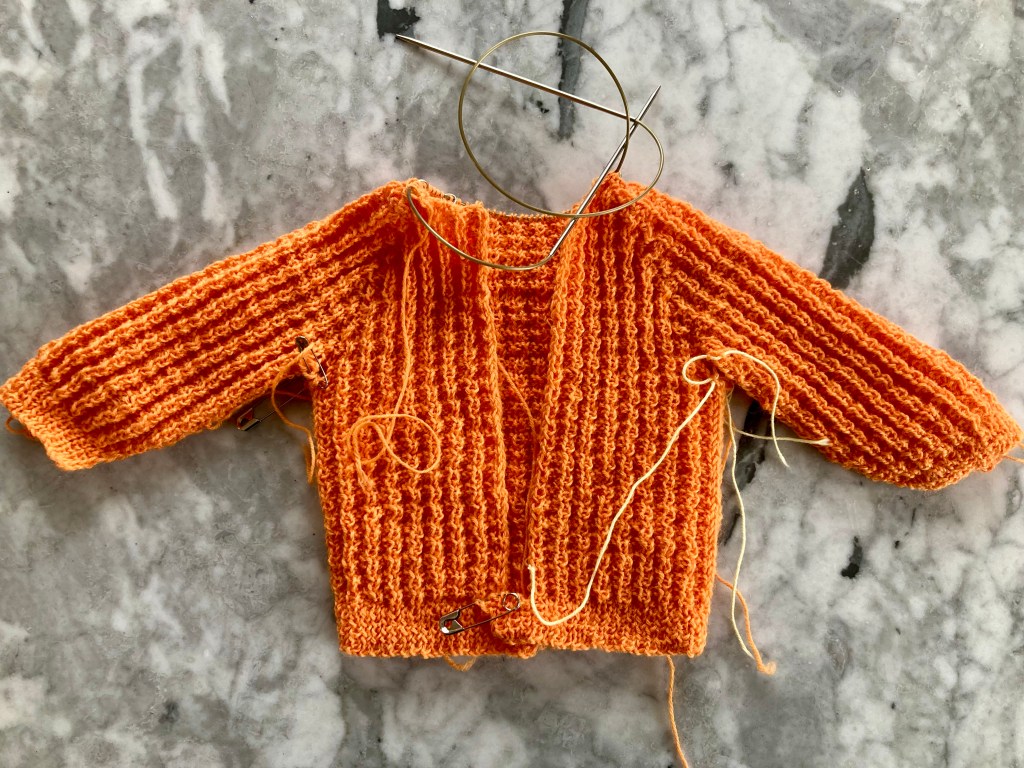
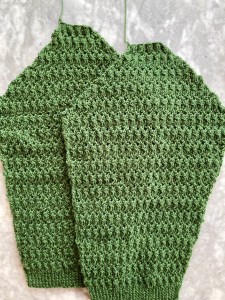
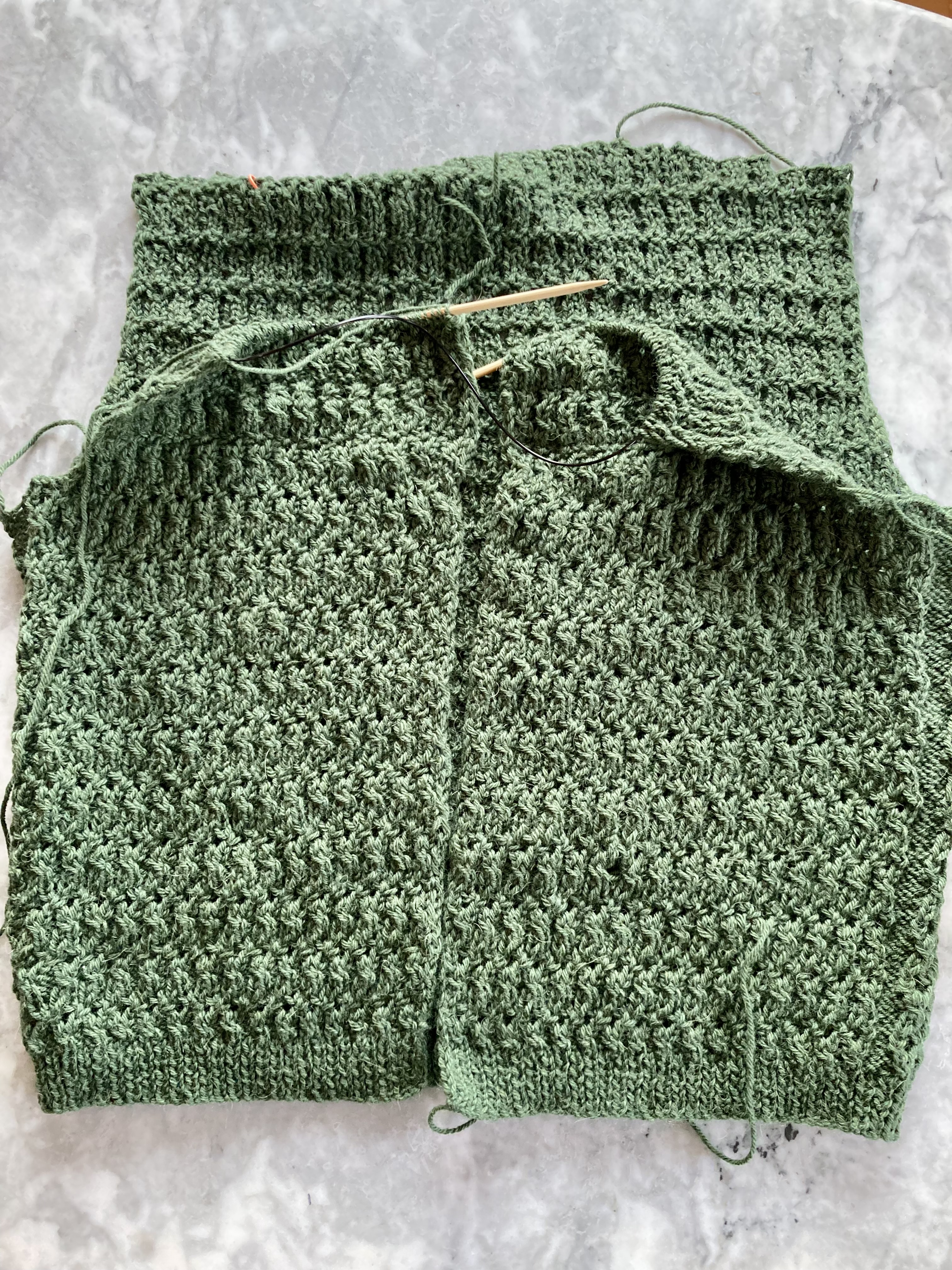
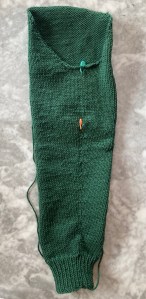
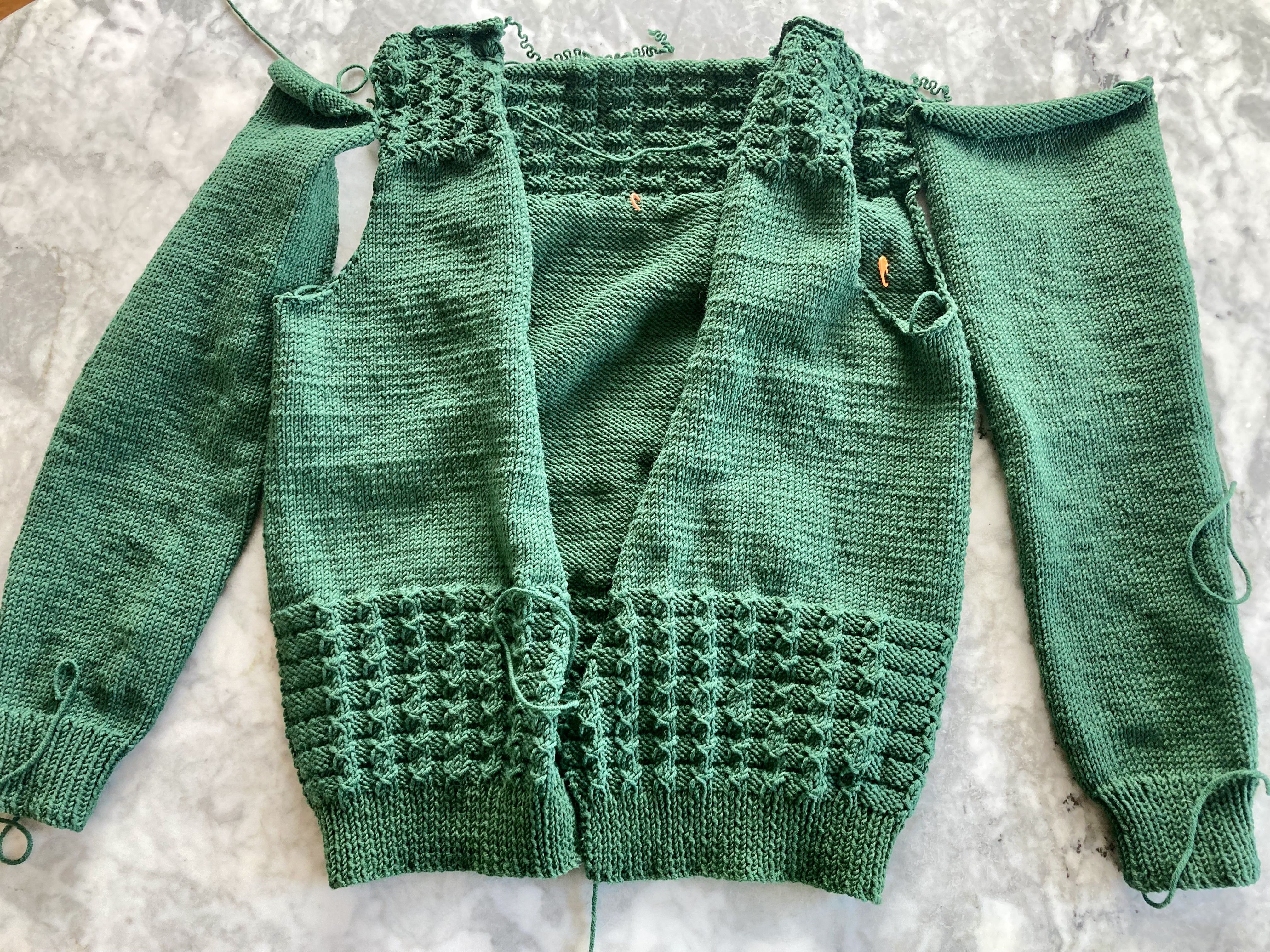
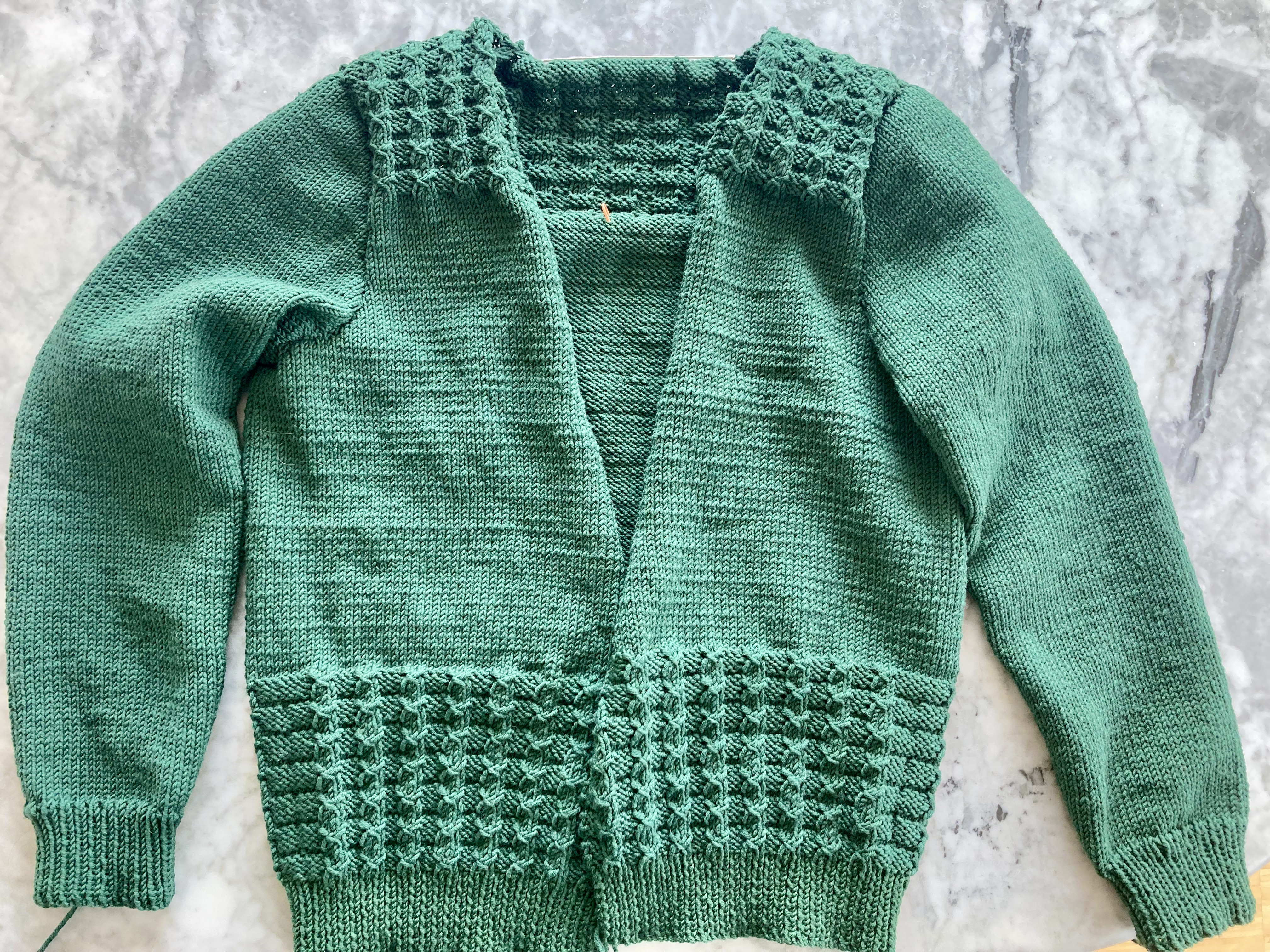
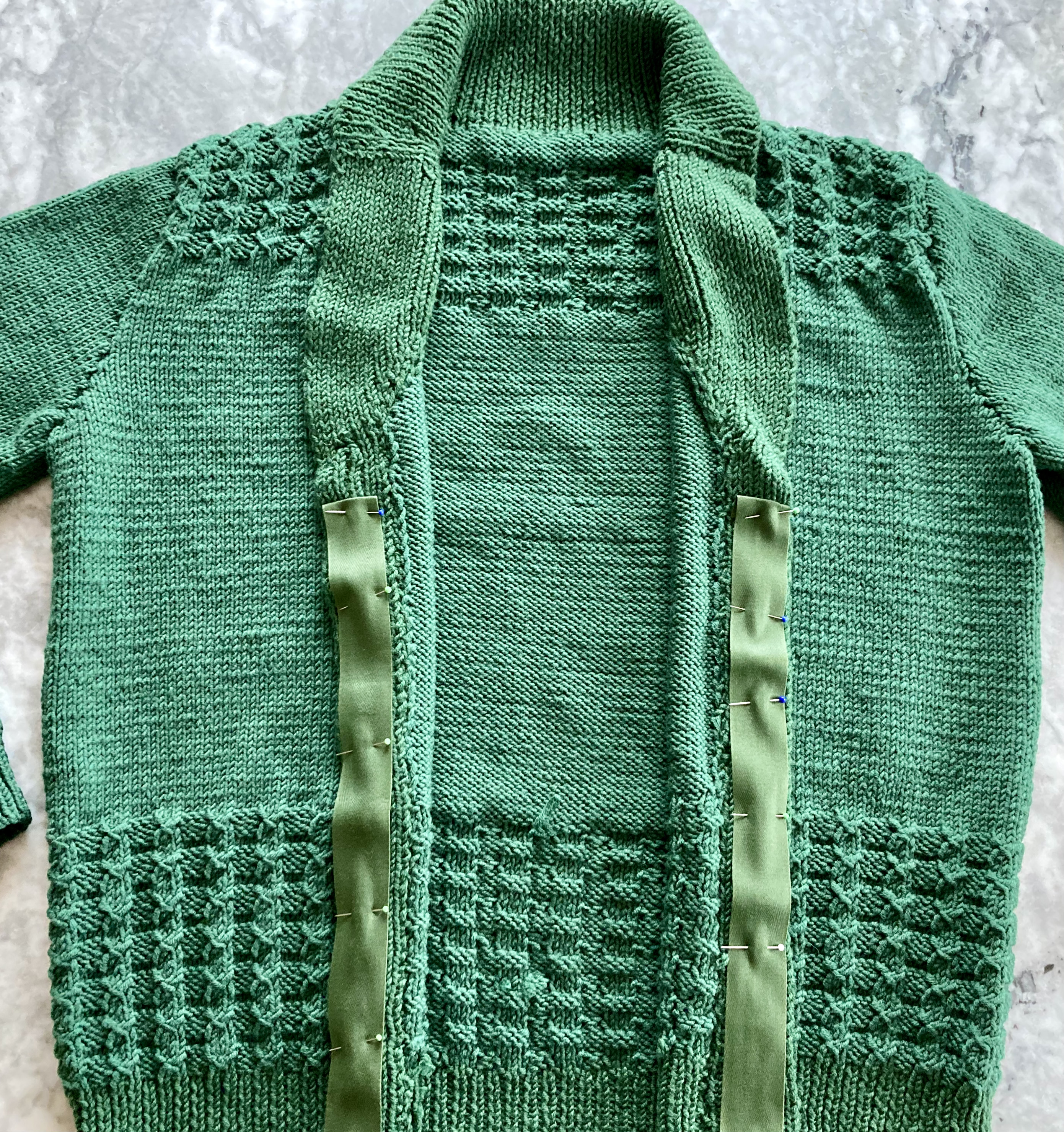
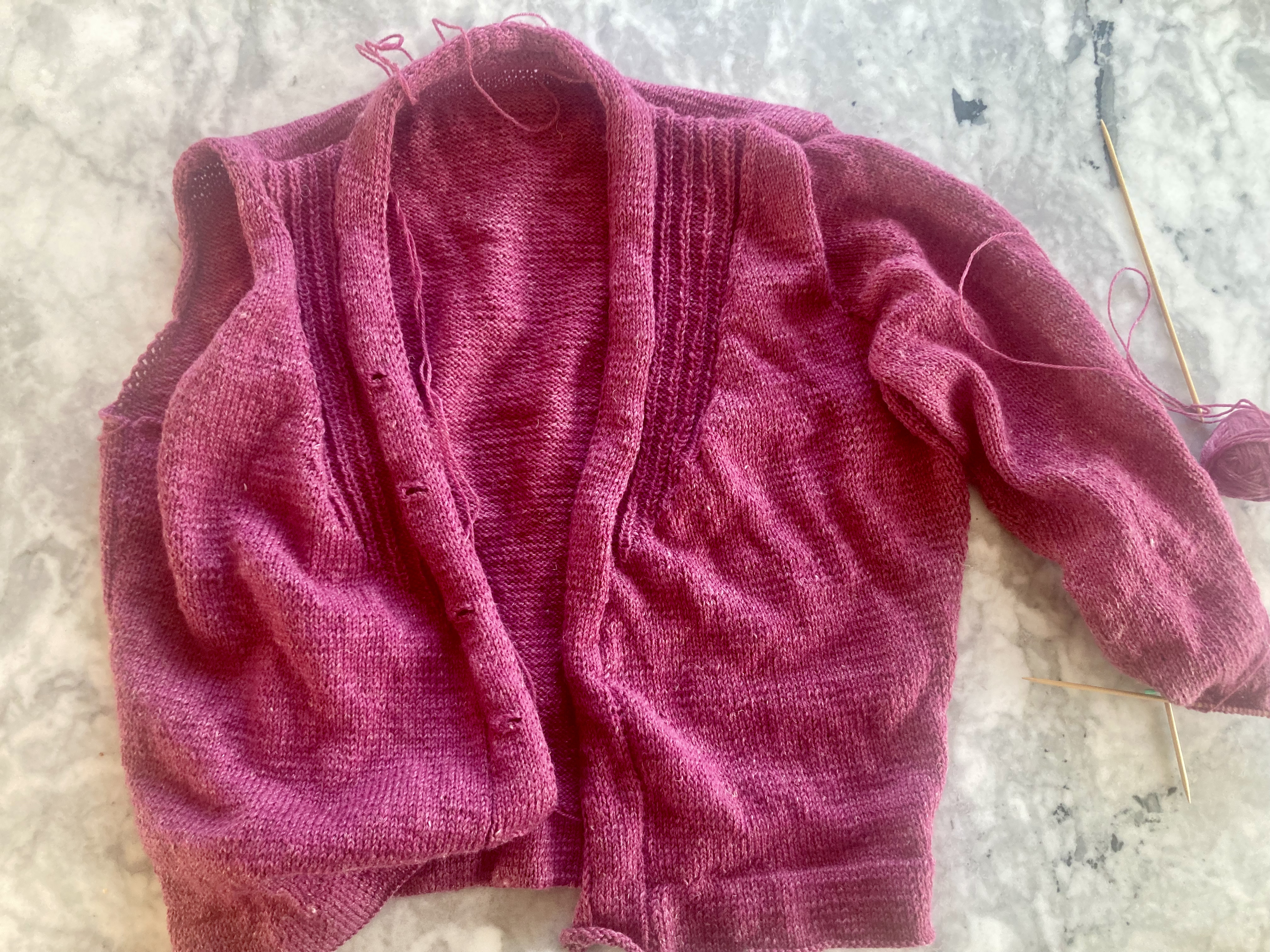
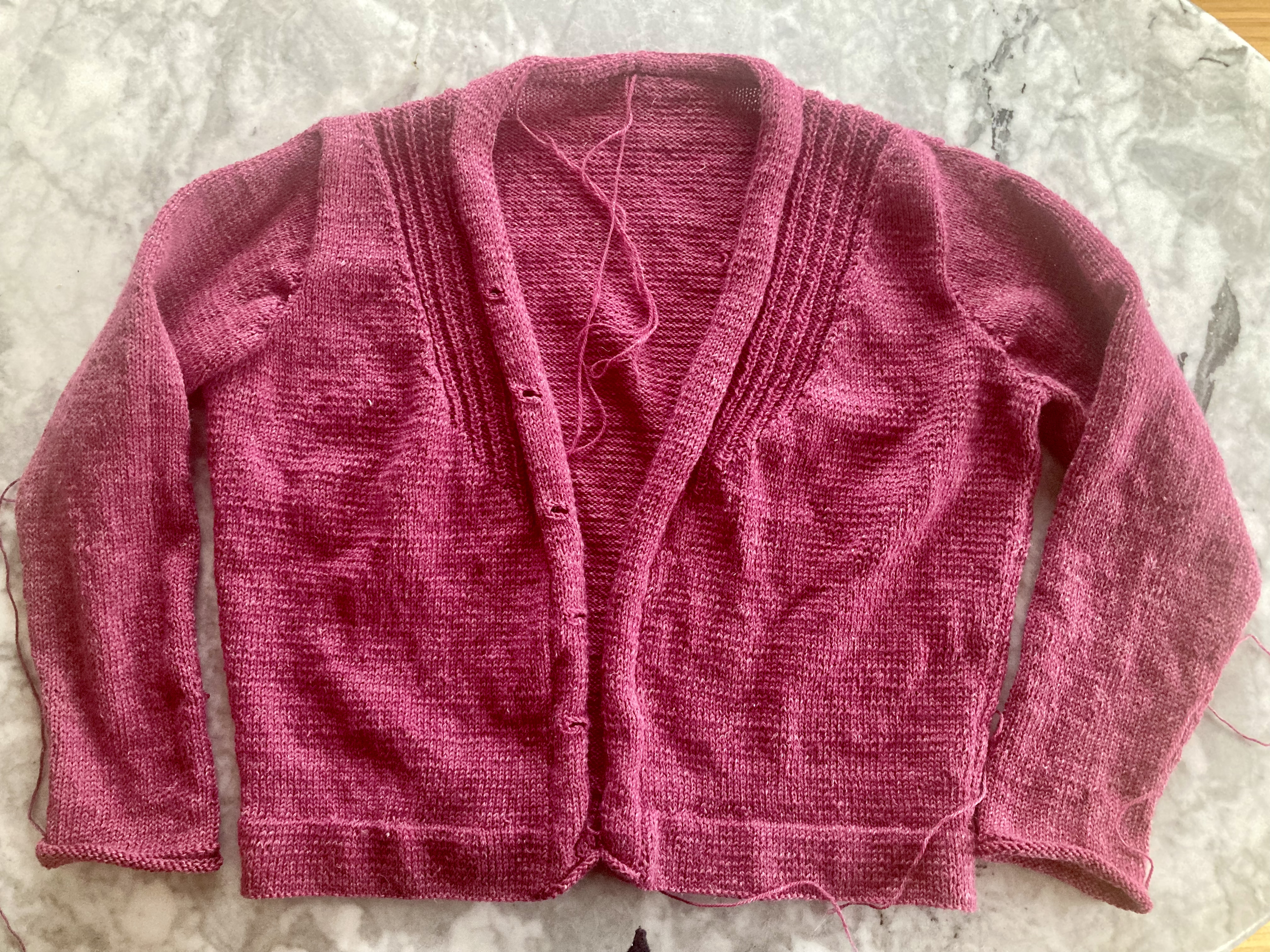
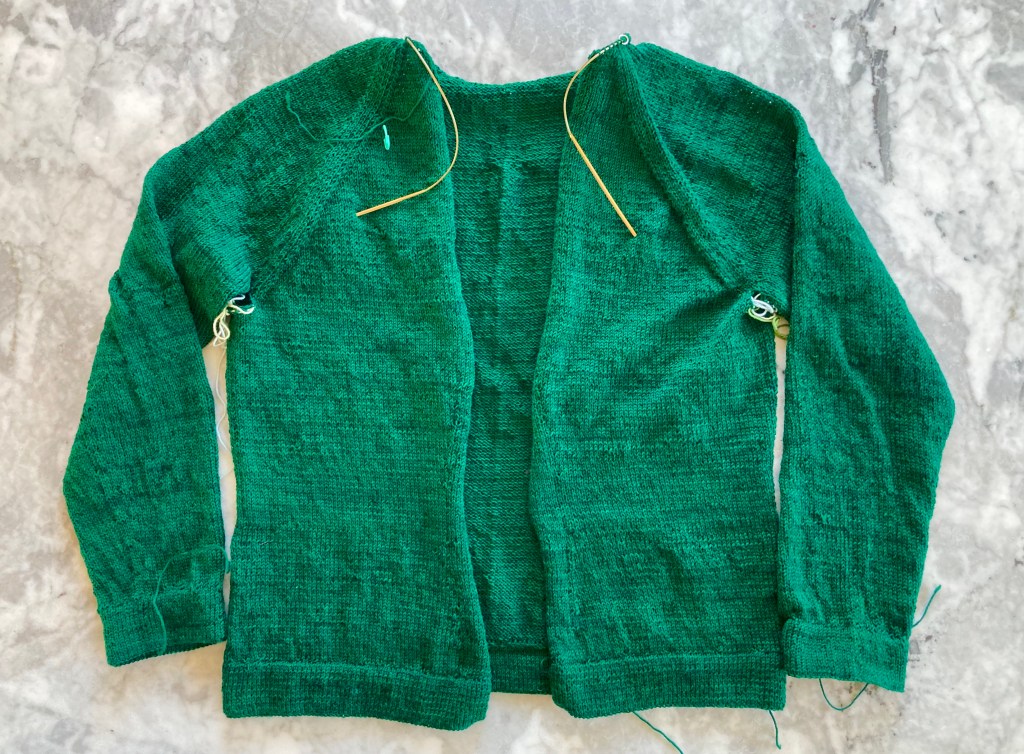
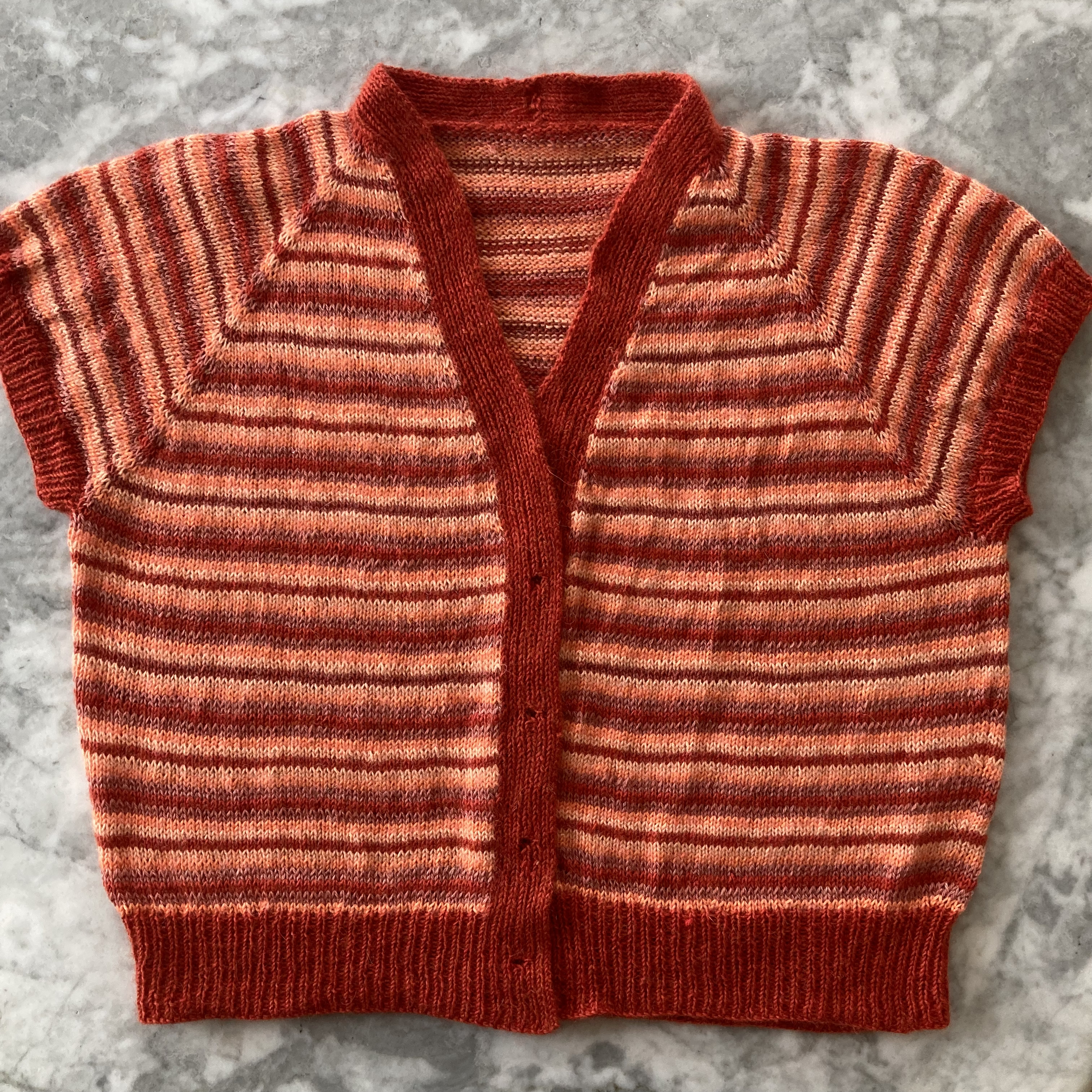
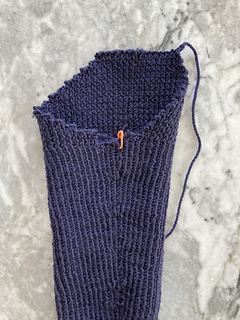
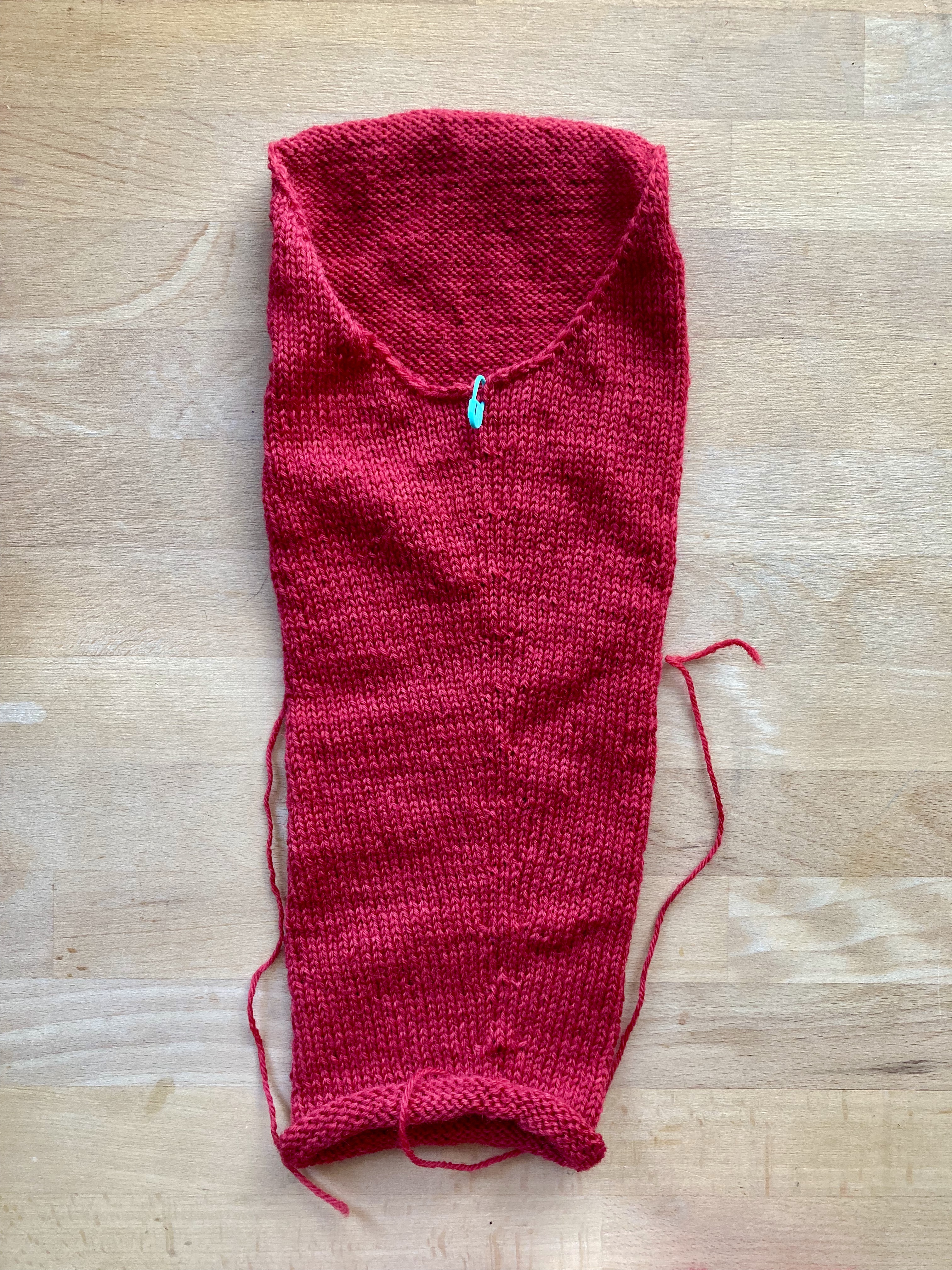
The compound-raglan, V-neck yoke was not difficult to knit, but it very complicated to “translate” into all-in-one-piece instructions, since the pattern instructions are for separate pieces knitted flat and sewn together. Sorting out which pieces decreased every 4 rows and which every alternate row when was a real headache and when I got close to the end, I was sure I had made a mistake — the back and fronts were finished, but I was still supposed to knit another 14 rows on the sleeves. Huh? I realised the sleeves were a sort of raglan-saddle hybrid that allowed the cable to continue up into the neckline. They make a “flap” at the top, of which the sides are sewn onto the front and back pieces. It’s not very obvious in the pattern photo, but you can see it here after everything was cast off and before it was sewn together.
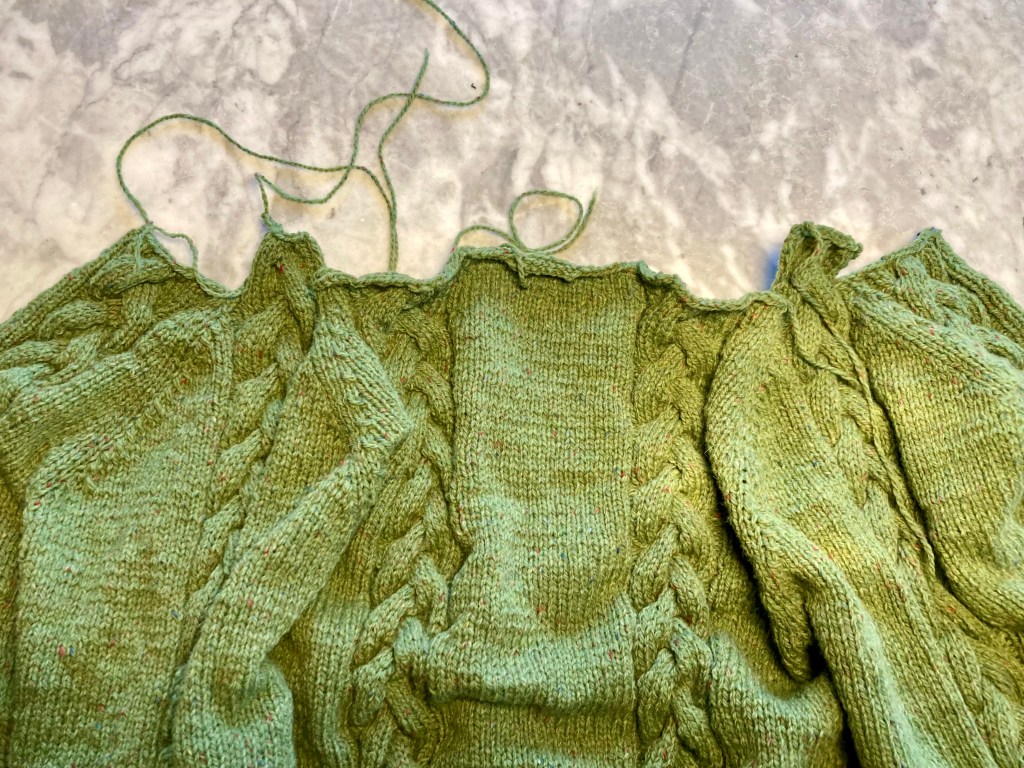
It all worked out fine in terms of shaping, but I don’t like saddle sleeves! Especially not with cables. They make my square shoulders look even more square and block-y and add bulk where I want a garment to be streamlined.
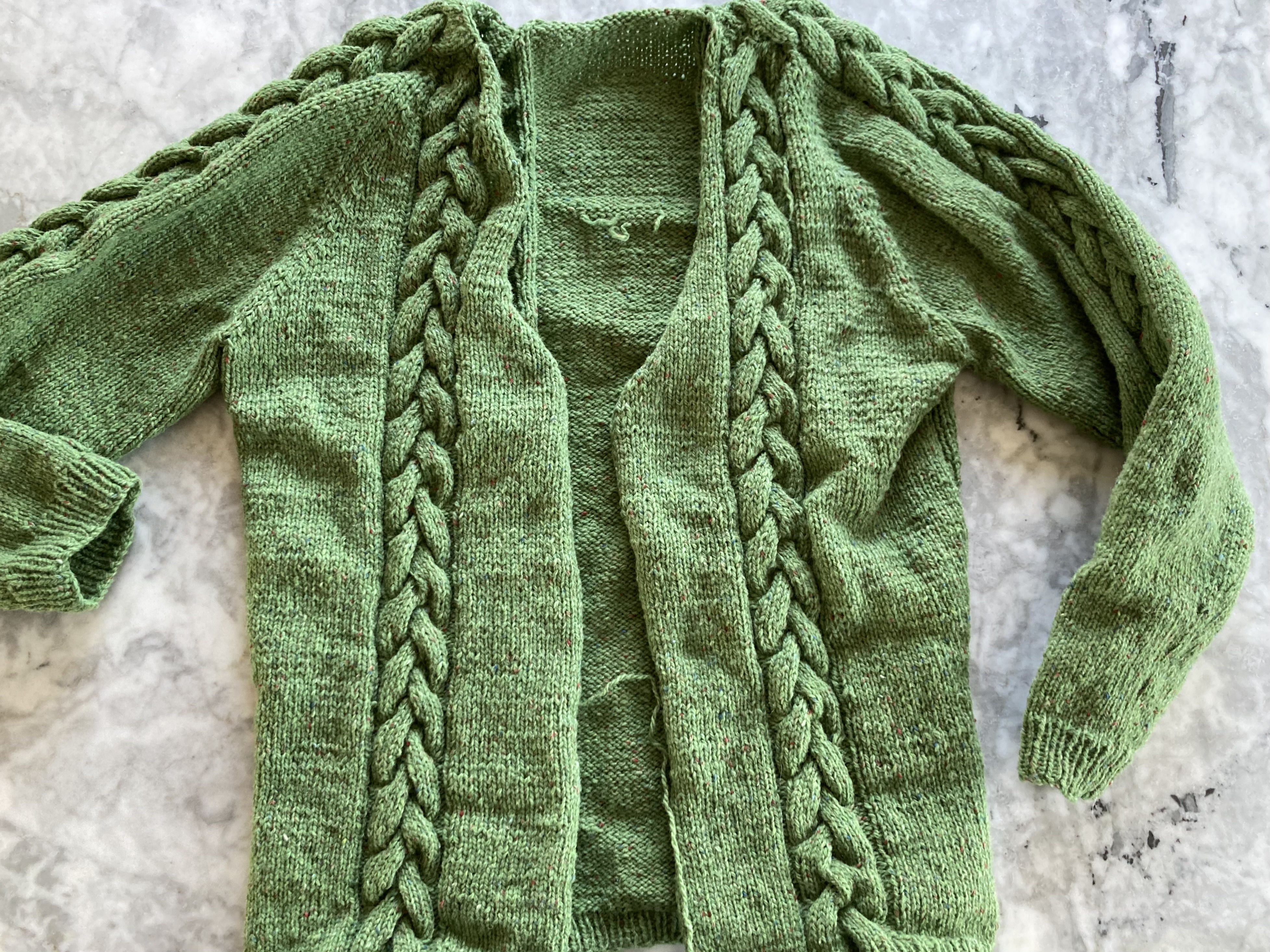
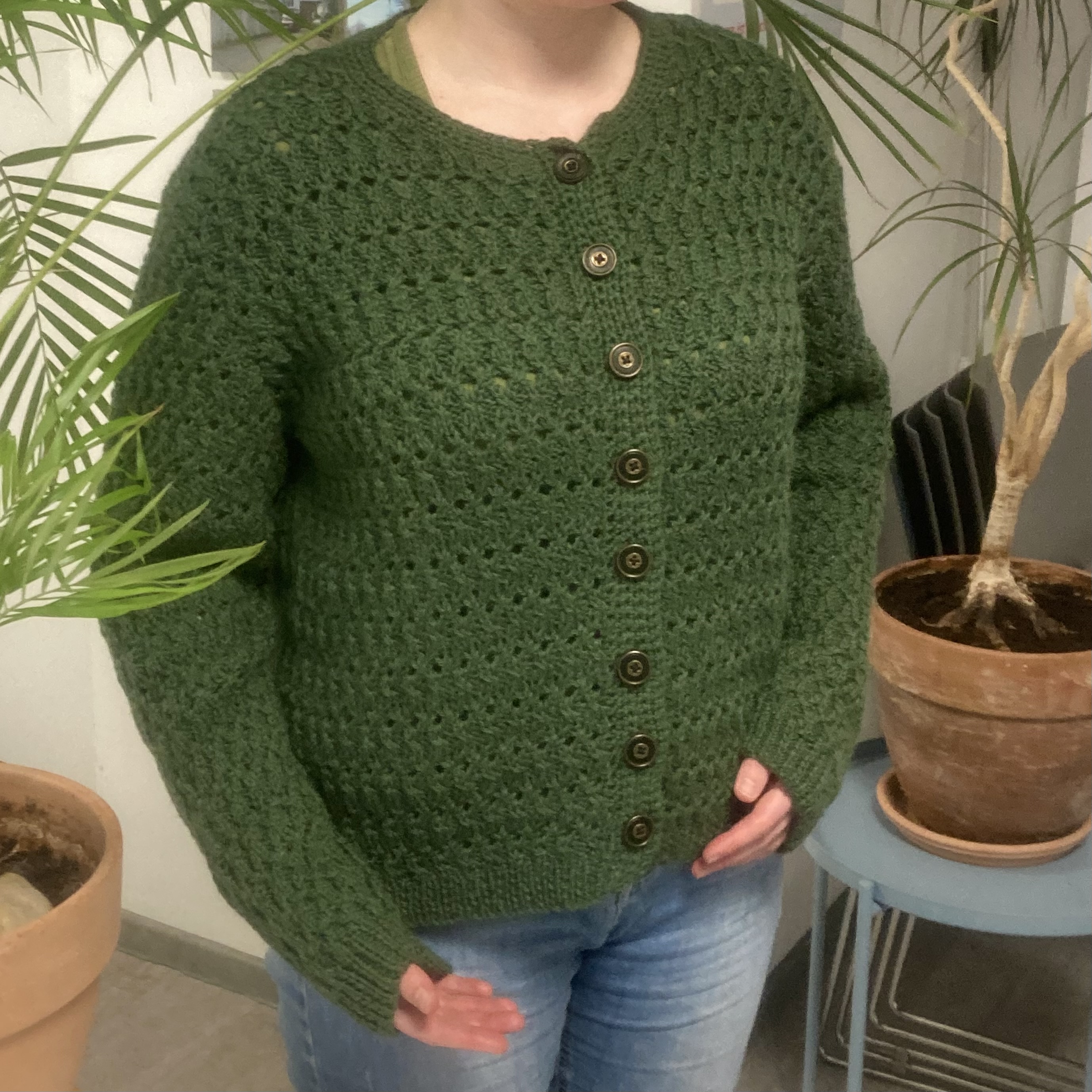
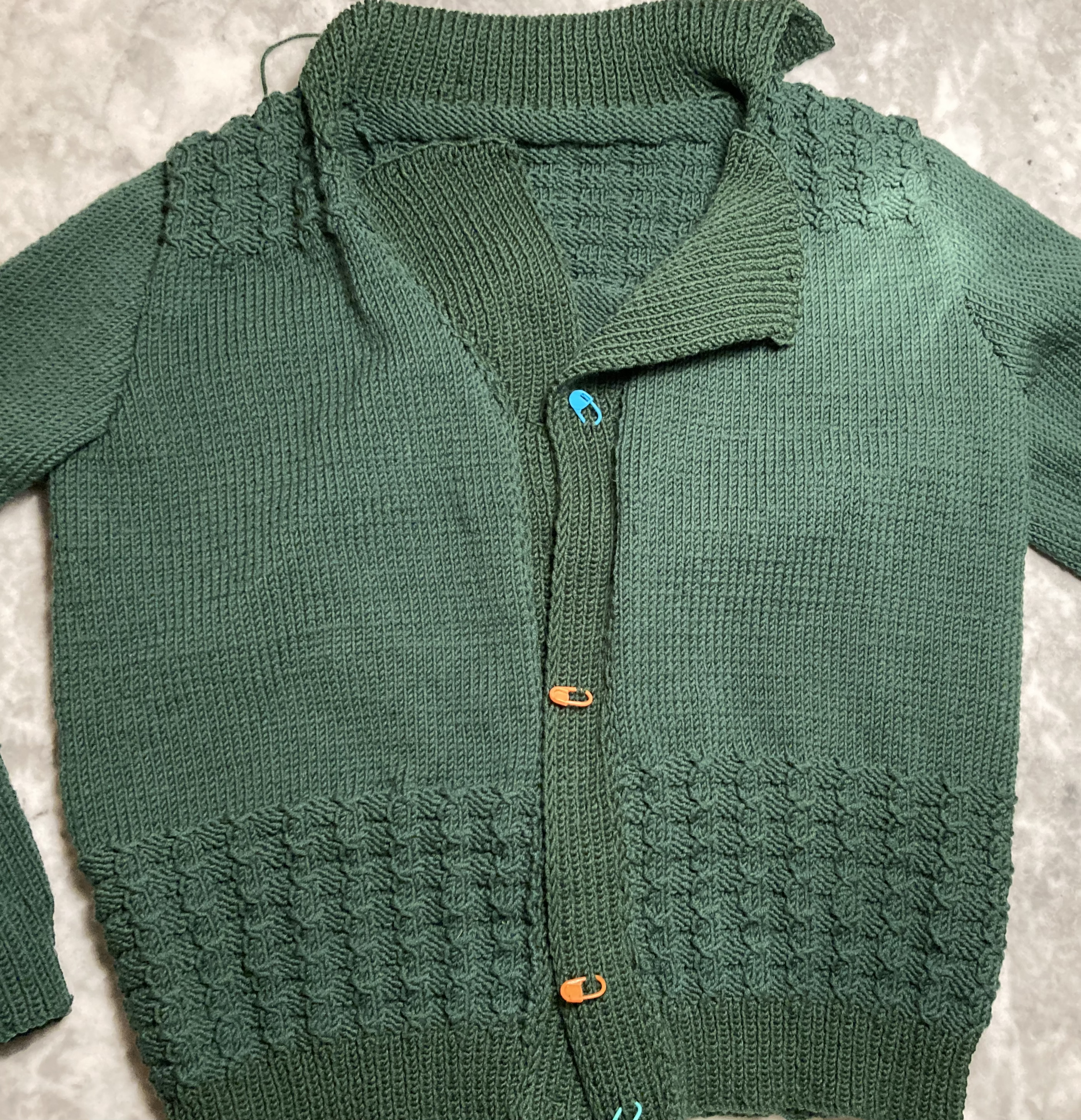
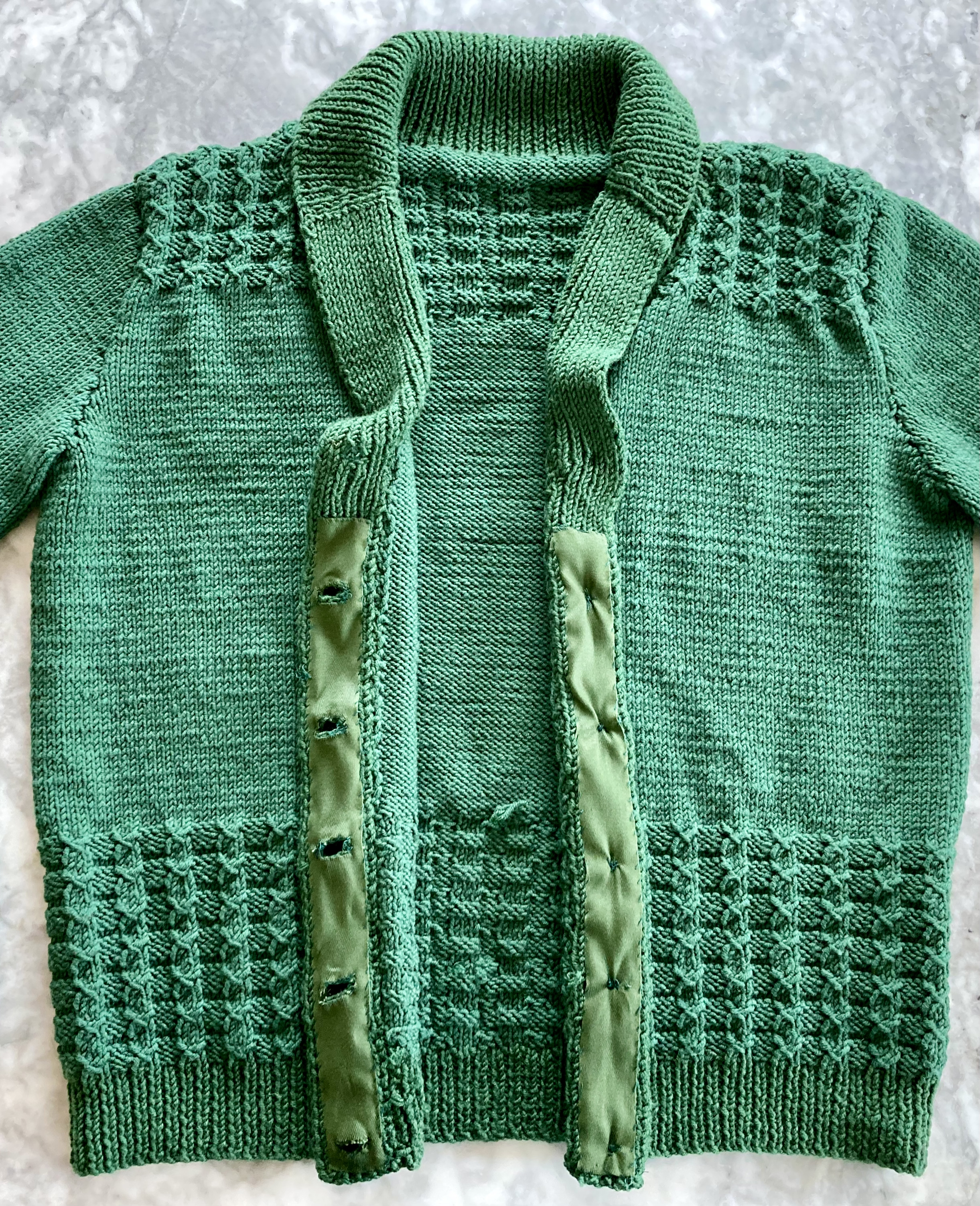
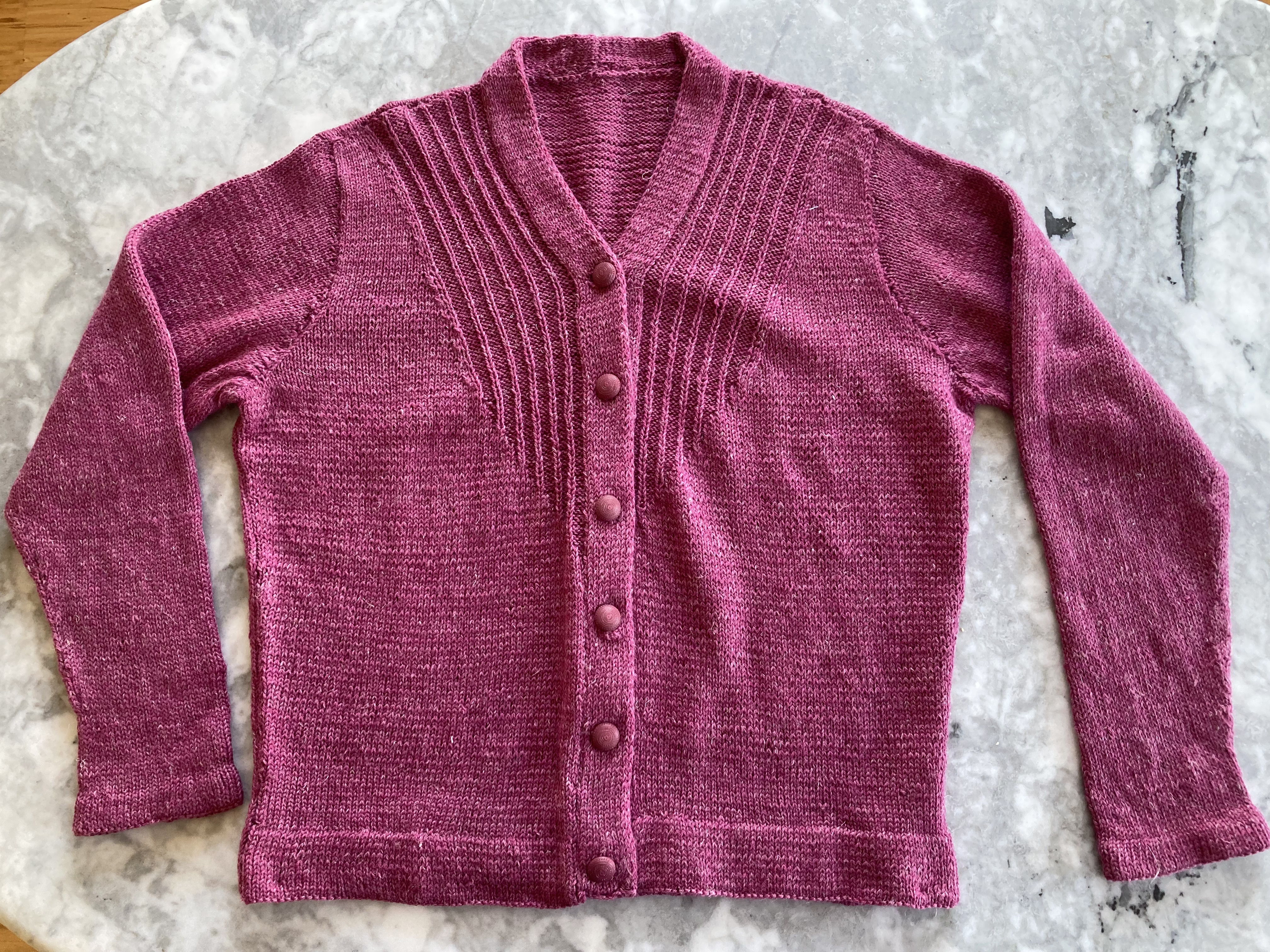
It looked fine anyway, so I made the button bands, blocked it (hand-wash, dry flat — the wool is not superwash) and…. surprise! The wool, which was somewhat stiff and “too tightly” knit on 3.5 mm needles, softened and spread out much more than I expected (again, not superwash). It became wonderfully soft, but just a bit too big in some crucial areas. Namely, the sleeves became too long and a bit wide, the saddle shoulders a bit bulky, and the button bands somewhat under-stretched.
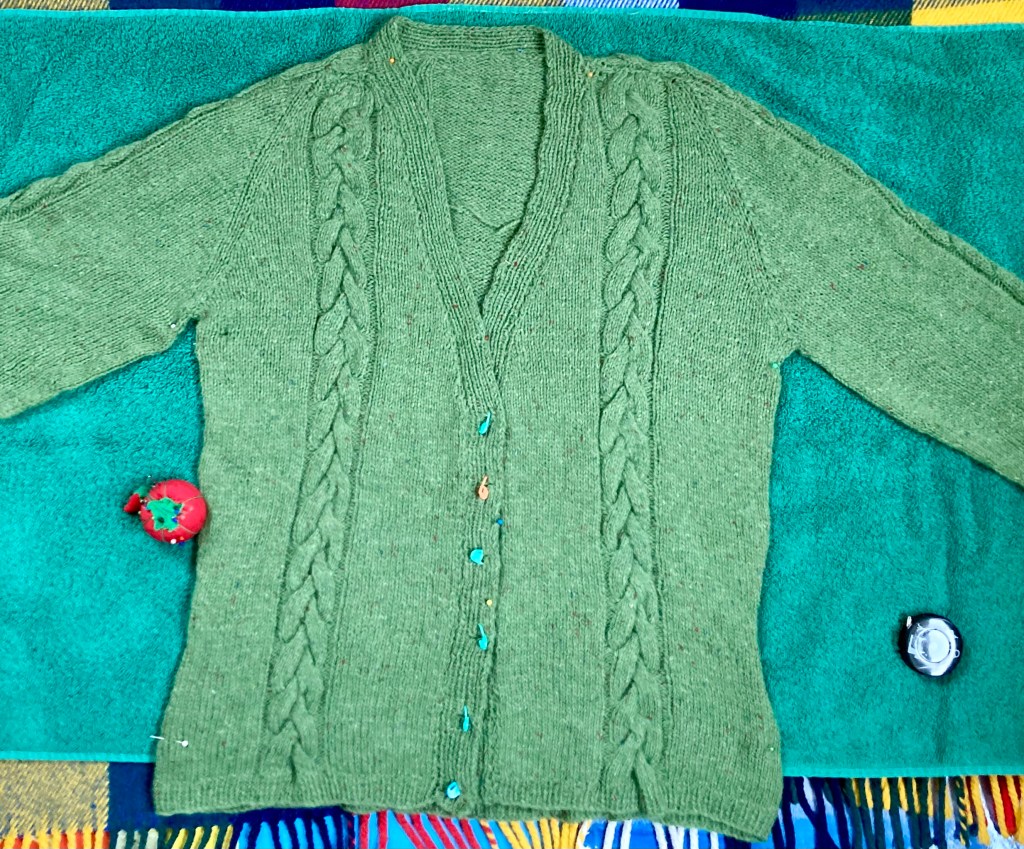
Overall, I am happy with the cardigan. The colour is beautiful, I love the tweed flecks, and the yarn is soft and warm to the touch but doesn’t pill. I am considering washing it in the machine next time (wool wash or 30 degree gentle, of course) to see if it will shrink just a little bit. I will probably also add facing bands to the button bands to bring them into shape.
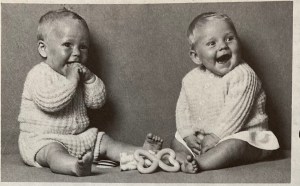

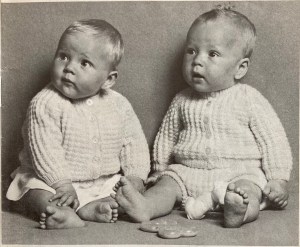





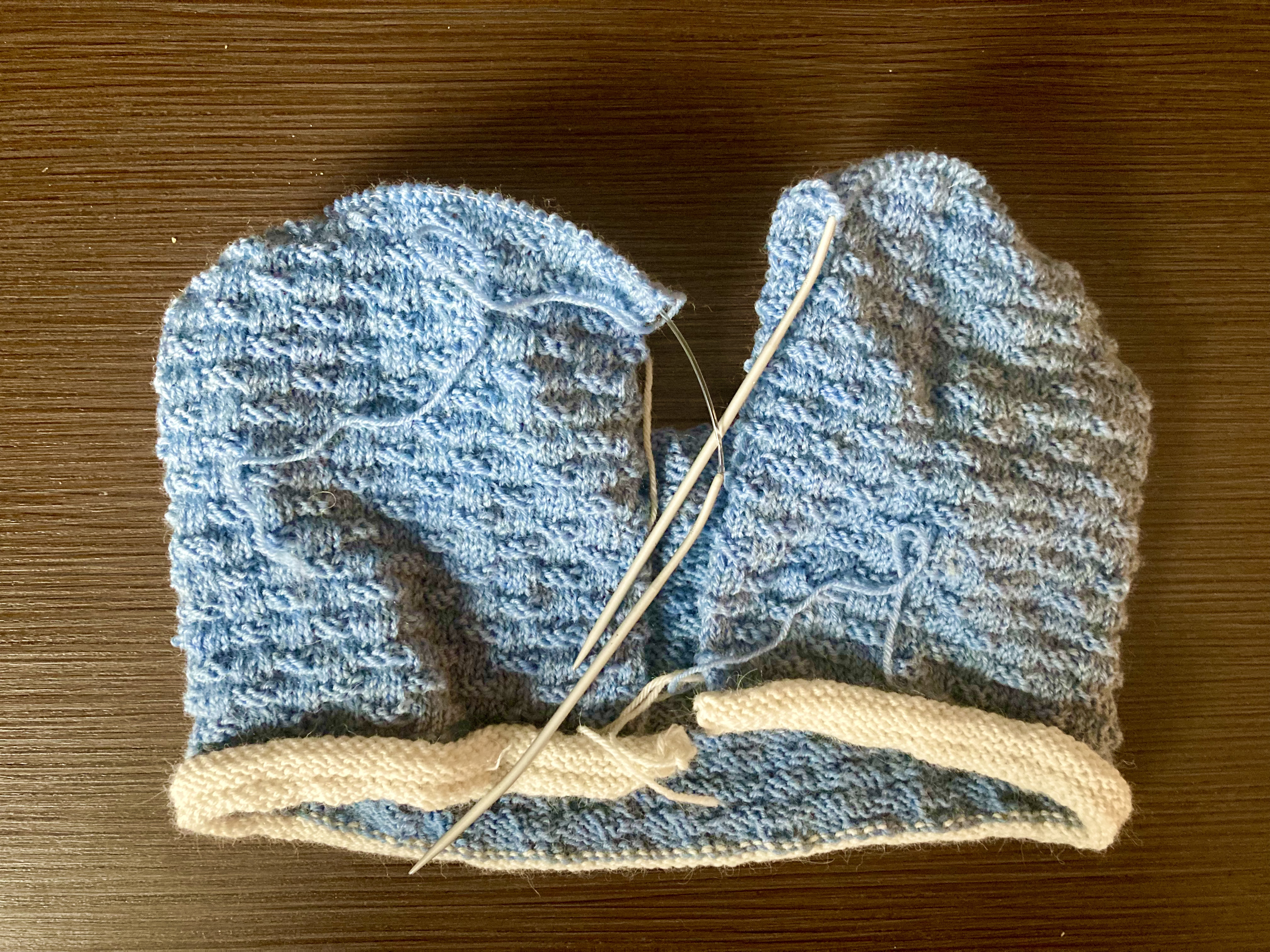
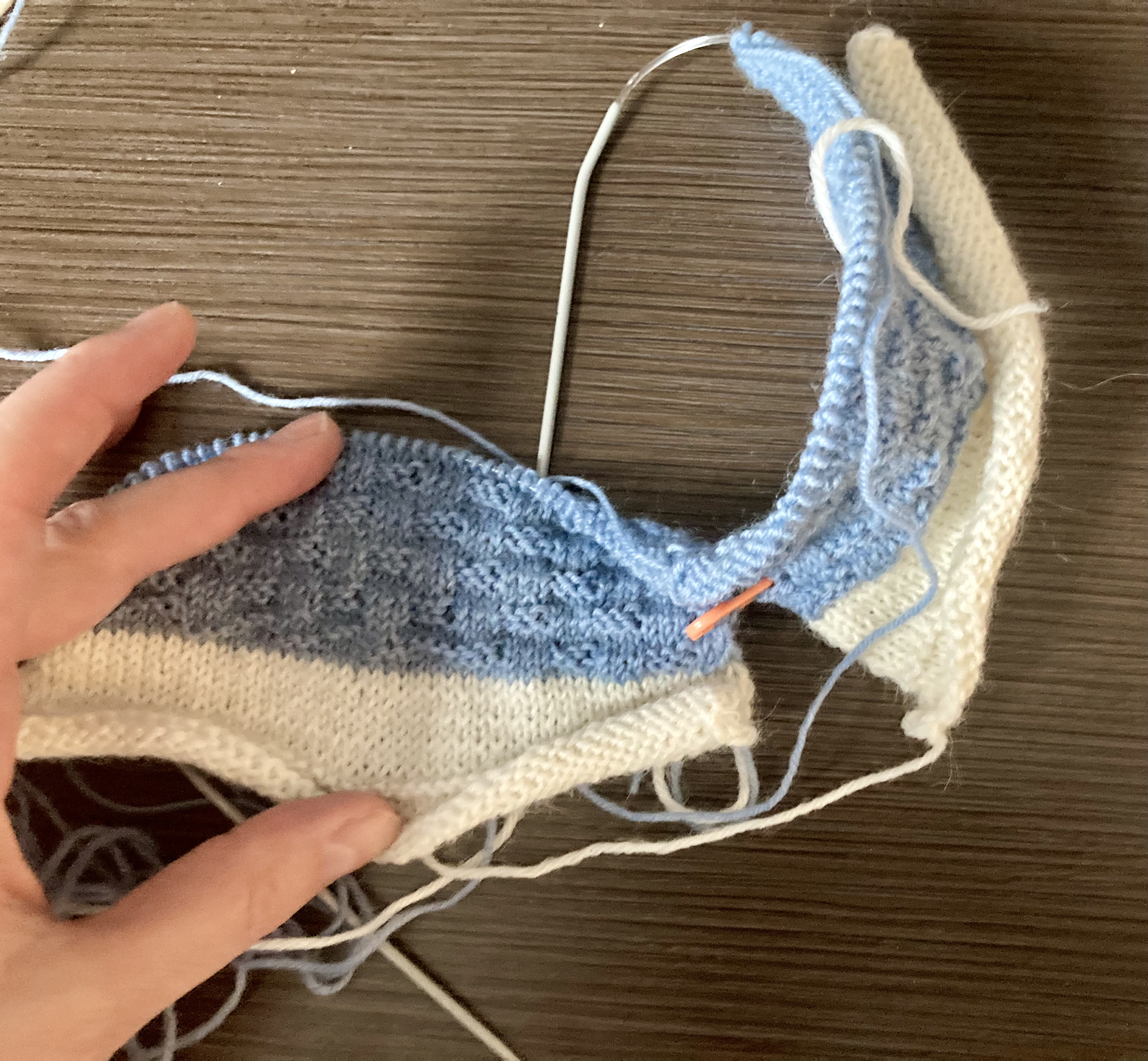
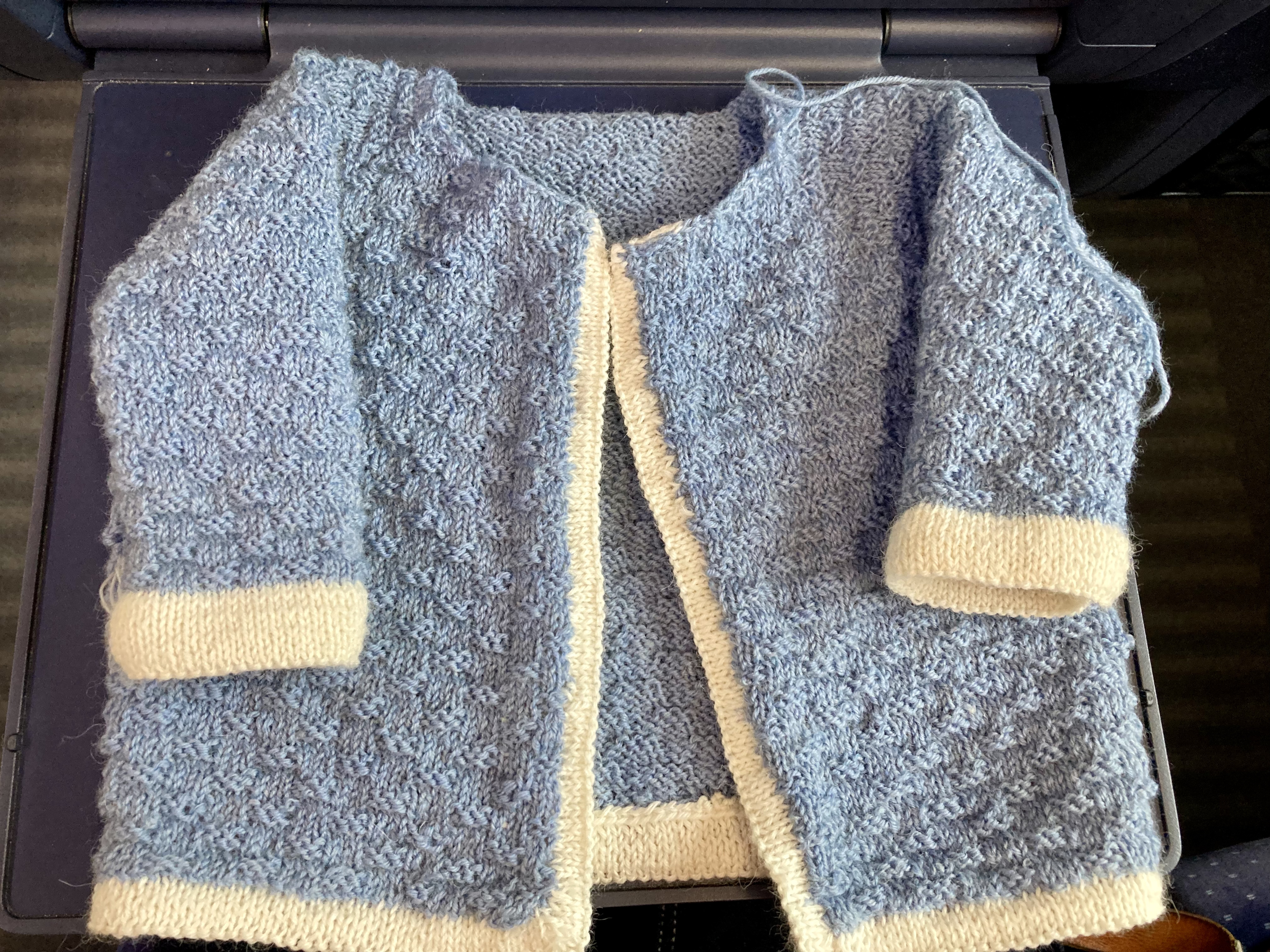
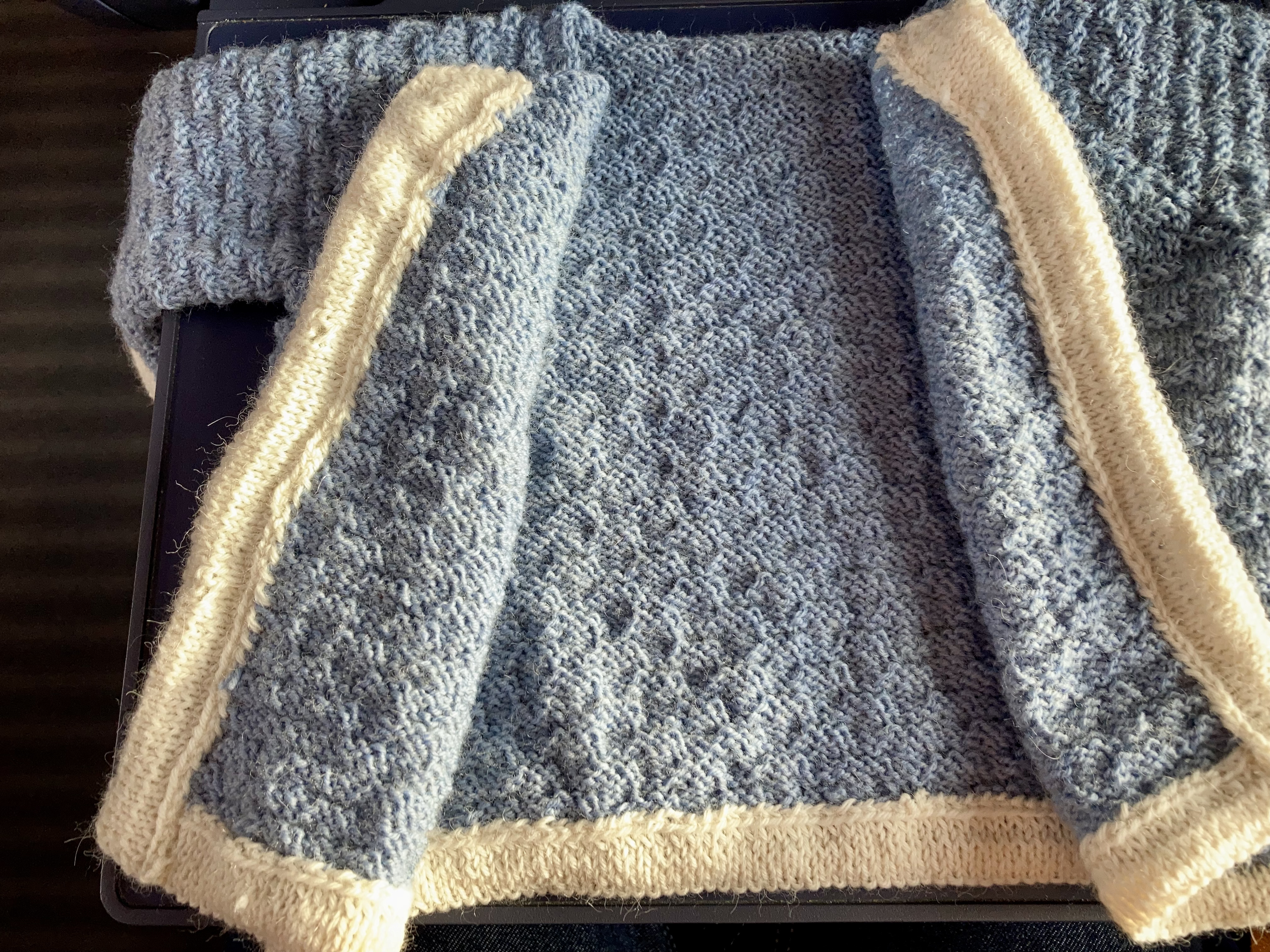
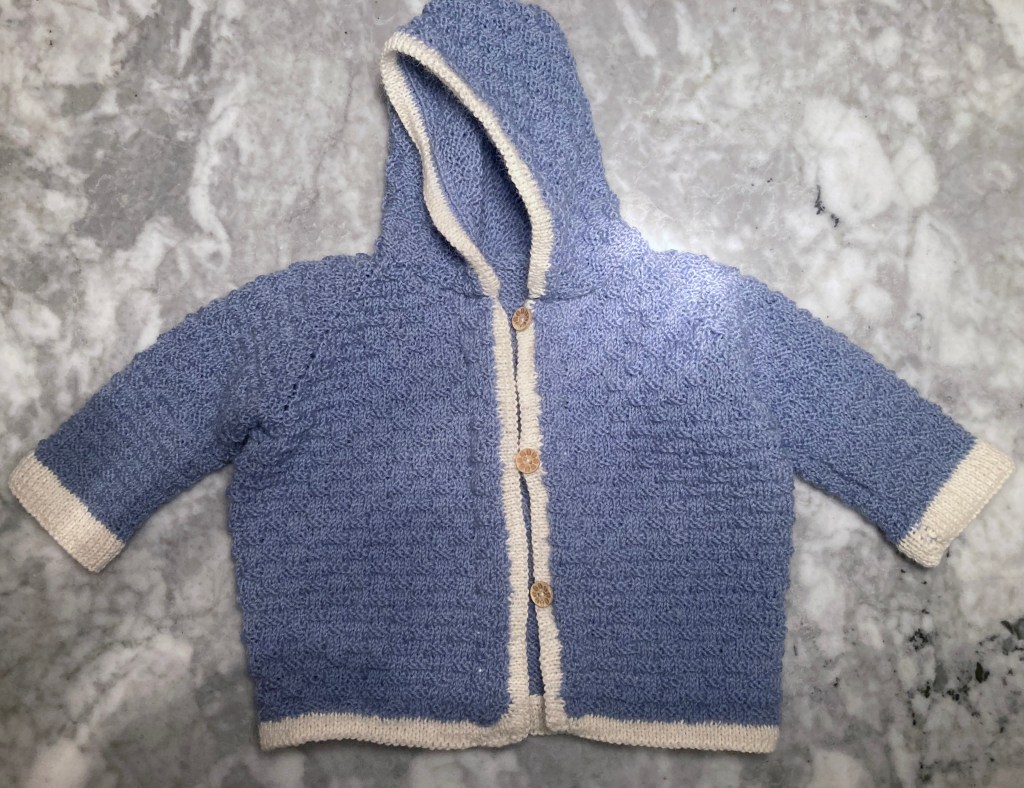
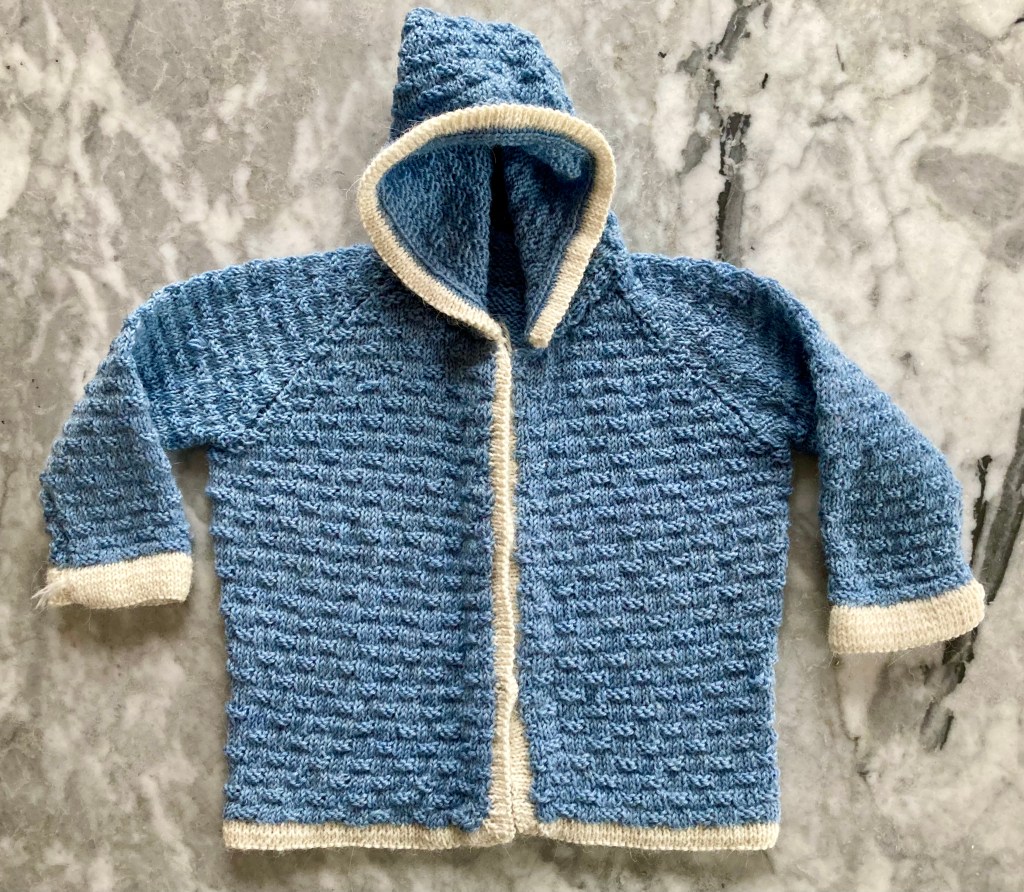
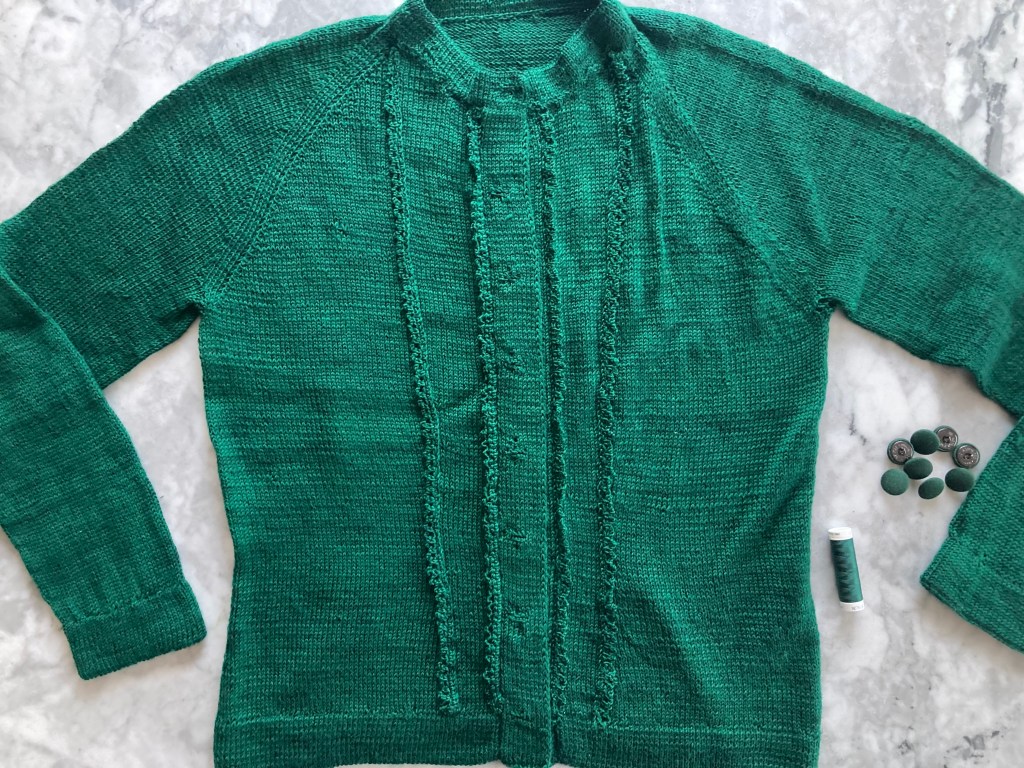
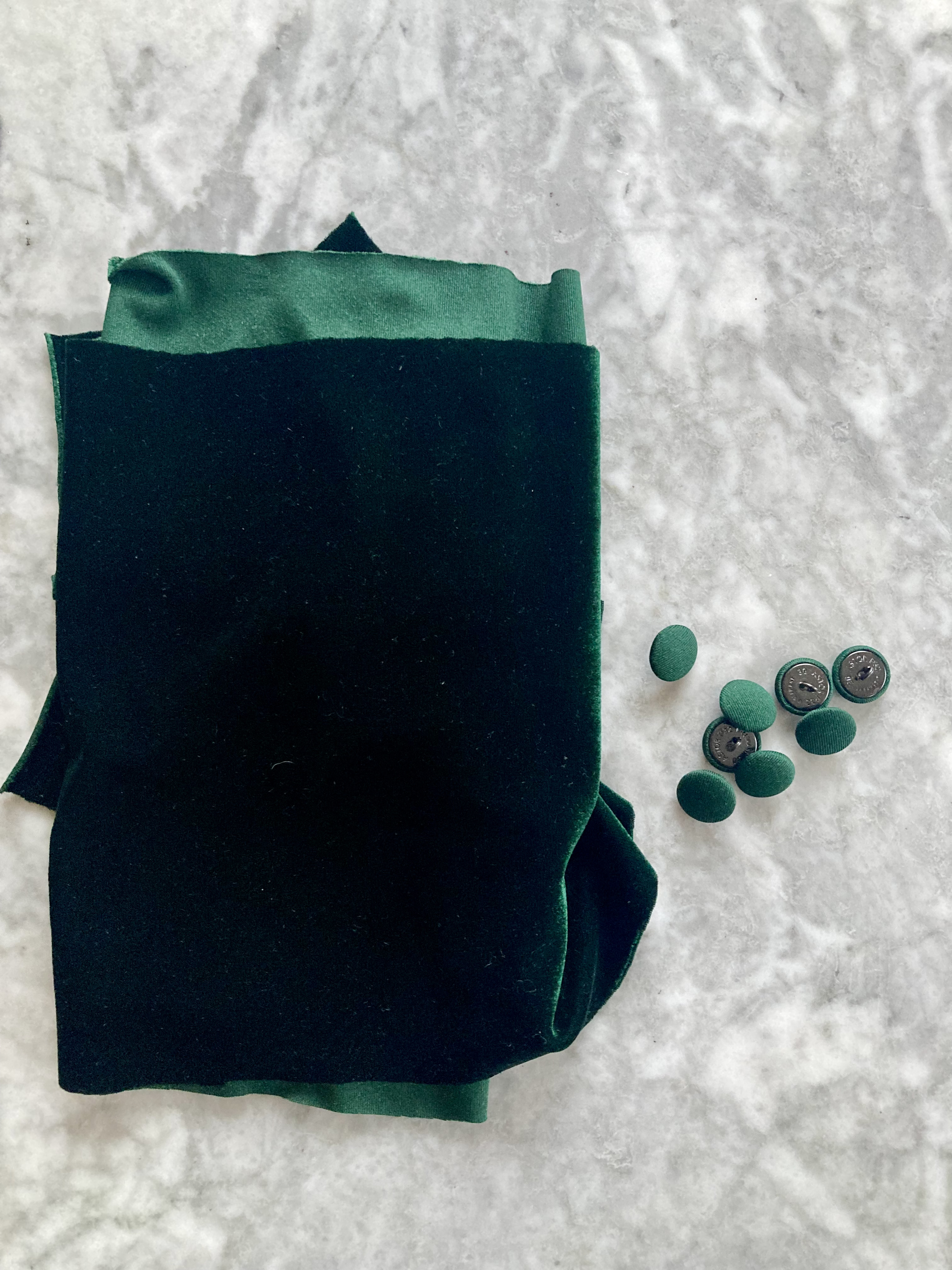
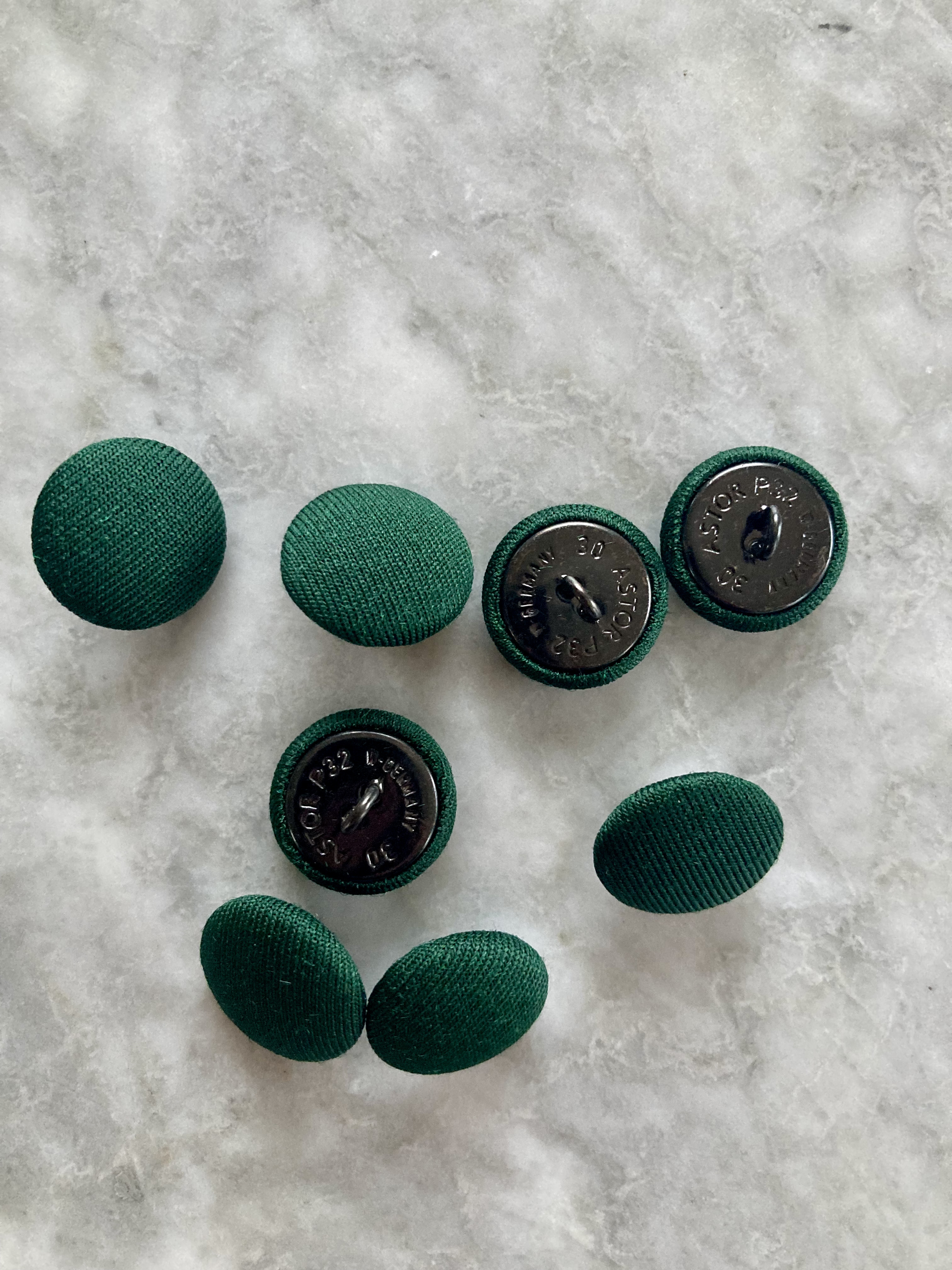
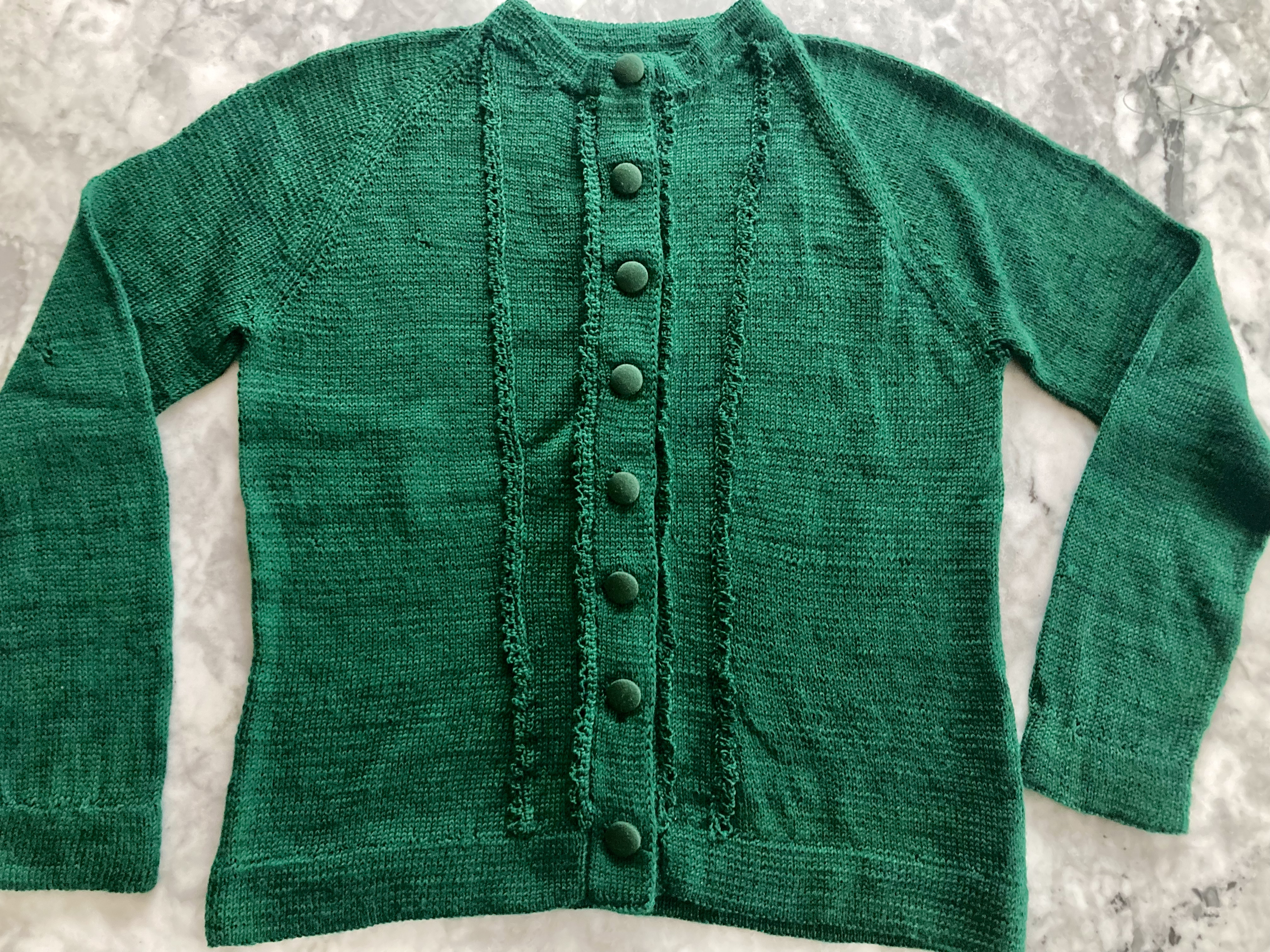




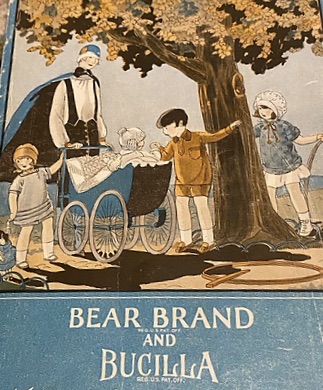



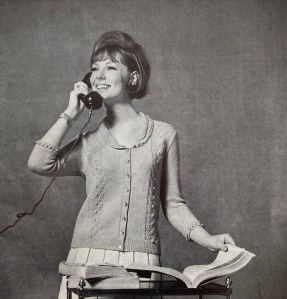


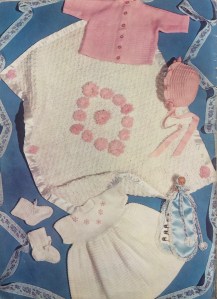
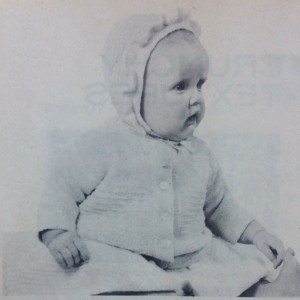 My April project was the cardigan jacket, a.k.a. “matinee coat” from Stitchcraft’s April 1962 layette set “for an Easter baby.” The set included a dress, the jacket, bootees, a bonnet and a blanket to use as a pram cover, plus a sewn “pin-tidy” made out of a tiny baby doll with flannel and satin “skirts” to hold the safety pins for baby’s cloth nappies. The pin-tidy is a bit “uncanny valley” for my taste, but the knitted items are all lovely.
 The colour is unusually dark for a baby garment, but I don’t this the friend whose baby-to-be I knit it for will mind — they wear a lot of black themselves. (Side note: I did make an all-black baby cardigan for a black-clothed metal fan father-to-be friend once, and he was thrilled, because he knew he would never find one in a store. Take note, baby clothing designers — there is a market out there!)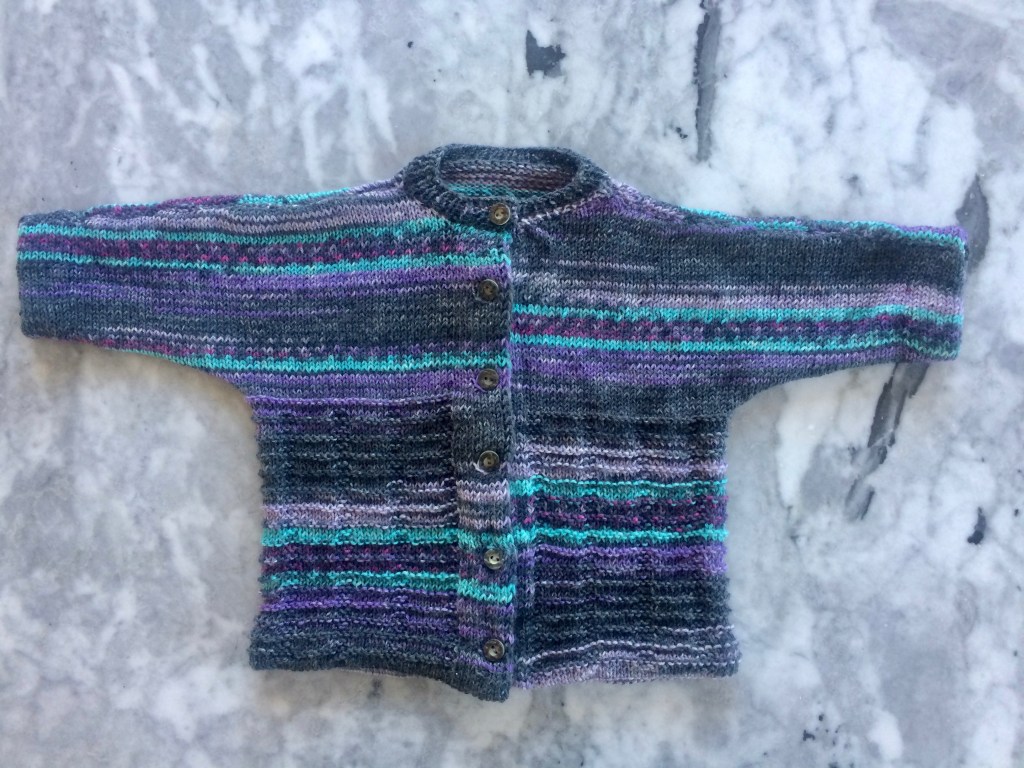
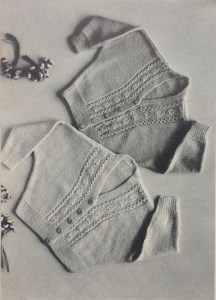 There’s always somebody having a baby, and I do try to make something nice for all my friends’ and colleagues’ newborns. Sometimes I don’t manage to finish something until they are out of the newborn stage, which is why it’s nice to have patterns for larger babies! This dolman-sleeve cardigan, made in the smaller size, should fit a 22 inch chest, which should be fine for this particular eight- or nine-month old.
 The little leaf motifs up the front sides are quite easy and don’t require any cabling or special fuss. You just work into one stitch 5 times on one row, then work those 5 stitches in stockinette (on the reverse-stockinette background) for a few rows before closing off the leaf with decreases. The lace strips on the sides are plain yo, k2tog alternating with k2tog tbl, yo, worked on the right-side rows.
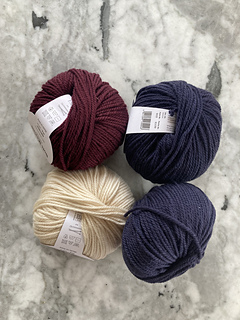
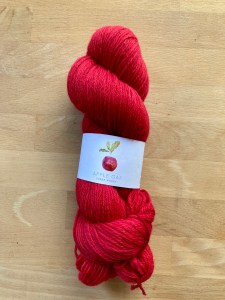
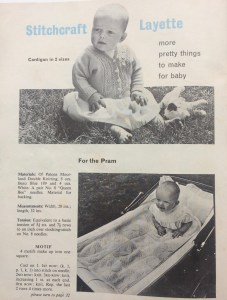 I used Jamieson’s wonderful Shetland Spindrift from a multicoloured stash that I had bought from a nice person on Ravelry. Some may say that Shetland wool is too tough for babies, but it does get softer with washing and since it won’t be worn against the skin, I think it will be fine. The colour — Buttermilk — is really beautiful, a pale yellow ever-so-slightly marled with shades of pink and winter white.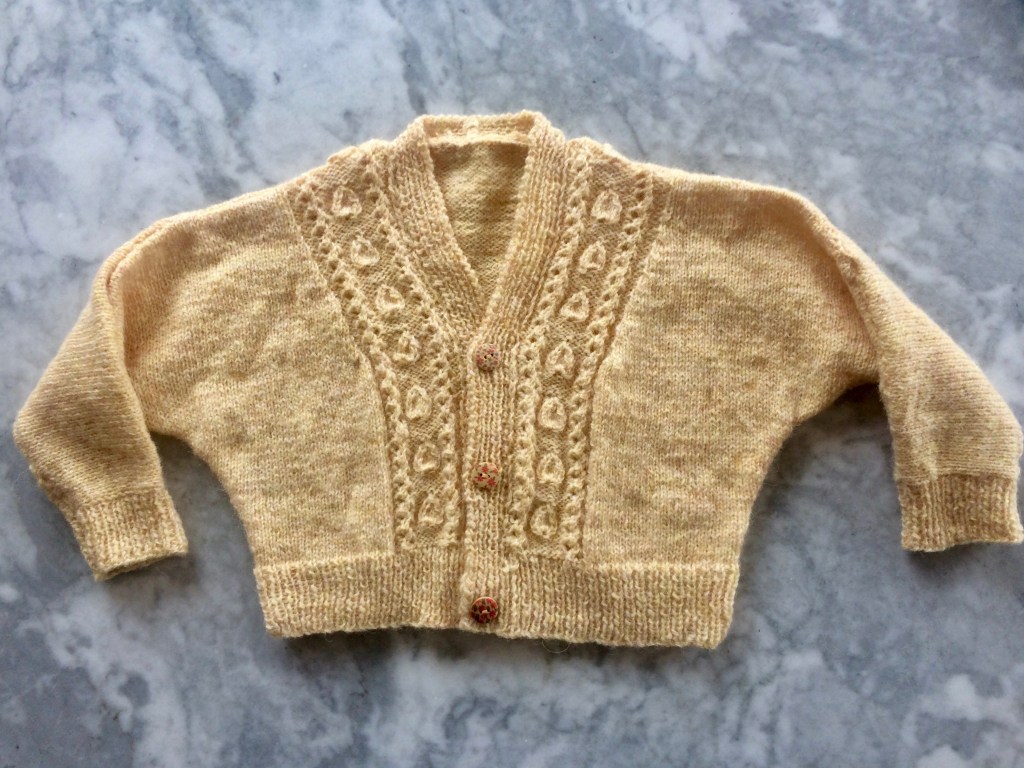
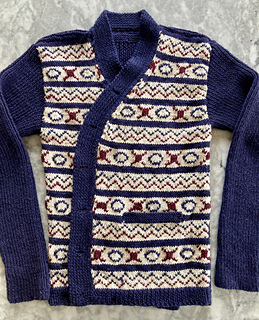
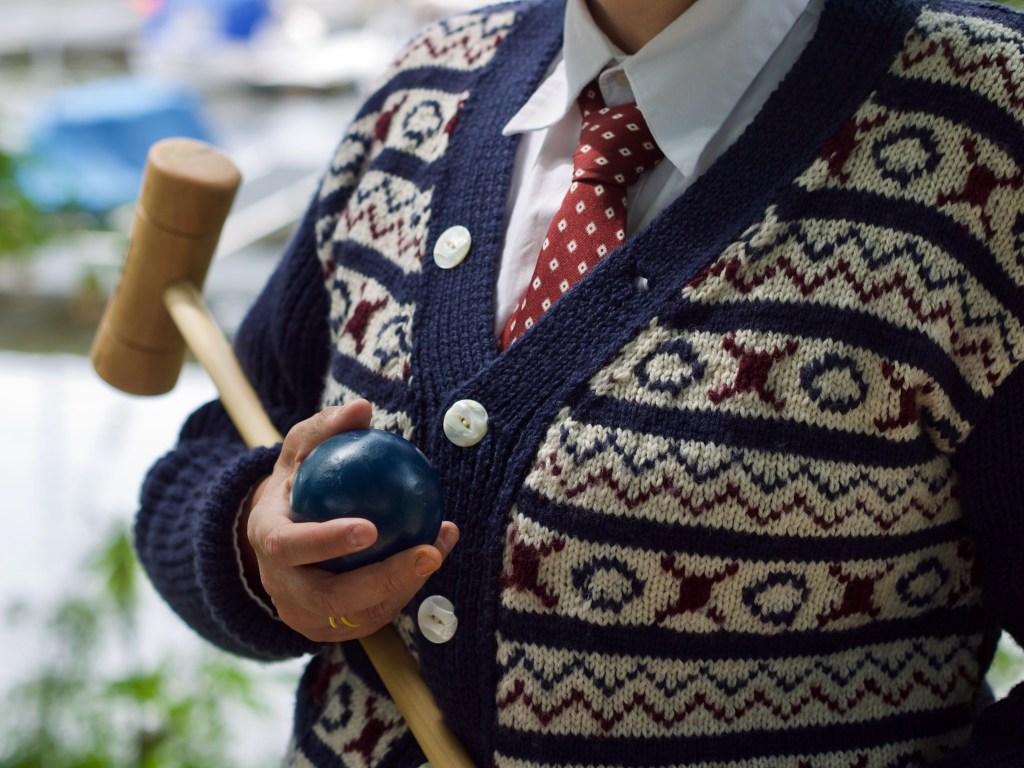
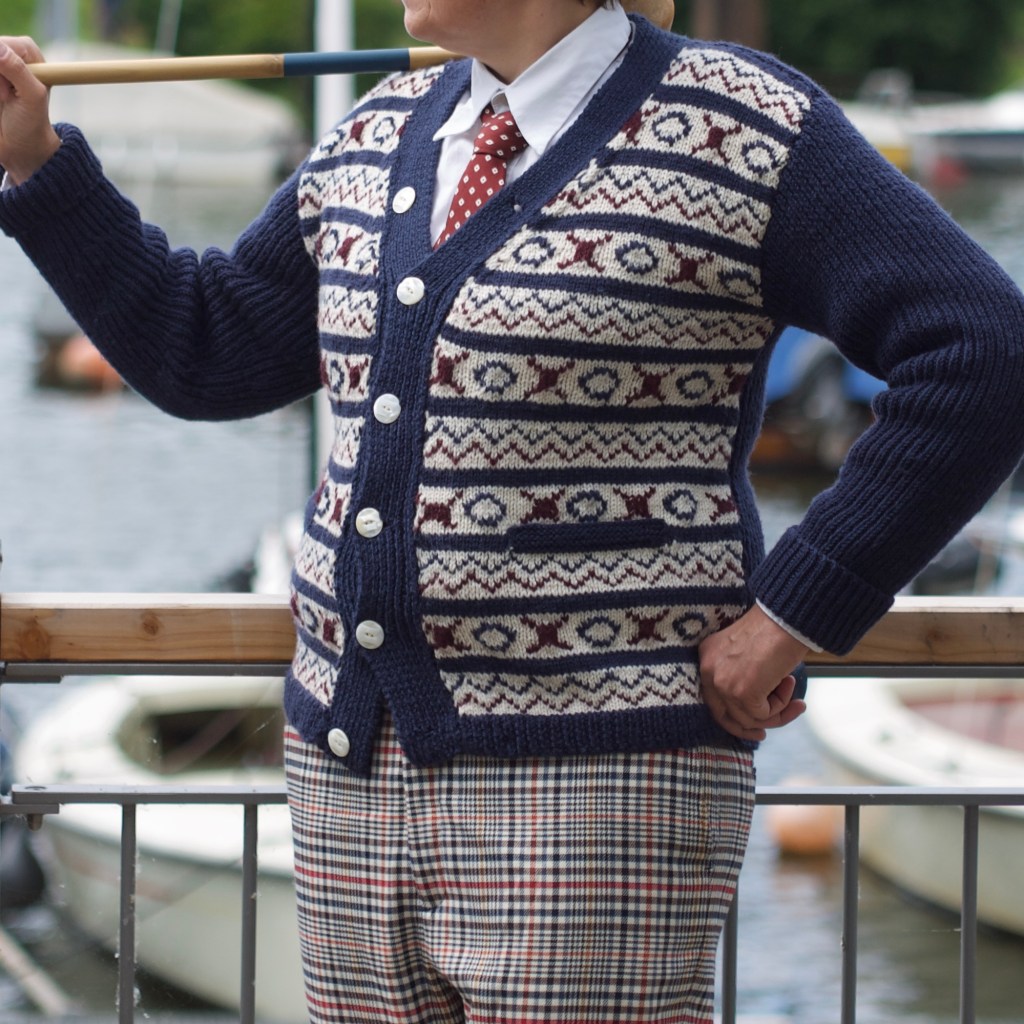
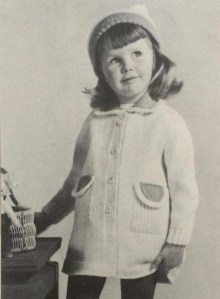 I do have a project from the May 1961 issue and will post about it soon, but it won’t be done by the end of May. In the meantime, I made a very cute coat for a friend’s child from the January 1976 issue of Stitchcraft, using the leftover yarn from the
 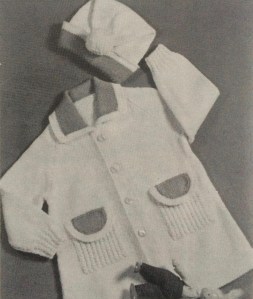 As usual, you’re supposed to make everything in separate pieces, and for once, I almost did! That is to say, I made the back, fronts and sleeves up to the raglan underarm join in pieces, then made the raglan yoke all in one piece working back and forth. Sewn raglans always look so messy (when I make them…), so it was worth it for that, and making the rest in pieces gave the sides some stabilising seams and didn’t take any longer than making the body in one piece working back and forth would have done.
 I noticed that it wasn’t quite going to work out with the total amount of yarn in the proper colour scheme, so I played with the amounts of red and blue and ended up just perfectly using up the rest of the red with a few metres left over should the coat ever need repairing. Of course, that meant I couldn’t make the hat. The project was fast and fun, though, so who knows, maybe I’ll make another one when January 1967… wait, when will that be again… January 2025 ?!? comes around. If we’re all still here! Hang in there and stick around.

