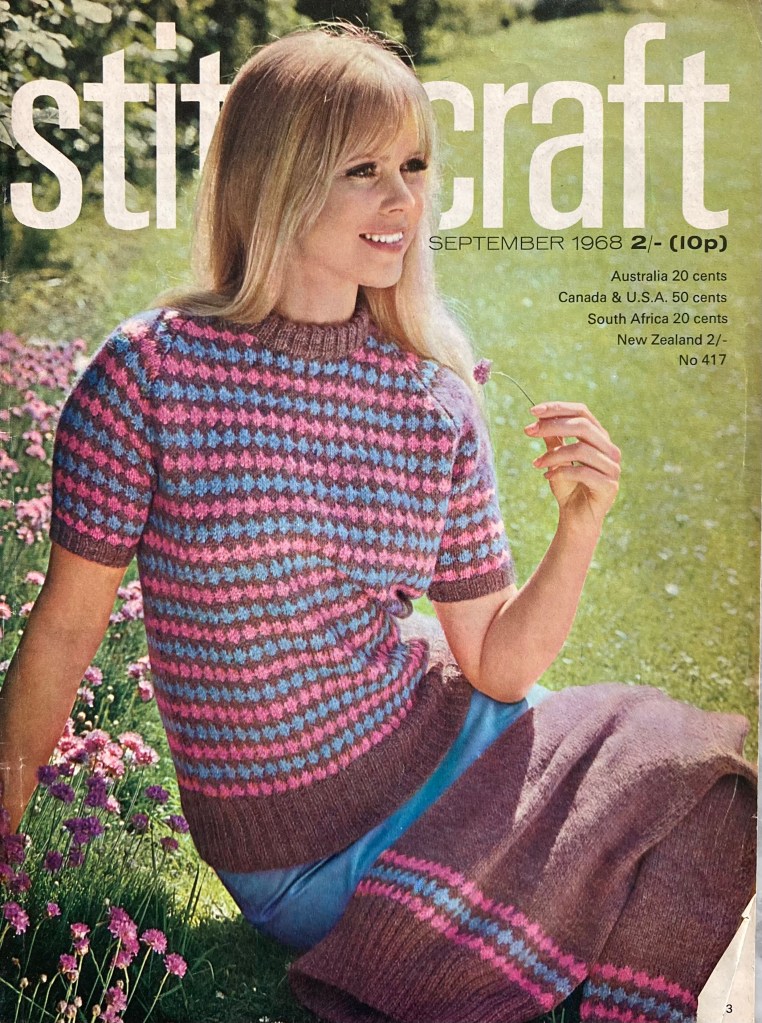
“Fashion kicks off for Autumn” is the heading of Stitchcraft‘s September 1968 issue, heralding the end of holidays and the arrival of colder months. Also, the price of a single issue will be raised to 2/6d- starting in October 1968, due to higher production costs and especially the extended use of colour pages. My historical currency calculator tells me that is 30 pence in the old system (pre-1971), 12 1/2 new pence (since 1971) and adjusted for inflation, would be about £ 2.80 today. Interestingly, that’s about what a vintage copy of Stitchcraft at a thrift store, ebay etc. costs these days, and probably roughly what I paid for this issue.
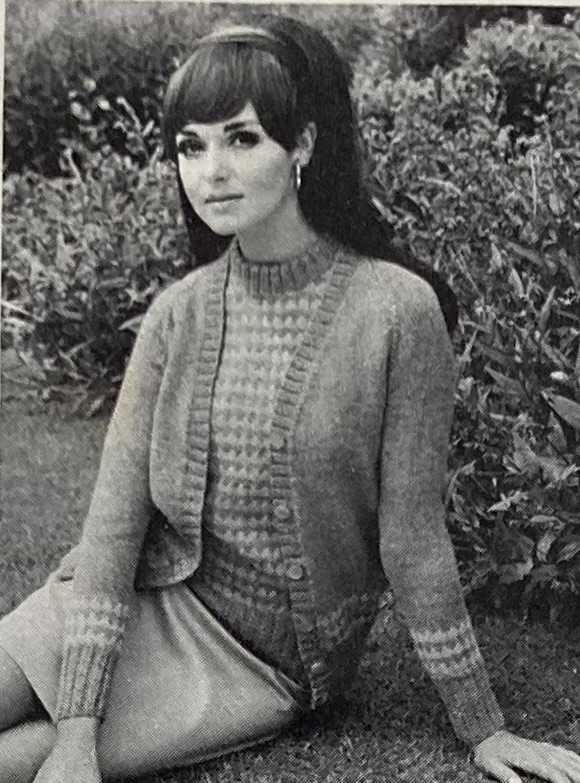
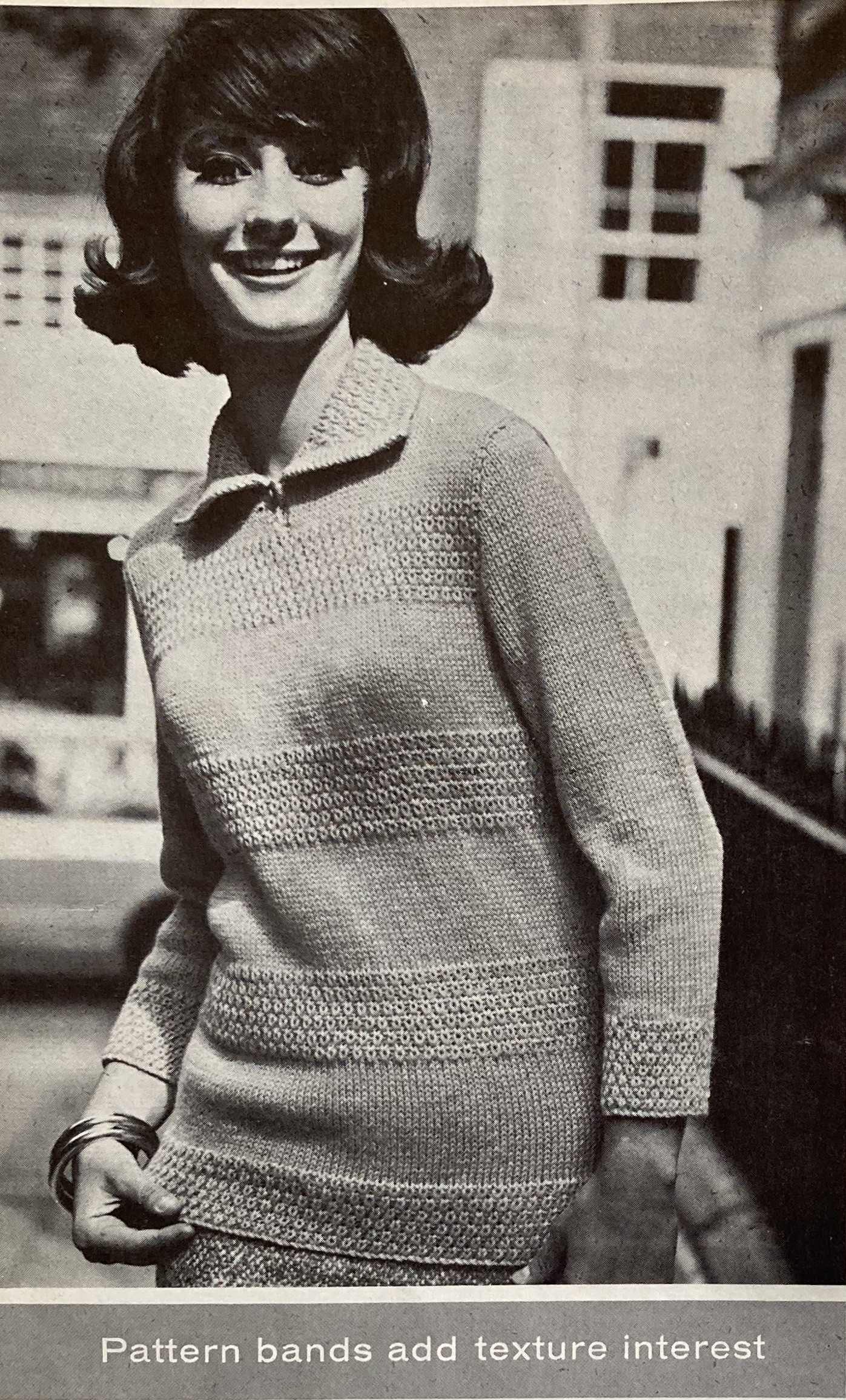
Anyway, our cover model is looking “pretty as a field of clover” in her high-necked, compound-raglan twin-set made in a three-colour slip-stitch pattern. So pretty, that they printed two full-page, full-colour photos plus one smaller black-and-white photo with a different model!
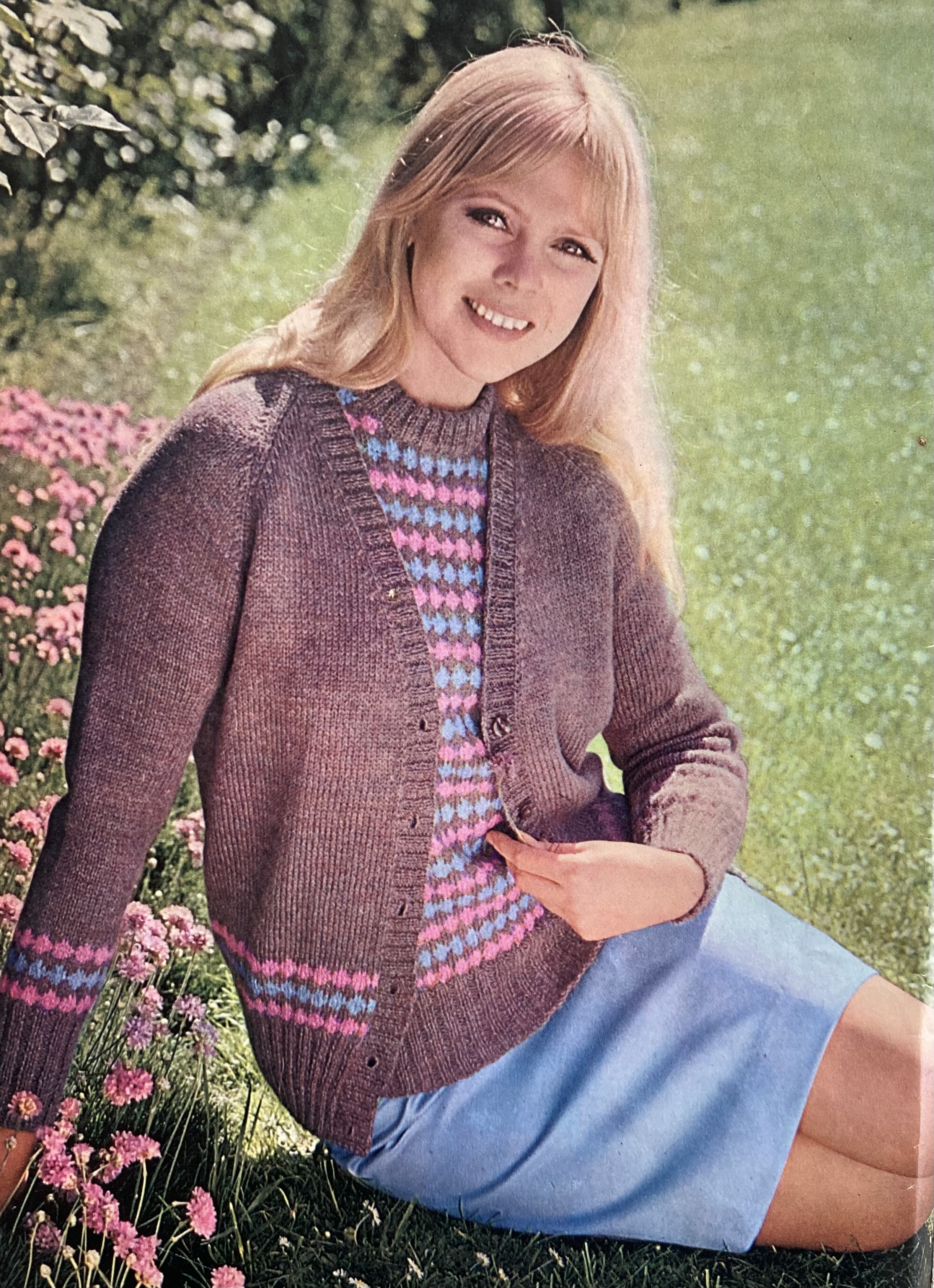
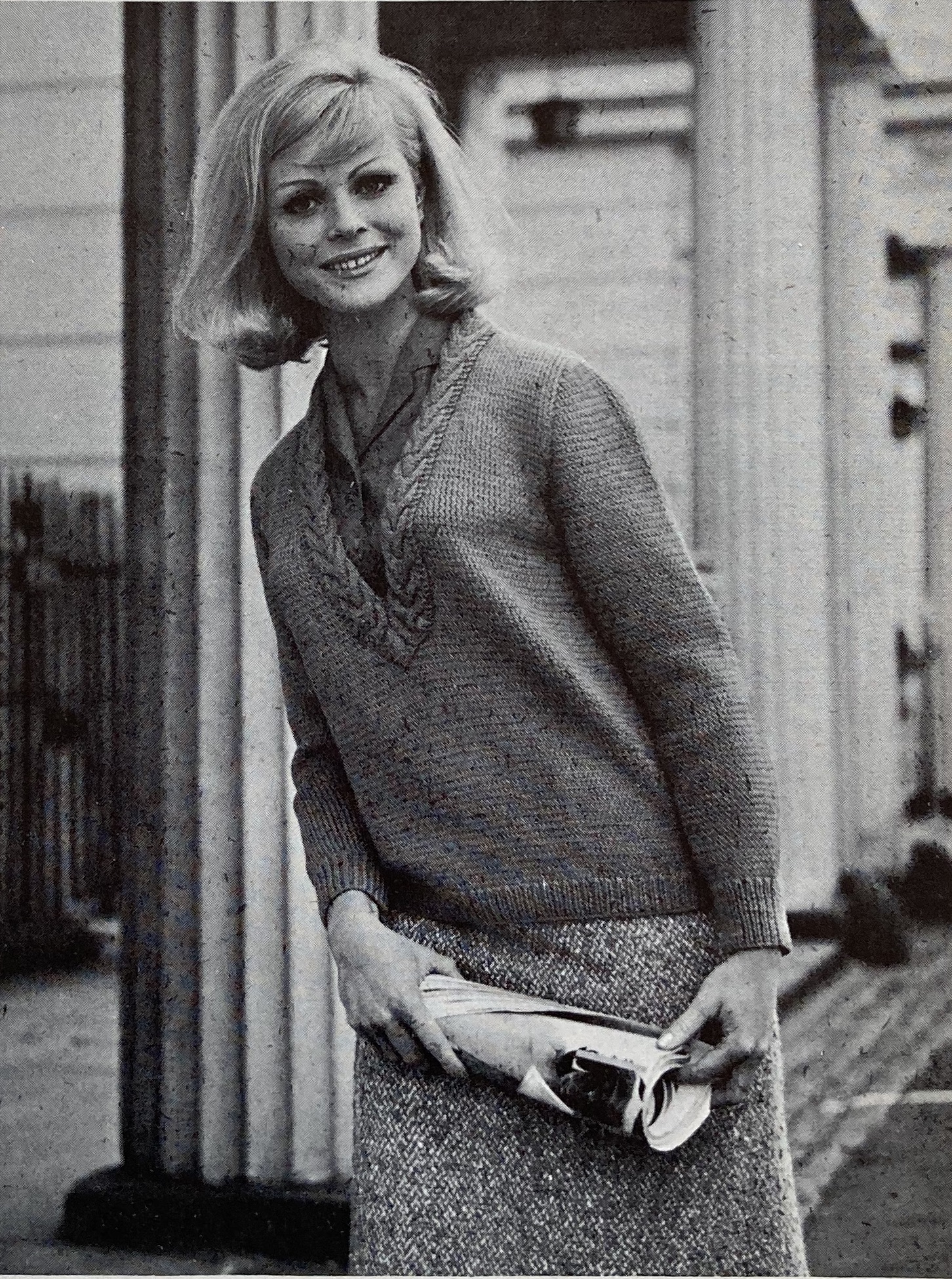
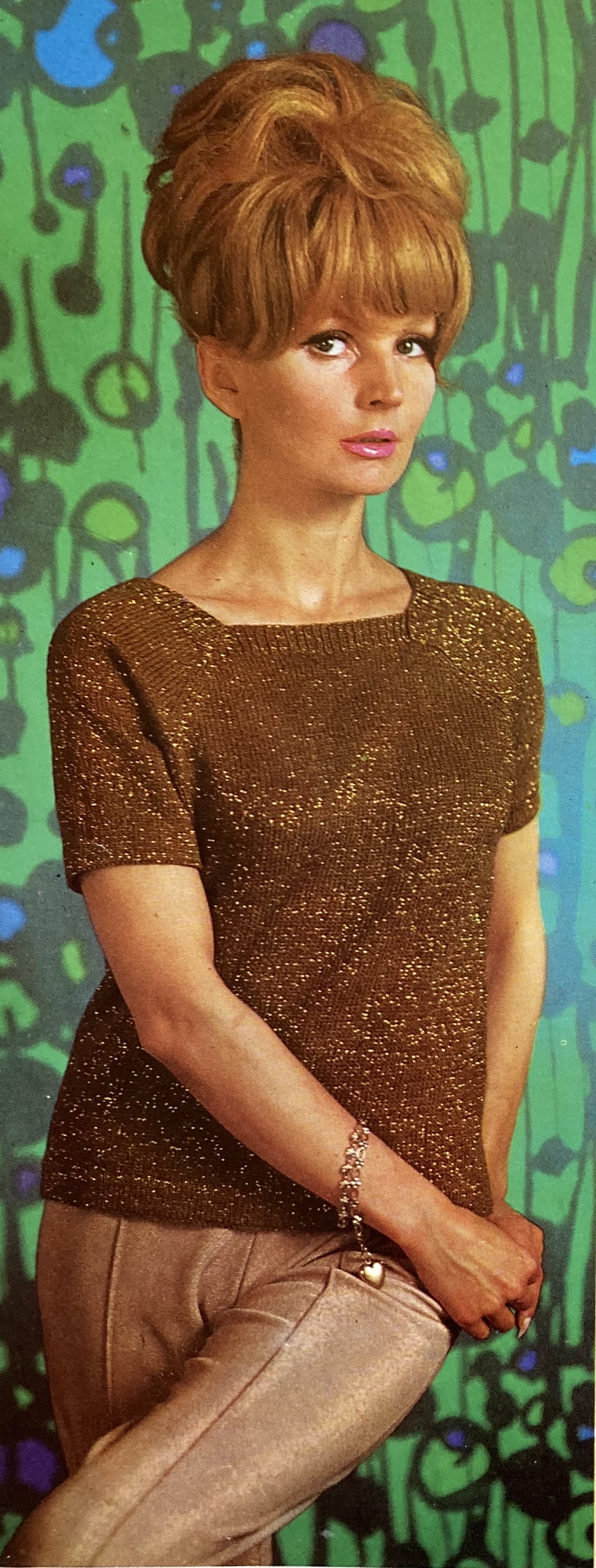
Other “late season sweaters” include a similar short-sleeved jumper in a similar slip-stitch pattern, this time in two colours and a henley-buttoned front yoke, a longline jumper in bouclet wool, a V-neck waistcoat for larger sizes, and a dress-waistcoat combination “continuing the Paris trend for dresses with matching sleeveless cardigans.” We’ll be seeing a lot of these up into the early 1970s.
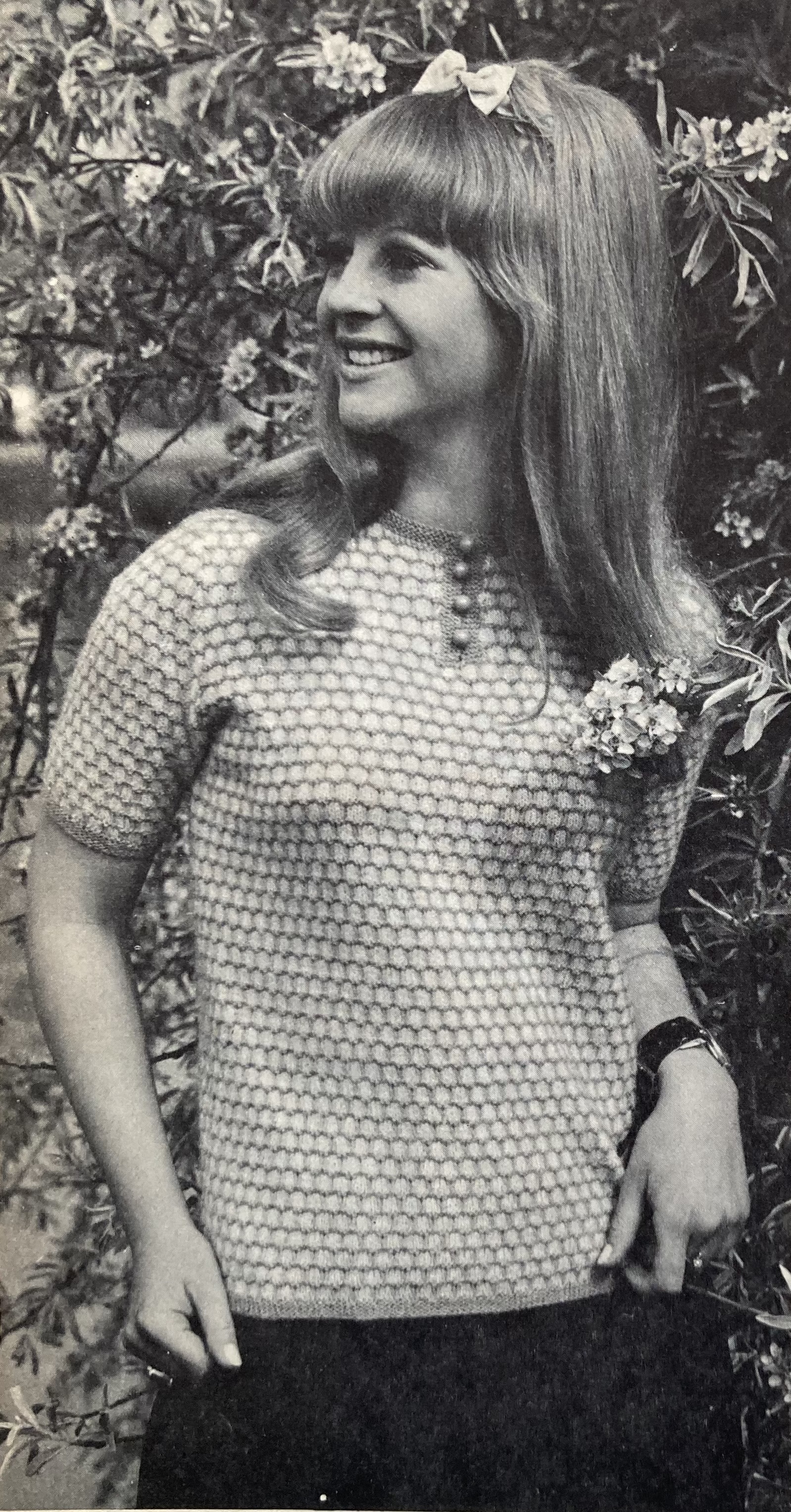
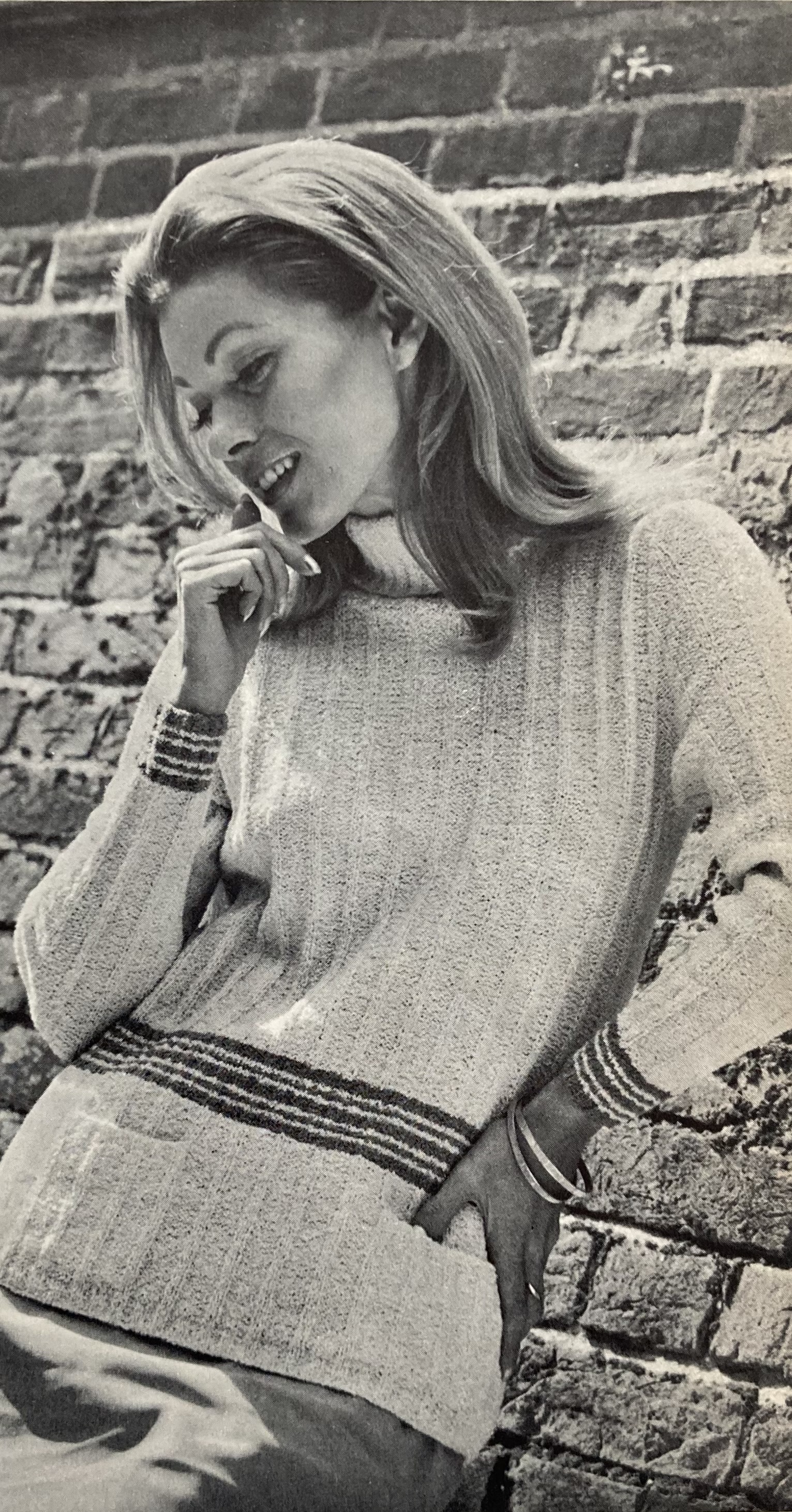
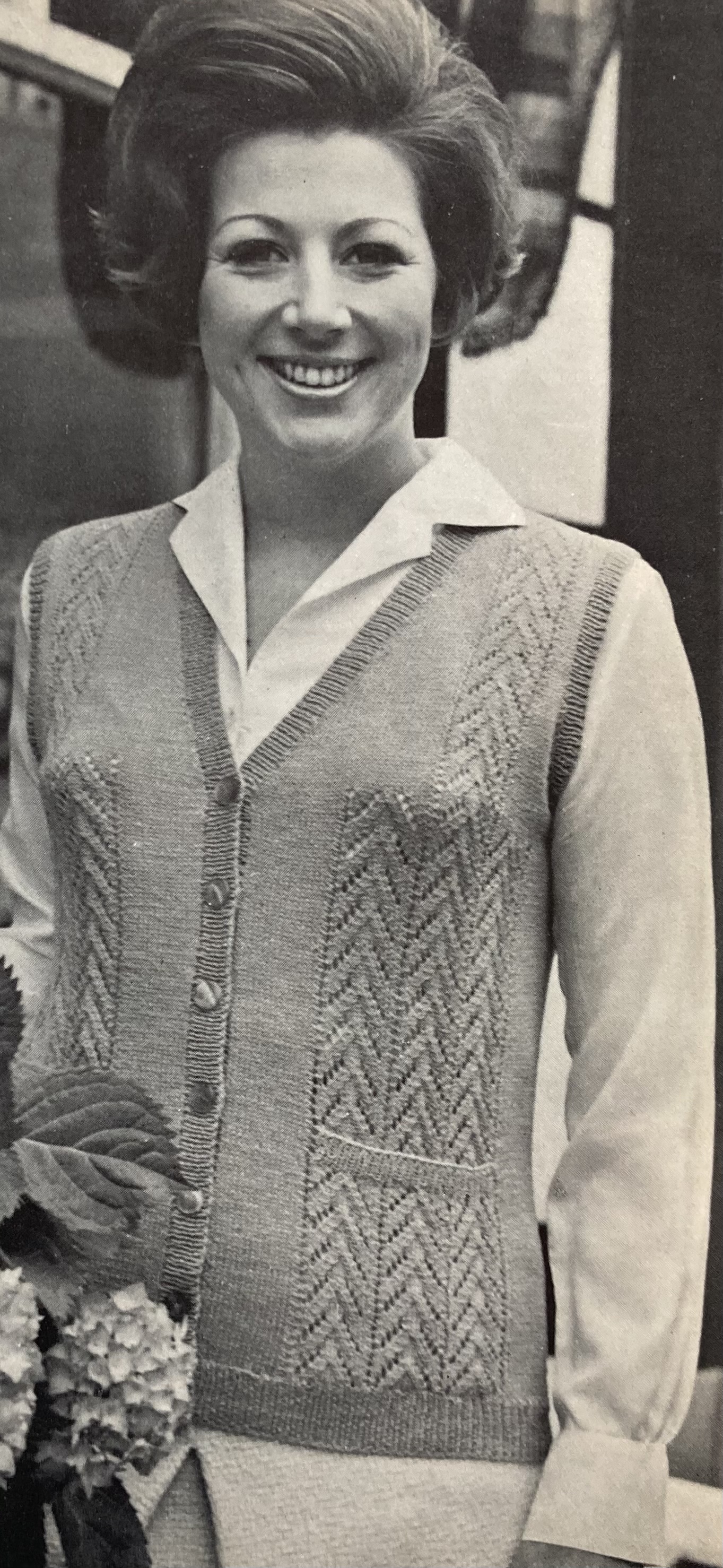
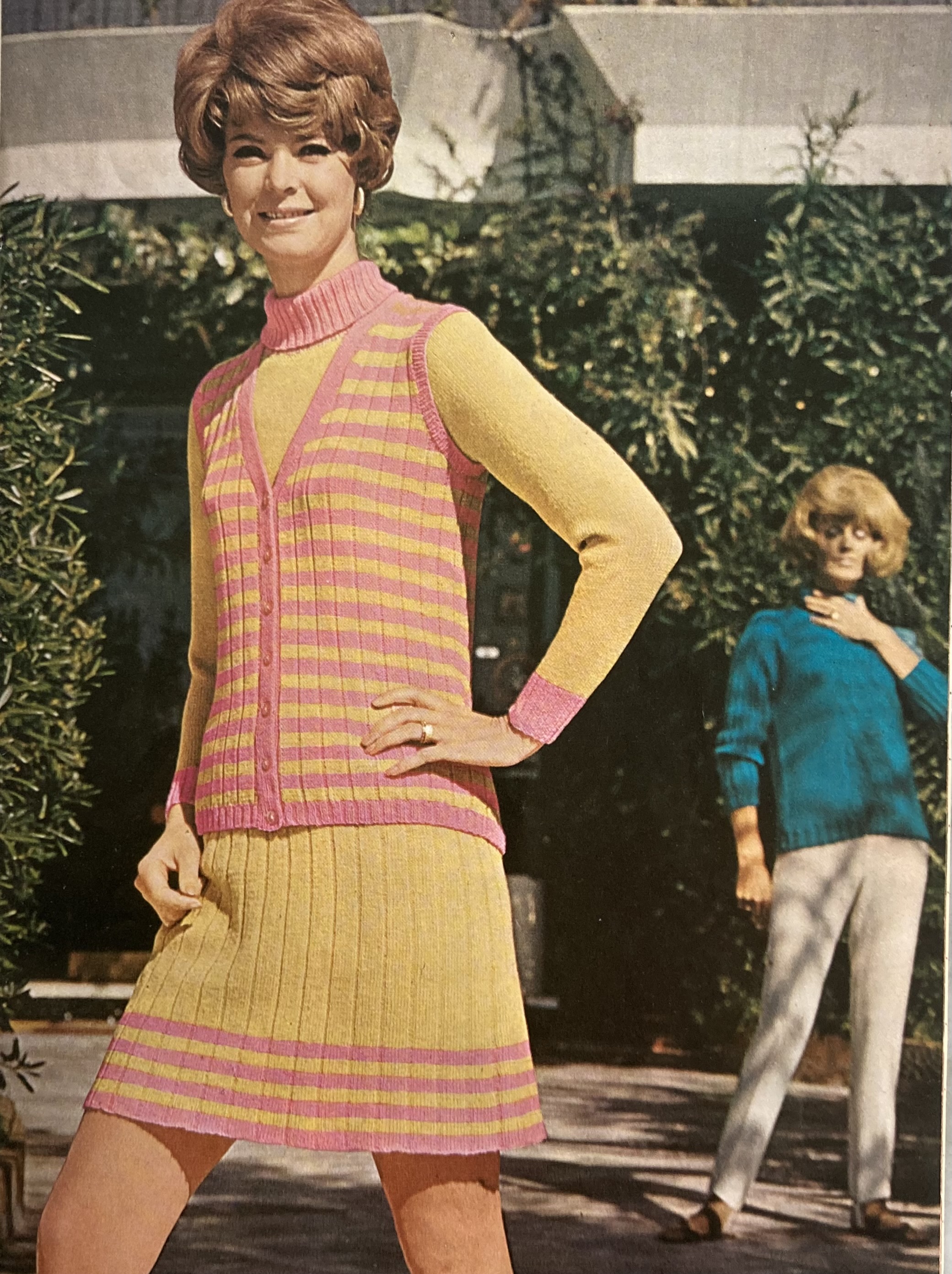
Another unmistakable trend are the famous bouffant hairdos / wigs, or, if hair is worn long, a fringe at the front and the back teased up behind a bow or hairband. I own a set of little plastic props that you can put under your teased-up hair to make it not fall flat and I suspect such items were very much in use at the time as well. Only the cover model and the bedcape model have un-teased long hair.
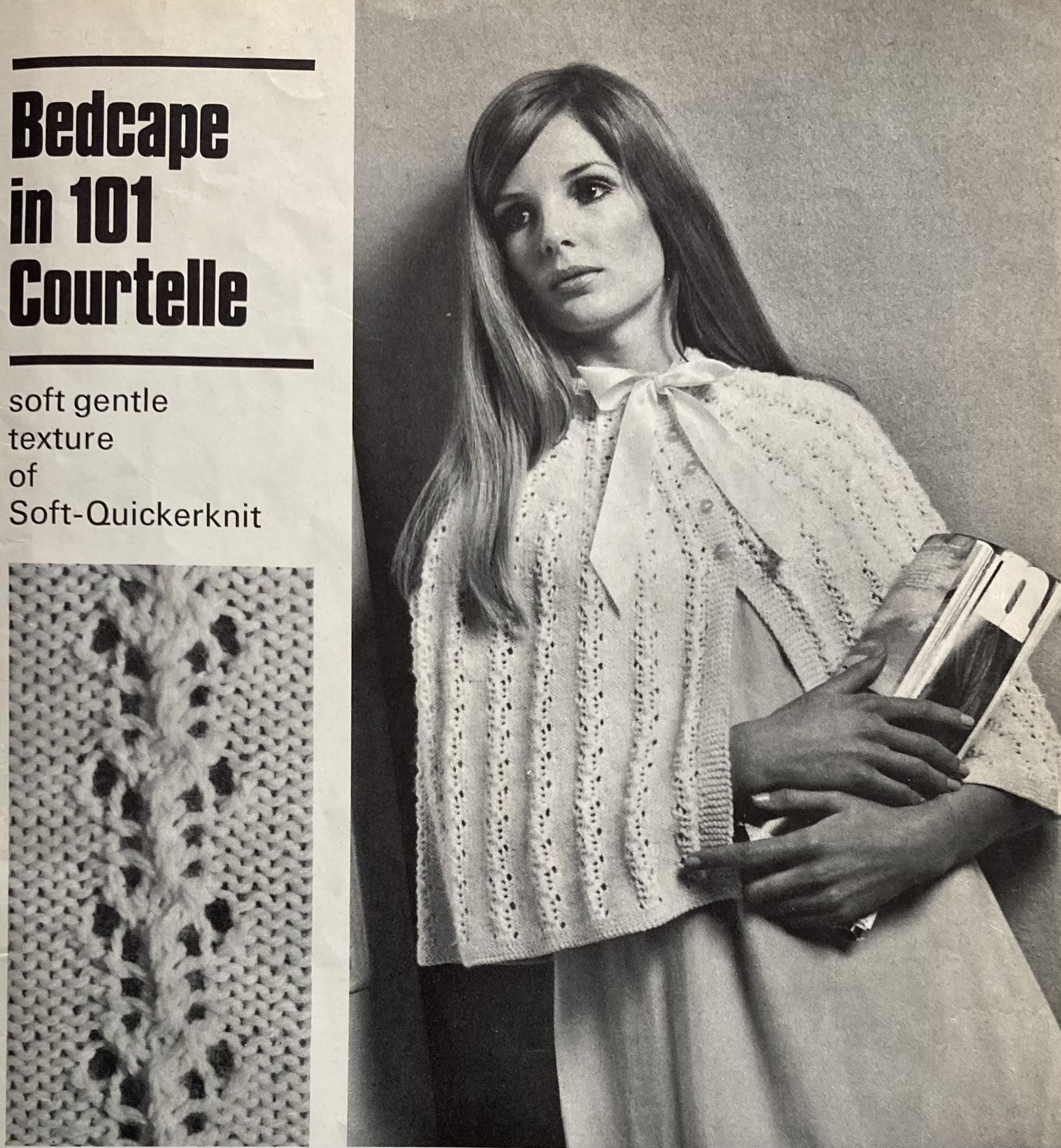
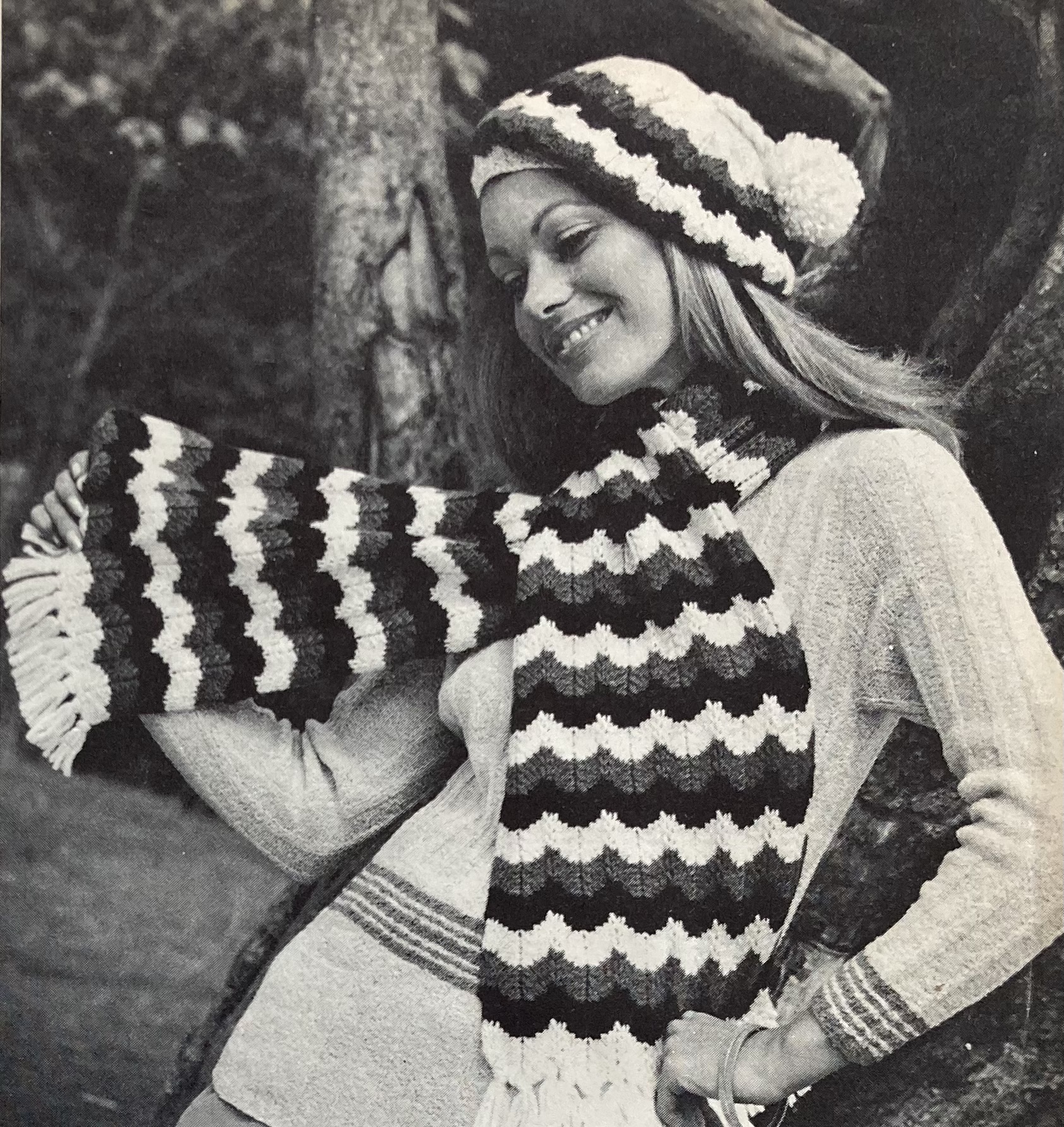
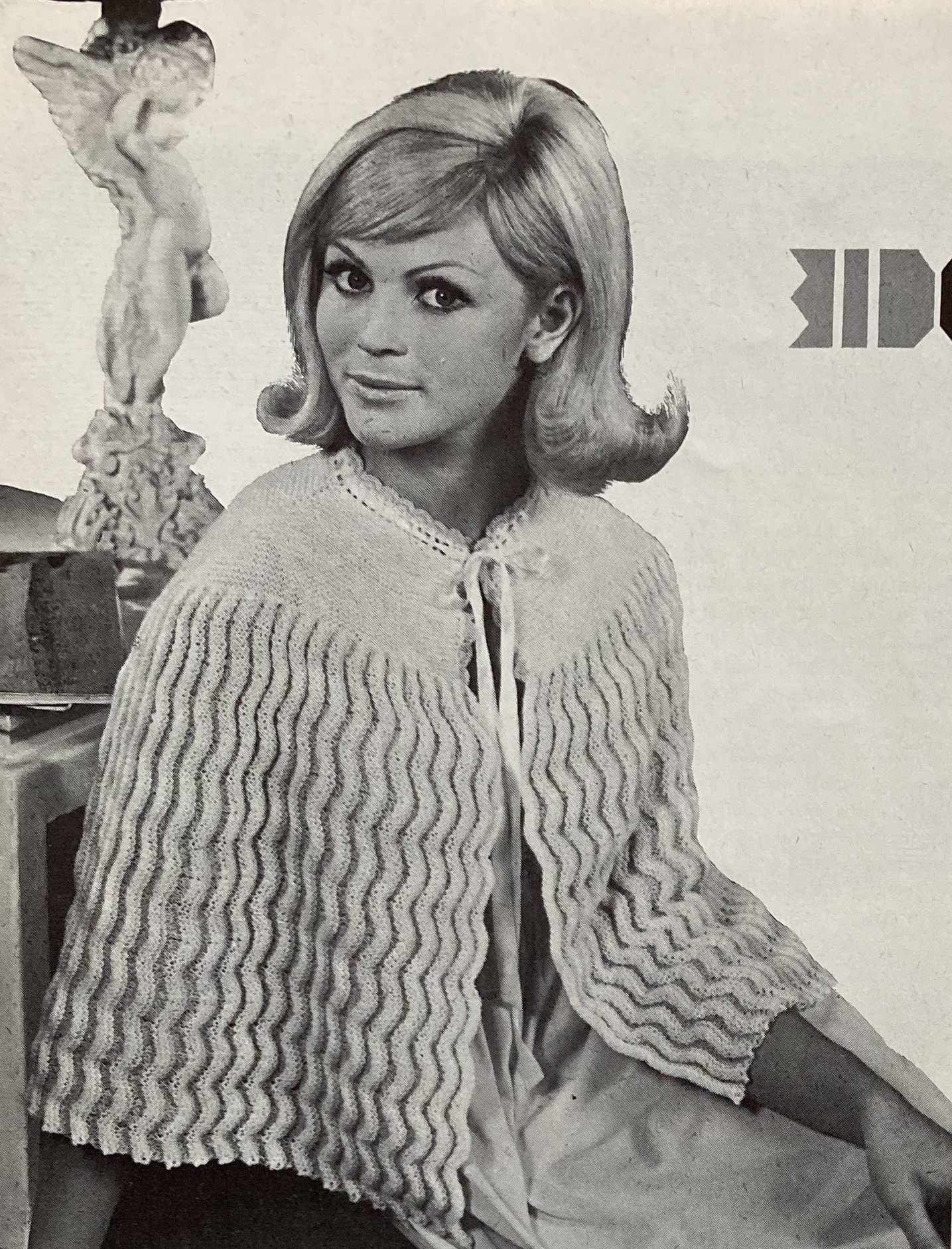
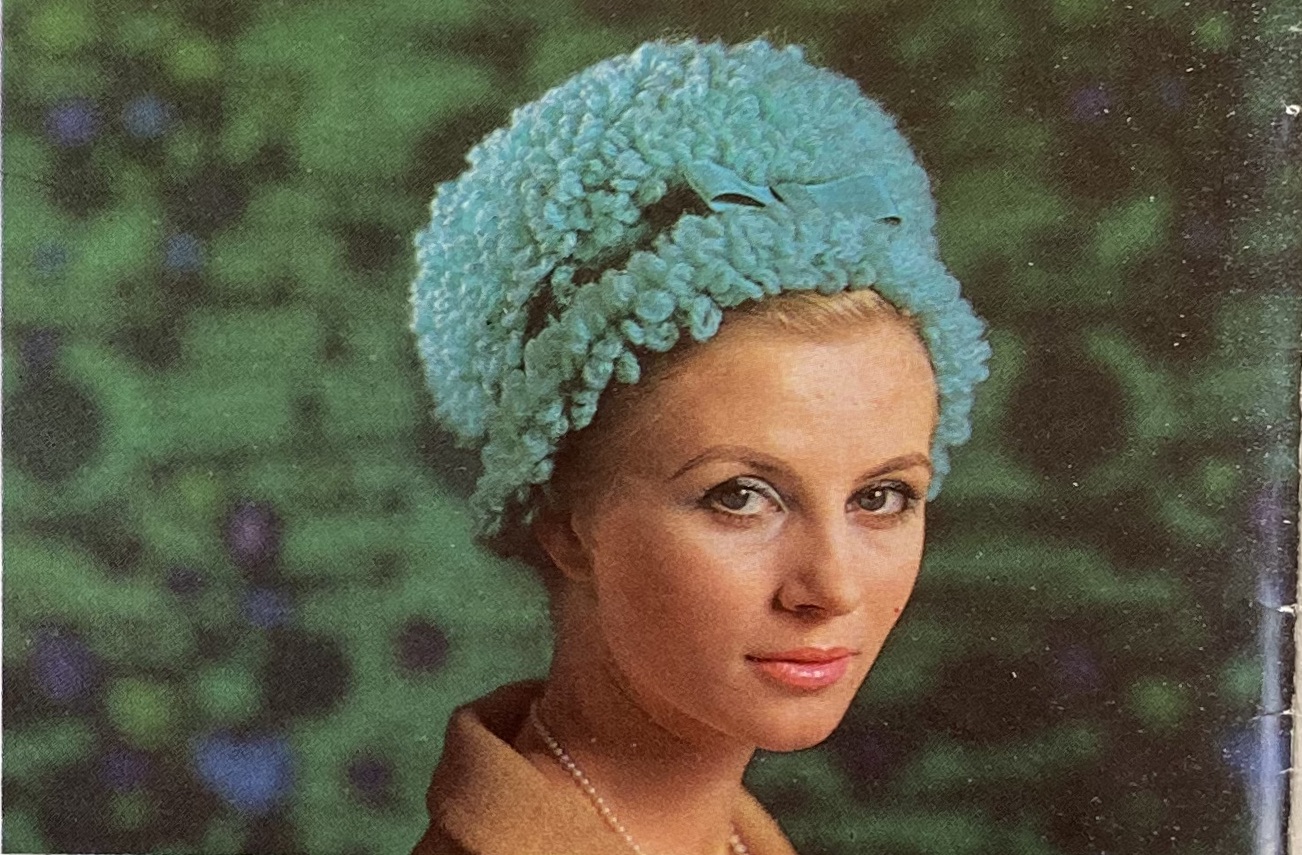
Speaking of the bedcape model… there she is again! One of my favourite Stitchcraft models, who seems to have been primarily (or exclusively?) hired to model the “sexy” bedcapes. She looks lovely in this photo, but unfortunately a bit anxious and stiff. The bedcape is pretty, though. There’s also a magnificent “bobble swing maxi beret and scarf to match” in three shades of beige and brown for those country rambles in cooler weather.
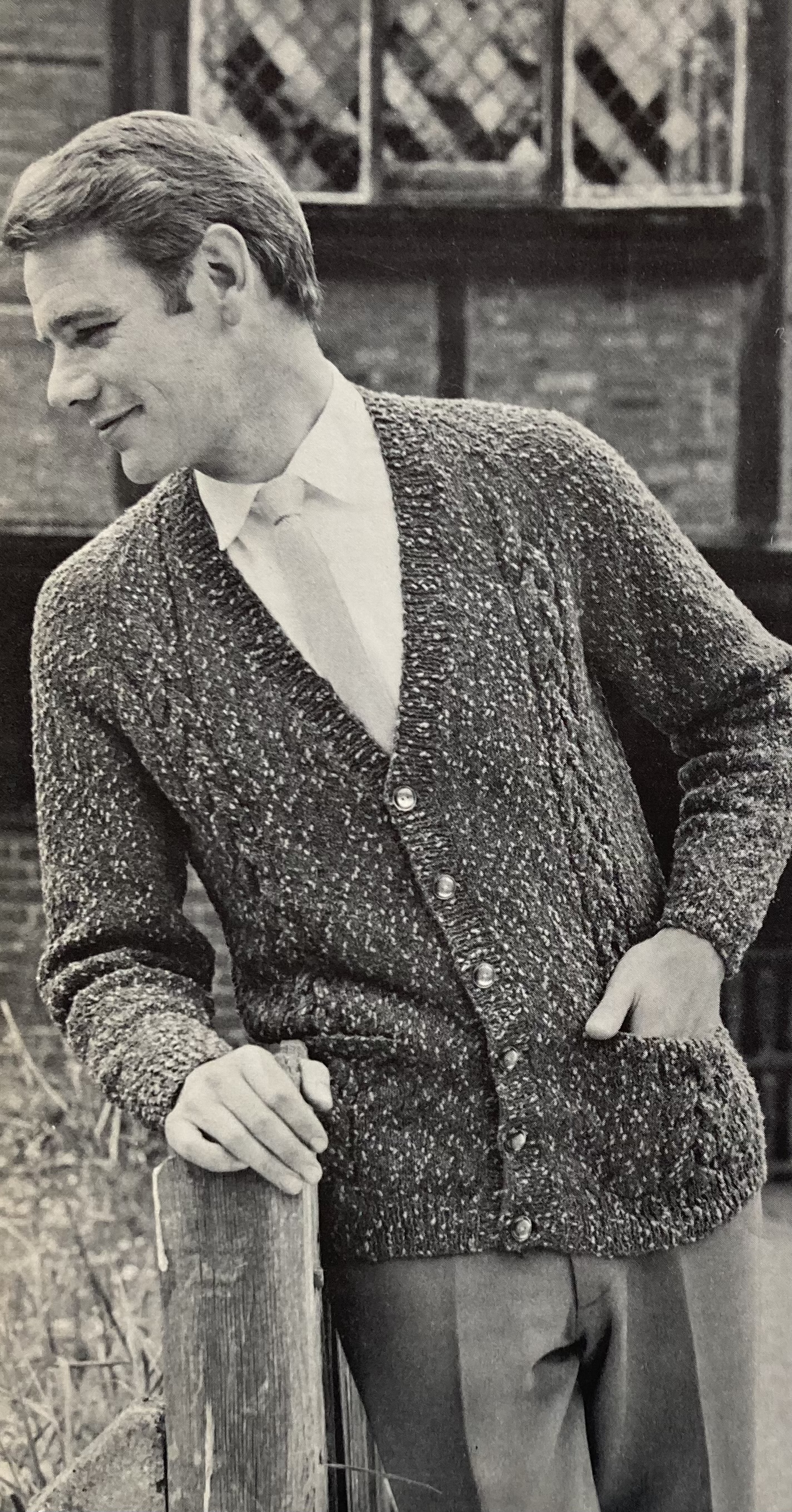
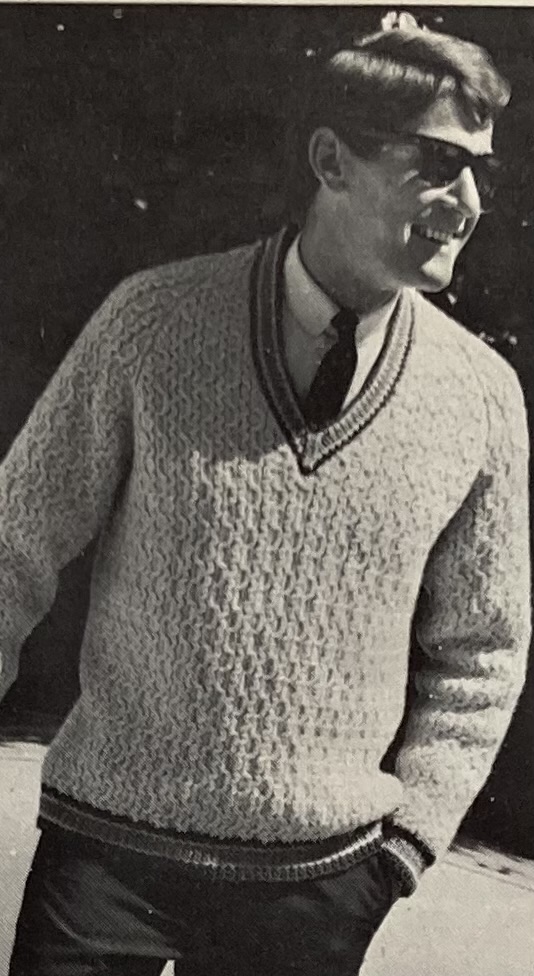
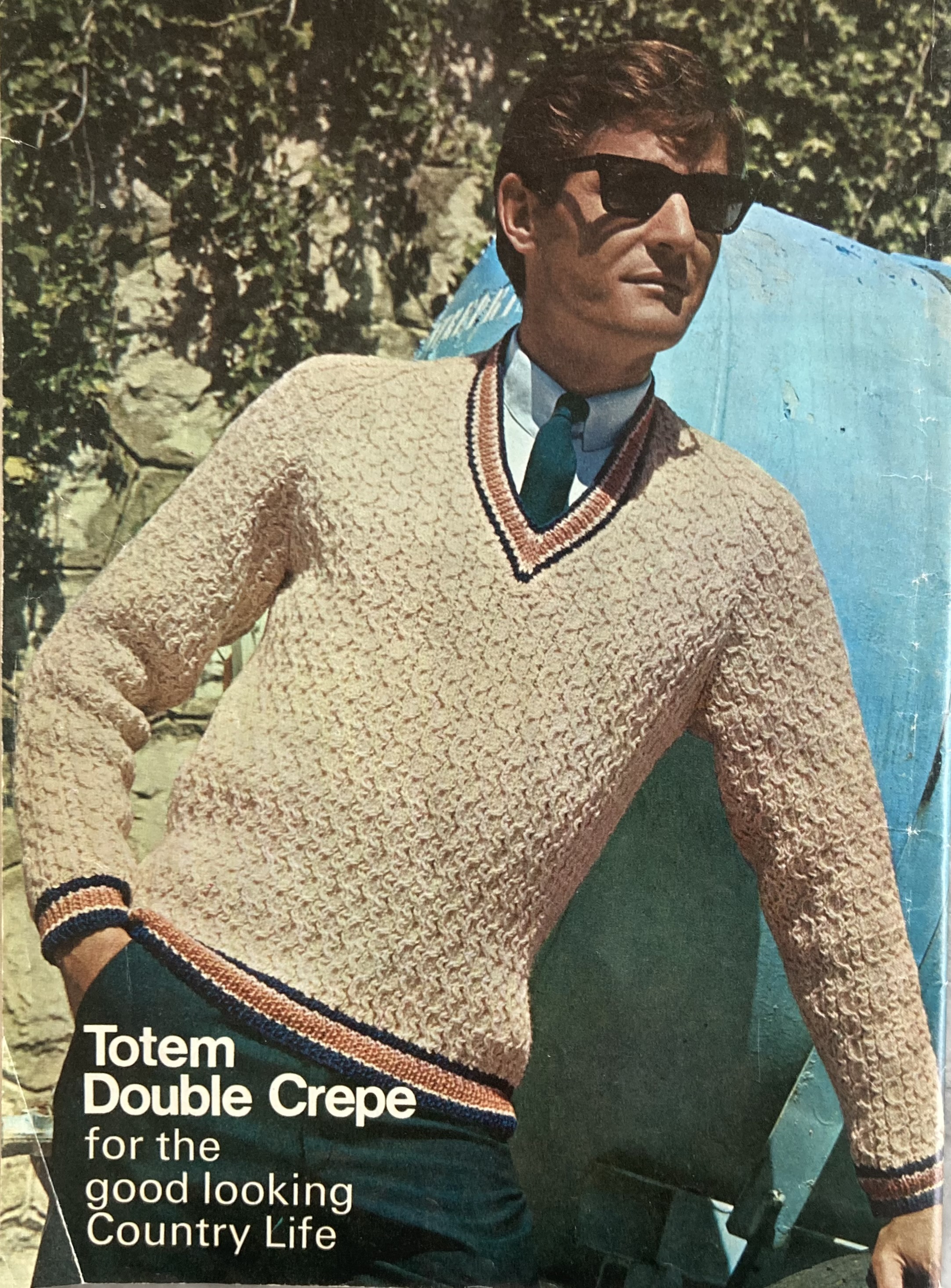
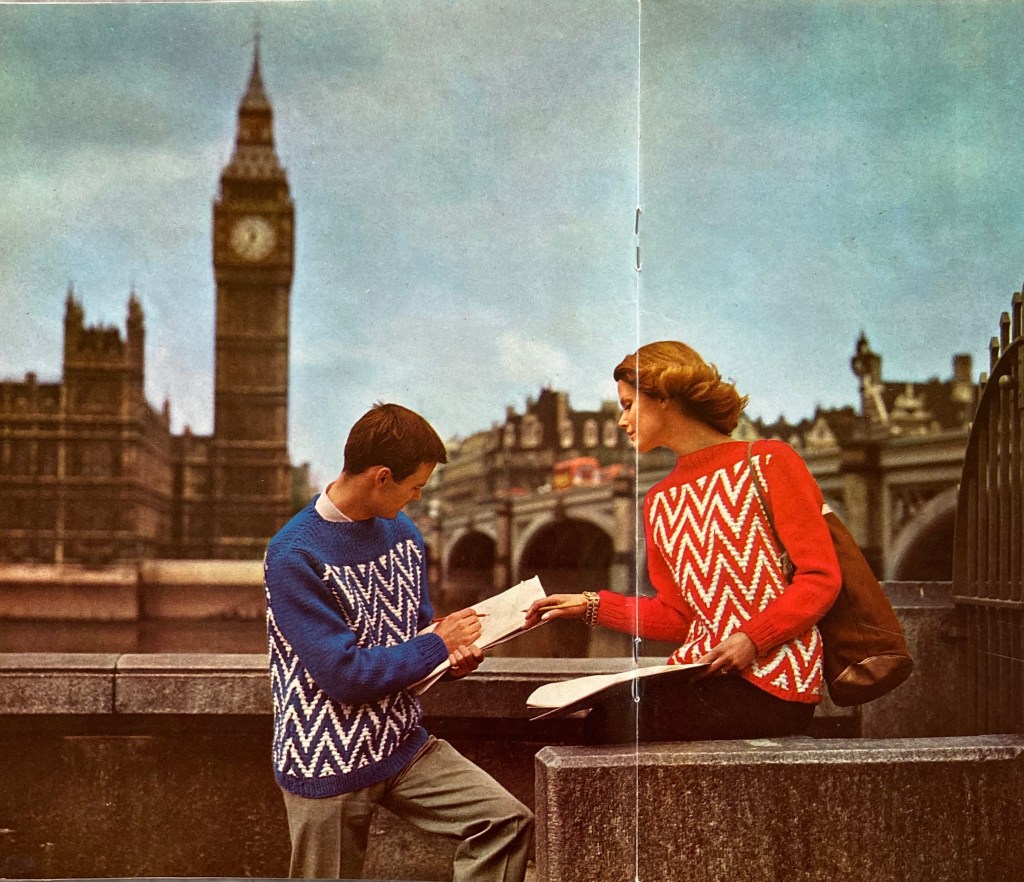
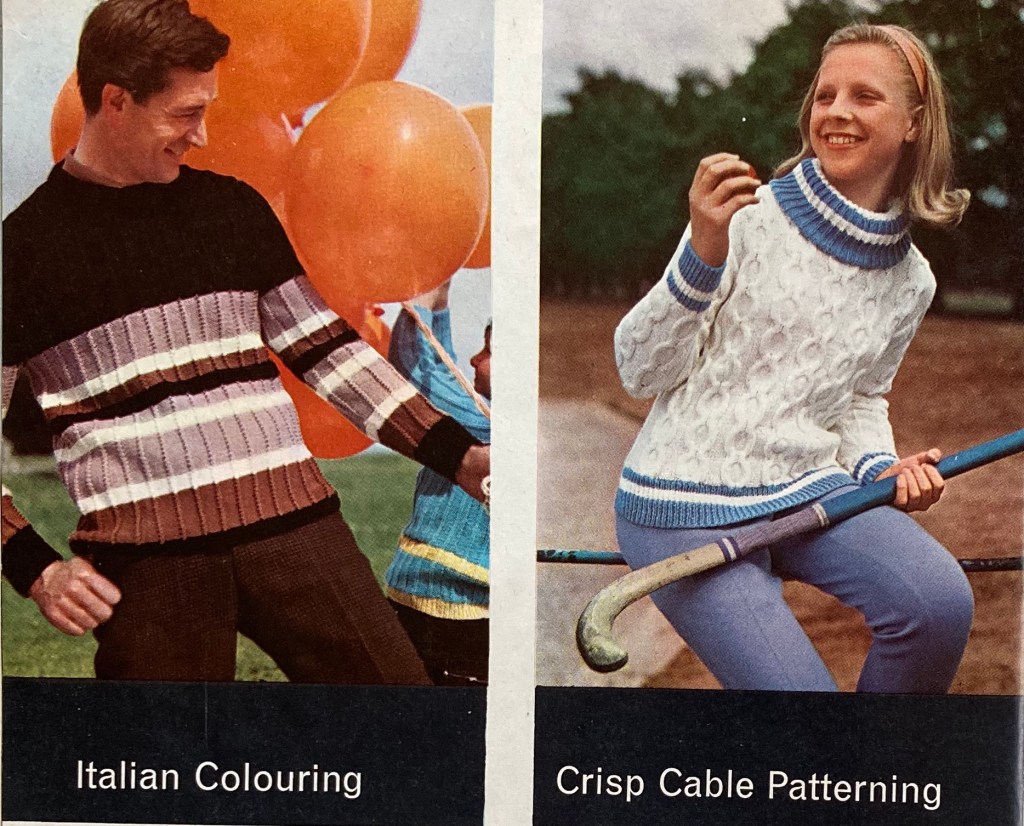
For men, there’s a casual long-line cardigan in textured “Four Seasons” wool and a pullover in a thick, textured twist pattern. Like many of the women’s fashions,it features little striped colour accents on the yoke and sleeves. Very 1960s diagonal poses.
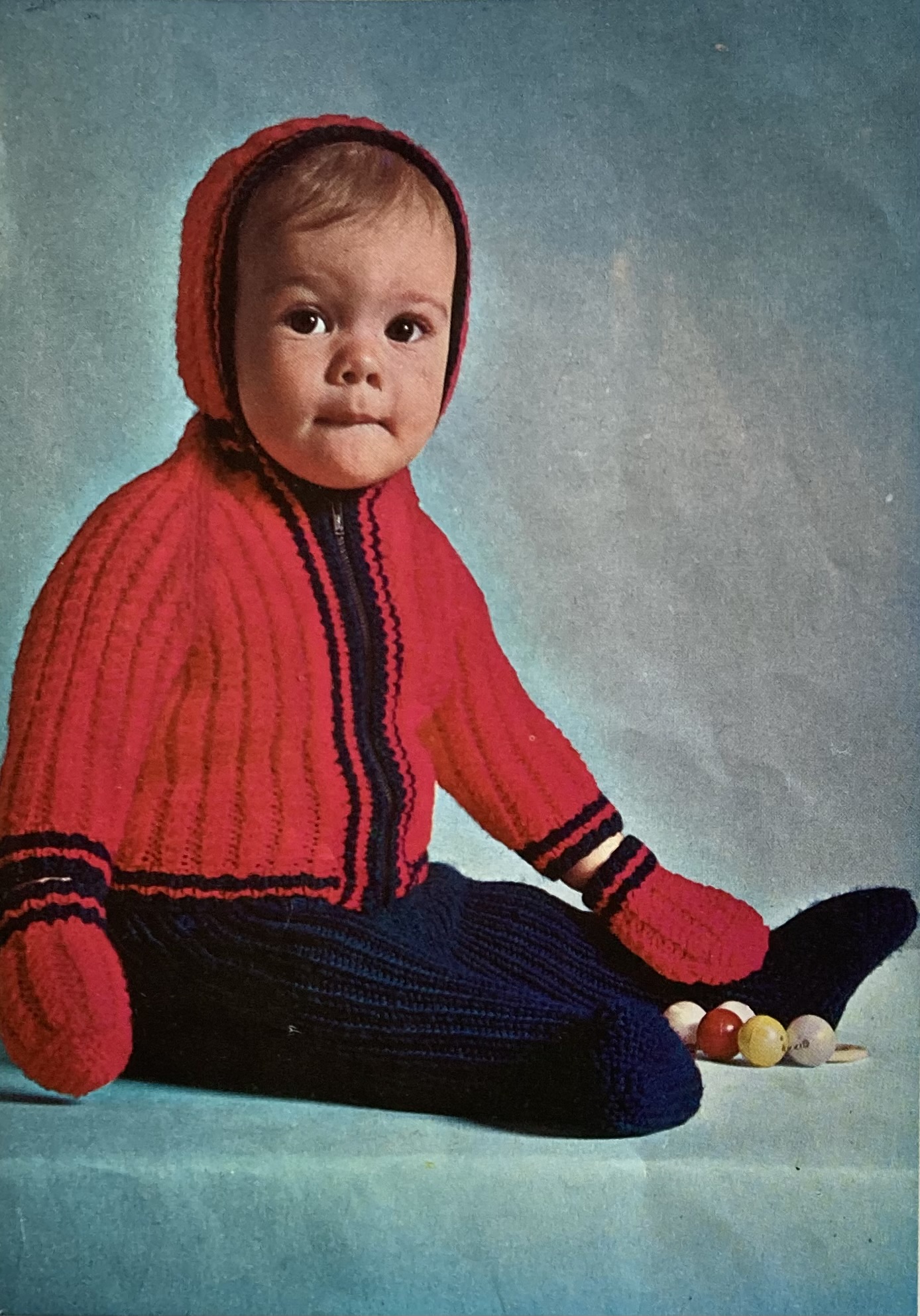
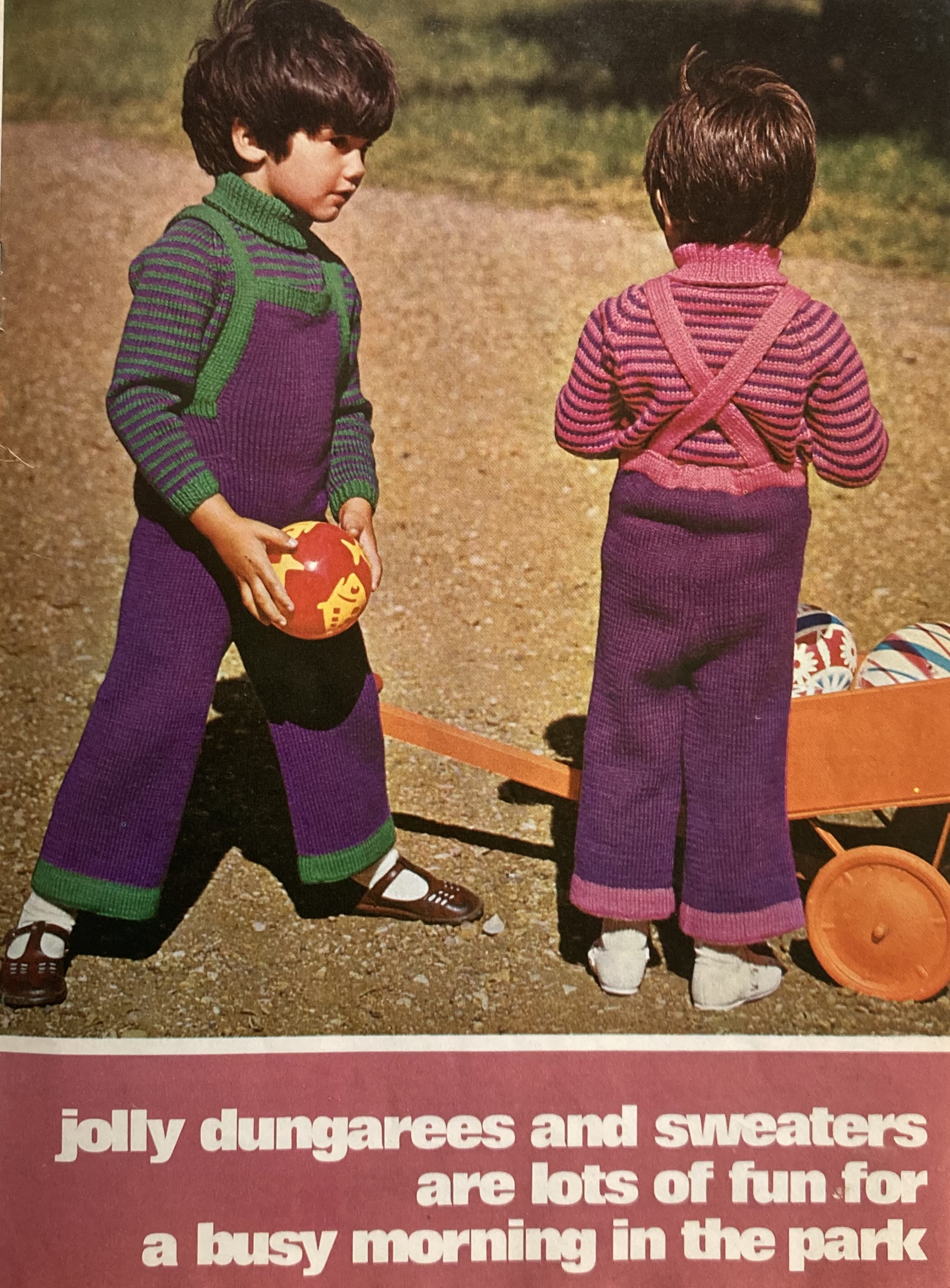
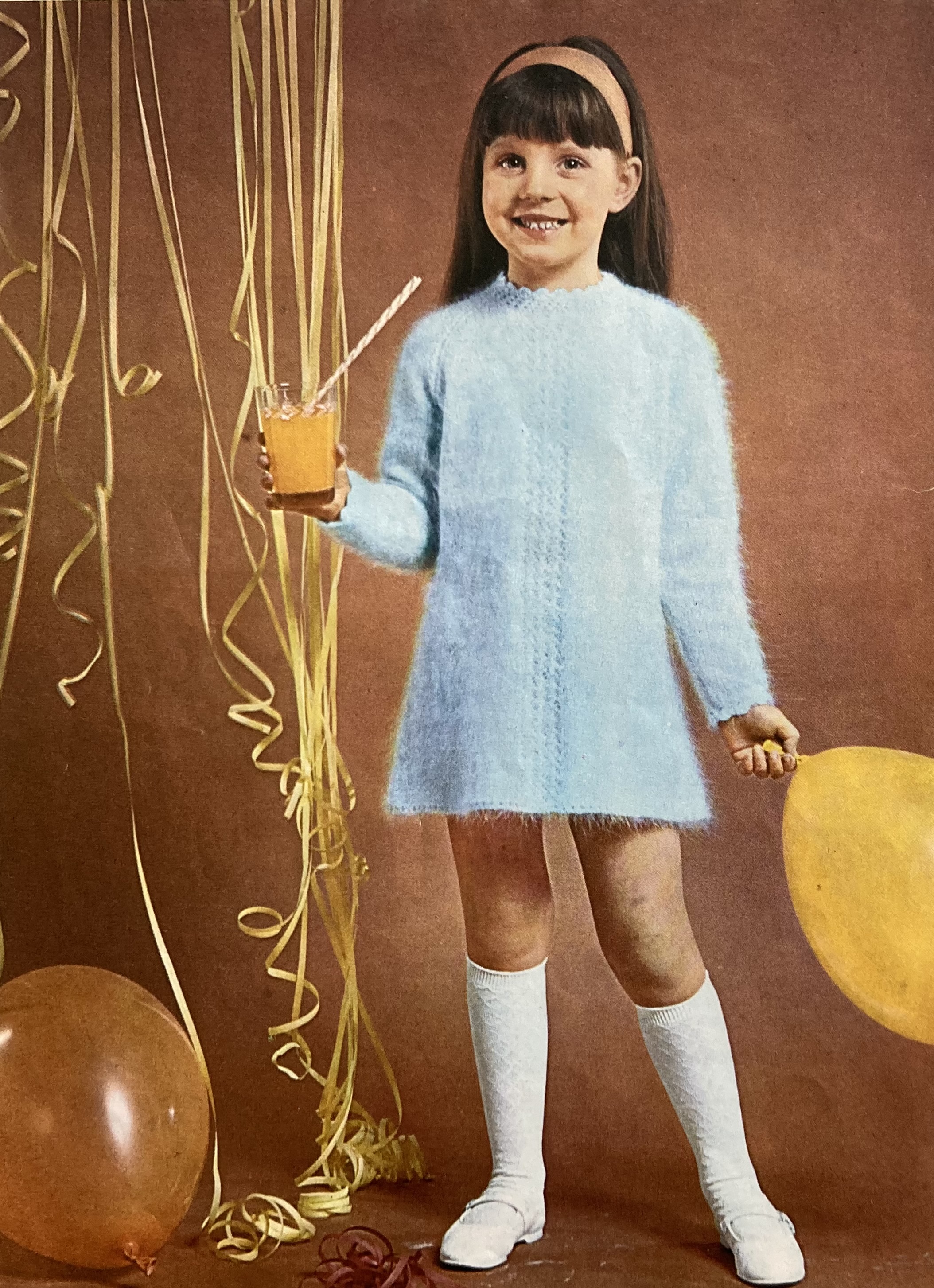
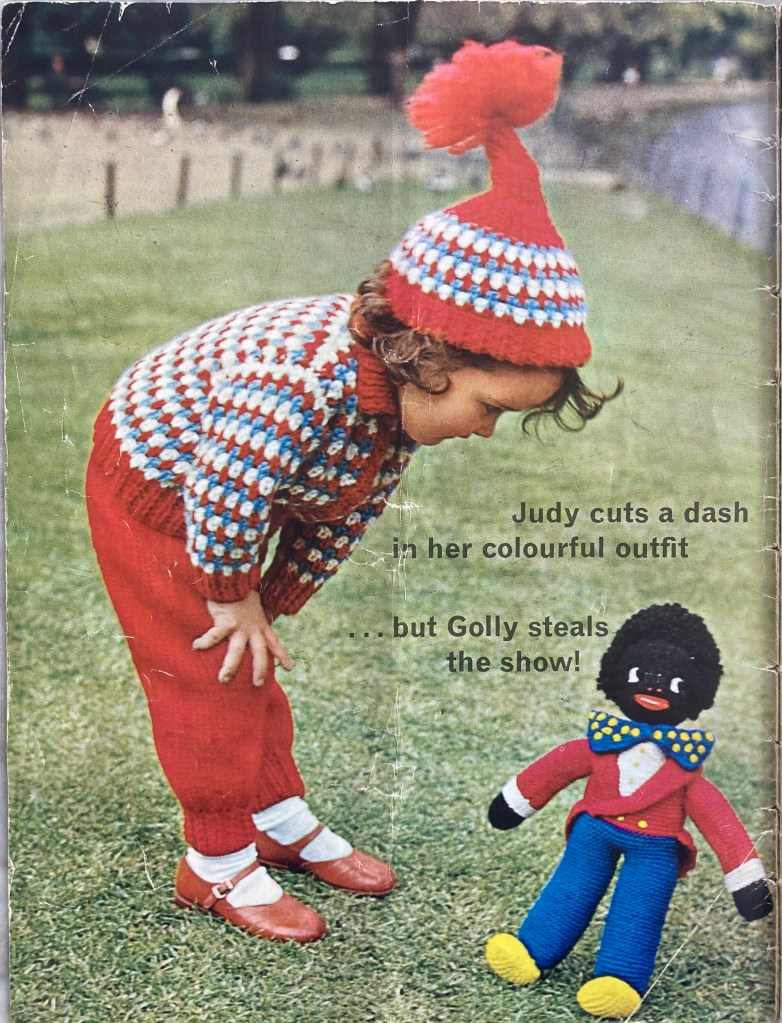
Children can get suited up for outdoor playtime in a jacket-leggings-and-mittens outfit (babies and tots) or a knitted dungarees with warm sweaters underneath. For more dressy occasions, there’s a fuzzy blue “dream of a dress to make a little girl have a wonderful time.” You get the feeling that the golden age of advertising copy has arrived in full force. Also in full force is the golden age of children not wearing anything on their legs. As pretty as the dress is, that poor girl is going to have a terrible time at her party if she can neither move nor sit down without flashing everyone there.
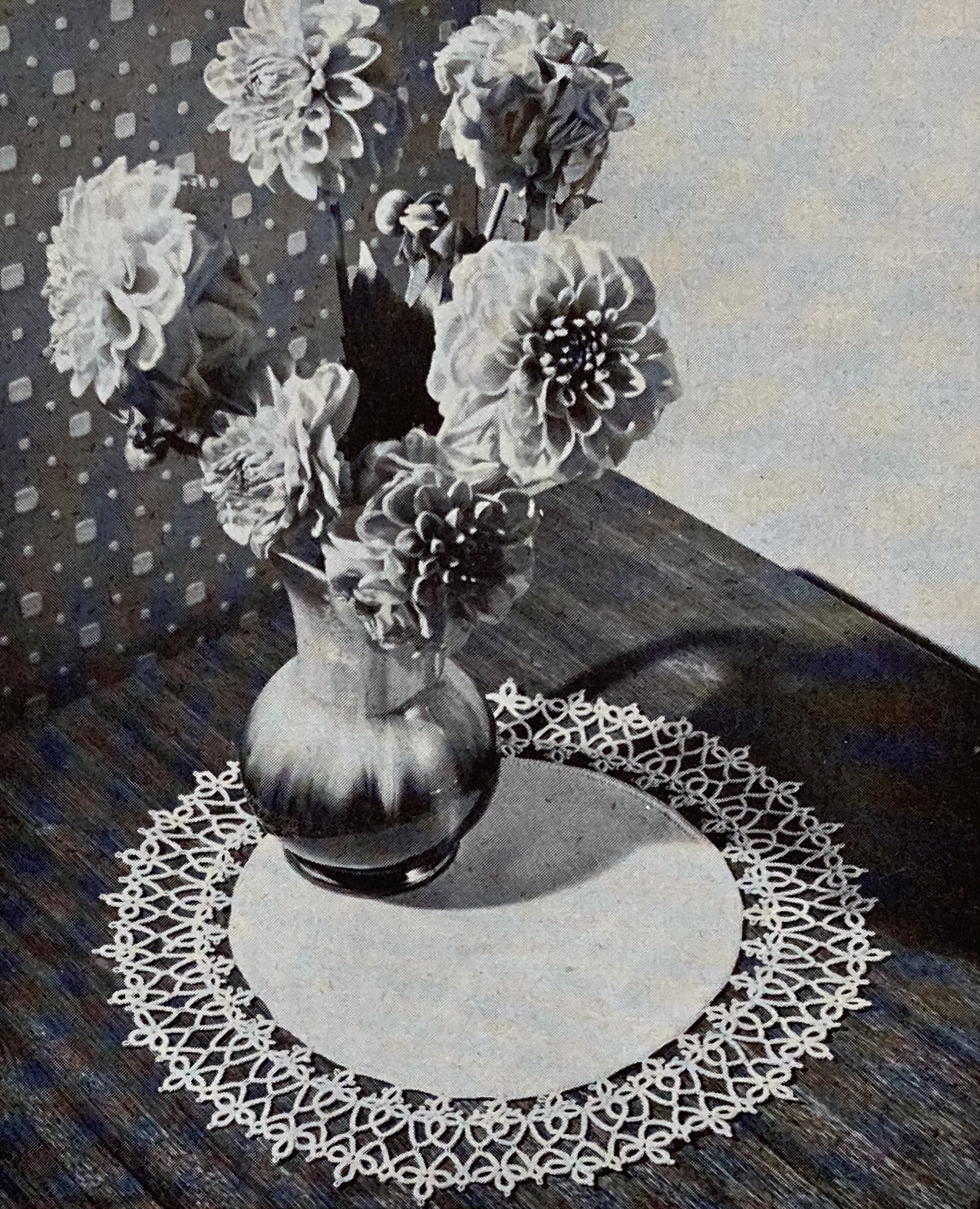
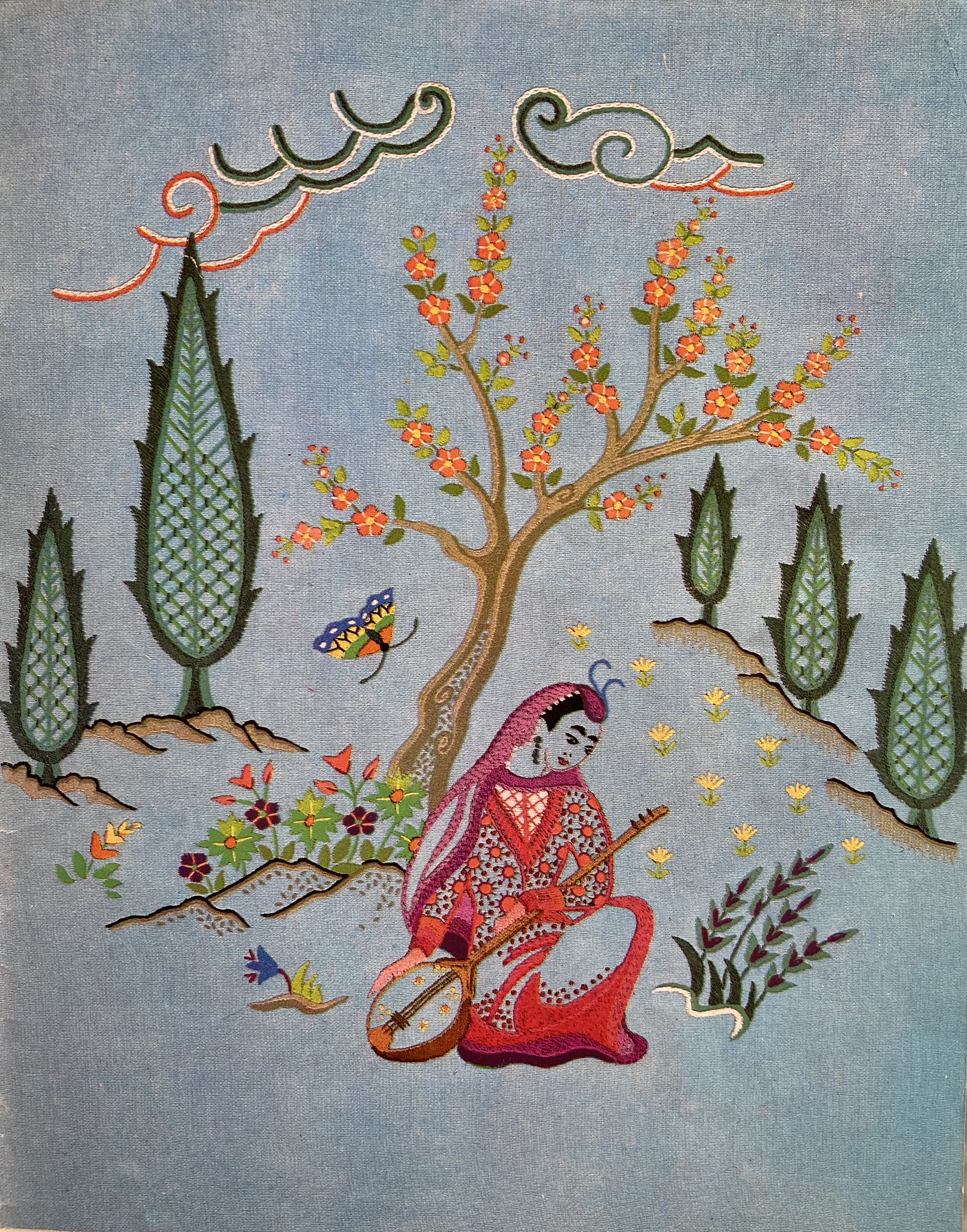
The homewares are nice, if not particularly special: two practical runner rugs (stitched or crocheted), a pincushion and/or holdall bag in diamond-check tapestry, or little flower motifs to embroider on a tablecloth, tea/coffee cosy or cushion.
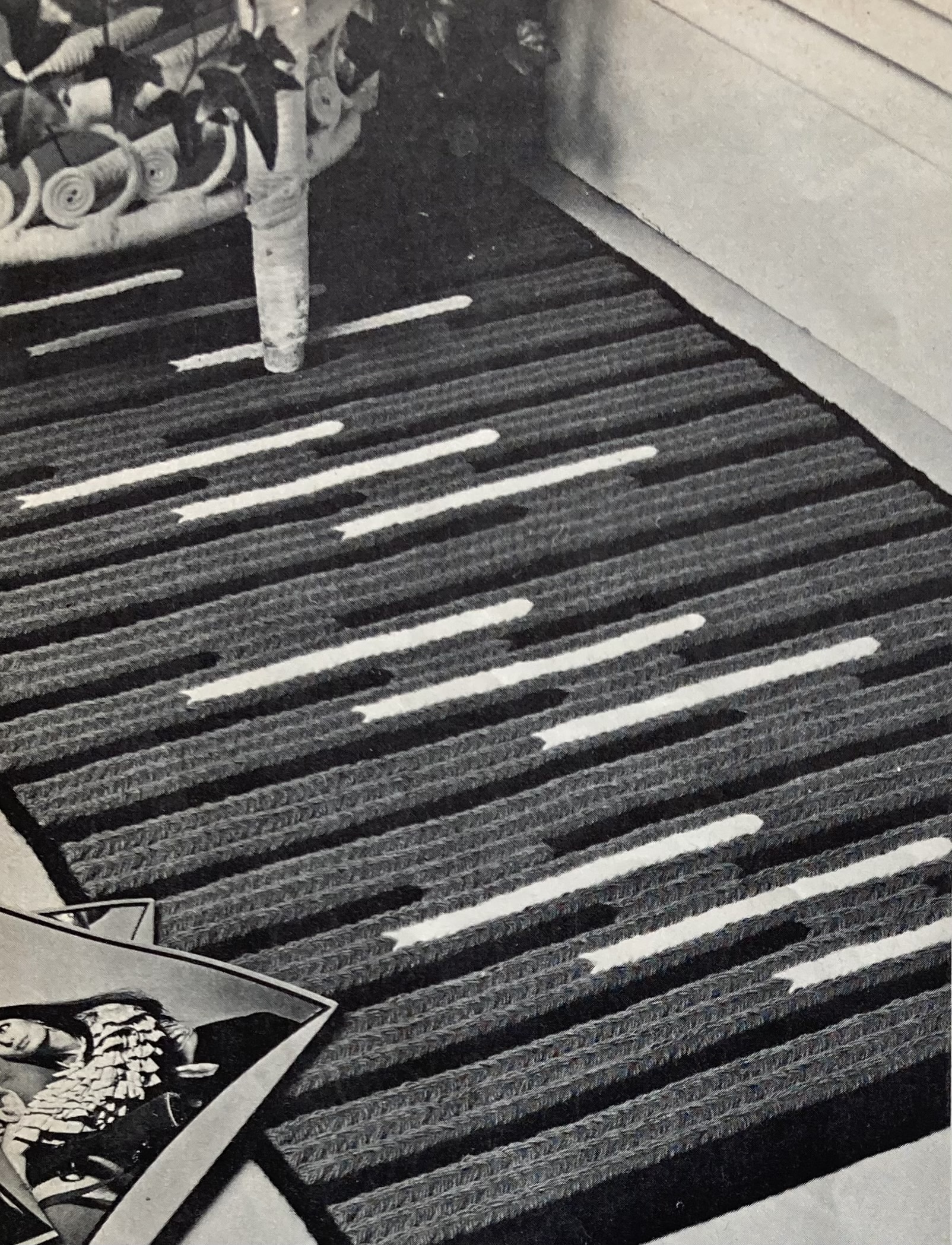
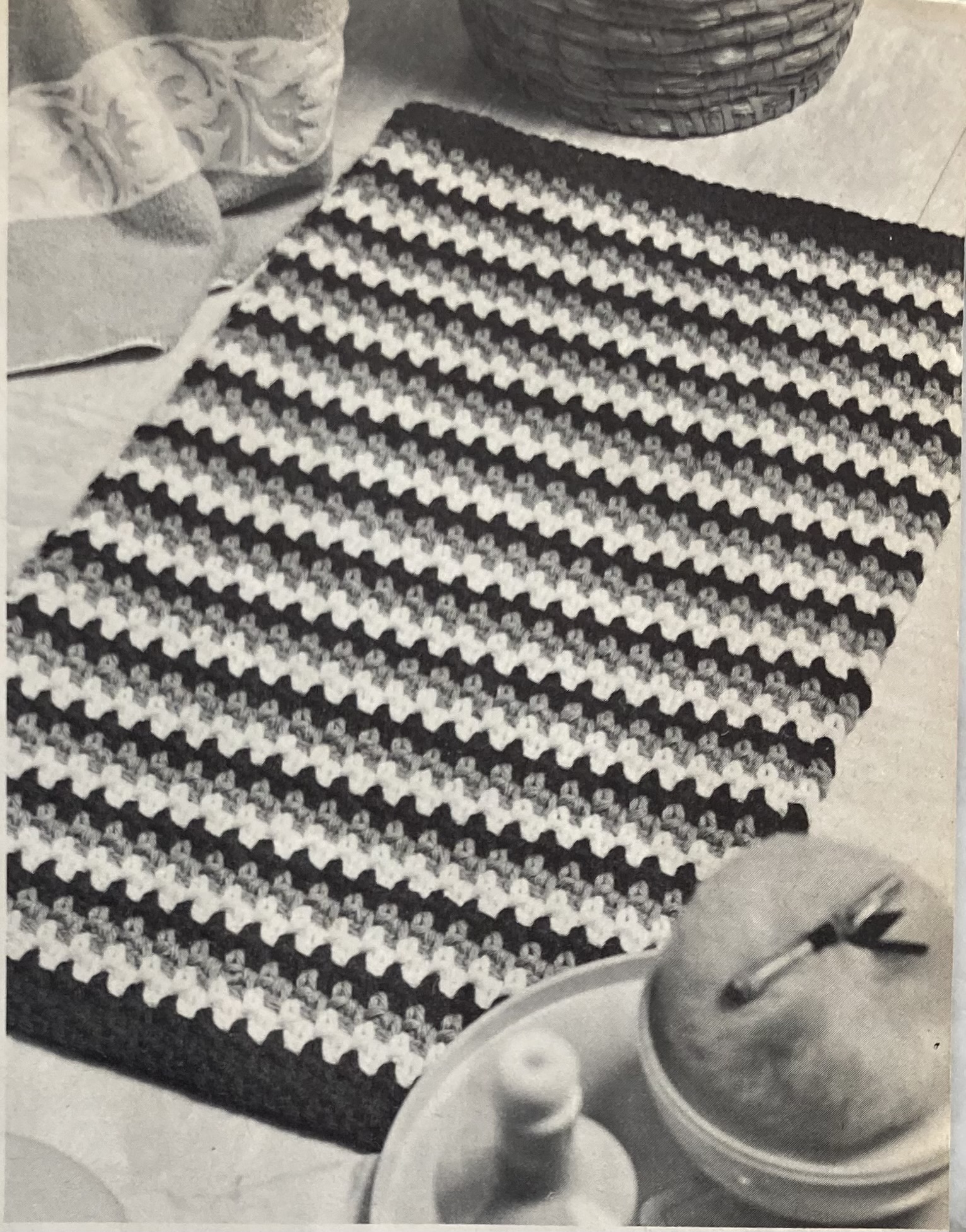
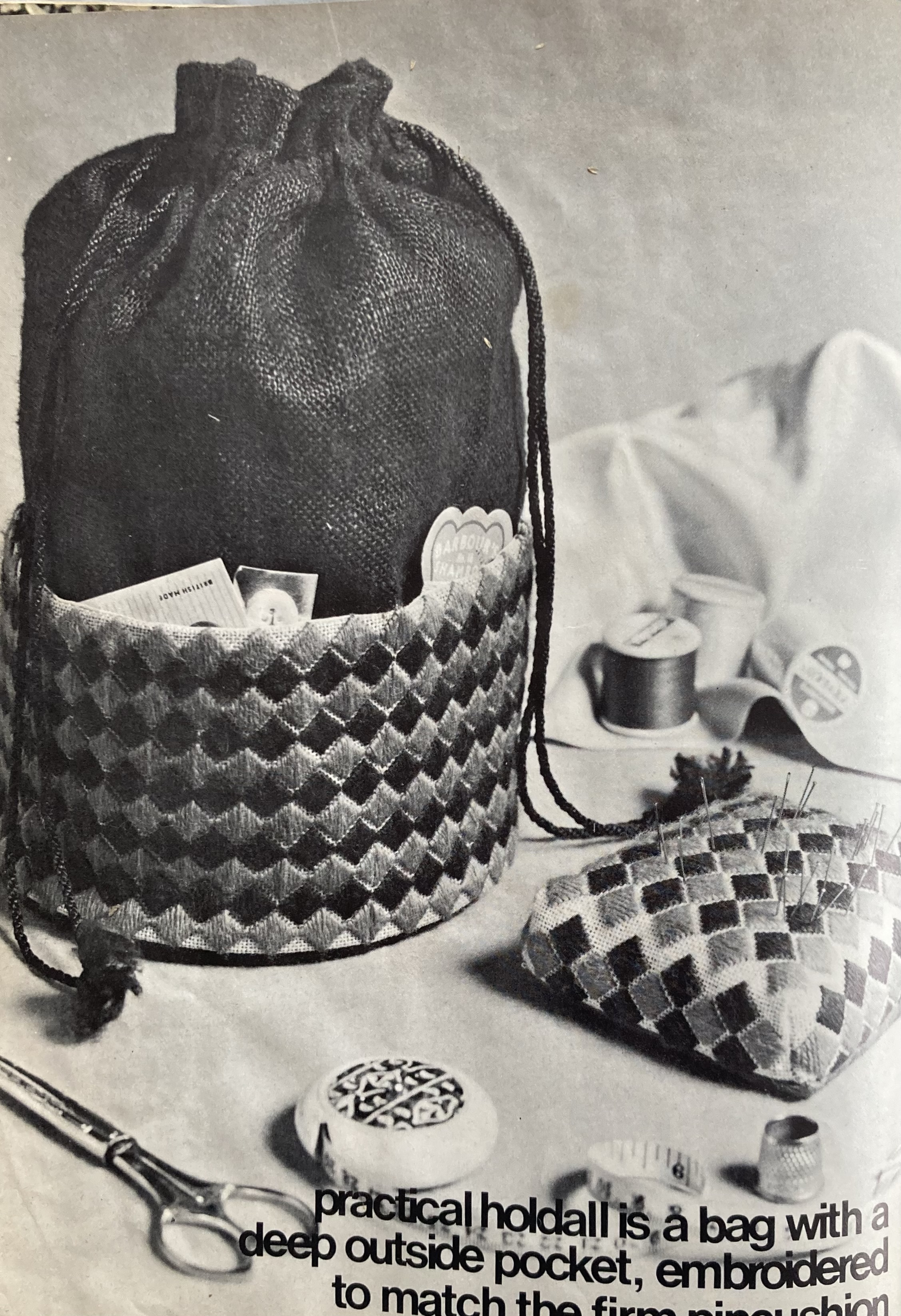
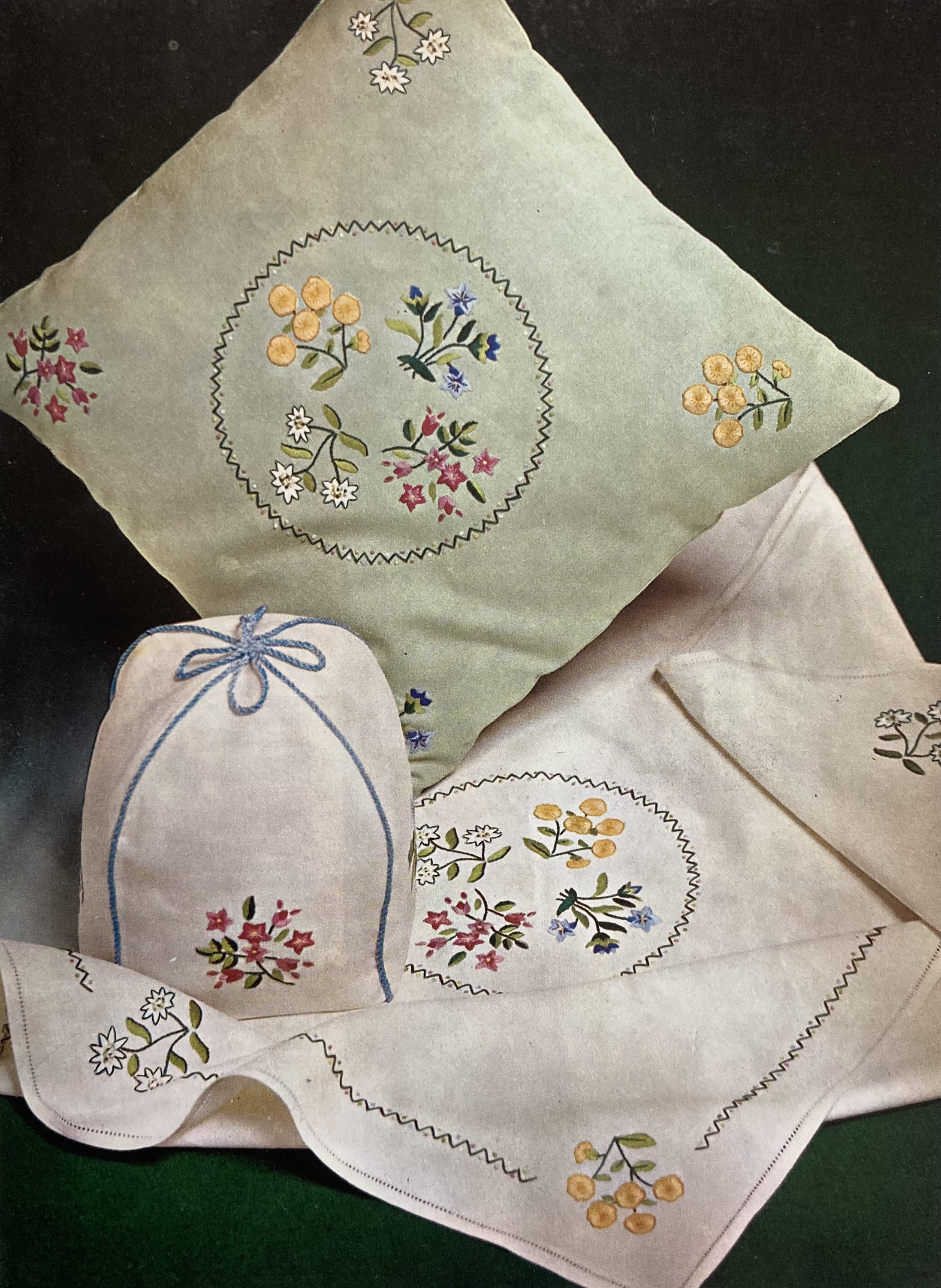
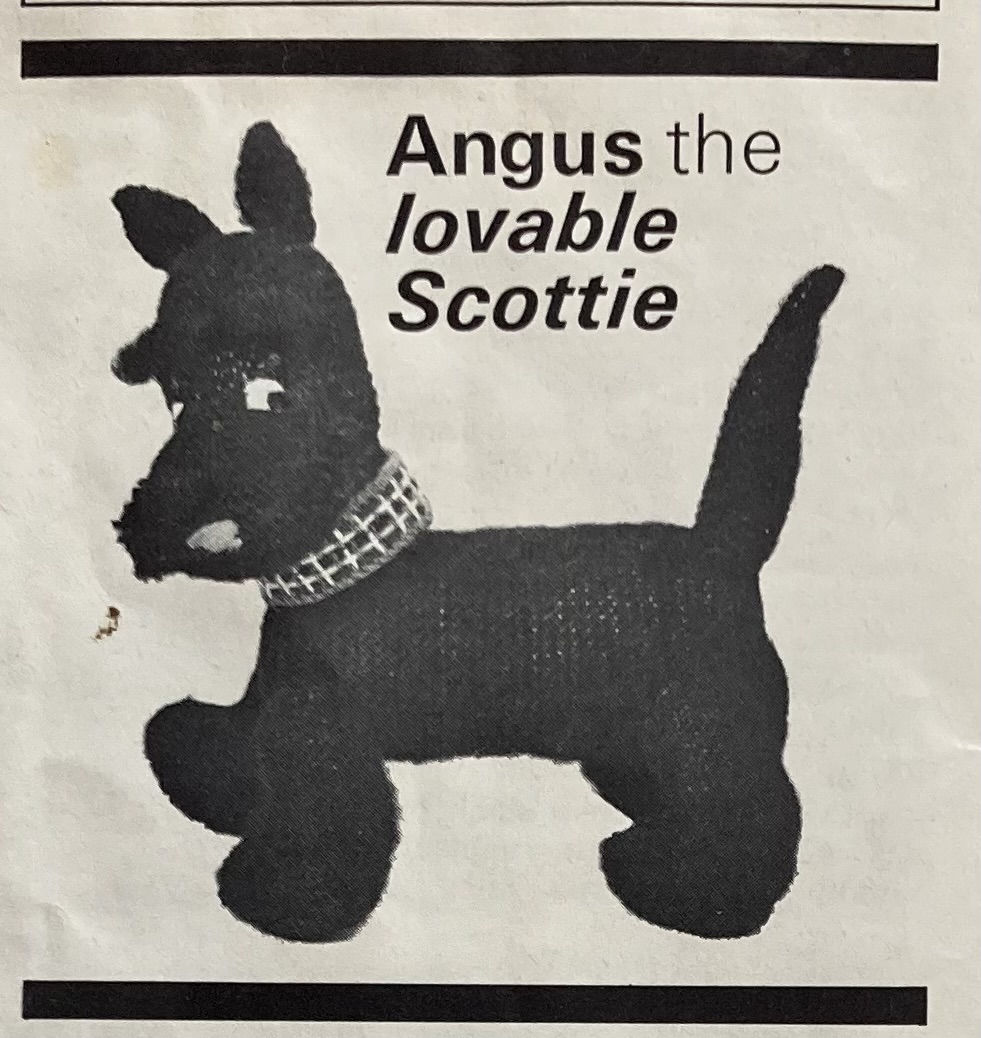
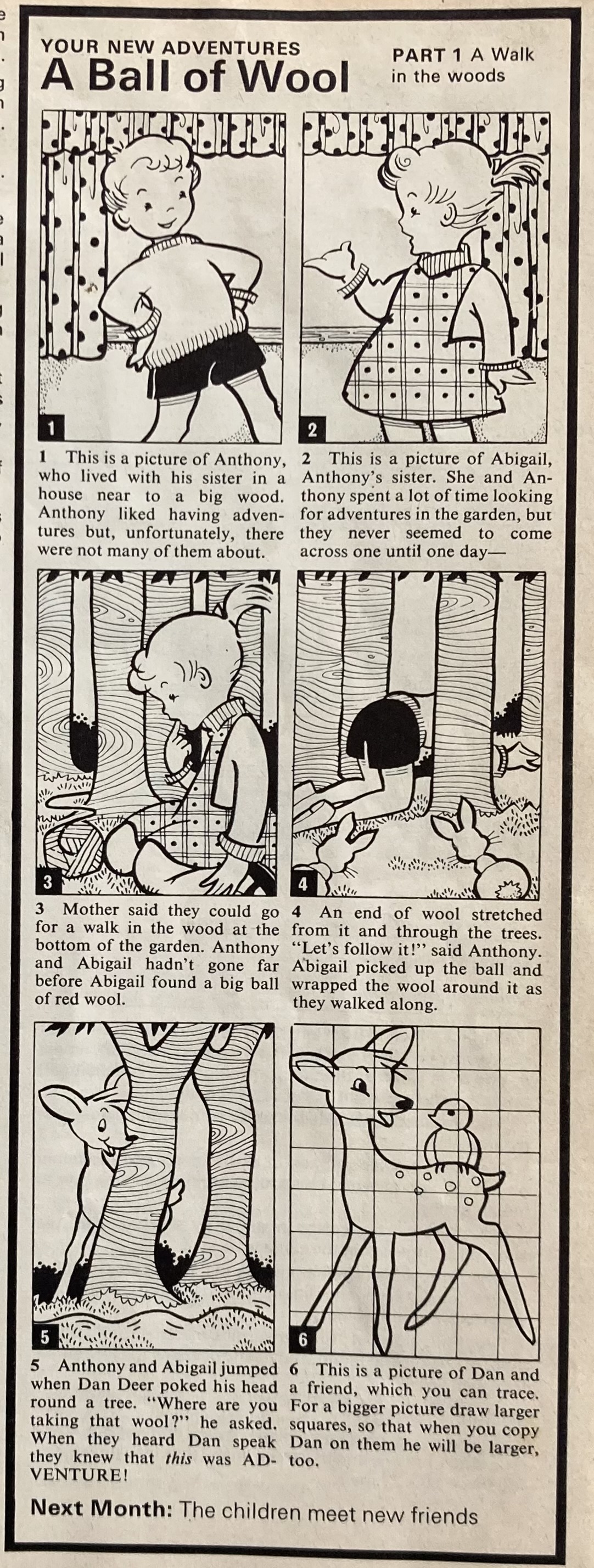
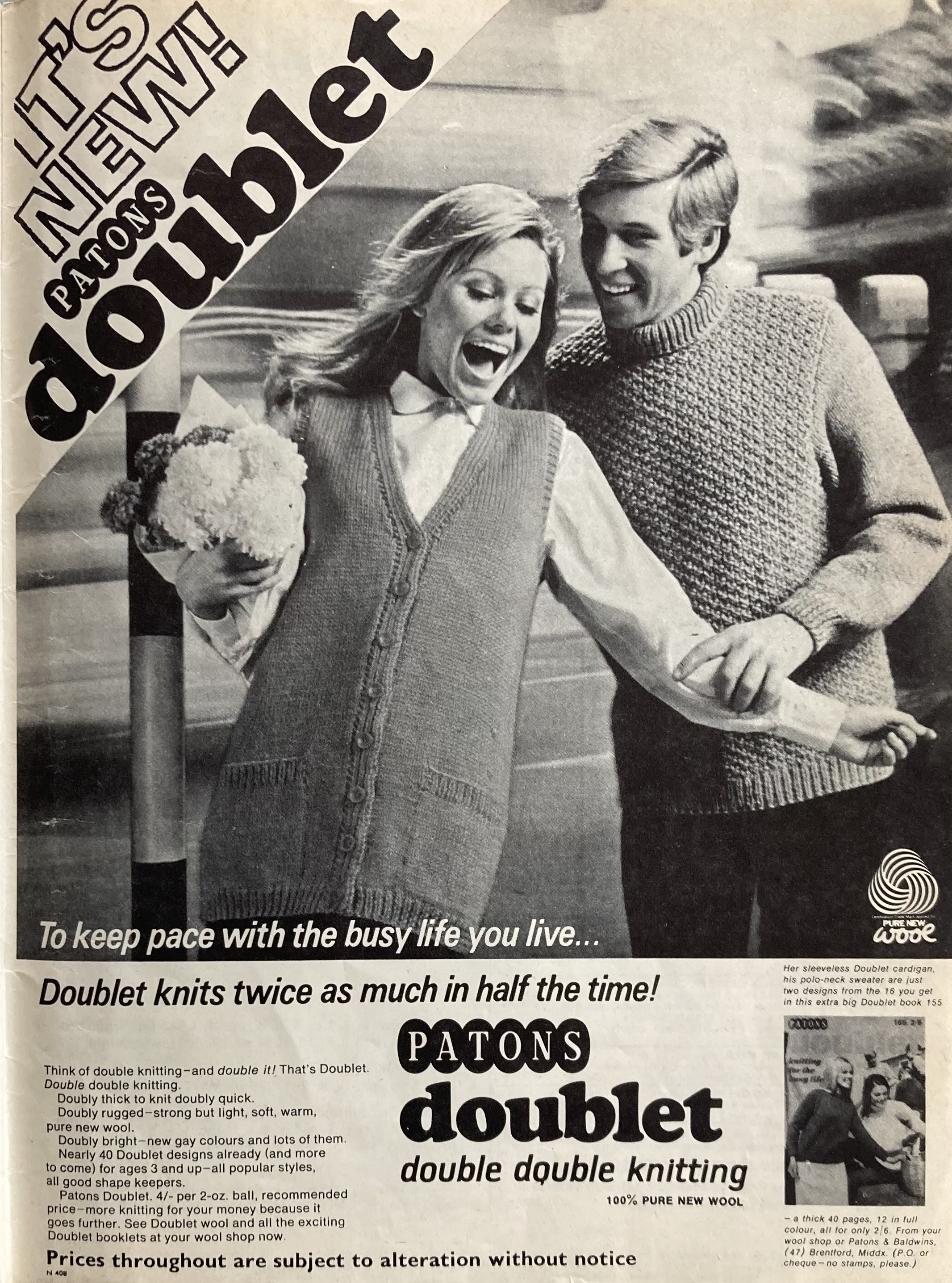
The “Readers Pages” give us an extra pattern for a knitted Scottie-dog toy and the first installment of the new children’s serial comic, “A Ball of Wool”. Sibling children Anthony and Abigail find a magic ball of wool in the garden and wind it up to see where it leads them. Sort of a reverse Ariadne, I guess. It starts by leading them to Dan the deer, who can talk! Let’s see if they find their way home by the end. There’s also an ad for Patons newest yarn, super-bulky “Doublet” that promises to knit up quickly “to keep pace with the busy life you live.” Note the long-line, V-neck waistcoat and textured men’s pullover – right on trend.
I am swamped with work and other projects, so won’t be making any of the larger items. I do have some nice sets of plain table napkins from my grandmother and will take the opportunity to embroider them with the little flower motifs.




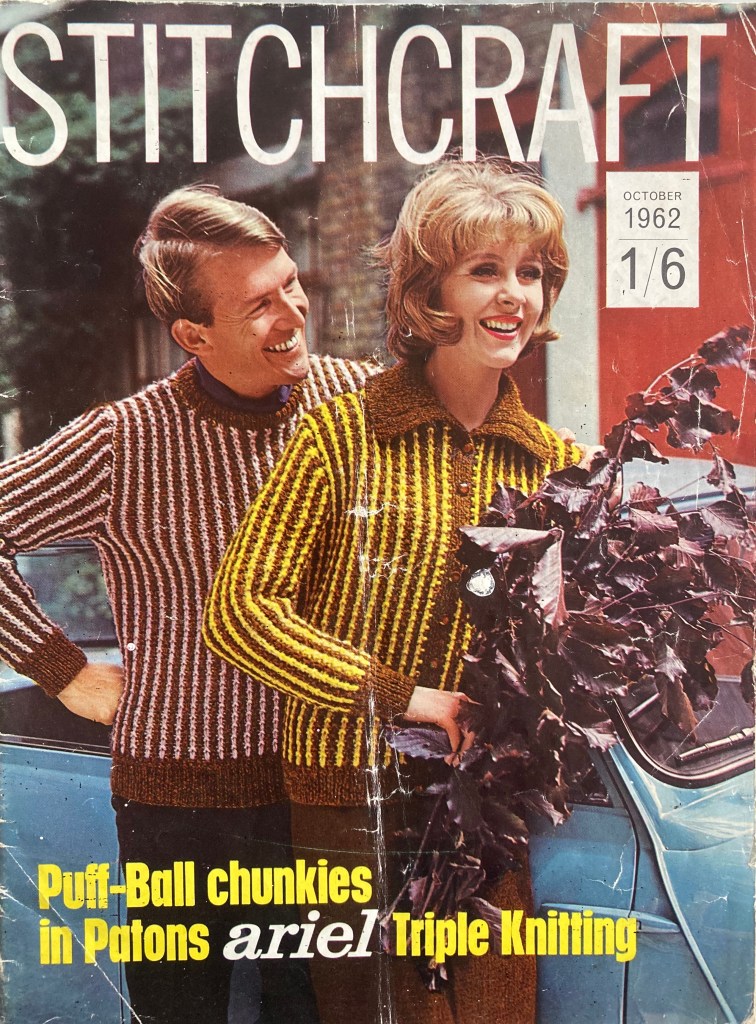
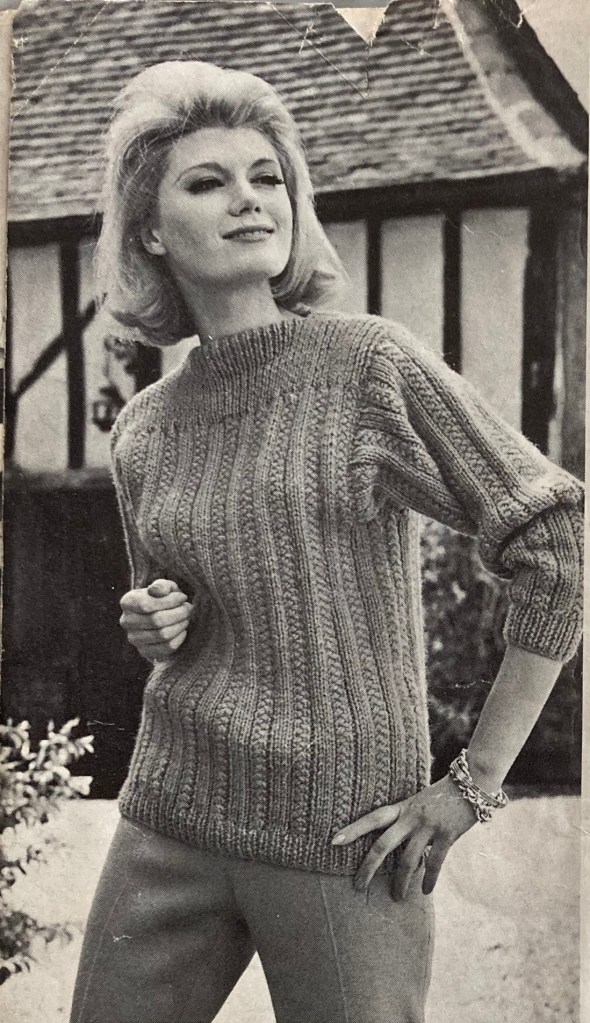
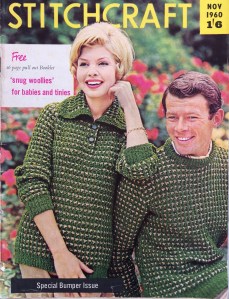 Brrrr! November 1960’s Special Bumper Issue” brings us “Colour for the Cold Days” and an extra 16-page pull-out booklet of baby woollies. Sadly, so sadly, the booklet from my copy of this issue has been pulled out long ago and is missing.


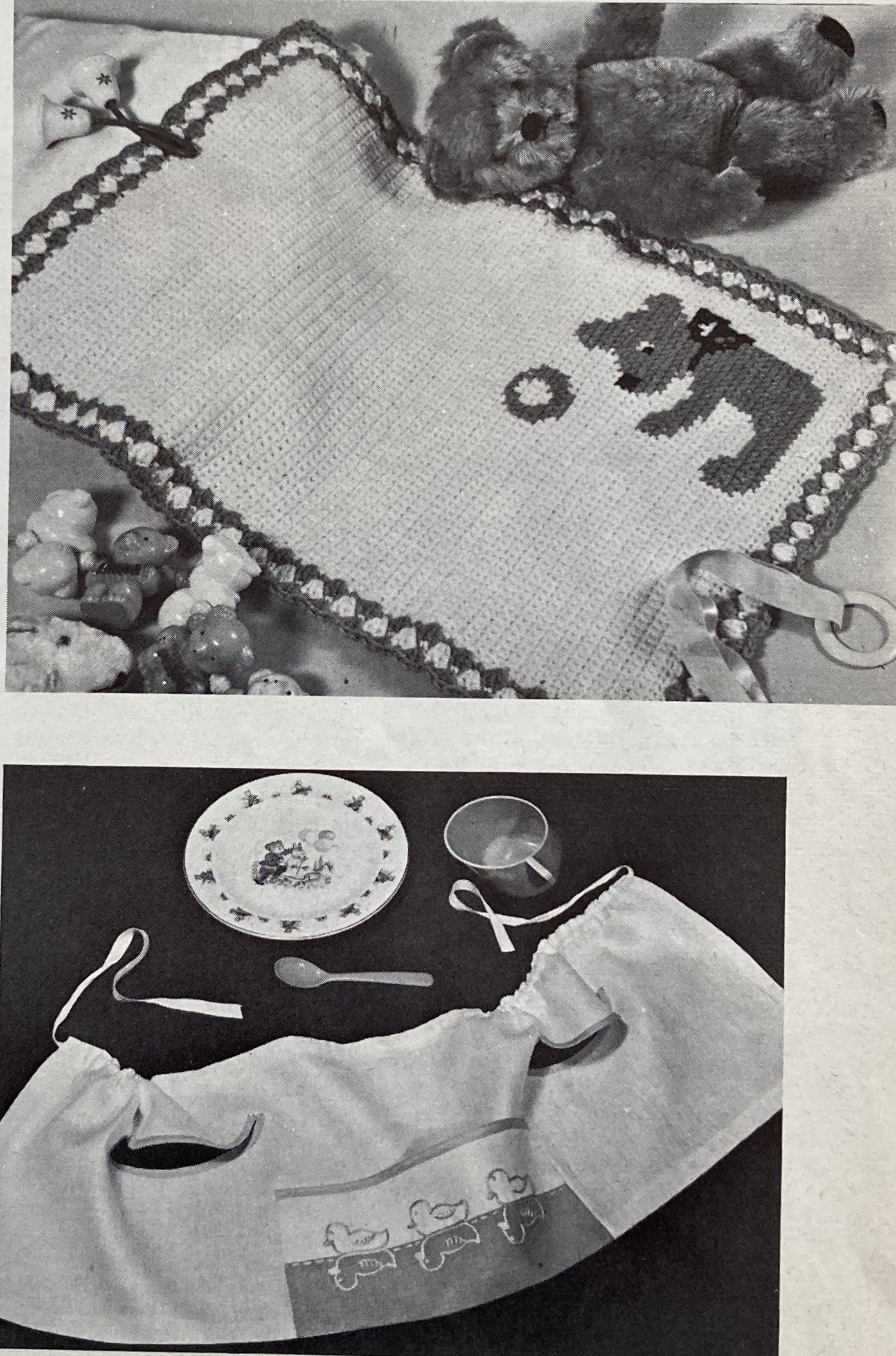
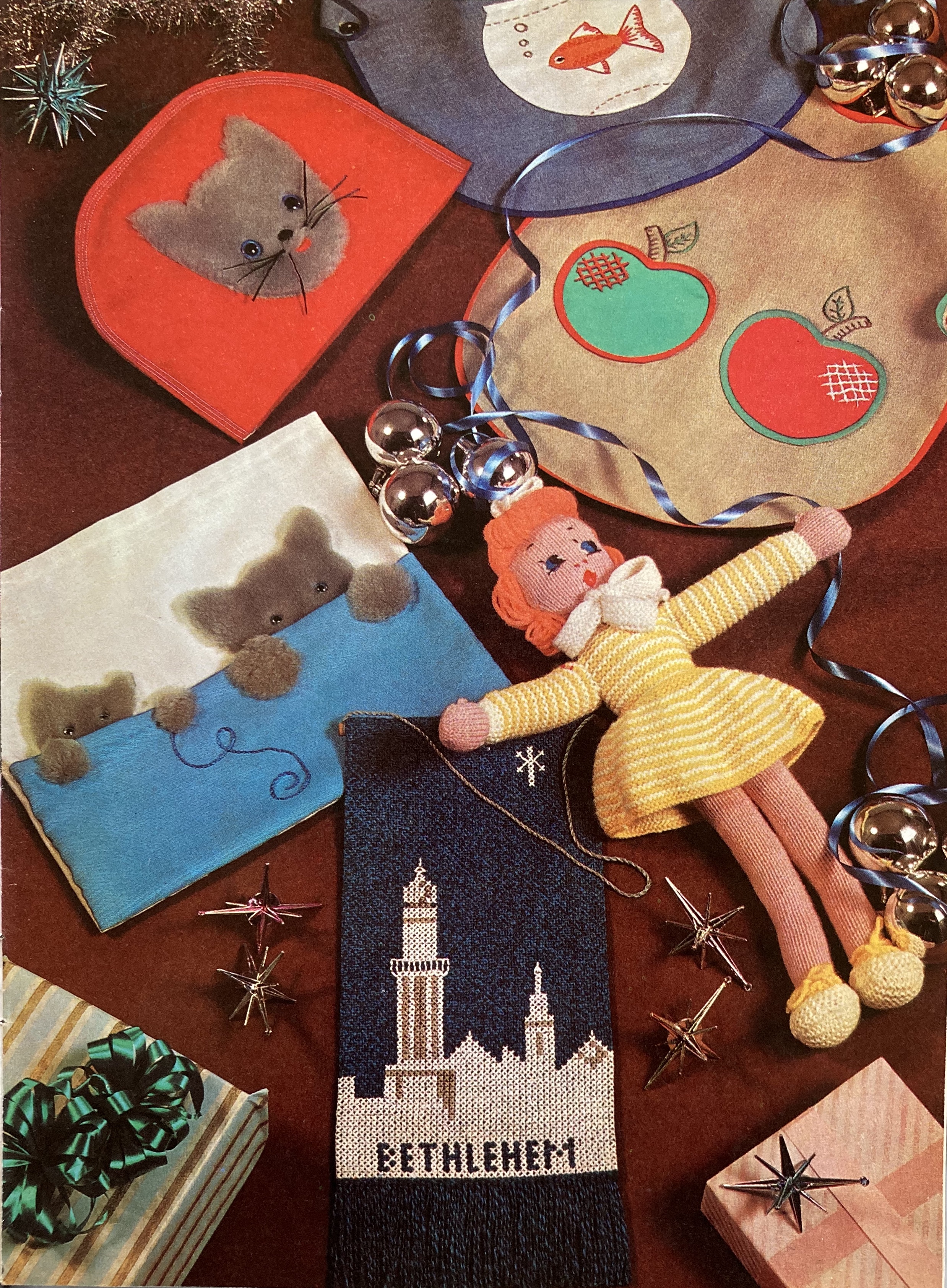
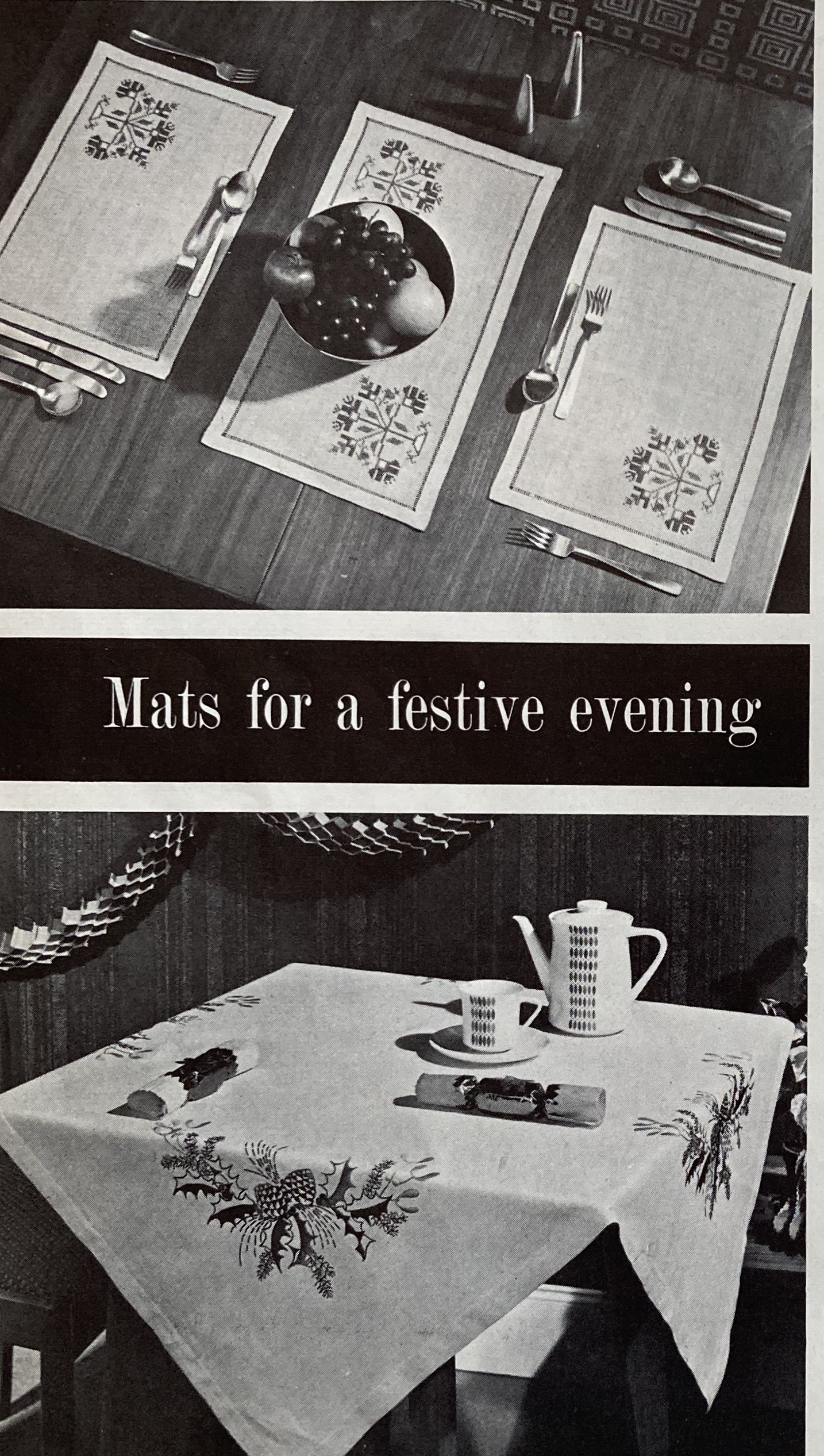
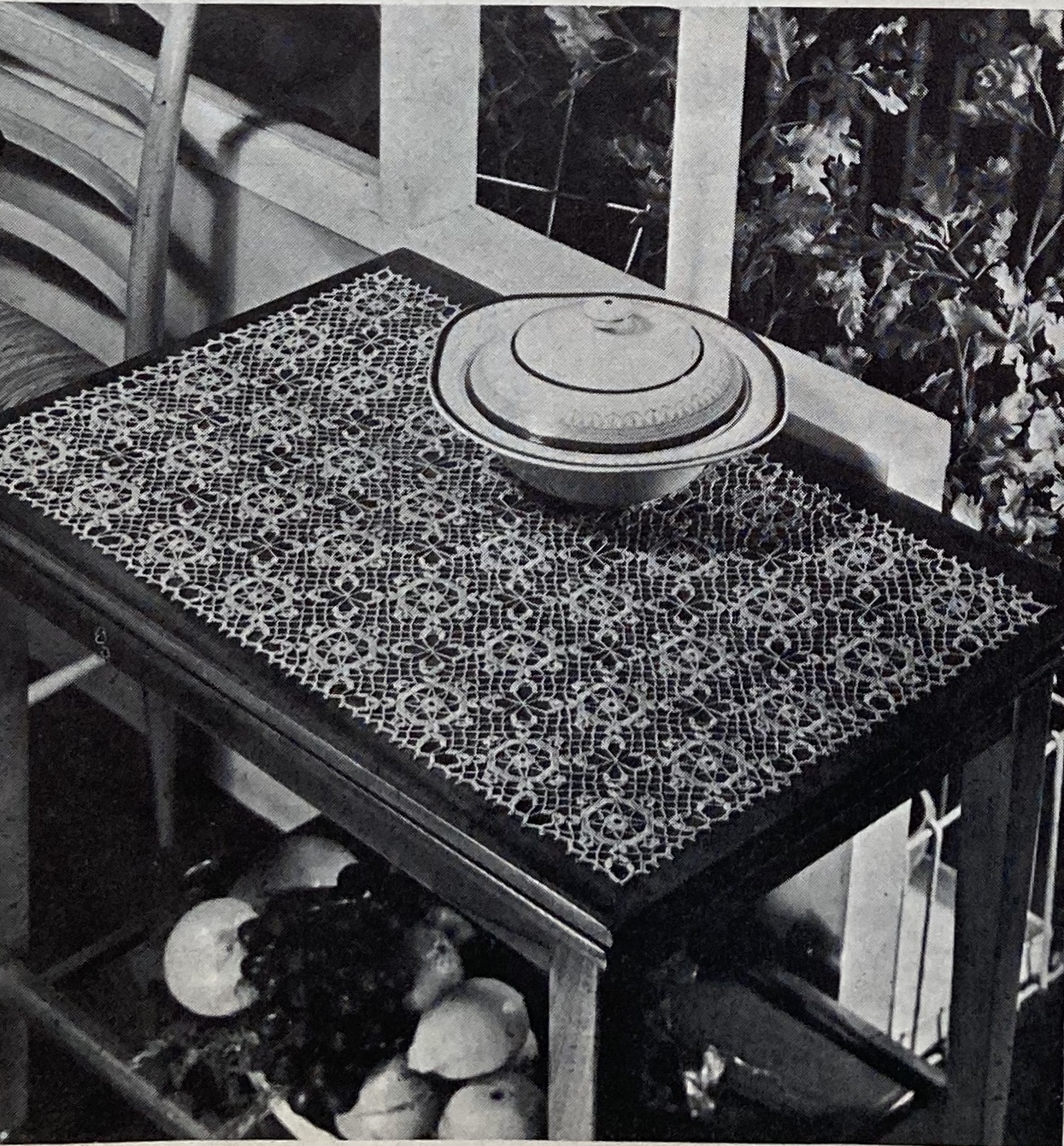
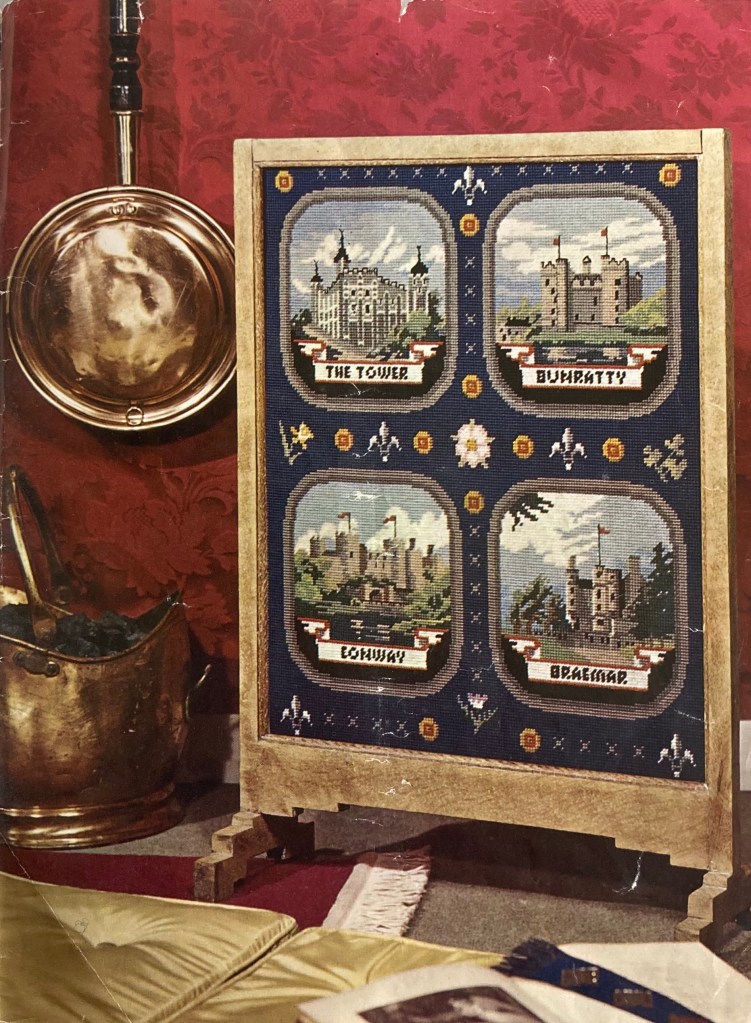
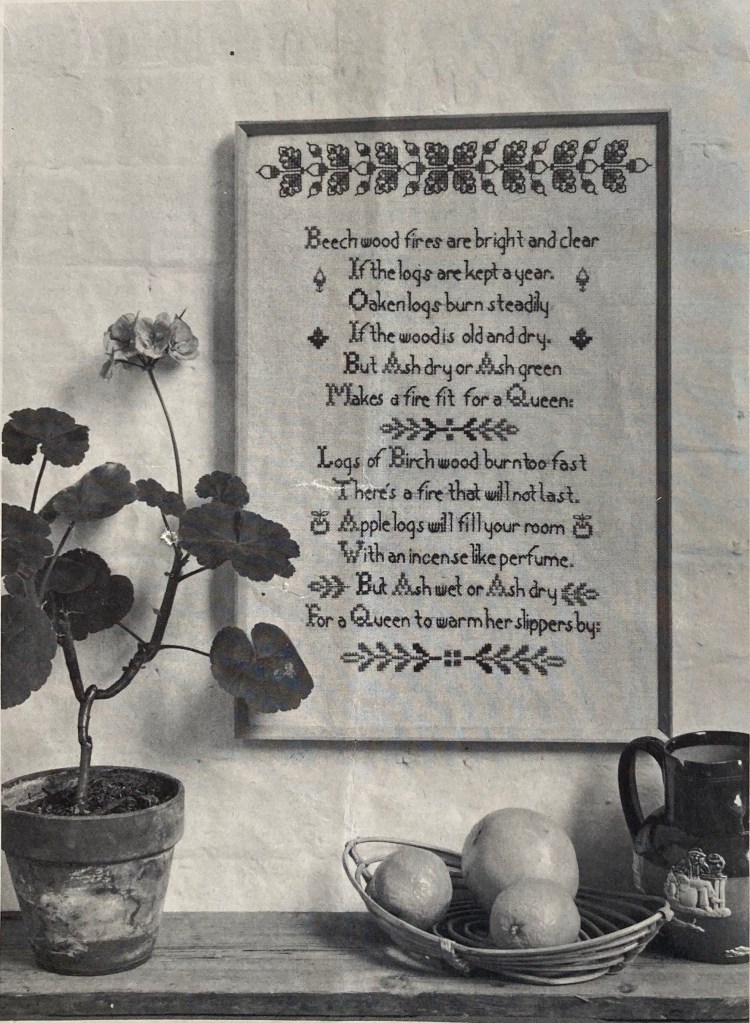
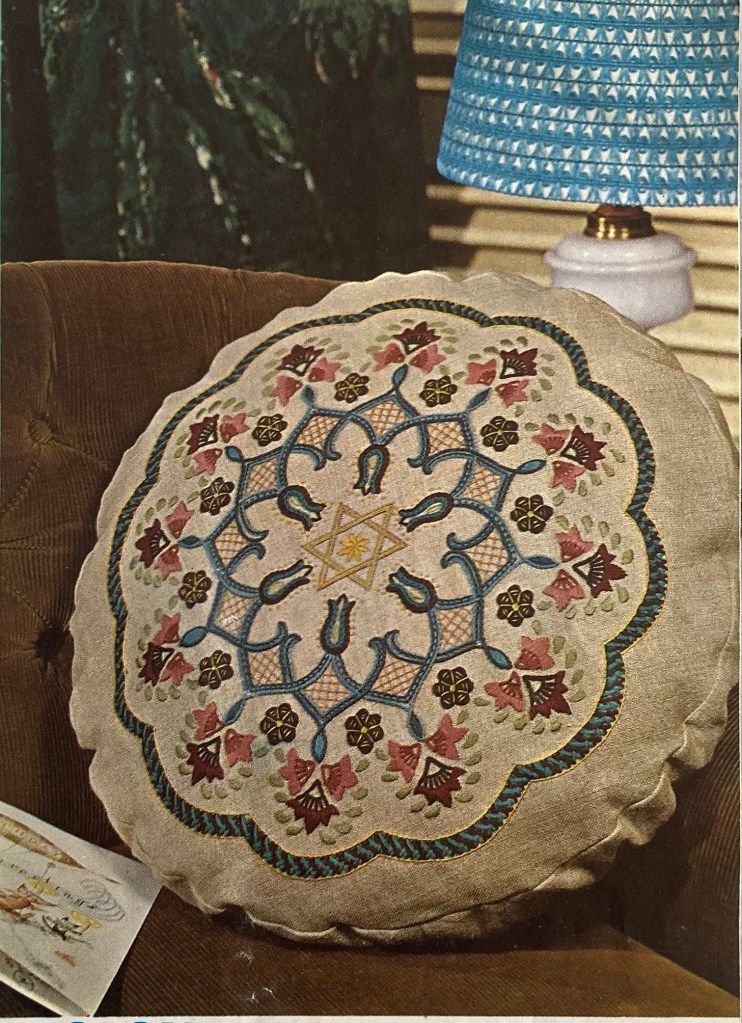
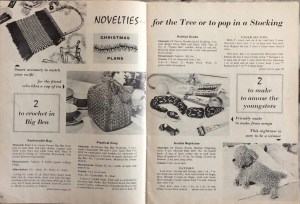 Homewares are still in a weird phase. The working woman or baby-boom mum (and those were overlapping categories, then as now) of 1960 didn’t have the time or patience to make too many elaborate Jacobean embroidery pieces or huge, detailed tapestries, especially not right before the great rush to get Christmas presents under the tree, so the focus is on quick, easy-to-make novelties for gifts. The aesthetic sense does seem to get lost a bit, though, if you ask me.


 (I notice that Word Press does not recognise the word “chairback”. They have been out of fashion for too many years, I guess, having fallen victim to cheaper furniture, more frequent hair-washings and less
 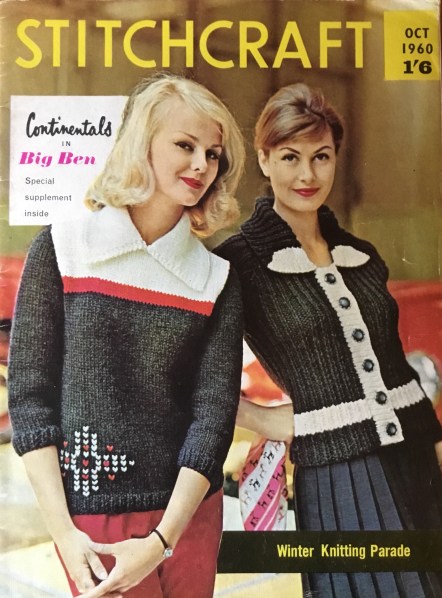 October and November are really the best months for knitting. The weather has gotten cold enough that you really want to wear and make warm, woolly things, and there’s the nice “surprise” of packing the winter clothes out of storage, and so remembering what nice hand-knitted pieces you made in other years. At least, that’s my experience.


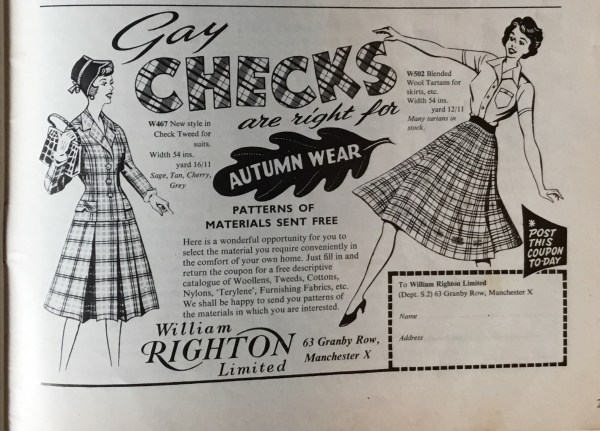
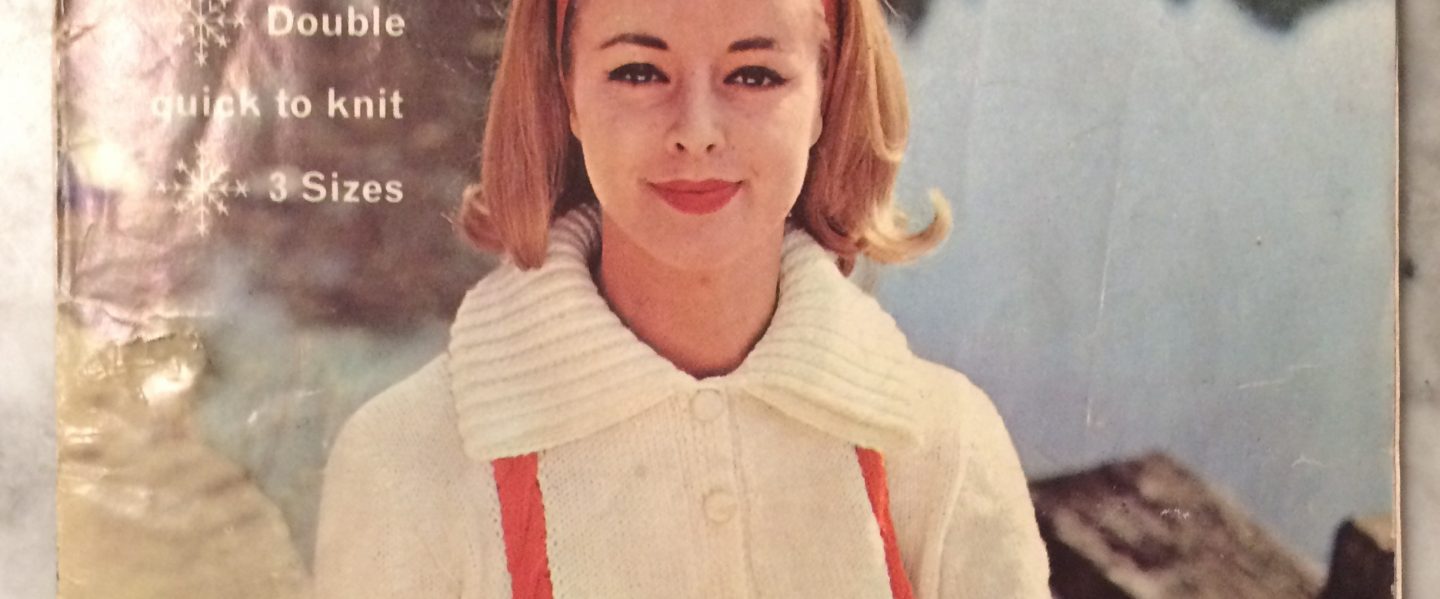
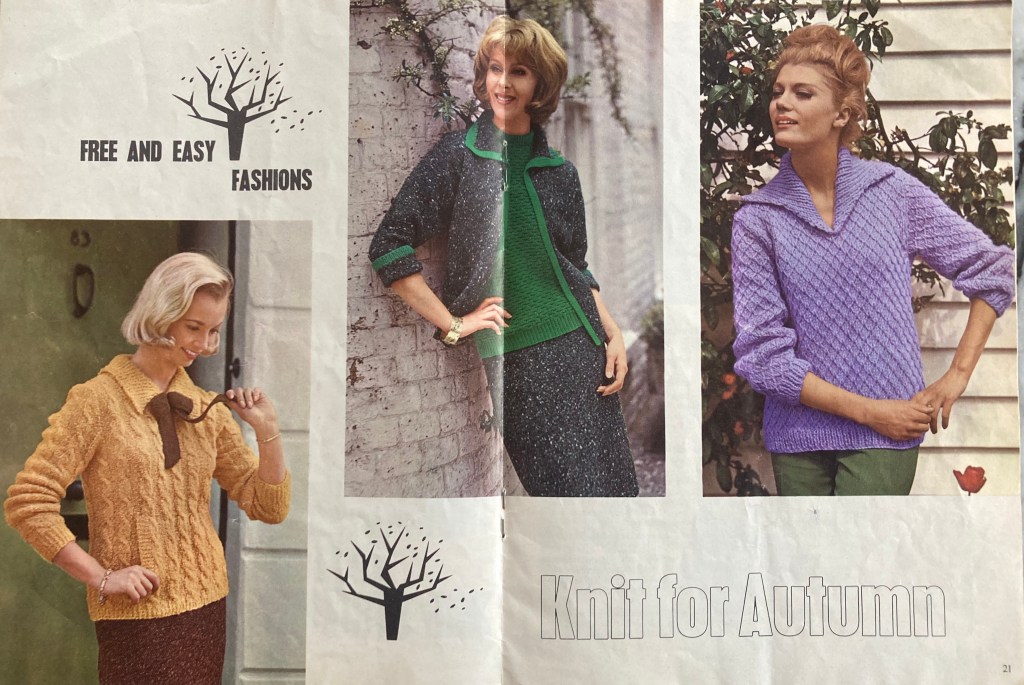
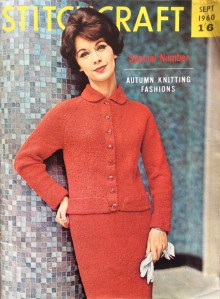 September 1960 is supposedly a “Special Number” of autumn knitting fashions. I’m not sure what exactly makes it so special, since it doesn’t seem to have any more, or particularly different, projects than the average issue. I guess it’s special in that September is finally a bit cooler weather-wise, so you can start to make some nice wool garments for the colder months — very appropriate in 2018, where we had the summer to end all summers. Things have cooled down a bit now, so I’m looking forward to wearing my (still unfinished) projects from July and August soon.


