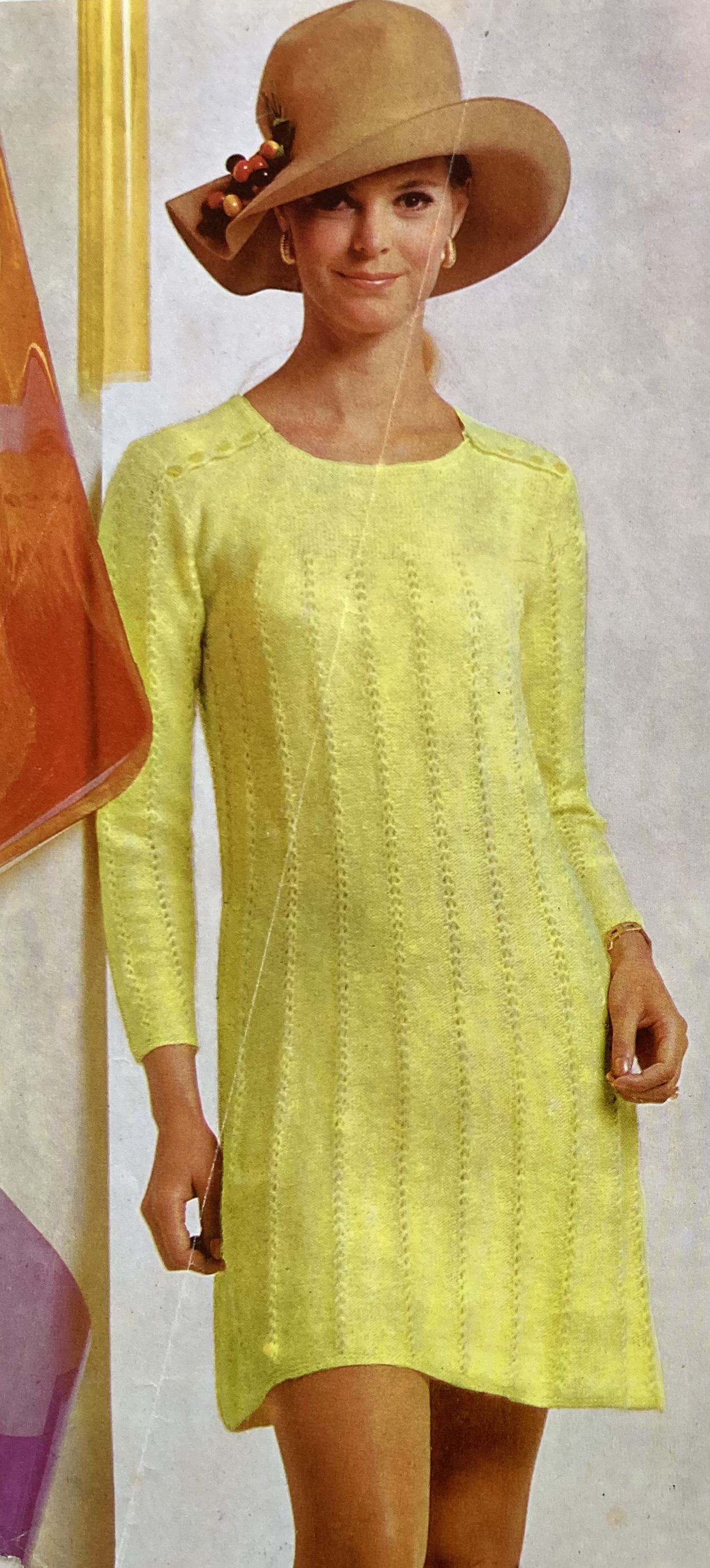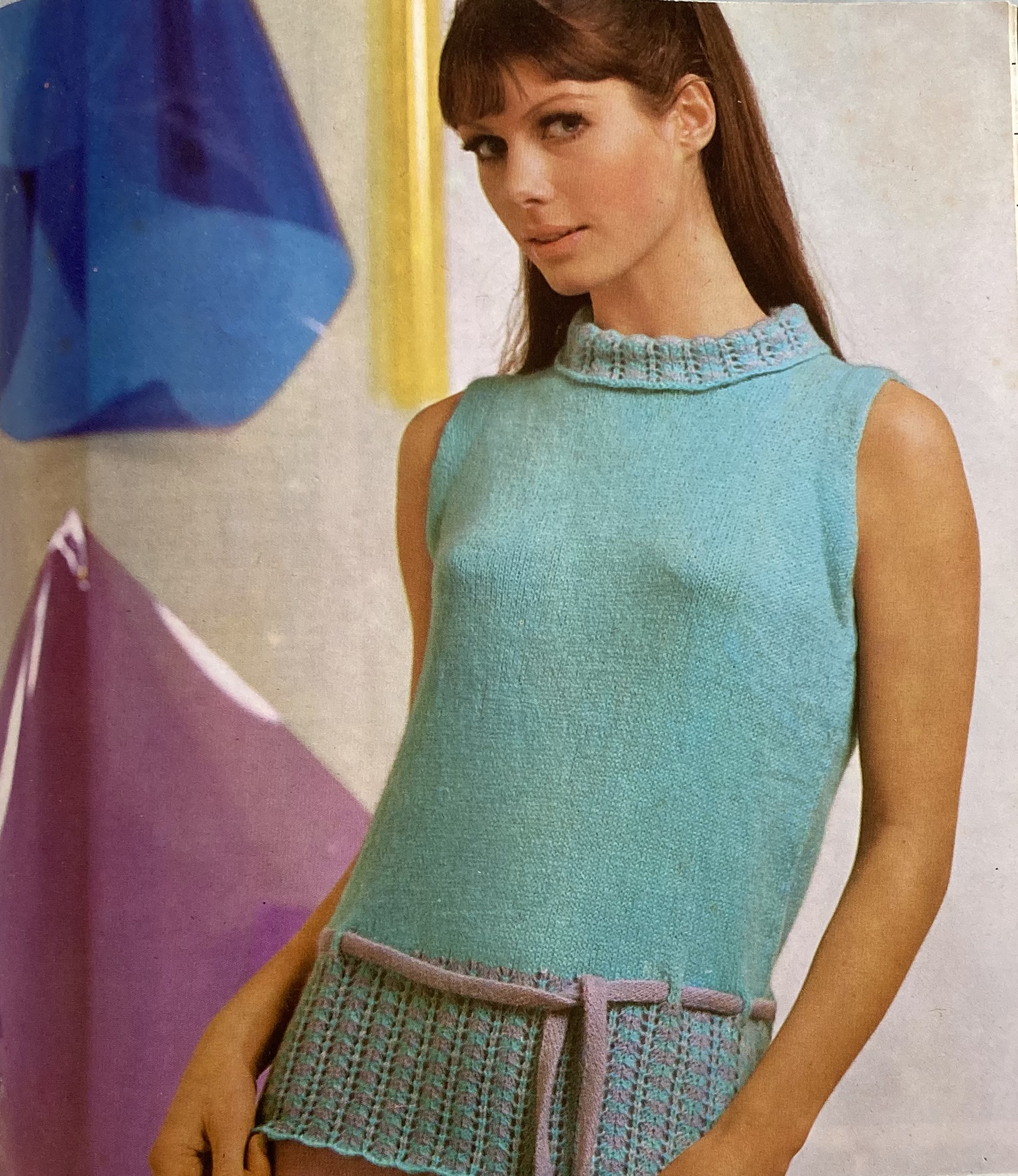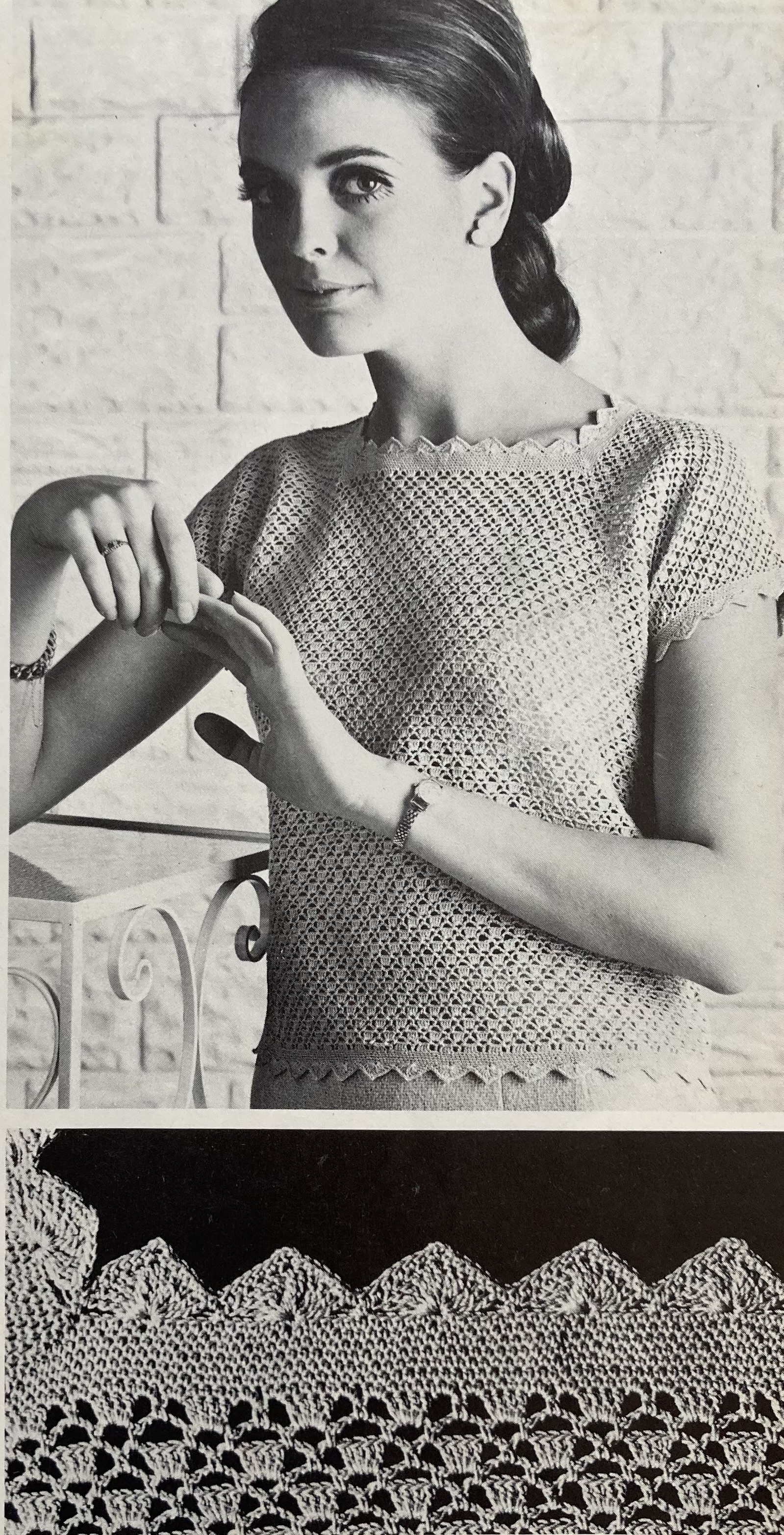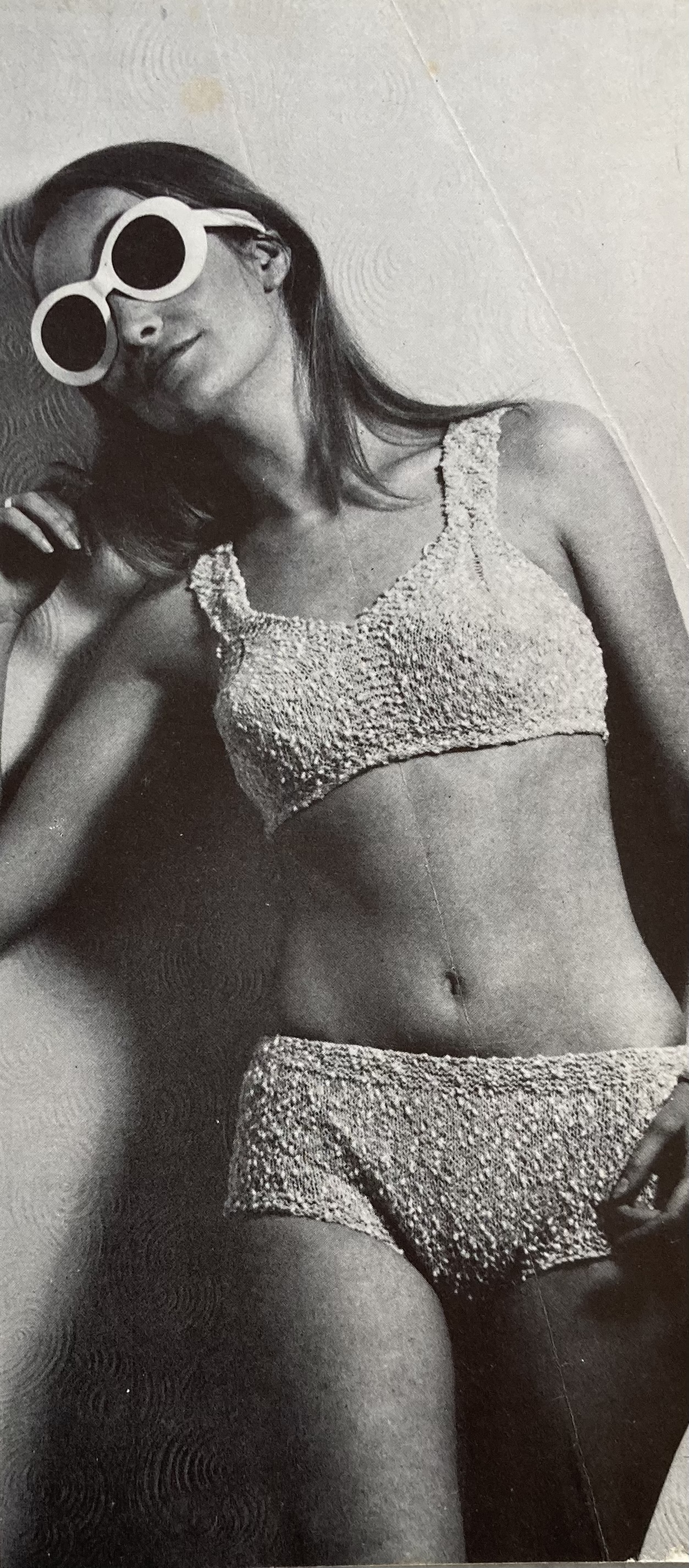
October 1968: Overview

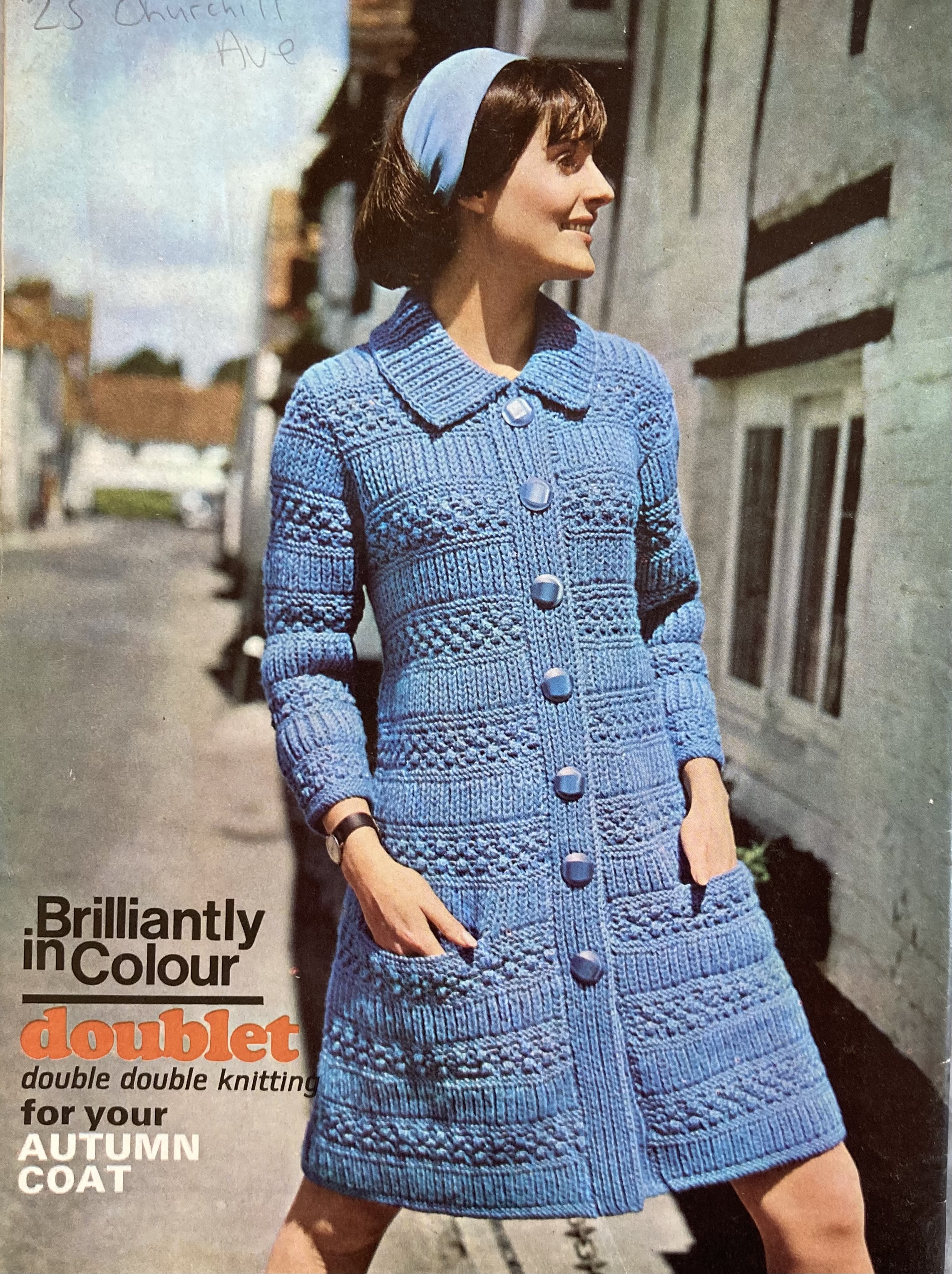
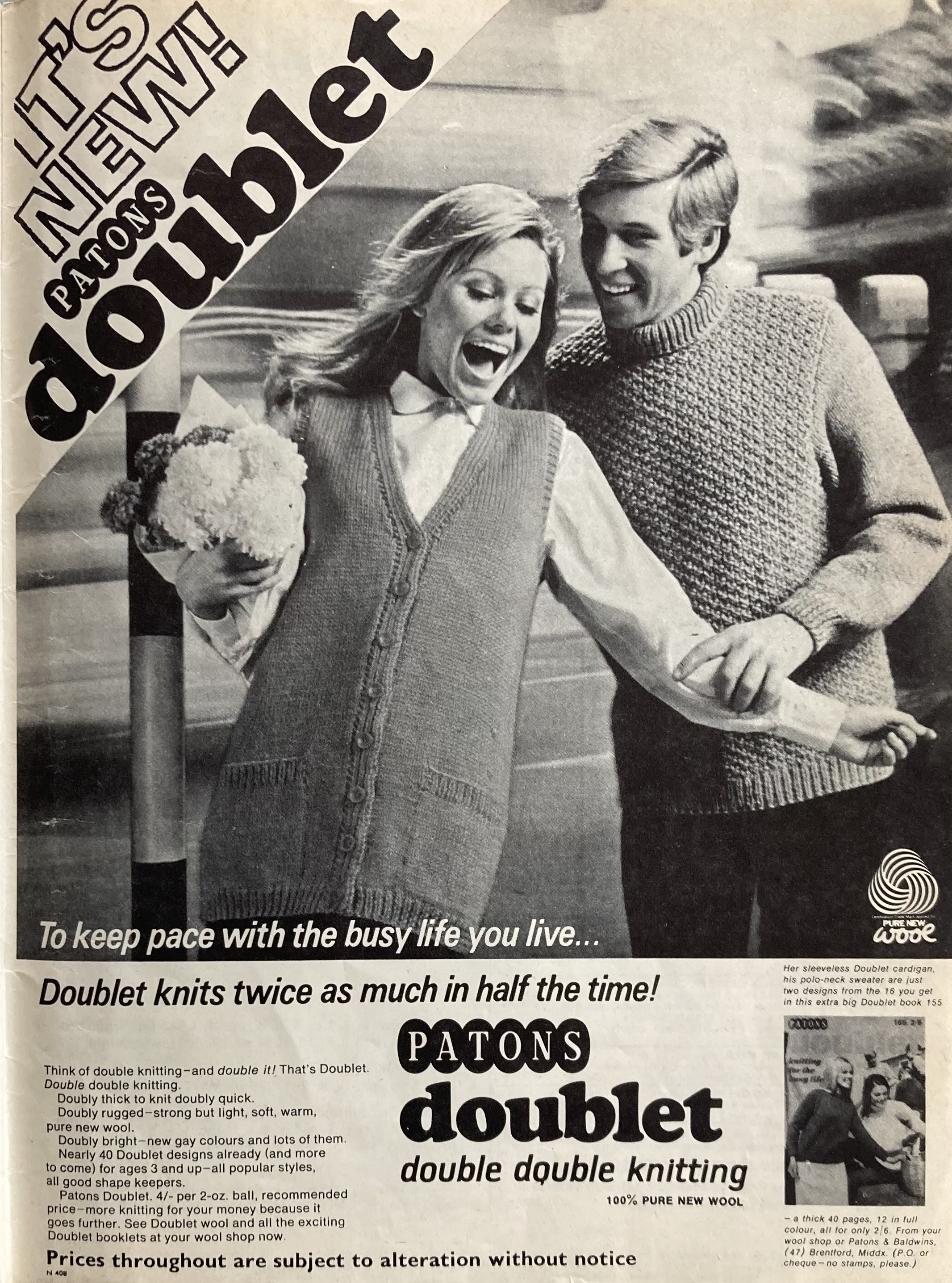
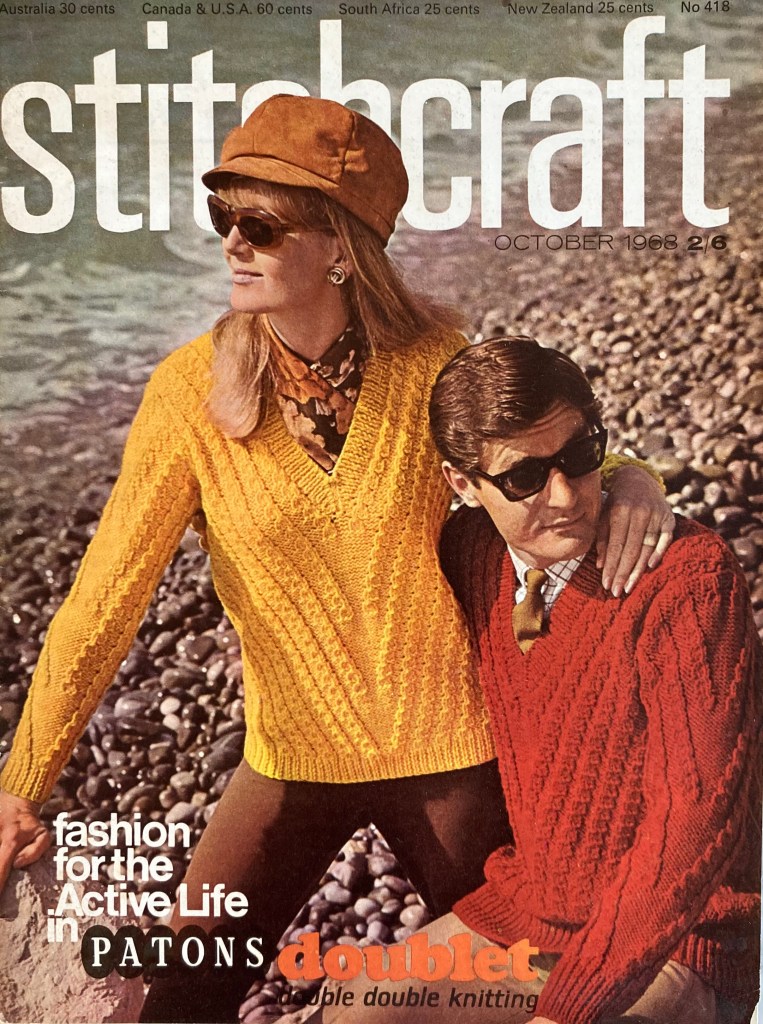
A new yarn made its debut in the October 1968 issue of Stitchcraft: Patons Doublet “double double” knitting. Designed to knit up heavy garments quickly, it was a super-bulky wool with a tension of 4 to 4,5 stitches per inch and was advertised as having a smooth texture and good stitch definition, perfect for the loose, casual shapes and textured cable patterns of the later 1960s as well as appealing to the “active lifestyle” of younger knitters who wanted to get projects done fast.

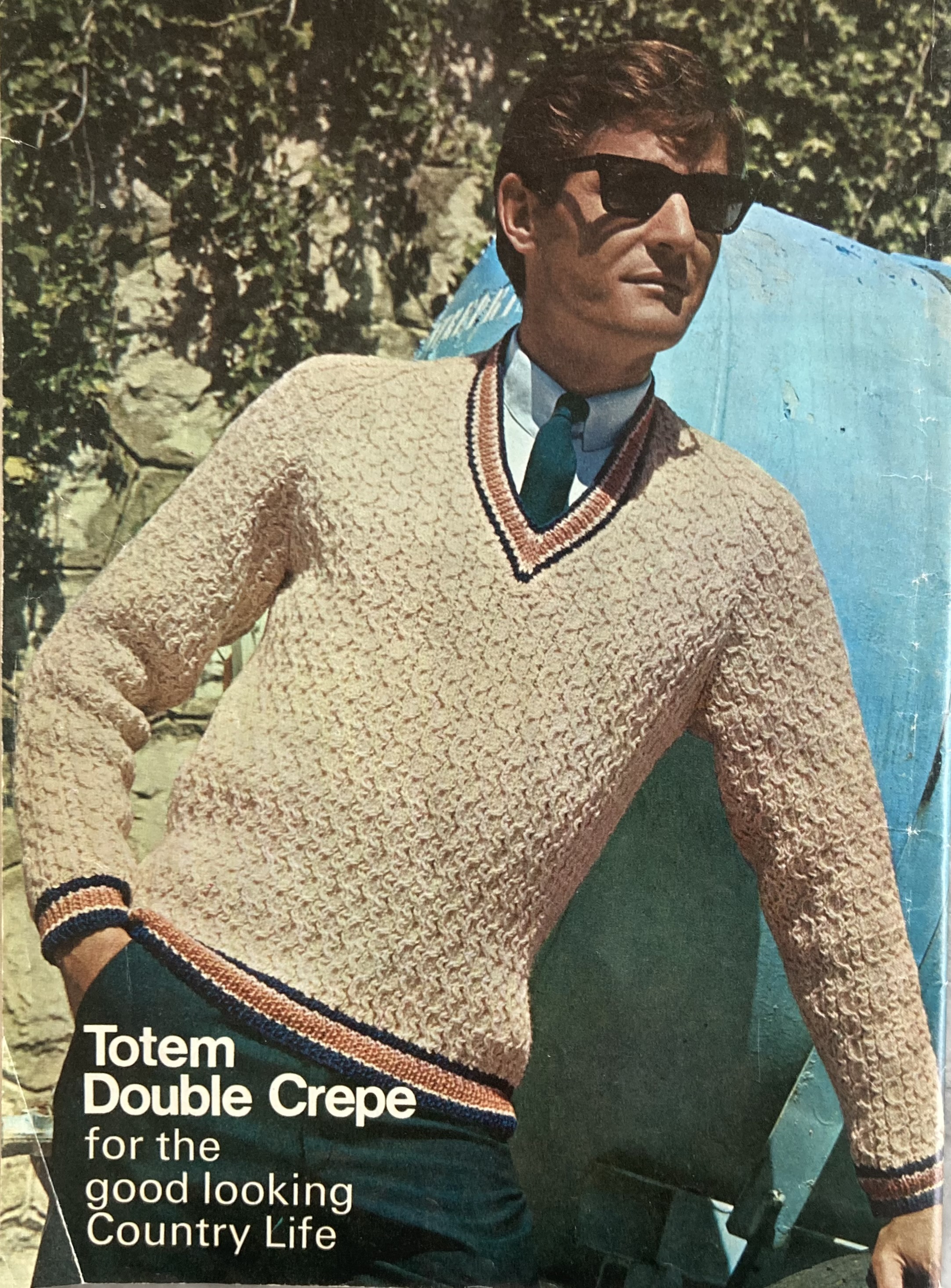
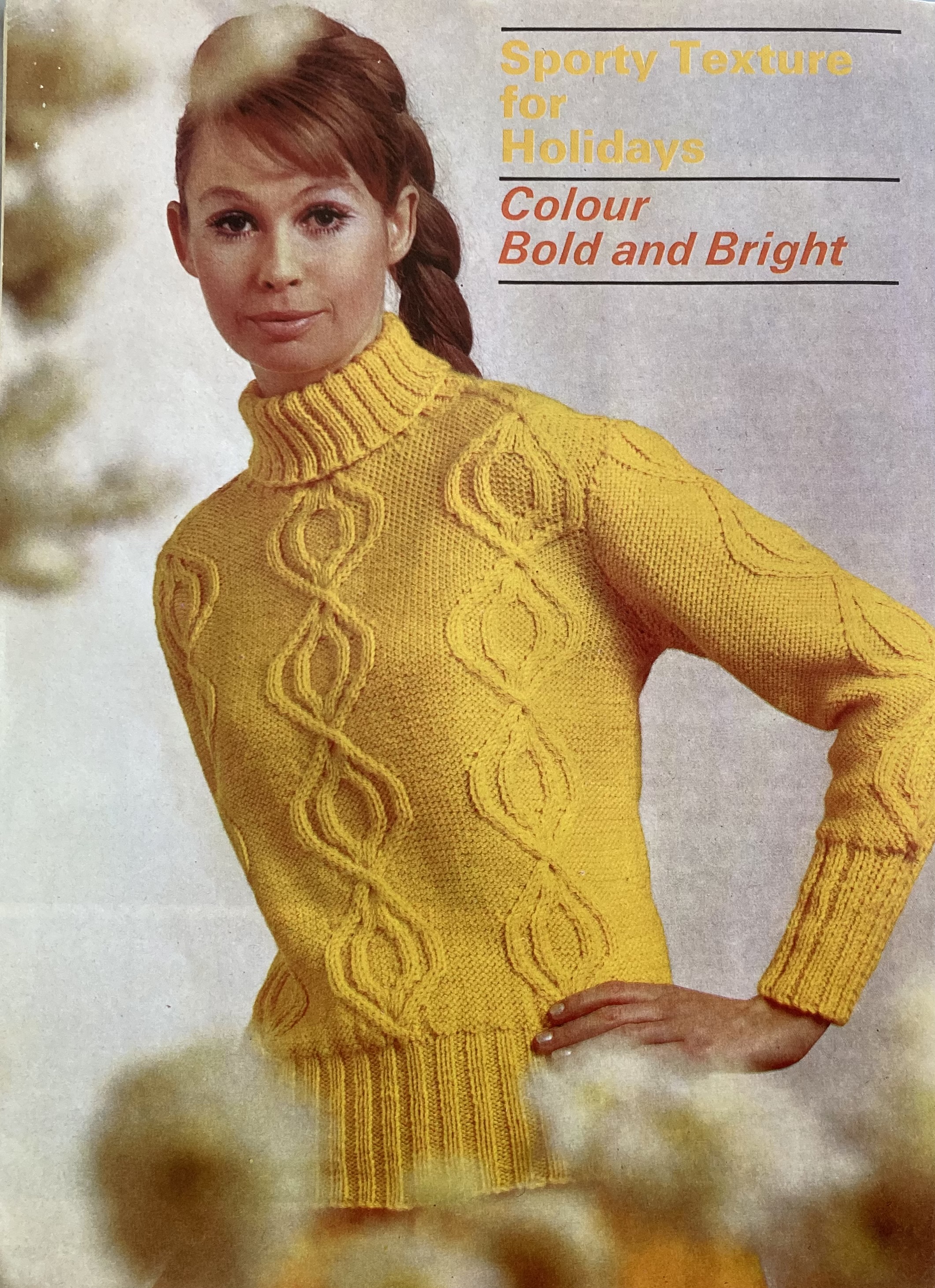
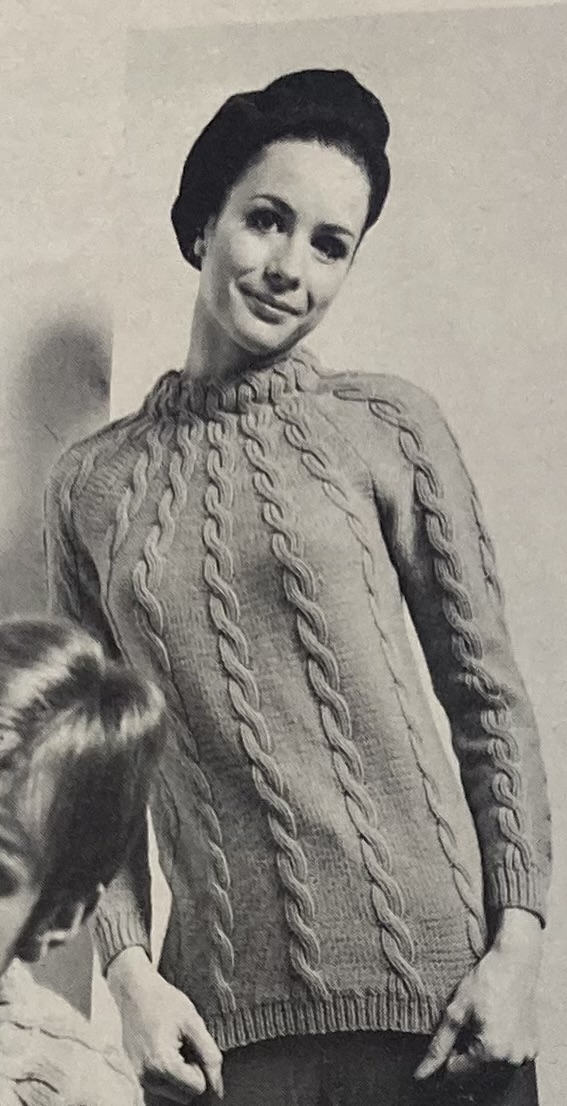
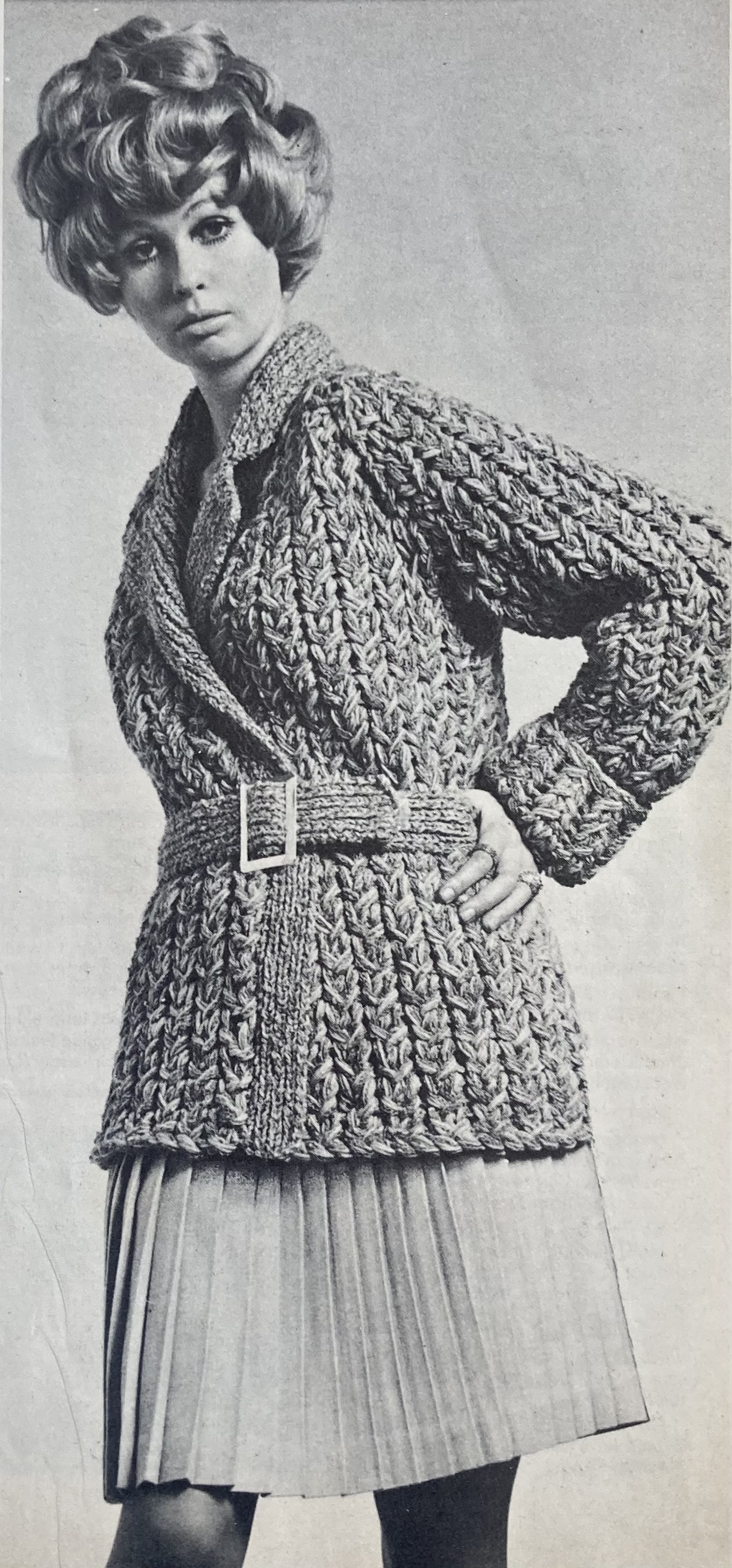
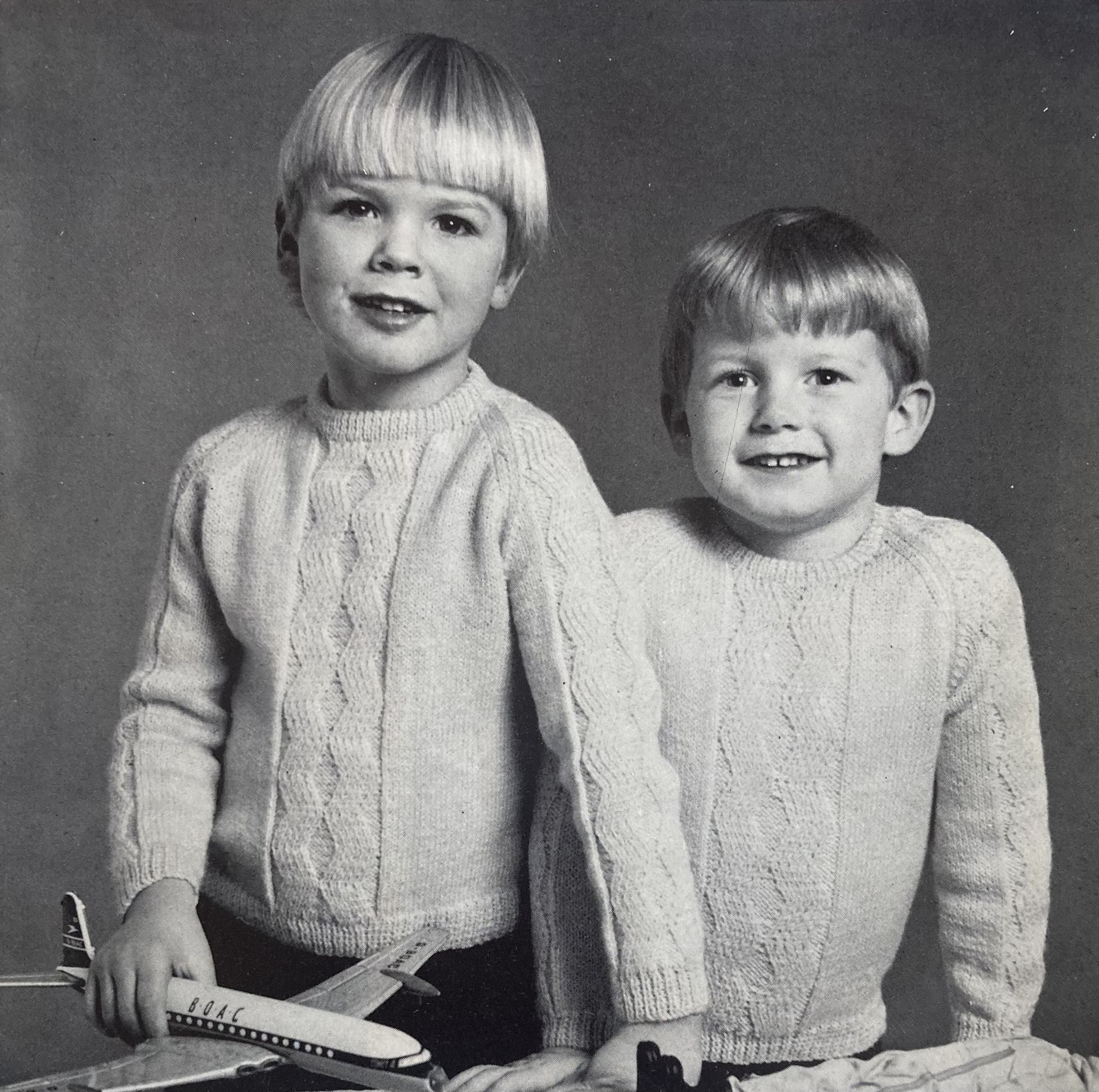
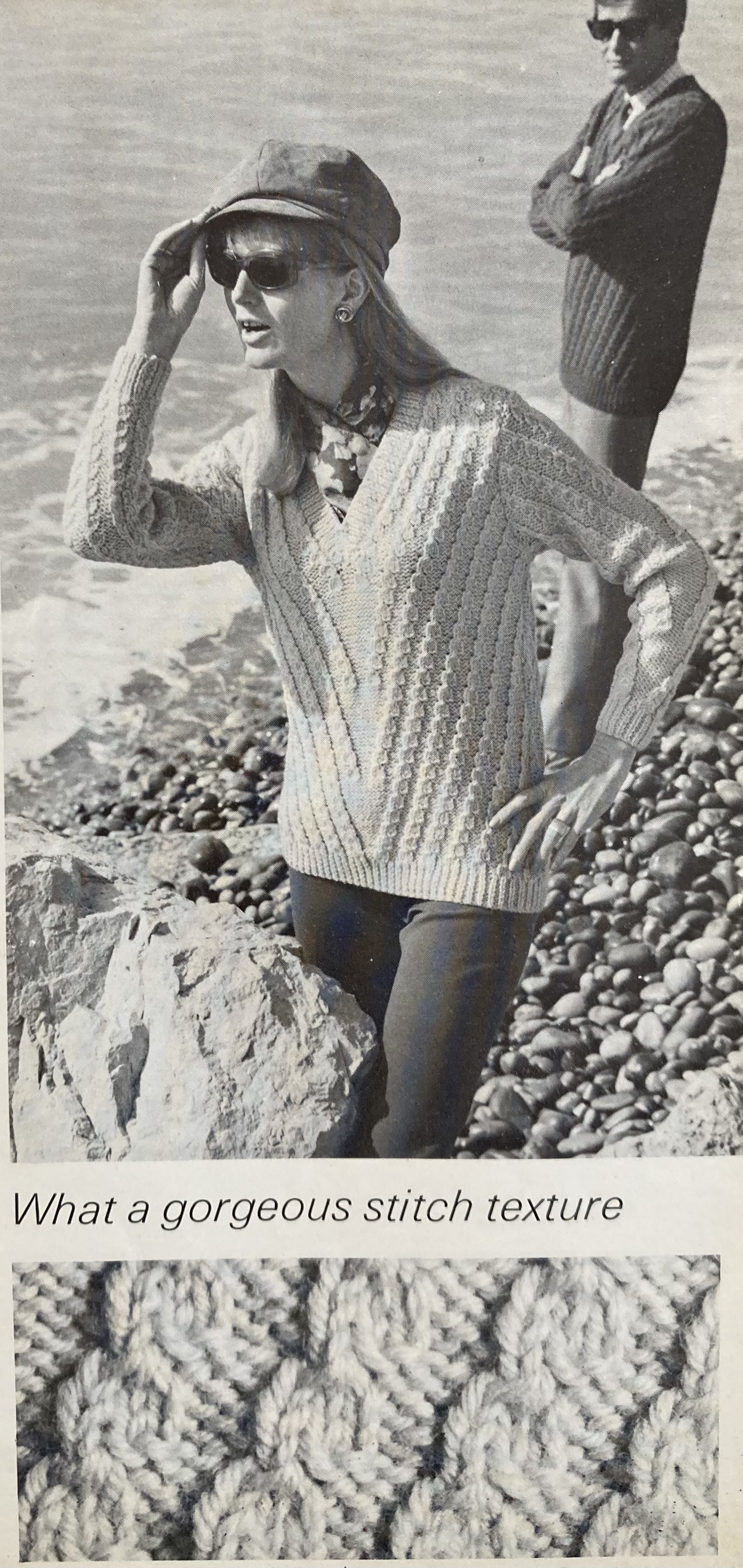
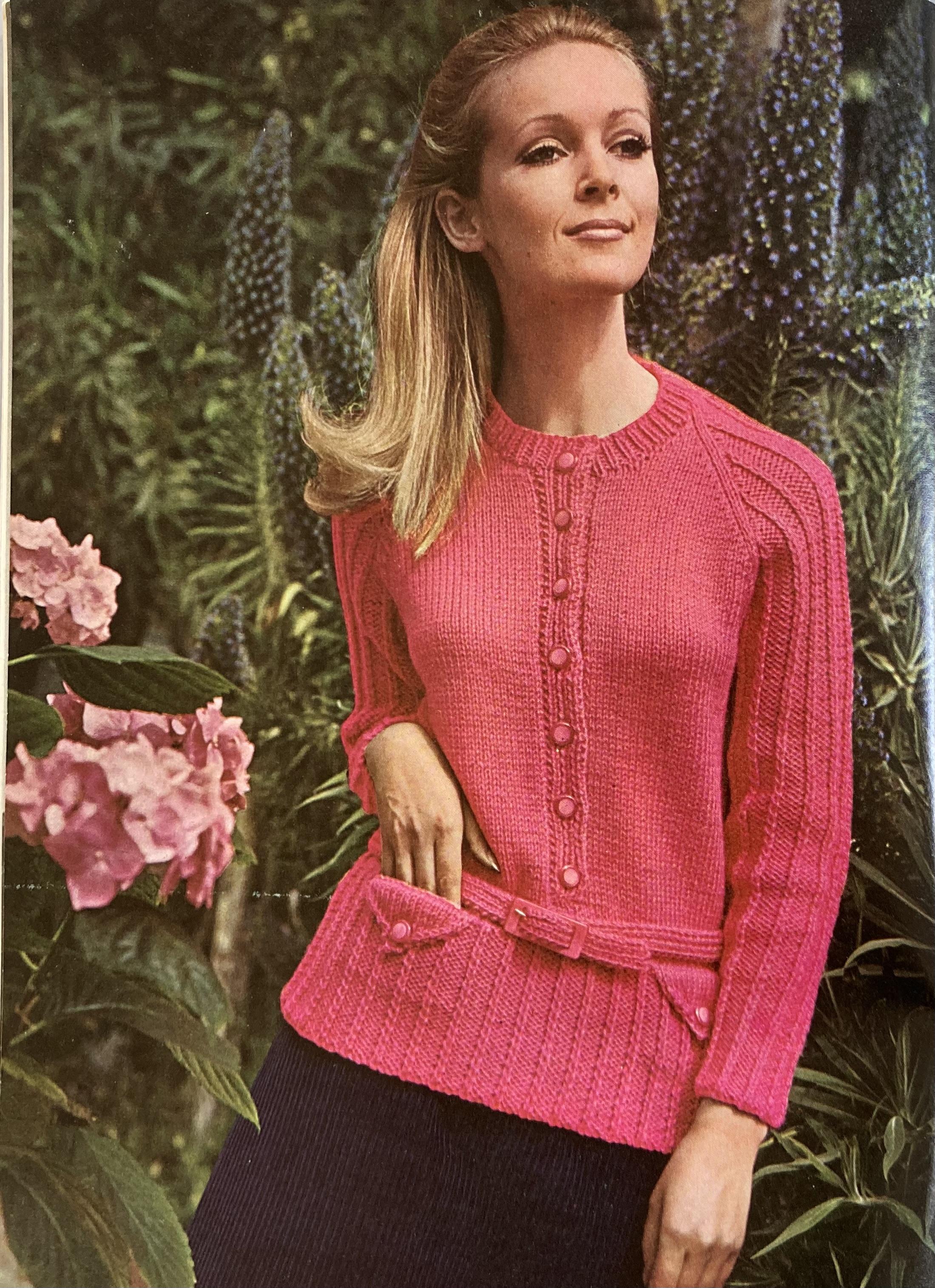
The design on the front cover uses Doublet for a unisex pullover with diagonal mock-cables that follow the V-neckline and continue down onto the sleeves. Previous designs of this sort had separate instructions for “his” and “hers” with slightly different proportions and shaping but using the same general design. This one simply gives the pattern for two sizes, 35-37 or 40-42 inch chest/bust, and designed to be long and loose on either figure. There’s a pink Doublet buttoned pullover as well (“knits a pretty look in half the time”) and a magnificent, but probably extremely unpractical coat that uses 60 ounces of Doublet wool for an average size. I imagine one would have to line it with sturdy woven fabric to keep it from stretching to the ground, but there is no mention of that in the pattern.
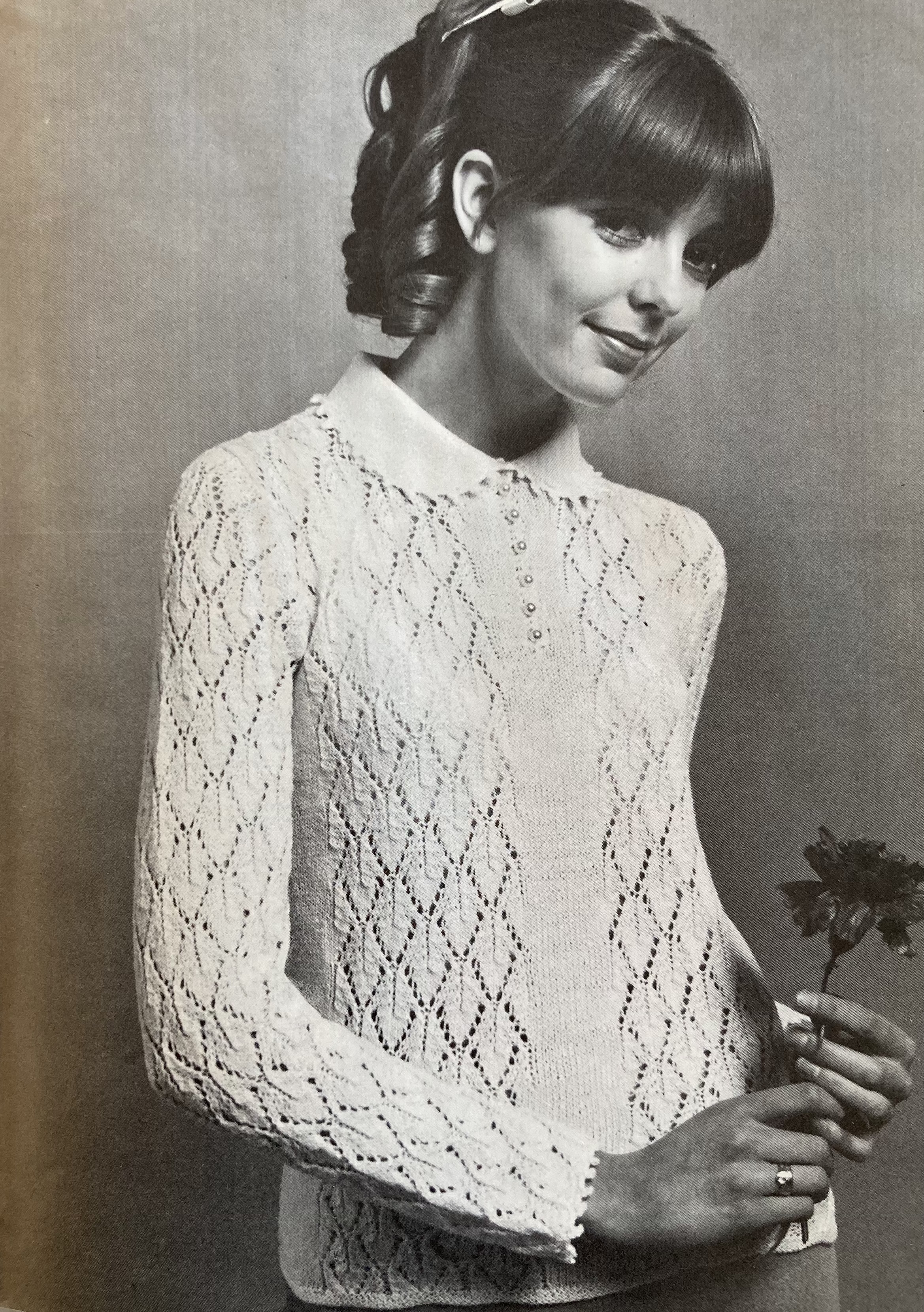
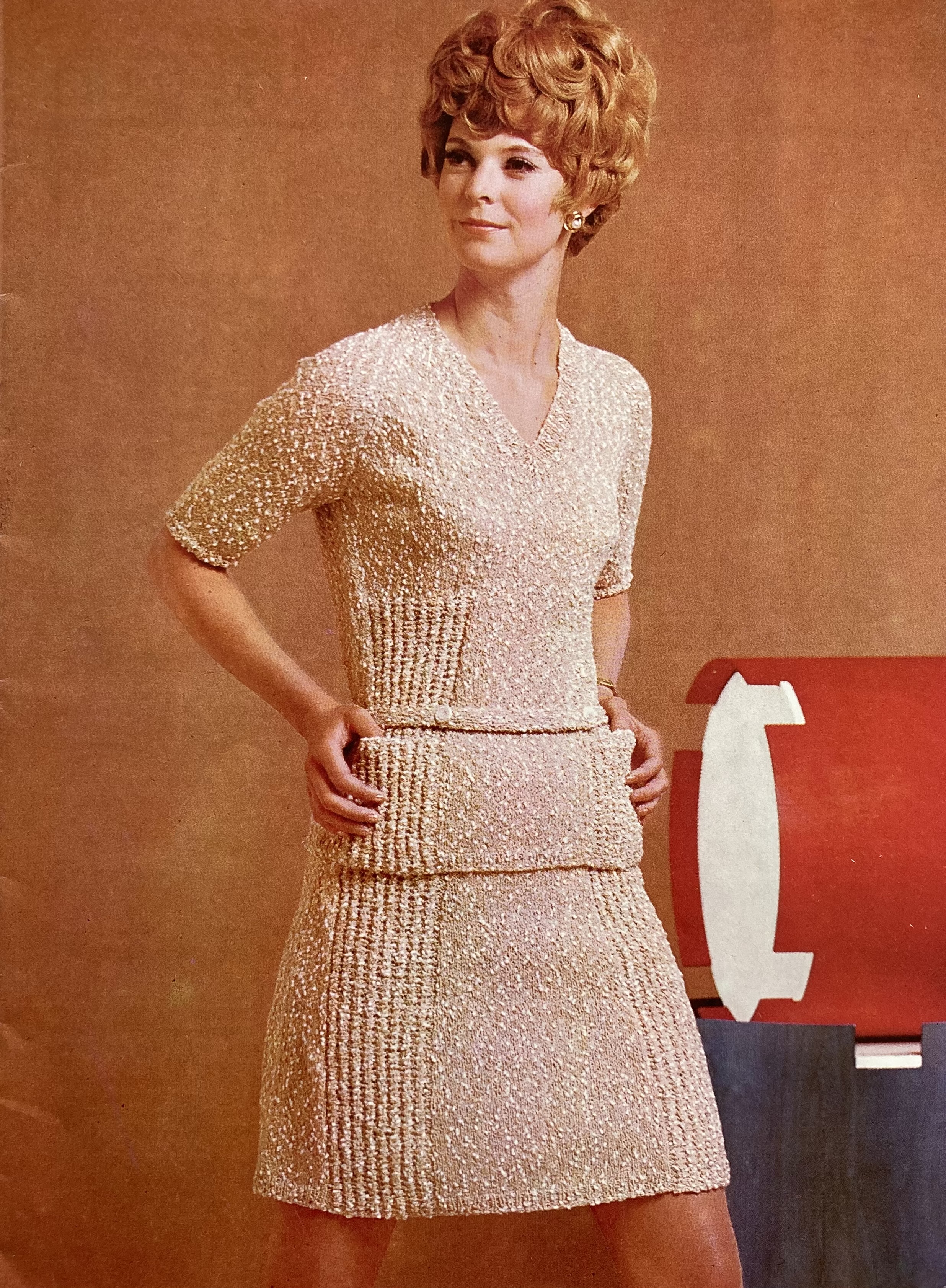
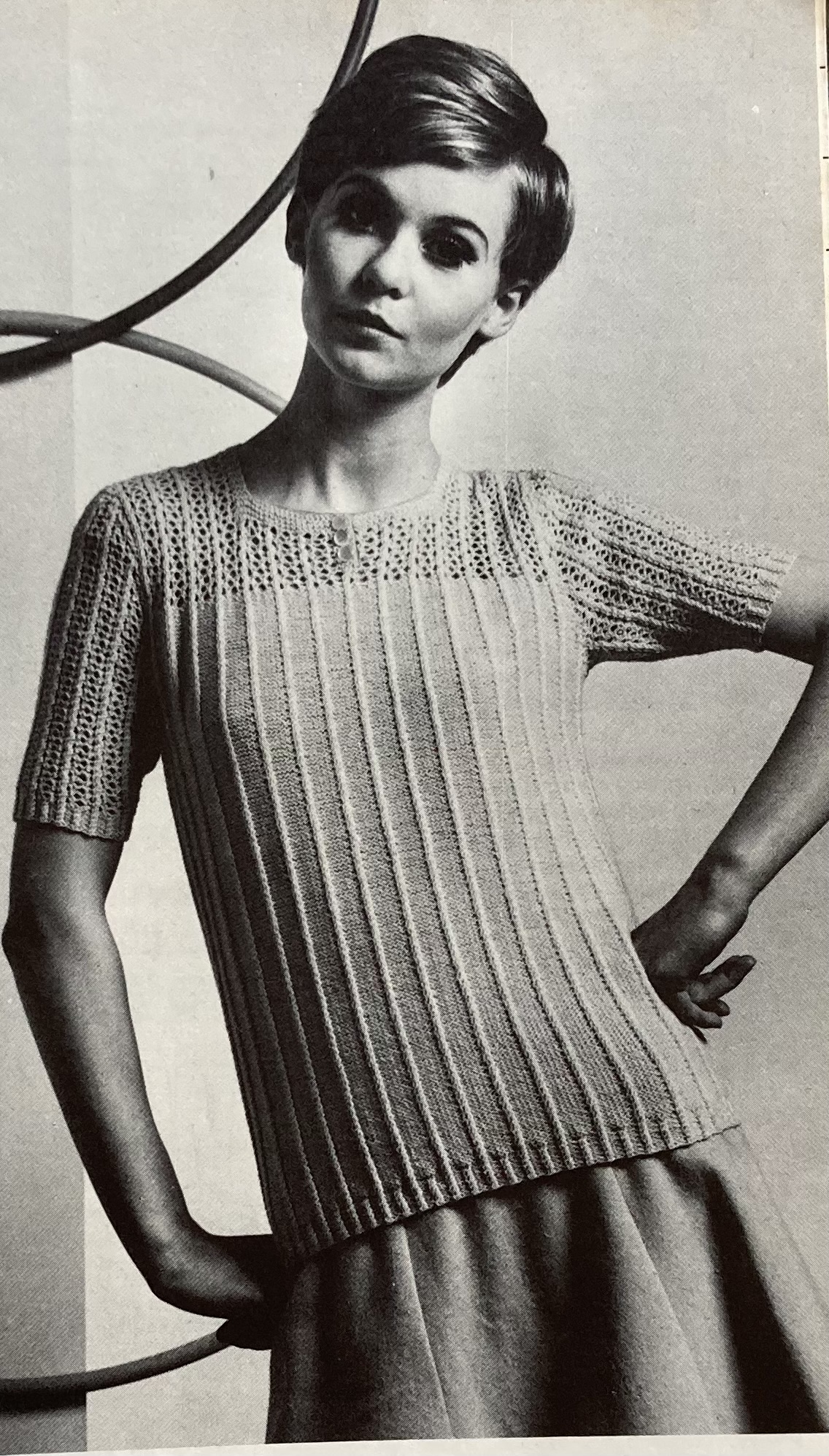
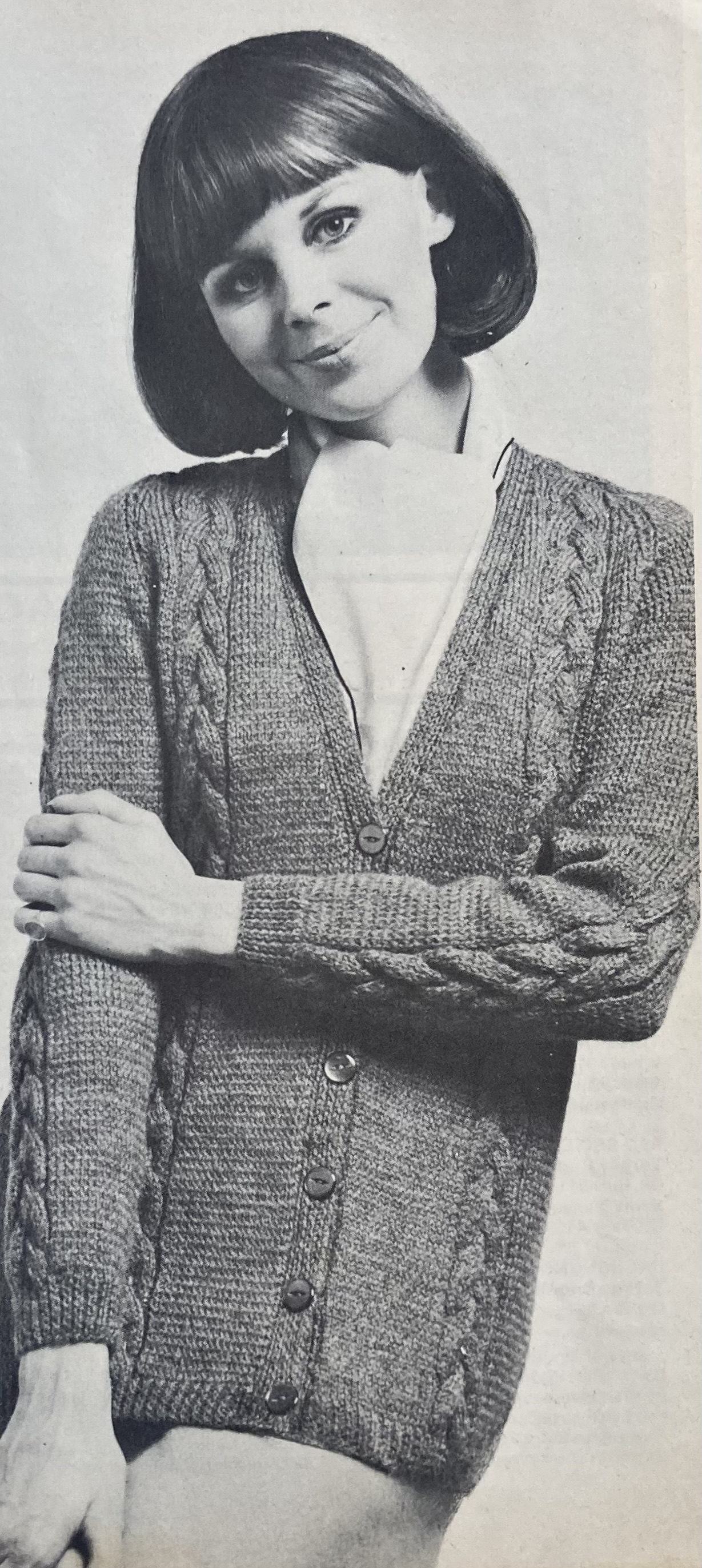
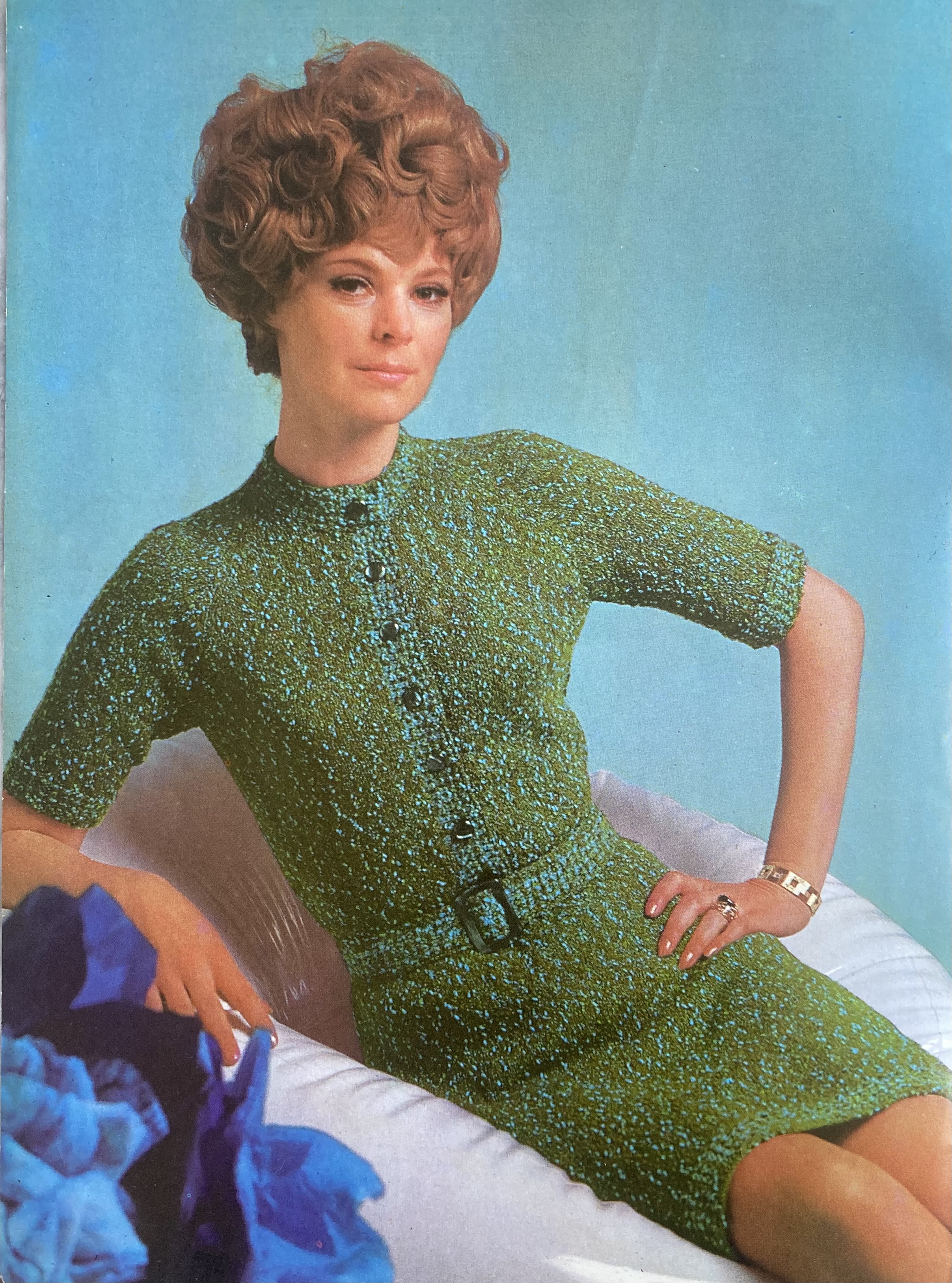
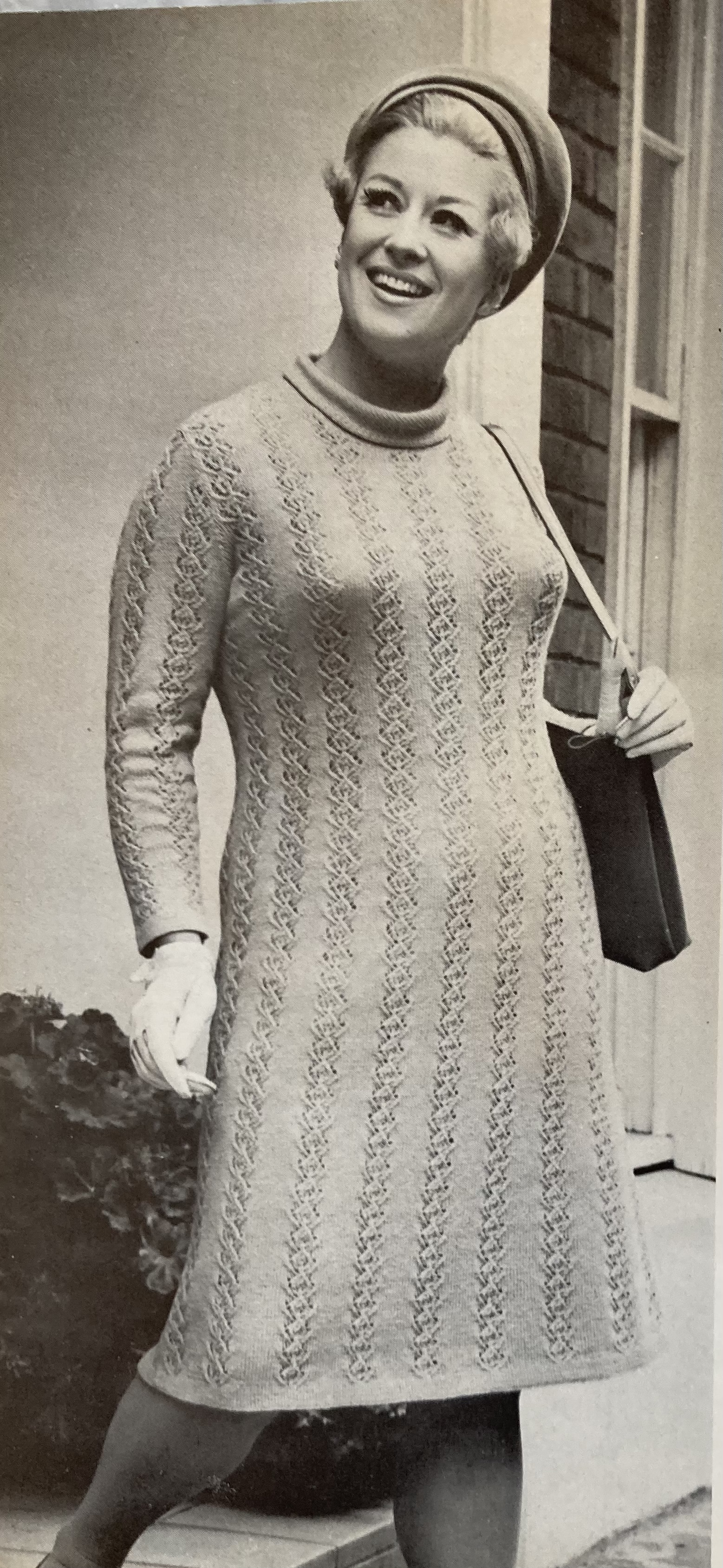
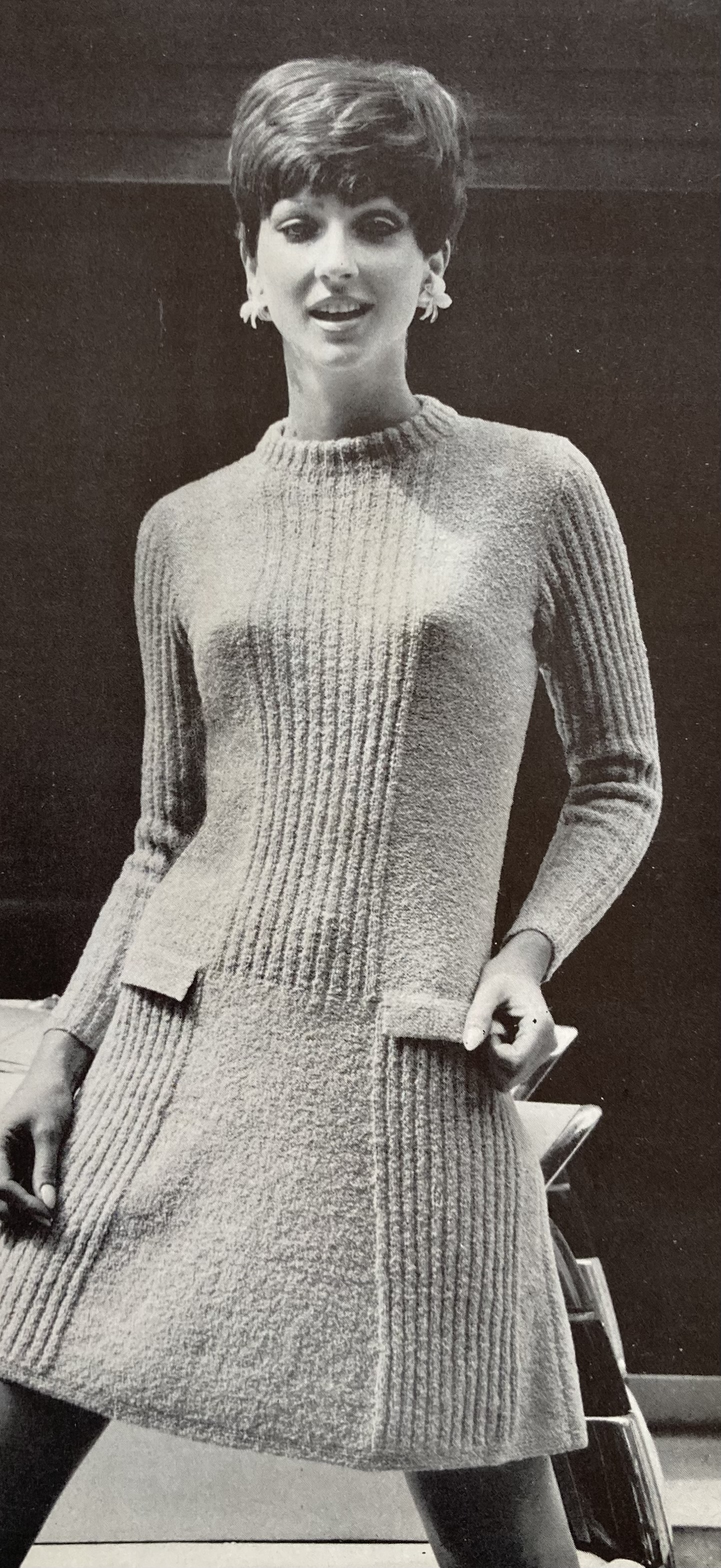
The other fashions for adults run the typical gamut from elegant fine-knits to practical, bulky sweaters in synthetic yarns. There’s a crepe lace dress for larger sizes (up to 43 inch bust/45 inch hips) and a classic bouclet dress for “the young set”, as well as a fancy, lacy blouse “to make you feel feminine”. The suggested colours for all three fine-knits are variants on white: Coffee Cream for the lace dress, Zircon for the bouclet and Snow White for the lace blouse.
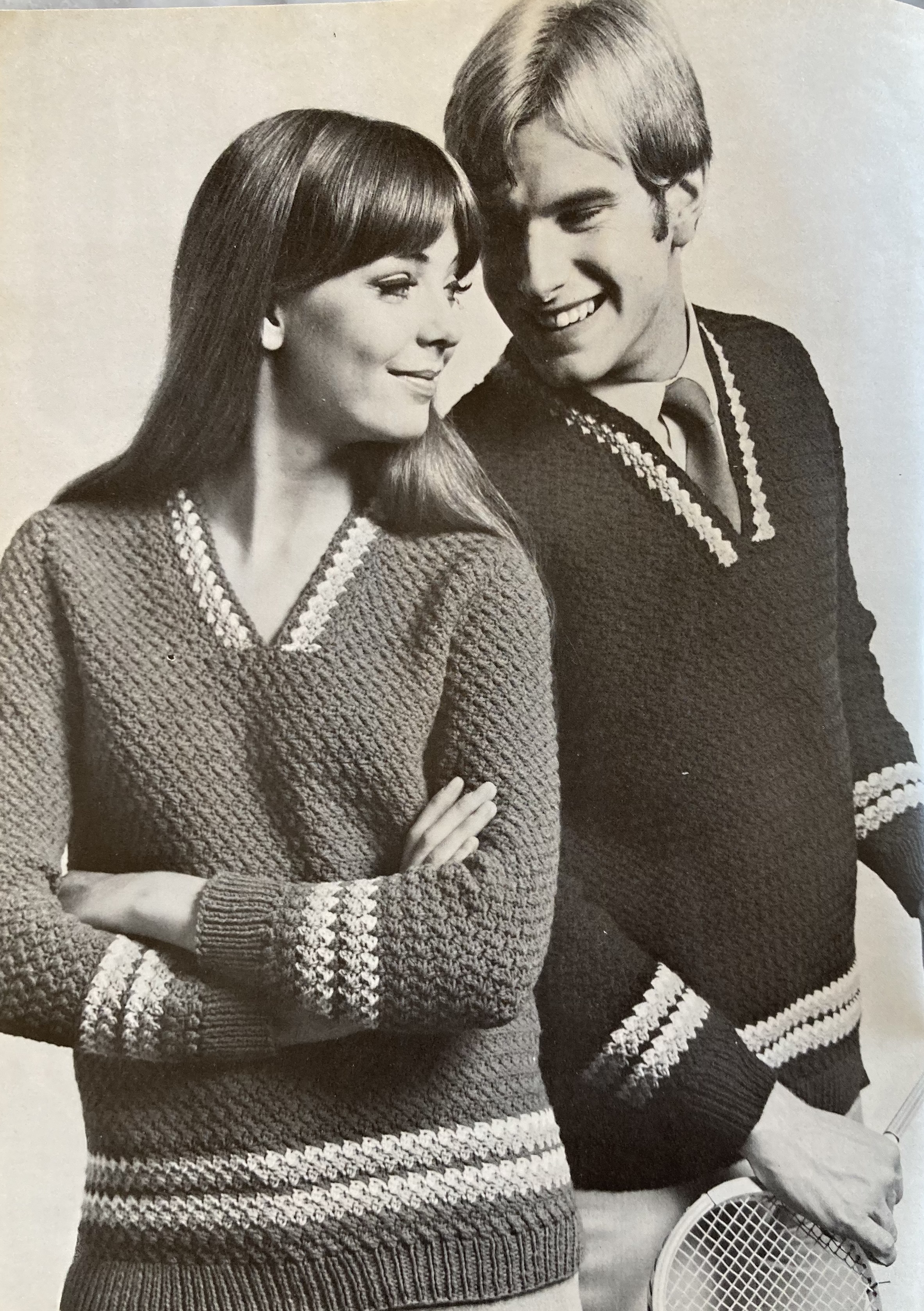
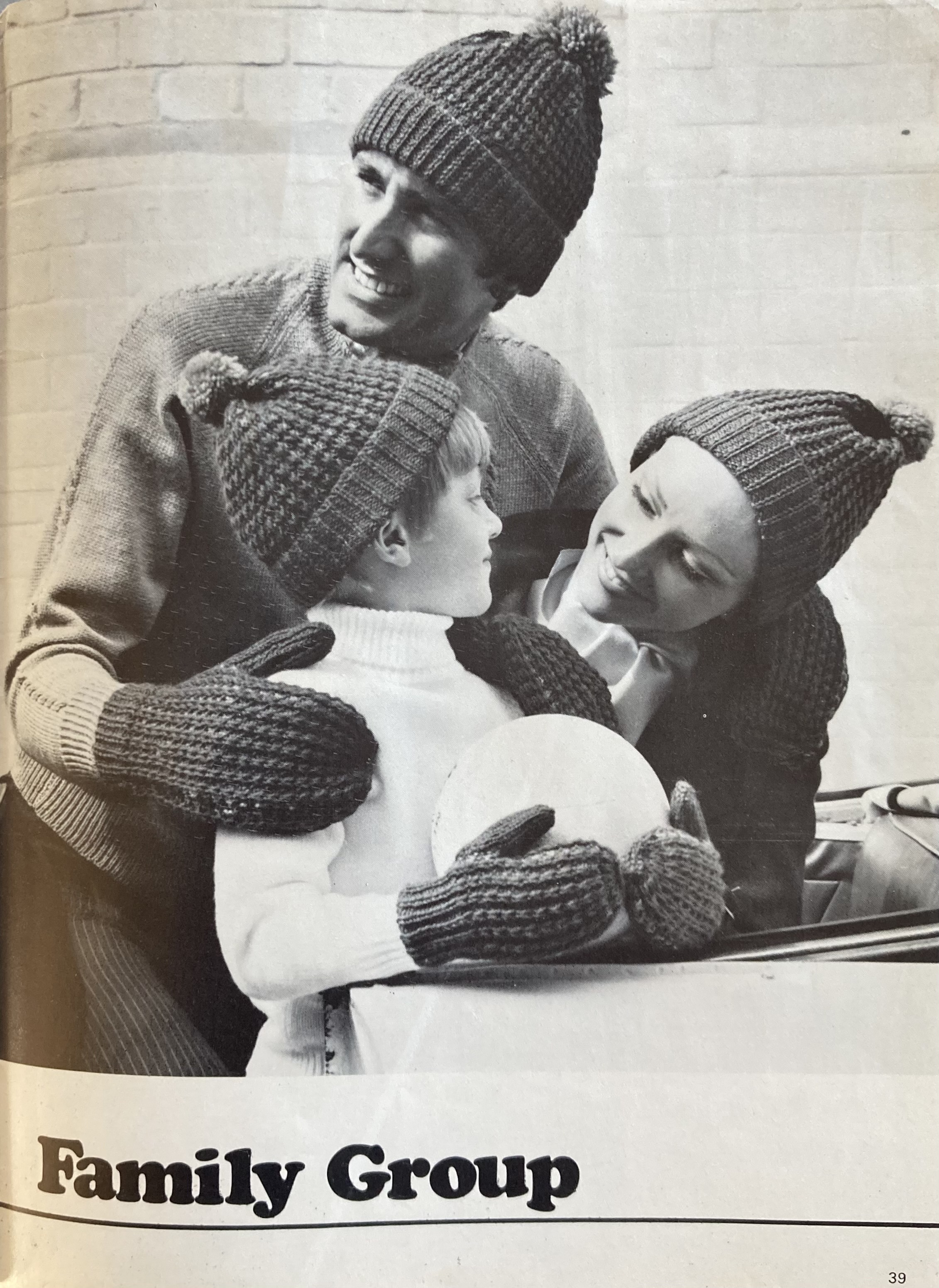
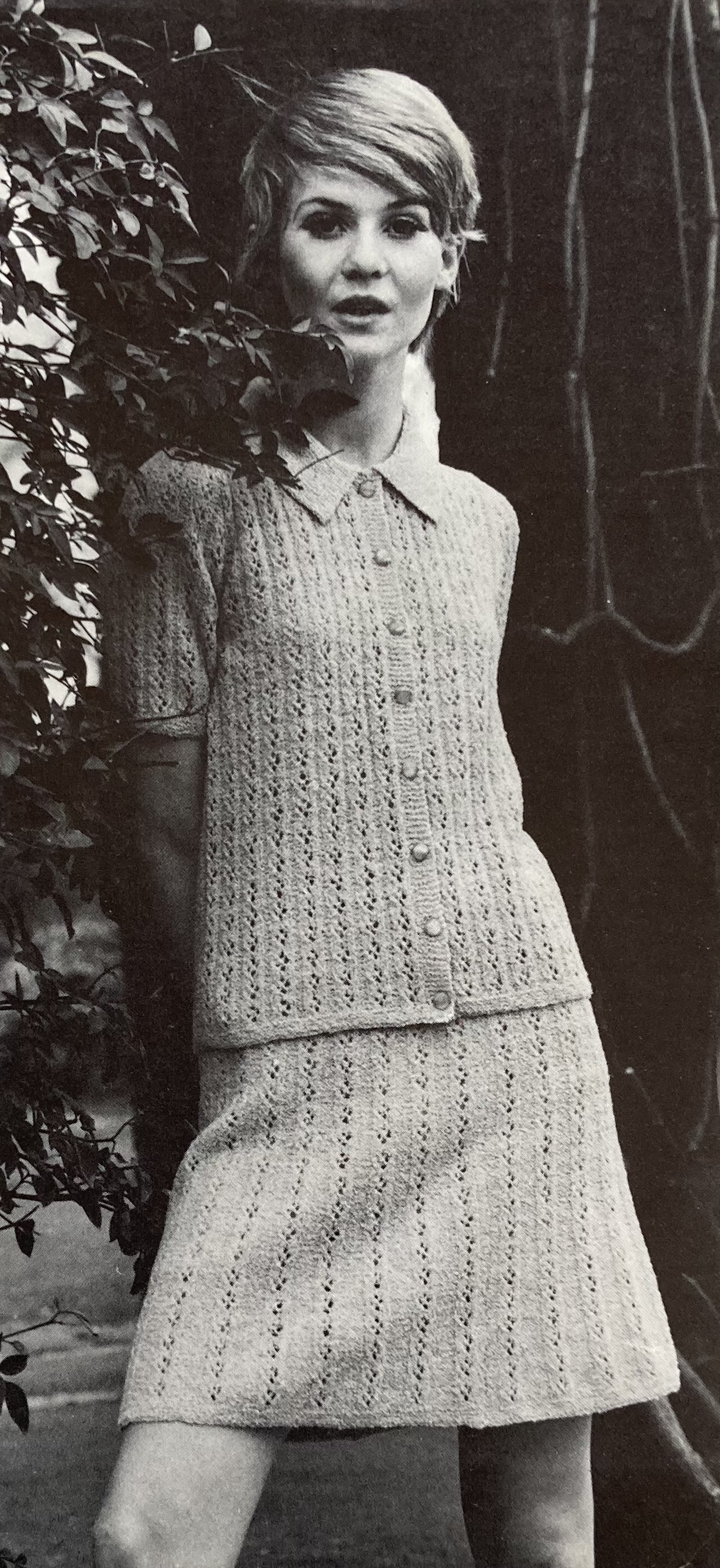
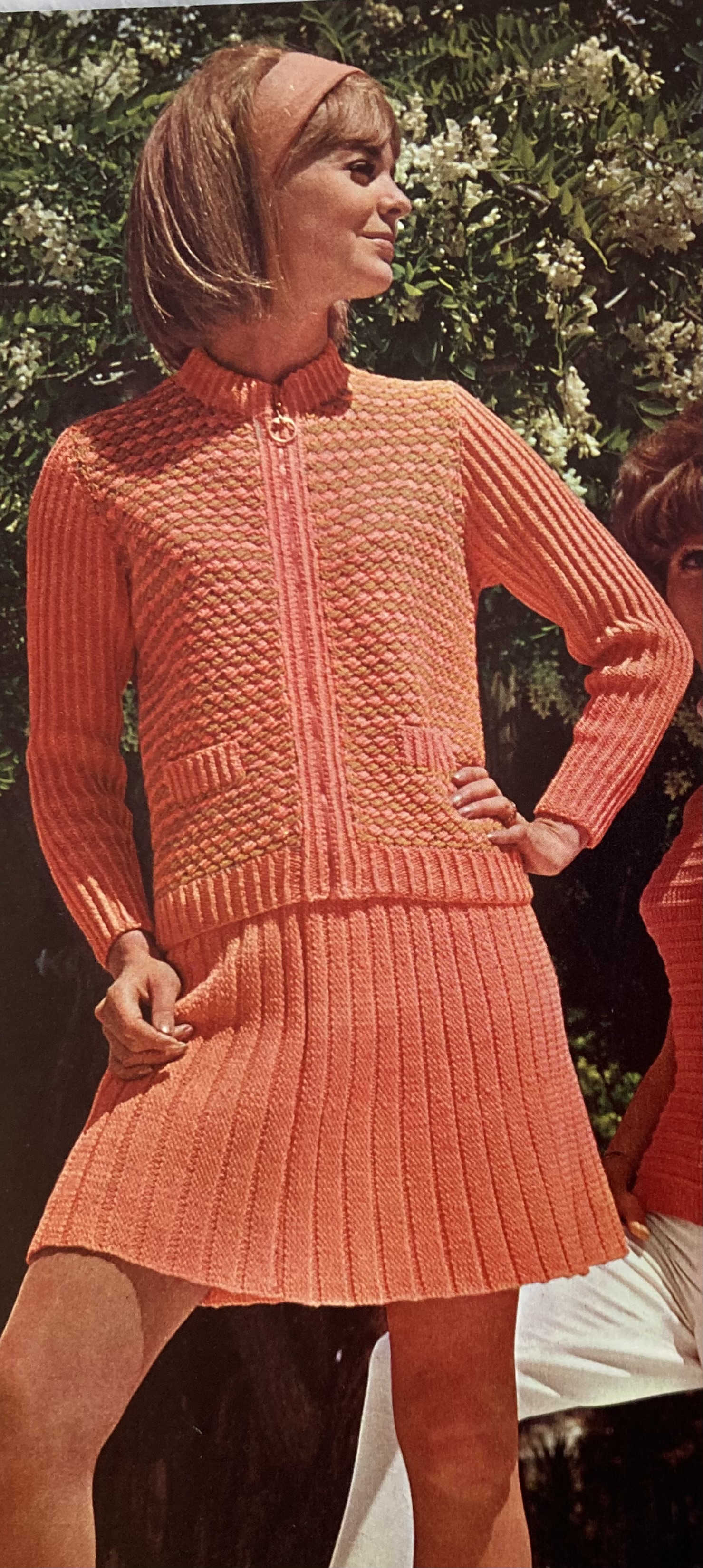
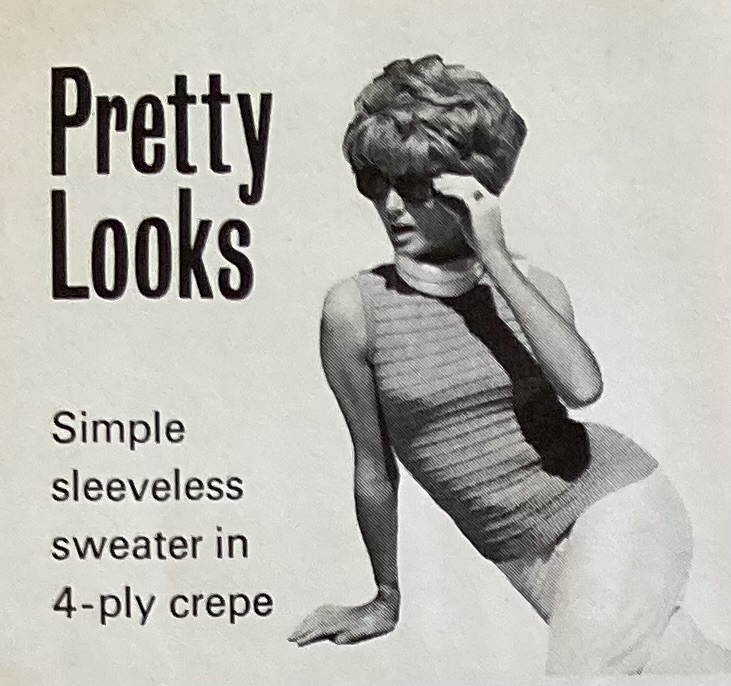
For contrast, there’s a casual cardigan suit in bright orange and gold, made in Double Knitting, with a bonus pattern for a simple 4-ply shell to wear underneath. Another his-and-hers bulky sweater set is crocheted for a change, in synthetic Courtelle Double Crepe. You can top it all off with caps and mittens in three sizes for the the whole family. Textured stitch patterns, vertical lines, pocket flaps and V-necks are all trending.
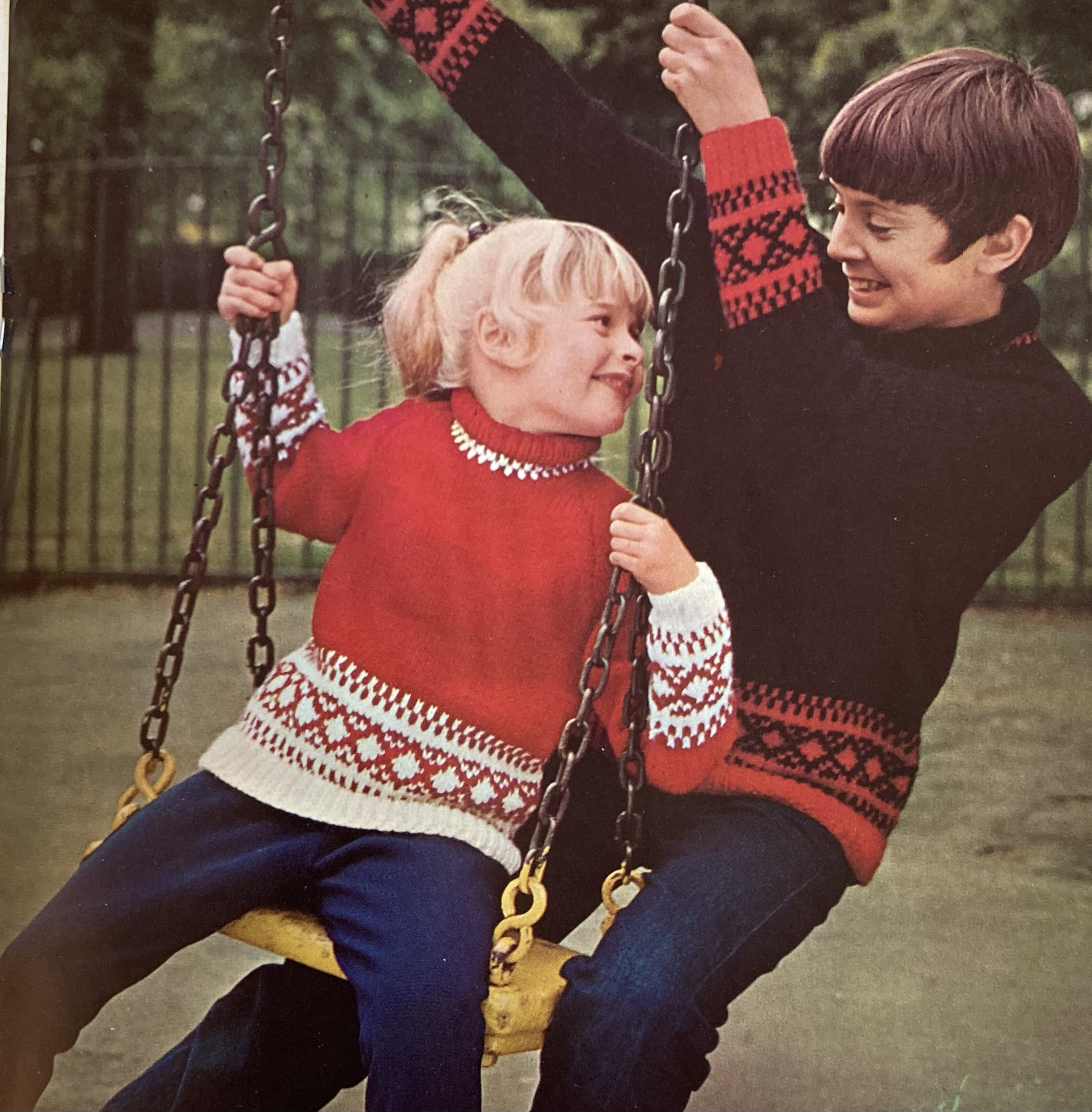
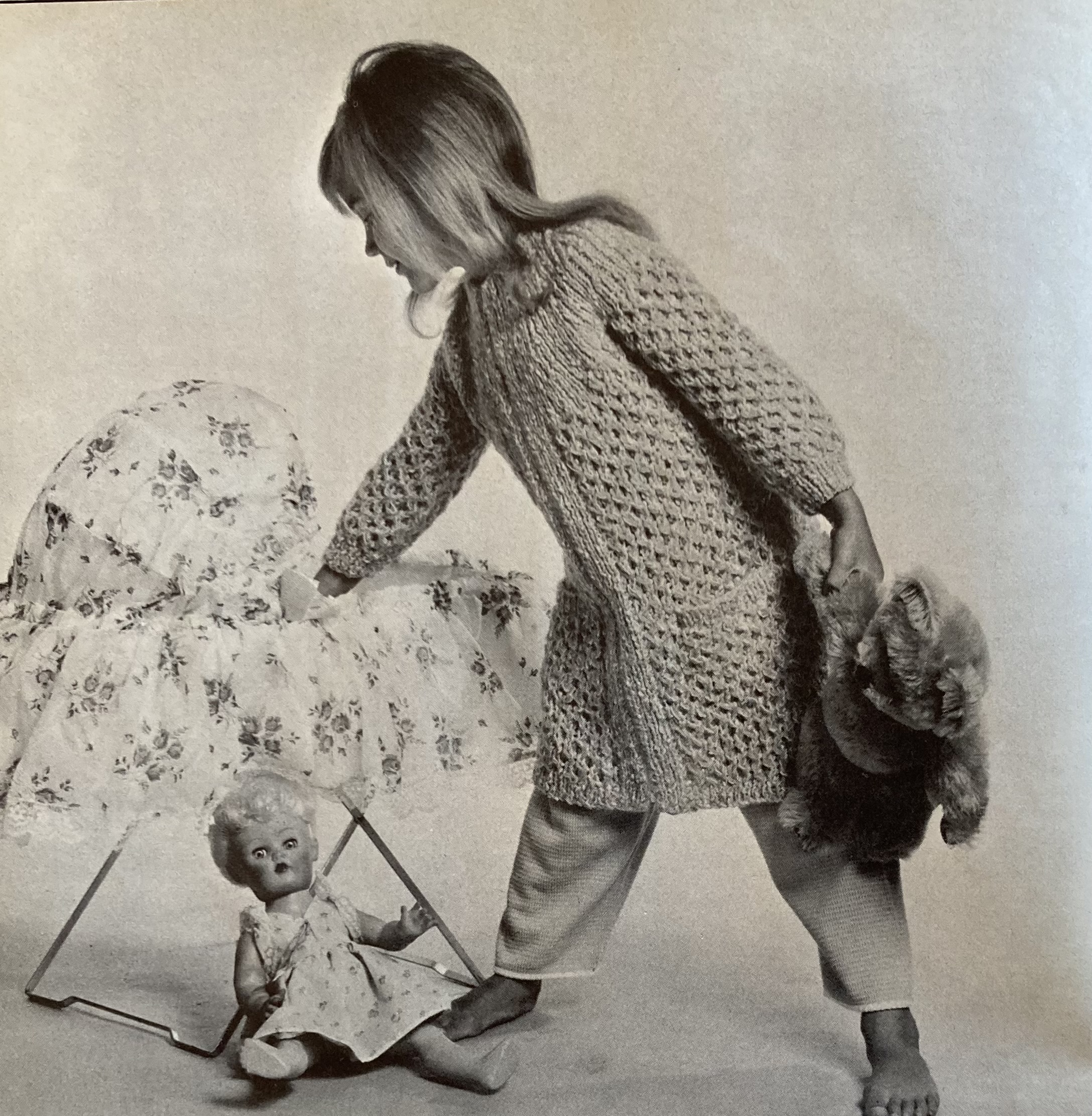
Children can get matching unisex sweaters, also in Doublet (so it can be finished before the child grows out of it). The little girl in the photo is actually wearing “slacks”! Her legs are covered and she can play on a swingset without fear of cold legs or flashing the neighborhood! Stitchcraft seems to be slowly entering the modern world. For evening playtime in a chilly home with no central heating, you can knit a child a nice warm dressing-gown with nubbly Four Seasons and fuzzy wool Fiona yarns held together.
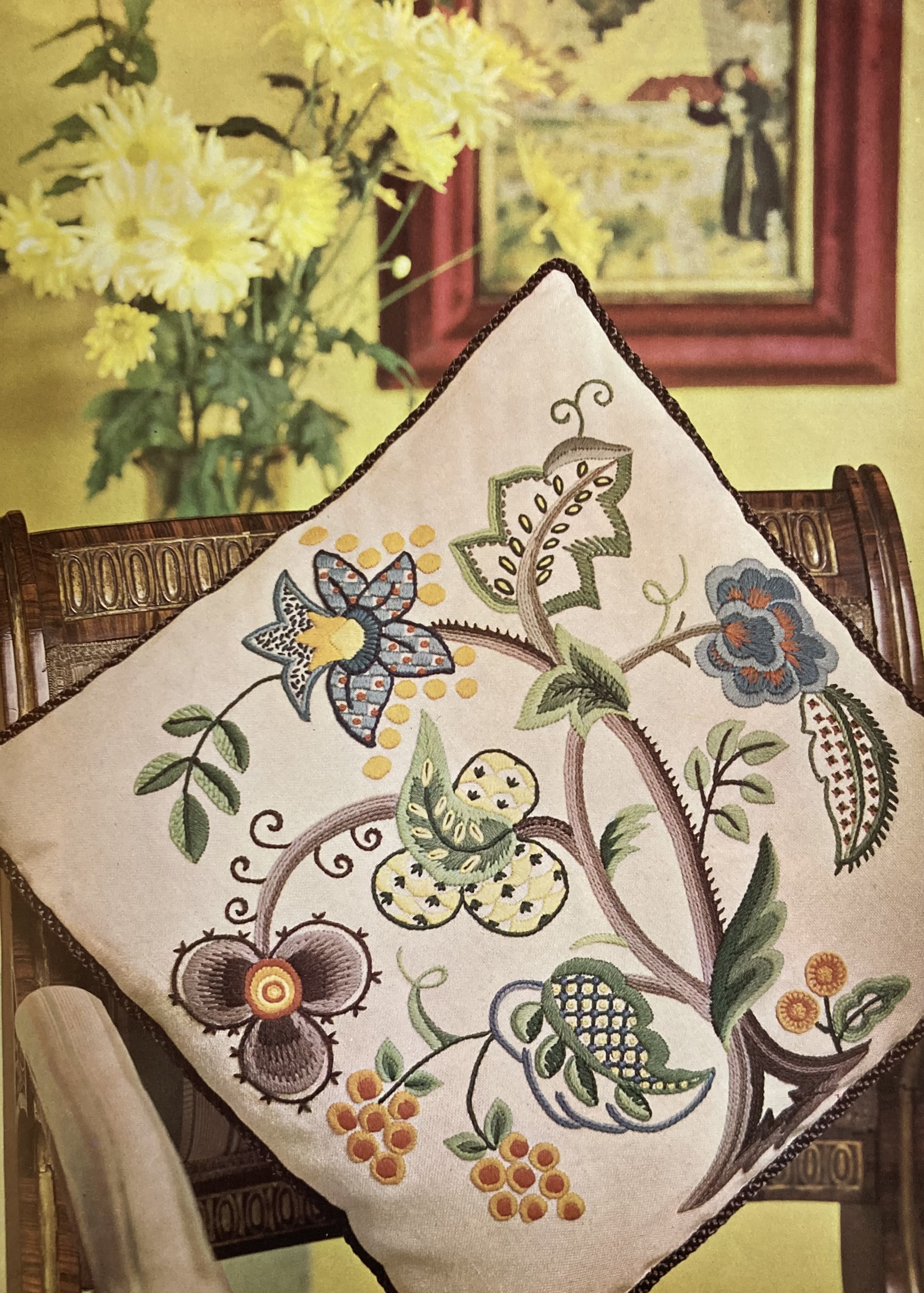
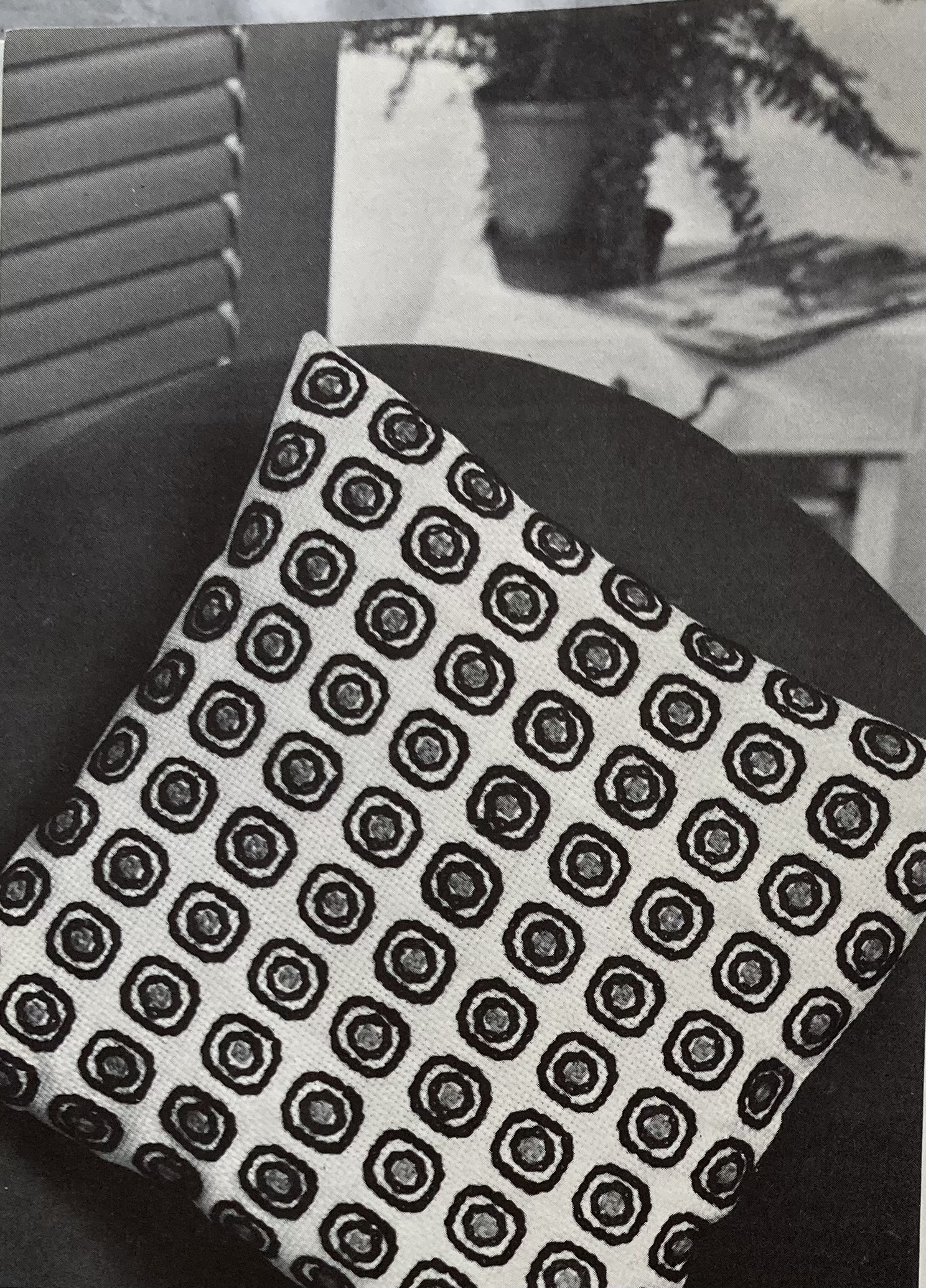
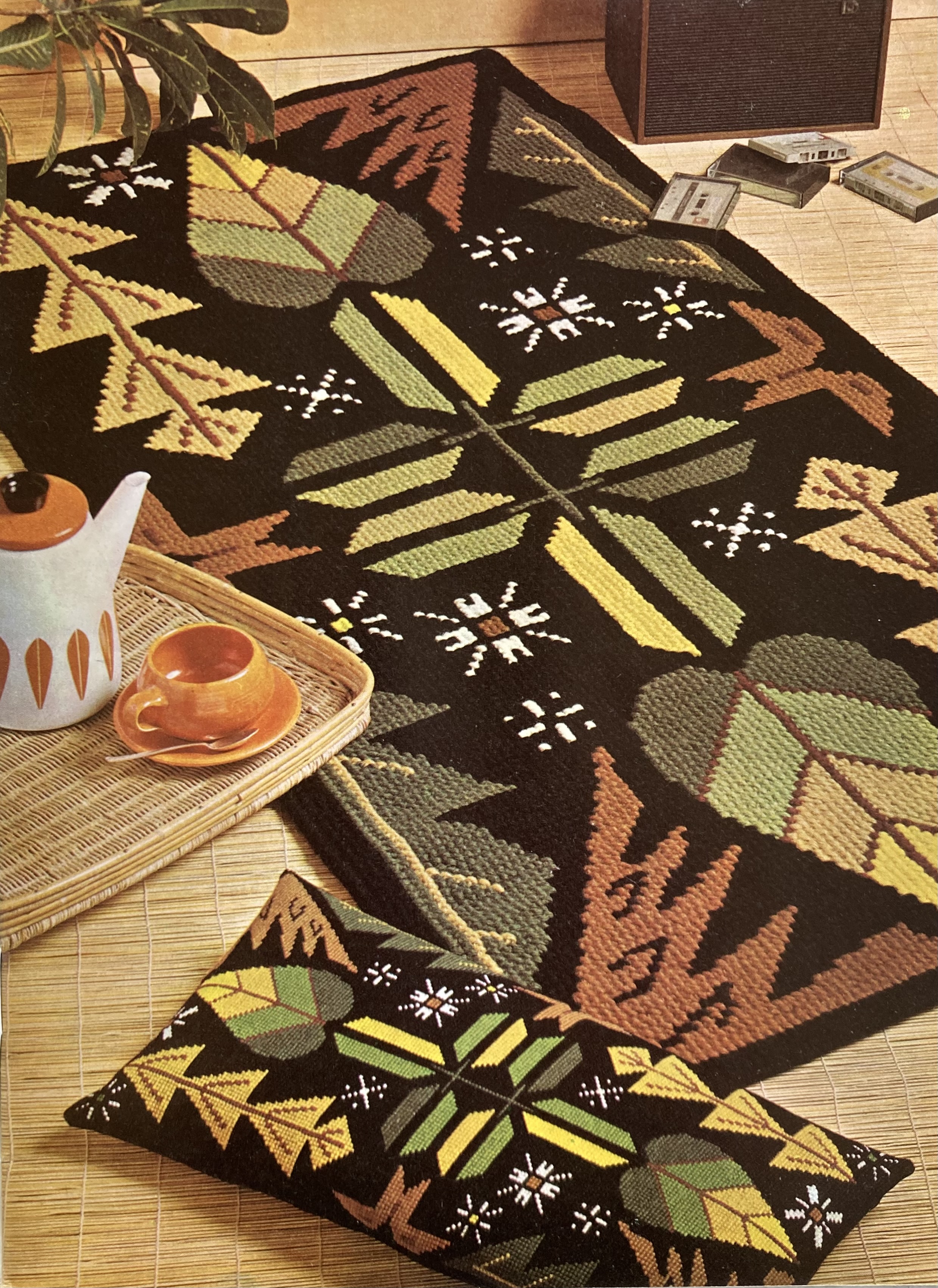
There are a couple of more unusual homeware projects, as well: a fancy lace spectacle case in fine crochet, a boldly patterned “Danish Design” cross-stitch rug and cushion, and a gorgeous “Jacobean”-style embroidered cushion, the last two using the additional colour photo pages to good advantage. The caption of the Jacobean cushion is “returning interest in traditional embroidery design”, which sums it up well: Jacobean-style embroidery kept coming back into fashion every few years from the 1940s until the 1970s.
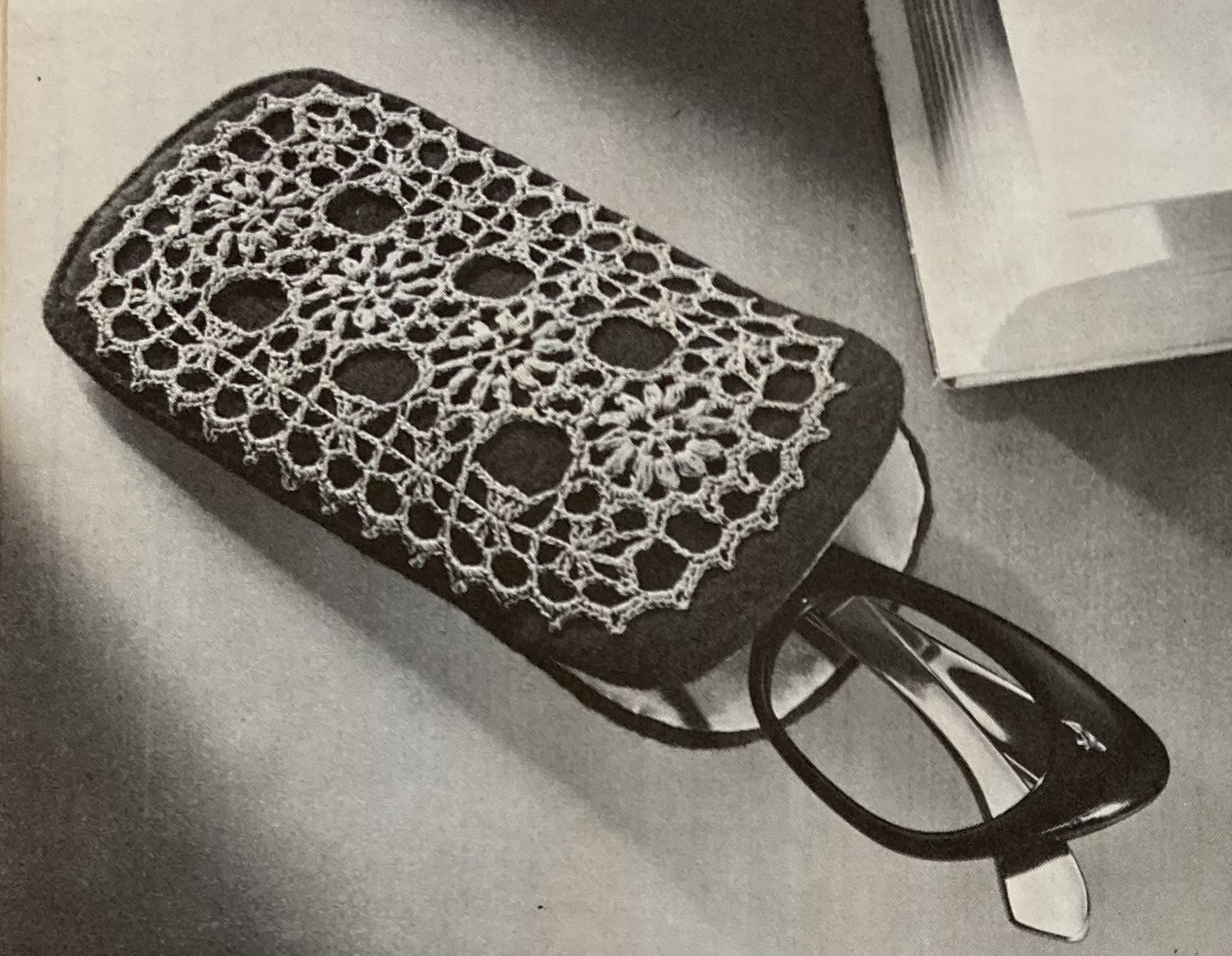
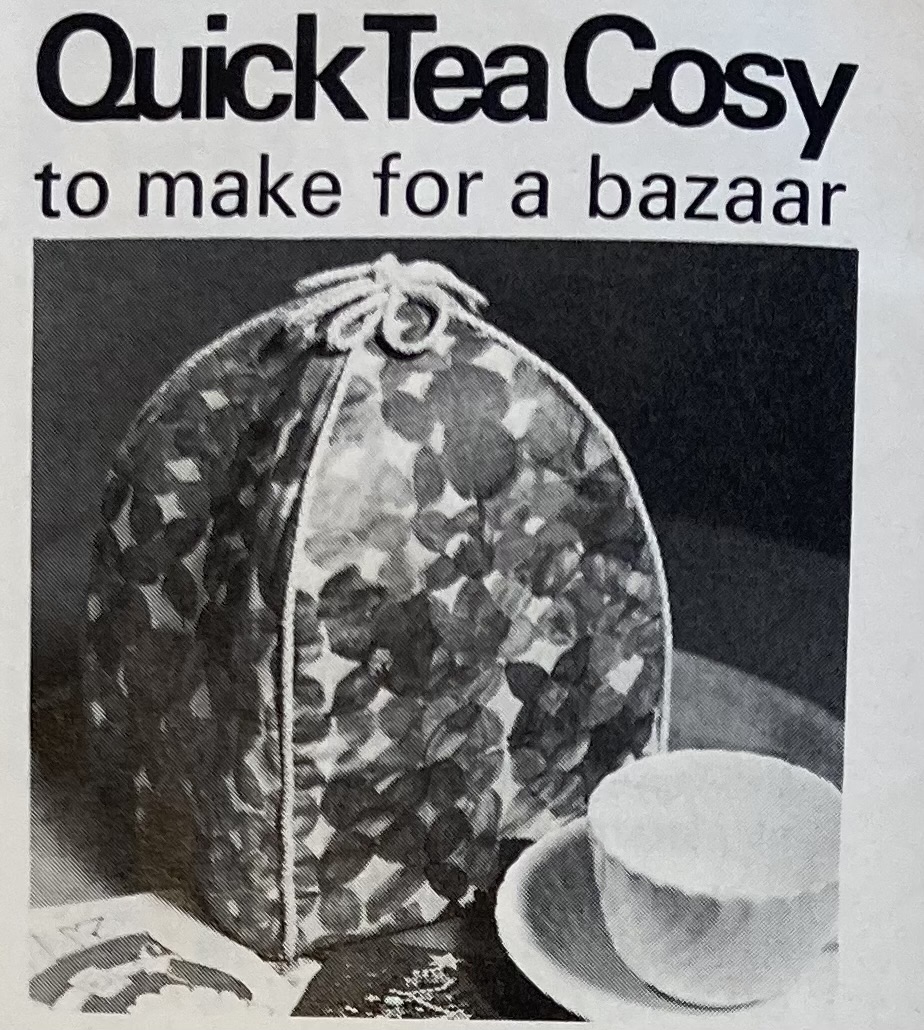
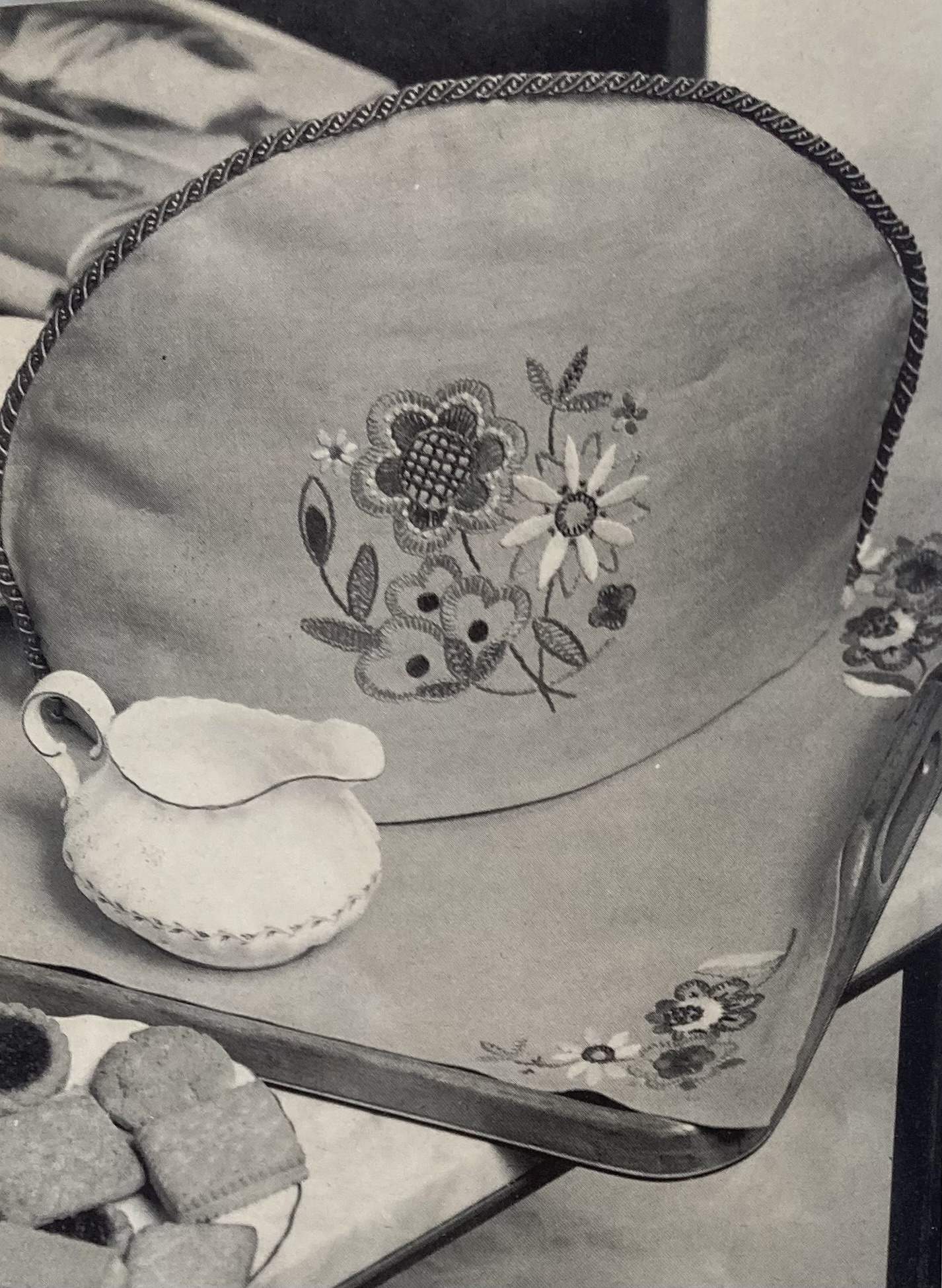
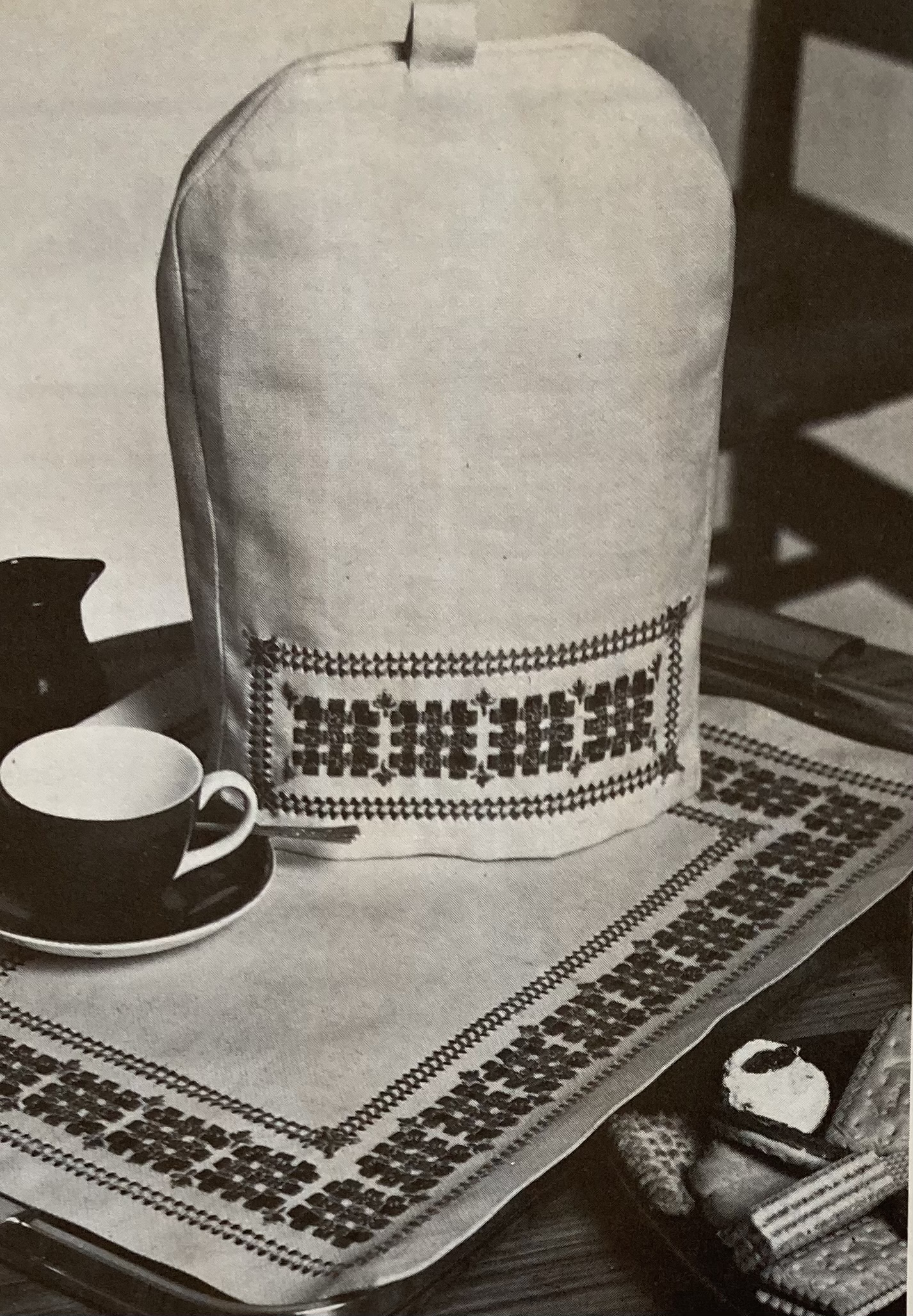
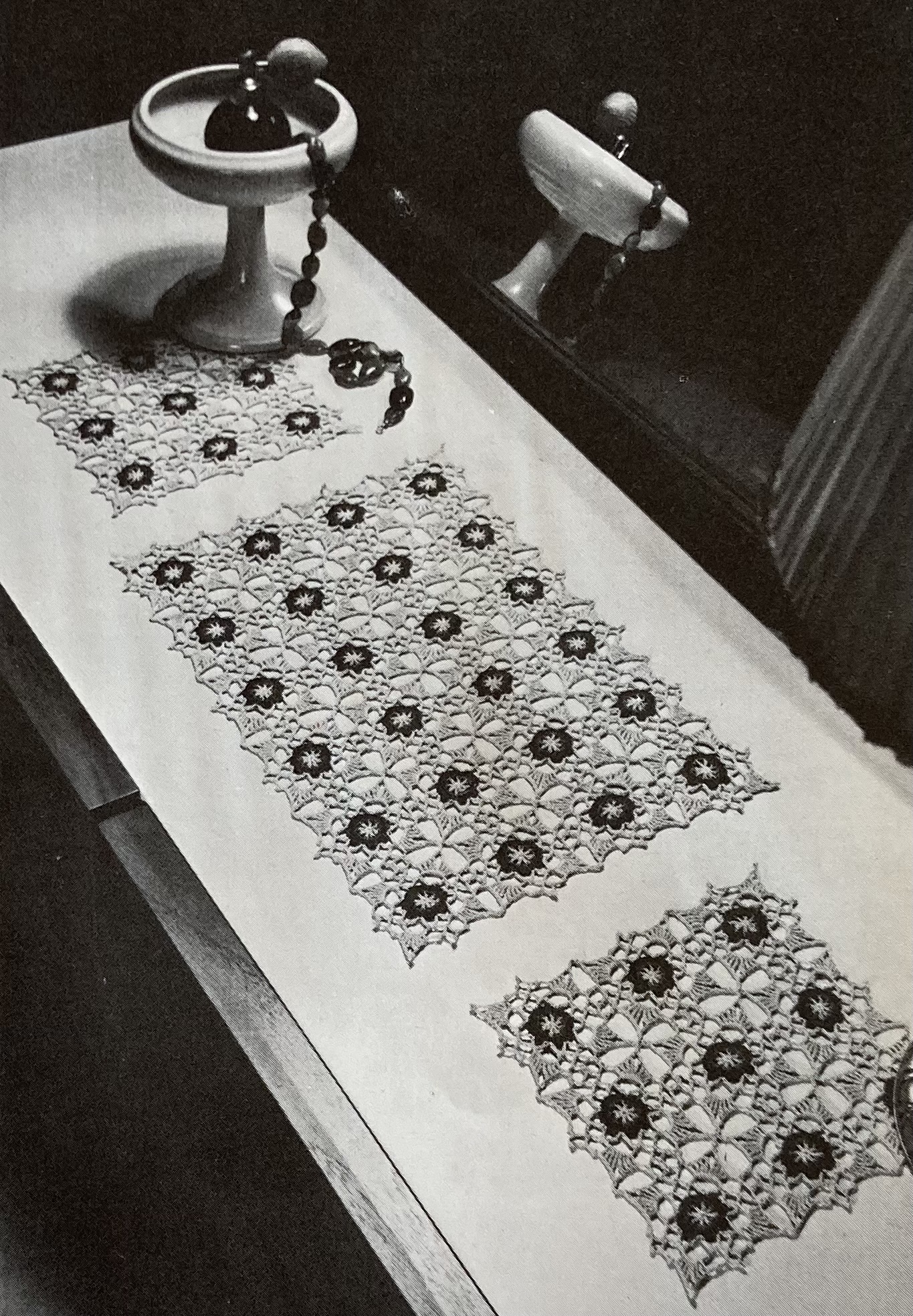
Less spectacular, but still perfectly nice, are the Hardanger drawn-thread embroidery pattern for a tray cloth and coffee/tea cosy, the crocheted mats “for your dressing table” and the quick sewn cosy in the “Readers Pages.”
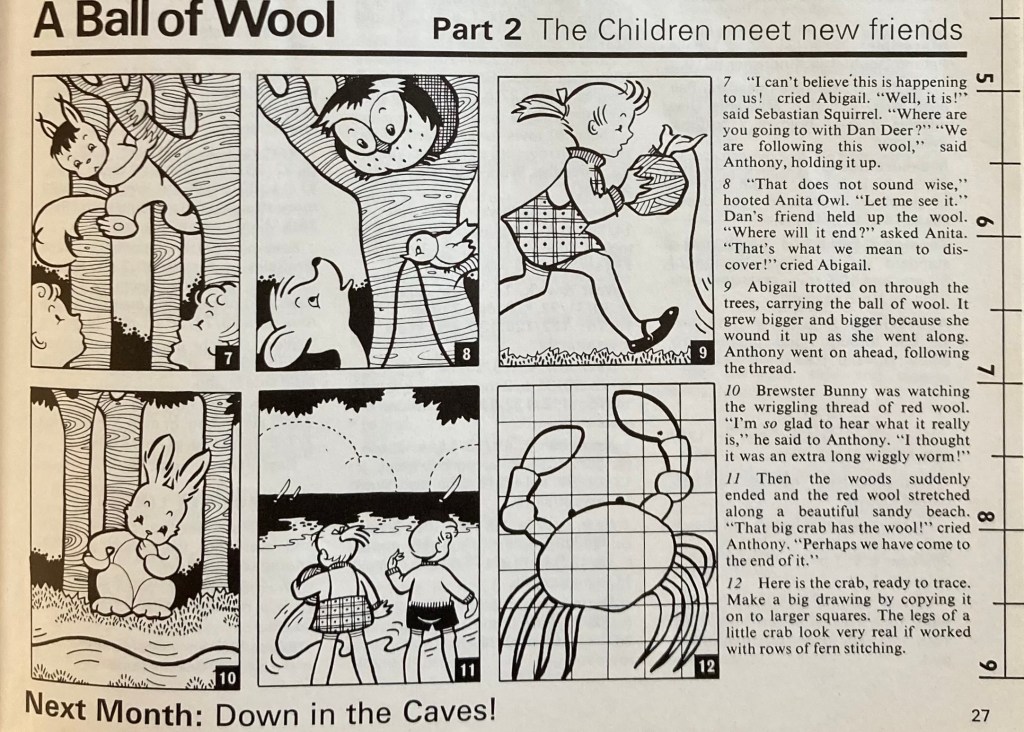
The Readers Pages also give us the latest installment (Part 2) of the current children’s comic, “A Ball of Wool”, in which Abigail and Anthony follow a magic ball of wool into a charmed forest full of talking animals. They pass by Sebastian Squirrel, Dan Deer, Anita Owl and Brewster Bunny before finding themselves on a beach with an unnamed and silent, but presumably friendly, large crab. What ever will happen next? It looks like they will go “Down in the Caves”!
I love this issue and will try to make both the lace blouse and the Jacobean cushion. Wish me luck!
September 1968: Table Linens To Be Admired

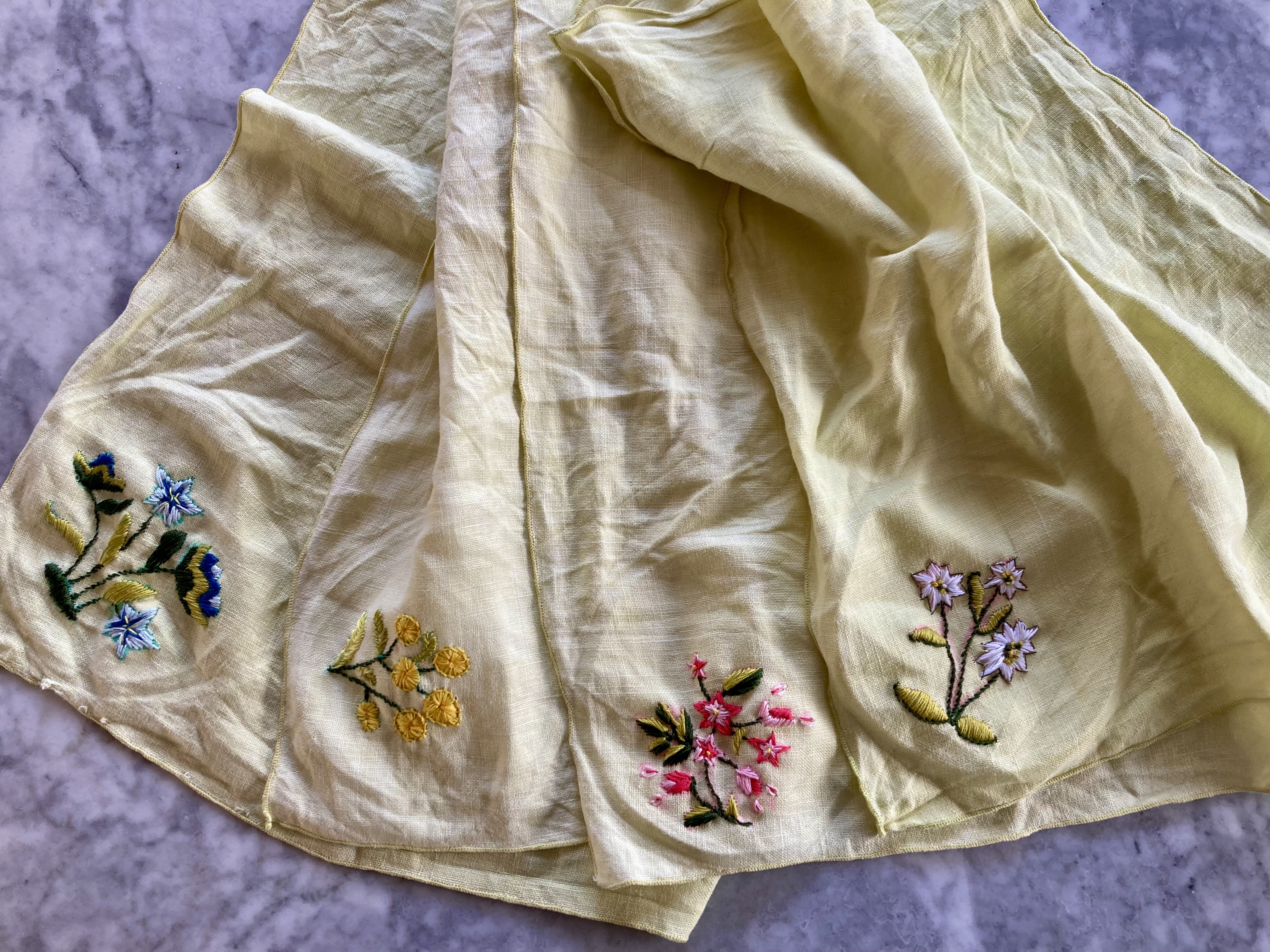
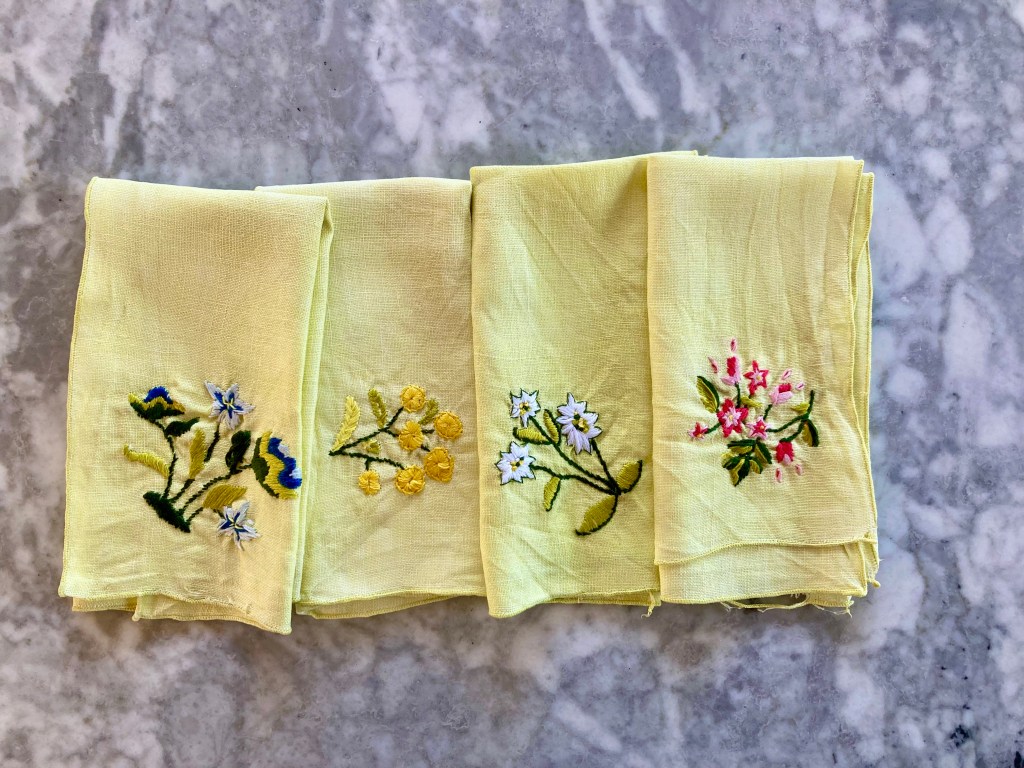
My September 1968 project was a quick, cute set of embroidery motifs on fabric table napkins.

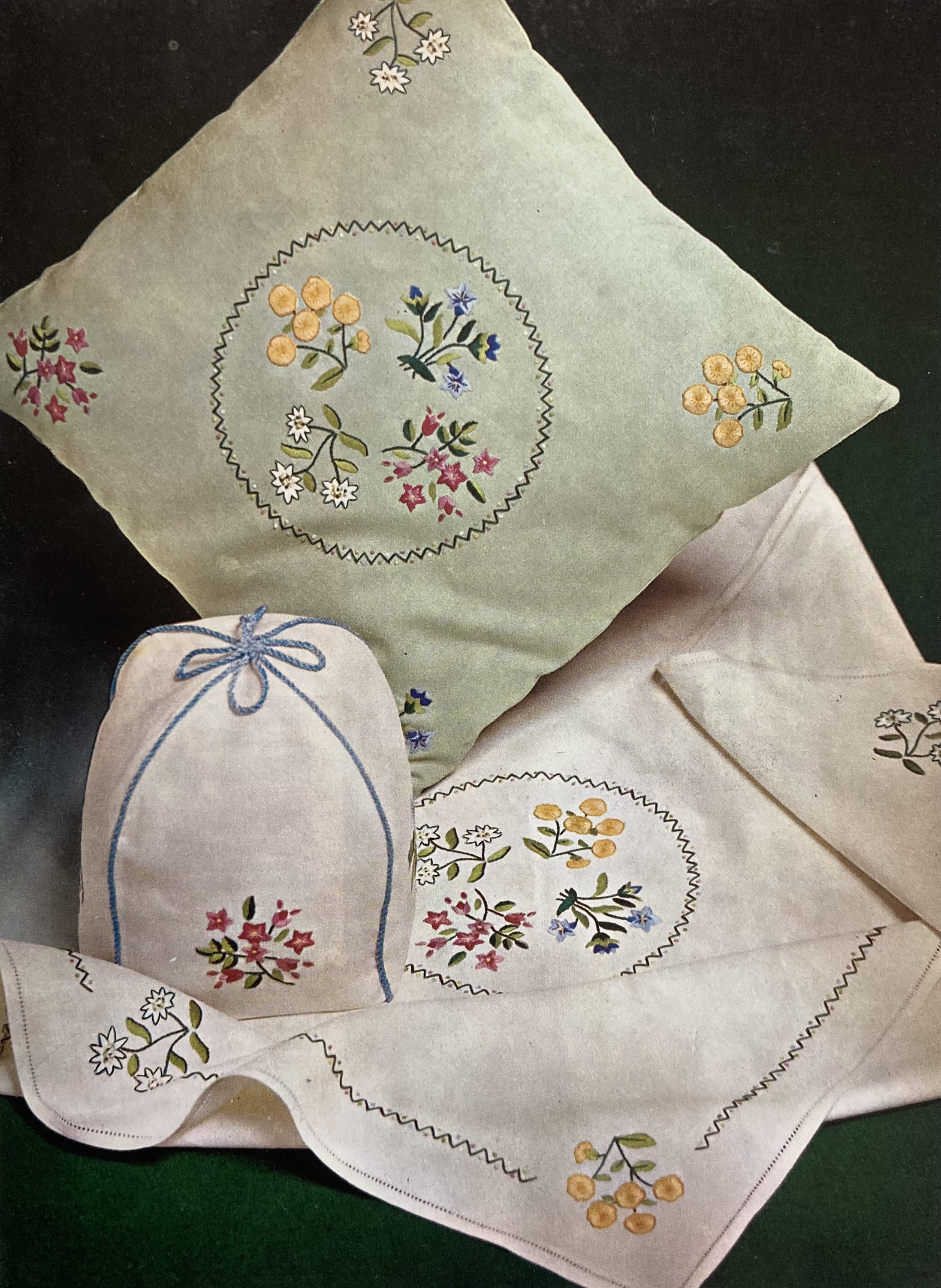
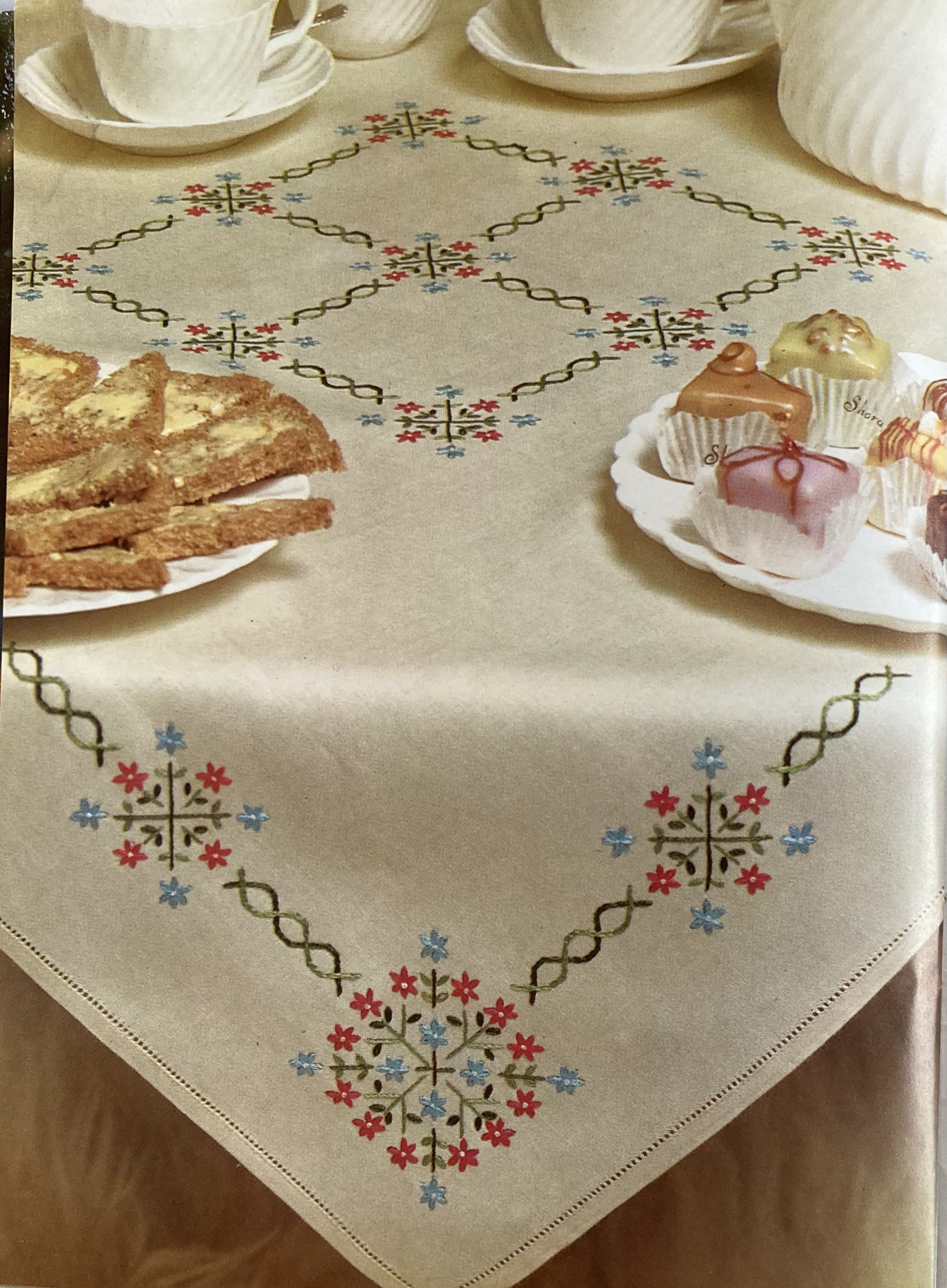
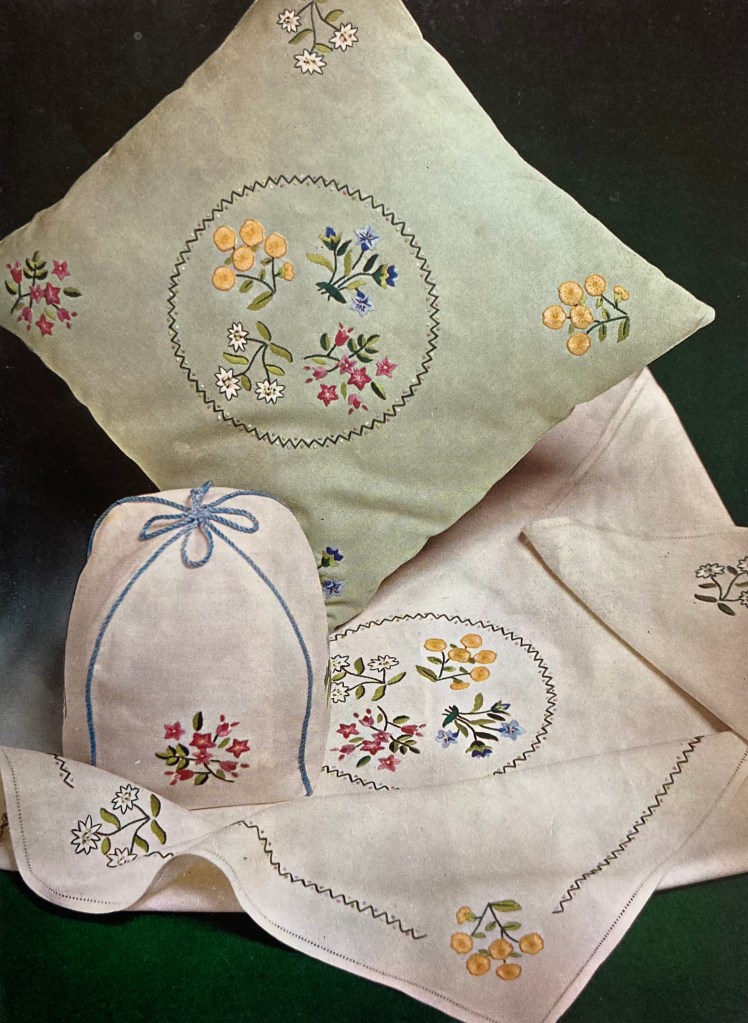
The original pattern, for “table linens to be admired”, gave four smallish alpine-flower motifs to embroider onto a tablecloth, a cushion or a tea/coffee cosy, with a little zig-zag border. The flowers in question are gentian violet, edelweiss, primula (a.k.a. cowslip), and alpine rose (a.k.a. snow-rose or alpenrose and not a rose at all but a type of rhododendron.)

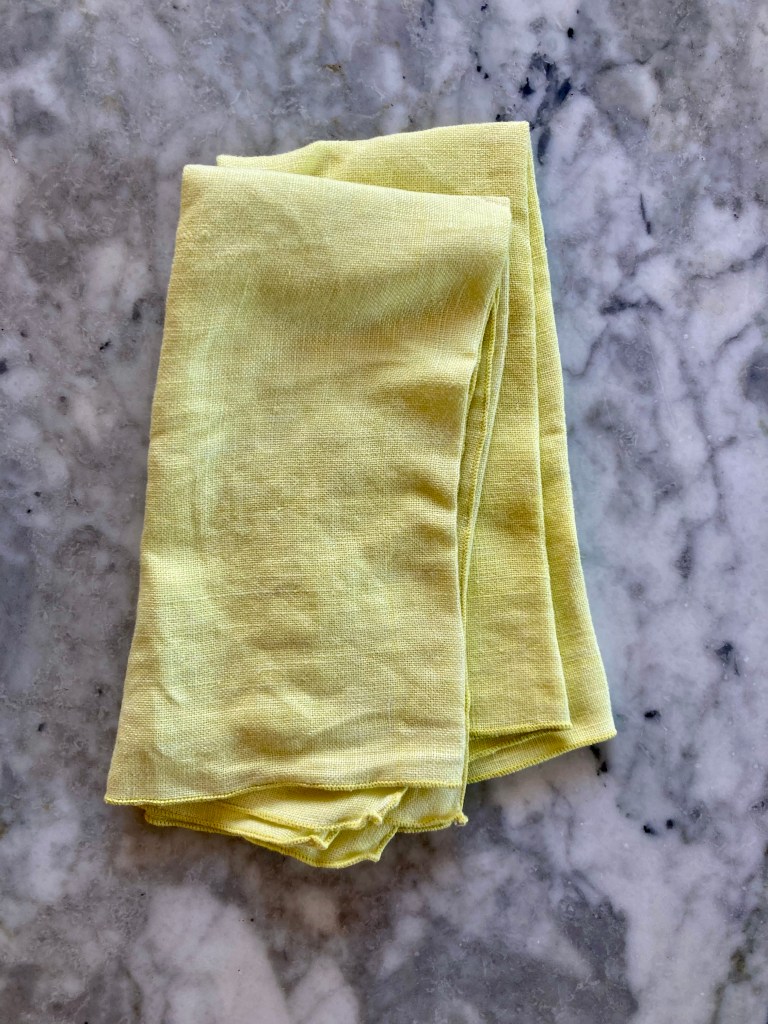
I had a larger set of pale yellow-green table napkins that I had inherited from my grandmother. Not in the sense of a treasured family heirloom — she just never threw anything away that was still useful, and had a house full of nice, everyday things dating from ca. 1950 to the 1980s. These napkins were plain evenweave linen, actually perfect as an embroidery base, and still in pretty good shape. I use them a lot, alternating them with the two other sets of table linens from my grandmother’s household.

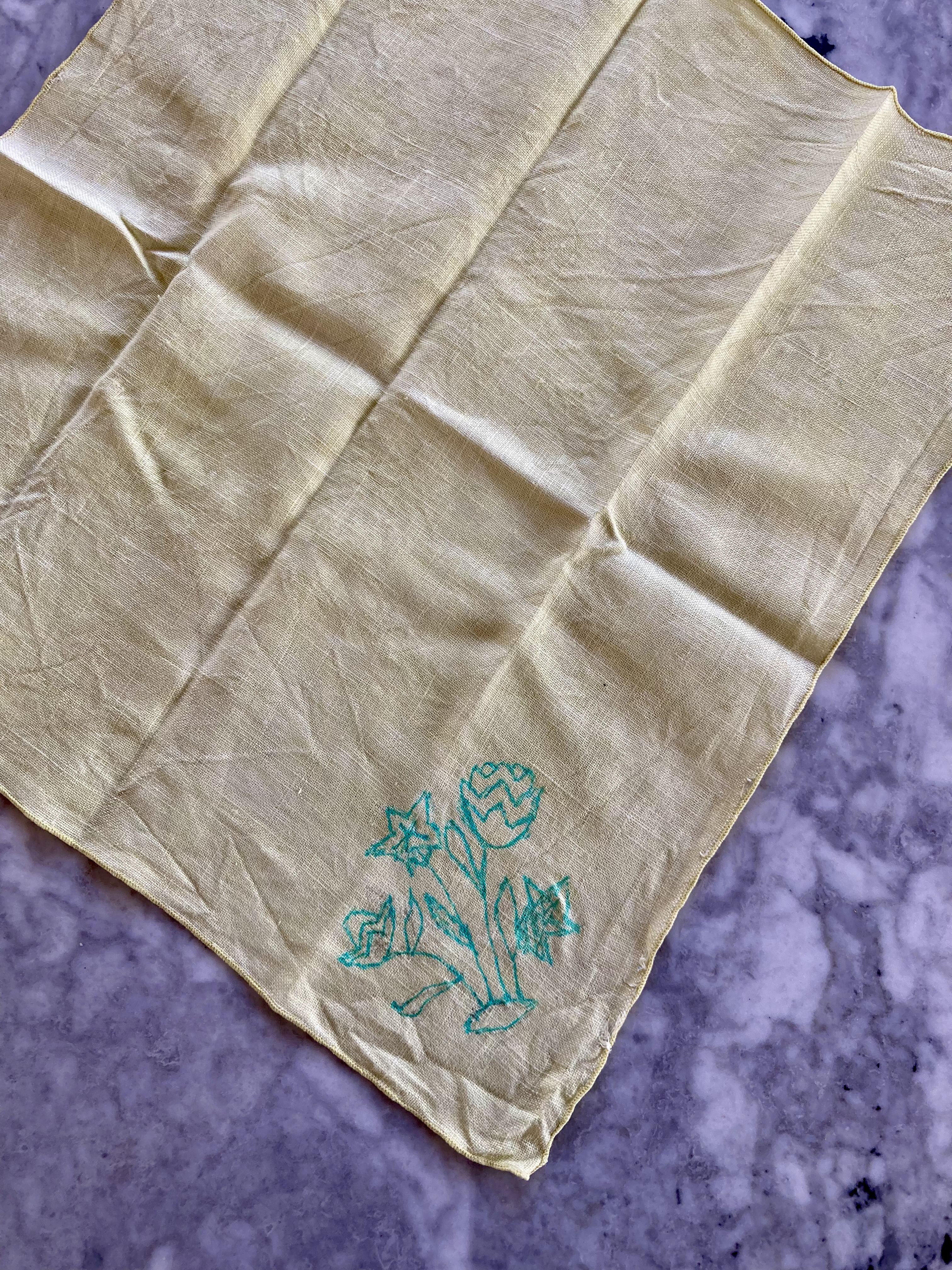
As always, I didn’t have a transfer, as one had to send away for them back in the Stitchcraft days. Since the motifs were small and simple, I just drew them freehand with a water-based embroidery pen, based on the large, clear colour photo. I really noticed the extra colour pages in this issue! The stitches were easy, basically satin stitch for the petals and leaves and stem stitch for the stems and outlines, with French knots in the middle of the edelweiss and alpenrose, and a couple of straight-stitch and loop-stitch accents. There was no need for the zig-zag border.

That was it! Quick and easy. I washed them at 60 degrees C and nothing bad happened. My favourites are the edelweiss and the alpenrose, which are maybe-not-coincidentally the last two that I made.

Time for an alpine dinner party!

September 1968: Overview

“Fashion kicks off for Autumn” is the heading of Stitchcraft‘s September 1968 issue, heralding the end of holidays and the arrival of colder months. Also, the price of a single issue will be raised to 2/6d- starting in October 1968, due to higher production costs and especially the extended use of colour pages. My historical currency calculator tells me that is 30 pence in the old system (pre-1971), 12 1/2 new pence (since 1971) and adjusted for inflation, would be about £ 2.80 today. Interestingly, that’s about what a vintage copy of Stitchcraft at a thrift store, ebay etc. costs these days, and probably roughly what I paid for this issue.

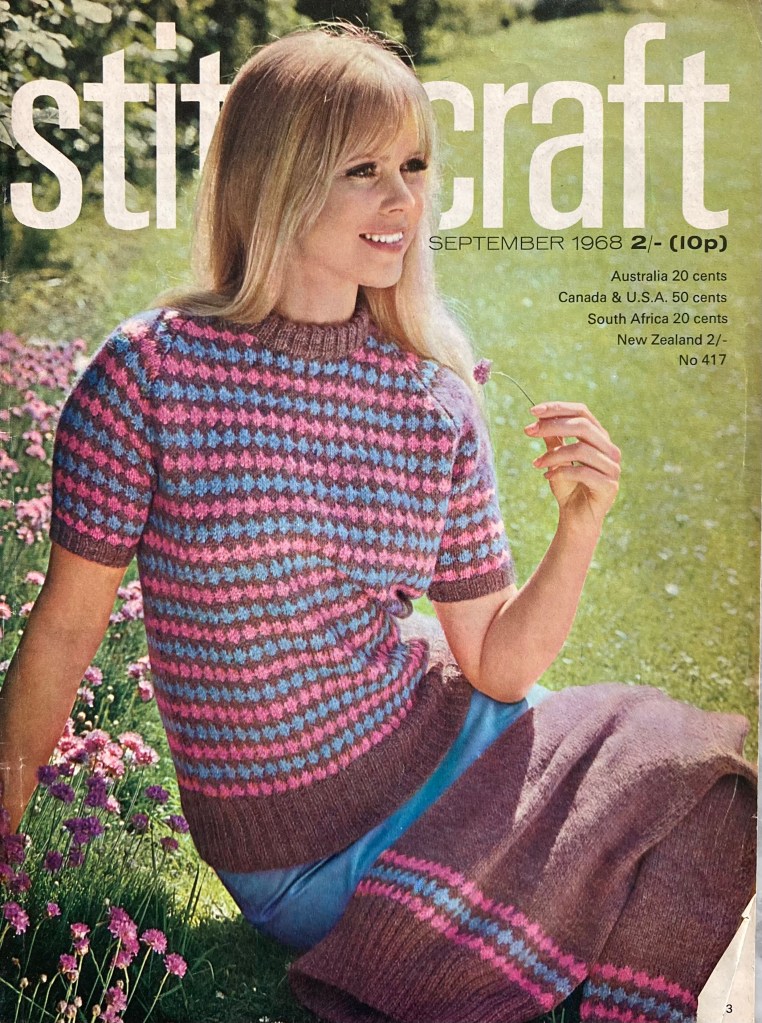
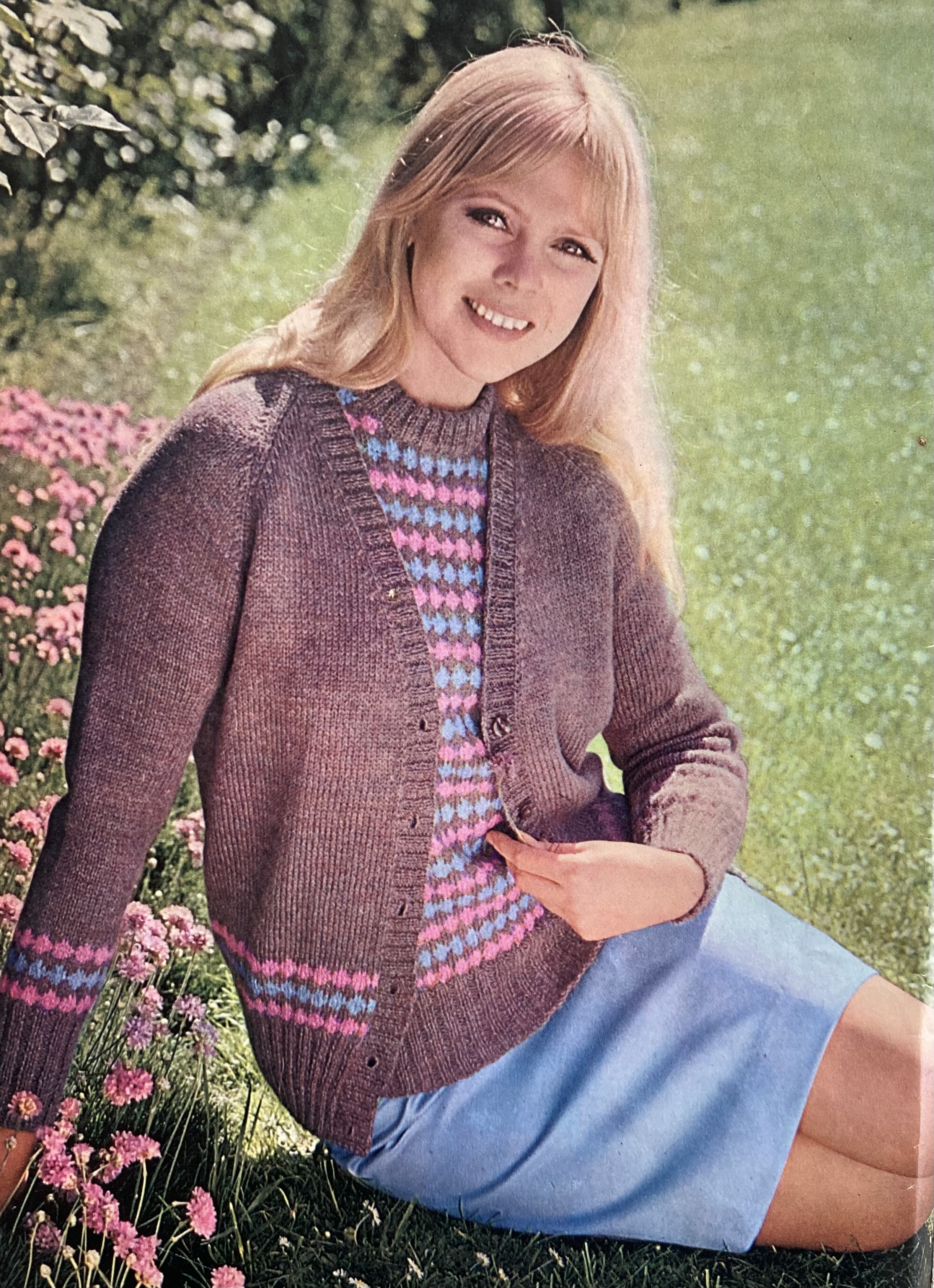
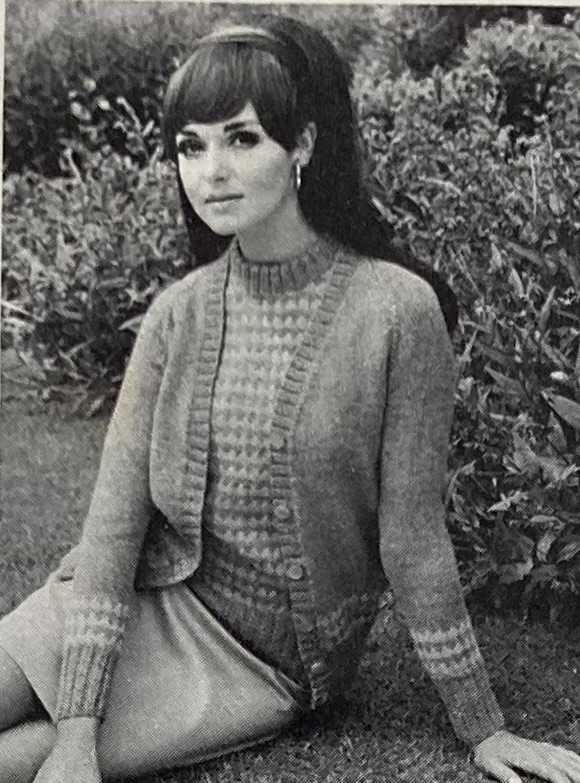
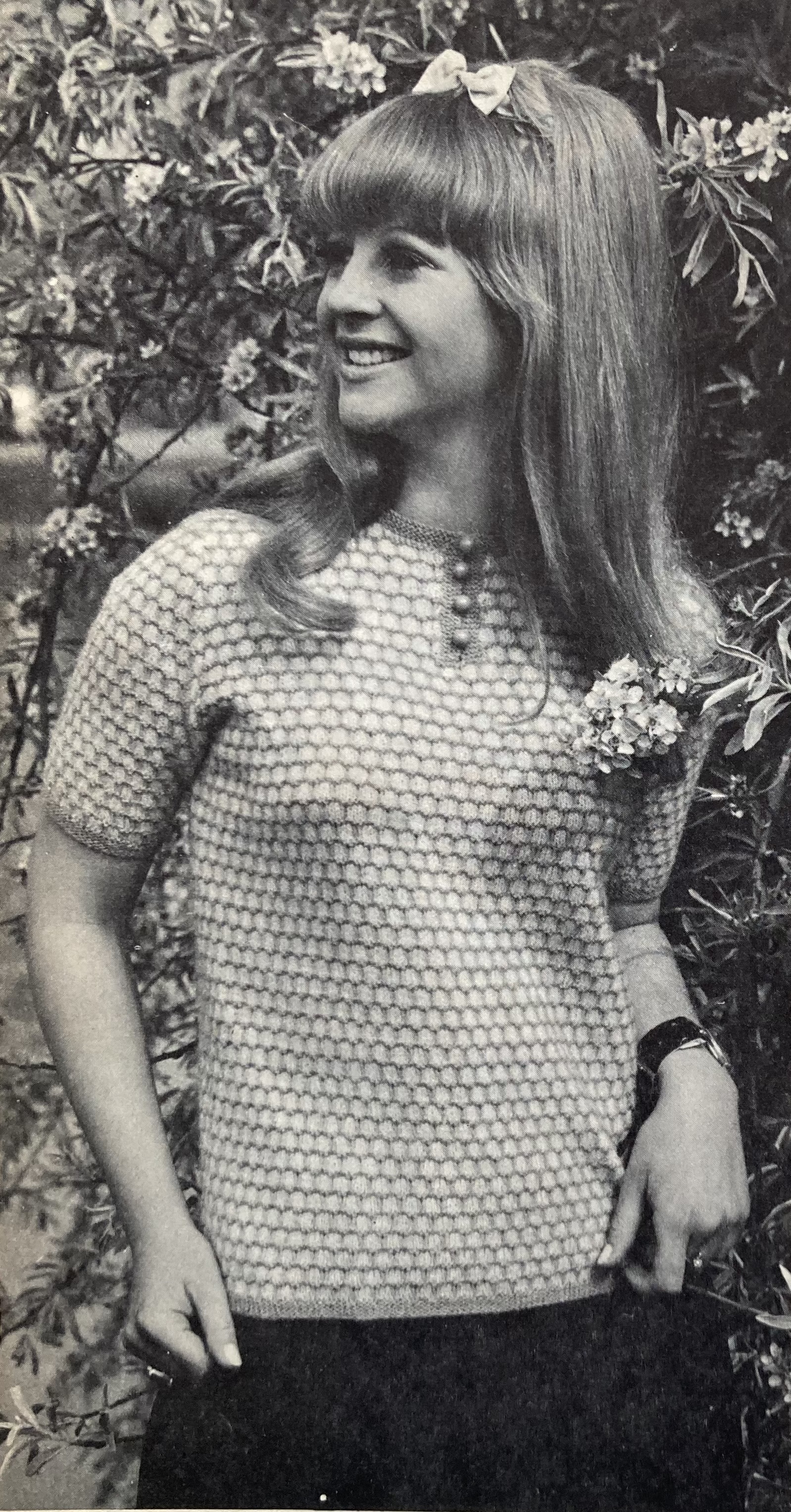
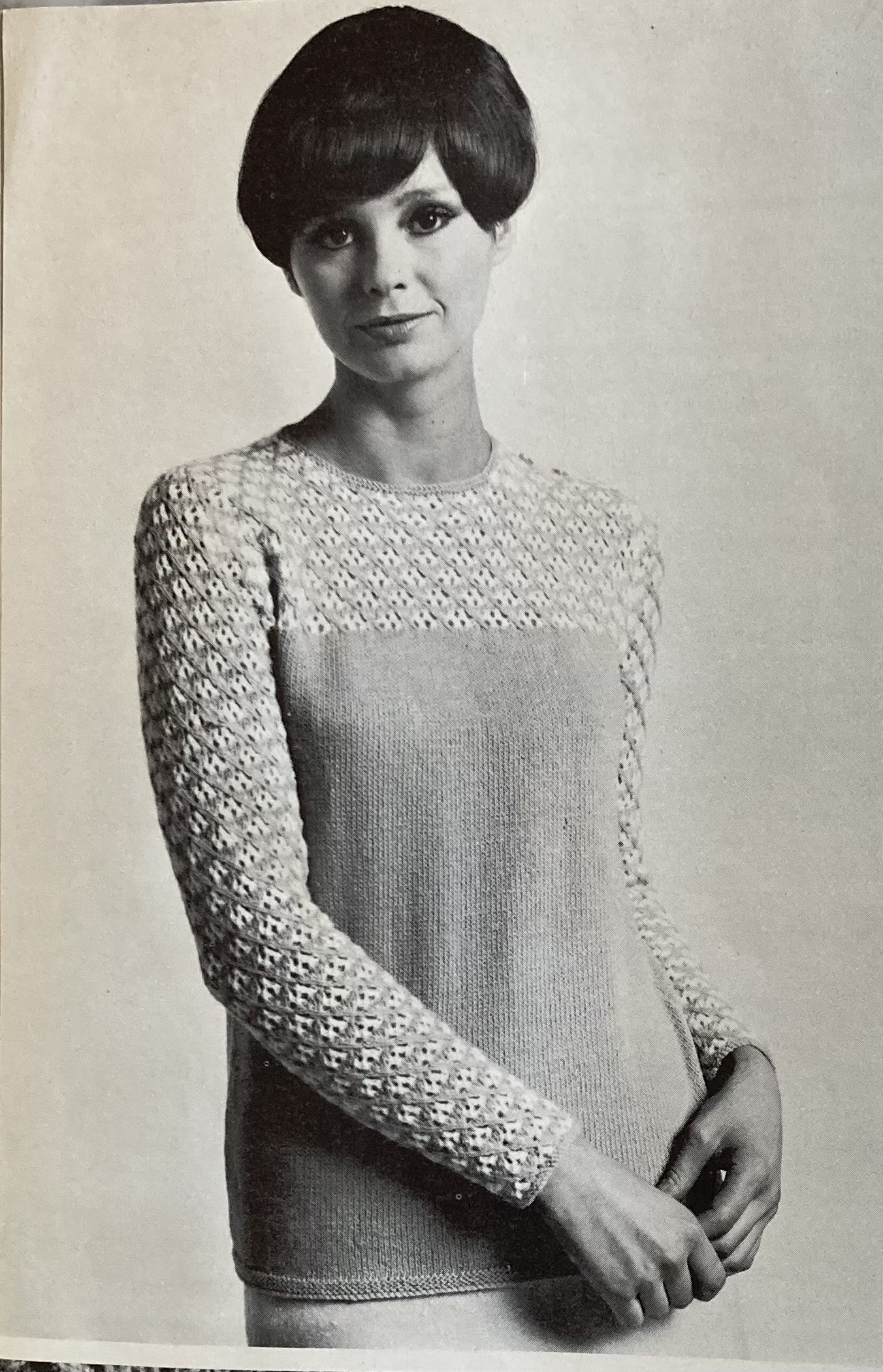
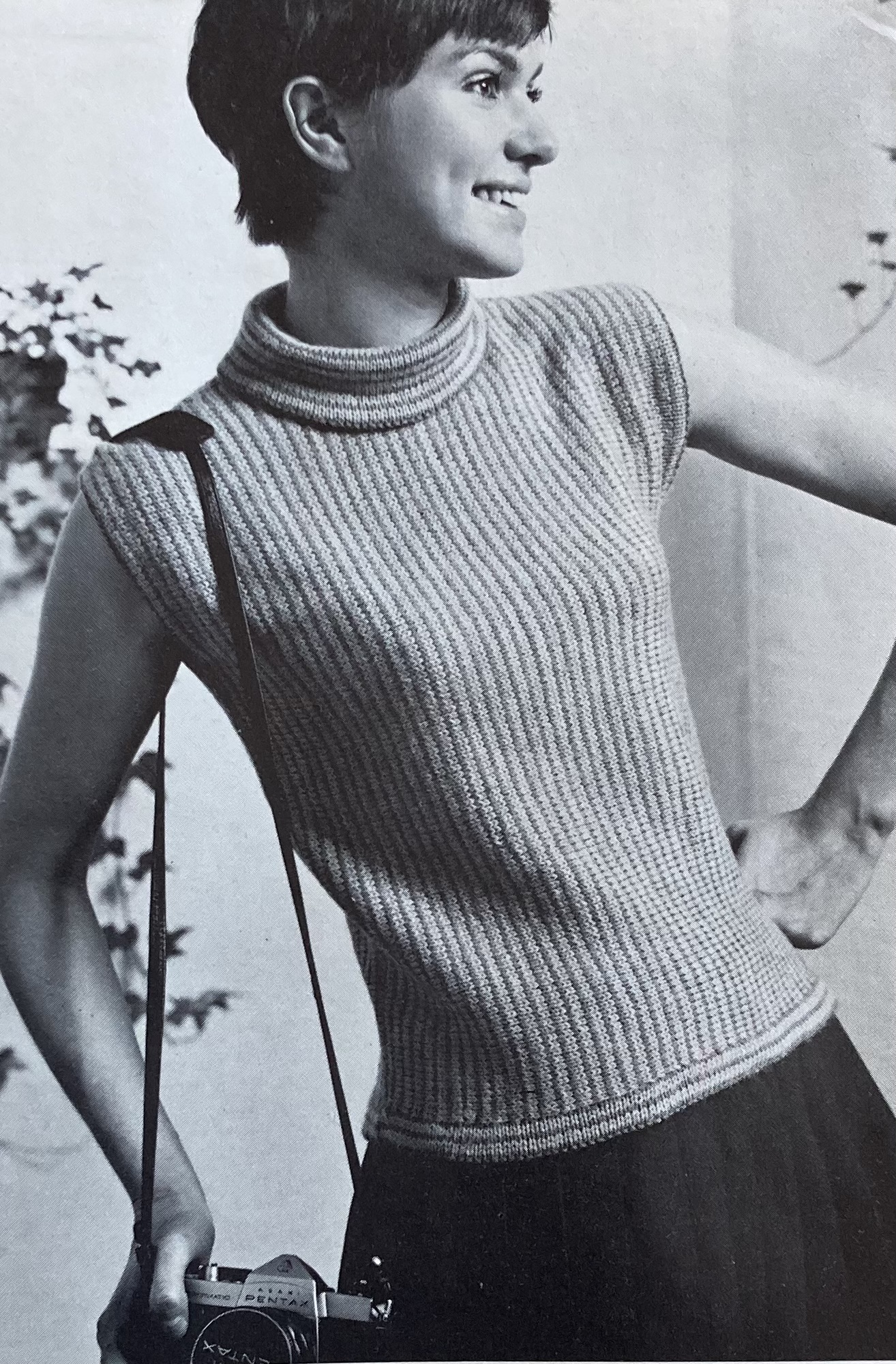
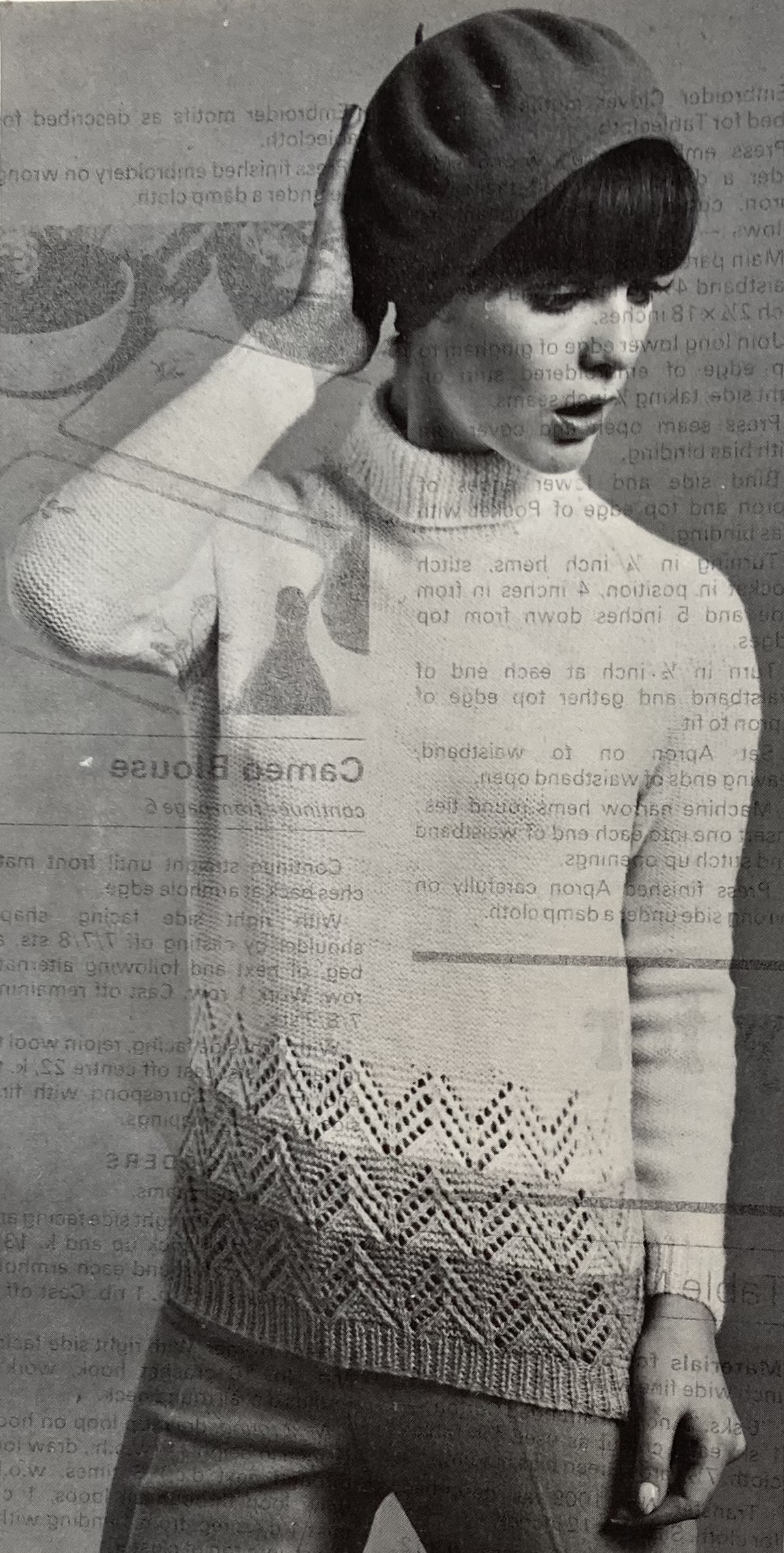
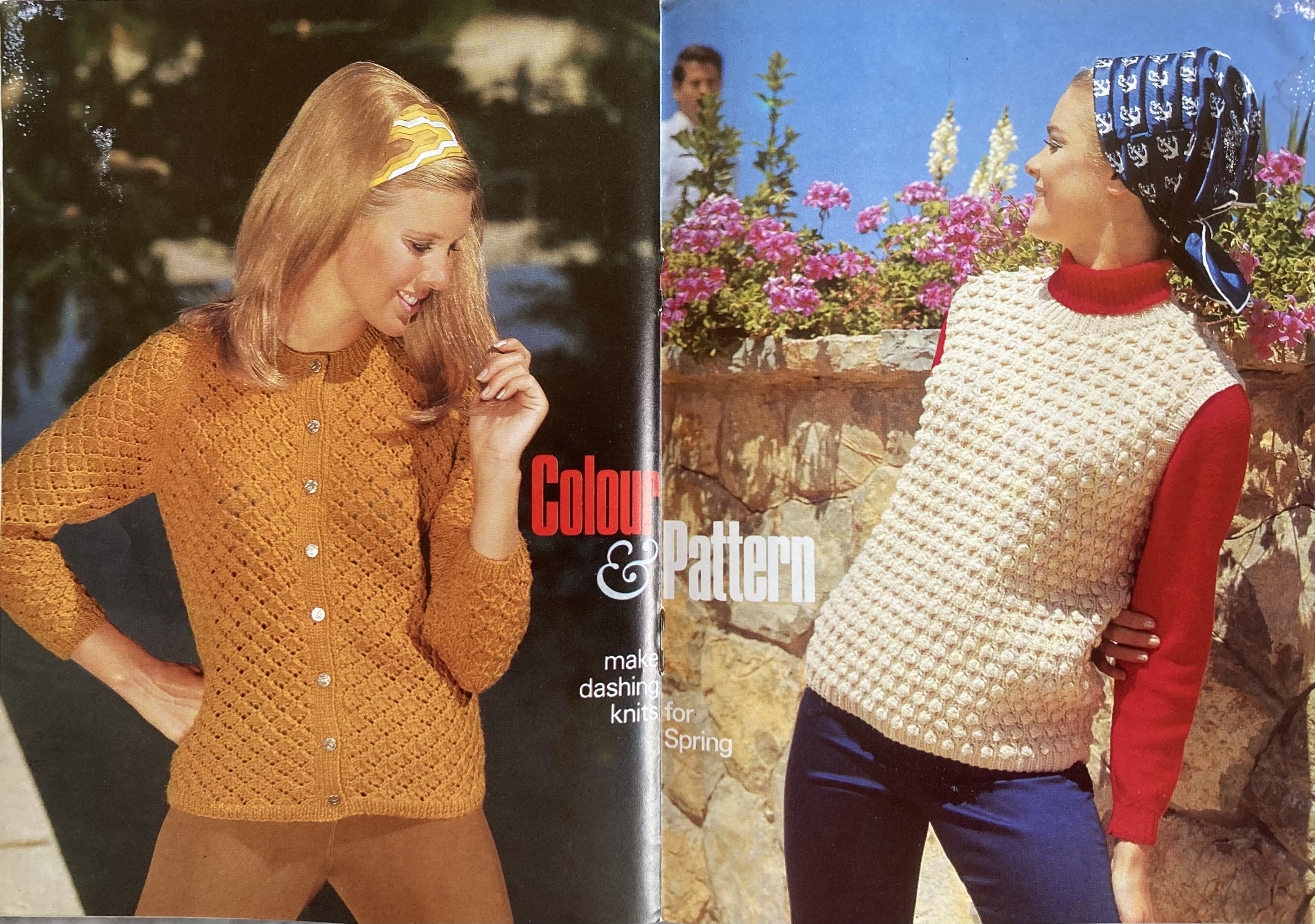
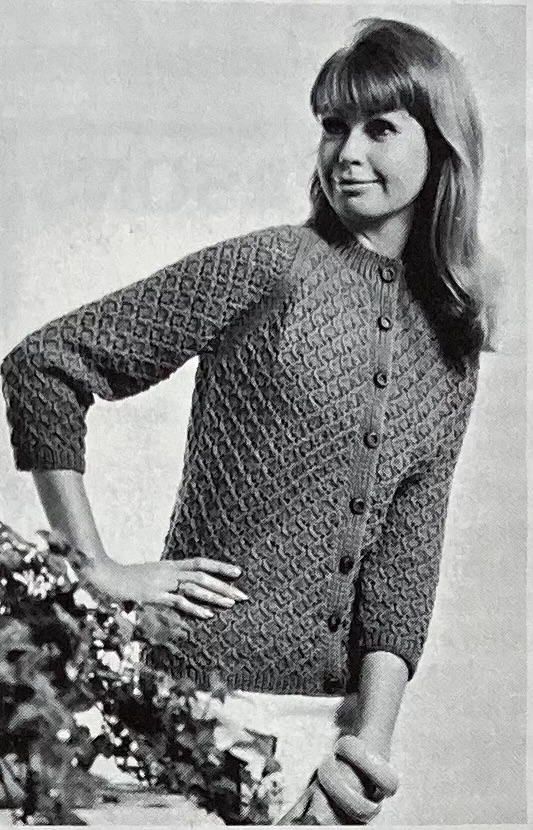
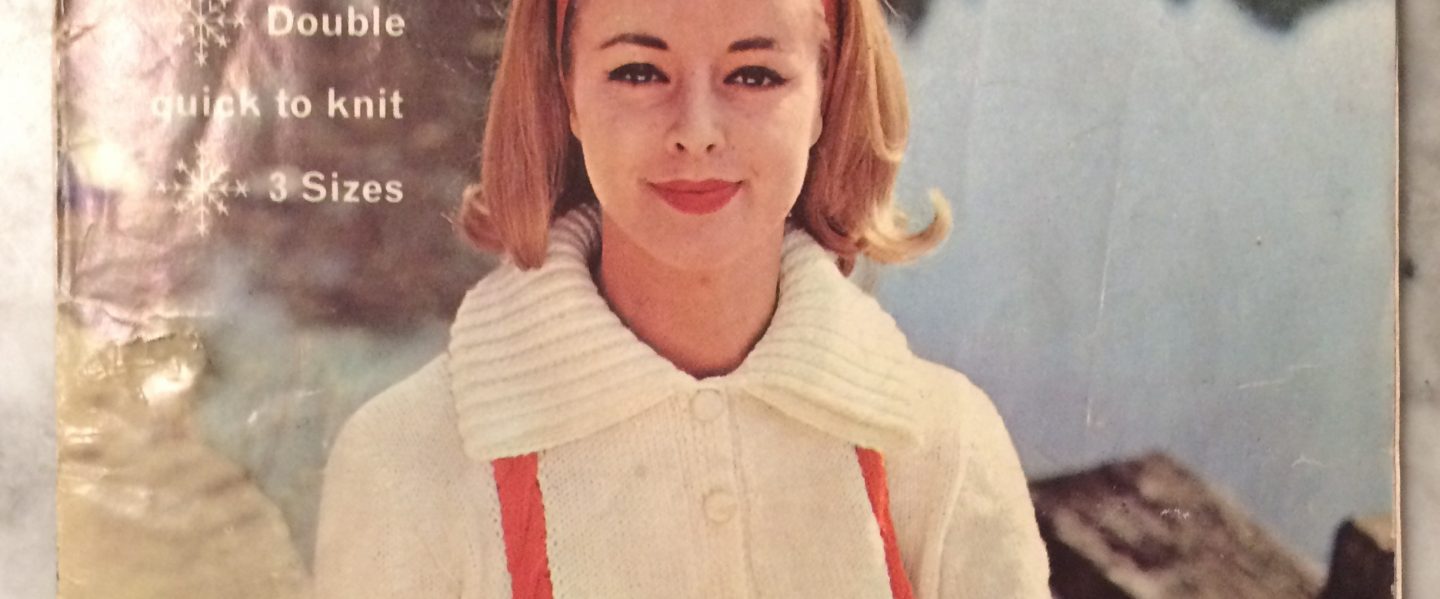
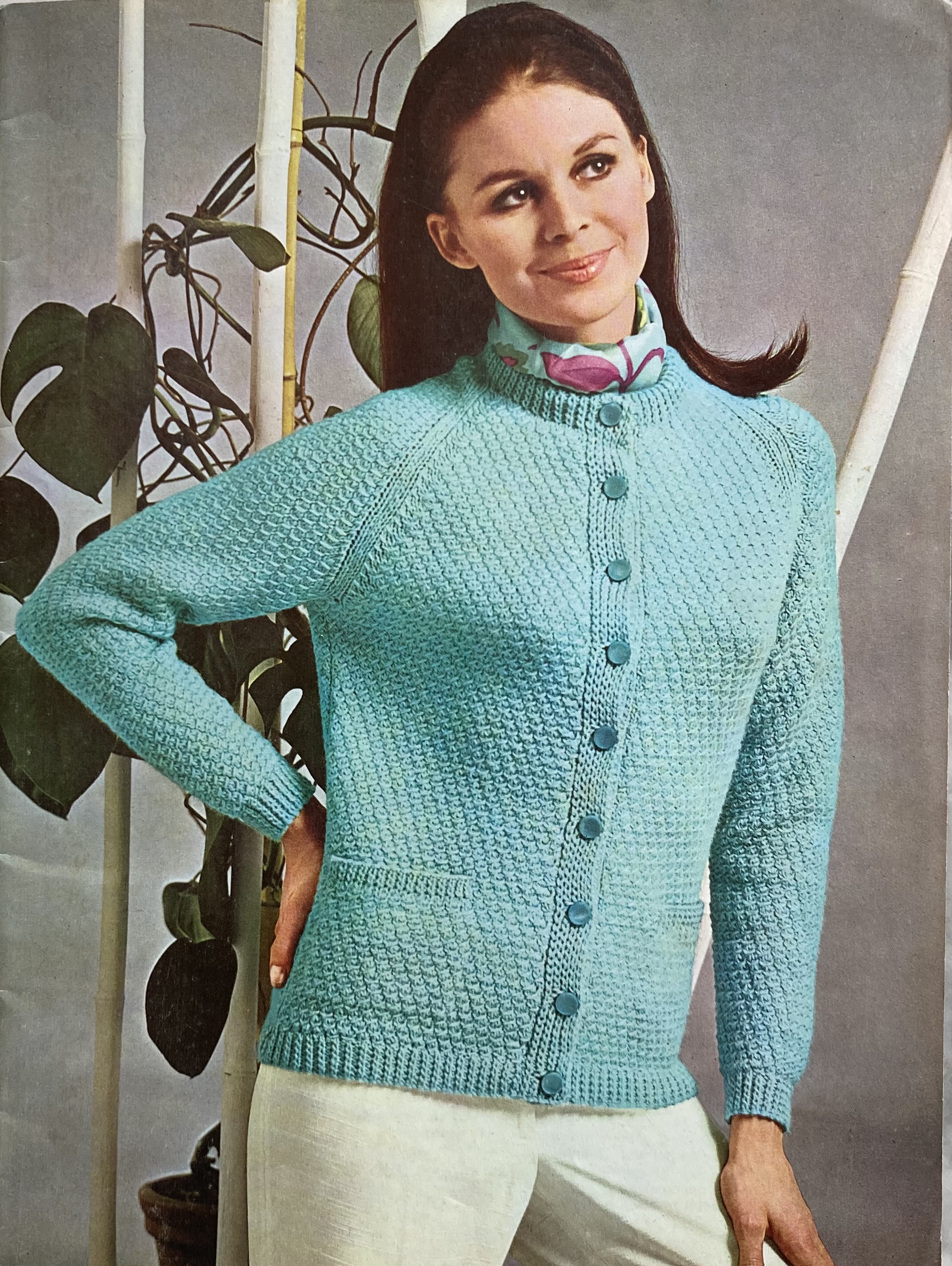
Anyway, our cover model is looking “pretty as a field of clover” in her high-necked, compound-raglan twin-set made in a three-colour slip-stitch pattern. So pretty, that they printed two full-page, full-colour photos plus one smaller black-and-white photo with a different model!

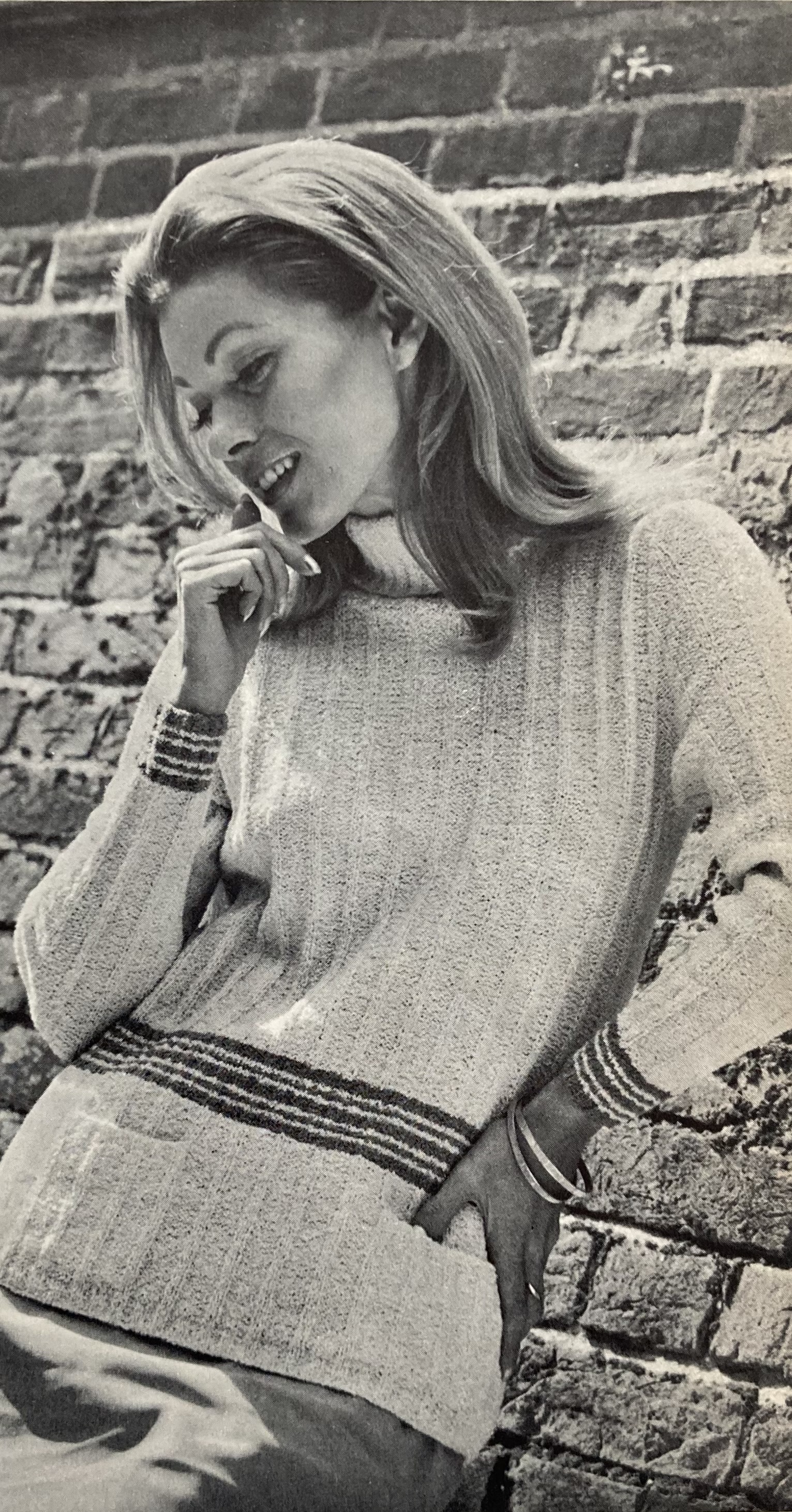
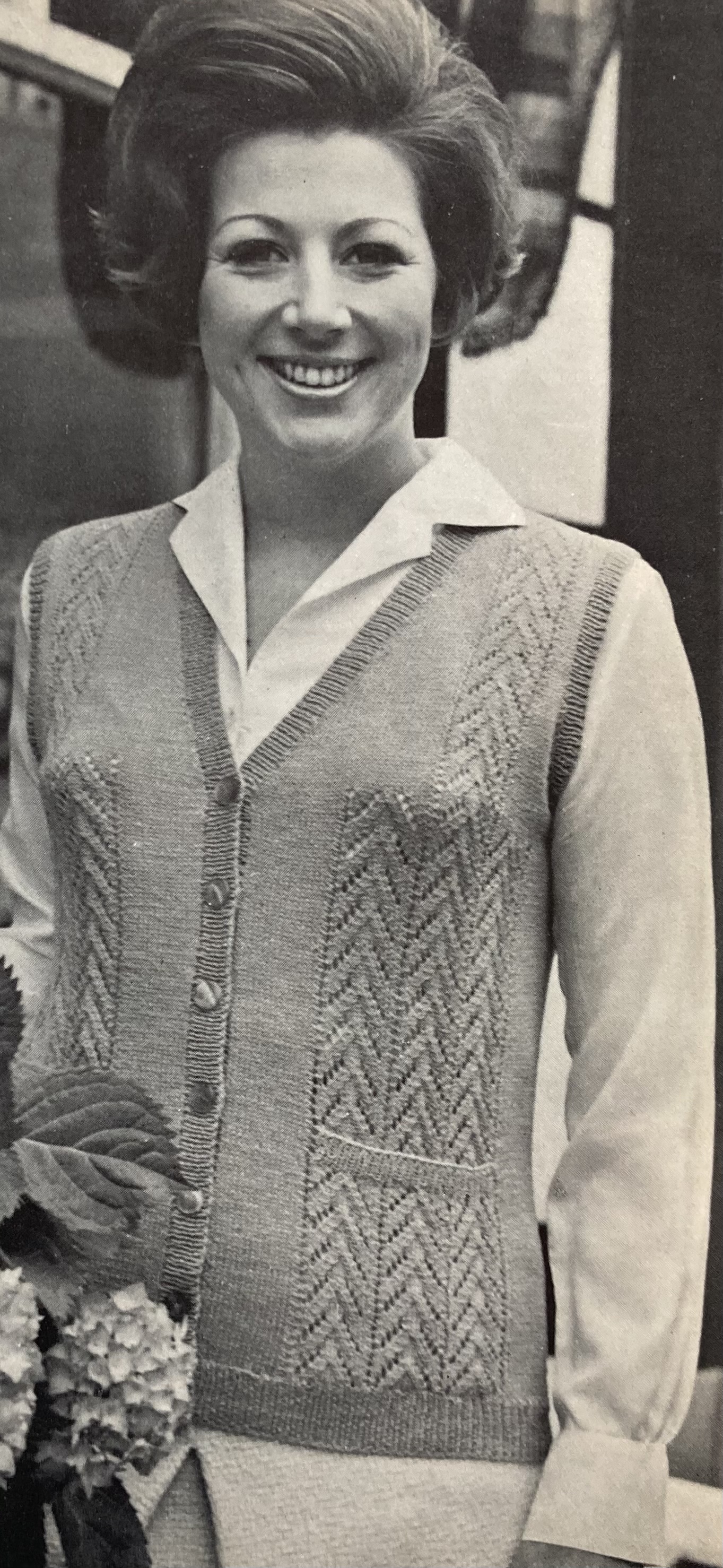
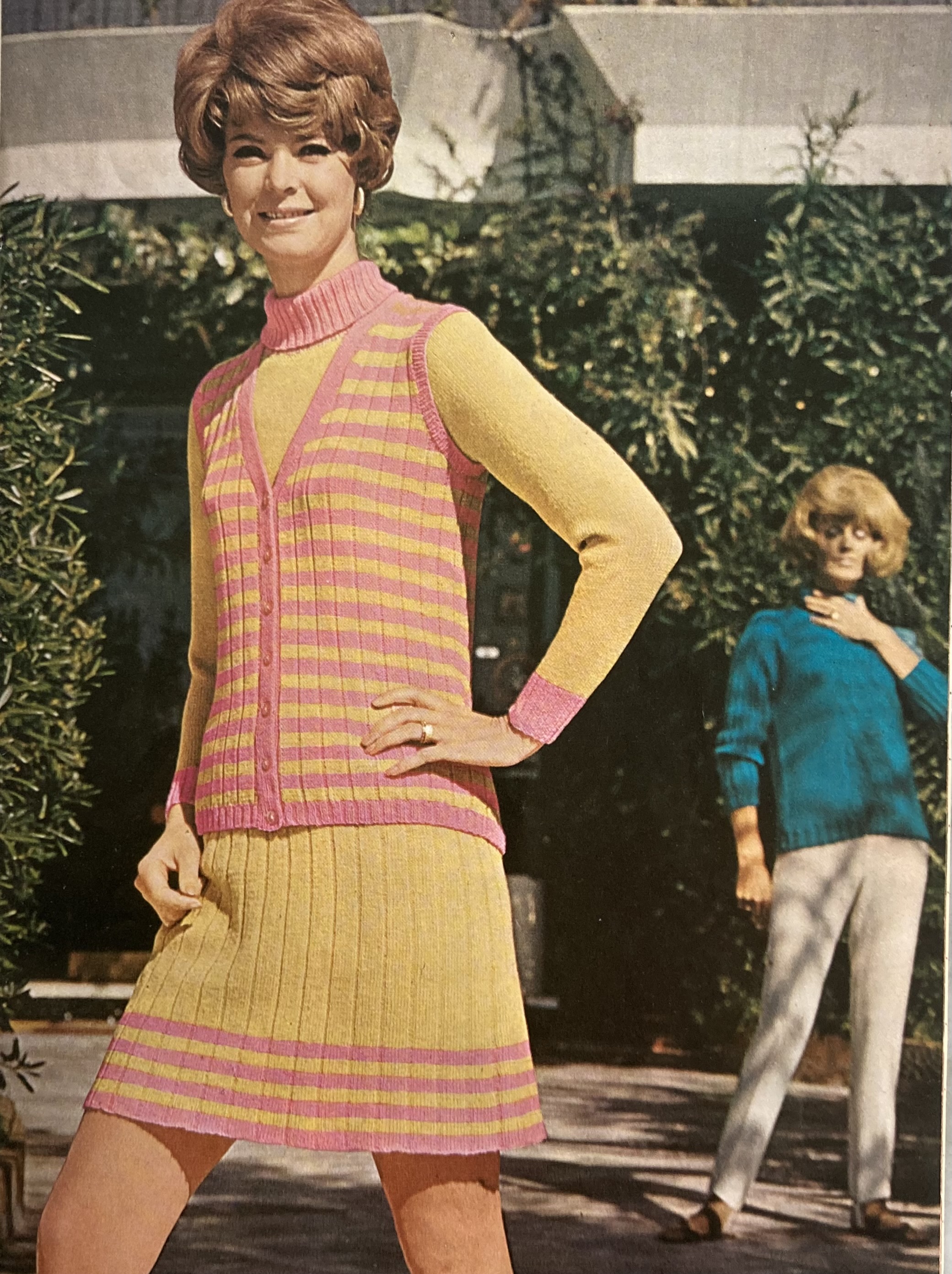
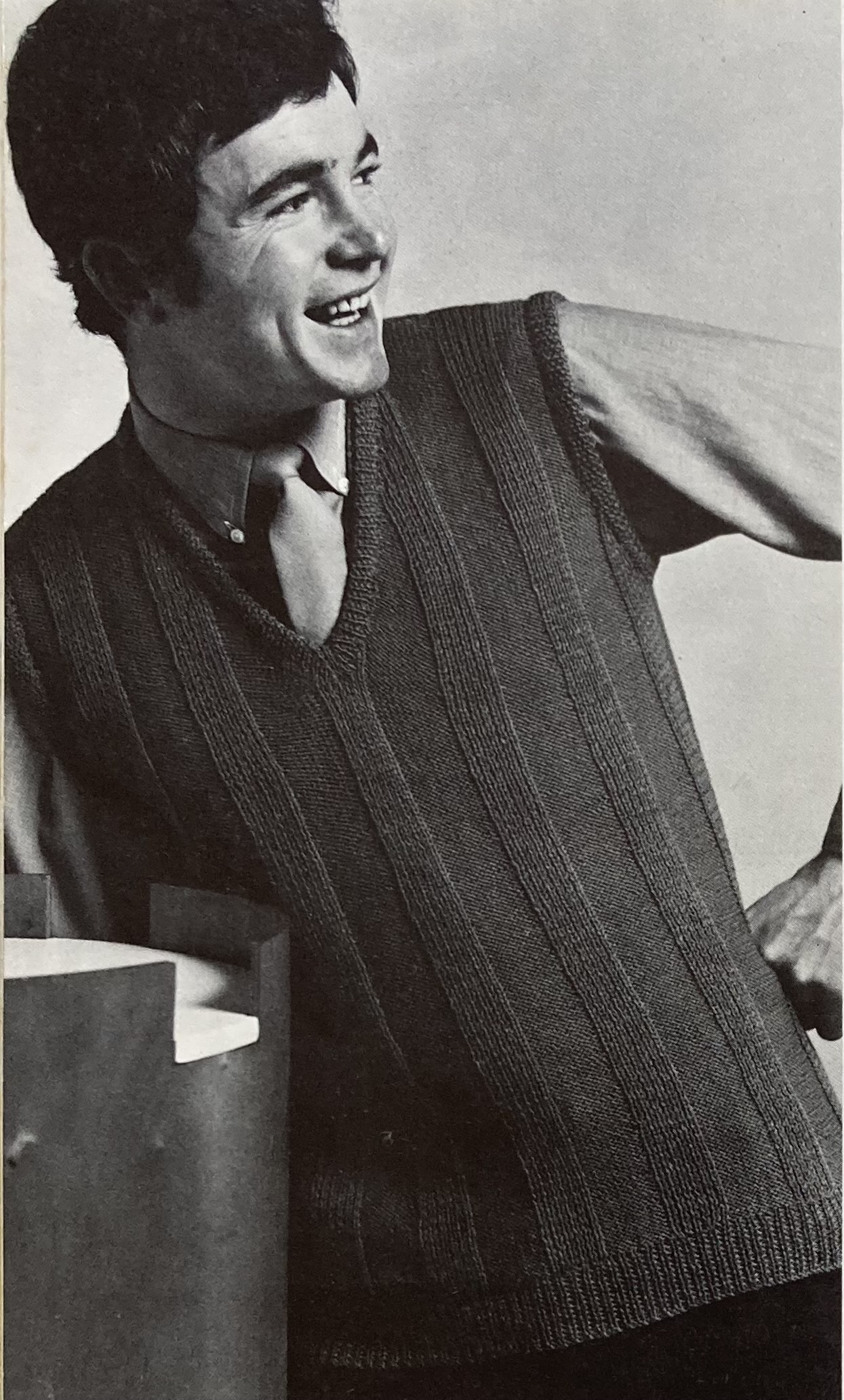
Other “late season sweaters” include a similar short-sleeved jumper in a similar slip-stitch pattern, this time in two colours and a henley-buttoned front yoke, a longline jumper in bouclet wool, a V-neck waistcoat for larger sizes, and a dress-waistcoat combination “continuing the Paris trend for dresses with matching sleeveless cardigans.” We’ll be seeing a lot of these up into the early 1970s.

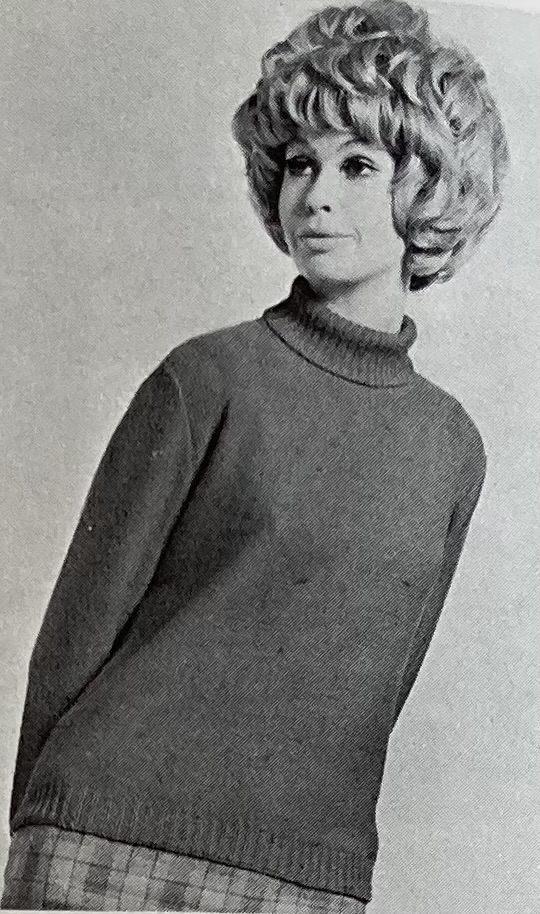
Another unmistakable trend are the famous bouffant hairdos / wigs, or, if hair is worn long, a fringe at the front and the back teased up behind a bow or hairband. I own a set of little plastic props that you can put under your teased-up hair to make it not fall flat and I suspect such items were very much in use at the time as well. Only the cover model and the bedcape model have un-teased long hair.

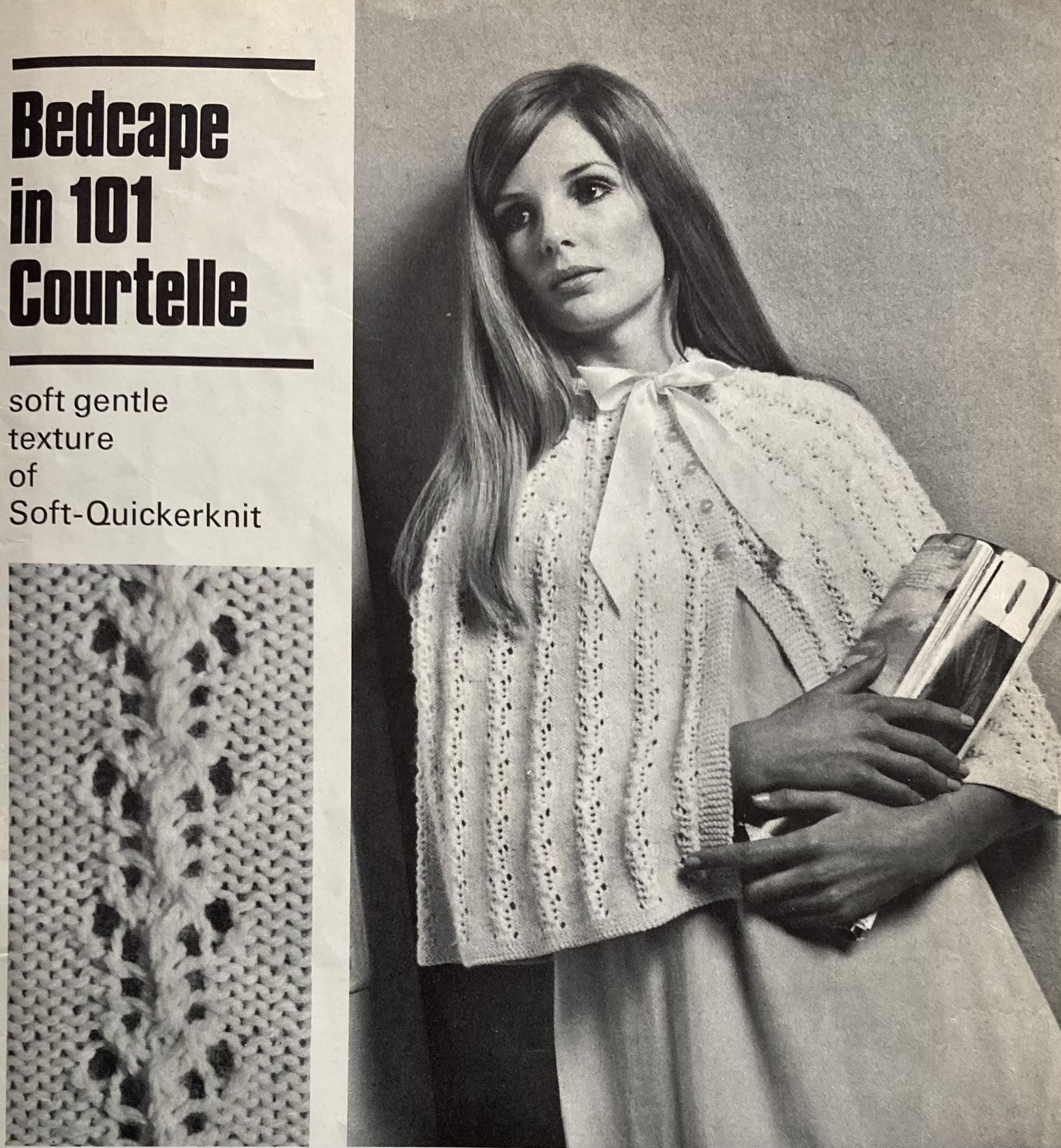
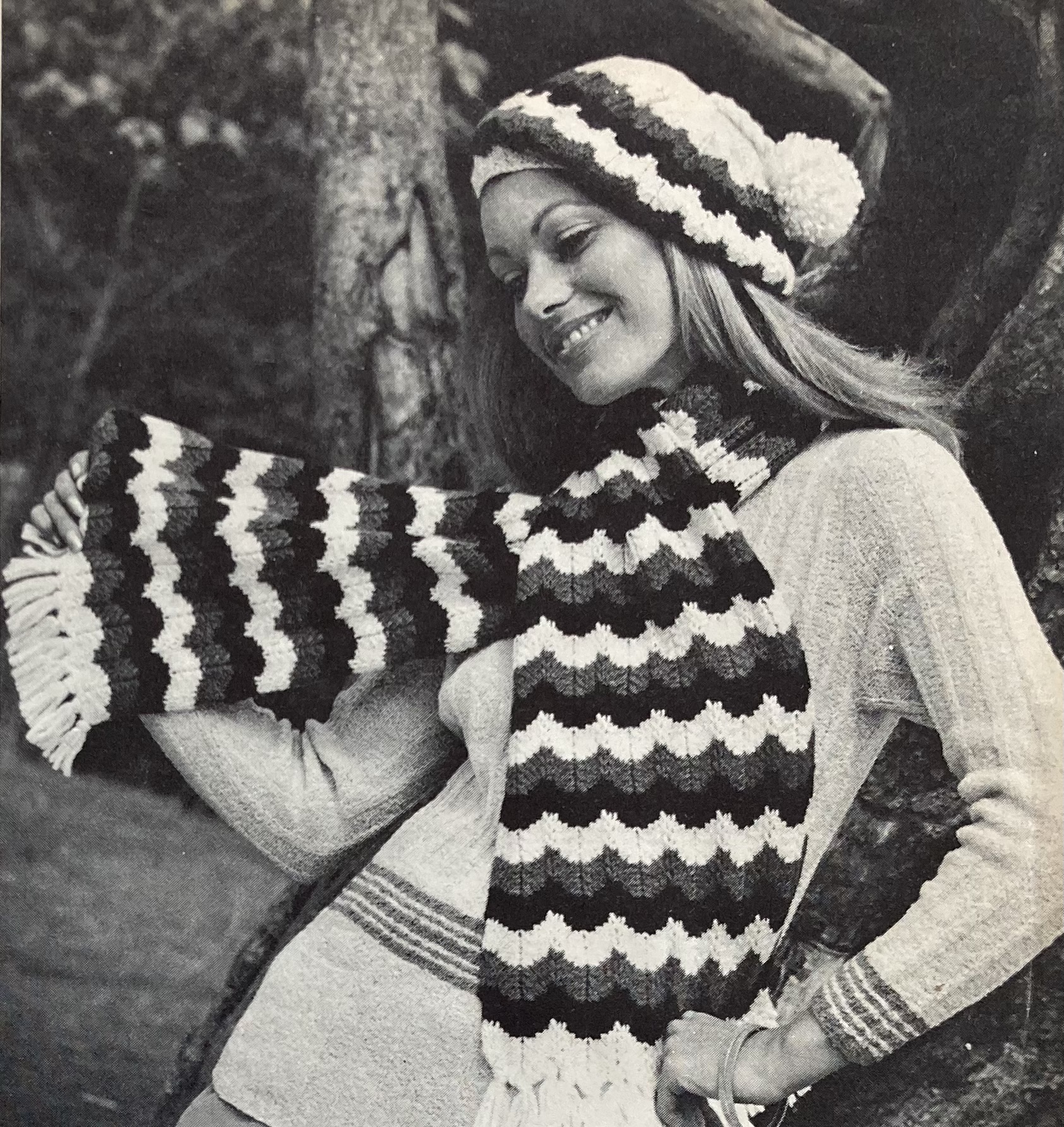
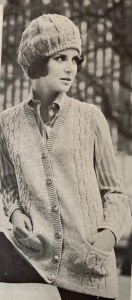
Speaking of the bedcape model… there she is again! One of my favourite Stitchcraft models, who seems to have been primarily (or exclusively?) hired to model the “sexy” bedcapes. She looks lovely in this photo, but unfortunately a bit anxious and stiff. The bedcape is pretty, though. There’s also a magnificent “bobble swing maxi beret and scarf to match” in three shades of beige and brown for those country rambles in cooler weather.

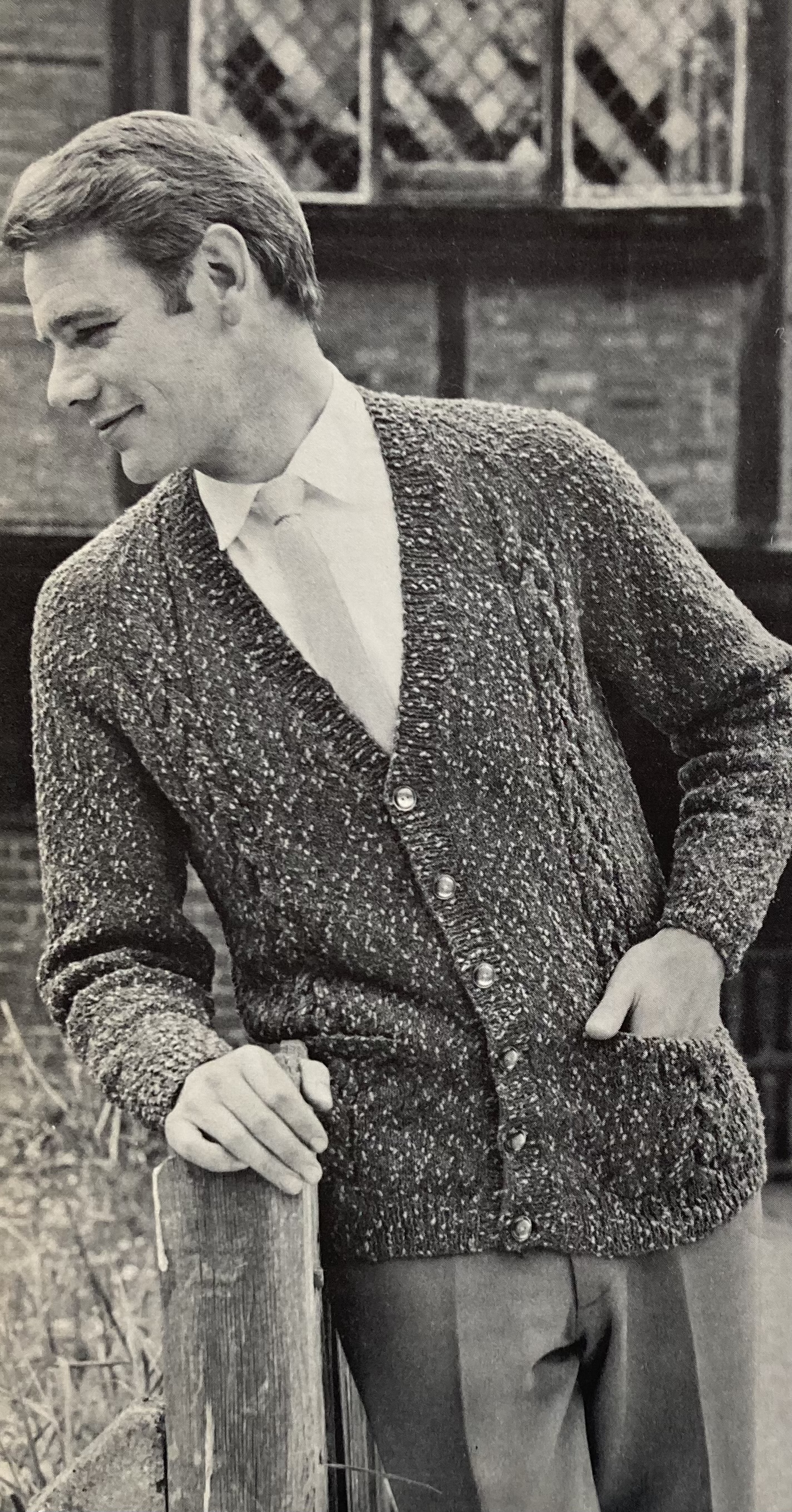
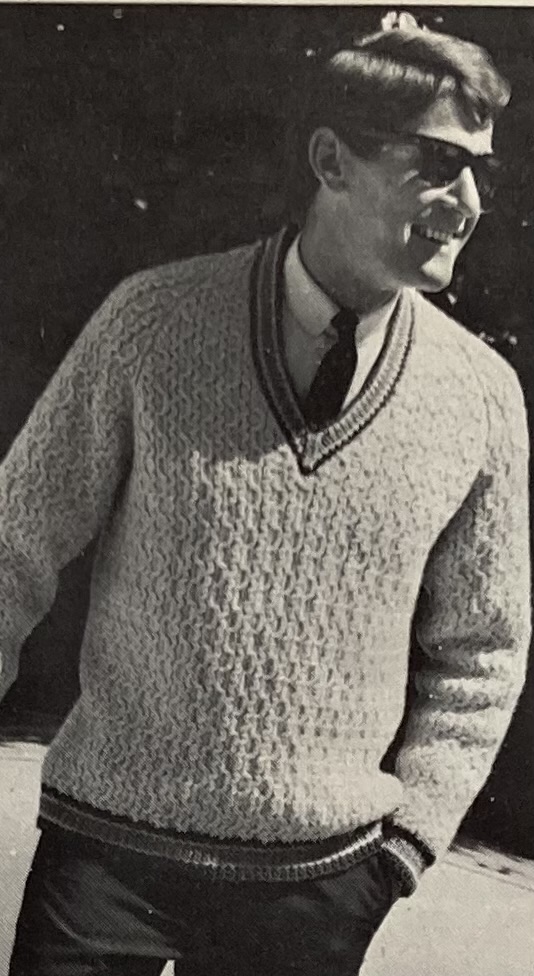
For men, there’s a casual long-line cardigan in textured “Four Seasons” wool and a pullover in a thick, textured twist pattern. Like many of the women’s fashions,it features little striped colour accents on the yoke and sleeves. Very 1960s diagonal poses.

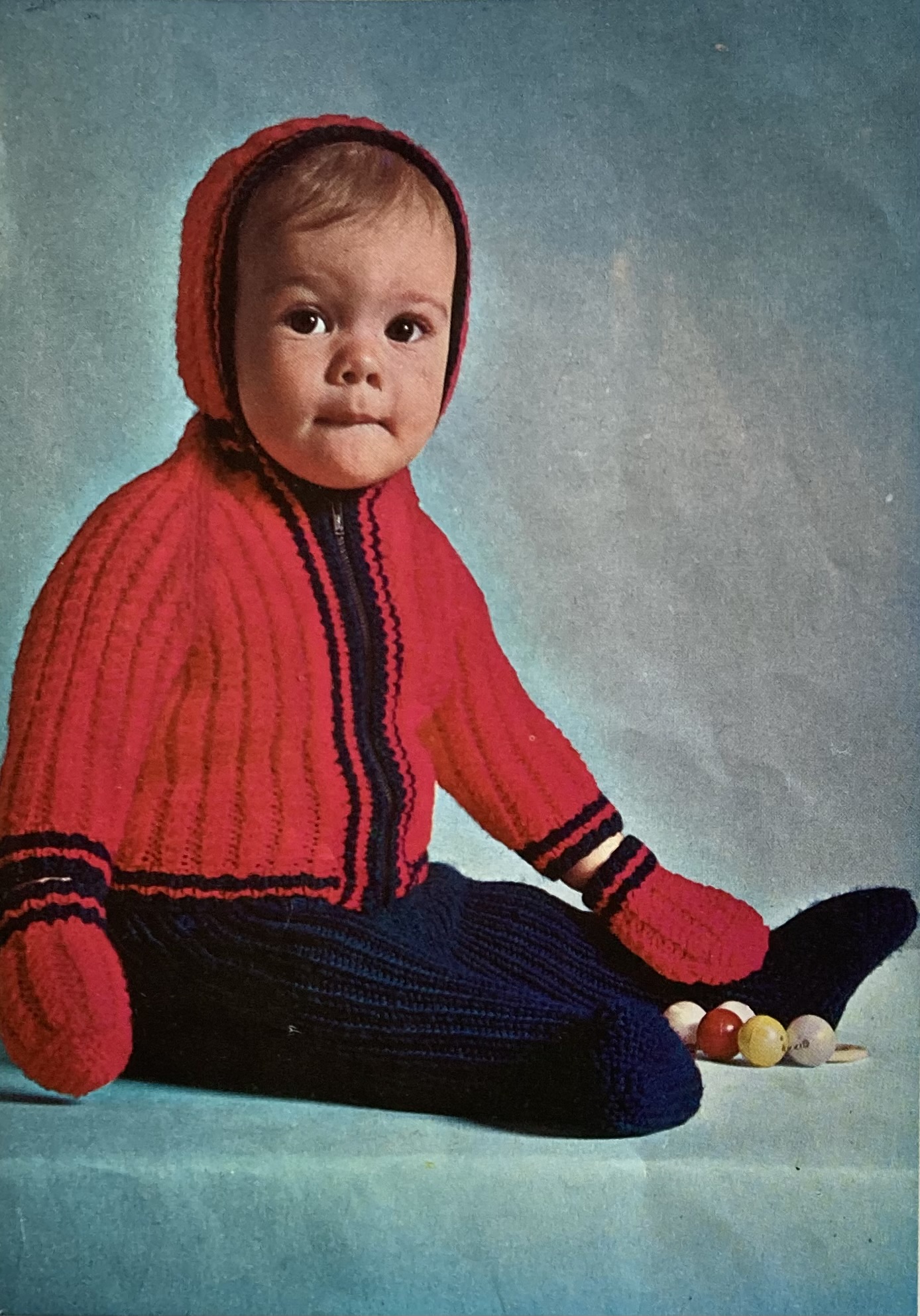
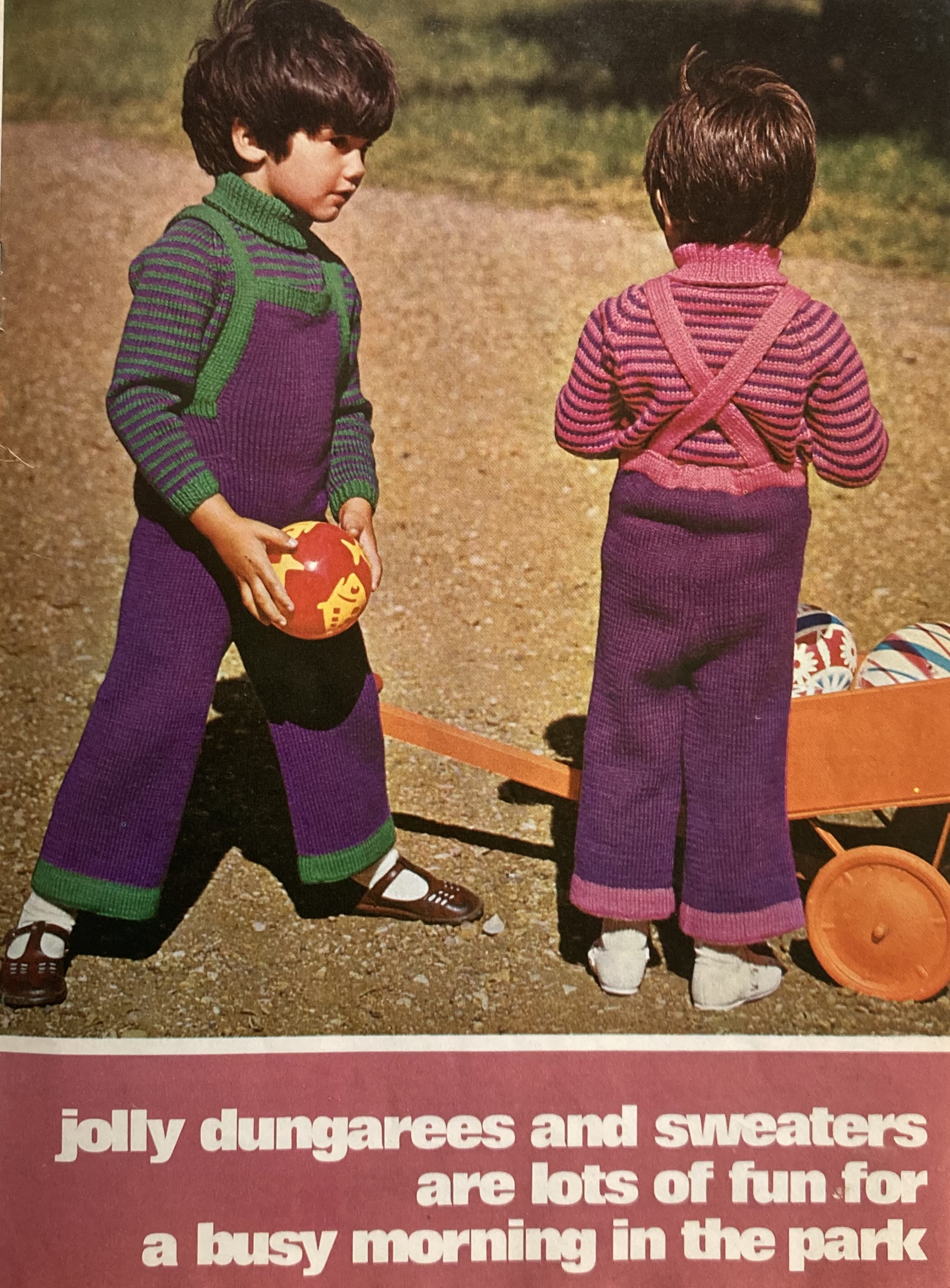
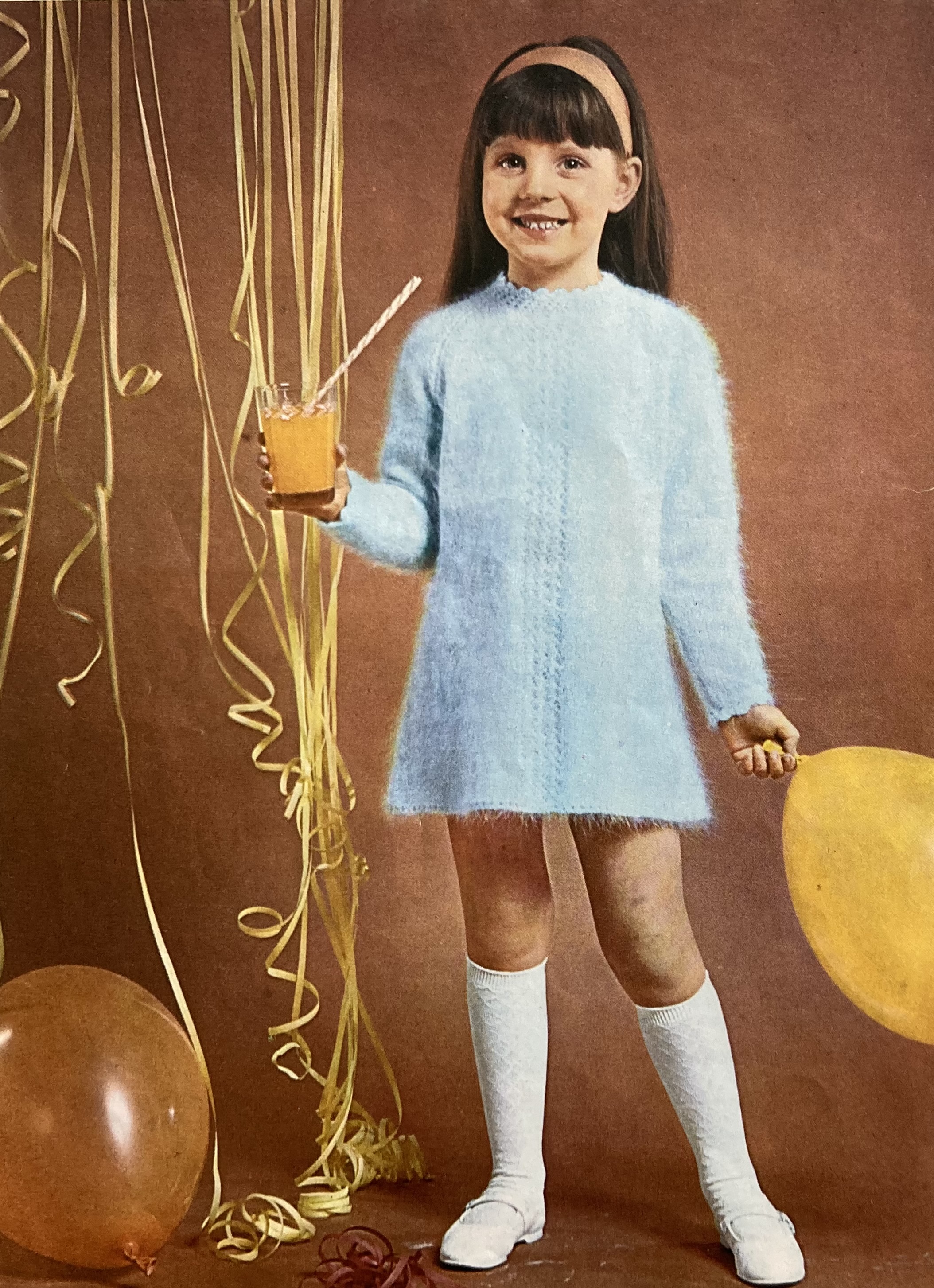
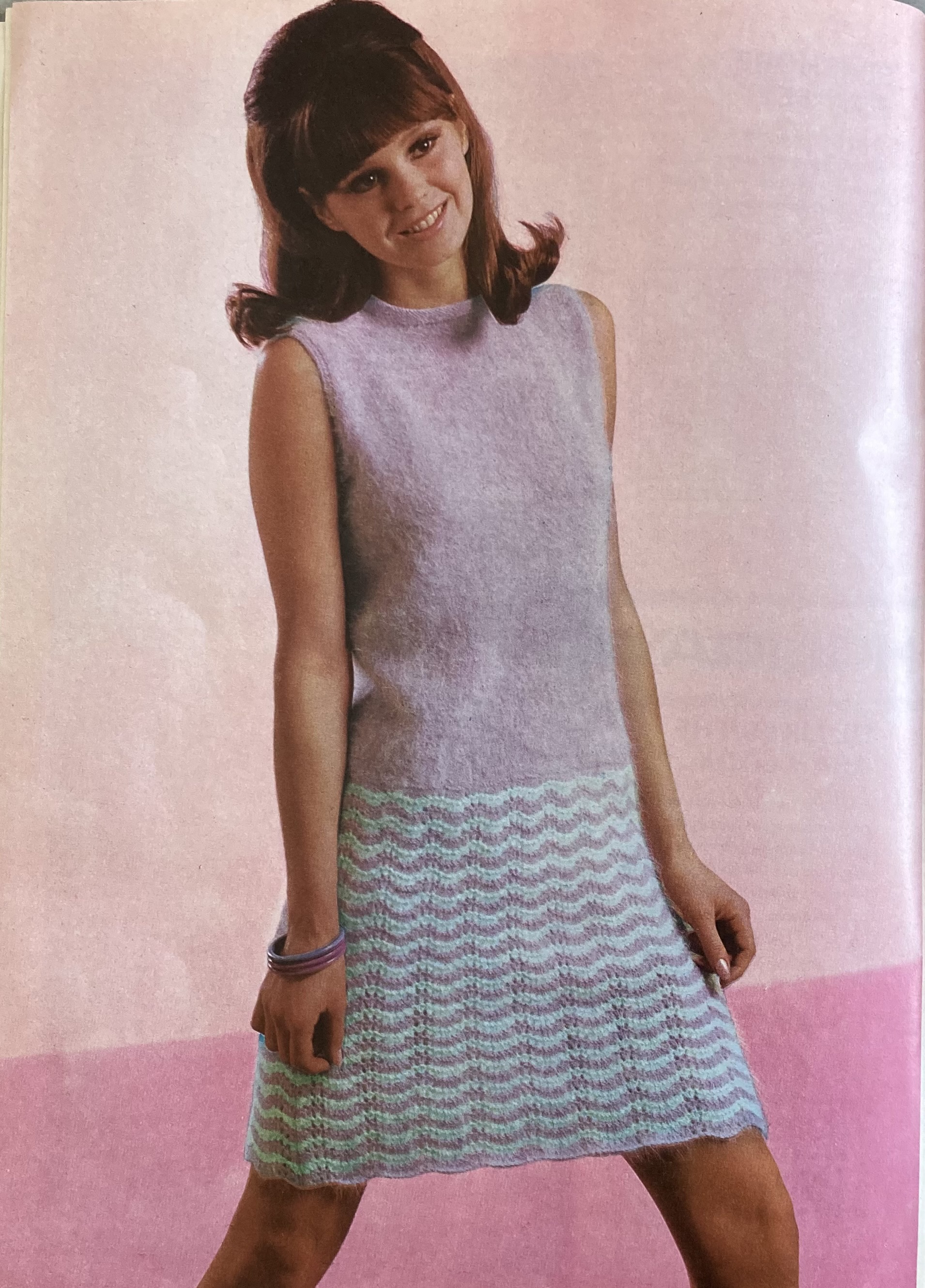
Children can get suited up for outdoor playtime in a jacket-leggings-and-mittens outfit (babies and tots) or a knitted dungarees with warm sweaters underneath. For more dressy occasions, there’s a fuzzy blue “dream of a dress to make a little girl have a wonderful time.” You get the feeling that the golden age of advertising copy has arrived in full force. Also in full force is the golden age of children not wearing anything on their legs. As pretty as the dress is, that poor girl is going to have a terrible time at her party if she can neither move nor sit down without flashing everyone there.

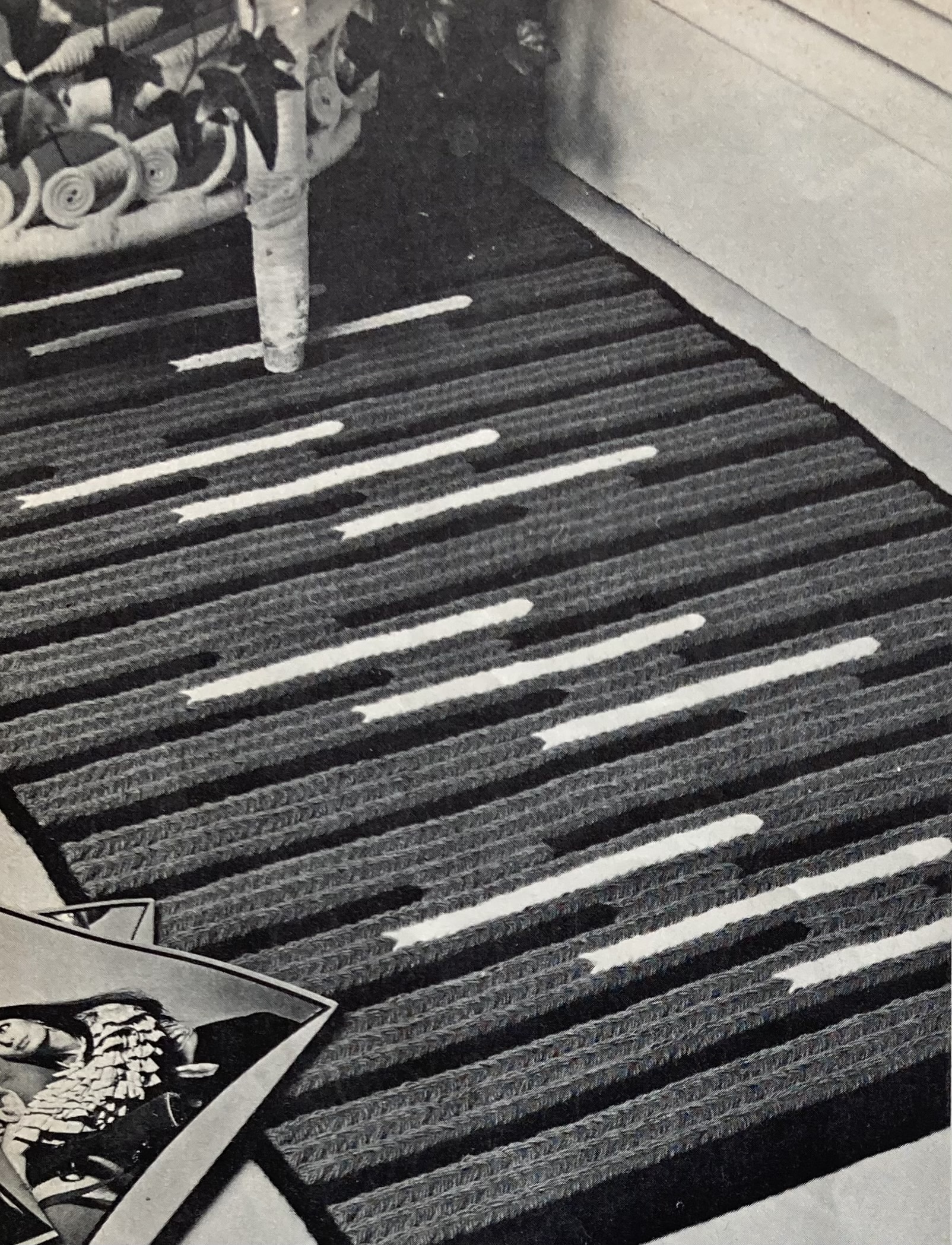
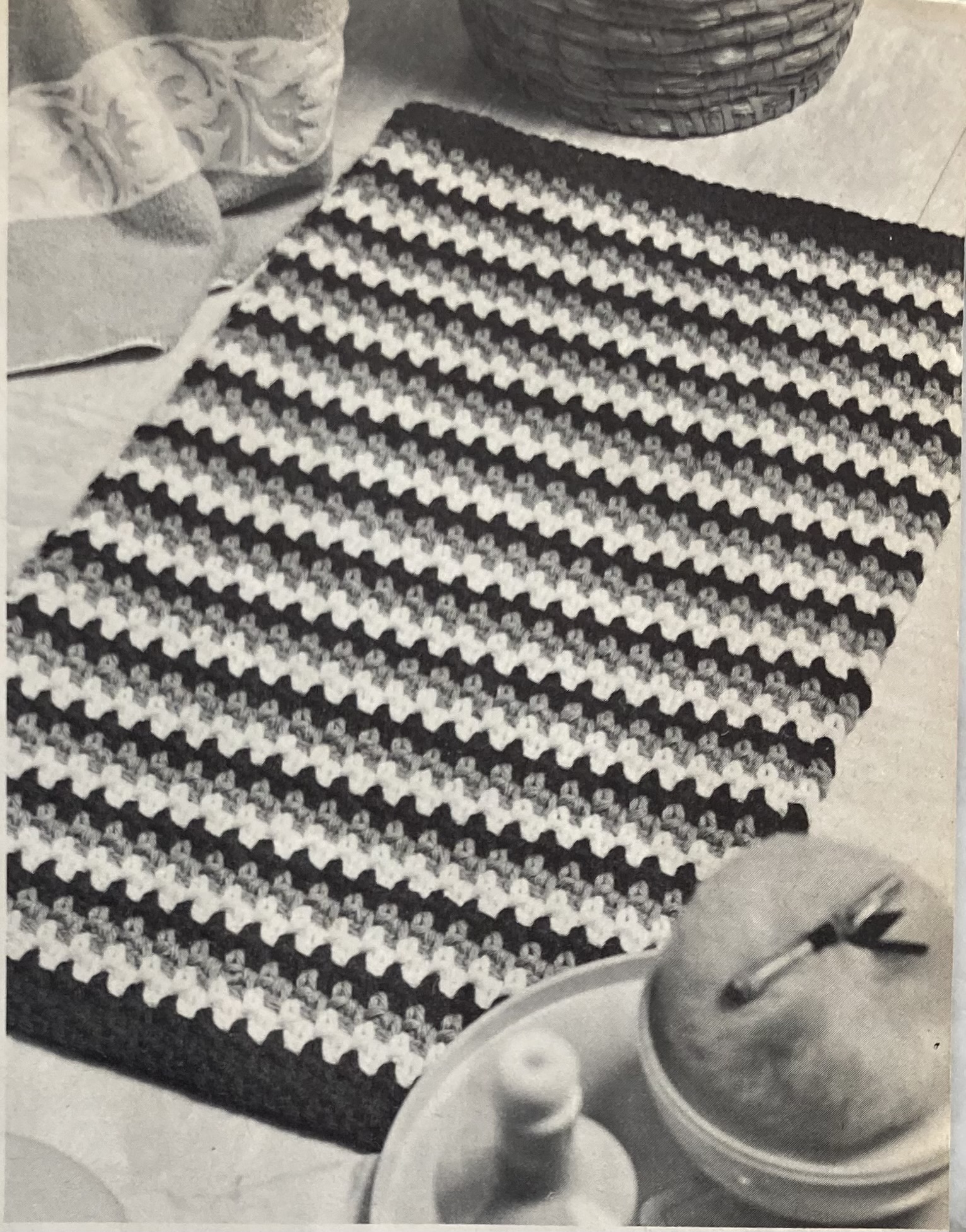
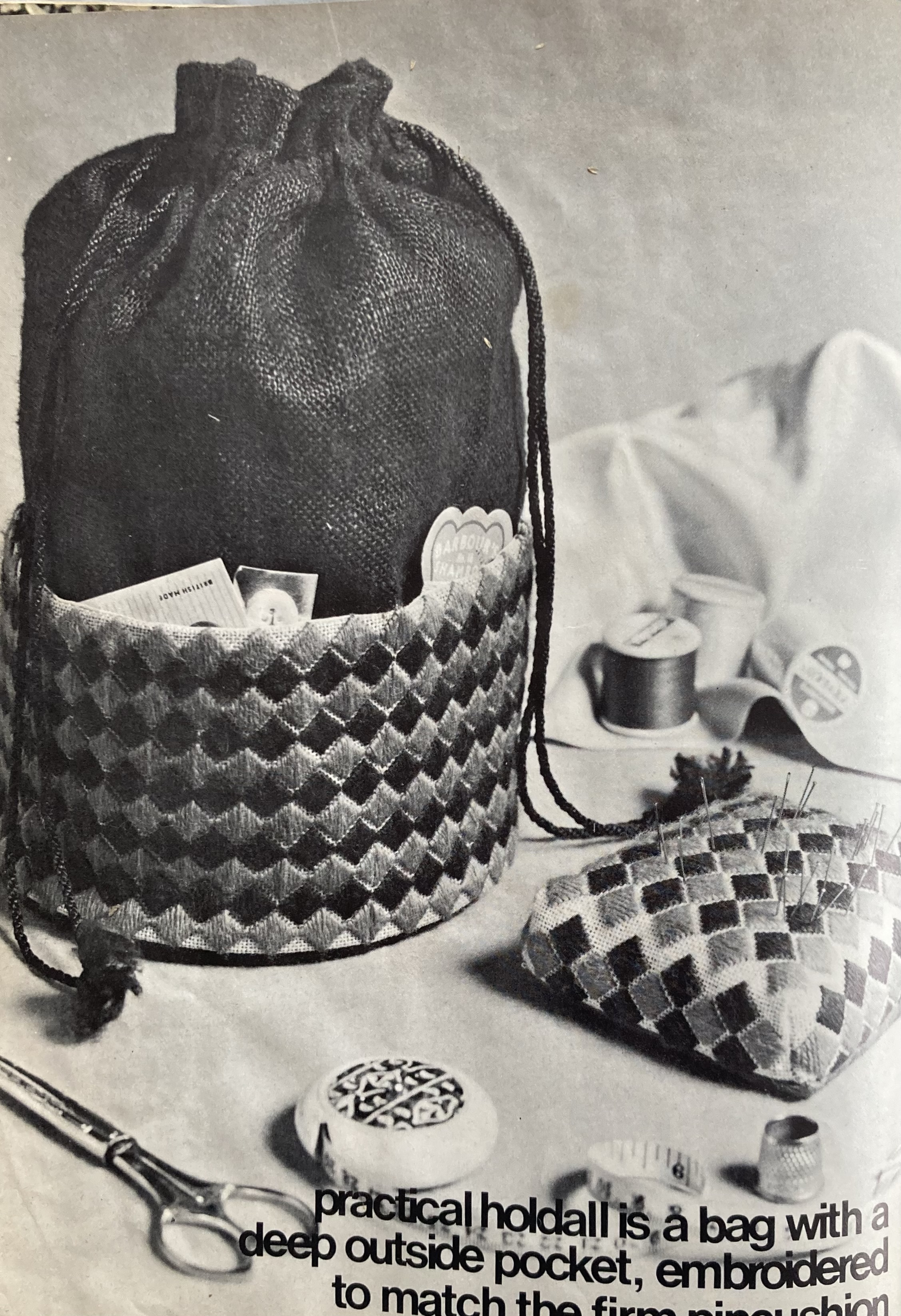
The homewares are nice, if not particularly special: two practical runner rugs (stitched or crocheted), a pincushion and/or holdall bag in diamond-check tapestry, or little flower motifs to embroider on a tablecloth, tea/coffee cosy or cushion.

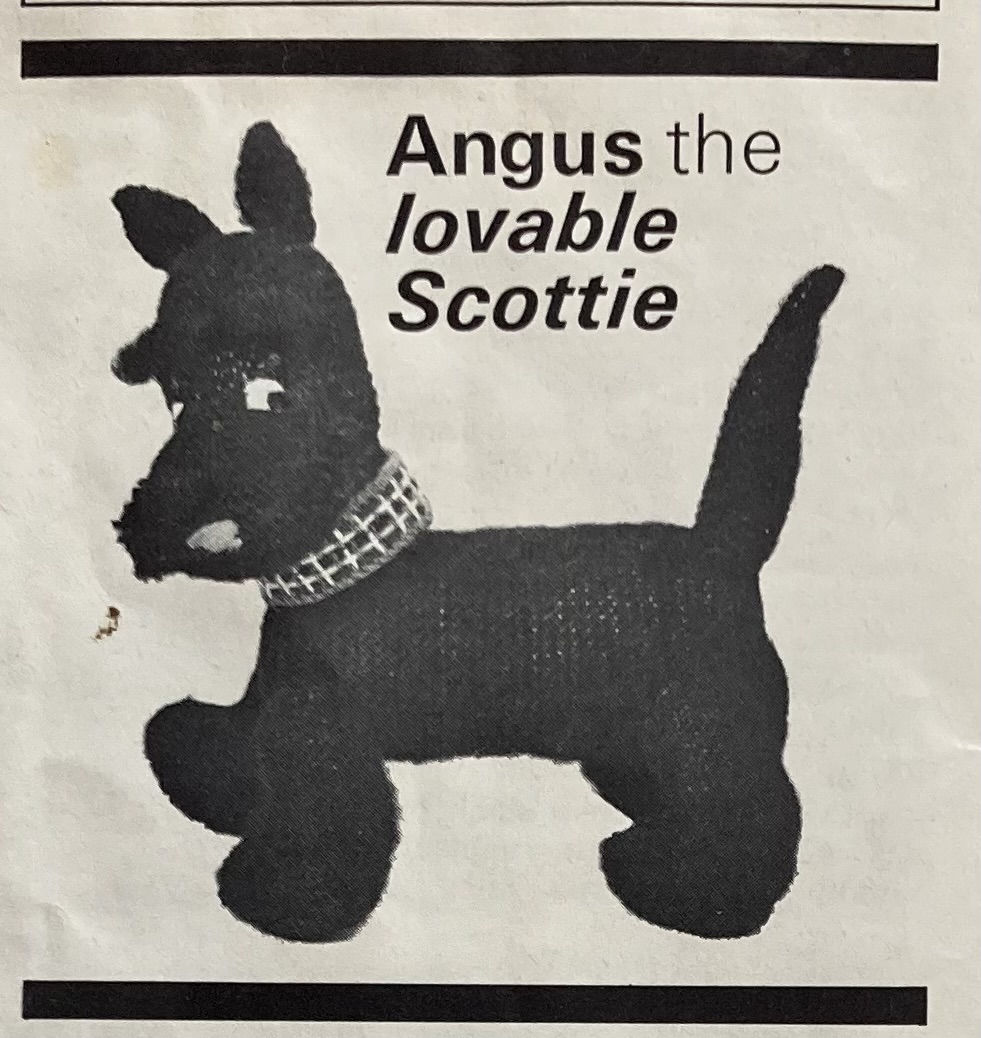
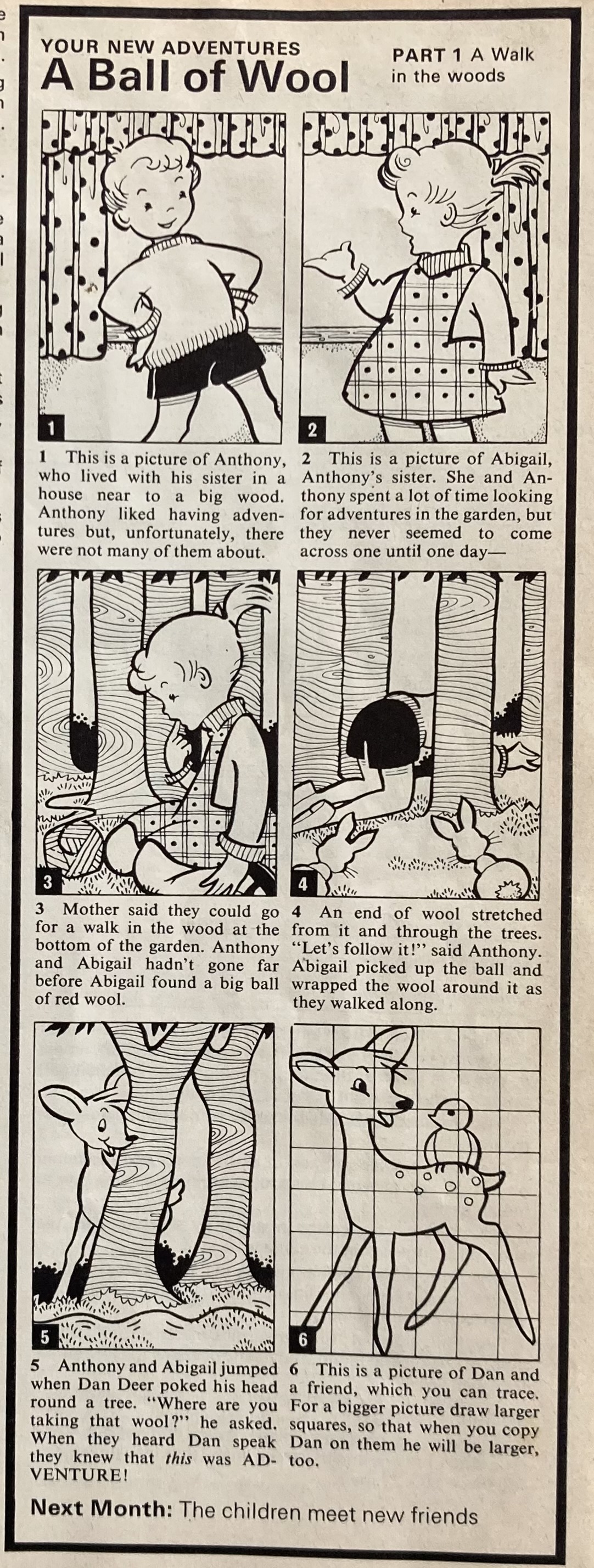
The “Readers Pages” give us an extra pattern for a knitted Scottie-dog toy and the first installment of the new children’s serial comic, “A Ball of Wool”. Sibling children Anthony and Abigail find a magic ball of wool in the garden and wind it up to see where it leads them. Sort of a reverse Ariadne, I guess. It starts by leading them to Dan the deer, who can talk! Let’s see if they find their way home by the end. There’s also an ad for Patons newest yarn, super-bulky “Doublet” that promises to knit up quickly “to keep pace with the busy life you live.” Note the long-line, V-neck waistcoat and textured men’s pullover – right on trend.
I am swamped with work and other projects, so won’t be making any of the larger items. I do have some nice sets of plain table napkins from my grandmother and will take the opportunity to embroider them with the little flower motifs.

August 1968: Cabled Bonny Beret

I actually got a project finished on time this month!
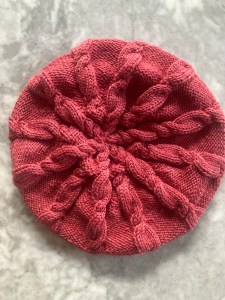
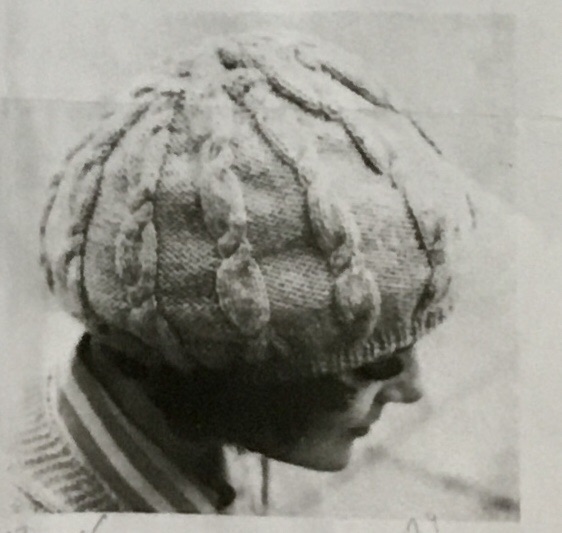
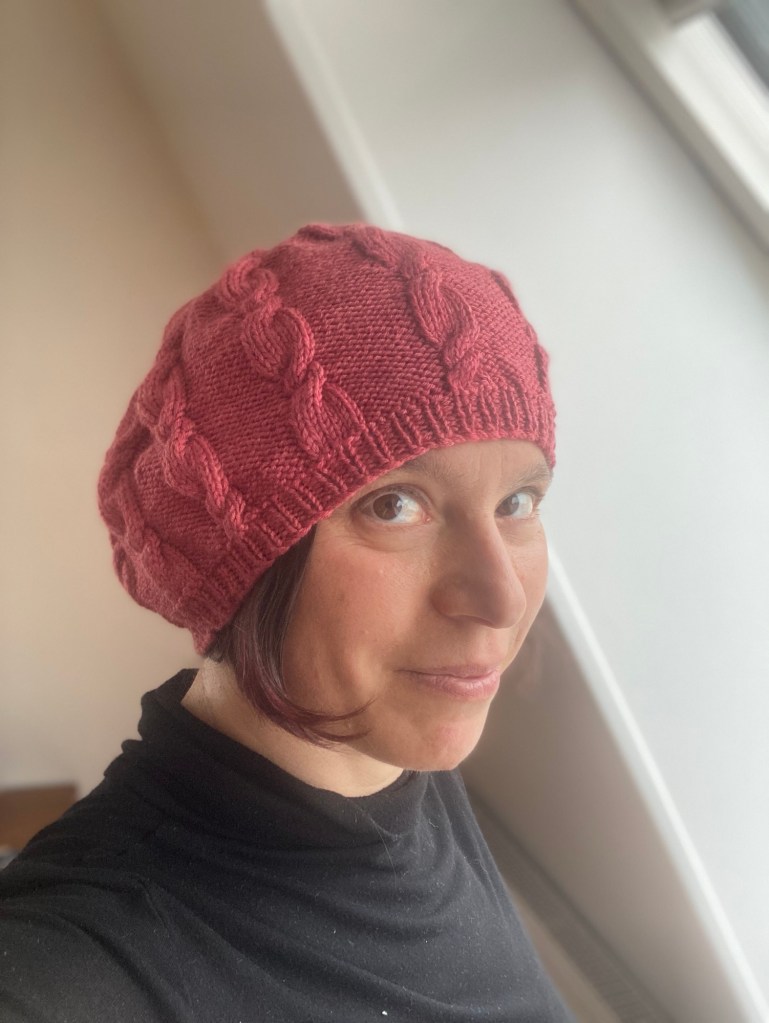
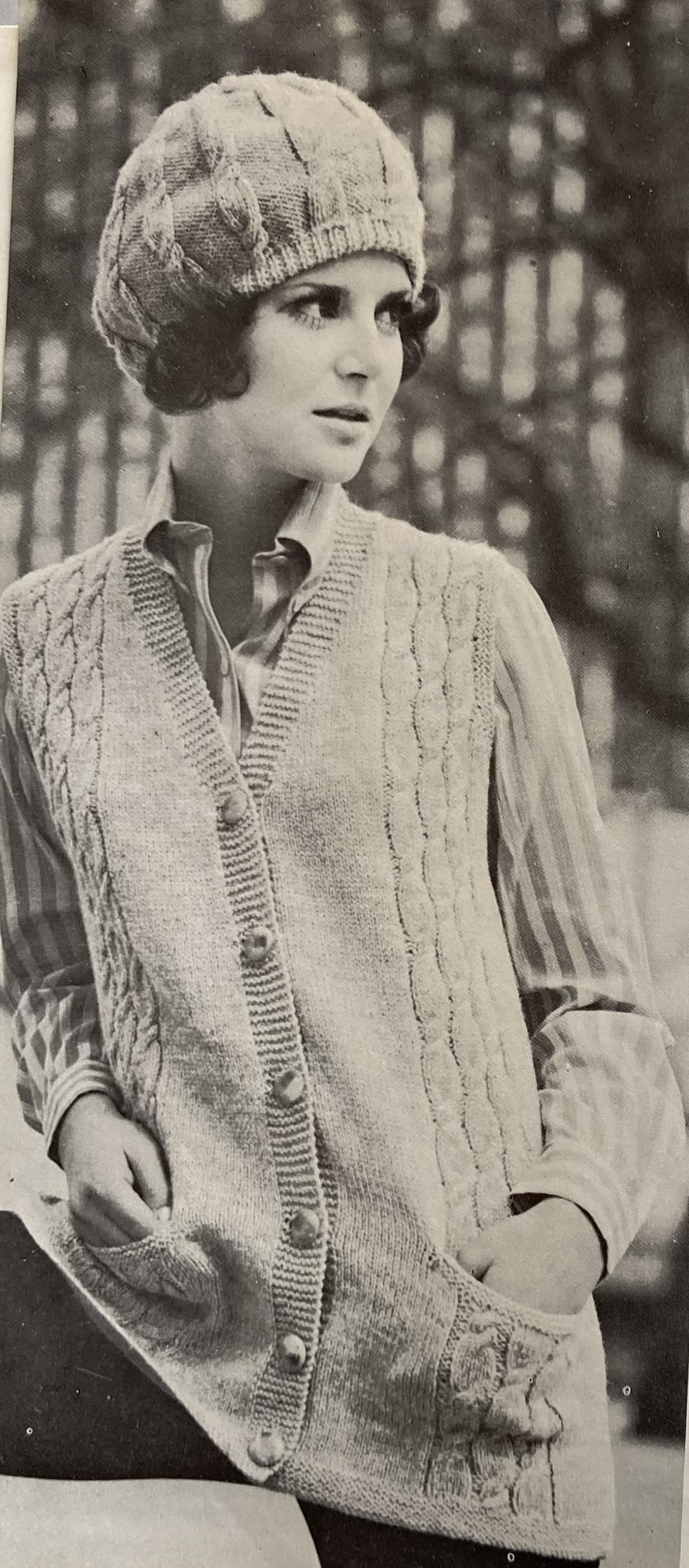
Admittedly, it was a smaller project: the „Cabled Bonny Beret“ to match the longline waistcoat from the August 1968 issue of Stitchcraft.

1968 seems to have been the start of the late 60s-early 70s long waistcoat/slipover fashion, often accompanied by a matching accessory and sometimes as part of an entire matching outfit with „slacks“, a hat, a scarf, caridgan jecket etc. This issue featured a waistcoat-and-beret combination in Patons „Fiona“, a blend of Shetland wool (hence the use of „bonny“ and frequent descriptions of the designs in misty-mountain stereotypes.)

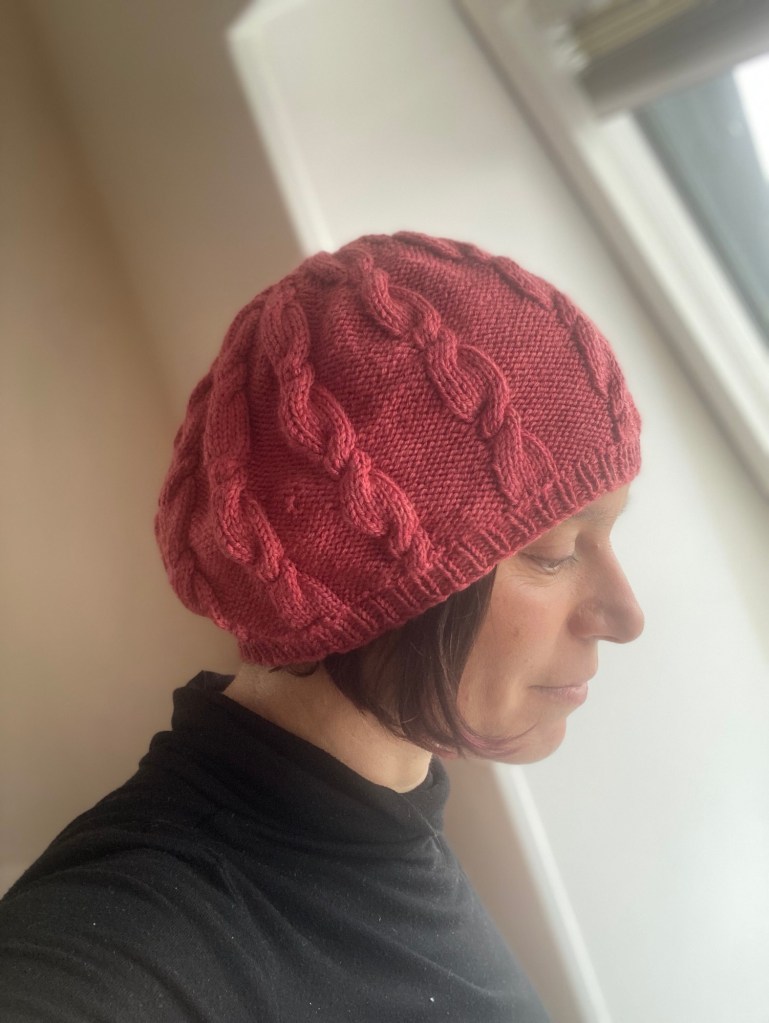
The pattern is originally intended to be knit flat and sewn together, but I made it in the round, omitting to two extra seam stitches. Other than that, I followed the pattern. My wool was a 100 gram skein of Felice Fingering Puro, a yarn that I do not like, as it stretches out immensely with blocking, but I had it in the stash drawer and figured a beret would be OK even if it were floppy. I used the yarn double to match the tension and knitted it up tightly to try and counteract the inevitable stretch. (Spoiler: it stretched anyway.)

The cable pattern is a pretty variation on the standard 6-stitch twist cable, with two twists right after each other and spaced alternately row-wise. They come together at the top of the beret via the very simple method of decreasing between the cables. So simple, in fact, that the designer didn‘t think to combine the cables or criss-cross them at the crown; half the cables just stop and get knitted over with reverse stocking- stitch. There were forty-two stitches left over at the end to get drawn up and fastened off! Strangely, it worked and didn’t leave too big of a hole.

The amount of yarn worked out perfectly and the hat had a great feel before blocking, but it was necessary to wash- block it to get it into beret shape and of course it stretched a lot. I put it in the dryer tomtry to get it back down to size, with limited success. Still, it‘s nice, and does match the size of the original! I tried to capture the dreamy back-of-the head pose of the original photo.

That‘s it! Quick and easy. I am still slogging through the June 1968 T-shirt top and will update that post when it‘s finished.

August 1968: Overview

The August 1968 issue of Stitchcraft is “in late summer mood”, featuring “Fashions for late Holidays and early Autumn.” August is a tricky month: on the one hand, it’s often quite hot, and nobody wants to hold warm wool in their hands to knit. On the other hand, Autumn is coming soon and if you want something to be finished in time, it’s best to start early. Stitchcraft’s solution is to offer clothing designs in a range of weights and thicknesses, as well as easy handcrafts for the home.

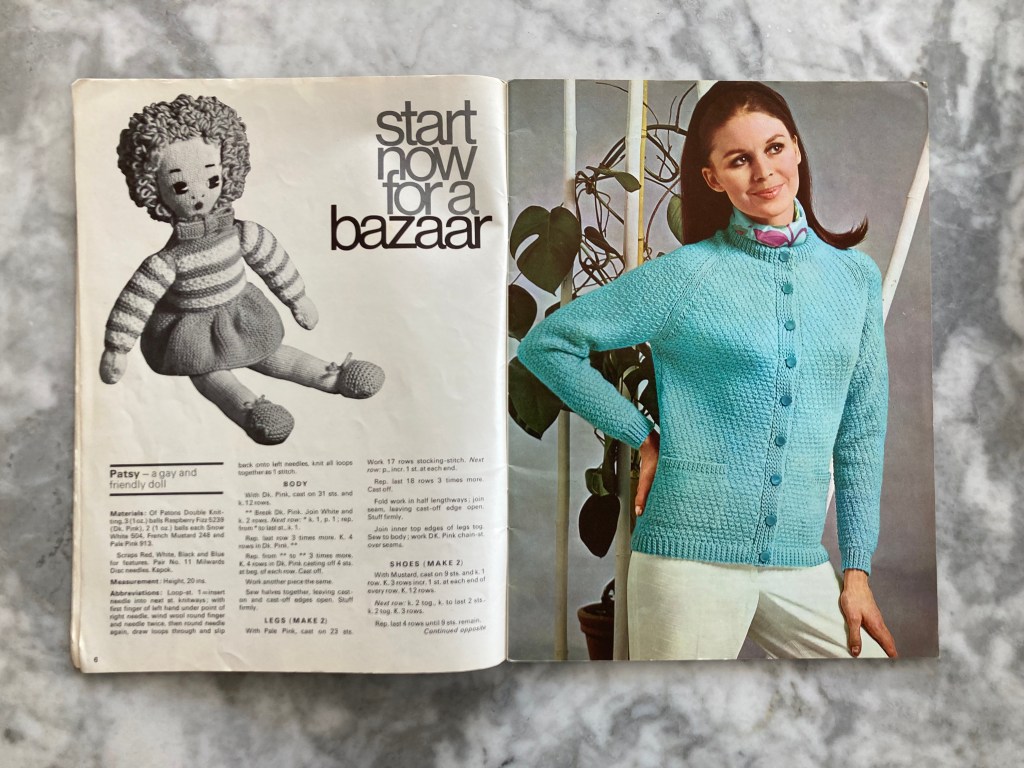
But first, something unusual: my copy of this issue has a printing error! The pages start out normally, with page 1 being the front cover, then opening to page 2 and 3, then turning to page 4 and 5.

But then the pages are repeated and shifted, so that the next page is 6 and 5 instead of 6 and 7:

Then 6 gets repeated across from 7, as normal:

Then 7 gets repeated on the right side, with page 8 on the left:

And so on, with pages 8 and 9 facing, then 10 and 9, then 10 and 11, then 12 and 11, then 12 and 13. Then things go back to normal until page 28-29, when the other half of the repeated pages show up: 28 and 29 are normal, then comes 30 with 29, then 30 and 31, 32 and 31, 32 and 33, etc. up until the last pages, 38 and 39, where 39 is the inside back cover.

If this issue were a postage stamp, it would probably be worth a lot of money… At least none of the pages are missing, as was the case with a CD that I sang on a few years ago, where about 200 of the 1000 printed booklets were missing the middle pages….! That was how I found out that there are not only still people who listen to CDs, but that some of them actually still read the booklets. (The faulty booklets were reprinted.)

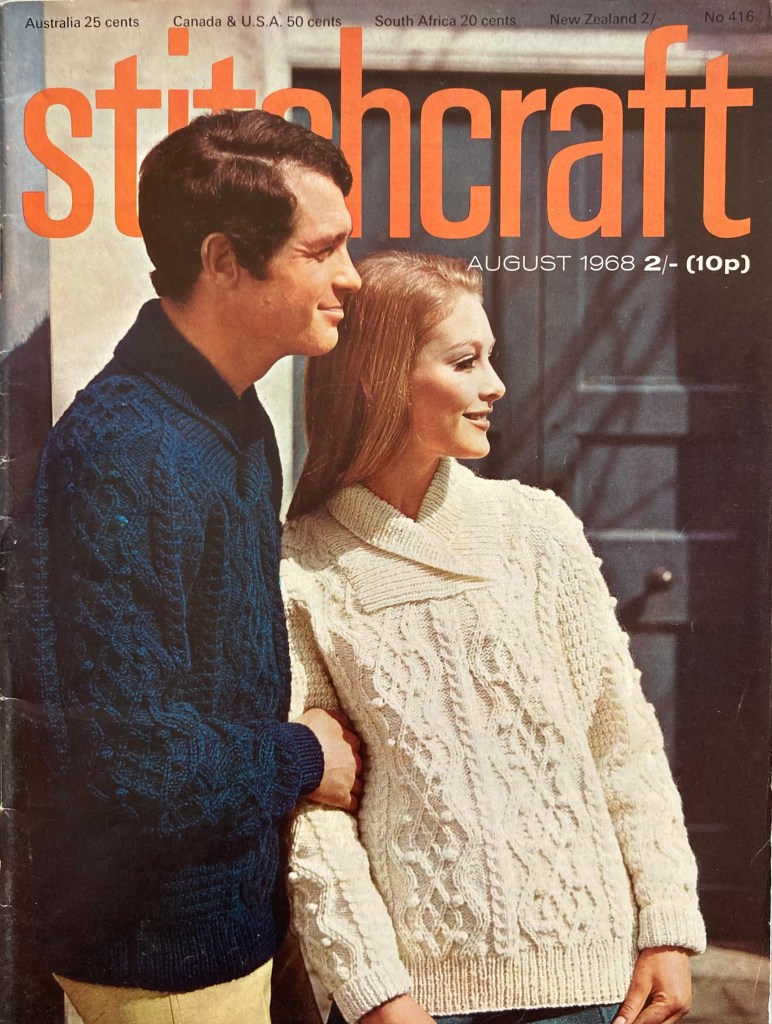
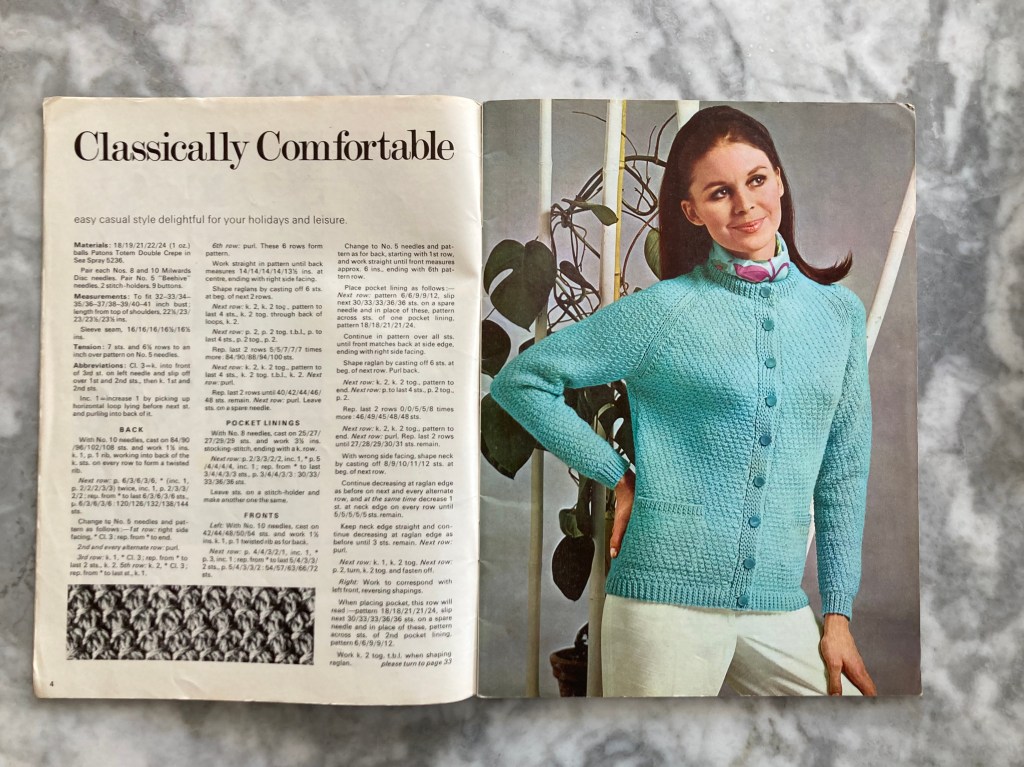
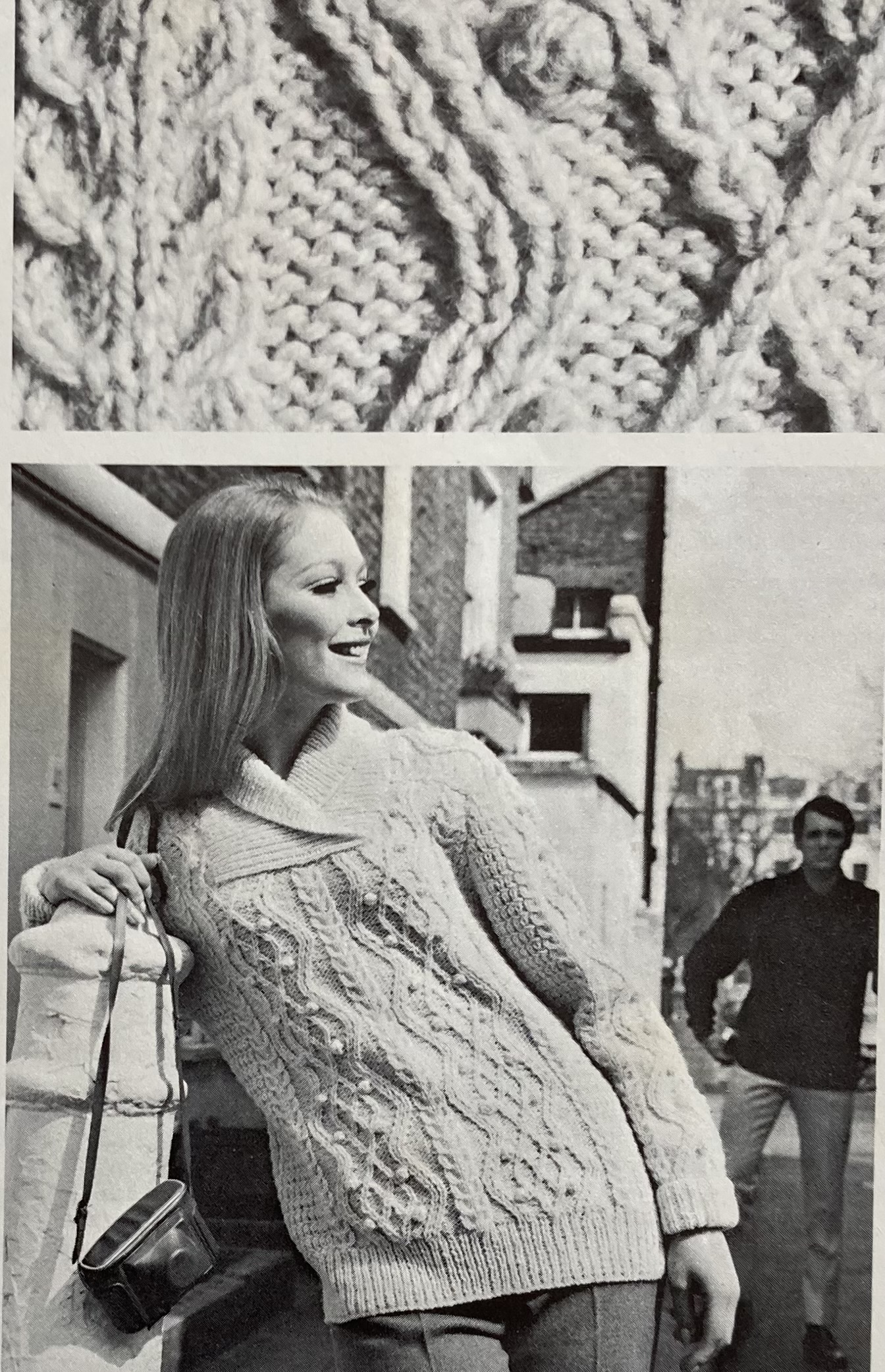
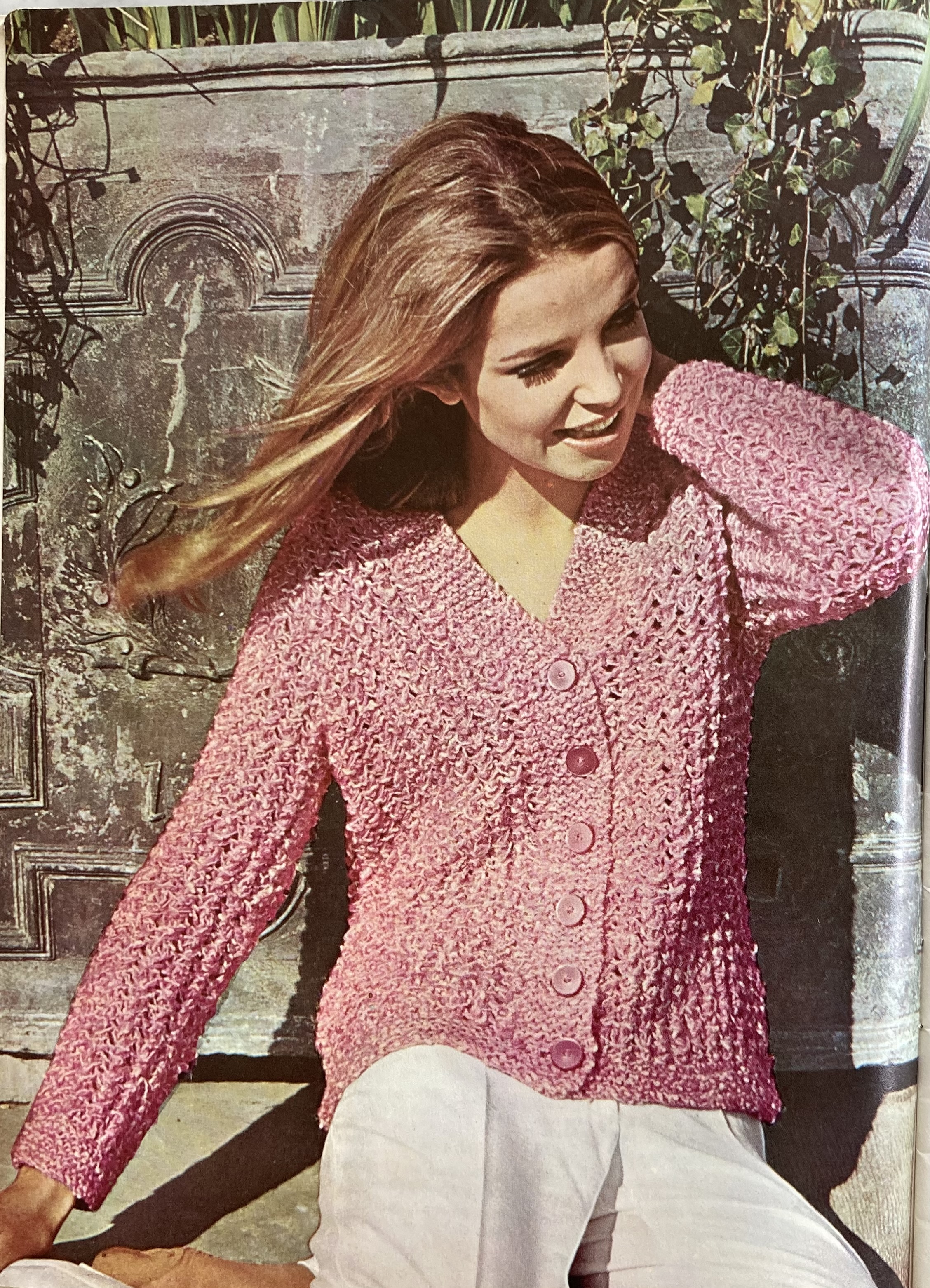
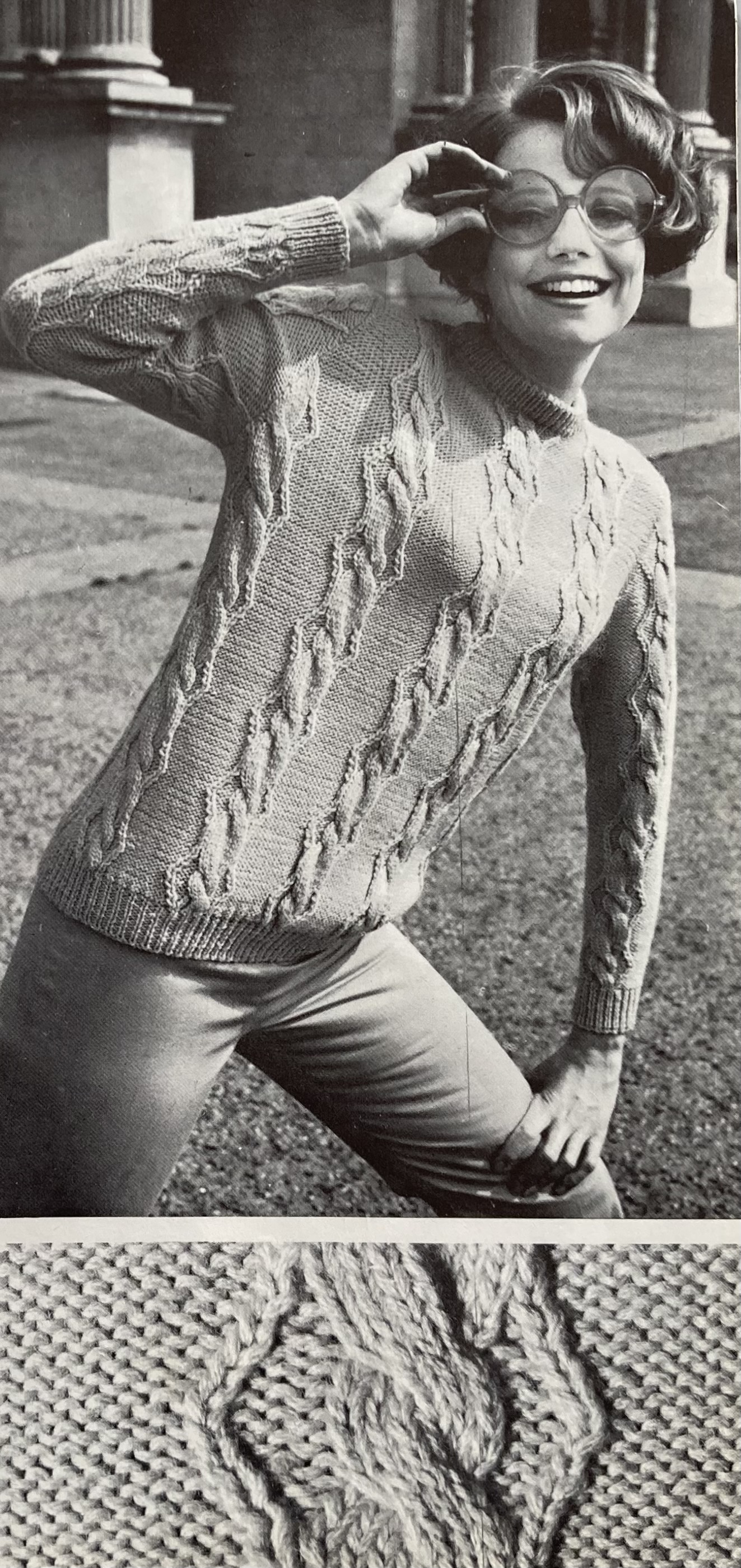
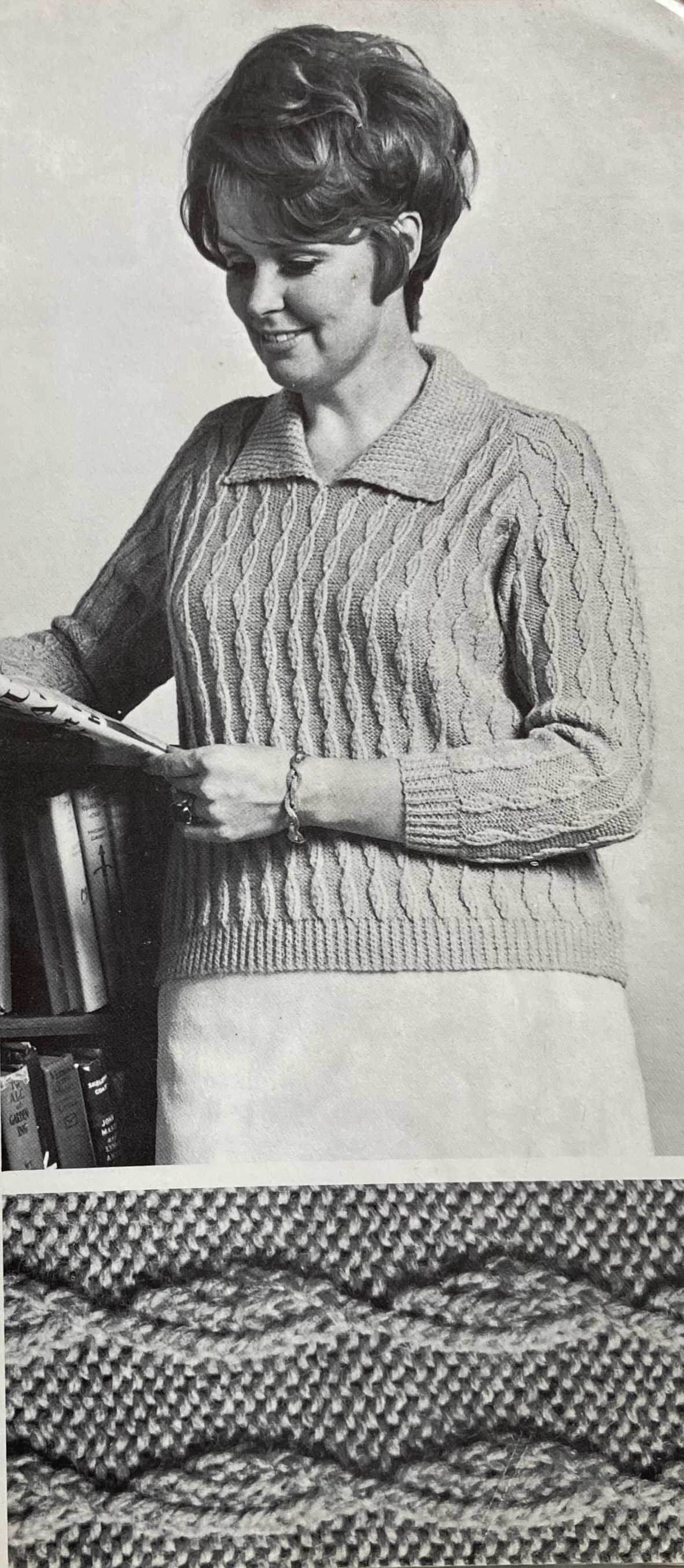
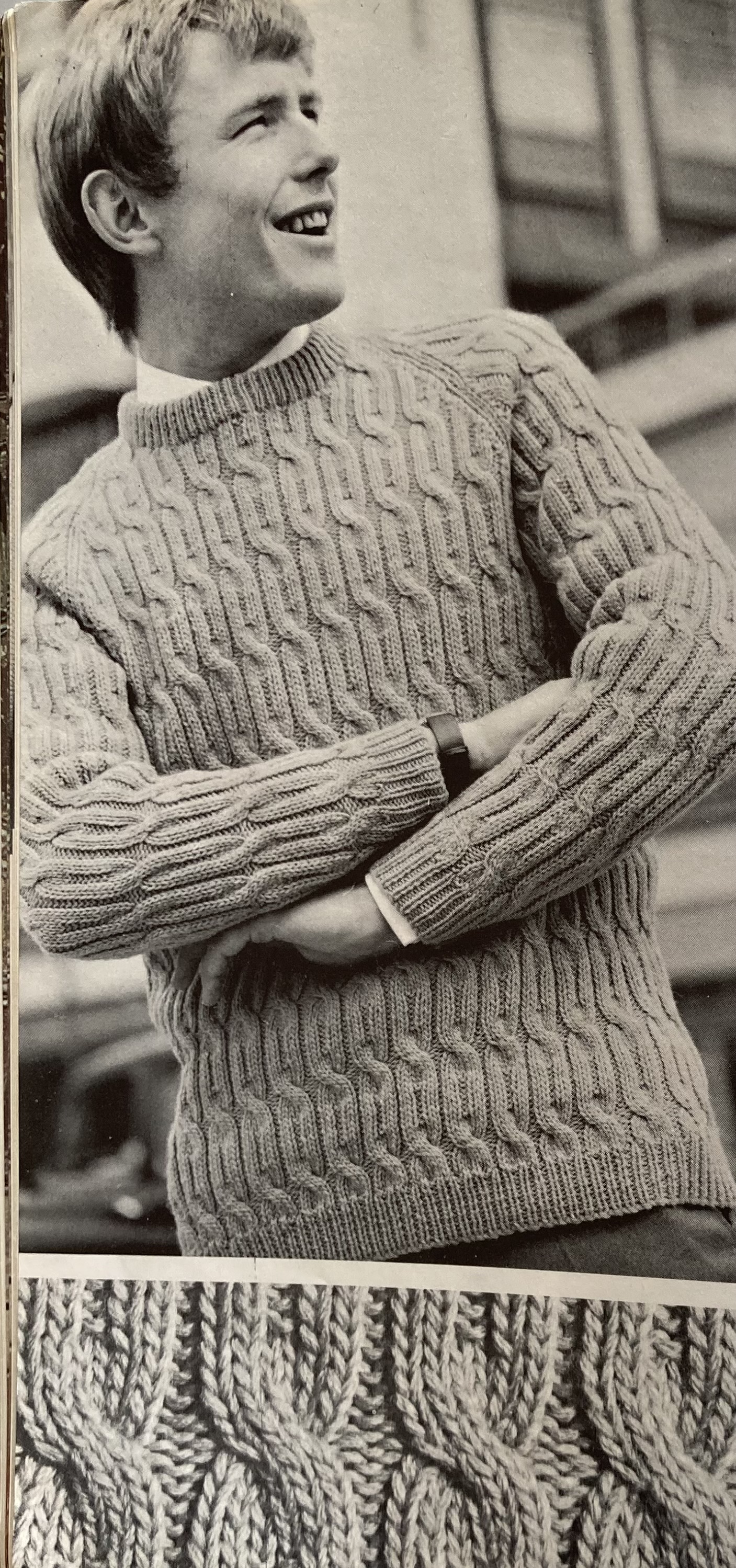
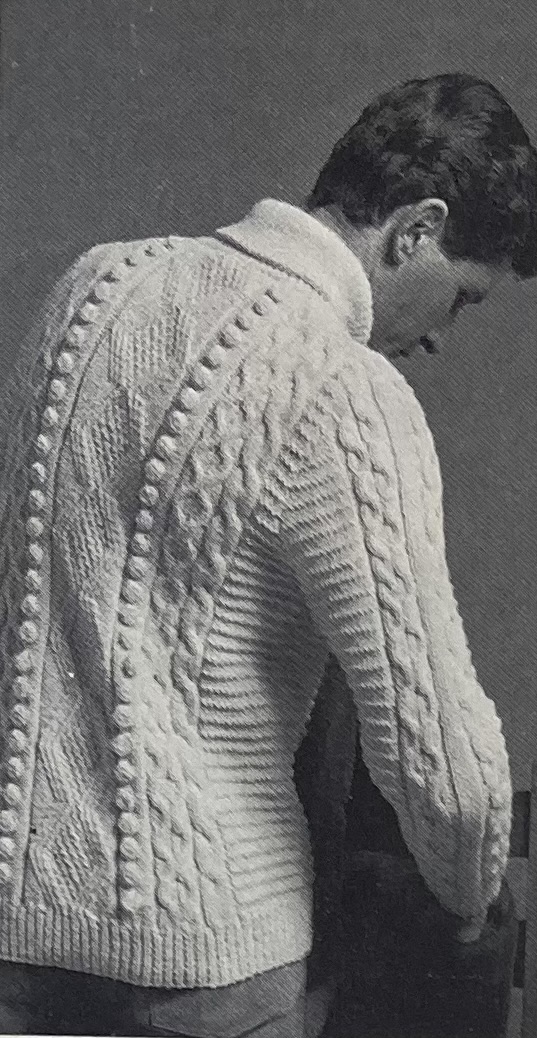
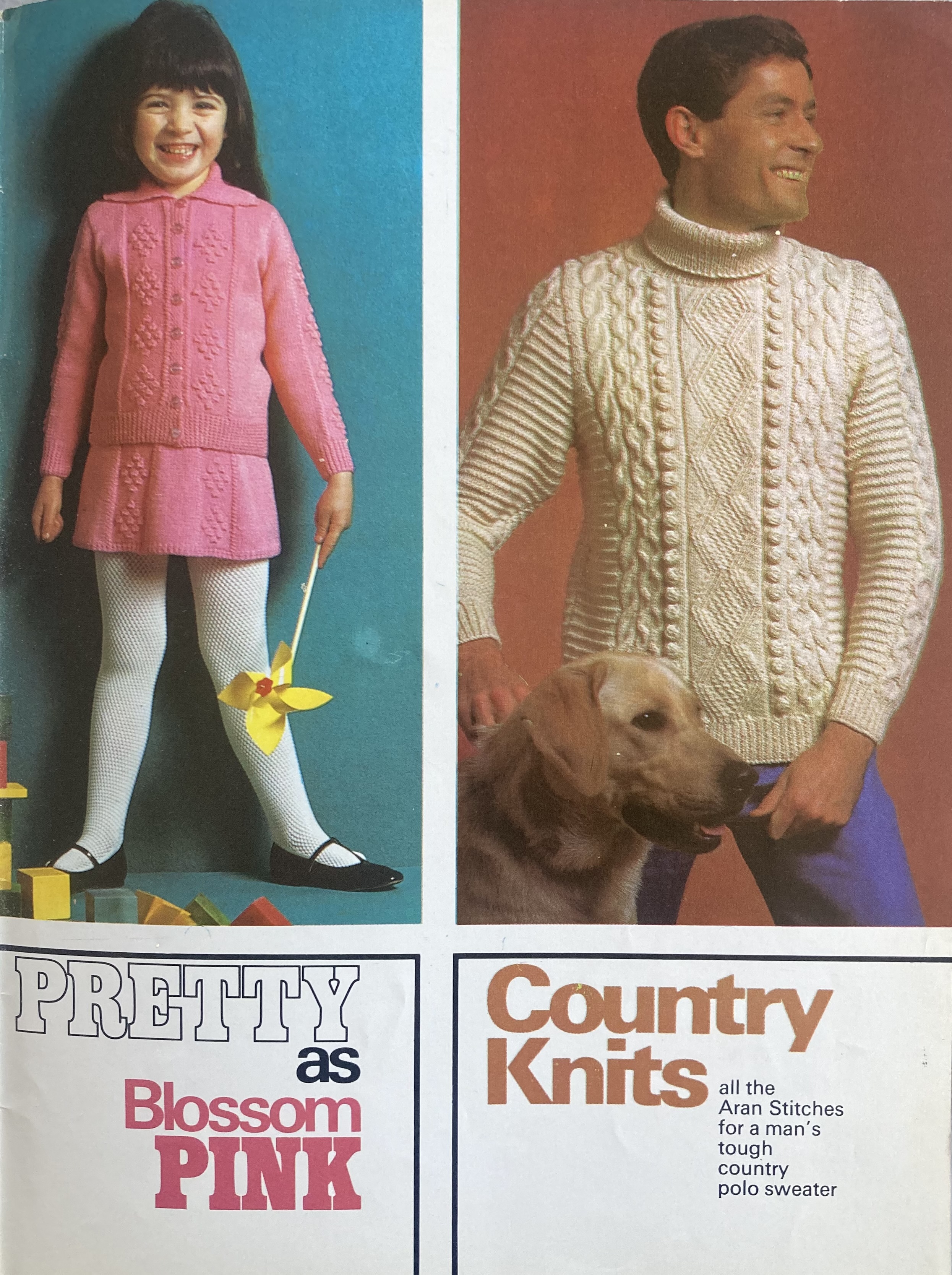
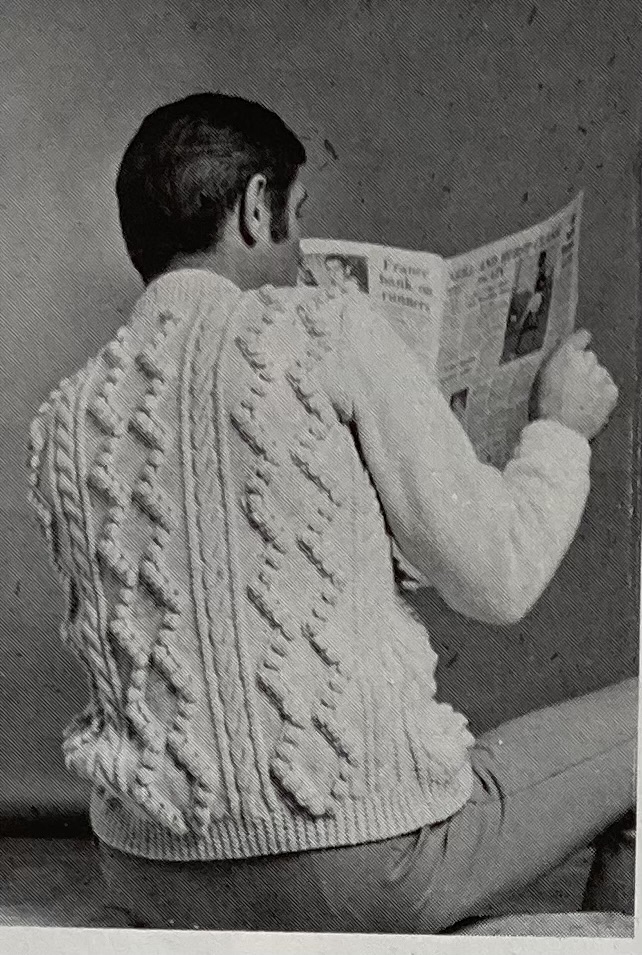
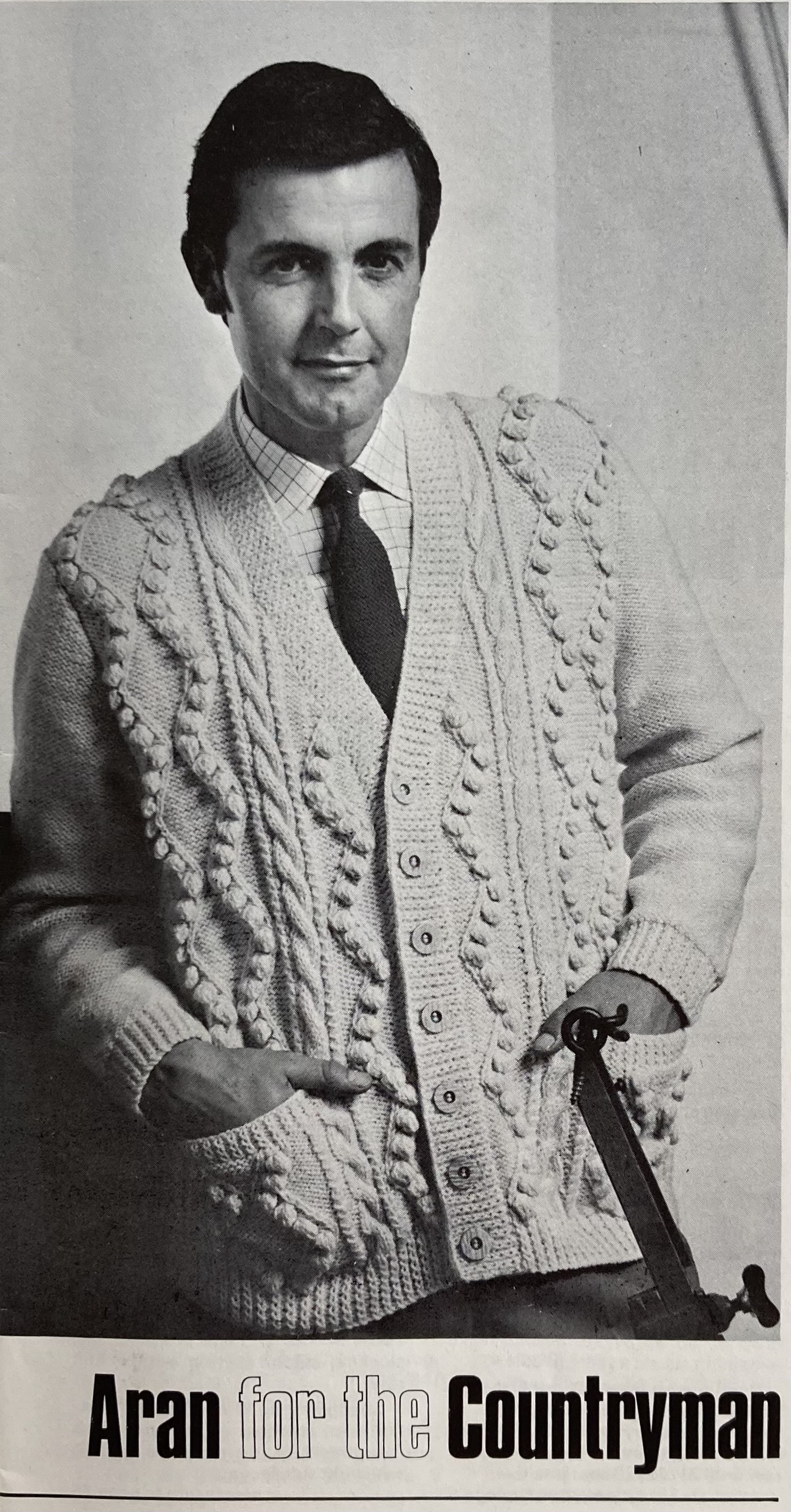
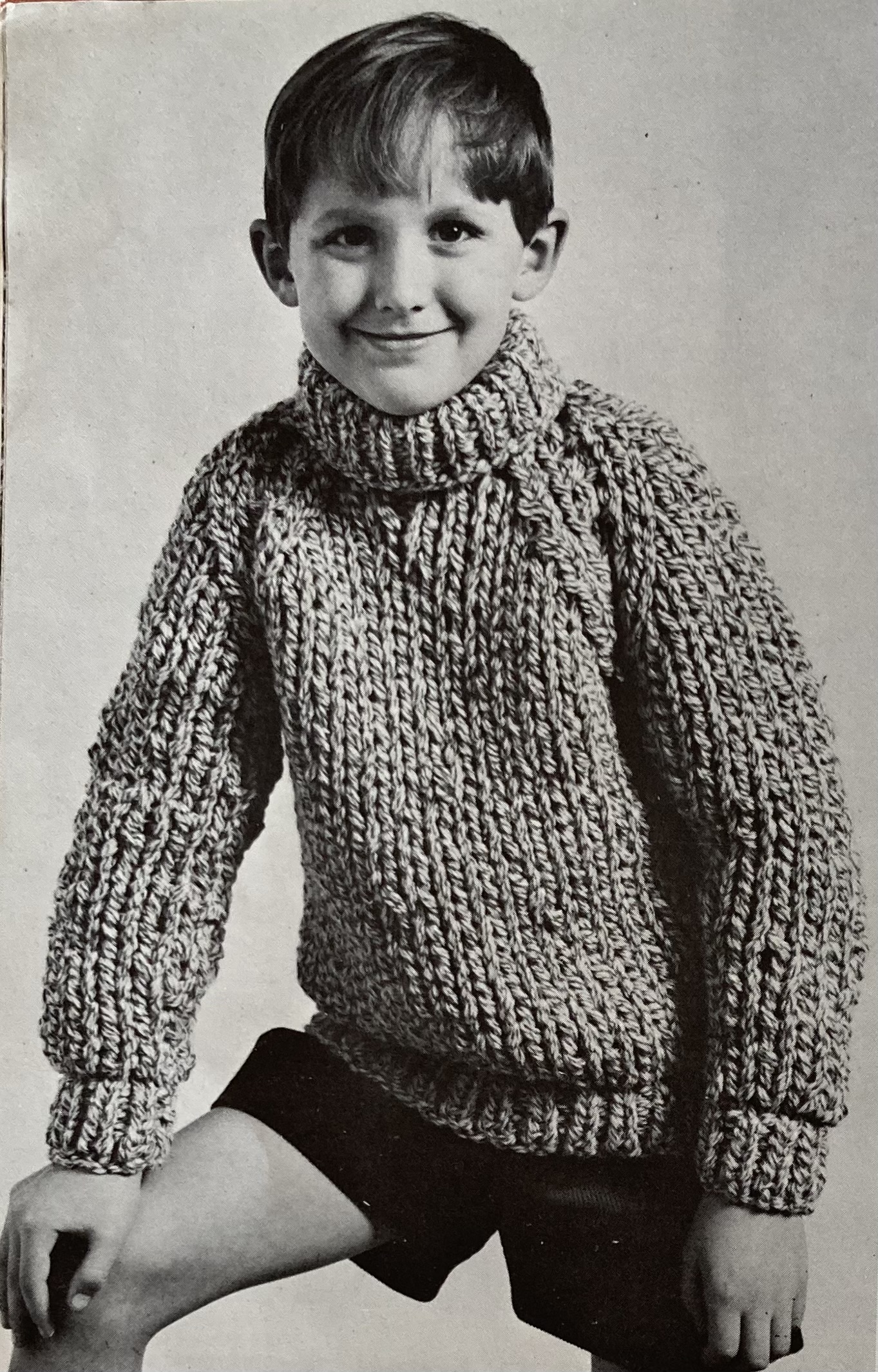
Anyway, the late summer fashions are loose and casual, with lots of cables, stitch textures, and pastel colours. The cover “his and hers” Aran pullover with shawl collar can be made in six sizes for 34 to 45 inch chest/bust and is long, unshaped and relaxed in thick “Capstan” wool. The classic high-buttoned cardigan in DK weight Patons Totem features a “cluster” stitch pattern made by knitting the third stitch on the left needle, slipping it off over the first and second stitches, then knitting the first and second stitches. Patons’ new-ish “Four Seasons” nubbly wool-synthetic mix that featured prominently in the last few issues returns with a “chunky” “strawberry ice” cardigan. An interesting cable design decorates a slimmer-fitting longline jumper, amazing glasses not included. I like how this issue shows a close-up of the stitch pattern along with the finished photo.

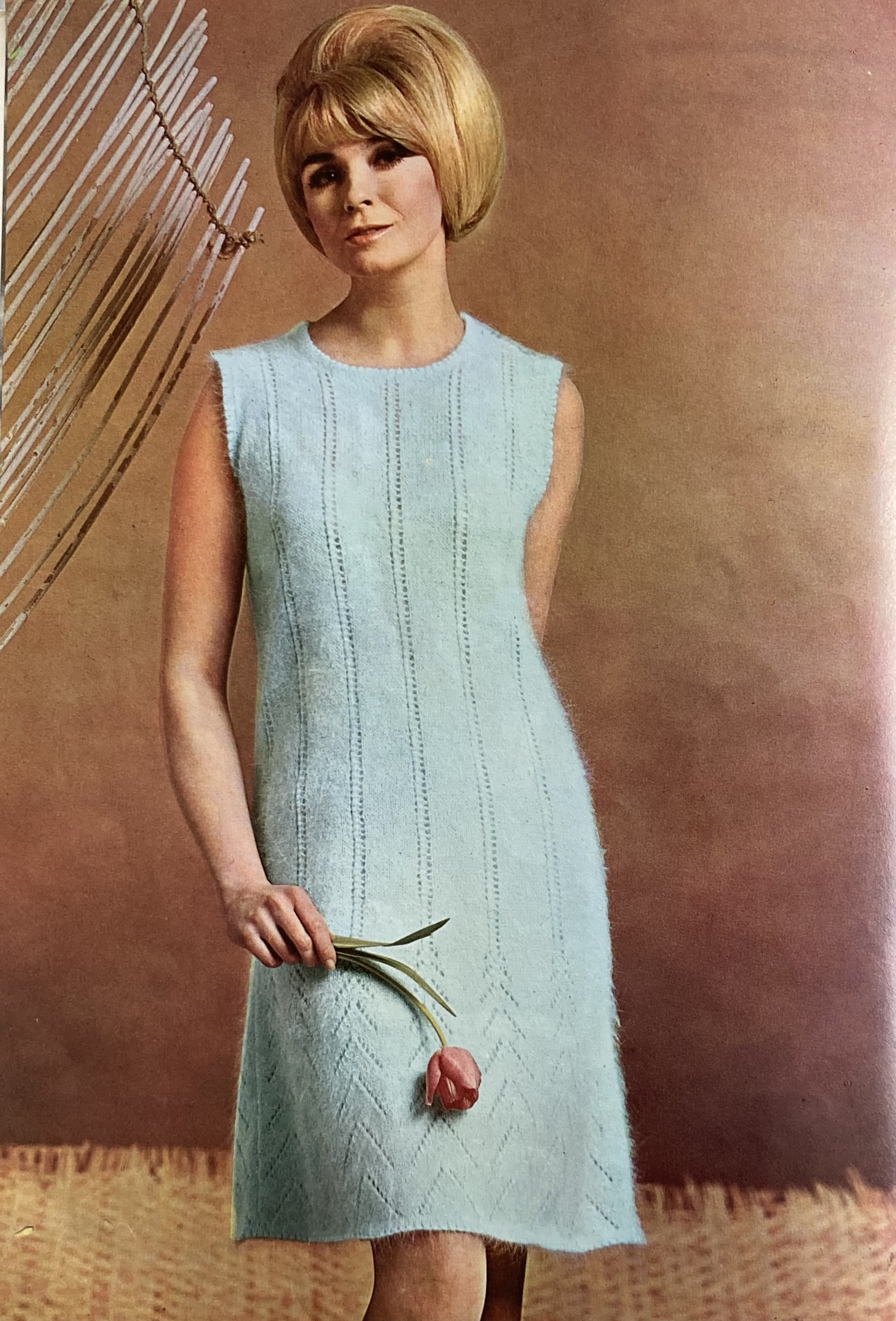
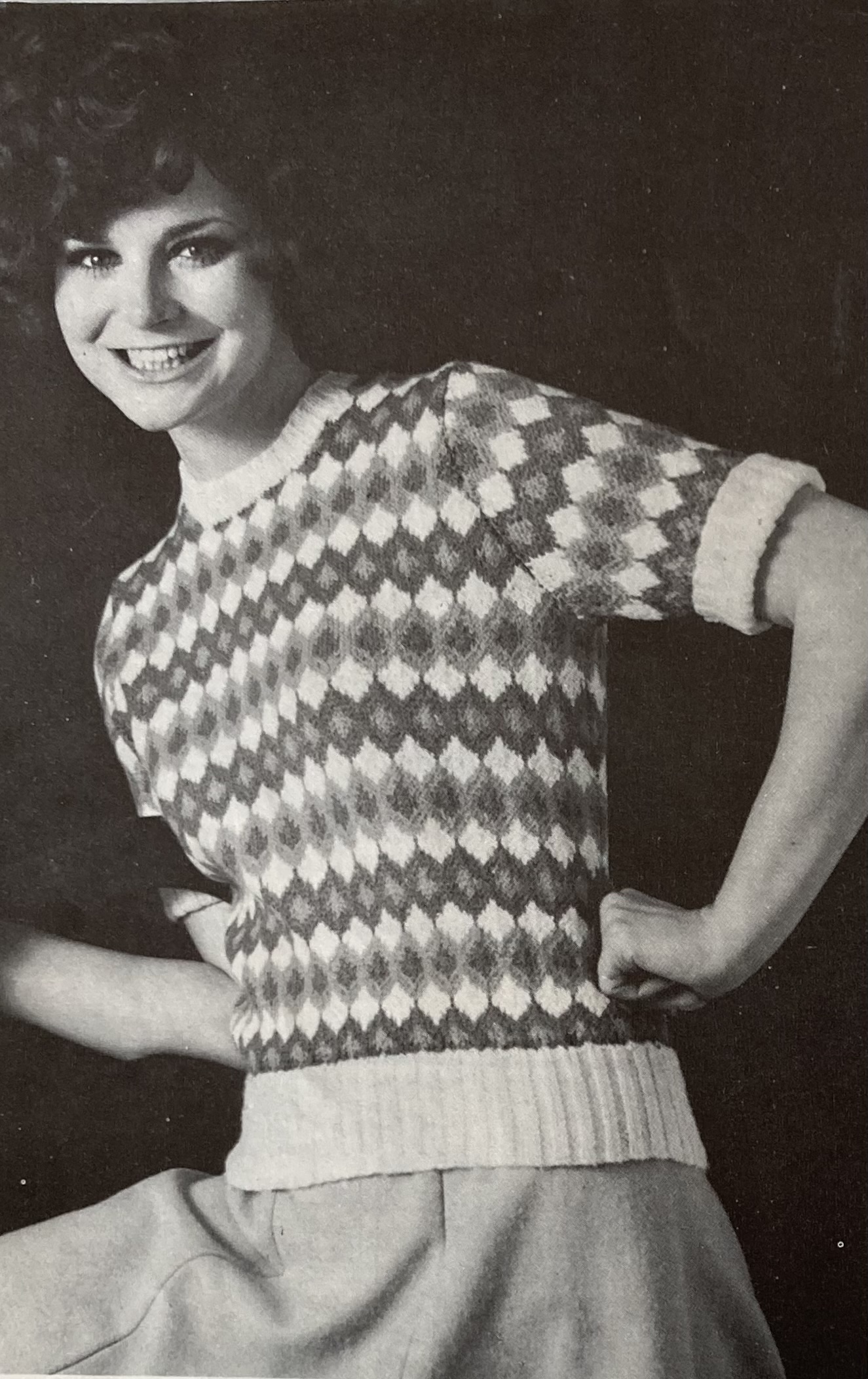
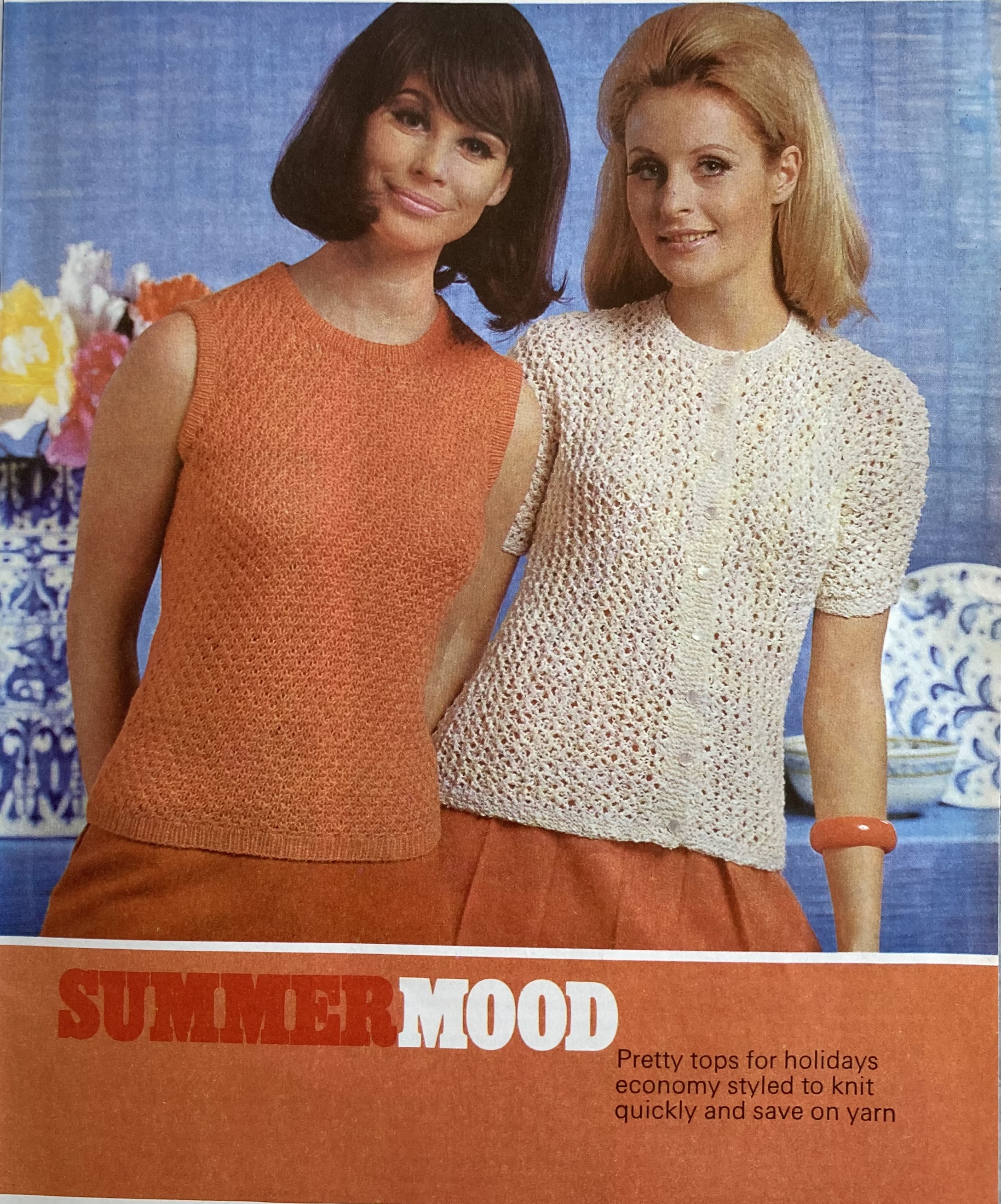
There’s a cabled longline waistcoat with matching beret in Shetland-mix “Fiona” wool, and yet another cable pattern on a jumper for larger sizes (39-46 inch bust in all) in Fiona and pastel “Aqua Blue”. The lightweight dress in fluffy “Fuzzy-Wuzzy” angora mix is also pale blue, and the model’s hair is a perfect blonde sphere. Finally, there’s a little short-sleeved jumper in late 60s shades of Orient Green and Burnt Orange (bucking the pastel/blue trend.)

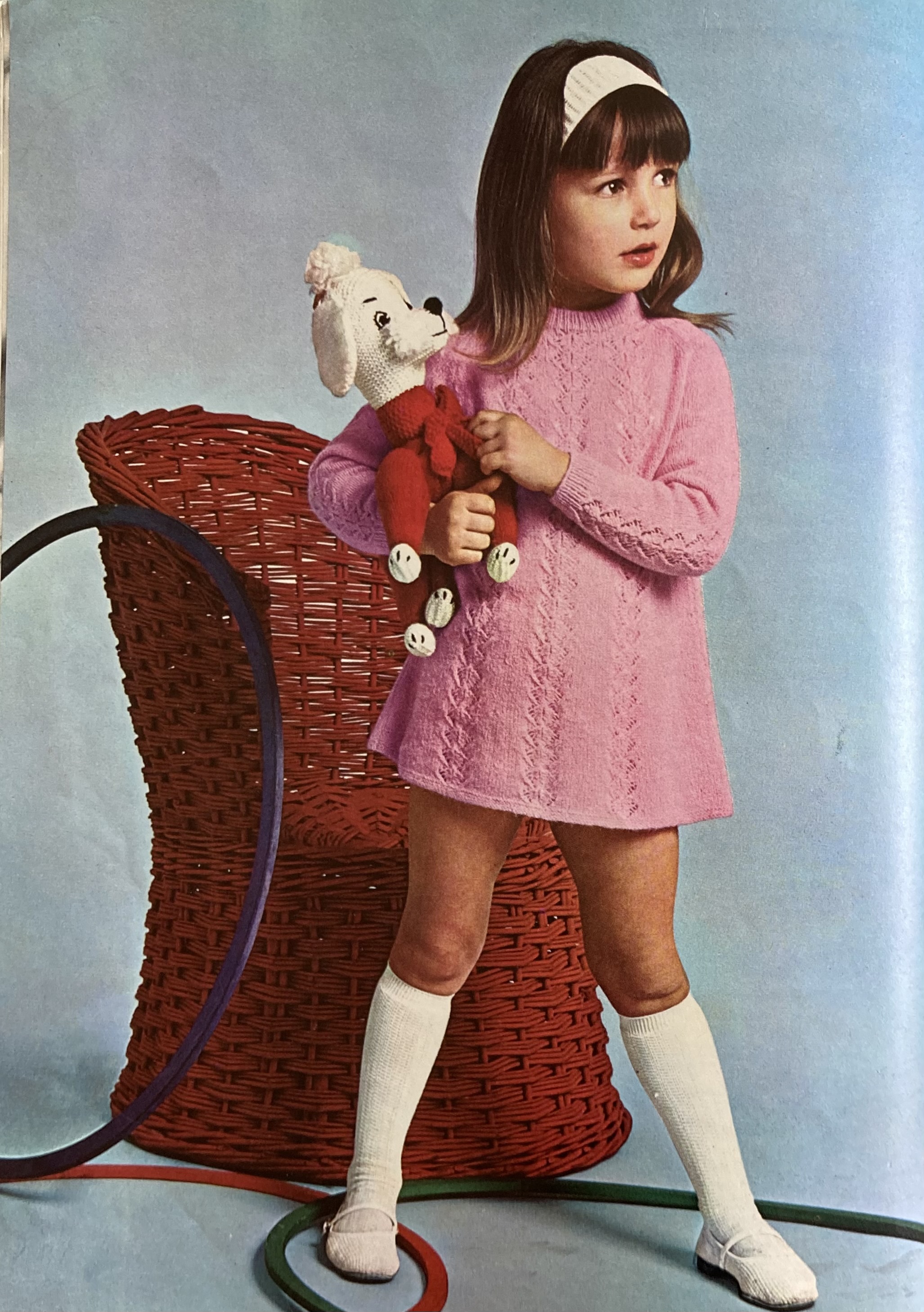
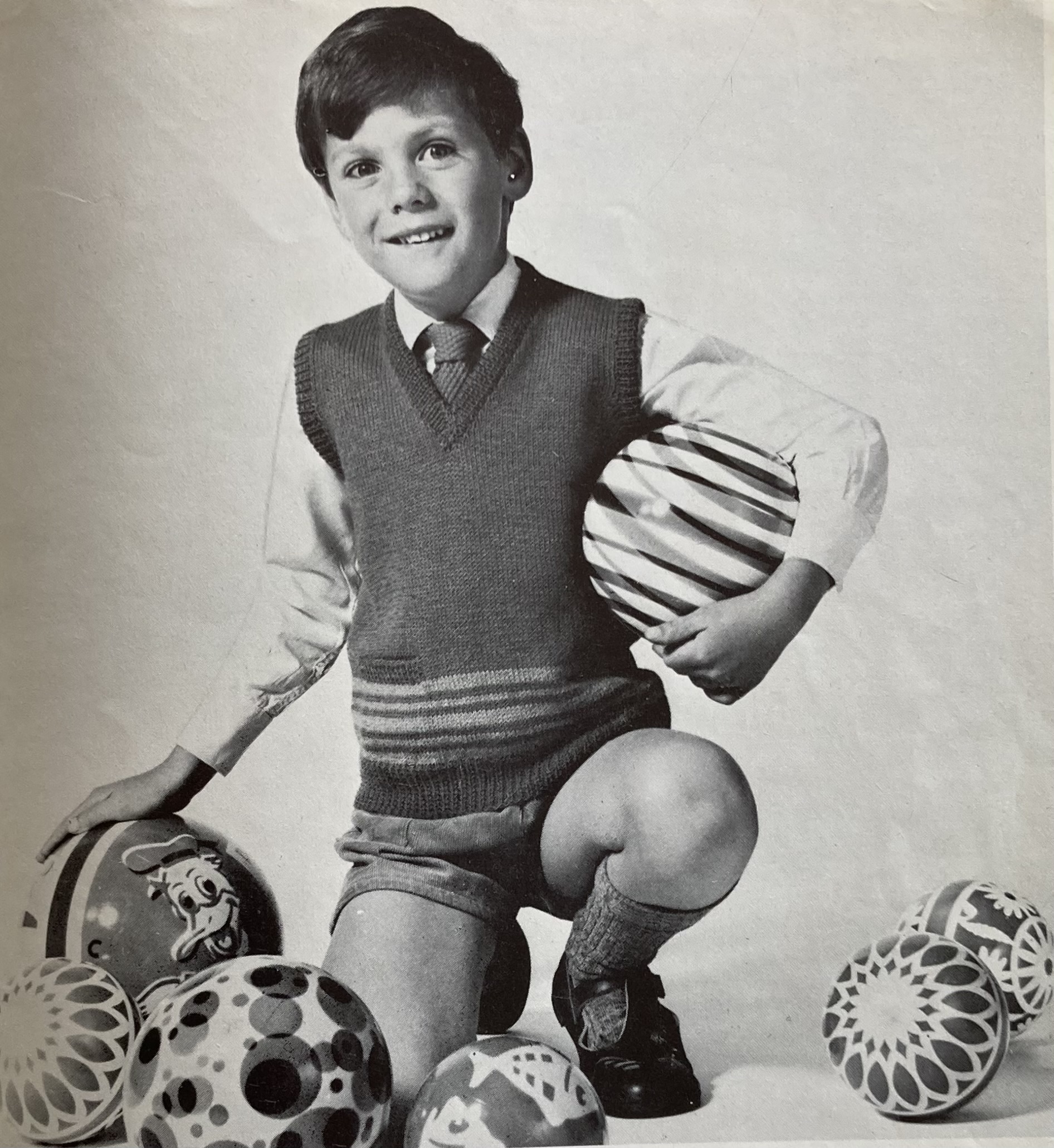
For men, there’s the “his”/larger version of the Aran pullover on the cover, as wll as a cabled sweater in medium-weight Totem DK. There are so many different cable designs in this issue! For children, there’s a slipover with striped “which could introduce his school colours” and a tunic “dress” for girls with a similar lace pattern to the adult women’s dress. I do not know how children were expected to play or more at all if they actually wore things like this. The boy is all suited up in a tightly buttoned shirt and (hand-knit!) tie, while the girl’s “dress” is barely longer than a shirt. Somebody give these children jeans and a jumper, please!

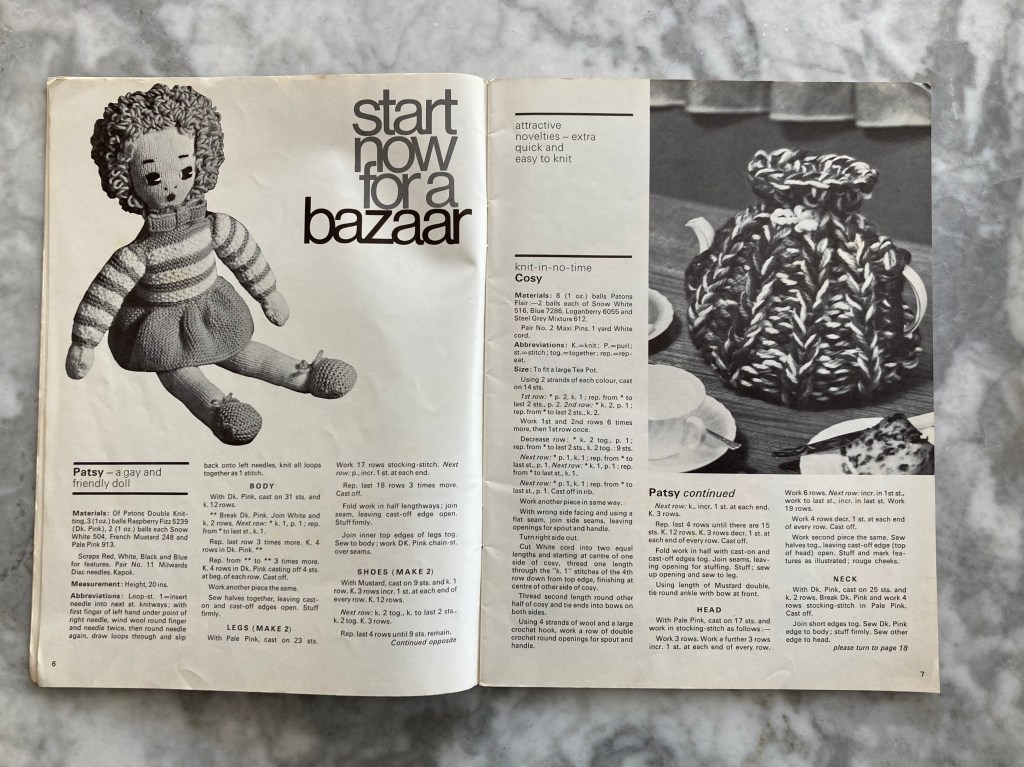
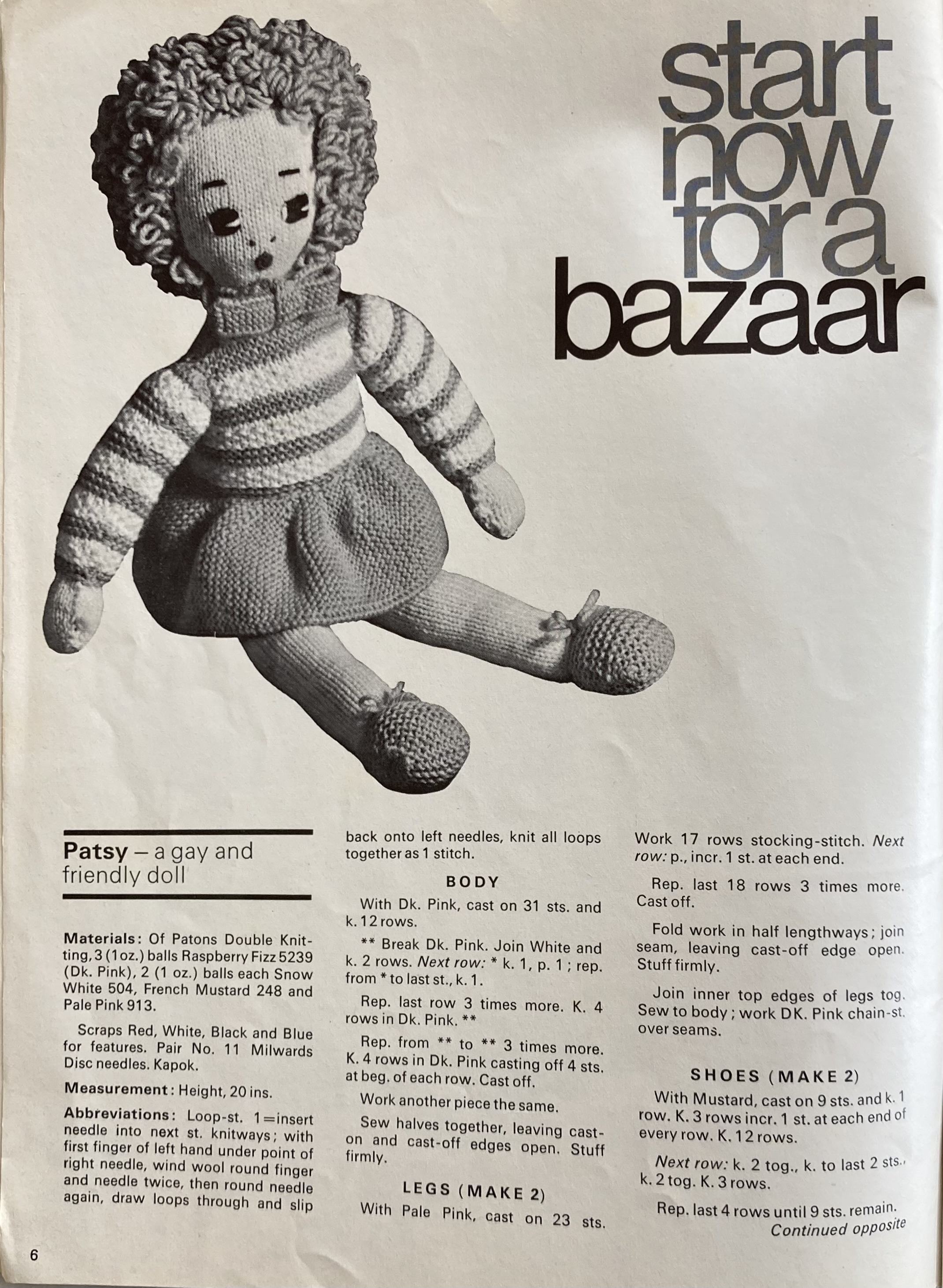
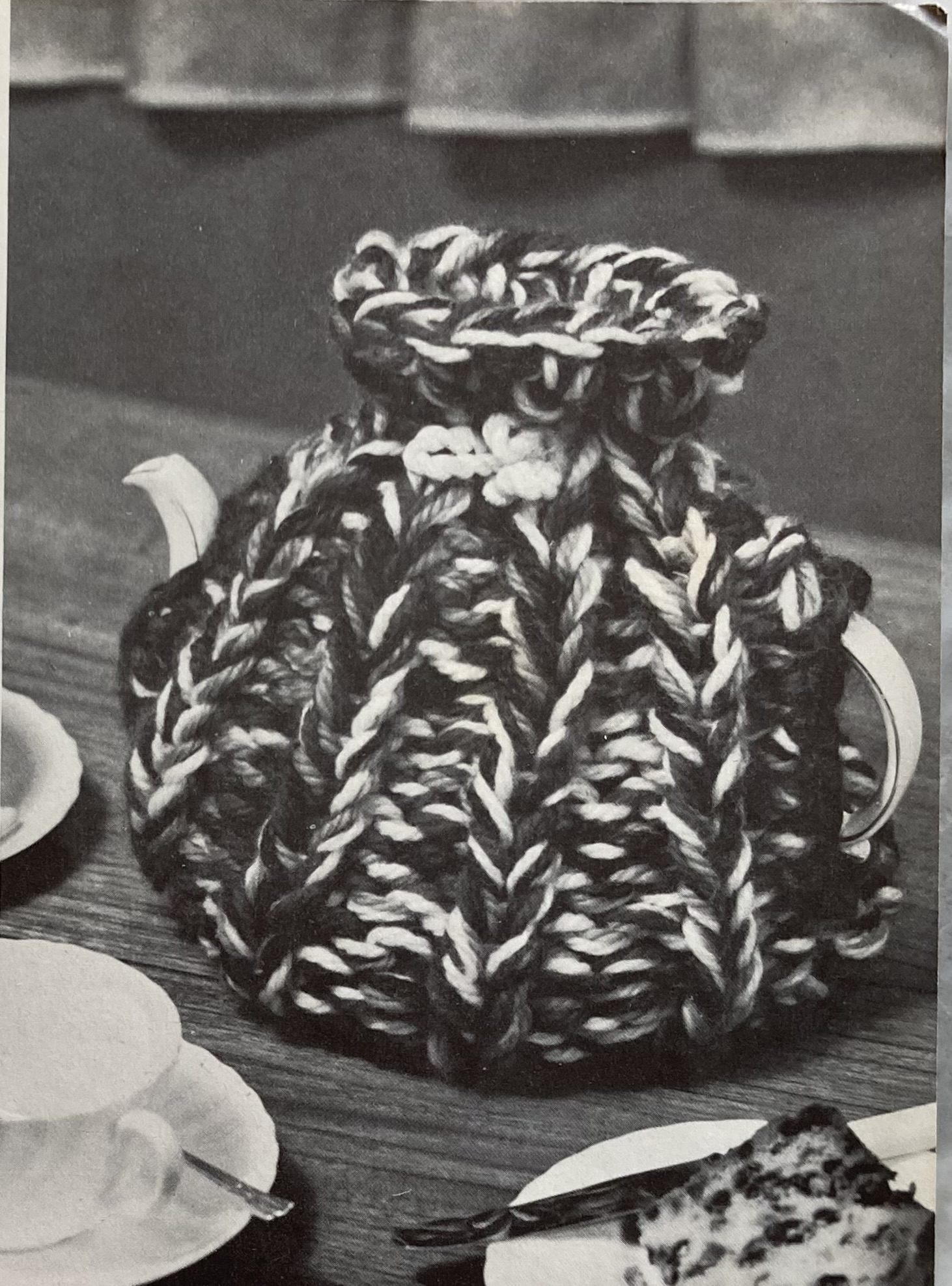
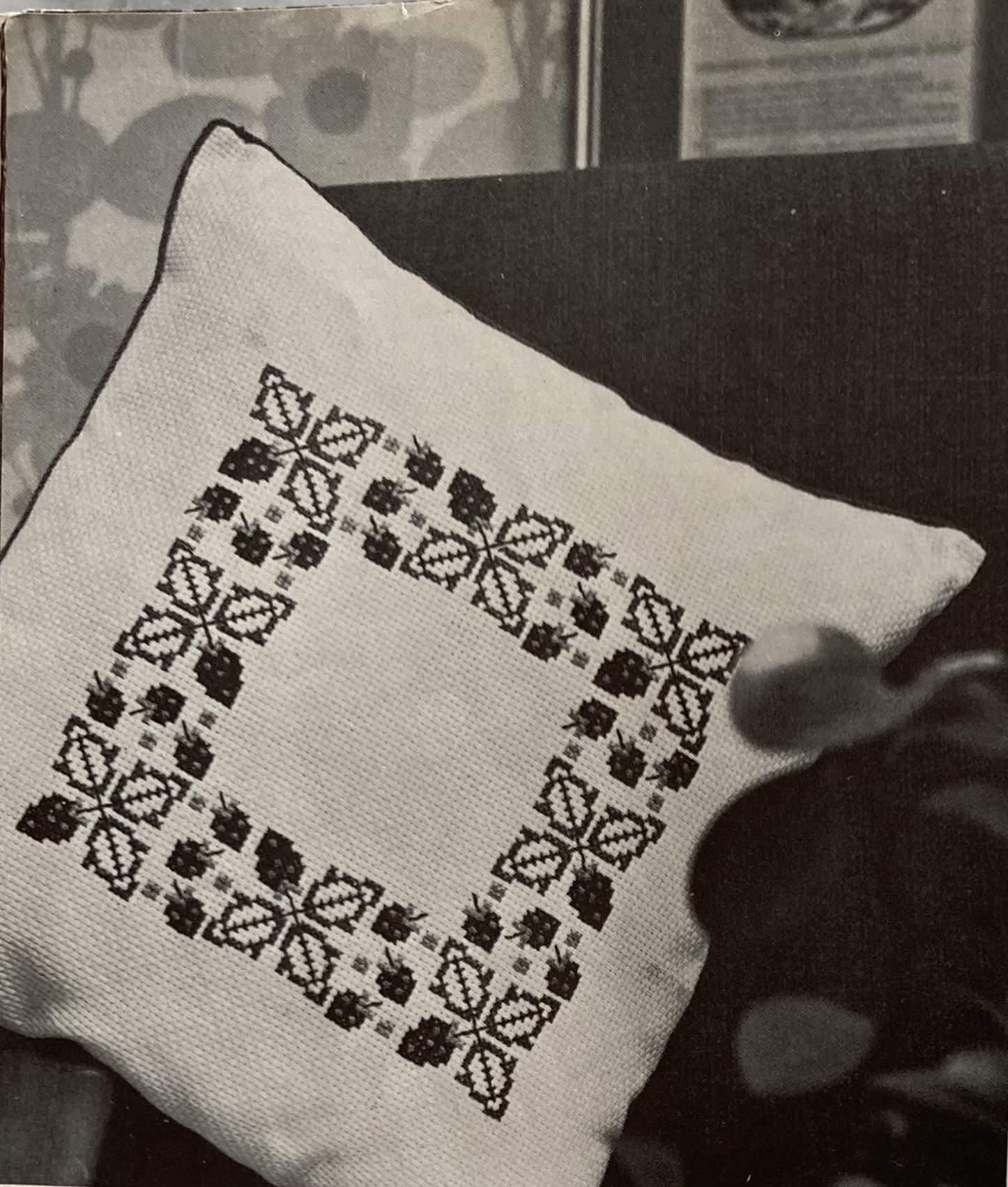
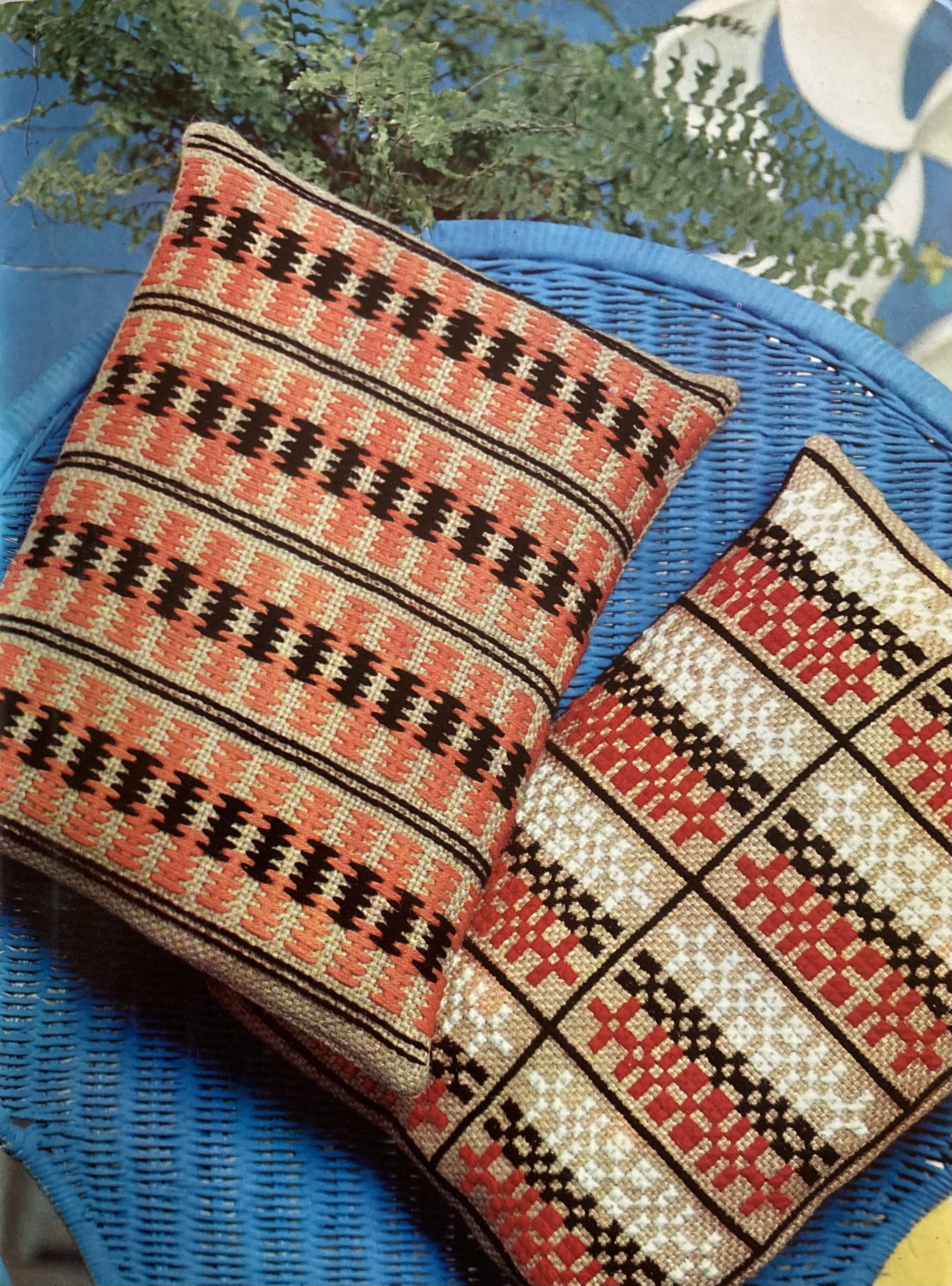
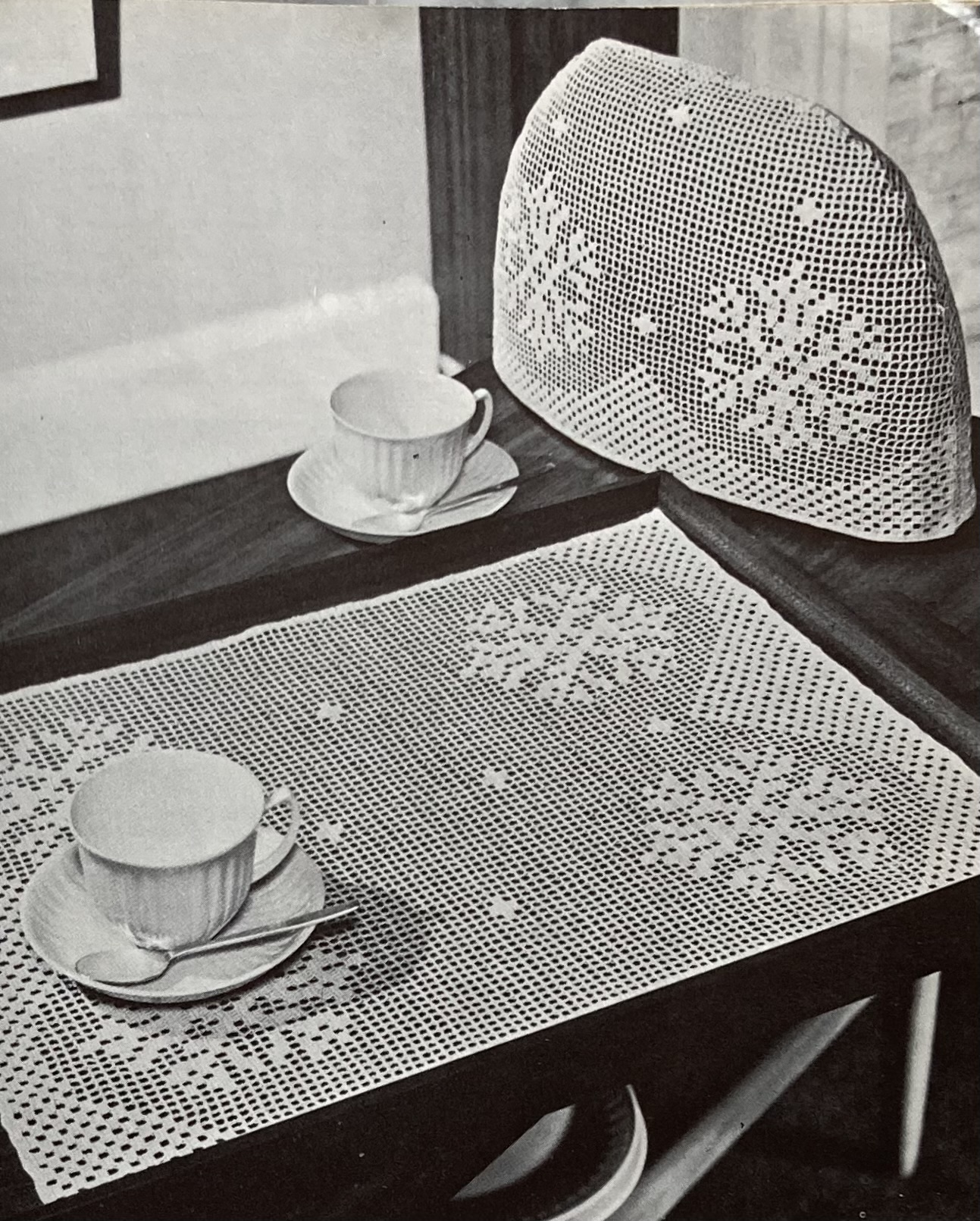
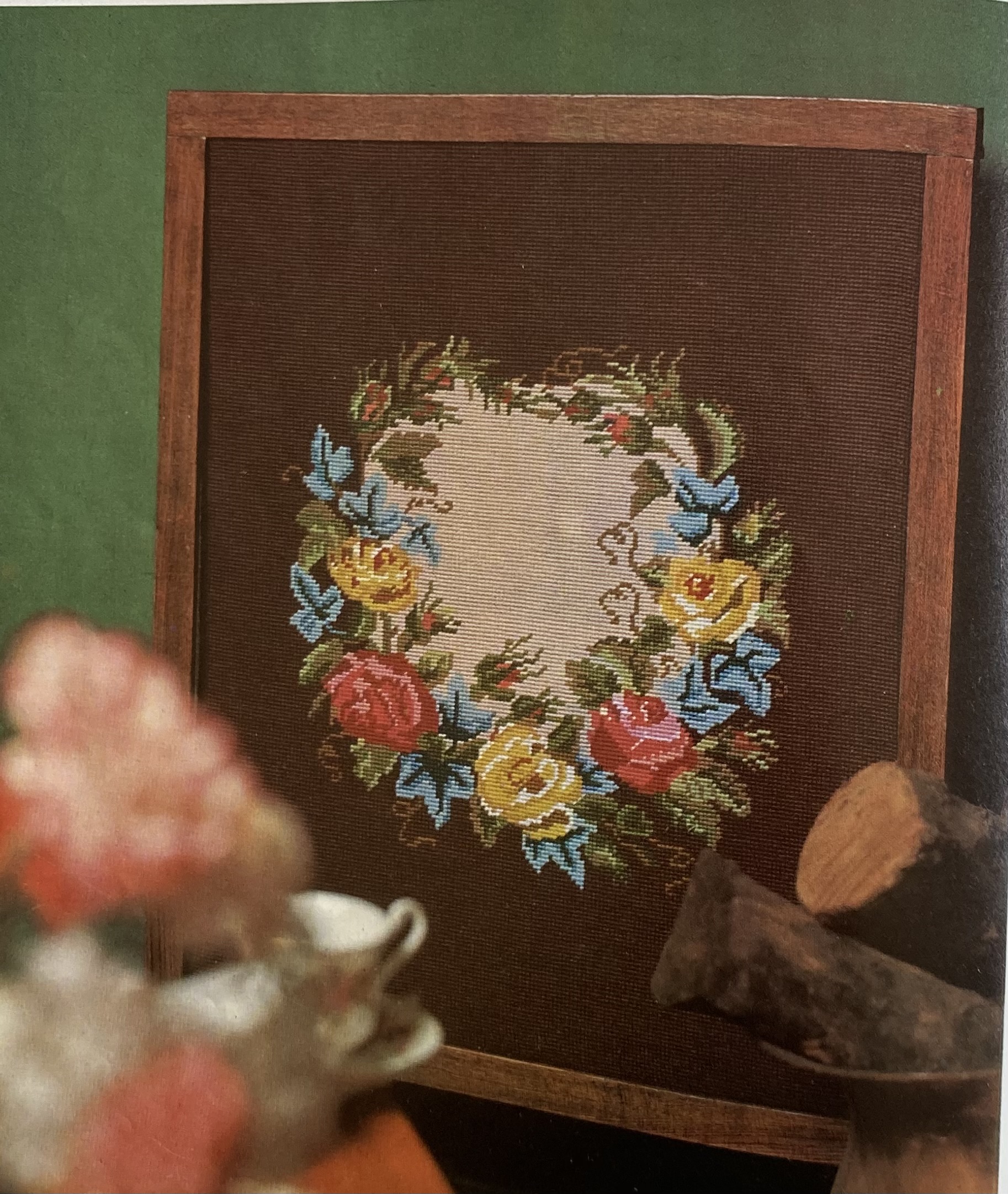
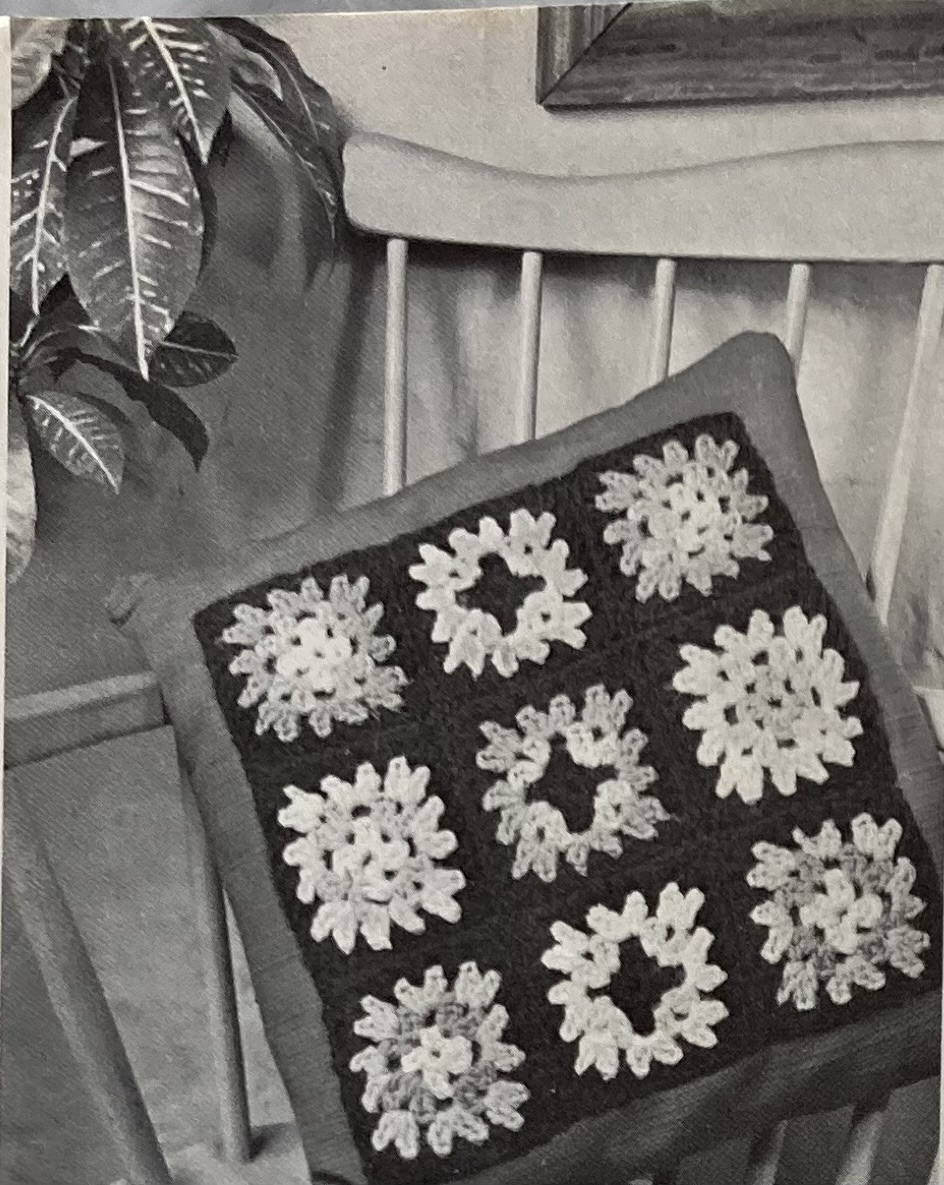
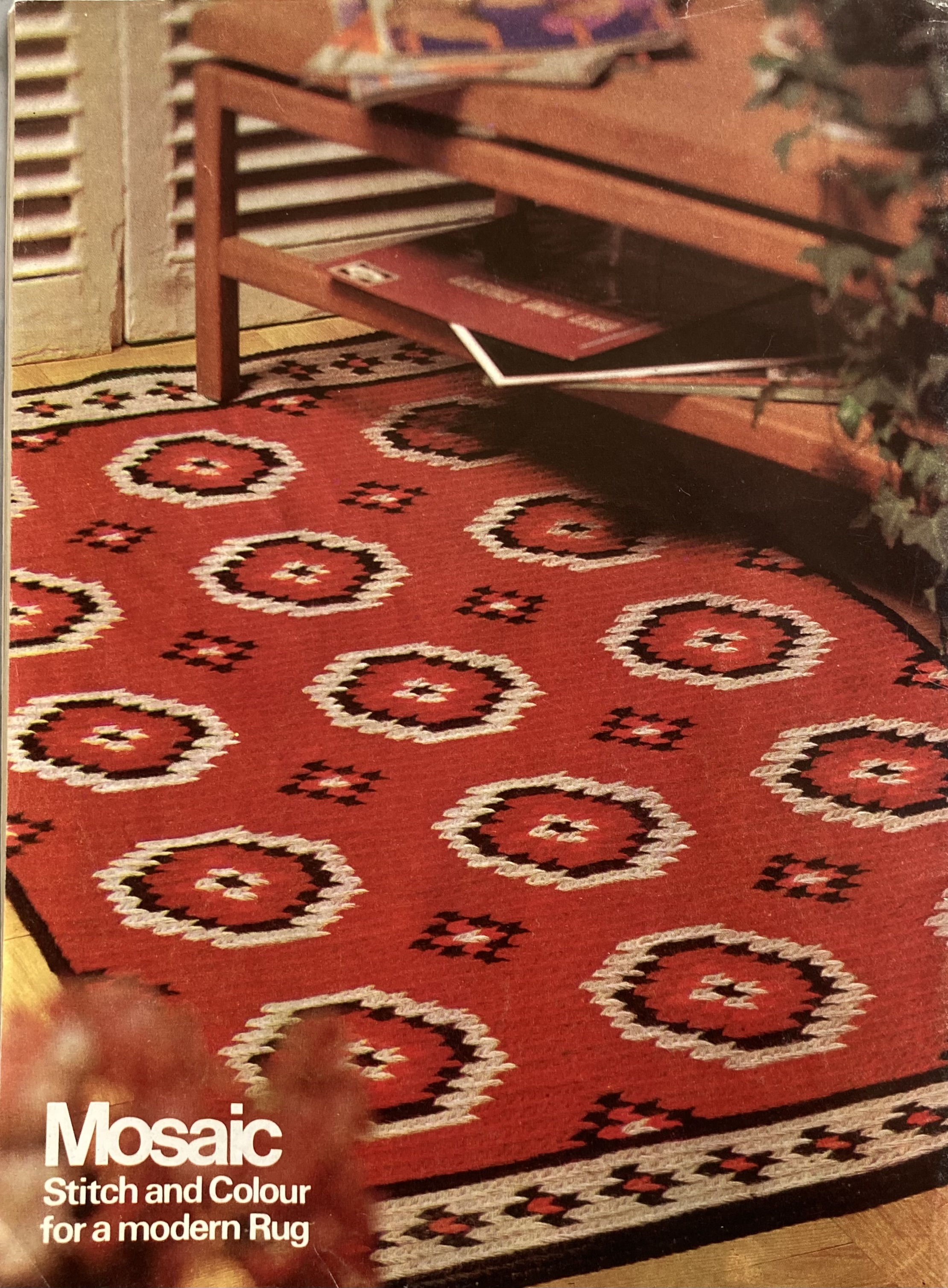
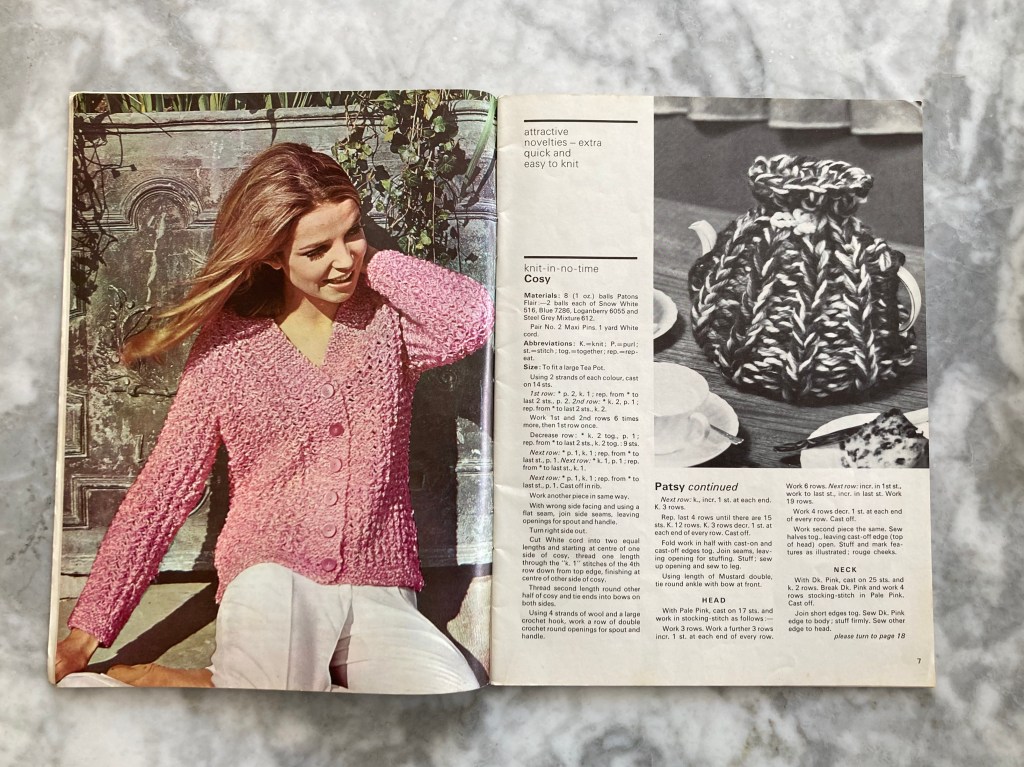
The homewares are on the boring side — good for those hot days when one’s brain is not working. You can knit Patsy, a “gay and friendly doll” (these are all real quotes, I swear I don’t make them up) or a very thick “Super-Sonic” tea cosy, cross-stitch a border of strawberries to match your “strawberry ice” cardigan, or make garden cushions of jute and embroider them with easy stitches in tapestry wool. There’s a block-crochet tray set of mat and tea cosy cover (a cosy cosy?) and a Victorian rose pattern for a cushion or firescreen. In the back pages, there’s a reprint of an October 1965 pattern for a granny-square cushion. The only really adventurous project is the “modern” design stitched rug, bold and bright in red, that graces the back cover.

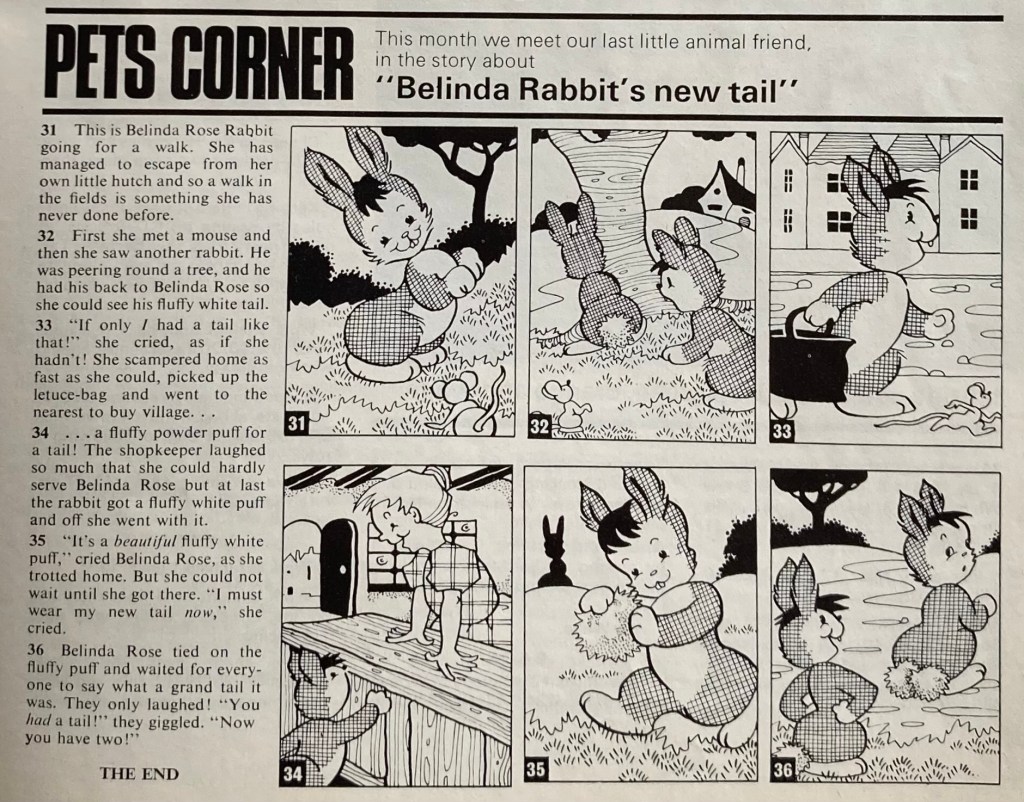
In the children’s comic series, “Pets Corner”, Belinda the rabbit sees another rabbit and admires its fluffy white tail. Wishing she had one too, she buys a powder puff and attaches it to her behind, to the great amusement of everyone. Apparently she didn’t know she already had a fluffy tail. This was the last comic in the current series and I feel like they ran out of ideas. It’s certainly a hare-brained story.

Sadly, the most interesting thing in this issue, for me, is the printing error! I might use up some leftovers and make the cabled beret, or just use the time to finish up any of the many unfinished projects lying around.

July 1968: Striped Holiday Top

EDIT September 6, 2026: Still not finished!

First of all, please check out the finished project and edited post with the pink bikini from June 1968! We took the most amazing photos and it is a one-of-a-kind vintage knit.

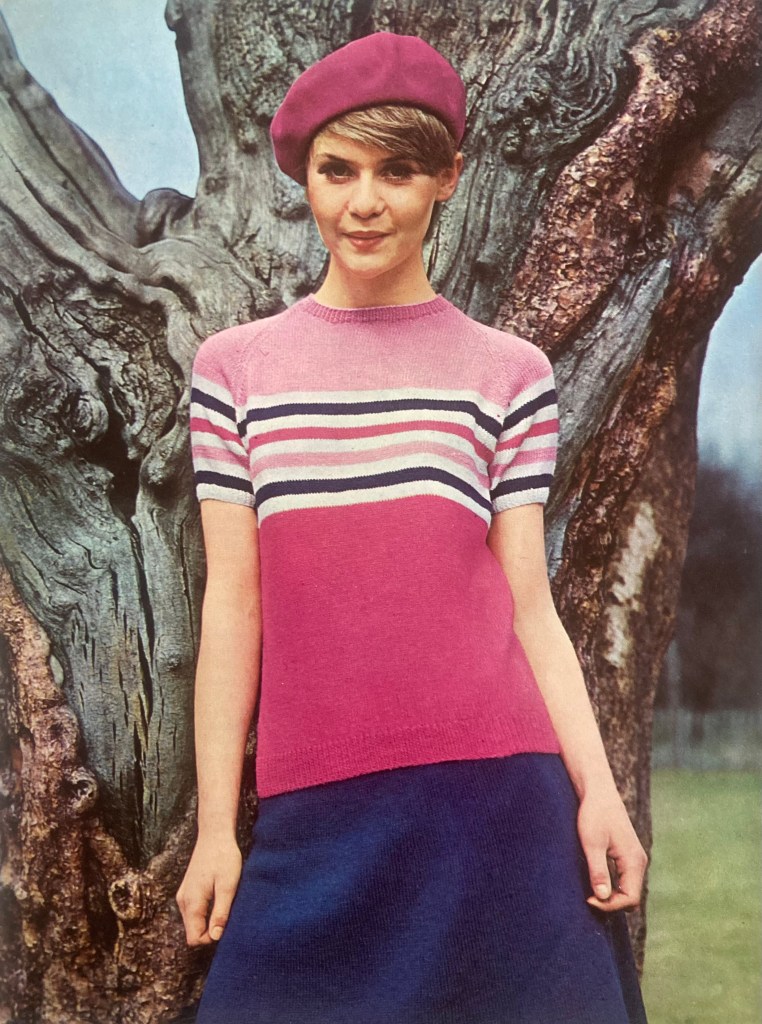
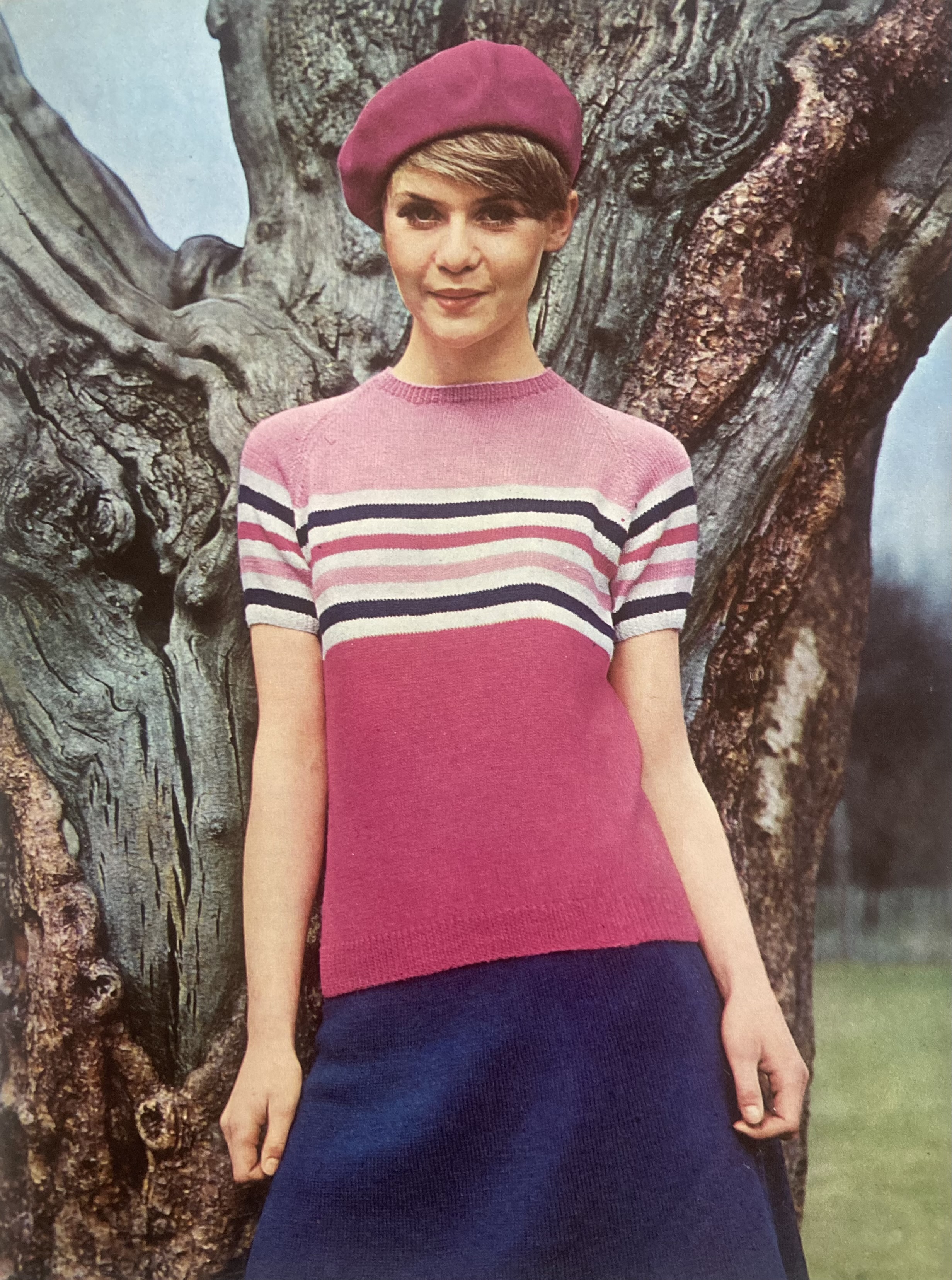
My project from the July 1968 issue of Stitchcraft was less spectacular: the jumper from this “Paris inspired” set (jumper and skirt, I didn’t knit the skirt) in pink, white and navy blue stripes. Guess I’m in a pink phase?

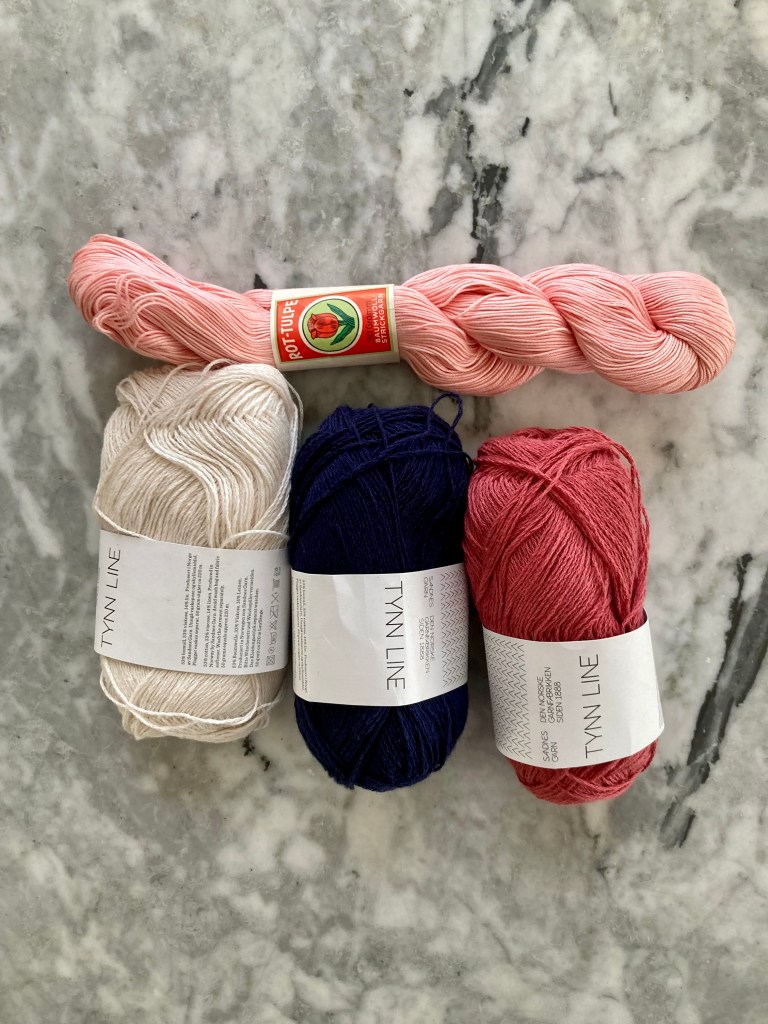
The original pattern calls for Patons Cameo Crepe, a smooth, tightly twisted fine 100% wool. I wanted to make it in cotton for summer, but ran into the usual problem: it is really, really difficult to find fine, soft cotton yarn for knitting. I can buy heavy dishcloth cotton, or thread-thin crochet cotton, or shiny-hard mercerised cotton, or various mixes of cotton with wool, linen, synthetic, etc. I chose the last option and took a chance on Tynn Line from Sandnes Garn, a mix of 53% cotton, 33% viscose, and 14% linen. I realised after getting home from the wool festival where I bought it, that I had forgotten to buy the light pink colour! For that, I dipped into my stash of vintage Rot-Tulpe cotton, the only fine cotton yarn I have ever found.

The yarn is wonderfully lightweight and soft, with a silky drape thanks to the viscose, and doesn’t seem to stretch as much horizontally as I feared. Still, I made the top two sizes smaller and added a few stitches of 1×1 rib at each side “seam” (knitted in the round for speed and ease).

It was and is a long and boring knit with fine, splitty yarn on 3 mm needles in endless stocking-stitch and the striped band is miles away. Not surprisingly, as of the end of July, I had only completed the bottom ribbing and a few inches of the body.

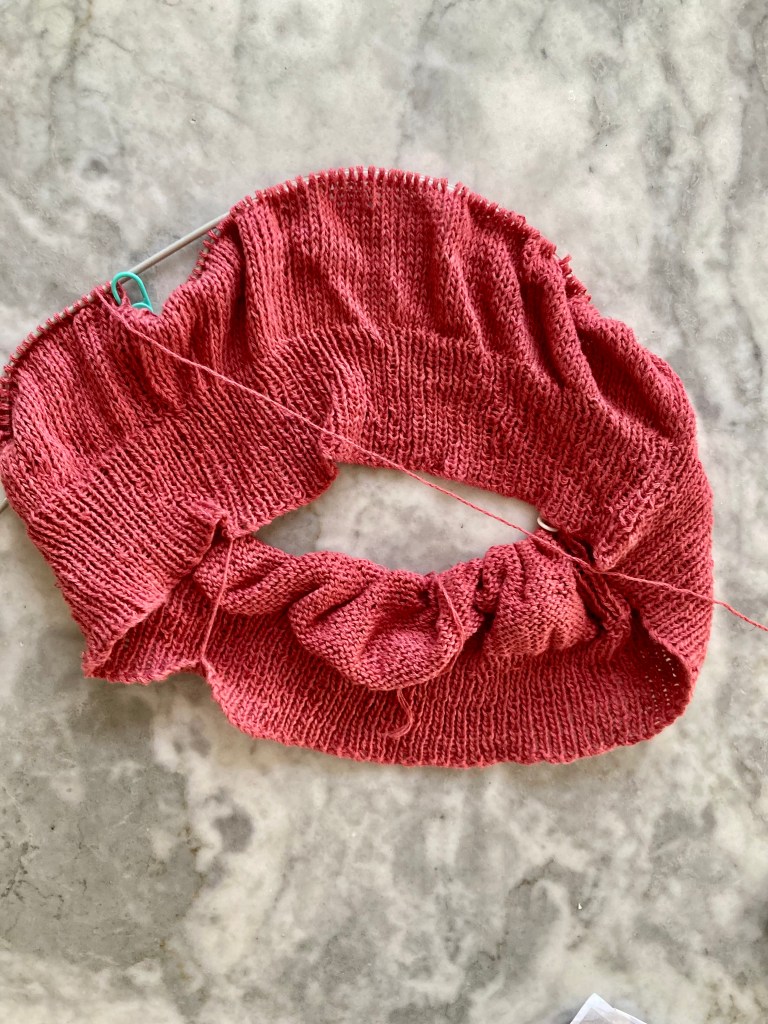
Then I went to a wool festival, talked to the lovely seller at a stand selling Tynn Line and was inspired to re-make the top using the yarn double. That seemed to give it a better “hang” and of course, went much faster. I also bought some light pink Tynn Line, so as not to have to use the cotton, AND decided to make it from the top down, to use up the yarn efficiently.

Converting the pattern to top-down was not easy, since it has a compound raglan yoke. Also, i did most of the yoke during a long airplane flight. I guess that explains why I got the sleeve increases completely wrong, increasing every four rounds when I should have been increasing every other round and vice versa. I made it work somehow, but in the process got lost in the directions. It ended up being very wide at the sleeve-body split.

As of September 6, I am wondering if I should frog it and start over from the bottom up (with doubled yarn), finish it as is, or let it sit in the cabinet until next summer.

July 1968: Overview

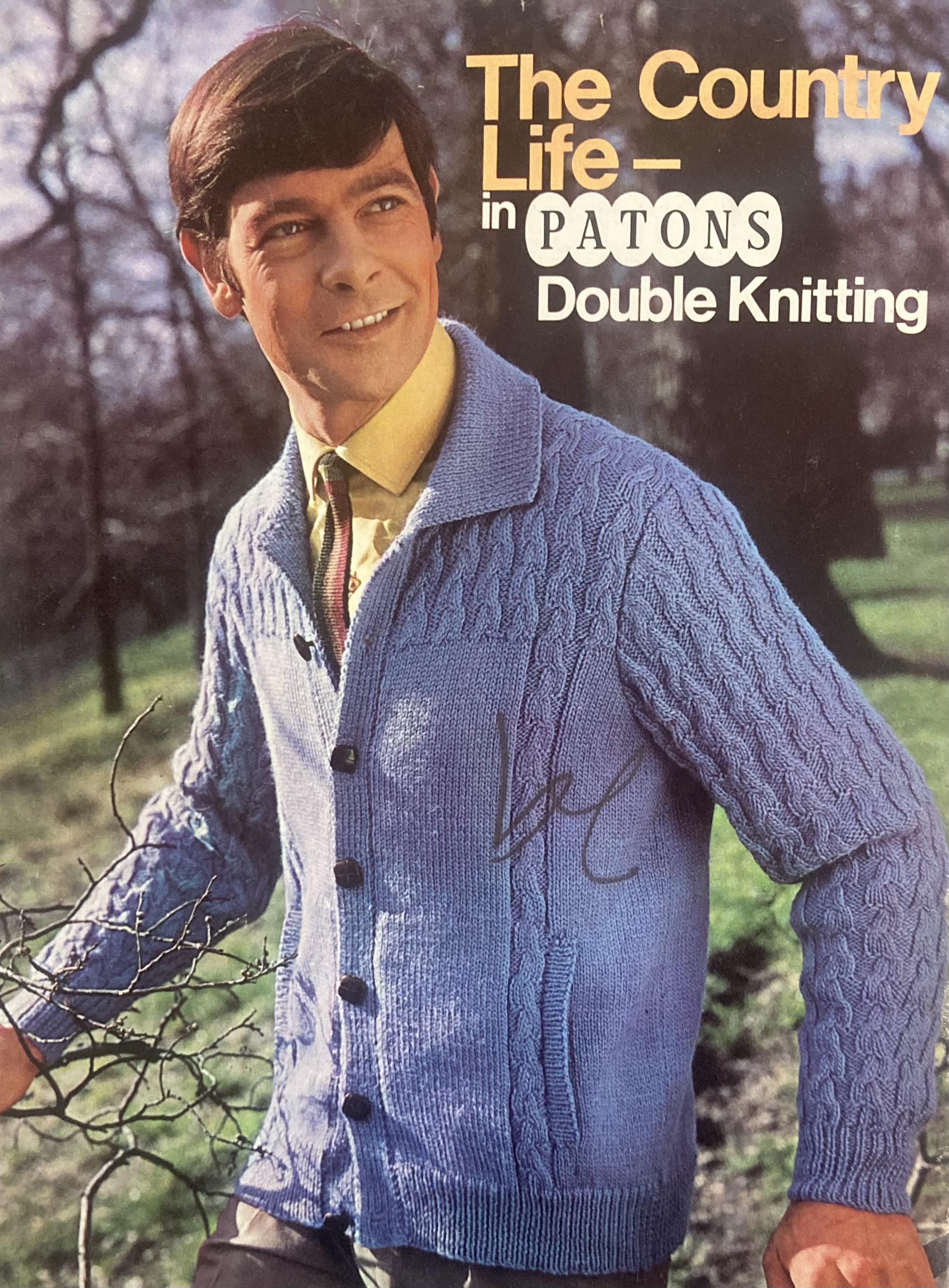
“Summer and the Country Life” is the caption of the introduction to the July 1968 issue of Stitchcraft. After eight years of blogging about this magazine, I have to admit that I still can’t necessarily say what makes a garment “country” or not in the world of 1960s British knitting fashion. Tweedy and casual, yes, and cardigans that can be worn as outdoor jackets. As for the rest, either there are some historical or regional codes at play (please enlighten me if you know what they are), or Stitchcraft just got tired of writing “for your holidays” in every summer issue.

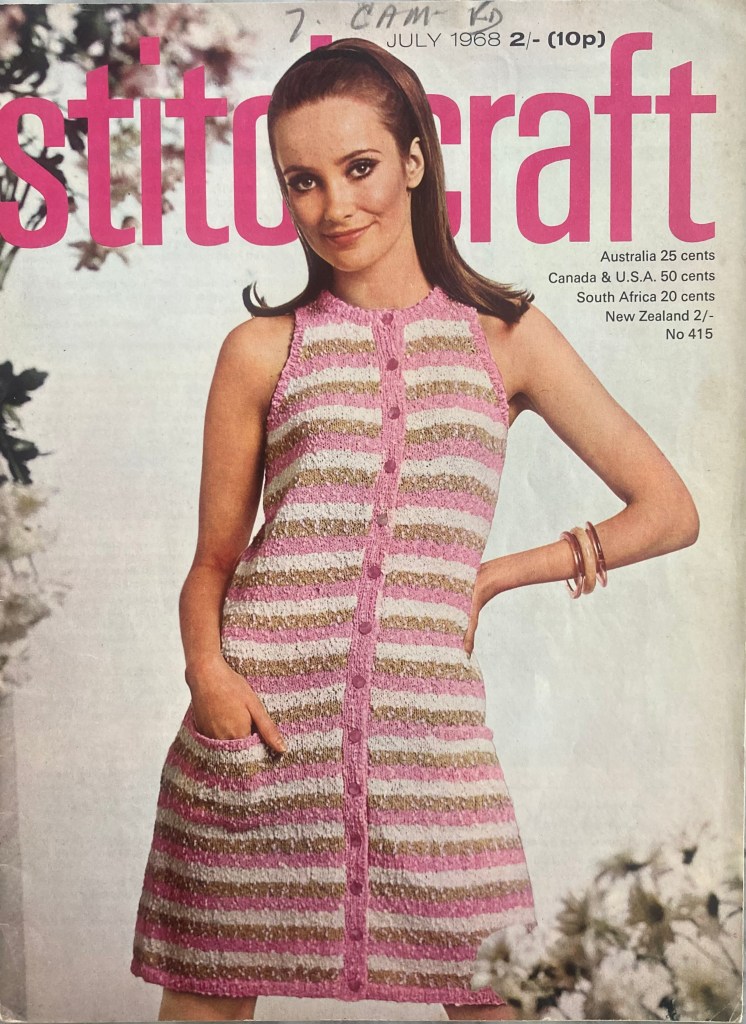
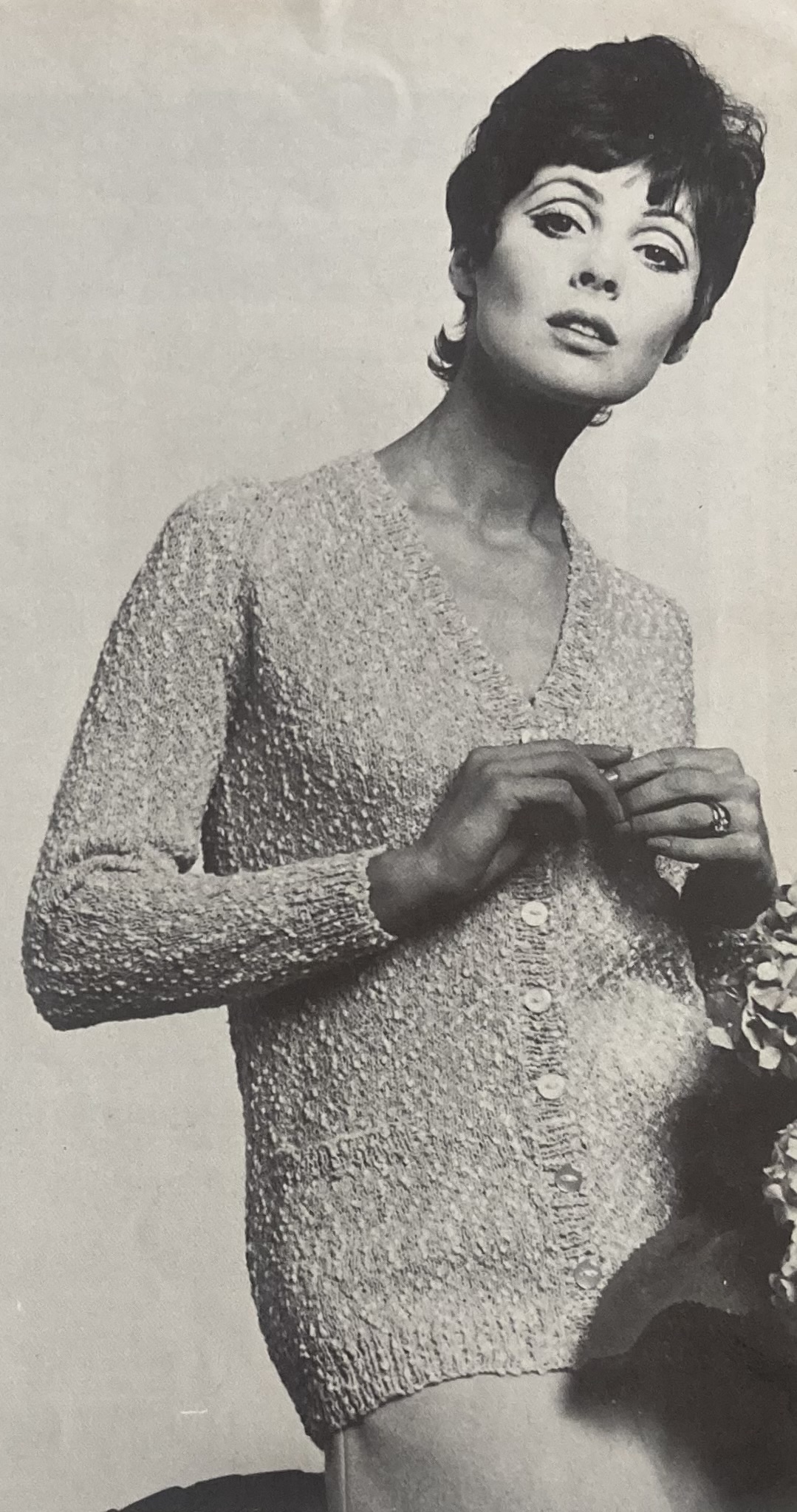
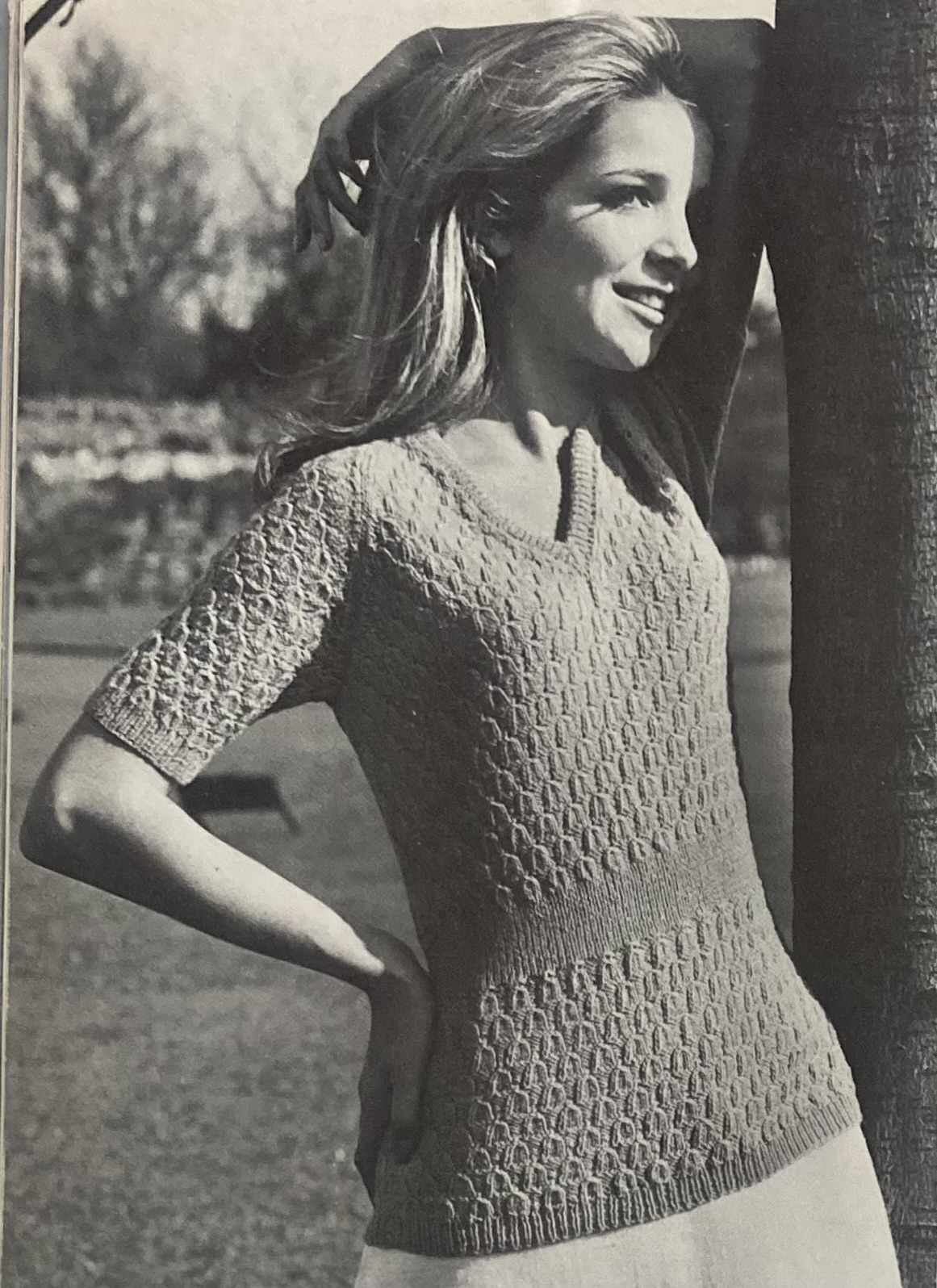
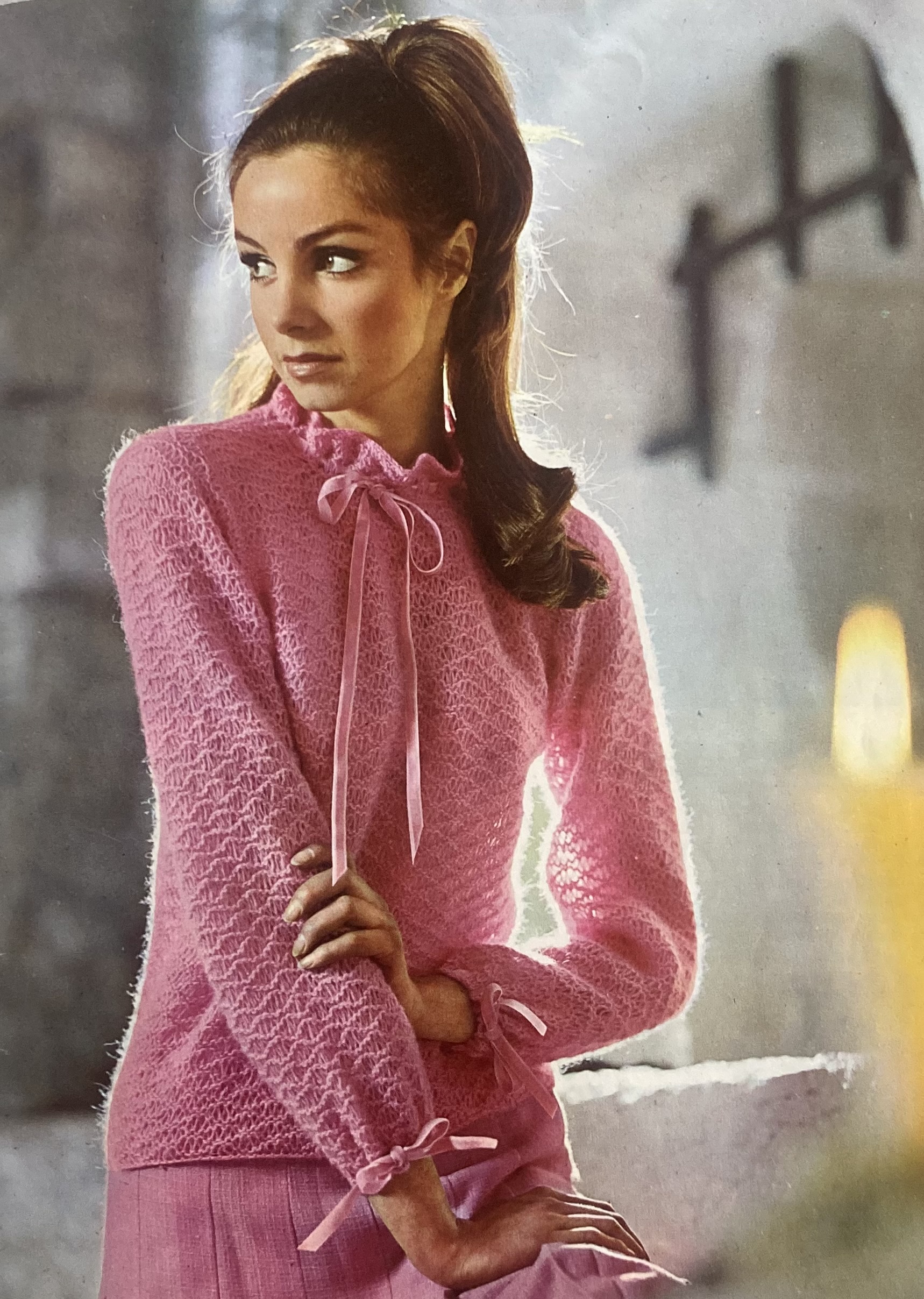
The front cover design, for example, looks more like a fun night on the town to me. Knit in this year’s new bobbly-textured “Four Seasons” wool-synthetic blend, it’s a good example of the growing trend for cardigan-coats, here interpreted as a sleeveless buttoned dress. Other women’s fashions include a striped T-shirt and matching knitted skirt in smooth crepe wool, a long-line cardigan in the same Four Seasons wool, a textured blouse with a ribbed waistline, and a Victorian-era-inspired blouse in dropped-stitch lace in a “Romantic Mood”. Pastels (the long cardigan is “Surf Blue” and the ribbed-waist blouse “Beryl”) and especially pink are this season’s colours, or if uni-colour, in textured yarn and patterns.

(Apropos colours: there are so many more colour photos in the latest issues!)

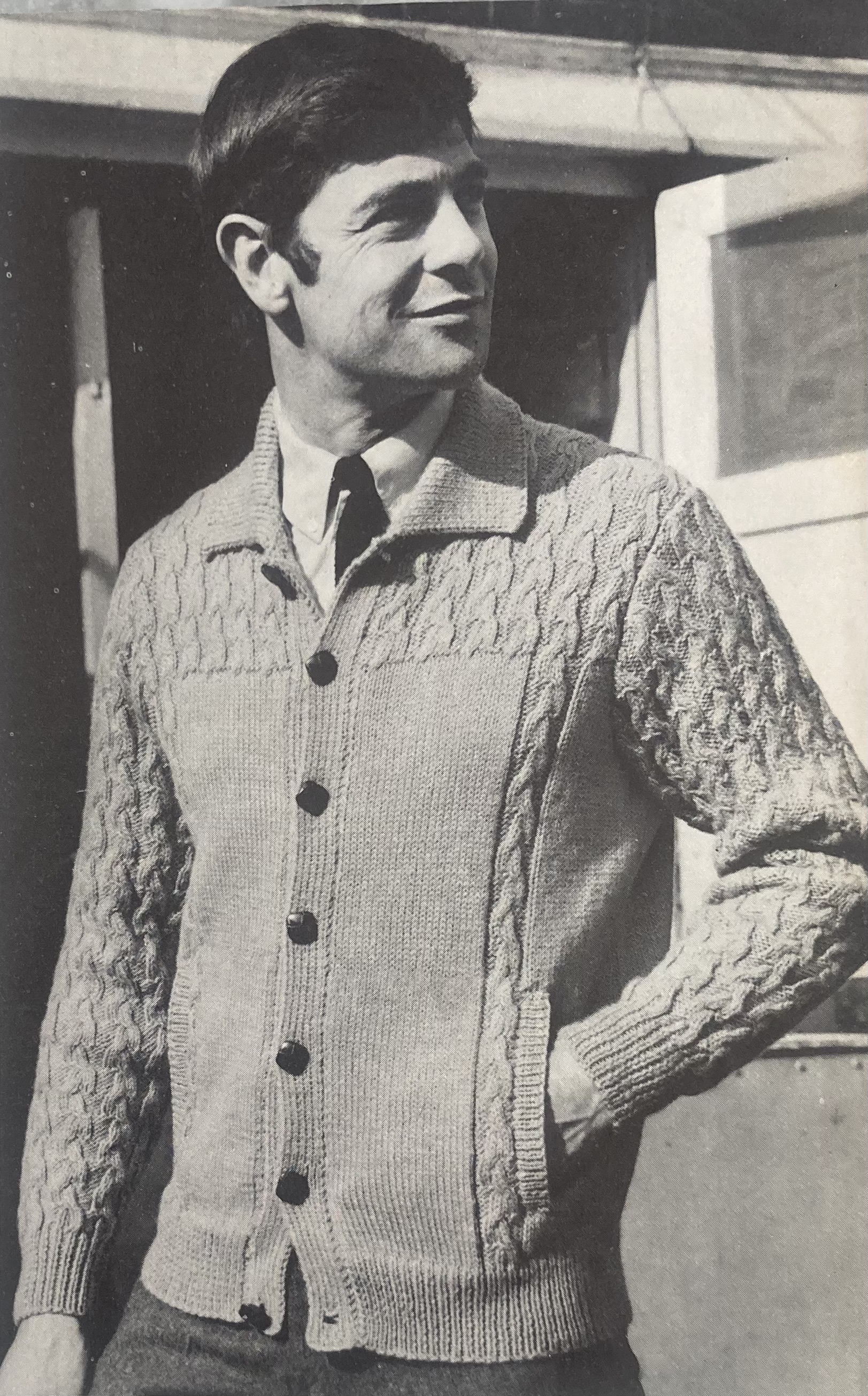
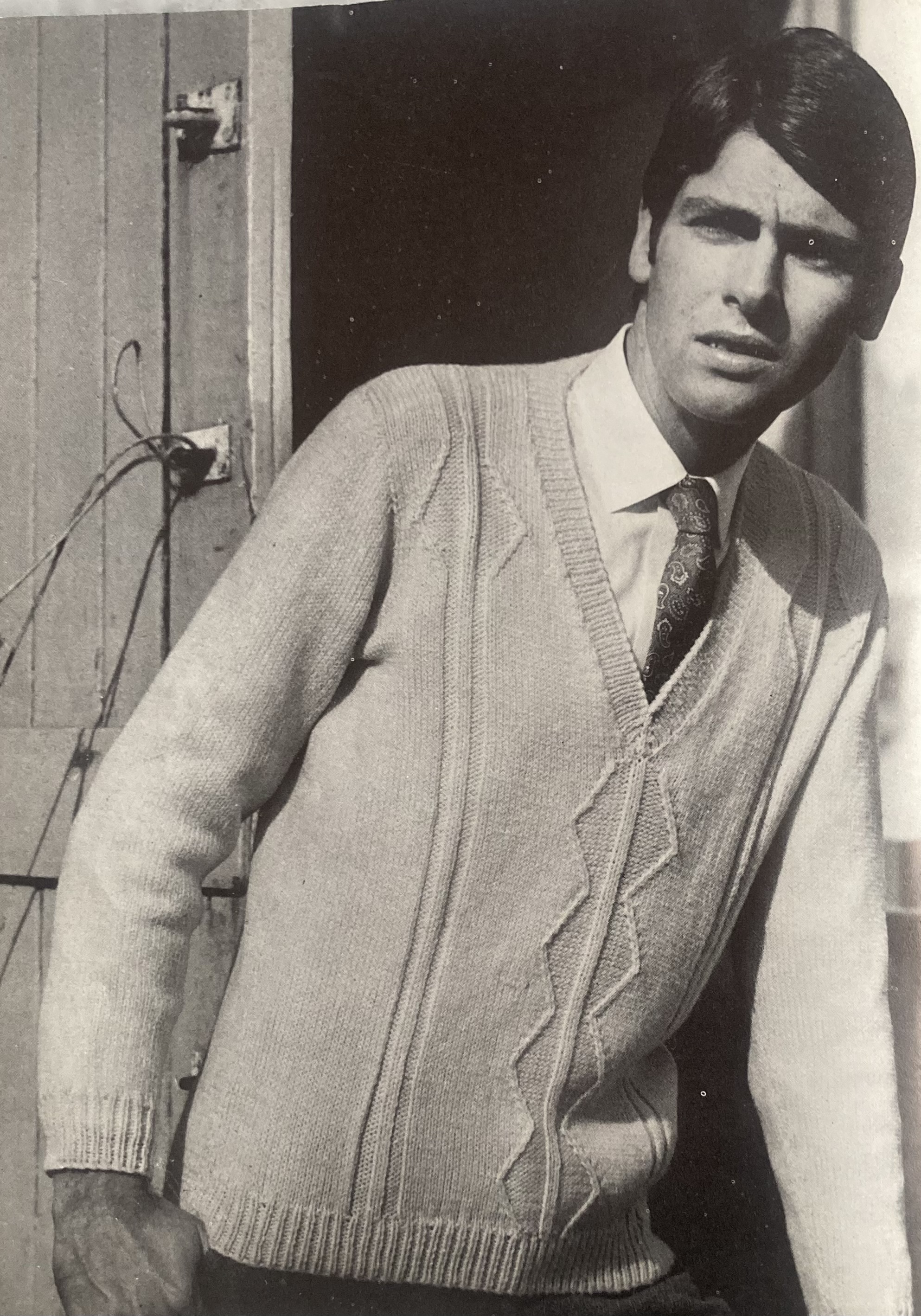
For men, there’s a truly “country” cardigan in Patons Double Knitting wool, with vertical pockets and cable patterning on the sleeves and yoke. I cannot imagine a more 1960s male fashion photo than the one on the back cover. The other men’s design is a similarly loose-fitting and casual (i.e. worn with the casual dress shirt and tie; we are on holiday in the country, after all) pullover with a zig-zag texture accent. Suggested colours are “Musk” or “Earlybird Yellow”, matching the pastel theme from the women’s garments.

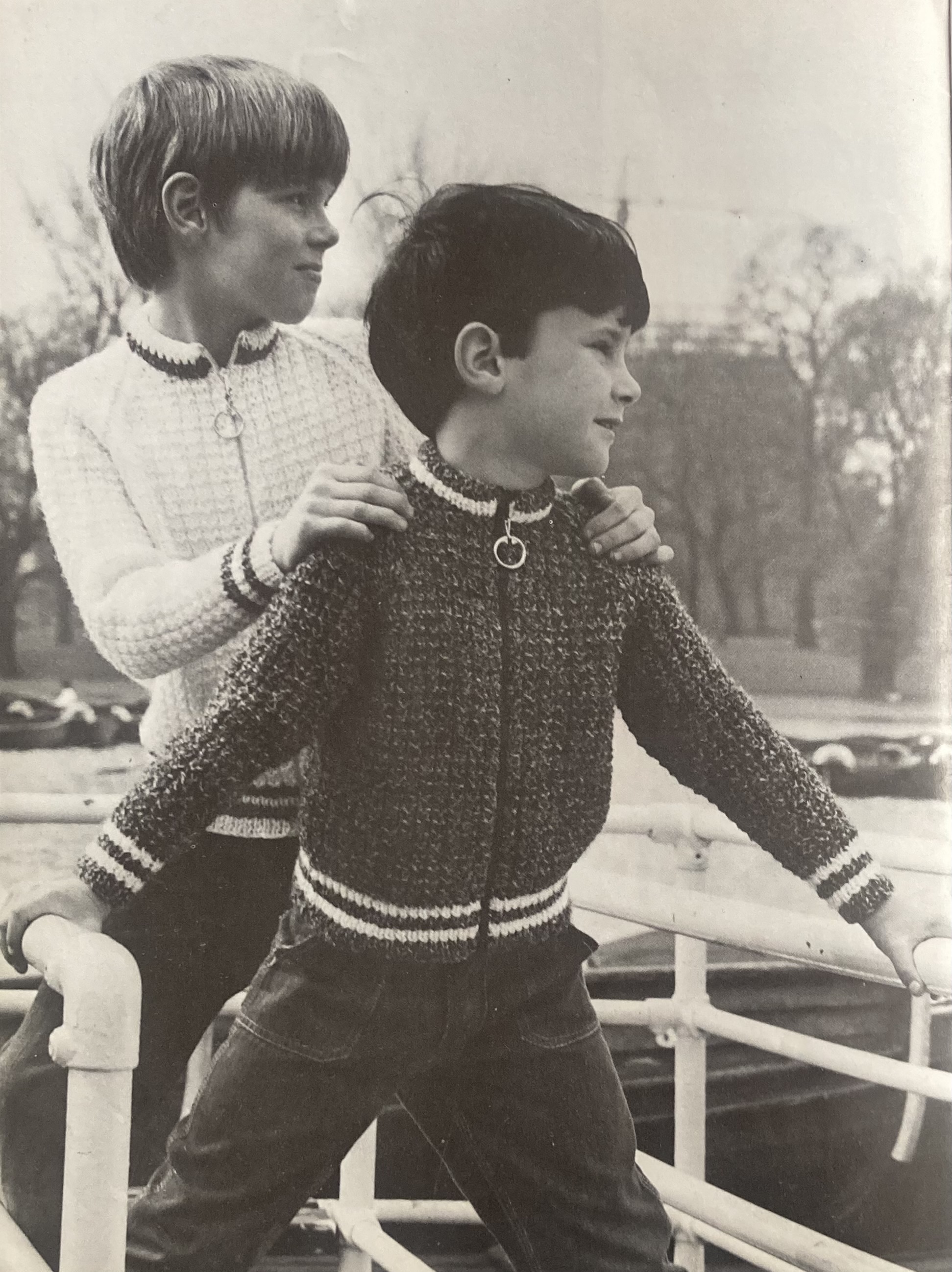
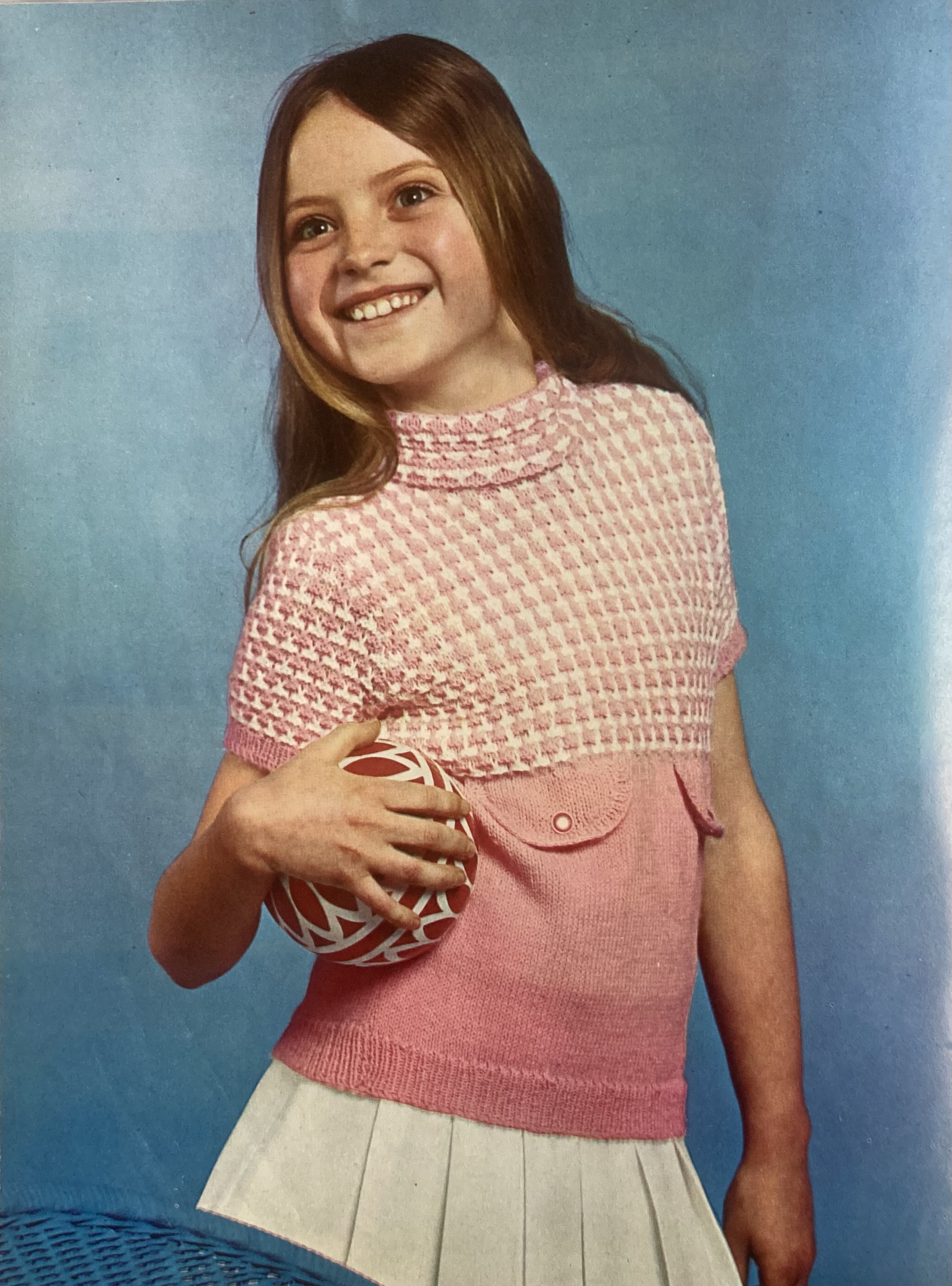
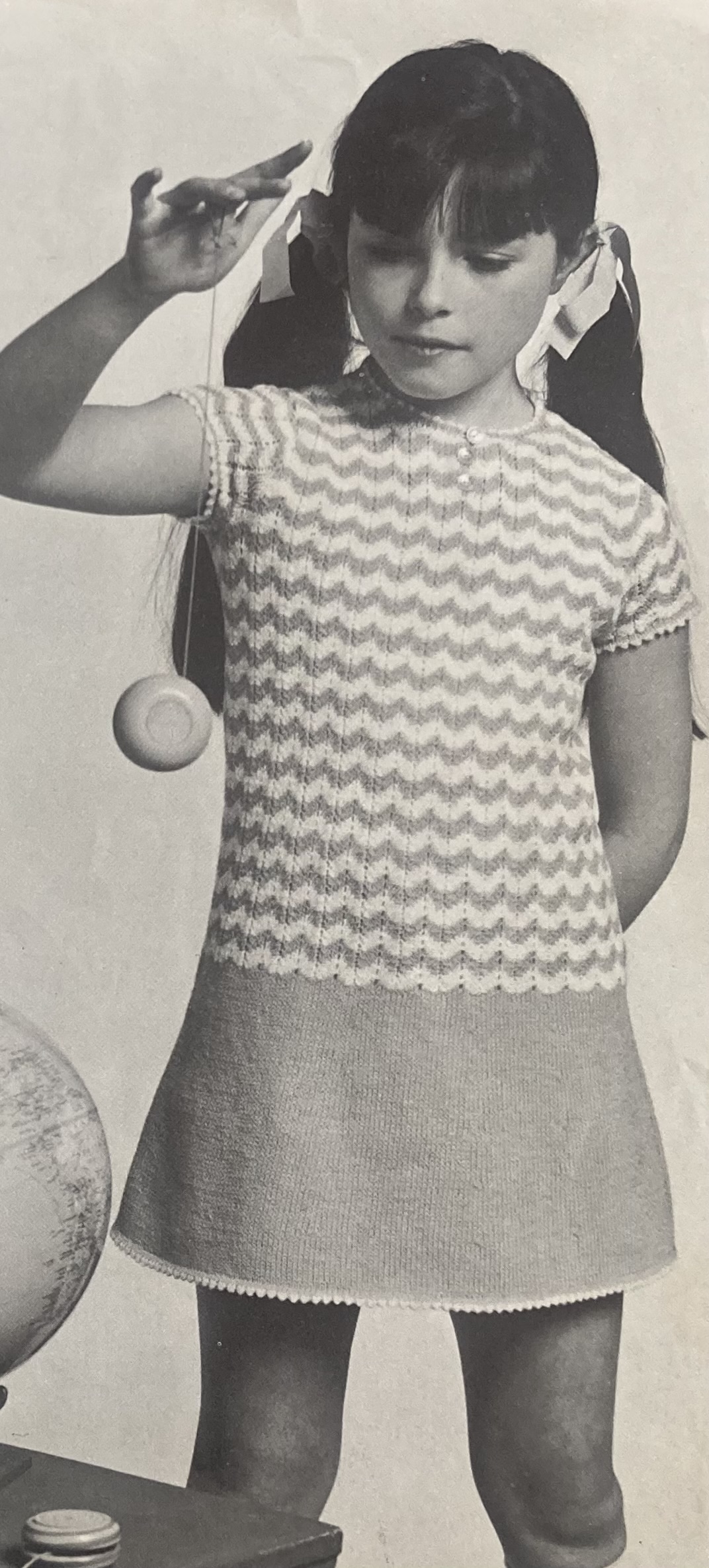
There is more of a balance between women’s, men’s and children’s clothes in this issue, i.e. fewer for adult women and more for the other two categories. “Boys play it rough” is the caption for the thick, tough moss-rib cardigans with ring zippers and little stripe accents for school-age boys. They will certainly have more fun playing in them than their sister, who has to try to play ball in a micro-miniskirt and a weirdly fitting short-sleeved knitted blouse. The choice of patterning ending just below the bust, plus pocket flaps (without even pockets) just below the patterning, must have been excruciatingly awkward for a preteen or teen girl. Maybe they got her to smile for the photo by promising her a pair of jeans and a T-shirt to change into. The girl on the inside back cover doesn’t fare much better in terms of casual, country comfort. Her (admittedly very cute) yellow-and-white-striped mini-dress has similar patterned / non-patterned proportions and picot edgings.

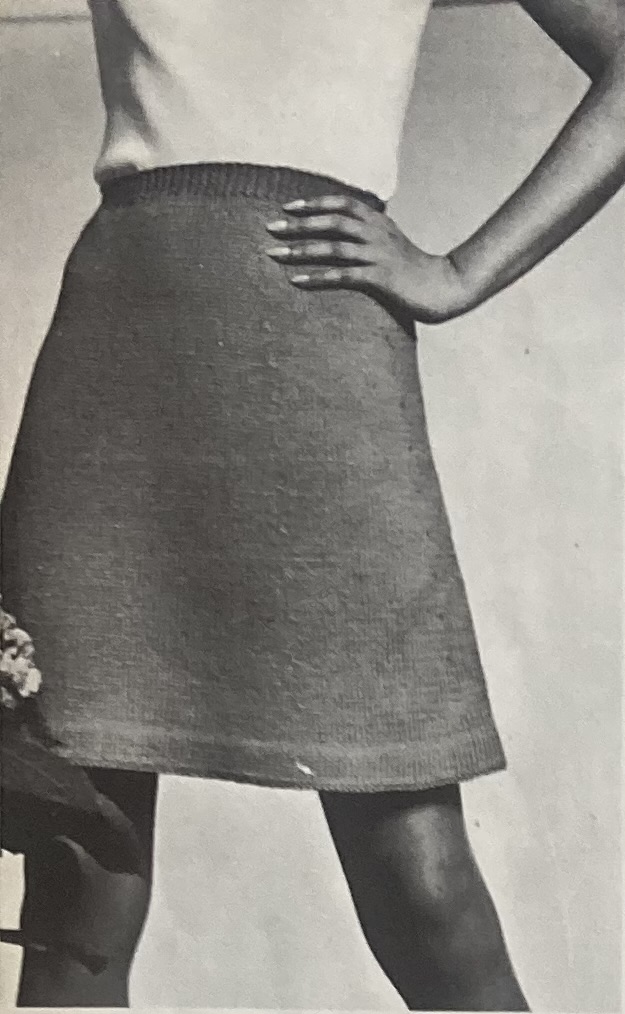
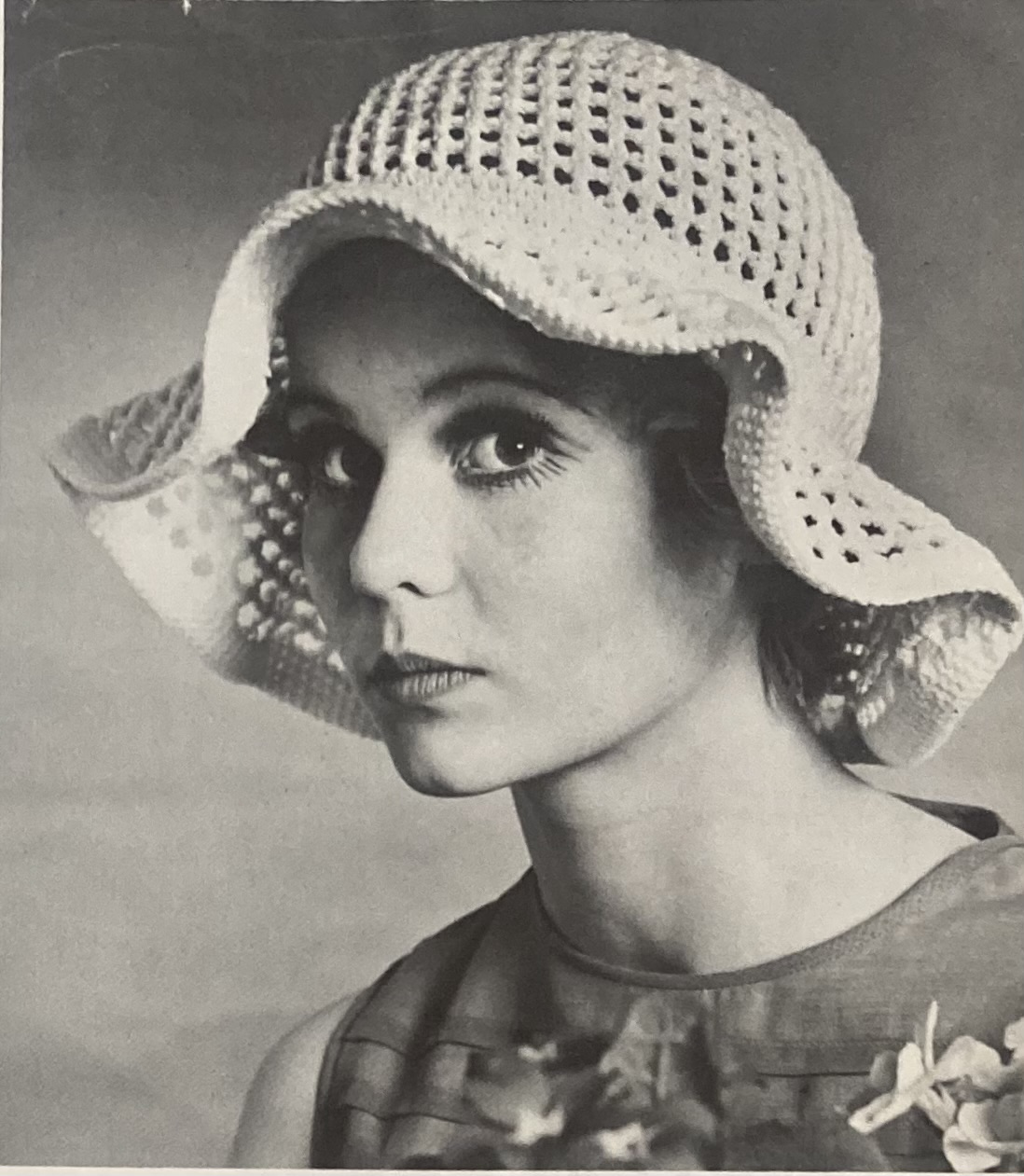
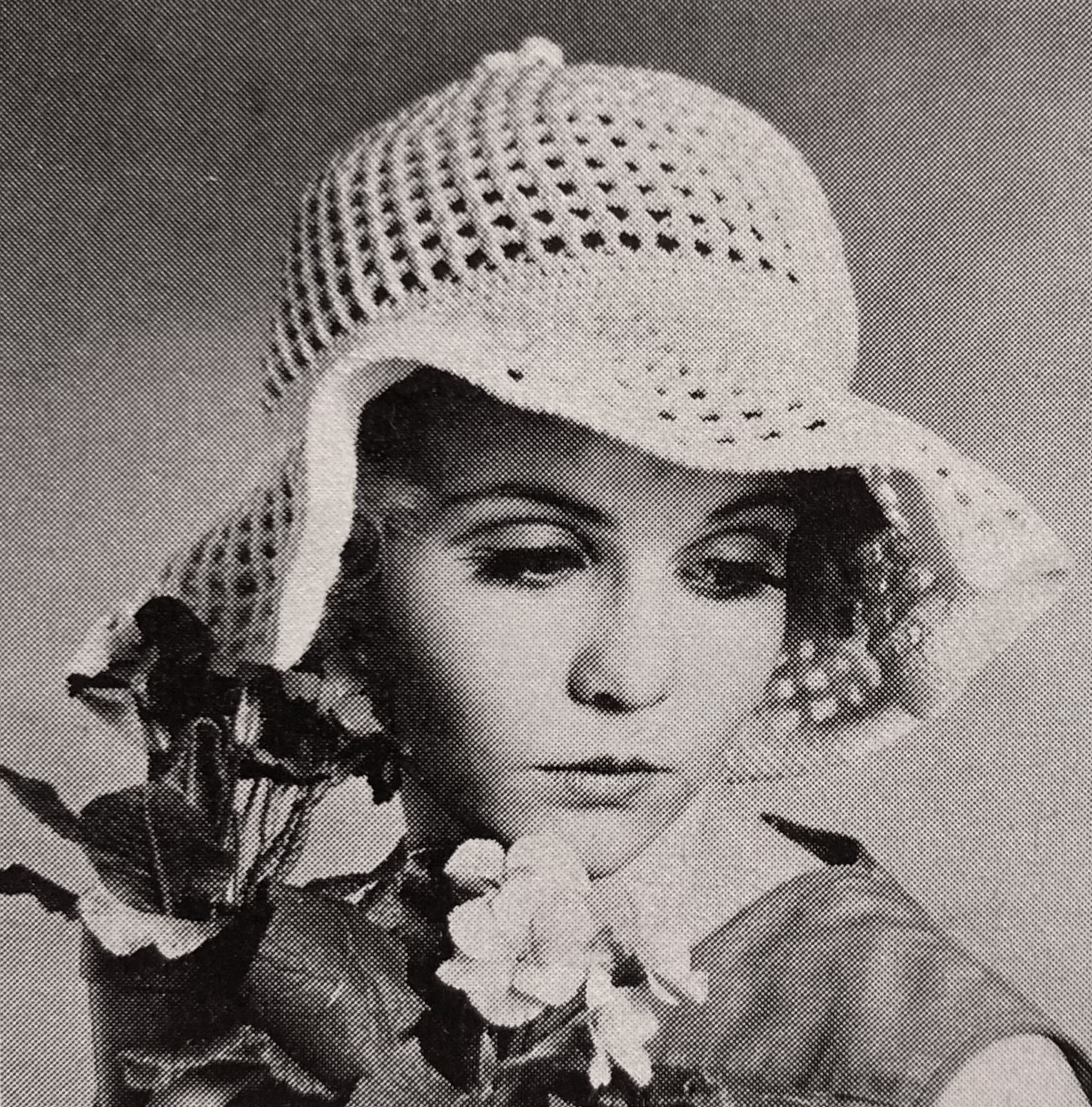
Rounding out the wearable fashions are a pattern for a plain knit skirt, tucked back in by the Readers’ Pages, which is quite similar in shape and style to the skirt worn with the striped T-shirt blouse, and a “Crochet Bonnet for the Sun” worn by the “sad” model. I like this model and think she is very pretty, but her facial expressions don’t do much to sell the designs, as she looks anxious and miserable in them. Maybe she just has terrible teeth?

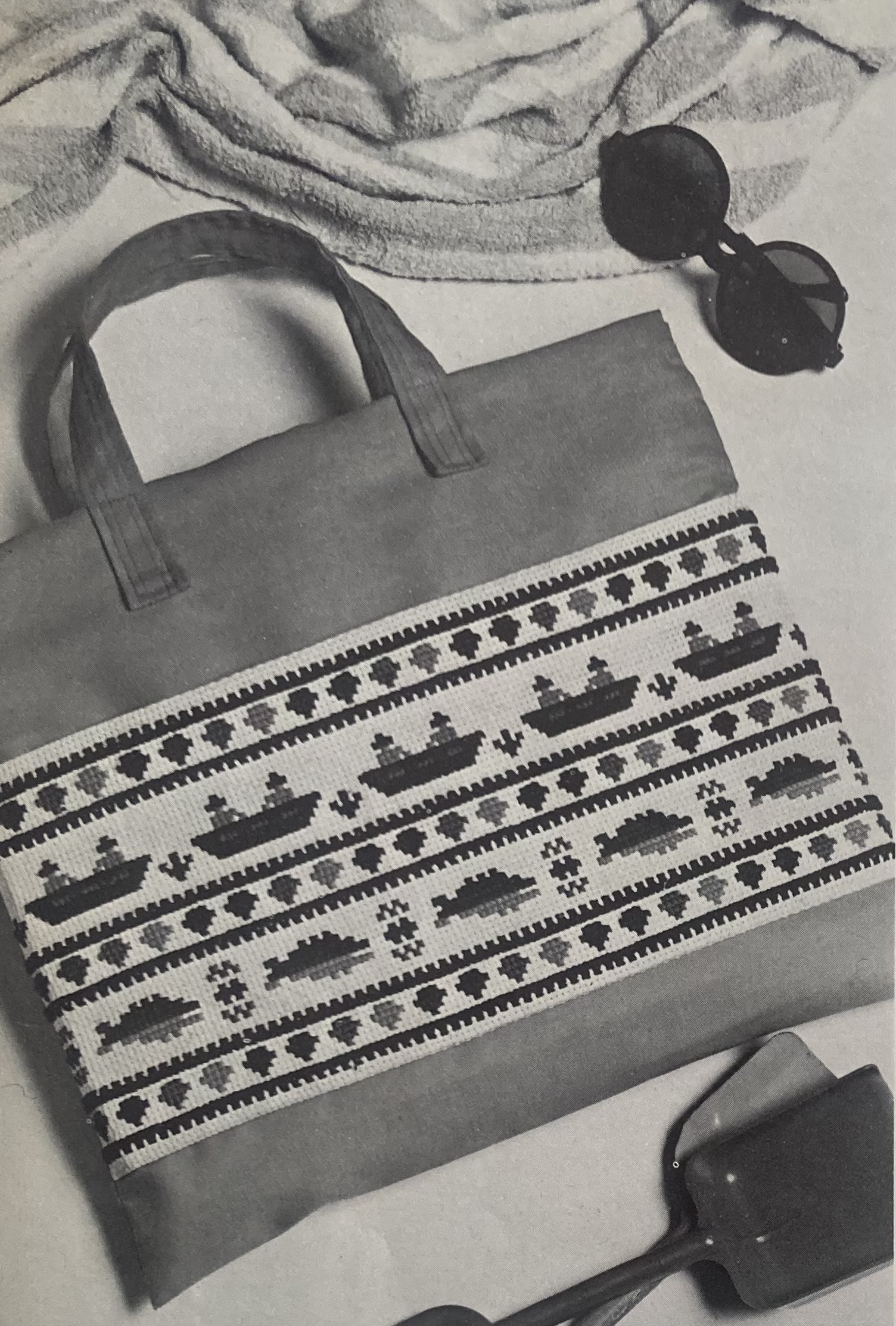
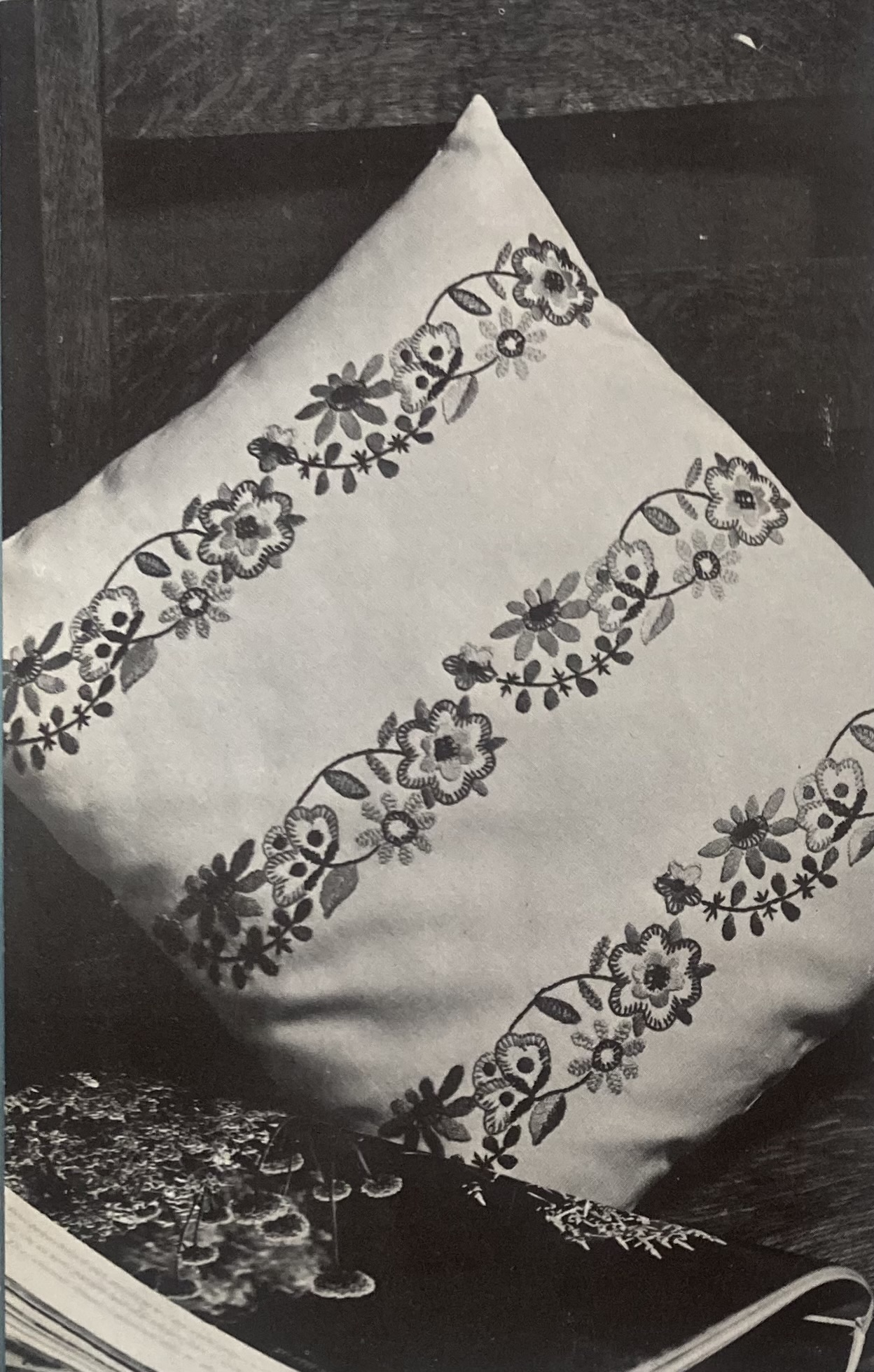
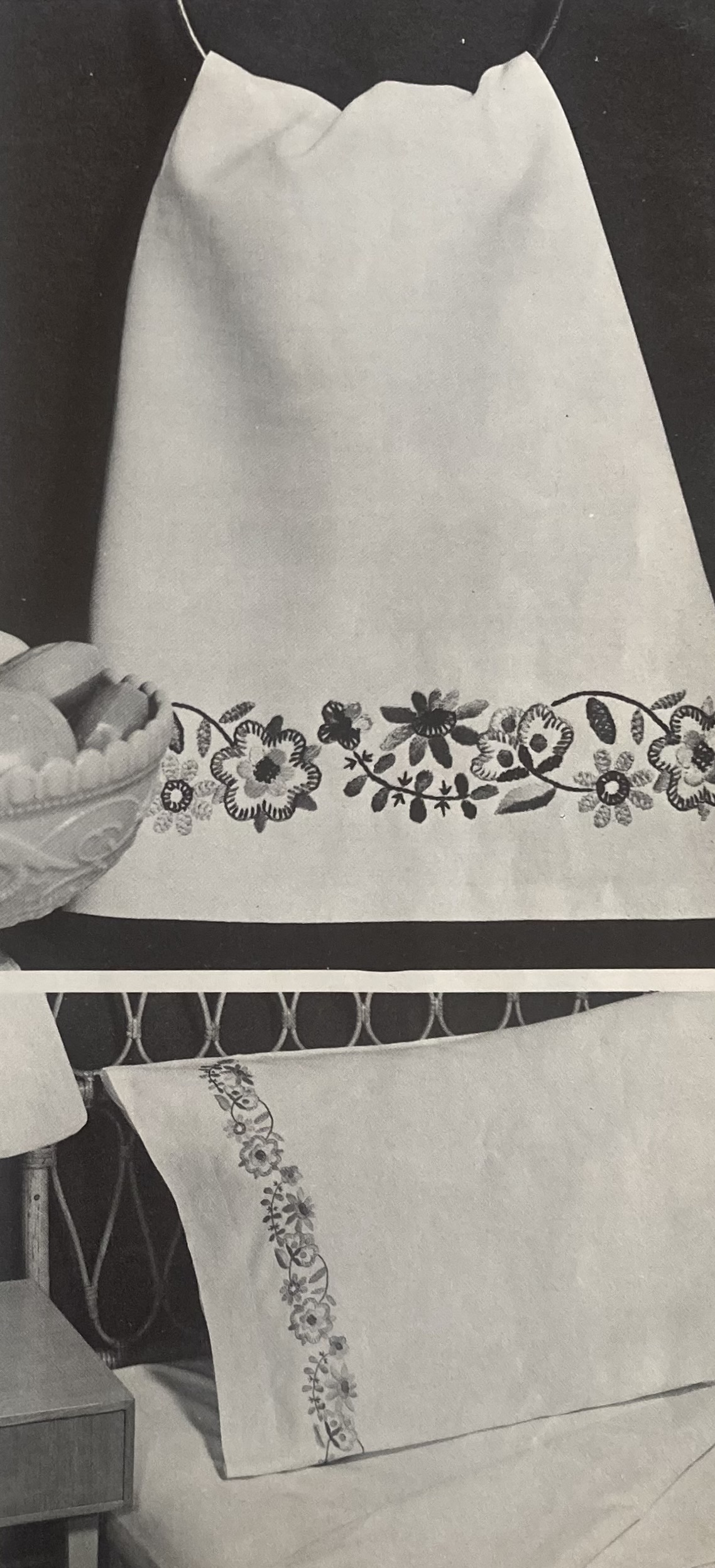
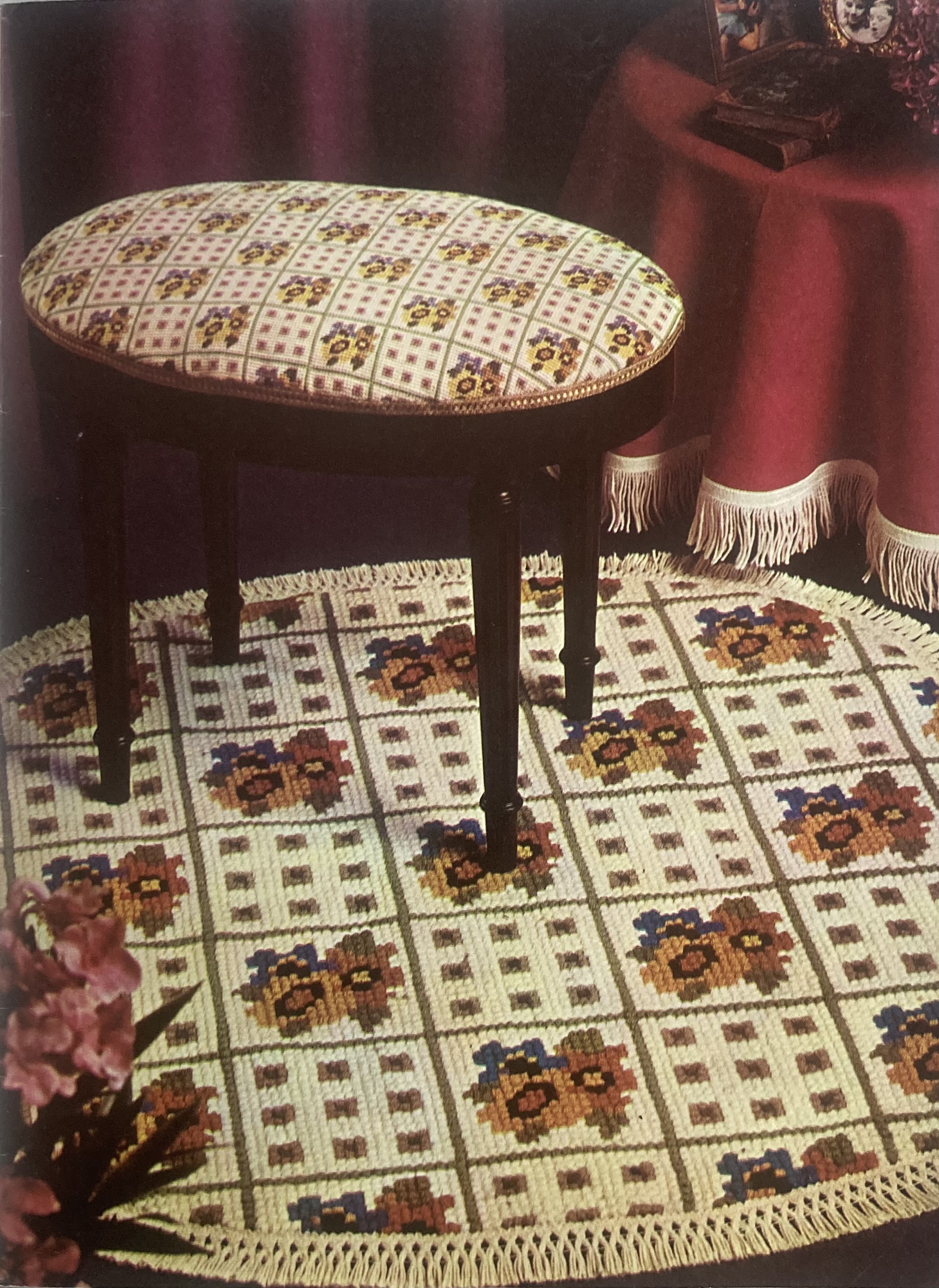
The homewares mostly echo the summer holiday theme, with easy designs that can be adapted to different items. There’s a cross-stitch design of boats and fish to use on a beach bag or cleverly constructed pillow with a hidden pocket “for a day by the pool”, an easy flower embroidery pattern to trim a cushion, chairback, guest towel or pillow slip, and a Victorian-inspired tapestry design for a stool top and matching rug.

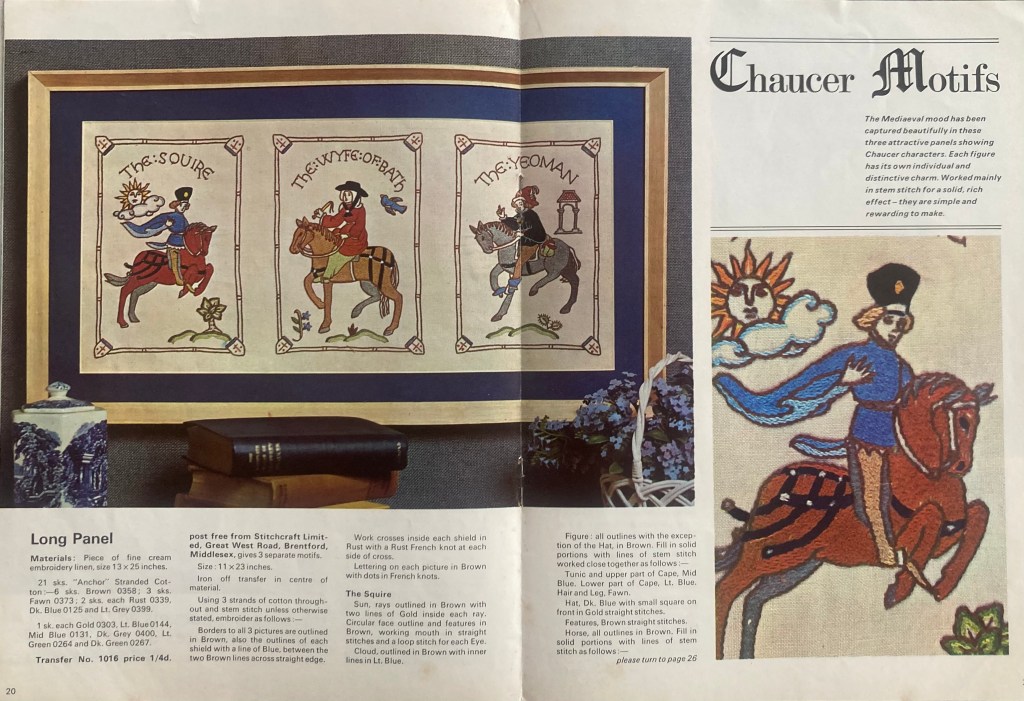
The crowning glory of home decorations in this issue is the large, paneled wall hanging with embroidered illustrations of some of the characters from Chaucer’s Canterbury Tales: the Squire, the Wife of Bath, and the Canon’s Yeoman. The figures are mostly worked in stem-stitch, including the fillings, which gives them a rich and solid texture. The panel is perhaps not all that difficult to embroider, but the finished effect is extremely impressive. In the introduction to the issue, “editress” Patience Horne promises another panel of 3 motifs in the coming months, so that readers can make a set of six pictures or two long panels of three.

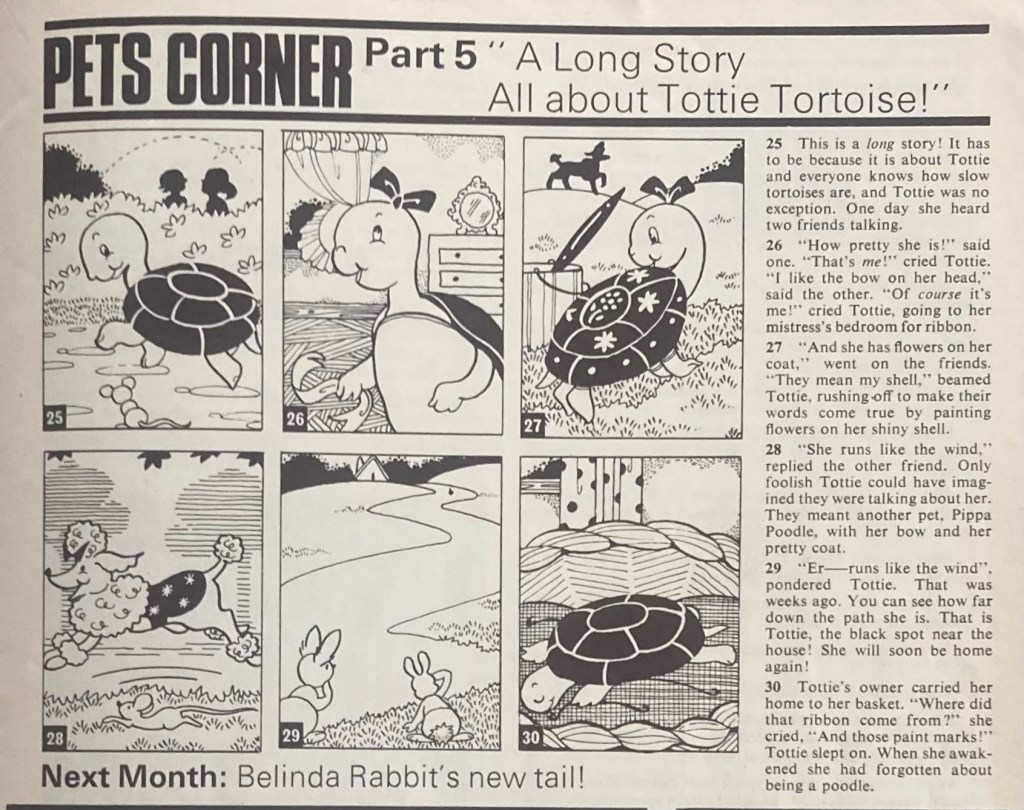
in our current children’s comic, “Pets Corner”, Tottie Tortoise misunderstands a compliment meant for Pippa Poodle, paints her shell, ties a bow on her head and goes out for a walk feeling pretty. Then her mistress carries her home and she takes a nap. Sounds like a good day to me!

That’s all for this issue. My project will be the striped T-shirt, if I ever finish up any of my other other works-in-progress. Like Tottie Tortoise, I am currently slow. Have a great July, everyone, and I hope to be able to update some of the projects soon.

June 1968: Go Sunning And… Lazing

EDIT July 28, 2026: Finished! (and PHOTOS!!)

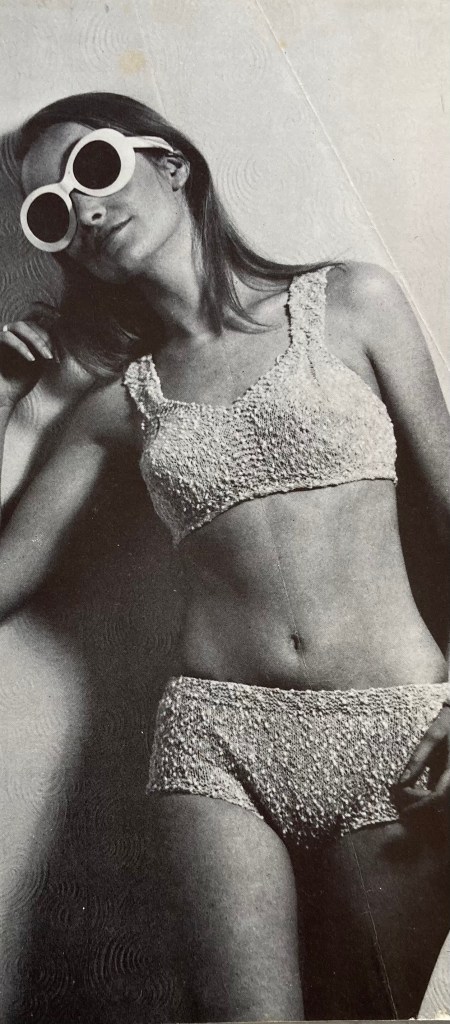
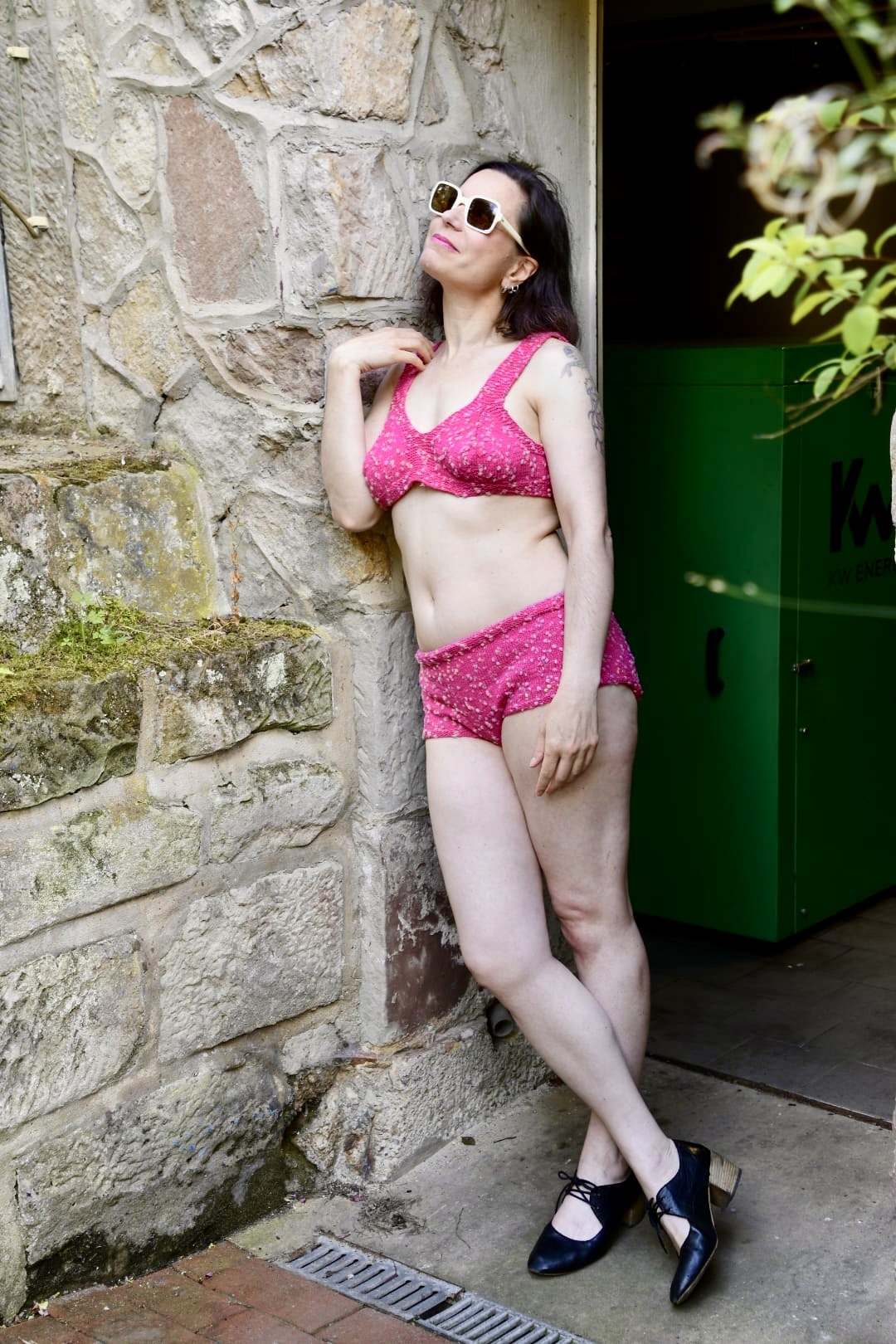
Summer is here! And the June 1968 issue of Stitchcraft has a glorious design to “sun yourself by the pool or on the sand”, “this season’s smartest beach look — the hand knit bikini set.”

The caption at the top of the page promises you can “Go Sunning and… Lazing”, but does not say anything about “swimming”. I can imagine why! Though have heard that the one-piece knitted swimsuits of the 1930s and 1940s didn’t stretch all too much when wet, I cannot imagine that this 1960s bikini with garter-stitch bands would cling to the body effectively in water. Nothing like having your bathing suit float off of your body on a wave to make that day at the beach truly memorable… I have a modern bathing suit for actual swimming (which I don’t do much of for fun anyway), and I try to avoid direct sunlight when possible, but I can definitely see myself “lazing” in the shade on a pool chair in a hand-knit bikini, so this was my project for June.

The three sizes for the top are for 32-33, 34-35, or 36-37 inch bust. I made the third size. Like me, the model seems to have at most a B cup. I imagine this style of hand-knit swimwear wouldn’t work very well for anyone built much bigger than that, since it doesn’t give much support and and more weight would make the bands stretch too much.

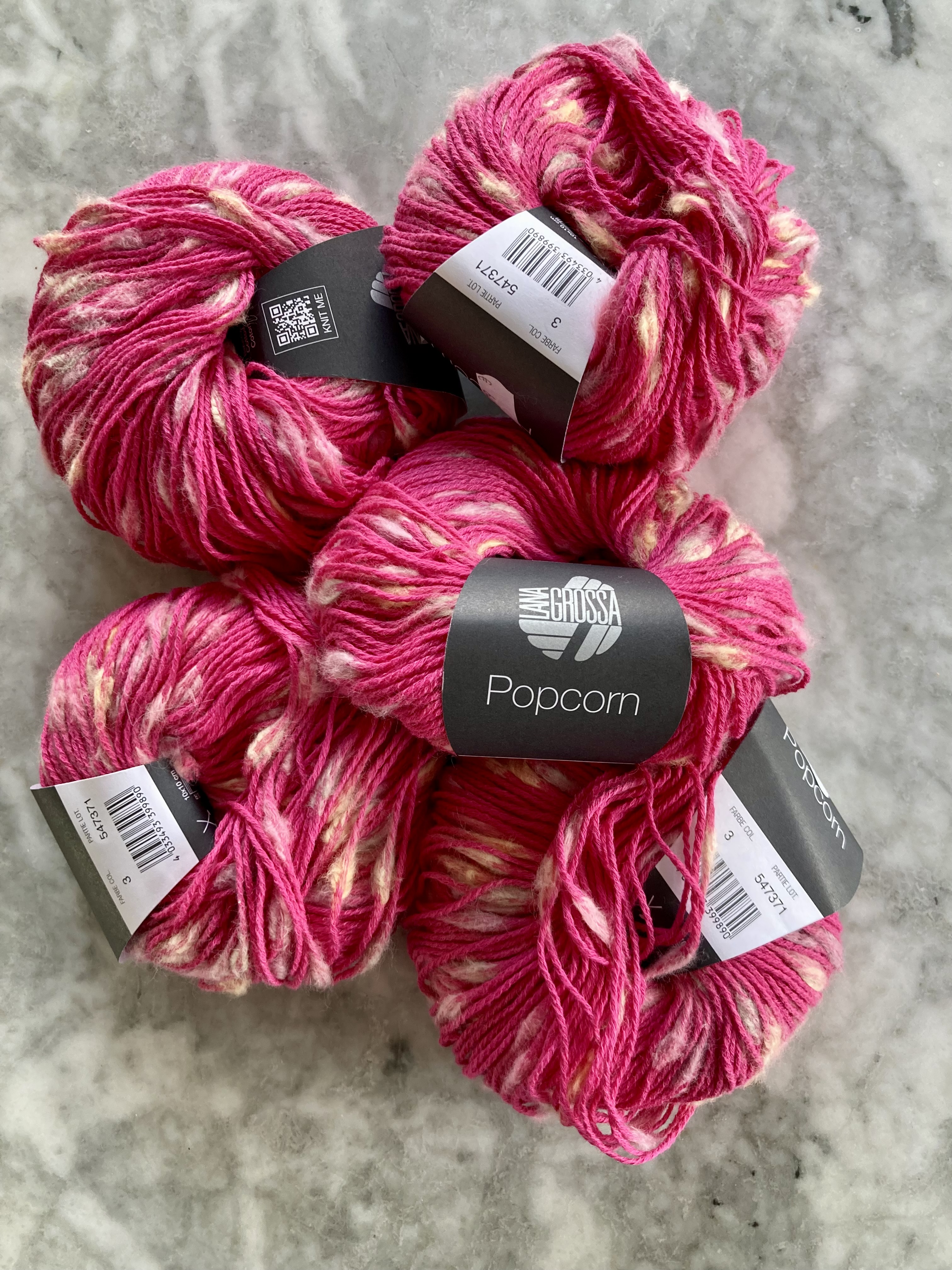
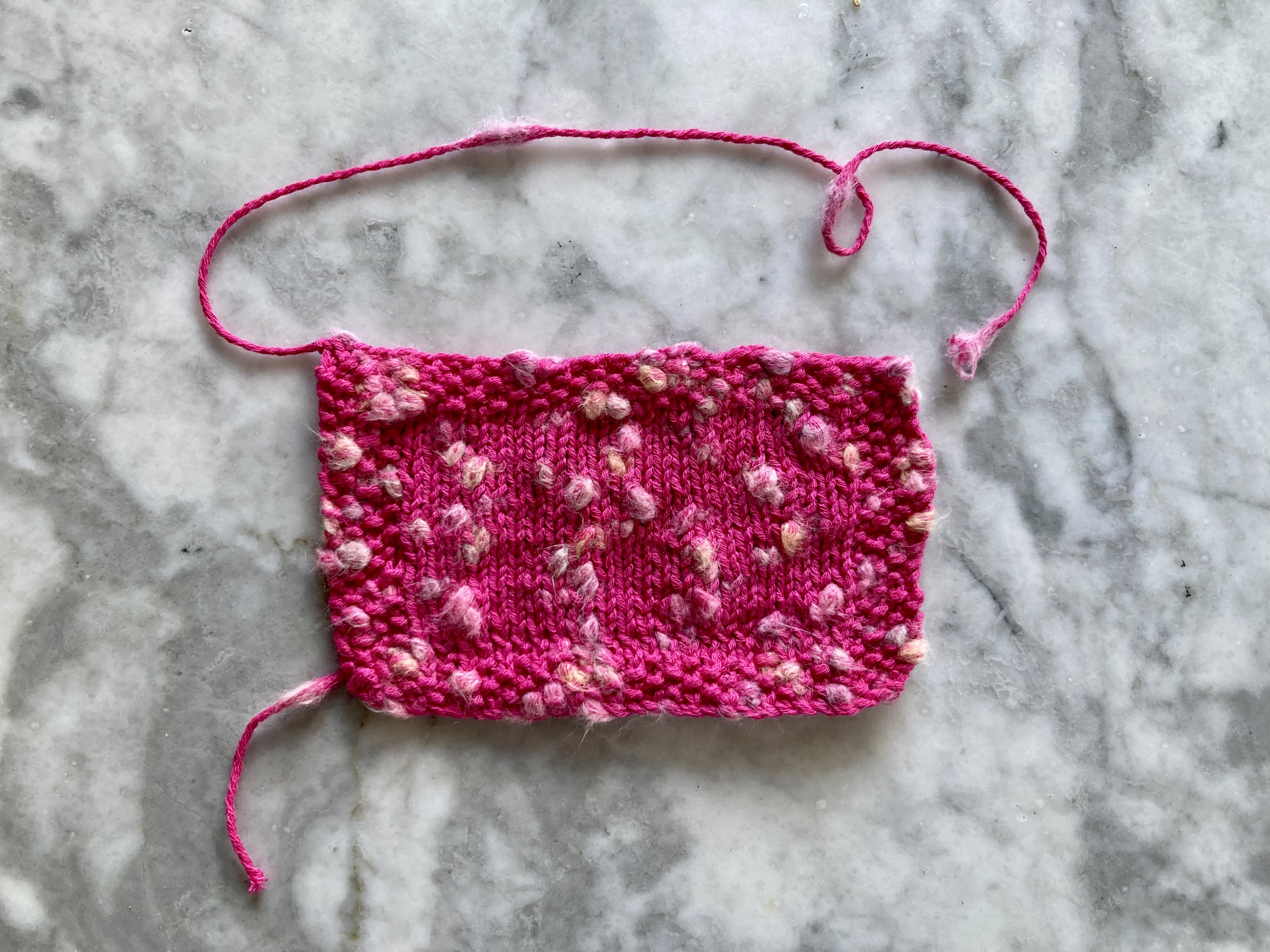
Finding the right yarn was a challenge. The original wool is Patons “Four Seasons”, a sport-weight mix of wool and synthetic fibres with a bobbly, “popcorn” texture, in “Surf Blue” colour. I found exactly one brand of yarn with the right weight and look and it is perfect — Popcorn by Lana Grossa — but it is also 100% cotton, so possibly even less appropriate for swimming than the original. It’s also probably a bit heavier, which was OK with me if it gives a thicker and less see-through fabric. It was also available in bright pink! If I was going to knit myself a bikini from 1968, I wanted it to be as bright and fun as possible, so that was perfect.
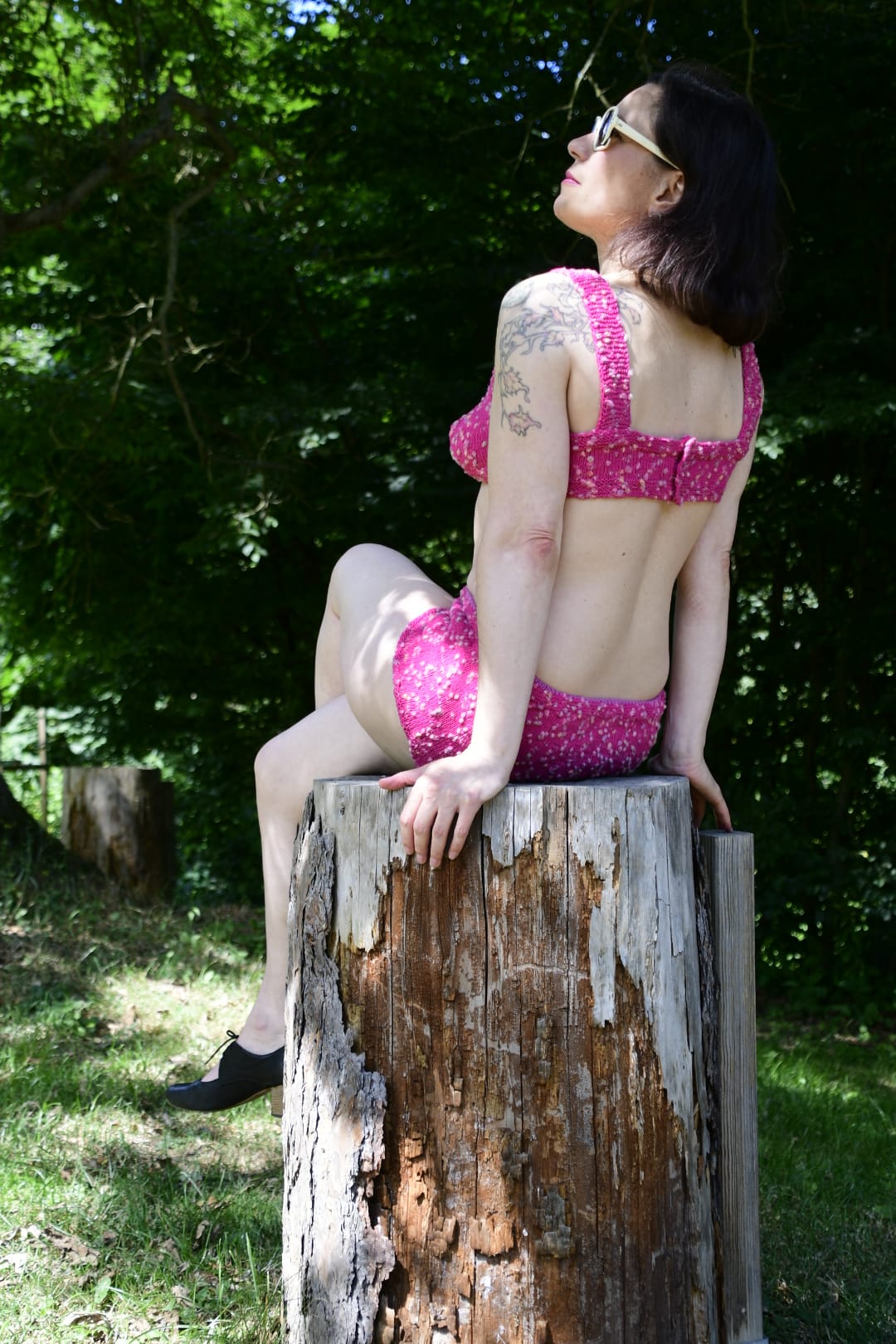
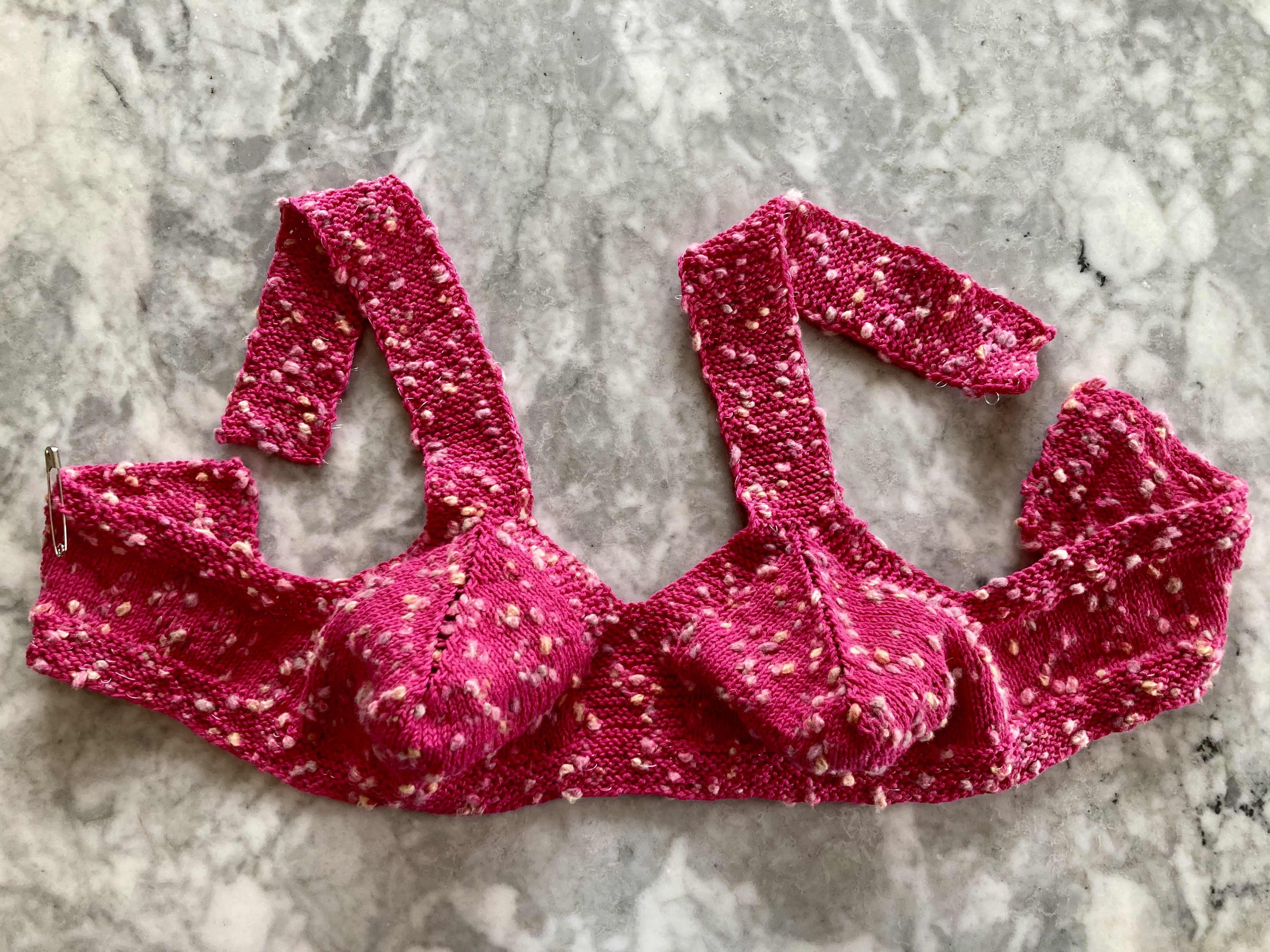
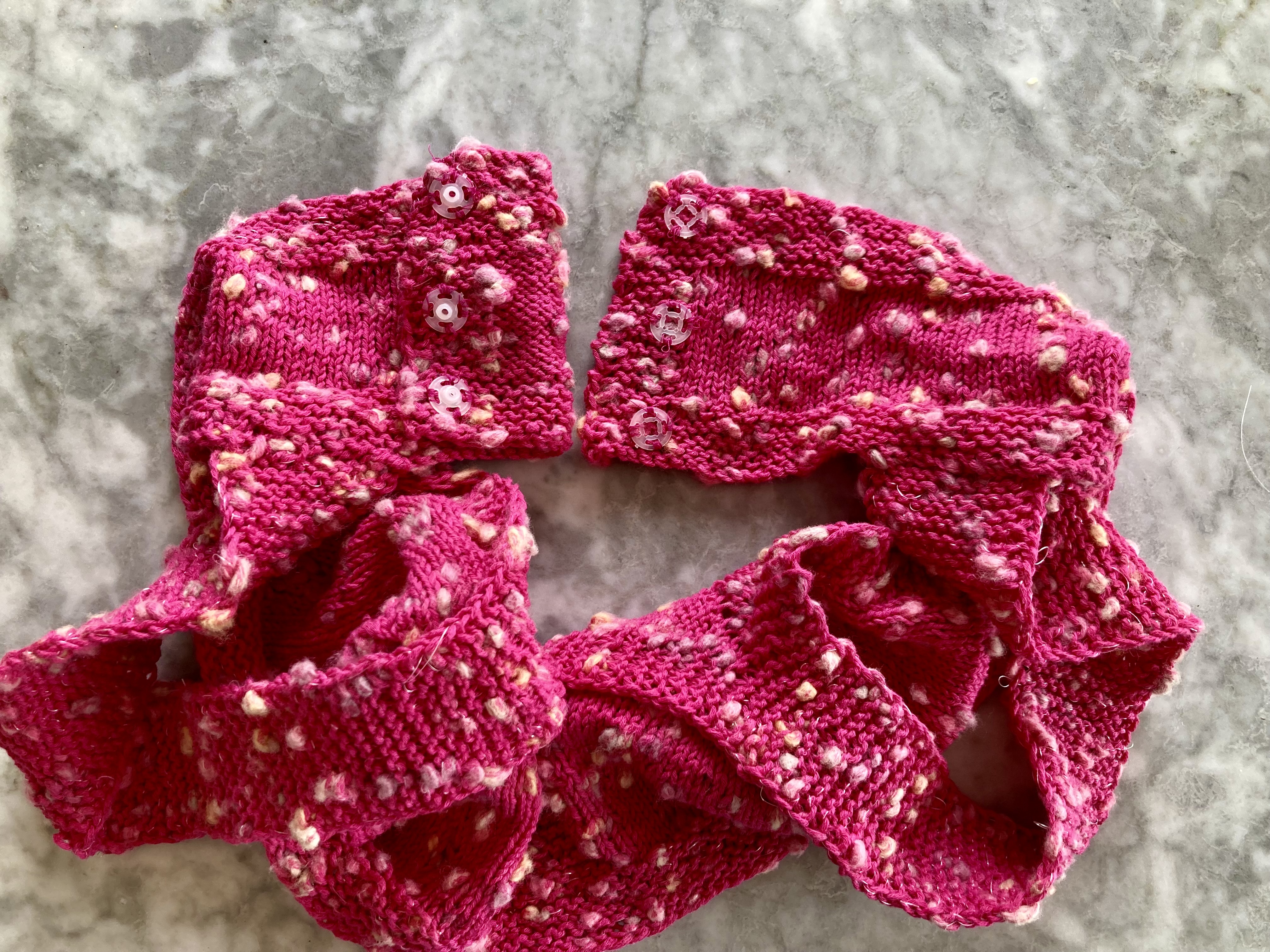
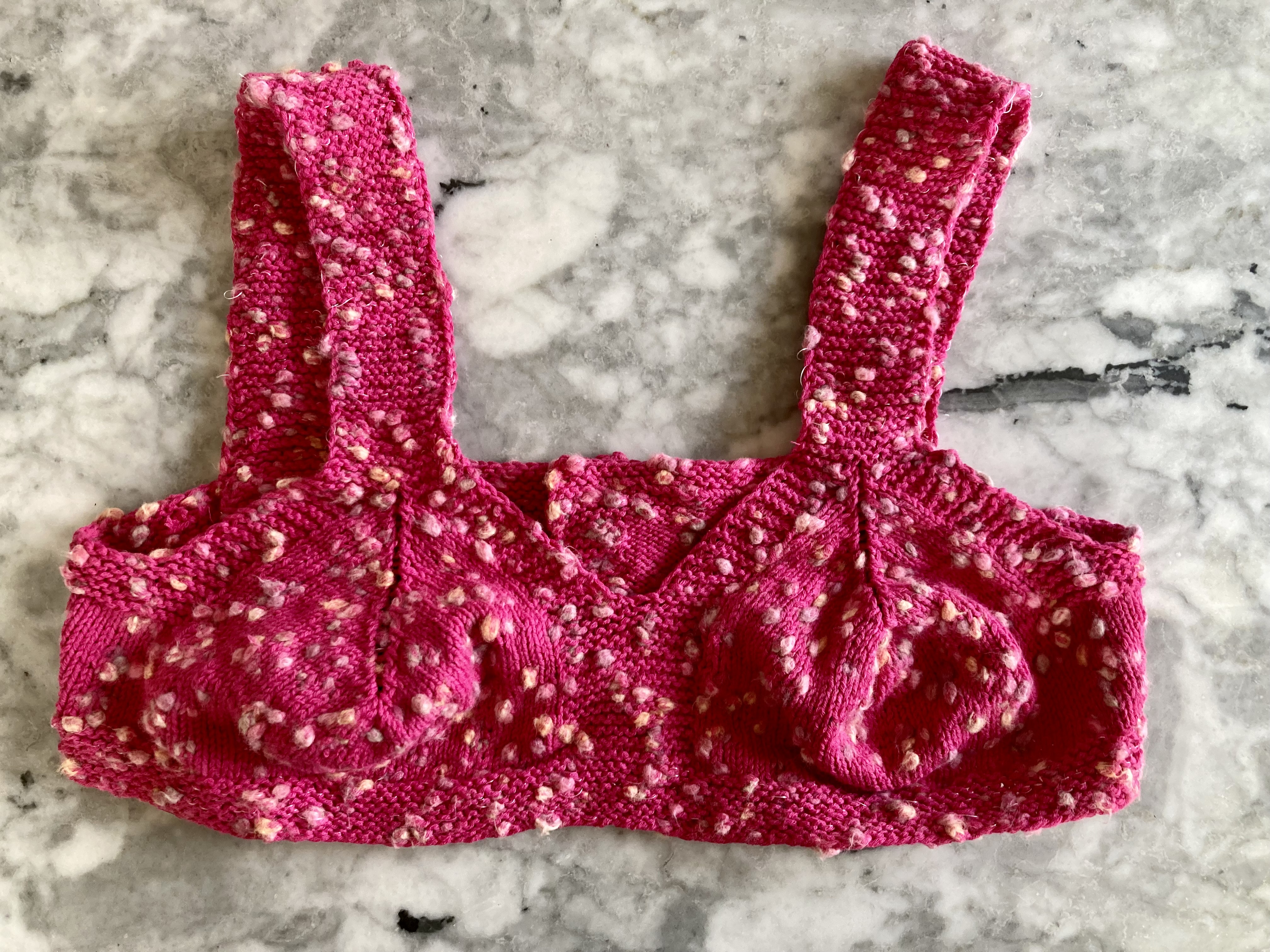
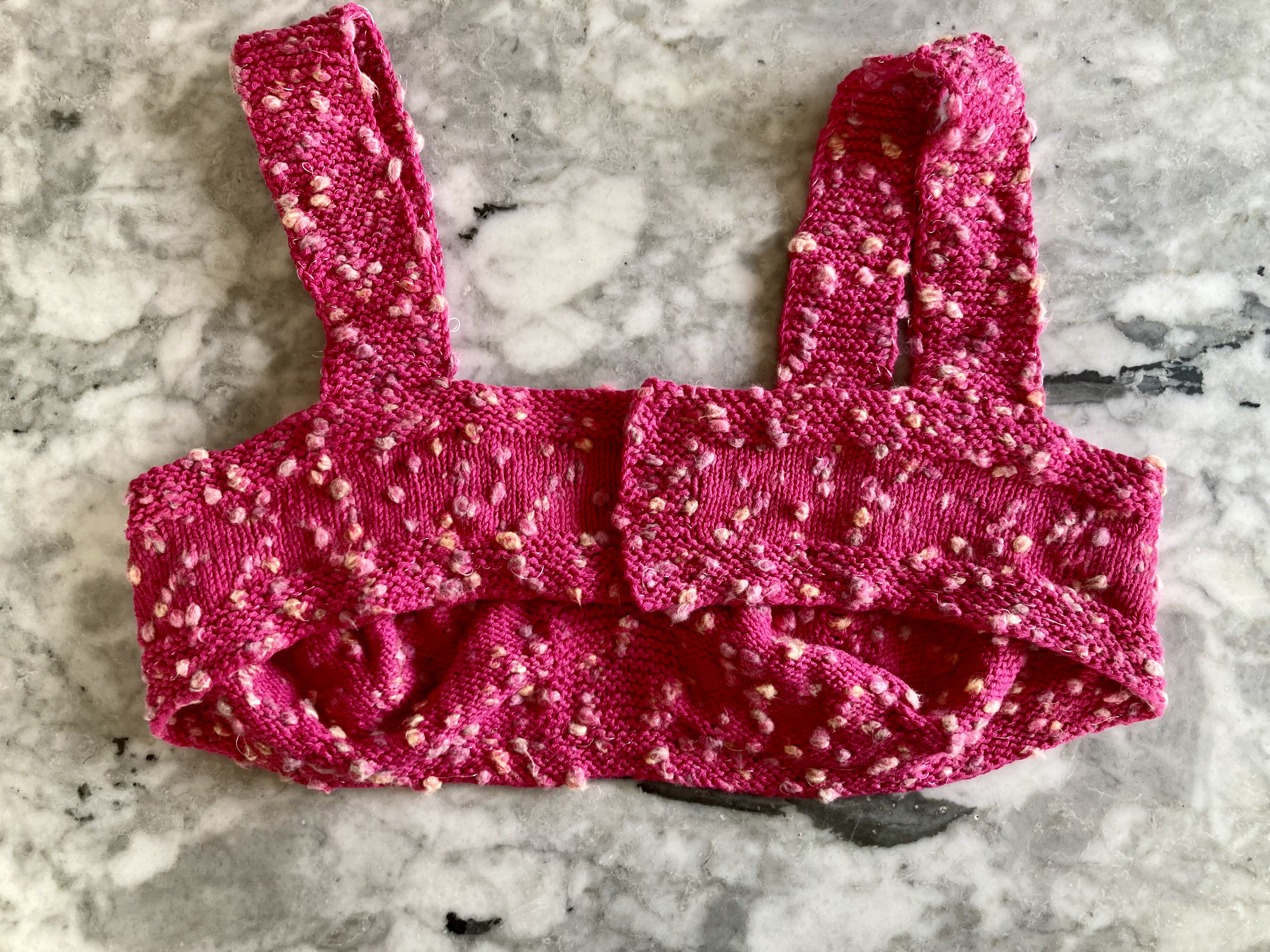
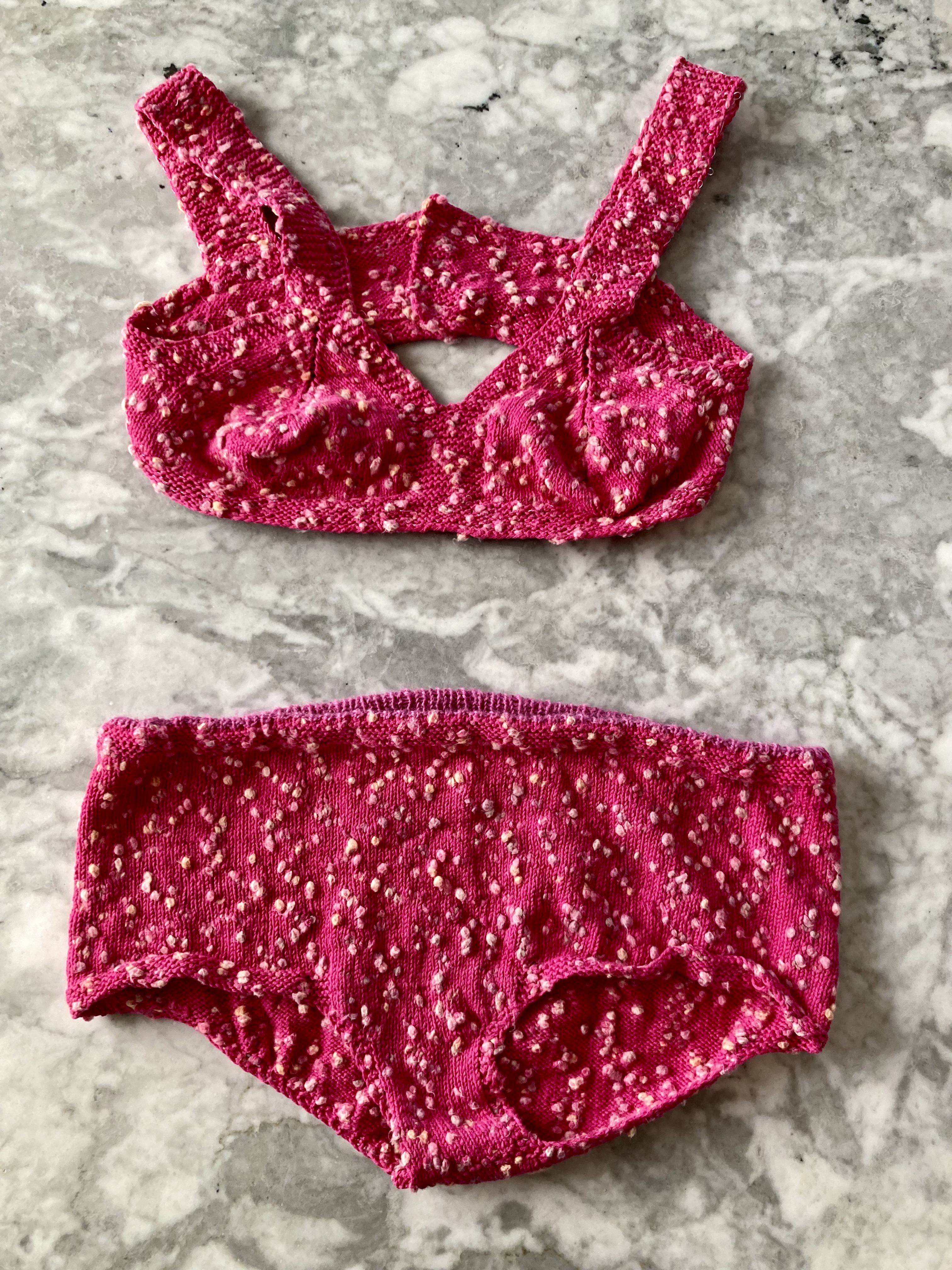
The top is knitted in stocking-stitch, from the band up to the straps, with garter-stitch borders. I was unsure of the suitability of garter stitch for a bra band, as it is just going to stretch horizontally, but ribbing was impractical for the rest of the borders (which need to lie neatly flat) and combining the two didn’t appeal to me. I knit an elastic thread along with the yarn on 3,5 mm needles, which made the band surprisingly firm and gave it some elasticity. If necessary, the band could be reinforced with a narrow strip of elastic. There’s a vertical band of 12 stitches garter stitch in the middle of the front.

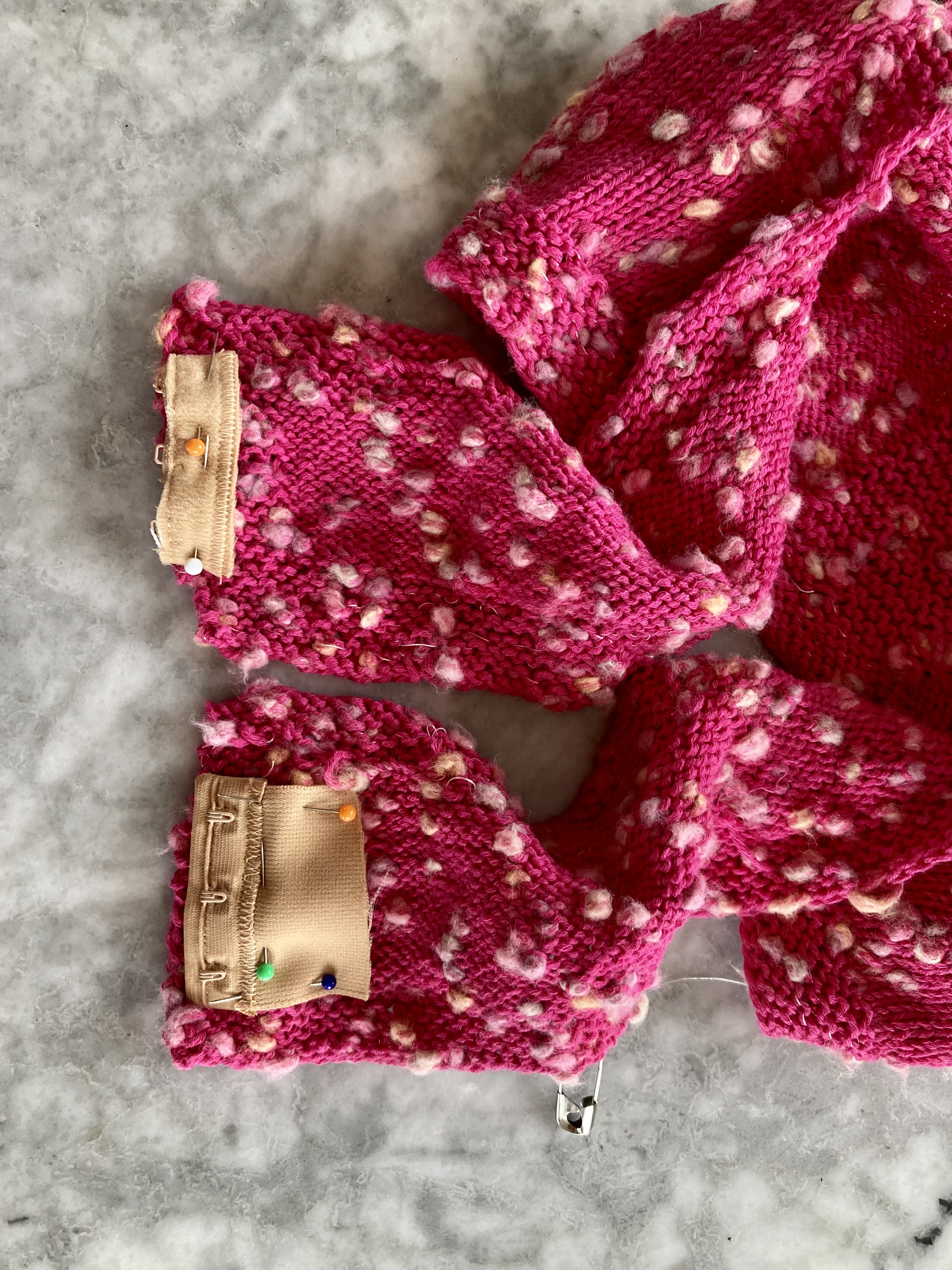
The cups are formed by increasing at the middle of each one, then decreasing rapidly at the same stitch. This makes them kind of pointy, in the old “bullet bra” style. But after finishing the cup shaping, I tried it on and it fit! I reinforced the straps with the same extra elastic thread. For the back fastening, I tried using a bra closure, but it didn’t look good with the overlap and was unecessarily difficult to fasten. I decided to use clear plastic snaps instead.
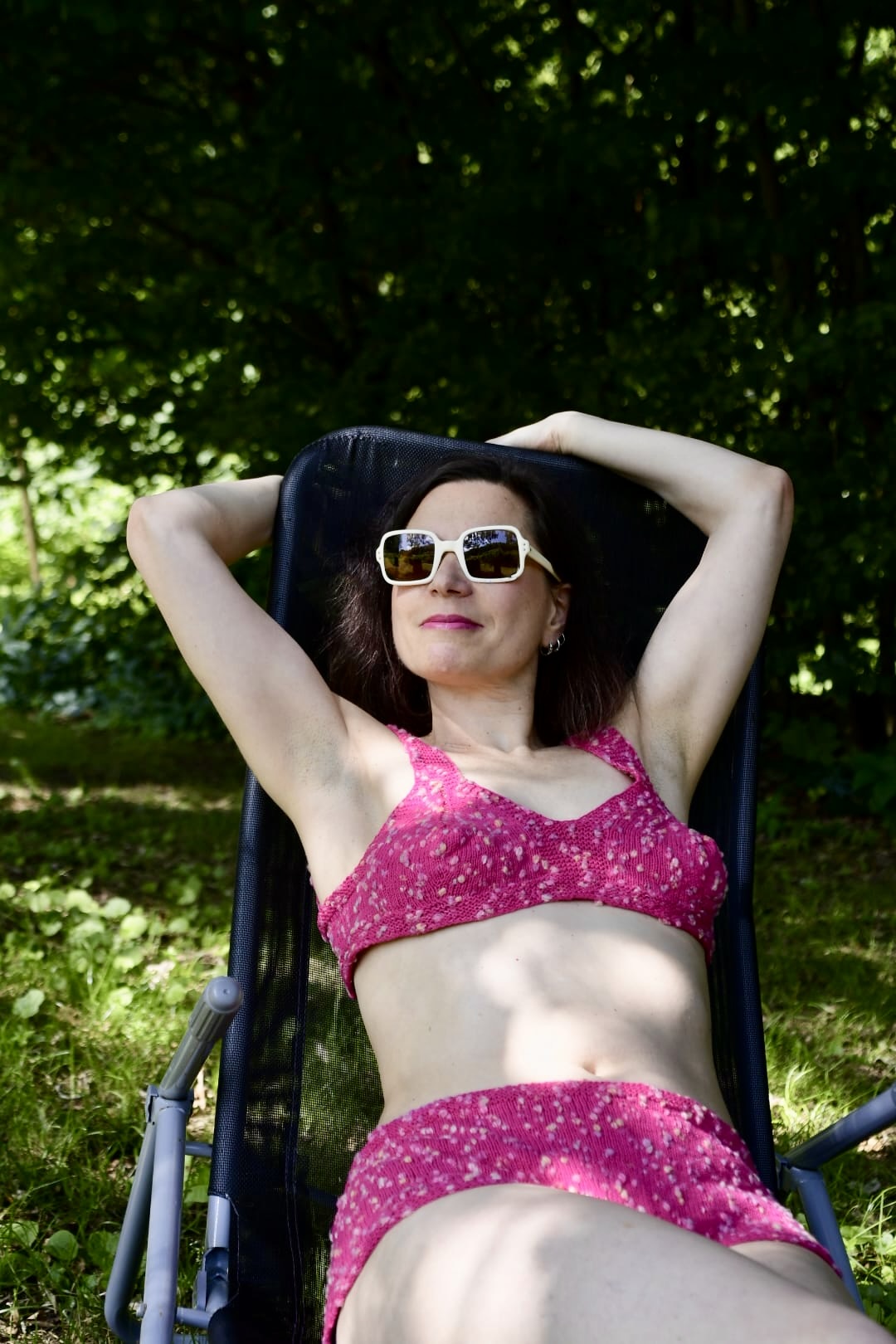
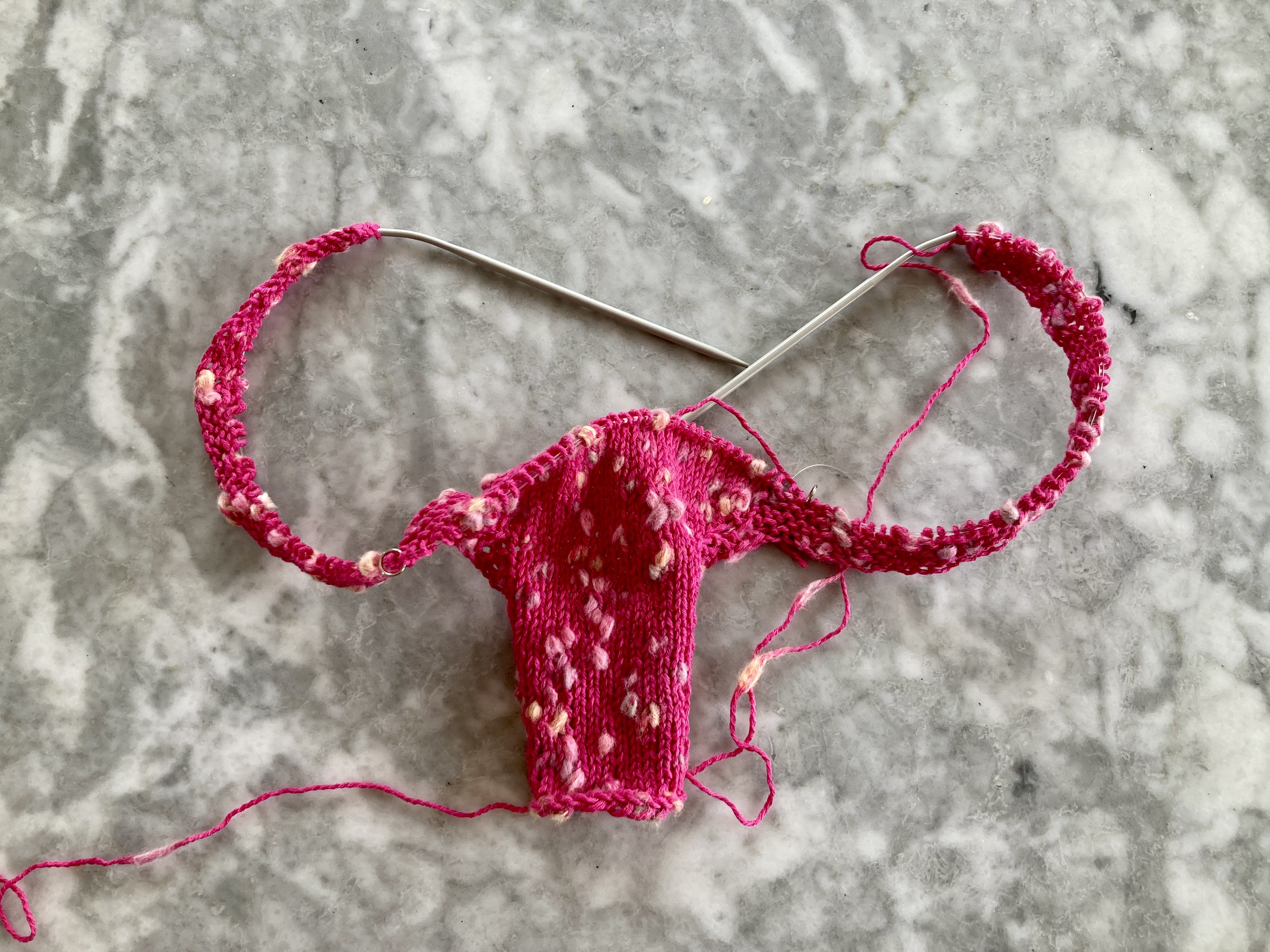
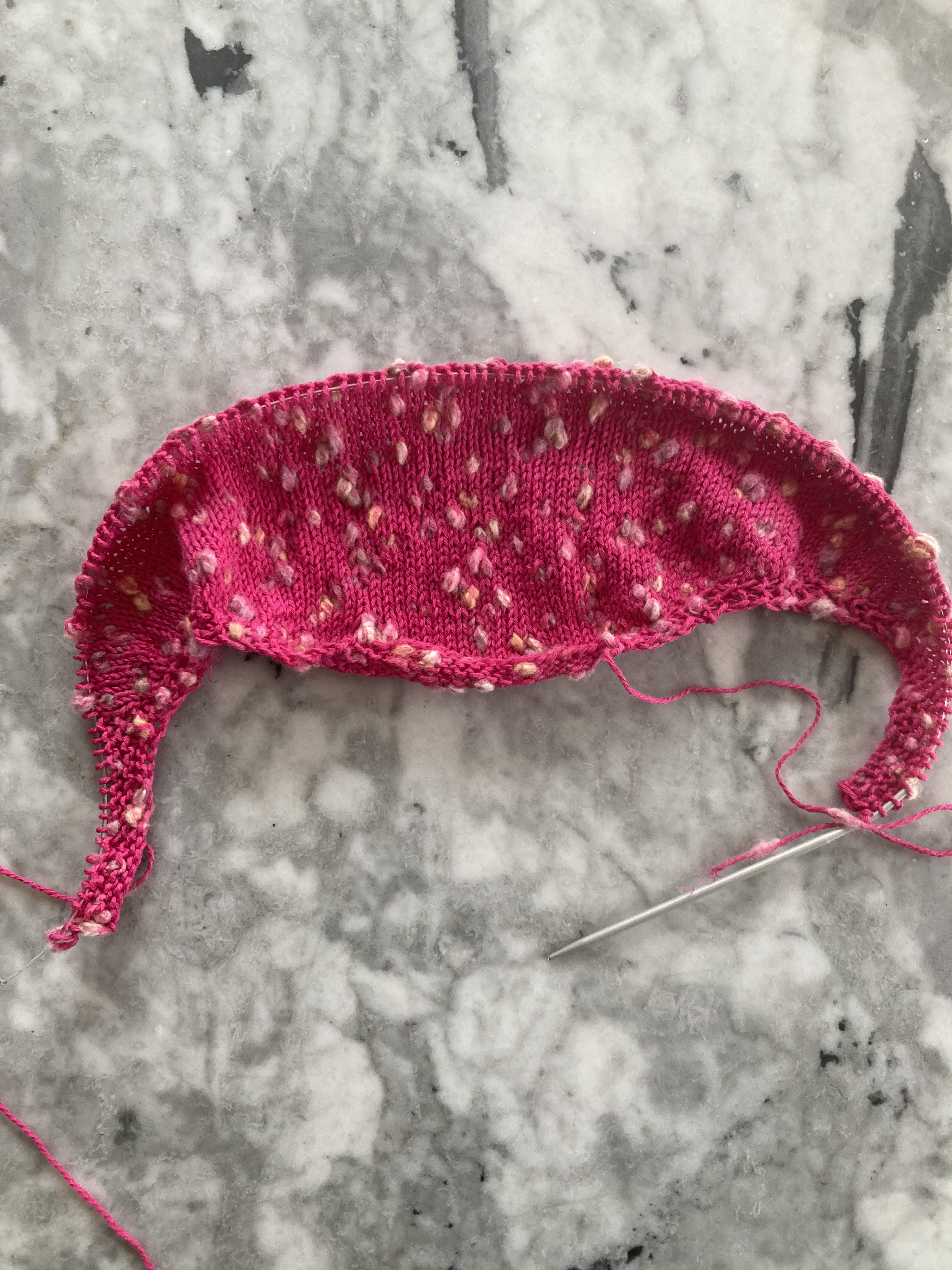
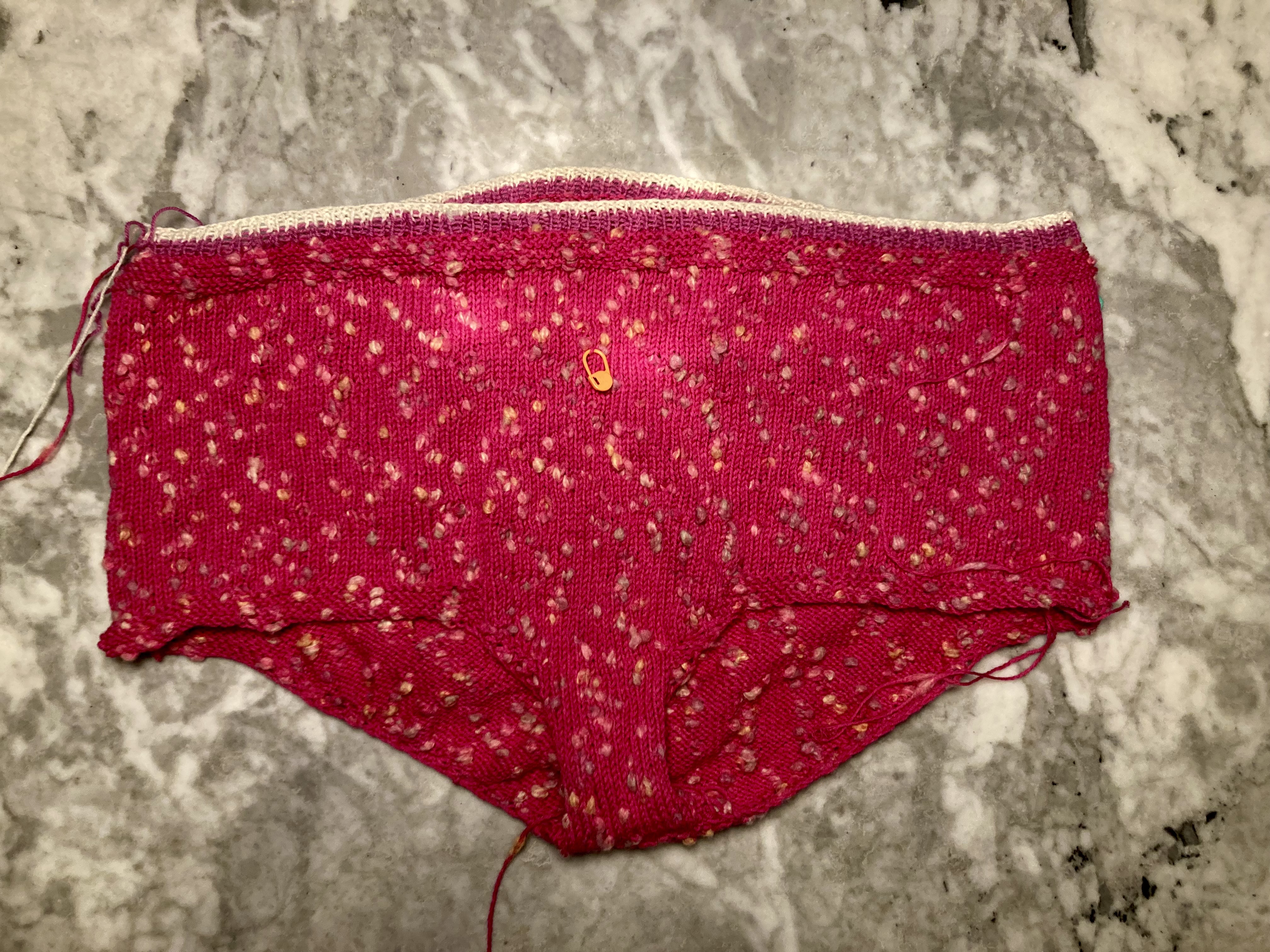
The briefs were fairly simple in design and nicely shaped. You start with a narrow strip of fabric with narrow garter-stitch borders for the crotch part, then cast on for the front leg part with a garter-stitch border and increase to the hip seam. At this point, it looked like an anatomical model of a uterus with fallopian tubes… Then I started the back piece, which is made similarly but of course less cut-out at the legs, then knit from the hip join up to the waist in one piece in the round. I meant to make a fake “side seam” with a purl stitch, or even a couple stitches’ worth of ribbing on both sides to make it cling better to the body, but I forgot.

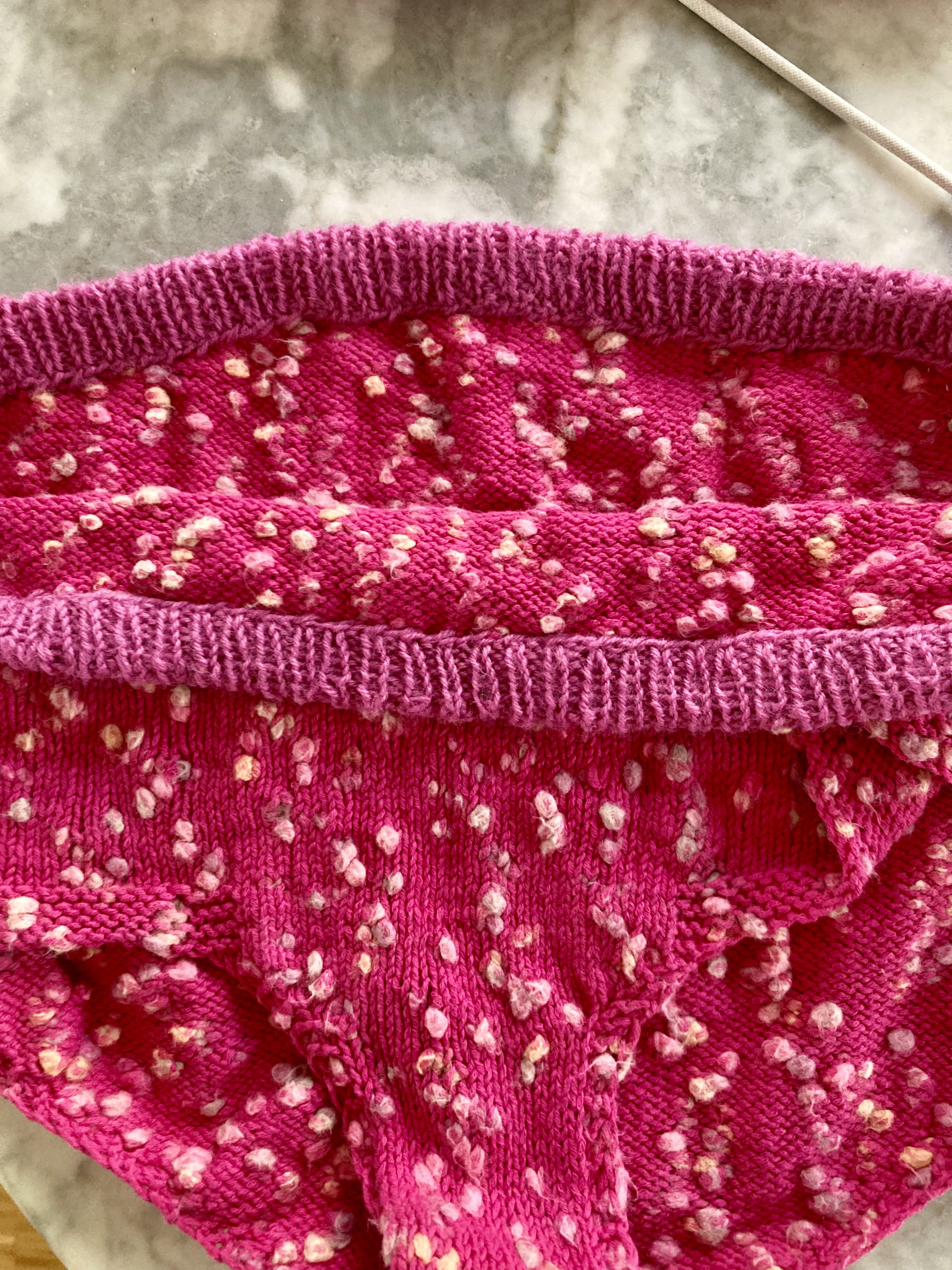
My first try came out too wide and looked saggy, so I ripped back and tried again one size smaller (once again forgetting the fake side seam / side ribbing option.) That worked much better. There are some short rows at the top of the back part to make it more round, which were possibly not necessary in my case, but which I made anyway. The waist is reinforced with a strip of elastic band, which is supposed to be held inside the garter-stitch border with herringbone stitch “to make a casing.” I did not like that idea, so I made a hem casing using pink sock wool in 1×1 ribbing. That did add a bit of bulk, but made the briefs fit quite well with no sagging. (At first I thought I didn’t have enough of the pink wool and had to finished the hem in white. Then I found more of the pink wool and ripped back again to finish it in pink. There was a lot more ripping back and re-knitting than there should have been.) Then it was done! Top and bttom both fit well and didn’t change size with blocking (hand-wash, dry flat with a short stint in the dryer on delicate cycle.)

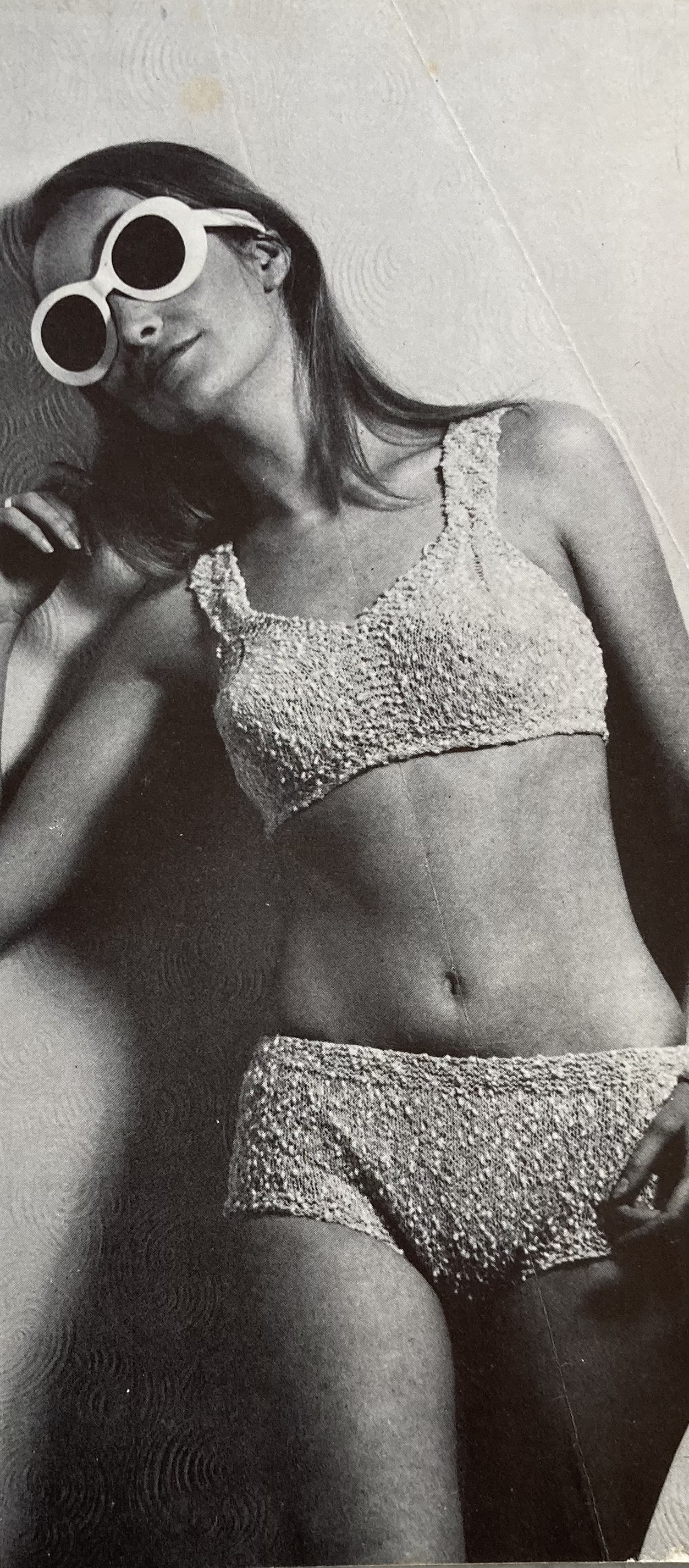
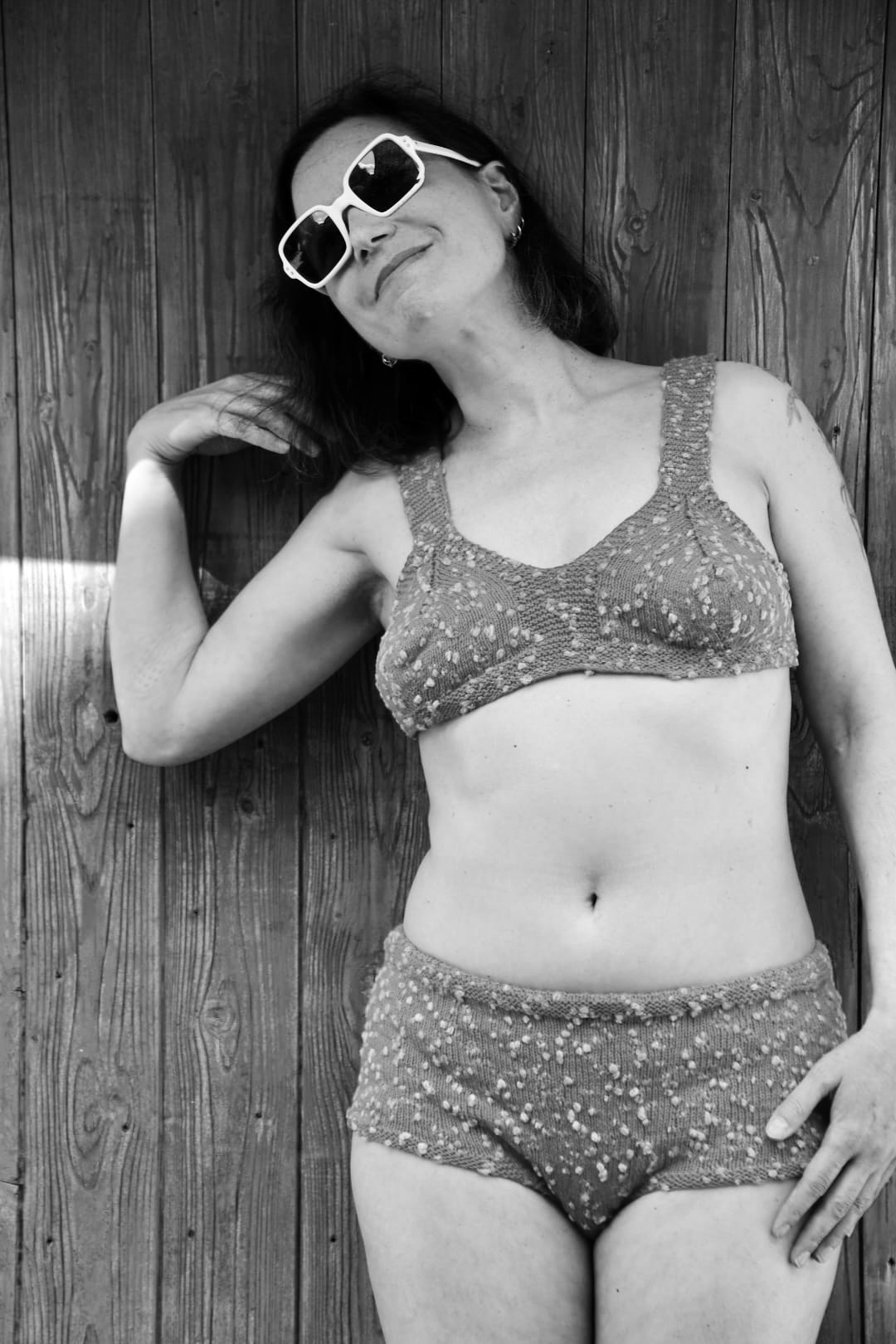
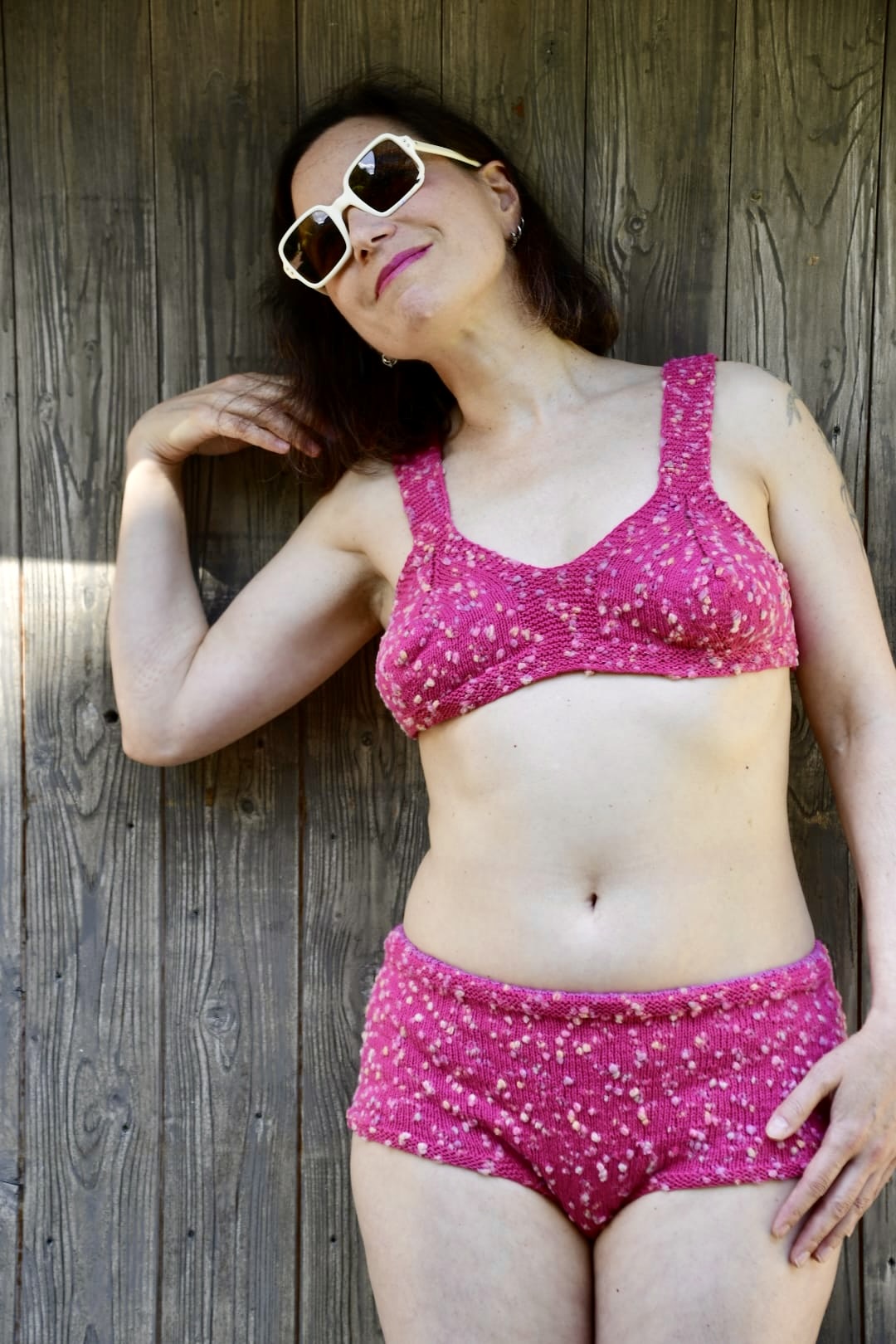
Of course, the best part of this project was taking photos! I was lucky enough to participate in a week of art courses with my wonderful friend Sabine Mehlem, who was taking the portrait photography course (I stuck to drawing and sculpting.) She took the most amazing photos in some classic “pin-up girl” poses as well as perfectly re-creating the original photo from the magazine:

In case you can’t tell (haha), the first photo is the original; the other two are by Sabine. The photography teacher brought a detail to our attention that we hadn’t noticed: the model in the original photo has a thread tying the bikini tom and bottom together! I guess the top either rode up too much or the bottom sagged. We didn’t have that problem — our only challenge was taking a midriff-baring photo right after lunch during a week in which we were all extremely well and deliciously fed.

(Also, you wouldn’t believe how painful these 1960s poses are! The model looks so relaxed, but her hip is going one way, her shoulder another, her head a different way entirely and to top it off, her arm is twisted up and backwards. And she is definitely leaning against a wall in a studio, not lying on a beach lounge chair as the photo would like to suggest.)

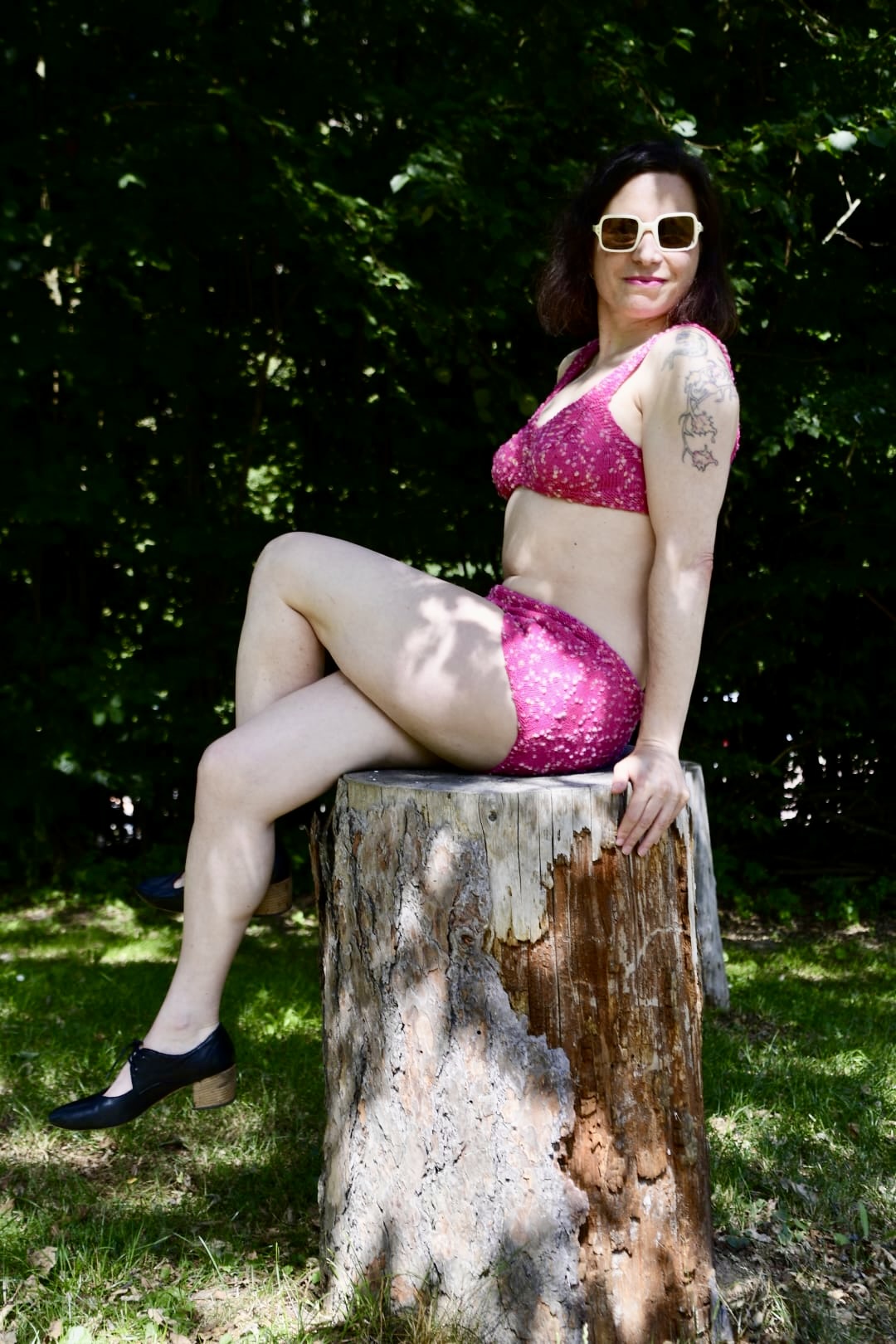
Here are some more photos! We really had fun. I guess I could have used that thread in the fourth photo after all…

This was one of my favourite projects ever. I am an indoor cat and don’t generally so any “sunning” (can you tell?) but I could be persuaded to do so if I could look like this while doing it. May all your projects be so glamourous, and have fun sunning and lazing! I know I will.

Original magazine photo (uncredited) from Stitchcraft, June 1968. Posed photos © Sabine Mehlem, 2026. Used with permission.

June 1968: Overview

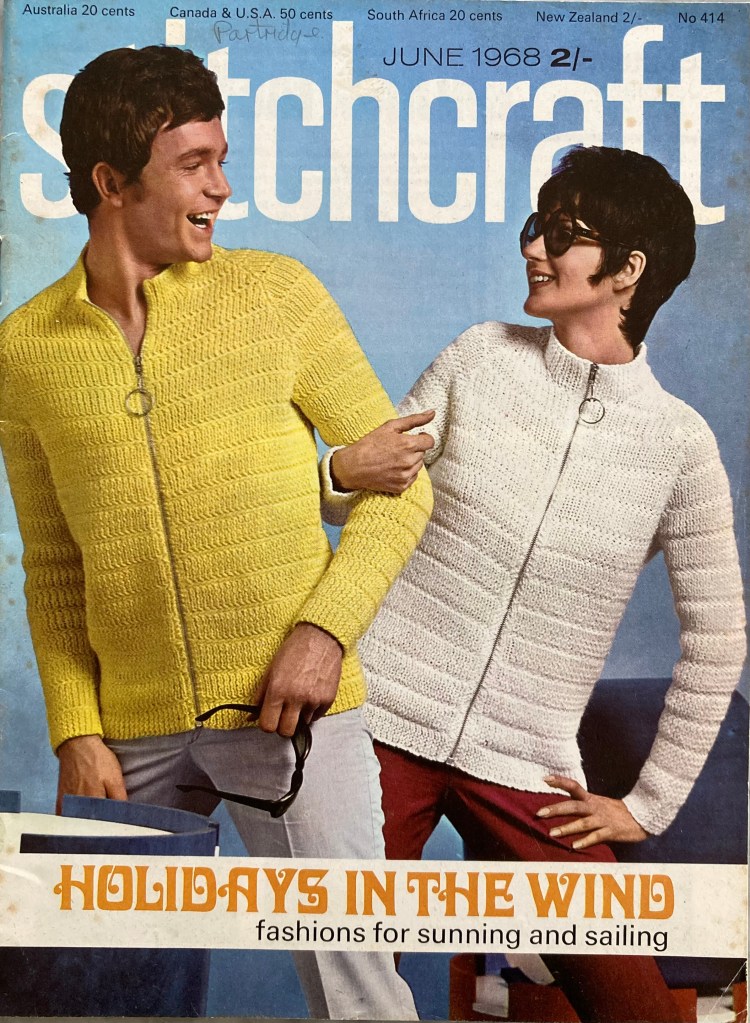
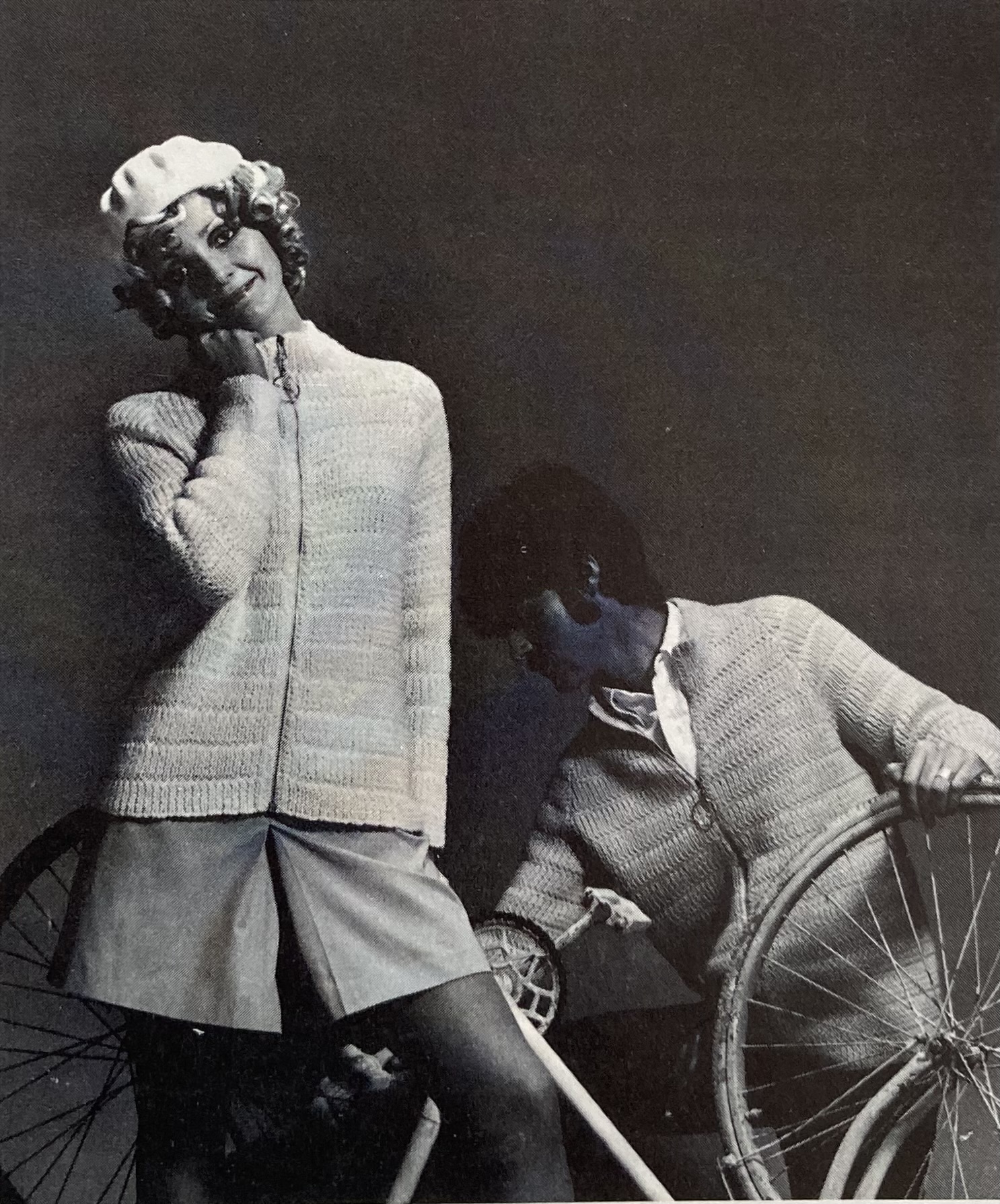
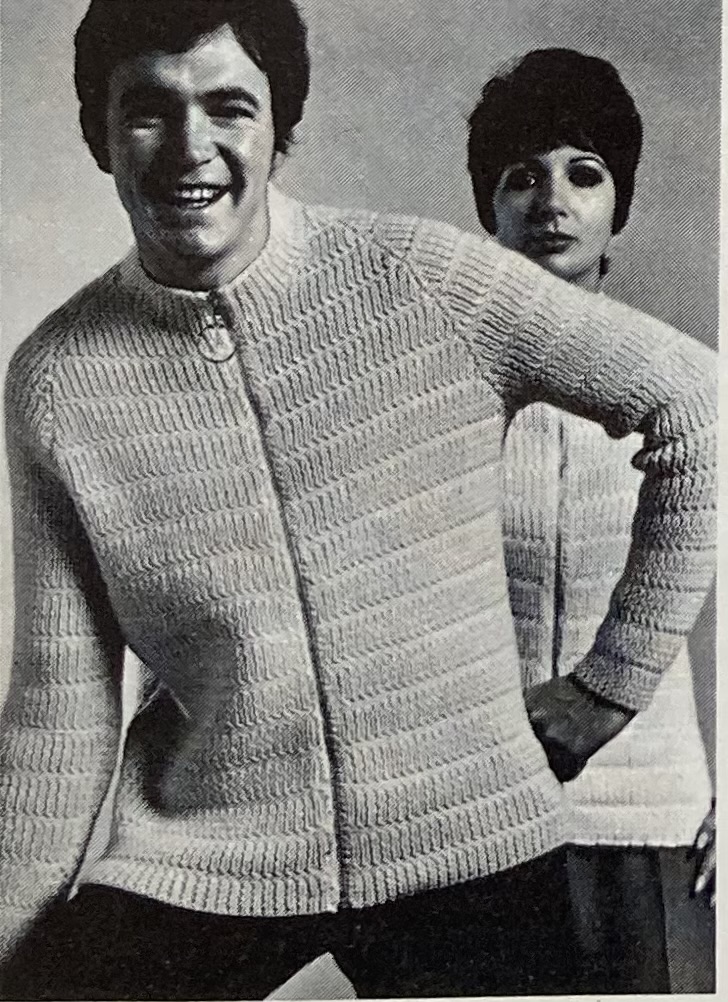
“Holidays In the Wind” is the title of the June 1968 issue of Stitchcraft, promising “fashions for sunning and sailing”. The couple on the cover are dressed appropriately for sailing and/or a typical summer in the UK in their warm woolen cardigan-jackets. “Easy-fitting to slip on quickly — and smart for her to wear with culottes and slacks for rambling and biking” is the caption to the additional photo, showing the female model looking cute while the male model fixes her bicycle. When he’s finished with that, he can slip into a slipover in fine 4-ply flattened ribbing.

For the most part, the other women’s fashions in this issue eschew the casual, “country” holiday style in favour of slightly more dressy outfits in fuzzy or textured yarns and “dreamy” pastel and neutral colours. There’s a belted skirt suit in Patons’ new “Four Seasons” nubbly wool-mix, a dress and a sleeveless top in fine, fluffy “Princess” wool, a jumper with a lace yoke and sleeves in 4-ply “Cameo Crepe”, and another skirt suit, this time in bouclet wool and a flowery lace-rib pattern.

“Sophisticated”, “elegant”, “graceful”, and “softly fashioned” are the key words in the accompanying desciptions.

Crocheters get an opportunity to make something fine and elegant too: a cotton lace blouse, “so feminine for summer.” Crochet garments, especially somewhat more difficult ones like this, are rare in Stitchcraft, so we are assured in the description that it is “not a really difficult design to work.” The highlight of the issue though, if you ask me, is the knitted bikini! It is made in plain stocking-stitch, to show off the texture of the nubbly “Four Seasons” wool (the same as the skirt suit) and notably described as being for “sunning and… lazing.” Nota bene, not “swimming”! I assume it would sag horribly when wet, or fall off and float away. Still, it’s glorious.

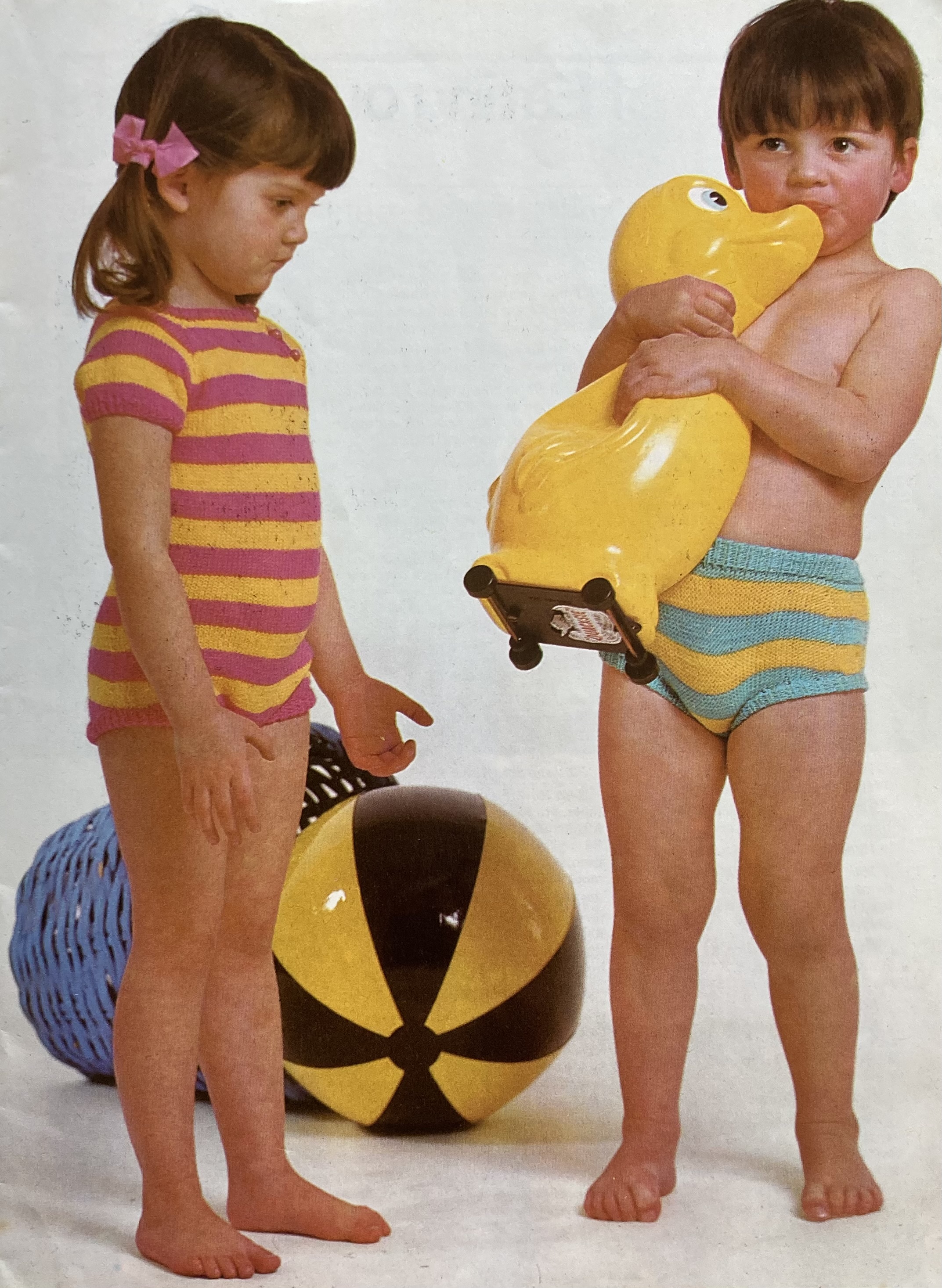
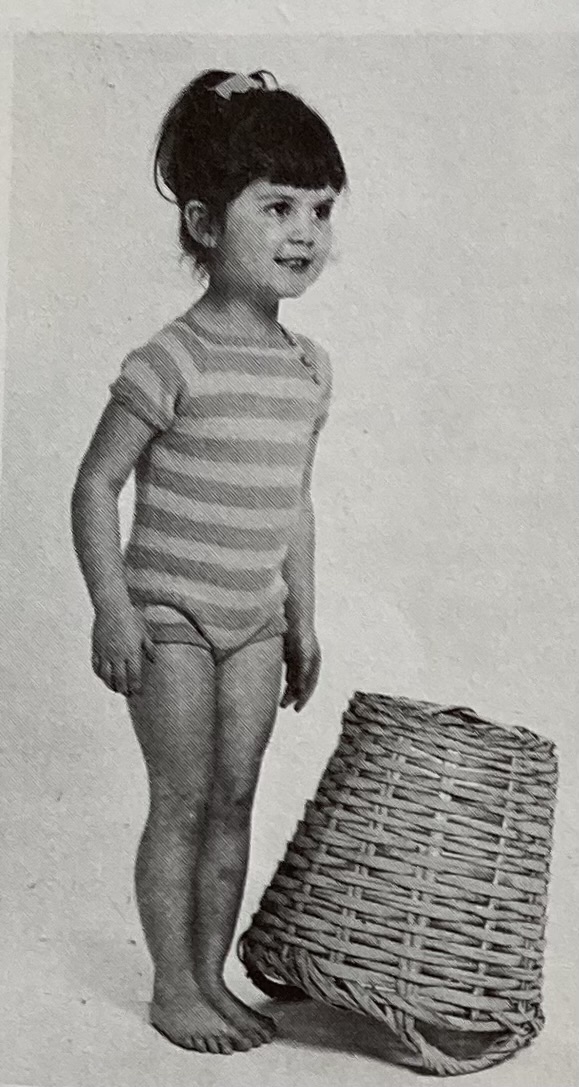
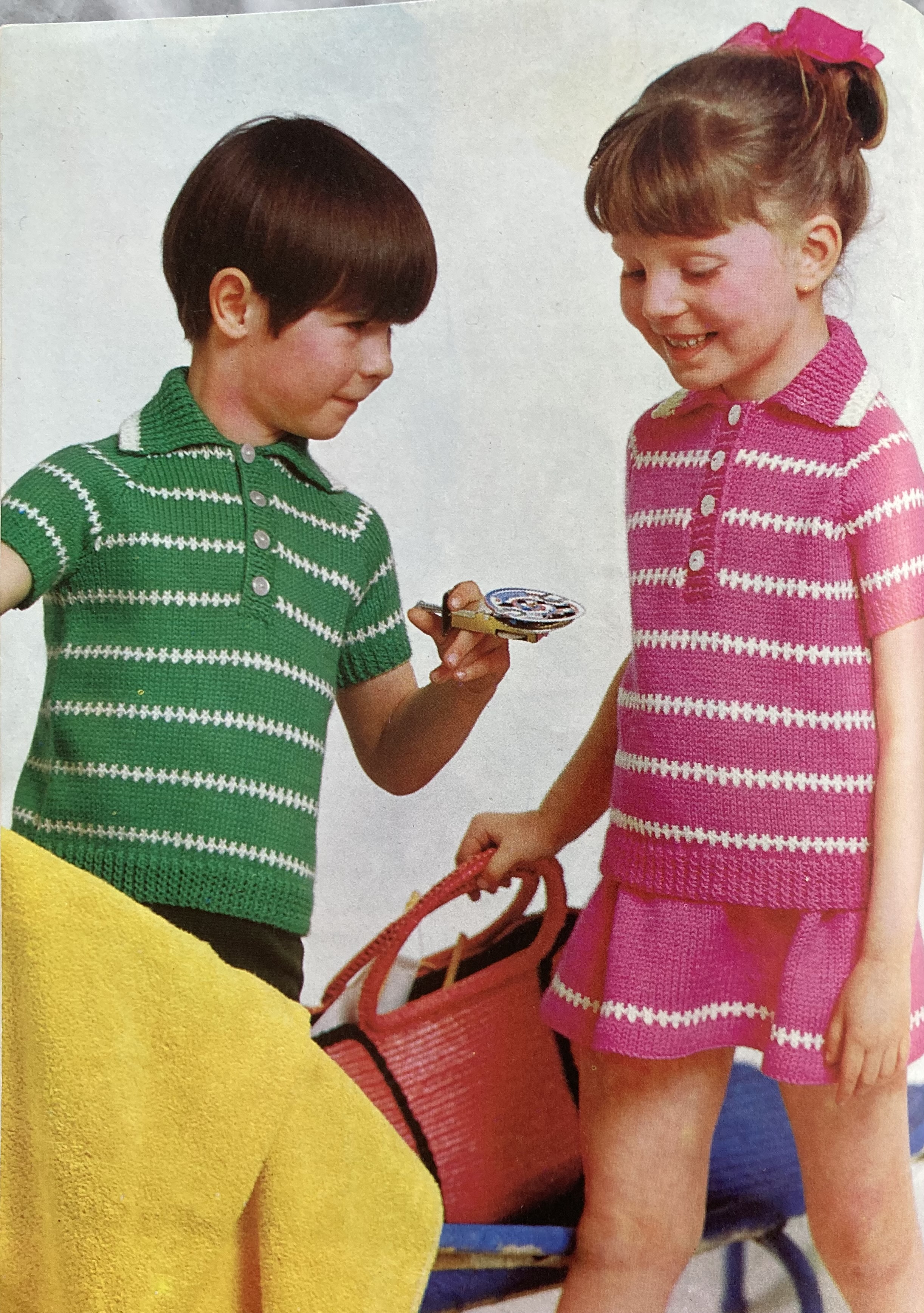
There are some fun fashions for kids in this issue, too, conveniently in a “his and hers” version for both toddlers and school-age children. The former can “paddle and splash” in striped trunks (boy) or one-piece romper (girl), knitted in 4-ply Purple Heather wool. The bigger kids have matching short-sleeved knitted shirts with a jagged stripe pattern, paired with a skirt for the girl. I feel sorry for her trying to play on a beach in a tiny mini-skirt! The boy seems to be wearing more practical non-knitted shorts.

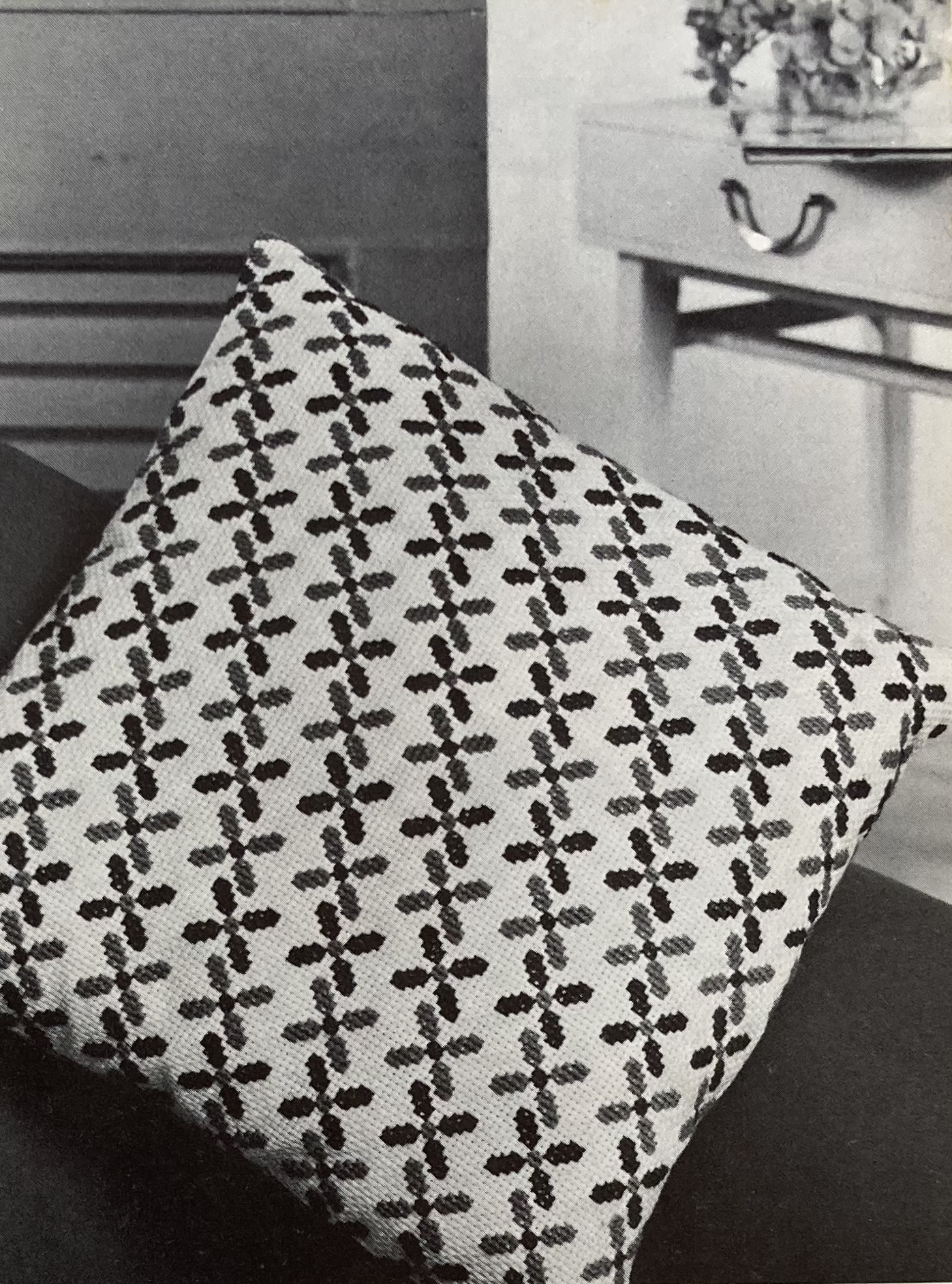
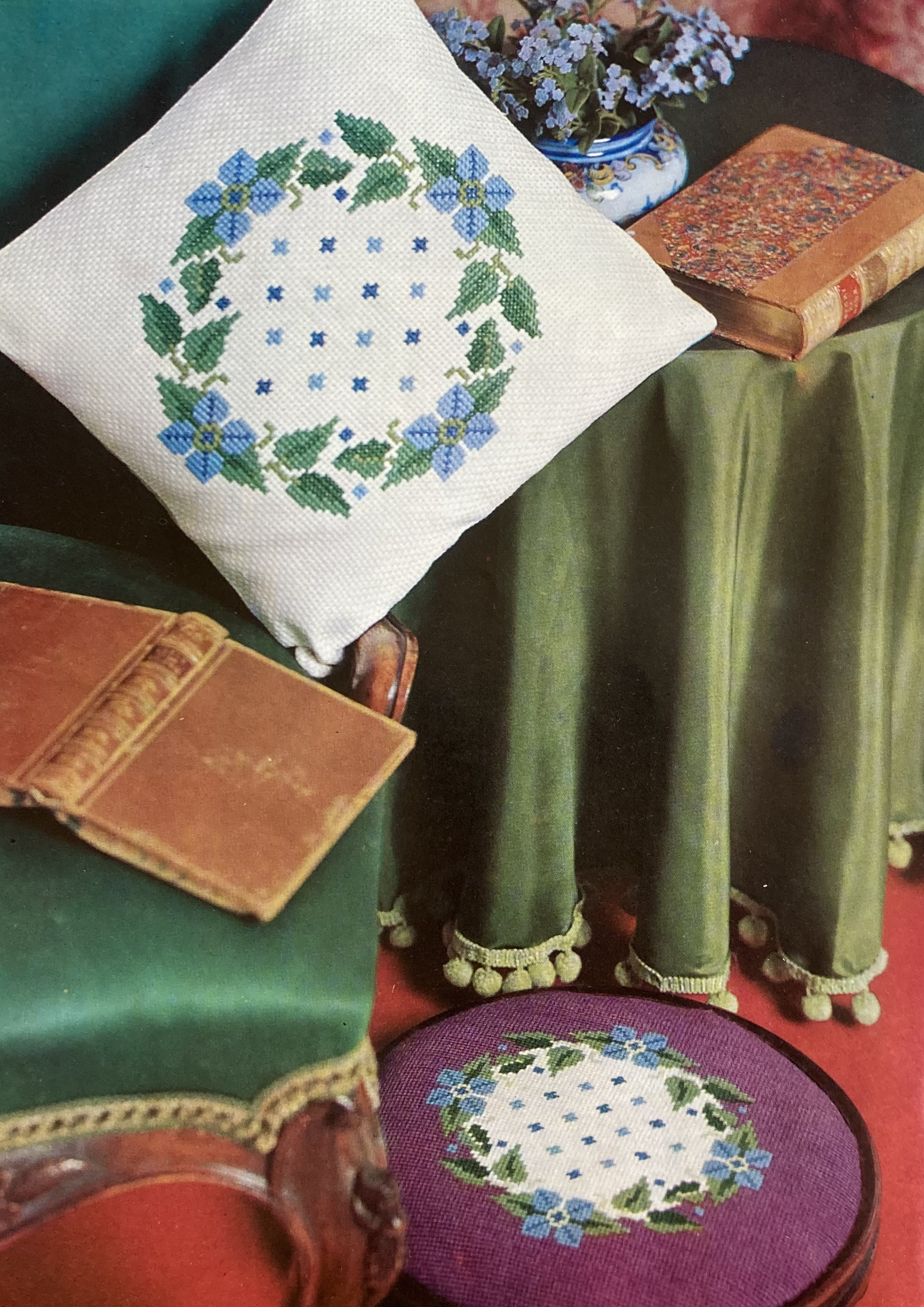
The homewares in this issue are pretty standard: counted embroidery for garden cushions or to work in tapestry on a stool-top.

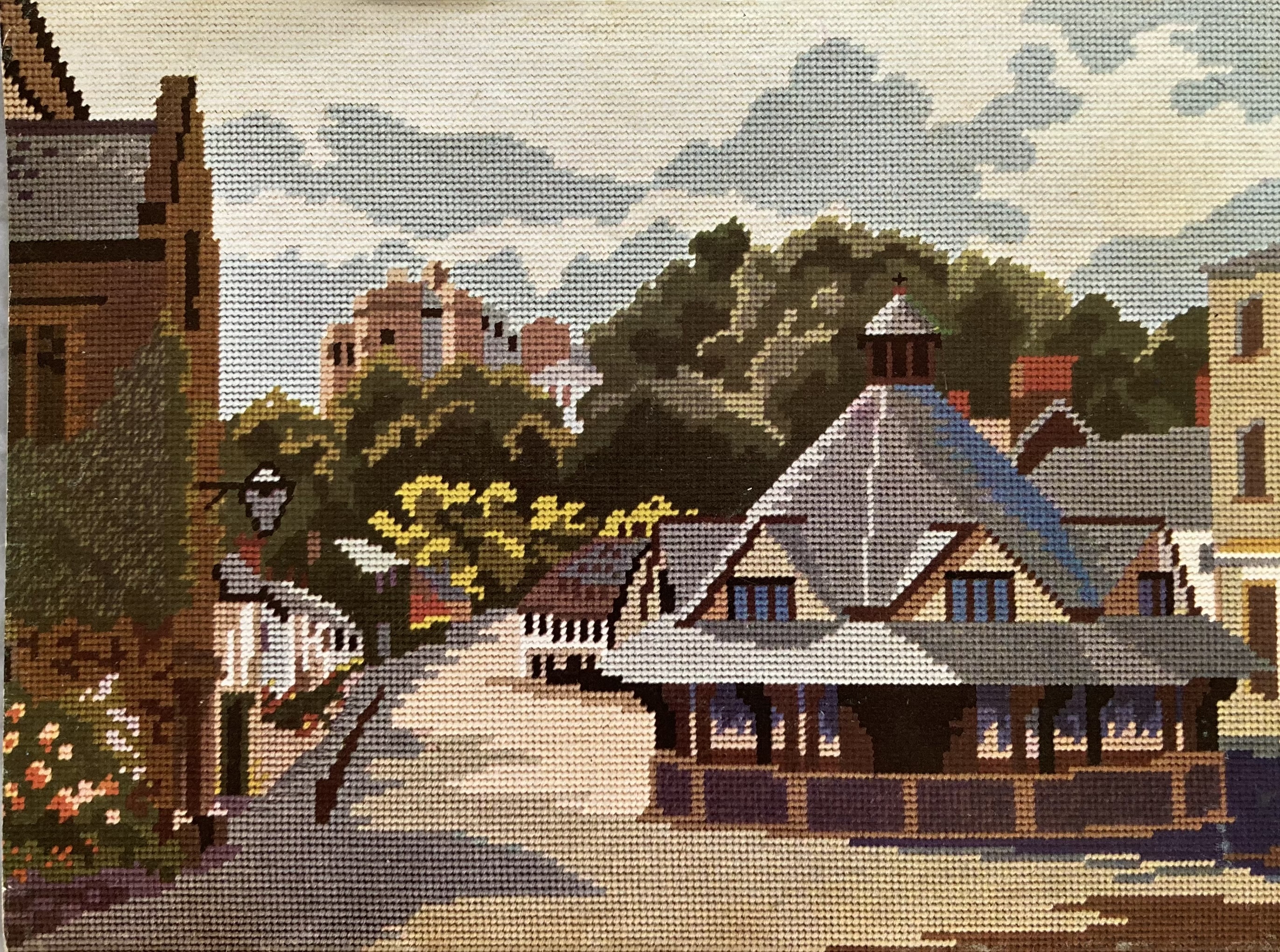
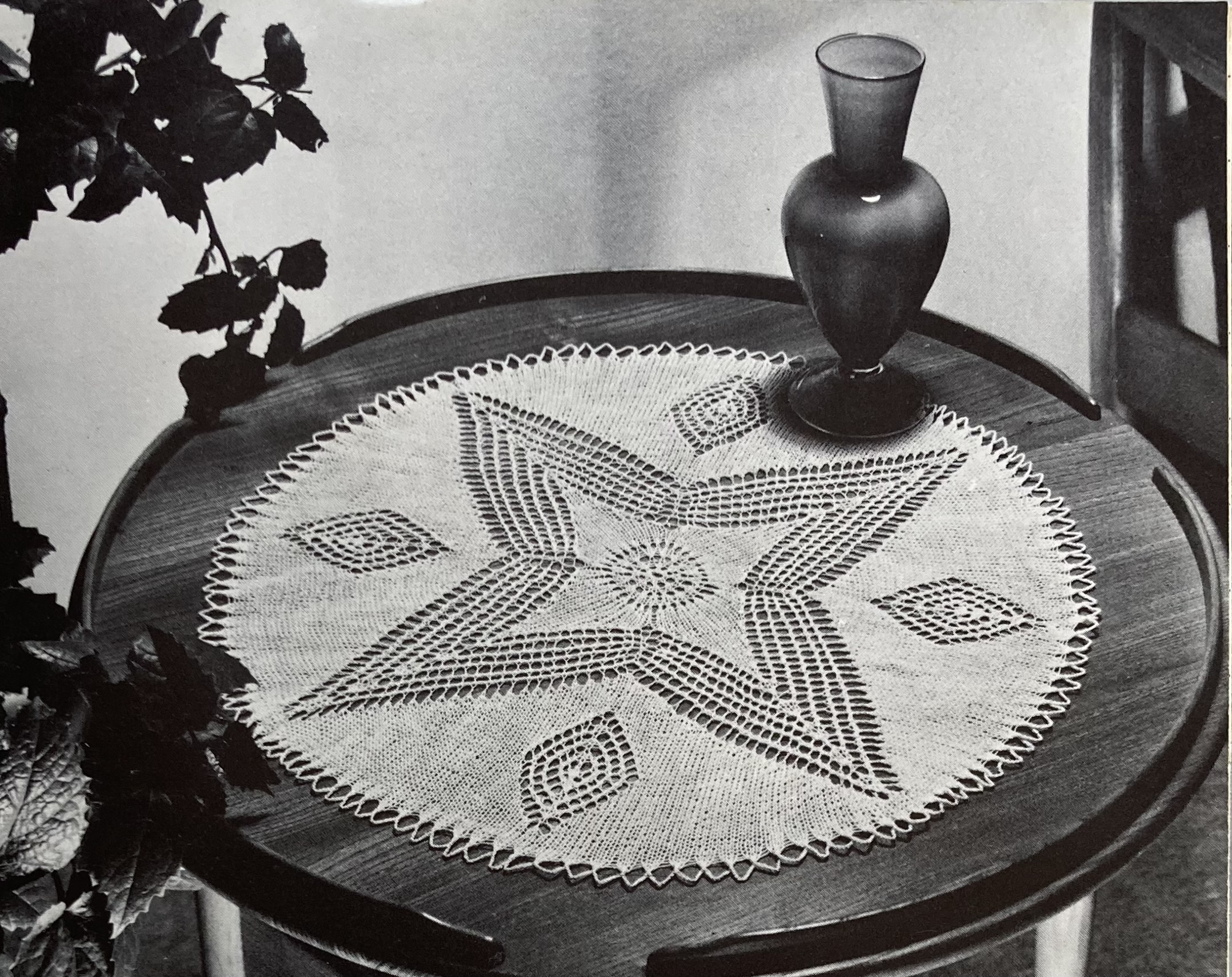
More ambitious needlecrafters can make a tapestry scene of Dunster to hang on the wall, or a knitted lace table-cloth in washable crochet cotton.

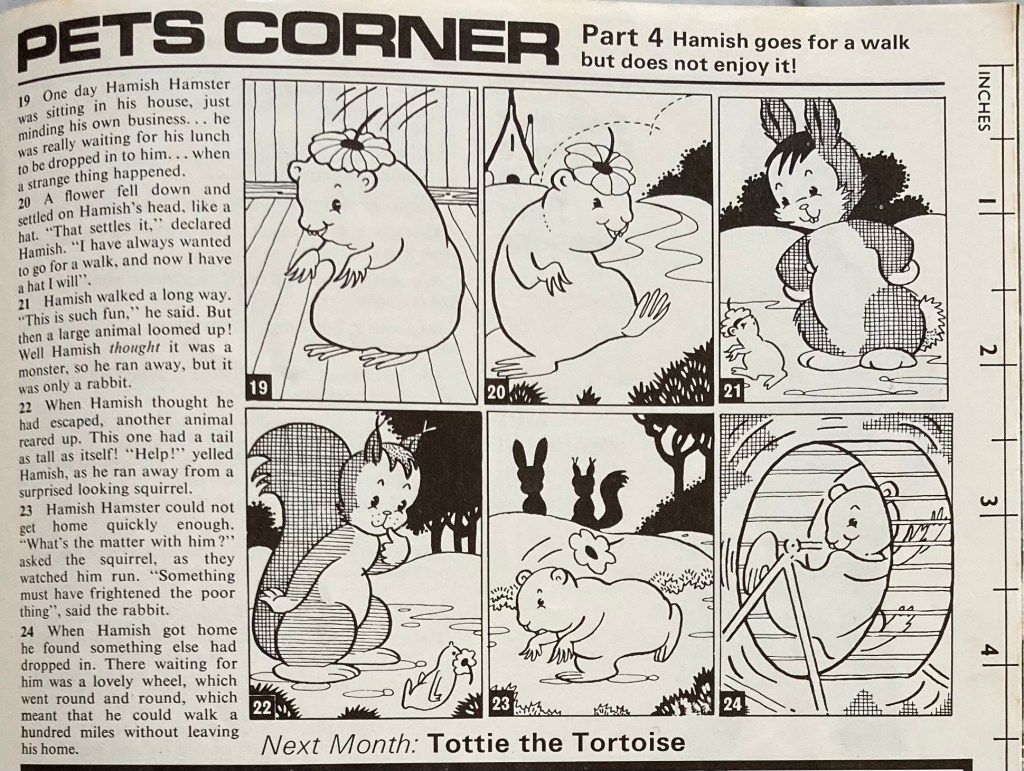
In the children’s comic, “Pets Corner”, Hamish the Hamster decides he wants to go on a walk, then goes, then decides he doesn’t like it after all. Luckily, he comes home to find a spinning hamster wheel, “which meant that he could walk a hundred miles without leaving home.” And so the stay-cation was born!

Wherever or whatever your “holidays” are, I hope you get some and wish you well. My project will be the knitted bikini. Let’s hope it gets finished soon enough to get some “sunning and lazing” time.

May 1968: “Sunny Cushions” Adaptation

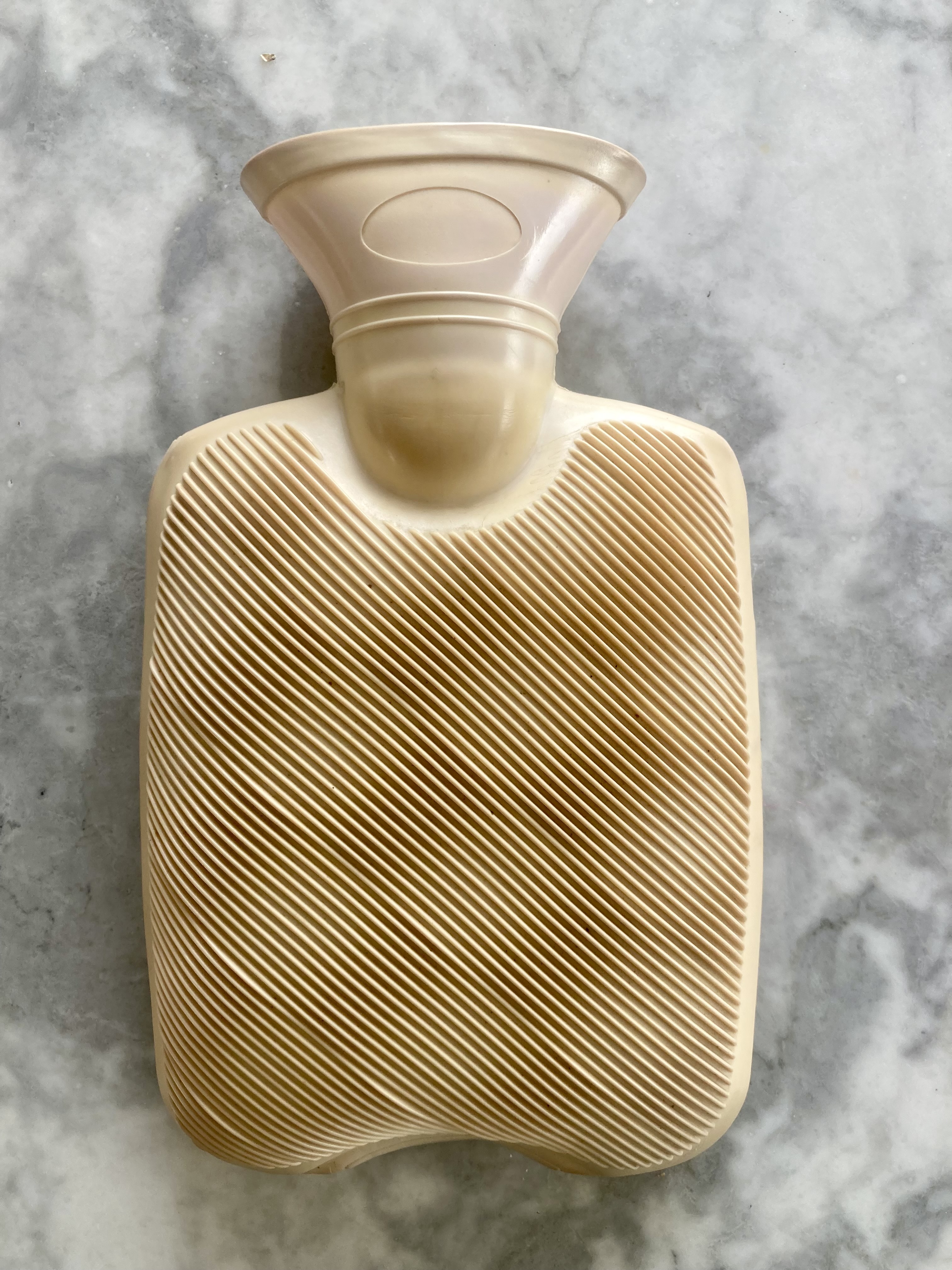
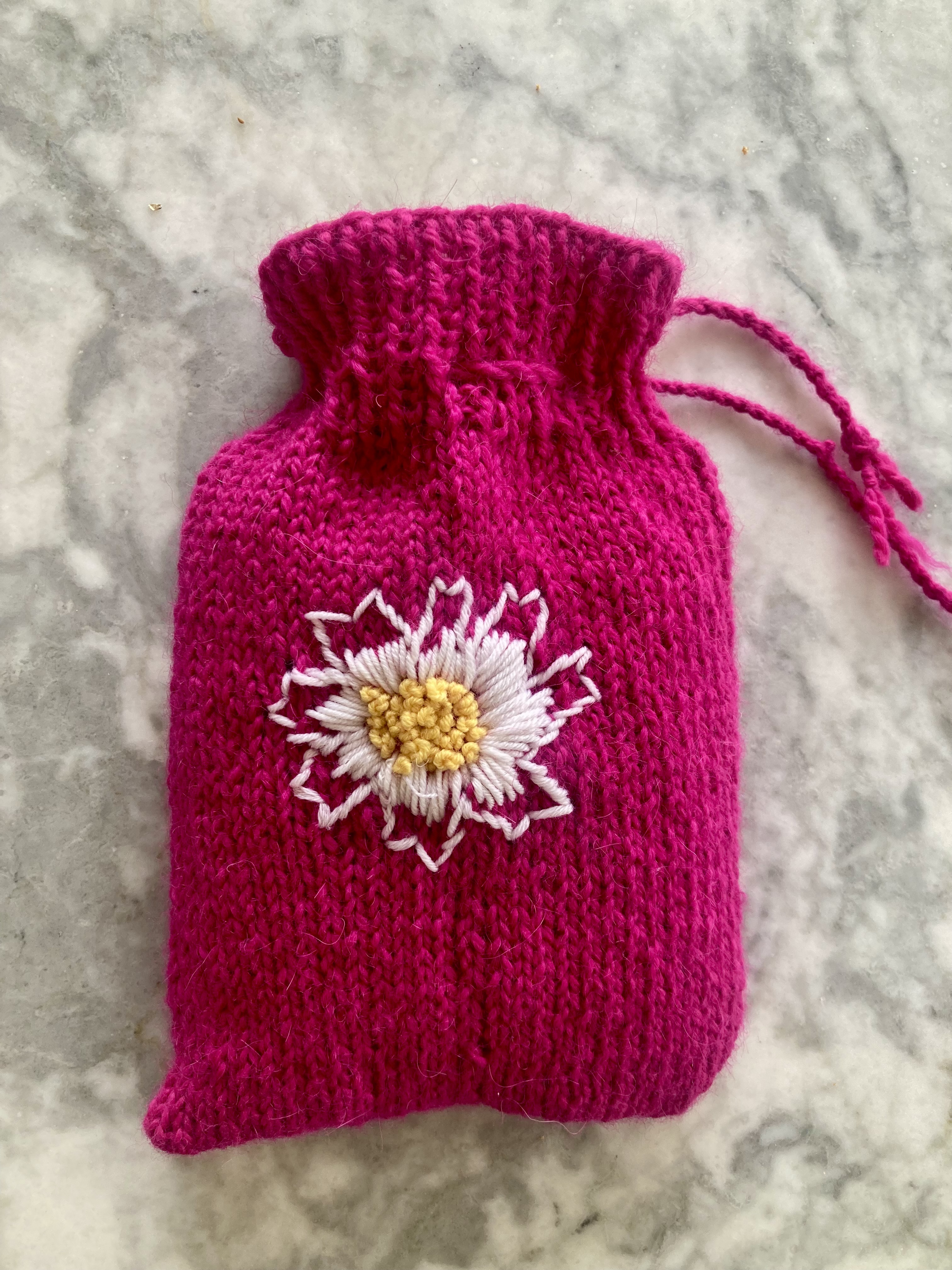
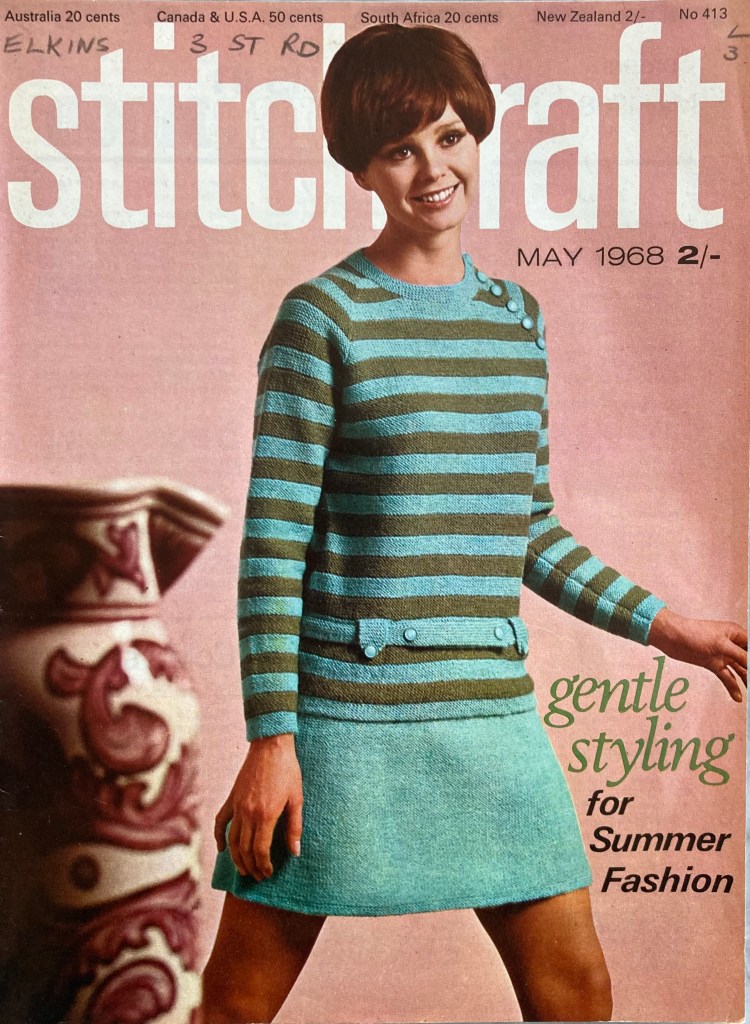
The May 1968 issue of Stitchcraft had a lot of cute projects: the striped sweater set on the cover, a couple of nice little “shell” sleeveless tops, a baby cardigan, a jumper with an interesting lattice yoke… but alas, I was so busy with real life in 2026 this month, and had so many unfinished projects lying around anyway, that it would have been foolish to try and start (much less finish) an entire normal knitting project. Luckily, there were some cute and easy embroidery projects, and I had a friend visiting whose hot-water bottle was crying out for a knitted cover, so I adapted one of the embroidered cushion designs into a simple motif for a knitted cosy.

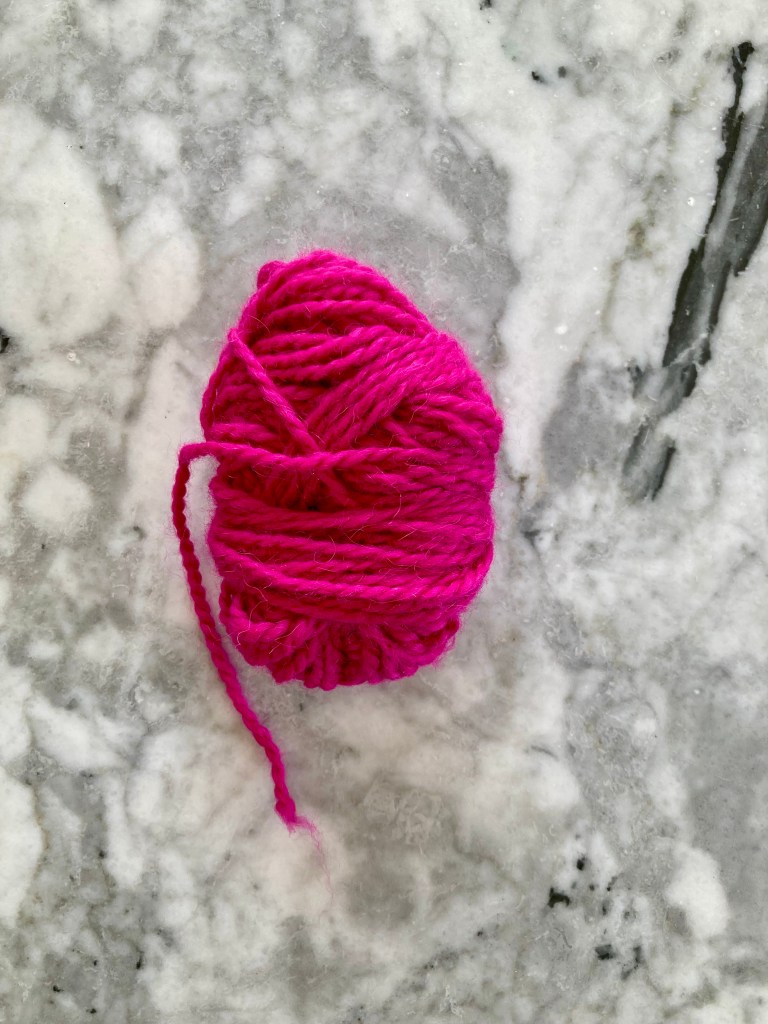
I had bought two skeins of bright and fluffy Natural Lama Chunky by Lana Grossa in hot pink some time ago, probably because they were on sale and displayed on that little rolling shelf which my local wool shop so cleverly rolls outside onto the sidewalk in good weather. It is delightfully soft and squishy and can be knit into pretty much whatever tension you want, as the fibres compress or fluff up to fit the space allotted to them.

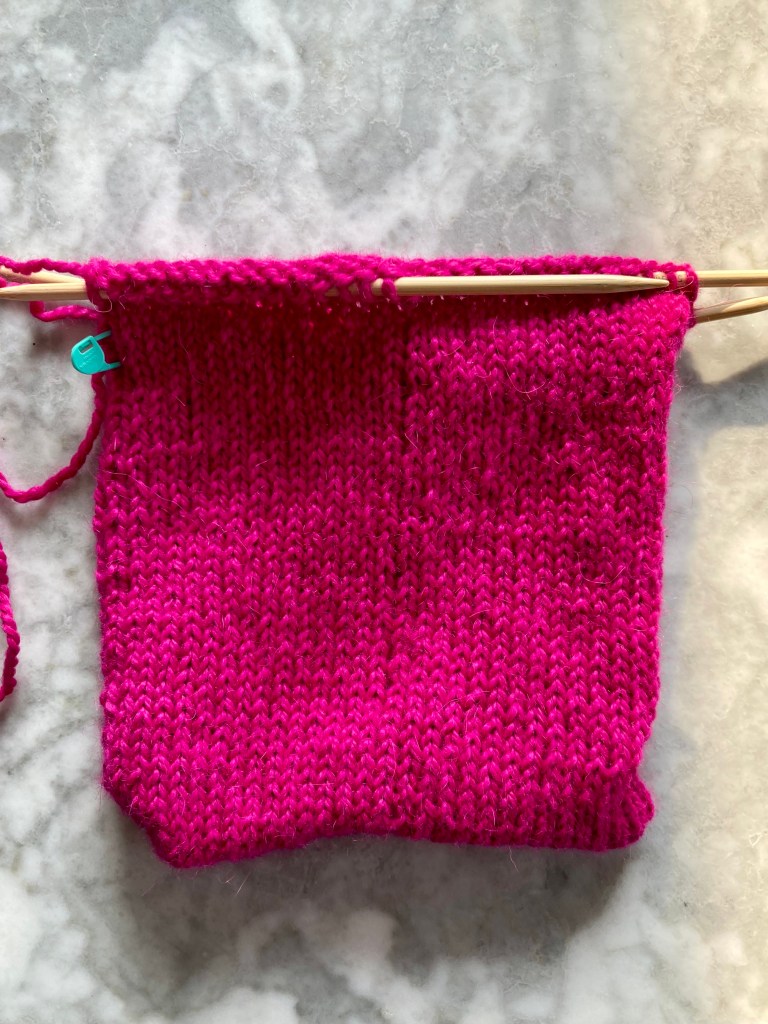
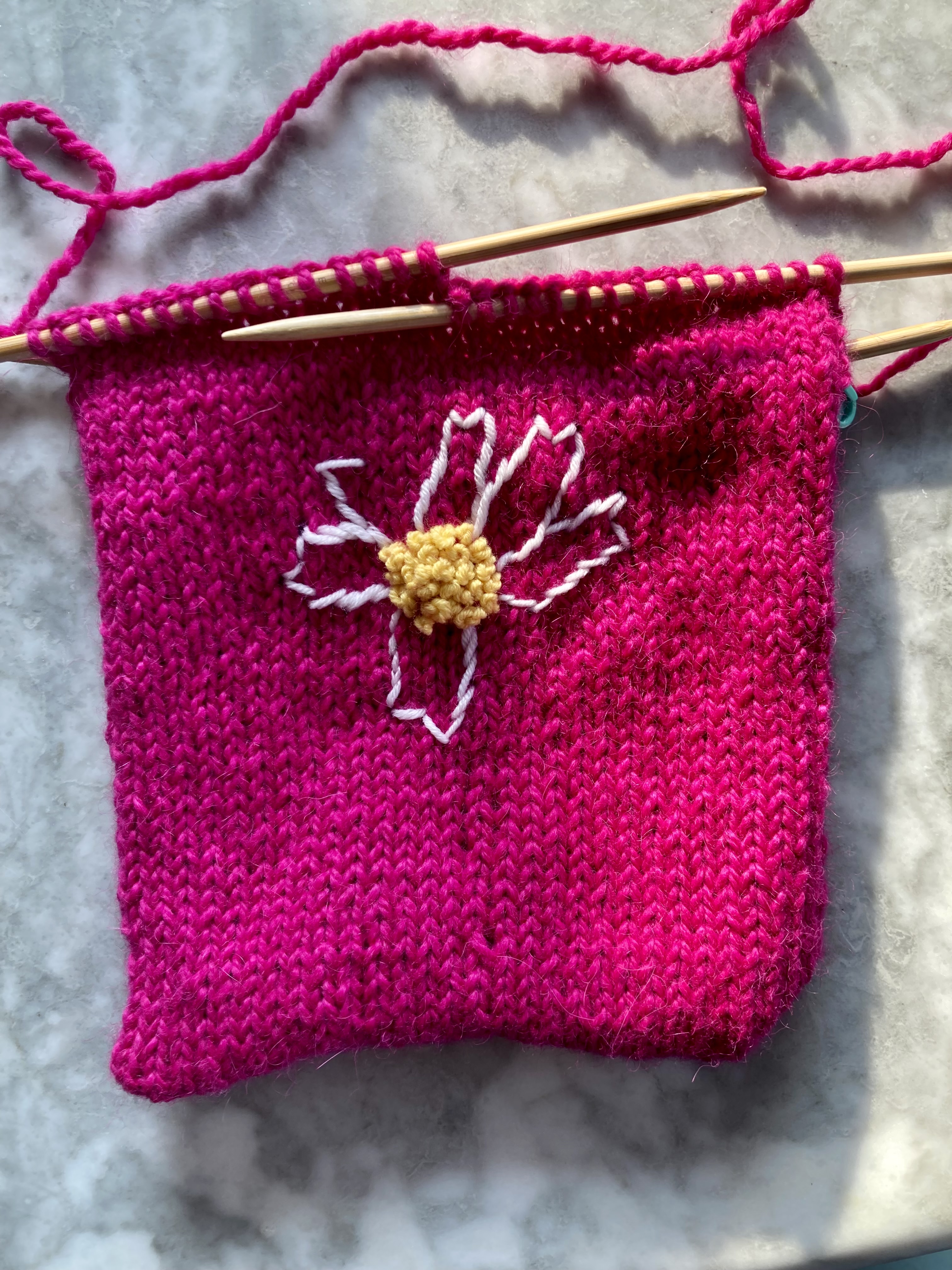
I used 5 mm needles and just cast on a number of stitches that seemed good, and worked in the round up to the neck part of the bottle. At that point, I realised that it would be much better to do the embroidery before the knitted bag part was completed, since I was going to use ribbing to pull the fabric in at the neck and it would be easier to access the embroidered part while the knitting was shorter and wider.

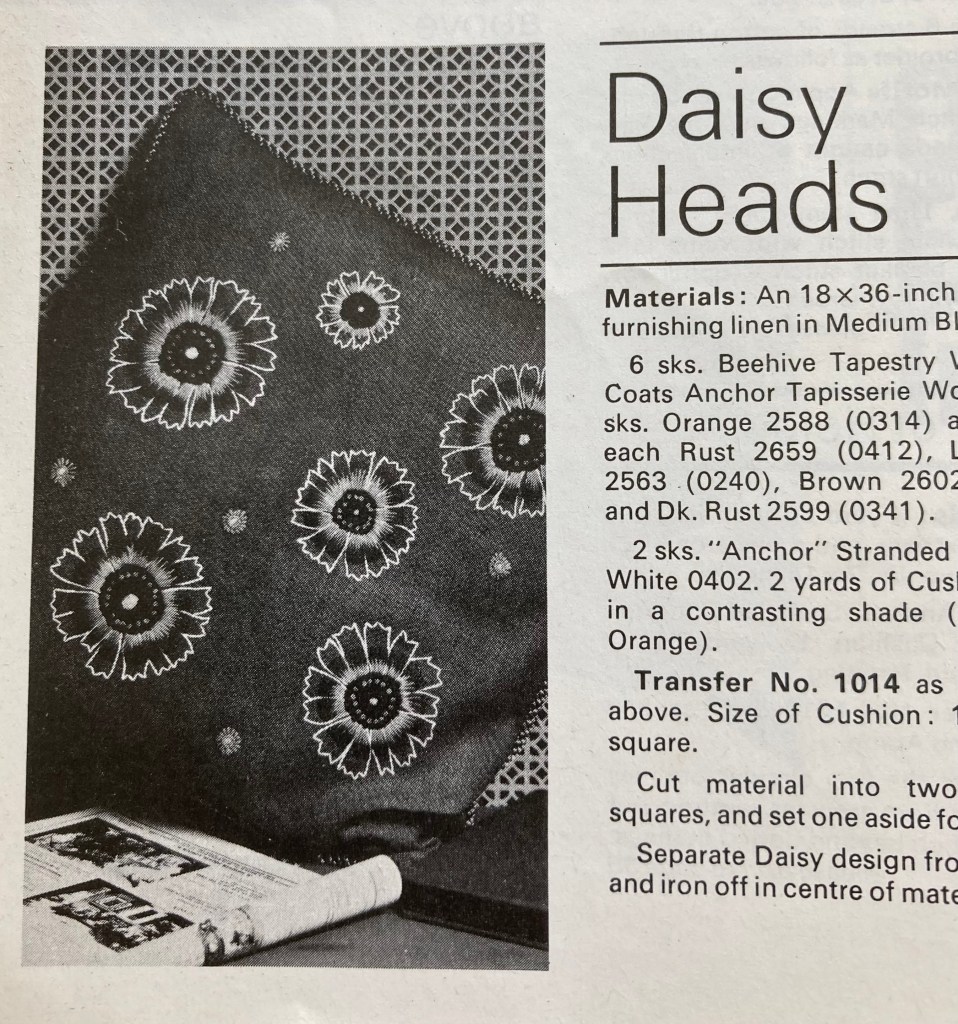
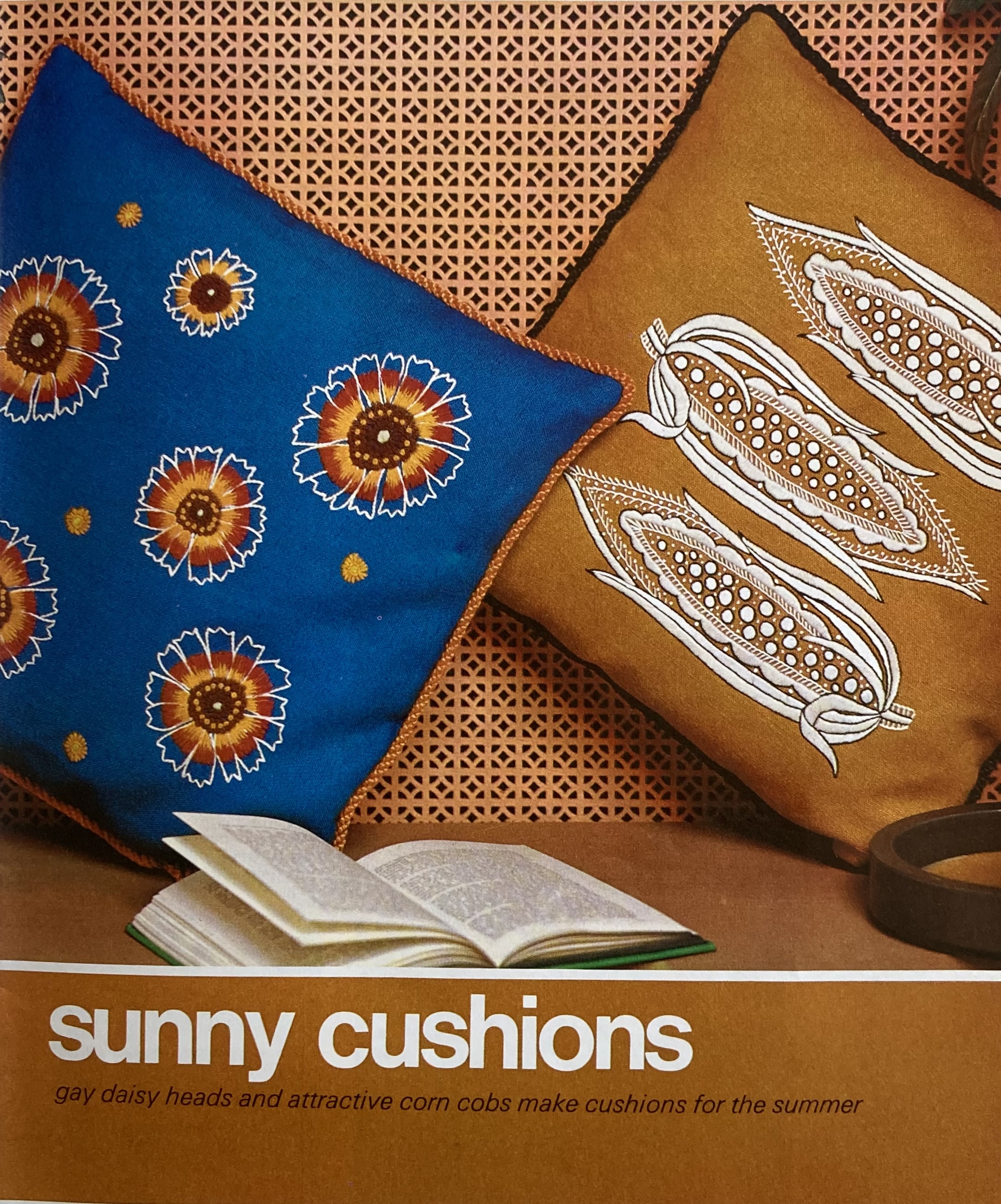
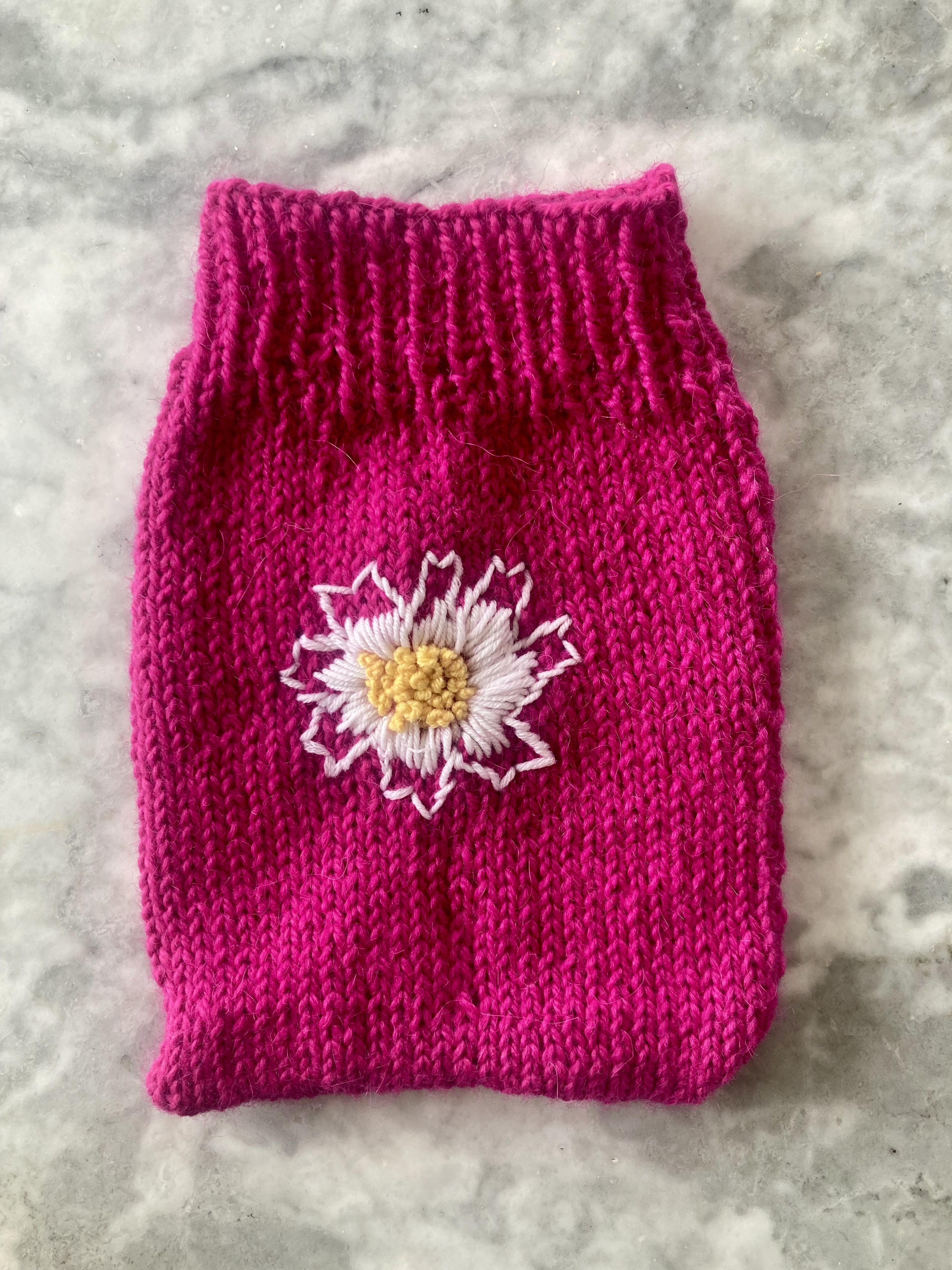
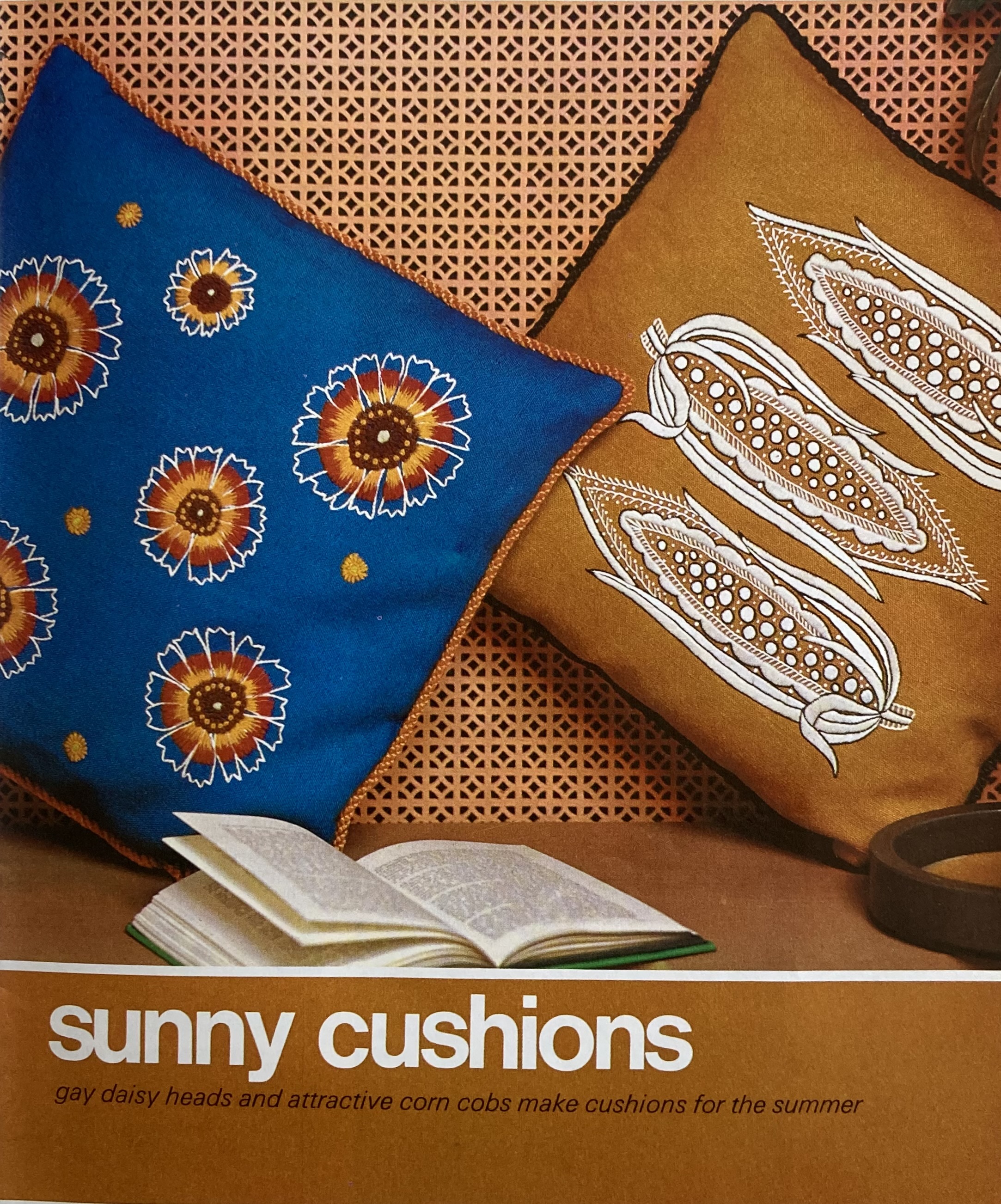
The embroidery pattern was the oddly-titled “Daisy Heads”, featured together with “Corn Cobs”, the other cushion embroidery project from May 1968. (I really loved the corn-cob pattern, which looked like a fine-line cartoon drawing, but it would have been very difficult to do without the original transfer and certainly not on a knitted bag). Besides looking nothing at all like actual daisies (orange petals with brown centres?), the petals were designed for fine long-and-short stitch on a cushion, with stem-stitch white outlines and French-knot centres, which is all perfectly fine with embroidery wool on a cushion, but equally impractical on a bulky knitted bag. I substituted normal DK knitting wool in white and yellow (somewhat more daisy-accurate) and made the petals in satin stitch, or as close as I could get to long-and-short stitch. The stem-stitch outlines were on a little larger scale, but nice enough, and the French knot centres were fine in in yellow instead of brown. I did have some brown wool that I thought I would use for the very center, but the plain yellow and white on bright pink looked better.

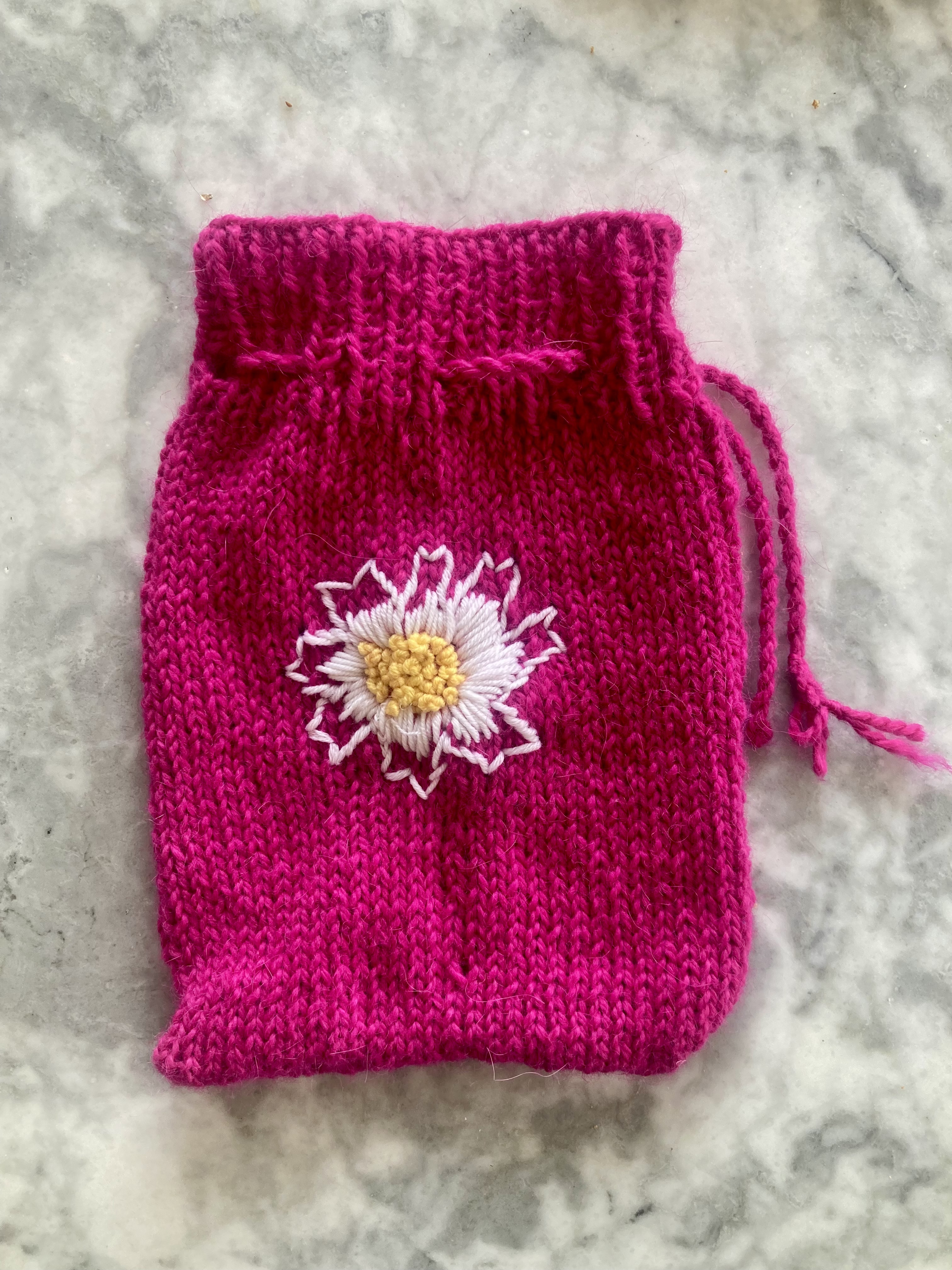
For the top part of the bottle where the cap screws in, I kept the same amount of stitches and just worked them in 1×1 ribbing, with a row of eyelets to thread a cord through to pull it in more if desired. The cord was monk’s cord, made the simple way by tying the strands to a door handle and twisting.

That was all! It was more “inspired by Stitchcraft” than a real re-creation of the pattern, but that’s OK. I destashed some yarn, made a useful object and made my friend happy. What more could a person want? I hope to get some WIPs finished in June and have an extra project or two to write about then.

May 1968: Overview

Happy May Day, everyone! Stitchcraft‘s “summer mood” is enhanced by a new layout format with more colour photos, distributed on single pages throughout the magazine. There are “soft colours” for the “gentle fashion look” as promised on the front cover, “Colour Bold and Bright” featured on the back cover, and some earthy rust-orange tones as well as natural or white garments. Diagonal lines, zigzags, chevrons, and stripes show up in the pattern stitches.

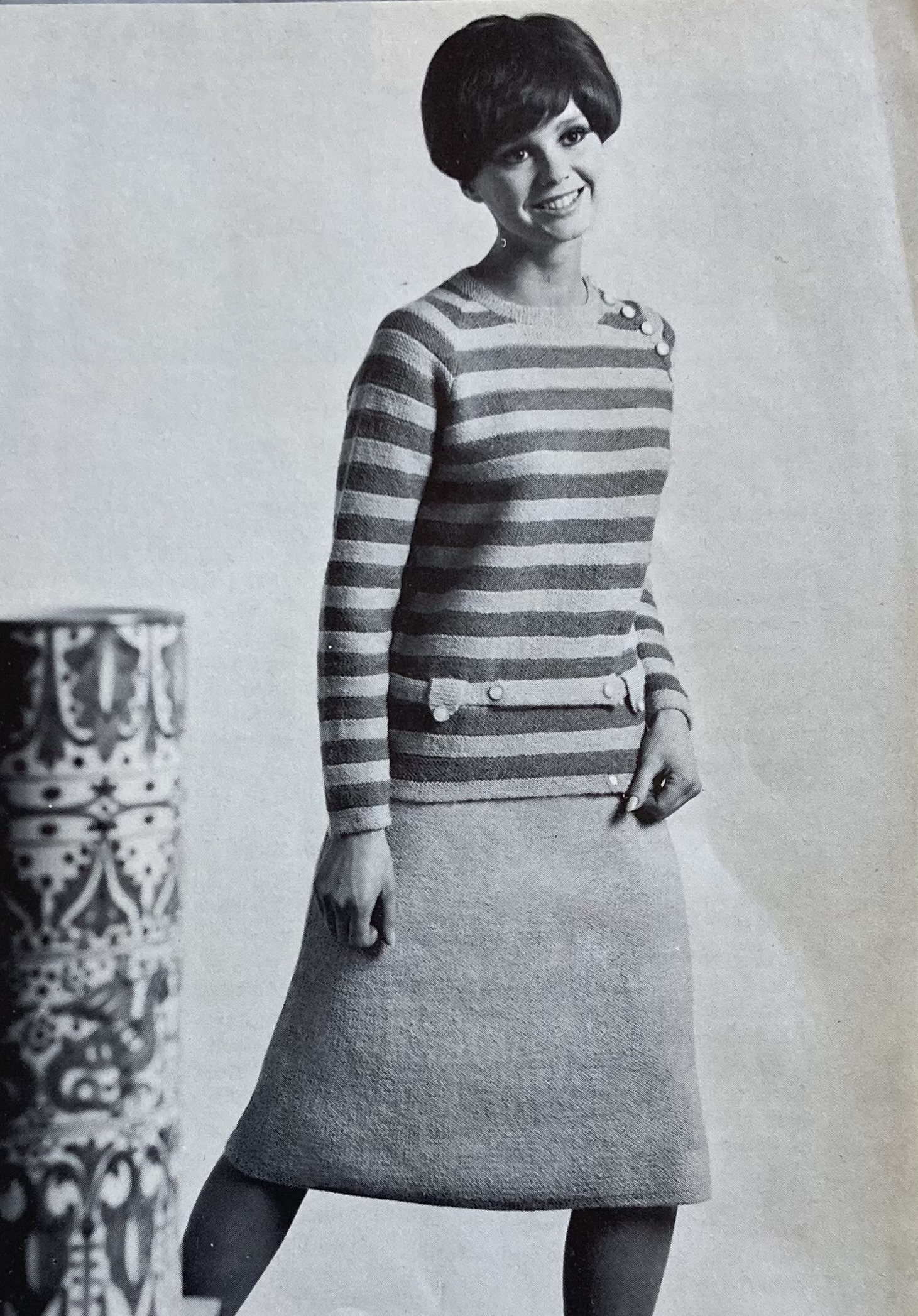
The “gently styled” skirt set on the cover is worked in twisted garter stitch (every row knit through the back loops) and has a choice of mini- or just-above-the-knee-length skirt. The purely decorative belt is held in place by little buttoned tabs, and the jumper is buttoned at the shoulder. More gentle styles and colours show up a pink and white jumper with a different lattice lace on the sleeves and yoke, a pastel top knit sideways in stripes, and a “romantic little dress” in fluffy “Fuzzy-Wuzzy” angora-mix yarn.

For those who prefer neutrals and earth tones to soft pastels, there are two summery tops to knit in lacy lattice or cluster stitch, And if “bold and bright” is more your style, the pullover on the back cover is warm both in wool and colour.

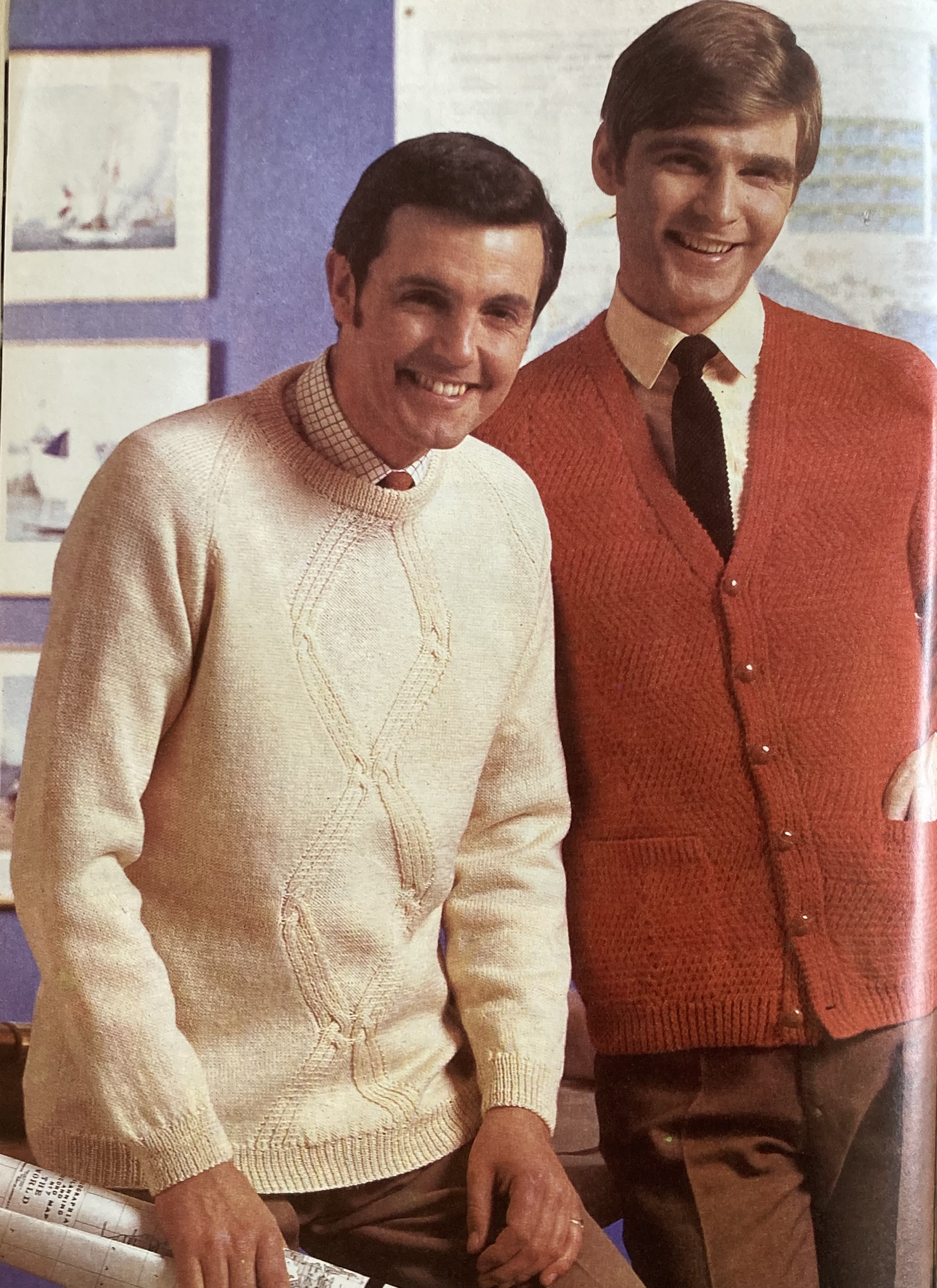
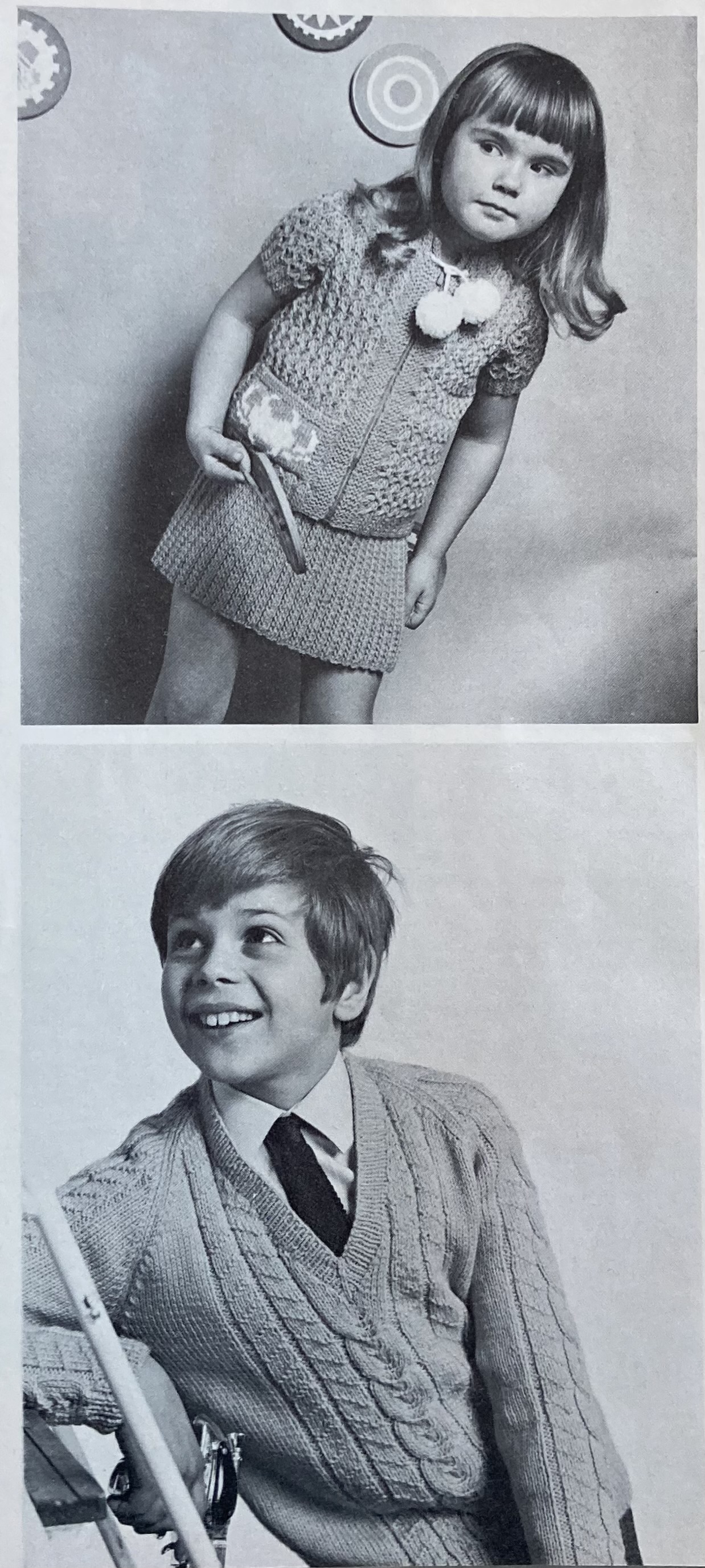
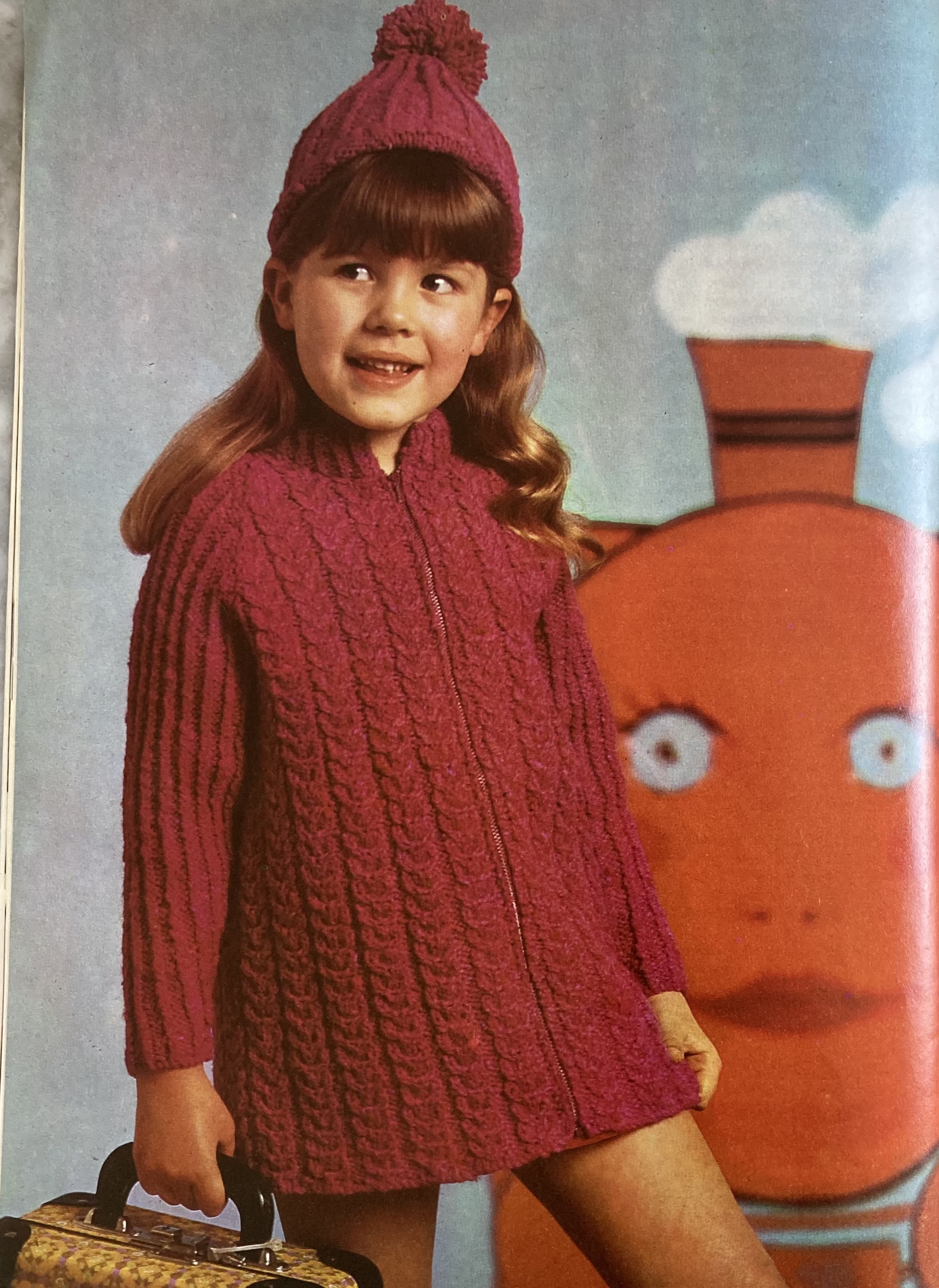
Men can get into the “summer mood” with a comfortable, loose-fitting pullover in natural white or a rust-orange cardigan with practical pockets. They are touted as the “casual, leisurely look” and the two men in the photos are apparently getting set to go hiking or fishing. Nevertheless, a buttoned-up shirt and tie are required! The little boy’s “out-door look” of “comfortable raglan sweater” would also not be complete without a shirt and tie, but he still has it better than his sisters, who are expected to play on the beach in a micro-miniskirt or travel on a cartoon train with no apparent clothing on her lower body at all. The caption says she will be “smart and comfortable on her journey”, which I doubt very much.

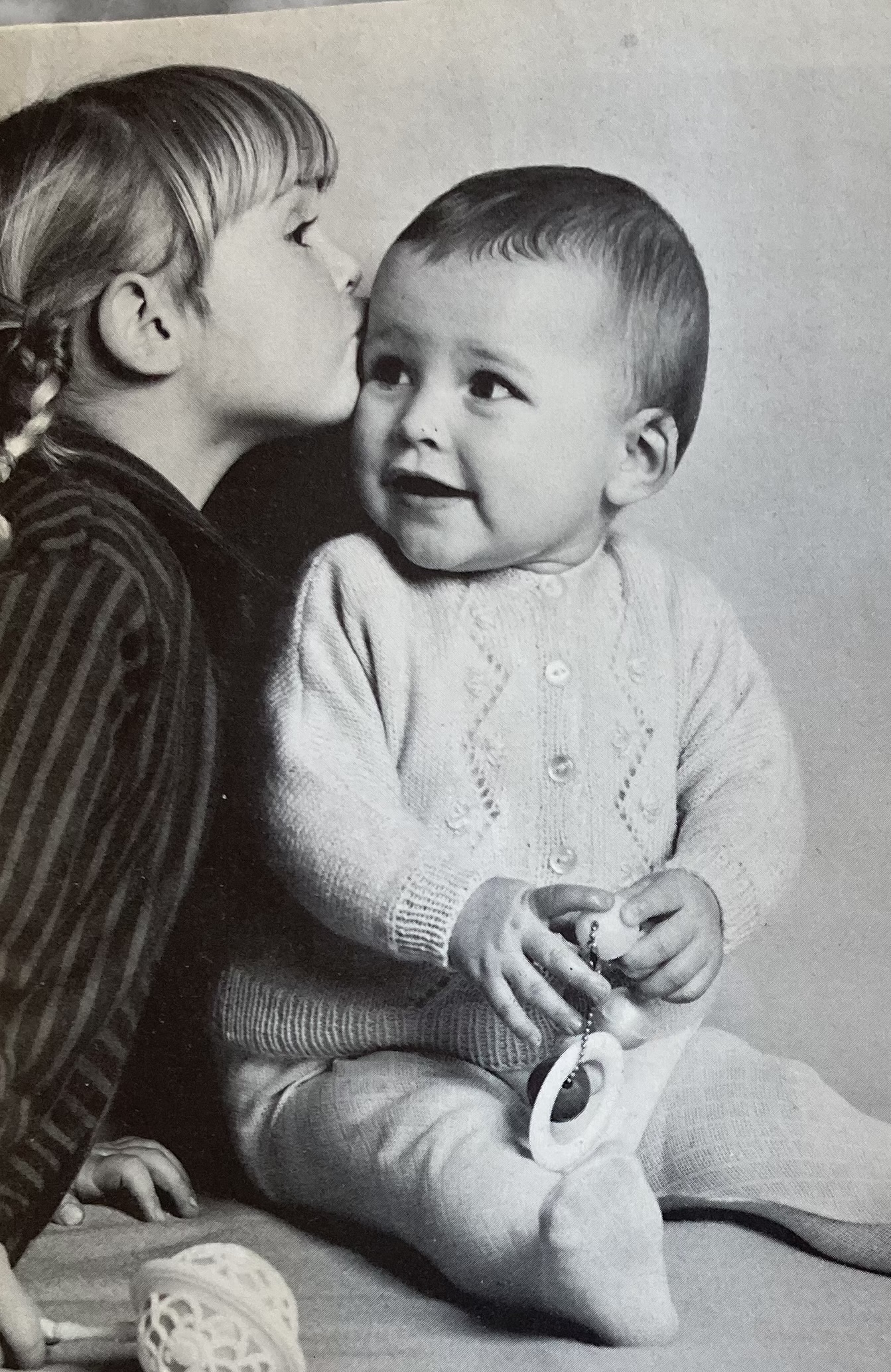
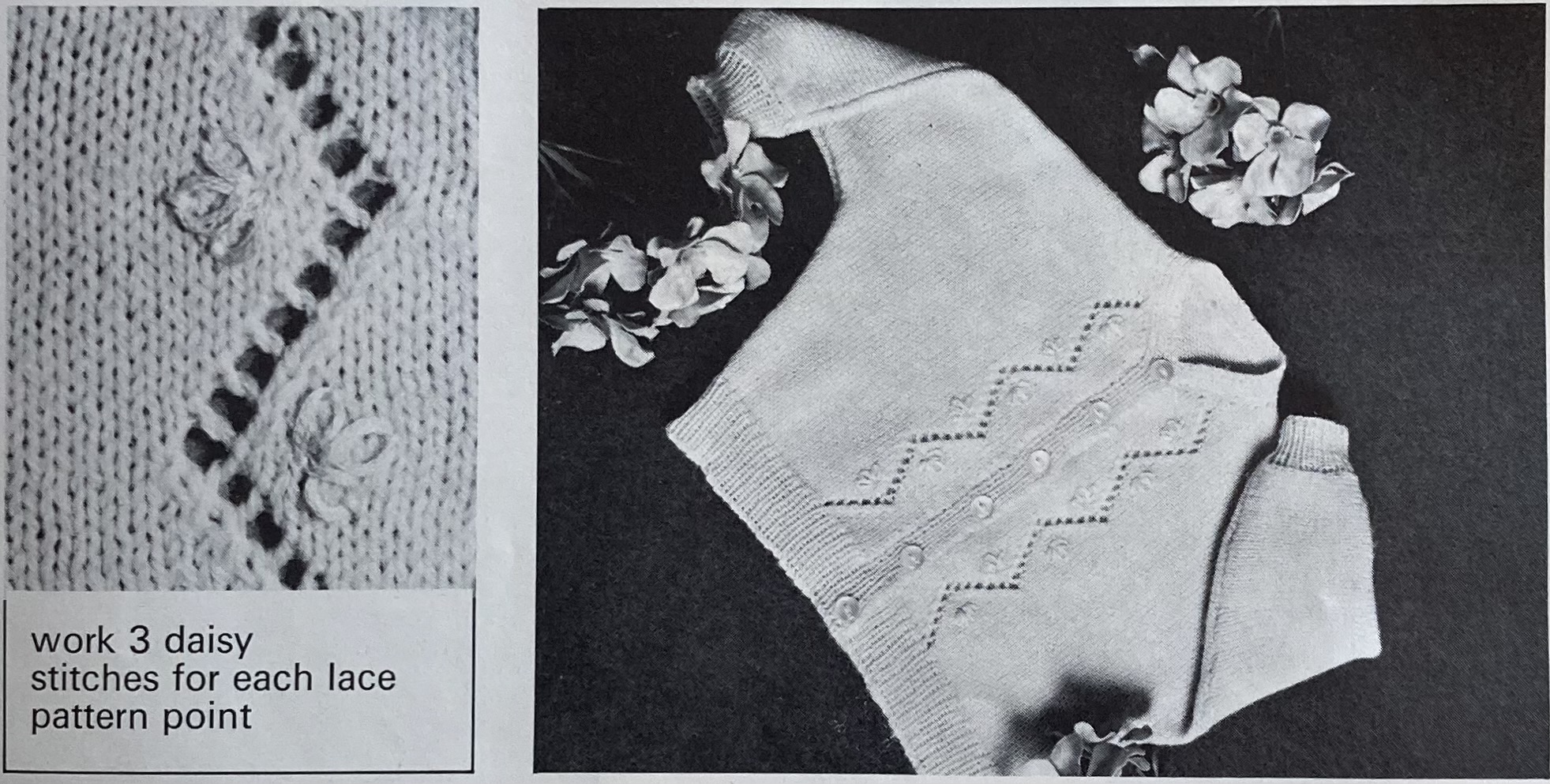
The baby of the family fares much better with not only an embroidered dolman-sleeve cardigan, but actual leggings on its legs. With feet, even! The leggings aren’t hand-knit though, or if they are, there’s no pattern for them in the issue. The diagonal lace pattern on the cardigan is knit in and the little loop flowers are embroidered on later.

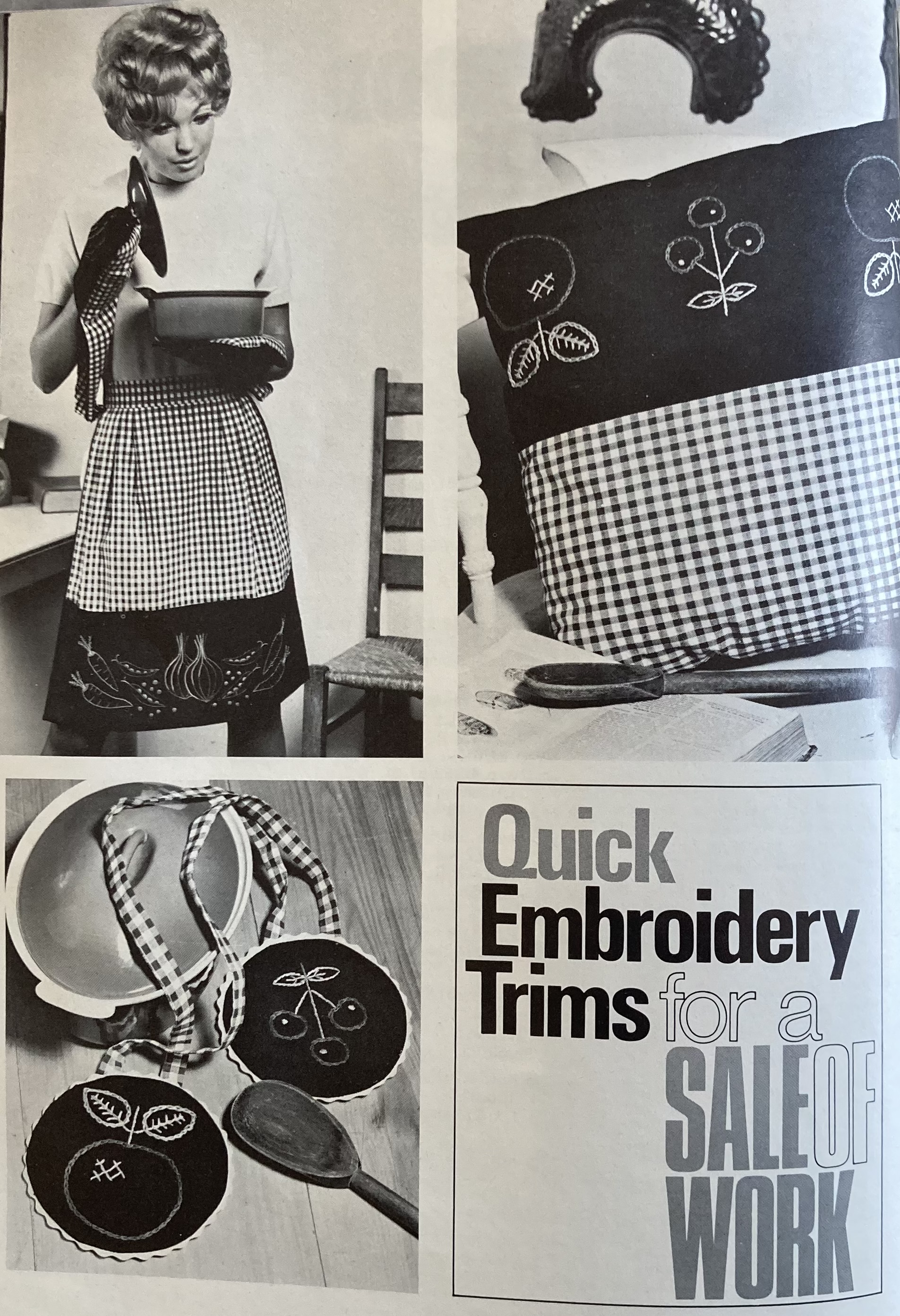
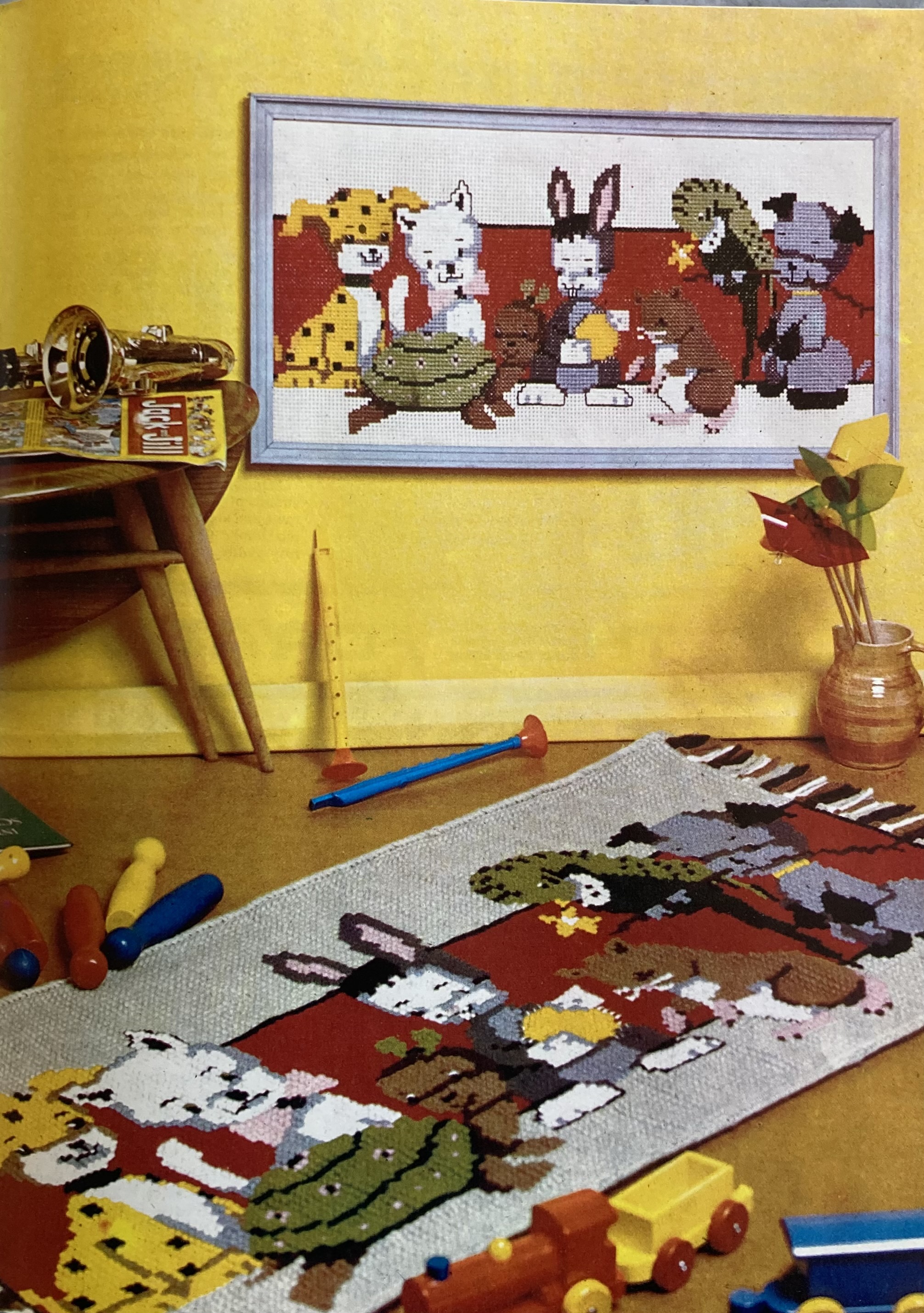
The homewares and needlework designs are quick and easy, in keeping with both the casual summer mood and the general trend of needlework designs becoming simpler and more practical as the 1960s progress. The last few issues of Stitchcraft have featured a single, simple embroidery design that can be adapted to decorate all kinds of different homewares. This time, it’s quick trims of fruit and vegetables to put on a gingham apron, cushion, or pot holders. The agricultural theme continues with daisy (? I have never seen an orange daisy, but whatever) and corn-cob cushion motifs. For the nursery, you can make a cross-stitch wall hanging or rug with the little pet animals featured in the children’s comics from the last and next few issues of Stitchcraft.

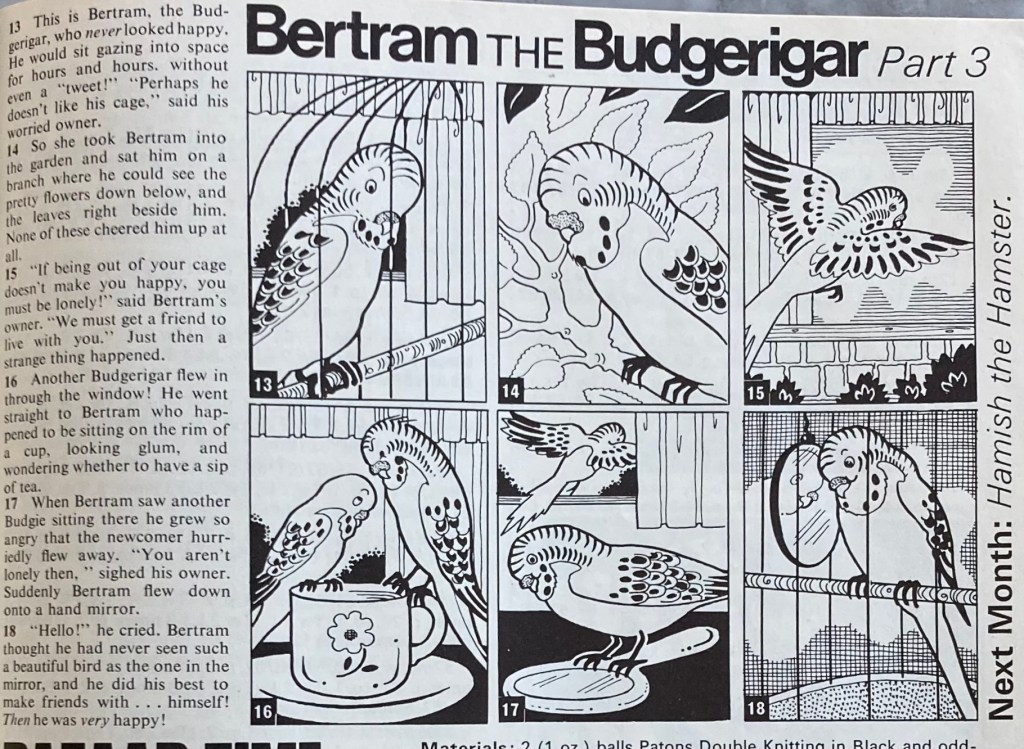
Speaking of, this month’s comic (number three in the series) features Bertram the budgie, who has no other birds around him and is consequently lonely and depressed (realistic.) Luckily, another budgie just happens to fly in the window and join him! (less realistic, but hey, problem solved!) Or not, as it happens: Bertram is territorial and jealous and does not appreciate a stranger just showing up for tea and inviting themself in. His owner solves the problem by giving Bertram a mirror, and Bertram discovers he is his own best friend (realistic.) Realism points, 2 out of 3, and Bertram is very happy.

I don’t know what to make from this issue. The lattice lace pattern on the sleeves and yoke of the plain pullover is very cool and I toyed with the idea of making modern “rave sleeves” by leaving out the rest of the pullover and just adding some ribbing to the bottom of the sleeves and yoke. But I don’t really have anything to wear it with or appropriate yarn in stash. I don’t have the time or energy for a big project, have too many unfinished projects going on (including from last month), and have already knit something for my colleague who is having a baby in July. I guess I could embroider an orange daisy or a corn cob on something? Or a fruit and vegetable motif on a fruit and vegetable bag? Stay tuned!

April 1968: Cables and Twists

EDIT September 26, 2026: Finally finished!

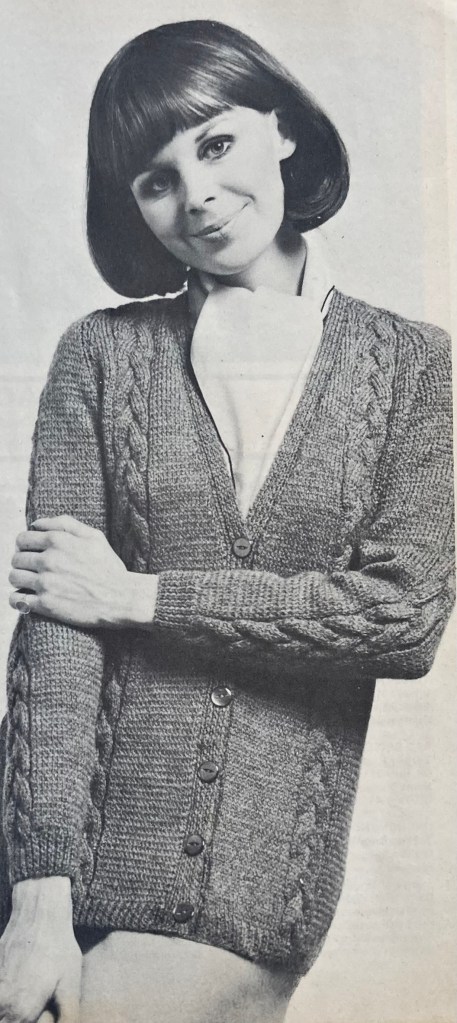
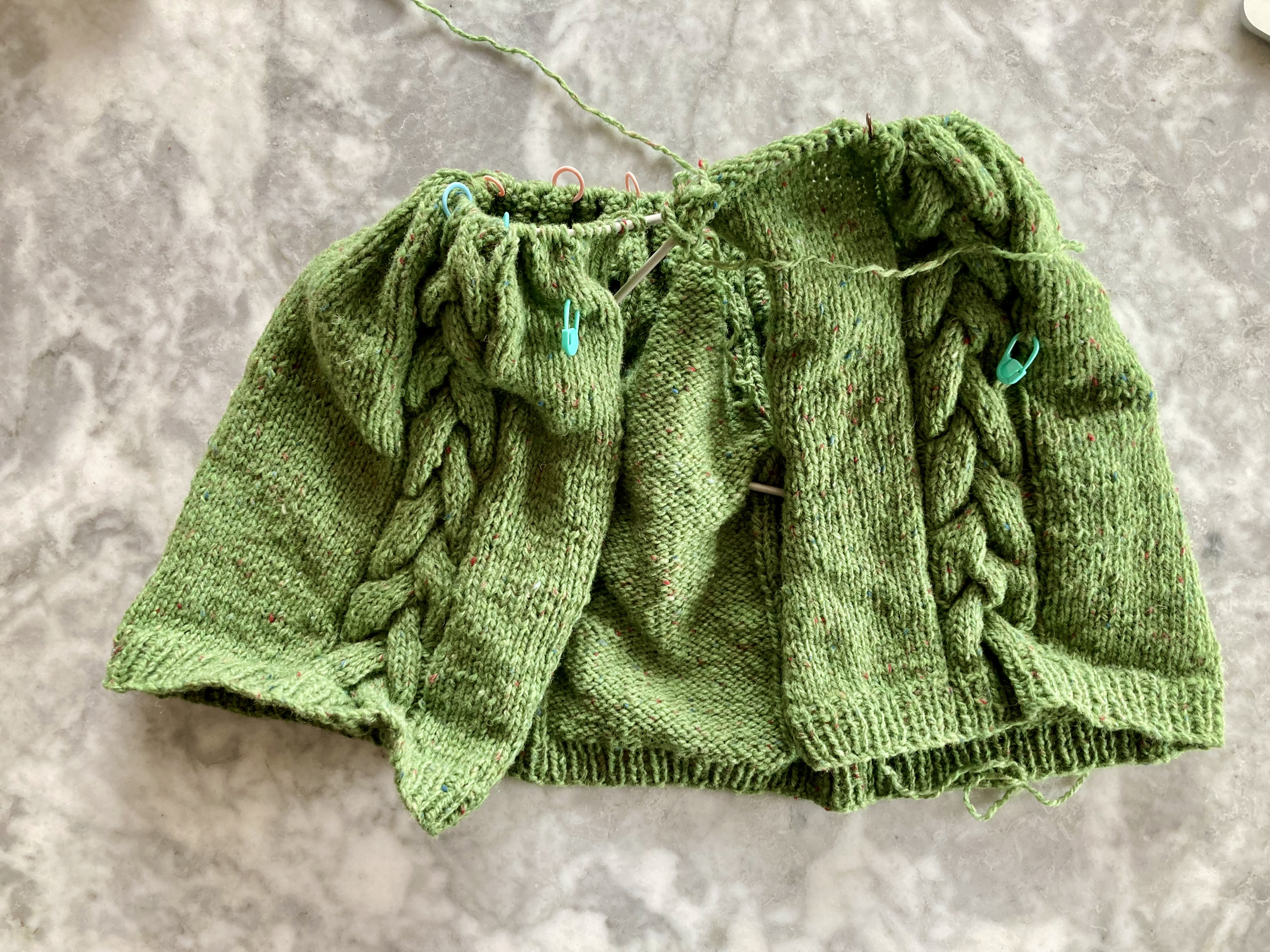
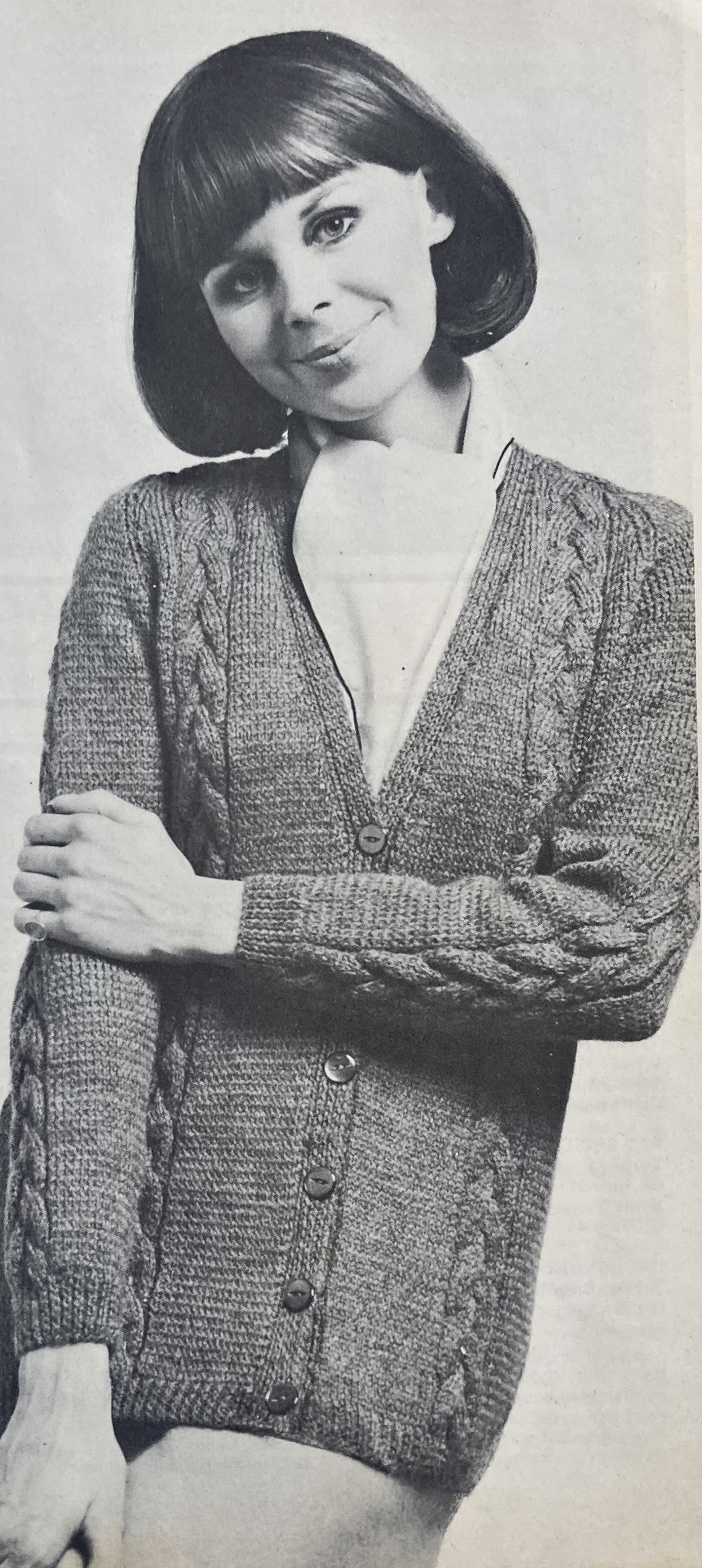
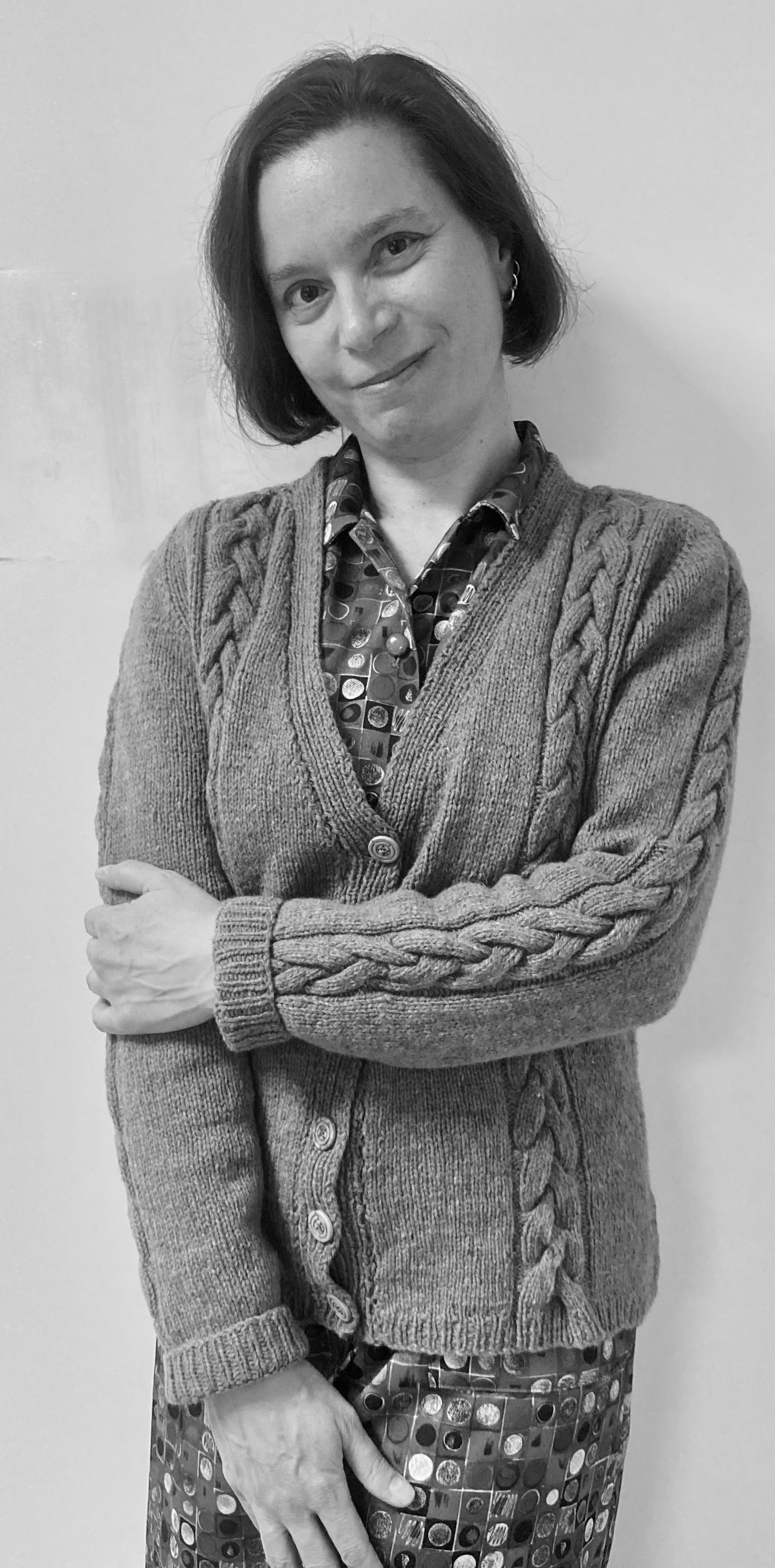
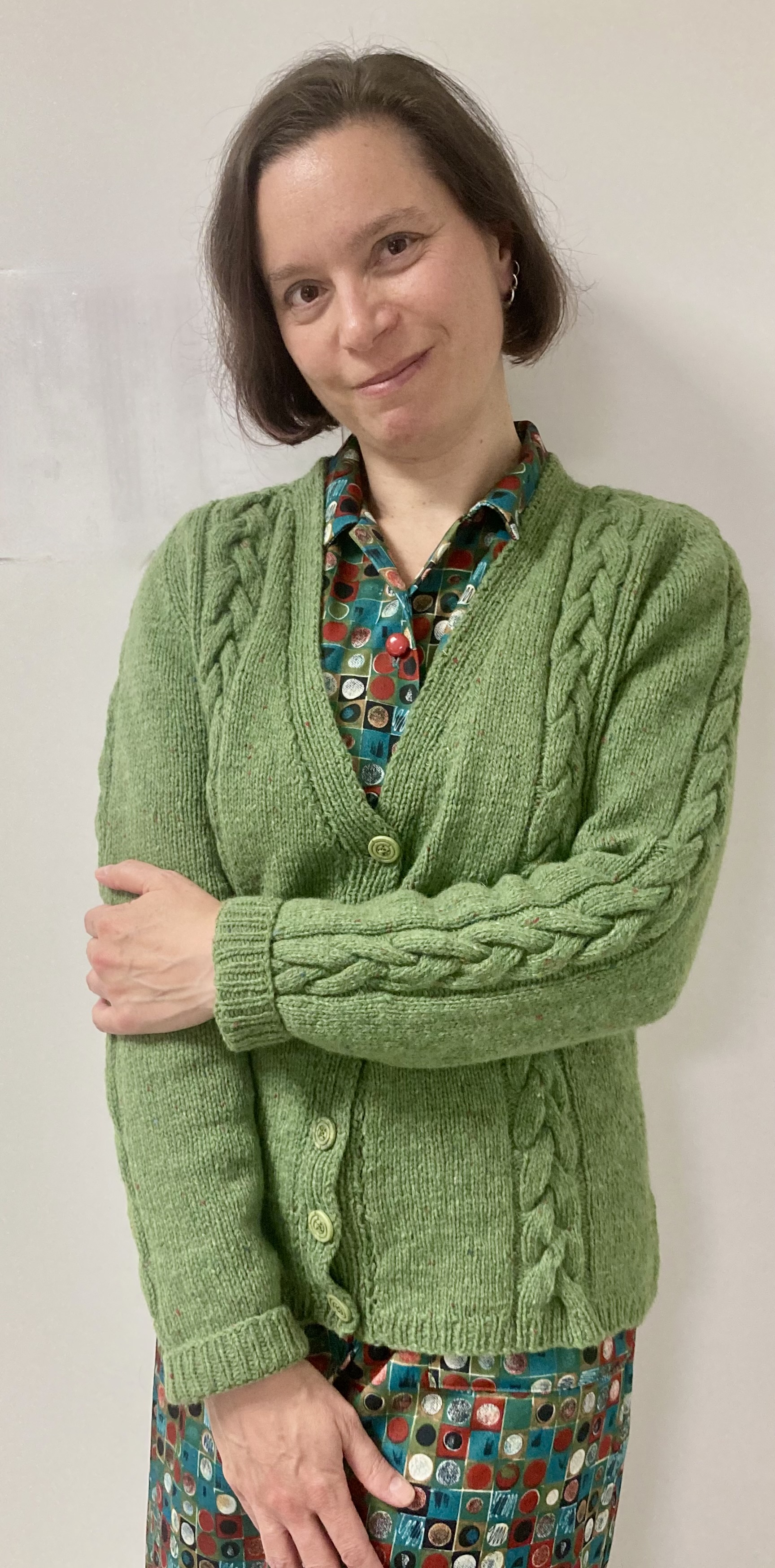
My April project (which took forever!) was the “long-line Shetland cardigan” from the April 1968 issue of Stitchcraft, “Country Knits”. Longer, slightly narrower garments and cabled, twisted or nubbly stitch patterns were all trending.

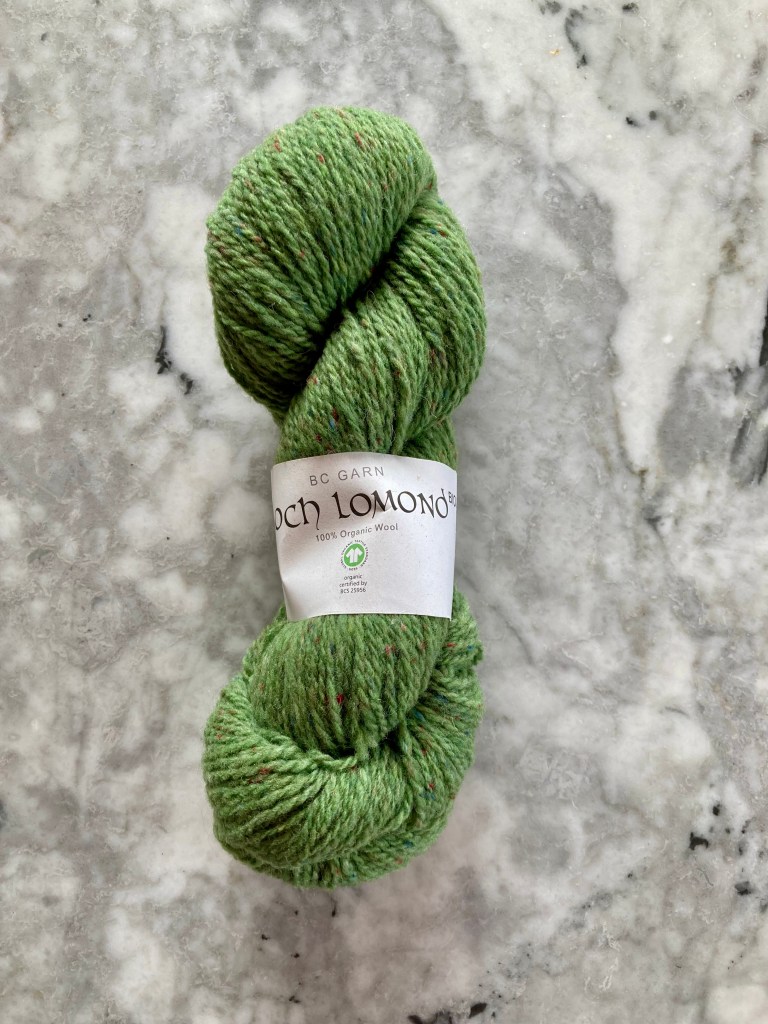
The cardigan in question is written for Patons “Fiona”, a DK/worsted blend of Shetland wool and synthetic fibre. I used “Loch Lomond” by BC Garn, which is a tweedy, loosely plied DK/worsted wool, softer than Shetland wool and a little bit less hairy, but similarly fluffy. I had bought it to make a cardigan from a modern pattern and had made most of the cardigan before realising that I didn’t like either the fit or the lace pattern on the fronts. It sat around for a while while I worked on other projects, until I decided to cannibalise it in order to make this Stitchcraft cardigan.

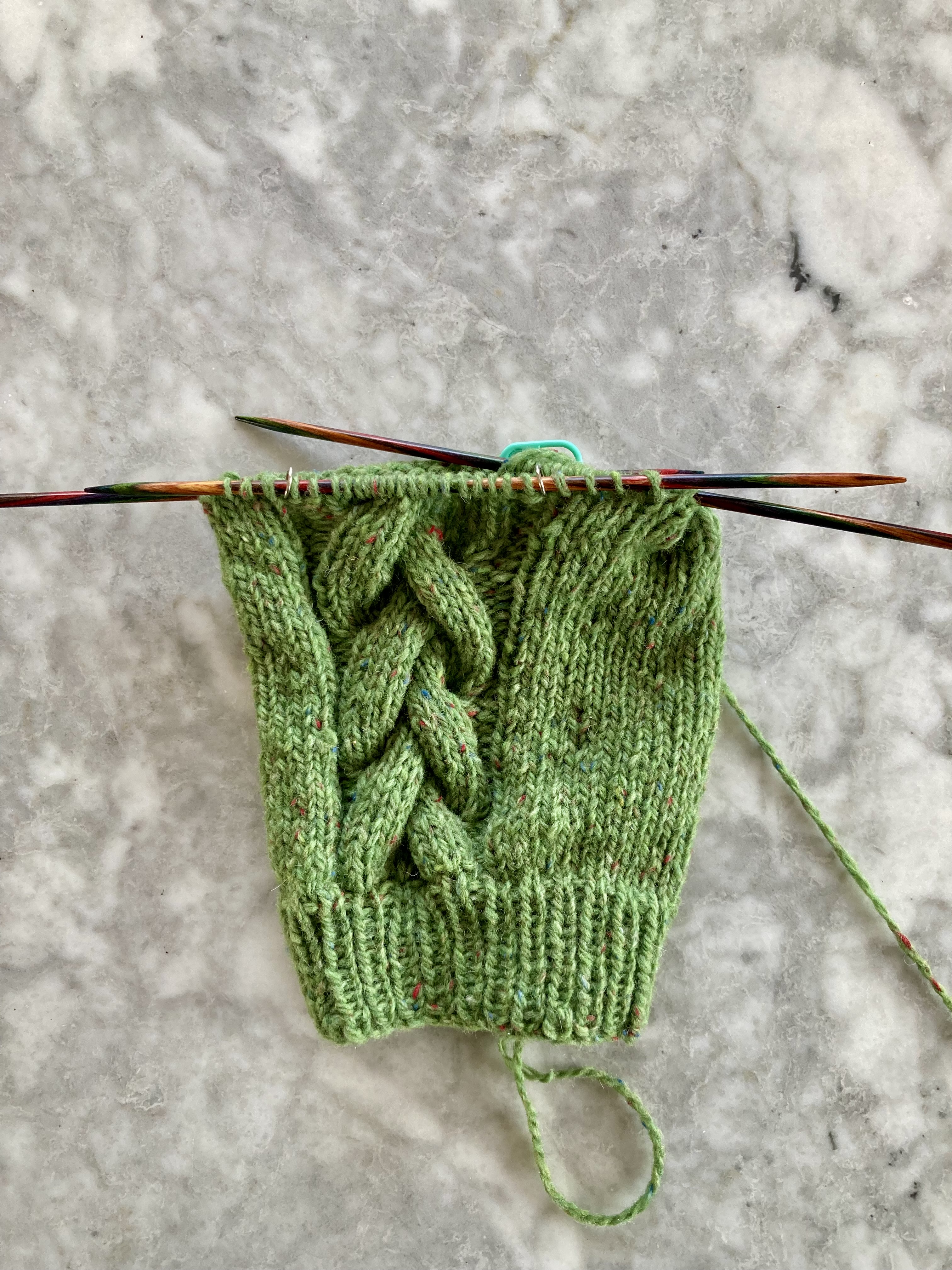
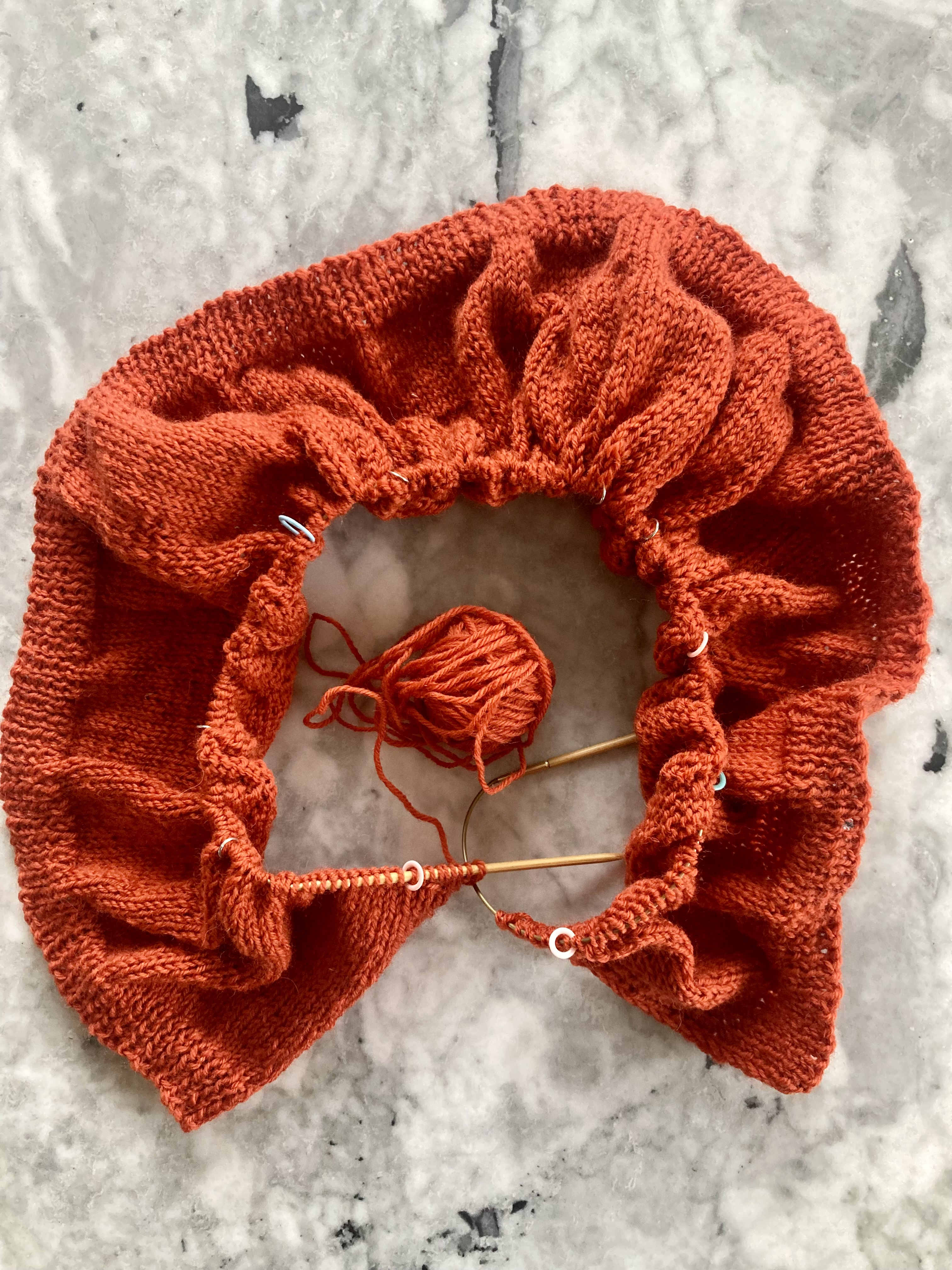
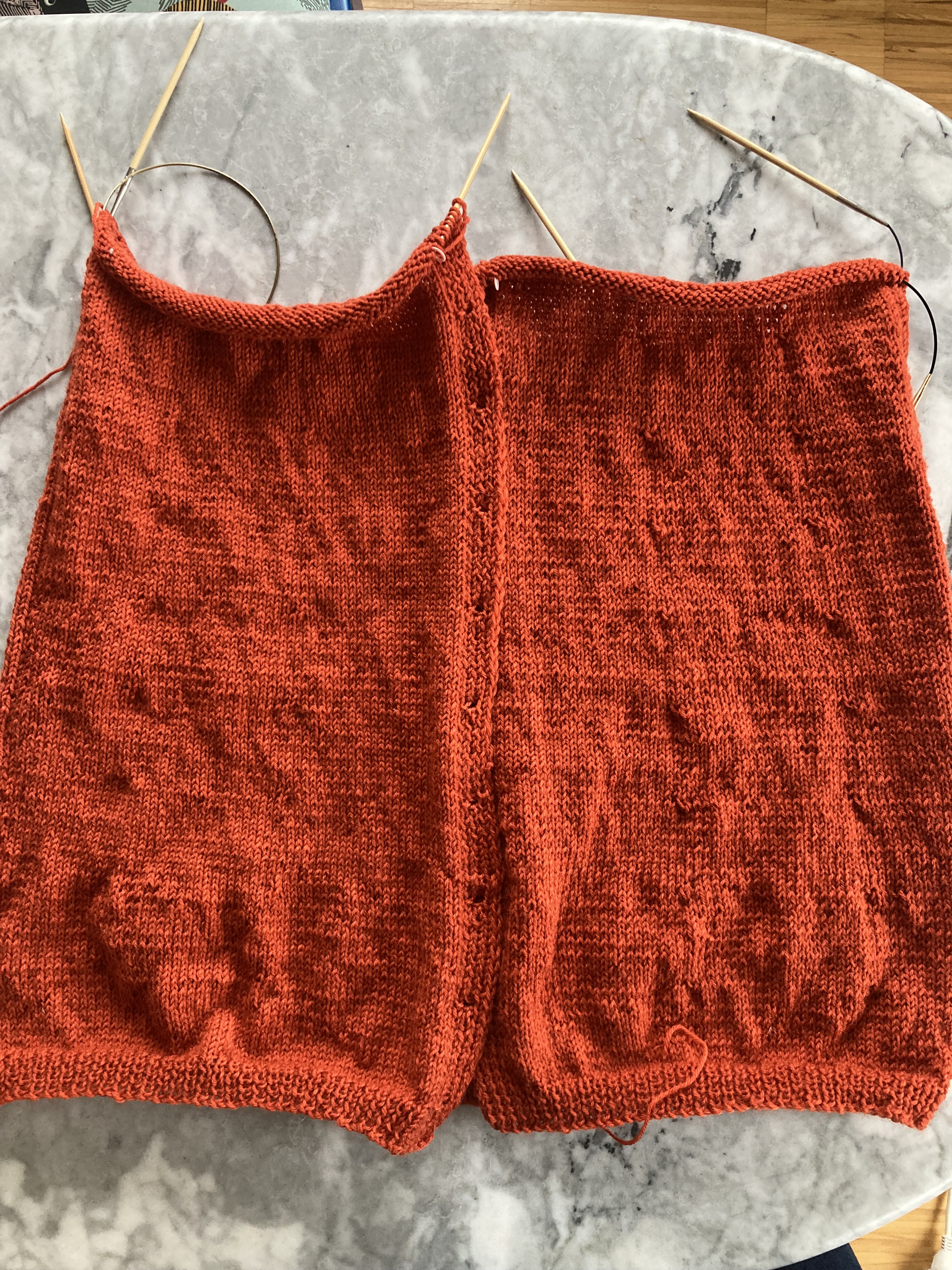
The pattern is written from the bottom up, in pieces and seamed, with raglan sleeves. The cables are a 5/5/5 stitch braid with the crosses on rows 5 and 11 of the 12-stitch pattern repeat, and only featured on the fronts — the back is knit plain. I chose to make it with the front and back knit flat in one piece and a seamless raglan yoke, and added a little bit of waist shaping as well as two cables on the back (without changing the total stitch count) to keep it from looking too sack-like or ballooning in the back.

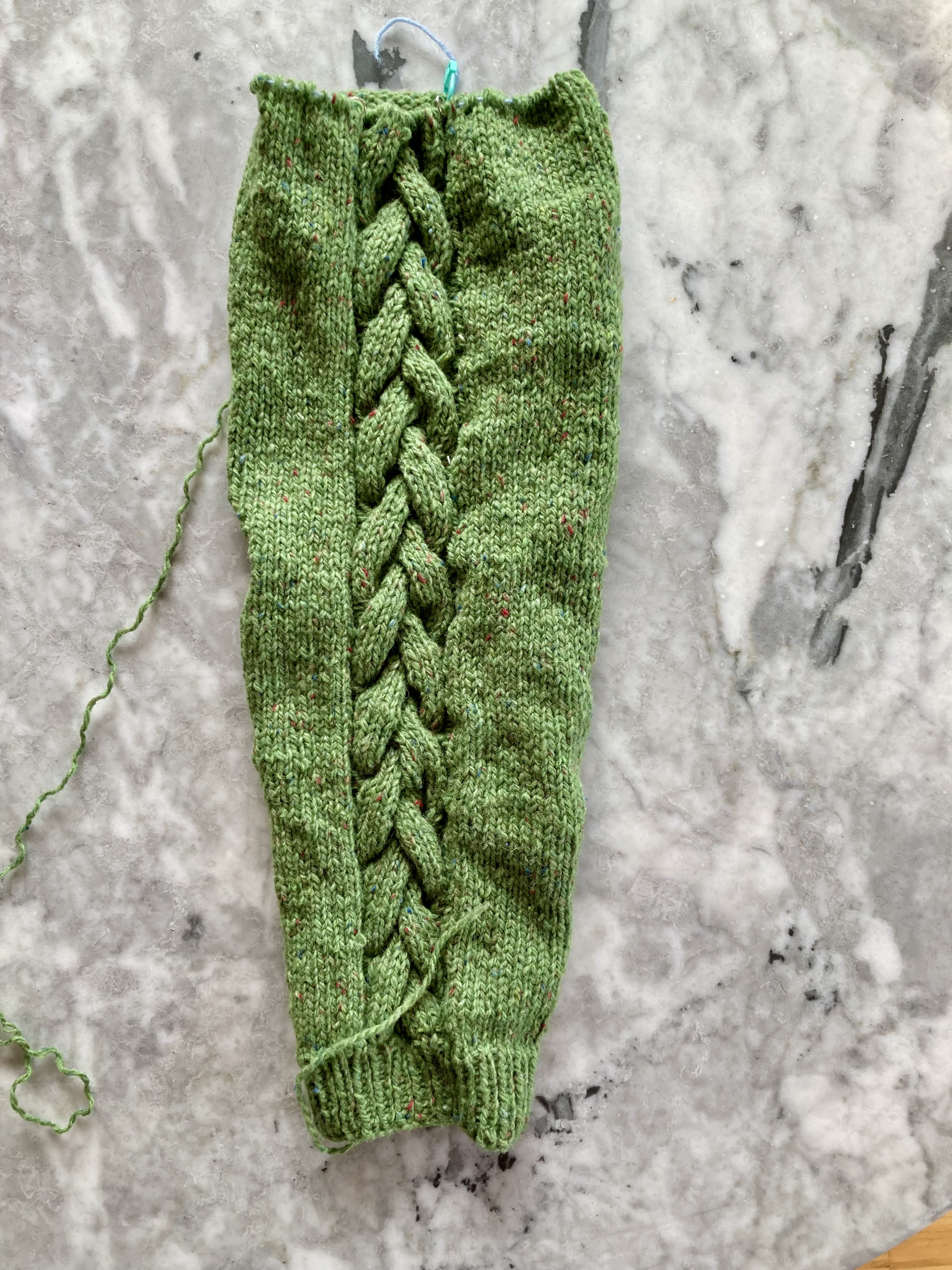
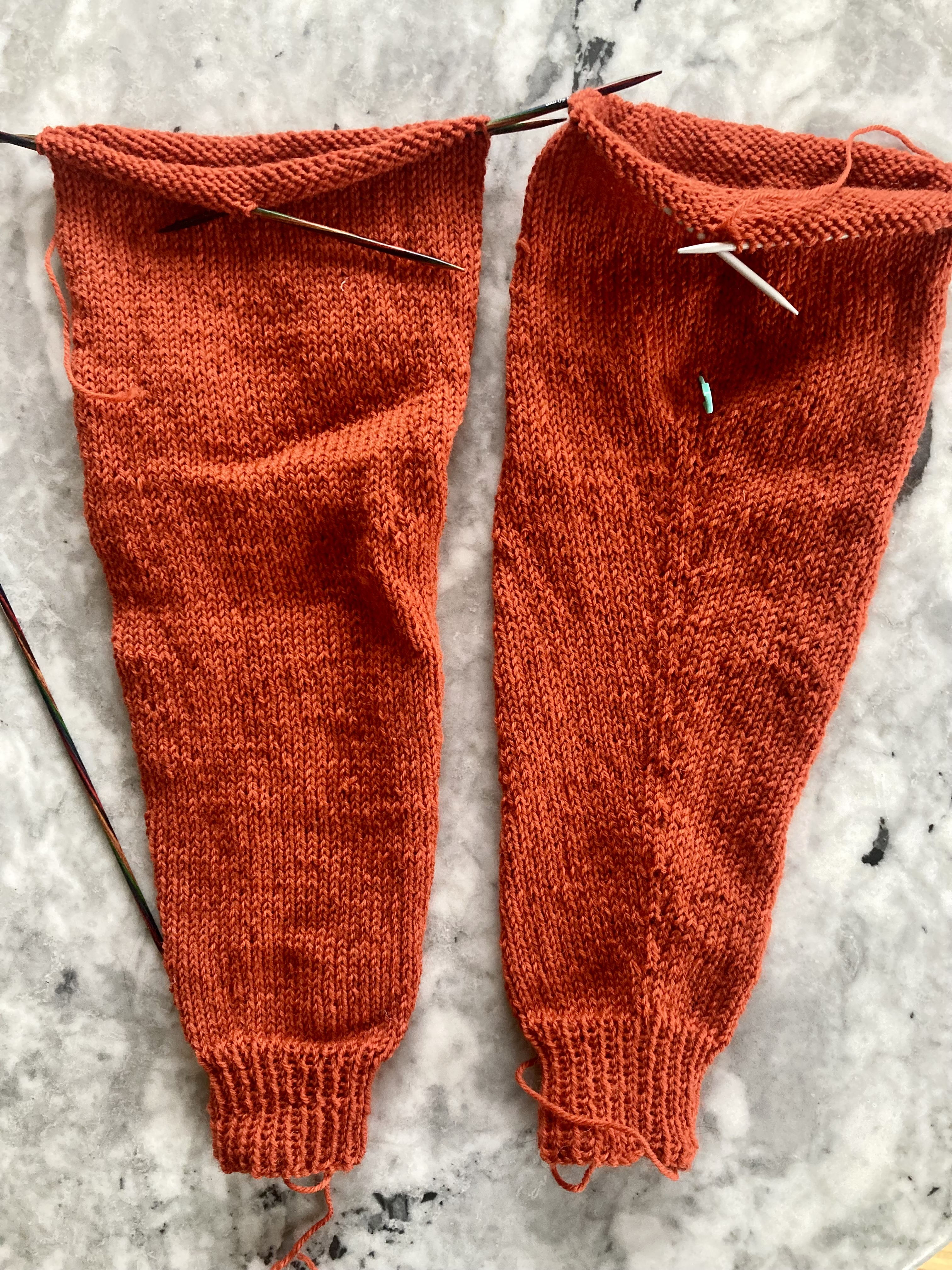
I started with the sleeves to check for fit and tension, and as of April 27th had only completed 1 1/2 sleeves up to the armholes — not very much! The pattern is not difficult, but it was a really busy month. The fabric was a little stiff on 3.5 needles, but I decided to stick with it, which turned out to be a good and important decision. The cables had great definition. The pattern was easy, the colour fantastic, and the yarn pleasantly squishy and tweedy. I just needed to find the time to get it done.

For whatever reason, this project just stayed in the WIP cabinet for a long time. The summer was really hot (up to 35 degrees C and it is really never that hot where I live) and I couldn’t deal with holding warm, wintery wool in my hands. I finished the sleeves to the armholes and worked on the body little by little until it took shape.

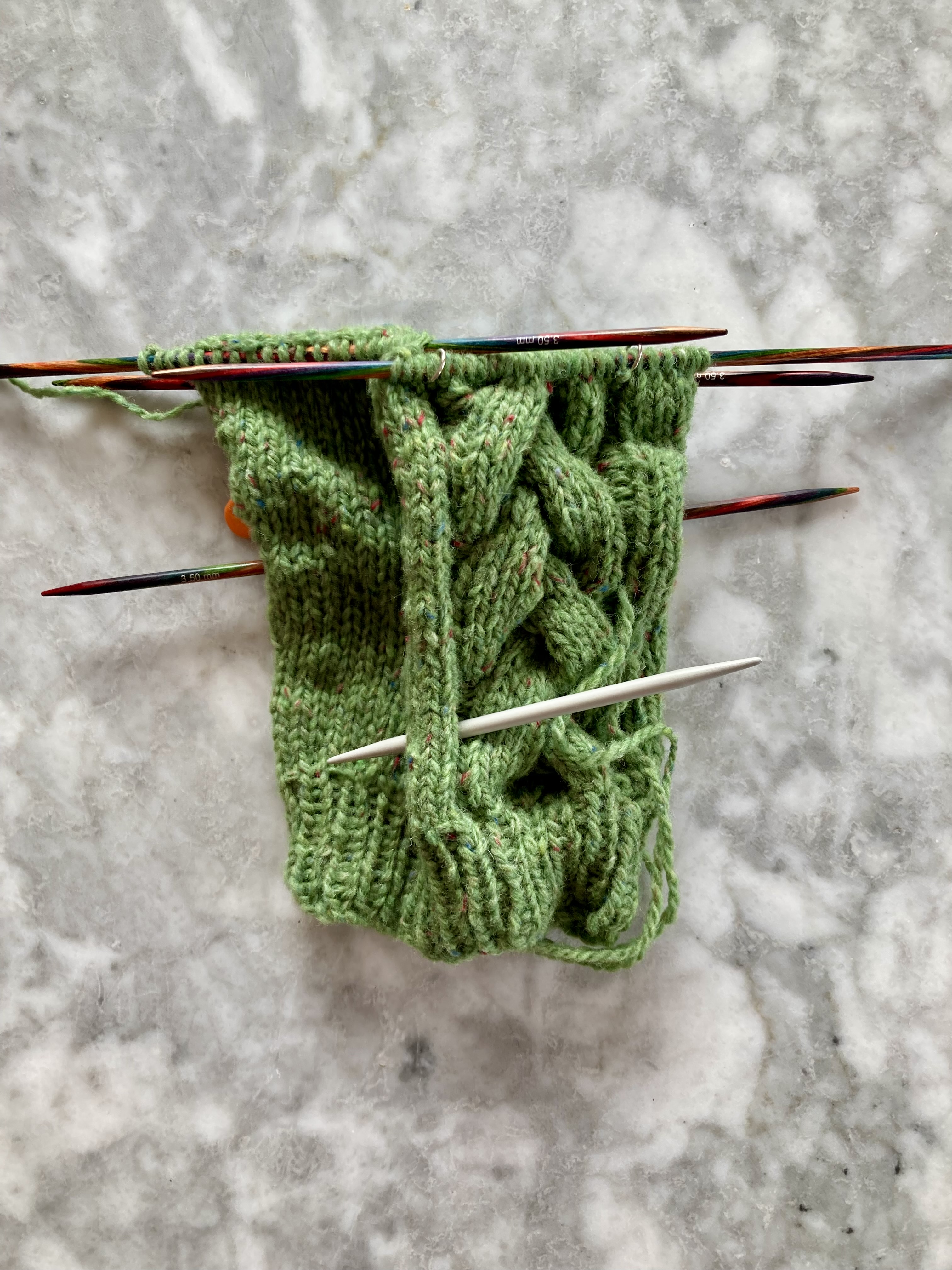
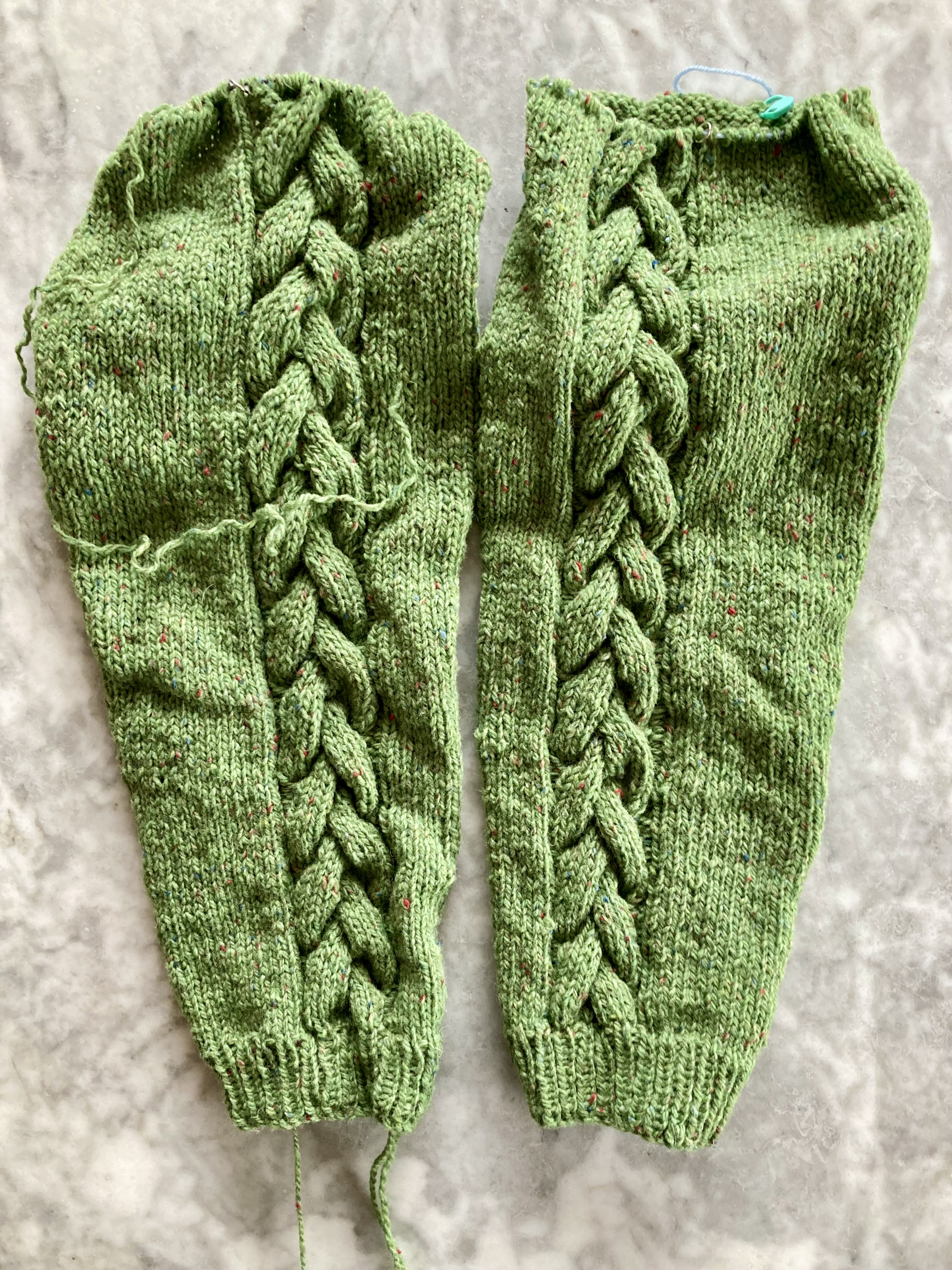
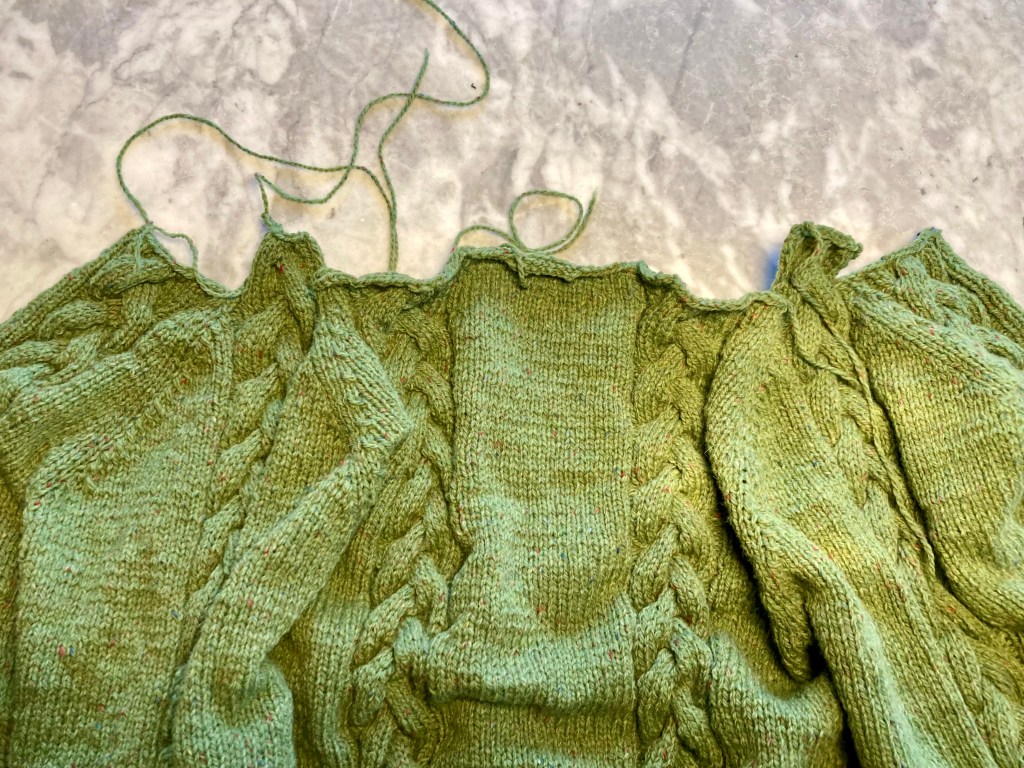
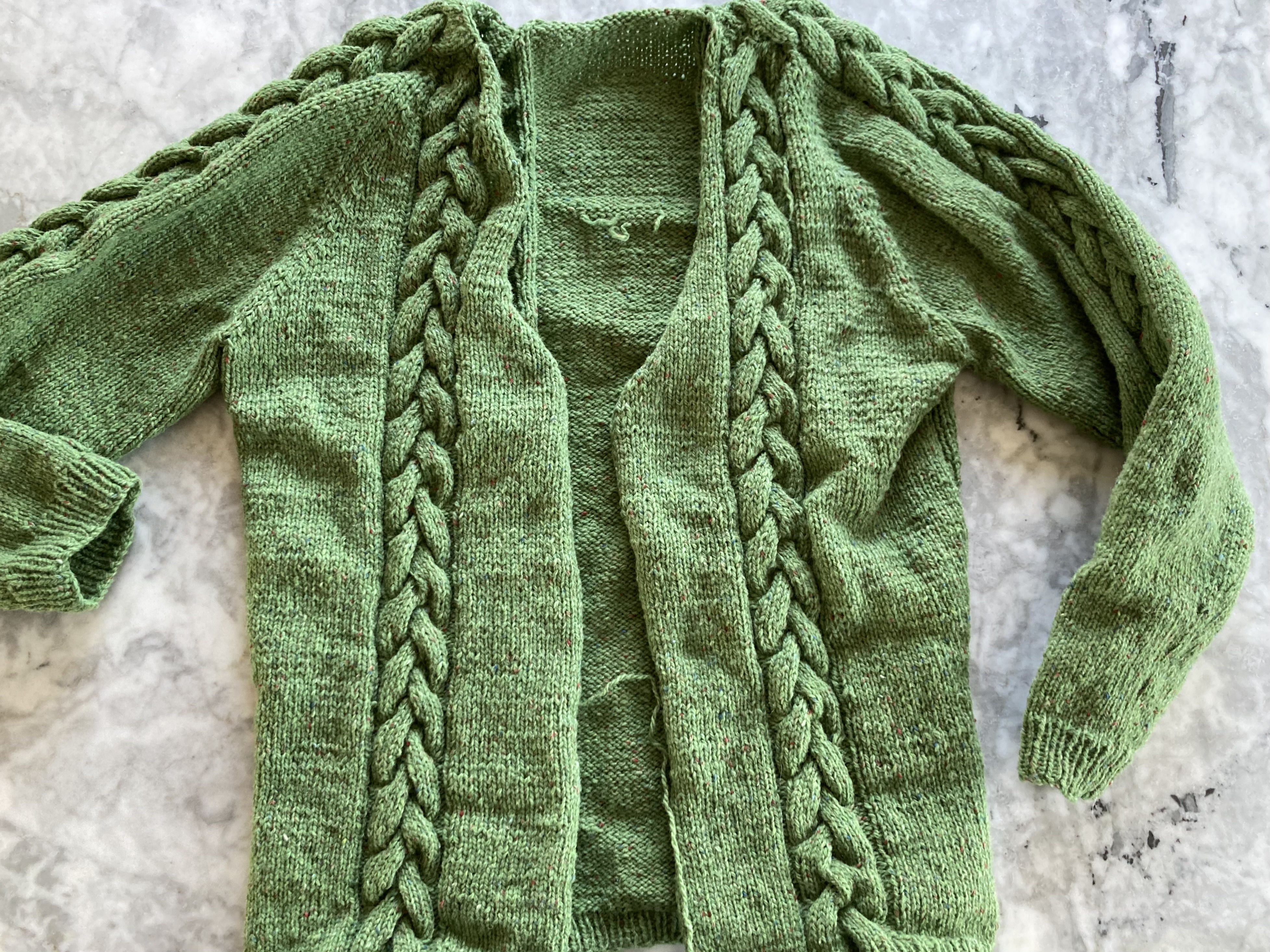
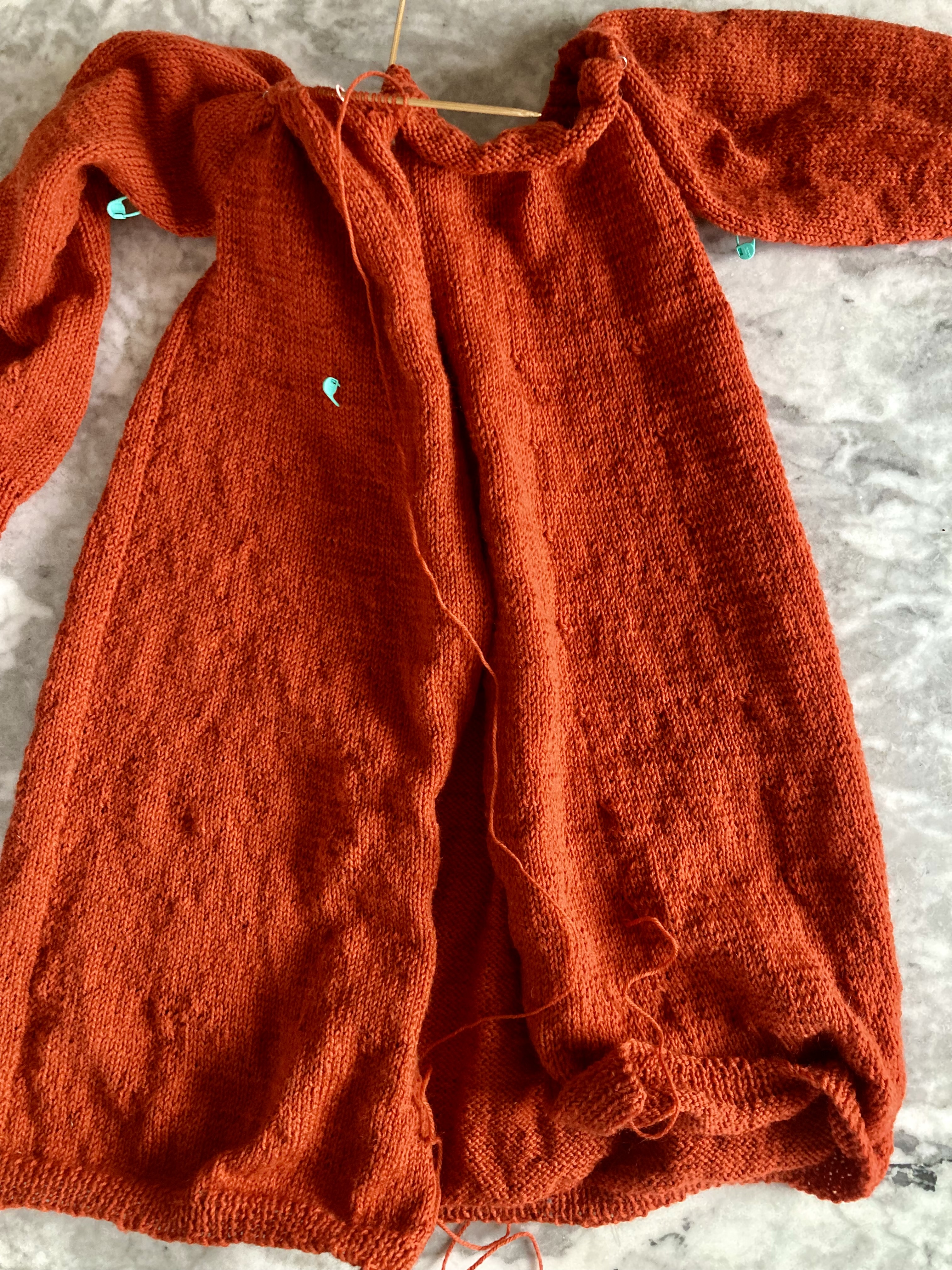
The compound-raglan, V-neck yoke was not difficult to knit, but it very complicated to “translate” into all-in-one-piece instructions, since the pattern instructions are for separate pieces knitted flat and sewn together. Sorting out which pieces decreased every 4 rows and which every alternate row when was a real headache and when I got close to the end, I was sure I had made a mistake — the back and fronts were finished, but I was still supposed to knit another 14 rows on the sleeves. Huh? I realised the sleeves were a sort of raglan-saddle hybrid that allowed the cable to continue up into the neckline. They make a “flap” at the top, of which the sides are sewn onto the front and back pieces. It’s not very obvious in the pattern photo, but you can see it here after everything was cast off and before it was sewn together.

It all worked out fine in terms of shaping, but I don’t like saddle sleeves! Especially not with cables. They make my square shoulders look even more square and block-y and add bulk where I want a garment to be streamlined.

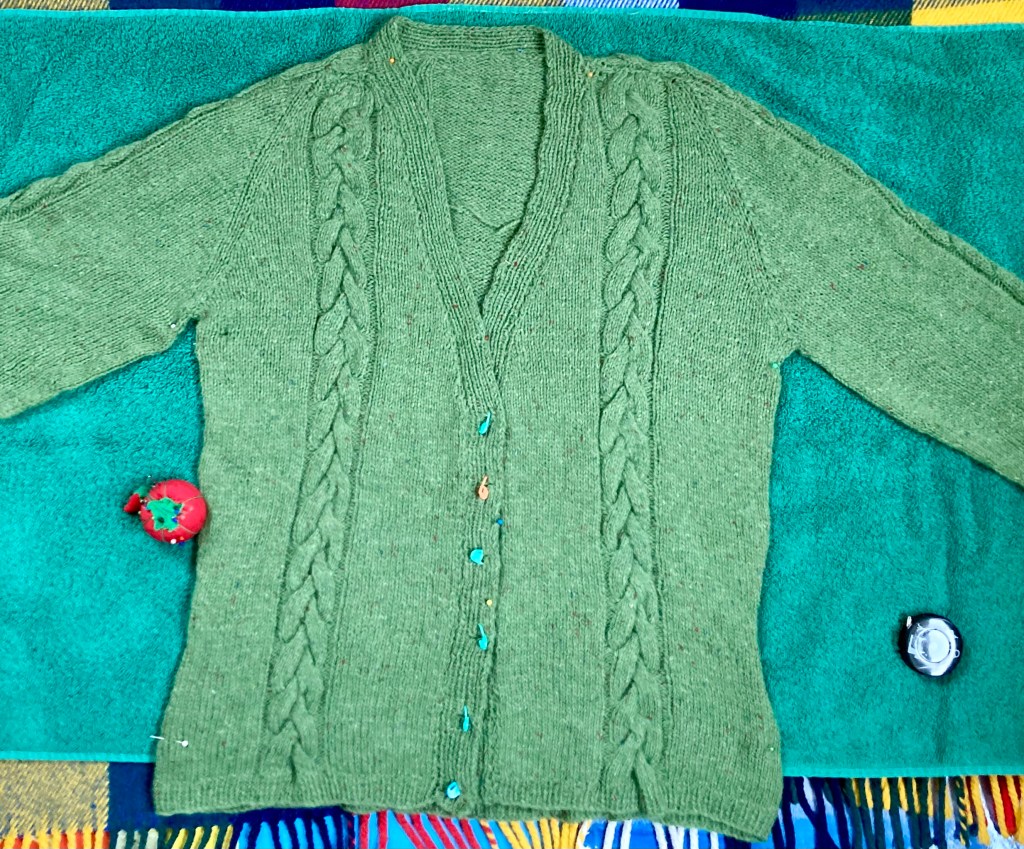
It looked fine anyway, so I made the button bands, blocked it (hand-wash, dry flat — the wool is not superwash) and…. surprise! The wool, which was somewhat stiff and “too tightly” knit on 3.5 mm needles, softened and spread out much more than I expected (again, not superwash). It became wonderfully soft, but just a bit too big in some crucial areas. Namely, the sleeves became too long and a bit wide, the saddle shoulders a bit bulky, and the button bands somewhat under-stretched.

Overall, I am happy with the cardigan. The colour is beautiful, I love the tweed flecks, and the yarn is soft and warm to the touch but doesn’t pill. I am considering washing it in the machine next time (wool wash or 30 degree gentle, of course) to see if it will shrink just a little bit. I will probably also add facing bands to the button bands to bring them into shape.

April 1968: Overview

Cables, zigzags, and dogs, oh my! April 1968 is going to be a fun month at Stitchcraft.

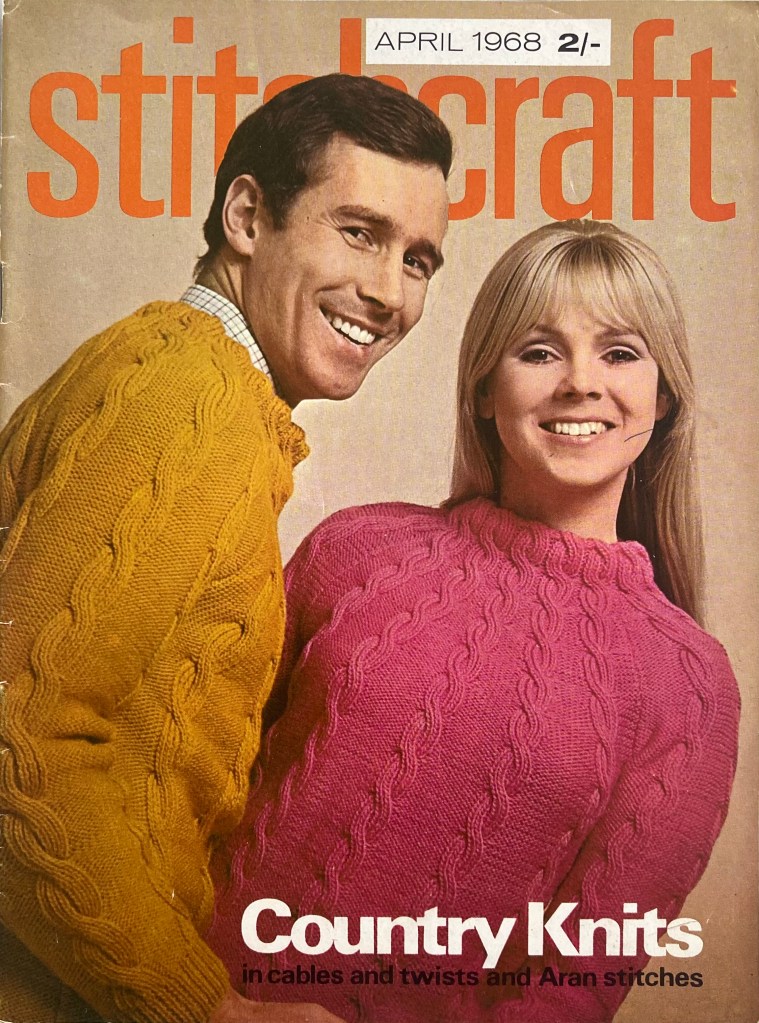
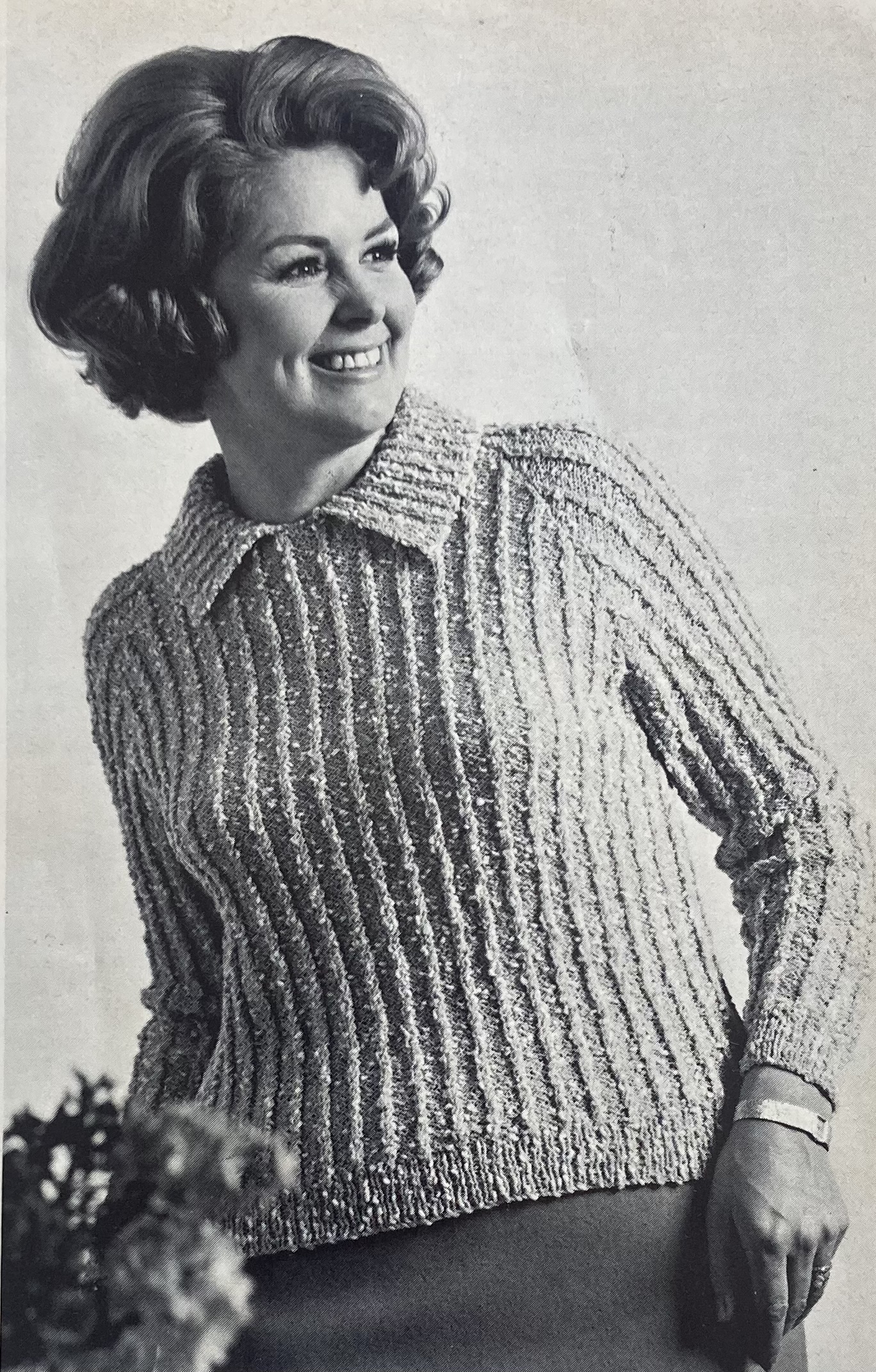
The “country knits” on the cover are in just two sizes, “for her” (34-36 inch bust) and “for him” (38-40 inch bust.) I imagine the style would look good on a larger woman as well. The raglan seams are sewn together after front, back and sleeves are knit separately. The cables continue onto the collar, which folds inward.There’s also a “travel coat” with mock-cable twists in “Super-Sonic” style (multiple strands of bulky wool knit together on maxi-size 3/4-inch needles) and a smooth and elegant cardigan with just a few cables on front and sleeves.

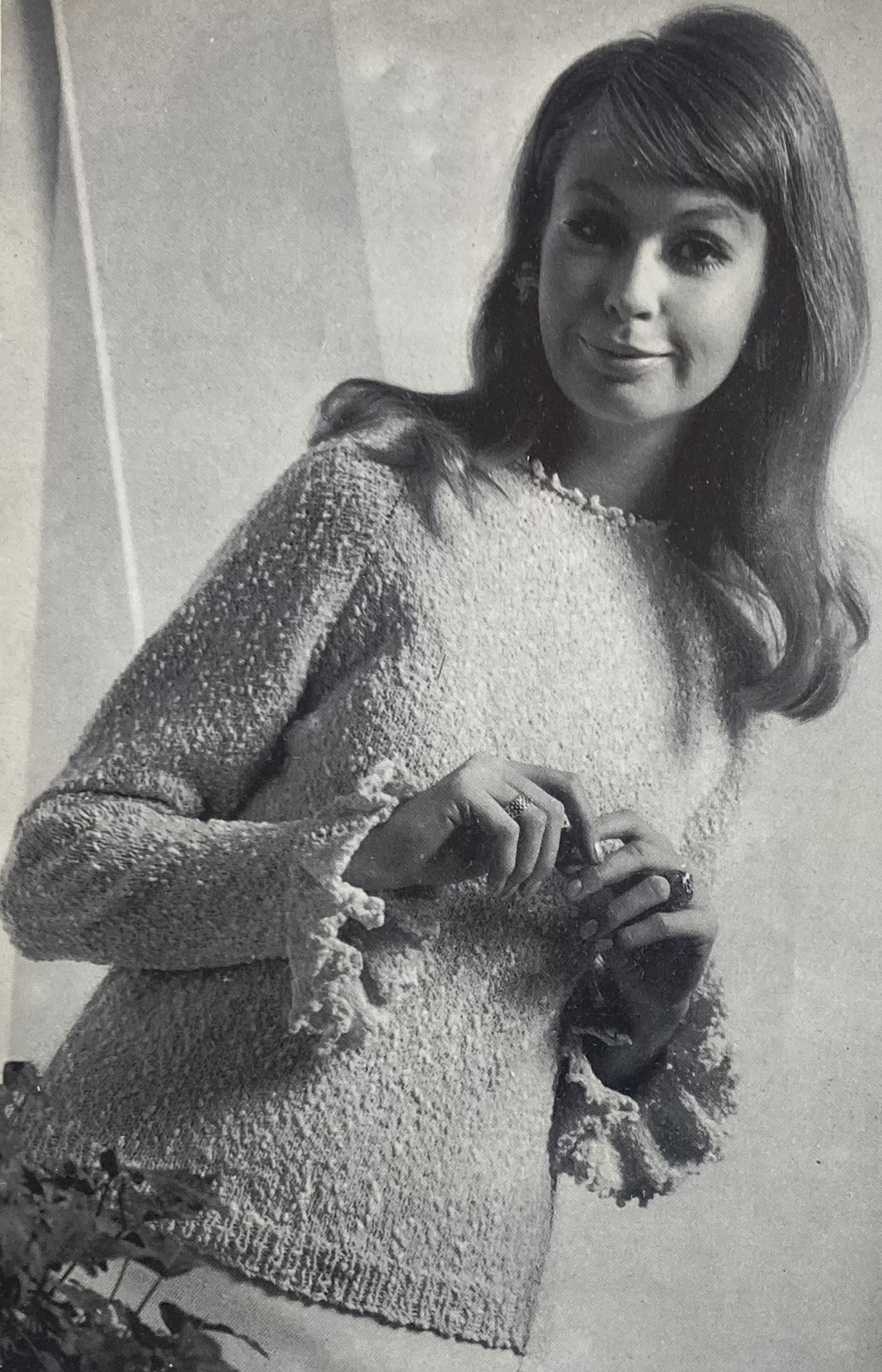
Texture without cables can be achieved using Patons nubbly “Four Seasons” yarn for a tweedy dress (love that wig again), a plain jumper with frilly edgings, or a ribbed “classic blouse in larger sizes”.

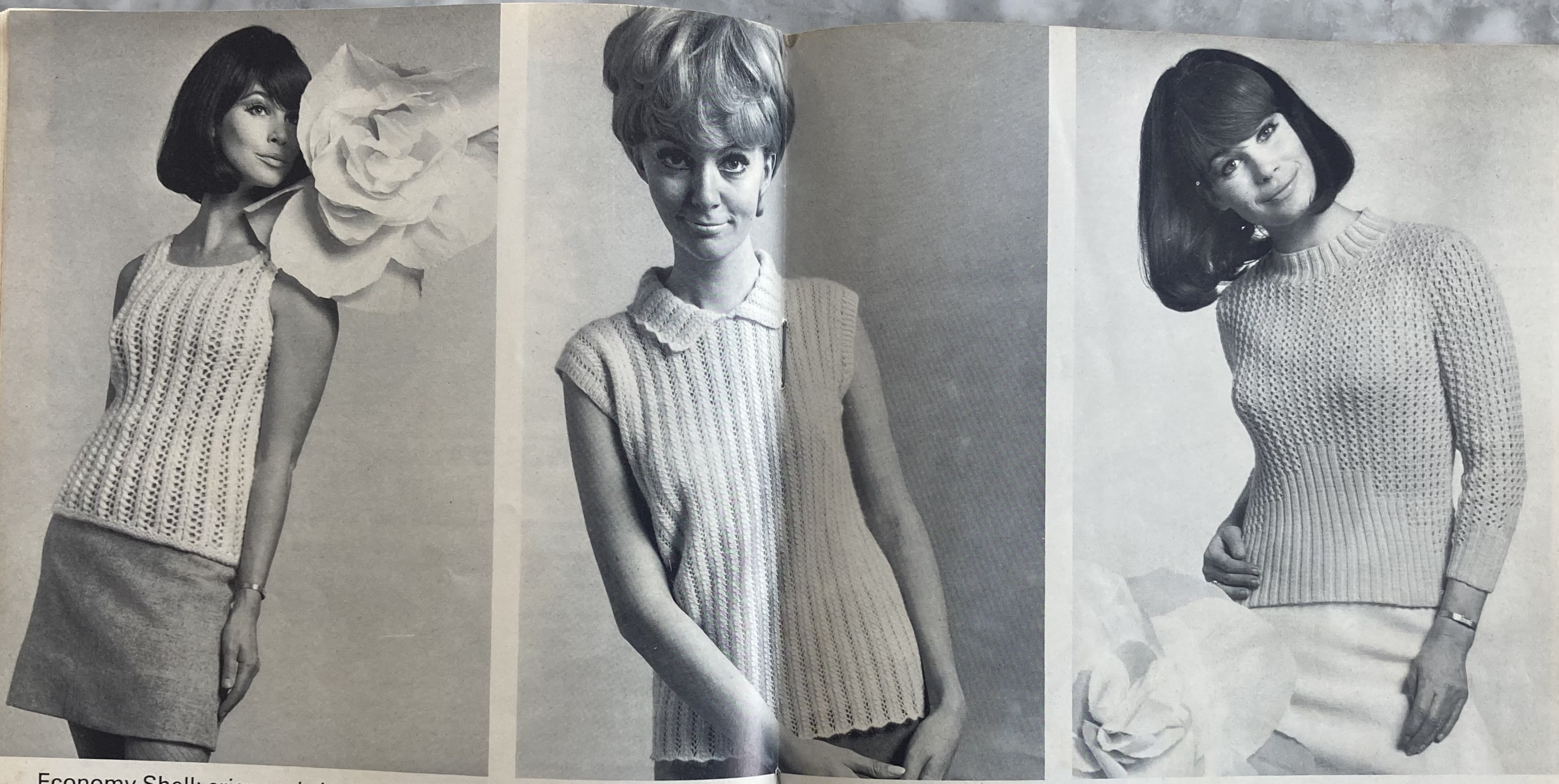
The three summer tops in the centrefold photo also use textured rib patterns for a cable-like effect. All three are in different weights: the sleeveless top on the left looks lightweight but is make in bulky “Big Ben” wool; the fluffy blouse in the middle is made in soft, fine angora-wool “Princess”, and the “practical wash-tub summer sweater” on the right is made in Bri-Nylon “Brilliante”.

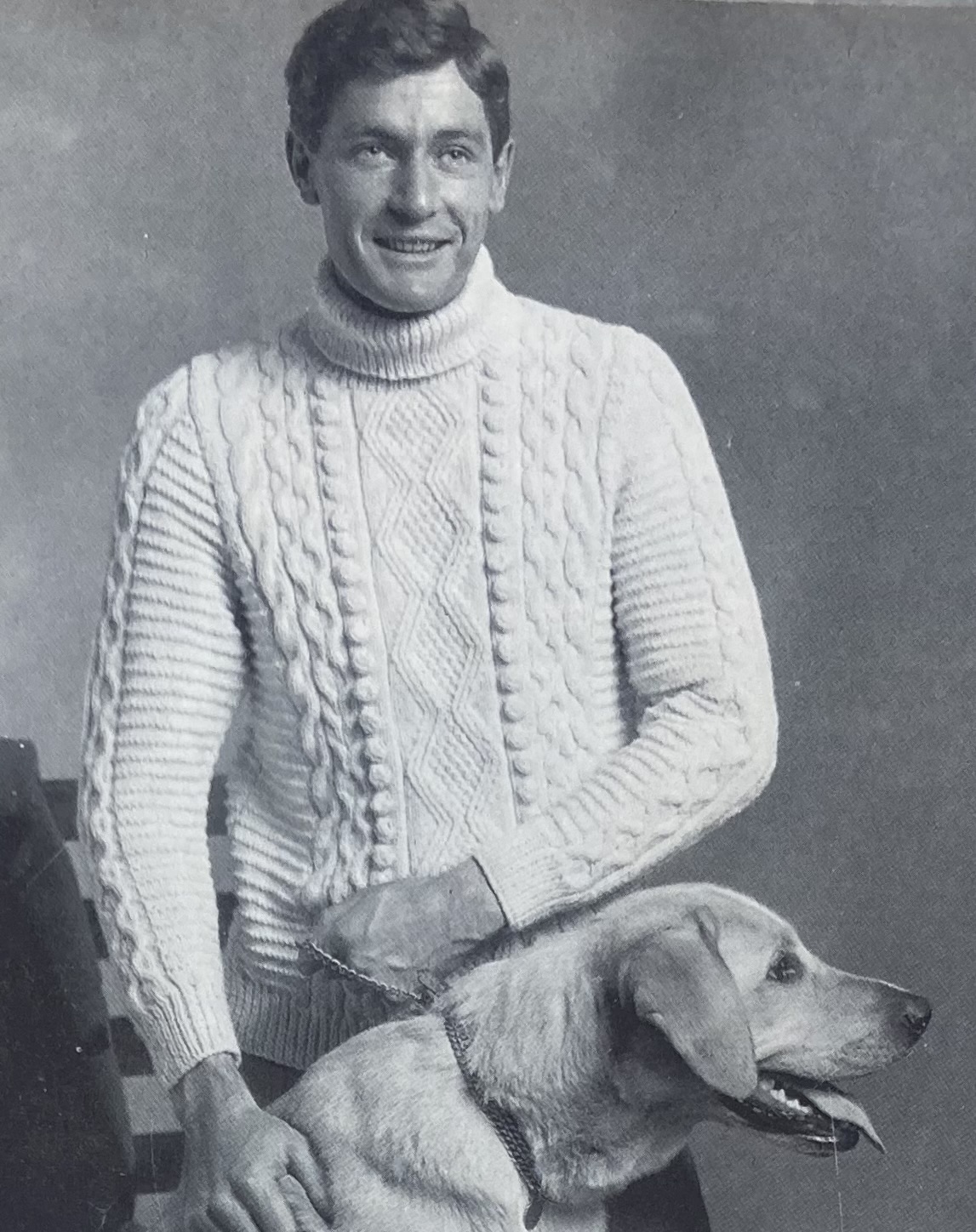
There are some nice cable and zigzag designs for men and children as well: Besides the cover pullover, there’s a traditional Aran-patterned sweater with cables and zigzags, a textured cardigan-and-skirt set for a little girl, and a boys’ jumper with a similar zigzag pattern to the men’s Aran sweater.

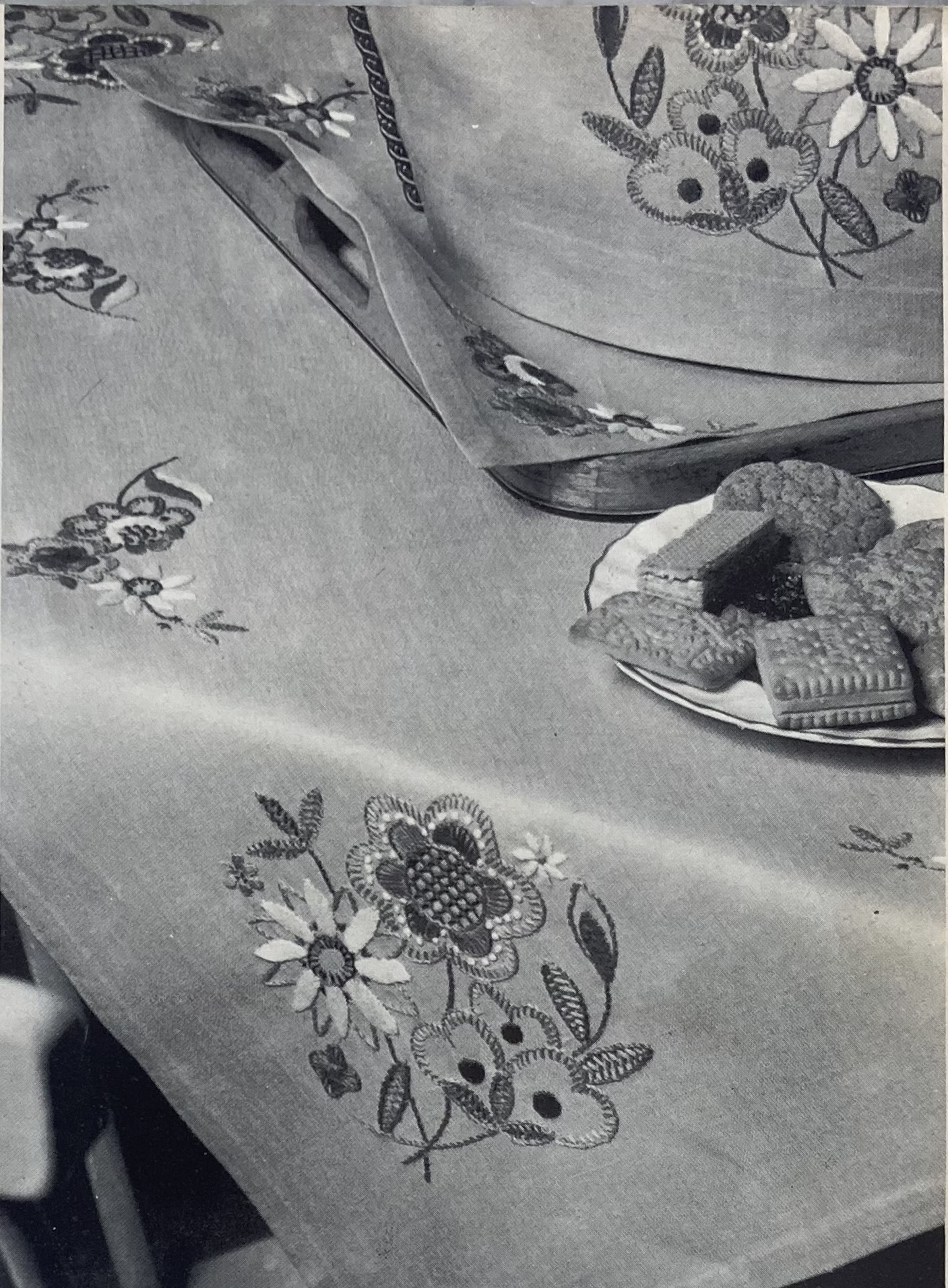
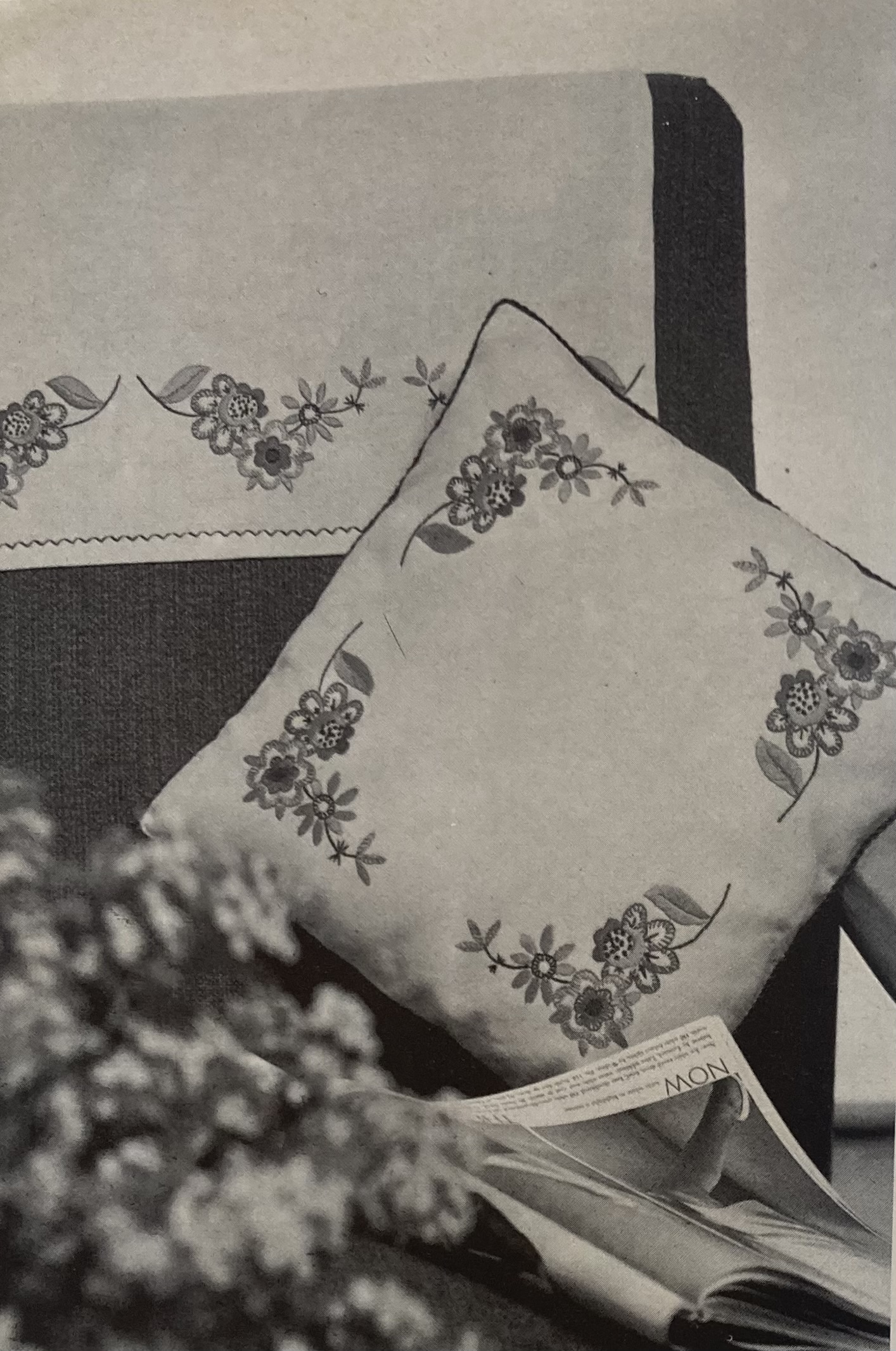
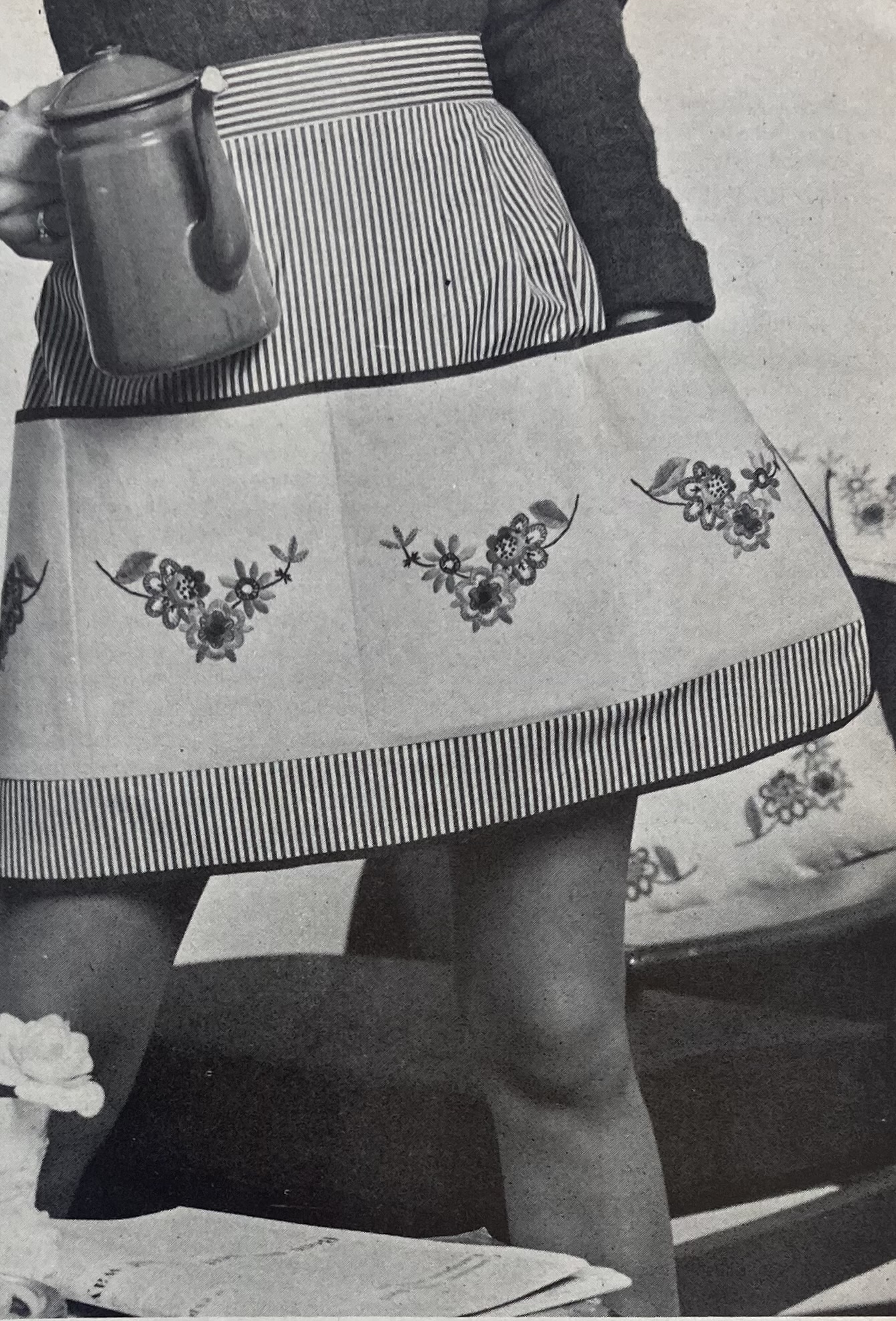
With so many great knitting projects, it’s no surprise that the homewares are mostly basic. There’s a pretty hedgerow-flower embroidery motif that can dress up a cosy, a tablecloth, a cushion, and/or an apron. The apron has a wide horizontal strip of embroidered fabric that’s divided by seams to make multiple pockets — very practical.

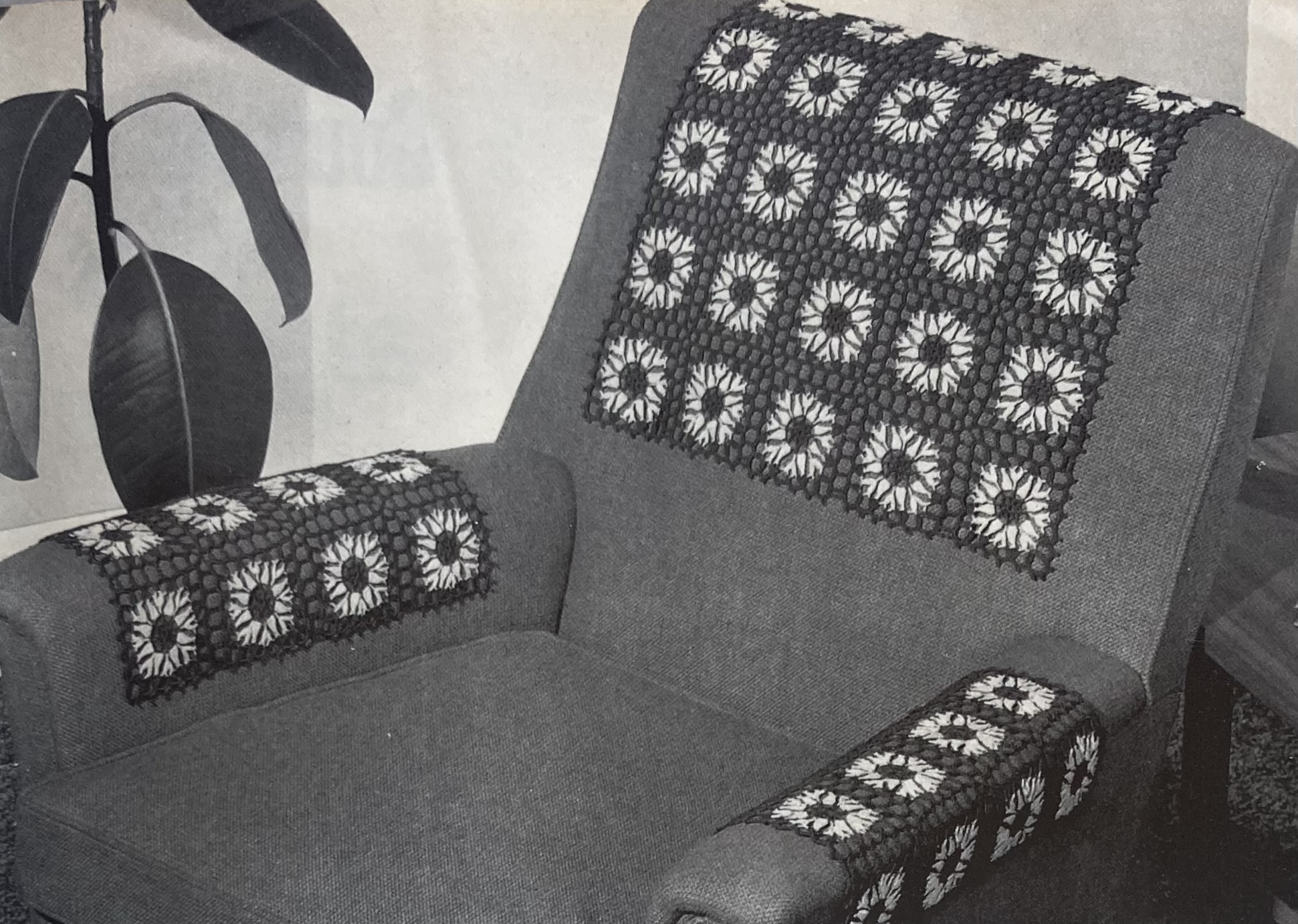
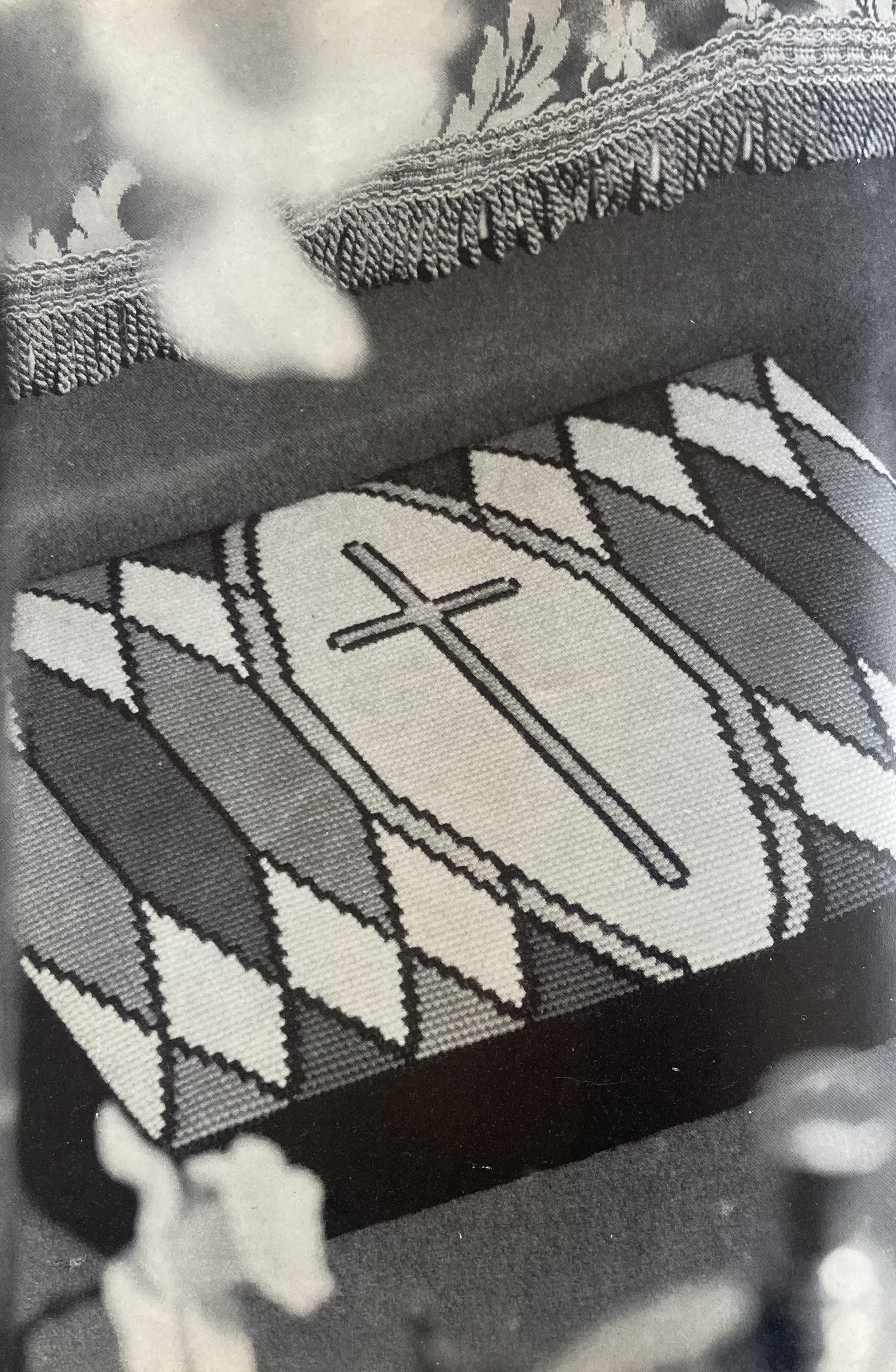
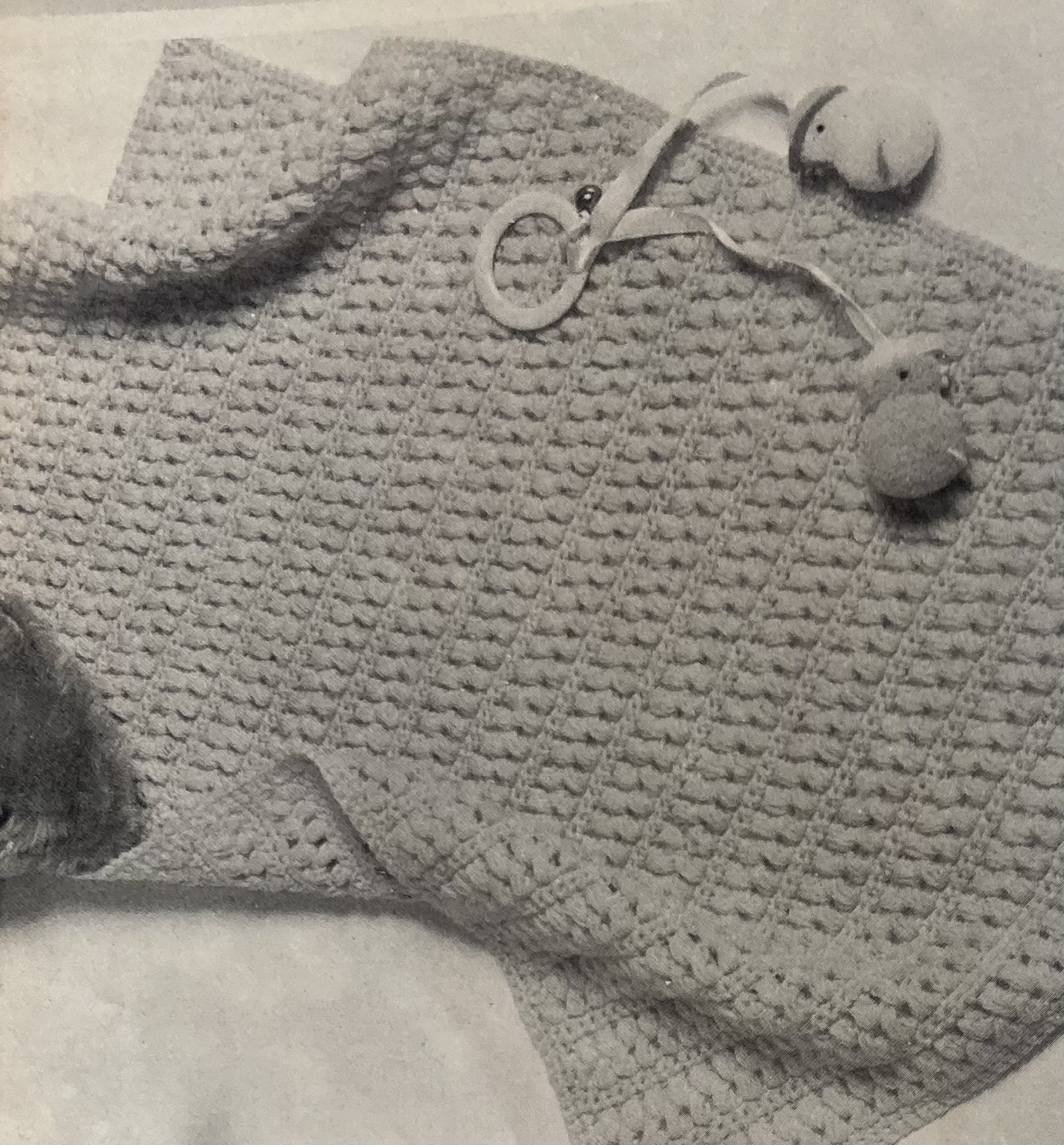
You can also crochet a quick baby blanket to use as a cover in the cot or pram, or a set of chair protectors with a flowery lace motif. Churchgoers can make a tapestry kneeler in “stained glass” effect for Easter, provided they work fast — Easter Sunday 1968 was on April 14th. The colours — two shades of blue, lemon yellow, red and gold — were probably quite pretty.

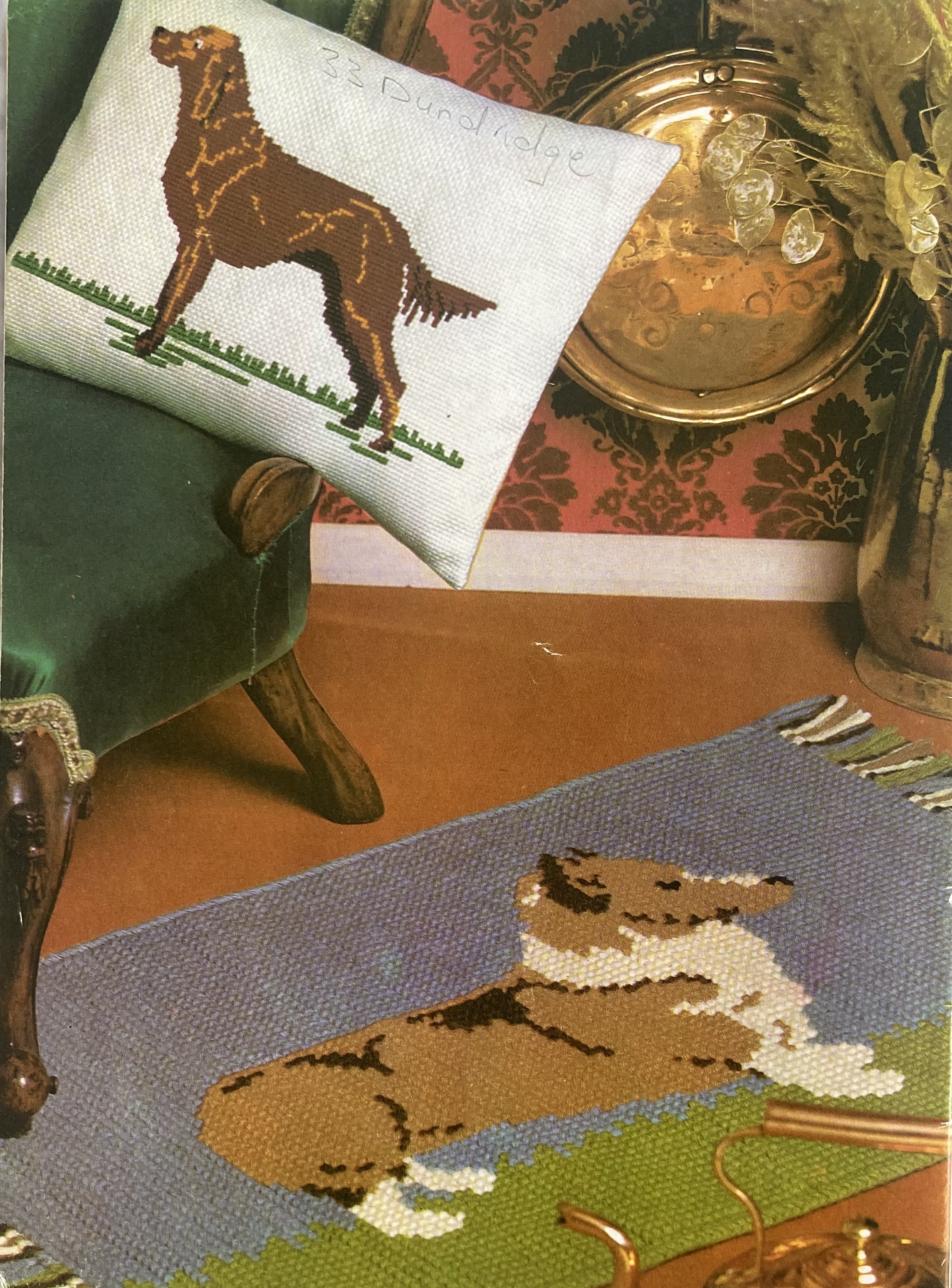
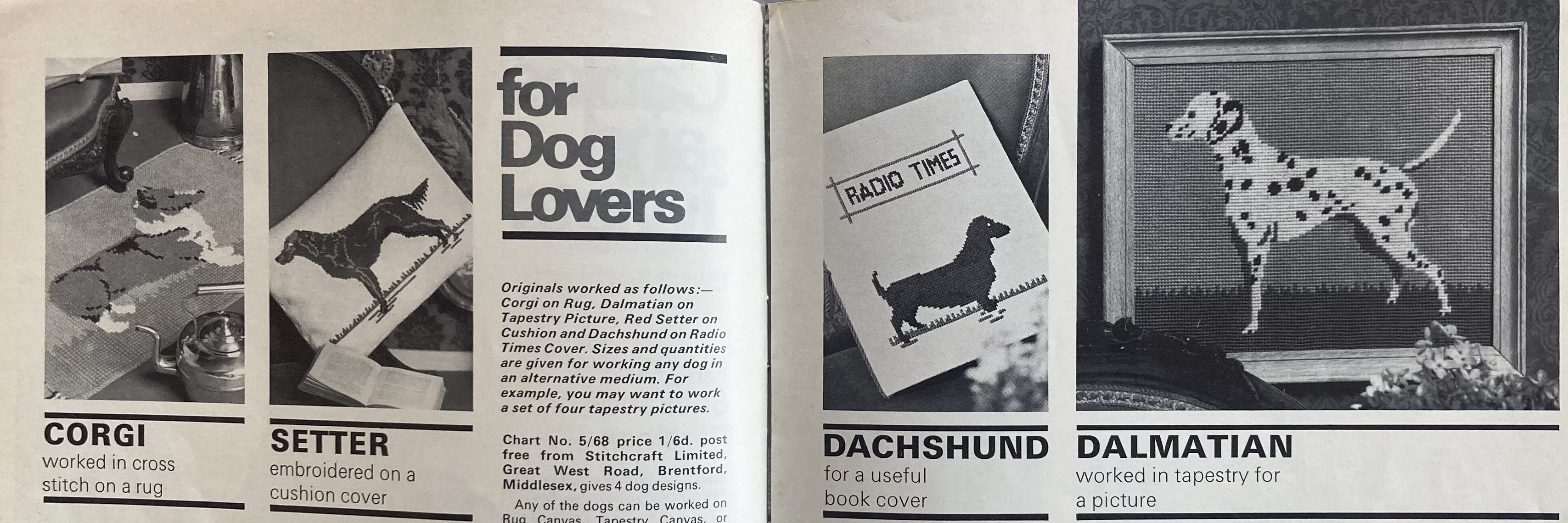
Plus, dogs! Besides the real live dog posing in the photos with the male model for that “country” effect, there are four projects for dog lovers: a cross-stitch rug with a corgi on it, a setter embroidered on a cushion cover, a cross-stitch dachshund for a book or “Radio Times” cover, or a tapestry dalmatian to hang on your wall. All of the pattern were included on one transfer, and all could be adapted to any medium (rug, tapestry or cross-stitch on Bincarette), so dog fans could go wild decorating their country homes.

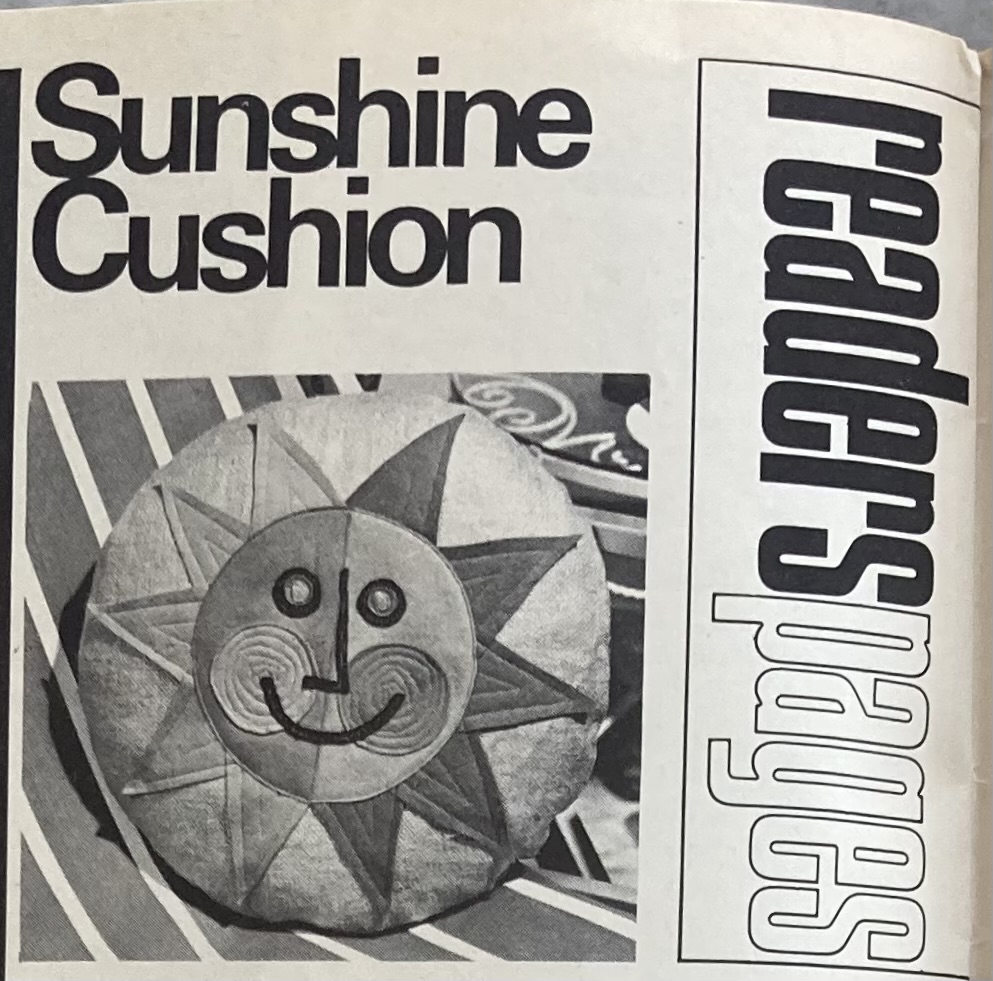
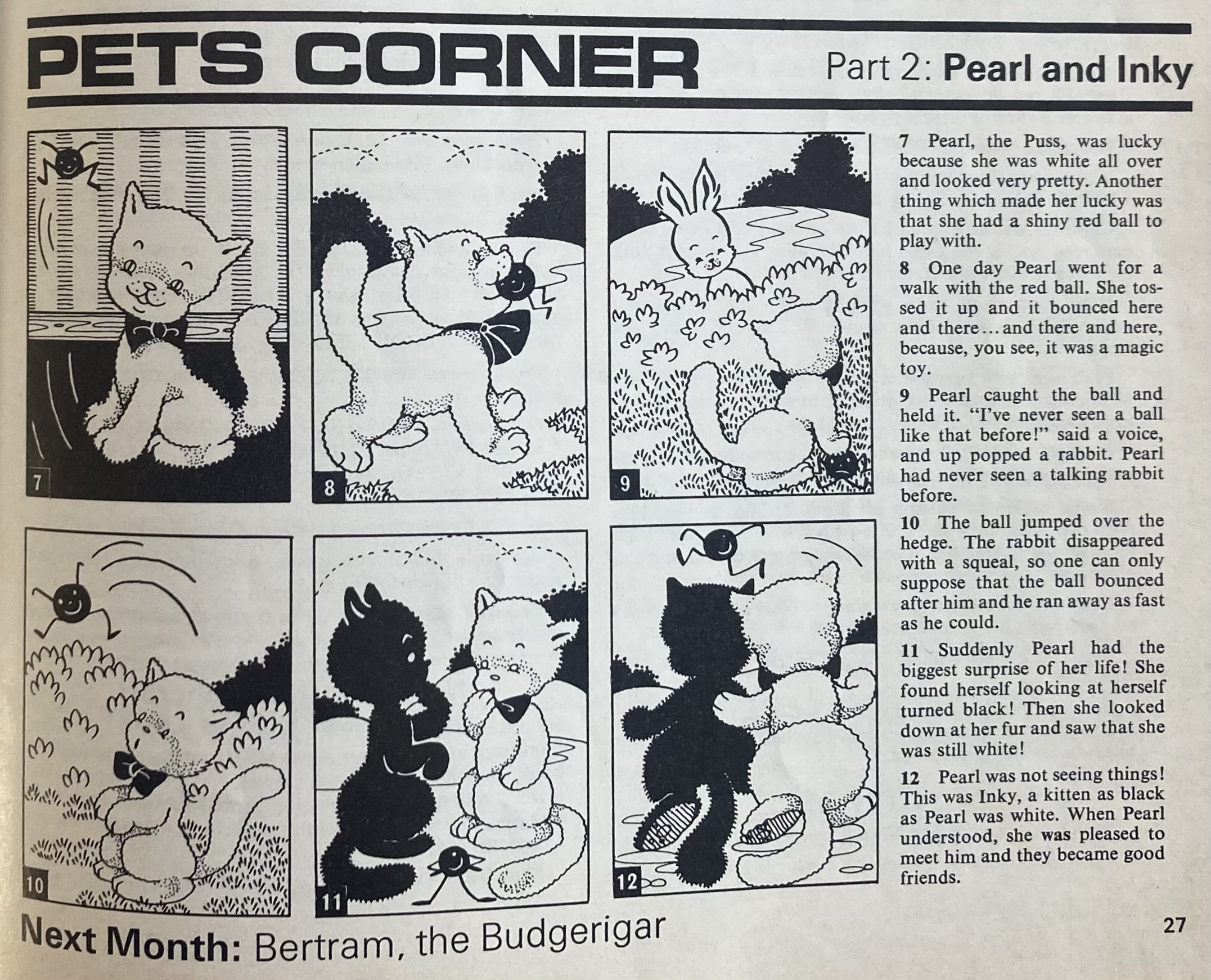
The Readers Pages feature a reprint of the “Sunshine Cushion” from June 1966, which I made in July 2024. It’s a great pattern and deserved to be reprinted! In the children’s comic, white cat Pearl and black cat Inky meet and become friends.

That’s all for this issue! I like the cover cables and the Princess top, but I’m working on other projects that I would like to finish, so I’ll probably embroider the hedgerow flowers onto a vegetable bag. Or maybe unravel a half-finished cardigan that I’m unhappy with and turn it into the long-line cable cardigan.

March 1968: Bold and Bright

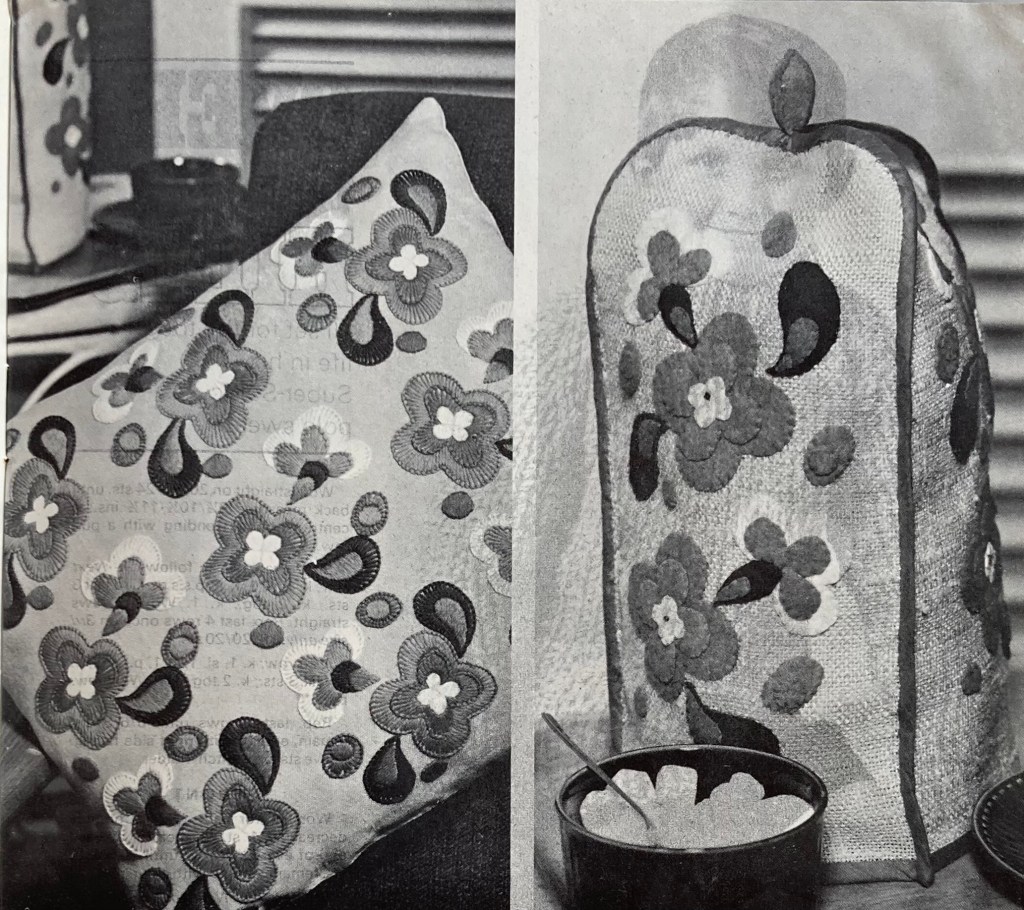
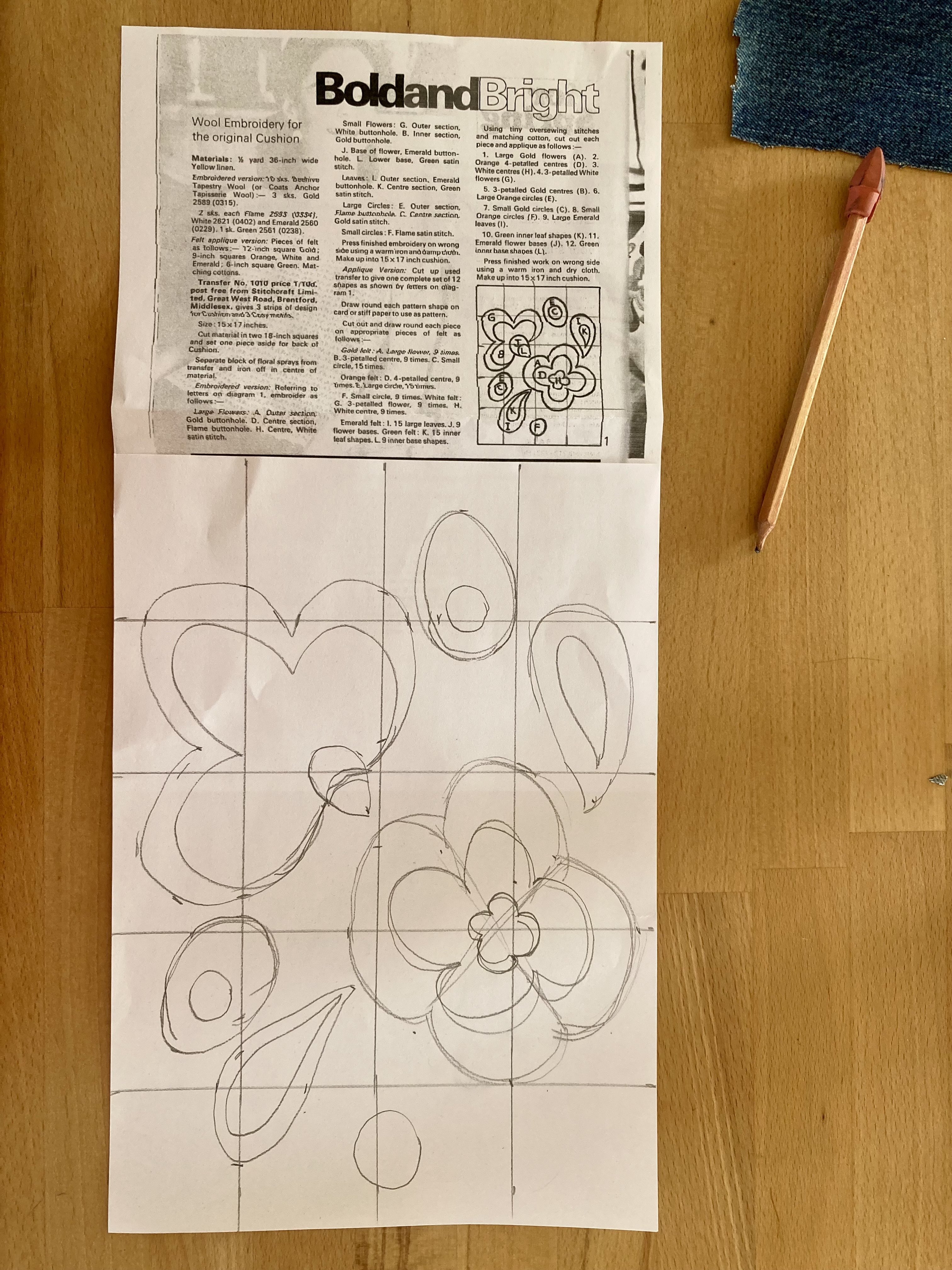
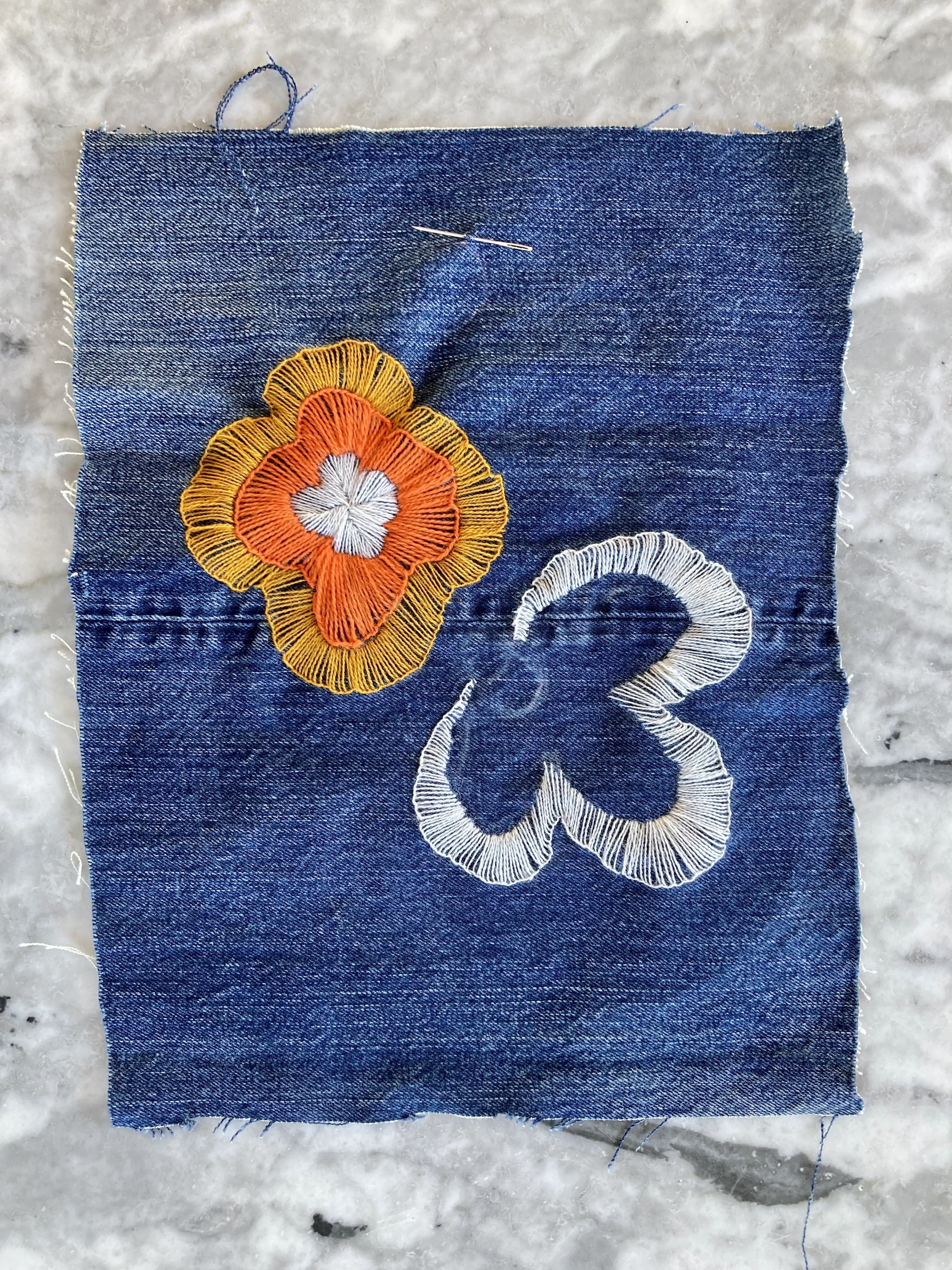
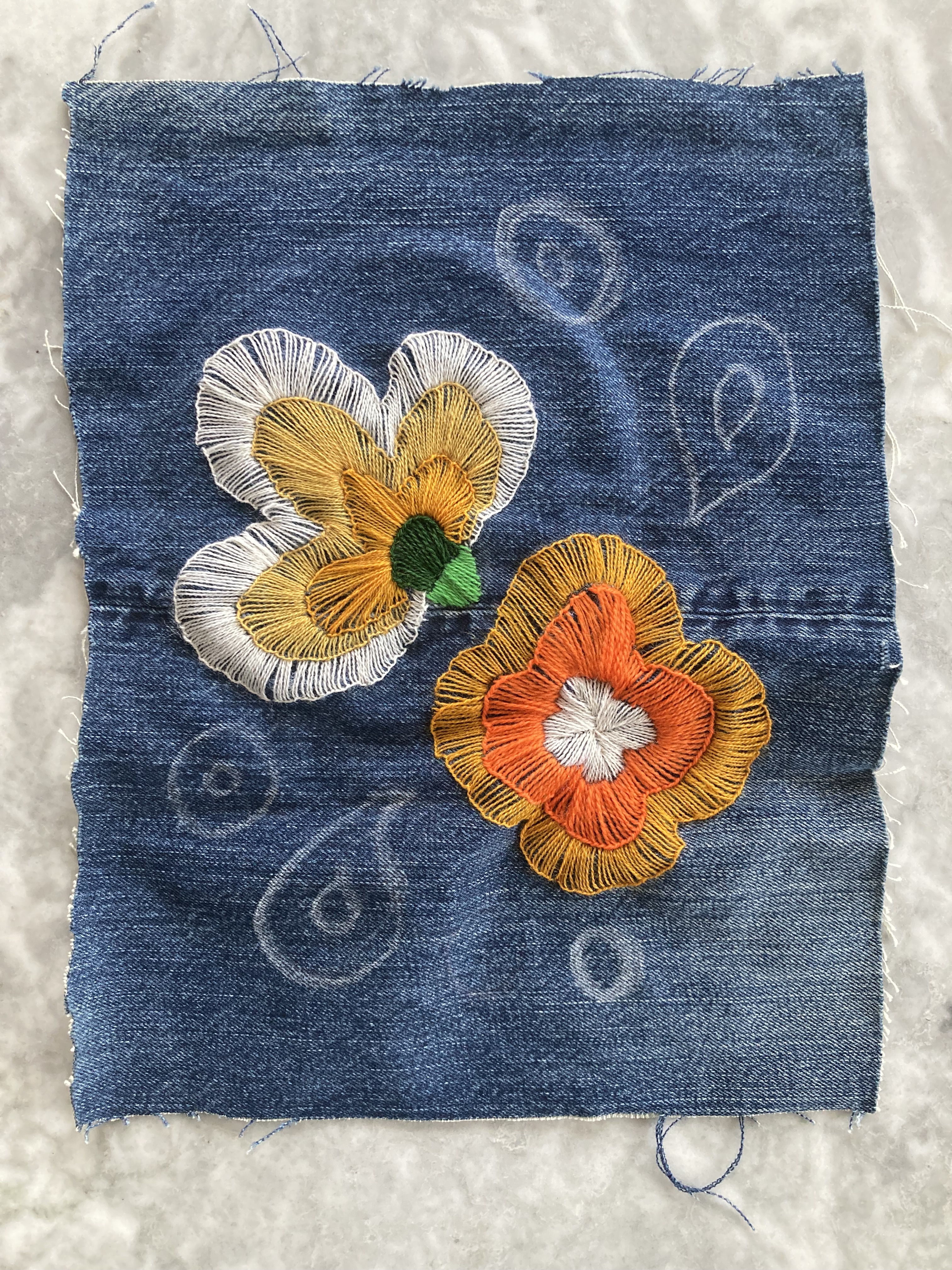
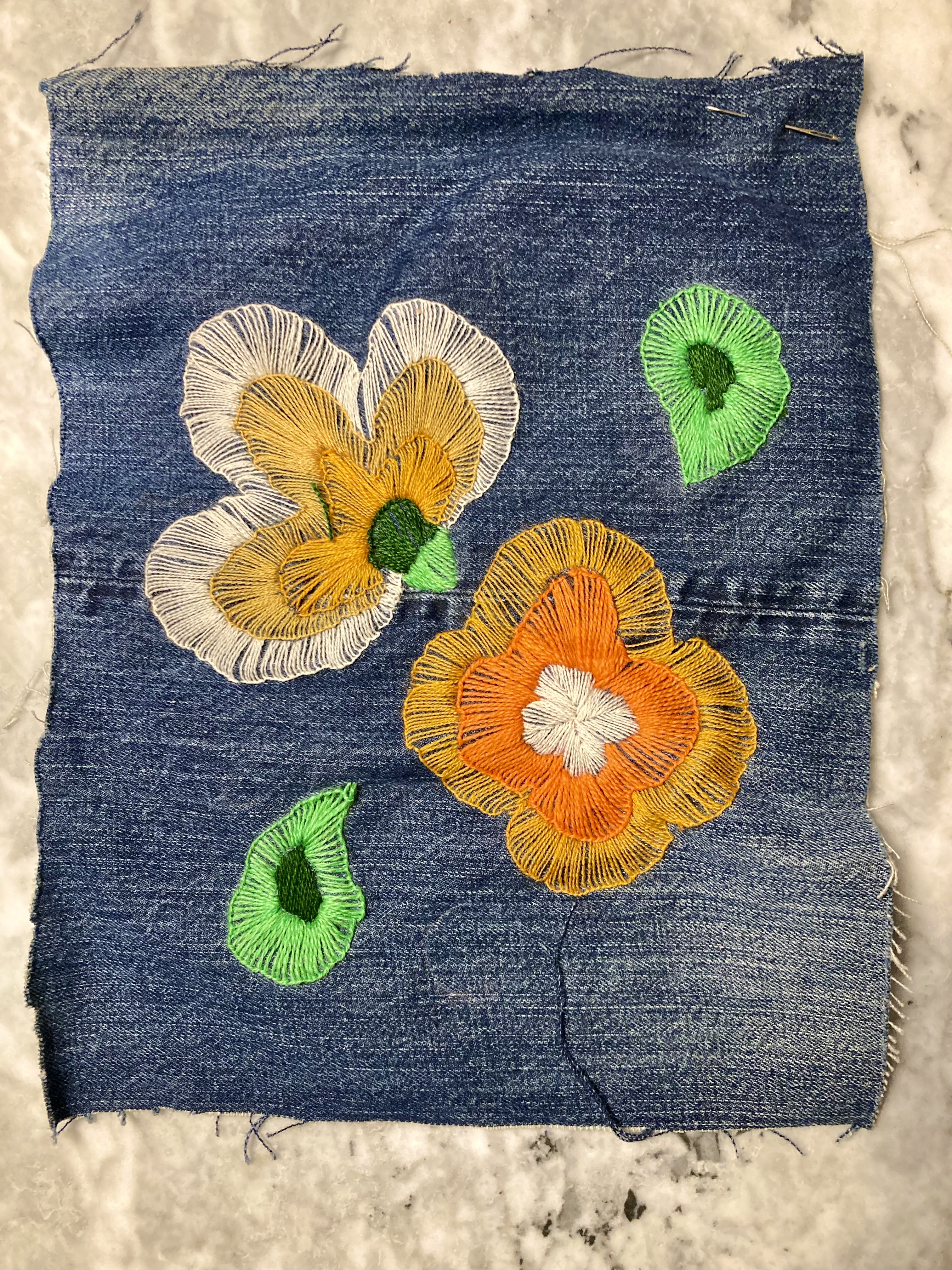
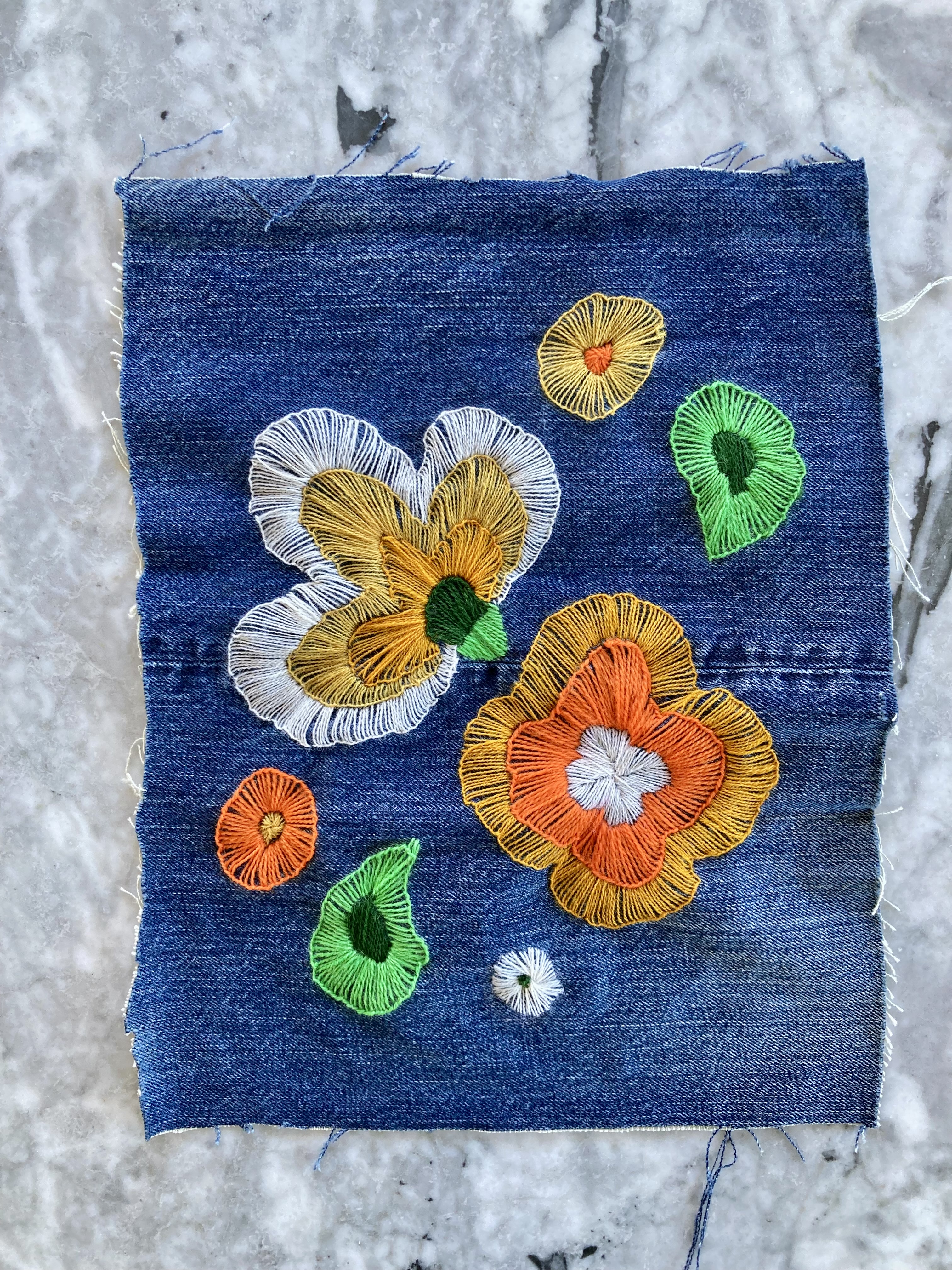
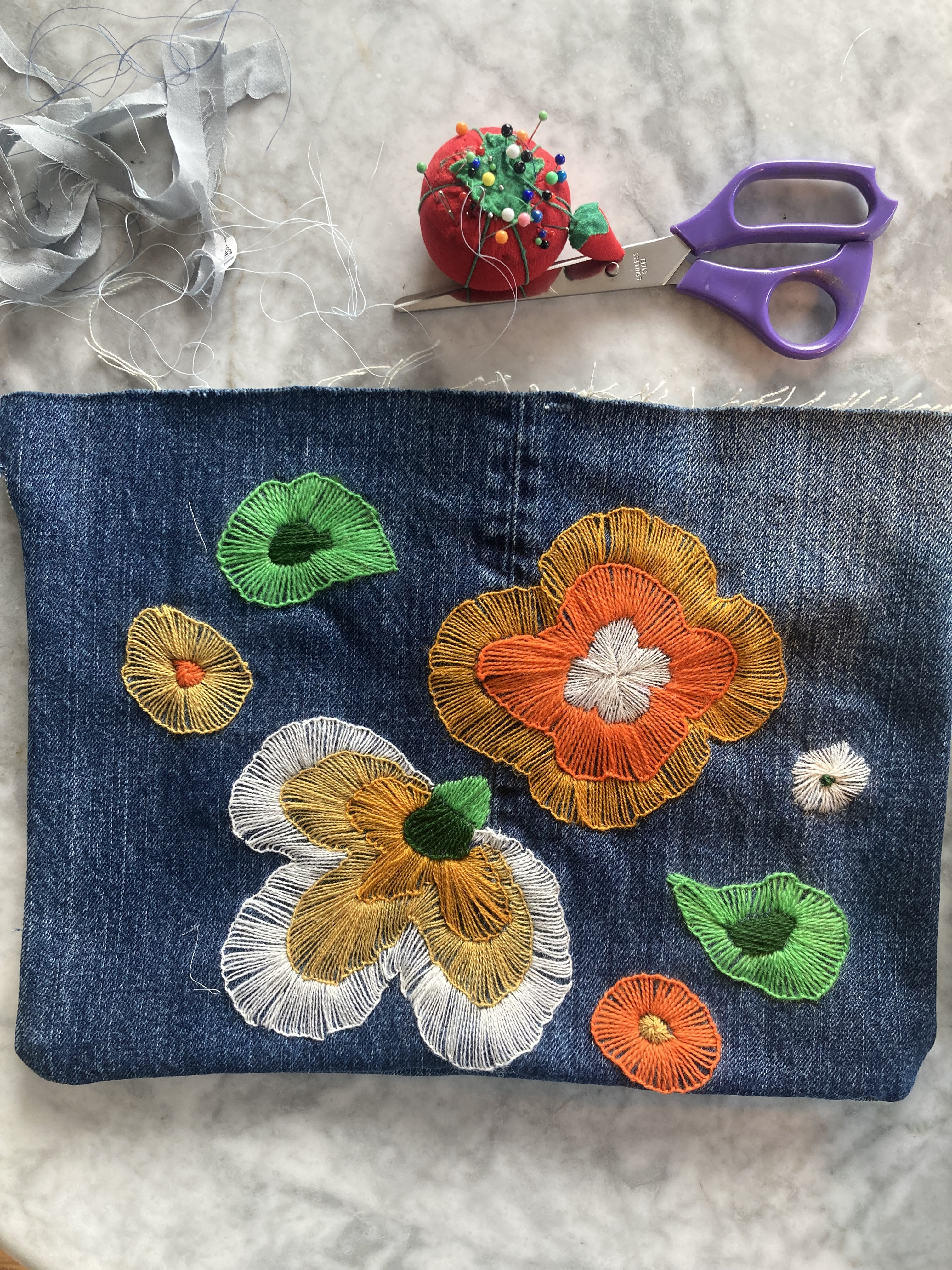
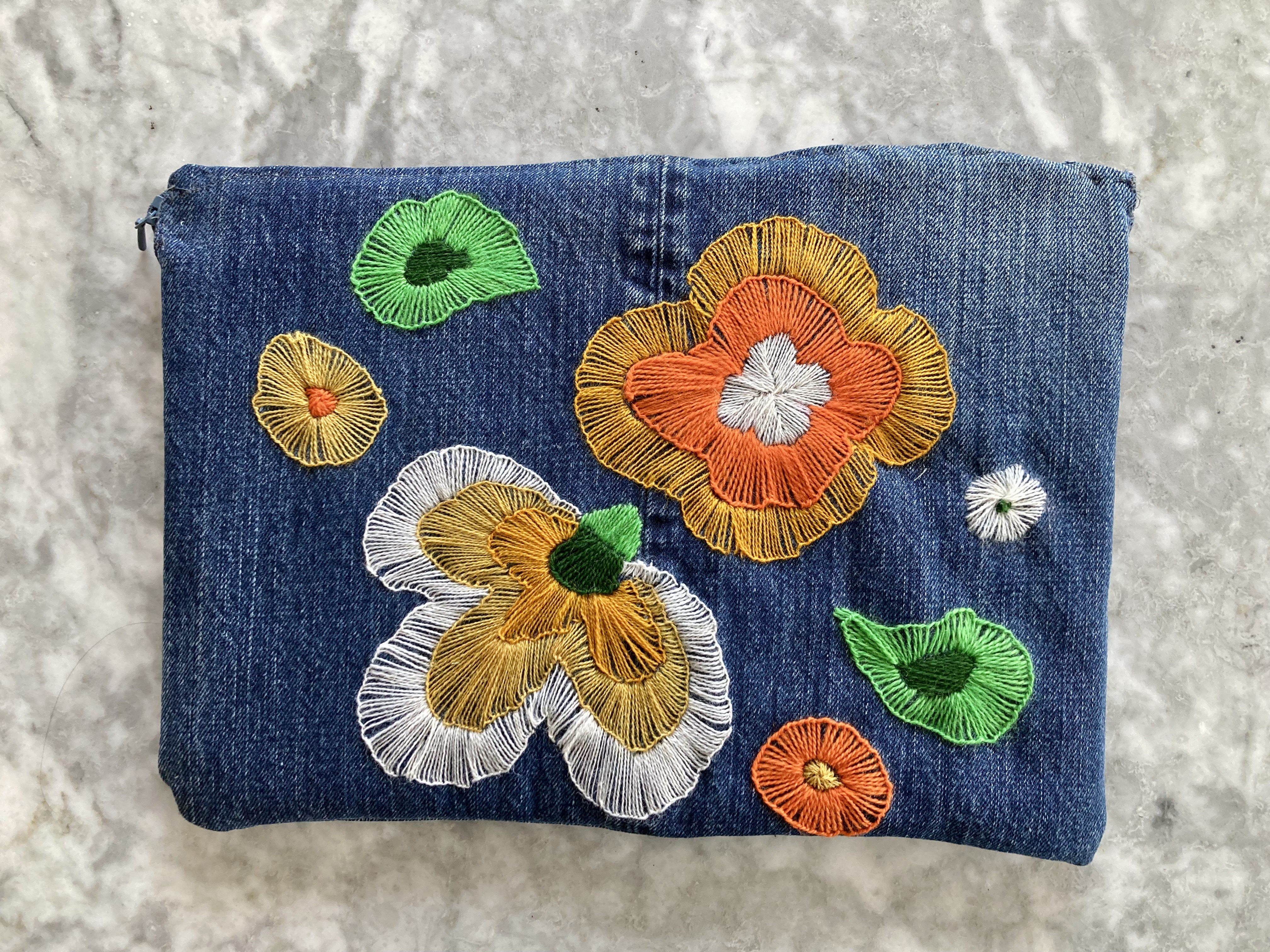
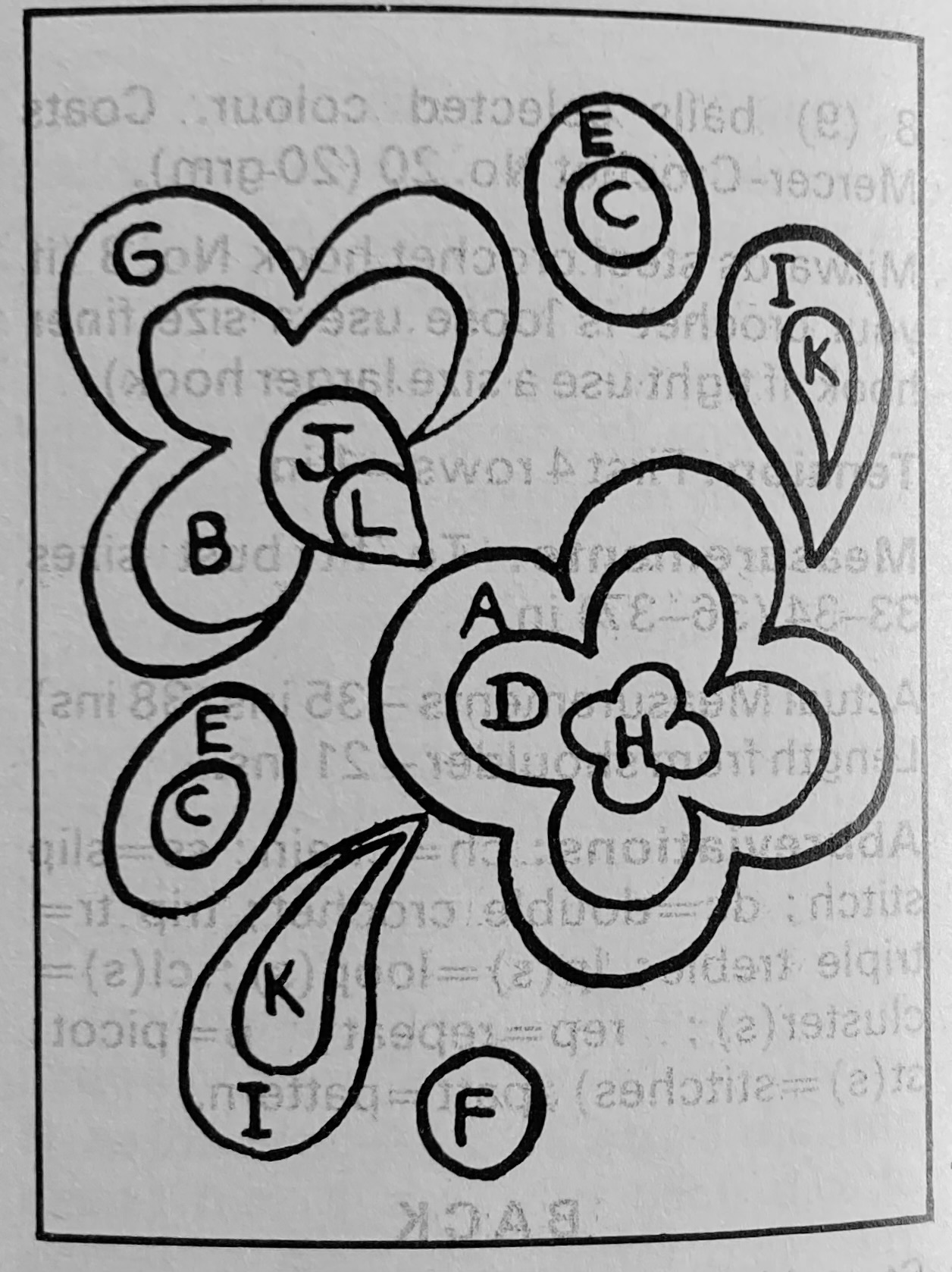
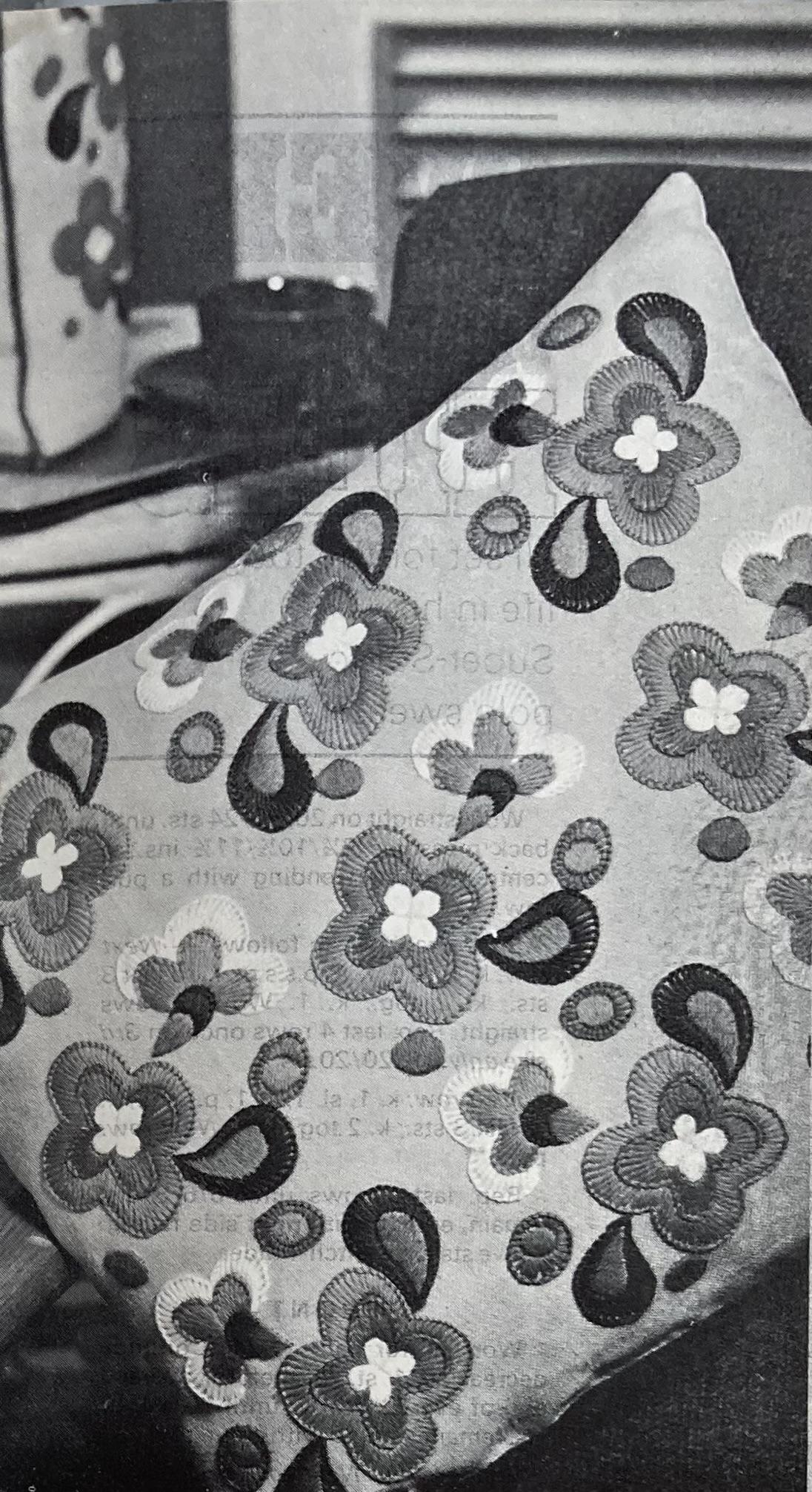
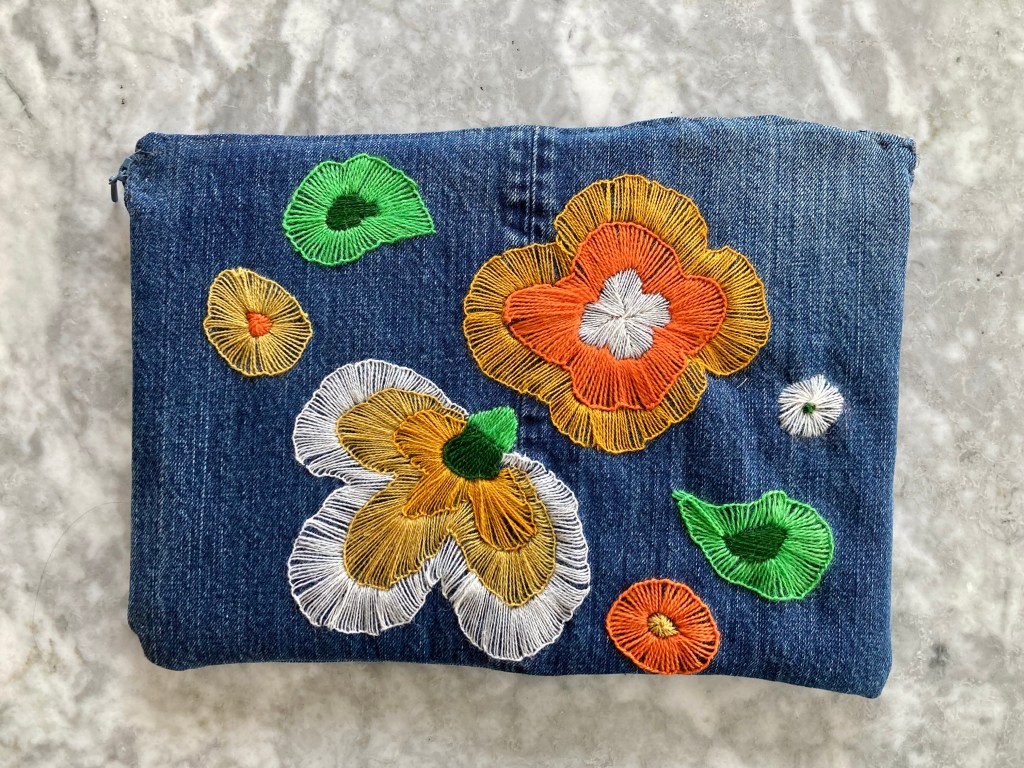
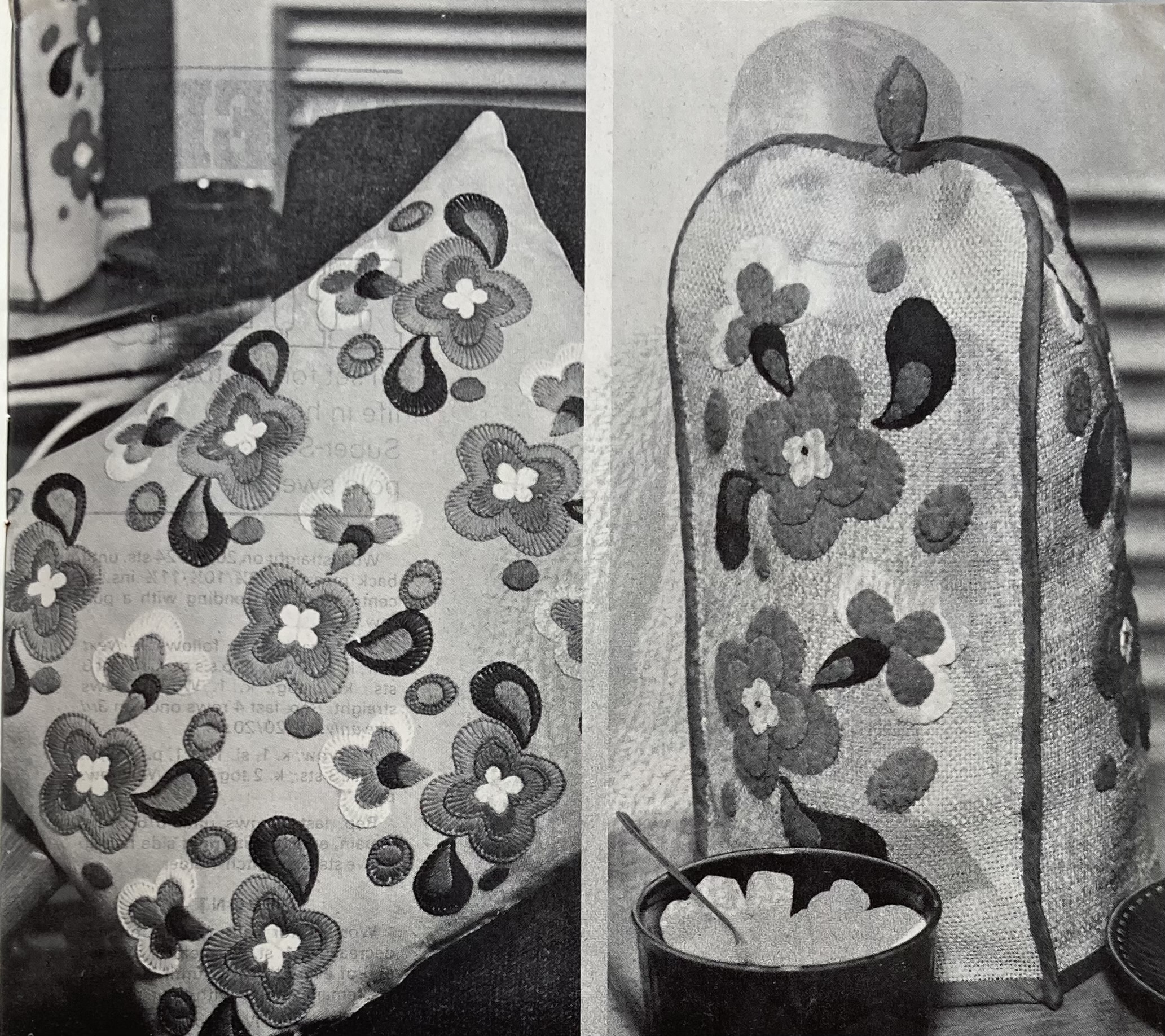
There were some nice knitting designs in the March 1968 issue of Stitchcraft as well as a very 1960s “bold and bright” embroidery/appliqué design. Captioned “The Modern Look for Embroidery”, it featured flower motifs in a sort of, I don’t know the word — cartoon style? The opposite of delicate and ornate. You could embroider them onto a cushion or appliqué them onto a coffee cosy. I have more cushions than sofas and do not need a coffee cosy, but a new laptop case would be useful and pretty.

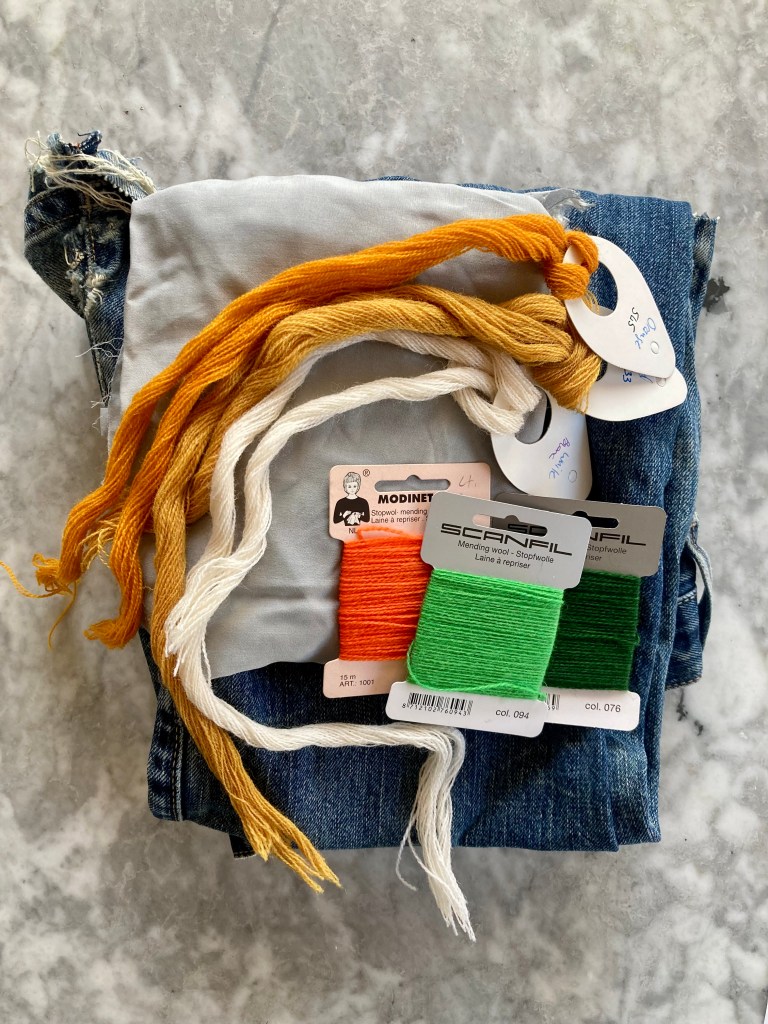
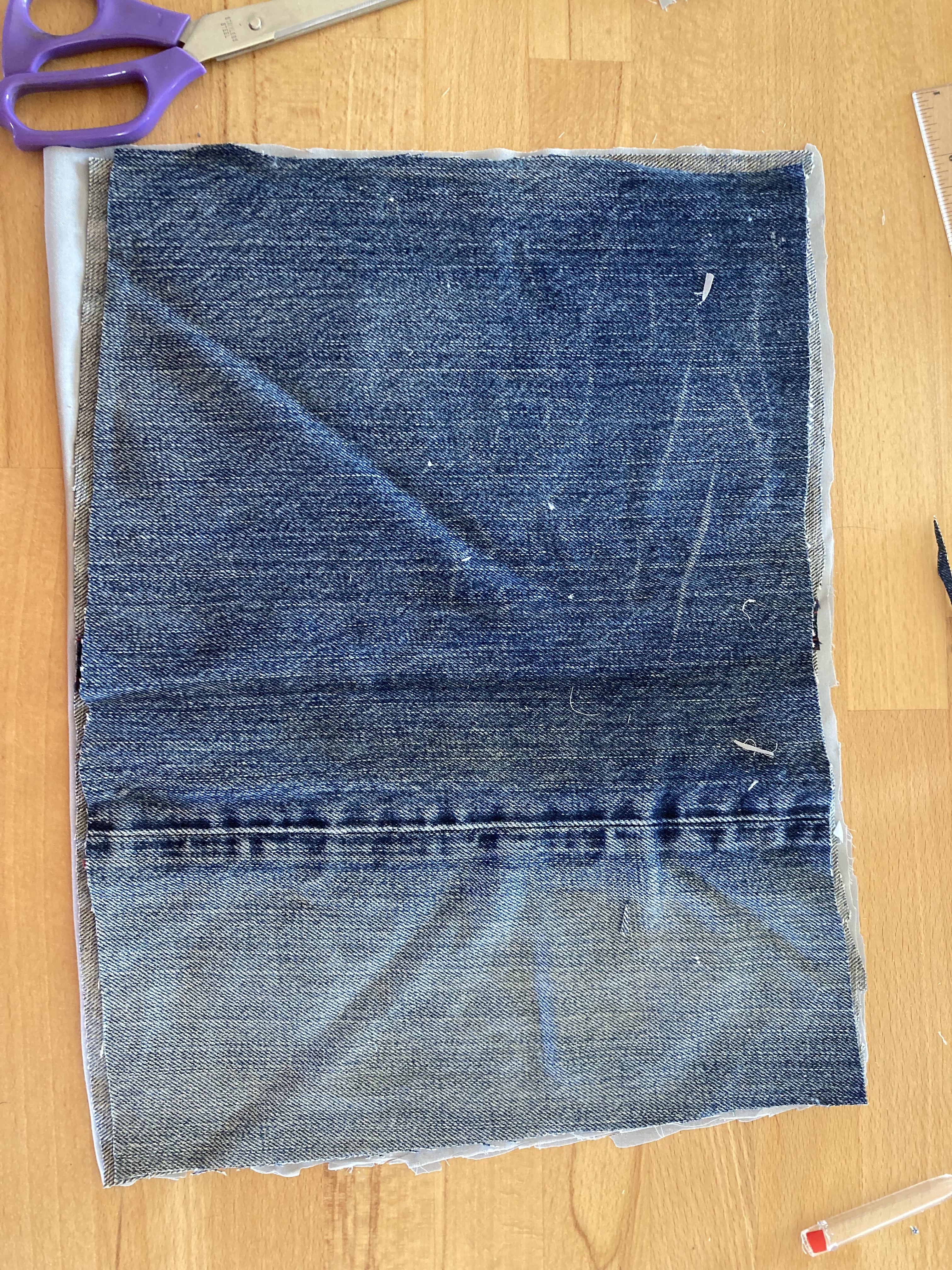
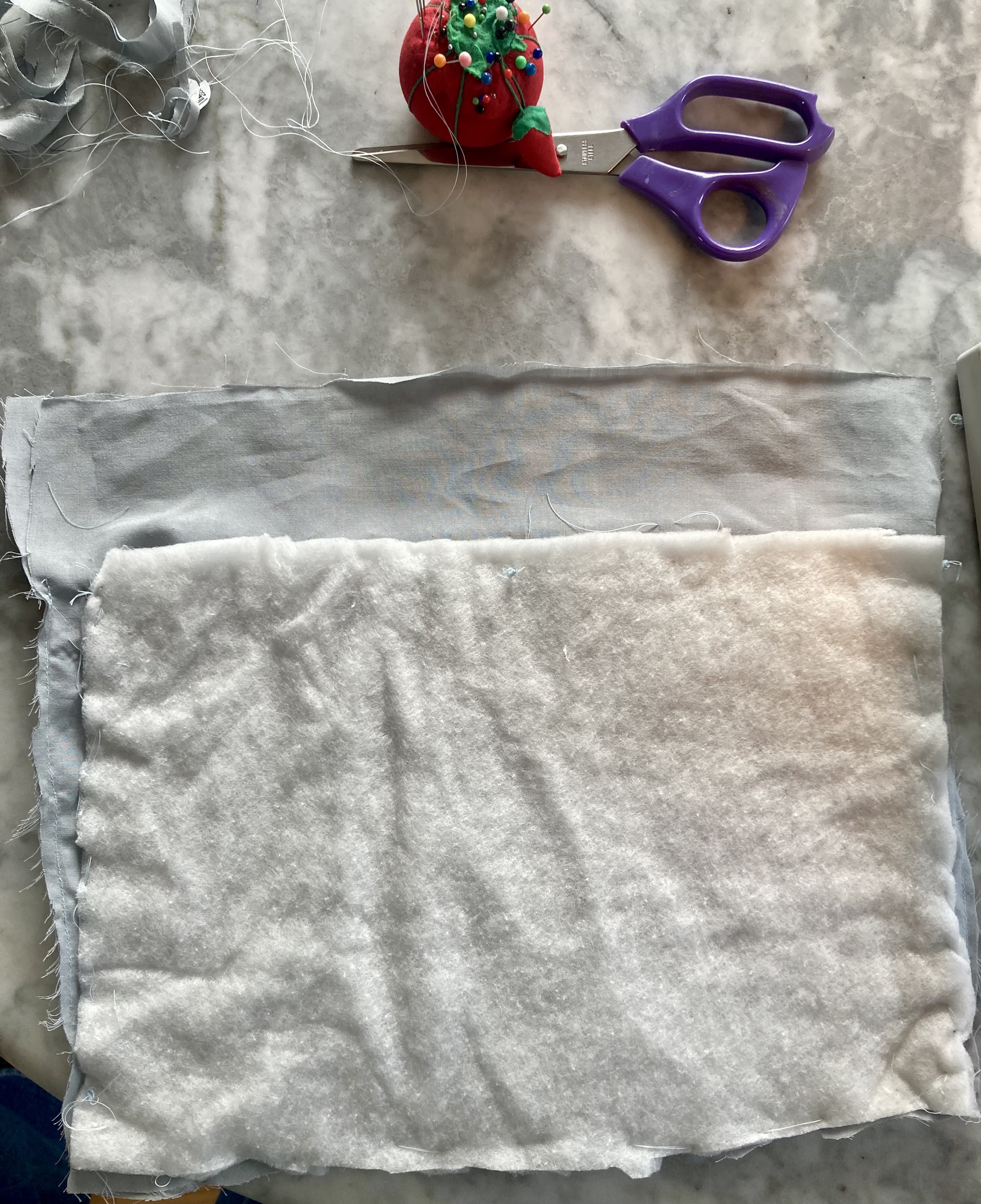
In keeping with the spirit of upcycling / using up scraps before buying new products, I decided to make the embroidered version, since I had some wool embroidery thread in the appropriate colours (gold, orange, white and two shades of green) left over from other projects. I had lots of appliqué felt too, but not the right colour scheme. Still had plenty of denim from an upcycled pair of jeans (original would have been yellow furnishing linen), lining fabric from the fabric drawer and quilt interlining for padding. All I needed to buy was a spool of thread and a zipper.

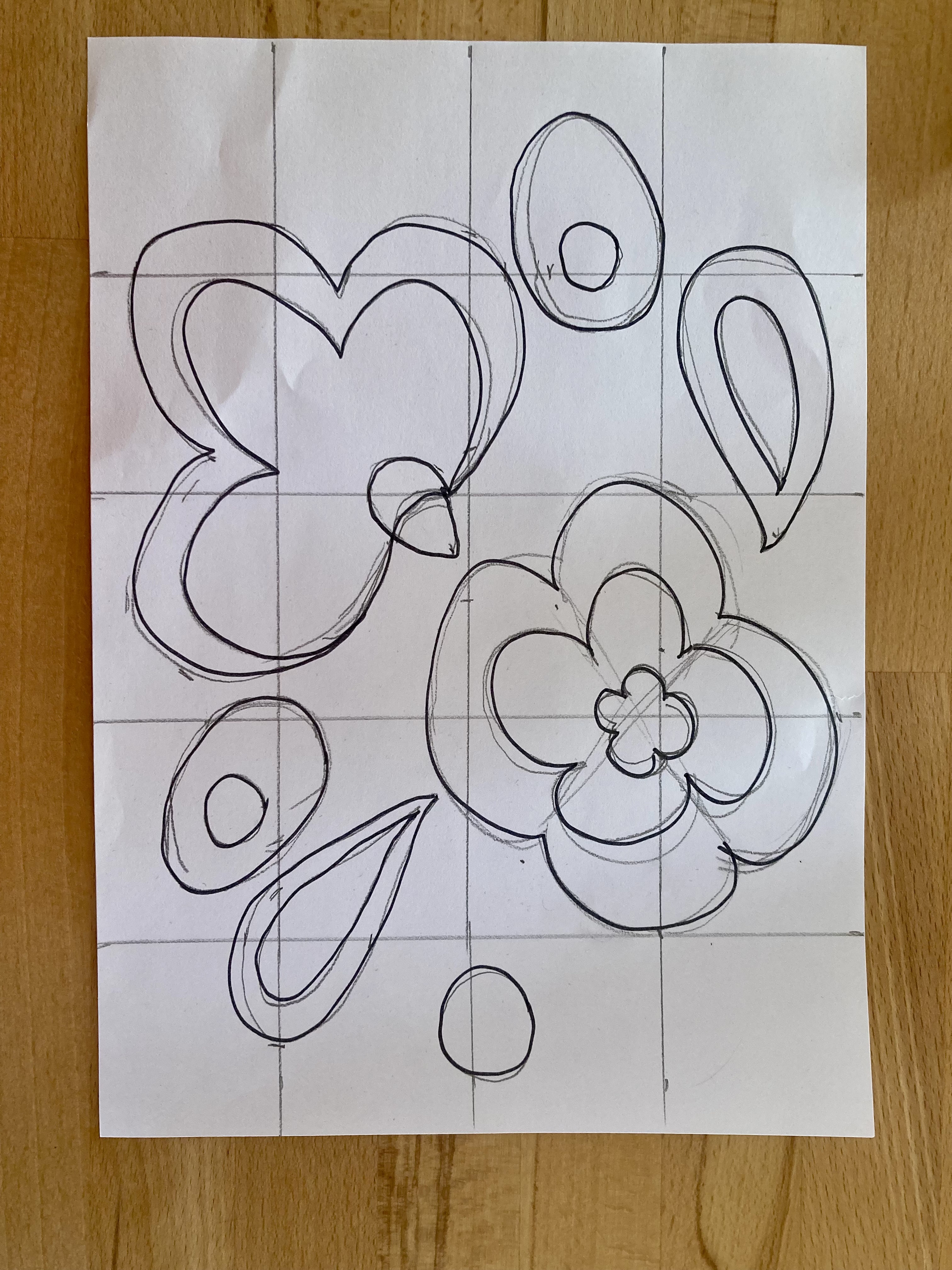
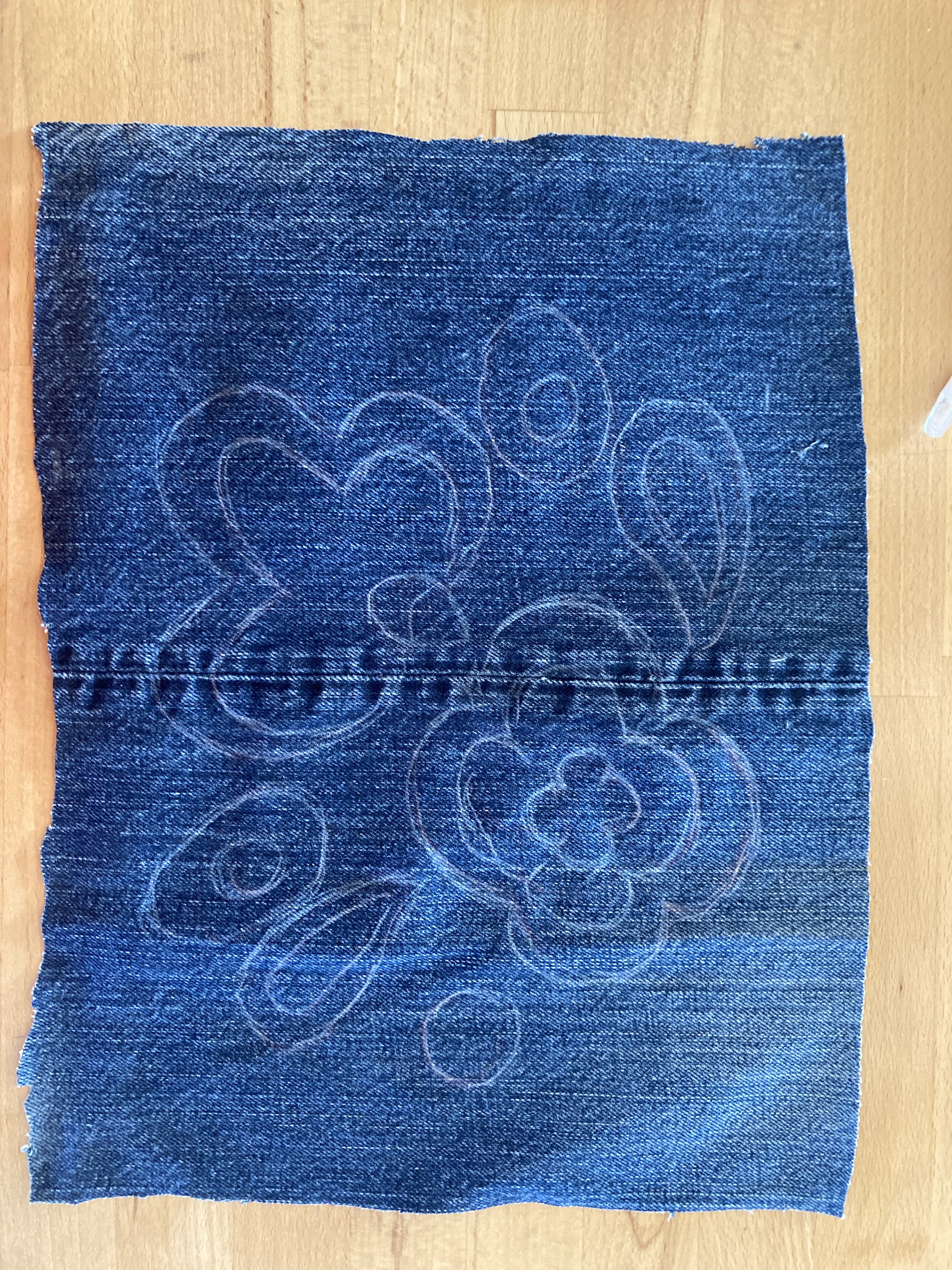
Als always, I would have had to send away for the transfer in 1968, but there was a helpful schematic in the magazine which I transfered over to paper and then onto the denim, sizing it up to fit. Transfering the design to the denim was hard, even with a white tracing pencil. I had to go over it with chalk and then of course keep going over it again and again because the chalk wiped off during the embroidery. One of these days I will try using solvent paper.

The embroidery itself was not hard, but lots and lots of buttonhole stitch over a large area. I had two kinds of embroidery wool and one kind (the two shades of gold and the white) was very fine and thin. There would have been no way to make a proper buttonhole stitch where the threads like right next to each other. So it came out somewhere between buttonhole and blanket stitch.

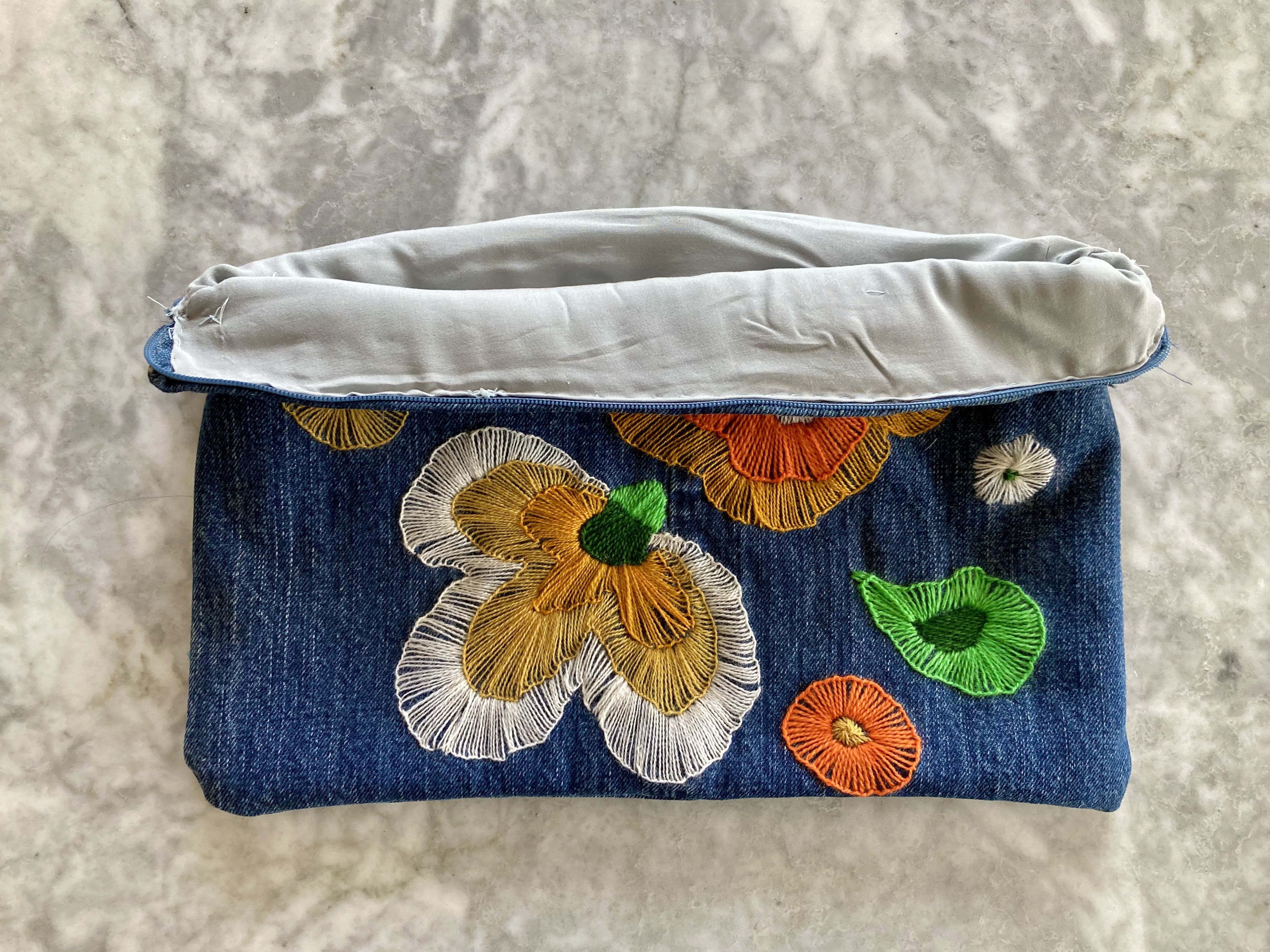
The hardest part, as always, was setting in the zipper. I try not to use profanity on this blog, so I will just say that I was greatly frustrated. Also, why am I utterly incapable of cutting or sewing a straight line? It is a rectangle…. it is not difficult… I measured constantly in all directions … I have one of those quilting mats with measuring lines on it… I don’t know what my problem is. In the end, I just sewed the zipper in by hand, which was far neater and easier than doing it on the machine. I tacked the lining on by hand as well.

When it was finally finished and I had successfully managed to not throw either the project or my sewing machine out of the window, I realised two things: 1) in spite of the deep frustration and the hours (yes, plural) spent trying to get the zipper in, the upper edge (zipper edge, of course) was totally crooked and 2) the motif was actually meant to be repeated smaller and multiple times across the fabric, not just once and big. No wonder the buttonhole stitch was so hard to do correctly… Yes, there is a photo of both cushion and cosy in the magazine. No, it somehow didn’t dawn on me in spite of consulting the pattern frequently. No, I don’t know what my problem is.

In spite of that, it’s…. not bad? I mean, functionally it’s fine. My laptop fits in it perfectly, the zipper works (hallelujah), the padding is a good thickness, and denim is a good, tough, washable fabric for laptop cases. The design is indeed bold and bright, and quite cheerful. The crooked edge annoys me, but I could re-do it. Still, somehow I feel this project is not quite right. Maybe I will fix the crooked edge and try to sell it? Give it as a gift to someone with the same size laptop? Keep it and let it grow on me? We’ll see.

Out of Order: Fashion Switch, September 1967

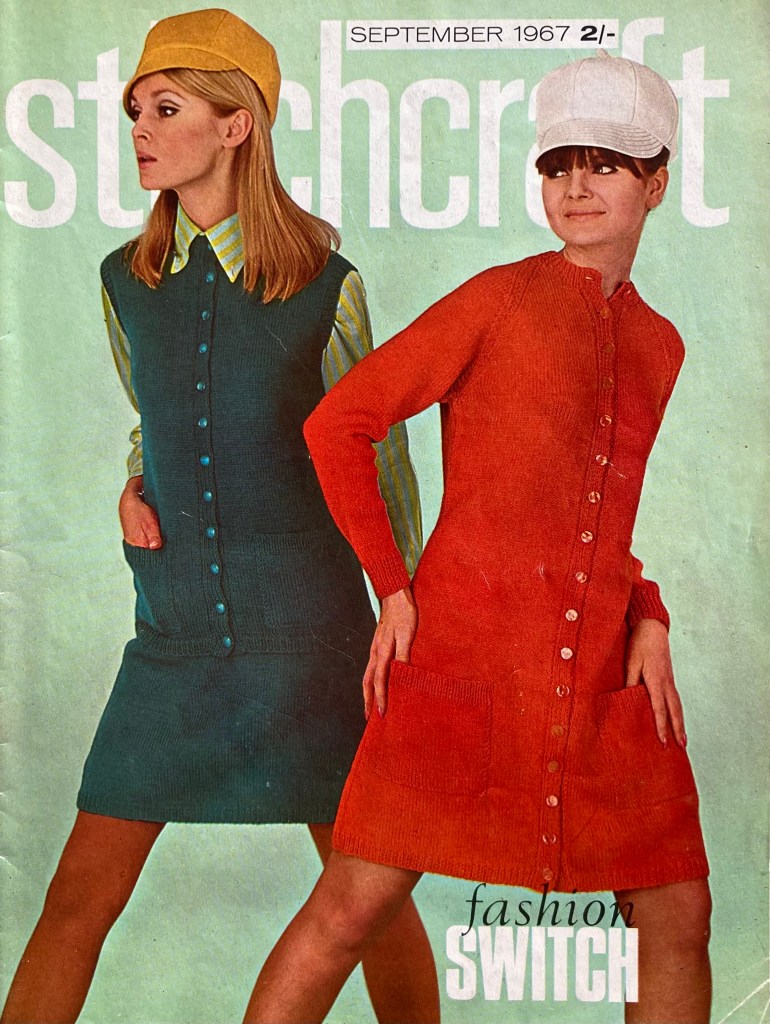
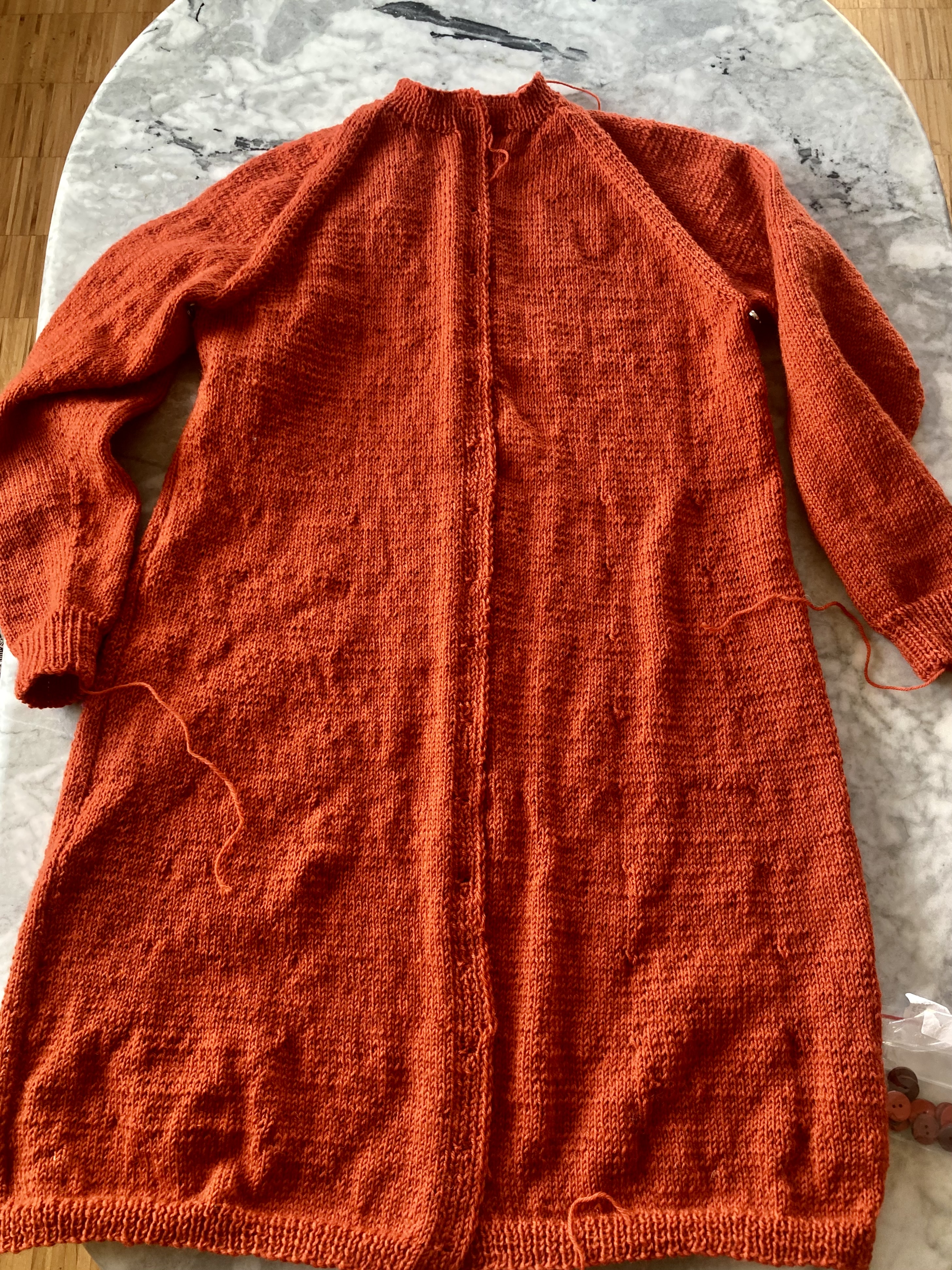
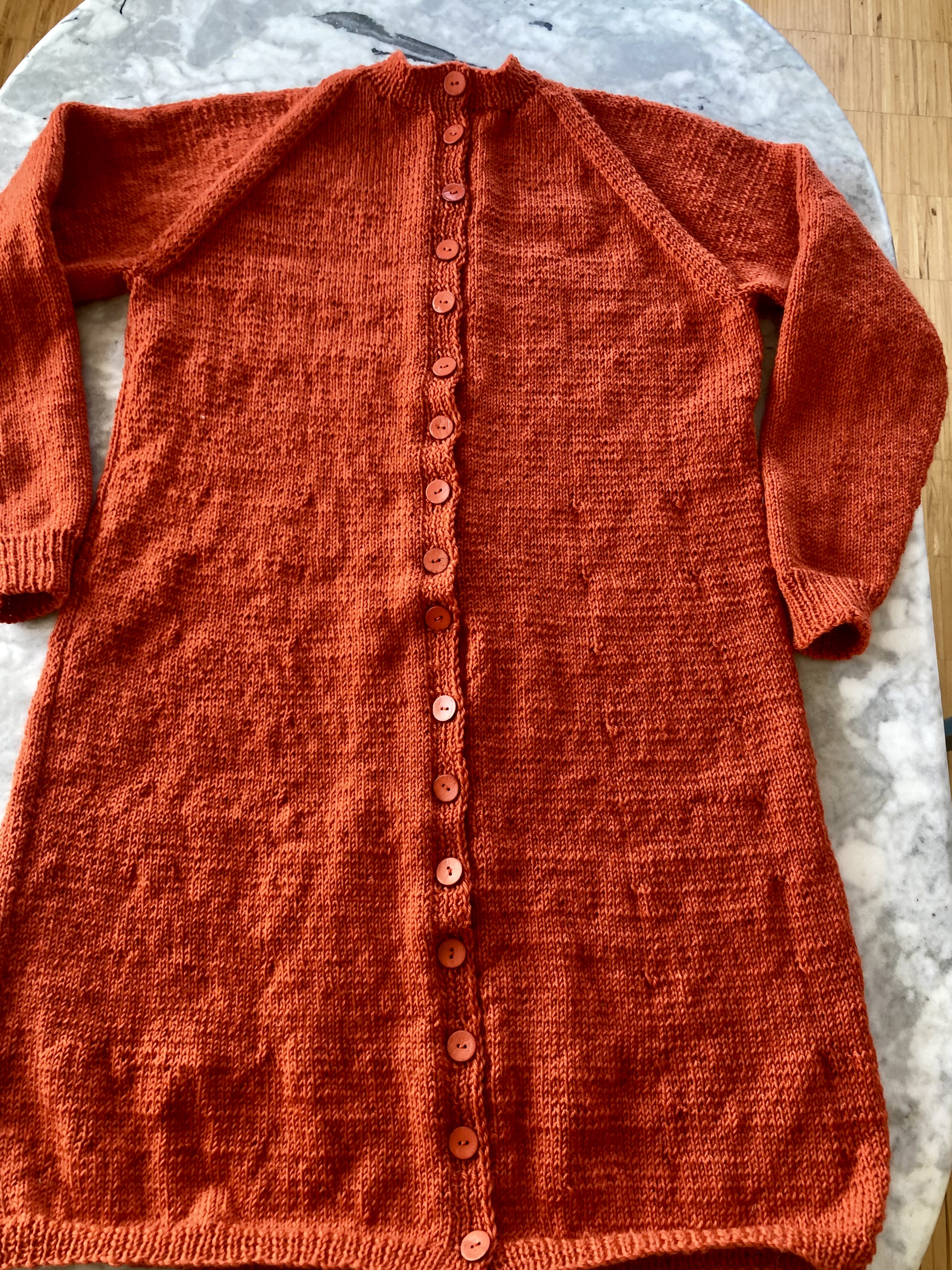
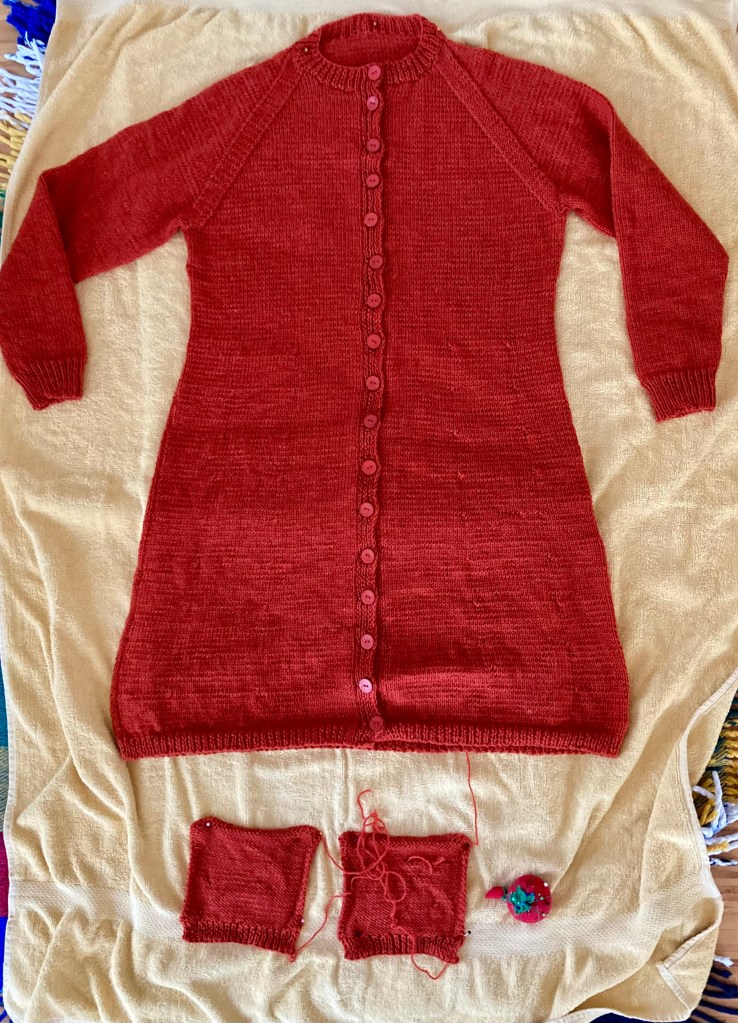
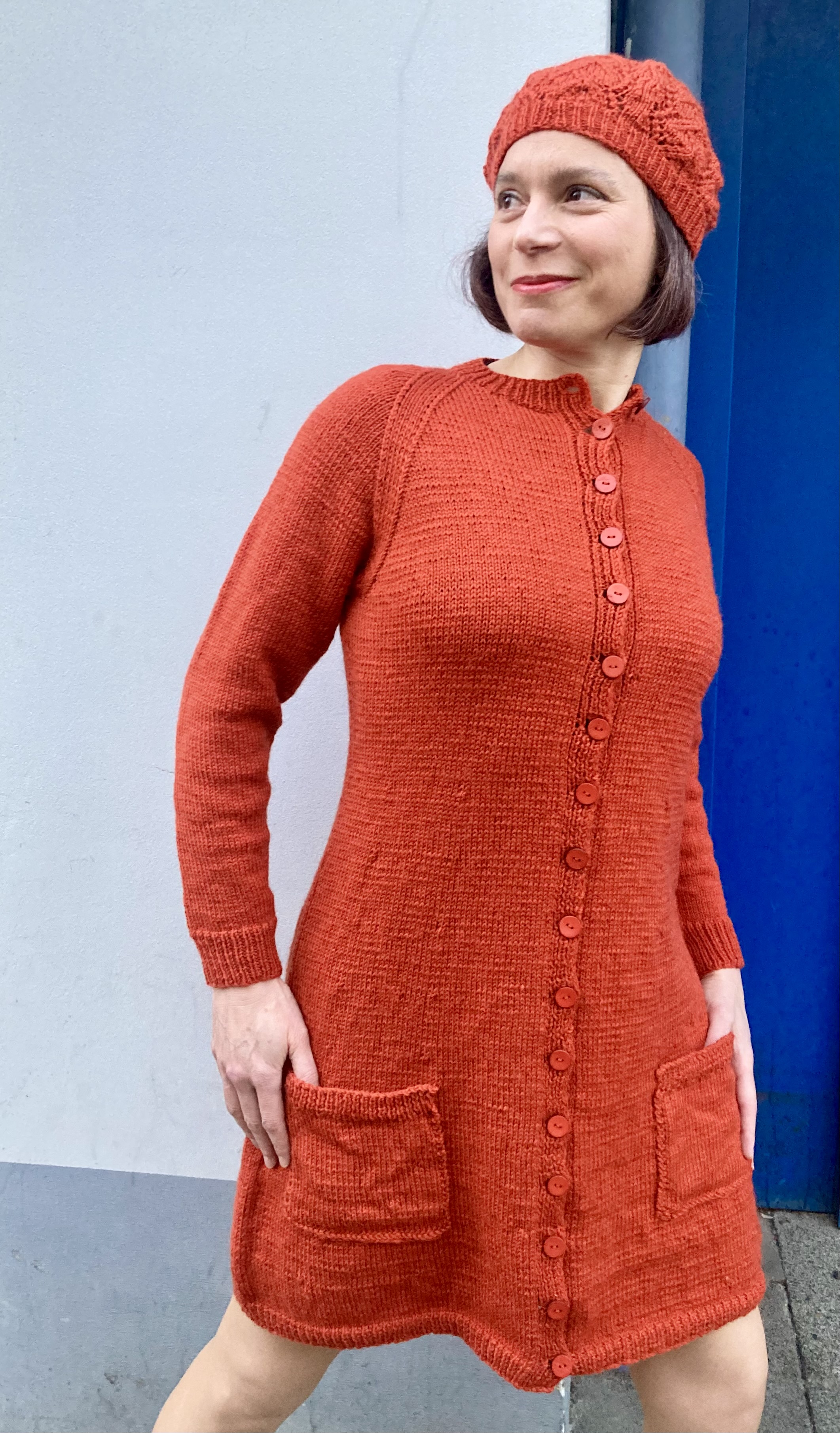
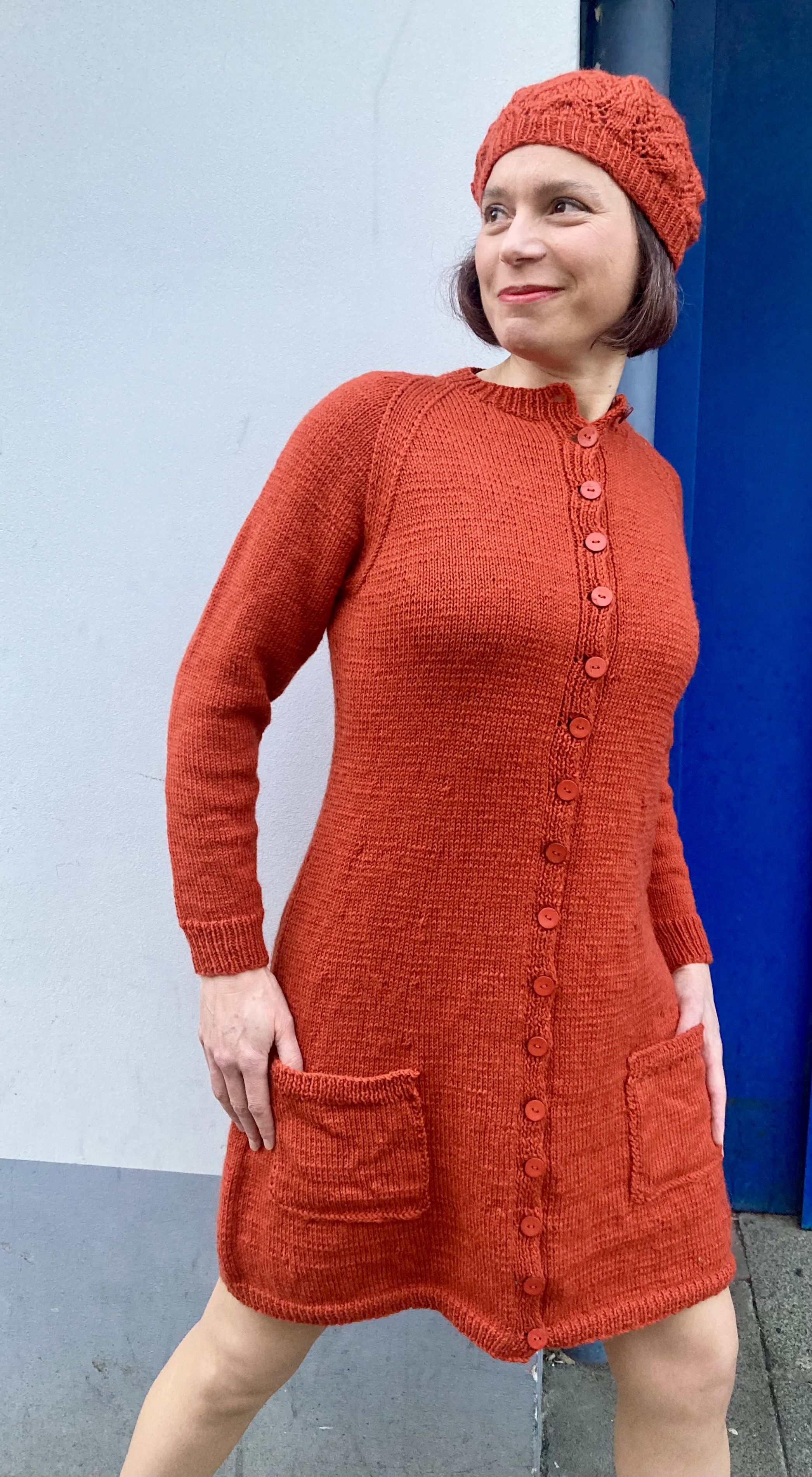
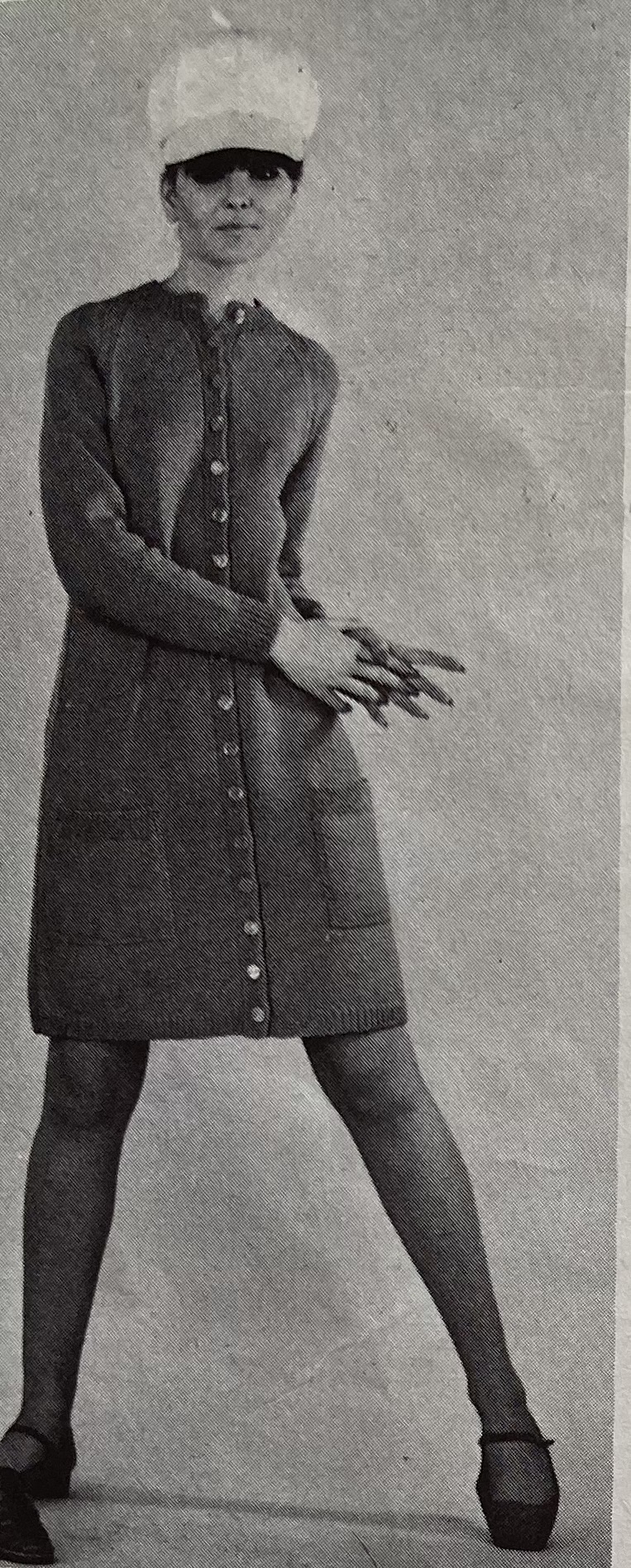
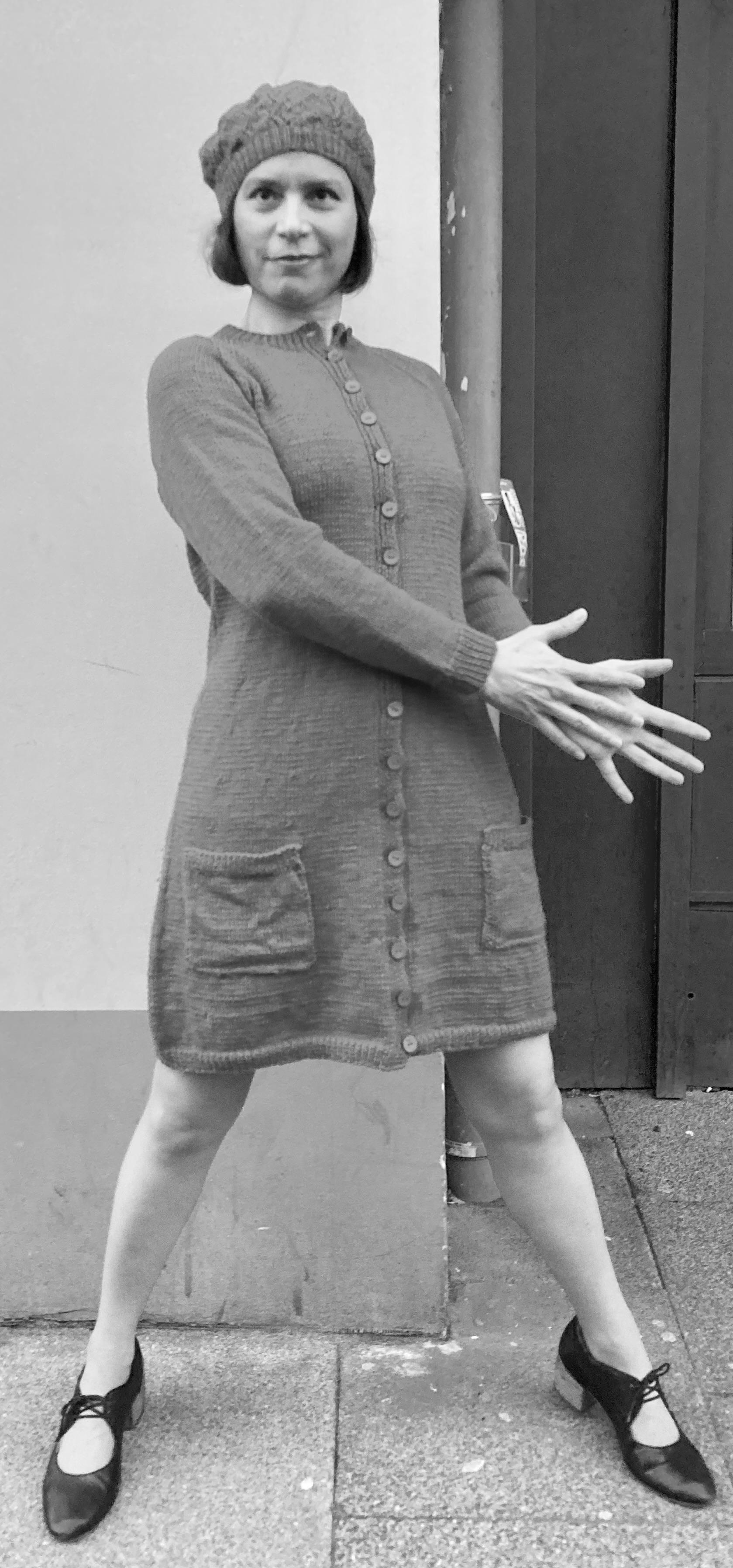
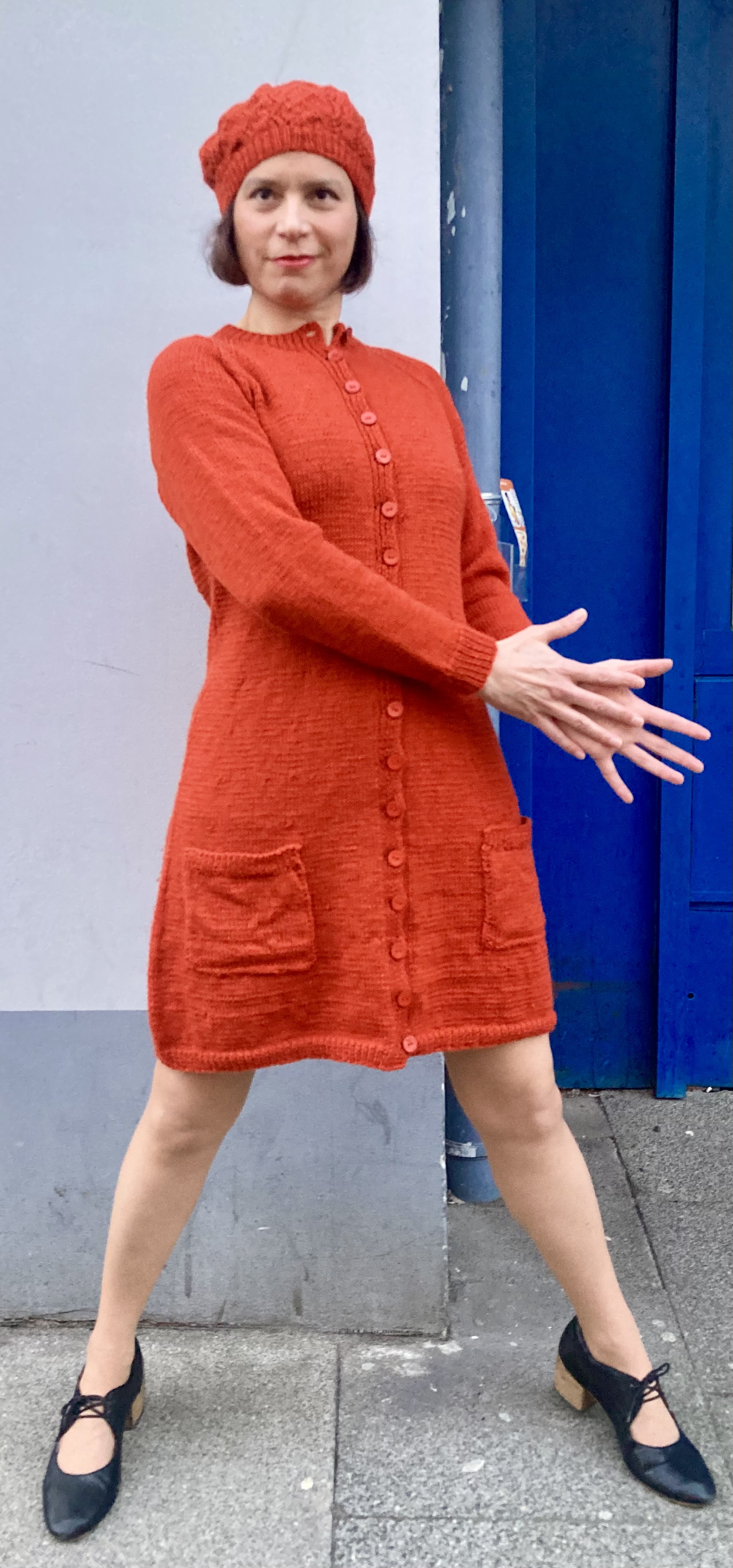
I have finally finished the magnificent cardigan dress from September 1967!

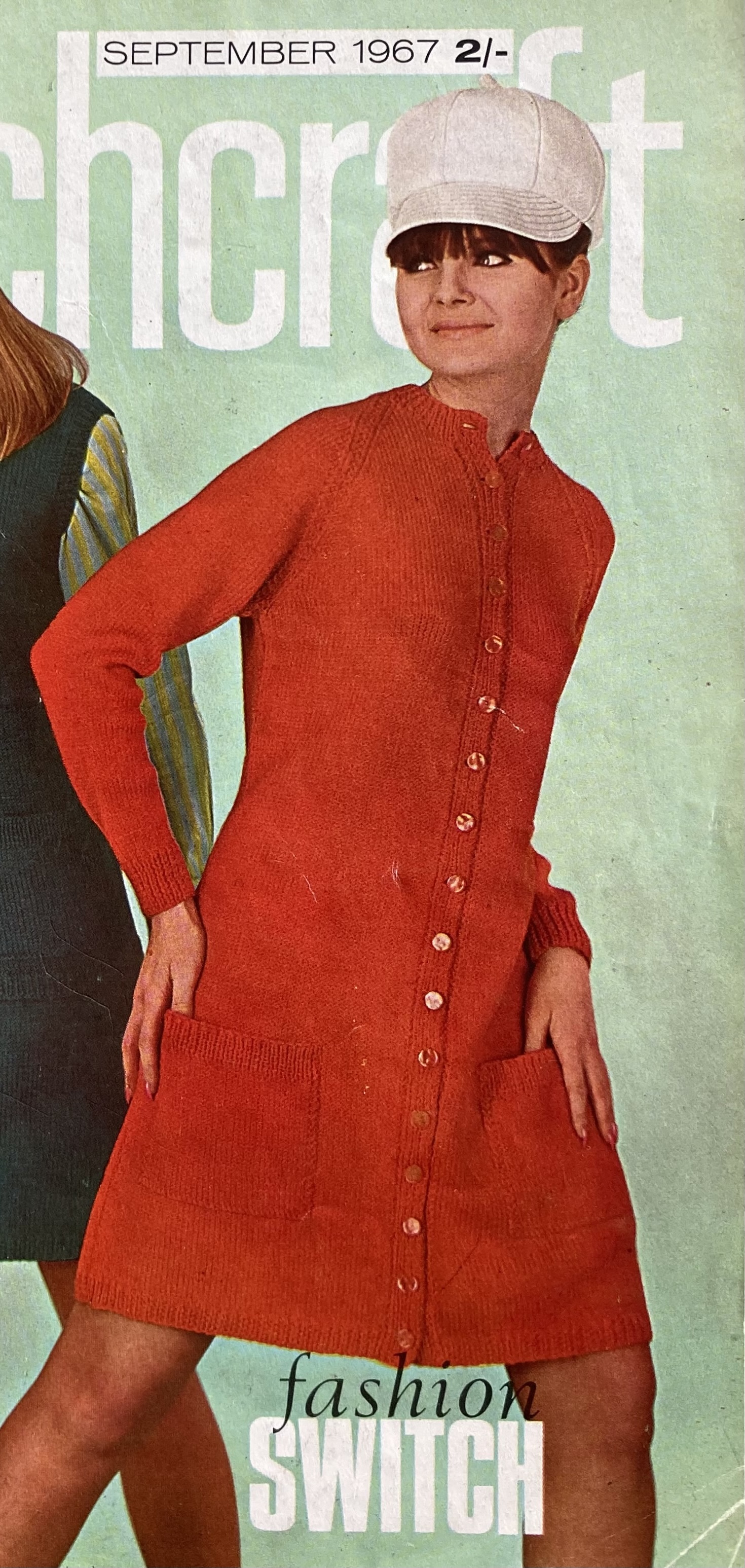
Captioned “Fashion Switch” along with the waistcoat-and-miniskirt set in the cover photo, the dress was written to be knit in Patons Double Knitting in the colour “Burnt Orange” 5020. I had already had great results (“Front Panel Classic Sweater” from 1964 and the inspired-by-Stitchcraft fingerless gloves from December 1966) with G-B Jil wool in the perfect shade of orange, so the choice of yarn was easy.

I am a bit sceptical when it comes to A-line dresses, since the often look too sack-like on me — I need dresses to be shaped or belted or nipped in at the waist in some way. The pattern has four sizes, to fit 33-34 up to 39-40 inch bust. I got perfect tension with 3.5 mm needles on the other projects with this wool, so I made the third size, for 37-38 inch bust and figured I could always adjust by continuing the A-line skirt decreases and/or adding extra stitches before the underarm shaping.

I made the sleeves first to check for size and tension. That had the extra advantage of not having to make the sleeves after finishing the entire body of the dress and procrastinating. I made them in the round and other than the wrists being a little tight, they were fine. I also made the body in one piece with fake side “seams” (1 extra p stitch) including the button bands. Of course, the bands should have been knit a little shorter than the garment and on a smaller-size needle. I was happy to ignore that rule this time, because if there was one thing I did not want to do, it was to knit and sew on extra vertical-rib button bands on a 34 inch long dress. Also, the skirt decreases were placed every 16 rows, which was conveniently about 2 inches apart — the exact spacing of the buttonholes. For once in my knitting career, all the buttonholes were evenly spaced!

It started off very slowly, because the skirt is wide at the hem, and I was worried that I might not have enough yarn, since the first 100 or 150 grams got knitted away very quickly. It slowed down with the decreases, though (8 stitches decreased every 16 rows in “princess seam” style, 2 rows of decreases the the right and left of the center line on both front and back.) For a slightly more nipped-in waist, I continued the decreases 1 more time and then, after a couple of inches straight, increased on the side “seams” until the stitch count was back up to the 3rd size.

It was hard to try on while knitting, since the front edges curled a lot before blocking and buttoning. I found some incredible and very 1960s looking buttons, but there were not enough of them at the shop and they couldn’t be re-ordered. Bummer! The cover model seems to have those plain, clear plastic buttons that one otherwise uses to close a duvet clover. I found similar plain buttons in a surprsingly good matching burnt orange shade, and there were exactly 18 of them in stock (17 for the dress and one extra.)

The G-B Jil wool washes really well in the machine and can be dried in the dryer. It’s superwash, so I knew it would stretch bit when washed and could either be dried flat to keep it slightly larger, or dried in the machine to shrink it down a bit. I knit and blocked the pockets separately and sewed them on after everything was dry and flat, to get a good placement. The pattern said to place them 4.5 inches up from the bottom hem, which seemed too low to me… and also seems lower than in the pattern photo. If it annoys me, I can always remove them and sew them on a little higher — the advantage of patch pockets.

The dress fit quite well after being dried flat. The only problem was that the neckline was a bit too high and the last button pressed against the front of my throat annoyingly. Looking back at the magazine photo, I see the Stitchcraft model had the same problem! I adopted the same solution: leave the top button unbuttoned.

We had a great photo session at our Monday knit night and even got a perfect 60s-esque colour-block background.

I love this dress and am very happy that I took the time to make it!

March 1968: Overview

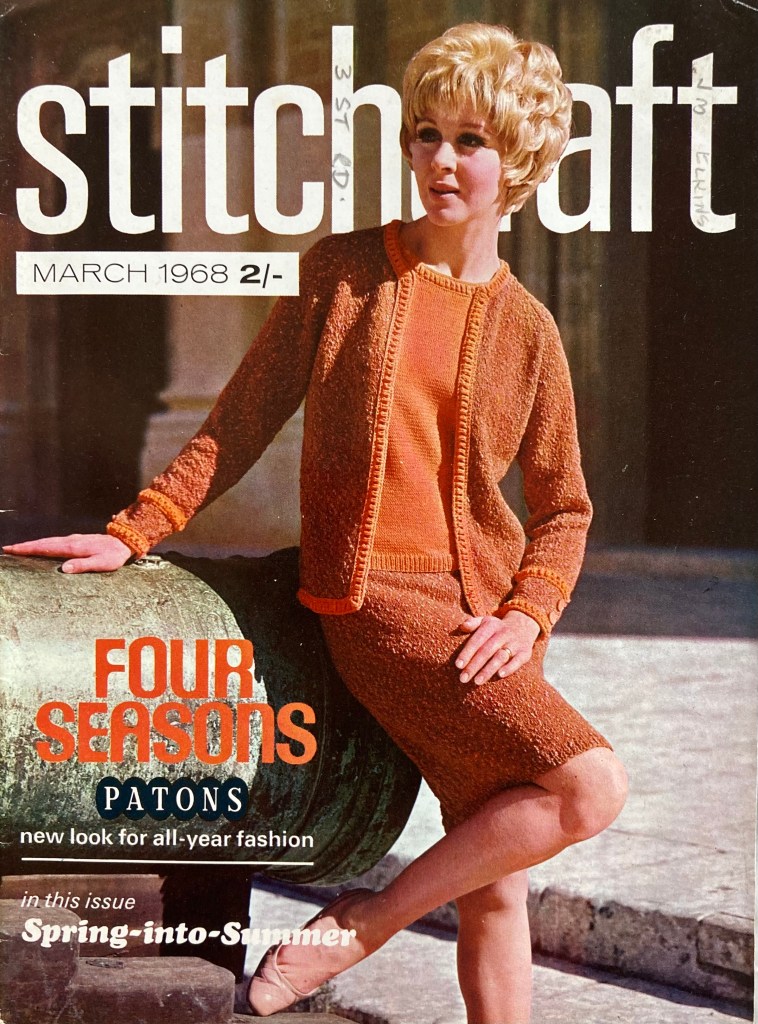
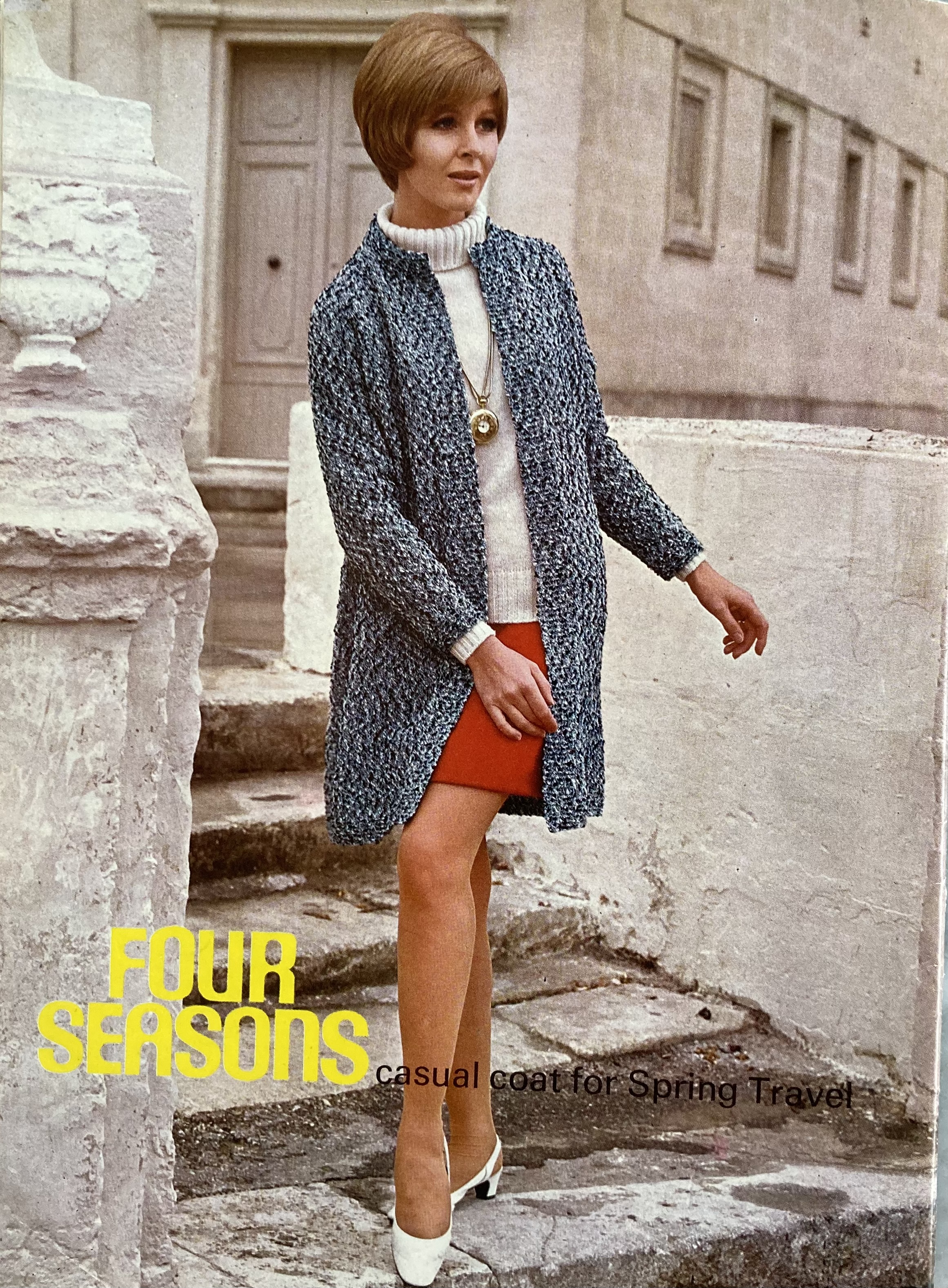
Spring is here and the March 1968 issue of Stitchcraft celebrated by introducing a new yarn: Patons “Four Seasons“. Four Seasons was a crinkly, nubbly mix of synthetic fibres (59%) and wool (41%) that produced a textured, tweedy effect by virtue of the “nubs” being a different colour than the rest of the yarn. It was double-knitting thickness when knit up and produced an interesting colour and texture even in plain stocking-stitch, so was perfect for making simply styled garments quickly.

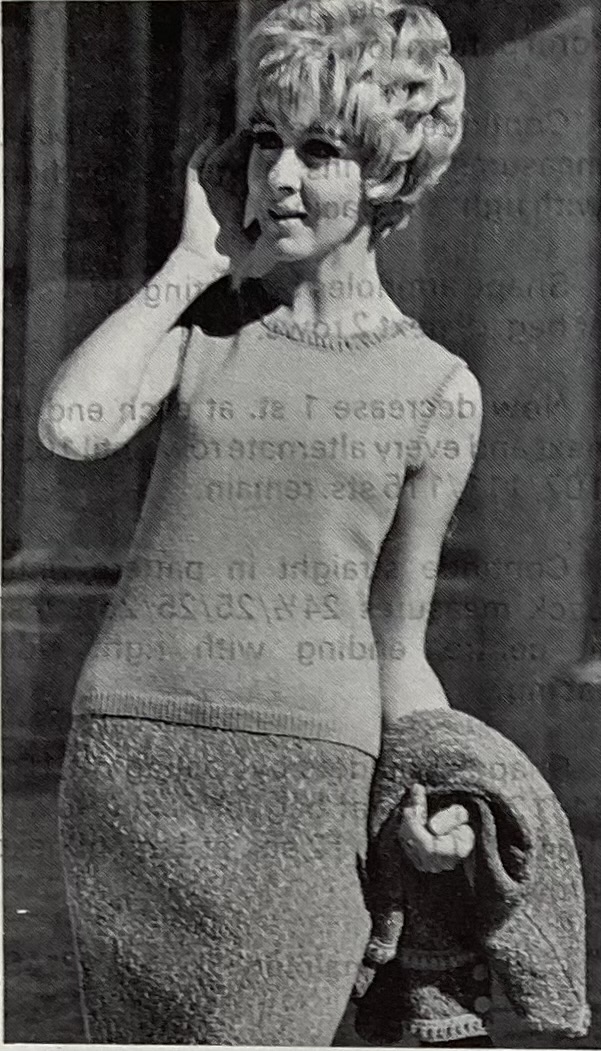
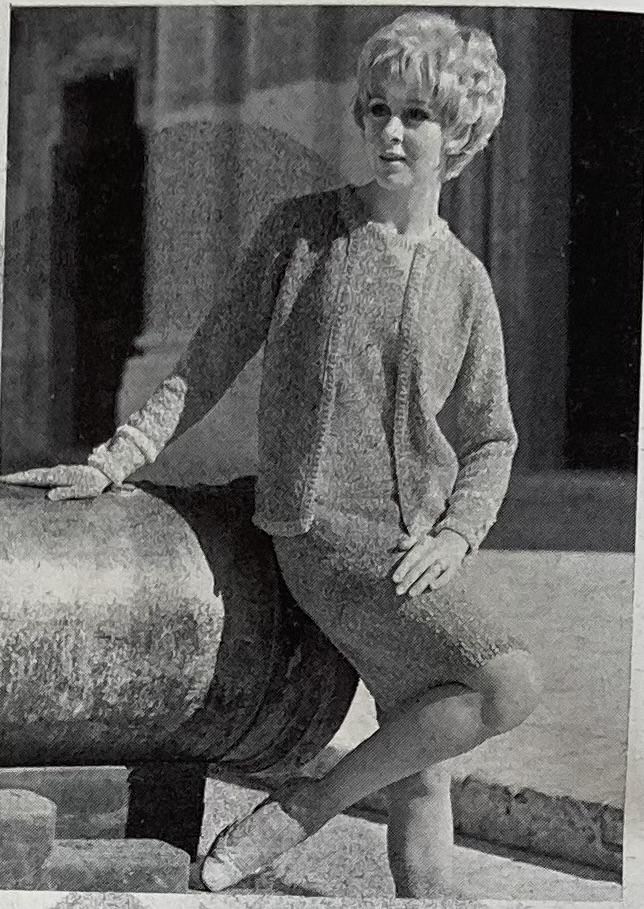
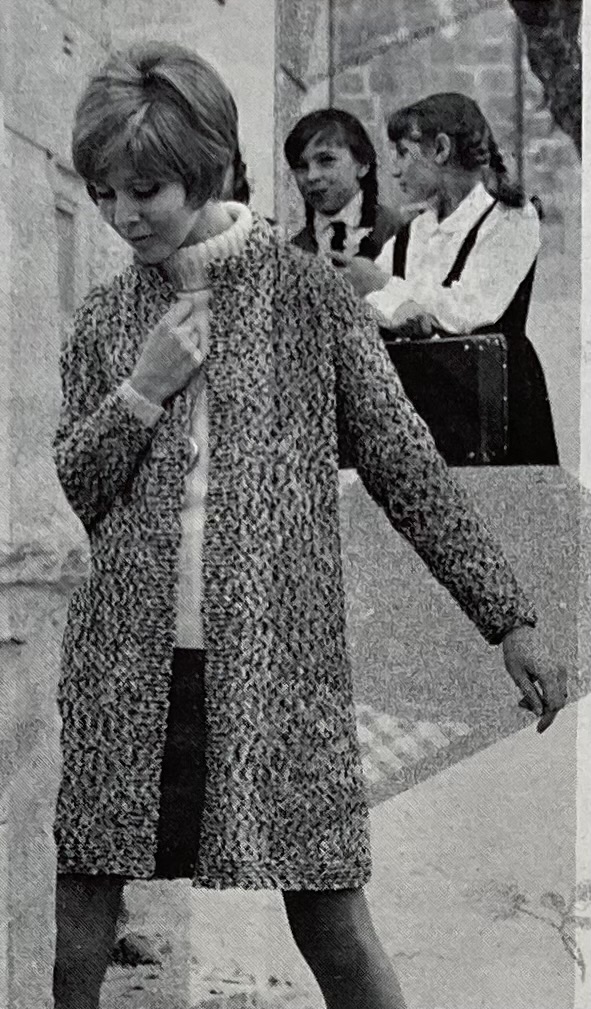
The simply designed, next-to-no shaping “Chanel Style” suit on the cover (Stitchcraft’s name for it, not mine, and shows how iconic the Chanel suit was) is made in plain stocking-stitch with Four Seasons and trimmed with an interesting crochet braid in plain wool “Cameo Crepe” yarn. You can see how Patons coordinated the Four Seasons colour palette to make it match with the plain wool yarns already in production. The matching sleeveless blouse is also made in the same shade of Cameo Crepe. The equally simply-knit travel coat in Four Seasons goes well over a plain jumper and mini-skirt.

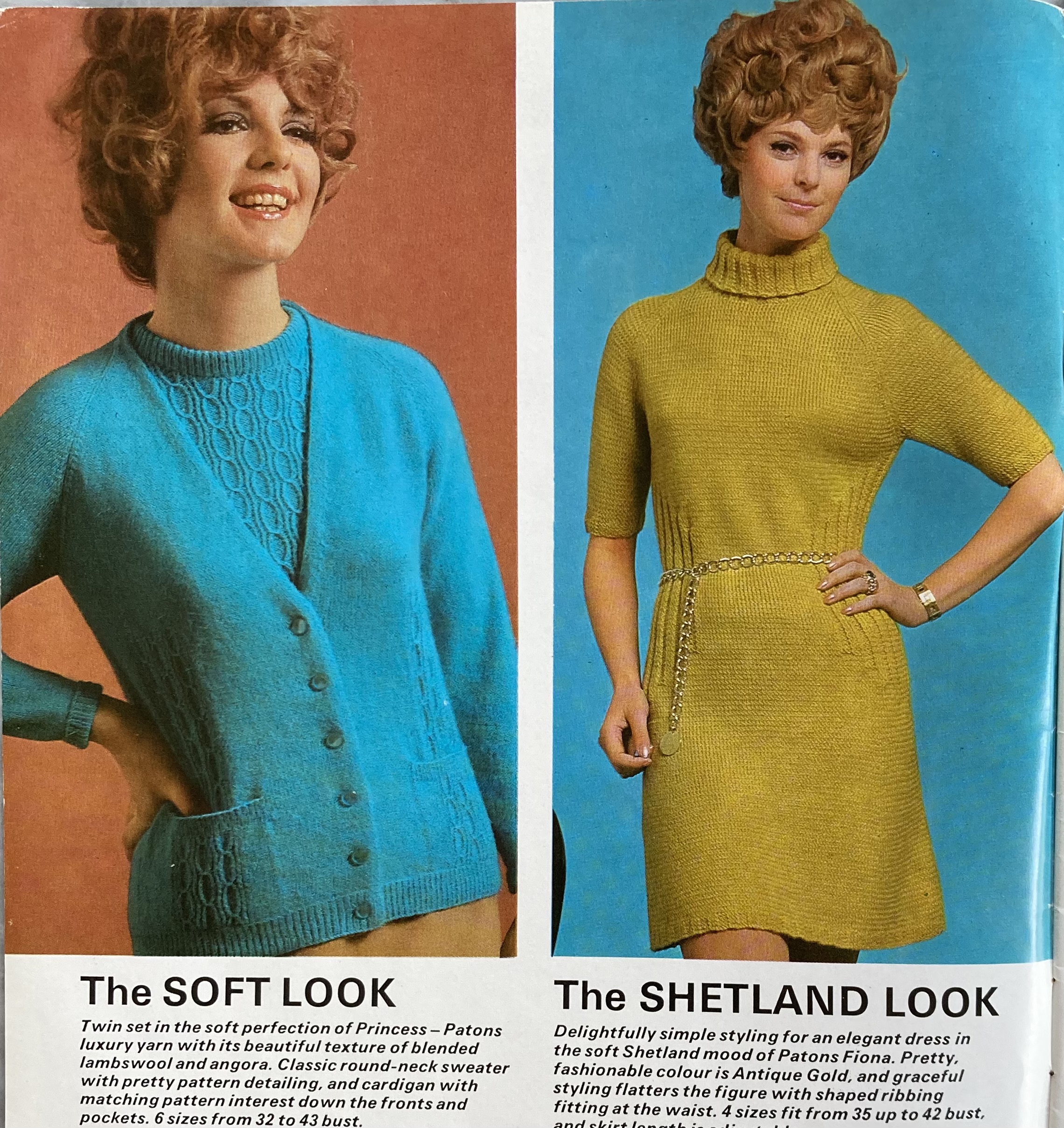
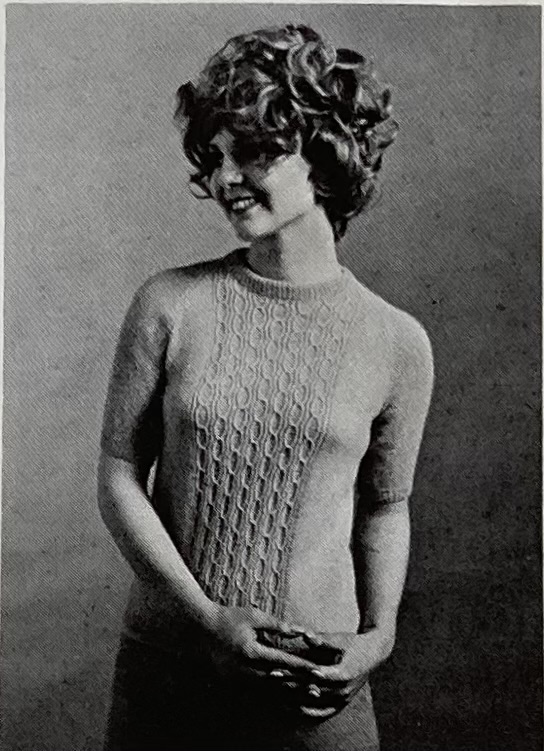
Other women’s fashions include a twin-set in Patons’ almost-new yarn, “Princess“, a soft, fluffy wool-angora mix. The colour photos on the inside front cover contrast the “Soft Look” (Princess) with the “Shetland Look” (Patons “Fiona“, a mix of 51% Shetland wool and 49% acrylic) while also making great use of blue-orange-mustard contrasts. Also, amazing wig on that model in the mustard-coloured dress! The “soft misty mood of the traditional Shetland look” gets exploited for all its worth in a pretty, but very much not traditional Shetland-style graded-colour pullover.

There’s more! The “overpull” in bramble stitch has a great three-dimensional texture, as does the high-buttoned cardigan in a trellis lace pattern. Knitters who preferred the smooth and simple look could make a classic, loose-fitting polo-neck jumer. All three are in tried-and-true Patons 100% wool yarns: the classic jumper in Cameo Crepe, the overpull in Totem Double Crepe, and the cardigan in Patons Double Knitting. That 1960s diagonal-line photography becomes amusingly apparent when you place photos next to each other.

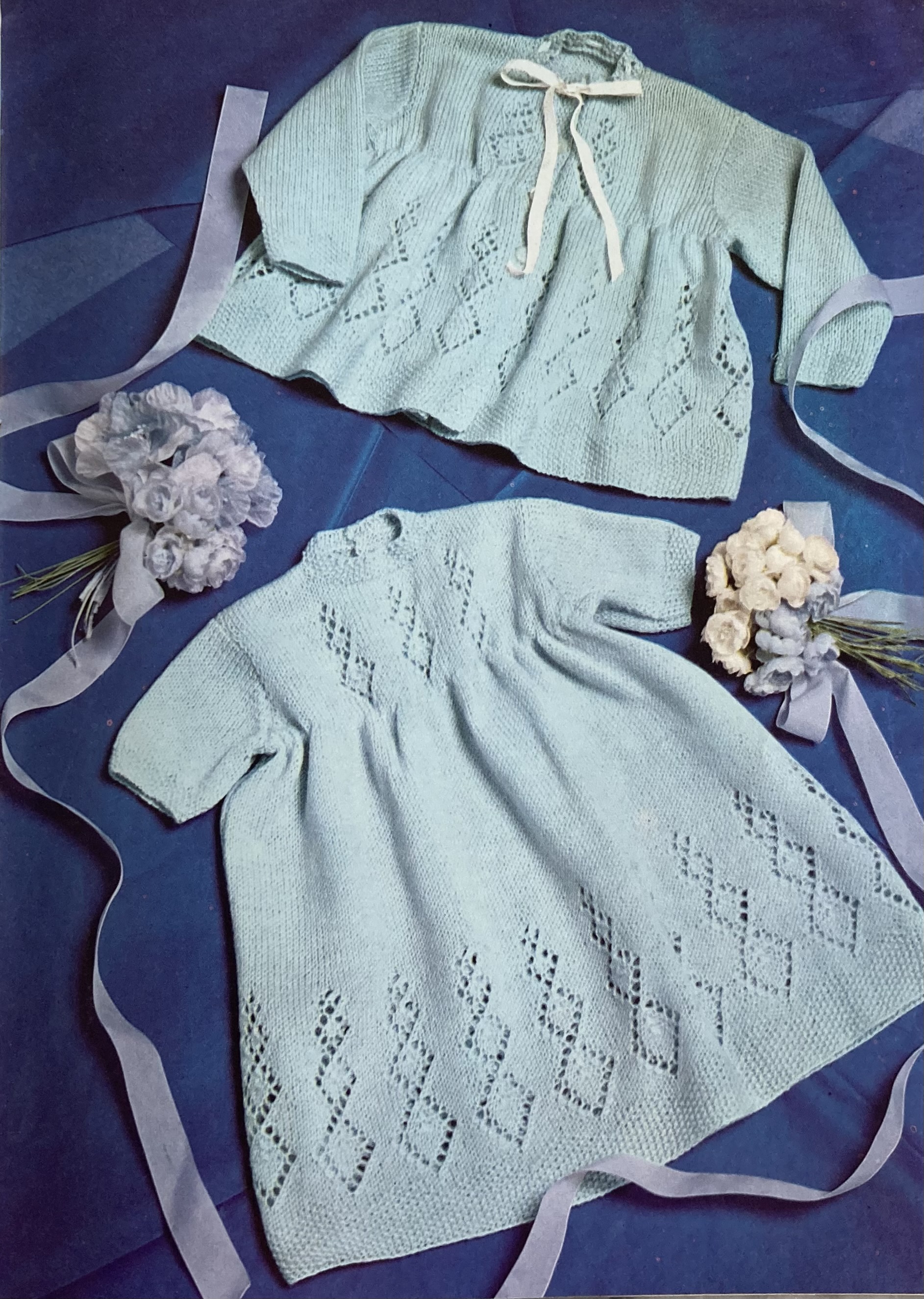
Men, boys and babies get their due as well. The men’s Aran-patterned cardigan in thick “Capstan” wool features the same model from the September 1967 issue, who looks like a friend of mine. The cardigan, available in four sizes from 39-40 to 45-46 inch chest, seems way too big for him, though. The photo of the boy’s “Super-Sonic” polo sweater has the same too-bulky, too big mismatch, though anything knit the “Super-Sonic” way (6 ! strands of DK wool held together on huge “Maxi Pin” needles to get 3 stitches to the inch) will look huge and bulky anyway. Babies, at least, still wear fine-knits, like the lacy set of dress and matinee coat for Spring.

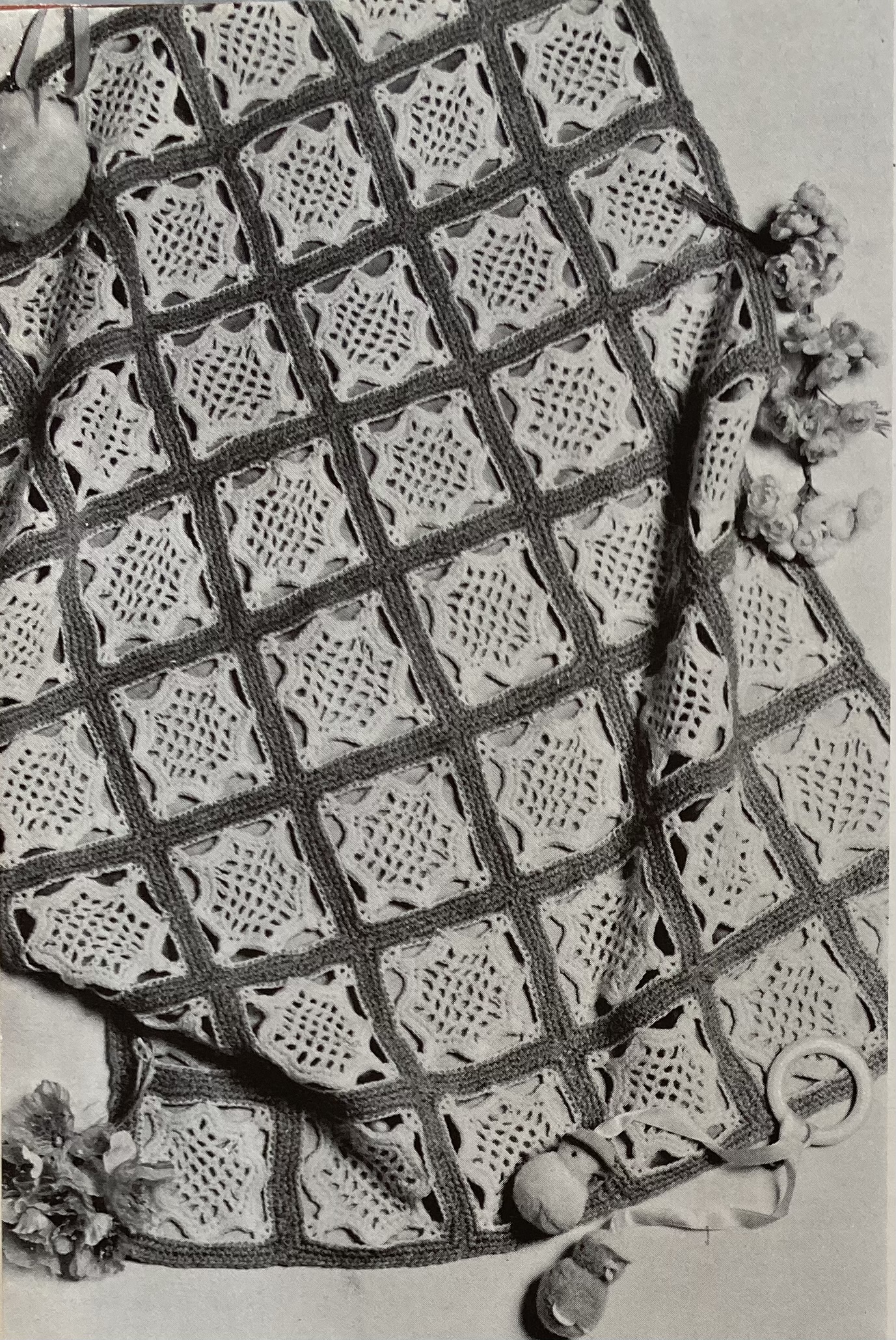
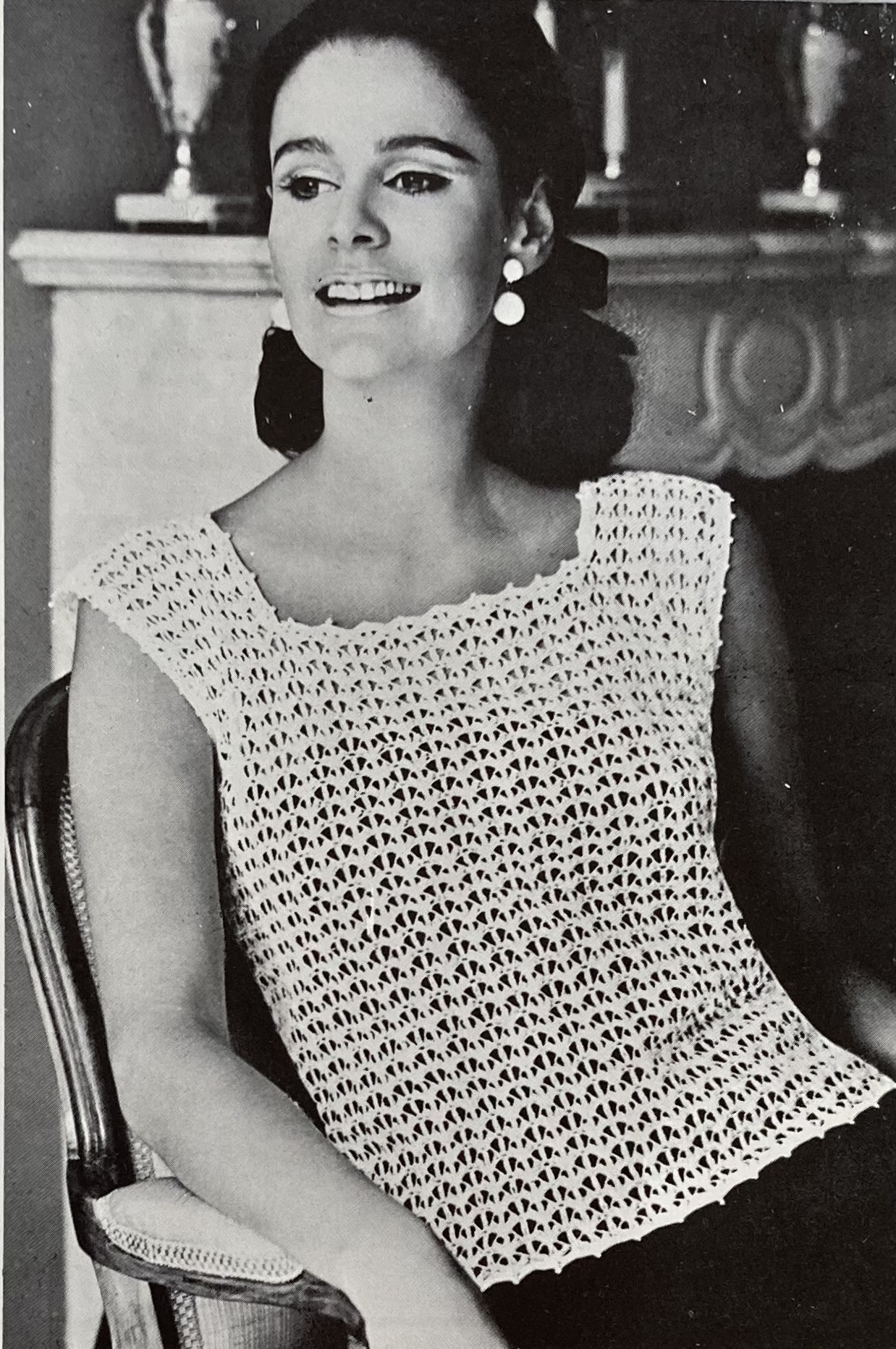
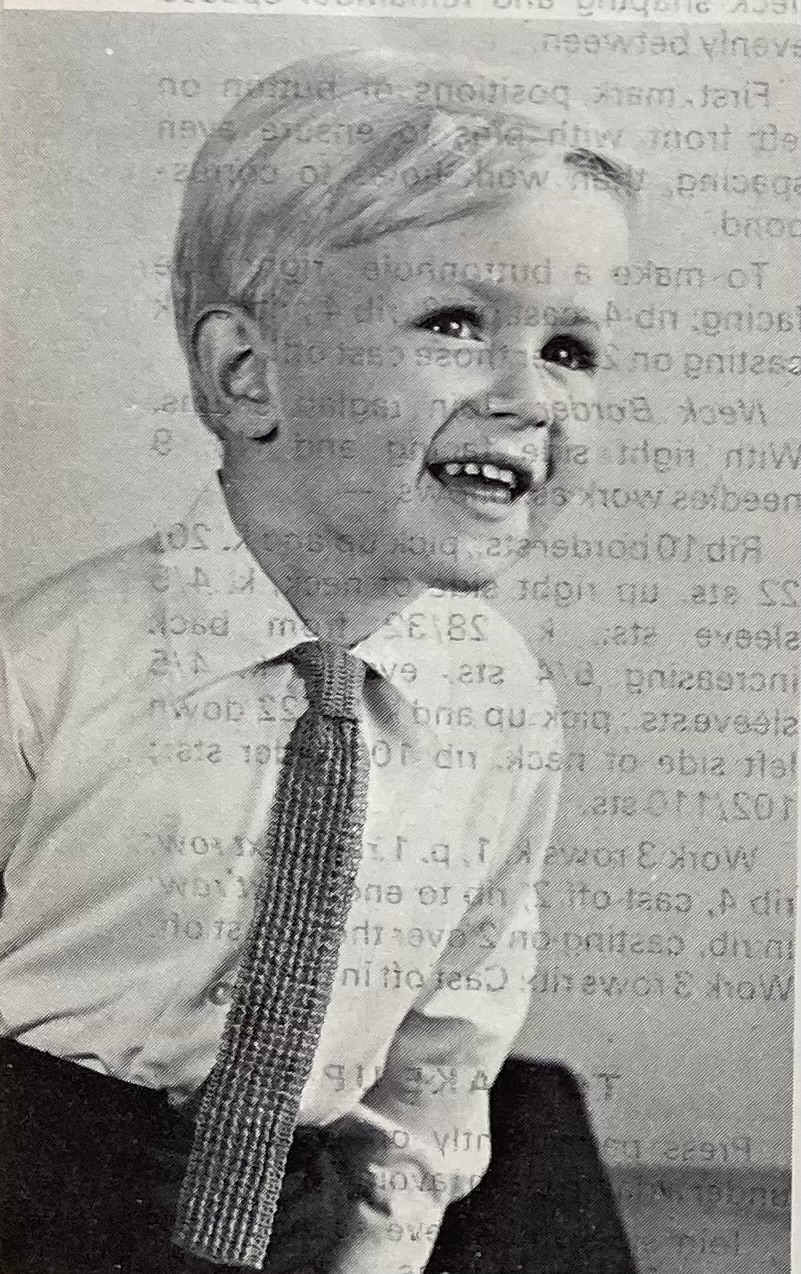
Crochet fans can make something for baby, too: a soft and pretty blanket made of 48 lacy motif squares in Patons “Fiona”, bordered with plain dark bands and lined with blue fabric. You can make a lacy blouse for yourself in the usual Mercer-Crochet thread, and use the leftovers to make a tie for a little boy for Easter! Can’t tell if the kid is happy about having to wear a tie or not, or if someone is holding a candy bar just behind the camera.

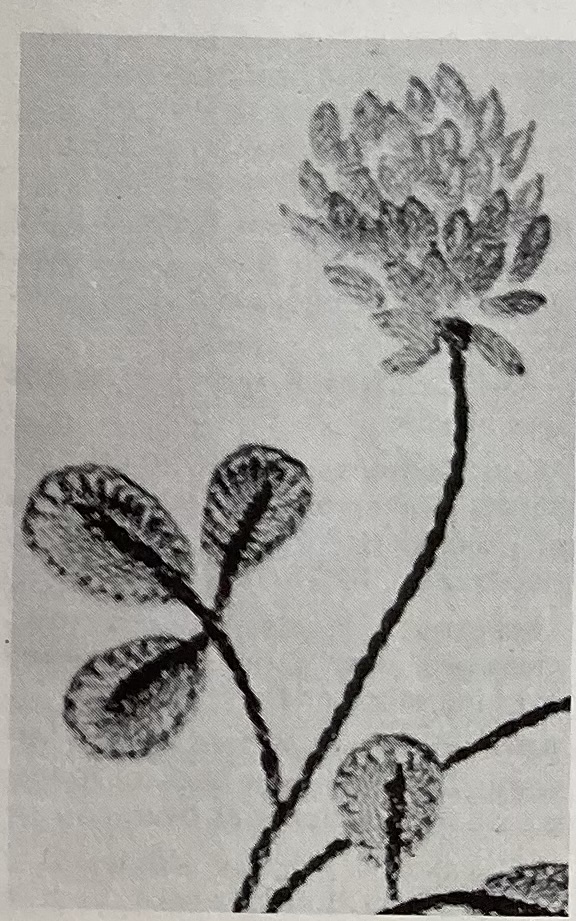
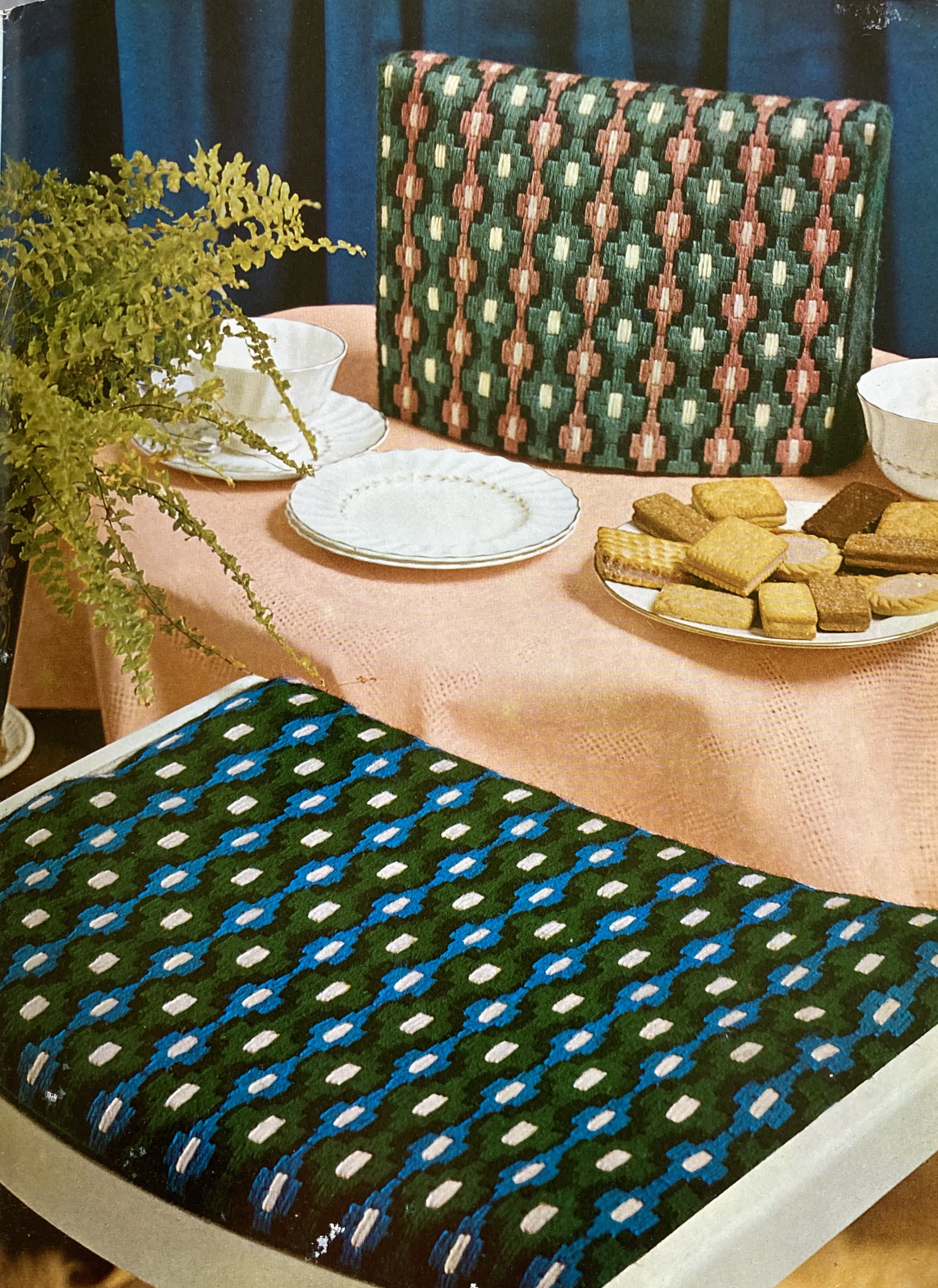
With all those great Spring fashions, it’s no wonder that the homewares are a little boring this time. There’s a little flower motif to embroider on an apron, or place mats, or a tablecloth, and a wonderful and very 60s floral design for a cushion in wool embroidery, or adapted to appliqué for a coffee cosy. Beginning embroideresses can practice stem stitch, loop stitch and chain stitch with lots of simple motifs on a tablecloth. There’s also an easy Florentine tapestry design for a large tea cosy or stool-top.

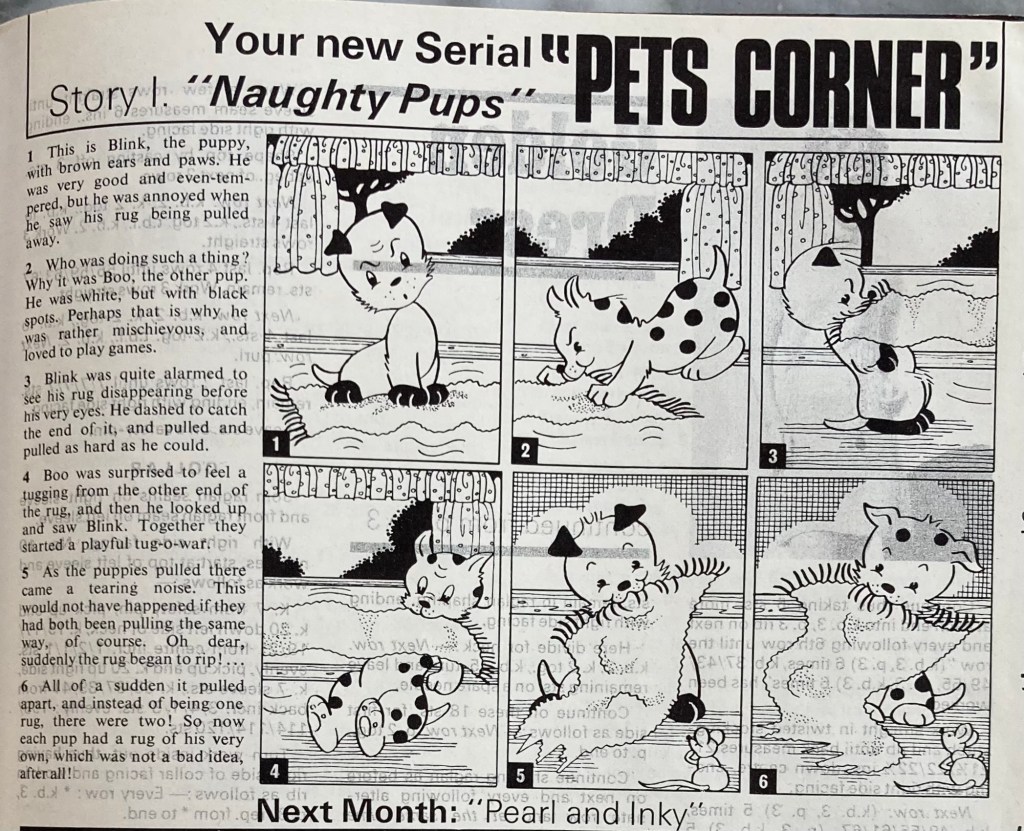
There’s a new serial comic, “Pets Corner”, whose first episode features puppie Blink and Boo, who do rascally puppy stuff and end up tearing a rug apart. But then they each have their own rug, so it’s all good.

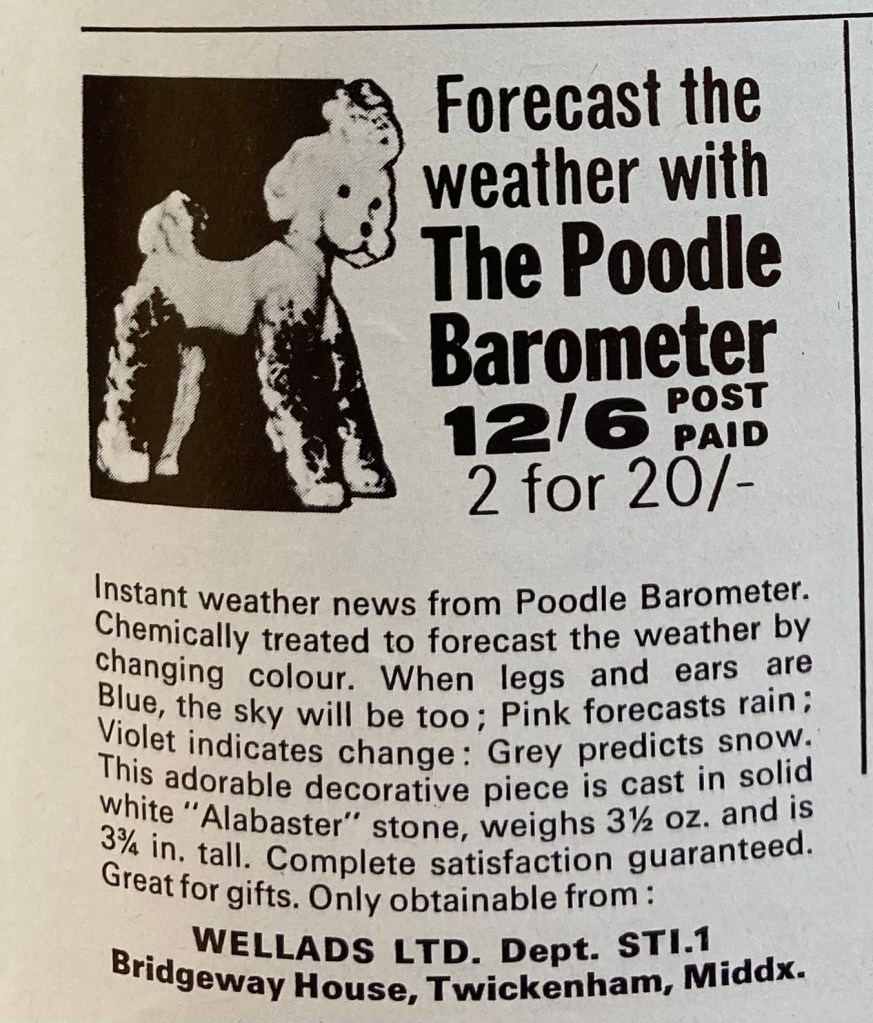
The ads are the usual: Carters Liver pills for constipation, mail-order services for fabric remnants and marked tablecloths to embroider, pen pals, a poodle barometer…

Wait, what?!?

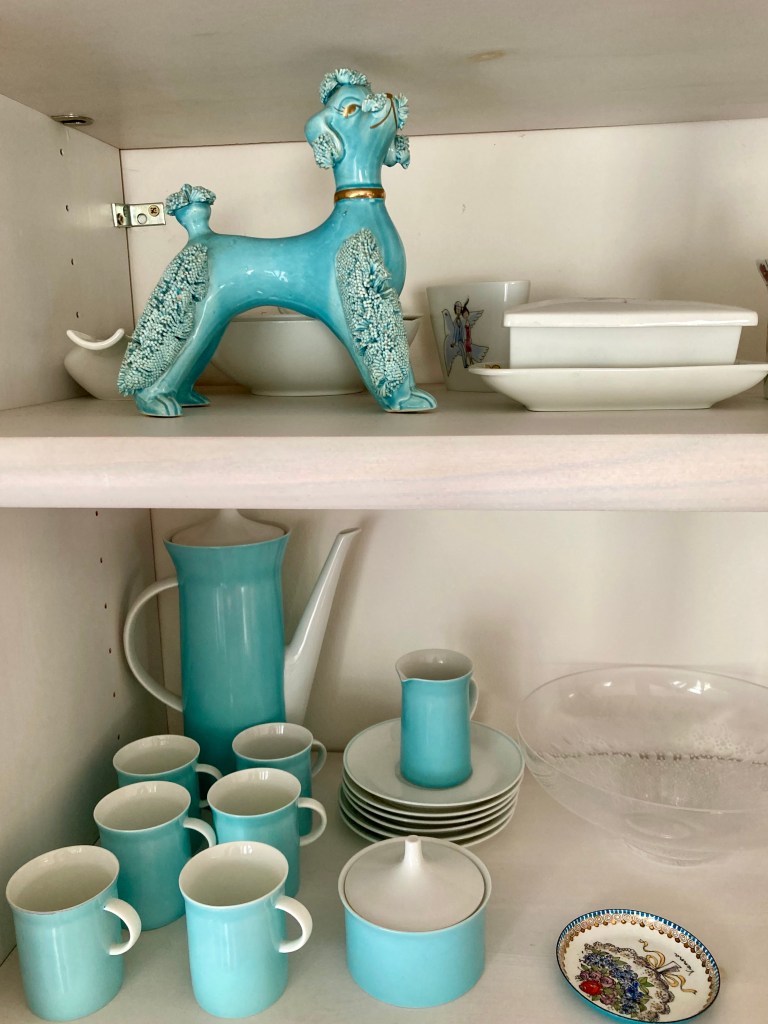
Yes, a poodle barometer. A decorative stone poodle that has been chemically treated with something that presumably responds to changes in humidity and/or temperature. Okay? I too have a vintage poodle, so I shouldn’t say anything. Mine is made of porcelain and doesn’t predict the weather, but does a great job guarding my grandmother’s 1950s Rosenthal coffee service.

Enjoy the Spring! My project will be some variation on the embroidered or appliquéd flower pattern. And I will soon be finished with the amazing orange dress from the September 1967 issue, so stay tuned.