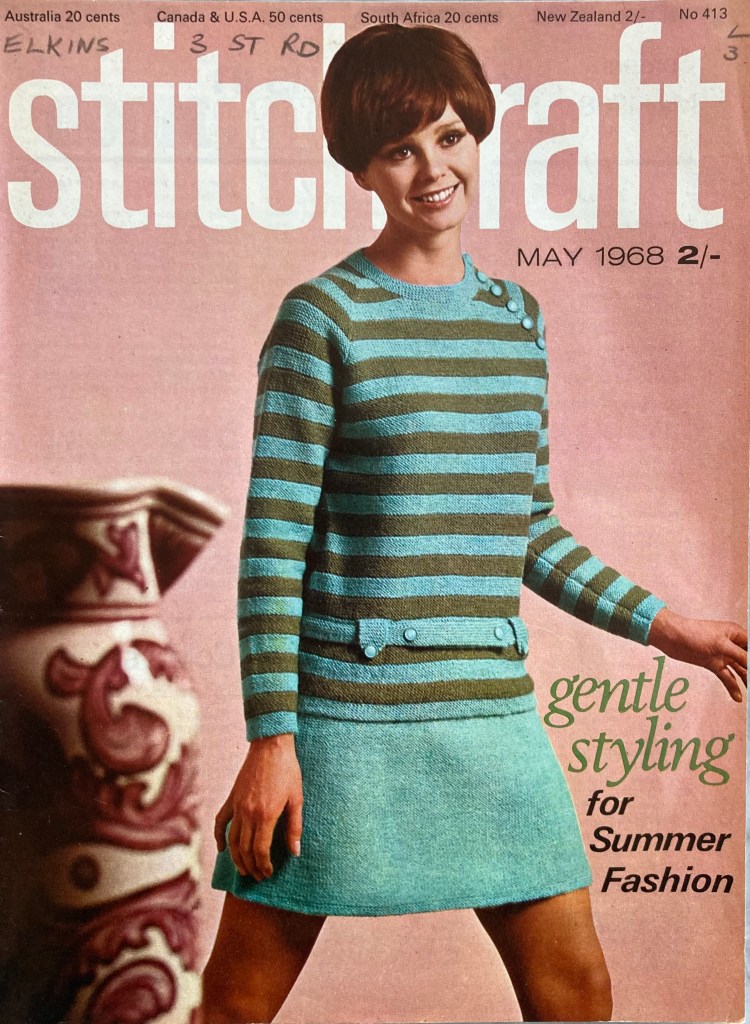
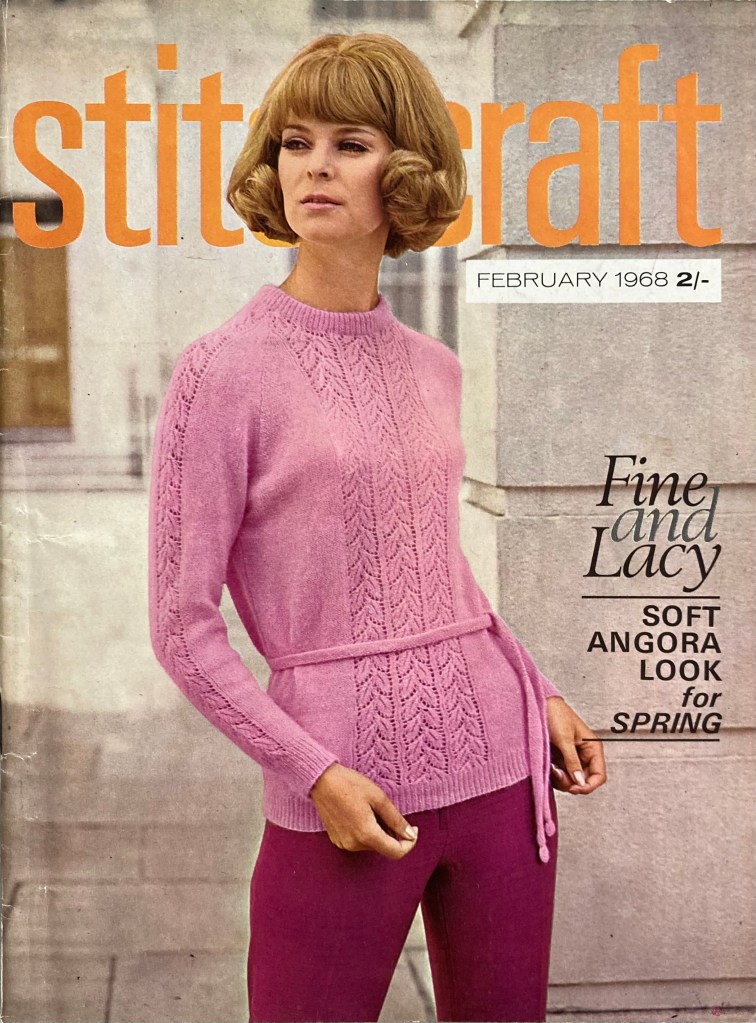
Happy May Day, everyone! Stitchcraft‘s “summer mood” is enhanced by a new layout format with more colour photos, distributed on single pages throughout the magazine. There are “soft colours” for the “gentle fashion look” as promised on the front cover, “Colour Bold and Bright” featured on the back cover, and some earthy rust-orange tones as well as natural or white garments. Diagonal lines, zigzags, chevrons, and stripes show up in the pattern stitches.
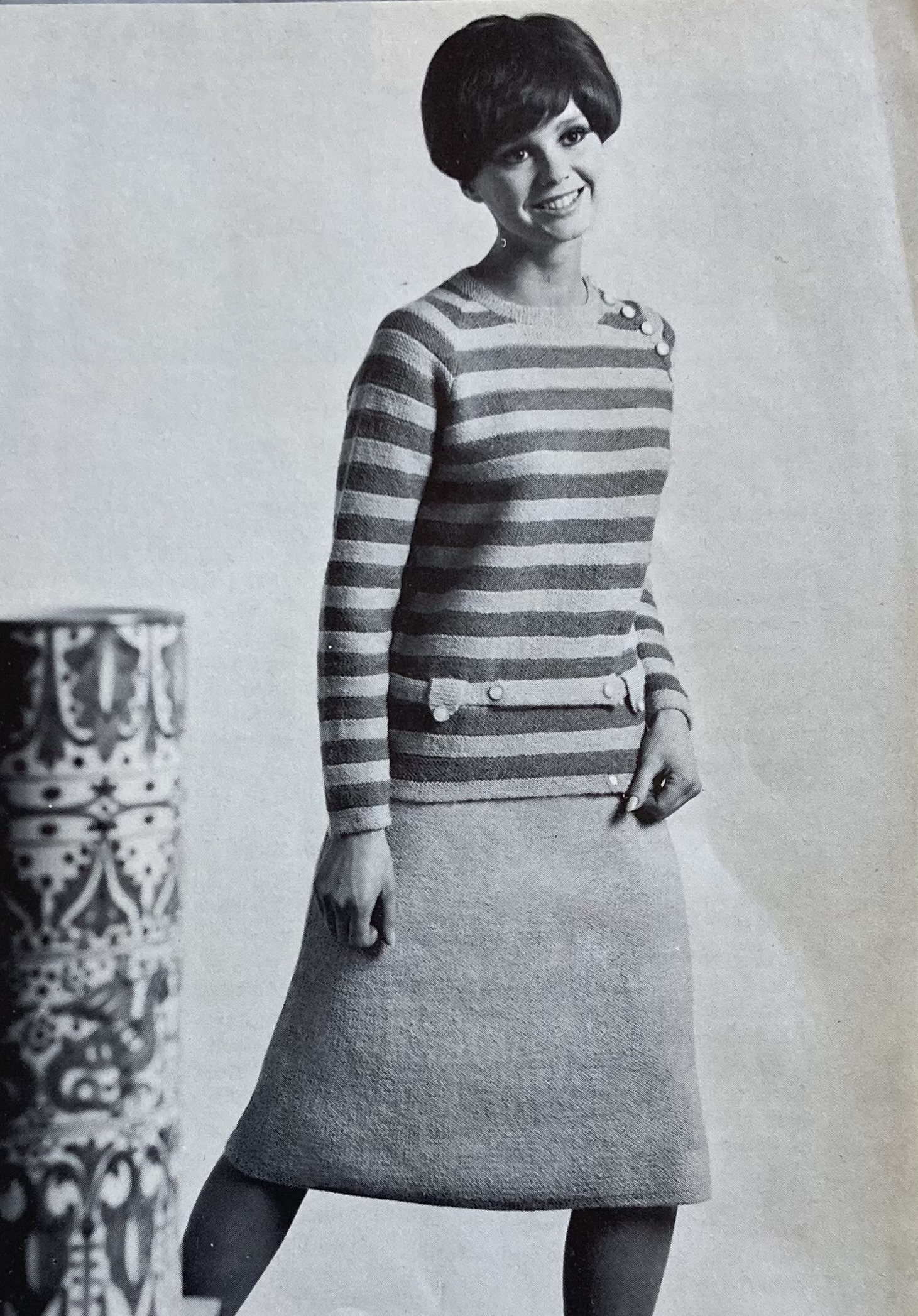
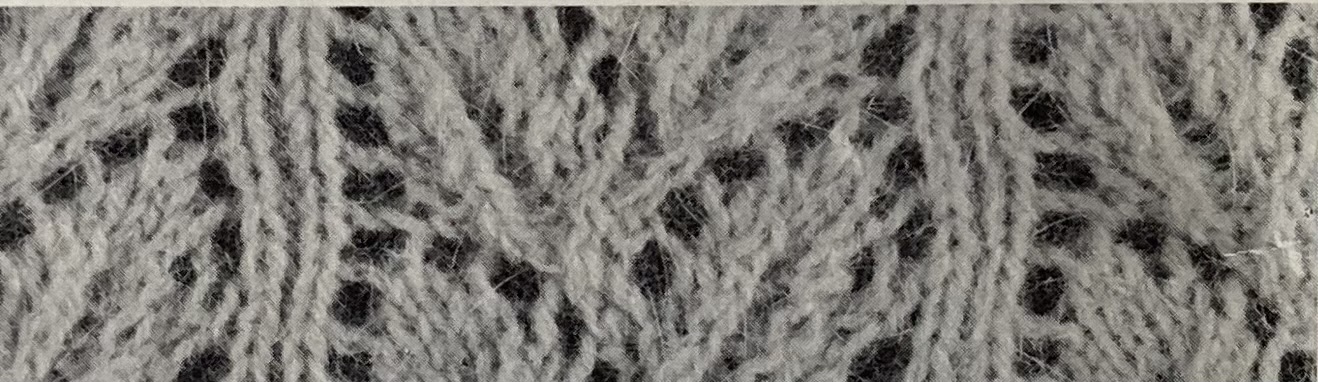
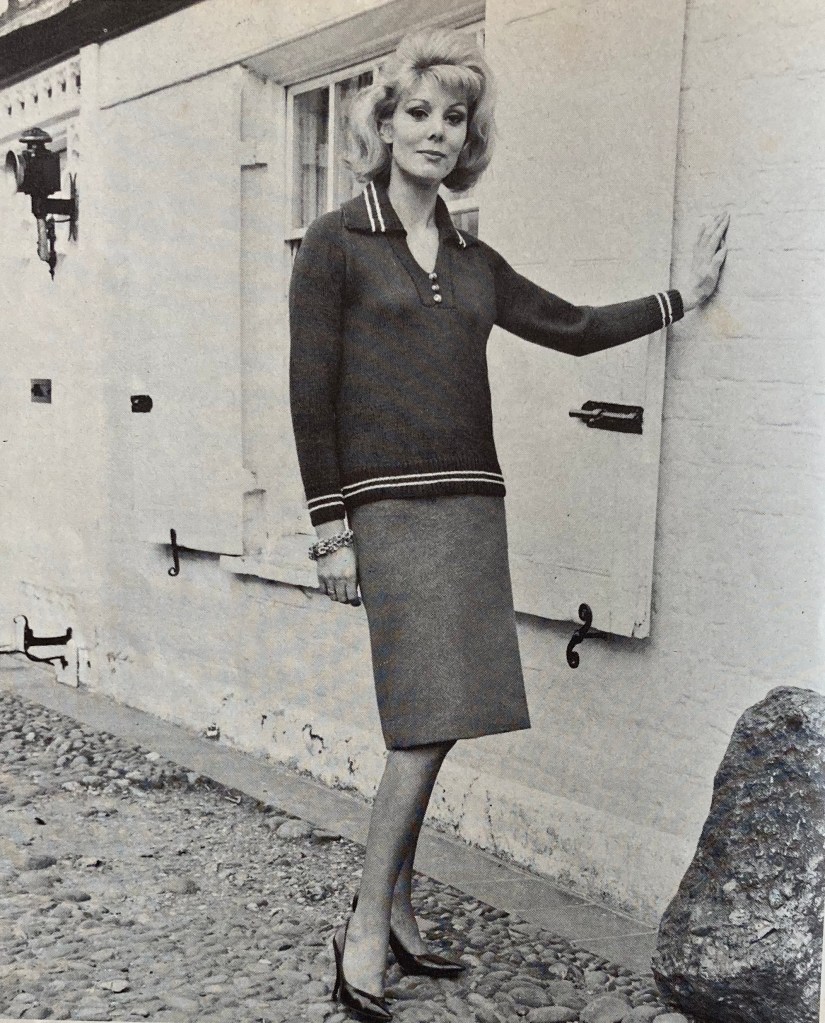
The “gently styled” skirt set on the cover is worked in twisted garter stitch (every row knit through the back loops) and has a choice of mini- or just-above-the-knee-length skirt. The purely decorative belt is held in place by little buttoned tabs, and the jumper is buttoned at the shoulder. More gentle styles and colours show up a pink and white jumper with a different lattice lace on the sleeves and yoke, a pastel top knit sideways in stripes, and a “romantic little dress” in fluffy “Fuzzy-Wuzzy” angora-mix yarn.
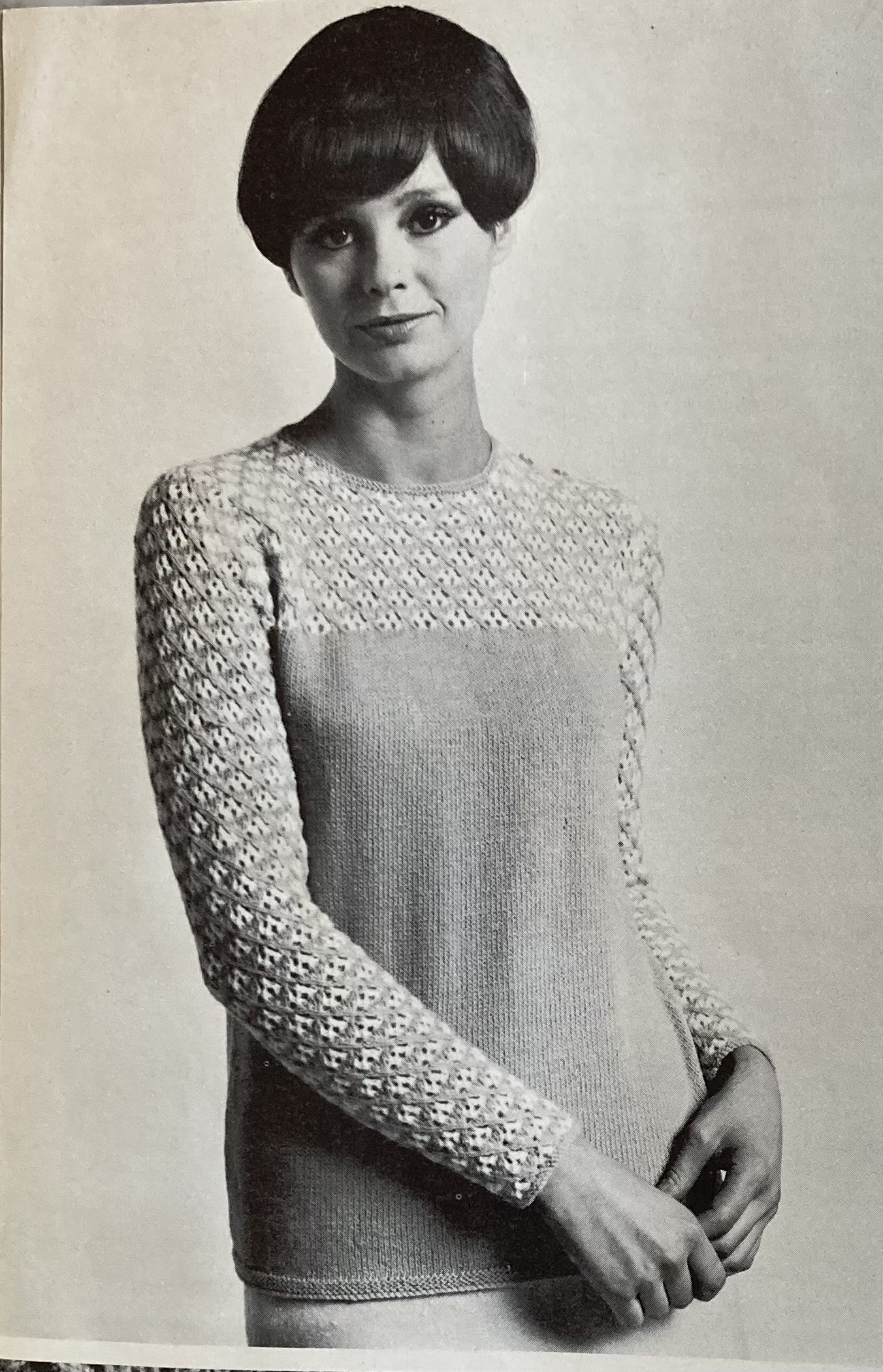
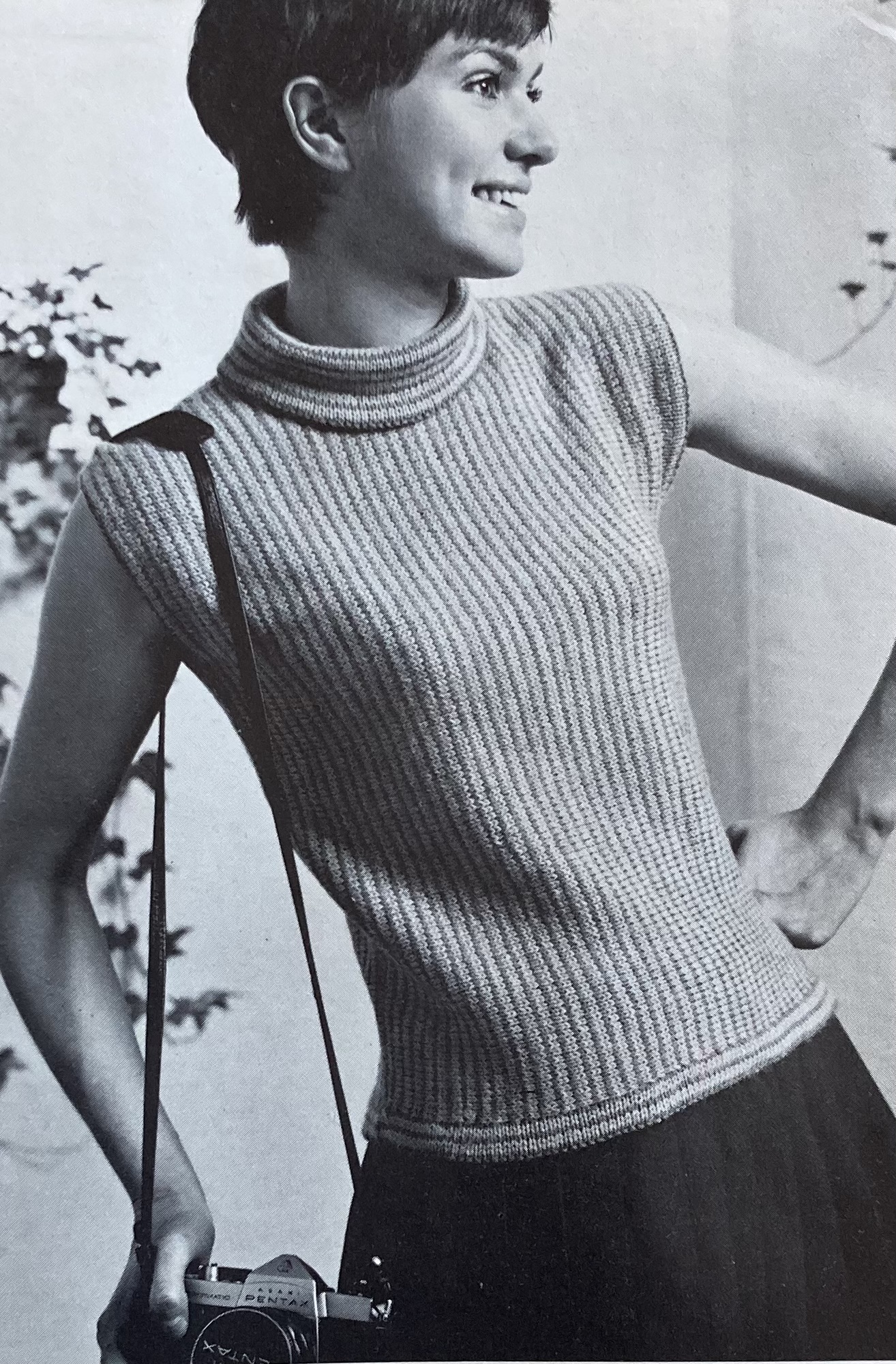
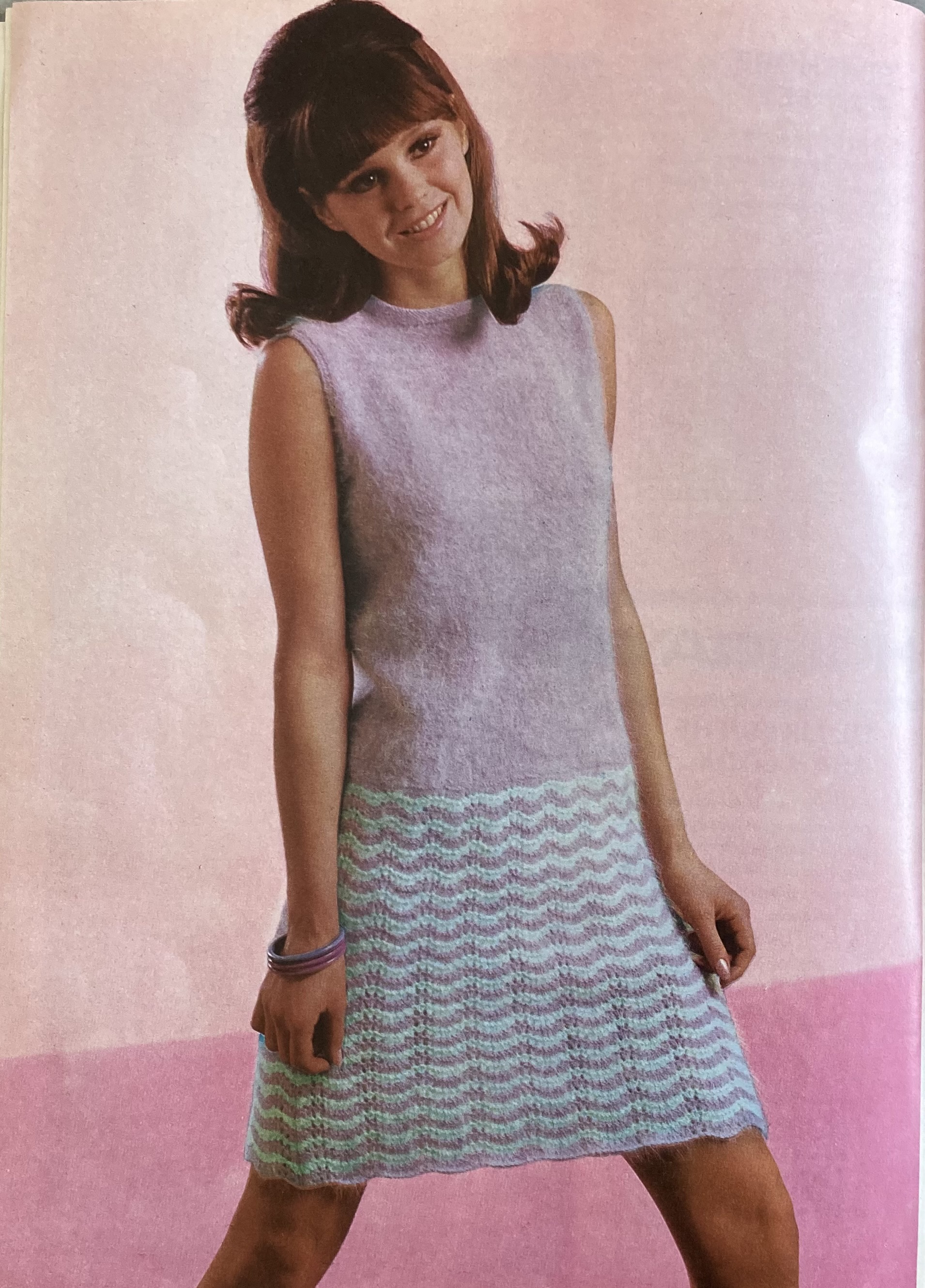
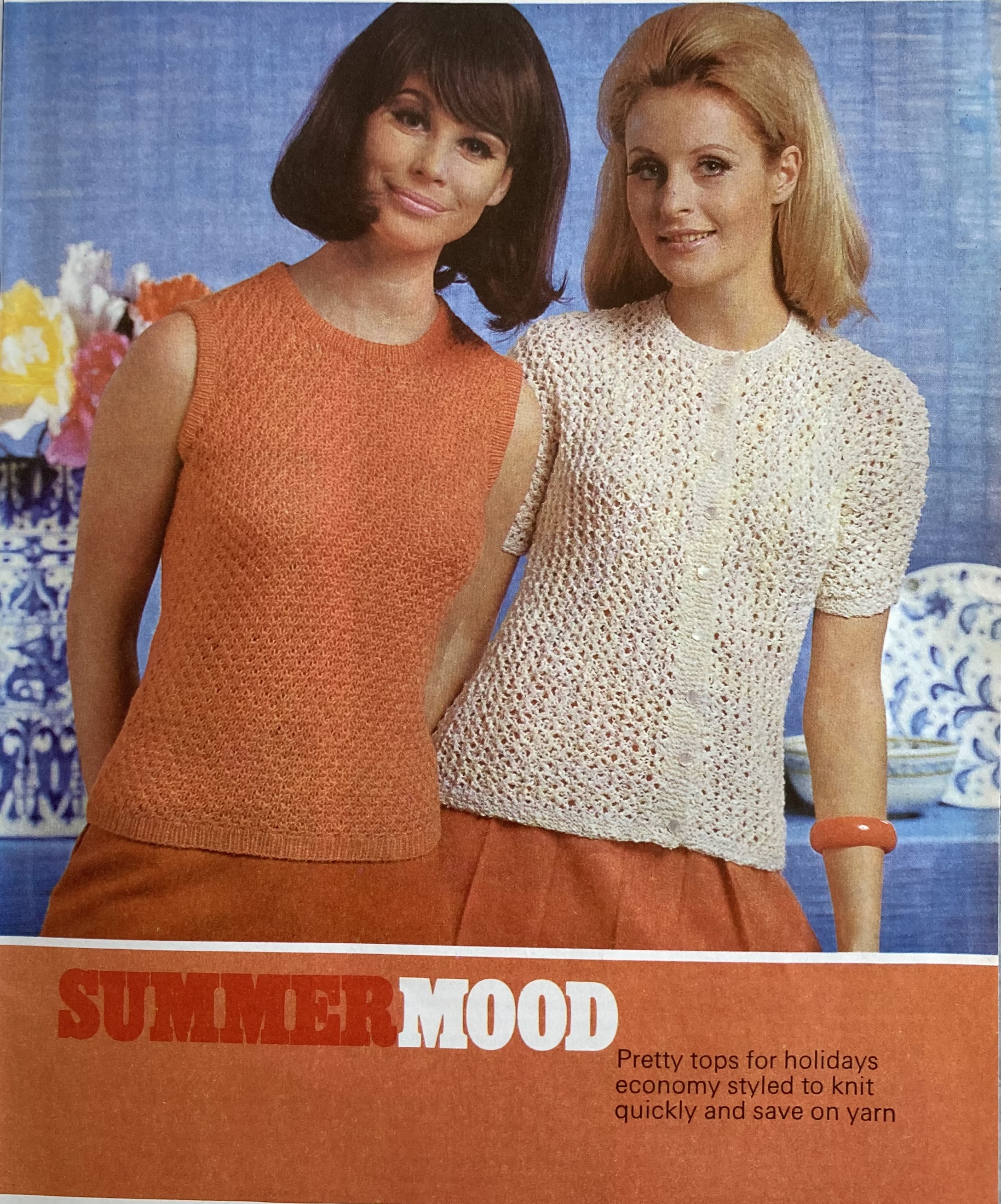
For those who prefer neutrals and earth tones to soft pastels, there are two summery tops to knit in lacy lattice or cluster stitch, And if “bold and bright” is more your style, the pullover on the back cover is warm both in wool and colour.
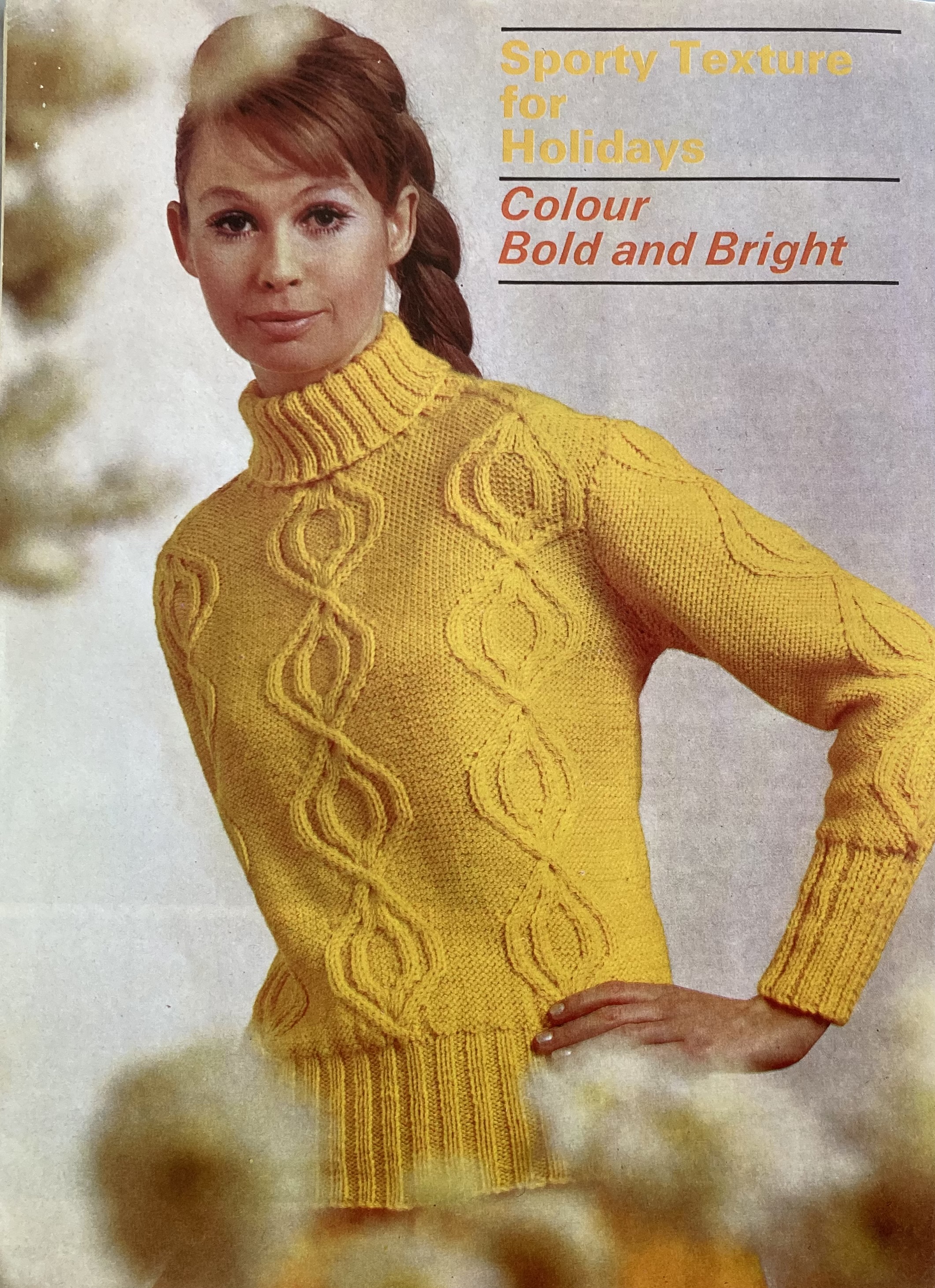
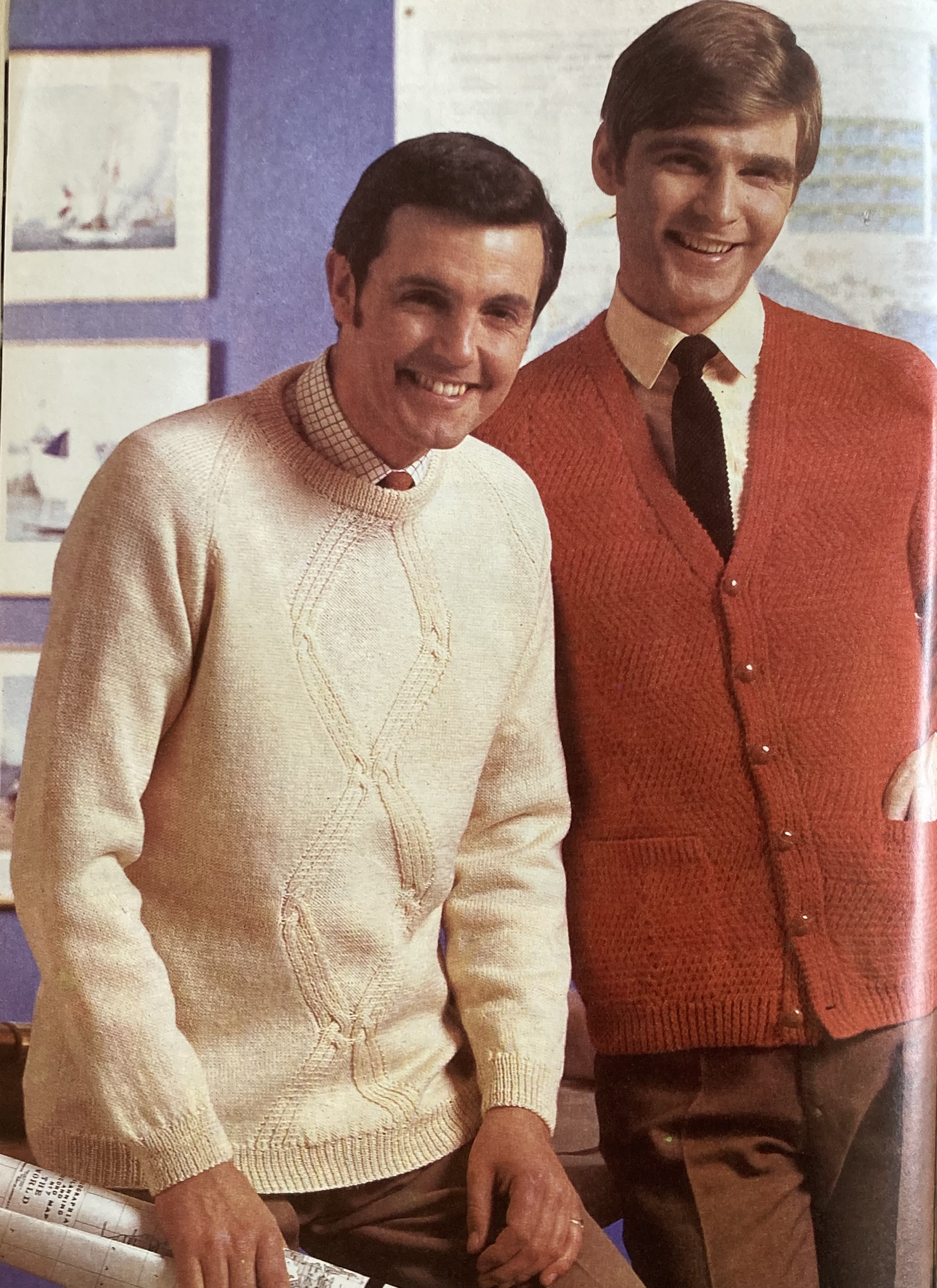
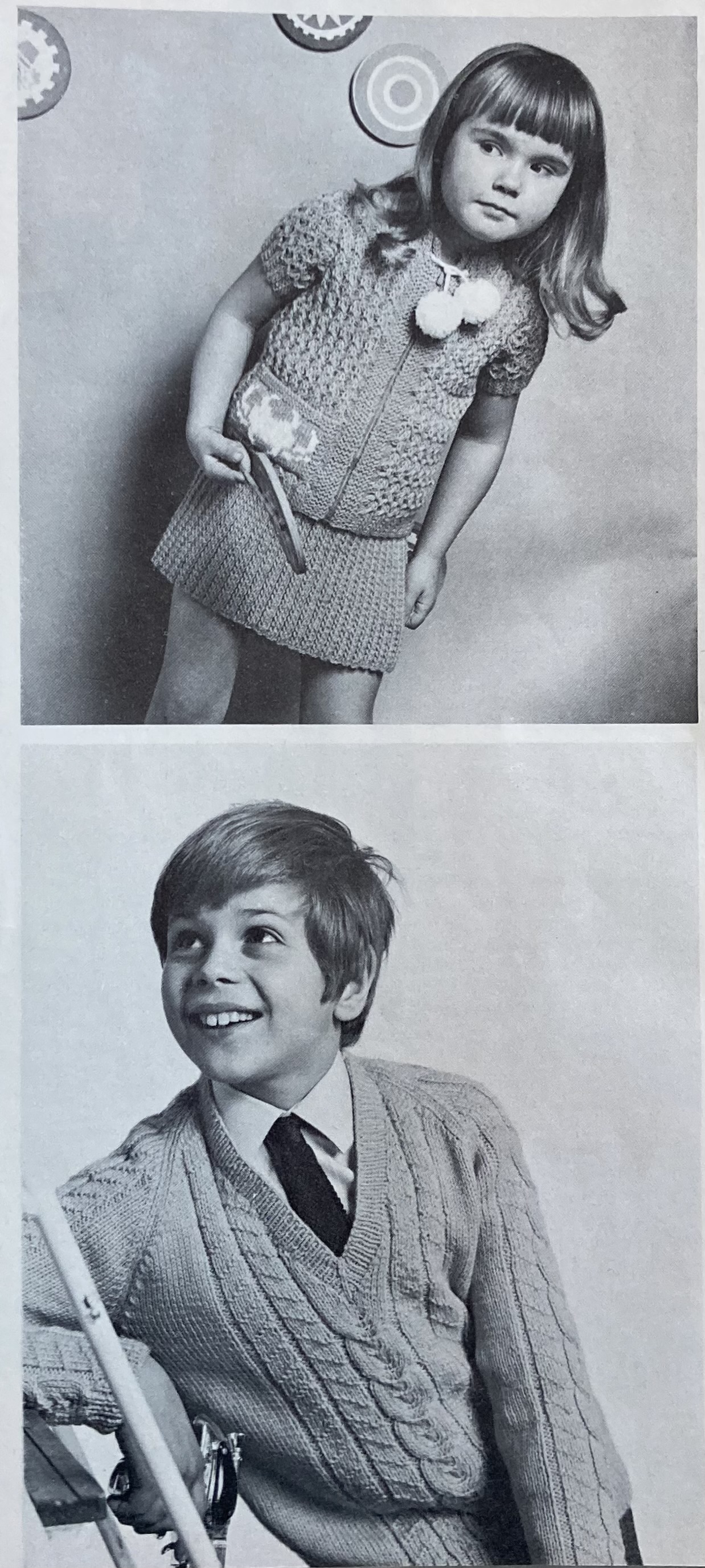
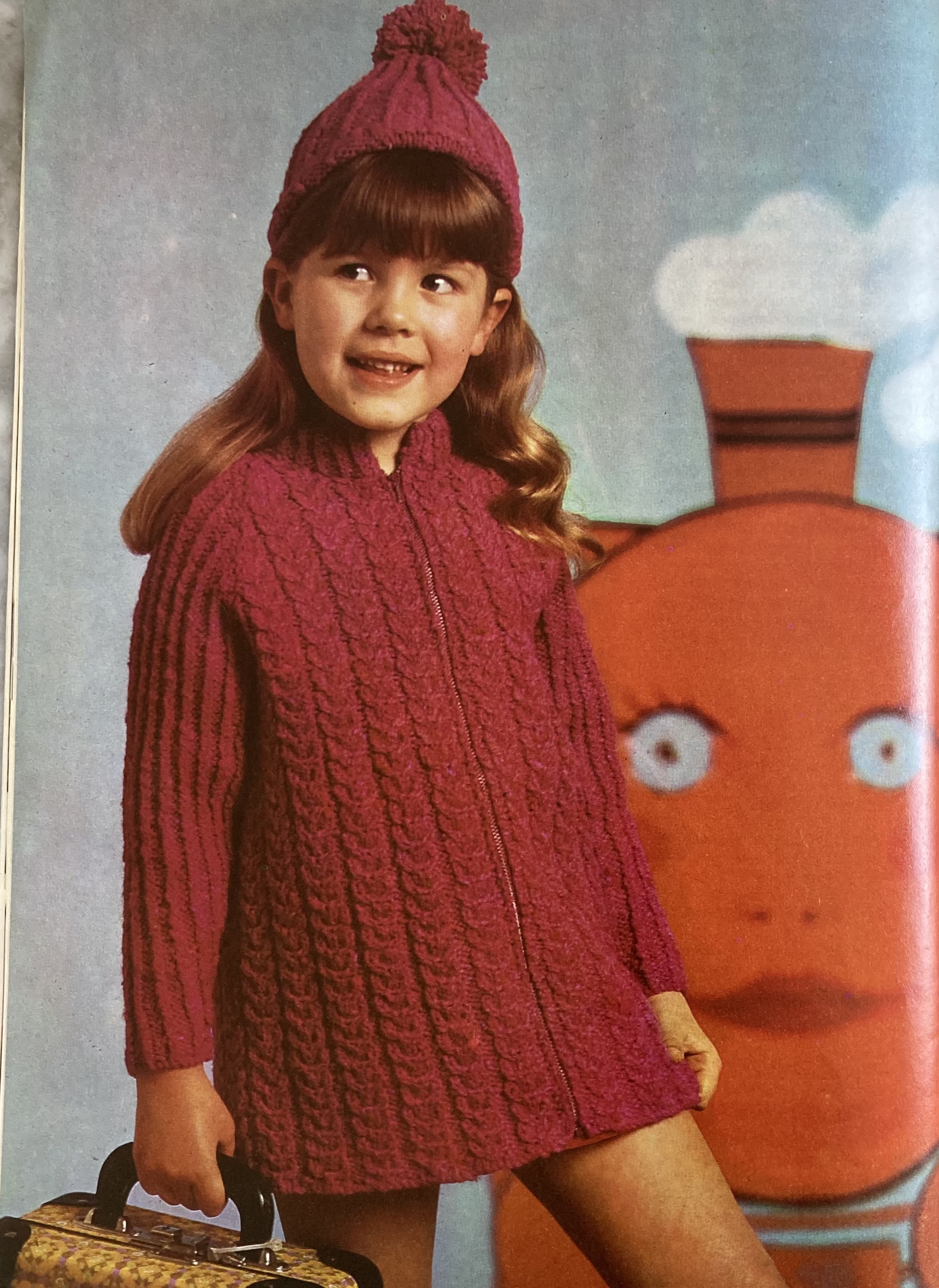
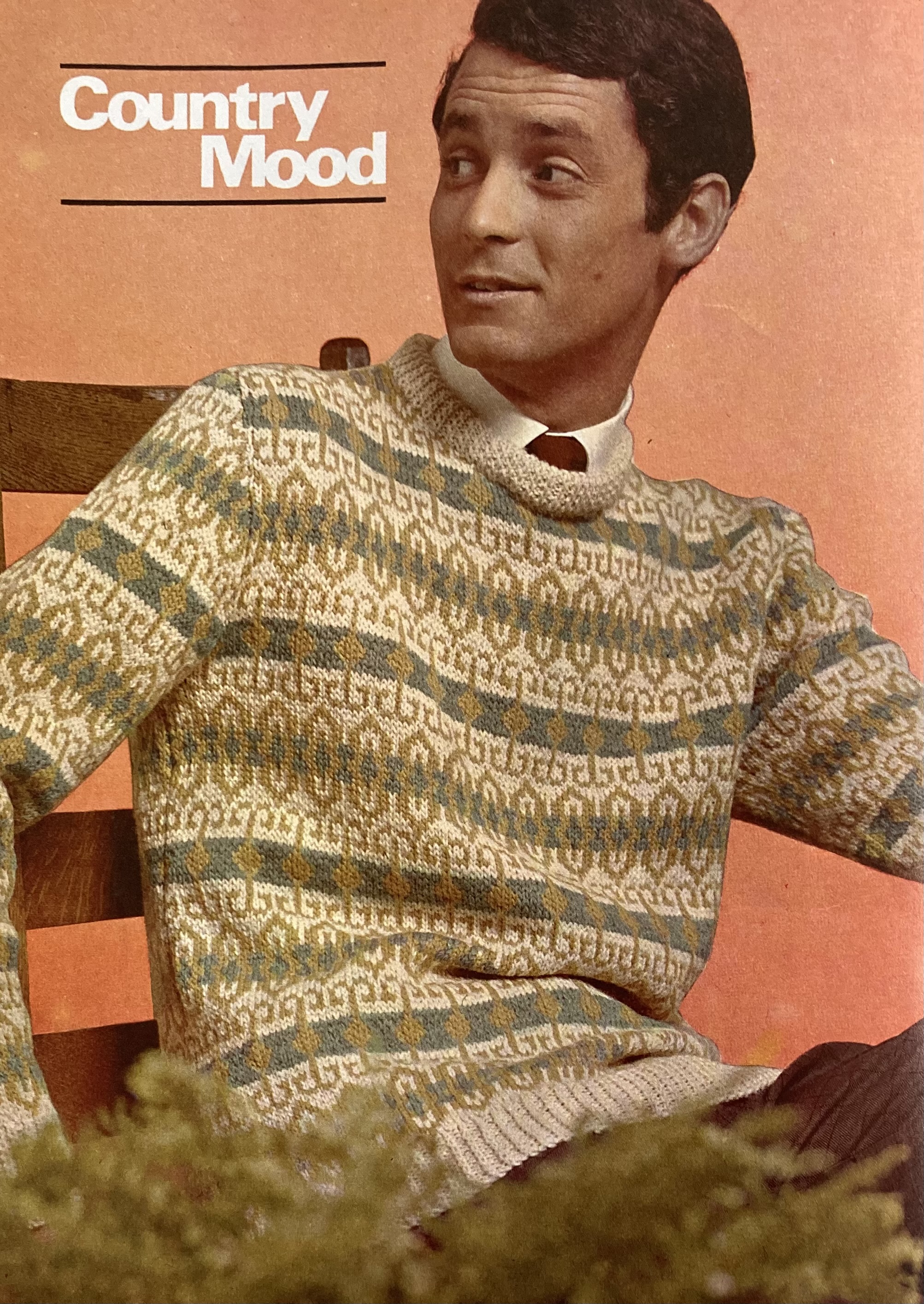
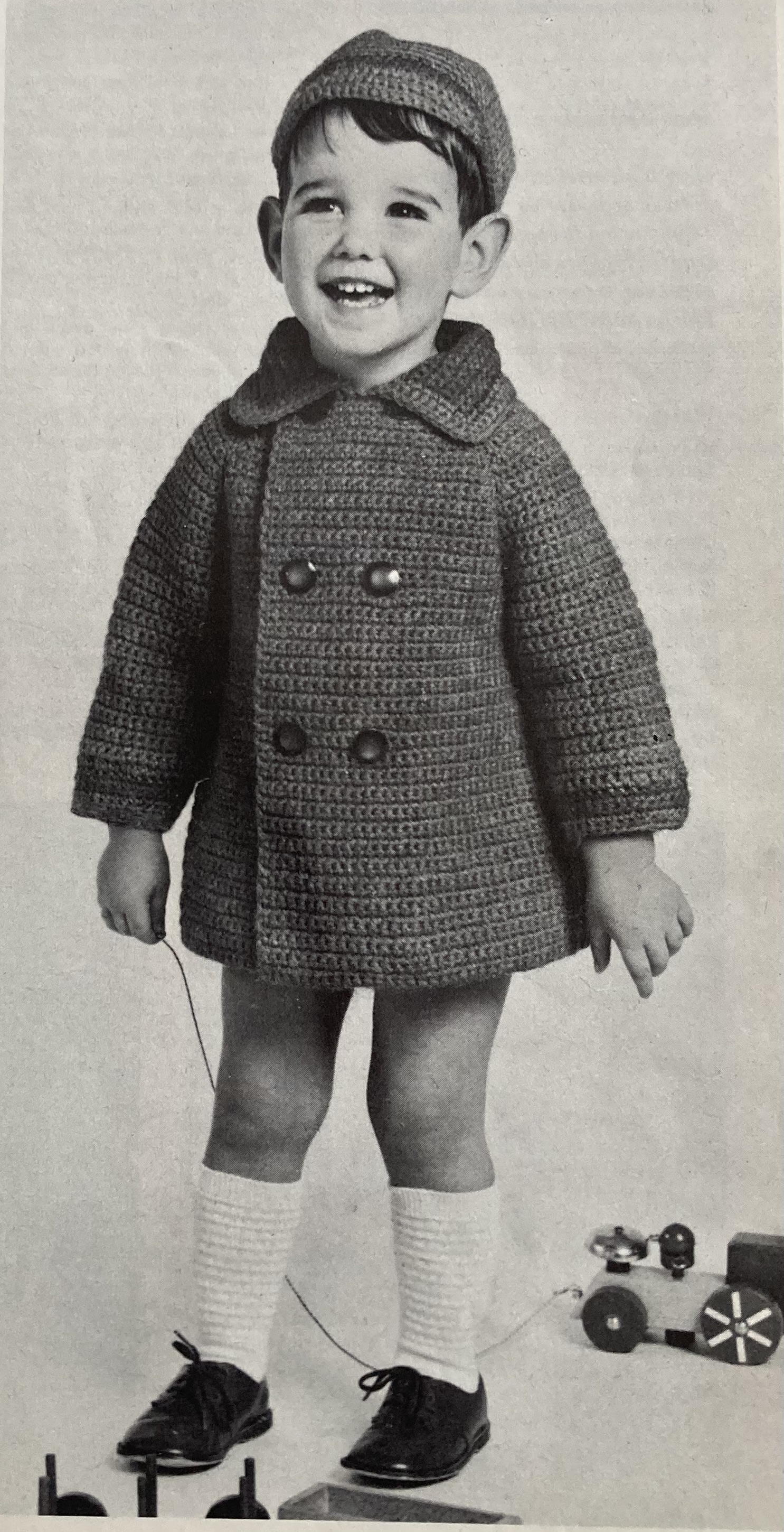
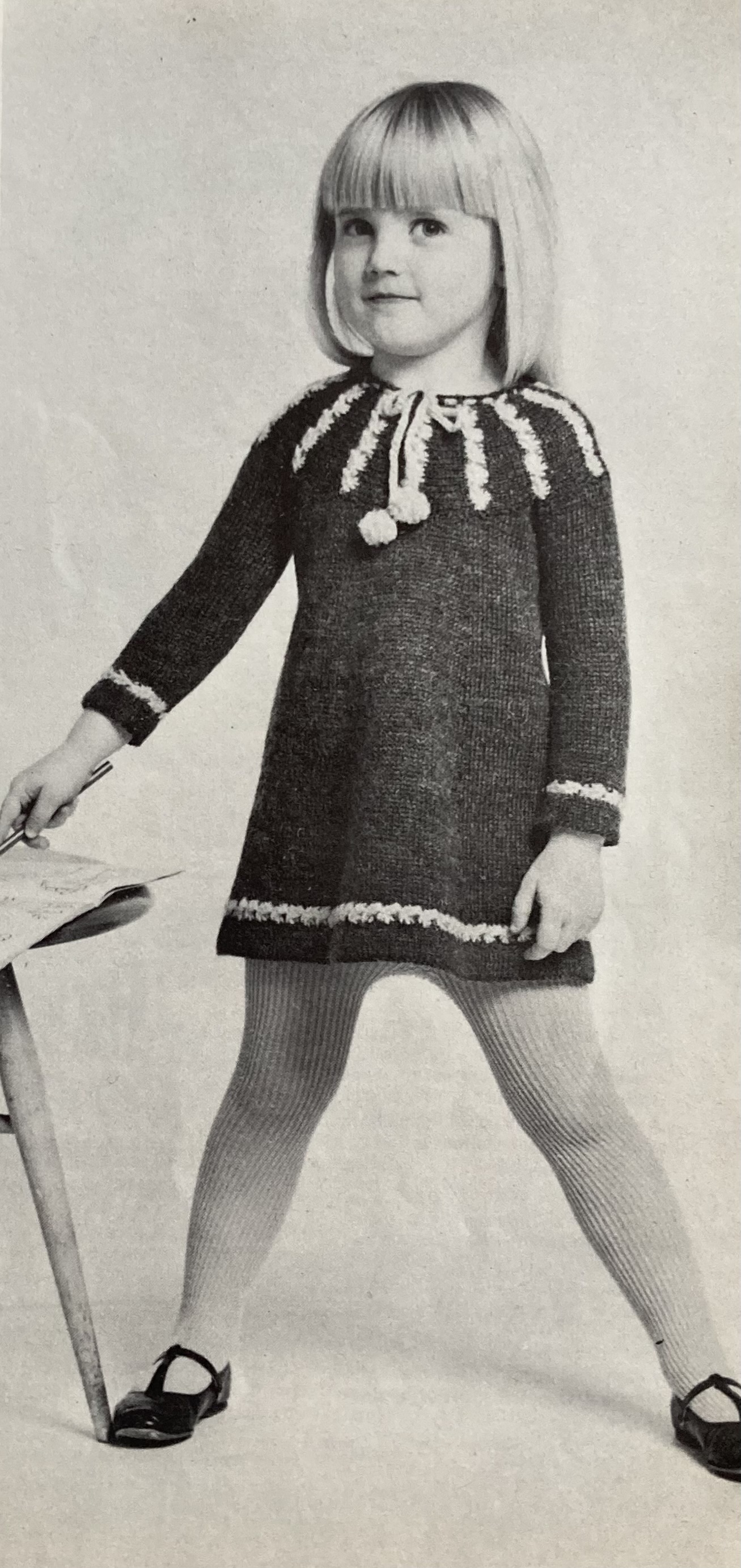
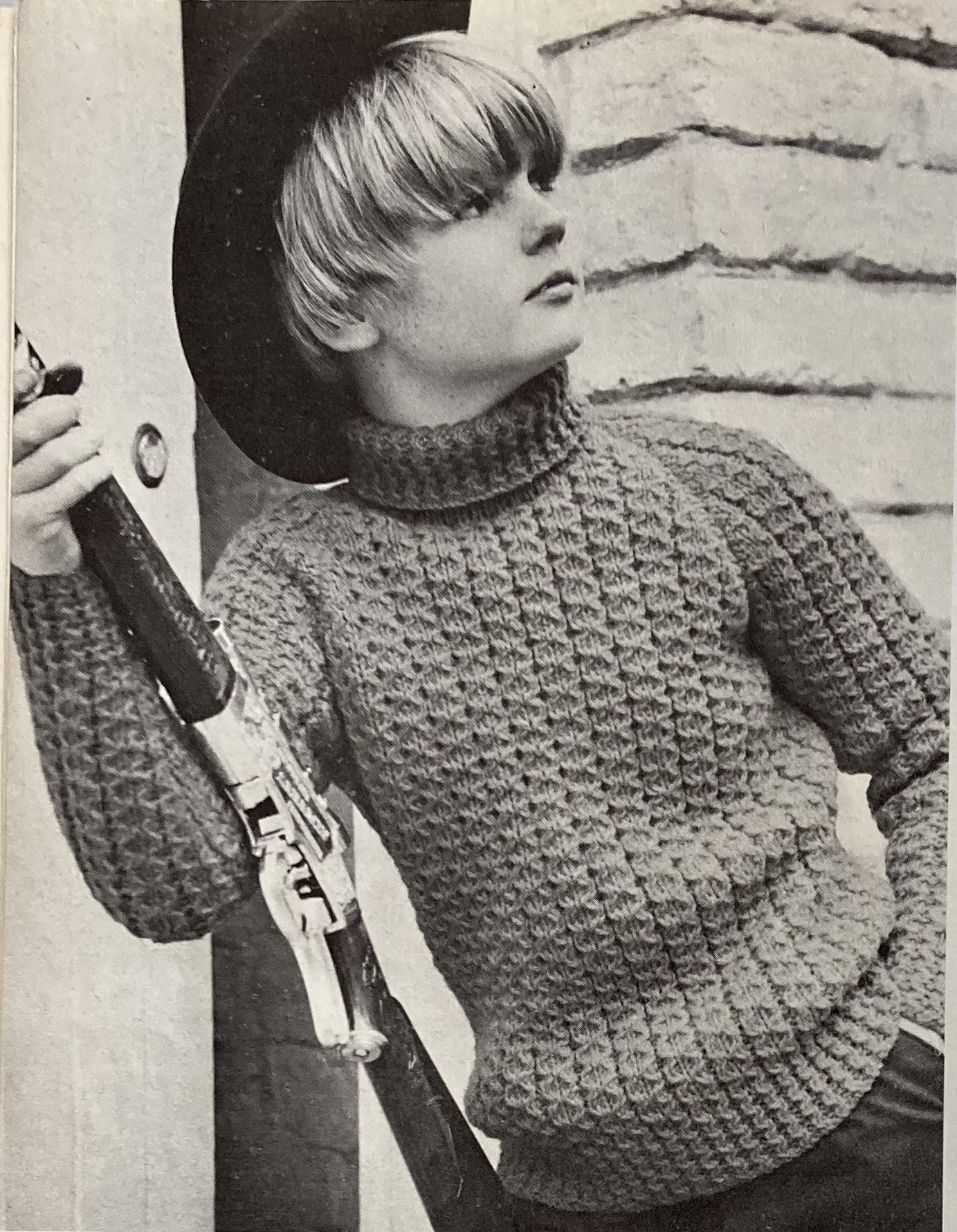
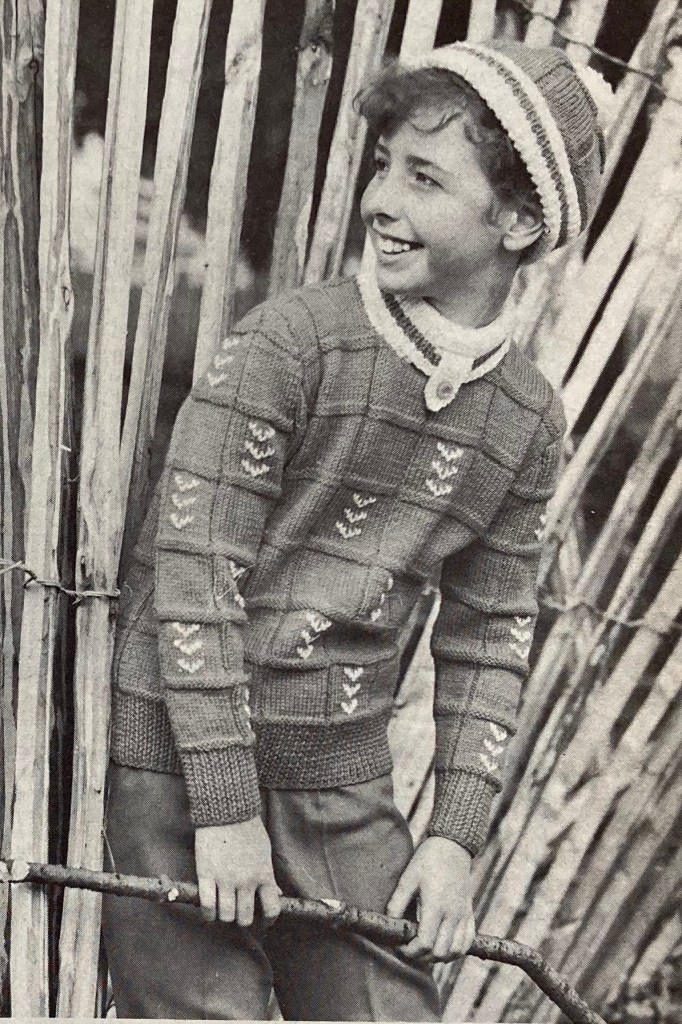
Men can get into the “summer mood” with a comfortable, loose-fitting pullover in natural white or a rust-orange cardigan with practical pockets. They are touted as the “casual, leisurely look” and the two men in the photos are apparently getting set to go hiking or fishing. Nevertheless, a buttoned-up shirt and tie are required! The little boy’s “out-door look” of “comfortable raglan sweater” would also not be complete without a shirt and tie, but he still has it better than his sisters, who are expected to play on the beach in a micro-miniskirt or travel on a cartoon train with no apparent clothing on her lower body at all. The caption says she will be “smart and comfortable on her journey”, which I doubt very much.
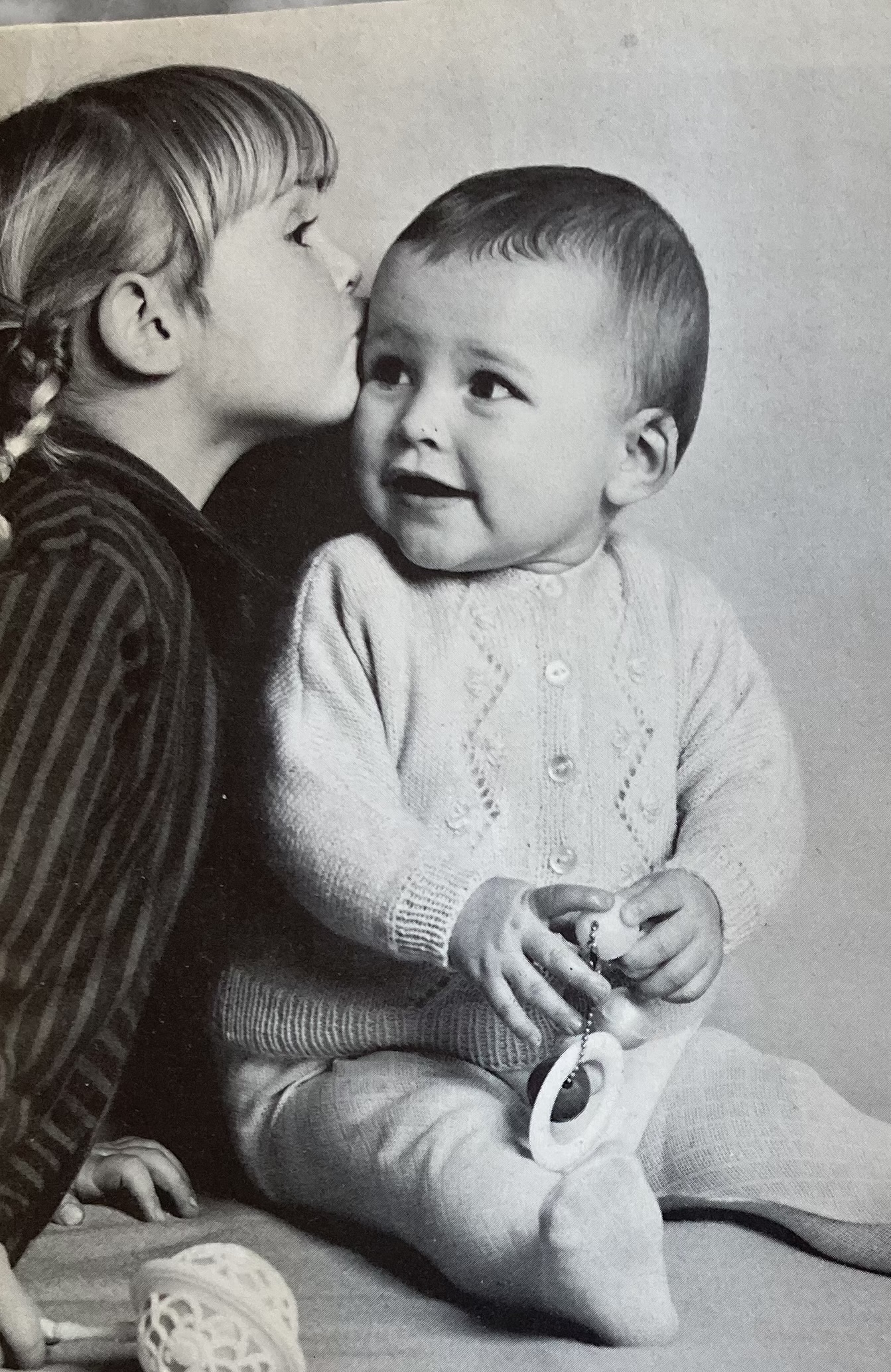
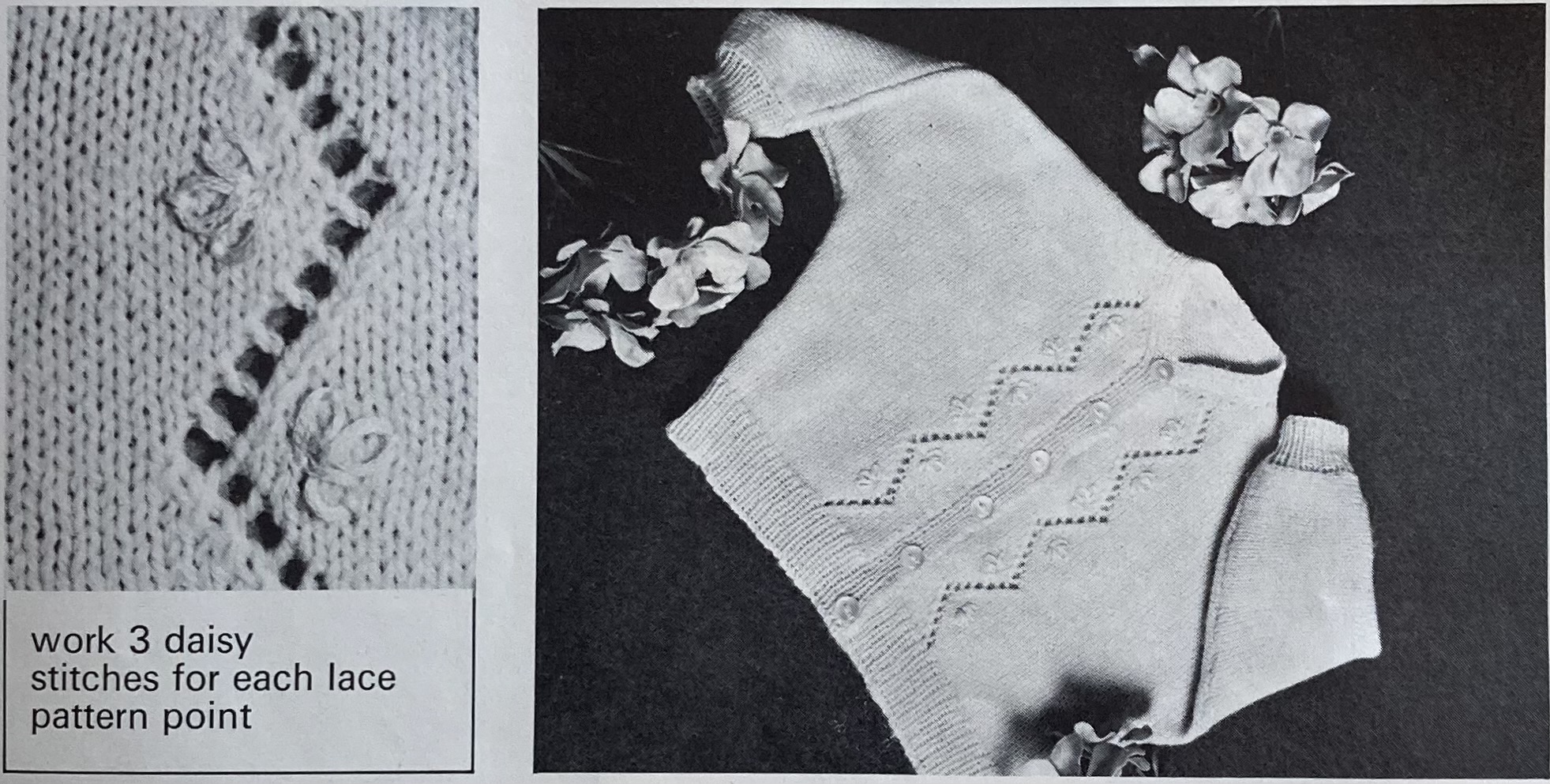
The baby of the family fares much better with not only an embroidered dolman-sleeve cardigan, but actual leggings on its legs. With feet, even! The leggings aren’t hand-knit though, or if they are, there’s no pattern for them in the issue. The diagonal lace pattern on the cardigan is knit in and the little loop flowers are embroidered on later.
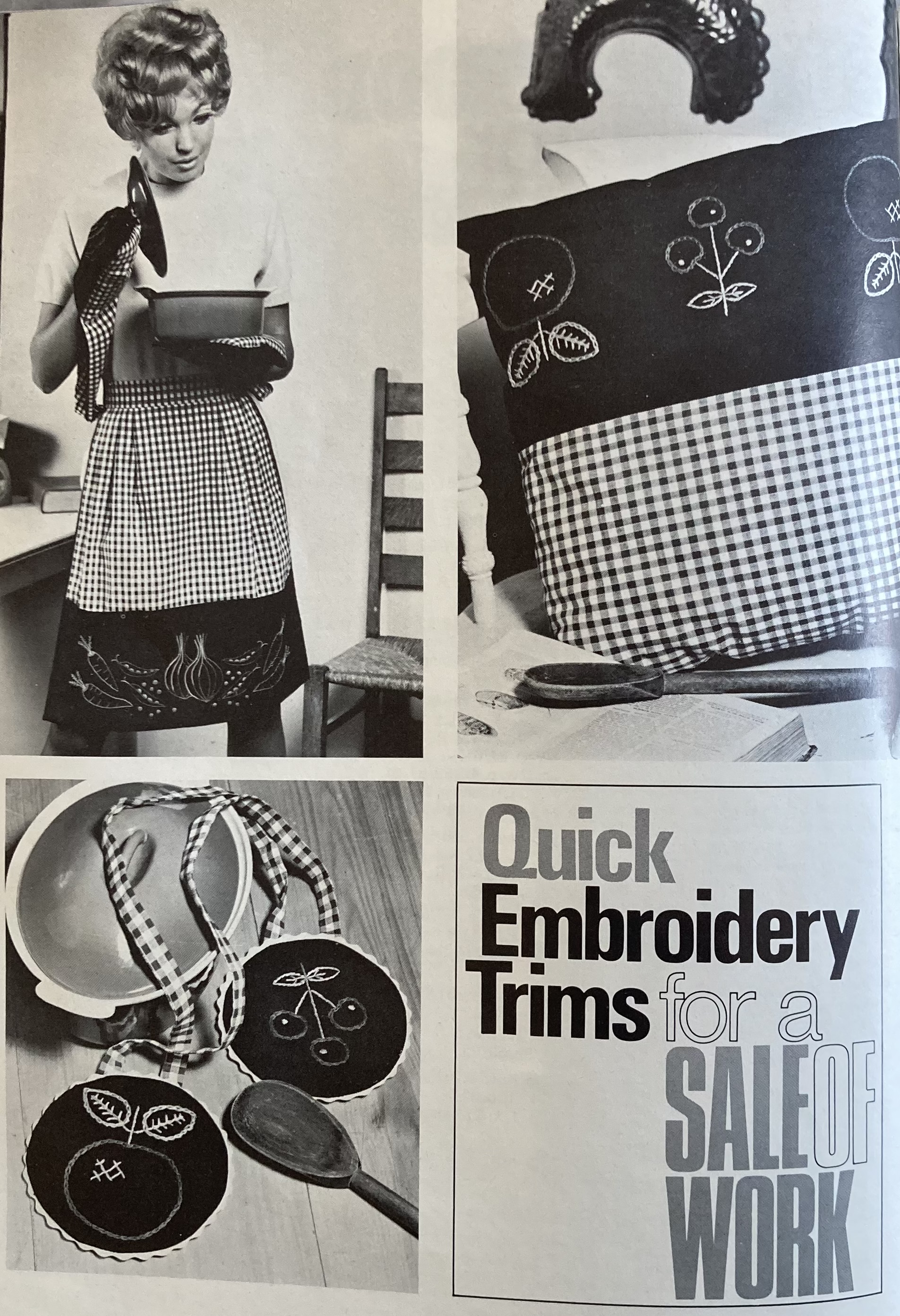
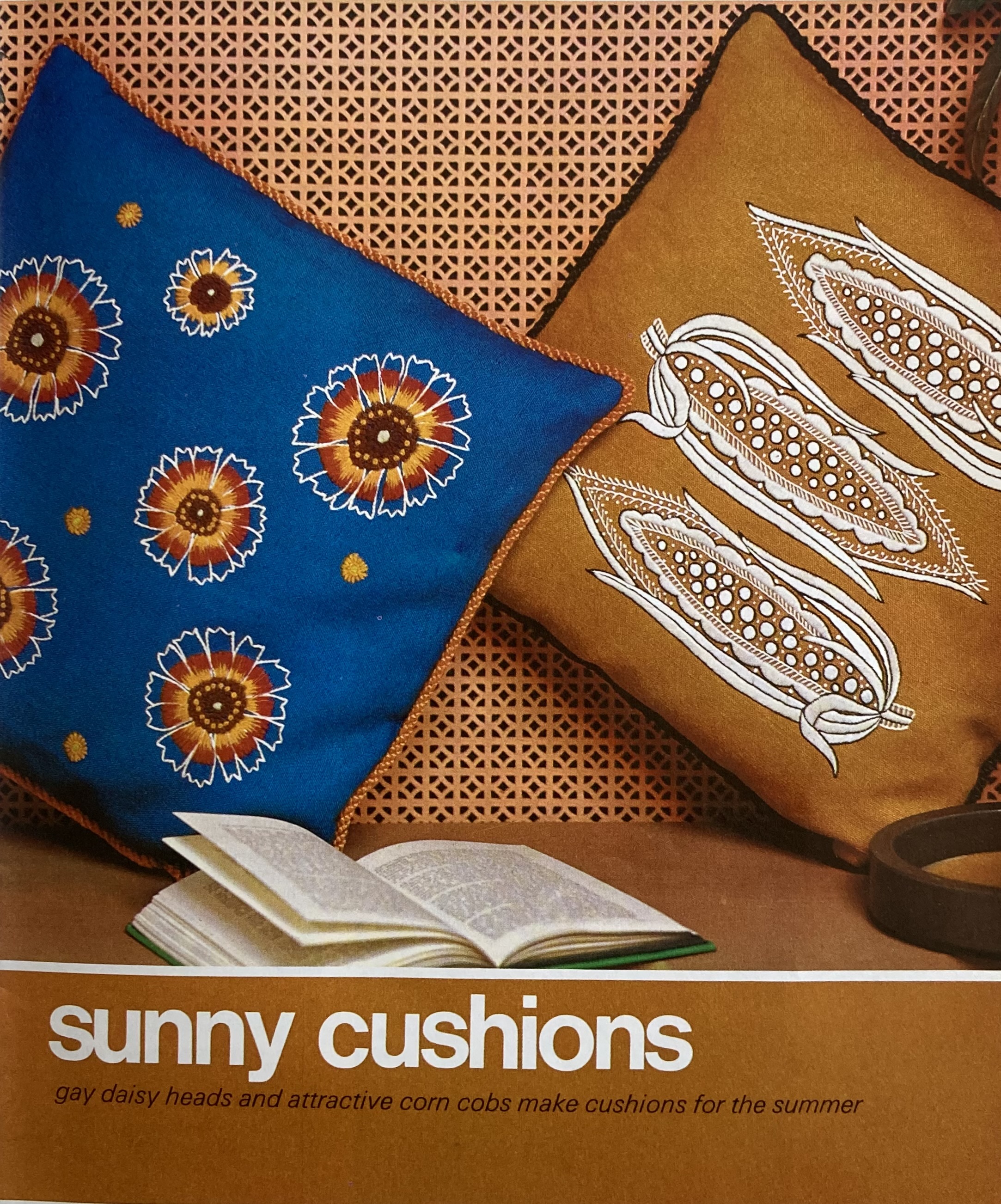
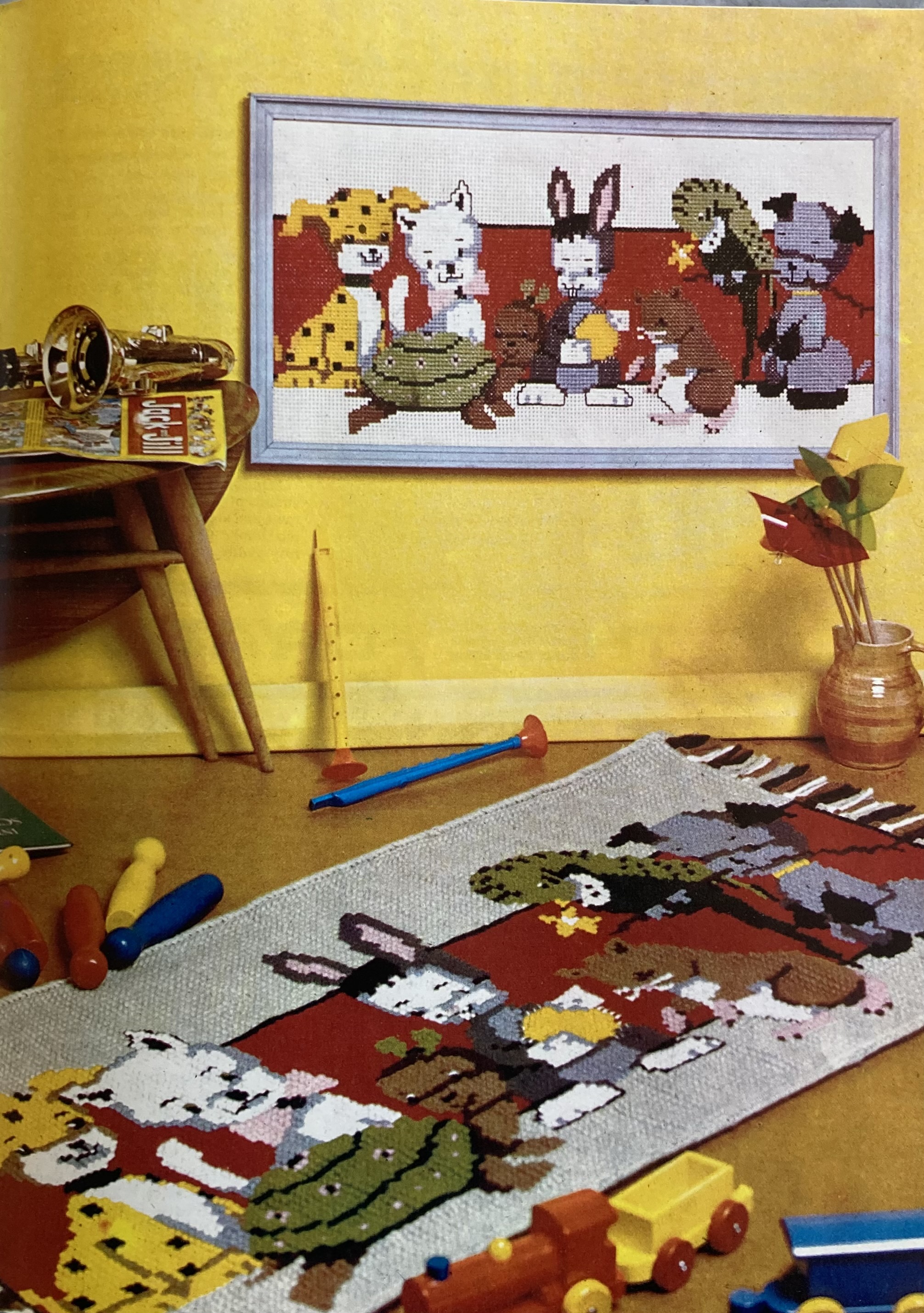
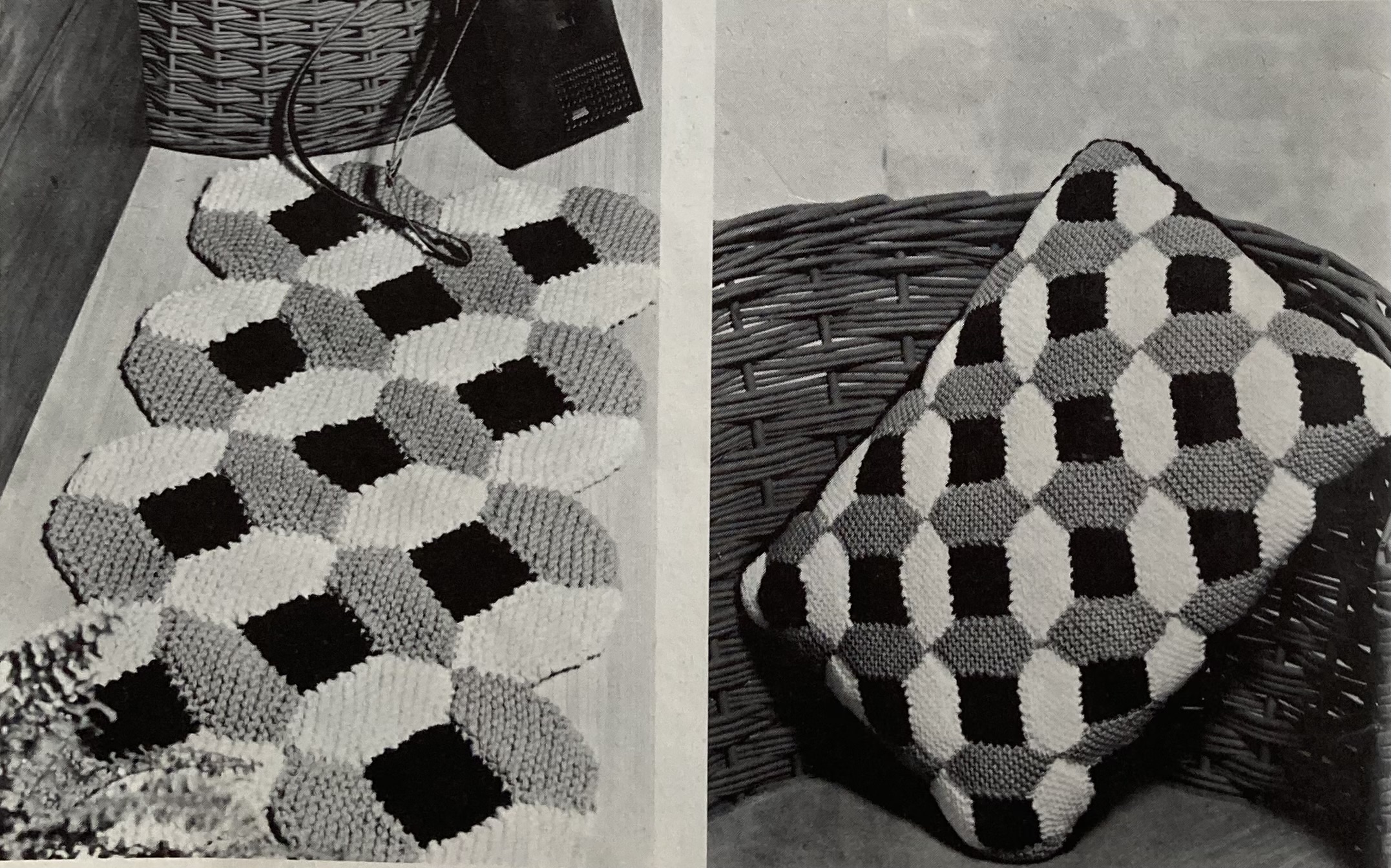
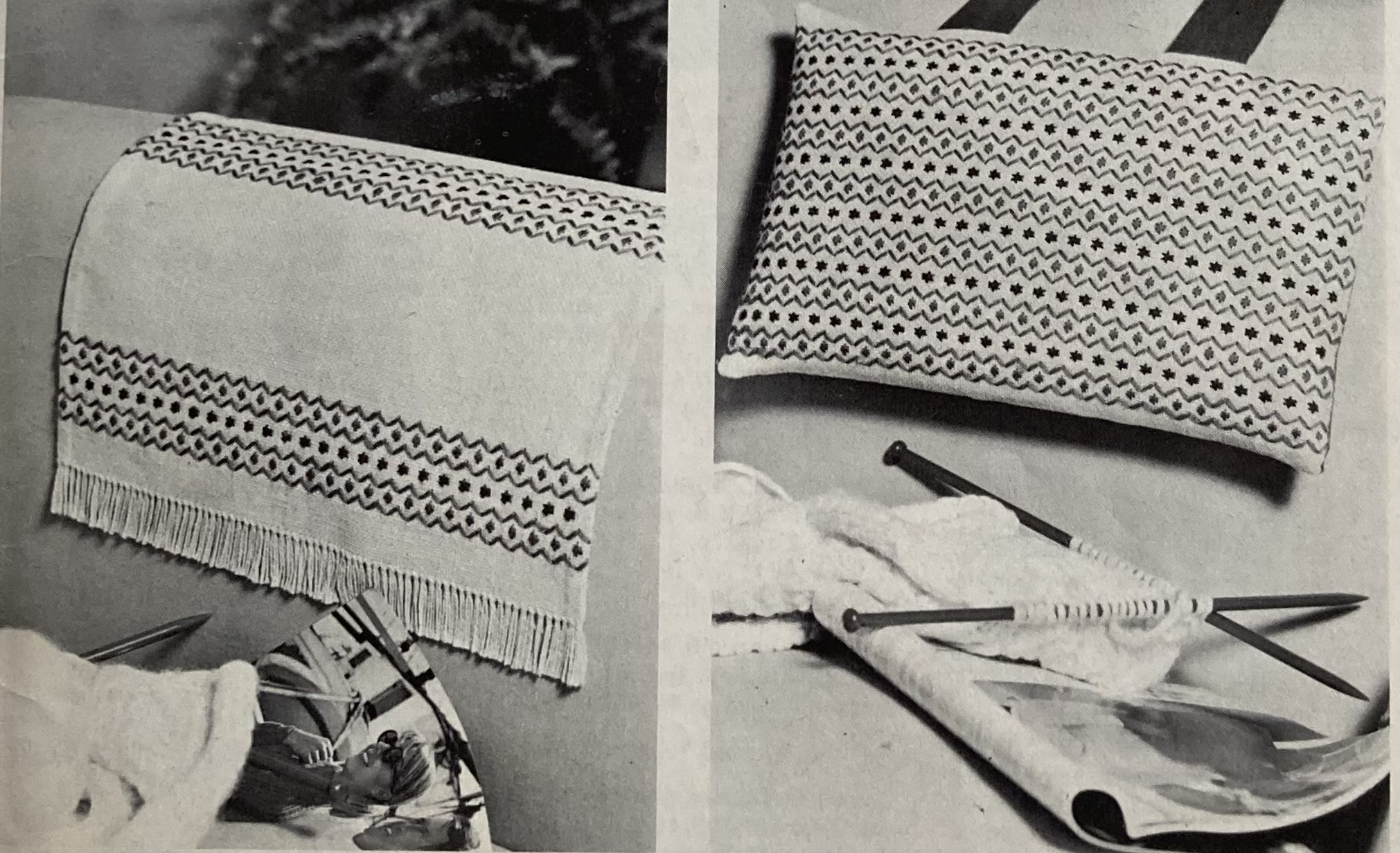
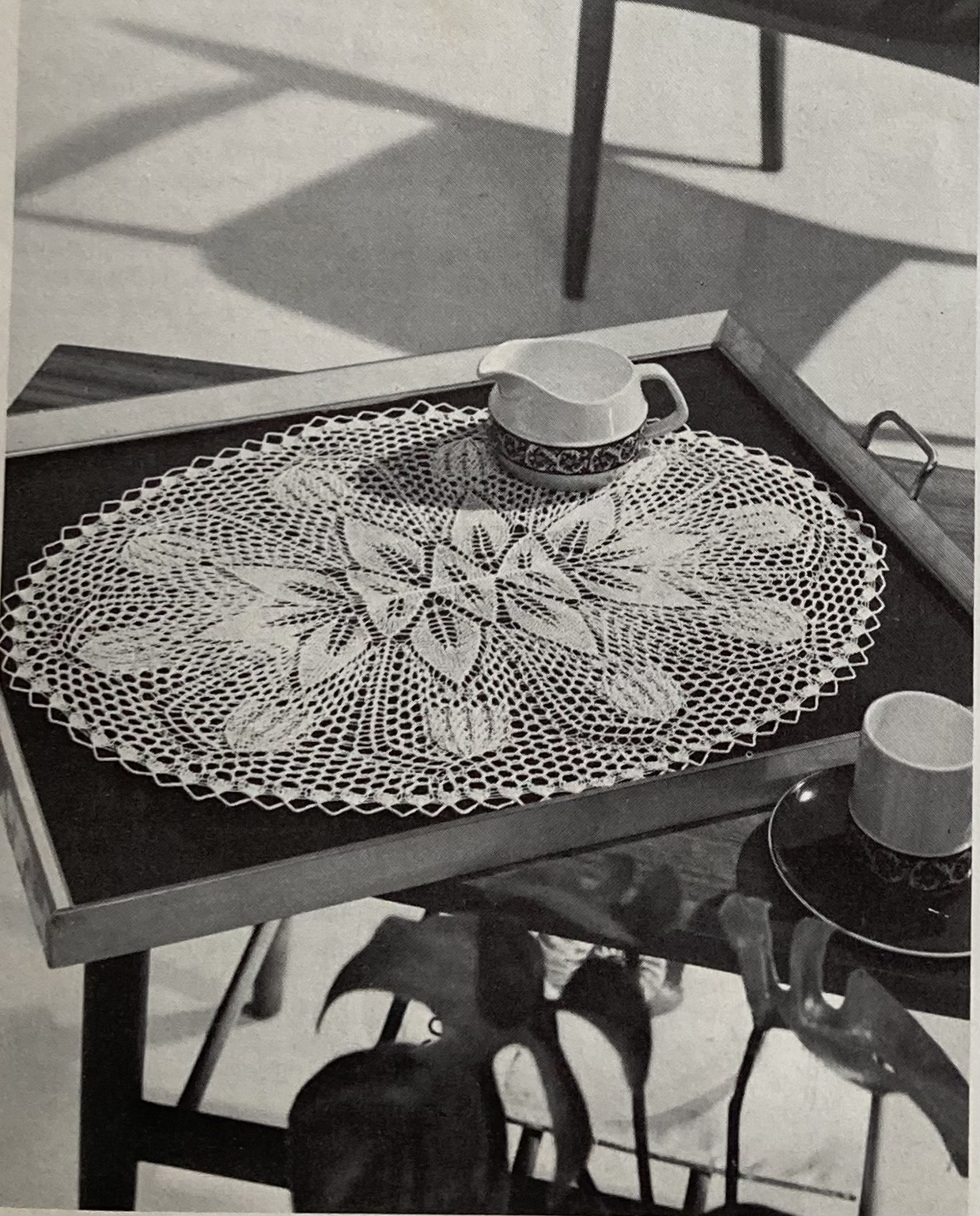
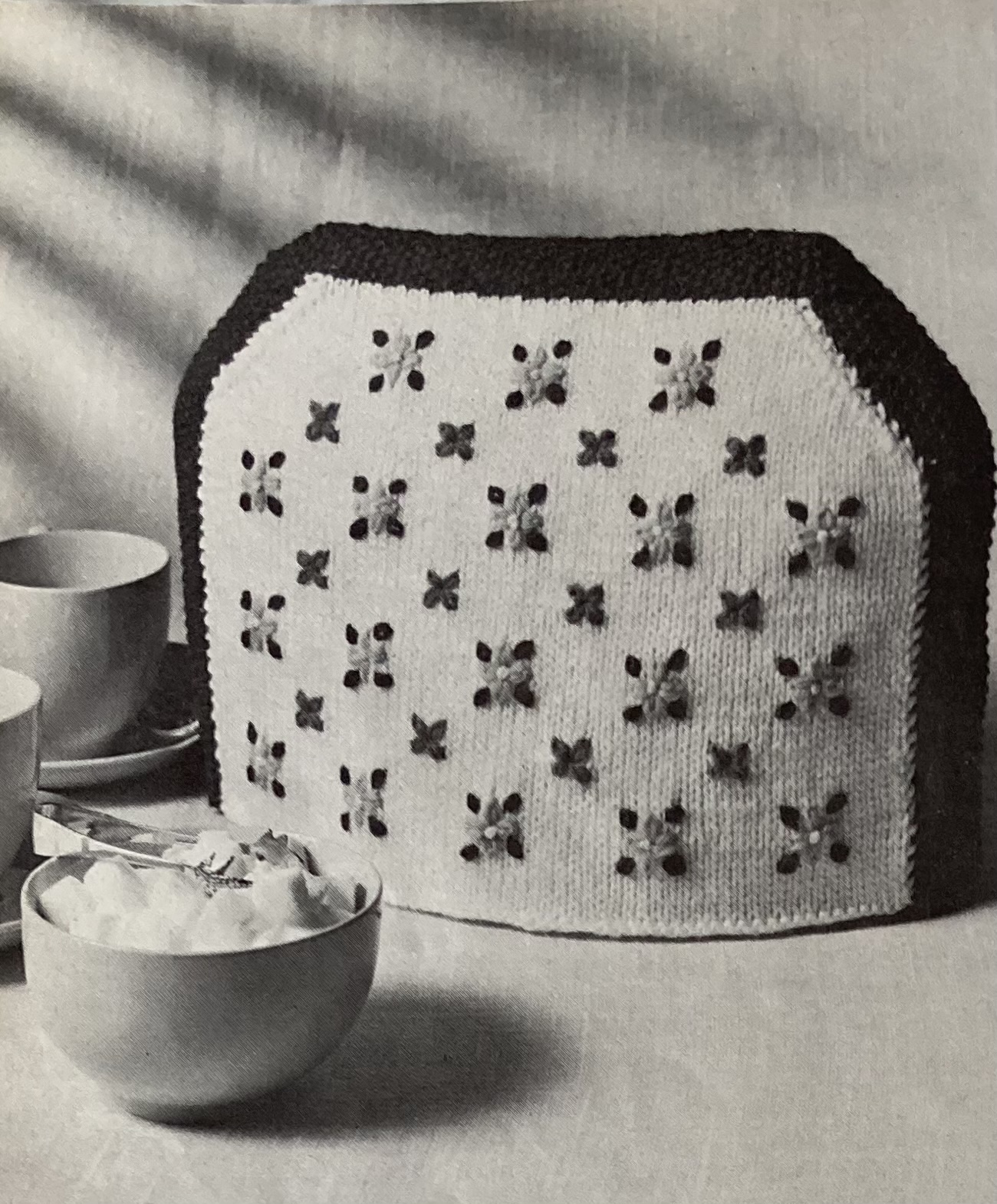
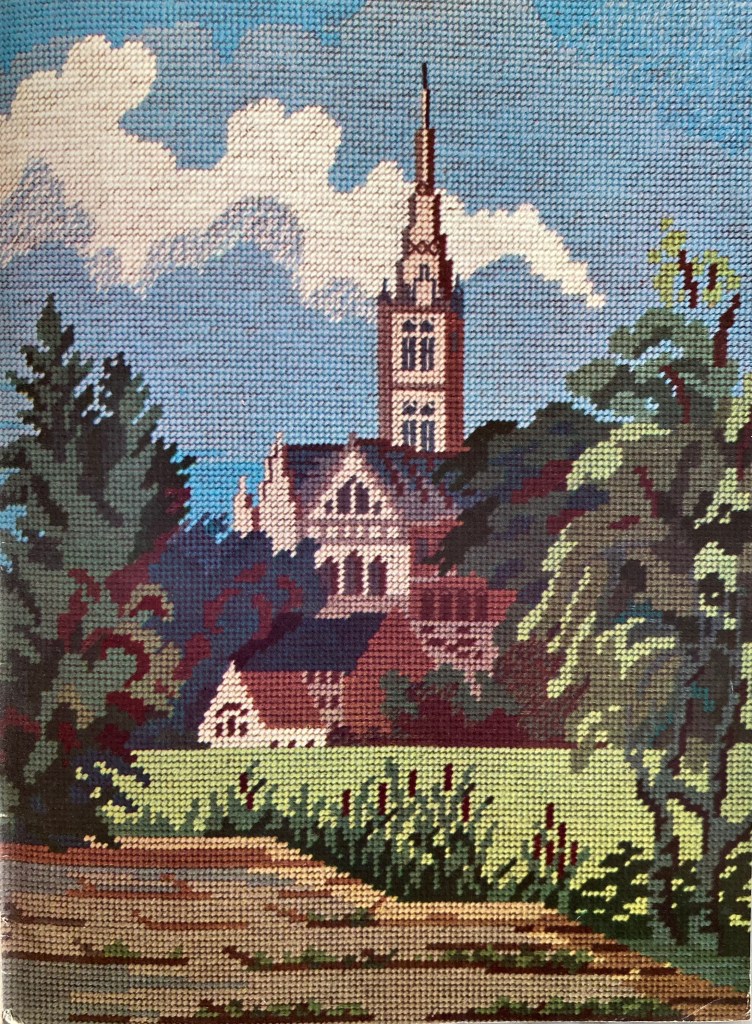
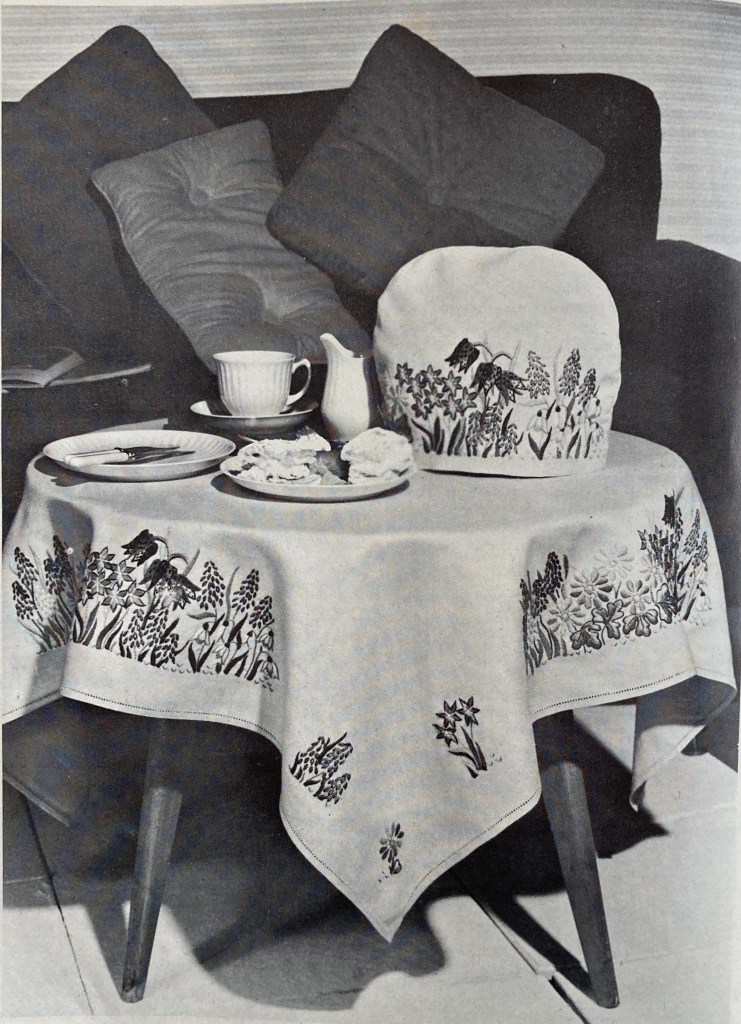
The homewares and needlework designs are quick and easy, in keeping with both the casual summer mood and the general trend of needlework designs becoming simpler and more practical as the 1960s progress. The last few issues of Stitchcraft have featured a single, simple embroidery design that can be adapted to decorate all kinds of different homewares. This time, it’s quick trims of fruit and vegetables to put on a gingham apron, cushion, or pot holders. The agricultural theme continues with daisy (? I have never seen an orange daisy, but whatever) and corn-cob cushion motifs. For the nursery, you can make a cross-stitch wall hanging or rug with the little pet animals featured in the children’s comics from the last and next few issues of Stitchcraft.
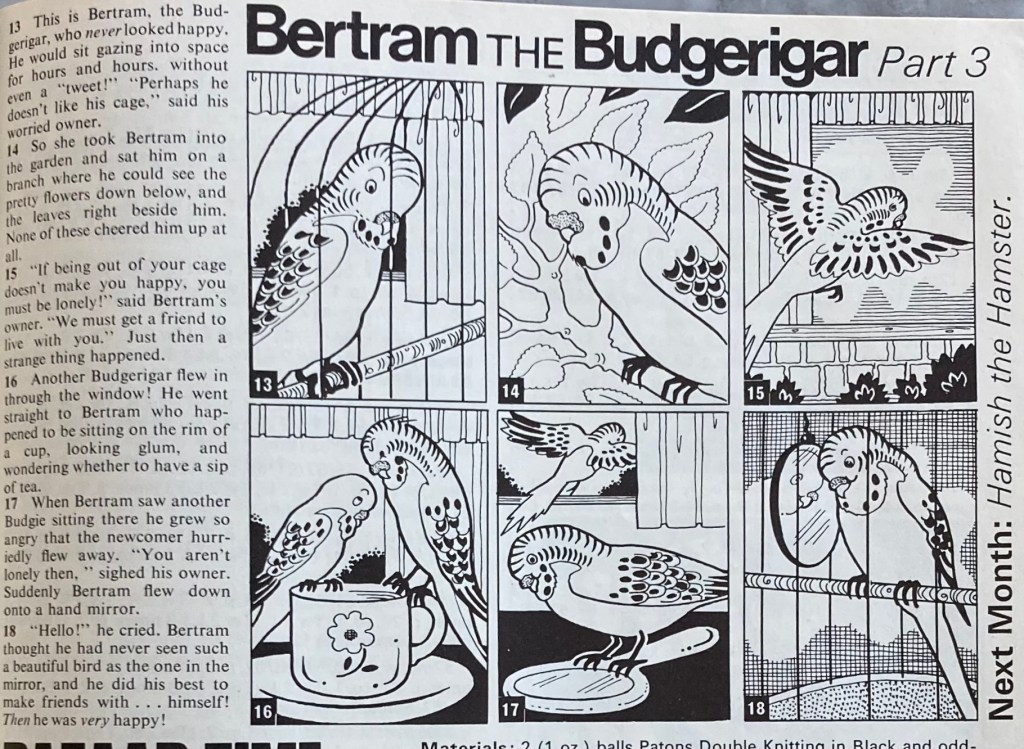
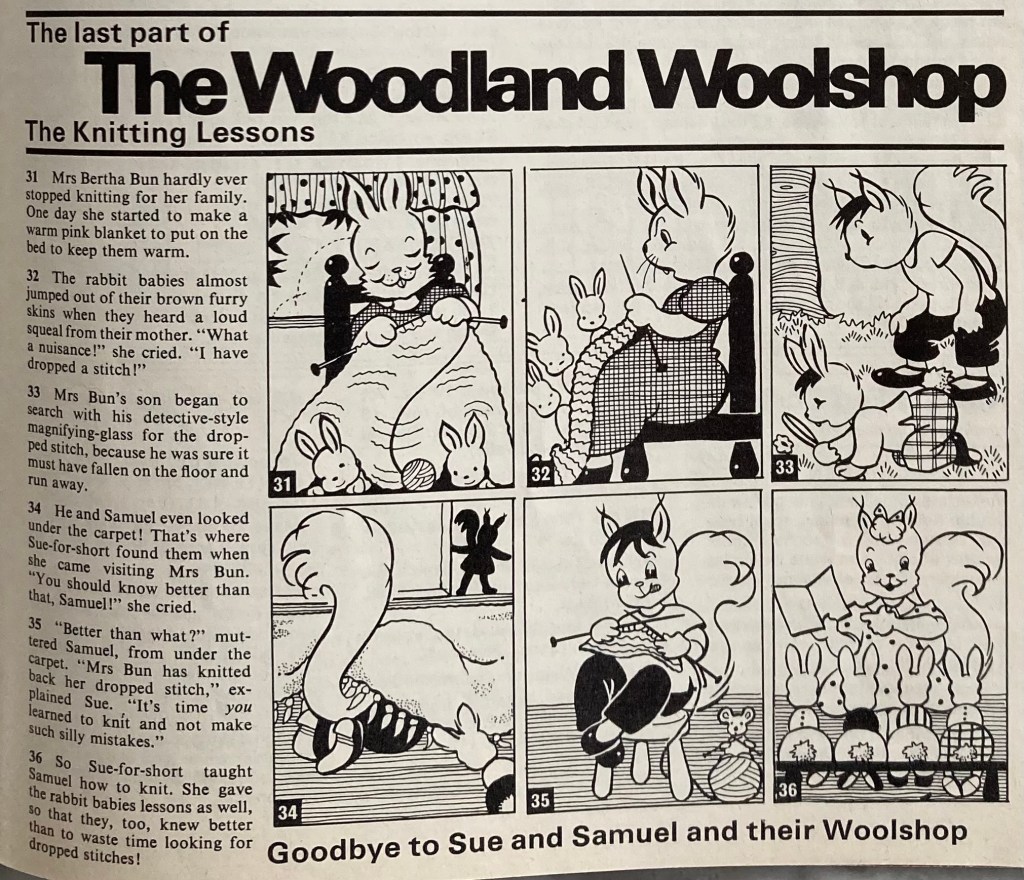
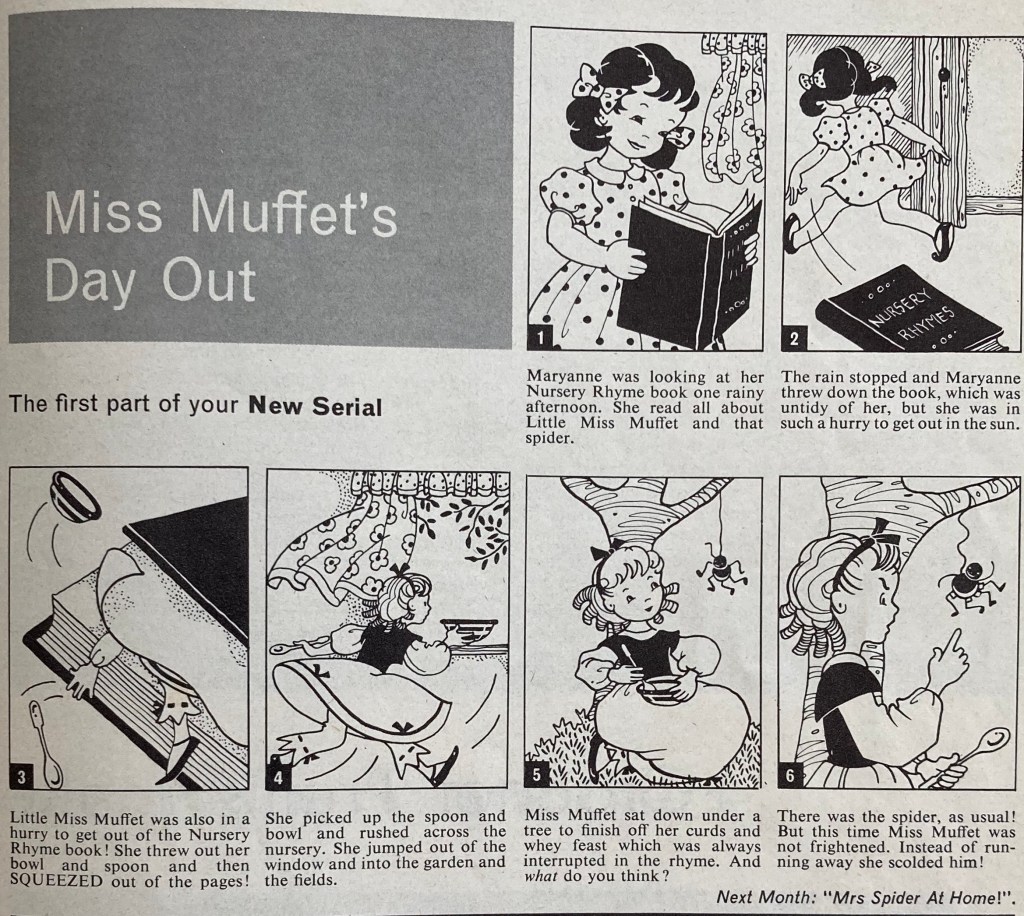
Speaking of, this month’s comic (number three in the series) features Bertram the budgie, who has no other birds around him and is consequently lonely and depressed (realistic.) Luckily, another budgie just happens to fly in the window and join him! (less realistic, but hey, problem solved!) Or not, as it happens: Bertram is territorial and jealous and does not appreciate a stranger just showing up for tea and inviting themself in. His owner solves the problem by giving Bertram a mirror, and Bertram discovers he is his own best friend (realistic.) Realism points, 2 out of 3, and Bertram is very happy.
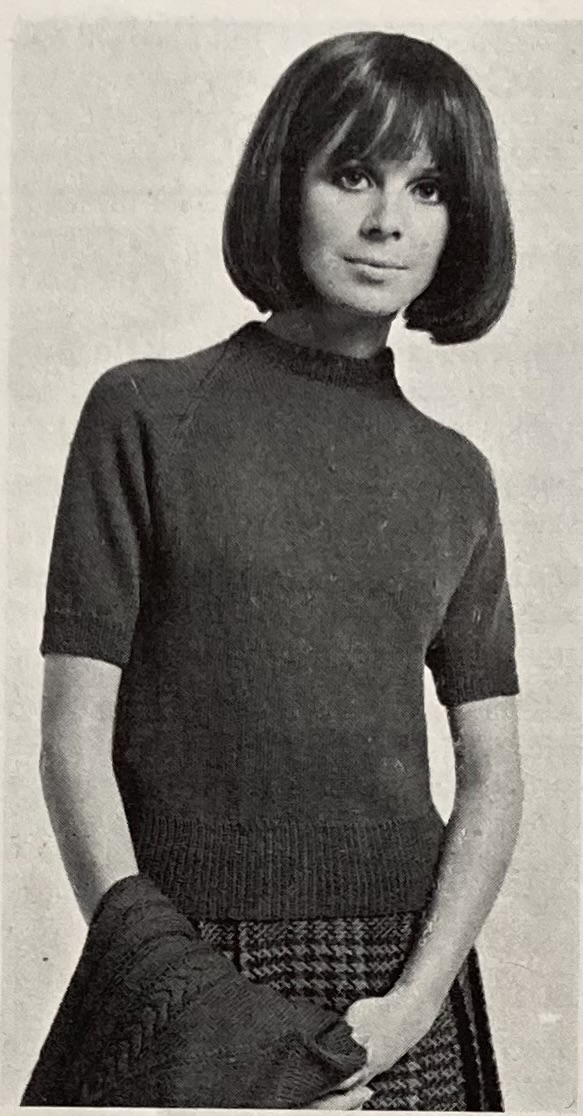
I don’t know what to make from this issue. The lattice lace pattern on the sleeves and yoke of the plain pullover is very cool and I toyed with the idea of making modern “rave sleeves” by leaving out the rest of the pullover and just adding some ribbing to the bottom of the sleeves and yoke. But I don’t really have anything to wear it with or appropriate yarn in stash. I don’t have the time or energy for a big project, have too many unfinished projects going on (including from last month), and have already knit something for my colleague who is having a baby in July. I guess I could embroider an orange daisy or a corn cob on something? Or a fruit and vegetable motif on a fruit and vegetable bag? Stay tuned!
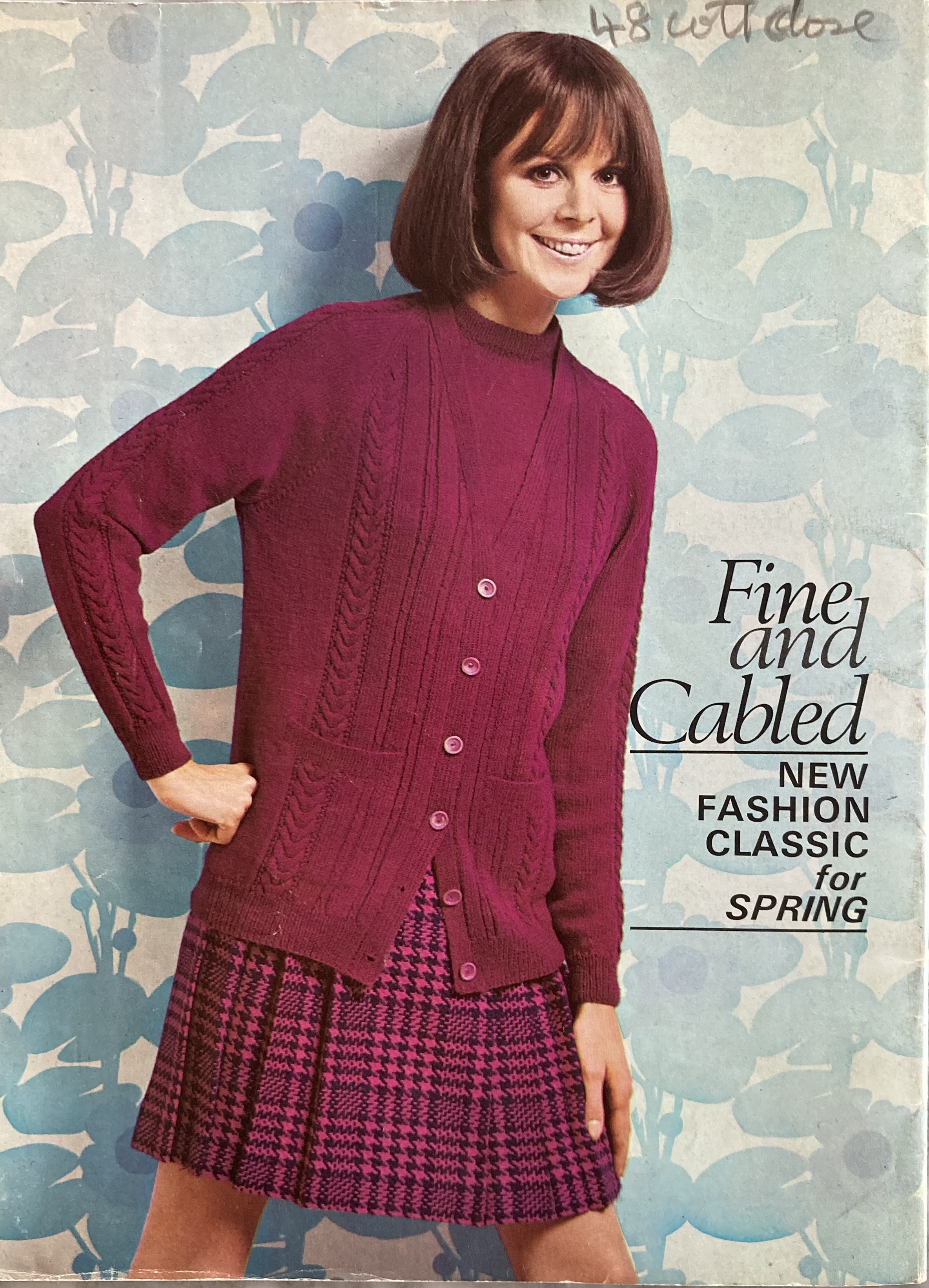
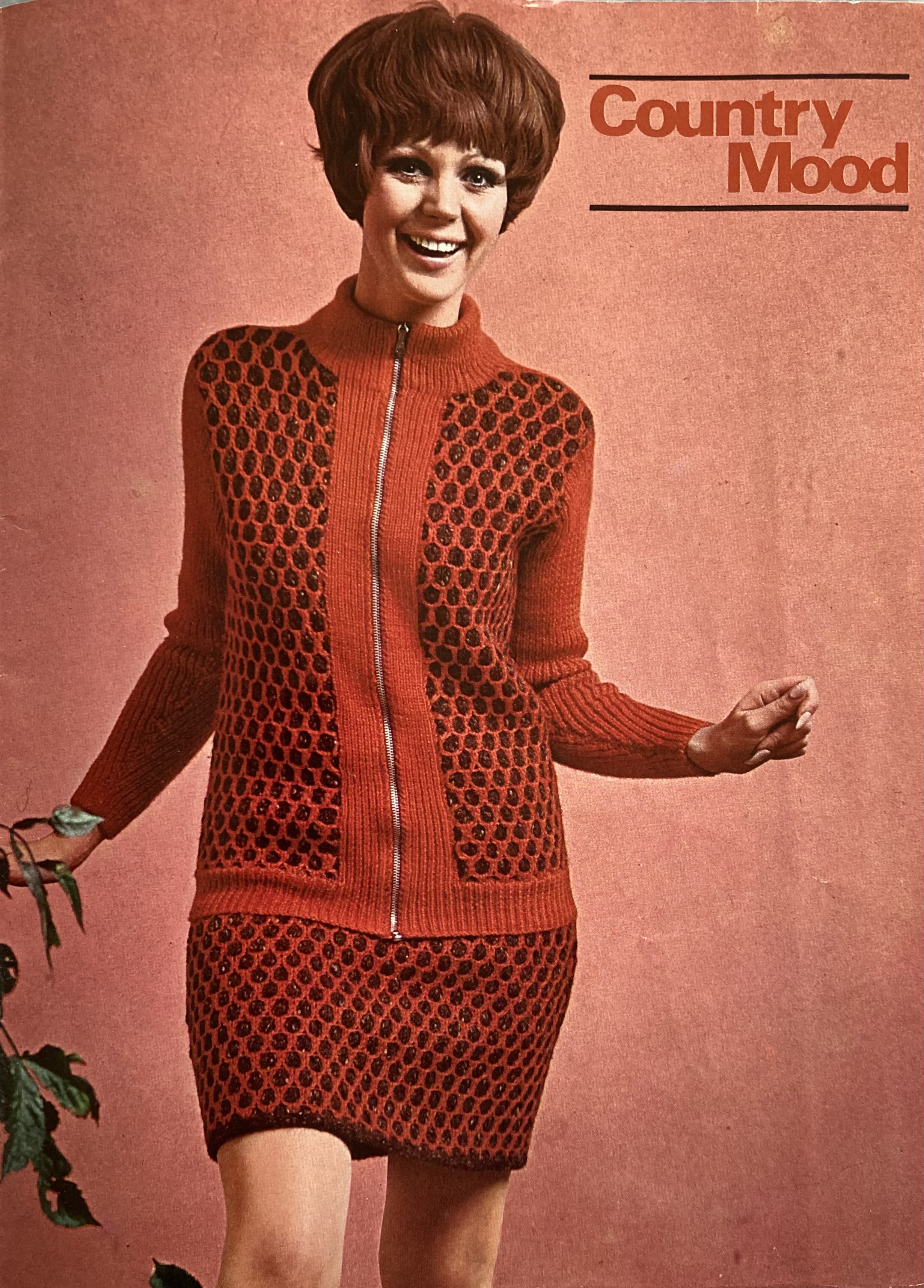
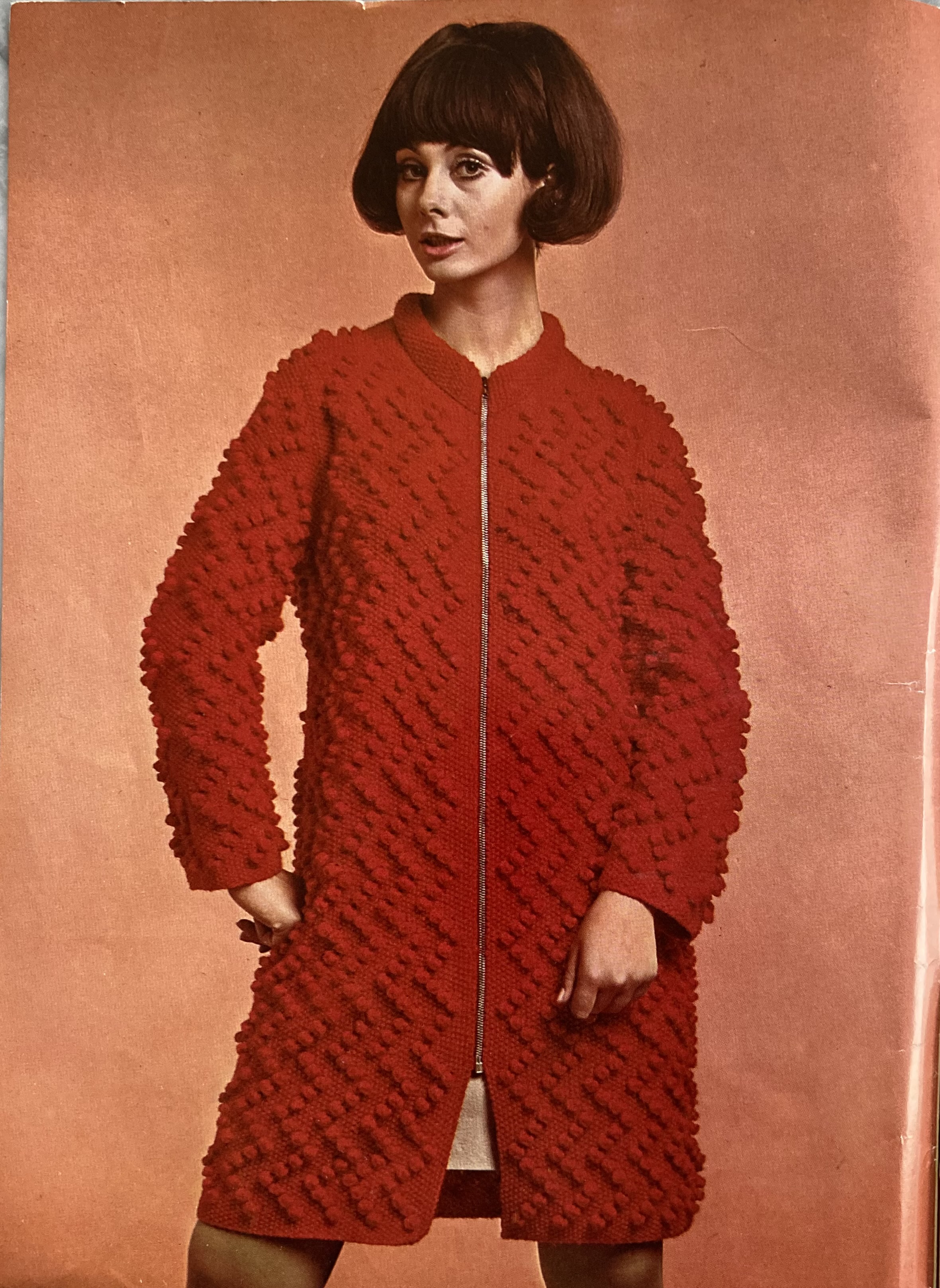
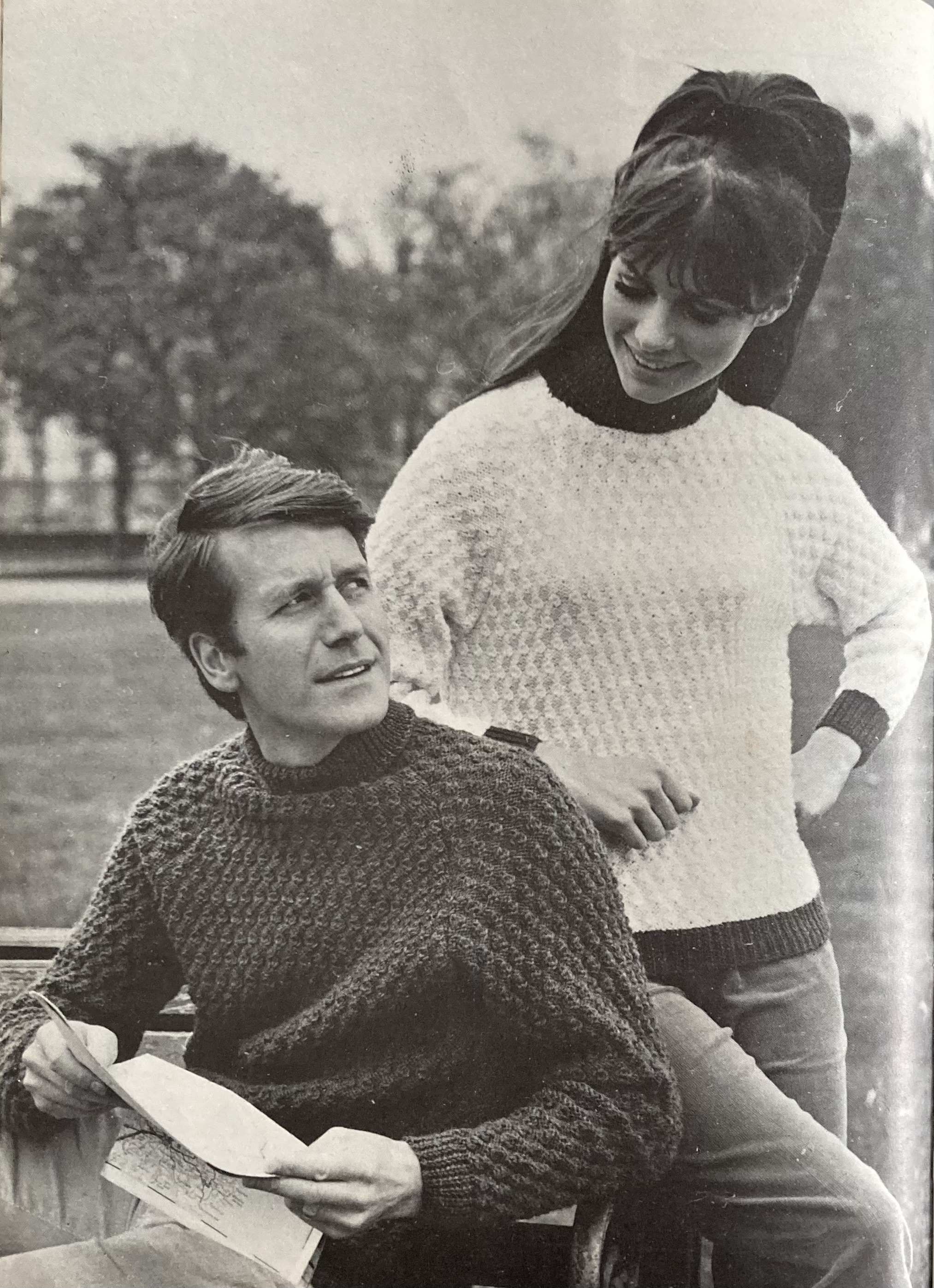


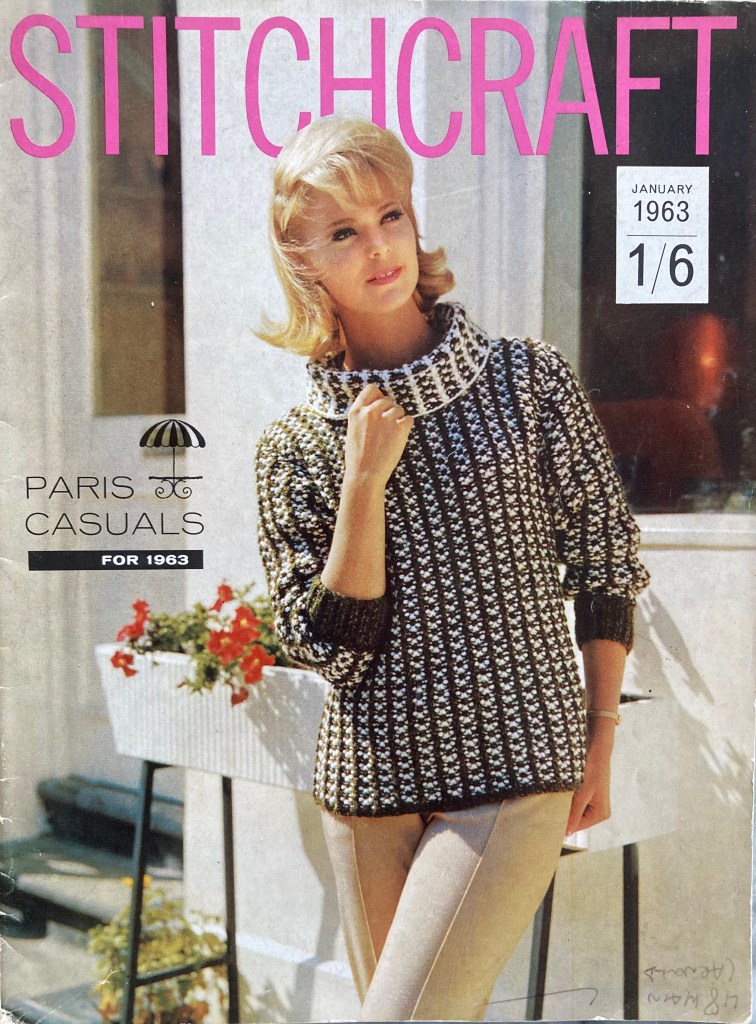






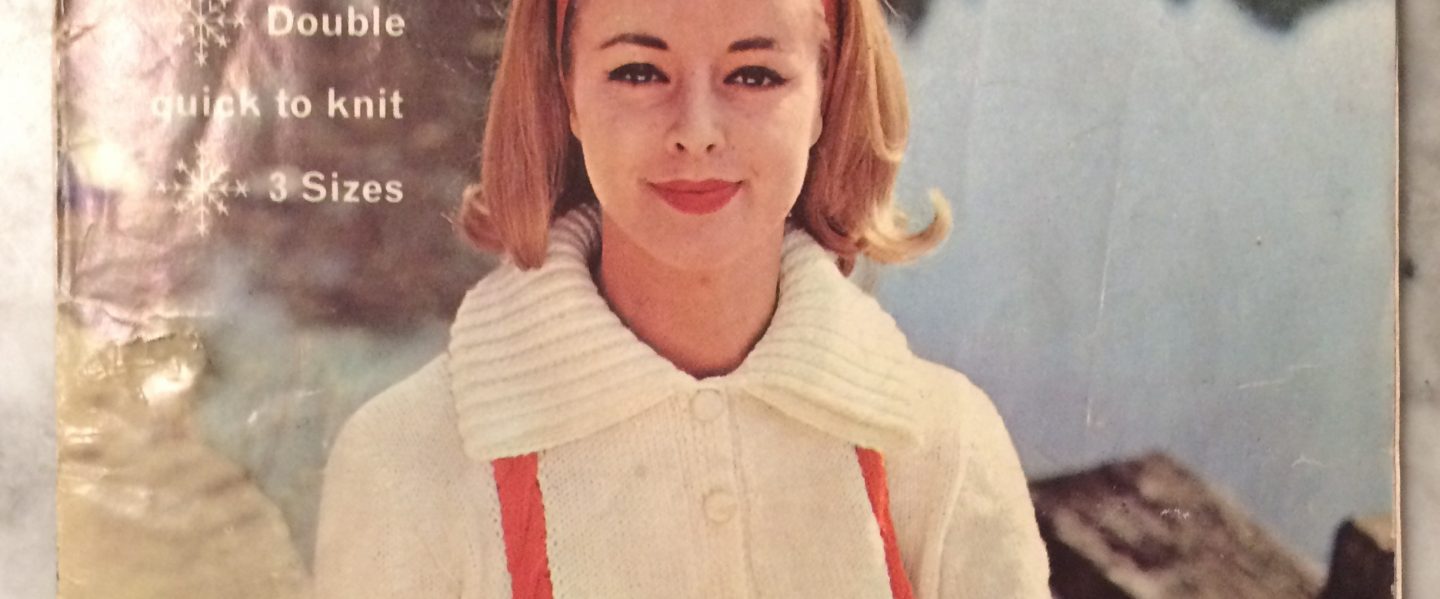
 Handknits For Your Holiday! If you are planning on taking a holiday in 1962, that is. In that case, I would recommend going to the Algarve in southern Portugal, which, based on the pattern of the window shutters and blanket in the background, is where I am guessing this magnificent cover photo was taken. Sadly, my time machine is out of order and May 2020’s motto is (Lots Of ) Handknits For No Holidays This Year Or Probably Anytime Soon.


 It’s that time of year again and December 1961’s issue has a lovely festive cover photo featuring matching father-son jumpers and a freshly-cut-down Christmas tree with holly branches. The jumpers are meant to be made in flat pieces with only the yoke worked in the round, but everything about them other than that is in the traditional Norwegian style, with a small snowflake pattern on the body and sleeves and a round yoke with tree and star patterns. I like that the jumpers’ pattern theme and colour choice are not so very specifically Christmas-y that they couldn’t be worn at any other time, or by people in our more diverse and modern times who don’t celebrate or don’t care much for Christmas and would just like a nice warm jumper with a wintery flair.


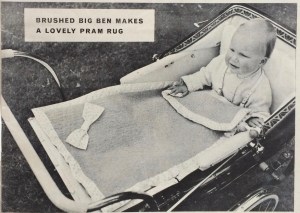
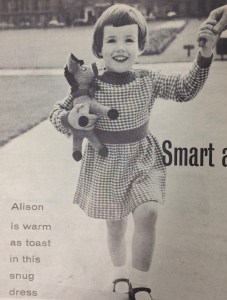 Children of all ages can look forward to practical, yet stylish winter garments — a knitted outdoor play-suit for toddlers in warm, bulky Big Ben, a smart fine-knit twin-set for girls of varying ages (sizes from 26-30 inch chest) and a wonderful knitted dress in a two-colour slip-stitch pattern that fits right into the tweed trend. The photo caption claims that Alison (the young model) is “warm as toast” but of course, her legs are going to be cold! She still seems pretty happy, though.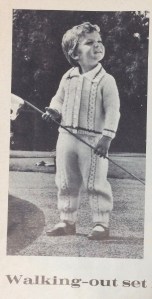


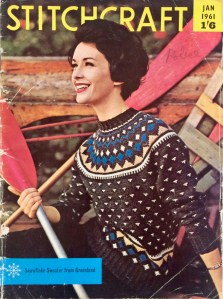 Happy New Year 2019! Or 1961, if you prefer. January 1961’s issue “starts with a swing” with “lots of colour” and “tip-top designs” like the gorgeous Greenlandic-style sweater on the cover.




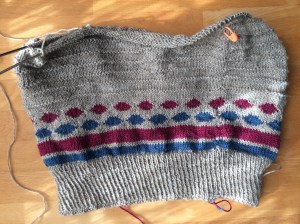
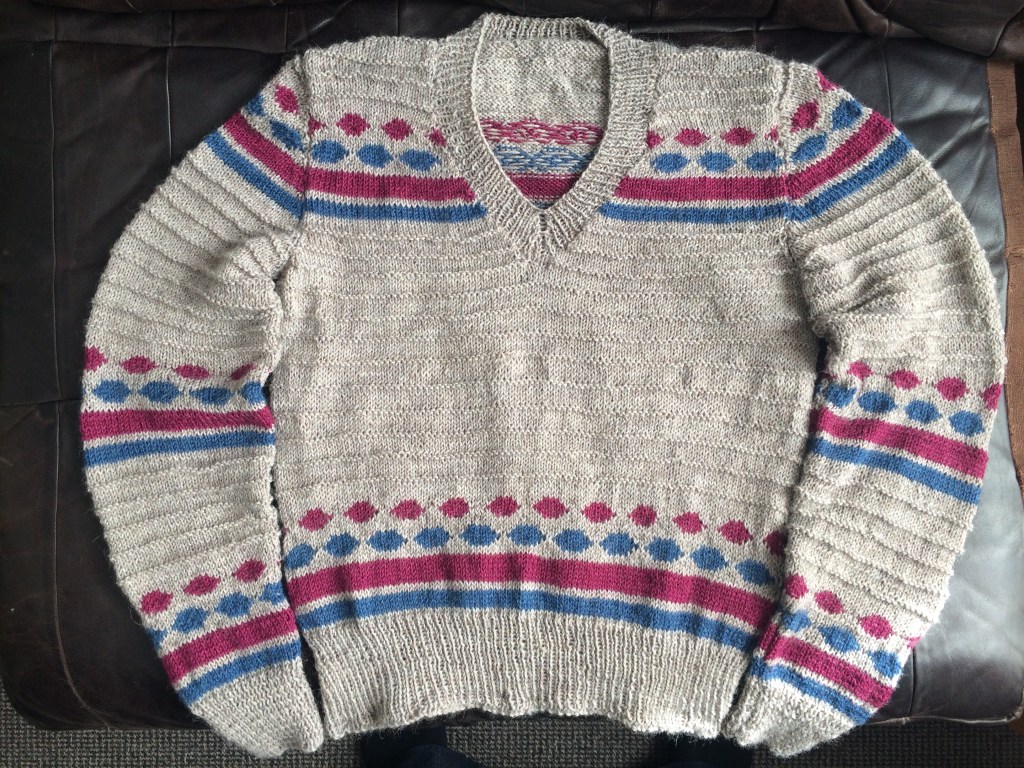
 My second project for March — though it wasn’t finished by the end of the month — was a young boy’s pullover with a cute stripe-and-dot pattern.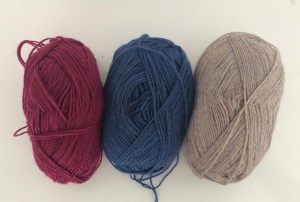
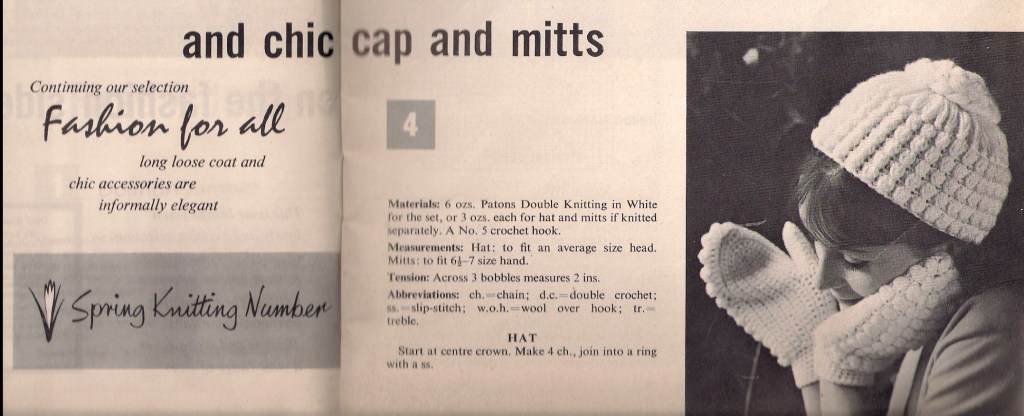
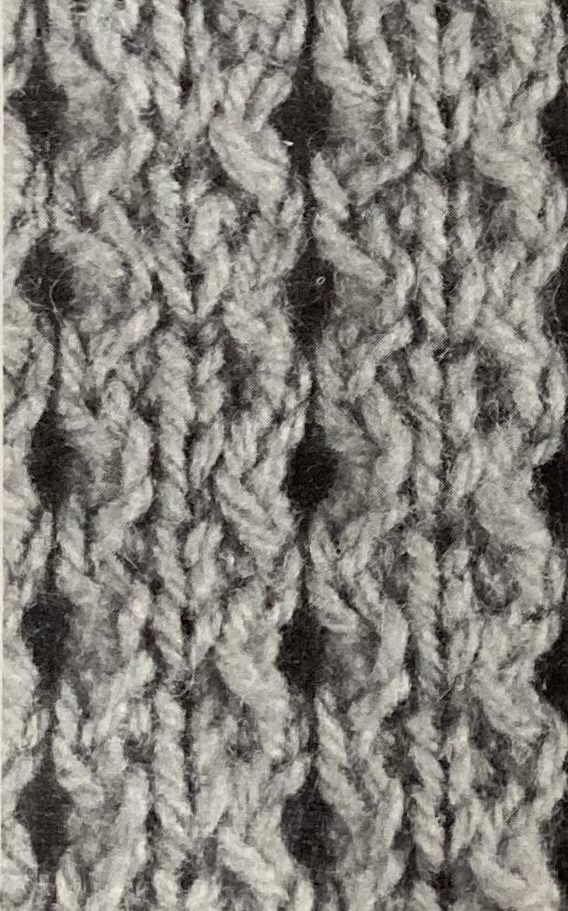
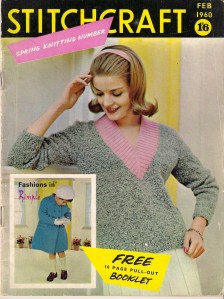 February 1960, the “Spring Knitting Number”, features an extra 16-page pull-out booklet with garments in Patons Rimple, a nubbly wool-with-a-bit-of-nylon yarn that looks like terrycloth toweling when worked up.
 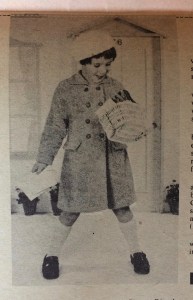 The model, like all children of the 1960’s and earlier, must have very cold legs. Why children of earlier times didn’t wear trousers or warm stockings or tights is a mystery that an older person will have to explain to me someday. It’s particularly strange to see in a knitting magazine, as often the child will be wearing a thick wool jumper or even a wool pullover under a wool sleeveless dress with a knitted wool coat over it, plus a hat and mittens if outside… but nothing on their poor bare legs.