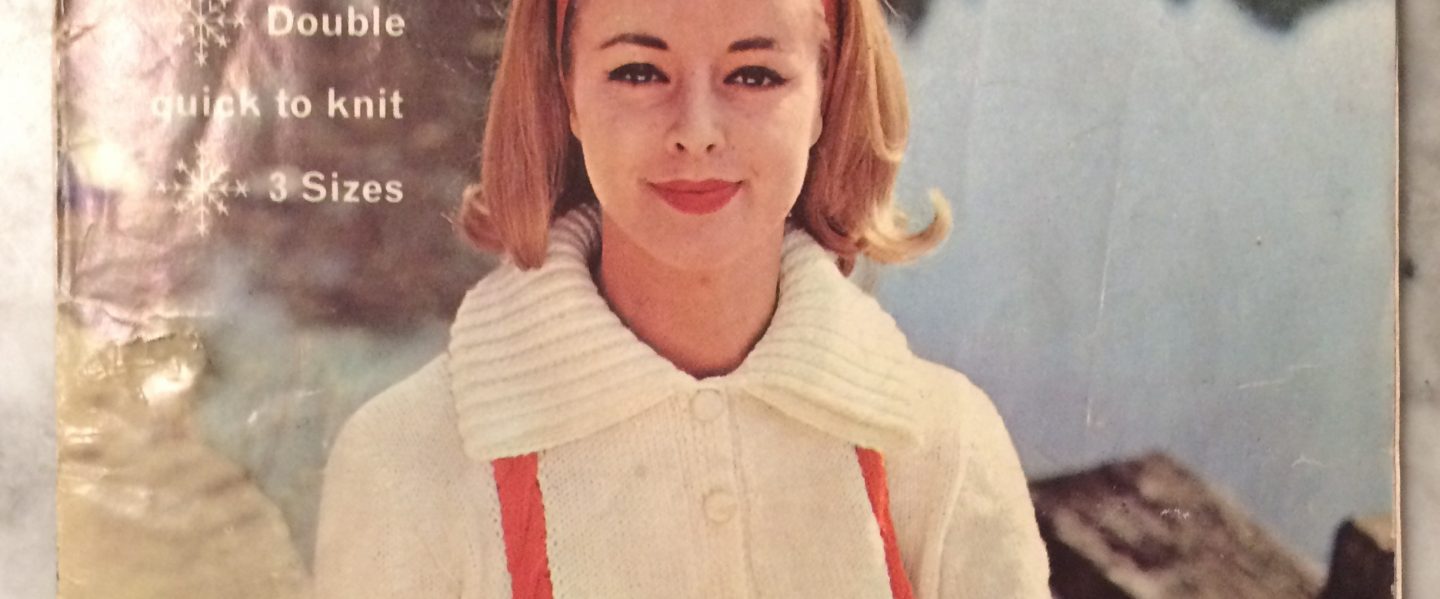

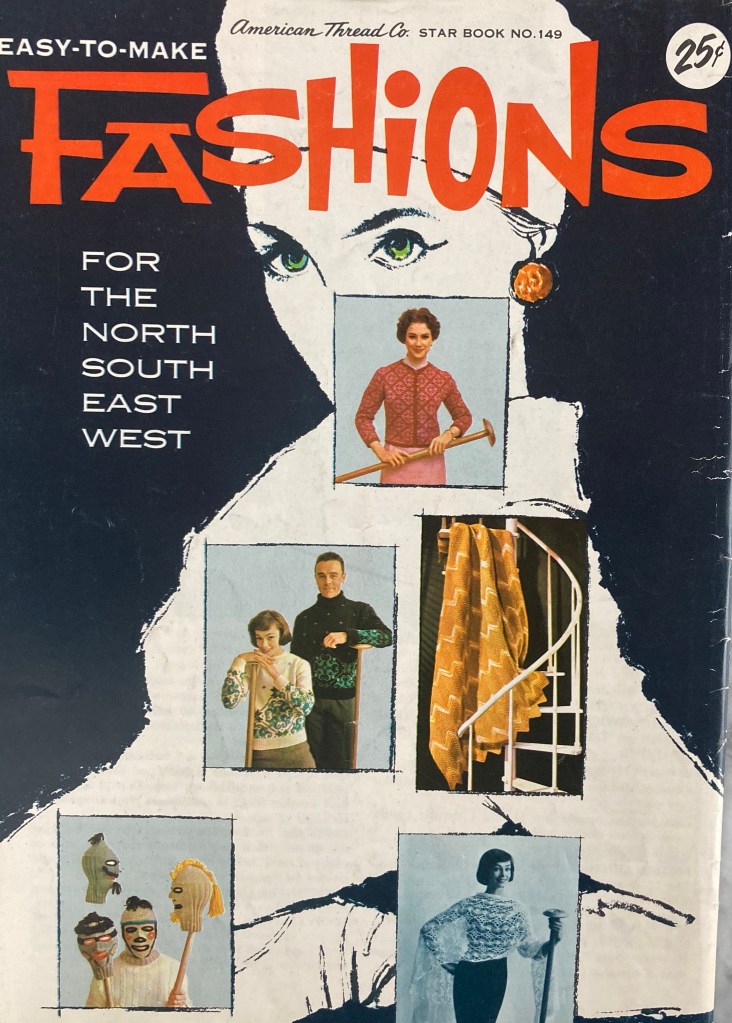
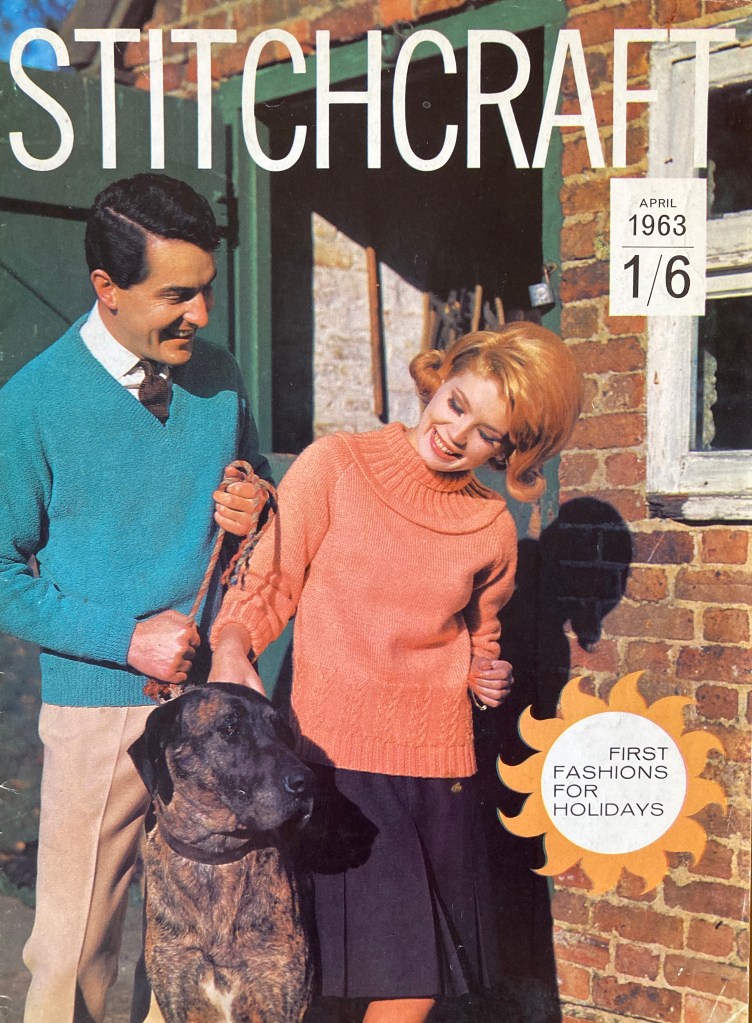
Like March April weather, Stitchcraft‘s „Spring Lineup“ from March April 1964 has a little bit of everything to offer. (No, that was not an April Fool’s joke — I have apparently lost track of time. Thank you Gretchen for noticing!!) There are warmer garments to wear on a spring ramble or for summer sailing, knitted cardigan jackets to take the place of outerwear, some slightly dressier separates for a going-out ensemble, and easy homewares that can be packed and taken along on your coming holiday.

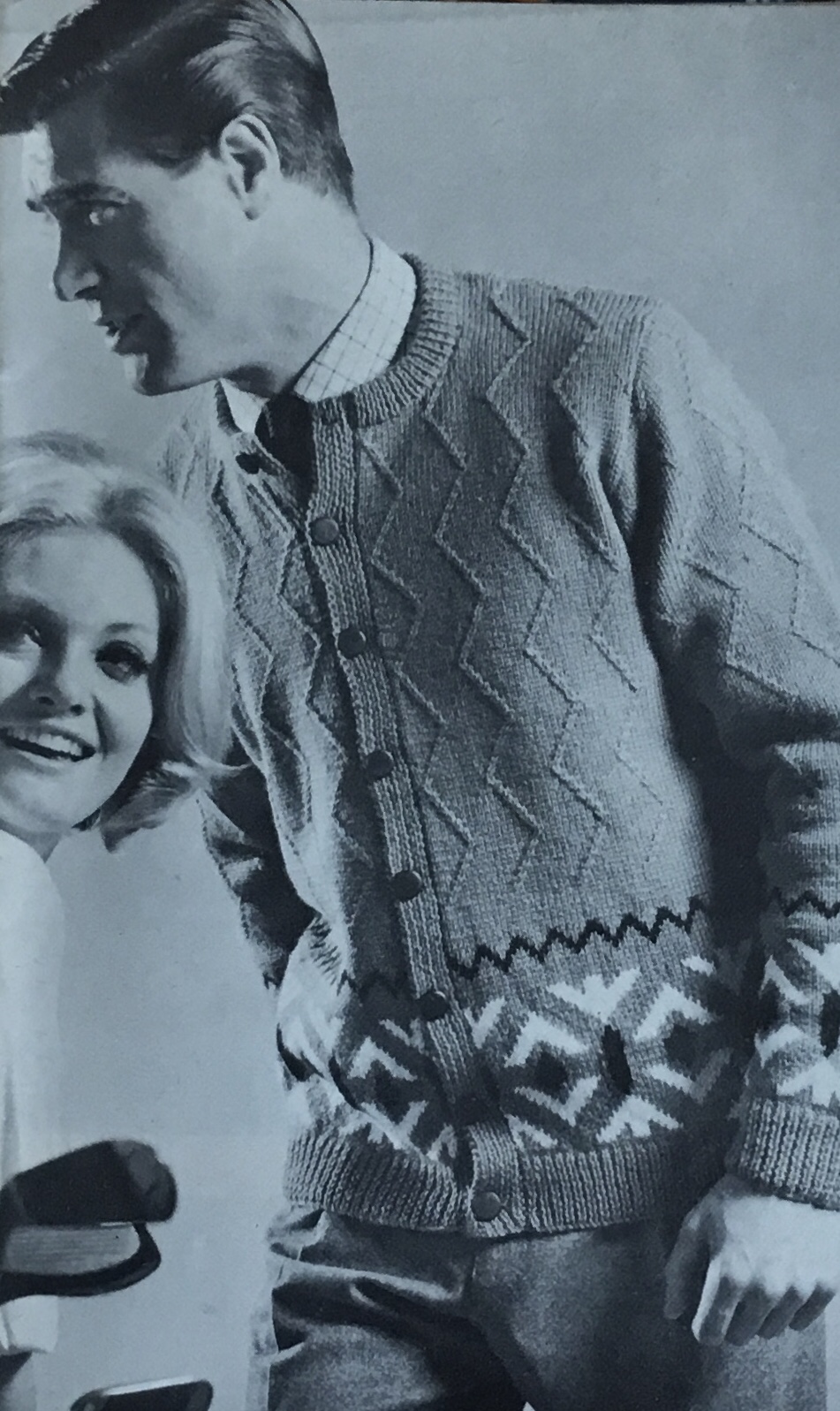
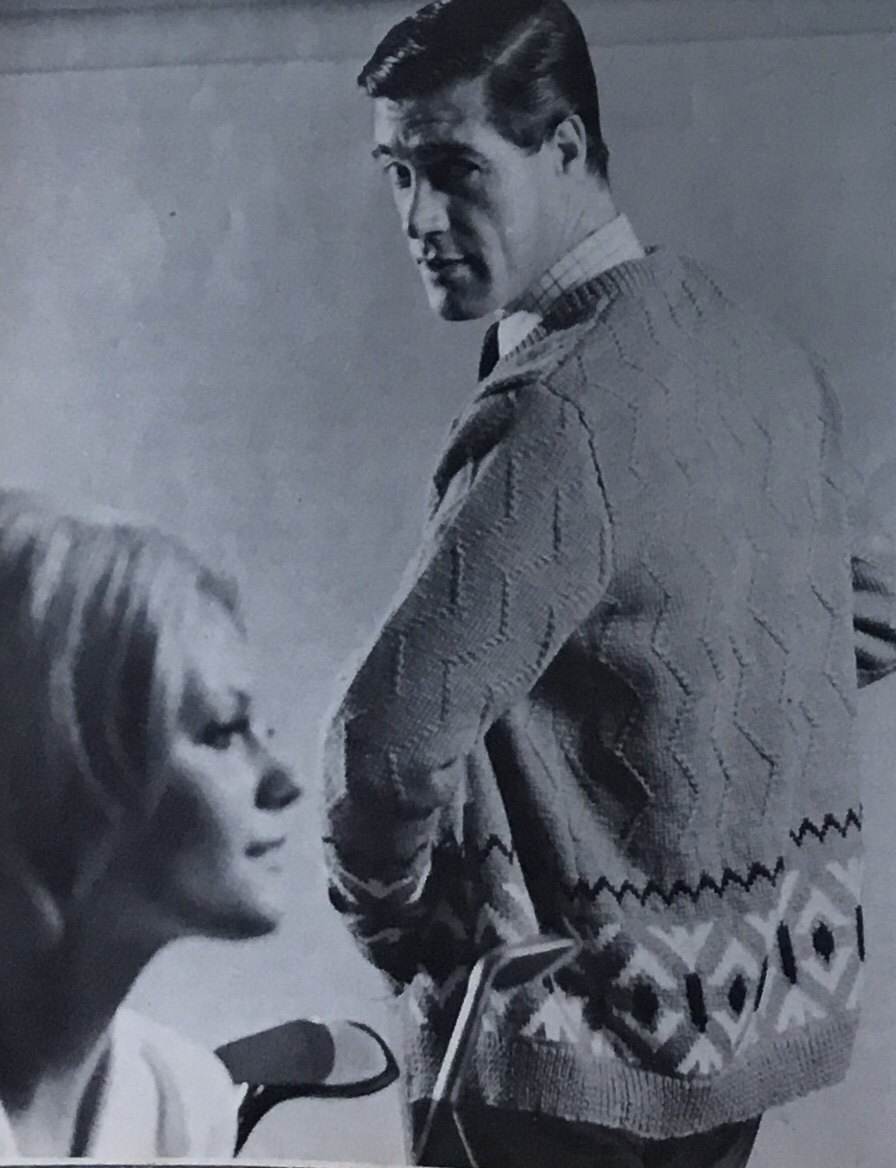
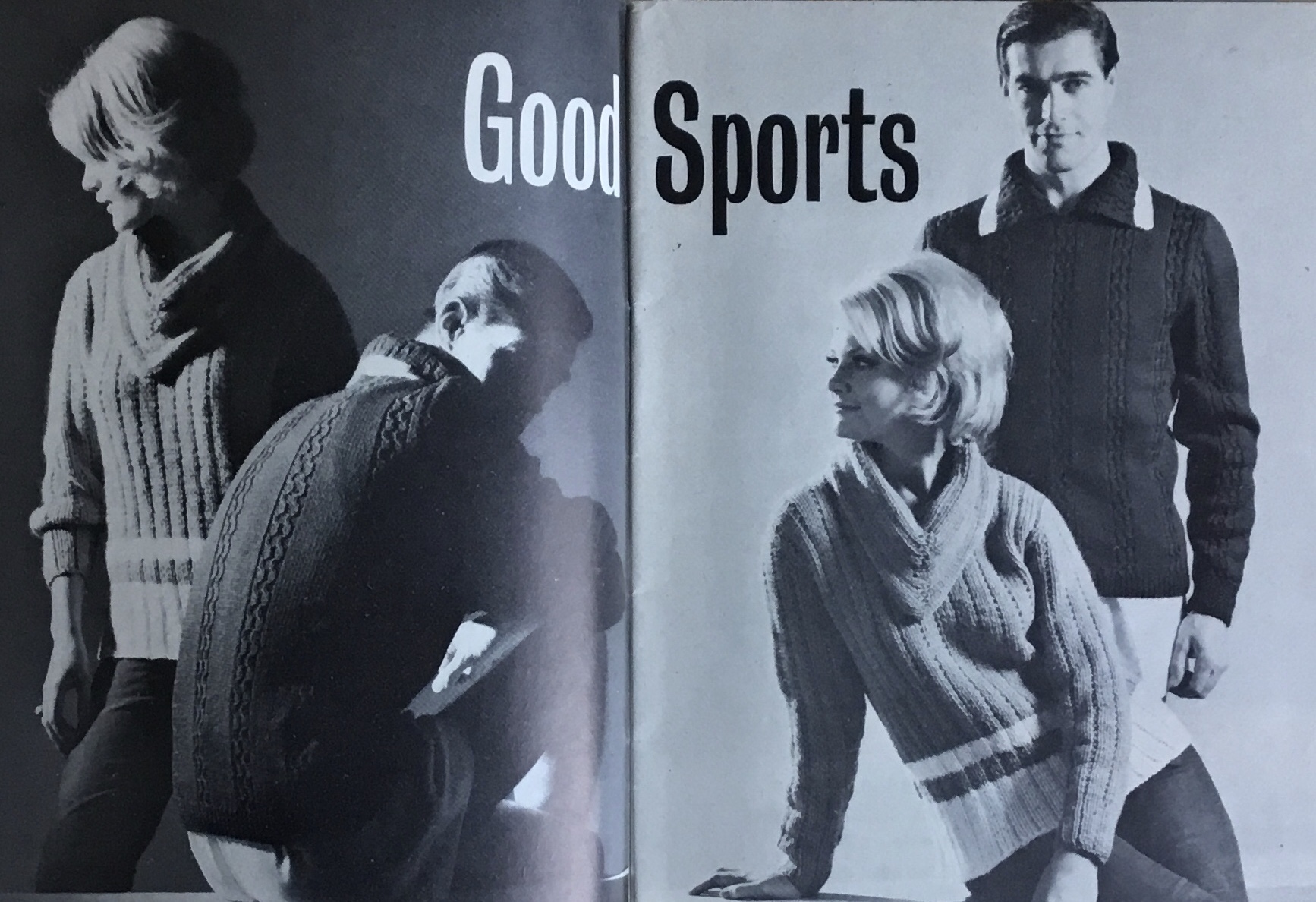
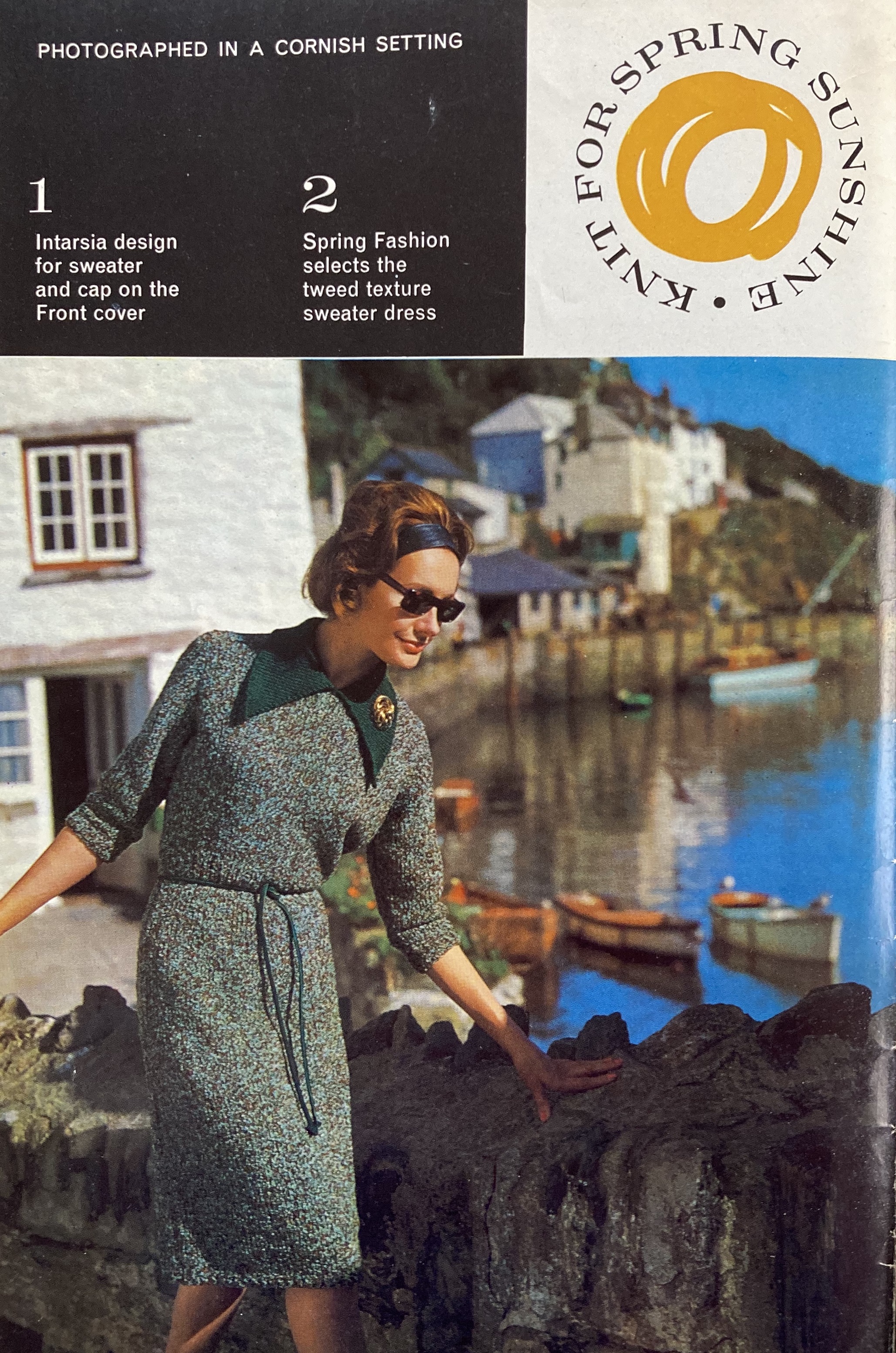
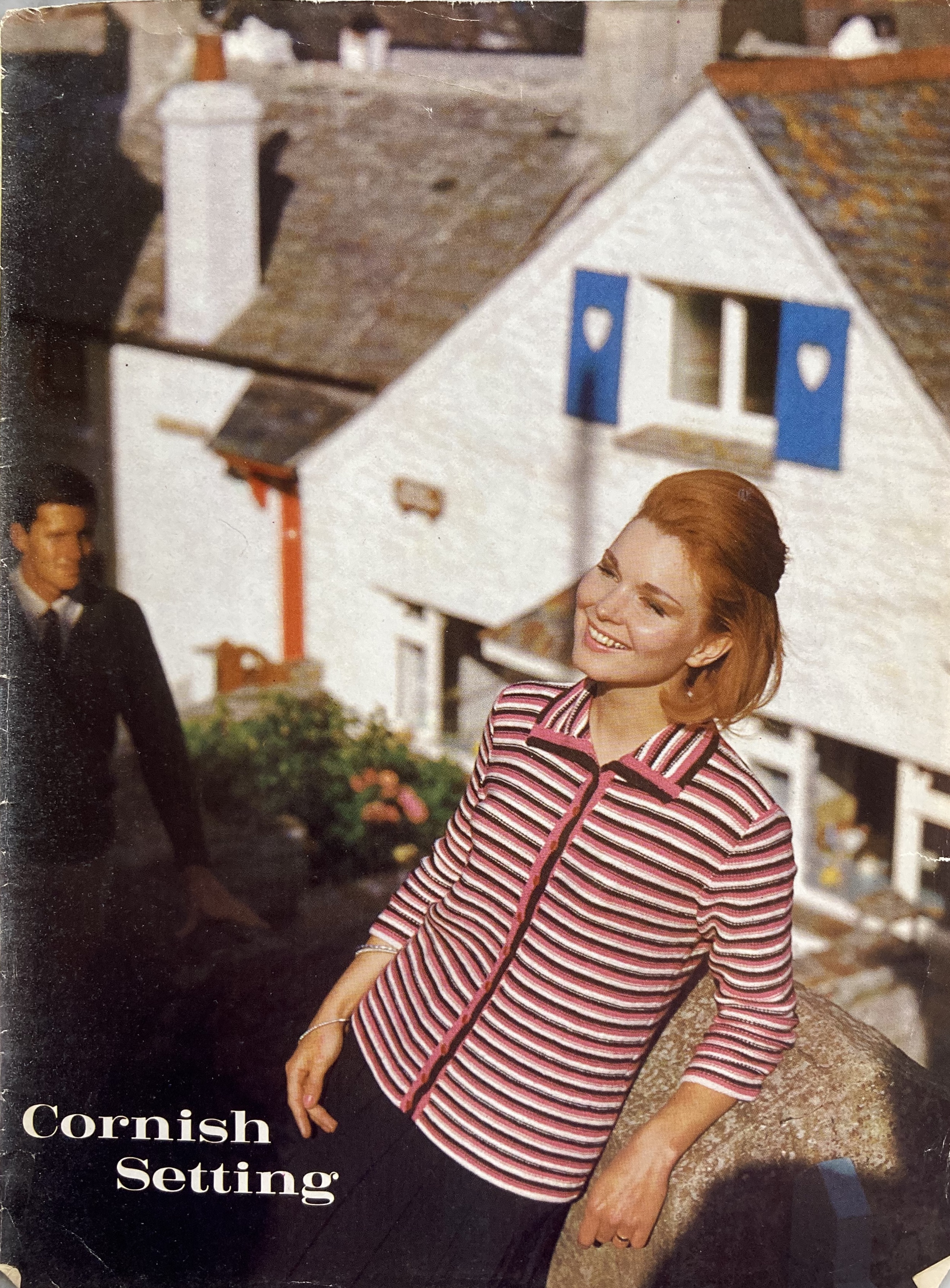
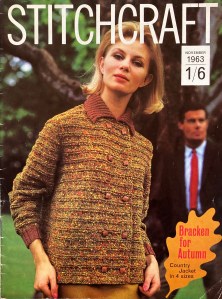
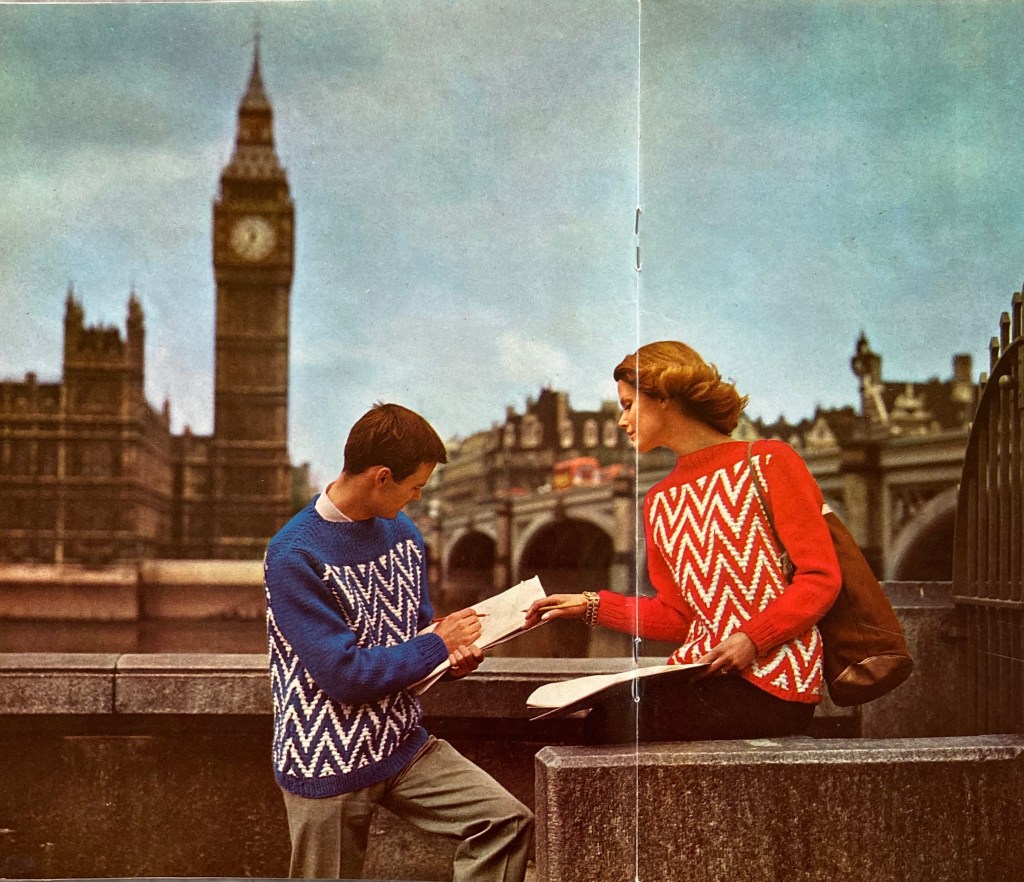
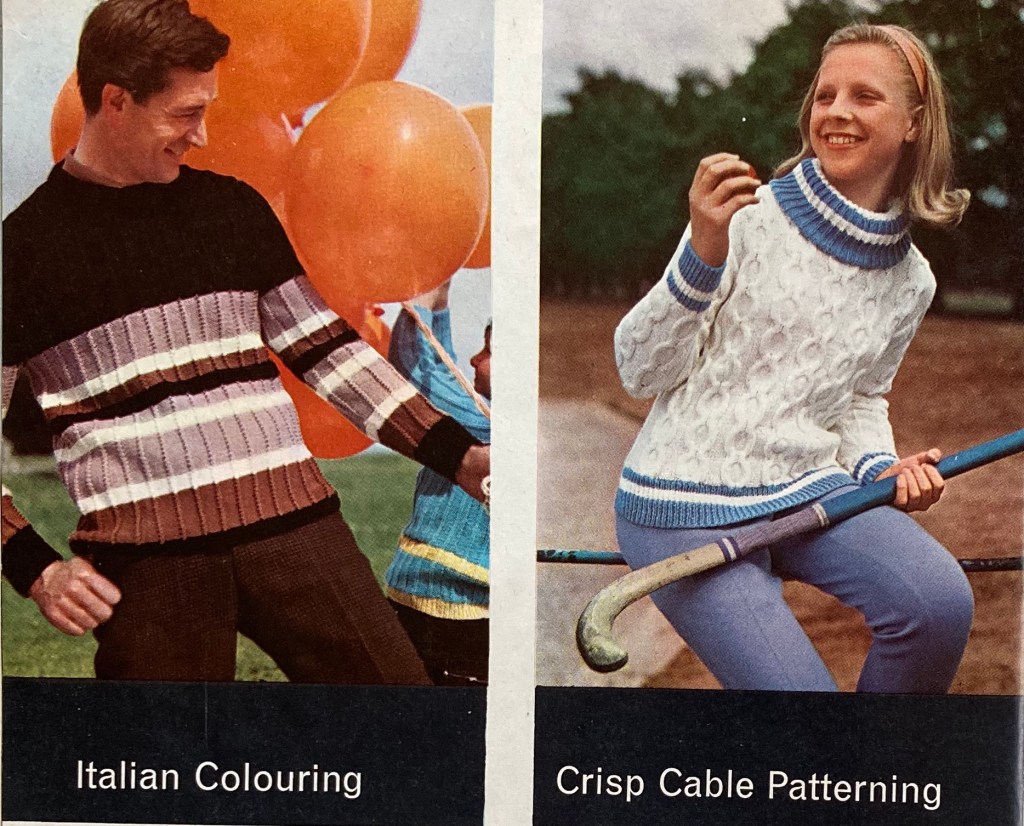
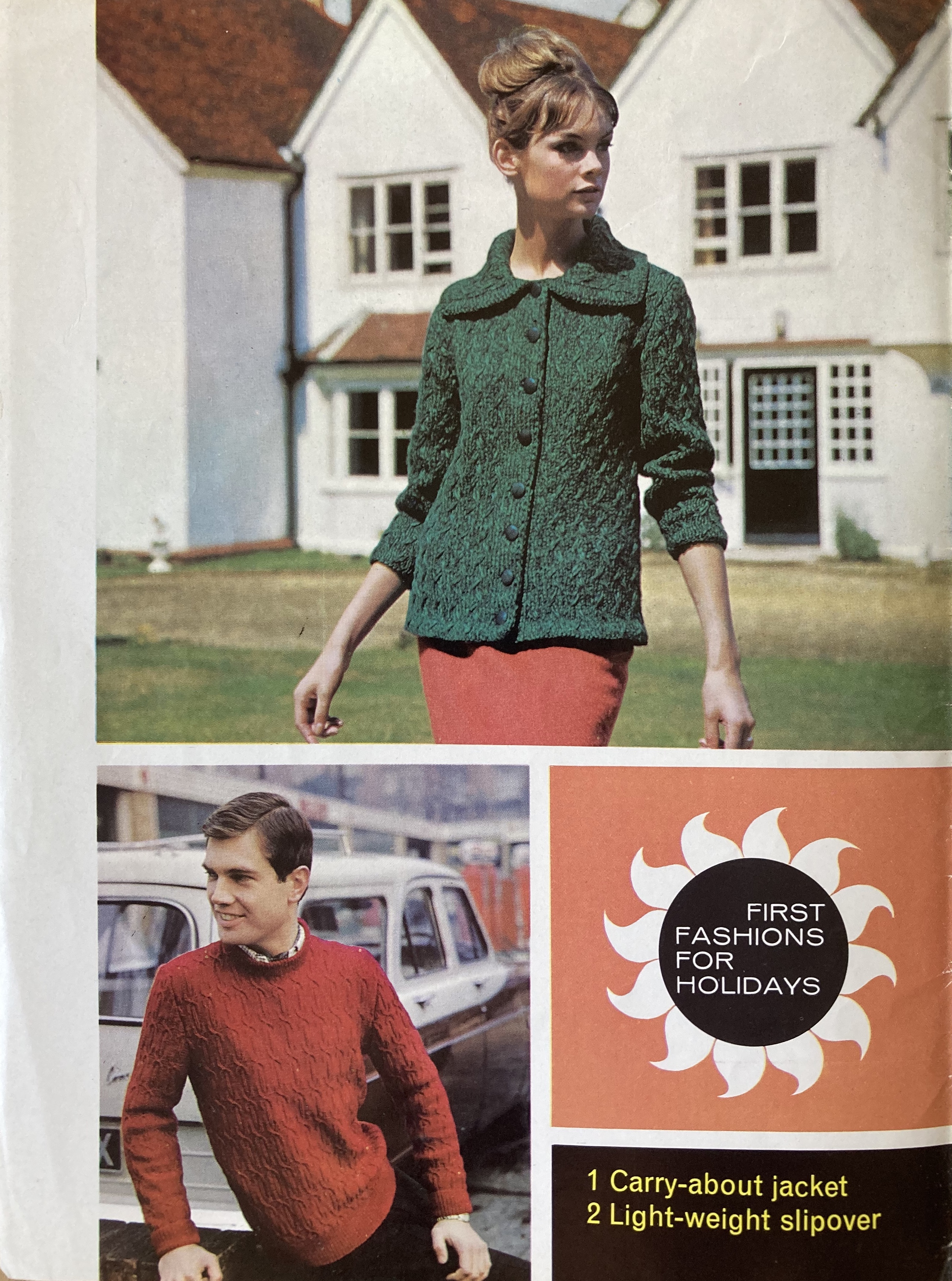
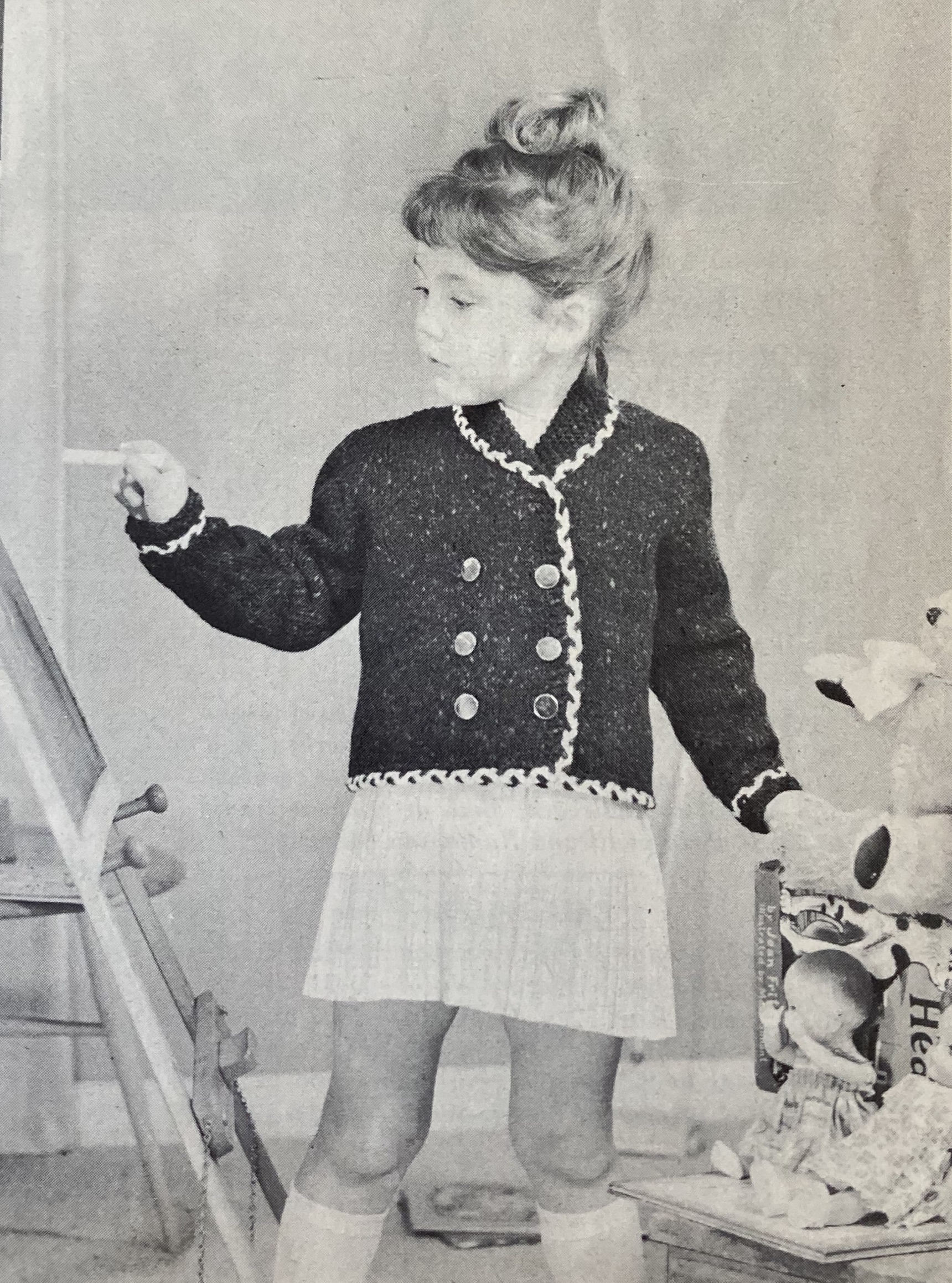
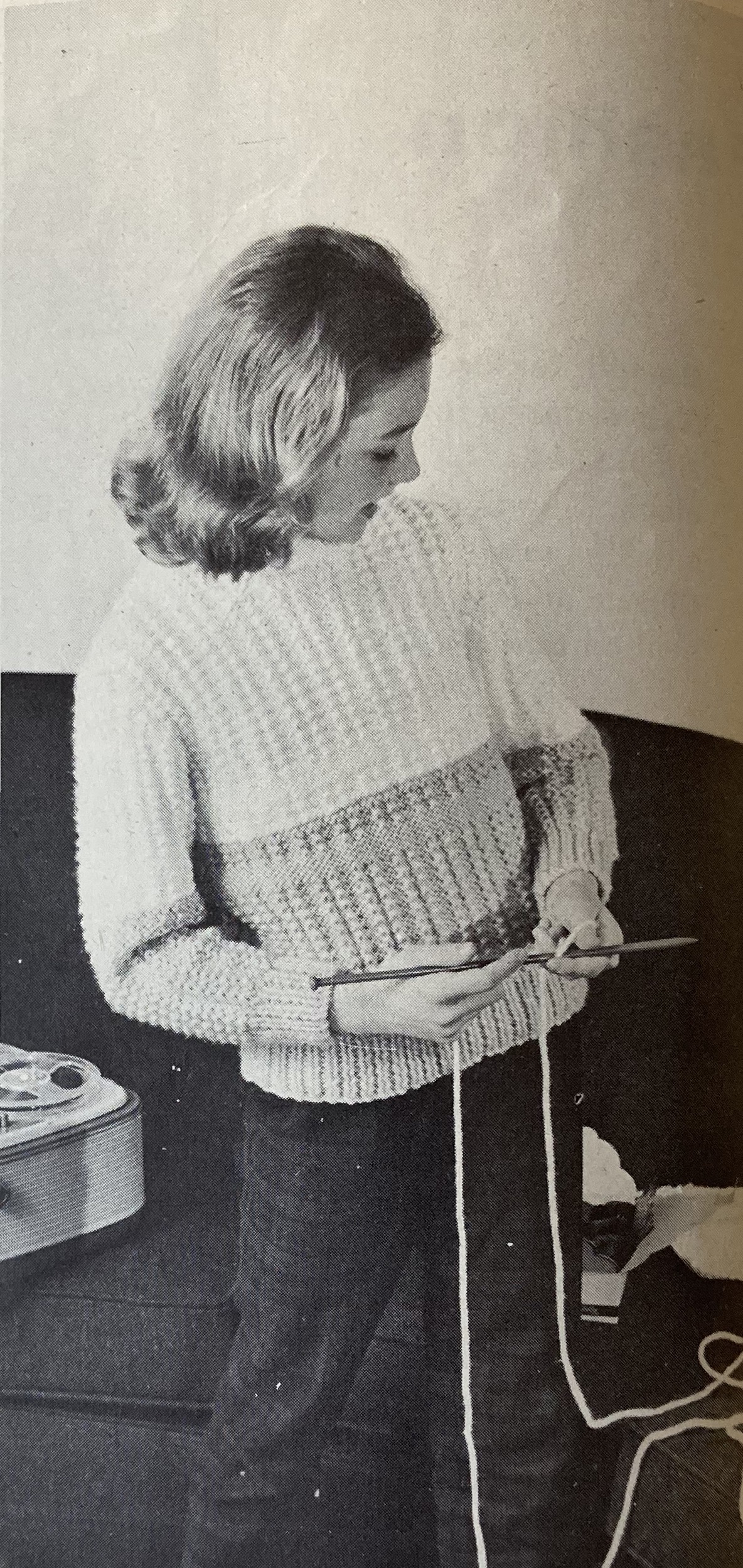
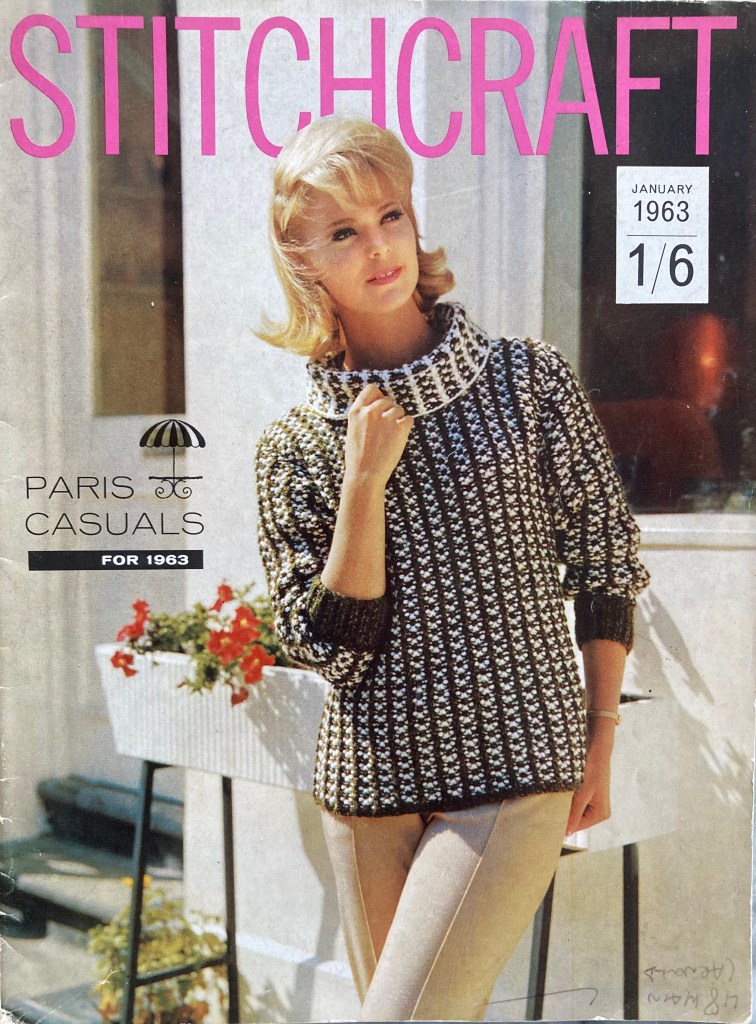
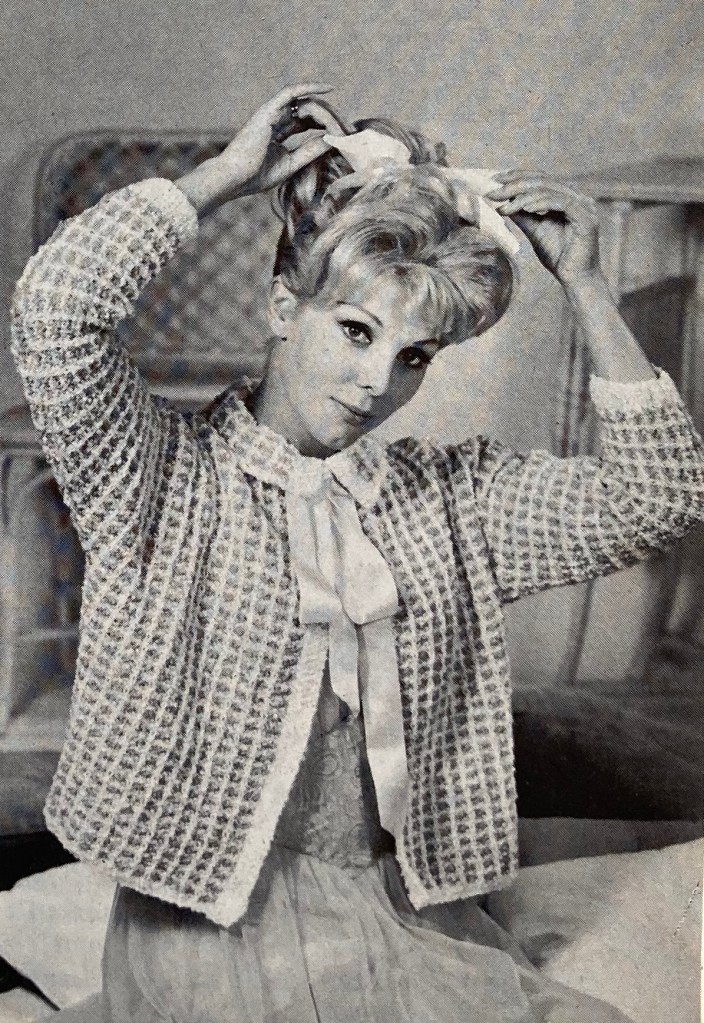
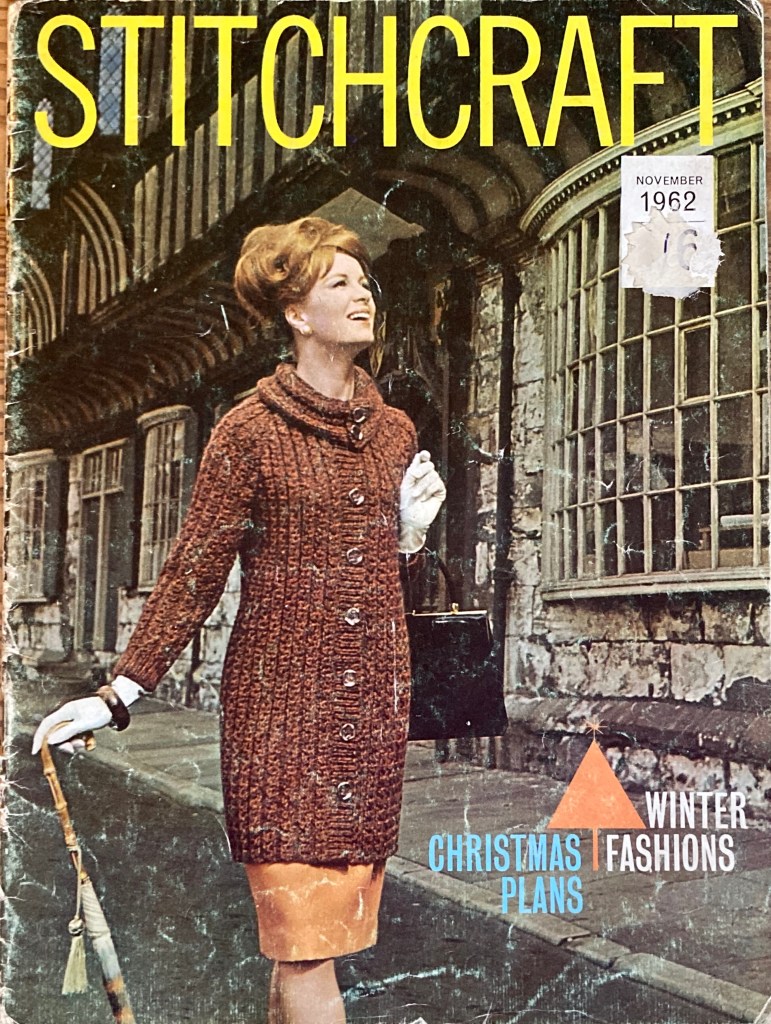
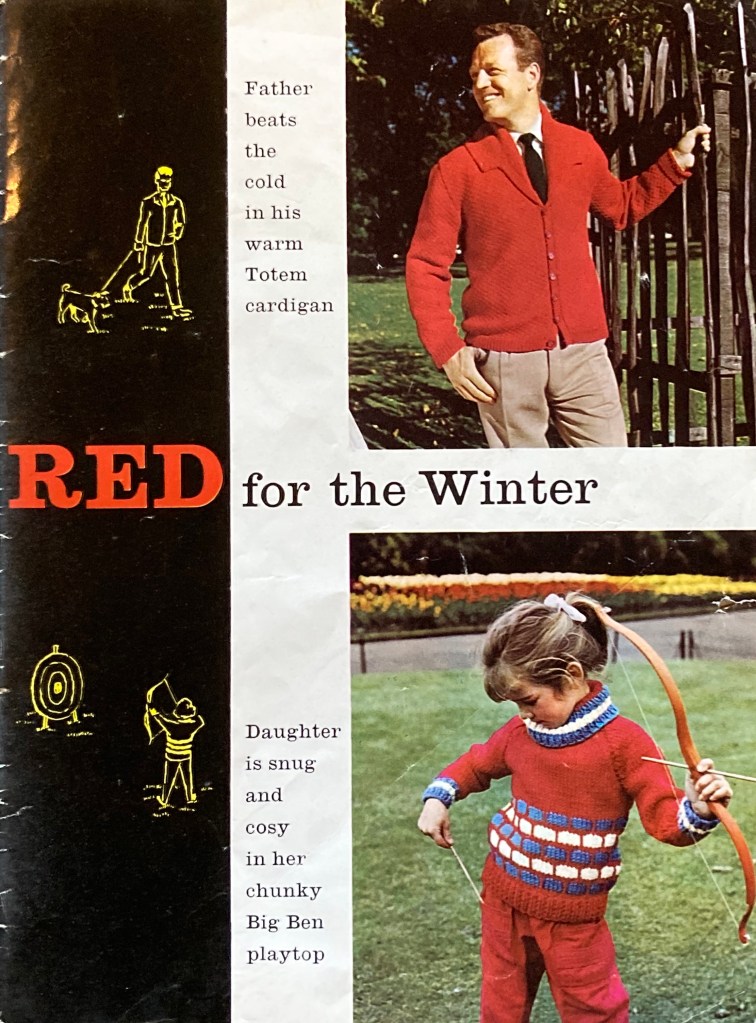
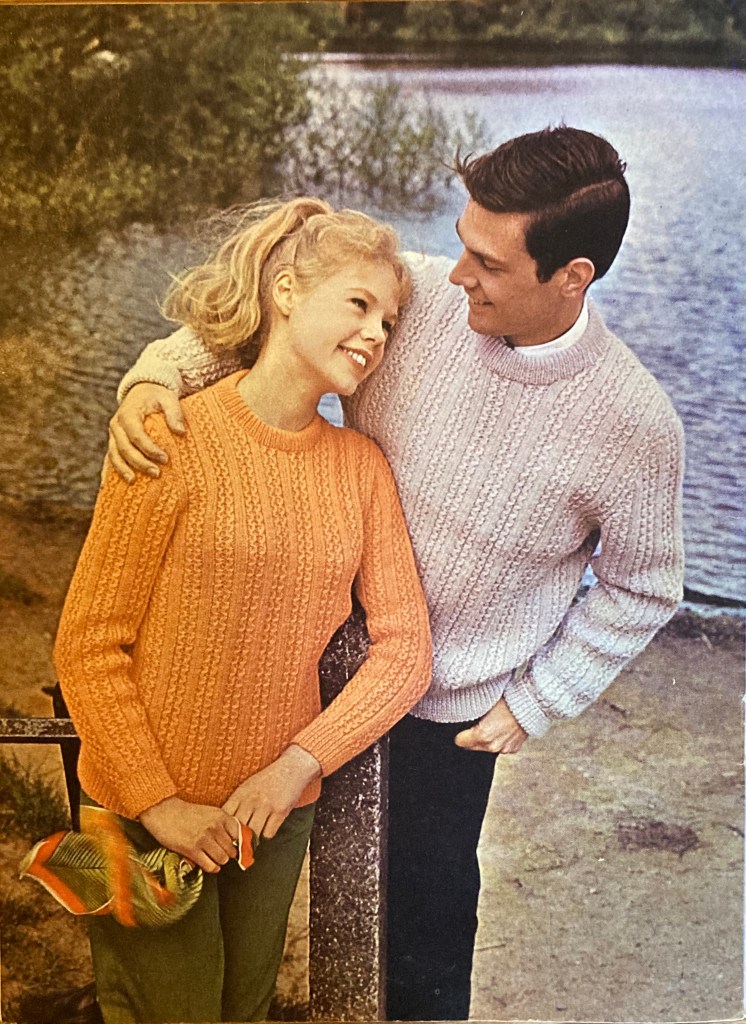
Our cover model is wearing a knitted jacket whose texture almost gives the appearance of being woven, thanks to a very firm three-colour slip-stitch pattern made by moving the working wool back and forth and so „wrapping“ the slipped stitches on each row. It‘s made in Totem Double Crepe and is intended to be worn as outerwear — as well as being „ideal for the car.“ Men get an outerwear-cardigan as well, this time with a combined texture and colour pattern and classic shape, and anyone can wear these casual, loose-fitting „sports sweaters“ while sailing or otherwise out in cooler maritime weather.
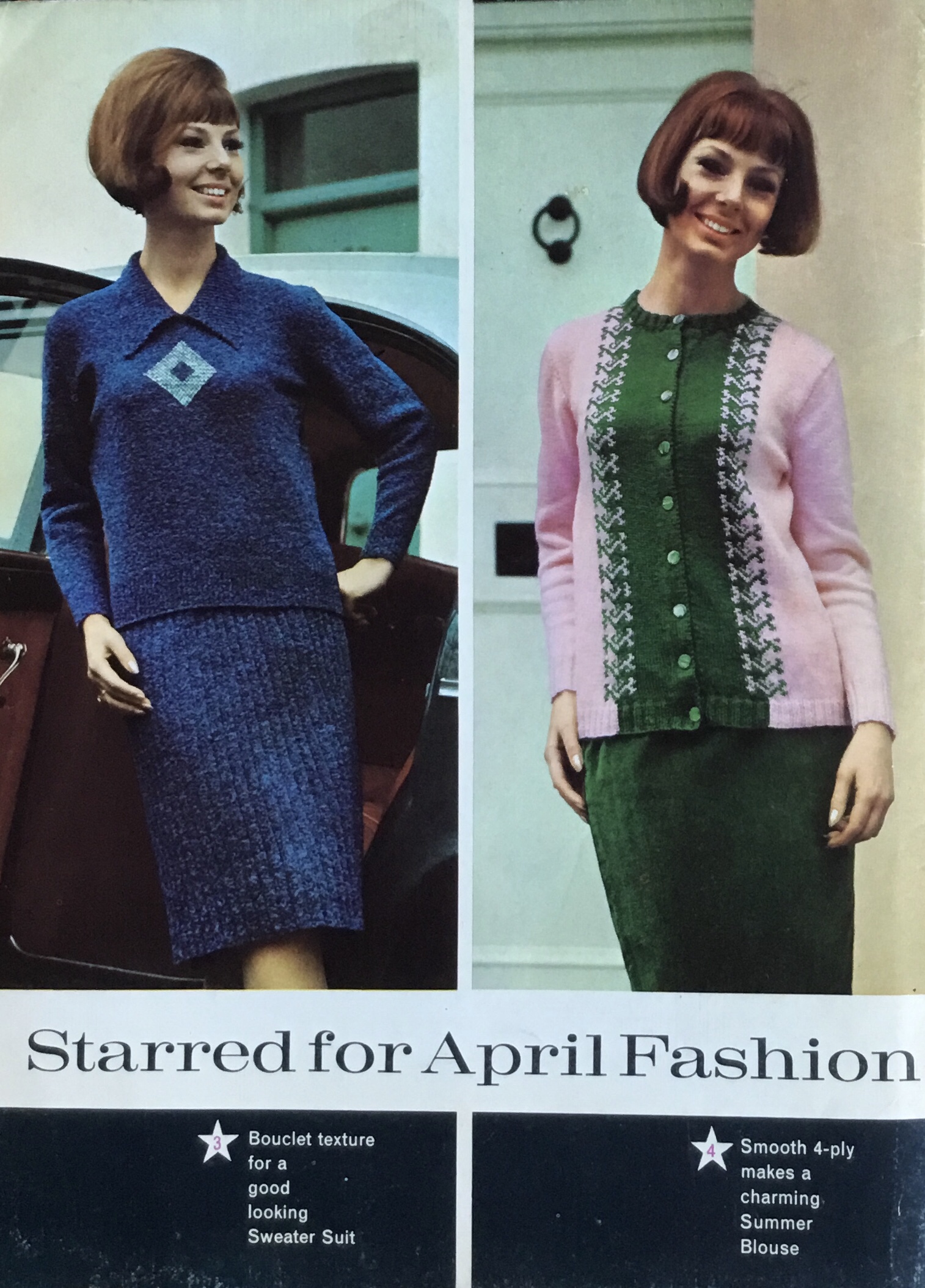
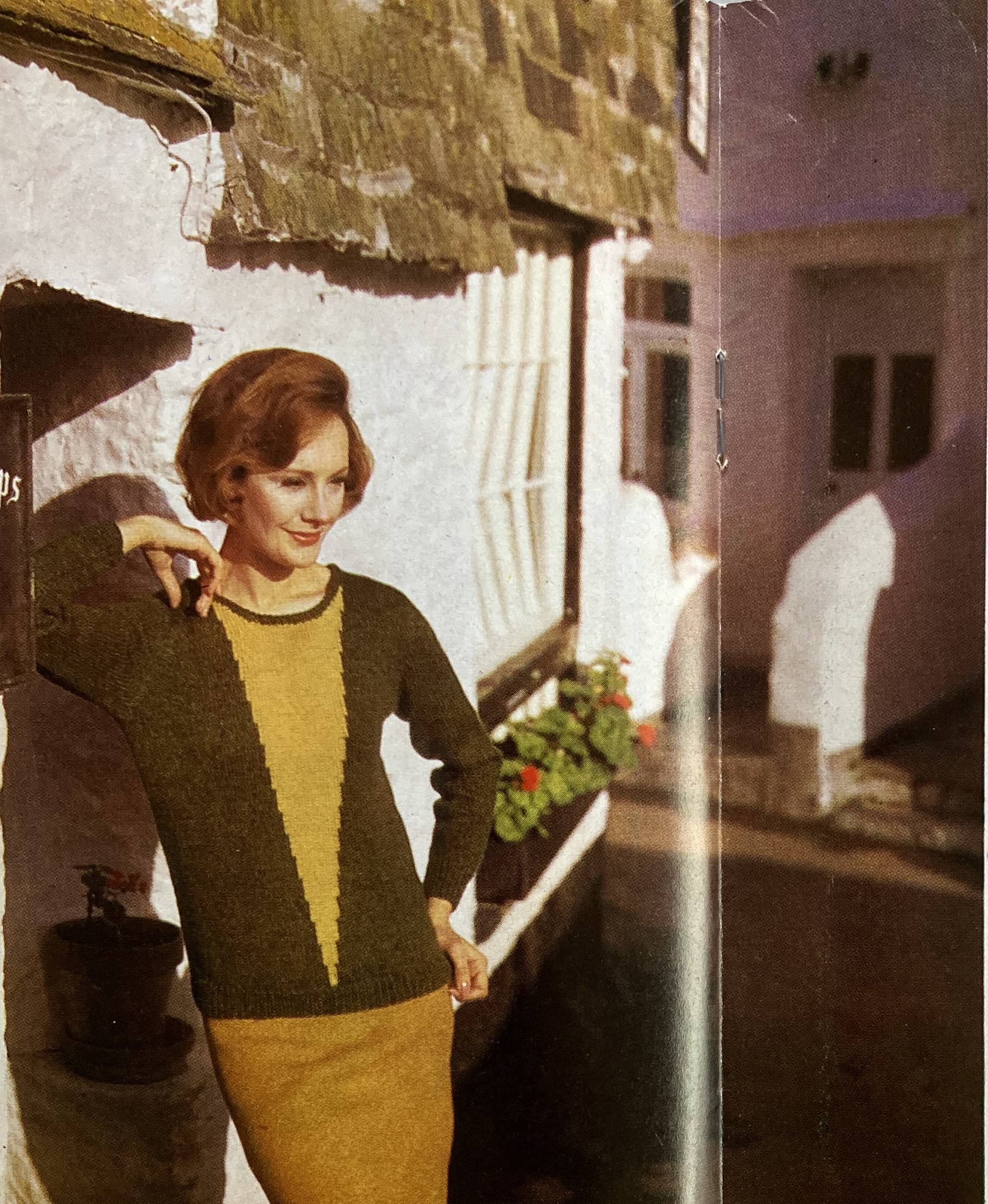
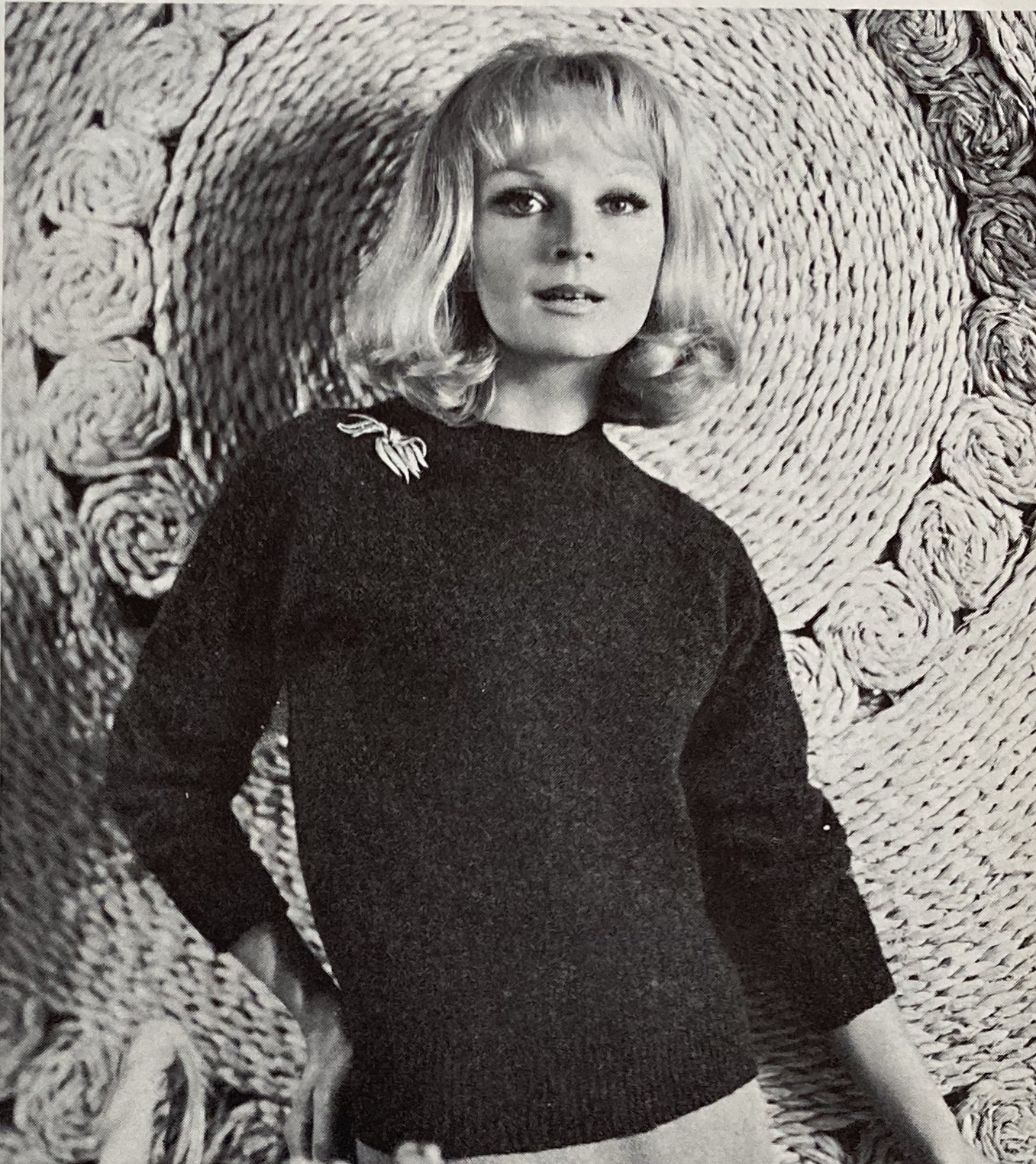
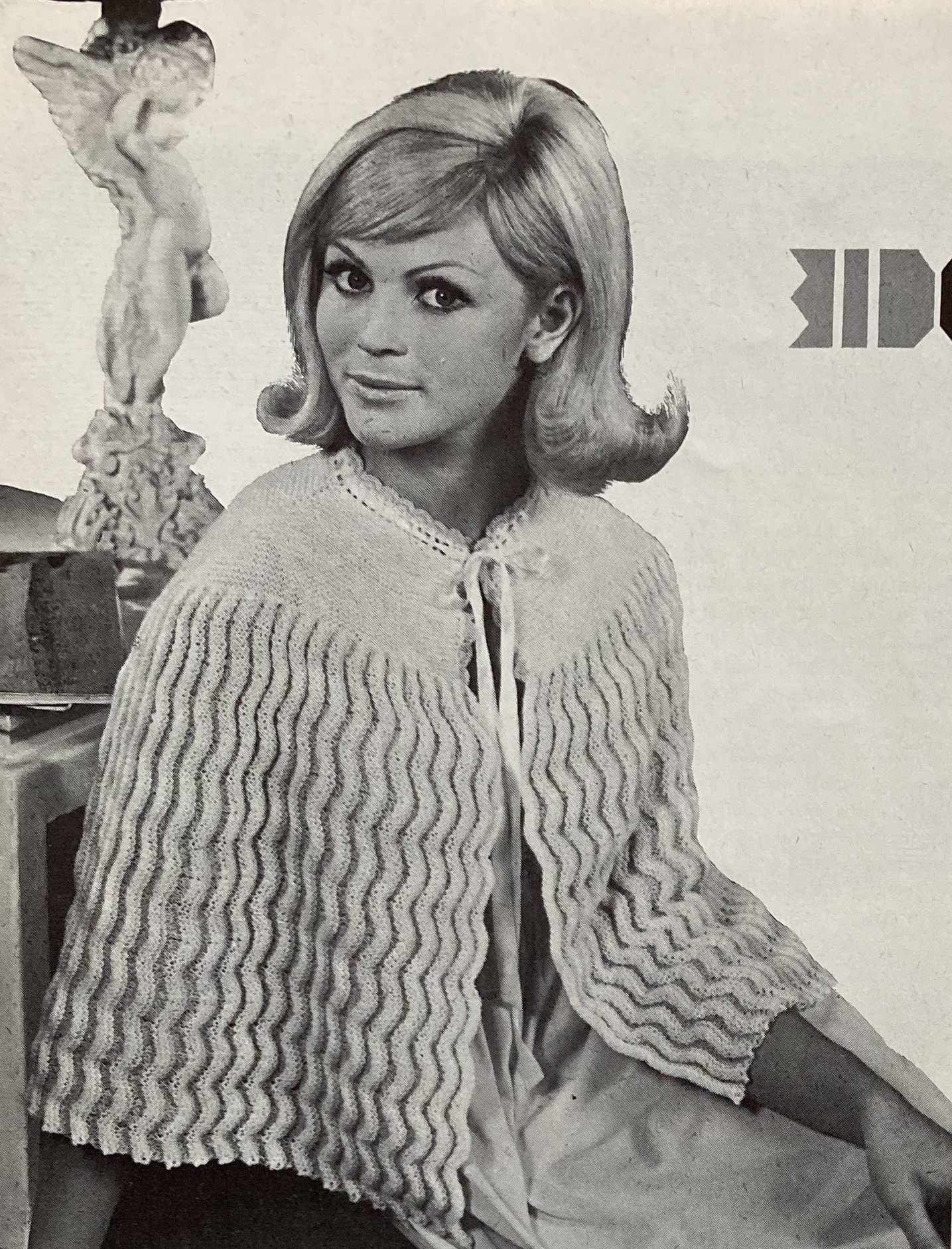
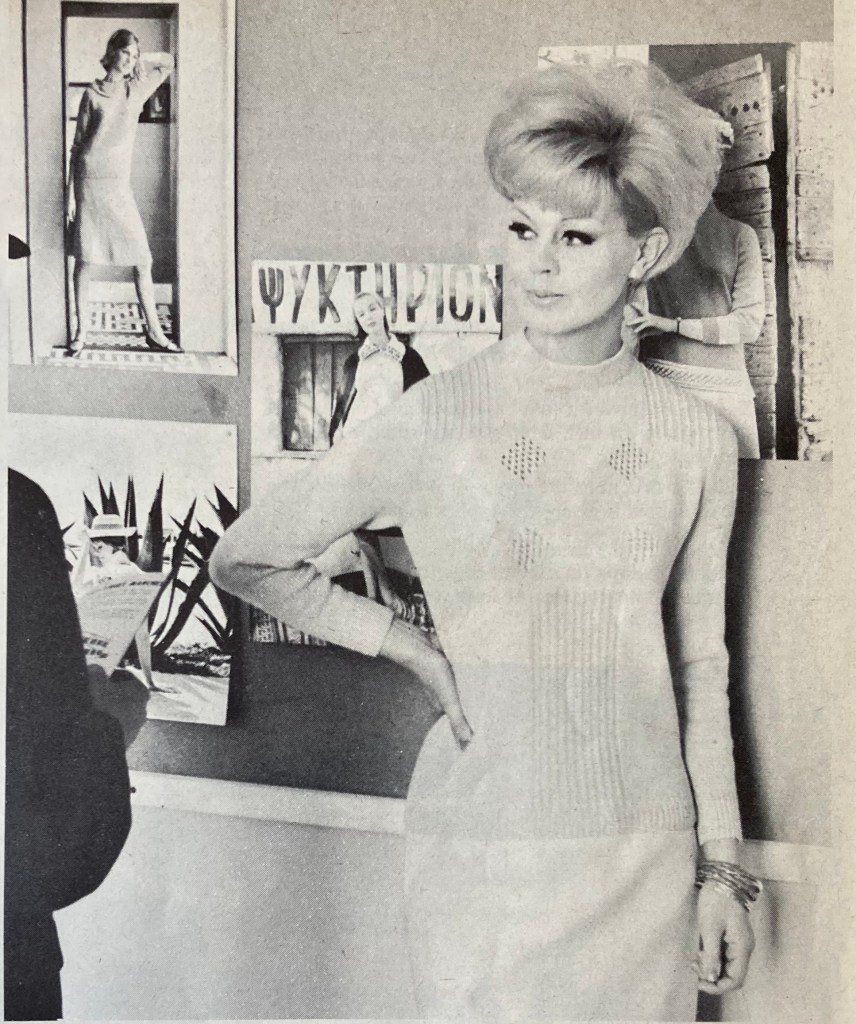
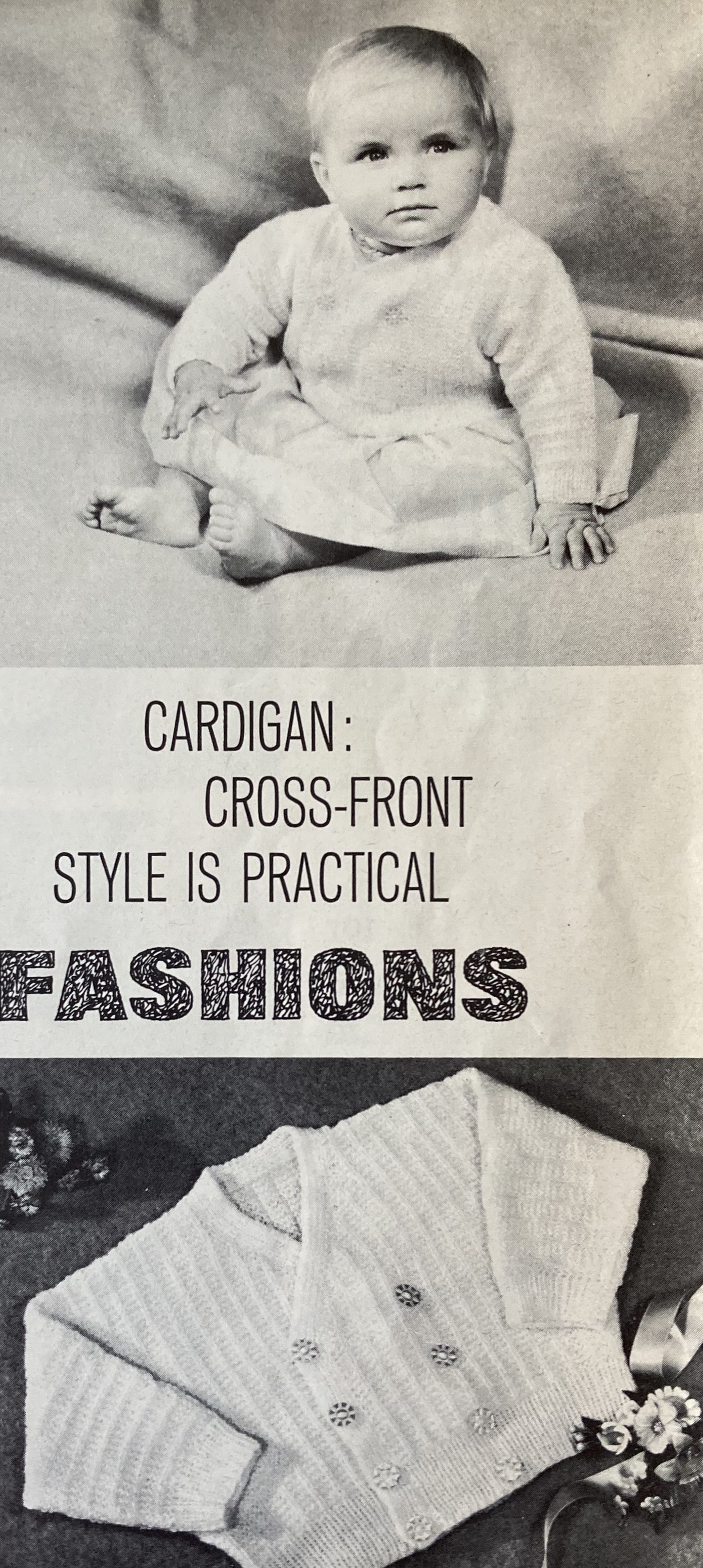
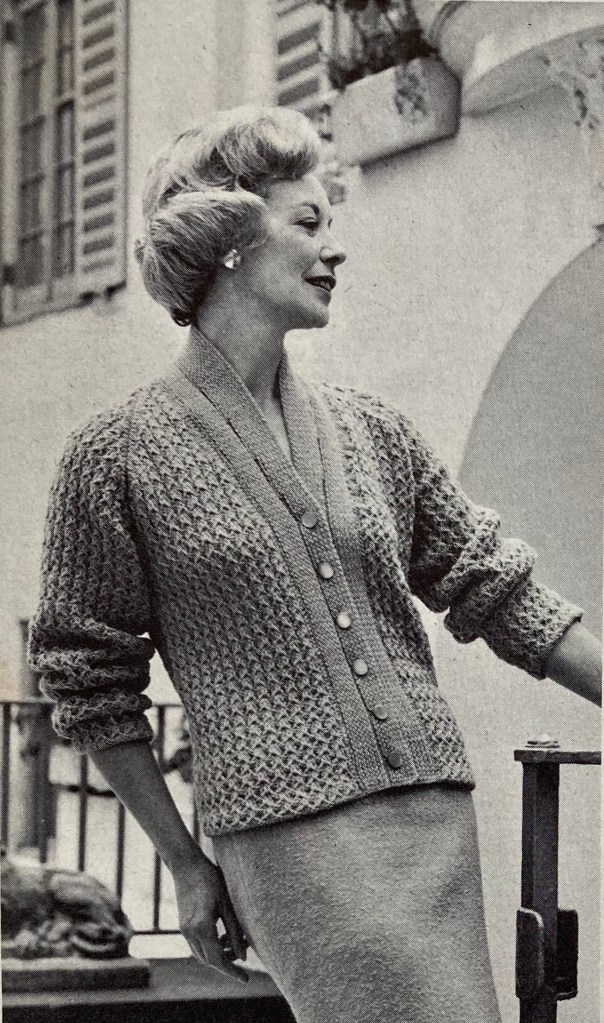
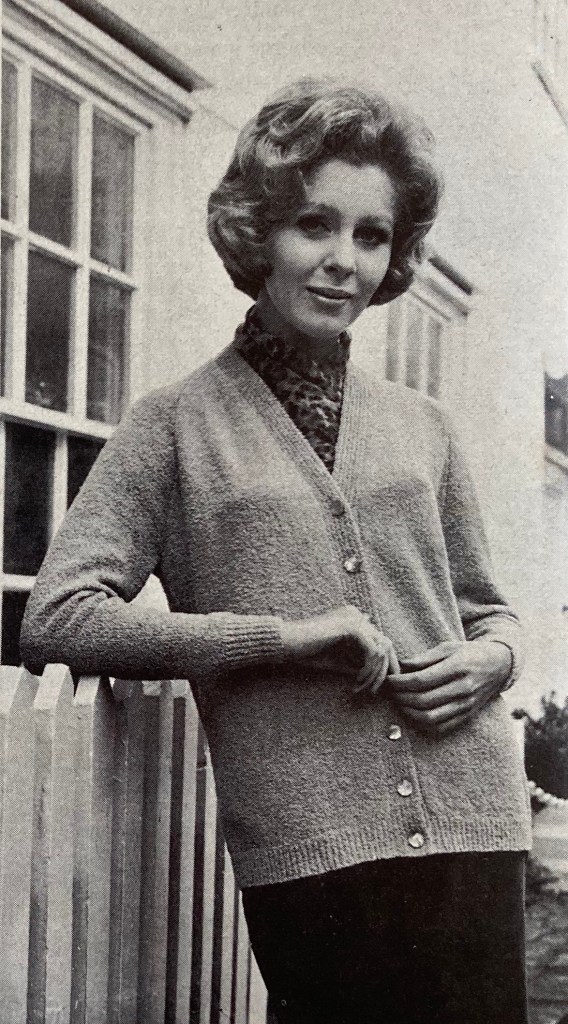
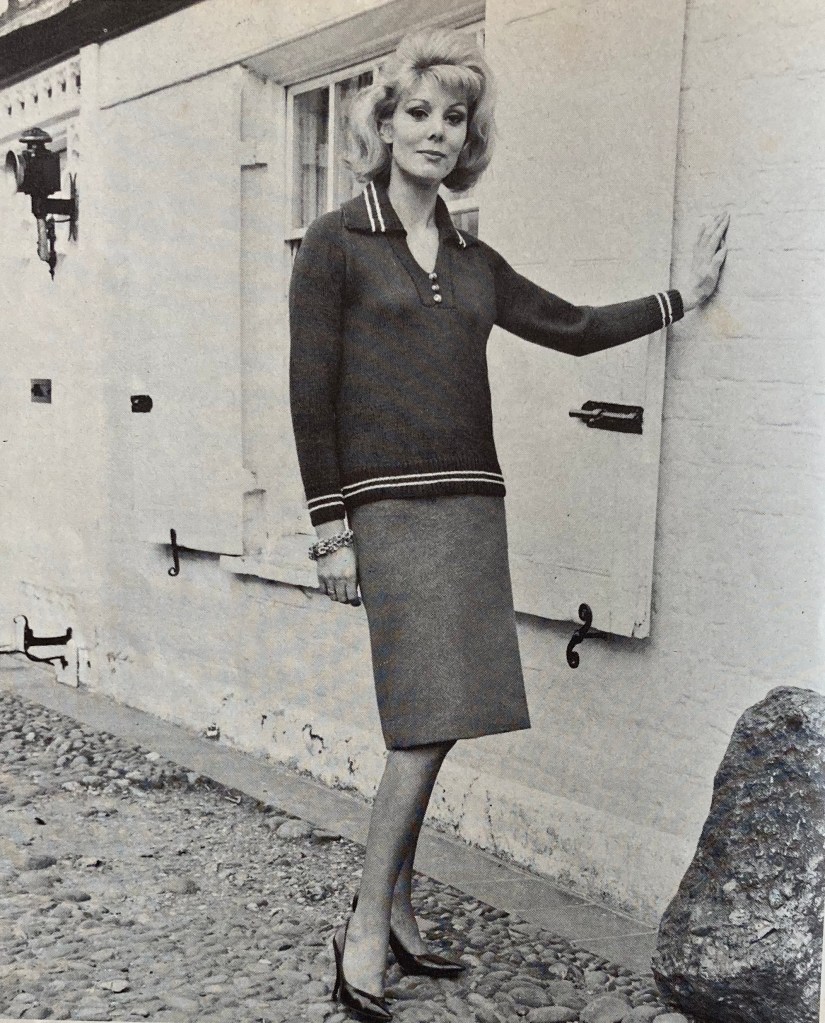
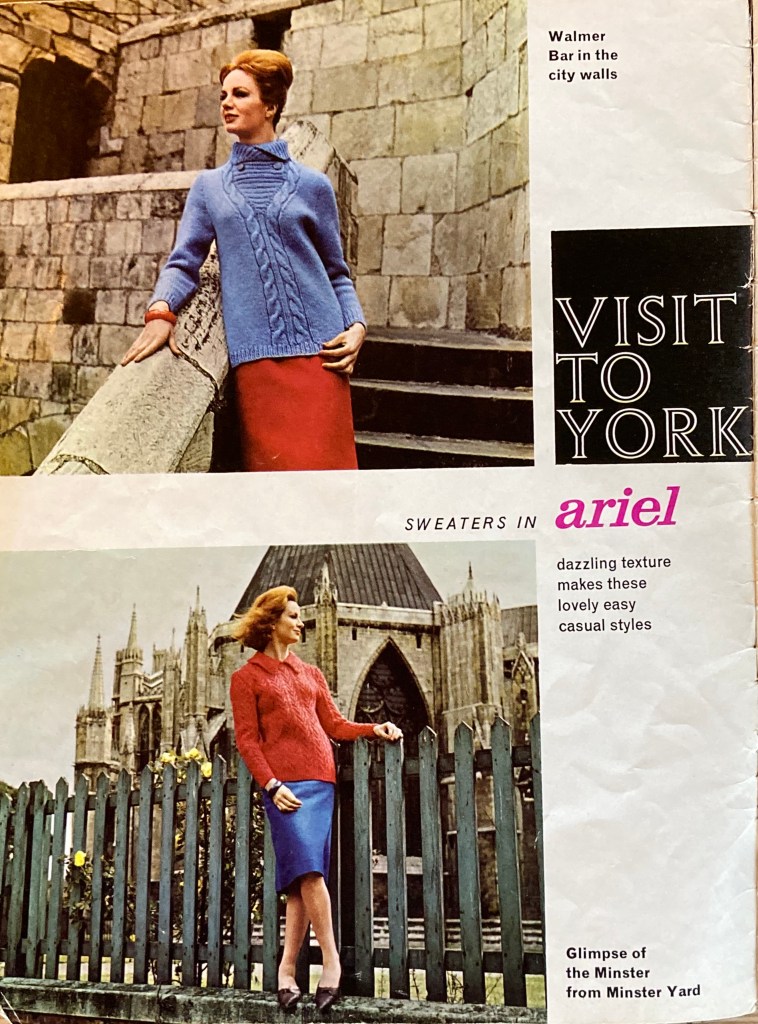
For more dressier occasions, there‘s a two-colour fancy cardigan in 4-ply fingering weight, or a jumper with matching pleated skirt in 4-ply bouclet. You can also make an „overblouse“ in double knitting to wear over a short-sleeved, lightweight jumper in a new twist on the twin-set theme. Zig-zag patterns, whether worked in colour or texture, and large collars continue to be popular.
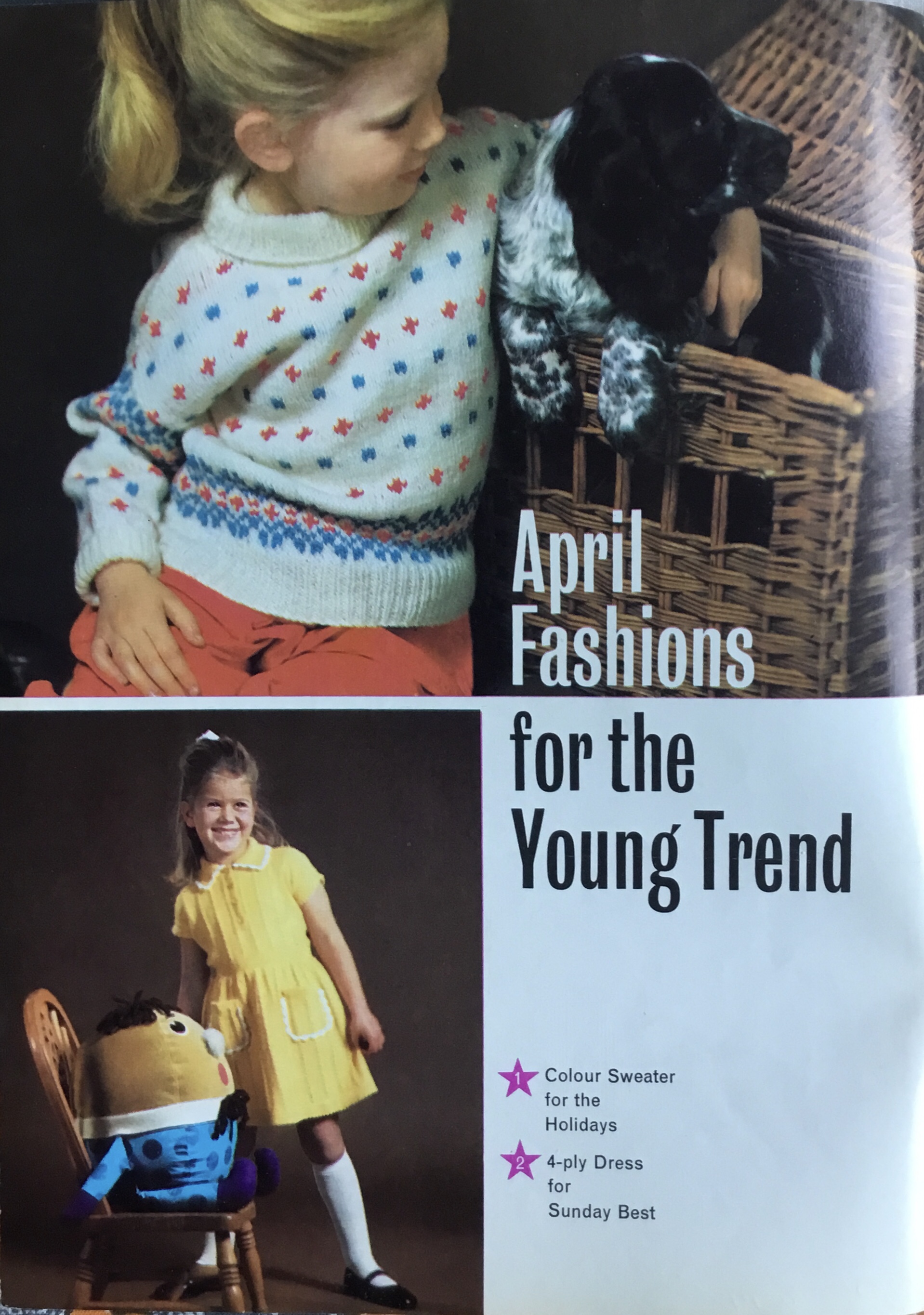

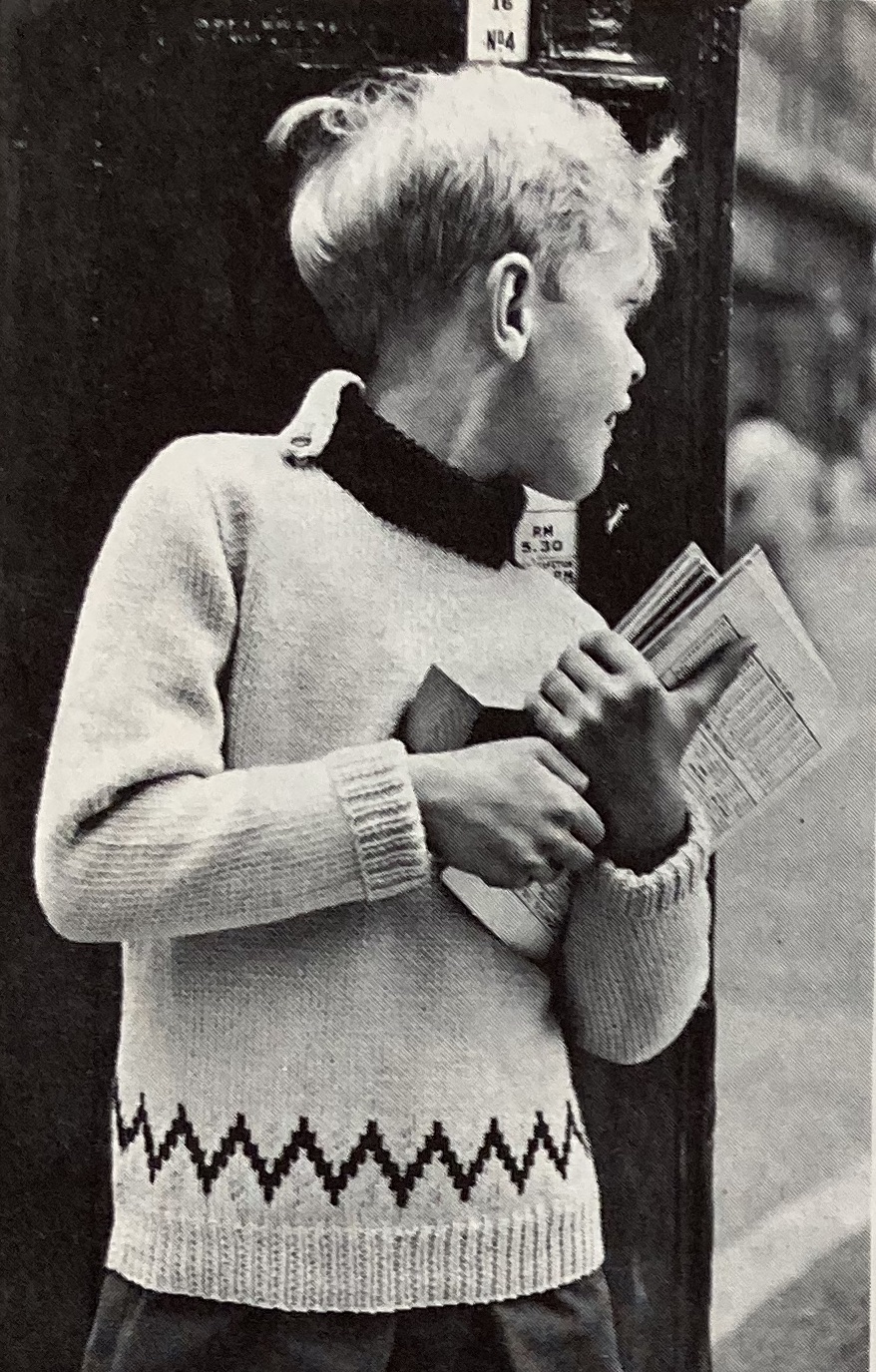
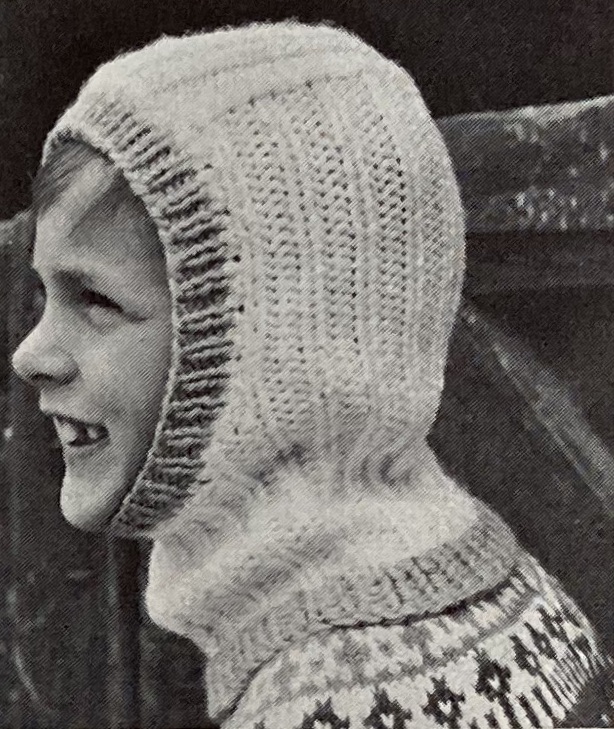
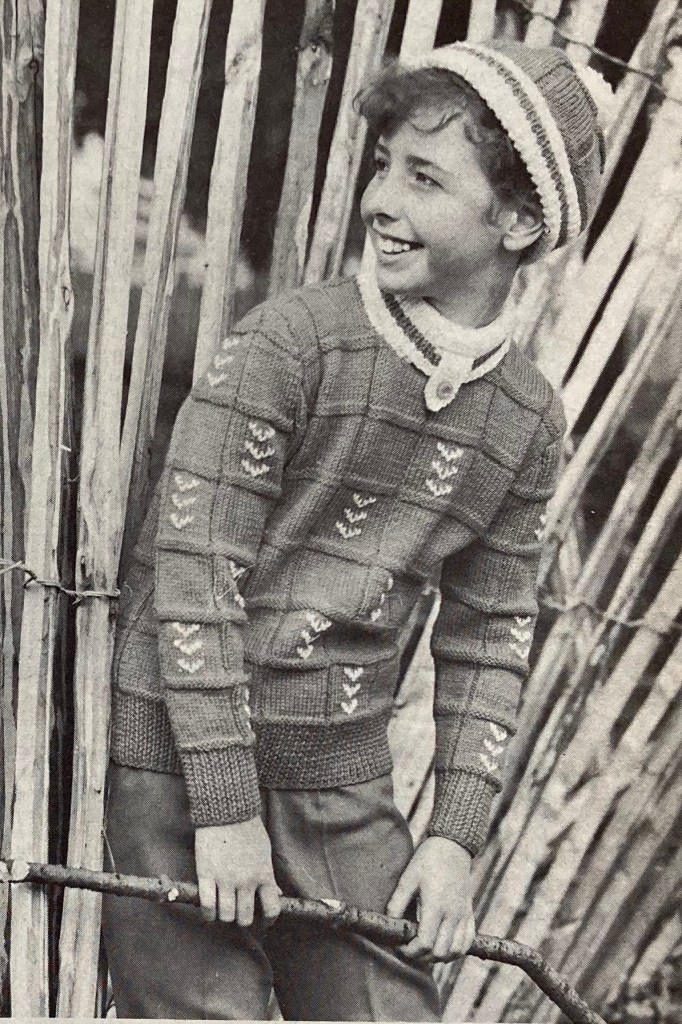
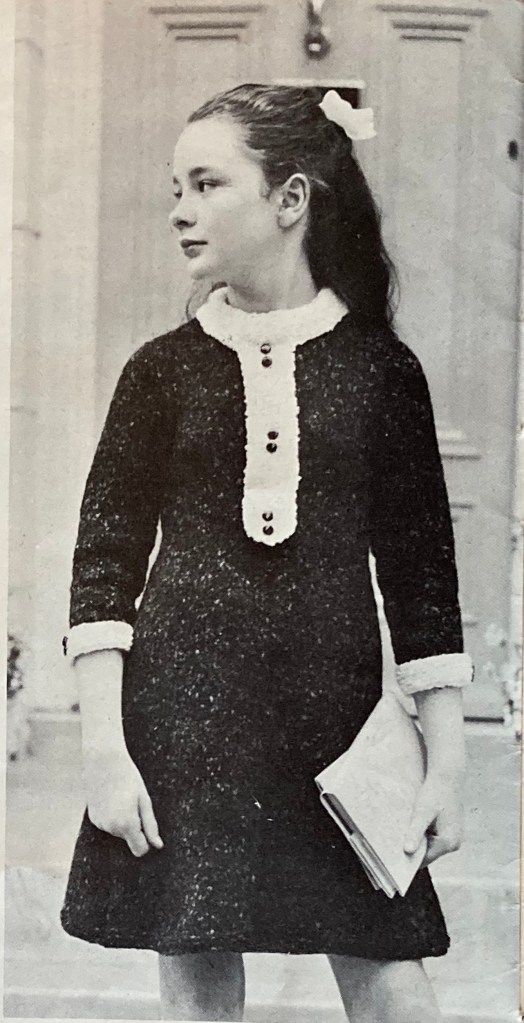
In the „Junior Knitting Fashions“ department, there‘s both a warm Scandinavian-style sweater in a typical snowflake pattern, or a wonderful „Sunday best“ dress.

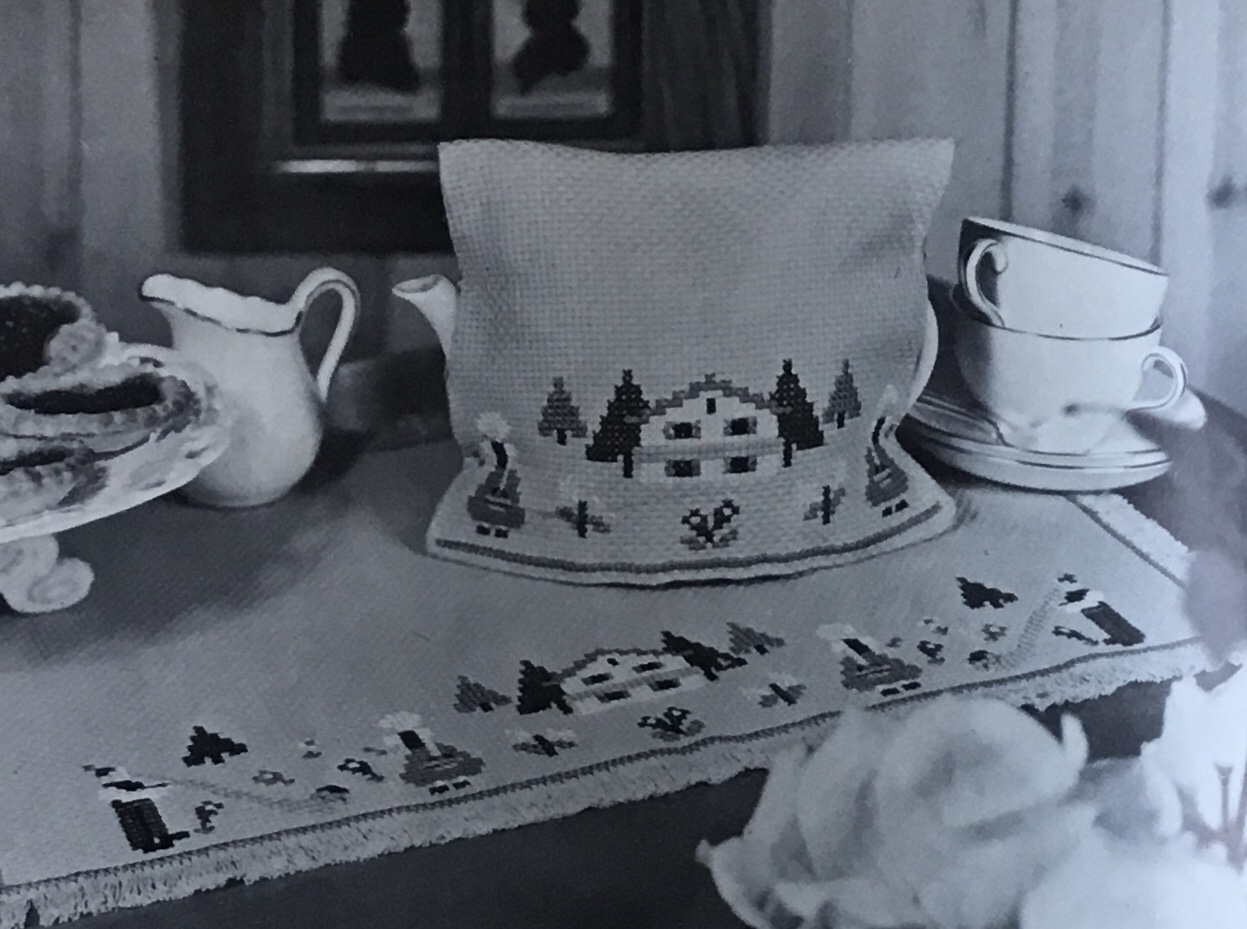
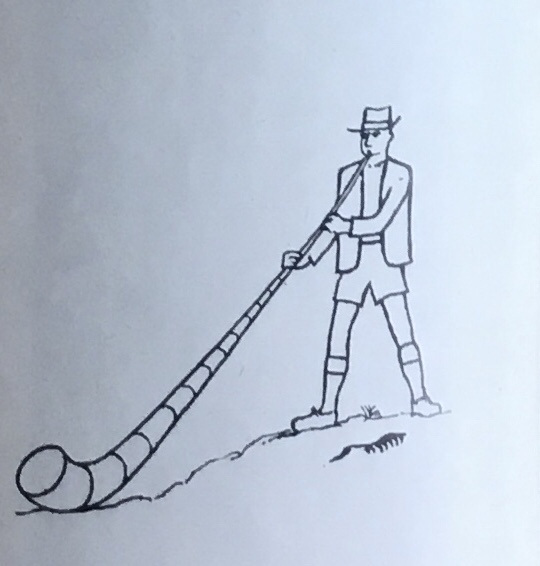
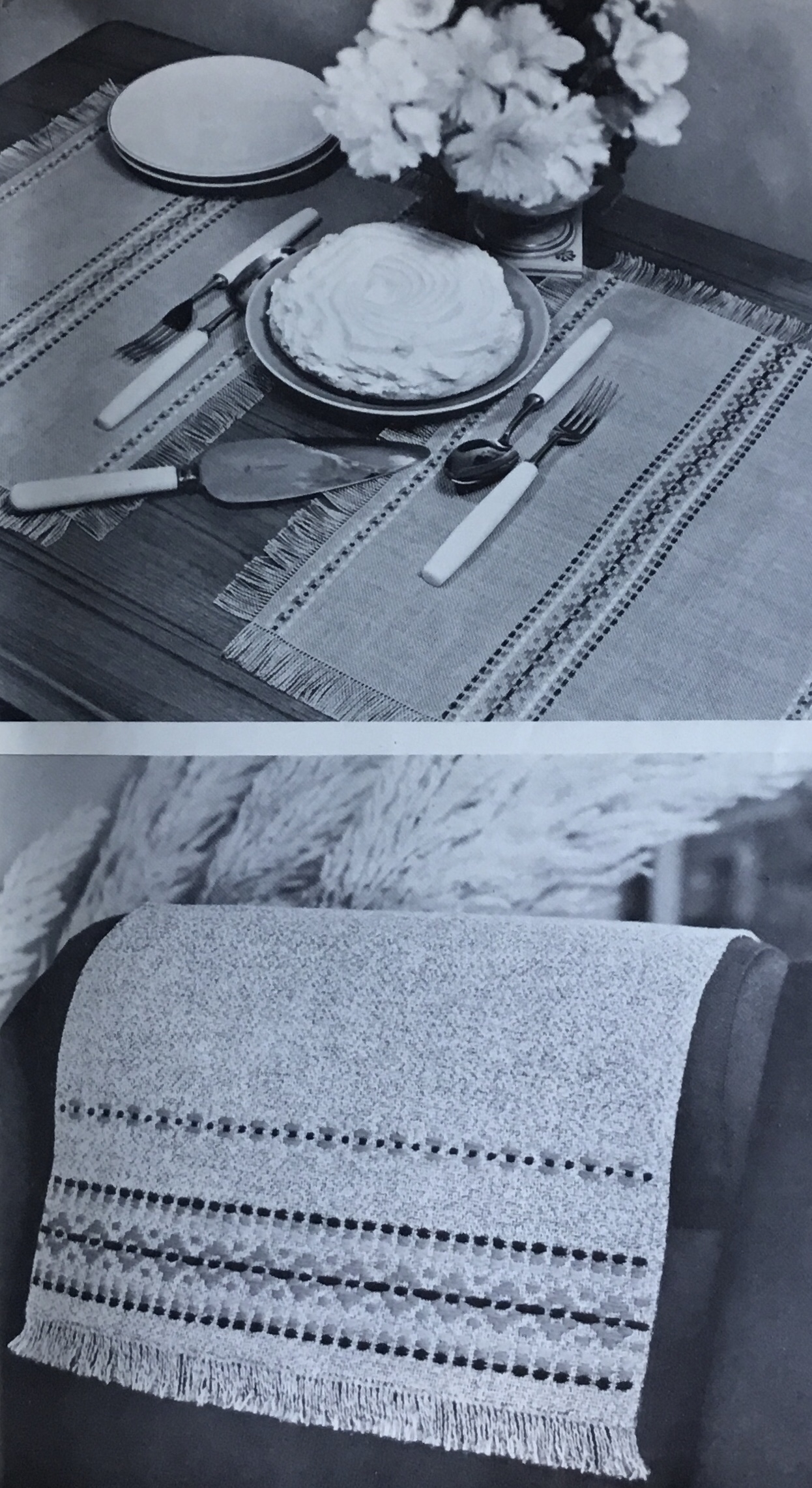
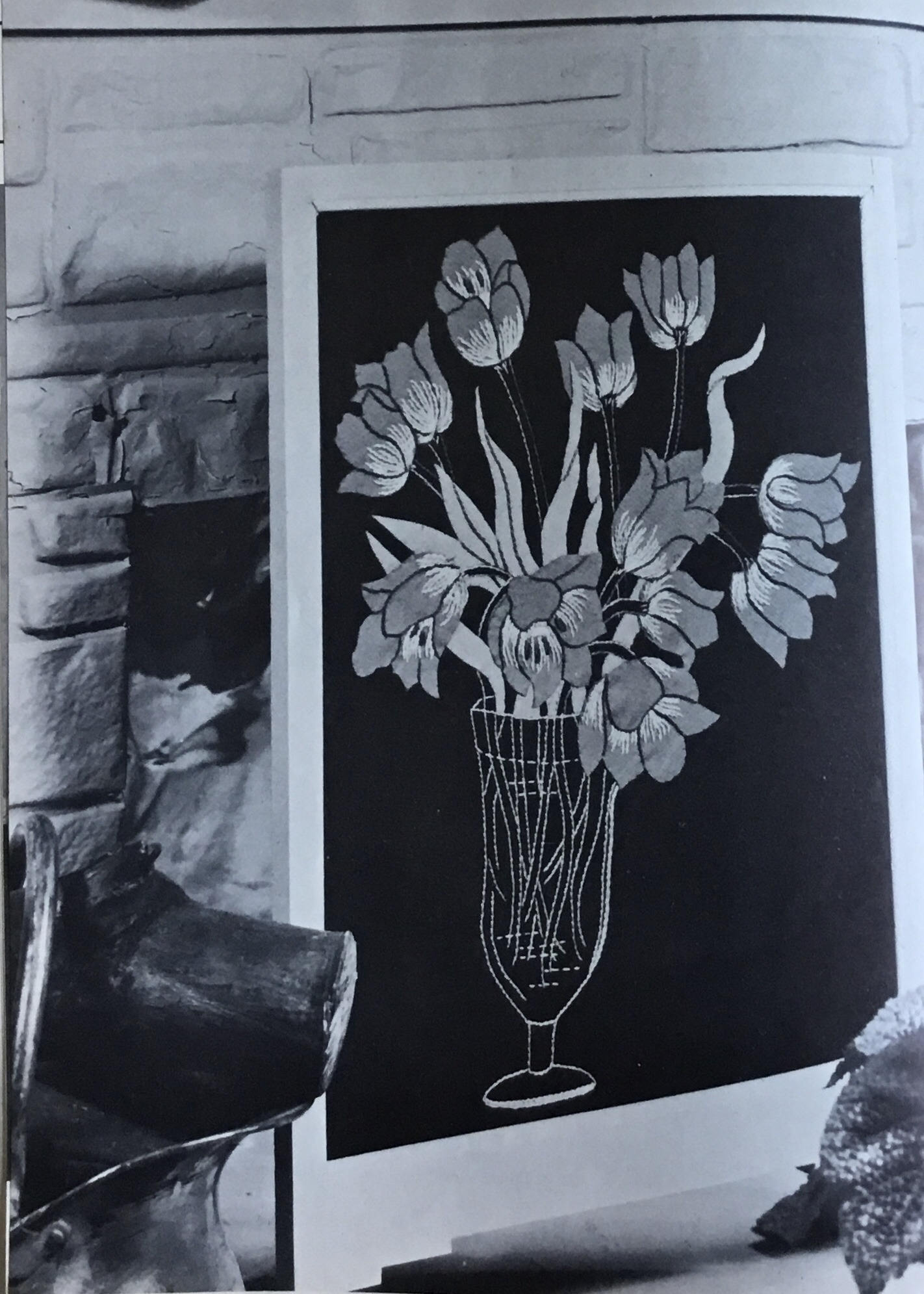
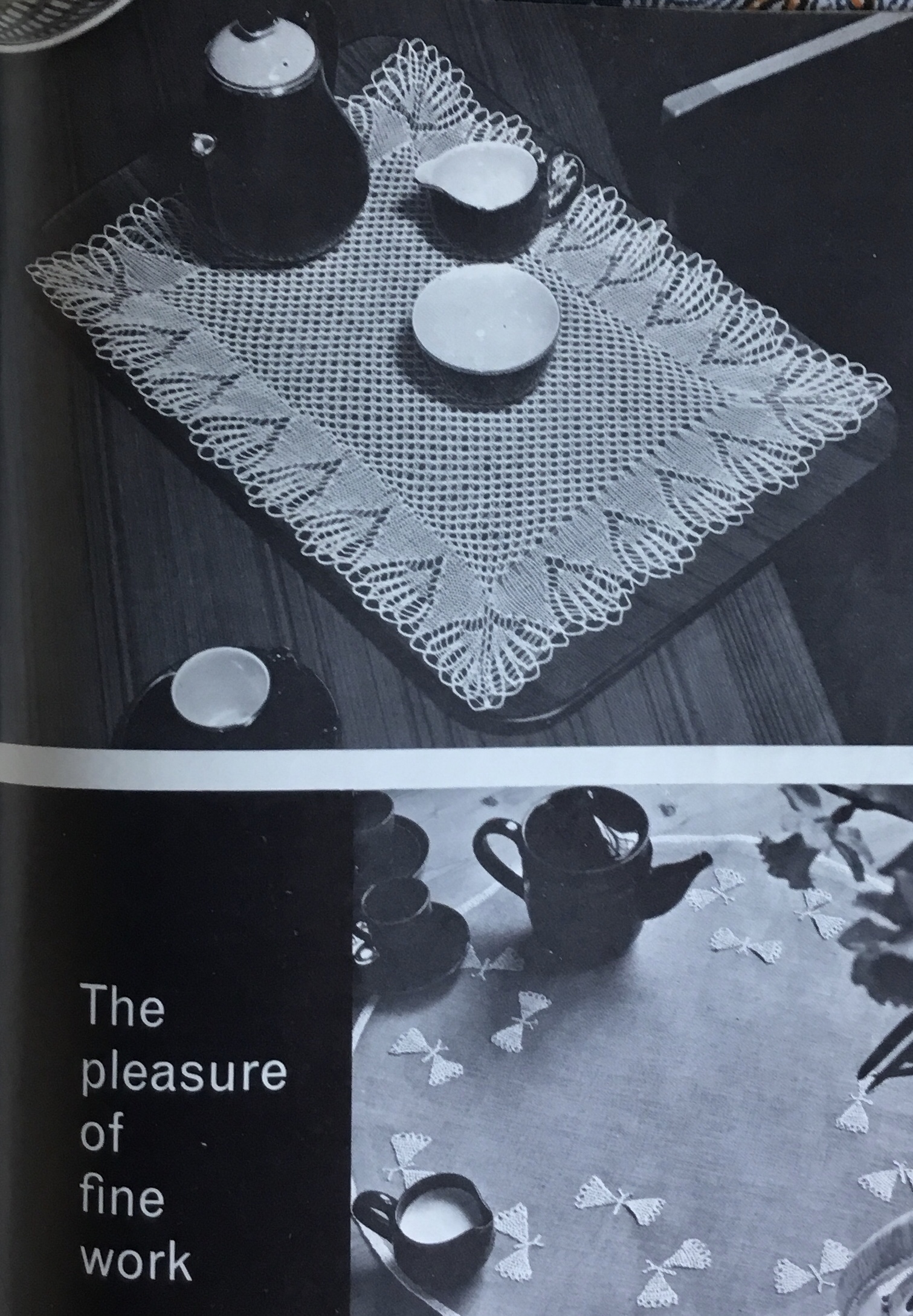
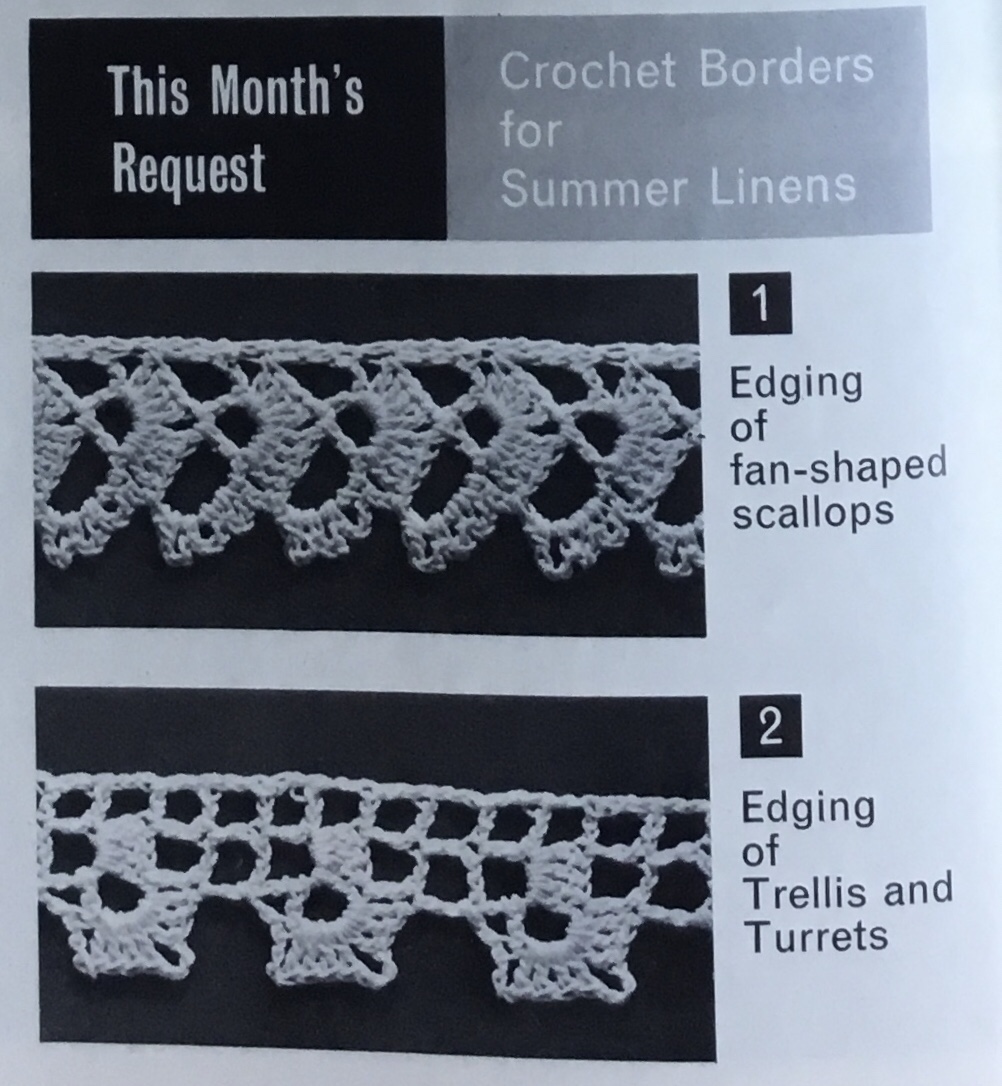
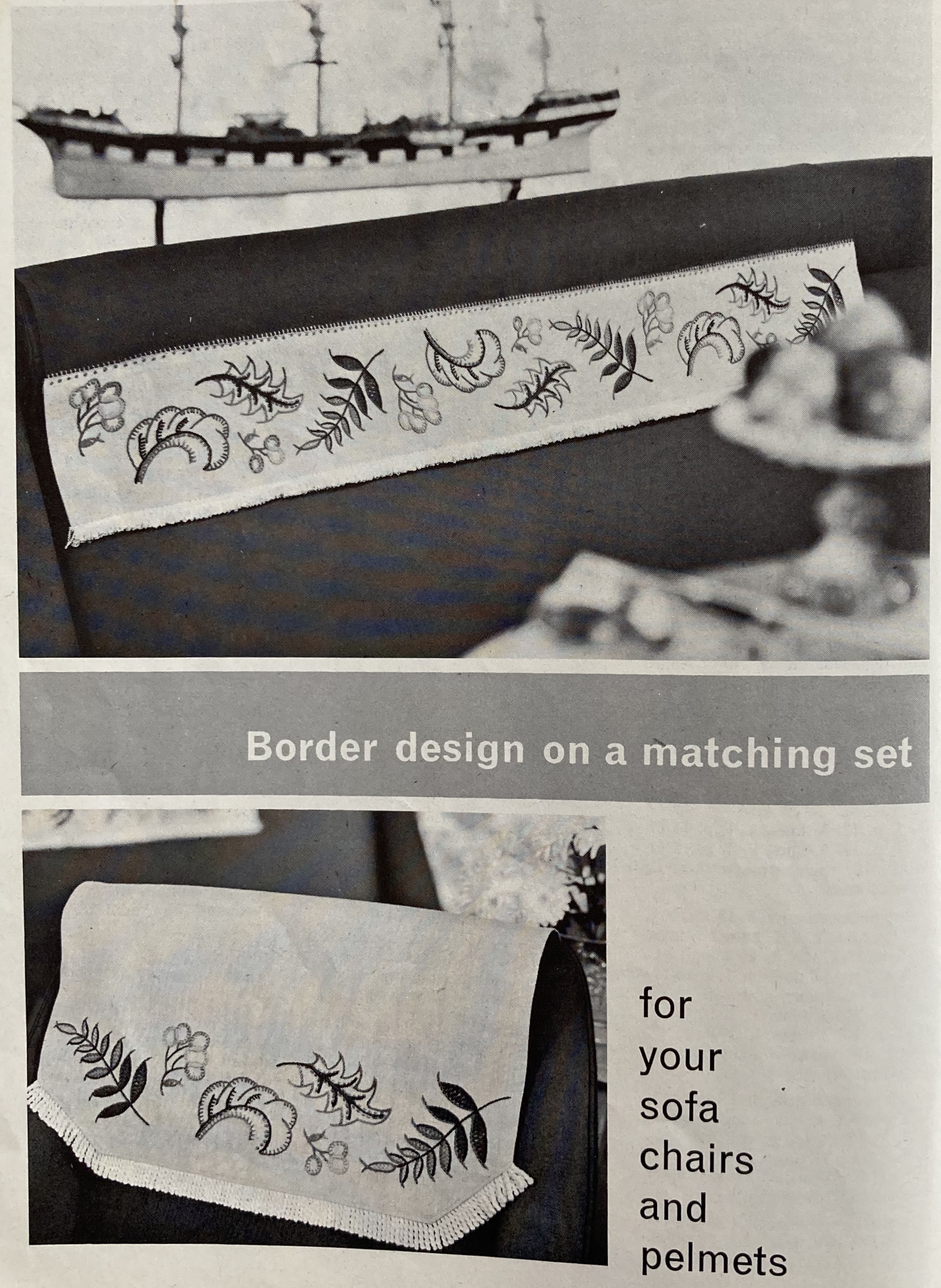
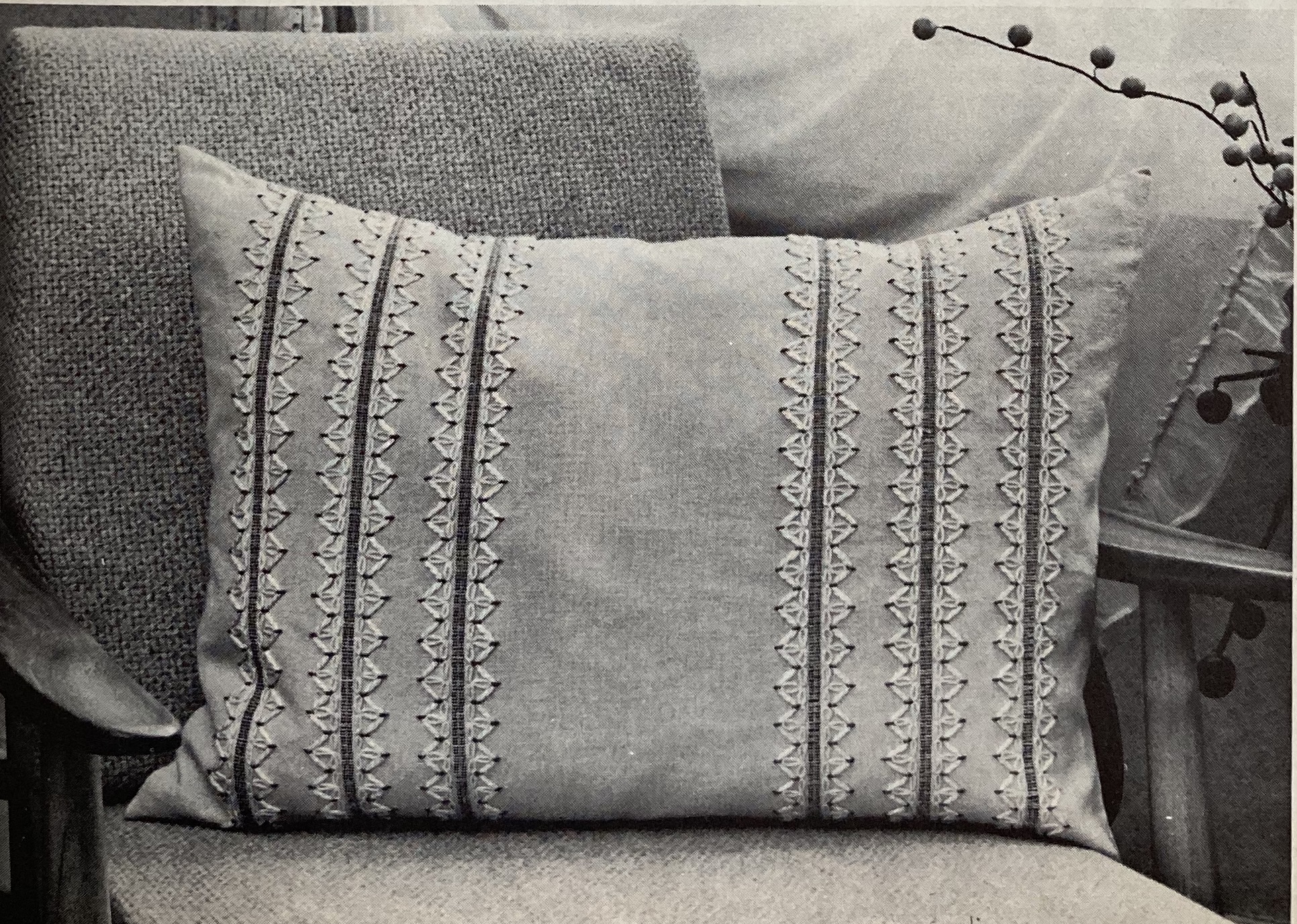
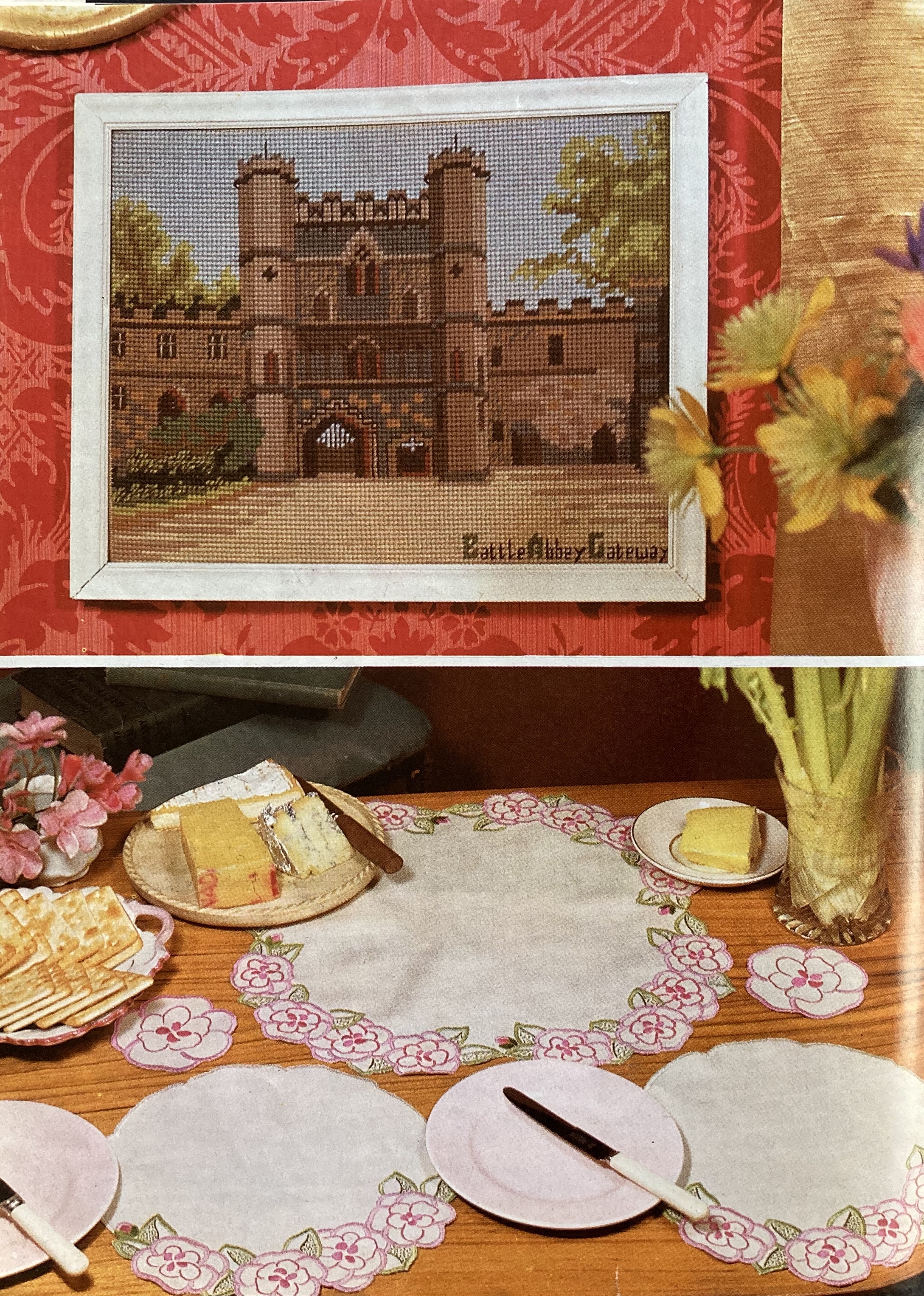
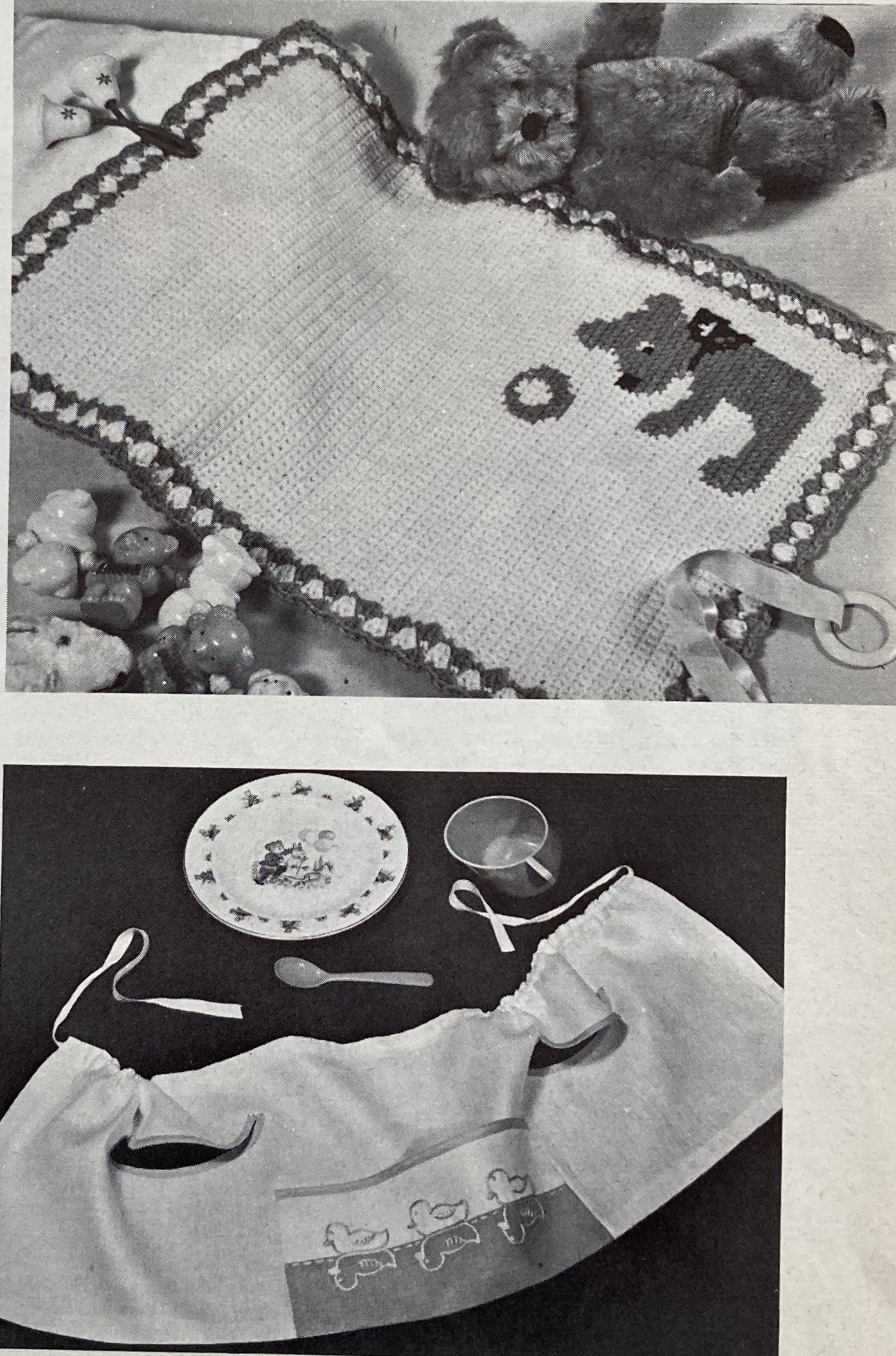
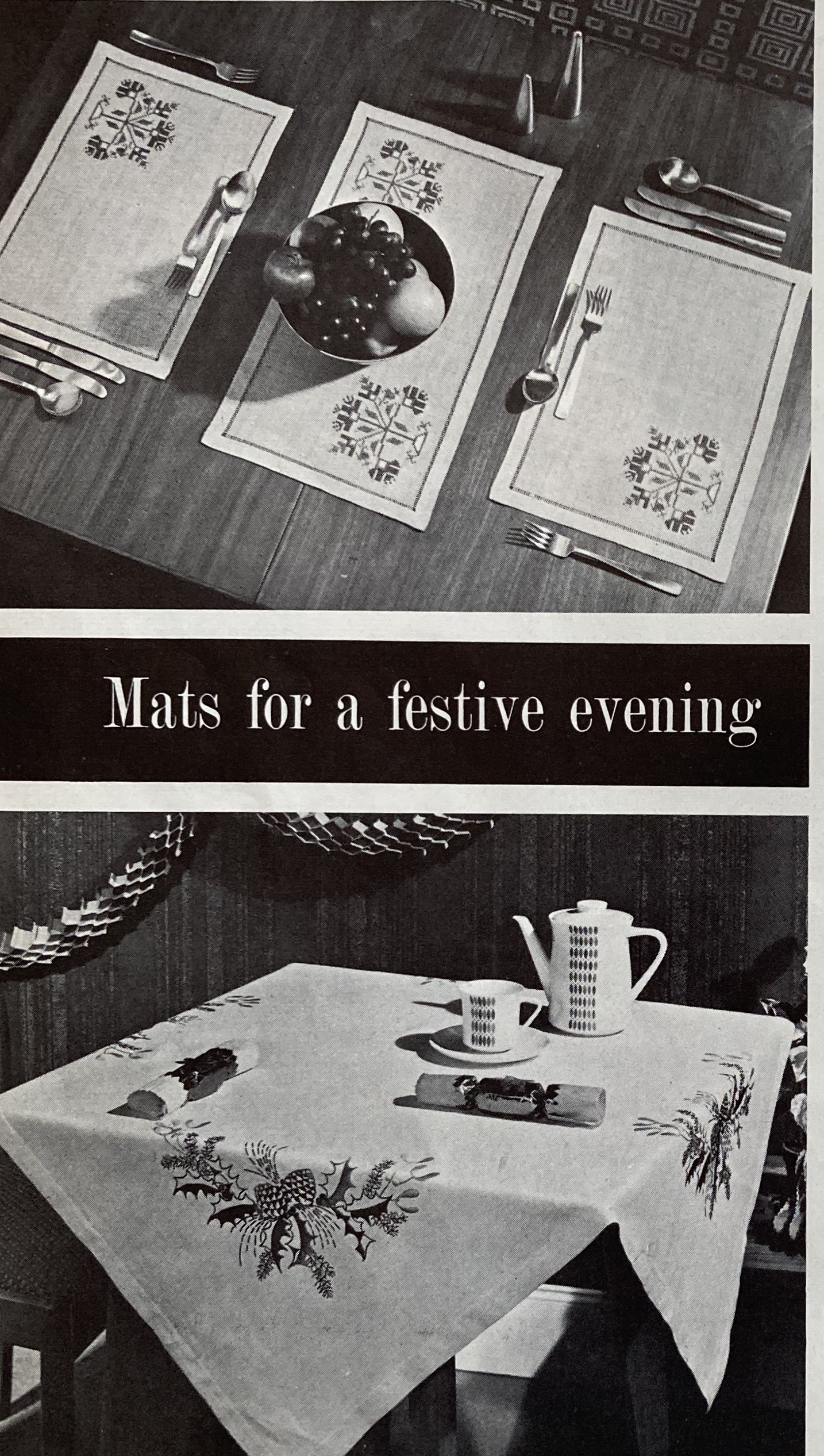
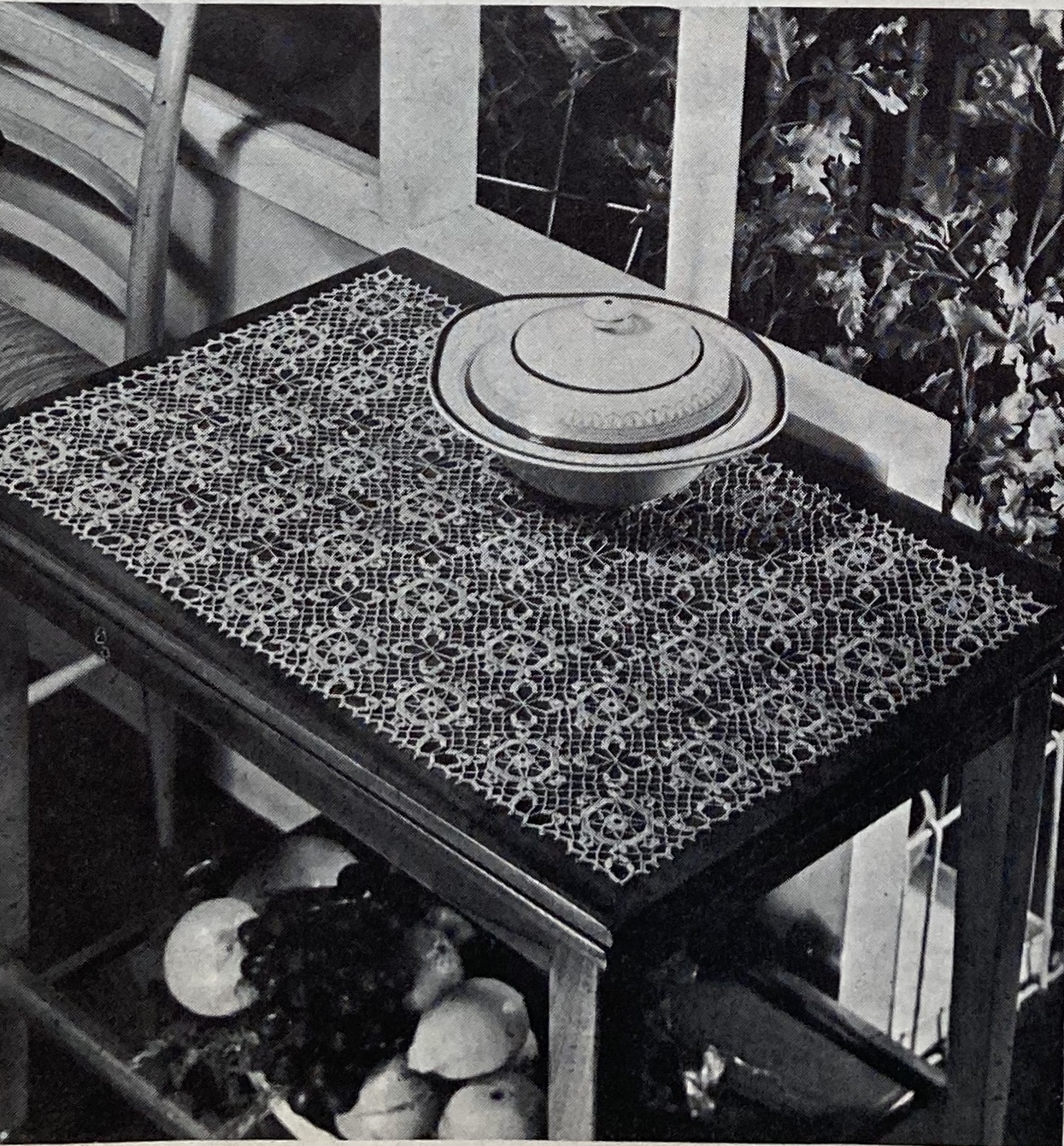
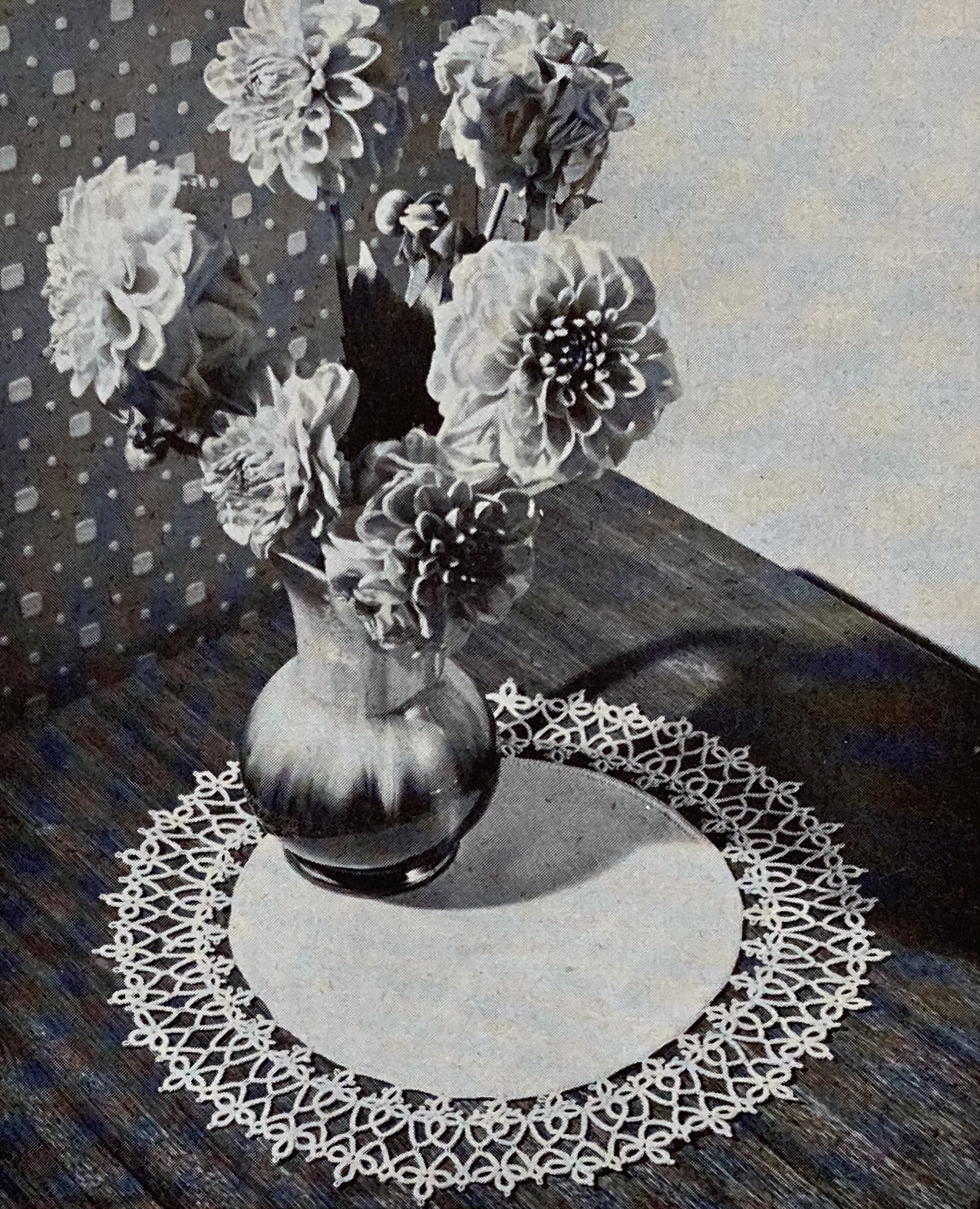
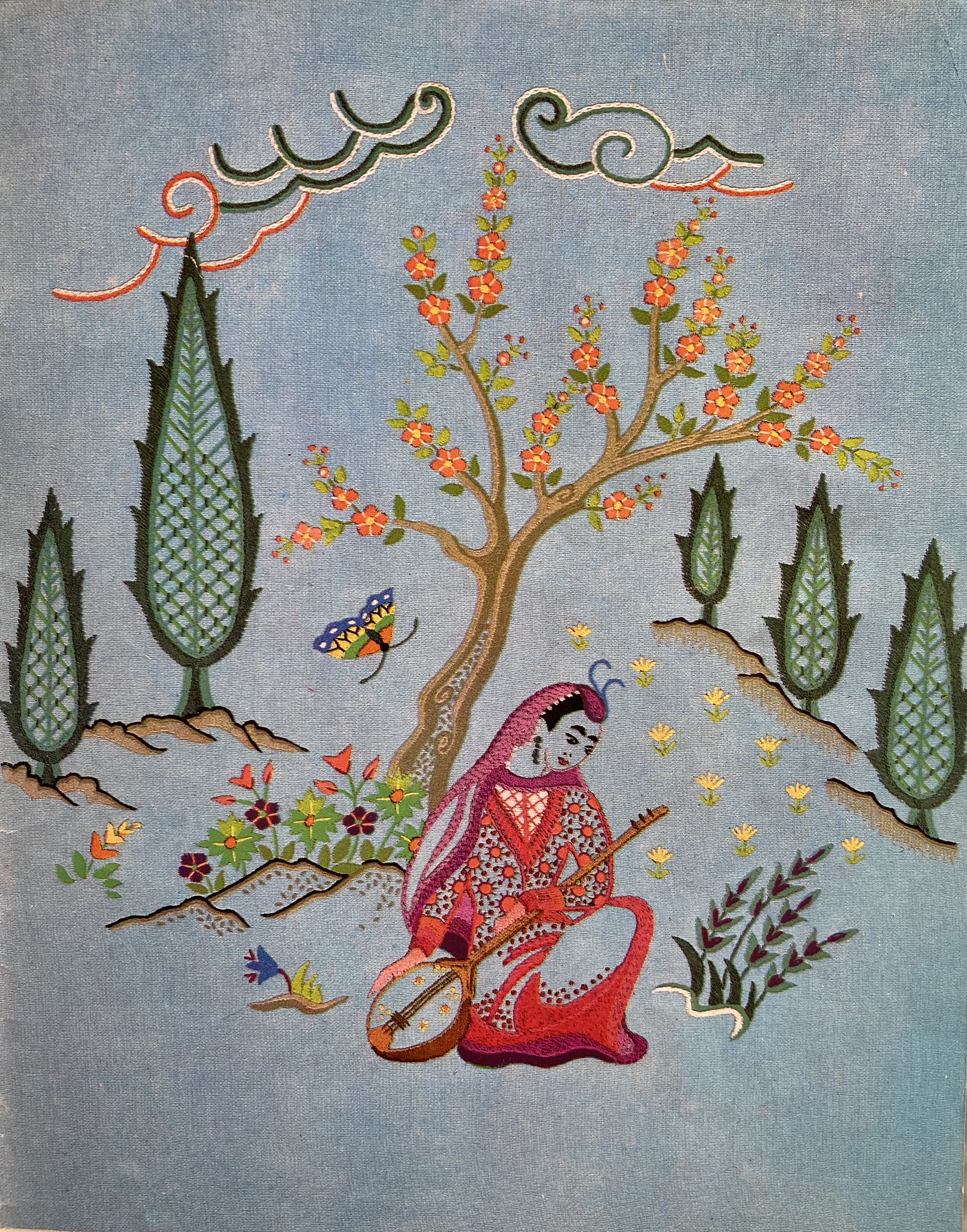
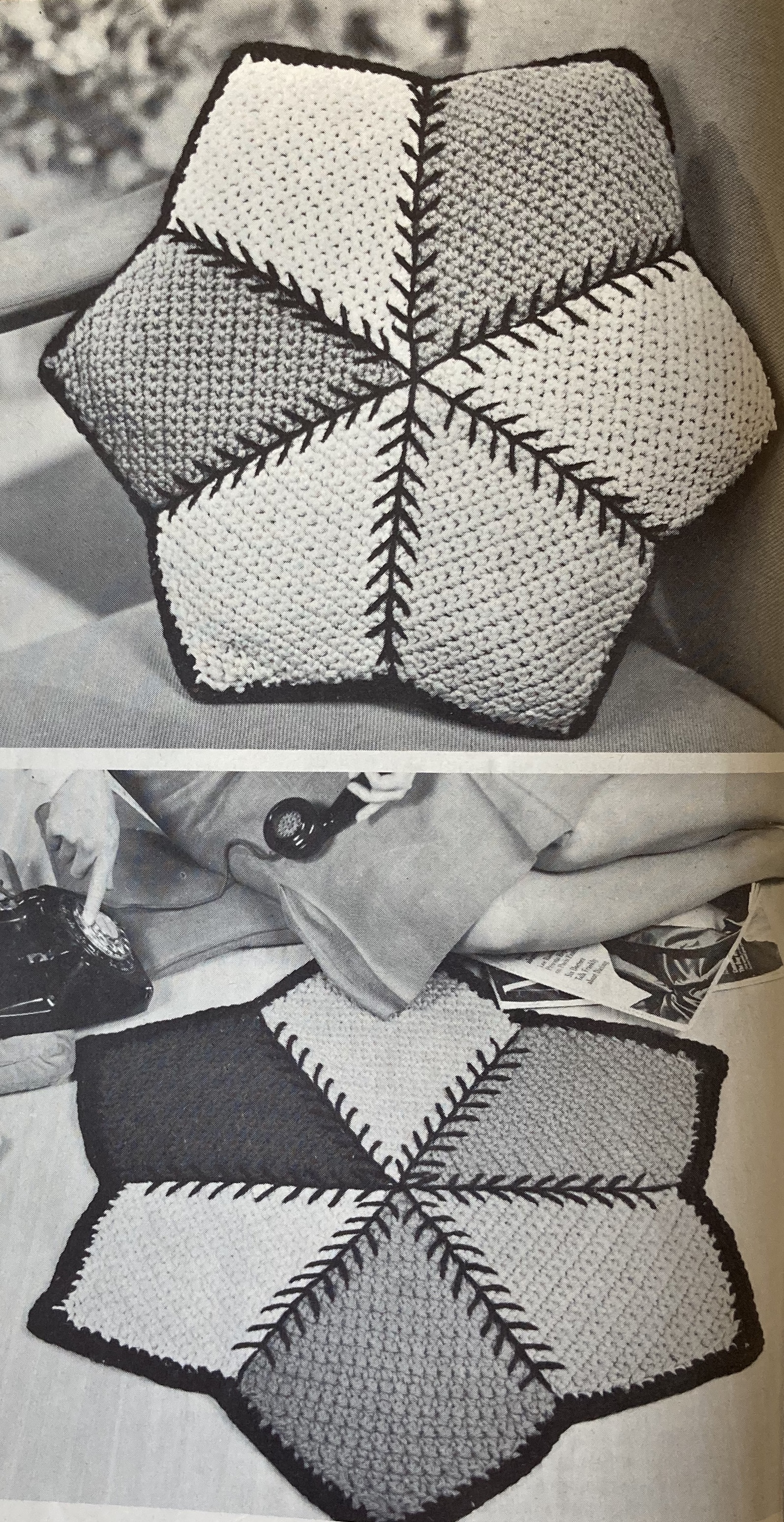
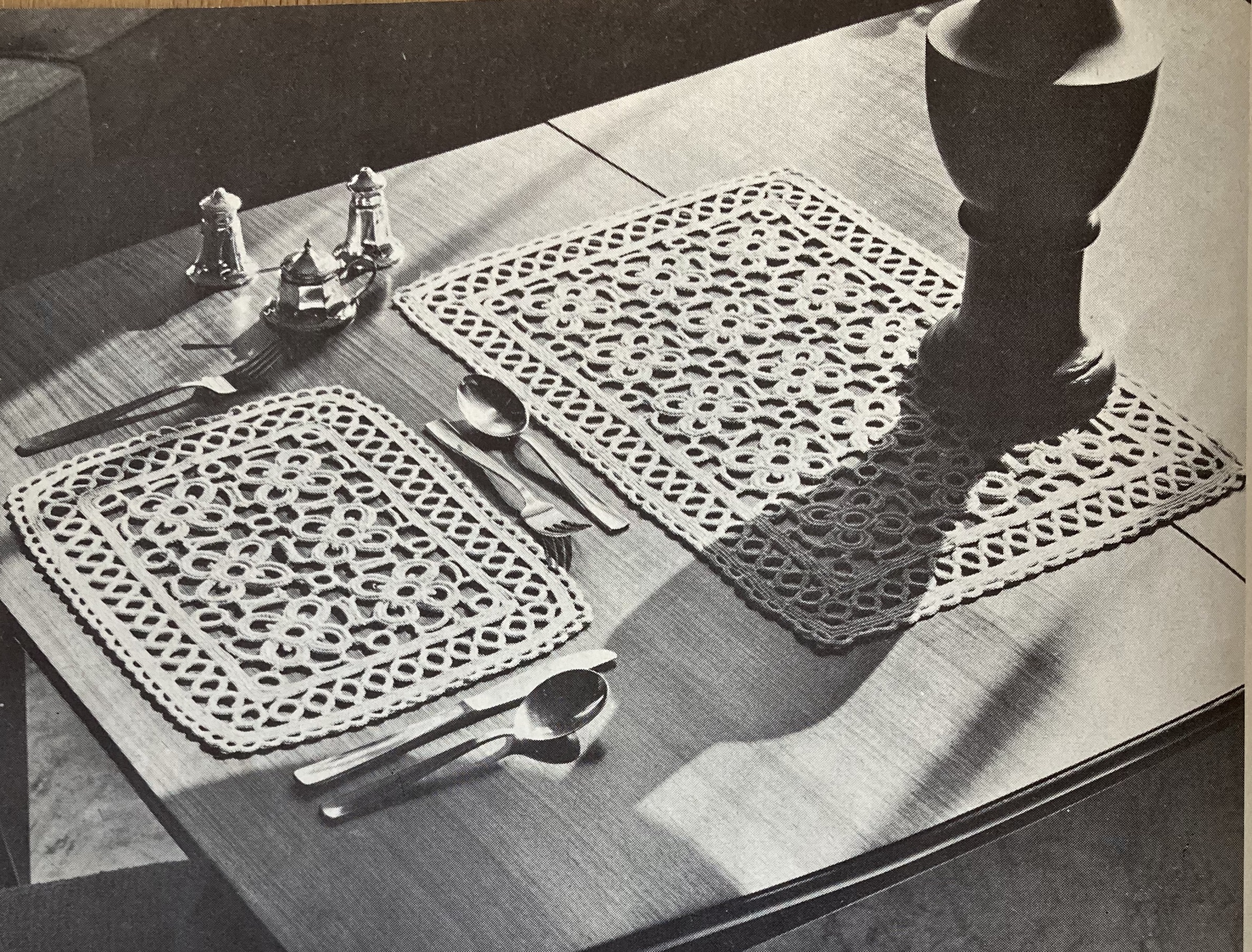
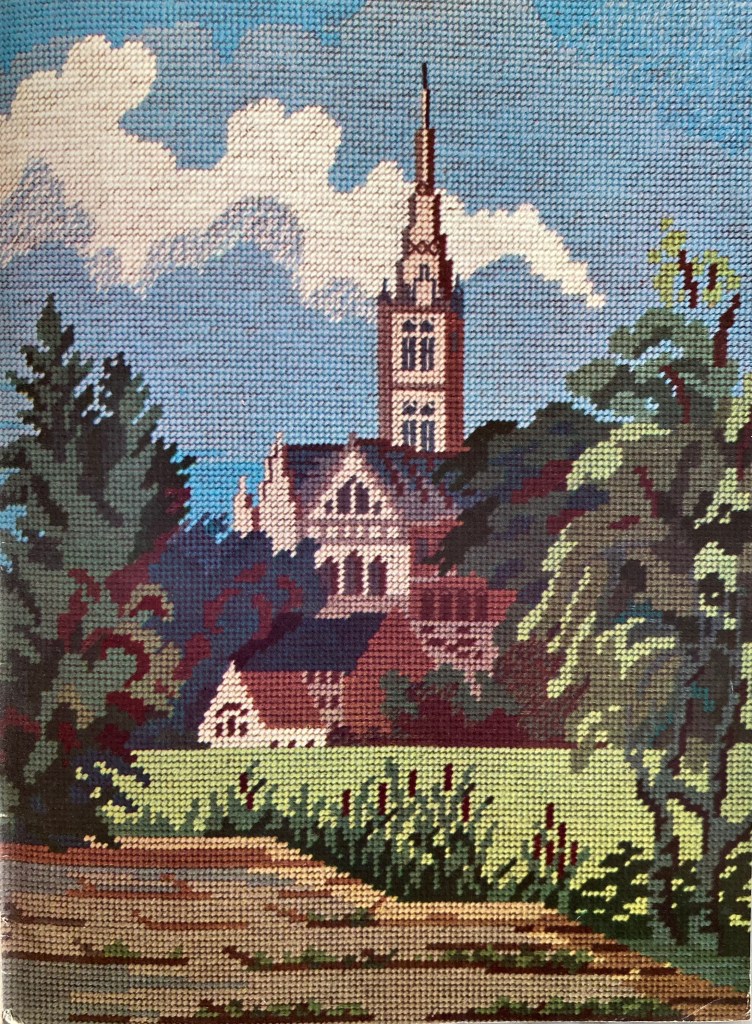
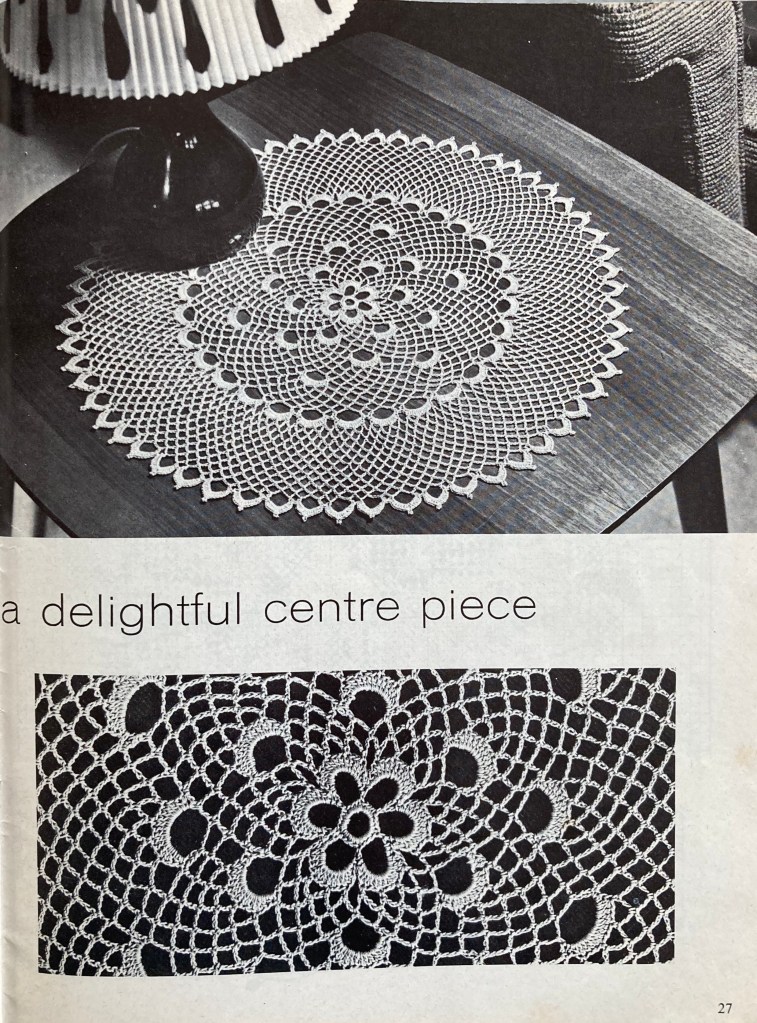
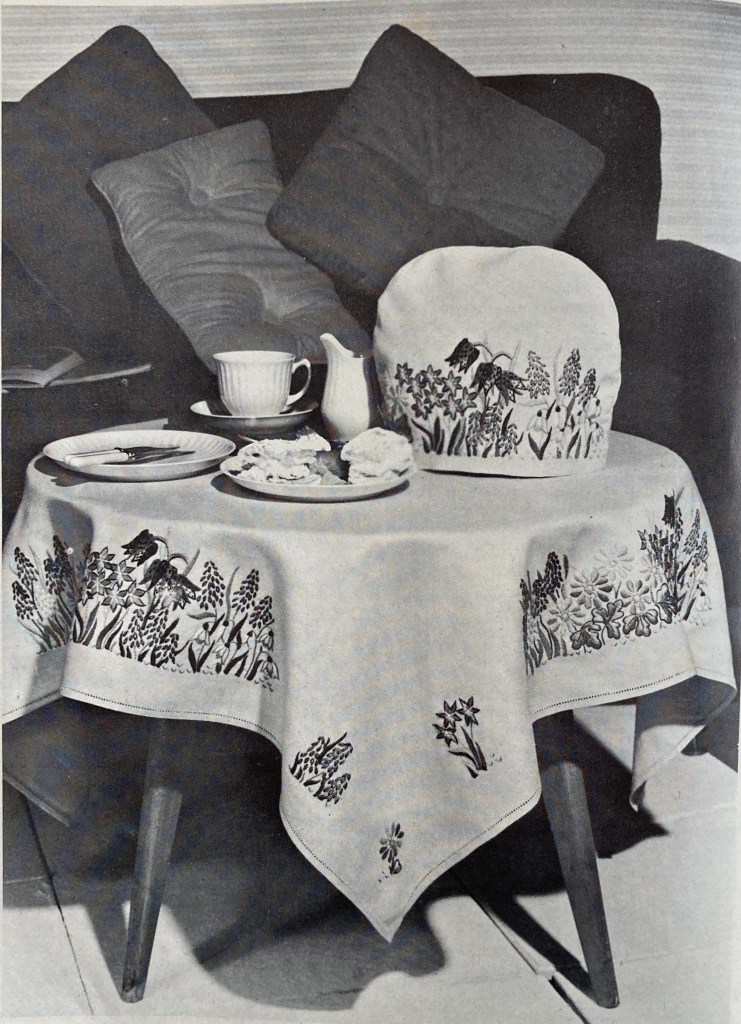
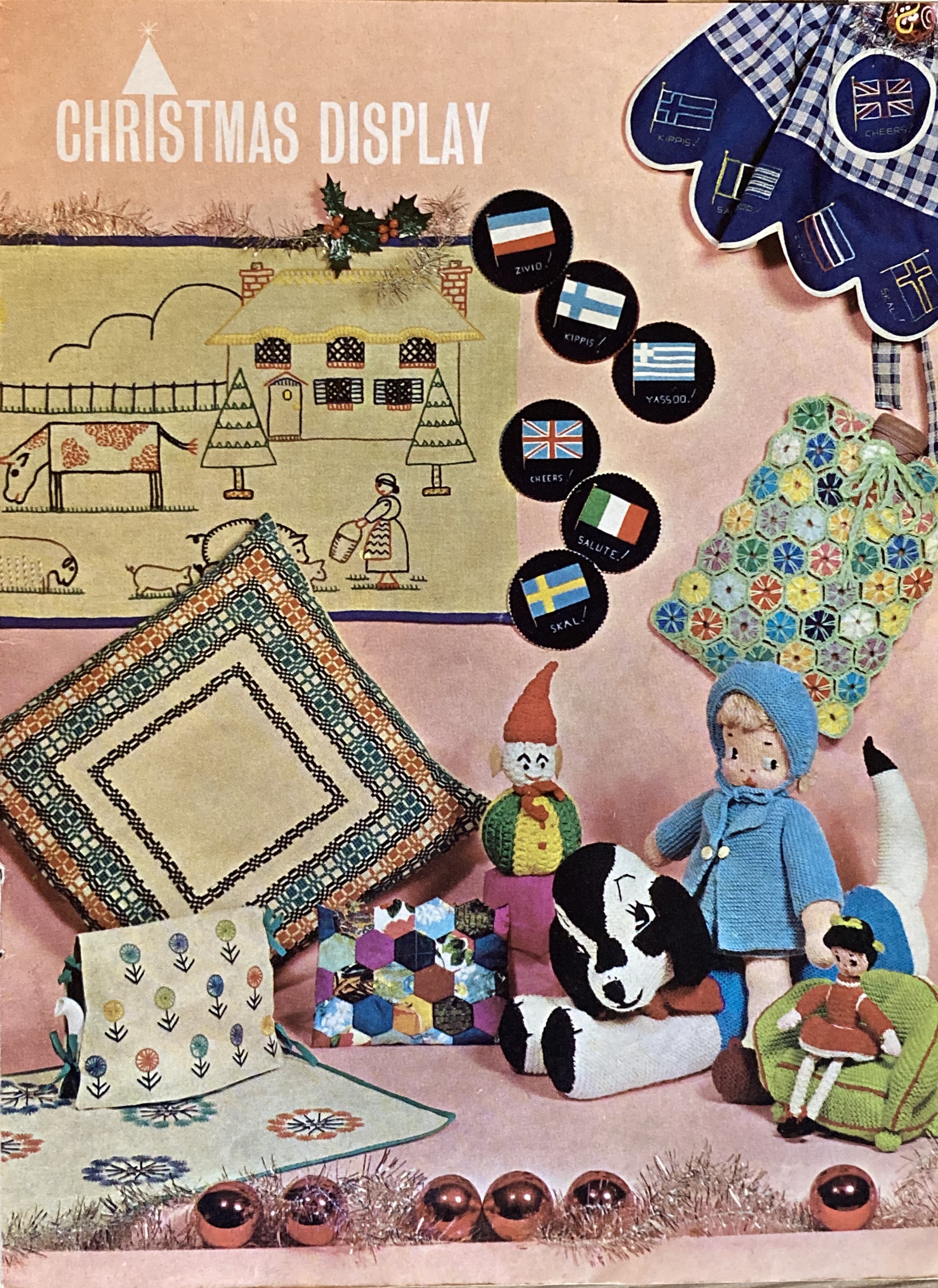
Homeware project ideas are plentiful, but not out of the ordinary. Embroidery fans can make a lovely apron with a traditional Romanian design, or cross-stitch a kitschy „Swiss border“ (nice illustration of an Alphorn player!), or work a counted darning pattern on placemats or a chair back. There‘s a fire screen with appliquéd tulips, a tapestry chair seat, a fancy knitted lace traycloth and a mat with appliquéd crocheted butterflies. You can also crochet lace borders to trim linens or whatever else you like. Truly, there is something for everyone!
I would love to make the child‘s dress, but don‘t necessarily know a child who wants one. Maybe I should size it up for myself? I would wear it! Otherwise, the embroidered apron is really nice. Maybe too nice to get splattered with food… but it would make a great knitting apron as well. We‘ll see!
P.S. Sorry for the lousy formatting. The WordPress editor does not work well on a tablet.























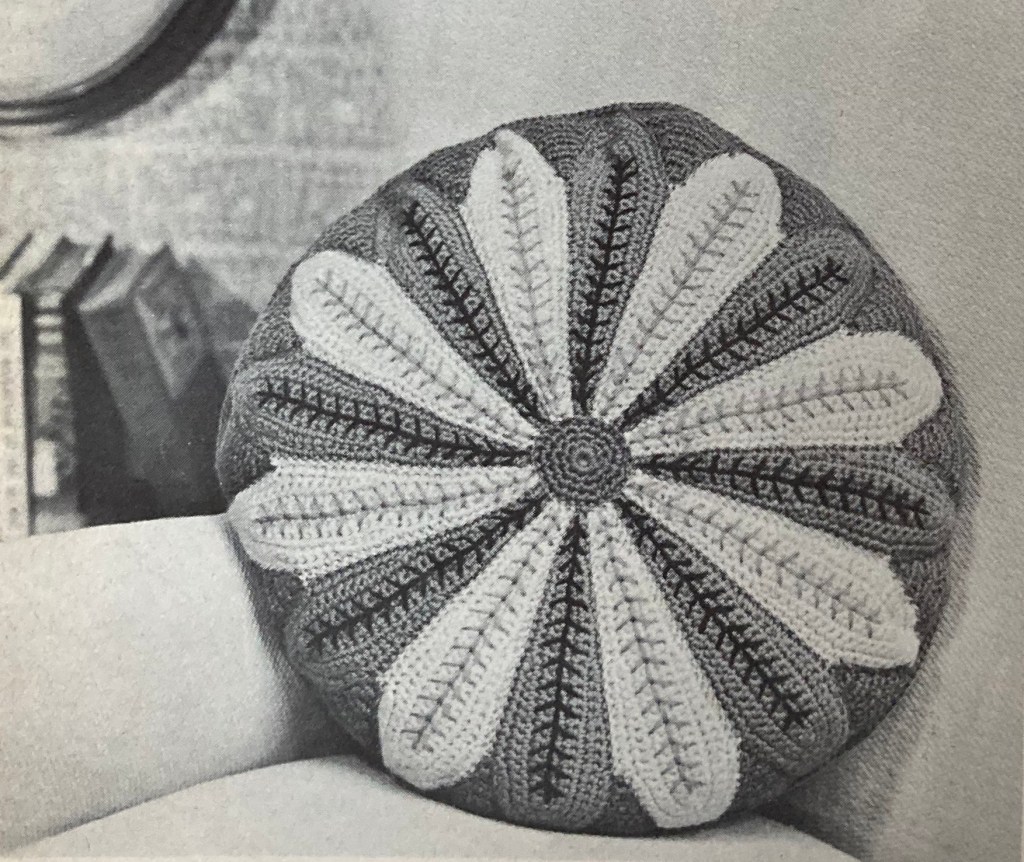


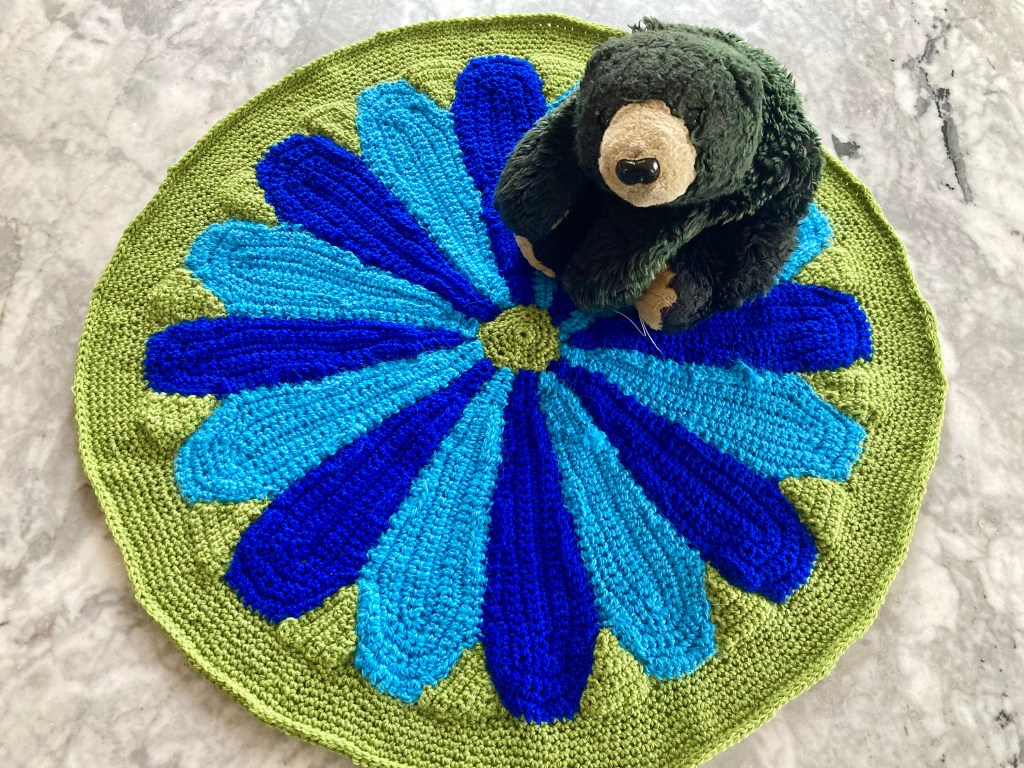




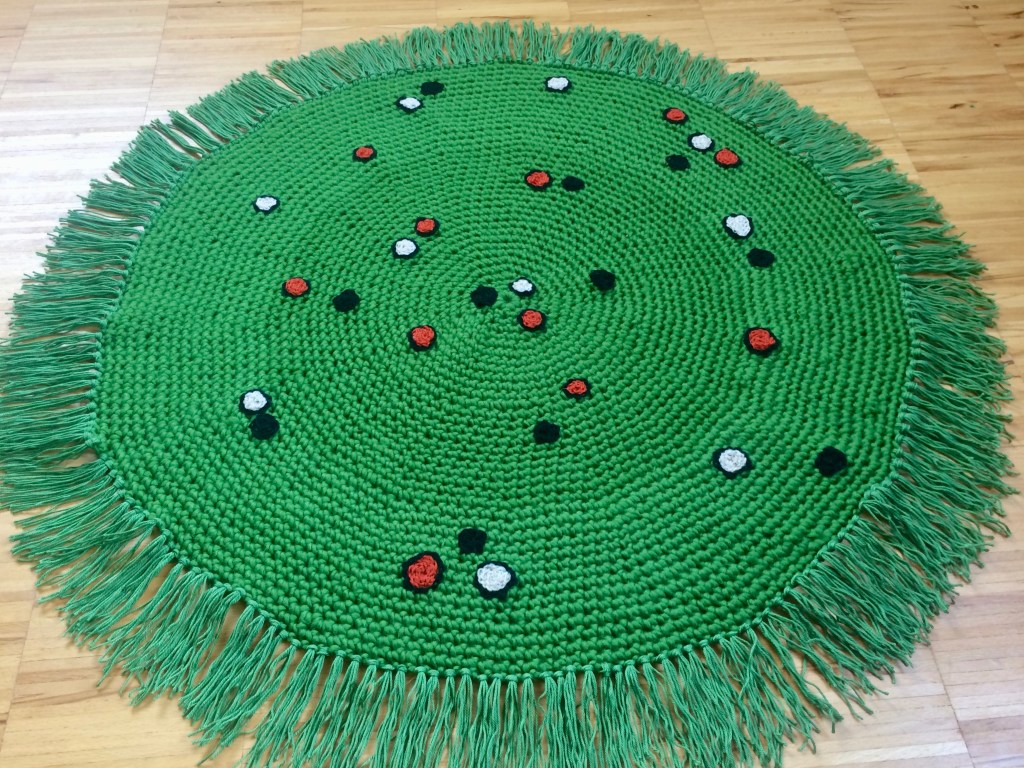
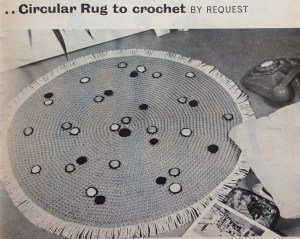 September’s project (finished only one day late) was this extremely 1960s crocheted green rug with black, white and orange embroidered spots (they “add a modern touch”) and fringe. Loved it!
 Felting wool, like rug wool, is bulky, mostly unprocessed, coarse and strong, so that was my first thought… but would it felt with use or washing? I decided to take the chance, since it’s easy to find, inexpensive and there happened to be some in the perfect colour at my local yarn shop. It’s the exact same shade of green as
  The crochet part was easy — just rounds of double crochet with regular increases — and went very quickly. You can see that the wool I ordered was from a different dye lot than the first skeins from the store, but I don’t mind. The embroidery was a bit tedious and the fringe posed a new problem: this type of old-fashioned cotton sew-on fringe is very much not in fashion and hard to find in stores these days. I hate buying things on the Internet, so I asked my friendly wool-shop owner from the store where I bought the wool what she thought, or if it could be ordered through the store. She suggested hand-knotting the fringe with cotton yarn in a similar colour to the rug. (the fringe in the original seems to be white or a lighter colour). I was eager to get the thing done and not wait for more elements to arrive, so I did it. I like the result! It’s stringier than the original, of course, but it makes the rug look like a sort of friendly amoeba. I like that.
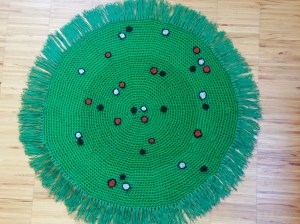 Wash-blocking it gently in cold water worked well and did not felt the wool. Also, it is going to live under my coffee table where it won’t get much foot traffic, so I’m not worried.