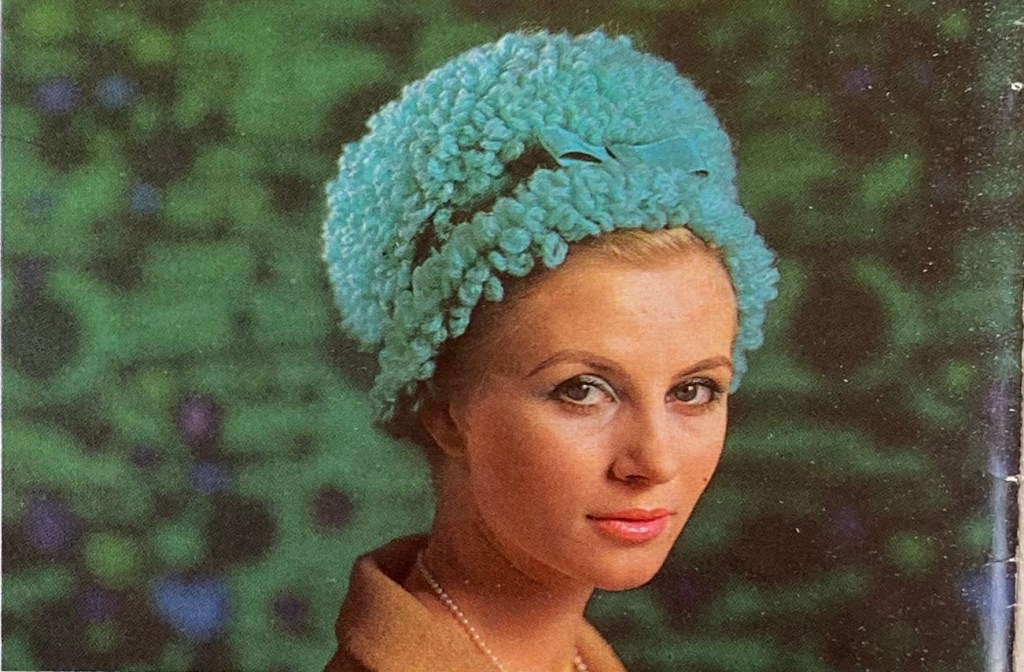
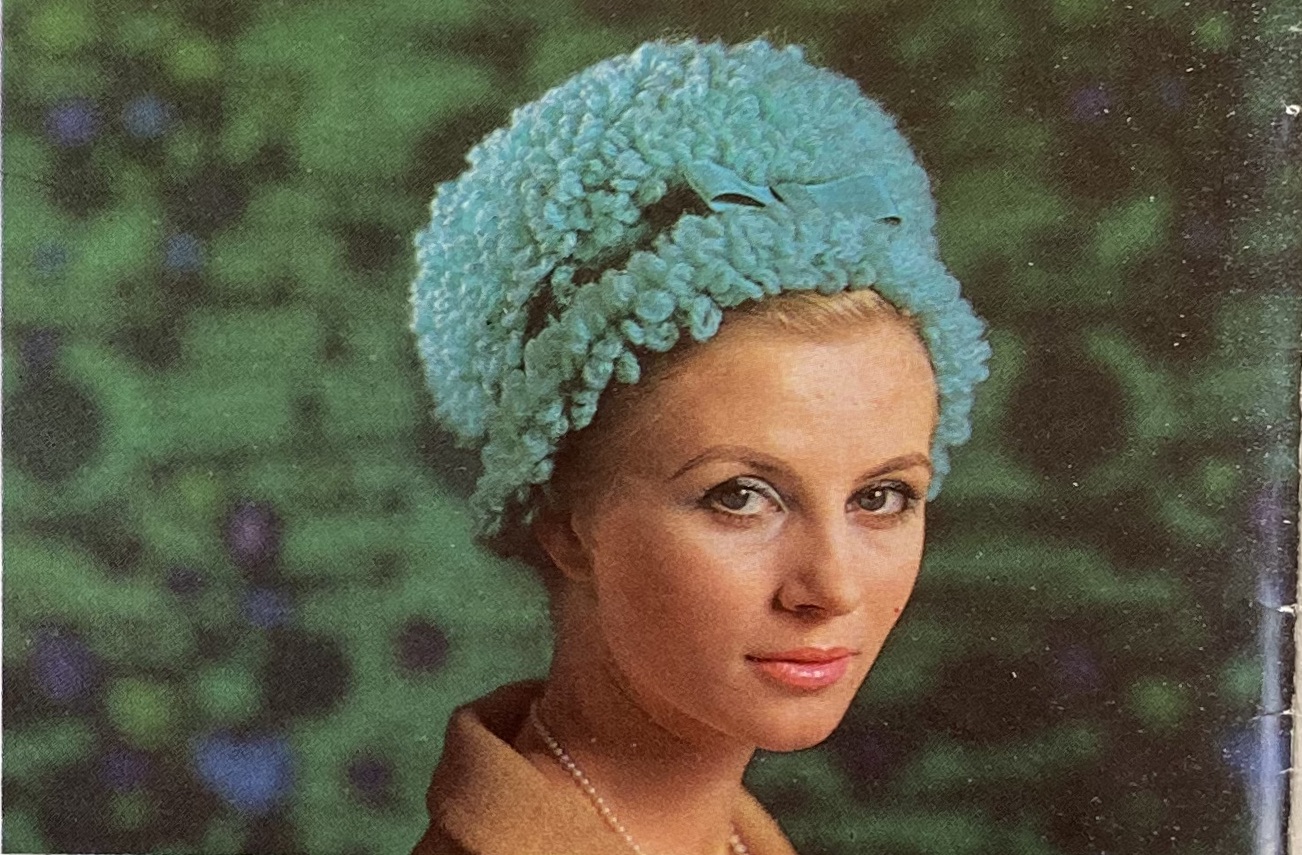
Once upon a time, there was a top hat that fell in love with a mop. Or was it a poodle? Either way, they had a child and it was… this hat. This amazing “tufted” hat made in crocheted loop stitch, “snug and gay” and shown here in a glowing shade of “Blue Lagoon” turquoise.*
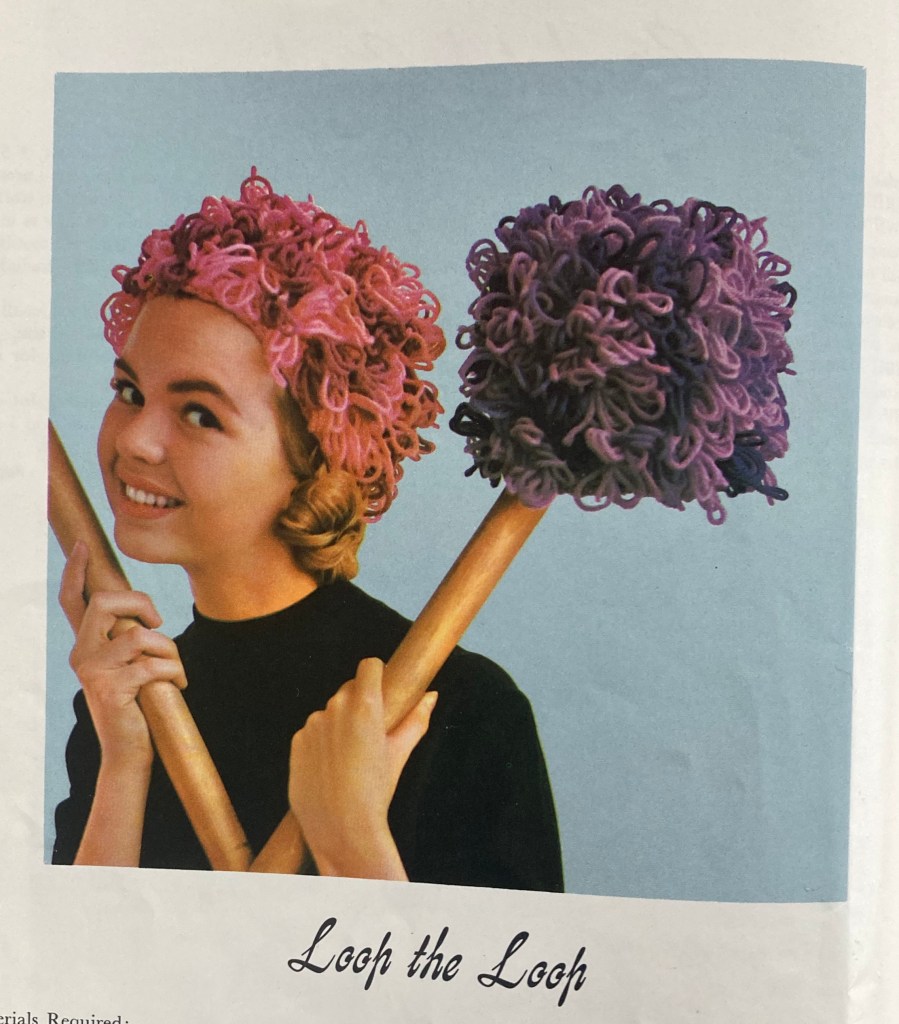
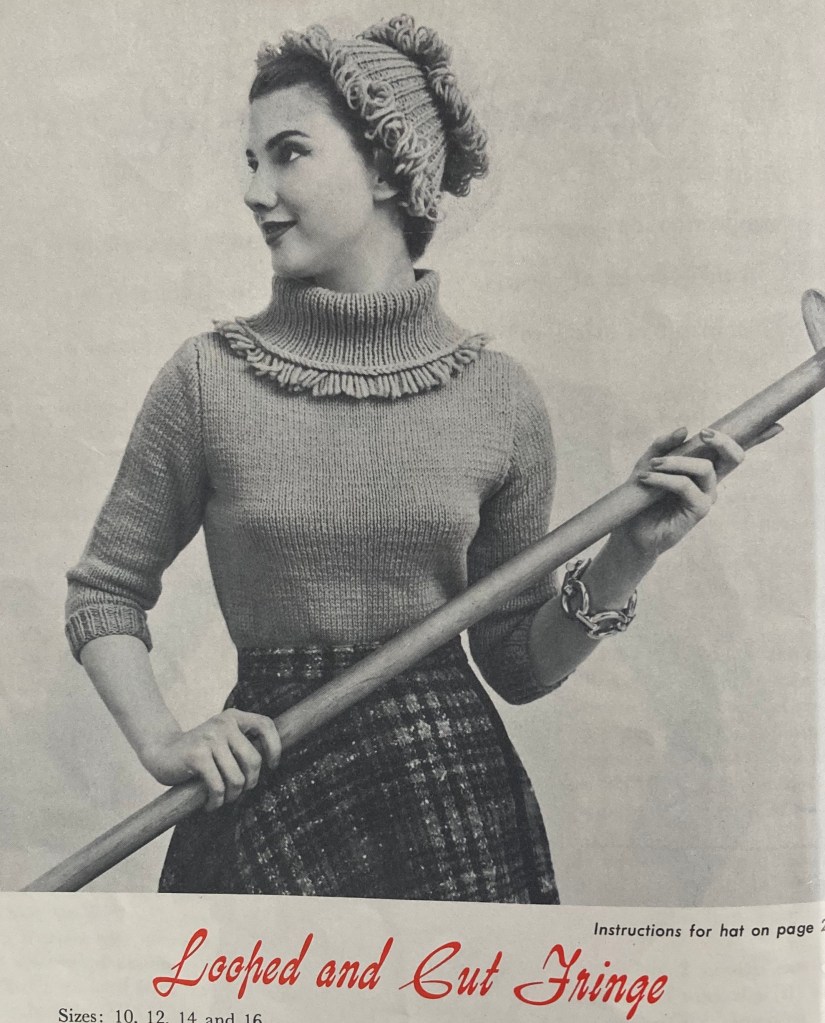
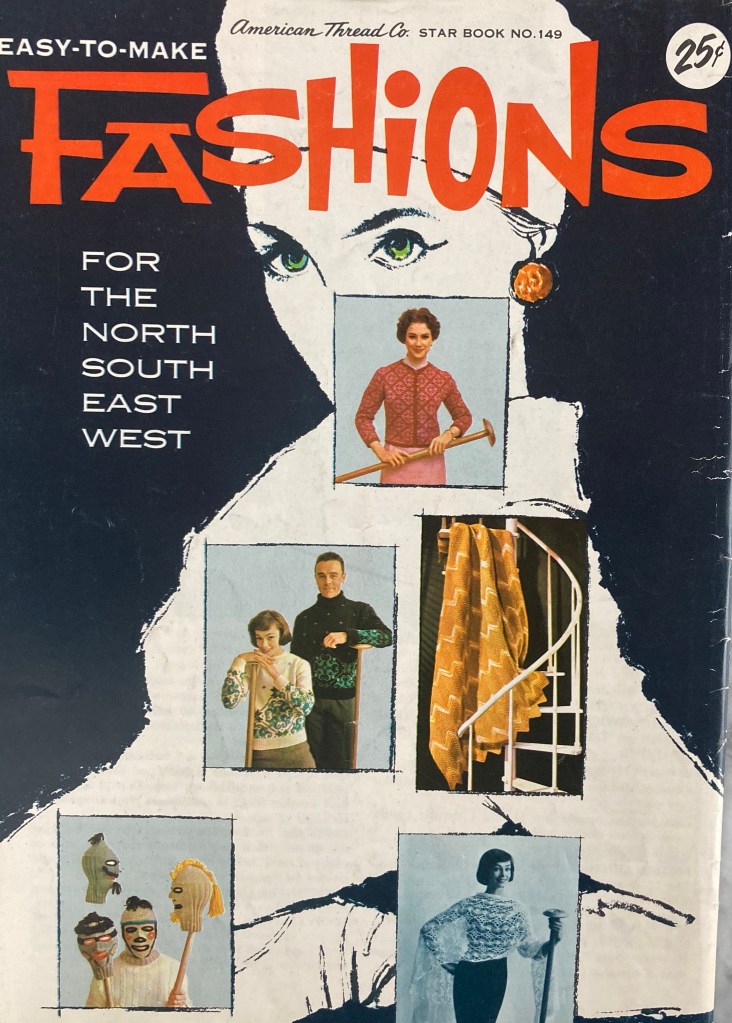
Loop-stitched accessories (knit or crocheted) enjoyed a trend in the early 1960s, and some of the designs were even more over-the-top than this one. Here are some examples from a 1959 American Thread Co. magazine book, “Fashions for the North South East West” for a “Loop the Loop” knitted hat as well as a knitted, looped-and-cut fringe hat and sweater. (The thing the model is holding the “Loop the Loop” on is supposed to be an oversized knitting-needle pole, but it just makes the hat look more mop-like.)
My first challenge with the crocheted Stitchcraft hat was finding the right wool. It’s written for “Ariel”, a wool-synthetic mix which is described as “triple knitting” but also “feather-light” and has between 15 and 19 stitches to 4 inches in stocking stitch, depending on the design. It seems to be normally plied and just slightly fuzzy. I had a hard time finding modern yarn in the right thickness (DK is usually 22 sts in 4 inches, and the bulky yarns I could find were more in the 12-16 stitch range.) Ultimately, I settled on Schachenmayer “Boston”, which is technically too bulky for this project, but which gave a great loop effect. I figured I could always make the hat a little smaller. It’s acrylic, which, I know, not great from an environmental standpoint, but very vintage-appropriate (not to mention probably waterproof).
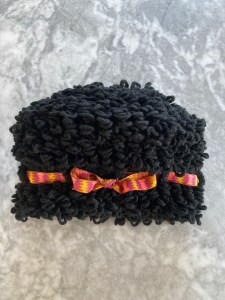
I am not the world’s best crocheter and the loop stitch was a new technique for me, so it took a bit of getting used to. The word-for-word instructions are “insert hook into next stitch, place first finger of left hand behind hook and take wool anti-clockwise under finger and over hook then under finger again, (put wool clockwise over hook and draw through two loops) twice.” And true enough, if you follow those instructions exactly, it works, but requires a certain dexterity of brain as well as fingers. (1963 was a long way from the age of video tutorials…)
The finished hat has a loop of millinery wire in the crown to keep it from collapsing (and make it fit over your bouffant) and a ribbon to give it some shape. I had a bit of ribbon in stash with a very psychedelic pattern (so actually a few years too late in terms of 60s fashion — Stitchcraft has definitely not gone psychedelic yet — but it’s what I had.)
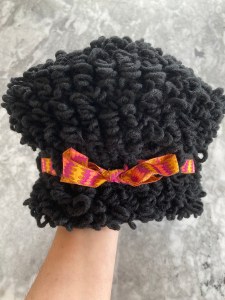
My colour choice was basic black, which I realised halfway through was maybe not a great idea. On the plus side, the loop fabric looks uncannily like those Persian lamb coats that were quite popular in the the mid-century years, and the hat would make the perfect matching accessory. You could even go all out and crochet yourself a modern faux-Persian-lamb coat in vegetarian-friendly synthetic yarn! Any vegans out there who have guilty dreams of vintage Persian lamb, this is your answer! I don’t have a Persian lamb coat though, nor do I particularly want one, and though I see the appeal of making a faux one, I don’t want it enough to put in the time and effort to design and make one. (Billie from the Show and Tell podcast suggested making long cuffs for a cloth coat in loop stitch to match the hat — that’s a really good idea.)
On the down side, I realised that this particular design in black had a high probability of making me look like either a recently groomed poodle or a white person in an Afro wig, neither of which are looks that I am trying to cultivate.
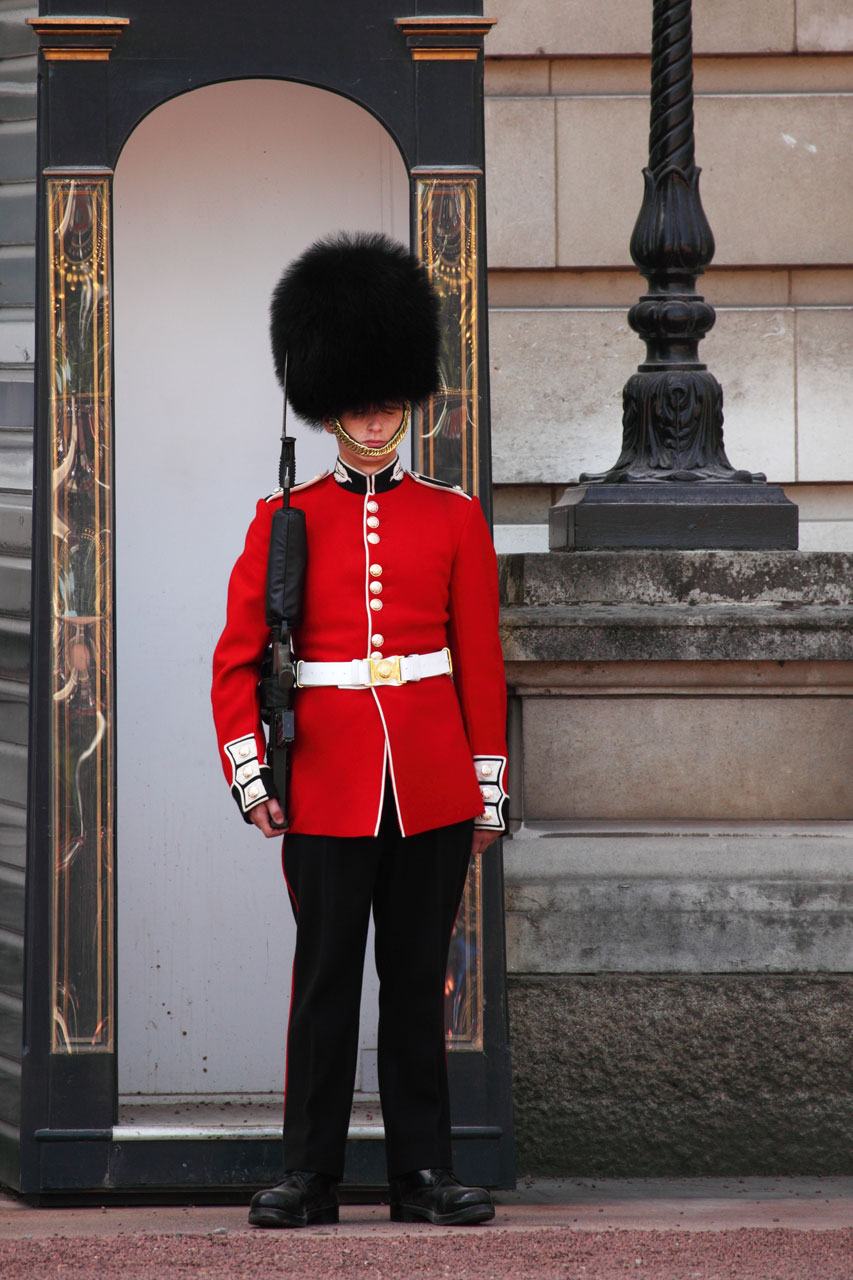
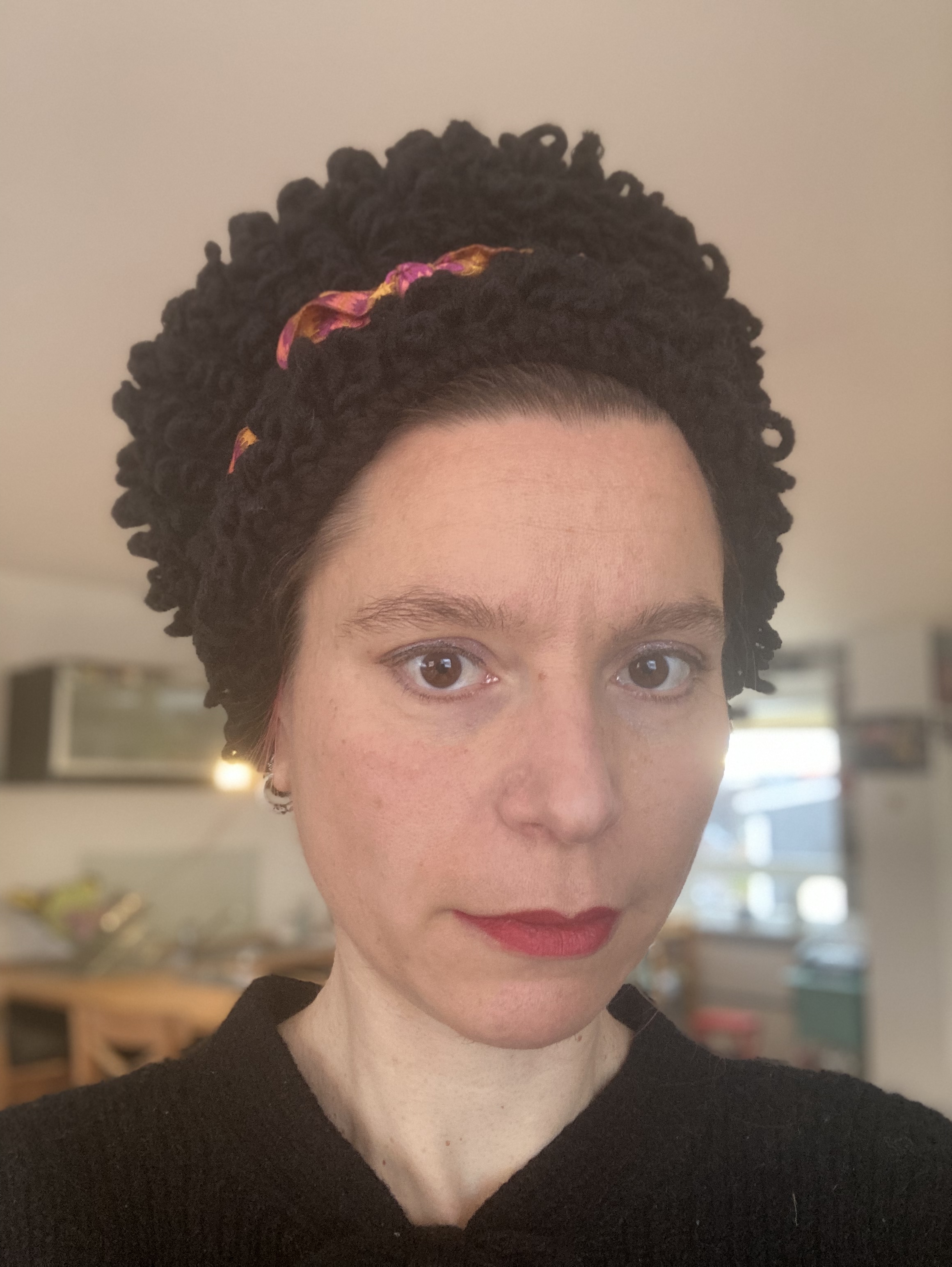
It ended up looking quite accurate, so you could say it turned out well, but I have to say, I am not convinced. The photo doesn’t do justice to the sheer ridiculous size of this thing, and the mop/poodle association is strong. If I wear it on top of my head, it looks like I am trying to join the Buckingham Palace guards.

If I push it back behind my hairline like the Stitchcraft model in the photo, it has the right basic shape and looks very 1960s, but it is still huge — the photo doesn’t do justice to the sheer size and mass of it. As always, I tried to recreate the magazine photo, and now I understand why the model looks less than overjoyed.

I don’t know what I am going to do with this hat, but I had fun making it and learned a new crochet technique, so I’m satisfied.
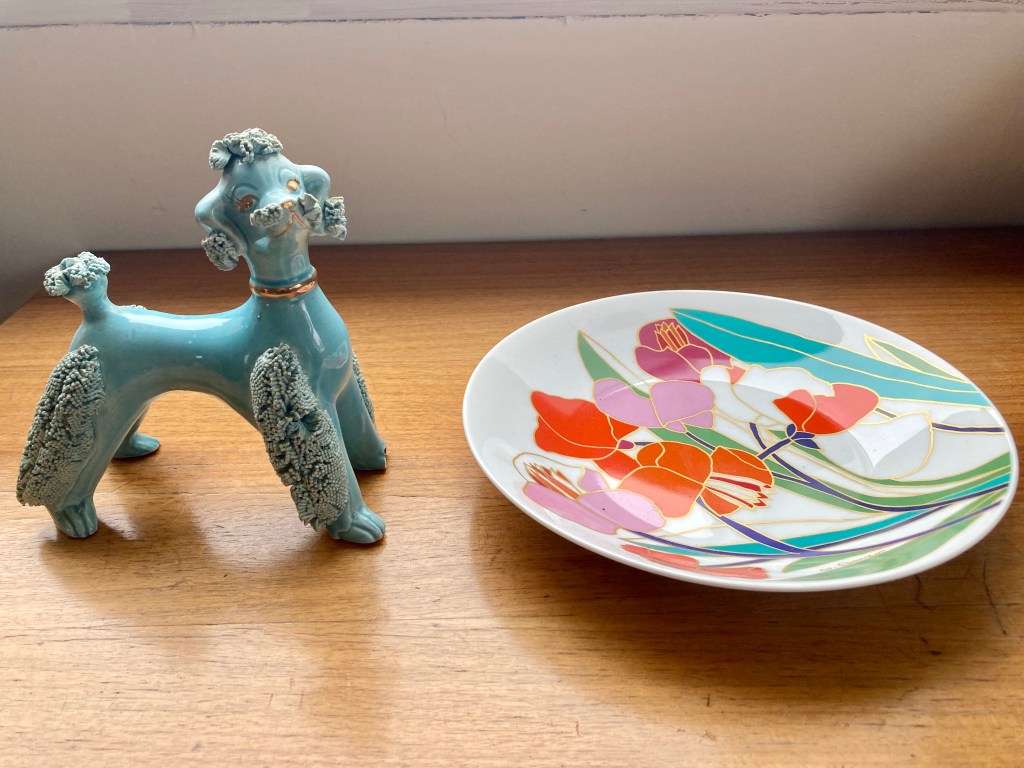
*For anyone thinking, “Turquoise poodles don’t exist”, may I present this amazing knick-knack that I inherited from my grandmother? (With historically appropriate plate.)




















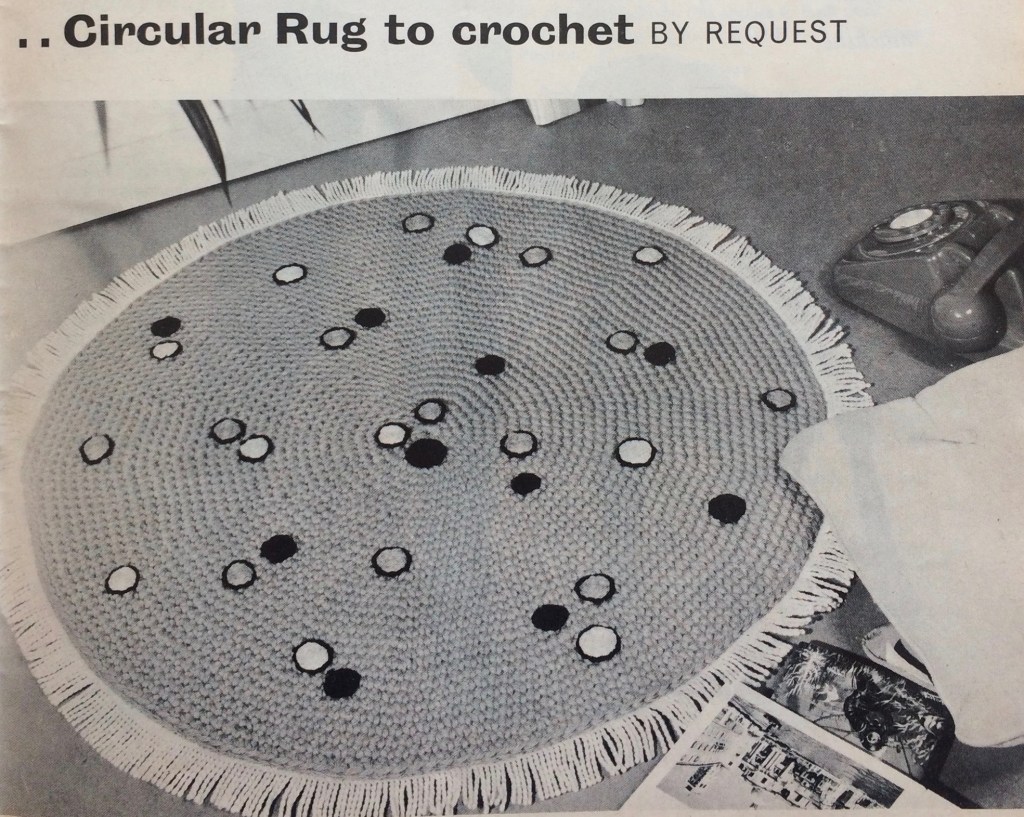
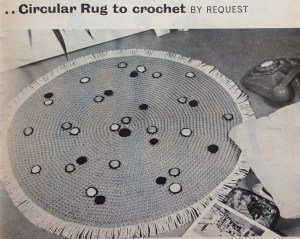 September’s project (finished only one day late) was this extremely 1960s crocheted green rug with black, white and orange embroidered spots (they “add a modern touch”) and fringe. Loved it!
 Felting wool, like rug wool, is bulky, mostly unprocessed, coarse and strong, so that was my first thought… but would it felt with use or washing? I decided to take the chance, since it’s easy to find, inexpensive and there happened to be some in the perfect colour at my local yarn shop. It’s the exact same shade of green as
  The crochet part was easy — just rounds of double crochet with regular increases — and went very quickly. You can see that the wool I ordered was from a different dye lot than the first skeins from the store, but I don’t mind. The embroidery was a bit tedious and the fringe posed a new problem: this type of old-fashioned cotton sew-on fringe is very much not in fashion and hard to find in stores these days. I hate buying things on the Internet, so I asked my friendly wool-shop owner from the store where I bought the wool what she thought, or if it could be ordered through the store. She suggested hand-knotting the fringe with cotton yarn in a similar colour to the rug. (the fringe in the original seems to be white or a lighter colour). I was eager to get the thing done and not wait for more elements to arrive, so I did it. I like the result! It’s stringier than the original, of course, but it makes the rug look like a sort of friendly amoeba. I like that.
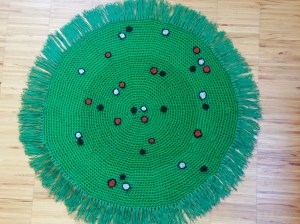 Wash-blocking it gently in cold water worked well and did not felt the wool. Also, it is going to live under my coffee table where it won’t get much foot traffic, so I’m not worried.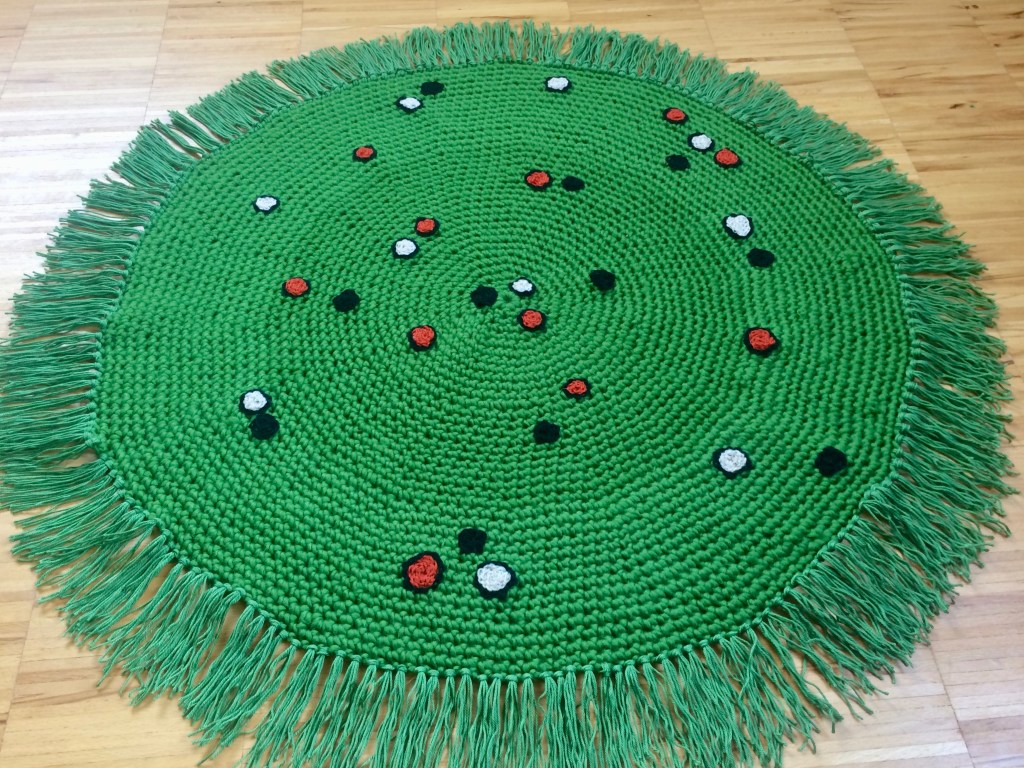
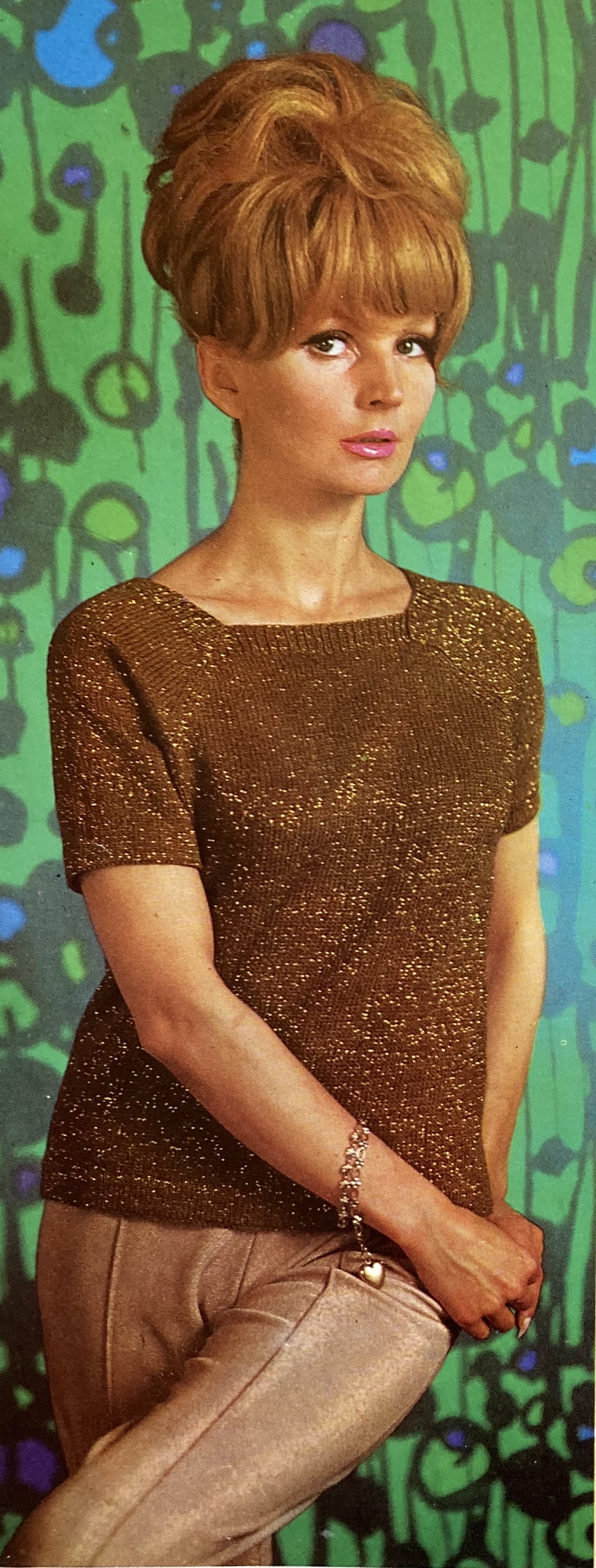
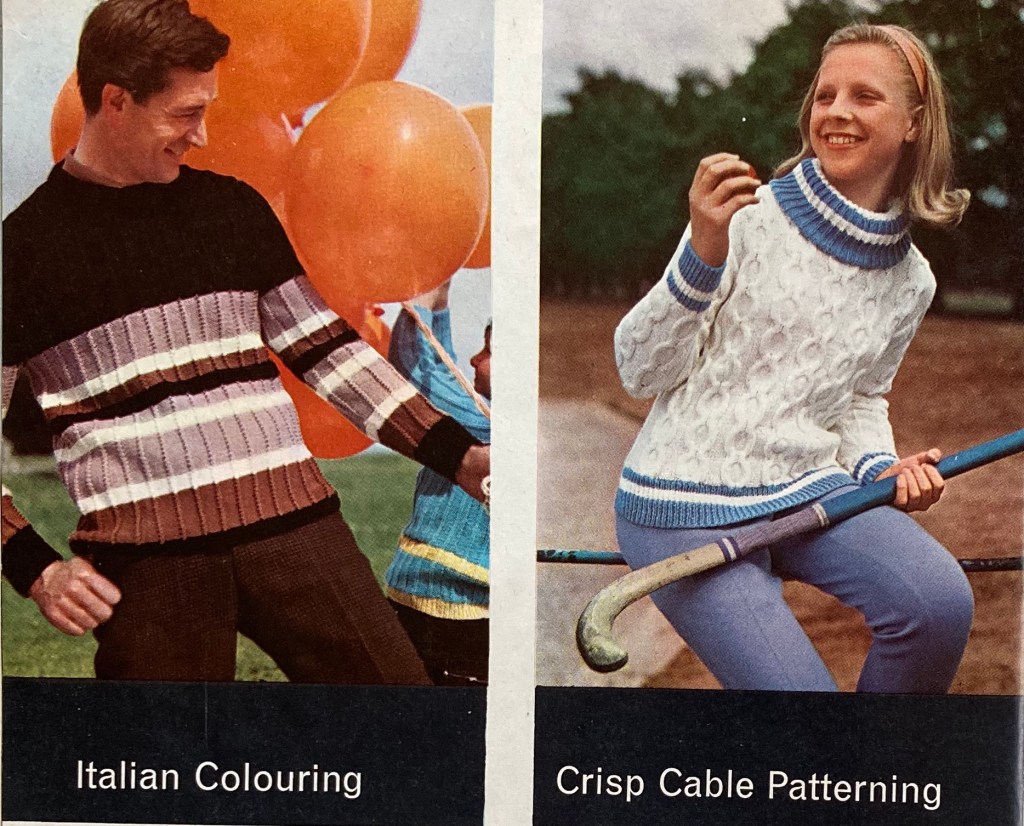
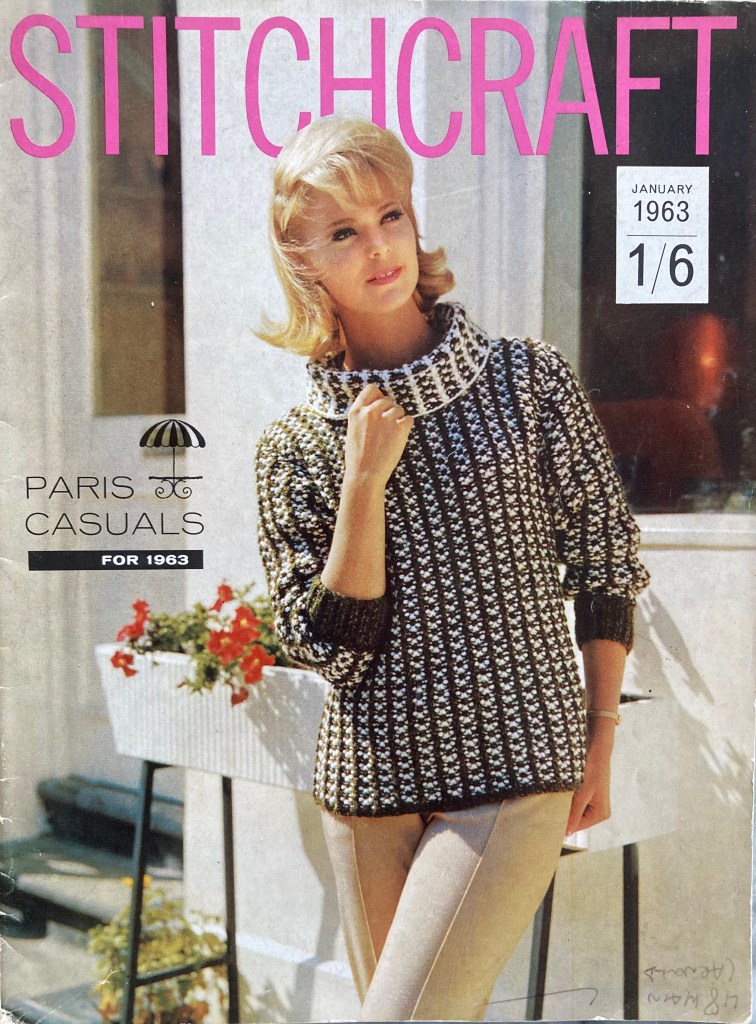
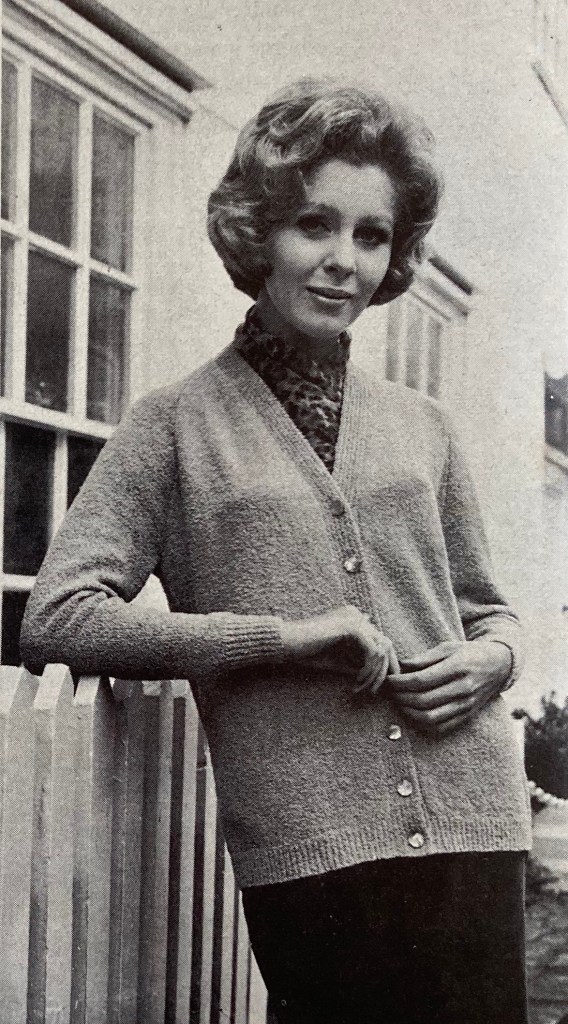
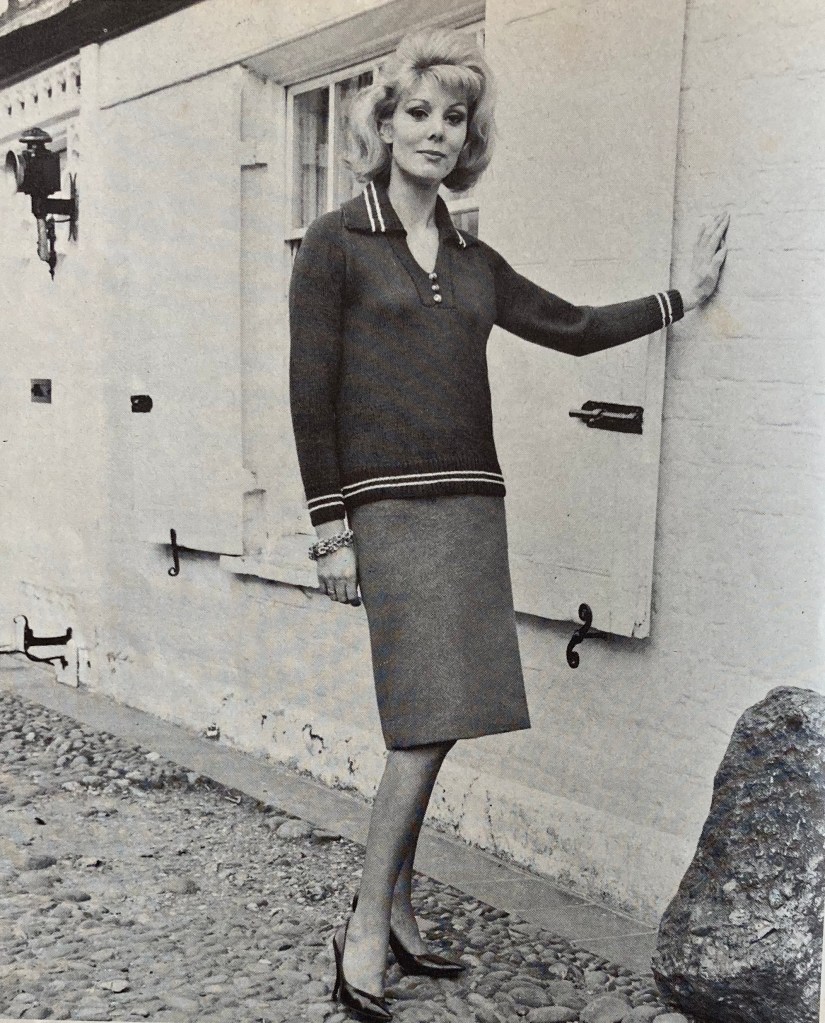
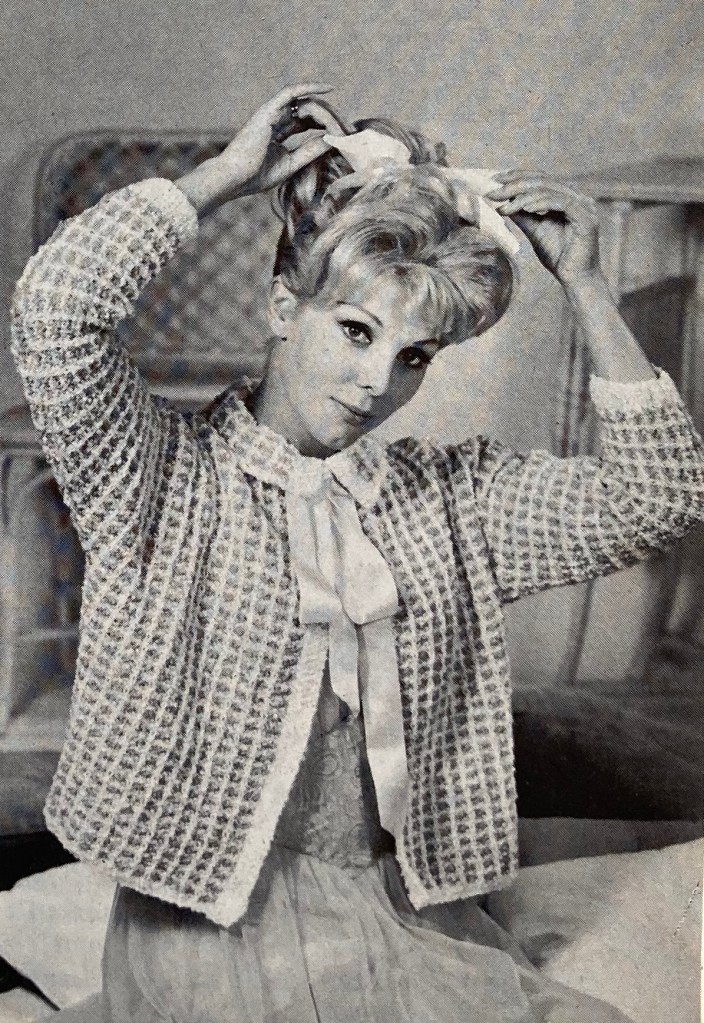
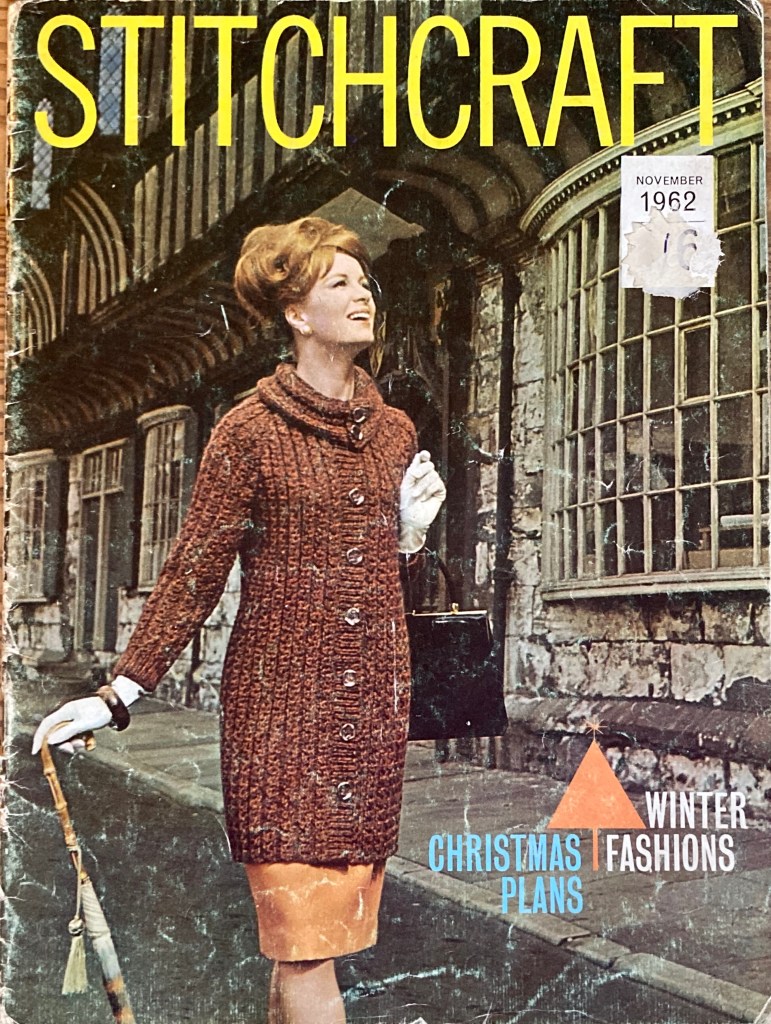
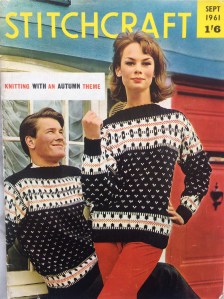 “Knitting with an Autumn Theme” is the motto of this month’s Stitchcraft from September, 1961. Knowing that September is the month where many knitters take up their needles again after not wanting to handle wool in the hot summer, I would have expected a “bumper issue” with extra ideas, new fashions from Paris, more colour photographs and so on. Not the case! It has more or less the same mix of “chunky”, bulky garments and easy homewares that we saw in the summer issues.
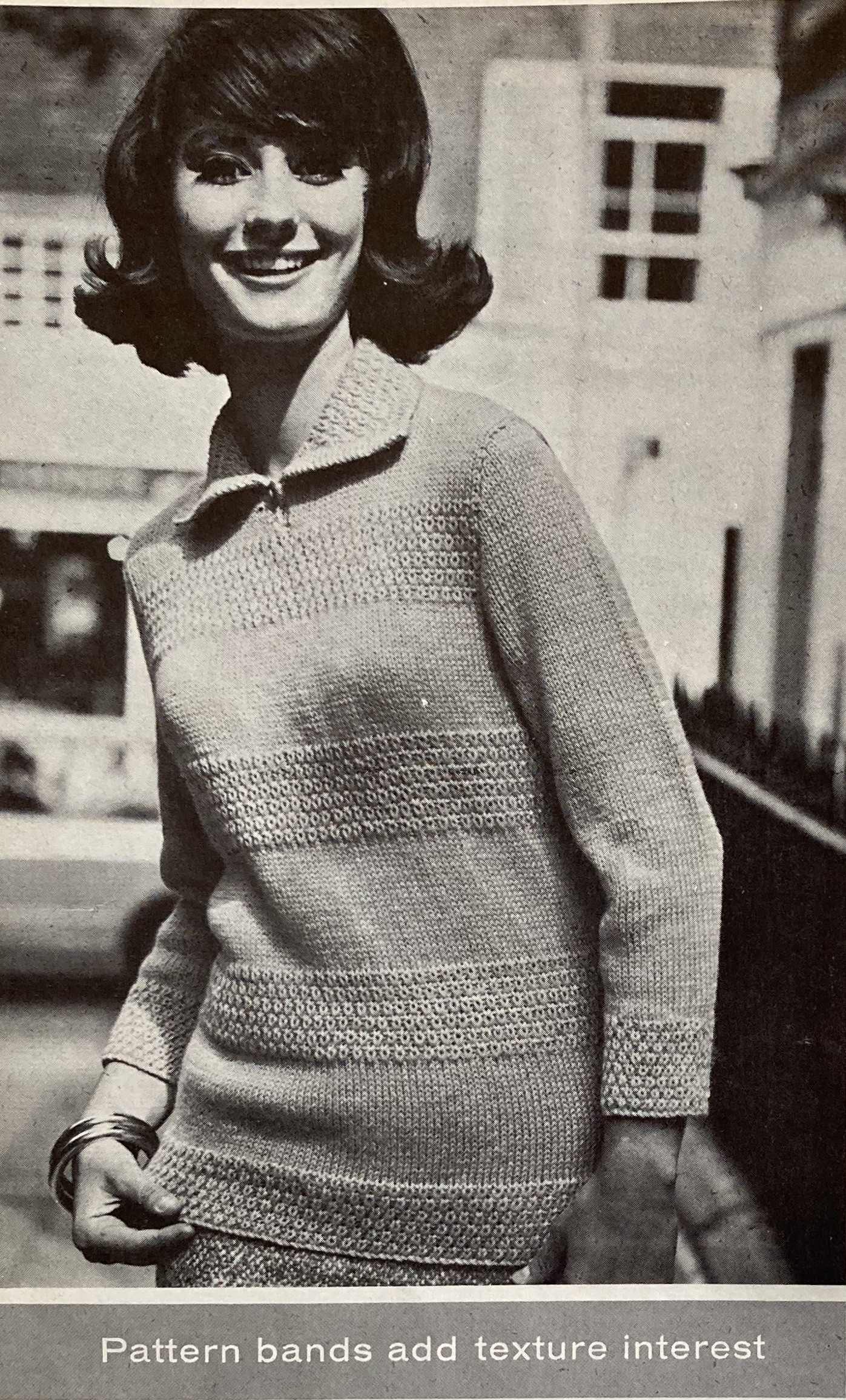
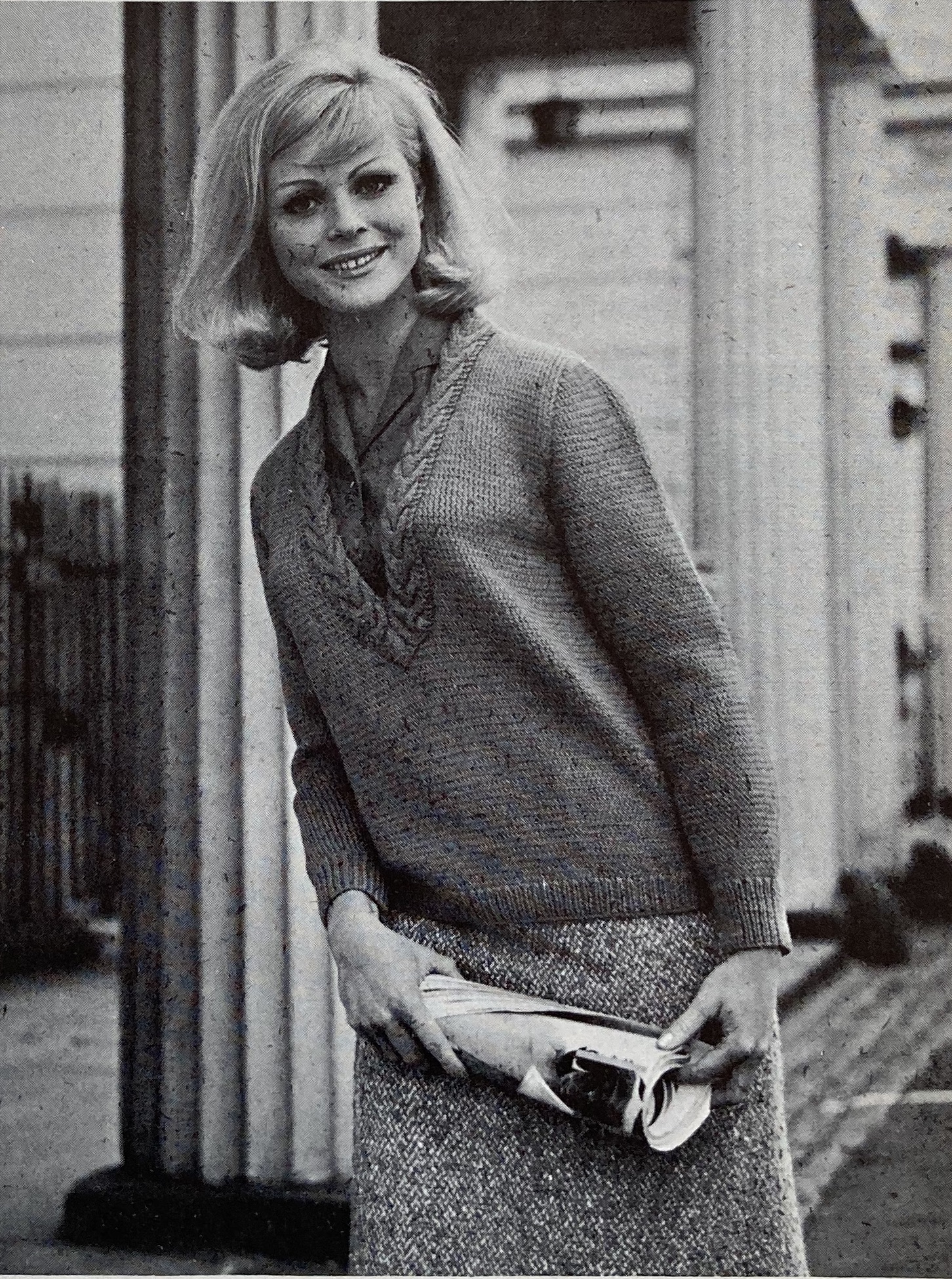
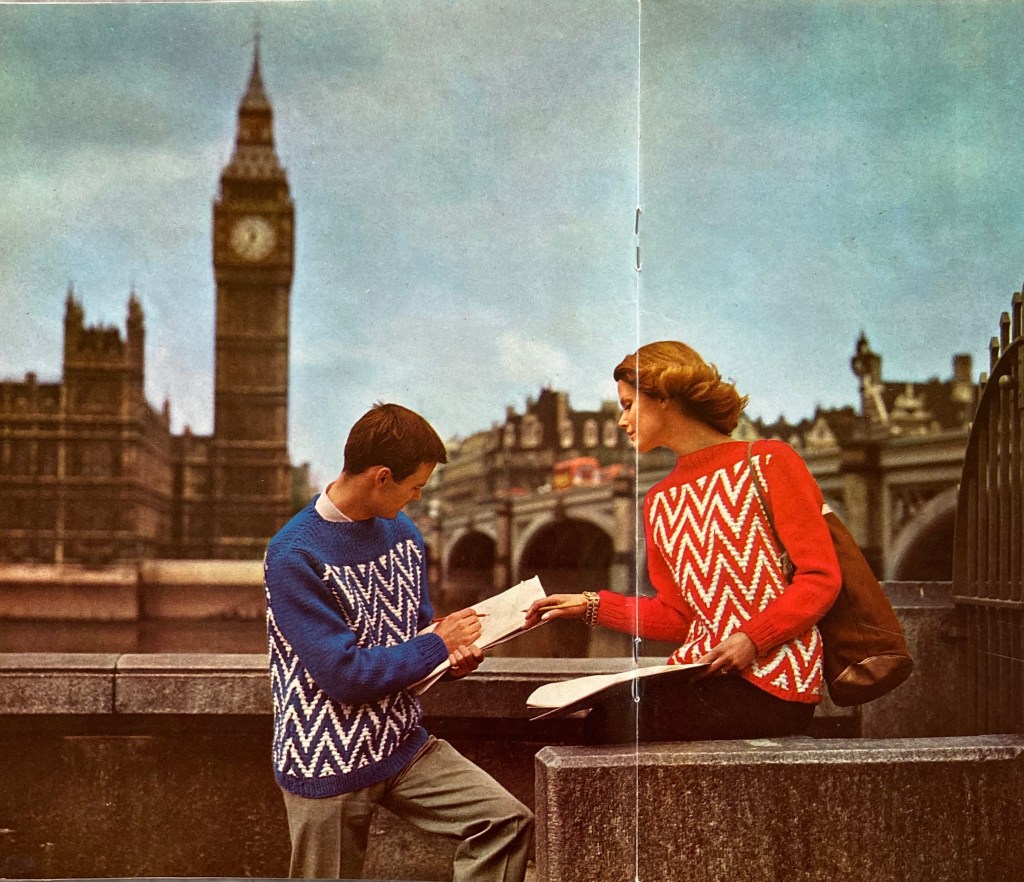
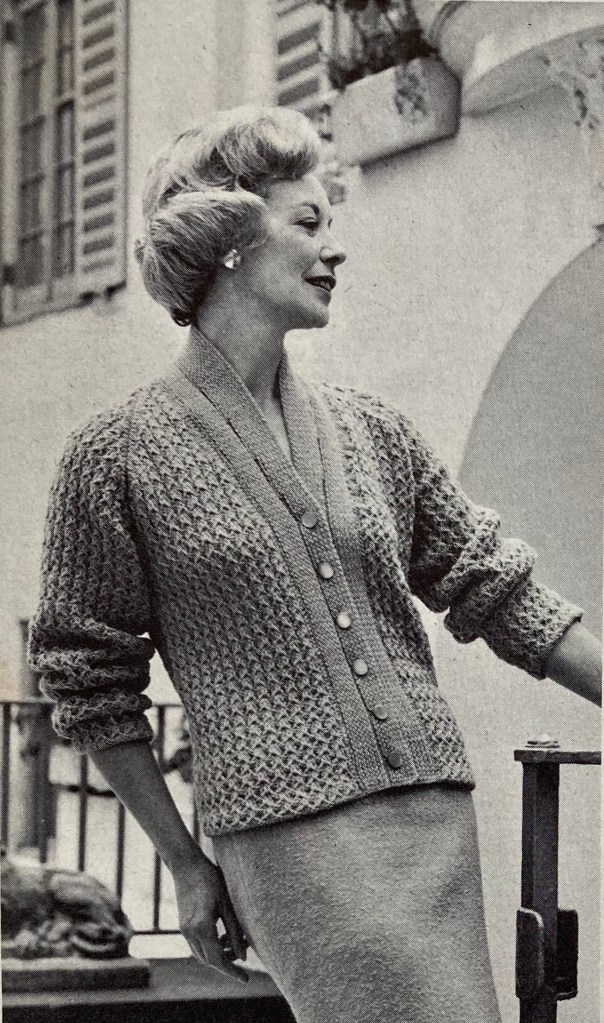
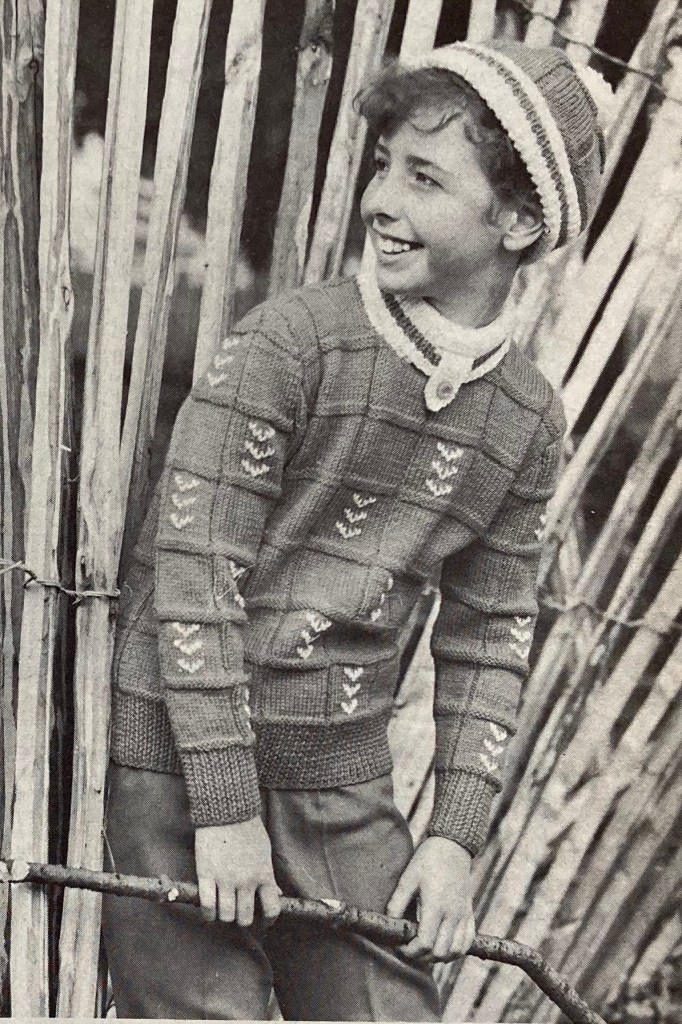
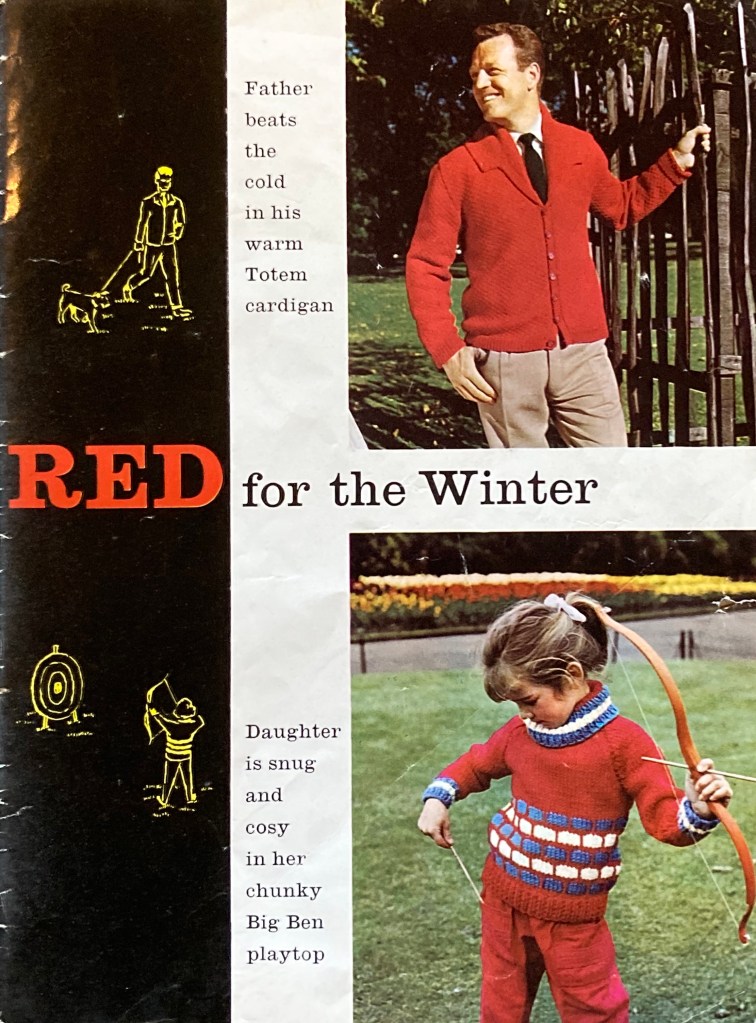
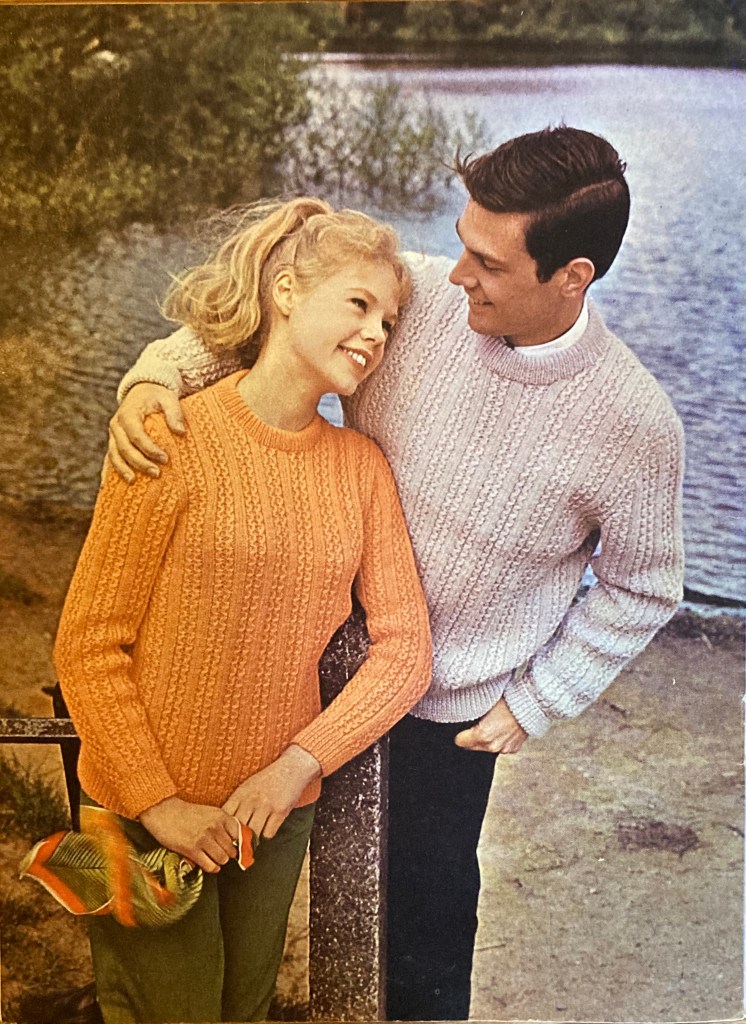
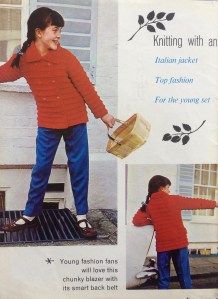 probably will never be my style). The kid’s coat looks cosy and fun to wear, and the “gay sweaters for him and her” in a Norwegian-style pattern are warm, practical and unisex. I imagine the boatneck collar on an unshaped front must scratch horribly across the neck, though.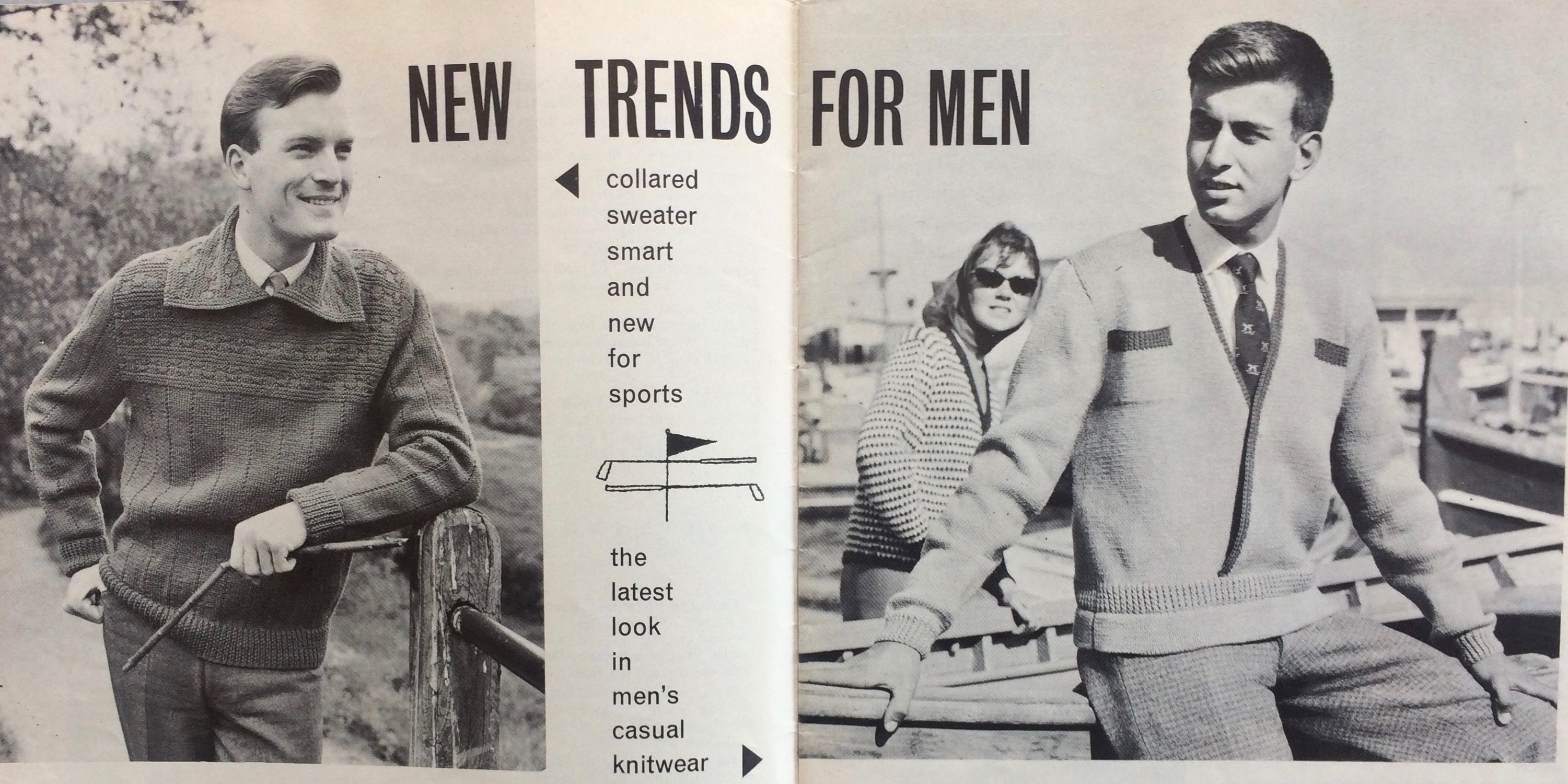


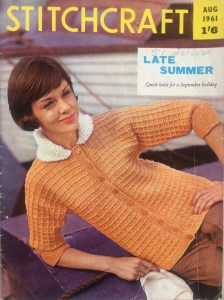 “August is an issue that needs special thought and planning” writes Stitchcraft‘s “editress”, Patience Horne, in the introduction to the August issue, pointing out that it is “rather an “in-between” month for needleworkers” — often too hot to want to wear or make heavy sweaters and too late in the year for fine-knits. At the same time, reminding people that “Autumn is around the corner” can be “a little depressing” to people enjoying their late-summer holiday.


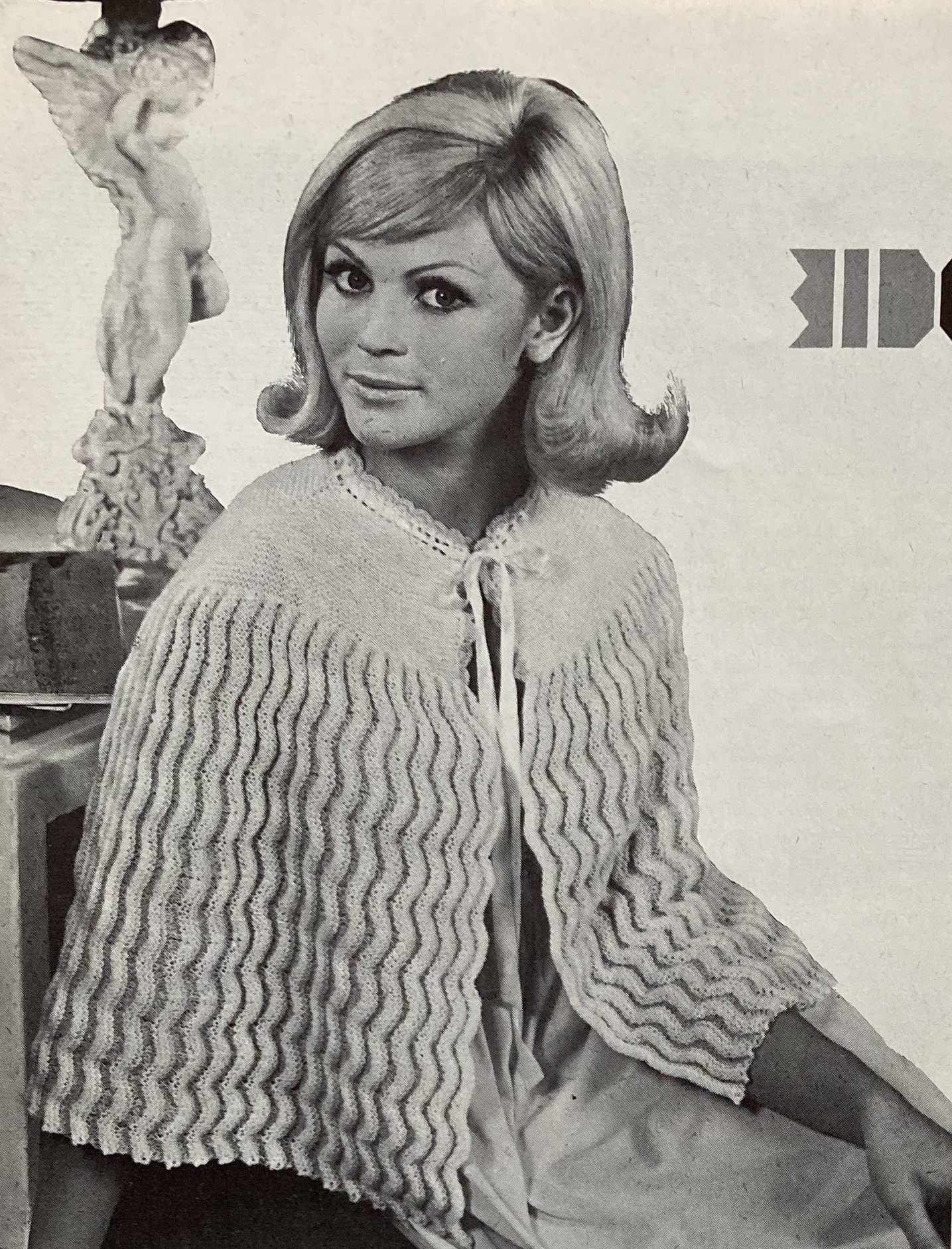
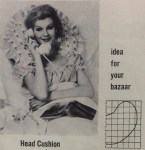 My favourite, though, is this sewing project: a head cushion that lets you recline charmingly in bed with your hair and makeup perfectly done, your satin nightie on, a book on your lap and your telephone on your ear. It’s glamorous leisure and lifestyle advertising personified, and though they say it’s an “idea for your bazaar”, I would bet the Stitchcraft readers who made this in 1961 did not make it to sell.
 Apropos lifestyle advertising, the early 1960s Stitchcrafts show a rise in full-page ads for Patons and Baldwins wools. That’s obviously not surprising considering the magazine was published for the Patons wool company, but the full-page ads that “tell a story” are a new trend: the late 1950s and 1960s issues up to now had little celebrity testimonials. This one caters to grandmothers and the message is clear: Knitting is not only a rewarding pastime on its own, but earns you the love and affection of the grandchildren for whom you knit. (But only if the kid likes it, and that’s only guaranteed if you use P&B wools, of course.) The 1950s and 1960s saw a huge shift in advertising methods towards a psychologically-based system, which is a huge topic that I won’t start with here, but suffice to say there will be more of these ads, and that they are representative of changing advertising styles.
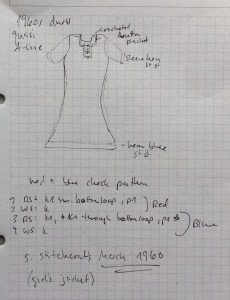 This month’s project was a little bit different than usual. Instead of making something from the April 1961 issue, which didn’t have any projects that really spoke to me, I decided to finally make something I’ve been dreaming of ever since I made
 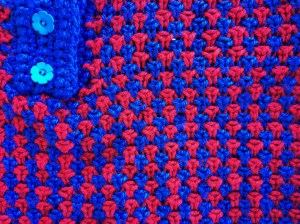 I chose a typical basic construction with front, back and sleeves all made flat and separately from the bottom up and sewn together, and made a stockinette-stitch hem with the blue yarn. The dress shape is a modified A-line: flared at the hem and narrowed to the top waist, then increased slightly at the bust. I used another knit dress as a pattern, but had to deviate from it as the stitch pattern made the fabric behave differently. The sleeves are short, simple and set-in. The front piece is essentially the same as the back, but divided in half after the armhole cast-offs and rounded a bit at the neck. The button band is plain crochet.
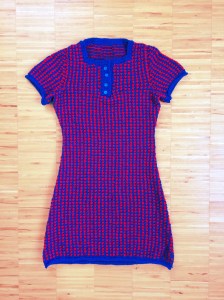 After it was all done, I realised that I liked the roll of the blue stockinette stitch hems, so I decided to just leave them as is. That means the bottom hem is a little bit narrow in the blue part where it should flare out. I may or may not fix that in time, depending on my laziness levels.

 The Stitchcraft Sixties


