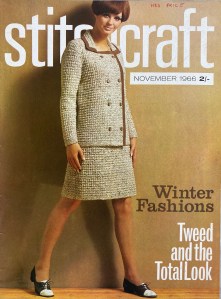
Tweed, Crepe and the Total Look! The November 1966 issue of Stitchcraft brings together contrasting styles of nubbly tweed and smooth crepe wool as well as an entirely coordinated knitted outfit including hand-knitted stockings.
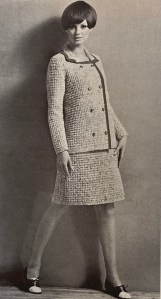
The cover design is not quite “total” (no stockings or accessories) but combines tweed “Bracken” wool with smooth “Cameo Crepe” for the edgings to make that boxy, double-breasted suit that everybody copied from Chanel. The pattern is very easy: k one row, single rib one row, purl one row, single rib one row. I imagine it gives a nice firm fabric that won’t sag too terribly in the skirt.
The “Total Look” is best exemplified by the other suit design: a square-patterned cardigan suit with jumper and stockings to match, in two shades of Double Knitting for the suit as well as lightweight Cameo Crepe for the jumper and stretchy, hard-wearing Nylox for the stockings.

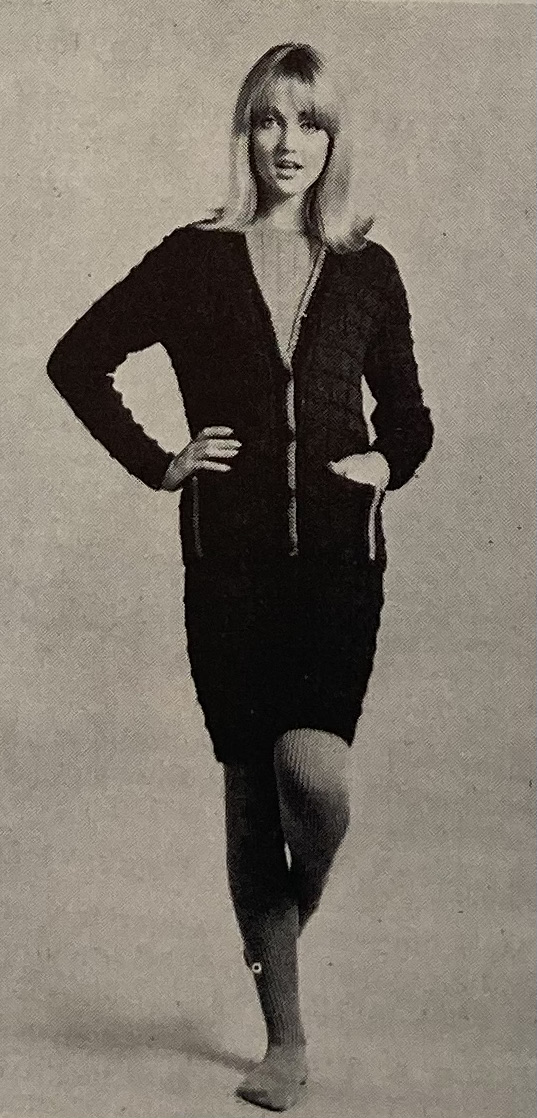
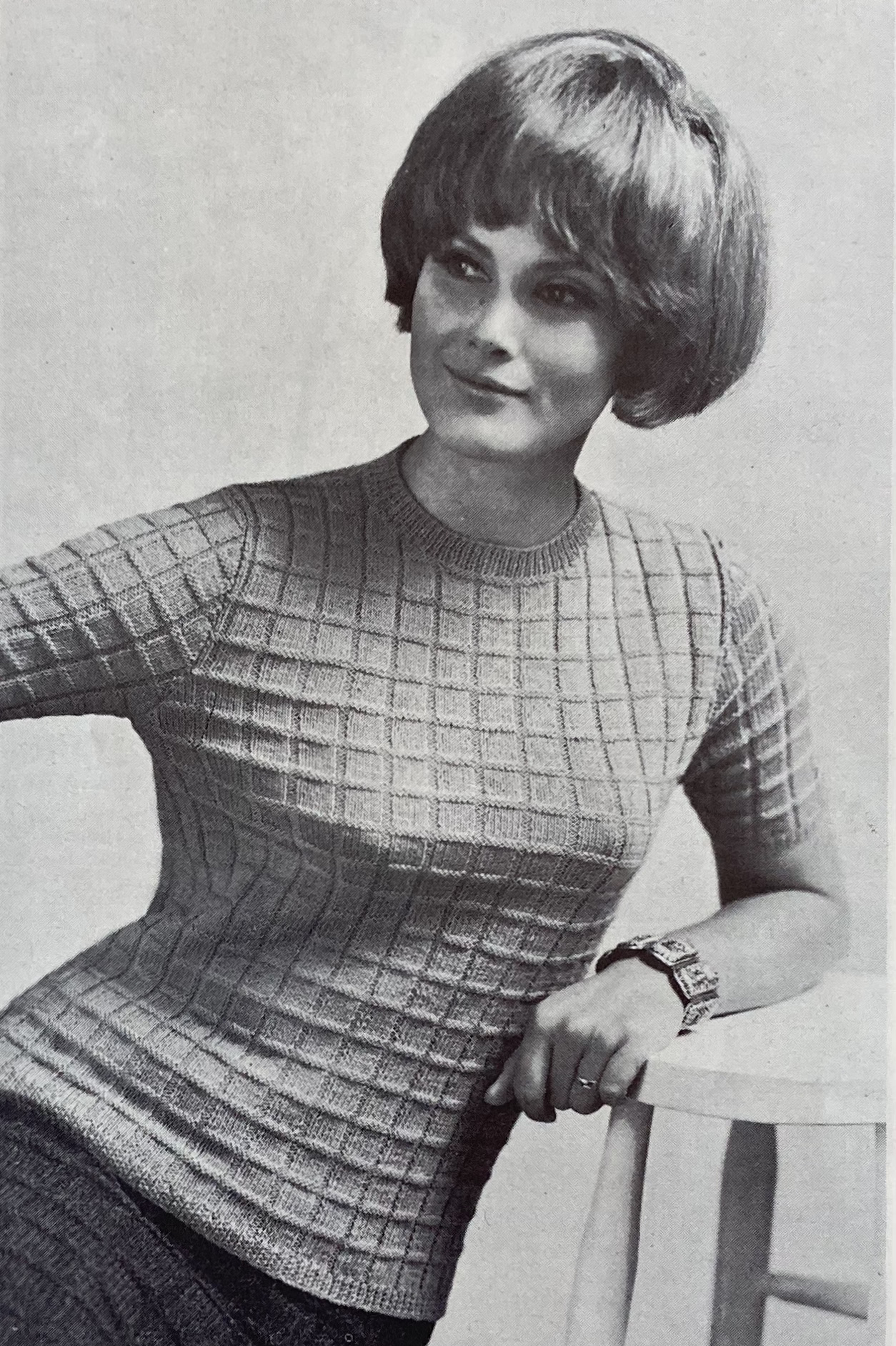
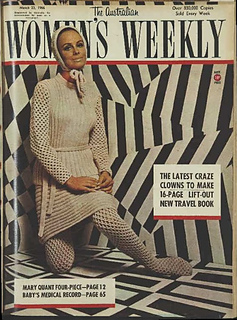
The idea of complete coordination came into handknit fashion around this time and continued into the early 1970s. Mary Quant, for example, designed a four-piece outfit (jumper, skirt, stockings and “bonnet” cap) for the Australian Women’s Weekly in March 1966, using Patons Courtelle wool. There was originally an entire supplement in this month’s issue of Stitchcraft with more “Total Look” fashions in the same 101 Courtelle, but sadly, it was no longer there when I acquired it. If anyone happens to have this supplement, please let me know and/or post about it here! I would love to know what was in it.
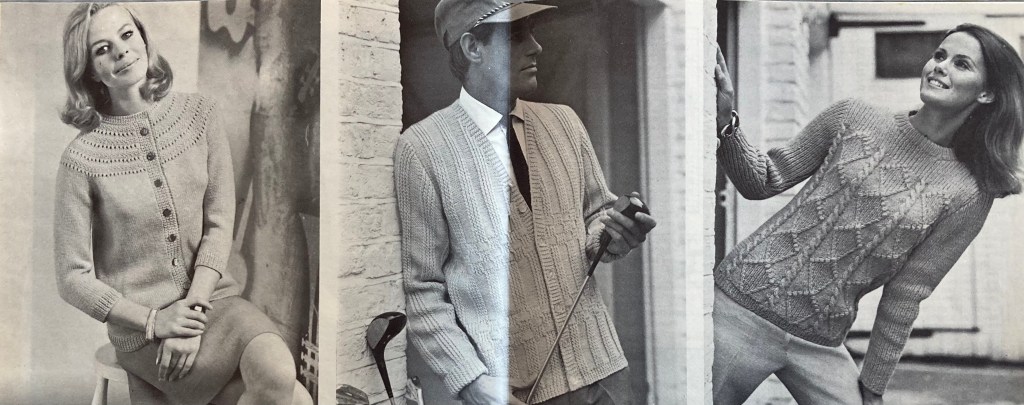
The other fashions for adult men and women feature textured stitches in heavier wools for winter and a round-yoke cardigan knit from the top down in one piece. Although quite common today, that was still a very unusual construction method in the 1960s and was captioned as an “interesting design for the knitter who likes something different.” The men’s cardigan has a “Continental Pattern” made quite easily by combining knit, purl and knit-through-the-back stitches, and the women’s pullover has a unique cable-and-bobble pattern that makes a pretty shell design.
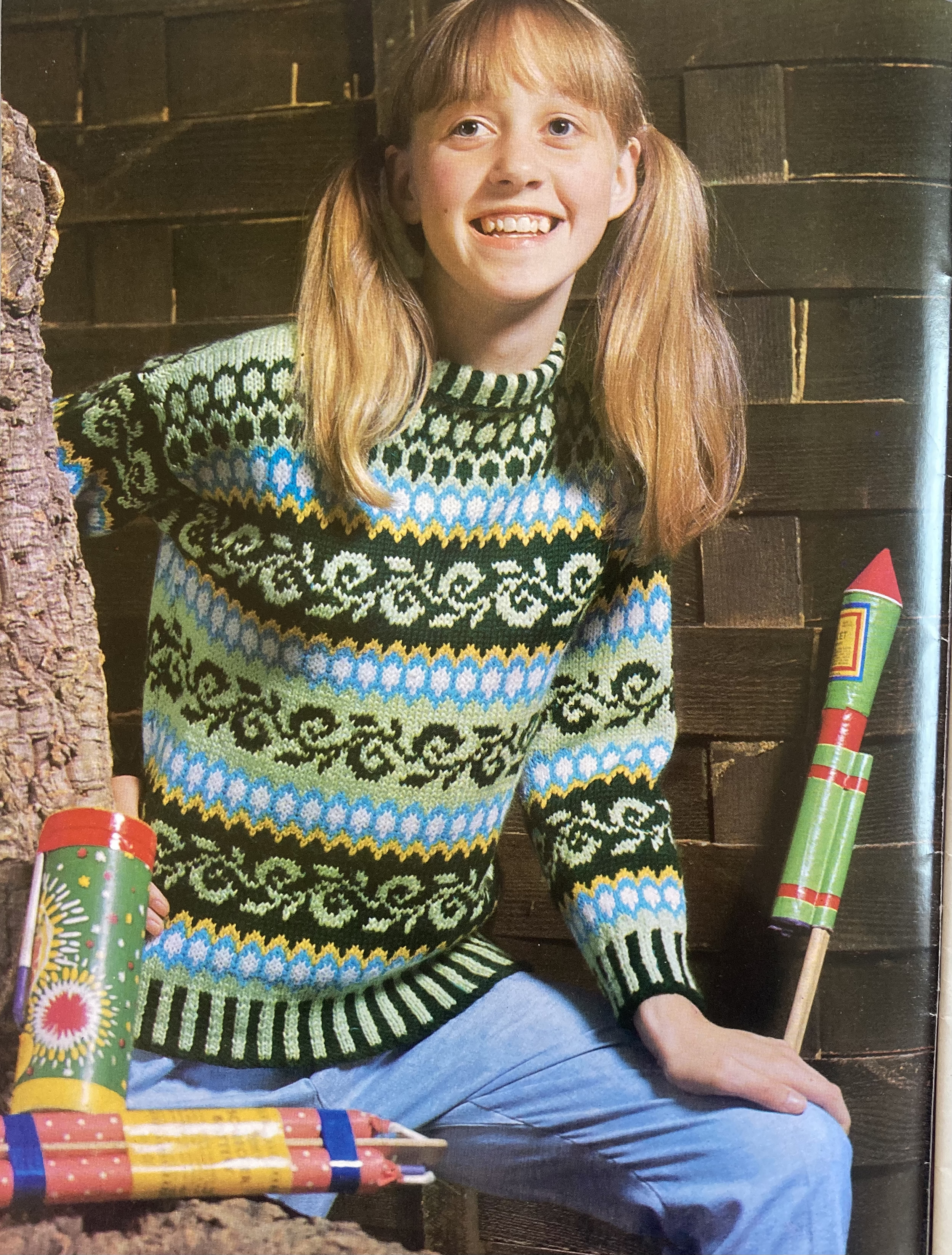
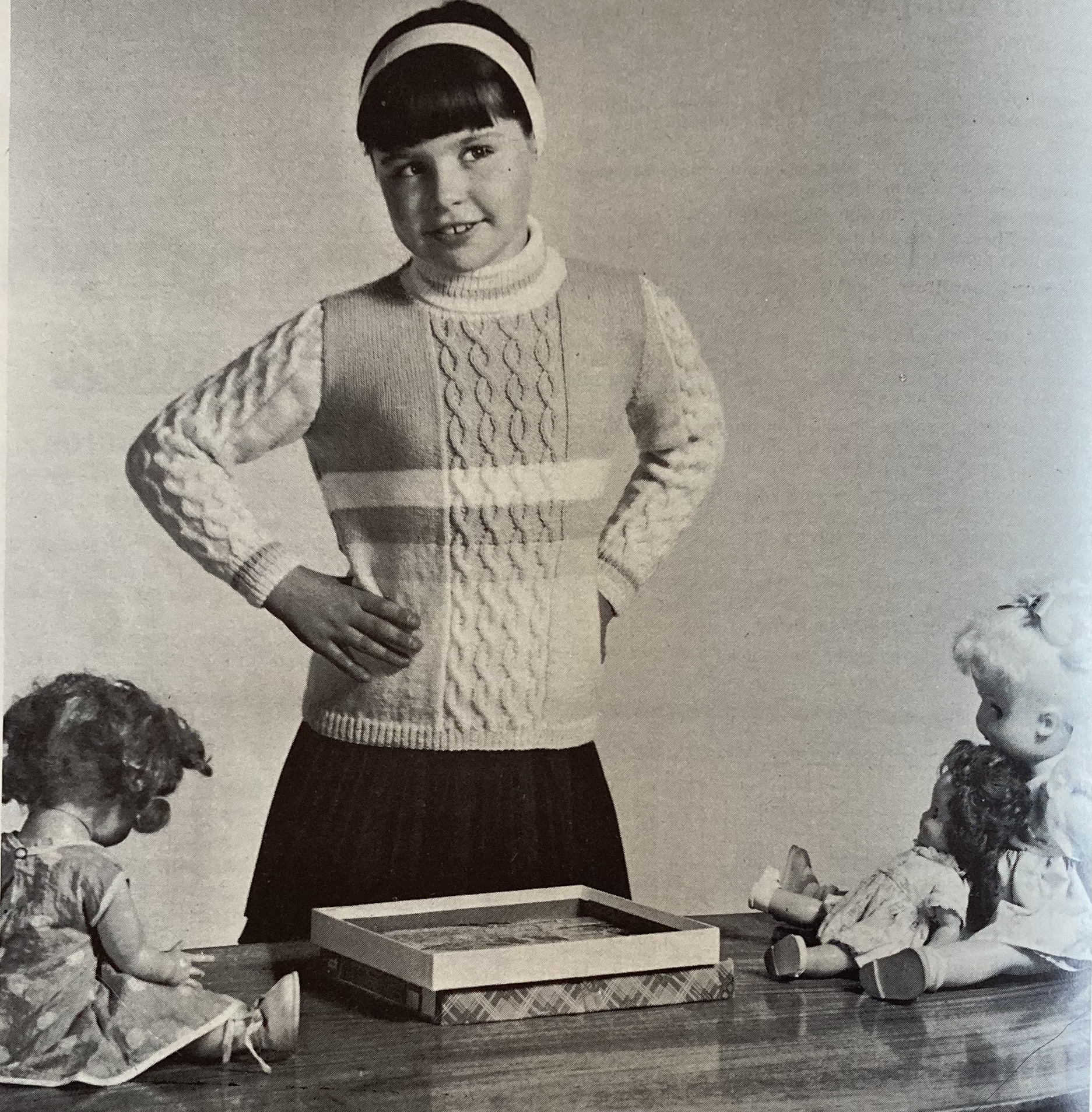
The “Junior Fashions” for girls consist of a bright, fun “Viennese Sports Sweater” in a bold Fair Isle pattern and a cabled and colour-blocked pullover in soft tones of white, blue and rose. The older girl has her fireworks ready, perhaps for Guy Fawkes Night on November 5th, while the younger one is content to play with her dolls.
Gearing up for the Christmas season, we have a double page of weird and/or wonderful little gifts to knit, sew or embroider. For some reason, Stitchcraft really likes Humpty Dumpty, who appears in many forms as a toy, puppet, doll etc. over the years. Here, he “tops a stocking”. There are tiny felt accessories for a doll, sewn and decorated pinafore bibs for a baby or toddler, or coasters with the signs of the Zodiac in embroidered felt appliqué.
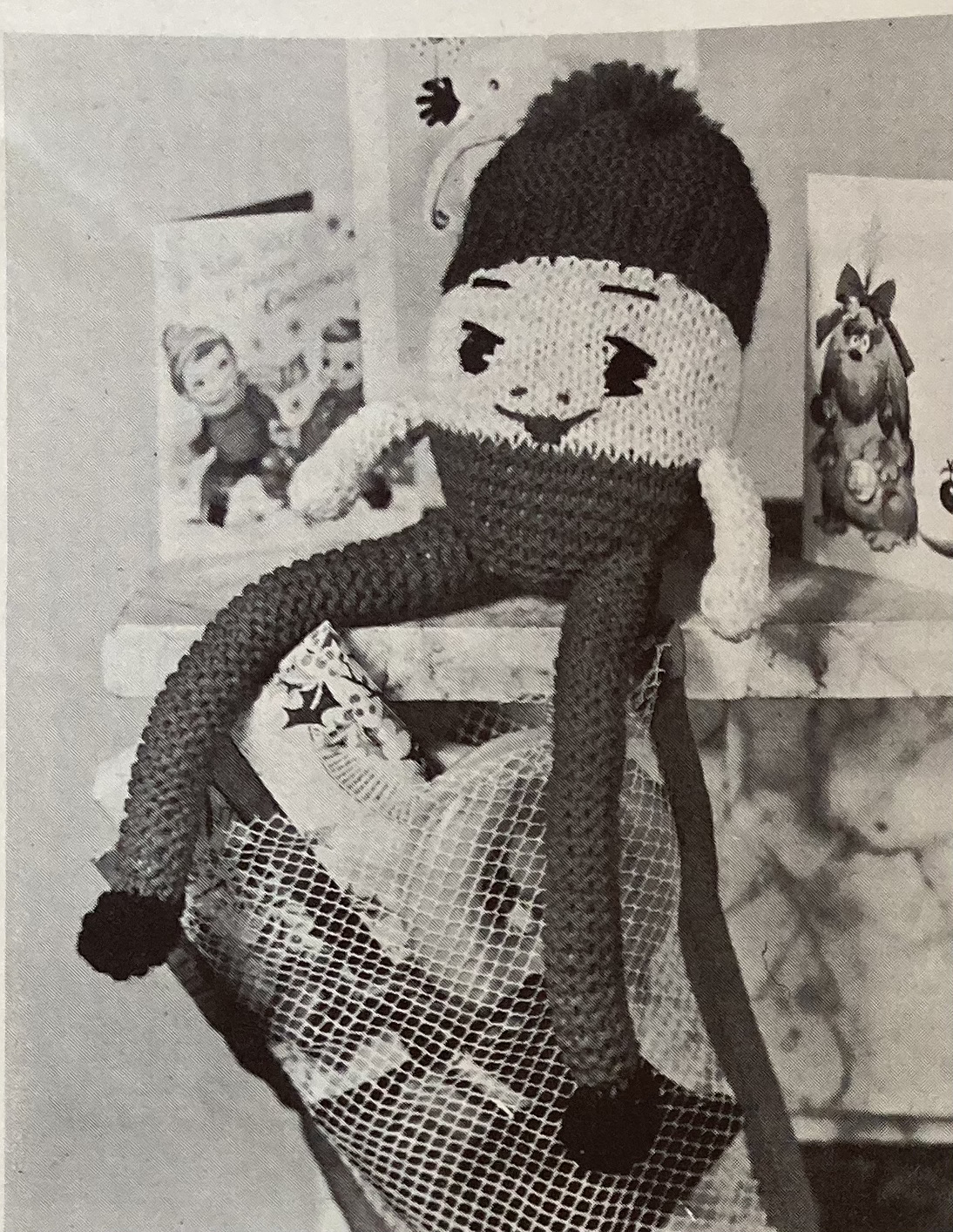
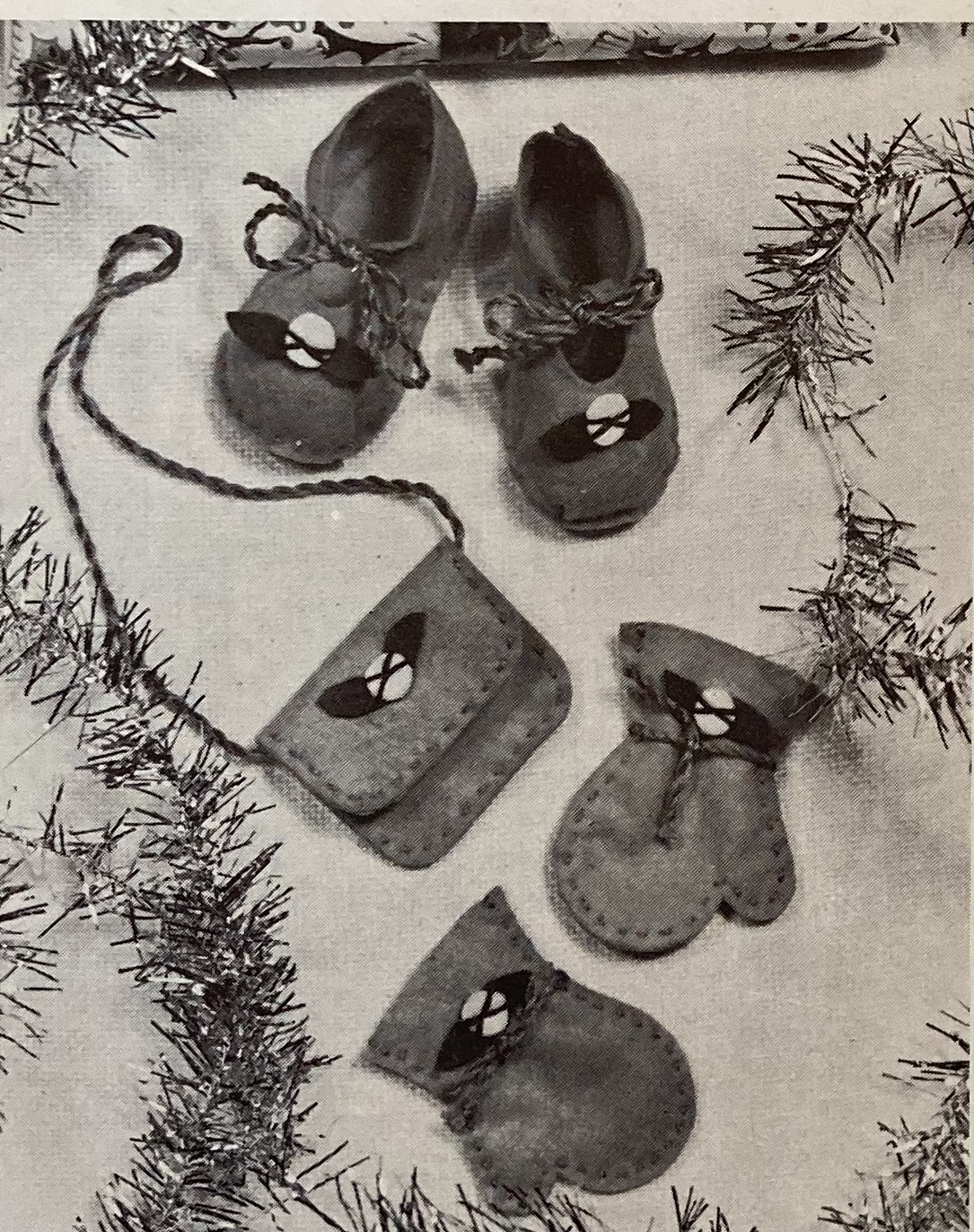
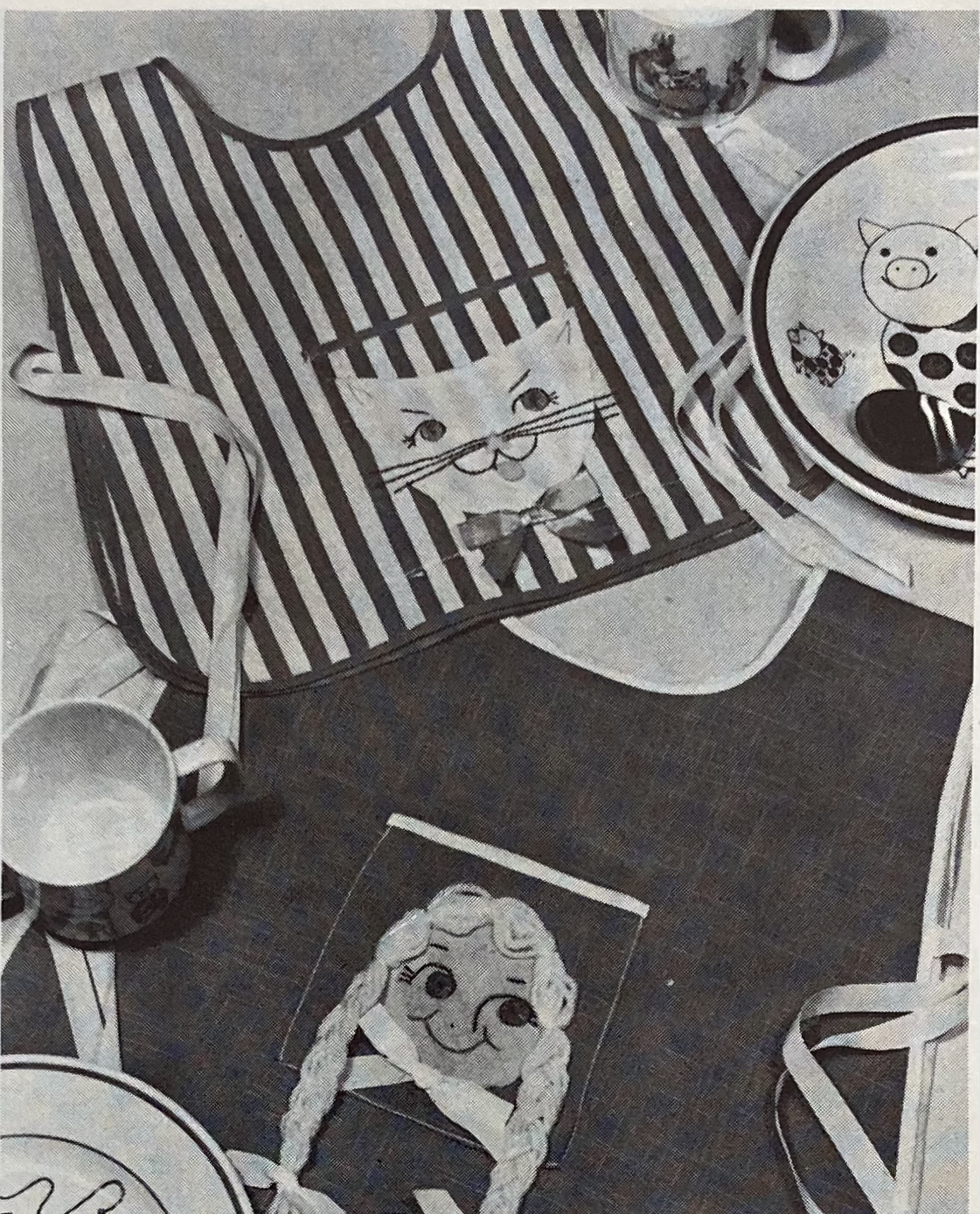
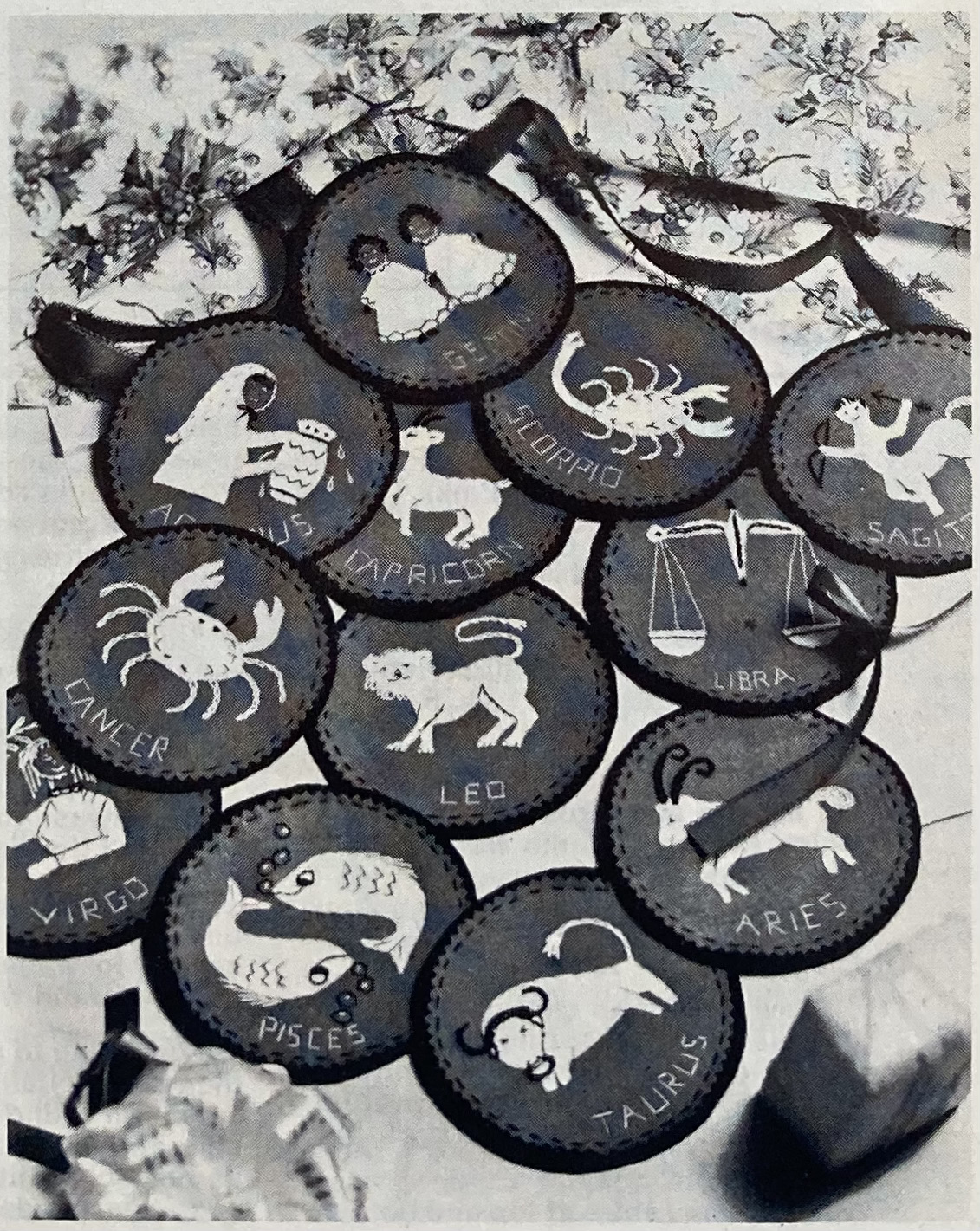
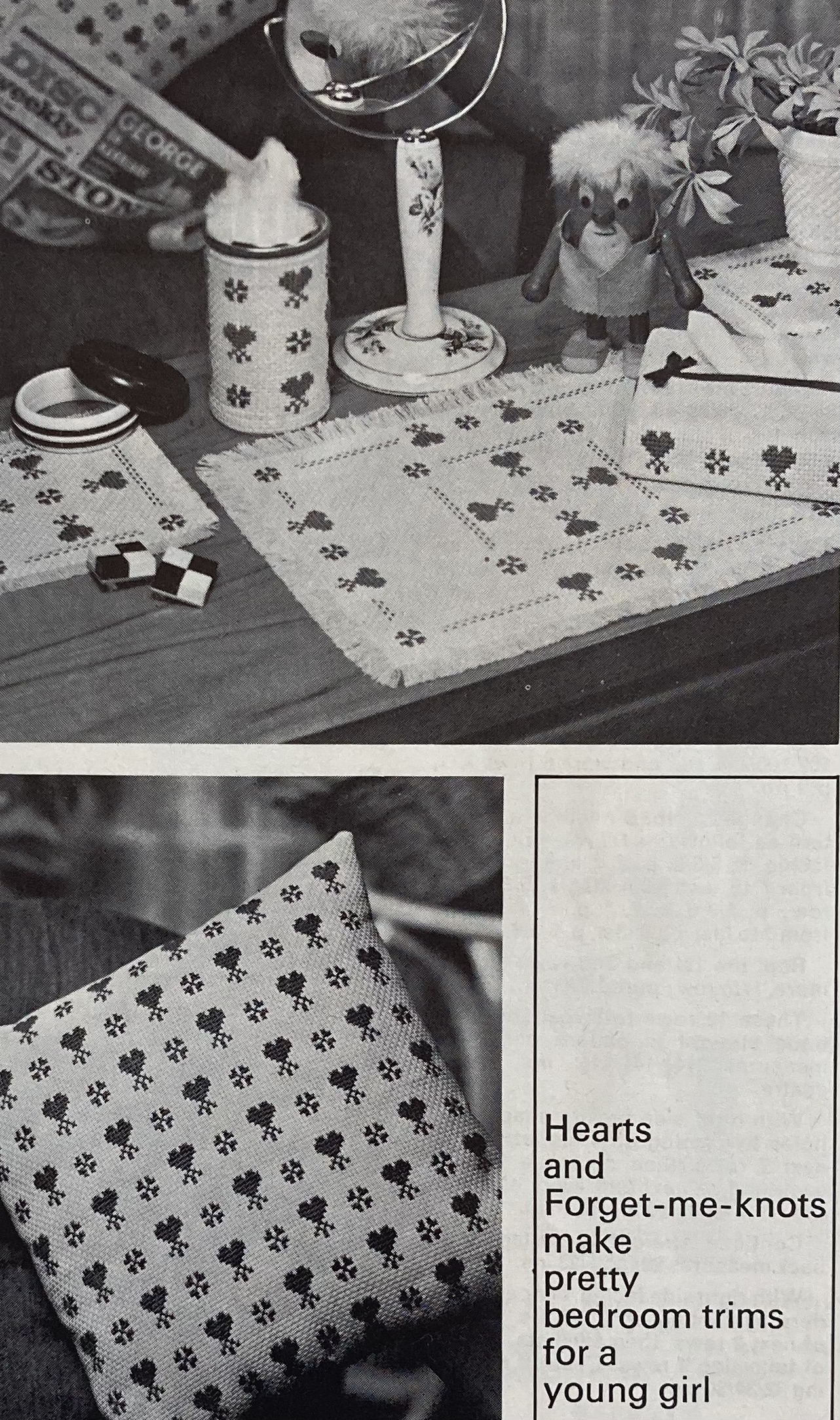
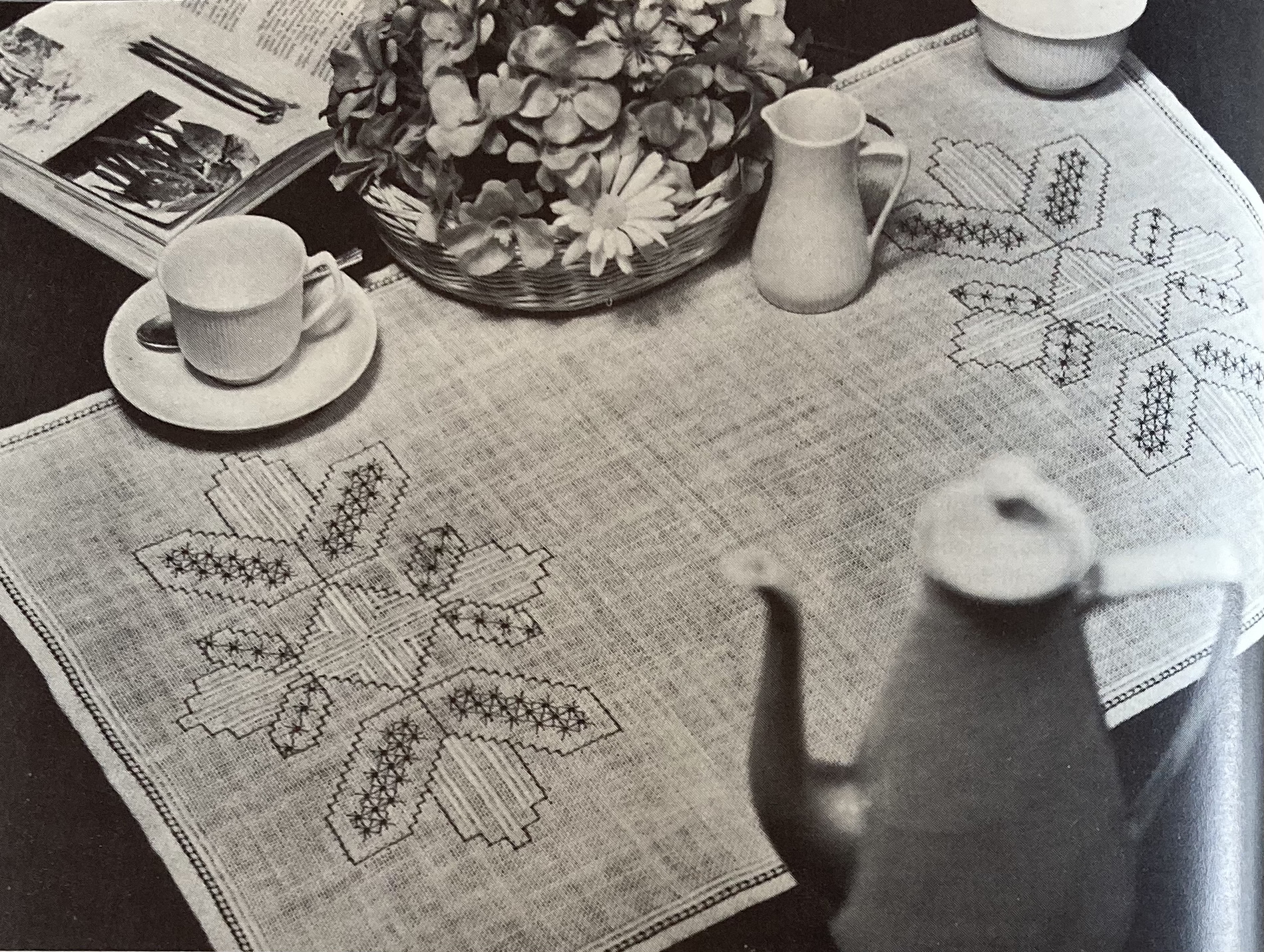
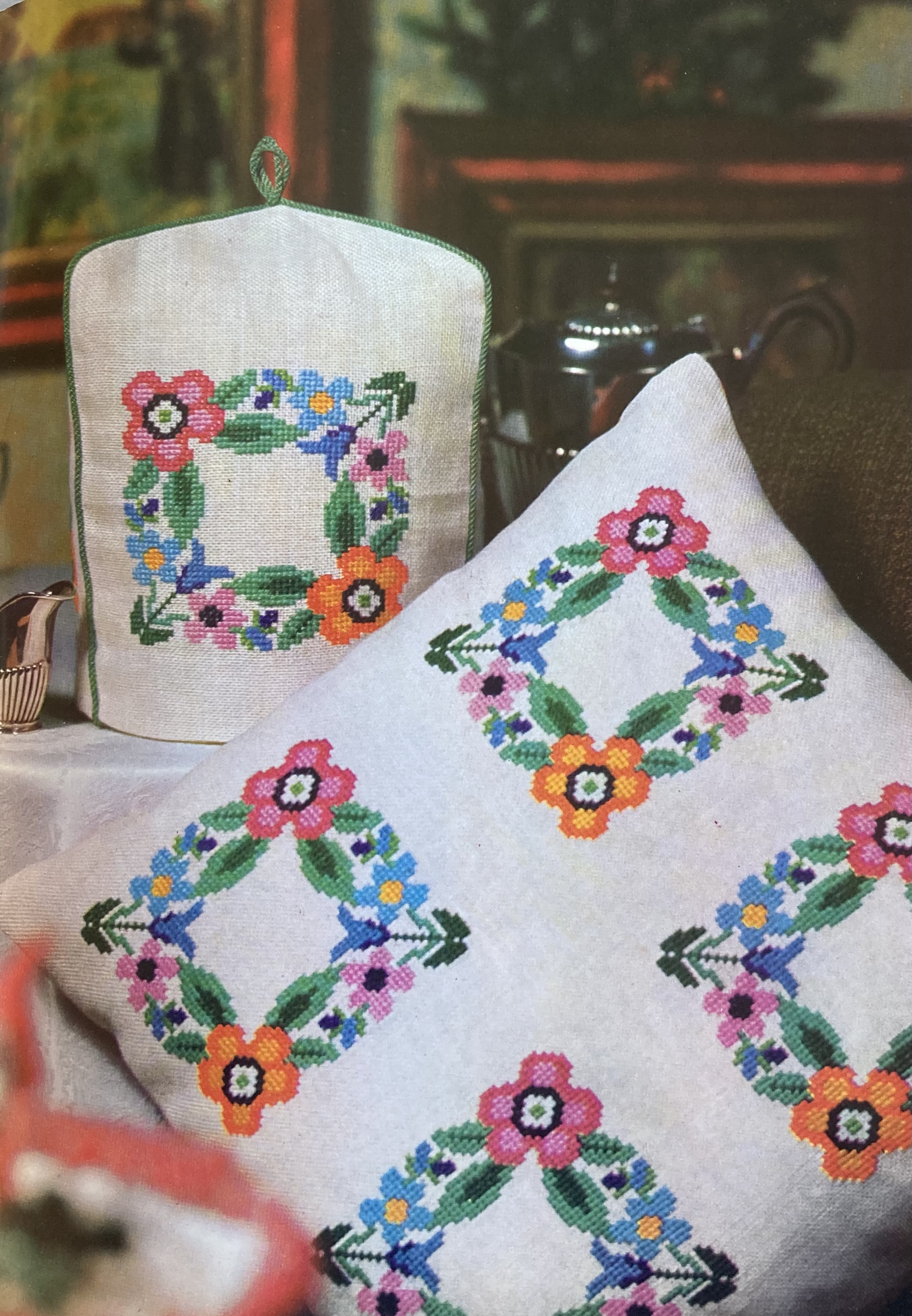
Larger tapestry and embroidery projects include a tapestry evening bag in rosebud pattern, mats and cushion in counted stitch for a girl’s bedroom, drawn-fabric table linens or a cushion and matching tea cosy in a bright floral cross-stitch pattern. I seem to remember the rosebud bag from an earlier project in 1961 that had a similar design. (That project didn’t work out and I don’t think I’ll be making another tapestry handbag anytime soon.)

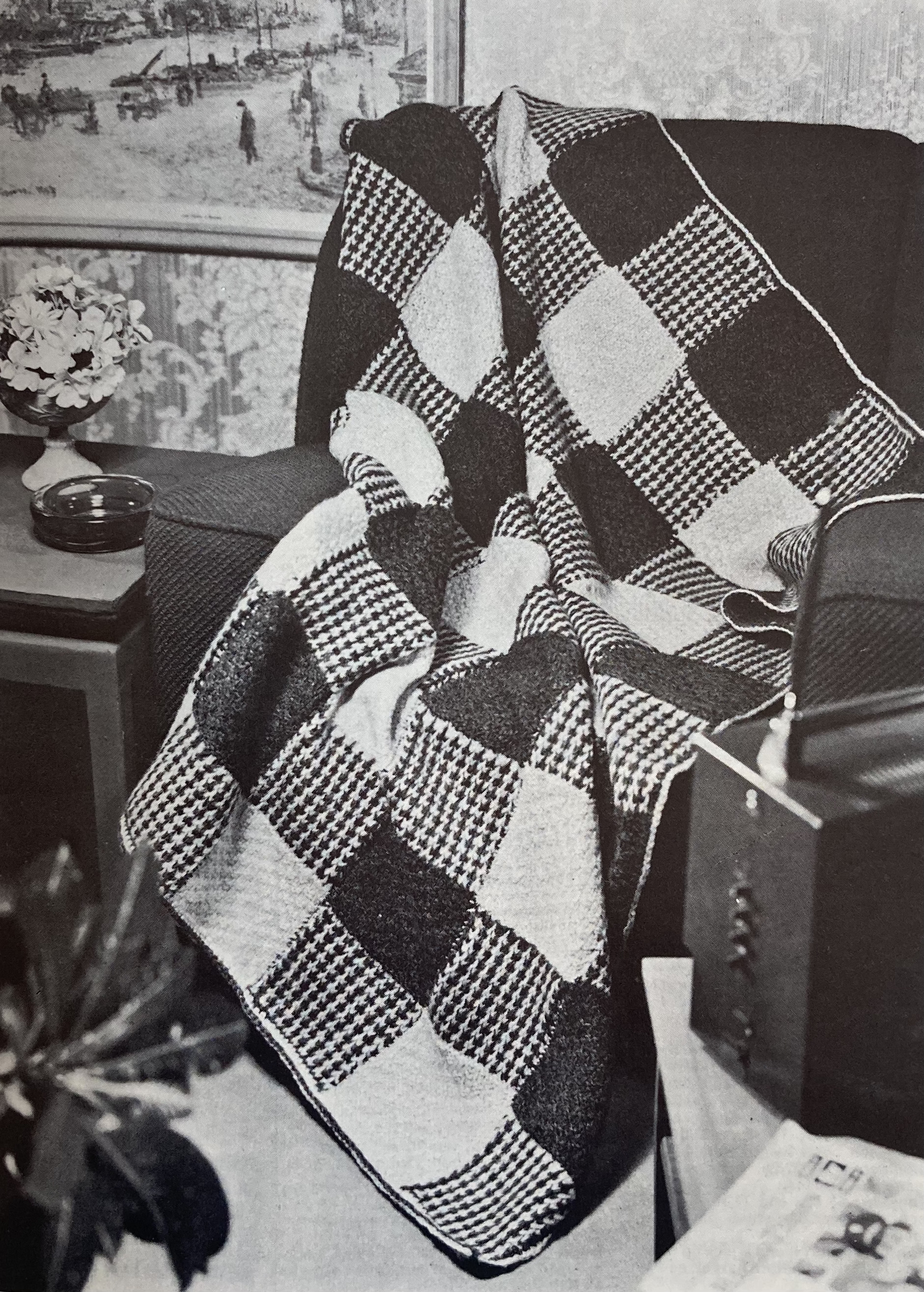
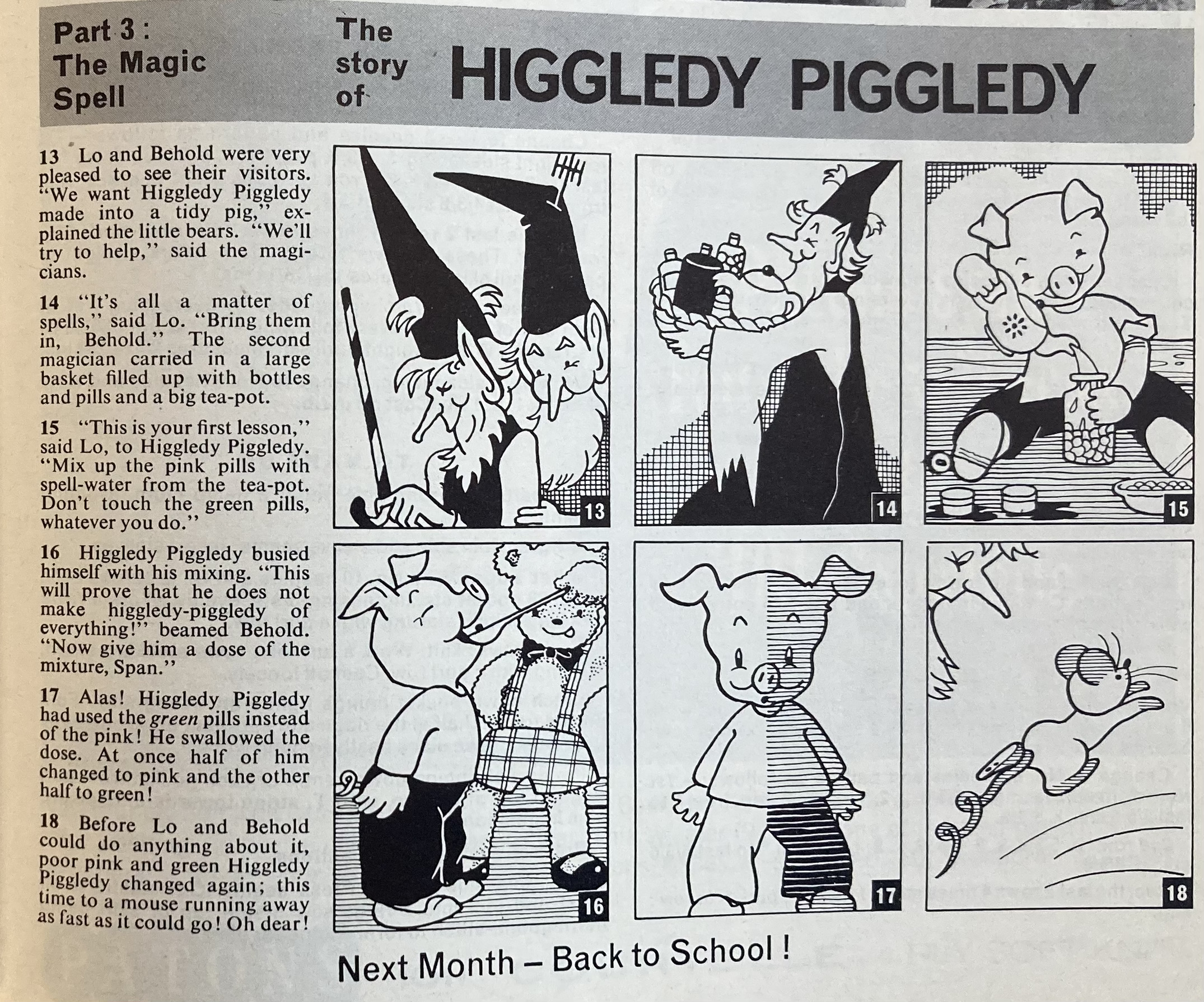
To finish it all off, you can knit a warm afghan for the coming winter evenings by the fireside, or crochet a practical potholder as many of us did in school. In the children’s comic, untidy piglet Higgledy Piggledy ignores the instructions given to him by the magicians who are supposed to change him into a tidy clean piglet, mixes the wrong potion and turns into a pink and green mouse. Good for him, I say! I am a neat and tidy person myself, but I have to admit I am rooting for Higgledy Piggledy in this comic. Will Higgledy Mouse escape the authoritarian rule of cleanliness? Tune in next time to find out!

 The Stitchcraft Sixties
Humpty Dumpty was still popular in the 70s. I had a knitted one as a very young child.
LikeLiked by 1 person