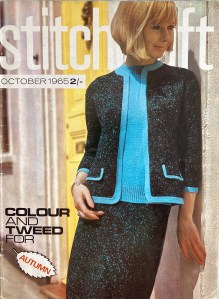
Colour and Tweed for Autumn! This is a “bumper” issue full of many beautiful designs for adults, children, homewares and “novelties”, all with an autumn theme. My apologies for the slightly late post — I was traveling last week with no computer.
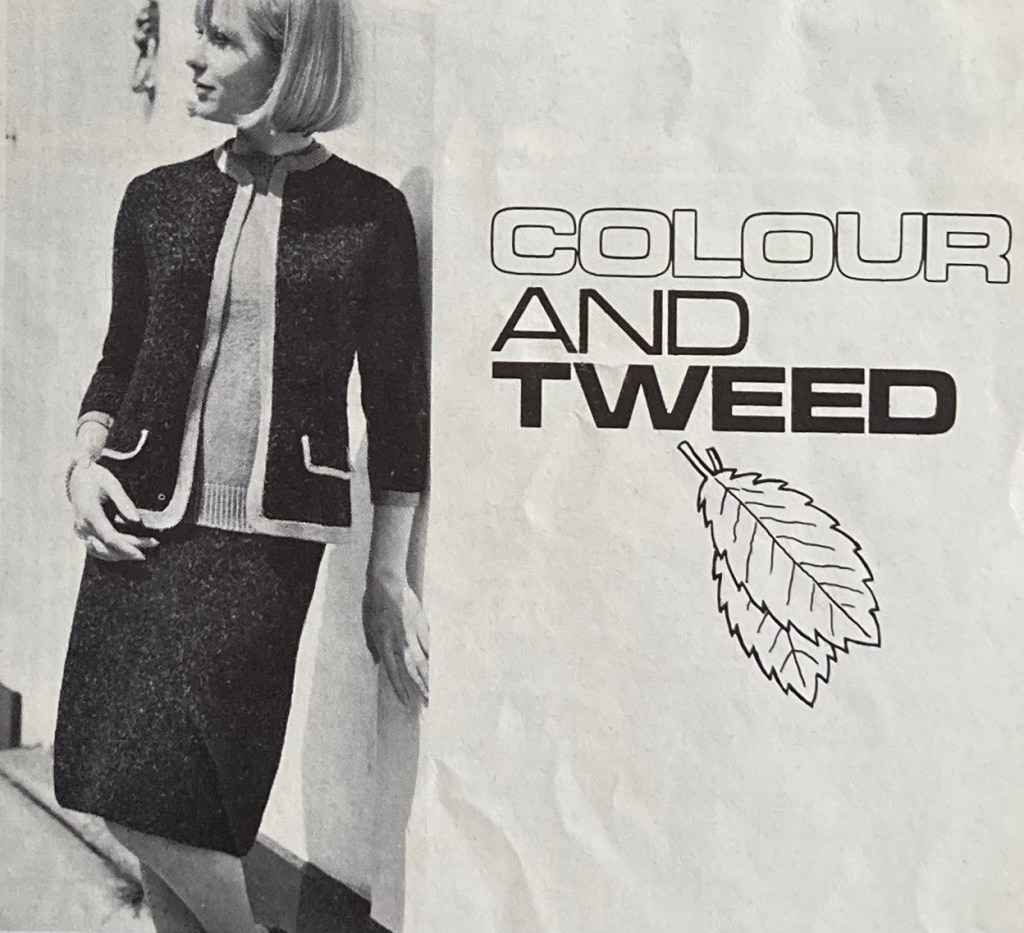
The cover photo is a “Chanel Style Suit” in Bracken Double Knitting tweed wool. 1965 was the heyday of Coco Chanel’s pioneer boxy, tweedy suit that was all the rage with celebrities and modern women. Her designs combined Scottish tweeds and multi-colour fabric patterns by Bernat Klein with her signature comfort, ease of movement and simple elegance to make a modern, essential wardrobe staple. Here is an excellent short introductory film about it (I’m sure readers of this blog will need no introduction; still, it’s great.) The knitted suit design in this issue of Stitchcraft is very true to the Chanel model, with its thick, tweedy wool, above-knee skirt and functional, square pockets in the jacket. There’s a short-sleeved knitted blouse in turquoise to match.

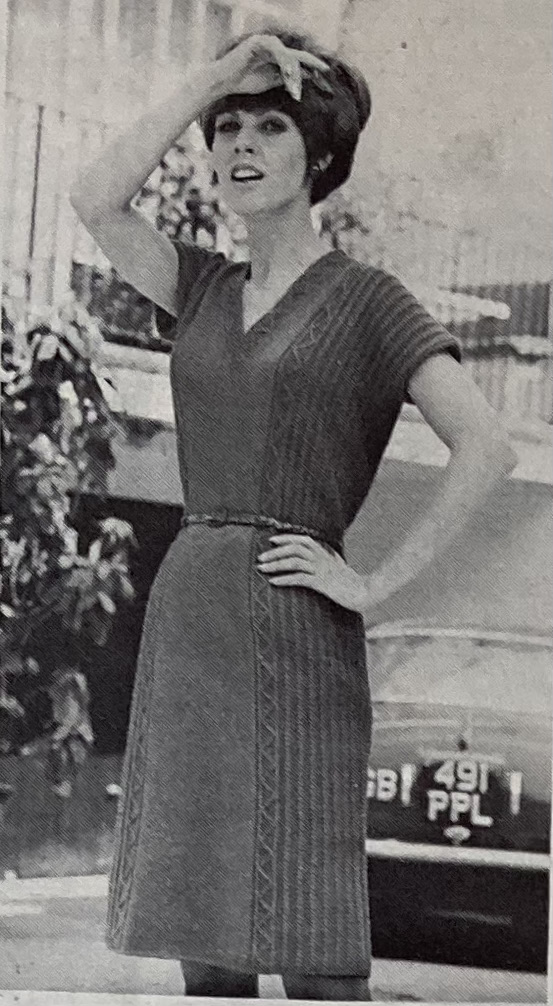
Other women’s garment designs include a brilliant red dress in Paton’s newest wool, Fiona; a “continental” pullover in a broken-cable design in regular Patons DK wool, a plain pullover with “new styling”, also in Fiona; and a fine-knit cardigan with crochet picot trim.

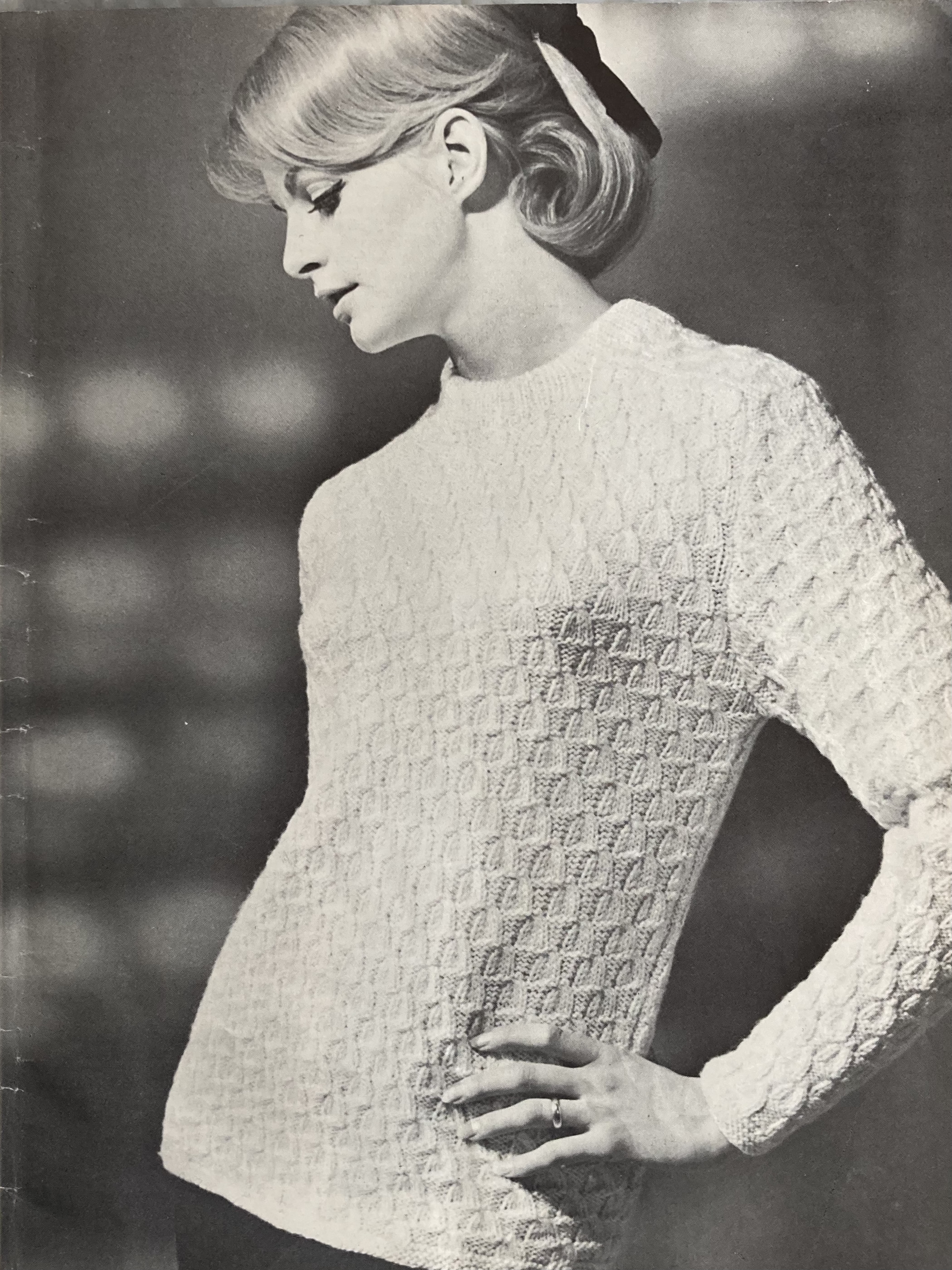
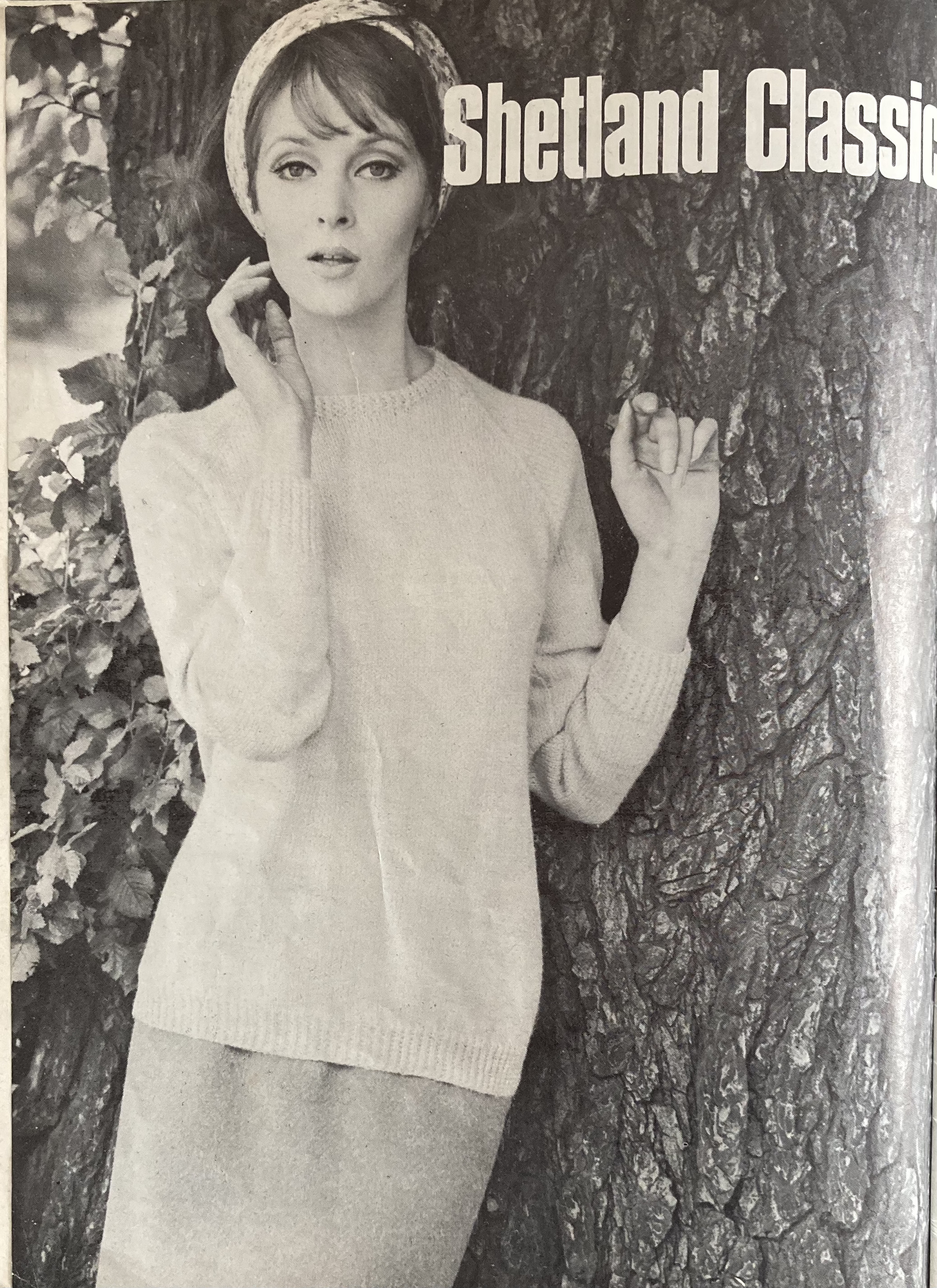
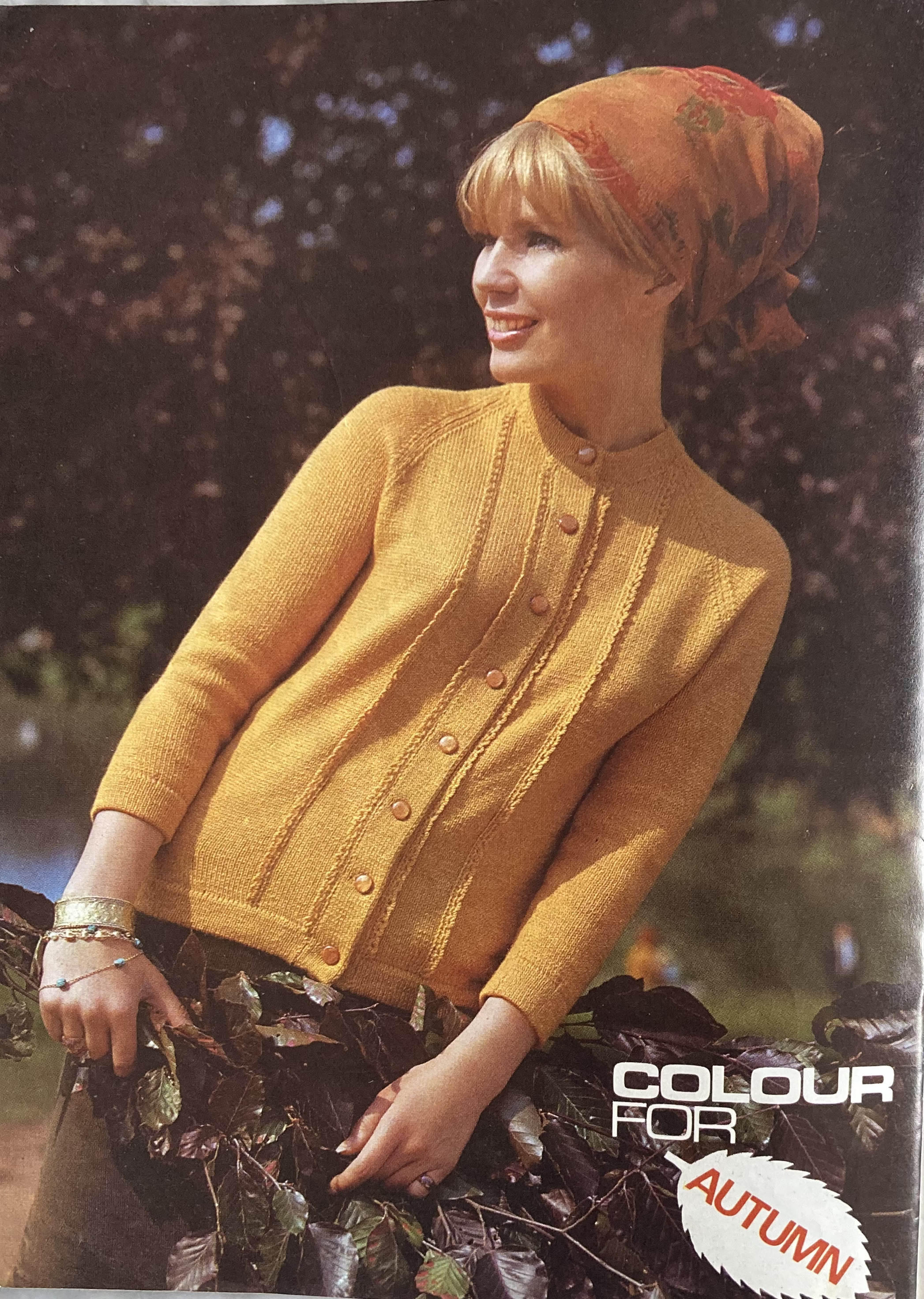
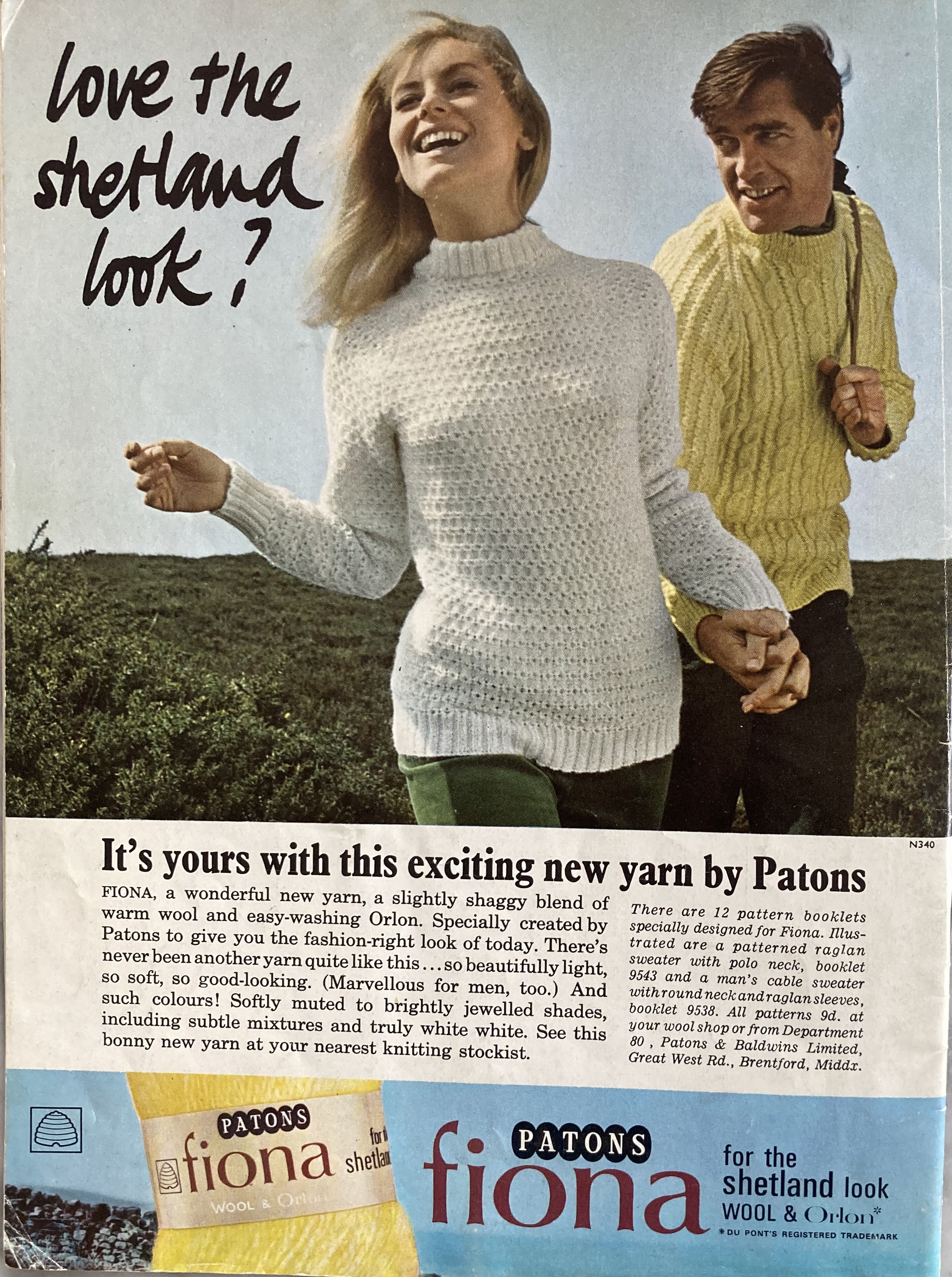
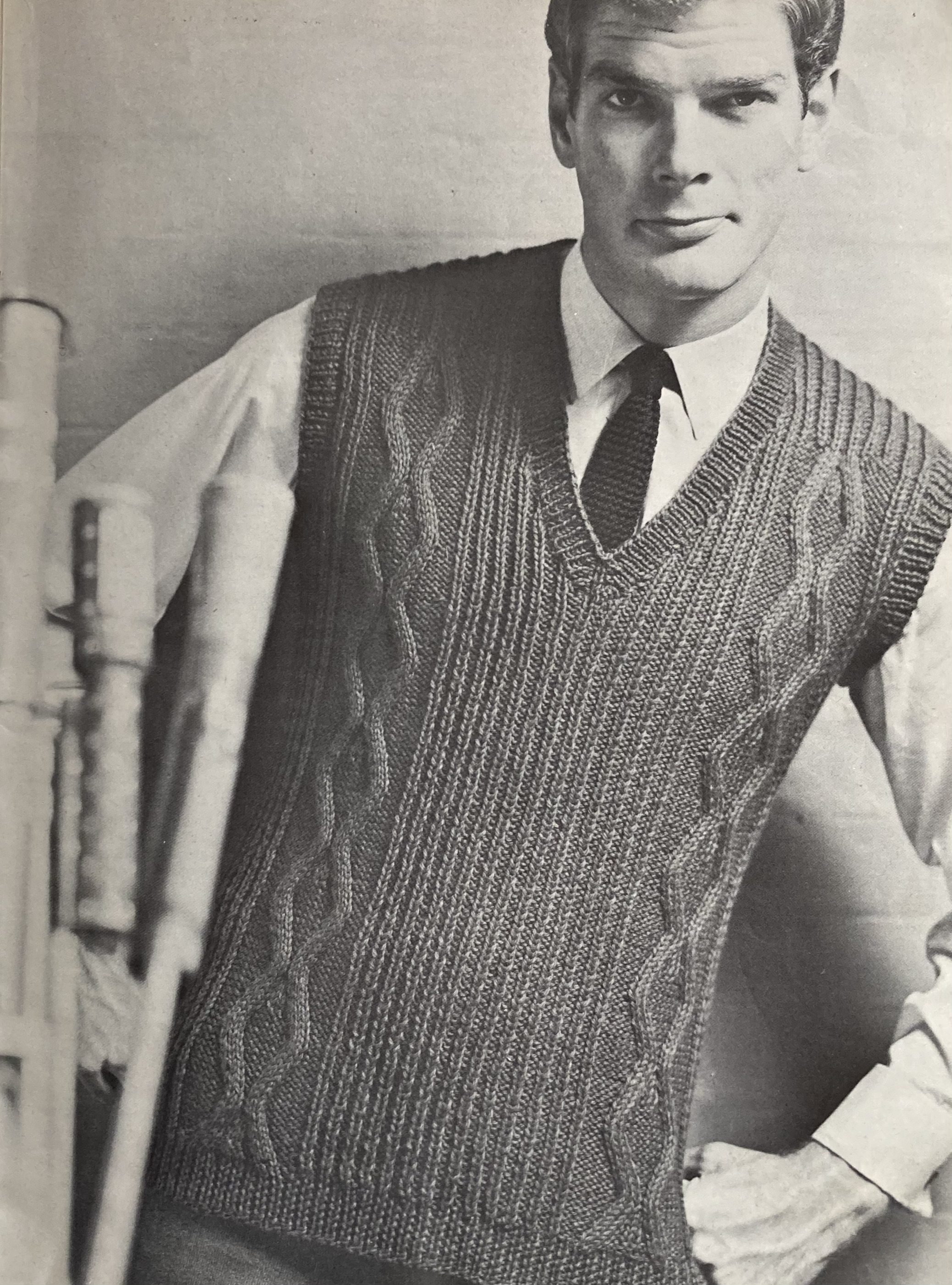
“Fiona” wool was a mix of Shetland wool and synthetic “Orlon”, made to combine the best qualities of both — warm, and lightweight like the wool, but easy-care and less scratchy. The “new styling” of the plain pullover means it is longer (23-24 inches) and looser-fitting than previous classic designs, and the raglan armholes are deeper, for an all-around casual fit. Colours are bright and snappy with yellows (“Maize”, “Celtic Gold” and “Inca Gold”) complementing the bright red of the dress. There’s a slipover for men as well, in bright “Peacock” shade and made in slightly thicker “Flair” — also a wool-synthetic mix. Cables of all sorts are popular, and the longer length can be seen in the Fiona advertisement as well as the garment photos.
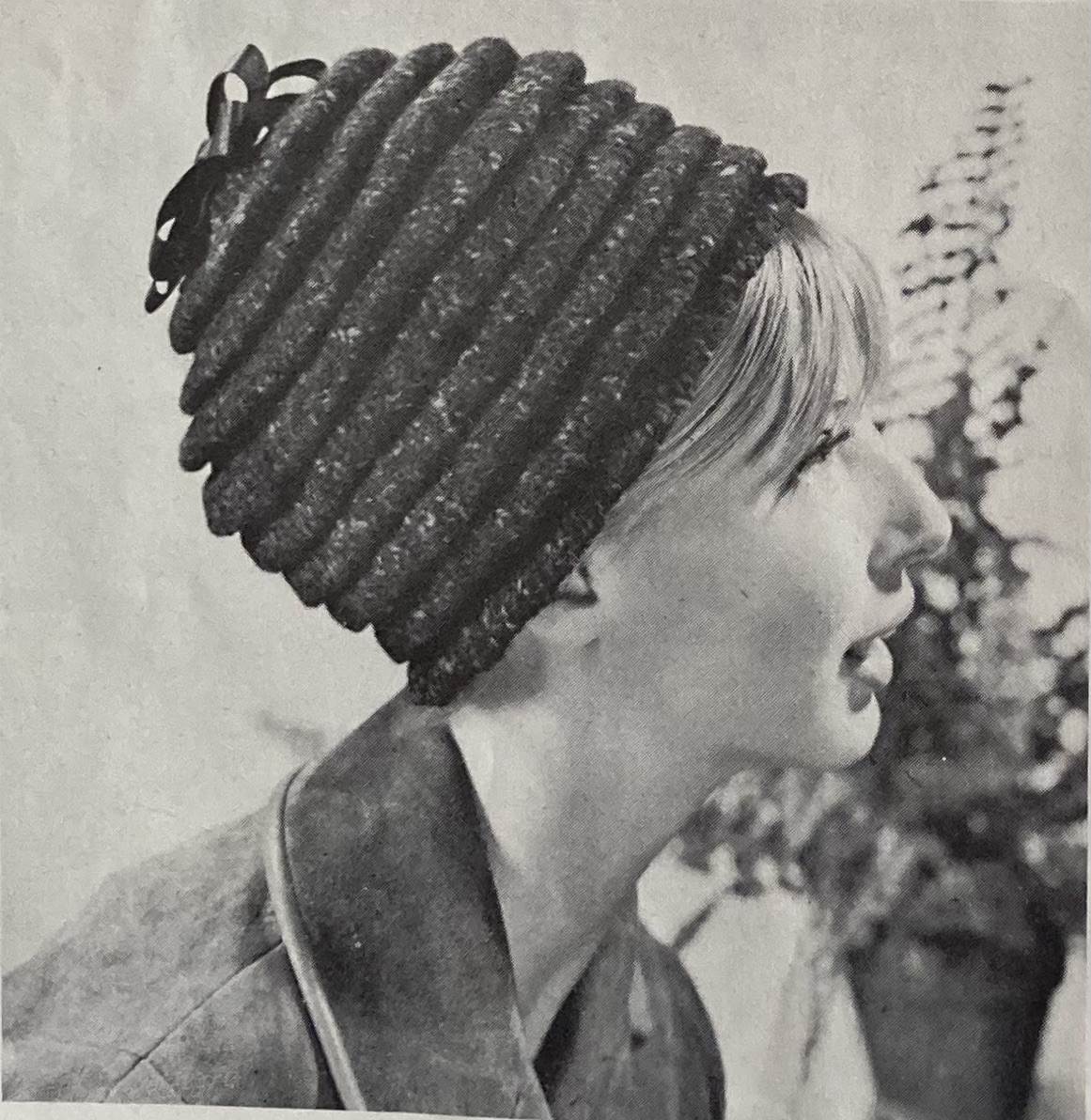
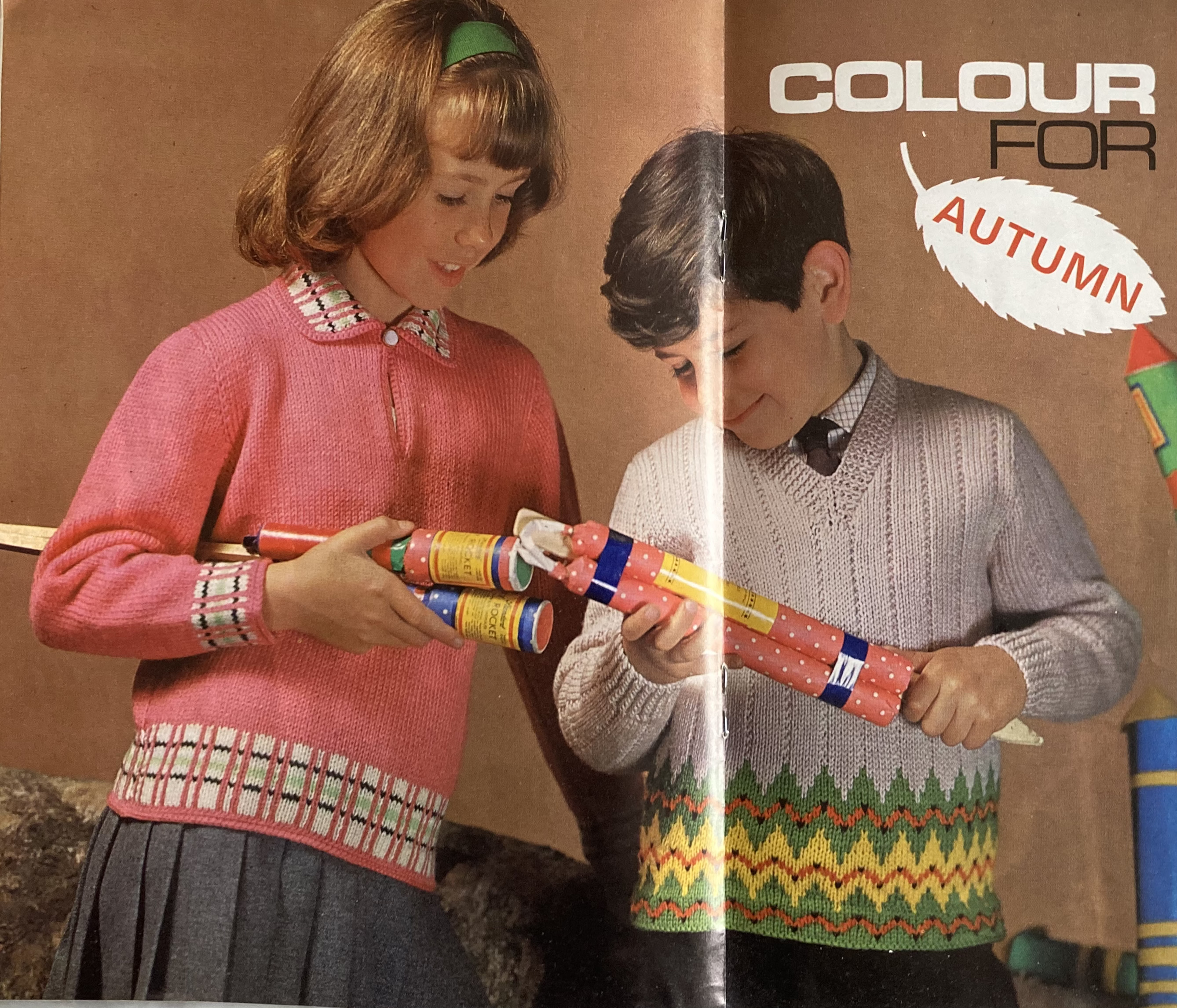
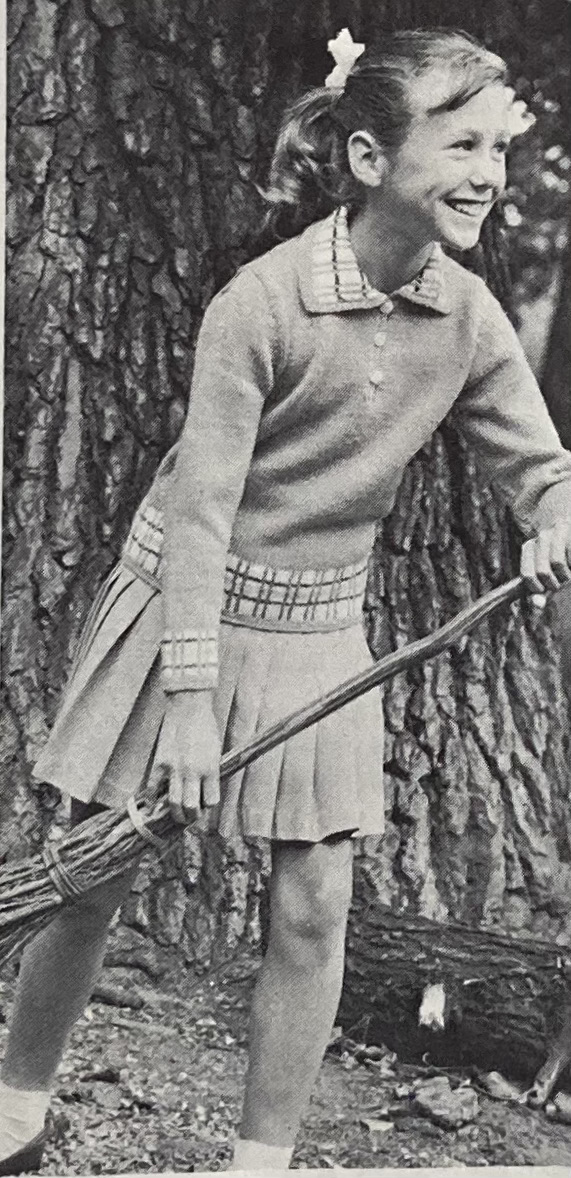
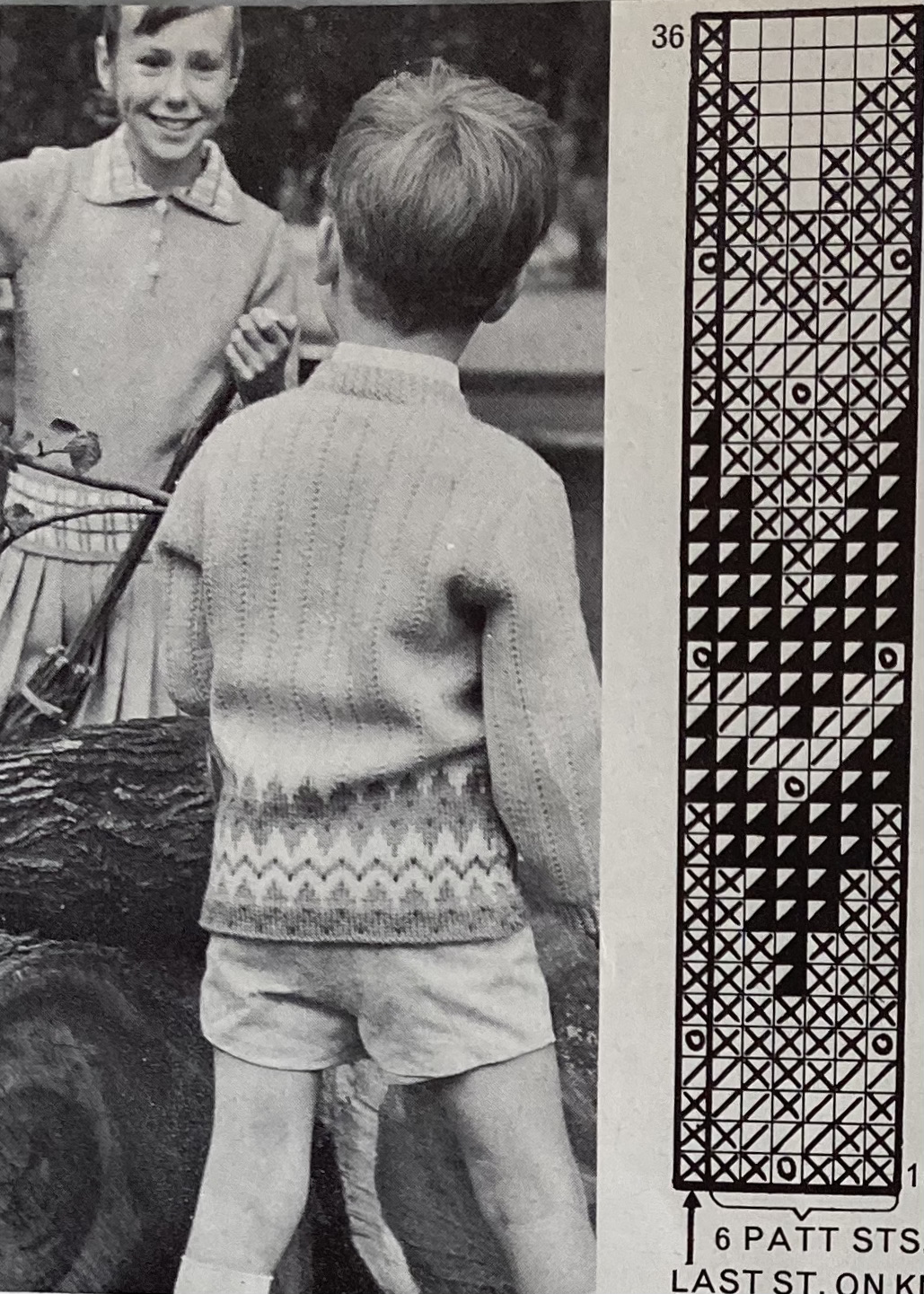
The accessories are limited to one hat — but what a hat! The “tucked” pattern is made by inserting a “life-line” type extra thread every 5 rows and then knitting those stitches together with the current row. I love it, though the model has an unfortunately ridiculous expression on her face in the photo. No designs for babies this issue, but two wonderful and colourful sweaters for children with stranded hem and yoke accents.
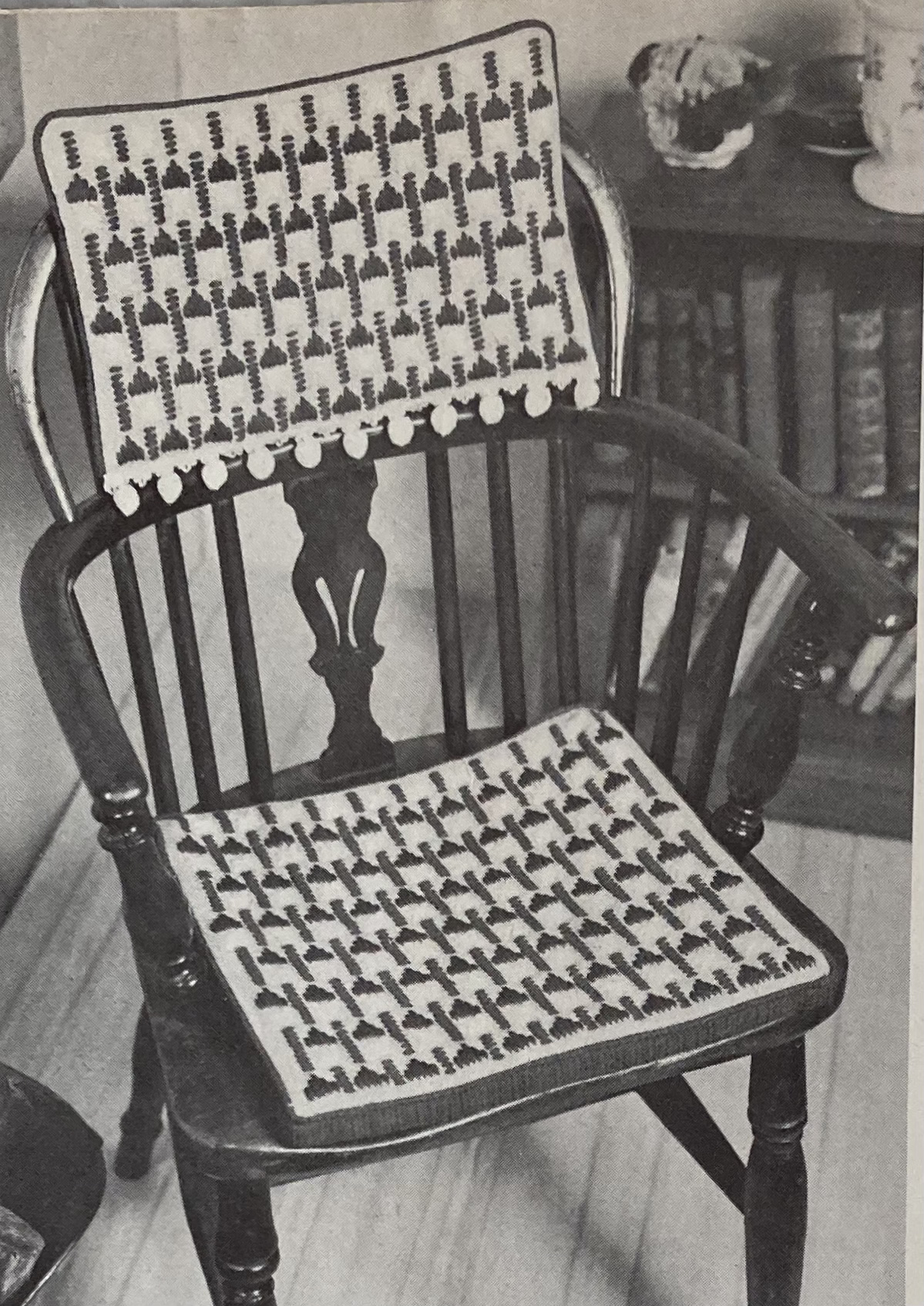
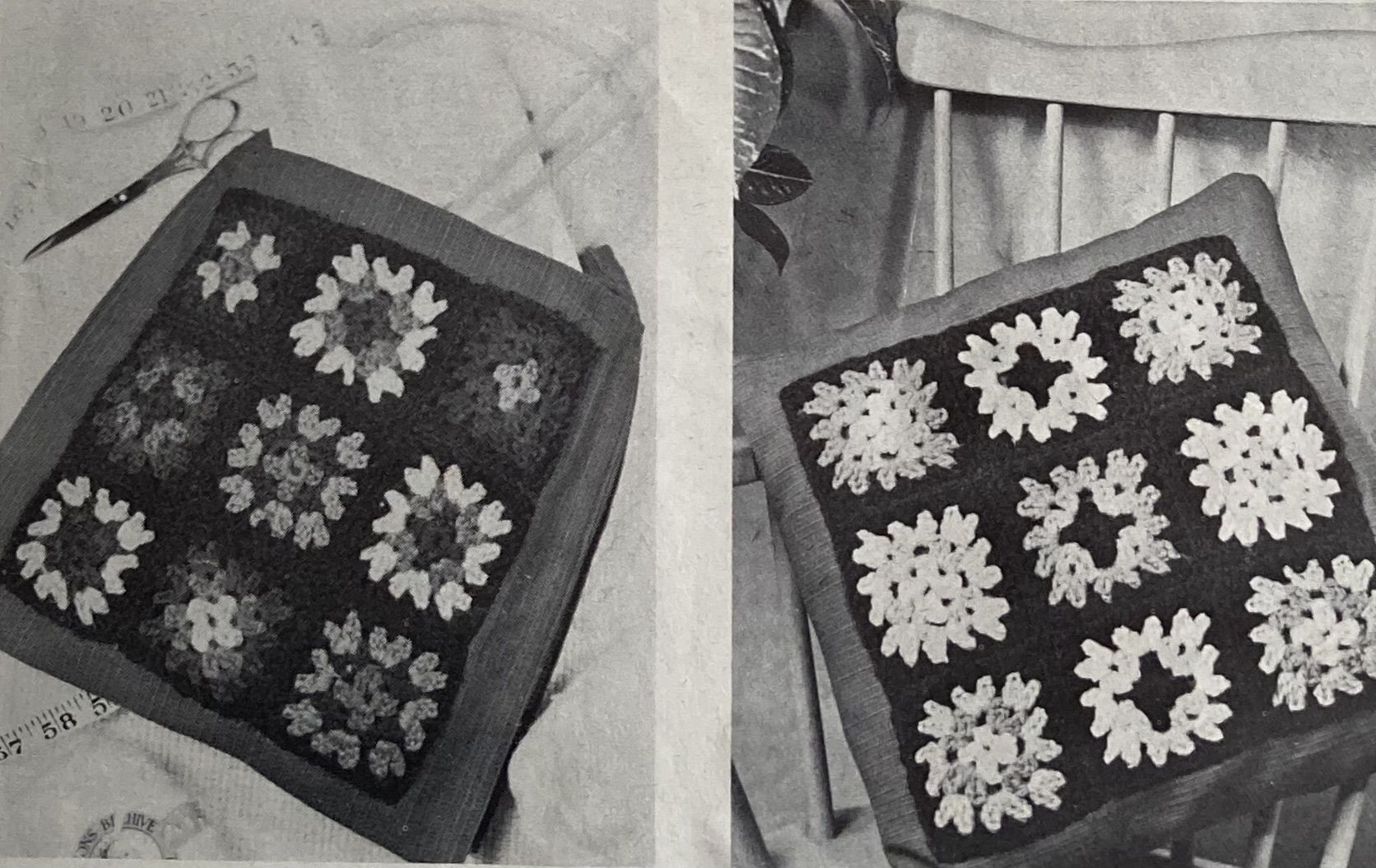
In the embroidery and homewares department, we have the usual designs for cushions, chair-backs and chair-seats, plus a granny-square crochet pattern to use up scrap wool that, backed with woven fabric, can be used to make a workbag or cushion. Like the garment designs, colours are bright and bold, with reds and blues prevailing, along with black and white.
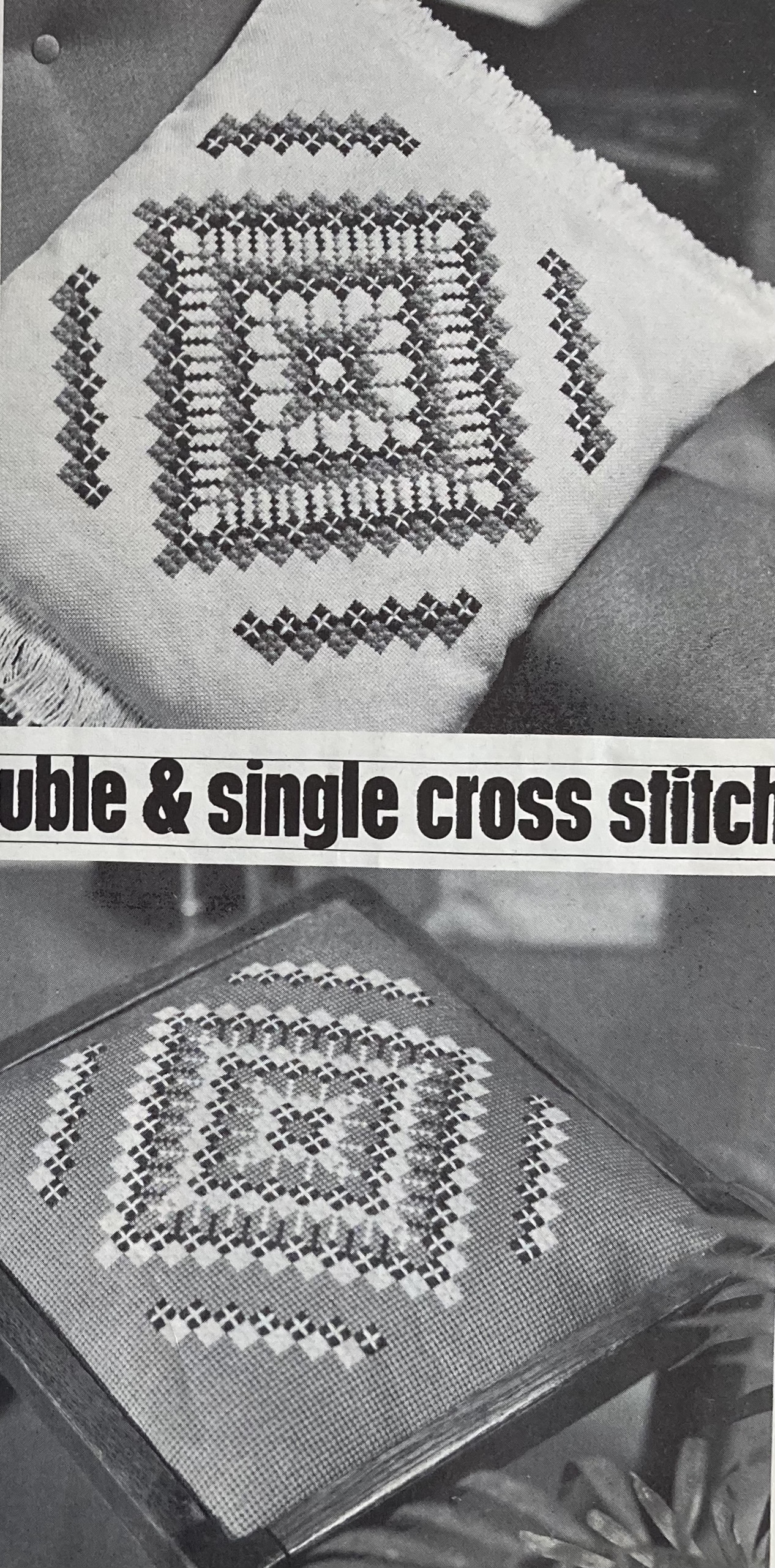
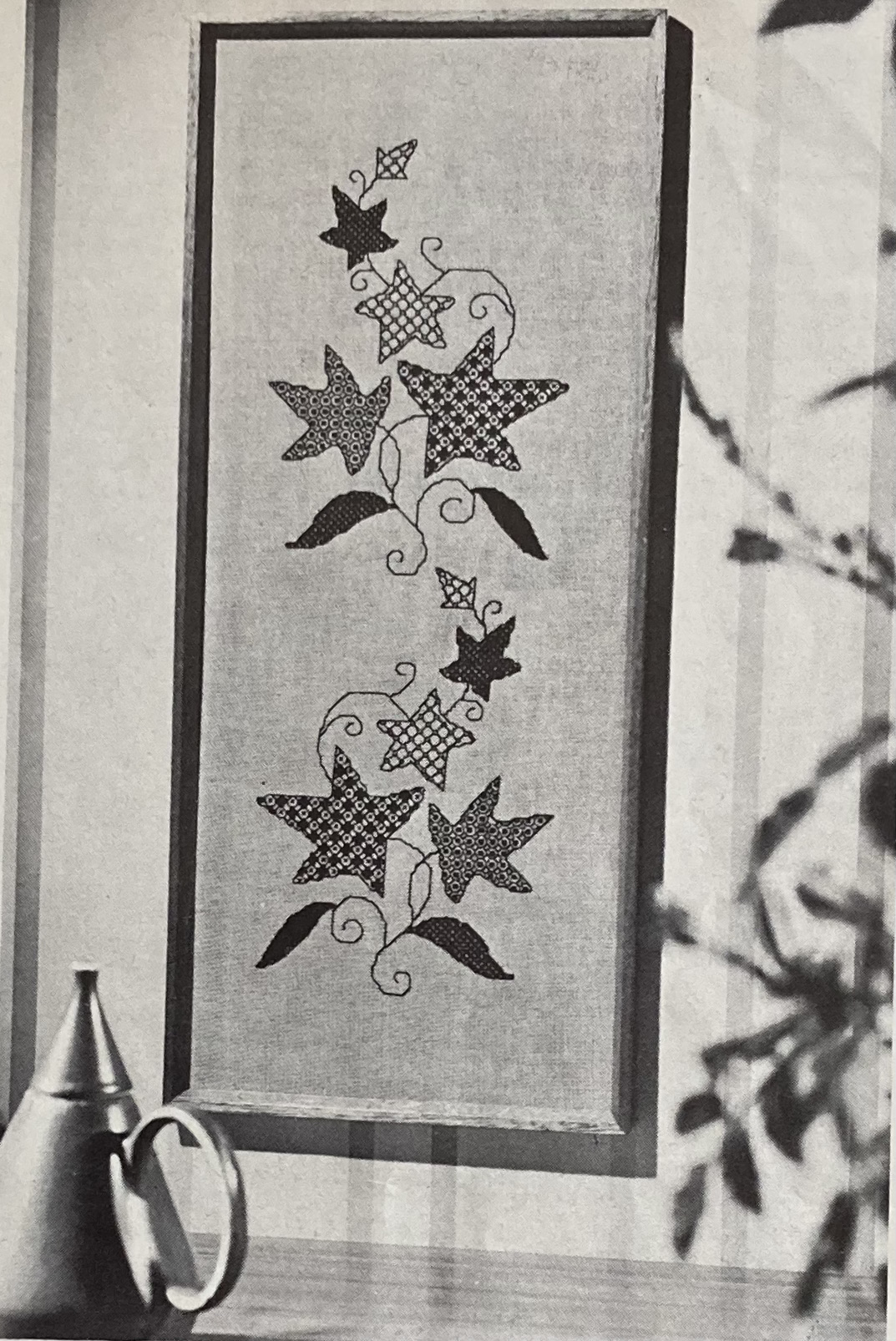
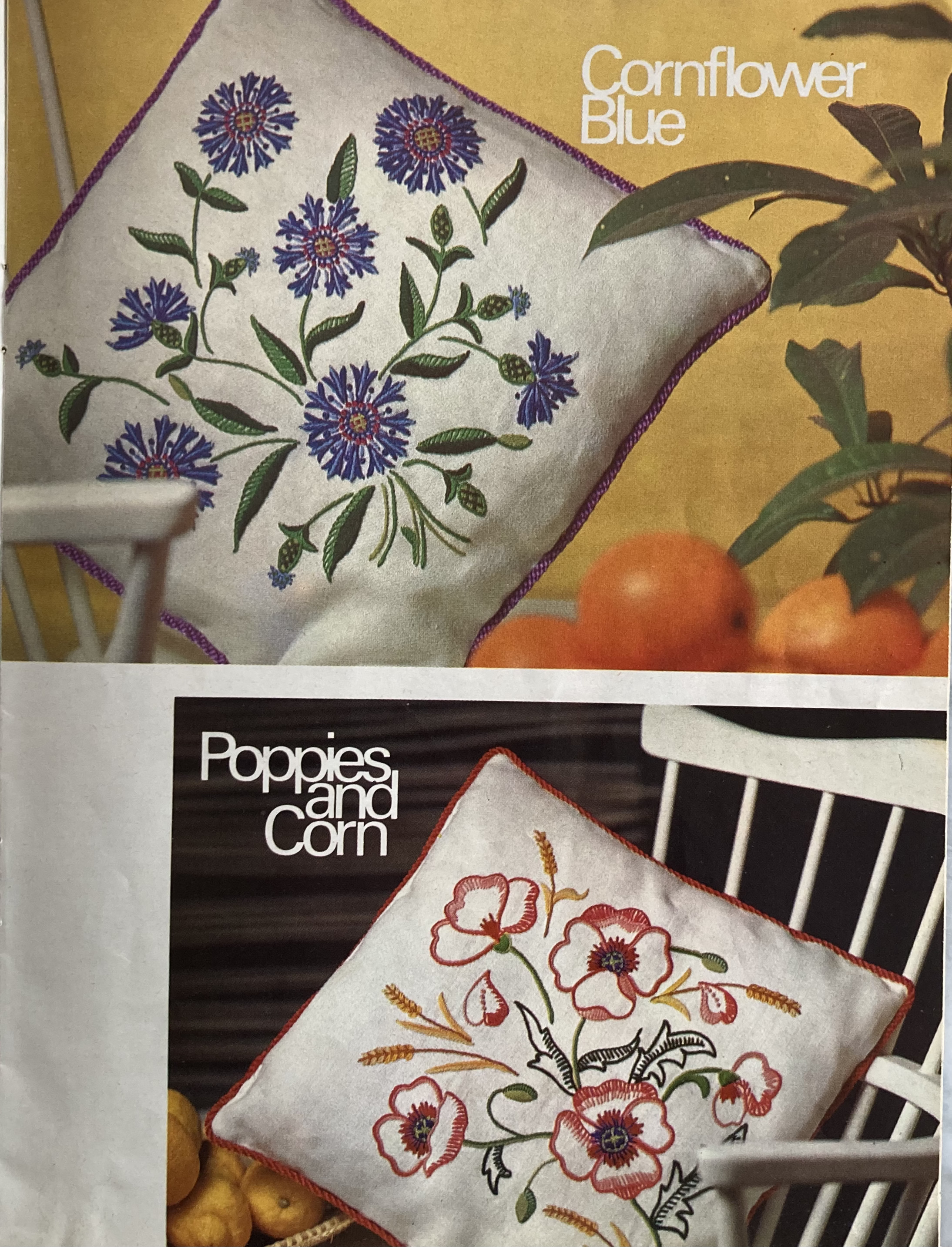
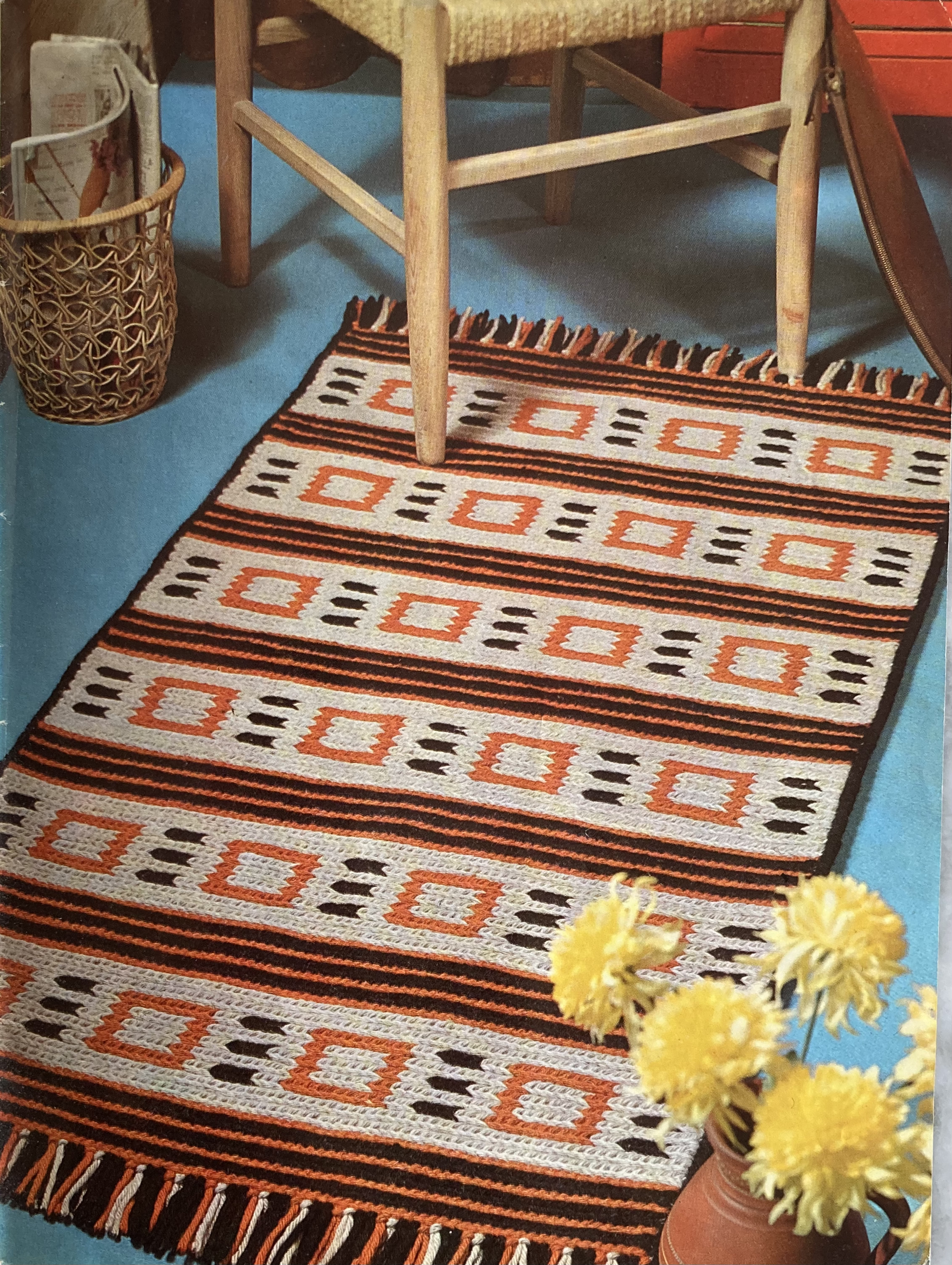
More advanced needleworkers can make a very pretty firescreen or a blackwork wall panel. Finally, there are embroidered cushions with flower designs — cornflower, corn not-flower-but-actual-corn, and red poppies. The loose, almost flowing style of the cushion designs looks ahead to later and even simpler patterns — complicated Jacobean work was on its way out. There’s a practical stitched rug in a geometric design as well.

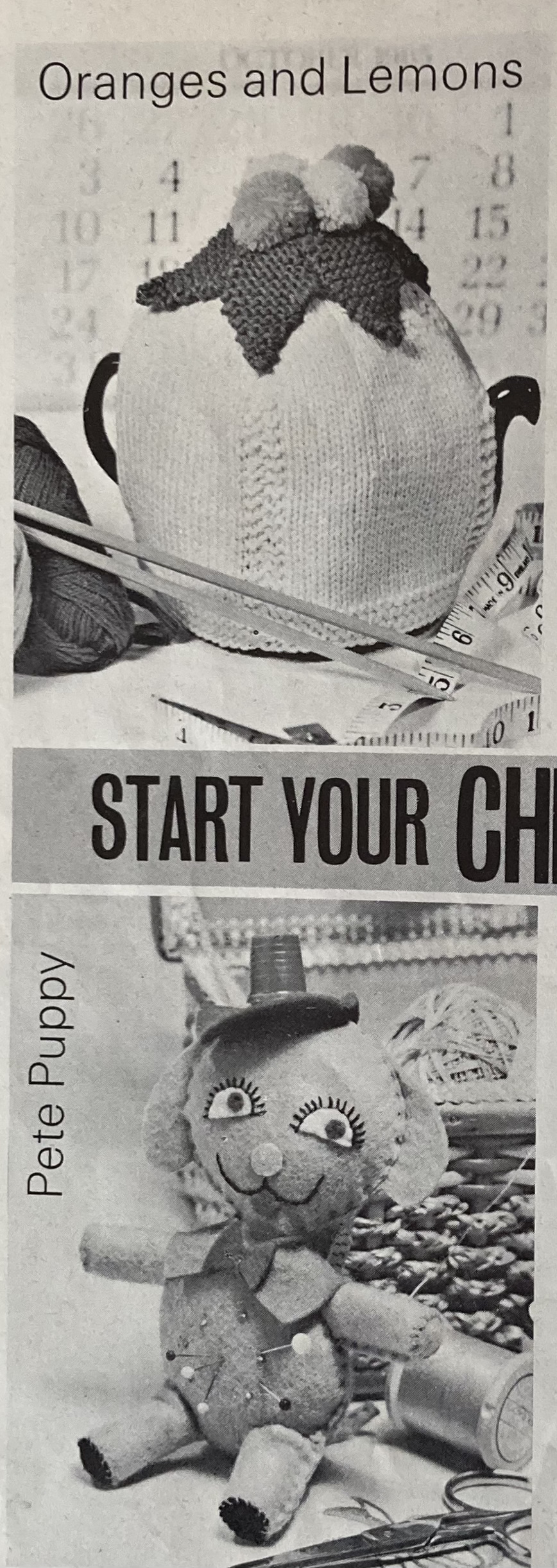
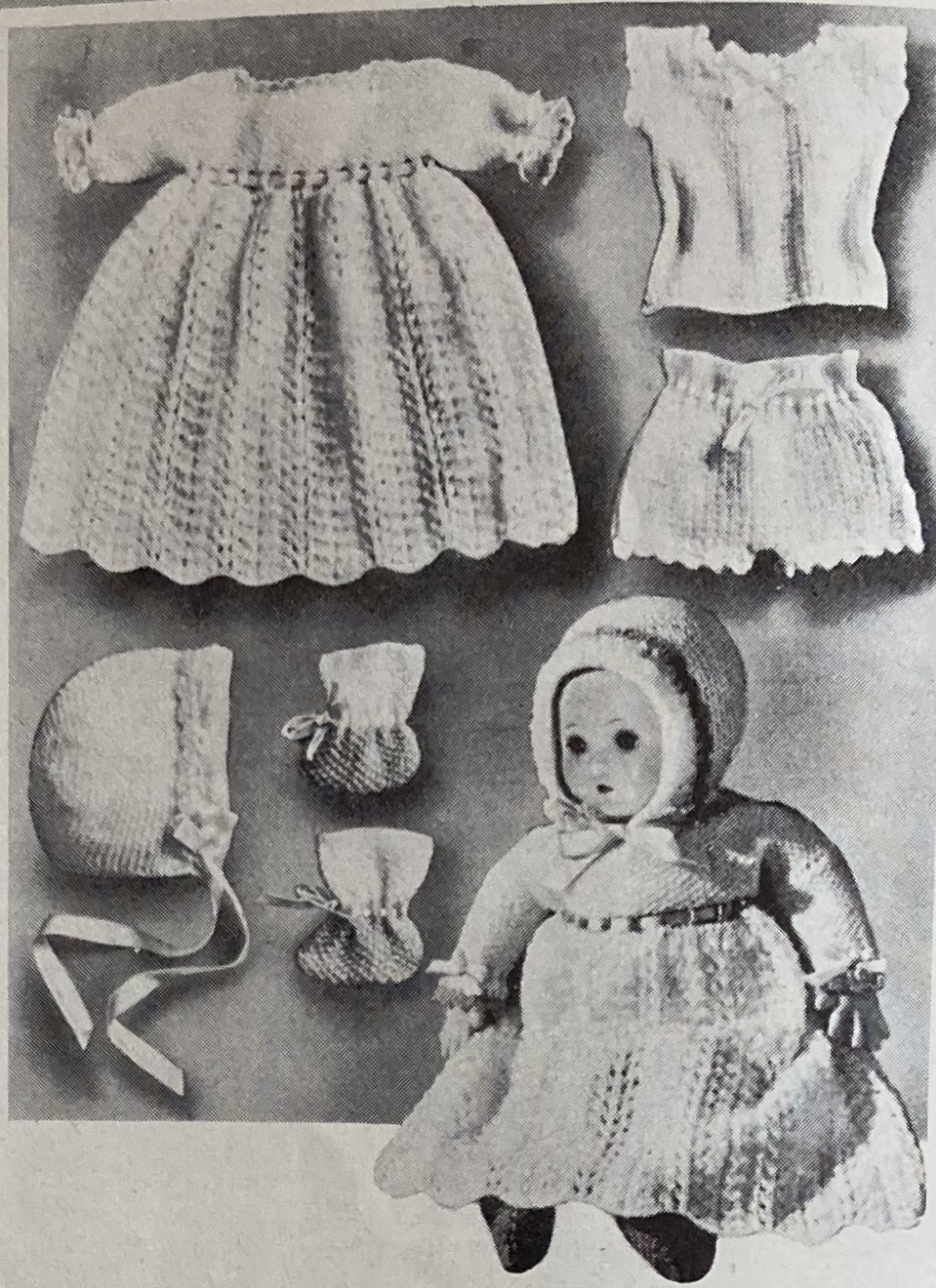
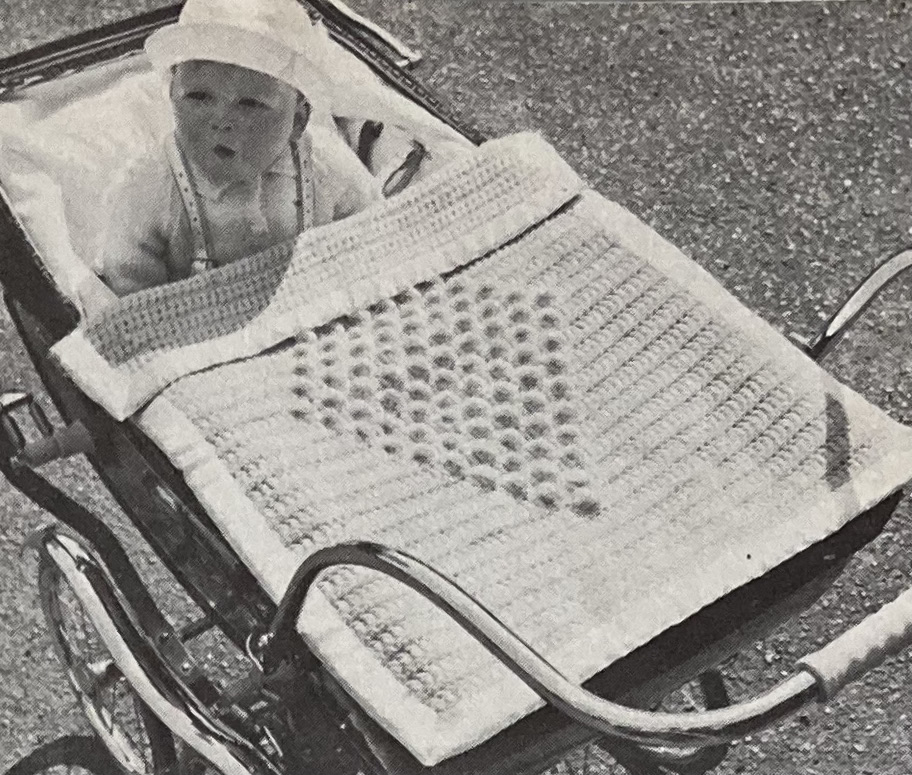
The bizarre-bazaar “novelties” never fail to amuse and wonder, and this month’s issue gives us a knitted tea cosy (festooned with pom-poms) that looks like a giant orange and/or lemon, and a crazy-eyed “Pete Puppy” doll in sewn and embroidered felt fabric that can be used for storing sewing implements — just poke those spare pins right into his belly like a voodoo doll. The “Readers Pages” offer some reprints of popular designs from earlier issues: a doll’s clothing set from November 1940 and a crocheted pram cover from … when was it exactly? It doesn’t say in the instructions and couldn’t find it in my previous posts, but I know I have seen it in another issue — possibly pre-1960.
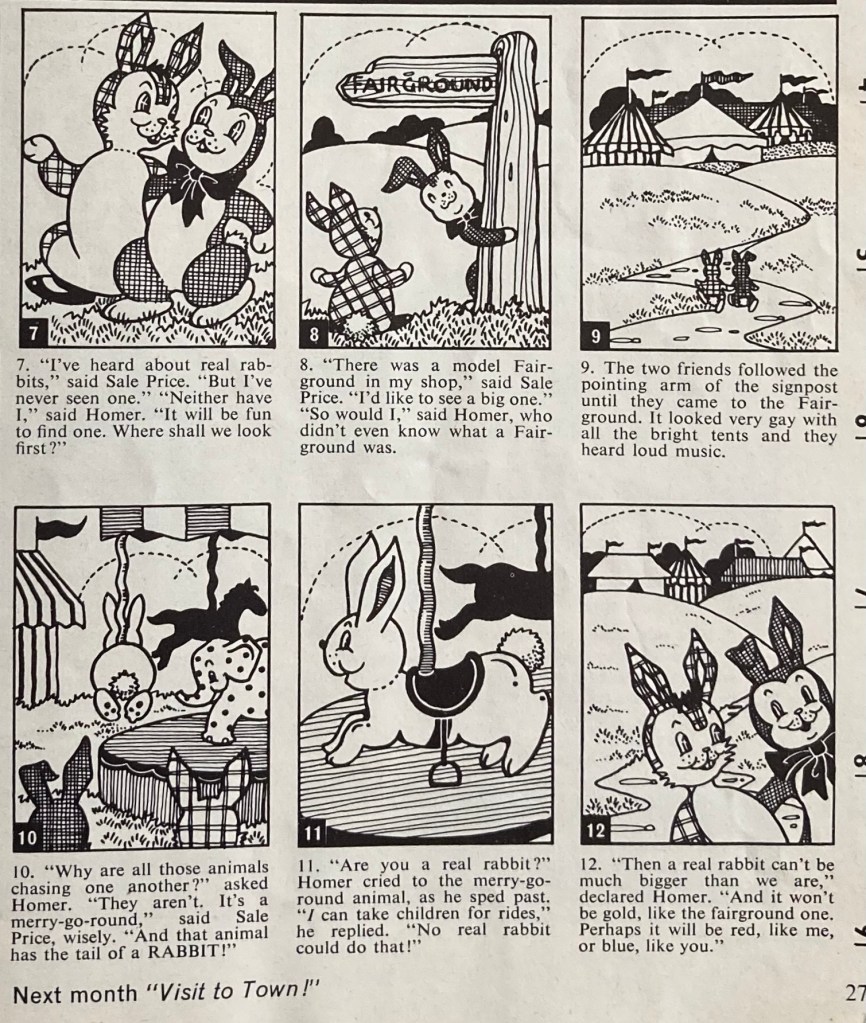
In the current comic (really, one of the best ones), homemade rabbit doll Homer (because he’s home-made, get it?) and his friend, the store-bought rabbit doll Sale Price (self-explanatory) go on a quest in search of a real, live rabbit. Here’s they find a rabbit on a merry-go-round, who explains to them (logically enough) that he cannot be a real rabbit, as he can take children for rides, which a real rabbit cannot. Pedagogical message for children: do not try to ride on a real rabbit! Alas, Homer and Sale price must look further, and will continue their adventures in next month’s issue.
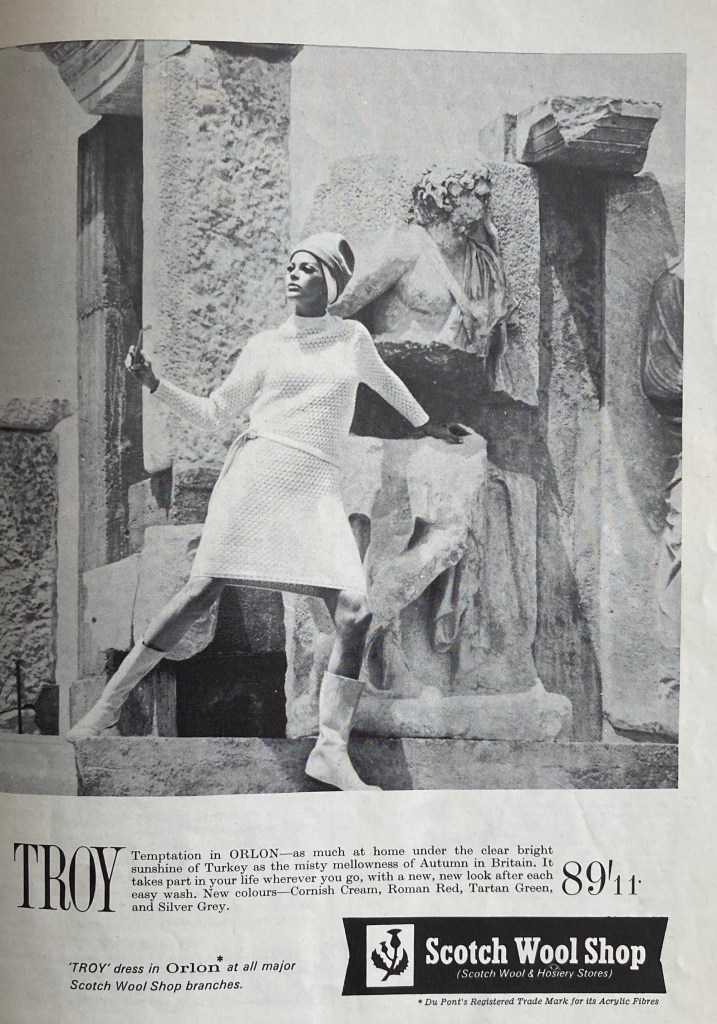
I will leave you with this ad for the Scotch Wool Shop, purveyors of knitting wool, stockings, underwear, and fashionable clothing for women. Always keeping up with the times, the ad shows a crocheted dress in Mary Quant style, named “Troy” and perfectly photographed for the Swinging Sixties.
That’s all for now! I have so, so many unfinished projects, but cannot resist the temptation to make the fine-knit cardigan blouse with picot crochet trim. It will definitely not be finished on time, but as always, I will update project posts when progress has been made.

 The Stitchcraft Sixties
The cornflower & corn and flower embroidery designs are really pretty.
LikeLike
This is a wonderful issue! And you’re right, the Troy ad’s photostyling is classic mid-sixties.
LikeLiked by 1 person