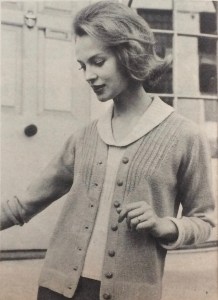
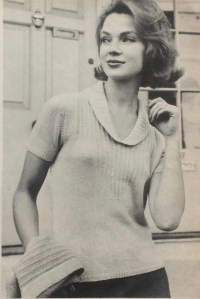
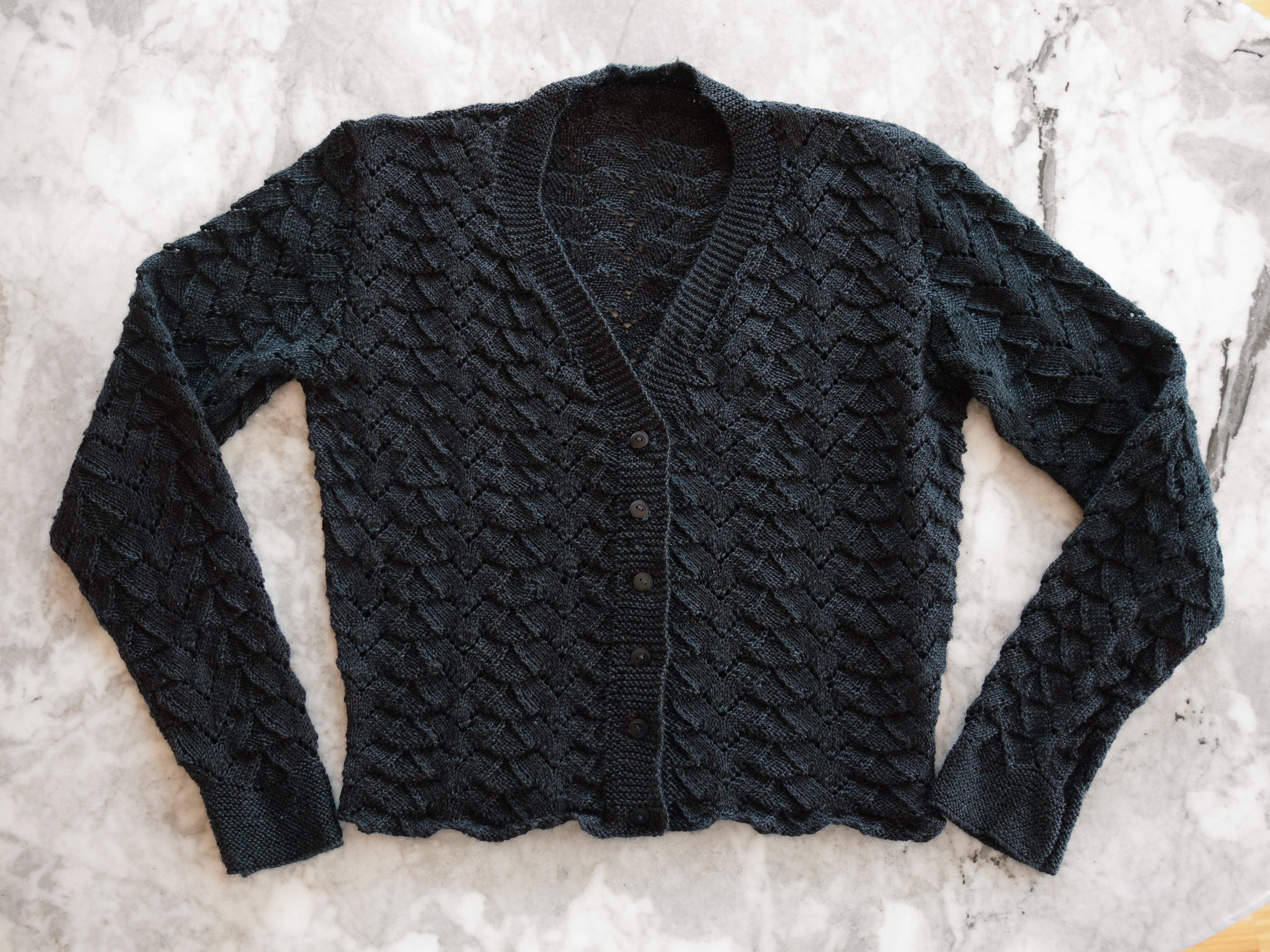
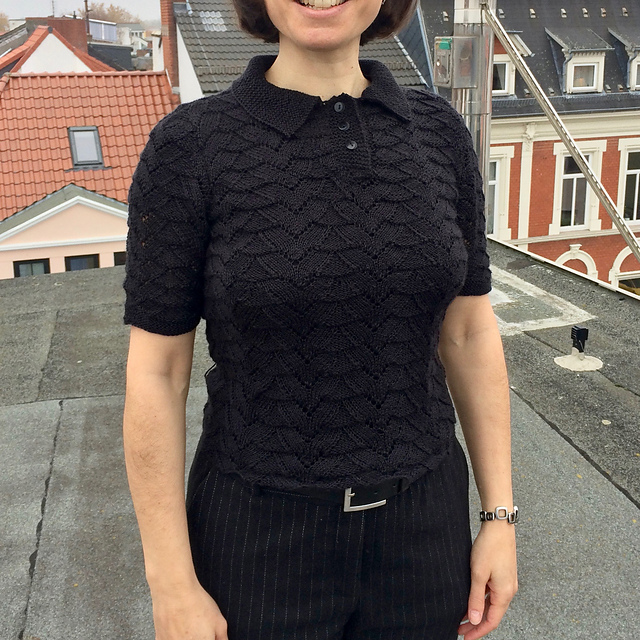
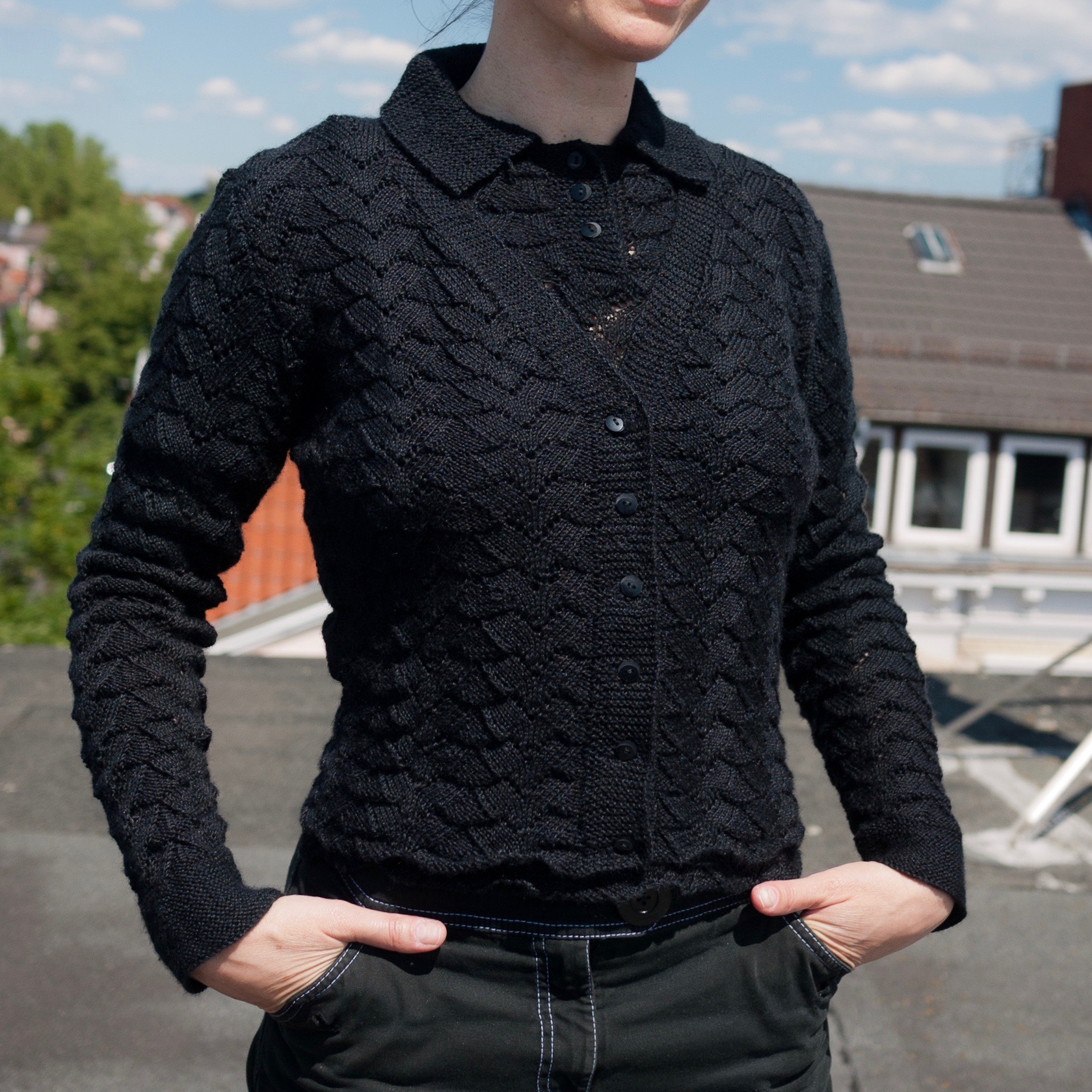
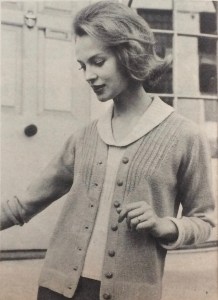
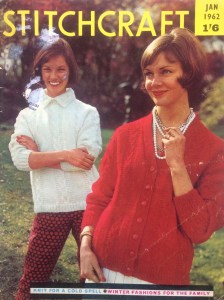
The March 1966 issue of Stitchcraft didn’t have any projects that particularly called to me, and I am still in destash/finish up old projects mode. So this month, I finally finished the cardigan to the “Softly Fitting” twinset from January 1962.
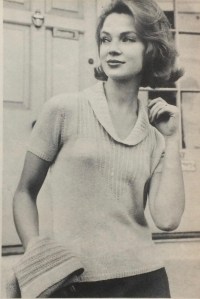
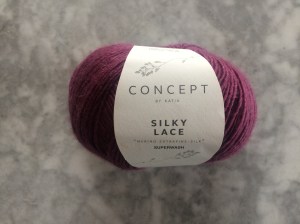
The original twinset is made in two different colours of the same wool: Patons Cameo Crepe “French Green” for the cardigan and “Pearl Frost” for the jumper. I had already made the jumper in Concept by Katia Silky Lace in a more blue-ish shade of purple, and had 300 grams of wonderful Lana Grossa Slow Wool Lino in stash in a slightly more reddish shade of purple. The two purples harmonised quite well, and although the yarns are different compositions, they are both the same weight and have a similar drape and softness.
Like many designs from the mid-1960s, the cardigan has stocking-stitch hems at the bottom edge and sleeve edge, as well as double front bands. Both hems and bands are made easier by working one purl row on the right side (hems) or one slip stitch every other row at the same stitch (bands) to make a fold line. I made the body hem by knitting one stitch from the live stitches together with one stitch from the cast-on edge all across the piece — nerve-wracking, but saves sewing it later.
The cardigan itself is very easy — stocking-stitch with a little bit of rib detail on the yoke, and set-in sleeves — but the challenge for me was making sure that I had enough yarn. Slow Wool Lino has unfortunately been discontinued, and I bought the wool at a buy-up-whatever-we-have-left type of sale, so the chance of finding any more in the right colour was minimal. 300 grams should be enough, I thought, even for a cardigan with double front bands and a stocking-stitch hem. But to be sure, I knit the front bands together with the fronts and back in one piece and finished the bands around the back neck before starting on the sleeves. Then I knit the sleeves top-down, picking up around the armhole and dividing the remaining wool exactly in half. That way, if I ran out of wool, the sleeves would just be “bracelet length”, which wouldn’t bother me.
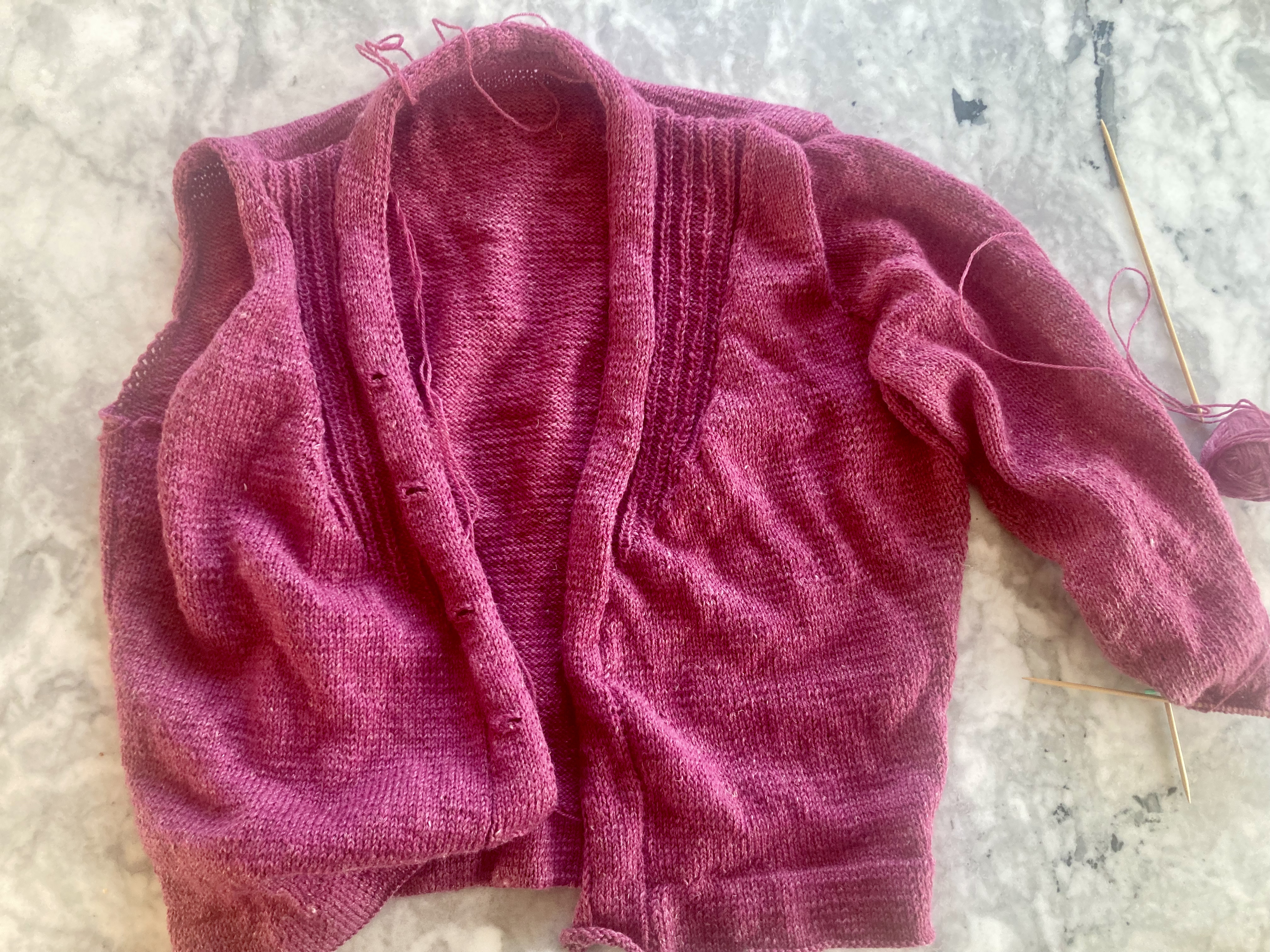
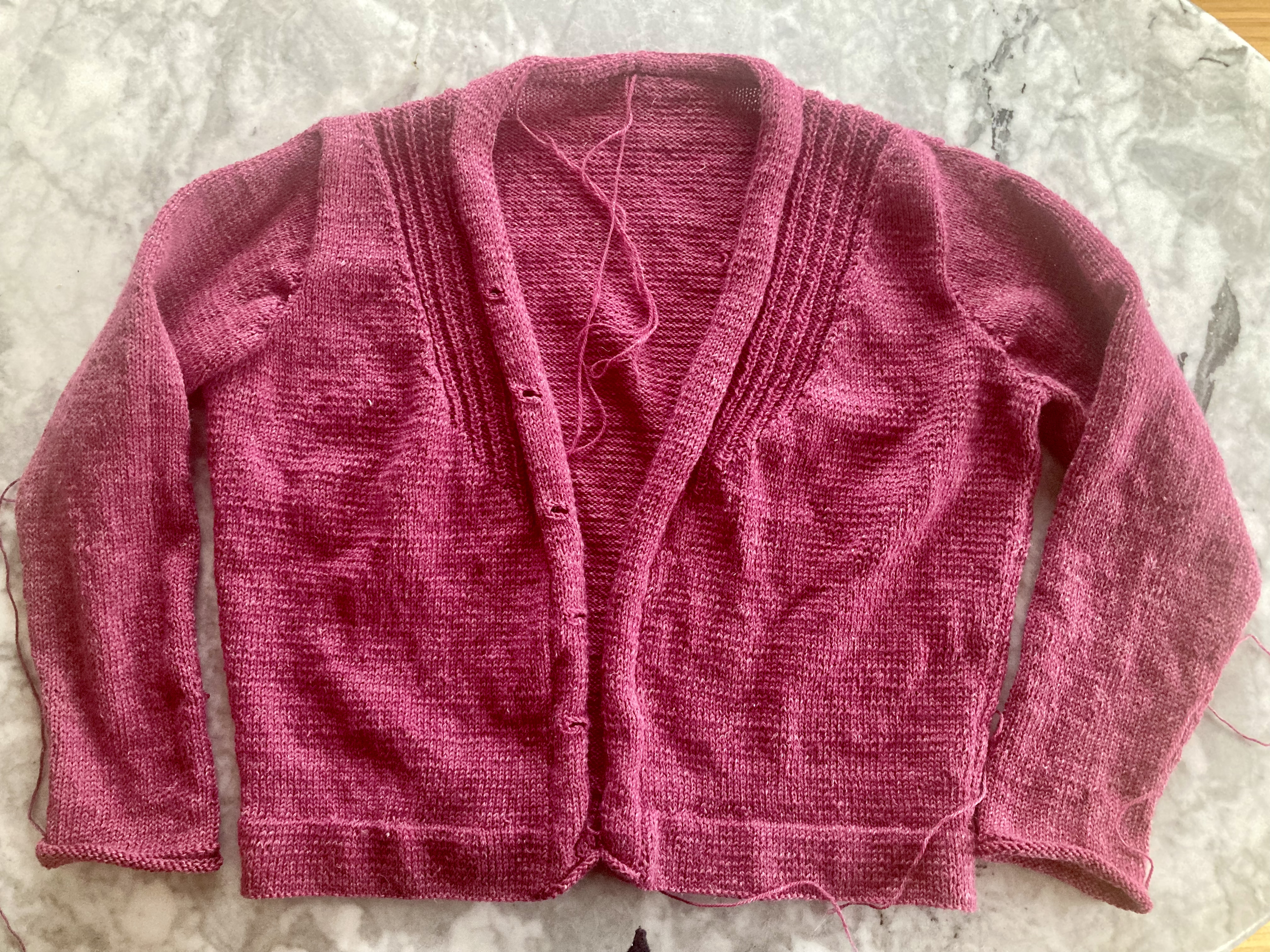
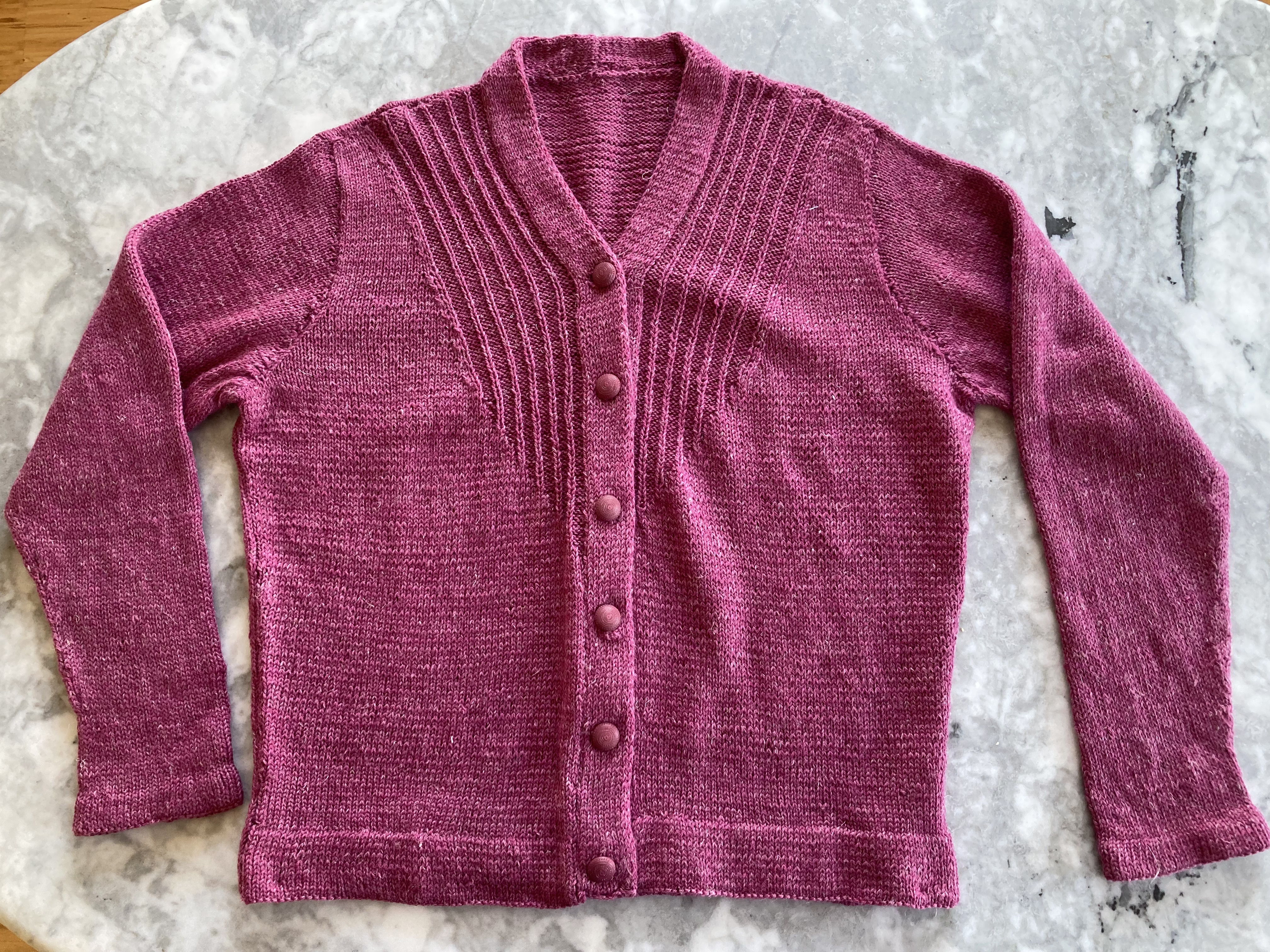
What can I say… it was perfect! I hd to use a little bit of the leftover Katia from the jumper to finish the underside of the hem on one sleeve (invisible) and sew down the sleeve hems and front bands (also invisible). Thus the yarn was de-stashed perfectly. The sleeves were in fact bracelet length after knitting, then stretched to normal long length after blocking. (I didn’t even have to pin them, they grew by themselves.) To top it all off, I went down to my local yarn store / mercerie and immediately found buttons that perfectly matched in size, colour and style.
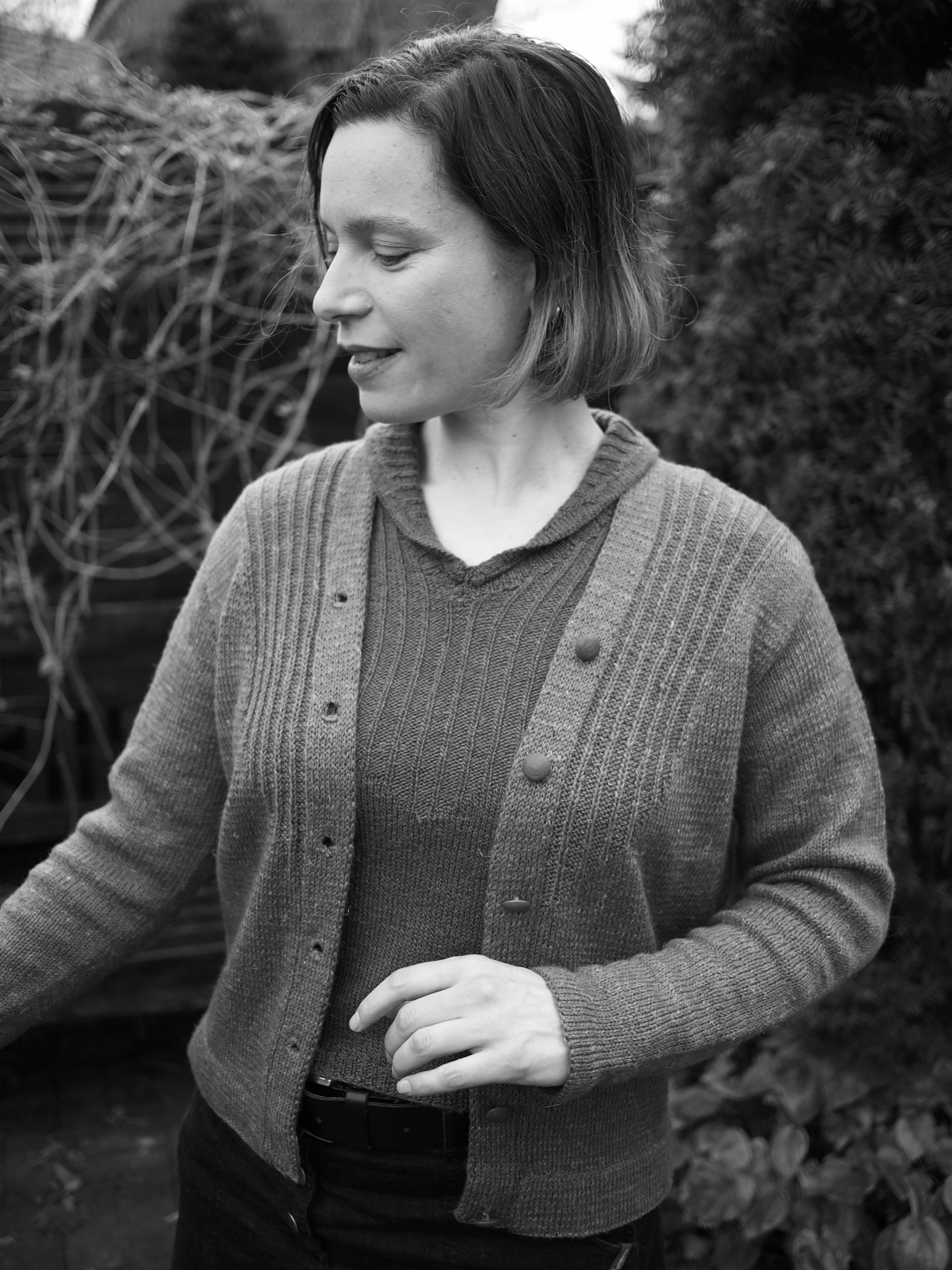
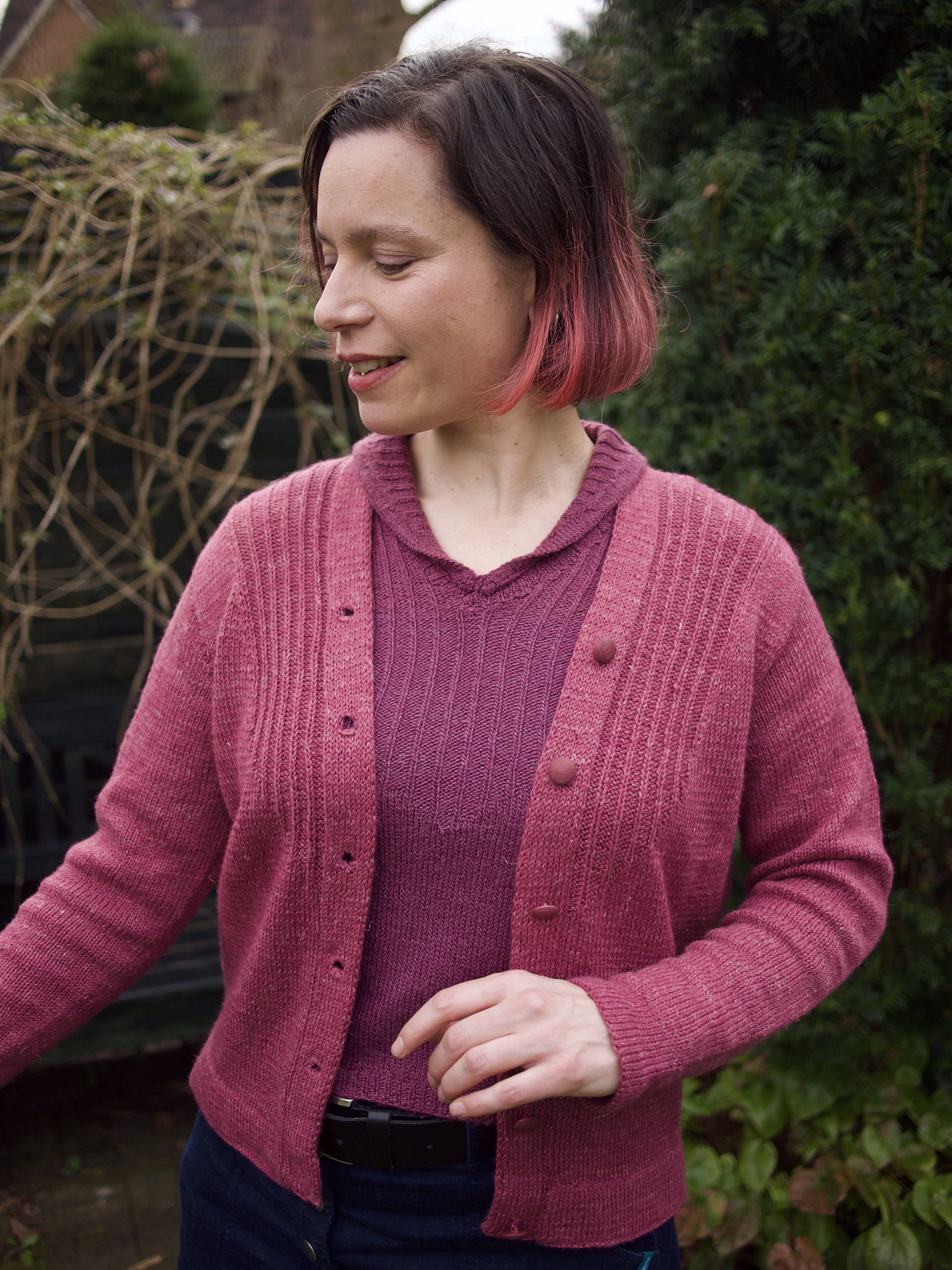
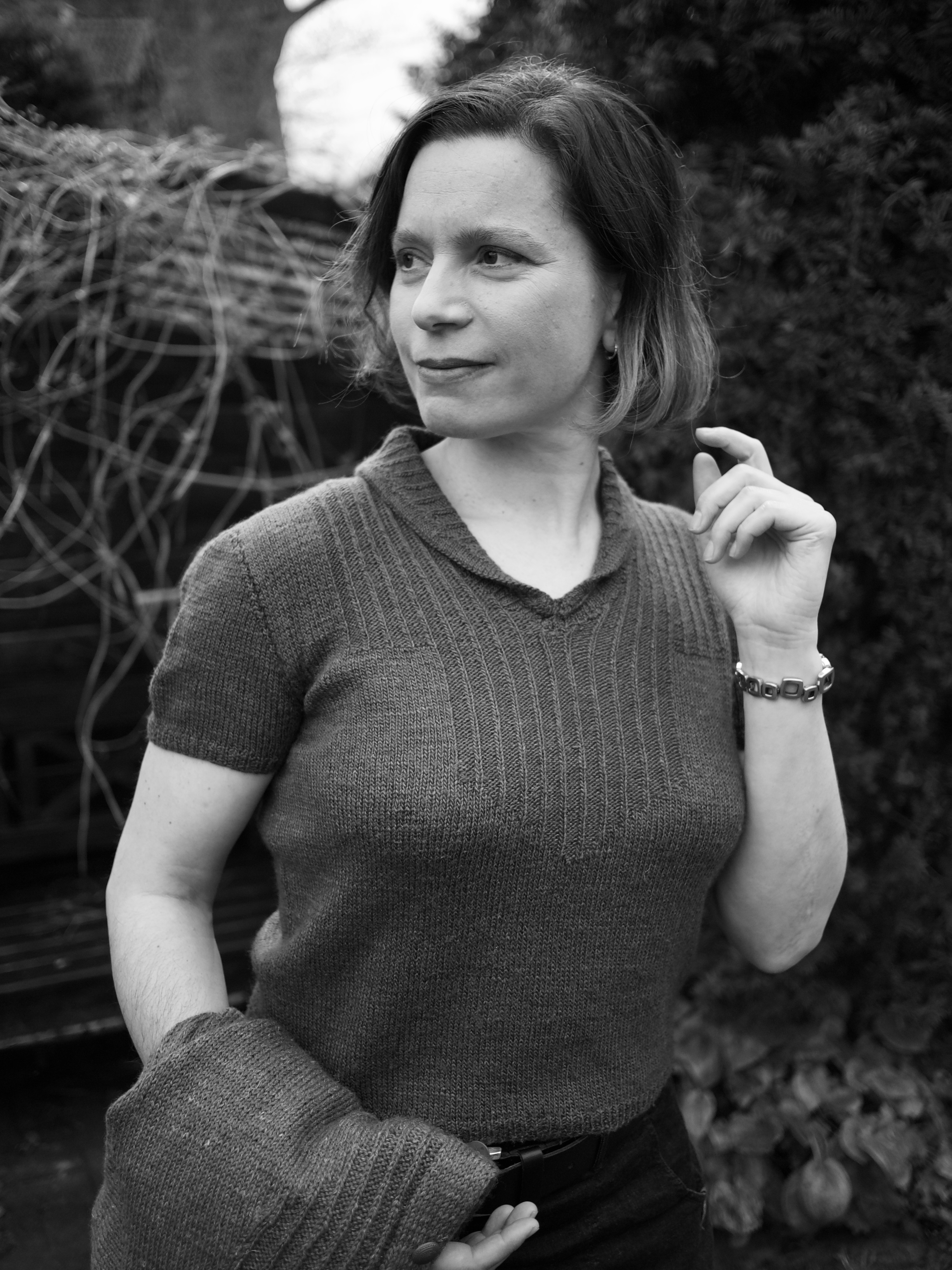
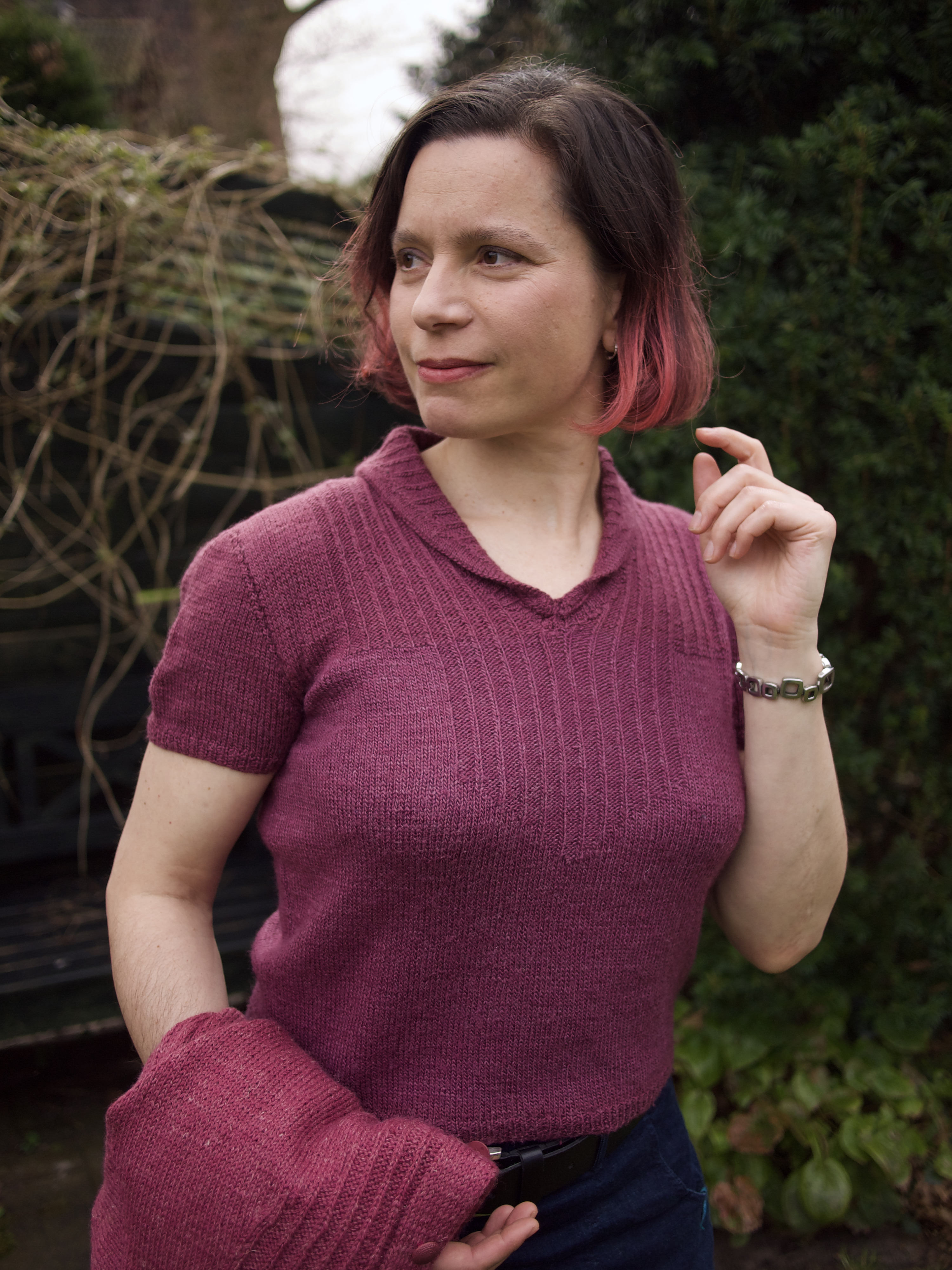
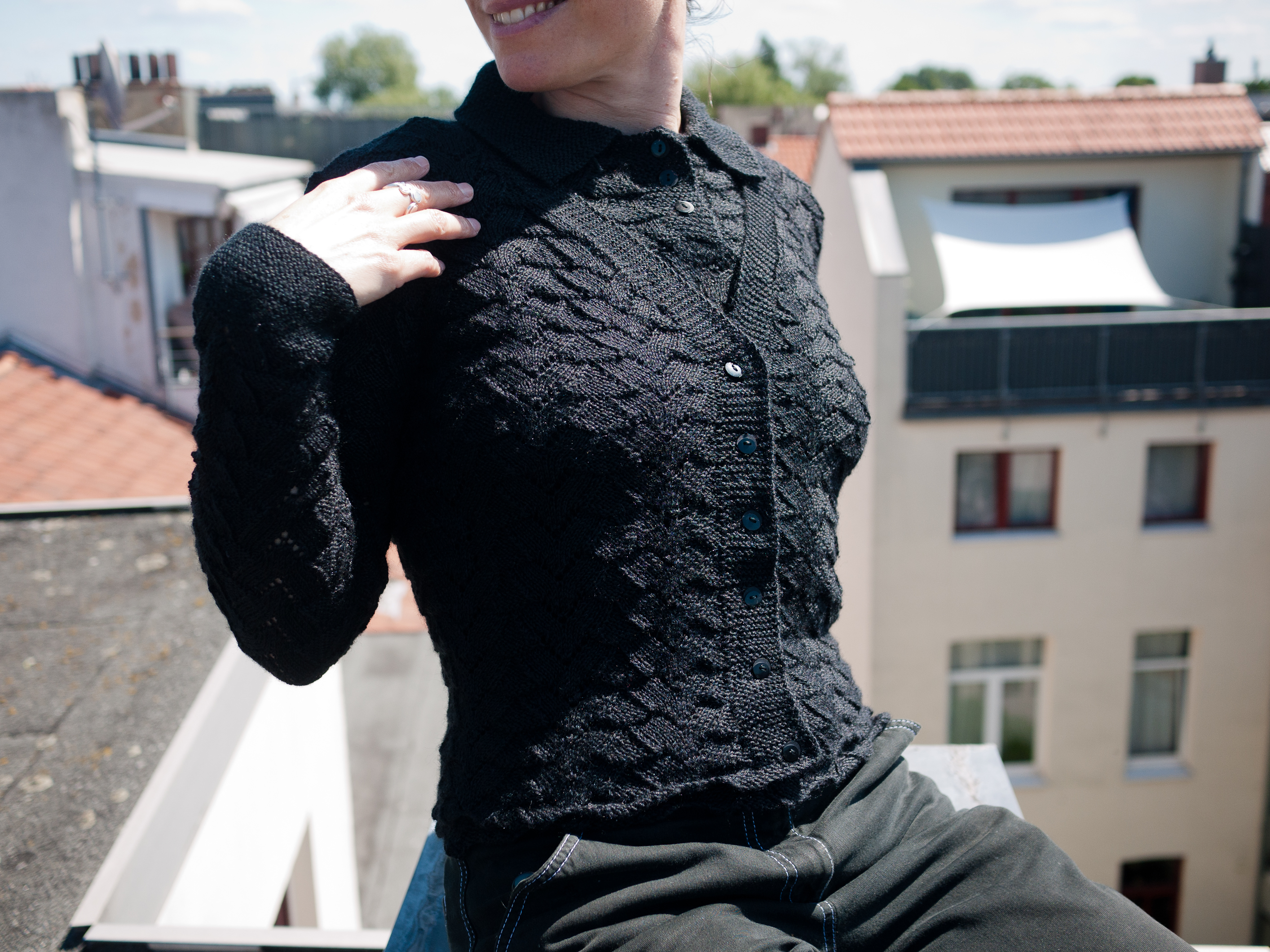
As always, we had fun re-creating the original poses from the magazine.
In the “normally posed” photos, neither I nor the photographer noticed that the collar of the jumper was sticking up. Normally, it overlaps the non-collared cardigan elegantly, as in the other photos. We’ll try to take some more pictures in the next few days if it ever stops raining.
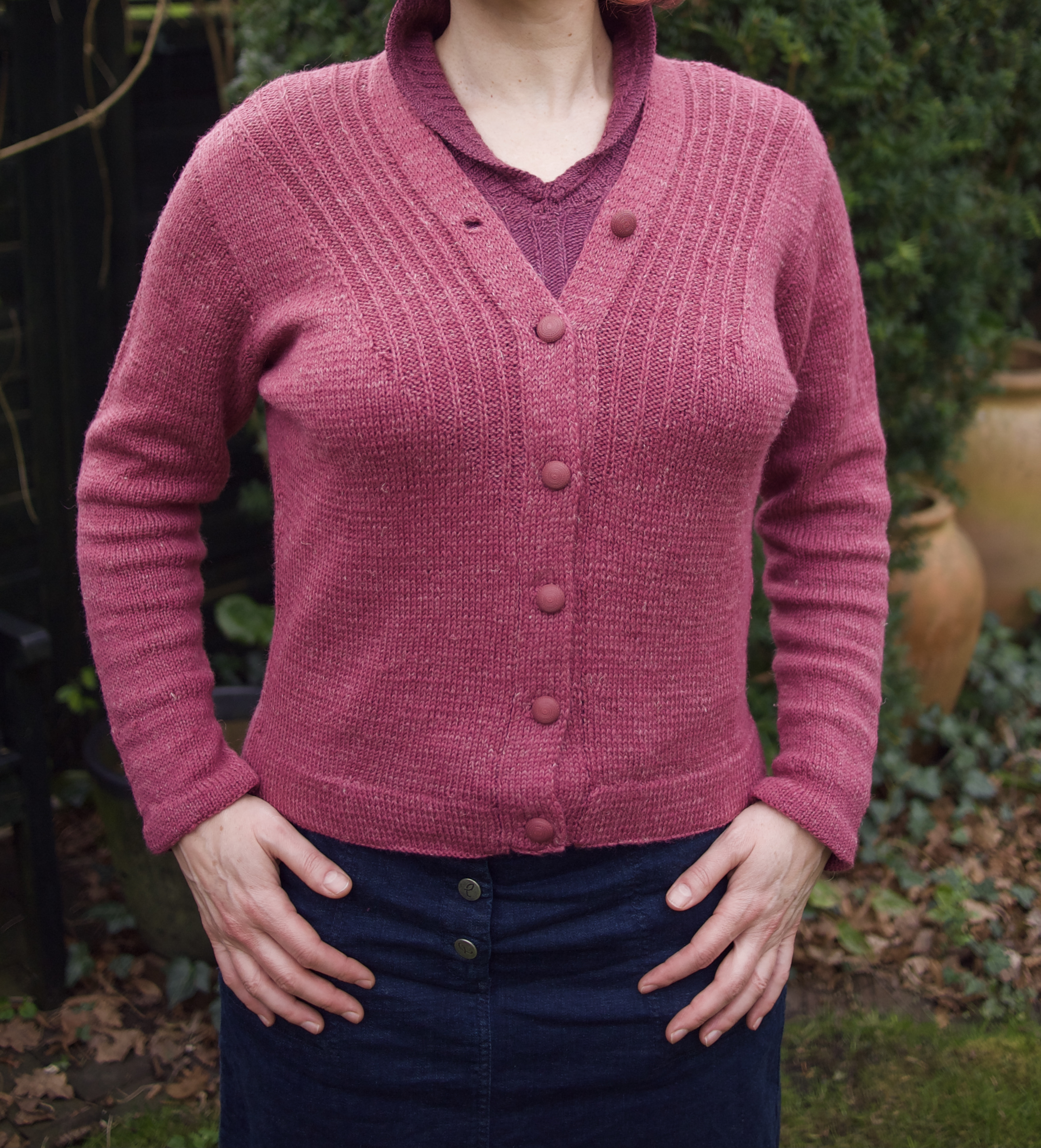
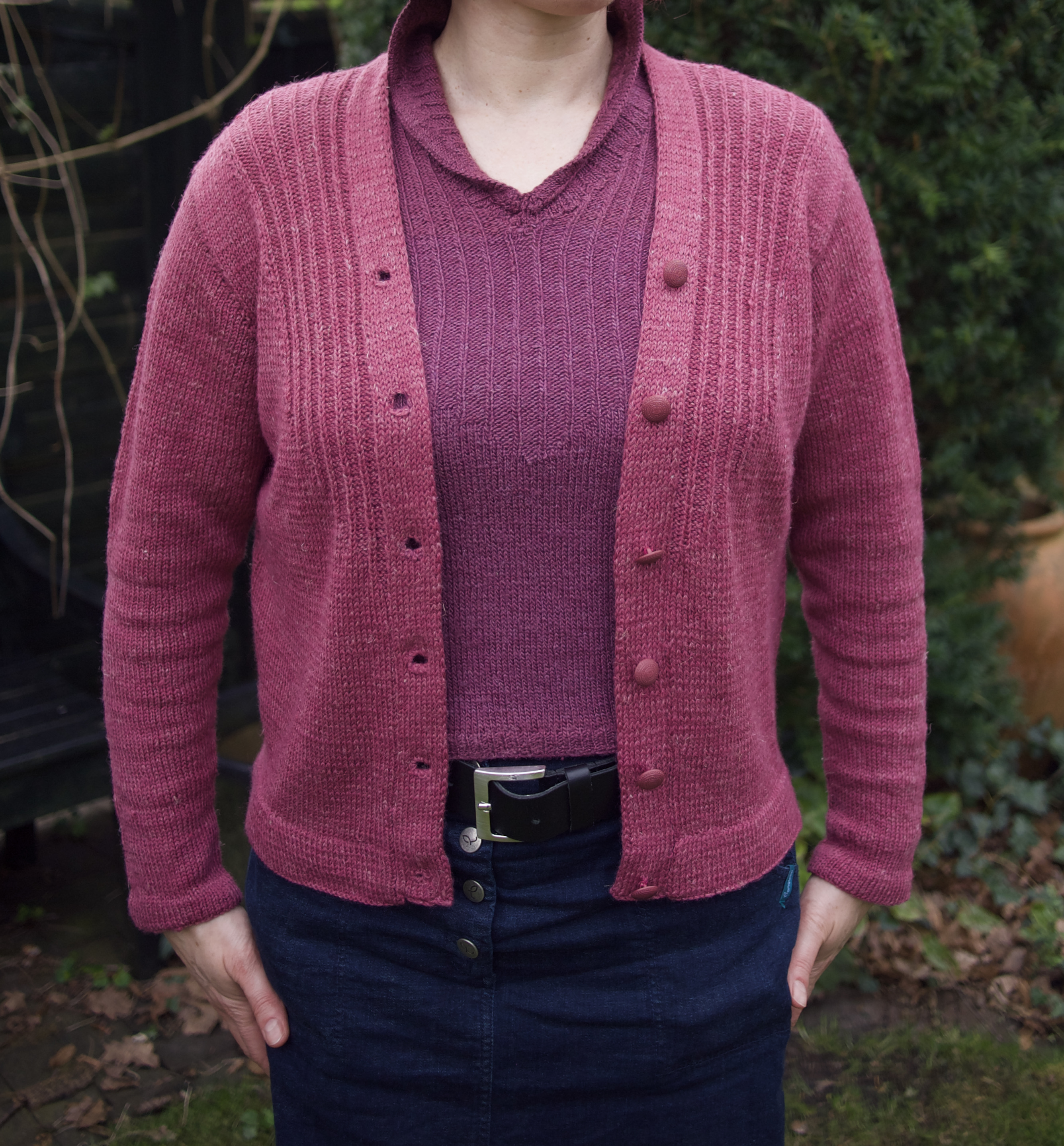
Really happy with this twin set and I’m sure it will get a lot of use this spring. The combination of lightweight wool-silk and lightweight merino-linen makes both pieces very adaptable to changing temperatures, warming and cooling as needed. The pattern was easy and I would recommend it to anyone.


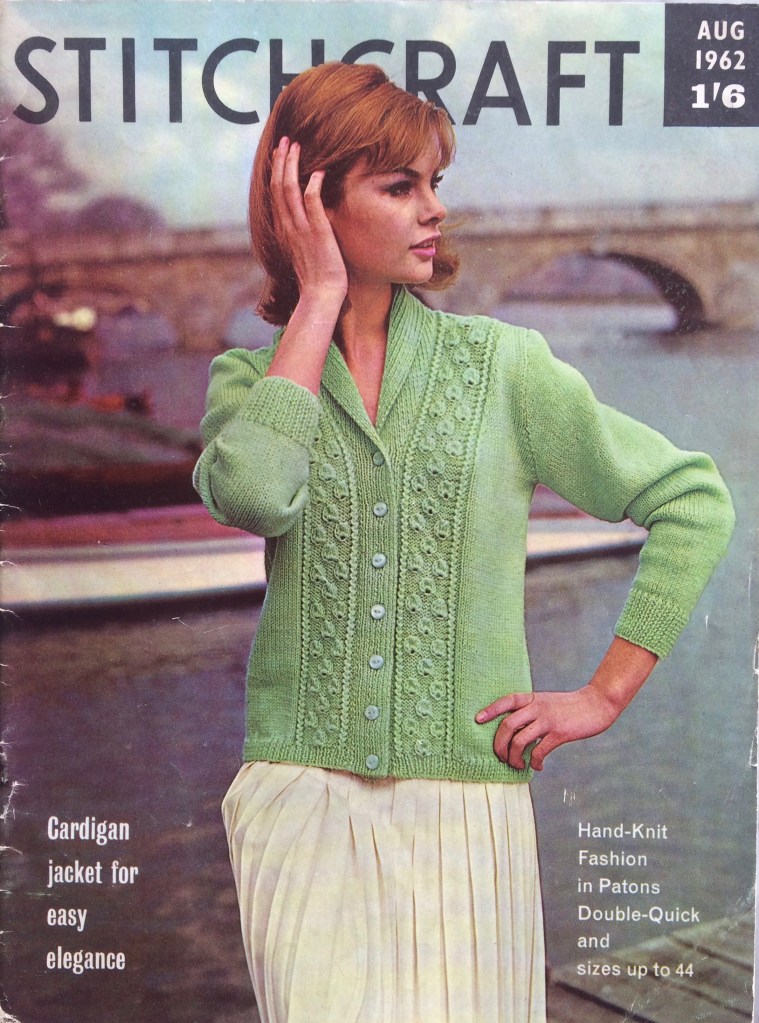
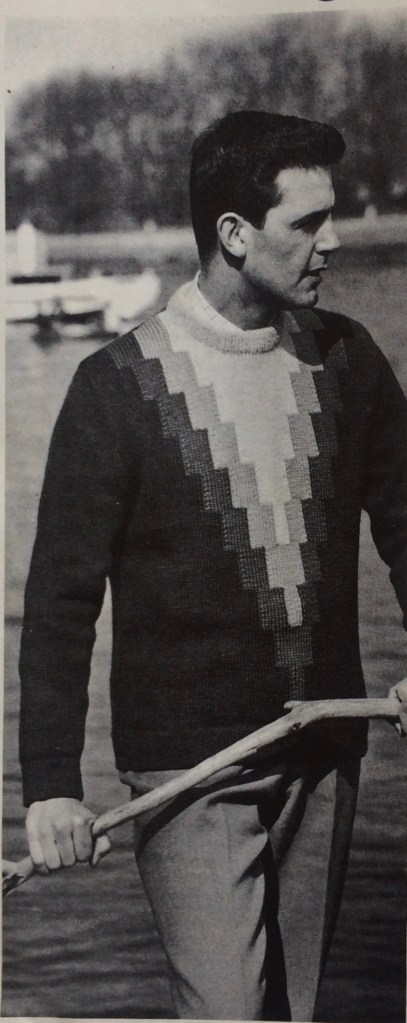
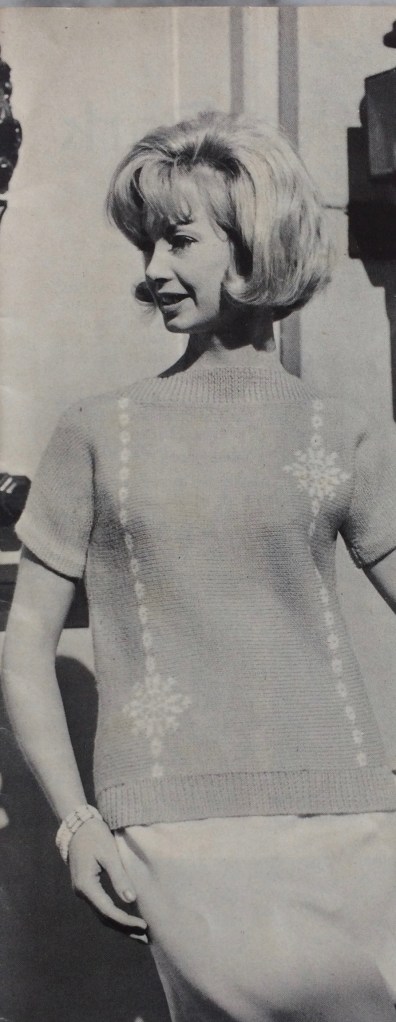
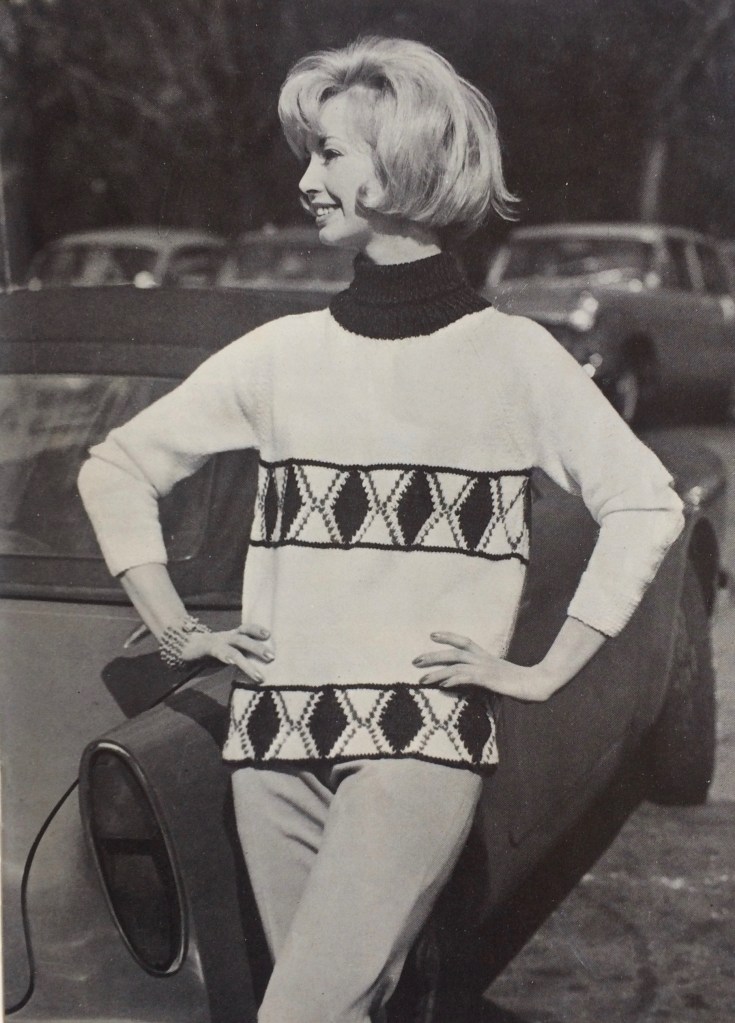
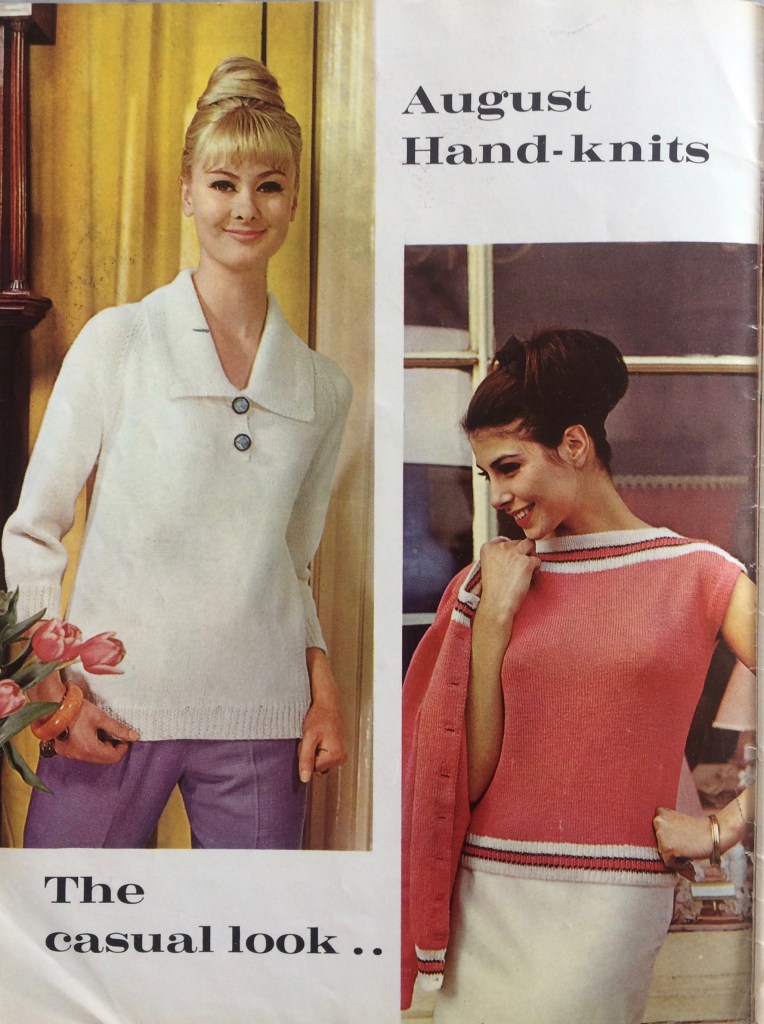
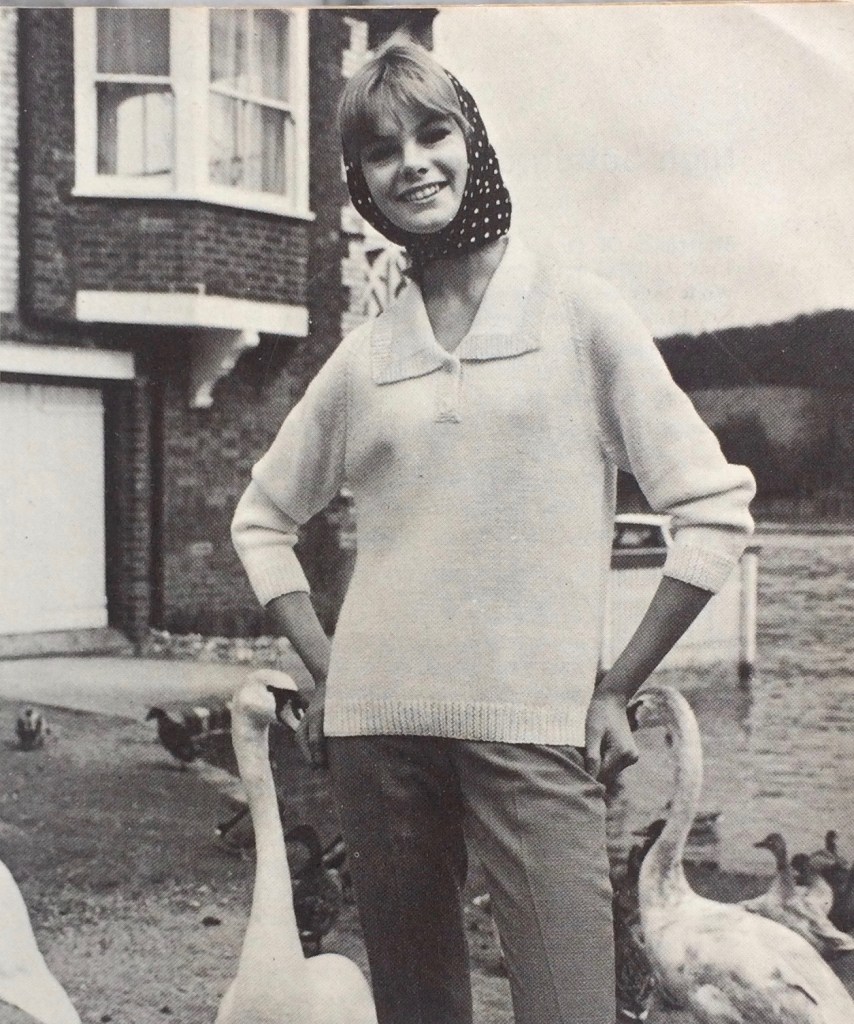
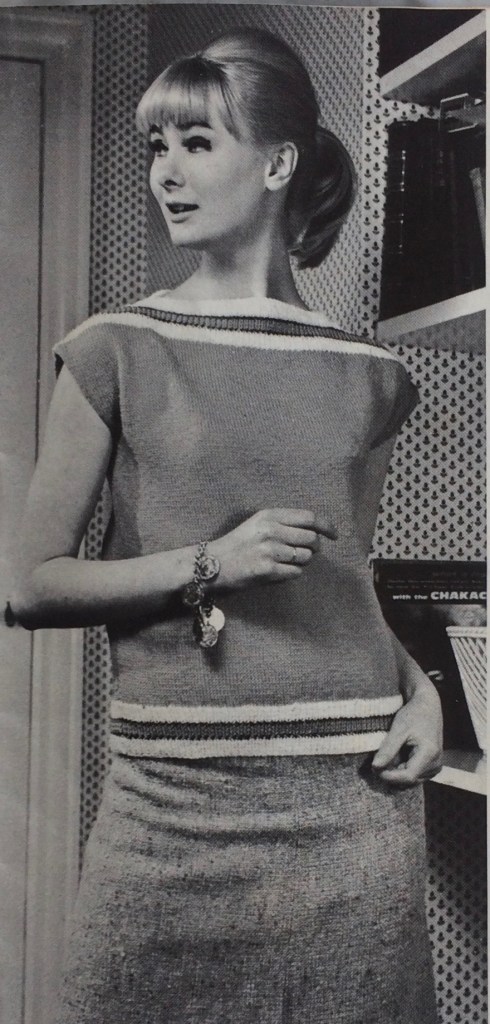
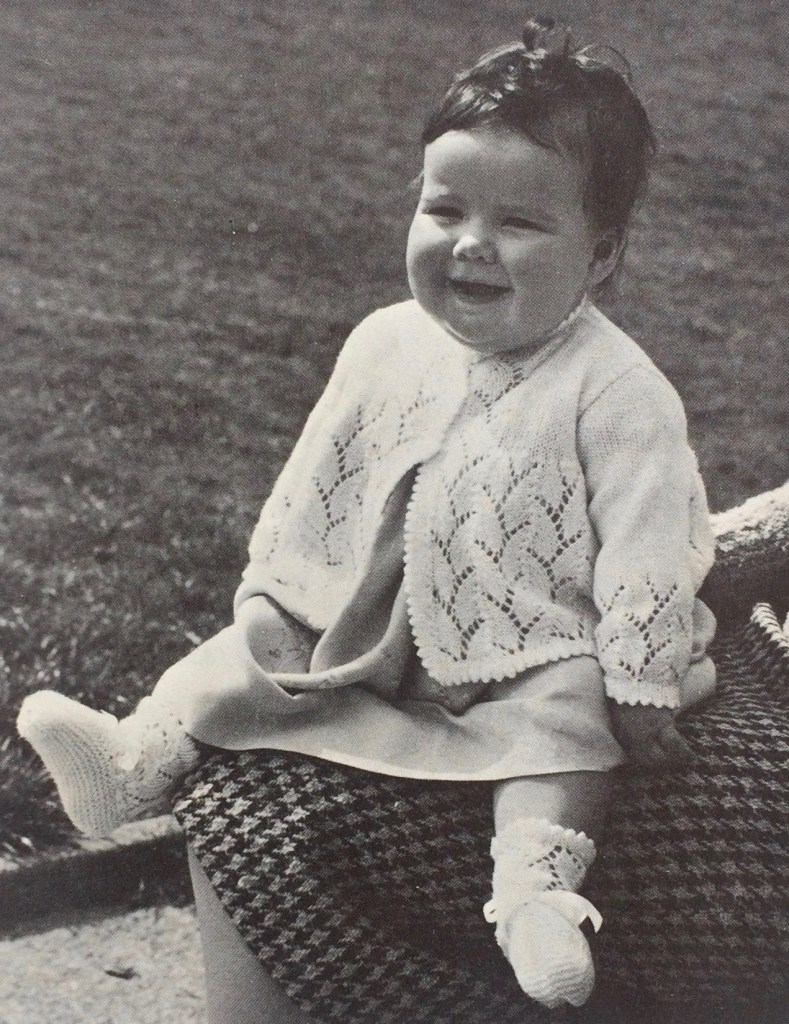
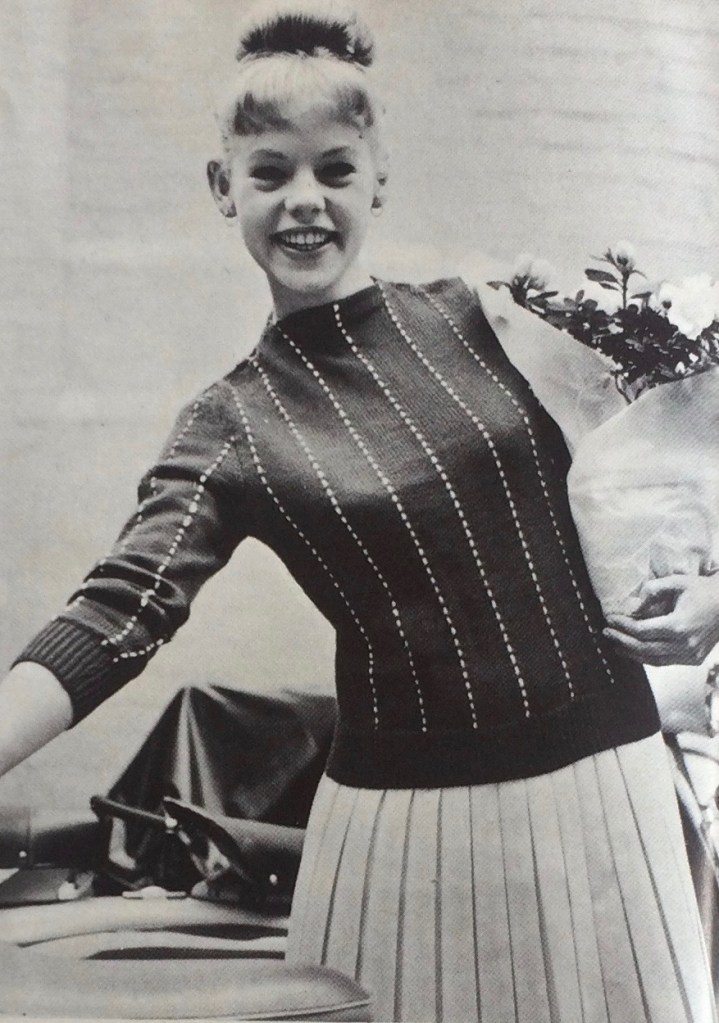
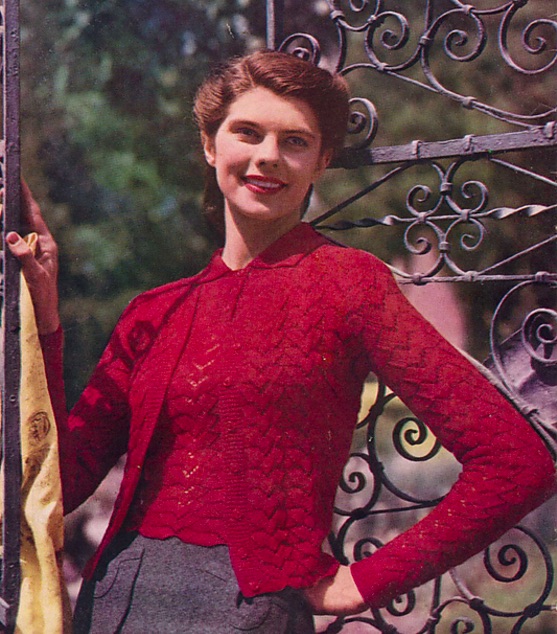

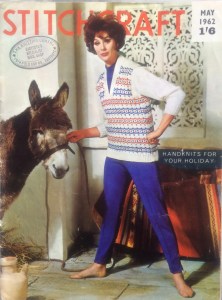 Handknits For Your Holiday! If you are planning on taking a holiday in 1962, that is. In that case, I would recommend going to the Algarve in southern Portugal, which, based on the pattern of the window shutters and blanket in the background, is where I am guessing this magnificent cover photo was taken. Sadly, my time machine is out of order and May 2020’s motto is (Lots Of ) Handknits For No Holidays This Year Or Probably Anytime Soon.


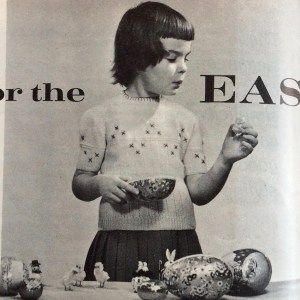 Greetings from the Covid-19 lockdown! March 1962’s project sports the headline “Ready for the Easter Parade” in the magazine, but there are definitely not going to be any Easter parades in March 2020. I hope all of you, dear readers, are staying healthy and staying home.

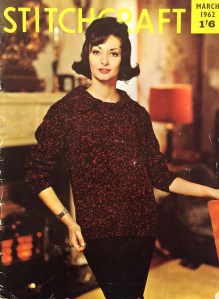 There are three seasons in the Stitchcraft year: autumn, Christmas and “holidays”, which start in March and continue until about September. Of course, most people take their holidays in the summer, but the beauty of knitting (or editing a knitting magazine) is that you can technically be knitting for them any time of the year, if you knit slowly enough. And so, the March 1962 issue of Stitchcraft, (motto: “Knit for Spring”) can already promise us “the fun of holidays to plan for.”




 UPDATE AND EDIT February 25, 2020: Project finished!
 There were only two problems. Problem number one: Concept Silky Lace is only available in colours I don’t wear (shades of white and pastel) as well as orange (great, but I used it for the other project), a sort of light jeans blue (OK, but not exciting) and purple. Purple is not my best colour, but given the limited choice and the fact that I really wanted to use this specific yarn, I went with it. That led to problem number two: there were only two balls of it in the store and they had to order more. Unsure whether the two additional balls I ordered would be from the same dye lot or if it would make a difference if they weren’t, I started by making the sleeves with the yarn I had, and waited.
 It took more than two weeks for the yarn to arrive, so I was woefully behind. Also, the yarn that arrived was from a different dye lot, so I wasn’t sure how to camouflage the colour changes or if I even had to. After making the ribbing for the body in the “old” yarn and the body (stockinette stitch, and I decided to do it in rounds to go faster) with the new yarn and not noticing any difference, I just used up the old yarn and moved onto the new in the fancy-yoke part. It worked fine and didn’t make a stripe — thank you Katia for your excellent colour-match dye work.
 Once the project got started, it was finished very quickly. I was worried about the size, as it seemed to stretch quite a lot width-wise and I though it would be too wide and baggy. Once it was bound off and sewn, it was fine. I made it an inch longer in the body than it said to make it in the pattern, but I could have made it even longer — people were really short fifty years ago!?! Blocking helped stretch out the length.


 Happy New Year, everyone! It’s 2020 in my real world and 1962 in my blog world. Where will Stitchcraft take us?


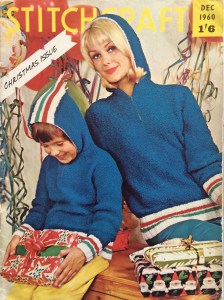 This year (1960 or 2018, take your pick) draws to a close with Stitchcraft’s “Christmas Issue”, which, as you may expect, is full of holiday-themed novelties to decorate and give.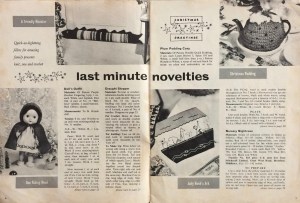


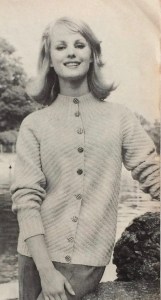 Adult women, having hopefully embraced the “new length” (long) and “new sleeve style” (3/4 or 7/8) from last issue, can get ready for Paris’ “new necklines” — a high turn-down-and-rib combination or a buttoned-up turtle (polo) neck. No turn-down collars this time — are they on the way out? There’s a new yarn to go with them, Cameo Crepe, which is smooth and less “hairy” than other wools, for good stitch definition.


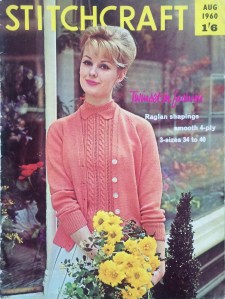 I loved this twinset at first sight. I loved the short raglan sleeves on the pullover, the cable-and-mesh panel on the front and the very original mock-turtleneck-meets-peter-pan collar. It’s one of the reasons I started this whole long-term Stitchcraft blog project, so I’m thrilled to have it come to life.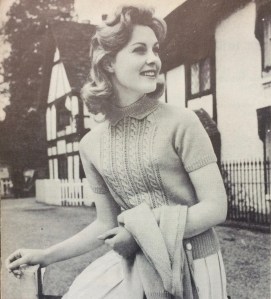
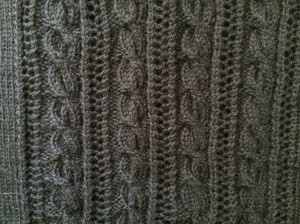 The cables have an interesting twist — literally. You put four stitches on the cable needle, knit the other four and then give the cable needle an extra 360 degree clockwise twist before knitting the stitches off of it. This gives them a cool extra definition. I forgot to do it once and it was almost unnoticeable — almost — but I didn’t want to rip back that far, so when everything was done I looped a little tiny thread around one of the cable stitches and just pulled it over more to the side and tacked it down by tying the thread ends in a knot on the wrong side. Look at the close-up picture above — can you tell which cable it was? I can’t on the finished garment. Good to know.


 The cardigan is somewhat more plain, as it doesn’t have the cables, but it makes such a lovely set with the pullover — not to mention it’s an excellent “everyday” cardigan to go with lots of other outfits. The sleeves came out a bit long — I was obviously over-compensating for my long arms and the fact that I always have to lengthen the arms a bit — but it looks just as good with the cuffs turned back, and I can turn them down for extra warmth under a coat and gloves. I hadn’t expected the raglan sleeves to have so much armhole depth. I thought about adding facing ribbon to the button bands, but it turned out to not be necessary, as the cardigan fits fine whether buttoned or unbuttoned. In short, I am thrilled with my new twin-set and it will surely get a lot of use this winter.


 The Stitchcraft Sixties