November 1967: Overview

Autumn is officially here, winter is around the corner, and Stitchcraft‘s November 1967 issue presents “the GOLDEN LOOK for winter sparkle”, with warm garments, warm colours, fun textures, and matching his-and-hers outfits to chase away the cold, grey days of November.

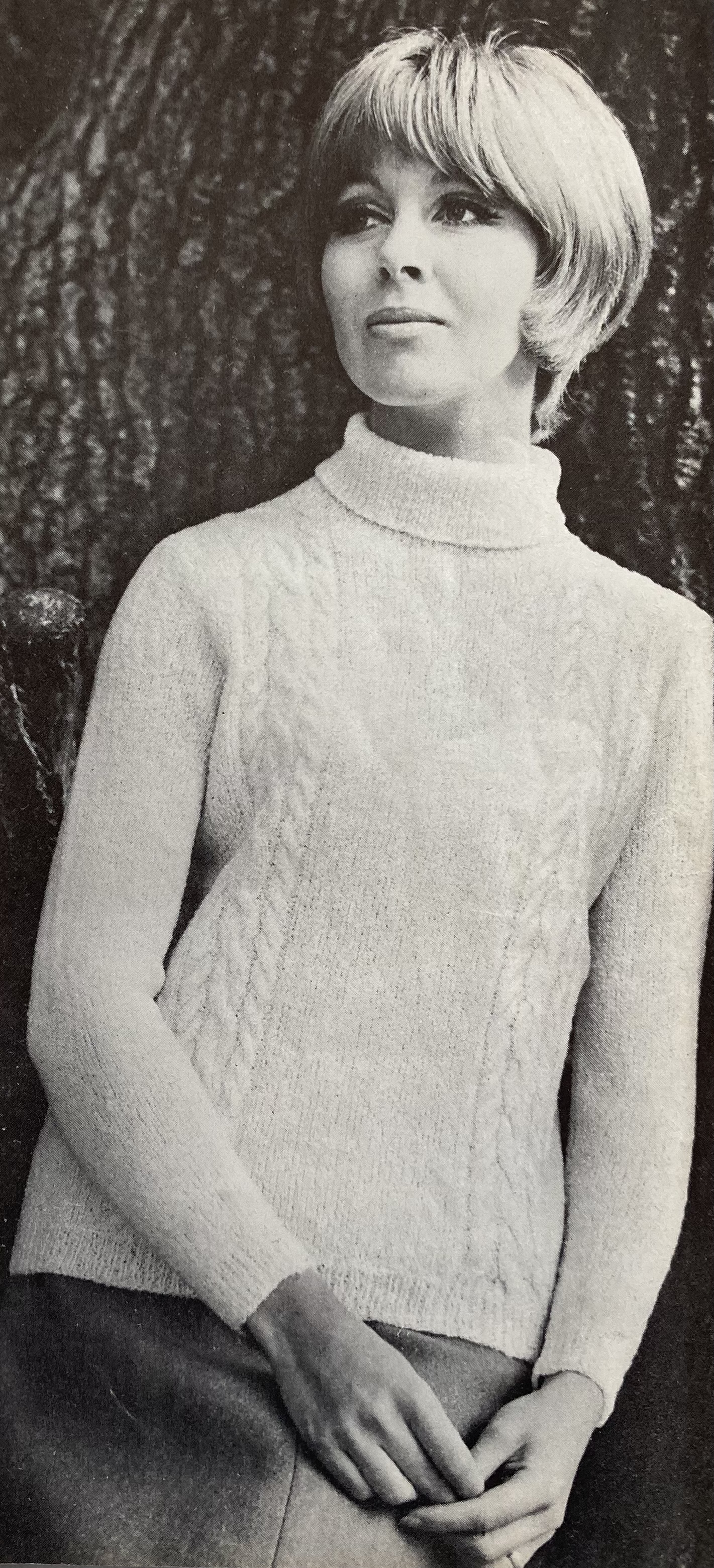
Our cover models sport matching polo- (aka turtle-) neck sweaters in “Flair” wool and a suitably golden colour called “Musk.” There are only two sizes given: 35-37 or 40-42 inch bust, so intended as a one-size-fits-most, basically unisex pattern. The textured pattern is made entirely with knit and purl stitches. Our other partner-look models wear polo-neck pullovers as well, with a simple stranded chevron border at the hem. They seem to be designed for somewhat younger and thinner folks, with three sizes from 32-33 to 38-39 inch bust. There’s one more design just for men: a “country cardigan” in blue wool and a fern-like textured pattern.

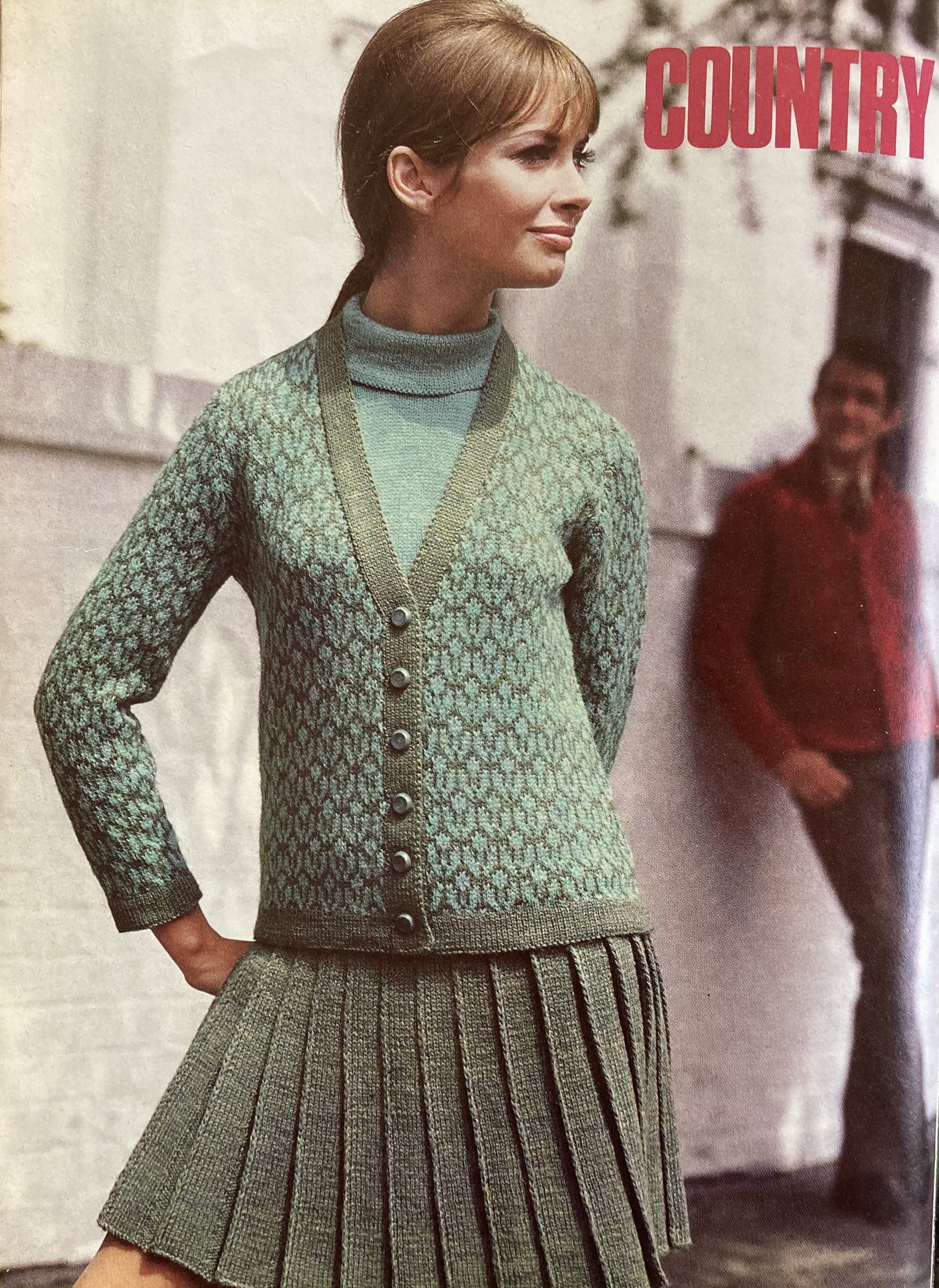
The women’s designs include a rich green jumper suit, with a buttoned pullover in low-contrast stranded diamond pattern and a plain olive-green skirt; a hooded jacket in a chunky bobble-like pattern made with twisted stitches; a delicate jumper in soft, fuzzy “Princess” wool with a contrasting colour yoke; a polo-neck pullover in colourful “rainbow” chevron pattern; and a bright blue cabled jumper for larger sizes (40-45 inch bust).

With all these great designs for adults, it’s not surprising that there’s only one children’s pattern in this issue, a tunic for girls age ca. 4 to 7. It’s knitted sideways in pieces, starting at the left side edge of the back, then the fronts separately, then the sleeves separately, which are also knit sideways. I’m glad to see the girl model wearing tights, for once! The children’s comic in the “Readers Pages”, titled “The Woodland Wool Shop”, tells the story of Daisy Lamb, who wants to learn cross-stitch, but doesn’t want to be cross about it.

The homewares and “novelties” are all designed with an eye towards December gift-giving, and most of them are featured in a single, big colour photograph. There are lots of things to make in felts: holiday-themed potholders and party mats, a night-case patterned after the nursery rhyme about the old woman who lived in a shoe, some racist “Golliwog” puppet mitts (unfortunately, still a thing), giraffes to appliqué onto an apron, coffee cosy or apron, and another truly terrifying clown intended for use as a string dispenser — yes, you put a roll of string in its head and pull the string out through its mouth. Stephen King was already 20 years old when this issue of Stitchcraft came out (and lived in another country), but if he grew up with things like this in the 50s, it’s not hard to see where he got the inspiration for It. Just saying.

You can also embroider sprays of holly on place mats or another apron, or make a cross-stitch rug or cushion in a Norwegian pattern, or a different cushion in a Florentine pattern. More advanced tapestry aficionados can make a tray-cloth or yet another cushion based on a design from a Chinese tapestry. On the simpler side, you can sew a little doll and dress her in traditional Dutch clothing, or knit a little stuffed toy set of a mother and baby fox. Many, many gift ideas in this issue. Oh, and another rug, in cross stitch!

The ideas keep coming, with two little cross-stitch pictures symbolising “Autumn” and “Winter” (to match the “Spring” and “Summer” pictures in the last issue). And how could I not mention the best gift idea of all: the bed-jacket in loop-stitch, modeled by my favourite model, who seems to have been hired by Stitchcraft exclusively to model bed-jackets with a sexy come-hither smile. I have to admit, the loop-pattern spoils the sexiness for me, but we all have our own preferences… Love the pink-on-pink photograph, though.

That’s all for this issue! My project will be the buttoned pullover from the jaquard jumper suit (just the jumper for now.) May your November be bright and golden.
October 1967: Overview

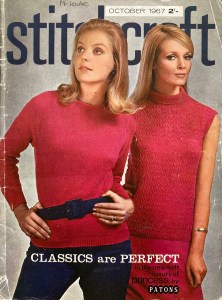
The October 1967 issue of Stitchcraft brings “special news for knitters”: a new wool, Patons Princess. A lightweight yarn made up of 85% lambswool and 15% angora, it was presumably soft and fluffy, and promised to be “smooth and easy to knit”. The classic raglan pullover and lacy “shell” on the cover both use it, in bright pink “Camellia” colour.

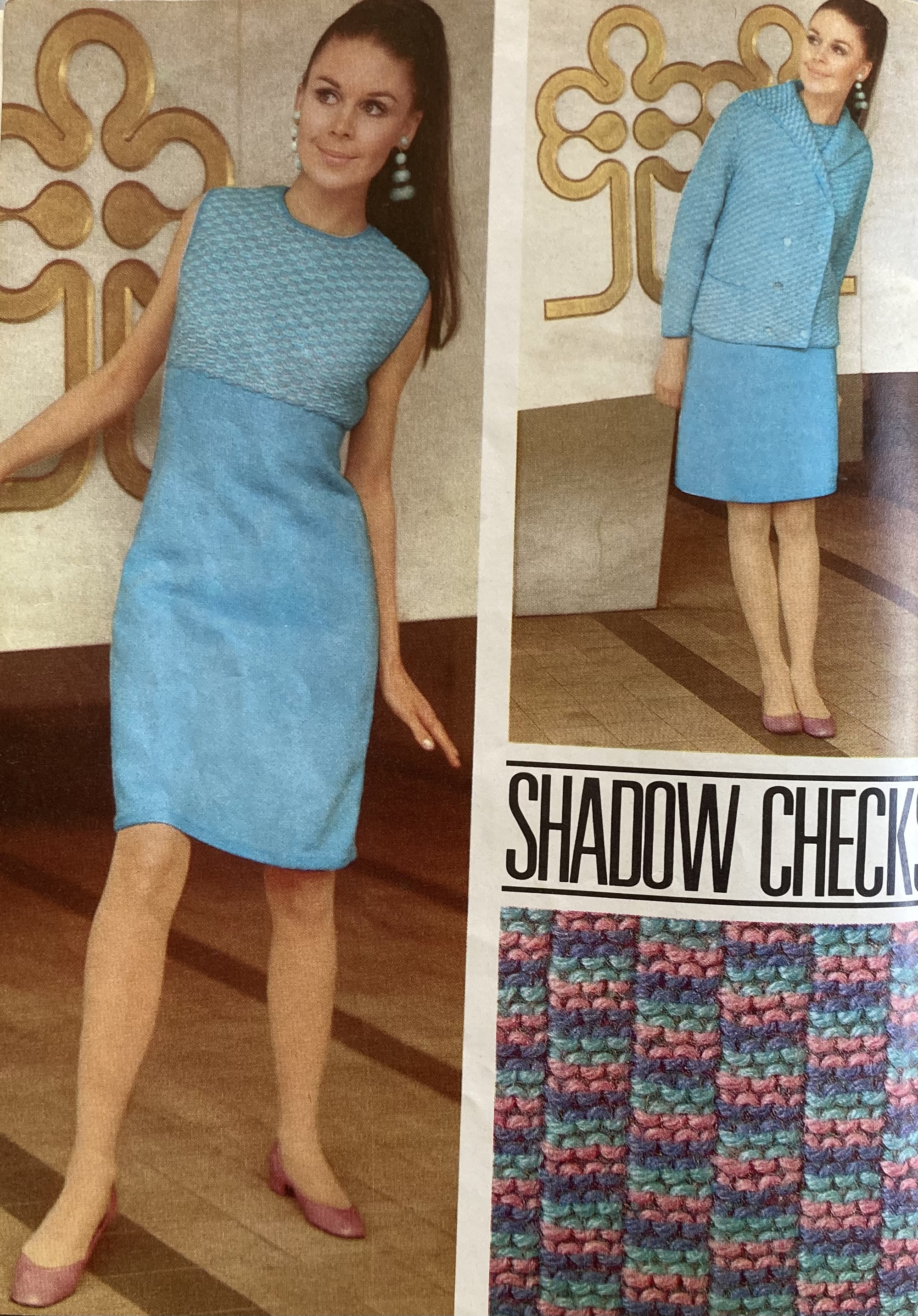
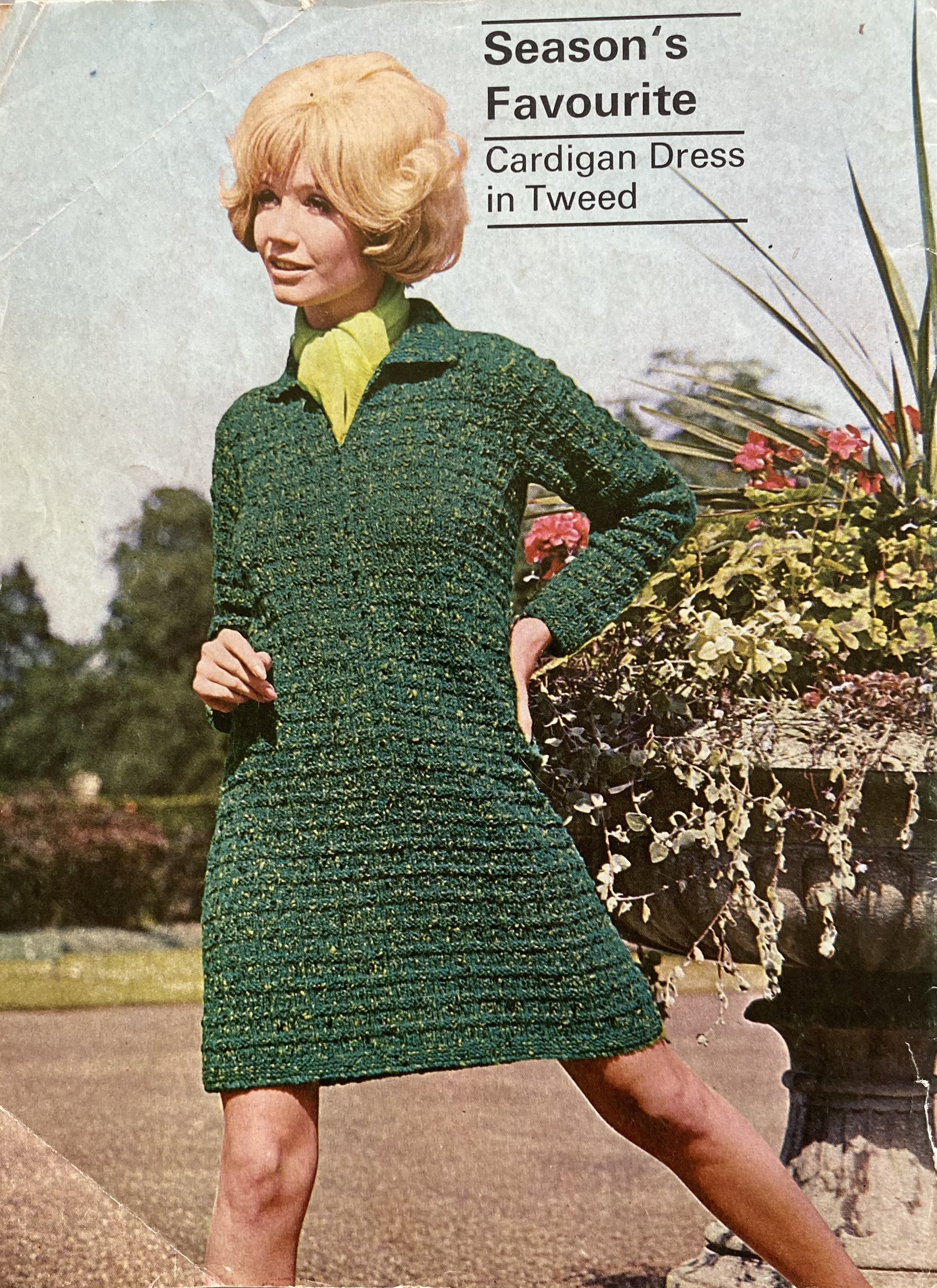
Sleeveless shell notwithstanding, the issue looks towards cooler autumn days and the pre-Christmas holiday craft rush. “Winter Plans include the Polo Classic” is the caption for a bouclet pullover with double-strips of cables on the front. Other women’s fashions bridge the changing season with layered separates: a sleeveless dress in DK weight with “shadow check” patterned yoke and matching blazer, or a three-piece set of plain, sleeveless polo shell with pleated skirt and stranded cardigan in Shetland-mix “Fiona” wool. Polo neck(aka turtleneck) collars are in fashion, in shades of green, pink and red or in classic white and winter white.. For the coldest days, there’s a thick, warm coat-dress in brilliant marled green.

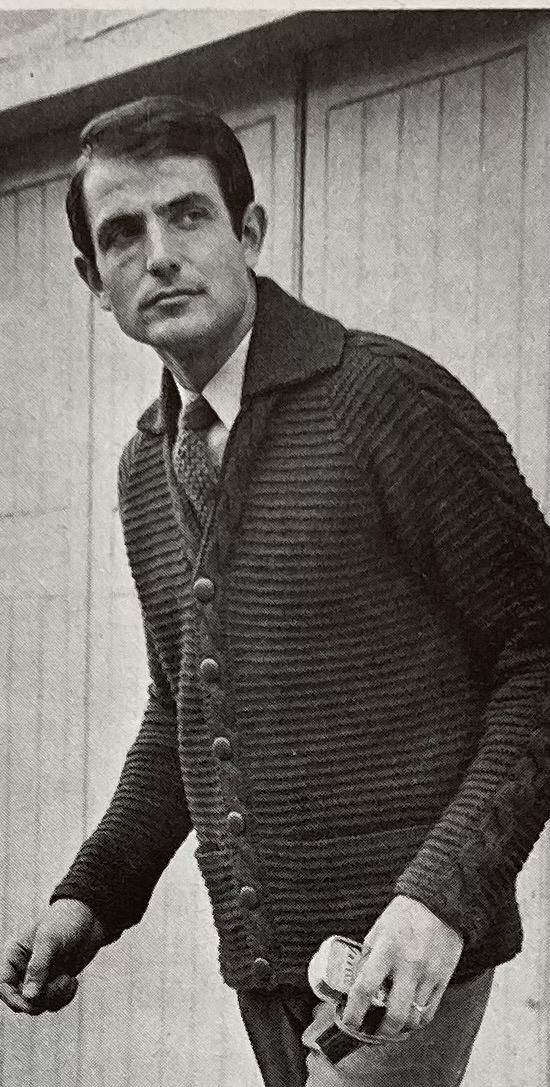
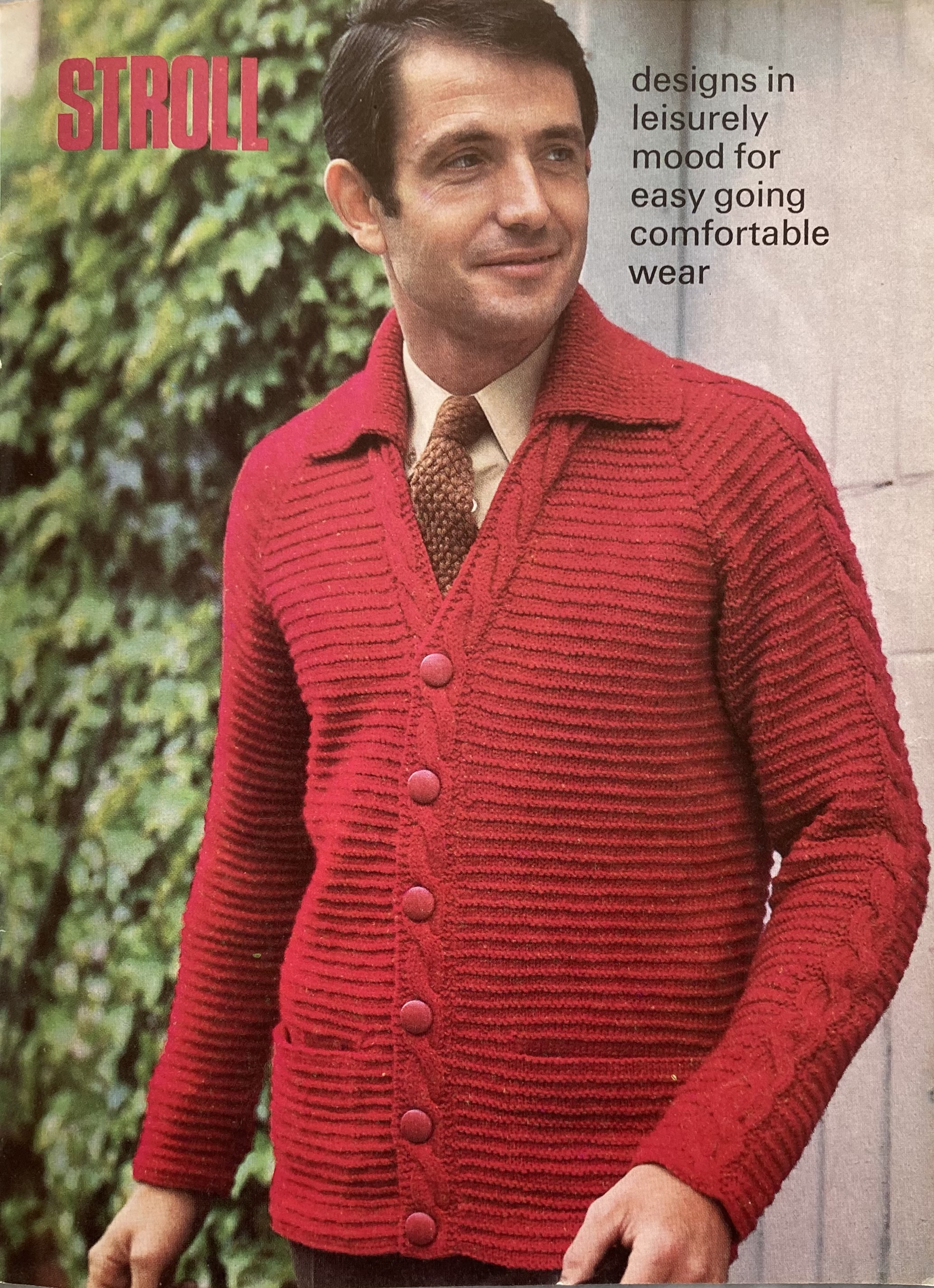
The two designs for men have a similar aesthetic to the women’s, but without the polo necks: a winter-white pullover with a simple cable pattern over reversed stocking stitch and a berry-red “stroller jacket” in a horizontal welt patttern with a nice use of cables on the saddle sleeves and button band. Note the knitted tie!

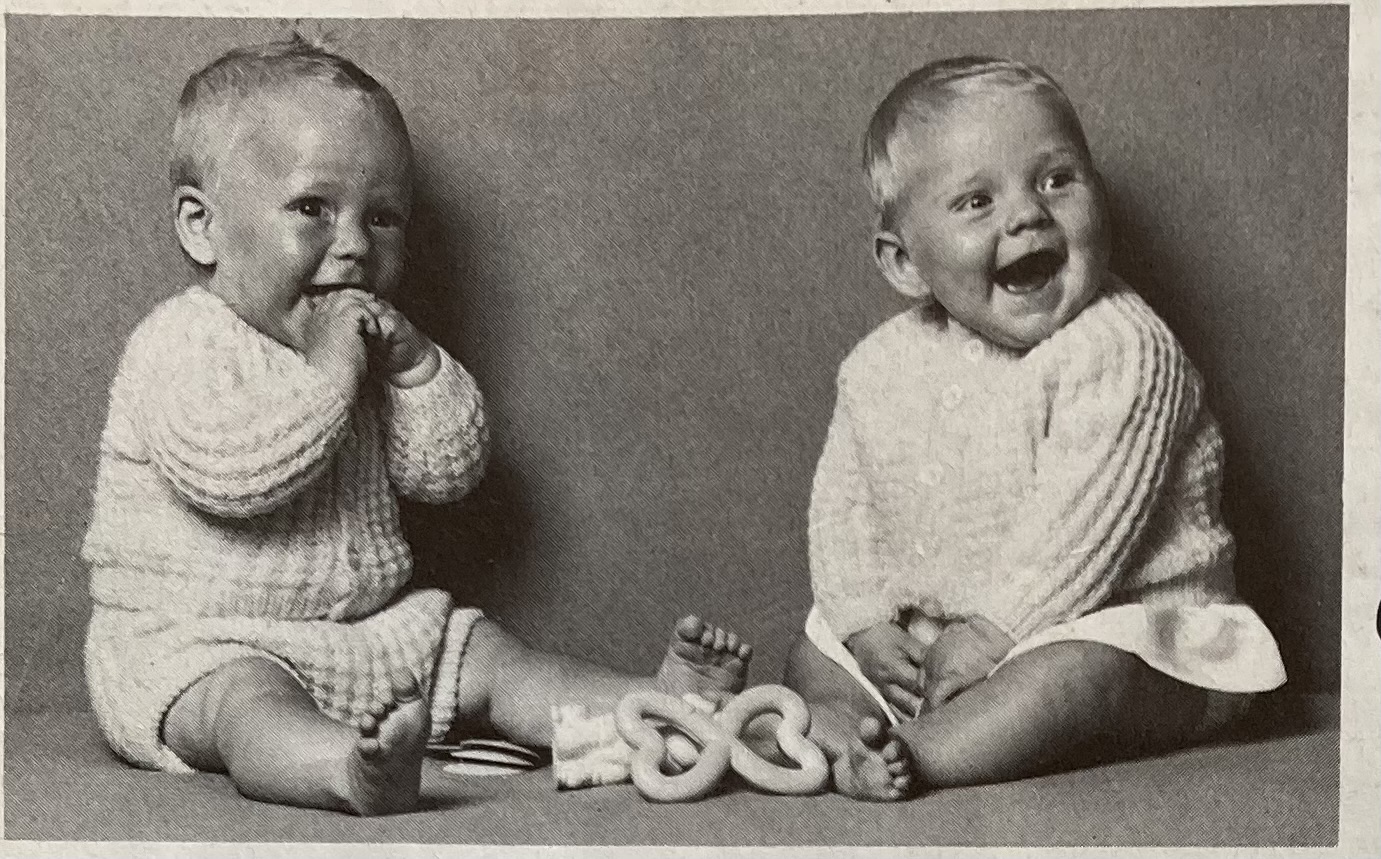
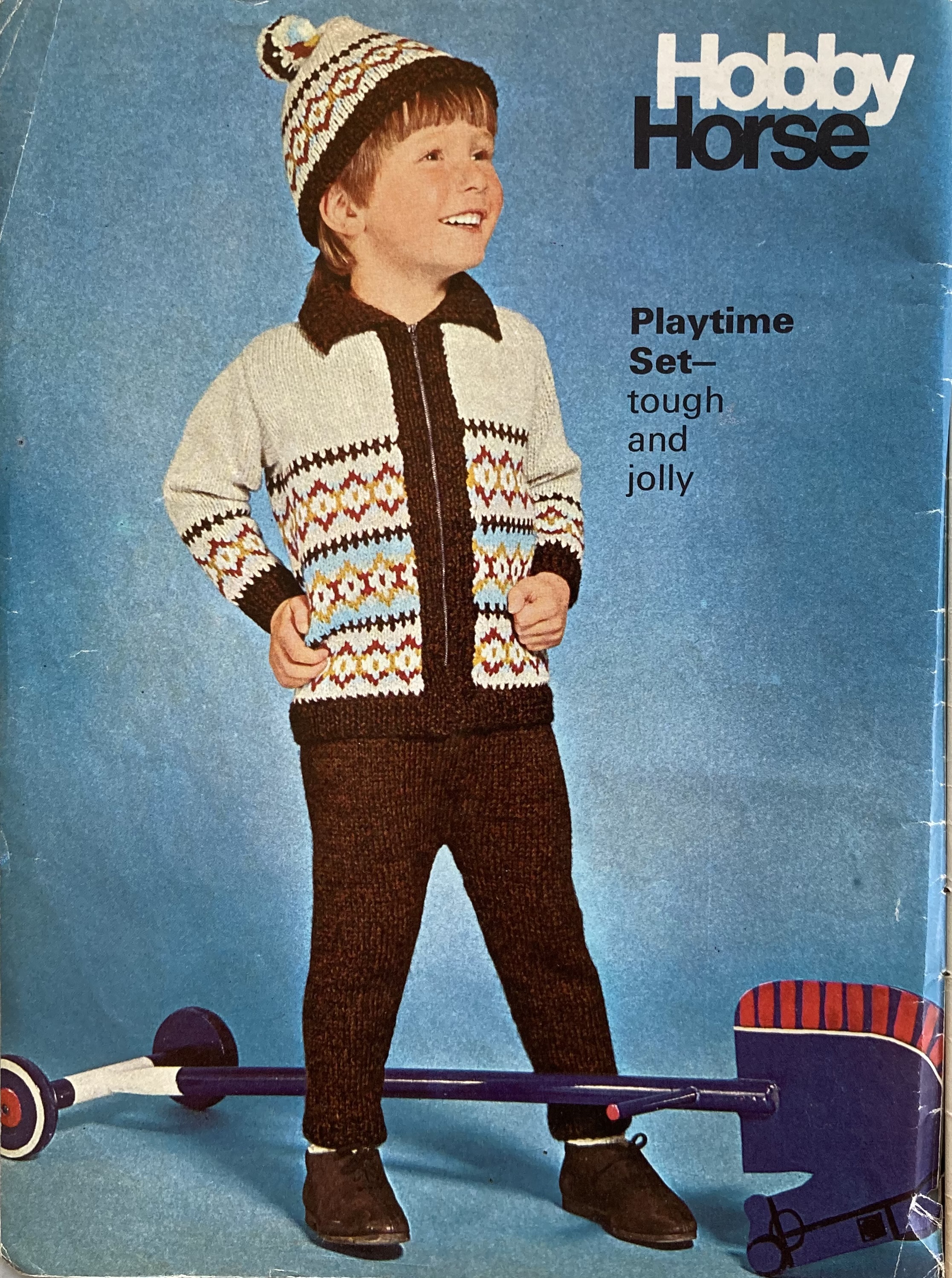
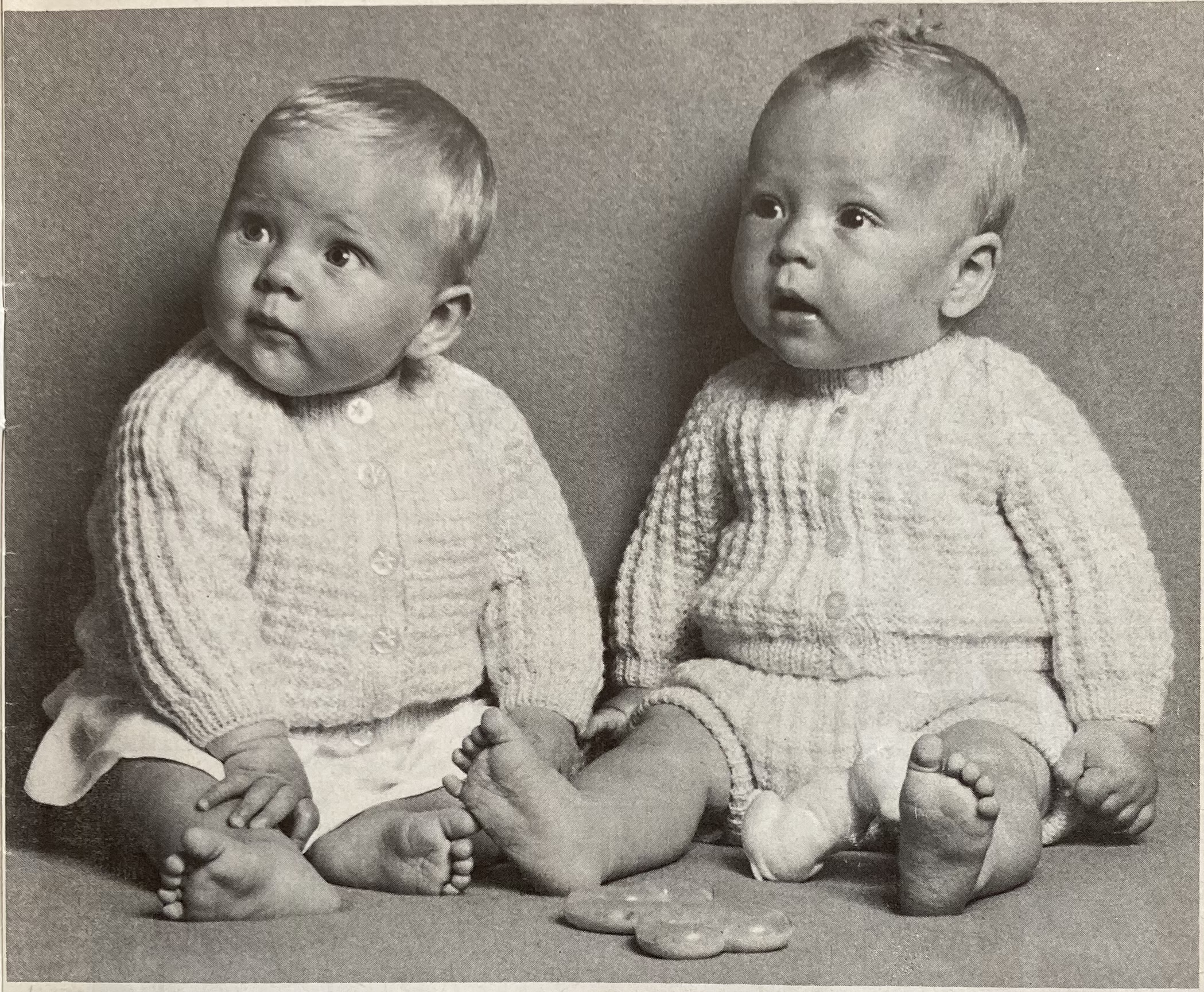
For the youngest in the family, there’s a babies’ cardigan and matching trunks (for boys — girls have to get used to a cold behind early in the age of bare-legged miniskirts and tunics). “For boys”, as well, there’s a “playtime set” of warm leggings, zipped cardigan and bobbled hat in a stranded colour pattern. Rebellious mothers could knit it for a girl, I suppose.

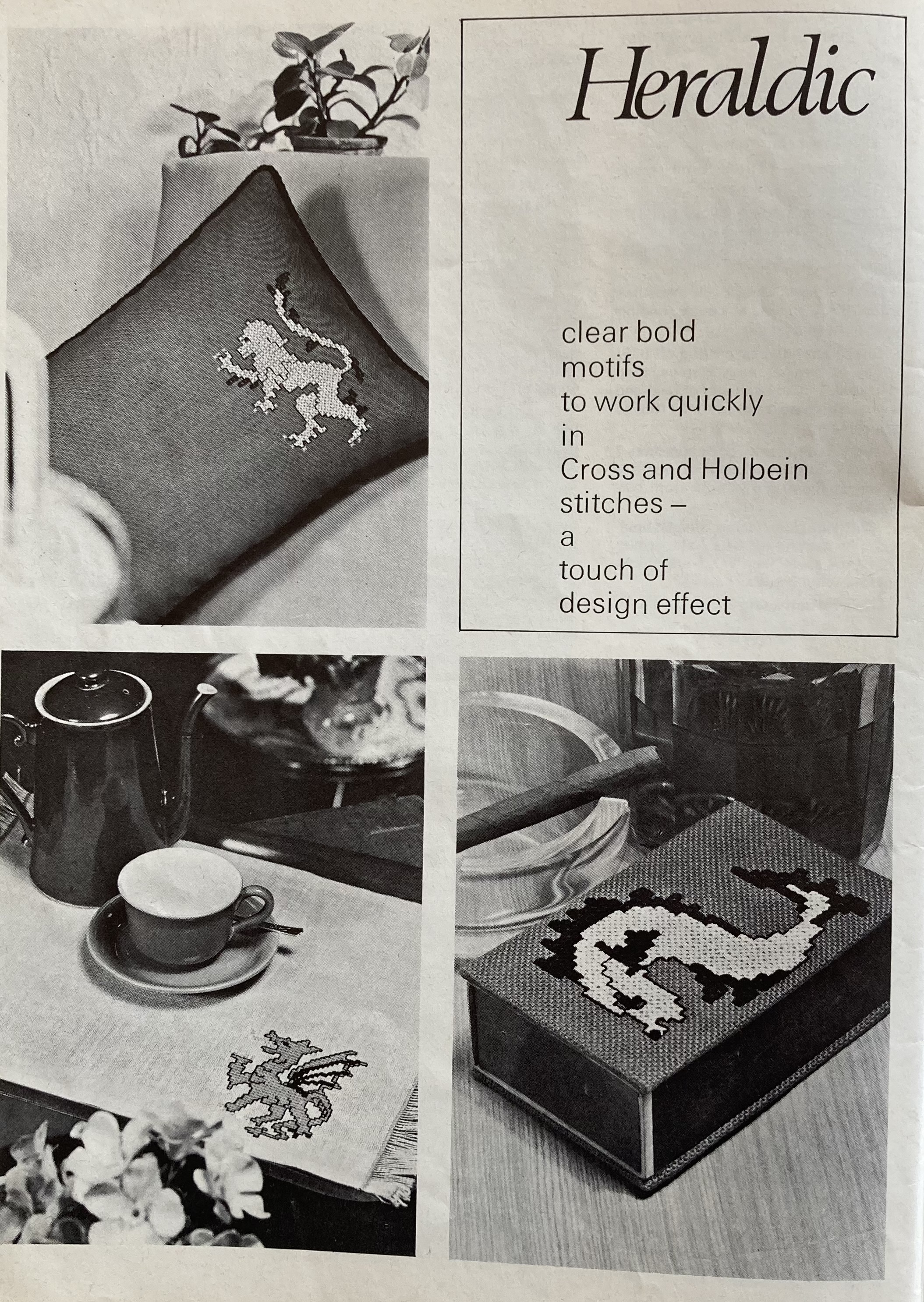
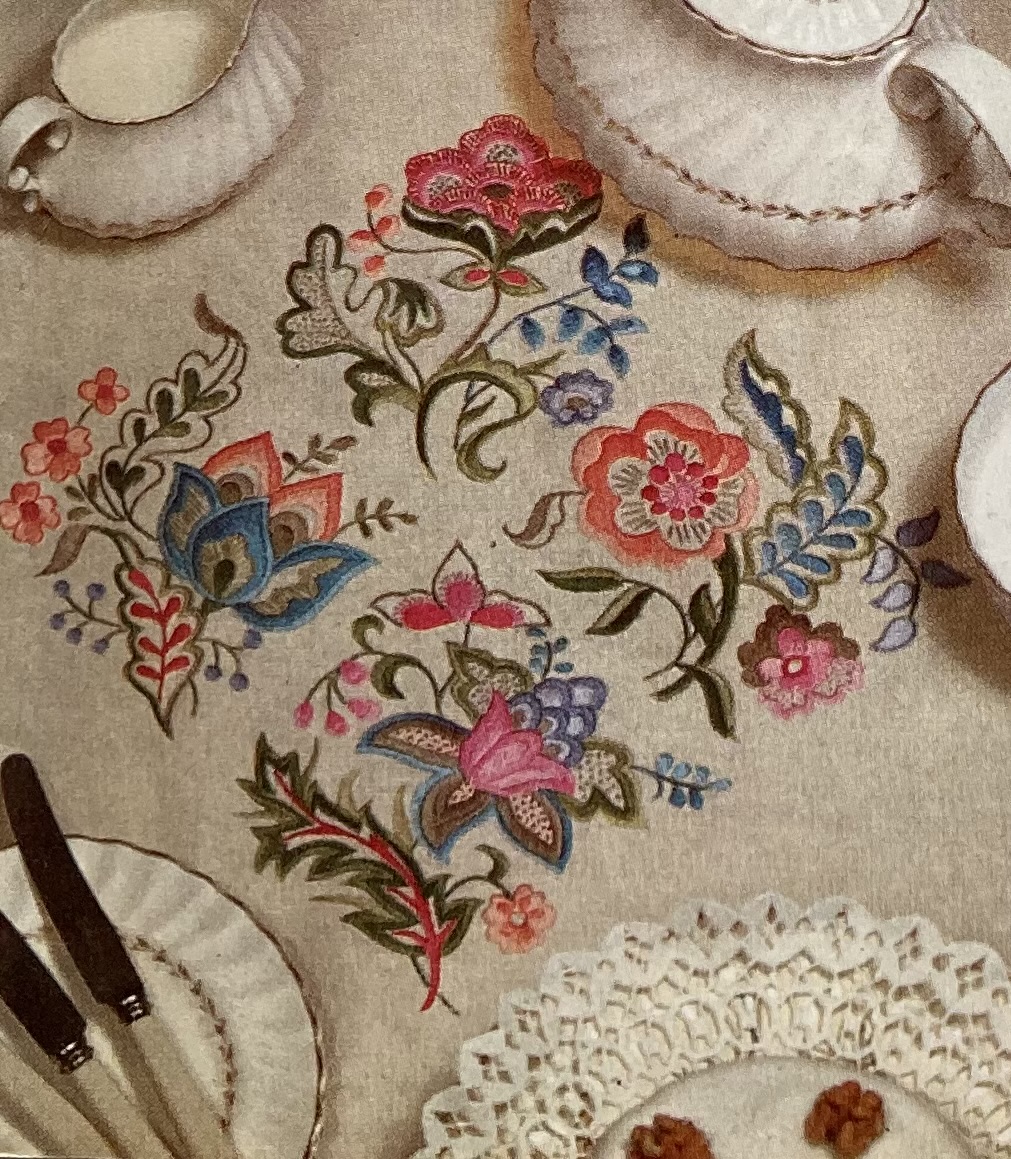
In the housewares department, there are multi-use heraldic designs of a unicorn, dragon, and fish to be worked in cross-stitch and Holbein stitch on a cushion cover, place mat, tray cloth or, interestingly, a matchbox cover. You embroider the cloth (two pieces), mount them on two pieces of cardboard and then glue them to the top and base of an existing matchbox of the larger sort that holds kitchen or fireplace matches. I actually really like the idea. There’s also a Jacobean crewel design that looks stunning on a black cushion or dainty and fancy on a white tablecloth.

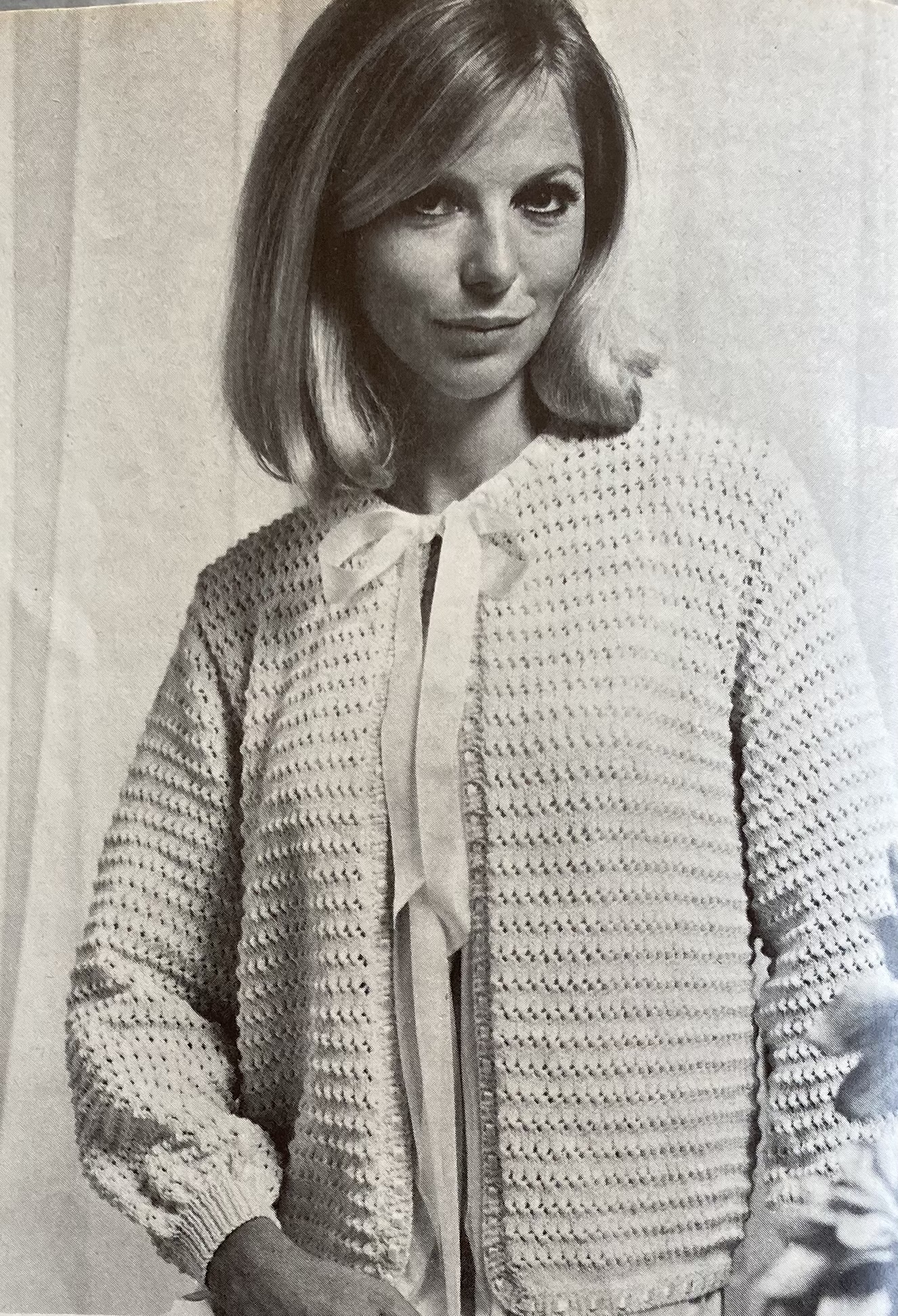
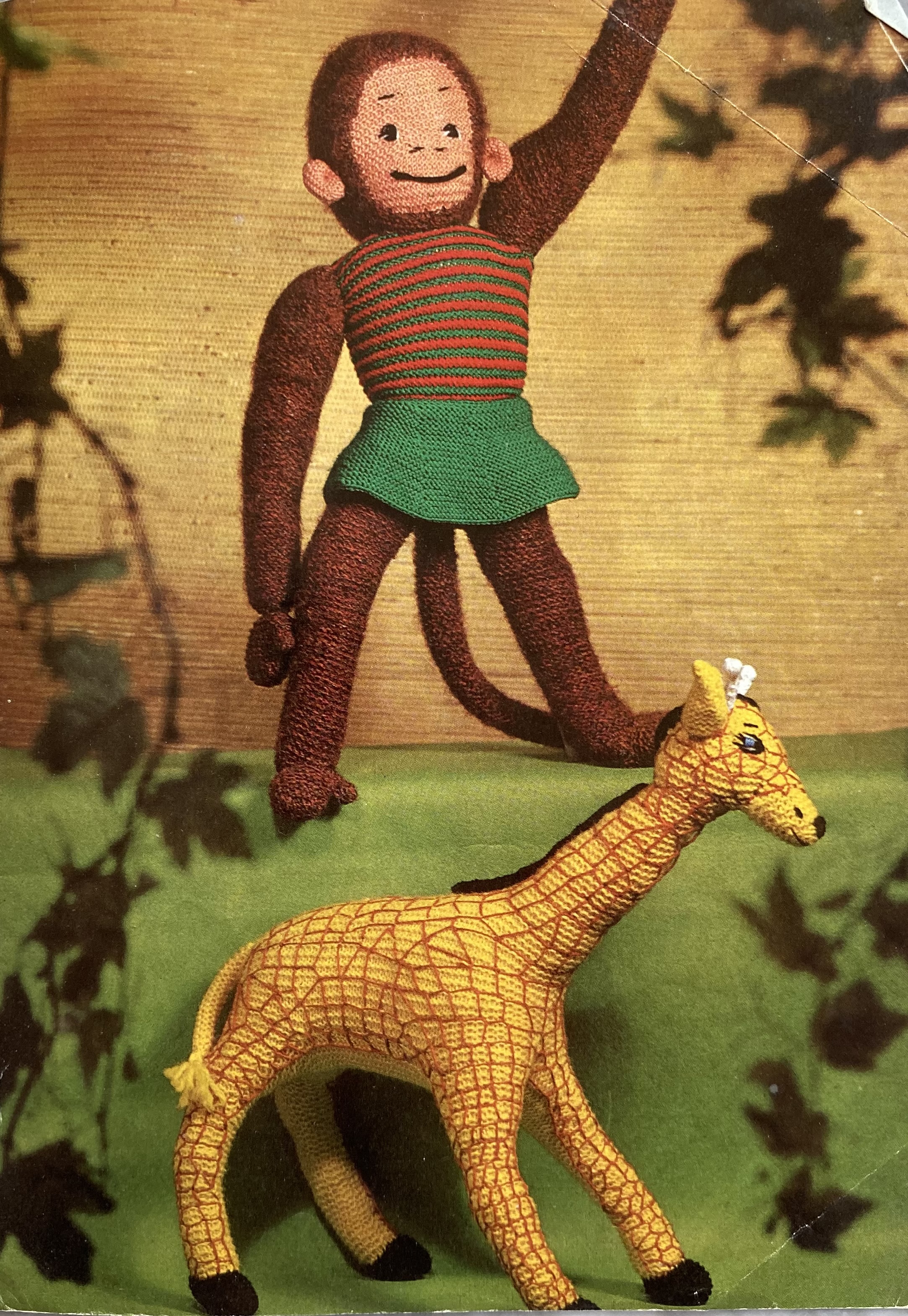
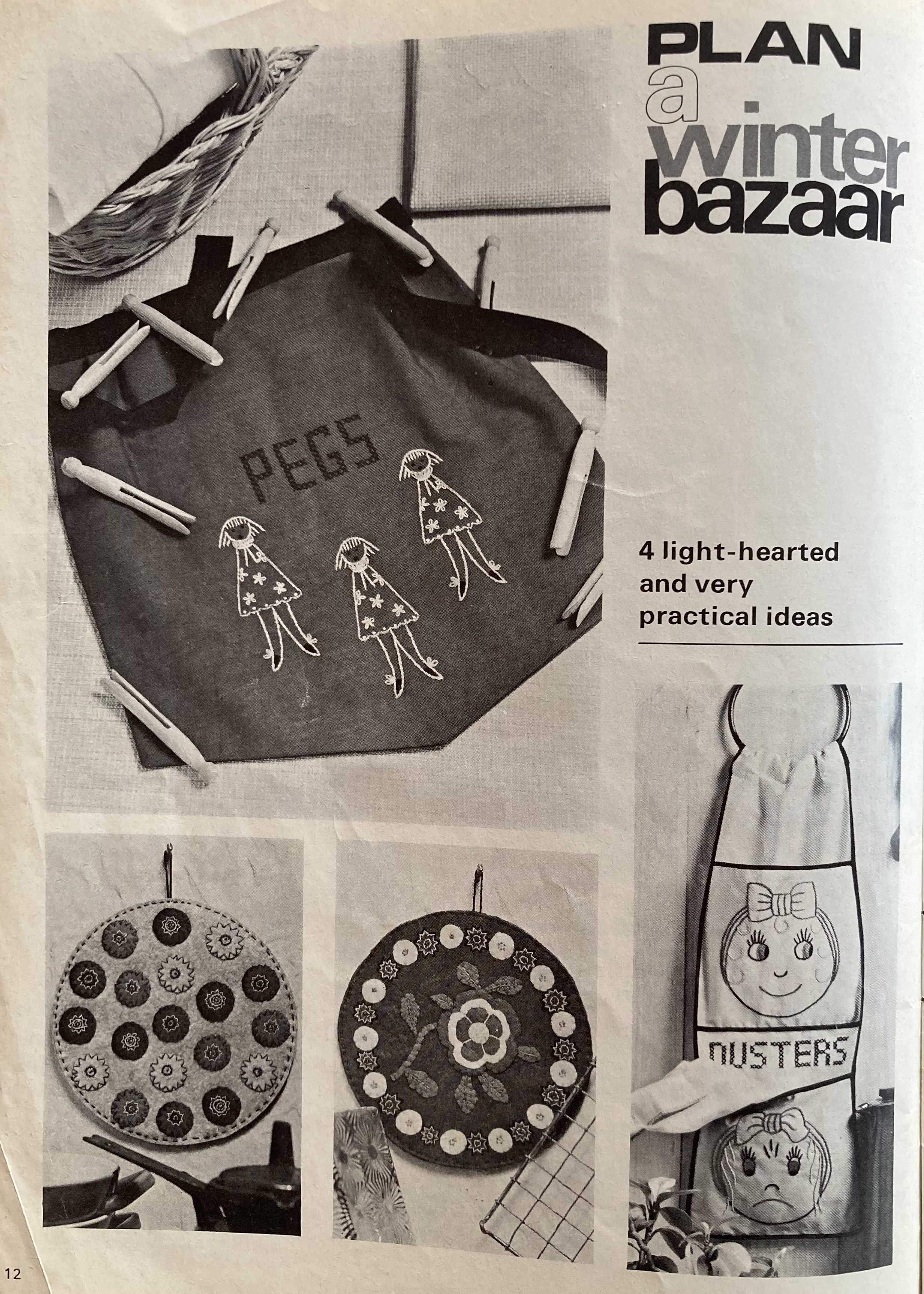
Other home and personal accessories fall under the categories of “Knitted Gifts” or the ever-present “Bazaar Items”, starting with a pretty bed-jacket worn by the Stitchcraft model who models all the bed-jackets. And if you look at any of her photos, you will know why! No other model perfects the come-hither look like she does. The resulting offspring will appreciate a cute stuffed monkey or giraffe toy. I like how the giraffe’s pattern is embroidered on, even if it doesn’t look quite accurate to a real giraffe. Finally, you can make a simple and cheerful sewn and embroidered laundry peg bag, dusting cloth bag with pockets for “clean” (happy!) and “dirty” (sad!) or a set of felt-appliqué pot holders.

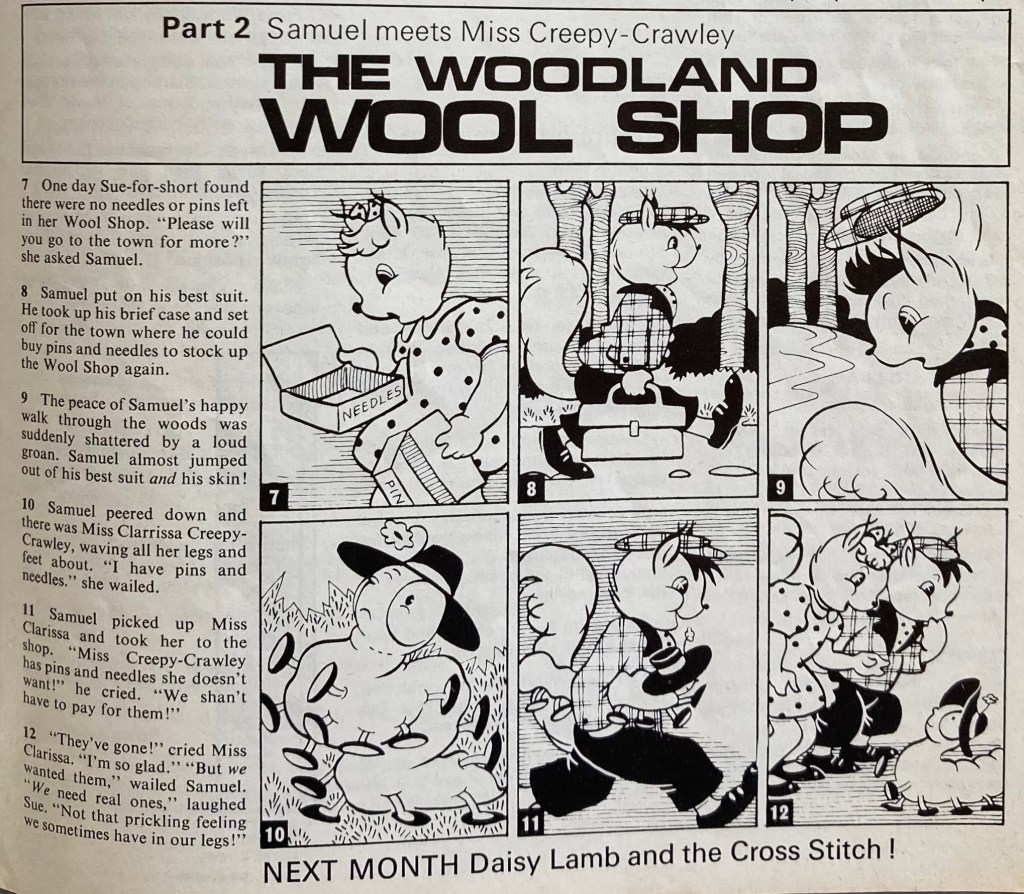
The ads are the usual ones for a sewing machine, Patons knitting books or “liver pills” to cure constipation, and the Readers Pages offer two reprints of popular items: little cross-stitch pictures of “Autumn” and “Winter” scenes for the nursery, or a cabled and bobbled ski hat that looks too small for any adult person’s head and would surely fly off if actually worn while skiing. In Part 2 of the children’s comic “The Woodland Wool Shop”, employee Samuel meets “Miss Clarissa Creepy-Crawley” (I’m sure there’s a Downton Abbey joke in there somewhere), a caterpillar with “pins and needles” — but not the kind Samuel has to buy! No fear, there’s a happy ending for all involved.

My project will be the little baby cardigan, for my colleague who is expecting a baby in November. I also ordered wool for the fabulous “Fashion Switch” knitted dress from the cover of the September 1967 issue, which will take a while to make, but maybe I can get a post about it up in October. Till then!

September 1967: Overview

It’s time for a “Fashion Switch” over at Stitchcraft! 1967 is the year where knitted dresses really start to feature, and as far as I can tell, the “switch” part means you can either make a dress or a skirt combo and mix and match. The cover designs fit in well with the trend: high necks, short skirts, deep raglan armholes, A-line shaping and big patch pockets. Note, too, the huge hats — they will only get bigger in the months to come.

The centrefold photo shows a slinky variation on the theme with a dress and/or skirt combo featuring a pretty beaded and textured design. Like the chevron dress from April 1967, the designs pick up some elements of 1920s and 30s fashion, while keeping a distinctly late-60s shape.

Other women’s knits include a bouclet blouse for the fuller figure with a very neat and pretty “soft-roll” neckline, a casually elegant afternoon suit with cable trims, a striped skirt combo in “colour brilliance” (tangerine and violet!), and a “Golden Glow” bright yellow pullover.

“Colour brilliance” applies to men’s fashions too, for once, and this green and yellow slip-stitch cardigan is a masterpiece. The model looks a bit like a colleague of mine — should I knit it for him? The other men’s garment, a chunky but streamlined pullover, echoes some of the design features of the women’s “fashion switch” combos. like the big patch pocket and contrasting-pattern sleeves. The photo is black-and-white, but the suggested colour is “Curry”, which I assume will be some kind of dark gold-brown-orange (so 60s). For children, there are two nice, sturdy, basic raglan pullovers in a more classic colour scheme — dark charcoal with red trim for the boy’s and “Cloud-dust Pink” with “Aztec Gold” trim for the girl’s.

There are some fun homewares for all styles and abilities, starting with some very easy sewn and embroidered aprons with whimsical kitchen designs. I’m not interested in the aprons, but I love the top that the “teatime” model is wearing! You can make a tapestry panel of an Irish homestead in Rosguill, Donegal or a cushion or chair-back in a gorgeous traditional-inspired design updated “for a modern setting”. Both are done in tapestry wool on furnishing linen.

It’s not too early to start on little gifts for Christmas, and here’s a little bag “for a friend” and a knitted tortoise toy “for a toddler.” Baby gets a thick, squishy pram cover in fluffy “Ariel” wool and a raised cable trellis design.

Or you can make a Florentine-pattern workbag or cushion for yourself. The colours — gold, green, and yellow — will match nicely with a lot of the knitted designs from this month.

In the “Readers Pages”, we finall have a new comic: Sue and Samuel Squirrel run the Woodland Wool Shop. Their adventures start when Sue finds a loose thread of yarn in the woods and winds it up — only to find that she has unraveled an elephant’s vest and needs to knit it all up again! Poor Sue. The only full-page advert is for Bri-Nylon. I imagine the dress in the photo is quite hot and impractical, especially if knitted in synthetic nylon wool, but what a lovely photo.

That’s it for this month! There are so many great projects that it’s hard to choose, especially since the ones that call to me are all big projects and I just finished the chevron dress from April 1967. I love the orange cover dress and the men’s slip-stitch cardigan, particularly, as well as the fancy embroidery design, which I think would look lovely going around the hem of a full black skirt. Or maybe even the Florentine needlepoint? I don’t have much time in September to knit, though, and even less to adapt an embroidery or tapestry pattern. We’ll see!

April 1966: Knitted Lamb

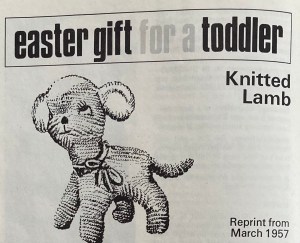
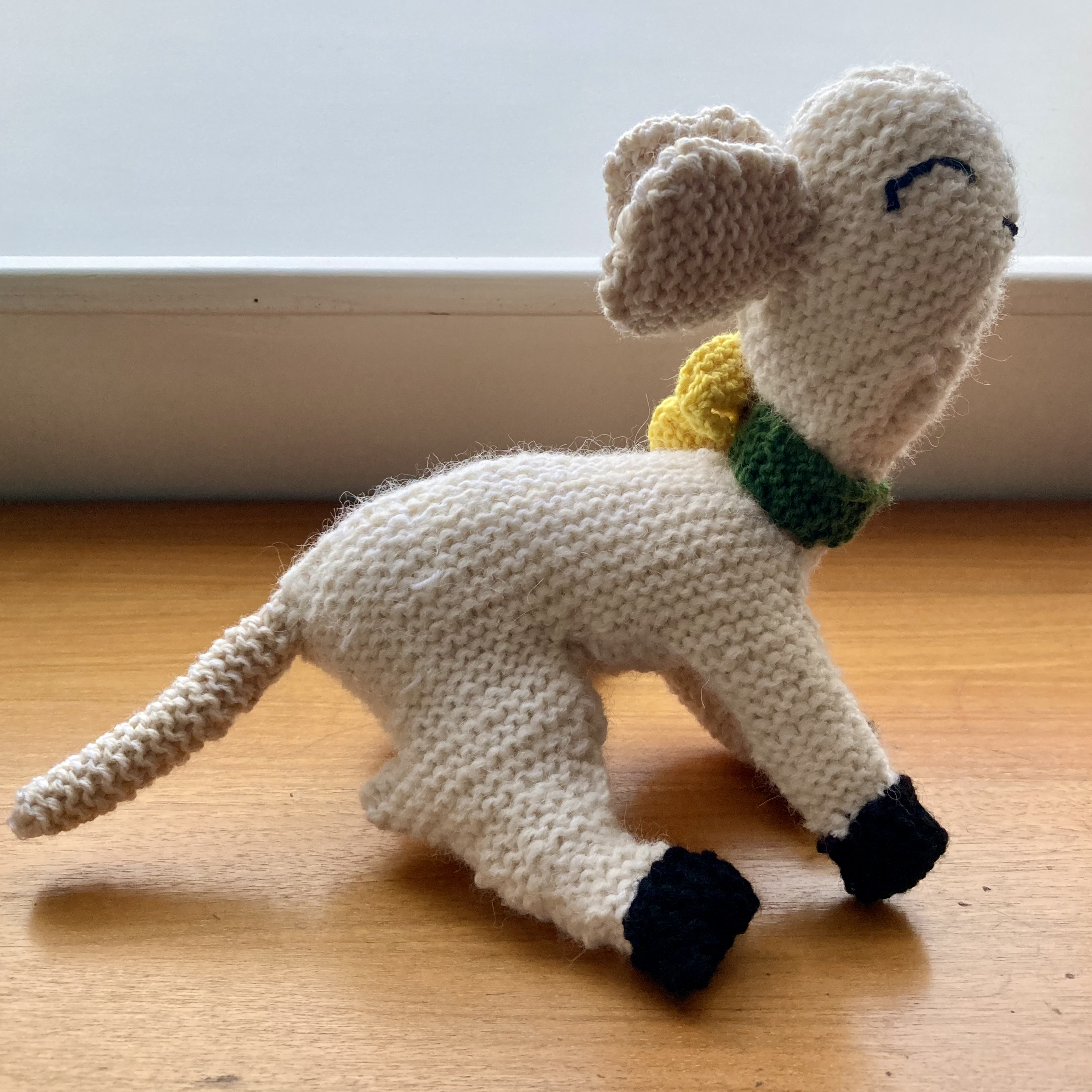
My Stitchcraft project from the April 1966 issue was actually a reprint from the March 1957 issue: a knitted lamb as an “Easter gift for a toddler.” Knit a little lamb for your knitting friend who is about to have a baby, they said. It will be fun and cute and use up leftover bits of wool, they said…

My first clue should have been the fact that there is no accompanying photo of the finished lamb in the 1966 issue. Either the original issue didn’t have a photograph (I don’t have the 1957 issue in my collection) or they just didn’t reprint it along with the pattern, since the latter version only has a drawn illustration. Why would the editors not want to show a lovely photograph of the lovely finished knitted lamb? Why indeed?

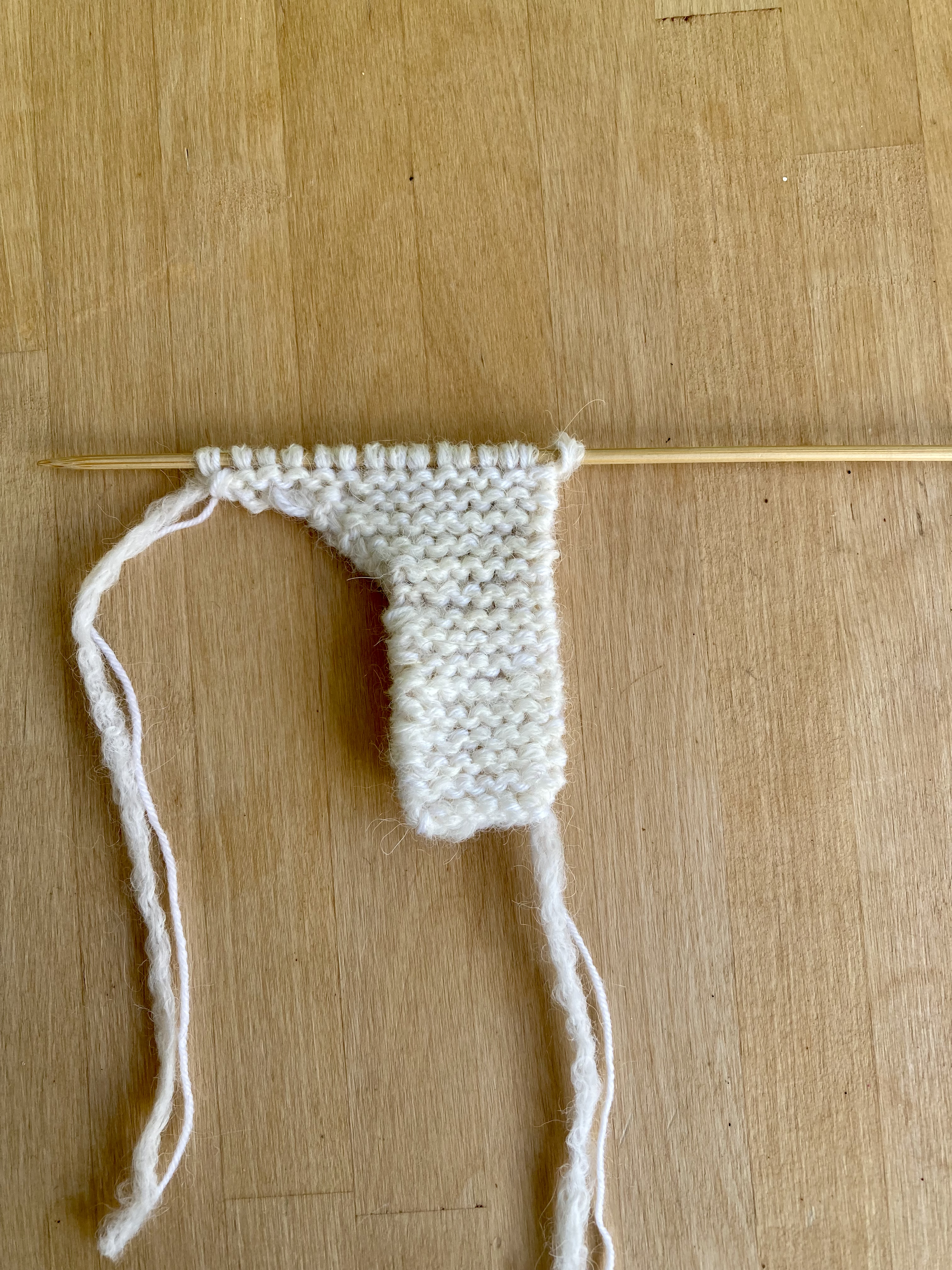
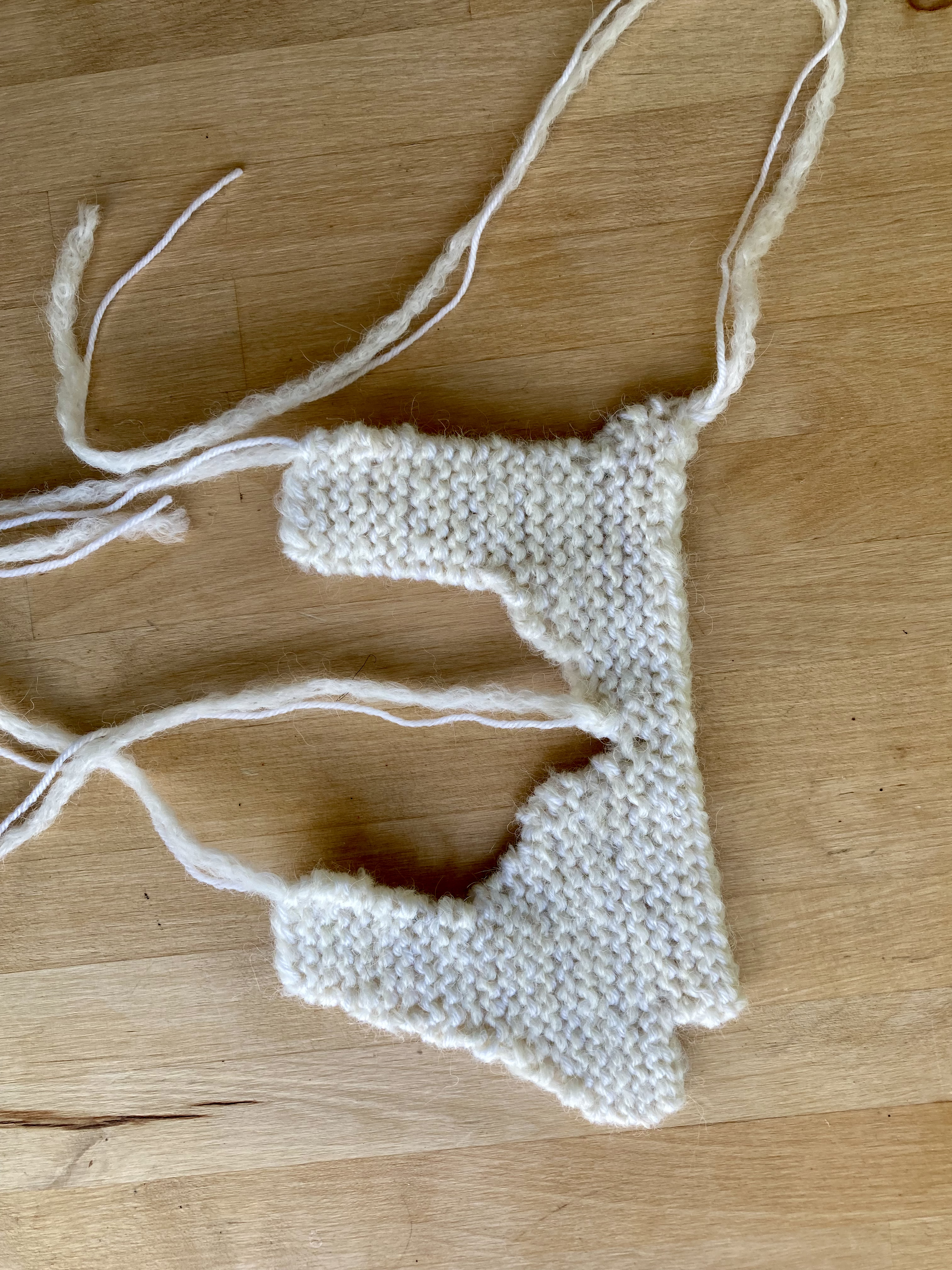
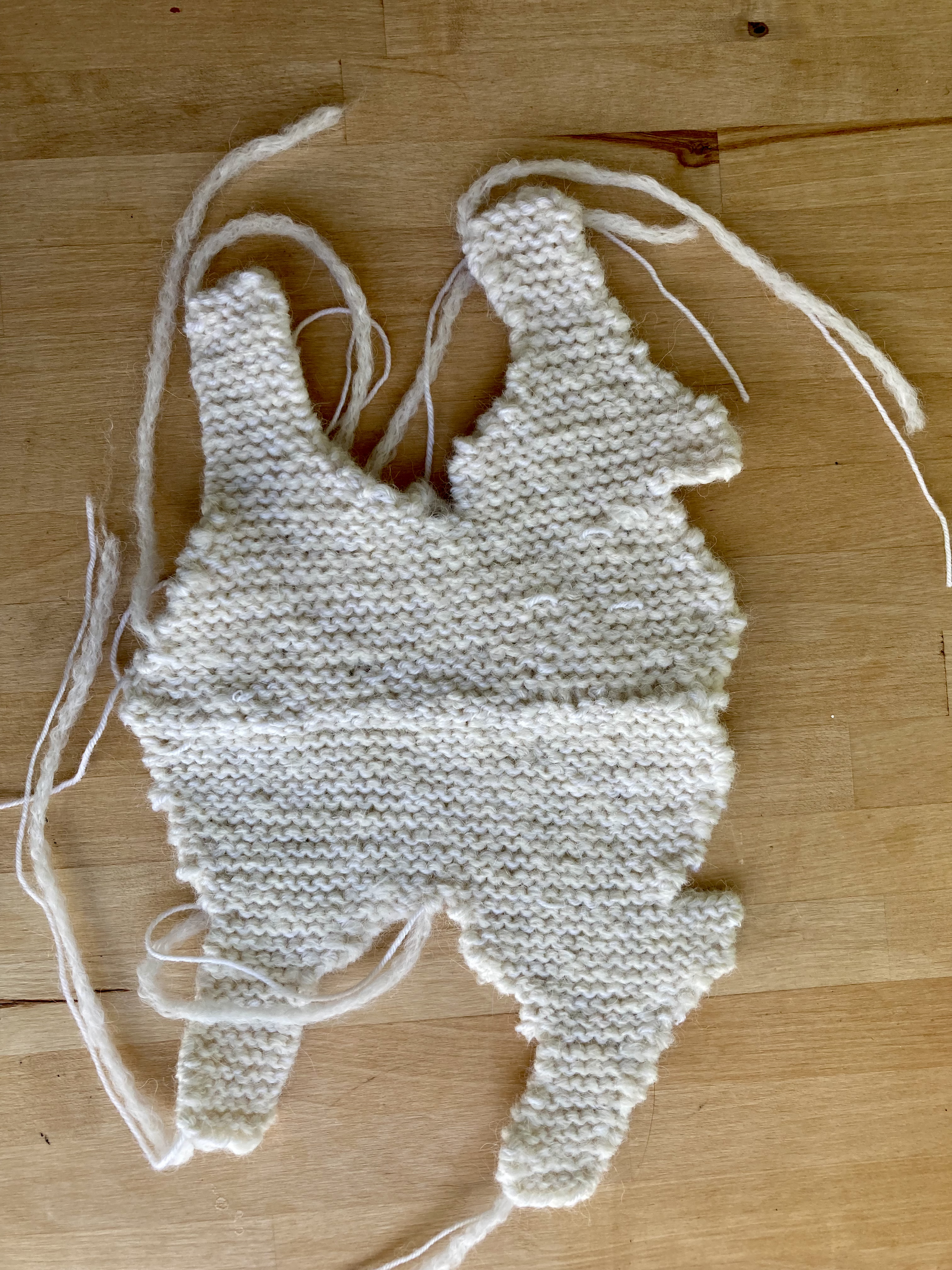
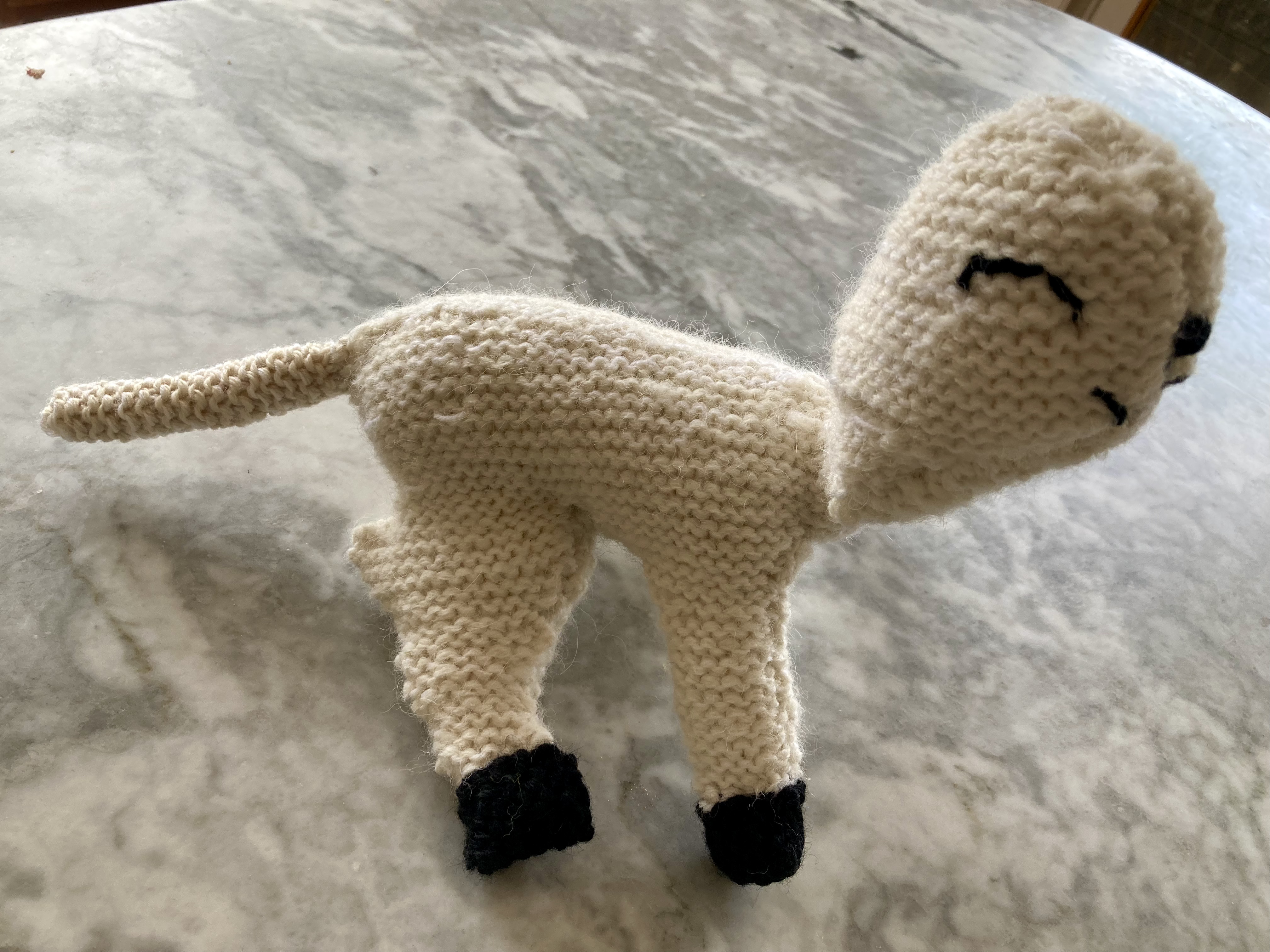
I admit the next step was “my fault”. Since the pattern called for 4-ply yarn held single, and I mostly had fluffy DK-or-thicker alpaca left over from the tot’s coat in February, I chose to adjust the stitch counts for a stitch-per-inch gauge and try to make the lamb turn out the same size as in the pattern. I did the math correctly, but I suspect something may have been off in the row gauge . The pattern starts with the legs and the main body (top part) in multiple pieces (1/2 each of back and front leg) and involves a complicated series of increases and decreases for the shaping. The “corner” on the back legs seemed odd to me, but I know I followed the pattern. Surely it will all come out right when sewn together, I told myself. After all, I successfully grafted the top back “spine” instead of sewing it! Obviously I was good at this! And it did pretty much look like a sheep’s pelt when laid out flat.

The next piece in sequence is the under-body, which is almost the same as the top, just shorter/narrower. I sewed it to the main body as instructed and stuffed it well, as instructed. The back legs were longer than the front ones, and what was with those weird “hocks” now? Shouldn’t they be sort of… attached to the rear end of the animal instead of just hanging off into space?

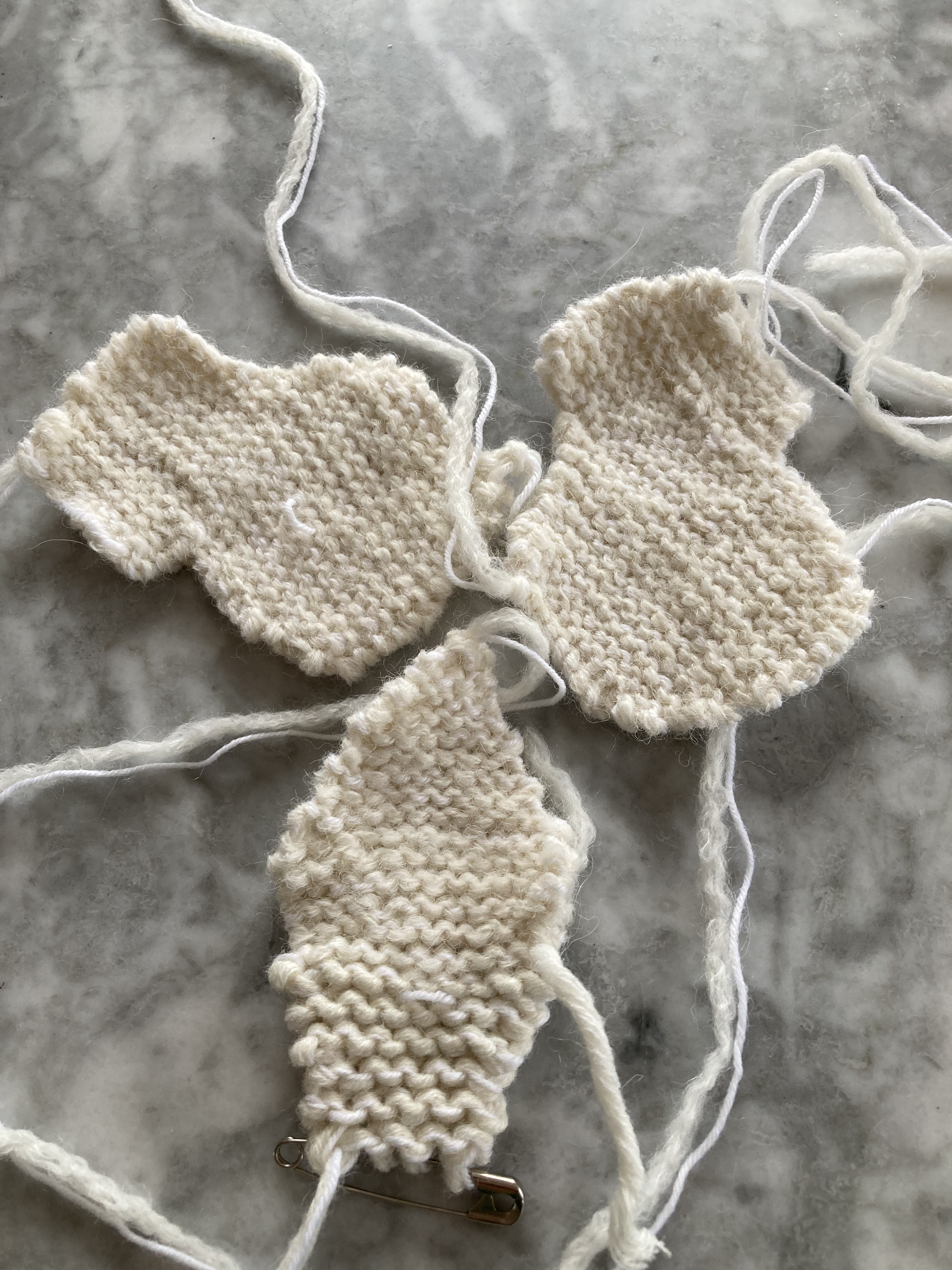
No matter, I made hooves. I guess the hooves were fine. Then the head, which was made in three parts: two sides and the “head gusset” for the “chin” and neck. I sewed them together as instructed, and it looked like Frankenstein’s lamb. The head was … not as round as in the illustration, and the neck strangely proportioned. Had I done the math wrong? Was it supposed to fit onto the opening of main and under-body? It didn’t really, but I persevered.

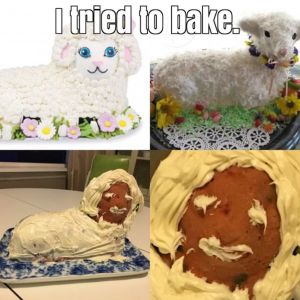
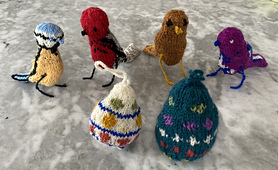
Eyes. The lamb needed to have eyes, as well as a symbolic nose and mouth. This was the part I had been dreading. Ever since I tried to knit some decorative stuffed birds that ended up looking sad, psychotic and/or dead (see photo), I have been afraid to embroider eyes on a toy. The eyes in the illustration look like the lamb is rolling its eyes in high annoyance (at all the knitters who fail at embroidering faces, no doubt.) Not wanting to even attempt that, I had the brilliant idea to make “closed” eyes. Just a little upside-down “u” and a smiling mouth! Hurrah, it worked! Little Lamb is so happy not to have been eaten for Easter supper!

Side note, marijuana was legalised in Germany on Easter Monday, one day after I finished this lamb. Perhaps the lamb was celebrating early. In any case, it’s really, really happy.

At this point I was torn between giving up entirely or just seeing it through. Oh, and I had also run out of the alpaca yarn, so when I decided to just roll with it and finish the project, I switched to some mystery something that was also sort of off-white for the ears and tail. The ears looked nothing like the ears in the illustration, but I was getting used to that by now.

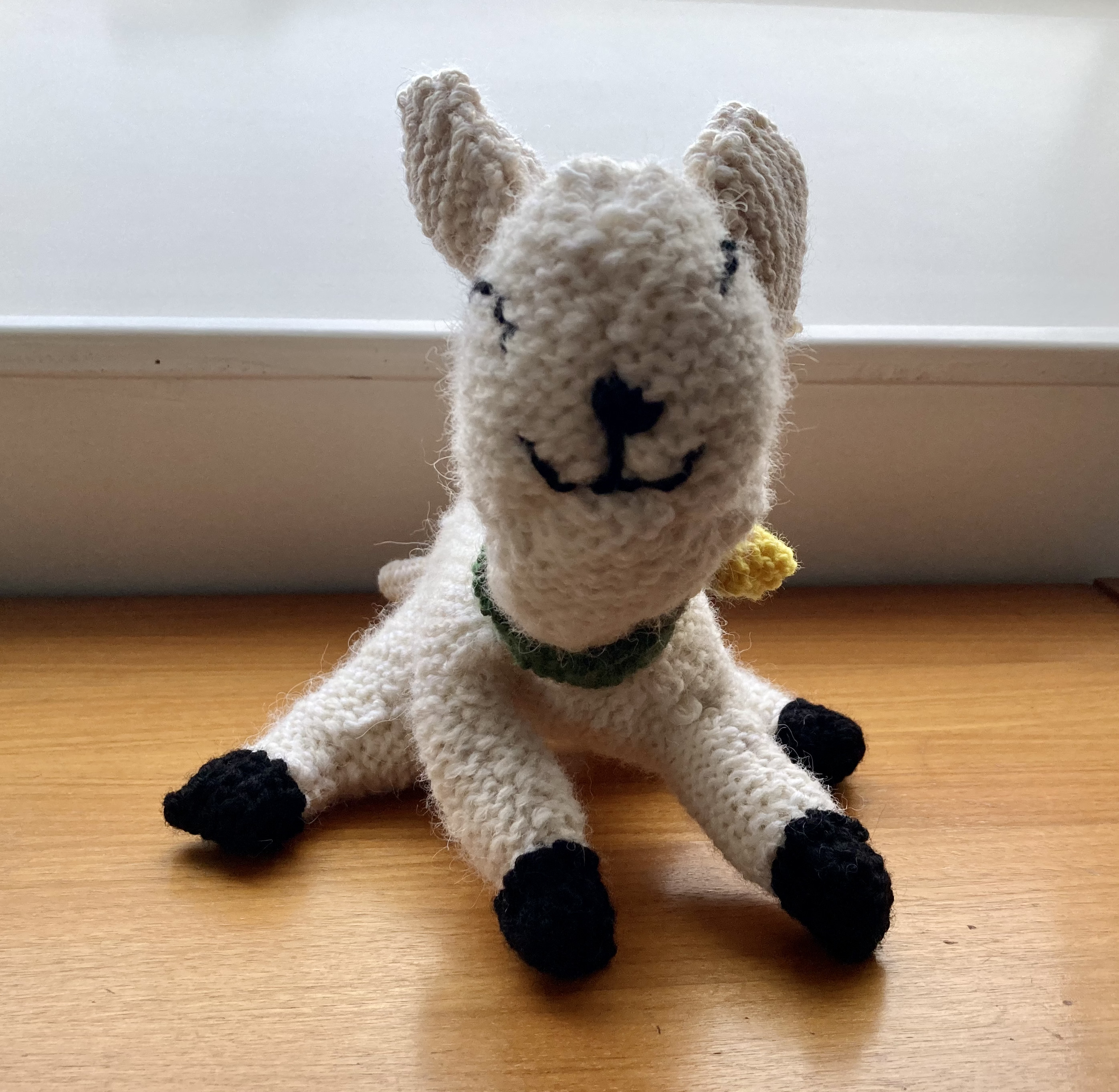
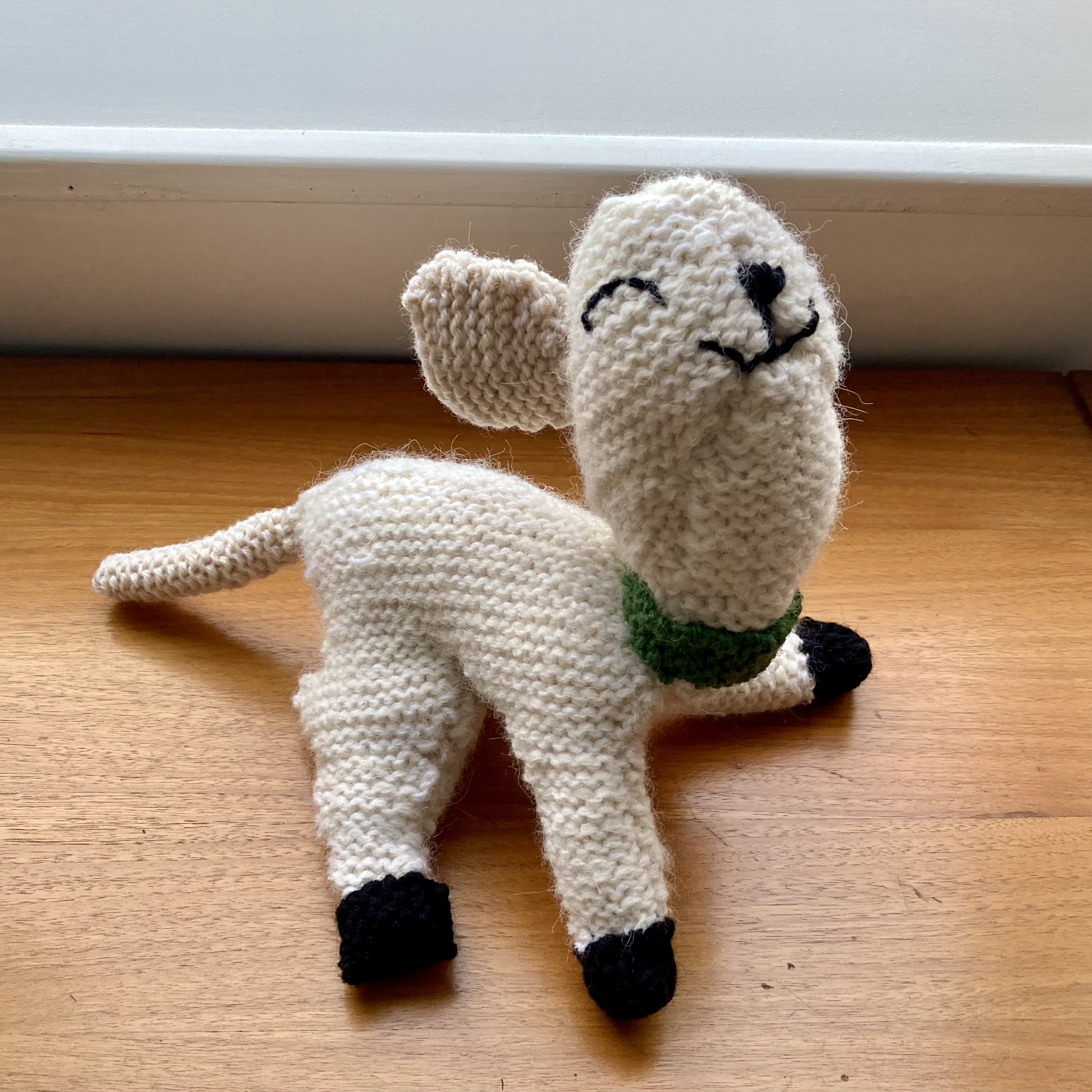
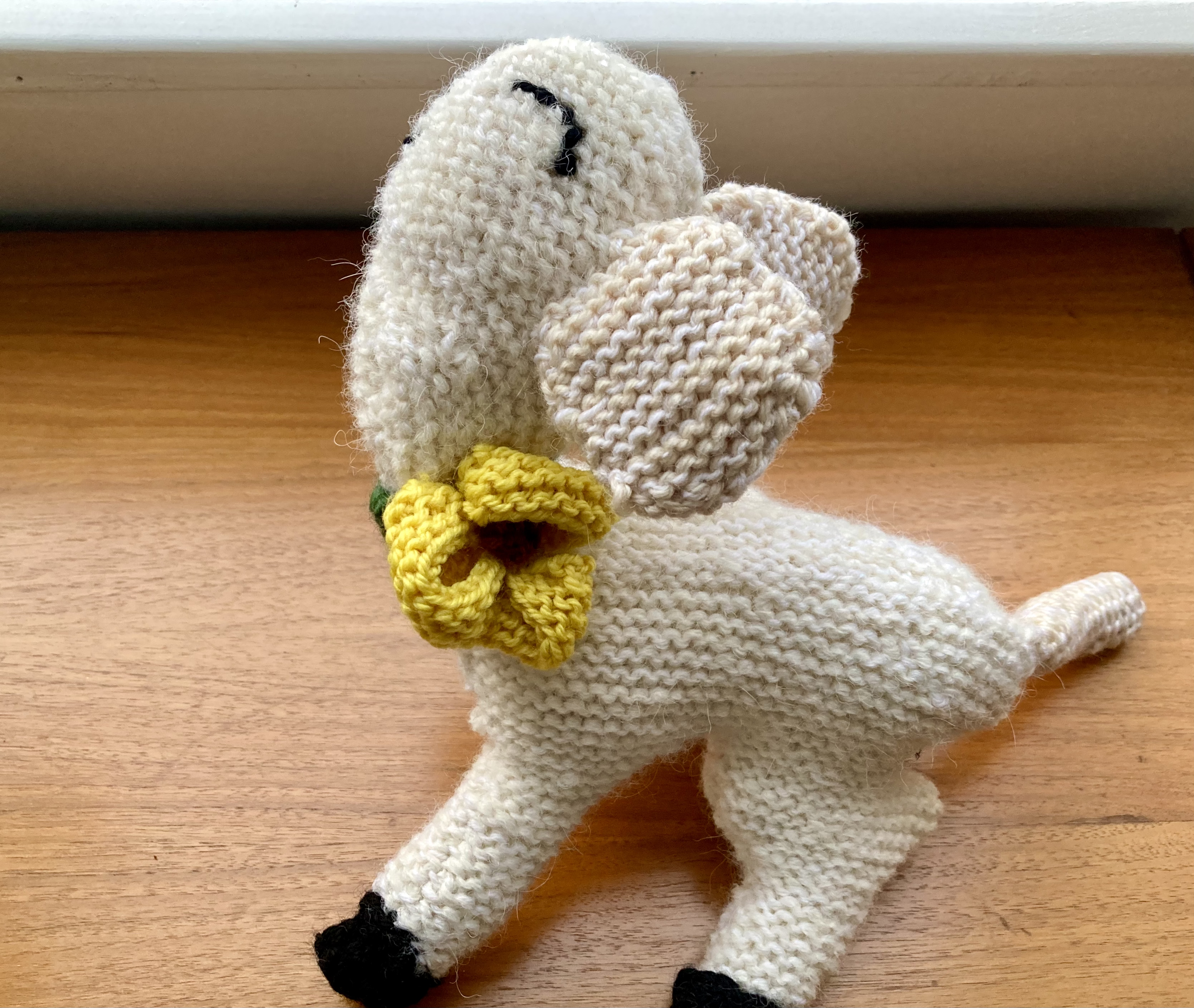
I sewed all the bits together and strangely, the head stayed up by itself. And the lamb could almost stand on its own, depending on what position you bent it into and how widely the legs were splayed out. (I do feel like that’s kind of accurate as to how real lambs look when they learn to walk, says the person who has never lived anywhere near the countryside or raised sheep.) The lamb’s “necklace” as given in the pattern was a complicated bit of braiding, knotting and embroidery, to which I said “nope” and made a little green collar with an easy yellow flower instead. (Thank you, Frankie Brown, for writing and publishing a great pattern for the flower. I donated to the Children’s Liver Disease Foundation and can promise you that I am not going to try to sell this lamb!) Luckily, the collar conveniently hid the awkward seams at the neck. Otherwise I would have had to go full Frankenstein and put in some screw-bolts.

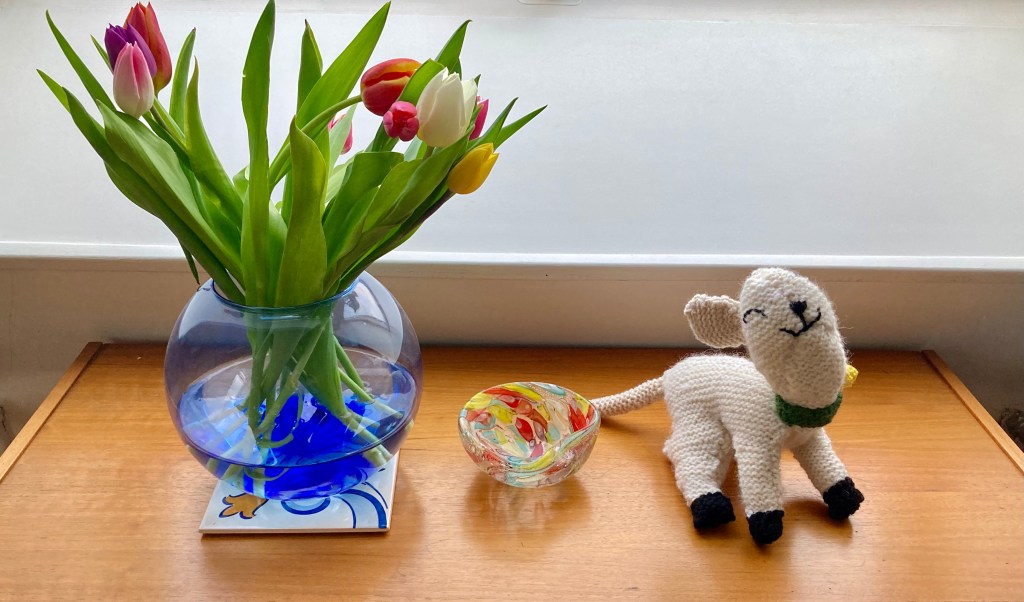
And there it was! Behold the finished lamb, in all his / her / its glory. It is so wonky. The more you look at it, the more weirdness you see. But also, the more you look at it, the happier you feel. I love this lamb so much and challenge all of you to look at it and not feel happy with me. I almost want to keep it for myself instead of giving it to the baby… Maybe it can stay with me just a little while longer?

May all your imperfect projects bring you such joy.