July 1967: Overview

Welcome to Summer! Is it hot where you live? It is supposed to be 35 degrees C today here and I already feel like a delicate wilting flower. Luckily, Stitchcraft‘s July 1967 issue brings us “Colour for Holidays” “in a gay easy-going mood with simple designs that are pretty and young looking, in lively colours to mix and match as you choose.” Here we go!

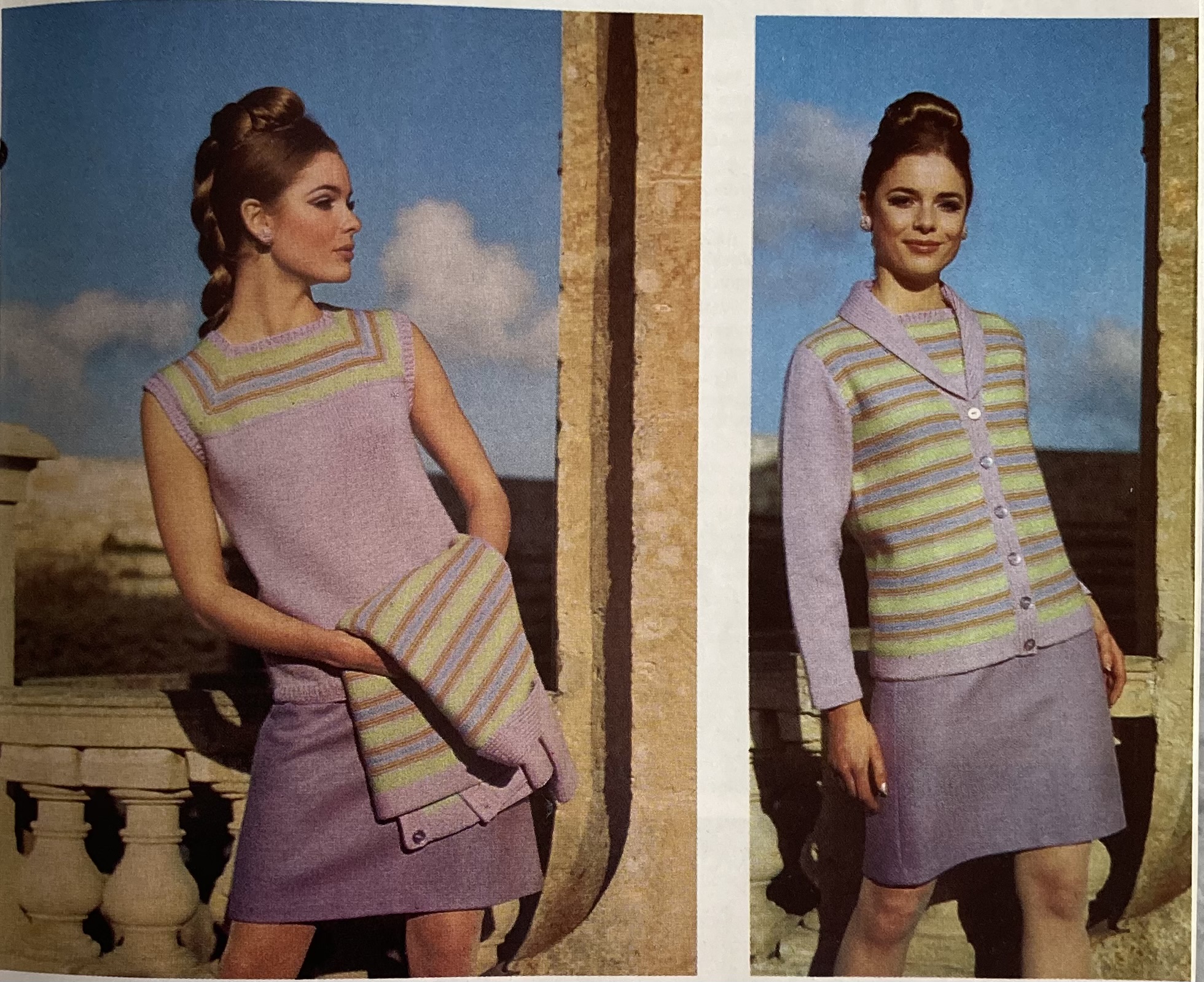
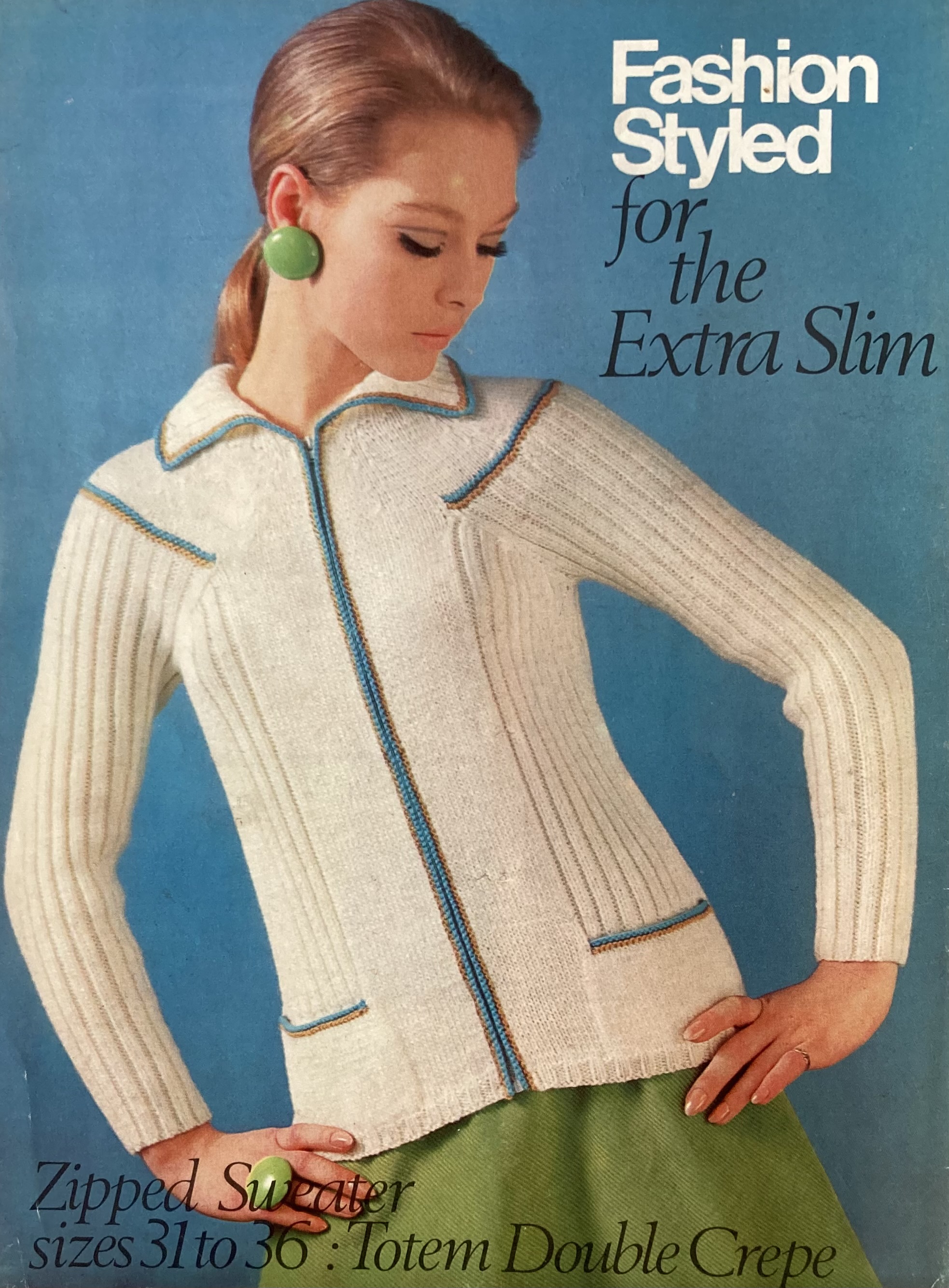
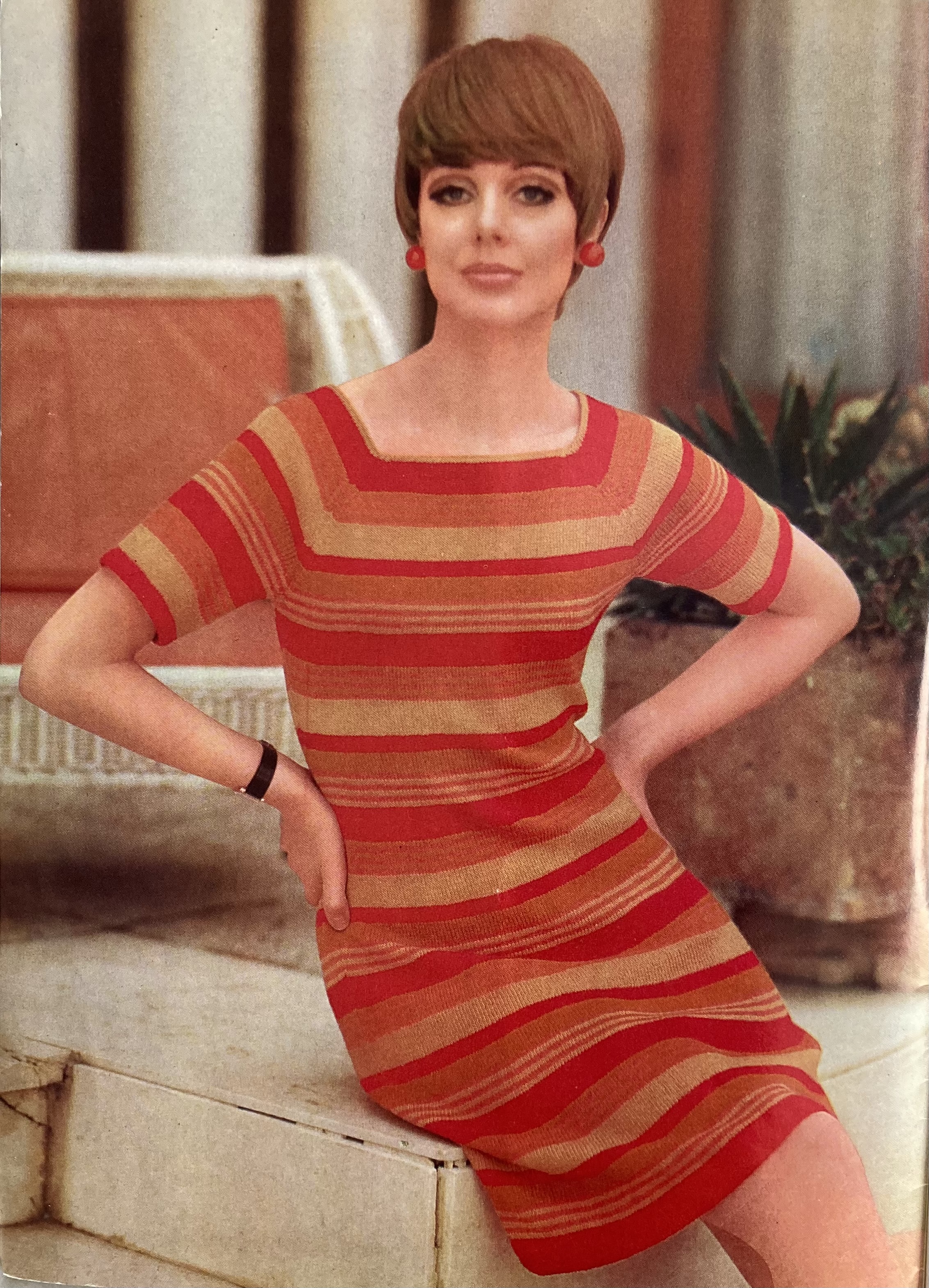
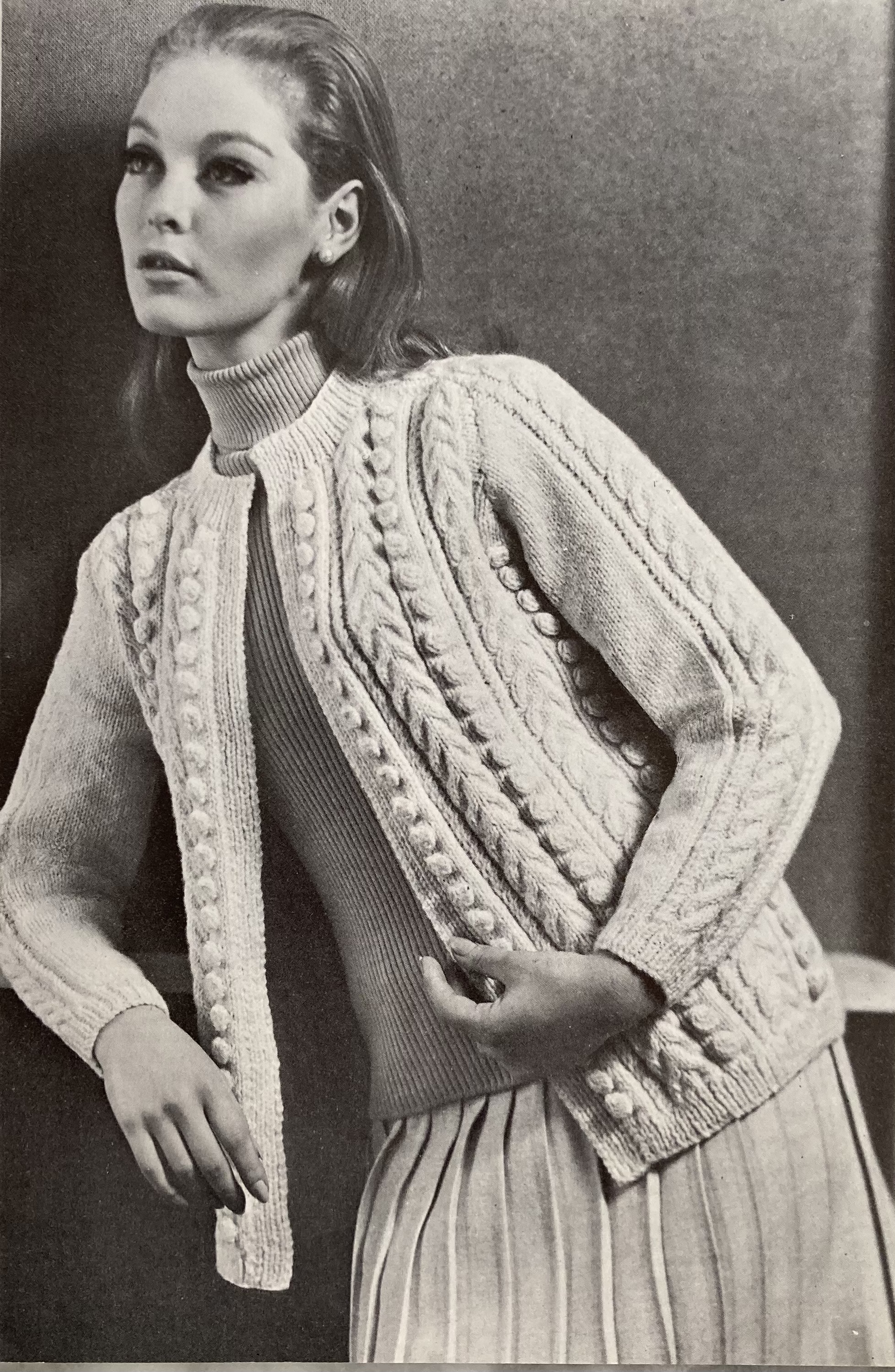
Our cover photo shows two “Little Sweaters for Holidays”: a mock-cable-and-lace jumper in synthetic “Nylox” yarn and a striped-and-ribbed “shell” in lightweight “Purple Heather” wool. Stripes are big in this issue, either via typical colour bands or the use of stitch pattern elements to create vertical lines. The dress on the inside cover uses coloured stripes in a dramatic way, with bold horizontal bands of red, gold and orange, while the thick “Capstan” wool jacket uses narrow bobble and cable panels to create a textured vertical-stripe effect. Horizontal colour stripes are contrasted with plain-knit sleeves or body on the shell and cardigan twin-set. Finally, rib panels and colour accents highlight the narrow silhouette of a zipped cardigan “for the extra slim.”
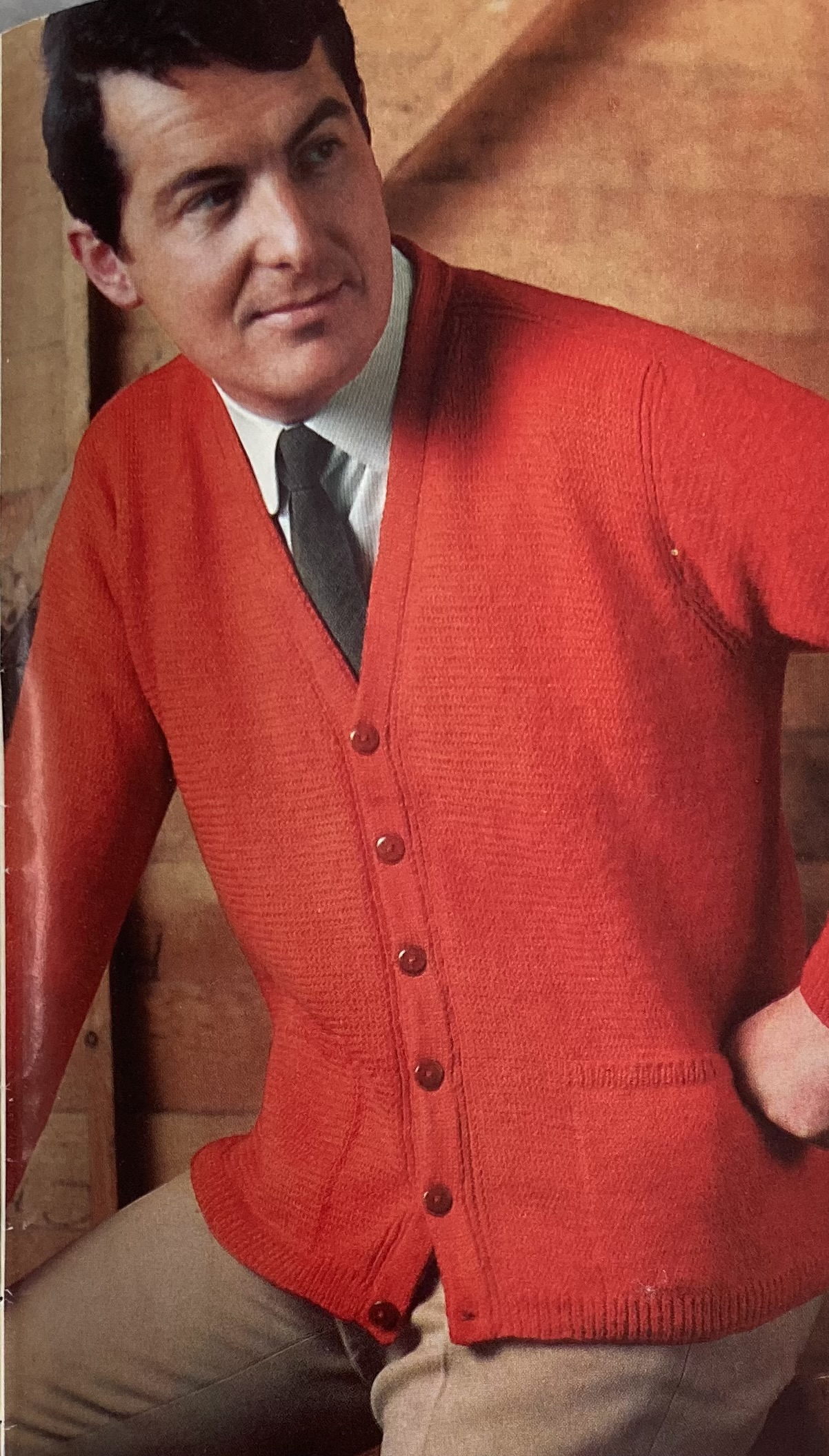
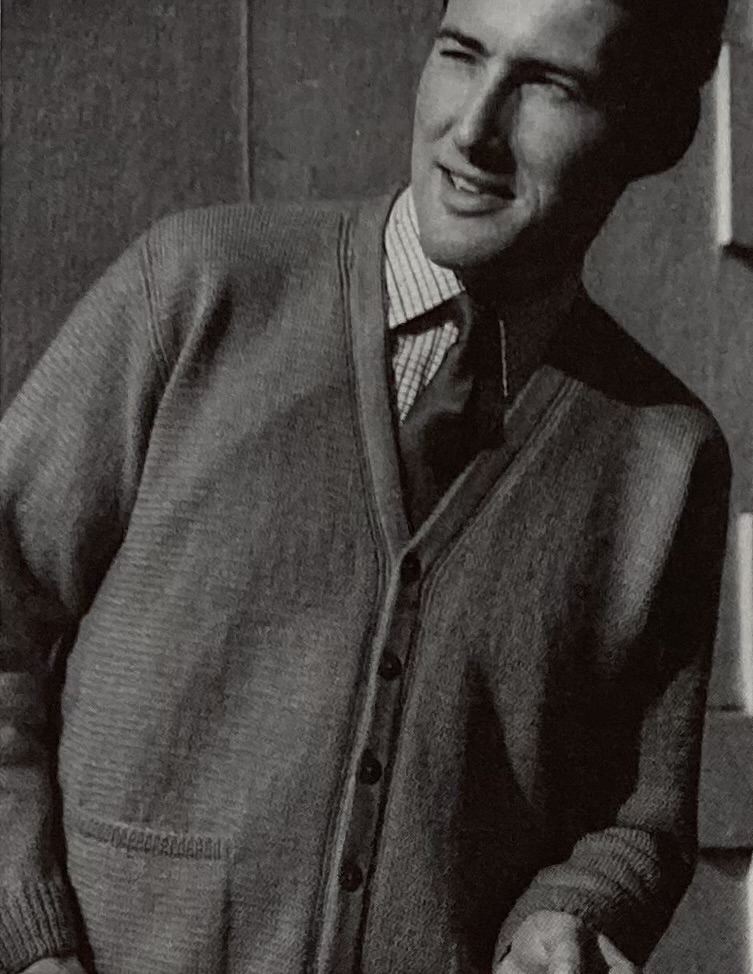
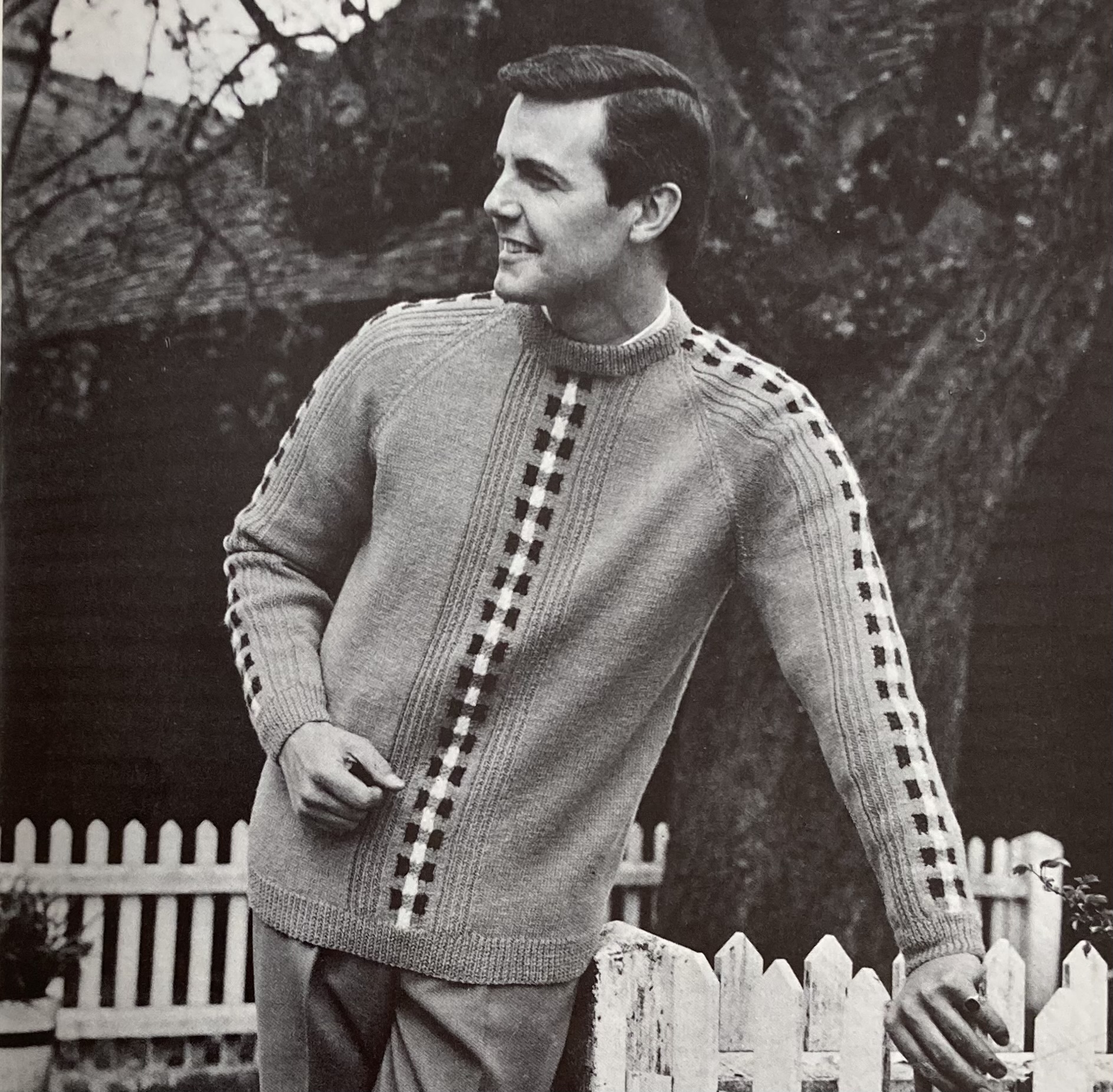
The men’s cardigan “in Classic Mood” is quite plain, but the “Viennese design” saddle-shoulder sweater incorporates some of the fun design elements that we see in the women’s garments: narrow rib panels to create vertical lines and plaid stripes for a splash of colour. The colours, by the way, are “French Mustard” with charcoal grey and white in the plaid stripes. (All in all, there are more colour photos in the 1967 issues than previous ones where only the covers and possibly the centrefold were in colour, but of course many designs are still only photographed in black and white.)
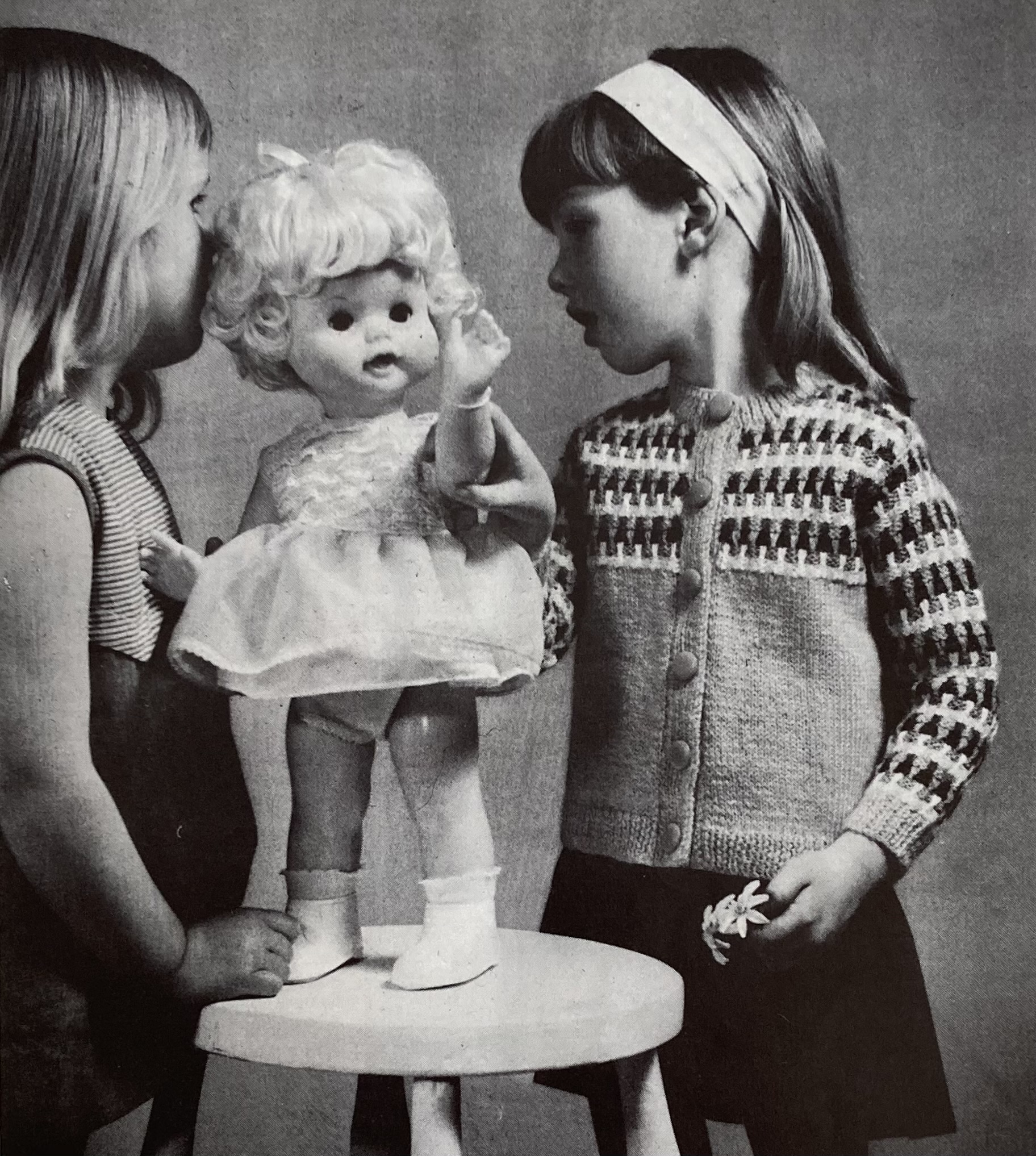
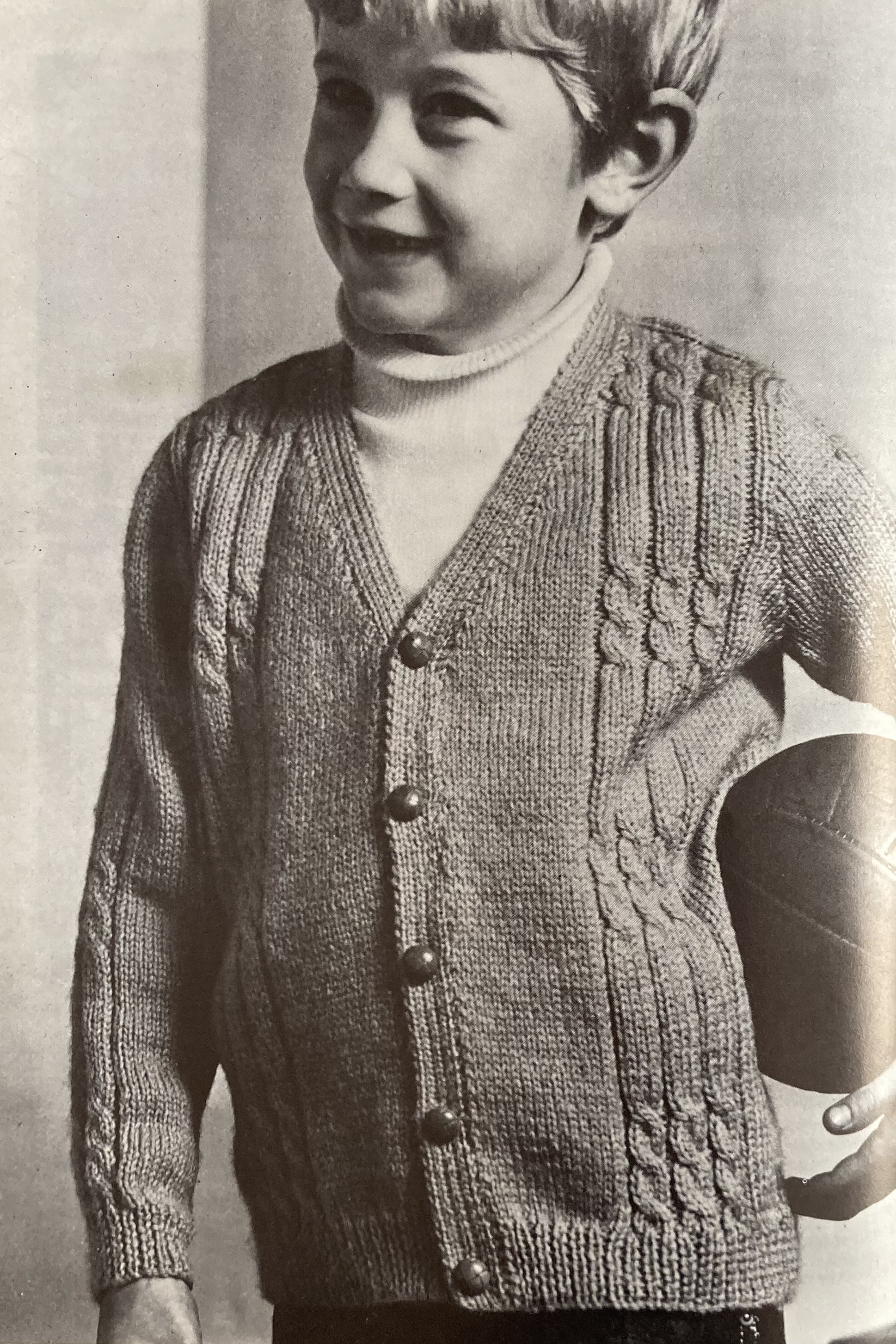
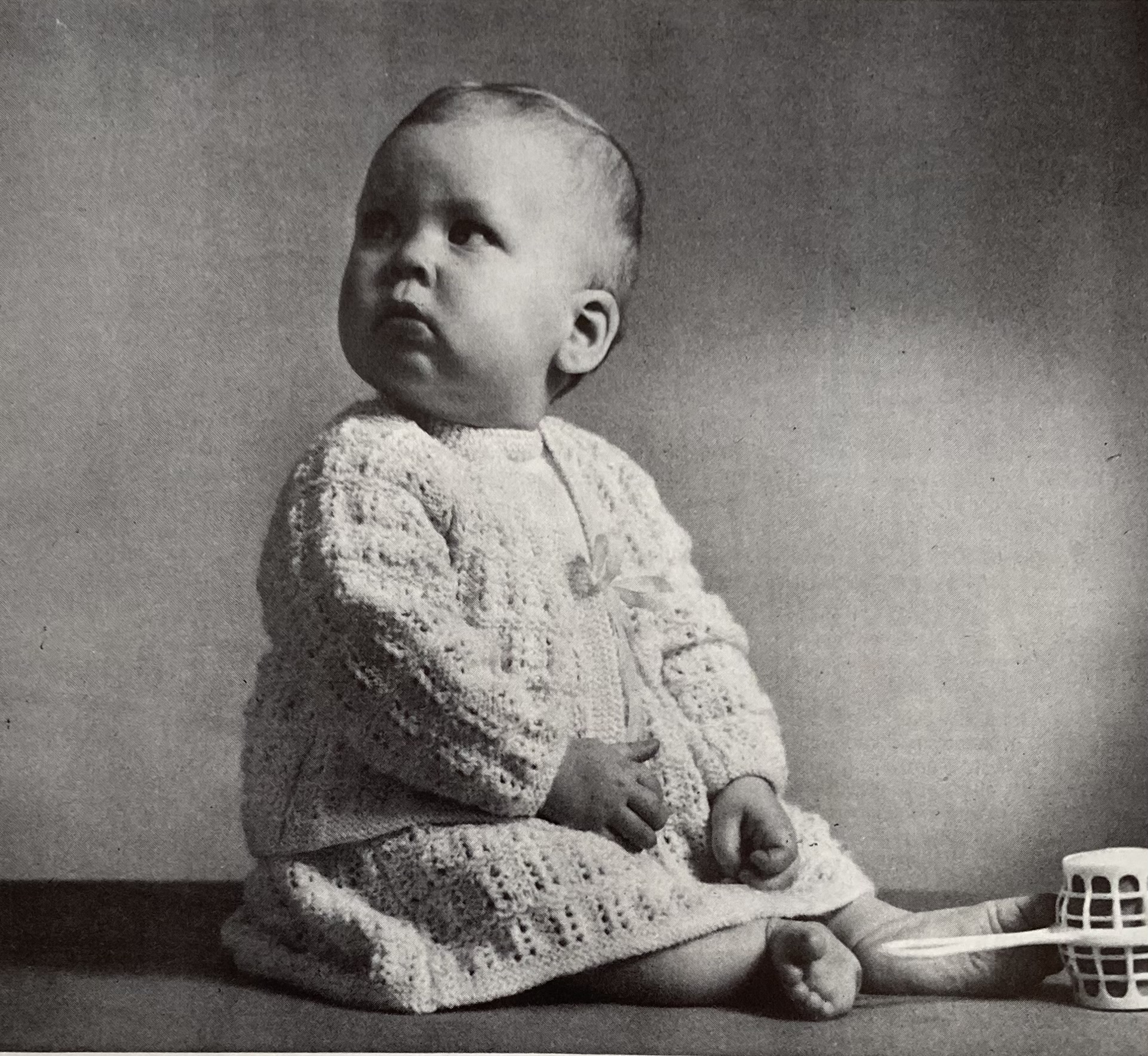
There’s a cute matinee set of dress and jacket for a baby and a cardigan for little girls with a slip-stitch colour pattern on the yoke. Of course, the little girl is pictured playing with her doll indoors, whilst the boy model gets to “play it rough in a shetland cardigan” out of doors (though the photo was obviously taken in the studio…) At least he’s not wearing a shirt and tie, only a turtle-neck shirt and a warm-knit cabled cardigan — which he might well have needed to stay warm on the day of the photo shoot, since according to the daily weather reports of the UK Meteorological Office, it was probably quite cold for summer, assuming the photo was taken in June!

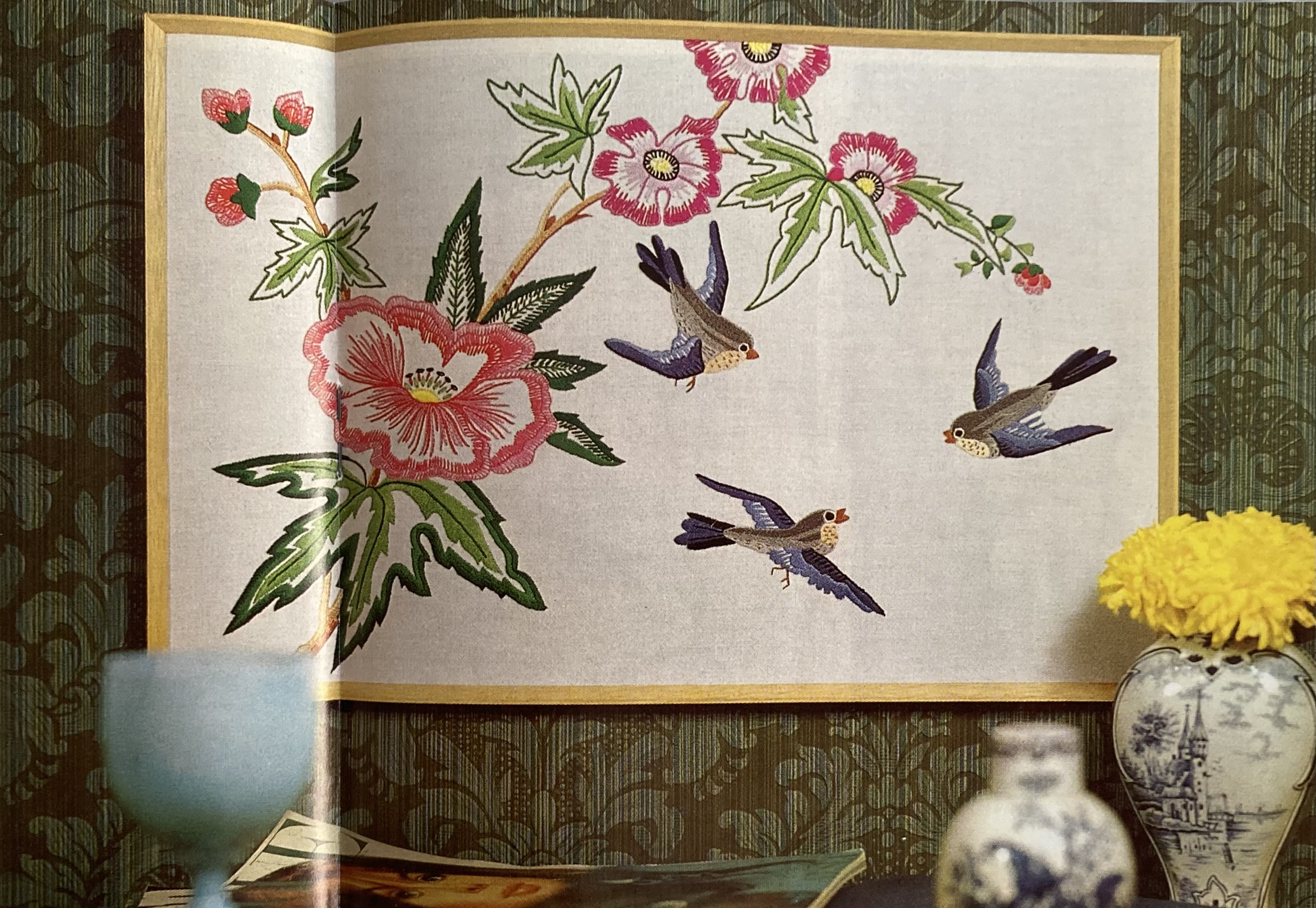
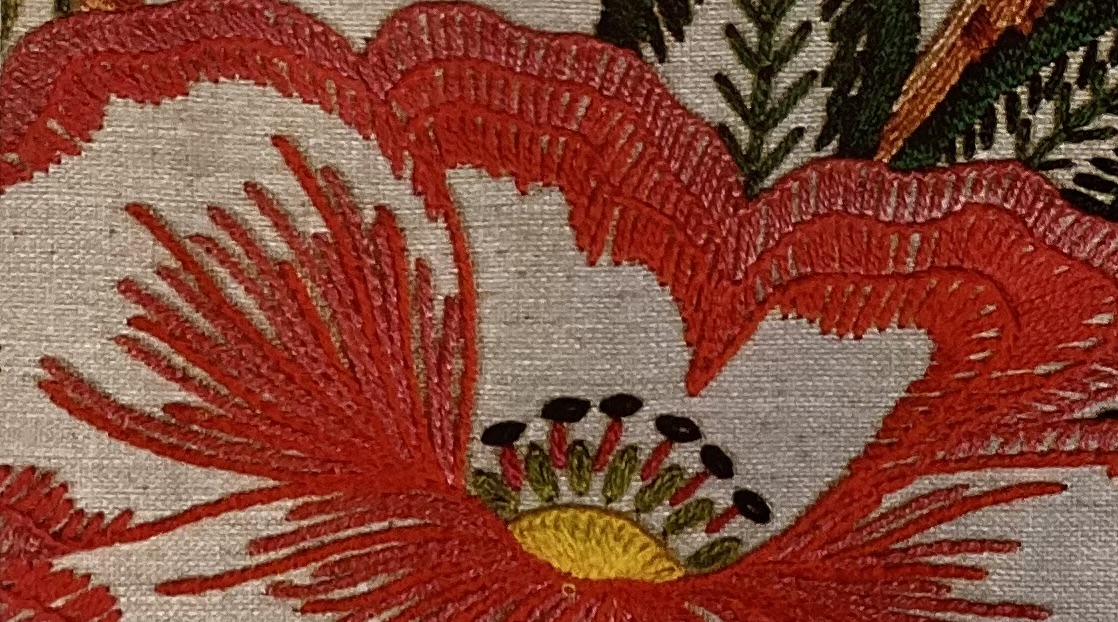
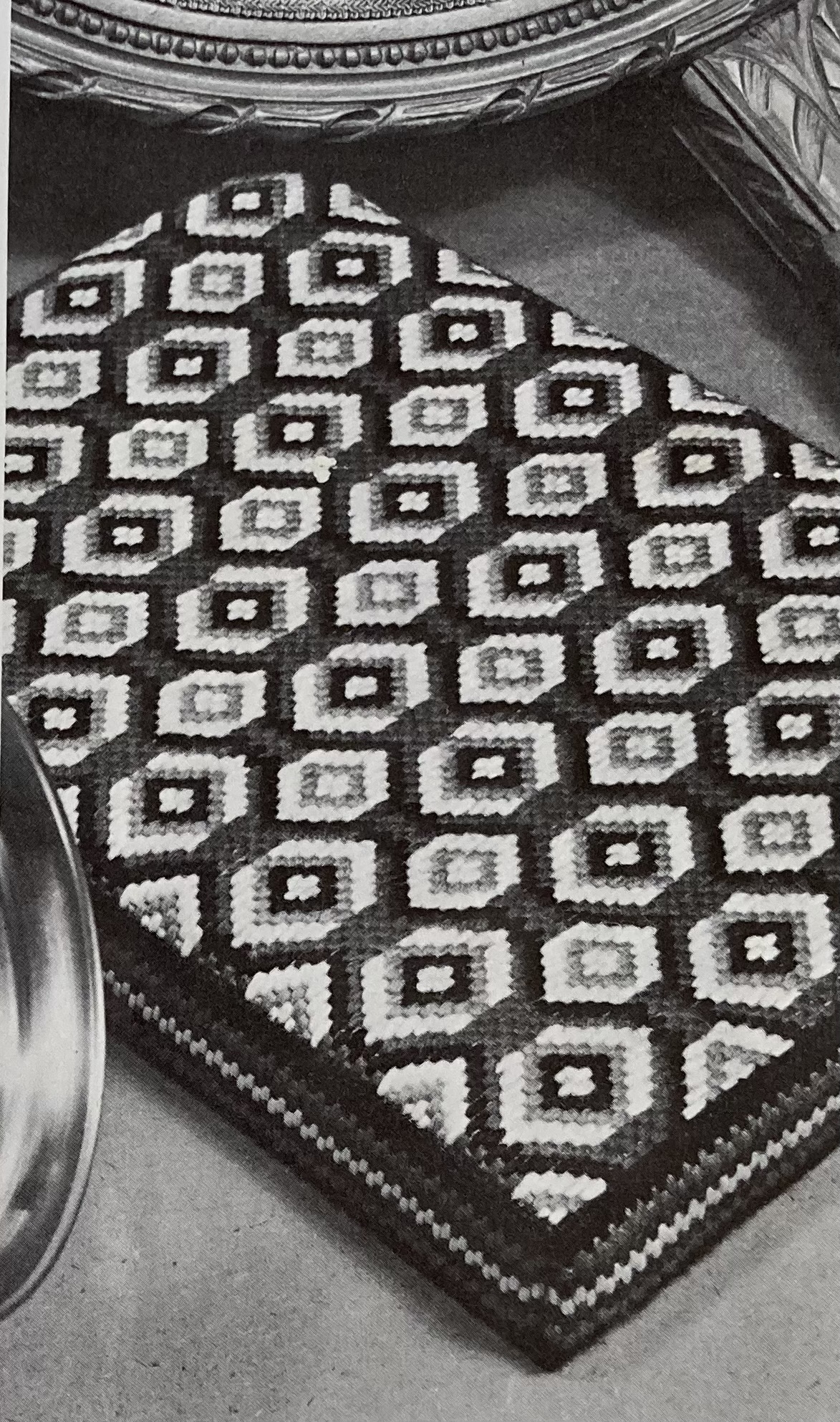
The homeware projects are fun, with an impressive embroidered wall panel inspired by Chinese designs and a tapestry design adaptable for either a little pincushion or a church kneeler.

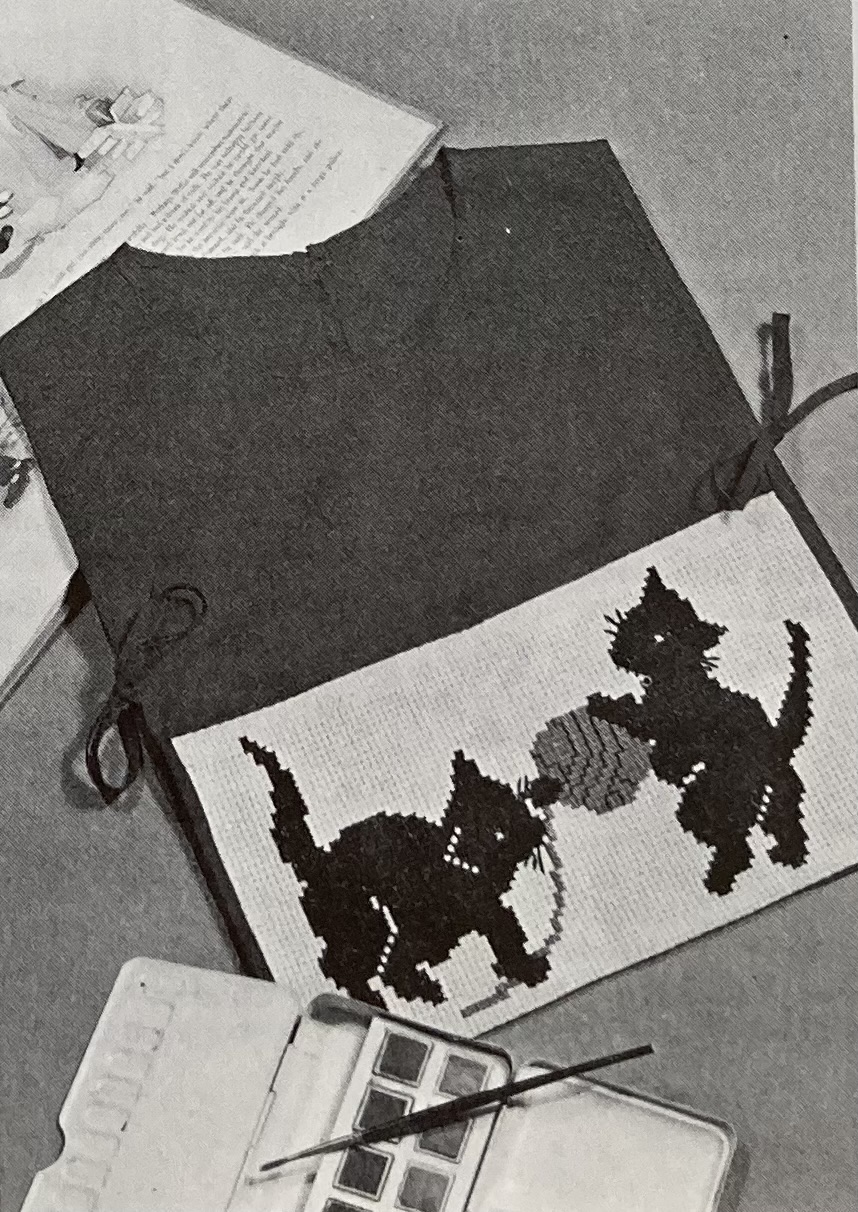
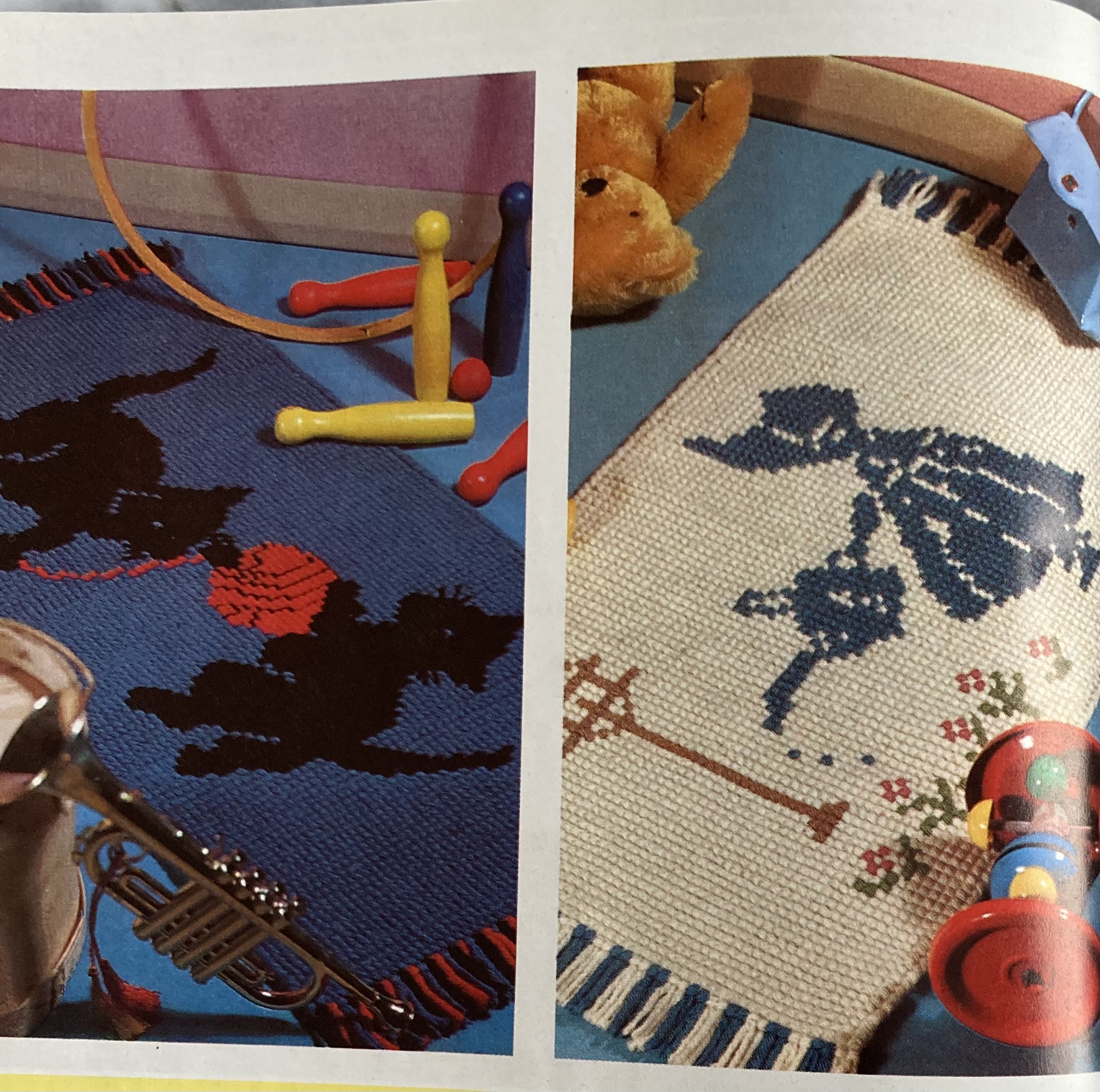
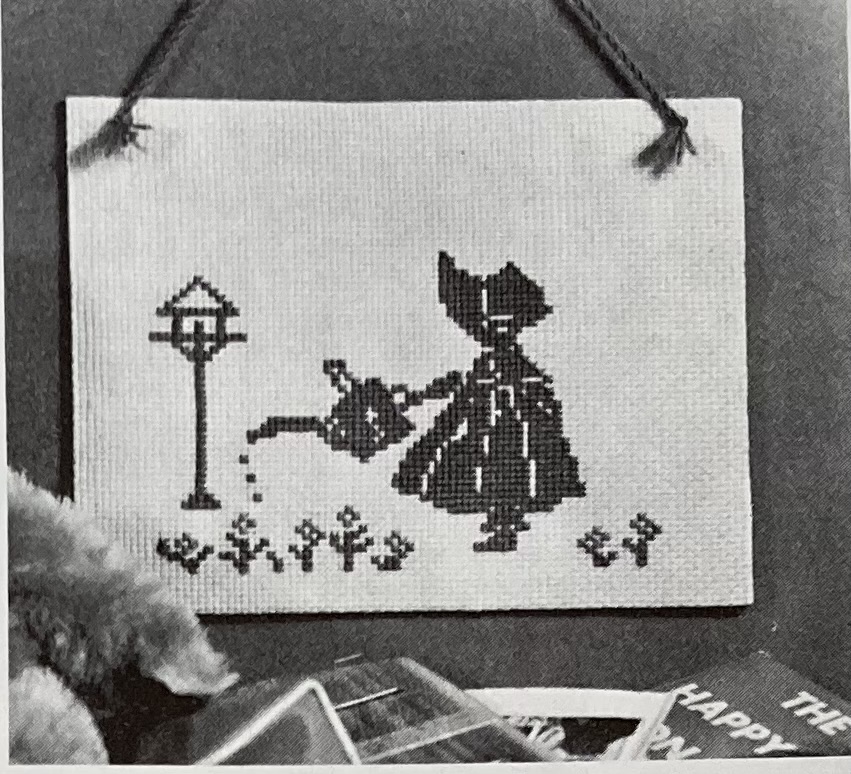
Adaptabiity is a key feature of the children’s homeware designs as well: the playful kittens or picture of “Mary, Mary” making her garden grow can be stitched into a rug, stitched as a picture or a panel on a toddler’s pinafore, or, in Mary’s case, worked as a little decorative picture in filet crochet.
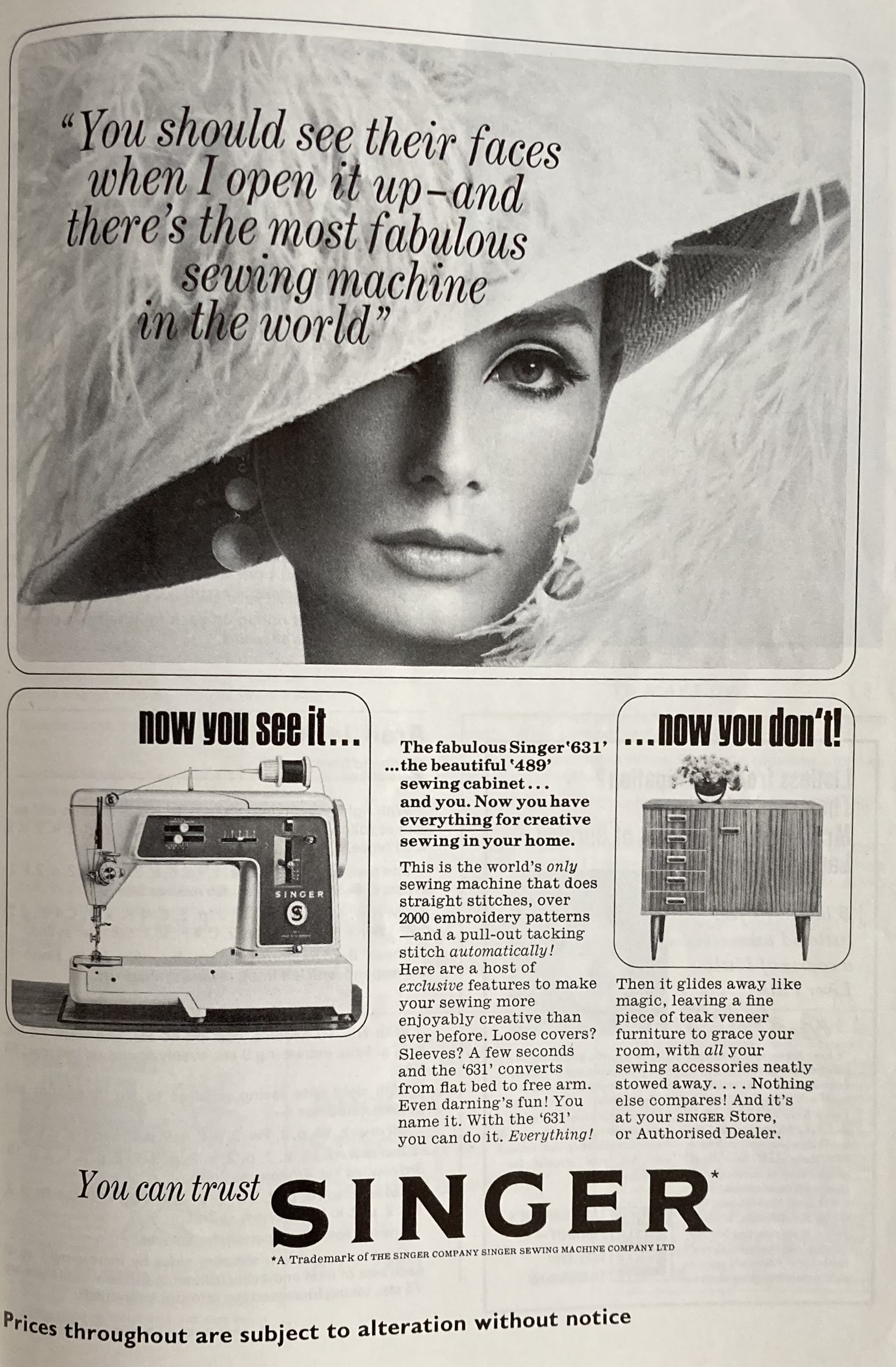
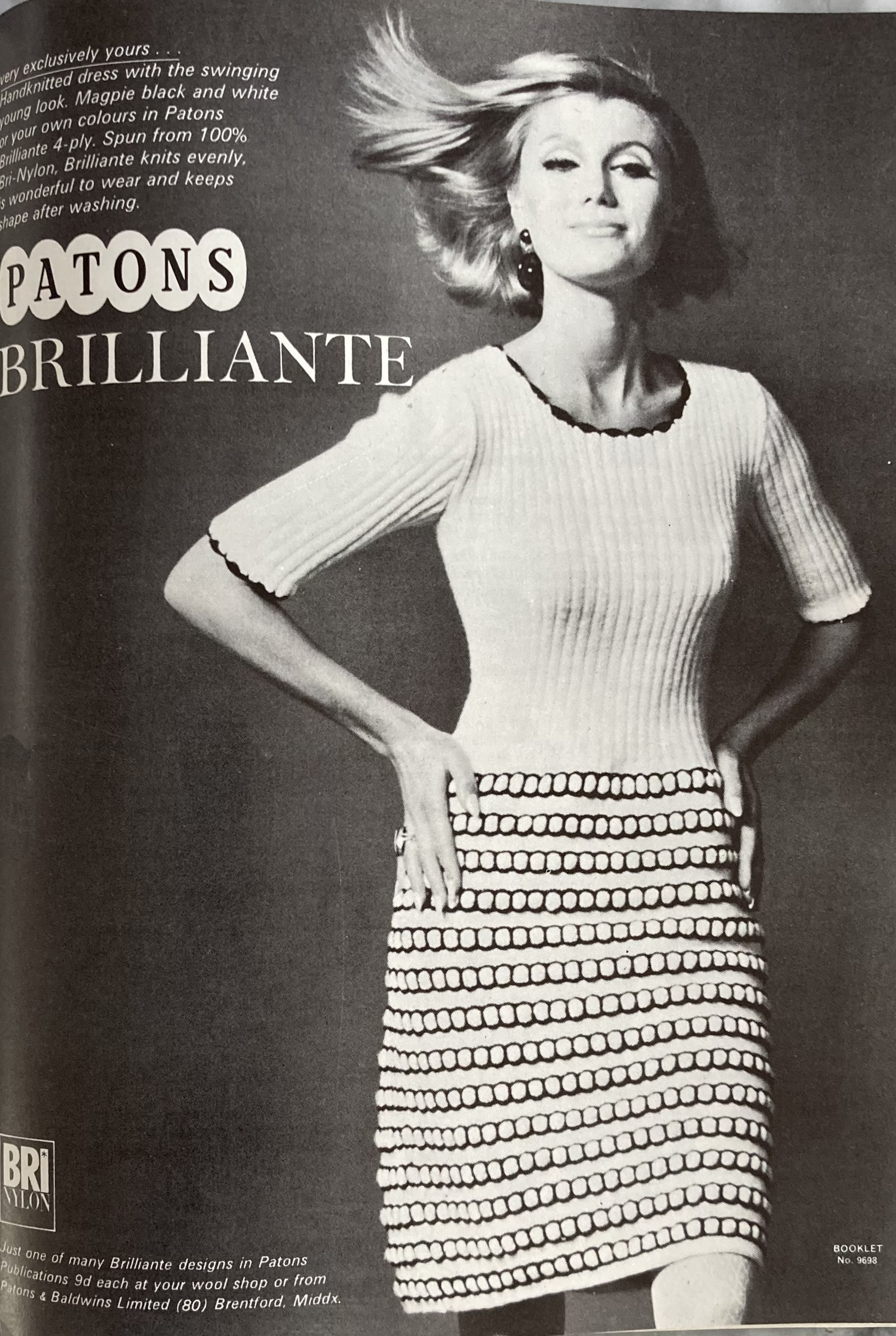
The Readers Pages don’t disappoint, with a simple pattern for a crocheted belt and ads for a book of handmade tie patterns, crochet “snowflake” designs, and crochet for brides. The 70s are on the horizon! The children’s comic continues the “Children of Other Lands” series, which is cute and well-meant but of course, heavily stereotyped and not the right tone for the twenty-first century. The full-page ads feature Patons Brilliante yarn and another ad for that fabulous sewing maching that folds down into its own chest of drawers.

That’s it! My July project will be the jacket from the baby set. Stay cool!
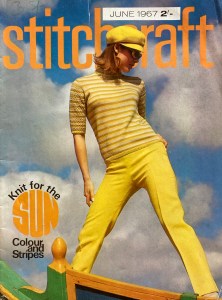
June 1967: Overview

“Knit for the SUN” is the theme of the June 1967 issue of Stitchcraft, and our cover model gives us the best example of that in her striped and sunny yellow outfit.

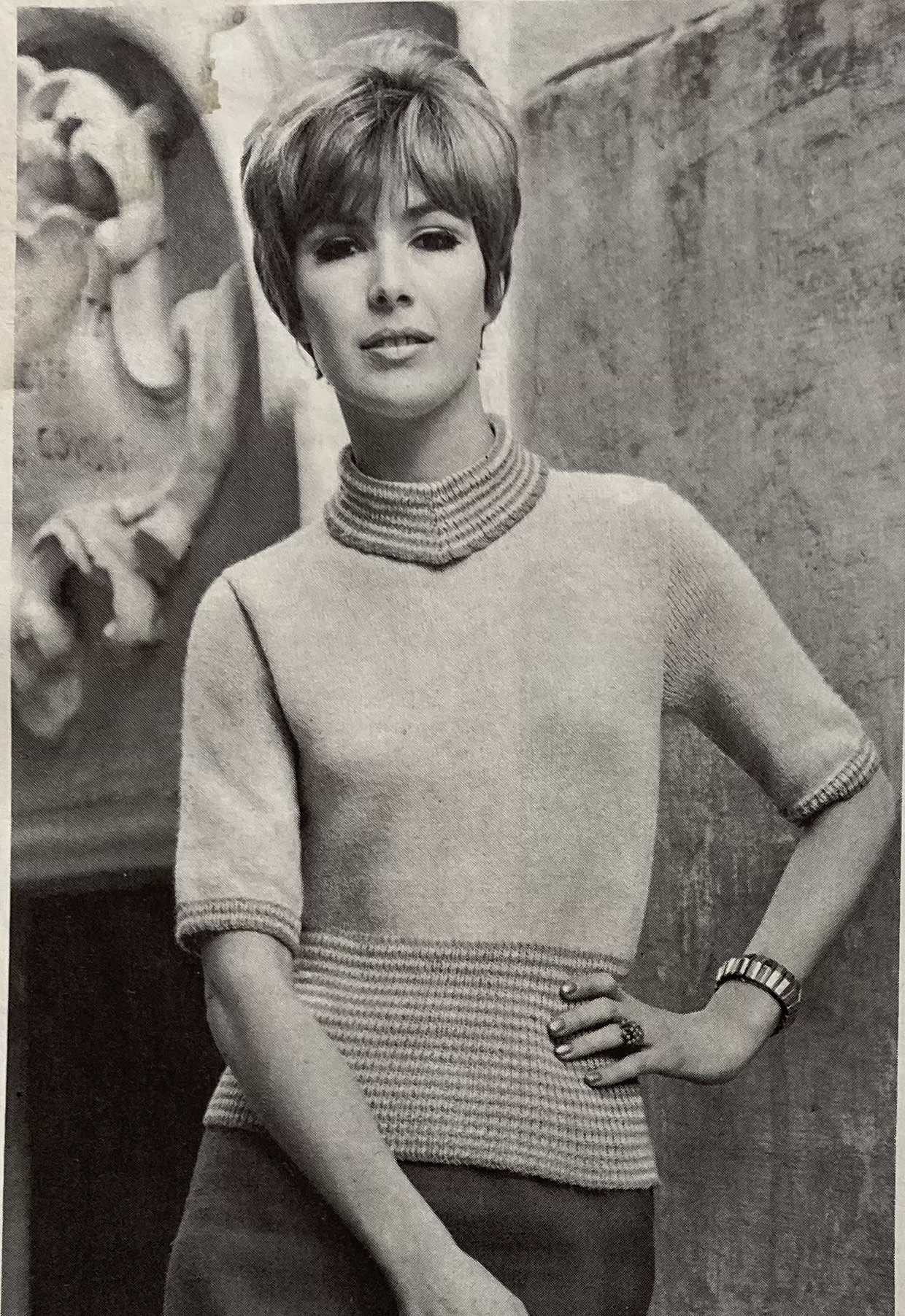
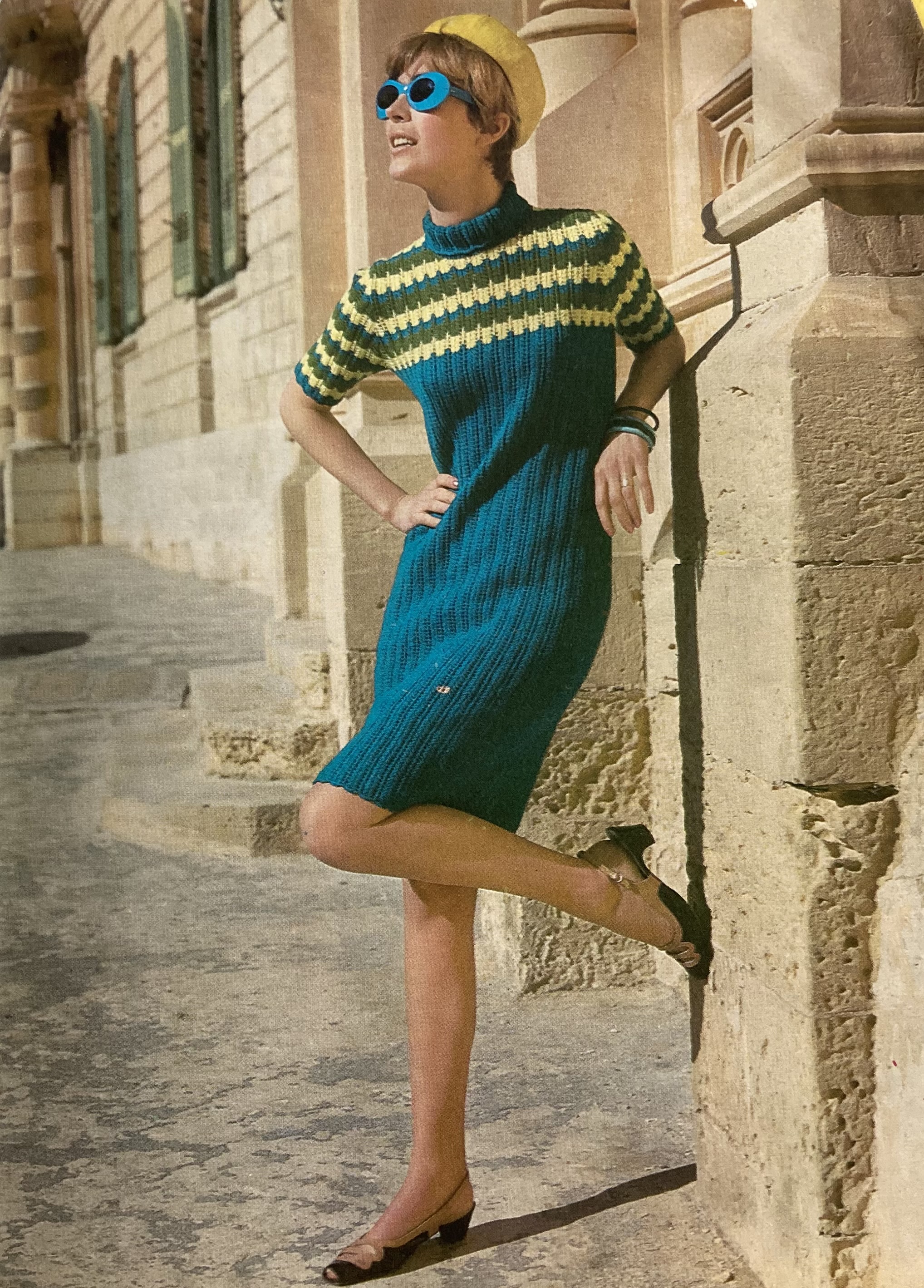
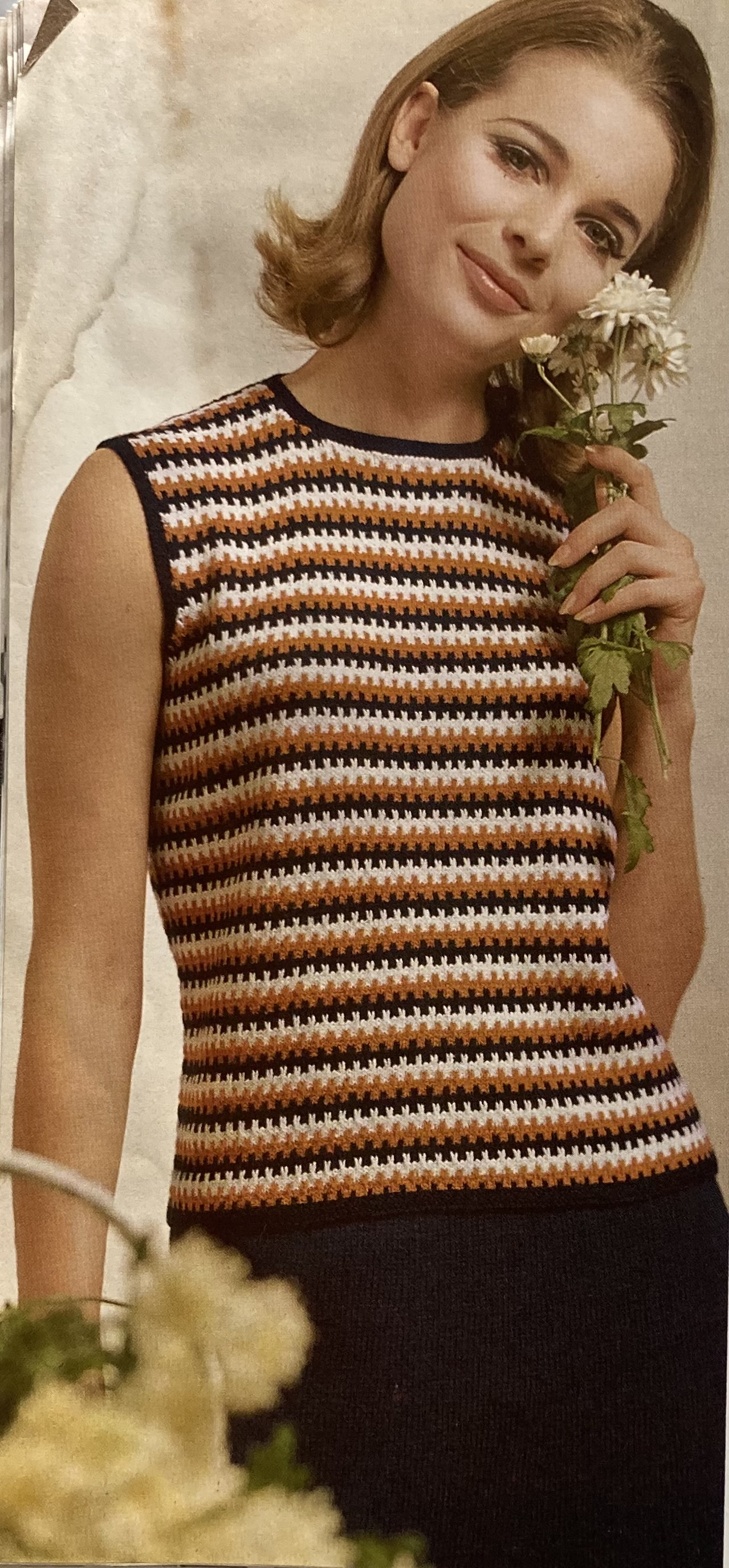
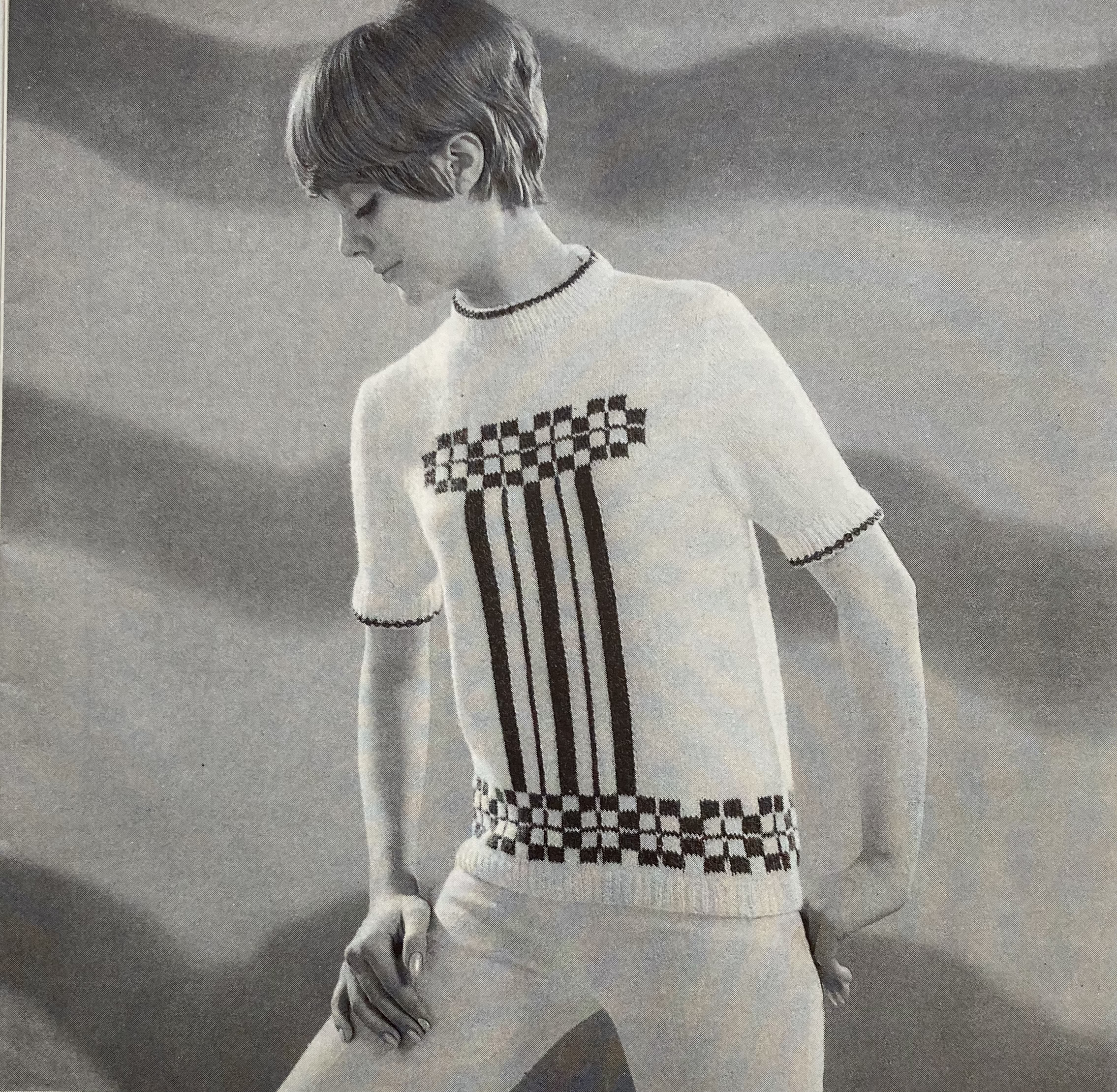
“Stripes and Colour” show up in different ways in this issue, combined with stitch patterns and stranded colourwork for novelty and texture. The pullover on the cover has normal stocking-stitch stripes on the front and back and a novel mini-cable pattern on the sleeves which mixes the four-row colour repetition with a two-stitch cable every four stitches on every fourth row, alternating left- and right- leaning cables for a zigzag effect. Another short-sleeved pullover has striped ribbing, but a plain body and sleeves. The “feathery lace” dress has vertical stripes implied by the ribbed lace pattern combined with plain horizontal colour stripes that look scalloped due to the stitch pattern. Love those sunglasses, too! And a sleeveless shell uses a slip-stitch pattern to make stripes with toothy ridges.
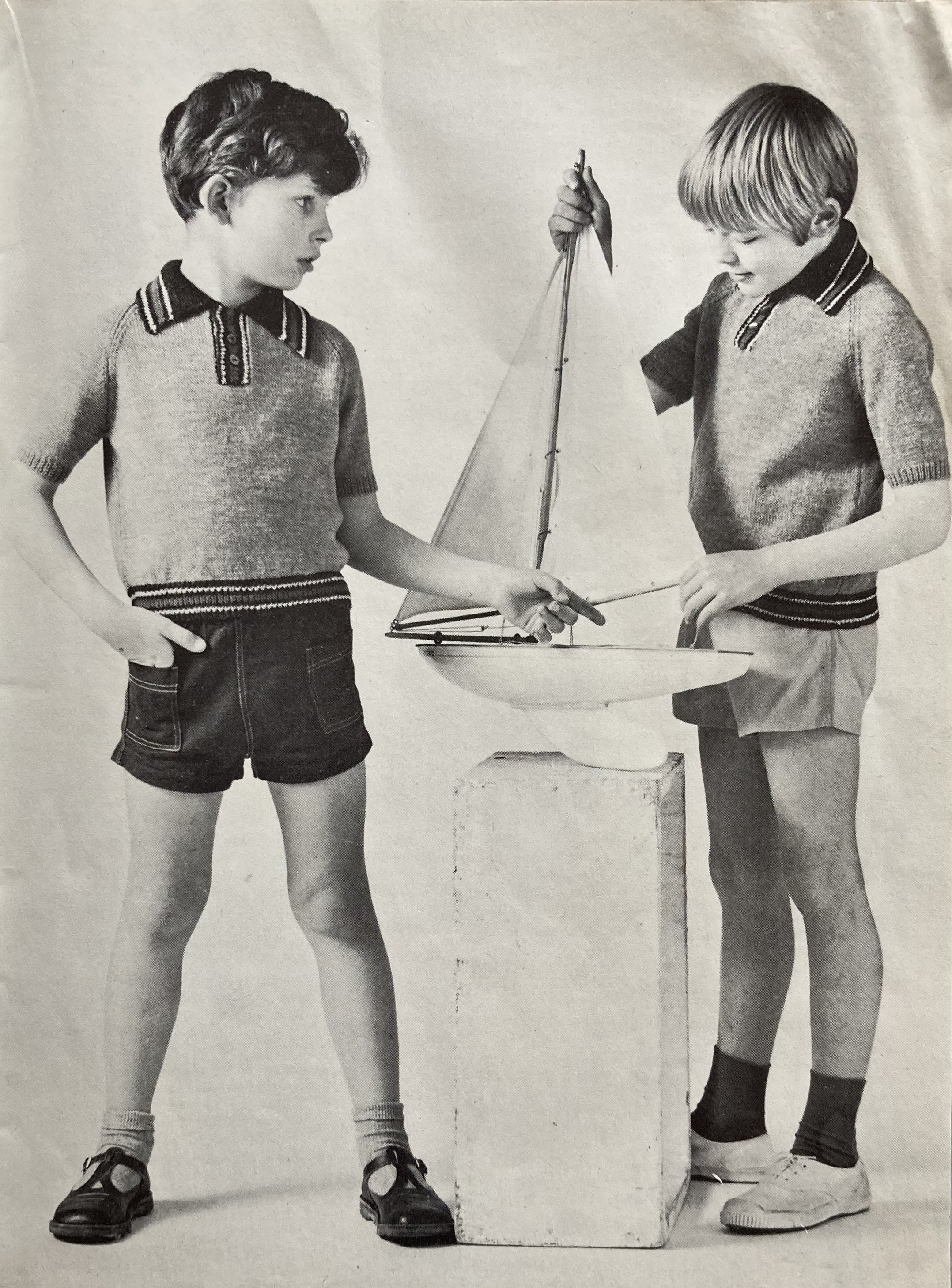
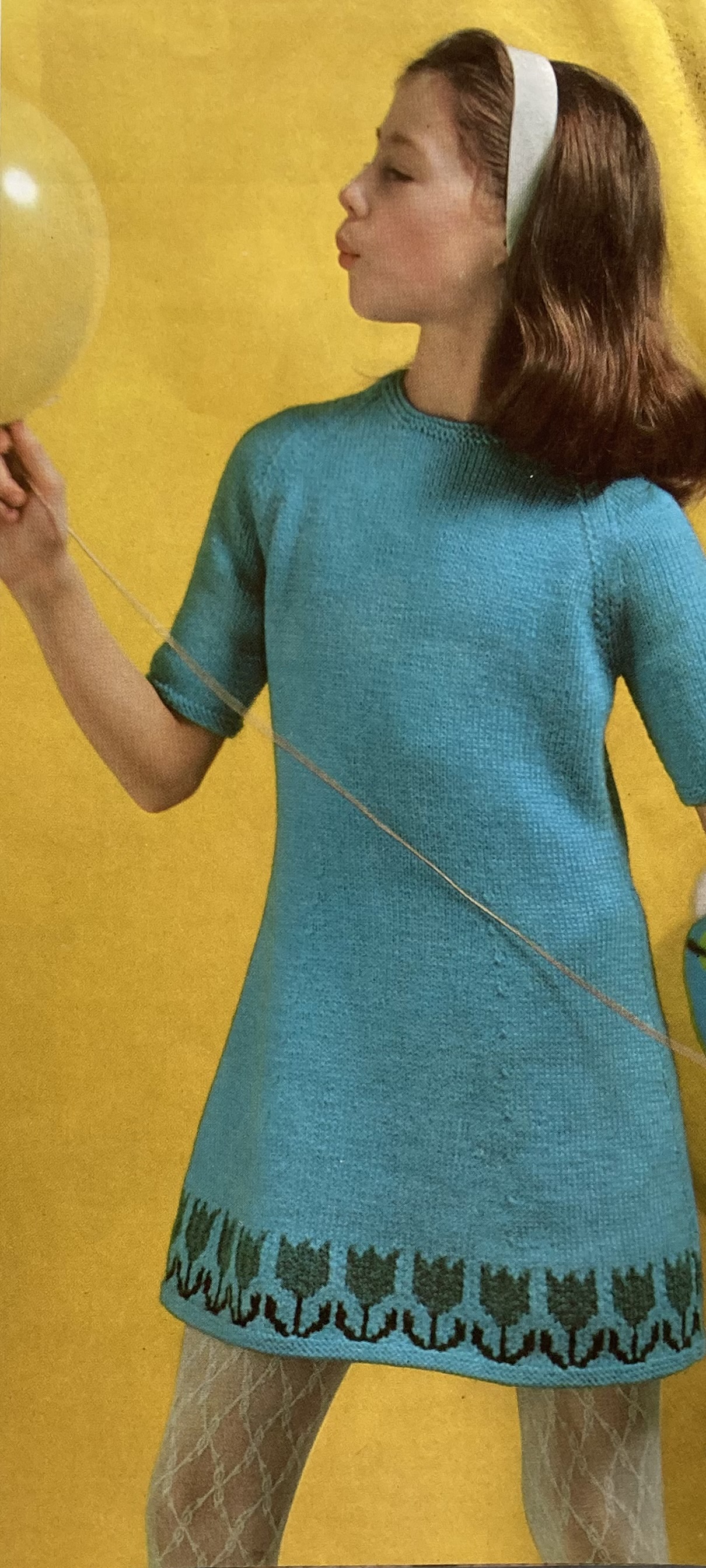
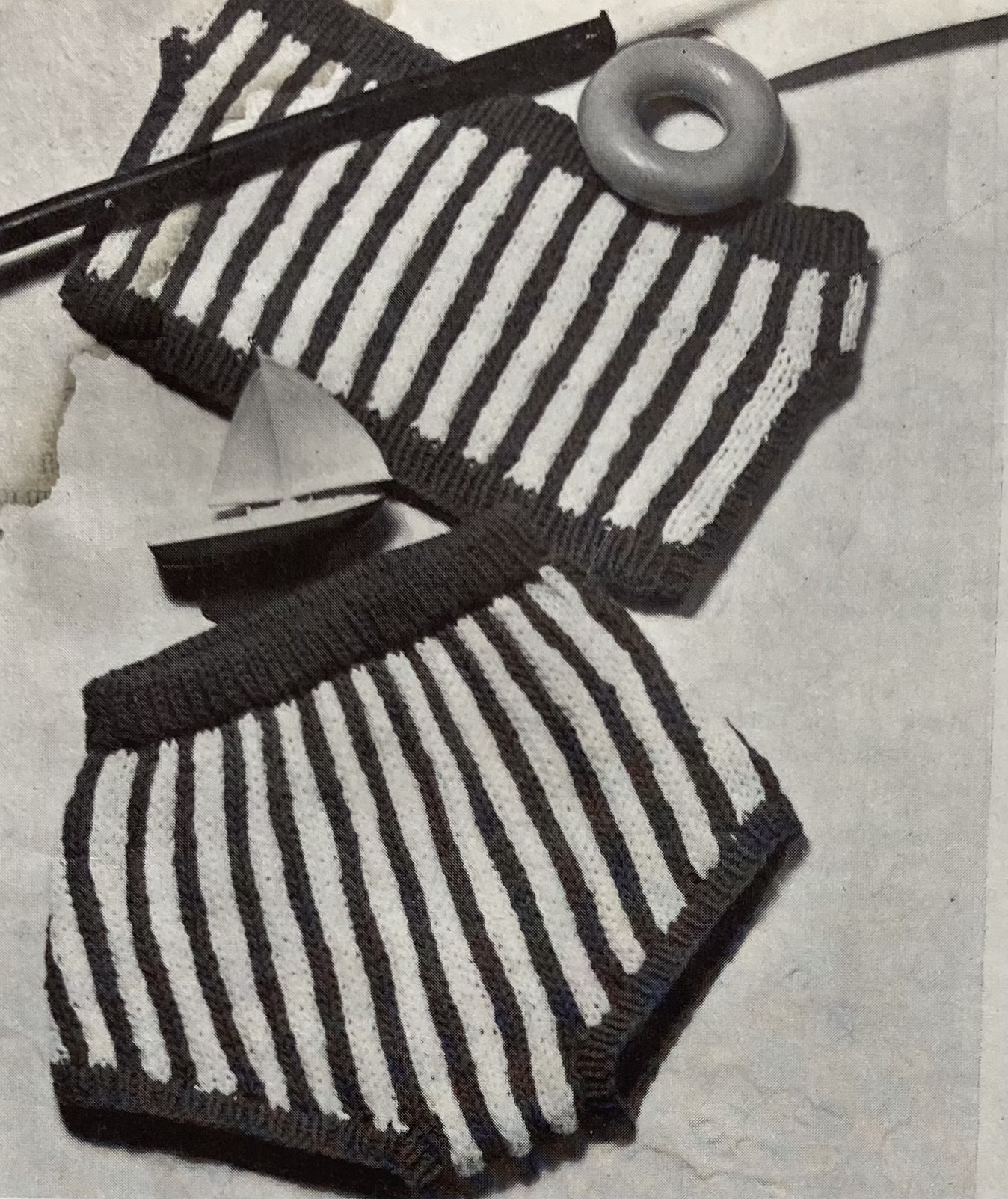
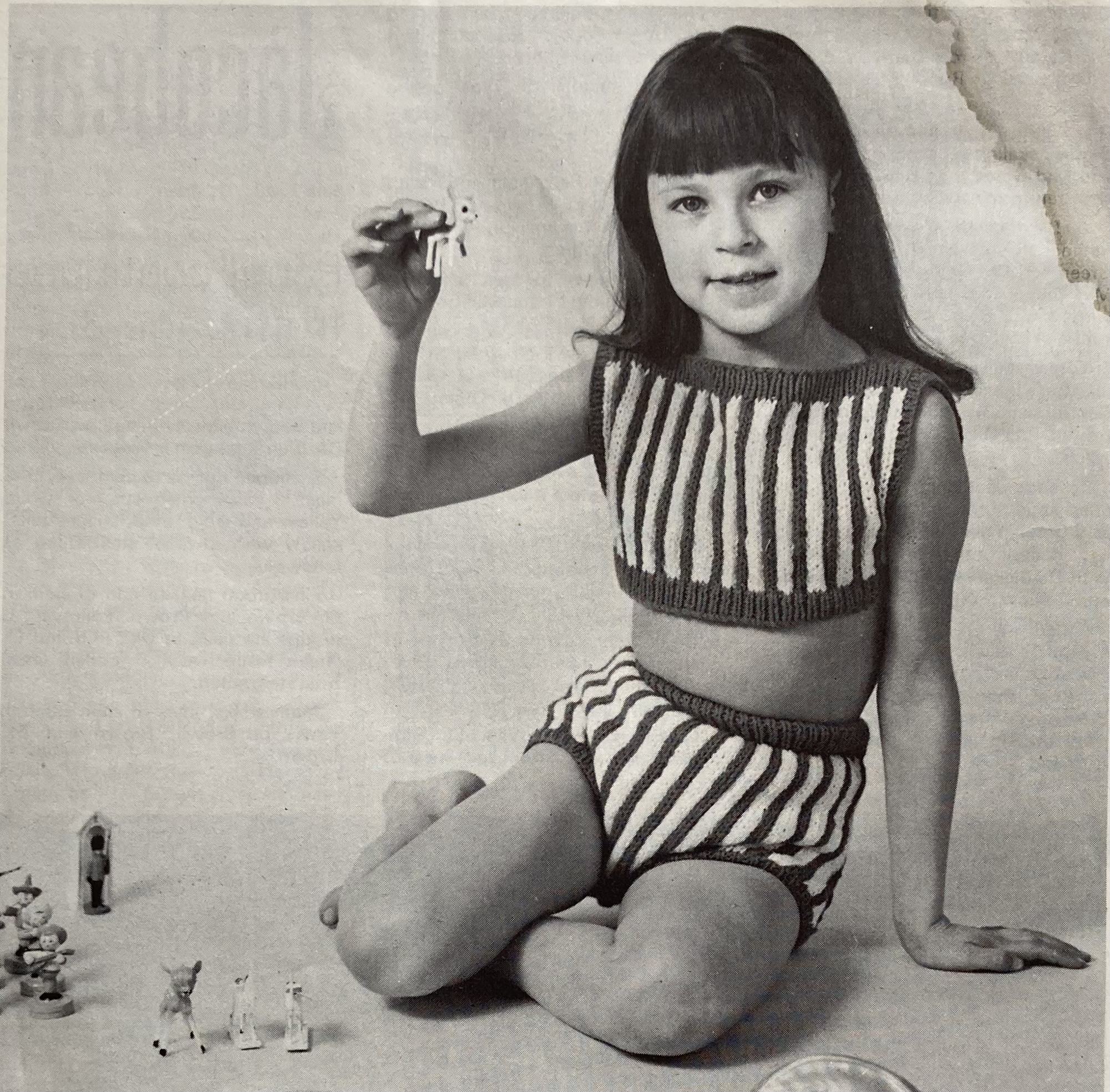
Fun stripes show up on the children’s garments too. There are shirts for boys with the same striped ribbing and collar, plain body and sleeves idea as the women’s top, and a dress for older girls with a stripe of colourwork flowers at the hem. “Junior” girls can “splash and paddle” (i.e. not really swim effectively) in a supposedly stretch-proof knitted bikini in vertical stripe stranded work — the strands should keep it from stretching too much horizontally in the water, but I’m not sure I’m convinced. The top is just two rectangles sewn together.

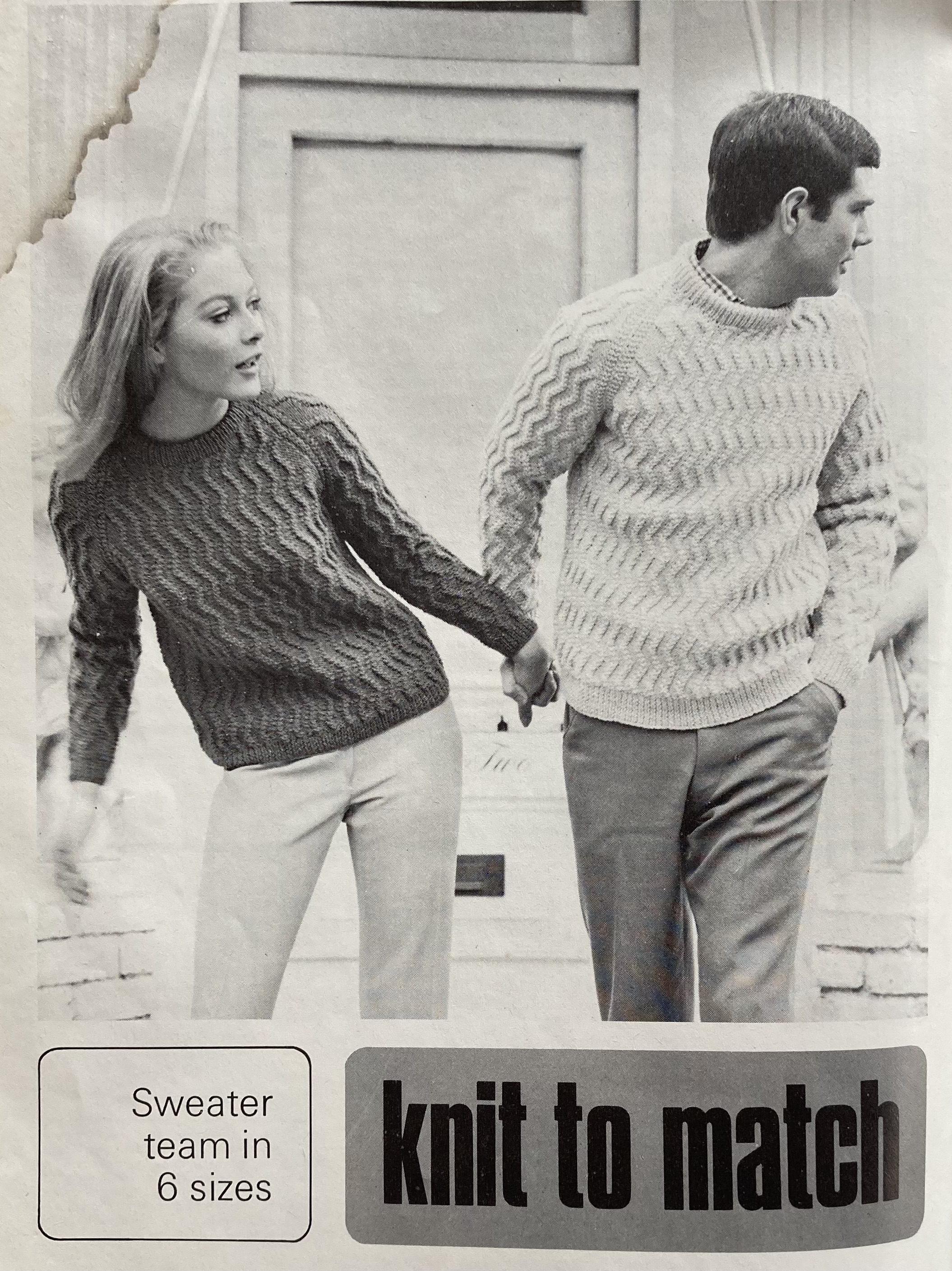
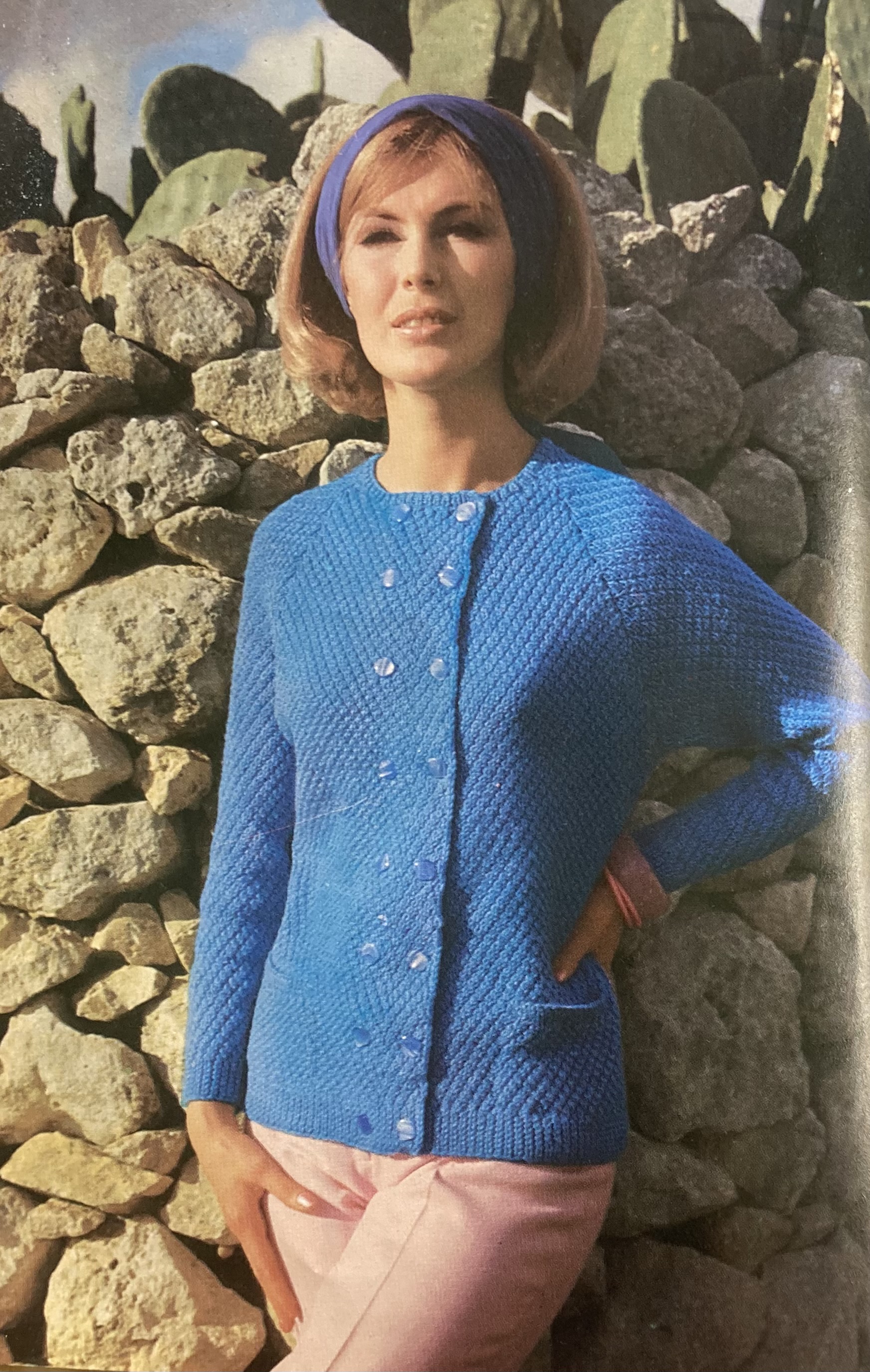
Stripes can be vertical or zig-zagged as well — either worked in colour as with the top on the cover, or in monochromatic stitch patterns. There are his-n-hers pullovers “knit to match” in a pattern similar to the sleeves on the cover design, but worked with 2-stitch twists instead of mini-cables, and a sleeveless polo in “Shetland mood” with a cable pattern on the front. (The caption says, “Janet sports her own jaunty beret, but Booklet 9775 is an easy one to knit — details on page 37.”) The two remaining garment designs, a cardigan and a blazer, have neither stripes nor zig-zags, but continue the theme of fun stitch patterns and this month’s trending colour of bright sky blue.

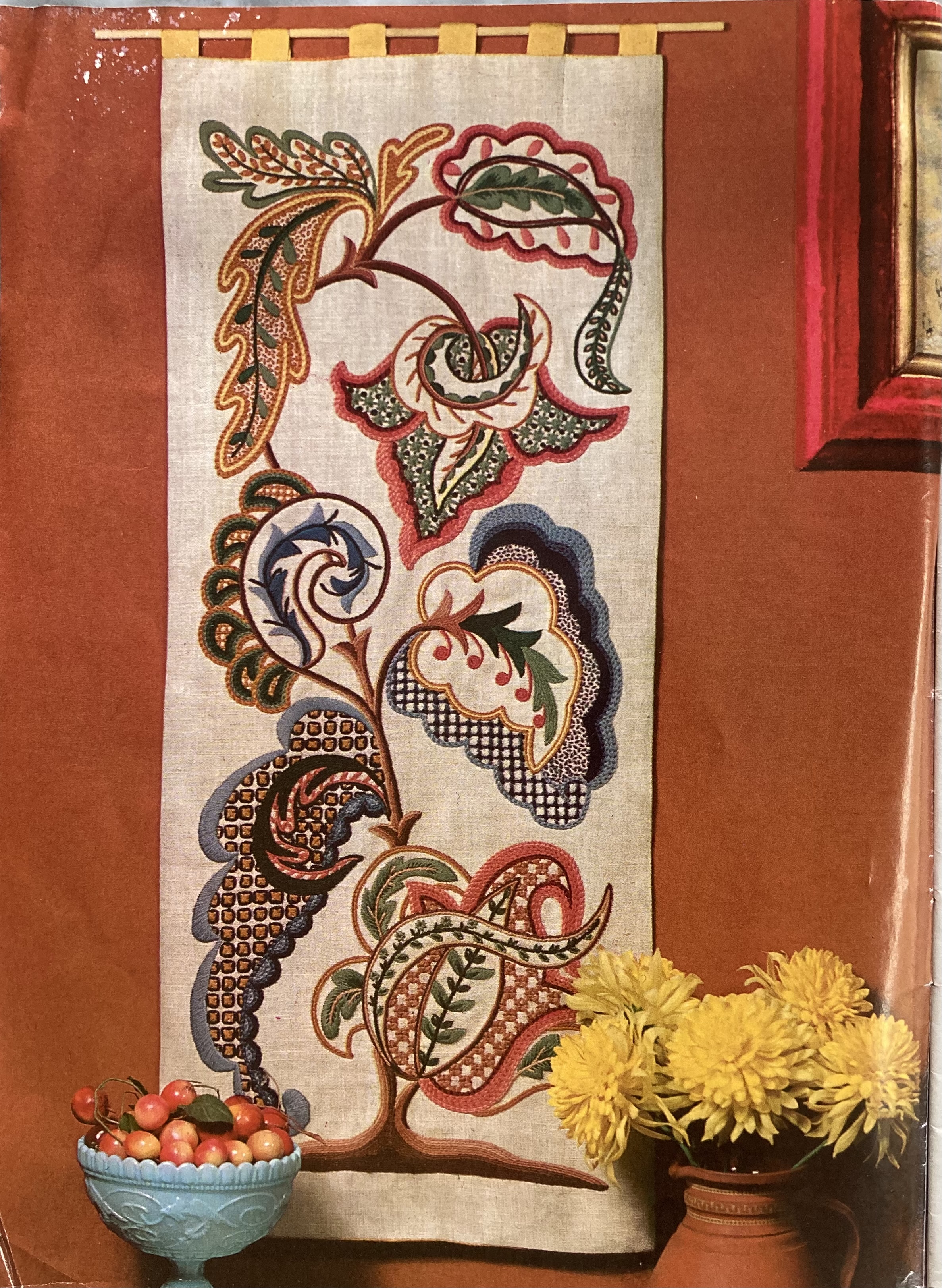
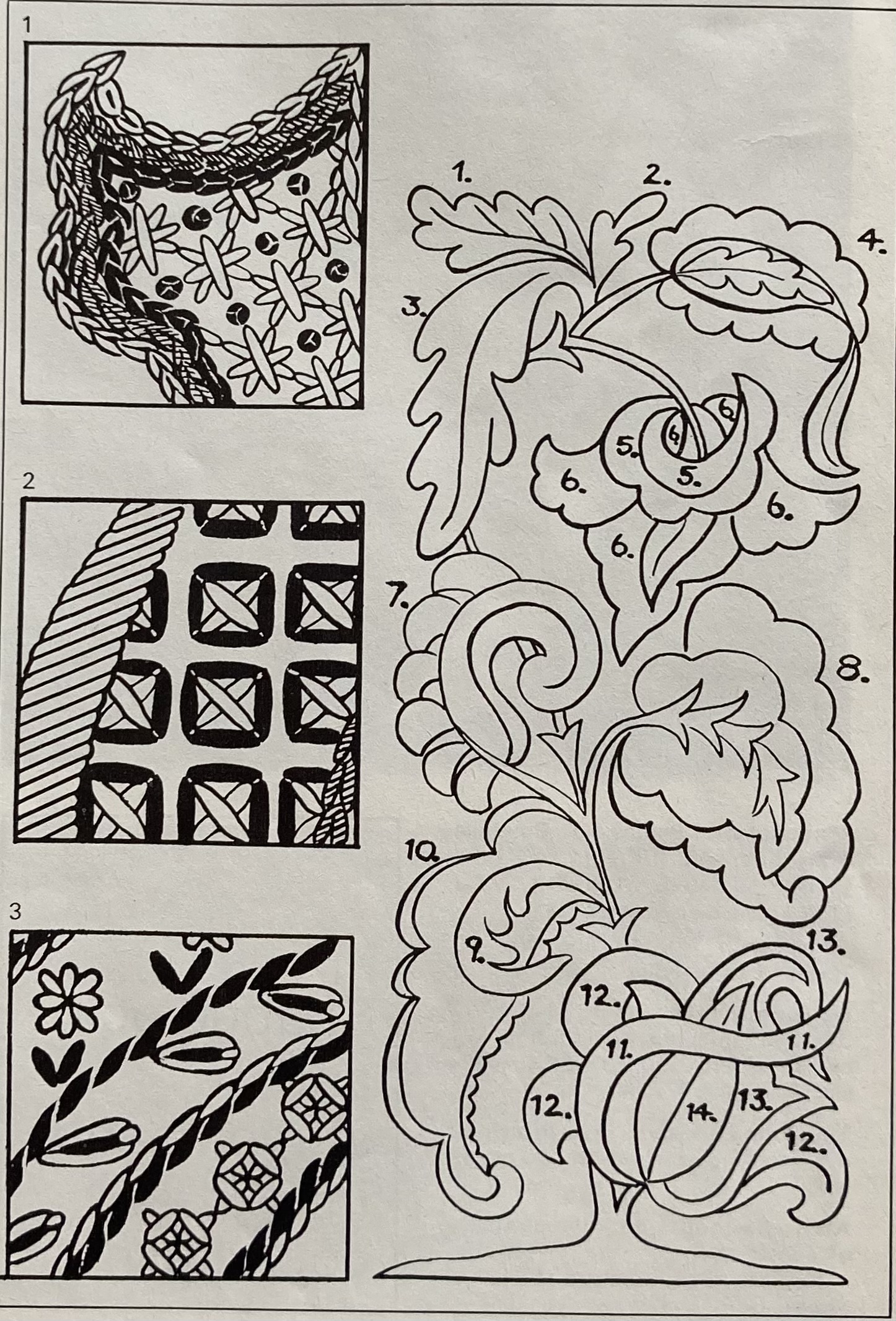
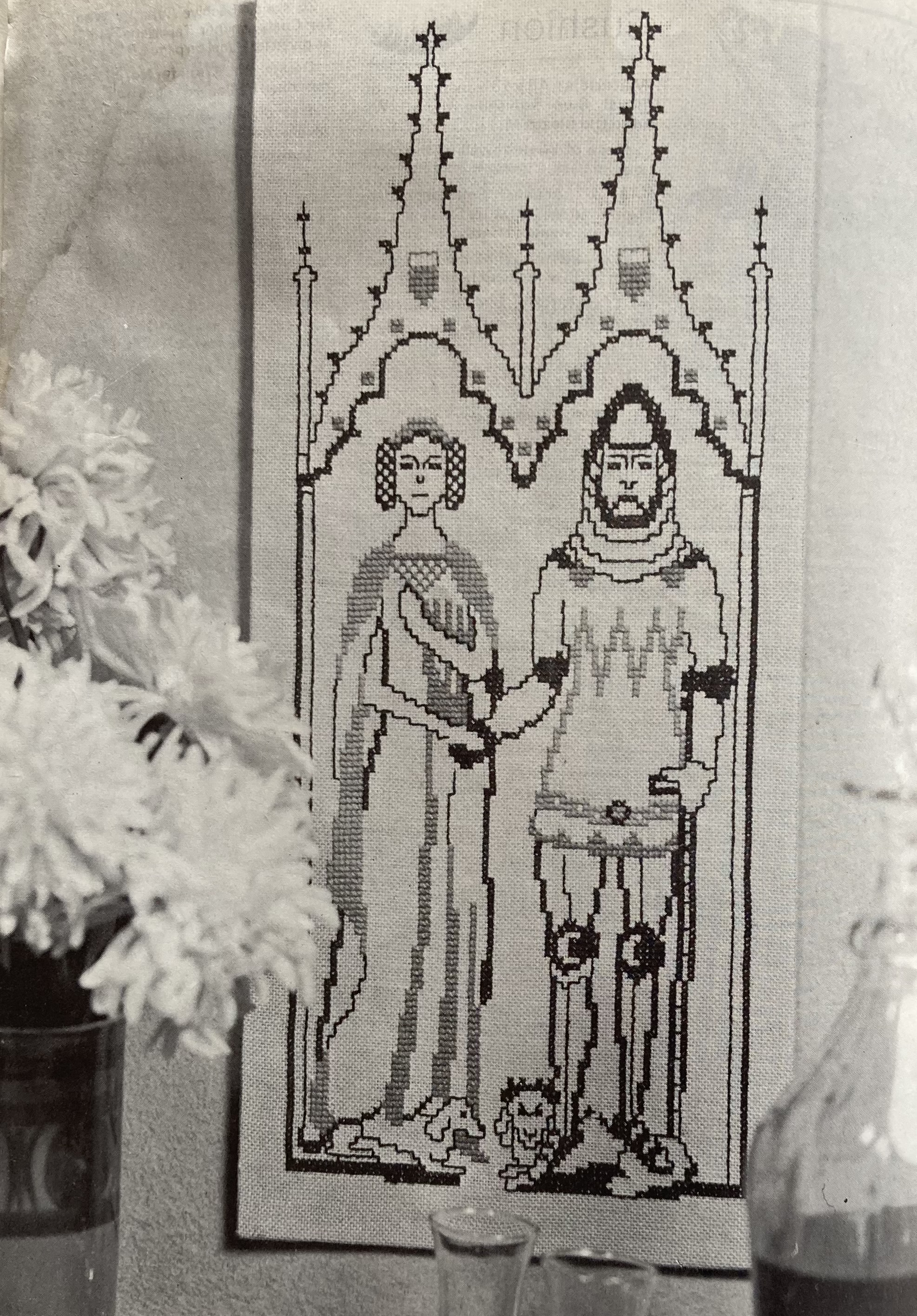
Homewares dive deeply into the Jacobean era, with an amazing wall panel that integrates complicated, historically-inspired stitch work and floral designs with a bold and oversized 60s aesthetic. Not Jacobean-inspired, but equally colourful and exotic, is the cross-stitch tropical bird. You can work it on a cushion or use it to cover a cake tin (appropriately, the name of the background colour is Biscuit.) For a real historical flair, you can make a cross-stitch wall panel adapted from a brass rubbing of Sir John Harsick, anno 1384, in Southacre, Norfolk. According to Stitchcraft, embroidery in the style of a brass rubbing “has become very popular over the last few years.” Interesting!

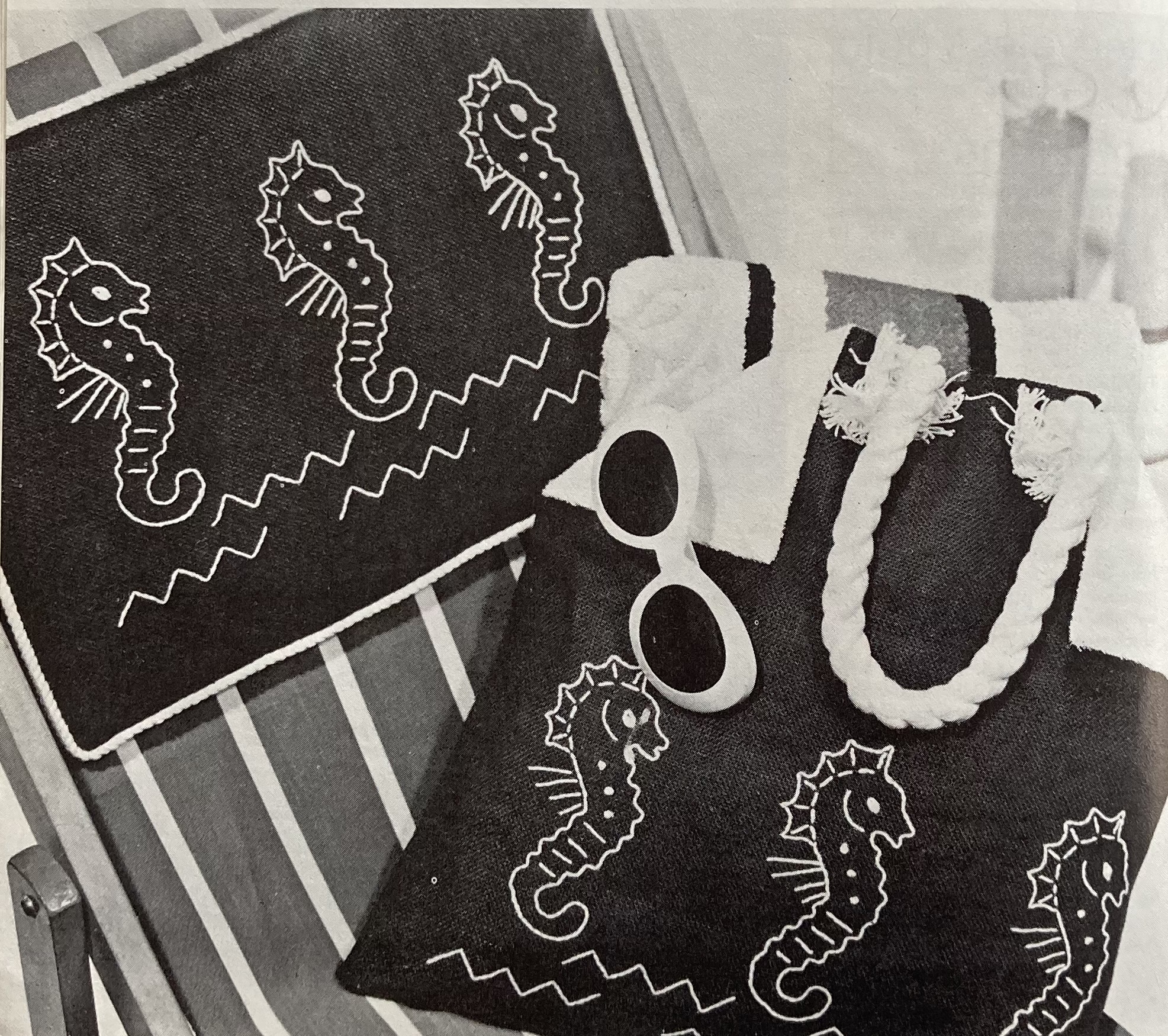
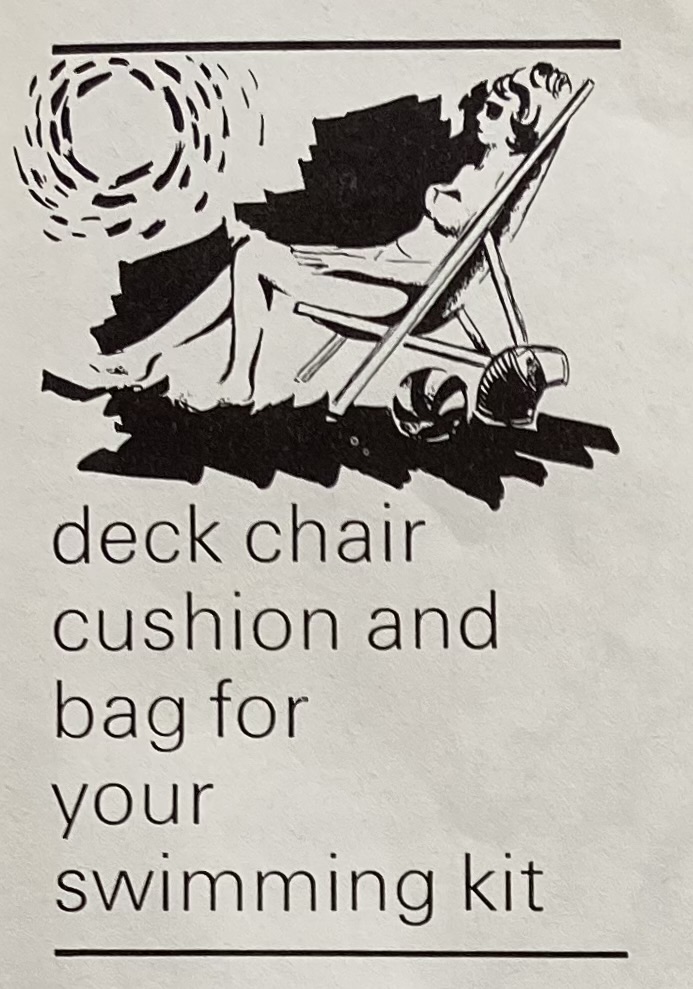
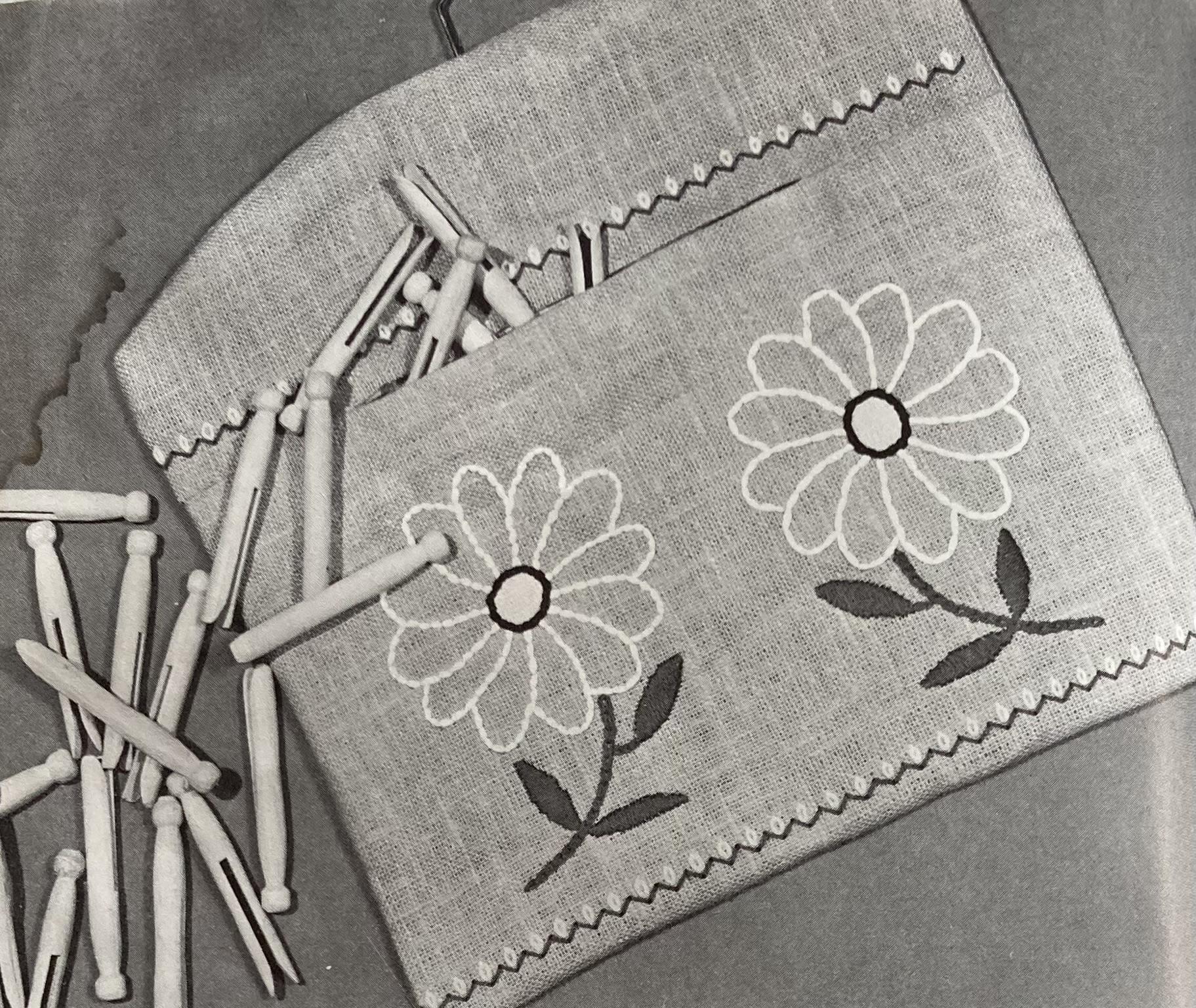
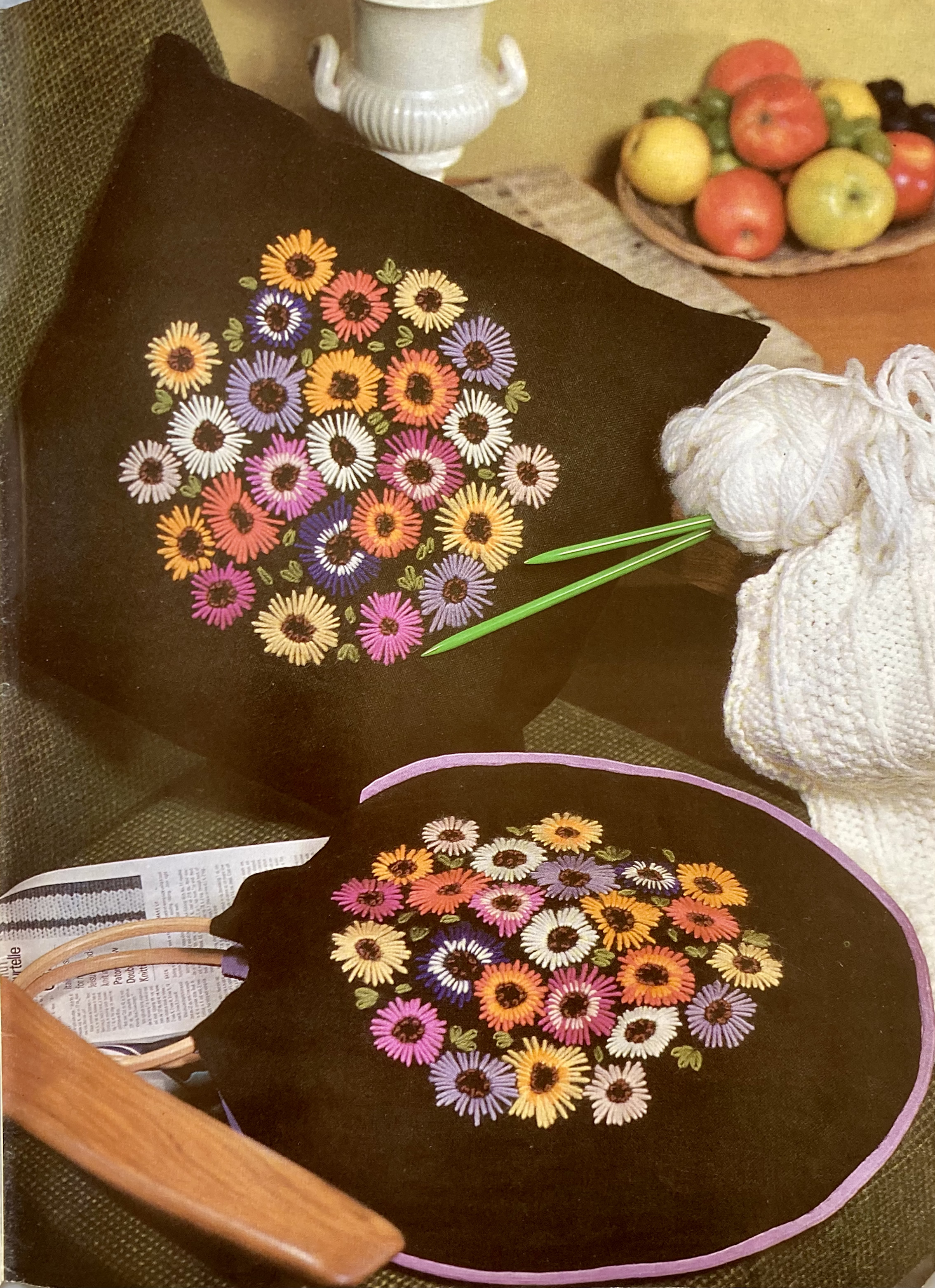
For an easier project, you can embroider sea-horses on a beach bag and matching deck-chair cushion (love the little aspirational illustration.) Or you can sew up a practical, and also cute and sunny, laundry-peg bag and matching apron and embroider them with big, cheerful daisies — “quick and gay to work on kitchen linens or for a bazaar.”

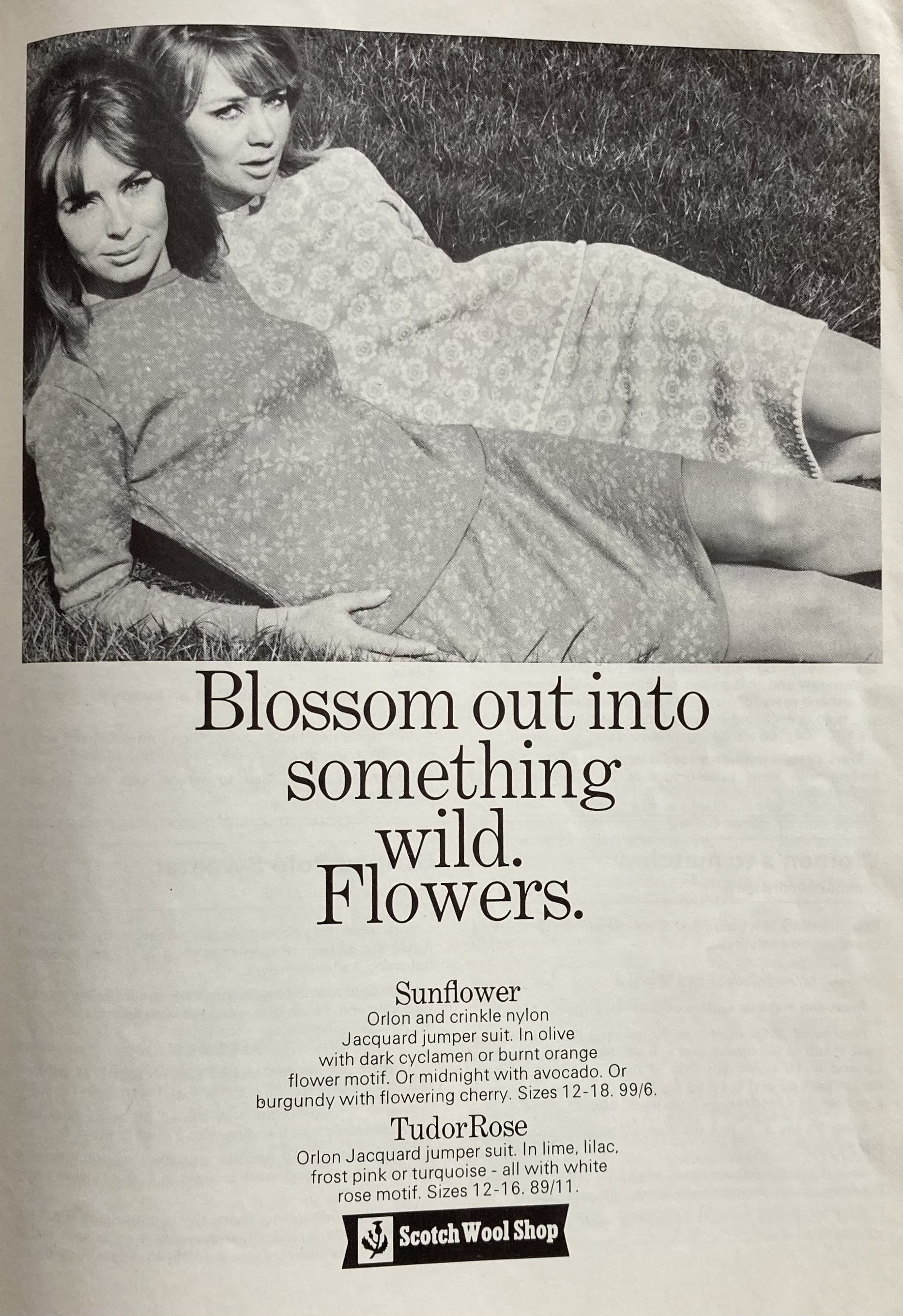
The Readers Pages reprint a striped knitted rug from the September 1964 issue, and the single full-page ad gives us another example of brilliant, yet meaningless, 1960s advertising copywriting and exceptionally 1960s colour combinations: the “Sunflower” Orlon-nylon jersey ensembles is available in olive/cyclamen, olive/burnt orange, midnight/avocado or burgundy/cherry. (A midnight avocado with olives, cherry and a nice Burgundy doesn’t sound half bad, if you took care not to burn the orange.)

I am tempted to make the brass-rubbing embroidery just for the weirdness of it, but realistically, my project will be the daisy-embroidered peg bag and apron. Have a sunny June!

August 1966: Overview

Dress in fashion for the height of summer! August is, as Stitchcraft‘s “editress” Patience Horne writes in this issue, a tricky month. Autumn is around the corner and it wouldn’t make much sense to keep knitting for warm weather, only for the season to change just as a project was finished. On the other hand, if it’s hot and muggy, you don’t want to hold warm wool in your hands. Stitchcraft‘s solution for August 1966? Sleeveless and short-sleeved garments in double-knitting weight that can be layered for cooler weather or worn in the evening on warmer days, plus some fine-knits and quick summer accessories to be worn right away.

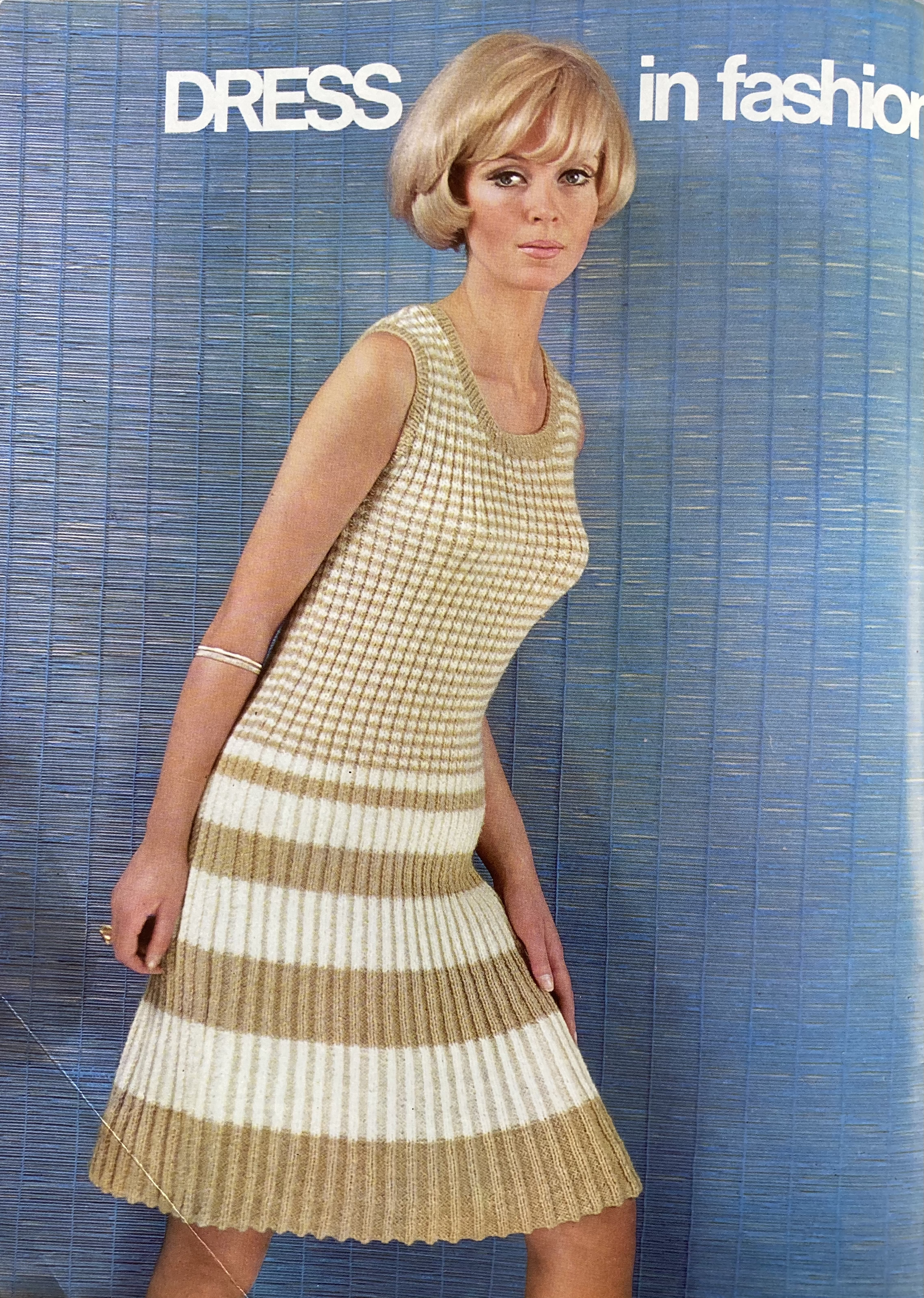
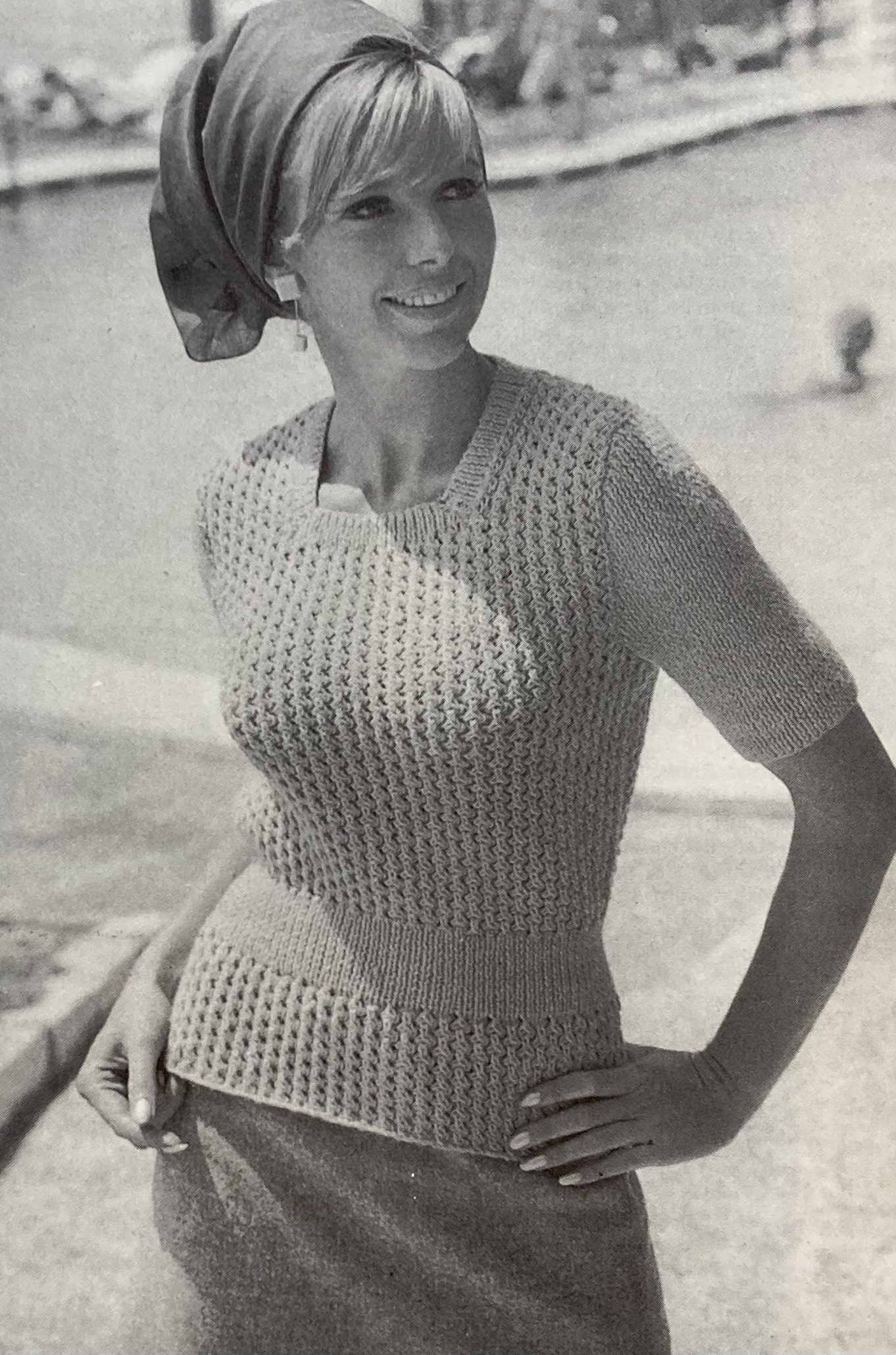
The “striped holiday tunic” on the cover strikes a good balance: made in Totem Double Crepe, it’s warm enough for sailing or windy-day wear, but the fresh white and turquoise stripes make it unquestionably a summer garment. The pattern is made by slipping the contrasting-colour stitches on the purl rows. More cool-warm fashions in DK wool are explored with a sleeveless, ribbed dress, a “racing stripe” jumper, and a short-sleeved twisted rib blouse “for cooler days” The ribbing on the dress gives a “pleated” effect to the skirt. Stripes and checks on white are a clear fashion trend.

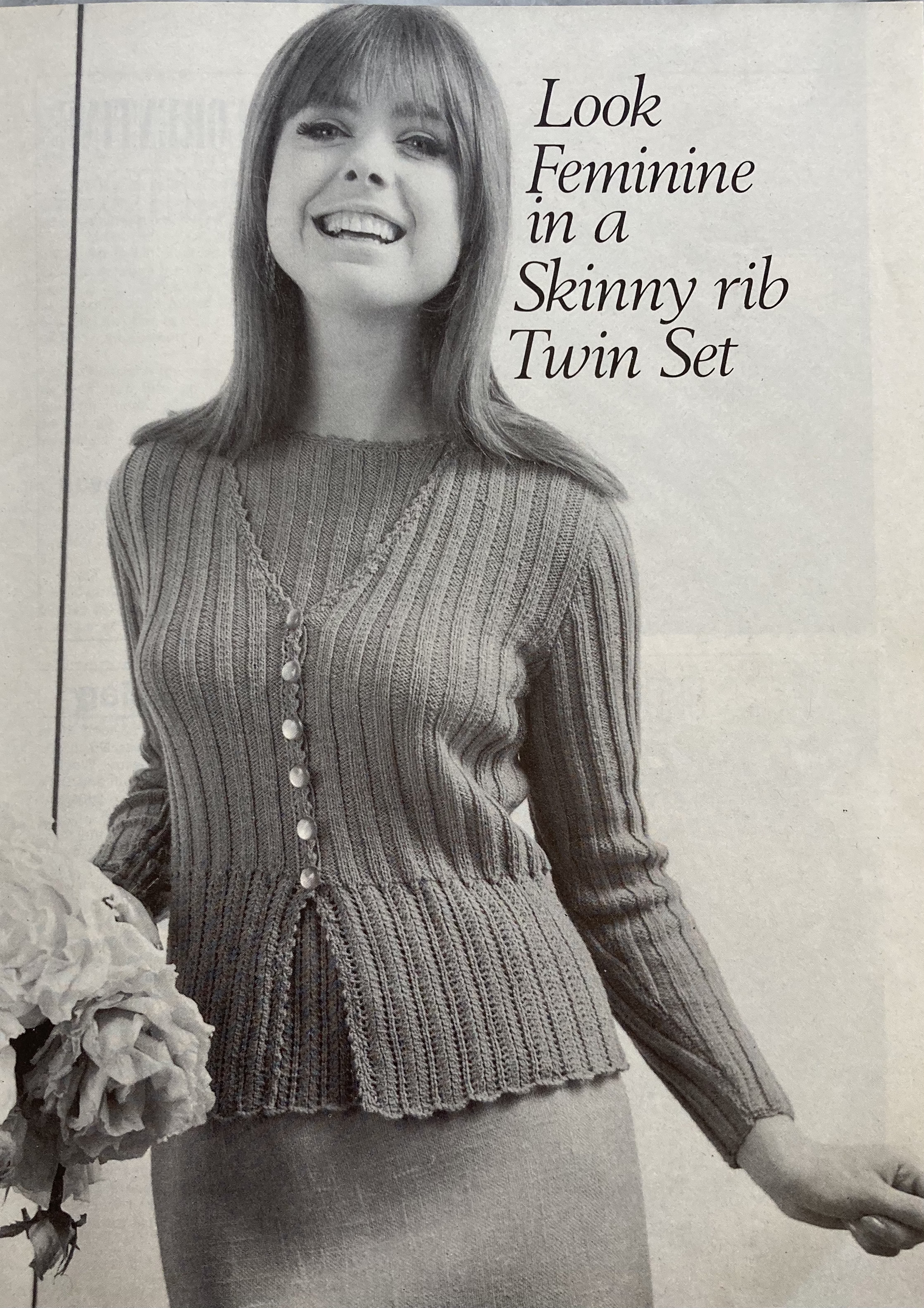
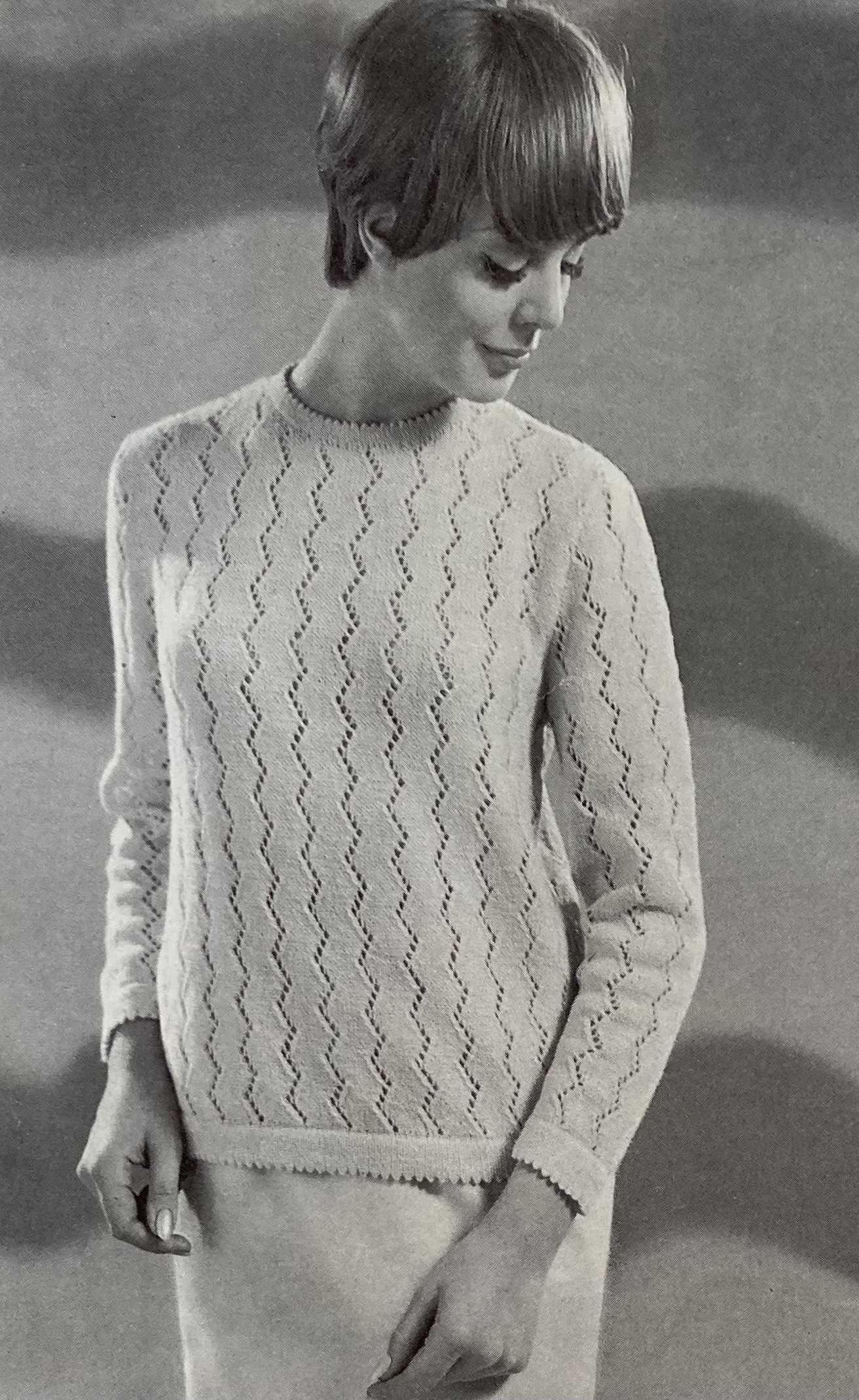
The more elegant designs are made in lightweight wools: a “skinny rib” twin set which promises to be flattering for both young and older women, with pearl buttons and a peplum-like “skirt” in ribbed lace, or a lace blouse with zig-zag motifs in both the lace and the picot hems. Here, the “stripe” trend is interpreted via pattern instead of colour.

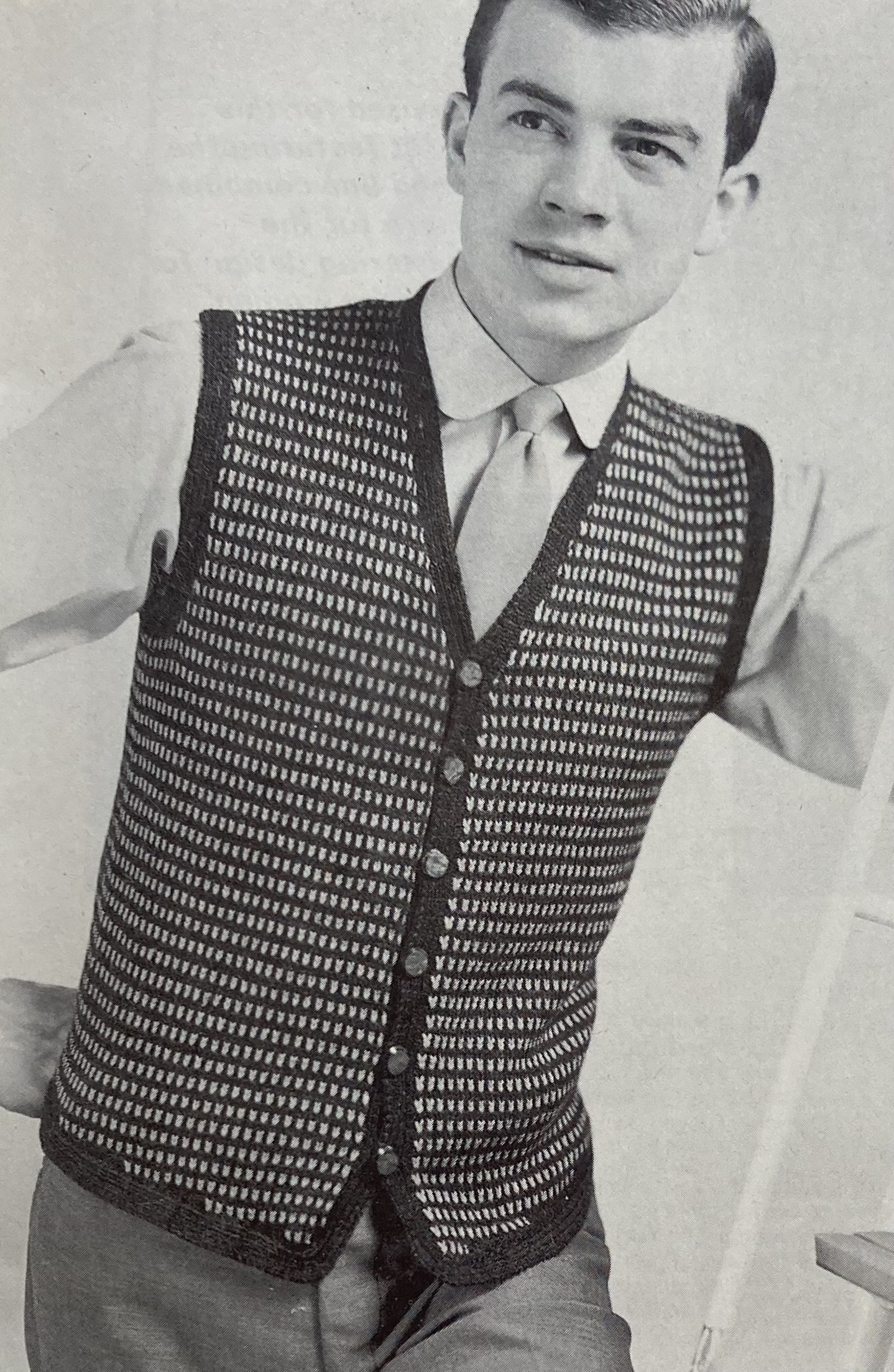
Continuing the stripe/check theme for men, there’s a nice V-neck waistcoat in a very 1960s-typical colour combination of charcoal and mustard (don’t eat it). The pattern is made stranded, and very easy, and the front and hem borders are made in one long strip, sewn in position as you go along. I have personally never had much success with this method, as you are supposed to stretch the strip “slightly” while sewing on and I find it difficult to get exactly the right, and same, amount of tension on both sides. There’a also a “his and hers” unisex pullover in a similar basketweave stitch as the short-sleeved blouse that I made from the June 1966 issue. Apropos unisex: this issue features a record number of women wearing slacks, and the short “pixie” or “five-point” cut has finally made it to the pages of Stitchcraft.

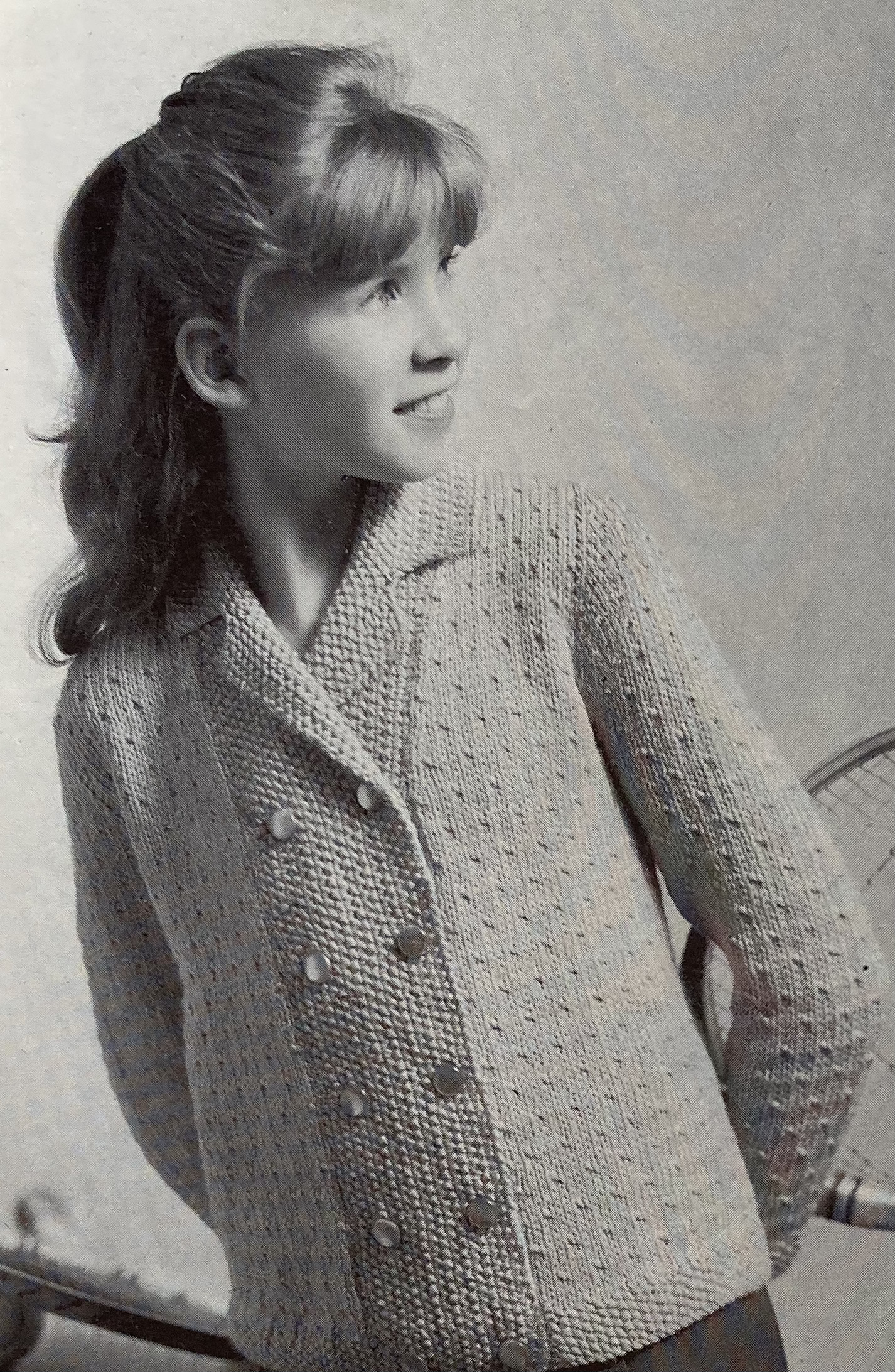
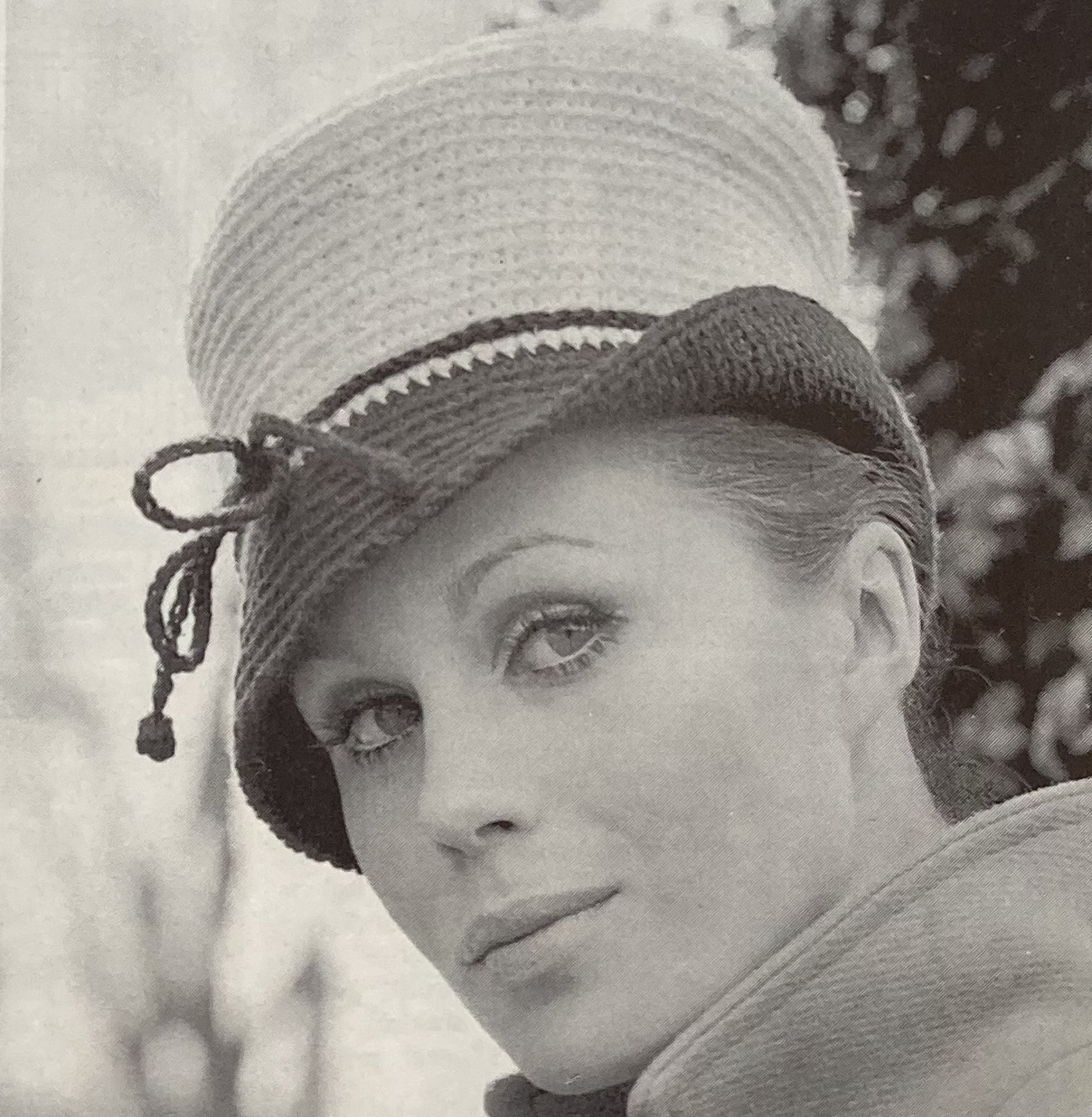
There’s nothing for babies or toddlers in this issue. Older kids and pre-teens get casual cardigans for layering or as outdoor garments. The stripe trend lives on in the boy’s zipped jacket, made in nautical colours of navy blue, red, and white. The girl’s tennis blazer is more subdued, in a neat spot-stitch pattern with moss-stitch revers. Top it off with a fun crocheted hat in the current “tall” style.

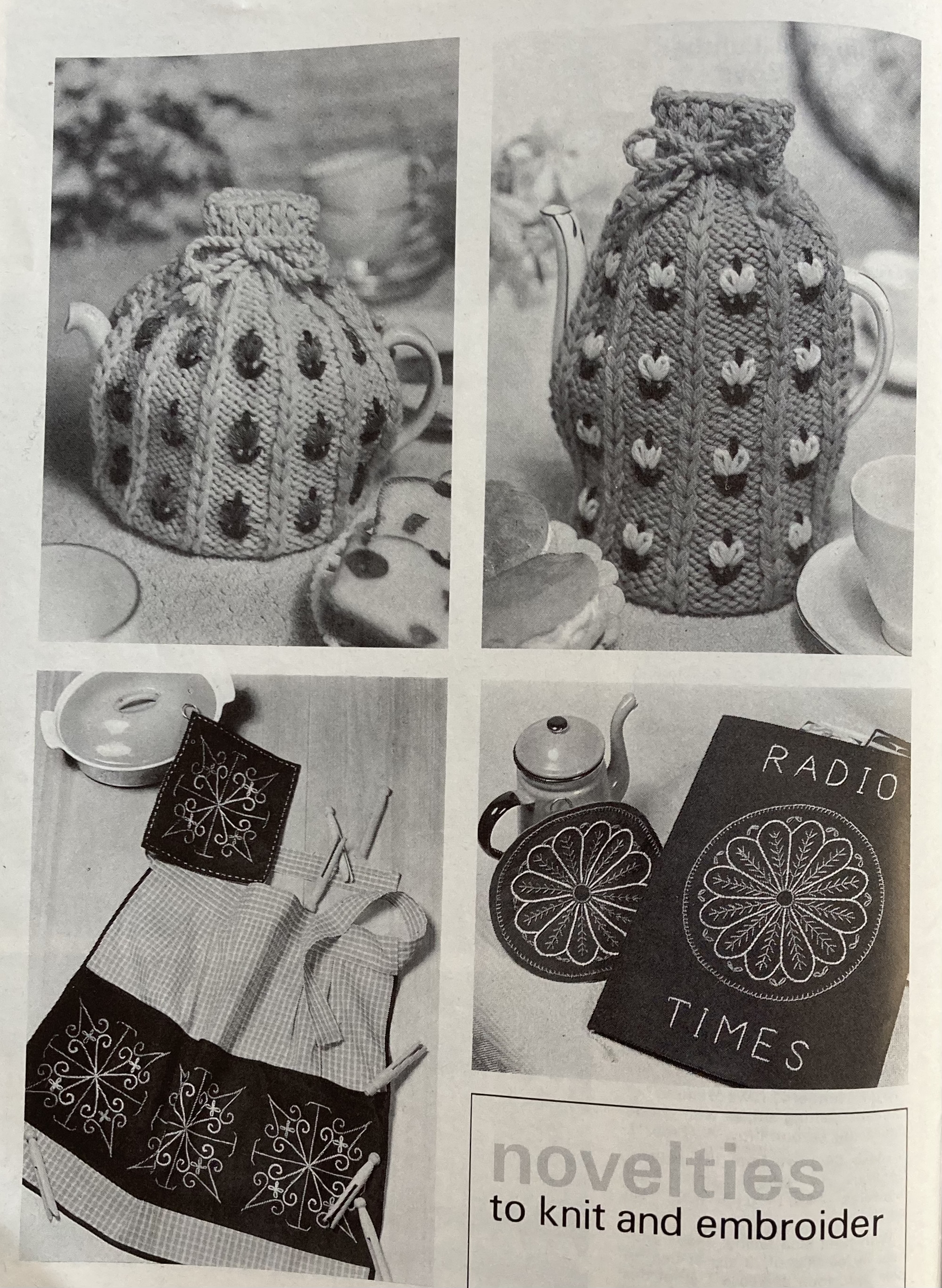
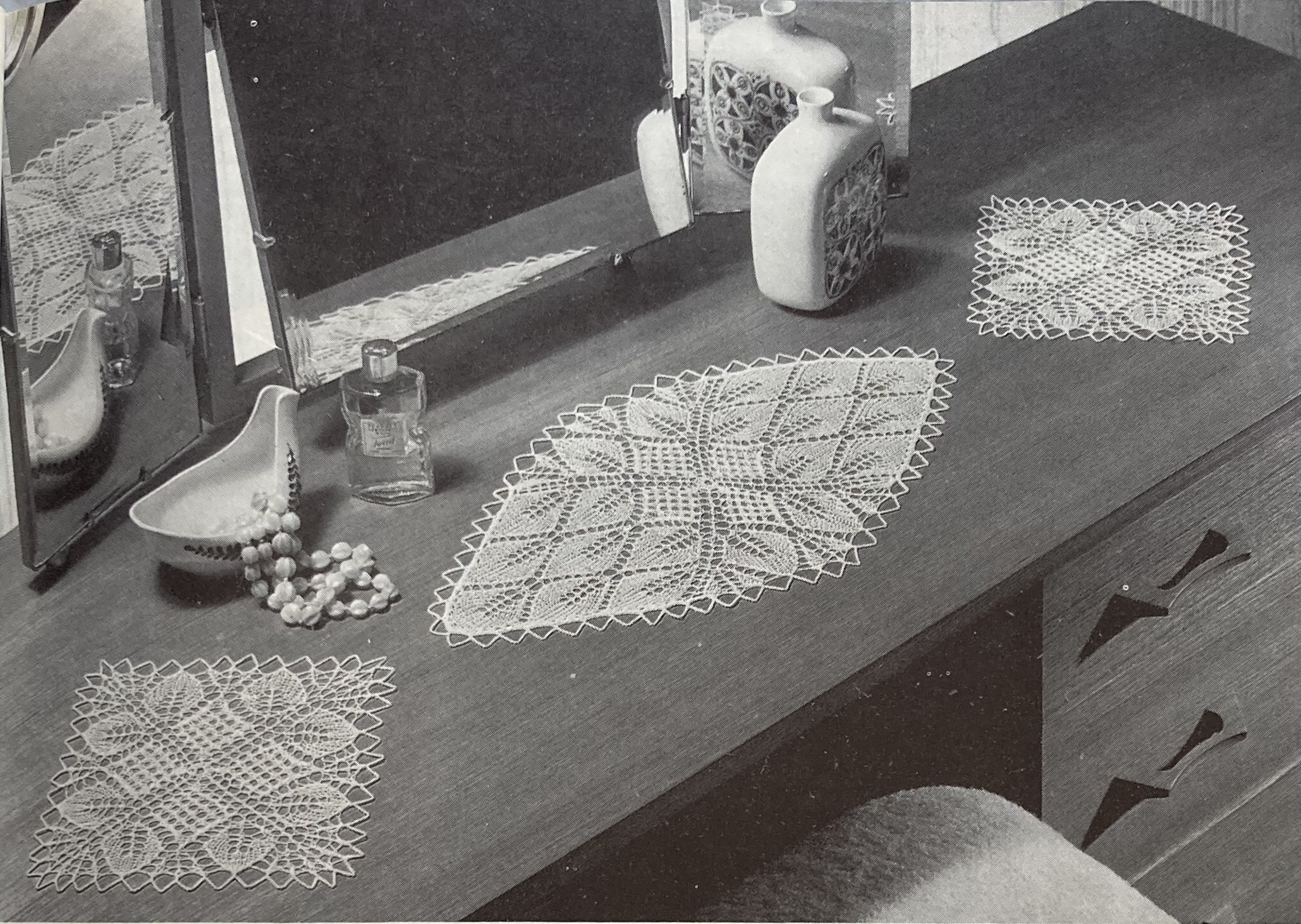
Those who do not like to hold wool in summer are always well served by the summer homeware designs, which tend to be small and easy — to pack in your holiday luggage and work on in your beach chair. There’s the usual page of bazaar items and “novelties”. I can’t make the bizarre-bazaar joke this time, since they are actually quite cute and nice. The fancy knitted lace mats are a more elaborate, but still portable, project, or you can embroider Mesembryanthemums on a cushion or workbag. I had never heard of this type of plant, hence the Wikipedia link in case you haven’t either.

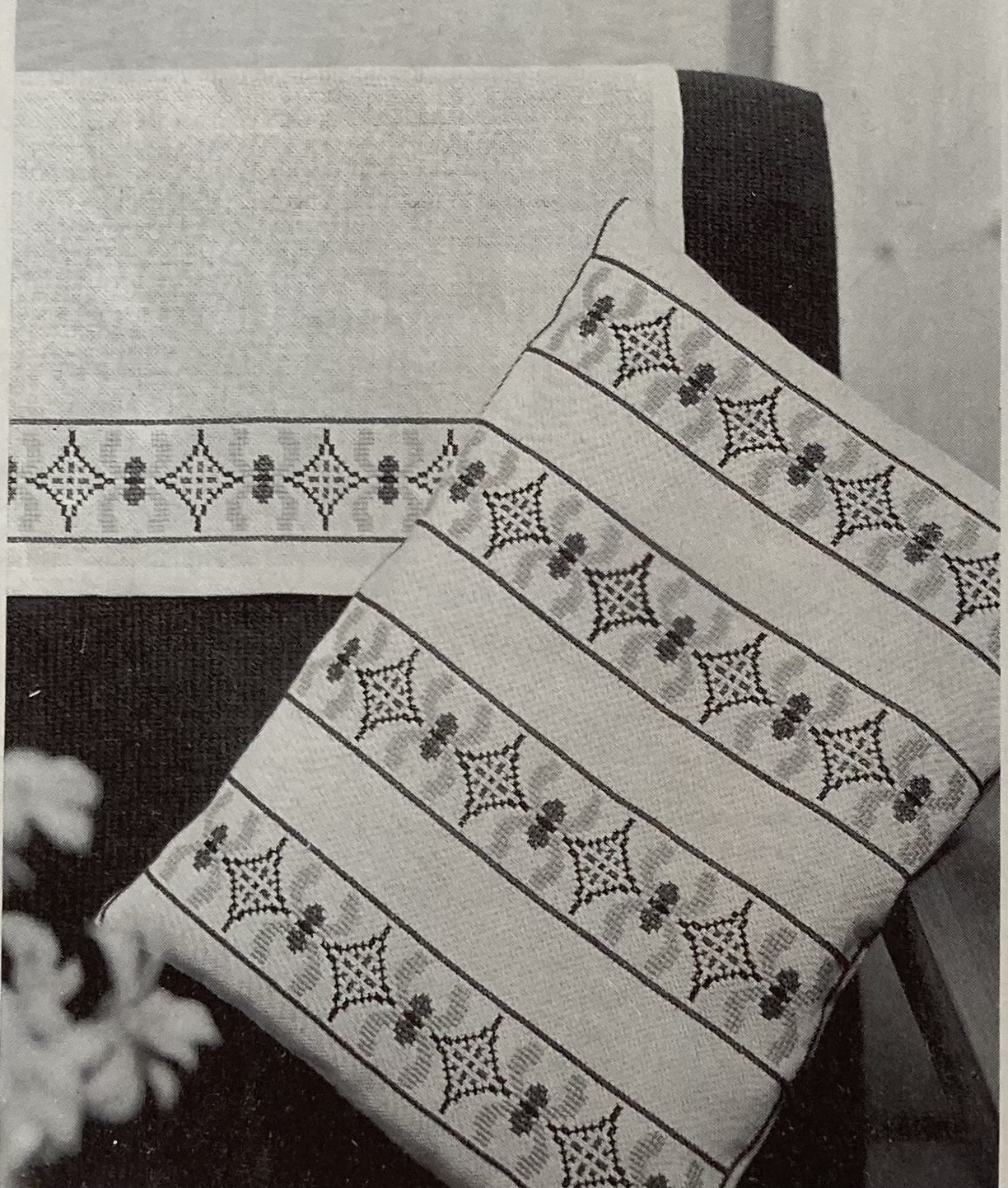
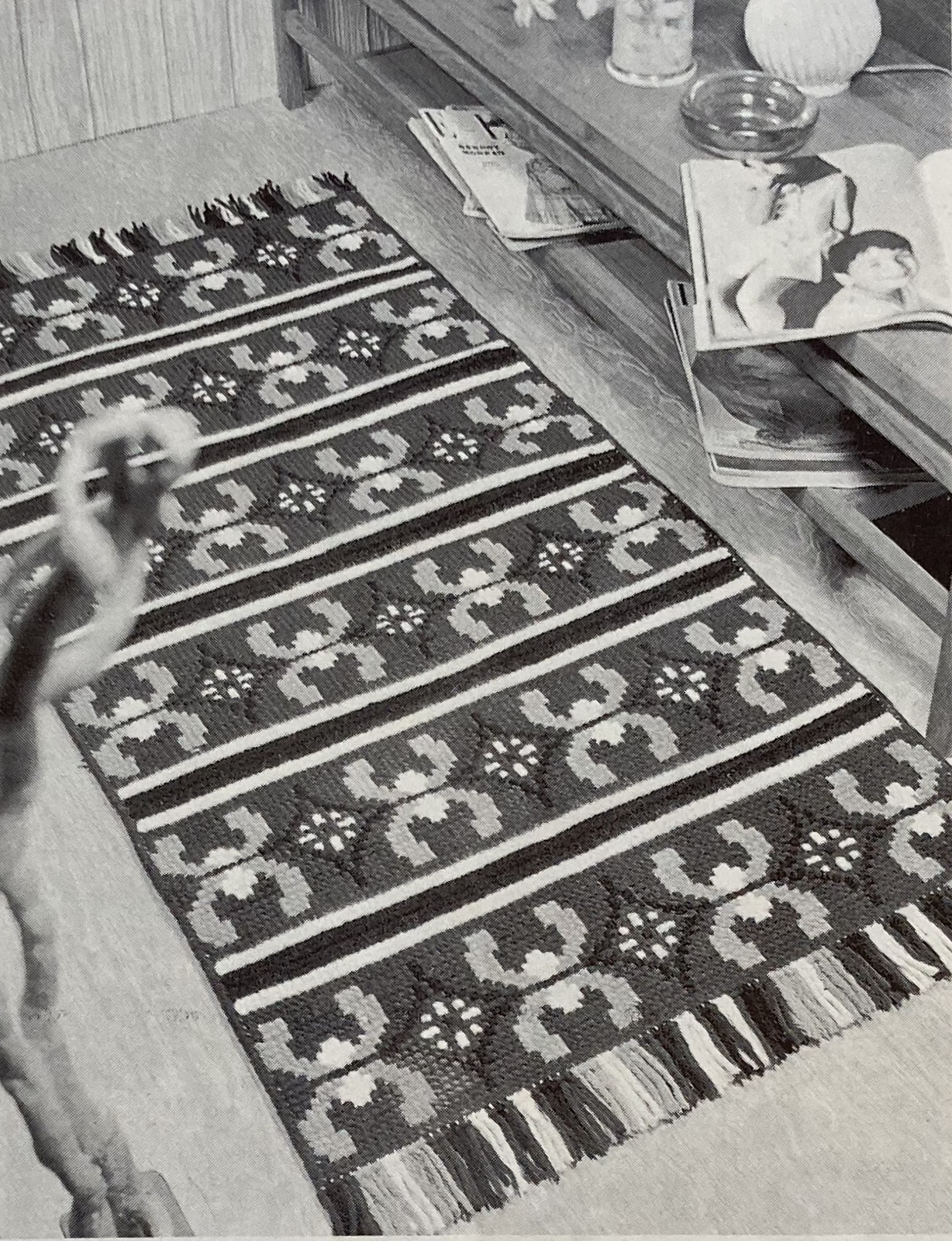
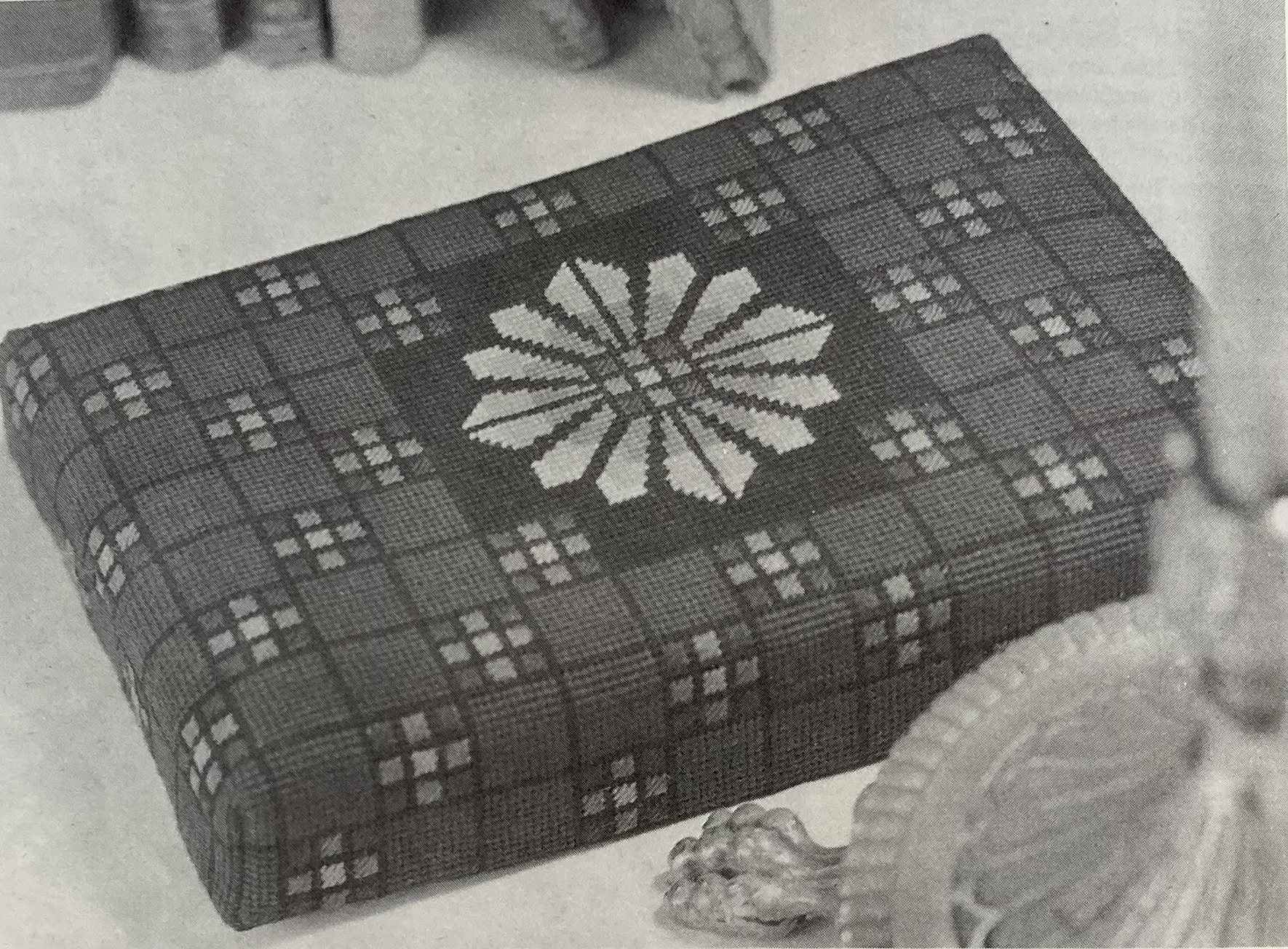
The other homewares are more suited to making at home. There’s a cross-stitch cushion and/or chairback in a traditional Greek pattern (says Stitchcraft — I cannot confirm or deny authenticity) and a rug in a matching colour scheme. For churchgoers, there’s a tapestry kneeler with a pattern inspired by stained-glass windows. The stripe-check trend that we see in the garments appears again in the woven-tapestry wool cushion and knitting bag.

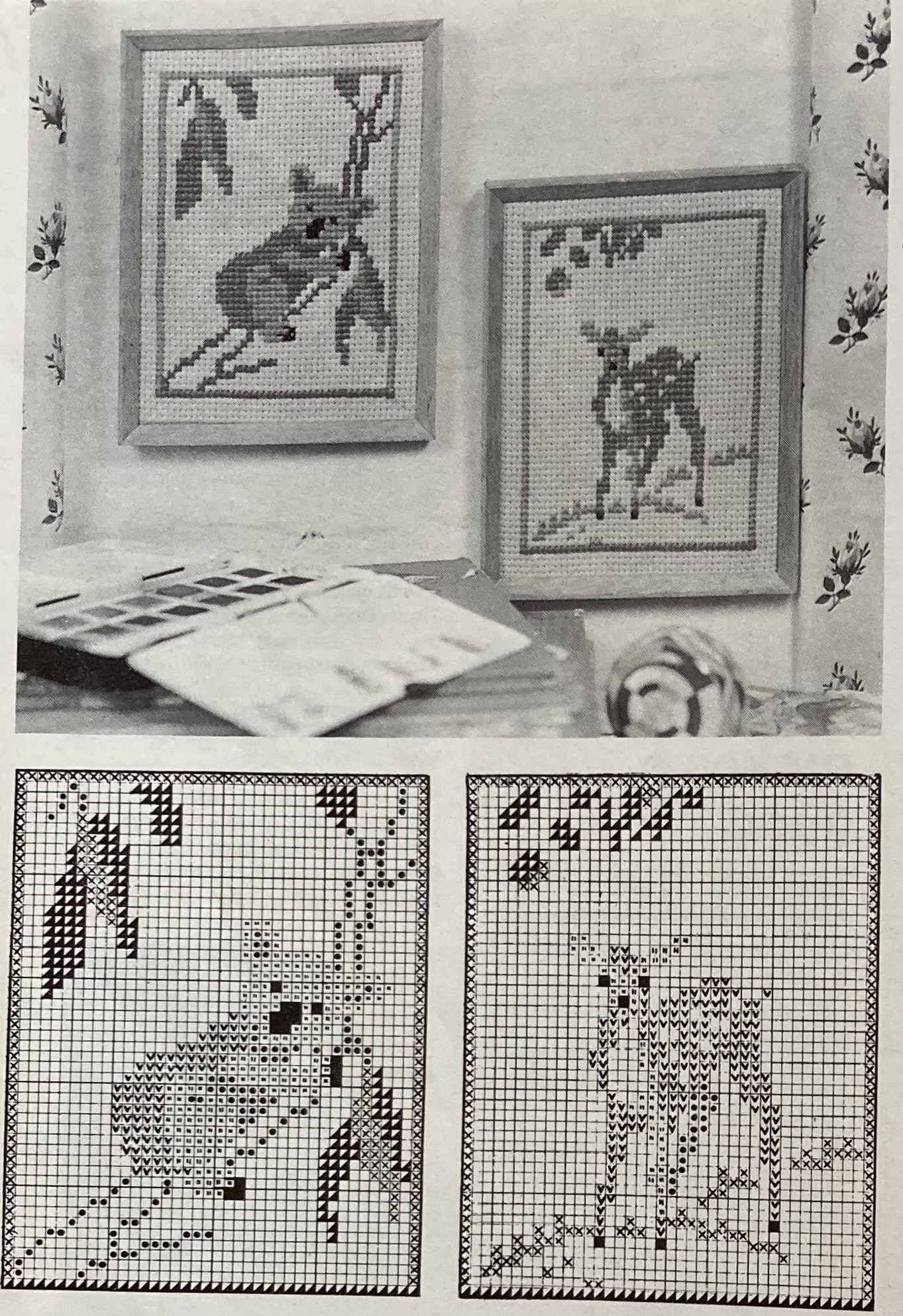
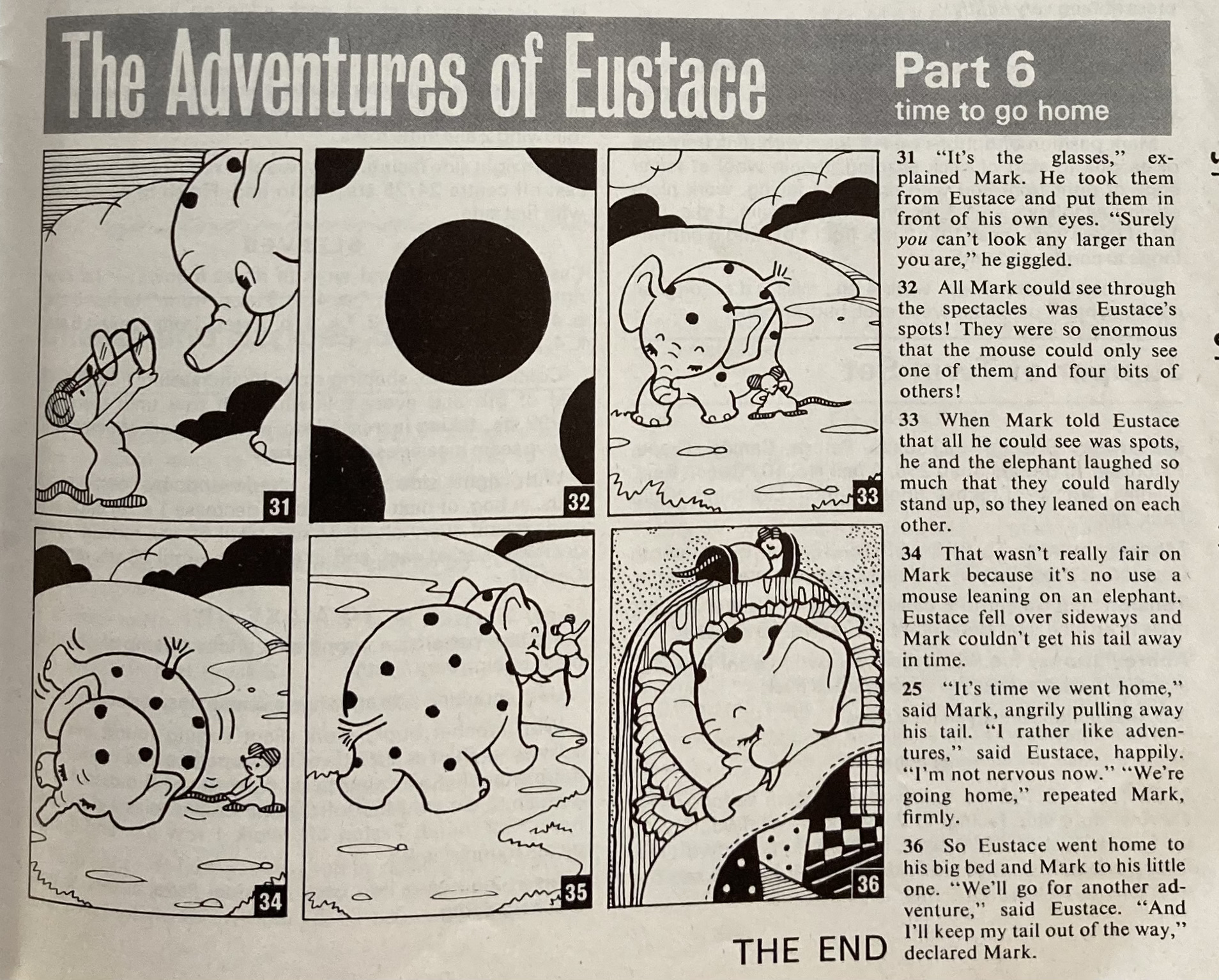
The “Readers Pages” give us a reprint of a July 1963 design for two little cross-stitch pictures, some helpful hints on mounting tapestry designs (mount it on cardboard with pins or threads and check that the tension on the right side is even), and the conclusion of our latest children’s serial comic, “The Adventures of Eustace”. For those who haven’t been keeping up (including myself; this story was not one of the more interesting ones), Eustace is an elephant who went on some very tame adventures (highlights: eating buns for tea, looking through glasses the wrong way) with his friend Mark, the mouse. Mark calls an end to the adventure and the comic, and they go home and have a nap. That sounds like my kind of summer adventure.

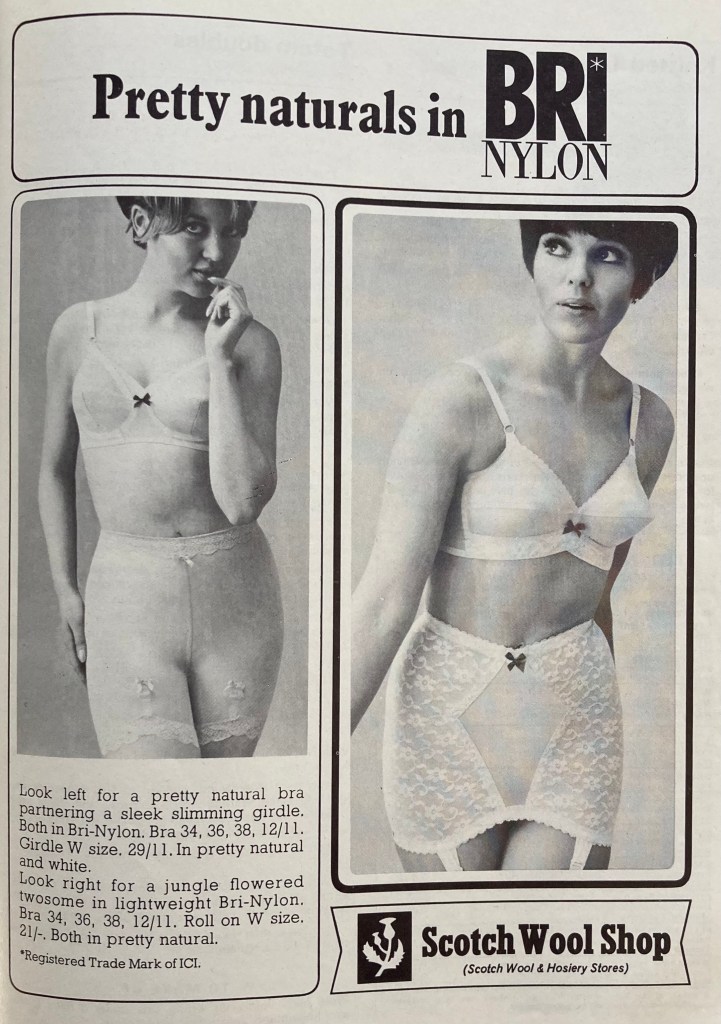
I will leave you with this ad for “pretty natural” underwear from the Scotch Wool Shop. The underwear is made from extremely synthetic Bri-Nylon and is intended to shape one’s body in directions it doesn’t go by itself, so the only “natural” thing going on here is the colour, if you have pale beige skin. But it is quite pretty.

Enjoy the rest of your summer! My project will be the mesembryanthemum embroidery on a vegetable bag.

June 1965: Fuzzy-Wuzzy & 3-ply Cardigan

My project from Stitchcraft’s June 1965 issue was inspired by this design for a striped orange cardigan made with “Fuzzy-Wuzzy” (3-ply angora/wool blend) yarn.

I say “inspired by” because I saw the project as a way to use up the different shades of orange wool I used in my “Shaded Blouse” project from last month, as well as the leftover pink from my “Clarel” and even a little bit of leftover orange from this lovely 1961 sleeveless top I made a few years ago. I figured I could just make narrow stripes until the first colour ran out and then see how to best finish the cardigan.

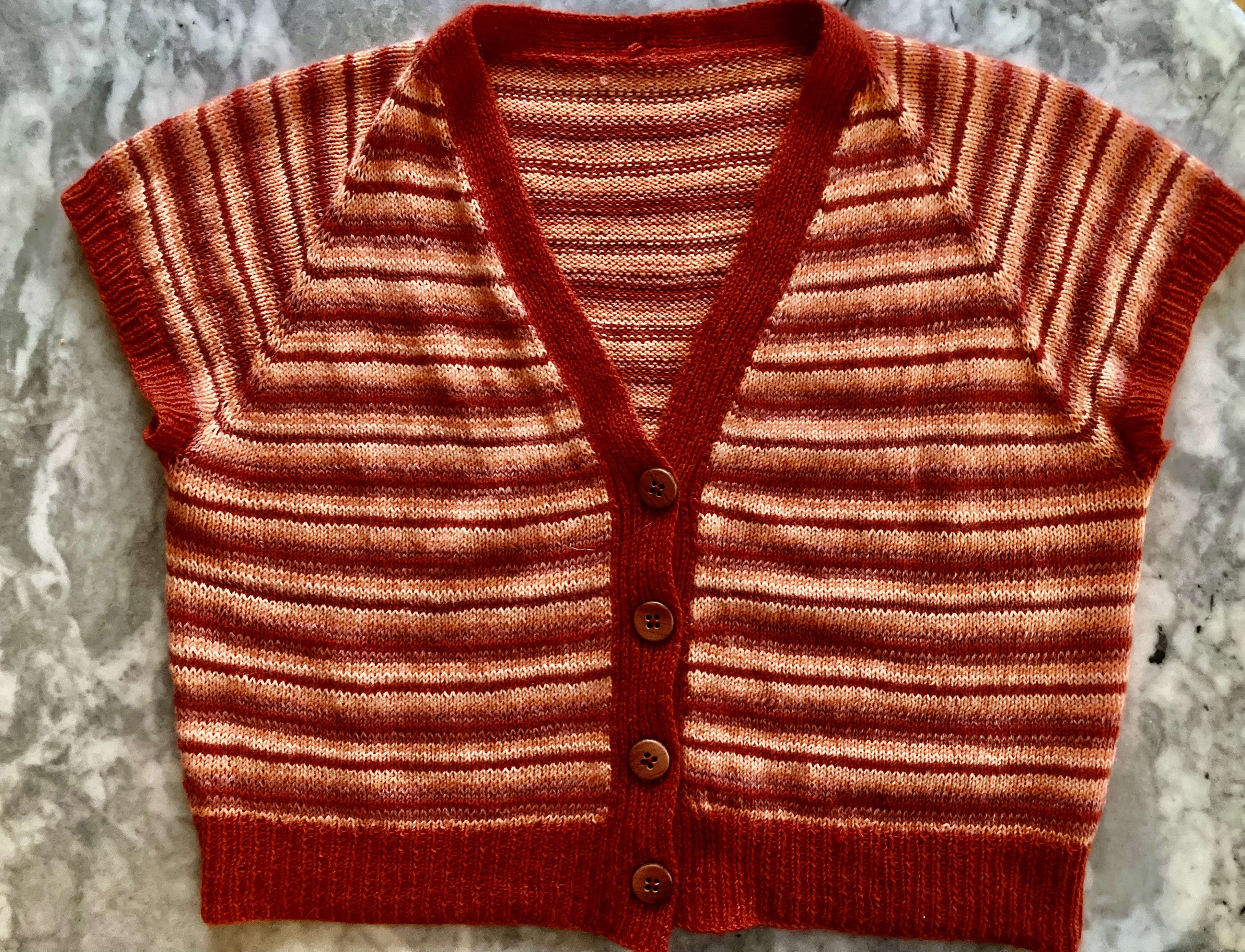
In order to do that effectively, I changed the construction from the standard bottom-up-in-flat-pieces in the pattern to a V-neck made in one piece from the top down, vertical ribbing included. That meant starting with the ribbing for the back neck, then picking up stitches across the long edge and the two short edges to make the curve, then keeping the ribbing in the dark orange colour from then on, using the same needles and two balls of wool for the two sides. It was a little tricky at first, but it was worth it to not have to play “yarn chicken” with the amount of orange needed for the ribbing at the end.

The “Fuzzy-Wuzzy” wool in the pattern is 3-ply and supposed to be knitted at 8 stitches to the inch. My wools were modern fingering/4-ply and I got a nice, even 7 stitches to the inch on 3 mm needles, so I adjusted the stitch counts, increasing up to the smallest size instead of my normal second. I remembered that this wool tended to shrink in blocking, so I wasn’t worried when it seemed generously sized — but maybe I should have been! The cardigan turned out wider than it needed to be, and if I had been able to use less yarn, I could have made the cardigan longer.

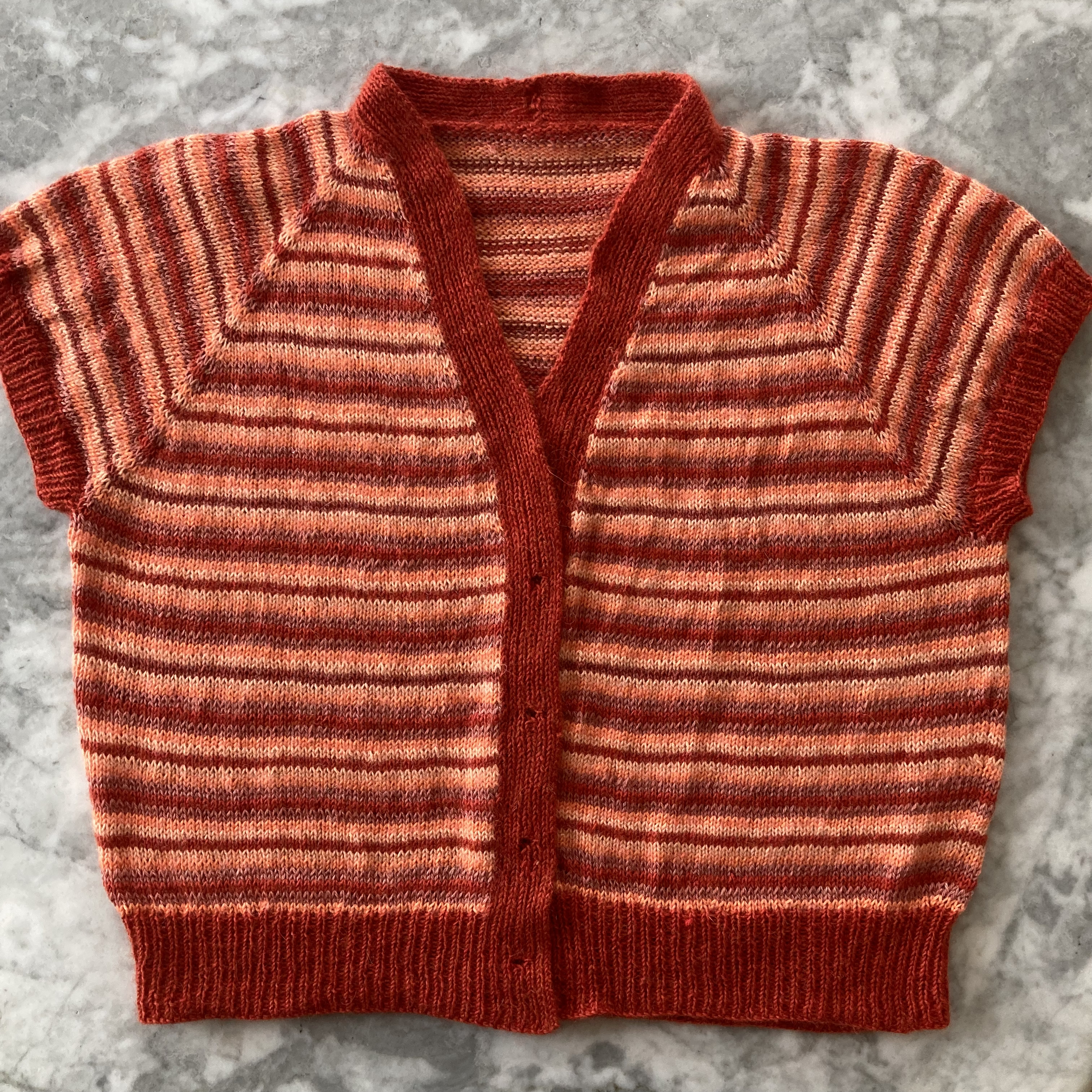
I ran out of the light peach yarn first and hardly had any dark orange left at that point, so had to buy another ball of the dark orange to finish off the ribbing (so much for the idea of using up scraps…). I expected to not want to wear or keep the finished garment, since the “cropped and boxy” look is not a great one on me. (It is, however, currently in fashion, so I figured I could sell the cardigan.) Strangely, though, I love it! It looks playful and fun and does not me look nearly as squared-off-and-put-in-a-box as I thought it would. The wool-silk-linen blend yarns and cap sleeves make it a perfect-temperature top for slightly cooler summer days.

I still have a bit of most of the yarns left over. Hat? “Shaded” mitts? Little cowl or scarf? I don’t know. I’ll edit this post if I make something matching!

November 1964: Useful Gift to knit from your Scraps

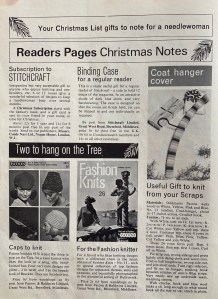
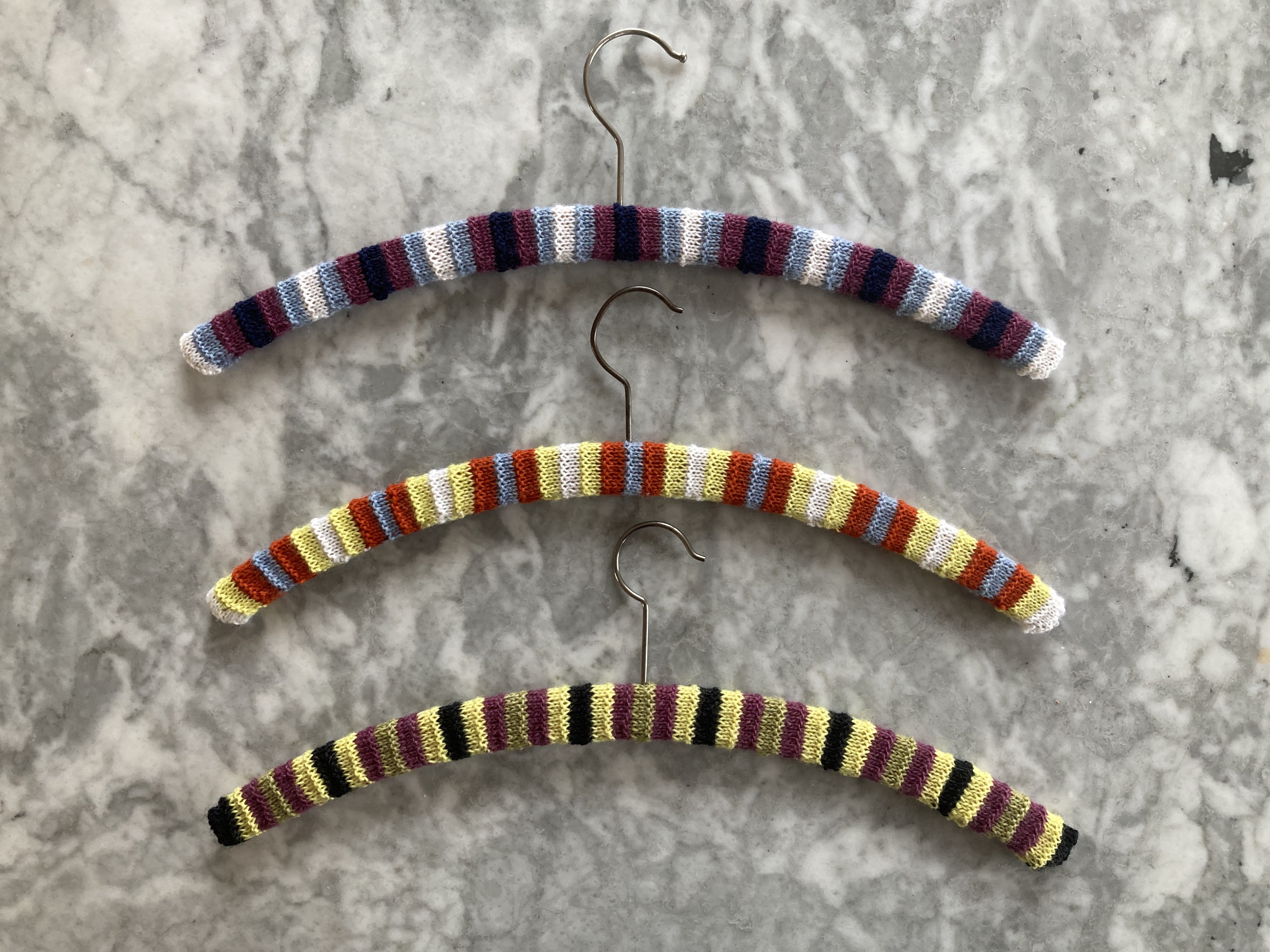
My November project was this gem from Stitchcraft’s November 1964 “Readers Pages”. Over the years, these back pages featured everything from recipes and household tips to mini-reprints of popular patterns, little “novelties” or “gift ideas” to make, advertisements for other Patons/Stitchcraft booklets or subscriptions, or quick “how-to” lessons for specific techniques or stitch patterns. There’s always a comic for children, often featuring some sort of needlecraft and/or friendly animal character that you can knit or sew or embroider in a future issue. In addition to the current comic (“ANNE and her embroidery”– in this segment, Anne learns how to make oven mitts embroidered with a fish in herringbone and cross-stitch) the November 1964 Readers Pages offered “Your Christmas List gifts to note for a needlewoman” — two Patons pattern leaflets, a subscription to Stitchcraft and/or a binding case to hold a one-year run of twelve Stitchcraft magazines, and a pattern for a knitted coat-hanger cover.

The knitted (or crocheted) coat-hanger cover was a staple in every grandmother’s and great-aunt’s house I knew growing up, so I have a pleasant nostalgic association with them. It is indeed a useful way to use of scraps of yarn, and I guess the padding helps garments not crease at the shoulders. Also, they’re cute and I think these days, they would be a very fun little holiday gift for people who like crafty items. I certainly had enough scraps of 4-ply / fingering-weight wool, so this was the perfect November project.

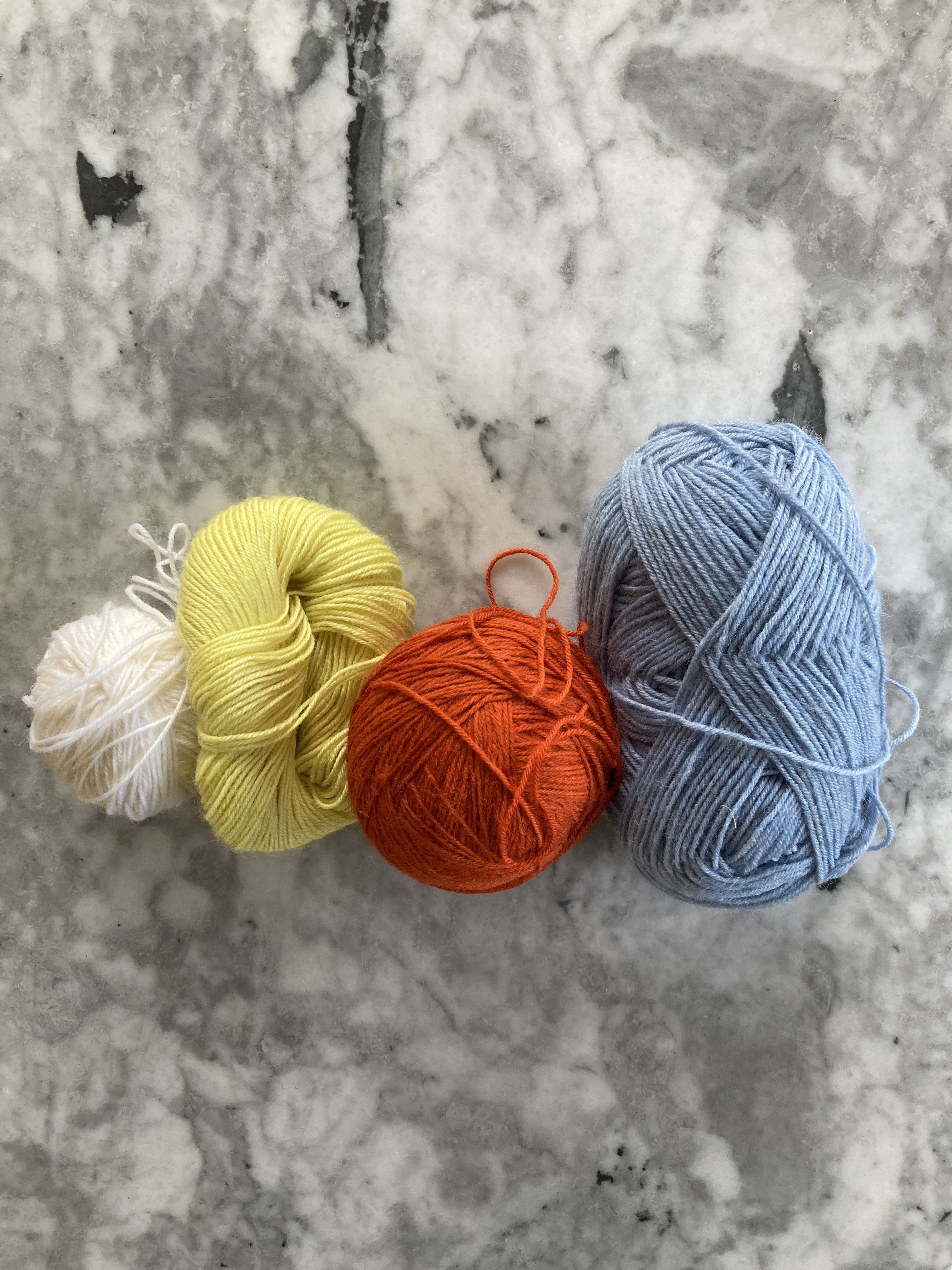
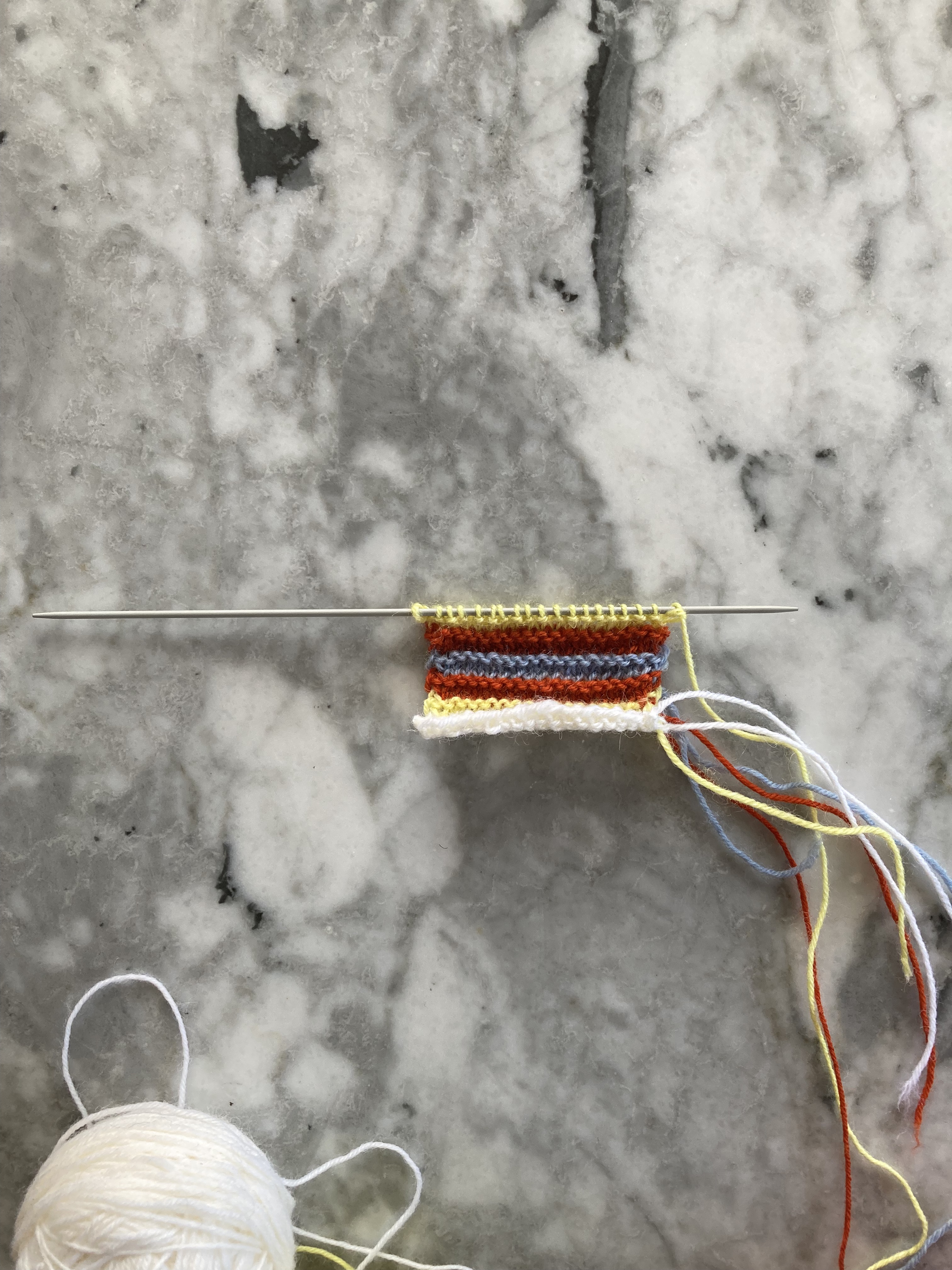
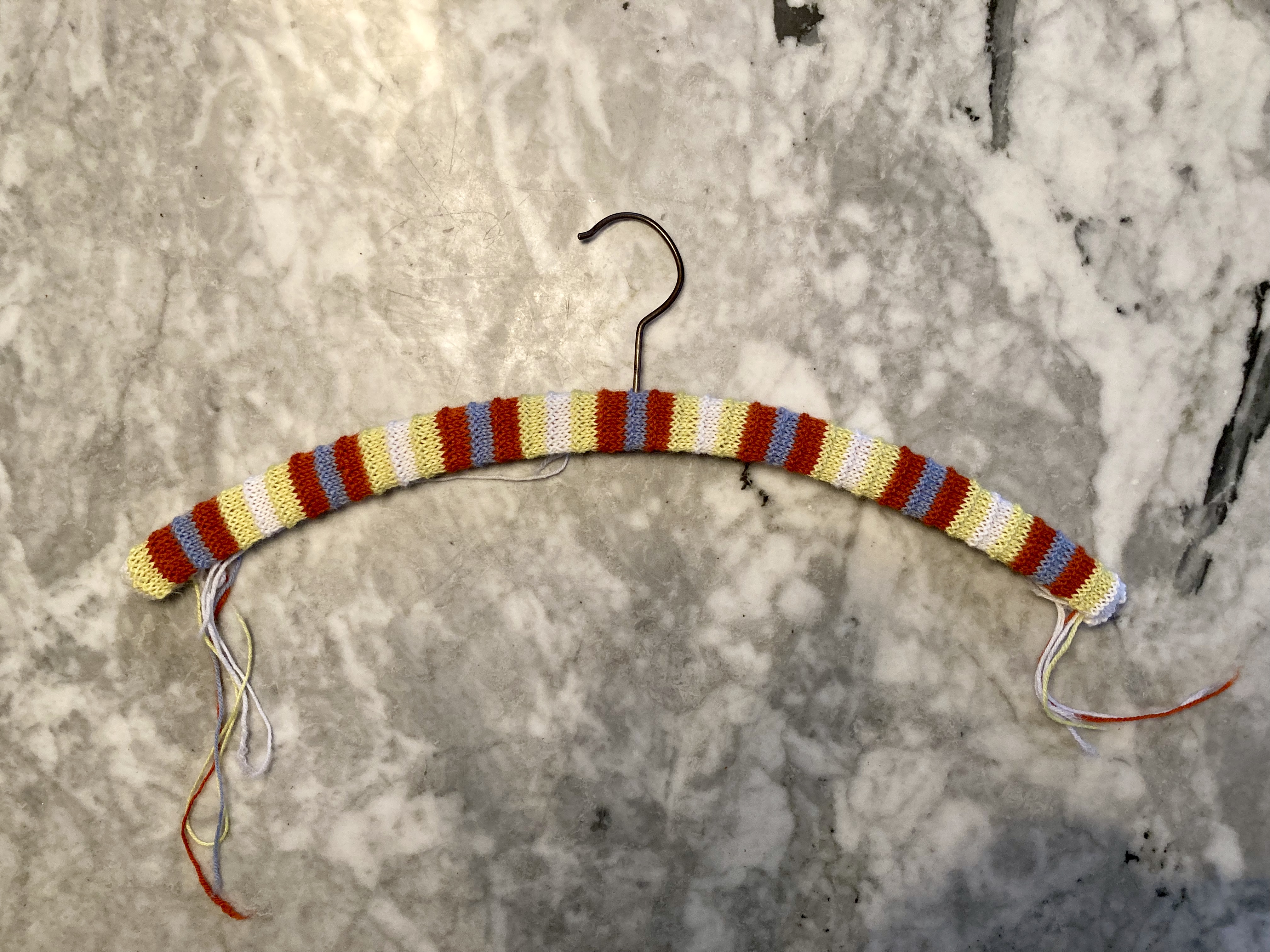
The pattern uses “oddments” of 4-ply wool in white, yellow, pink and blue (or whatever colours you have, of course) and is knitted at a tension of 7.5 stitches to the inch on No. 11 (2.75 mm) needles. It is simply a strip 19 stitches wide, started at the small end and worked in a symmetrical stripe pattern for a total of 42 4-row stripes. The pattern is k1 row, p 1 row, k 2 rows, so there’s a little purl ridge at one edge of each stripe. You sew the short ends in half, poke the hook part of the hanger through the middle of the center stripe, pull the short ends of the knitting over the ends of the hanger, sew up the stripes on the underside and voilà. Then you can make a little crochet chain to wrap the hook part of the hanger and stitch it in place.

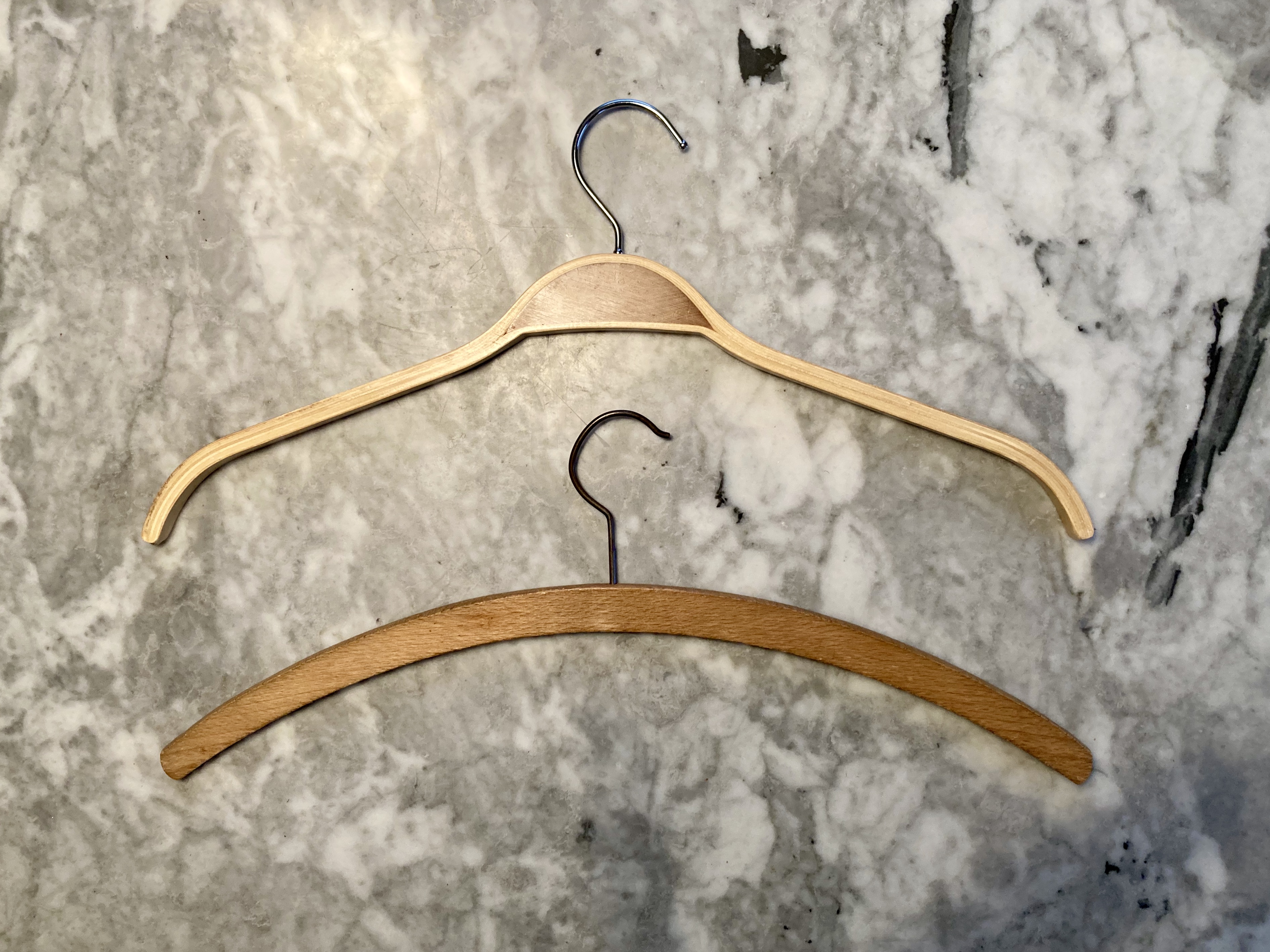
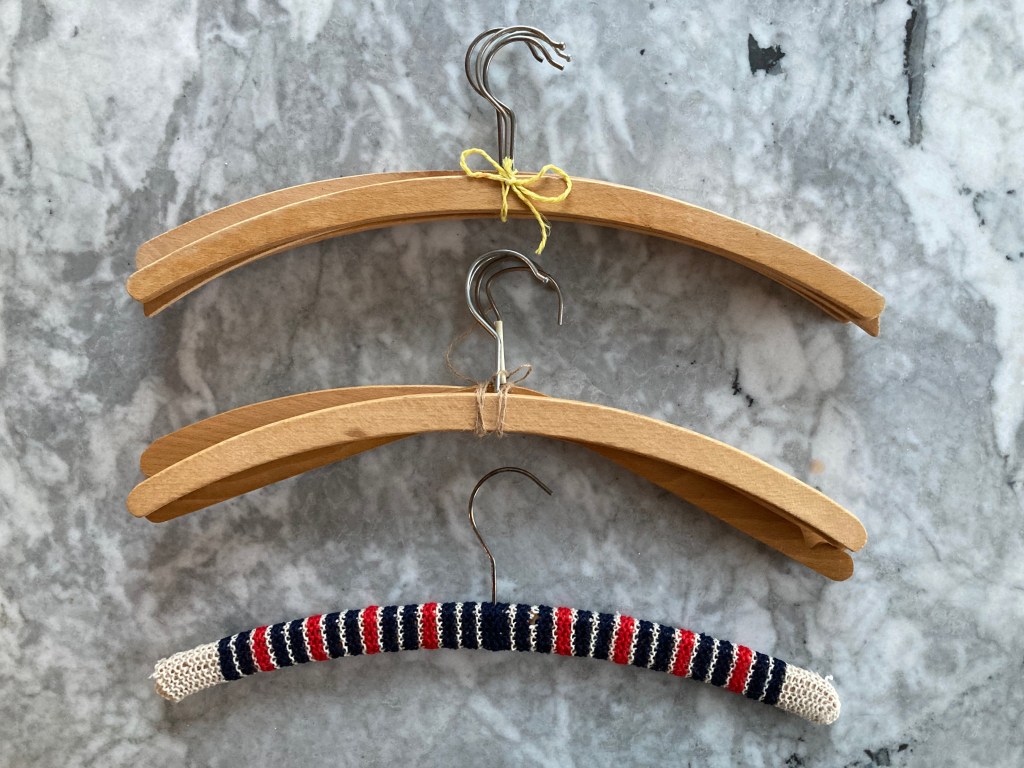
Of course, it only works on a certain size and shape of hanger… one that was apparently easier to find a few decades ago than now! All the new hangers I’ve seen or bought have a triangle shape with a bar underneath to hang things over. Admittedly, the triangle version is much more useful, because you can hang more than one thing on it (suits…) and fold things over the bar (trousers, long dresses if your closet space is short…). I only found two hangers in my closet that were the right shape for these covers! As well as a modern version that is similar, but too big at the top — as written, the knitted cover won’t stretch over the block-y part under the hook.

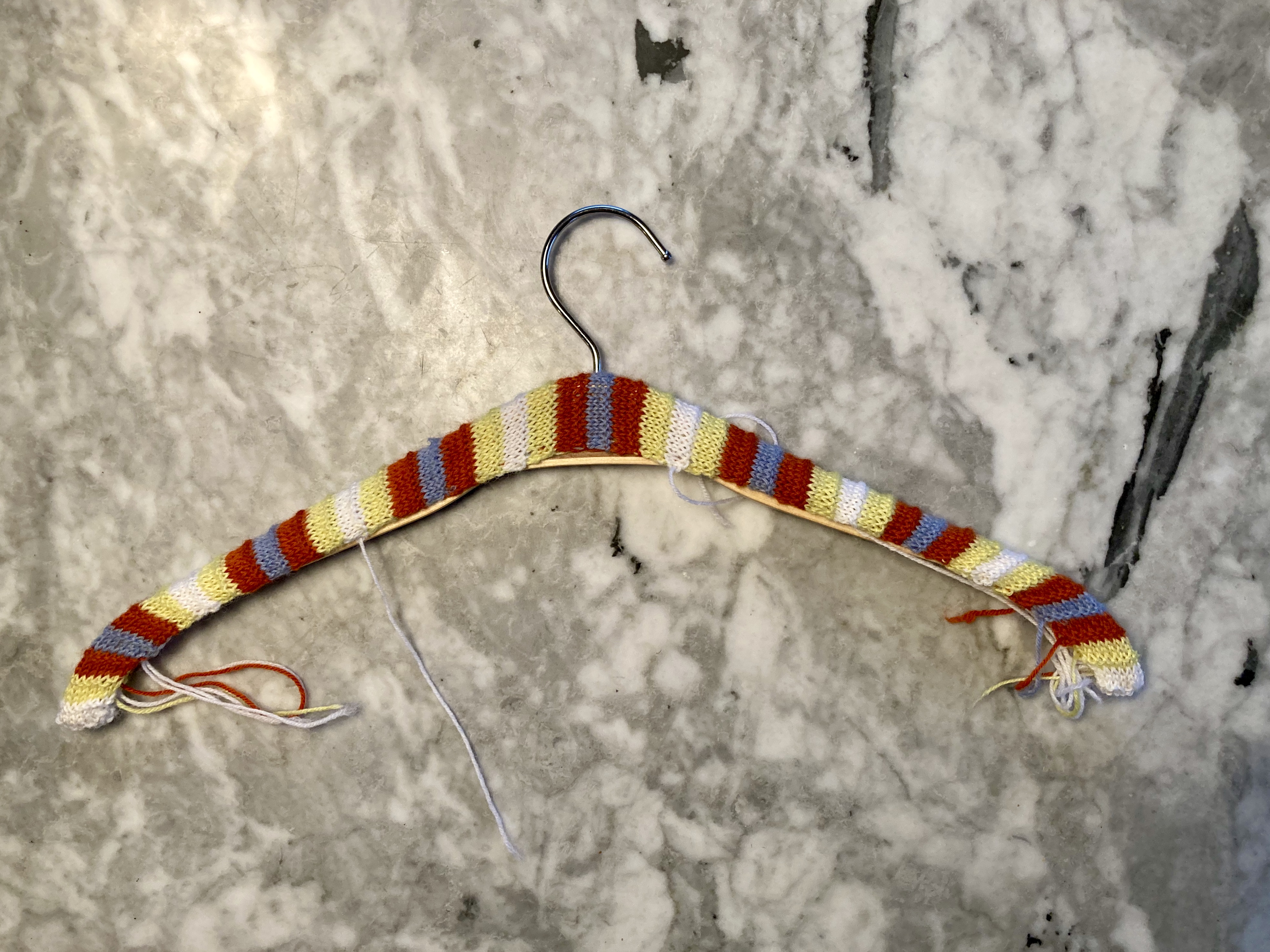
A quick look at ebay yielded a seller with a package of 8 vintage hangers for a few euros — including one that was already covered with a knitted cosy! Perfect. The covered hanger is knitted in a similar stripe pattern using three colours and garter stitch.

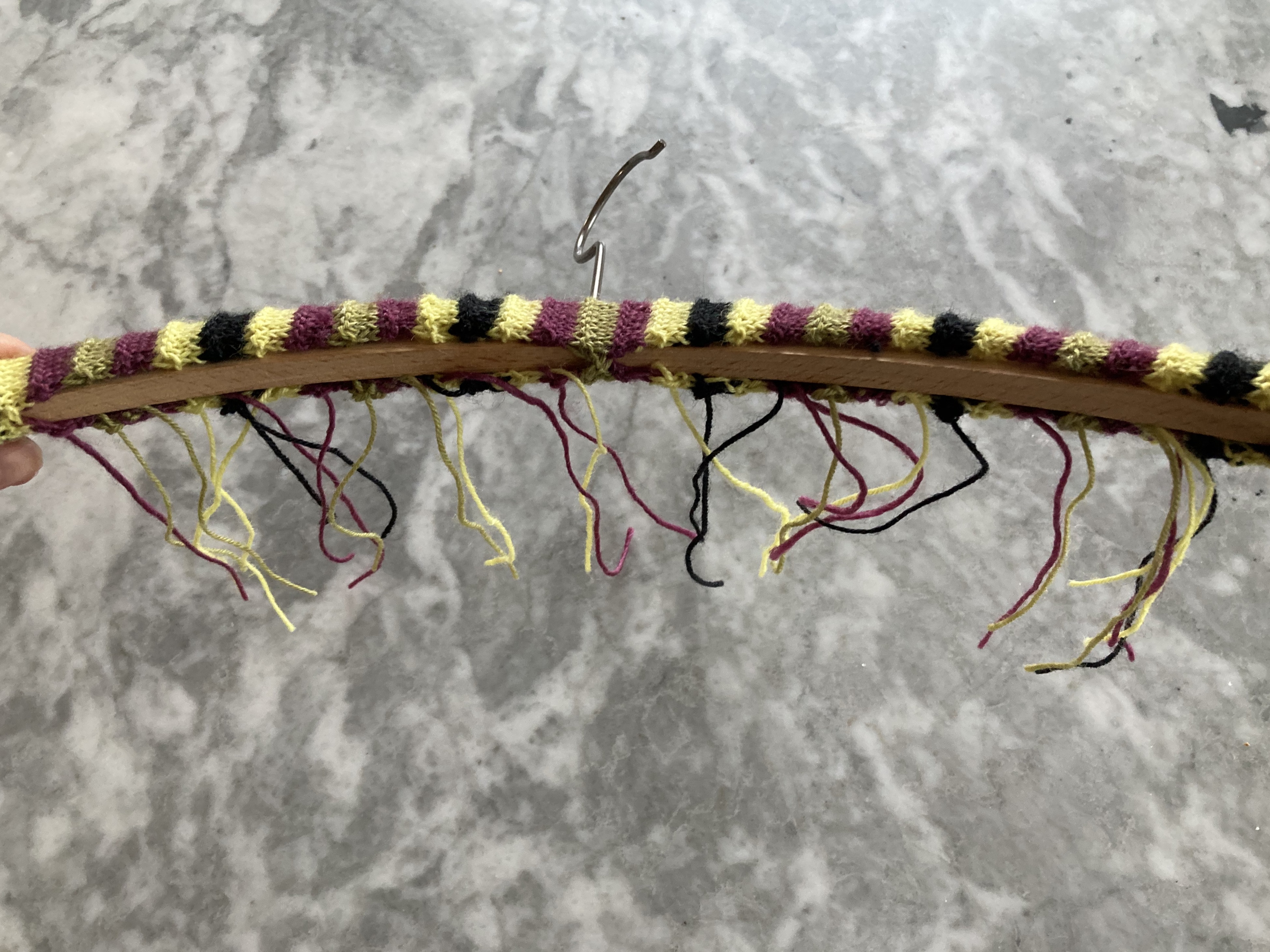
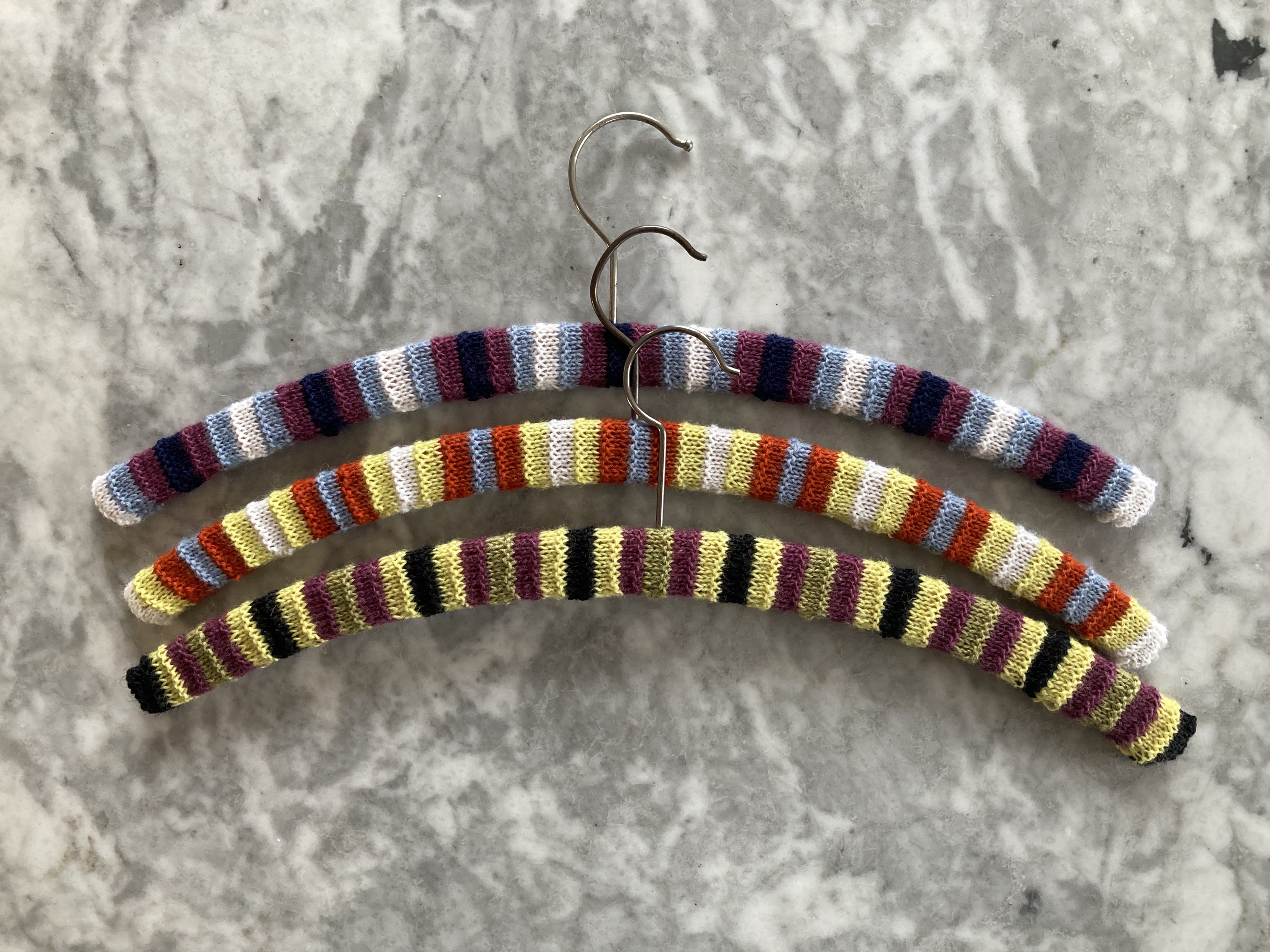
I made mine using the Stitchcraft pattern and more or less random colours from the “assorted 4-ply” bag. I used 2 mm needles and left the hook bare. The cover fit perfectly on the hangers (both mine and the ones from ebay, which were all the same size and type). The tedious part was stitching up the underside. When I made the first cover (blue, white, yellow and orange), I carried up the threads on the sides, thinking to save weaving in ends, but realised afterwards that the loose ends are useful for stitching up the cover on the underside of the hanger. So for the other two, I only carried up the threads within a two-colour, three-stripe block. Still… lots of ends.

I have other stuff to do and so many wips, so I’ve going to stop at three hangers for now, but maybe I can crank out a few more in December for presents. Loved this project and will surely come back to it to decorate more hangers, of which I now have plenty.

August 1963: Overview

End of the Season! Sadly, yes, the “holiday” season is drawing to a close and although it’s only the last day of July, it feels like autumn is around the corner. On the bright side, the late summer and autumn issues of Stitchcraft are always the most fun, with a good range of lighter-weight and warmer garments, children’s things for school, and more intricate homewares.

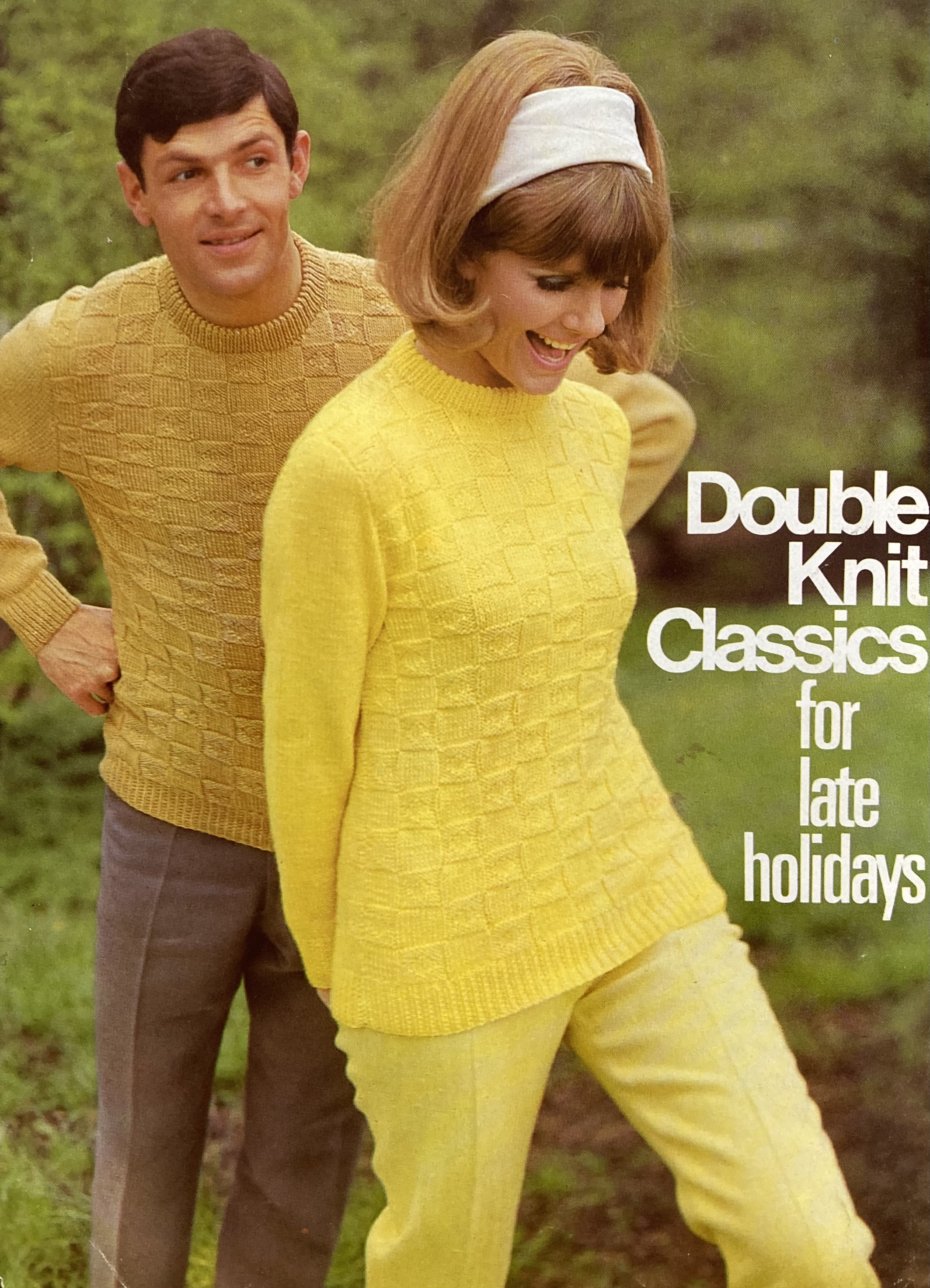
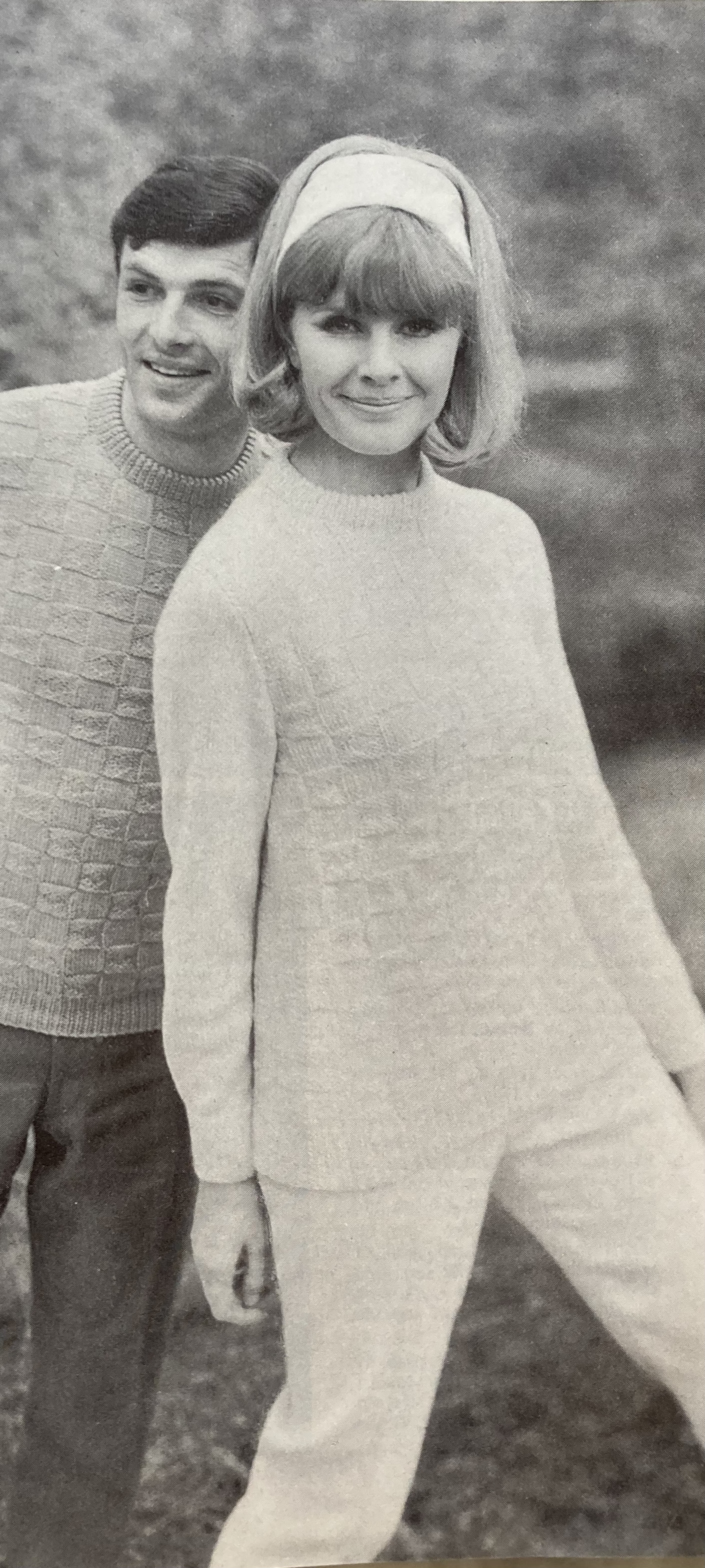
“The trend for colour use is in these bold clear motifs” writes “editress” Patience Horne, a trend which is reflected in “chunky”, boxy shapes, bright colours and simple stripe or geometric designs. The cover illustration shows two of a three-piece “his and hers” set — cardigan and mock-layered turtleneck for her and a buttoned-collar pullover for him– that all make use of single bold stripes. The woman’s matching pullover is made to look like a deep V-neck over a turtleneck top, but the under-layer is just an insertion knitted separately and sewn in.

There’s more use of simple, geometric motifs in the other women’s garments: a classic pullover with a wide check stripe down the front in double knitting and a colour-block cardigan with diamond motifs made in bulky “Ariel” wool. Diamond shapes are still trending from last month. There’s a bulky indoor-outdoor cardigan jacket in Big Ben wool, made in a slightly less simple striped waffle stitch. Necklines are high, whether buttoned or not, and collars are either big and square or non-existent.

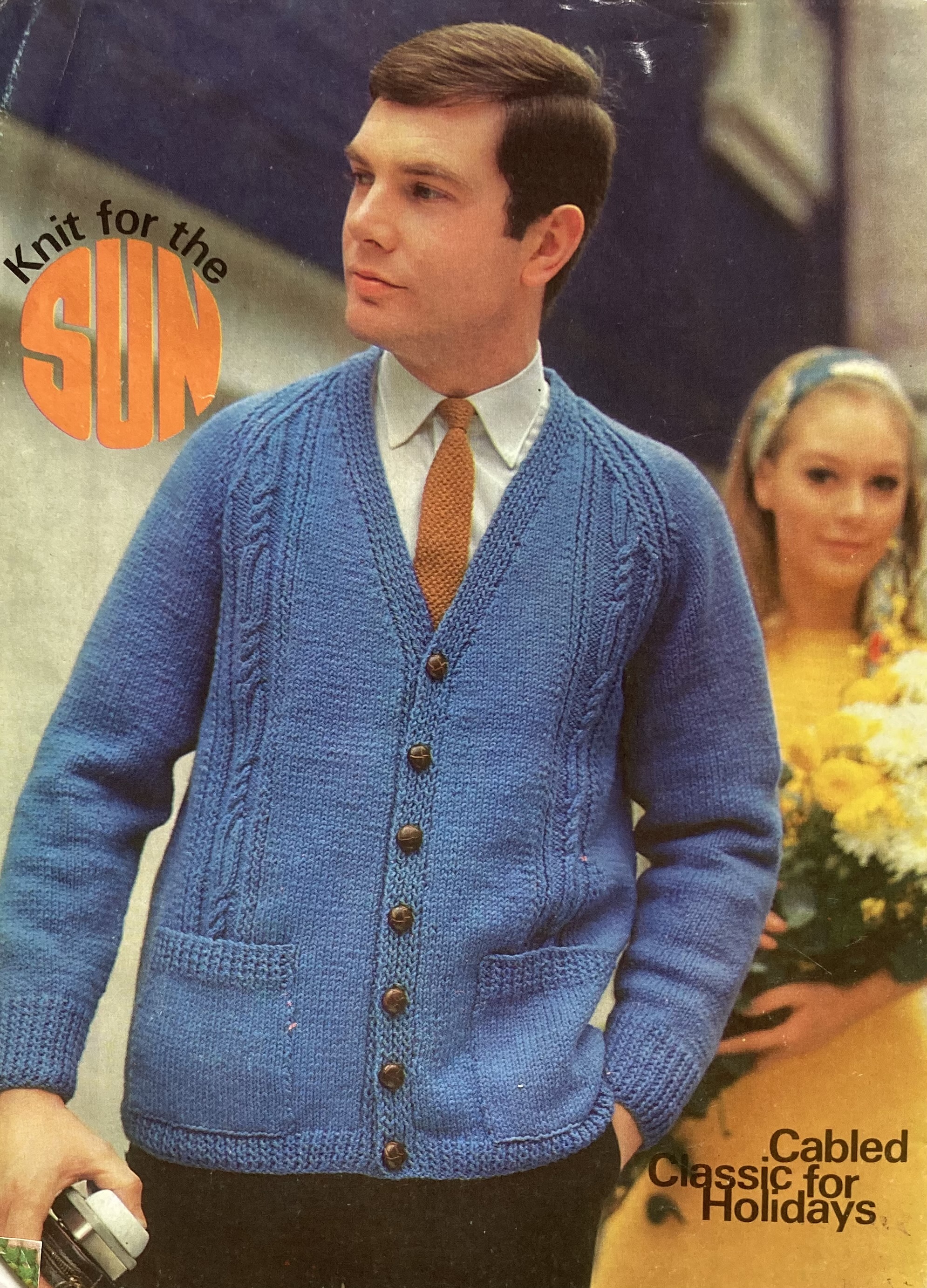
Continuing the interesting neckline/collar trend, we’ve got unisex “tomboy tops” for children, with a cute “tie” decoration on one of the pullovers. Simple, bold stripes and pointy diamond patterns show up here as well, whether in colour or as a stitch pattern element. The one lighter-weight design is a square, buttoned-neck pullover with double stripes near the hem and a coordinated skirt. Rounding out the garments is a lovely classic cardigan for men featuring cables on the upper yoke and — you guessed it — in two simple lines down the fronts.

Unlike the knit designs, some of the embroidery and tapestry projects are quite elaborate and ornate. Look at these Chippendale chairseats! That seems quite out of place to me in a modern 1963 home of clean lines and unfussy decoration, but of course many of Stitchcraft’s readers were older and/or conservative in their style, and probably not on the cutting edge of home redecoration even if they had the money to spend on it (which I’m guessing most of the readership didn’t.) The “peasant motif” tablecloth and cross-stitch place mats have more of a clean, colour-block aesthetic. I really love the tablecloth design! It can also be adapted for a cushion. Speaking of cushions, here’s a fancy one made of essentially two very large, intricately knitted lace doilies joined together around the cushion base.

And let’s not forget that standby of every proper 1960s home… the fluffy hand-made bathmat and matching well-dressed “pedestal” aka toilet! Hats off to every grandmother and great-aunt who kept true to this amazing home furnishing concept throughout the rest of the 20th century. (Seriously, one of my great-aunts had a setup like this in her guest bathroom in the plushiest, fluffiest, yellow and black shag carpeting you could imagine, and I’m pretty sure it stayed there until the turn of the millennium.)

That about wraps it up for this month’s issue. The ads are unspectacular and a new children’s comic is starting up, featuring twins Joe and Jenny on their hunt for the legendary “Smuggler’s Sack” that just might be waiting to be found in the caves near the beach. Good luck, little friends! My project for this month will be the men’s cabled cardigan.