October 1967: Babies Button-ups

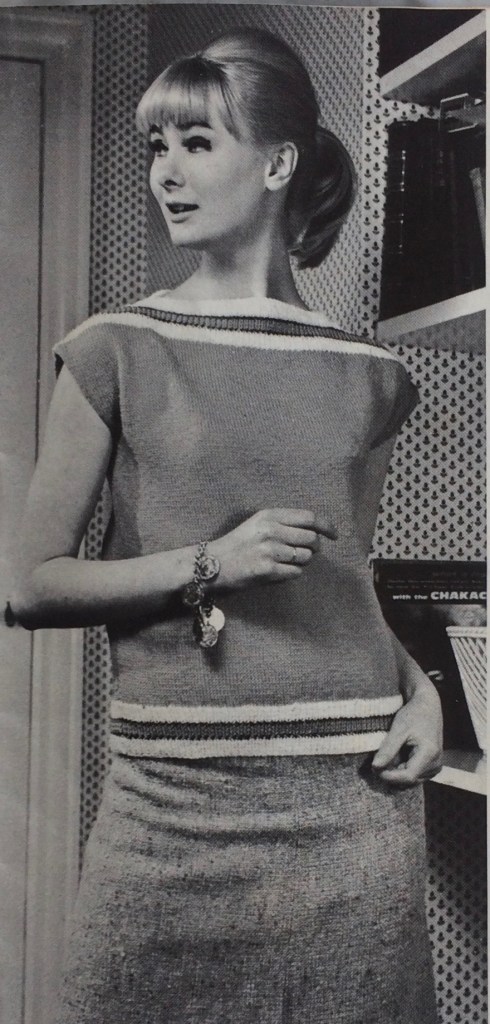
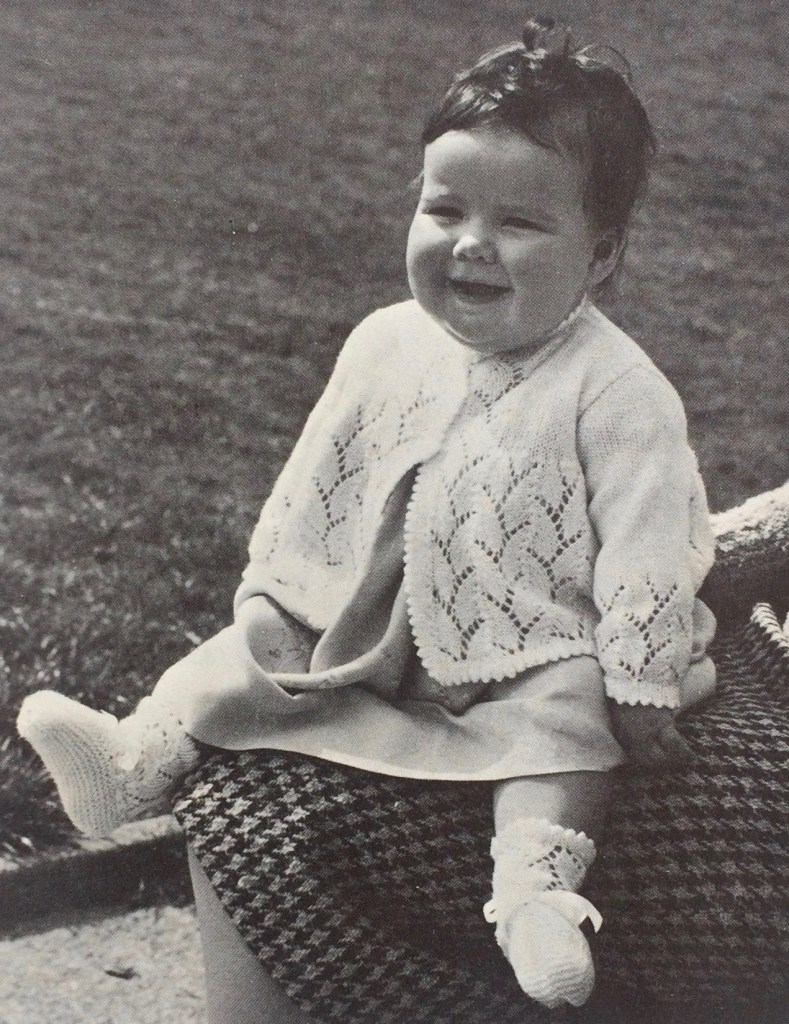
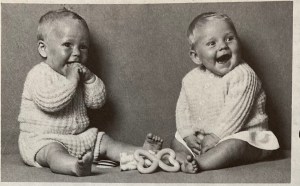
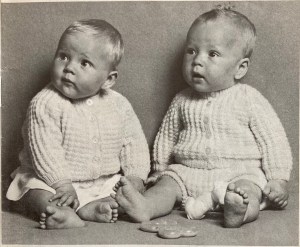
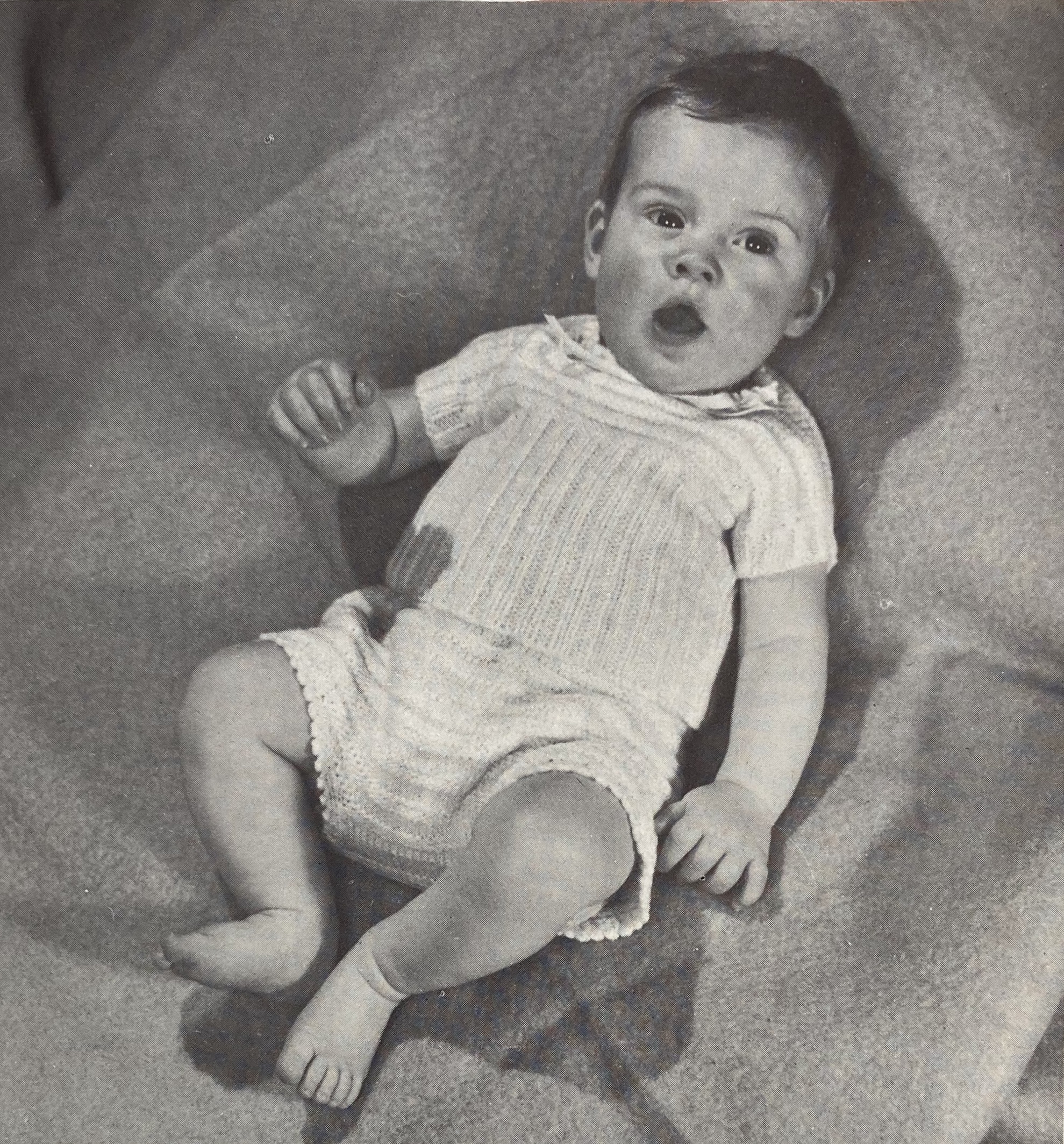
“Something to laugh about” is Stitchcraft’s caption for the photo of this month’s project: a baby’s cardigan (“button-up”) from October 1967. For once, the babies in the photo are actually happy!

The cardigan can be made “for a boy” or “for a girl” (buttonholes on one or the other side) and you can knit matching trunks “for a boy” — I guess girls need to get used to having a cold bum early, to prepare them for a lifetime of miniskirts with knee socks. In any case, the cardigan and/or set is offered in three sizes, to fit newborns up to ca. 1 year (18-22 inch chest).
The suggested wool is Patons Quickerknit Baby Wool (fuzzy, hairy, 100% wool) or Patons Brilliante (smooth, synthetic). I used DROPS Fabel (sock wool, 25% polyamide) in a shade of bright orange which I had originally bought to make the red-striped dress from September 1967, but which didn’t match with the other colours. It is quite fine and smooth, so for once I actually achieved the tension called for in the pattern: 8 sts and 10.5 rows to the inch.

I made the first size, for whatever baby a friend or colleague has next (always good to have a baby garment in reserve…). The pattern is interesting and one that I had never encountered before:

  • Row 1: sl1, k2, *p1, k3*
  • Row 2: sl1, p2, *k1, p3*
  • Row 3: sl1, *k1, p3* to last 2 sts, k2
  • Row 4: sl1, *p1, k3* to last 2 sts, p2

In other words, a broken 1/3 rib. You would think it would be easy to notice and memorise, but it was surprisingly frustrating and difficult to “read” the knitting. I kept the instructions next to me the whole time.
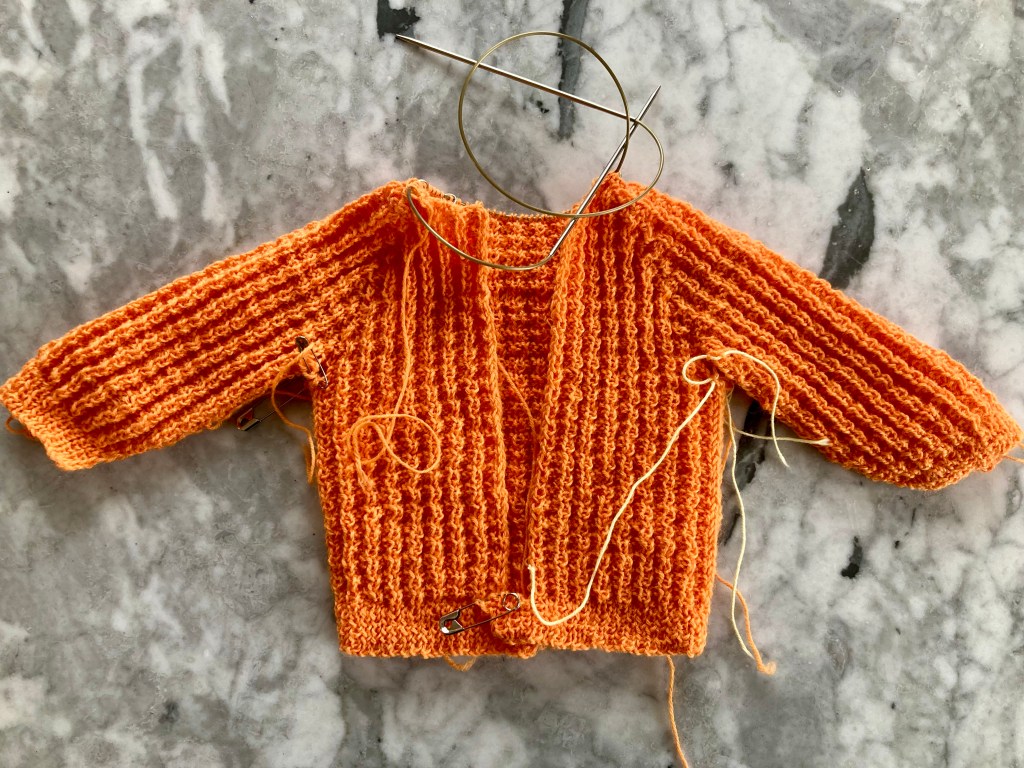
I made the fronts and back in one up to the armholes, the sleeves separate and flat (the pattern messed with my head enough and I did not want to try to convert it to knitting in the round), and then joined it all together for the raglan decreases. Increasing and decreasing in this pattern was not fun. Even though it is really not a complicated pattern! It just wouldn’t go into my head. It worked out fine in the end, though.

The finished fabric is very three-dimensional and waffle-y and probably quite warm. It also pulls together quite a lot horizontally. I was barely able to stretch it out to an 18 inch chest with blocking, so this will be for a small/newborn baby. On the other hand, the stretchiness means the cardigan will probably grow along with the baby and fit it for a while. I added little white vintage-looking buttons and that was that. I didn’t make the trunks.
All in all, turned out fine and will brighten up some baby’s wardrobe. And it even got done in October! Next month’s project will be a stranded pullover for myself.

October 1964: Overview

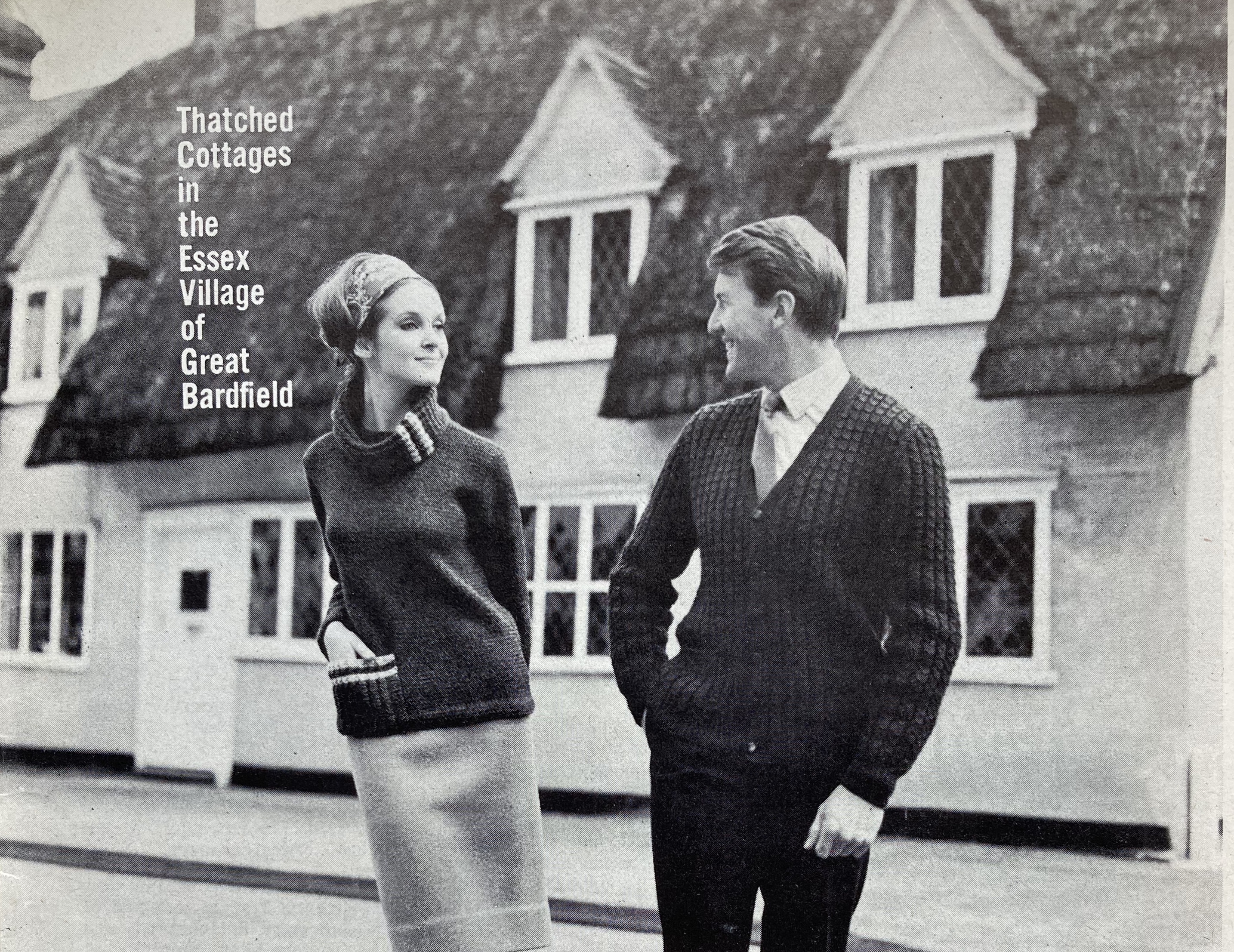
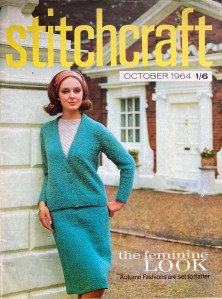
October is the start of the best season for knitting, and the October 1964 issue of Stitchcraft rose to the occasion with multiple themes and more colour pages than ever before (photographed in the villages of Great Waltham and Stebbing in Essex). There are knit designs for “him and her” as well as for different ages of babies and children, embroidery, tapestry, rugmaking and appliqué projects, “novelties” and even a few extra tidbits in the back “Readers’ Pages.” Shall we… fall in?

Our first Autumn theme is “The Feminine Look”, which cracks me up, for when has Stitchcraft or any handcraft magazine ever promoted the “masculine look” for women? It goes without saying that they would never advertise the feminine look for men… As far as I can see, the designs don’t look any more feminine than the designs from any other issue. Maybe it’s meant in contrast to the “partner-look” designs from previous fashion trends.

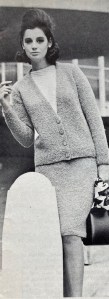
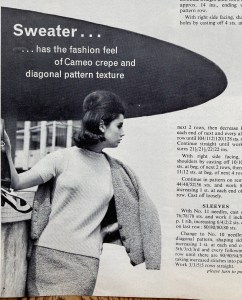
In any case, the cover-photo suit with coordinating jumper for underneath is simple and elegant, and probably quite comfortable to wear. It’s made in still-popular nubbly Rimple wool in DK weight and a slightly tweedy shade of light blue. The jumper is made in fingering weight and has a diagonal pattern.

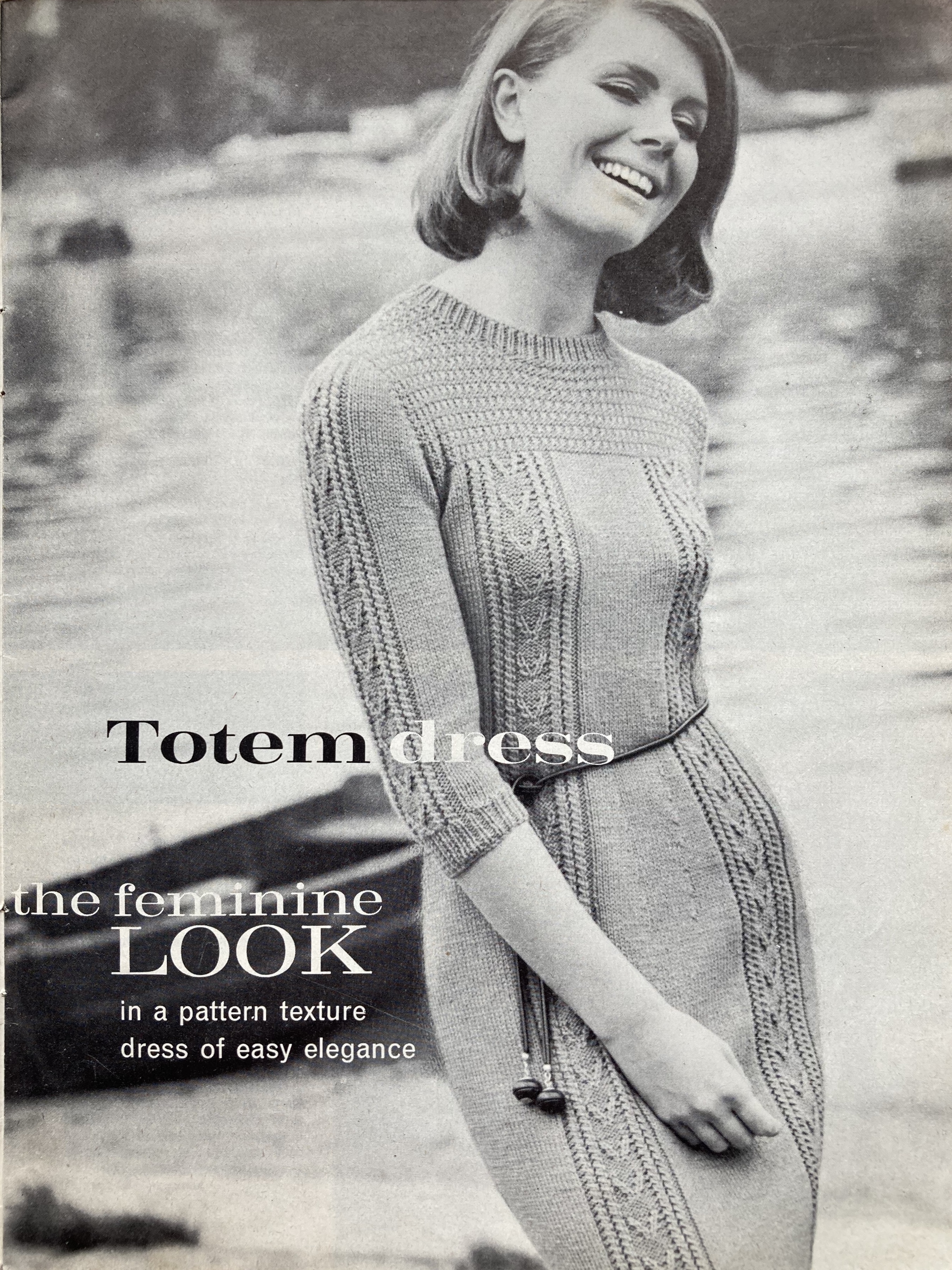
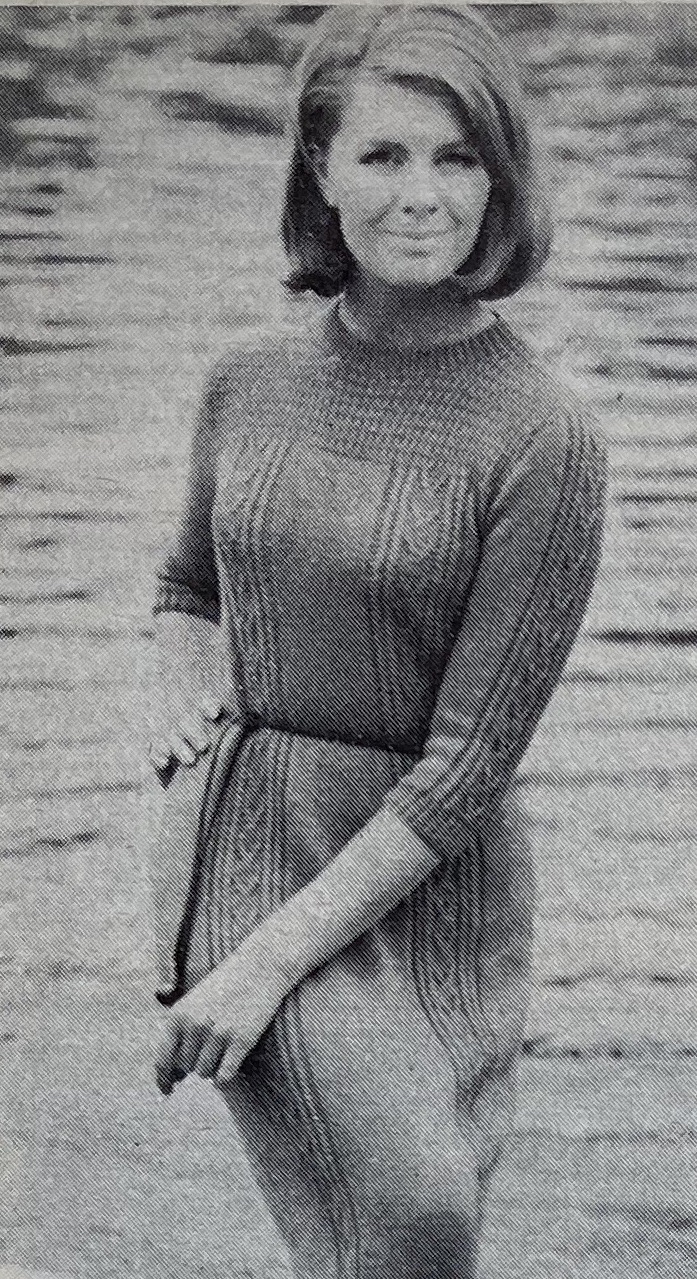
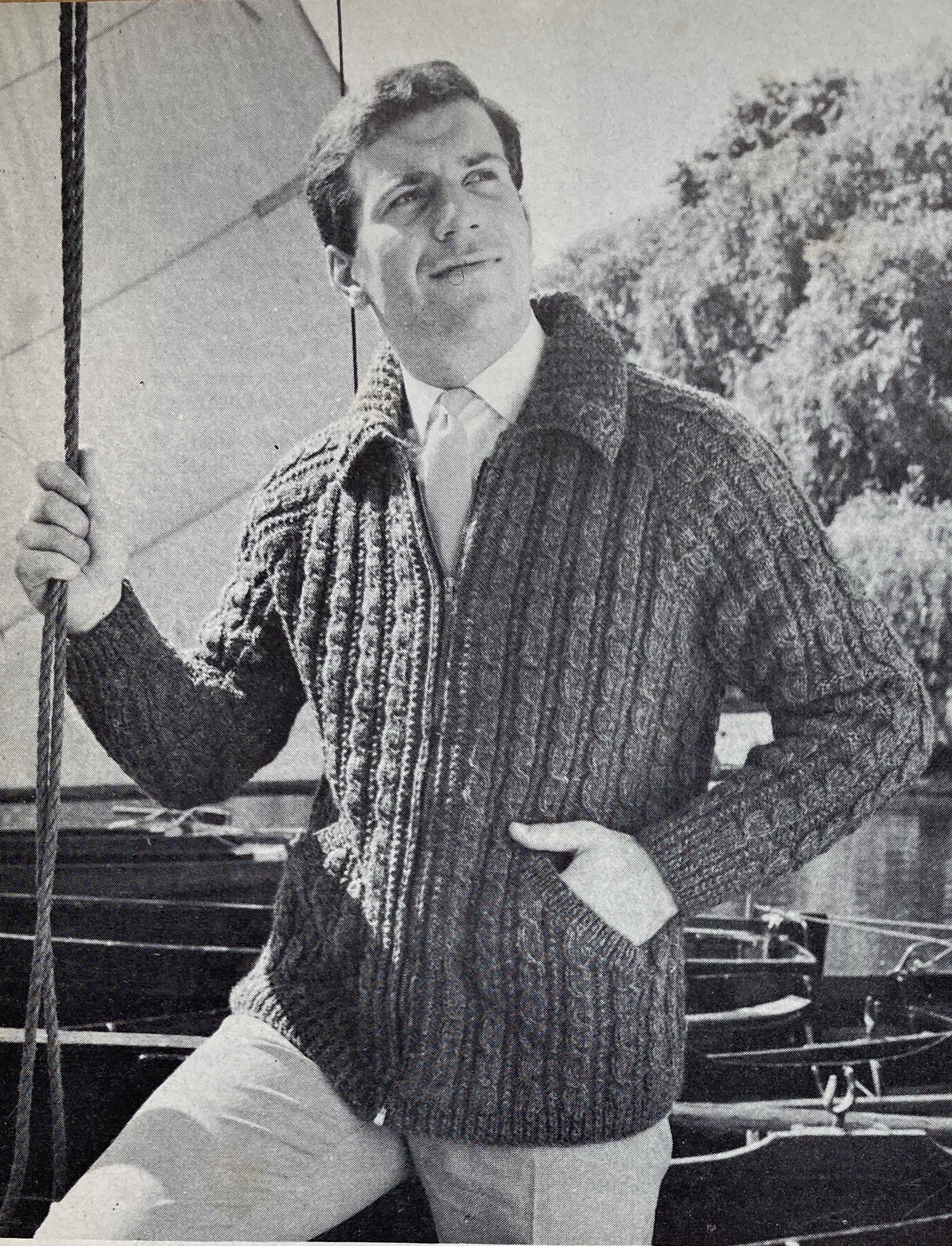
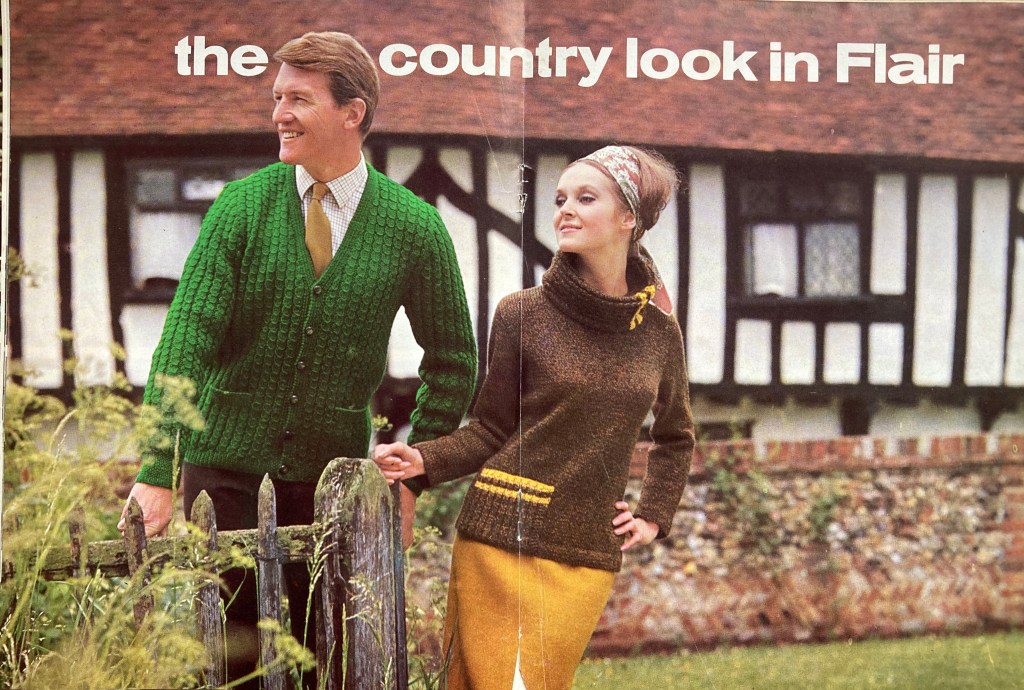
The women’s “feminine” fashions include a great cable-pattern dress as well, in smooth, DK weight Totem wool, and a less “feminine”, but probably very cosy, roll-collar pullover with an aysmmetrically-placed pocket. The mock-cable pattern on the pocket and collar is used as an all-over pattern on a man’s classic V-neck cardigan, and there’s another man’s cardigan as well in a very similar design, with “real” cables, a zip fastening and in bulky Ariel wool.

The cable cardigan and women’s pullover are shown off in a gorgeous full-colour centrefold photo where the green, yellow and brown of the knitwear harmonise perfectly with the country setting. As the caption says, both garments are made in “Flair”, a somewhat heavier wool-acrylic blend.

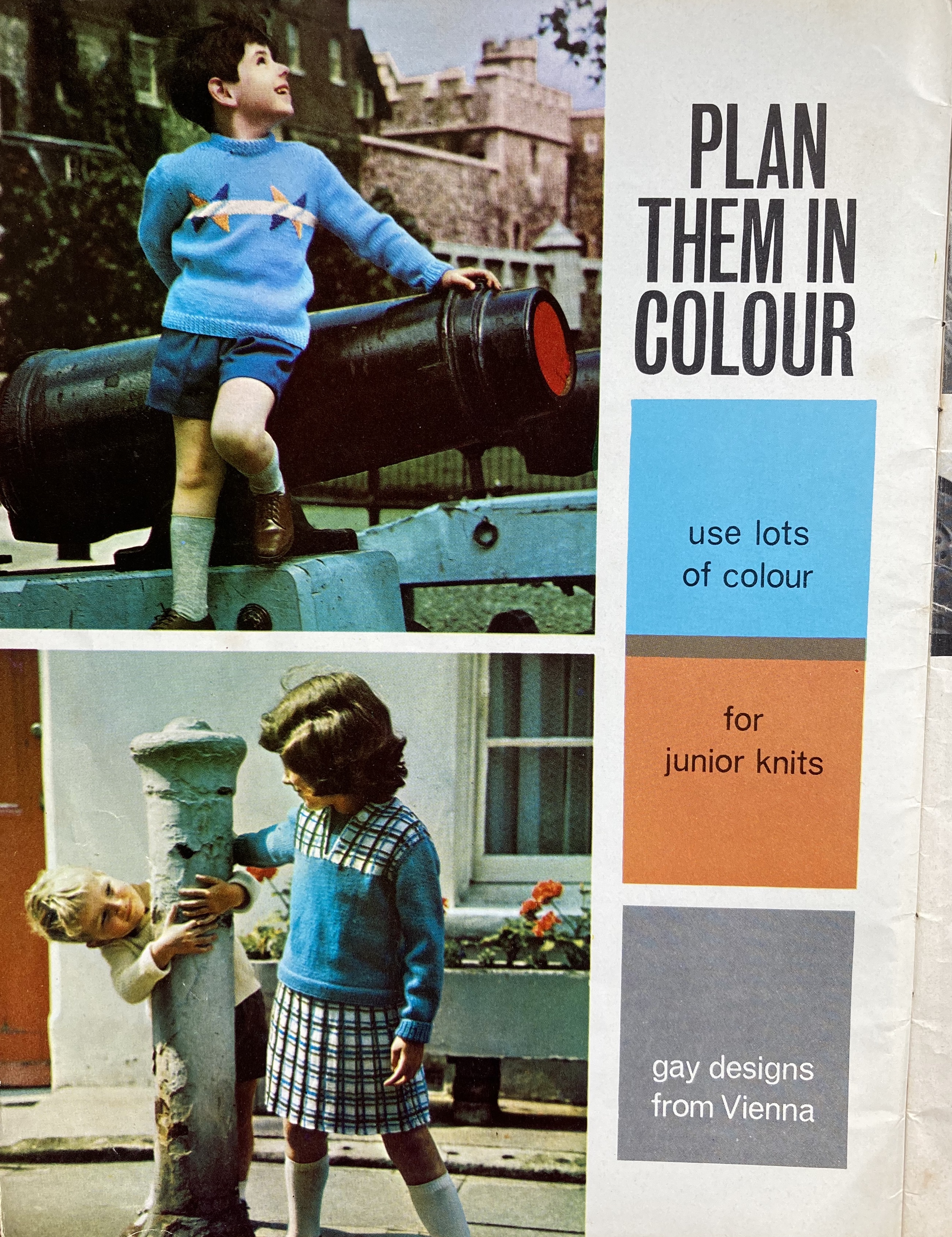
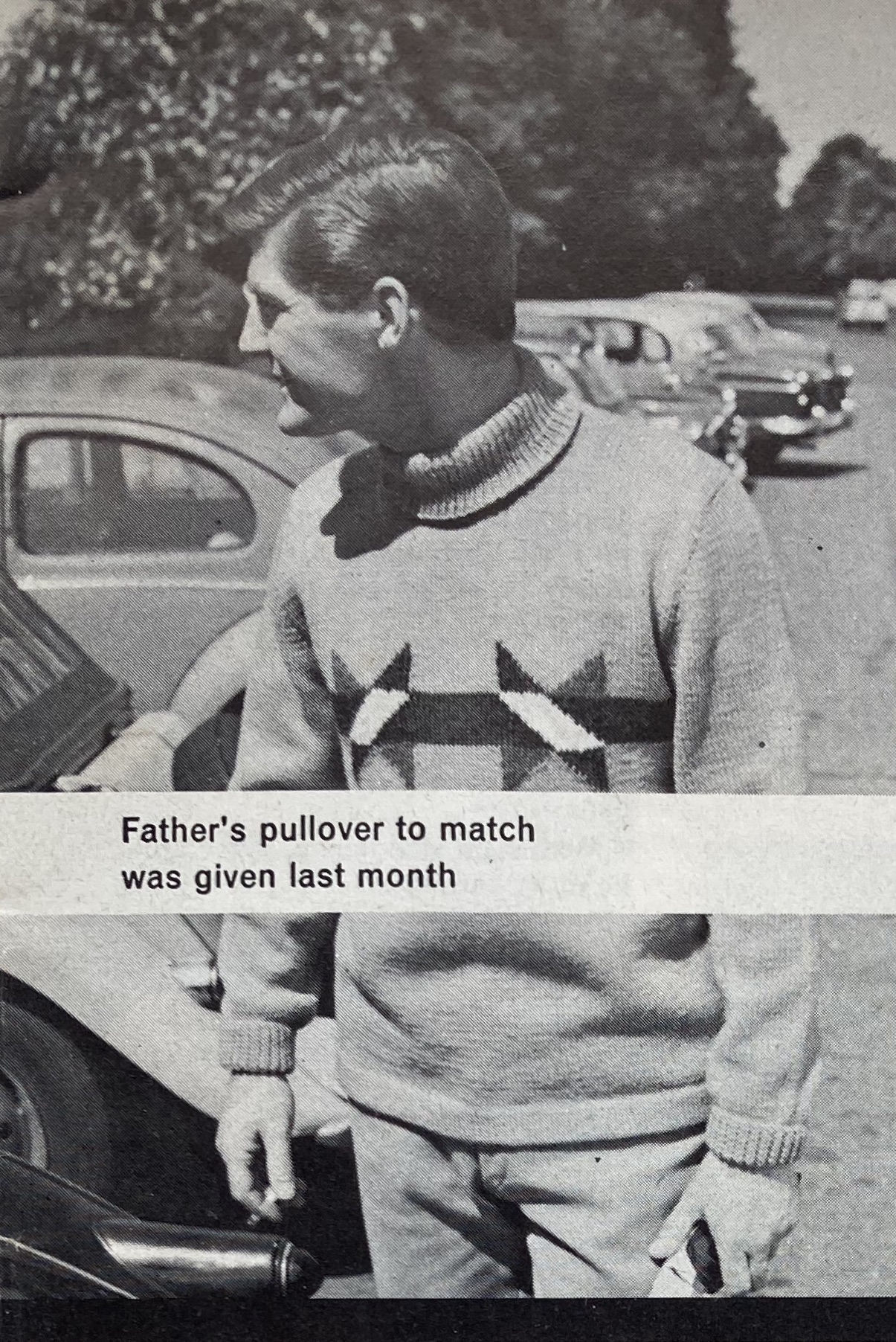
For the children, there’s a boys’ version of a men’s pullover from last month’s issue… the one that would not be a good choice for most women to wear. I personally think the placement of the star motifs is a bit odd even on a flat-chested body (they could have placed the band near the hem, or in a round yoke), but Stitchcraft liked it enough to offer a smaller-sized version in blue. Girls get a jumper suit in a plaid-trimmed “gay design from Vienna”. The colour palette for both the adult and children’s fashion is bright — blues, green, yellow, chocolate brown and “Flamenco” (I’m guessing red?), the patterns are bold and clear and collars and pockets are big and conspicuous.

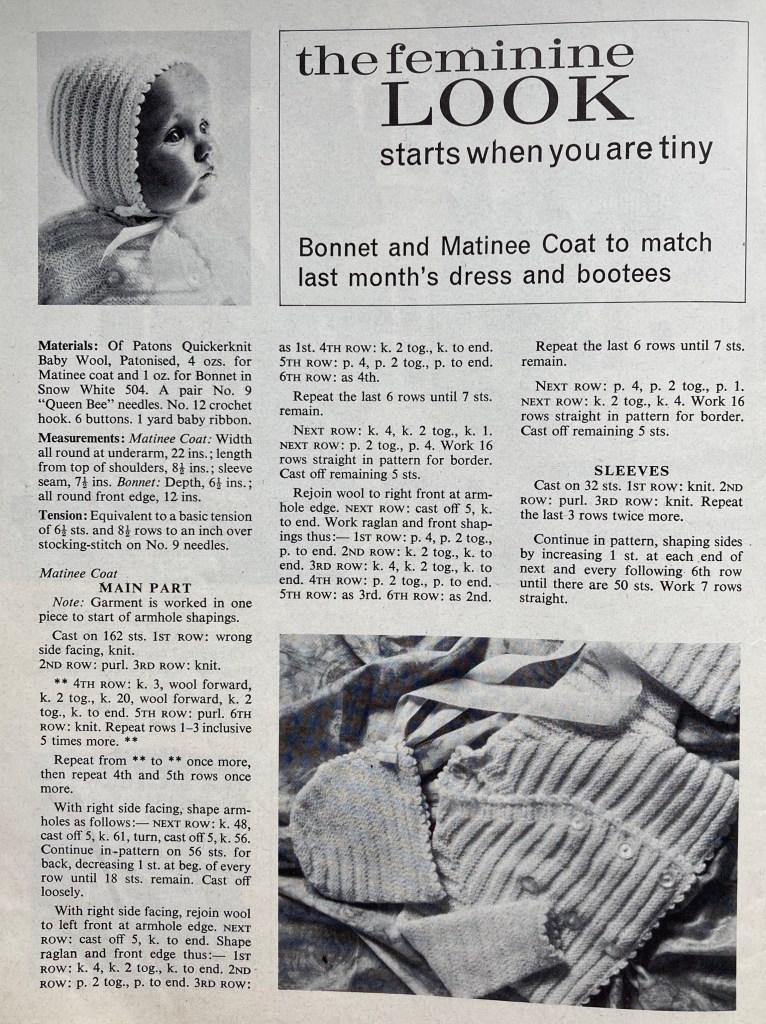
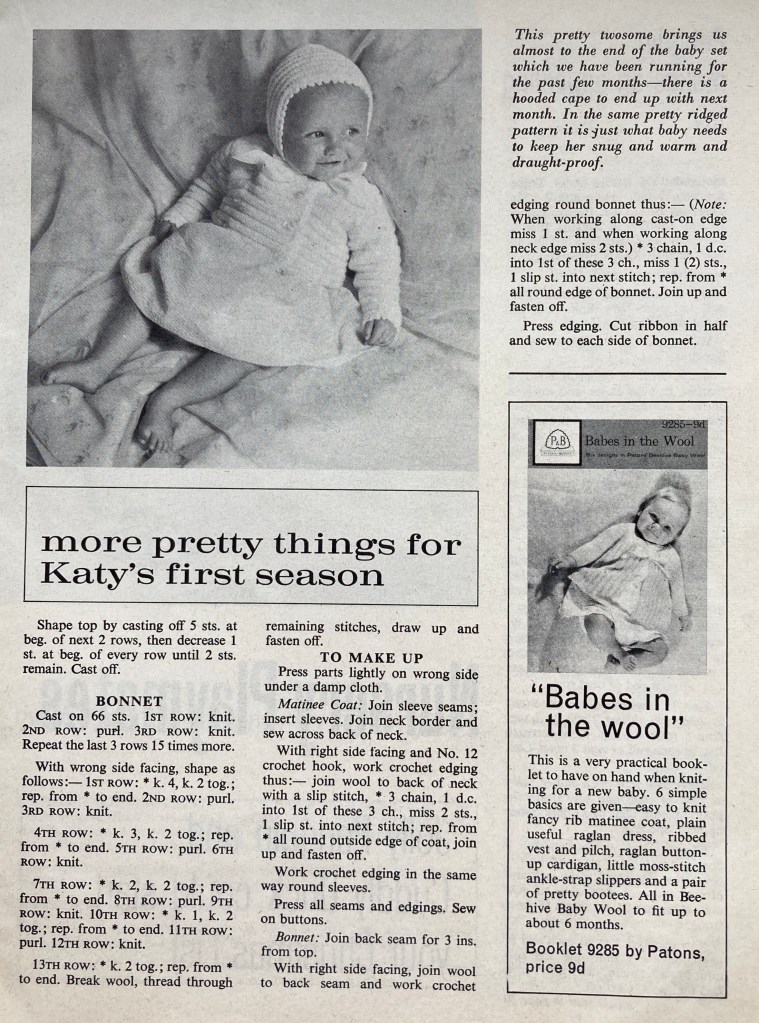
Continuing the baby-outfit series from the previous months’ issues, the (girl) baby of the family gets a bonnet and matinée coat. “The feminine LOOK starts when you are tiny” — i.e. get used to having cold legs now! The set is certainly pretty, and there’s a very practically placed ad for a Patons’ baby-pattern booklet, “Babes in the Wool” on the page as well.

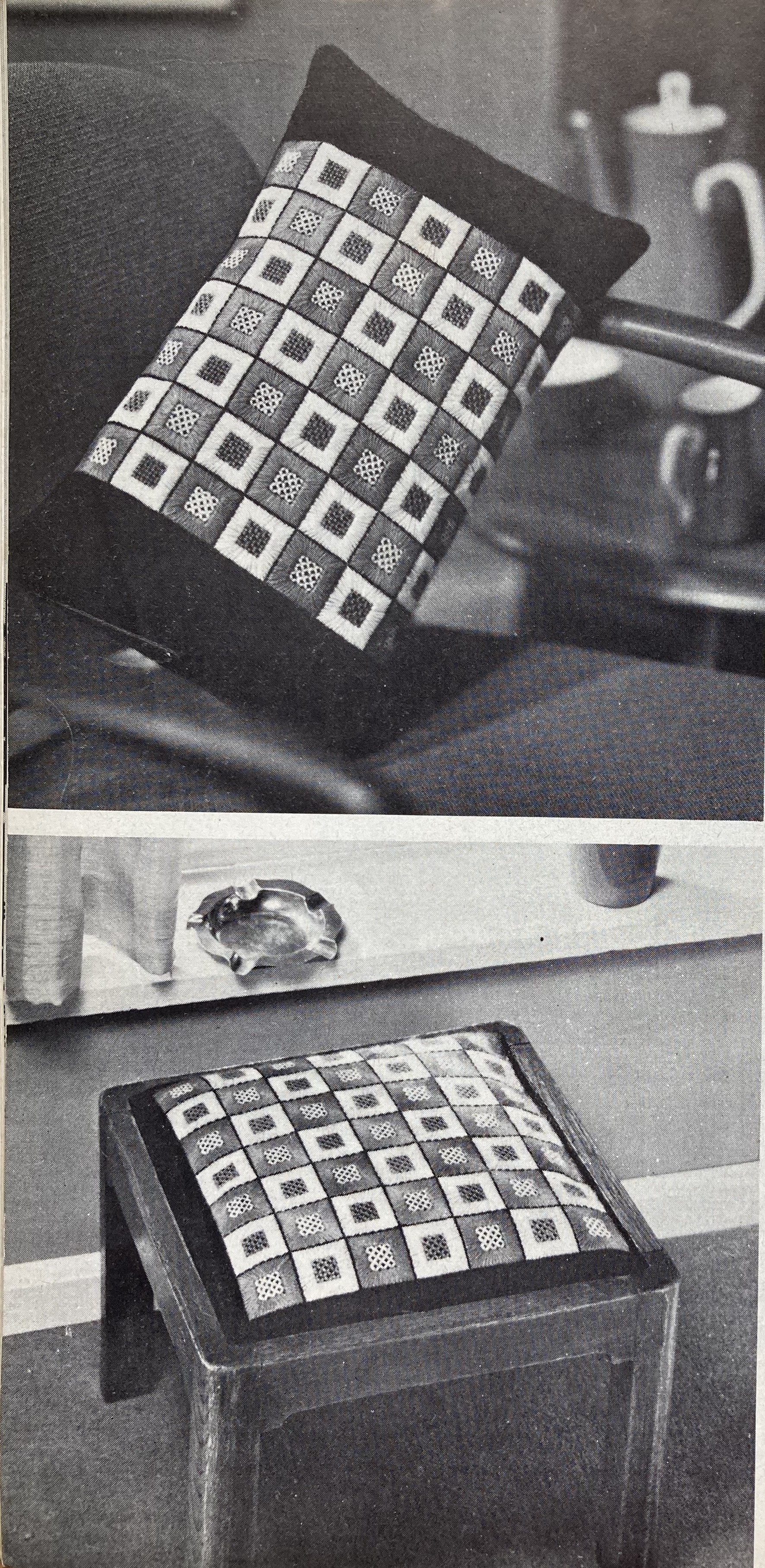
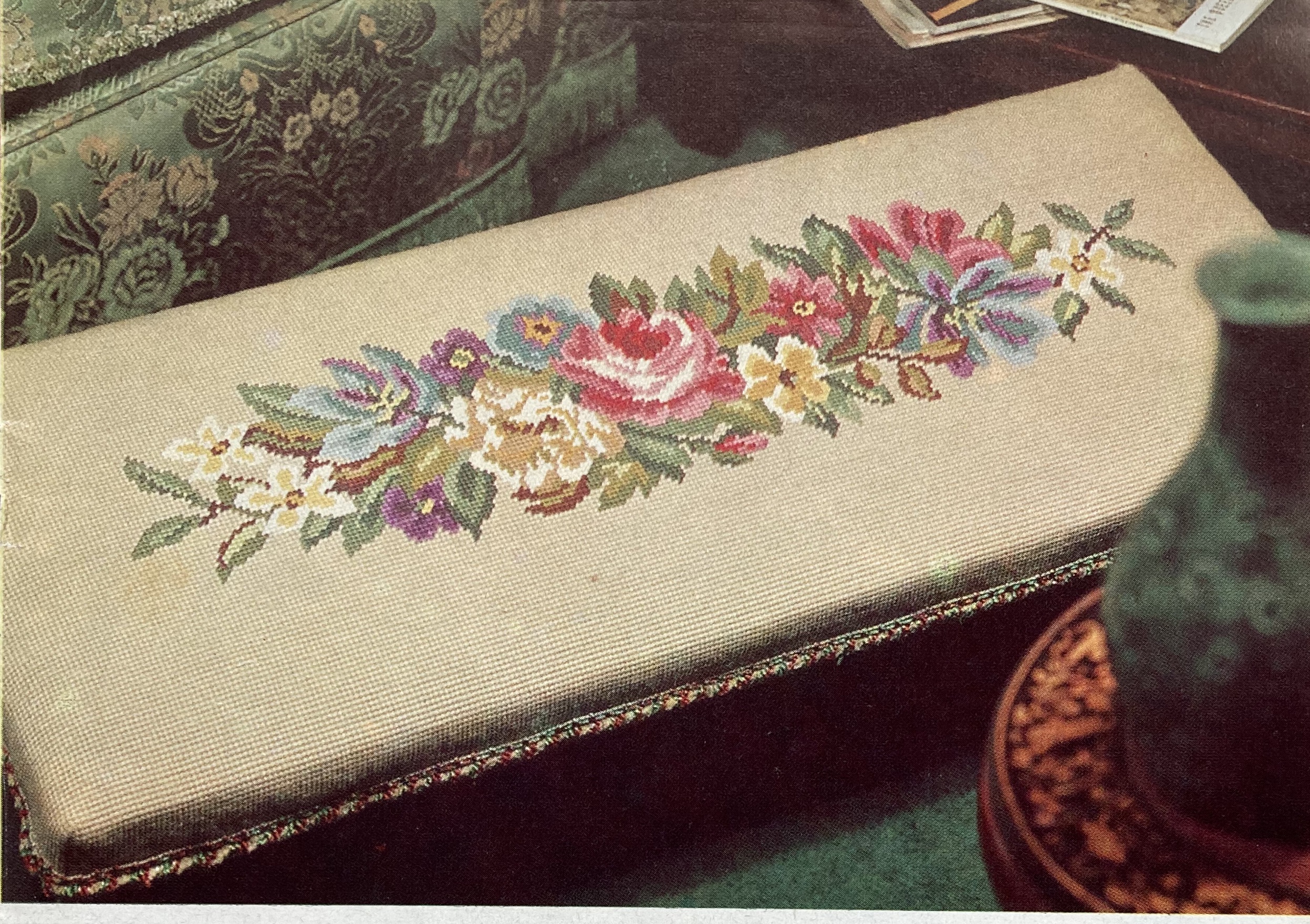
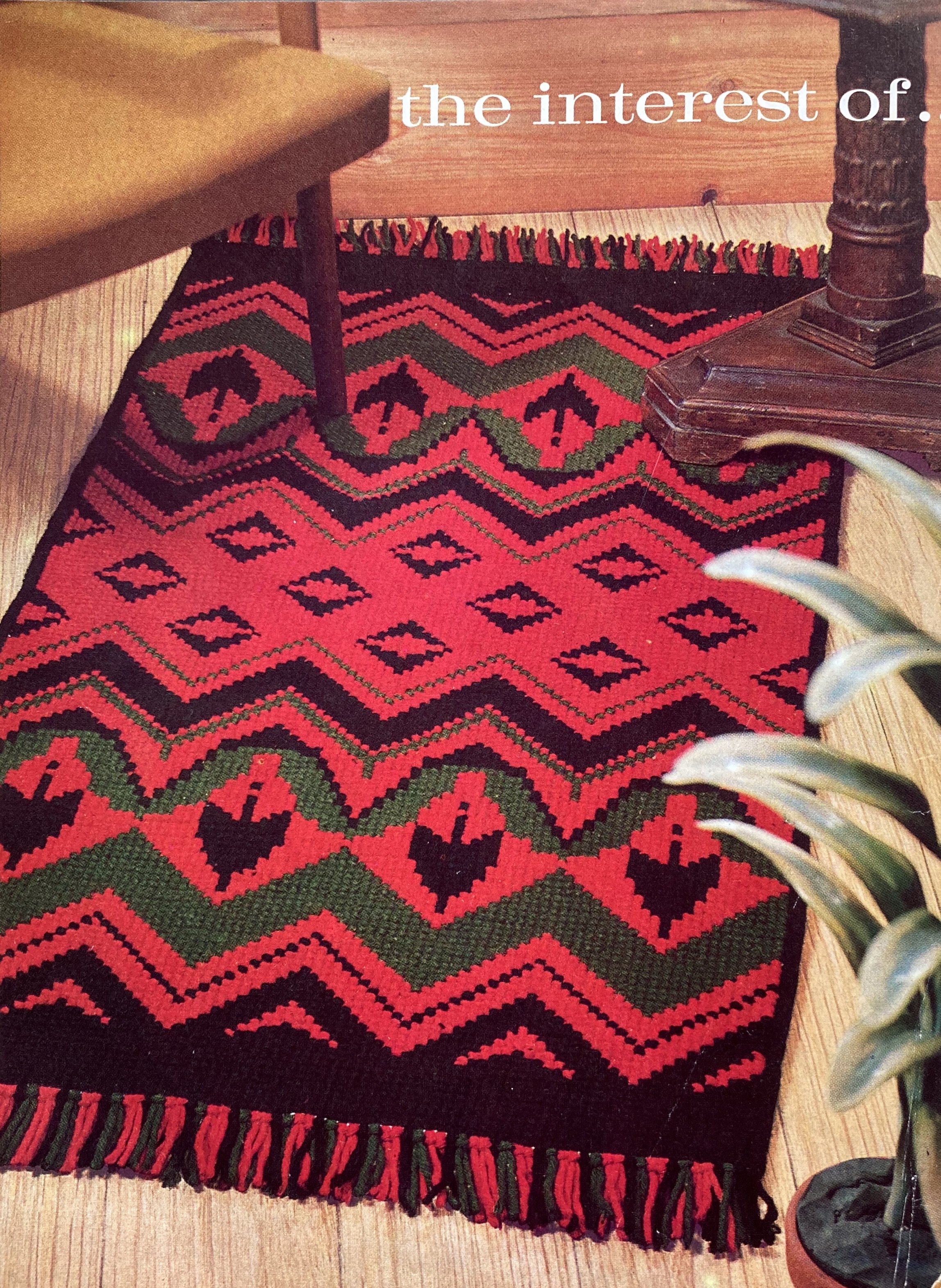
With all these great knitting designs, you’d think the homewares department would be skimpy, but they really went all-out on this issue: in addition to the usual cushions, stool-tops and chairbacks in huckaback work or tapestry, there’s a bold red-and-green “traditional Austrian” rug photographed in colour (notice how a traditional Austrian design is not called “peasant”, interesting…)

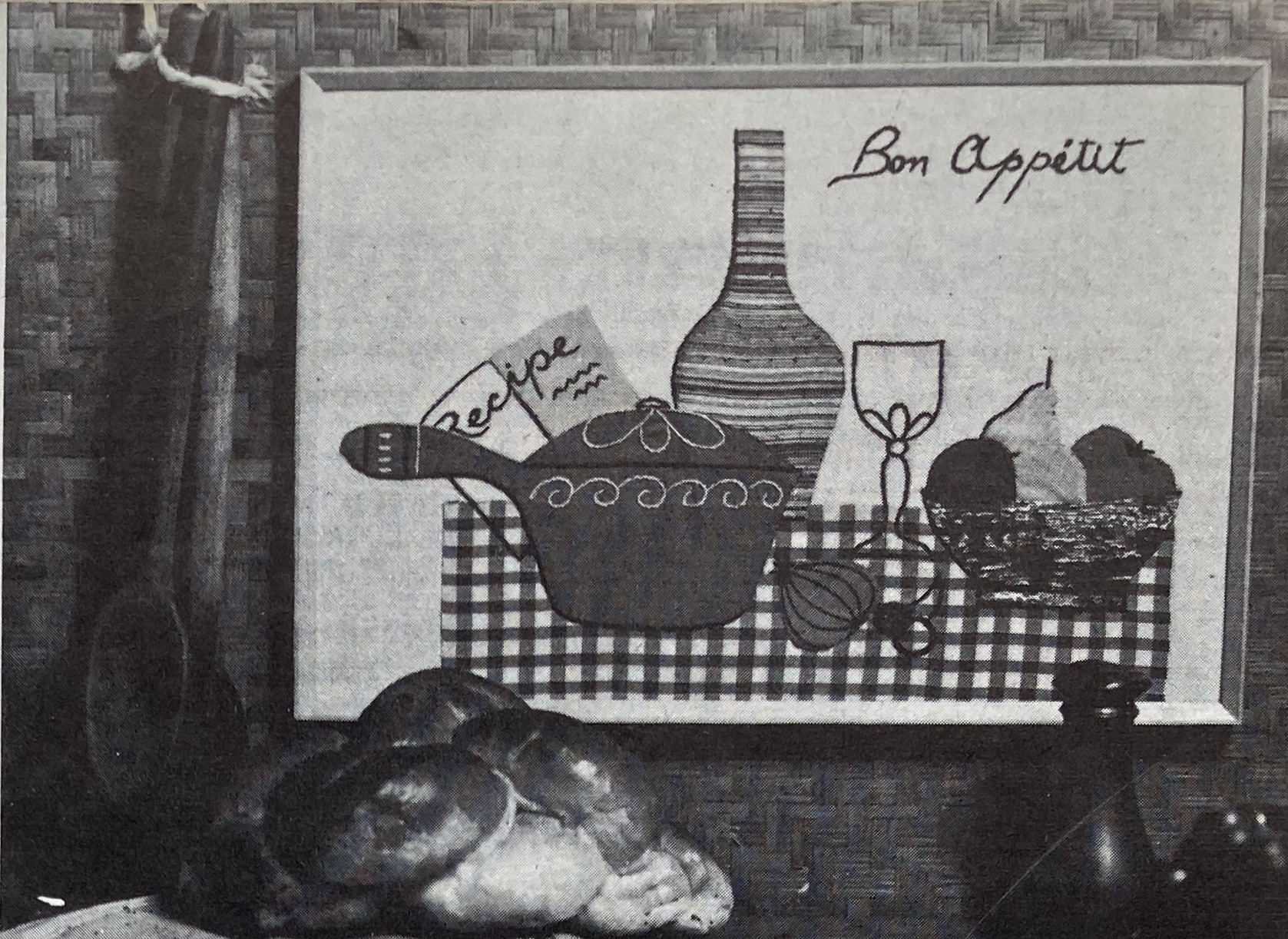
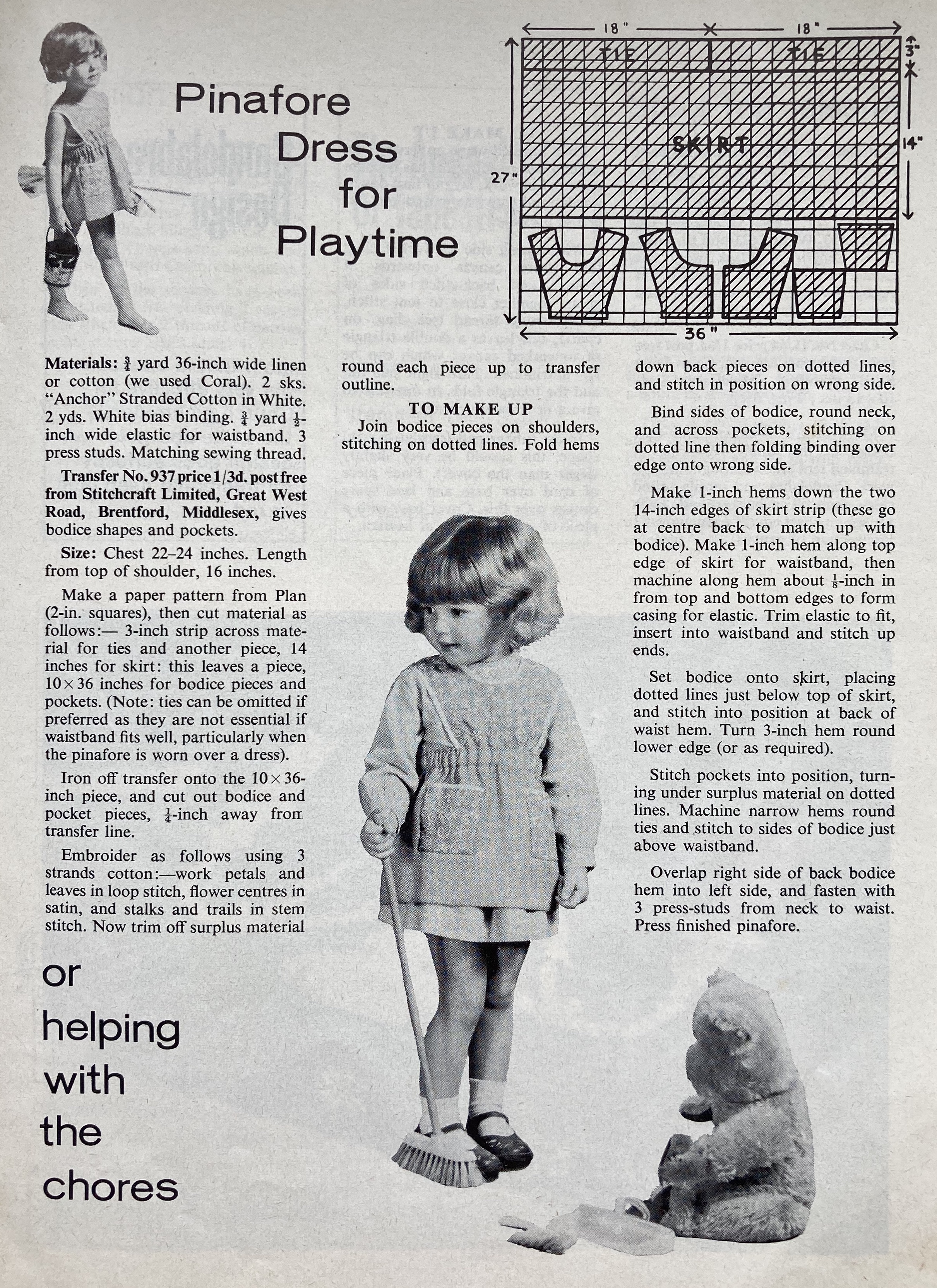
… and an appliquéd wall picture with a “kitchen”-themed design. Do I have terrible taste if I admit that I love this wall hanging? It’s utterly kitschy and very 1960s! There’s a little sewing design as well, for a child’s pinafore smock… “for playtime or helping with the chores.” Beware, little girl, that feminine look comes with its own designated activities.

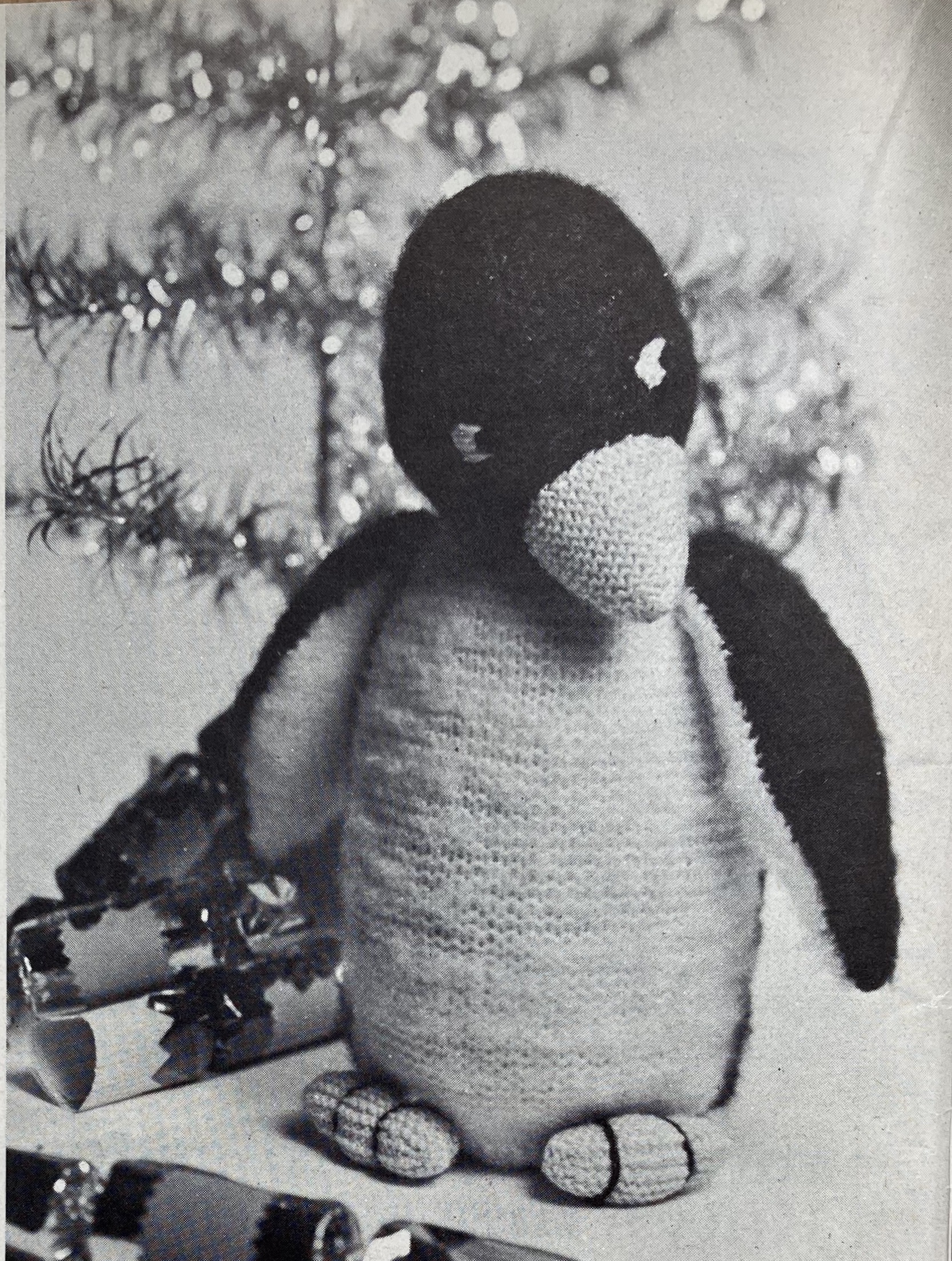
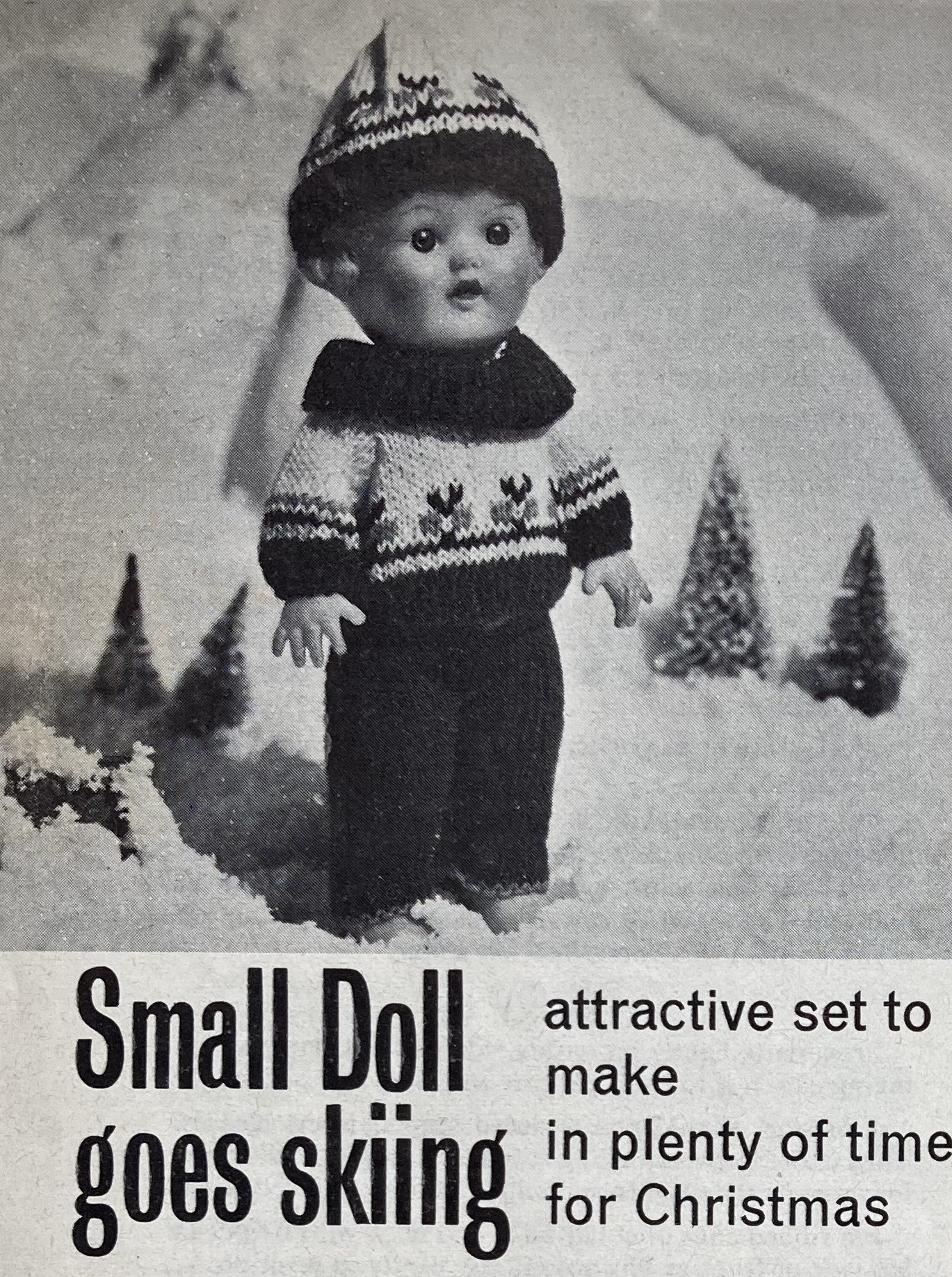
And don’t forget the “novelties”, which are not quite as weird in this month’s issue as we have seen in other issues. There’s a little stuffed penguin toy with very funny feet, and a night-case in the shape of a knitted duck. There’s also a winter ski set for a doll, with ski-pants and a warm stranded pullover and cap. (If the doll looks a little worried and not quite warm and comfortable, it’s probably because it’s standing barefoot in the snow.)

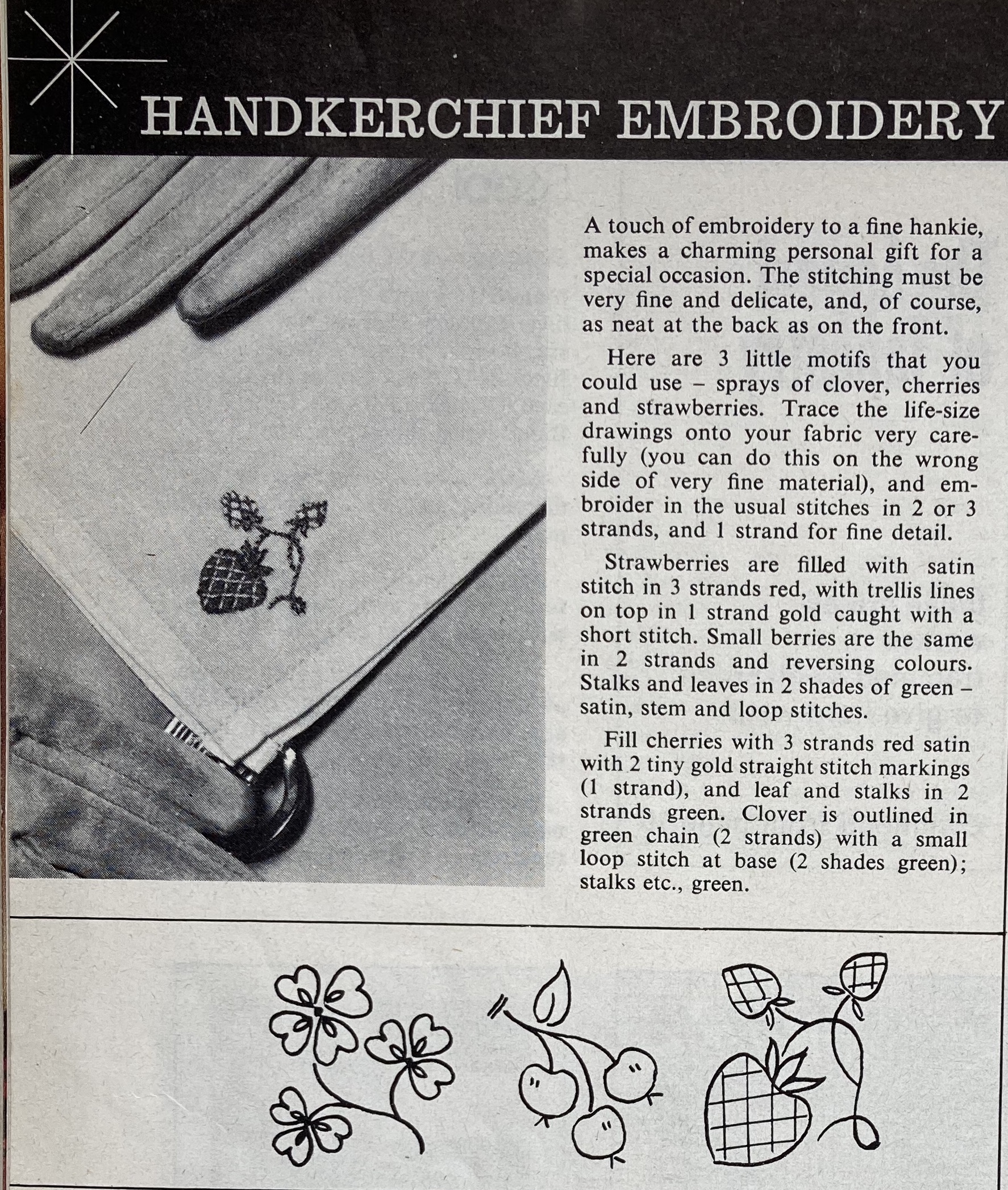
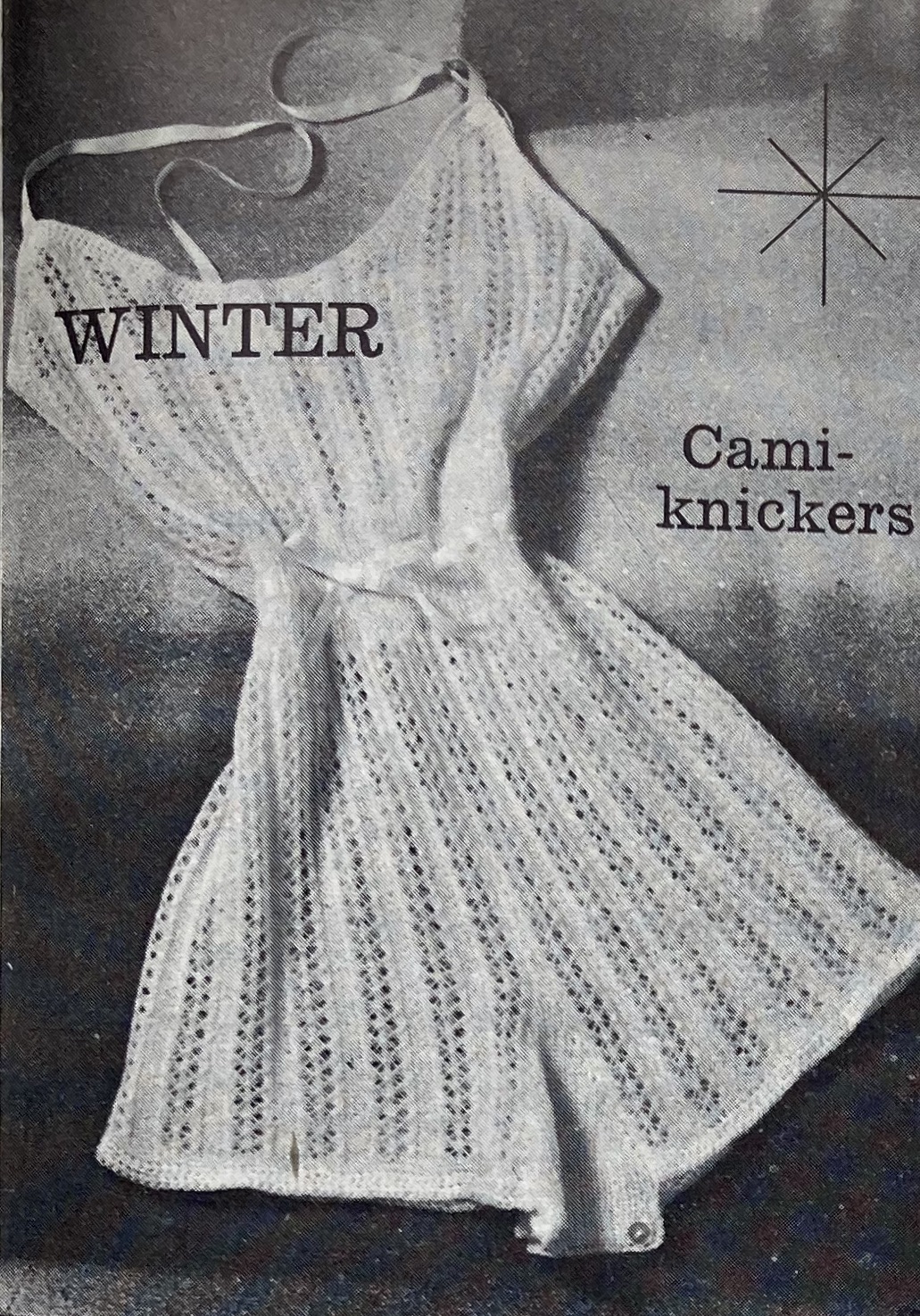
But that’s not all! In addition to the usual comic (Anne learns how to embroider an owl and a swallow using different embroidery stitches), the “Readers’ Pages” in the back of the magazine have a reprint of a 1944 knitting pattern for warm “cami-knickers” underwear, and some dainty stencils to embroider onto handkerchiefs. I love embroidered handkerchiefs, having inherited some beautiful ones from my grandmother and occasionally bought more on ebay. If I ever find any plain new ones to buy (shouldn’t be that difficult), I could try my hand at embroidering them myself.
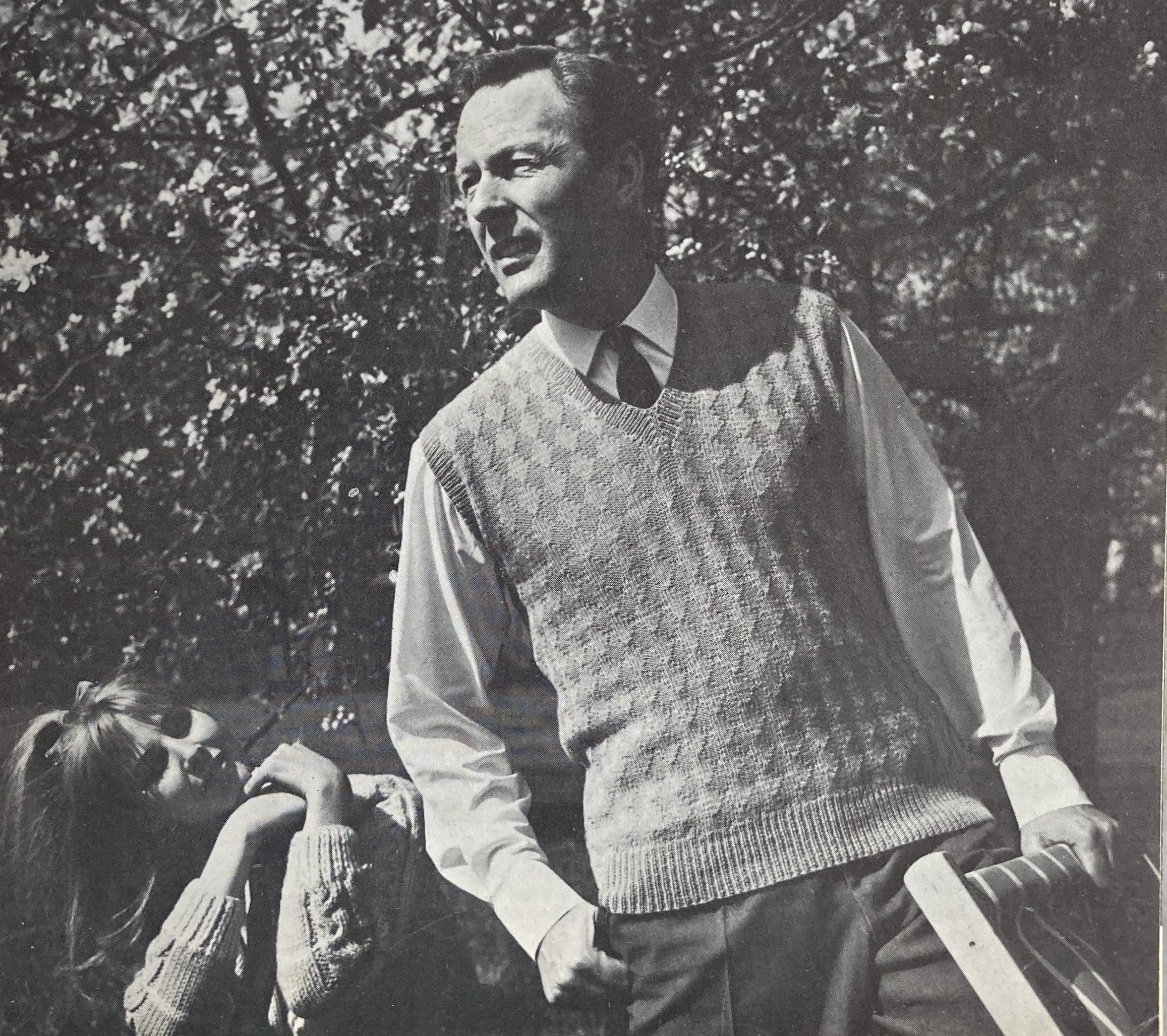
The handkerchiefs, cami-knickers and even the cheesy appliqué picture all appeal to me, but I love the cabled knit dress most of all, so that will be my October project. I can’t imagine it will be done by the end of October, but I have already bought wool and made a swatch and am just starting casting on, so I’ll post about it soon when there’s something to see and write about.

Till then, happy Autumn!

August 1964: Overview

The August issues of Stitchcraft are always a mix of styles and seasons. The summer holidays are winding down, and knitters will want to start work on warmer garments for the autumn. At the same time, it’s still summer, and it may well be too hot to want to hold wool in your hands, not to mention wear that bulky wool pullover. Stitchcraft’s solution is to offer a range of casual “country” knits that can be worn as outer garments on cooler summer days and be useful for indoor-outdoor wear as autumn approaches.

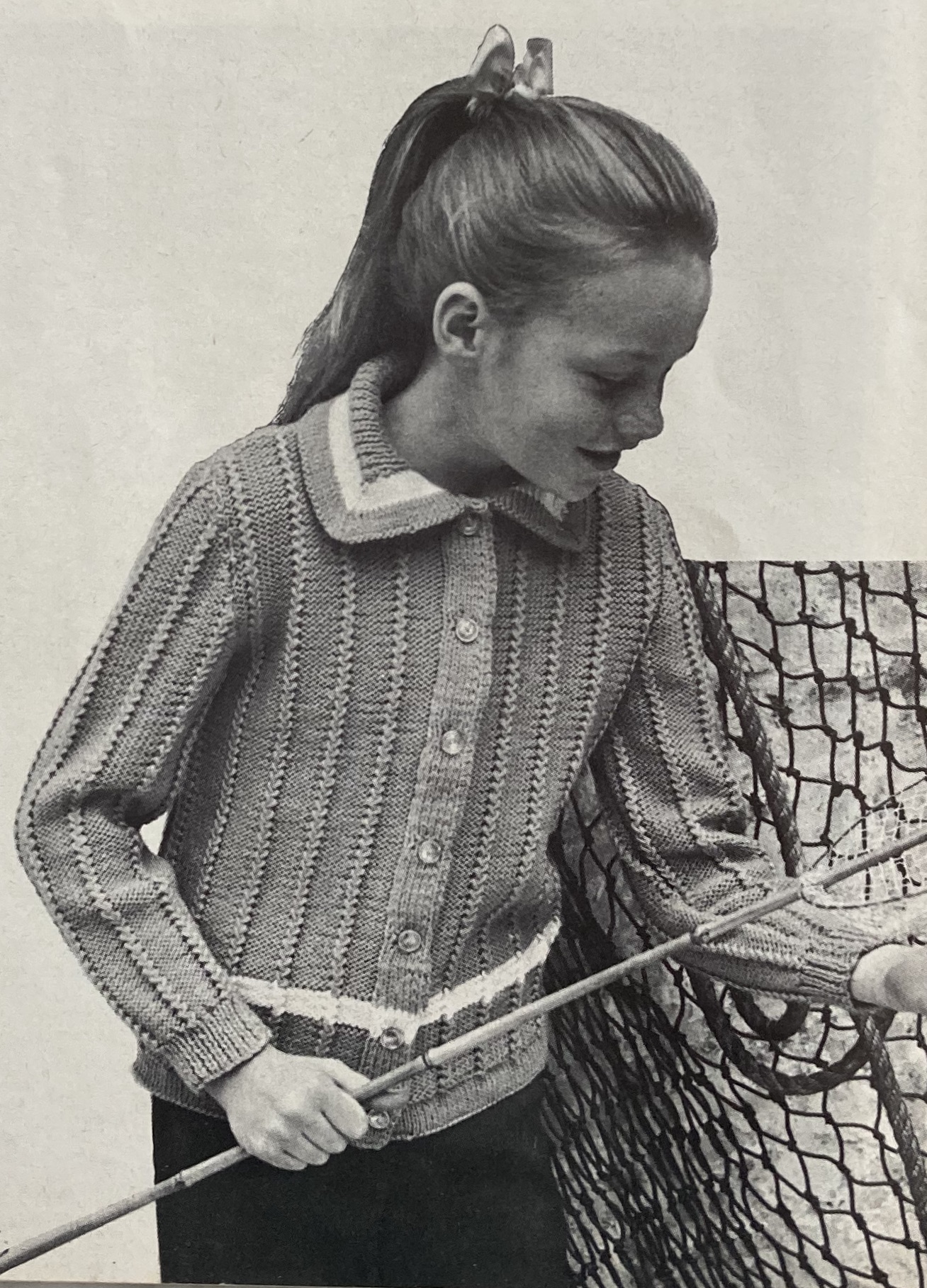
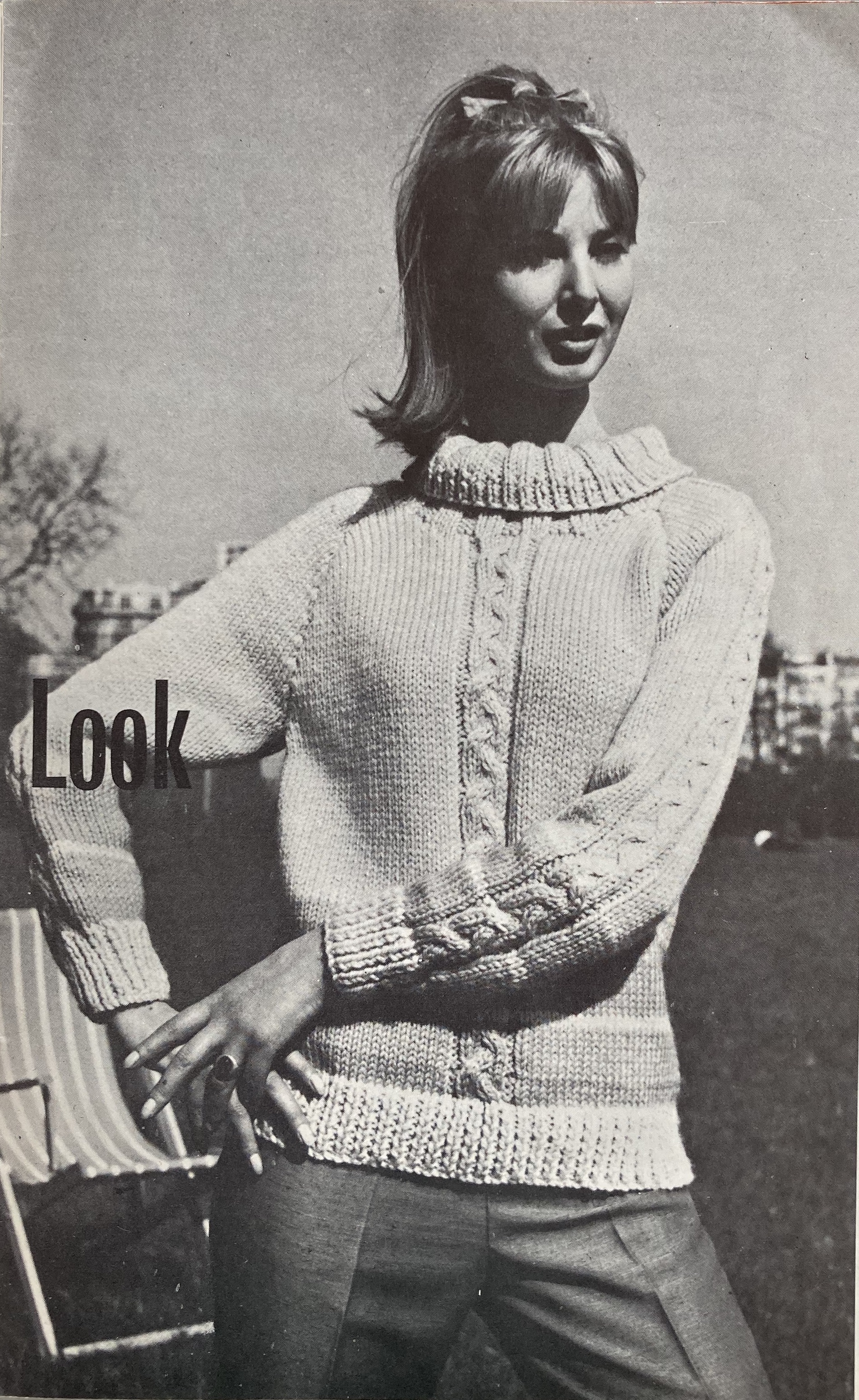
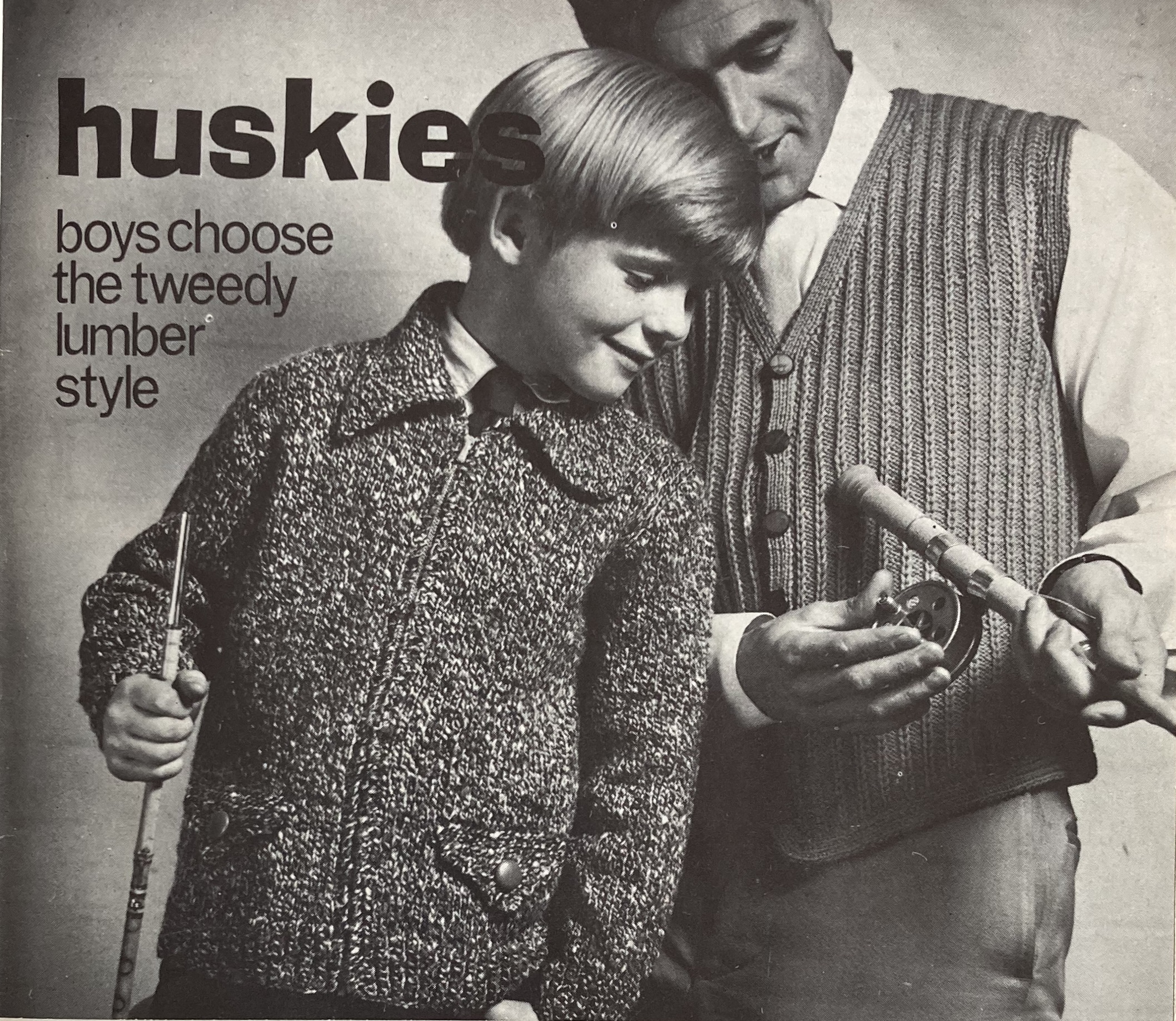
“Junior Knits” have a special prominence in this issue: heavier, loose-fitting pullovers and cardigans for older schoolchildren or teenagers (or smaller-size adult women) that are versatile enough to be worn on holiday, back to school, under a coat in later months etc. They are casual, but stylish, with interesting stitch-pattern details, and a mix of cheerful and neutral colours. The girl’s cardigan is made in DK wool with a twisted-stitch rib pattern and the pullover in bulky “Big Ben” wool can be made up to 34-35 inch bust size. The boys’ “lumber jacket” zipped cardigan is also made in a bulkier, quick-knitting wool: Bracken Tweed. The colour is “Marble”, perhaps a darkish grey? (The “father” in the photo is wearing the waistcoat from the July 1964 issue.)

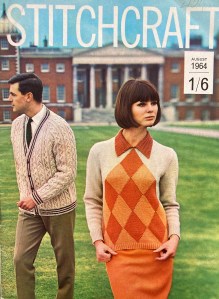
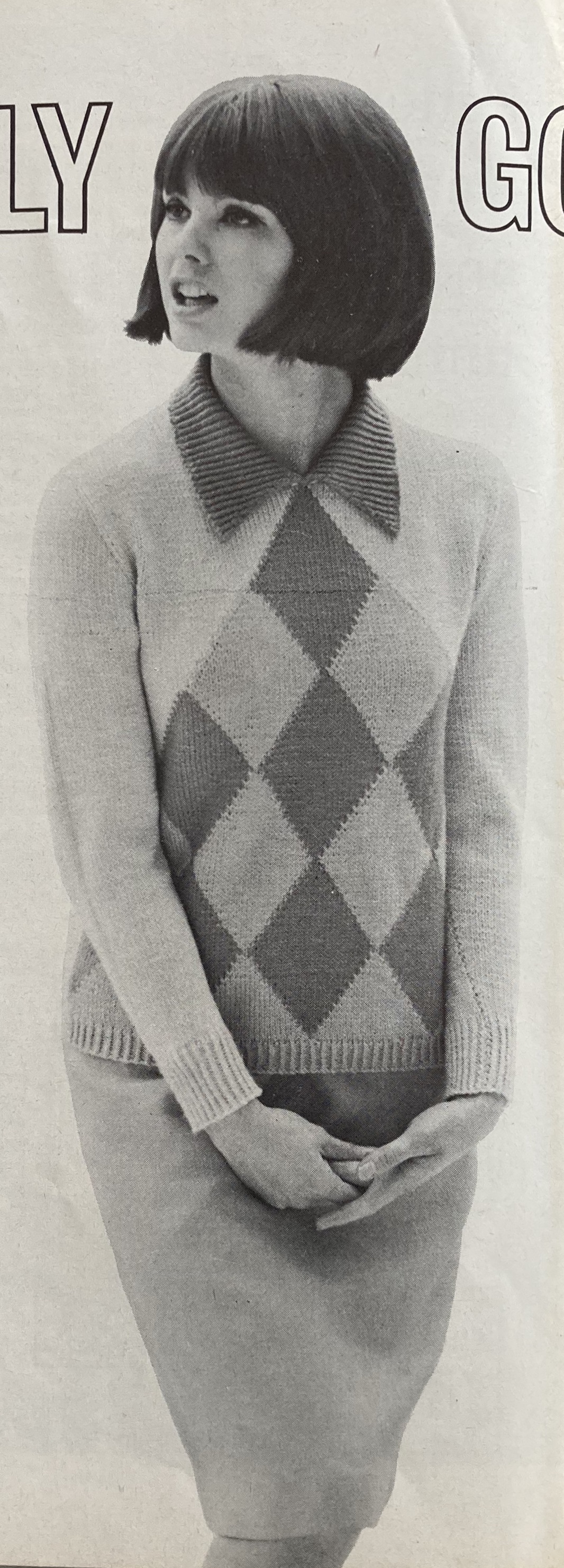
The adult-size garments are a mix of casual, bulky holiday outerwear and more refined garments for a dressy holiday outing or the return to work and daily life in September. For women, there’s a striped, sleeveless top, knitted sideways and belted and made in DK wool to be warm under a jacket or cardigan, or the wonderful “harlequin” diamond-pattern pullover in the cover, or a sleek 4-ply sweater suit with pleated skirt for autumn wear. Men get a thick zigzag-cable cardigan for “driving and all-casual wear” as well as an elegant 4-ply slipover in a diamond pattern. With the exception of the skirt suit, neutral cream colours with ice-cream peach and orange contrasts prevail. Cables, zigzag and diamond patterns are still on trend, as are large , pointy or polo/turtle-neck collars.

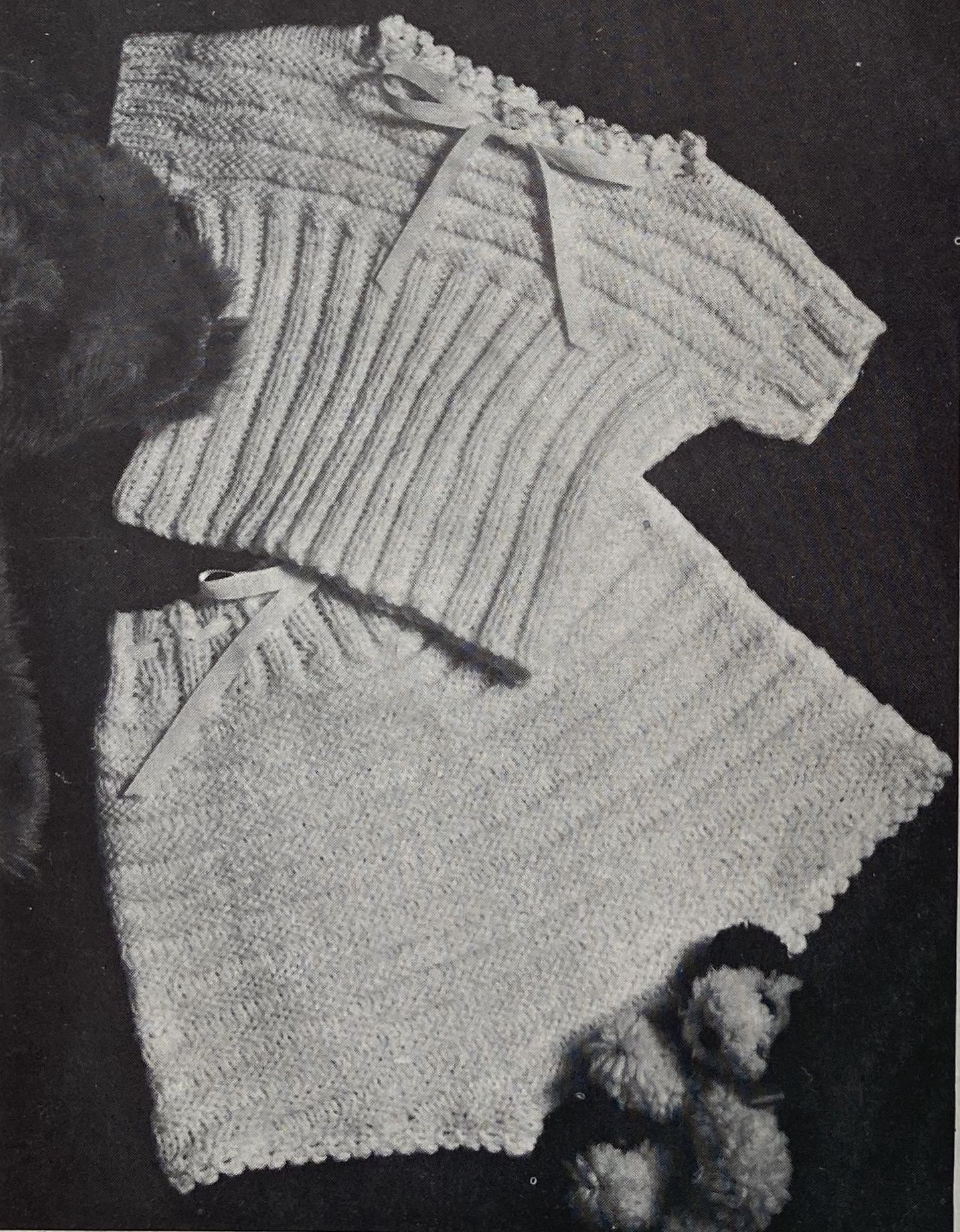
The baby layette series continues with a second-size (ca. 6 months) “pilch” (shorts) and vest in an easy vertical and horizontal rib pattern. The vest is made in a simple T-shape. There’s also a reprint of a baby blanket pattern from 1958 in the back pages. Sitchcraft apparently got many requests for reprints of popular patterns and many of them appear in issues from the mid- and late 1960s.

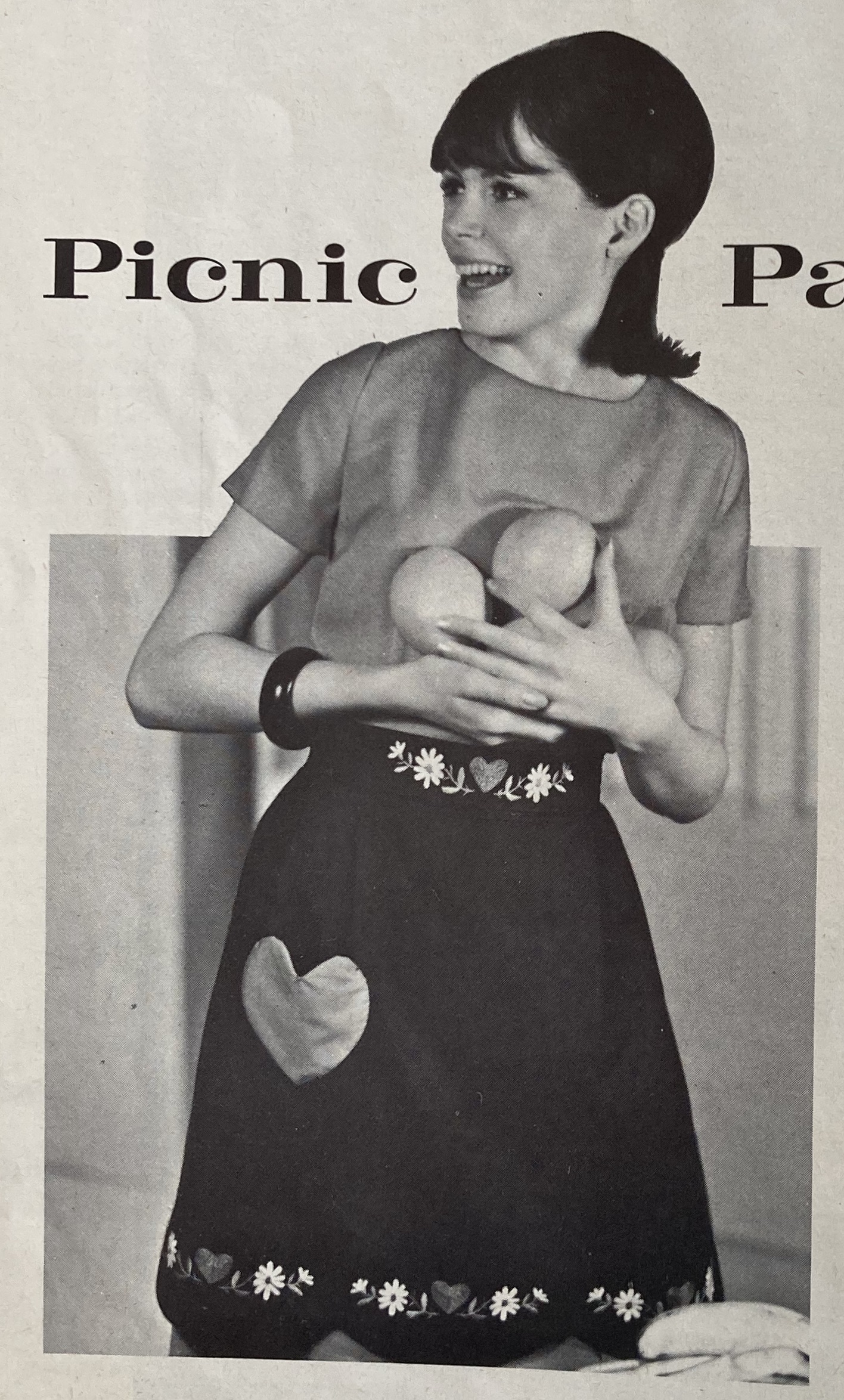
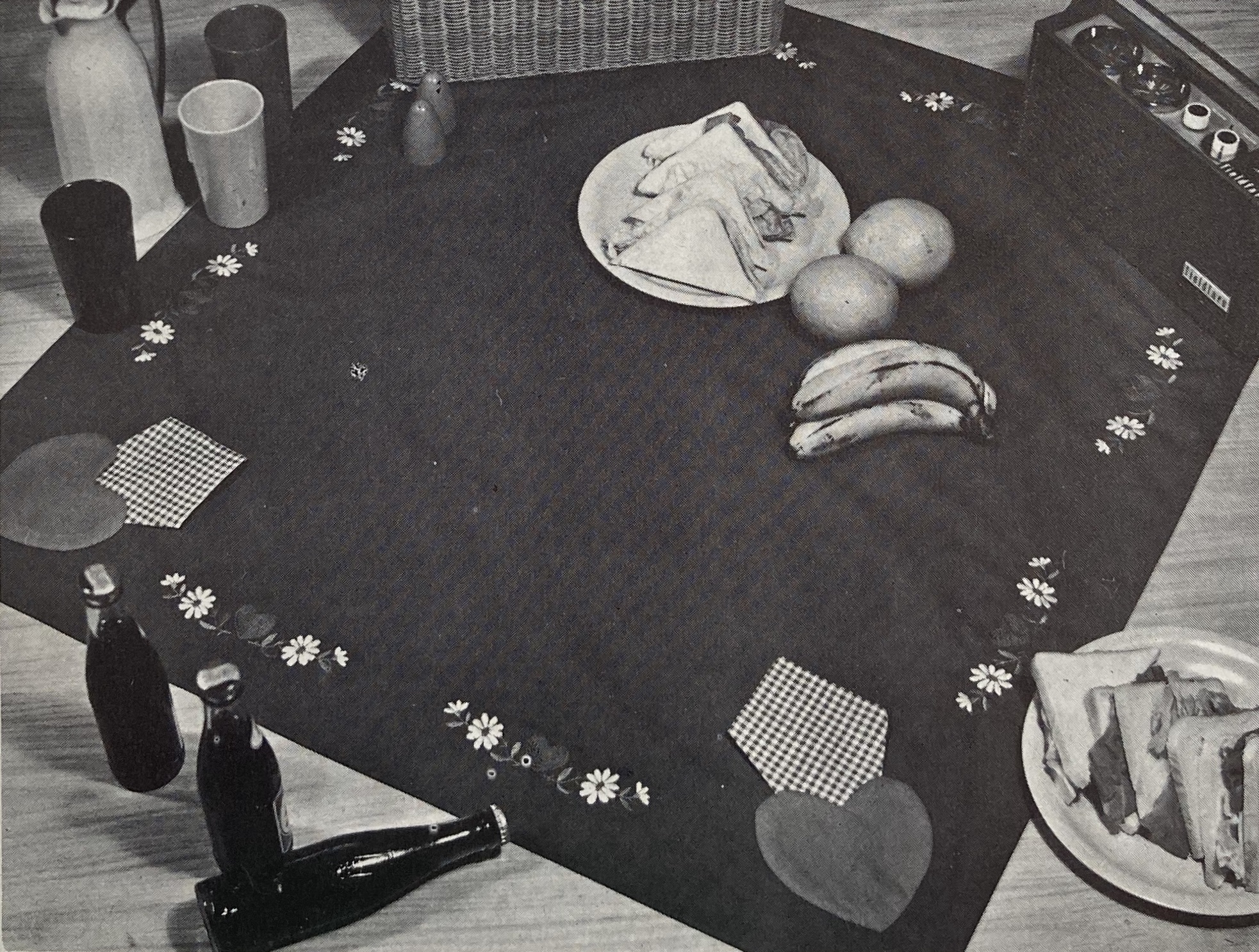
Homewares are a mix of smaller, easy projects that one could take along or use on a late August holiday, and larger at-home projects to work on for the autumn. In the first category, there’s a charming, easy embroidered apron and cloth set for a summer picnic, with appliquéd hearts as pockets in both the apron and (for napkins, how cute!) picnic cloth, an easy cushion embroidered on Bincarette and simple woven table mats suitable for patio use.

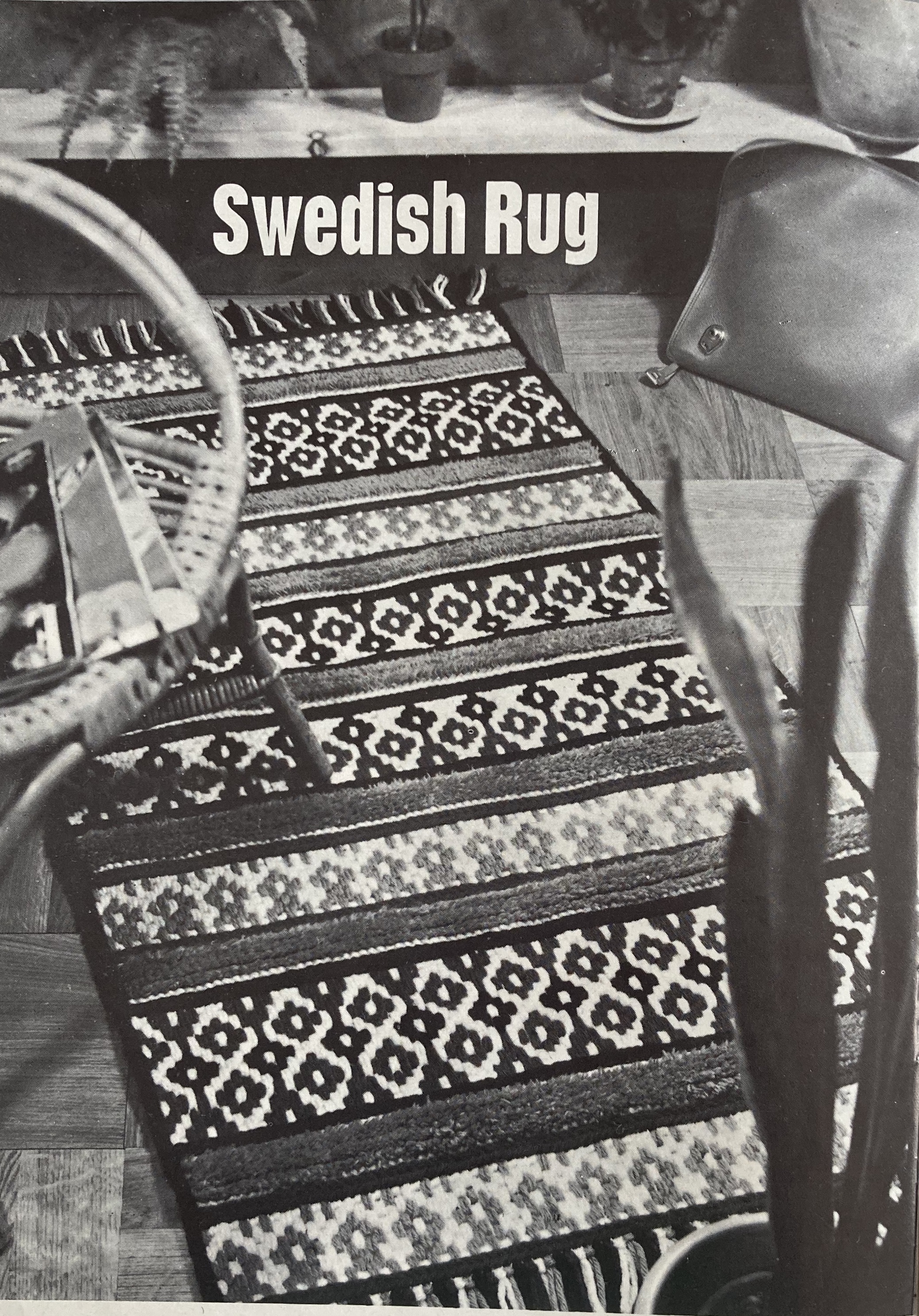
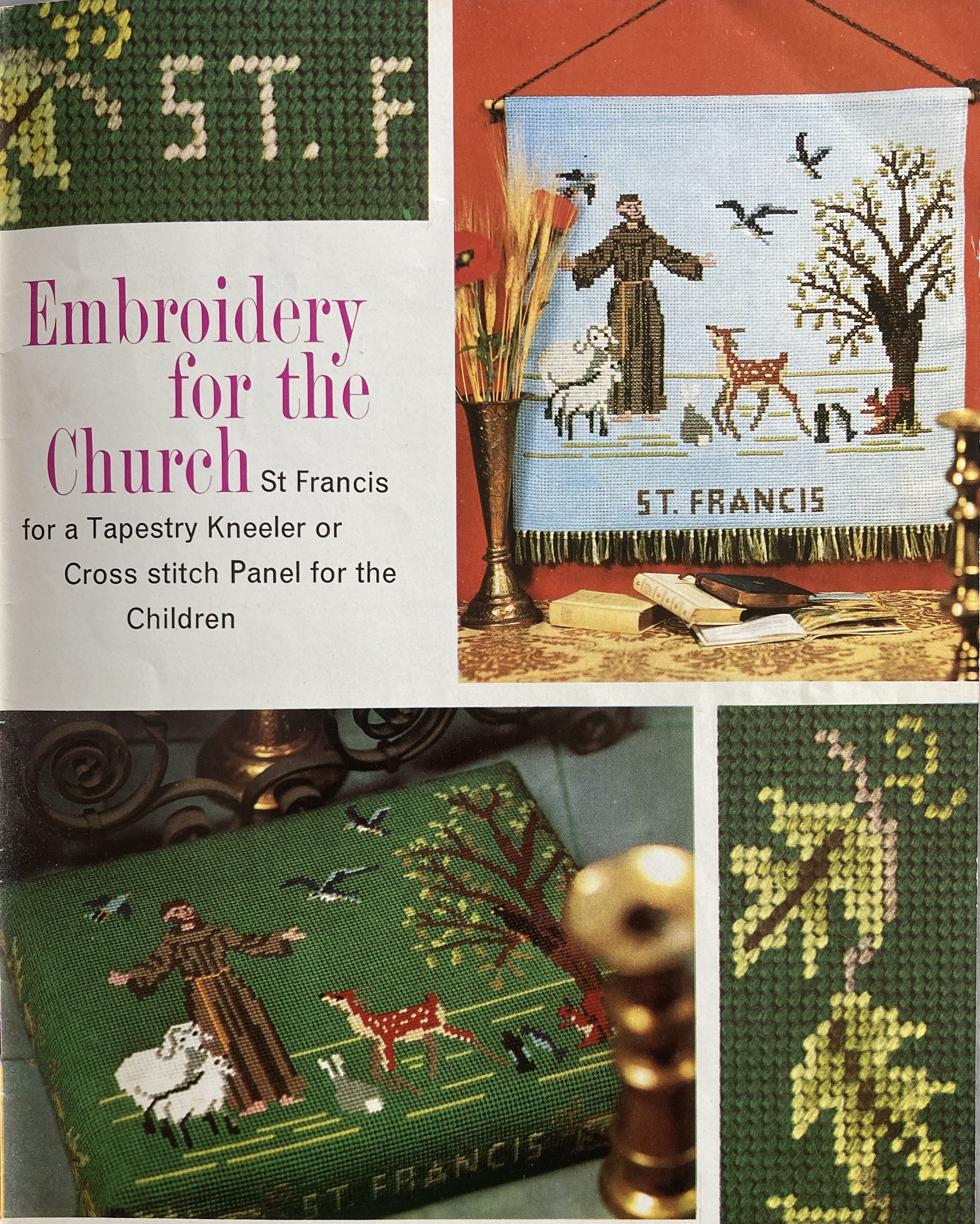
In the second category, there’s a complicated “Swedish” rug with both pattern weaving and tufting and for churchgoers, a cross stitch panel or kneeler featuring a scene of St. Francis with various animals.

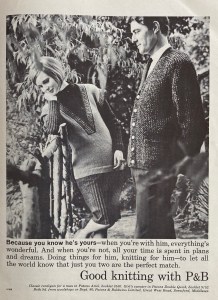
The Patons wool ad is weird and sexist, as usual. When you’re not with your man, naturally all your time is spent doing things for him and knitting for him — but if the photo is any indication, you’re not even happy about it? Here is the beloved man smugly lording it over his wife, who looks sad and embarrassed in spite of having knitted a lovely comfortable cardigan for him as well as a gorgeous outfit for herself. Be proud of yourself, skilled knitter, and remind your man that he would die of starvation and cold if you didn’t cook for him three times a day and knit him warm things!
As nice as many of the projects in this issue are, there’s nothing that catches my fancy enough to want to make it except perhaps the baby items (but I don’t know any babies that age at the moment, or anyone who’s expecting one right now.) I have so many WIPs and one of them is from a 1967 issue of Stitchcraft, so I’ll try to finish that up and make another “Fast Forward” post about it. My July ersatz project should get finished this week, so I’ll update that post soon as well.

March 1963: Overview

Cover photo, Stitchcraft magazine, March 1963

Start your engines and give that propeller a whirl! The theme of this month’s issue is “Fashion On The Go” and the photo team really outdid themselves in showcasing adventurous and enjoyable modes of transportation. “With the wonderful opportunities for travel”, writes “editress” Patience Horne, “you need clothes that are easy to wear and will carry you through the day without a lot of care and pressing.”

Travel opportunities definitely took off (pun intended) in the early 1960s. Passenger air travel, though still a luxury, became increasingly possible and affordable with the advent of jet aircraft. Ocean liners, challenged by the rise of air travel, revamped into cruise ships. The Eurail train pass was introduced in 1959. Huge improvements in automobile technology and design made the freedom of the open road more tempting and accessible than ever. Yearly sales of Vespa scooters doubled from 1956 to 1960. Of course there was very little, if any, concern for environmental factors, and the oil crises of the 1970s were far in the future. There was no better time to travel.

On the race-car track, our cover model is wearing her “Paris Flash Slimline Blazer” — a simple but elegant jacket in moss stitch — and her colleague is sporting a “Double Quick shirt waister” that promises to be “the perfect travelling dress”. In a lovely juxtaposition of modernity and history, the model in the photo next to her is posed in front of what looks like an old-fashioned, horse-drawn stage coach! Her twin-set is made in finer 4-ply wool and though you can’t see it in the photo, the jumper is made in normal stocking stitch and the cardigan in reversed stocking stitch. In a separate photo, you see her posed in front of a horse box — no doubt one of the horses who pull the coach. Train travel is covered with a beautiful photo of this tweedy green travelling coat. It looks very cosy, but as it is made from 60 ounces (!! 3 3/4 pounds or 1700 grams !!) of extra-bulky, extra-heavy Big Ben wool and unlined, I can only imagine how it will stretch and sag with time and wearing.

The centerfold photo showcases more glamorous nautical and aerial travel opportunities. (I am sorry to say that the photo is blurry in the magazine, not just in my photo.) The “boat-deck sweaters” are both in double knitting weight with plain stocking-stitch and collared-shirt form for him, fun nubbly Rimple wool and a welted front insertion with cute tied collar for her. Collars, in general, remain well in fashion, though they are not quite as large as in the last few seasons. The airplane enthusiasts in the right-hand photos sport a casual, oversized cabled cardigan in bulky Big Ben wool and a striped dolman-sleeve pullover in double knitting weight. The dolman pullover sits weirdly around the neck and looks like it would be awkward to wear.

For those who prefer more leisurely ways to travel, i.e. walking around town, here’s a “stroller sweater” in fluffy Ariel and a sort of diagonal basketweave stitch pattern. Even the children get a travel-themed photo, if only in the studio! While the little sister is very keen to drive her wooden locomotive, big brother is apparently tired of playing conductor (but still blocking the tracks…) They’ve both got wonderful things to wear. The two-tone pleated skirt is knitted sideways and the pleats sewn in with the making-up, and his light-weight pullover has another fun diagonal knit-and-purl pattern.

With all these wonderful things to knit, you would think the homewares would be less interesting, but there are still plenty of projects that are mostly small enough to pack with you on your travels. There are all sorts of cushions to embroider: darned and tufted in very 1960s colours (brown, biscuit, fawn, two shades of orange and two shades of rust), neon-on-black “peasant embroidery” in regular crewel work, and with a matching chair-back in Assisi embroidery — traditional Italian designs where the backgrounds and ornaments are filled in with cross-stitch, but the main motifs are left unworked. The Victorian-inspired tapestry chair seat and stitched bathroom rug are probably too unwieldy to pack, but the fine embroidered initials and baby outfit are easy and portable. Readers could order the pattern for the baby set along with the embroidery transfer.

The back pages feature the worst of the Patons & Baldwins “please your man” advertisements, in which a woman can’t even knit herself something for once or look nice in it without all of it being To Please Him. (And then she has to pretend to be interested in whatever boring mansplaining he’s doing with the book he’s showing her.) I can’t help thinking of that scene in Vertigo where James Stewart’s character is trying to get Kim Novak’s character to dye her hair… and she doesn’t want to… and he gets more and more frustrated before blurting out, “It can’t matter to you!” Alfred Hitchcock would have approved of this ad.

The “Children’s Features” continue the alternative telling of the Miss Muffet rhyme story, in which Miss Muffet, leaving the home of the kindly spider-lady, gets captured up by a grumpy beetle, saved by the first spider, and then in turn saves a captured beetle who promises her a present. What could it be? We will find out in next month’s issue!

None of the larger projects are begging me to make them and I’m still working through the WIP pile, so I’m going to use some of that fine embroidery on the vintage handkerchiefs I inherited from my grandmother.

September 1962: Overview

Autumn is the nicest season for knitting, and 1960s Stitchcraft usually gave it a little push with extra pull-out supplements, extra colour photo pages, or “bumper issues” full of the latest developments in home-knitting fashion. The September 1962 issue doesn’t have any of these extra features, but it does have a wide variety of designs in mid-weight and warmer wools, starting with the chunky twisted-bobble sweater on the cover. Made in bulky Big Ben wool, it weighs in at a whopping 38 (for the smallest of three sizes, 35-36 inch bust), 40 or 42 ounces (the largest size, for 39-40 inch bust), i.e. about two and a half pounds or 1190 grams. I am guessing the model is quite slender and even she looks bulky in it!

The dresses and separates, made with the same loose fit but in double knitting wool, show a smoother look with minimal patterning. The orange dress in the colour photo and the charcoal-grey dress with the colour-pattern border (“for those who like something really eye-catching”) are the same design, but the pattern-border version is only available in one size, “for the younger girl.” I guess that pattern was just too exciting for doddering middle-aged matrons! The blue and white ensemble, also made in double knitting weight, has three pieces: a simple sleeveless blouse in white k2, p2 rib, a plain blue skirt and a back-fastening cardigan with white vertical stripes on the front. Tops continue to be hipbone-length and hemlines are firmly anchored just below the knee.

Other garments feature interesting colour and texture effects: the man’s “smart weekend sweater” has been treated with a teasel brush to achieve a fuzzy, felted effect. The knitter was not expected to do the brushing herself, but was instructed to “take all pieces at this stage [after knitting all the separate pieces, but before making the garment up] to your usual wool shop who can arrange to quote a price and send them away to be brushed for you.”

There’s also a striped jumper for “young and carefree” women with a fringed collar and hem, similar to the one in the February 1962 issue (yes, it is more or less the same pattern in different colours and with a split collar) and a pullover in an intriguing striped and dotted slip-stitch pattern. Stripes and/or slip-stitches also feature in the three-colour pullover for older children and the toddlers’ dungarees. Colours are navy blue or charcoal grey contrasted with white and neutral pastels, as we saw with the patterned-hem dress and three-piece ensemble.

There is the usual variety of homeware designs, mostly with floral patterns: this month’s flower is the dahlia, or you can sew and embroider and apron with lilac sprays. The leftover gingham fabric from “your” workaday apron can be used for cute animal appliqués on aprons for the children (unsurprisingly, Father seems to be exempted from the washing-up.) There’s also the usual floral cutwork tablecloth and tray cloth and a coffeepot set made in Hardanger embroidery.

Needlepoint fans can make a stool top or a whimsical cross-stitch rug and/or wall panel for the nursery, featuring characters from nursery rhymes. The motifs are separate and interchangeable and can be adapted for different sizes and purposes.

In the children’s serial comic, Peter the puppet has been freed from his marionette strings and is traveling throughout the countryside writing a play about his adventures. Cyril the squirrel helps out by painting illustrations, using his tail as a brush. (But how will Peter get home?) There’s the usual advertisement for Lux washing soap, guaranteed to leave your woollies soft and fluffy, and the latest instalment of the Patons and Baldwins’ “knit to please your man” series of ads, junior version: a teenage girl knits a “nice, husky sweater” for her boyfriend with her own loving hands to show everyone that he’s the “special one.” The young woman on the back cover ad is presumably also trying to catch a man, but she looks more polished in her snappy red dress and white gloves. You can really see 1960s style coming into its own in the straight or A-line sleeveless dress with low contrasting belt, the bobbed and fringed hairstyle and the edgy, off-angle mirror pose. Compared to the designs in this issue, it also shows how fashion-conservative Stitchcraft is.

I’m not sure what I want to make from this issue. I imagine the embroidered dahlias would make a great design for a laptop or tablet sleeve, but I already have a fine home-made laptop cover, not to mention this wonderful gay-geese-in-space tablet cosy. Also, I have probably done enough embroidery for the time being and still haven’t made much progress on this appliqué masterpiece that I started in July. The knit projects are all so bulky and loose-fitting, which is not my style, and I’m not sure I know an appropriately-aged child for the interesting slip-stitch pullover. There was also a perfectly nice, if not exciting baby cardigan (not pictured) in the issue which I could make quickly from stash, which would be useful enough (somebody’s always having a baby) and maybe the best choice for my uninspired mood. Stay tuned and find out!

August 1962: Overview

August is the end of the holiday season at Stitchcraft, featuring transitional styles for the cooler days of September as well as a few more small, easy projects that can be worked on from the deck chair or picnic table. The “Contents” column on the facing page divides the adult garment patterns into the categories “First Autumn Fashions” and “Continental Designs”.

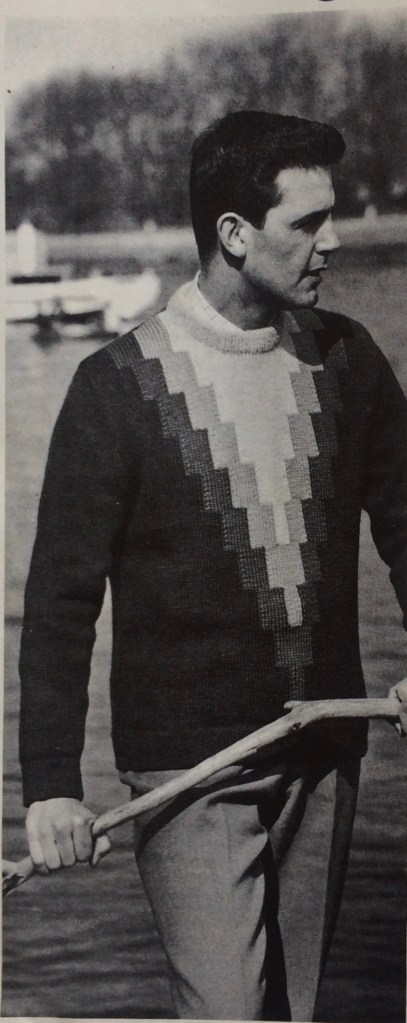
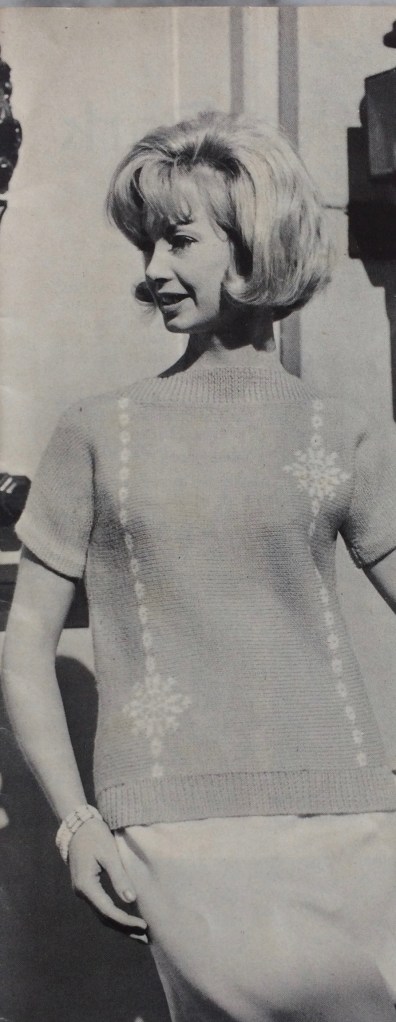
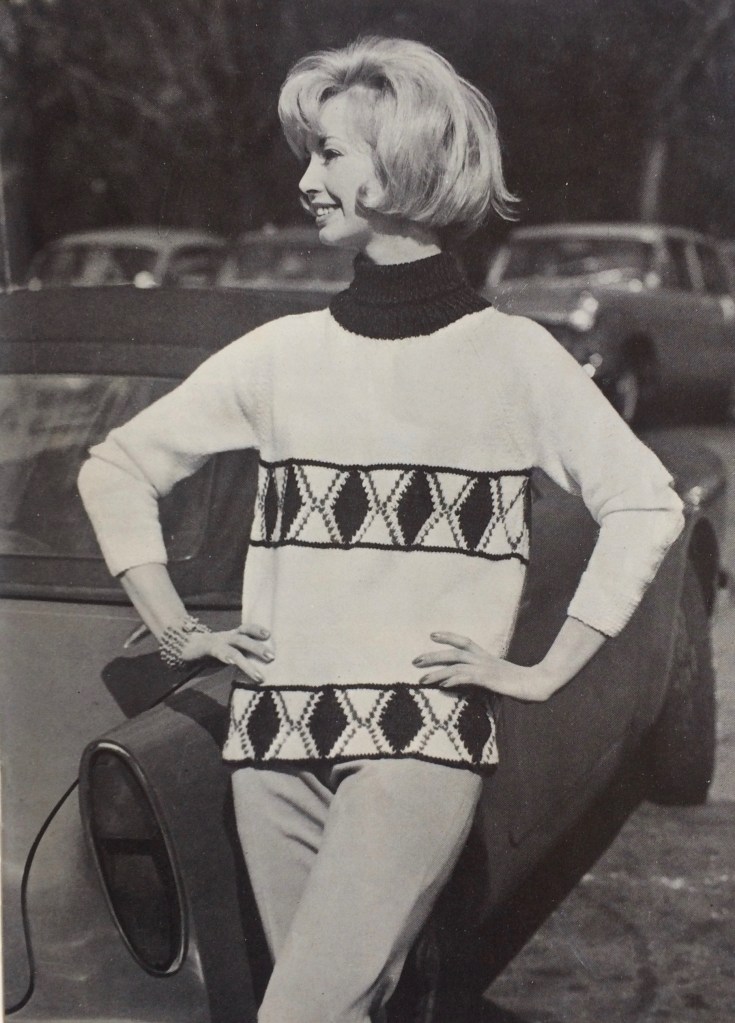
The “Continental Designs” comprise a colour-block pullover for men “from Vienna” in graded shades of green, a simple cap-sleeve, T-shirt-style jumper with a little Norwegian motif, and an “Italian design for late Summer” with bands of red and black intarsia in a diamond pattern. I wish they had used these for the colour photos instead of the bland white pullover on the inside front cover!

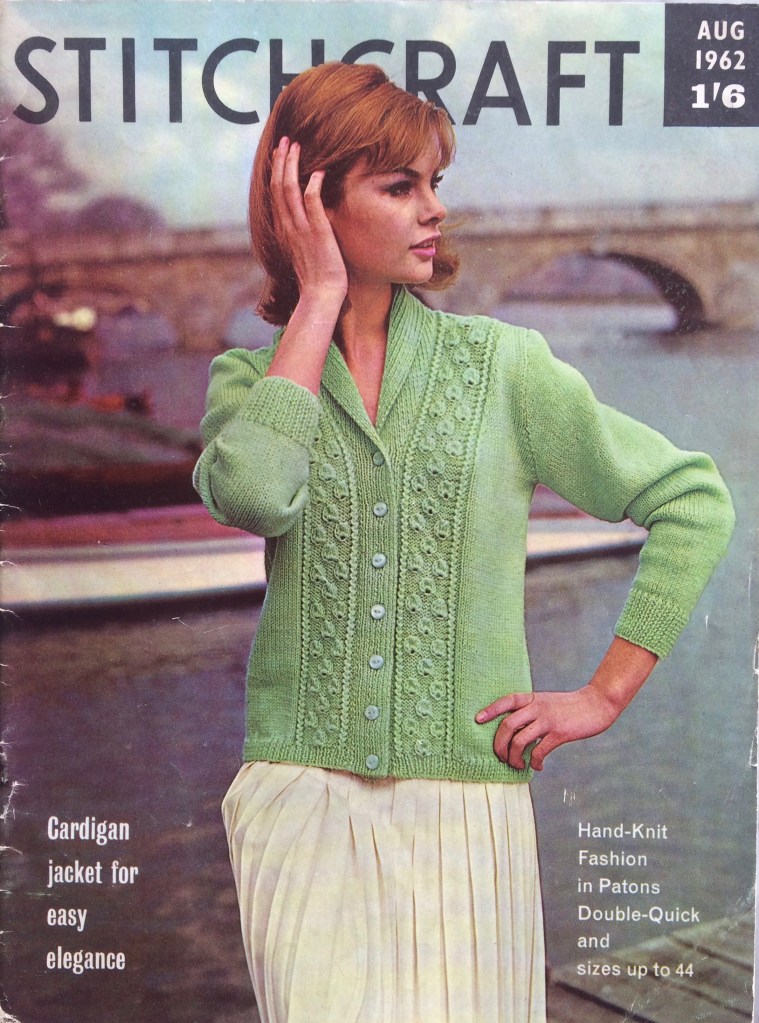
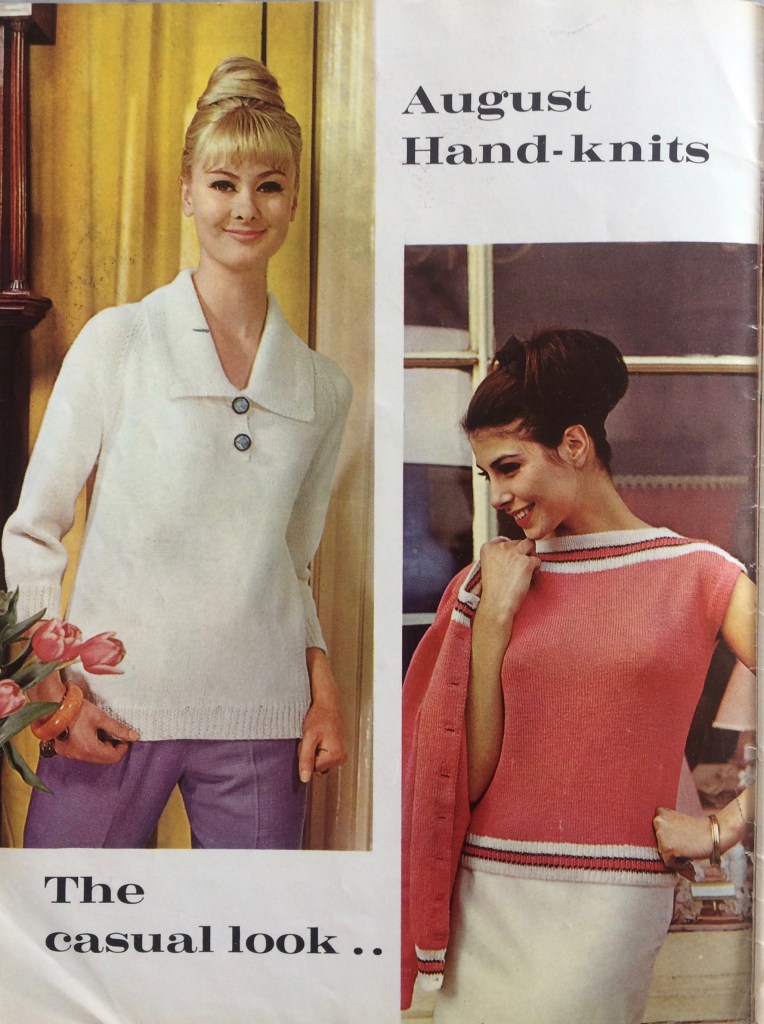
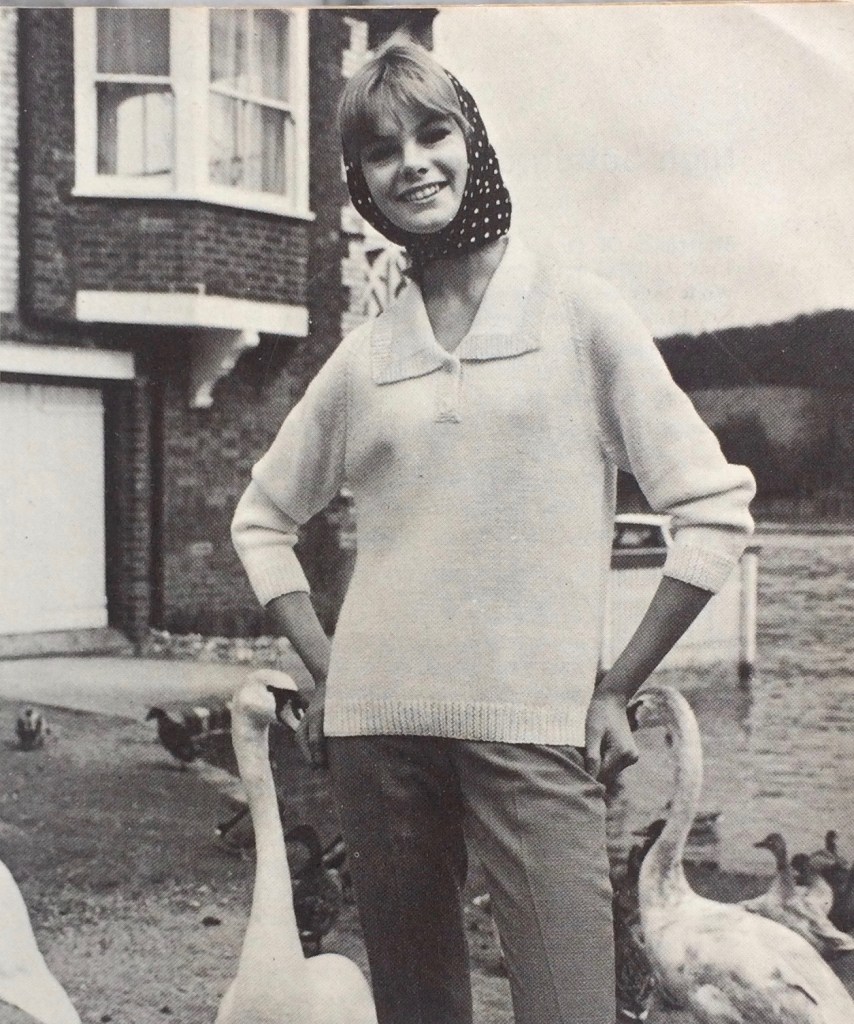
Loose-fitting, casual shapes and light, sunny colours dominate, exemplified by the apple-green cardigan, collared shirt-sweater and boatneck twin-set on the front and inside covers. Notice how much less fitted the August 1962 twin set is than, for example, this one from August 1960, not to mention earlier twin-sets from the 1940s and 1950s. The concept lives on, but the line has changed completely. Everything is hipbone-length with no or hardly any shaping.

Babies get a standard, but very pretty, lacy matinee coat and bootees, the “smart teenager” has a machine-knit pullover, and her little sister gets a “gay Rimple design” in the still-popular knitted terry-cloth look, so the whole family is taken care of.
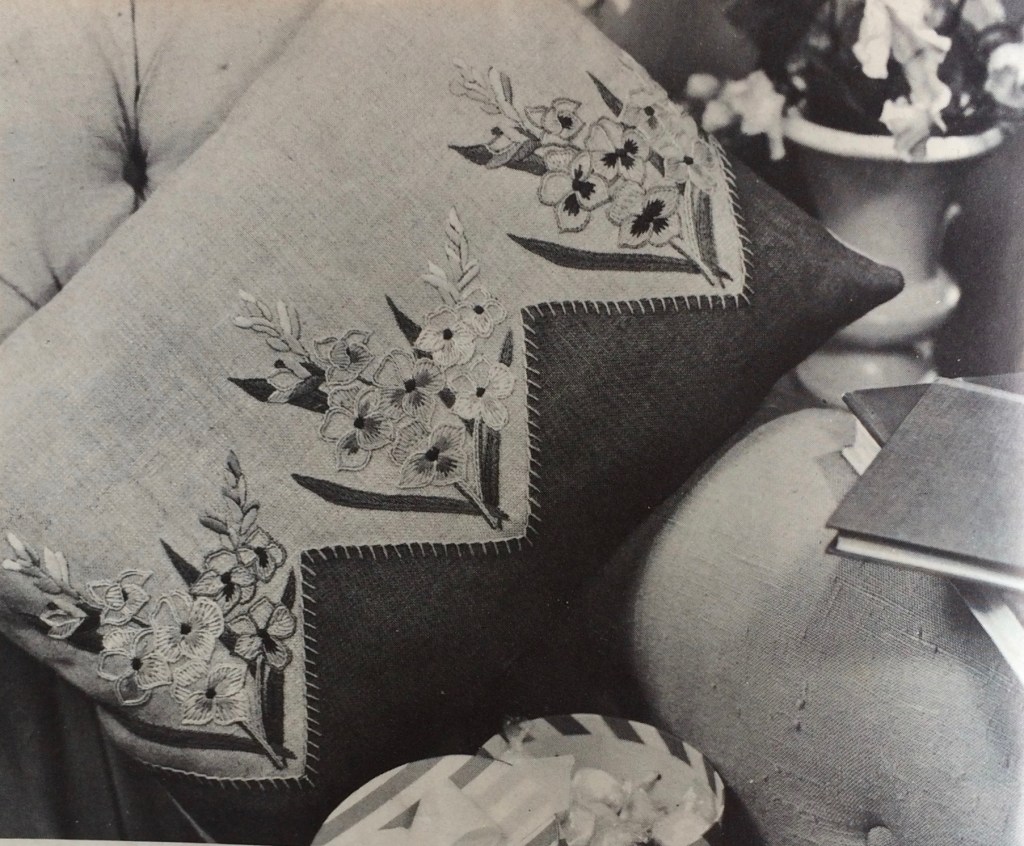
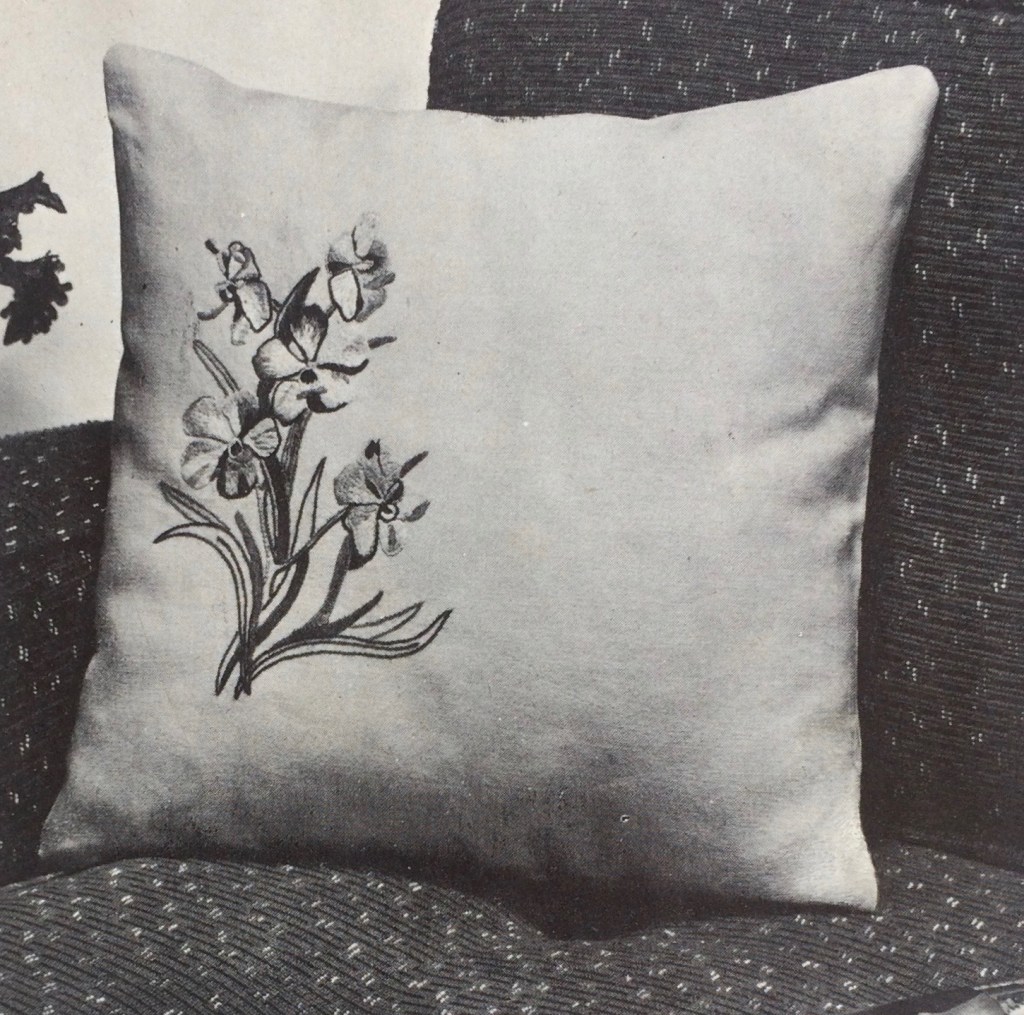
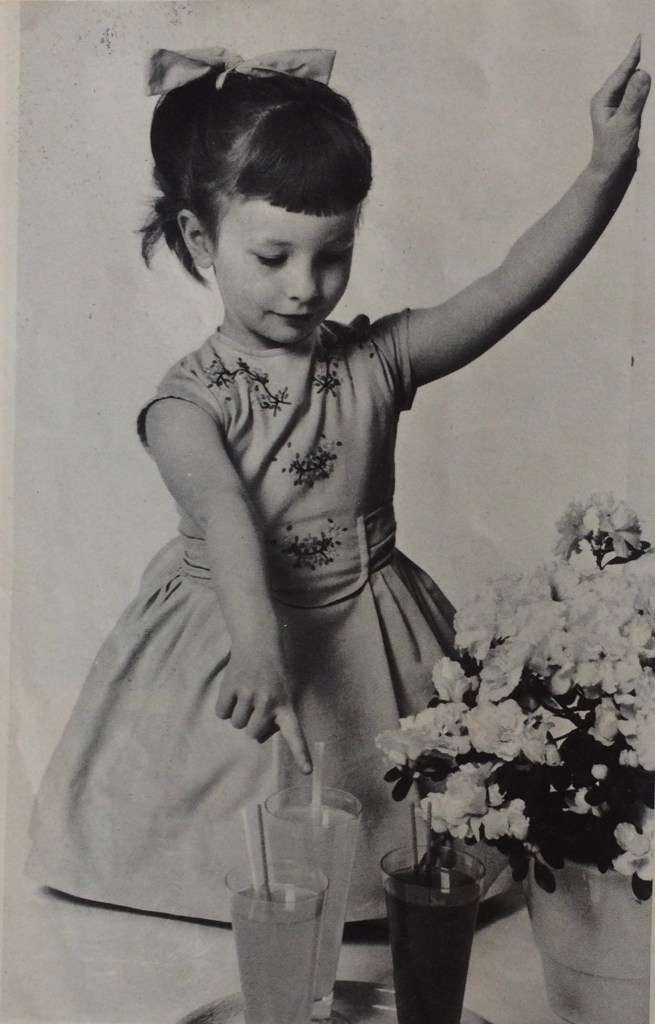
Homewares are always big in the summer months, when many readers understandably didn’t want to hold bulky warm wool in their hands in hot weather. The bedside rug is obviously an at-home project, but the smaller projects could easily be taken along on a holiday. This month’s flower in the gladiolus, but there’s also an orchid spray and some forget-me-nots, along with two sewing patterns to embroider them on: a round baby shawl or this wonderful little girl’s dress. For once, you don’t even have to send away for the patterns, as they are geometrically quite simple — the shawl is just a circle, drawn directly onto the fabric with a pencil held on a length of string, and the dress is made up of rectangles with measurements given. I would love to make the dress! I just don’t think it would get worn, since it would only be for “dress-up” occasions, of which there aren’t going to be any for a while.

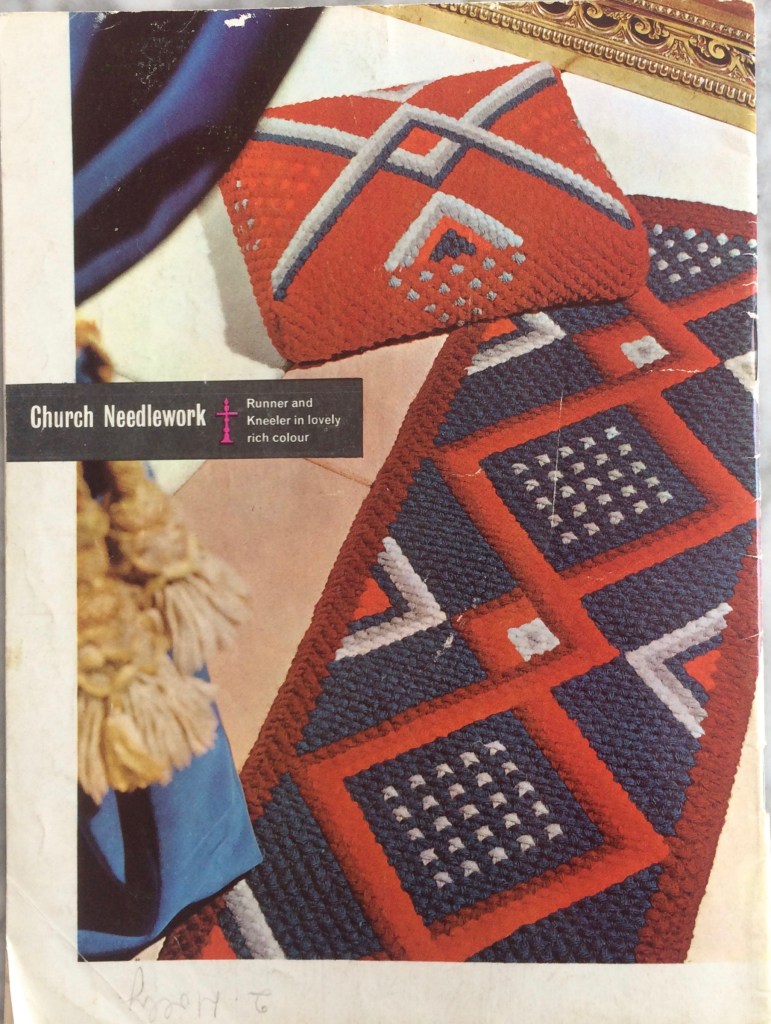
The back cover shows an interesting feature which took shape in the early 1960s issues: tapestry projects specifically for church use. In this case, there’s a runner and kneeler in shades of red and blue. If anyone happens to know why or if these colours or this pattern are significant in whatever type of Christian tradition, please feel free to tell me, as I don’t know anything about it. The rug, especially, does not say “church use” to me in any way that I can recognise and I could just as easily see it in a normal hallway.

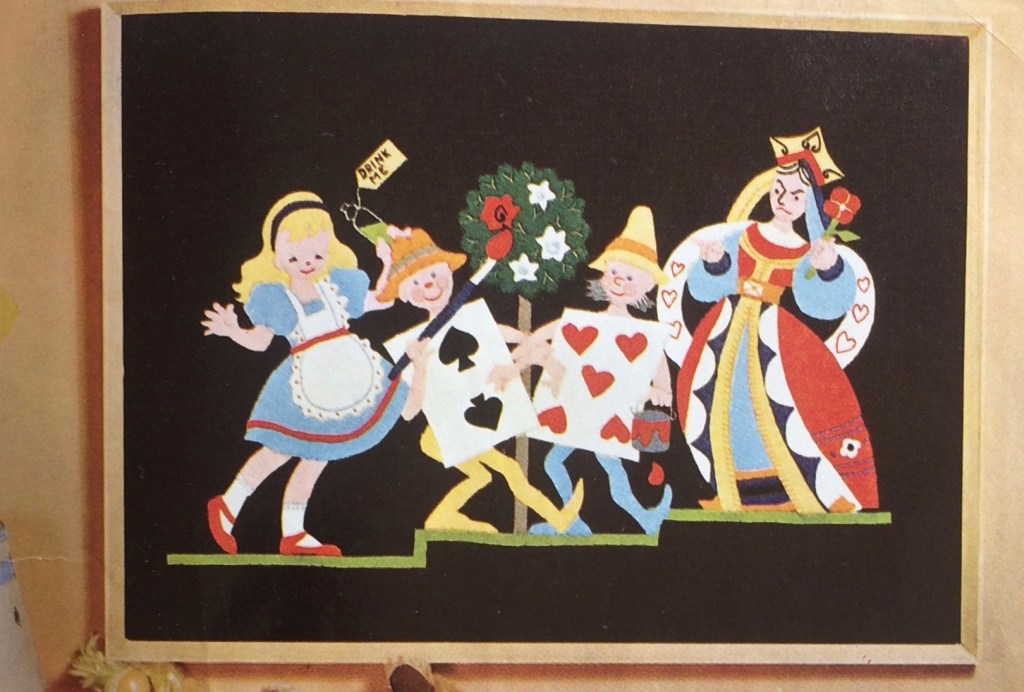
This issue doesn’t stop! The “Readers’ Pages” offer two more very simple projects: a reprint of a young man’s waistcoat from 1957 and a stash-busting baby blanket from double crochet hexagons. And just when you think you’ve come to the end of the issue, here’s this incredible Alice in Wonderland-themed wall hanging in felt appliqué and embroidery:

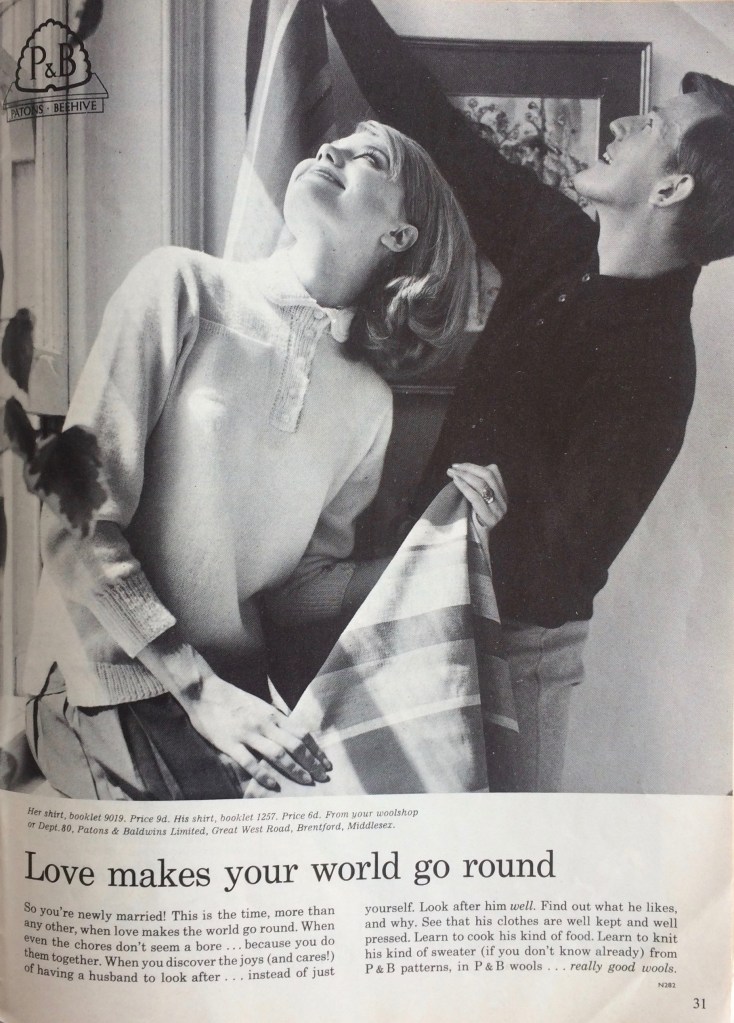
I’ll close with this full-page ad for Patons & Baldwins wools, showing a newly married couple decorating their home. The happy bride is instructed to

Look after him well. Find out what he likes, and why. See that his clothes are well kept and well pressed. Learn to cook his kind of food. Learn to knit his kind of sweater…

While I’m certainly not surprised that a 1962 advertisement would speak to women like that, I do find it interesting to compare the early and mid-1960s ads — which take on this type of “you exist to please your man” language more and more throughout the years — with those from the 1950s issues, with their much more independent picture of womanhood. Many of the knitting patterns in the earlier issues are explicitly designed “for the office” and most of the advertisements portray women living active, interesting lives in their comfortable shoes and unbreakable skirt zippers. In the wonderful tampon ads (that sadly disappear around the late 1950s), they don’t even let “problem days” stop them from doing anything! In contrast, the full-page P&B ads starting up around this time always feature a man or child with the woman in question and the text is inevitably some variation on “you must do this to please your man.” I had always thought of the 1950s as being a much more repressive time for women that the 1960s, when roles began to change, but judging from Stitchcraft (which, to be fair, is quite conservative both fashion- and otherwise), the earlier part of the decade is more of a backlash than a progression.

I don’t know what project to make from this issue and I still have so many WIPs, both for this blog and otherwise. Maybe a nice, easy flower embroidery on a vegetable bag?

February 1961: Overview

fullsizeoutput_943-1

Around Christmas time, I was looking through my Stitchcraft collection to see what the new year had in store for me, and realised that the February 1961 issue was missing! Not that I had lost it, but it was one of the very few issues from the 1960s that I had not managed to find before starting this project. I buy the magazines on ebay and it is fascinating to see how some issues pop up again and again in multiple auctions, and others just never appear. But I was in luck – after searching so many times, there was February 1961, just when I needed it! Thank you, nice seller on ebay, who got this issue to me quickly and in beautiful condition.

fullsizeoutput_933

There’s a “Special Colour Feature” of extra colour-print pages in the middle of the issue, promising “Fashion Harmony” for “You and the Home.” With that in mind, it’s kind of a pity that they chose a neutral gray-beige melange for the three-piece outfit on the cover.

Thicker, bulky wools and quicker knits continue to dominate the knitting patterns, with Big Ben playing a prominent role. There’s a little waist-length jacket in an interesting pull-up-a-slipped-stitch-some-rows-later stitch pattern, a bulky cardigan or DK- weight pullover in diamond or rib pattern, and a his-n-hers Aran pullover set. Neutral colours of brown, beige and tweedy gray prevail.

The his-n-hers, unisex design idea shows up in the children’s patterns as well (how nice, for once!) with some warm, lightly colour-patterned pullovers. It’s nice to see a girl wearing trousers and doing something active in her sweater.

(Side note: As I was typing that sentence and got to “it’s nice to see a girl wearing”, the auto-suggest on my tablet offered me “makeup.” So yes, as nice as it is to see one single non-sexist knitting pattern in 1961, don’t be fooled — things haven’t changed nearly as much as they should. Also, spoiler: the rest of Stitchcraft has plenty of “boys need to be active! girls like to be pretty!” patterns and photo layouts in store for us.)

On that note, there are patterns for a complete set of doll clothes, as well, in case readers worried that their girl child playing with a ball once in her life might, I don’t know, make her grow up to direct a bank someday, or something.

But back to this month’s issue! Babies get a fluffly cardigan with the same twisted ribbing as January’s snowflake sweater as well as a lovely lace shawl. Fine-knitting fans can make an elegant, classic jumper at 8 1/2 stitches to the inch or a lace-panel blouse for larger sizes up to a 45 inch bust.

Embroidery experts can make a floral fireplace panel or a tablecloth with a “peasant” motif (not the most flattering wording, I know), a rug or a crocheted handbag. The Zodiac handcraft theme has entered the month, if not the Age, or Aquarius. Also, the turret tower look is still all the rage for hats.

And that about wraps it up! Seeing as there was so little actual colour in the designs from the special colour feature, here’s the back cover advertisement for Escorto Gold Seal striped and checked fabrics. My project will be the baby cardigan. Have a colourful February!

fullsizeoutput_93d