Welcome back to January 1967, one of my favourite 1960s issues of Stitchcraft. After making the failed “Pinafore Dress”, the successful “Lace and Ribs” pullover, and the the utterly cute “Fashion for Tots” jacket, I wanted very much to make the turquoise Fair isle cardigan on the back cover… but alas, it was not to be, as it is not possible to order wool from Scotland to continental Europe at the moment. But I won’t give up hope! While waiting for different wool to arrive, I made a simple headband-and-mitt(en)s set from the “Accessories for the Outdoor Life” page.
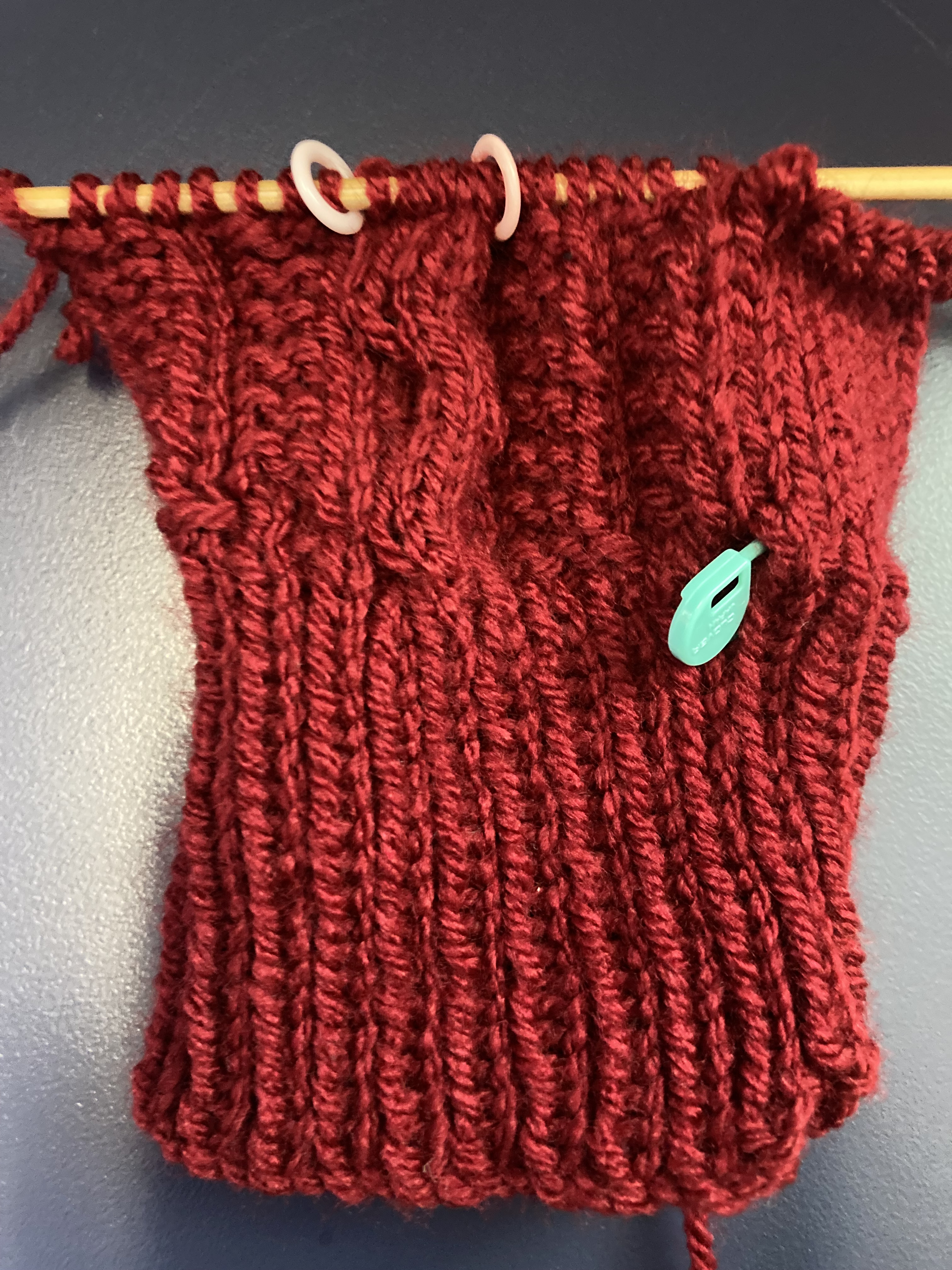
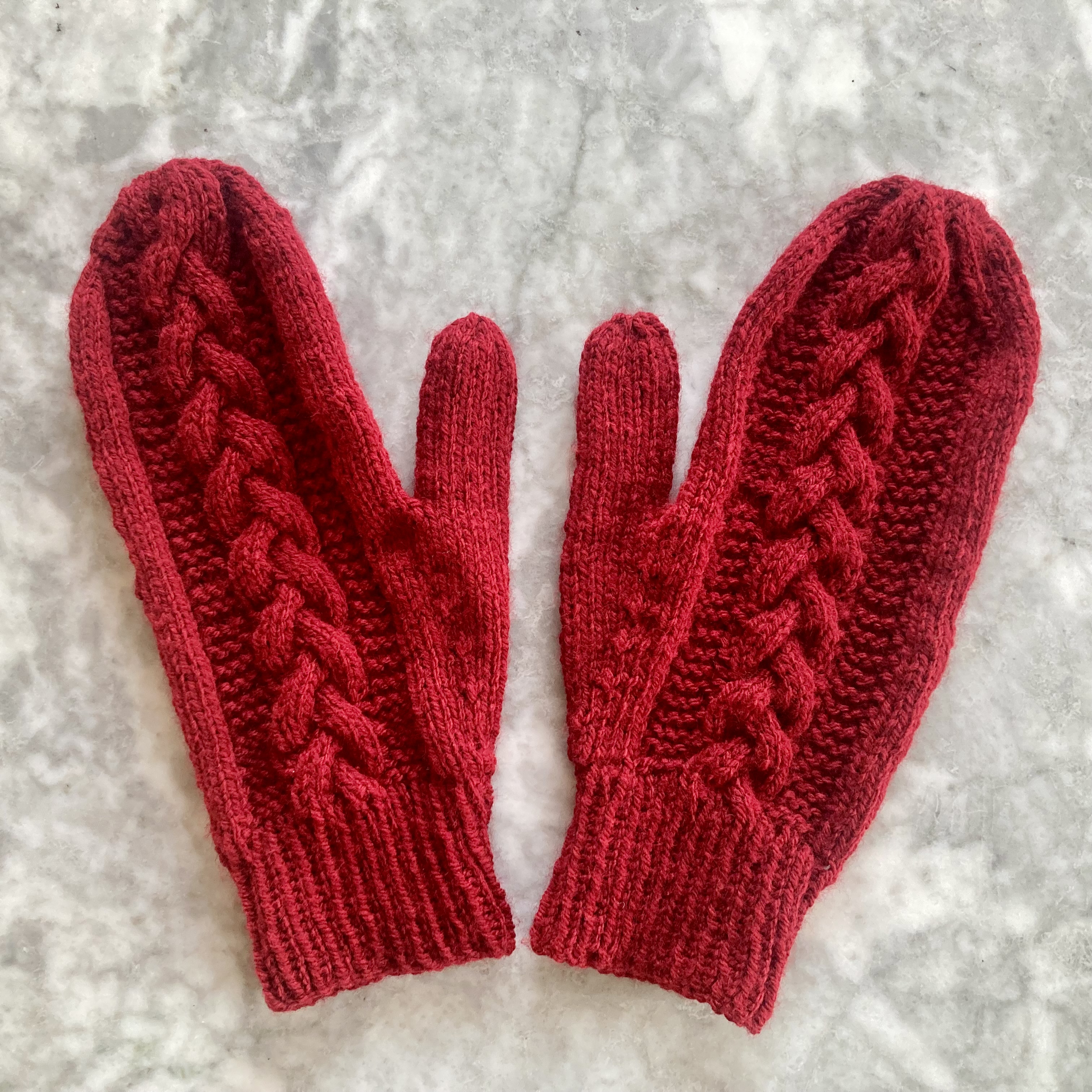
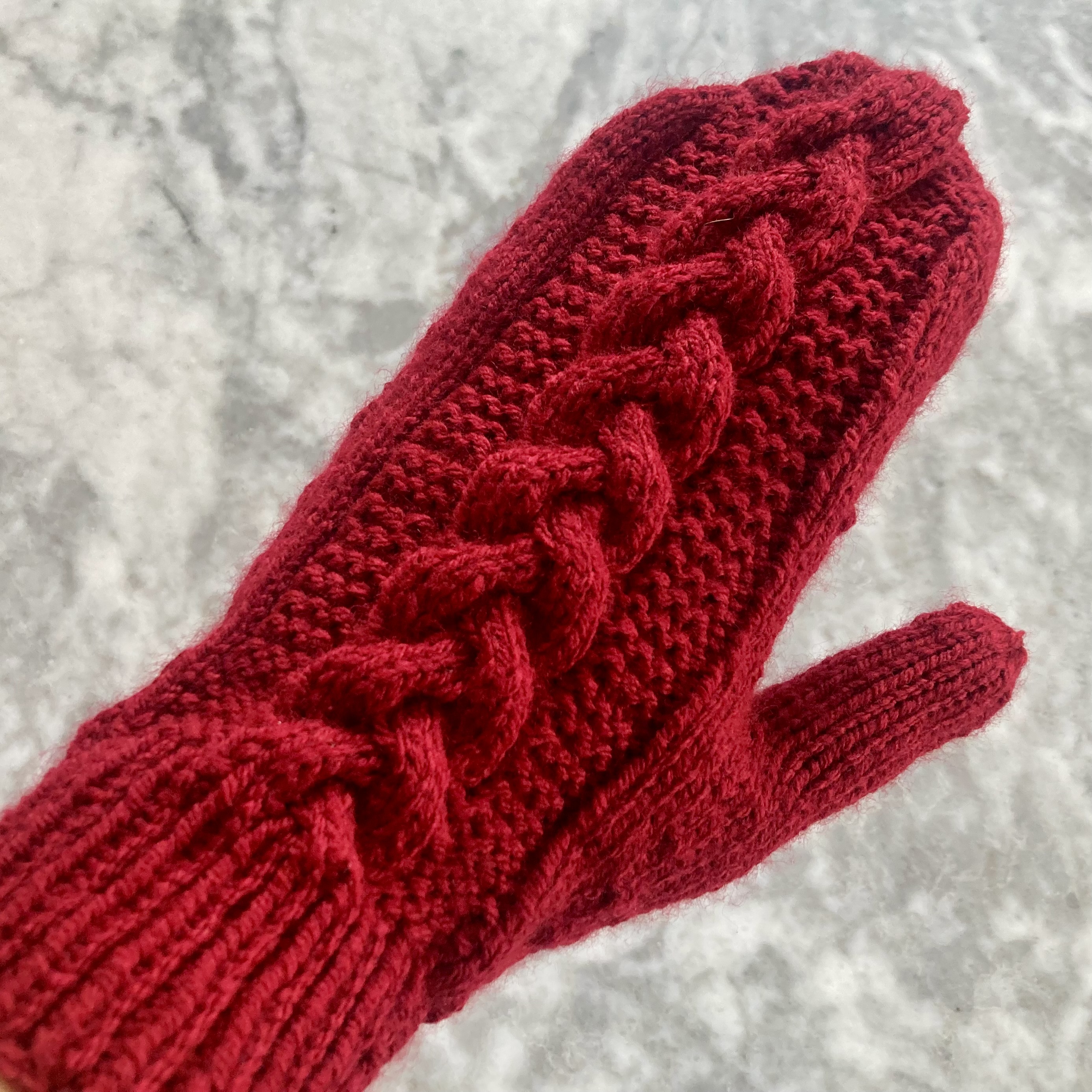
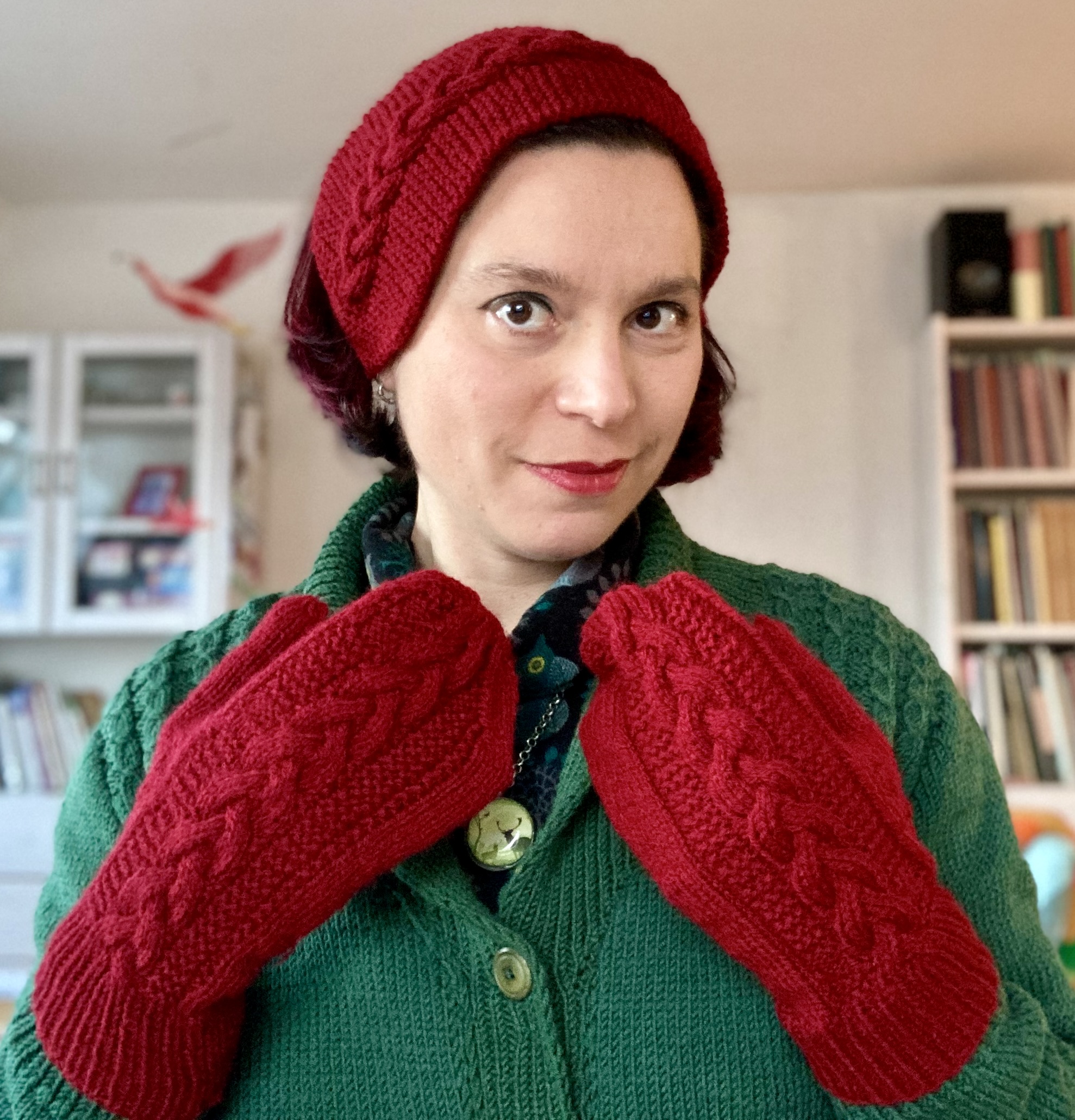
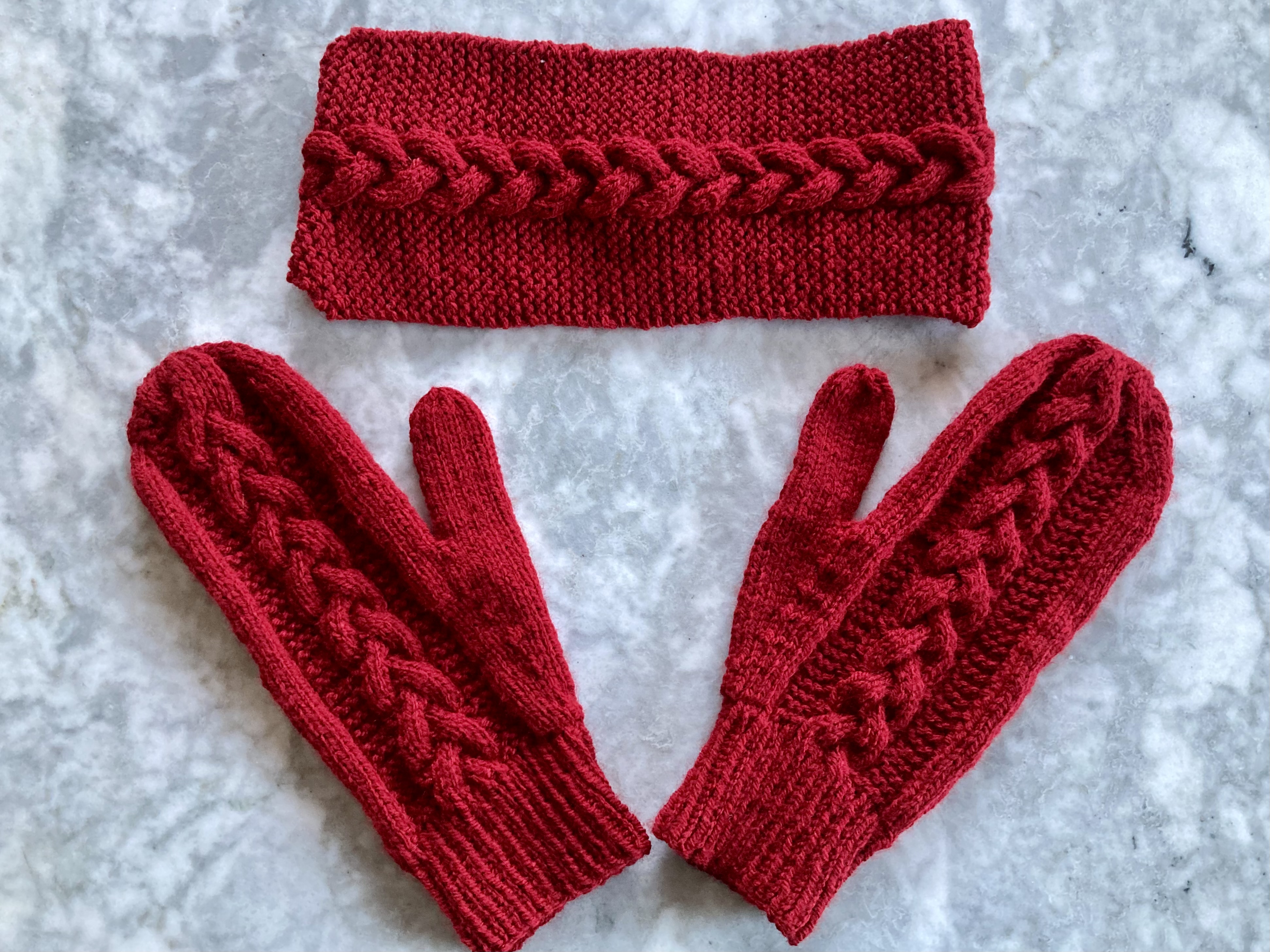
The mittens (Stitchcraft calls them “mitts”, but I’ll call them mittens to avoid confusion with fingerless mittens/gloves) and headband both feature a simple 9-stitch braided cable set in garter stitch (only 4 stitches on the mittens with the rest in stocking-stitch) with 1 stitch of reversed-stocking stitch on either side of the cable. The mittens are meant to be knit flat back-and-forth, but I wanted to make them in the round to save time and a seam.
Re-writing or re-thinking the pattern to accomplish that was… not easy. Of course the pattern doesn’t say, “Make a 9-stitch cable with 1 stitch of reversed stocking-stitch and 4 stitches of garter stitch on each side, and the rest in stocking-stitch”. It says things like “k3, (p1, k3) twice, C 6 B, (p1, k3) twice, k twice in next st., k to last 20 sts, k twice in next st, k 19” and then the wrong-side row is “purl to last 22 sts, k5, p9…” and so on. I tried to chart it out and was even more confused than before. The cable was all wrong and didn’t cover nine stitches. I finally figured it out, but the pattern wording didn’t help.
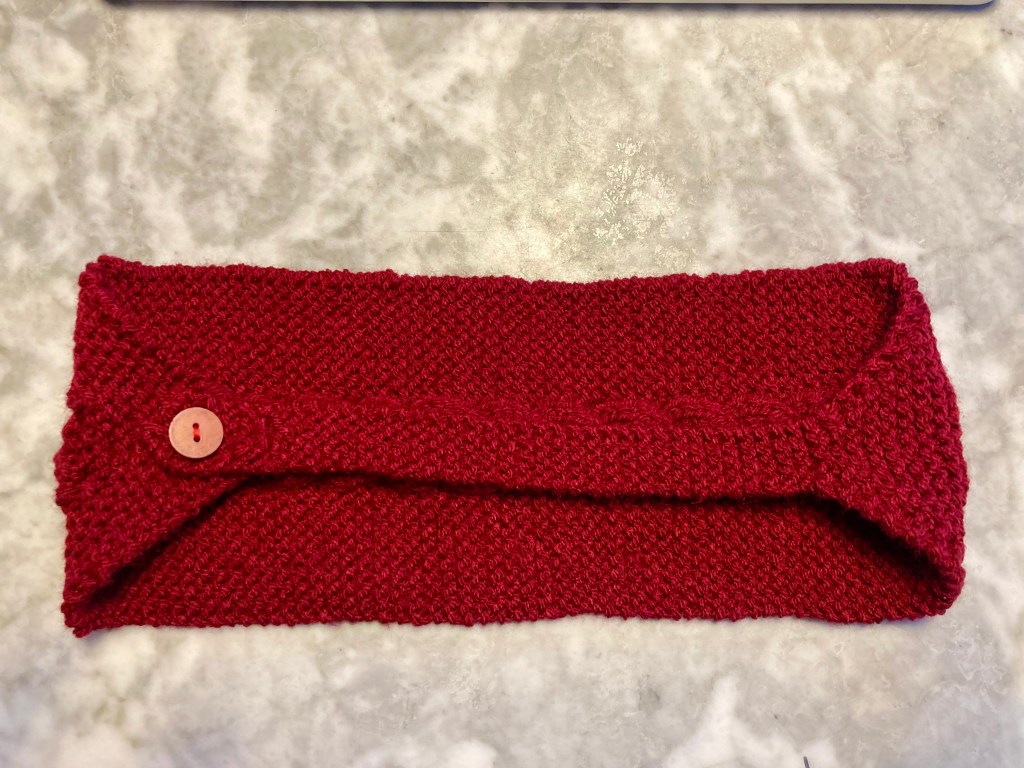
The headband was very easy and took two evenings. It fastens around the head with a buttoned strap, which I found very charming. The strap as given in the pattern (3 inches) was too short, so I made it to fit. It’s a little loose on me, but my friend has fluffy hair. Of course, she can always move the button if it doesn’t fit her properly.
Friend is wool-sensitive, so I made these in 1960s-appropriate 100% polyester yarn (Pro Lana Star). For a synthetic wool, it’s quite nice — soft and doesn’t feel too plastic-y. I chose a lovely cherry red colour to feel festive in winter.
That was it! I will return to this issue when the substitute wool I ordered for the Shetland cardigan (Rauma 3-trads Strikkegarn) arrives and make an extra post. I don’t mind that it didn’t work out to make the cardigan this month, as I probably would have overlooked the headband and mitts. They were fun to make and look really cute, so maybe I’ll make a set for myself sometime.
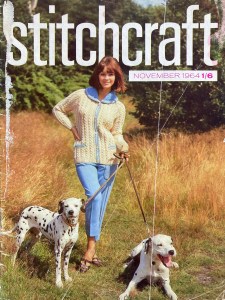
“Winter Fashions and Christmas Plans” is the theme of Stitchcraft‘s November 1964 issue, with practical clothing for the family as well as gift ideas and a couple of glamorous items for parties.
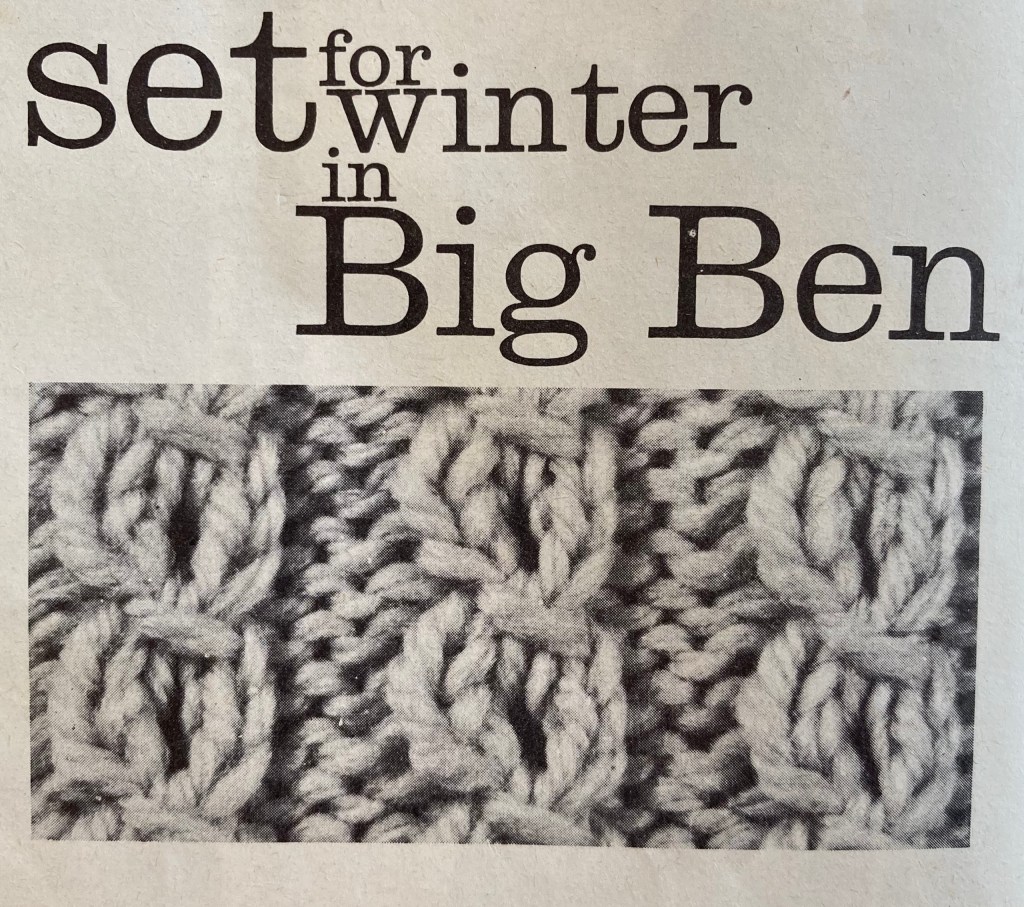
You will be “set for winter” in the cardigan on the cover, knitted in bulky “Big Ben” wool at 3 1/2 stitches to the inch, with all-over mock-cables, a warm collar and practical pockets. The mock-cable pattern involves “losing” a stitch in the 3rd row with a sl1-k2-psso, then getting it back with a yo on row 4, making a “bar” and then a little hole for the mock-cable effect. There’s a handy close-up photo of the stitch pattern, so you can make sure you did it right.
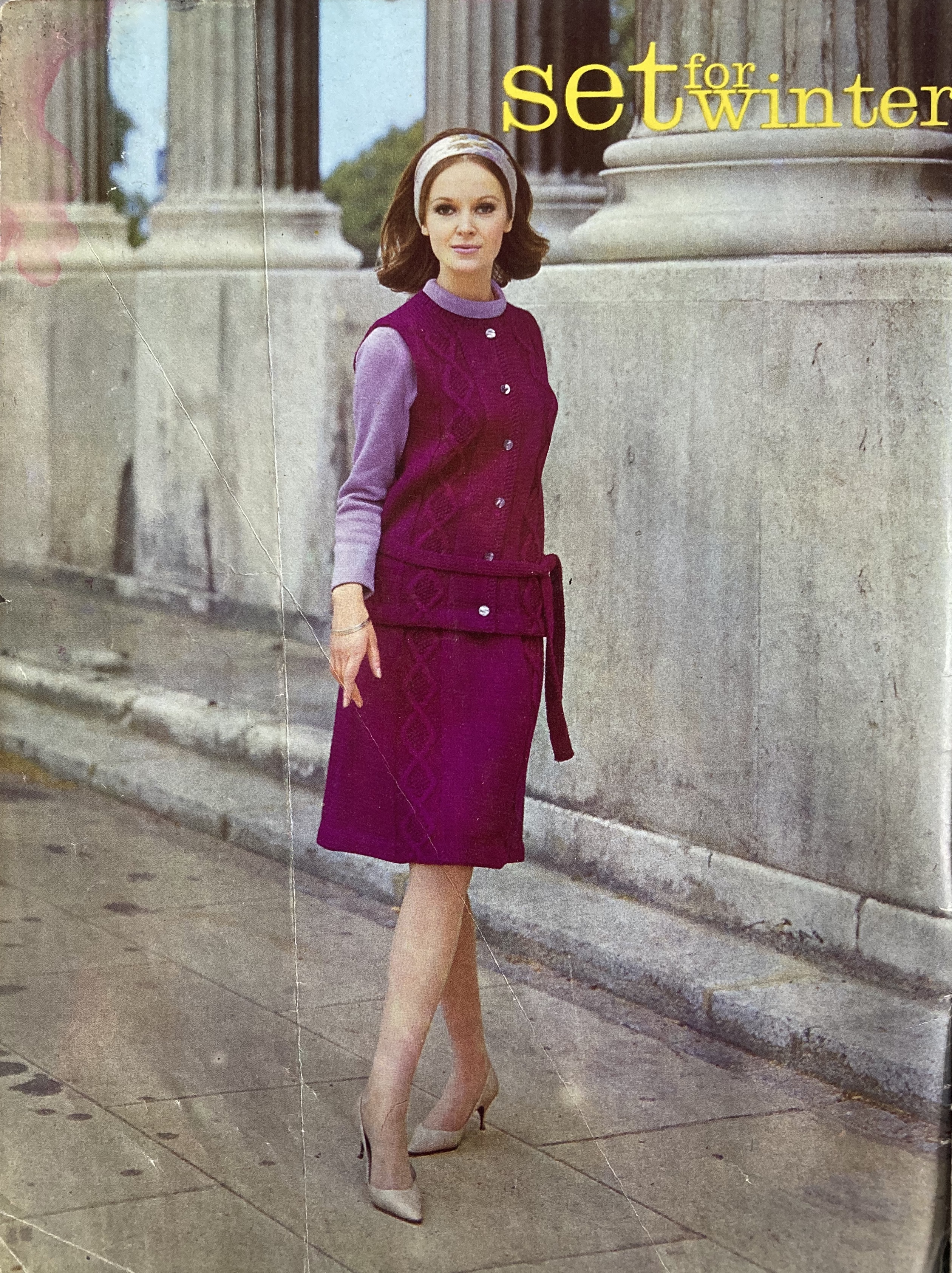
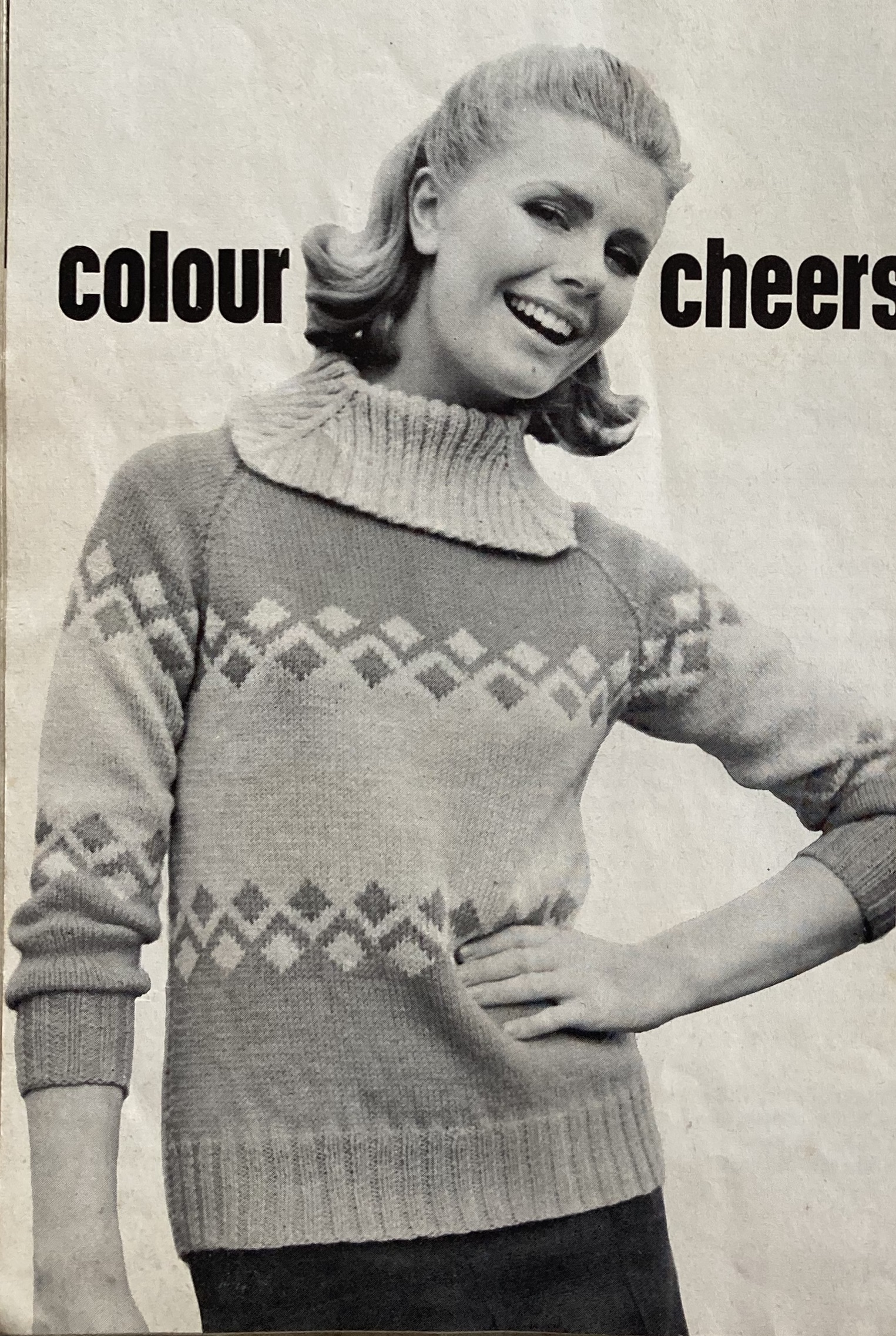
The caption continues the use of a bit of word-play on the word “set”, which we saw in the October 1964 issue. There, the theme was “set to flatter”, whereby some of the items were part of an actual set, and some weren’t. Some of the other garments in the November issue really are a set, in that sense: this waistcoat suit in glowing fuchsia, for example. Rounding out the everyday women’s garments are a plain 4-ply jumper, a bright colour-motif sweater and a comfortable tweed jacket for larger sizes. I love that brooch on the jumper — it looks like Star Trek insignia.
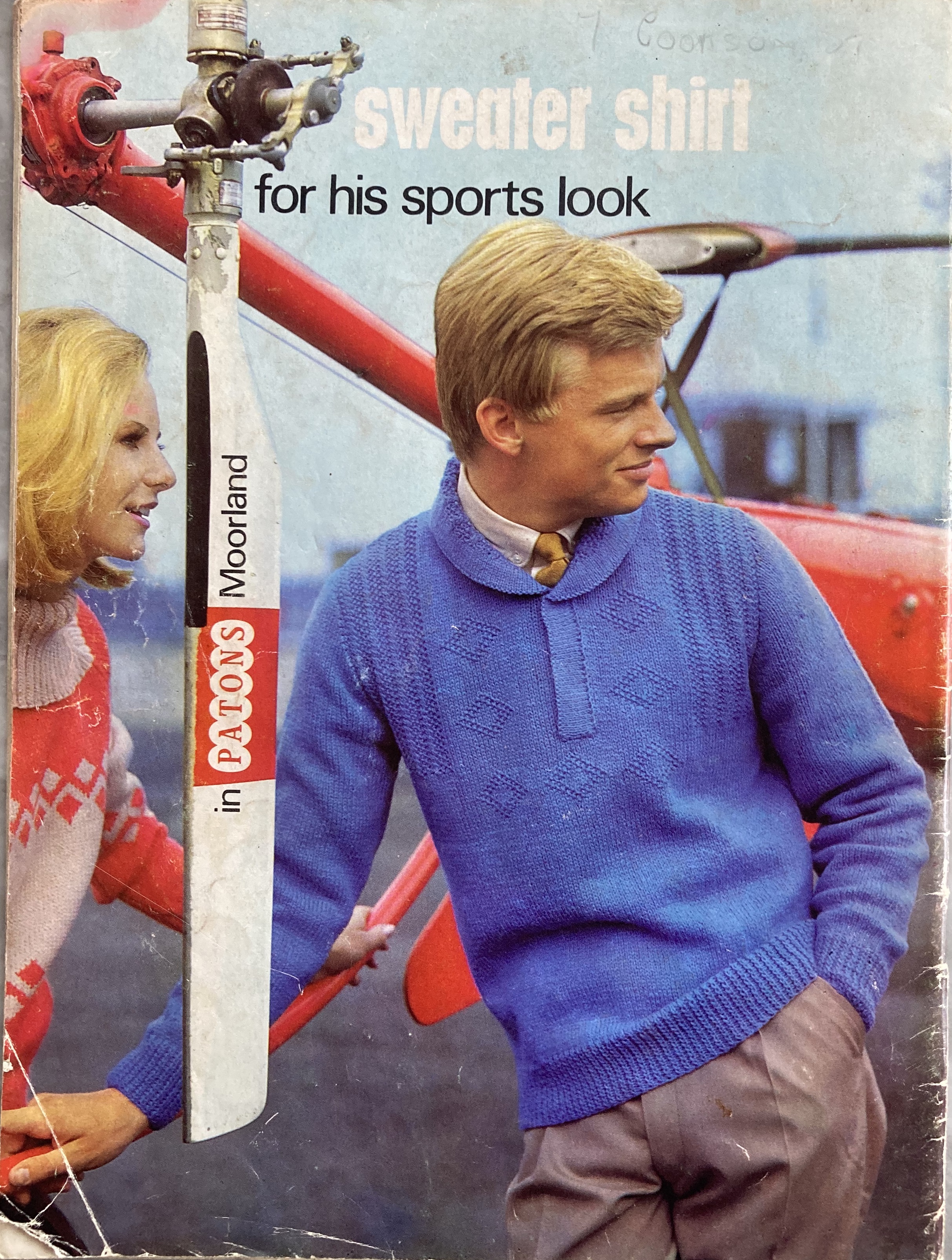
The trend for textured patterns, big collars, zig-zag designs and bold colours continues with the men’s garments: he too will be “set for winter” in a textured pullover for larger sizes or a sport-weight “sweater-shirt” (they didn’t use the word “henley” at the time) that utilises many fashionable features. You get a glimpse of the women’s colour-motif sweater in the back cover photo, as well.
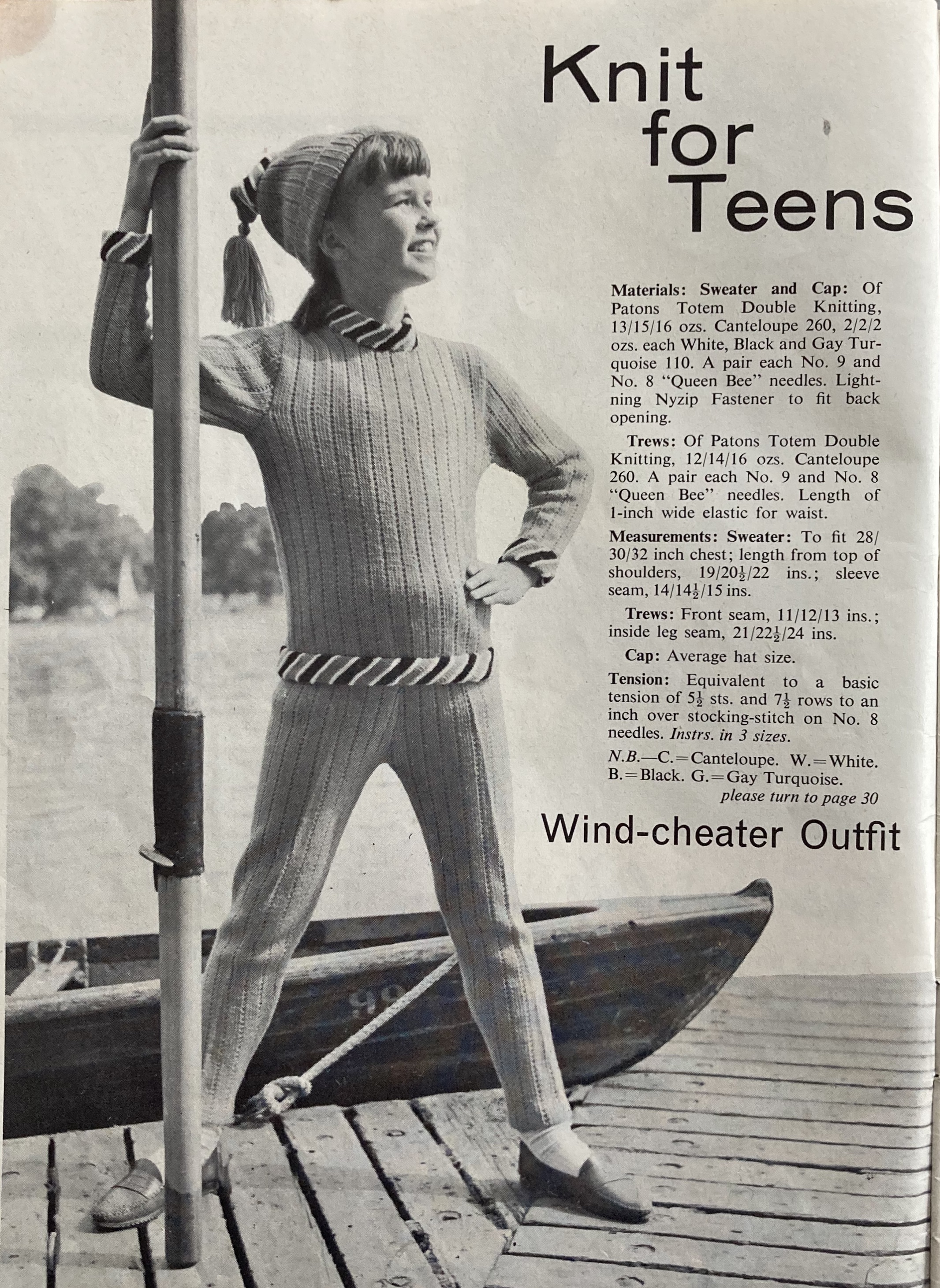
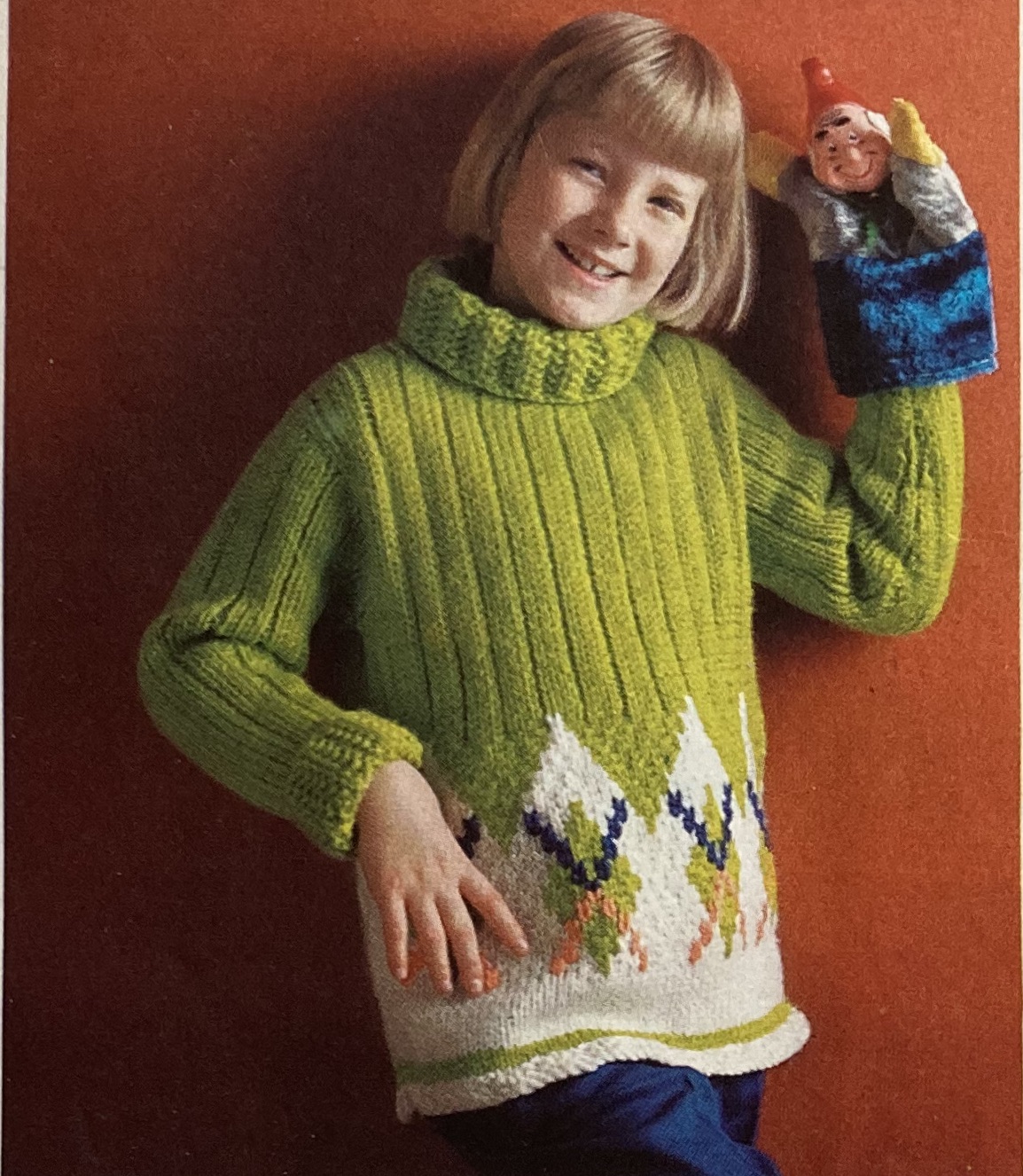
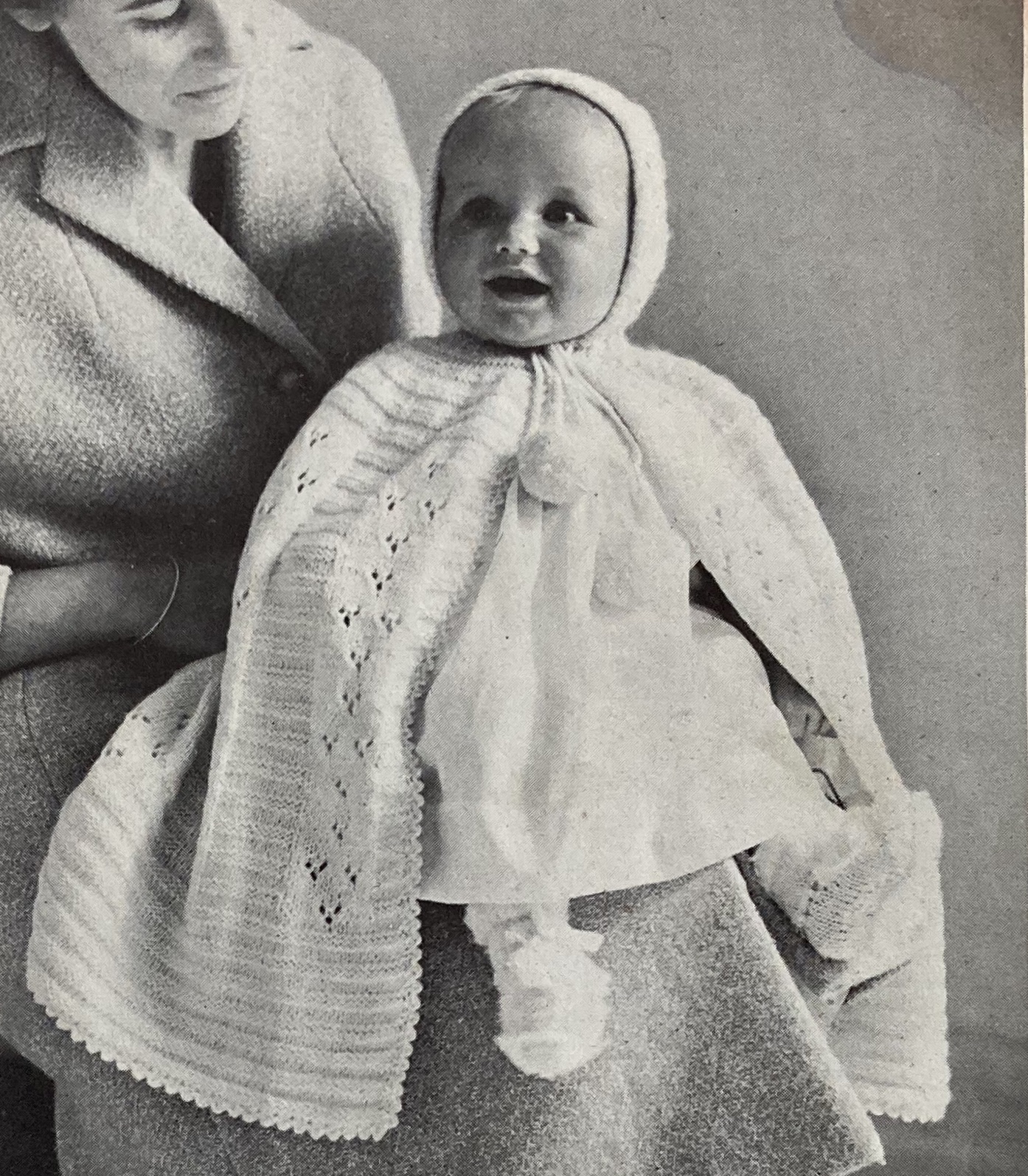
In the “Teens and Babies” department, there’s a wonderful winter “wind-cheater outfit” set (actually a set, this time) of sweater, leggings and hat, as well as a thick, warm jersey for a young girl (our model is quite possibly not a teenager yet, but the pattern is in three sizes up to 32 inch chest to fit older girls as well), and a continuation of the baby set (also an actual set) that was started a few issues ago with matinee coat, dress, etc.: this last instalment is a lacy one-size-fits-all hooded cape to go over all the other garments. I love the photo of the girl standing on the dock next to her boat, looking like a proud sailor! Last month’s issue, if we remember, touted “the Feminine Look”, meaning girls had to look pretty and not really do very much, so it’s nice to see our young sailor looking active and happy in her autumn sport set. The diagonally-striped hem and cuffs are knitted separately and sewn on later.
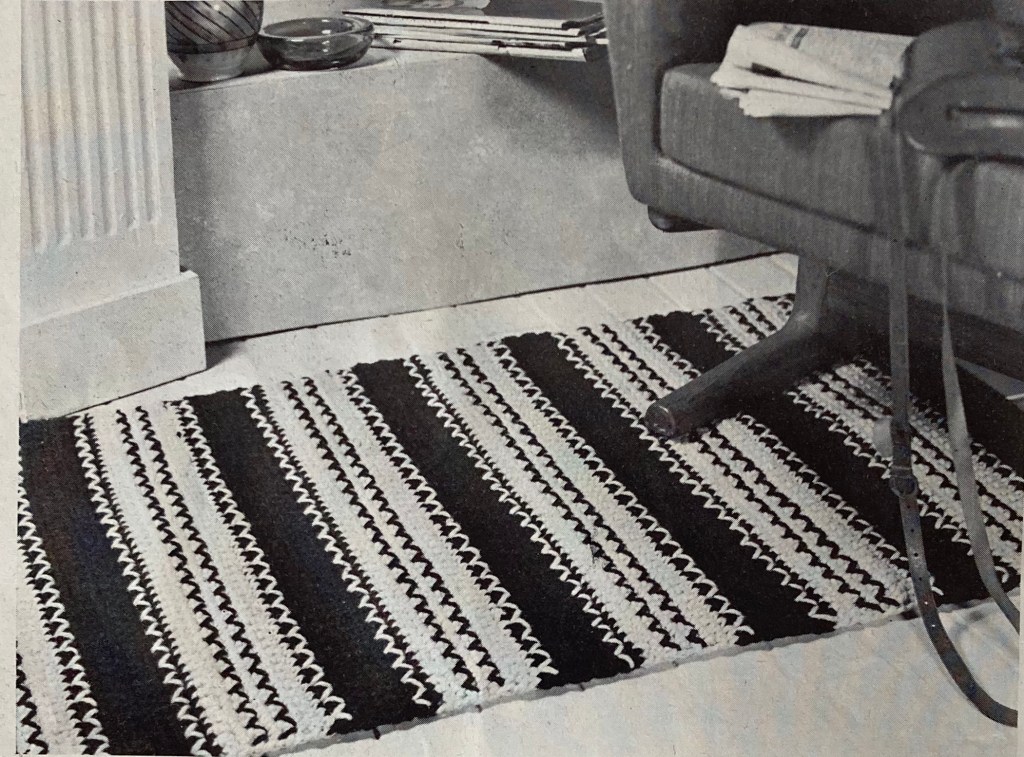
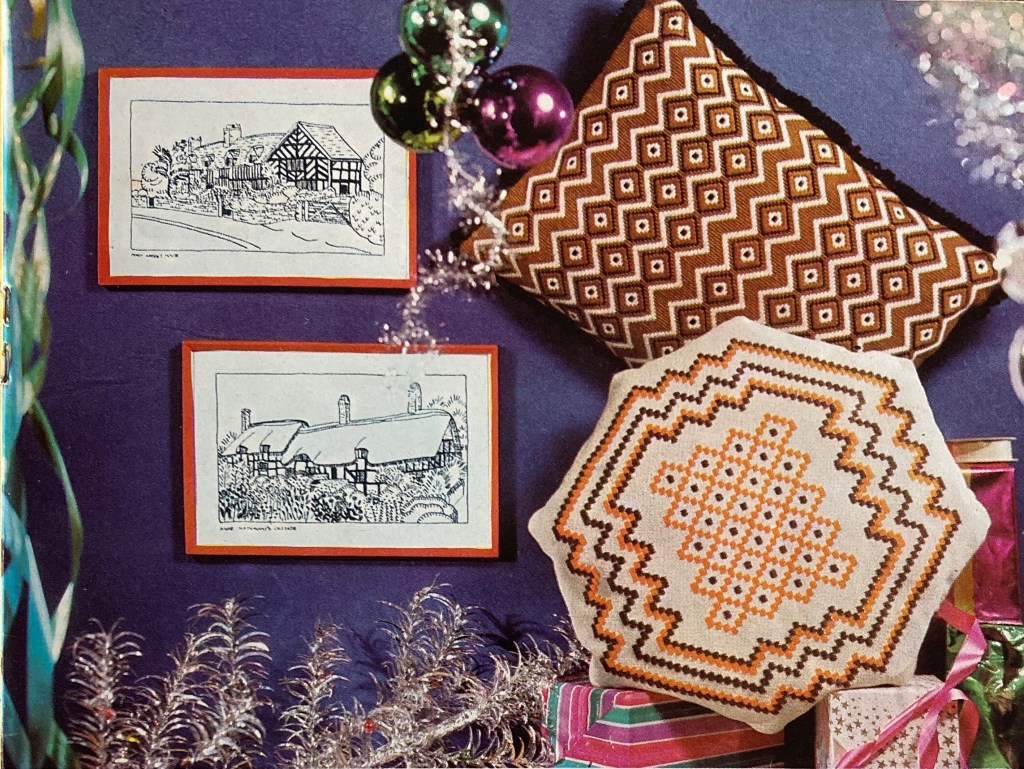
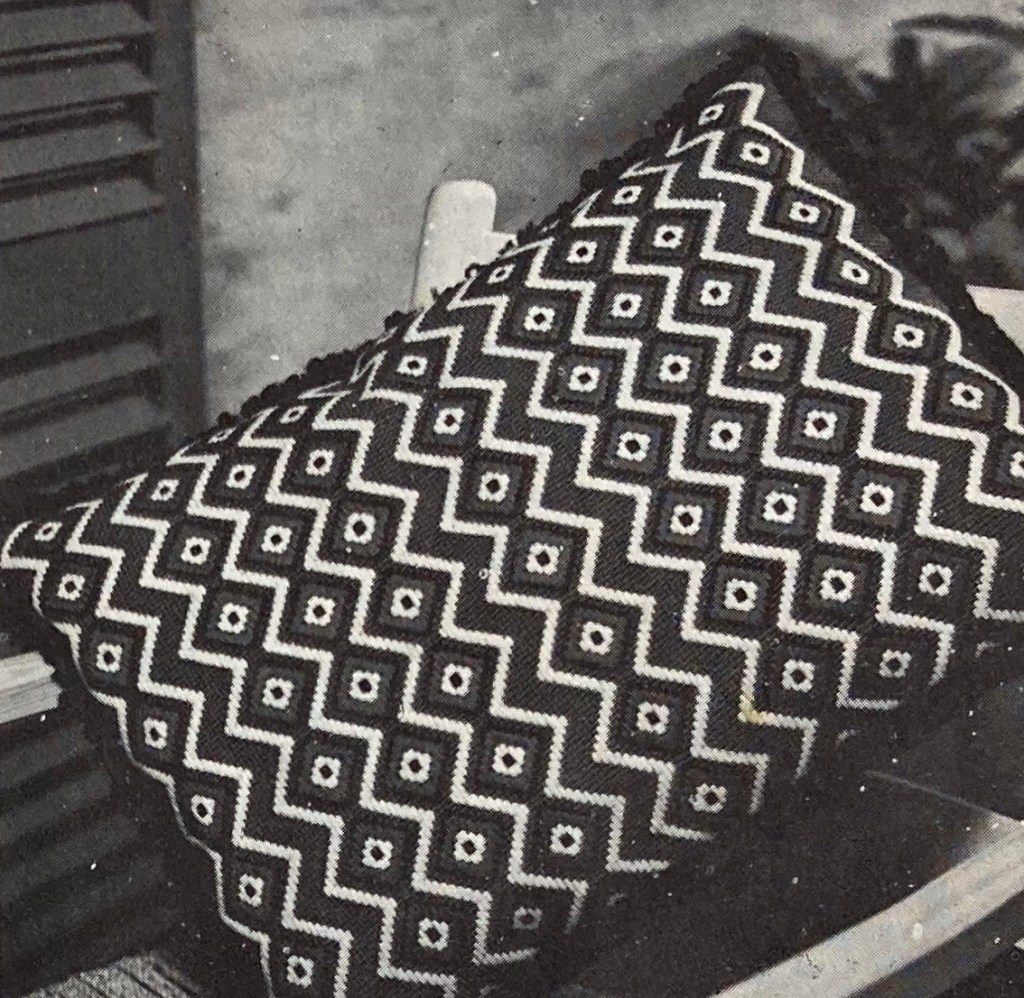
The non-Christmas-themed housewares continue the zig-zag / geometric trend with a crocheted rug, diamond-pattern cushion and wacky zig-zag chairback and cushion set (yay, another set).
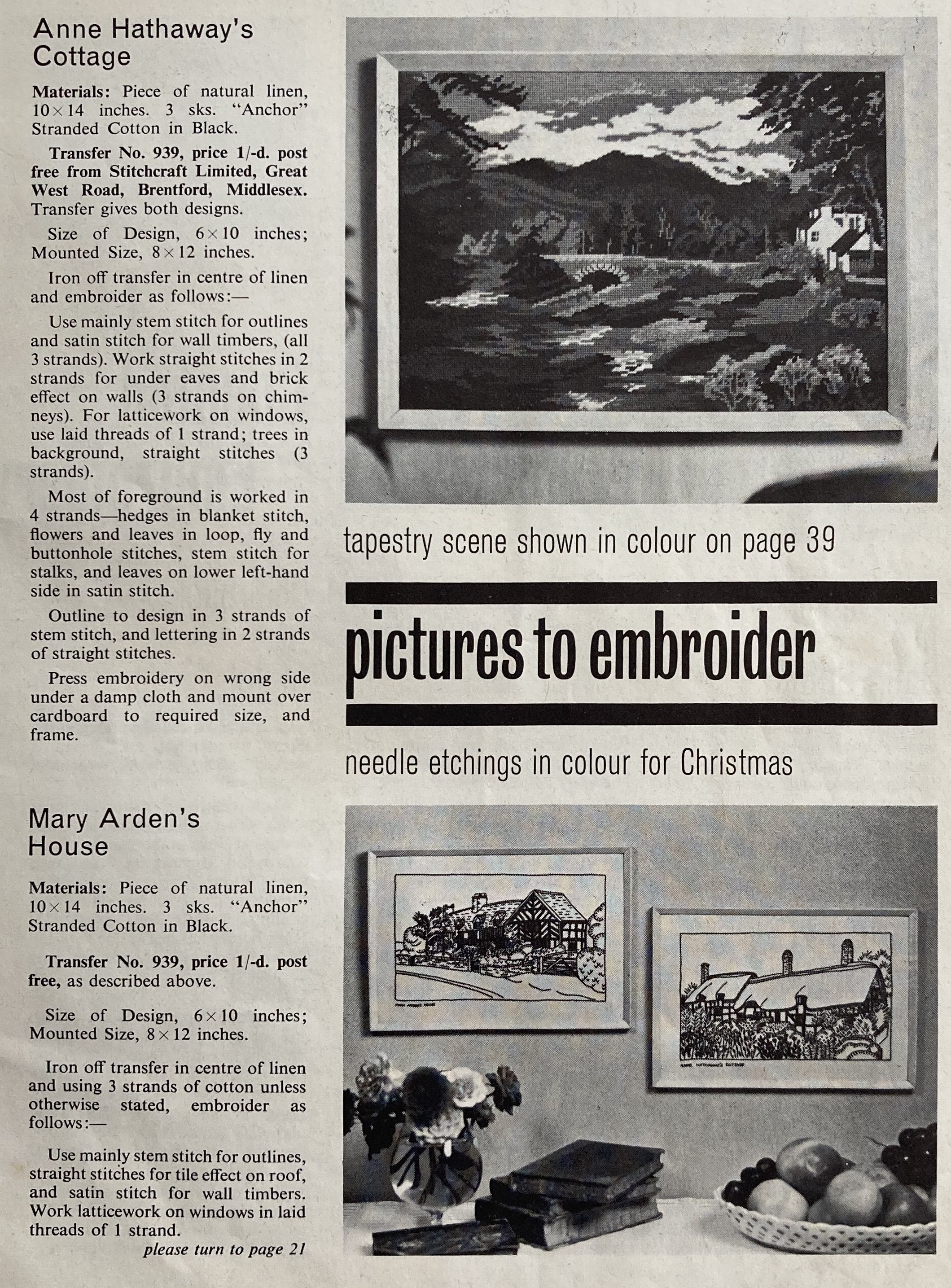
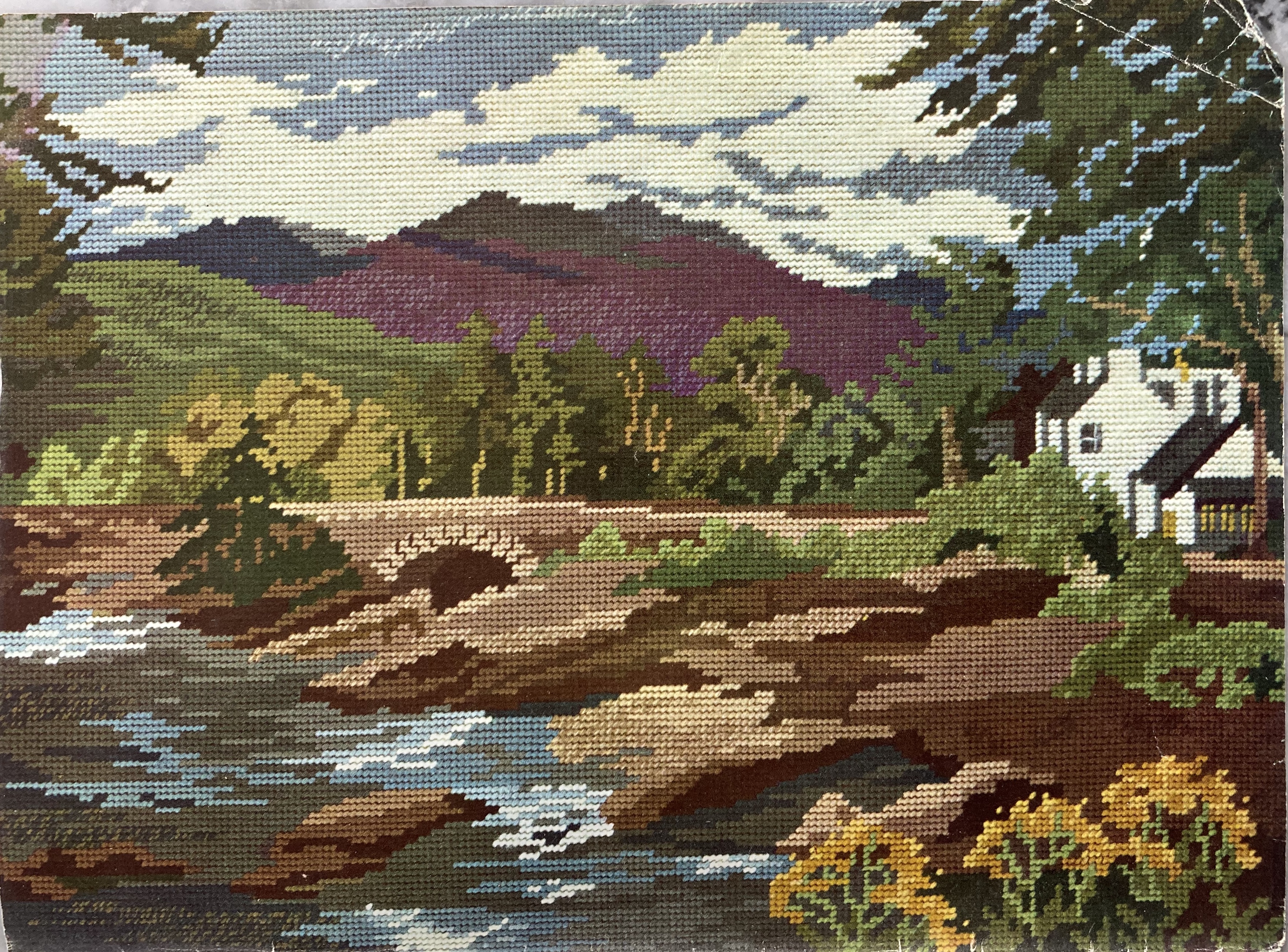
There are tapestry and “needle etching” embroidered pictures that draw inspiration from Shakespeare’s family: “Anne Hathaway’s cottage” (Shakespeare’s wife, not the modern actress…) and “Mary Arden’s House” (Shakespeare’s mother, not Lady Arden of Heswall.)
But finally… it’s time for the pre-Christmas decorations! The wacky “novelties” and bizarre-bazaar items! I know you have been waiting for this and I promise you will not be disappointed. You may, however be scared out of your wits, if you happen to have a clown phobia, in which case I caution you to skip over the next few photos.
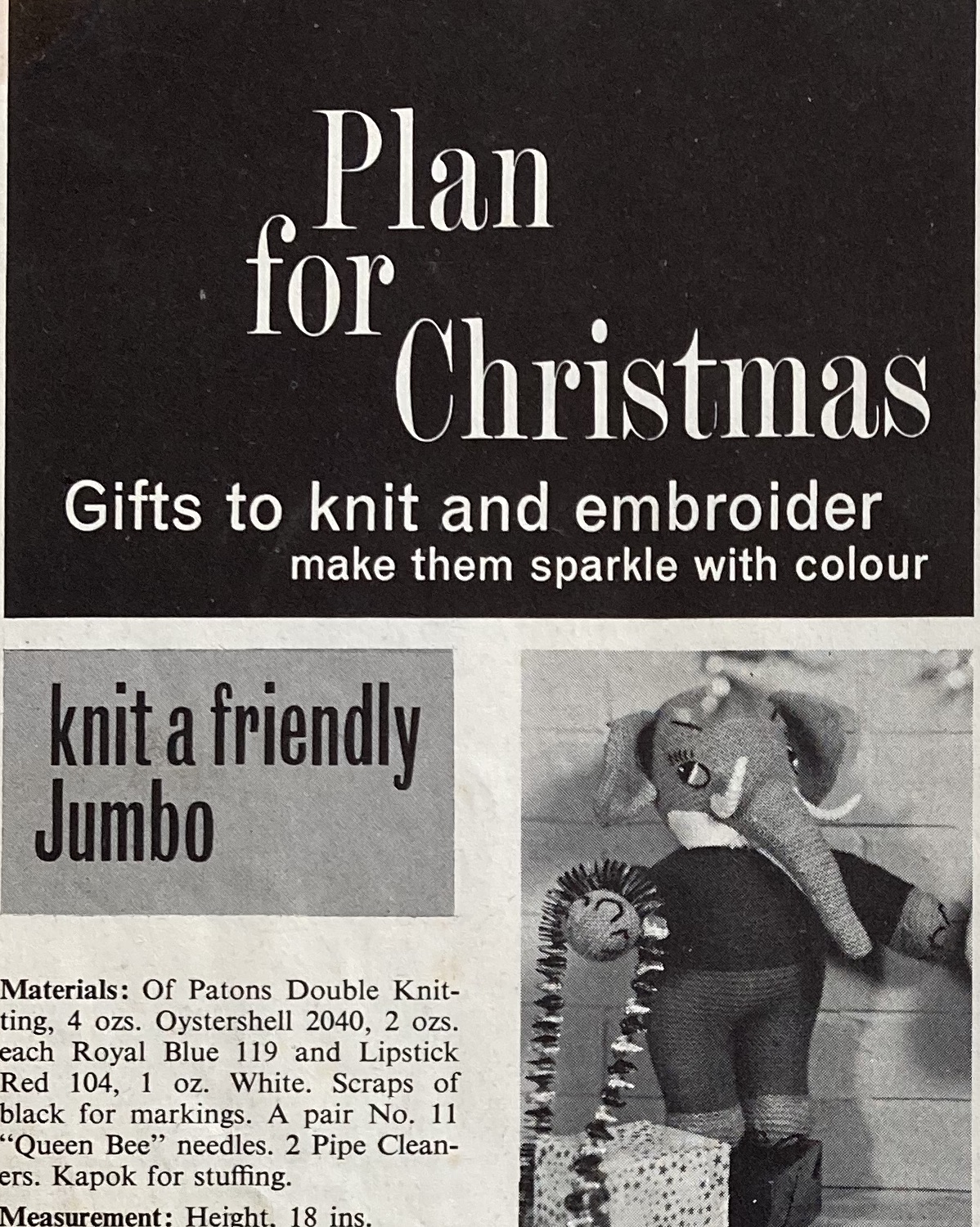
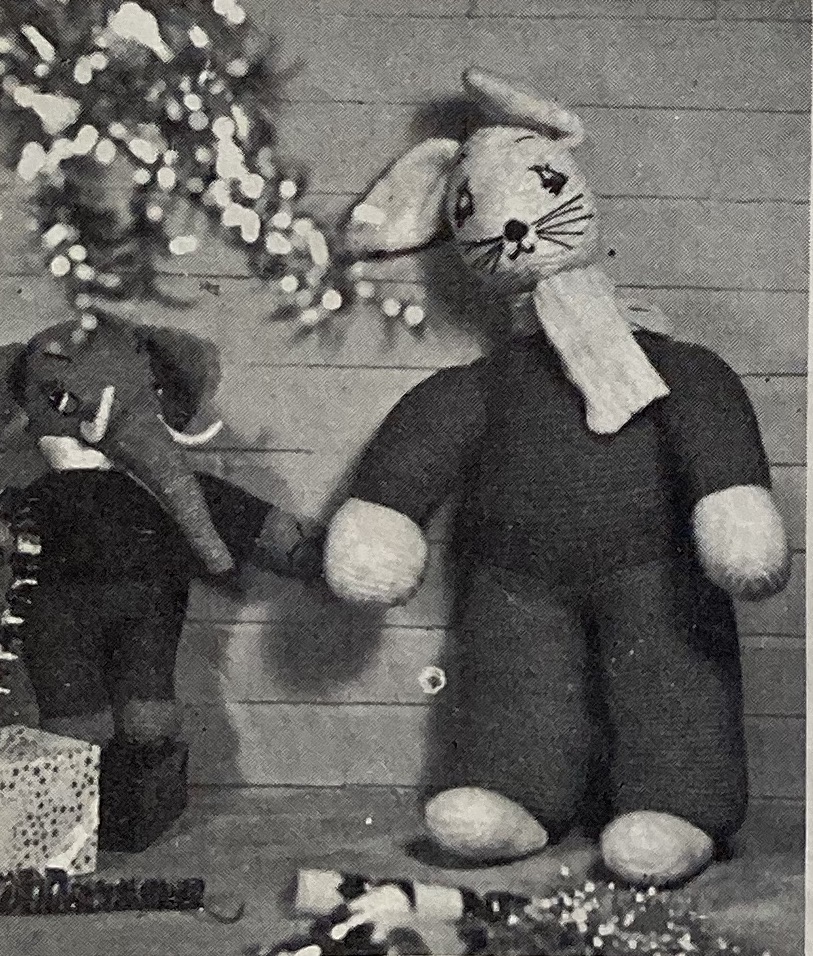
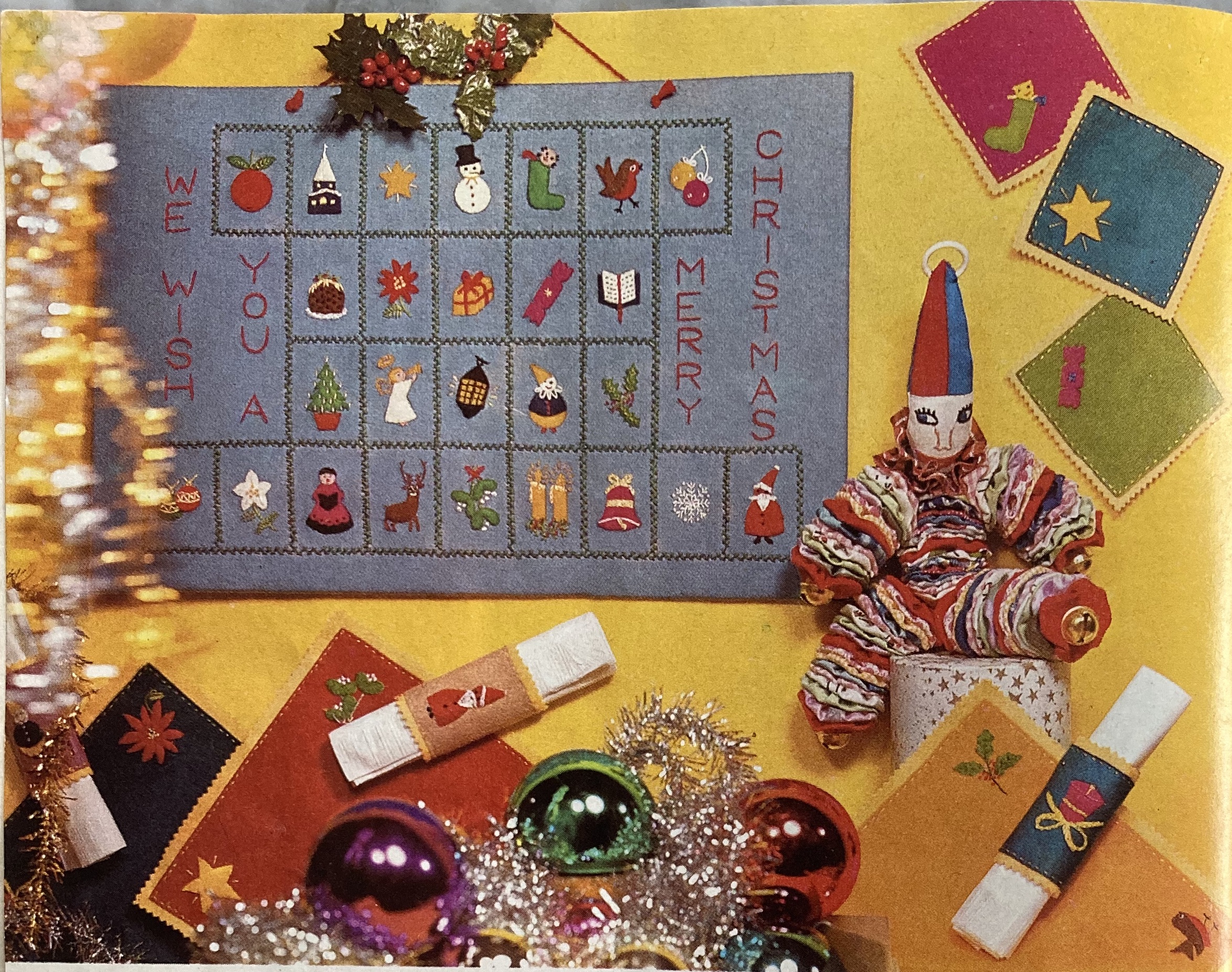
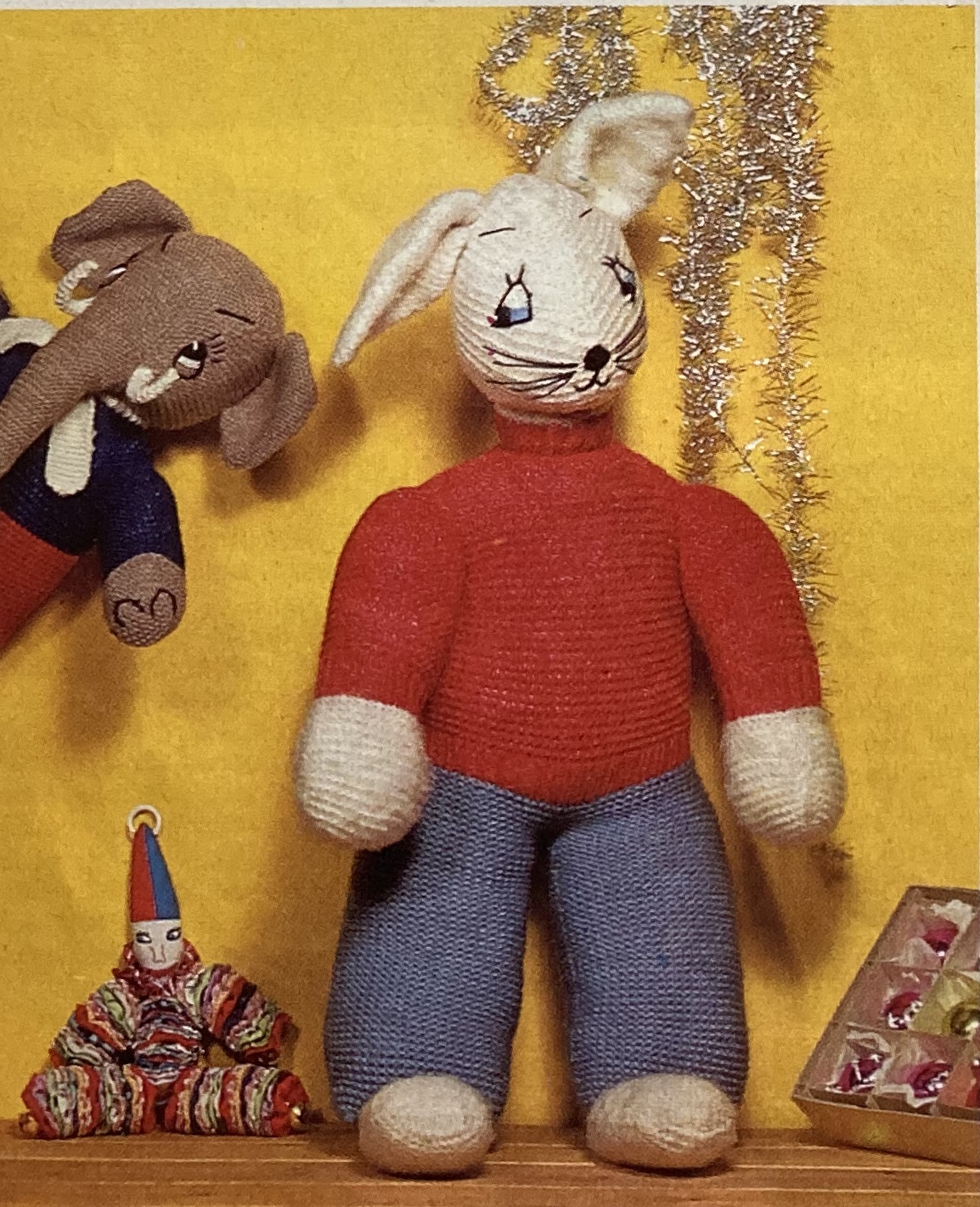
Starting with the melancholic stuffed animals, you can knit a “friendly” Jumbo the elephant, who seems to be rolling his eyes at the happy child who just pulled him out of their Christmas stocking, or a sad “bunny with a twinkle”. The table decorations are quite cute and easy to make: felt place-mats, napkin-holders and an Advent wall panel with wintery and Christmas-y appliqué motifs.
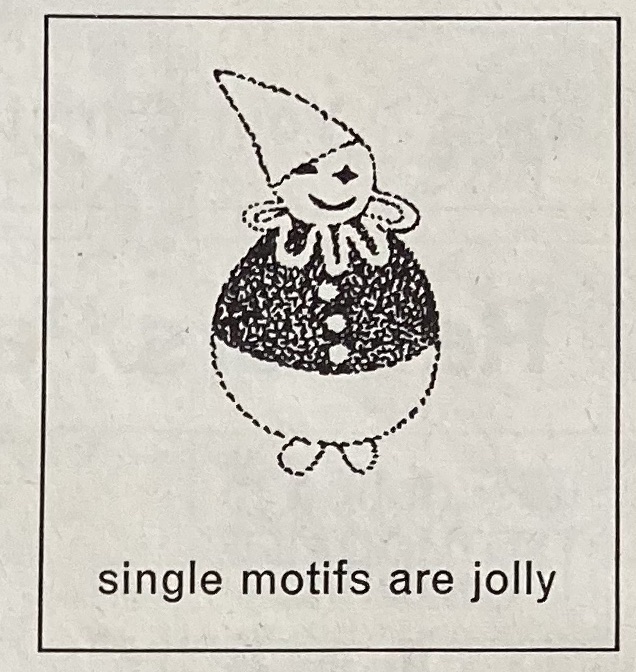
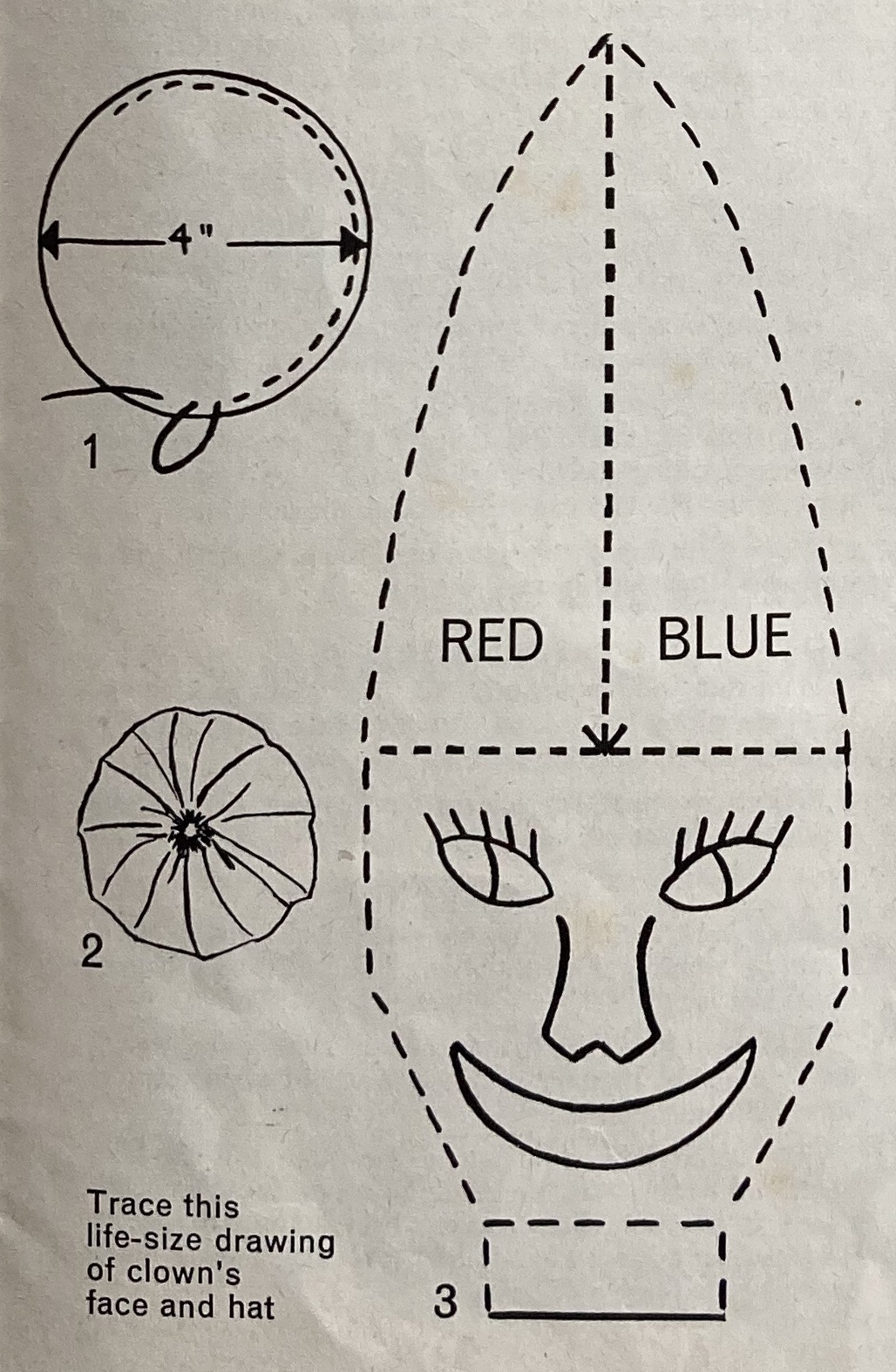
But that clown! The “Musical clown for a tot”! What in the world is going on with that clown? Even the bunny is giving it the side-eye. The construction is actually pretty interesting and a fun way to use up fabric scraps: you cut 4-inch diameter circles of fabric, gather them up with a gathering thread to make little poufs and then sew them on top of each other to make the arms, legs and body. Then all you need to do is sew and stuff a pointy head and cap and embroider a terrifying face onto it. Don’t worry, it has bells instead of hands and feet, so you can hear it coming.
EDIT November 12, 2022: I was browsing around on UK Ebay and someone is selling an FO of this clown! Unbelievable! I am not going to buy it but maybe one of you will…
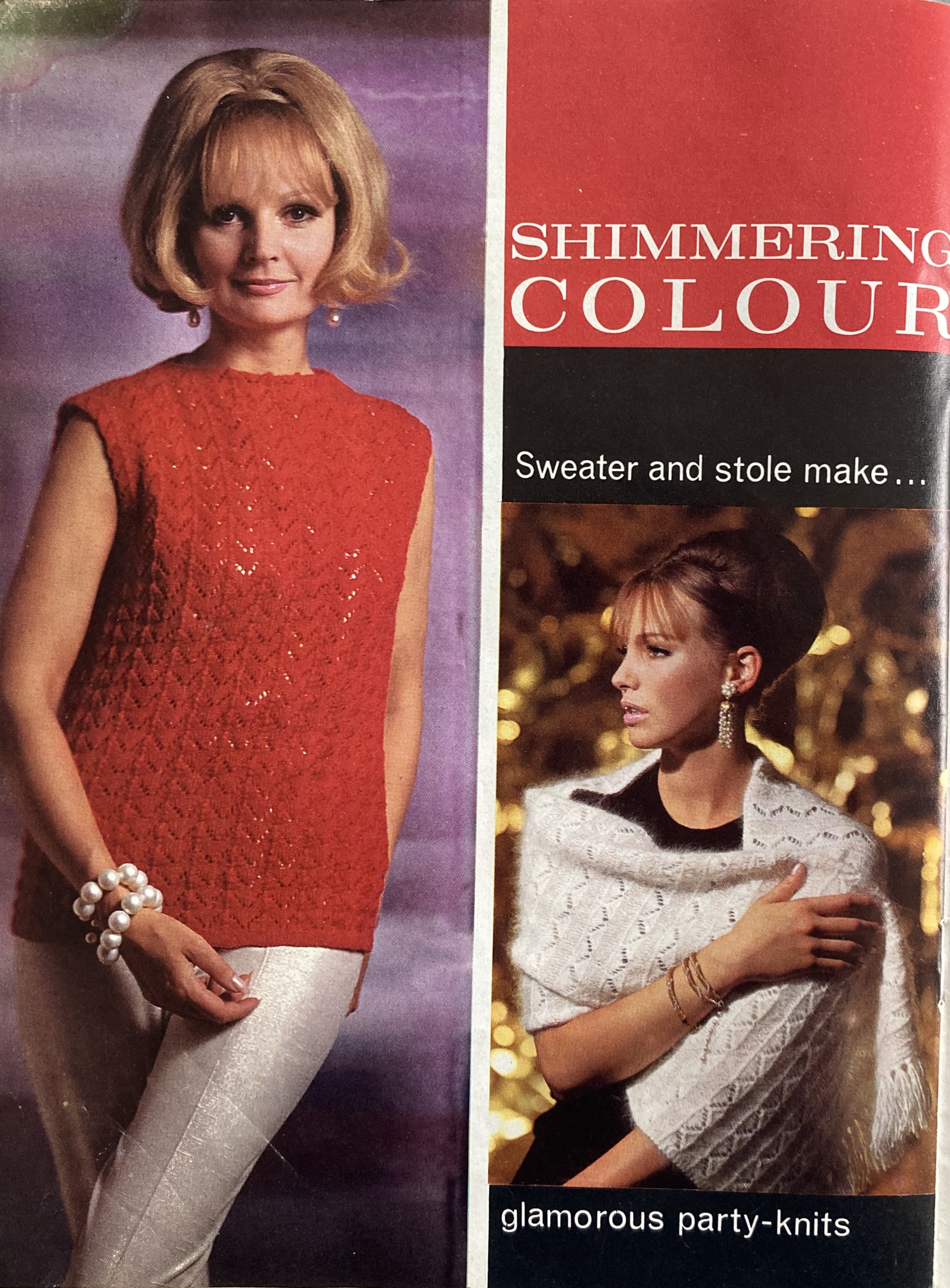
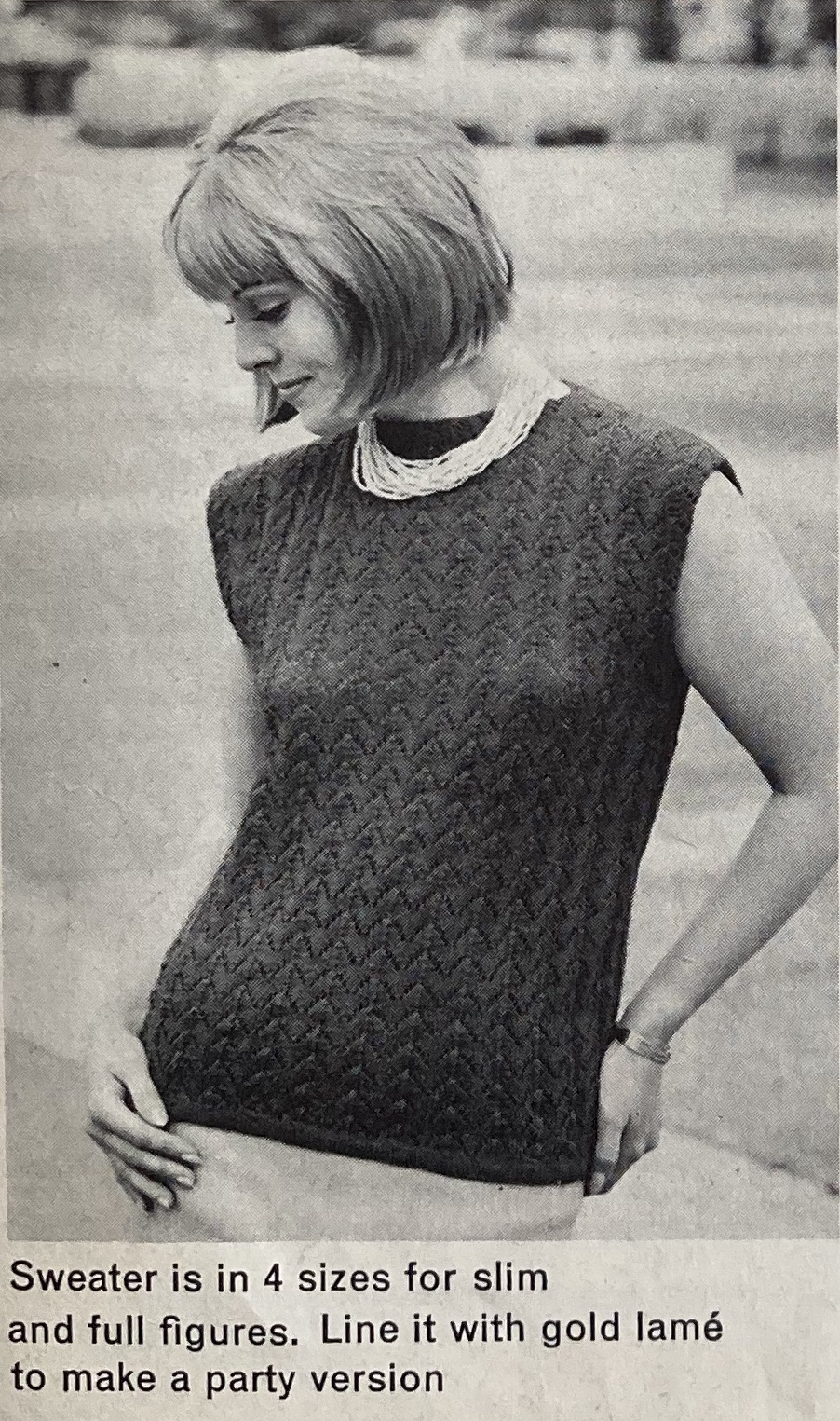
To clear your mind of those images, here is a lovely lacy party top and fluffy “luxury stole” knitted with Lurex for holiday party glamour. The top can be lined with gold lamé for extra sparkle.
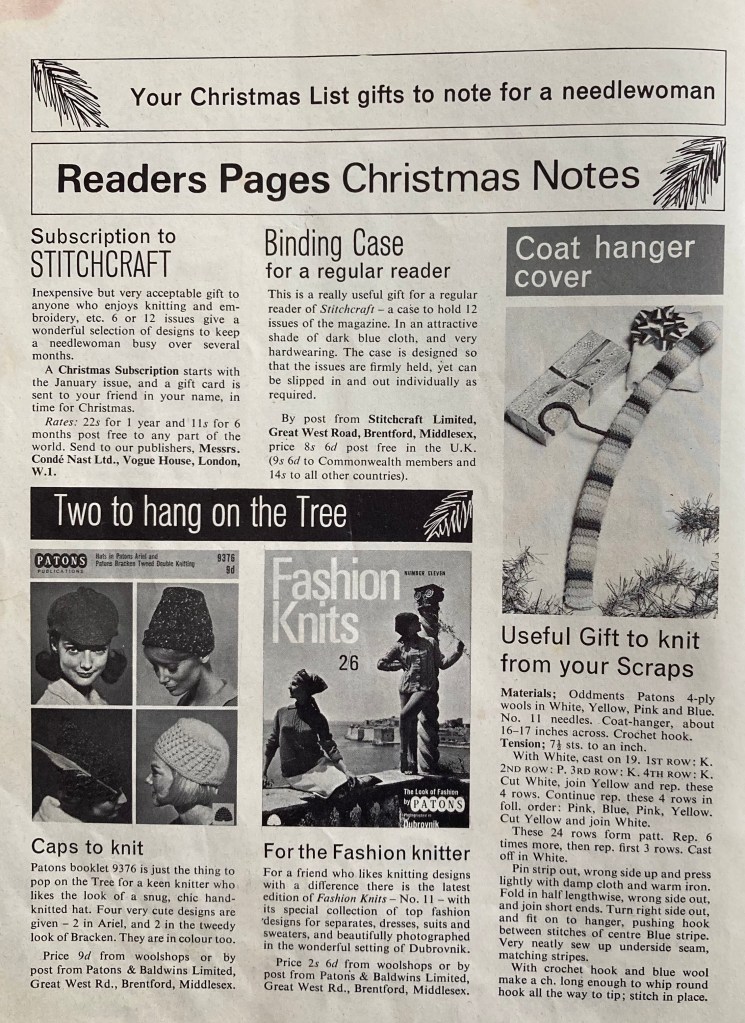
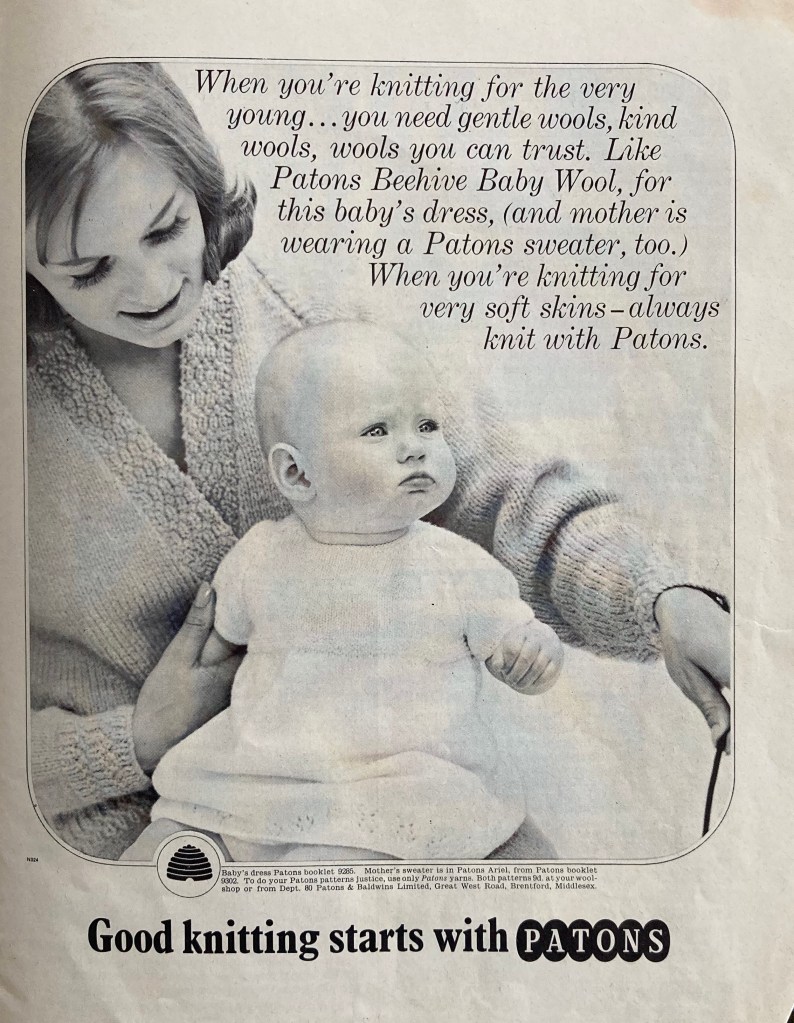
Rounding out this bumper issue are the “Readers Pages”, featuring Stitchcraft and Patons-inspred gift ideas (a yearly subscription, binding cases for past issues, knitting patterns…) and a fun way to use up wool scraps: a coat hanger cover to keep delicate items from creasing or stretching at the shoulders. The ads use babies to sell Lux soap flakes and Patons wool.
The only project that really called to me from this issue was (laugh if you want) the coat hanger cover, which could make a cute little gift for a friend or be useful in my own closet, as well as being quick and easy and a way to use up some of those mystery scraps in the stash drawer. The October 1964 dress is almost finished, so I’ll update that post soon as well.
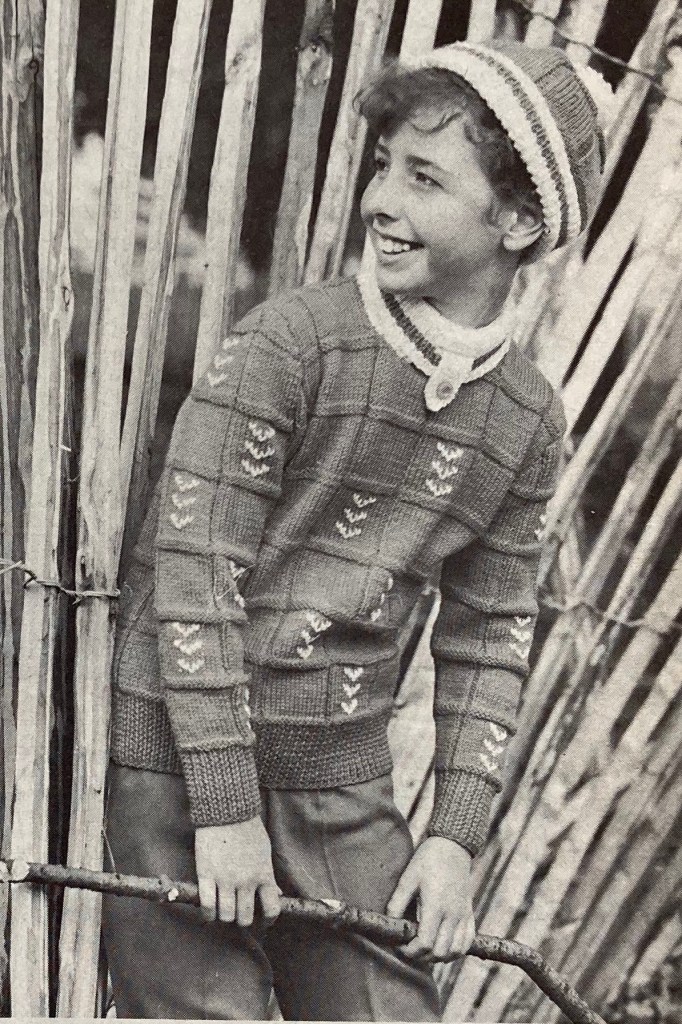
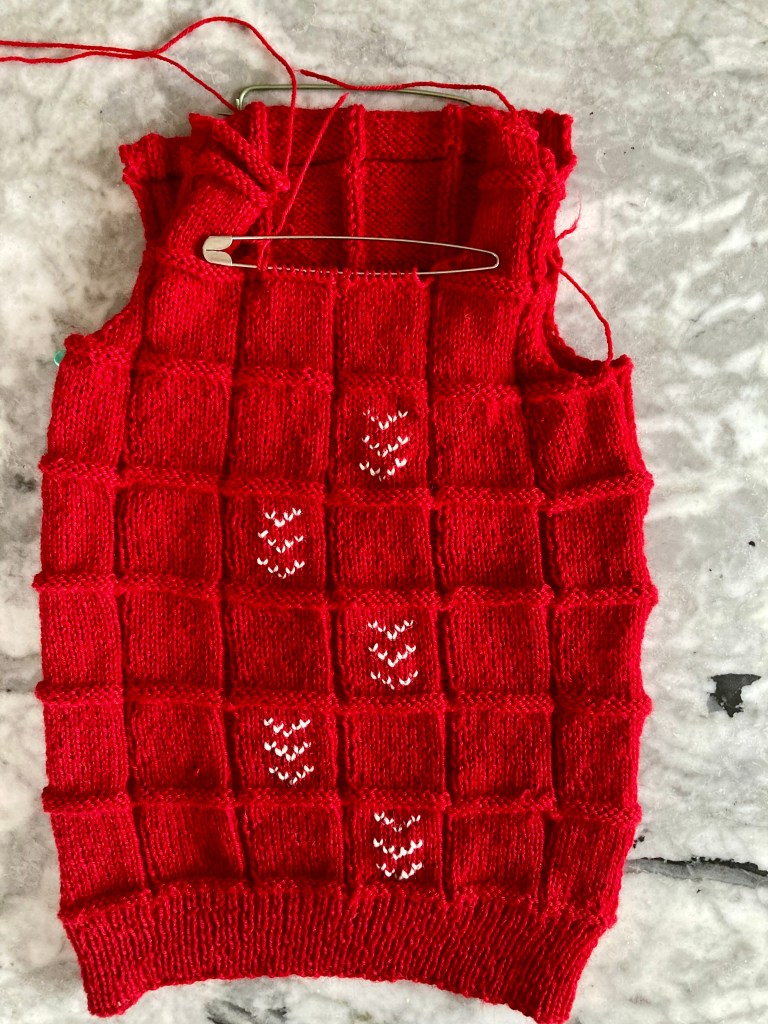
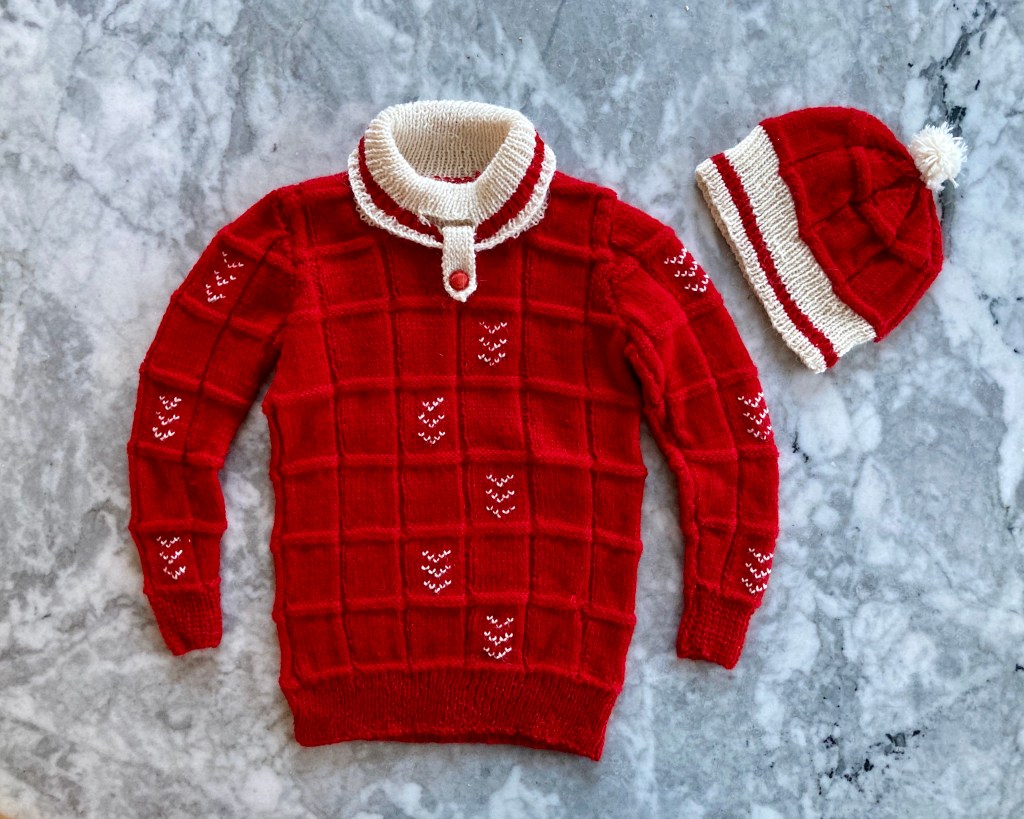
This month’s issue had a wonderful winter pullover for a larger child, featuring white “Swiss darning” (a.k.a. duplicate stitch embroidery) on a brilliant red background. I had also promised a friend to knit something for her toddler, whose favourite colour is red. Perfect!
Well, not quite perfect, since the toddler in question has a 22 inch chest and the pattern is written for children with 28, 30 or 32 inch chests. But it’s also written for DK weight wool and it was easy enough to find a lighter-weight wool to convert the pattern down into a smaller size. DROPS Garnstudio “Nord” (45% alpaca, 30% polyamide, 25% wool) gives 26-27 stitches in 4 inches and is soft and easy to care for. It’s also inexpensive and the red colour is beautiful. The white is just subtly off-white, which I like better than pure white for pairing with a really strong colour like the red.
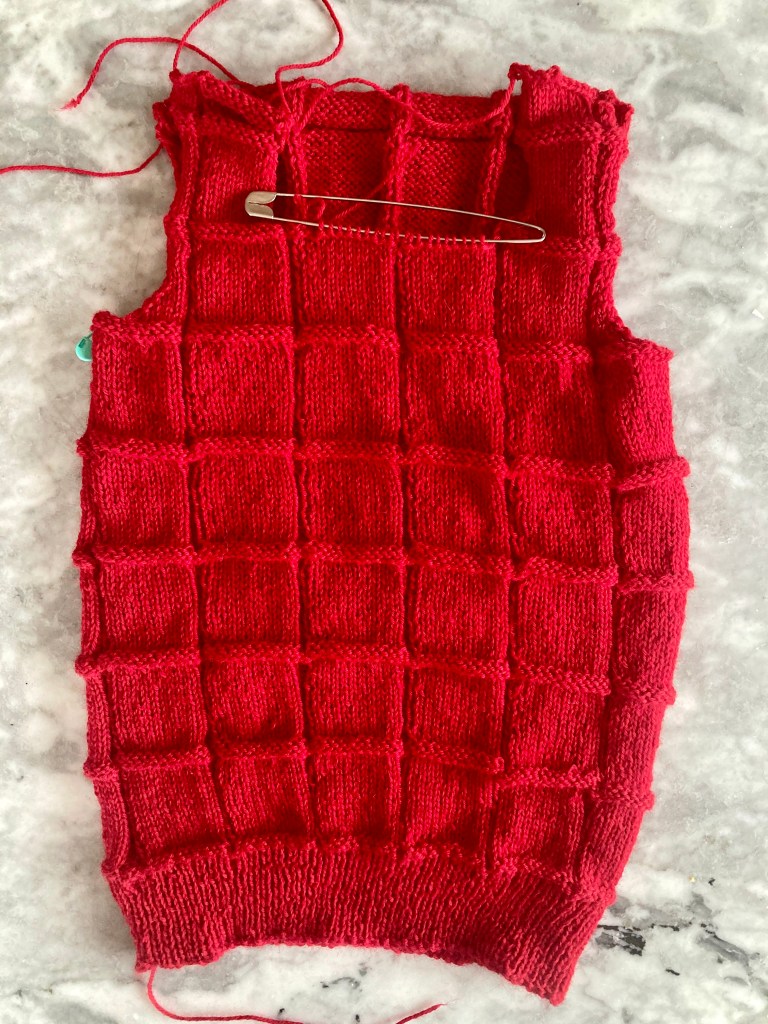
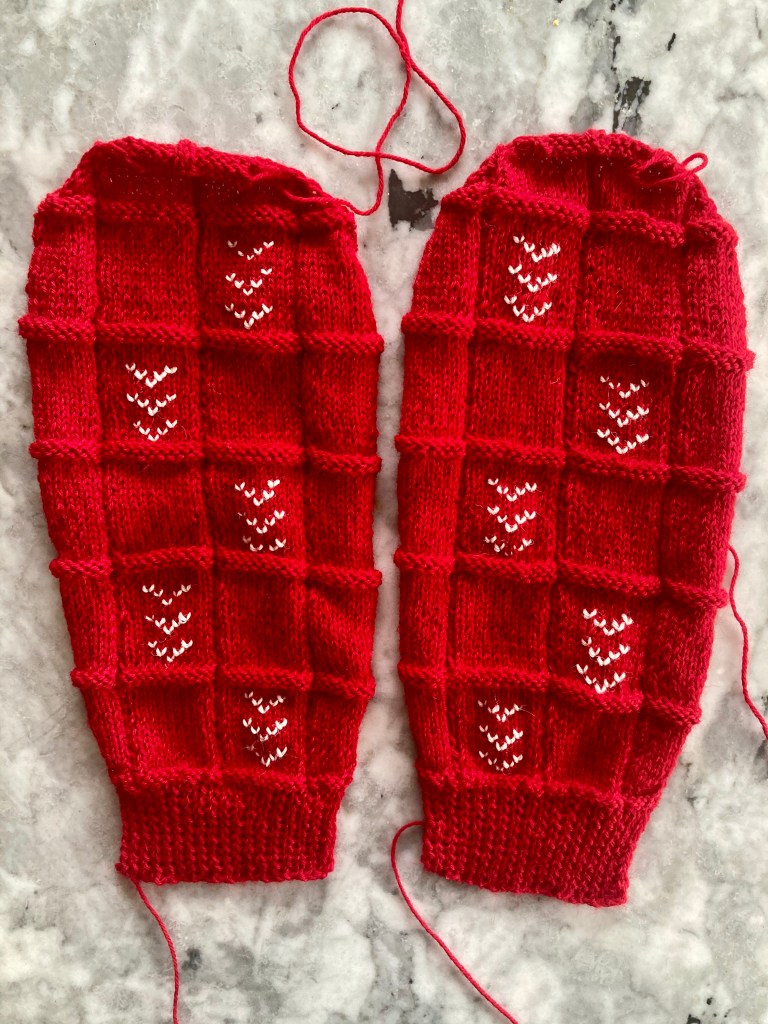
The pattern uses stocking stitch and reverse stocking stitch to make square-ish pattern “blocks”, which are embroidered with white wool in duplicate stitch after everything is finished. Duplicate stitch or “Swiss darning” as it was often called in vintage magazines, is made by threading a length of contrasting colour yarn around stitches that have already been made. I had seen it on garments and in many vintage patterns (all kinds of embroidery on knitting was quite popular in the 1950s and early 1960s), but I had never tried it myself until now. It is pretty easy in principle, but tricky to get the stitches to look even — in this smooth yarn, any pulling of the thread made the embroidered stitches disappear. But it worked and it really peps up an otherwise simple pattern!
I made the body in the round to save time, but correctly guessed that it would be easier to embroider the sleeves if I made them flat.
This was fun and easy to make and I actually finished it on time for once! I have plenty of yarn left, so I think I’ll go ahead and make the hat before I give both to my friend. EDIT: I made the hat! Here is an updated photo.






 The Stitchcraft Sixties