EDIT August 10, 2022: Finished!
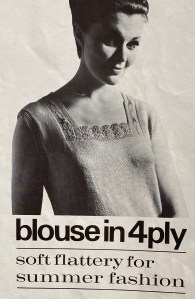
My July project was (emphasis on the past tense) a simple, pretty sleeveless blouse with a decorative square-cut neckline.
It’s written to be knit in (you guessed it) 4-ply wool, specifically, Patons Nylox. According to the Ravelry database, Patons made two different types of Nylox over the years: the first version was 80% wool and 20% nylon, the later version 60% wool and 40% nylon. The photos of the ball bands that I see on Ravelry make me assume that the Nylox used in 1964 was the later, 60/40 version.

It would not have been very much trouble to find a 60% wool, 40% synthetic modern yarn to substitute, but I much preferred to use a wool-cotton blend, being more natural, nicer on the skin and temperature-controlled than 40% synthetic. I decided to try Lana Grossa’s Alta Moda Cotolana, a 45% merino wool, 45% pima cotton, 10% polyamide blend which was available in my local yarn shop and in colours other than white, neutral or pastel. (Thank you, Lana Grossa, for understanding that some people do not wear light colours even in summer!)
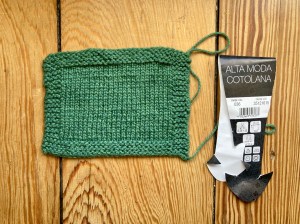
The wool is chained, not plied, and of a sort of indeterminate thickness — it seems to be used more often for shawls and lacy items than solid garments. I got 6.5 stitches to the inch in stocking-stitch on 3 mm needles, which made a nice fabric texture on the swatch and would allow me to make the top with a modified gauge. Or so I thought!
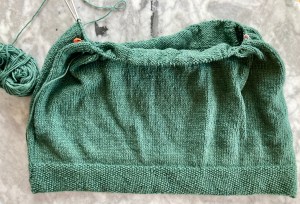
Sadly, this is not the right yarn to make a garment in stocking-stitch. The yarn itself has absolutely no stretch to it due to the high non-wool content and the chain plying. The longer the stocking-stitch tube for the body got (knit in the round with fake “seams”), the more it stretched width-wise. Any attempts to measure, try on, or check the gauge of the garment were futile — it was too slippery and drapy. I frantically tried to save it by decreasing, but it was all to no use, and once the body was pretty much finished (!!), it was clear that it would not work. It was a saggy tent.
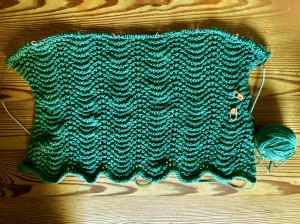
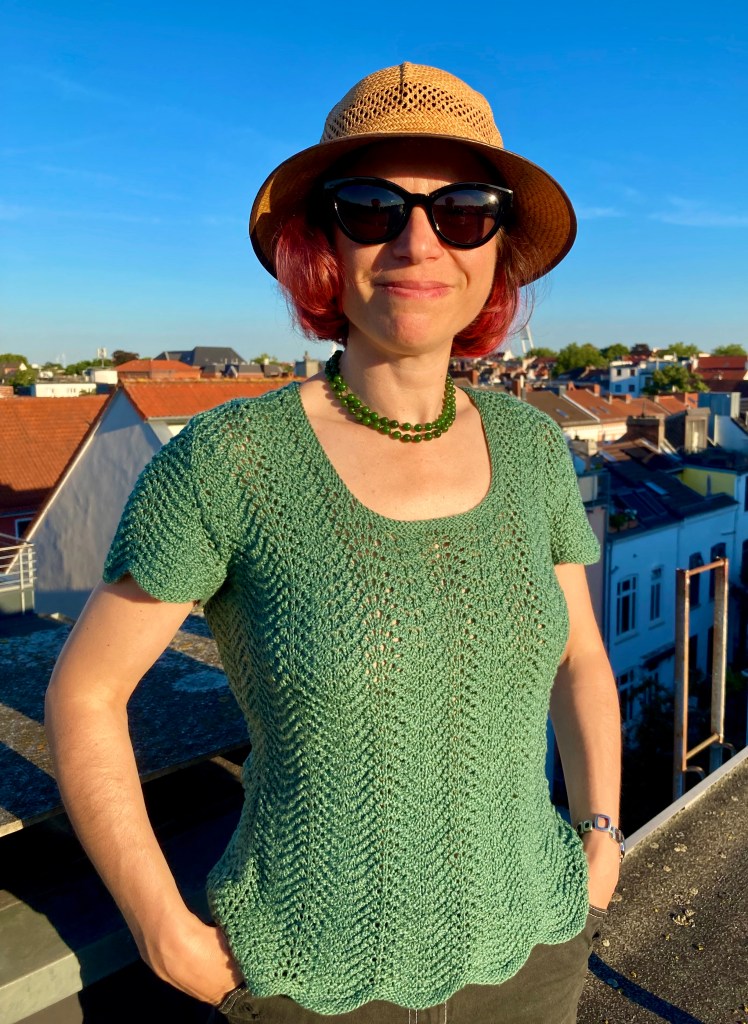
I frogged the entire thing (forgot to take a photo beforehand too, sorry) and thought about how to solve the problem. The easiest way was to choose a stretchy pattern stitch to make up for the lack of stretch in the yarn. A sleeveless top in feather-and-fan (a.k.a. Old Shale, Old Shell) lace would be pretty, stretchy, easy to knit and have a somewhat earlier vintage feel, so that was my choice. I made it flat in pieces with plenty of negative ease and adding some waist shaping to avoid any sagging or floppiness.
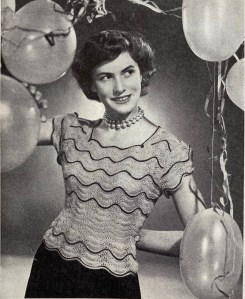
As I knitted, I remembered seeing an older Stitchcraft pattern with a pattern for a similar blouse in it. I didn’t know which issue it was, but a little digging turned it up: December 1949. Of course, the Stitchcraft pattern is for a different weight of wool as well a a different size of person — and even a different stitch count in the pattern repeats — so there was no point in trying to re-create it step for step, but I used the photo and general shape as a guide.
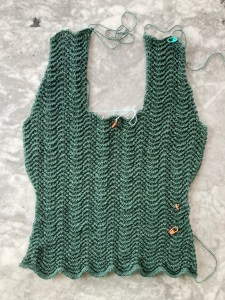
I made the waist shaping by increasing and decreasing, which was not as difficult in the lace pattern as one might think. The neckline is square and edged with just a couple of rounds of garter stitch. I did the sleeve cap shaping by guesswork and it turned out fine.
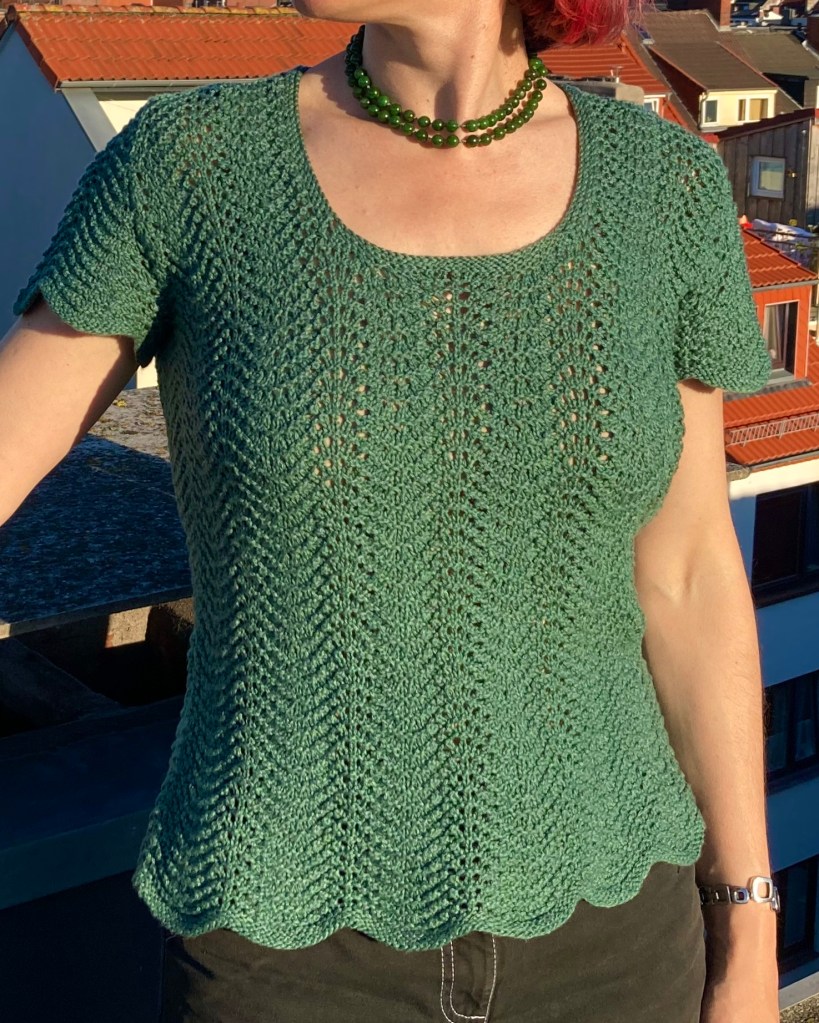
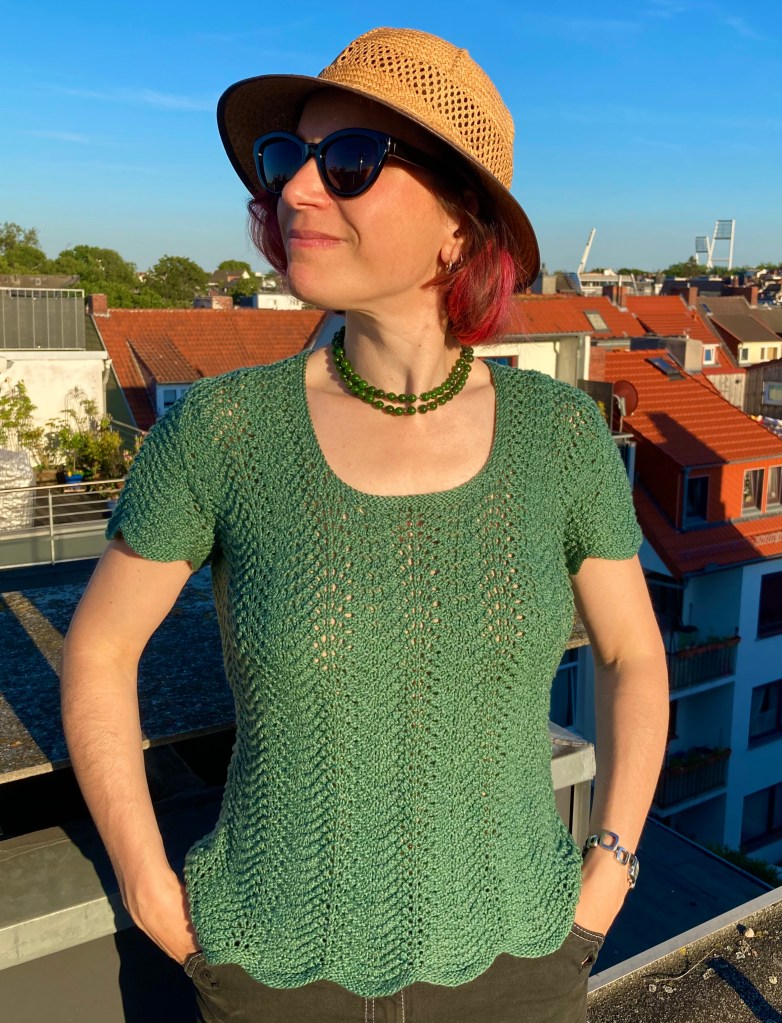
My only complaint is, again, the yarn. The top — made with at least four inches of negative ease everywhere — fit OK after knitting, but stretched during blocking. When I put it on this morning, it still fit fine, if a bit loosely, but by evening, it had sagged and stretched widthwise. As nice as this yarn seems, it is utterly useless for knitting garments, as it refuses to hold any shape and its elasticity only goes in one direction. What a pity, as it has excellent temperature-control properties (it was 32 degrees C today) and feels lovely to the touch! I’m happy with the finished result, though, and will probably wear it a lot.


 This month’s project was a little bit different than usual. Instead of making something from the April 1961 issue, which didn’t have any projects that really spoke to me, I decided to finally make something I’ve been dreaming of ever since I made
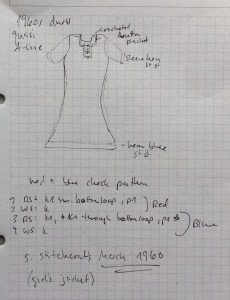
 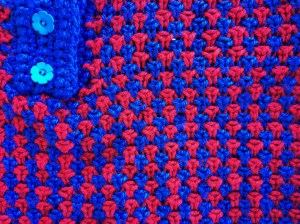 I chose a typical basic construction with front, back and sleeves all made flat and separately from the bottom up and sewn together, and made a stockinette-stitch hem with the blue yarn. The dress shape is a modified A-line: flared at the hem and narrowed to the top waist, then increased slightly at the bust. I used another knit dress as a pattern, but had to deviate from it as the stitch pattern made the fabric behave differently. The sleeves are short, simple and set-in. The front piece is essentially the same as the back, but divided in half after the armhole cast-offs and rounded a bit at the neck. The button band is plain crochet.
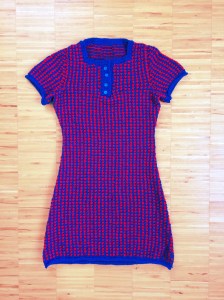 After it was all done, I realised that I liked the roll of the blue stockinette stitch hems, so I decided to just leave them as is. That means the bottom hem is a little bit narrow in the blue part where it should flare out. I may or may not fix that in time, depending on my laziness levels.

 The Stitchcraft Sixties