June 1963: Overview

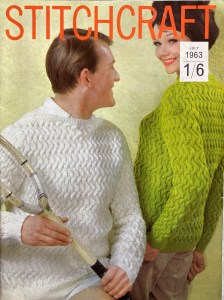
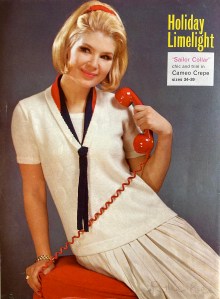
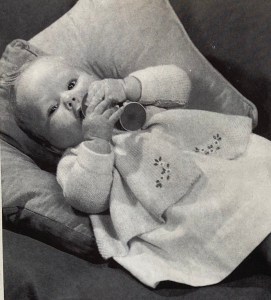
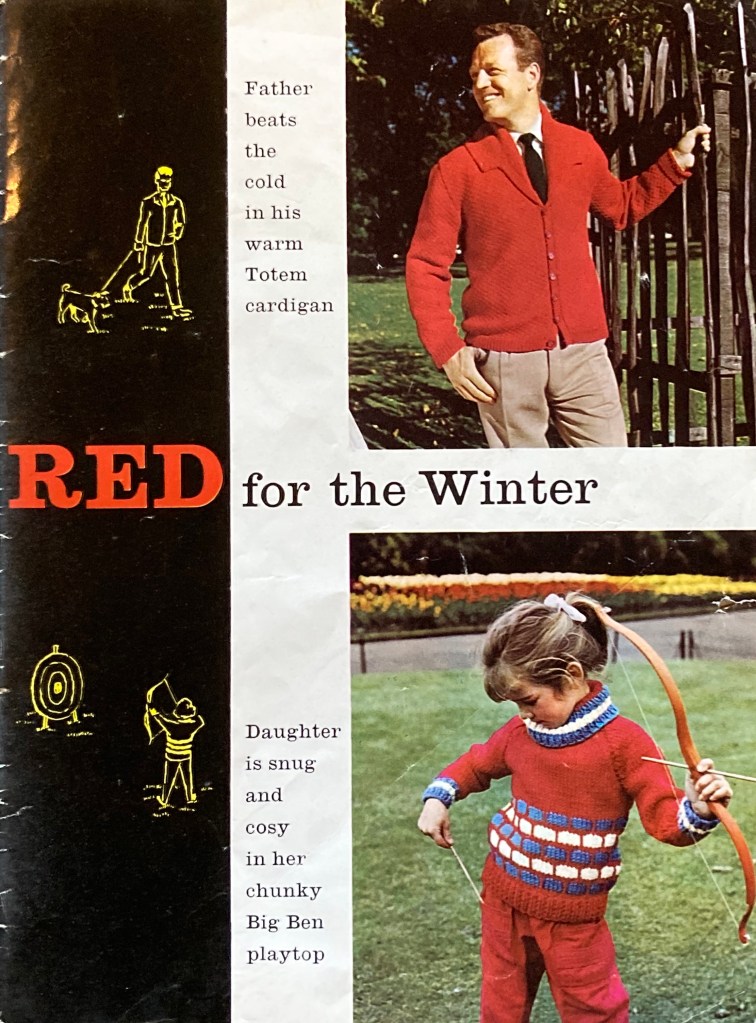
Cover photo from Stitchcraft magazine, June 1963

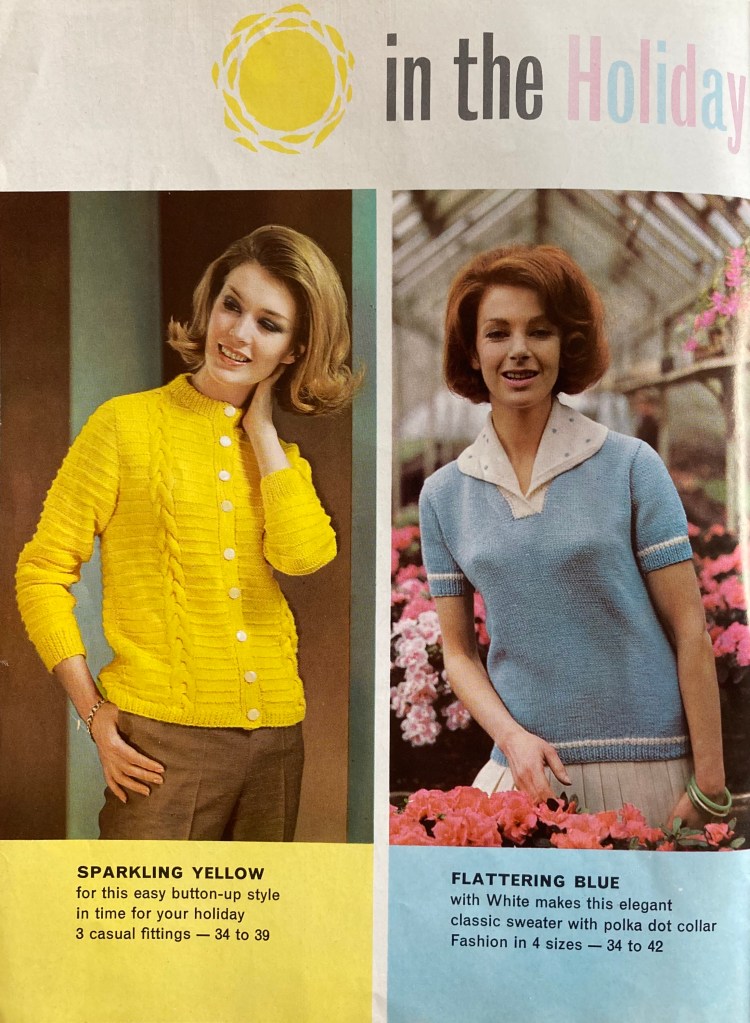
“Light & Airy” is the theme of the June 1963 issue, with short-sleeved 4-ply knits as well as bulky items made in fluffy, lighter wool/synthetic blends. June is also the beginning of the holiday season, “where the emphasis to-day is so much on the active side and casual look — sailing, rambling and of course, so much travelling” (Patience Horne, “Editress”). Accordingly, many of the projects are easy, quick and/or small, to be finished before the travelling starts or suitable for working from your deck-chair.

In her introduction to this issue, Editress Horne also has a “special word for older readers”:

Remember that top models all come in the young age groups, but many of our designs, though often photographed on young models, are very suitable for older women, and often, a sweater with a long line, can be shortened without difficulty, for the more mature figure.

Graphic of a dandelion with the words "Light & Airy"

The 1940s and 1950s issues of Stitchcraft did have older models from time to time, usually modelling the designs intended for those “mature figures”. The 1960s issues often have plus-size designs and models, but they are indeed all on the younger side. I assume this had to do with the target demographic slowly moving from young working women and older matrons after the war, to young(ish) mothers of future Baby Boomers in the later 1950s and 1960s.

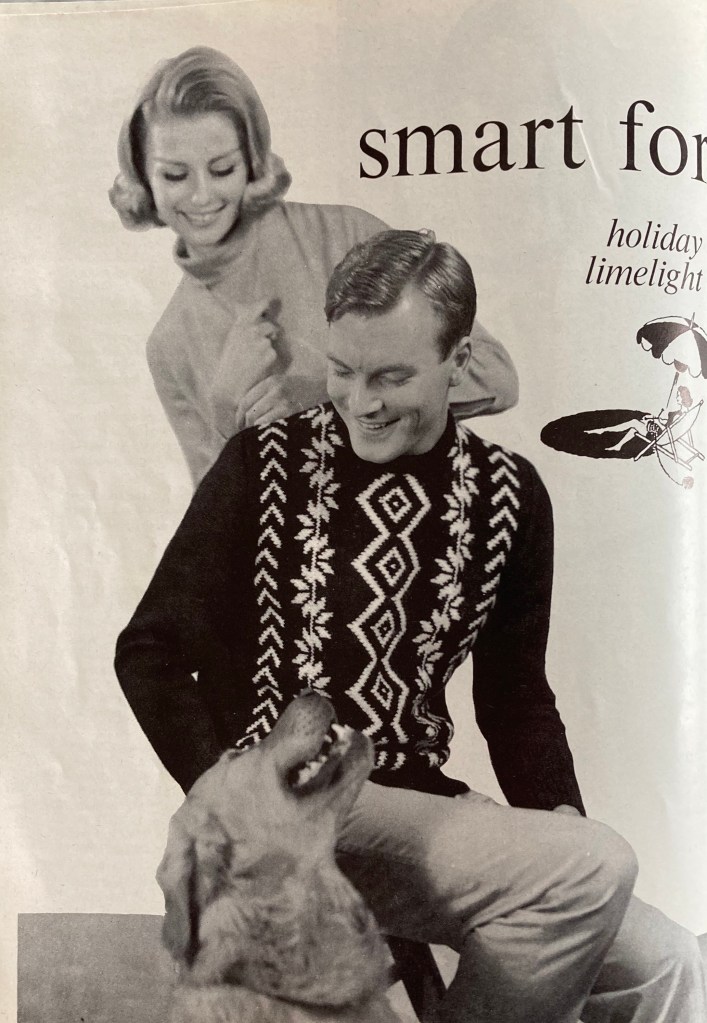
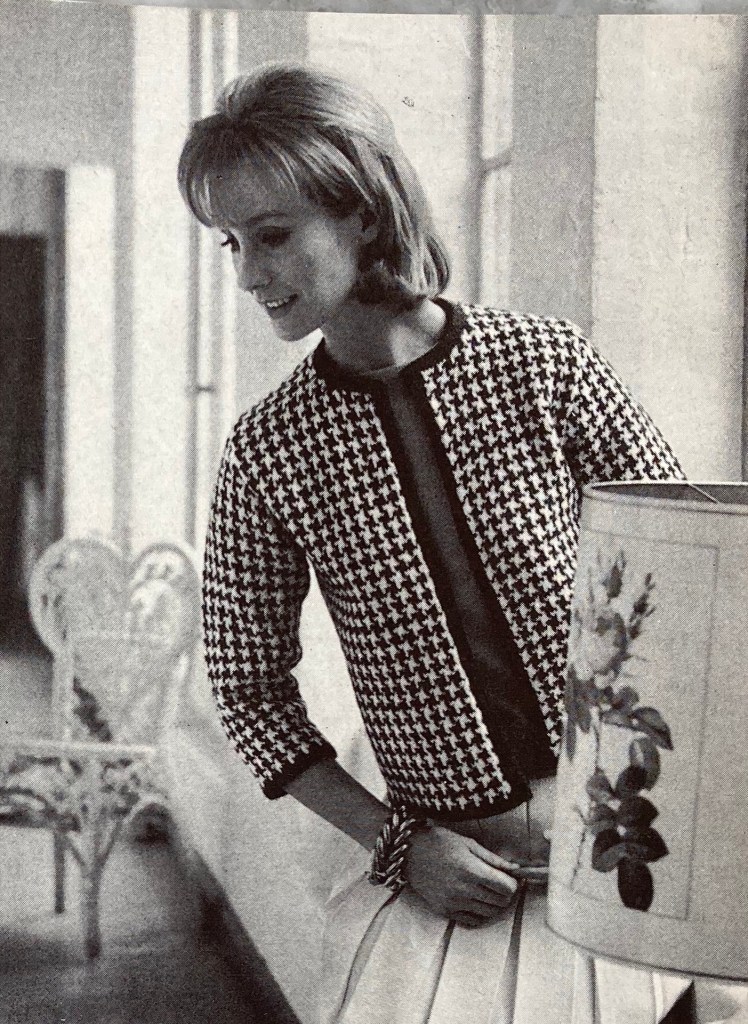
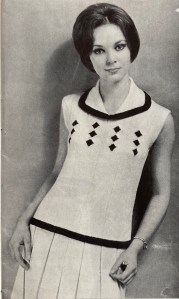
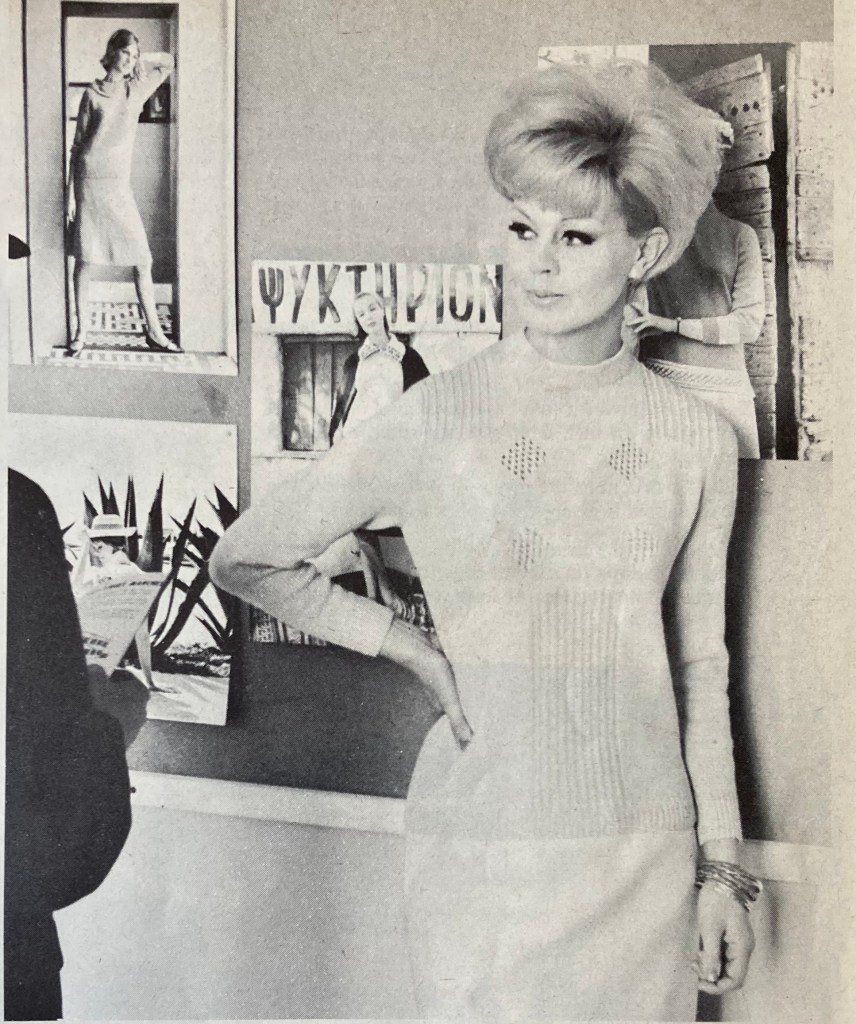
Anyway, on to the designs! The happy holidaying couple can make matching cardigan jackets in lightweight-but-bulky “Ariel” yarn when they play tennis or go “strolling and sight-seeing.” Diamond and zig-zag patterns make a showing in stranded colourwork patterns (the cover blouse), textured stitch patterns (the panelled 4-ply jumper and short-sleeved cardigan blouse) or Swiss darning (the colourblock “playtime sweater” worn by our young drummer.) The same Swiss darning (a.k.a. duplicate stitch) embroidery is used for tiny accents on a casual, collared cardigan.

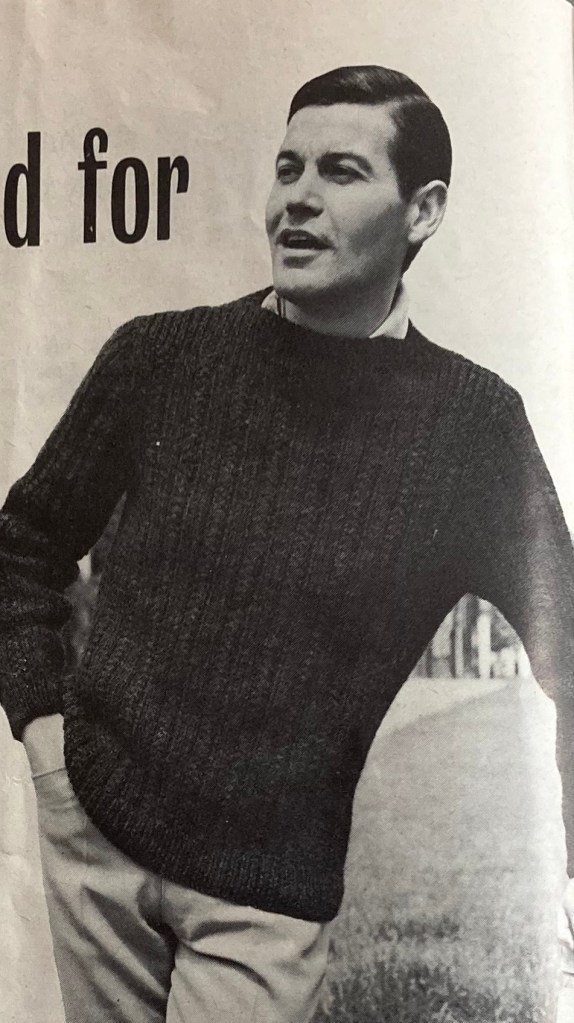
The youngest of the family get a cute “matinee coat” and/or jacket decorated with regular embroidery, or a sun-suit with matching short-sleeved cover-up. Embroidery is definitely a trend! Collars and neckline finishings can be subtle, non-existent or big and bold, as seen on the woman’s cardigan and this men’s casual, tweedy shawl-collar number.

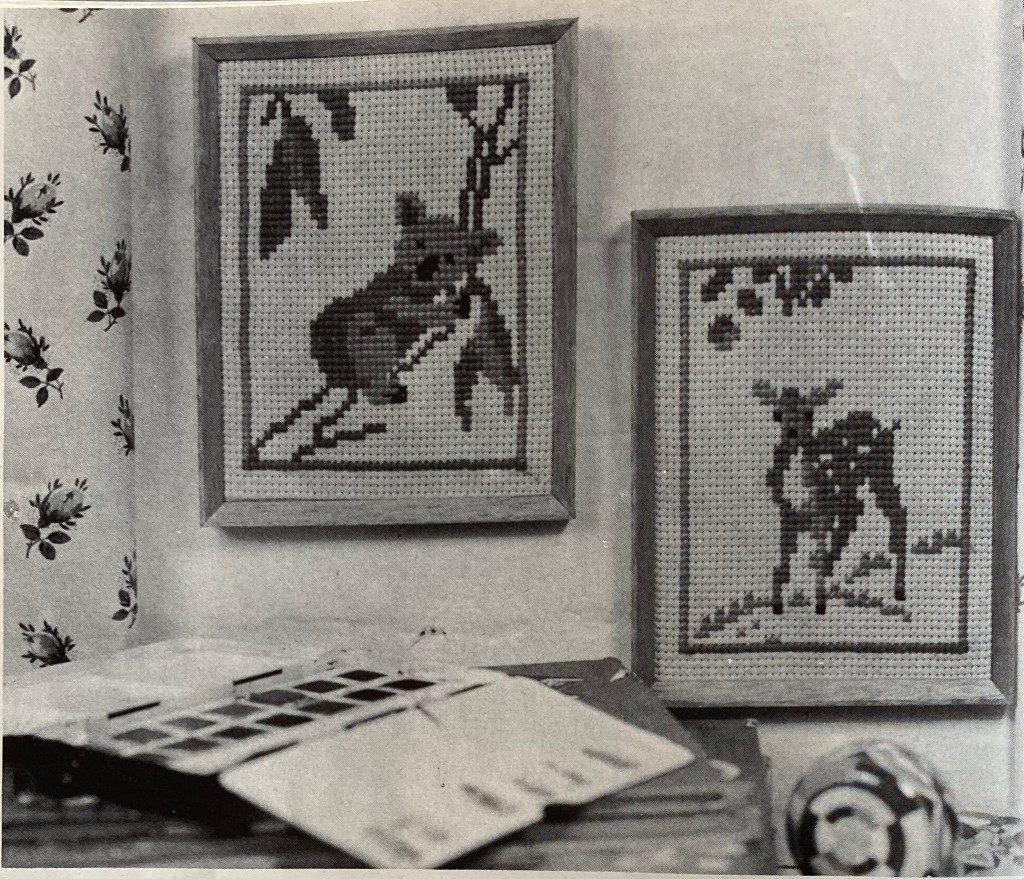
The homeware projects are all fairly simple and versatile, one design being suitable for different types of project, but some are too large to want to take along on holiday. There’s a tablecloth and/or chairback with cutwork ivy design, a rose motif apron and/or cushion, and a Victorian-inspired cushion and/or stool seat in tapestry and/or cross-stitch. Pick your combination!

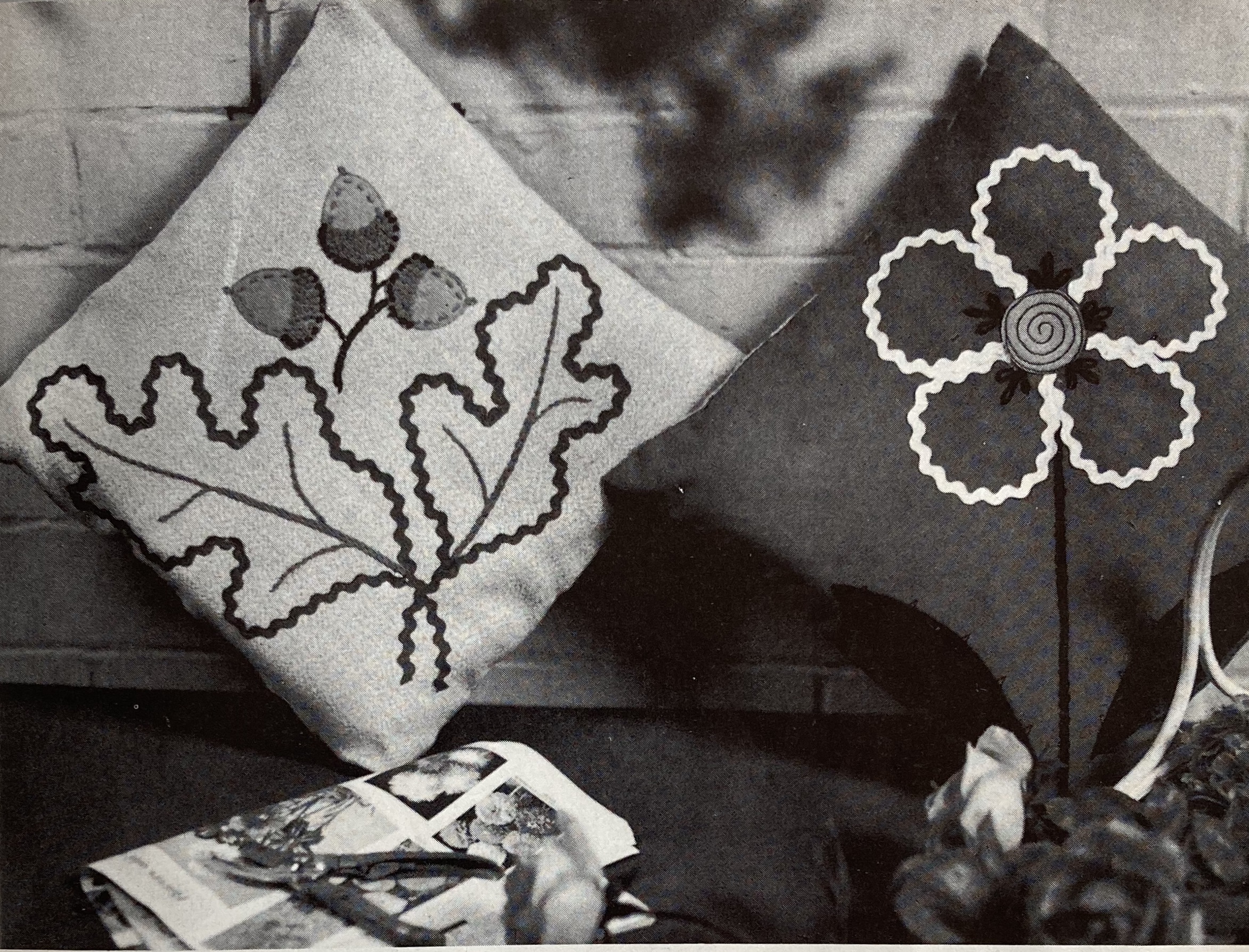
The outdoor cushions with sea motifs are a good summer-themed project, or you can preserve your holiday memories in a needlepoint picture of Lynmouth. There’s also a cross-stitch rug for a larger, at-home project.

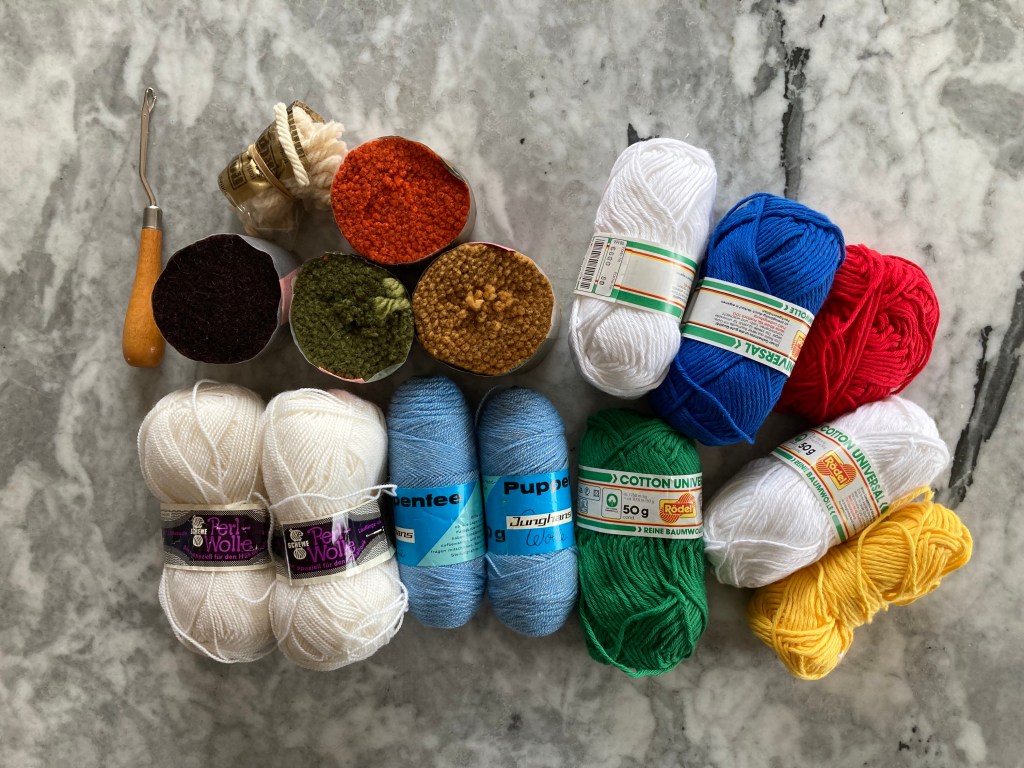
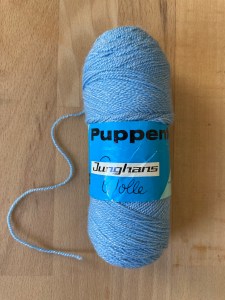
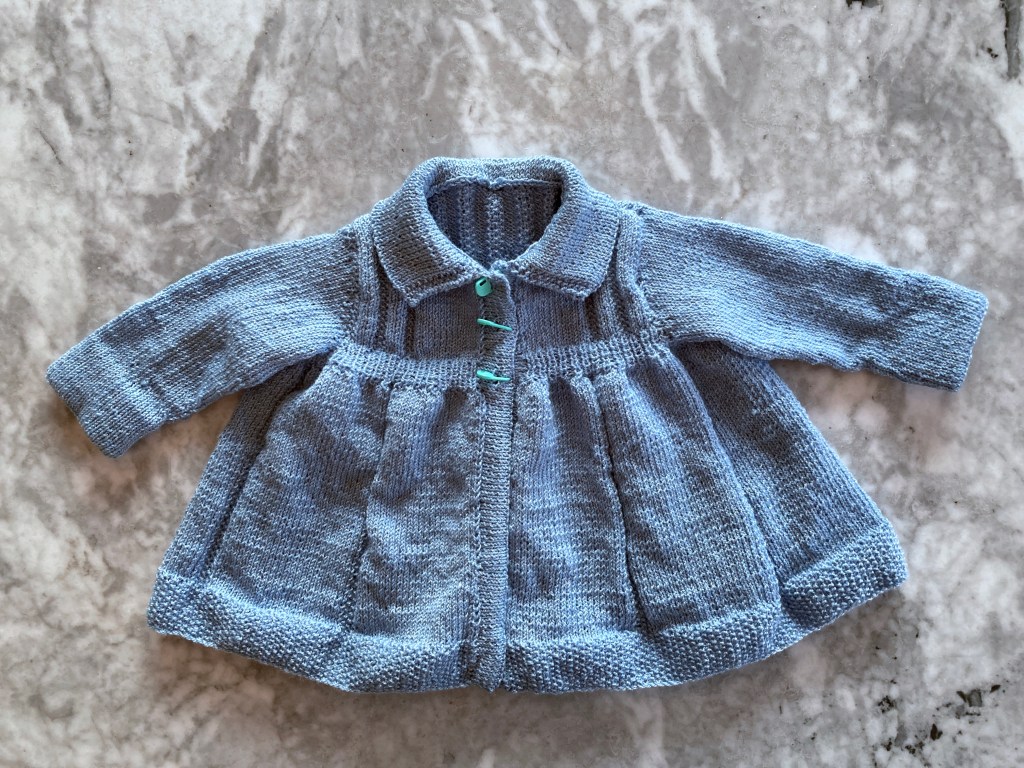
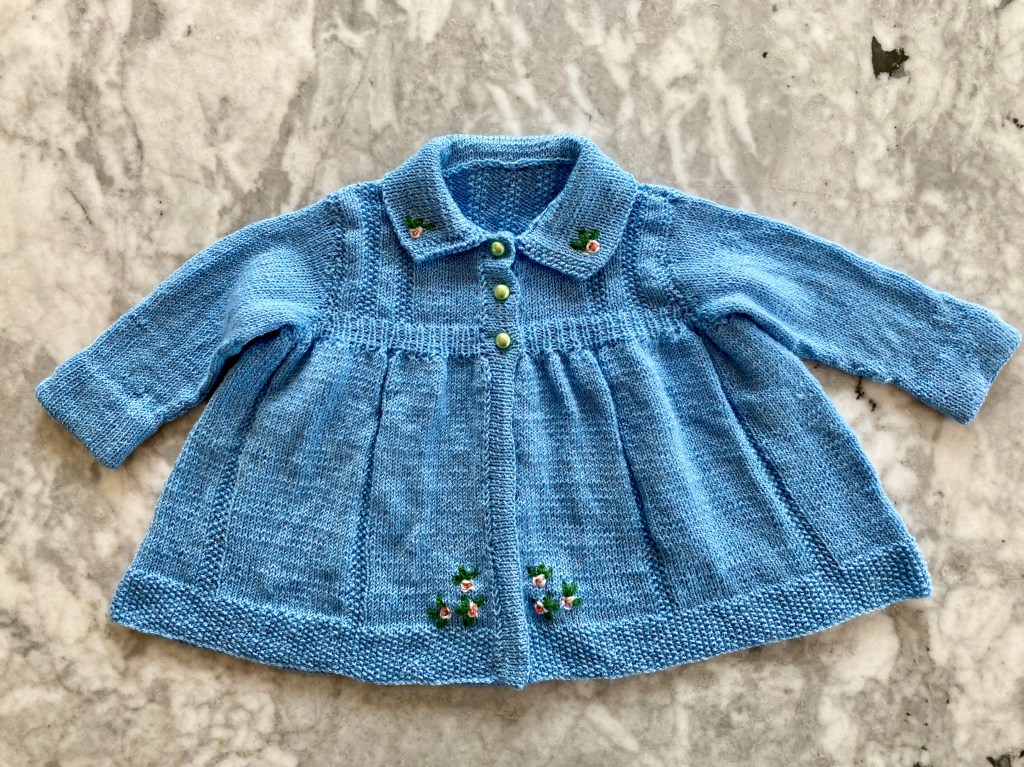
With so many interesting ideas to choose from, I’m sure nobody’s holiday will be too relaxing, ha ha. I am undecided about what project to make. I am so far behind and have so many unfinished projects! At the same time, there are too many projects from this issue that I would like to make. I could genuinely use a new cardigan and the embroidered one with the big collar is just my style… but where will I find the time to make another full-size adult garment? The same goes for the short-sleeved cardigan blouse and the panelled diamond-stitch jumper. The baby coat or cardigan would be practical for using up stash and might actually be done quickly enough, so that might be the best choice. Stay tuned!

May 1963: Viennese

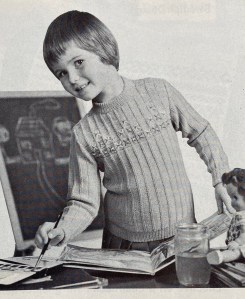
Photo from Stitchcraft magazine, May 1963

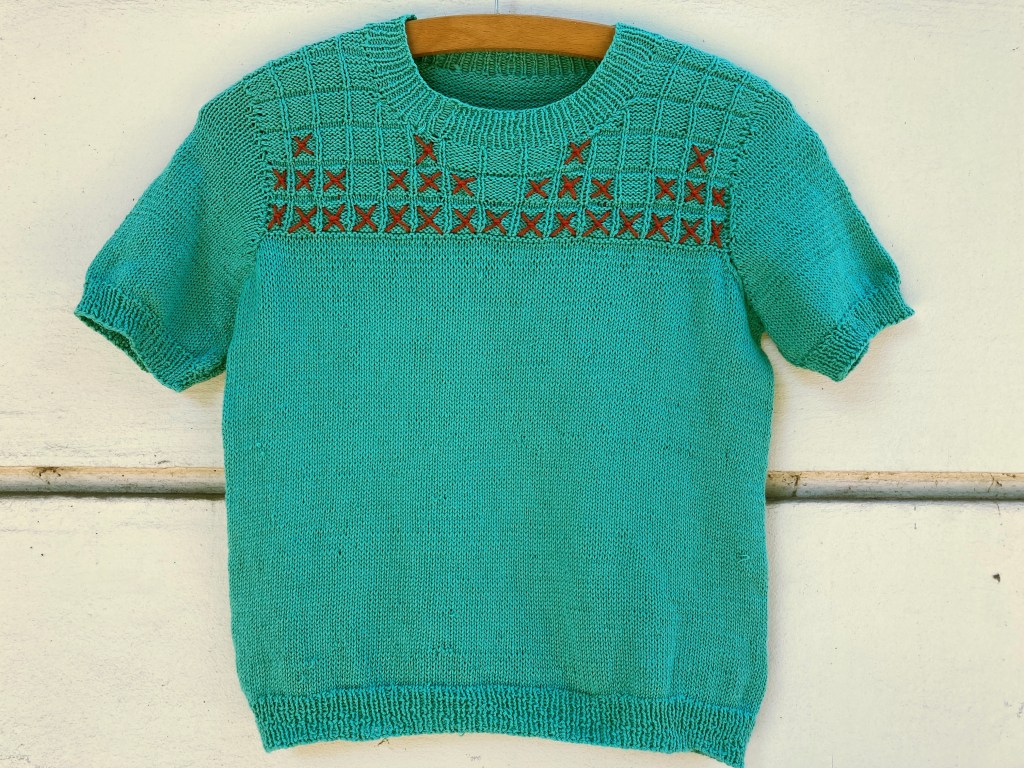
My May project was this jumper “from a Viennese design” for a young relative whose birthday was in May. Spoiler: unfortunately, the jumper was not ready in time for the birthday. May went by so quickly and I feel like I hardly made progress on any of my multiple unfinished projects. Let’s hope the kid doesn’t have a growth spurt before I finally get this done.

The jumper is written in a narrow reverse-rib pattern and the interesting stitch design on the yoke is embroidered on later. The recipient of this project was not opposed to the embroidery but very adamant about wanting the garment to have a “smooth texture”, i.e. stocking stitch. I aim to please, so stocking stitch it was, except for the yoke.

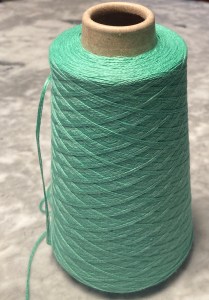
Cone of green cotton yarn

Said relative lives in a warm climate and is somewhat sensitive to wool at the moment, so I decided to make it in fine cotton. The tension according to pattern is 14 1/2 stitches in 2 inches, which is as much as I can ever accomplish even with very fine yarn and tiny needles, so finding cotton that works for me at that gauge is difficult — most cotton yarns are mercerised DK weight for making dishcloths, accessories, amigurumi, etc. Of course, there is always fine crochet cotton, but that is usually also mercerised (I don’t like the shininess of mercerised cotton.) Mayflower DK makes a lovely fine-gauge cotton that is hard to find in stores and can’t be ordered from their (Danish-language only) website. Yarn stores were still closed in my area in any case when I started this project and I didn’t have anything appropriate in stash. Luckily, the wonderful Hamburger Wollfabrik spinning mill company (as in, the German city of Hamburg, not the food! I realise that name sounds funny when you read it in English…), which was closed for a long time after a burst pipe caused severe water damage a while ago, is back up and running online with a brand new website and a beautiful selection of yarns of different fibres and weights. I chose the super-combed cotton in a 4-ply weight and a spearmint green colour.

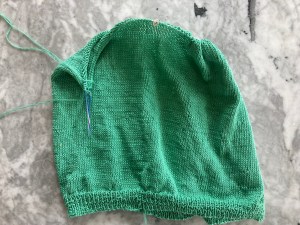
Work in progress -- knitted children's jumper

I was happy with the weight and colour of the yarn but unpleasantly surprised to see that it was completely un-plied! Nowhere on the website does it say what kind of twist they use, nor is there an option to select what you want, but the yarn in the sample colour photos definitely looks plied and my yarn was utterly not. It is really, really hard to work with un-plied cotton, as it just splits everywhere. I guess I should call them next time I order from them and ask about that.

It is also very lightweight, which is lovely. I used that to my advantage by making the finished garment short-sleeved, making it a fancy knitted T-shirt and not a jumper. but the finished garment will be more like a T-shirt than a jumper. I tried a couple of combinations for the yoke and decided to make it in the pattern stitch with the large contrasting cross-stitch “pyramid” design in bright orange.

It blocked out kind of uneven, as I didn’t have a clothes dryer. Strange to have a knitted item that should not be dried flat! But I think this cotton needs the evening-out and fluffing-up effect of a dryer.

The combination of boring stocking stitch and un-plied yarn made progress very slow, but I got it finished by the middle of June, at least. Let’s hope the kid likes it!

May 1963: Overview

Cover image from Stitchcraft magazine, May 1963

“Fashion At Ease” is the motto of the May 1963 Stitchcraft issue, in keeping with both the beginning summer holiday season and the fashion for casual, loose-fitting, bulky-knit garments. Our cover model is getting the picnic chairs ready in a cardigan made of “Ariel” yarn — a synthetic mix that is bulky but somewhat lighter-weight. (It’s always described as “light-as-a-feather”, “feather-weight” and so on, but the cardigan uses 9 or 10 2-ounce balls, which comes out to 18/20 ounces or about 510/560 grams in the basket rib and slip stitch patterns. That may be a bit lighter than the same type of garment made in bulky-weight 100% wool, but “feather-light” it is not.)

Other than that, the women’s garments are very similar: hip-length, made in plain, smooth stocking-stitch with V-necks and somewhat smaller pointy collars. The pullover of the green suit on the inside cover photo looks so similar to the raglan-sleeved “overpull” a few pages later that I had to check twice to make sure they were two separate designs and not a continuation of one pattern on a different page with another picture. The 4-ply collared pullover is also very plain (it’s even listed in the contents as “Plain 4-ply sweater”) and has gentle raglan sleeves and a similar small collar. There will be no rocking of the boats on this holiday, fashion-wise!

There’s a little more design interest in the “Italian” boatneck pullover with a stranded colour stripe across the hips as well as the wonderful “Tyrolean” cardigan and “Viennese” pullover for children. The use of different countries’ names in the descriptions seems more a way to highlight the international “continental” travel-holiday theme than any reference to traditional or regional design elements. I certainly don’t associate the stranded knitting pattern with Italy, as it’s much closer to traditional Fair Isle/Scandinavian/Baltic/northern stranded patterns. The children’s garments claim to be a “design from the Tyrol” and “From a Viennese design”, but you can make of that what you will. They are definitely cute and probably fun to wear.

Rounding out the knitting designs are a “crunchy” men’s pullover in Bracken Tweed, one of the early multicolour/tweed-flecked wools that became popular with hand-knitters in the early- and mid-1960s as well as an interesting hybrid cardigan featuring “waistcoat styling” — the front and back are knitted in plain stocking-stitch and the sleeves in a slip-and-drop textured stitch pattern in a lighter shade of the same DK wool. I’m not sure the look is successful, but it is an interesting idea.

There are plenty of ideas for housewares, starting with a coordinated latch-hook rug and cross-stitched floor mat for a child’s room. The puppy and kitten are quite cute and (not coincidentally) look a lot like the characters in some of the children’s comics printed in the back pages of the magazine. They are intended to be easy enough to make that “your young daughter” (only the daughter, of course) could help make it and thus expand or improve her handwork techniques. For any children who don’t have to help with housework (guess that would mean the boys eh), our happy housewife can make a felt bag for dirty linen shaped like a postbox, complete with a helpful embroidered sign with collection times (9:30 am Monday to Friday, no collection on Saturday or Sunday). There’s also a purely decorative Punch and Judy wall hanging and a nightdress case shaped like a tortoise. (I will never understand the point of a nightdress case, but I love the tortoise design.)

Going with the international/holiday theme, there are embroidery patterns for a chairback and tablecloth inspired by traditional Scandinavian designs, a flowery cross-stitch cushion and table mats and a very interesting tapestry pattern for a stool top. There’s also a knitted doily and — unusual for Stitchcraft — a design for a patchwork cushion with some very well-written basic instructions for doing patchwork with the paper piecing method. For the unacquainted: you cut out pieces of paper from a cardboard template in the desired shape, stitch the pieces of fabric around these paper pieces, then stitch the fabric pieces together at the side to make the larger patches. The paper pieces are then removed and re-used. The advantage of this method is that you don’t have to cut the fabric to perfectly accurate shapes or pay too much attention to the seam allowance.

That wraps it up for May 1963! The ads are the usual and in the alternative-nursery-rhyme children’s comic, Miss Muffet has shrunk to insect size and made friends with the very nice spider, who helps her get out of a flower and gives her a ride on a floating leaf. That sounds like fun.

My project for this month will be the “Viennese” child’s pullover, made for a young relative. Said child was adamant about wanting a “smooth texture” on the pullover and not the reverse-stocking-stitch-rib in the pattern. I am also making it for summer wear in a very lightweight cotton, so the finished result may or may not look anything like the original design, but we’ll see. Also: many WIPs to finish. Happy Spring!

April 1963: Overview

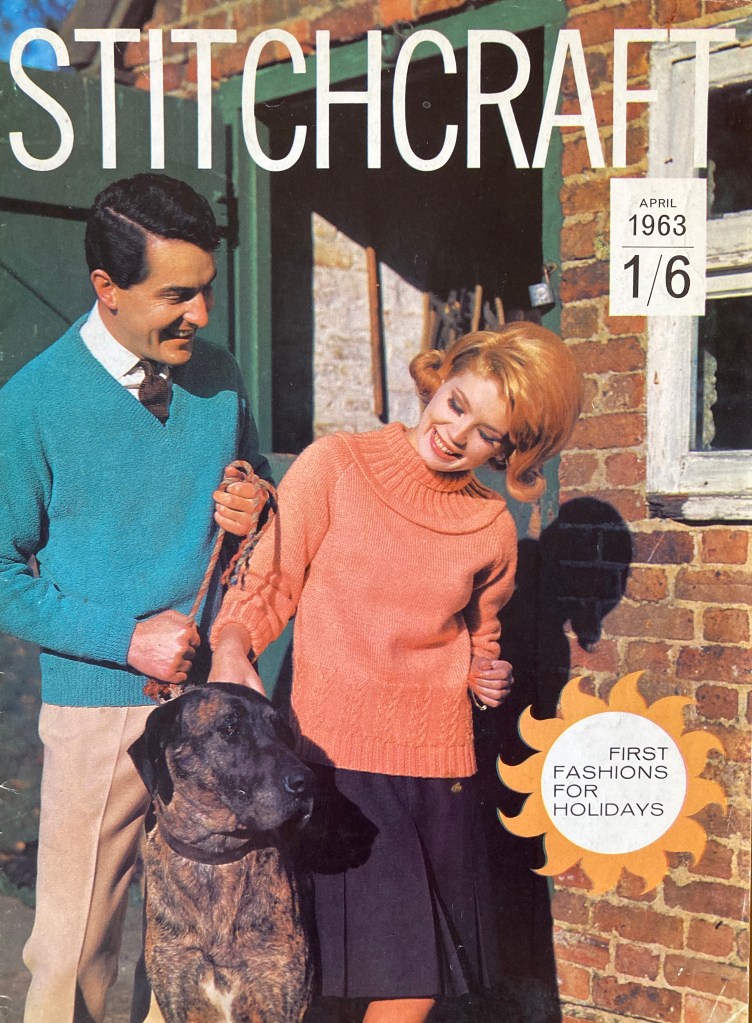
Cover photo, Stitchcraft magazine, April 1963

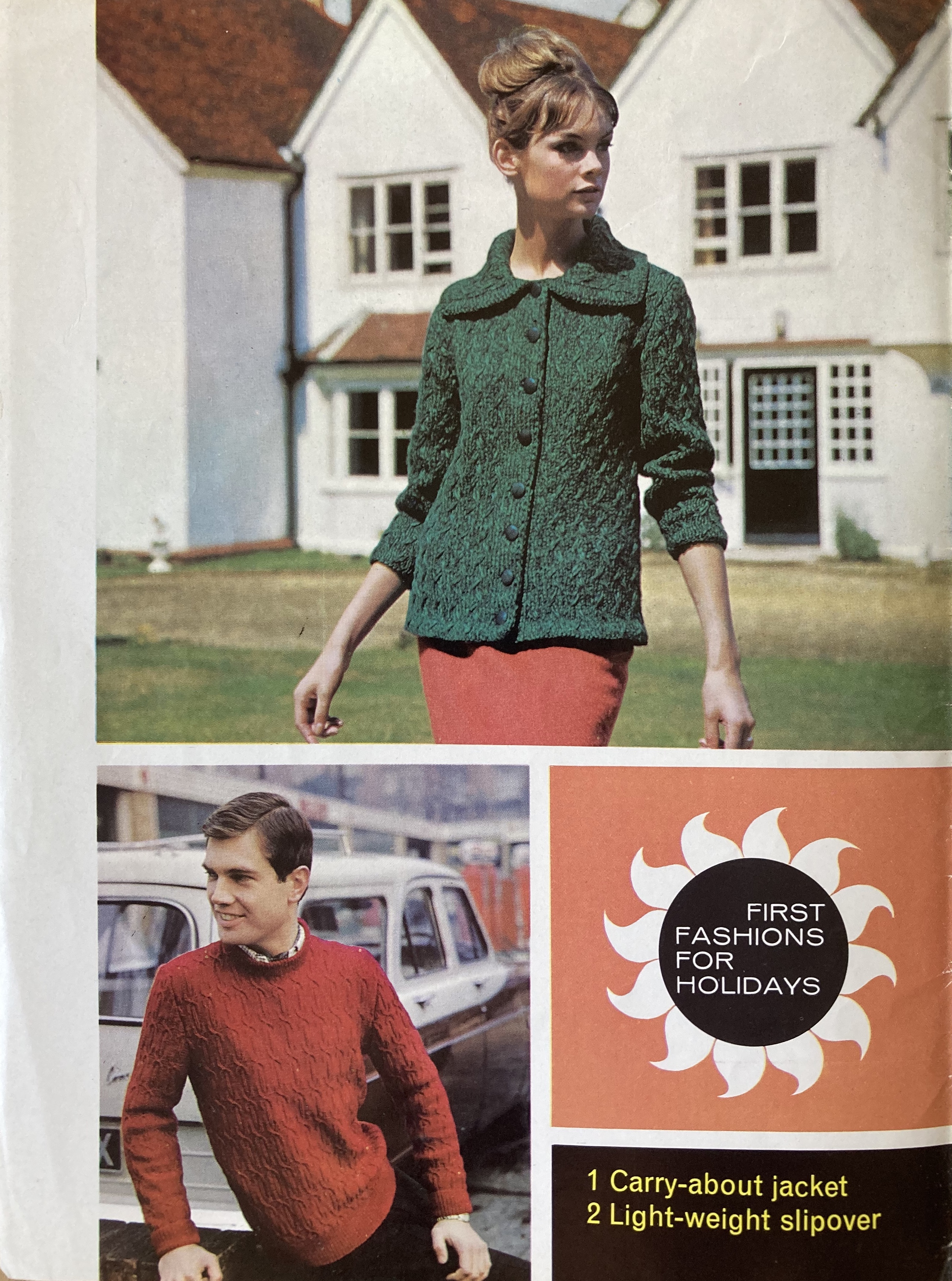
First Fashions for Holidays! It’s almost always some sort of holiday season in these vintage knitting magazines — in this case, Easter and preparations for the summer. As the British climate makes it possible to wear thick, warm wool sweaters pretty much any month of the year, “holiday / not holiday” is less a matter of warmth or season and more about casual, easy-care garments to wear while “strolling” and sight-seeing, or projects that are small and simple enough that you can work on them while lounging in your deck chair. Or, as the facing page title puts it, “Sweaters off-duty.”

Thick, collared pullovers and cardigan jackets that can be worn as outerwear make up the bulk (-y) of the garments in the first category, many of them made in Patons Big Ben wool at 3 1/2 stitches to the inch. The tweedy, dark green jacket on the inner front cover is a good example of this and features an intriguing wavy slip-stitch pattern. The “Italian” tunic on the inner back cover has a knitted-in border pattern made of beads. DK-weight wool is used for the women’s round-yoke sweater on the front cover. Hip-length is the fashion for everyone, wide collars continue to be in style and decorative borders near the hem are the new spring trend.

There are fashions in finer-weight wool as well, “for elegant summer wear”. The red men’s pullover on the inside cover and the women’s Nylox pullover both have interesting stitch patterns, though I feel like the placement of the inserts on the women’s pullover could go horribly wrong a little too easily. If your man finds cables too exciting, you can knit him a plain V-neck pullover in bouclet wool and match it to your own fluffy mohair-mix jacket, made in Patons’ best-ever-named wool, “Fuzzy-Wuzzy.” Colours are strong and bright, including some very springlike salmon and turquoise.

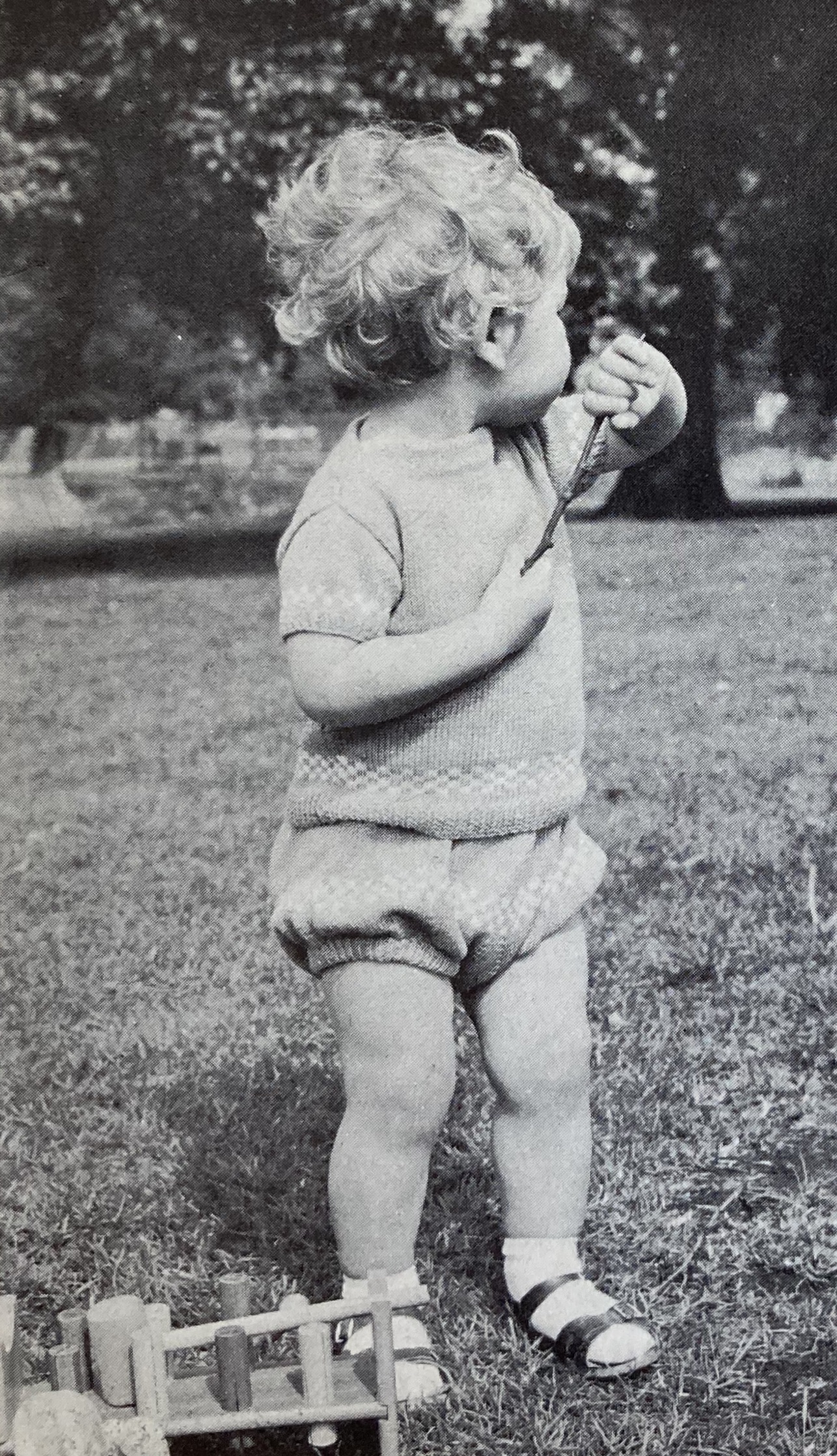
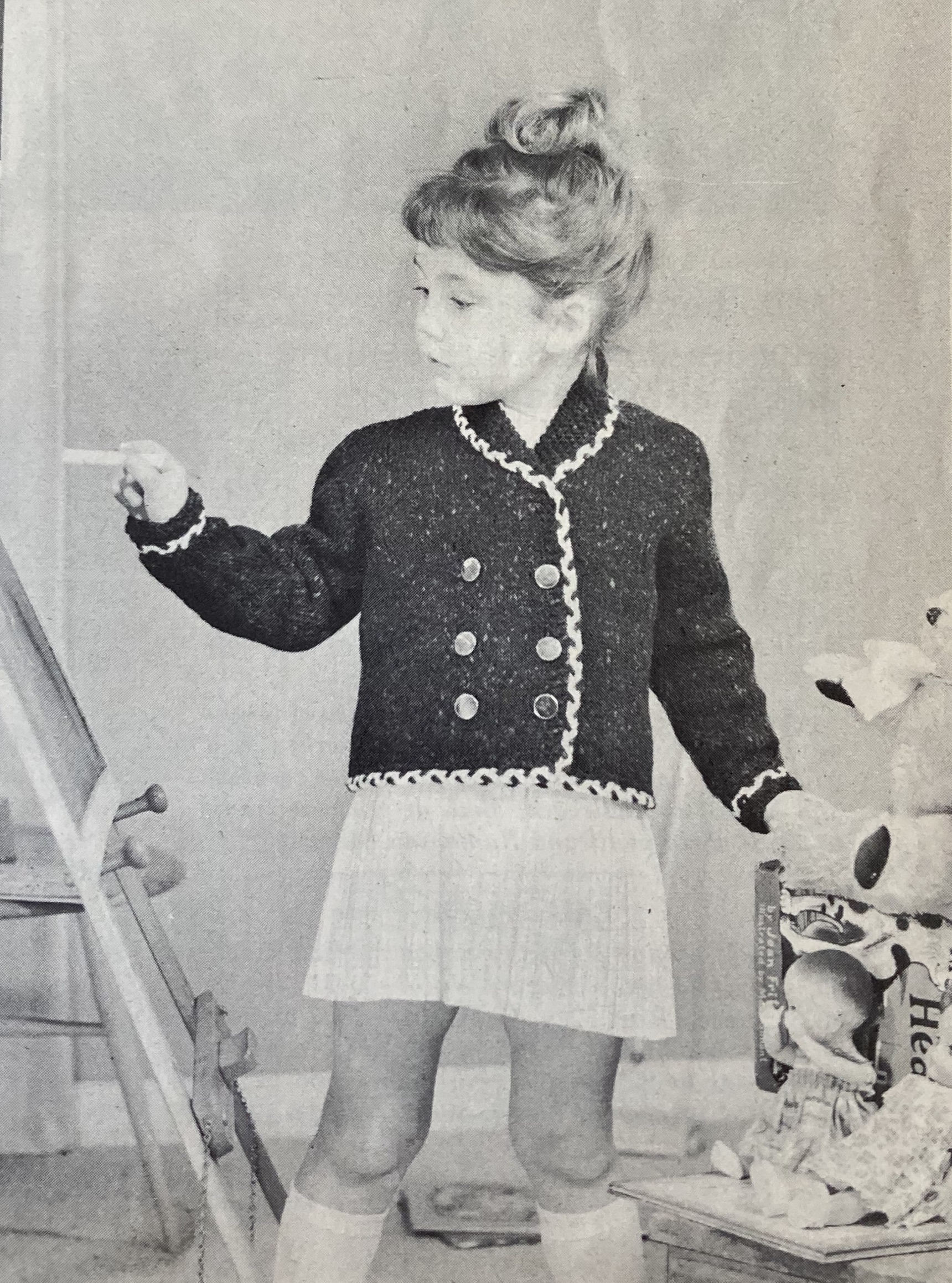
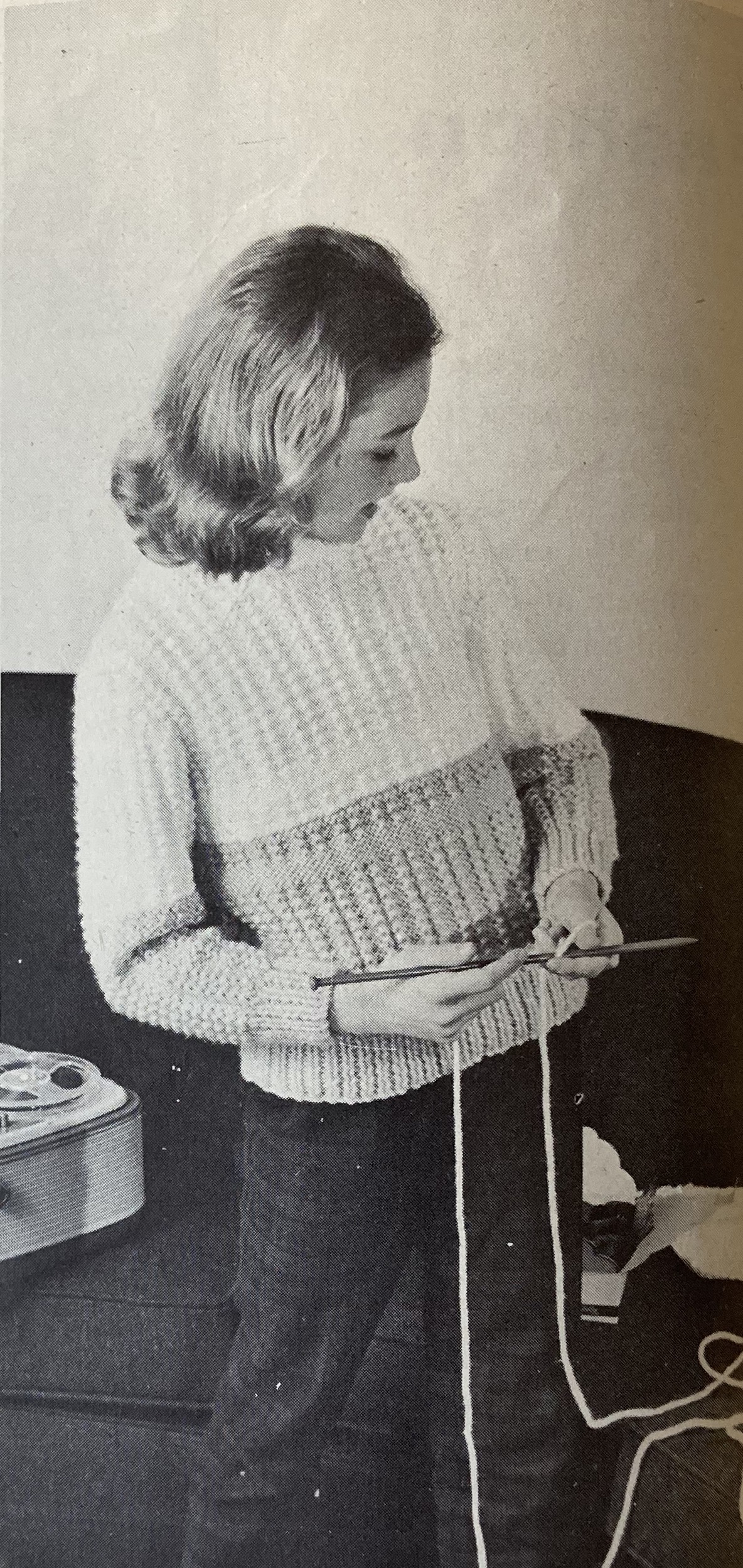
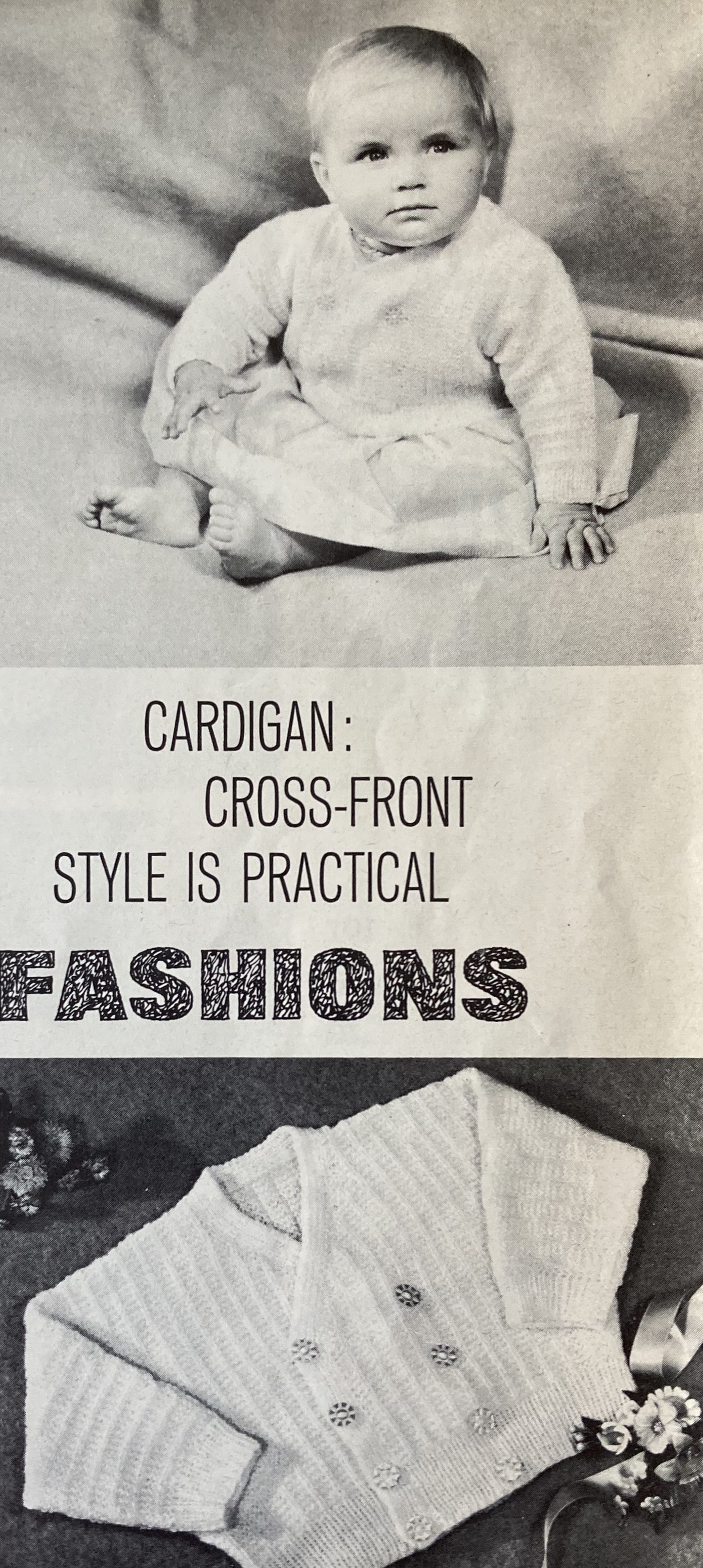
Fashions for the younger members of the family cover all age groups: a dolman cross-front cardigan for the baby, a play-set for the toddler, a “miniature Paris blazer” for small and medium-sized children (she’s painting a picture on a easel, so you know it’s Parisian!) and a quick-to-make “chunky” pullover for “sub-teens” which is easy enough for a bigger girl to make for herself. (I don’t think the young model in the photo actually knows how to knit, though.)

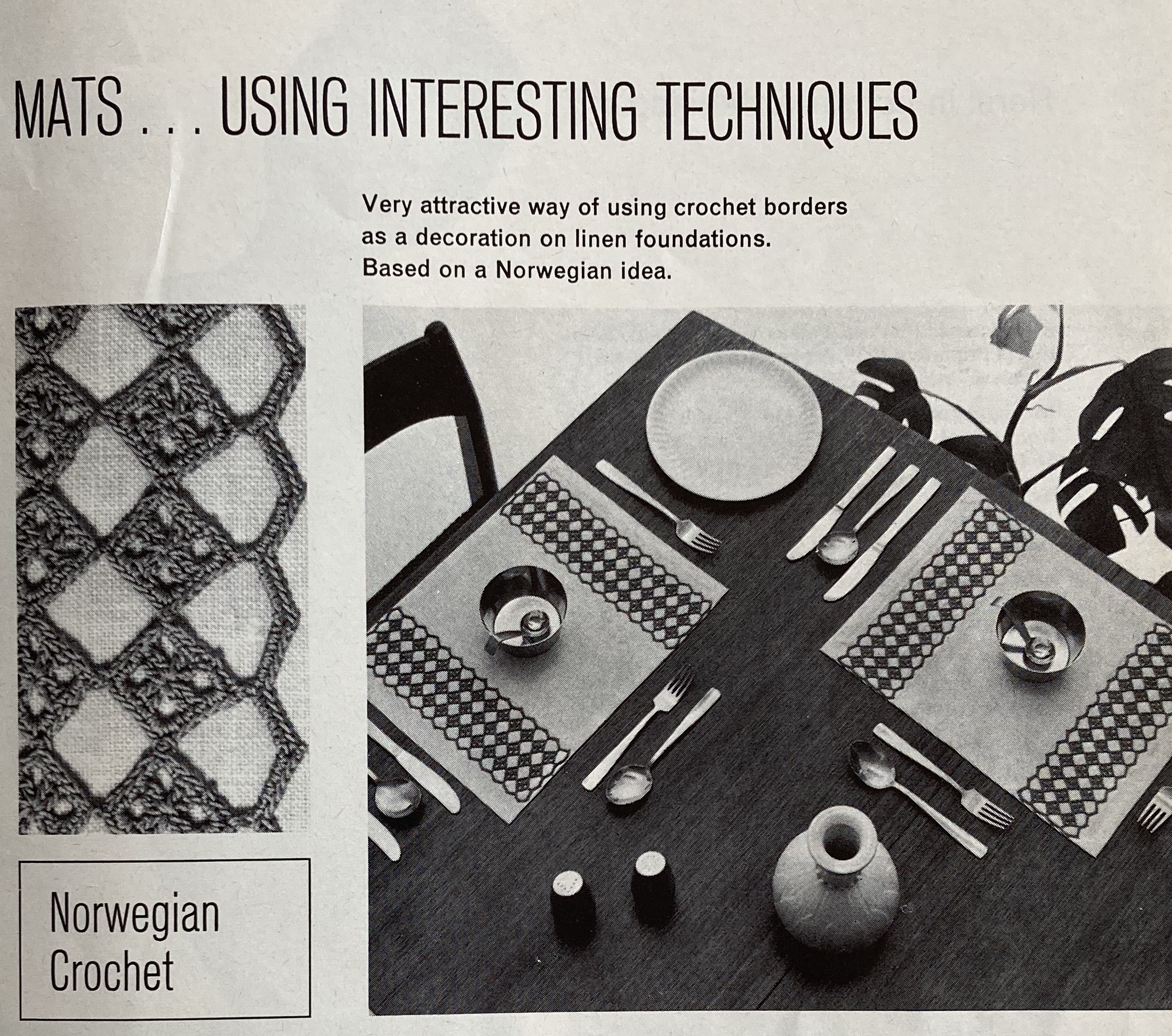
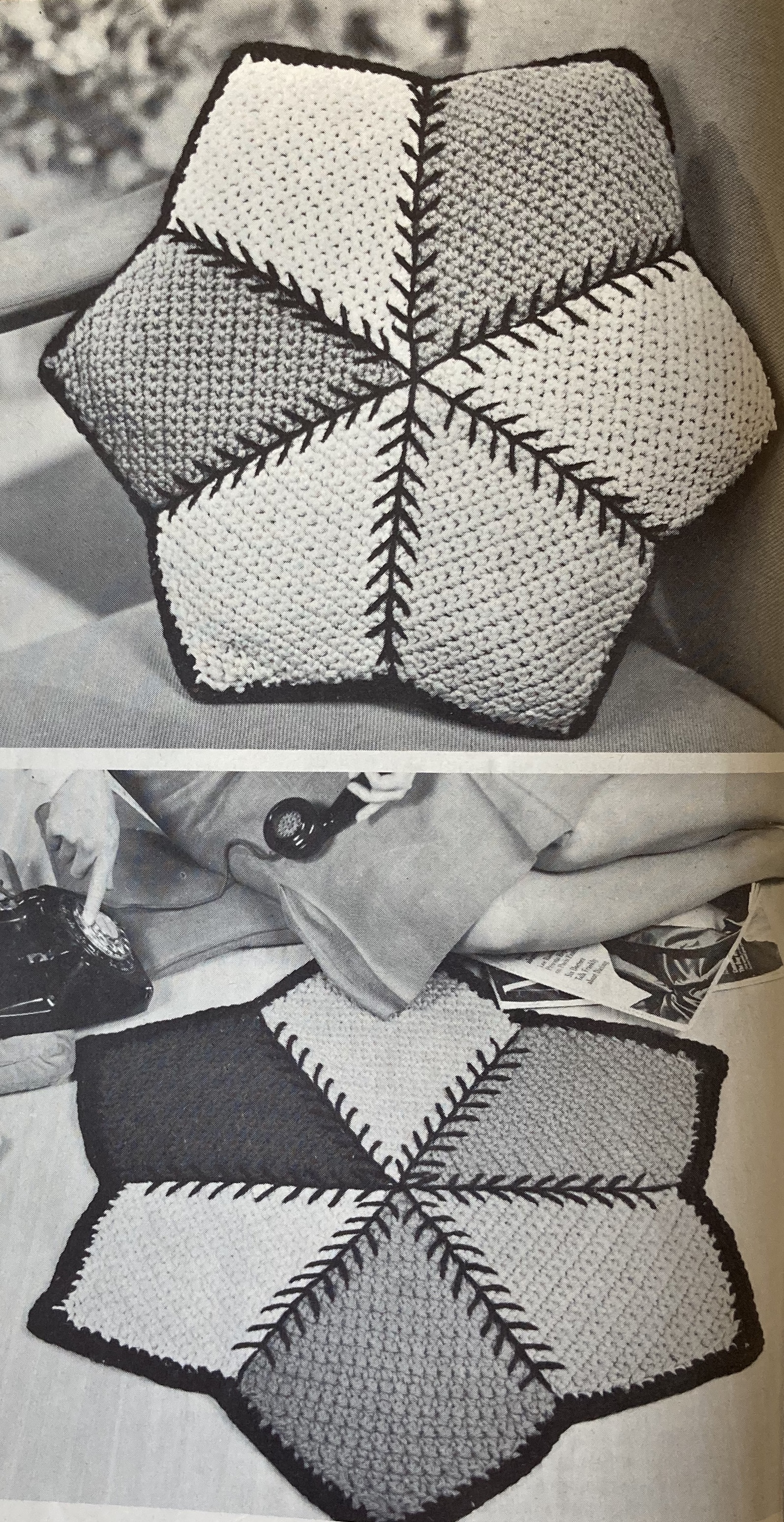
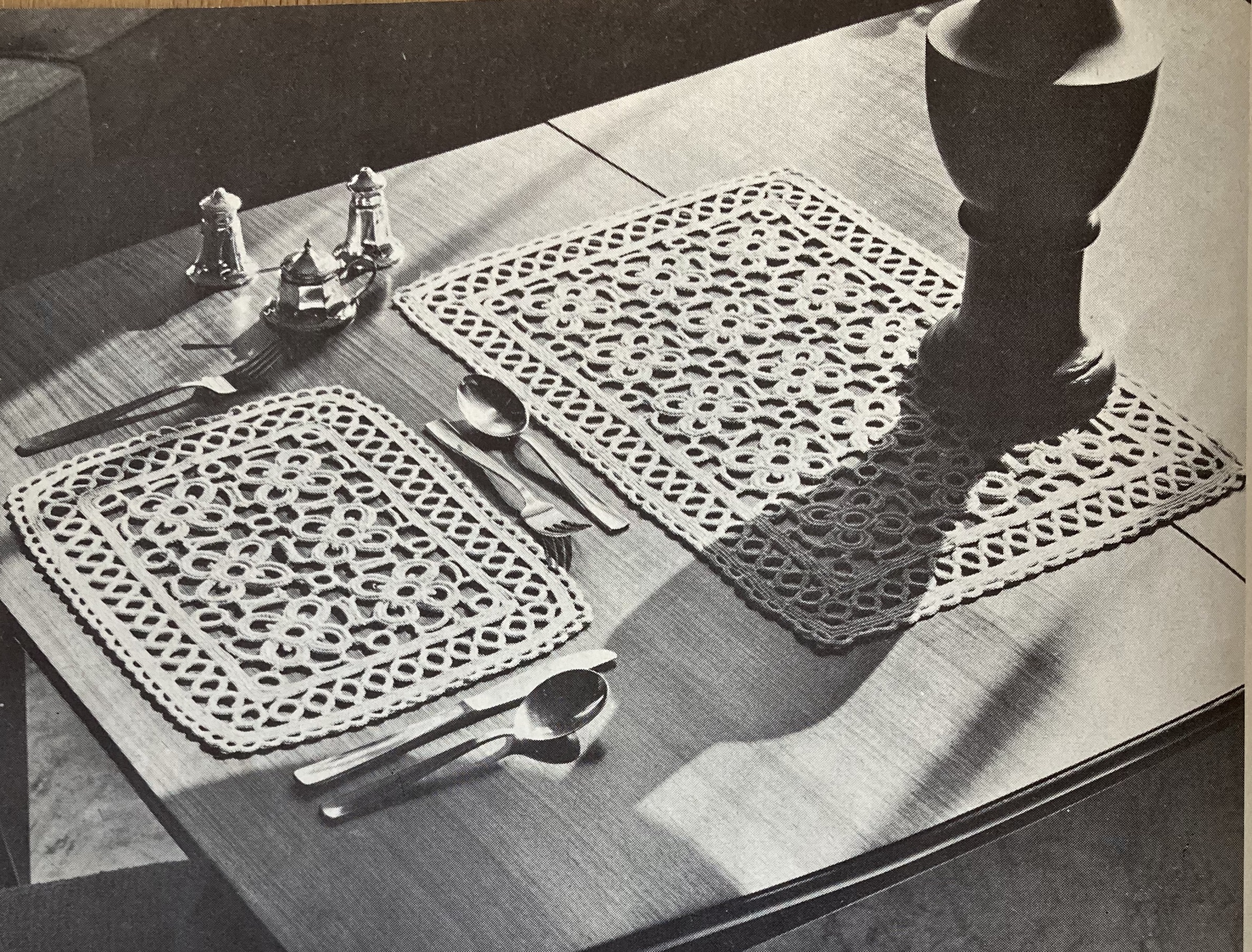
With all that pre-holiday prep knitting, the homewares in this issue are generally unspectacular. There are chair sets in counted cross-stitch, a crocheted cushion and rug for the older daughter to make for her room, and a tapestry tea-cosy. The two more interesting projects are these corded crochet mats and a wonderful cushion with a design of butterflies, made in blackwork embroidery. Unfortunately I’m not good enough at crocheting to really understand how the “corded” look on the mats is achieved, besides the fact that there are a lot of picots and crocheting many stitches into a ring. Oh, and there are embroidered table mats, too, featuring line drawings of famous parks. I like the white-on-black effect — something different.

That’s it for this issue! The ads are pretty normal and in the comic, Miss Muffet continues her adventures, getting magically shrunk down to the size of an insect in order to go flying with a nice beetle-lady. I’m afraid the dragonfly might have dropped her into the lake, though! Oh no! How will it end?

My project for this month will be the embroidered butterfly cushion. Happy Spring!

March 1963: Overview

Cover photo, Stitchcraft magazine, March 1963

Start your engines and give that propeller a whirl! The theme of this month’s issue is “Fashion On The Go” and the photo team really outdid themselves in showcasing adventurous and enjoyable modes of transportation. “With the wonderful opportunities for travel”, writes “editress” Patience Horne, “you need clothes that are easy to wear and will carry you through the day without a lot of care and pressing.”

Travel opportunities definitely took off (pun intended) in the early 1960s. Passenger air travel, though still a luxury, became increasingly possible and affordable with the advent of jet aircraft. Ocean liners, challenged by the rise of air travel, revamped into cruise ships. The Eurail train pass was introduced in 1959. Huge improvements in automobile technology and design made the freedom of the open road more tempting and accessible than ever. Yearly sales of Vespa scooters doubled from 1956 to 1960. Of course there was very little, if any, concern for environmental factors, and the oil crises of the 1970s were far in the future. There was no better time to travel.

On the race-car track, our cover model is wearing her “Paris Flash Slimline Blazer” — a simple but elegant jacket in moss stitch — and her colleague is sporting a “Double Quick shirt waister” that promises to be “the perfect travelling dress”. In a lovely juxtaposition of modernity and history, the model in the photo next to her is posed in front of what looks like an old-fashioned, horse-drawn stage coach! Her twin-set is made in finer 4-ply wool and though you can’t see it in the photo, the jumper is made in normal stocking stitch and the cardigan in reversed stocking stitch. In a separate photo, you see her posed in front of a horse box — no doubt one of the horses who pull the coach. Train travel is covered with a beautiful photo of this tweedy green travelling coat. It looks very cosy, but as it is made from 60 ounces (!! 3 3/4 pounds or 1700 grams !!) of extra-bulky, extra-heavy Big Ben wool and unlined, I can only imagine how it will stretch and sag with time and wearing.

The centerfold photo showcases more glamorous nautical and aerial travel opportunities. (I am sorry to say that the photo is blurry in the magazine, not just in my photo.) The “boat-deck sweaters” are both in double knitting weight with plain stocking-stitch and collared-shirt form for him, fun nubbly Rimple wool and a welted front insertion with cute tied collar for her. Collars, in general, remain well in fashion, though they are not quite as large as in the last few seasons. The airplane enthusiasts in the right-hand photos sport a casual, oversized cabled cardigan in bulky Big Ben wool and a striped dolman-sleeve pullover in double knitting weight. The dolman pullover sits weirdly around the neck and looks like it would be awkward to wear.

For those who prefer more leisurely ways to travel, i.e. walking around town, here’s a “stroller sweater” in fluffy Ariel and a sort of diagonal basketweave stitch pattern. Even the children get a travel-themed photo, if only in the studio! While the little sister is very keen to drive her wooden locomotive, big brother is apparently tired of playing conductor (but still blocking the tracks…) They’ve both got wonderful things to wear. The two-tone pleated skirt is knitted sideways and the pleats sewn in with the making-up, and his light-weight pullover has another fun diagonal knit-and-purl pattern.

With all these wonderful things to knit, you would think the homewares would be less interesting, but there are still plenty of projects that are mostly small enough to pack with you on your travels. There are all sorts of cushions to embroider: darned and tufted in very 1960s colours (brown, biscuit, fawn, two shades of orange and two shades of rust), neon-on-black “peasant embroidery” in regular crewel work, and with a matching chair-back in Assisi embroidery — traditional Italian designs where the backgrounds and ornaments are filled in with cross-stitch, but the main motifs are left unworked. The Victorian-inspired tapestry chair seat and stitched bathroom rug are probably too unwieldy to pack, but the fine embroidered initials and baby outfit are easy and portable. Readers could order the pattern for the baby set along with the embroidery transfer.

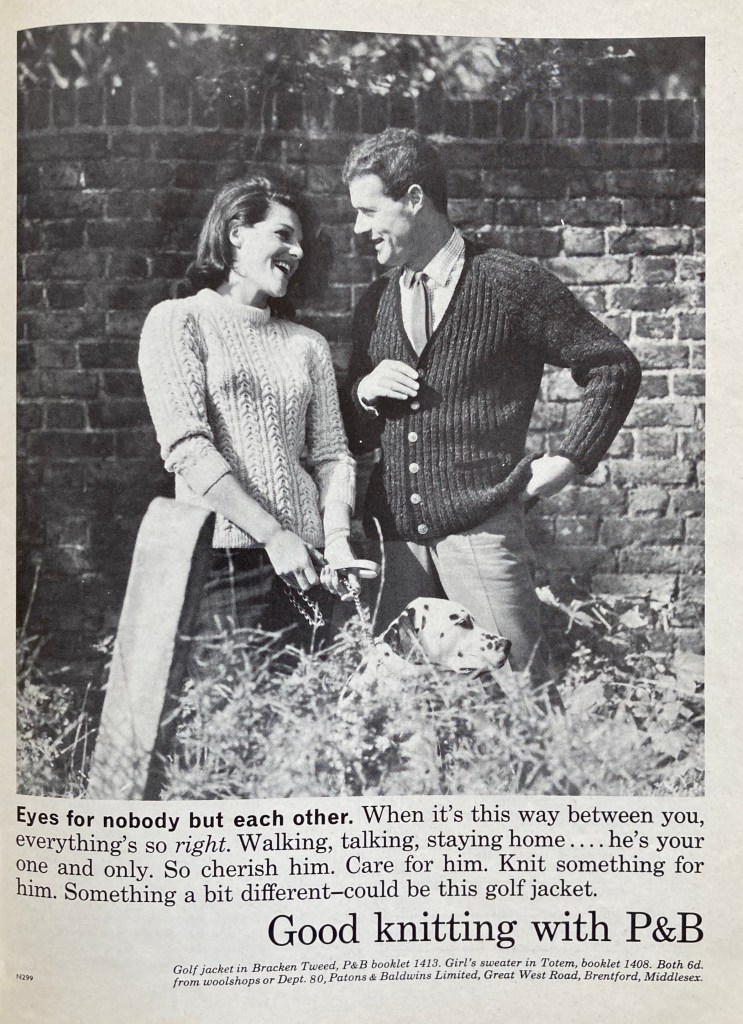
The back pages feature the worst of the Patons & Baldwins “please your man” advertisements, in which a woman can’t even knit herself something for once or look nice in it without all of it being To Please Him. (And then she has to pretend to be interested in whatever boring mansplaining he’s doing with the book he’s showing her.) I can’t help thinking of that scene in Vertigo where James Stewart’s character is trying to get Kim Novak’s character to dye her hair… and she doesn’t want to… and he gets more and more frustrated before blurting out, “It can’t matter to you!” Alfred Hitchcock would have approved of this ad.

The “Children’s Features” continue the alternative telling of the Miss Muffet rhyme story, in which Miss Muffet, leaving the home of the kindly spider-lady, gets captured up by a grumpy beetle, saved by the first spider, and then in turn saves a captured beetle who promises her a present. What could it be? We will find out in next month’s issue!

None of the larger projects are begging me to make them and I’m still working through the WIP pile, so I’m going to use some of that fine embroidery on the vintage handkerchiefs I inherited from my grandmother.

February 1963: Overview

This month’s issue brings us on another lovely photographic journey, with “elegant settings for Spring Fashions” in and around historic Bath. Looking closer at the photos, it’s clear that some thought went into the combinations of outfit and setting. The “city” photos show models in elegant knitted dresses or suit-like separates, whilst the “country” photos highlight the continuing trend for casual, bulky garments that could theoretically be worn as outer garments instead of a coat in spring weather.

Our cover model starts off the “city” look with a fur-trimmed dress in “Ariel“, a bulky, yet airy triple-knit wool-acrylic blend. It’s advertised as being “light as thistledown” — the whole dress uses 14, 15 or 16 2-ounce balls of wool, which comes out to about 550 grams for the middle size stitch pattern. I’m guessing the diagonal slip-stitch herringbone pattern and ribbed, belted waistline also help control any sagging. The same yarn and same stitch pattern are used for a jumper-and-skirt set in a dramatic yellow and black colour combination. Look at that model’s hair! I always thought people with red hair should never wear yellow, but she looks amazing. Bobbles on ties feature in both the belt of the dress and the neckline of the jumper and skirts are still just below the knee.

Rounding out the elegant city category is a classic skirt set whose rectangular, unshaped form is made more elegant by the use of vertical lines on the cardigan. Bouclet wool in fingering weight keeps the effect sleek and light.

For casual country wear (a.k.a. “The Open-Air Look”), bulky Big Ben wool is still the first choice, or double knitting weight for a somewhat lighter look. Both the men’s and women’s garments are hip-length and unshaped and cardigans are mean to be worn buttoned. At the same time, interesting stitch patterns, textured wools and details like collars and pockets break up some of the shapeless-bulky effect. Even toddlers can join in on the fashion fun with a knitted bathrobe, which showcases many of the current trends (bulky “Ariel”, textured stitch pattern, contrasting collar and cuffs, and a bobble-tie belt) as well as being practical for chilly homes in February.

The homewares in this issue are mostly standard fare — cutwork or embroidered aprons, tablecloths or finger plates — but a couple of more creative ideas stand out. There’s a pile rug with a “modern” design, which I would have loved to have seen in a colour photo (note guitar and records — I did mention that the Beatles’ first album came out in 1963, right?) and a crocheted and cross-stitched bathmat that makes it very clear in which room it belongs (though I can’t help laughing when I think that this issue was also photographed in Bath — they could have had some absurd fun with the bath mat in front of the cathedral or one of the historic buildings…)

For tapestry fans, there’s a prayer book cover and kneeler “for an Easter bride” with a flowery cross pattern, using gold Lurex thread together with wool (kneeler) or silk (book cover) for extra luxury. There’s also a footstool made up of old tins! They used old stockings to pad and wrap the clean, empty tins, then stitched fabric around the bottom and sides and covered the top with the tapestry. The result is a bit oddly shaped, but I suppose it would be quite useful — strong and able to support a bit of weight, but still quite light — and I admire the creativity and the upcycling spirit.

There are no particularly interesting advertisements in this issue, but in the ongoing children’s retelling-of-fairy-tales comic series, Miss Muffet gets invited to the spider’s home, where Mrs. Spider shows her the lace curtains and tablecloths she has spun out of spider-silk and teaches her to spin a shawl. How sweet! Next month: “The Beetle-lady.” (Also: Note the ruler printed on the side of the page, to make it easy to check your knitting tension. It’s in every issue.)

I’m a bit at a loss as to what project to make from this issue. I love the “Ariel” cover dress and yellow sweater, but I have serious stash overflow and so, so many unfinished projects, so I would prefer to make something small and easy. I am not religious and would probably not have much use for a prayer-book cover or kneeling pad even if I were, but the flower tapestry design without the cross would be pretty and versatile, and I still have tapestry wool and backing fabric from an earlier failed project. The question is, what should I make out of it? A clutch purse? Coin purse? Cell phone cosy?? I already have so many little zippered bags for knitting tools and sewing notions and general “stuff”. I’ll give it some thought and let you know. If it’s easy enough, I will hopefully be able to finish up and edit some of the WIPs lying dormant in the blog. Stay tuned!

January 1963: Junior Fashion

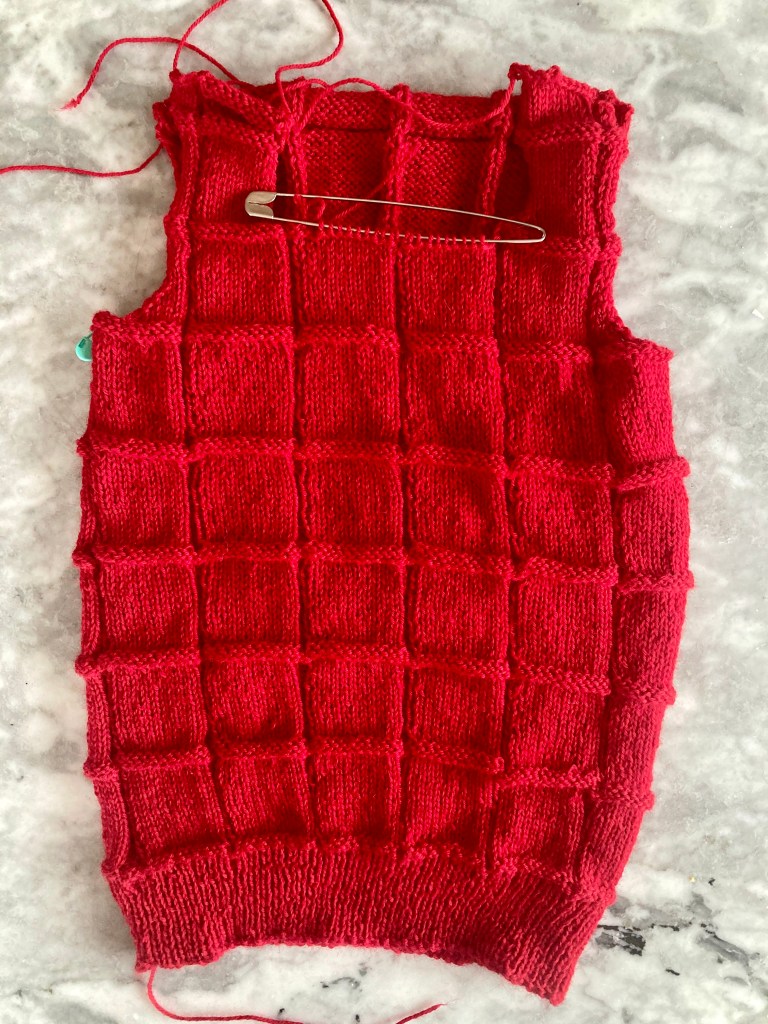
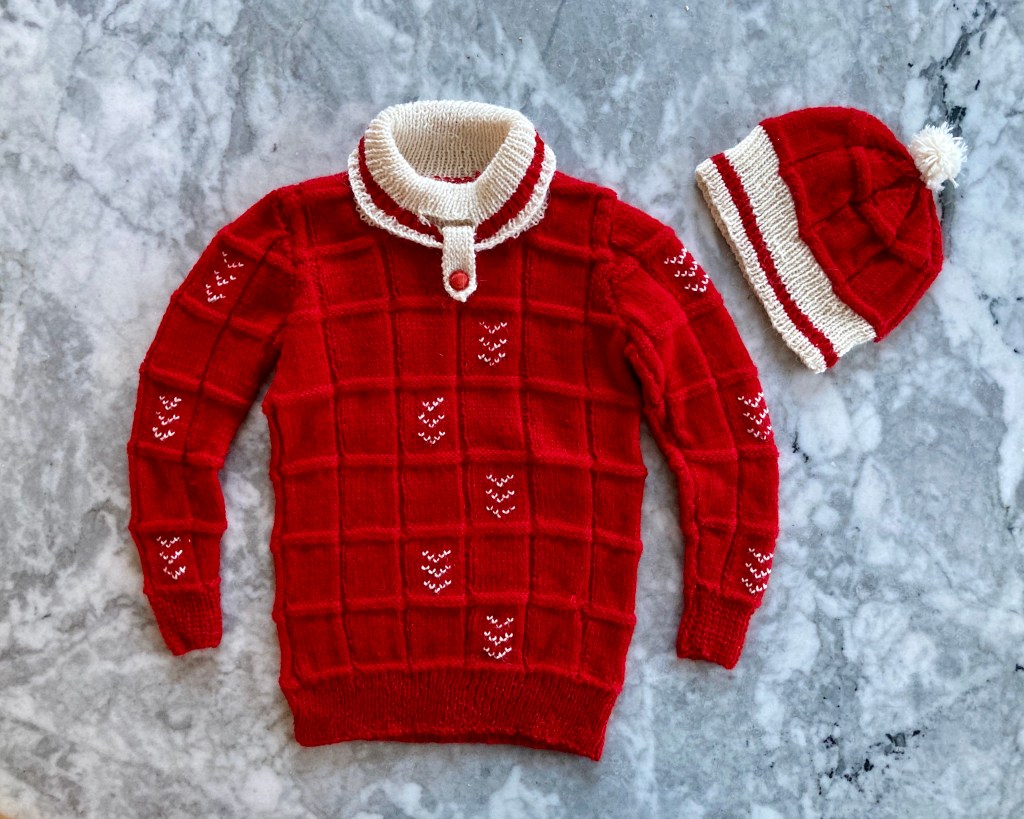
This month’s issue had a wonderful winter pullover for a larger child, featuring white “Swiss darning” (a.k.a. duplicate stitch embroidery) on a brilliant red background. I had also promised a friend to knit something for her toddler, whose favourite colour is red. Perfect!

Well, not quite perfect, since the toddler in question has a 22 inch chest and the pattern is written for children with 28, 30 or 32 inch chests. But it’s also written for DK weight wool and it was easy enough to find a lighter-weight wool to convert the pattern down into a smaller size. DROPS Garnstudio “Nord” (45% alpaca, 30% polyamide, 25% wool) gives 26-27 stitches in 4 inches and is soft and easy to care for. It’s also inexpensive and the red colour is beautiful. The white is just subtly off-white, which I like better than pure white for pairing with a really strong colour like the red.

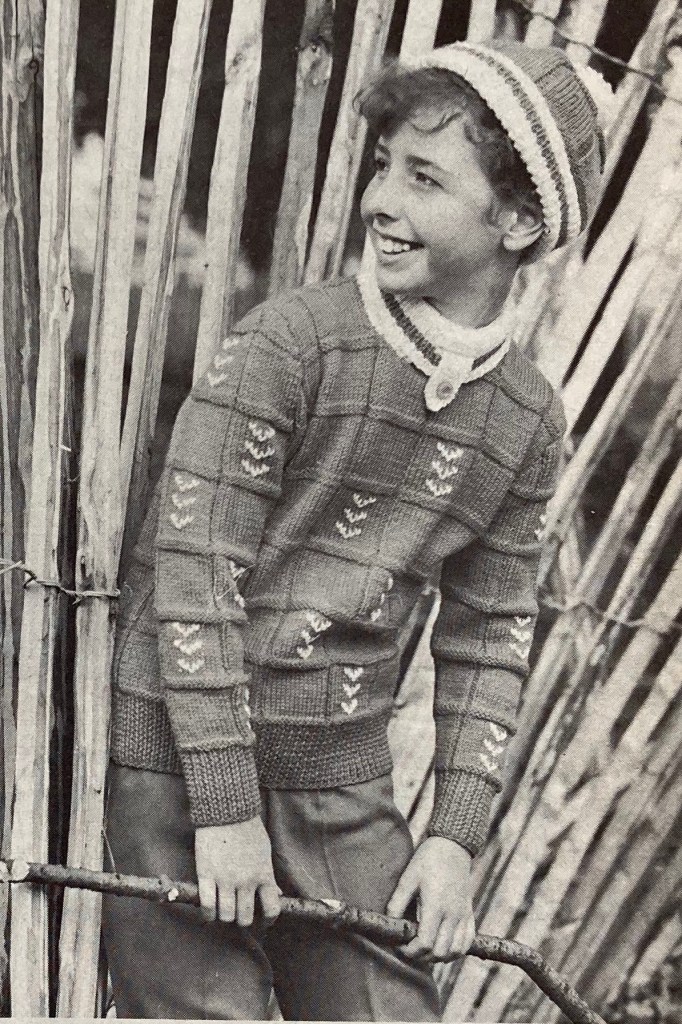
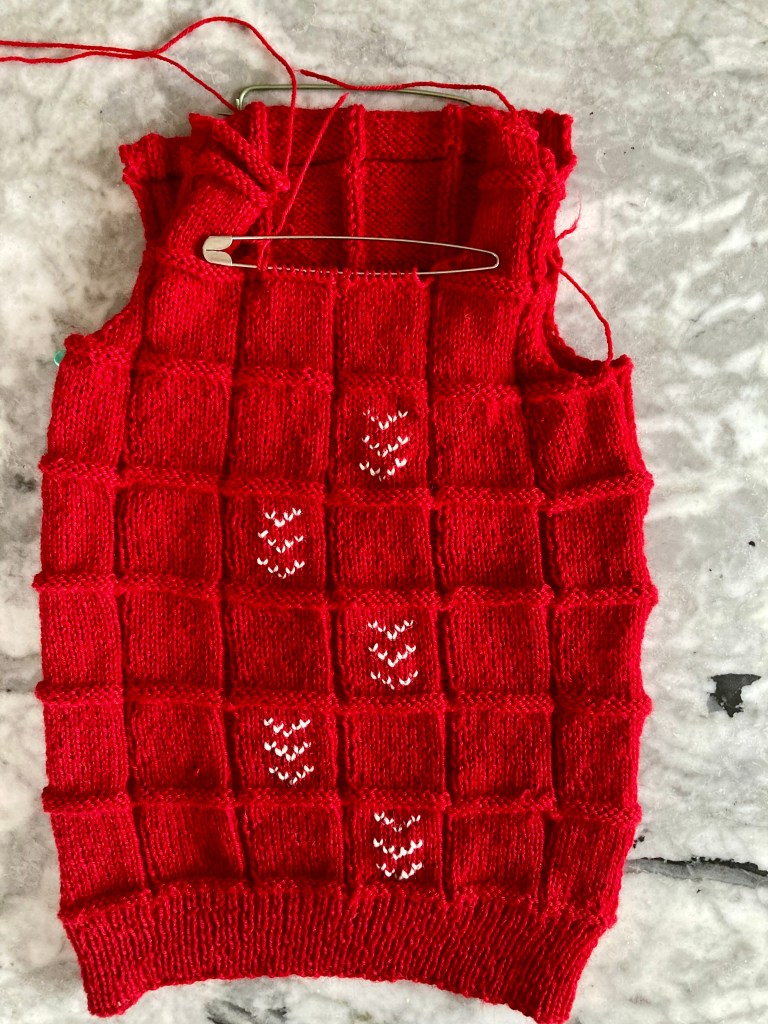
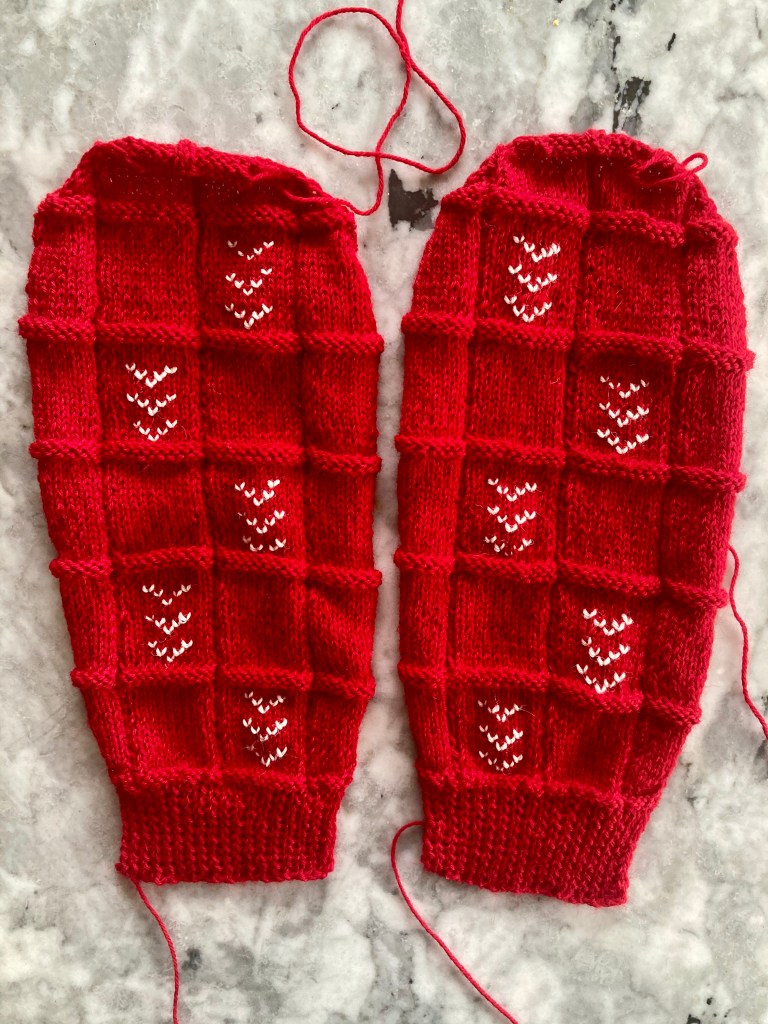
The pattern uses stocking stitch and reverse stocking stitch to make square-ish pattern “blocks”, which are embroidered with white wool in duplicate stitch after everything is finished. Duplicate stitch or “Swiss darning” as it was often called in vintage magazines, is made by threading a length of contrasting colour yarn around stitches that have already been made. I had seen it on garments and in many vintage patterns (all kinds of embroidery on knitting was quite popular in the 1950s and early 1960s), but I had never tried it myself until now. It is pretty easy in principle, but tricky to get the stitches to look even — in this smooth yarn, any pulling of the thread made the embroidered stitches disappear. But it worked and it really peps up an otherwise simple pattern!

I made the body in the round to save time, but correctly guessed that it would be easier to embroider the sleeves if I made them flat.

This was fun and easy to make and I actually finished it on time for once! I have plenty of yarn left, so I think I’ll go ahead and make the hat before I give both to my friend. EDIT: I made the hat! Here is an updated photo.

January 1963: Overview

Happy New Year, everyone! It’s 2021 in the real world and 1963 in the Stitchcraft Sixties blog world. The real-life 1963 was a turbulent year: the Cold War escalated, as did the war in Vietnam; the civil rights movement in the US both gained ground and suffered violent setbacks; John F. Kennedy was assassinated; the Second Vatican council entered a new phase. In England, scandals abounded in the wake of the Profumo affair and the divorce of the Duke and Duchess of Argyll. On a happier note, the Beatles recorded their first album, Please Please Me, kicking off Beatlemania around the world, and women in Iran gained the right to vote. Also, the smiley-face symbol was invented. 🙂

Of course, none of this — not even the Beatles or the smiley face — had any direct influence on Stitchcraft (certainly not in the January issue, before any of it happened…). What we think of as “1960s fashion” — the miniskirt, the “space age” look, the shift dress, the Mod look, the hippie-bohemian styles of the later years of the decade — was just gearing up around 1963, and Stitchcraft was a fashion-conservative magazine. That said, holdover fashions from the 1950s like fitted, waist-length cardigans and wide, swingy skirts have disappeared completely by now; the female models often wear trousers or “slacks” and casual, bulky-knit sweaters are ubiquitous.

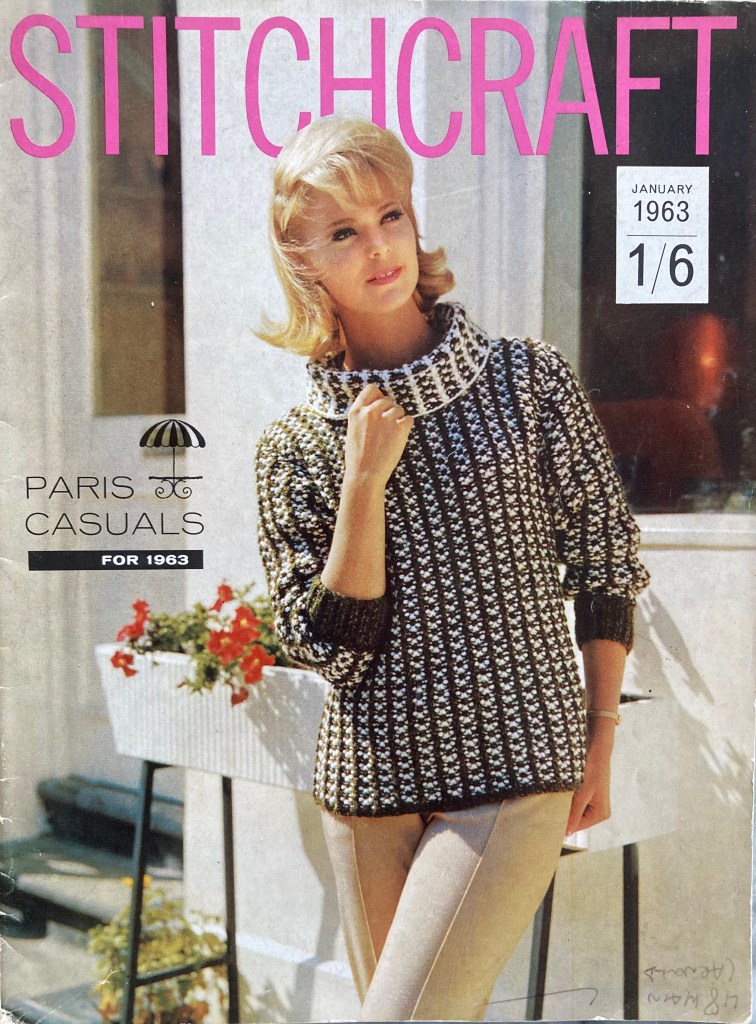
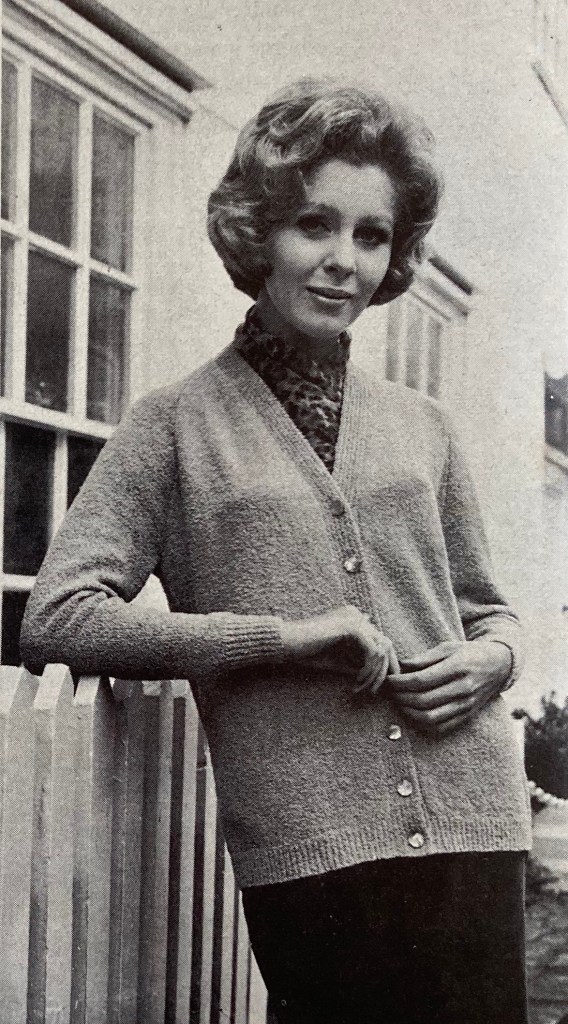
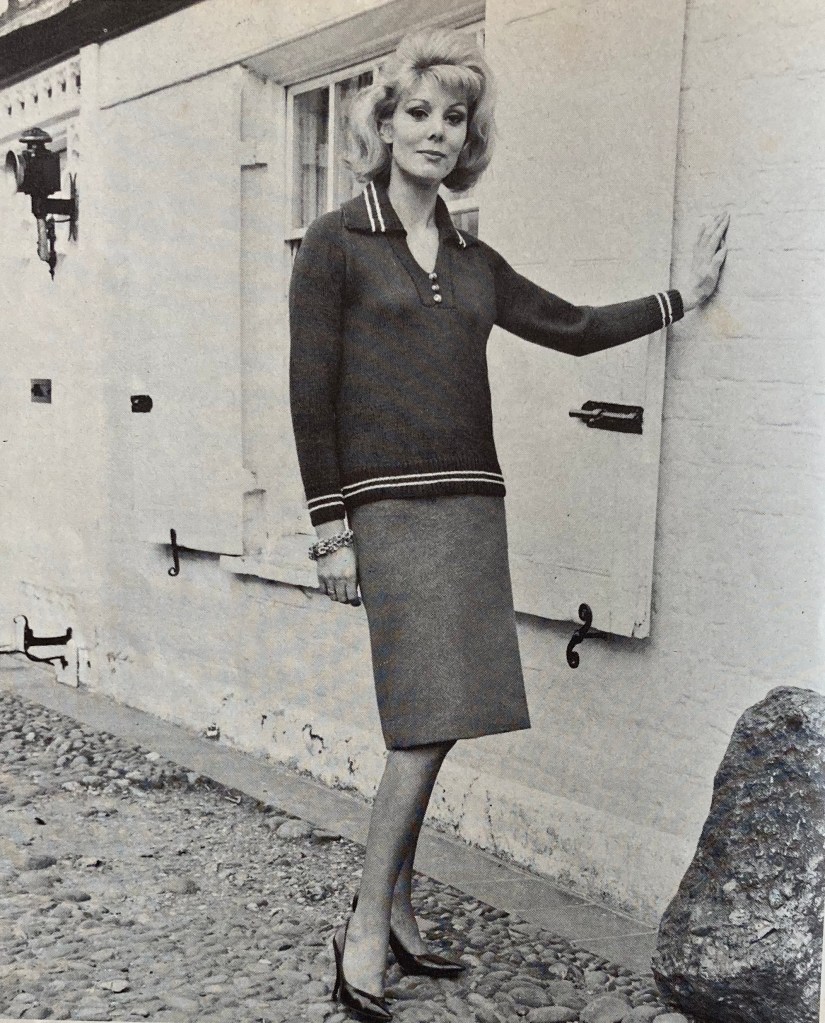
So what does January 1963 have in store for us? The theme of the January 1963 issue is “Paris Casuals” and resolves to start with “a bumper all-round family number.” For adults, that means warm, comfortable jumpers and cardigans in a range of wool weights with V-necks or interesting collars and textured stitch patterns. The cover garment epitomises all the trends: made in bulky Big Ben wool in a two-colour slip stitch pattern, it sports “this season’s Paris collar choice and longer line.” The textured raglan cardigan is a similar look, as is the man’s casual cardigan on the back cover. The bouclet cardigan gives a nod to earlier fashions with its choice of fine wool and classic shape, but here too it is longer and looser-fitting than previous classic bouclet garments. A simple collared jumper in double knitting with attractive fine details rounds out the adult garment selection.

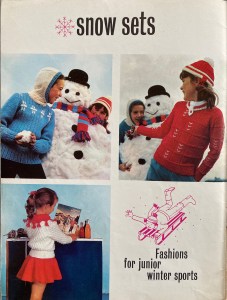
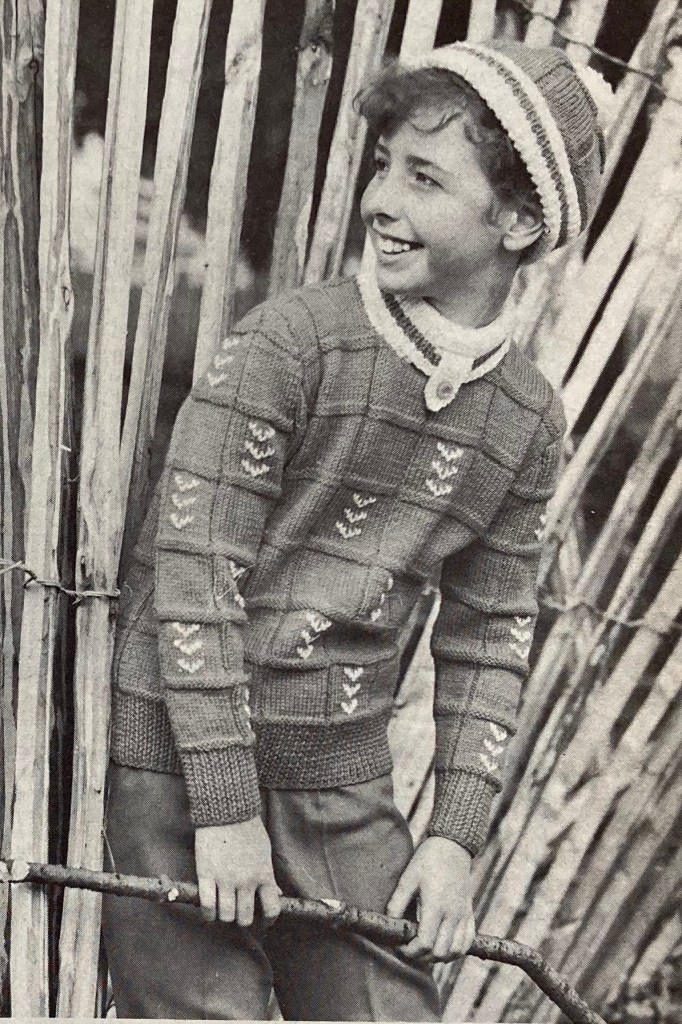
There are great winter fashions for children, first and foremost the girl’s skating set of skirt and collared pullover. Unfortunately, I suspect something went wrong with the sample knit, as both pictures show the model turned 3/4 away from the camera and it’s not clear how it is supposed to look from the front. (Also, could someone please give her some warm tights to wear before she goes out onto the ice.) Toddlers get a cute “buster suit” with a design of cherries on the jumper, and older children get a wonderful hoodie (to use the modern term) and jumper-cap set to wear while playing in the snow. (Or in the photo studio — check out the snowman and snowball made of wool and/or cushion stuffing fluff!). Crisp, wintery colours of blue and red with white are trending. Notice also that the girl model is wearing trousers, the hooded sweater is unisex, and the model wearing the red outfit in the black and white photo is allowed to be active and tomboyish for once. I wouldn’t even have known she was a girl if the sweater weren’t (for whatever reason) considered specifically a girls’ garment. Slowly, very slowly, roles are changing.

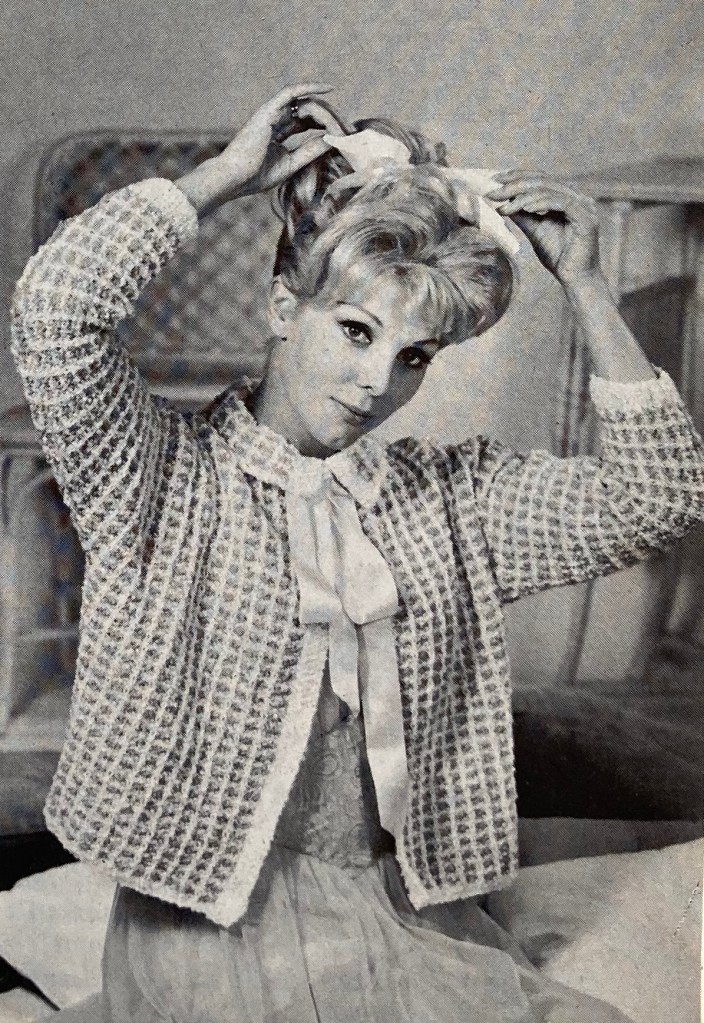
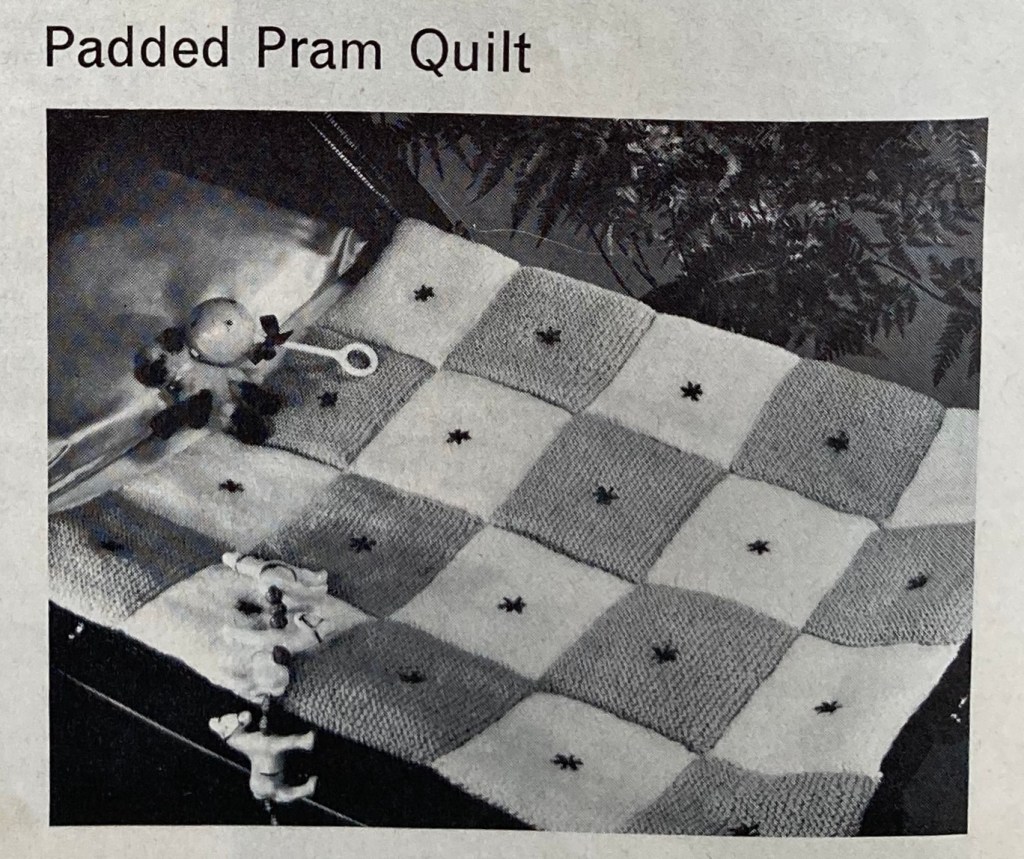
Babies get a pram cover instead of a garment this time — padded and quilted to be extra warm — and there’s a cute bedjacket and fantastic “tower” hat that is perfectly in fashion. (Side note: The caption, “PARIS HAT”, makes me think of that line “If a Harris pat means a Paris hat, Bébé… ooh la la!” in “Always True To You In My Fashion” from the musical Kiss Me, Kate. In true Cole Porter style, it’s an upbeat love song… in which the singer explains to her boyfriend that her dalliances with other men for gifts and money — basically sex work, though of course not explicitly described in those terms — shouldn’t count as infidelity, since she’s only doing it for the financial benefits and is true to him in her heart. Ah, romance! Anyway, the hat is great.)

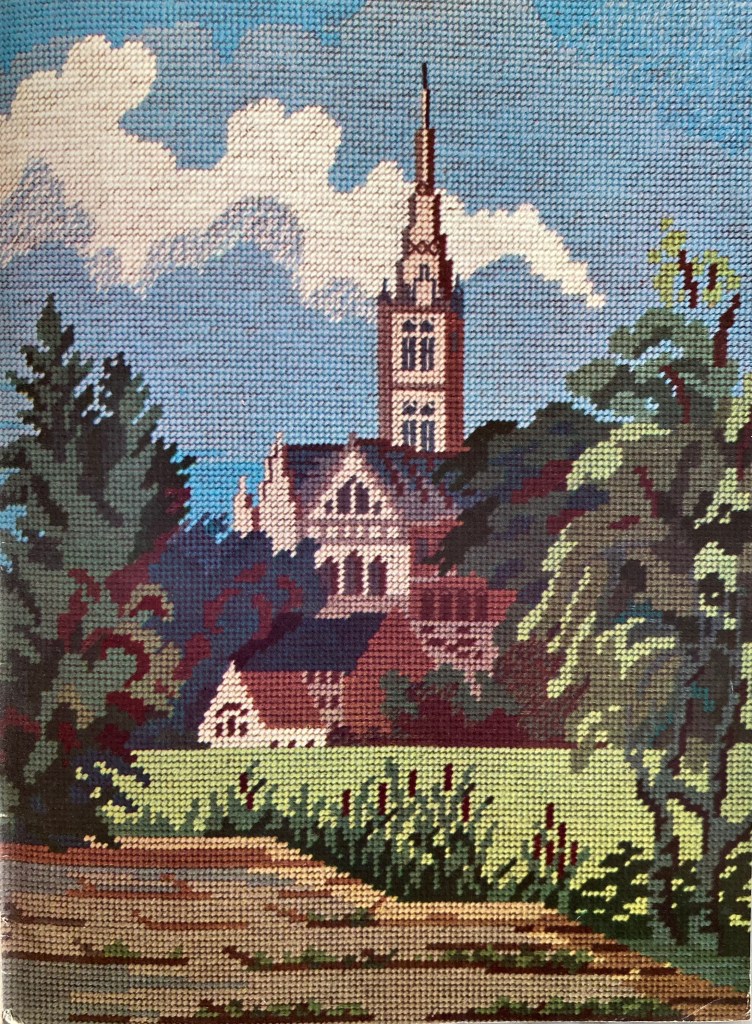
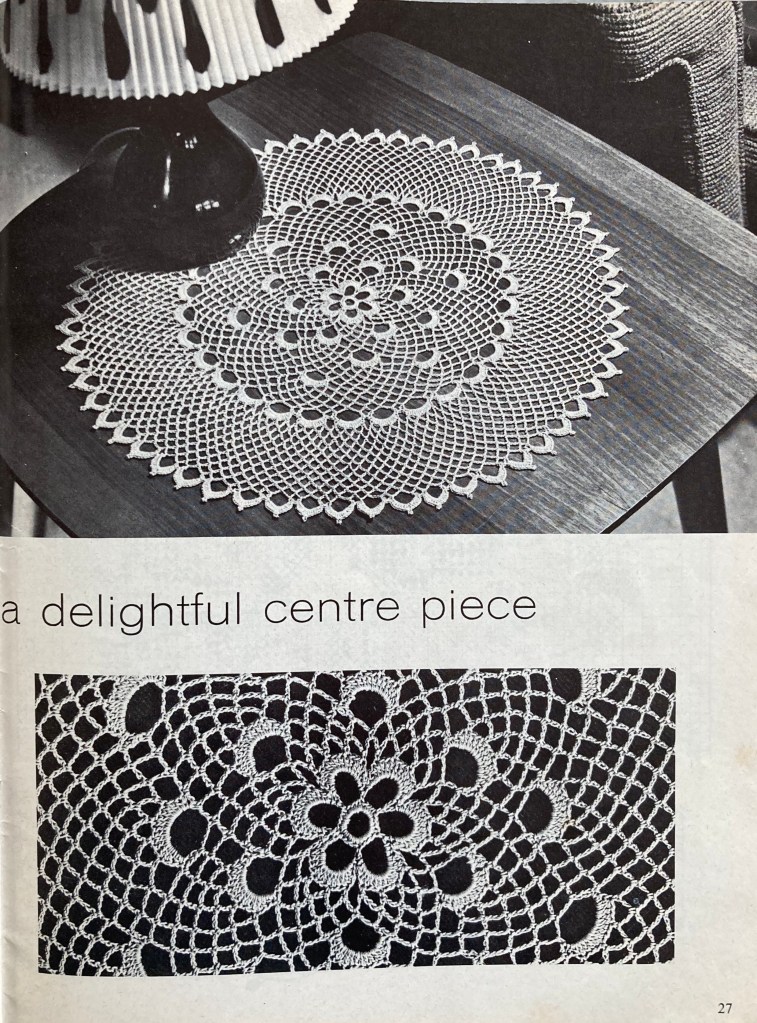
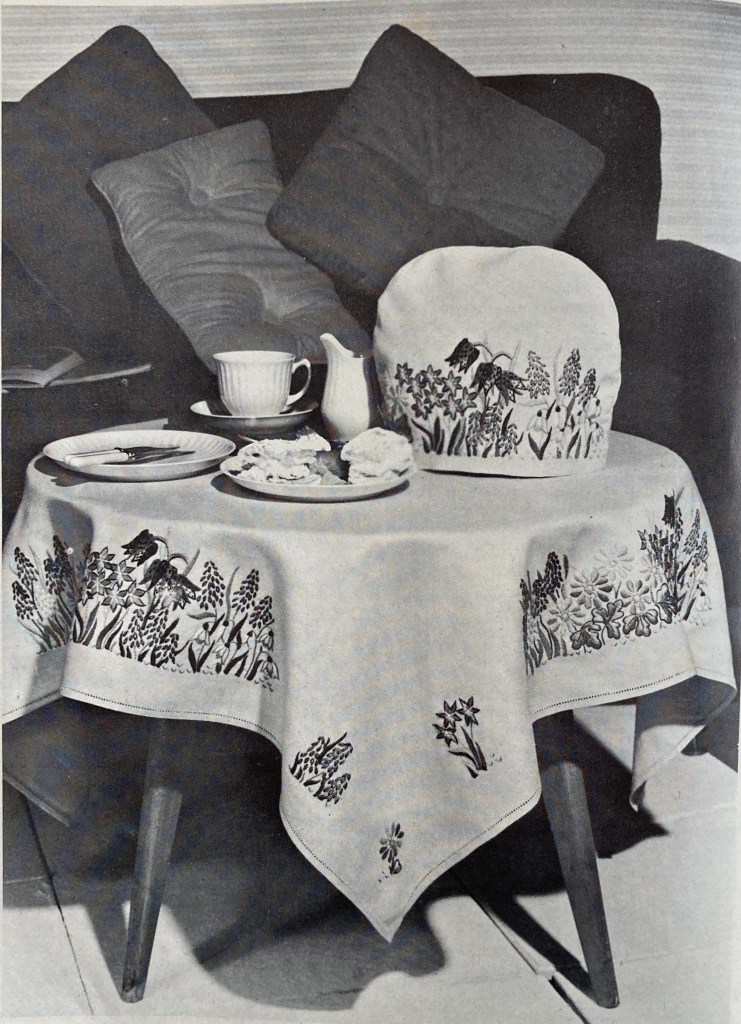
With all the great knitted items, home fashions are pretty standard this month. There are rugs and cushions, a lovely embroidered tablecloth and tea-cosy set, a tapestry picture, a cutwork table set, a very impressive crocheted doily and a hassock or kneeling cushion for church-goers.

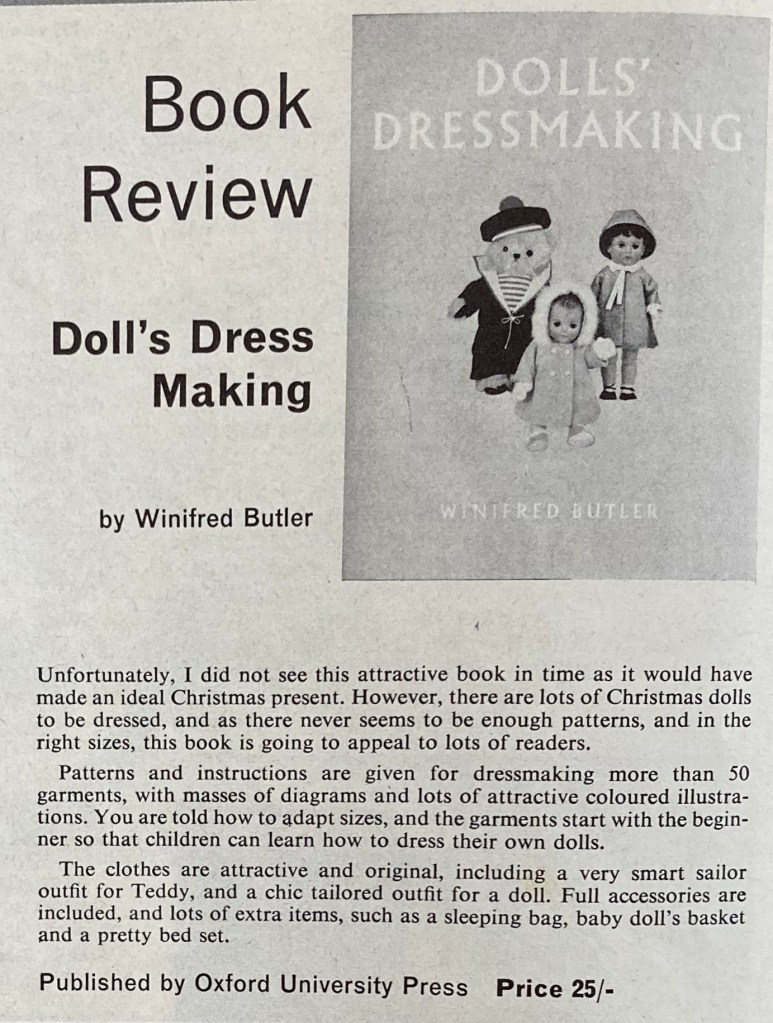
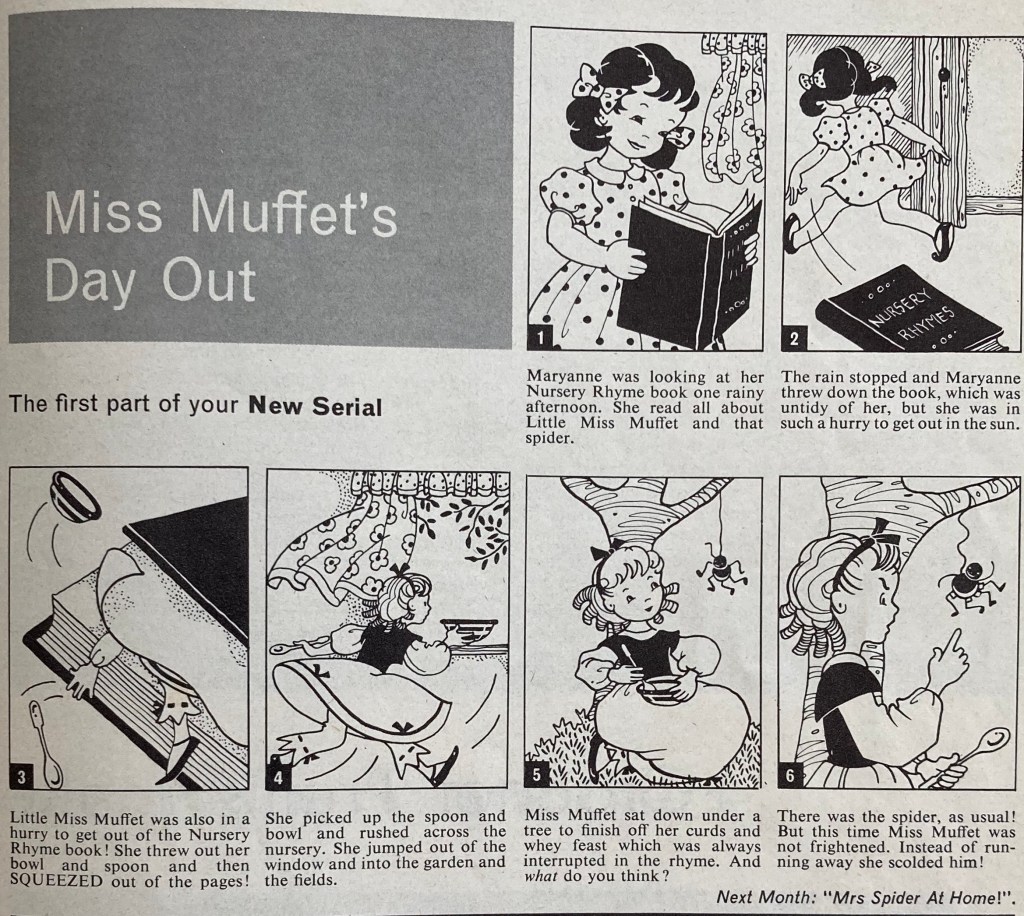
The “readers’ pages” have a review of what was probably a very interesting book on dressmaking for dolls, and –bucking the “single girl” trend of the early 1960s — we’ve got another “stand by your man and knit him something” ad for P&B wools (though this one is really quite sweet and romantic, unlike the “you only exist to be pretty for him” ad seen in other issues). There’s also a new cartoon serial for children: a re-telling of the “Little Miss Muffet” nursery rhyme, where Miss Muffet is not at all afraid of the spider. I’m sure, when she grows up, she will be not at all afraid to suggest to her man that he knit something for her for once.

My project from this issue will probably be a scaled-down version of one of the children’s sweaters for a smaller child. Stay tuned!

December 1962: Overview

It’s that time of year again, and Stitchcraft is getting into the festive season with their annual Christmas issue — though if it weren’t for the wreath on the door behind our cover model and the other model in the window holding a metallic tree and box of ornaments, I wouldn’t know it was the Christmas issue at all.

The suit on the cover is “The Suit for Spring ’63”, made in Bracken Tweed double knitting (colour: “Green Witch”! Great name) and trimmed with black braid, like the November 1961 suit from which I made the blazer last year. The December 1962 jacket has no buttons and more of a boxy “swing-line” shape, like the classic Chanel suits that were especially popular in the early 1960s. The simple pink blouse worn with the suit was made from a Vogue pattern which could be ordered via Stitchcraft, thus completing the outfit.

The other larger knitting projects are either warm, bulky and practical for the cold, or fancy, pretty things to wear to parties. In the first category, there’s a wonderful hooded coat for a toddler which keeps out “all the draughts” — except, of course, the ones traveling up her bare legs! I still feel sympathetically sad every time I see pictures of cold-weather children from pre-1970s eras with five layers of wool on their upper bodies but basically nothing on the bottom half.

There’s a zig-zag patterned sweater in Big Ben wool for a larger child or young teen (who is luckily old enough to wear trousers, as seen in another photo) and a stranded design in double knitting that fits into the same “harlequin” diamond-pattern idea (though the adult version makes me think of spiky eyes looking out at me). Also in double knitting is the cabled turtleneck “for the extra slim” (30-31 or 32-33 inch bust). Rounding out the warmer designs are two partner-look sweaters in bulky Ariel and an “Italian stitch” (stranded knitting and purling — that’s going to be really warm and bulky.) The “Continental” trend can be seen in the spiky-eyes sweater as well, which is apparently of Viennese (as per page 20) and/or Tyrolean (as per back cover) design.

Then there are the party clothes: a fluffy cardigan for a young girl and a beaded 2-ply blous with minimal shaping and a beaded crochet finish on the neckline. Holly green is always a hit in the winter designs and other than that, the preferred colour is white with bright contrasts in red, orange or turquoise. The cabled turtleneck is made in “Lipstick Red”.

Surprisingly, this month’s homewares are not particularly special. Our year of embroidered flowers has come to an end with a design of “Christmas roses” (really, they’re just roses) and readers could back-order any transfers they might have missed over the course of the year to make a tablecloth with all of the 12 flower designs on it. There are quick, easy cushions in darning or crochet and a cutwork design for another tablecloth.

The Christmas issues of Stitchcraft usually have a lot of very creative and sometimes bizarre ideas for knick-knacks, small gifts and other “novelties”, but this year seems to put more focus back on knit designs. There are a few small sewing projects that could work as gifts any time of the year — little aprons, a pincushion doll and a sewing case. The winter-motif mats for the Christmas table, a small tapestry scene and a felt Father Christmas wall panel that you can pin cards to are more appropriate to the holiday theme, and the back pages give readers a few traditional cross-stitch motifs to adapt to their own use and ideas for table trimmings. The table-trimming “trees” are made of sequinned tissue-paper trees stuck on top of empty sewing-thread spools and the “Berries and Twigs” are twiggy branches from a real tree, painted white and decorated with red wool pom-pom “berries” and foil leaves.

Christmas and any other large family get-together holidays are obviously not happening this year, but — good news! — as the blog year 1962 draws to a close, so too does the real-life year 2020, which I’m pretty sure most of us can agree was awful. I hope you all continue to get through it with minimal damage and enjoy the holiday season as much as possible in a pandemic-safe way. My project for this month will be the easy crocheted cushion, and finishing up all the unfinished projects.

Stitchcraft Extras: WAVE~LINKS

Progress on actual projects has been going slowly this month, but here’s a fun extra: a video about the connections between performing early music and knitting from vintage patterns, written, directed by and starring yours truly.

In “real life” (i.e. what I do for a living when I am not knitting) I’m a professional concert and opera singer, and as you all may imagine, work has been more or less non-existent since the pandemic hit. Among other upheavals, my friends and colleagues Yonit Kosovske and Vlad Smishkewych had to first postpone, then completely overhaul the launch of their new organisation for early music, H.I.P.S.T.E.R. (Historically Informed Performance Series, Teaching, Education and Research). Being the creative people that they are, they re-imagined part of the launch as a new video series exploring connections between music and artisanry, called WAVE~LINKS.

Many of us professional musicians perform or engage with other artistic genres, and the idea behind WAVE~LINKS was to showcase those “other” passions and serve as a platform to discuss and reflect upon the shared spaces between (early) music and other artistic disciplines. And we are a very creative bunch! The online H.I.P.S.T.E.R. launch on November 7th, 2020 featured videos from creative artists around the globe sharing their insights into links between music and poetry,
painting, pottery, photography, dance, knitting, weaving, fermentation, wood working, and more.

My video is about knitting, obviously, and the similarities that I find between historical performance practice as it relates to singing early music, and historical “knitting practice” as it relates to working with and from vintage pattern sources. I hope it is interesting to musicians and knitters alike.

Enjoy it, and if you like it, check out the other WAVE~LINKS videos on the H.I.P.S.T.E.R. web site, their Facebook page or their YouTube channel. I can especially recommend the video by Rosemary Heredos, a fellow singer and knitter whose video explores the connections between singing, knitting and spinning wool.


November 1962: Overview

For 1960s Stitchcraft readers, November means holiday planning, so this month’s issue is full of quick homewares for decorating and small, easy projects for gift-giving. The garments are warm and bulky, featuring Patons’ new “Ariel” wool. Warm autumn tones of brown and orange as well as bright, cheerful holiday reds and blues are the colours of the season. Christmas Plans and Winter Fashions ahoy!

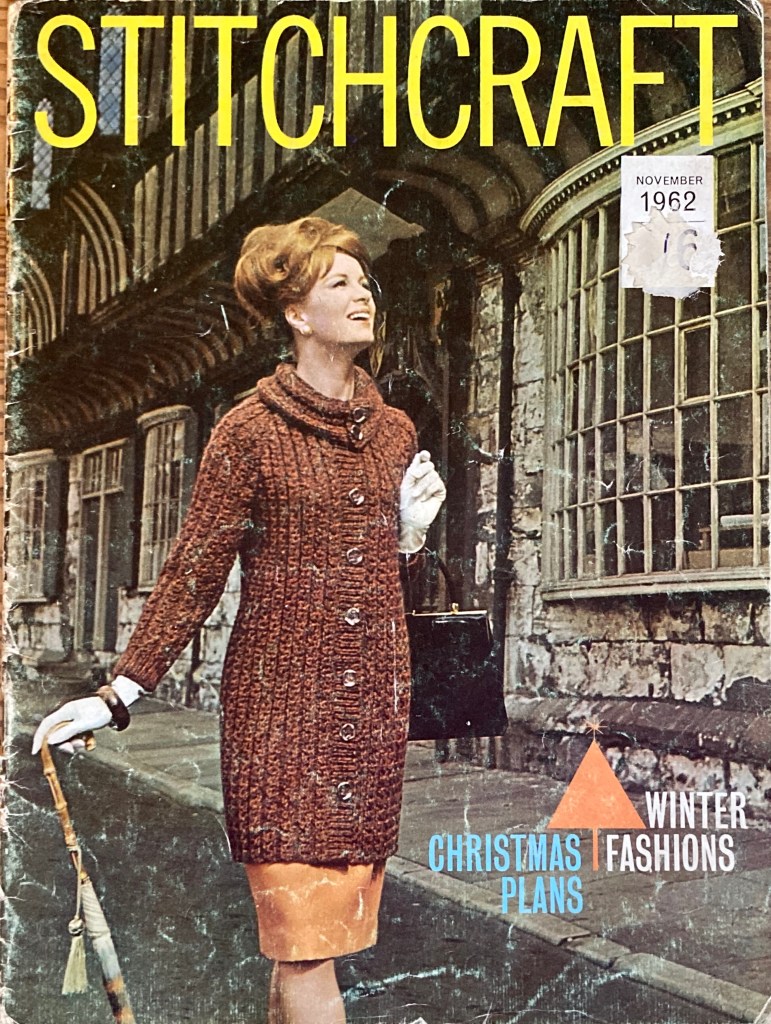
Our cover garment is a bulky, yet elegant coat in Big Ben wool, weighing in at a hefty 52-56 ounces (up to 3 1/2 pounds, or about 1500 grams). The mock cable/twisted rib pattern certainly won’t curl at the bottom edge, which is why I guess it’s designed without a hem or ribbing, but at that weight and in that pattern, I suspect the coat would grow ever longer and ever narrower (just in time for holiday weight gain). Still, it looks lovely! I especially like the buttoned collar. Also, I just might try to re-create the model’s hairdo with my long lockdown hair.

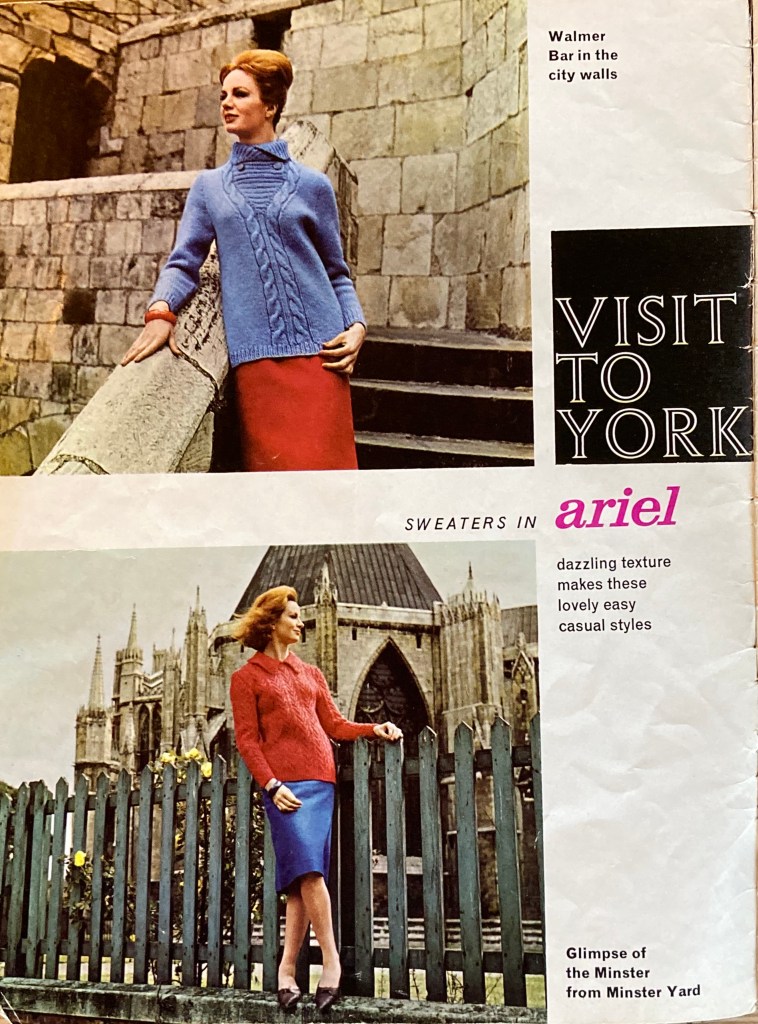
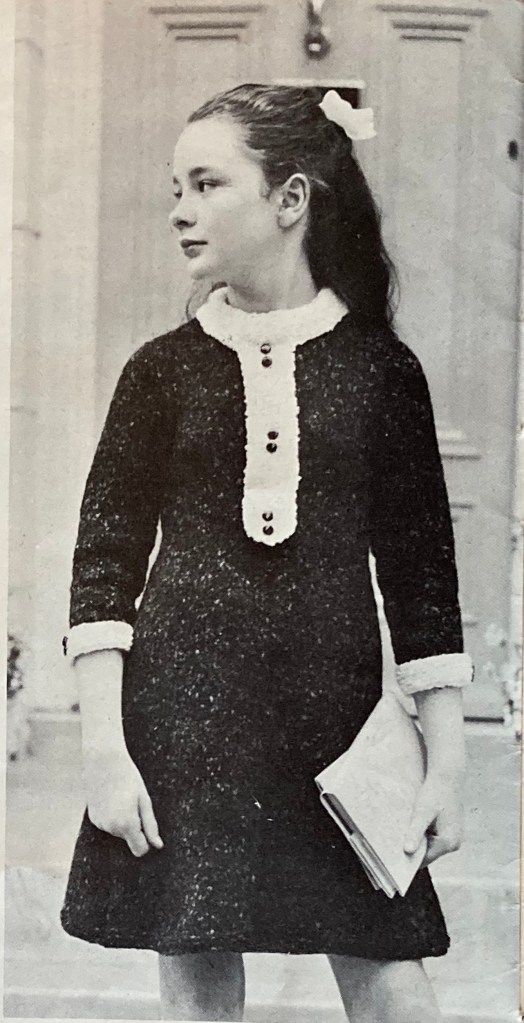
The outdoor photography was taken near historical buildings in York, whose grey-beige stone walls give a nice background to the bright red and blue sweaters made with “Ariel” a bulky, yet “feather-light” (well… 20-24 ounces for a sweater, so lighter than Big Ben, at least) wool-synthetic mix. I really like the red chevron sweater and it doesn’t look bulky at all to me, just fluffy and cosy. Father and daughter also get warm, cheerful garments, and look at this amazing mini-dress for a young miss! That is going on my list of patterns to adapt for myself.

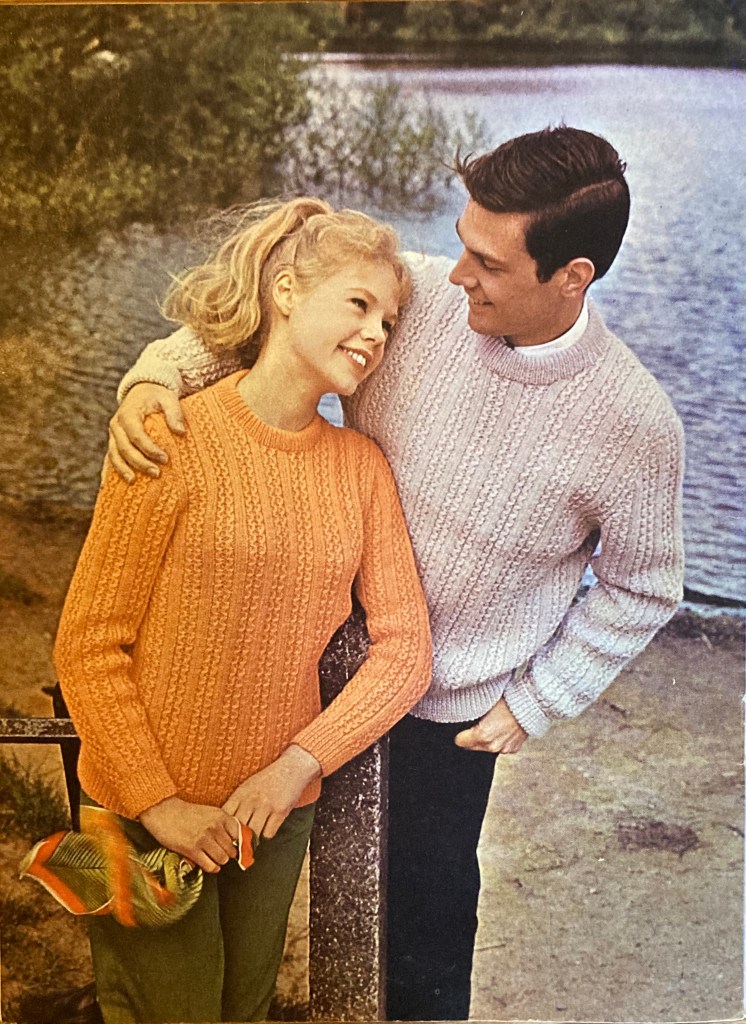
Older teens and young lovers can make “the ‘sweater-match’ theme with girl-friend and boy-friend” – classic pullovers with cable ribs in double-knitting weight and identical except for slightly different shoulder width and back length proportions. That’s all for the knitted garments in this issue, since the real focus is on Christmas preparations with little gifts and housewares.

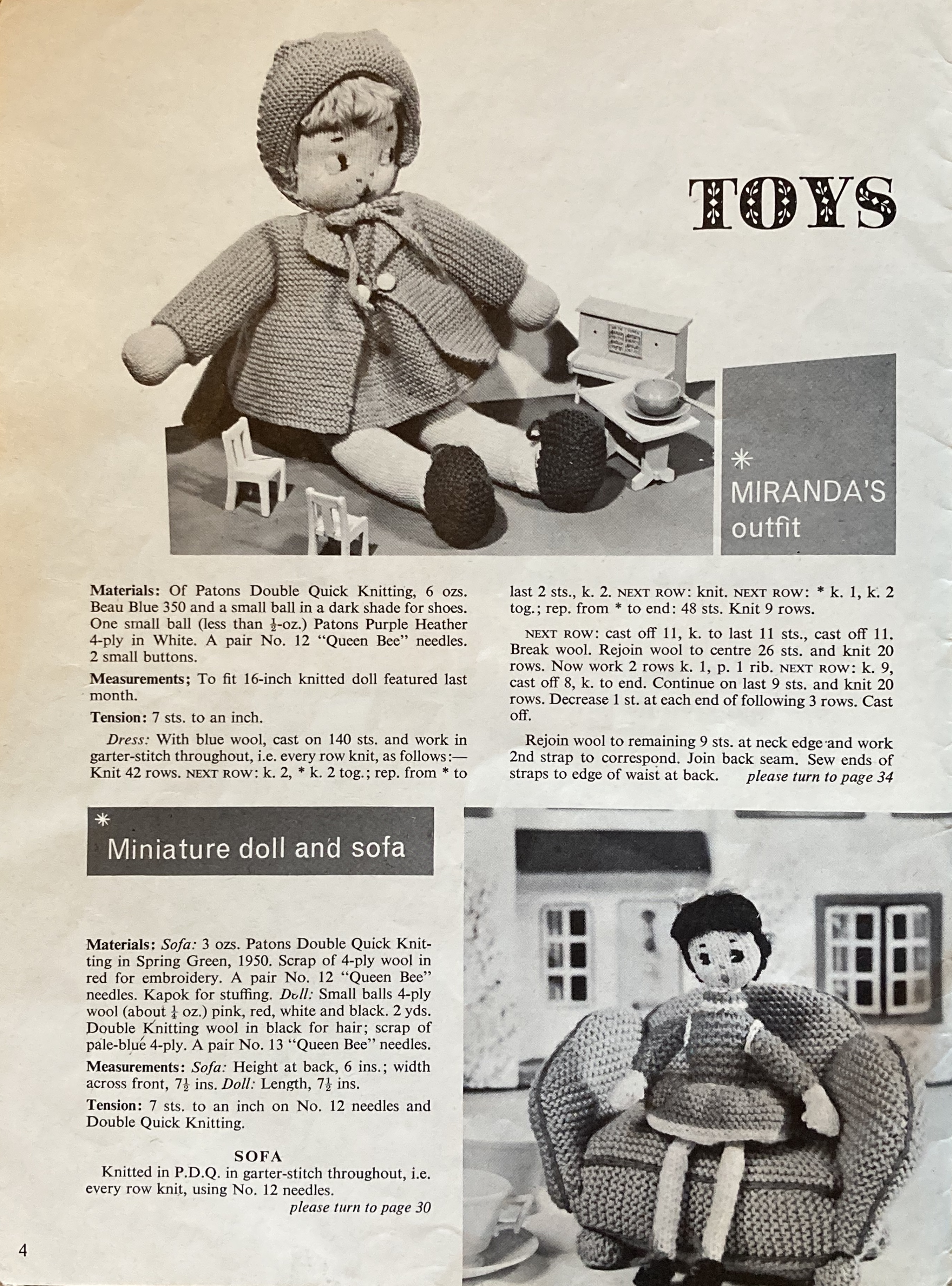
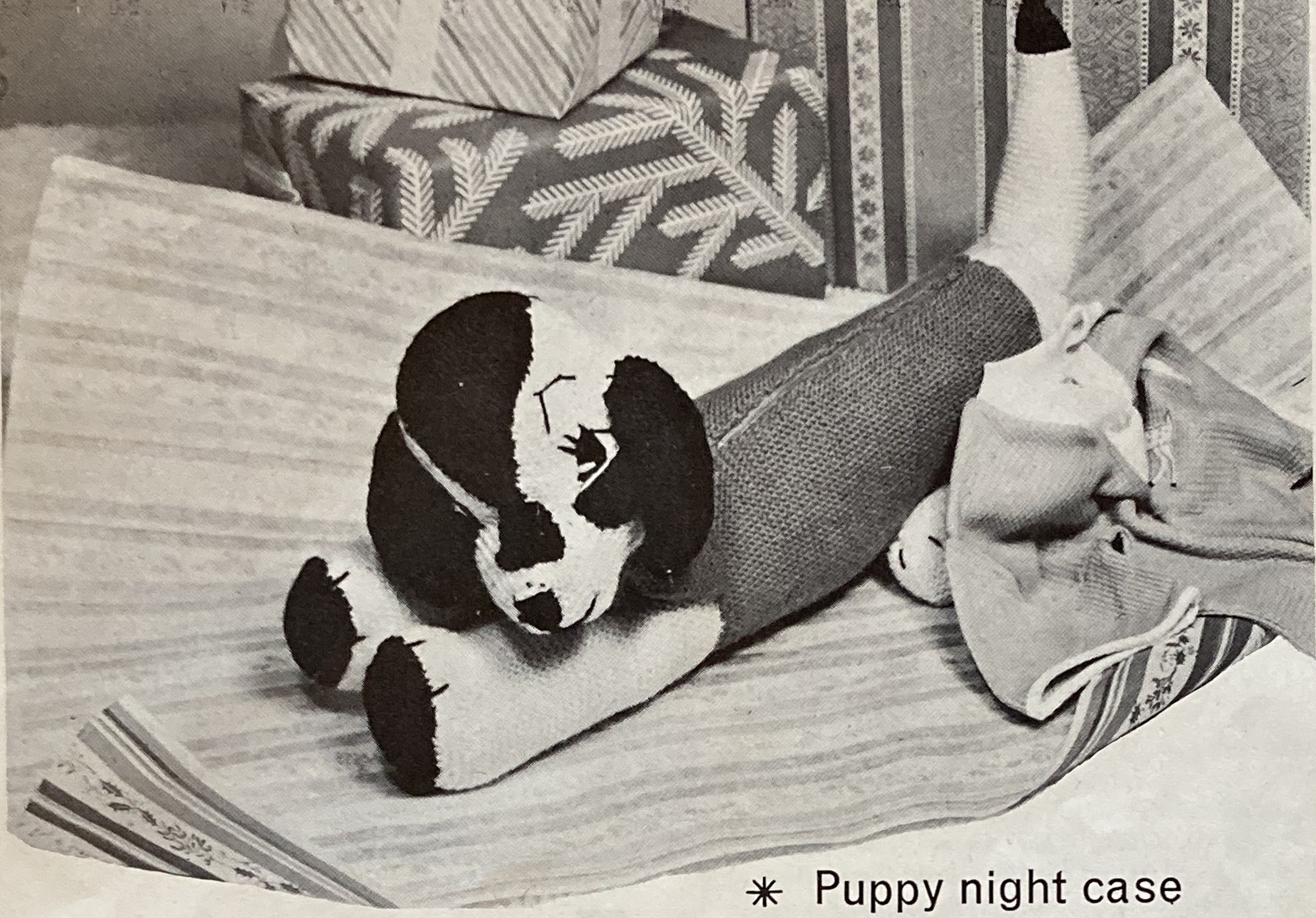
For children’s gifts, there’s a doll, clothes for another doll (pattern in last month’s issue), and a night case in the form of a puppy. This last was especially popular around the late 1950s and early 1960s – I have a different magazine with a poodle nightcase on the cover, and Stitchcraft also had some kind of poodle nightcase in the later 1950s. Poodle or puppy or not, I don’t know why a person would want to put their nightgown in a special case in or on the bed. If you don’t want other people who might be using the room to see your nightdress lying around, you could just… put it under the pillow?

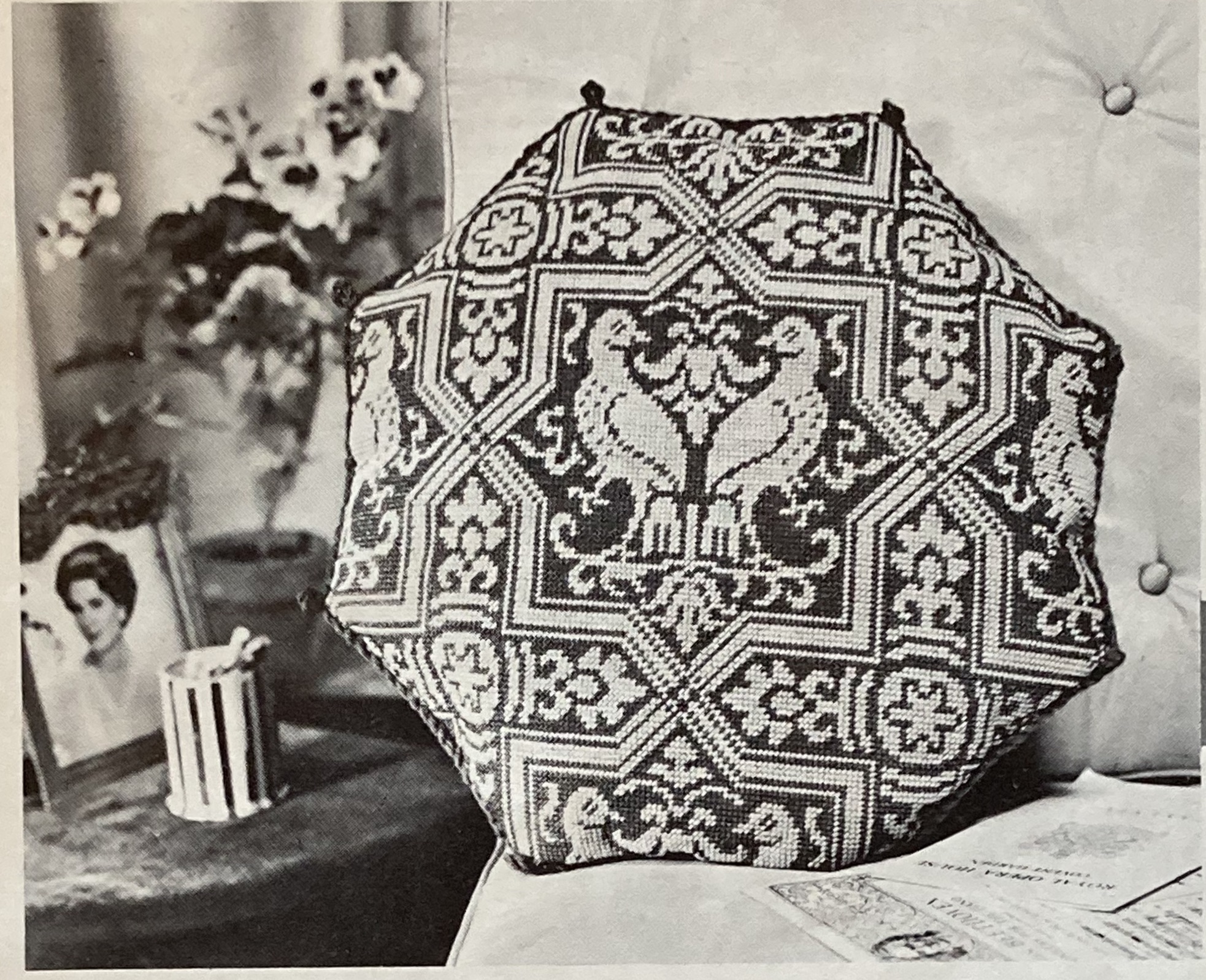
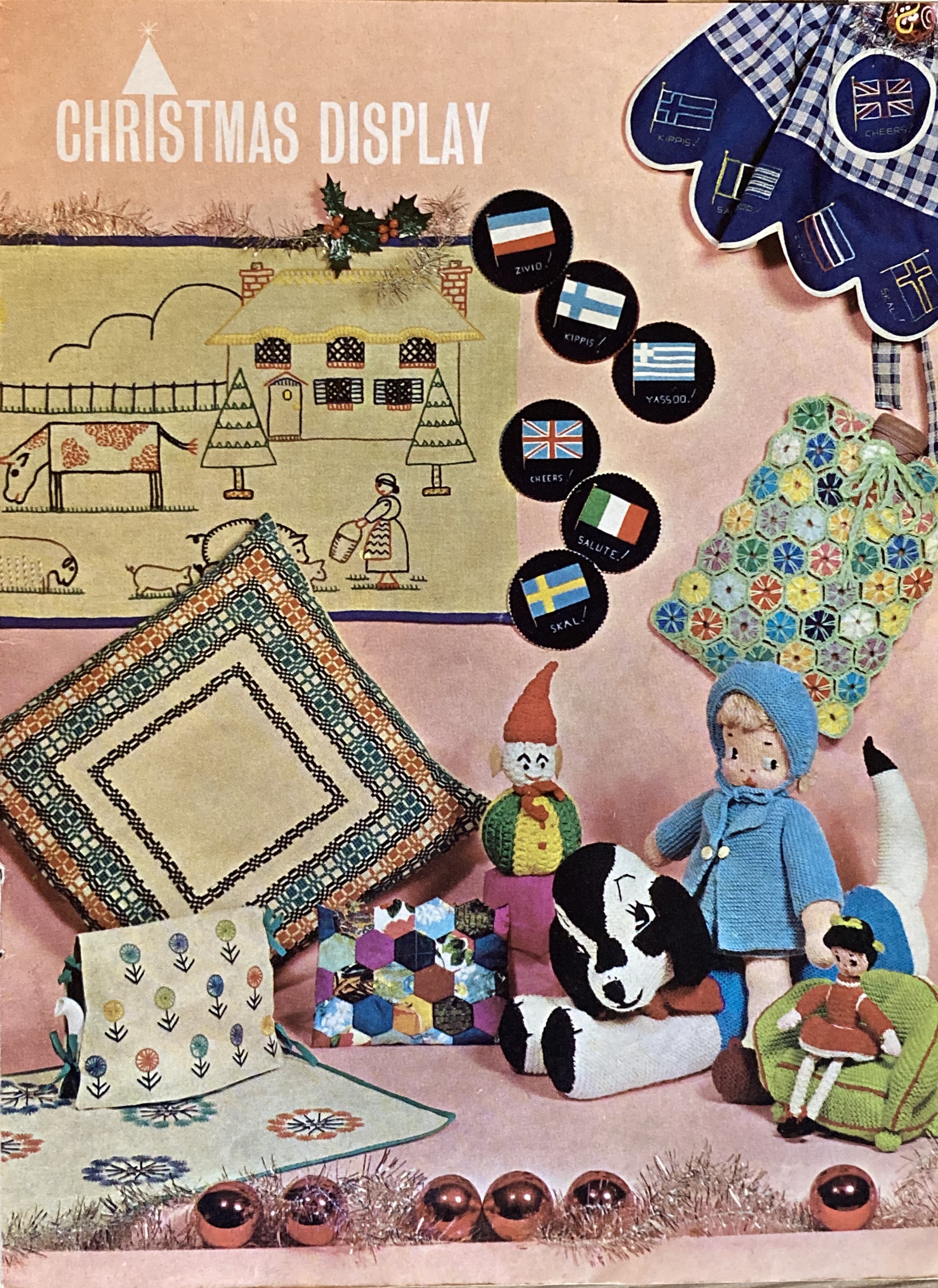
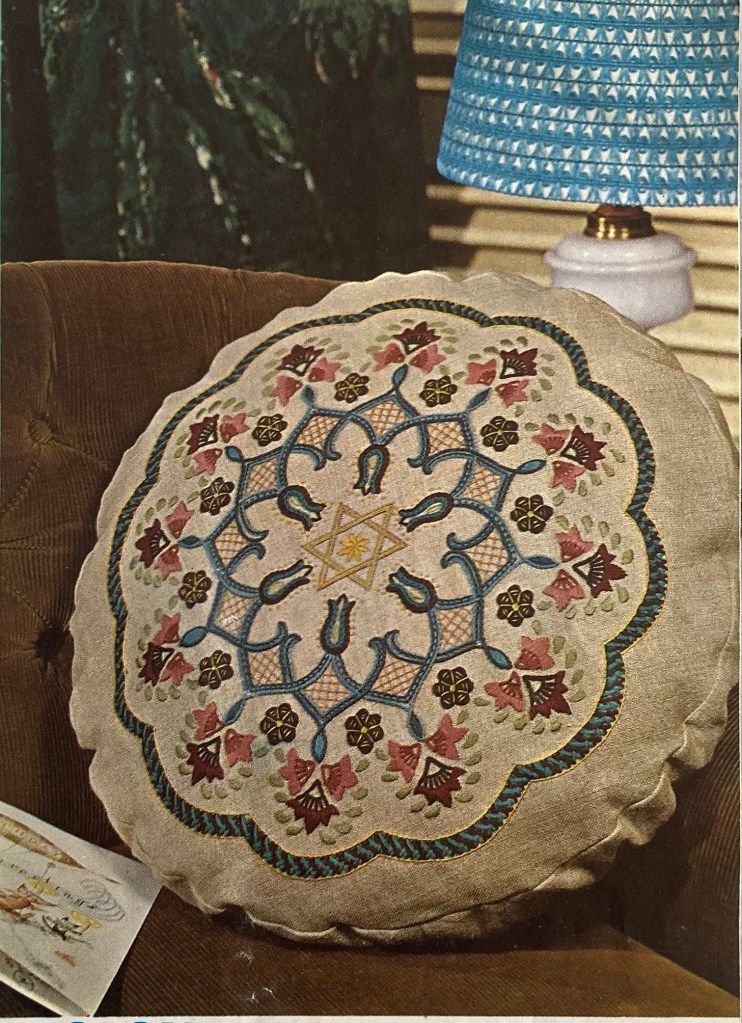
There’s an intriguing “Byzantine” cushion, a firescreen with this month’s embroidered flower (chrysanthemum) and some little gifts sewn in felt, but the more interesting projects are displayed nicely in the large colour photo in the middle of the issue. We’ve got an embroidered farm scene for the nursery wall, a “hostess set” of apron and coasters featuring international drinking mottos, the usual cross-stitch cushion, and a tray cloth/tea cosy design that I would love to adapt to an iPad/tablet cover. Crocheters can use up all their scraps with medallions or a … cute? eerie? not sure what to say about it? pixie doll and patchwork fans, generally ignored by Stitchcraft, finally have a little bag as a starter project.

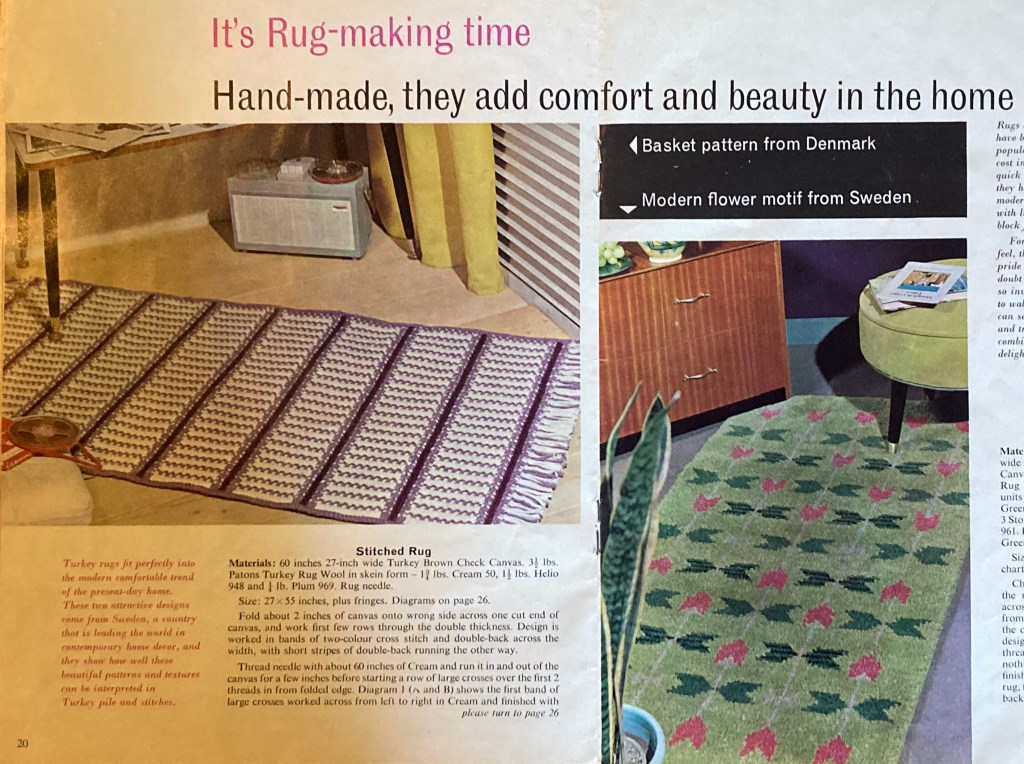
There are even rugs in Scandinavian designs (is that basket pattern from Denmark or from Sweden?), one stitched, the other done with a latch-hook.

What an issue! There are so many projects I would like to make from it: the girl’s dress in my size, an embroidered tea-cosy for the digitalised world, the little girl’s bulky red sweater, even the green latch-hook rug. Sadly, pandemic and lockdown have thrown a monkey wrench into my current knitting plans, it’s hard to get supplies, and I’m trying to finish or even start multiple other large projects that were planned or promised or have been lying in the WIP pile for ever. One of those WIPs was a (non-vintage) garment that I will have to frog anyway (ran out of wool and can’t make it work), so the plan is to frog that project and use the wool to make “Father’s cardigan” from this issue. Said project and I are geographically separated at the moment, though, so long story short: I do not know when I will be able to post a November project. Take heart, though: there will be some more Stitchcraft cooking fun in December as well as a special surprise next week.

Repeat Performance: Charming Blouse

EDIT: Finally finished in March 2021!

It was very difficult to get a project going this month. The October 1962 issue of Stitchcraft didn’t have any designs that interested me and I had been trying to finish up some larger, non-vintage projects in time for the cold-weather season. But inspiration came from a good friend of mine, who politely reminded me that, way back when I made this “charming blouse”, I had casually offered to knit one for her if she ever wanted one, and wouldn’t this be a good time to make it for her? I agreed! So this month’s project echoed the one I made then. Here are photos from that issue and the finished project:

The original blouse, from the July 1960 issue, was designed for “larger”, curvier figures (37-38 or 39-41 inch bust) and featured horizontal bust darts, which was very unusual for knitting patterns of the time. I was intrigued to see how the bust darts would turn out, since I don’t usually make them on garments for myself. As I probably could have guessed, the bust darts were not only unnecessary for me, but actually negatively impacted the fit — since I am not busty enough to fill out the darts, the front of the blouse was too long compared to the back. That didn’t particularly bother me, but I did note it for future projects.

My friend has a more suitable figure for this design, and her version turned out even better. I used the same wool (Juniper Moon Farm Herriot Fine) in a lovely tweedy green colour, and (by request) without a collar or contrasting colour bands along the front.

It turned out perfectly and we were both very happy with the result. Since we’re not meeting indoors and it was still too cold for her to wear just a blouse outside (even a warm knitted one), I’ve only got her selfies for now, so I’m sorry if it’s hard to tell what the finished product looks like. When it’s warm enough to do a socially distanced outdoor photo shoot, we can hopefully get some better photos! According to her it fits perfectly, and it’s obviously a fantastic colour for her.

My friend, by the way, is the wonderful opera and concert singer Andrea Lauren Brown. We have all been out of work for a solid year now due to the pandemic, but you can definitely still buy her CDs, which I heartily recommend to all of you who love classical music. Seriously, she’s amazing.

October 1962: Overview

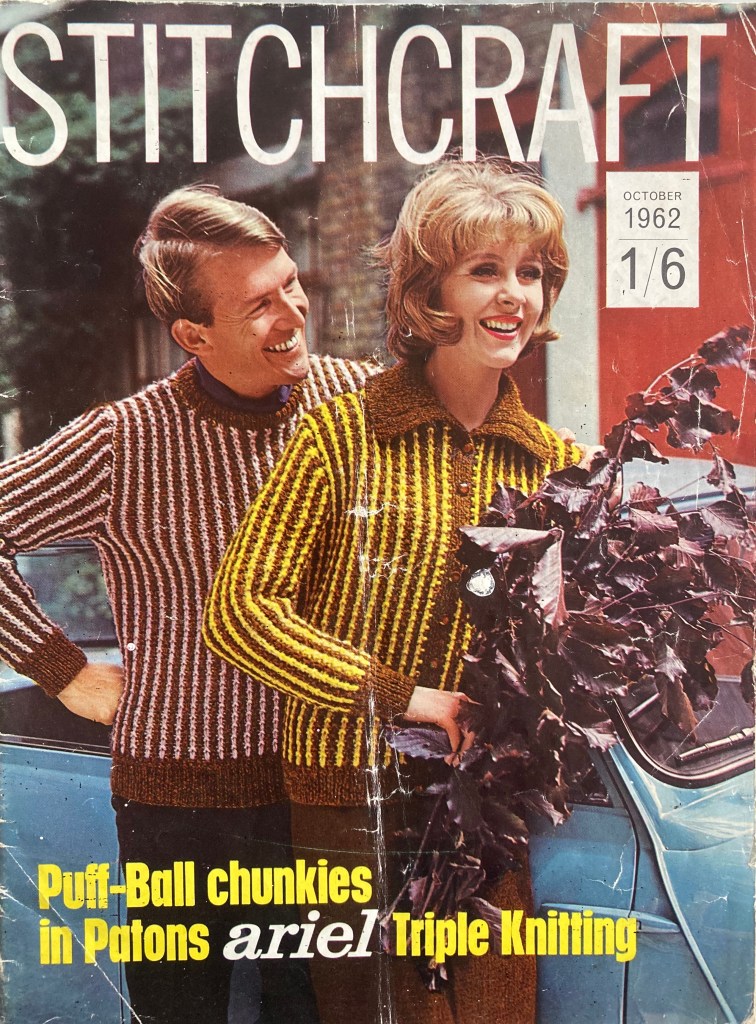
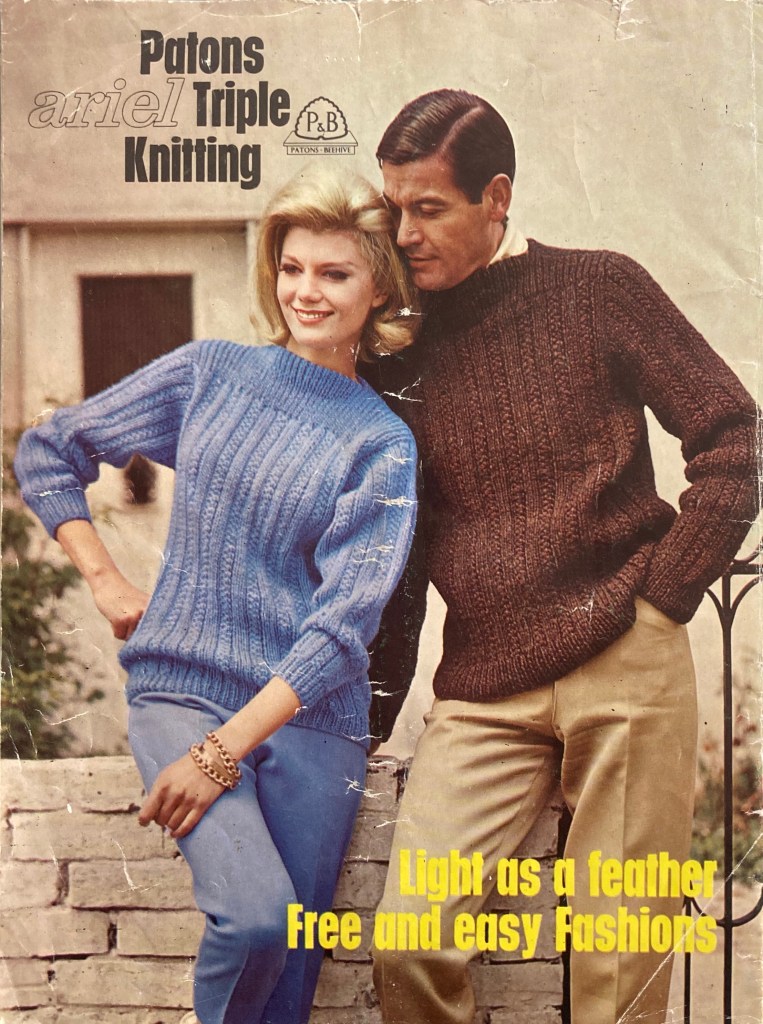
“There are several “special” things about this issue” writes Stitchcraft’s “editress” on the facing page, and I’m glad she put the word “special” in quotes, because this month’s issue is definitely a mixed bag. On the plus side, it has extra pages in colour and introduces a new yarn: Patons Ariel, designed to be “triple-knit” bulky and therefore quick to knit, but still lightweight. On the minus side… we’ll get to that later in the post.

The new wool, Ariel, is listed on Ravelry as bulky weight (97 yards in a 2-ounce ball) and composed of 80% wool and 20% “other” (synthetic fibres). According to the person who wrote the Ravelry entry, it may or may not have been waterproof! It appears to be quite fluffy, thus the name and the “light as a feather” claim. It’s used for the two-colour, slip-stitch-patterned garments in the cover photo as well as the identical boatneck pullovers for men or women. The partner-look idea is still going strong.

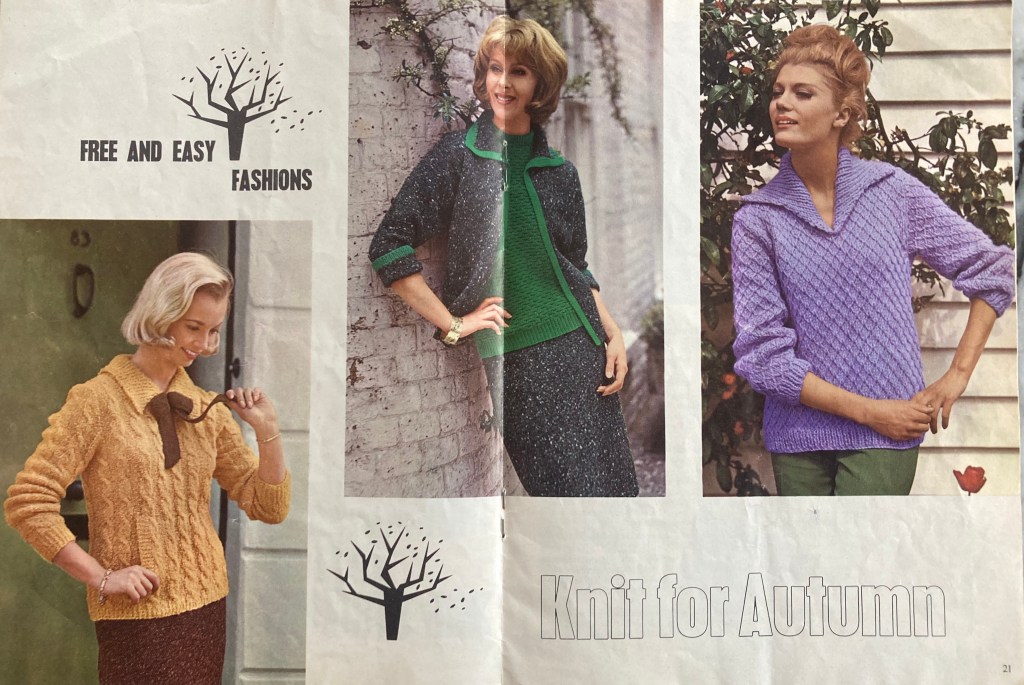
Tweed looks and suits are always popular in the fall, and this month’s issue gives us a loose-fitting suit with a short-sleeved jumper to wear underneath, all in double knitting weight. Nubbly Rimple yarn is also DK weight and still a fashionable choice for this sweater with a contrasting bow-tie. The purple pullover with the big collar (still in fashion after two years!) is made in bulky Big Ben wool. Greens, browns and yellows dominate the colour palette and go with the autumn theme.

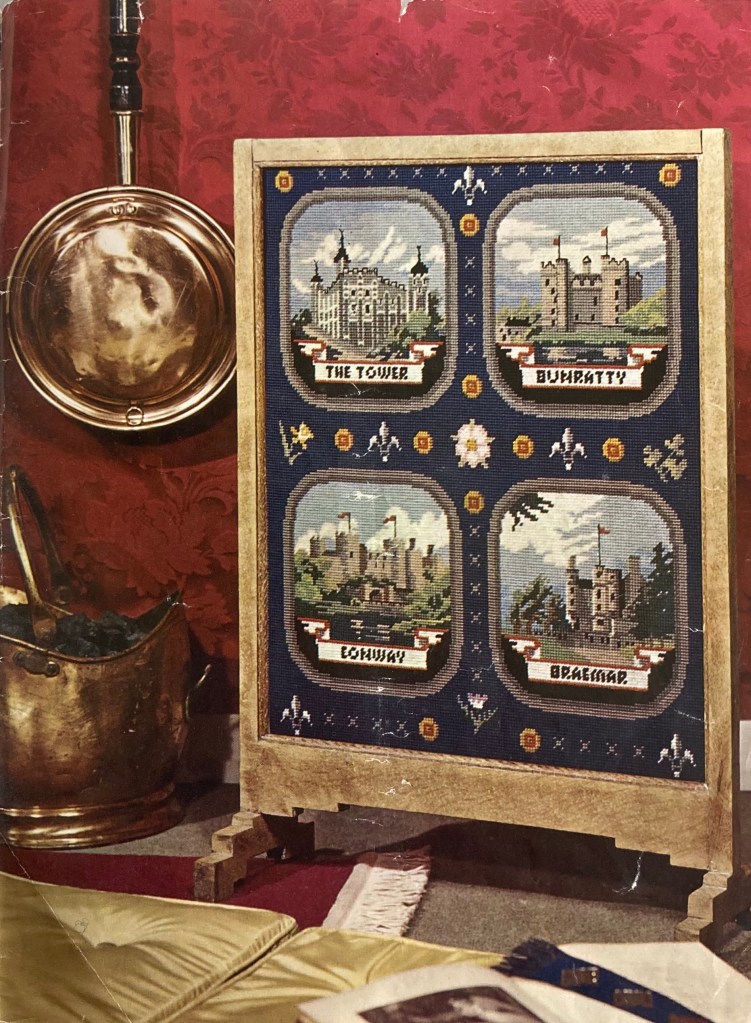
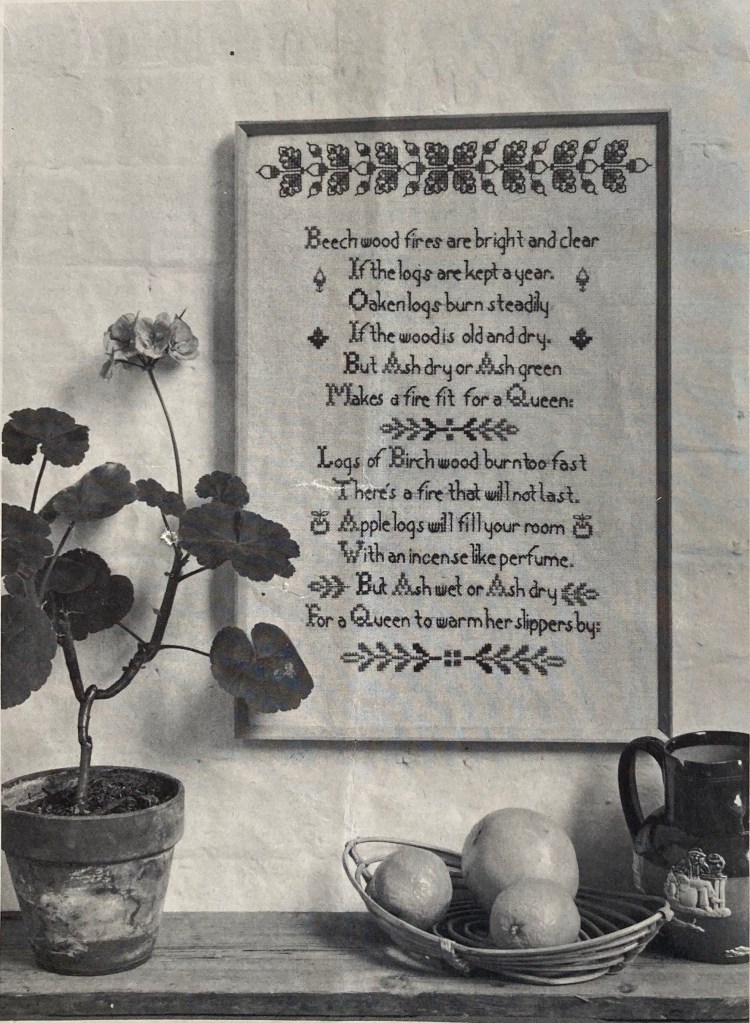
Embroidery and tapestry take a backseat to the autumn knits in this issue, with typical floral chair-back, apron, and traycloth designs. There’s a tapestry of four famous castles, a cross-stitch wall hanging with a poem about what type of wood to burn in a fireplace (I had never heard this rhyme, have any of you?) and a more complexly embroidered cushion of “Indian design”. I cannot vouch for its cultural authenticity, but the woven and latticed stitches are certainly striking and effective.

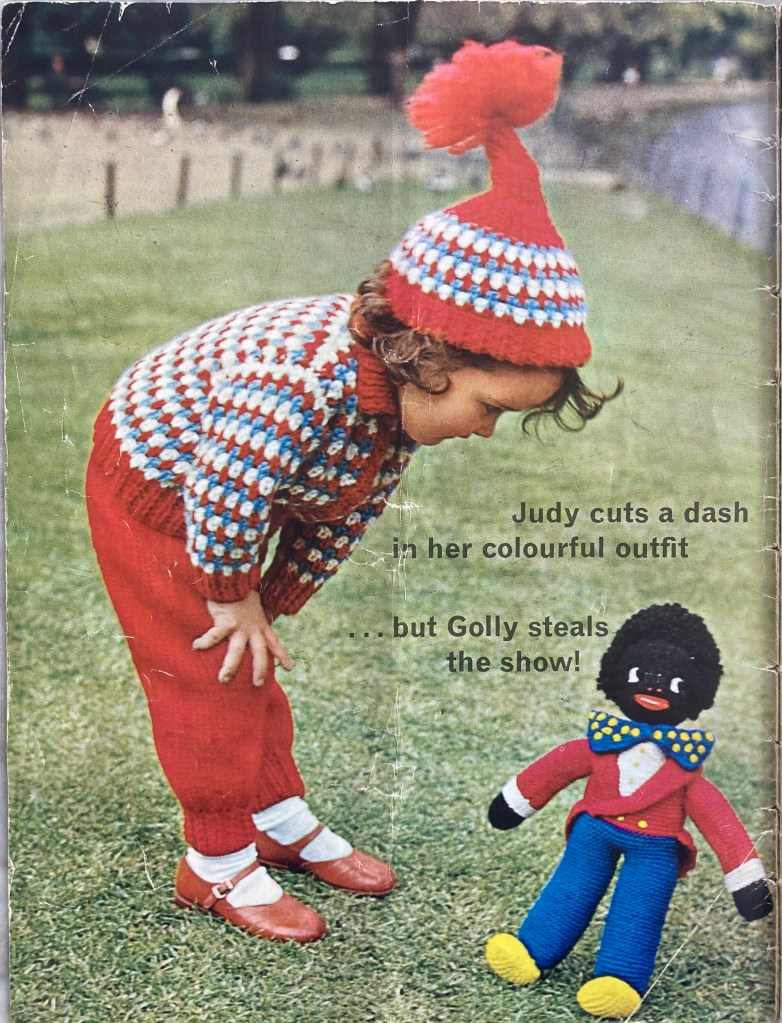
Speaking of cultural history, remember our little model Judy with her “trim Outfit” from 1960? (Of course you don’t, and I wouldn’t have recognised her either if her name weren’t in the caption.) Here she is, two years older, cutting a dash in her warm 3-piece play suit and all set to play with…

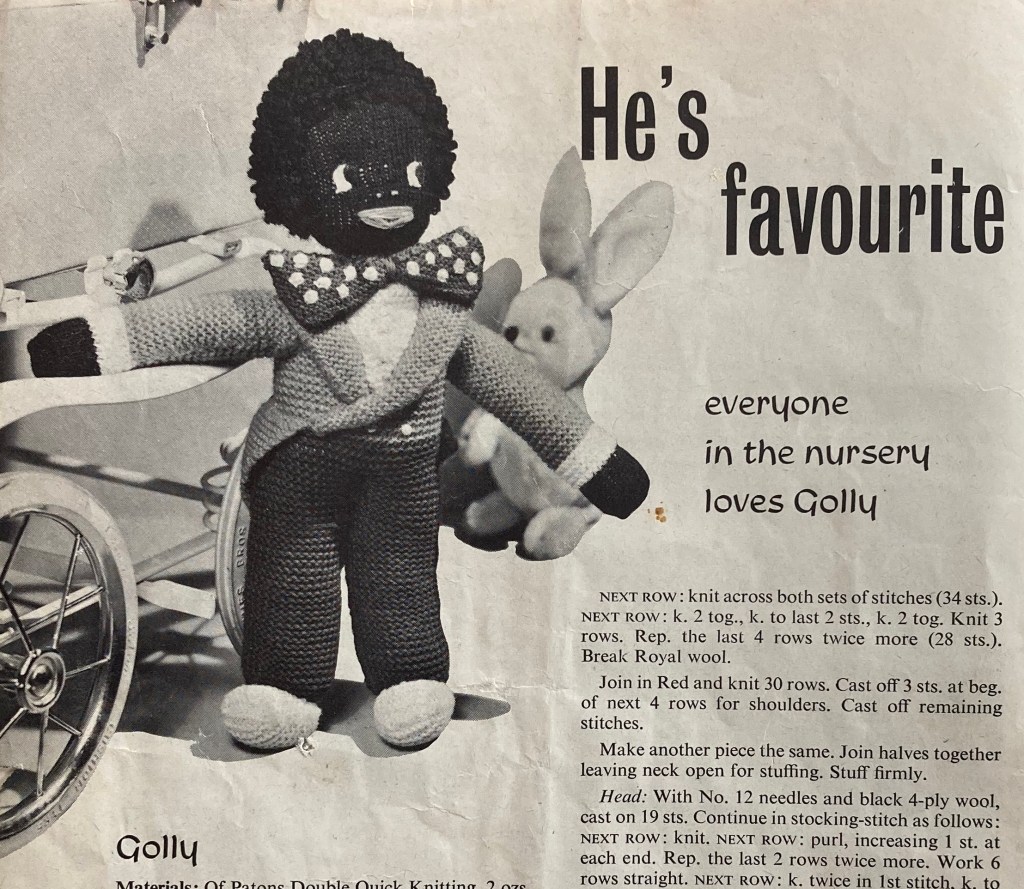
Ah, right. Her “Golly”, who “steals the show” and whom readers can also knit from a pattern in this issue. “He’s favourite”, writes our editress, and “everyone in the nursery loves Golly.” Who is he?

In 1895, the English-American cartoonist and illustrator Florence Kate Upton produced her first children’s book, titled The Adventures of Two Dutch Dolls and a Golliwogg. Over the next fourteen years, she and her mother Bertha collaborated on twelve more books starring the same characters. The books, and particularly the “Golliwog” character, enjoyed enormous popularity for at least sixty years afterwards and “Golly” dolls and toys as well as “golliwog” images on brand names and household products were practically ubiquitous in popular culture — particularly children’s culture — in the UK and elsewhere throughout the 1950s and 1960s.

Though Upton intended the Golliwog(g) to be a positive character and the hero of the story, it can’t be denied that his representation is a racist caricature born of the blackface minstrel tradition in the United States. According to Upton herself, her inspiration for the character was a Black minstrel doll found in her house, and typical “Golly” representations show him with exaggerated, distorted features and wearing an outfit typical of minstrel performers in the early 20th century. Later literary and cultural depictions of “golliwogs” often portrayed them as animalistic, uncultured or criminal, thus reflecting and perpetuating negative racial stereotypes about Black people. Over time, the word “golliwog” and shortened forms of it became used and recognised as demeaning racial slurs.

Though many white Britons, Americans and Australians who grew up with golliwog dolls continue to claim that they are inoffensive (and capitalise on their popularity via Internet auctions and collectors’ organisations), it should be pretty obvious that they, and their related imagery, are problematic. For a more in-depth understanding of why, I encourage further reading, starting with this excellent article from the Jim Crow Museum of Racist Memorabilia at Ferris State University in Michigan (US).

It’s not the first or only time that Stitchcraft (like just about every other knitting/craft publication of its time) has featured patterns for toys or dolls that reflect stereotypes of particular ethnic groups or portray them as an “exotic Other”, even if those representations are supposed to be positive. Many patterns from the 1940s and 1950s are particularly offensive (take my word for it, I don’t want to show them here), as is the use, up until the late 1950s in some cases, of racial slurs as colour names for certain shades of wool (ditto). By the way, I have issues of Stitchcraft and many other vintage knitting magazines up to the mid-1970s and nowhere, in any of them, have I ever seen a model who was not white — the caricatures were also the only representation to be found. Let’s remember that, for all their fantastic fashions, the mid-century decades were definitely not the “good old days”.

On top of all that, there’s no pattern in this issue that I particularly want to make, so I’ll either embroider some anemones on a vegetable bag or finish up something from the WIP pile.

September 1962: First Size Raglan

EDIT October 9th, 2020: Finished!

“The most welcome present you can give to a mother-to-be is something warm and hand-knitted for the layette,” wrote Stitchcraft’s “editress”, Patience Horne, in the September 1962 issue, and it’s still true! If I can’t decide on a project, if I don’t feel like making a full-size adult garment, if I have bits of wool that want to be used up in a useful way, I make a baby jacket. Someone, somewhere is having a baby soon, and I always have a couple of finished objects on hand in case I didn’t know that a colleague or acquaintance was “expecting”.

That was the case this month, funnily enough in my own weekly knitting group. We have been “meeting” via Zoom since March due to the pandemic, and I dropped out for a while due to being ill myself, so by the time I came back I had apparently missed some happy news — one of my fellow knitters will be having a baby this winter. What better time to make this cute and easy first size raglan cardigan?

I had 3-ply wool left over from this jumper, so I was even able to achieve the tiny gauge of 8 stitches to the inch. Only… it turned out I did not have enough of this wool, so the raglan yoke part is leftover mystery purple 4-ply. I’m not quite convinced that it’s going to work; the harsh colour line seems weird at the moment.

I don’t know the name of the stitch pattern, but it’s a lovely easy sort of herringbone:

  • Row 1: knit
  • Row 2: k1, p3
  • Row 3: knit
  • Row 4: p2, *k1, p3*

Except… I decided to make the yoke in one piece, because I didn’t want to sew raglan seams, and the raglan decreases change the pattern at the armholes. I knew that would happen, but was too lazy to work out mathematically exactly what the decreases would do. It turned out that the fronts and back stay in the proper pattern and both sleeves end up in k3, p1 rib. OK, it’s symmetrical and doesn’t looks terrible, so I decided to live with it.

But… then I ran out of the mystery purple wool as well! And had to make the last bit of collar ribbing in another mystery purple-ish wool that was also thicker. Well, at least the colours didn’t clash too much? And I had cute, matching, vintage buttons in the button box!

… except that I somehow utterly failed to sew them on evenly spaced? I could add one more in the gap near the top — there’s a buttonhole there — but somehow the buttonhole in the lower gap got sewn shut while I was weaving in ends or sewing on the front bands. I have enough buttons, but can’t decide whether to cut a new lower buttonhole and add two more buttons or just give up and leave it as it is. At least the gaps are vertically symmetric.

Not my best work, but it will keep a baby warm and clothed. Perhaps I’ll make something else for my knitting friend’s baby — a fellow knitter deserves a more successful project!

September 1962: Overview

Autumn is the nicest season for knitting, and 1960s Stitchcraft usually gave it a little push with extra pull-out supplements, extra colour photo pages, or “bumper issues” full of the latest developments in home-knitting fashion. The September 1962 issue doesn’t have any of these extra features, but it does have a wide variety of designs in mid-weight and warmer wools, starting with the chunky twisted-bobble sweater on the cover. Made in bulky Big Ben wool, it weighs in at a whopping 38 (for the smallest of three sizes, 35-36 inch bust), 40 or 42 ounces (the largest size, for 39-40 inch bust), i.e. about two and a half pounds or 1190 grams. I am guessing the model is quite slender and even she looks bulky in it!

The dresses and separates, made with the same loose fit but in double knitting wool, show a smoother look with minimal patterning. The orange dress in the colour photo and the charcoal-grey dress with the colour-pattern border (“for those who like something really eye-catching”) are the same design, but the pattern-border version is only available in one size, “for the younger girl.” I guess that pattern was just too exciting for doddering middle-aged matrons! The blue and white ensemble, also made in double knitting weight, has three pieces: a simple sleeveless blouse in white k2, p2 rib, a plain blue skirt and a back-fastening cardigan with white vertical stripes on the front. Tops continue to be hipbone-length and hemlines are firmly anchored just below the knee.

Other garments feature interesting colour and texture effects: the man’s “smart weekend sweater” has been treated with a teasel brush to achieve a fuzzy, felted effect. The knitter was not expected to do the brushing herself, but was instructed to “take all pieces at this stage [after knitting all the separate pieces, but before making the garment up] to your usual wool shop who can arrange to quote a price and send them away to be brushed for you.”

There’s also a striped jumper for “young and carefree” women with a fringed collar and hem, similar to the one in the February 1962 issue (yes, it is more or less the same pattern in different colours and with a split collar) and a pullover in an intriguing striped and dotted slip-stitch pattern. Stripes and/or slip-stitches also feature in the three-colour pullover for older children and the toddlers’ dungarees. Colours are navy blue or charcoal grey contrasted with white and neutral pastels, as we saw with the patterned-hem dress and three-piece ensemble.

There is the usual variety of homeware designs, mostly with floral patterns: this month’s flower is the dahlia, or you can sew and embroider and apron with lilac sprays. The leftover gingham fabric from “your” workaday apron can be used for cute animal appliqués on aprons for the children (unsurprisingly, Father seems to be exempted from the washing-up.) There’s also the usual floral cutwork tablecloth and tray cloth and a coffeepot set made in Hardanger embroidery.

Needlepoint fans can make a stool top or a whimsical cross-stitch rug and/or wall panel for the nursery, featuring characters from nursery rhymes. The motifs are separate and interchangeable and can be adapted for different sizes and purposes.

In the children’s serial comic, Peter the puppet has been freed from his marionette strings and is traveling throughout the countryside writing a play about his adventures. Cyril the squirrel helps out by painting illustrations, using his tail as a brush. (But how will Peter get home?) There’s the usual advertisement for Lux washing soap, guaranteed to leave your woollies soft and fluffy, and the latest instalment of the Patons and Baldwins’ “knit to please your man” series of ads, junior version: a teenage girl knits a “nice, husky sweater” for her boyfriend with her own loving hands to show everyone that he’s the “special one.” The young woman on the back cover ad is presumably also trying to catch a man, but she looks more polished in her snappy red dress and white gloves. You can really see 1960s style coming into its own in the straight or A-line sleeveless dress with low contrasting belt, the bobbed and fringed hairstyle and the edgy, off-angle mirror pose. Compared to the designs in this issue, it also shows how fashion-conservative Stitchcraft is.

I’m not sure what I want to make from this issue. I imagine the embroidered dahlias would make a great design for a laptop or tablet sleeve, but I already have a fine home-made laptop cover, not to mention this wonderful gay-geese-in-space tablet cosy. Also, I have probably done enough embroidery for the time being and still haven’t made much progress on this appliqué masterpiece that I started in July. The knit projects are all so bulky and loose-fitting, which is not my style, and I’m not sure I know an appropriately-aged child for the interesting slip-stitch pullover. There was also a perfectly nice, if not exciting baby cardigan (not pictured) in the issue which I could make quickly from stash, which would be useful enough (somebody’s always having a baby) and maybe the best choice for my uninspired mood. Stay tuned and find out!

August 1962: Overview

August is the end of the holiday season at Stitchcraft, featuring transitional styles for the cooler days of September as well as a few more small, easy projects that can be worked on from the deck chair or picnic table. The “Contents” column on the facing page divides the adult garment patterns into the categories “First Autumn Fashions” and “Continental Designs”.

The “Continental Designs” comprise a colour-block pullover for men “from Vienna” in graded shades of green, a simple cap-sleeve, T-shirt-style jumper with a little Norwegian motif, and an “Italian design for late Summer” with bands of red and black intarsia in a diamond pattern. I wish they had used these for the colour photos instead of the bland white pullover on the inside front cover!

Loose-fitting, casual shapes and light, sunny colours dominate, exemplified by the apple-green cardigan, collared shirt-sweater and boatneck twin-set on the front and inside covers. Notice how much less fitted the August 1962 twin set is than, for example, this one from August 1960, not to mention earlier twin-sets from the 1940s and 1950s. The concept lives on, but the line has changed completely. Everything is hipbone-length with no or hardly any shaping.

Babies get a standard, but very pretty, lacy matinee coat and bootees, the “smart teenager” has a machine-knit pullover, and her little sister gets a “gay Rimple design” in the still-popular knitted terry-cloth look, so the whole family is taken care of.

Homewares are always big in the summer months, when many readers understandably didn’t want to hold bulky warm wool in their hands in hot weather. The bedside rug is obviously an at-home project, but the smaller projects could easily be taken along on a holiday. This month’s flower in the gladiolus, but there’s also an orchid spray and some forget-me-nots, along with two sewing patterns to embroider them on: a round baby shawl or this wonderful little girl’s dress. For once, you don’t even have to send away for the patterns, as they are geometrically quite simple — the shawl is just a circle, drawn directly onto the fabric with a pencil held on a length of string, and the dress is made up of rectangles with measurements given. I would love to make the dress! I just don’t think it would get worn, since it would only be for “dress-up” occasions, of which there aren’t going to be any for a while.

The back cover shows an interesting feature which took shape in the early 1960s issues: tapestry projects specifically for church use. In this case, there’s a runner and kneeler in shades of red and blue. If anyone happens to know why or if these colours or this pattern are significant in whatever type of Christian tradition, please feel free to tell me, as I don’t know anything about it. The rug, especially, does not say “church use” to me in any way that I can recognise and I could just as easily see it in a normal hallway.

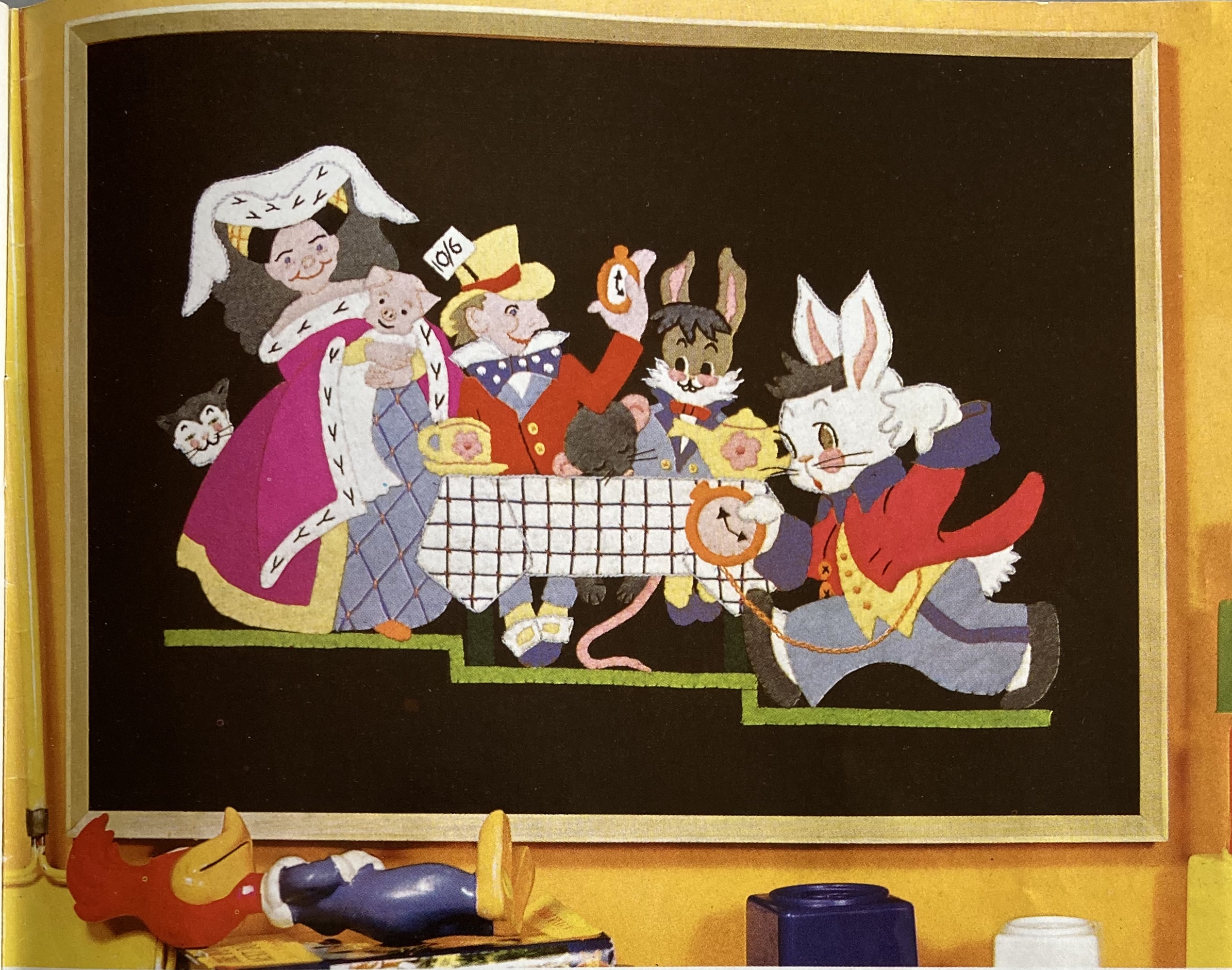
This issue doesn’t stop! The “Readers’ Pages” offer two more very simple projects: a reprint of a young man’s waistcoat from 1957 and a stash-busting baby blanket from double crochet hexagons. And just when you think you’ve come to the end of the issue, here’s this incredible Alice in Wonderland-themed wall hanging in felt appliqué and embroidery:

I’ll close with this full-page ad for Patons & Baldwins wools, showing a newly married couple decorating their home. The happy bride is instructed to

Look after him well. Find out what he likes, and why. See that his clothes are well kept and well pressed. Learn to cook his kind of food. Learn to knit his kind of sweater…

While I’m certainly not surprised that a 1962 advertisement would speak to women like that, I do find it interesting to compare the early and mid-1960s ads — which take on this type of “you exist to please your man” language more and more throughout the years — with those from the 1950s issues, with their much more independent picture of womanhood. Many of the knitting patterns in the earlier issues are explicitly designed “for the office” and most of the advertisements portray women living active, interesting lives in their comfortable shoes and unbreakable skirt zippers. In the wonderful tampon ads (that sadly disappear around the late 1950s), they don’t even let “problem days” stop them from doing anything! In contrast, the full-page P&B ads starting up around this time always feature a man or child with the woman in question and the text is inevitably some variation on “you must do this to please your man.” I had always thought of the 1950s as being a much more repressive time for women that the 1960s, when roles began to change, but judging from Stitchcraft (which, to be fair, is quite conservative both fashion- and otherwise), the earlier part of the decade is more of a backlash than a progression.

I don’t know what project to make from this issue and I still have so many WIPs, both for this blog and otherwise. Maybe a nice, easy flower embroidery on a vegetable bag?