
EDIT June 20, 2020: Finished!
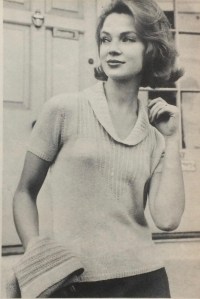
May 2020 went quickly and is already over, but (spoiler…) my May 1962 project didn’t get finished until June. It was a lightweight pullover in 3-ply wool with three-quarter sleeves and a lacy yoke, simple, elegant and “in a cooler trend for summer.”
I bought the wool — Regia 3-ply, which has long been discontinued — from a wonderful little wool shop in my town that used to sell and maintenance hand knitting machines as well. It was a tiny, one-woman operation with unpredictable business hours, whose elderly owner lived in the apartment above the shop. She often had vintage second-hand knitting machines for sale and I always meant to buy one, but the times when she had one available and the times when I was able to actually find the store open never seemed to coincide, and sadly, she passed away last year. There were no knitting machines left in the close-out inventory sale, but still plenty of fine-ply wool, which is almost impossible to find in normal wool shops these days. RIP lovely little store and lovely lady who ran it! I will think of you whenever I wear this jumper.
In spite of the fine wool and small needles (2.5 mm), I was unable to get the required tension of 8 stitches and 10 rows to an inch, so I adapted and made the smallest size, which should come out to fit me. I say “should” because the lace pattern used on the sleeves and yoke bunches together quite a lot before blocking. I blocked both sleeves on the needles to try and measure it out (see photos…) but I still wasn’t sure if they would fit properly onto the yoke. They did, with no further alterations.
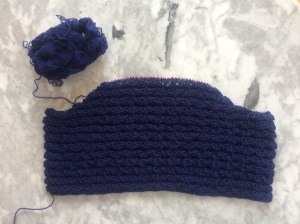
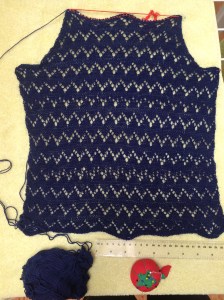
The only real alteration that I made (besides making the body in the round to save time and seaming) was to alter the decreases on the front and back after the armhole bind-offs and before the beginning of the yoke. The pattern is written with identical back and front pieces, but I wanted the yoke to hang down further on the neck on the front than on the back, so I make the back pre-yoke part longer and the front pre-yoke part shorter by decreasing more or less frequently than in the pattern.
The lace stitch refused to block out flat, no matter what I did. I wash-blocked, stretched and pinned both sleeves before making the yoke (see photo above) and they had bunched up again by the time I was done knitting. I wash-blocked, stretched and pinned the whole garment after completion and the sleeves bunched up again five minutes after I unpinned it (dry). I pinned the sleeves and steamed them, then ironed them with the same result. Did I mention that this yarn is 75% wool and 25% acrylic, which normally blocks for good when any kind of heat is applied? Well, no matter what I did, it didn’t take. The yoke stretches out naturally while worn, but the sleeves bunch up. Since they are supposed to be below-elbow-length anyway, I decided to call it a design feature and live with it.
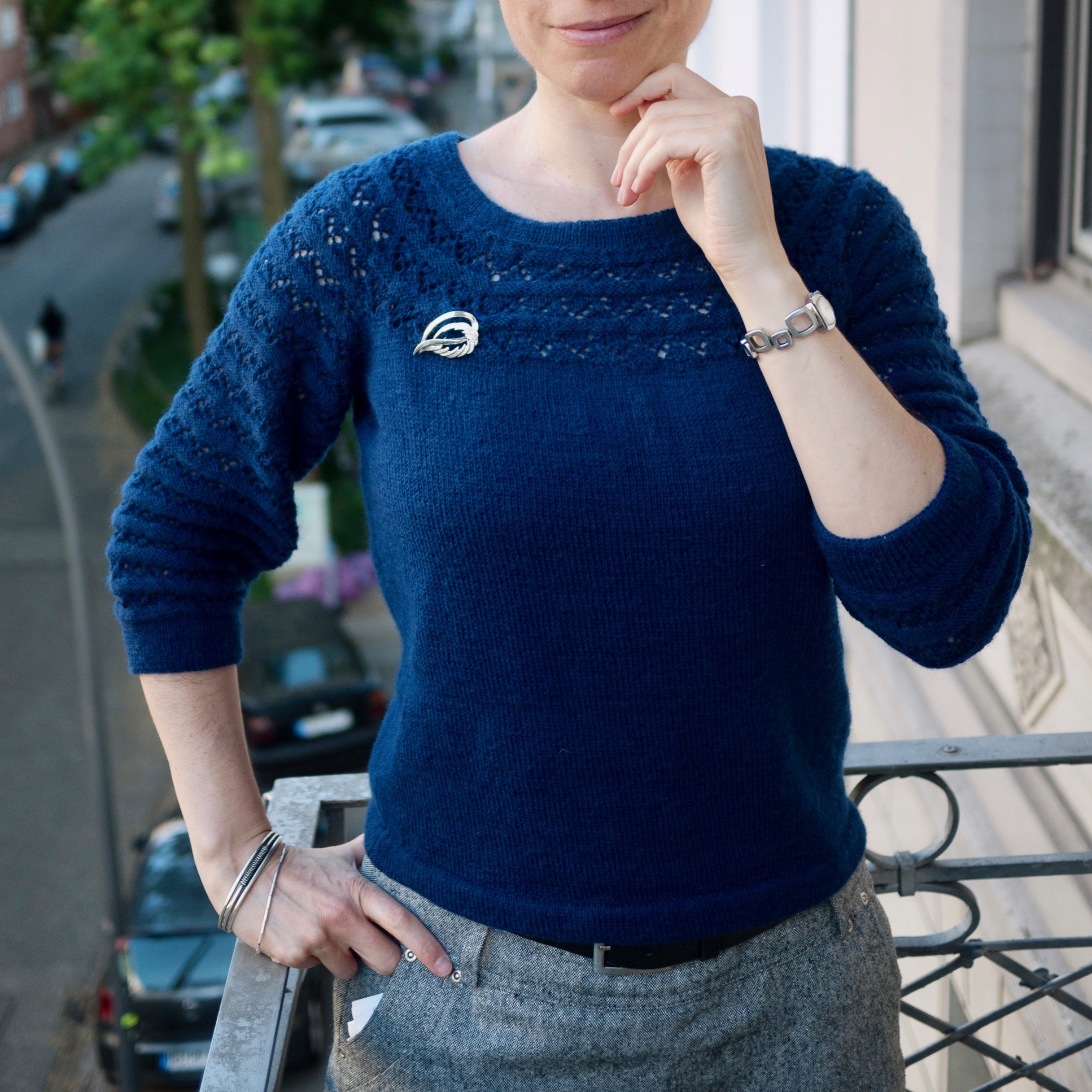
On the whole, I’m quite happy with it, and it’s the perfect weight for cooler summer days.
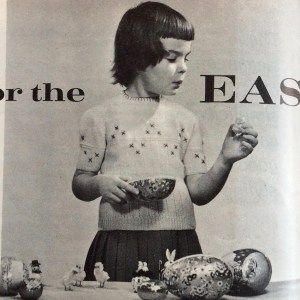 Greetings from the Covid-19 lockdown! March 1962’s project sports the headline “Ready for the Easter Parade” in the magazine, but there are definitely not going to be any Easter parades in March 2020. I hope all of you, dear readers, are staying healthy and staying home.

 UPDATE AND EDIT February 25, 2020: Project finished!
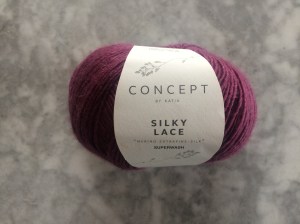
 There were only two problems. Problem number one: Concept Silky Lace is only available in colours I don’t wear (shades of white and pastel) as well as orange (great, but I used it for the other project), a sort of light jeans blue (OK, but not exciting) and purple. Purple is not my best colour, but given the limited choice and the fact that I really wanted to use this specific yarn, I went with it. That led to problem number two: there were only two balls of it in the store and they had to order more. Unsure whether the two additional balls I ordered would be from the same dye lot or if it would make a difference if they weren’t, I started by making the sleeves with the yarn I had, and waited.
 It took more than two weeks for the yarn to arrive, so I was woefully behind. Also, the yarn that arrived was from a different dye lot, so I wasn’t sure how to camouflage the colour changes or if I even had to. After making the ribbing for the body in the “old” yarn and the body (stockinette stitch, and I decided to do it in rounds to go faster) with the new yarn and not noticing any difference, I just used up the old yarn and moved onto the new in the fancy-yoke part. It worked fine and didn’t make a stripe — thank you Katia for your excellent colour-match dye work.
 Once the project got started, it was finished very quickly. I was worried about the size, as it seemed to stretch quite a lot width-wise and I though it would be too wide and baggy. Once it was bound off and sewn, it was fine. I made it an inch longer in the body than it said to make it in the pattern, but I could have made it even longer — people were really short fifty years ago!?! Blocking helped stretch out the length.


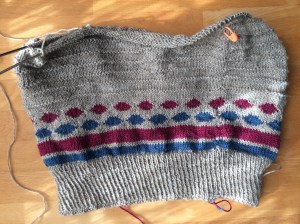
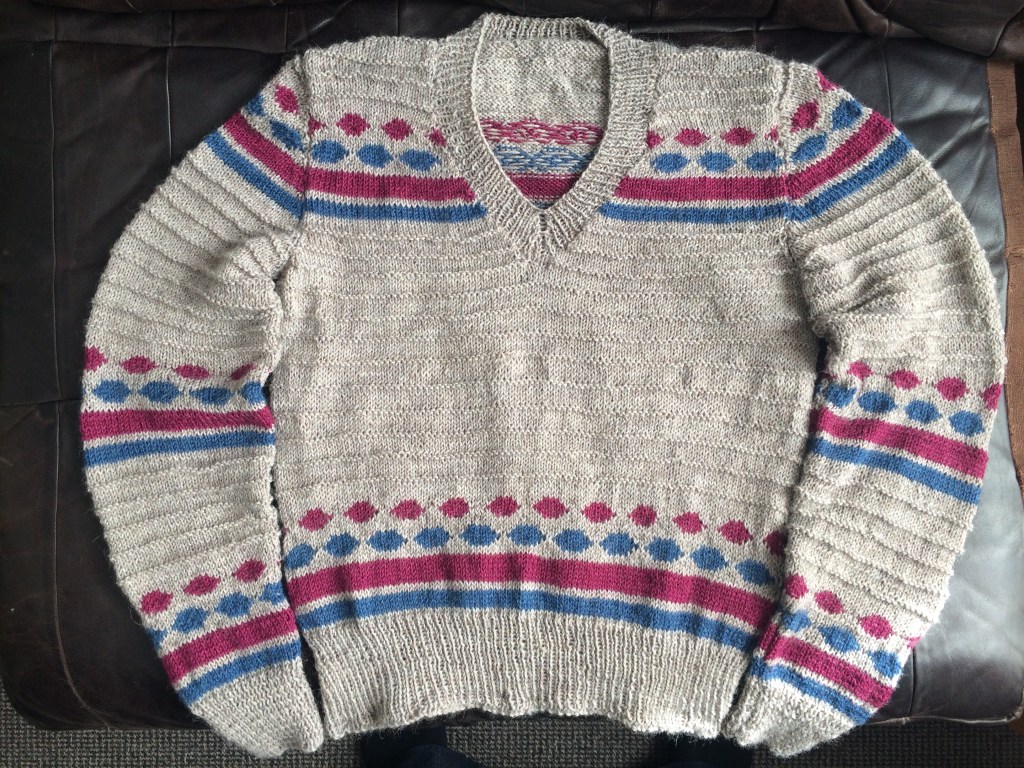
 My second project for March — though it wasn’t finished by the end of the month — was a young boy’s pullover with a cute stripe-and-dot pattern.
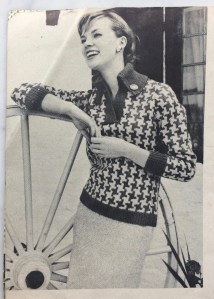
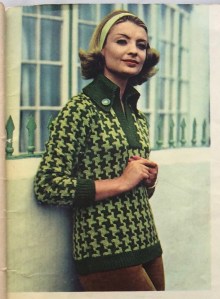 My knitting project from this issue was a houndstooth-check jumper, made in double knitting wool in two shades of green. Large checked patterns of this type were popular this year, which is presumably why Stitchcraft categorized this jumper as “fashion knitting” rather than “casual knitting”.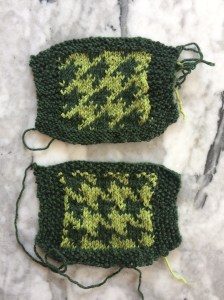


 The Stitchcraft Sixties