July 1963: Overview

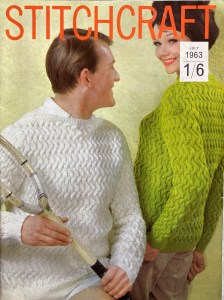
Cover photo of Stitchcraft magazine, July 1963

“In the Holiday Limelight” is the theme of this month’s issue, covering sporty, casual garments for holiday wear, a few slightly more dressy options and — with one incredible exception — quick and easy homeware projects.

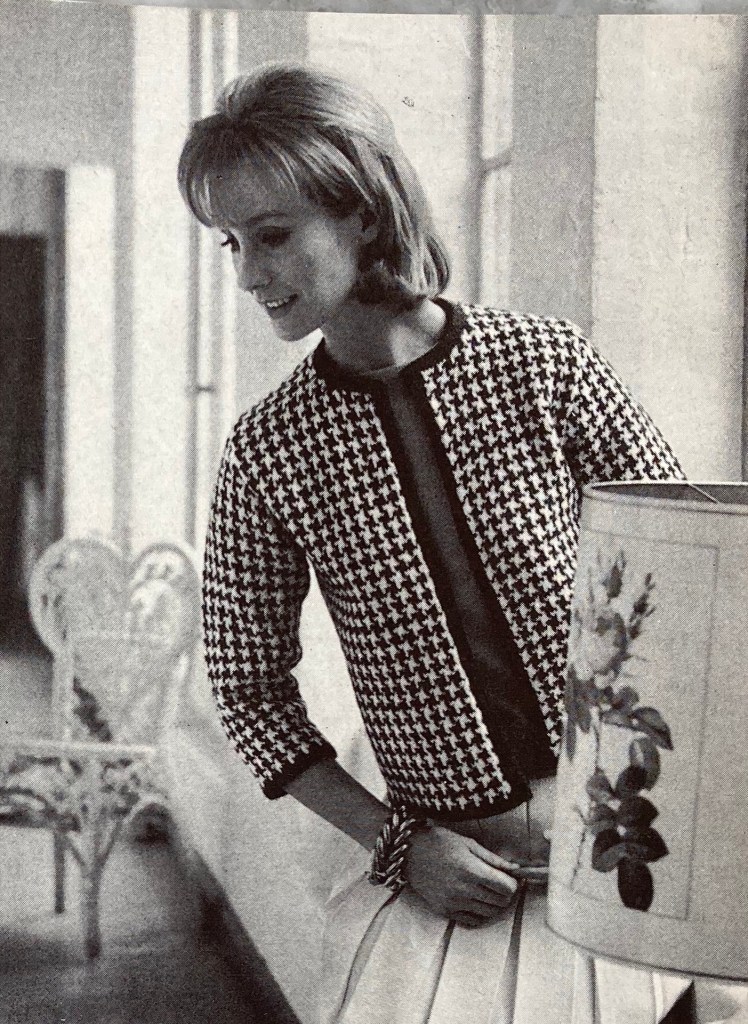
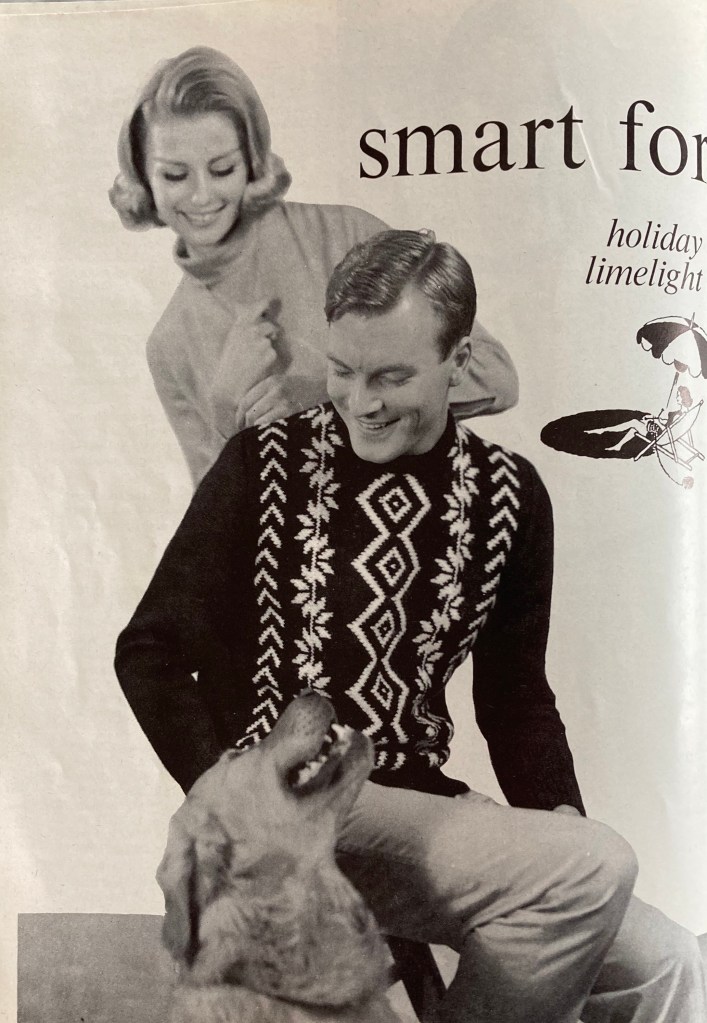
Most of the adult garments seem quite warm and heavy for summer wear, but most are meant to be worn as outerwear in an unpredictable northern-maritime climate. Our partner-look cover duo, for example weighs in at 22-24 (hers) or 28-30 ounces of heavily cabled DK wool and is expressly touted as “in colour for sailing” (hers) or “white for tennis” (his). I imagine it would be quite warm for tennis but probably very good for sailing, as the textured stitch pattern would ward off splashes and insulate from cold winds. Unusual cables are also featured on the bright yellow button-up cardigan, while the design (“from Vienna”) of the mens’ black-and-white pullover suggests a cable-like vertical movement in the sideways-knitted colourwork front piece. A short-sleeved collared jumper and houndstooth-pattern jacket round out the warmer, double-knitting-weight garments.
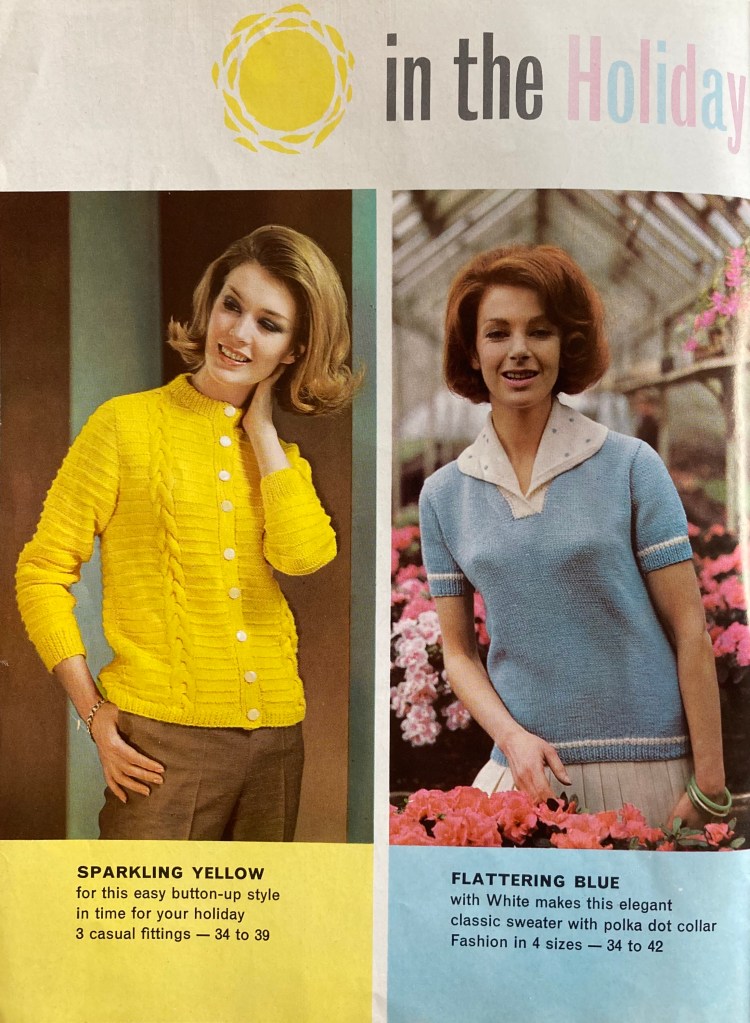
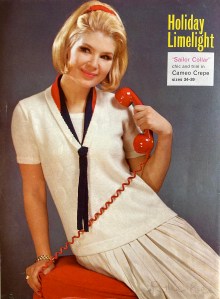
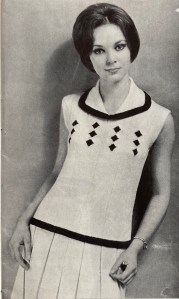
For more dressy occasions, there are two lightweight jumpers made of Patons Cameo Crepe (fingering-weight wool with a tight twist for a smooth texture in stocking stitch). Both have a slightly nautical theme, at least in the names and colour choices. The “sailor collar” jumper is excellently photographed with matching red hairband and telephone! The diamond-pattern jumper in white with marine blue has a similar round collar to the heavier short-sleeved jumper, as well as a similar idea of using little dots or diamonds as decoration. (I imagine the diamonds must be placed very carefully to fall above the bustline.)

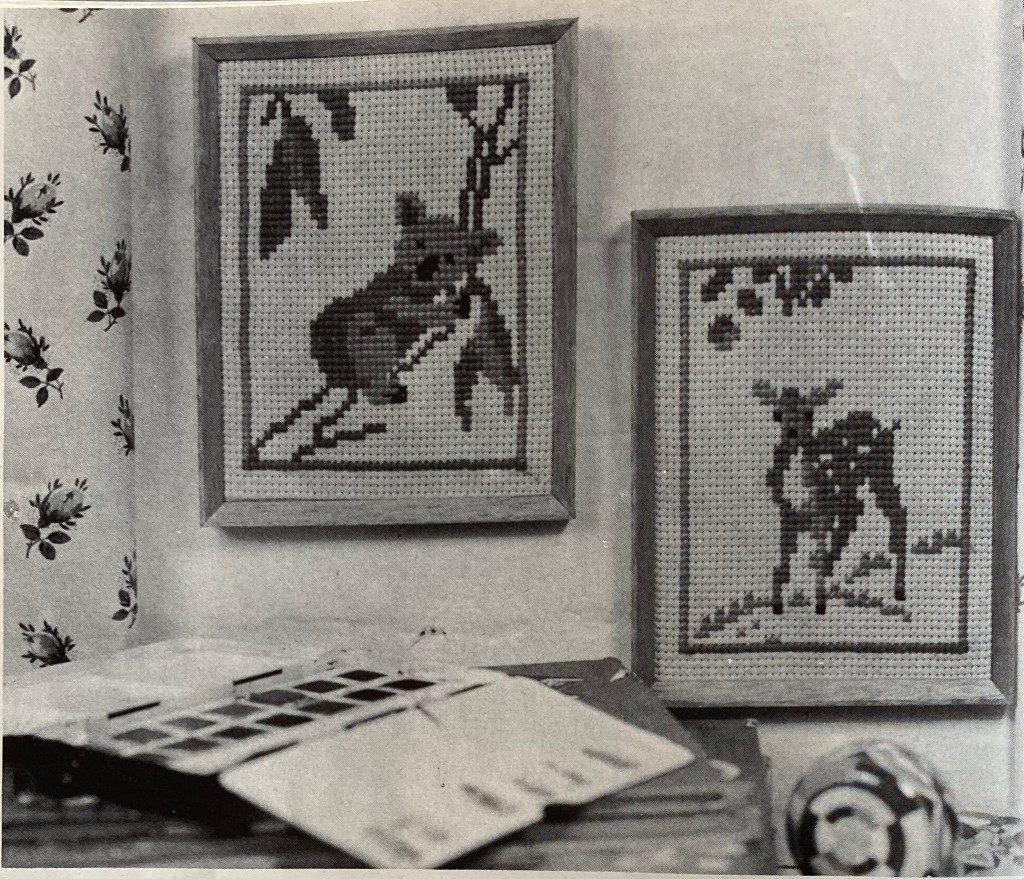
There’s a charming striped cardigan for a young girl, who could be encouraged to practice her budding handcraft skills on two miniature cross-stitch pictures — a deer and a koala bear. Embroidered on Bincarette mesh fabric (an older word for Binca fabric, roughly the same as Aida but slightly fewer threads per inch), the background is not filled in, so there are very few stitches to actually make and they could be easily done by a young child to hang in her room. More experienced “embroideresses” can make this densely-worked cushion, which combines cross-stitch with Holbein or double running stitch in a tessellated design.

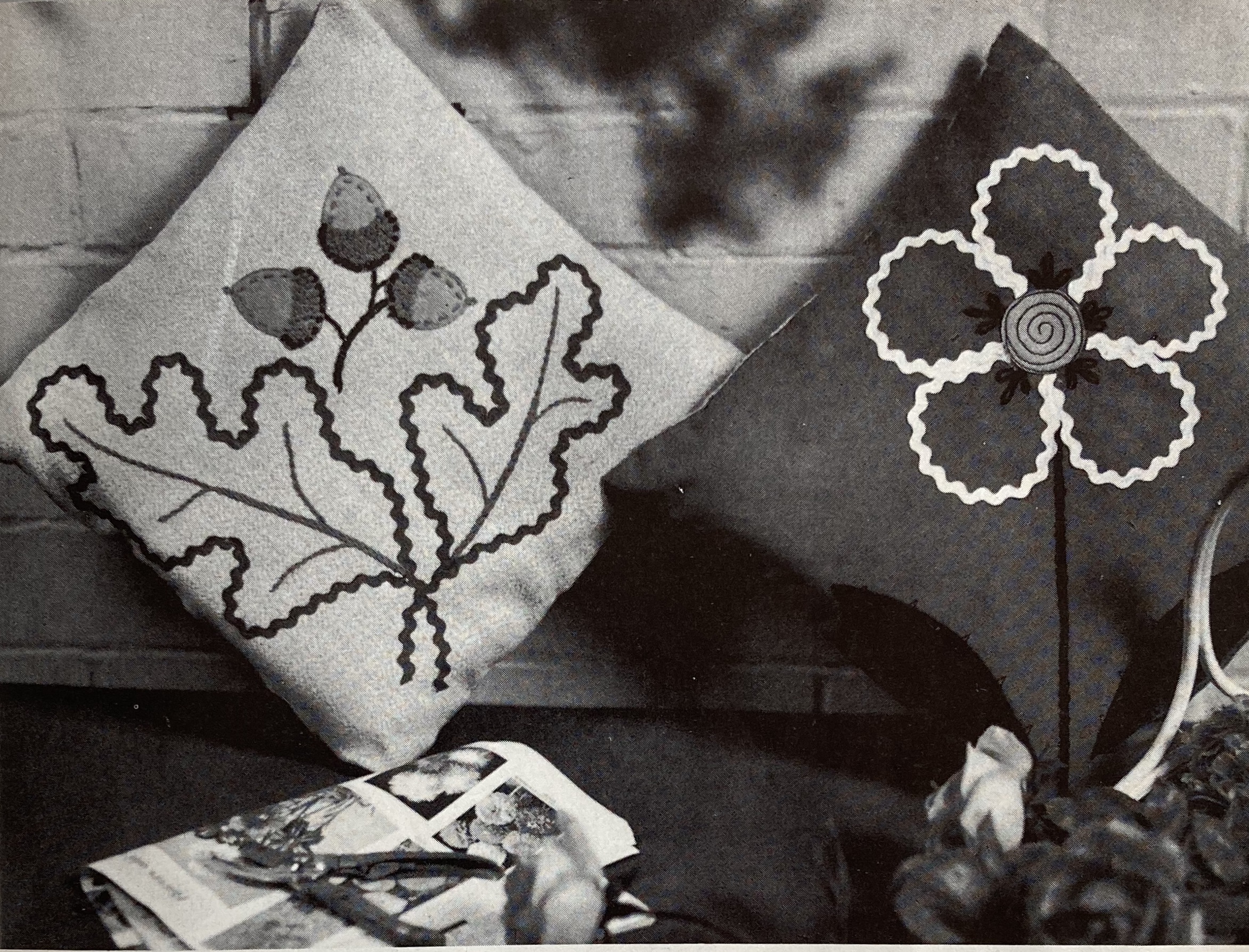
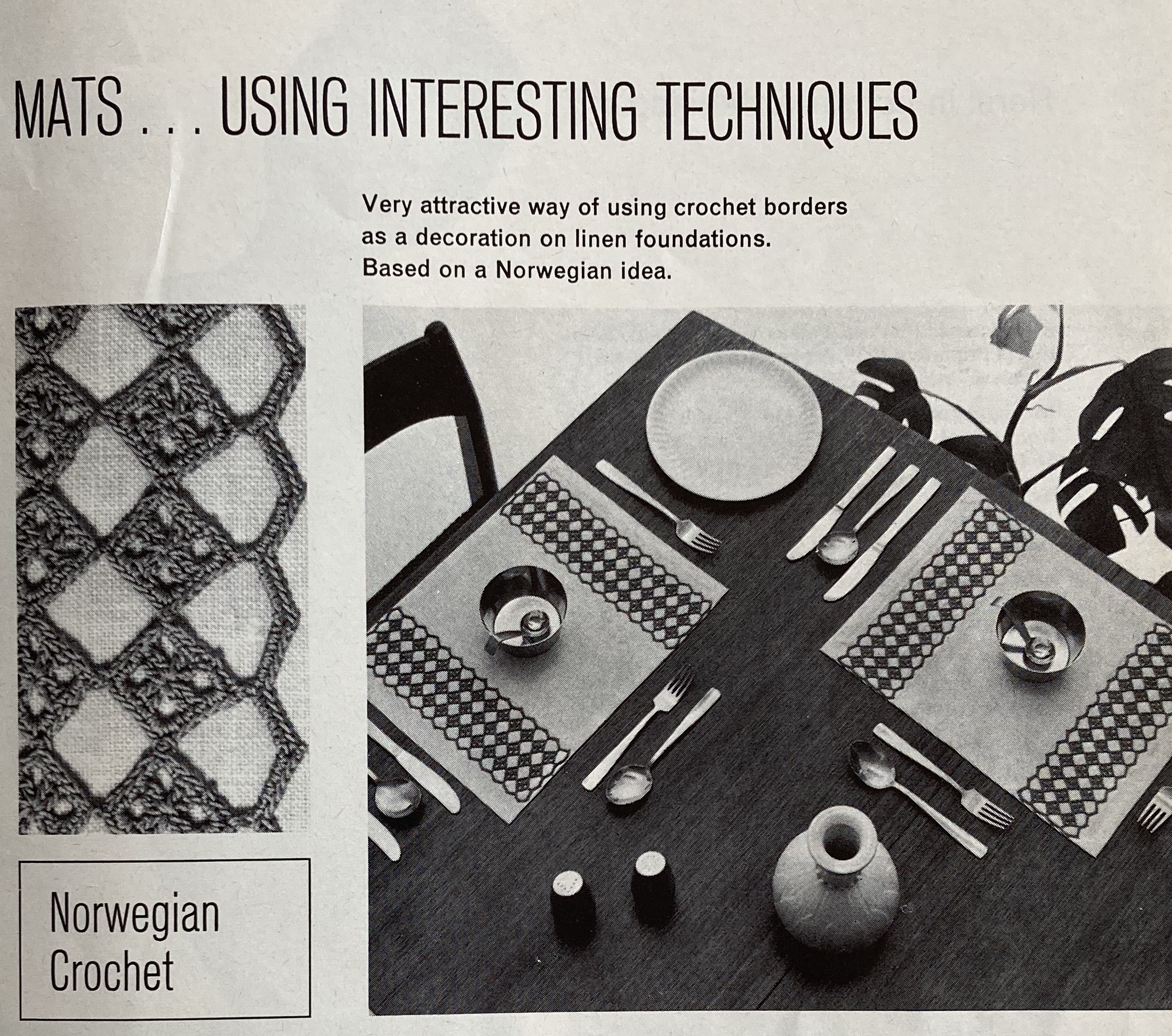
Continuing the homeware designs are two hard-wearing, but very easy to make, applique/embroidery cushions for the garden. Perfect for a staycation, they are made with strong sailcloth material and stuffed with foam clippings to repel moisture. Readers could set their garden table with interesting placemats made in blackwork or with appliquéd crocheted bands. Especially pious readers who prefer to spend their holiday doing church work can even make a kneeler, a Bible marker and/or a secular footstool cover in tapestry.
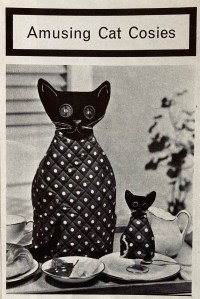
Oh yes, and in the is it-for-a-bazaar-or-is-it-just-bizarre category, here are some “amusing” coffee-pot and egg cosies in the form of sad, legless, eyes-follow-you-around-the room-quilted cats! Add them to your collection of murderous crocheted clowns, evil felt Father Christmases and disembodied-head egg cosies, or demand that your church sell them at their next bazaar in return for the lovely Bible marker you made for them.

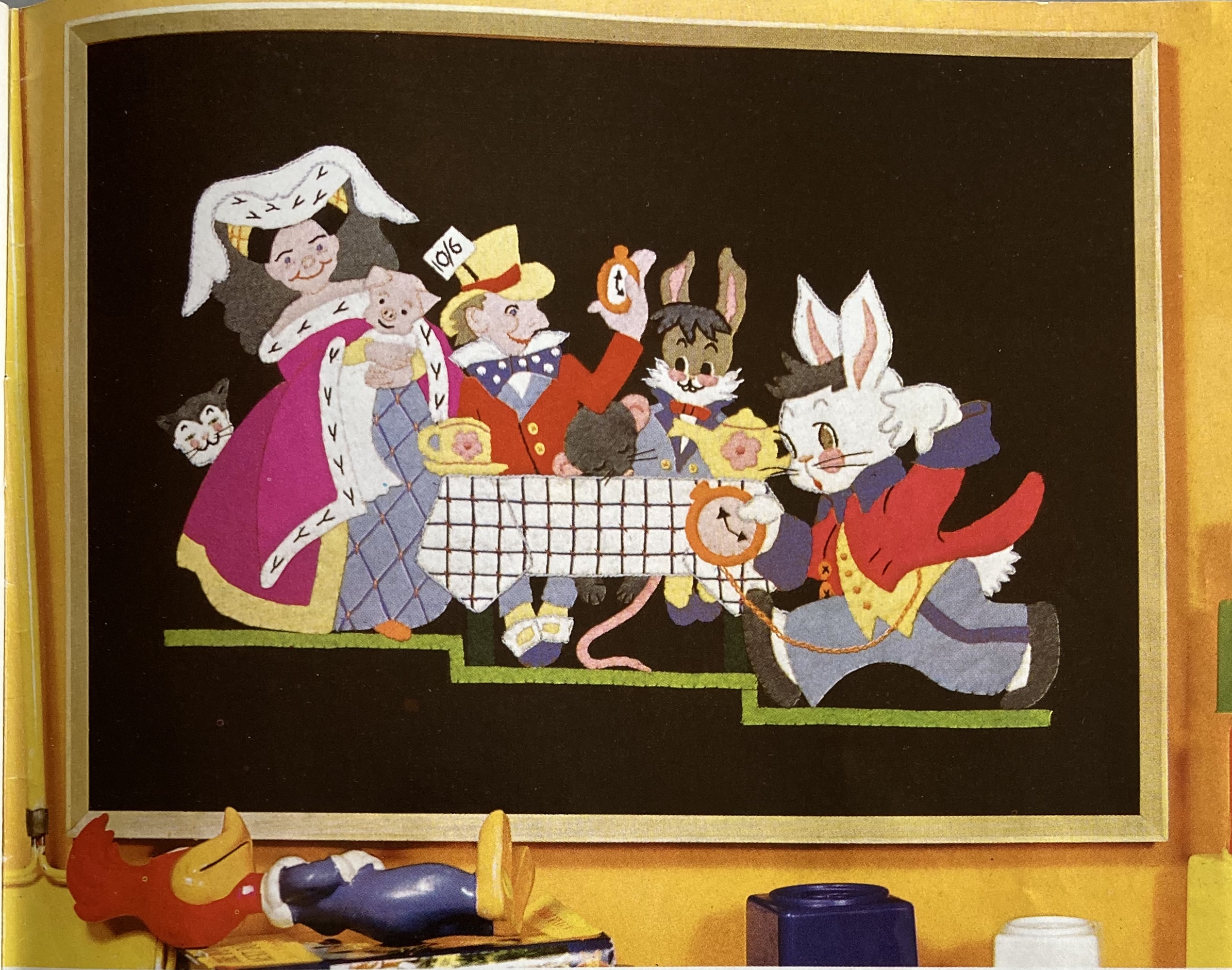
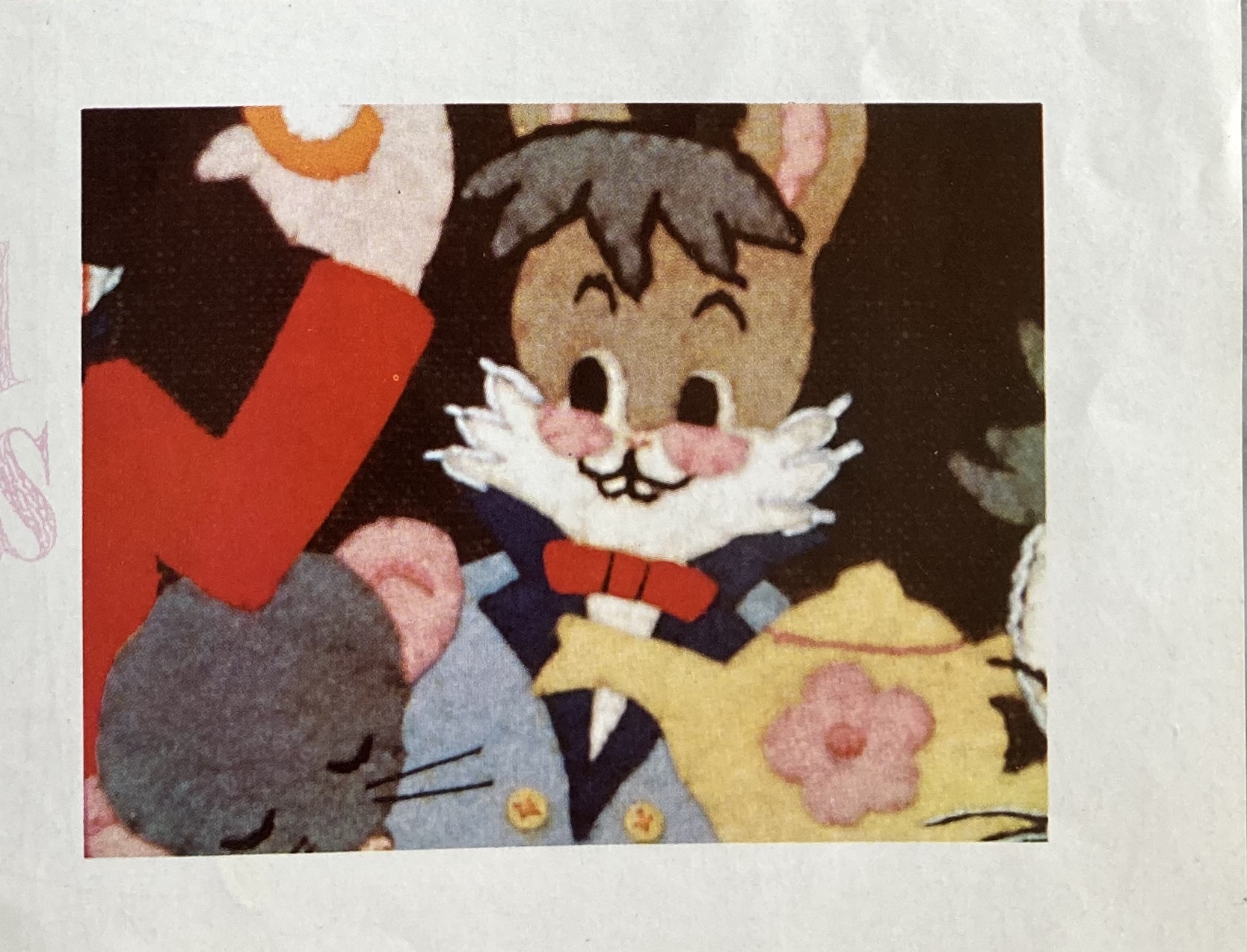
But wait, there’s more, and as always, the best comes last… Did I say that the homewares were easy, with one incredible exception? I am in awe of this large (16×22 inches) yet finely detailed appliqué wall hanging depicting the Mad Hatter’s Tea Party from Alice in Wonderland. It is the companion piece to the “Alice” wall hanging showing the Queen of Hearts and the gardeners from the August 1962 issue, and is designed so that both pictures can be fitted together to make a single panel. The stitch detail and precision required to make all those tiny felt pieces fit perfectly is amazing.
That wraps it up for our July 1963 issue! I will probably make the diamond-pattern jumper, since I have some more of the annoying un-plied cotton from the Hamburger Wollfabrik that I might as well use to make something with, and the long-line style will suit me well. I might, just might, also finish the blackwork butterfly cushion sometime soon. Happy Summer!

April 1960: Overview

coverapr60“Already there is talk of holidays” says the introduction to the April 1960 issue, “and whether it’s to be the sea, country, sight-seeing or sailing, you can’t go without your holiday hand-knits.” At the same time, spring and April mean Easter, with lots of opportunities for hand-made accessories and knickknacks.

For knitters, there is a larger variety of wool weights and styles than in the last couple of issues. Houndstooth and checked patterns are still going strong — look at that great jacket on the front cover! — but lace and Rimple designs are offered too, and garments for babies, toddlers, and adult men and women.

For the patient, there is a cute 3-ply top and a shirt in cotton crochet yarn at 12 stitches to the inch. (This is the only type of cotton yarn I’ve ever seen featured in Stitchcraft, but usually it’s used for making doilies or other fine crochet items.)

For those who prefer to actually get their garment finished before the summer holidays start, there are “partner look” sailing sweaters, the houndstooth jacket on the cover, and pullovers in Rimple and Big Ben yarns. Rimple will continue to not be my taste in terms of texture, but isn’t the model cute?

Easter embroidery is big, and around this time, Stitchcraft started to include designs for church accessories — hassocks and kneelers in tapestry or cross-stitch. For those for whom Easter is less of a religious experience, there are some great “Easter novelties” (cosies for teapots and toilets) and who could resist those gay kitchen ideas? Standard needlework ideas for the home include a fitted chairback and a lovely Persian-inspired cushion.

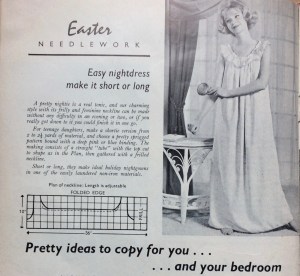
One thing that is really different in this issue is a sewing pattern, common in 1940s and 50s Stitchcraft but rare in the 1960s. It’s a very simple nightdress (for Easter and/or your holidays, of course) that is recommended to be made in “one of the easily laundered non-iron materials”, i.e. nylon or early synthetics.

nightdress

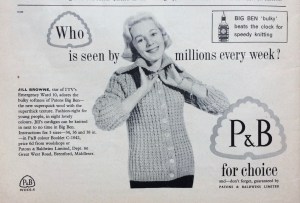
April’s celebrity “plug” is given to us by Jill Browne, the actress who played Nurse Carole Young on the soap opera Emergency – Ward 10, which aired on ITV from 1957 to 1967.  I have to admit I have never seen it, but it seems to have been quite progressive for its time, with Joan Hooley playing a female surgeon in an interracial relationship that was sealed with a kiss onscreen.

starad

On the back pages, it is the end of adventures for Good Teddy Bear and Naughty Teddy Bear, but they got two gay jerseys knitted for them in the end, so I think everyone was happy. Plus you can make your very own teddy bear to commemorate the series! The ads are for the usual things, except for this gem of a potty-training stool called “Bambino”, appearing for the first time.

My projects from this issue will be the 3-ply top and the appliqué goslings on a tea cosy. Happy Spring, everyone!


January 1960: Green check jumper

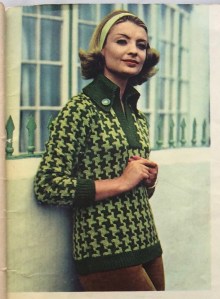
greencheck_issuefoto2My knitting project from this issue was a houndstooth-check jumper, made in double knitting wool in two shades of green. Large checked patterns of this type were popular this year, which is presumably why Stitchcraft categorized this jumper as “fashion knitting” rather than “casual knitting”.
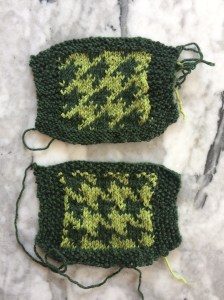
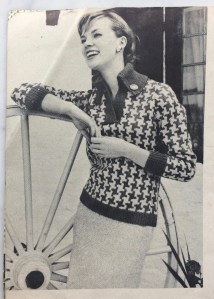
I love the big green collar and the interplay of the two colours. What I didn’t like as much was the pattern itself. It looked fine in the photos but in a swatch, I found it looked too much like plusses or crosses and not like what I think of as houndstooth. Also, the straight vertical placement of the stitches made the fabric pucker. I experimented with a couple of other houndstooth variations and decided on the second one (lower swatch in photo.)greencheck_2swatches

My only other intended modifications were minimal: knitting it in the round with invisible fake “side seams” instead of in pieces with real seams, as I don’t like purling in two colours, and making the sleeves full-length instead of the 3/4 or 7/8 shown in the photos. However, once the body and upper back were finished, it looked as though the upper back would not be wide enough. I suppose the average Stitchcraft reader of 1960 was not particularly athletic, by modern standards… The shoulder width was fine, so the solution was to simply space the decreases from the beginning of the armhole farther apart (at each end of every 4th row instead of every other row). I did the same on the upper fronts and increased the total stitch count on the upper arms by 4 stitches, making the decreases more gradual on the sleeve caps as well.

greencheck_issuefoto1

The pattern calls for Patons Double Quick Knitting. I got a good gauge (6 sts to an inch in pattern) and a fantastic colour match with Patons Diploma Gold DK, a wool-acrylic-nylon blend. I had plenty of it on hand from a frogged project, but the work in progress was nubbly. I thought it would get smooth again with blocking, but alas, the original project was probably blocked “too well” and the finished product is not quite smooth. Since it’s the same all over, though, I decided to think of it as a design feature.

The fit is excellent, everything worked out wonderfully and I am very satisfied with the final result.


January 1960: Overview

jan1960cover

January 1960 wishes us a Happy New Year with designs for “fashion” and “casual” knitting, a machine-knitted jumper, children’s and baby clothing to knit, a matching rug and cushion, and “something completely different in embroidery” — cushions and wall hangings with Victorian-era train, carriage and bicycle motifs.  I find it strangely appropriate that Stitchcraft started a new and, one would expect, exciting decade with a look to an even more conservative past — the magazine was not exactly innovative, and its readership enjoyed patterns that give a nod to current styles without being all too forward-thinking.

victorian
Dashing away!

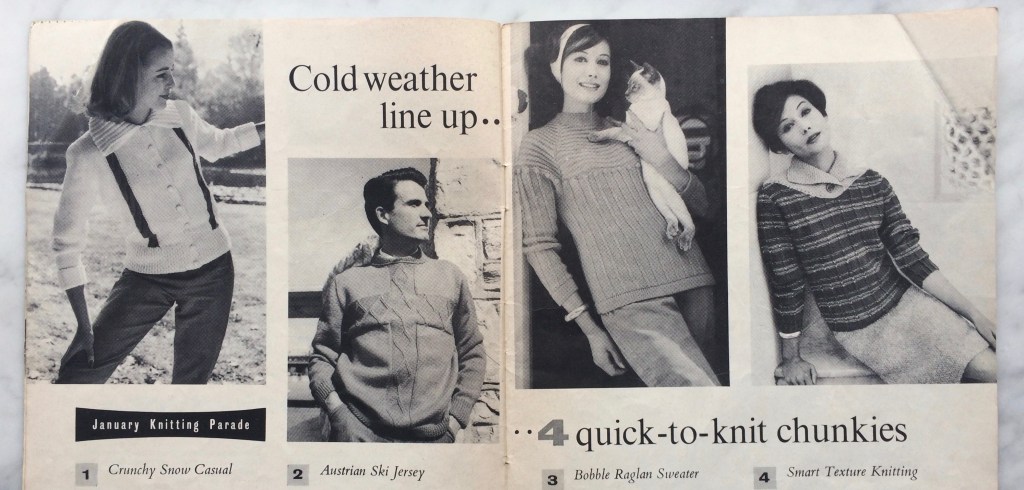
The jumpers (or sweaters: Stitchcraft appears to use the two words interchangeably) continue the trend for somewhat thicker yarn — as Patience Horne writes in the introduction to this issue, “we all seem to get busier and busier these days” and the 9-stitches-to-an-inch creations of the 40s and 50s were slowly getting rarer. Five of the eight adult garments in this issue use double knitting yarn.

coldweatherlineup


On the embroidery front, there is a lovely design for a glass-topped coffee table, an adaptable Jacobean design in colour on the back cover, and a simple “leaf” cushion.


The Victorian cushions are “gay”, as are the children’s gloves. One of Stitchcraft‘s endearing qualities is its use of the word “gay” to mean charming, colourful, sprightly et. al. long after the word’s more modern meaning eclipsed its original one. It’s not yet quite so funny in 1960, but the word still appears in post-Stonewall issues up into the early 1970s. Yet another sign that Stitchcraft did not move with the times! I love all things gay no matter what sense of the word, so will be sure to point out this charming feature whenever it appears.

The ads feature Lux soap flakes, Wearwell facing ribbon and a Tru-Matic knitting machine  — all repeat customers.  There is always a little comic for the kiddies, and we’re already at part 3 of this one, “A Tale of Two Bears.”

I will be making the leaf cushion and the “green check jumper”, shown in colour on the inside back cover.