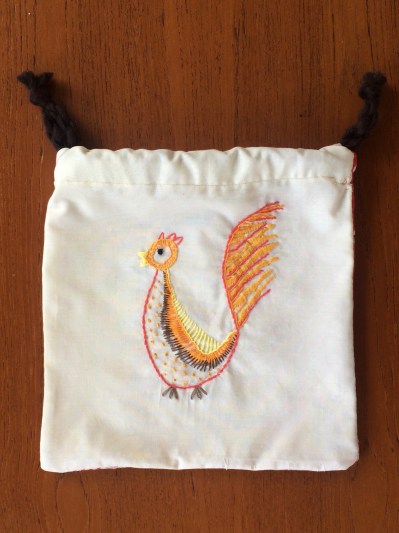
No, it’s not the menu choice for tonight’s dinner, don’t worry. My February 1962 was a little embroidered… animal , originally designed for a toddler’s “feeder” and which I adapted into a bag for vegetables/small projects/”stuff”. I say “animal” in this vague way because it is referred to as a “Squirrel” in the instructions, followed by more specific instructions on how to embroider the supposed squirrel’s beak and feathers. I can maybe, maybe forgive enough poetic license to call a squirrel’s mouth a “beak”, and the creature’s fluffy tail could be mistaken for a squirrel’s, but feathers… no. It also looks suspiciously like a chicken in the photo! So, not a squirrel, but a chicken and a proofreading error.
The photo is about as vague as the animal’s species, so I followed the instructions as best I could and then, ahem, winged it from there. Obviously, I did not have a transfer, so I just drew an approximation of the shape on the fabric with a pencil.
The fabric was up-cycled from a tattered pillowcase and an old red bandana. I embroidered the chicken on one thickness of pillowcase fabric and then flat-lined that piece with another piece of the same fabric for more stability and to keep the back side of the embroidery from fraying. The embroidery floss was all leftover bits and the cord is monk’s cord made from scraps of felting yarn, so this was a 100% up-cycled / didn’t have to buy anything new project, in keeping with the environmentally friendly cloth vegetable bag idea.
It looks quite “homemade” — my embroidery skills are still far from professional level — but cute and very 1960s. I have a friend who actually keeps chickens in her garden and gets most of her food from them, the garden or food-sharing, so obviously this will be a present for her. I think she’ll appreciate it.
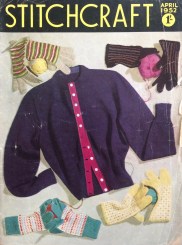
I hang out a lot in the “All Things Vintage” forum on Ravelry and try to participate in the make-alongs when I can. Usually, there are two of them per year, and last year’s July-December KAL/CAL (that’s “knit along”/ “crochet along” for anyone not familiar with the abbreviations) had the theme “Fabulous Fifties.” The 1950s were indeed a fabulous time for fashion and I have a small selection of 1950s knitting magazines, including some very nice issues of Stitchcraft, so the most difficult part was choosing a pattern! I went with this “Elegant jerkin for summer wear” from April 1952.
Portrait of Sir Walter Raleigh (wearing a jerkin) by William Segar, 1598. National Gallery of Ireland. Public domain.
First of all, I hear most of you asking: What is a jerkin? I’m glad you asked. Originally, it was a short, close-fitting, buttoned or otherwise fastened jacket with short or no sleeves, worn in the Renaissance over a doublet. It was often nipped in at the waist. Modern versions of the jerkin were revived for military use in the 20th century, and Stitchcraft as well as other mid-century patterns often use the word for a women’s waistcoat with cap sleeves to wear over a blouse, or a knitted blouse-like garment such as this one, which plays off of the historical jerkin shape.
The four-row stitch pattern was quite easy (knit 1, slip 1 on the right-side rows, knit 1, purl 1 on the wrong-side rows in one colour, then slip 1, purl one on the RS and purl 1, knit 1 on the WS in the other colour) but because of the colour change with the slip stitches, it was amazingly difficult to “read” the work and get back on track. At the same time, if just one stitch was wrong, it was immediately visible in the pattern. Of course, I had to pick blue and black, two colours that didn’t offer much contrast and which, I found, only look different in natural light. As a result, I could only work on this project during daylight hours… in the winter, which is pretty dark.
Adding to the frustration: as always, no matter how small the needles or how thin the wool, I could not knit tightly enough to get the minuscule gauge, which itself was only given as a “life-size” photograph in the pattern. Of course, I am also larger than the 34-35 inch bust given in the pattern, but how much larger the garment, calibrated for how much larger the gauge? Right, lots of calculations, estimations, measurements upon measurements, and just plain guesswork. Plus the thing pulled together either more or less, horizontally or vertically, as it got larger — my gauge swatch (a pocket lining) was utterly useless. I had to start three times.
Before sewing
When I finally got it done (too late for the KAL deadline but whatever), it fit perfectly! I was so proud of myself! Then I wash-blocked it and the wool stretched about six inches in width and at least two or three in length above the waist. In desperation, I reached out to the good people of Ravelry, who told me that the yarn I used (Lang Merino 200 Bébé) was superwash and I should put it in the clothes dryer to shrink it back into shape. I did that and it actually did shrink it down, but it still ballooned a bit in the torso, so I sewed side seams into it. At the moment they are just sewn down with yarn, but the next time I get the sewing machine out, I will probably sew them down properly and (aaaaaggggh!!) cut the excess fabric away to reduce bulk
Also, I sewed that moss-stitch bottom band on twice and it still pulls in a little bit. Oh right, and the tour through the dryer dinged up the buttons, even though I turned the garment inside out.
All in all, this jerkin was a jerk. It was jerkin me around! It looks OK though, I guess, and better under a blazer. You will have to take my word for it when I tell you that I look less dumpy in it in real life than in the photo. It was an interesting project in terms of construction and stitch pattern and I’m sure I will wear it, but sadly, in the end I don’t think it was worth all the frustration.
Stay tuned for the update on the really, truly, almost finished January 1962 project and the embroidered chicken squirrel (yes) that will be my February 1962 experimentcatastrophe vegetable bag.
UPDATE AND EDIT February 25, 2020: Project finished!
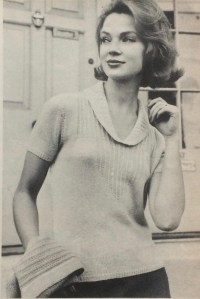
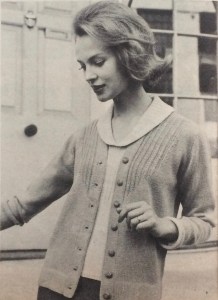
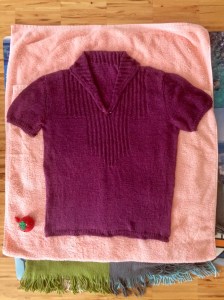
It was hard to decide what to make from the January 1962 issue, since more than one pattern was enticing. The most practical of all of them would have been the cabled cardigan, since I could really use a black, midweight, go-with-everything cardigan right now. However, I decided to go with the jumper from this lovely “softly fitting” twinset (“softly fitting” as opposed to the tighter, waist-length twinsets of the late 1950s). The pattern calls for “Cameo Crepe”, a smooth 4-ply wool, but I knew this project would be perfect for “Concept Silky Lace”, the merino-silk blend from the company Katia from which I made the wonderful orange sleeveless top last summer.
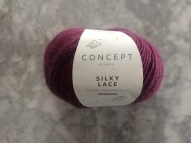
There were only two problems. Problem number one: Concept Silky Lace is only available in colours I don’t wear (shades of white and pastel) as well as orange (great, but I used it for the other project), a sort of light jeans blue (OK, but not exciting) and purple. Purple is not my best colour, but given the limited choice and the fact that I really wanted to use this specific yarn, I went with it. That led to problem number two: there were only two balls of it in the store and they had to order more. Unsure whether the two additional balls I ordered would be from the same dye lot or if it would make a difference if they weren’t, I started by making the sleeves with the yarn I had, and waited.
And waited.
It took more than two weeks for the yarn to arrive, so I was woefully behind. Also, the yarn that arrived was from a different dye lot, so I wasn’t sure how to camouflage the colour changes or if I even had to. After making the ribbing for the body in the “old” yarn and the body (stockinette stitch, and I decided to do it in rounds to go faster) with the new yarn and not noticing any difference, I just used up the old yarn and moved onto the new in the fancy-yoke part. It worked fine and didn’t make a stripe — thank you Katia for your excellent colour-match dye work.
Once the project got started, it was finished very quickly. I was worried about the size, as it seemed to stretch quite a lot width-wise and I though it would be too wide and baggy. Once it was bound off and sewn, it was fine. I made it an inch longer in the body than it said to make it in the pattern, but I could have made it even longer — people were really short fifty years ago!?! Blocking helped stretch out the length.
It is wonderfully soft and clingy and will keep me warm and/or cool in every temperature. I like the colour and it looks good alone or under a blazer, with skirt or trousers, etc. It was easy and fun to knit, has a cool design and the pattern was well-written. A great project all around!
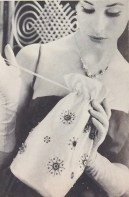
Technically, it was more of a “star-spangled burlap bag”, but that doesn’t have quite the same ring to it. Happy December, everyone! The 1961 festive holiday season, as envisioned by Stitchcraft magazine, involved at least a couple of glamorous parties and evenings out, for which this white satin drawstring clutch bag could be the perfect accessory.
My holiday season was going along festively enough, but I actually have a couple of vintage evening bags and clutches, should I need one to feel glamorous, and I don’t need a white satin anything. I did love the embroidery design, which features pearls and sequins sewn into flowery “star” motifs in various shades of pink and green. The motifs look very “modern” in that 1960s way — abstract and spiky, but also dainty and bright. What could I embroider them onto?
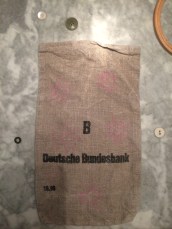
As it turns out, a few weeks ago I found myself at an antiques fair in Hamburg, Germany, and one of the stands was selling literal moneybags — sacks of burlap linen in different sizes that had been used by the German federal bank to transport money and were then at some point taken out of circulation. The material is very sturdy, finer and more tightly woven than coffee or potato sack burlap, but with a similar feel. The bags were also in perfectly good condition in spite of their age and use — each one is printed with a date, and many of them were from the 1990s. At the very modest price of one Euro each, I went ahead and bought ten of the smaller size (approximately 18 centimetres wide by 30 long).
So … what to make of them? (Literally.) More vegetable bags? Gift sacks? Little knitting project bags? All of the above? Whatever their use(s), at least one of the bags was going to be star-spangled. Putting fine, pretty flowery embroidery on a coarse natural-fiber sack was a fun idea for a style-mix experiment that I couldn’t resist. After thoroughly machine-washing and steam-ironing the bags (“money is dirty” as the seller said with a wink, and who knows if they had been treated with some kind of additional preservative chemical), I drew the motifs onto the bag with a wax embroidery-transfer pen, tracing around different sizes of button to get the circles, and embroidered them using leftover bits of pink and green embroidery cotton. I decided to forego the pearls and sequins and just made French knots instead. I also didn’t care too much about perfect symmetry or absolutely “clean” lines — I wanted it to look a little bit rough and homemade.
Originally, I wanted to put in a zipper at the top, but didn’t have one to upcycle, so I just made a buttonhole and found a button from the “singles” jar. I might change the button over to the back side of the bag to make a fold-over top closure if stuff falls out, but I preferred the way the bag looked from the front with the single button.
And that was it! I like the result. It’s goofy and incongruous and has a vintage feel in a few different ways. I had already used a few of the other bags as non-embroidered gift bags, so I’ll keep this one for myself as a project bag for small projects, or possibly a vegetable bag. Star-spangled Brussels sprouts, anyone?
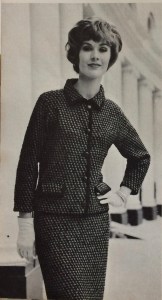
November 2019’s project was the blazer from this wonderful tweed check suit in the November 1961 issue. As it says in the description, “separates in the height of fashion illustrate why hand-knitting is chosen for today’s couture look.” The blazer, especially, is really a timeless, classic piece.
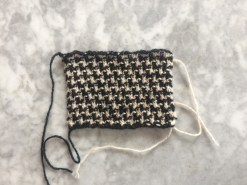
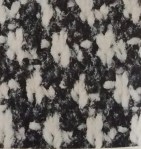
The stitch pattern is very clever and simple: k 1, sl 1, p 1 on the right-side rows, moved one stitch to the left every time, and purl back on the wrong side rows, with 2 rows in each colour. This makes a firm, structured fabric with minimal curling at the edges (which are finished with wool braid binding).
The pattern calls for Patons Rimple DK (nubbly wool with synthetic) in black and Patons Totem DK (smooth “crepe” wool) in “Oakapple”. I admit I had never heard of an an oak apple before and looking at the black-and-white photo, it’s it’s hard to tell what exact colour was used — but it’s obviously some kind of whitish-beige. Which, as it turns out, is pretty much the colour of at least some kind of real oak apple, which, as it also turns out, is not any kind of apple at all, but a wasp gall. My choice of wool, Jamieson’s Double Knitting, was clear from the beginning and I was lucky enough to be able to buy it “in person” at the wonderful Shetland Wool Week. Both the “black” (Mirrydancers) and “white” (Sand) yarns are ever so subtly tweedy, which gives a beautiful depth to the colour.
Why did I even bother?
Calculating the amounts was a nightmare, though. I had thought ahead and written it all out on paper: how many yards of Totem and Rimple there were in an ounce (thank you, Ravelry, for listing discontinued yarns with useful information about them), how many yards I would then need for each colour if making just the blazer, just the skirt or both, then comparing that with the number of metres per gram of Jamieson’s DK, dividing for number of 25 gram skeins, checking it all through and of course adding at least a few skeins of each colour for swatching, making full-length sleeves, extra security, and knowing that I wouldn’t be in Shetland again anytime soon. It was just barely enough! As I learned the other way around while making the green crocheted rug a little while ago, you can calculate all you want, (even with the help of a professional mathematician who knows extra-special secret formulas with Greek letters), or weight your swatches or whatever, but the only real way to know how much wool you are going to need is by making the thing. Argh.
The knitting itself was a dream, though — so nice to work in DK after the fingering-weight projects of recent months past. It knitted up fast and easily and the fabric feels good in the hands. The pattern is quite clear and simple. Even the set-in pockets with flaps and the buttonholes (such a nightmare, always) were successful and the buttonholes evenly spaced. (I used the method that Stitchcraft always suggests: make the side without buttonholes first, then mark the button positions with pins and make the buttonholes to correspond. With a repeating pattern like this one, you can count the rows between buttonholes quite accurately.)
I added a bit of waist shaping for a more tailored look, using a well-fitting blazer from my closet for a guide. I also made full-length sleeves. Originally I thought to make the sleeves from the top down for a better sleeve-cap fit and to make sure I didn’t run out of yarn, but I realised that that would reverse the direction of the diagonal pattern and I wasn’t sure if that would be a problem or not. I made them in the normal way from the cuff up, but made them narrower.
After putting it together and blocking, the back piece had stretched width-wise, the sleeves had stretched length-wise and the sleeve cap didn’t fit well. Also, the shoulders were too wide. What to do? I didn’t want to cut the knitted fabric, nor do everything over. My solution: I re-sewed the sleeve caps in where the shoulder and sleeve line should have fallen, then tucked the resulting extra fabric in towards the neck on the front piece to make a sort of built-in shoulder pad. I normally hate shoulder pads and rip them out of everything I buy, but in this case it turned the droopy, sloppy-looking shoulder into a crisp, tailored-looking one. I’m so sorry I forgot to take a “before” picture — the change was pretty dramatic.
To fix the back width, I added two vertical darts. That wasn’t as elegant as it could have been if I had knitted them in, but it was fine. The sleeve-cap changes pulled the sleeves in a little shorter, so I just finished the cuffs with the same binding that I used for the rest. The buttons are modern, but aren’t they perfect? I even remembered to buy a few extra.
It took a lot of finicky finishing work, but in the end, I was very happy. The blazer is warm, elegant, comfortable and fun to wear. It looks good as part of a retro-style outfit or a modern one. What more could I want? I don’t feel the need to make the skirt. I’m just happy with my blazer the way it is.
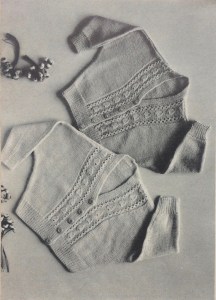
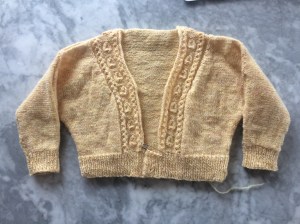
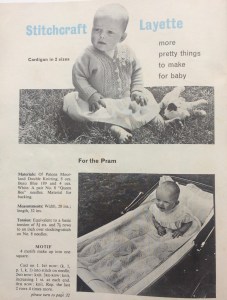
There’s always somebody having a baby, and I do try to make something nice for all my friends’ and colleagues’ newborns. Sometimes I don’t manage to finish something until they are out of the newborn stage, which is why it’s nice to have patterns for larger babies! This dolman-sleeve cardigan, made in the smaller size, should fit a 22 inch chest, which should be fine for this particular eight- or nine-month old.
I wasn’t and am not convinced that dolman sleeves are good for babies or anyone else (so much fabric flappage) and originally I thought about converting the pattern to set-in sleeves, but in the end I was just too lazy, so dolman sleeves it was. I guess it does have the advantage of being wide enough no matter what, and easy to get the baby’s arms into the sleeves. Given that, I’m surprised it’s so short! If it were made longer, it would fit longer without the baby getting a cold belly.
The little leaf motifs up the front sides are quite easy and don’t require any cabling or special fuss. You just work into one stitch 5 times on one row, then work those 5 stitches in stockinette (on the reverse-stockinette background) for a few rows before closing off the leaf with decreases. The lace strips on the sides are plain yo, k2tog alternating with k2tog tbl, yo, worked on the right-side rows.
I used Jamieson’s wonderful Shetland Spindrift from a multicoloured stash that I had bought from a nice person on Ravelry. Some may say that Shetland wool is too tough for babies, but it does get softer with washing and since it won’t be worn against the skin, I think it will be fine. The colour — Buttermilk — is really beautiful, a pale yellow ever-so-slightly marled with shades of pink and winter white.
If I remember correctly, the buttons came from a Christmas fair somewhere some years ago and hadn’t found the right garment yet. I only had three and the pattern calls for five, but I preferred the buttons I had to any new ones I might find.
All in all, a quick and easy project that will hopefully keep the baby warm and make its parents happy.
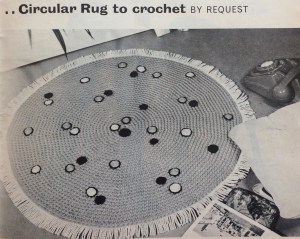
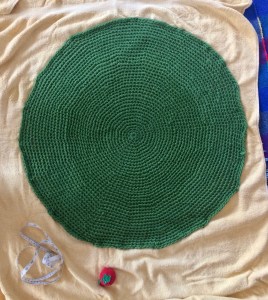
September’s project (finished only one day late) was this extremely 1960s crocheted green rug with black, white and orange embroidered spots (they “add a modern touch”) and fringe. Loved it!
Before I could start, I had to figure out what kind of wool to use. Rug wool, such as the Patons Turkey Rug Wool in the pattern, was available in the 1960s in large skeins by weight and rugs could be made using tapestry stitches on canvas, crocheting, tufting or using the latch-hook method. Latch-hook rug makers had to cut the wool themselves and there were ingenious little tools to help them do that, like this Patwin rug-wool cutter or this “strip slitter” from Bliss. Later in the decade, “cut packs” were introduced for latch-hook use and it is now very difficult to find rug wool in skeins.
Felting wool, like rug wool, is bulky, mostly unprocessed, coarse and strong, so that was my first thought… but would it felt with use or washing? I decided to take the chance, since it’s easy to find, inexpensive and there happened to be some in the perfect colour at my local yarn shop. It’s the exact same shade of green as the embroidered cushion from 1960 that I made last year! It even possibly matches the original colour from the pattern, “Green Haze”.
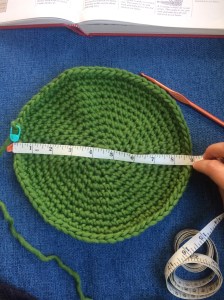
I had to order more wool than they had in the store. To figure out how much wool I needed, I asked a better mathematician than me if he could work it out using the diameter of the swatch, finished diameter of the rug (29 inches without fringe) and the amount of wool per skein. Then I calculated it myself based on the number of stitches in one skein’s worth of wool and the total number of stitches in the rug. We were both a bit off — he thought I would need 11 skeins (65 grams) and I thought I would need 9, when in fact I only needed 8. Then again, the 8 skeins made a slightly smaller rug when done by the pattern, so I kept on for a few more rounds and used one more skein to get the proper size.
The crochet part was easy — just rounds of double crochet with regular increases — and went very quickly. You can see that the wool I ordered was from a different dye lot than the first skeins from the store, but I don’t mind. The embroidery was a bit tedious and the fringe posed a new problem: this type of old-fashioned cotton sew-on fringe is very much not in fashion and hard to find in stores these days. I hate buying things on the Internet, so I asked my friendly wool-shop owner from the store where I bought the wool what she thought, or if it could be ordered through the store. She suggested hand-knotting the fringe with cotton yarn in a similar colour to the rug. (the fringe in the original seems to be white or a lighter colour). I was eager to get the thing done and not wait for more elements to arrive, so I did it. I like the result! It’s stringier than the original, of course, but it makes the rug look like a sort of friendly amoeba. I like that.
Wash-blocking it gently in cold water worked well and did not felt the wool. Also, it is going to live under my coffee table where it won’t get much foot traffic, so I’m not worried.
A good friend saw it and said, “Wow, it’s so ugly, I love it!” Which stung a bit, but I know what they meant. It’s really 1960s! But it also really goes well with my retro/vintage living room decor and I don’t think it’s ugly at all, just goofy. I’m very happy with the way it turned out.
Stitchcraft‘s August 1961 “Late Summer” issue had multiple cute, easy embroidery and tapestry projects. Mine was this little set of rose sprays. To show the versatility of the designs, the magazine usually had directions for and photos of the designs made on different items: a cushion and/or tray cloth, for example. Overall, there was a huge range of homewares that could potentially be embroidered: an apron, a place mat, a chair-back, a wall hanging, a “nightie case”, a project bag, a finger plate, a fire screen, even a room divider or a waste-paper basket cover. This issue added a new idea to the mix: the rose-spray design on a lampshade, complete with a pattern to cut out, sew and fringe the lampshade cover itself.
Close-up photo from the magazine. Sadly, there was no colour photo.
I don’t need an embroidered lampshade (or finger plate, or fire screen, or tray cloth, or chair-back, or waste-paper basket cover etc. etc.) and I have plenty of cushions and project bags, so I’m often at a loss when I see a nice embroidery pattern and don’t know what to put it on. I’ve made a couple of tablet cosies for myself or for presents for friends, or useful little bags to store “stuff”, but there are limits. I guess I could sell whatever I don’t need, but haven’t gone that route yet. So what to make?
Vegetable bags.
I stopped using plastic bags for vegetables long ago, which wasn’t difficult as I pretty much only buy vegetables at the farmer’s market or organic supermarket, both of which put vegetables in little paper bags (for small or sandy things like mushrooms, potatoes or little tomatoes) or don’t package them at all (I just put them into my basket/cloth shopping bag loose). I try to re-use the paper bags, but my best bag of all is a little linen drawstring sack that originally held soapberry nuts for washing laundry. It’s tough, washable and the perfect size for holding the right amount of potatoes or green beans or whatever. And both the organic supermarket and, incredibly, the regular supermarket in my neighbourhood have now stopped offering even little paper bags for vegetables, so time to make more bags!
Of course, they don’t have to be embroidered, but why not? Cotton embroidery floss is machine-washable even at high temperatures and I have plenty of scraps and bits of plain linen or cotton materials that can be put to good purpose. The bag I made for this August project was made from a piece of linen from shoes, yes, shoes that a friend bought (the shoes came wrapped in this piece of fabric in the shoe box instead of in paper.) I had enough embroidery floss on hand, so this was an almost 100% up-cycled / didn’t have to buy anything new project. (I say almost because I bought the cord for the drawstrings — then realised I could have made monks’ cord or i-cord from leftover cotton yarn. Next time…)
The design is of blue roses, which don’t exist in the natural world but can be created by putting white roses in blue-tinted water for a few days. (Interestingly, this low-tech process is much more successful than trying to create blue roses via genetic engineering, which so far has only made purplish-lavender roses.) I think blue is an interesting colour choice for embroidered roses, because of course when you see blue flowers you don’t automatically think of roses. I love how the colours turned out though. The stitches are easy stem-stitch, satin stitch and long-and-short stitch. Of course I didn’t have the transfer, but the design was easy enough to copy onto the fabric freehand.
I’m really, really happy with this and look forward to making more unnecessarily pretty, but necessarily environmentally friendly vegetable bags in the future.
June 1961 was the issue with too many great projects in it and not enough time to make them all. My “official” project was this wonderful knitted blouse which took up the whole month, but there was also a very intricate appliquéd and embroidered cushion that will probably become a long-term learning experience project, as well as a great beach dress for a small child. Summer is waning, but I got the beach dress done.
There’s so much I love about this design: the sea horses, the buttoned straps in the back, not to mention the ridiculous poses and strange inflated? stuffed? animals that the kids in the photos are riding. Also: illustrations in the magazine, done by hand, with bubbles.
The pattern is for a 23-24 inch chest, with an 8 1/2 inch long skirt. The child I knit it for is a little thinner, but taller, so I made the width from the pattern and added 1 1/2 inches to the skirt length and made longer straps with multiple buttonholes for different length options/growing room.
I decided to make it in cotton instead of Nylox (Patons wool-nylon mix from the 1960s) or a modern equivalent. It is always, always a problem to find non-mercerised cotton that is fine enough to give 7 stitches to the inch. Thick, mercerised dishcloth cotton is always available, mercerised crochet cotton is always available, but what passes as 4-ply or fingering weight non-mercerised cotton is just too thick. I decided on Natura “Just Cotton” which is non-mercerised, soft, pretty and supposedly free of harmful substances (Oeko-Tex certification). The label says it gets 27 stitches in 4 inches but that is illusory. The yarn is 8-ply! I don’t know why they don’t use 4 strands, thus making it a true 4-ply fine cotton for soft, light garments. I got 6 1/2 stitches to the inch with some effort, but the resulting fabric is a bit stiffer than I would have liked.
On the first try, the first ball of turquoise ran out shortly after the bottom sea-horse band and I was worried that I wouldn’t have enough, so I started over and made the skirt less full. Of course, the skirt lost a lot of its swing and I ended up with a ball and a half left over at the end… I used some of the rest to make a little kerchief that the kid can wear on her head for extra sun protection and cuteness. Let’s just hope it stays warm enough for her to still wear it this year.
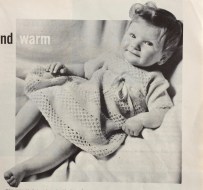
In 1961, Stitchcraft had a nice running feature they called “Stitchcraft Layette”: a set of matching baby clothes and accessories with a pattern in each issue for a few months running. The first was a light, warm dress in 3-ply Beehive Baby Wool which is “often asked for and it is really sensible for baby to wear on those in-between days when the wind is cold.” Still can’t get over how goofy that baby looks in the photo! The dress is made in stripes of stockinette stitch and a pretty “bramble stitch” lace pattern, fastens in the back and has a ribbon “belt”. There are patterns for a matinee coat and bootees on the August issue.
The bramble stitch itself is quite simple and effective:
Row 1: (RS) knit
Row 2: (WS) k1, *(k1, p1, k1 in the same stitch), sl1-k2tog-psso*
Row 3: knit
Row 4: k1, *sl1-k2tog-psso, (k1, p1, k1 in the same stitch),*
over a multiple of 4 plus 2 for the selvedge stitches. It makes a firm openwork lace that doesn’t roll or curl and so is good for borders and edges.
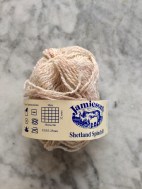
I made the project in Jamieson’s Shetland Spindrift, which I had a good stash of in a pretty colour called “Sand”. I generally don’t like variegated-colour wools, but if all of them were like this, I would love them. The colour accents are ever so subtle and just enough to give a light marbling effect without pools or splotches. Of course, it’s is a little too scratchy for a baby’s dress and the tension was not quite the same as in the pattern (8 stitches to the inch for the 3-ply, I get 7 or at most 7 1/2 with Spindrift depending on needles.)
So I did what I always do: changed the pattern around to make it fit the wool. Instead of a long, flared, beribboned, short-sleeved dress it became a medium-length, flared, ribbonless long-sleeved coat that fastens with buttons in the front. I adjusted stitch counts to fit the larger gauge but in the end I wish I hadn’t, as it turned out a bit smaller than expected. OK, so it will fit a smaller baby.
I was happy with the result and it reminded me of another pattern I had seen somewhere… in another Stitchcraft... oh right, it was this “Sunday Best” from April 1960! Bramble and stockinette stitch: always a good choice for baby stuff.
There’s no particular baby I needed to knit this for, but somebody will always have one at some point, so I’m prepared — and happy with how this turned out.
June’s project was this lovely sleeveless top in a leafy lace pattern, touted as a “very wearable and useful jumper to make for your holiday.” It looked pretty and elegant and suitable for my summer climate, which is generally not too hot — a lightweight wool garment in lace with no sleeves should be perfect most days.
It’s written for “smaller sizes” — 32-33 or 34-35 inch bust — which would be too small for me, but my ever-loose gauge and inability to find 3-ply wool came in handy here, as it has in the past. It worked out fine for me to make the second size according to the directions, adding a few rows to the length below the armholes.
The wool I used was an absolute winner — Concept Silky Lace by katja, made of 80% merino wool and 20% silk. It’s lightweight, soft, and warm enough yet cool enough at the same time. My local wool shop had it in colours that I don’t wear, plus dark blue or a sort of salmon orange. Dark blue is always fine but I was so intrigued by the orange that I had to give it a try. I normally wear black with black with possibly dark tweedy blues or greens, so orange was a big change, but I love it! The colour looks good on me, looks good with black (important…) and it seems to even be in fashion at the moment, since as soon as I bought it I started noticing all the other people around me wearing some shade of orange non-vintage clothing.
The body knitted up pretty quickly in spite of the somewhat complicated lace pattern. I charted the pattern out before knitting anything — as was usual for the time, the magazine has written instructions only, and the pattern is 36 rows long. That was not only good for learning the pattern and being able to follow it more clearly, but it allowed me to notice a couple of errors in the pattern instructions that would have been very frustrating had I discovered them while knitting.
Then I ran into trouble with the weather, which was suddenly 34-36 degrees Centigrade with no chance of a cooler room either at work, home or on the move. My hands were too sweaty to hold wool and I had to take a break for a few days until we returned to our regularly scheduled 18-20 degrees. Then I finished the body and moved on the the neck and armhole edgings, which took forever! It’s actually an interesting design, which I haven’t seen before: You knit a strip of stockinette stitch with 3-stitch garter stitch border on one side, then fold the strip in half lengthwise like a sort of hem under the garter-stitch bit and sew it onto the neck or sleeve edge with the garter stitch facing out. It’s a like a separate hem sewn on, and the front neck strip has some cleverly thought-out short rows to make it fit the curve of the neck. But oh does it take a long time to make the strips.
Which is all a very long apology for the fact that it was not done by the end of the month, but now it is! As usual, we tried to re-create the original photo. It’s always hard to get the exact pose angle, but I did have a matching scarf and sunglasses.
I do have a project from the May 1961 issue and will post about it soon, but it won’t be done by the end of May. In the meantime, I made a very cute coat for a friend’s child from the January 1976 issue of Stitchcraft, using the leftover yarn from the red and blue dress I finished last month.
The pattern — “Fashion for Tots” — encompasses a single-breasted coat with patch pockets and a collar in contrasting trim, and a pixie hat with the contrast colour in the ribbing. The coat has an A-line shape and raglan sleeves and is given in three sizes, to fit a 22-23, 24-25 or 26-27 inch chest measurement. I made the smallest size, for a two-year-old with a 21 1/2 inch chest, so hopefully it will fit for a while even if it doesn’t get used very much in the summer.
As usual, you’re supposed to make everything in separate pieces, and for once, I almost did! That is to say, I made the back, fronts and sleeves up to the raglan underarm join in pieces, then made the raglan yoke all in one piece working back and forth. Sewn raglans always look so messy (when I make them…), so it was worth it for that, and making the rest in pieces gave the sides some stabilising seams and didn’t take any longer than making the body in one piece working back and forth would have done.
The coat has a cute mitred hem at the bottom, which makes a neat join into the button bands. The collar and pockets are made separately and sewn on, and the collar has an interesting two-piece mitred construction to get the two different colours to make clean corners. The pockets are in twisted mock-cable rib.
I noticed that it wasn’t quite going to work out with the total amount of yarn in the proper colour scheme, so I played with the amounts of red and blue and ended up just perfectly using up the rest of the red with a few metres left over should the coat ever need repairing. Of course, that meant I couldn’t make the hat. The project was fast and fun, though, so who knows, maybe I’ll make another one when January 1967… wait, when will that be again… January 2025 ?!? comes around. If we’re all still here! Hang in there and stick around.
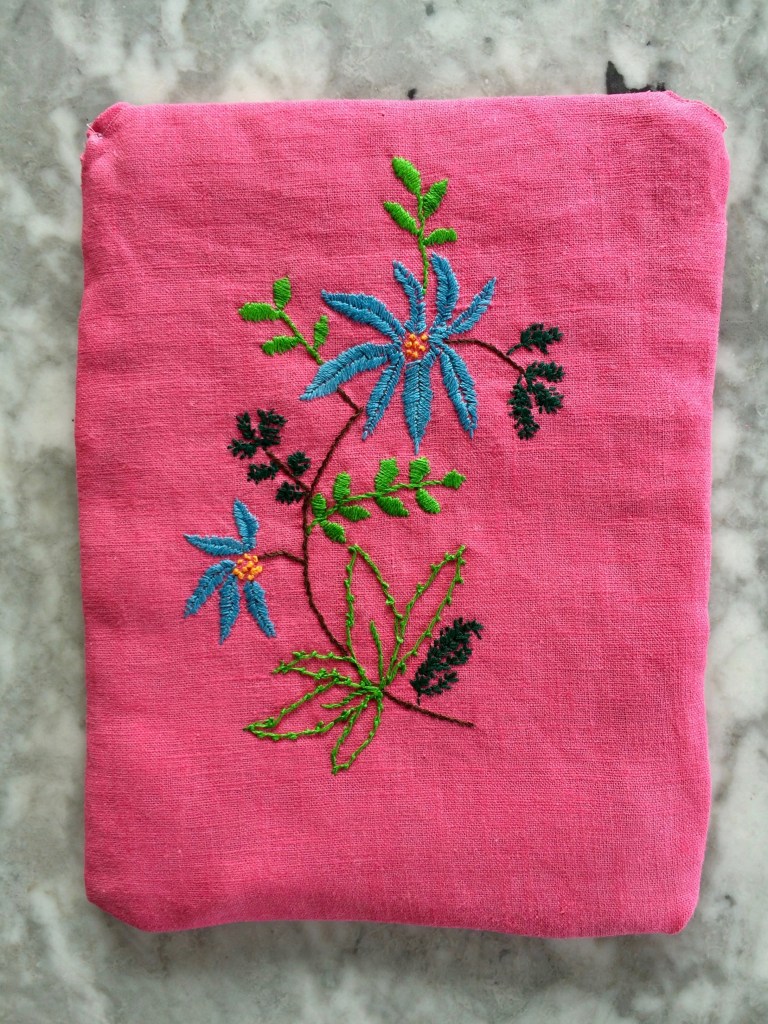
My Stitchcraft project this month was a simple embroidered spray of flowers, originally intended as a decoration for a cushion or traycloth. Having enough cushions and not using traycloths, I updated the design for an iPad cover similar to the one I made last year. The flowers are supposed to be daisies and fern, but the daisies have pointy, blue petals — which I set off against a bright pink background for maximum 60s effect. (The background fabric was left over from the embroidered blackwork cushion from last September.)
Of course, there was no available iron-off transfer, but this design was easy and non-geometric enough that I could copy it out onto paper freehand and then transfer it to the fabric with the “window method” and a washable embroidery marker. The stitching was easy — satin and stem-stitch for leaves and stems, slanting satin-stitch for the blue petals, Romanian stitch for the “feathery foliage” (what a lovely phrase!) and French knots for the centres of the flowers. The only (for me) unusual stitch was the double knot-stitch used to outline the large green leaves. It’s sort of like couching, except you tie a knot in the running thread with each stitch as you go along.
I made it up with an equally bright patterned cotton lining (peacock parade!) with an added layer of quilt batting and the same simple button-closure method I used for the “Gay Goslings”. I am not great at sewing, even or especially a really simple (!) rectangular (!) bag, so the lines are not 100% straight and the design is not perfectly centred. Still, I love the colours and the contrast of the very old-school, Grandma’s tea-cosy design with the modern technological device inside.
Since I don’t actually need this for myself, it will probably be given to whatever nice friend has a birthday and an iPad that needs a cosy. In the meantime, I can hold it up to a window when I want to see something that looks like Spring.
After January’s time- and labor-intensive pullover for me, I wanted to make something quick and easy in February. And there’s always a friend, colleague, or relative having a baby, so I made this simple ” Tiny Cardigan” from the cardigan and slipper set.
The wool was Lang Nova, a wonderfully fluffy and very light wool-camelhair-nylon mix. There are 180 metres in 25 grams! It is essentially made of air, but softer and warmer. I suspect it is not very hard-wearing and probably pills and breaks easily, but babies grow so fast that it will hopefully be outgrown by the time it falls apart. My swatch grew exponentially with blocking, so I converted the pattern to a larger gauge. Then the finished garment didn’t grow much at all with blocking, so it ended up more like newborn size. I hope the parents send out a birth announcement as soon as the baby arrives…
The cardigan has a basic bottom-up raglan construction with the twisted ribbing featured in January’s Snowflake Sweater. I made it in one piece from the bottom up to avoid seams, and was so busy trying to read the front, back, and sleeve directions simultaneously while working the yoke that I forgot to make the little twisted-rib sleeve insertions that would have made this otherwise very basic jacket a little bit more interesting. Whoops! But by the time I realised my mistake, it was already almost done, and I have a feeling this wool really does not like to be frogged. I pepped up the plain marble-grey colour of the jacket with some red flower buttons.
And there it is! I had to buy a second skein of wool to finish the cardigan and now have some left over, so I might as well make the slippers, seeing as the baby hasn’t arrived yet.
ETA: I went ahead and made the slippers, adding a flat spiral of red i-cord instead of a pom-pom.
January’s project was — like August 1960’s twin-set — one of the reasons I wanted to start this whole mega-blog-project in the first place, namely, this beautiful round-yoke “snowflake” sweater in the style of traditional Greenlandic designs. I love the combination of curvy and angled shapes produced by the diamond-shaped rings on the yoke, and the dark background colour fits my style.
Traditional round-yoke sweaters made from the bottom up typically call for the body and sleeves to be made separately, then joined in the round for the yoke, casting off stitches under the arms and on the sleeve-underarm edges to add depth to the chest width and make the first few rounds easier to work. But like all adult garments from this time period, Stitchcraft‘s version is meant to be made in separate pieces. The first part of the yoke is written with back-and-forth raglan decreases, until the patterned part of the yoke gets going, and even that is supposed to be knitted back-and-forth with an opening in the back for a zipper.
Besides being not very traditional, I find back-and-forth knitting on stranded garments not so much fun (stranded purling is annoying) and certainly not as fast to make (knitting is faster than purling, and in-the-round construction means no seams to sew later), so I was determined to make this garment completely in the round and without seams. Making the sleeves and body separately in the round was no problem, but I was at a loss as to how to do the raglan bits plus neck shaping before the patterned yoke began without completely re-writing the pattern. Also, I wanted to add in some short rows to make the front part of the neck drop a little farther down than the back.
After thinking it over, the most reasonable course was to work the little bit of pre-yoke between the armhole bind-offs and patterned yoke back and forth with raglan decreases as written, but beginning the front neck shaping (pre-yoke, concurrent with the raglan decreases) an inch or so lower than the back. That preserved the proper stitch count, let the sweater hang better, and shortened the yoke a bit. I didn’t mind shortening the yoke, as I like sweaters to be snug under the arms and not too high on the neck. I didn’t need a zipper, so I made the patterned yoke entirely in the round.
It worked out perfectly! I could hardly believe it. Raglans and round yokes may be somewhat forgiving on the body, but it is a fundamentally tricky mathematical game to make all the interdependent factors of width, depth, and pattern repeat come out right, so I was really proud of myself for making it work. My only other modifications were on the sleeves (longer) and the waist shaping (original pattern had none, I started out narrower at the waist and increased gradually at the sides to give a more figure-flattering look.)
Don’t let the tropically-painted background fool you — it’s cold outside!
The yarn was a mixture of plain Regia 6-ply (DK) sock wool for the dark and light blues, and some of the lovely 100% wool that my knitting colleague hand-dyes with plants (the brown and green, made with onion skins/walnut shells and some kind of green reed plant, respectively.) It is very warm and has the right balance of firmness and softness.
All in all, I am 100% happy with this pullover and will probably wear it a lot this winter.
My December project was a warm winter dress for a baby, part of the “Baby’s Special Outfit” of dress, bootees and mittens that continued the baby set started in the November 1960 issue.
The dress has a smocked top, which I had never worked in knitting before. Of course, knit smocking is not like sewing smocking, where you gather the fabric up in regular pleats and embroider over it. Here, it’s pretty easy to do and involves taking out a long loop and knitting it back in a few stitches later — almost like cabling without a cable needle. The base pattern is 2×2 rib, which gives the same effect as gathered fabric.
I used a lovely 100% wool that was hand-dyed by a fellow knitter in my local knitting group. She uses natural dyes from plants in her garden, or the bits of food items that are normally not eaten: walnut shells, onion skins, and so on. This green-melange wool was dyed with red onion skins! She did explain to me how that worked, but please don’t ask me, because I forgot the answer already. Anyway, it’s very nice. I was worried that it might be too scratchy for sensitive baby skin, but wash-blocking it and rinsing with hair conditioner softened it up quite a bit.
I only had 100 grams of the wool, so had to make the dress a bit smaller than in the pattern. The original pattern was for a baby up to one year or more, had a long, full skirt, measured 22 inches at the chest and had sleeves. The baby I made this for is 6 months old but still quite small, and my version of the dress measures 21 inches at the wide part of the chest, has a shorter and narrower skirt and no sleeves. In a way, that’s more practical, since it can be worn over a t-shirt and leggings and taken off if the baby gets too warm. It also won’t touch her skin, so scratchiness won’t be a problem. It buttons in the back.
And with that, I have completed one whole year of Stitchcraft projects! Goodbye 1960 and 2018, and hello 1961 and 2019. Stay tuned, and happy New Year!
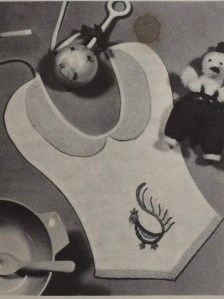 No, it’s not the menu choice for tonight’s dinner, don’t worry. My February 1962 was a little embroidered… animal , originally designed for a toddler’s “feeder” and which I adapted into a bag for vegetables/small projects/”stuff”. I say “animal” in this vague way because it is referred to as a “Squirrel” in the instructions, followed by more specific instructions on how to embroider the supposed squirrel’s beak and feathers. I can maybe, maybe forgive enough poetic license to call a squirrel’s mouth a “beak”, and the creature’s fluffy tail could be mistaken for a squirrel’s, but feathers… no. It also looks suspiciously like a chicken in the photo! So, not a squirrel, but a chicken and a proofreading error.


 I hang out a lot in the “All Things Vintage” forum on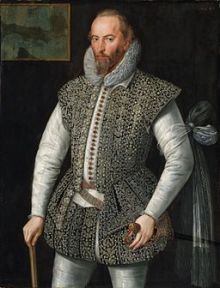
 Adding to the frustration: as always, no matter how small the needles or how thin the wool, I could not knit tightly enough to get the minuscule gauge, which itself was only given as a “life-size” photograph in the pattern. Of course, I am also larger than the 34-35 inch bust given in the pattern, but how much larger the garment, calibrated for how much larger the gauge? Right, lots of calculations, estimations, measurements upon measurements, and just plain guesswork. Plus the thing pulled together either more or less, horizontally or vertically, as it got larger — my gauge swatch (a pocket lining) was utterly useless. I had to start three times.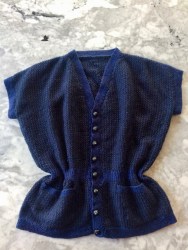

 UPDATE AND EDIT February 25, 2020: Project finished!
 There were only two problems. Problem number one: Concept Silky Lace is only available in colours I don’t wear (shades of white and pastel) as well as orange (great, but I used it for the other project), a sort of light jeans blue (OK, but not exciting) and purple. Purple is not my best colour, but given the limited choice and the fact that I really wanted to use this specific yarn, I went with it. That led to problem number two: there were only two balls of it in the store and they had to order more. Unsure whether the two additional balls I ordered would be from the same dye lot or if it would make a difference if they weren’t, I started by making the sleeves with the yarn I had, and waited.
 It took more than two weeks for the yarn to arrive, so I was woefully behind. Also, the yarn that arrived was from a different dye lot, so I wasn’t sure how to camouflage the colour changes or if I even had to. After making the ribbing for the body in the “old” yarn and the body (stockinette stitch, and I decided to do it in rounds to go faster) with the new yarn and not noticing any difference, I just used up the old yarn and moved onto the new in the fancy-yoke part. It worked fine and didn’t make a stripe — thank you Katia for your excellent colour-match dye work.
 Once the project got started, it was finished very quickly. I was worried about the size, as it seemed to stretch quite a lot width-wise and I though it would be too wide and baggy. Once it was bound off and sewn, it was fine. I made it an inch longer in the body than it said to make it in the pattern, but I could have made it even longer — people were really short fifty years ago!?! Blocking helped stretch out the length.


 Technically, it was more of a “star-spangled burlap bag”, but that doesn’t have quite the same ring to it. Happy December, everyone! The 1961 festive holiday season, as envisioned by Stitchcraft magazine, involved at least a couple of glamorous parties and evenings out, for which this white satin drawstring clutch bag could be the perfect accessory.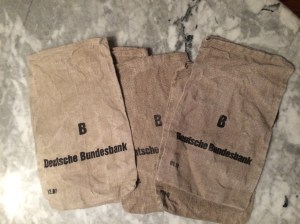
 wink, and who knows if they had been treated with some kind of additional preservative chemical), I drew the motifs onto the bag with a wax embroidery-transfer pen, tracing around different sizes of button to get the circles, and embroidered them using leftover bits of pink and green embroidery cotton. I decided to forego the pearls and sequins and just made French knots instead. I also didn’t care too much about perfect symmetry or absolutely “clean” lines — I wanted it to look a little bit rough and homemade.


 Post updated on December 28, 2019: Finished!
 The pattern calls for Patons Rimple DK (nubbly wool with synthetic) in black and Patons Totem DK (smooth “crepe” wool) in “Oakapple”. I admit I had never heard of an an oak apple before and looking at the black-and-white photo, it’s it’s hard to tell what exact colour was used — but it’s obviously some kind of whitish-beige. Which, as it turns out, is pretty much the colour of at least some kind of real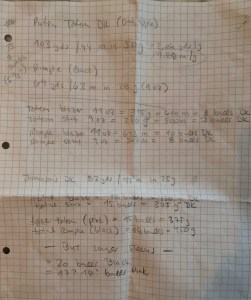
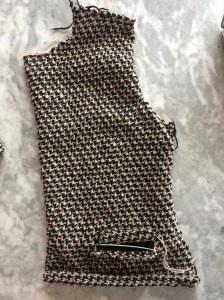 The knitting itself was a dream, though — so nice to work in DK after the fingering-weight projects of recent months past. It knitted up fast and easily and the fabric feels good in the hands. The pattern is quite clear and simple. Even the set-in pockets with flaps and the buttonholes (such a nightmare, always) were successful and the buttonholes evenly spaced. (I used the method that Stitchcraft always suggests: make the side without buttonholes first, then mark the button positions with pins and make the buttonholes to correspond. With a repeating pattern like this one, you can count the rows between buttonholes quite accurately.)
 After putting it together and blocking, the back piece had stretched width-wise, the sleeves had stretched length-wise and the sleeve cap didn’t fit well. Also, the shoulders were too wide. What to do? I didn’t want to cut the knitted fabric, nor do everything over. My solution: I re-sewed the sleeve caps in where the shoulder and sleeve line should have fallen, then tucked the resulting extra fabric in towards the neck on the front piece to make a sort of built-in shoulder pad. I normally hate shoulder pads and rip them out of everything I buy, but in this case it turned the droopy, sloppy-looking shoulder into a crisp, tailored-looking one. I’m so sorry I forgot to take a “before” picture — the change was pretty dramatic.
 To fix the back width, I added two vertical darts. That wasn’t as elegant as it could have been if I had knitted them in, but it was fine. The sleeve-cap changes pulled the sleeves in a little shorter, so I just finished the cuffs with the same binding that I used for the rest. The buttons are modern, but aren’t they perfect? I even remembered to buy a few extra.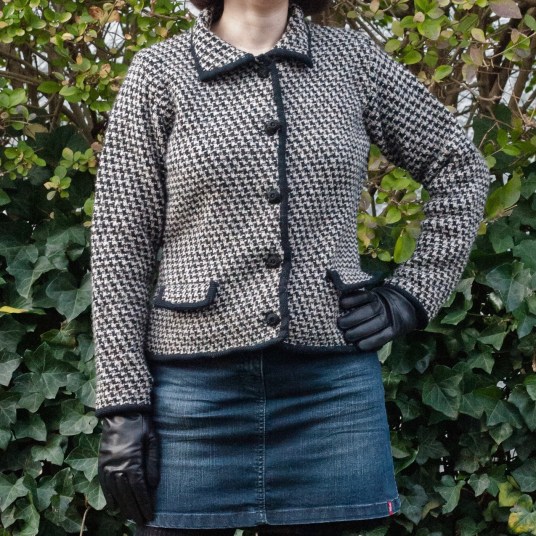
 There’s always somebody having a baby, and I do try to make something nice for all my friends’ and colleagues’ newborns. Sometimes I don’t manage to finish something until they are out of the newborn stage, which is why it’s nice to have patterns for larger babies! This dolman-sleeve cardigan, made in the smaller size, should fit a 22 inch chest, which should be fine for this particular eight- or nine-month old.
 The little leaf motifs up the front sides are quite easy and don’t require any cabling or special fuss. You just work into one stitch 5 times on one row, then work those 5 stitches in stockinette (on the reverse-stockinette background) for a few rows before closing off the leaf with decreases. The lace strips on the sides are plain yo, k2tog alternating with k2tog tbl, yo, worked on the right-side rows.
 I used Jamieson’s wonderful Shetland Spindrift from a multicoloured stash that I had bought from a nice person on Ravelry. Some may say that Shetland wool is too tough for babies, but it does get softer with washing and since it won’t be worn against the skin, I think it will be fine. The colour — Buttermilk — is really beautiful, a pale yellow ever-so-slightly marled with shades of pink and winter white.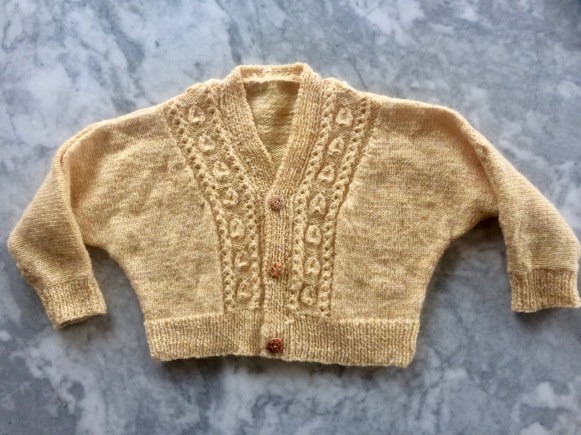
 September’s project (finished only one day late) was this extremely 1960s crocheted green rug with black, white and orange embroidered spots (they “add a modern touch”) and fringe. Loved it!
 Felting wool, like rug wool, is bulky, mostly unprocessed, coarse and strong, so that was my first thought… but would it felt with use or washing? I decided to take the chance, since it’s easy to find, inexpensive and there happened to be some in the perfect colour at my local yarn shop. It’s the exact same shade of green as
  The crochet part was easy — just rounds of double crochet with regular increases — and went very quickly. You can see that the wool I ordered was from a different dye lot than the first skeins from the store, but I don’t mind. The embroidery was a bit tedious and the fringe posed a new problem: this type of old-fashioned cotton sew-on fringe is very much not in fashion and hard to find in stores these days. I hate buying things on the Internet, so I asked my friendly wool-shop owner from the store where I bought the wool what she thought, or if it could be ordered through the store. She suggested hand-knotting the fringe with cotton yarn in a similar colour to the rug. (the fringe in the original seems to be white or a lighter colour). I was eager to get the thing done and not wait for more elements to arrive, so I did it. I like the result! It’s stringier than the original, of course, but it makes the rug look like a sort of friendly amoeba. I like that.
 Wash-blocking it gently in cold water worked well and did not felt the wool. Also, it is going to live under my coffee table where it won’t get much foot traffic, so I’m not worried.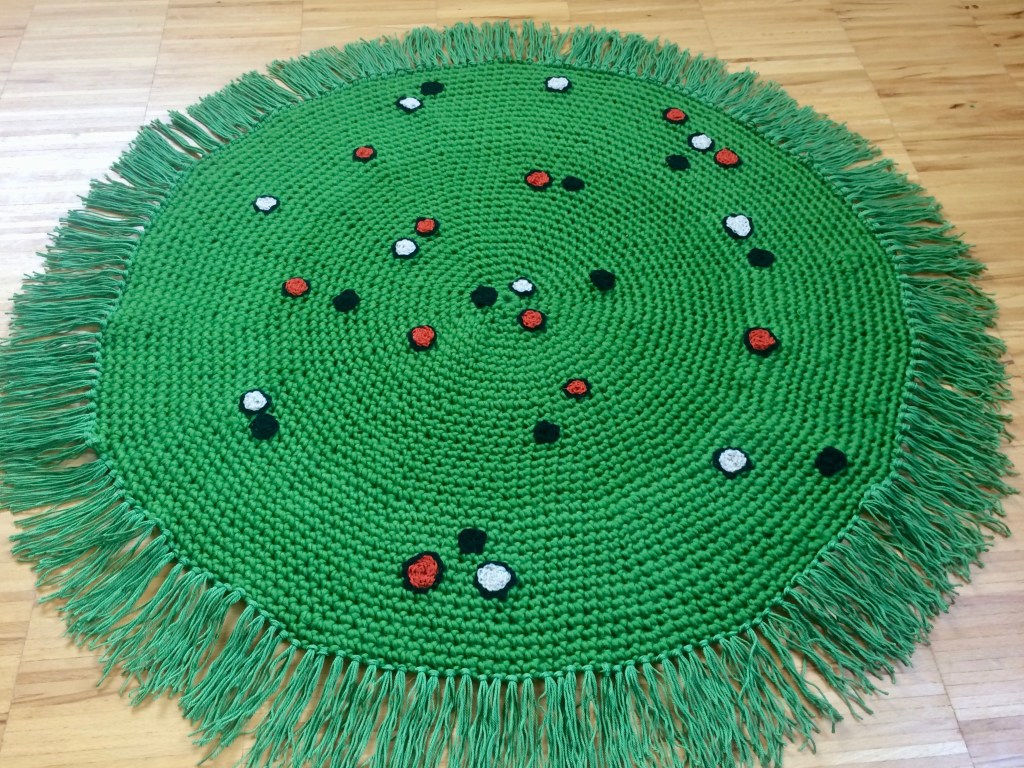
 Stitchcraft‘s August 1961 “Late Summer” issue had multiple cute, easy embroidery and tapestry projects. Mine was this little set of rose sprays. To show the versatility of the designs, the magazine usually had directions for and photos of the designs made on different items: a cushion and/or tray cloth, for example. Overall, there was a huge range of homewares that could potentially be embroidered: an apron, a place mat, a chair-back, a wall hanging, a “nightie case”, a project bag, a finger plate, a fire screen, even a room divider or a waste-paper basket cover. This issue added a new idea to the mix: the rose-spray design on a lampshade, complete with a pattern to cut out, sew and fringe the lampshade cover itself.
 Of course, they don’t have to be embroidered, but why not? Cotton embroidery floss is machine-washable even at high temperatures and I have plenty of scraps and bits of plain linen or cotton materials that can be put to good purpose. The bag I made for this August project was made from a piece of linen from shoes, yes, shoes that a friend bought (the shoes came wrapped in this piece of fabric in the shoe box instead of in paper.) I had enough embroidery floss on hand, so this was an almost 100% up-cycled / didn’t have to buy anything new project. (I say almost because I bought the cord for the drawstrings — then realised I could have made monks’ cord or i-cord from leftover cotton yarn. Next time…)
 The design is of
 June 1961 was the issue with too many great projects in it and not enough time to make them all. My “official” project was
 I decided to make it in cotton instead of Nylox (Patons wool-nylon mix from the 1960s) or a modern equivalent. It is always, always a problem to find non-mercerised cotton that is fine enough to give 7 stitches to the inch. Thick, mercerised dishcloth cotton is always available, mercerised crochet cotton is always available, but what passes as 4-ply or fingering weight non-mercerised cotton is just too thick. I decided on Natura “Just Cotton” which is non-mercerised, soft, pretty and supposedly free of harmful substances (Oeko-Tex certification). The label says it gets 27 stitches in 4 inches but that is illusory. The yarn is 8-ply! I don’t know why they don’t use 4 strands, thus making it a true 4-ply fine cotton for soft, light garments. I got 6 1/2 stitches to the inch with some effort, but the resulting fabric is a bit stiffer than I would have liked.


 In 1961, Stitchcraft had a nice running feature they called “Stitchcraft Layette”: a set of matching baby clothes and accessories with a pattern in each issue for a few months running. The first was a light, warm dress in
  I made the project in
 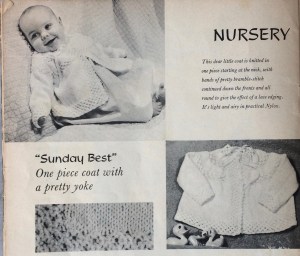 I was happy with the result and it reminded me of another pattern I had seen somewhere… in another Stitchcraft... oh right, it was this “Sunday Best” from April 1960! Bramble and stockinette stitch: always a good choice for baby stuff.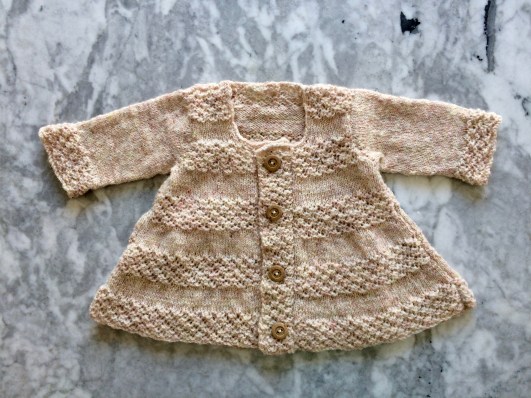
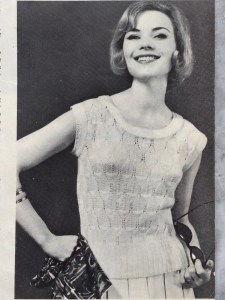 June’s project was this lovely sleeveless top in a leafy lace pattern, touted as a “very wearable and useful jumper to make for your holiday.” It looked pretty and elegant and suitable for my summer climate, which is generally not too hot — a lightweight wool garment in lace with no sleeves should be perfect most days.
 orange non-vintage clothing.
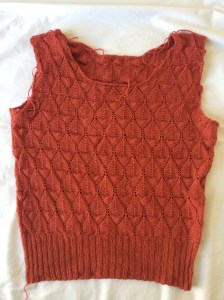 Then I ran into trouble with the weather, which was suddenly 34-36 degrees Centigrade with no chance of a cooler room either at work, home or on the move. My hands were too sweaty to hold wool and I had to take a break for a few days until we returned to our regularly scheduled 18-20 degrees. Then I finished the body and moved on the the neck and armhole edgings, which took forever! It’s actually an interesting design, which I haven’t seen before: You knit a strip of stockinette stitch with 3-stitch garter stitch border on one side, then fold the strip in half lengthwise like a sort of hem under the garter-stitch bit and sew it onto the neck or sleeve edge with the garter stitch facing out. It’s a like a separate hem sewn on, and the front neck strip has some cleverly thought-out short rows to make it fit the curve of the neck. But oh does it take a long time to make the strips.

 I do have a project from the May 1961 issue and will post about it soon, but it won’t be done by the end of May. In the meantime, I made a very cute coat for a friend’s child from the January 1976 issue of Stitchcraft, using the leftover yarn from the
  As usual, you’re supposed to make everything in separate pieces, and for once, I almost did! That is to say, I made the back, fronts and sleeves up to the raglan underarm join in pieces, then made the raglan yoke all in one piece working back and forth. Sewn raglans always look so messy (when I make them…), so it was worth it for that, and making the rest in pieces gave the sides some stabilising seams and didn’t take any longer than making the body in one piece working back and forth would have done.
 I noticed that it wasn’t quite going to work out with the total amount of yarn in the proper colour scheme, so I played with the amounts of red and blue and ended up just perfectly using up the rest of the red with a few metres left over should the coat ever need repairing. Of course, that meant I couldn’t make the hat. The project was fast and fun, though, so who knows, maybe I’ll make another one when January 1967… wait, when will that be again… January 2025 ?!? comes around. If we’re all still here! Hang in there and stick around.
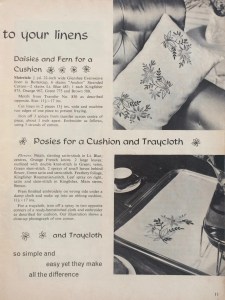 My Stitchcraft project this month was a simple embroidered spray of flowers, originally intended as a decoration for a cushion or traycloth. Having enough cushions and not using traycloths, I updated the design for an iPad cover similar to


 After January’s time- and labor-intensive pullover for me, I wanted to make something quick and easy in February. And there’s always a friend, colleague, or relative having a baby, so I made this simple ” Tiny Cardigan” from the cardigan and slipper set.
 The cardigan has a basic bottom-up raglan construction with the twisted ribbing featured in January’s


 January’s project was — like


 After thinking it over, the most reasonable course was to work the little bit of pre-yoke between the armhole bind-offs and patterned yoke back and forth with raglan decreases as written, but beginning the front neck shaping (pre-yoke, concurrent with the raglan decreases) an inch or so lower than the back. That preserved the proper stitch count, let the sweater hang better, and shortened the yoke a bit. I didn’t mind shortening the yoke, as I like sweaters to be snug under the arms and not too high on the neck. I didn’t need a zipper, so I made the patterned yoke entirely in the round.
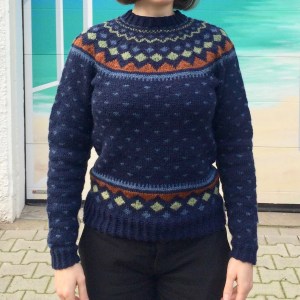 It worked out perfectly! I could hardly believe it. Raglans and round yokes may be somewhat forgiving on the body, but it is a fundamentally tricky mathematical game to make all the interdependent factors of width, depth, and pattern repeat come out right, so I was really proud of myself for making it work. My only other modifications were on the sleeves (longer) and the waist shaping (original pattern had none, I started out narrower at the waist and increased gradually at the sides to give a more figure-flattering look.)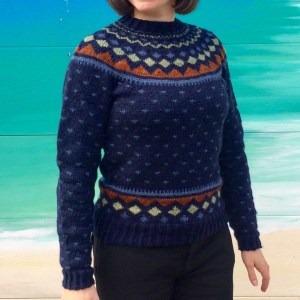
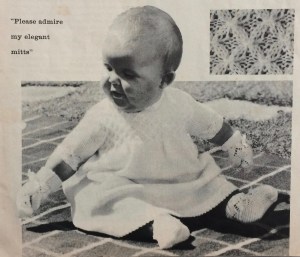 My December project was a warm winter dress for a baby, part of the “Baby’s Special Outfit” of dress, bootees and mittens that continued the baby set started in the November 1960 issue.
 I used a lovely 100% wool that was hand-dyed by a fellow knitter in my local knitting group. She uses natural dyes from plants in her garden, or the bits of food items that are normally not eaten: walnut shells, onion skins, and so on. This green-melange wool was dyed with red onion skins! She did explain to me how that worked, but please don’t ask me, because I forgot the answer already. Anyway, it’s very nice. I was worried that it might be too scratchy for sensitive baby skin, but wash-blocking it and rinsing with hair conditioner softened it up quite a bit.

 The Stitchcraft Sixties

