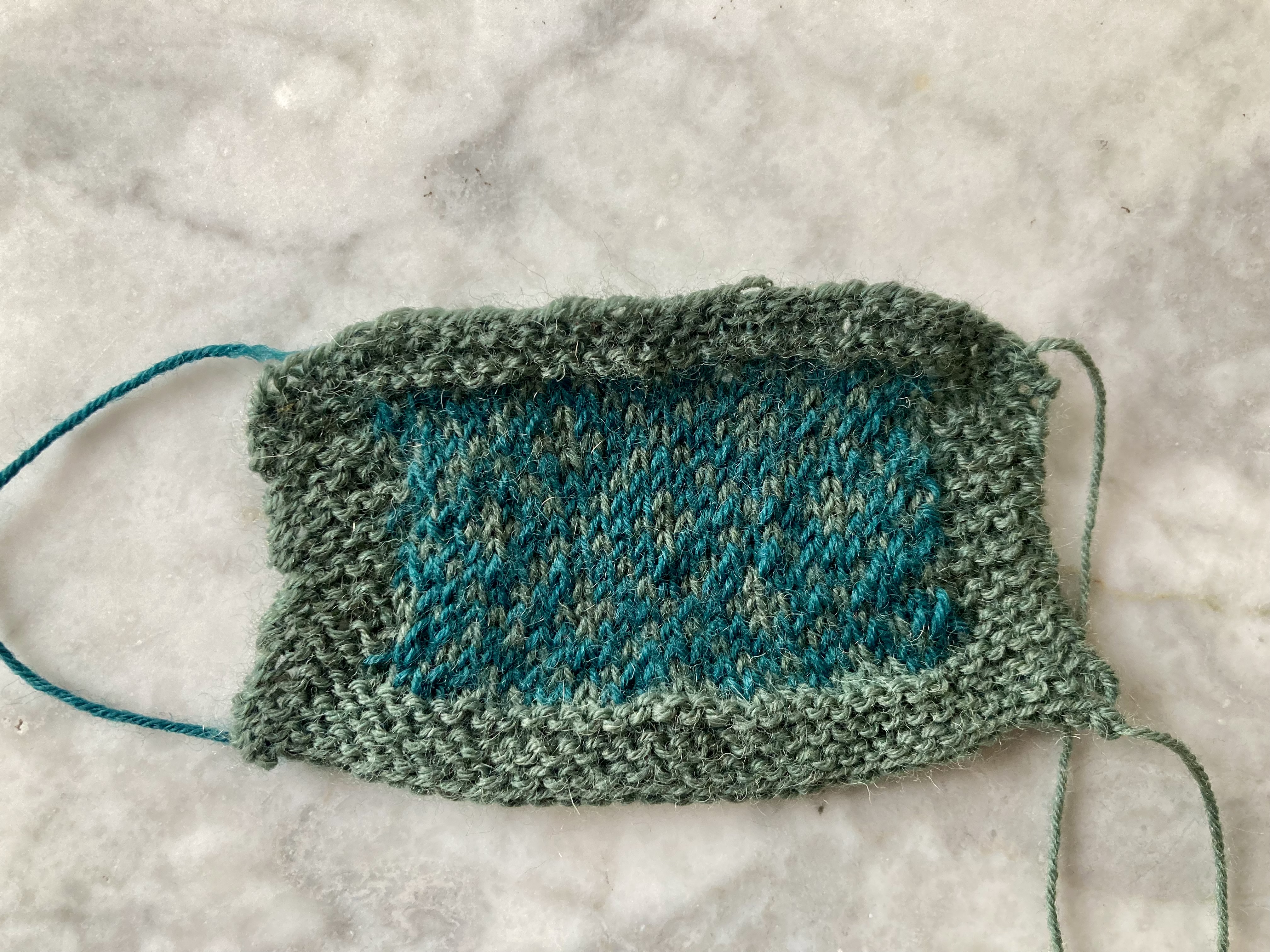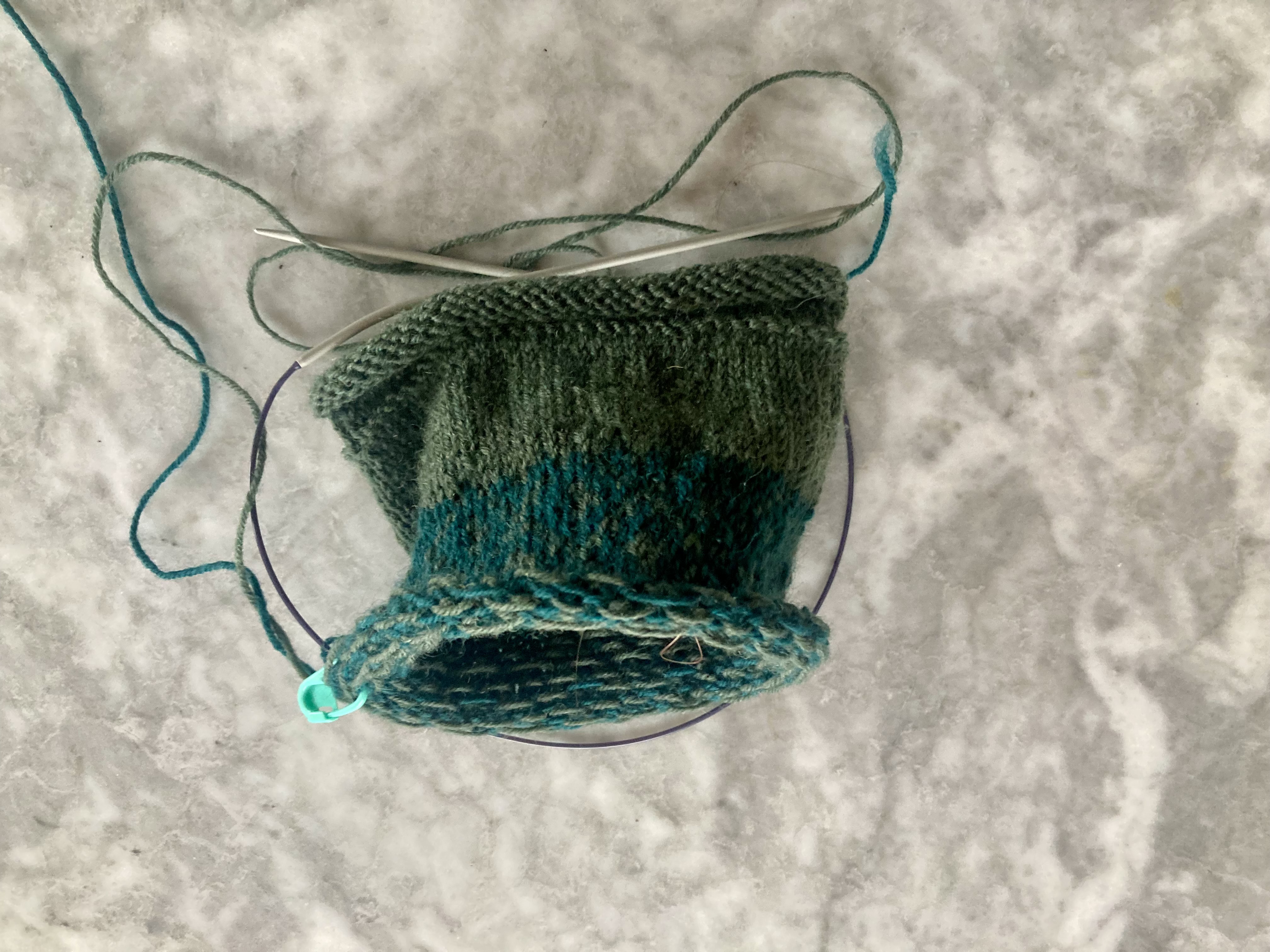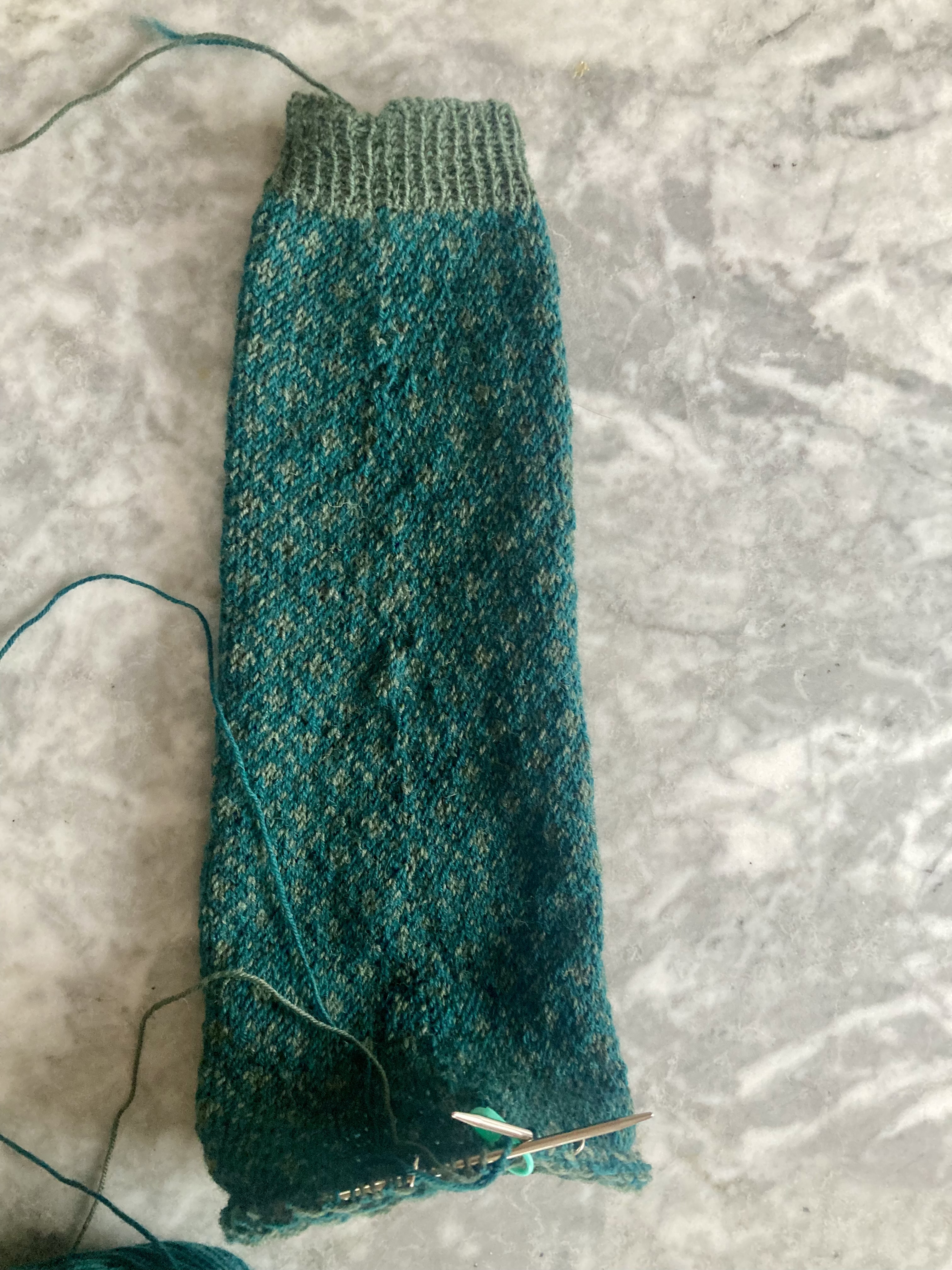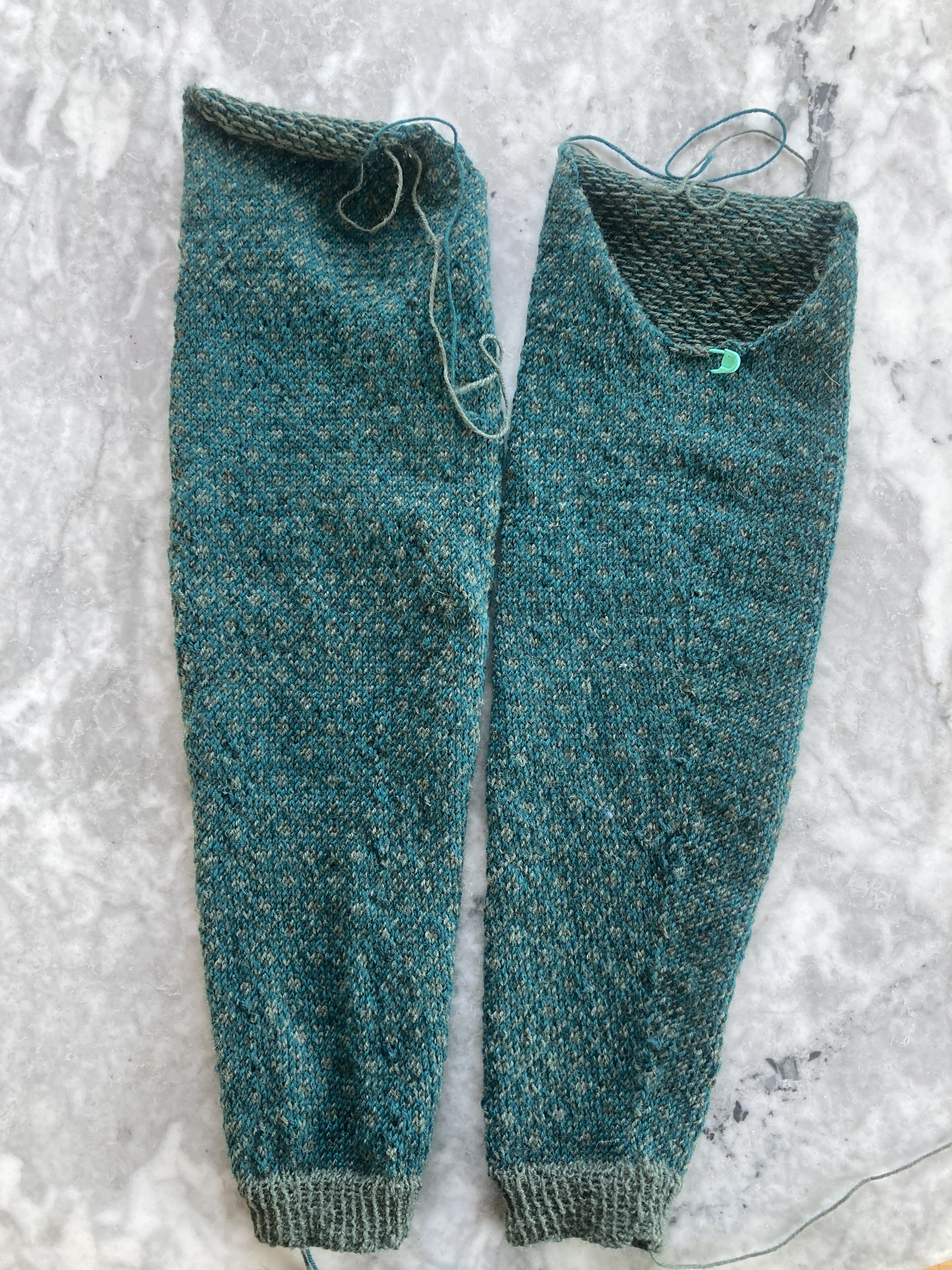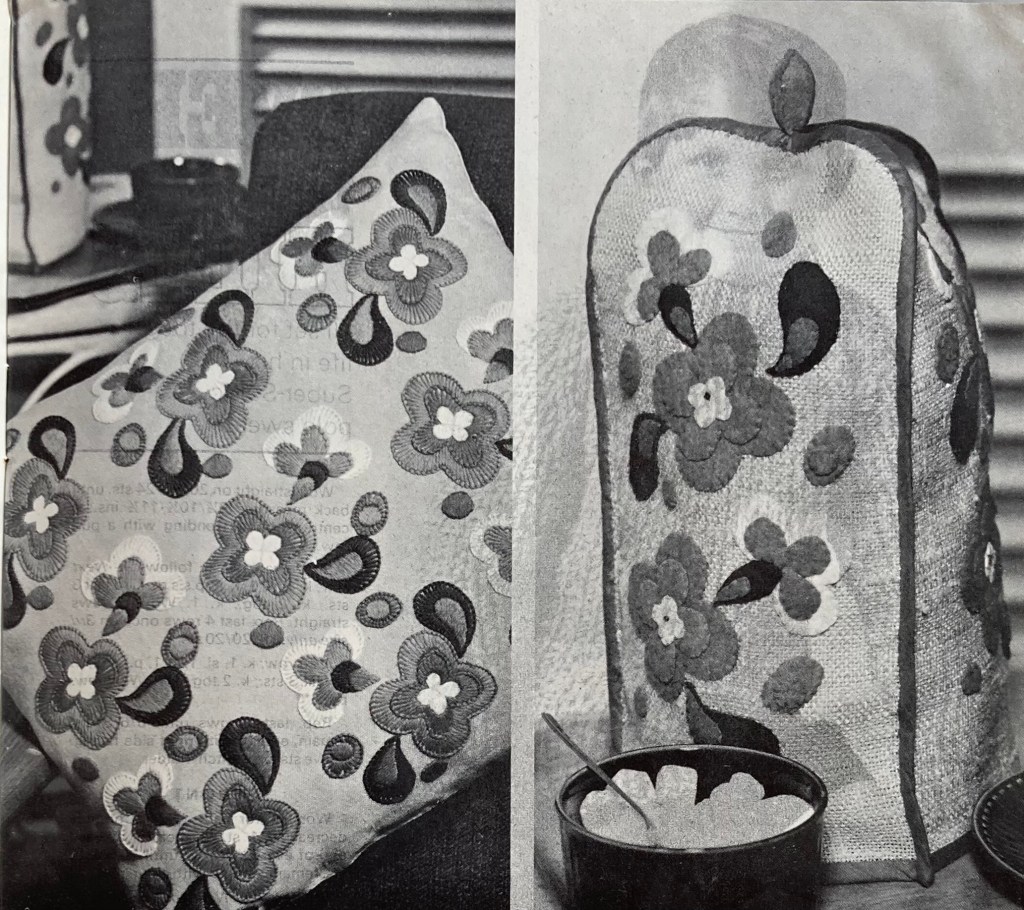
October 1967: Babies Button-ups

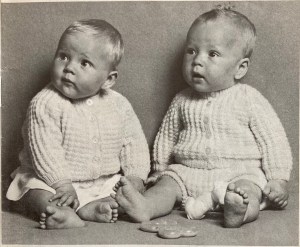
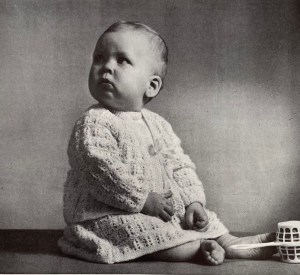
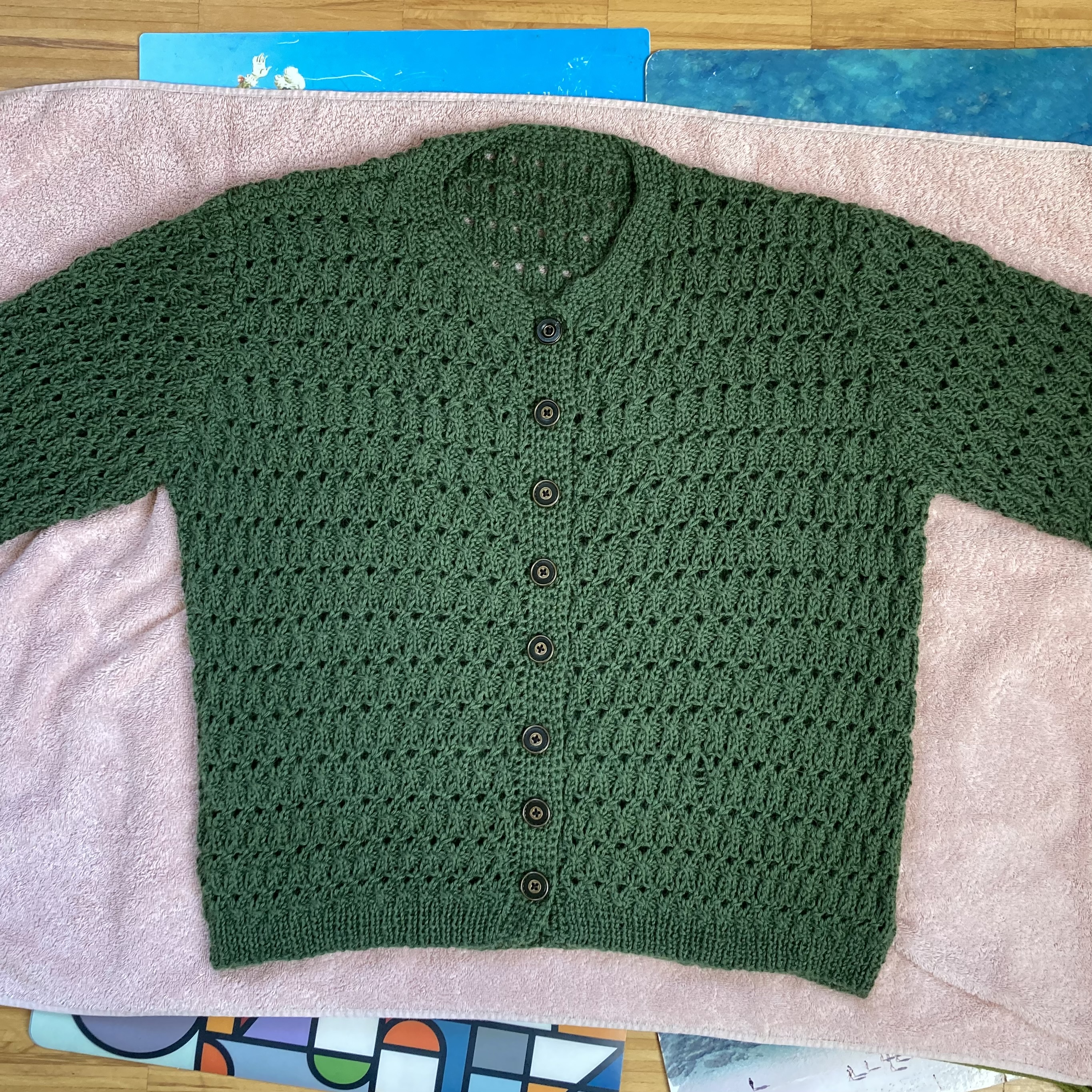
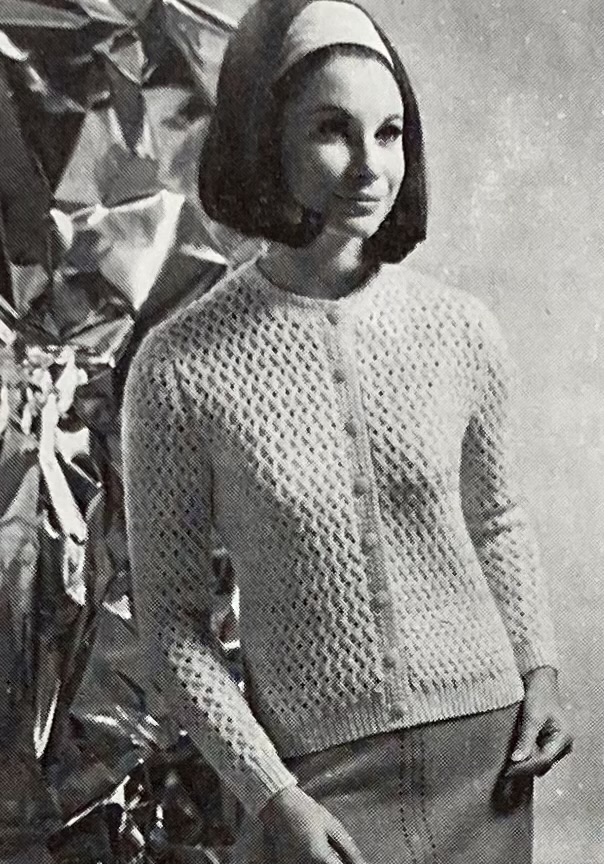
“Something to laugh about” is Stitchcraft’s caption for the photo of this month’s project: a baby’s cardigan (“button-up”) from October 1967. For once, the babies in the photo are actually happy!

The cardigan can be made “for a boy” or “for a girl” (buttonholes on one or the other side) and you can knit matching trunks “for a boy” — I guess girls need to get used to having a cold bum early, to prepare them for a lifetime of miniskirts with knee socks. In any case, the cardigan and/or set is offered in three sizes, to fit newborns up to ca. 1 year (18-22 inch chest).

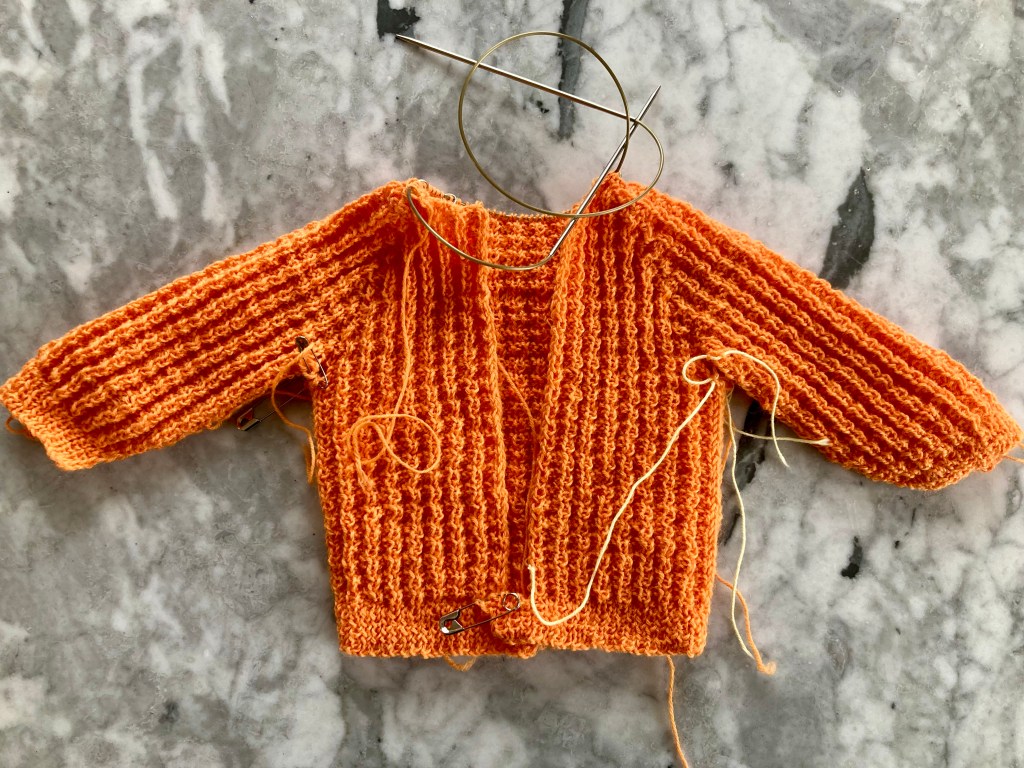
The suggested wool is Patons Quickerknit Baby Wool (fuzzy, hairy, 100% wool) or Patons Brilliante (smooth, synthetic). I used DROPS Fabel (sock wool, 25% polyamide) in a shade of bright orange which I had originally bought to make the red-striped dress from September 1967, but which didn’t match with the other colours. It is quite fine and smooth, so for once I actually achieved the tension called for in the pattern: 8 sts and 10.5 rows to the inch.

I made the first size, for whatever baby a friend or colleague has next (always good to have a baby garment in reserve…). The pattern is interesting and one that I had never encountered before:

  • Row 1: sl1, k2, *p1, k3*
  • Row 2: sl1, p2, *k1, p3*
  • Row 3: sl1, *k1, p3* to last 2 sts, k2
  • Row 4: sl1, *p1, k3* to last 2 sts, p2

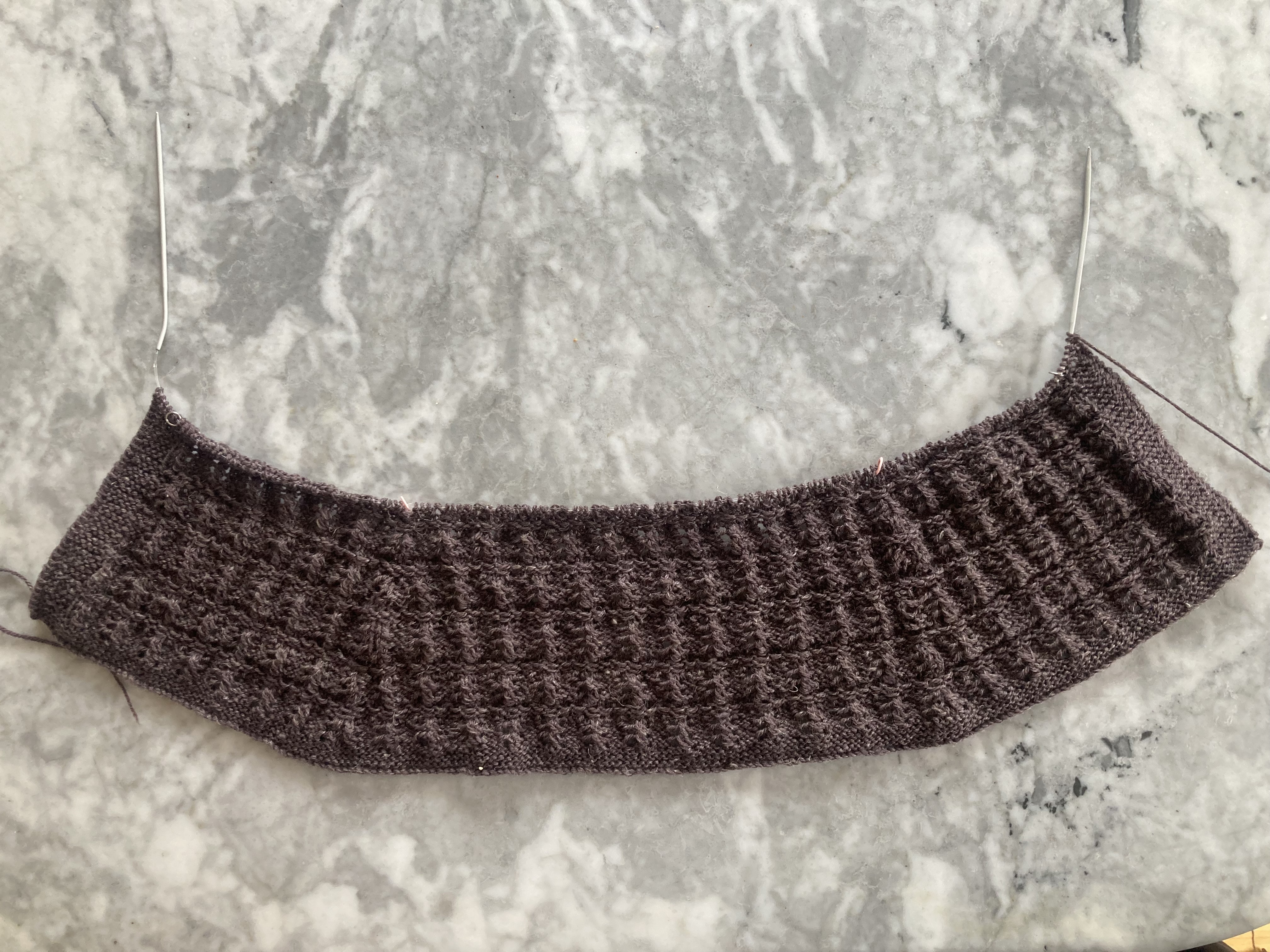
In other words, a broken 1/3 rib. You would think it would be easy to notice and memorise, but it was surprisingly frustrating and difficult to “read” the knitting. I kept the instructions next to me the whole time.

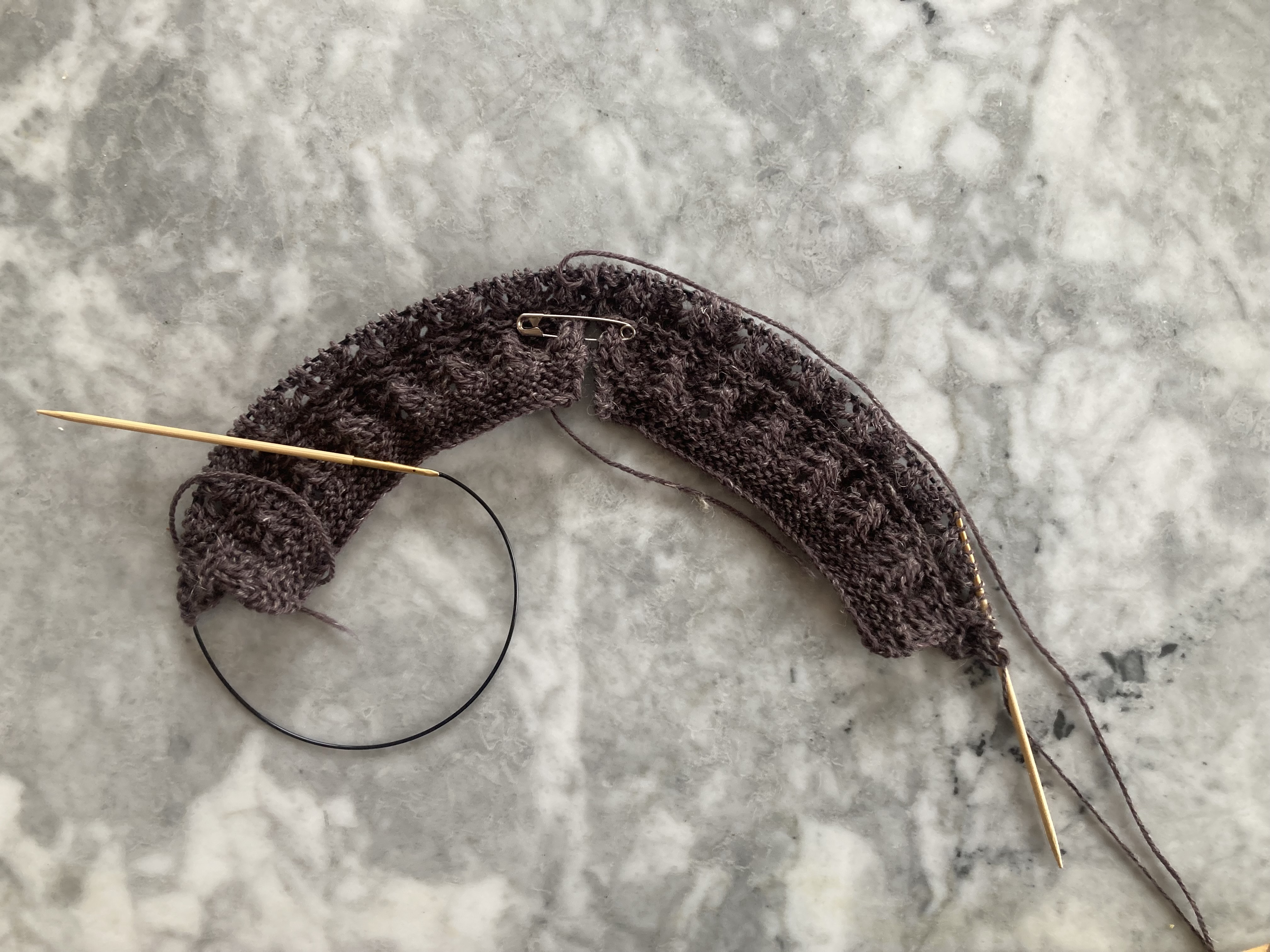
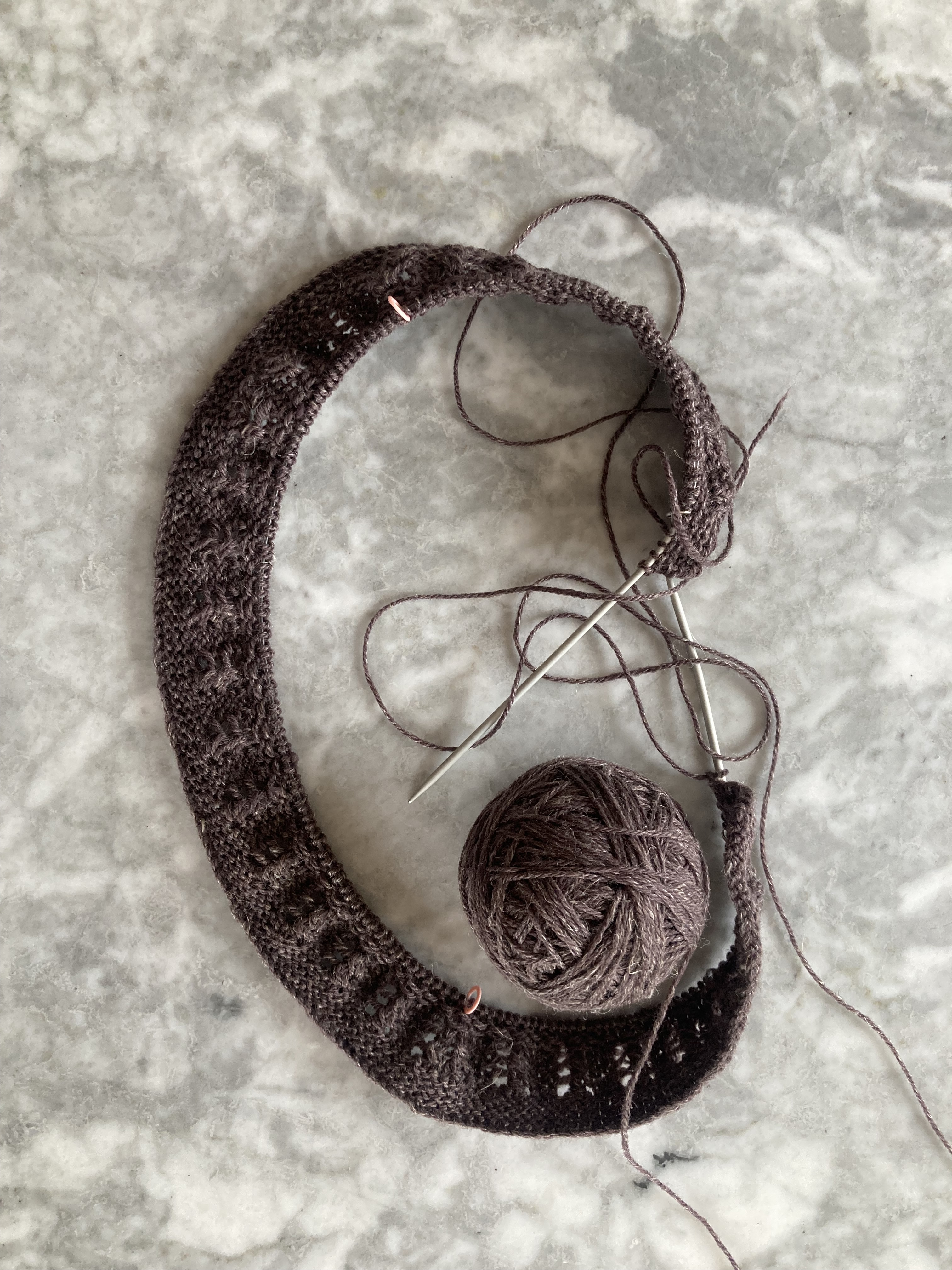
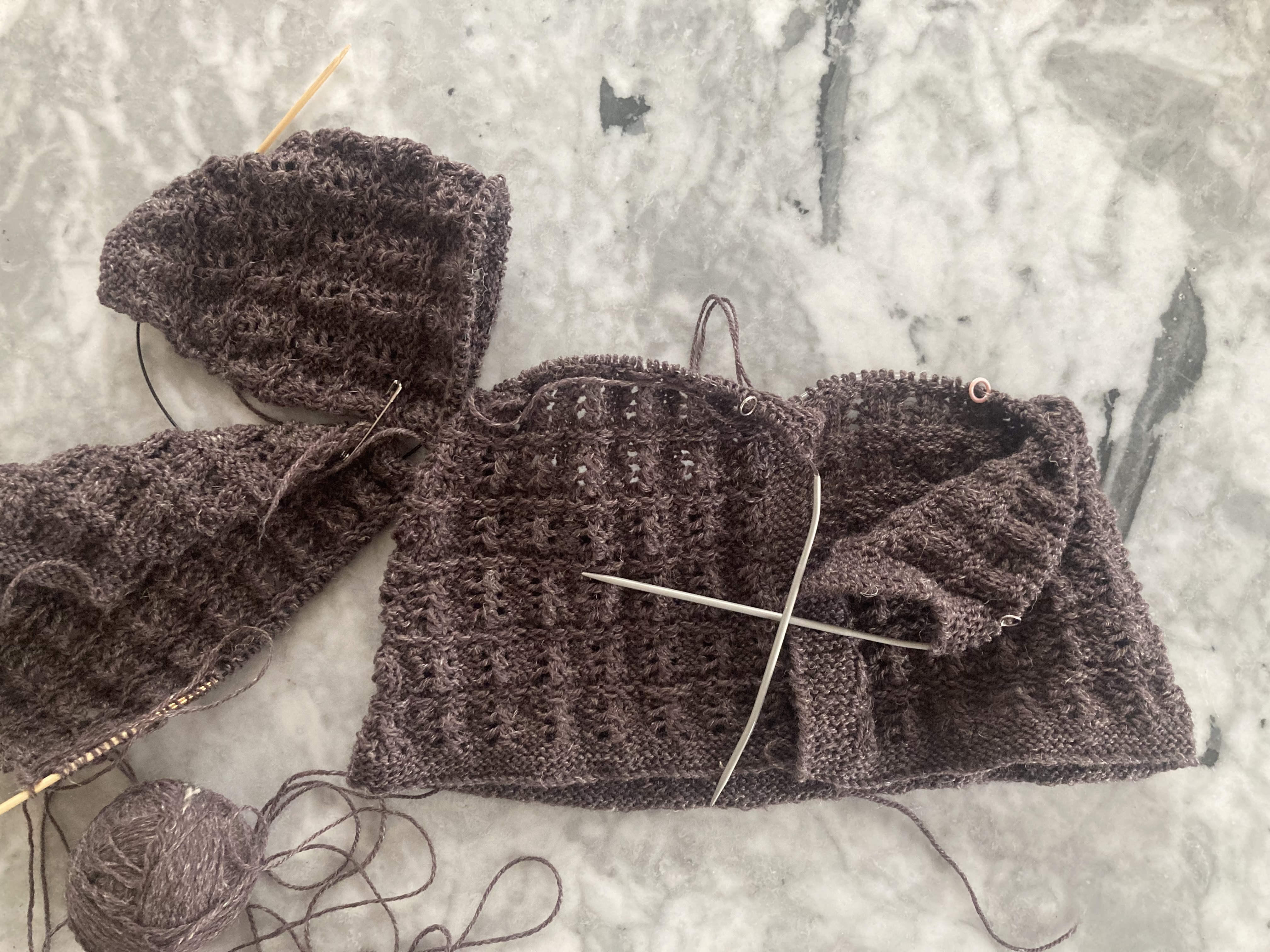
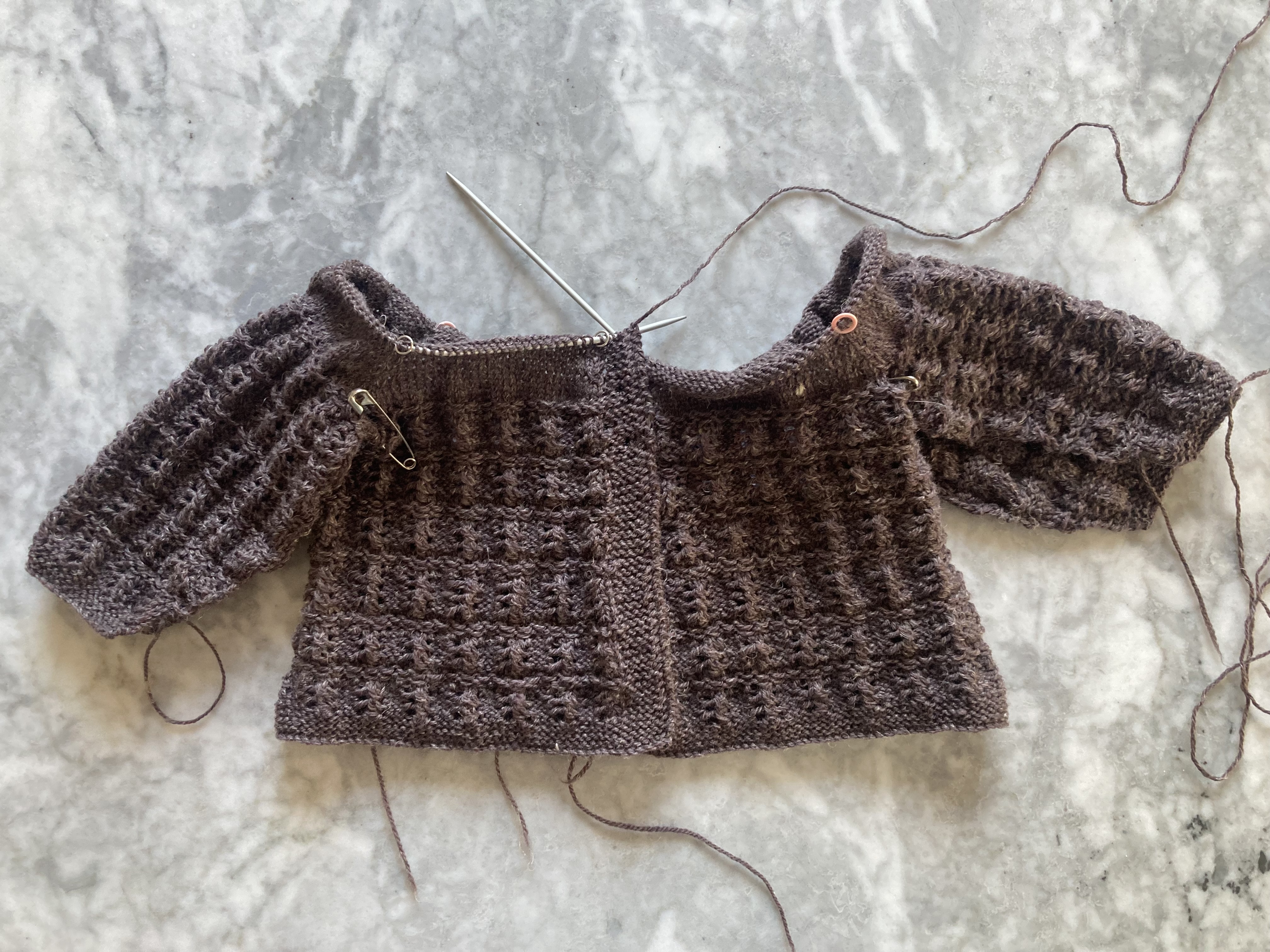
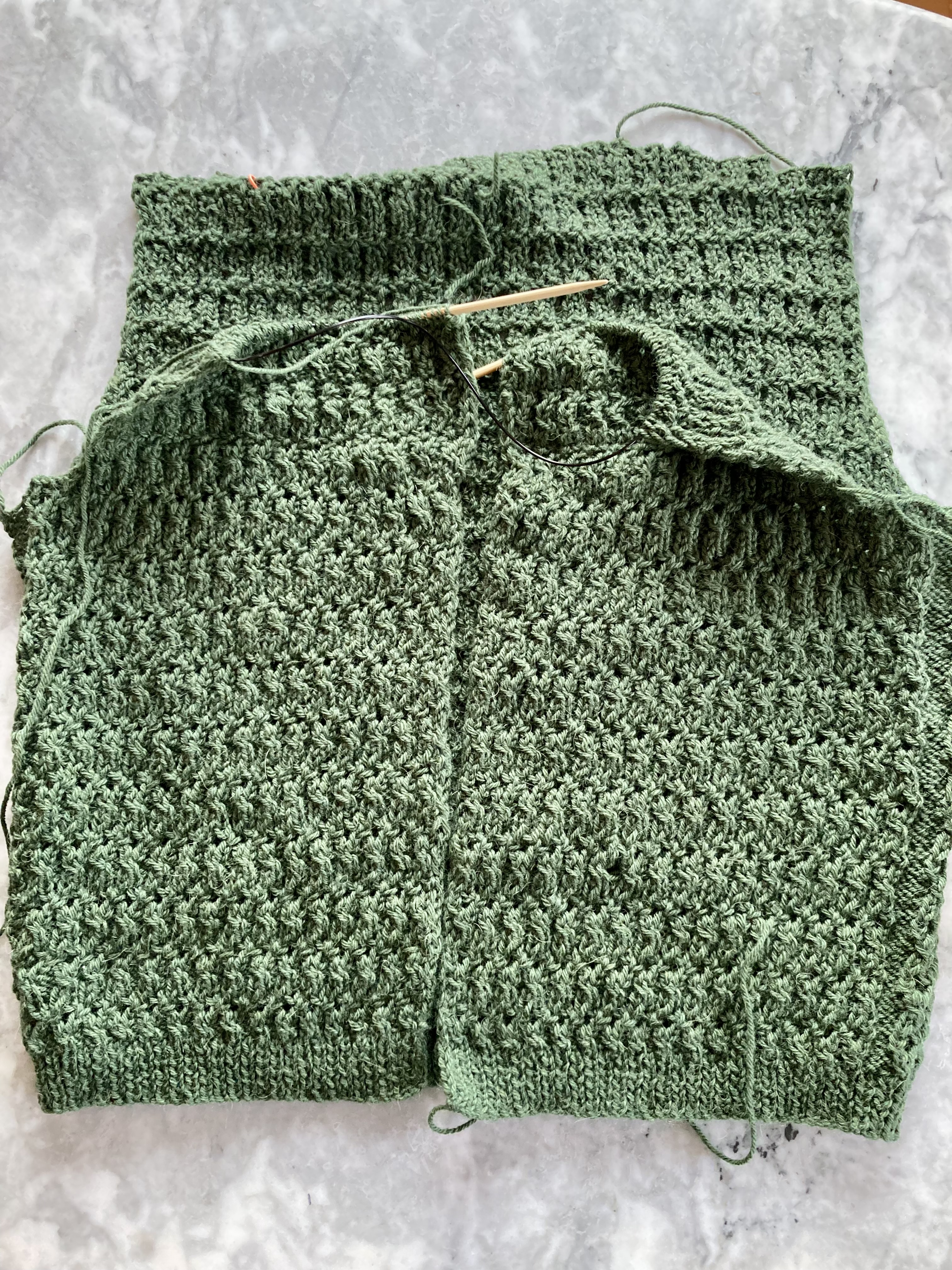
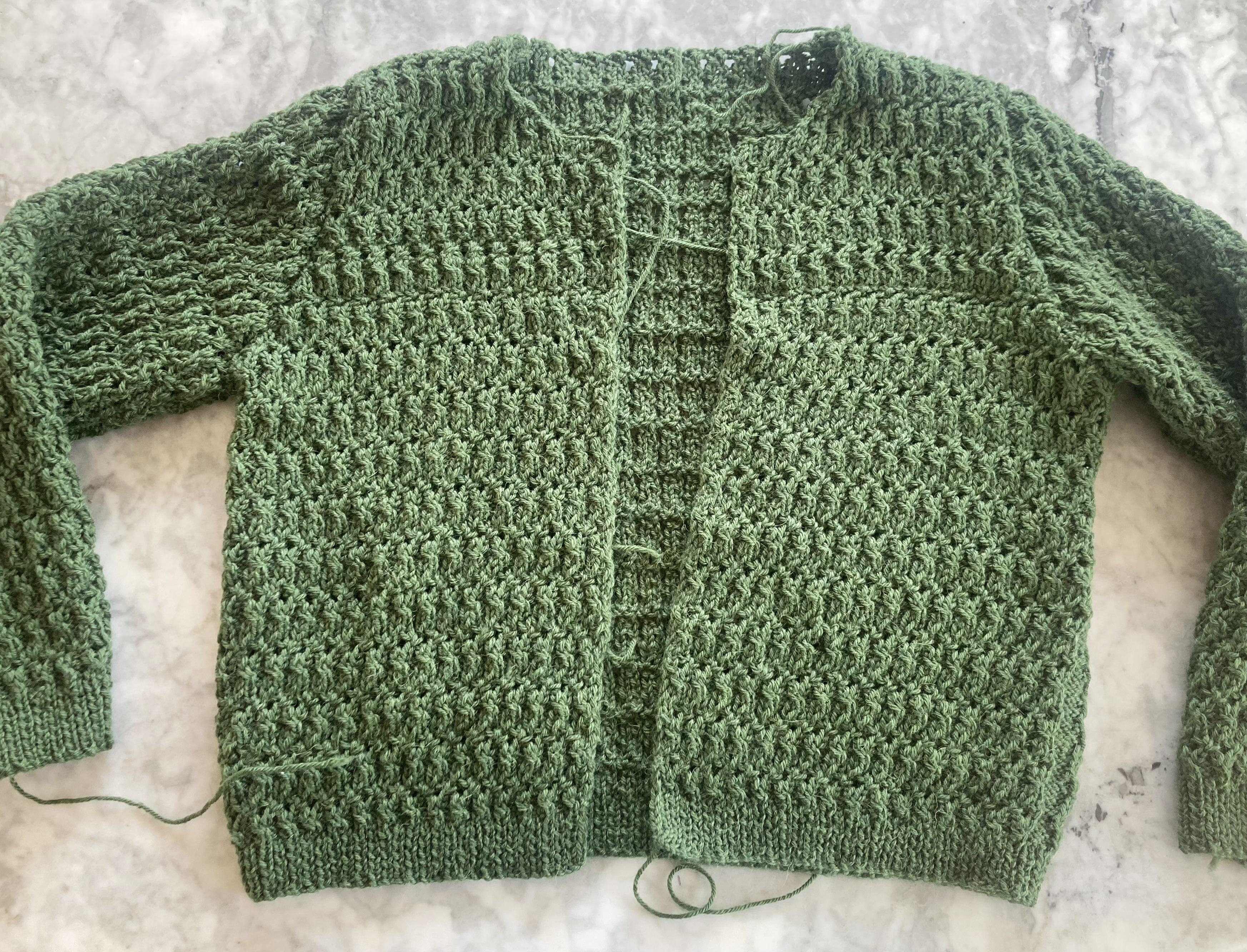
I made the fronts and back in one up to the armholes, the sleeves separate and flat (the pattern messed with my head enough and I did not want to try to convert it to knitting in the round), and then joined it all together for the raglan decreases. Increasing and decreasing in this pattern was not fun. Even though it is really not a complicated pattern! It just wouldn’t go into my head. It worked out fine in the end, though.

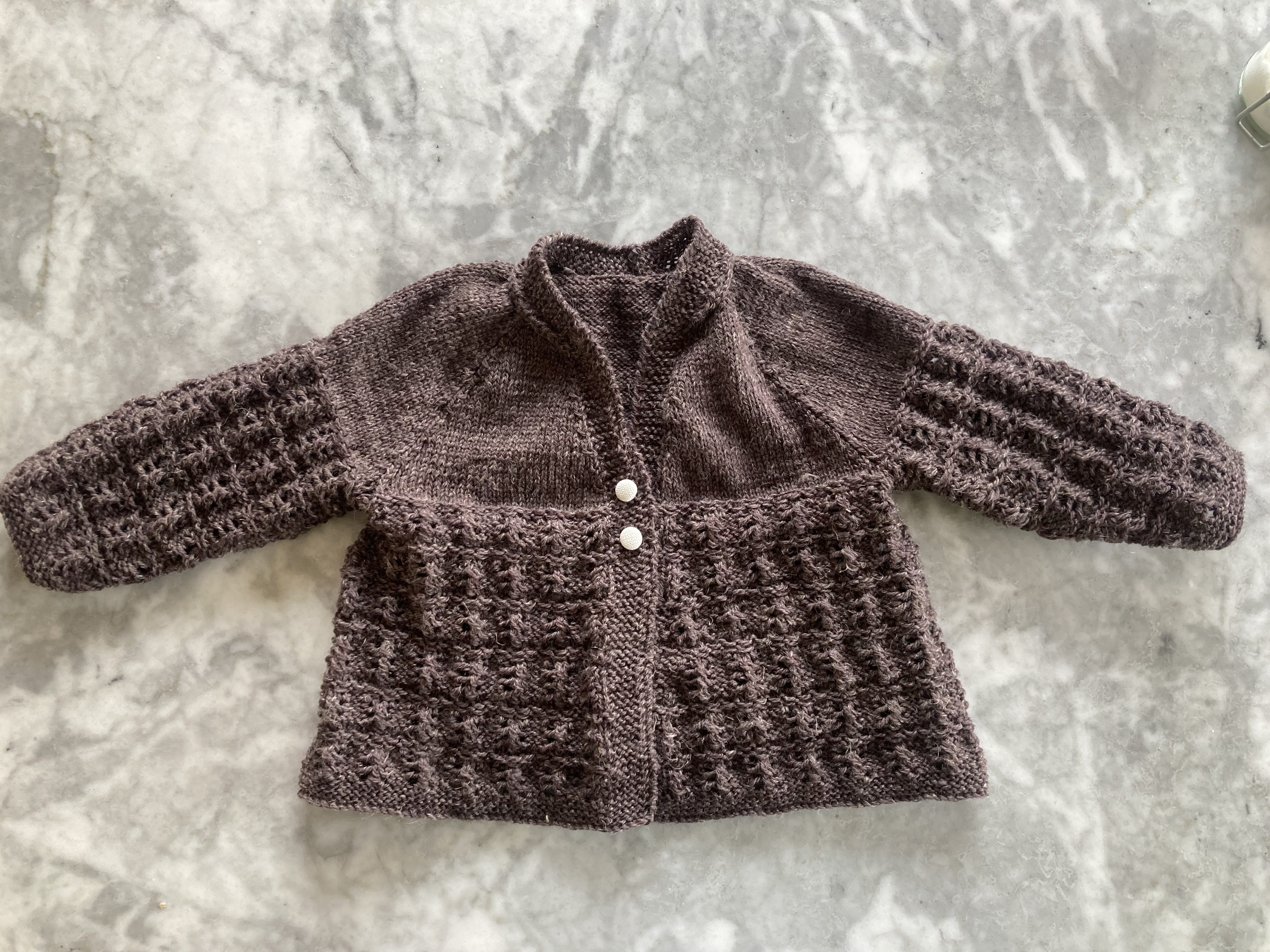
The finished fabric is very three-dimensional and waffle-y and probably quite warm. It also pulls together quite a lot horizontally. I was barely able to stretch it out to an 18 inch chest with blocking, so this will be for a small/newborn baby. On the other hand, the stretchiness means the cardigan will probably grow along with the baby and fit it for a while. I added little white vintage-looking buttons and that was that. I didn’t make the trunks.

All in all, turned out fine and will brighten up some baby’s wardrobe. And it even got done in October! Next month’s project will be a stranded pullover for myself.

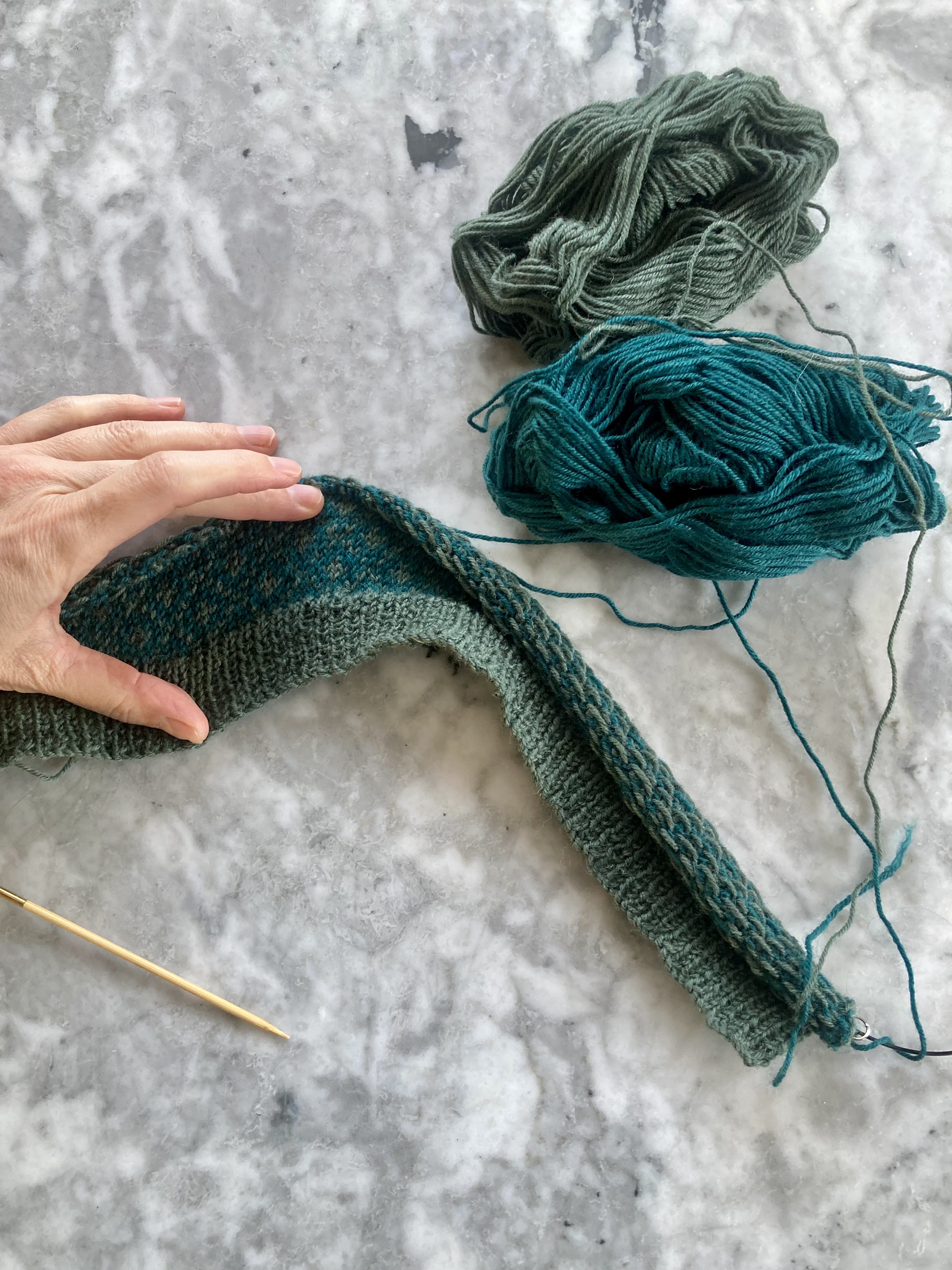
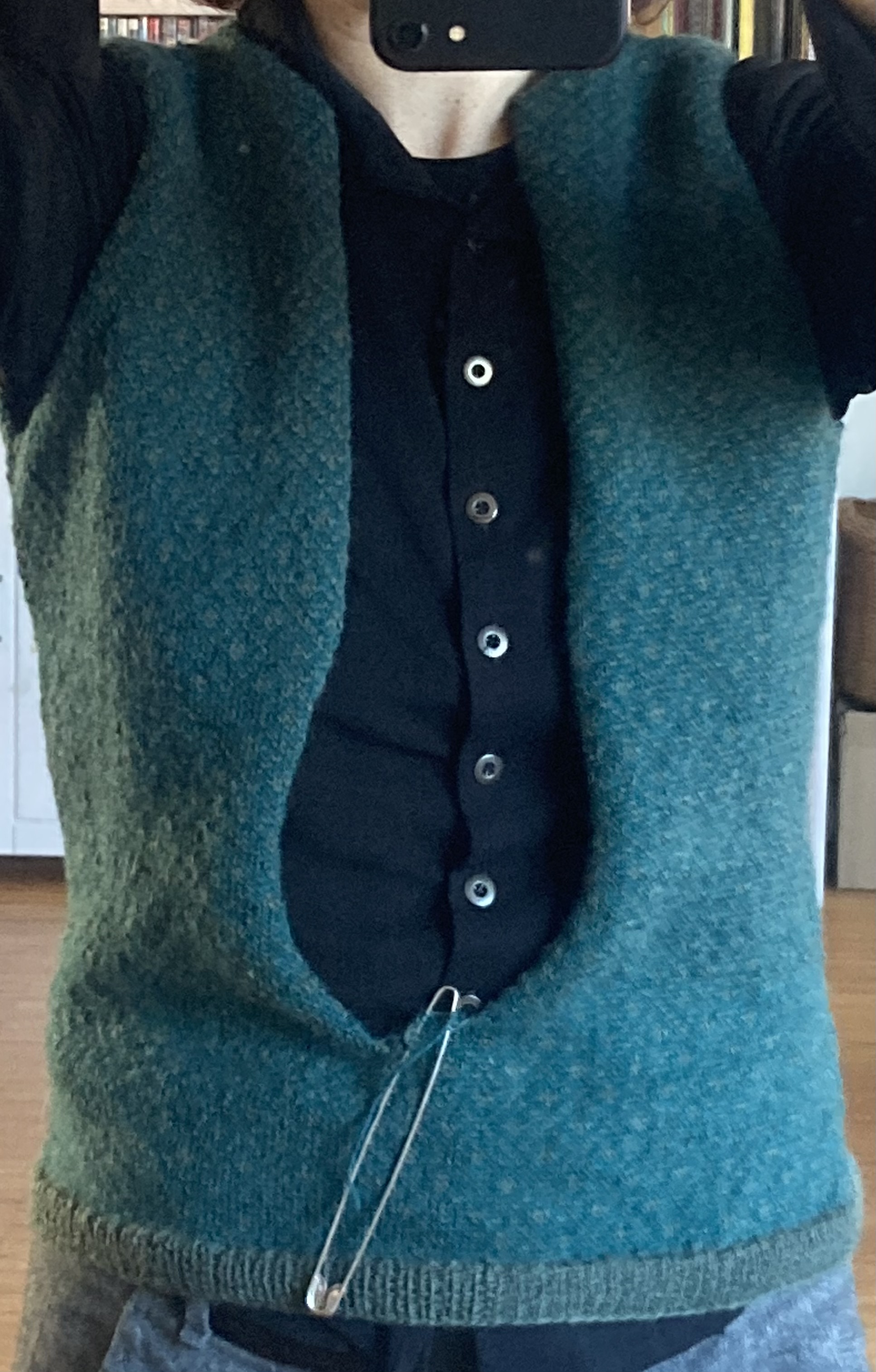
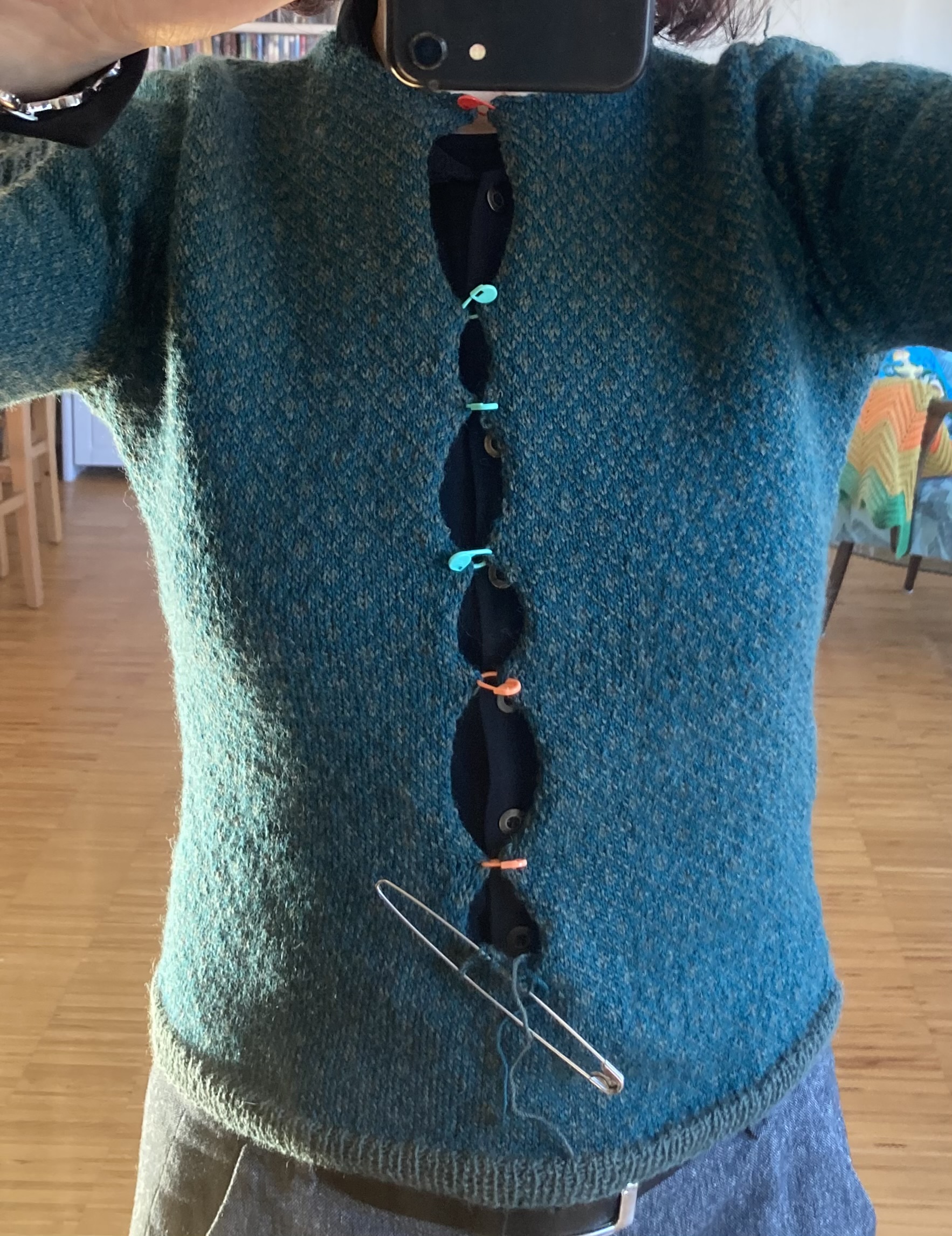
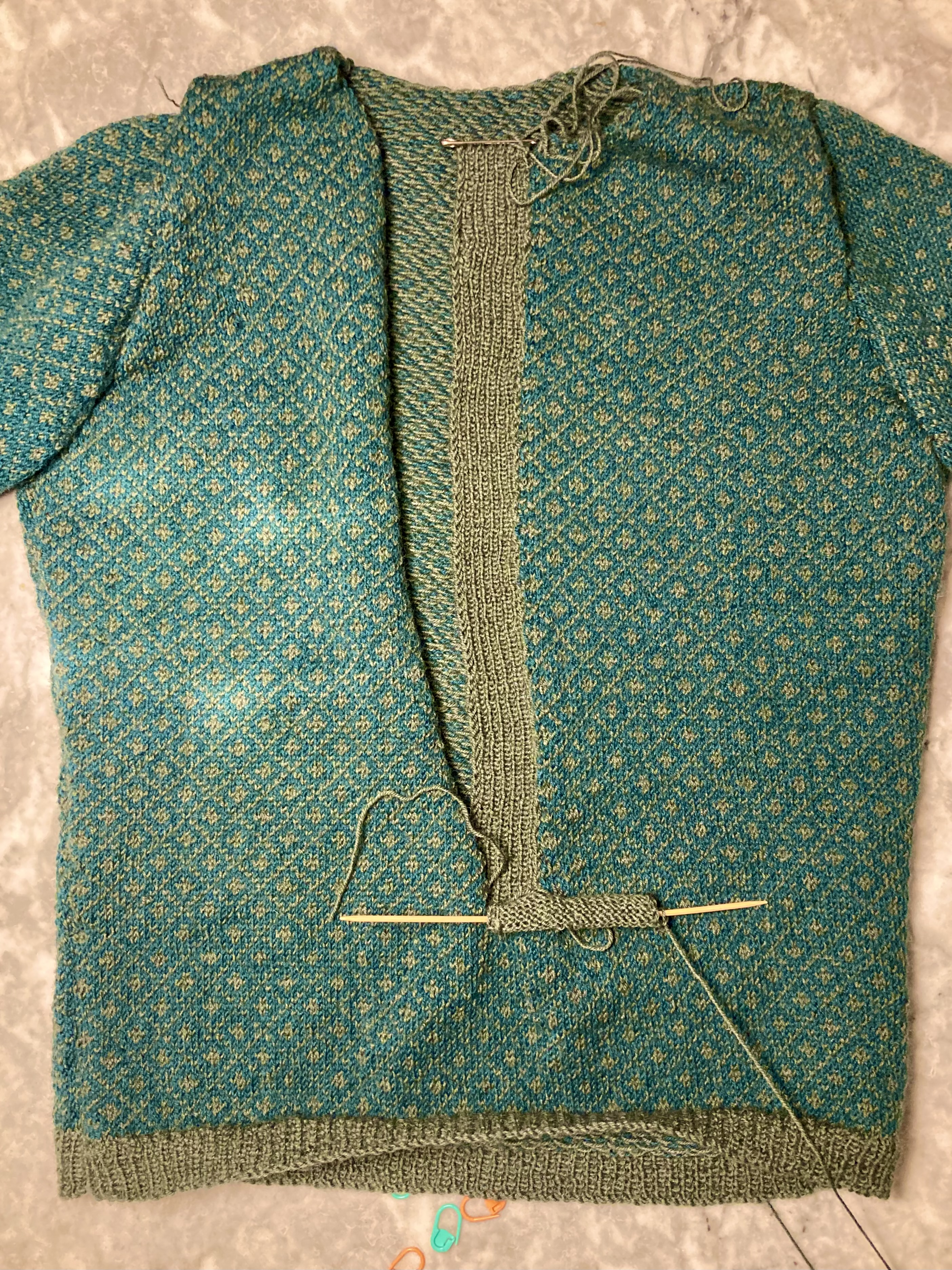
Out of Order: Fair Isle Country Cardigan, January 1967

The September 1967 issue of Stitchcraft had three fantastic projects in it that were all too time- and labor-intensive to finish (or possibly even start…) in September, so I concentrated on finishing up this cardigan from the January 1967 issue.

This was one of the projects that I had been looking forward to for years, since I have a 1960s vintage dress from my grandmother that would match it perfectly in colour and style as pictured in the magazine. But for some reason, this project was cursed.

It started with the wool — I wanted to be authentically Fair Isle and make in in Shetland wool, and Jamieson’s of Shetland has a DK wool in a perfectly matching shade of turquoise. There’s a yarn store in a nearby city to me that carries Jamieson’s, so I wrote them an email to order… only to get a phone call saying that the wool couldn’t be ordered at the moment due to international customs negotiations (Damn you, Brexit!). So I thanked them and asked them to cancel the order, ordered some Rauma 3-ply from a different supplier instead, which was fine, and started with that. I chose a more rust-orange instead of “Red Hackle” for the stranded yoke, along with natural white and anthracite.

The cardigan is meant to be knitted in pieces from the bottom up and has a very interesting sleeve and shoulder construction: set-in sleeves but with a round yoke over only the yoke part of the front and back (not a true round yoke as one would find on a “real” Shetland-style garment.) Interestingly, the men’s pullover version of the same design has a traditional round yoke. In any case, I started with the sleeves, to check how the tension and pliability (Rauma 3-ply is sturdy, but can be rather stiff) would work out. It seemed fine.

Then it was time for the fronts and back, which I made in one piece back-and-forth (no steeks, since the only stranding is on the yoke.) I was concerned that the straight-up-and-down, oversized style would look dumpy on me, so made it a size smaller than indicated for my bust measurement and added in some waist shaping. Also, I made the button bands along with the fronts even though they are supposed to be made on a smaller needle, since I hate making vertical button bands and sewing them on afterwards.

It was very boring knitting and mostly sat around in the cabinet while I worked on more exciting projects. (On that note, please excuse the wall of text — I never though to take photos of the work in progress, since nothing interesting happened.) Then, somewhere around this time, I got a call from the yarn shop in the nearby city. “Your order of Jamieson’s DK has arrived!” What? I thought it wasn’t possible to order it? It turned out there was a misunderstanding and they hadn’t cancelled my order, just put it on “pending” until whatever regulations were changed. Well, you can never have too much yarn, I guess…

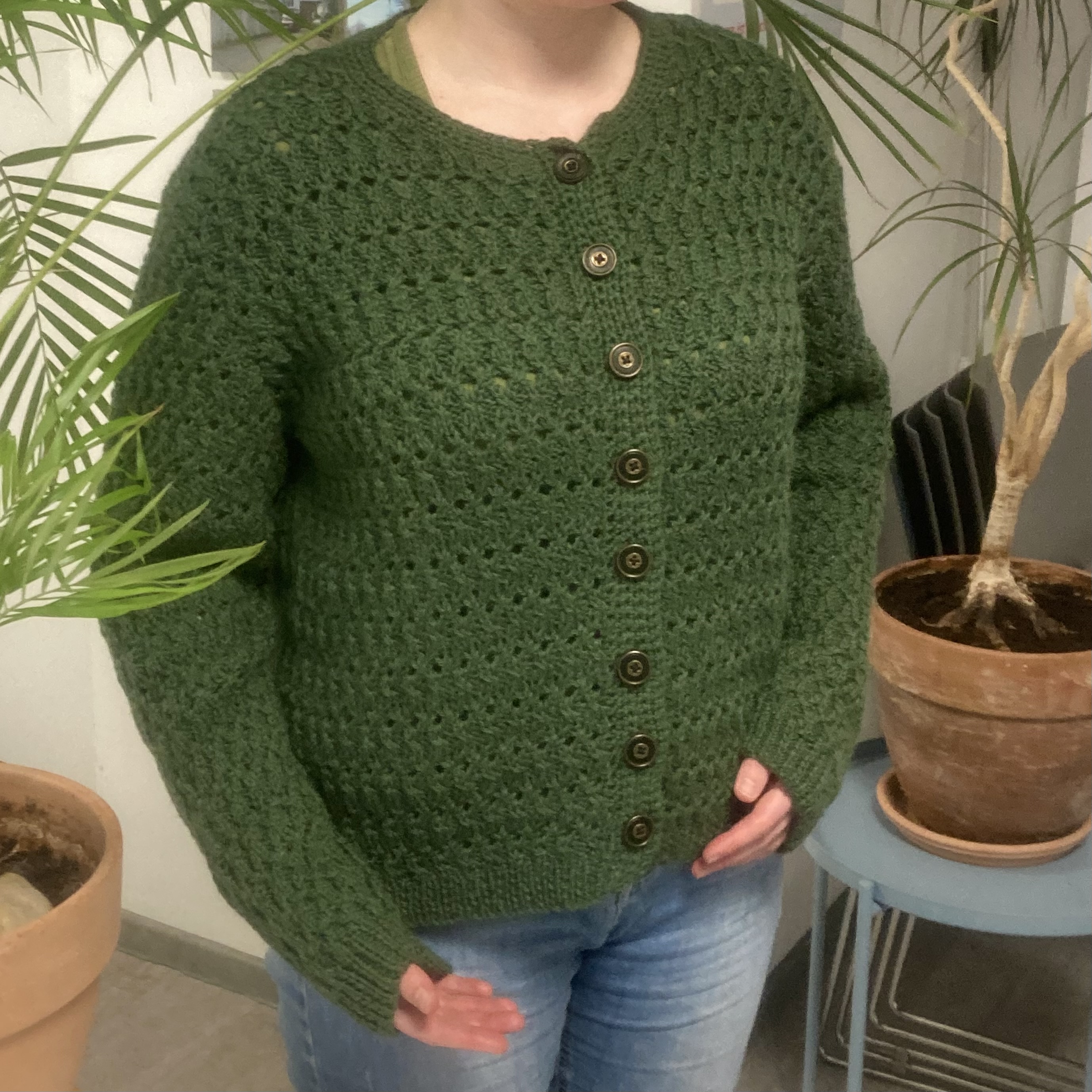
Back to the cardigan… It seemed fine while knitting, but it was hard to check for fit, and I couldn’t shake the feeling that the wool, although pleasantly lightweight, seemed to stretch more and more width-wise the longer the body got. The real problem came with the yoke. Because of the weird set-in-sleeve-plus-stranded-yoke construction, the stranded work starts a few inches in from the shoulder seam. The seam is unavoidably a bit bulky (DK wool…) and the way the stranded work starts resulted in a weird tension difference that made the shoulder seam stand out in an ugly way and also made the sleeves “balloon” at the top for an almost Victorian leg-o-mutton look. Not a good look for me! Not at all! Also, the stranded part is too long and the neckline very high, making the shoulders too wide. And the rest of the fit wasn’t good either — it continued to stretch width-wise and even having made a smaller size, it was all just huge and baggy. Even the sleeves were too long. To top it all off, in spite of making the button bands along with the body, I didn’t get the spacing right. (I did find nice buttons, at least.)

I tried blocking it into shape, but there was only so much that that could accomplish, and now I don’t really know what to do with it. I thought about removing the sleeves and re-positioning the shoulder seam as one would with a sewn garment, and just cutting down the sides and sewing side-seams, then getting rid of the excess fabric. That would be pretty brutal, and also a lot of work, and I don’t like machine-sewing and cutting hand-knitted garments. I thought about giving it to a friend who has wider shoulders and a larger size than me. I thought about wearing it in the winter and just living with the oversized style, even though it is not my style. I made a matching tam while I was contemplating all of this, and even the tam turned out too big. I considered putting the tam through the washing machine and/or dryer to see what happened (would it felt too much, or just get smaller) and if successful, doing the same with the cardigan.

As of this post, I have still not decided what to do, but if it fits my friend, I think I will give it to her and knit myself another version from the Jamieson’s wool. Perhaps with pink instead of rust for the contrast yoke colour, and not following the pattern, but just making it in a size that fits me the way I want it to fit, and with a traditional round yoke. We’ll see! I do still love the design.

Out of Order: Chevron Dress from April 1967

EDIT: Now with photos!

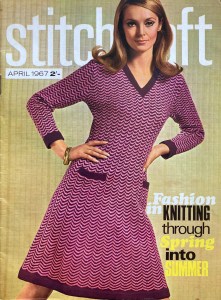
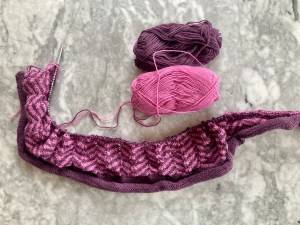
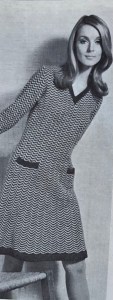
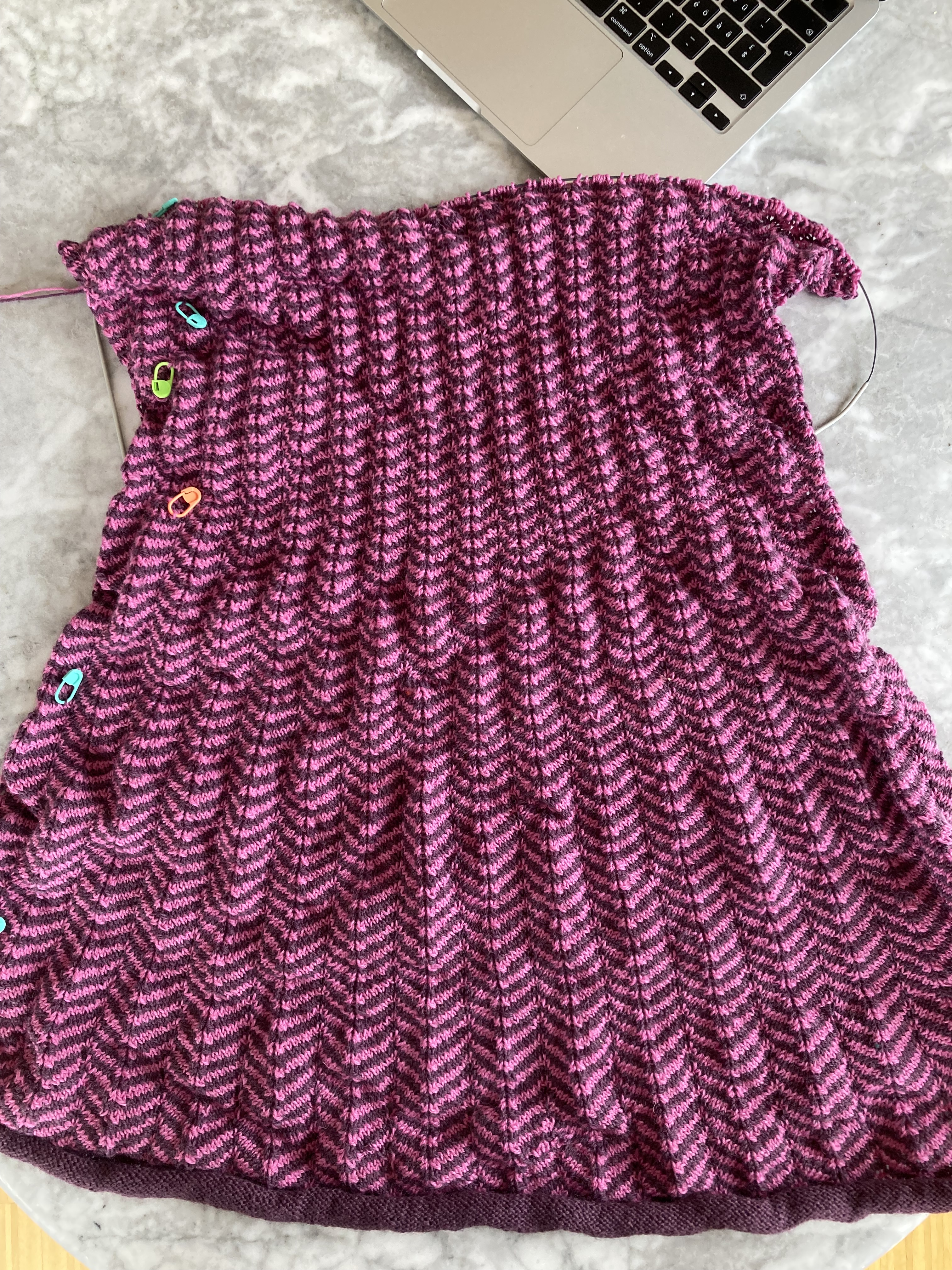
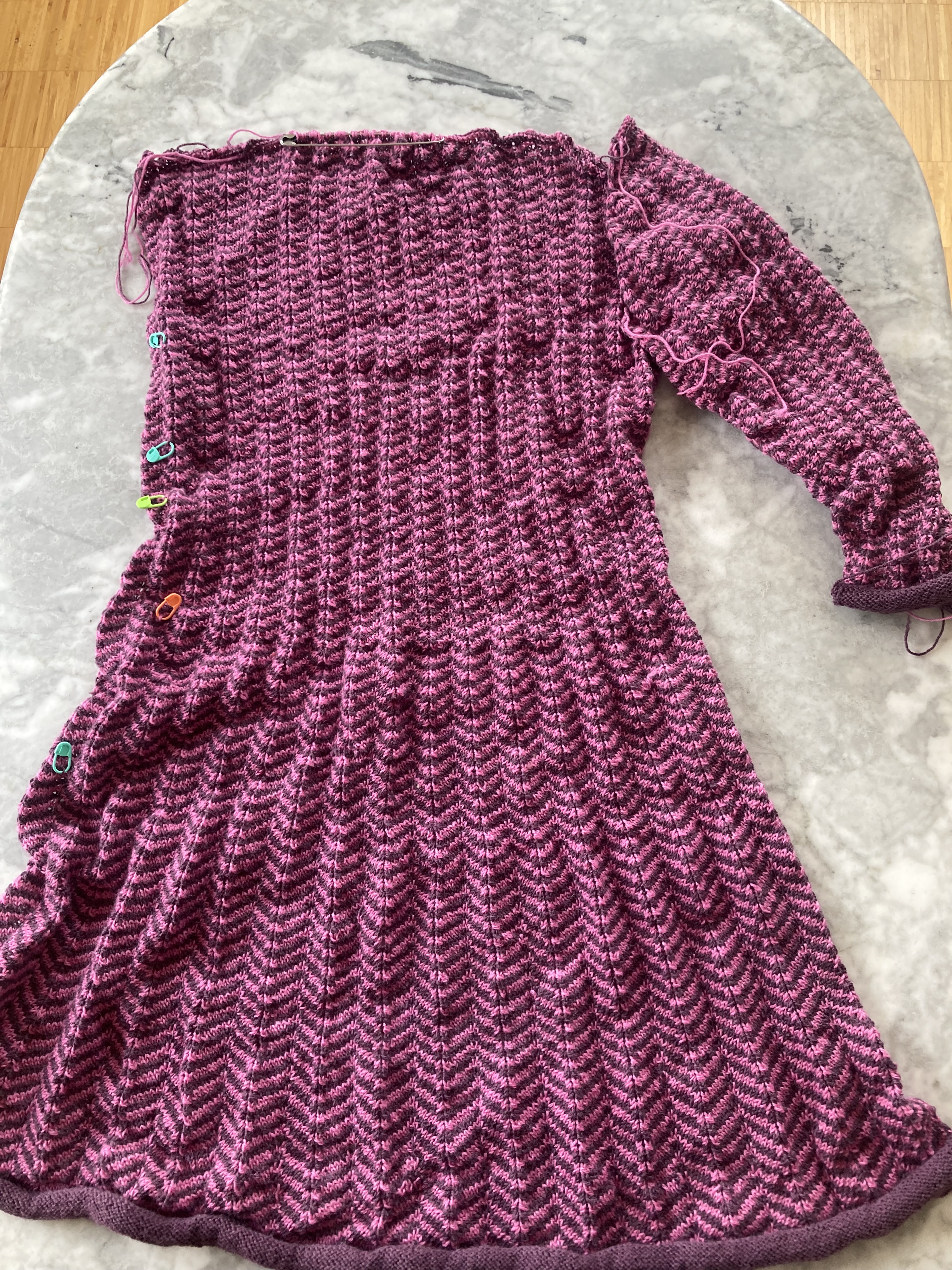
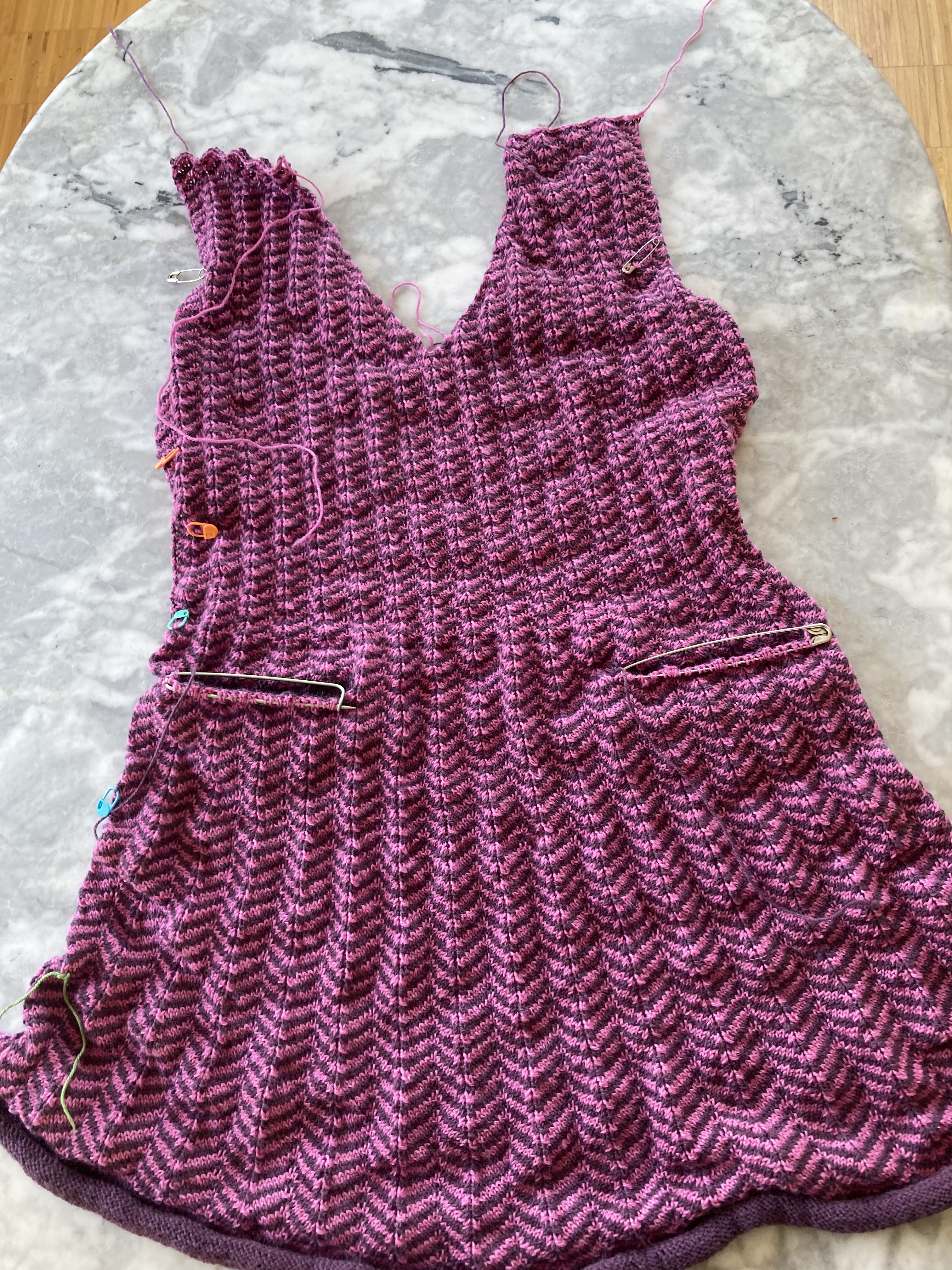
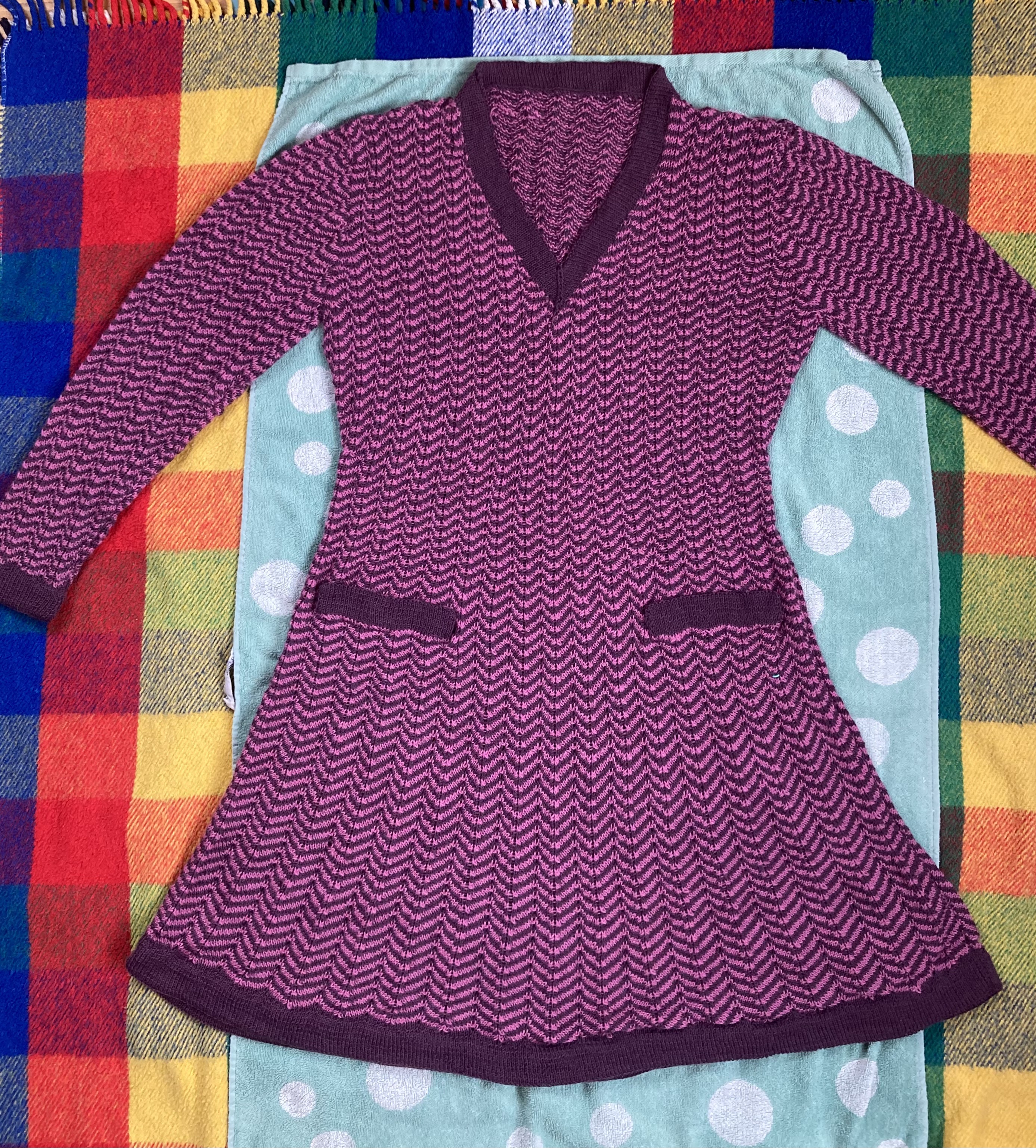
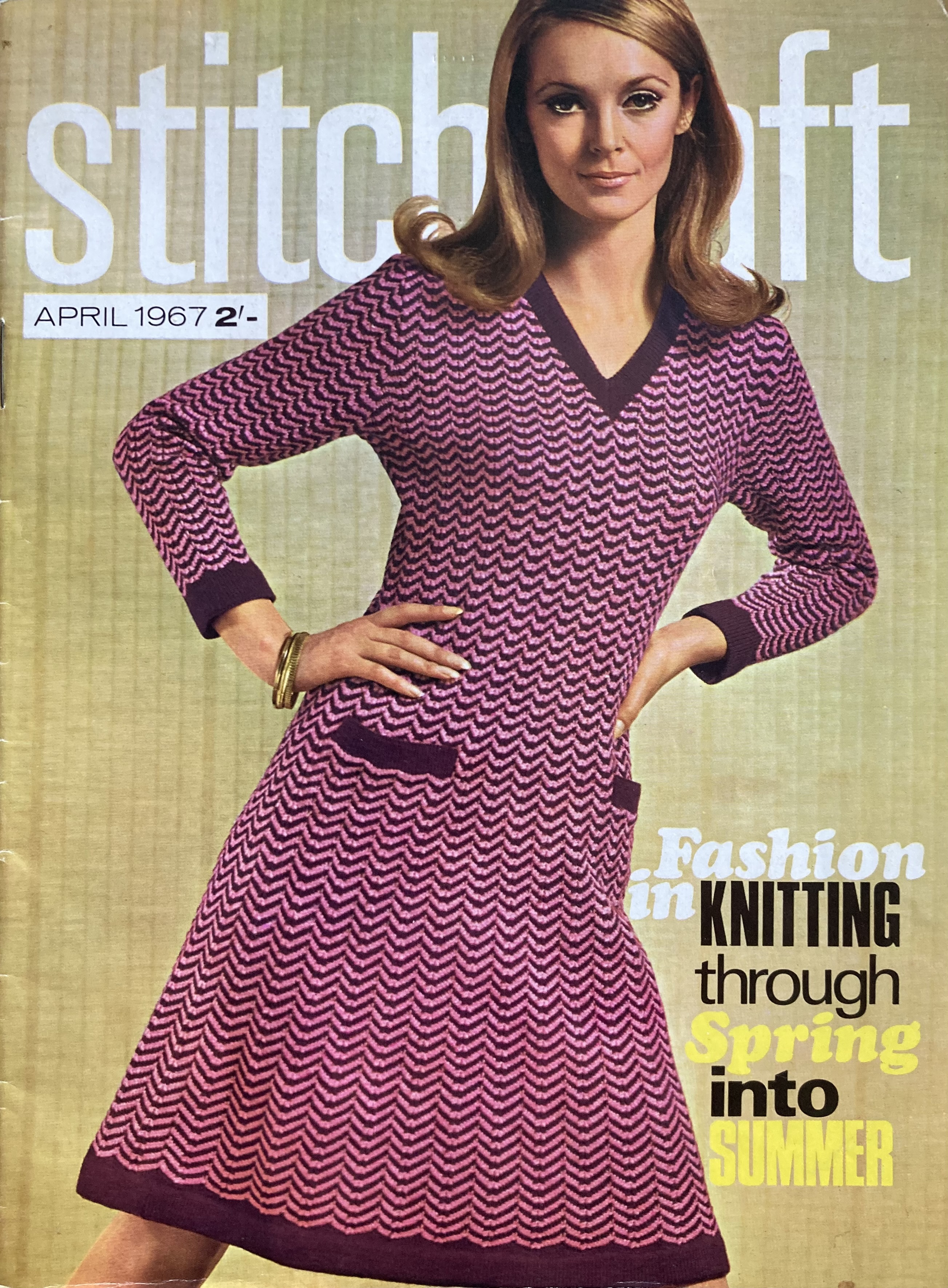
The April 1967 issue of Stitchcraft had many great designs in it and my favourite was this pink and purple chevron-striped dress on the front cover. And since the August 1967 issue didn’t have any projects that particularly inspired me, I worked on the chevron dress all summer and got it finished just in time for the August blog.

The “easy-line dress is fashion styling for all age groups” and claims to be in “the 30’s Look” — interesting, considering that dresses in the actual 1930s were still much longer, of course, and this dress, while not a mini-dress, falls at least a little bit above the knee. Also, this dress has a typical mid-60s A-line shape and not the typical long and willowy 1930’s silhouette. But the chevron pattern was very popular in the 1930s, as was the dropped waist and the flowy shape.

The pattern is written for plain Patons Beeehive 4-ply (fingering-weight) wool, but I decided to use sock yarn for easier washing and wearing. DROPS Fabel is easy to knit with, inexpensive, and available in a huge range of colours, including an almost-perfect match for the original “Wine” (purple) and “Radiant” (pink). I decided to make it a little bit shorter than in the pattern (third size should be 37 inches), as I expected it would stretch with weight and wearing. That was my only modification.

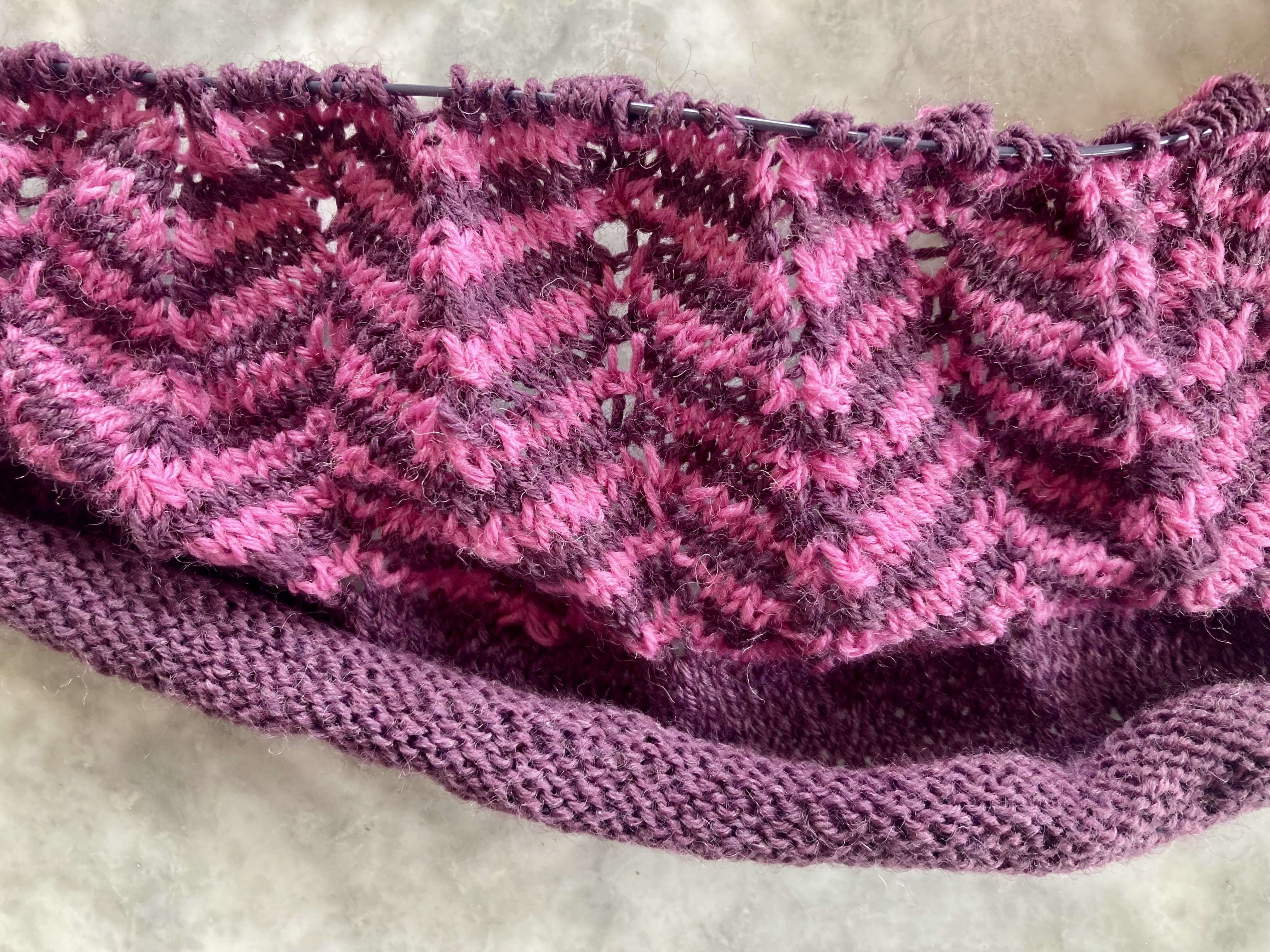
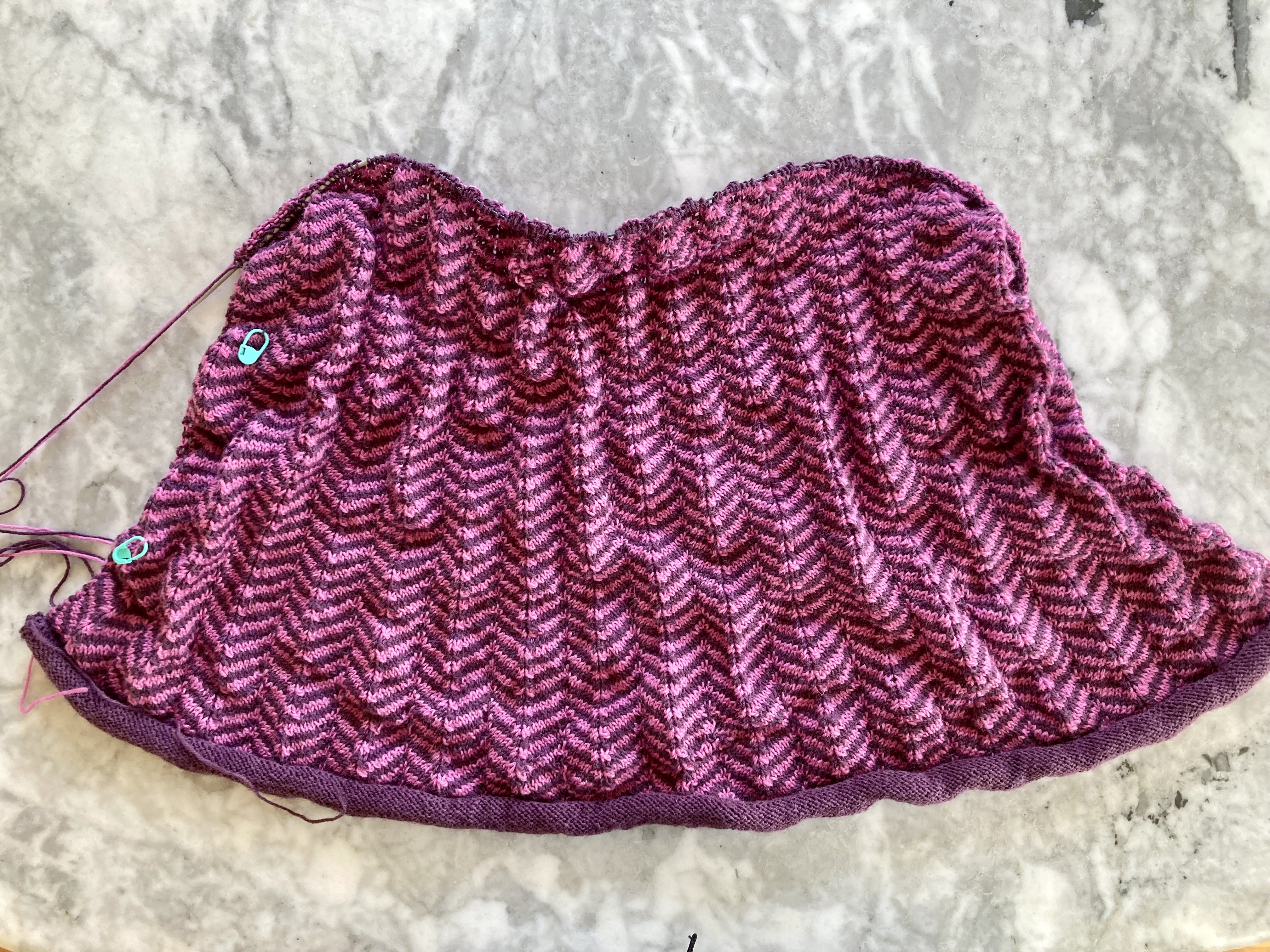
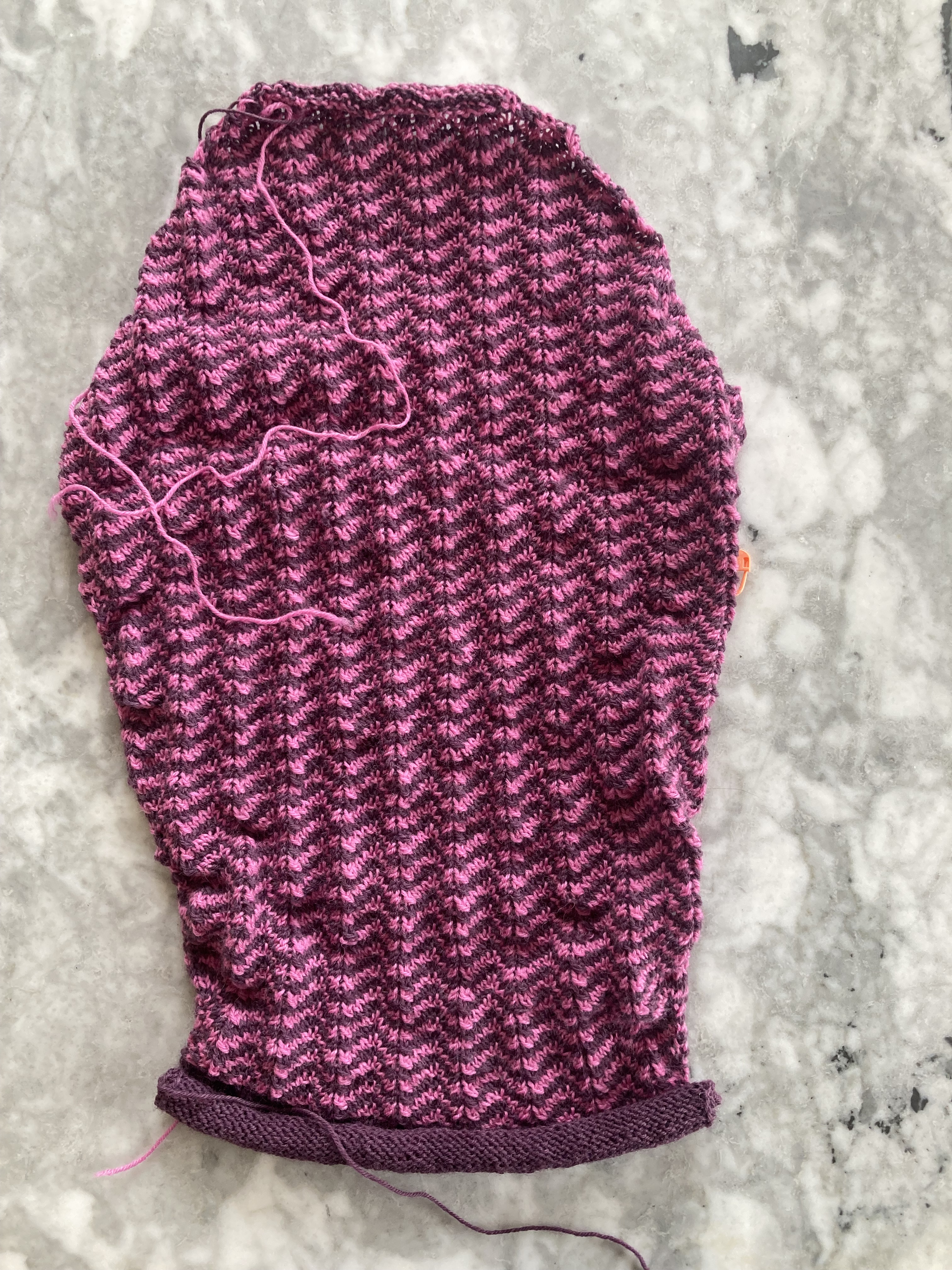
The shaping is mostly done in the chevron pattern itself — it starts off at the hem with 5 stitches in between the zig-zag increases and decreases, then reduces at intervals to only 2 stitches between at the waist. All further increases and decreases to the bust and after the armhole point are done by increasing and decreasing at the edges. (Contrary to my usual modifications, I knit the dress flat in pieces for more stability, as called for in the pattern.) The sleeves are made entirely in the 2-stitch chevron pattern. There are small knitted-in pockets with flaps on the right side. All the edgings, including the V neck, are made with folded-over and sewn-down stocking-stitch hems.
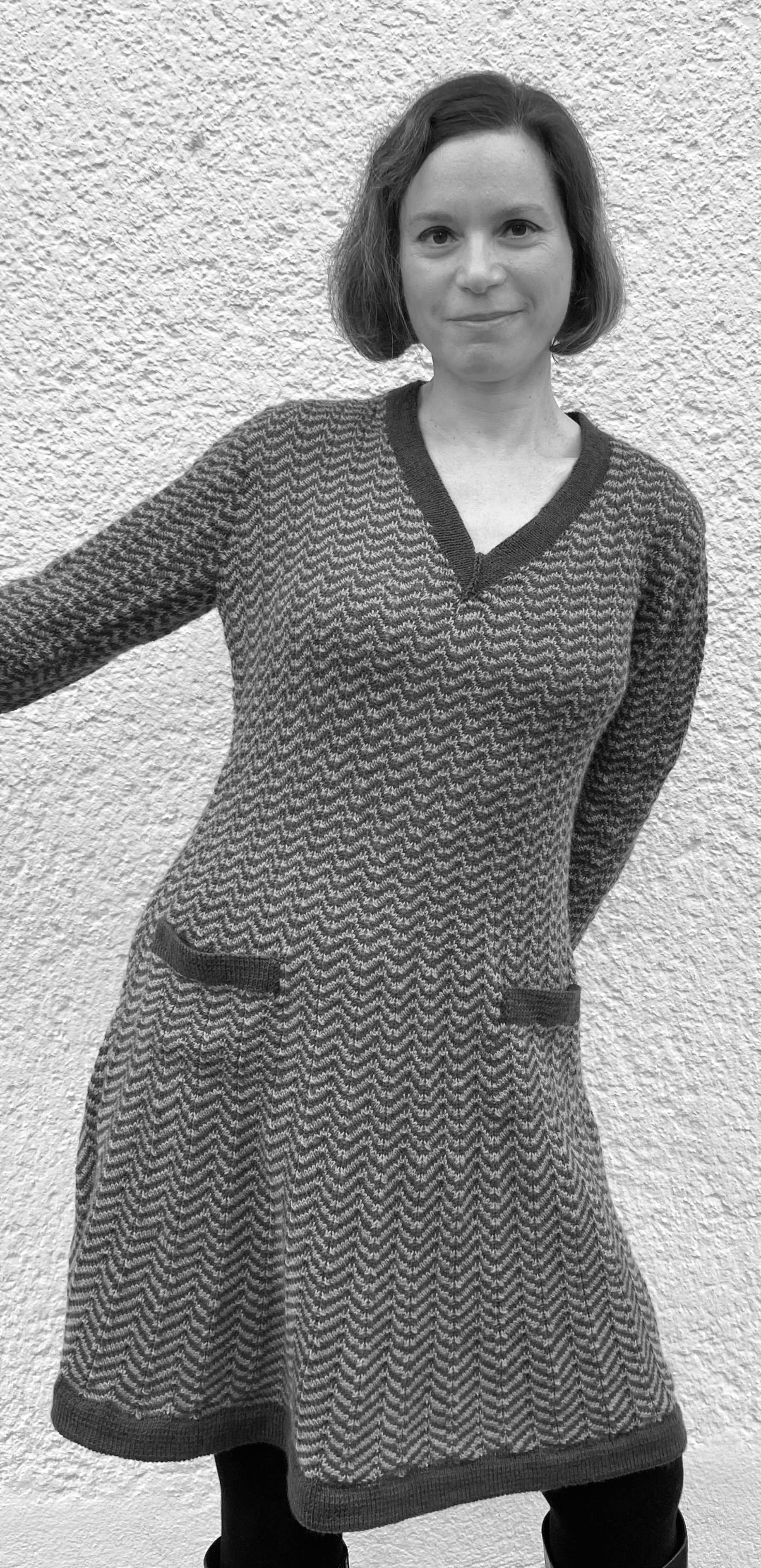
The chevron pattern makes the fabric quite nubbly, so it wasn’t clear exactly how long the dress would be before blocking. I was afraid I might have made it a little too short (I took 3 inches off the pattern length by adjusting the spacing between skirt decreases) because it fell quite a bit above the knee before blocking and the proportions seemed off. Also, the sleeves were a bit shorter than “bracelet” length and a bit tight at the hem. Blocking smoothed it out well, though — maybe even a bit too well! I didn’t pin it or anything, just hand-washed and laid it out flat as I usually do, and it is now actually 37 inches long and the sleeves are long sleeves. The fit in width is fine.

I’m guessing it stretched so much because the wool is superwash. The only solution I have ever found for the problem of superwash-stretch is to put the garment in the dryer (maybe a nice reader of this blog has a less dangerous idea?) I didn’t dare to do it with this dress at the very first blocking after putting so much work into it and being so happy with the final result, but I might cautiously try it next time I wash it. I’m happy with the fit the way it is, but it would look snappier and more authentic if it were just a bit shorter and if the sleeves were truly bracelet length.

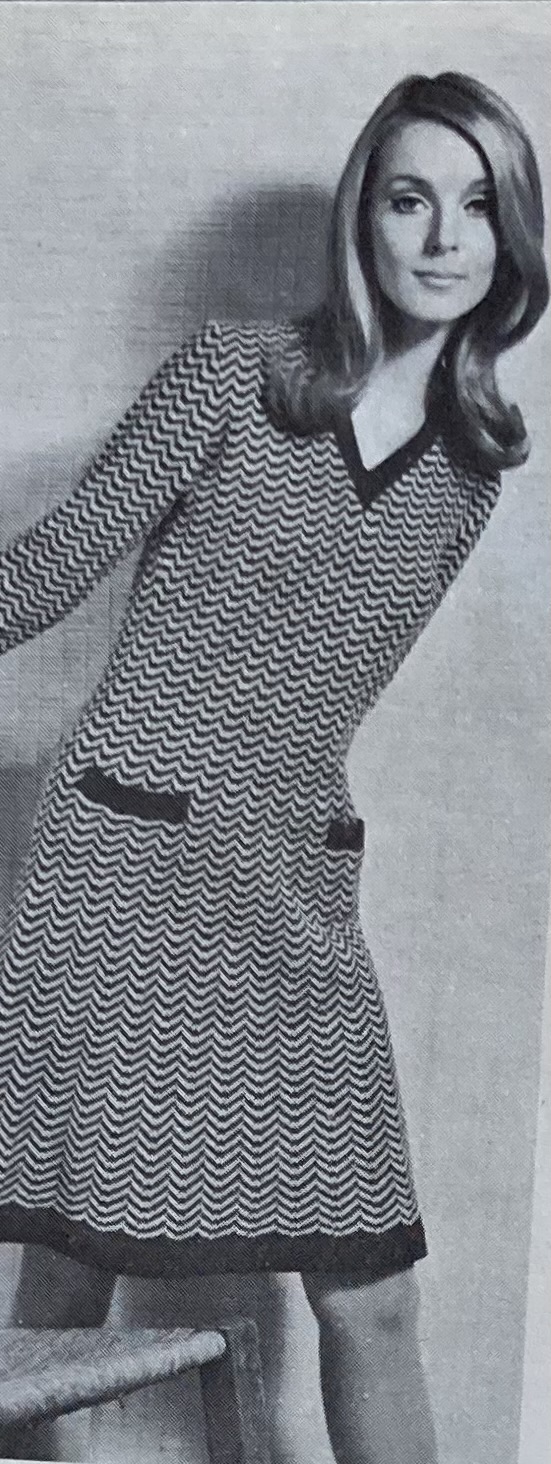
As always, we had fun with the photos! I don’t know how the models were able to twist their backs up so severely and still look relaxed and pretty.

July 1967: Baby Talk

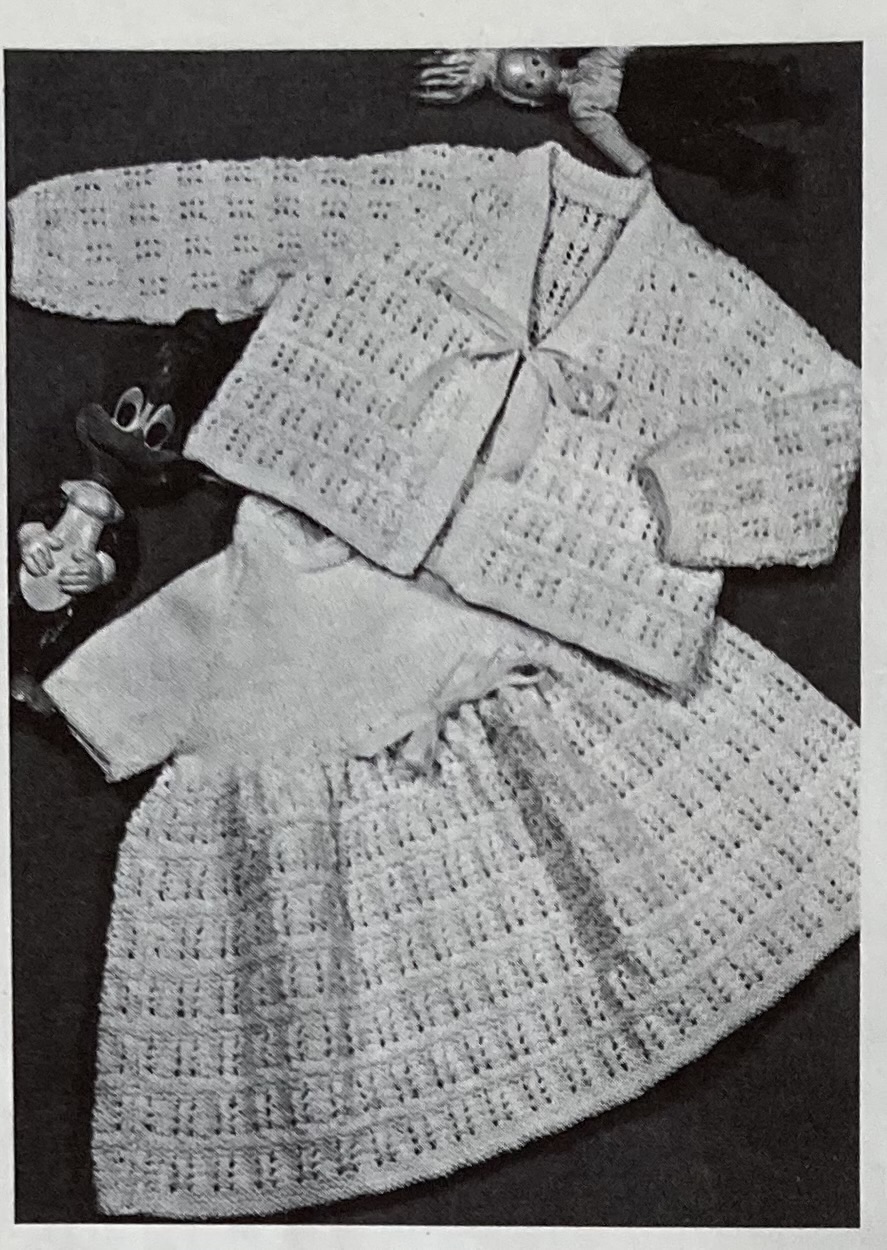
My project from the July 1967 issue of Stitchcraft was the “matinee jacket” from this jacket-and-dress set for a baby.

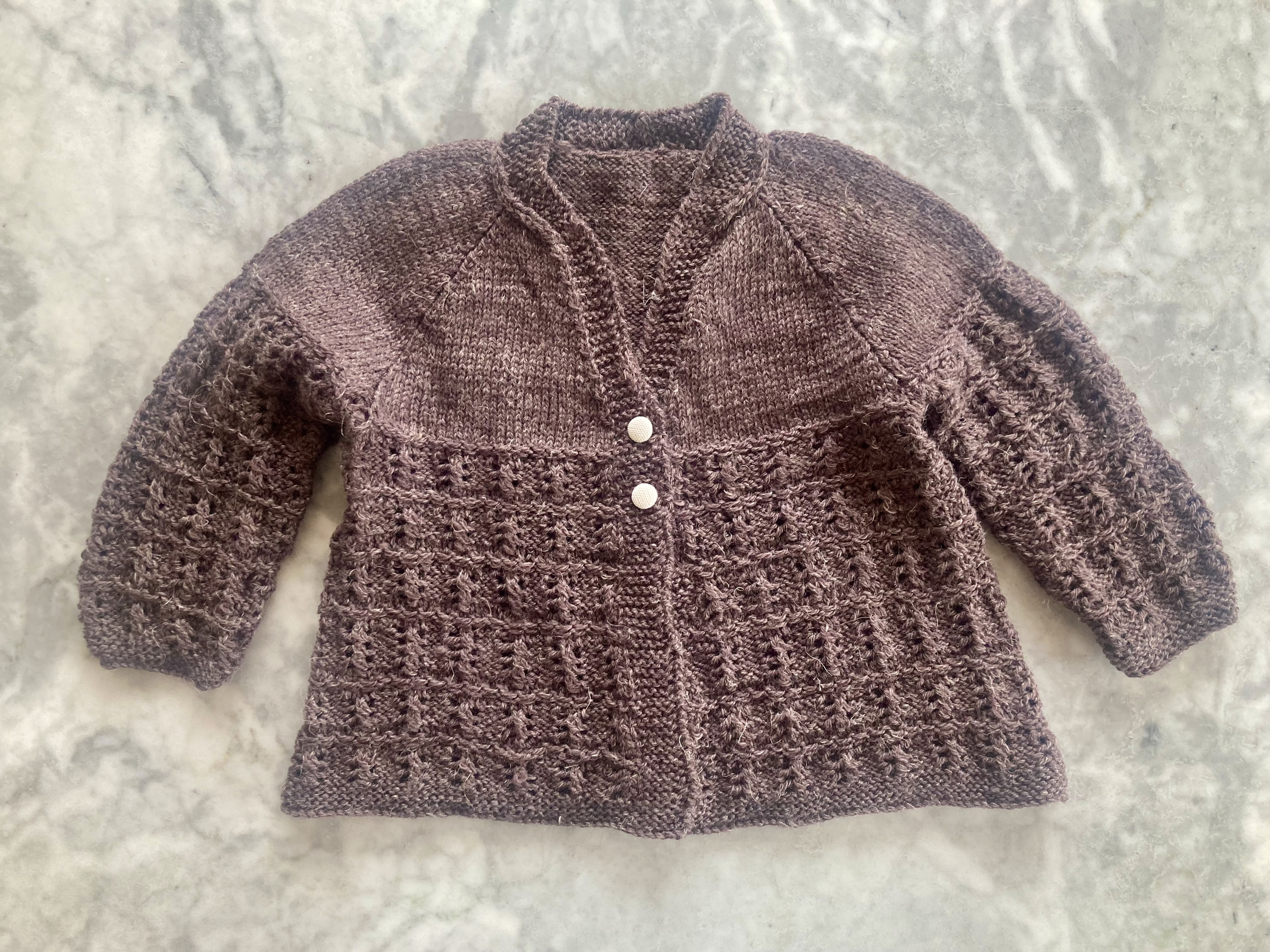
I had some nice Slow Wool Lino (sadly discontinued but alive and well in my stash drawer) that worked well for it — fine and soft, all-natural and machine-washable. I was a bit ambivalent about making baby clothes in such a drab shade of greyish-brown, but I hear that parents these days prefer neutral colours for babies? It will certainly match with everything.

The tension is supposedly 9 3/4 stitches to an inch over pattern (!) which is supposed to correspond to 7 sts/inch in plain stocking-stitch. I can get 7 sts/inch in stocking-stitch with Slow Wool Lino but the stitch pattern stretches. It is not difficult in itself — basically an eyelet rib on a reversed stocking-stitch background — but was unusually tricky to work increases and decreases in, even though it keeps the same number of stitches in each row, and it was clear that the tension would be completely off even before blocking, so I reduced the number of stitches.

I was so frustrated with the comparatively easy decreases on the “skirt” part and increases on the sleeves (which also ballooned out in an annoying way) that I decided to make the yoke in plain stocking-stitch, similar to the dress from the same pattern. I considered making a round neck like on the dress, or possibly embroidering the yoke afterwards with some little flowers in a contrasting colour to offset the drabness of the brown.

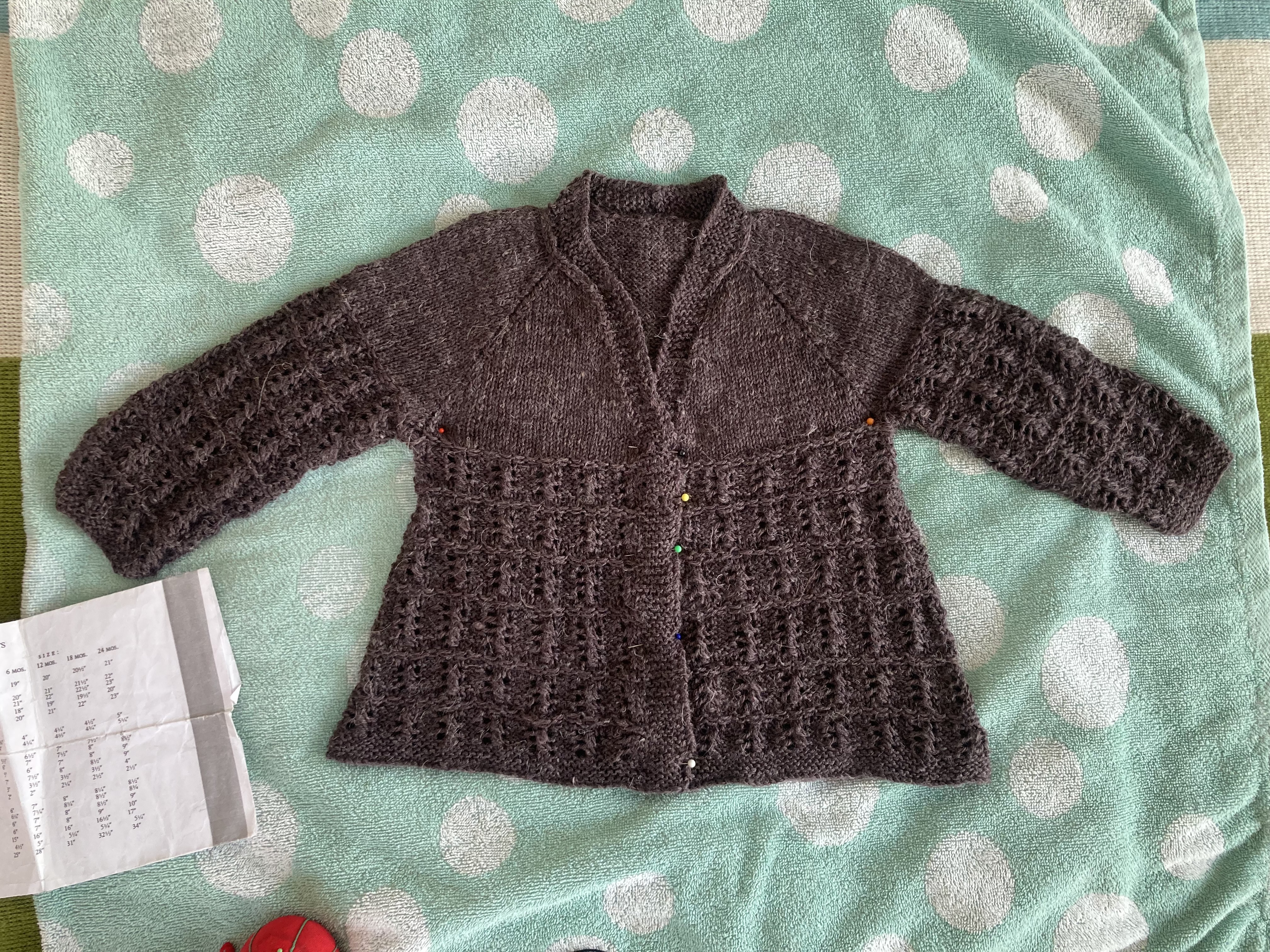
After consulting with the good people on the All Things Vintage forum on Ravelry, I kept the v neck, and when it was done, I didn’t think embroidery was necessary. I had already decided to add a couple of buttonholes at waist/armhole level instead of the unpractical ribbon tie from the pattern, and I found some little white fabric-covered buttons (possibly vintage? maybe just look like it?) in the button box, which perked up the colour with a bit of contrast and looked very sweet and old-fashioned. Here are some photos from before and during blocking:

I was not so impressed by this pattern and ended up making a lot of changes. But the finished product is soft, warm, practical, will match with everything, can be worn in all seasons and will “grow along with” a baby, so I think everyone, including the baby, will be quite pleased with this gift. The recipient is a colleague whose baby should arrive in November, so it was finished well on time for that, as well as on time for the blog. So all in all, a satisfactory project.

In other July 1967 news, I still want to make this dress from the same issue and even bought wool for it! If I ever make it through the “naughty pile” of WIPs, I might be able to start it sometime…

June 1967: Daisy Motif Peg Bag

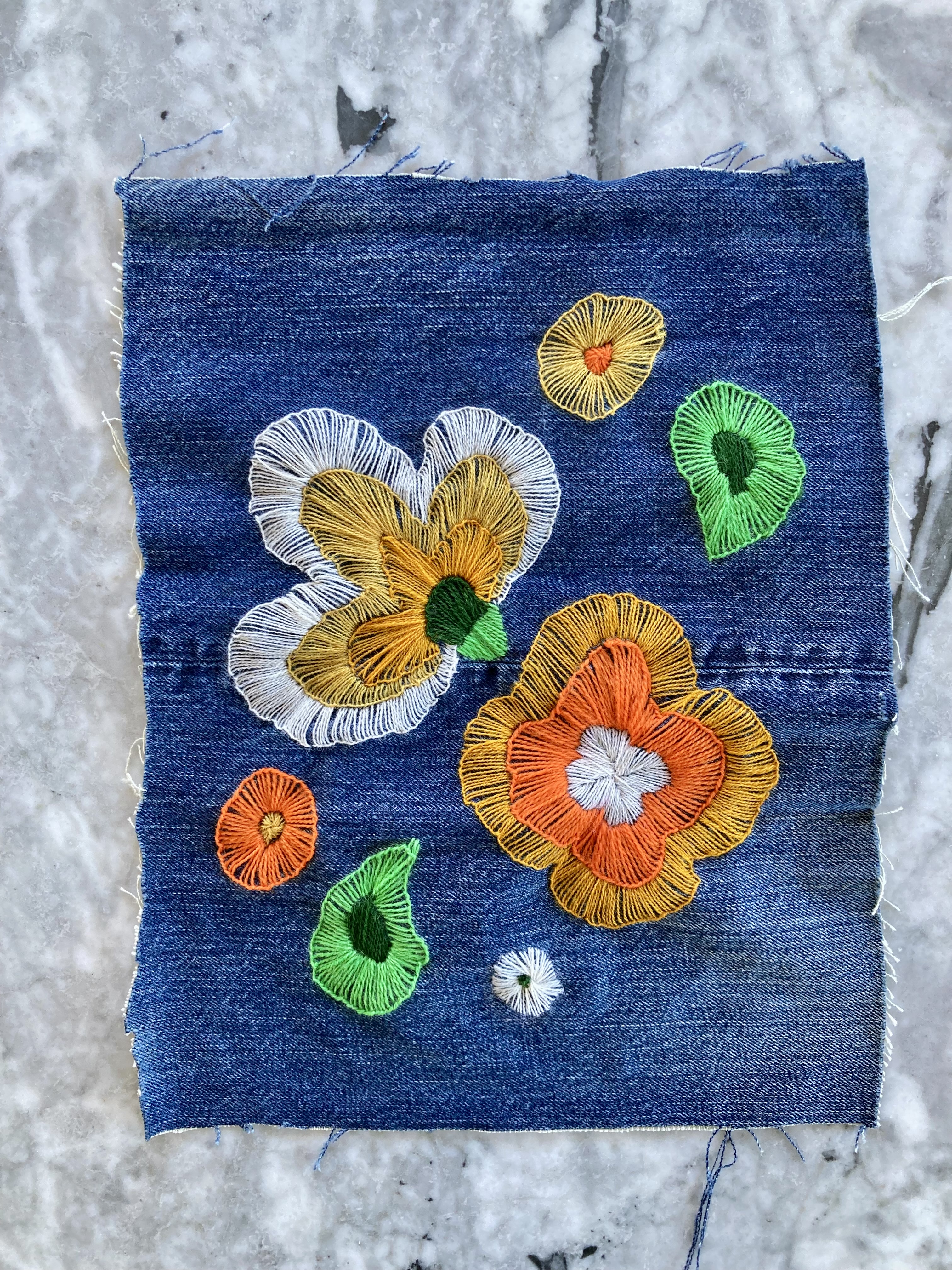
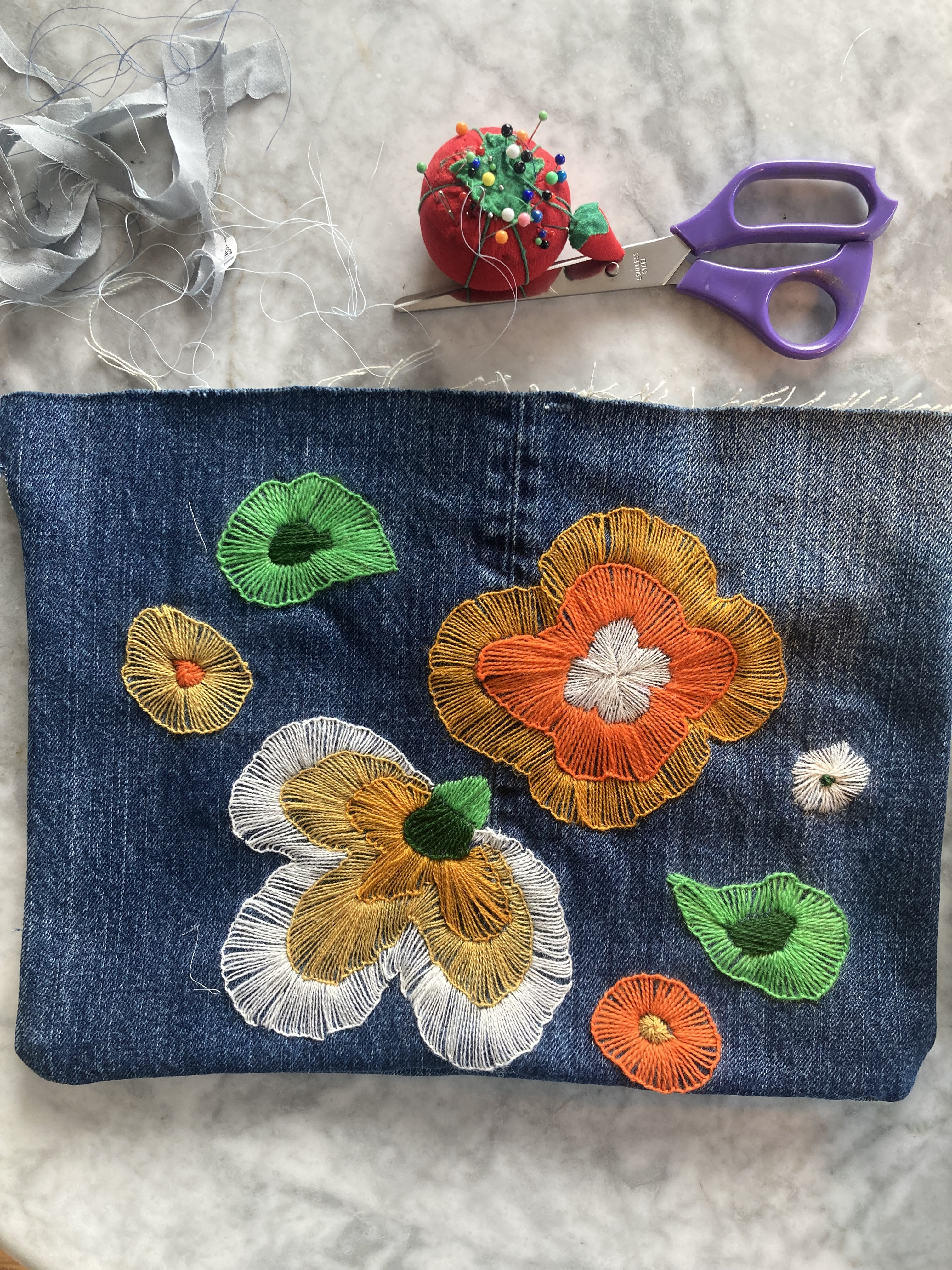
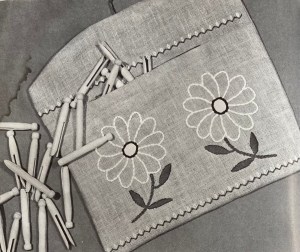
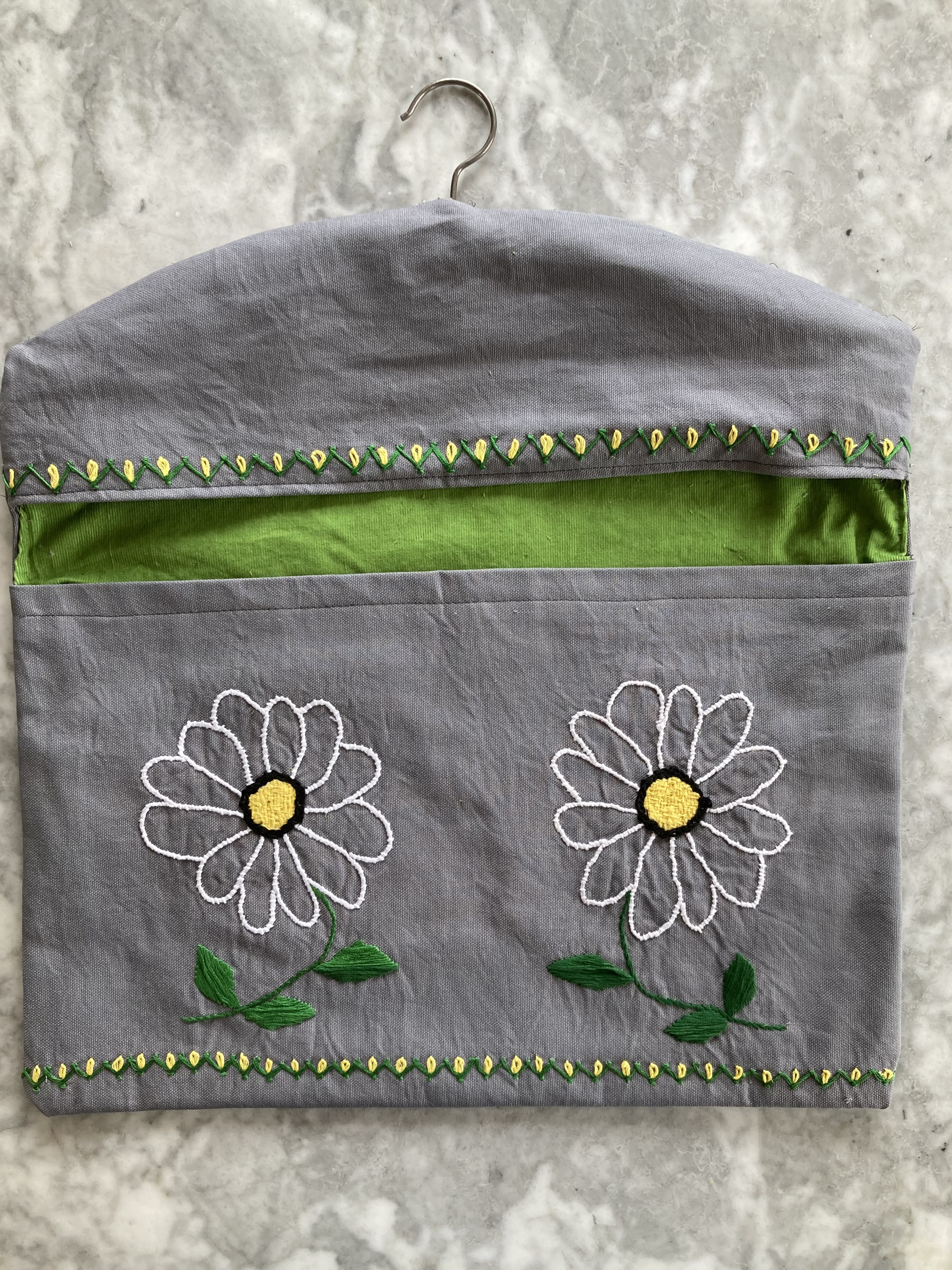
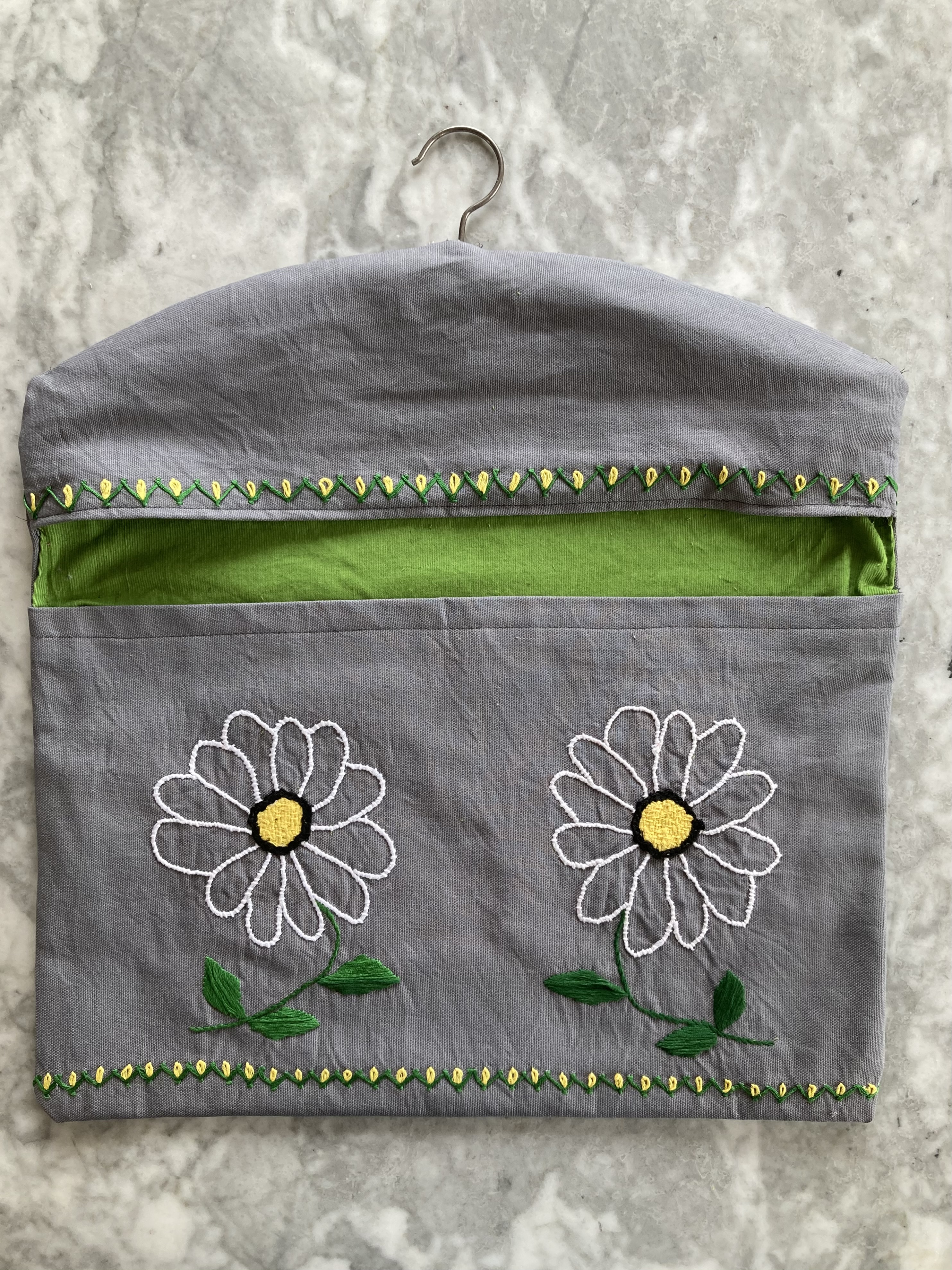
My project from the June 1967 issue of Stitchcraft was a “peg bag” adorned with simple embroidery.

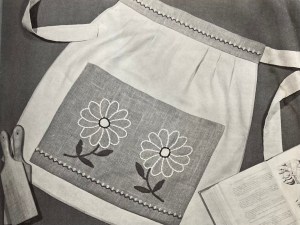
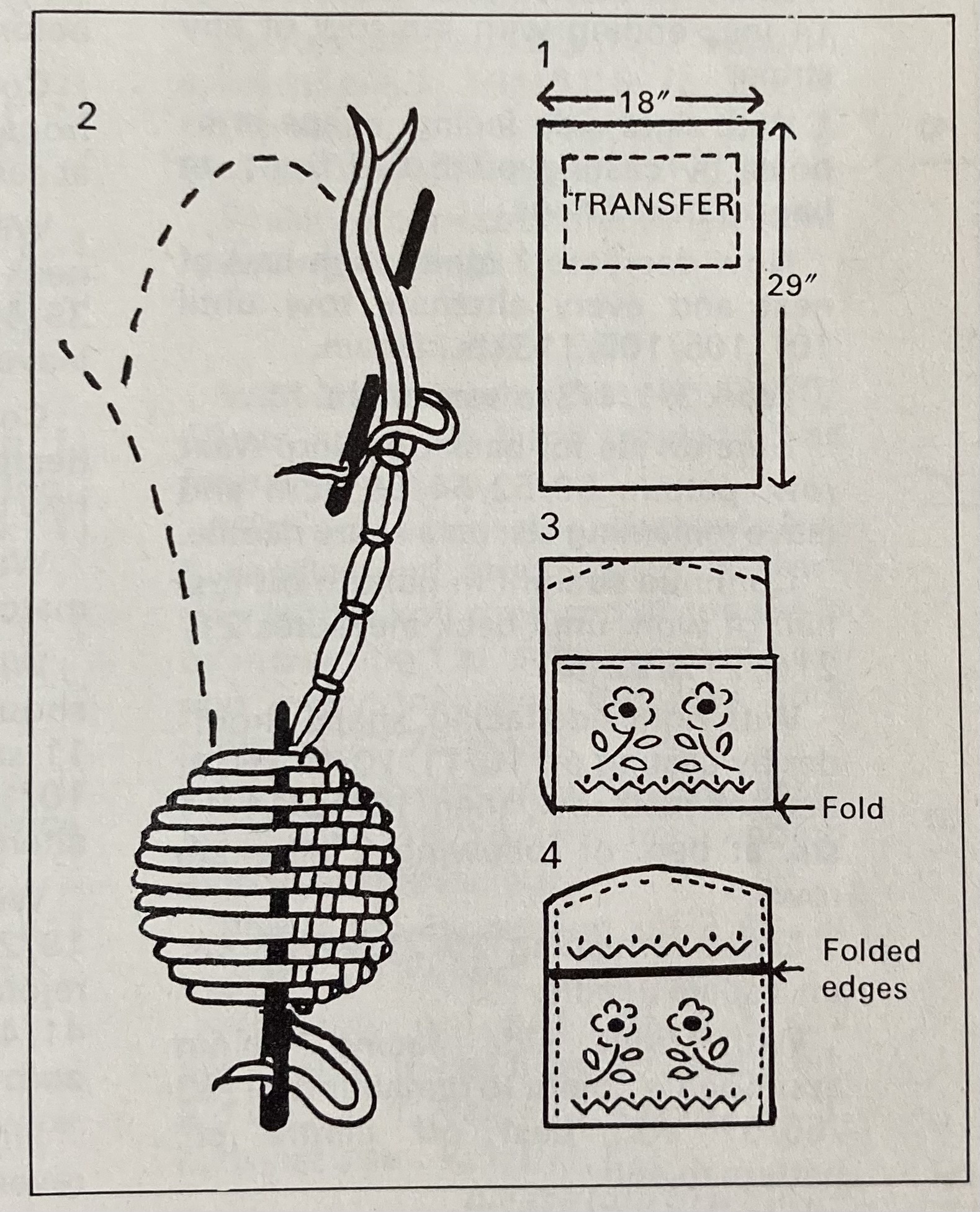
“What is a peg bag?”, some of those who dry their laundry on a rack indoors or in an electric dryer may ask. As you can probably tell from the photo, it is a bag to hold laundry pegs a.k.a. clothespins so that they are close at hand while you are hanging up your clean laundry on a line to dry. The design from this issue had a folded-over top into which you insert a wooden coat hanger to hang it up while you work, as well as a matching apron for maximum laundry-hanging style which I didn’t make this time, but will keep in mind for later.

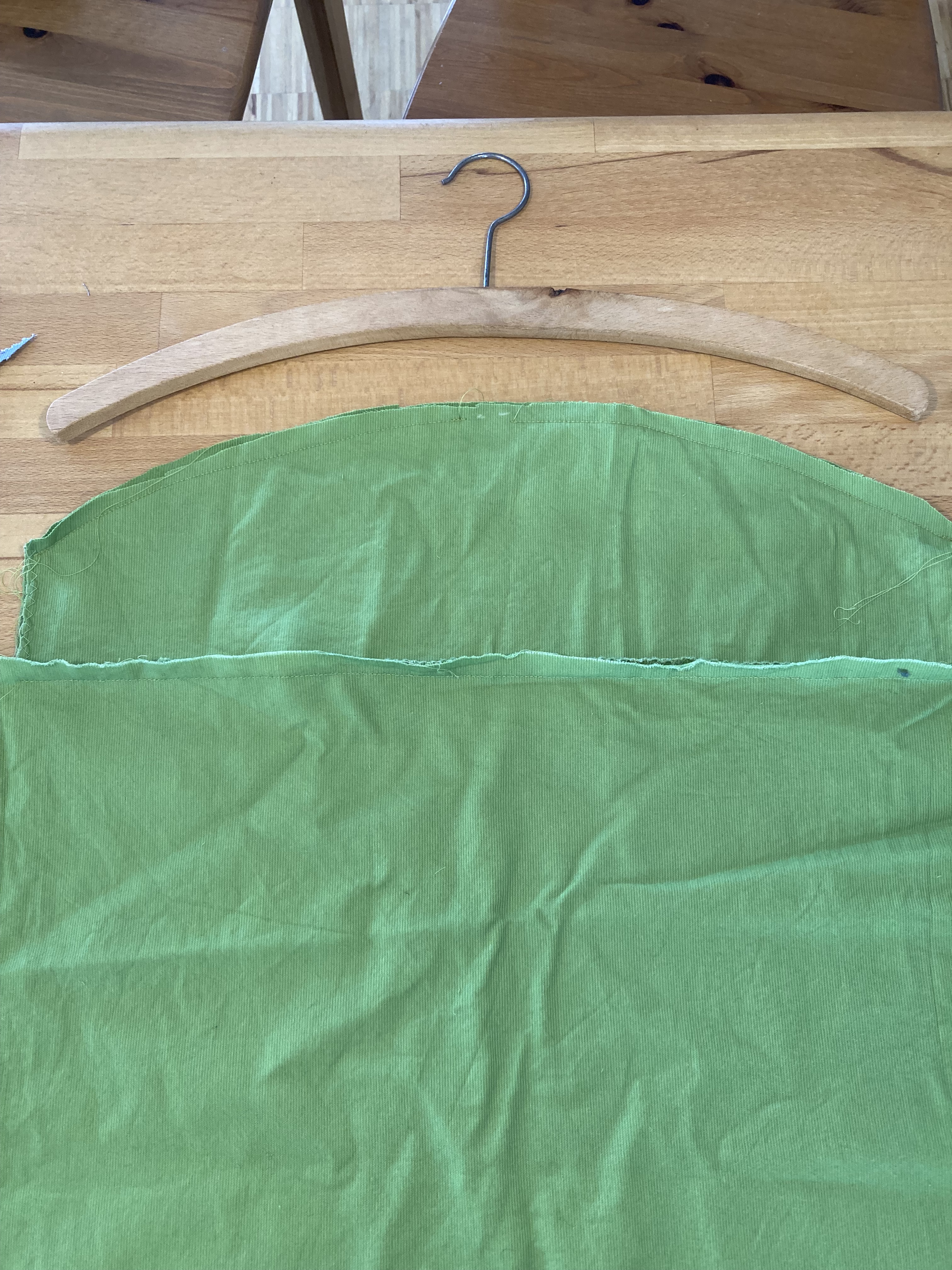
The base fabric is supposed to be orange or gold coloured — I used leftover dark grey from last month’s “crab” cushion. It is supposed to be lined with gingham — I used leftover green fine corduroy from last month’s “fish” cushion. The only thing I had to buy was more embroidery thread — I had enough white and black, but not enough yellow or green.

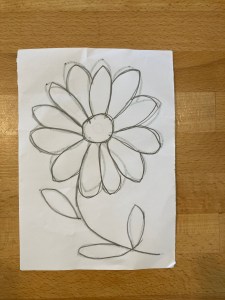
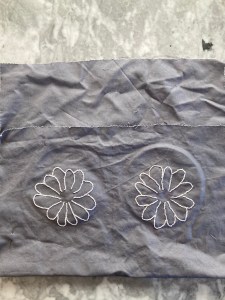
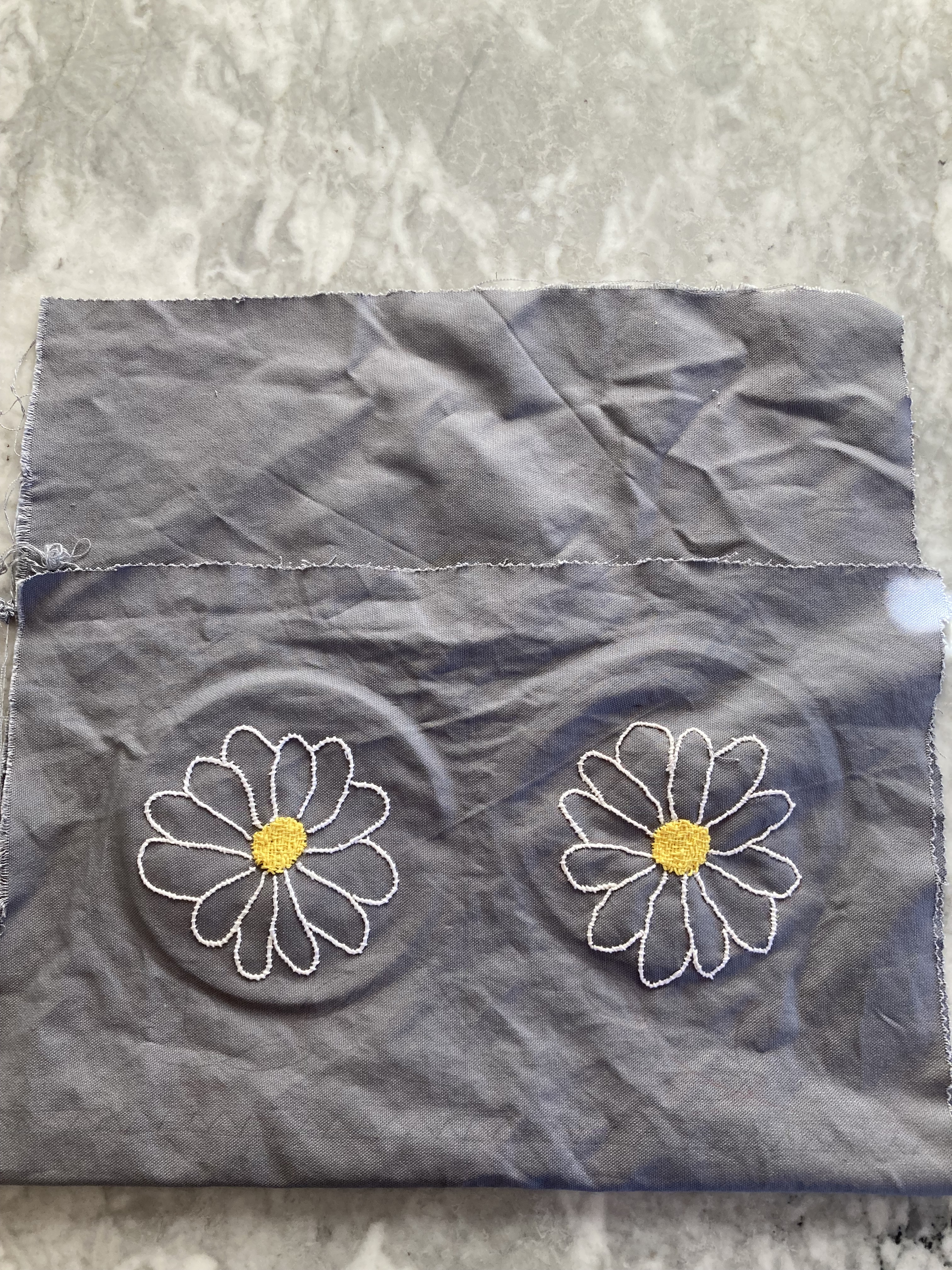
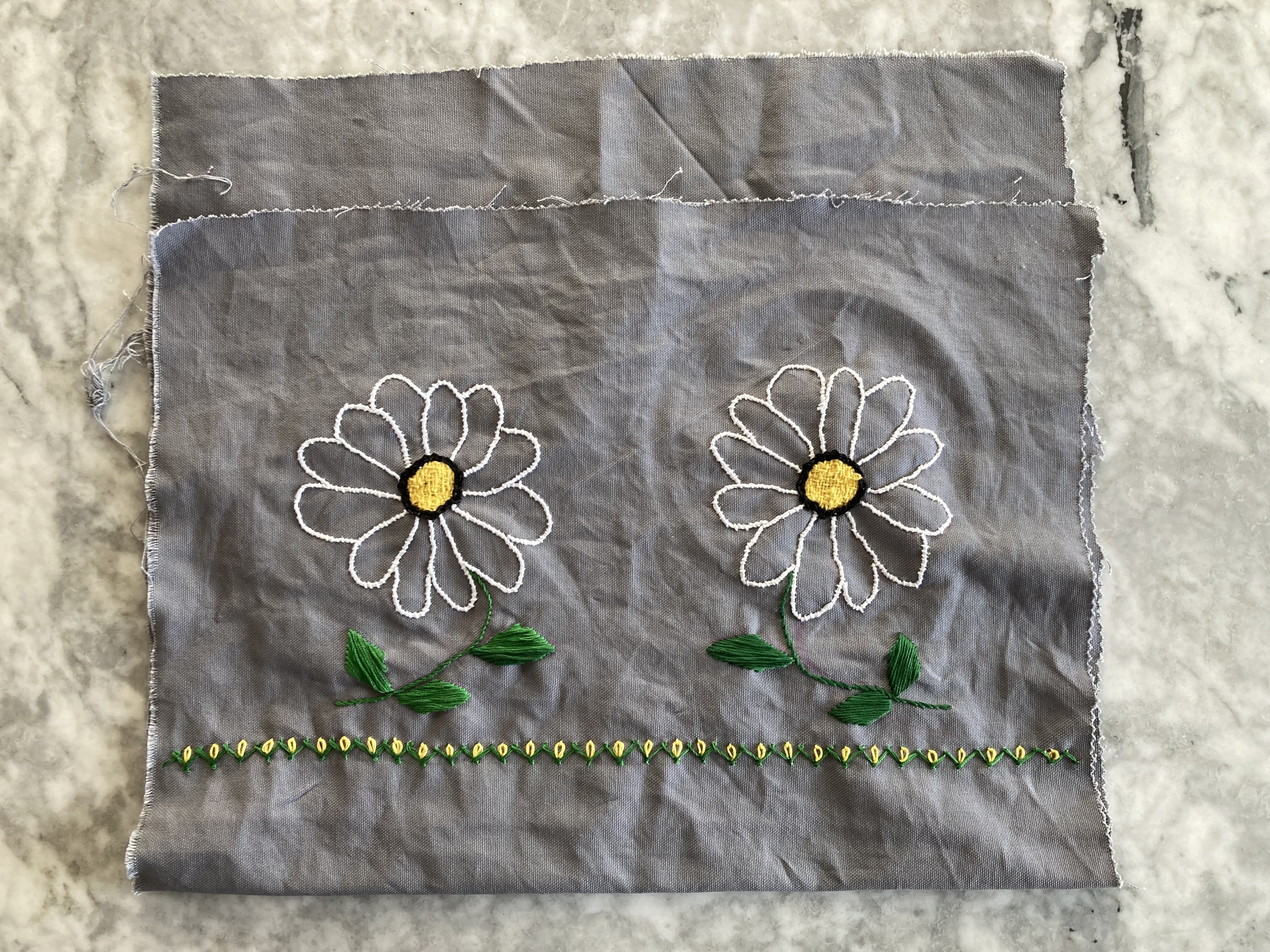
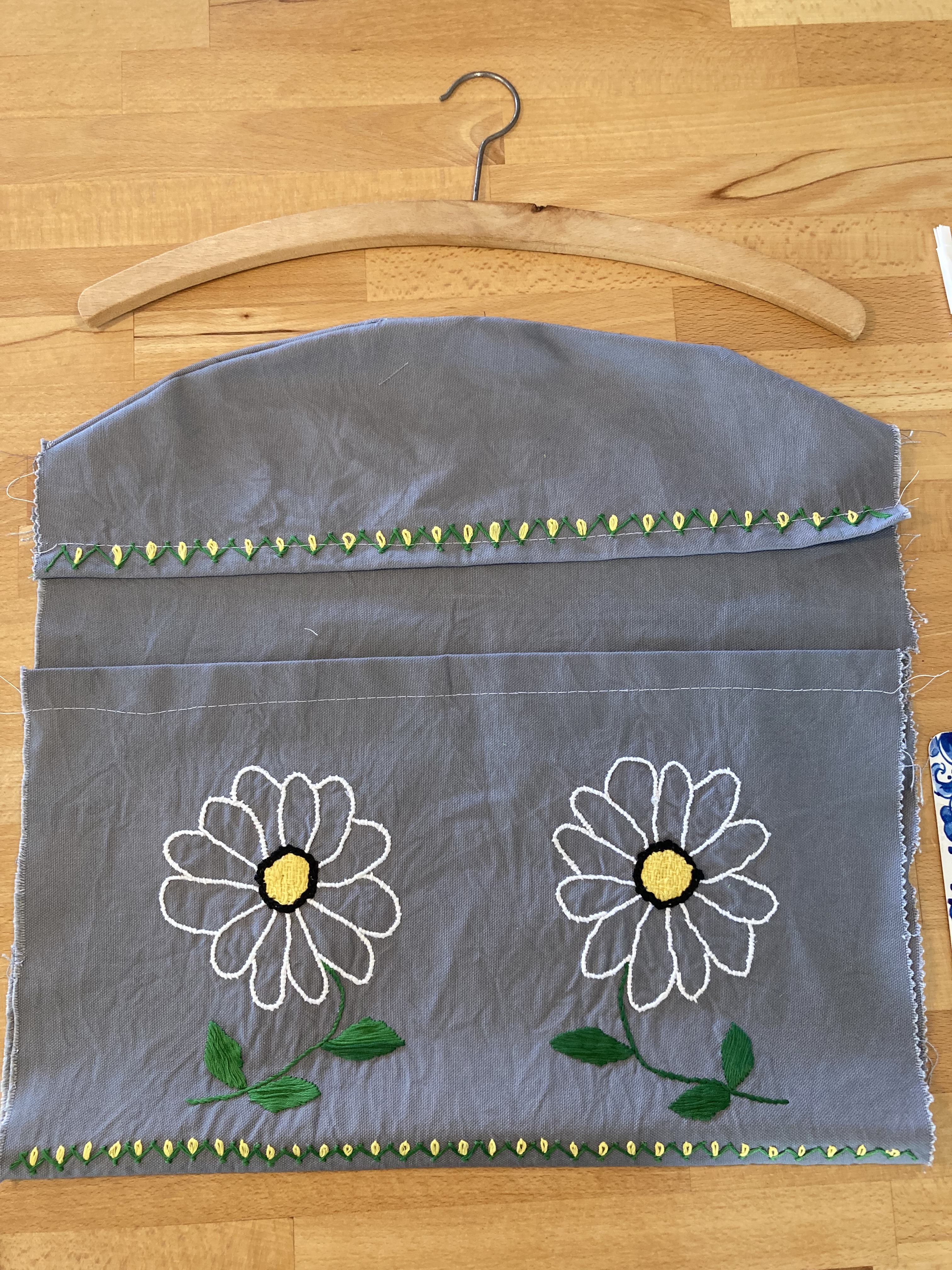
Not having a transfer as usual, I just drew the daisy on a piece of paper freehand and copied it onto the fabric with carbon transfer paper. For the chevron-and-loop-stitch borders, I drew two parallel lines with V’s in between for the chevrons. The embroidery was not quite as simple as the design would lead you to believe. The white outlines of the daisies are done in couching stitch — laying down a thread and tacking it down with tiny stitches along its length. Easy in theory, but tricky in practice. In retropsect, I could have glued down the outline threads with water-soluble glue before couching them, to make them stay in place better. (Do any of you do this?)

The yellow centers are also couched, or actually woven — you put down slightly loose satin stitches in one direction and weave cross-threads through in the other direction. It gives a marvelous texture, but I was working with 6 strands and the cross-threads were prone to either split or skip over the ones they were supposed to be weaving through. The outline around the centers is black chain-stitch and the leaves and stems are satin and chain-stitch — except that I didn’t read carefully enough and did the stems in stem stitch. Also, I think two different shades of green got mixed up in my green thread stash? But it gives a nice subtle shading effect. The borders are chevron stitch with loop stitches.

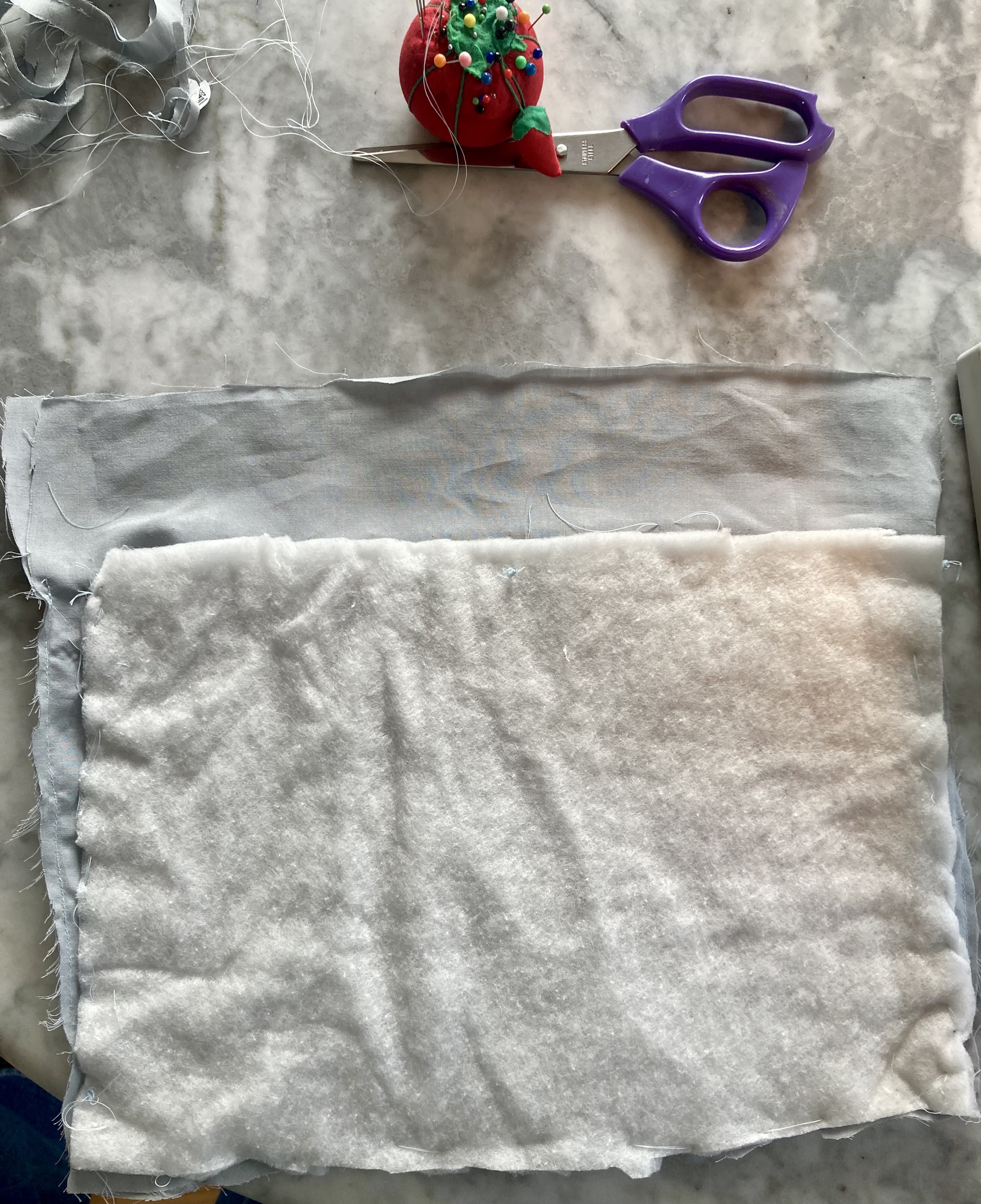
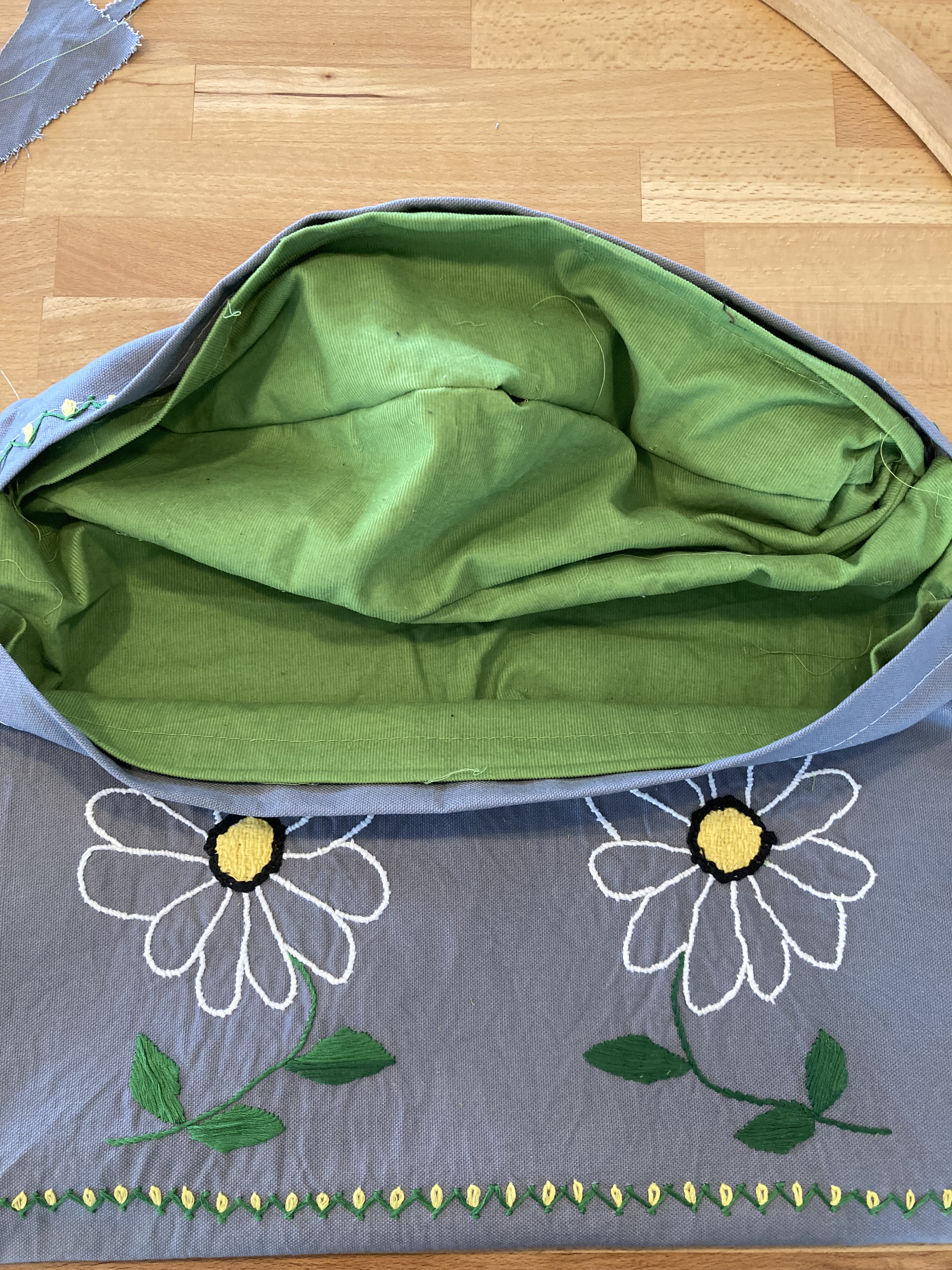
The difficult part of this project was the construction, particularly the lining. I had to rip out the top-pocket seam more than once and re-position it to make all the right and wrong sides come out correctly. When I finally got it right, the lining did not stay in perfectly smoothly, but i will live with it. Also, the corduroy-ish fabric is not really a good lining choice, as it picks up every tiny bit of fuzz floating around while also producing its own. The colour is good, though!

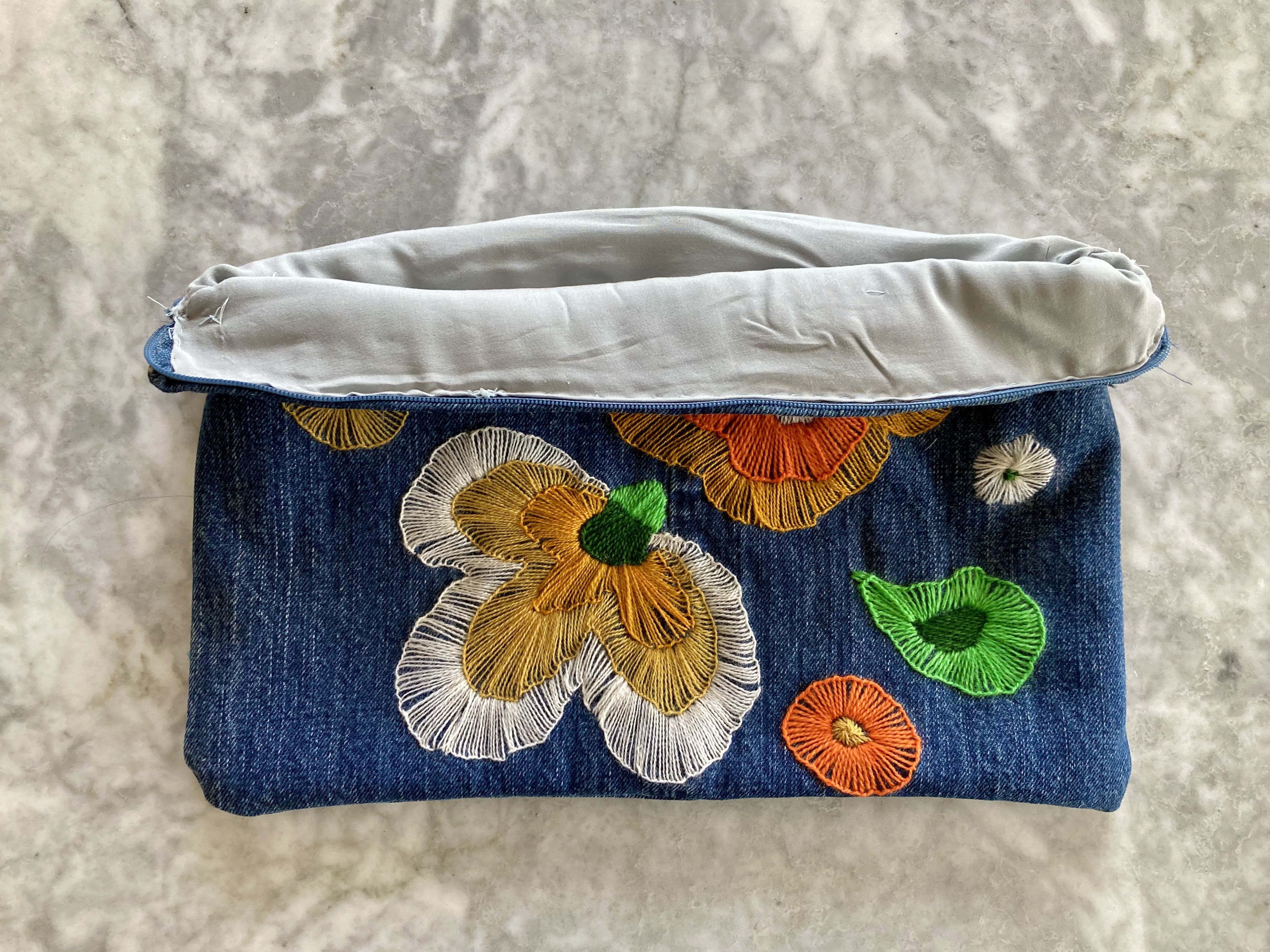
I inserted an old-fashioned wooden coat hanger and noticed that the lining “caught” on one side, so did some more adjustments until it fit better. Voilà. It looks better in real life — the camera makes weird shadow patterns. My only complaint, besides my inability to sew straight lines, is that the finished bag is quite big — how many pegs / pins are you really going to put in it? But it can also be useful for hanging in the hallway / coat rack area to hold gloves, accessories, cat toys or whatever.

I have both an electric dryer and a drying rack, but no outside space to hang up laundry, so I will give this bag to someone who has a garden with a clothesline. The intended recipient also wears hats and fingerless gloves and has two cats, so the bag will find a use in any case.

Not the most exciting project I have ever made, but fun, cute and useful.

May 1967: Fish and Crab Cushions

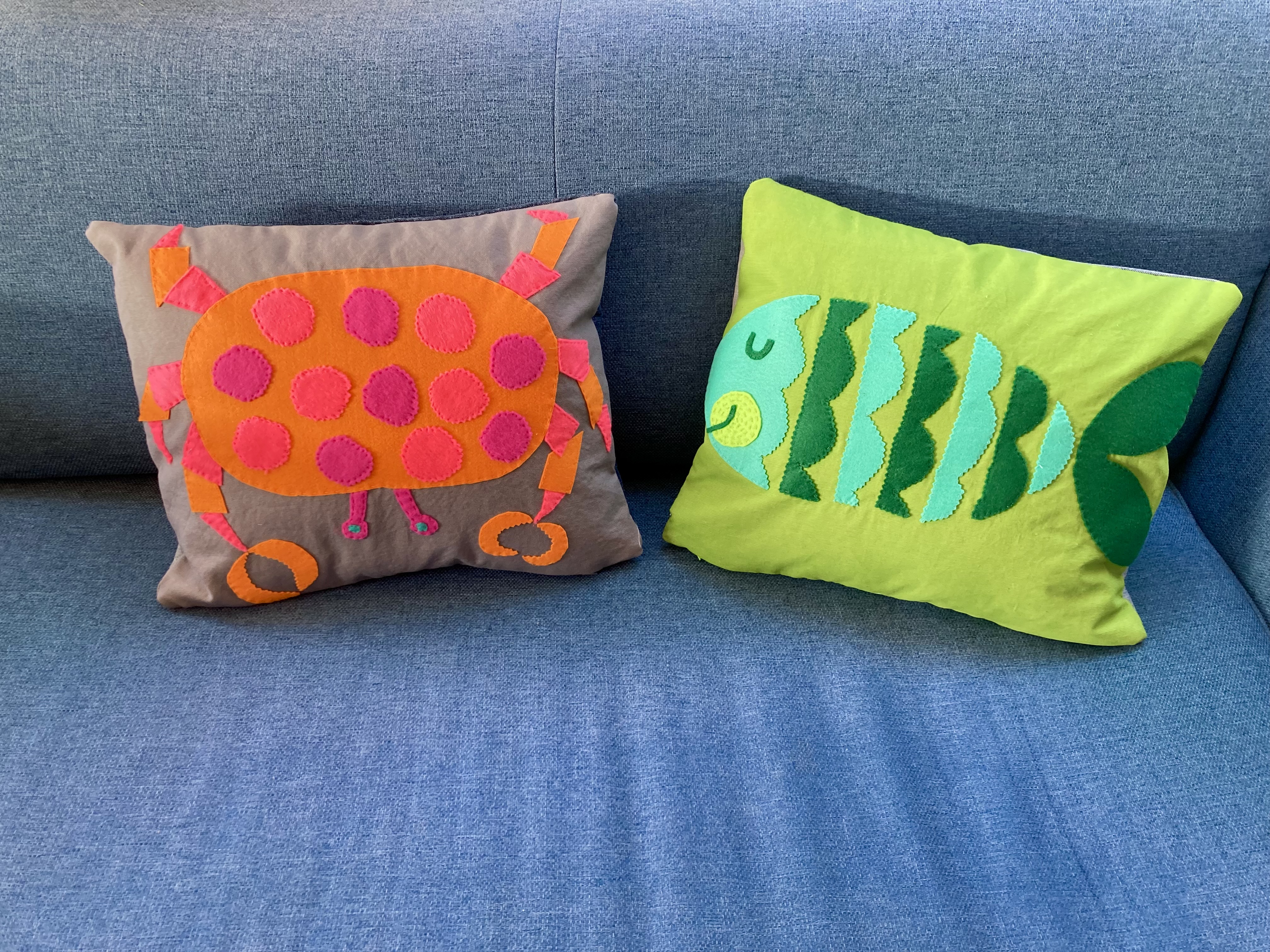
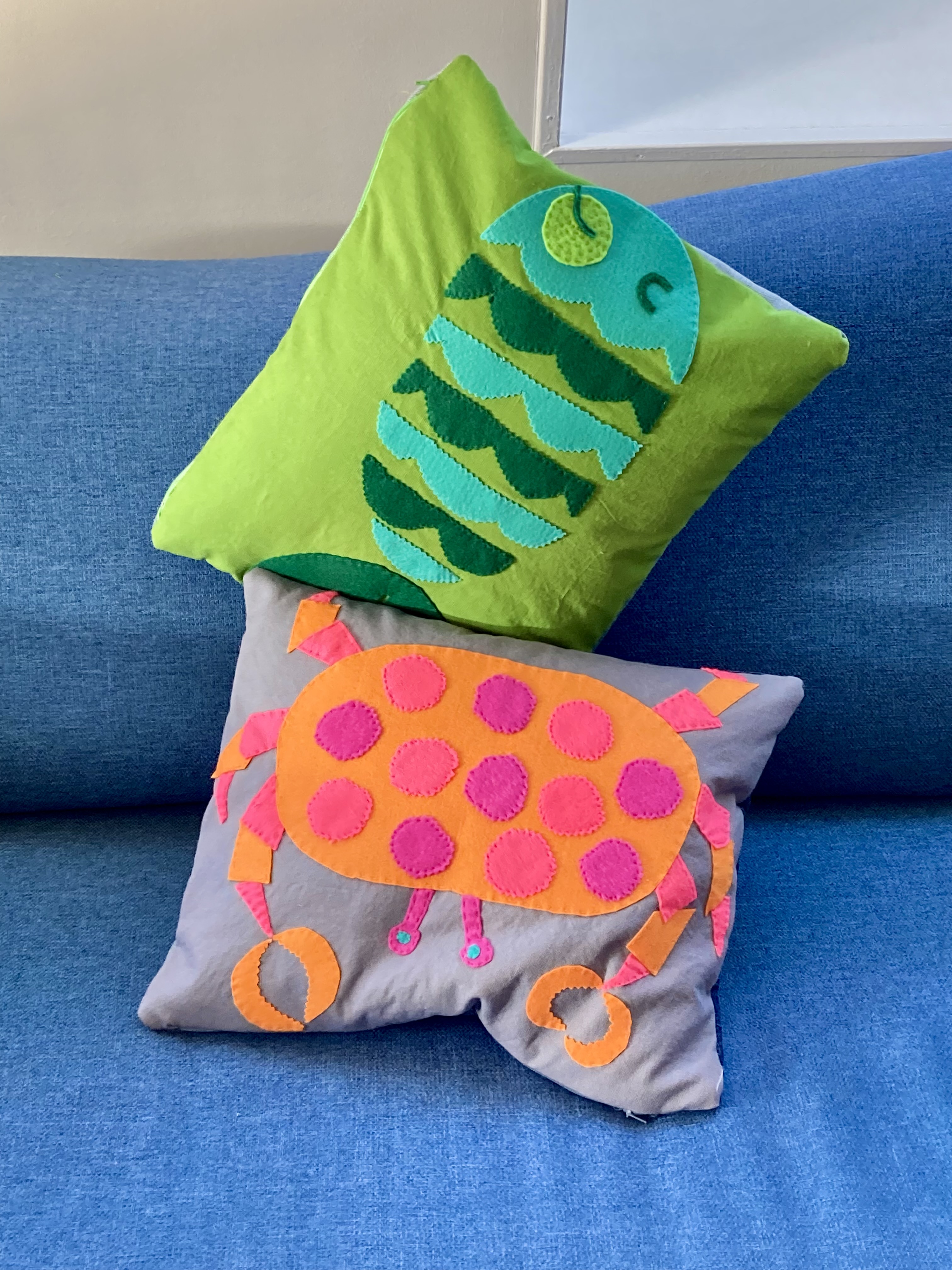
Ahoy! It’s springtime at the Stitchcraft Sixties and what could be more appropriate than some accessories for the garden? I don’t have a garden, or even a balcony, but I do love appliqué and these May 1967 designs with “modern shapes in brilliant colours of felt on crash” that “make practical and gay deckchair cushions.”

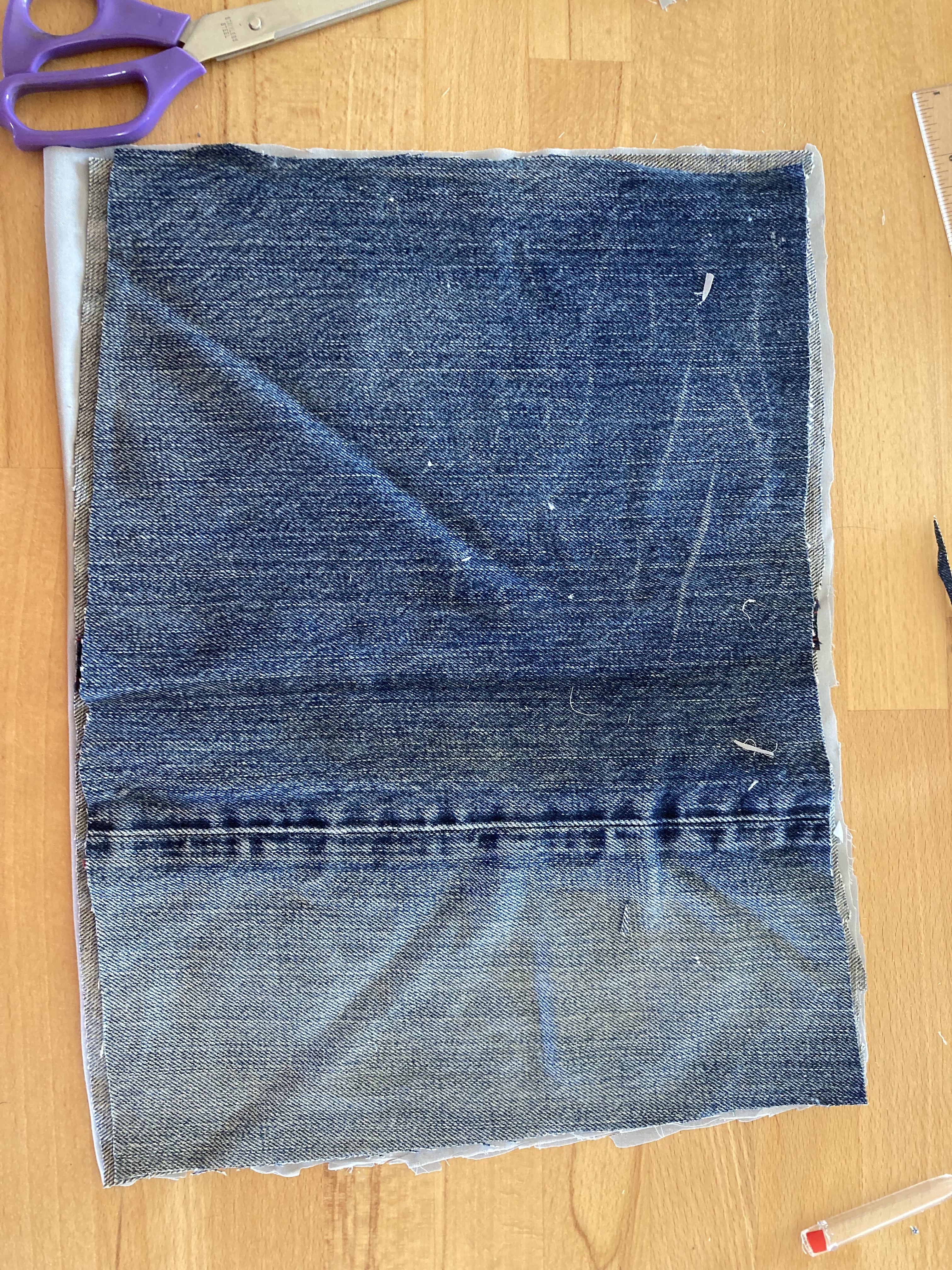
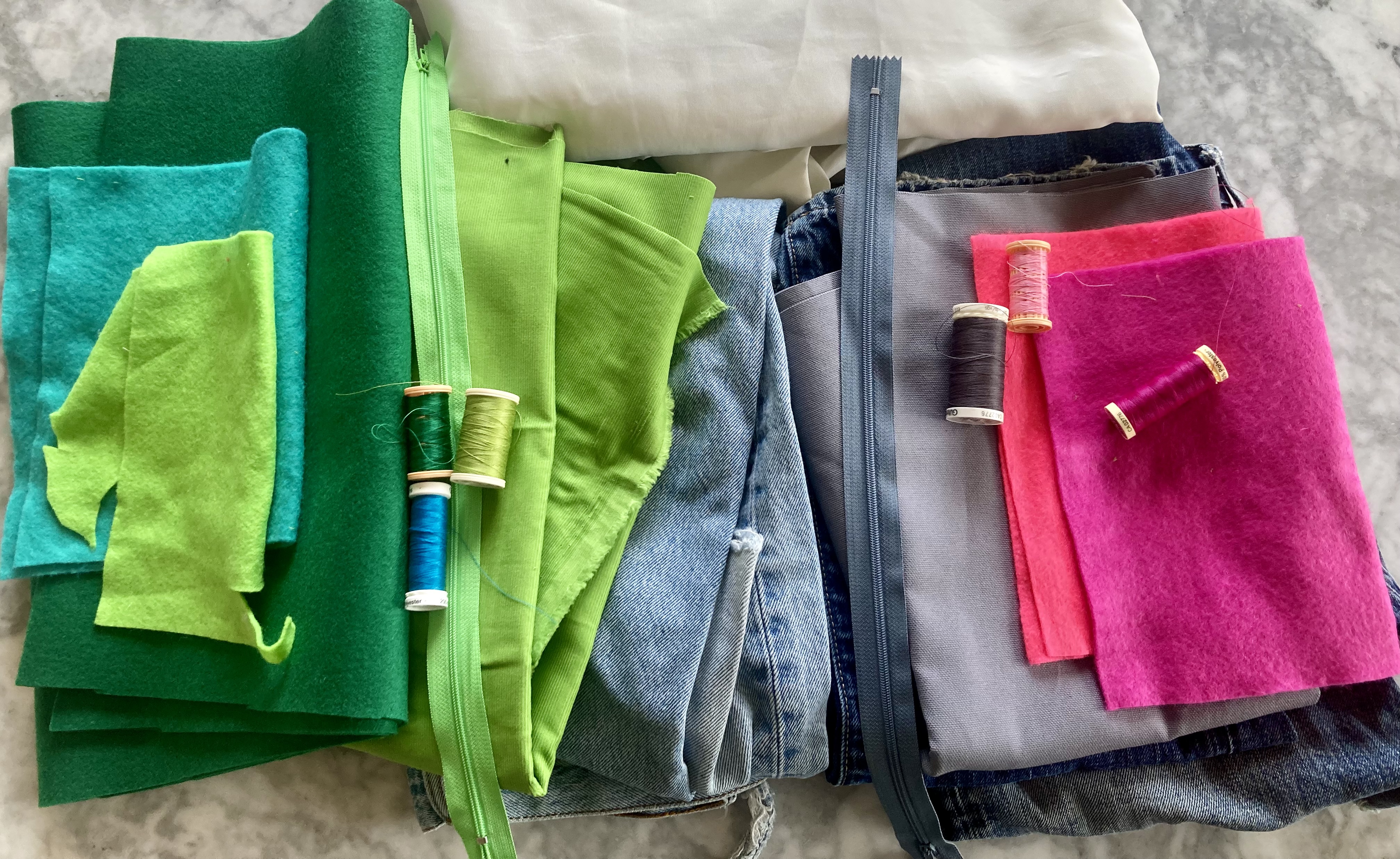
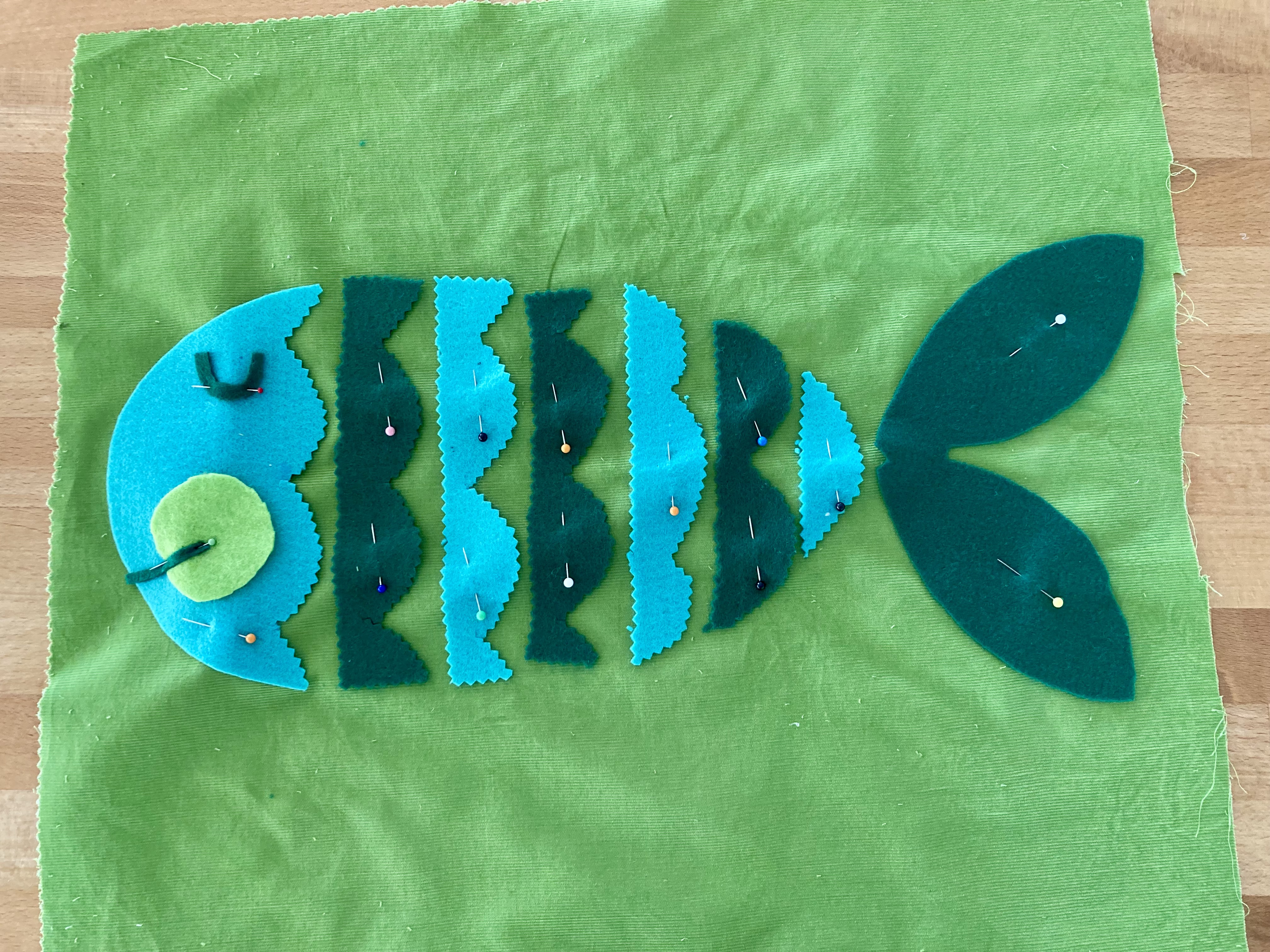
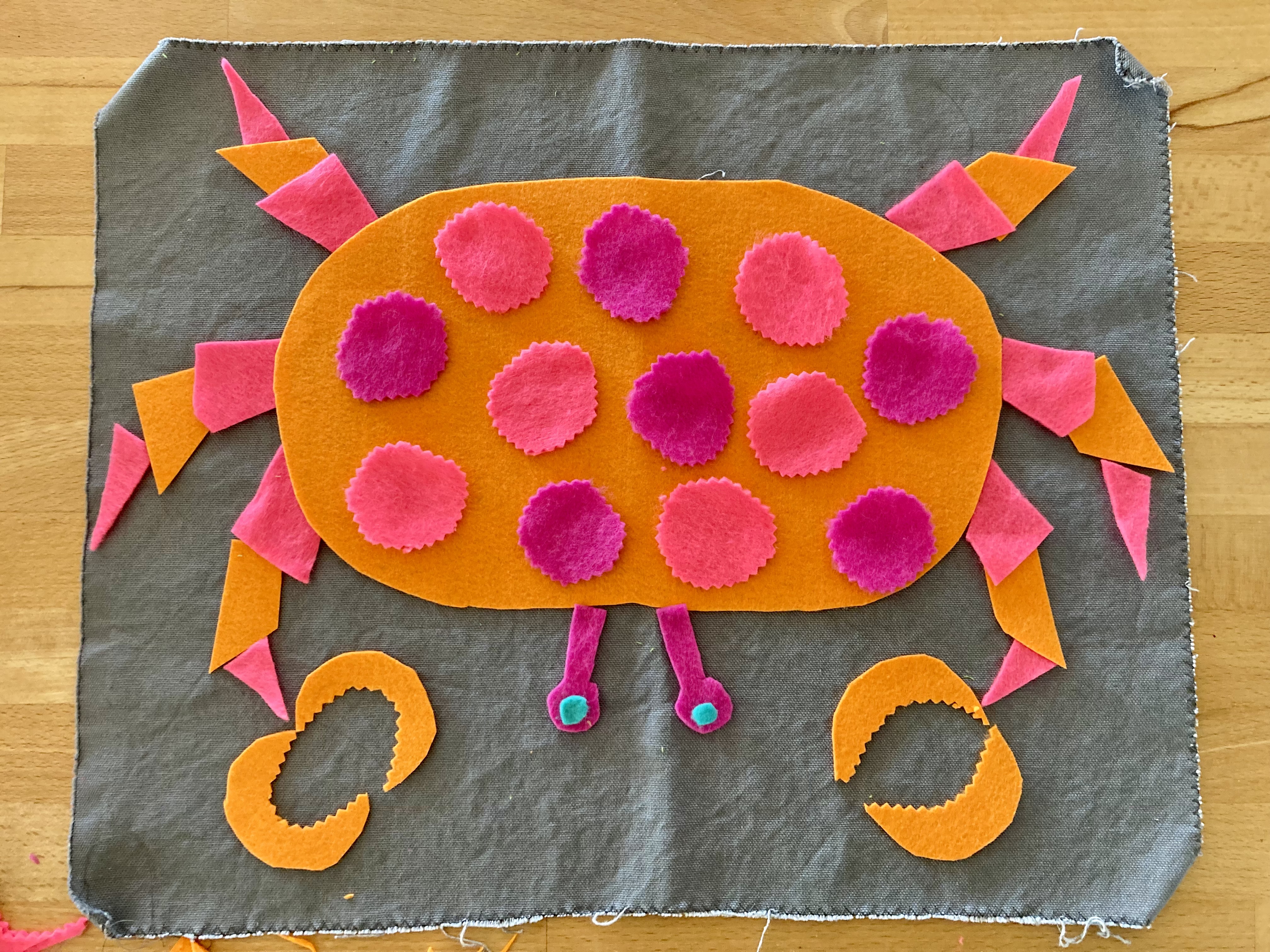
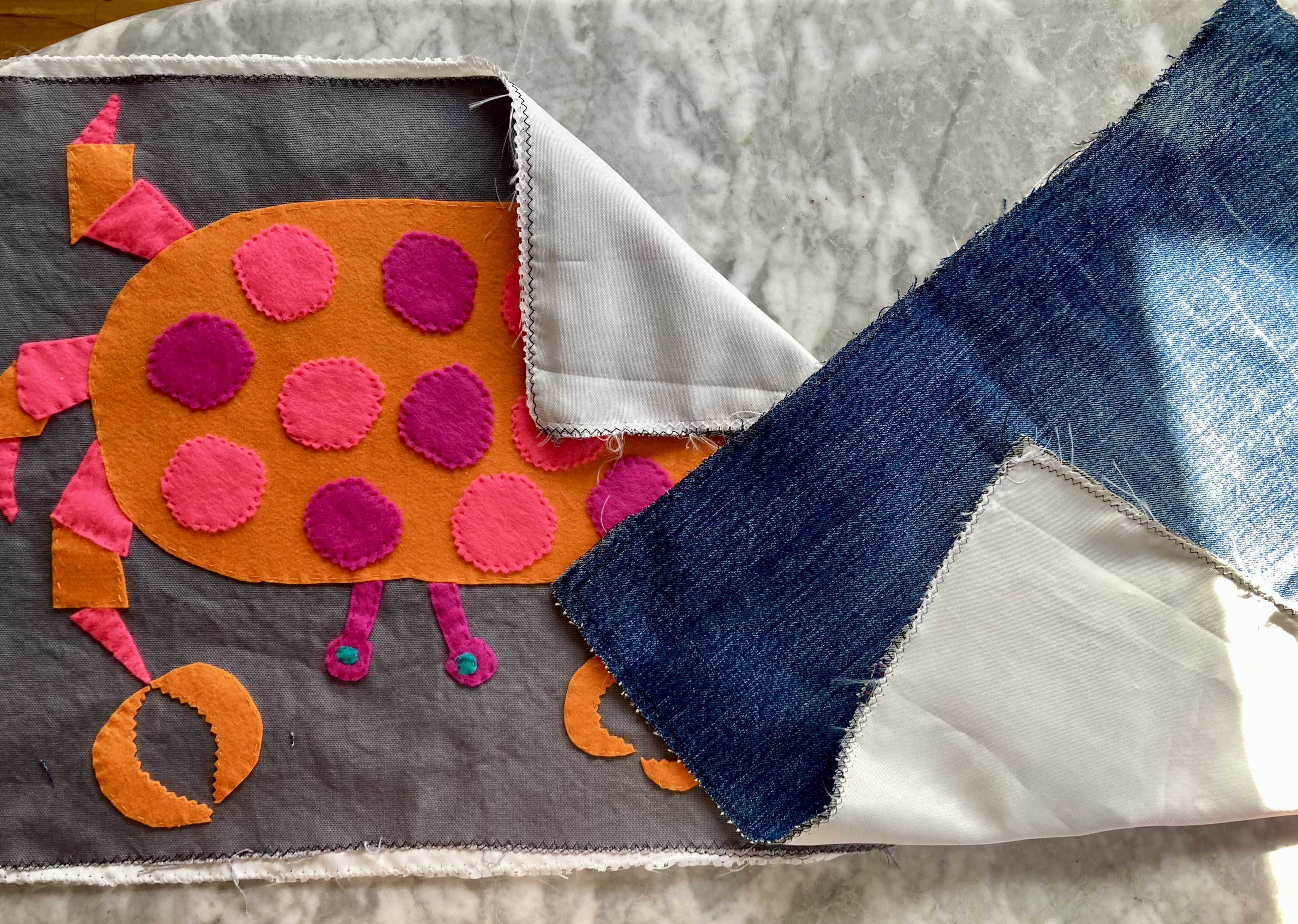
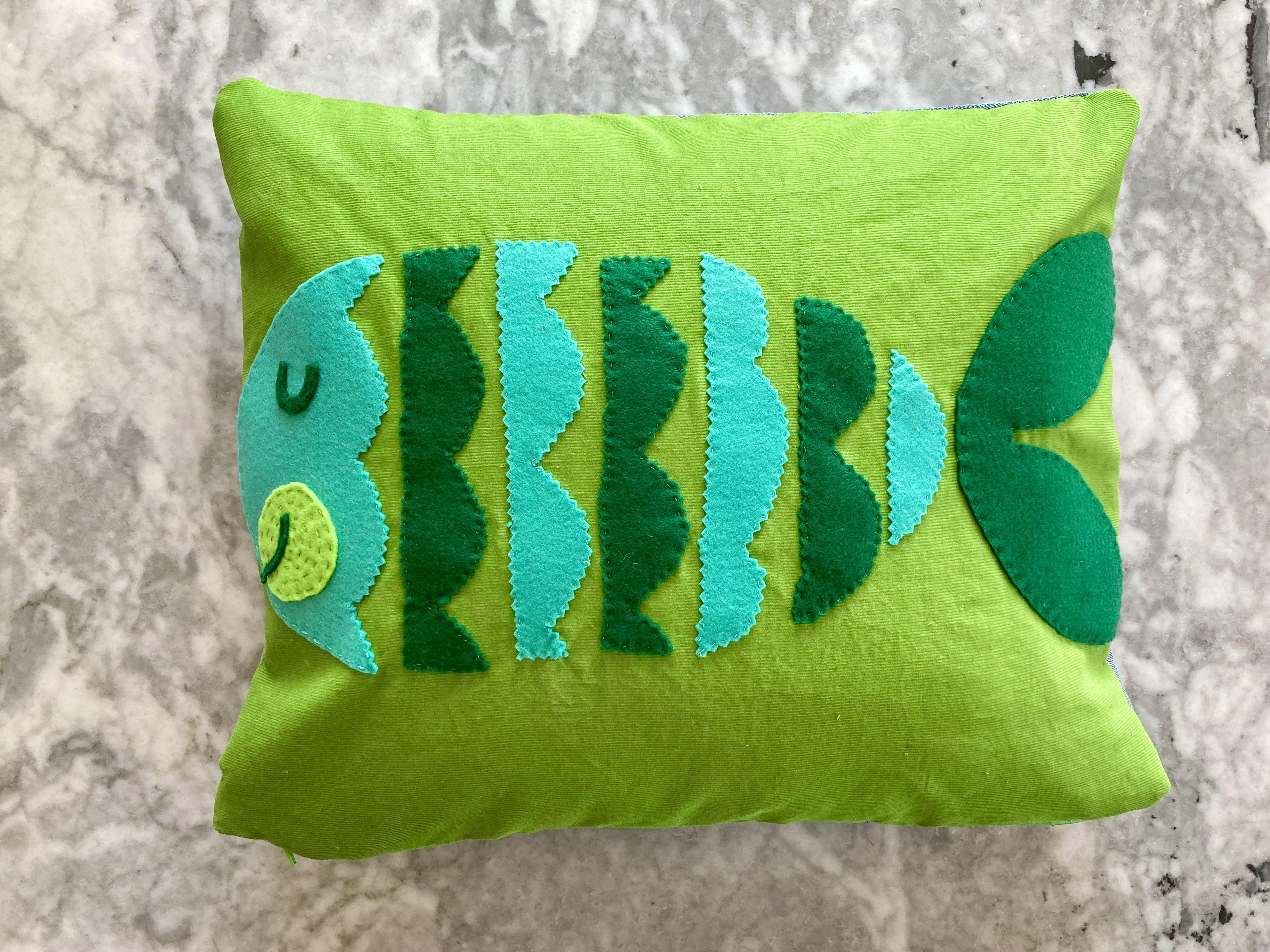
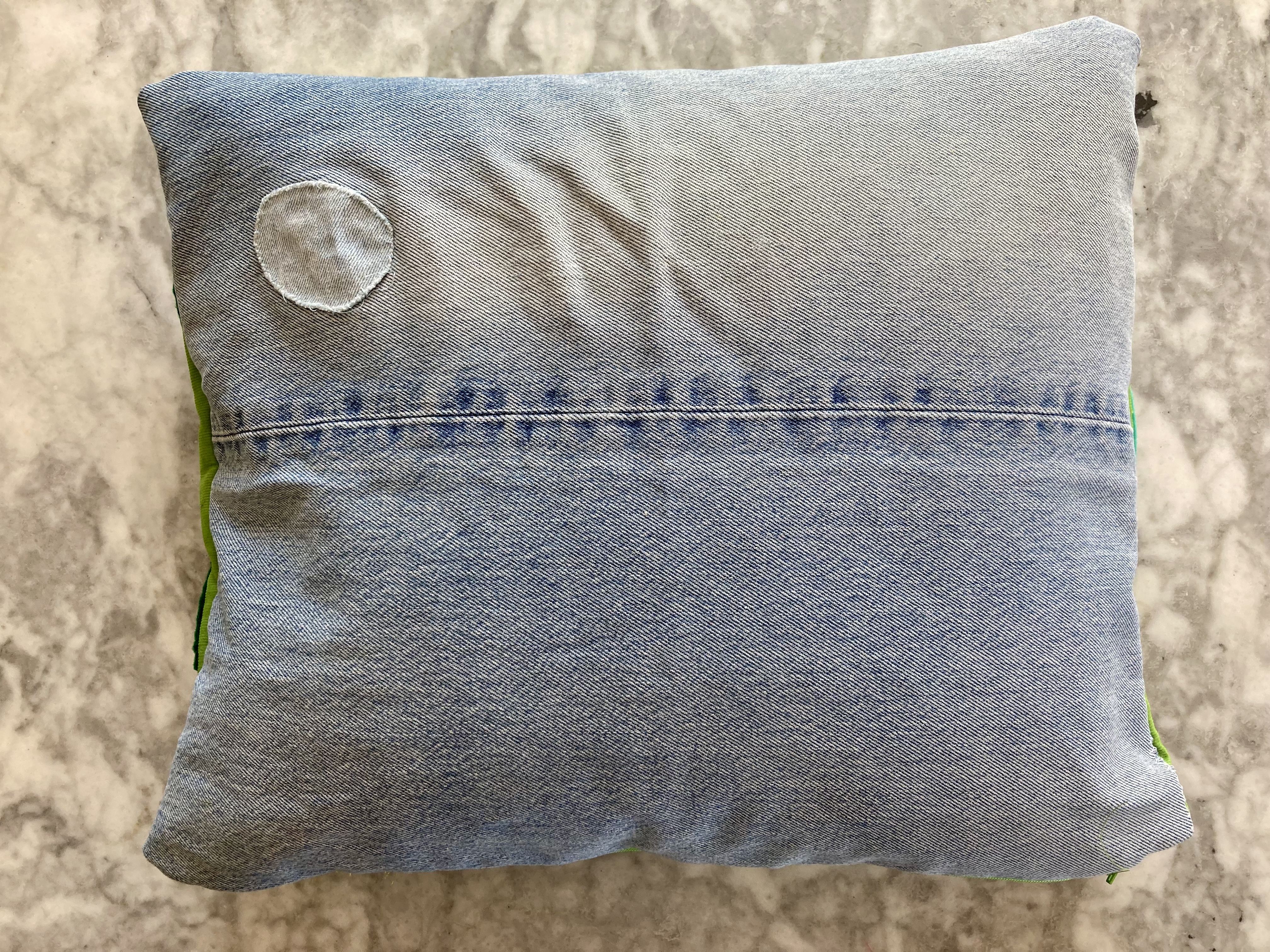
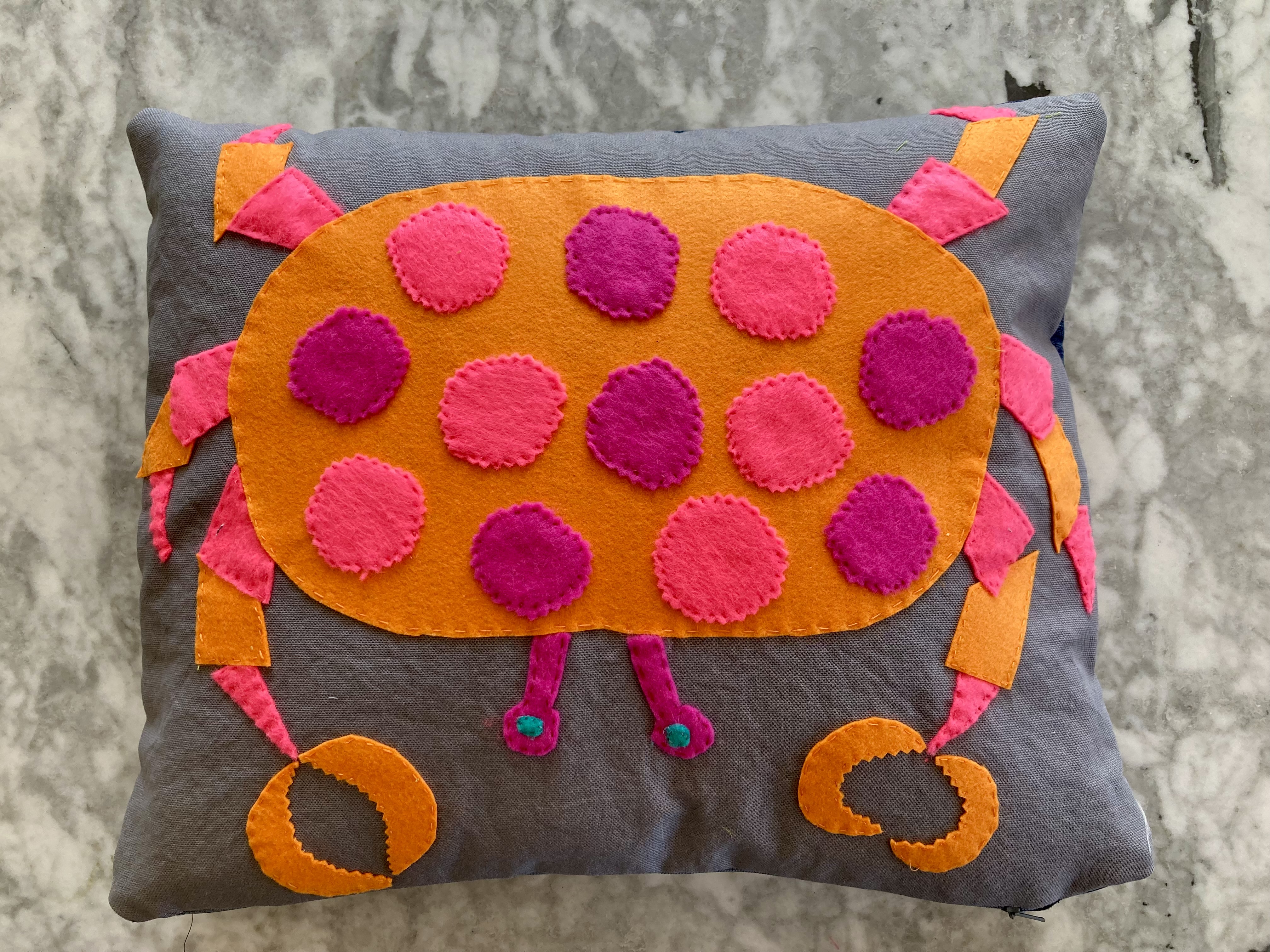
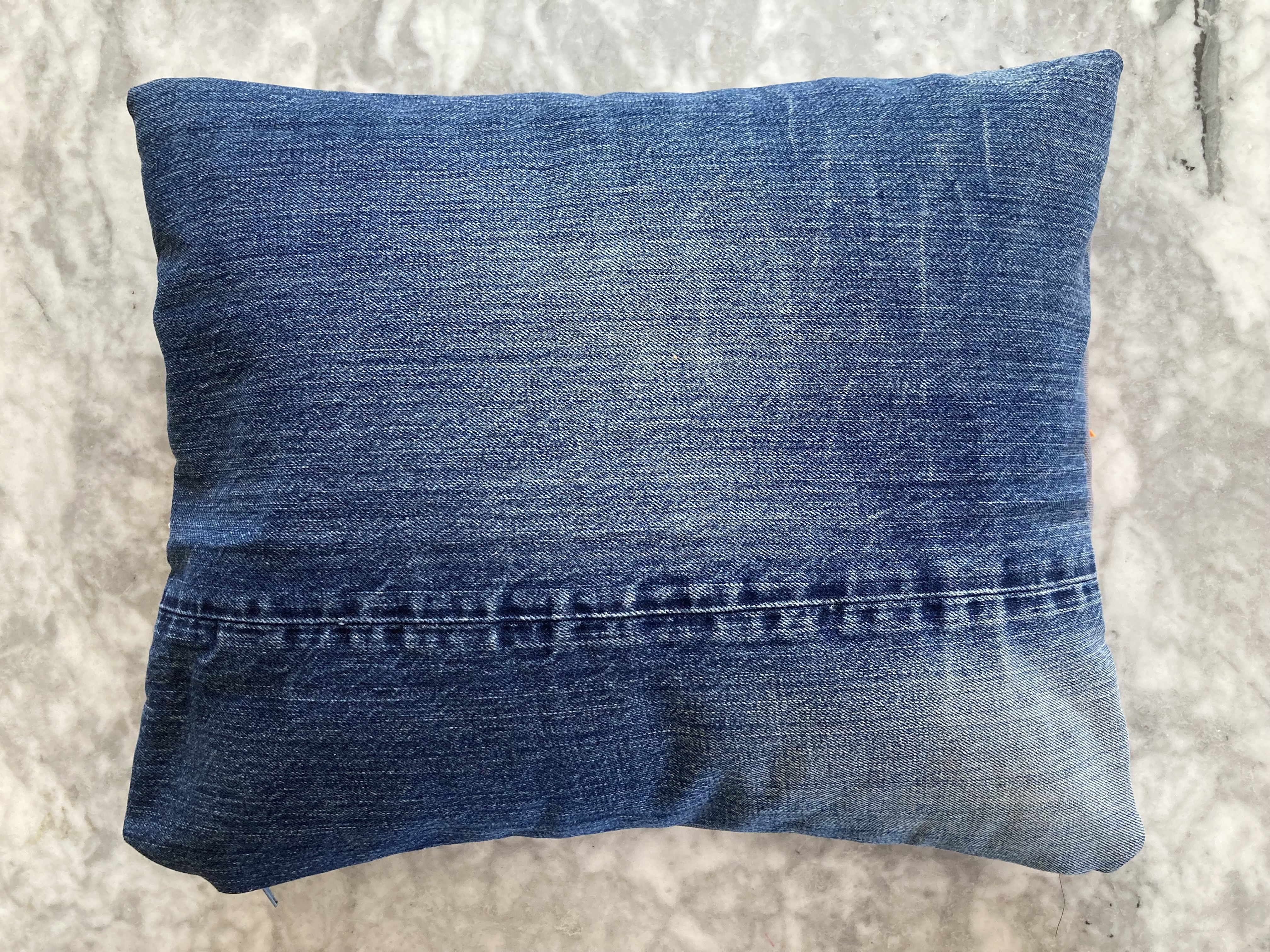
The shapes are a fish and a crab, and the “brilliant colours” unfortunately don’t show up in the black-and-white photo. The fish is turquoise, dark green and lime green felt on lime-coloured “crash” (heavy burlap-type linen) and the crab is orange, magenta and light coral on light grey crash. Both use black fabric for the backing. I used the colours from the pattern with the fish on a somewhat more lightweight almost-corduroy cotton, and the crab on a darker grey heavy upholstery/decorating cotton. For the backing, I used upcycled jeans in light blue (fish) and dark blue (crab), and I lined both cushions with upcycled shower curtain to better damp-proof them in the northern European summer.

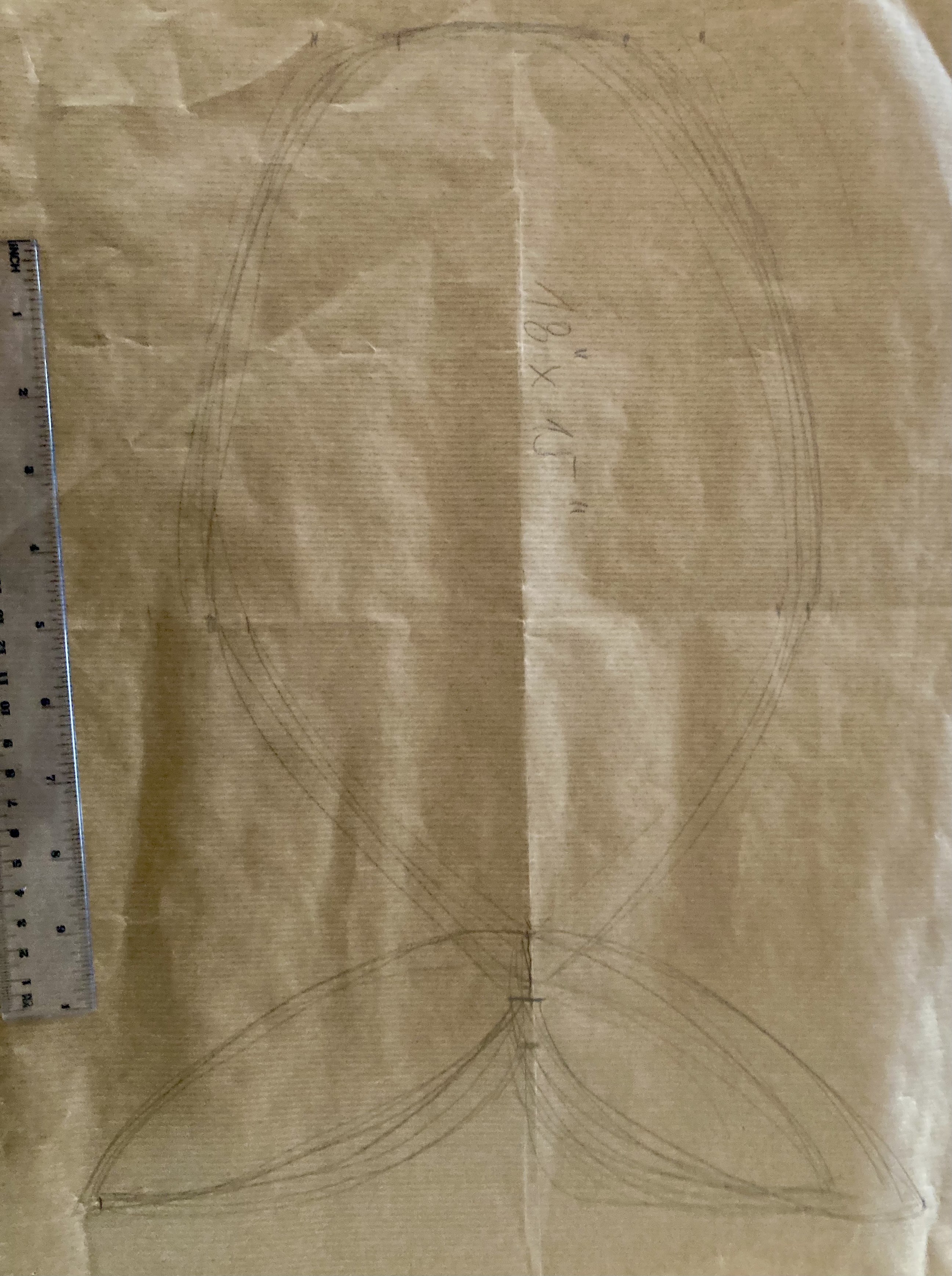
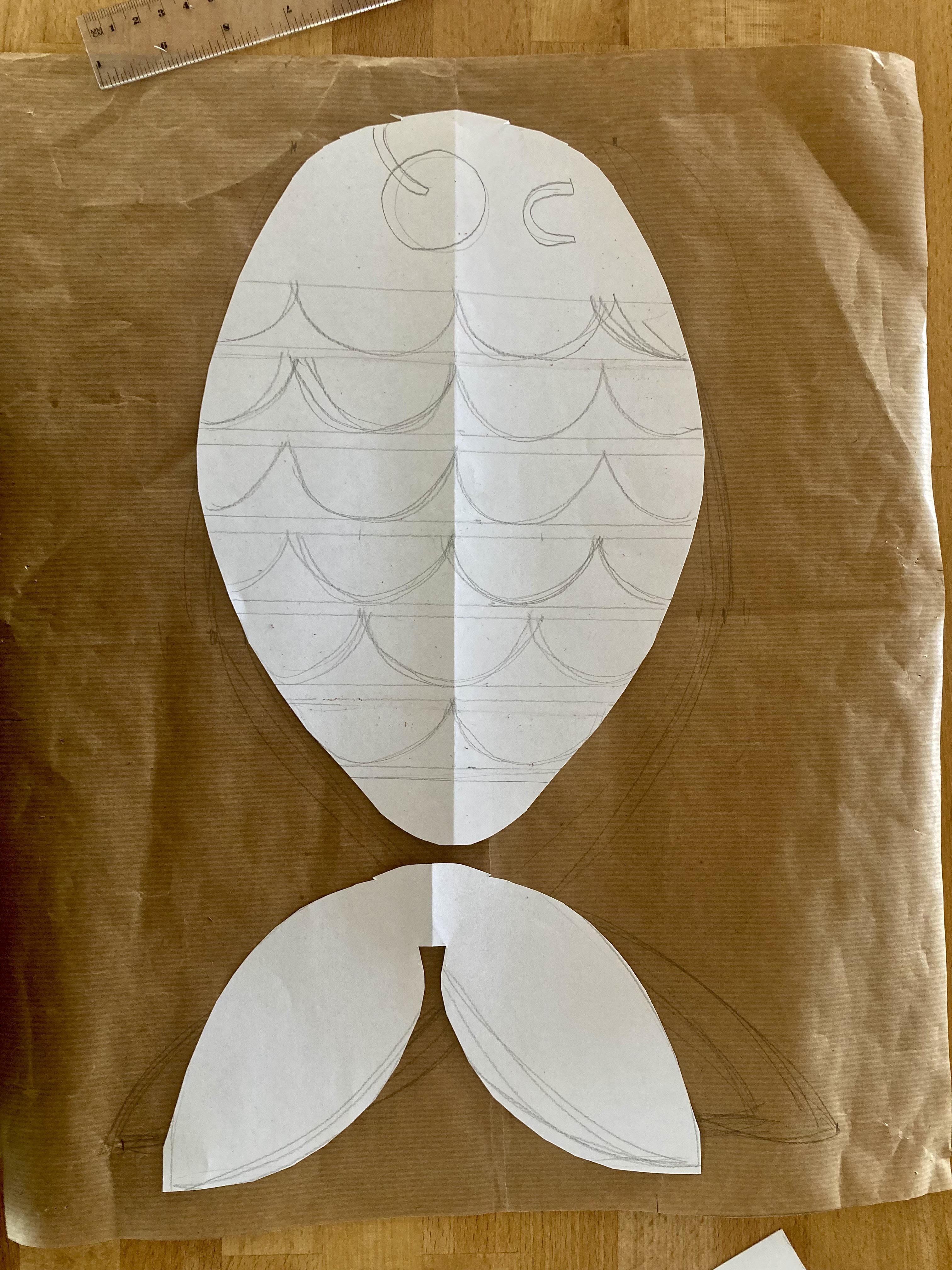
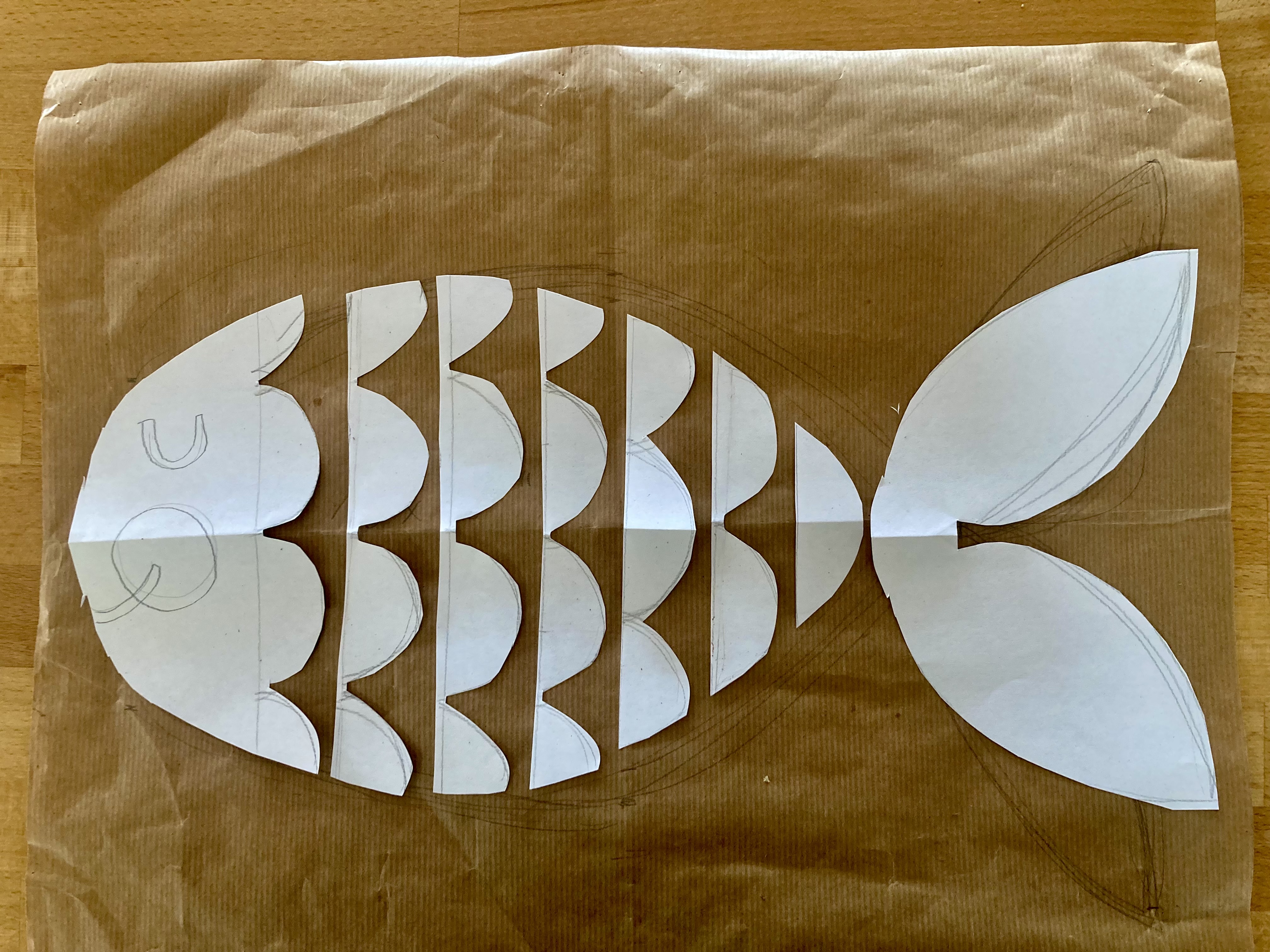
The shapes were suprisingly difficult to trace and cut out without a transfer — hard to get the fish pieces to line up perfectly, and the seemingly random-shaped crab leg segments to come together properly. I drew the fish outline on the backing-fabric paper pattern, then cut out the entire fish as a paper pattern based on that, then cut out the segments.

I love that some of the pieces on both cushions were cut out with pinking shears, but then I forgot to do it and had to buy more fabric and cut all the pinked pieces on the fish out again. Sigh.

The actual appliqué was very fast and easy. In the pattern, it says to do it on the machine, which of course would have been even faster, but I like working by hand. I used a small running stitch instead of and over-edge whipstitch, which I would normally use.

I flat-lined the finished appliqué and back pieces with the shower curtain material (I did use the machine for that) and made them up into cushion covers with zippers — not specified in the pattern, but I wanted the cushion covers to be removable for washing.

The finished size was about 17.5 x 14.5 inches, as in the pattern, which is about 45 x 37 cm. I didn’t want to make up cushions, so I bought two 45 x 45 cm ready-made cushions, which adapted themselves to the rectangular shape well enough.

It was an easy, fun project and I absolutely love the bright, 1960s colours and friendly, cartoon-like “modern” shapes. I also like sea animals, so perfect. Sadly, I have nowhere to put them and so cannot keep them for myself, but will give them away to friends for birthdays and/or housewarming gifts. Then I can visit the friends and the cushions.

Hope your Spring is going swimmingly!

April 1967: Check pattern Shell

EDIT May 26, 2025: Finished! I had to wait for the photos but it was worth it. Scroll down to see…

My April 2025 project was this “shell” (sleeveless top) in a stranded chequerboard pattern — one of three “summer shell” patterns in the April 1967 issue of Stitchcraft, along with a polo-neck bouclet and a crochet lacework design. (And shells. Listening to shells, because shell, get it? Yes, we got it, thanks.)

The wool in the pattern is Patons Cameo Crepe, a very smooth, twisted fingering-weight wool. I chose Lana Grossa Ecopuno, which I used for this “shaded blouse” and this sleeveless cardigan a couple of years ago. Though not as smooth as a crepe-twist yarn, it’s soft, light and not too warm, and available in many very pretty colours. I chose a dark green and pale, slightly seafoam-tinged blue, similar to the original colours but with more contrast.

The tension in the pattern is 8 stitches to the inch in pattern, which I can’t get even with fine yarn, so I made the smallest size (for 32-33 inch bust) to fit me (38 inch bust) and calculated that it would come out with around 36 inches in the bust, i.e. two inches of negative ease instead of the 1-2 inches of positive ease in the pattern. I hear you out there saying “Never, ever knit a stranded pattern with negative ease!!!” but it can and should sometimes be done! The yarn is loose and drapey, even in a non-diagonal stranded pattern like this one, and even two inches of negative ease doesn’t look the least bit tight.

Which brings us to the shaping question: all three “shells” in the issue show the new longline silhouette — hipbone length and unshaped from hem to bust. If you look closely at the photos, you will notice that the poses often involve a hand on the back waist, a hand on the back, arm behind the back, elbow pointing at waist level… the things you do to make you look like you have a waist in your long, unshaped garment! I never make unshaped tops for precisely this reason — they look like a sack on me, as they tend to do on all but the skinniest or curviest figures. Having had good experiences with longer tops shaped from hip to bust, I started the top with even fewer stitches at the hip and increased up to the number in the small pattern size after the waist. I also made the top in the round from hem to armhole shapings.

To test the check pattern, I made a little phone cosy in a different wool (DK weight), Since the pattern has no diagonal lines, I was afraid it would pull together awkwardly . That was a concern with the DK sample, so I was very careful to strand loosely with the Ecopuno (another reason for sizing down) and had no problems. I did, however, make a mistake in the pattern, to be fixed with duplicate stitch because I’m too lazy to rip back that far.

It went wonderfully up until the front part above the armholes, where in spite of my careful calculations, I ran out of the light blue yarn. No problem, I had bought it at my local wool shop right in my neighbourhood, so popped over to buy another ball… But no! The shop is changing management and has been selling off all the inventory before the first of May! They still had some Ecopuno, but not in the right colour, so I had to order more online. Argh!

The new wool arrived and I finished the top easily enough. Of course, the new wool was a different dye lot and the one time it makes a difference… and it was on the front piece, too. The change line got less noticeable after blocking and letting dry. Also, the pattern tricks the eye into not seeing it.

My knit-night friends and I recreated the magazine photos. Here’s the black-and-white one:

And here is the magnum opus, where one knitting colleague photoshopped me into the original photos. Is it me, or is it the model?

I am very, very happy with this project — and the photos!

March Excursion: Snow Daisies

Welcome to Spring! Is it snowing where you live? The March 1967 issue of Stitchcraft had some nice designs, but nothing that was fast, easy or practical enough for my knitting life at the moment, so for this month’s post I’ll write about a cardigan I finished in mid-February: the Snow Daisies cardigan from the Spool Cotton Company’s issue No. 189: “Women’s Sweaters: America at Work and Play” from 1942. The booklet with all the patterns is available for free here.

The “Snow Daisies” cardigan is touted as a “heavy cardigan for outdoors”. Knitted somewhat oversized (esp. for 1940s sweater standards) in thick wool, it has “plenty of room for a sweater underneath.” What you don’t see in the magazine photo is the fact that not only the sleeves, but also the back is made in 2×2 ribbing. This was an excellent design feature on many “sport” garments from the first half of the 20th century, allowing for generous movement without extra fabric to flop around and get in the way of your golf swing or ski poles or whatever. The front is made in reverse stocking-stitch with an open cable on each side, and decorated with embroidered daisy flowers. It’s a nod to all the “Bavarian”, “Tyrolean”, “Alpine” etc. traditional southern German and Austrian styles, though of course an American pattern from 1942 doesn’t use those words as I imagine they did not want the association.

I made my version in Hjertegarn New Life, a very interesting recycled wool — if I understood correctly, it’s reclaimed from older knitted items. Mine was 65% recycled wool and 35% recycled “other” fibres (synthetic, I guess?). It felt like strong, nice wool, tough but not too scratchy.

My tension was a little larger than the pattern and I wanted the cardigan to not fit too loosely, so I adjusted the stitch counts. The sleeves were fine, though the ribbing didn’t pull in as much as I thought it should. I guess that comes from wool that is only 2/3 actual wool and 1/3 mysterious “other”? So I made the back even narrower than I had calculated. It was too narrow. I made extra panels on the sides to make up for it. On the front, I placed the cables slightly differently to couter-balance having fewer stitches. I forgot to do one extra cable twist in the center twist part, but if you can’t see it in the photo, I won’t tell you where it is. The daisies were easy to embroider on.

I was not so happy with the final result. The overall look is quite square — the ribbed shoulders add bulk in an area where I am plenty wide enough. Worse, the ribbing just doesn’t pull in at all — it expands horizontally, especially after washing and with wearing, as ribbing is not supposed to do. I took out the extra side panels, which helped a little. I’m just not happy with the wool, though. It’s too bulky and not springy enough. Also, the button band is “wavy”, though I think that might be a design feature, since it looks like that in the photo, too?

(Not having any winter sports gear, here I am posing with a croquet mallet and ball…)

I’ll see what I can do with it, but I might end up giving it away.

February 1967: Crochet-Knit Cardigan

EDIT March 18, 2025: Finished!

The February 1967 issue of Stitchcraft picked up the trend for knitted work that looks crocheted with a “mini-cardigan” featured on the back cover. Interestingly, it bucks the other, longer-lived trend for oversized and shapeless garments, being more close-fitting and just above hip length. (Though more on that later…) The construction of the cardigan is quite basic, with no shaping in the body (the pattern makes it conform to shape nicely… though more on that later) and a plain, high neck. The edgings are actually crocheted.

It’s designed to be made in Patons Totem Double Crepe, a very smooth, worsted-spun 100% wool that shows the pattern well. A merino wool or something like Lana Grossa Cool Wool would have be the most appropriate modern equivalent. but I was still trying to reduce my stash and I had 200 grams of Drops Lima that I could add to that and hopefully buy just the right amount to use everything up. Lima is less smooth than it “should” be for this cardigan, since it’s 35% alpaca, but it’s spun tightly enough and anyway, I like it and it works. The color is more “loden” green than it appears in my photos. For some reason it doesn’t photograph very well — I’m guessing that the three-dimensionality of the stitch pattern messes up the automatic light sensors.

The pattern is sort of based on 2×2 rib, overlaid with twisted stitches and double yarn-overs to give a trellis effect. It was also very slow to knit, with twisted stitches on both RS and WS rows and a fairly large number of stitches per row, as it pulls together quite a lot. The fabric it makes is both stretchy and clingy, and quite warm in a thermal-blanket type of way, as well as being very heavy. I calculated it out from the Totem DK yarn weight and started with 600 grams. That started to look like it wouldn’t be enough at all, and I was on tour and hadn’t packed all of the wool, so I bought another 150 grams while on the road. That was, of course, more than necessary and now I have almost 150 grams extra. So much for destashing!

Apropos pattern, here it is:

  • Tw2L = k into back of 2nd st, then front of 1st st, slip off tog
  • Tw2R = k into front of 2nd st, then front of 1st st, slip off tog
  • Tw2M = p into front of 2nd st, then front of 1st st, slip off tog
  • Row 1: p2, *k2, p2*
  • Row 2: k2, *p2, k2*
  • Row 3: p2, *Tw2L , p2*
  • Row 4: as Row 2
  • Row 5: p1, *k2tog, bring wool forward to front of work, wrn, sl1-k1-psso*, k1
  • Row 6: k1, p1, *(k1, ktbl) into the two new loops, Tw2M* to last 4 sts, (k1, ktbl) into the two new loops, p1, k1
  • Row 7: p1, *Tw2L, Tw2R*, p1
  • Row 8: as Row 4

For whatever reason, I couln’t make Row 6 work the way it was supposed to. There were two “extra” loops from the yarn-overs in Row 5, but the way they lay on the needles made it impossible to knit the first and then ktbl the second. I tried making the yarn-overs in the other direction on Row 5 and that didn’t work either. What did work was k1tbl, k1 on Row 6. I’m guessing the designer held her needles differently or did the yo / wrn from another direction.

After the ribbing (on 3.5 mm needles), it is supposed to be knit on 4.5 mm needles. I started with 4 mm needles, since I didn’t want to yarn to stretch out too much. That seemed too tight, so I switched to 4.5 mm needles after a couple of inches on both the sleeves and the body. I finished the sleeves at the end of February and the rest on the long tour with many plane and train rides, making the back and fronts in one piece.

Somewhere near the end of the fronts, I re-read the pattern and realised that I had been knitting it wrong all along! After one pattern repeat, you are supposed to repeat rows 3-8. I repeated the whole pattern, rows 1-8. So my stitch pattern was slightly elongated vertically. It honestly didn’t look much different from the pattern close-up photo in the magazine, though.

The jacket seemed to be knitting up a bit larger than I wanted, but I couldn’t try it on properly until it was finished. It was a little bigger and floppier than I wanted (so heavy!) but the pattern would make it pull in tighter… right? right? No! I made the (crocheted) borders nice and tight in the hopes they would rein it in… not enough. After blocking, it just ballooned in all directions and ended up too big for me — I don’t like the “oversized” look. I decided to sell it or give it to a good home, and luckily a fellow knitter from my knitting group liked it and bought it from me.

Sadly, this project was more frustrating and less successful than I wanted. The sizing did not work out, the wool was too heavy, I made the stitch pattern wrong… there were just too many problems. On the up side, I love the pattern and the colour, the wool is warm and soft and cosy, and I even found incredible buttons that match the colour and style perfectly. Most importantly, my knitting friend is happy to have the cardigan, so I guess “all’s well that ends well.”

January 1967: Headband and Mitts

Welcome back to January 1967, one of my favourite 1960s issues of Stitchcraft. After making the failed “Pinafore Dress”, the successful “Lace and Ribs” pullover, and the the utterly cute “Fashion for Tots” jacket, I wanted very much to make the turquoise Fair isle cardigan on the back cover… but alas, it was not to be, as it is not possible to order wool from Scotland to continental Europe at the moment. But I won’t give up hope! While waiting for different wool to arrive, I made a simple headband-and-mitt(en)s set from the “Accessories for the Outdoor Life” page.

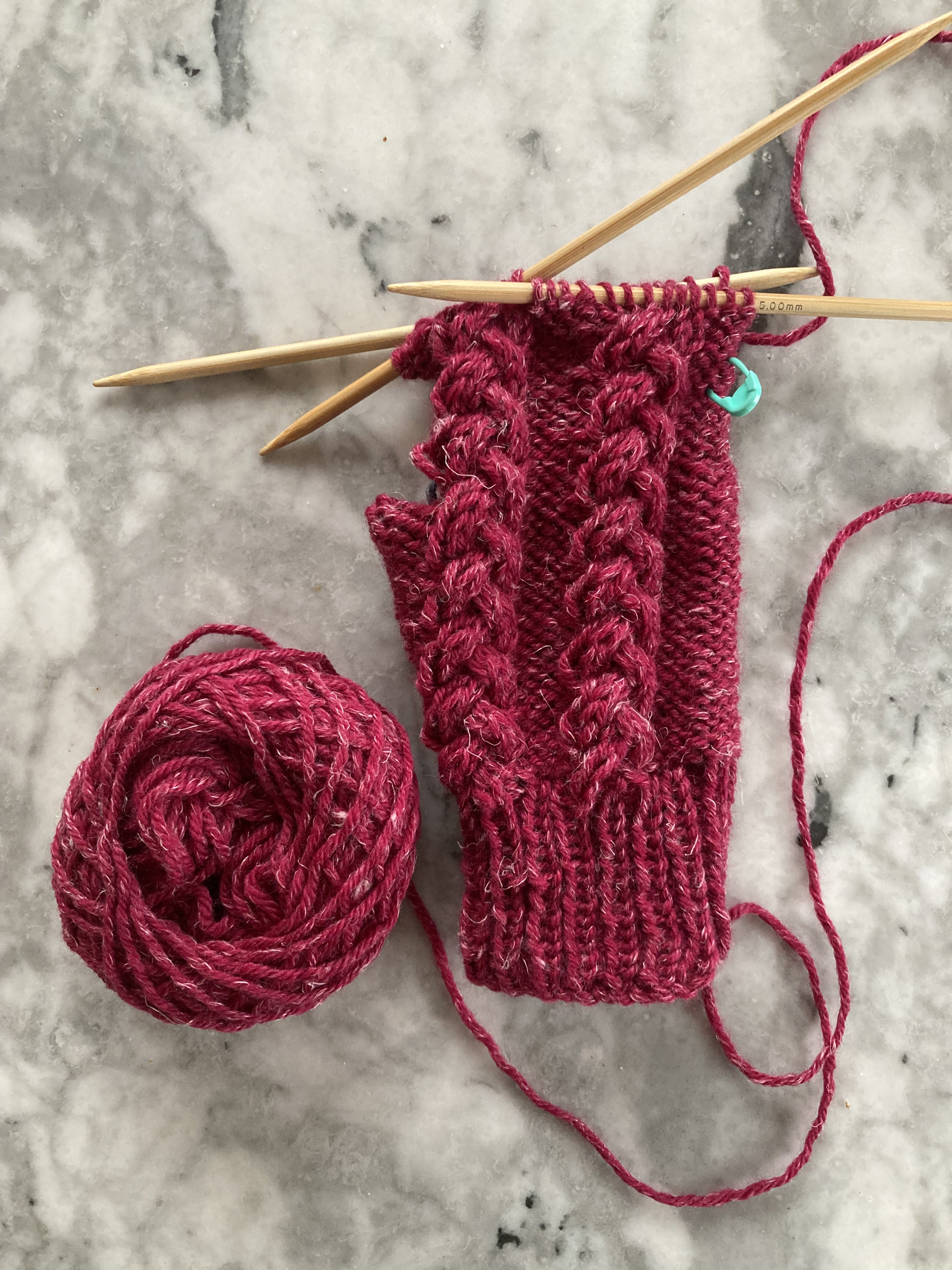
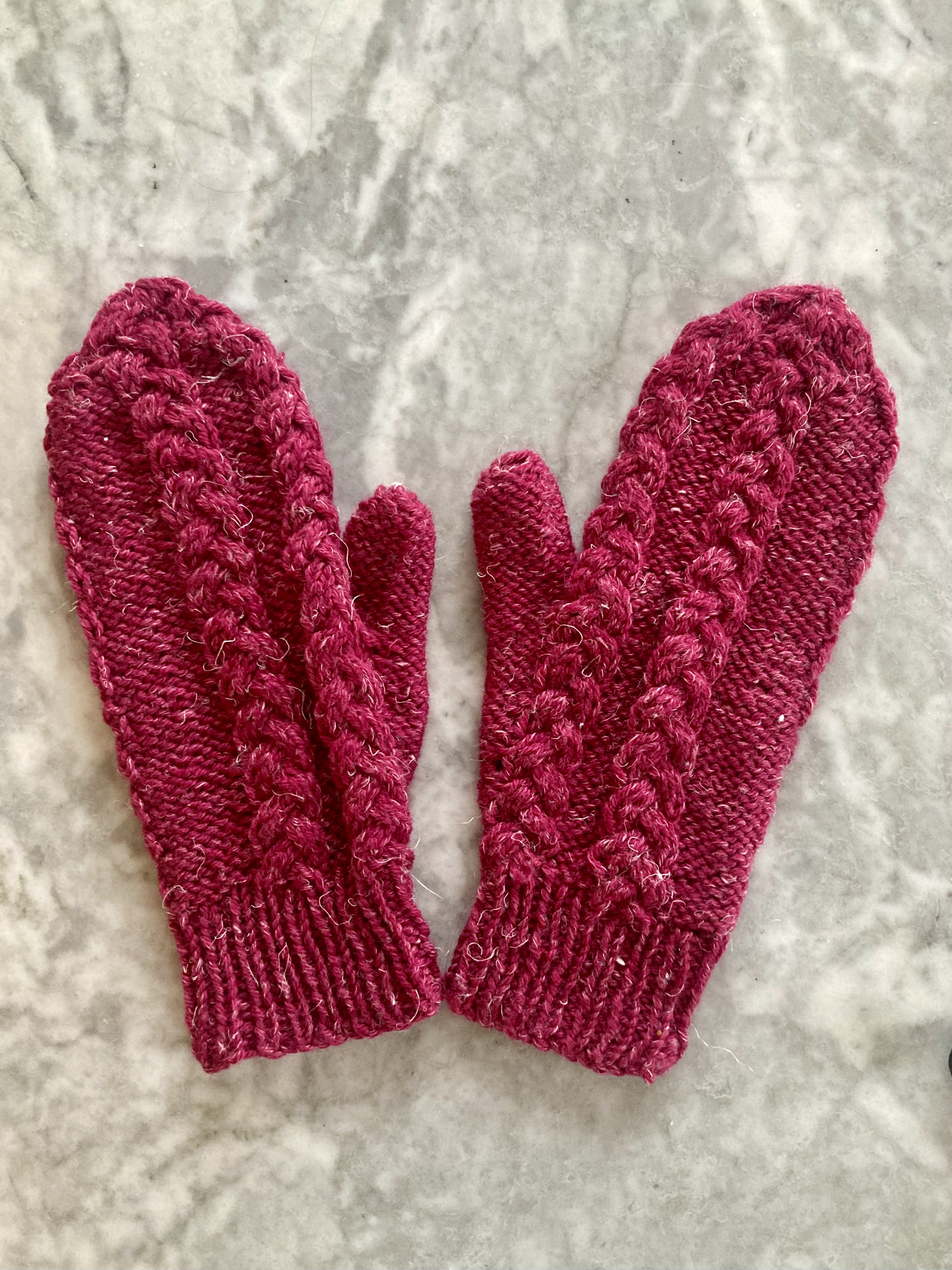
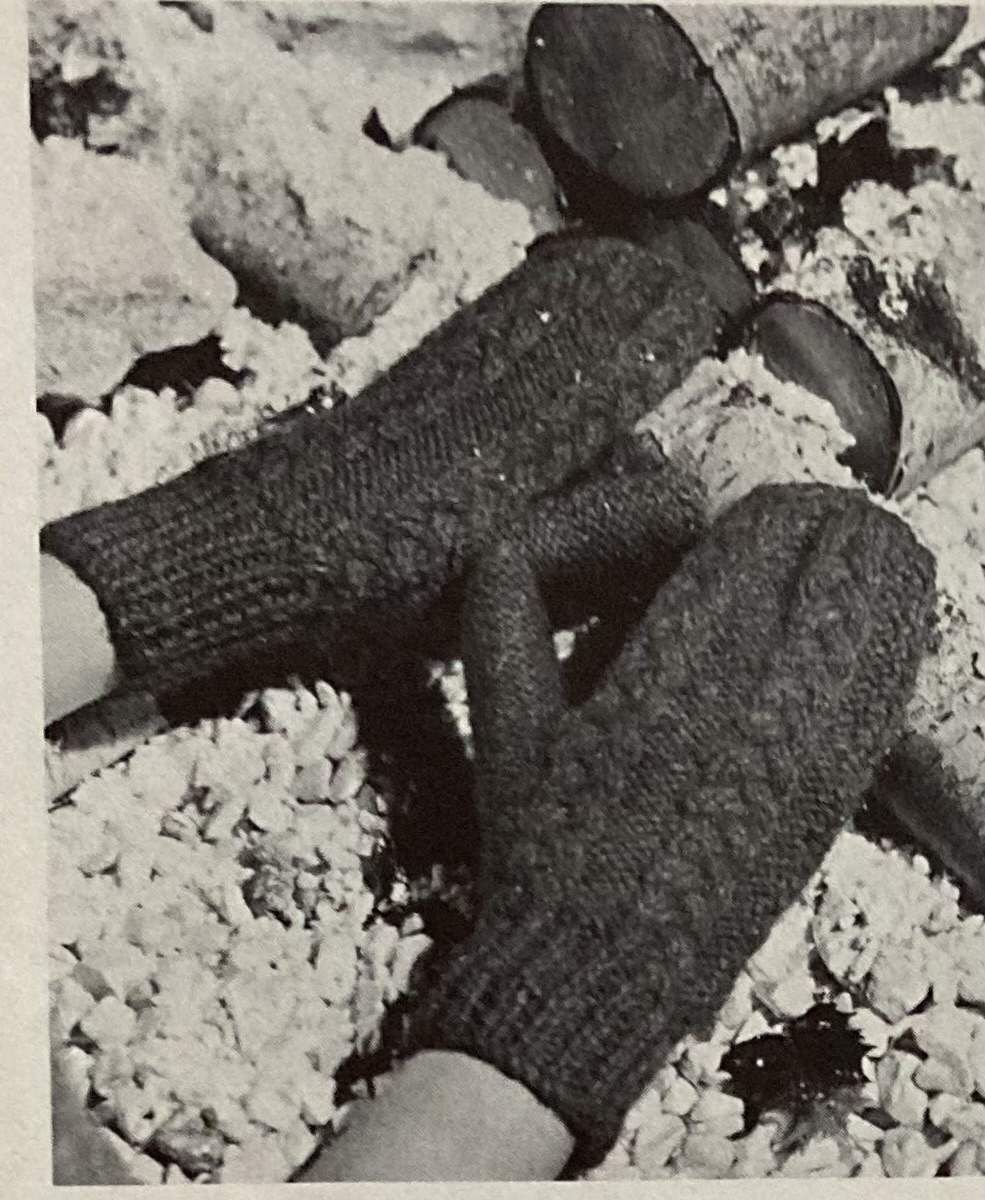
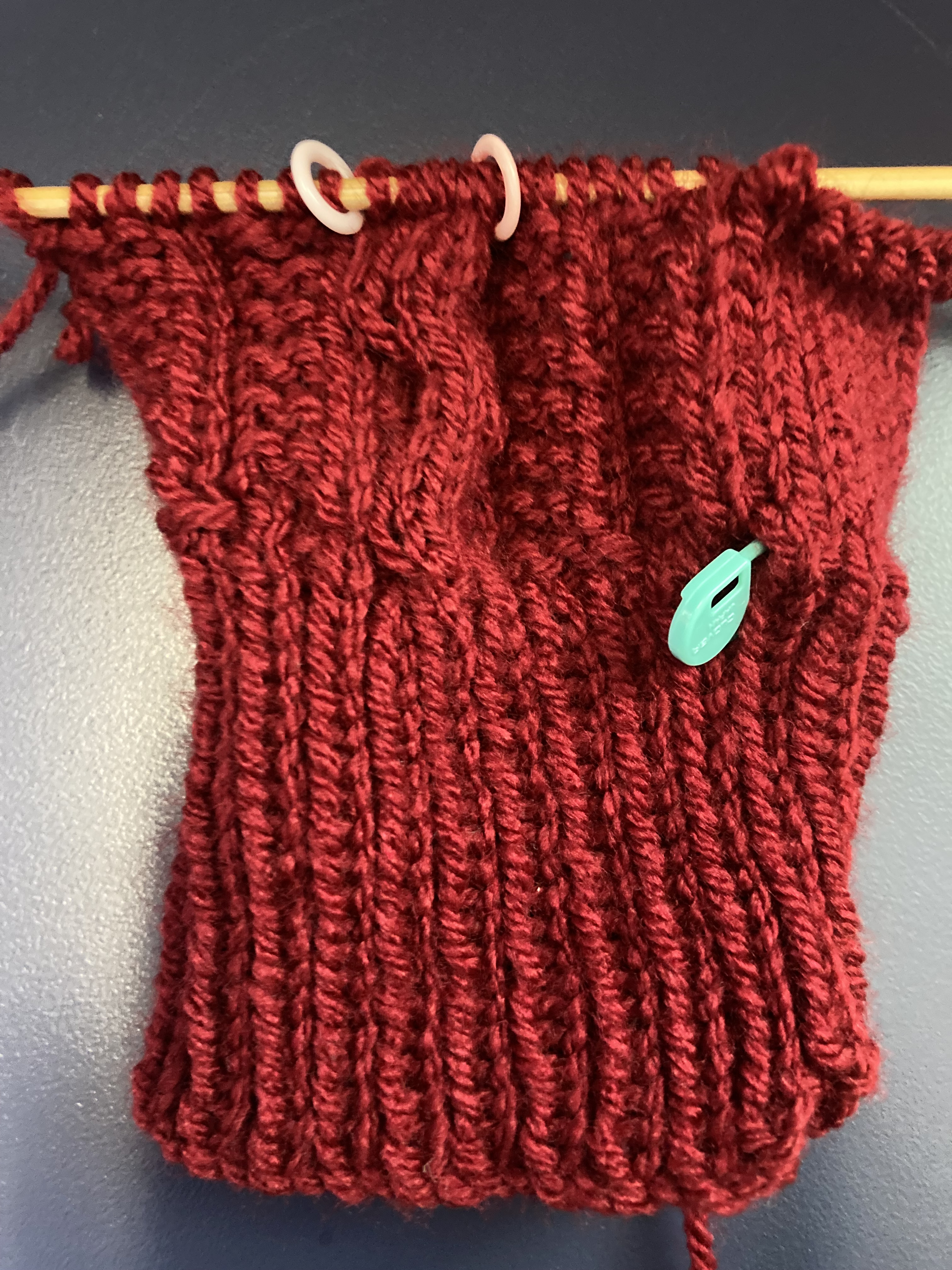
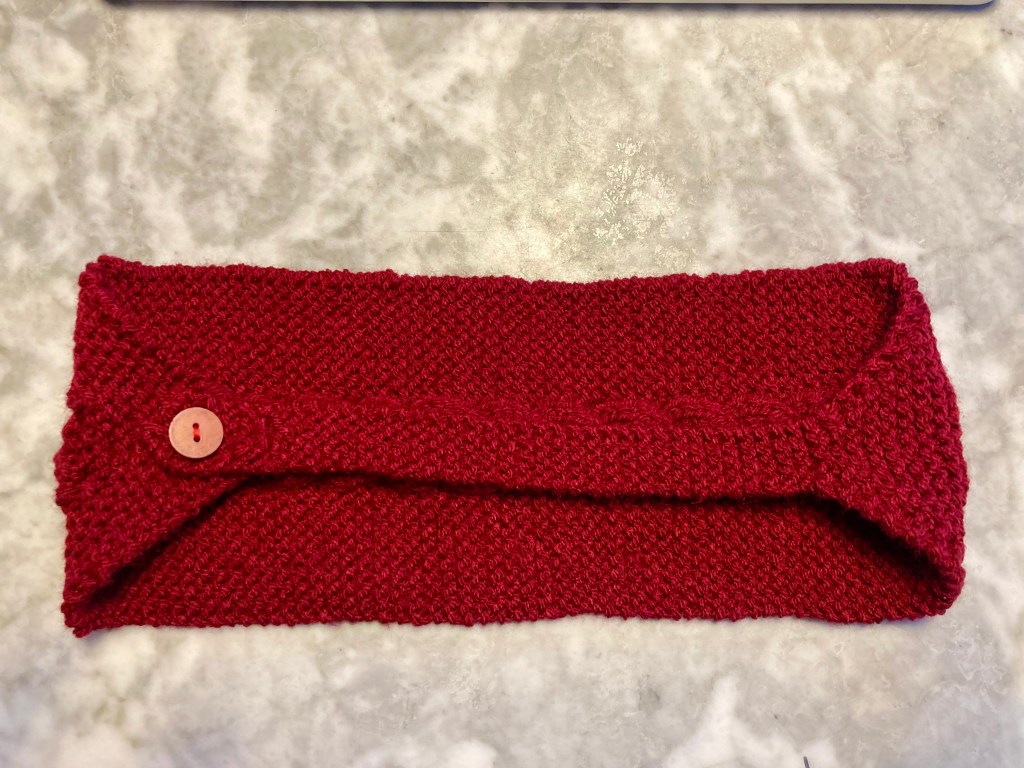
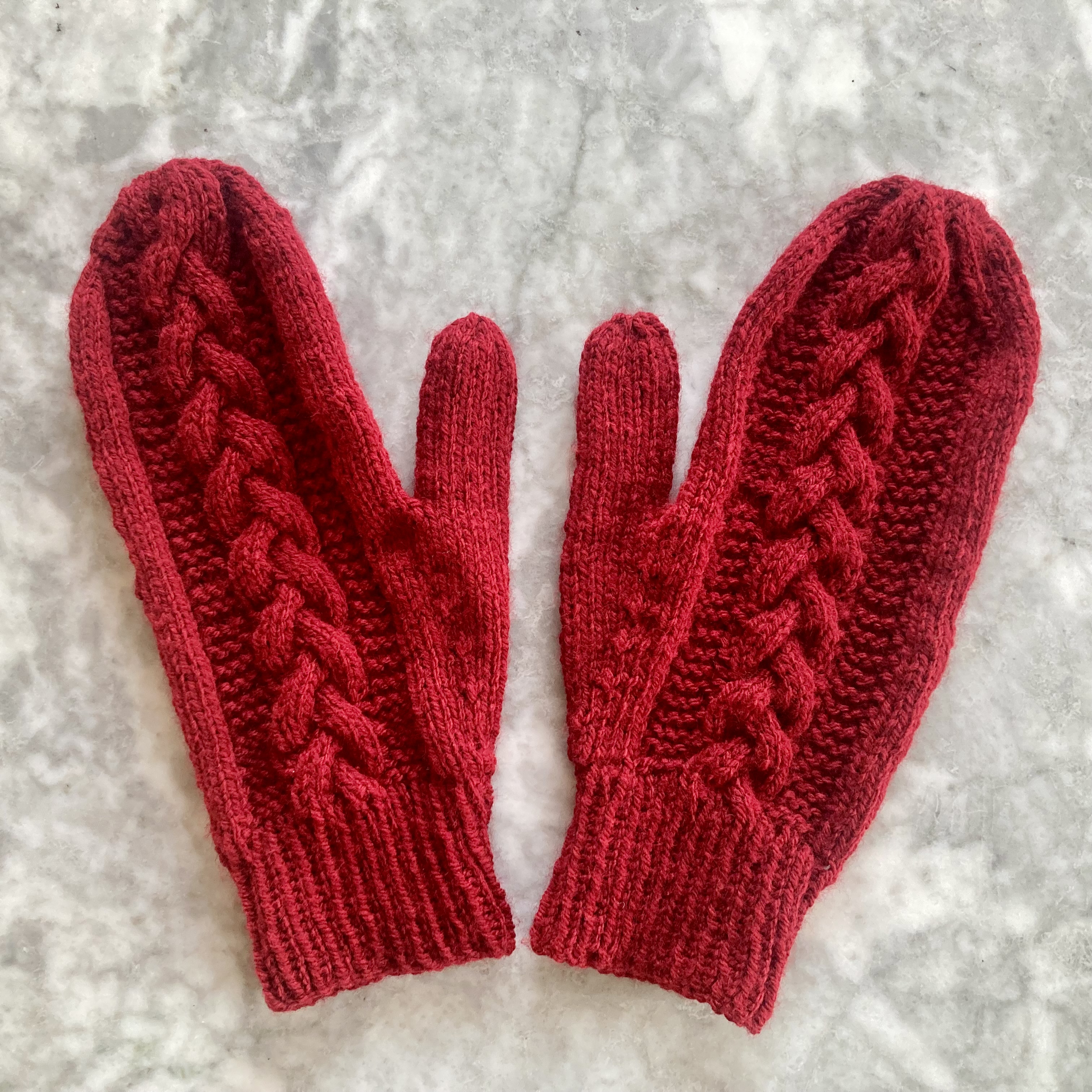
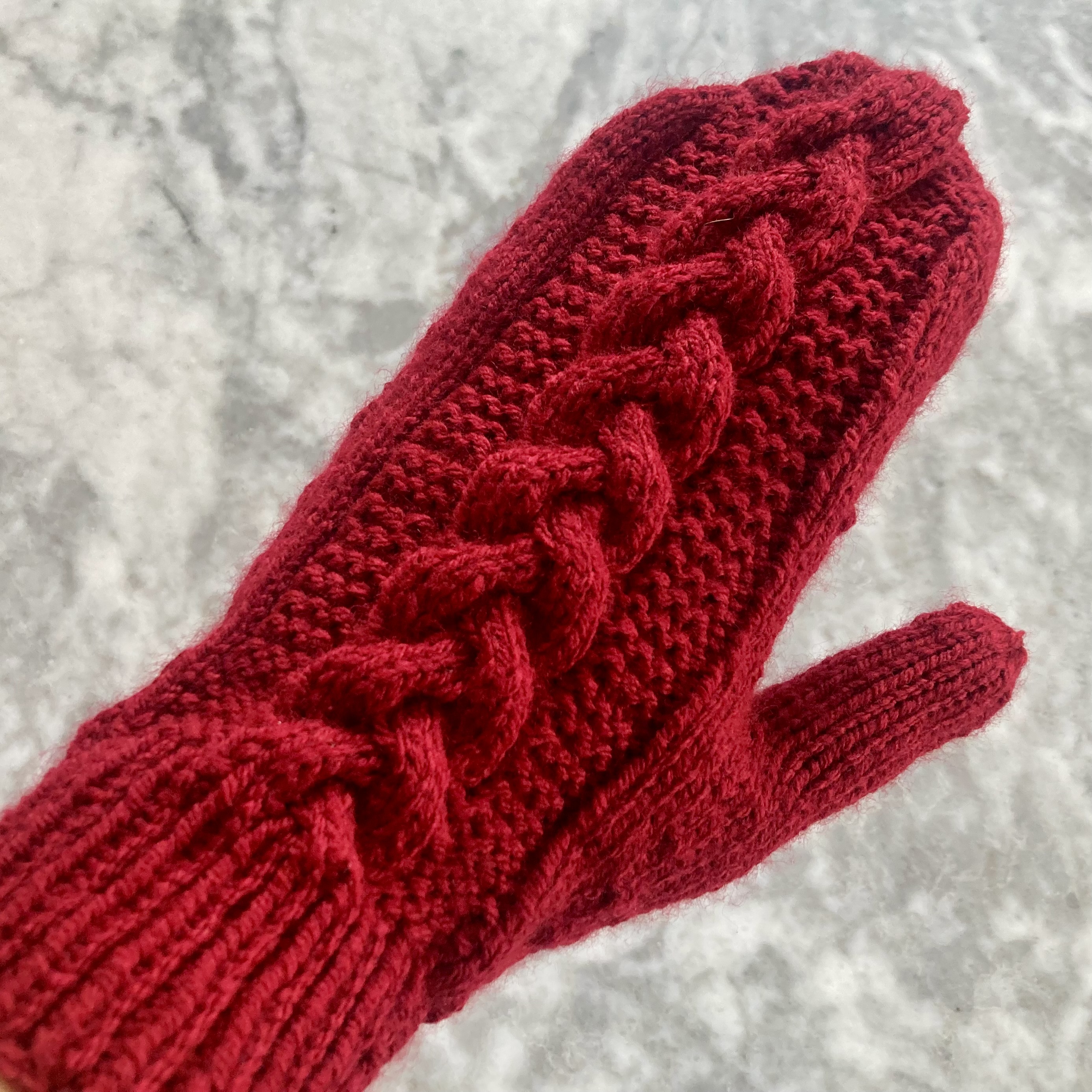
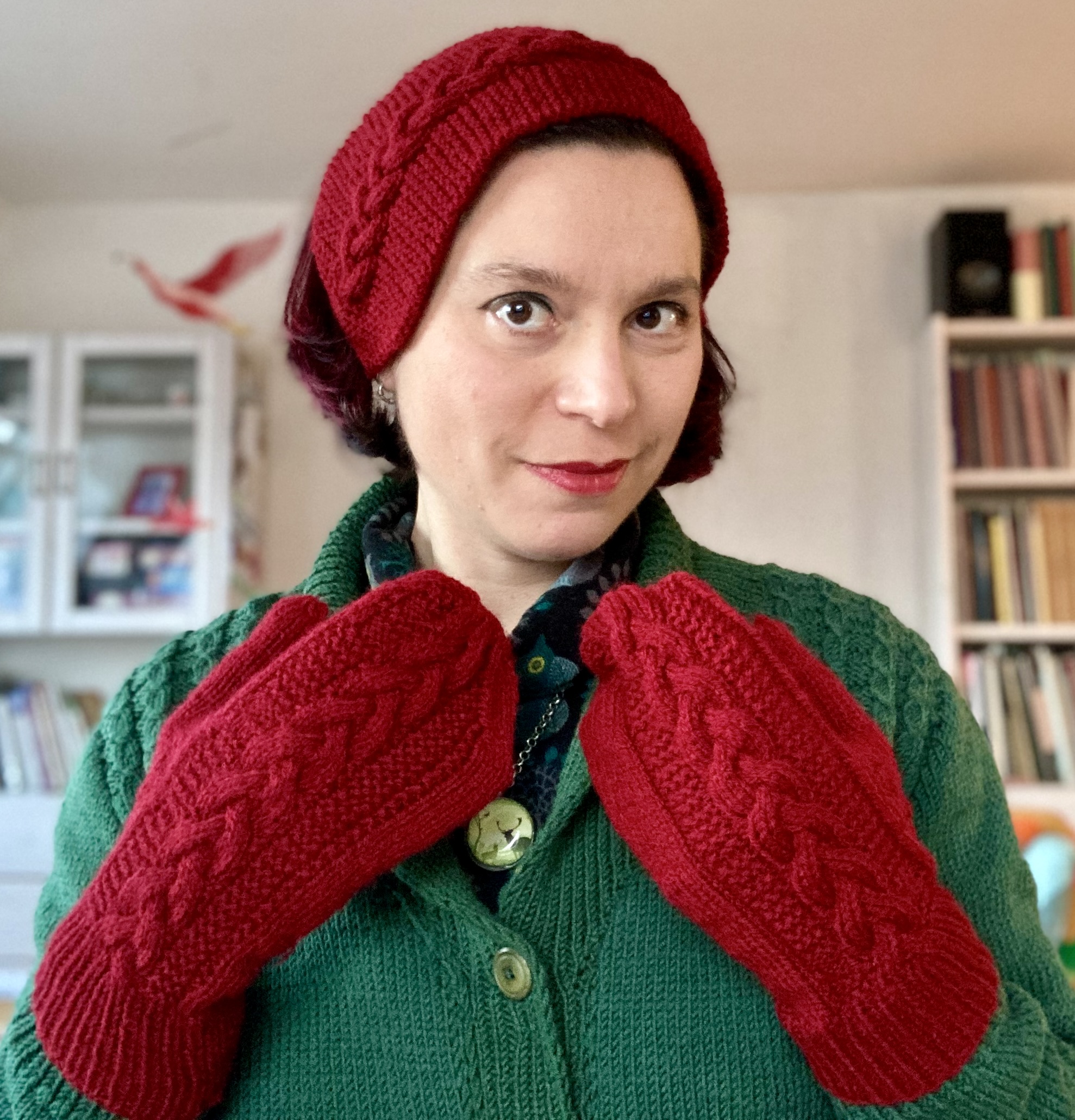
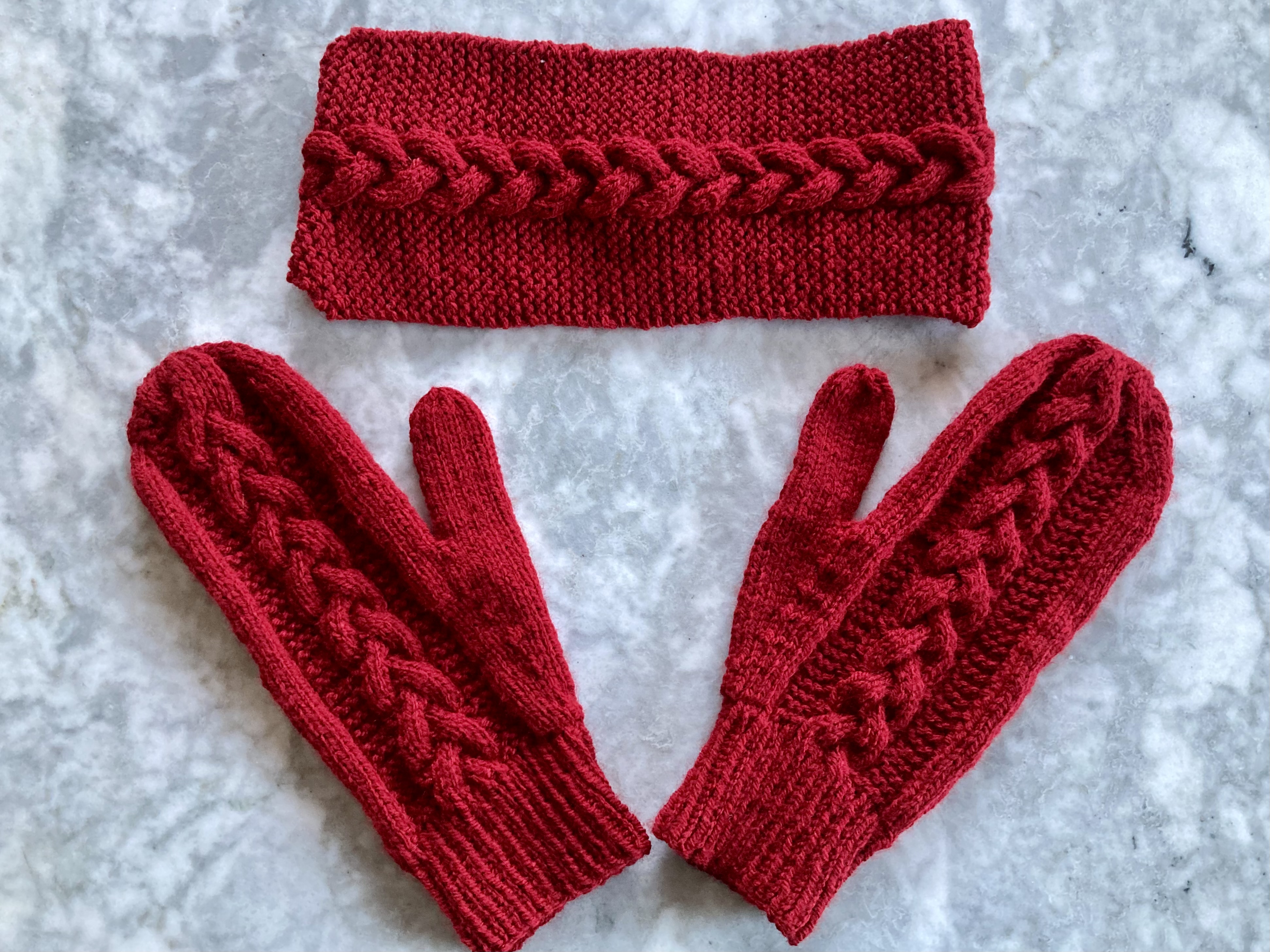
The mittens (Stitchcraft calls them “mitts”, but I’ll call them mittens to avoid confusion with fingerless mittens/gloves) and headband both feature a simple 9-stitch braided cable set in garter stitch (only 4 stitches on the mittens with the rest in stocking-stitch) with 1 stitch of reversed-stocking stitch on either side of the cable. The mittens are meant to be knit flat back-and-forth, but I wanted to make them in the round to save time and a seam.

Re-writing or re-thinking the pattern to accomplish that was… not easy. Of course the pattern doesn’t say, “Make a 9-stitch cable with 1 stitch of reversed stocking-stitch and 4 stitches of garter stitch on each side, and the rest in stocking-stitch”. It says things like “k3, (p1, k3) twice, C 6 B, (p1, k3) twice, k twice in next st., k to last 20 sts, k twice in next st, k 19” and then the wrong-side row is “purl to last 22 sts, k5, p9…” and so on. I tried to chart it out and was even more confused than before. The cable was all wrong and didn’t cover nine stitches. I finally figured it out, but the pattern wording didn’t help.

The headband was very easy and took two evenings. It fastens around the head with a buttoned strap, which I found very charming. The strap as given in the pattern (3 inches) was too short, so I made it to fit. It’s a little loose on me, but my friend has fluffy hair. Of course, she can always move the button if it doesn’t fit her properly.

Friend is wool-sensitive, so I made these in 1960s-appropriate 100% polyester yarn (Pro Lana Star). For a synthetic wool, it’s quite nice — soft and doesn’t feel too plastic-y. I chose a lovely cherry red colour to feel festive in winter.

That was it! I will return to this issue when the substitute wool I ordered for the Shetland cardigan (Rauma 3-trads Strikkegarn) arrives and make an extra post. I don’t mind that it didn’t work out to make the cardigan this month, as I probably would have overlooked the headband and mitts. They were fun to make and look really cute, so maybe I’ll make a set for myself sometime.

October 1966: Jacobean Embroidery

EDIT November 19, 2024: Finished!

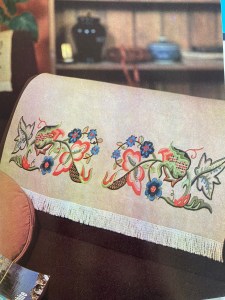
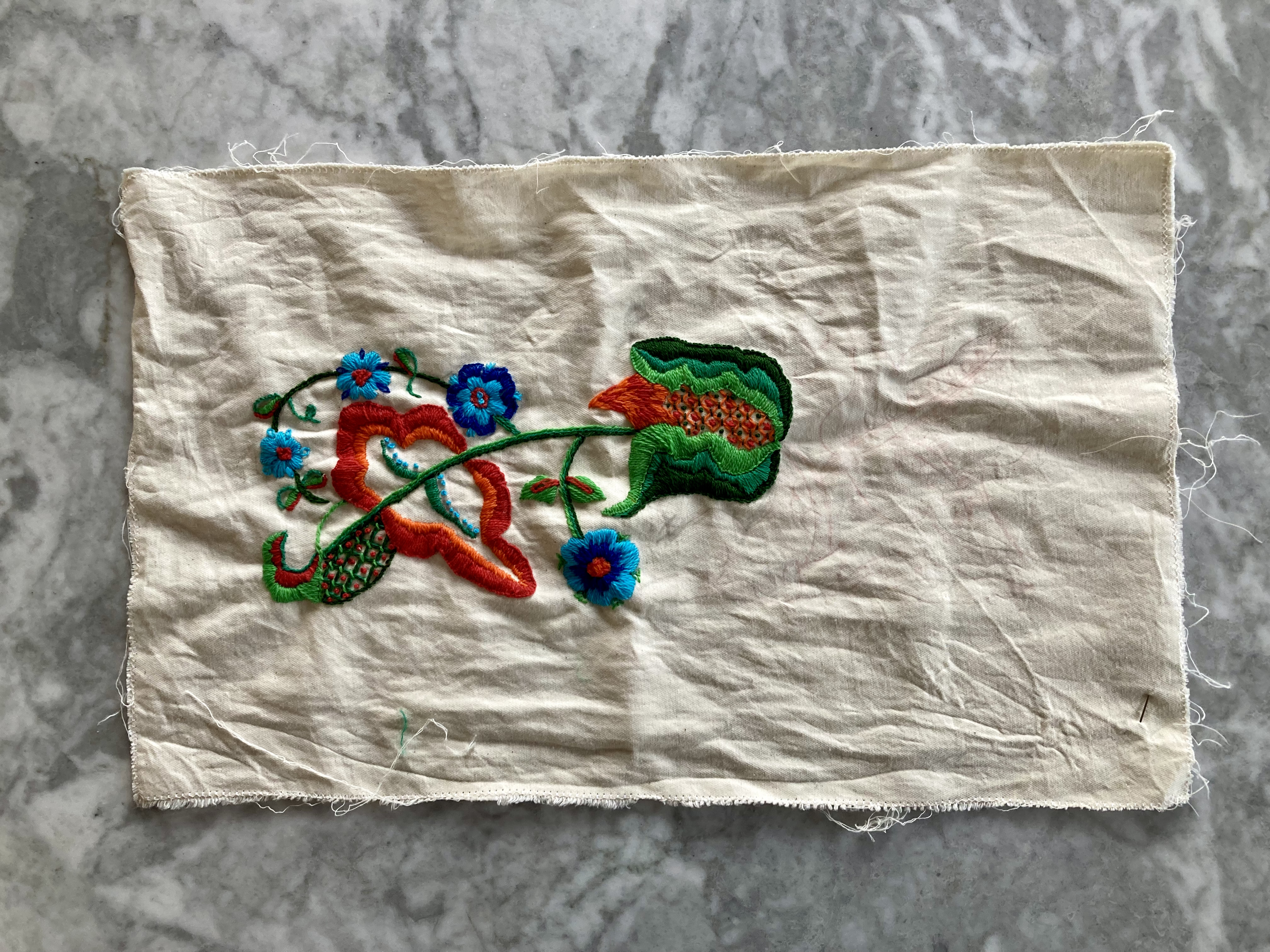
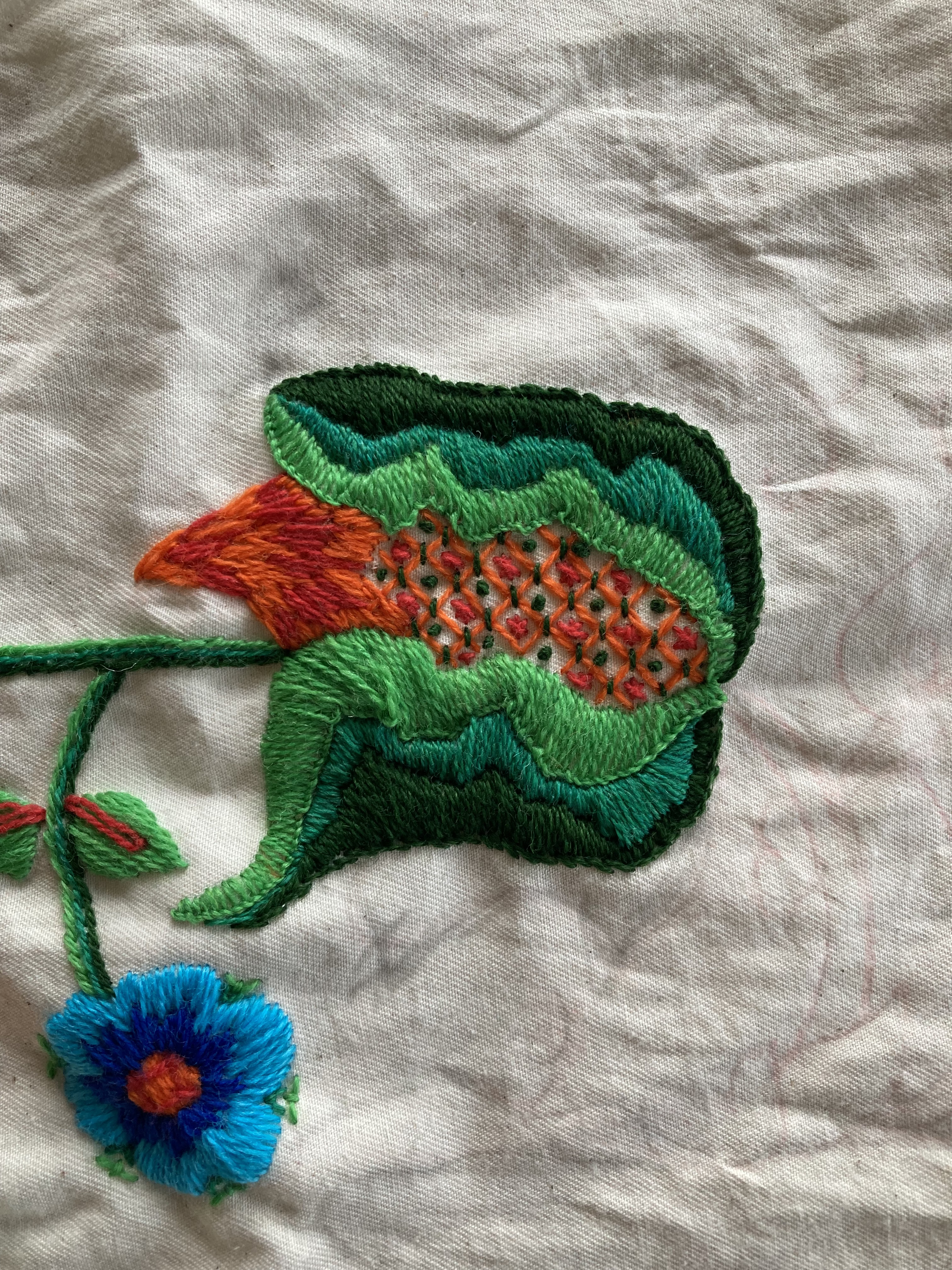
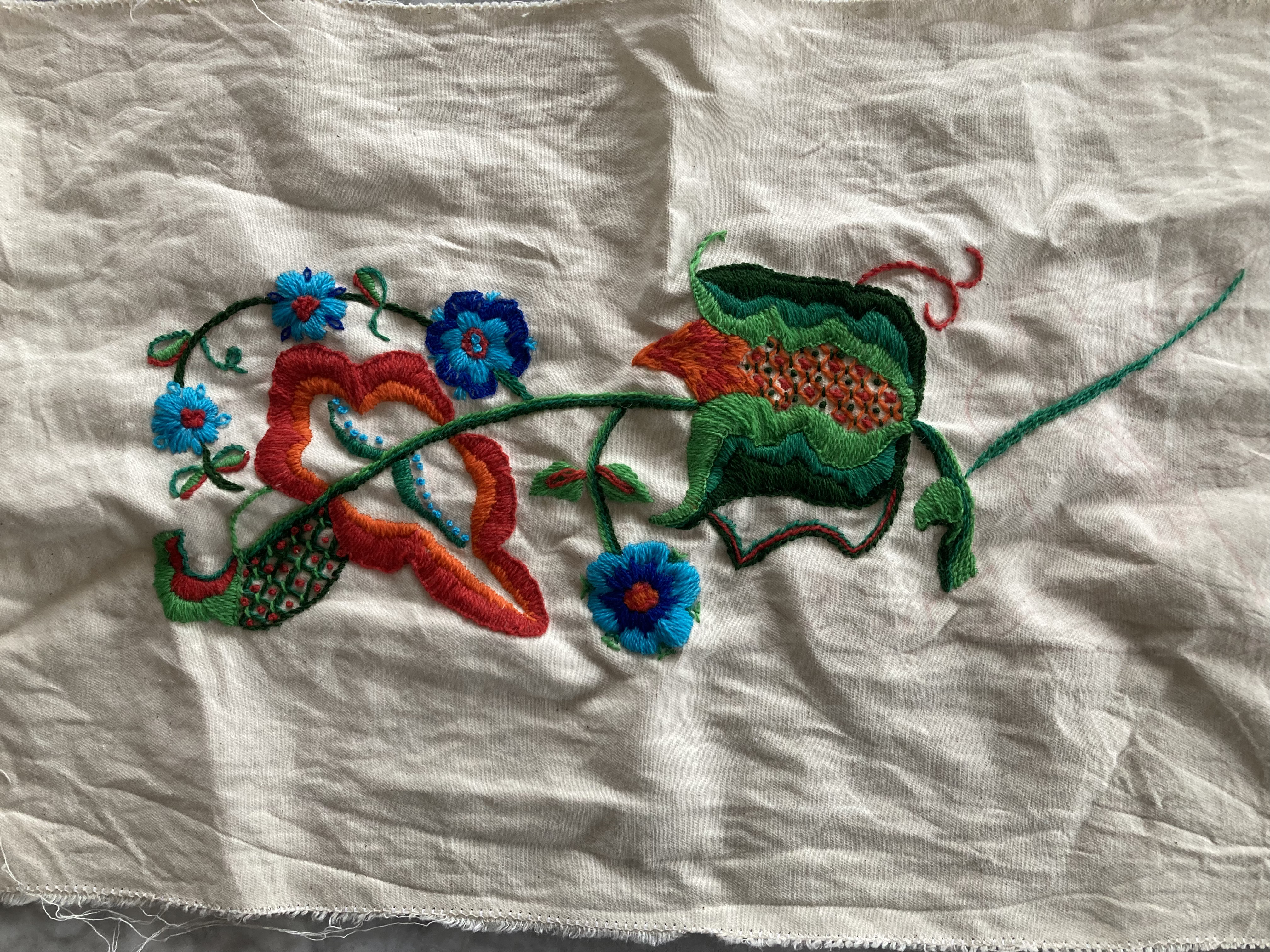
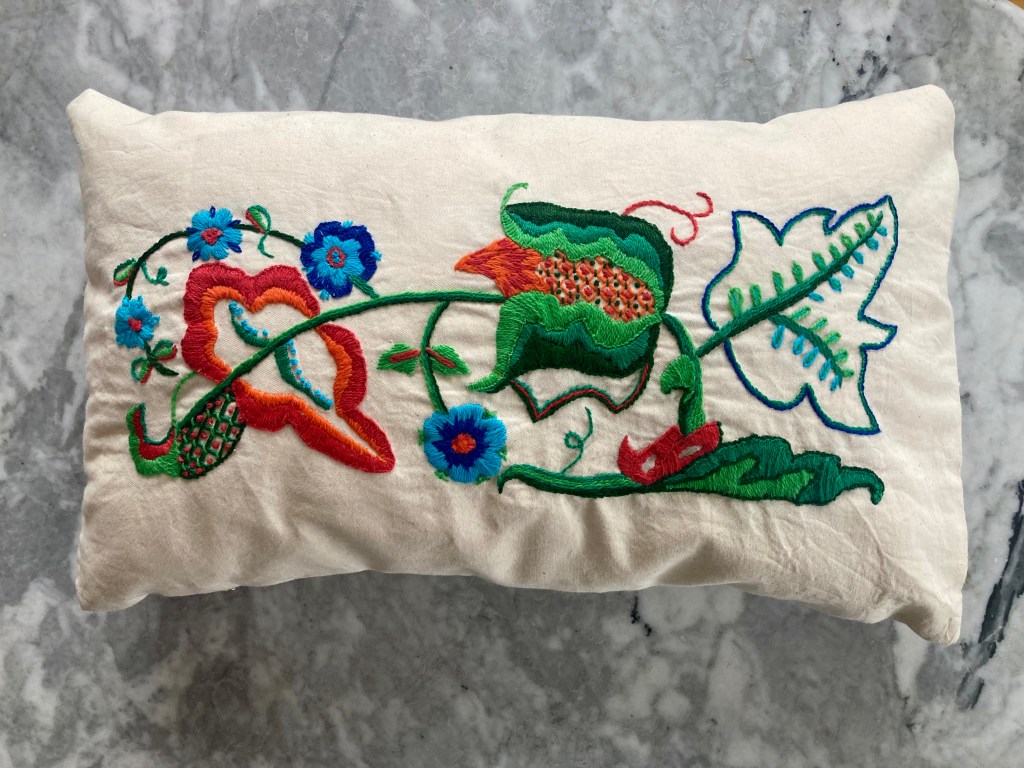
My October 2024 project was an embroidered panel in “Jacobean” style from the October 1966 issue of Stitchcraft.

Real Jacobean embroidery was an elaborate, mostly floral style of wool-on-linen work that was popular in the early 17th century. It featured heavy, filled stitches and complicated couching, often in multiple colours and with a high level of skill and artistic virtuosity. The style enjoyed a revival in the mid-20th century, and many home embroideresses made Jacobean-inspired designs to decorate home furnishings such as cushions and wall panels.

This finished panel is intended to be used as a chair-back and / or sofa-back, with the sofa-back incorporating the panel twice. Chair-backs and sofa-backs were a popular way to extend the life of upholstered furniture by keeping it clean and protected from sun damage. You don’t see them much nowadays, except in the casual form of throwing a blanket or quilt over the sofa back to hide faded or worn spots. I could actually use a sofa-back, since my sofa sits under a window and the sun does fade the dye quite a bit over time, but my sofa is already so cluttered with hand-made cushions. I decided to make the panel first and then decide if it should become a cushion, laptop case, decorative wall panel or other use.

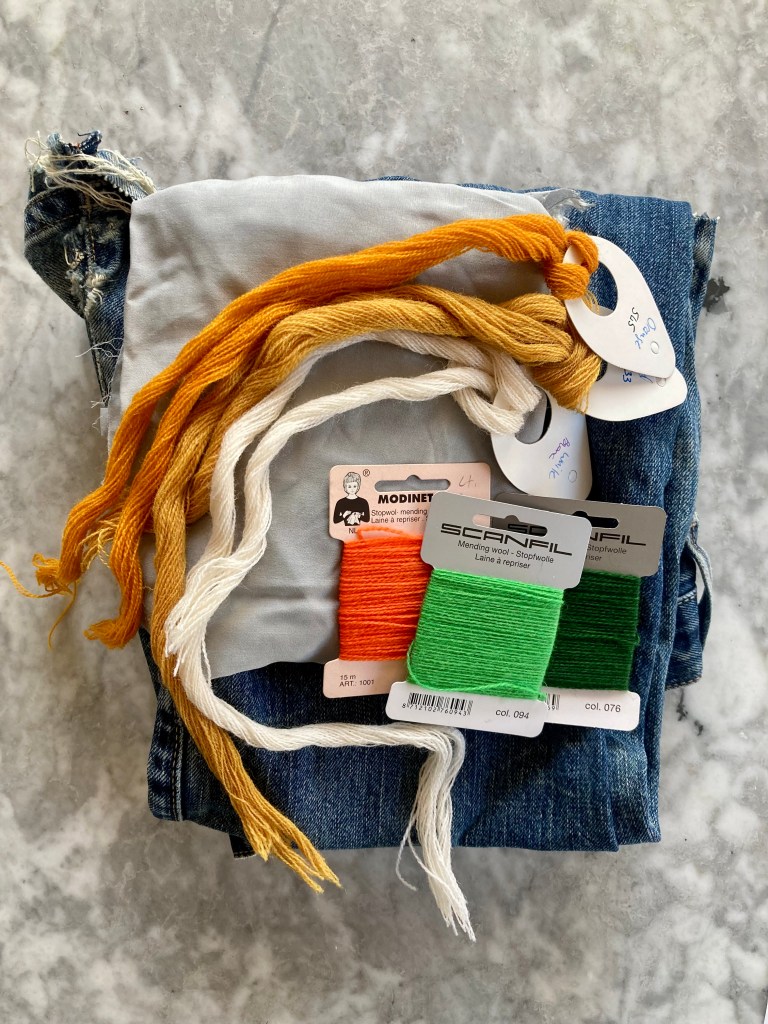
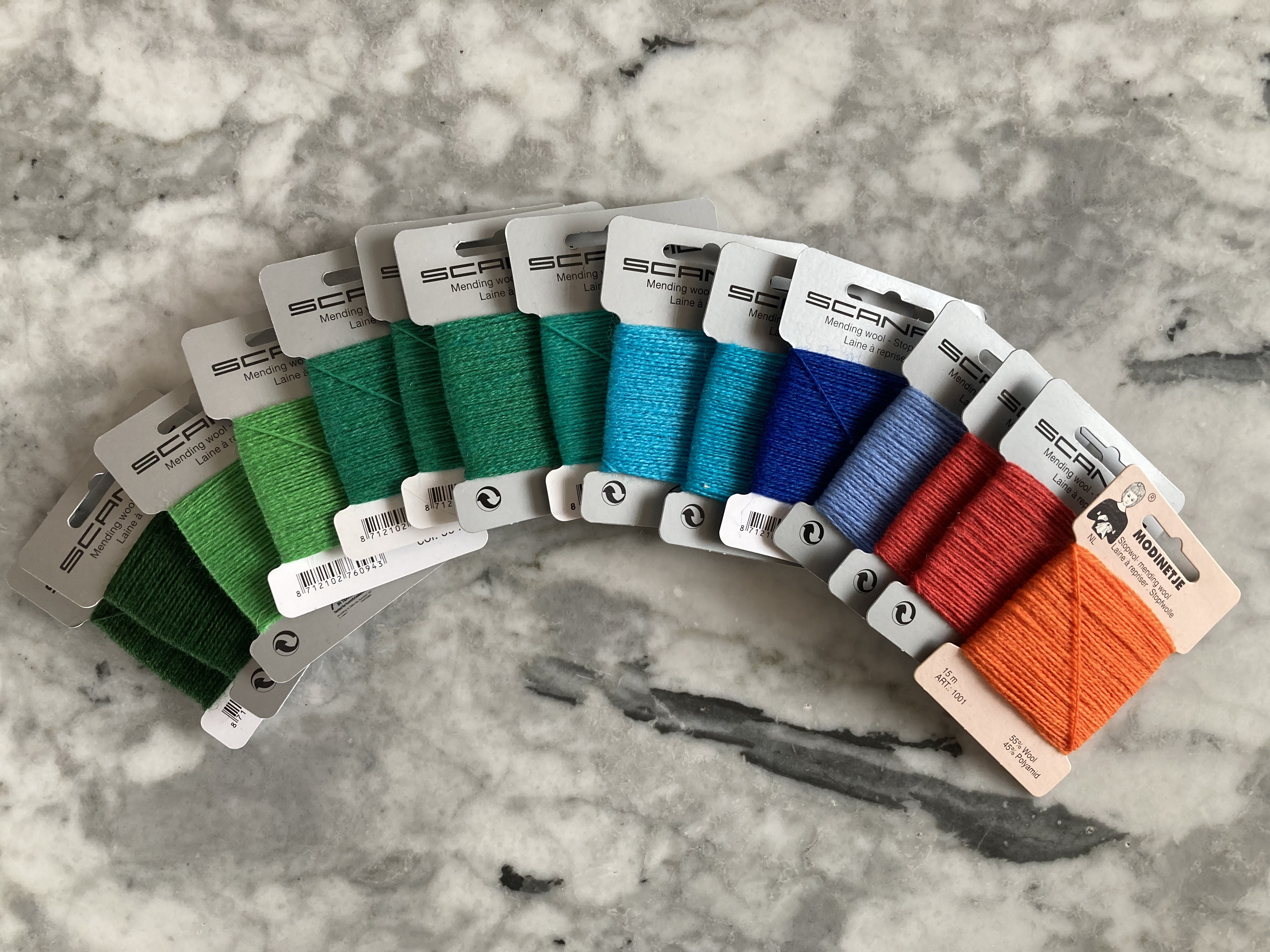
The pattern is written for wool embroidery on furnishing linen. I had no trouble finding an appropriate background fabric — although mine is thick cotton muslin, not linen — but fine embroidery wool is difficult to find. I know one store in Paris and a Ravelry friend just let me know about another (also in France.) I could have ordered from either one of them, but I happened to be in a store that sold mending wool in a variety of colours, and decided to give that a try instead. The colours in the pattern were light green, green, dark green, peacock, dark peacock, rust and light rust, which I found with an extra alternative-light-blue and slightly-more-blue-green for variety. It worked well!

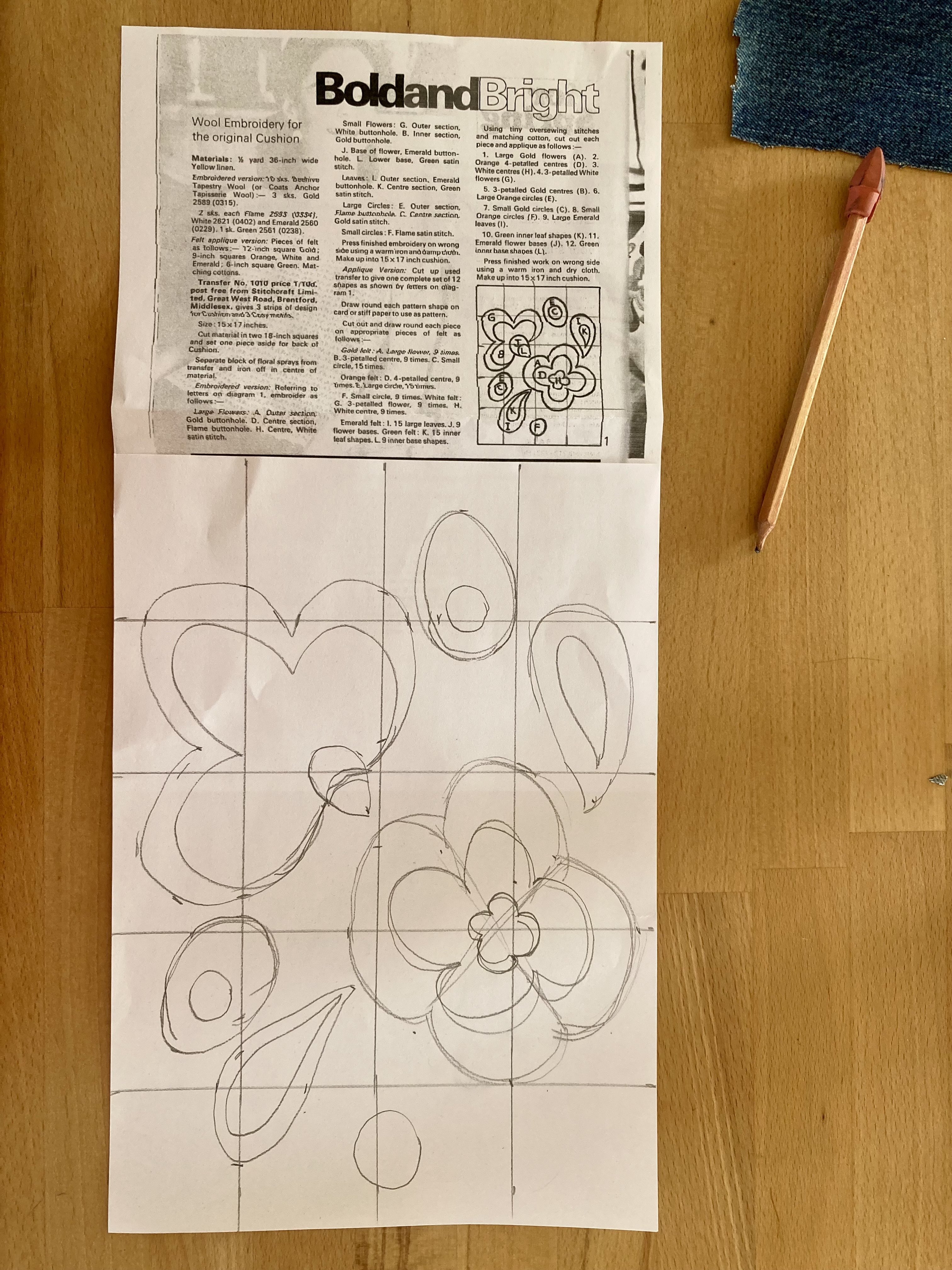
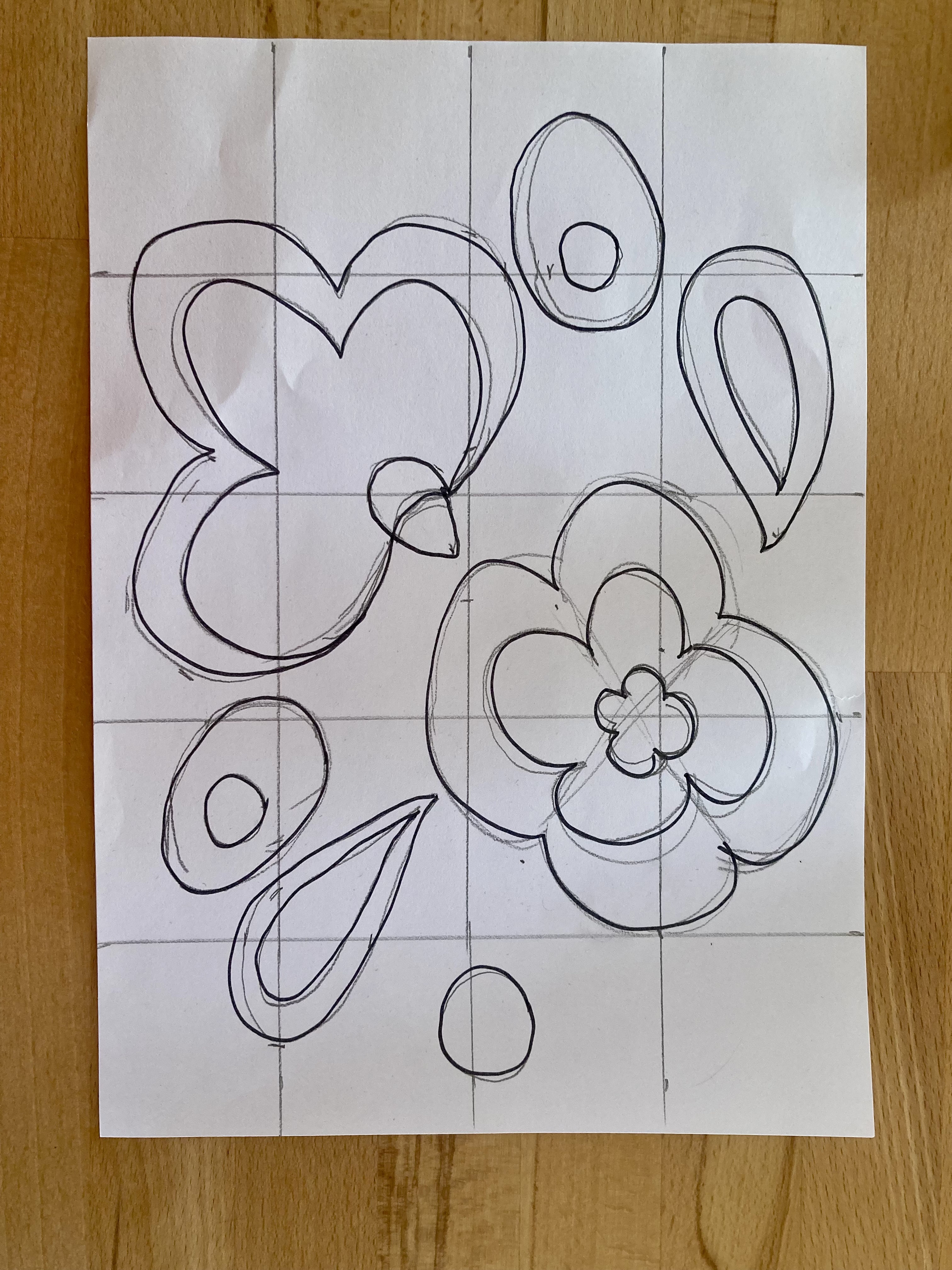
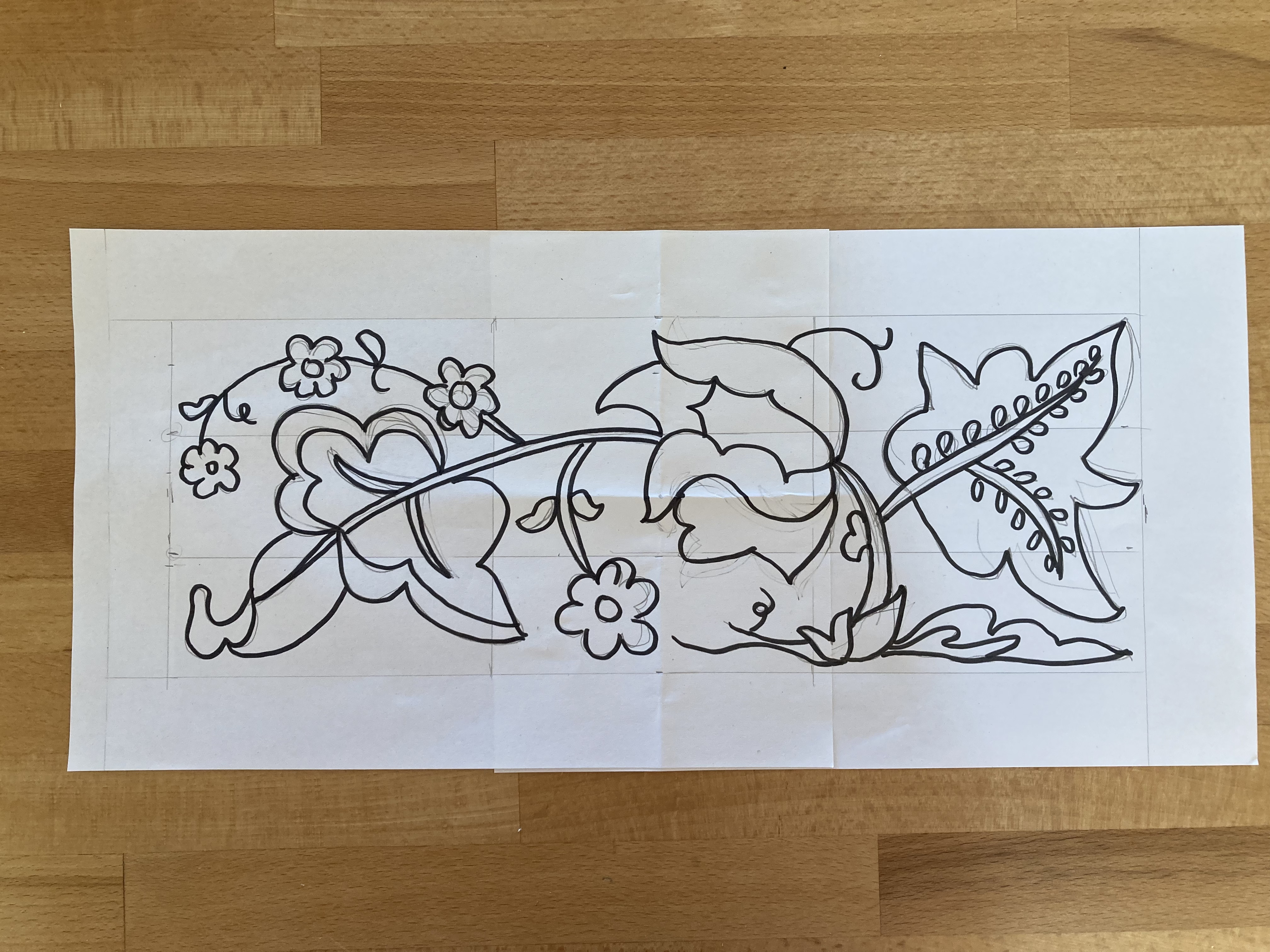
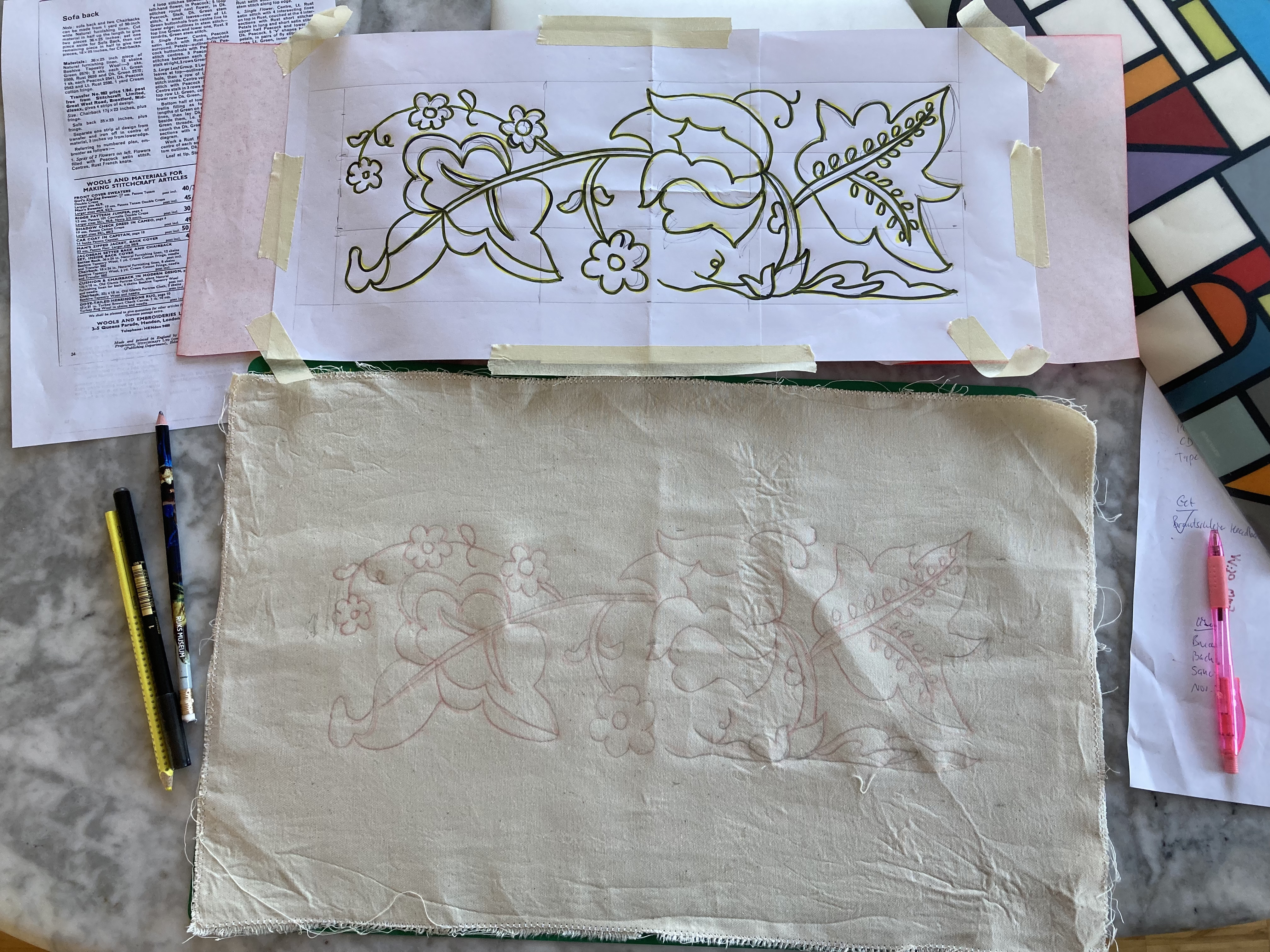
The most difficult and time-consuming part of all these vintage embroidery patterns, as always, was getting the design onto the fabric. Back in the Stitchcraft days, you had to send away for the iron-on transfer by post. These days, old transfers occasionally pop up for sale on ebay, but of course not exactly the one I want to work on right at that moment, so I have to recreate them myself. I do it the old-fashioned way, by drawing a grid over whatever photo or schematic is in the magazine, then drawing a proportional grid over a piece of paper in the correct size, and enlarging by copying square for square. Then I go over it with marking pen, and transfer it to the fabric via “lightbox” (i.e. taping it to a window) or dressmakers’ carbon paper. I used carbon paper for this one.

I’m sure there are computer programs that could do all of that a lot faster, but then I would have to take the time to learn the computer programs… and I like keeping the handwork aspect of the craft alive.

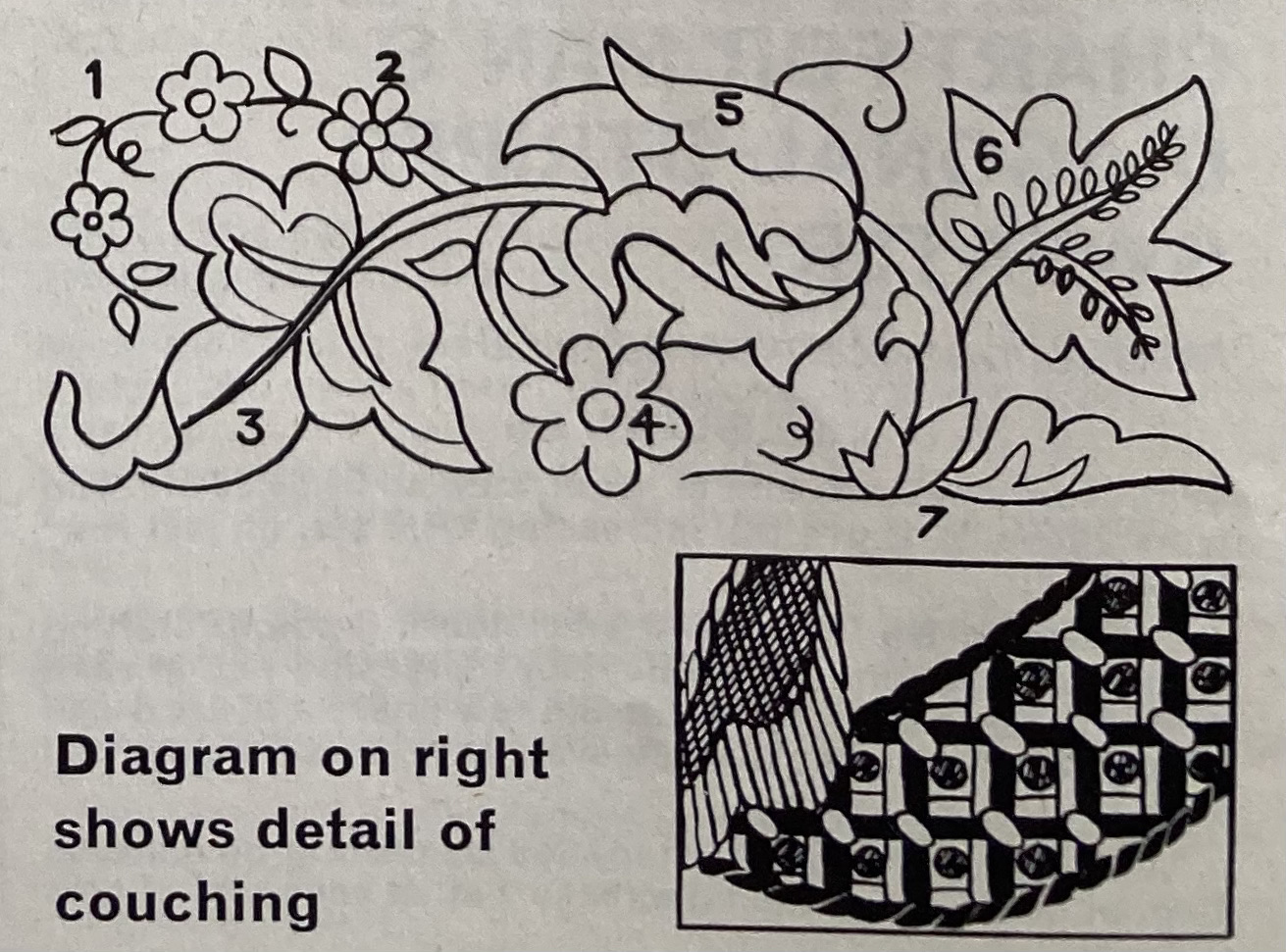
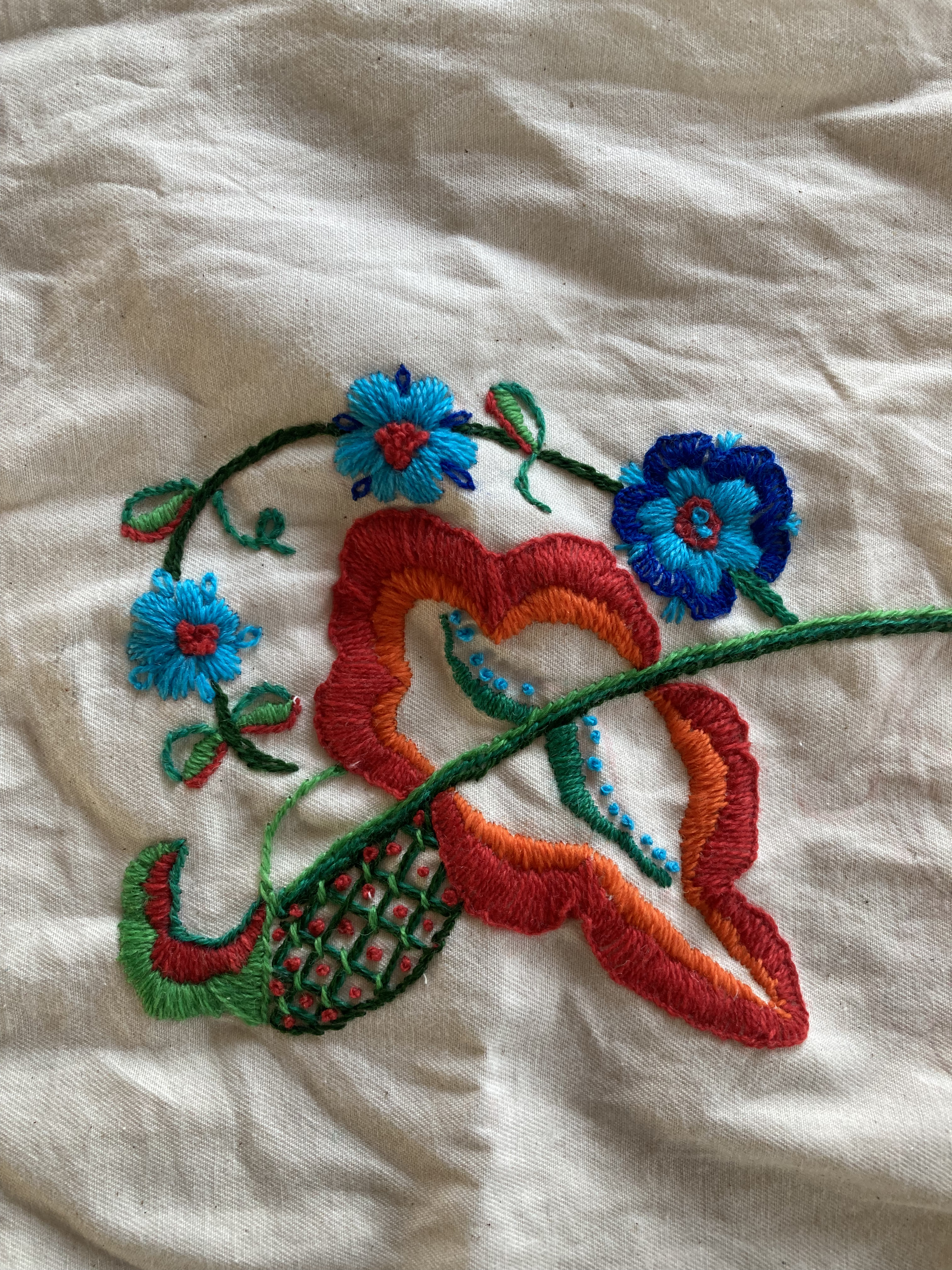
The embroidery itself was not nearly as difficult as I had expected, considering that the design looks very complicated. It’s really just lots of satin, buttonhole and stem stitch. The fancy couched parts were a lot easier to do than the buttonhole areas, in my opinion! They are worked by laying down threads in crossing diagonal lines and tacking them at the corners, then working French knots or tiny crosses in the squares.

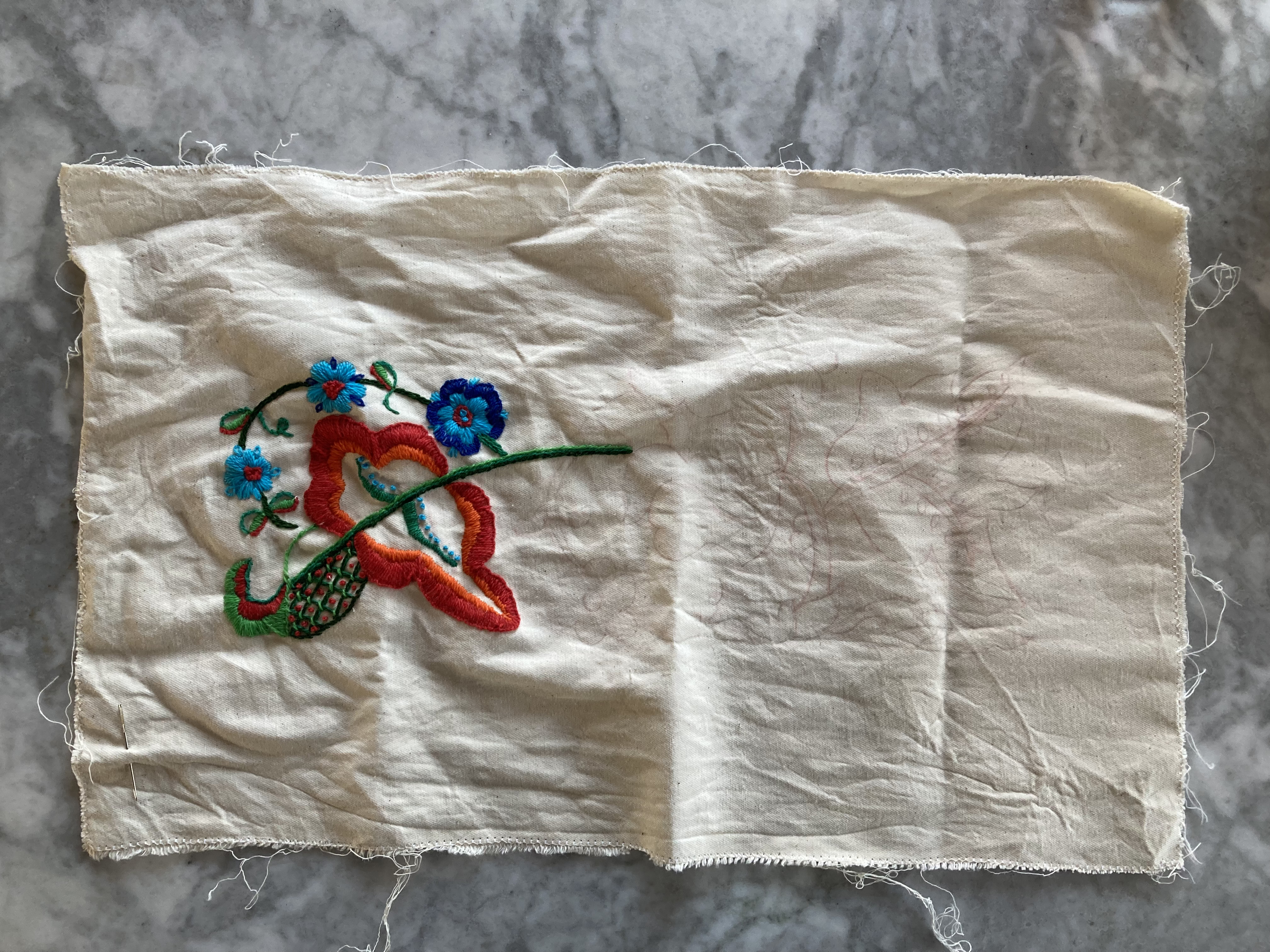
It went quickly and although it is was not quite done by the end of October, I did get the embroidery finished at the beginning of November. The I was traveling for work and didn’t get a chance to make it up into anything without my sewing machine.

In the end, I decided to make it into a cushion — simple and period-appropriate. I made a separate cushion for inside the embroidered cover to make washing easier and fastened it with a button flap this time instead of a zipper this time. That was it!

The finished size is about 18 x 11.5 inches (47 x 29 cm), which corresponds to the width of the original chair-back design. It’s perfect, and since I don’t have space for more cushions and like making people happy, I arranged to give it to a friend.

September 1996: Cover Cardigan

EDIT October 22, 2024: Finished!

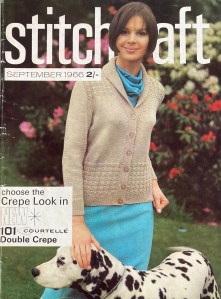
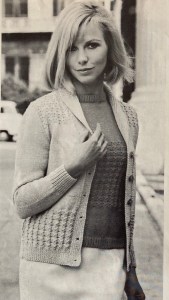
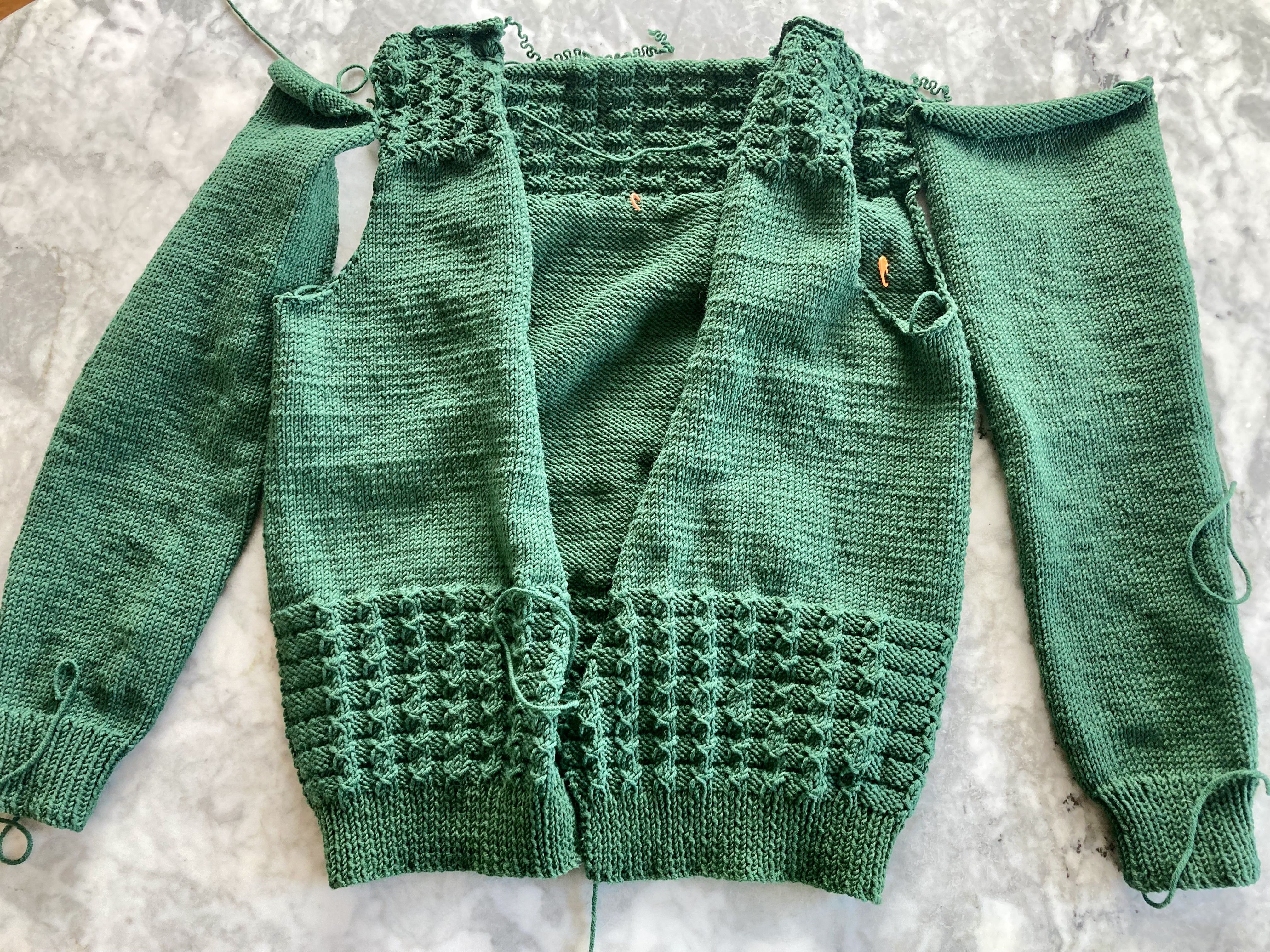
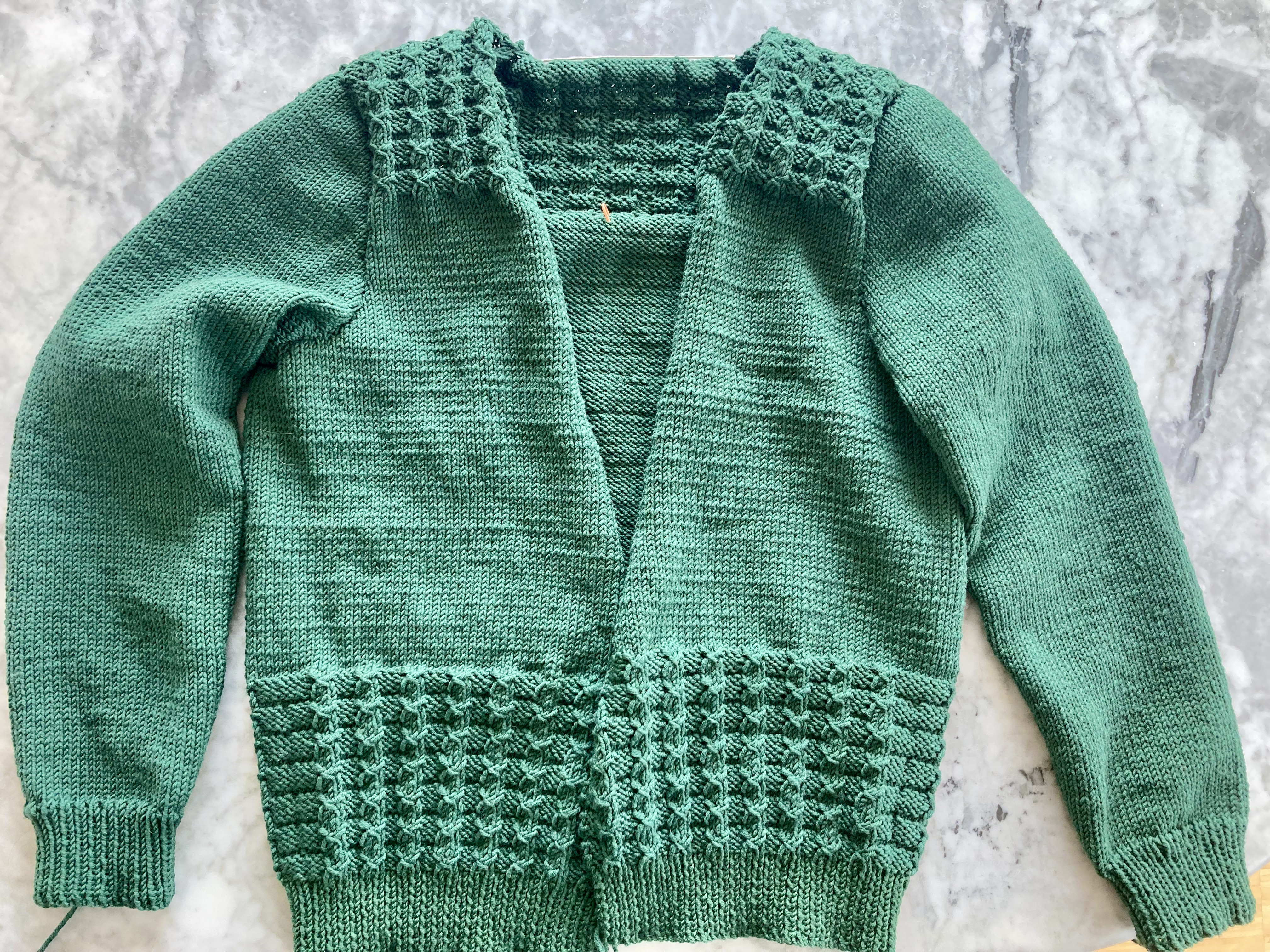
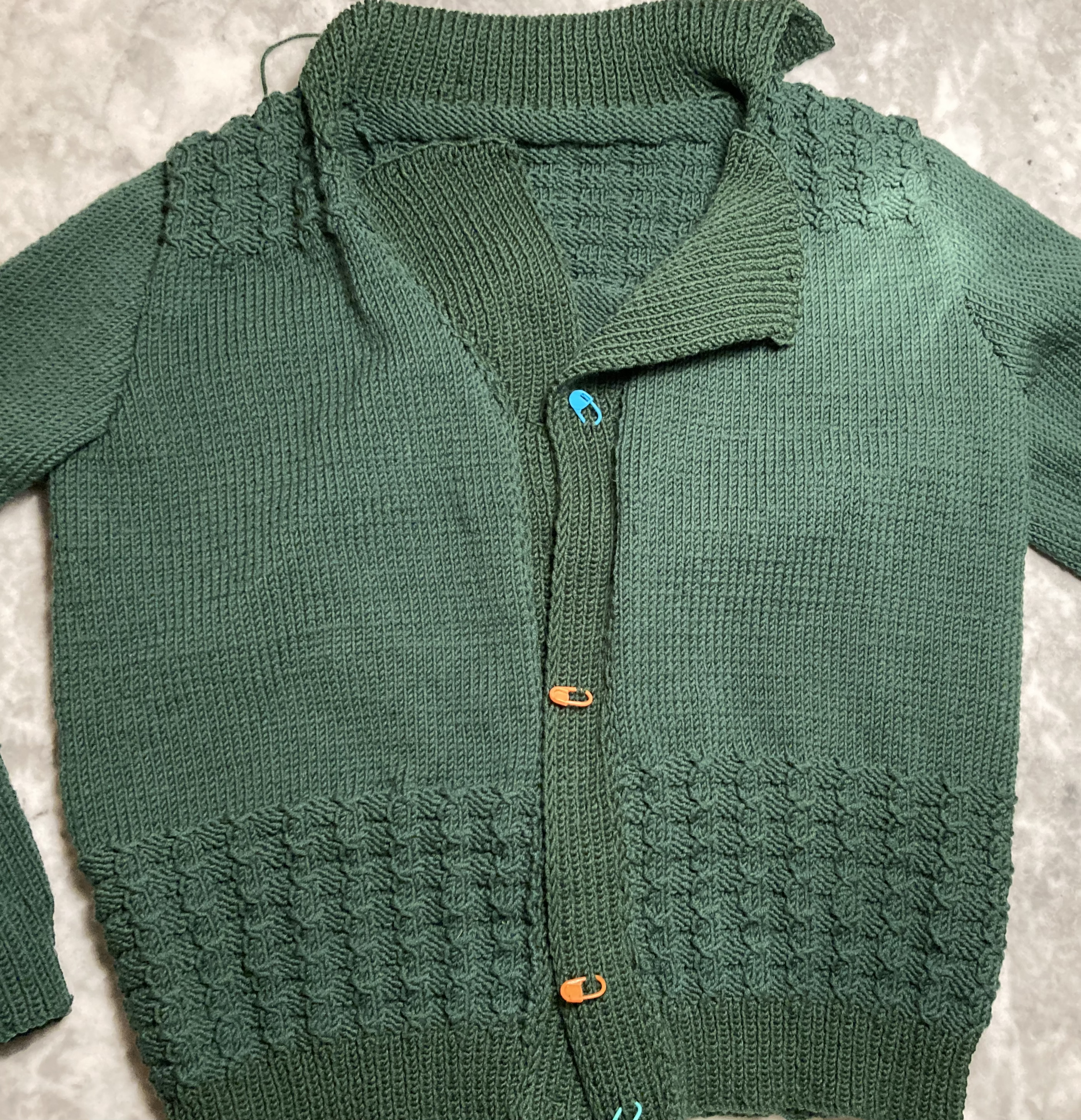
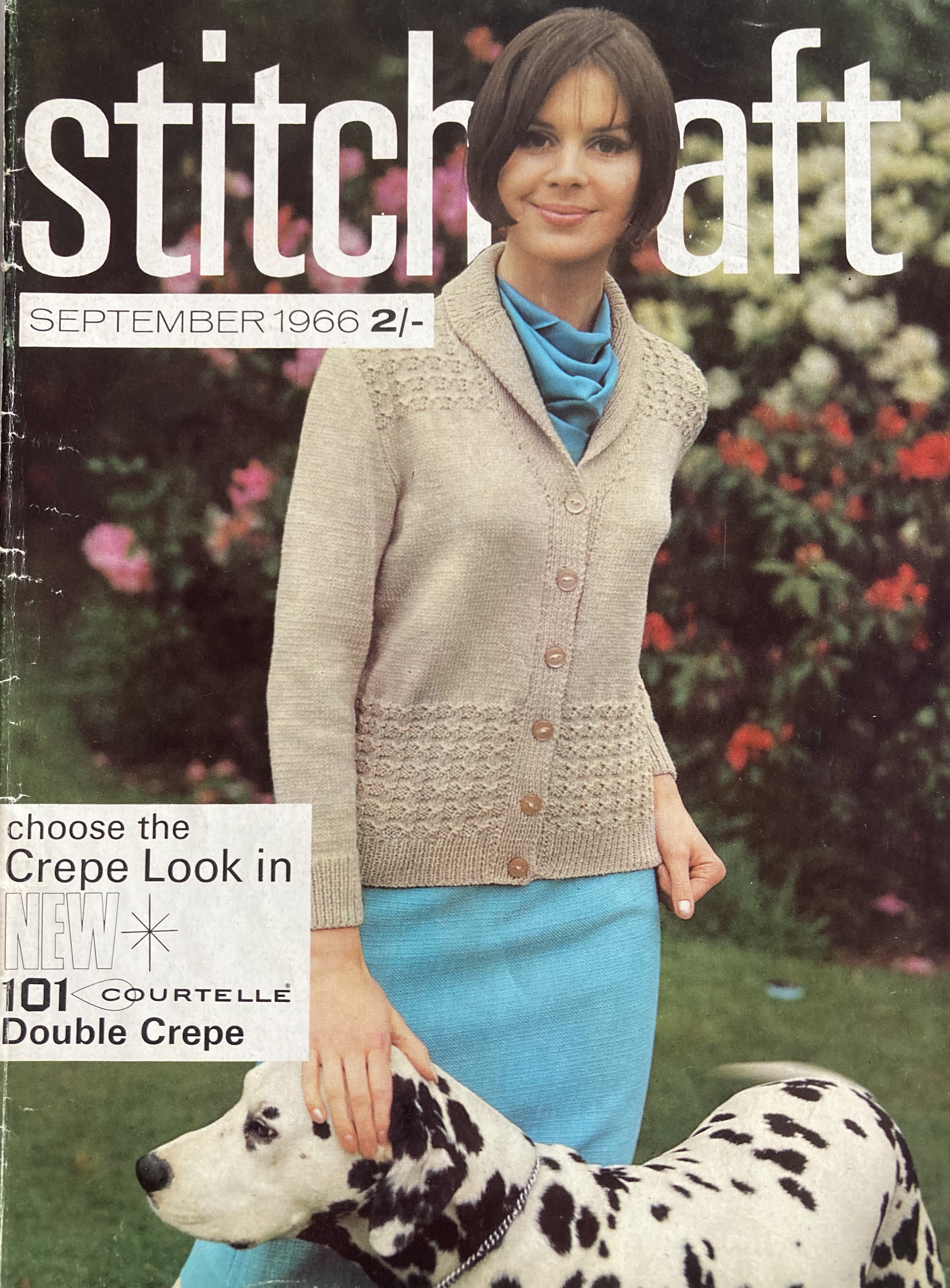
My September project was the cardigan from the twin-set in “crepe look” featured on the cover of the September 1966 issue of Stitchcraft.

The original version is made in Patons 101 Courtelle Double Crepe, a “new” (in 1966) 100% synthetic yarn. I prefer real wool and chose Schachenmayr Merino Extrafine 120, a smooth, tightly-plied merino that gives the “crepe look” very nicely. It seems to be a bit thicker that the Patons 101 Courtelle — the wool is supposed to have a tension of 5.5 stitches to the inch on (old UK) number 8 needles (4mm / US 6) and I got 5.25 stitches to the inch. I didn’t want to use a smaller needle, as the 4mm needles felt right for the wool and gave a good texture, so I made the smallest size (35-36 inch bust) instead of the otherwise-correct second size (37-38 inch bust) in the longest length (22.5 inches from shoulder).

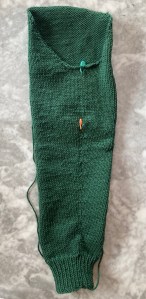
I started with the sleeves, which I prefer to do in order to 1) check how size, tension and fit are going and 2) get the boring part out of the way first. The sleeves are made in plain stocking-stitch and I made them in the round to work faster and avoid seams. The sleeve length from underarm is supposed to be 16 inches for all sizes and judging from the photos, hits at about “bracelet length” i.e. not quite long to the wrist. I prefer long sleeves to go all the way to the wrist, but I have also made sleeves longer than required and had them turn out too long after blocking, or because the underarm depth was larger than expected. These finished sleeves fit before blocking just above the wrist at the expected underarm depth, and there was enough width to adjust if necessary.

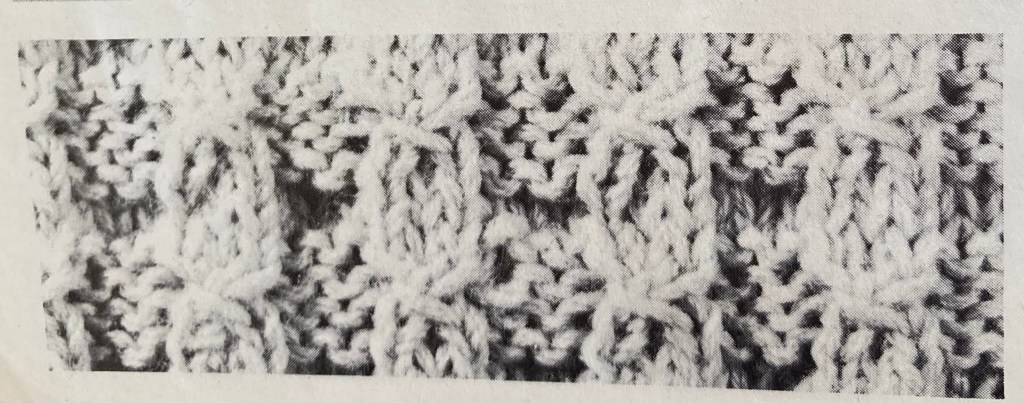
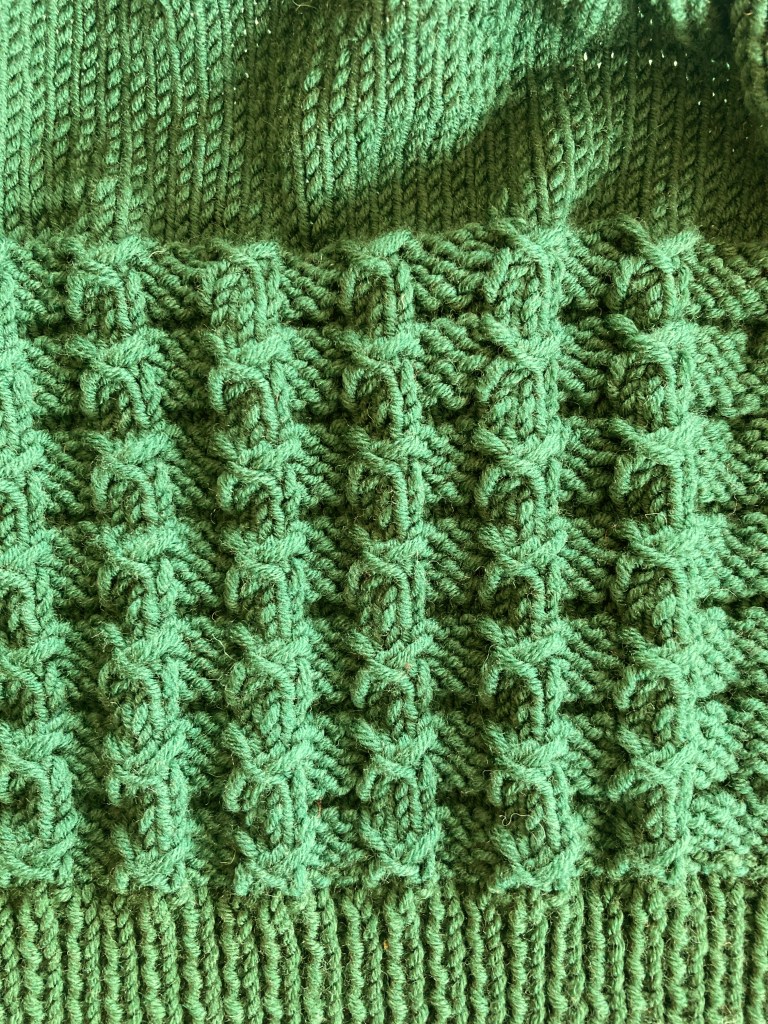
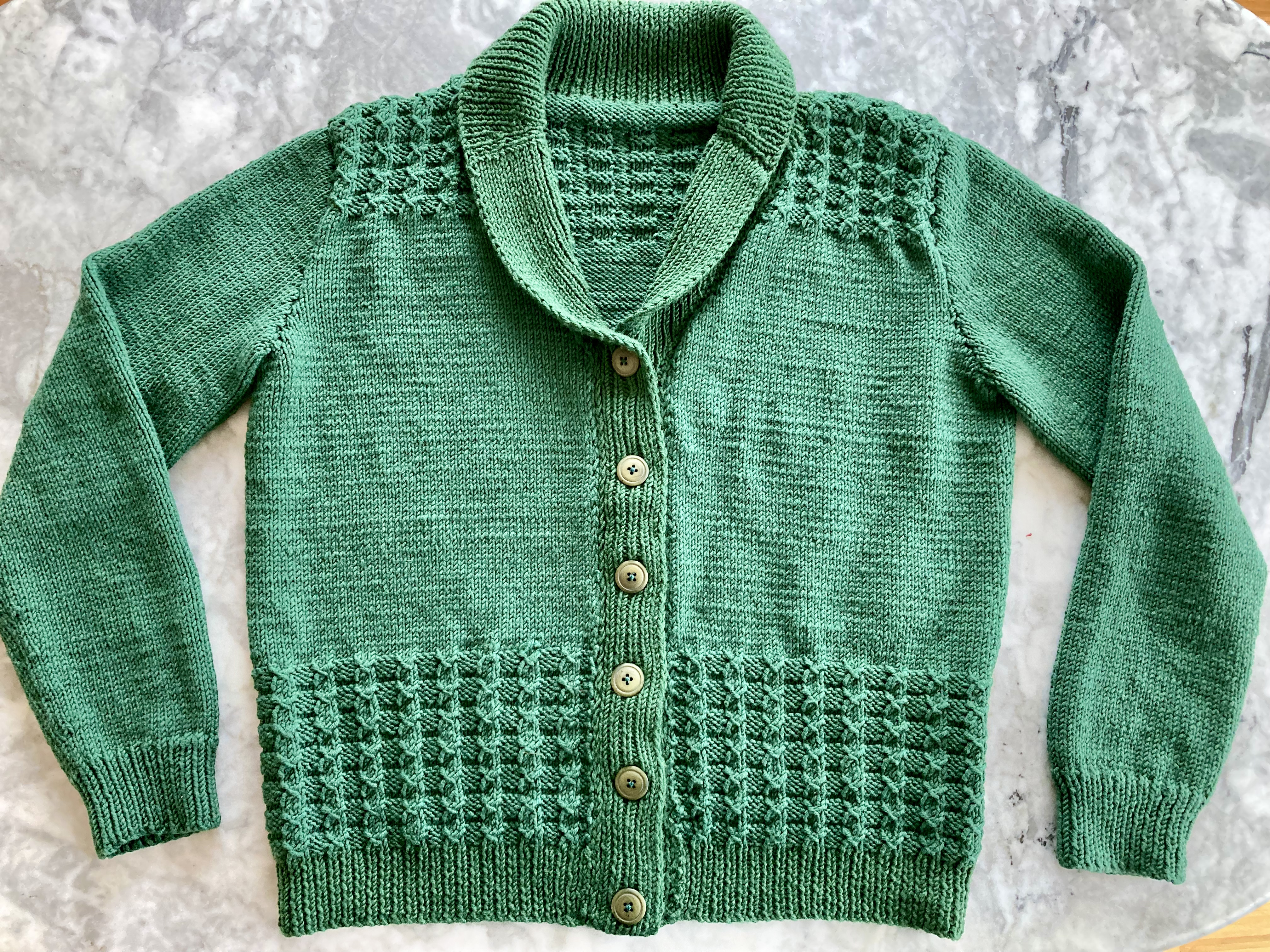
The body of the cardigan features an interesting twisted-stitch pattern both on the fronts and back between hem ribbing and low waist, and at the top of the yoke.

The pattern is

  • 1st row (RS): p3, *k3, p3* to end
  • 2nd row: k3, *p3, k3* to end
  • 3rd row: *p3, take wool to back, sl1 knitways, k next 2 sts tog without taking them off the needle, then k 1st of those sts, slip off needle and pass sl st over 2 rem sts*, rpt to last 3 sts, p3
  • 4th row: *k3, p1, pick up horizontal loop below next st and purl it [i.e. m1 in the lower horizontal “bar”], p1* rpt to last 3 sts, k3
  • 5th row: K
  • 6th row: P

The twist rows are much easier to do than the description makes it sound. When you see the stitches on the needle, it’s quite clear. The background makes horizontal bands of rib and stocking-stitch and the overall effect is pleasantly squishy and nubbly.

After seven patterns, you switch to stocking-stitch, and that is where I found myself as of September 27, 2024, when I first wrote this post. I made the fronts and back in one piece and had a few long train trips since then, so it went quickly enough.

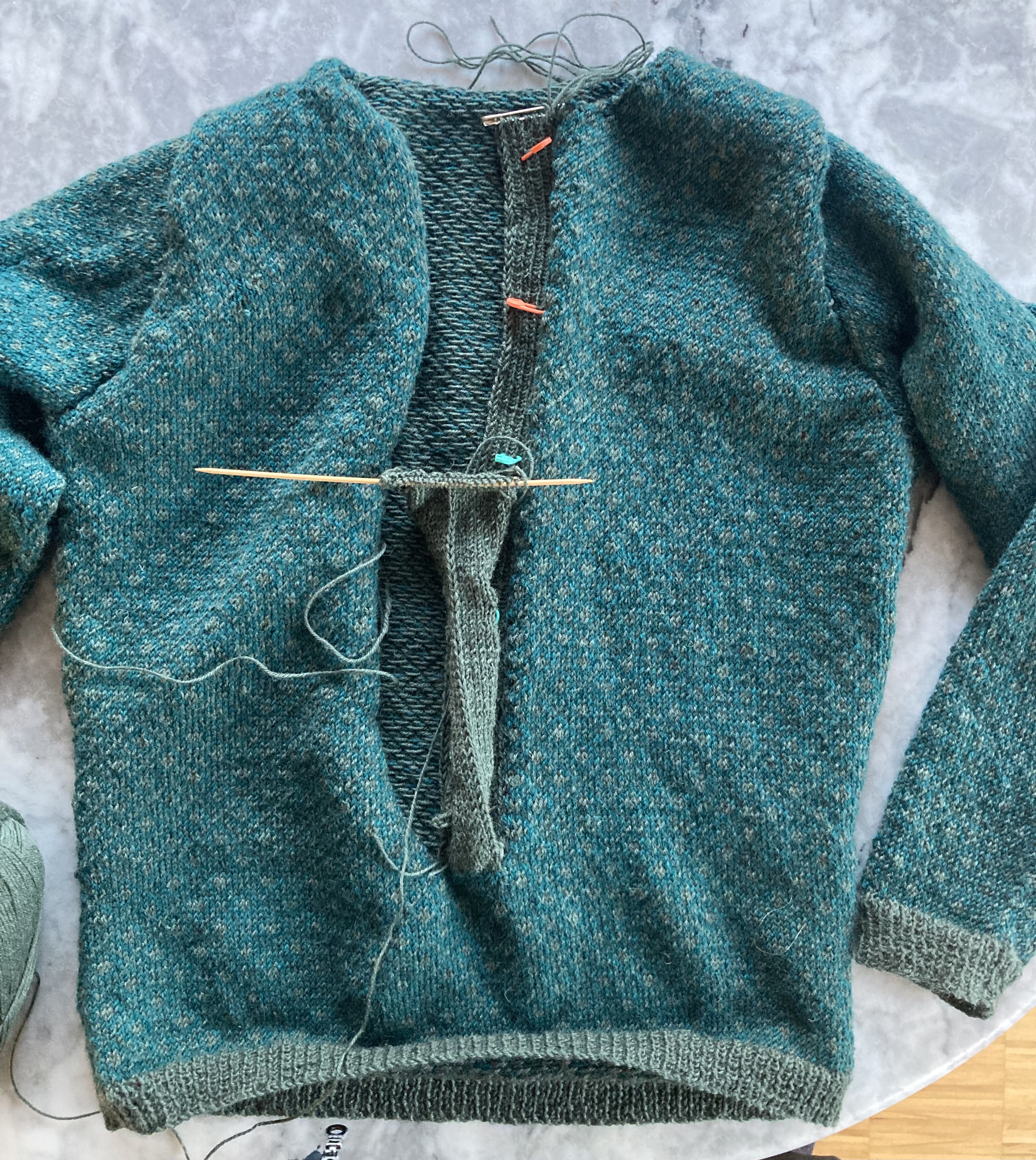
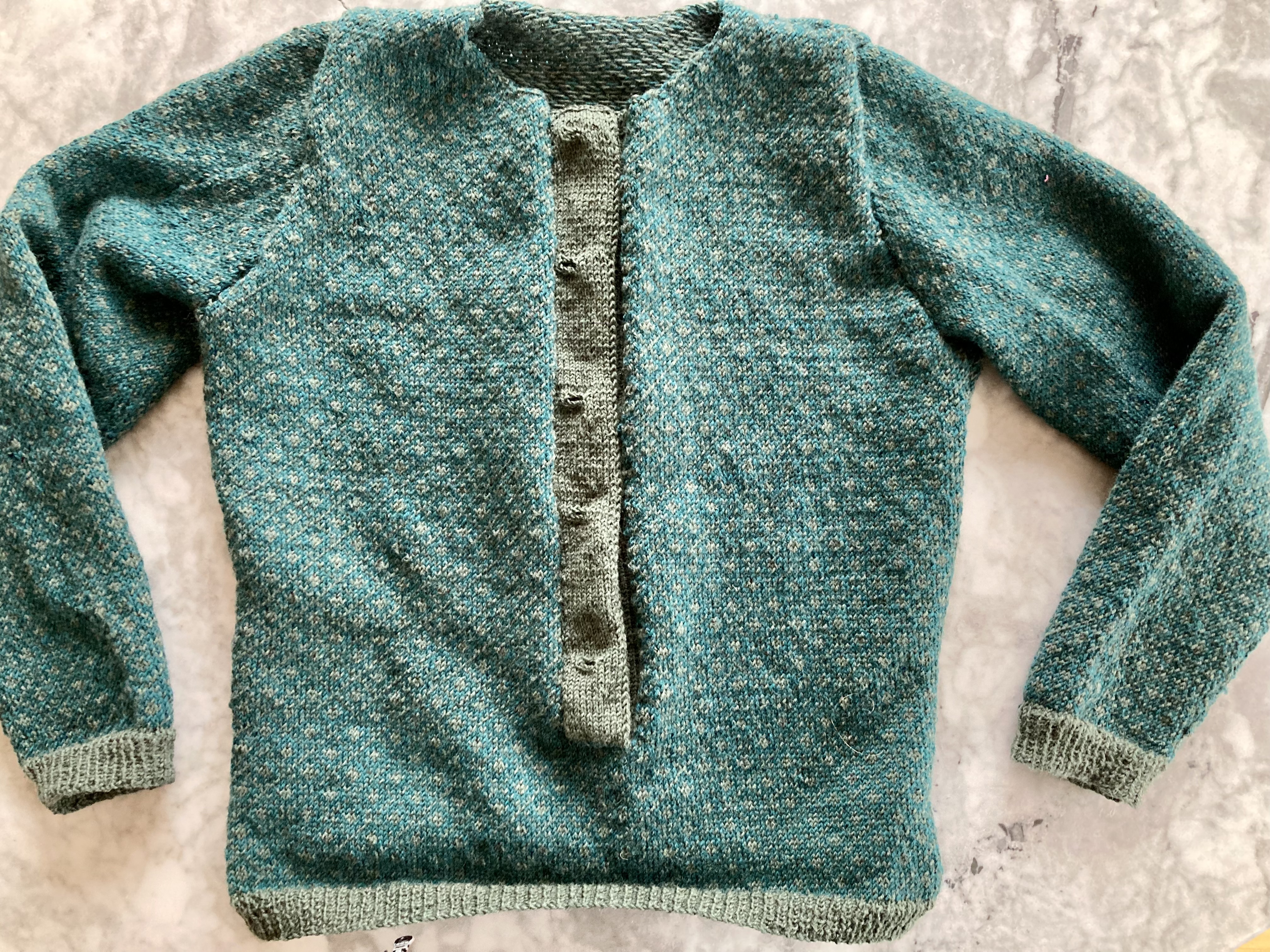
Unfortunately, there wasn’t enough yarn of the right colour in the store when I bought it, so I had to order more and of course, the new balls of yarn were from a different dye lot. I hardly ever have a problem with that, as many brands have very consistent dye lots, but of course the one time it’s a problem, it’s a problem! The new yarn had a much yellower-browner tinge than the old. I planned ahead to make the ribbing and collar in the new yarn and hoped to have enough of the old to make the complete body and sleeves minus ribbing. That actually worked, after unraveling the original swatch, and I had only a tiny little ball of the old yarn left over.

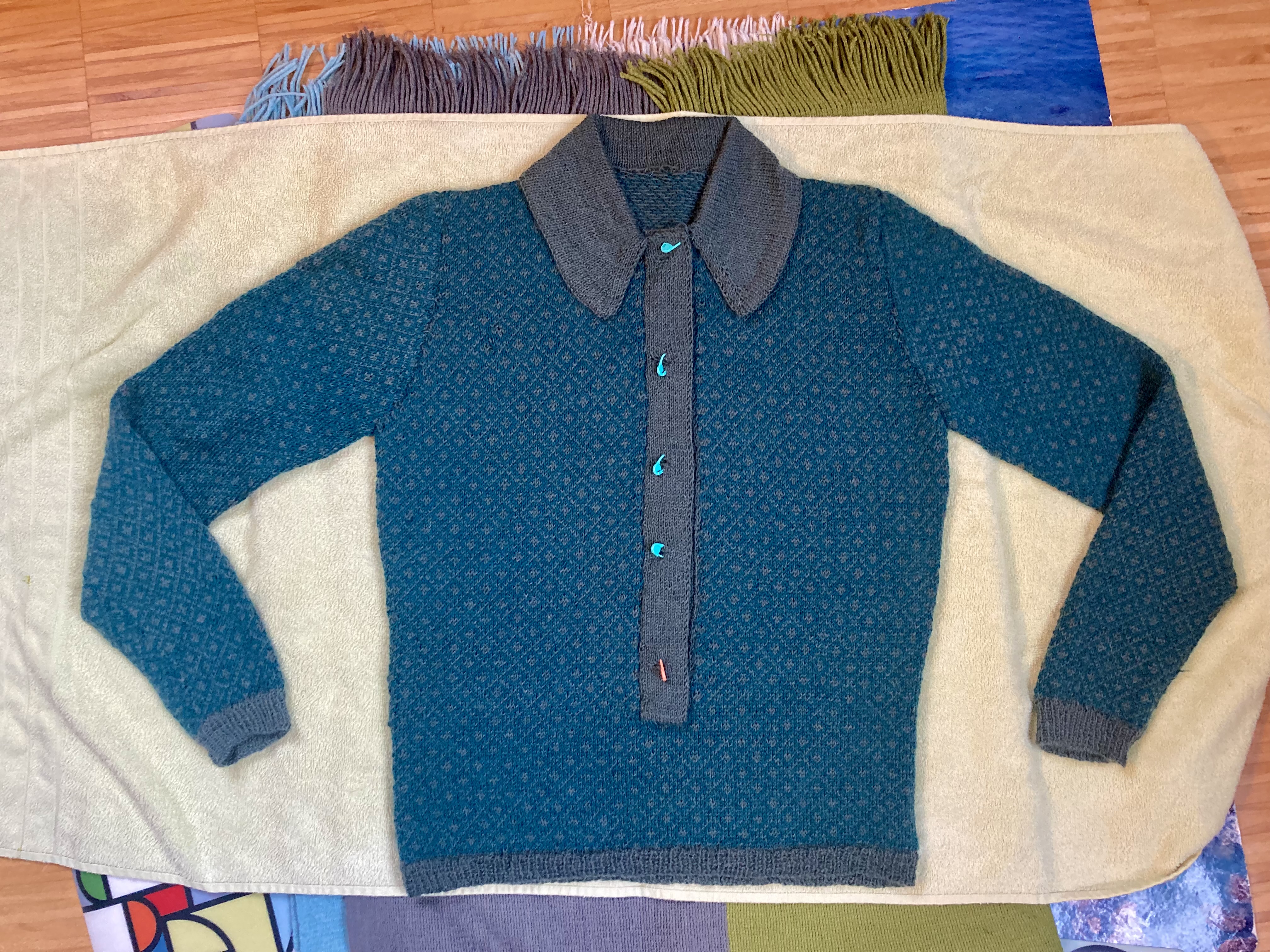
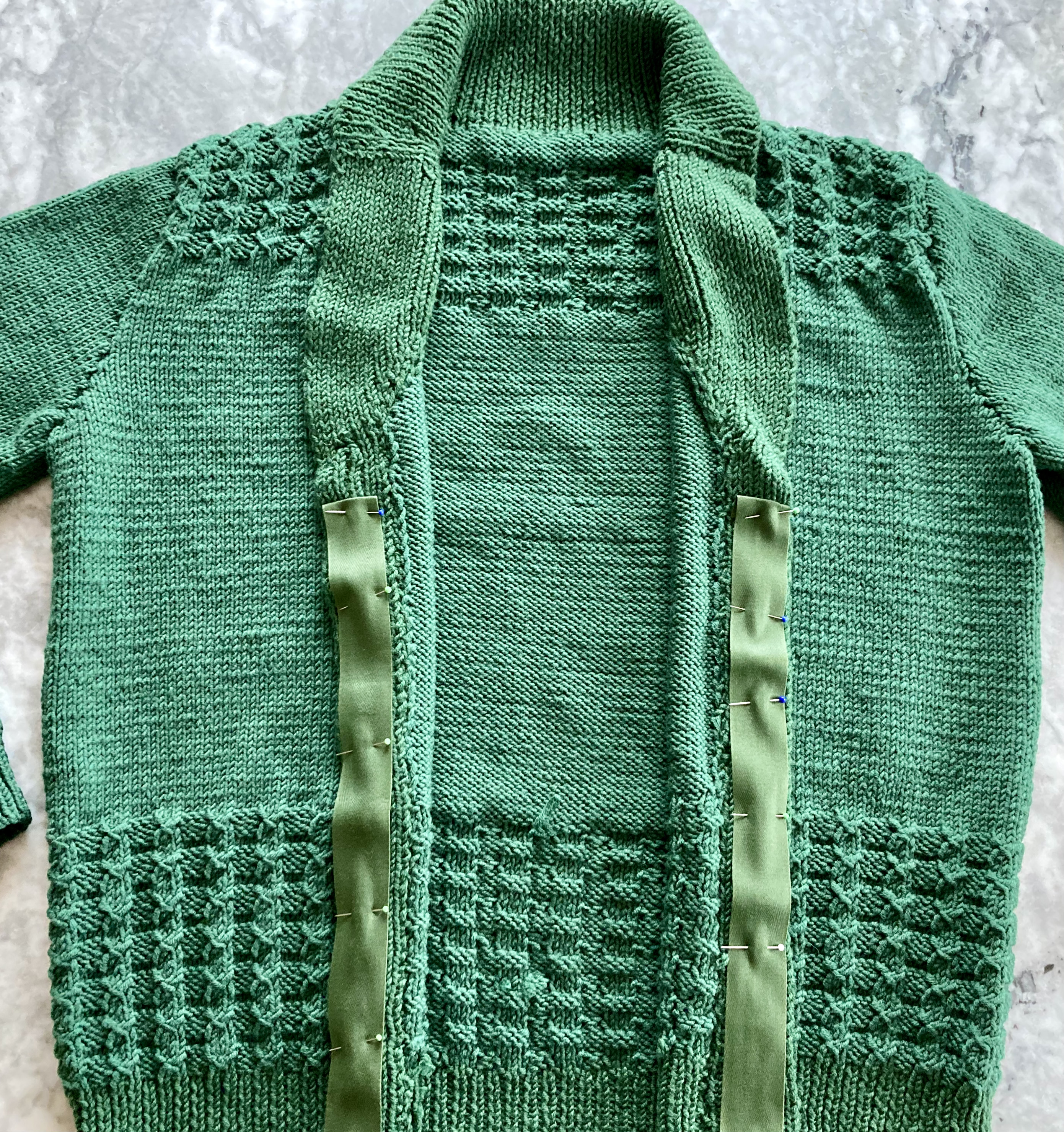
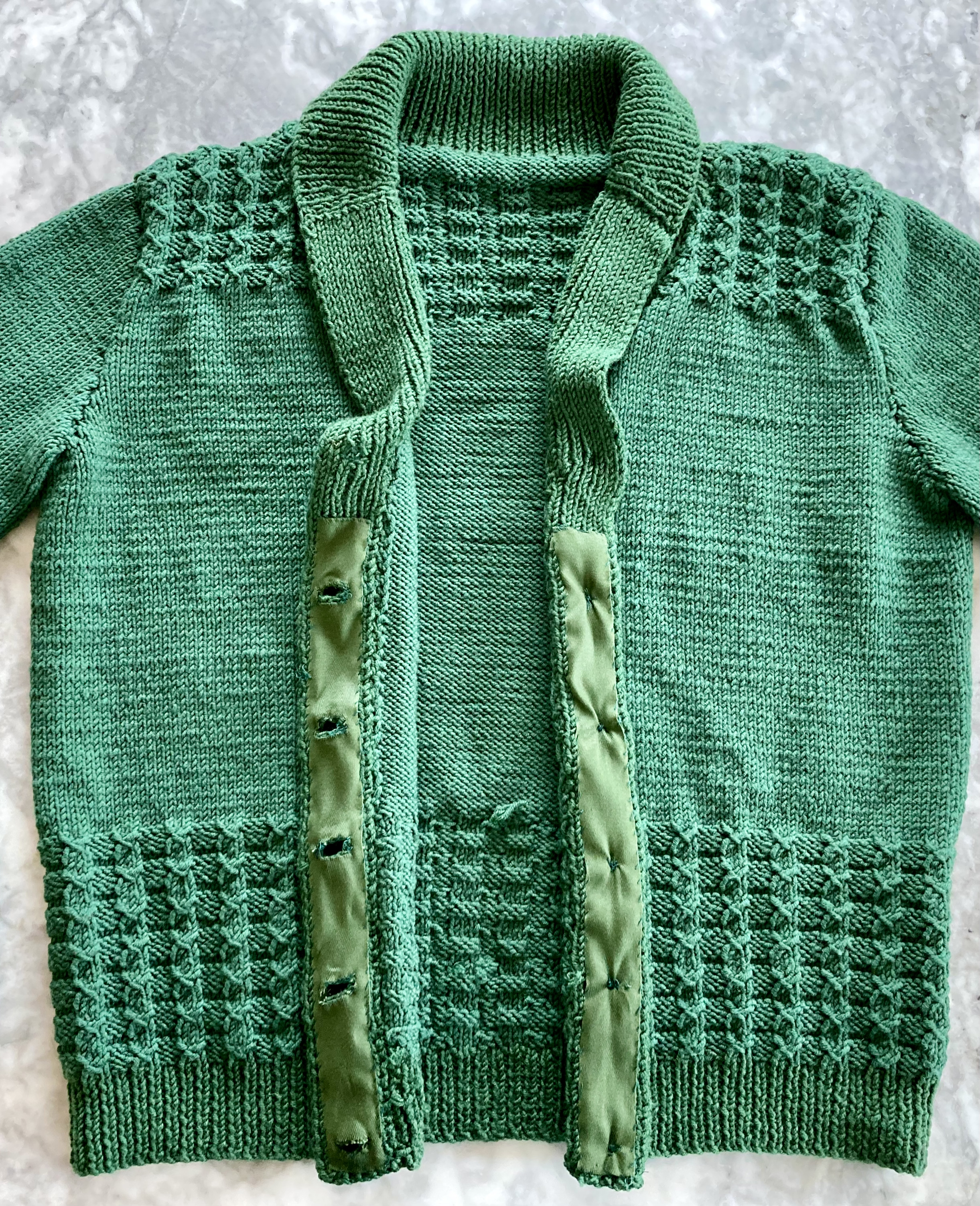
The ribbing and collar are mostly made separately, picking up stitches on the back neck for the back collar part only. The ribbing is knitted in vertical bands and sewn on, the collar horizontally and then you sew them together “with a very neat seam”. Hahahaha well, I did my best. The back collar has a couple of short rows at the end, to give it a nice roll. I added facing bands to the ribbing to help it keep its shape, and found some nice matching buttons.

(N.B. The real colour is more like the photo on the upper left. My computer and I are not good at colour correction).

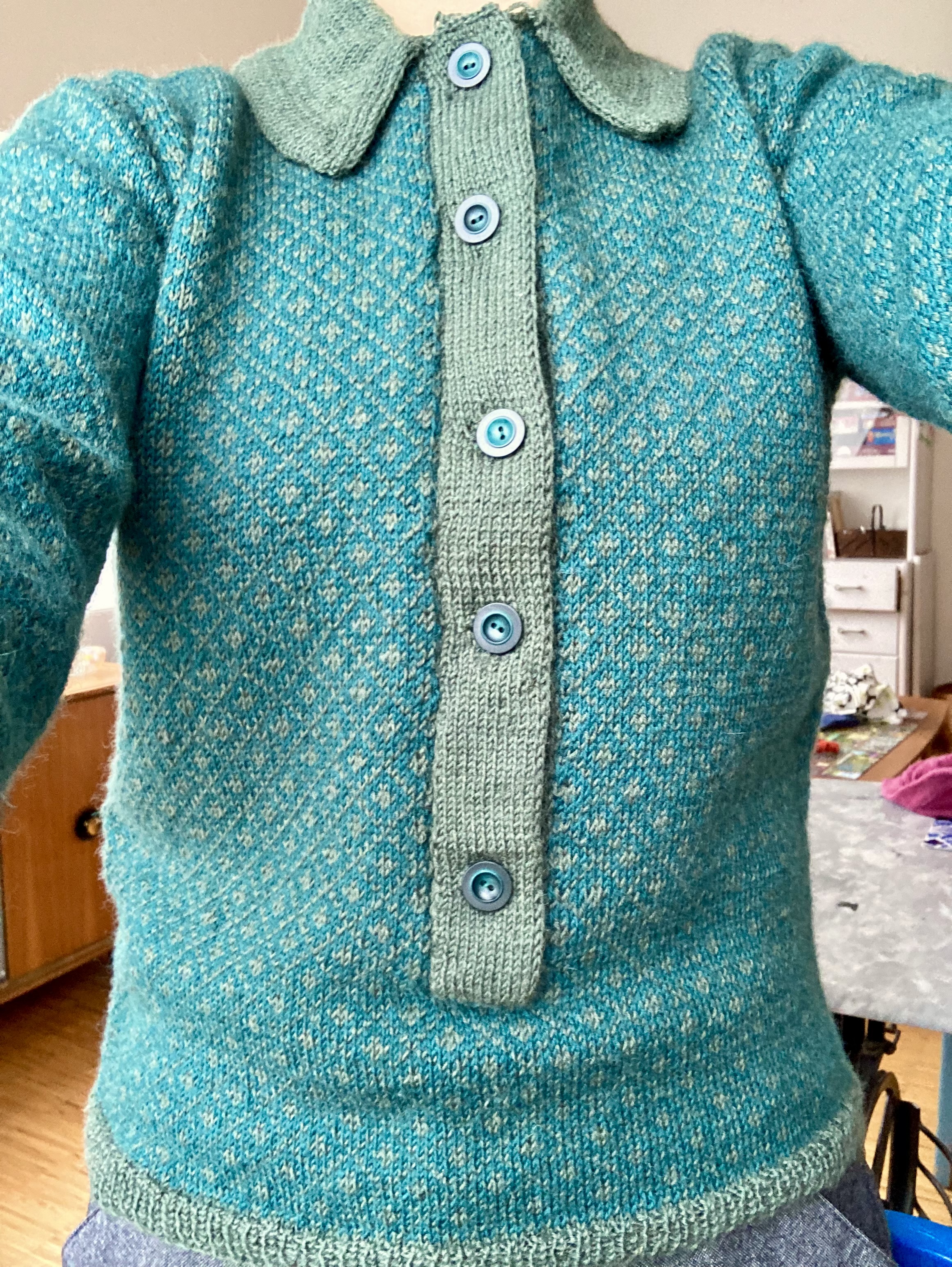
The finished cardigan fit OK after blocking, just a little stiff and scrunchy. It stretched way out with blocking. The yarn is not labeled “superwash”, but it says on the band that it can be washed in the machine at 40 degrees C, so I’m guessing it is superwash-treated and they just didn’t say so. It certainly behaves like superwash in its stretchiness. I actually liked it better when it was a little stiff, but as it is 100% wool, it will always shrink a little with subsequent washings. And it is nice and soft, I’ll give it that!

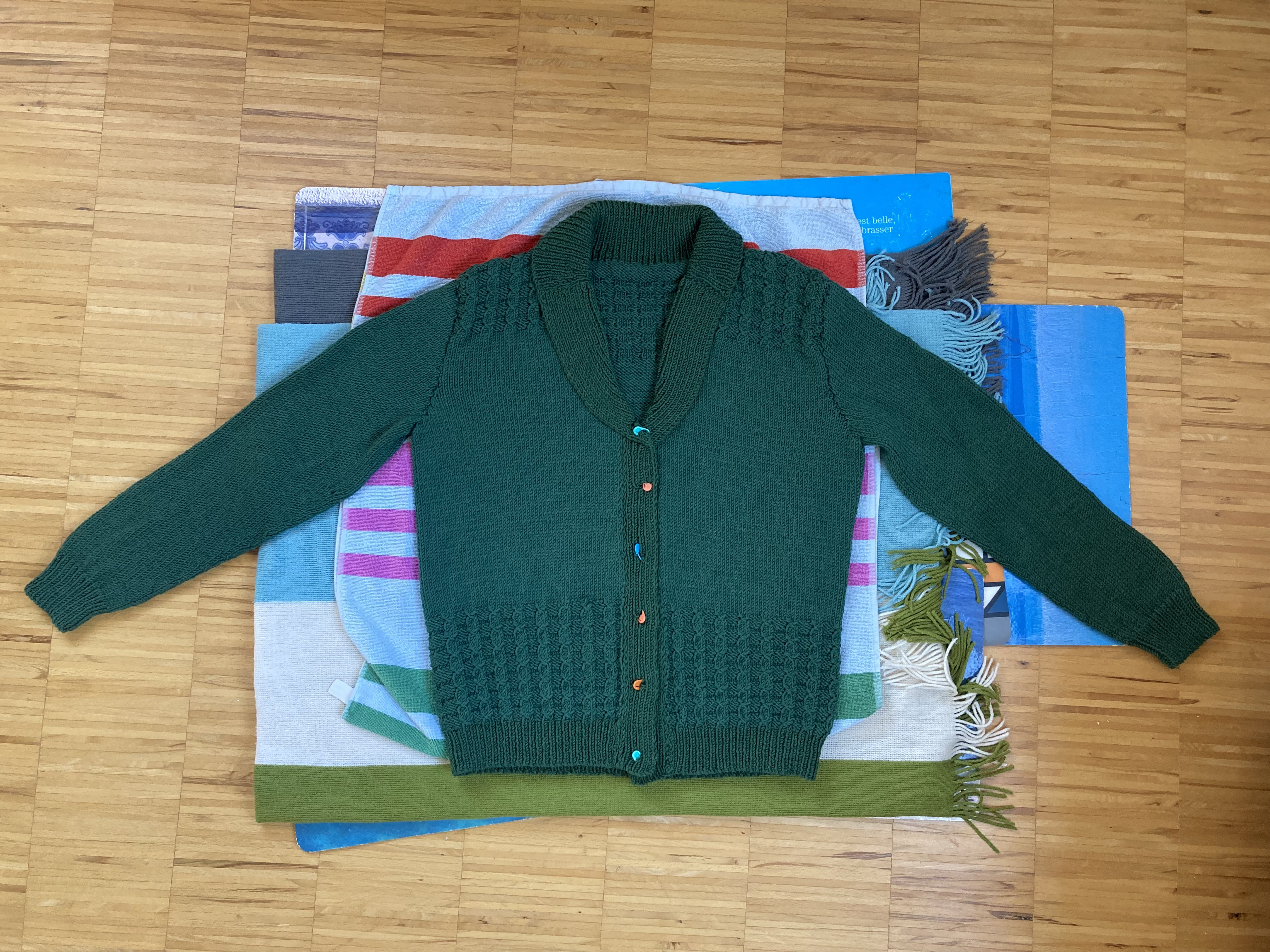
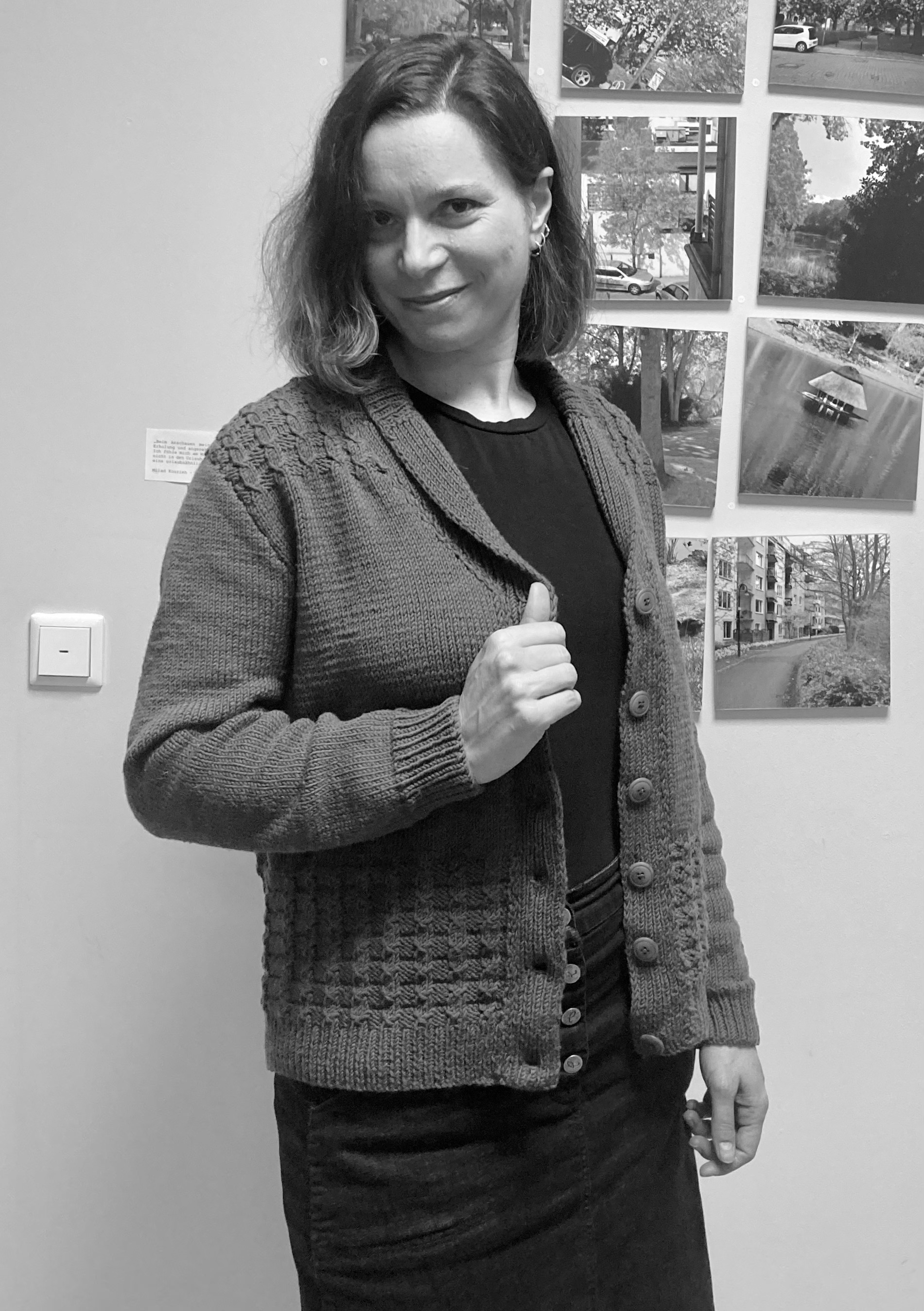
The finished fit was fine. I prefer more fitted clothes, but that’s not the 60s style. The colour is beautiful — hard to reproduce in a photo, but a nice woodsy green. It will match many dresses in my closet. And the two-tone effect from the different dye lots worked out fine — I mean, you definitely see that the colours are different, but it looks deliberate. The sleeve length was just a little bit on the long side, but that will change with subsequent washings, I am sure, and I can always fold the cuff back. So all in all, I am quite happy with this project.

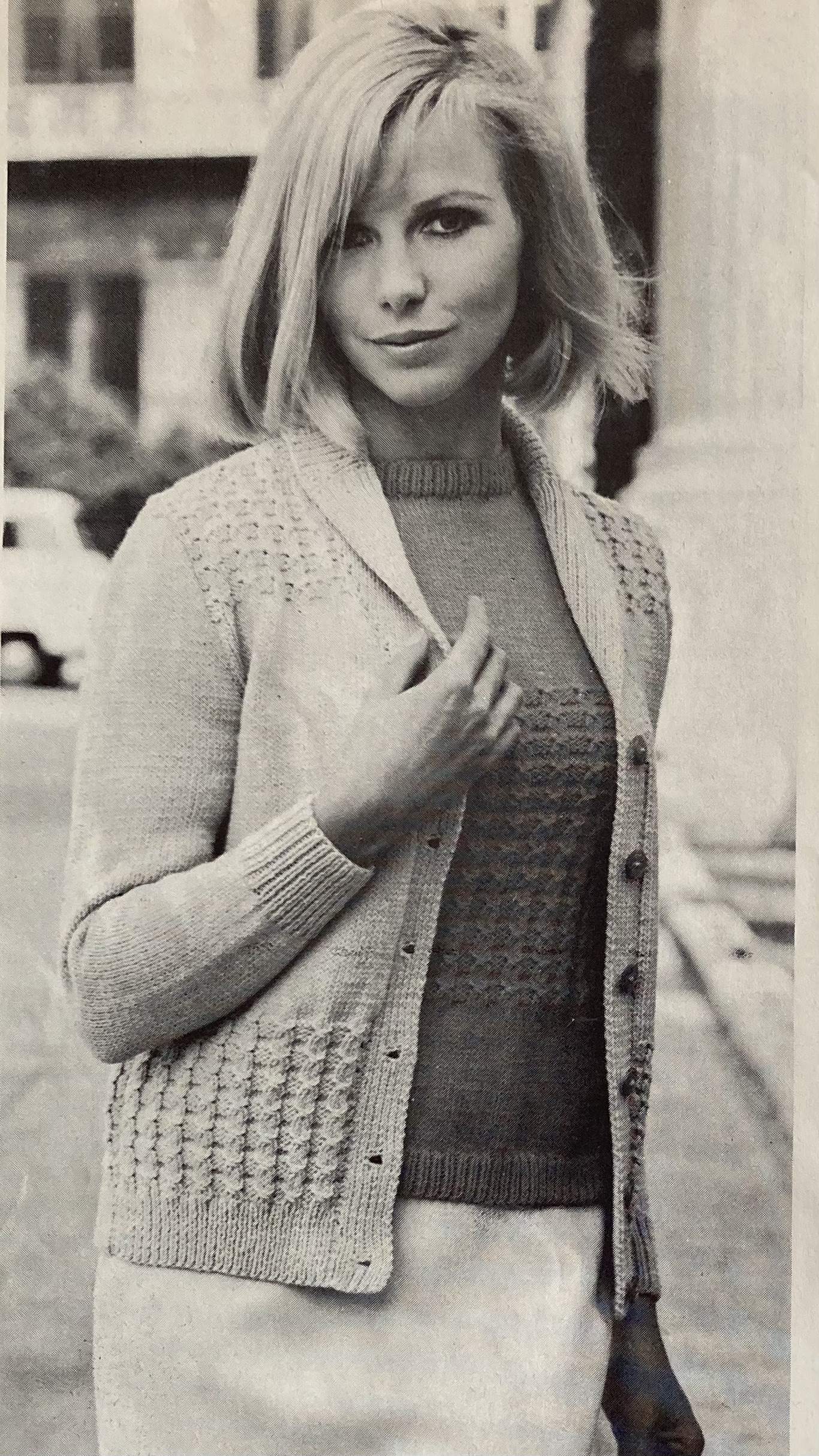
As always, we tried to reproduce the photos… with neither a real park by daylight, nor a dog. I think I nailed that sultry look from the black-and-white photo, though!

That’s all for this project! Time to start the October one…

August 1966: Flower Design Veggie Bag

Lovely sparkling colours of simple flower heads, show up beautifully on dark linen. Just a circular cluster of the flowers look very effective on a cushion or workbag.

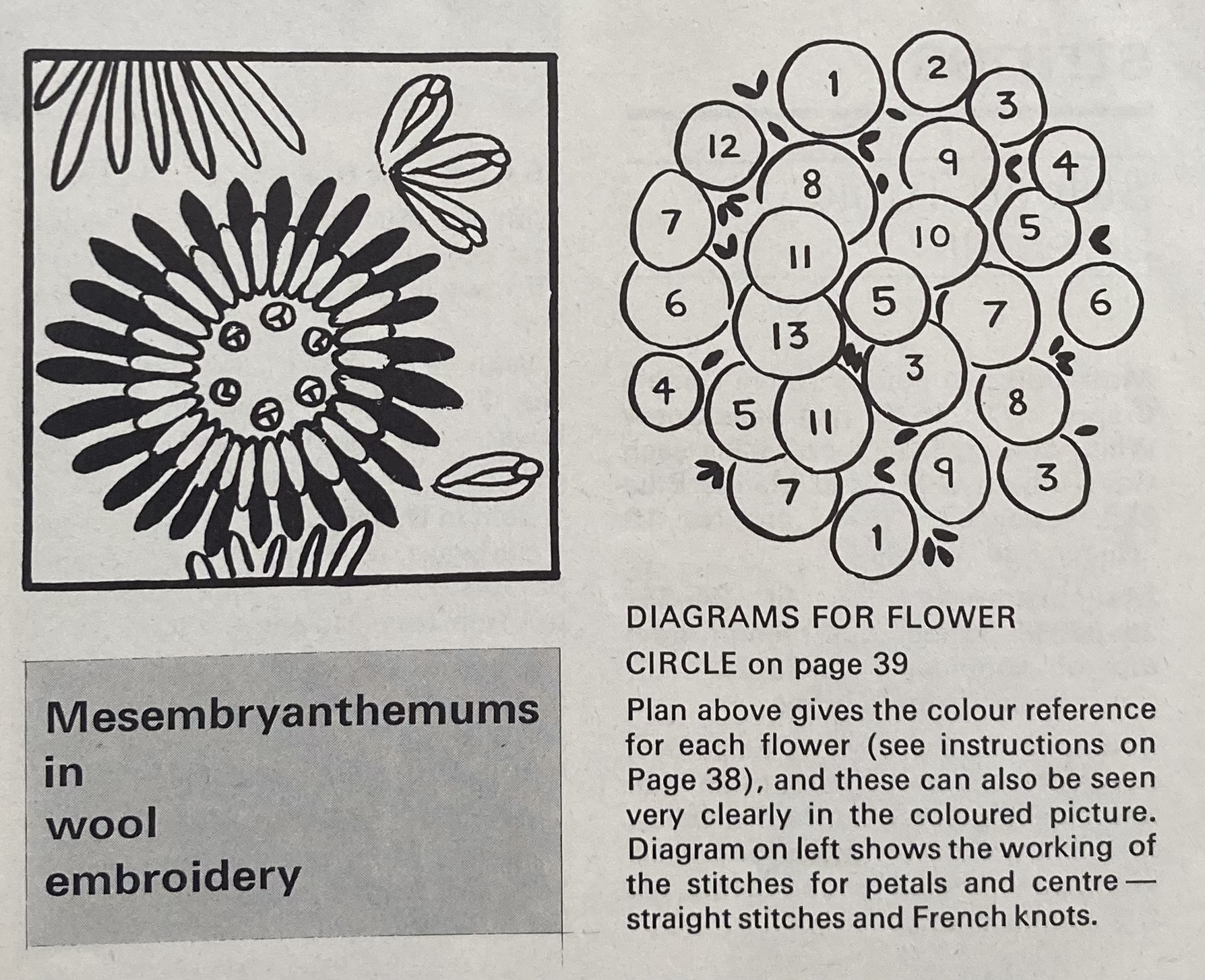
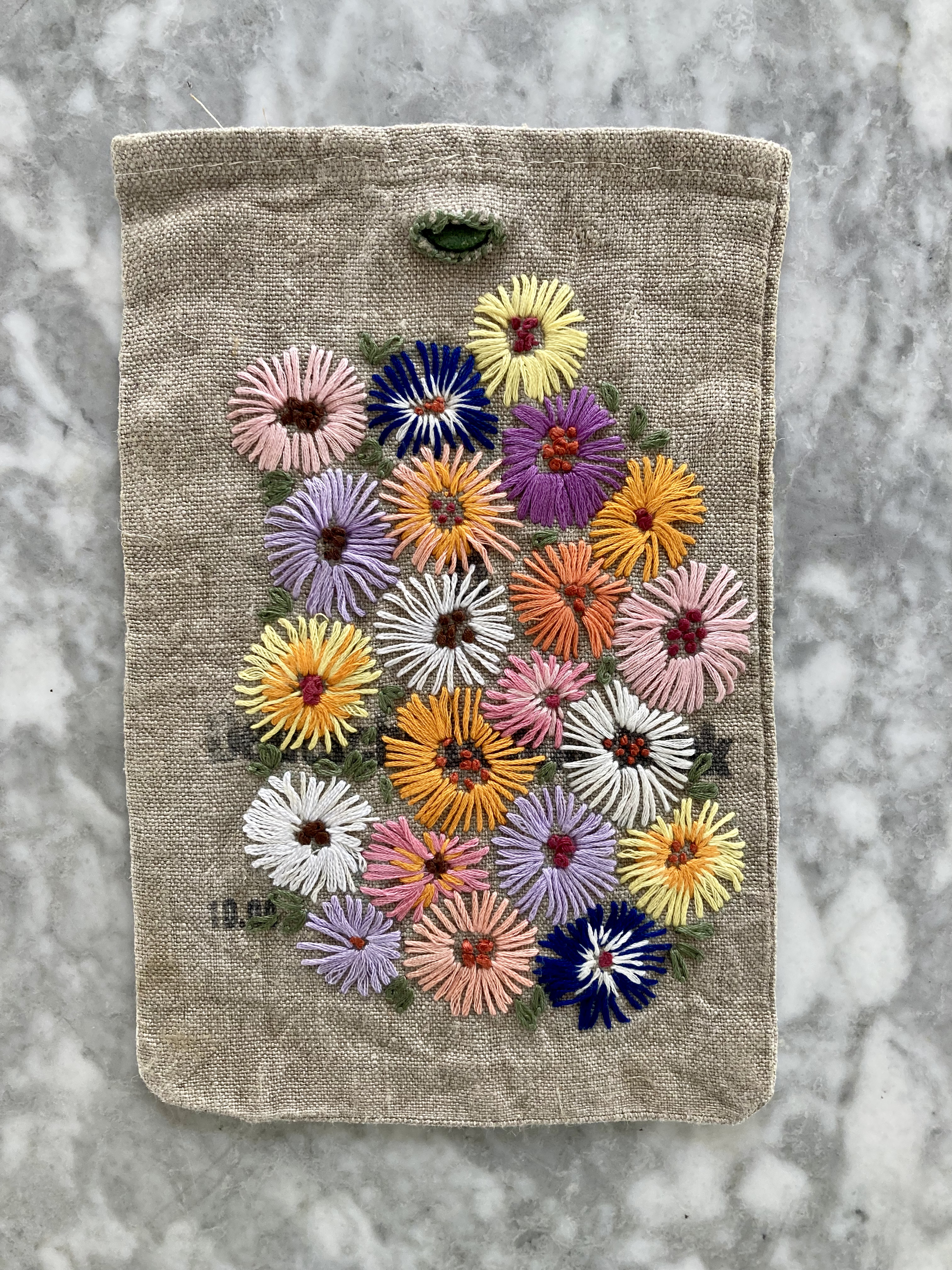
My August 1966 / August 2024 project was this fun and easy embroidery design featuring a flower whose name, at least, was unfamiliar to me: the tongue-twisting Mesembryanthemum. The name encompasses an entire genus of plants, native to southern Africa, of which some species are succulents and others more “flowery” types. The species that inspired the embroidery is presumably M. crystallinum, aka “iceplant”, which I have encountered without knowing what it was called. Now I know!

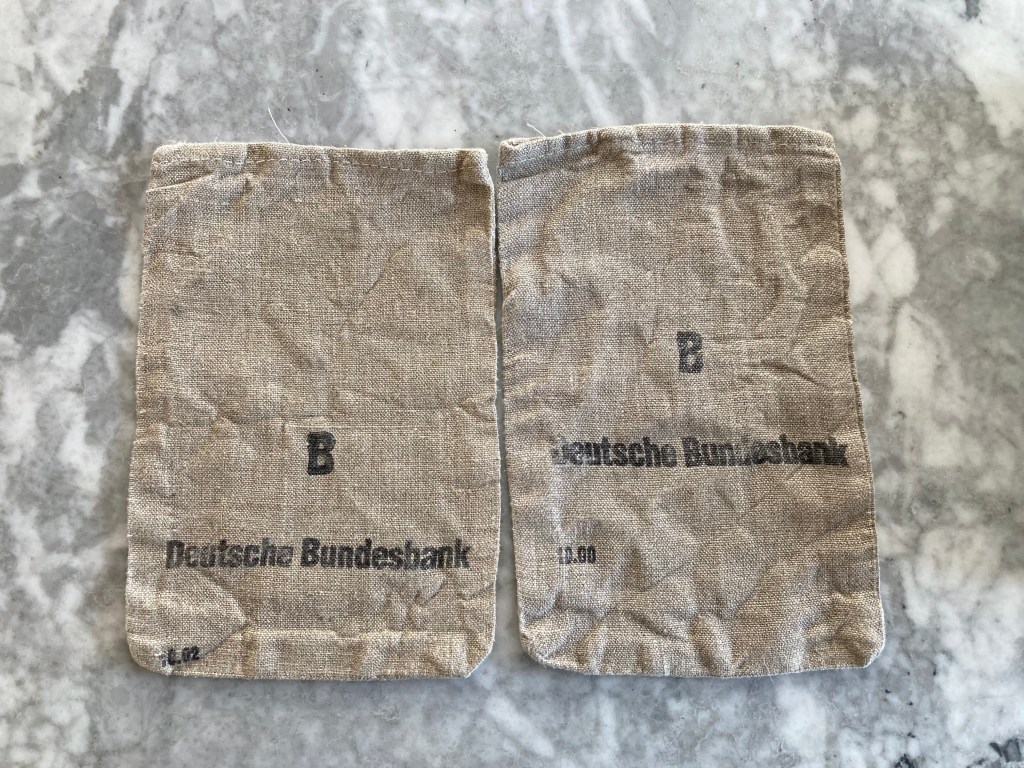
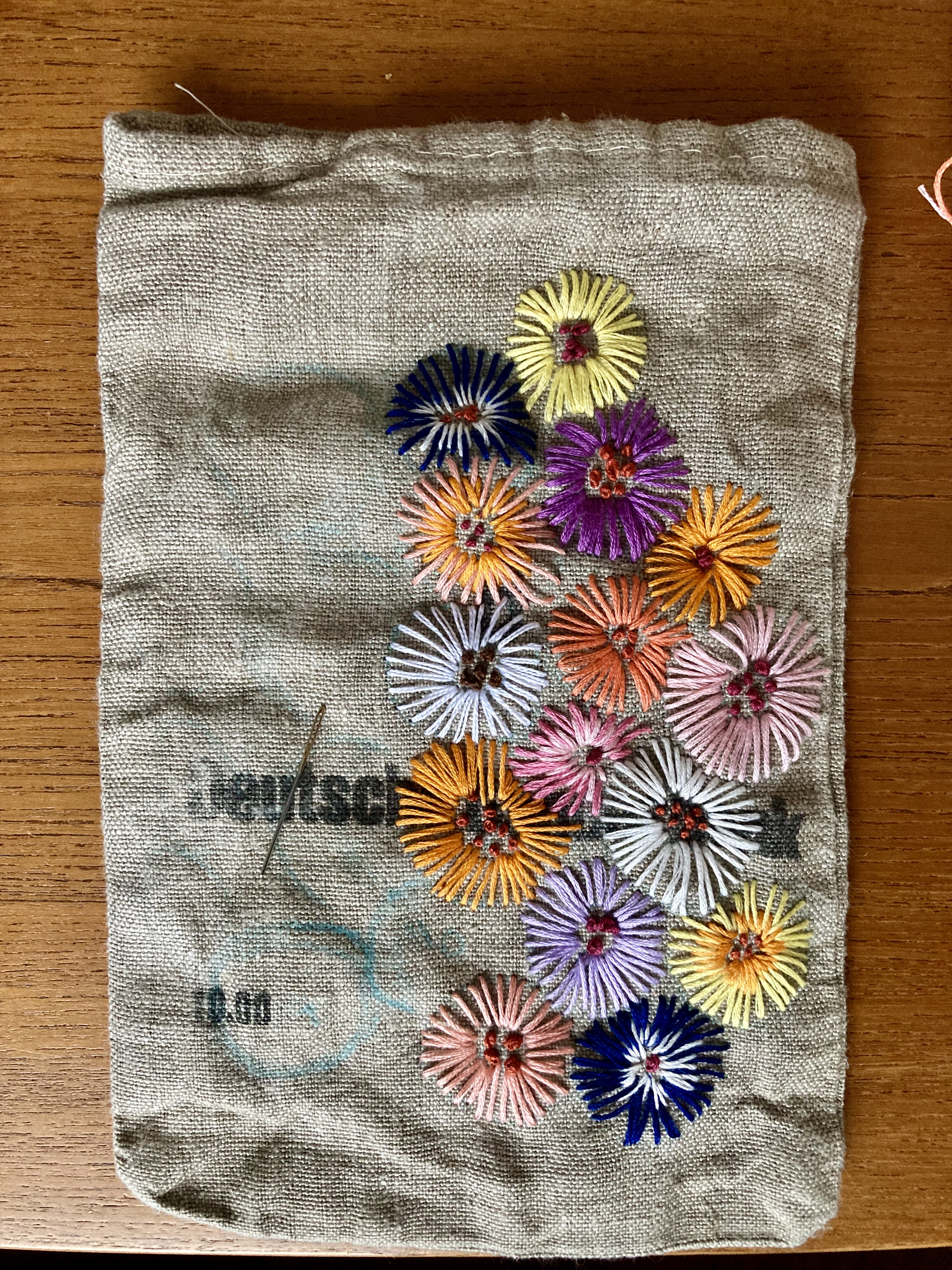
The pattern is for a cushion or workbag, and the flowers are meant to be worked in wool embroidery on black linen. I have too many cushions and workbags already, so I adapted the design to make another little bag to buy and transport unpackaged fruits and vegetables from the farmers’ market, organic supermarkt, etc. (Here’s an overview of previous embroidered bag projects.) I bought a bunch of old money bags at an antique sale a while ago, which I upcycle and decorate for this purpose.

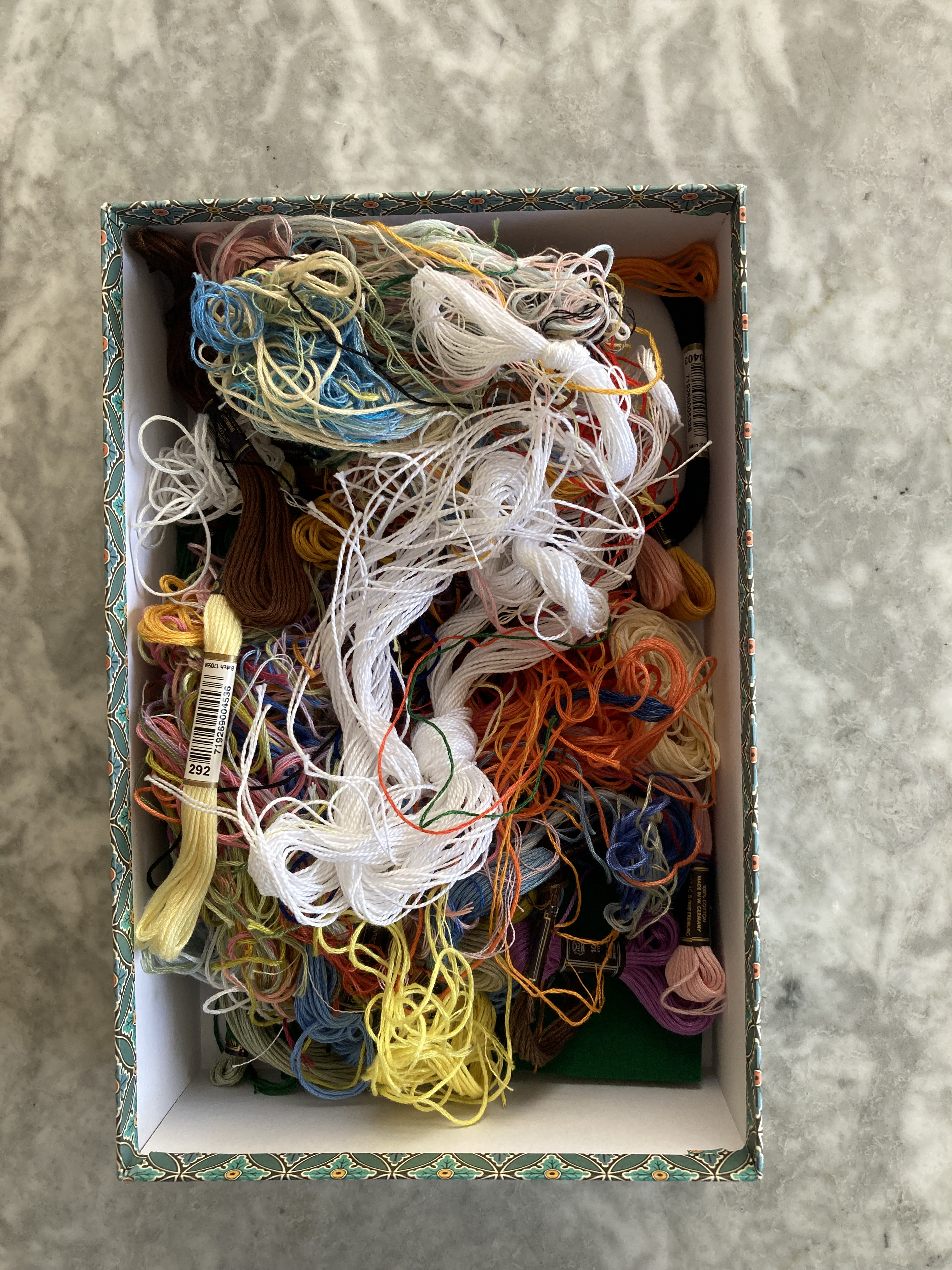
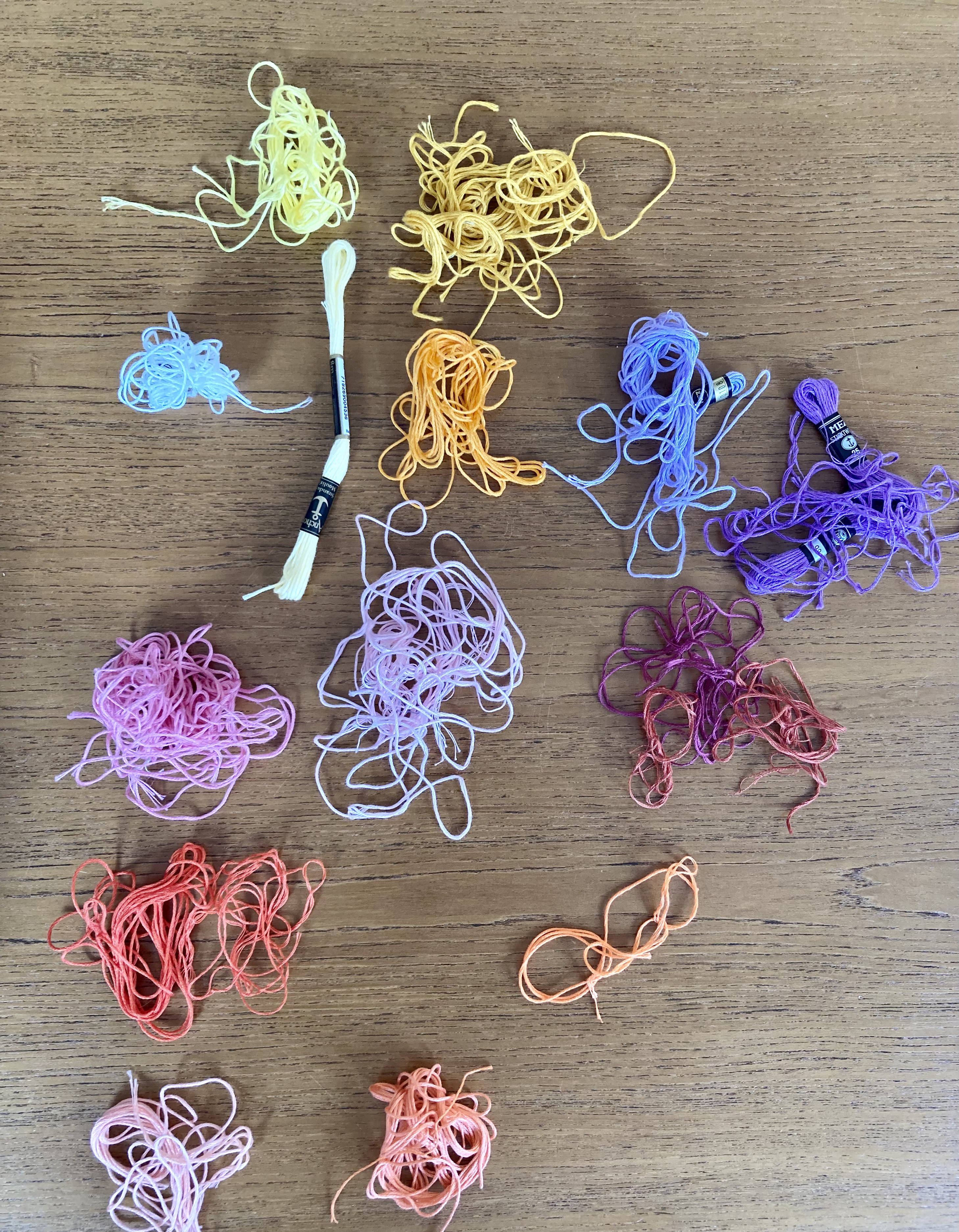
The flattish flowers with slender petals translate well to easy embroidery — the flowers are all worked in straight stitches, with French knot centres, and the little leaf details are loop stitches. I used scraps of cotton floss instead of wool, since the bag will be used and washed frequently. N.B. the tangled mess in the box of embroidery thread is not my doing! I inherited a big handful of embroidery cotton scraps from someone downsizing their elderly relative’s home. It proved very useful for this project, as I was able to match the colours from the pattern (white, maize, orange, mauve, violet, light pink, light magenta, magenta, spice pink, and plum, plus olive for the leaves) fairly accurately without having to buy anything new. Also, “spice pink” is listed in the materials section, but not included anywhere in the instructions. The colours in the photo are not accurate, either — what looks like sky blue and light turquoise is actually navy blue (my version of “violet”) and white.

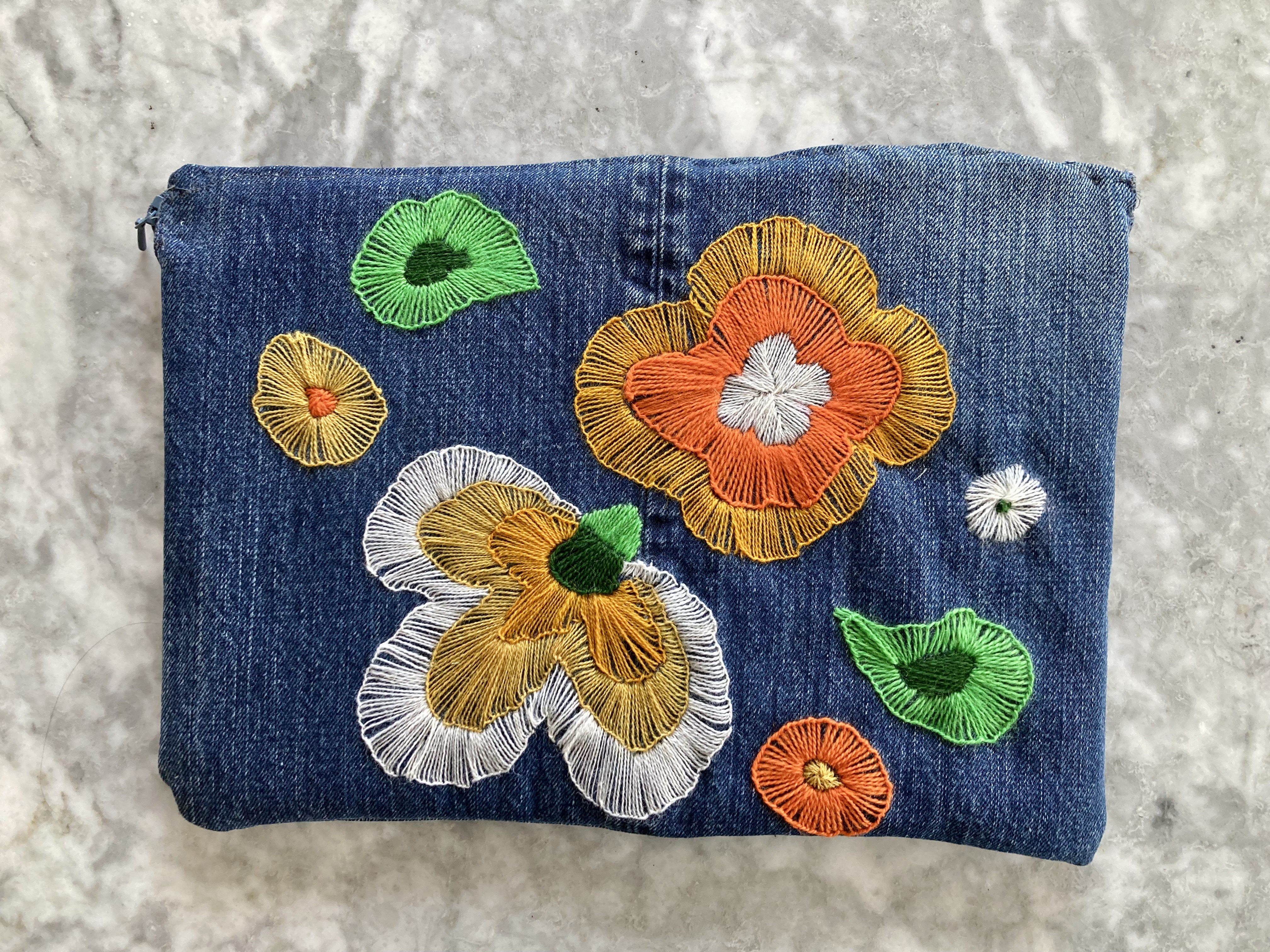
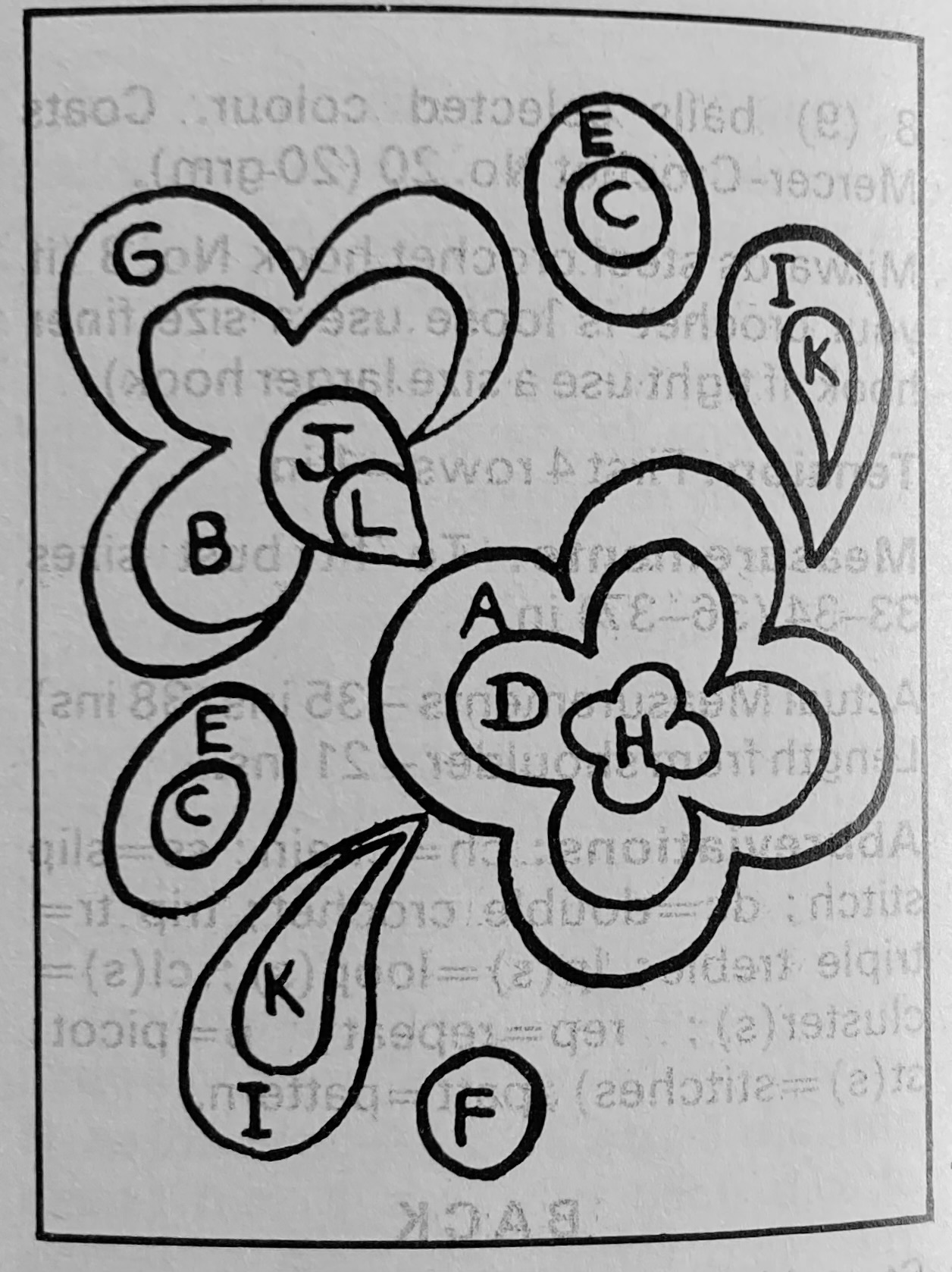
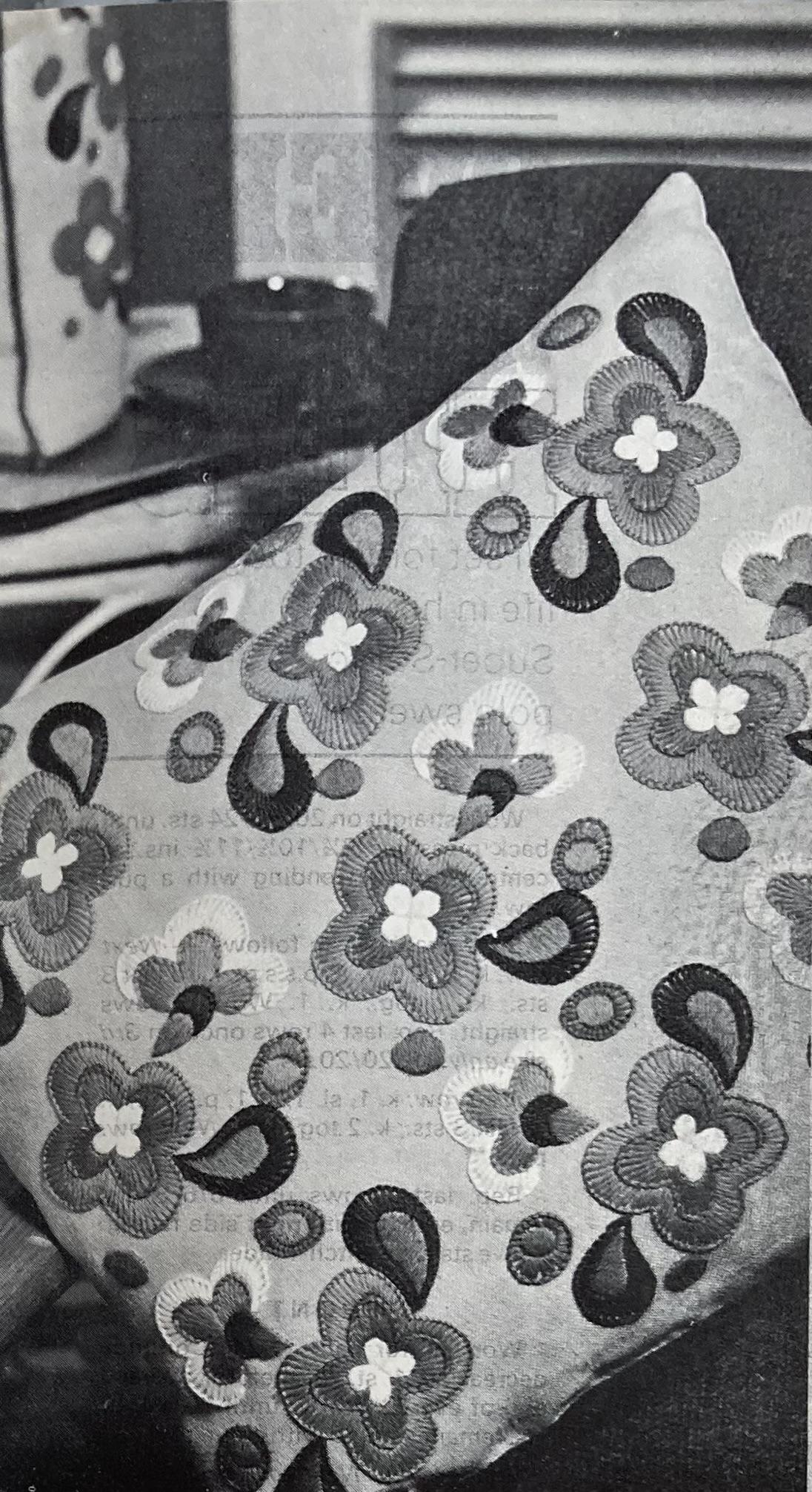
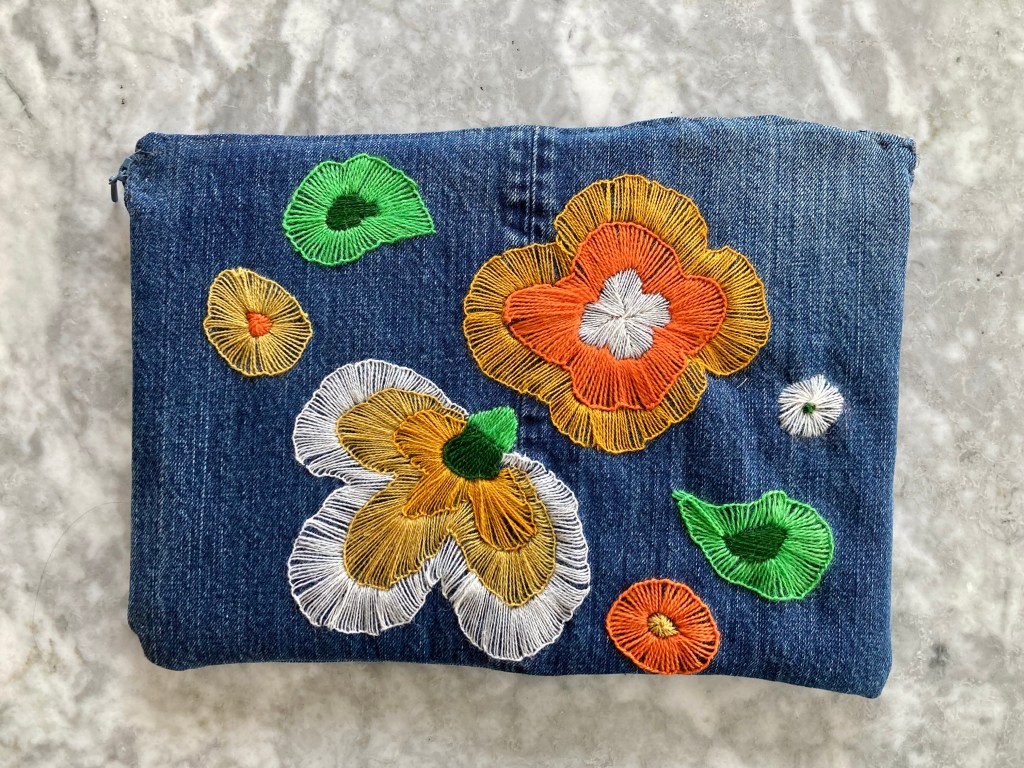
The positions and colours of the individual flowers are given on a separate page in the magazine, which was practical as of course I didn’t have (or would have been able to use) a transfer. I had to adapt it anyway to fit the rectangular bag, but kept to the schematic as well as possible. Looking back, I could have balanced it out better by making the second flower from the bottom on the left side purple or orangey-pink instead of white, but whatever. I used my approximation of “plum” plus a sort of brick orange and medium brown for the French knot centres, using up the colours I only had little bits of. I finished off the bag with a button — always nice to find a use for that interesting, but singular button from the 10-cent random button bowl.

And that’s it! This was the perfect upcycling project — I made something useful and sustainable from 100% re-used and/or vintage materials. I love using these bags and can’t wait to show this new one to the cashier at the organic supermarket who always takes a second to admire them. I should make the next one for her.

June (July) 1966: Garden Cushion

The June 1966 issue of Stitchcraft had multiple projects that interested me and the July 1966 issue not really any, so I made another project from the June issue this July. It was one of those designs that I have been looking forward to for a long time and was thrilled to finally make it — a cushion “for sunny days in the Garden”. Very bright, very psychedelic (is this what Stitchcraft meant when they wrote “Get ready for High Summer”?) and very, very 60s! I love it! Here’s some music to listen to while you read this post!

It’s made with felt appliqué on hessian fabric in orange and magenta with purple facial features. I really wish the magazine had a colour photograph. There was no need to send away for a transfer even at the time, as the dimensions of the cut-out circles and wedges are clearly described in the instructions and there’s a little schematic in the back pages to help. You simply cut paper patterns for circles in different diameters (7 cut in half, then 3, 1 1/4, 3/4 and 1/2 inches), plus a long triangle wedge pattern (3 1/2 inches long by2 1/2 inches wide at the base). The measurements of mouth and nose are described carefully as well, and there you have it. Here are my paper patterns, arranged to look like a spaceship entering a very well-organised solar system, and the cut-out felts, arranged to look like a 1980s new-wave pizza.

The appliqué is supposed to be done on the machine. I weighed the time factor of stitching by hand versus the bother factor of making bobbins in 3 colours that I would not otherwise use and switching them out constantly, and decided to stitch the felts on by hand with a small back-stitch. It was actually quite relaxing and probably didn’t take a whole lot longer than if I had dome it on the machine.

The hessian background is 17 inches in diameter. You were supposed to use a contrasting linen for the back piece, but I had plenty of hessian and no suitable backing linen, so I made both sides in hessian. Always the up-cycler, I also finally had a use for the old (well-cleaned) shower curtain in the craft drawer. I flat-lined the hessian with it, making the background fabric stronger and less see-through and, more importantly, protecting the inside of the cushion from getting damp in my rainy climate. Stitchcraft actually occasionally recommends lining “outdoor” projects with plastic in some other issues, and I had been looking forward to trying it out.

The inner pad is a piece of foam rubber that I ordered in a block and cut into a circle of the proper size with a carpet knife. It was not as easy to cut as I had imagined! I had to saw away at it quite a bit and the finished edge looked rather chewed, but it worked. As far as sewing it together… now, if I were really smart, of course I would have made the back circle in two pieces with an overlap in the middle, so the cushion would be removable. (It didn’t say to do that in the instructions, but it would have been smart!) Alas, I did not think of that option in time, so I kept the opening as small as possible and sewed it up by hand after putting the foam cushion in.

And it was done! WAIT, NO! After it was all finished, I took another look at the big photo in the magazine and saw that there was supposed to be a lot more decorative stitching on the “cheeks” and “rays”. Oh well! The cushion was finished and sewn up, so there it was. Note to self: if I make it again, I’ll stitch the appliqué on the machine with the decorative bits and organise the cushion back better. Still 100% happy with it, though.

I don’t have a garden, or even a balcony, so this will be a present for a friend.

P.S. Does it remind anybody of this classic anti-nuclear power sticker? (Though the logo design is later, from 1975.)

P.P.S. It was so cloudy and overcast the day after I finished the cushion that I had to wait another day to photograph it — there wasn’t enough light to get a good picture. As I write this blog, we’re having a thunderstorm. So much for sunny summer! At least the cushion gives me all the light and warmth I need.

Edit 15. August 2024: Here’s a photo of the cushion in its new home!

June 1966: Basket Weave Blouse

EDIT July 17th, 2024: Finished!

My June 2024 / June 1966 project was going to be the goofy garden cushion with the smiling purple and magenta felt appliqué sun, but I was traveling the first two weeks of June and it was easier to have a knitting project with me than an appliquéd cushion on hessian fabric. I loved the 3-ply blouse in this “Pattern texture from Paris” (note: I do not think the basket weave knitting pattern stitch was specifically invented in Paris, but whatever sells your magazine…) and a lovely colleague had given me a ball of Lana Grossa Cool Wool Vintage yarn in my favourite shade of green just the week before, so I was inspired to make it instead.

The pattern is written for Patons Nylox 3-ply, which existed in an earlier version with 80% wool and 20% nylon, and a later version with 60% wool and 40% nylon. This pattern would have to be written for the earlier version, as the later version was sold in 25-gram balls and UK wool weights didn’t change to metric until the early 1970s. It was 3-ply, so quite lightweight, and meant to be knitted up at a tension of 8 stitches to the inch in stocking-stitch. Cool Wool Vintage is more like regular 4-ply / fingering-weight wool, or even a little more on the “sportweight” side. The pattern also only offers one size — to fit 35-37 inch bust — which would fit me snugly at 8 sts / inch in stocking-stitch but surely be too large at the 6.7 sts/inch that I got in the pattern-stitch swatch, so I adjusted the stitch count and number of pattern repeats.

As usual for mid-1960s garments, there is no shaping from hem to bust, but unshaped garments always look like a sack on me. I started with a reasonable amount of positive ease at the hem (literal hem: the blouse features stocking-stitch hems at the bottom edge, sleeve edge and even at the neck edge) and increased up to a more or less zero-ease bust. It won’t have that authentic shape, but I will like it a lot better. The yarn was quite springy and holds its shape well, which is great, especially considering that a basket-weave pattern tends to stretch wider and shorter.

It went quite quickly. I made it in the round to the armhole openings. It was a bit snug when trying on, but I was sure it would stretch with blocking.

I made the back and front above the armholes, then sewed the shoulder seams and made the neck edging. The edging is a square hem just like the bottom edge and sleeves, but with mitred corners. In the pattern, you are supposed to make all four edges separately (picking up stitches from holders or knitting up on the neck sides, then decreasing and increasing at the corners) but of course I made them all together to avoid seaming. I put a purl ridge on the turning row as well. The neckline was weirdly small and not as low-cut as in the photo, even though I made it according to pattern / adjusted for gauge difference. It still fit over my head just fine.

I didn’t know if I would have enough yarn or not — even with 300 grams — so I made the sleeves from the top down, picking up stitches around the armhole and working the pattern so to speak in reverse order. Even adjusting for gauge, the first sleeve was wide and a bit wing-like (the hem doesn’t pull the fabric in nearly as much as ribbing, of course). I recalculated and made the second sleeve narrower, which was better, so frogged the first sleeve and made it again. I did end up having to buy one more ball of yarn, too — I thought about making very short cap sleeves, but it was worth the extra ball of yarn to get the right length.

It was sweater-girl snug before blocking but as expected, it stretched out quite a lot in all directions. I put it in the dryer for a short spell when it was almost dry even tough technically the wool is not superwash. That was perfect and it turned out comfortably loose, but not sack-like. I even had a brooch that was similar to the one worn by the Sitchcraft model!

I love this top and am very happy with how it turned out.

May 1966: Cushion For the Nursery

My May 1966/May 2024 project was based on an adaptable project “for the nursery” featuring cute little animals and flowers. The pattern as offered in the magazine could be used to make either a wall hanging in felt appliqué, or a cushion in wool embroidery. I chose to use elements of both designs and made a cushion in felt appliqué.

As always, the transfer was not included in the magazine — readers had to send 1/10d to Stitchcraft and received the transfer post free by mail. Obviously, that would not work now, as Stitchcraft is no longer published. Happily, the animal and flower shapes are quite easy to copy and individual illustrations of the dog, bunny and mouse are printed in the magazine.

Both the appliquéd animals in the wall hanging and the embroidered outlines on the cushion are intended to be made with non-realistic colours (the rabbits are blue and magenta, the donkey gold, the cat jade green, the dachshund magenta, and the mouse bright pink). I chose more realistic colours based on what I had in my felt-scrap stash, and I like cats, so I made two grey cats looking at each other over their shoulders. I had enough purple, magenta and yellow felt left over from the last appliqué cushion I made to make the flowers. I made the cushion cover itself in a natural-coloured linen, as intended in the pattern, and the inner cushion in leftover white and beige fabric from other projects.

The appliqué work was quite easy and pleasant, even the tiny leaves of the flowers. The flower stems are embroidered in stem-stitch. I was nervous about making the cat’s eyes (white felt embroidered in black) as the expressions can be very tricky, but I think they turned out quite nicely. Since I was on the road for most of this project and didn’t always have access to my sewing machine, I put in the zipper by hand, which worked out fine.

And there it was! I love making cushions and would make more of them if I knew what to do with them after they were done. I have more cushions than space already for myself, and this particular design, although extremely cute, is a bit childish even for my playful decorating style. Luckily, I have friends with small children, and this cushion will go to one of them, who is currently decorating her three-year-old’s room. I hope he likes it! I am certainly quite happy with my happy cat cushion and I think he will be too.