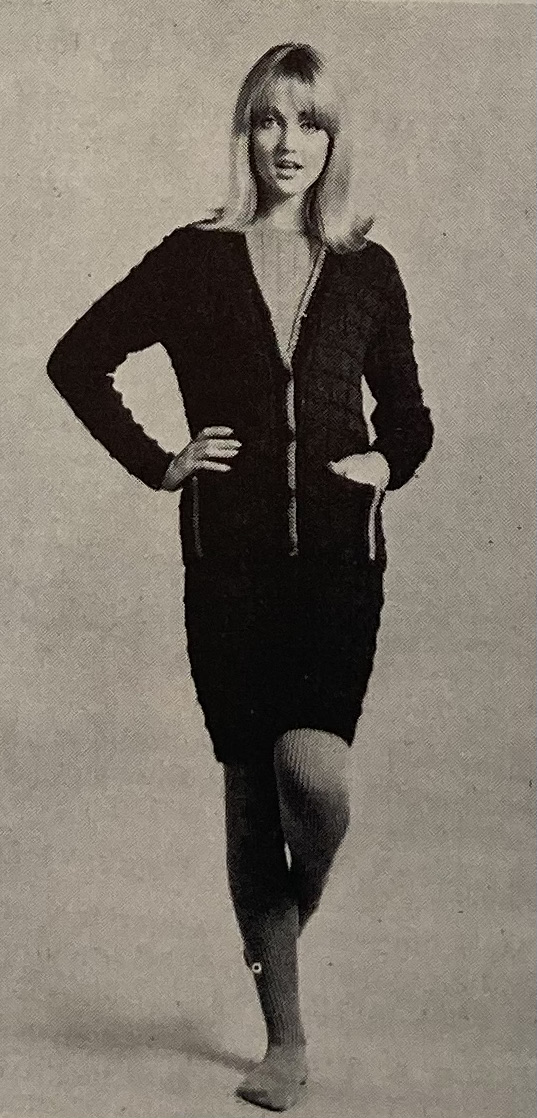
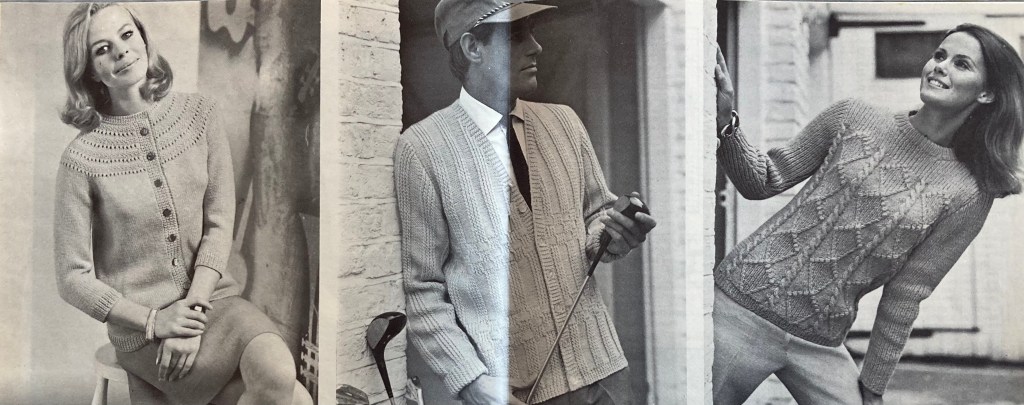
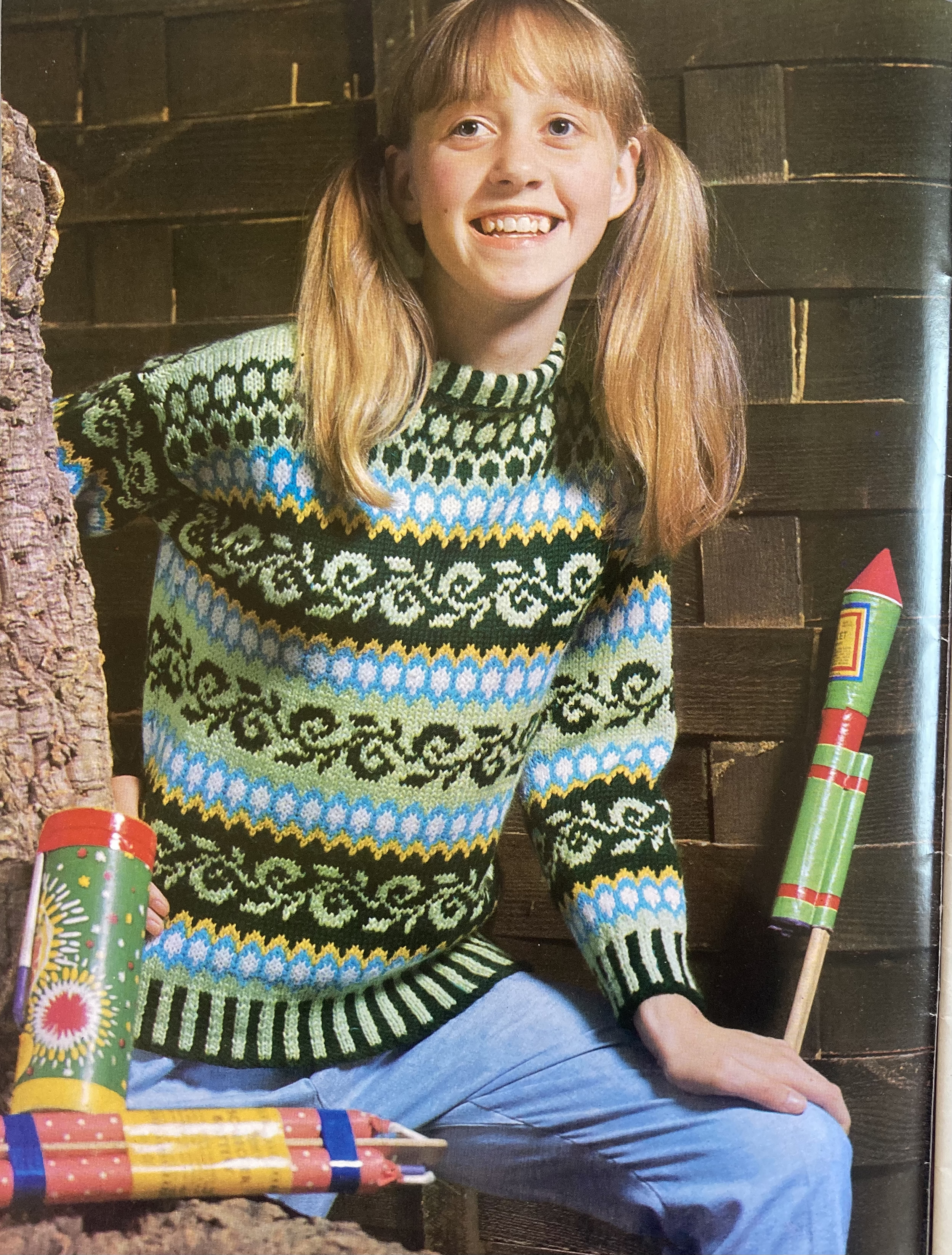
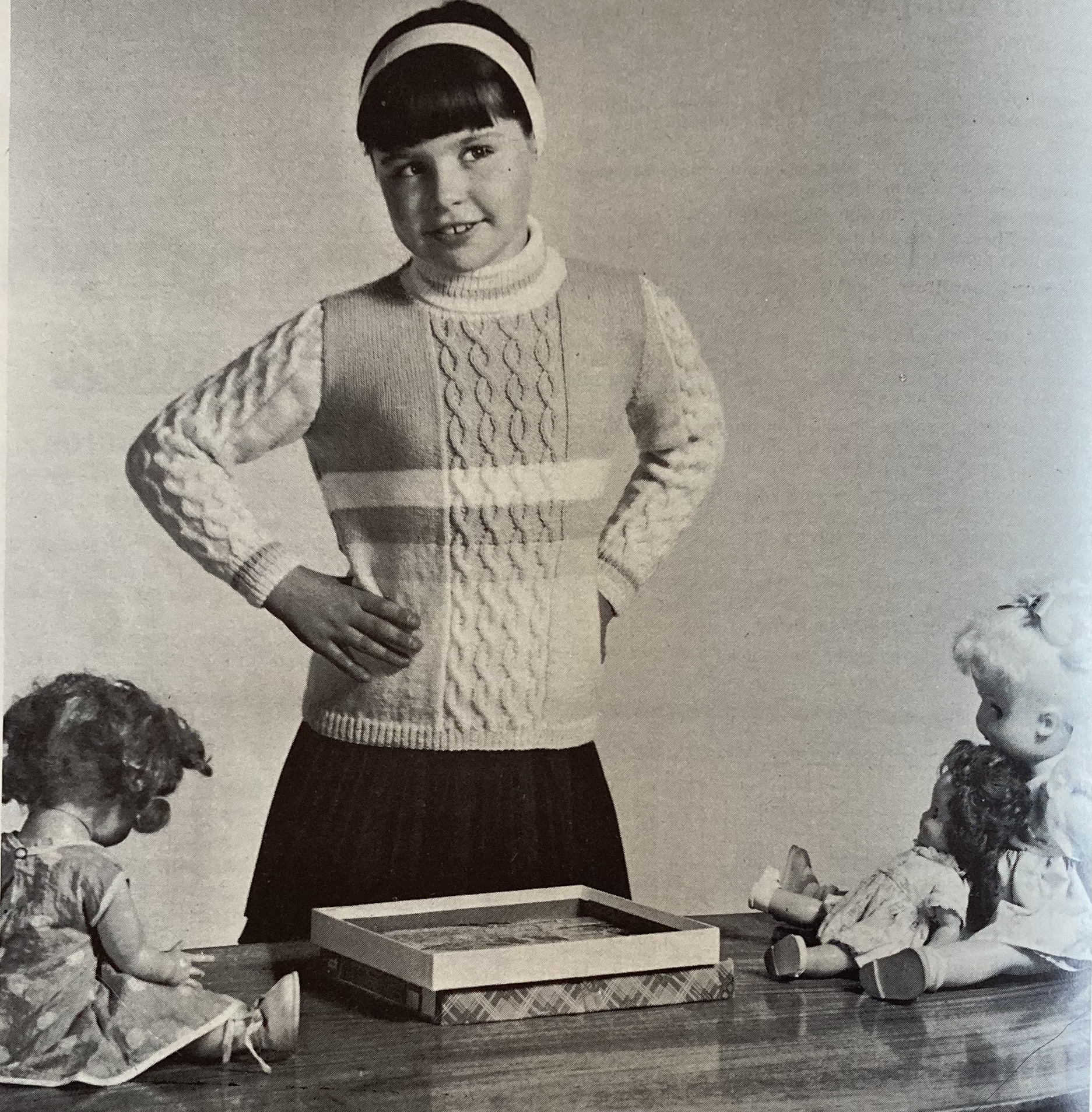
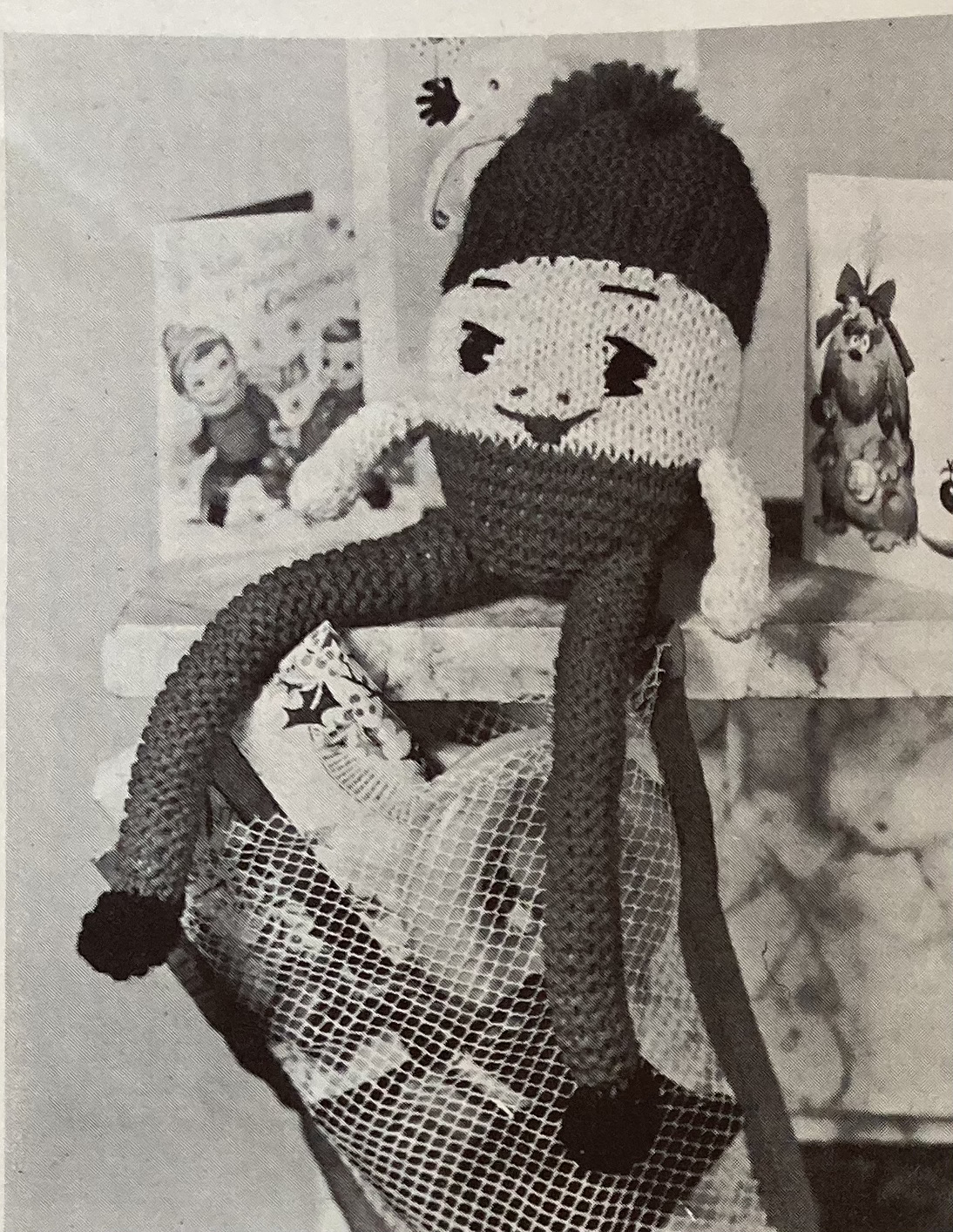
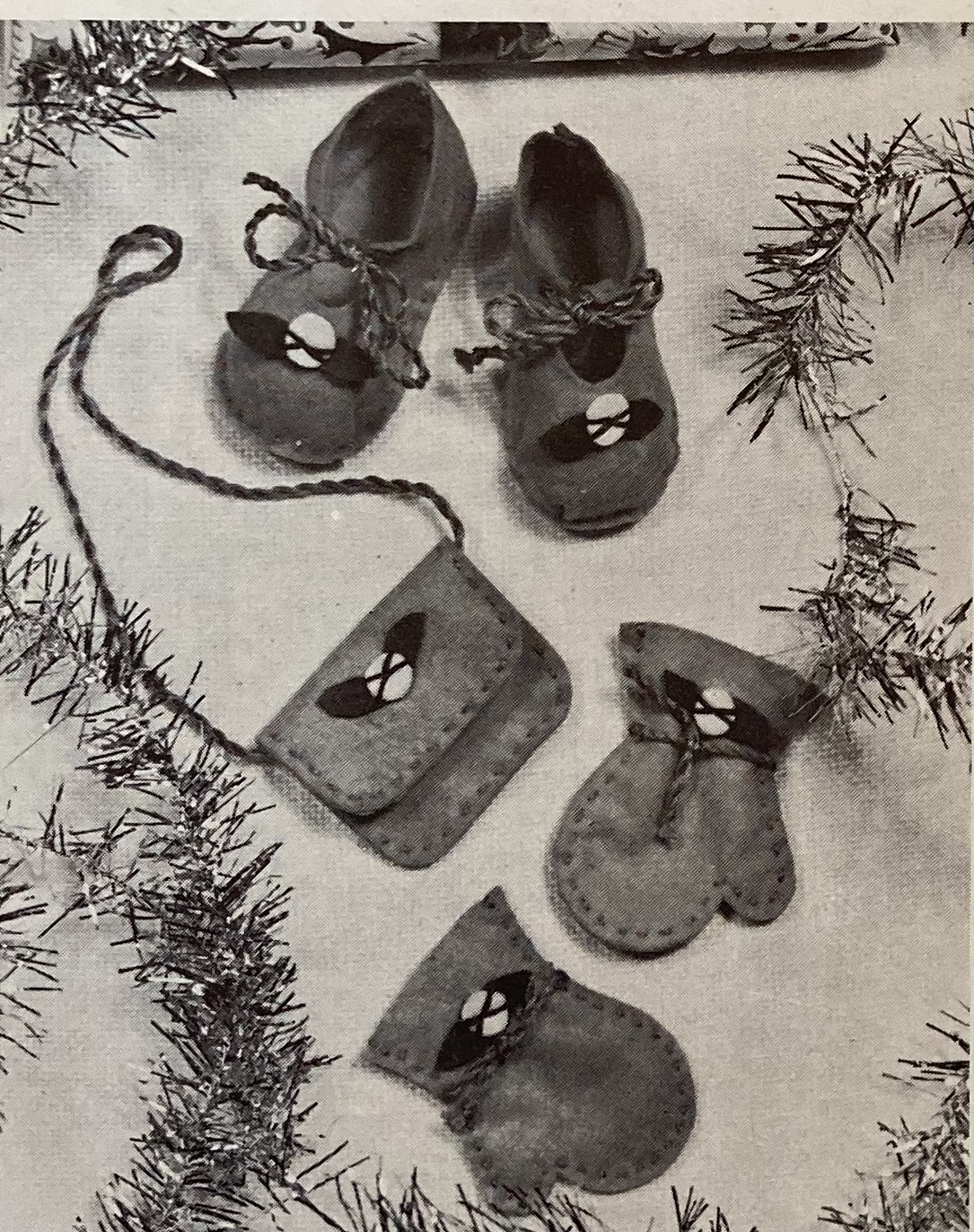
October 1966: Overview

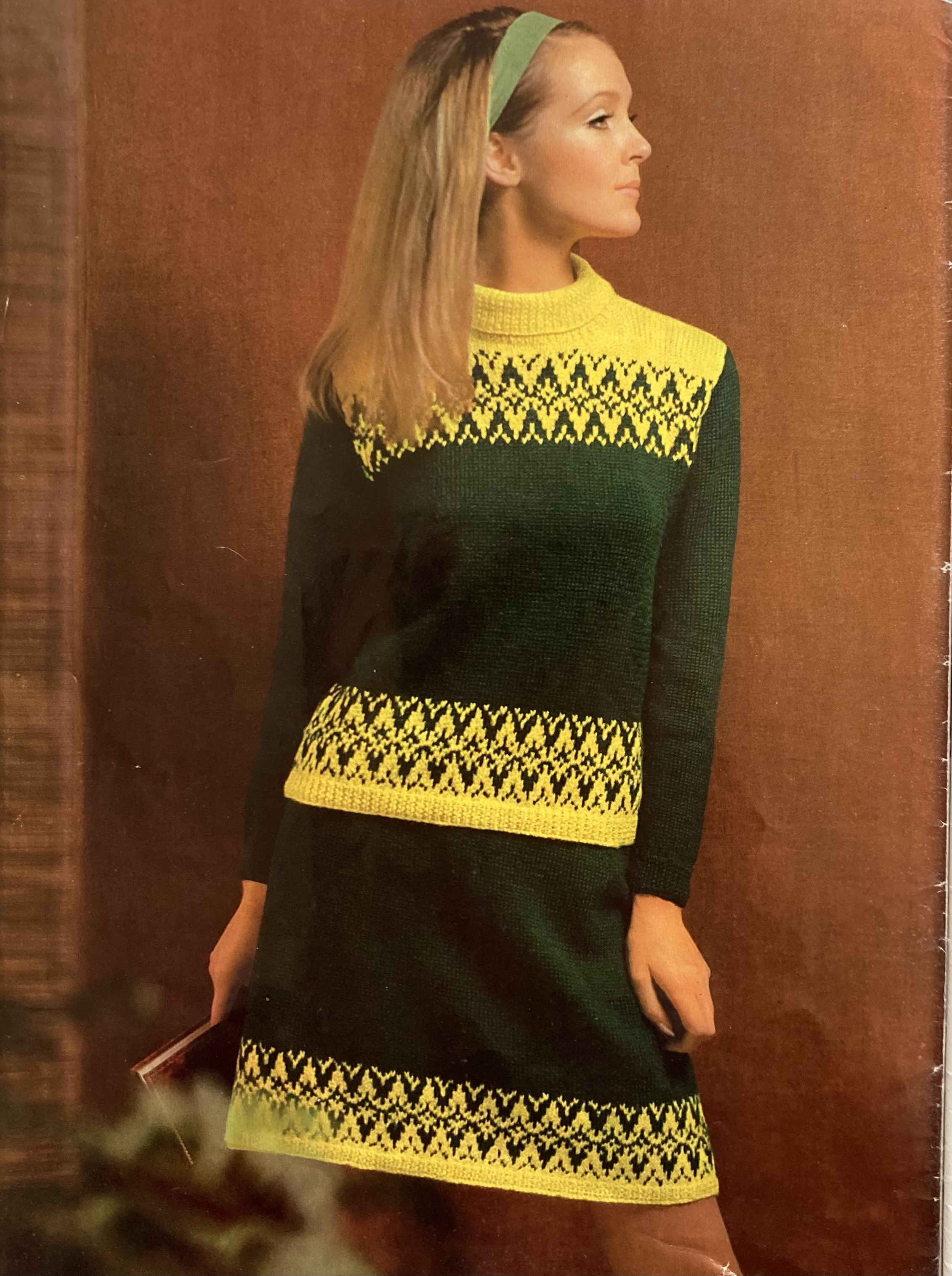
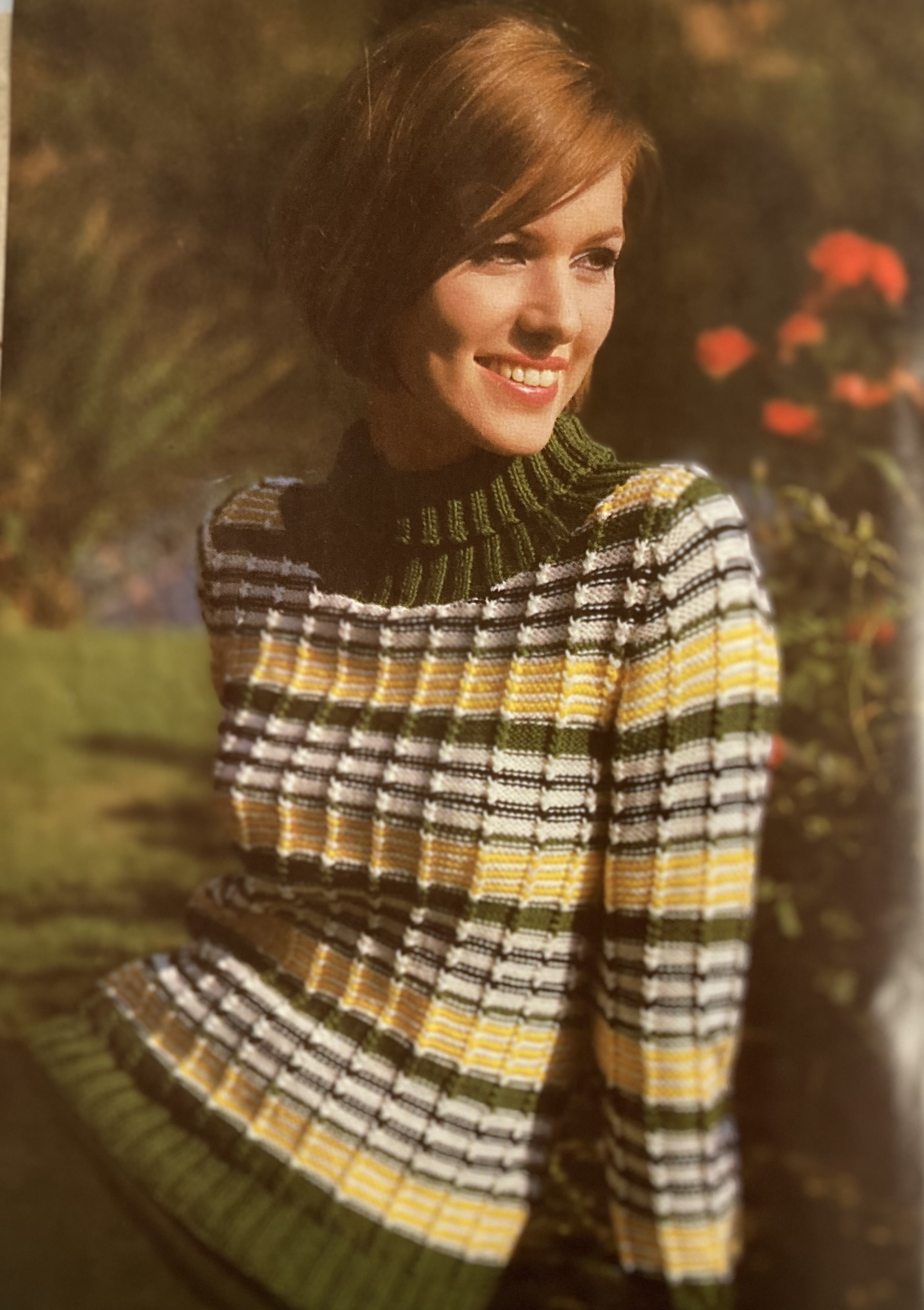
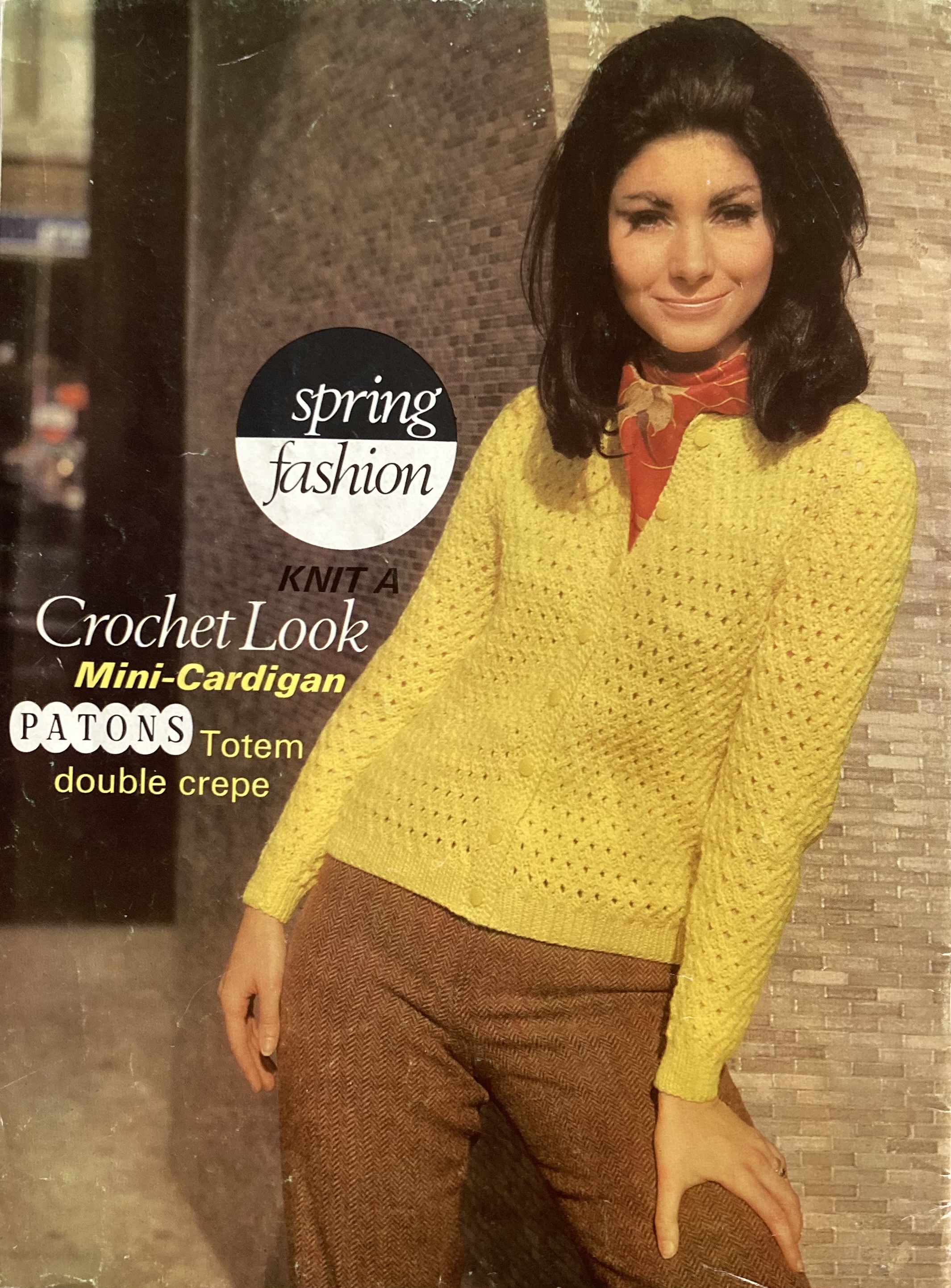
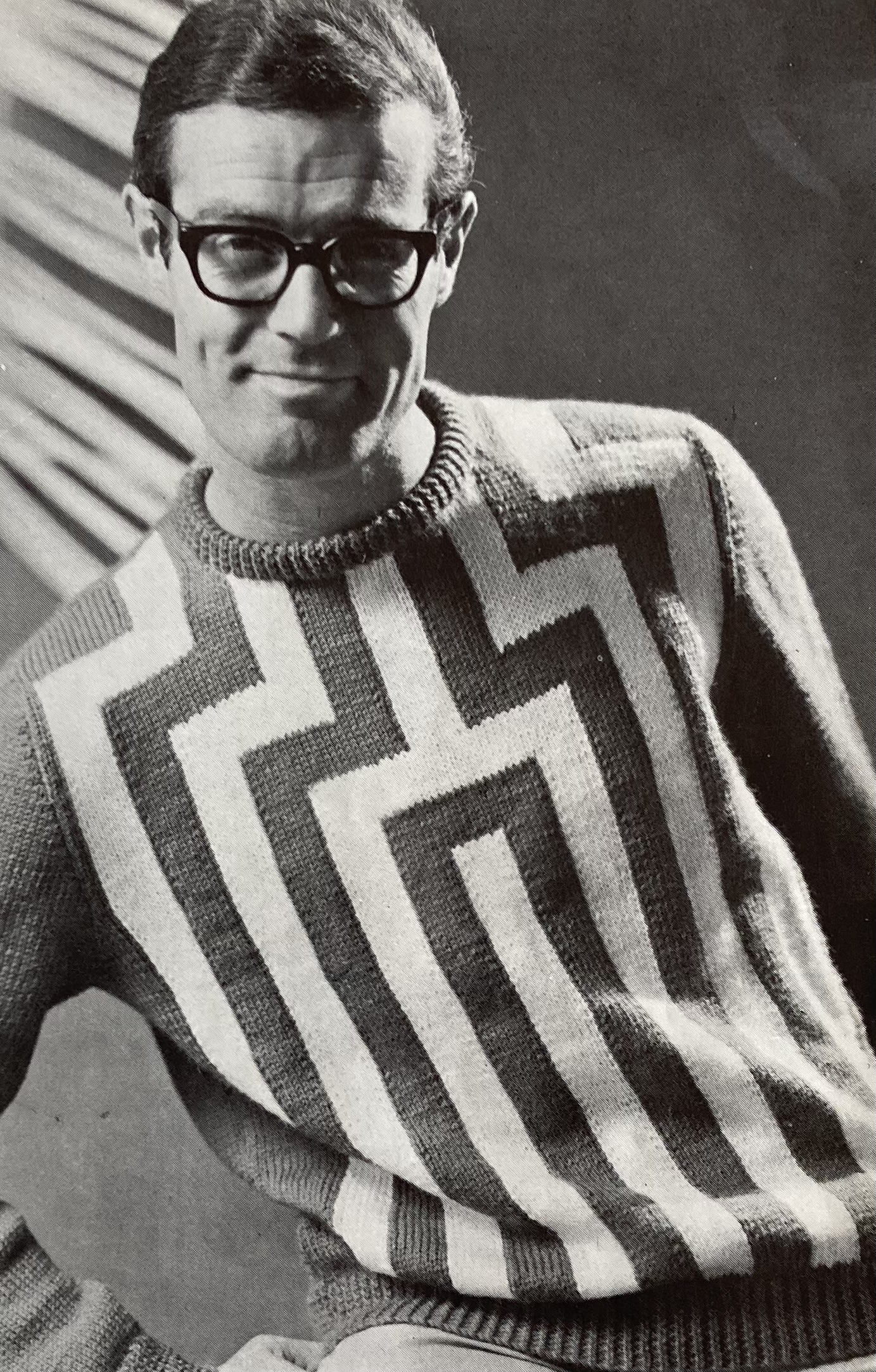
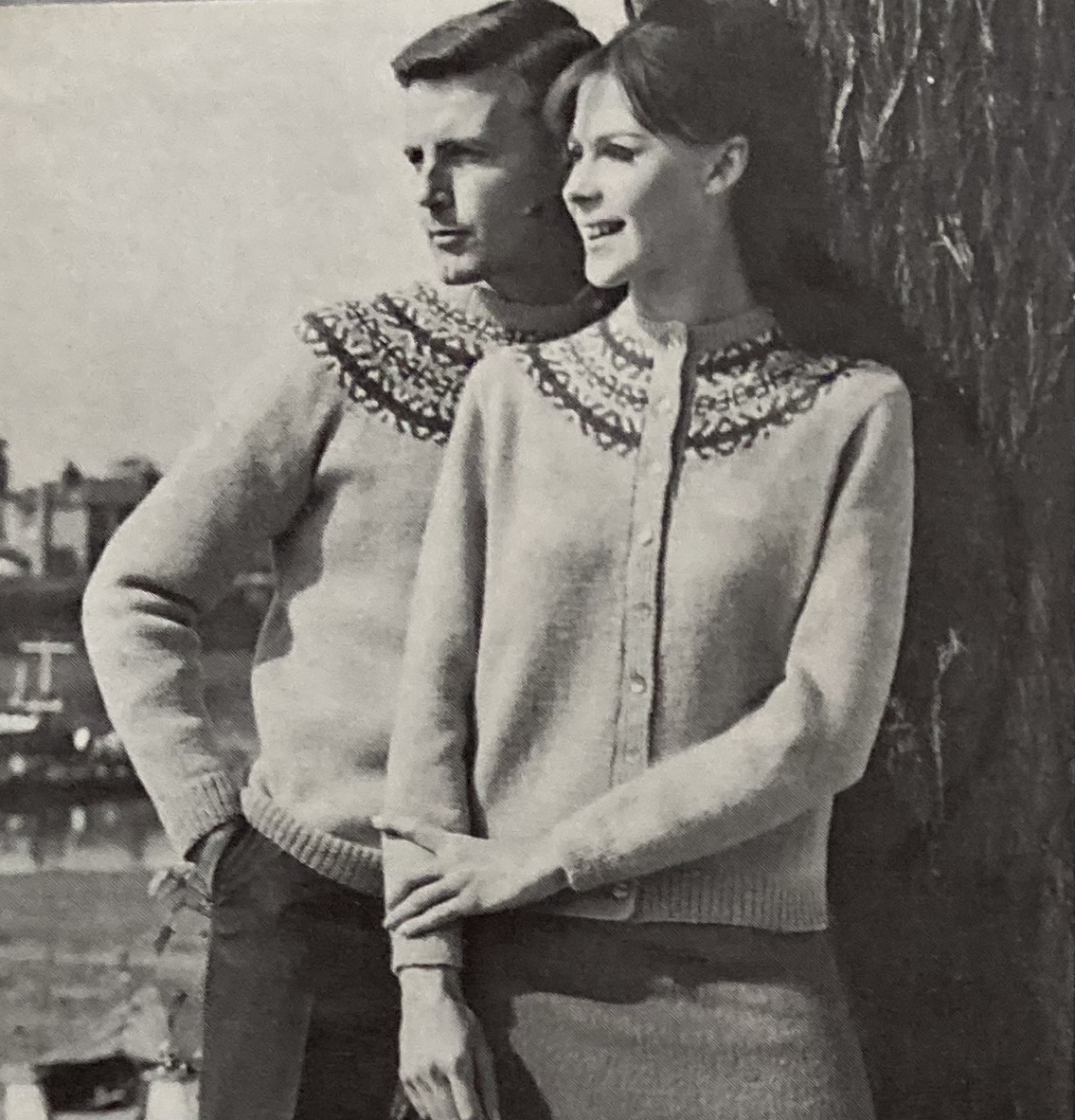
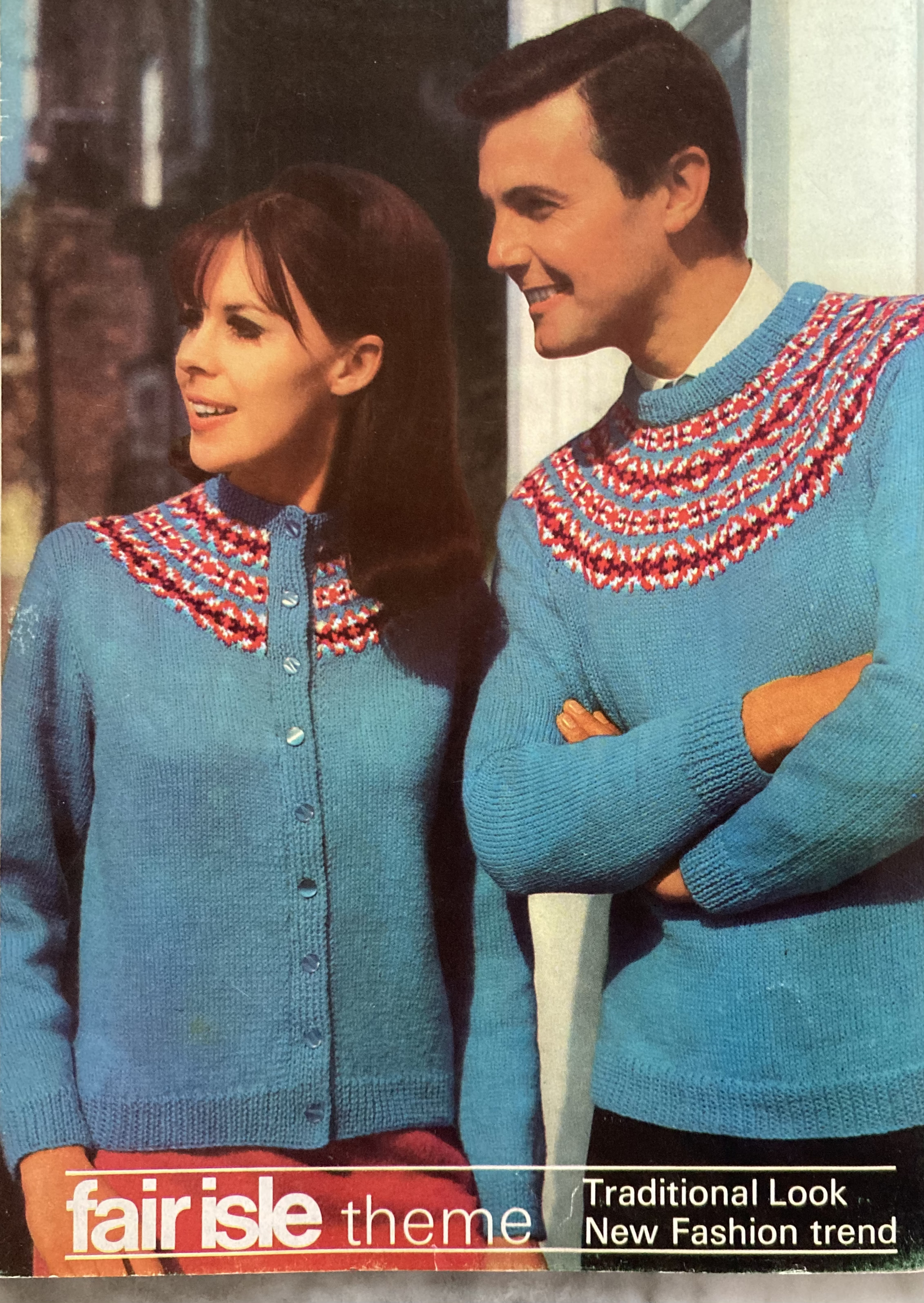
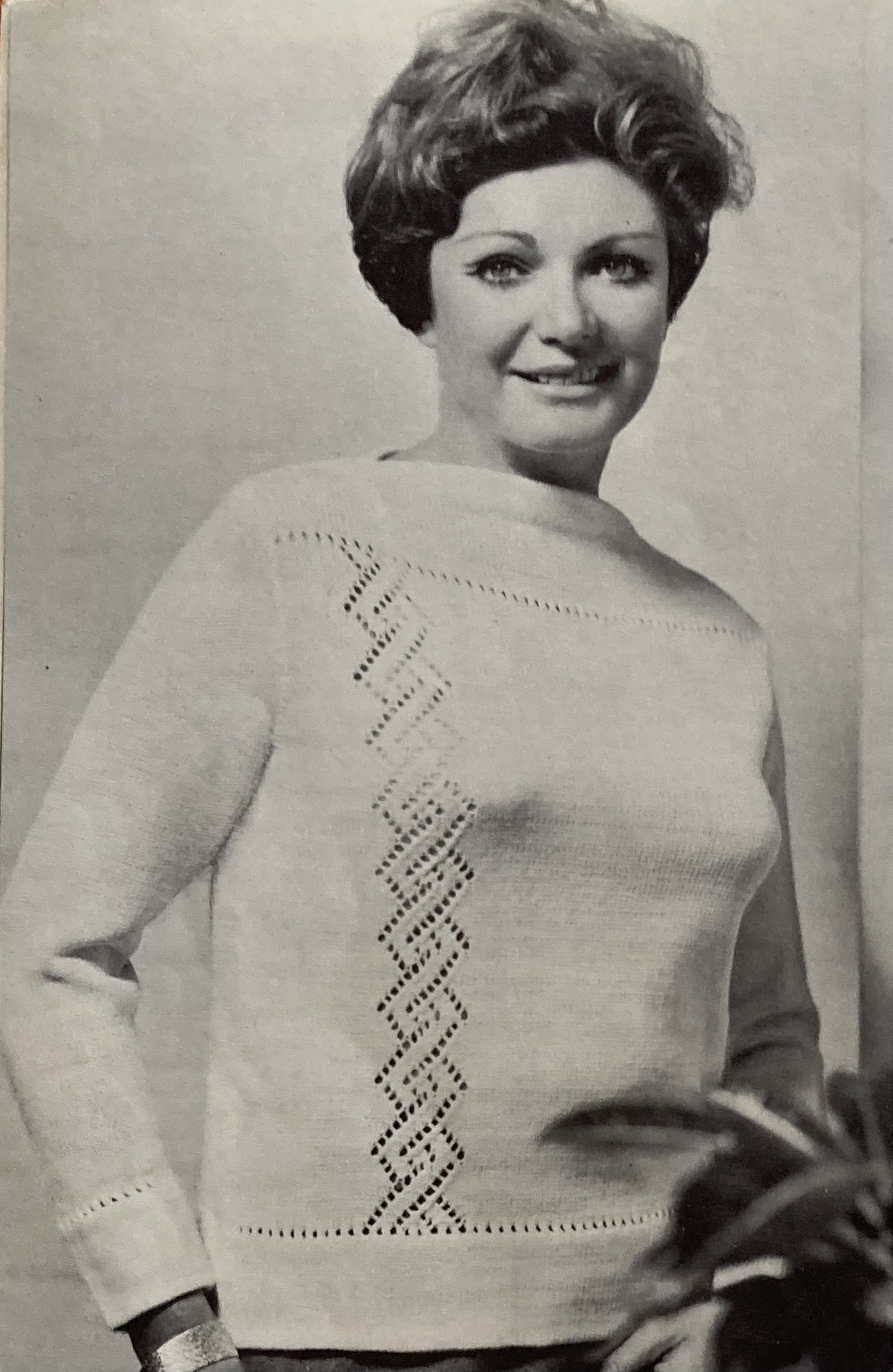
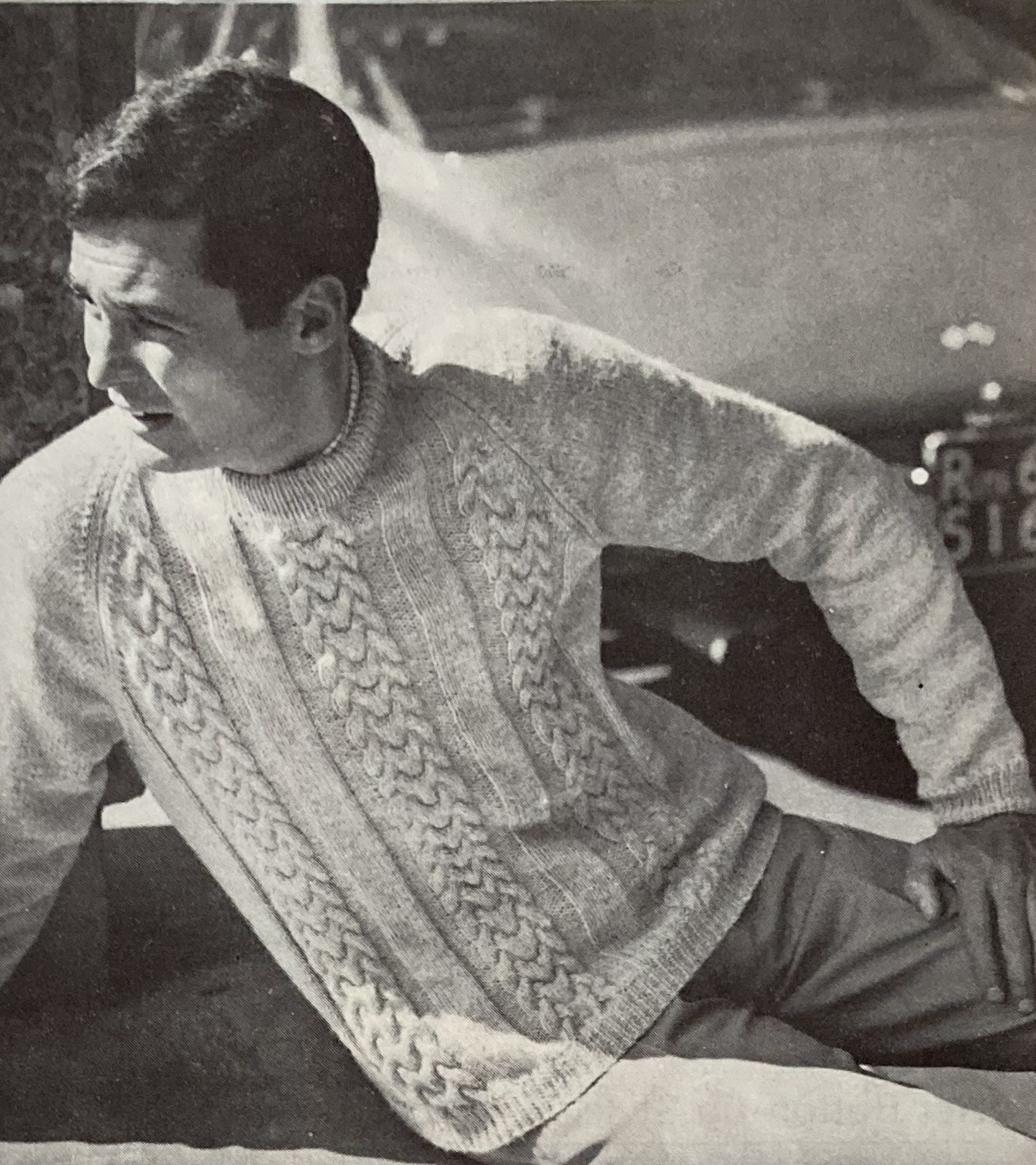
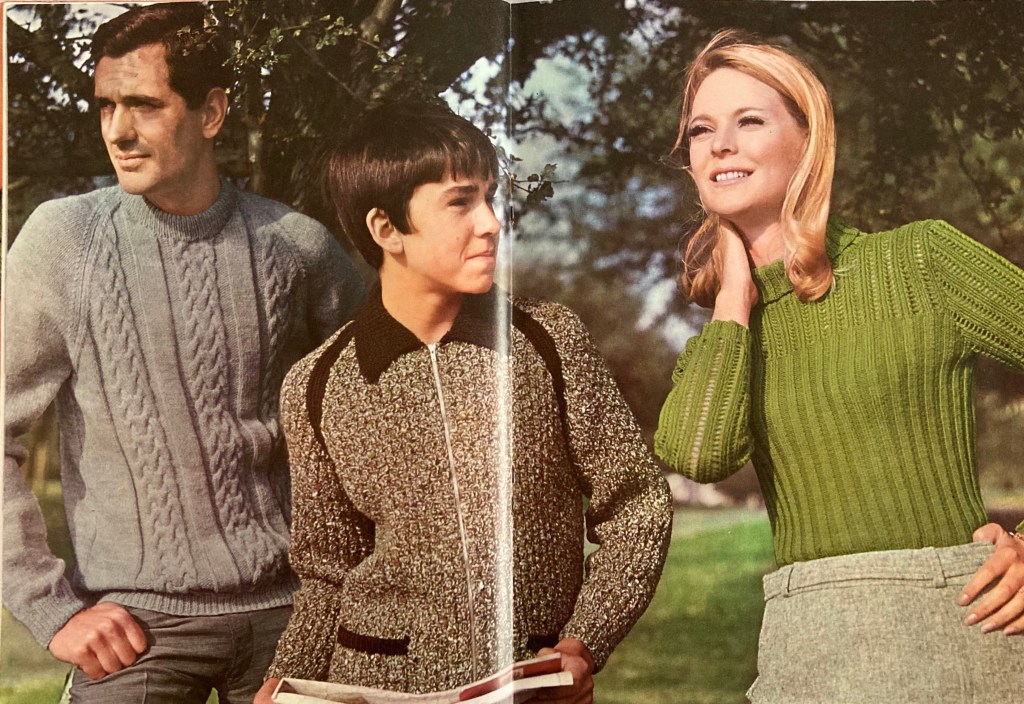
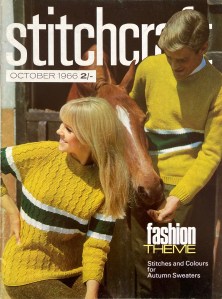
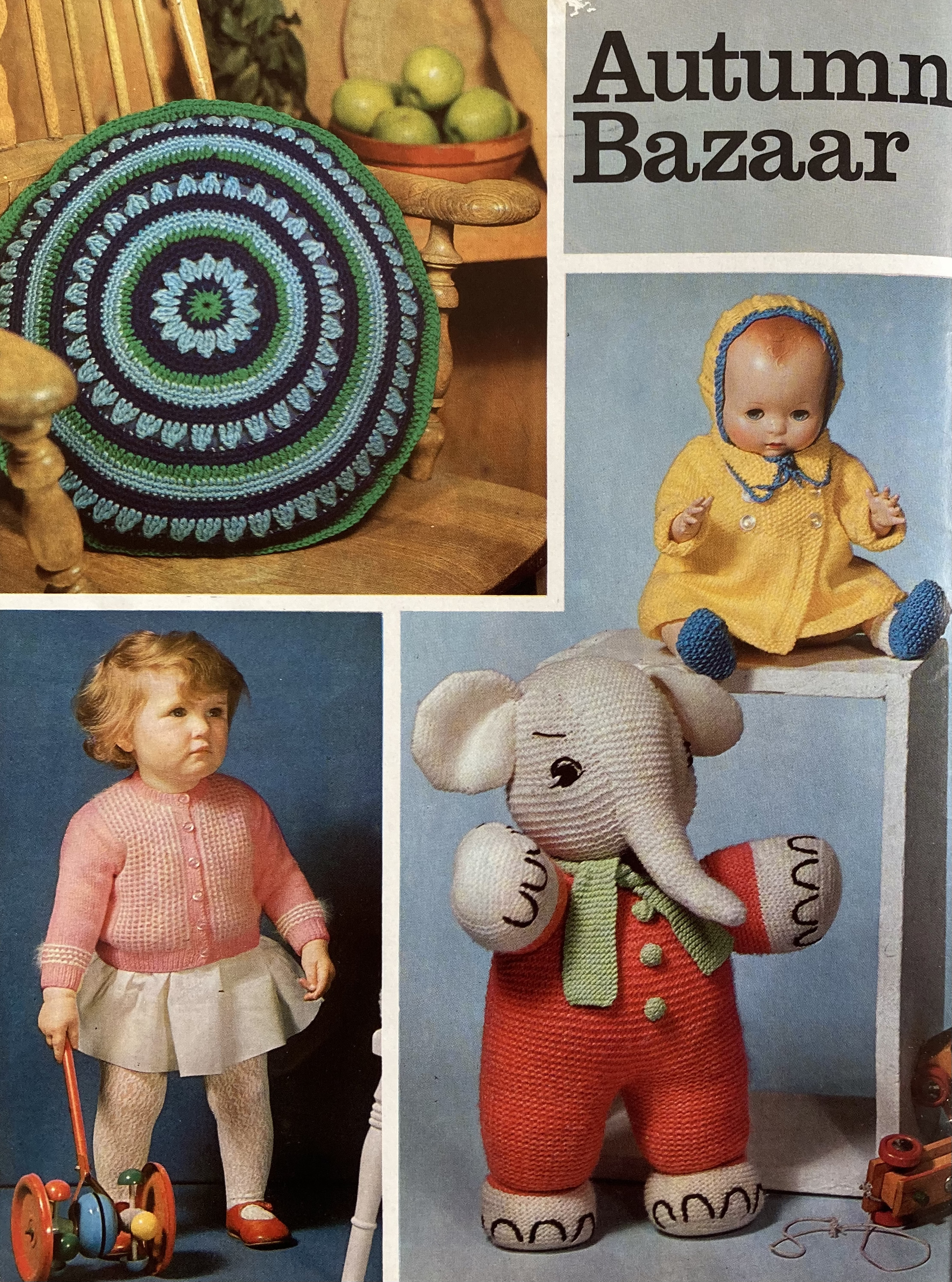
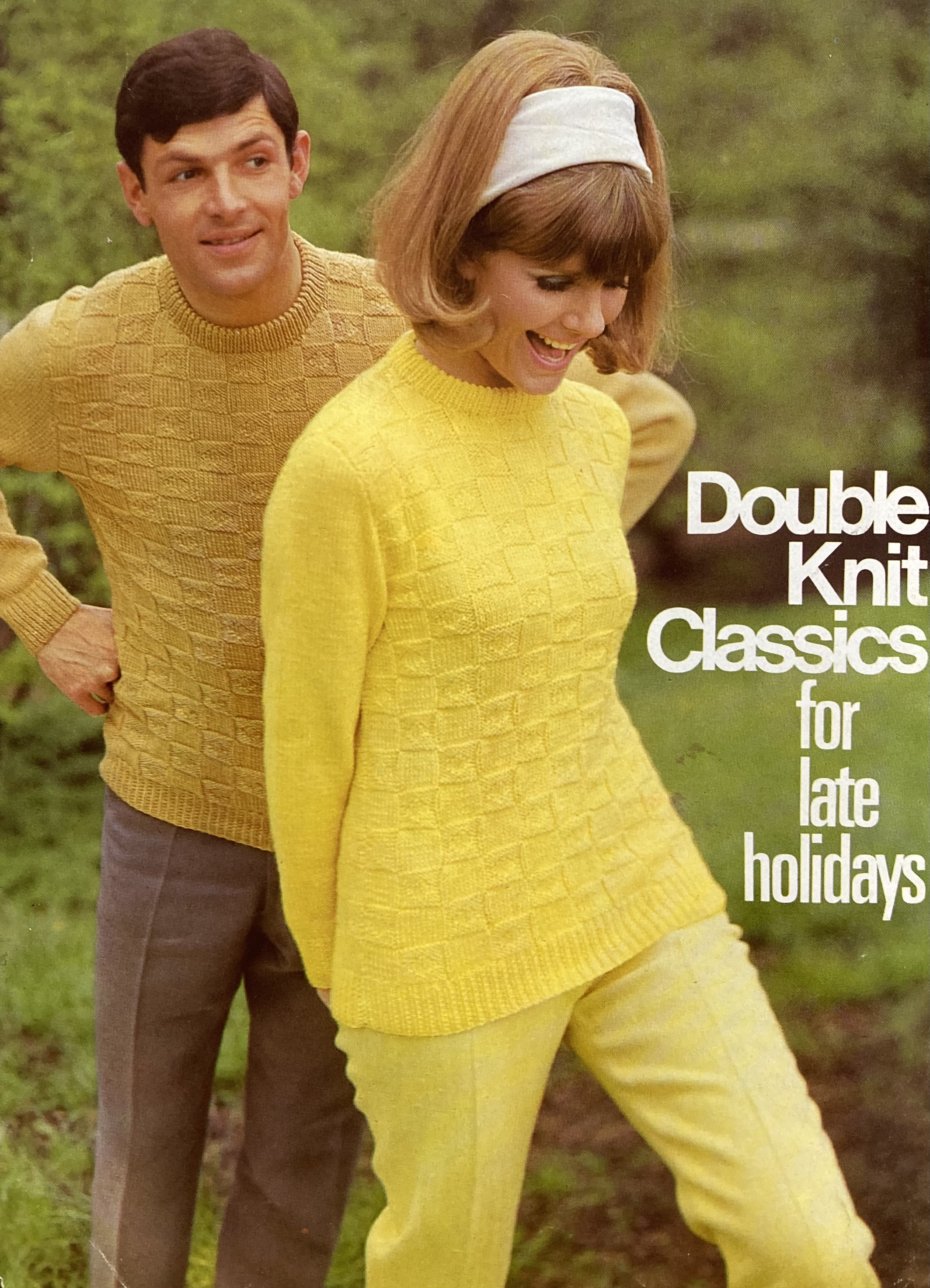
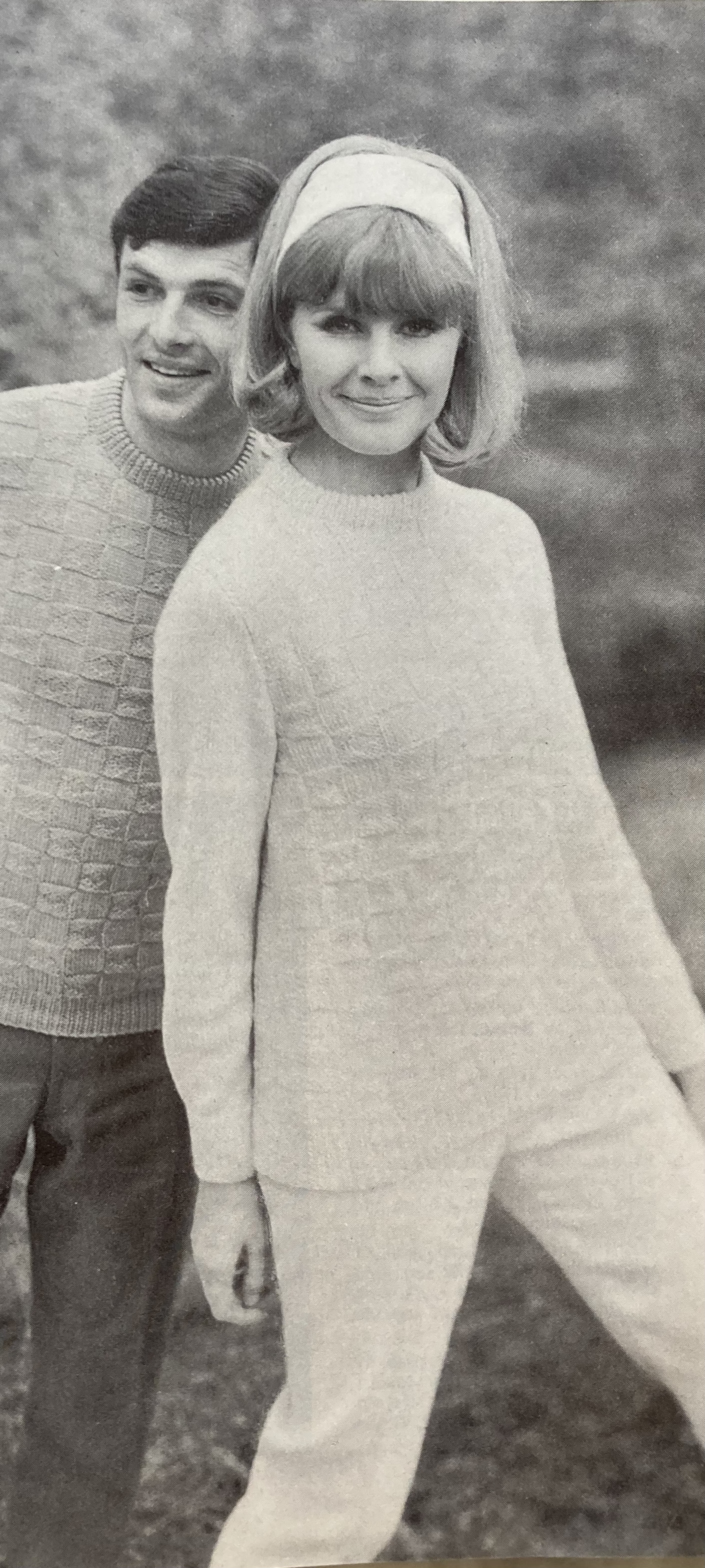
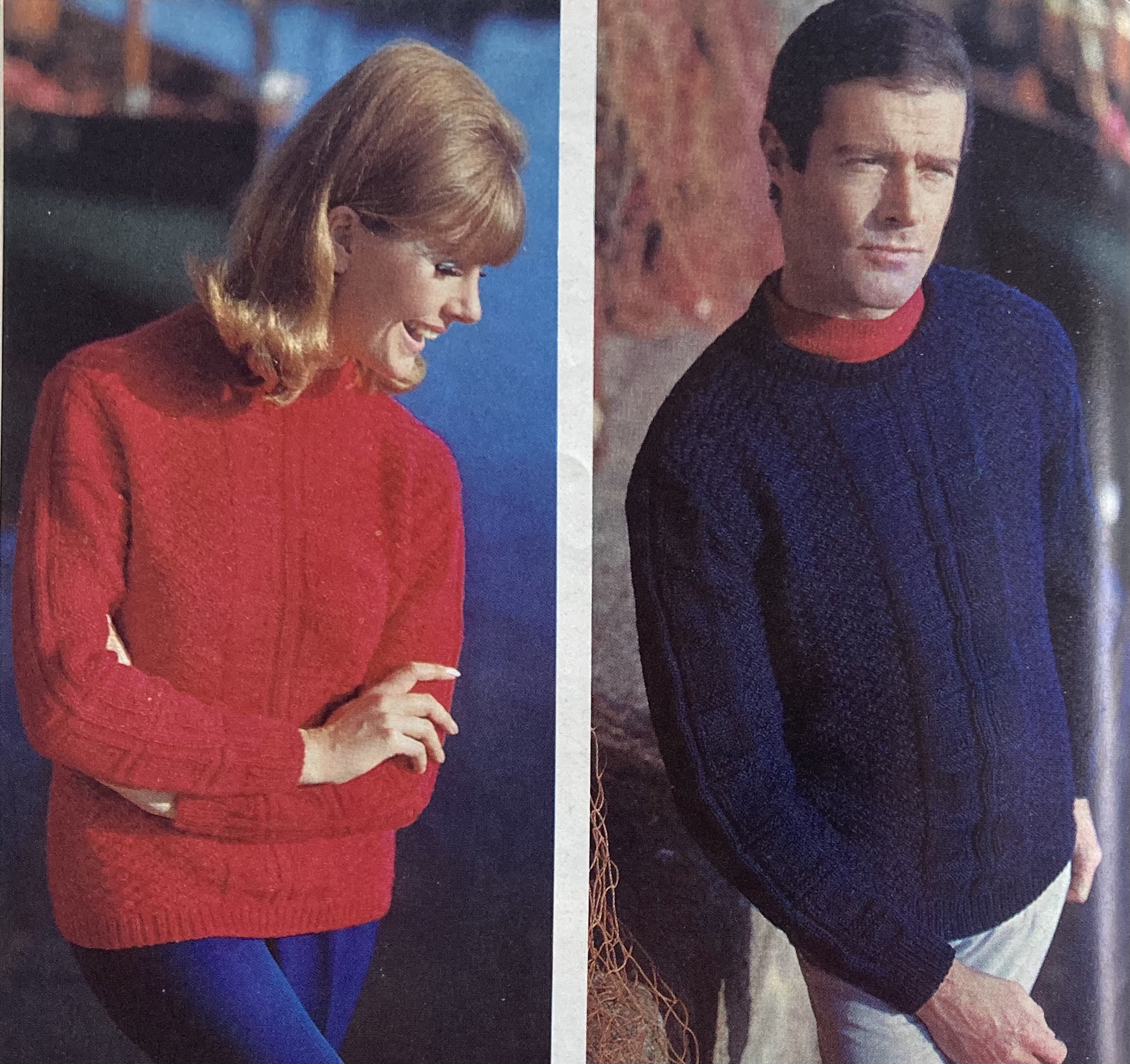
Autumn is here, and Stitchcraft‘s October 1966 issue celebrated it with warm, cosy sweaters in bold colours and textured stitches. Our cover pair sports not-quite-matching partnered pullovers in bright “Golden Willow” with a thick stripe in “Woodland Green.” The stripe on the man’s sweater is diagonal and made in intarsia. “Her” pullover has a broken-zigzag stitch pattern and the stripe running horizontally under the bust line and across the sleeve. Both are made in smooth Totem Double Crepe wool.

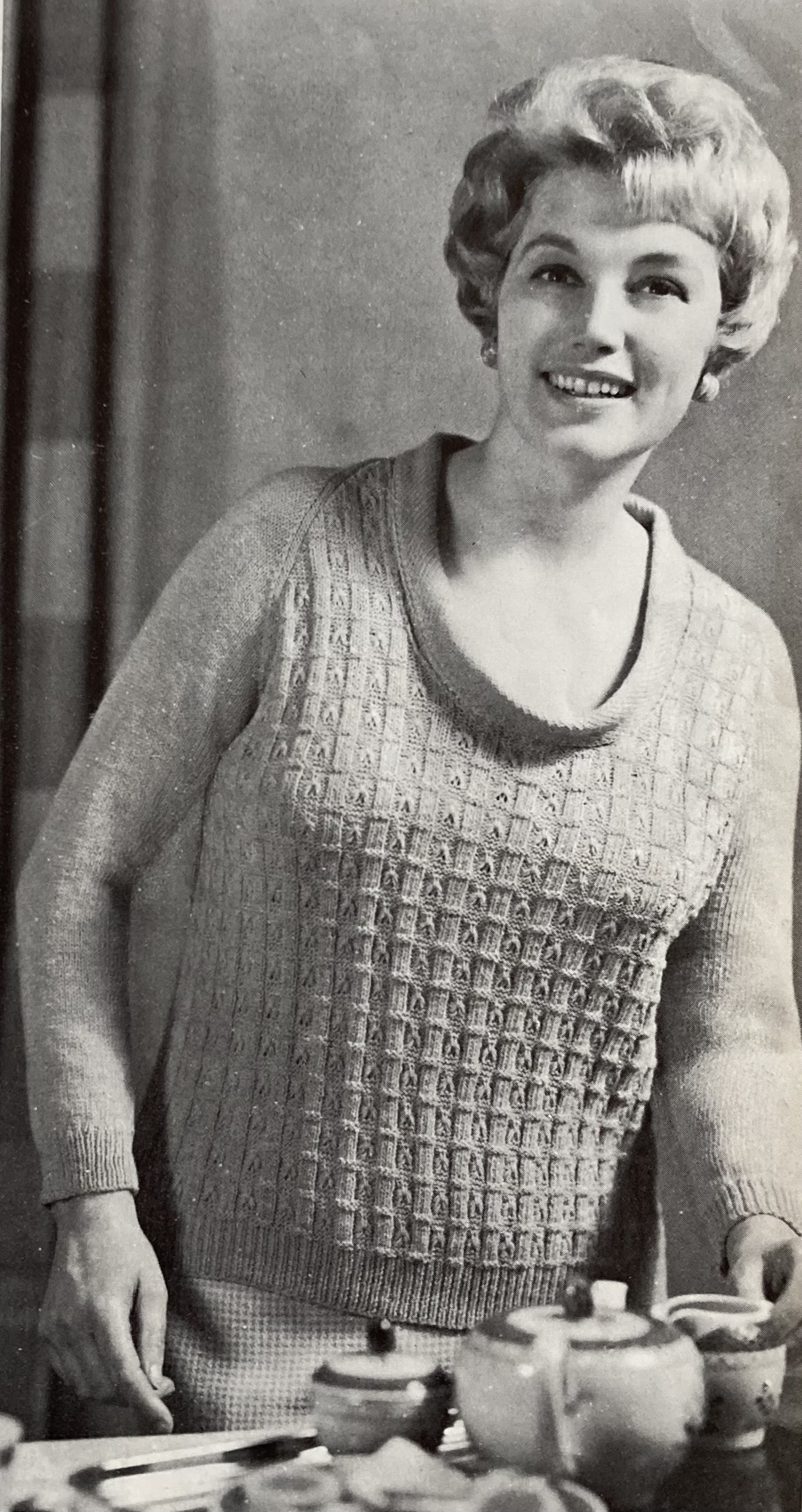
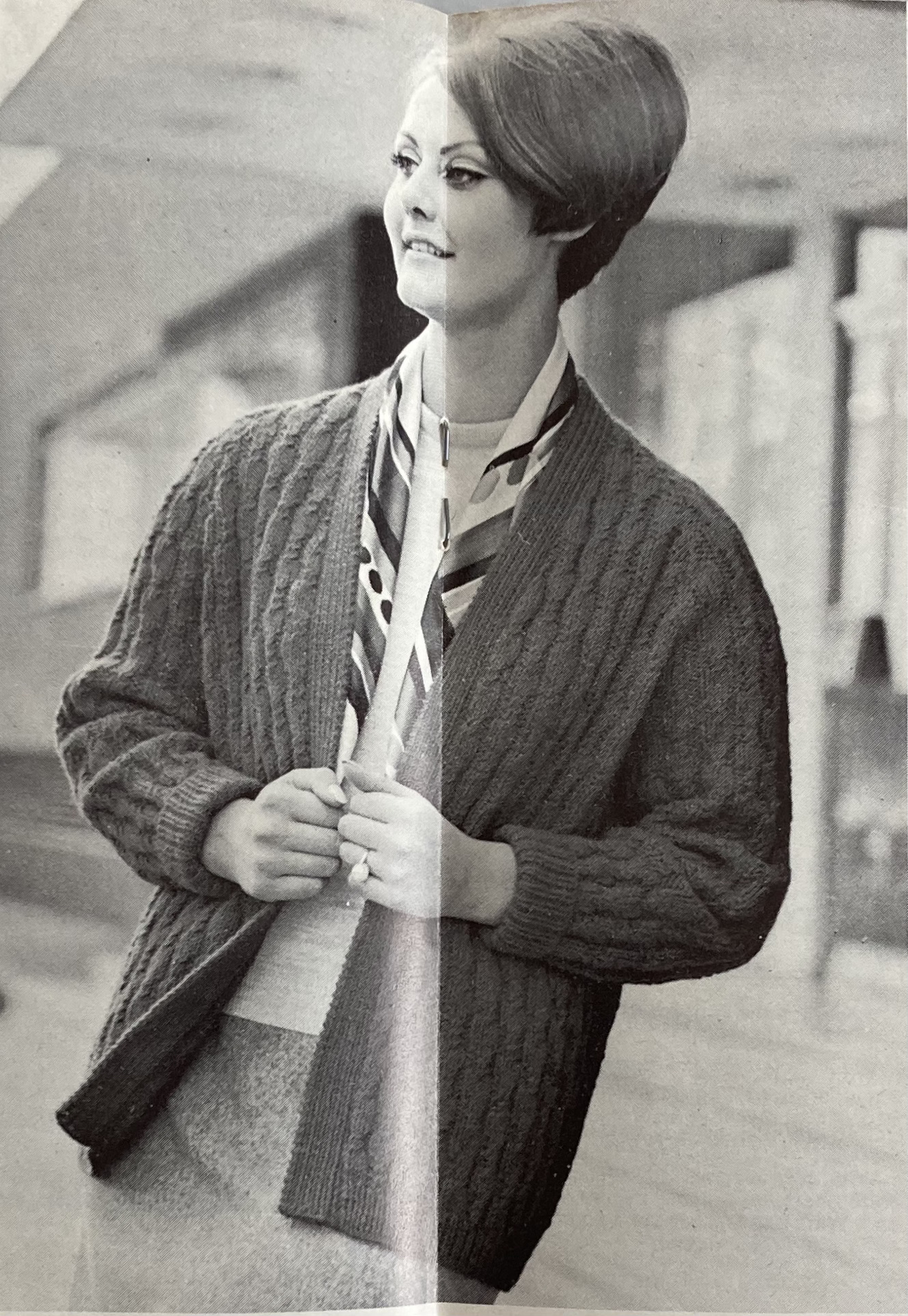
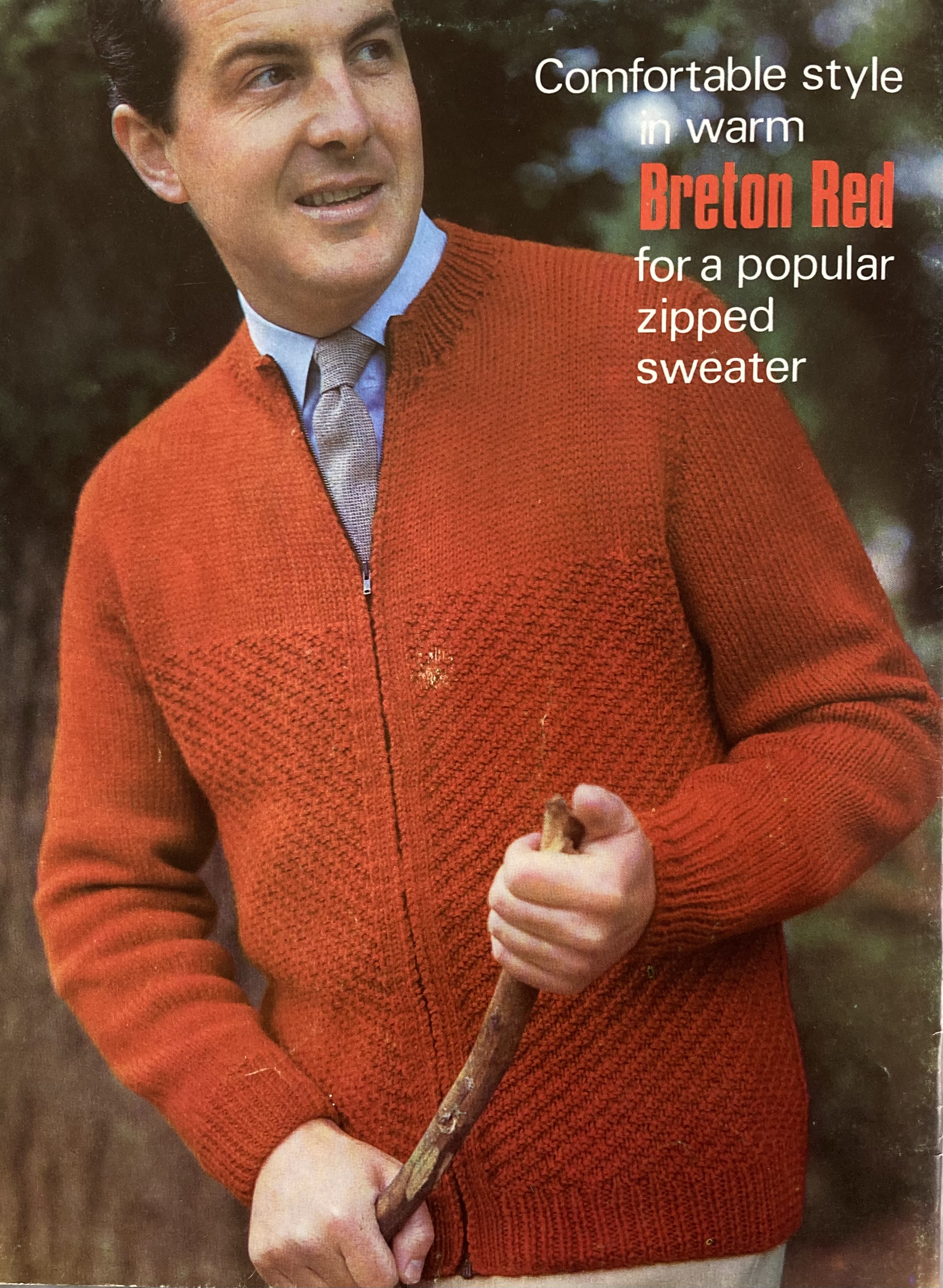
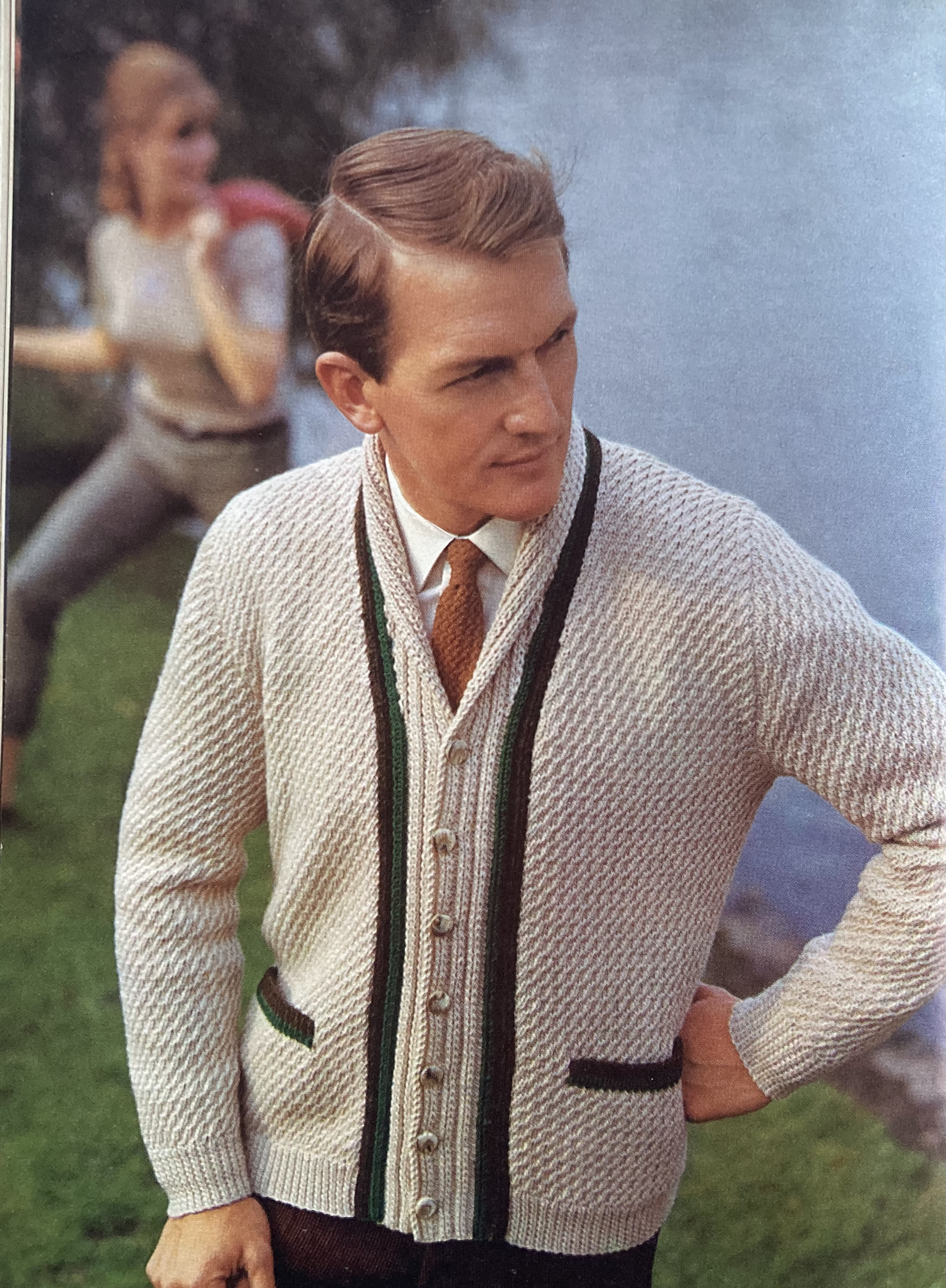
Bold colours, textures and diagonal stripes (whether made with colours or stitch pattern) are on trend for many of the other garments in this issue as well, for example, a ridge-pattern women’s pullover in “Gemini Turquoise” in Courtelle Double Crepe (like Totem, but 100% synthetic), or a “car coat” for larger sizes in bulky, bright red Capstan with a flattened cable pattern. There’s a rust-red zipped cardigan for men, too, in Patons Flair wool and diagonal herringbone stitch.

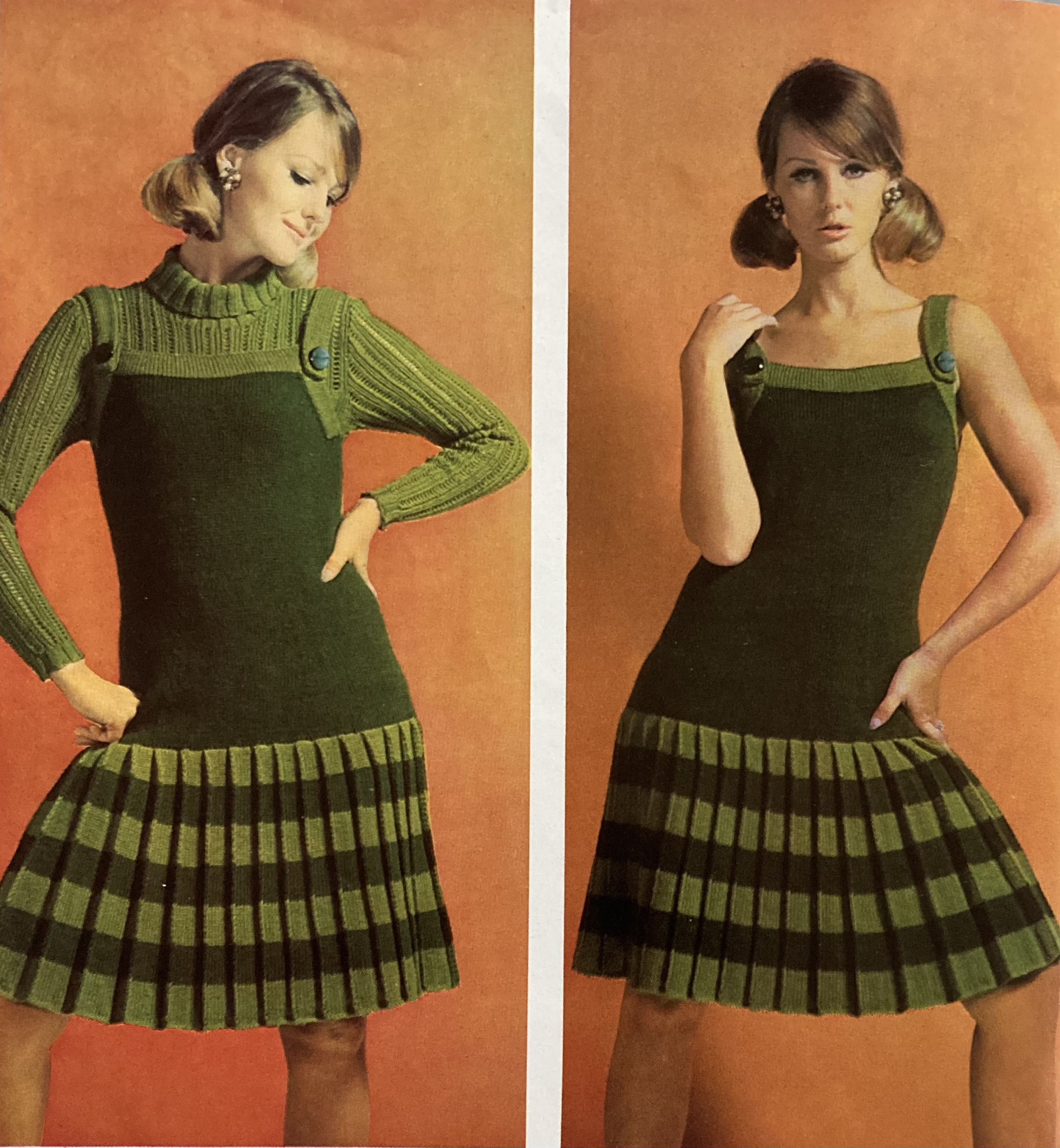
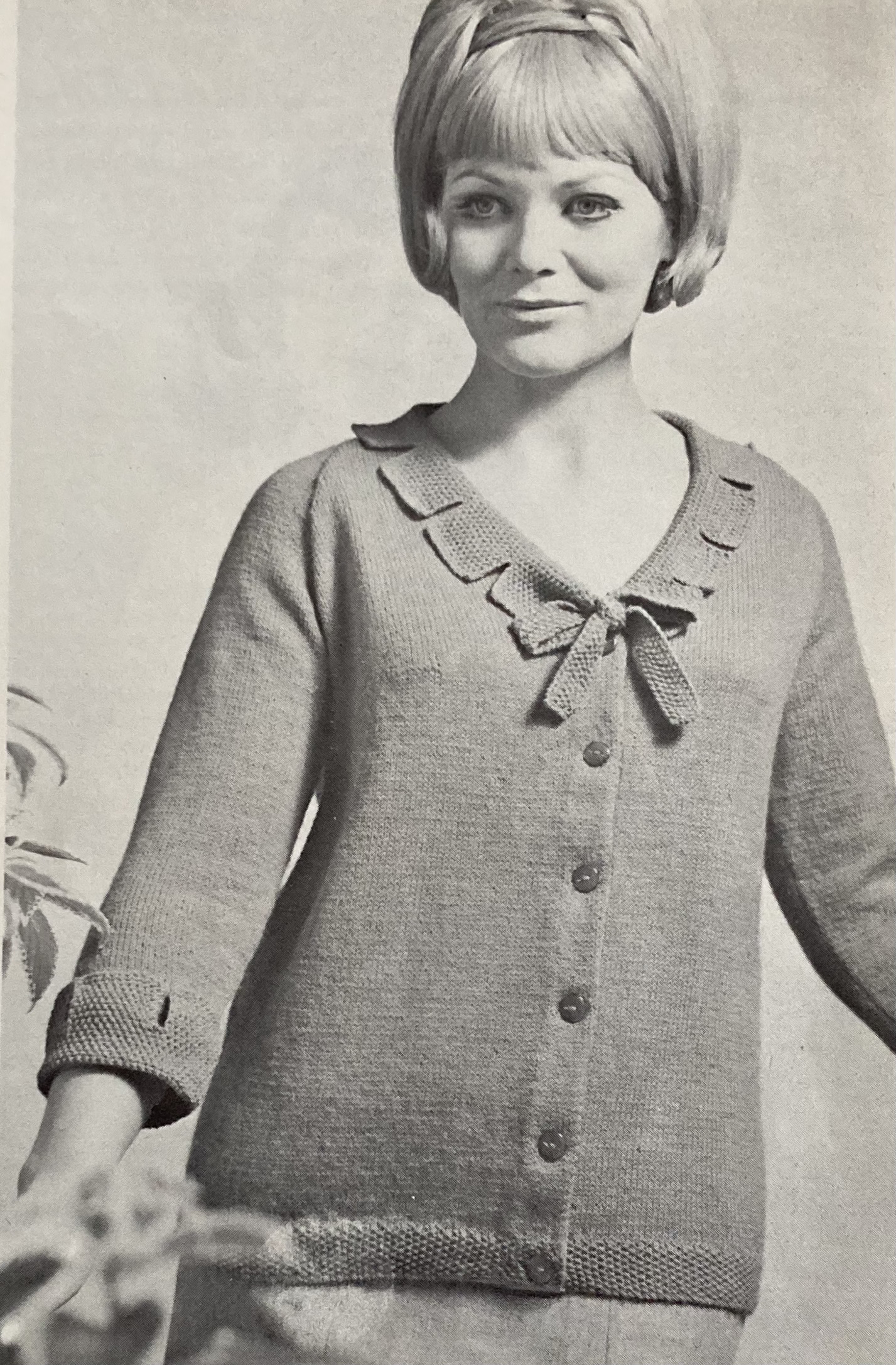
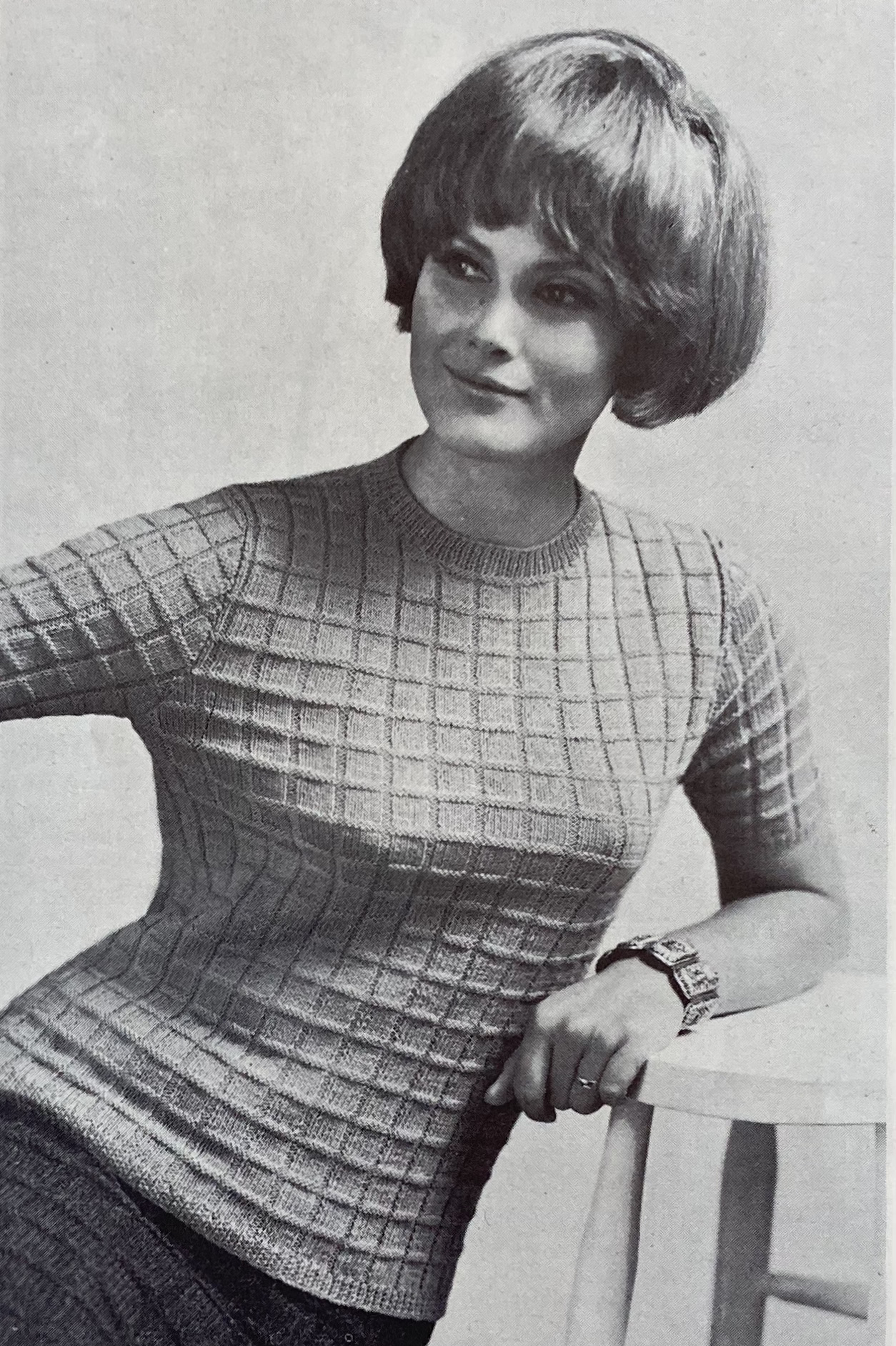
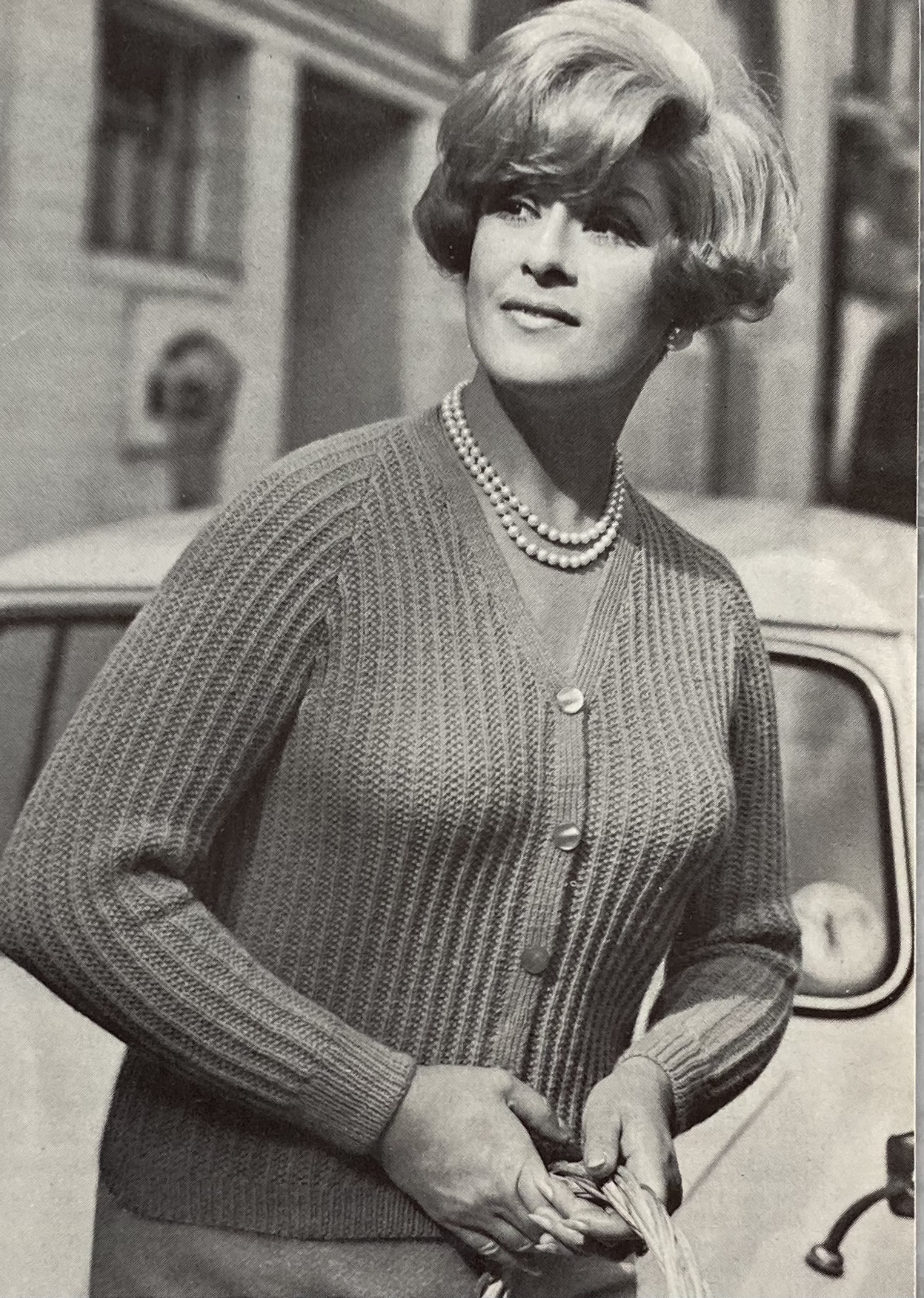
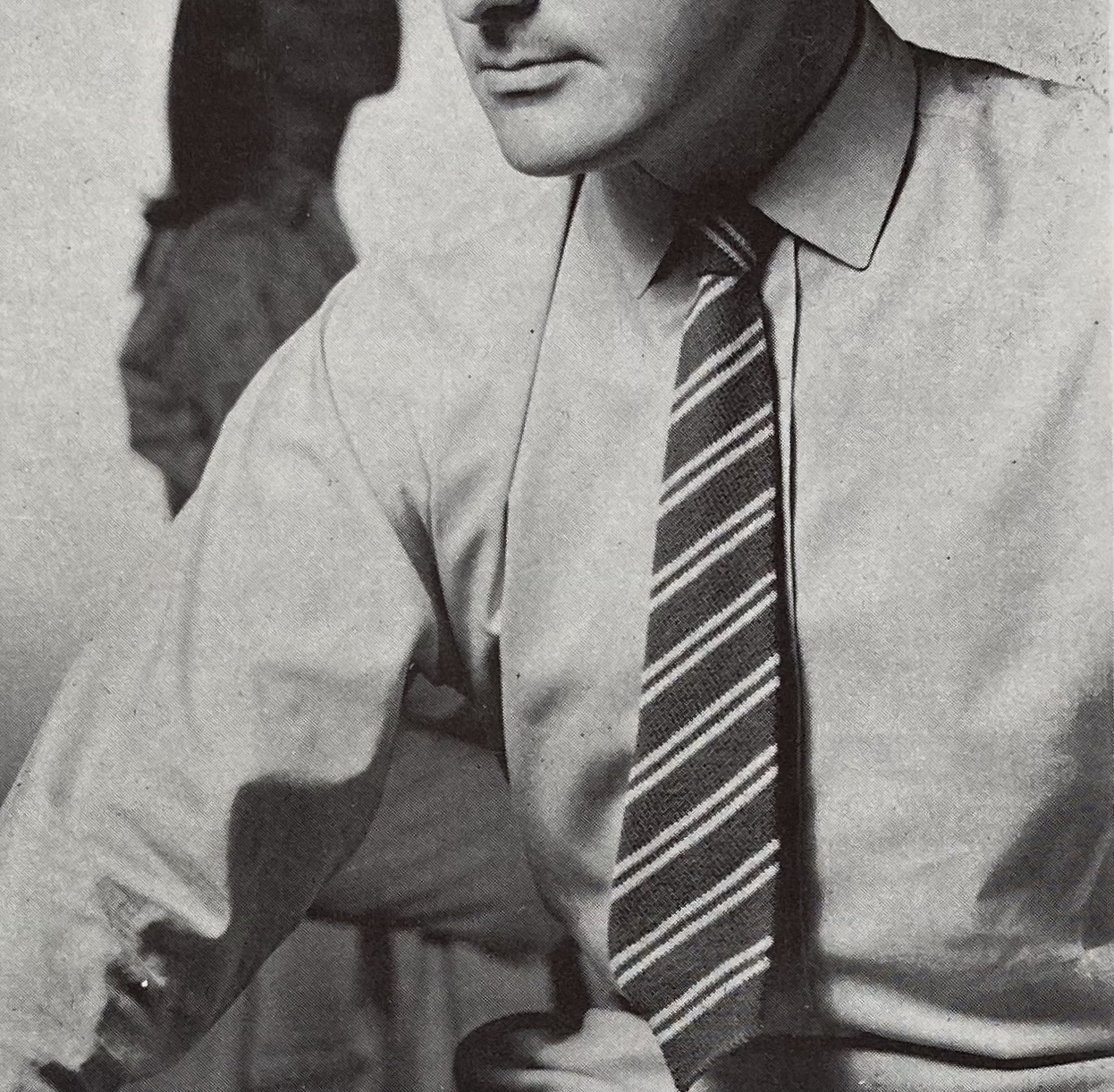
For a more elegant look, there are two garments in lighter, 4-ply wool: a dress in “French Green” with an intriguing “shadow check” pattern or a classic V-neck cardigan for larger sizes (colour: “Blue Streak”). I have never seen either of the stitch patterns before. The “shadow check” is particularly intriguing, as it seems quite simple, but makes a very cool sort of large waffle-check effect. The first two rows are stocking-stitch, to make the horizontal line, then the squares are made with 1 row of k1 tbl / p1 tbl “ribbing” separated by 2 purl stitches and one row of k2, p9, repeated to the end of the “block” (14 rows in all). The pattern on the cardigan is even simpler: Row 1: k3, p1; Row 2: k1, p1. If you have any wool left over, you can make a diagonally-striped (or plain) knitted tie.

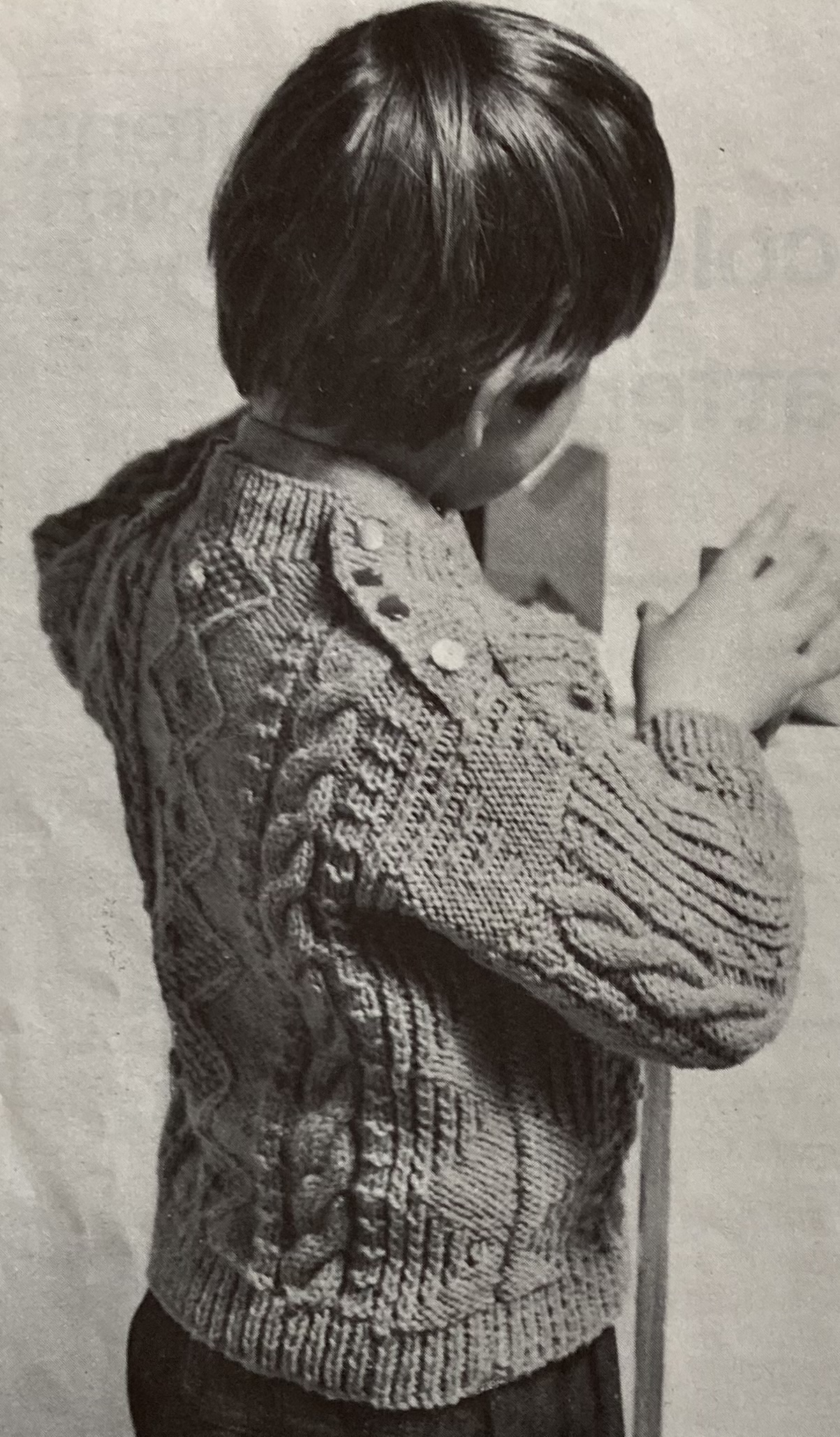
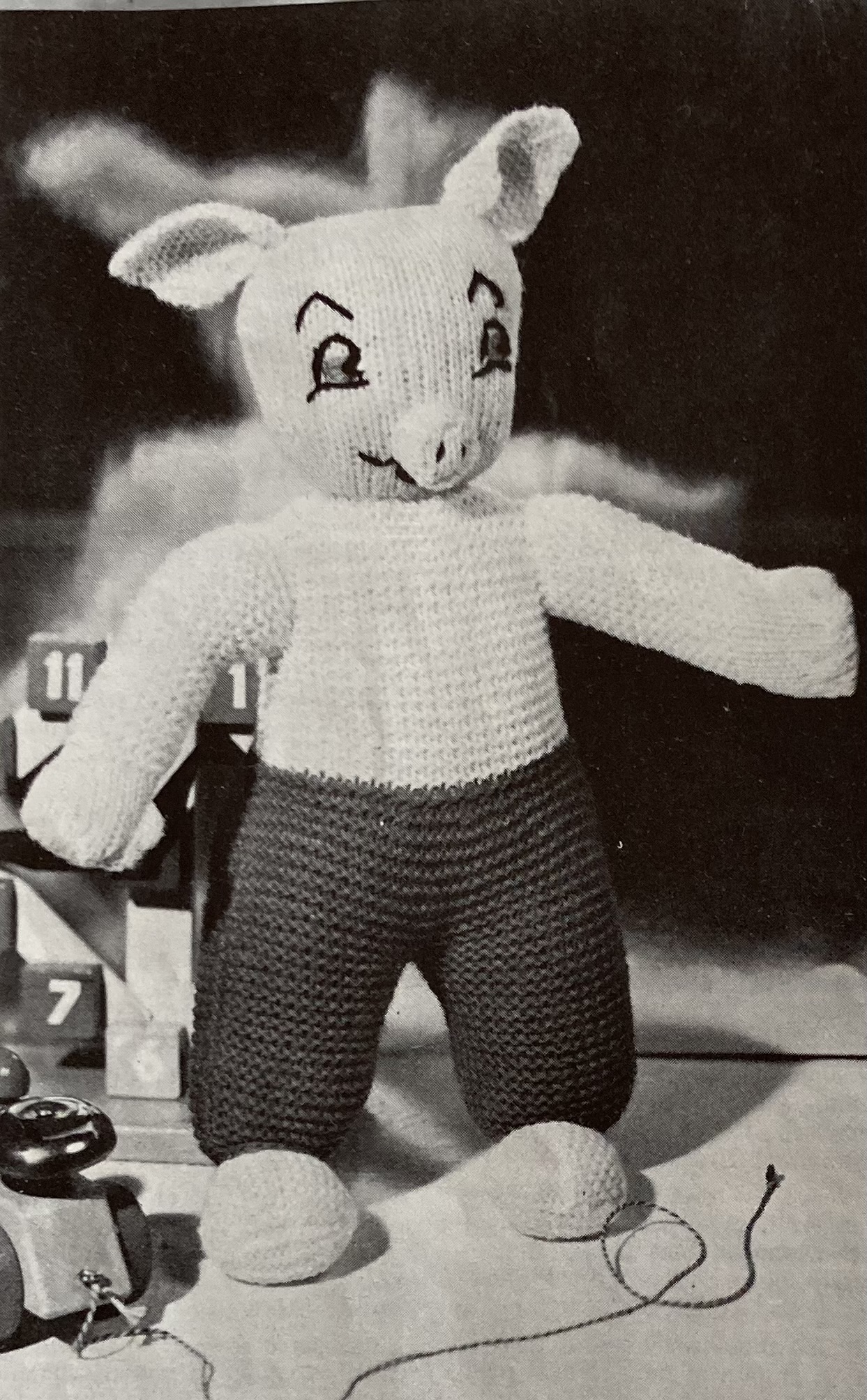
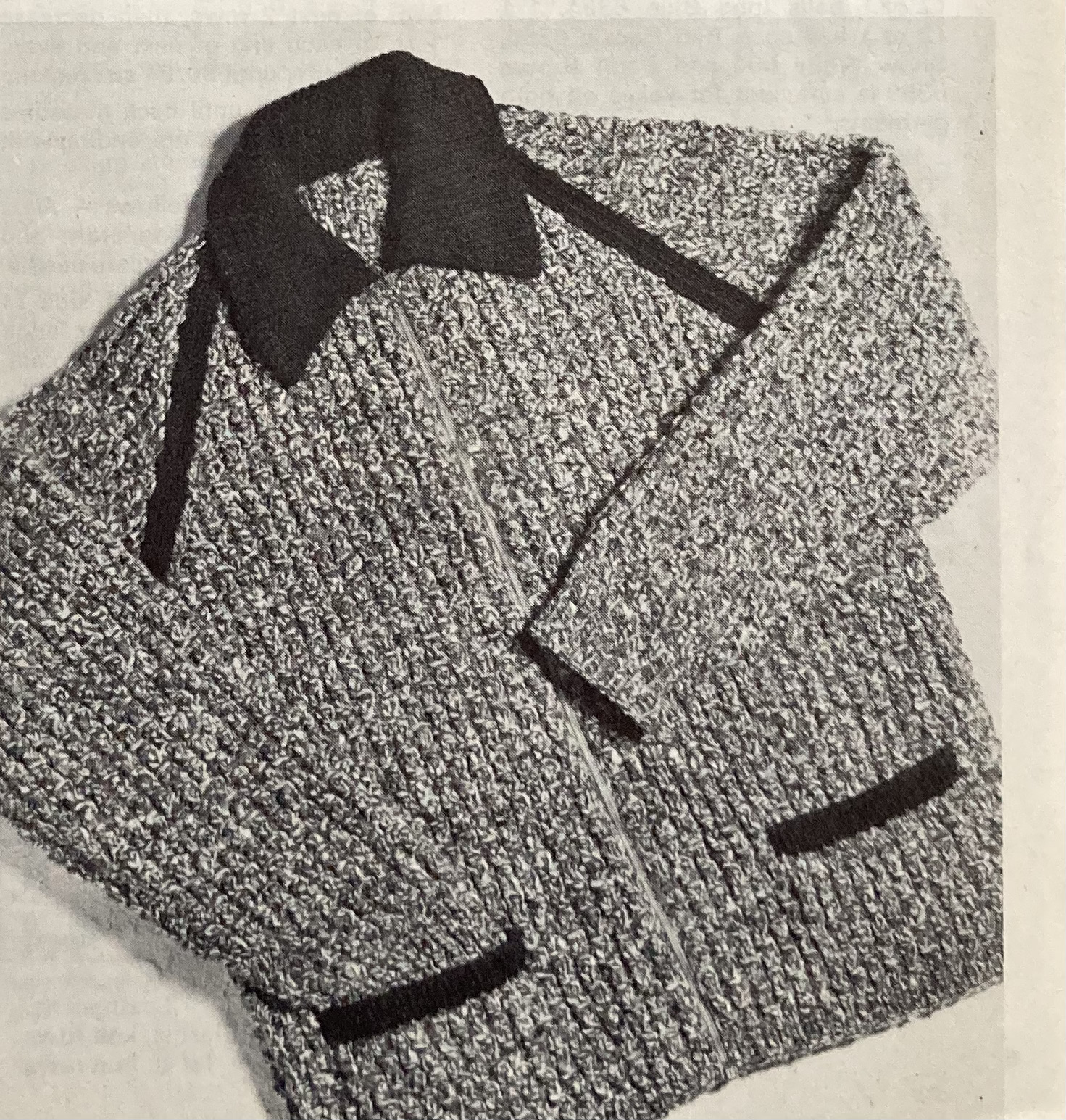
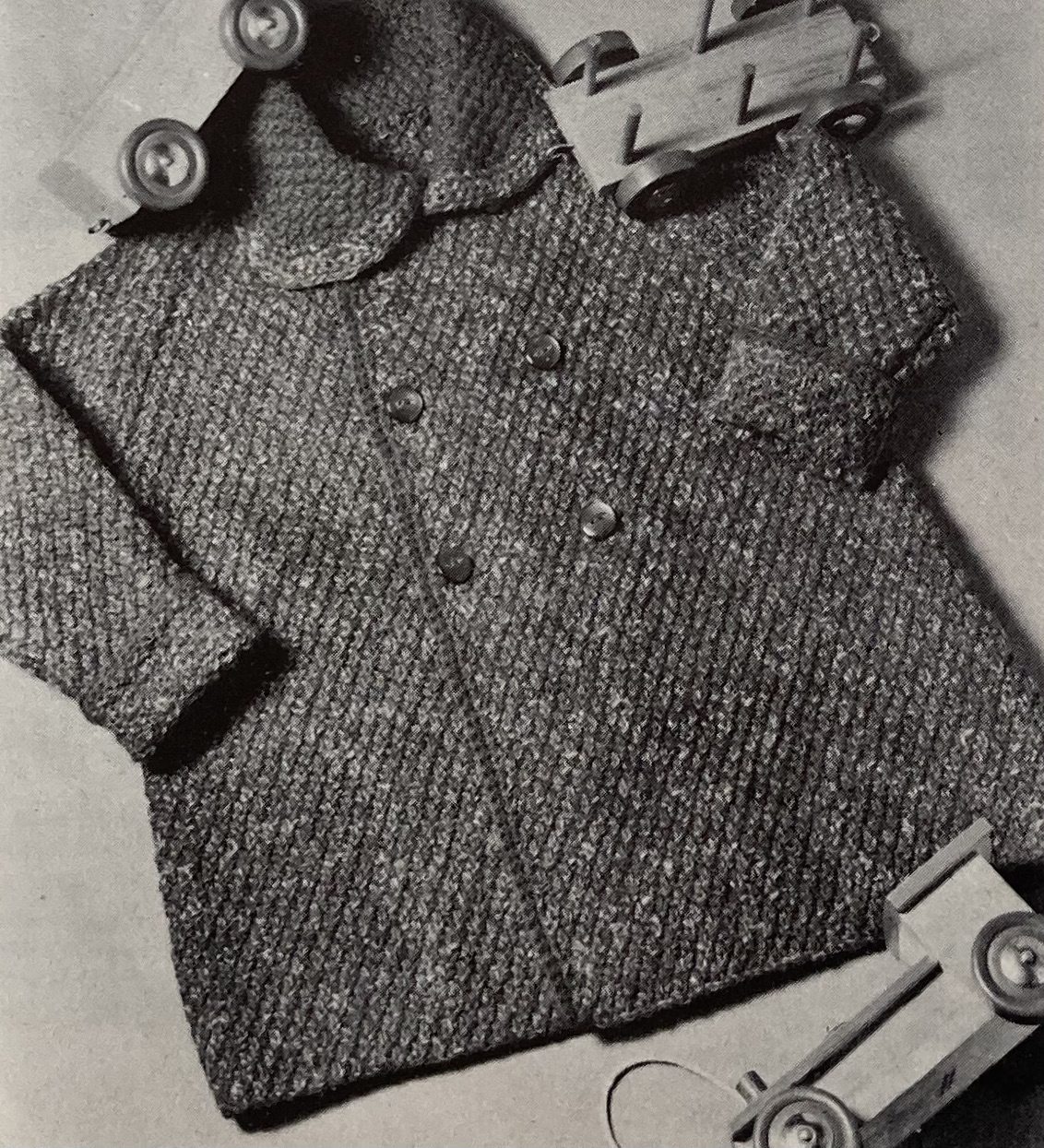
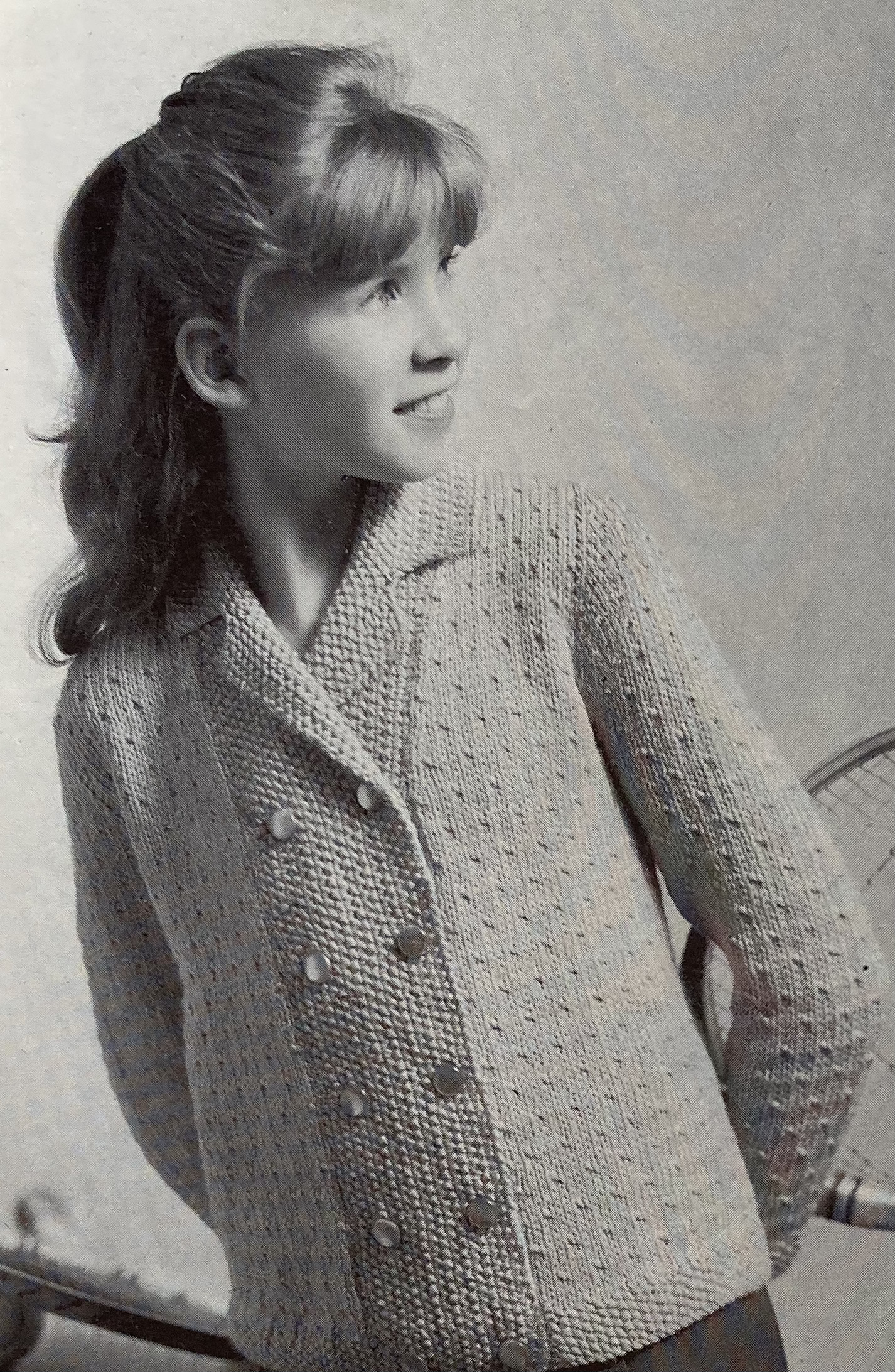
For the little ones, there’s a cardigan with checked front panels in “Fuzzy Wuzzy” angora wool that are knitted separately and sewn on to the front+back piece before adding the ribbed trim, and a nice warm tweed coat in “Moorland” wool. Well, at least the upper half of this poor tot’s body will be warm — if he goes out dressed as he is in the photo, I worry that he will literally freeze his arse off. (Doesn’t seem to bother him — I’m guessing it was warm enough in the studio). There’s a huggable stuffed elephant and a winter outfit for a doll to knit, as well.

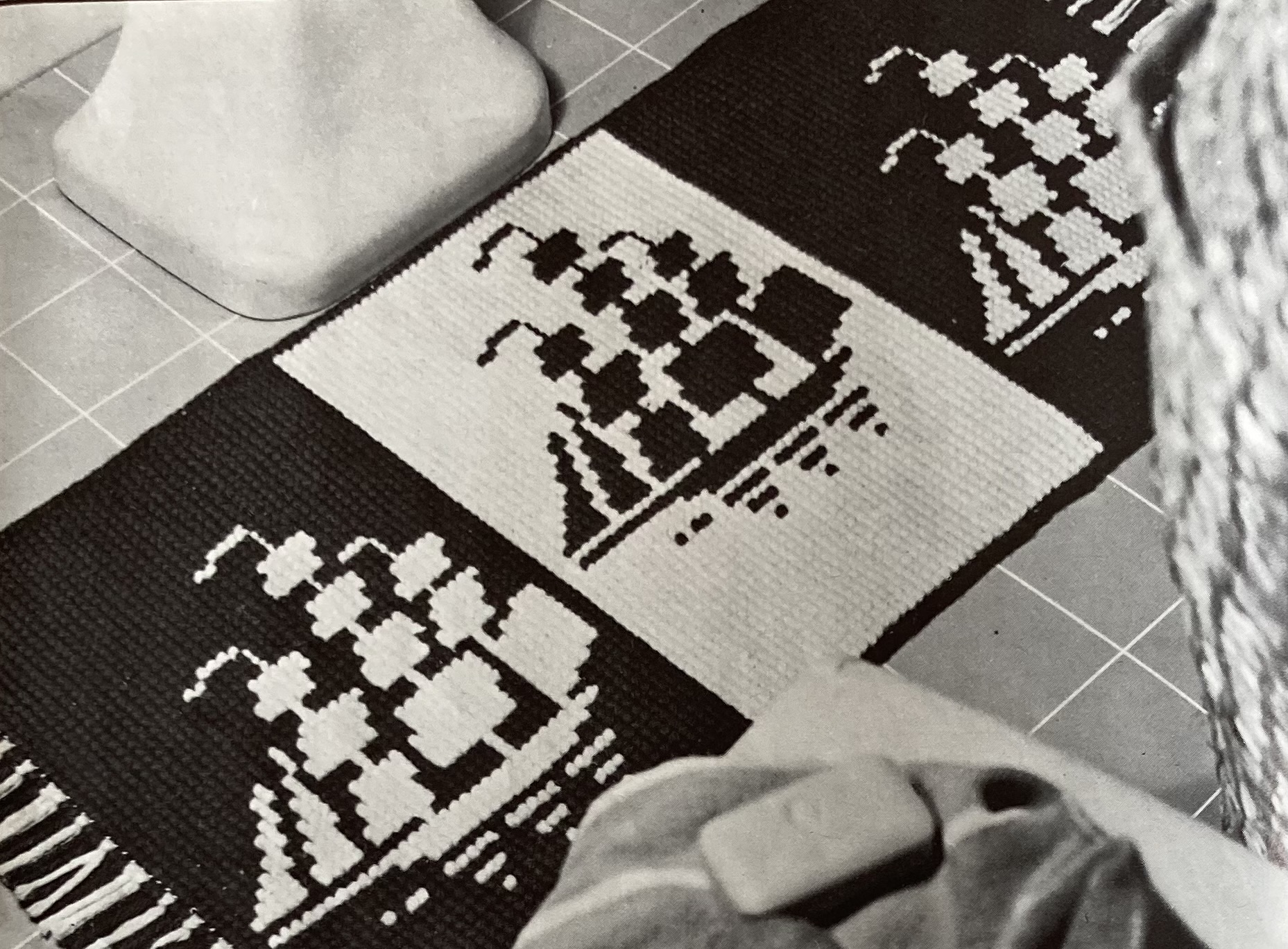
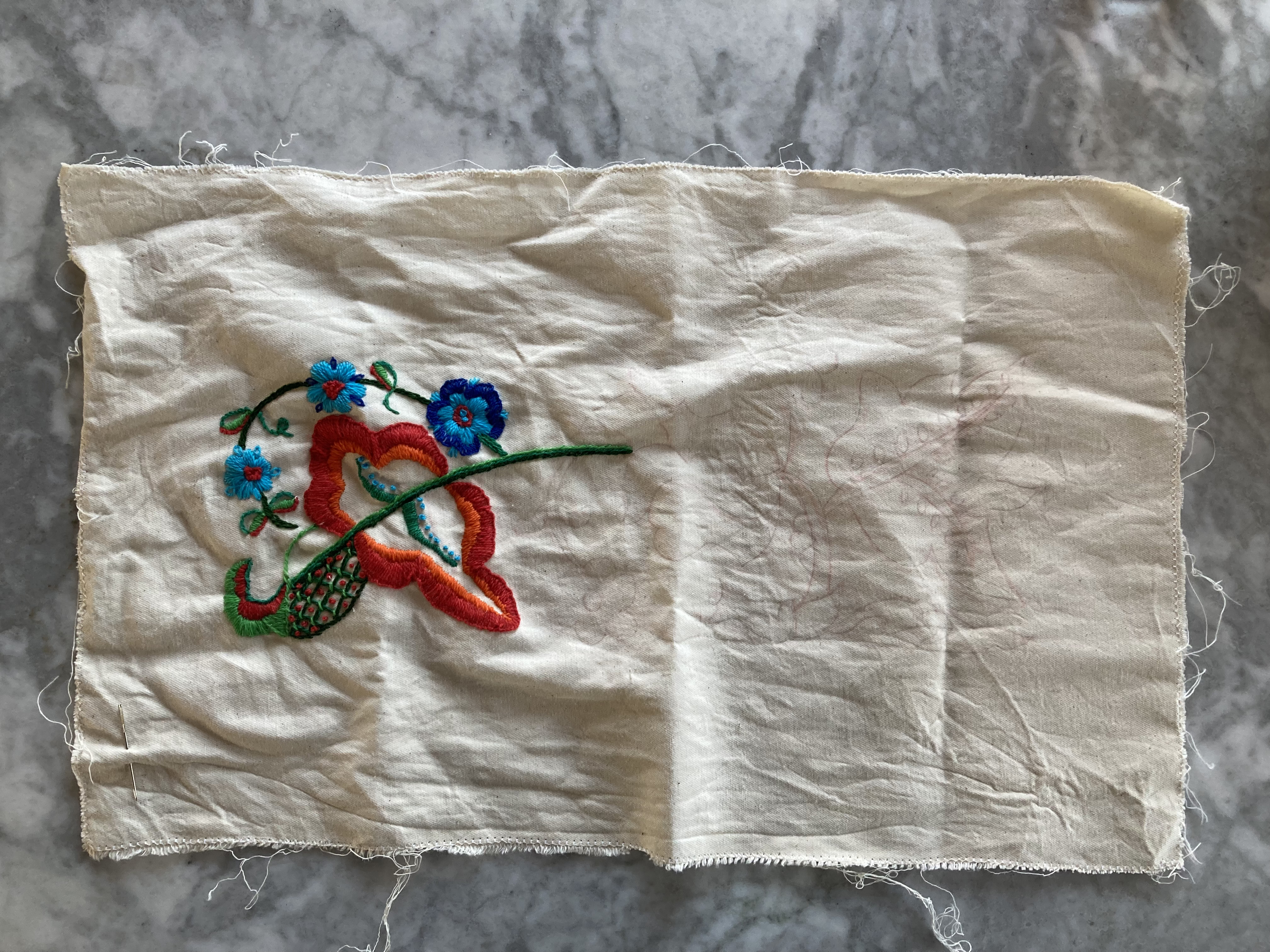
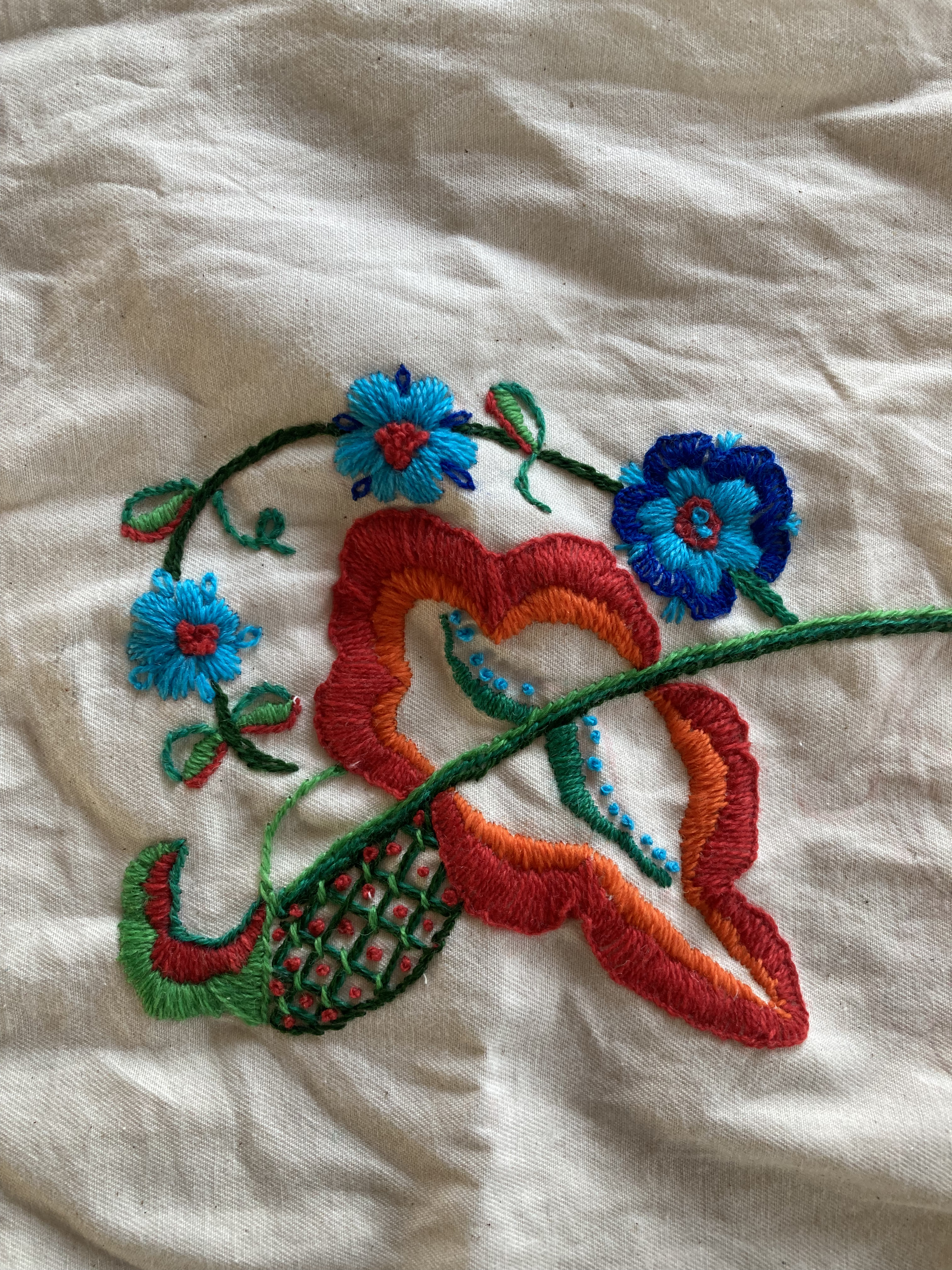
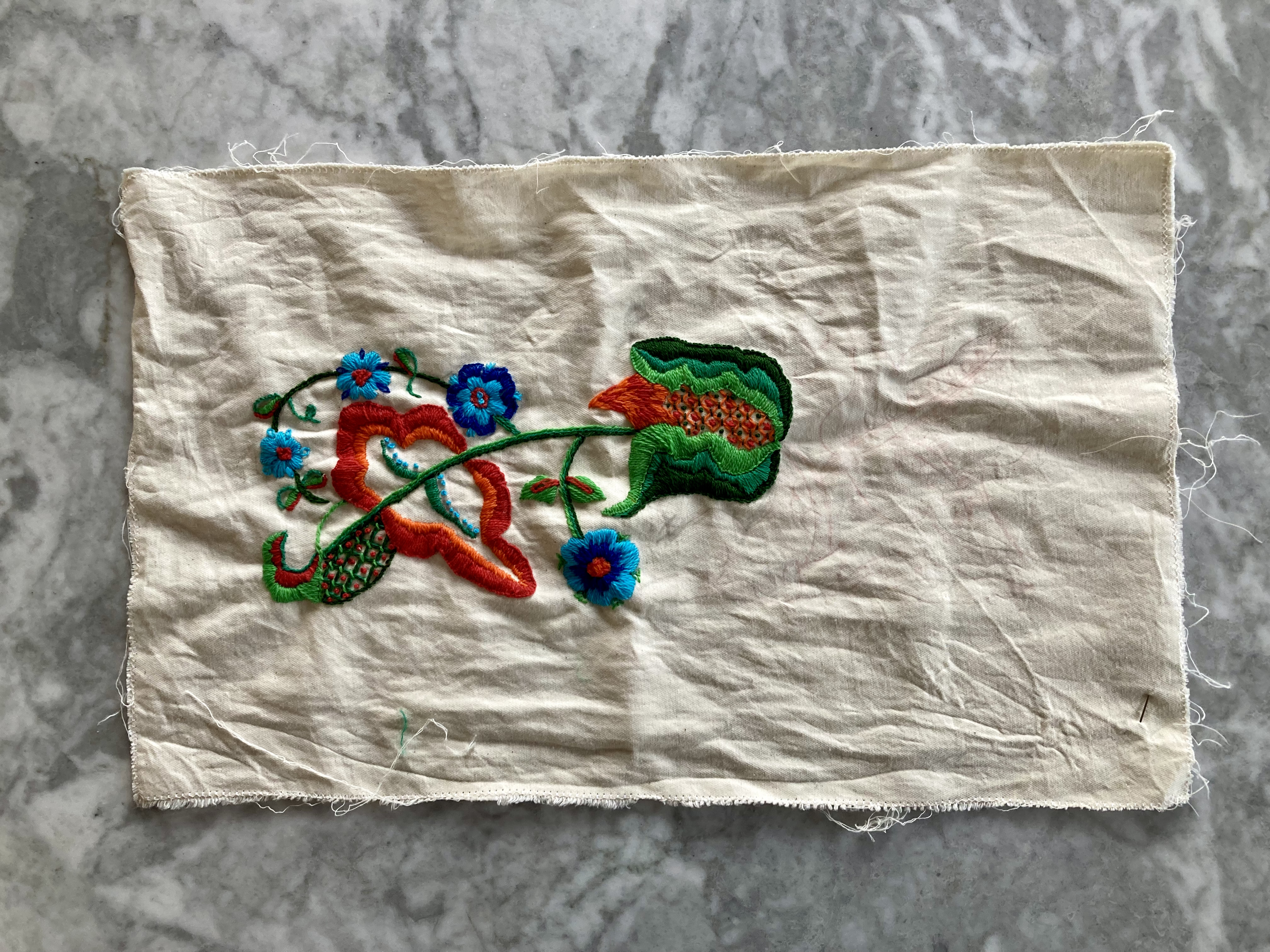
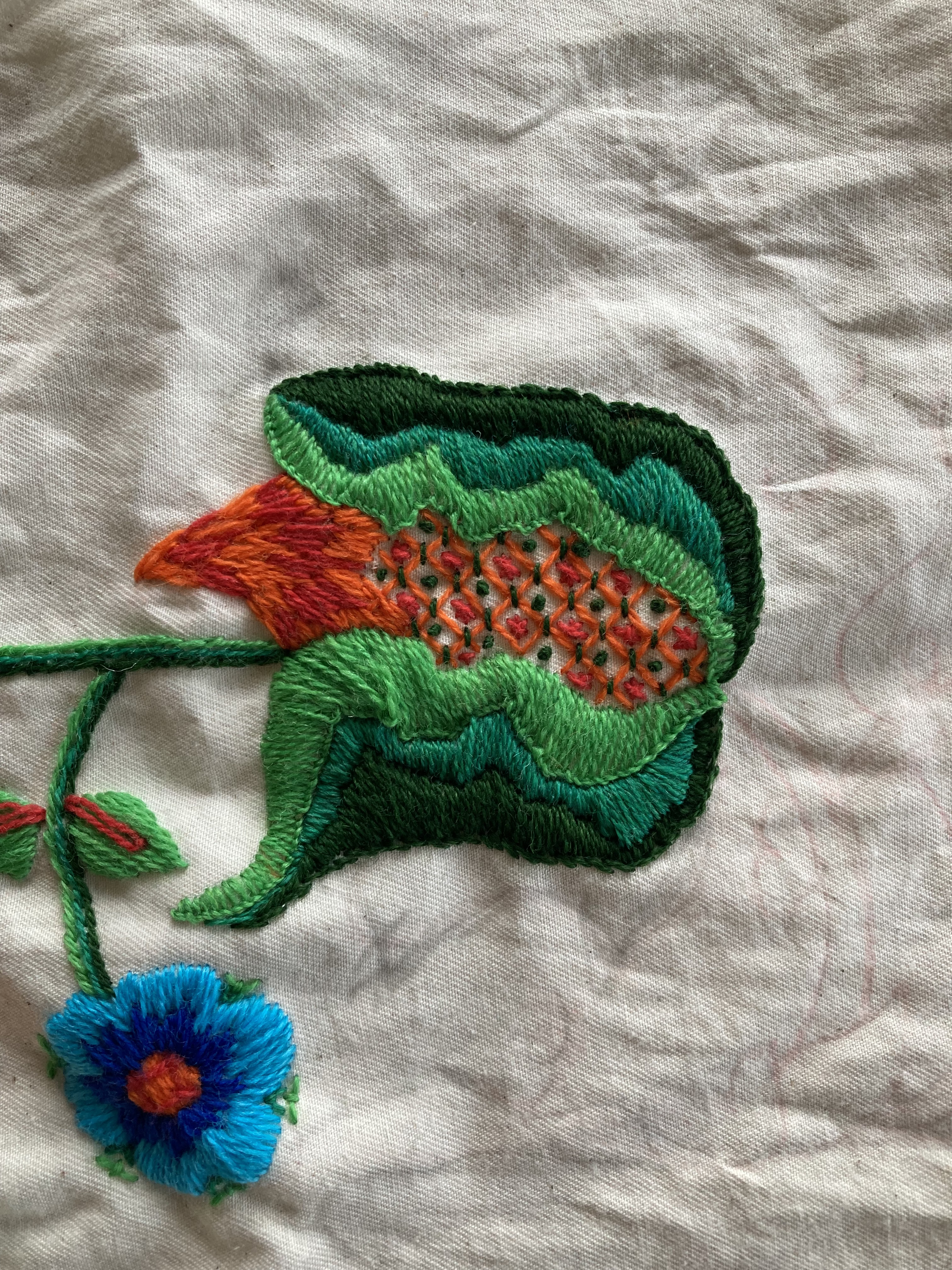
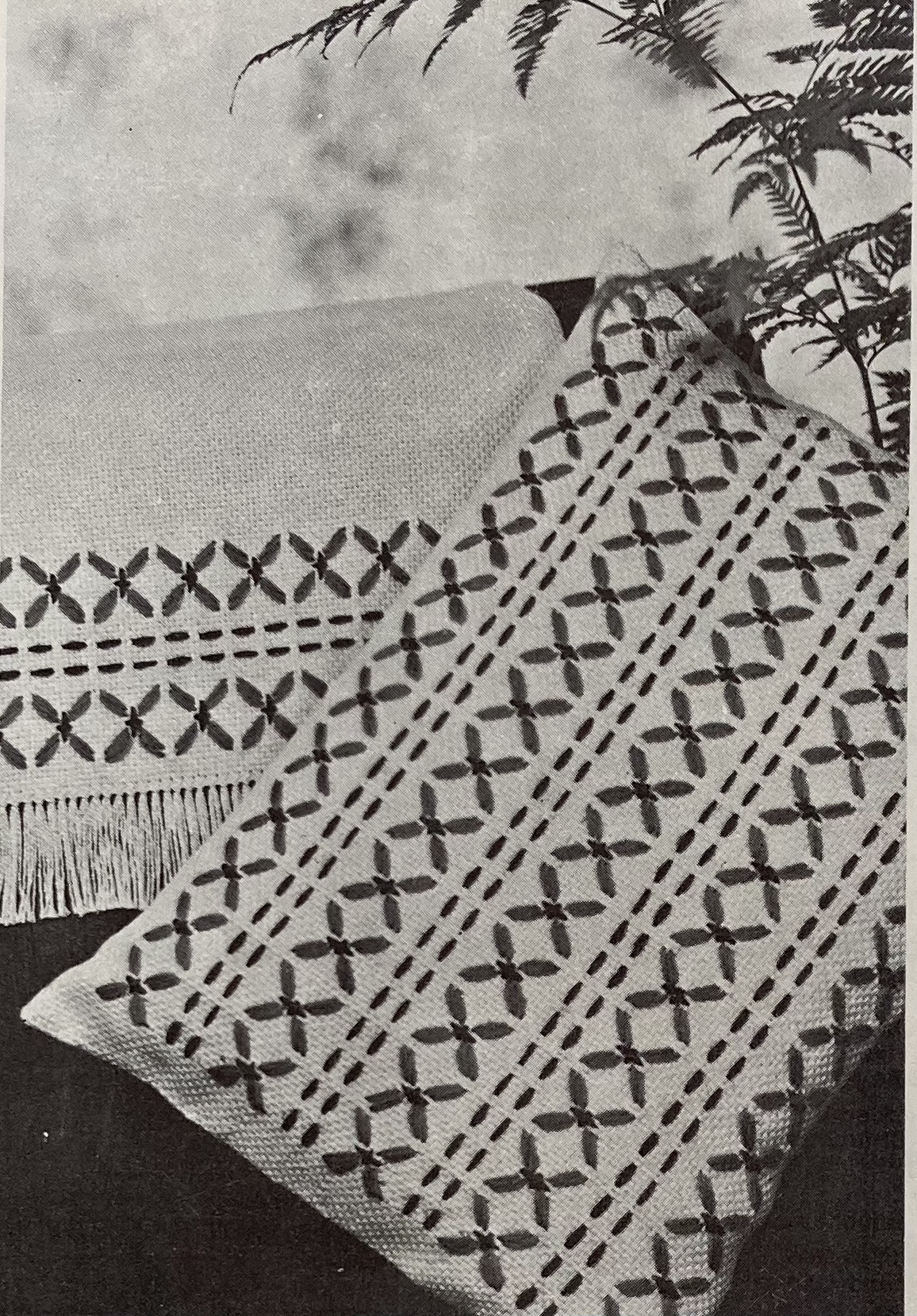
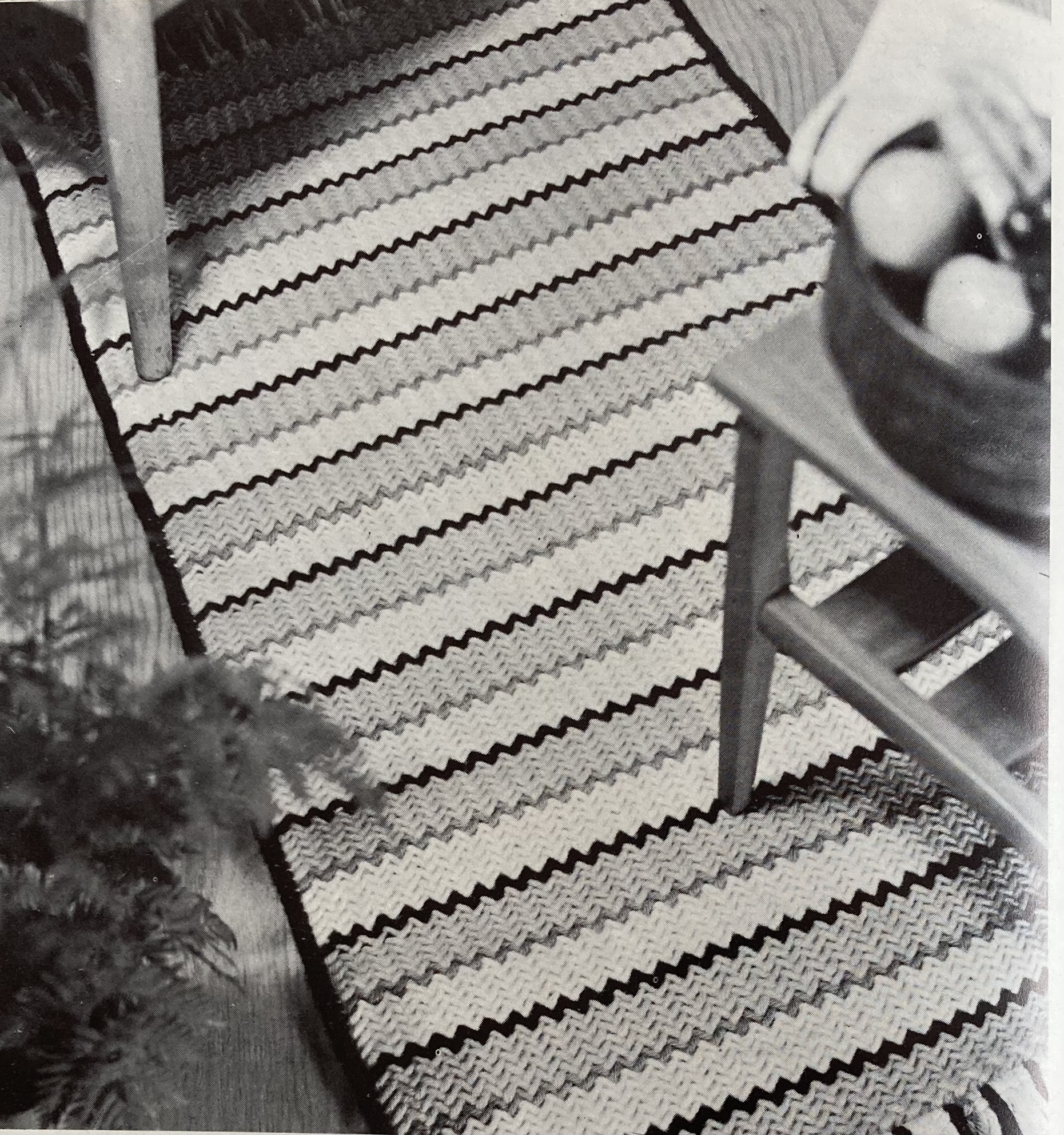
The homewares are pretty standard, but offer a range of different techniques: a crocheted cushion, a counted-stitch cushion and chairback, a practical stitched rug, or huckaback embroidery for various practical linens. Advanced embroideresses can make a stunning chairback set in Jacobean-style wool embroidery with plenty of intricate and multi-coloured stitches.

But wait, there’s more! Or not, sadly. This issue apparently had a supplement of nine designs “to knit for the family in Patons Brilliante qualities”. It must have been carefully removed from this particular issue at some point and separated from it, since there is no trace of it in my magazine, not even in the centre fold where it was presumably stapled in, and all the regular pages are intact. If you happen to have this supplement, please feel free to write in and let us know what’s in it!

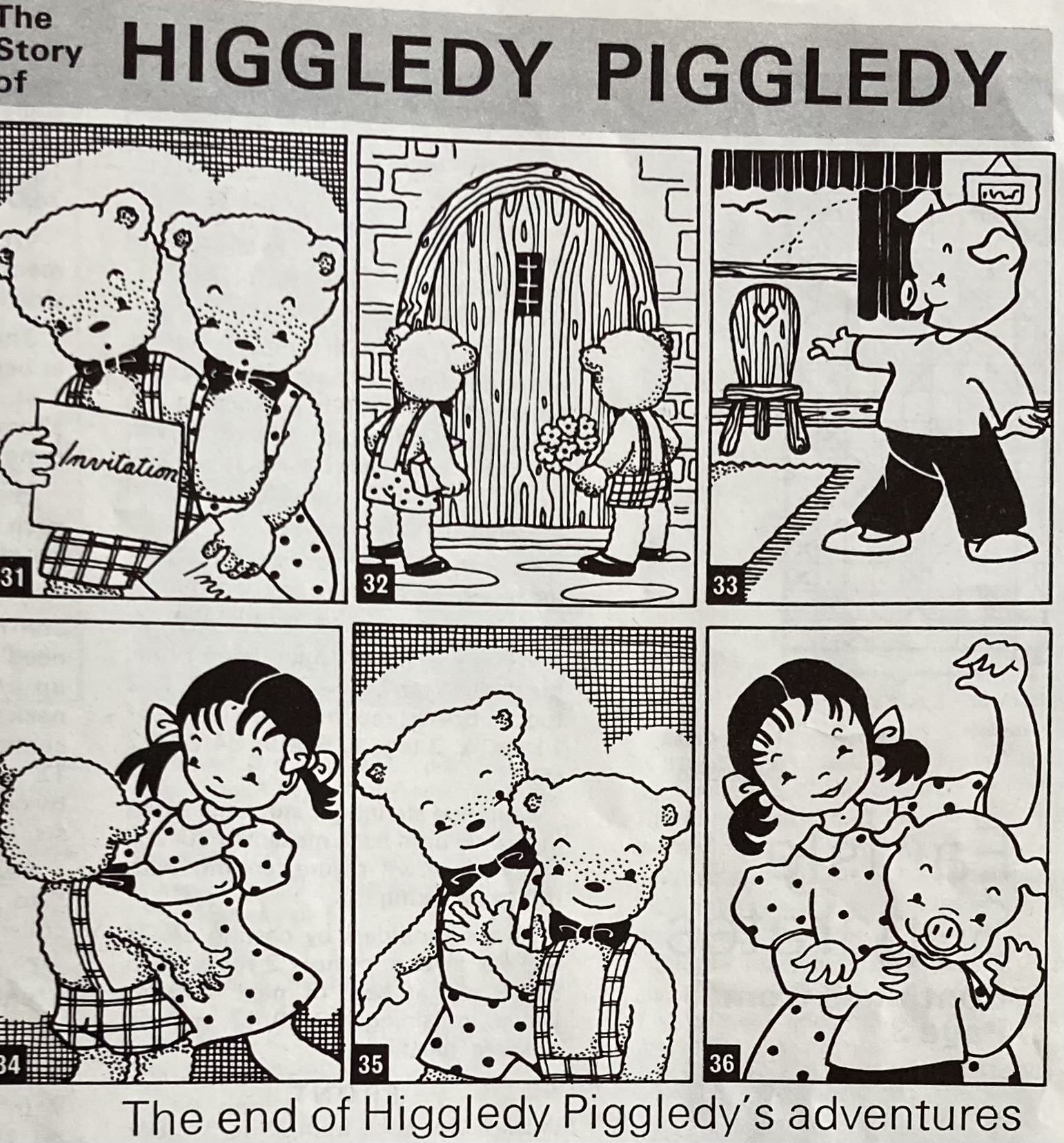
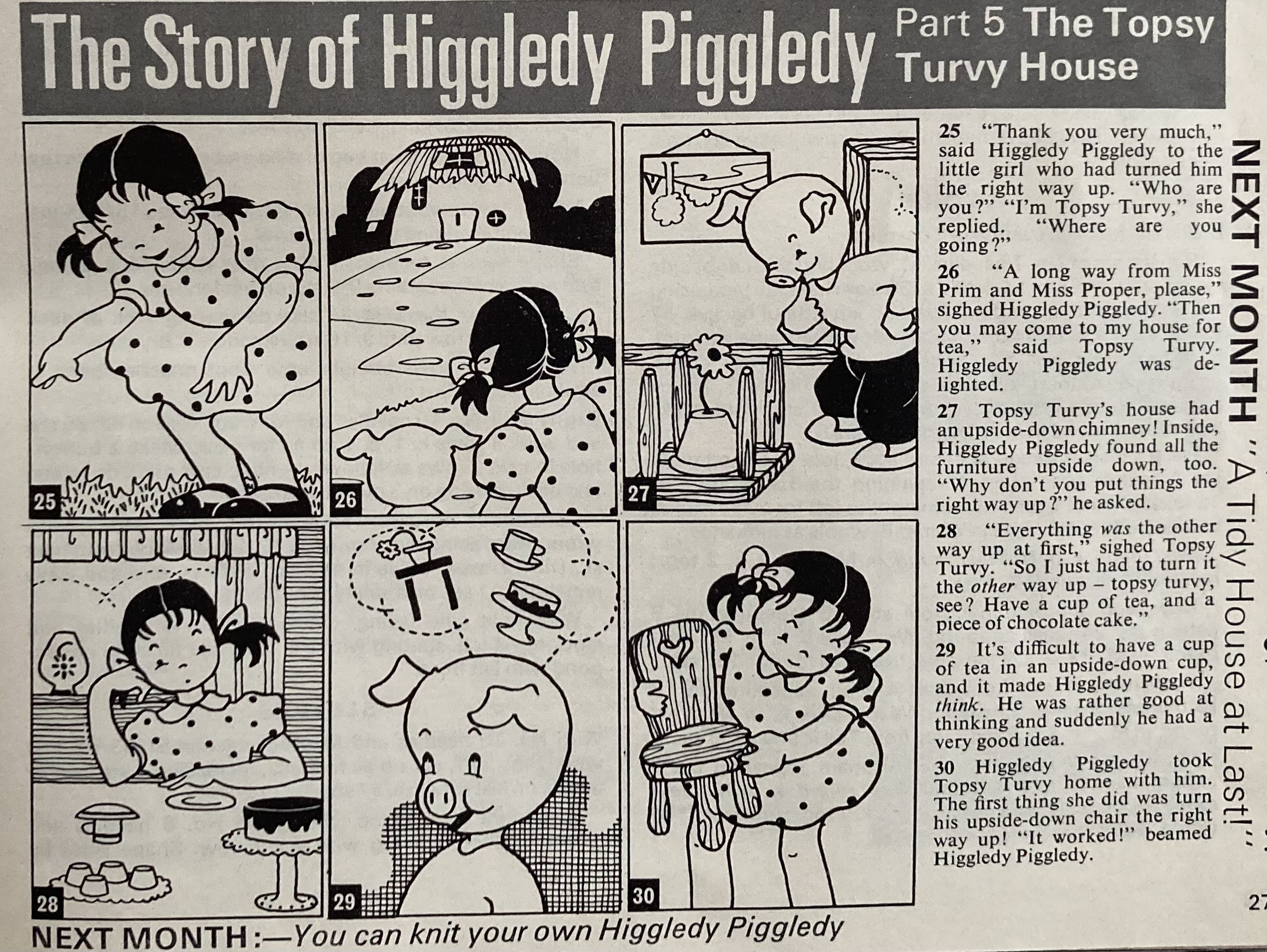
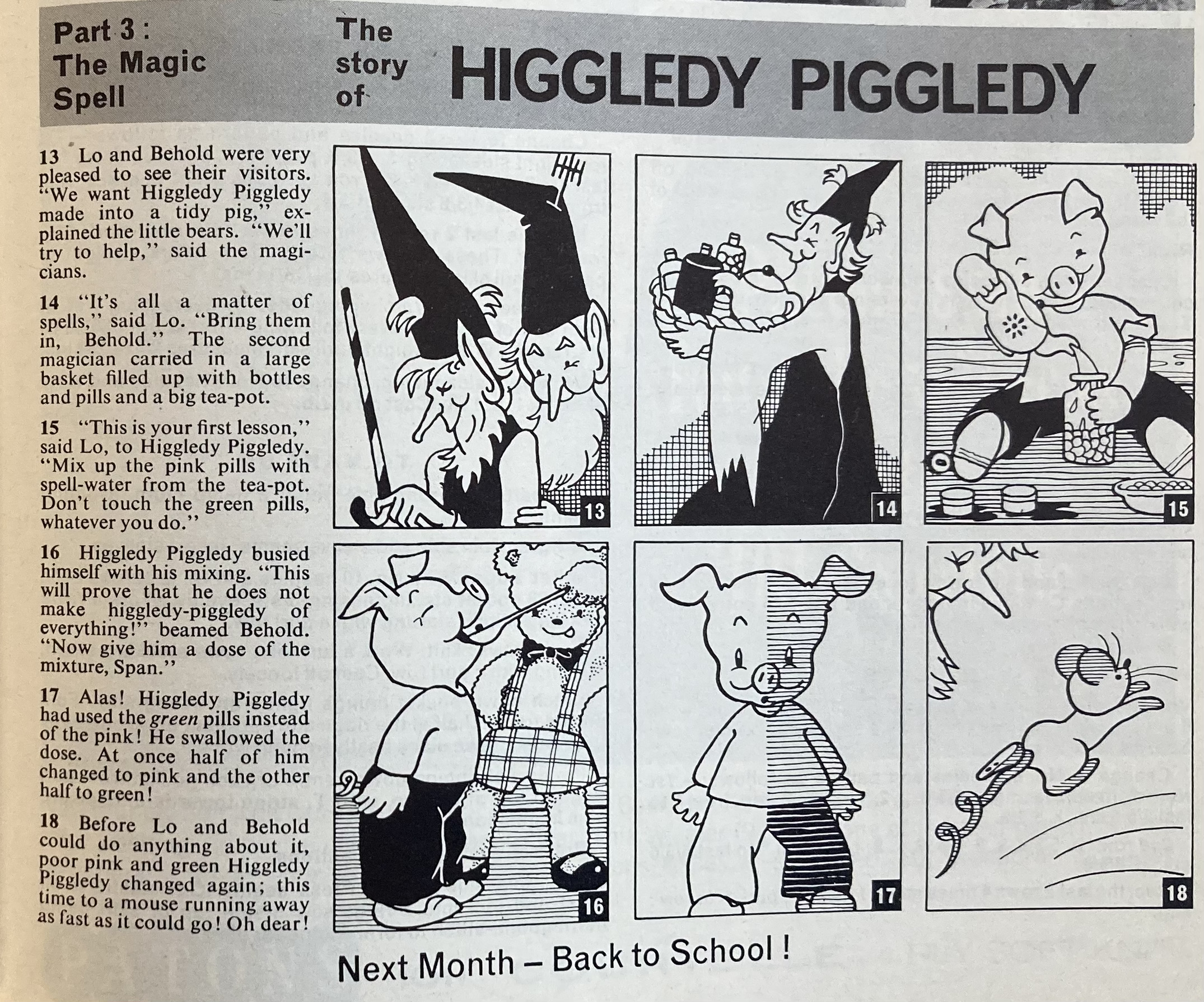
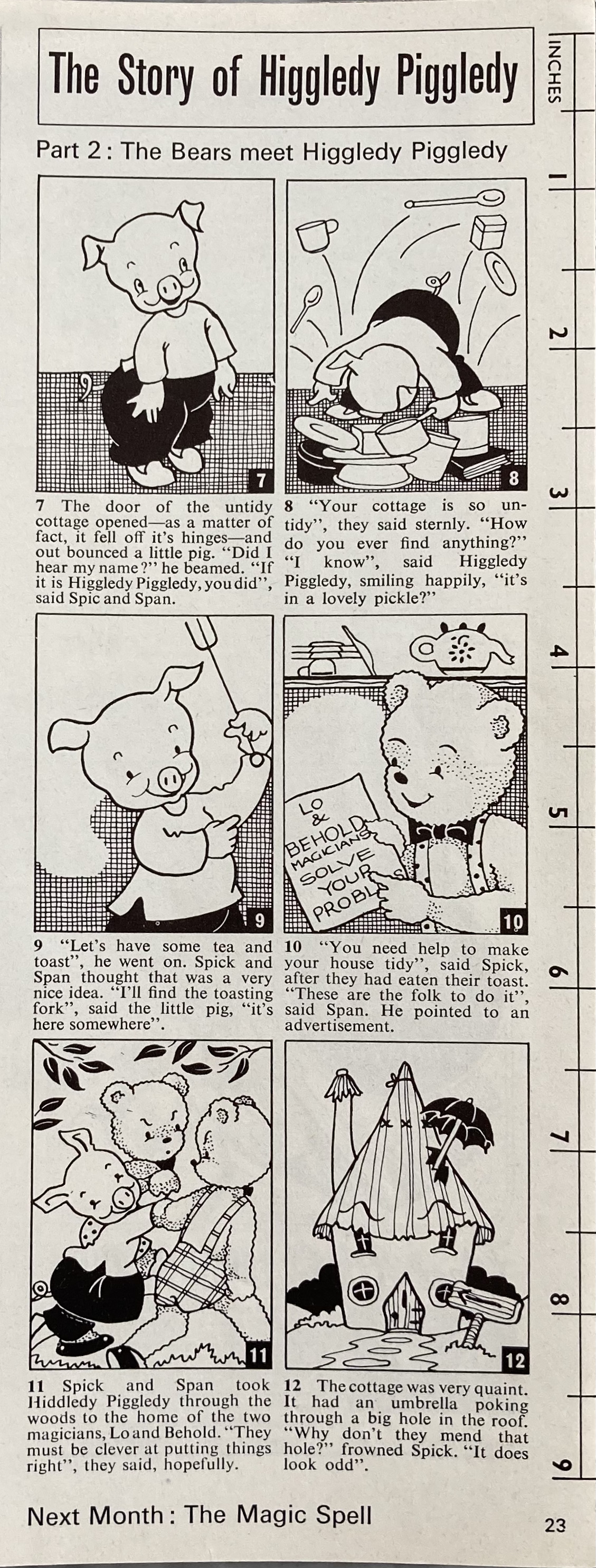
In the “Readers Pages”, there’s a reprint of a pattern for machine-knitted wool “slacks” (I guess we would call them leggings today) and Part 2 of the comic adventures of Spick and Span, the two very neat and tidy teddy bears. They meet a very untidy bear named Higgledy Piggledy and seek out the services of two magicians, “Lo” and “Behold”, to magically turn him into a tidy bear. I sense a certain pedagogical overtone in this story, which is perhaps why it is less fun and interesting than some of the other ones.

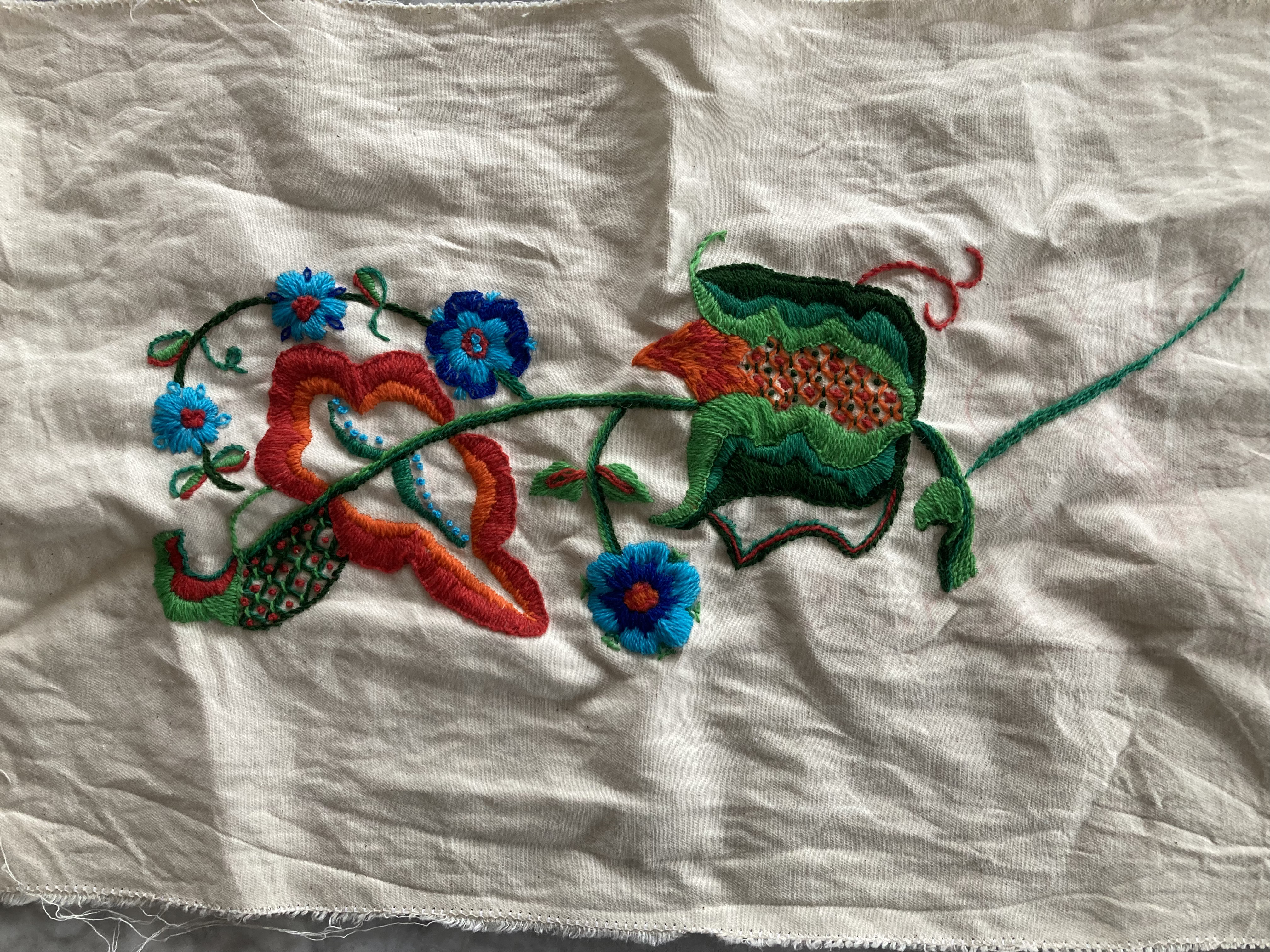
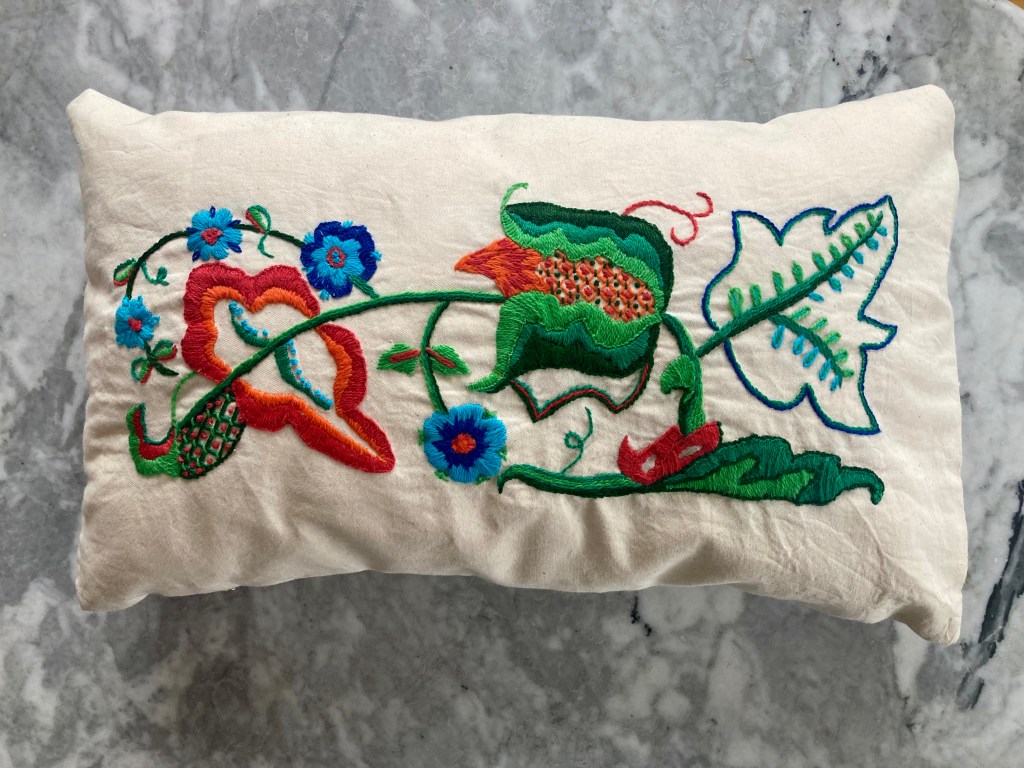
That’s all! I don’t know what to make from this issue. I offered to knit my father the red zippered cardigan, but he claimed to not need another cardigan, and nothing else really speaks to me except for the Jacobean embroidery. But what to embroider it on? I have so many cushions and I don’t need a chairback. New laptop case? Black felt skirt? We’ll see! I still have to finish my September 1966 project, anyway.

August 1966: Flower Design Veggie Bag

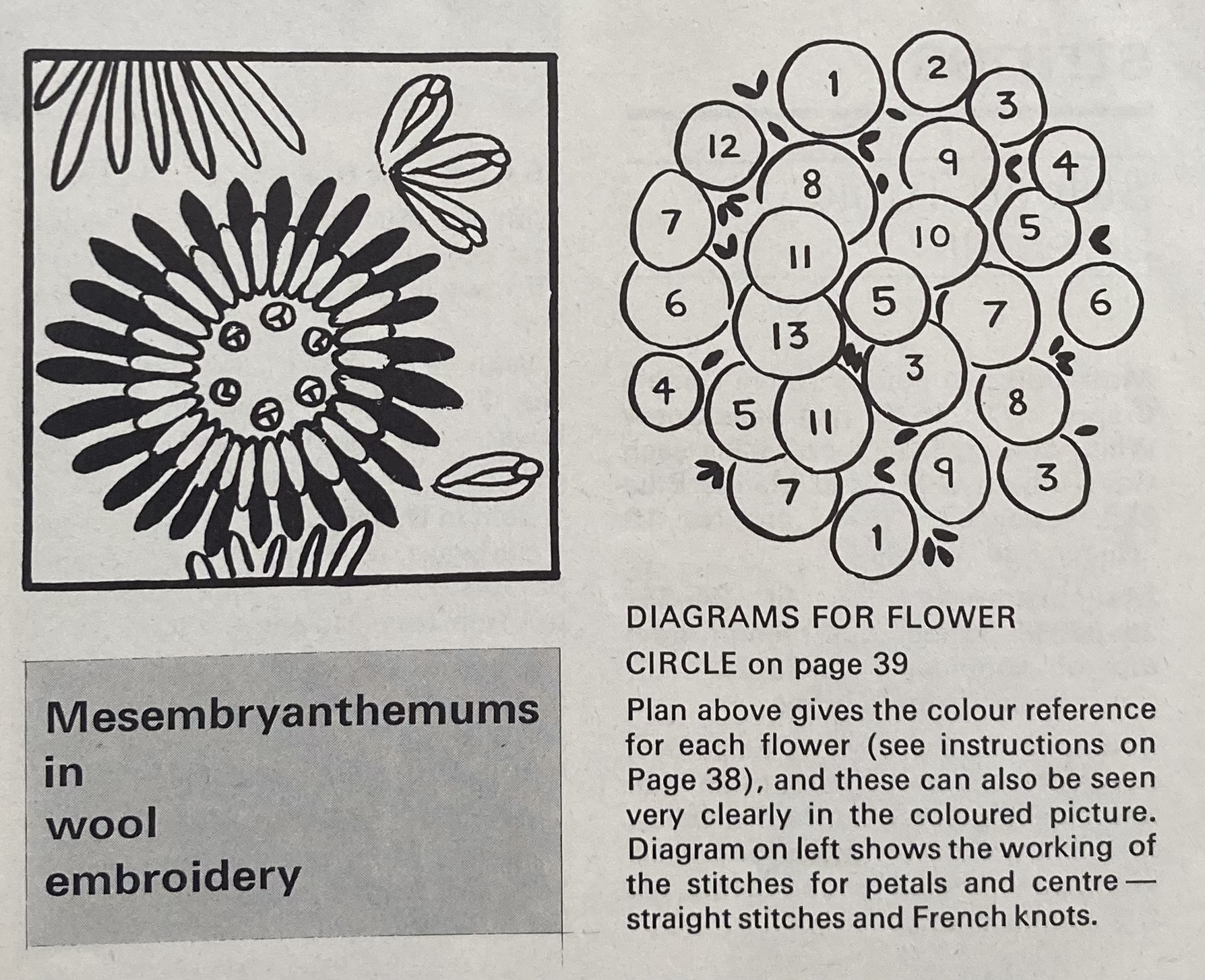
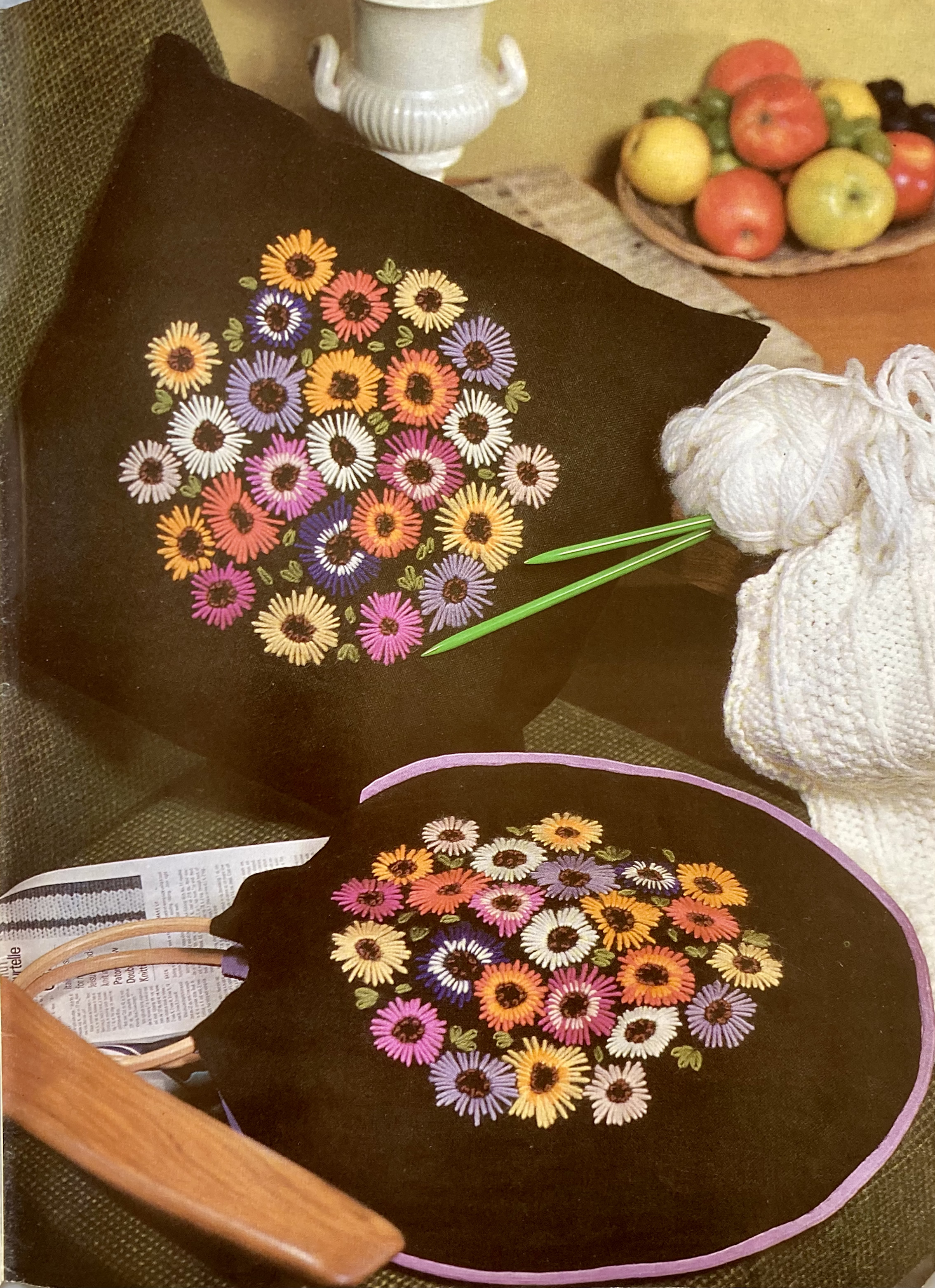
Lovely sparkling colours of simple flower heads, show up beautifully on dark linen. Just a circular cluster of the flowers look very effective on a cushion or workbag.

My August 1966 / August 2024 project was this fun and easy embroidery design featuring a flower whose name, at least, was unfamiliar to me: the tongue-twisting Mesembryanthemum. The name encompasses an entire genus of plants, native to southern Africa, of which some species are succulents and others more “flowery” types. The species that inspired the embroidery is presumably M. crystallinum, aka “iceplant”, which I have encountered without knowing what it was called. Now I know!

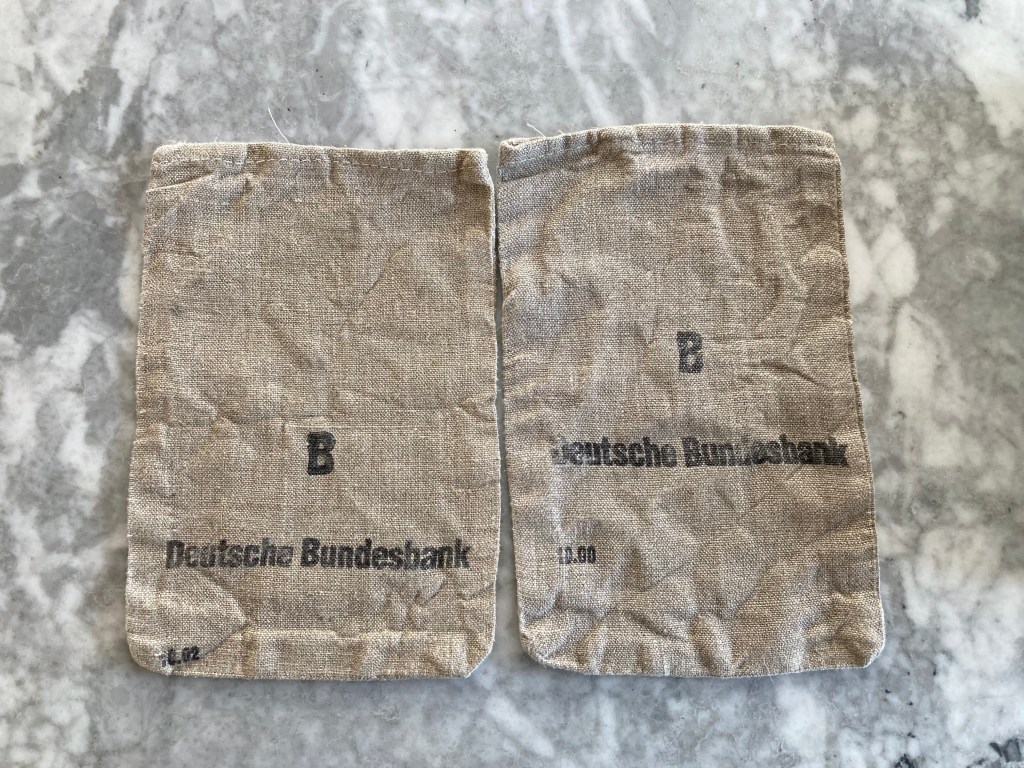
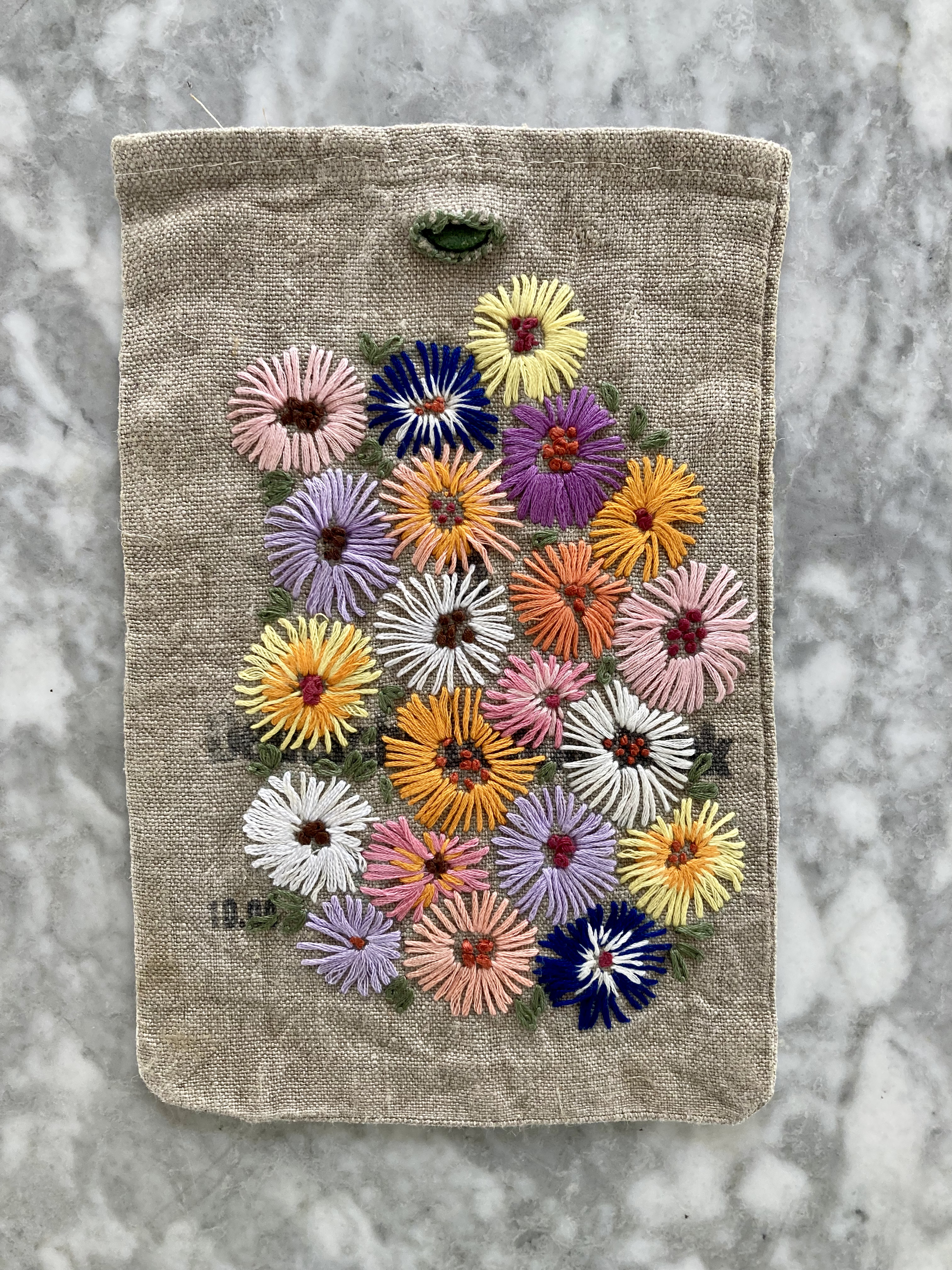
The pattern is for a cushion or workbag, and the flowers are meant to be worked in wool embroidery on black linen. I have too many cushions and workbags already, so I adapted the design to make another little bag to buy and transport unpackaged fruits and vegetables from the farmers’ market, organic supermarkt, etc. (Here’s an overview of previous embroidered bag projects.) I bought a bunch of old money bags at an antique sale a while ago, which I upcycle and decorate for this purpose.

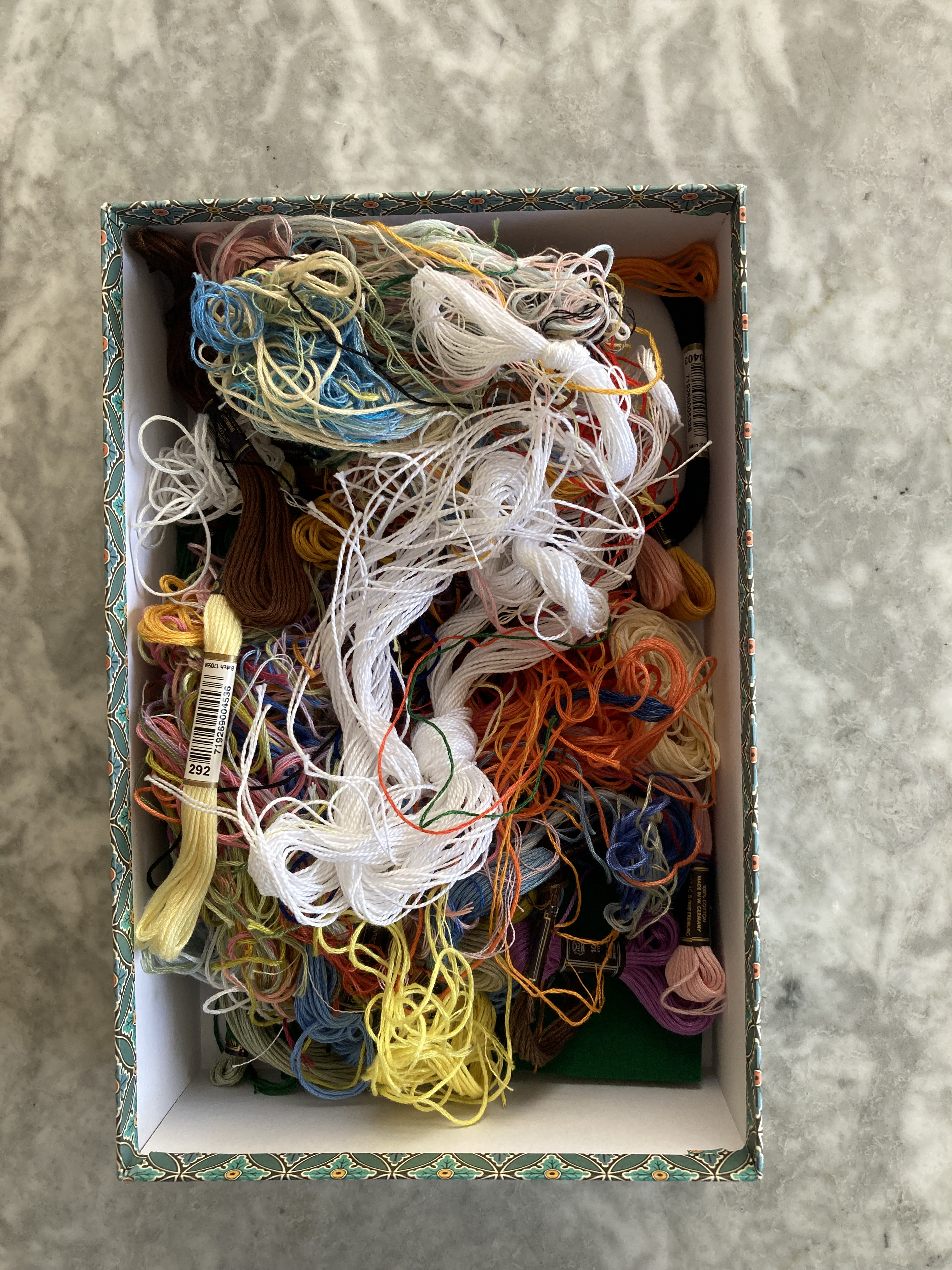
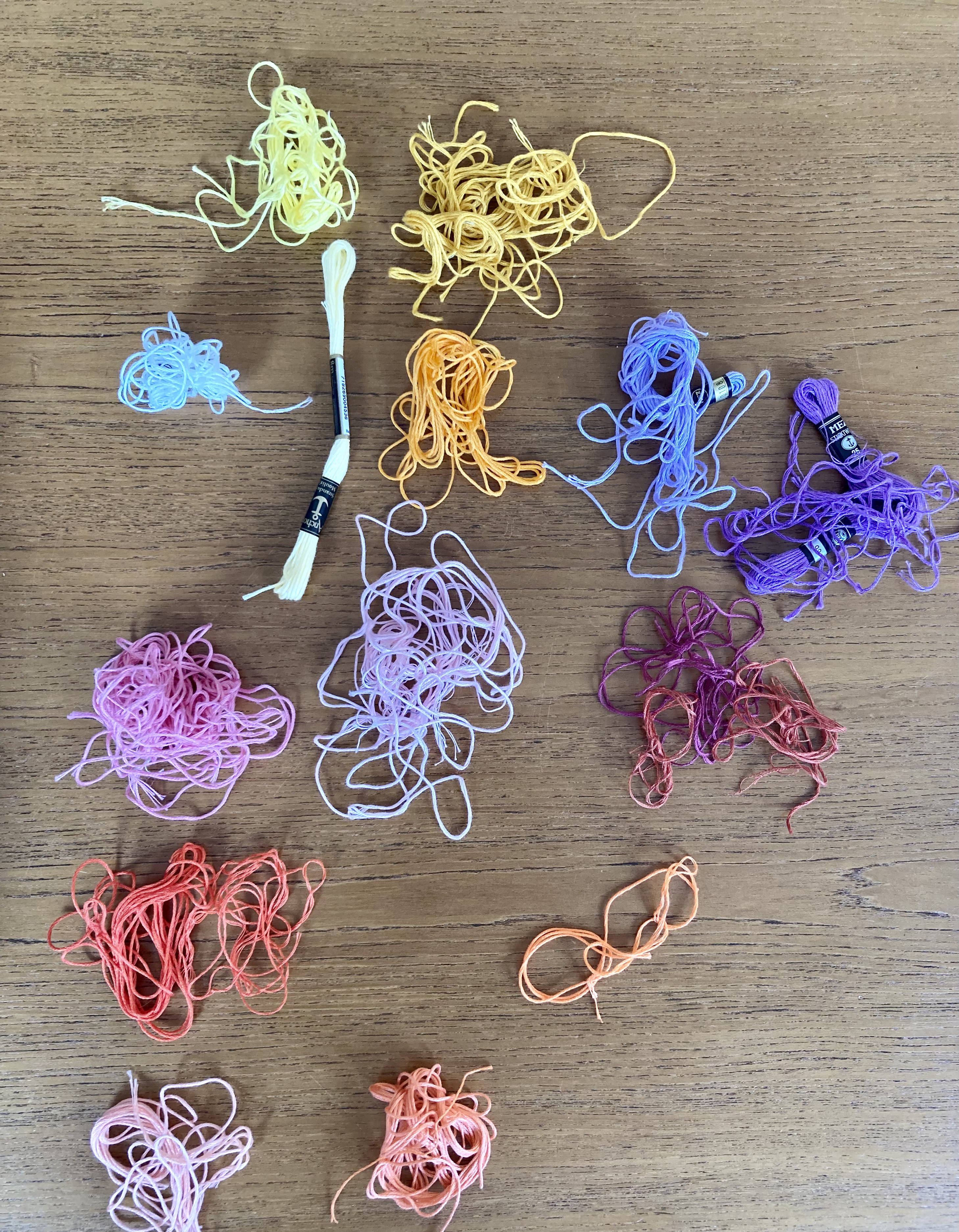
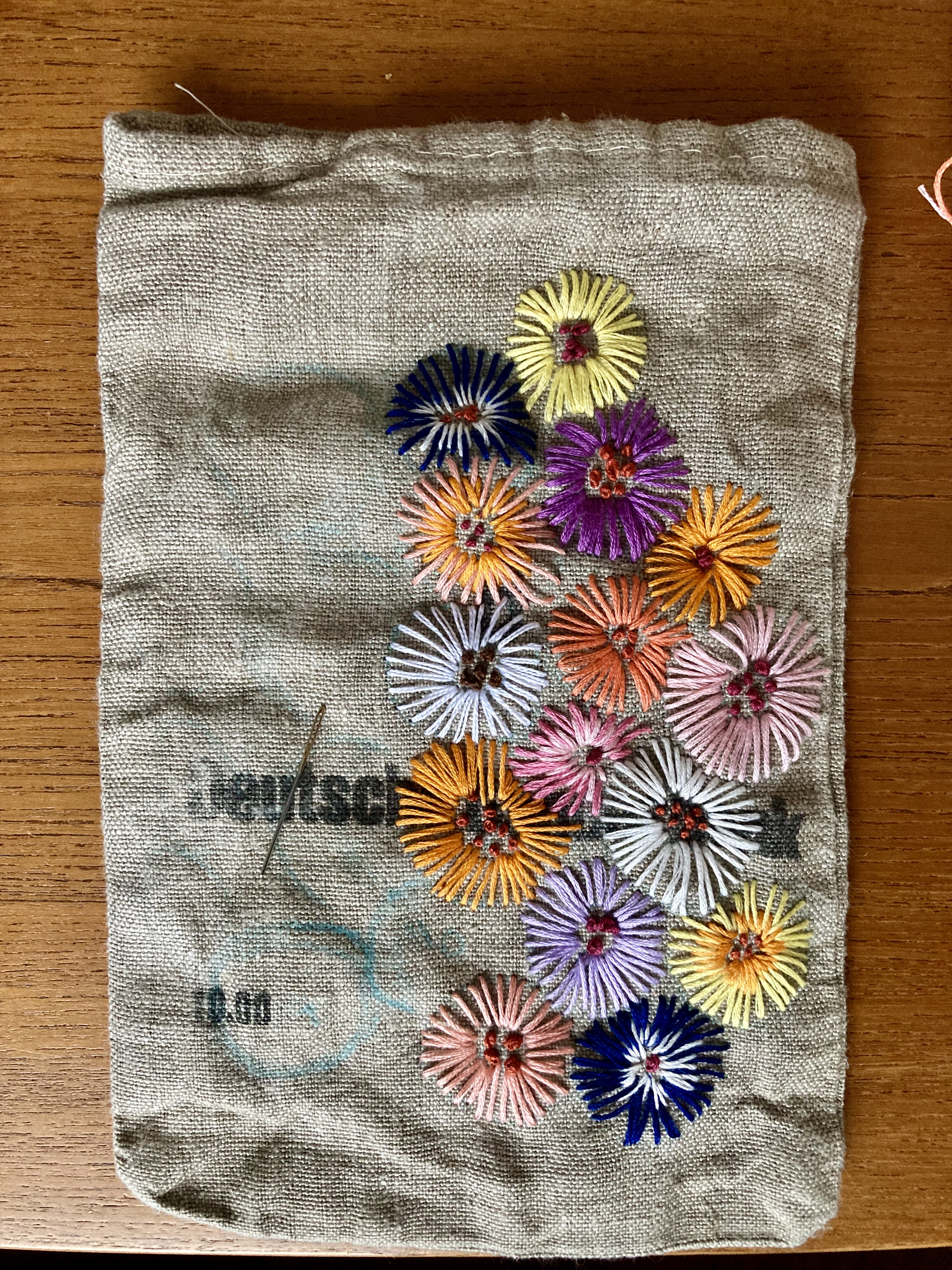
The flattish flowers with slender petals translate well to easy embroidery — the flowers are all worked in straight stitches, with French knot centres, and the little leaf details are loop stitches. I used scraps of cotton floss instead of wool, since the bag will be used and washed frequently. N.B. the tangled mess in the box of embroidery thread is not my doing! I inherited a big handful of embroidery cotton scraps from someone downsizing their elderly relative’s home. It proved very useful for this project, as I was able to match the colours from the pattern (white, maize, orange, mauve, violet, light pink, light magenta, magenta, spice pink, and plum, plus olive for the leaves) fairly accurately without having to buy anything new. Also, “spice pink” is listed in the materials section, but not included anywhere in the instructions. The colours in the photo are not accurate, either — what looks like sky blue and light turquoise is actually navy blue (my version of “violet”) and white.

The positions and colours of the individual flowers are given on a separate page in the magazine, which was practical as of course I didn’t have (or would have been able to use) a transfer. I had to adapt it anyway to fit the rectangular bag, but kept to the schematic as well as possible. Looking back, I could have balanced it out better by making the second flower from the bottom on the left side purple or orangey-pink instead of white, but whatever. I used my approximation of “plum” plus a sort of brick orange and medium brown for the French knot centres, using up the colours I only had little bits of. I finished off the bag with a button — always nice to find a use for that interesting, but singular button from the 10-cent random button bowl.

And that’s it! This was the perfect upcycling project — I made something useful and sustainable from 100% re-used and/or vintage materials. I love using these bags and can’t wait to show this new one to the cashier at the organic supermarket who always takes a second to admire them. I should make the next one for her.

August 1966: Overview

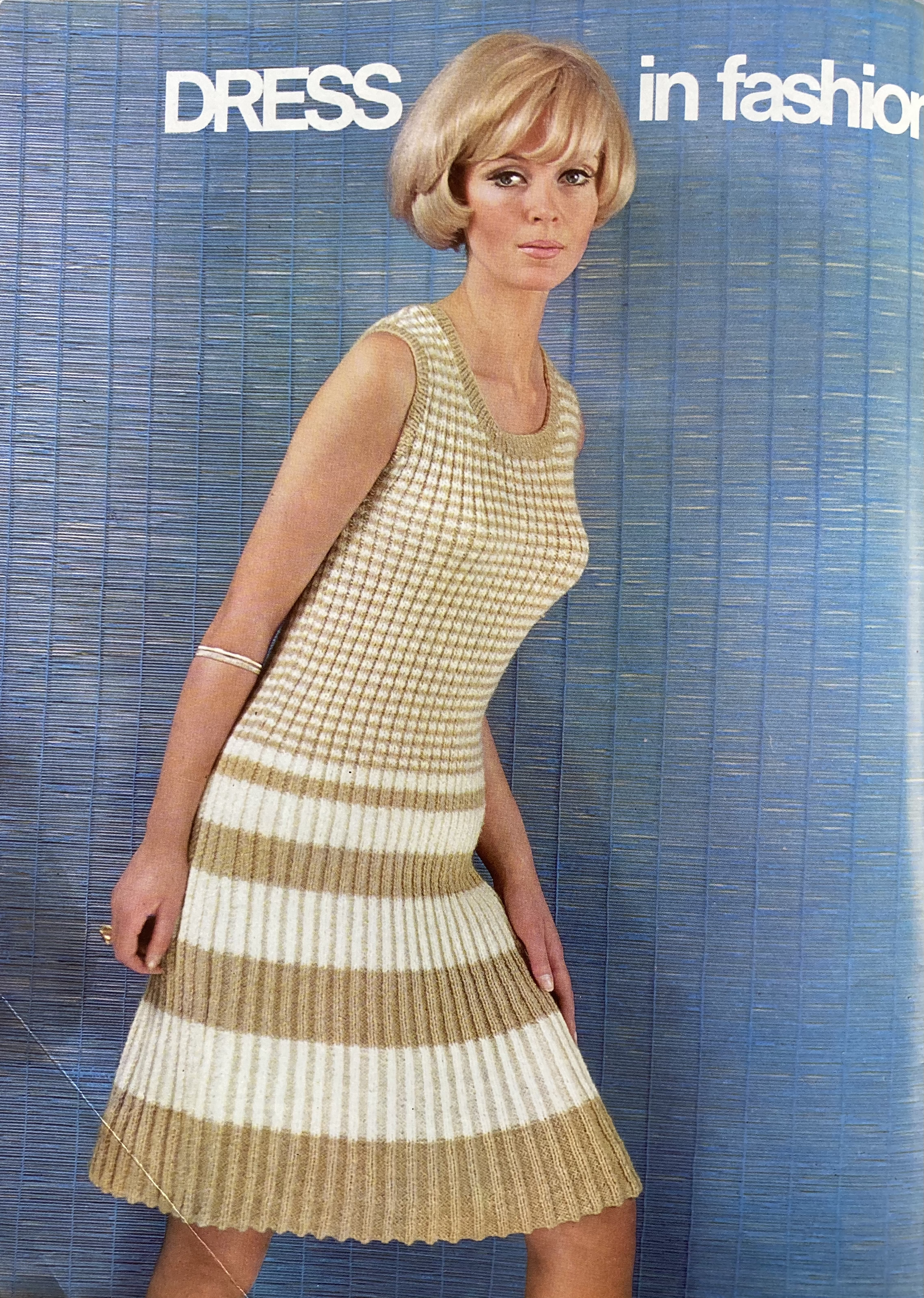
Dress in fashion for the height of summer! August is, as Stitchcraft‘s “editress” Patience Horne writes in this issue, a tricky month. Autumn is around the corner and it wouldn’t make much sense to keep knitting for warm weather, only for the season to change just as a project was finished. On the other hand, if it’s hot and muggy, you don’t want to hold warm wool in your hands. Stitchcraft‘s solution for August 1966? Sleeveless and short-sleeved garments in double-knitting weight that can be layered for cooler weather or worn in the evening on warmer days, plus some fine-knits and quick summer accessories to be worn right away.

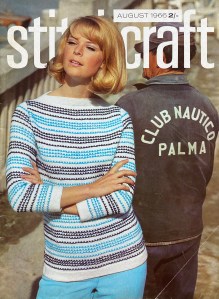
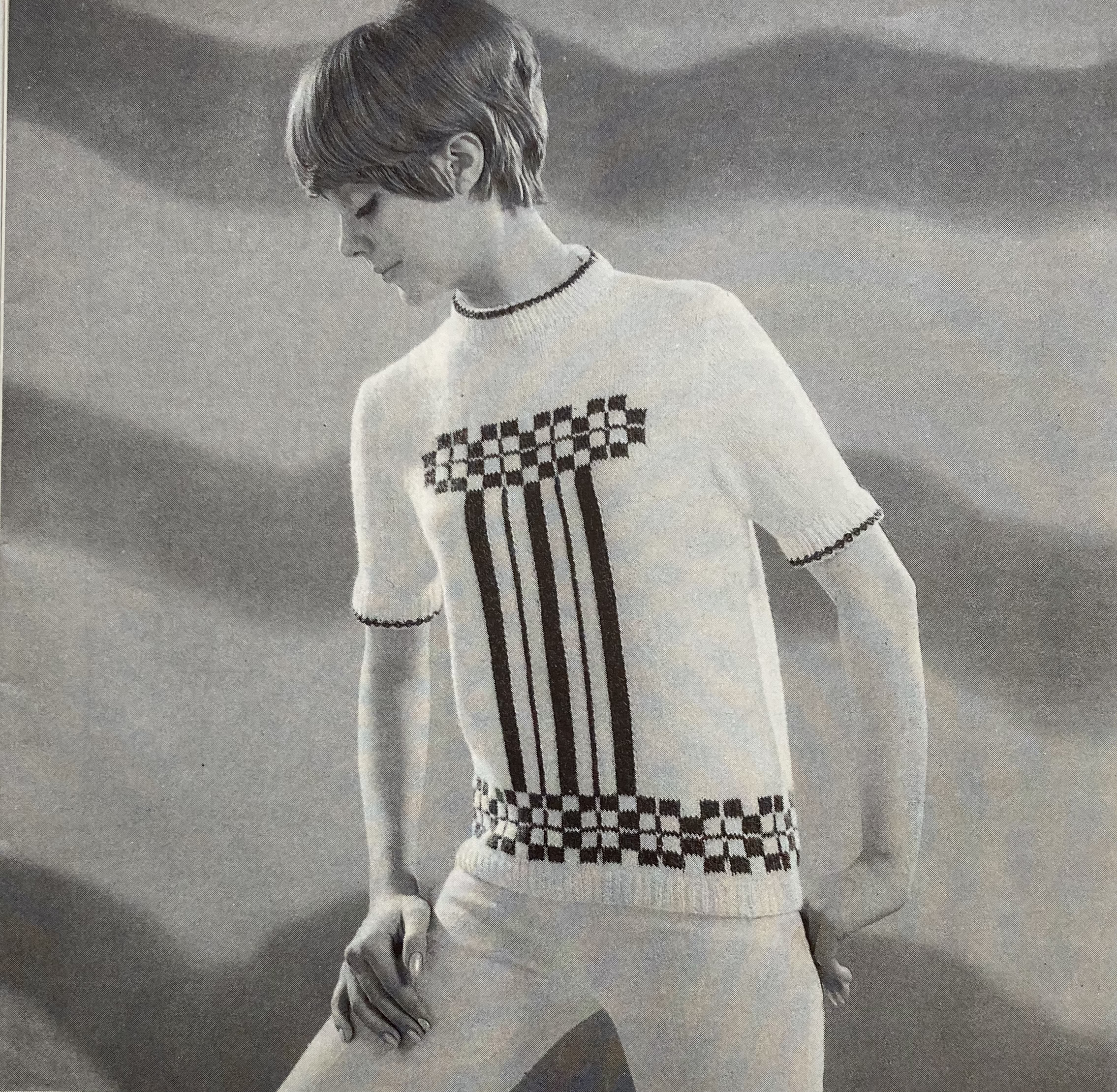
The “striped holiday tunic” on the cover strikes a good balance: made in Totem Double Crepe, it’s warm enough for sailing or windy-day wear, but the fresh white and turquoise stripes make it unquestionably a summer garment. The pattern is made by slipping the contrasting-colour stitches on the purl rows. More cool-warm fashions in DK wool are explored with a sleeveless, ribbed dress, a “racing stripe” jumper, and a short-sleeved twisted rib blouse “for cooler days” The ribbing on the dress gives a “pleated” effect to the skirt. Stripes and checks on white are a clear fashion trend.

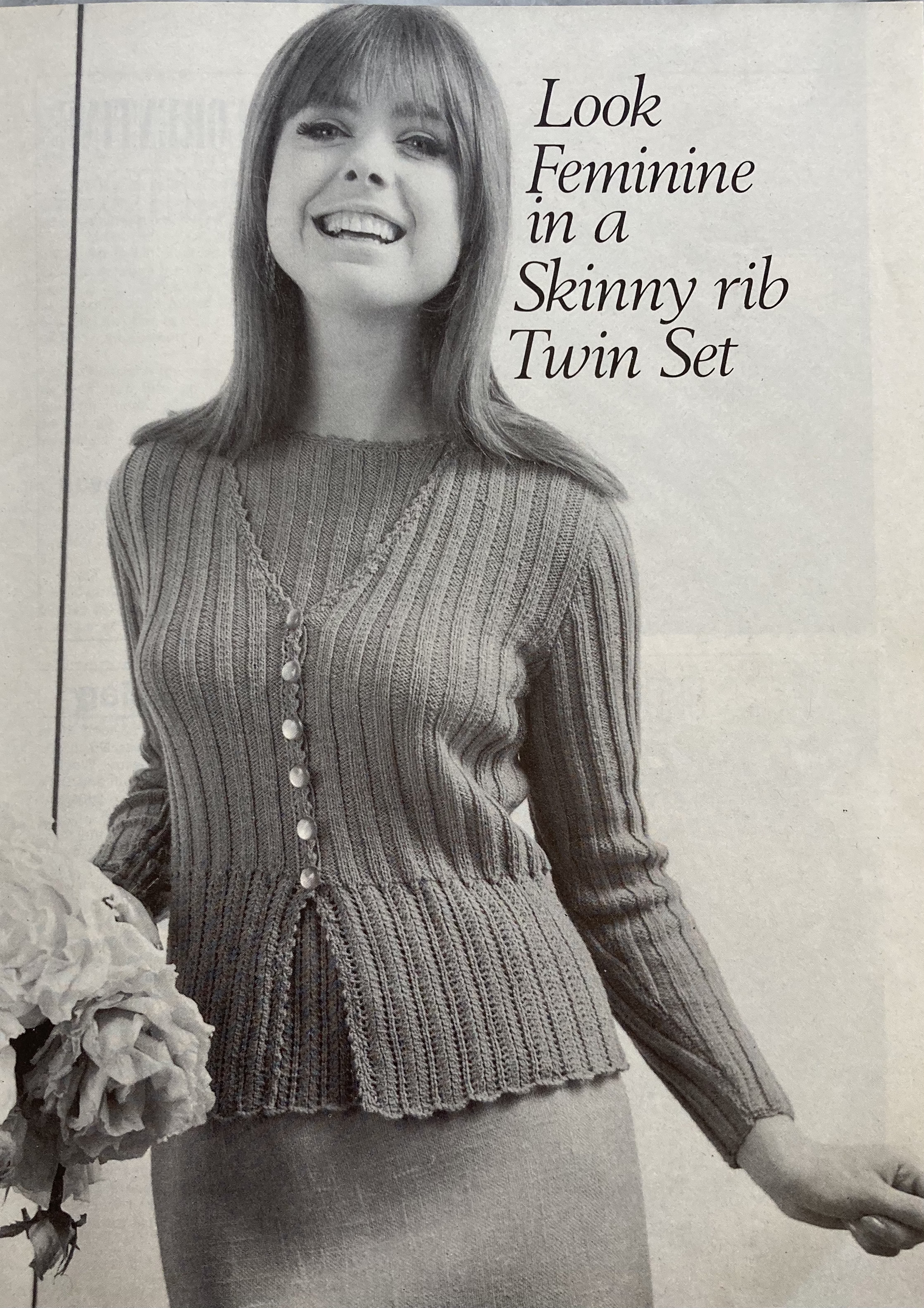
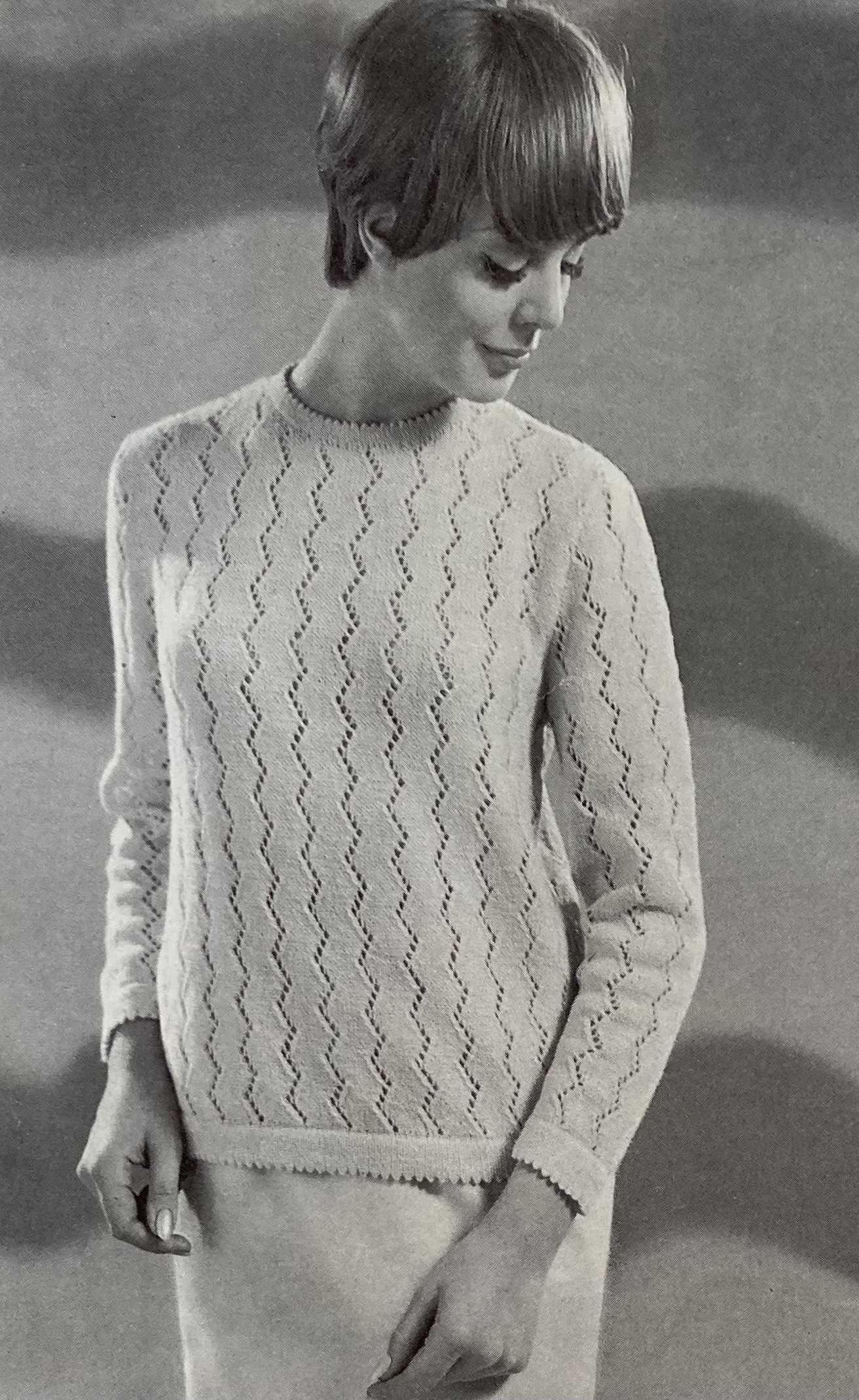
The more elegant designs are made in lightweight wools: a “skinny rib” twin set which promises to be flattering for both young and older women, with pearl buttons and a peplum-like “skirt” in ribbed lace, or a lace blouse with zig-zag motifs in both the lace and the picot hems. Here, the “stripe” trend is interpreted via pattern instead of colour.

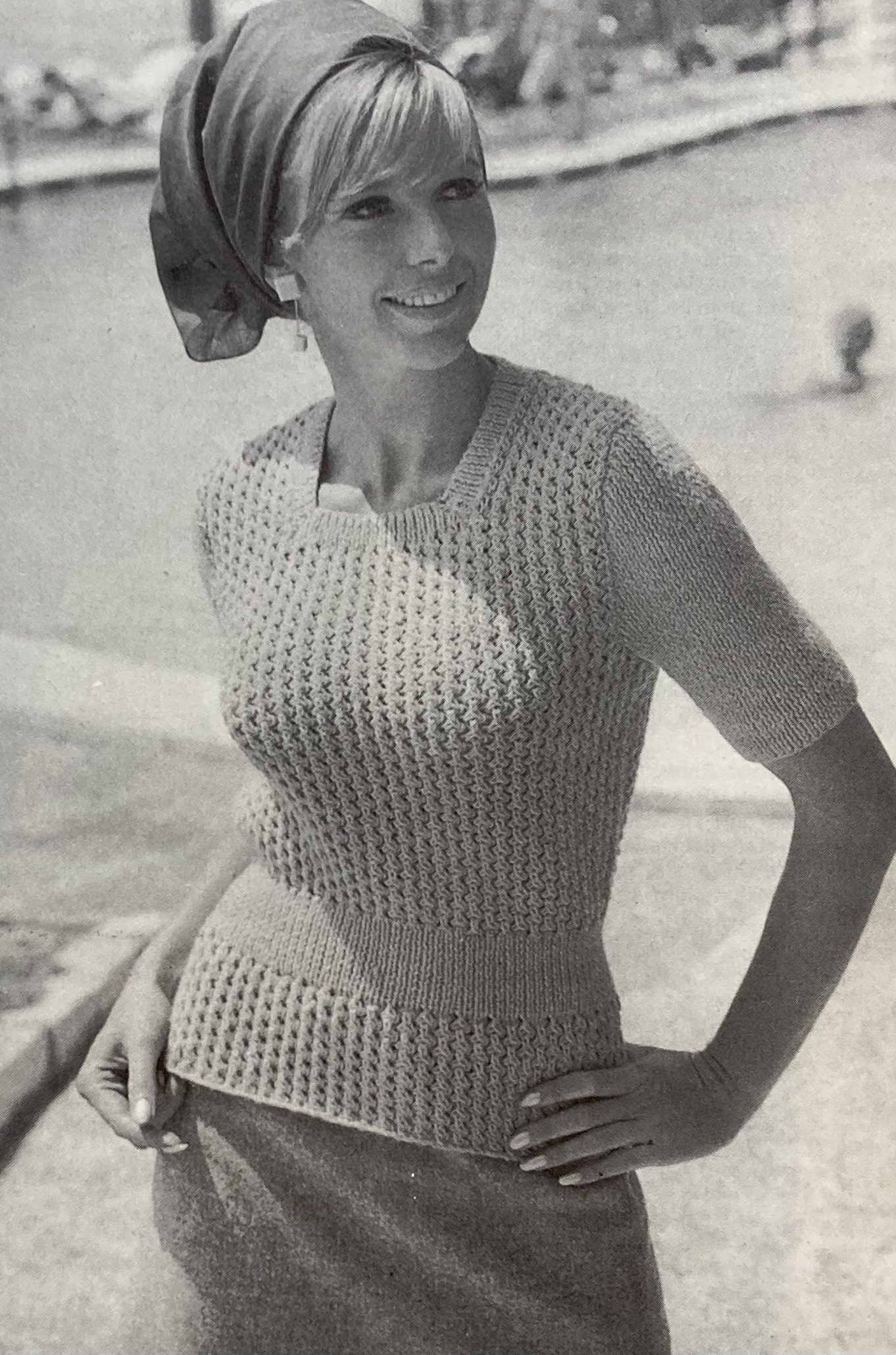
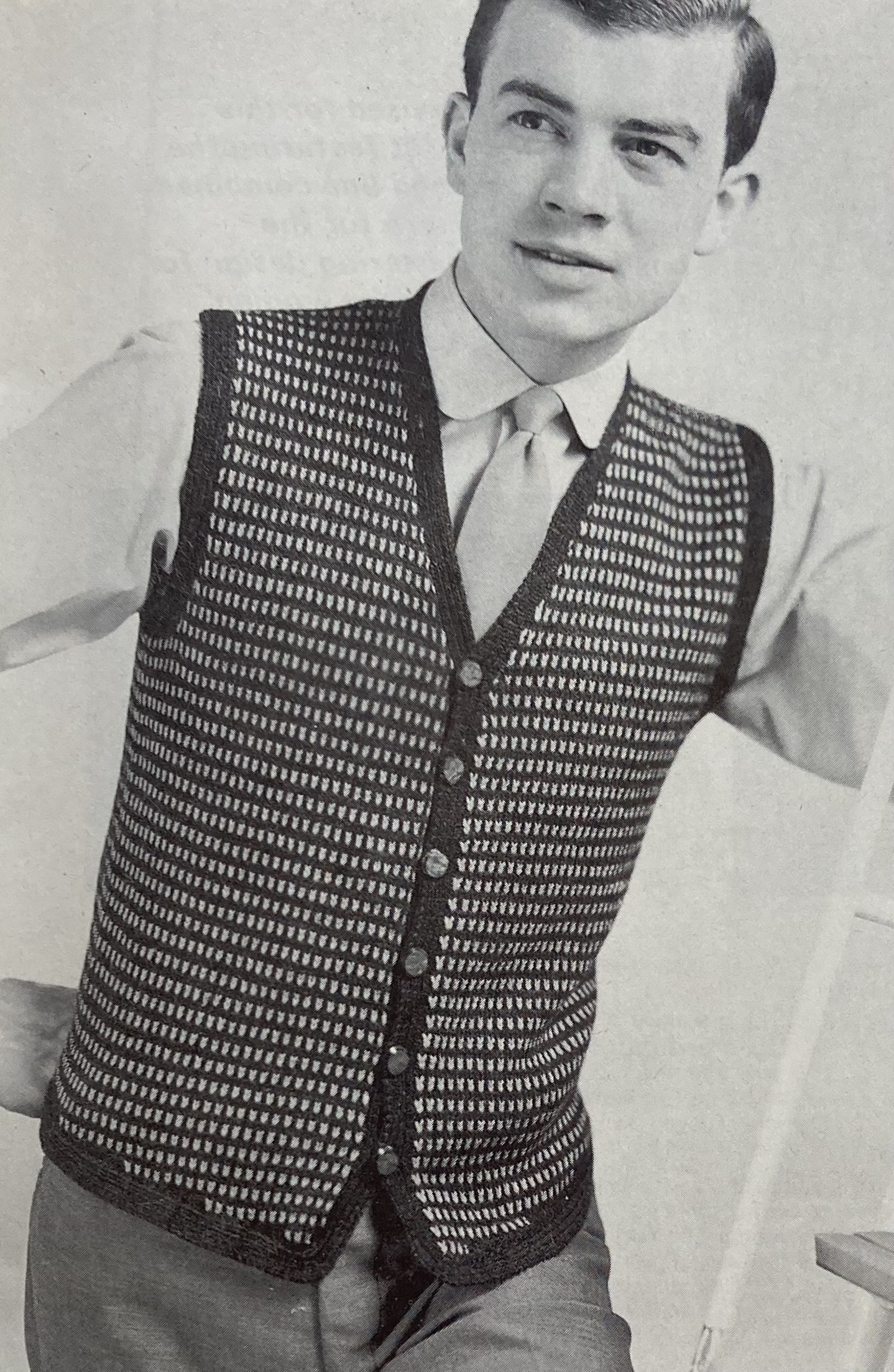
Continuing the stripe/check theme for men, there’s a nice V-neck waistcoat in a very 1960s-typical colour combination of charcoal and mustard (don’t eat it). The pattern is made stranded, and very easy, and the front and hem borders are made in one long strip, sewn in position as you go along. I have personally never had much success with this method, as you are supposed to stretch the strip “slightly” while sewing on and I find it difficult to get exactly the right, and same, amount of tension on both sides. There’a also a “his and hers” unisex pullover in a similar basketweave stitch as the short-sleeved blouse that I made from the June 1966 issue. Apropos unisex: this issue features a record number of women wearing slacks, and the short “pixie” or “five-point” cut has finally made it to the pages of Stitchcraft.

There’s nothing for babies or toddlers in this issue. Older kids and pre-teens get casual cardigans for layering or as outdoor garments. The stripe trend lives on in the boy’s zipped jacket, made in nautical colours of navy blue, red, and white. The girl’s tennis blazer is more subdued, in a neat spot-stitch pattern with moss-stitch revers. Top it off with a fun crocheted hat in the current “tall” style.

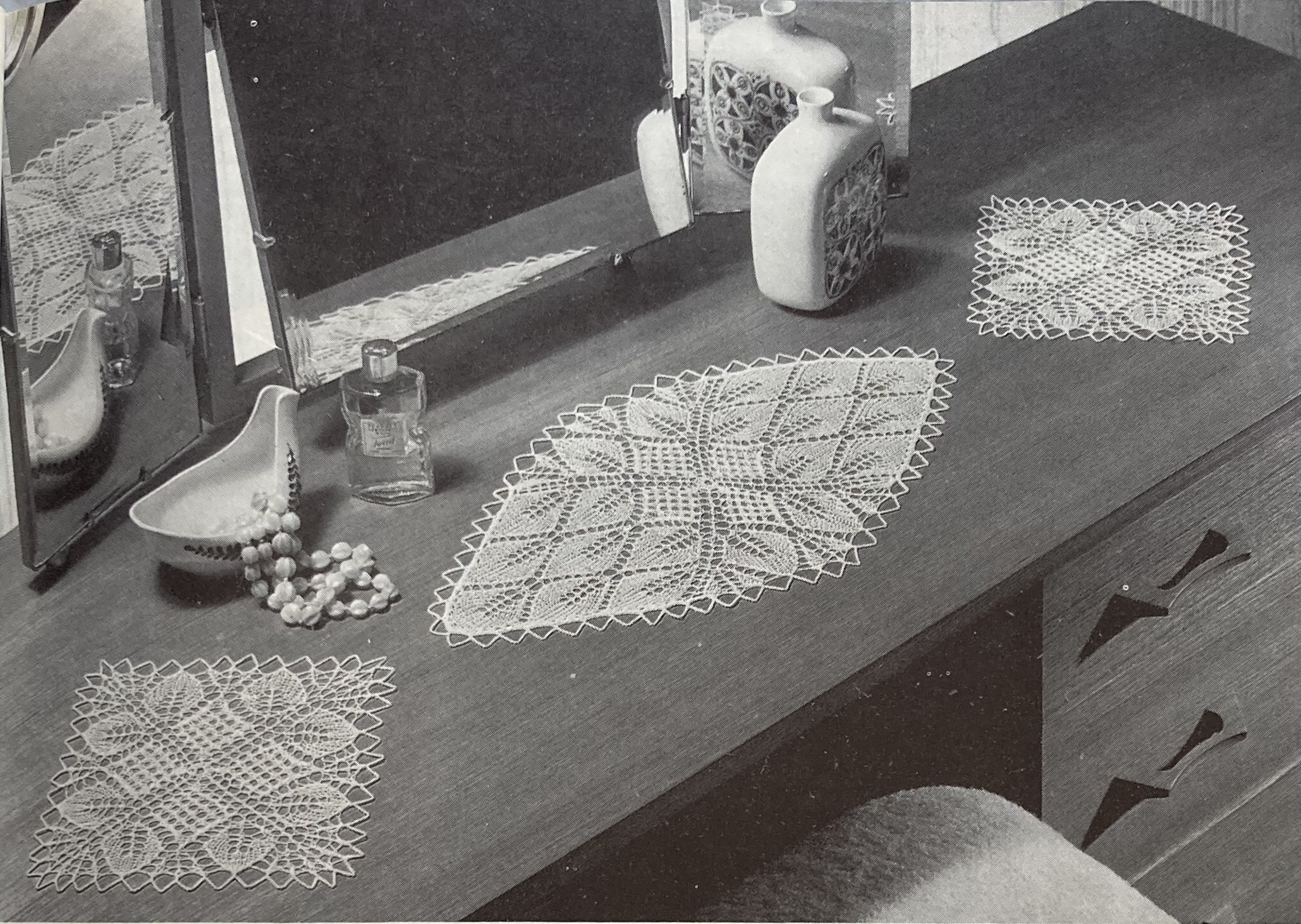
Those who do not like to hold wool in summer are always well served by the summer homeware designs, which tend to be small and easy — to pack in your holiday luggage and work on in your beach chair. There’s the usual page of bazaar items and “novelties”. I can’t make the bizarre-bazaar joke this time, since they are actually quite cute and nice. The fancy knitted lace mats are a more elaborate, but still portable, project, or you can embroider Mesembryanthemums on a cushion or workbag. I had never heard of this type of plant, hence the Wikipedia link in case you haven’t either.

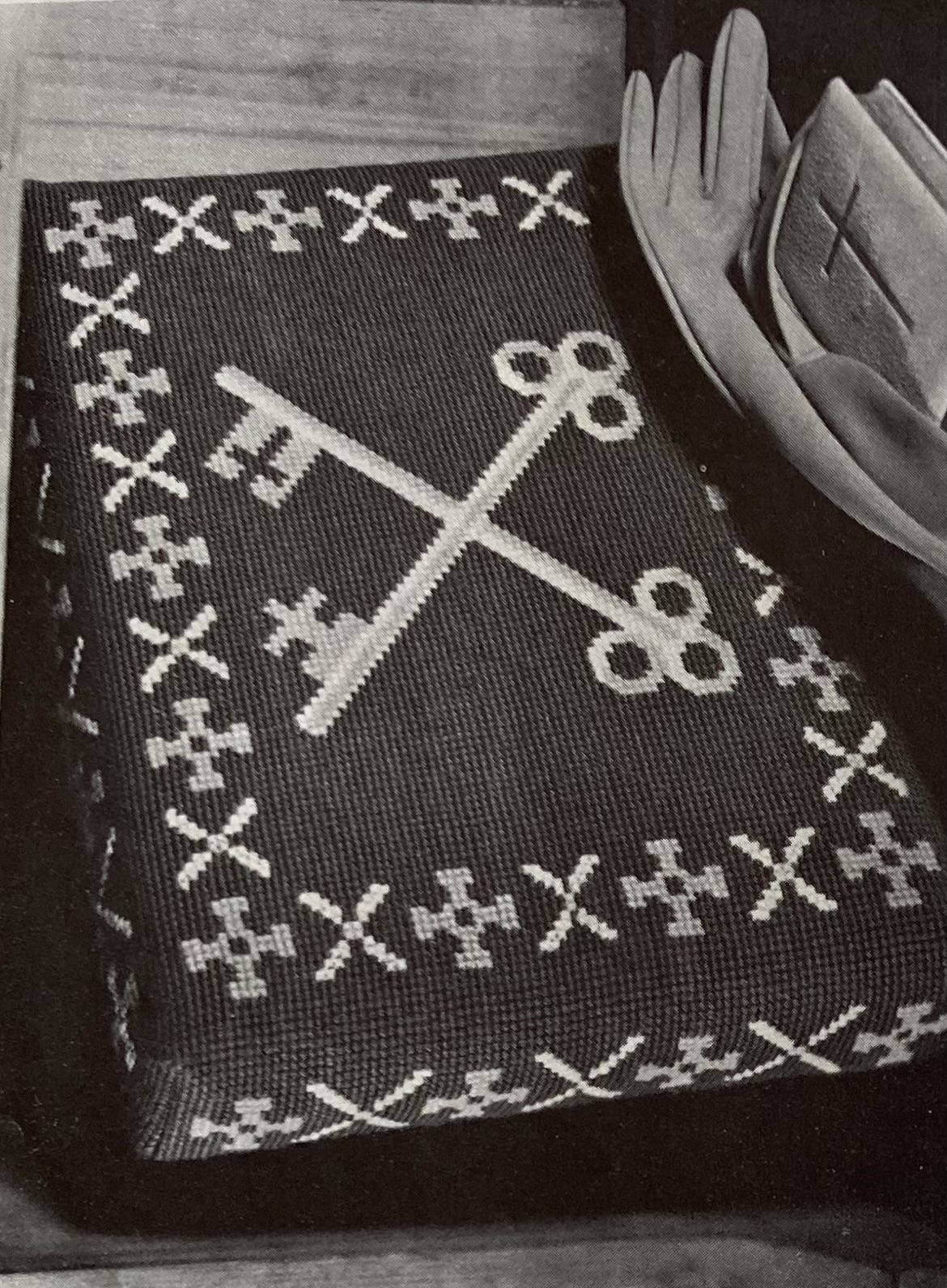
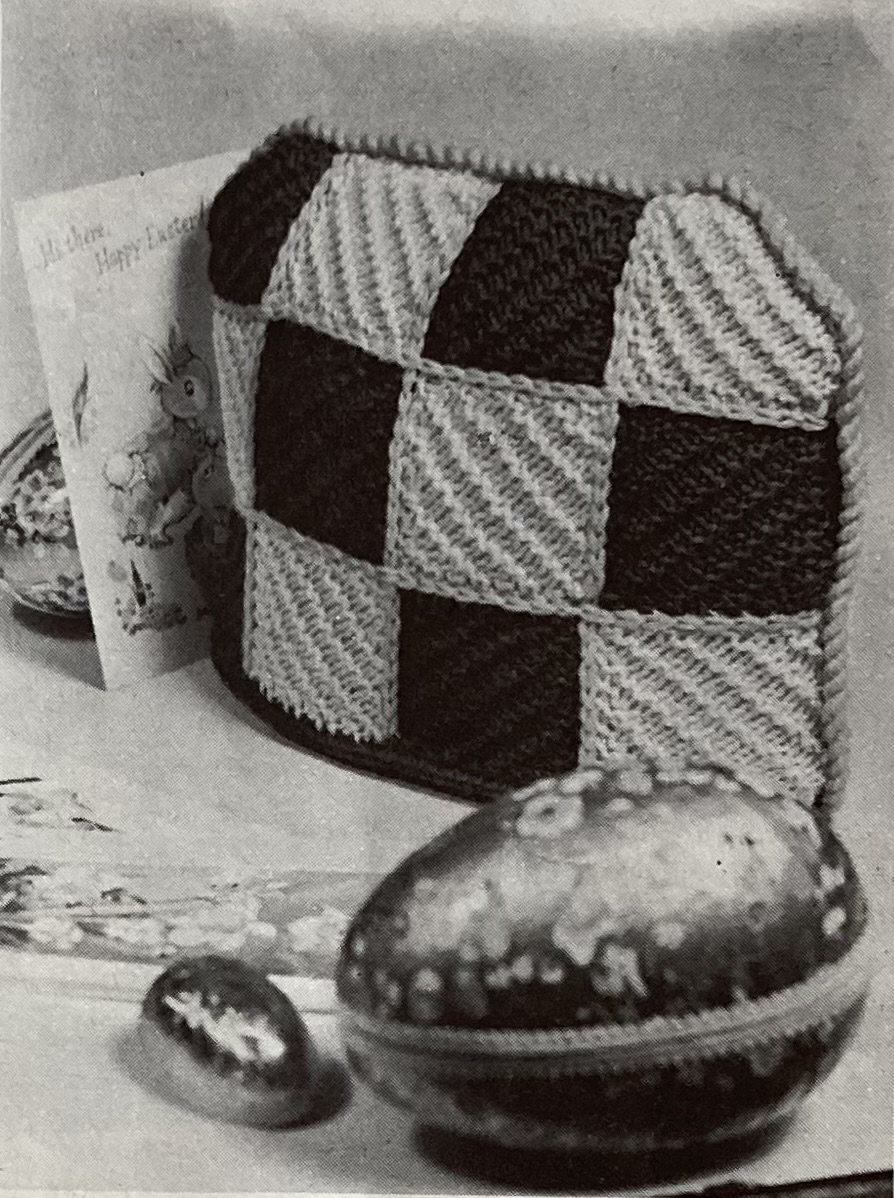
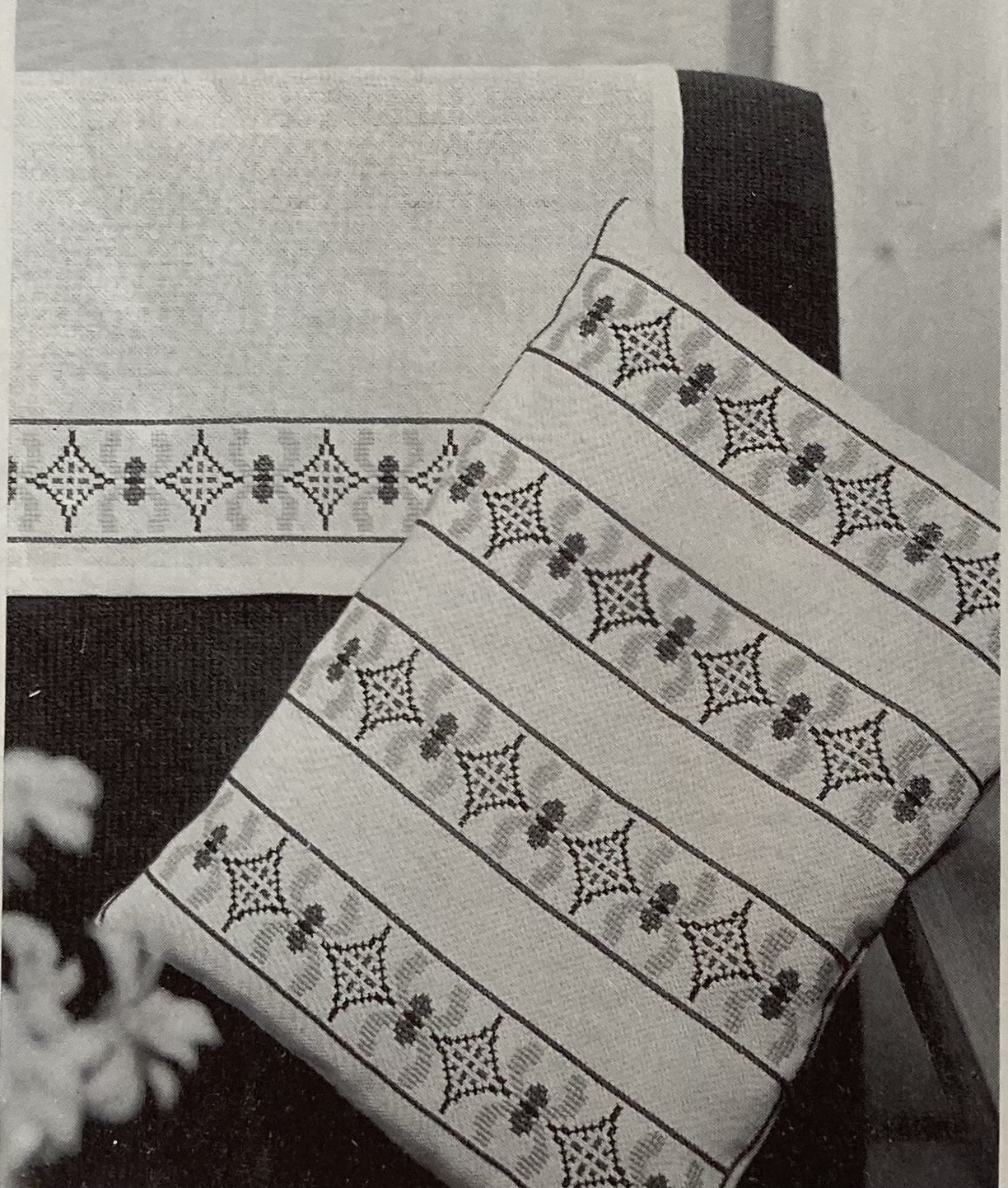
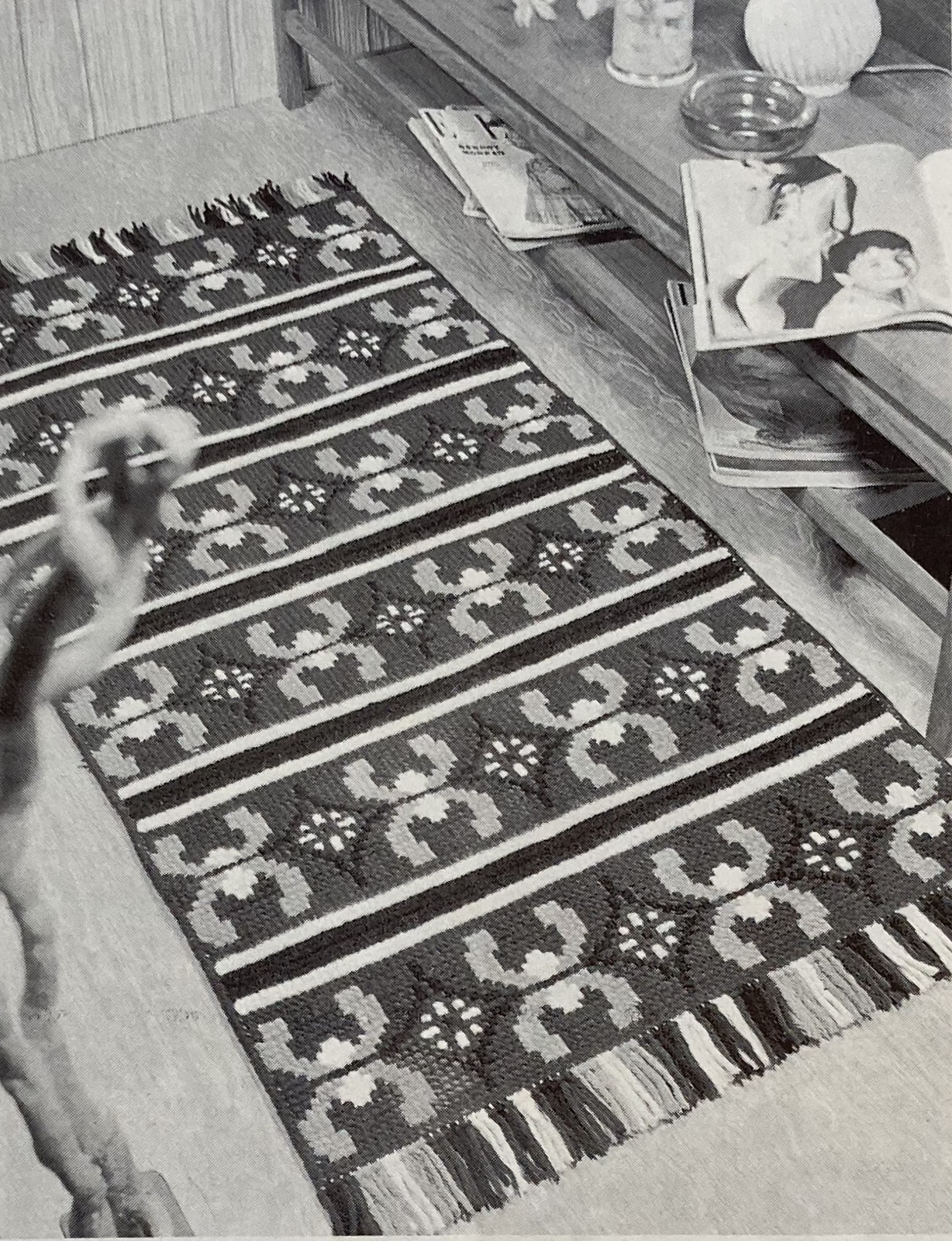
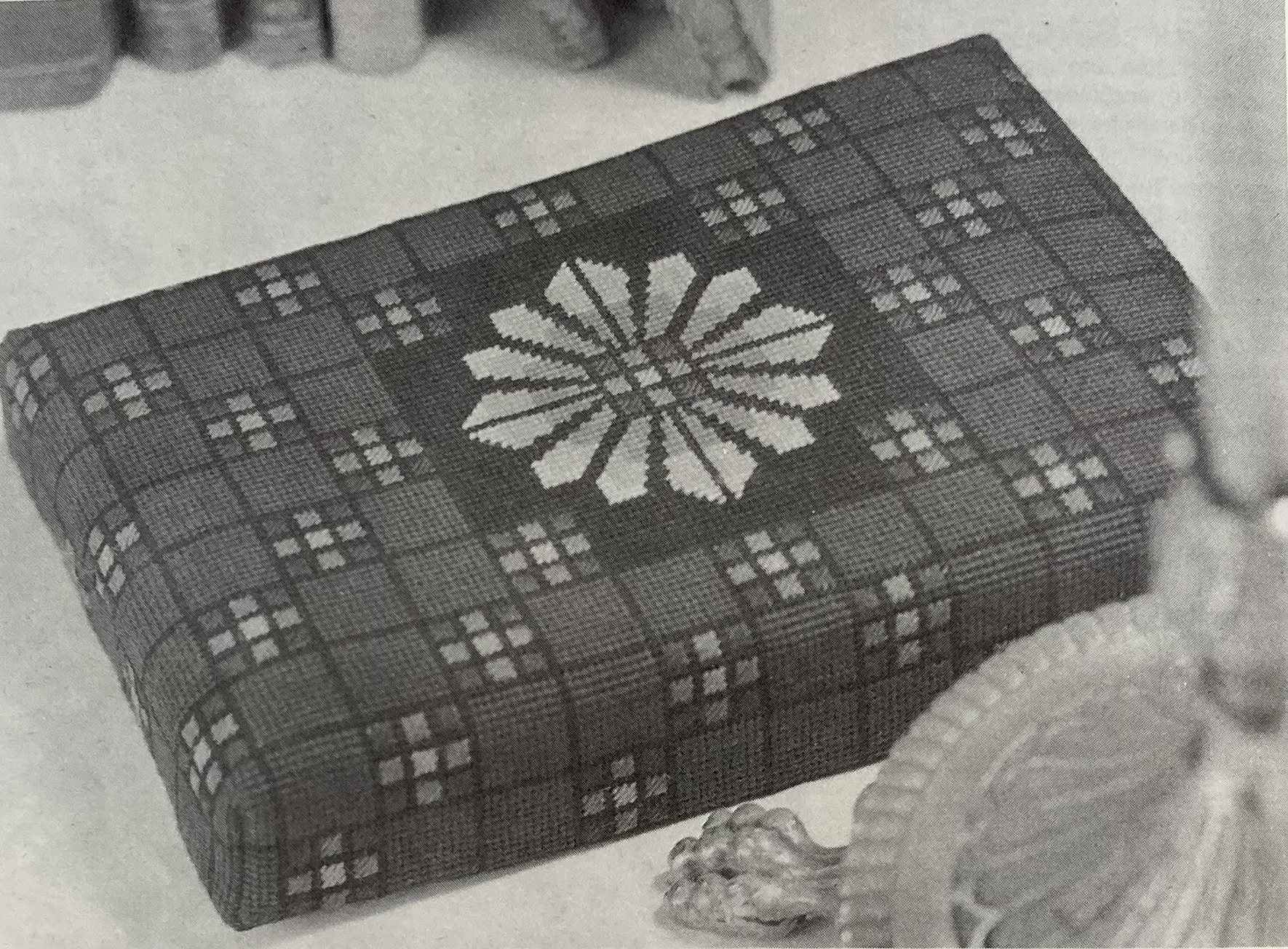
The other homewares are more suited to making at home. There’s a cross-stitch cushion and/or chairback in a traditional Greek pattern (says Stitchcraft — I cannot confirm or deny authenticity) and a rug in a matching colour scheme. For churchgoers, there’s a tapestry kneeler with a pattern inspired by stained-glass windows. The stripe-check trend that we see in the garments appears again in the woven-tapestry wool cushion and knitting bag.

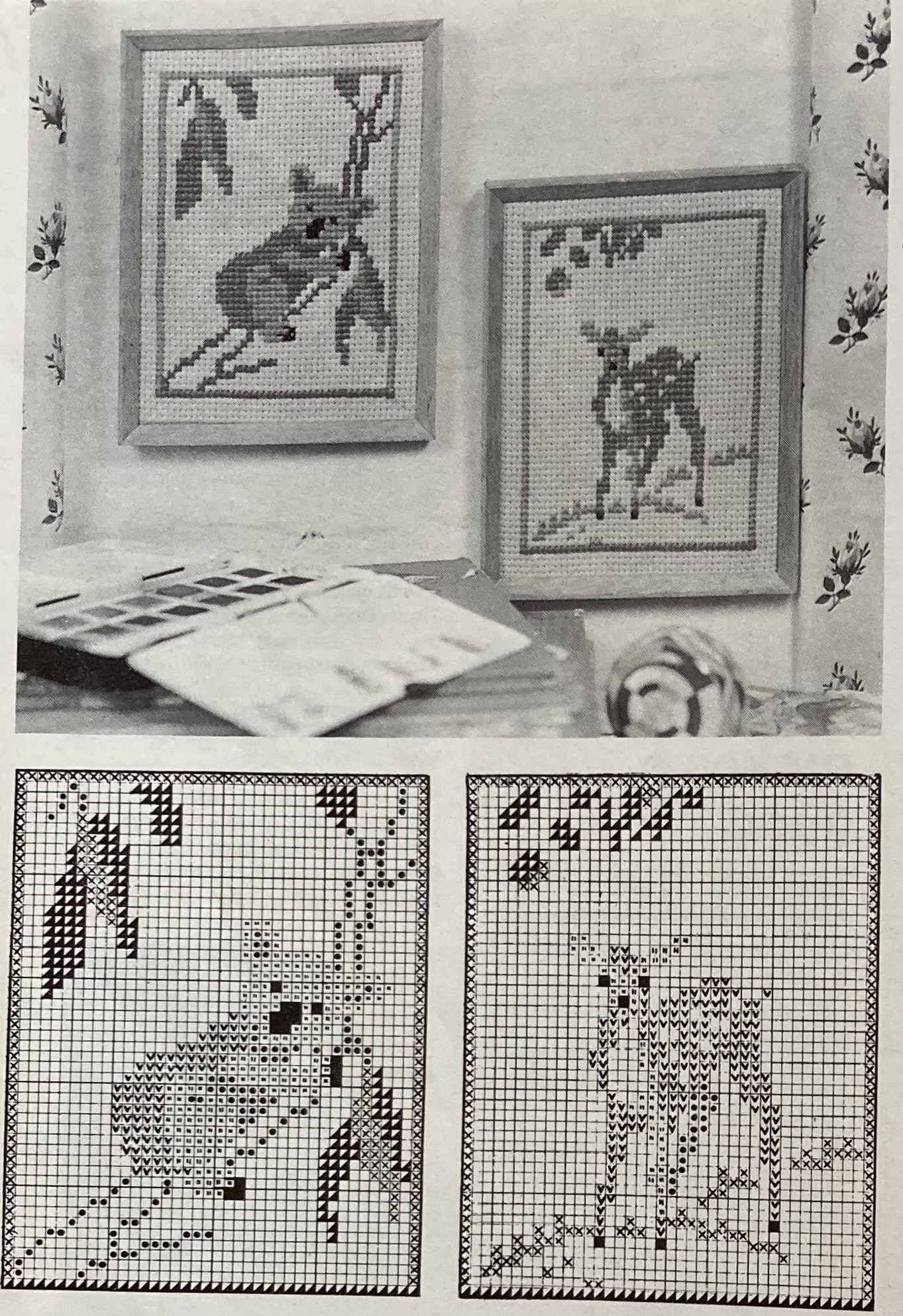
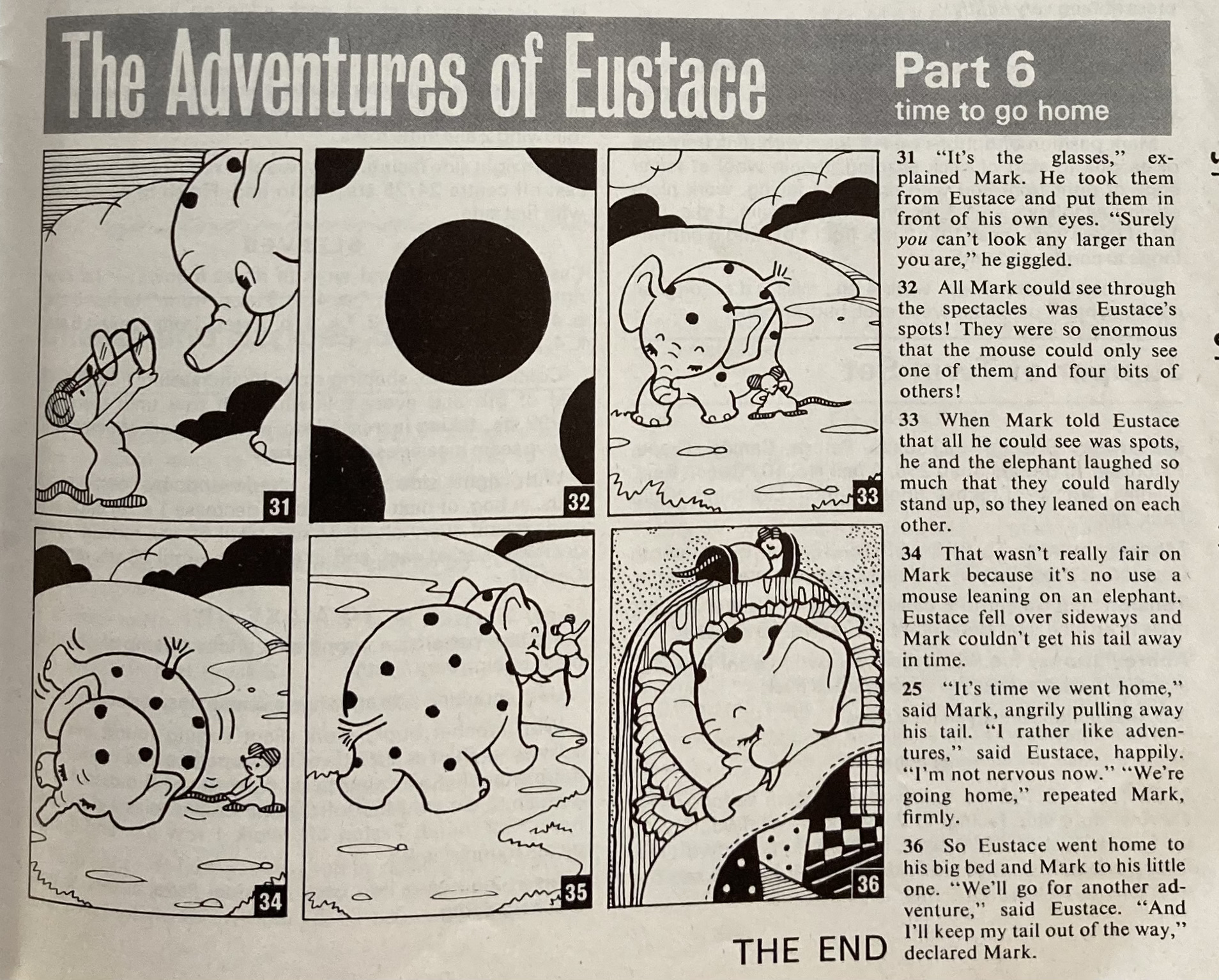
The “Readers Pages” give us a reprint of a July 1963 design for two little cross-stitch pictures, some helpful hints on mounting tapestry designs (mount it on cardboard with pins or threads and check that the tension on the right side is even), and the conclusion of our latest children’s serial comic, “The Adventures of Eustace”. For those who haven’t been keeping up (including myself; this story was not one of the more interesting ones), Eustace is an elephant who went on some very tame adventures (highlights: eating buns for tea, looking through glasses the wrong way) with his friend Mark, the mouse. Mark calls an end to the adventure and the comic, and they go home and have a nap. That sounds like my kind of summer adventure.

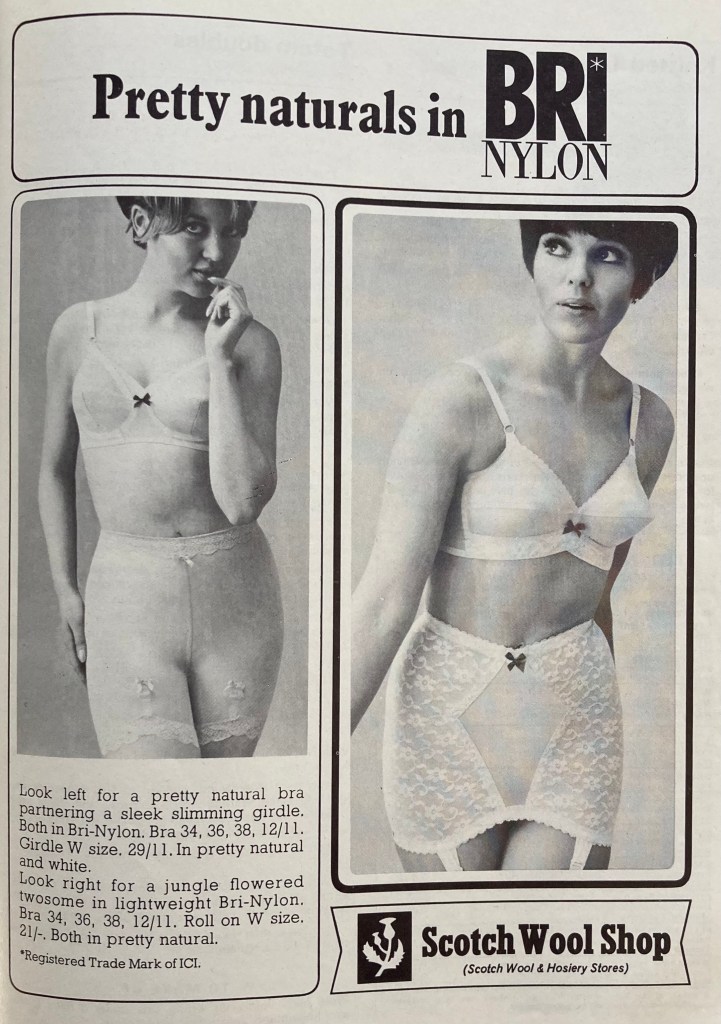
I will leave you with this ad for “pretty natural” underwear from the Scotch Wool Shop. The underwear is made from extremely synthetic Bri-Nylon and is intended to shape one’s body in directions it doesn’t go by itself, so the only “natural” thing going on here is the colour, if you have pale beige skin. But it is quite pretty.

Enjoy the rest of your summer! My project will be the mesembryanthemum embroidery on a vegetable bag.

July 1966: Overview

It’s all about teamwork in Stitchcraft’s July 1966 issue: two-piece sets for casual, sport or city wear as well as matching designs for all members of the family. Appropriately for the theme and the season, the emphasis is on sports and leisure, with casual, loose-fitting designs.

Our cover ensemble pairs a checked, sleeveless top with a skirt whose pleated insets match the check pattern. The check pattern is stranded, and I hope the navy blue didn’t bleed into or show through the white at the first washing. It’s the dressiest of the designs in this issue, but still keeps a casual air with its loose, unshaped top and shorter skirt (hemlines are finally rising at Stitchcraft, long after the miniskirt became popular everywhere else) and the check pattern, which is reminiscent of a race-car flag. The “favourite continental look for casual wear” is a team of “overpull” (oversized pullover) and short-sleeved blouse with a polo (turtle) neck in matching colour.

For warmer days, there’s a trio of lightweight and/or sleeveless blouses: in a lacy striped pattern or textured rib in 4-ply, or a mini-top in eyelet rib. Pink, white and turquoise are fun ice-cream colours for summer and harmonise well with the maritime blue of the checked suit.

A high-buttoning cardigan in heavier DK is good for cooler weather. Twisted stitches are the summer knitting trend, seen in the cardigan as well as in the eyelet rib and the striped lace tops. Our male model teams up with a horse to show off his cleverly designed “Viennese sports pullover” in tan DK wool with white cable stripes going up and down the front and back as well as down the sleeves.

The ultimate 1960s team is, of course, the nuclear family, and this issue offers a design for (almost) everyone: a simple, casual pullover with a trellis pattern in three sizes. The trellis is formed by making a k2tog or sl-k-psso at the right point in the pattern with a yo right before it to keep the stitch count even. The purl stitches on the wrong side are worked into the back of the “made” stitches to close the yo holes even more and make the trellis stitches stand out. Here too, summery ice-cream pastels and neutrals are in: “Banana Cream” for him and light green “Linden” for her and the daughter.

I did say “almost” the whole family, right? The youngest members have their own designs. Junior’s play jersey in blue and white echoes the women’s check suit, but here the check pattern is made by slipping stitches and/or letting them drop and picking them up a few rows later. The baby gets its own “teamwork” set of matinee coat and bootees in pretty lace and moss stitch.

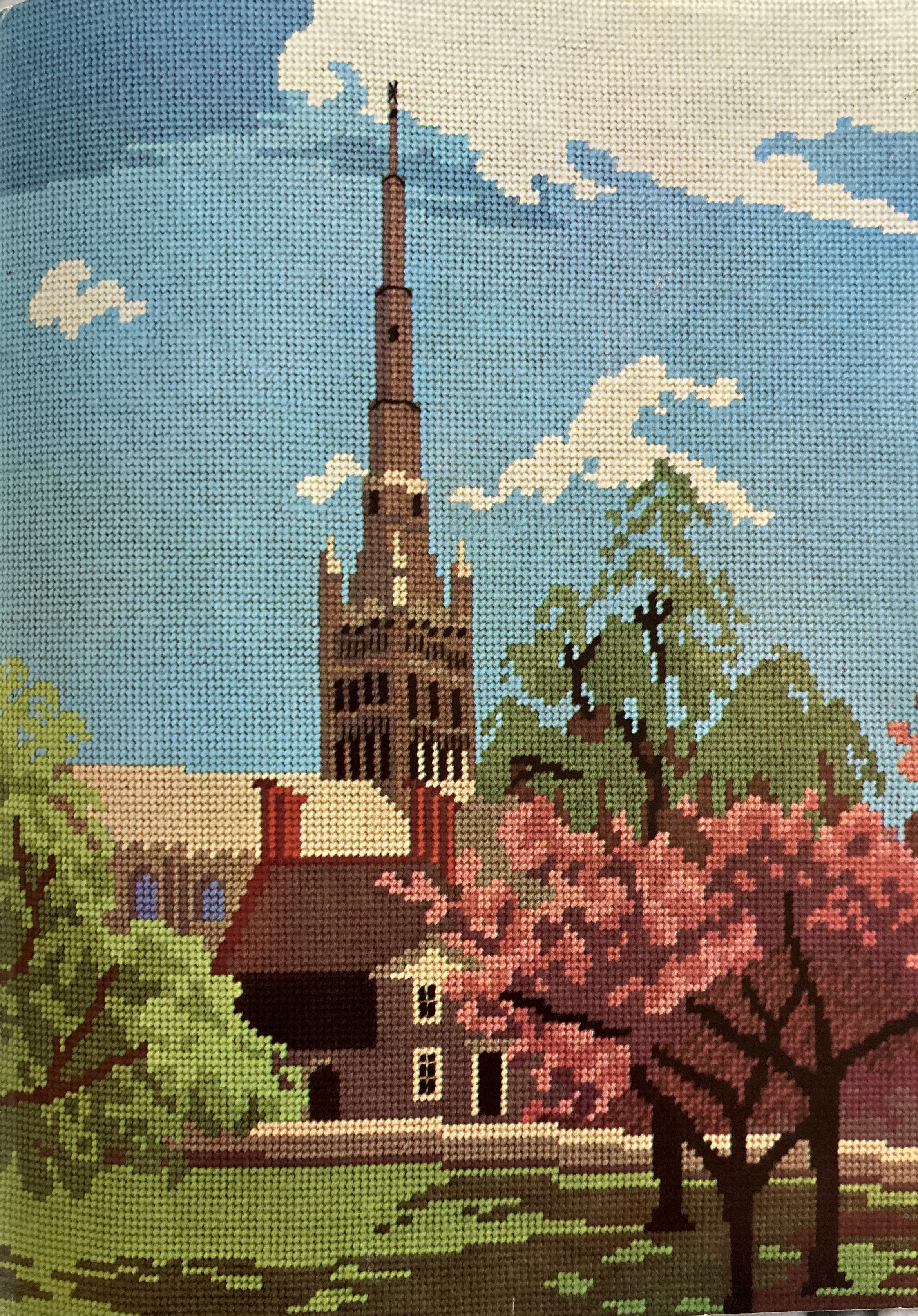
The homeware designs are pretty standard, but numerous and cover all the home bases. There are some easy floral cross-stitch and pulled-thread mats, a cushion and/or stool top in tapestry (a check design, once again) or a stitched rug in Florentine design. More ambitious tapestry fans can make a wall panel of boats at Norfolk Broads.

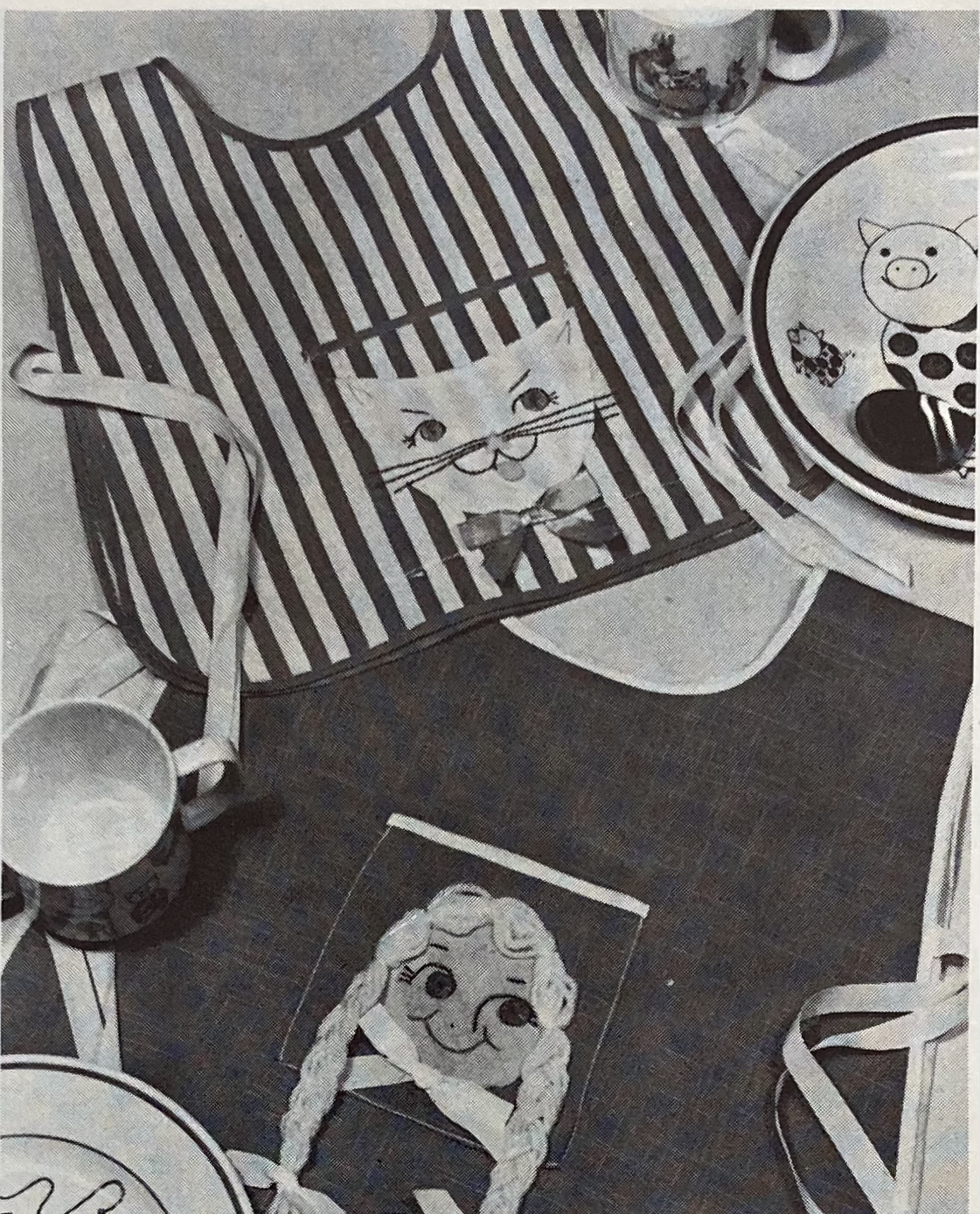
And for once, the “Summer Bazaar” designs are not weird! There’s a simple crochet tea cosy, crocheted lace coaster mats, or an apron and/or potholder set appliquéd and embroidered with cute images of vegetables. In the “Readers Pages”, there’s a reprint of a 1961 pattern for a knitted pram blanket, and Eustace the elephant gets very startled when he tries on a pair of spectacles and suddenly sees Mark the mouse in larger-than-life size.

That’s all for this issue! Since I didn’t get around to making the sun cushion last month, I’ll make it this month. (Technically, it’s sort of part of this issue as well, since it photo-bombed the picture of the ribbed polo blouse.) And nothing else from this issue really called to me. Sunny days ahead, and may your team always win.

June 1966: Overview

Colour for High Summer! The trending colour in Stitchcraft’s June 1966 issue is turquoise, and “High Summer” means casual, easy knitwear in washable synthetic yarns for holiday travel. Let’s dive in!

The knitted fashions are high-necked but loose-sleeved, knitted mostly without shaping in textured stitch patterns. Our cover cardigan is made in turquoise “Courtelle” synthetic wool with a pattern made by increasing and decreasing in the same stitch to create a sort of flattened bobble over multiple rows. There’s a white pullover with a bold intarsia turquoise flower, a his-and-hers white cabled rib for seafaring holidays, or sporty numbers for playing tennis in a dress shirt and tie. The colourwork pullover is also made in turquoise and white, and the sleeveless men’s tennis top in blue.

For warmer days, there’s a heavy-knit, but sleeveless and lacy, “jaunty beach top”, or a choice of two pretty T-shirt tops. The basketweave-patterned top is also blue, and the diamond-patterned top in “Banana Cream” beige — the colour trends are very clear. The last two tops are made in finer, 3- or 4-ply wool, but also make use of synthetic yarns like the wool-nylon “Nylox” three-ply used for the basketweave top. You can complete the outfit with one of two crocheted hats: pillbox style or with a corded brim, both in heavy “Capstan” wool.

Children can enjoy their holiday in a striped play-shirt with matching “overpull” or a bobbled cardigan and pleated skirt (though the skirt, like so many fashions for little girls, is quite impractical for any kind of actual playtime.) The cardigan features an interesting two-colour pattern made by dropping a yellow stitch down three rows and picking it back up together with three white loops. Interestingly, the children’s patterns feature neither turquoise nor blue of any kind, but are made in bright yellow and white or more subdued stripes of grey and light red.

Homewares are fun and easy, starting with a knitted “World Cup Willie” car rug. The 1966 FIFA World Cup football (soccer) tournament was held in England in July 1966, and “World Cup Willie” was its official mascot. England won the trophy that year, beating West Germany in the final match 4-2, so I guess Willie was indeed a bringer of good luck. Personally, I am much more interested in the Stitchcraft model’s dress, hat and shoes than Willie or the World Cup — I want that entire outfit! The rug is made in heavy “Big Ben” wool and a sturdy moss-stitch pattern, with the “Willie” motifs worked in intarsia technique from a chart included in the magazine issue.

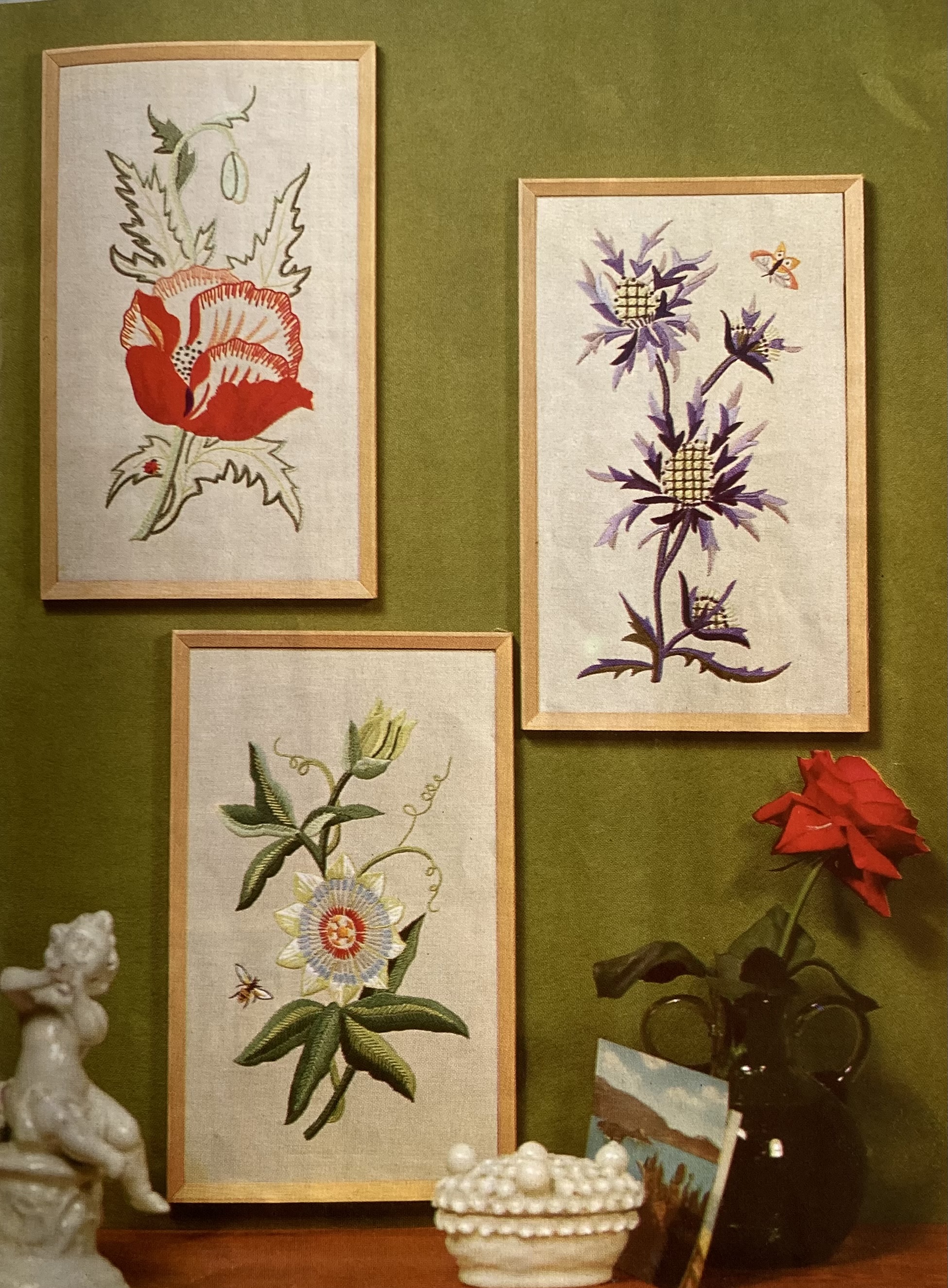
Moving on, there’s an embroidered wall panel to commemorate the 900th (plus a year) anniversary of the consecration of Westminster Abbey — we haven’t had a commemorative wall panel for a while, so that’s a nice plus. As always, there are chair-accessories and cushions, this time with delicate embroidered satin-stitch poppies in wool on linen, or a very 1960s happy smiling sun worked in felt on Hessian/burlap fabric for tough use in the garden.

You can also make a beach bag from towelling material gathered with “Rufflette” curtain tape, or sew an easy sundress for a small child — basically a big rectangle of fabric gathered and sewn at the shoulders — and embroider a lucky fish on the pocket. Speaking of lucky fish, how about this masterpiece of 1960s advertising copywriting that accompanies a photo of a woman “caught” in a fish net? It’s all happening at your local Scotch Wool Shop.

That’s all for high summer! My project will be the sunny garden cushion, and possibly also the basketweave top.

May 1966: Cushion For the Nursery

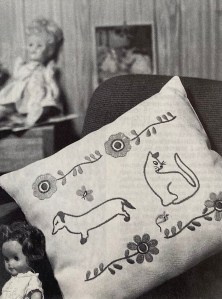
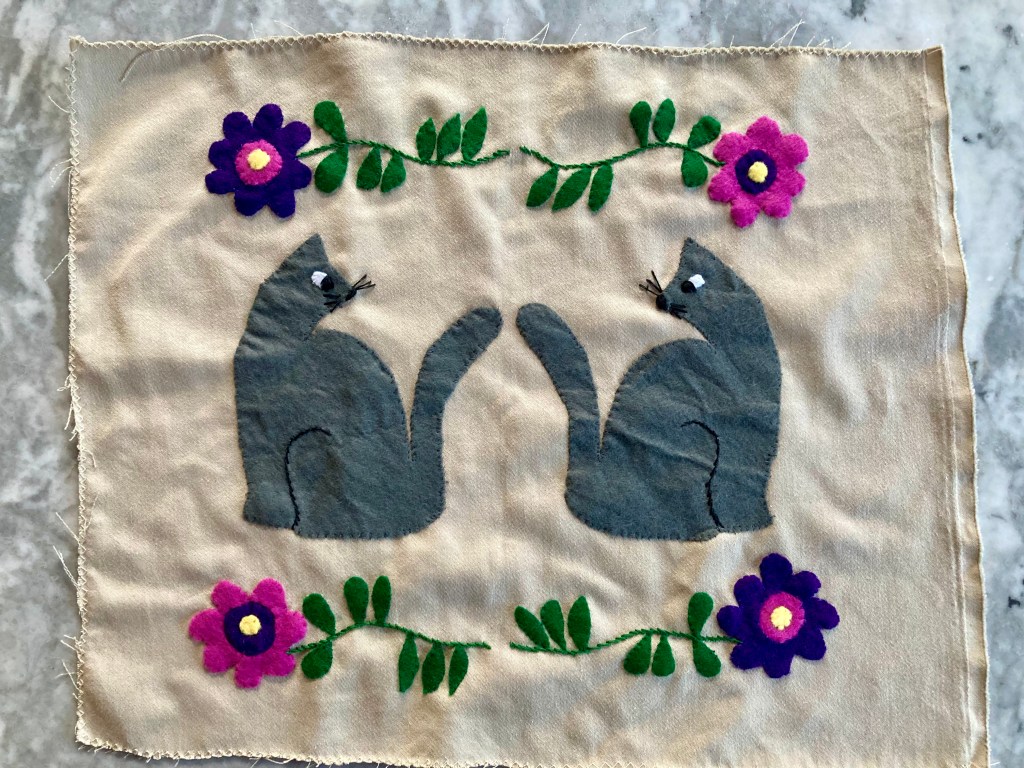
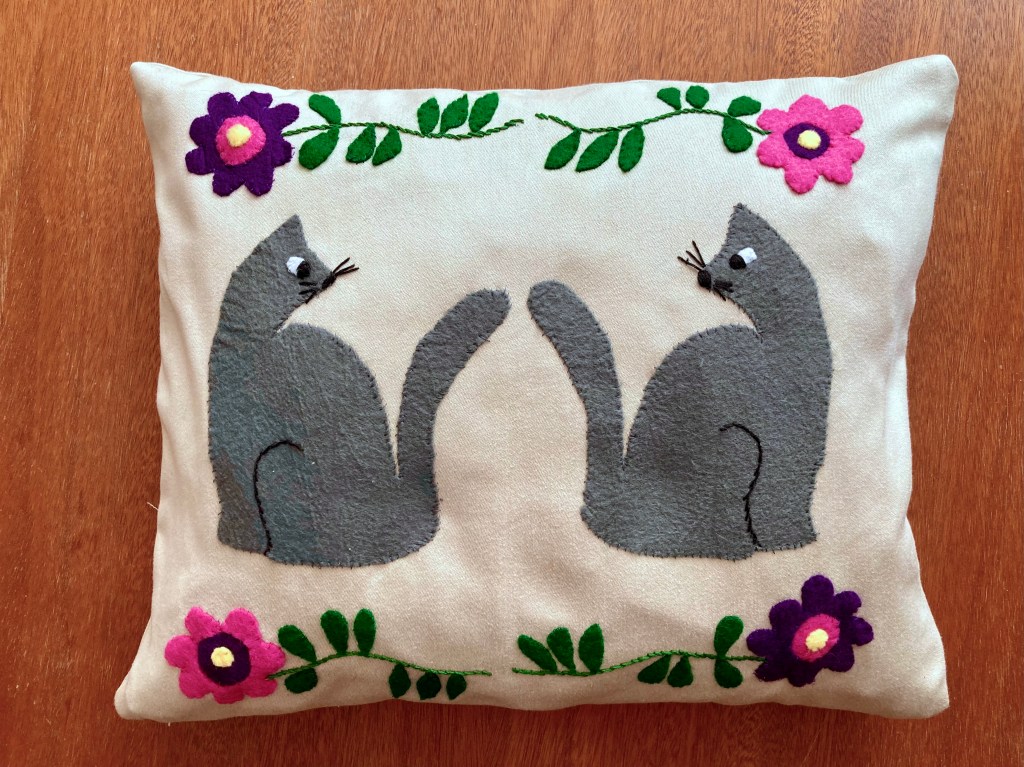
My May 1966/May 2024 project was based on an adaptable project “for the nursery” featuring cute little animals and flowers. The pattern as offered in the magazine could be used to make either a wall hanging in felt appliqué, or a cushion in wool embroidery. I chose to use elements of both designs and made a cushion in felt appliqué.

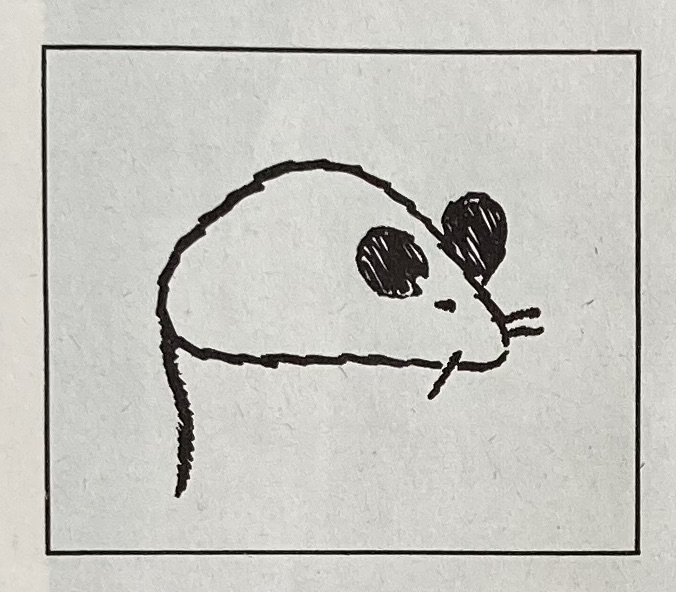
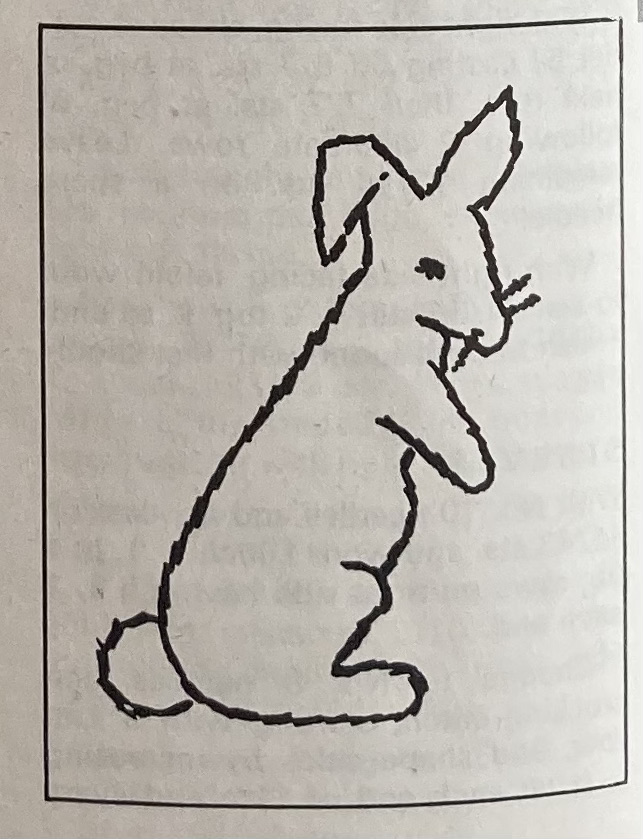
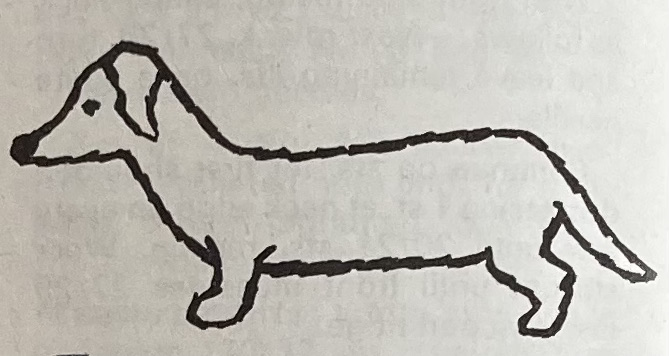
As always, the transfer was not included in the magazine — readers had to send 1/10d to Stitchcraft and received the transfer post free by mail. Obviously, that would not work now, as Stitchcraft is no longer published. Happily, the animal and flower shapes are quite easy to copy and individual illustrations of the dog, bunny and mouse are printed in the magazine.

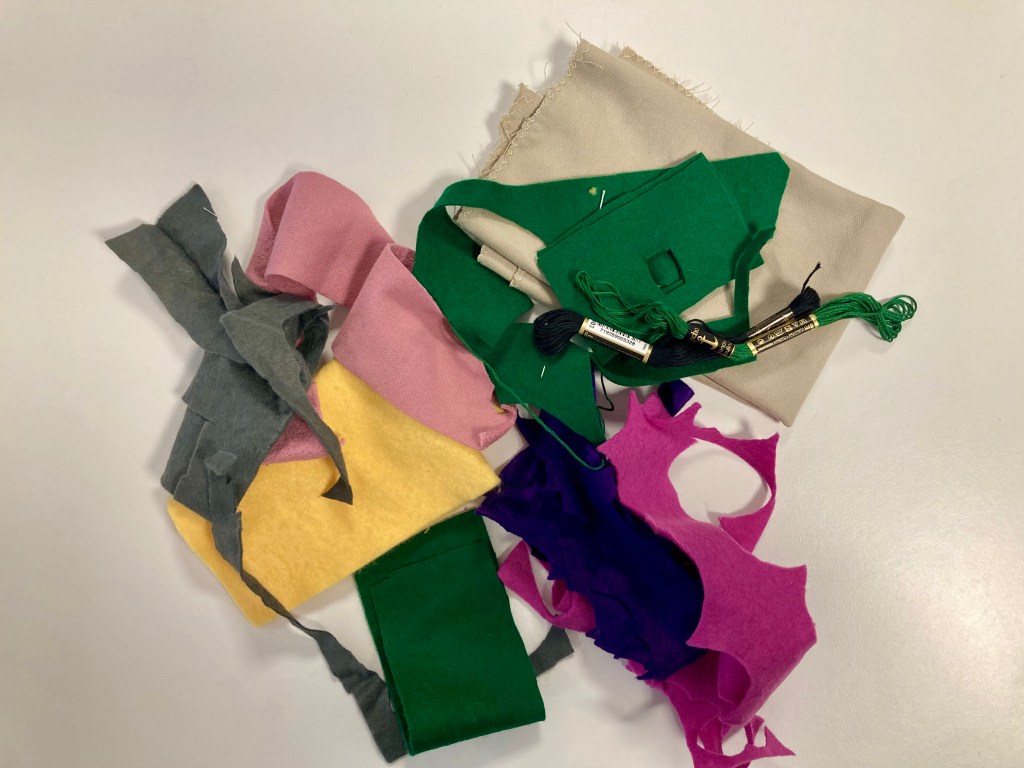
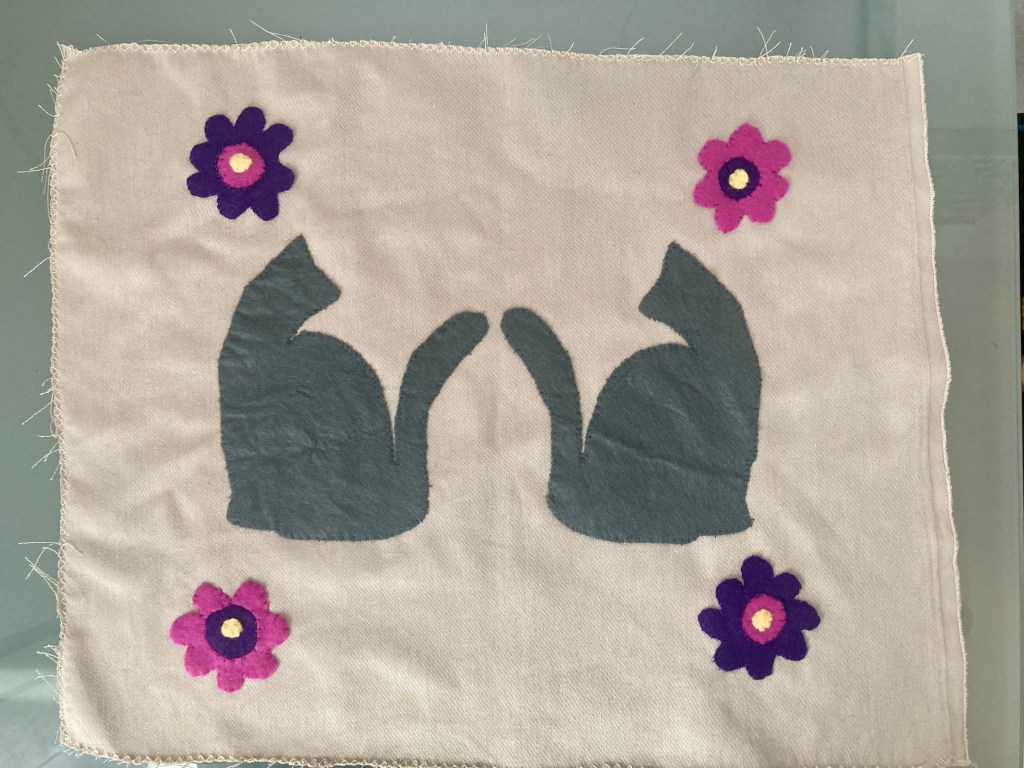
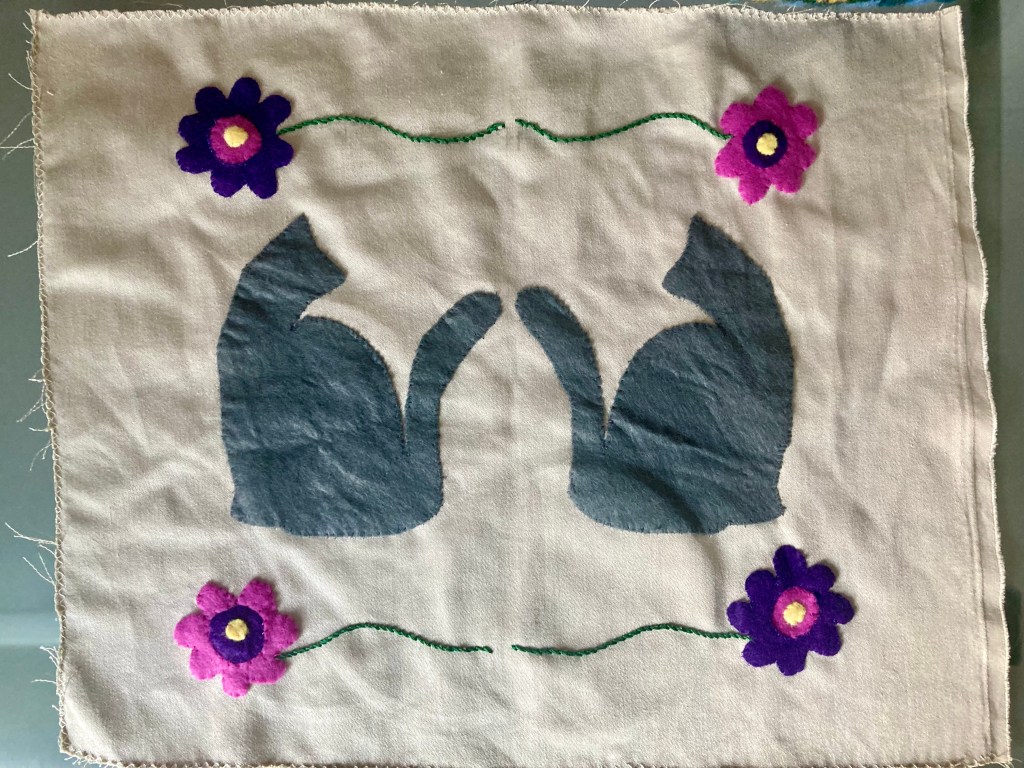
Both the appliquéd animals in the wall hanging and the embroidered outlines on the cushion are intended to be made with non-realistic colours (the rabbits are blue and magenta, the donkey gold, the cat jade green, the dachshund magenta, and the mouse bright pink). I chose more realistic colours based on what I had in my felt-scrap stash, and I like cats, so I made two grey cats looking at each other over their shoulders. I had enough purple, magenta and yellow felt left over from the last appliqué cushion I made to make the flowers. I made the cushion cover itself in a natural-coloured linen, as intended in the pattern, and the inner cushion in leftover white and beige fabric from other projects.

The appliqué work was quite easy and pleasant, even the tiny leaves of the flowers. The flower stems are embroidered in stem-stitch. I was nervous about making the cat’s eyes (white felt embroidered in black) as the expressions can be very tricky, but I think they turned out quite nicely. Since I was on the road for most of this project and didn’t always have access to my sewing machine, I put in the zipper by hand, which worked out fine.

And there it was! I love making cushions and would make more of them if I knew what to do with them after they were done. I have more cushions than space already for myself, and this particular design, although extremely cute, is a bit childish even for my playful decorating style. Luckily, I have friends with small children, and this cushion will go to one of them, who is currently decorating her three-year-old’s room. I hope he likes it! I am certainly quite happy with my happy cat cushion and I think he will be too.

May 1966: Overview

It’s finally Spring!

We had a terribly cold April where I live, with rain and gloom and the sense that spring would never come. I had switched out my winter and summer clothing as part of spring cleaning last week and it all felt wrong. Then, all at once, two days ago, winter ended, the sun came out, and temperatures doubled. Perfect timing for the “Summer Plans” in the May 1966 issue of Stitchcraft!

The May to August issues always have lots of projects for travel and holidays: little summer tops, quick bulky jackets and sweaters for cooler weather or sailing holidays (aka normal summer in a temperate/maritime climate) and easy homewares to make in a deck chair while lounging about. The pullover on the cover is made in DK wool, so relatively warm, but with a lacy front to keep it airy. The photo is also almost an exact copy of the March 1966 cover photo! Apparently yellow is still trending.

Other women’s garments include a ribbed and a plain polo-neck jumper designed on “skinny lines” — the ribbed number is a special design for extra-slim Twiggy figures with a 30, 32 or 34 inch bust. For “figure-plus” sizes, there’s a summer blouse in bouclet wool with a wide, rolled collar and chequerboard lace pattern. There’s a plain DK cardigan in a range of average sizes to round out the tops, and an easy crochet dress with “practically no shapings”. High necks and clean lines are in, and stitch patterning is kept to a minimum in favour of little details of colour and finishing — see the smock-like embroidery on the “skinny” jumper, or the twists of colour on the collar and cuffs of the polo-neck. Colours are light but bold — light blue, white, green, yellow and pink.

The other members of the family are well served in this issue too. There’s a men’s “country pullover” in a zig-zag stitch pattern, as well as a bouclet “tennis shirt”, both in neutral colours of “Alabaster” and “Brandy” — even the names of the colours fit the image of 1960s masculinity. The “young fashion” set can have fun in a striped and belted mini-dress. Stitchcraft informs us that the “Young Colour Choice is mid grey and white”, which is interesting, considering that the adult women’s fashions are all quite a bit more colourful. Younger tots can make “Seaside Plans” in a t-shirt-and-trunks set for a boy or a little knitted dress and head scarf for a girl. (Why no trunks for the girl, whose dress is going to fly up over her as soon as she starts digging in the sand with that bucket?)

There are some nice child-appropriate homeware designs as well, starting with a thick, warm pram blanket in blue and yellow (to match the mother’s jumper!) The pattern is a herringbone tweed alternated with cable panels and the finished blanket is edged with satin ribbon. Then there are some wonderful decorations “for the nursery” featuring friendly animals and flowers. You can work them in felt appliqué on a wall panel, or in wool embroidery on a cushion. The animals are so cute! I love how the cat is both guarding its mouse and disdainfully looking away from the dog on the cushion. Whoever designed this obviously had a cat.

The normal homeware items are, well, normal: two different flower tapestries for a wall panel, the smaller of which can be used for a spectacles case; a tapestry chair seat, a stitched rug and waste-paper bin cover in an easy geometric pattern, a beach bag with beachy motifs (anchor, shell, beach grass) to embroider, or, for people who don’t like to relax on their holiday, a pair of intricately crocheted trolley cloths in a star design.

Saving the best for last, there are designs for two oversized, tall hats. The knitting itself is very easy, but the making-up is complicated, with lots of stiffening in the lining to make the hats stand up off of the head. It feels like Stitchcraft is finally getting into the “fashion fun” era of the 60s, albeit a little late and still pretty conservative.

In the back pages, there’s a teddy-bear motif to knit or embroider and instructions on how to make a pom-pom (two cardboard circles). Eustace the elephant from the children’s comic has eaten delicious buns for tea and helps a mother duck encourage her son to learn how to swim. Finally, “Slip Into Orbit” with these “deliciously private-eye-catching” undergarments from the Scotch Wool Shop! The space age has arrived and we are going to celebrate by wearing pretty underwear.

My project this month will probably be some variant on the animal/flower appliqué or embroidery. Enjoy the Spring!

April 1966: Overview

The April 1966 issue of Stitchcraft has a “continental” flair, with “softer feminine styling from Paris” and this “Swiss” design pullover in a new “Banana Cream” shade of beige. The cover photo is classic mid-60s fashion photo shoot: layered shades of gold, brown and beige, the model with bobbed hair standing in a diagonal pose, sans-serif fonts and a relatively long, high-necked, unshaped pullover with geometric design in the stitch pattern.

The other women’s fashions have the same easy feel and generous fit, but allow more colour: turquoise and blue are trending this Spring. “PARIS keeps the Crochet Look” in a bright turquoise buttoned jacket, or you can knit a short-sleeved “easy-line sweater” in turquoise and pair it with an unbuttoned “casual jacket” in turquoise and navy for a twin-set effect. Both jumper and unbuttoned jacket are made in a simple slip-stitch pattern with a nubbly effect. The green “blister stitch” cardigan achieves the same effect with simple increases and decreases in garter stitch and rib.

The promised designs from Paris are a knitted dress in “The Granny Look”, “demure in lace with draw-string waist”, and a tweed beret (of course, Paris). The beret marks the start of the mid-late 60s fashion for oversized hats, knitted large and stiffened with “Staflex” lining. It is knitted in reverse stocking-stitch in four parts which are lined and stiffened separately and then sewn together. The model looks so sad! Does she not like her beret? (She didn’t seem to like the crocheted jacket either.) Rounding out the regional fashion parade are his-n-hers pullovers in black and white panels for the “London Look”. I love the vintage coffee set and judging from the photo, so do the models. Maybe the sad model just needs some of their coffee.

It’s a good issue for men and boys: in addition to the black-and-white “London” pullover, there’s a thick, warm knitted “car coat” for men, paired with a boy’s cabled lumber-jacket in the wonderful centrefold photo. A father, a son, a car and a boat! Everything colour-coordinated in those manly shades of red and royal blue! Diagonal poses for everyone!

(Side note: these diagonal poses are very uncomfortable. Sometimes the photographer just holds the camera diagonally, but otherwise it twists your spine all out of shape. I would be a sad model too, if I had to do that all day.)

For “younger folk”, there’s a pretty short-sleeved knitted blouse for a schoolgirl, and yes, a “deerstalker” hunters’ coat and hat for a (presumed male) toddler. It gives me a “so much wrong” feeling. Also, won’t somebody get this kid some clothing for the lower half of his body?

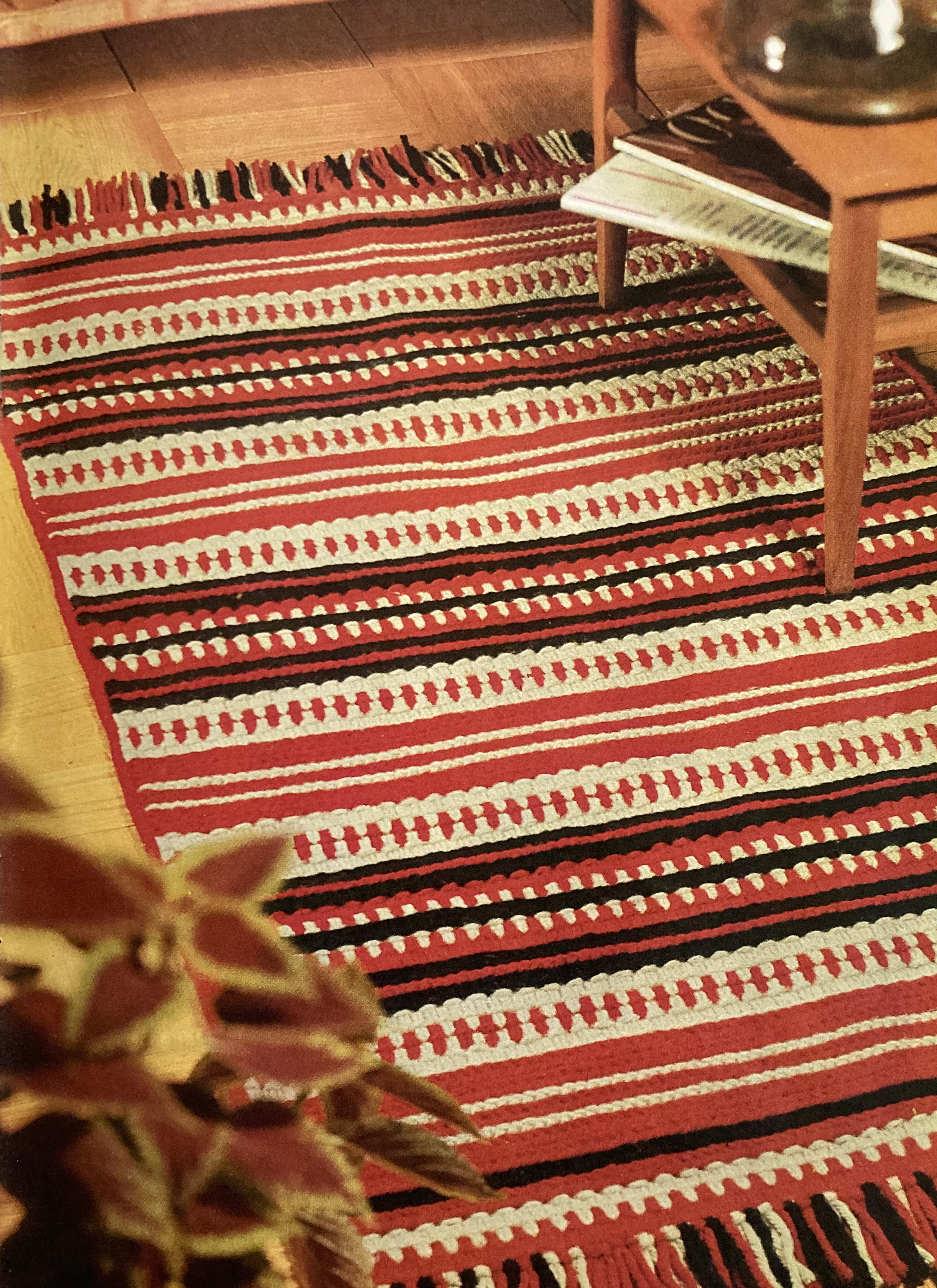
There’s more to come in the homewares department, though Stitchcraft seems to get less and less creative with homeware design as the 60s go on. There are little rugs, either stitched or crocheted in rug wool, as well as an unusually-shaped half-circle rug in Florentine stitch to put in front of a bookshelf. The Florentine design can also be stitched on tapestry canvas for a tea cosy.

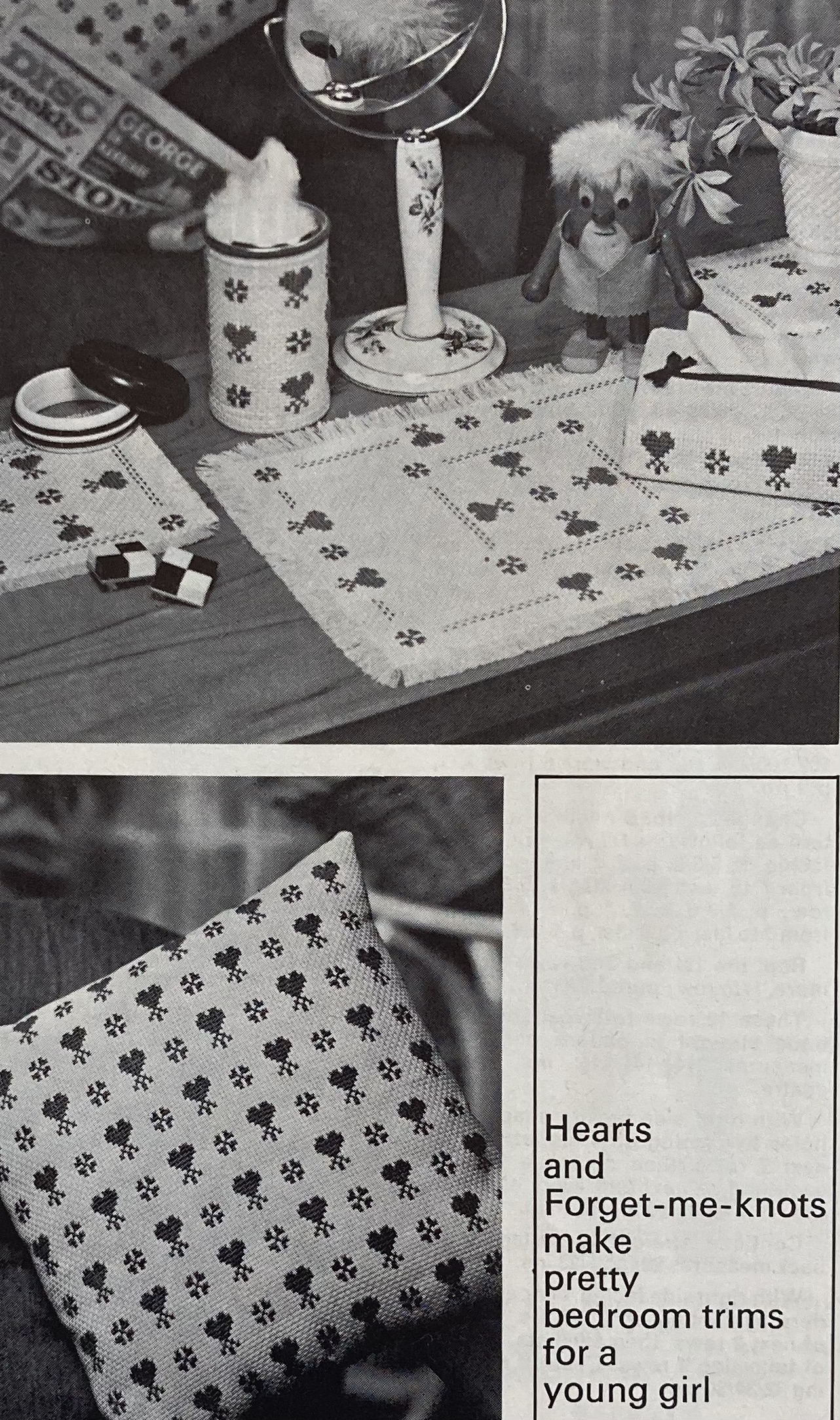
A similarly versatile flower design can be made in cross-stitch for a chair set of cushion and back-cover or in tapestry on a church “kneeler” hassock. There’s an embroidered mat set for your dressing table and an intriguing embroidered wall panel of different gourd-type vegetables on a black linen background.

Finally, Easter was in April in 1966 and there are some cute Easter-themed gifts and “novelties”: an Easter egg kitchen bag (to hold clothespins) in felt appliqué and embroidery, a “nursery nightcase” (not Easter themed, but advertised as a good Easter gift) in the shape of a bedtime bus (Side note: when did people stop storing their pajamas or nightgowns in a special bag during the day?) or a knitted lamb toy, reprinted from the March 1957 issue.

To round it all off, there’s a great bathing-suit ad from the Scotch Wool Shop and for the first time, a partner promotional offer from Patons and the Kelloggs cereal company — knitting patterns featured on the backs of All-Bran and Bran Buds packets. The natural laxative foods! These types of promotions became more common in the later 1960s and especially the 1970s. Finally, in our children’s comic, Eustace the elephant and Mark the mouse get invited to tea in a house that Eustace can’t fit into very well.

My project from this issue is already finished… is that cheating? I started it last week to get a head start and it went very quickly. It was the knitted lamb, and though it didn’t turn out quite perfect, I had fun making it and it brings joy to anyone who looks at it. I will post about it soon, along with another destash project from a later issue of Stitchcraft. Happy Spring!

March 1966: Overview

“Knitting GLOWS with COLOUR and Needlework has Distinction for Spring 1966.” is the headline of the March 1966 issue of Stitchcraft, featuring a new yarn, Patons 101 Double Knitting Courtelle.

“Courtelle” was a synthetic fibre developed in the late 1950s by Courtaulds Ltd, a textile manufacturing company that expanded to include artificial silk (rayon/viscose) at the beginning of the 20th century and went on to produce many different types of artificial and synthetic fabrics, either cellulose-based (acetate, lyocell) or acrylic. Courtelle was an acrylic fibre, 100% synthetic, and featured in many different brands of hand-knitting wool around this time, such as Chadwick’s, Bairnswear (the company was bought by Courtaulds in 1953), Emu or Sirdar in the UK, Sofil, Laines du Pingouin or Georges Picauld in France, Austermann in Germany, Elle, Fiesta or Saprotex in South Africa, Phentex in Canada, and so on. As Patience Horne writes in this month’s issue of Stitchcraft, it was “easy and smooth to knit” (didn’t tangle), “very economical”, and “washes and wears wonderfully” (didn’t shrink or fade). She also claims it was “lovely warm” (pretty sure one sweated in it quite awfully) and “light as a feather” (it was not).

These days, of course we know that synthetic fibres pollute the environment quite terribly in the course of manufacturing, are non-biodegradable and generally not recyclable, and that washing them releases microplastics into wastewater, the long-term effects of which are not wholly known at this point, but certainly not good for human or animal life. Here, for example, is just one very recent and unsettling article about a study published in the journal Toxicological Sciences. To be fair, most of the microplastics found in the study were polyethelene or PVC, which are more commonly used in plastic bags and objects than in textiles, but nylon, used heavily in textiles as well as in other things, was also high on the list.

What to do? I try to avoid buying new synthetic yarn whenever possible. It is not always possible, since many brands and types of wool combine natural fibres with nylon or polyamide. The vintage garments in my closet get worn and used and repaired, washing only as necessary, since the worst thing one can do with plastic is throw it away (doesn’t decompose, can release toxins into air or water if buried or incinerated). One good thing about 1960s and 70s synthetic fabric is that it is virtually indestructible. The dresses and blouses that I inherited from my grandmother or bought in secondhand shops look as new now as they did fifty or sixty years ago, and will presumably keep their bright colour and shape long after whatever environmental/nuclear/zombie or other apocalypse has destroyed humanity. (Maybe the giant radioactive cockroaches will enjoy wearing them.)

Anyway, enough soapboxing and doom. I’m sure you would all rather read about what readers in 1966 could make from this wonderful, evil new yarn! This issue uses it for a “fashion set of 3 garments”: the twisted-rib-and-eyelet pullover on the cover, a “casual dress” in a different type of twisted-stitch, and a sideways-knit pullover for men. All three feature bold and brilliant colours, a hallmark of early acrylic fabrics and in keeping with the bright, fun vibe of a mid-60s spring.

Twisted, textured and lacy pattern stitches show up in the other garments as well, like this update on the “granny” jumper featuring narrow just-above-the-elbow sleeves and a longline body with no extra ribbing or hem treatment, or the tunic-dress with lacy front panel and hem decoration for a little girl.

“Colour for Spring” shows up in a deep gold sweater suit with a chevron pattern made entirely of knit and purl stitches, a short-sleeved jumper in harlequin diamond pattern or a cute stranded hem decoration on a toddler’s “buster suit”. The ever-expanding use of colour photography really makes a difference here — in black and white, the designs don’t stand out, but artfully photographed with matching or contrasting background drops, they really pop.

For those not wishing to follow the pattern and colour trends, there’s a three-piece pullover, slipover and cardigan set for men in smooth beige crepe or brown bouclet, and a “country classic” high-buttoned, stocking-stitch cardigan in DK weight Fiona.

What about that “Needlework with Distinction”? Old-fashioned themes and designs make a comeback this month. There’s an impressive tapestry firescreen and rug with a pattern of early musical instruments guaranteed to “give an air of dignity to your sitting room on those occasions when you have more formal entertaining to do.” Impress your formal guests even more by hanging a homemade tapestry picture of Windsor Castle on your wall! Churchgoers can make a kneeler and prayer-book cover in tapestry, with a floral theme suitable for an Easter service. Spring flowers feature in the Victorian-inspired ribbon garland embroidery for a tablecloth as well, or the simple catkin sprays to be worked on a cushion, tray cloth or placemat.

Last but not least, we have a new children’s serial comic, in which Mark the mouse and Eustace the elephant set out in search of buns. Yum yum.

I love this issue, but strangely, none of the projects speak to me. I will use this month to finish a WIP that has been lying around for ever, namely the cardigan to this “softly fitting” jumper from the January 1962 issue, four years ago. I just need to finish the sleeves and sew some seams, so it should be finished soon.

February 1966: Overview

“This is the time to look ahead and start knitting for the first Spring days,” writes “editress” Patience Horne in the header notes to the February 1966 issue of Stitchcraft. I get that feeling in February too. Of course, it is still the middle of winter and one may be drowning in snow or battling freezing rain or waiting out the long grey darkness, but every once in a while (like today), the sun will come out and I can imagine that Spring will arrive at some point. The fashions in this month’s issue are appropriately cheerful and fun, with a special emphasis on “Junior Fashion” for small or school-age children.

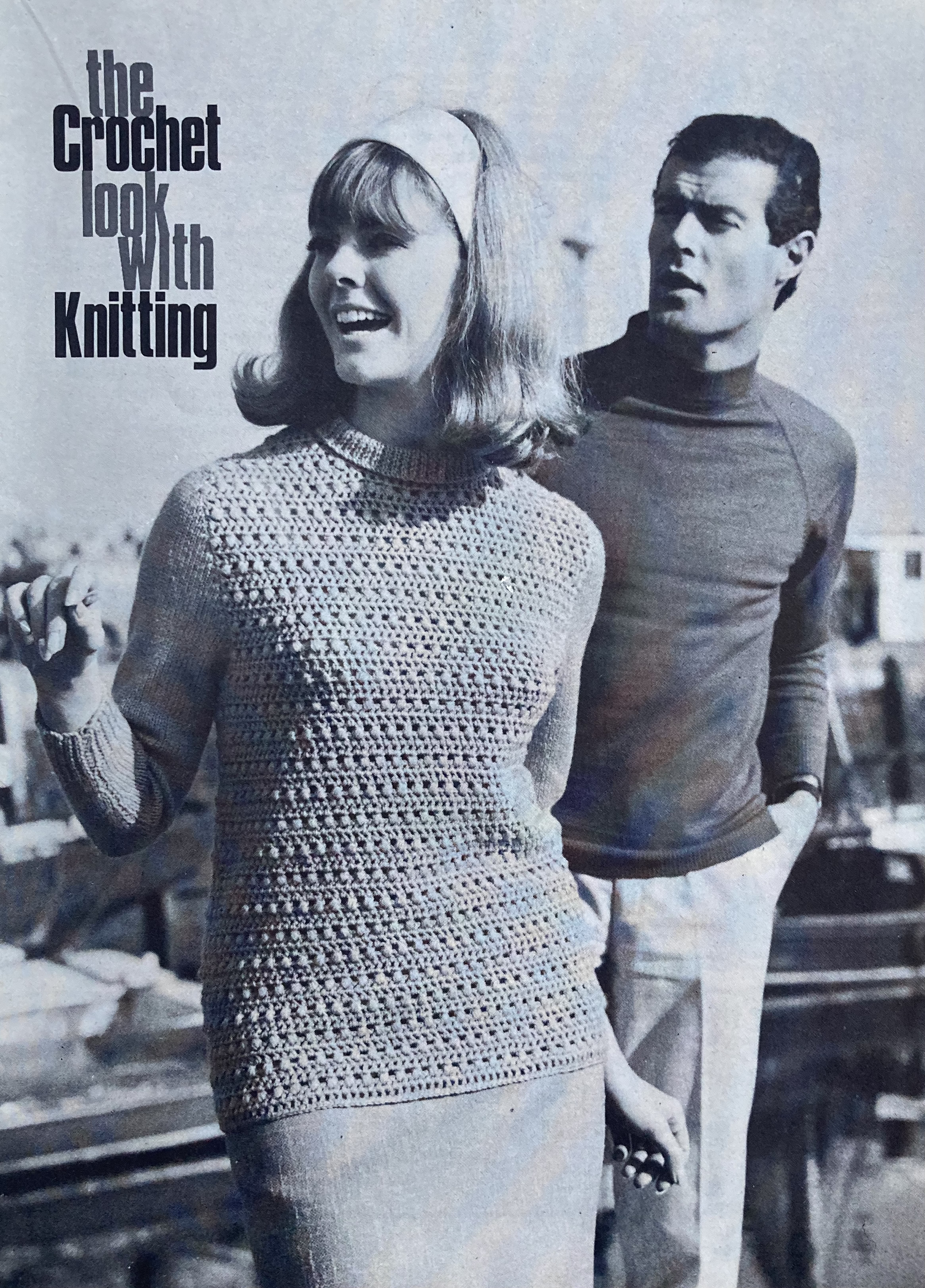
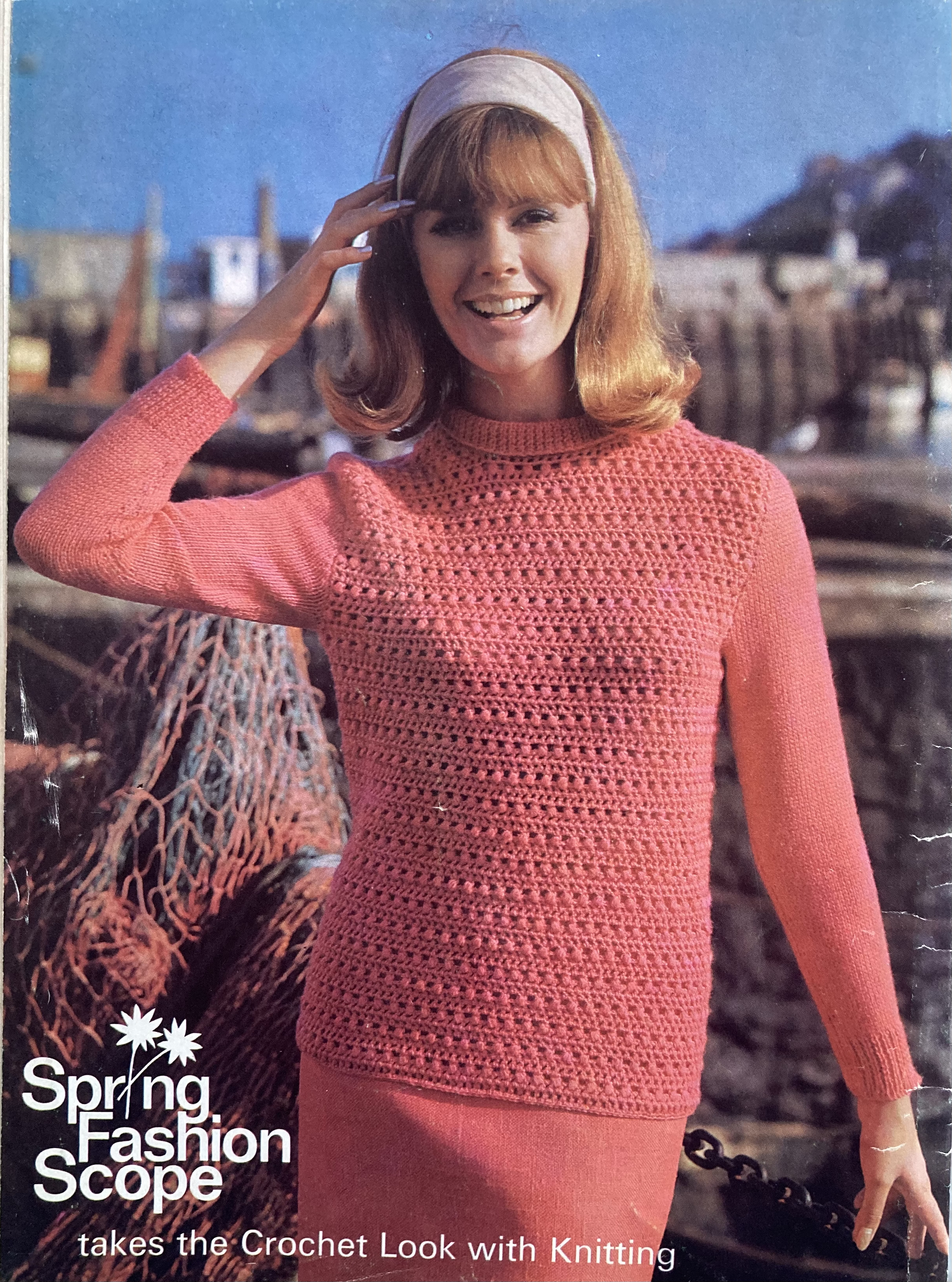
The cover ensemble brings back houndstooth, which never really goes out of fashion in the 60s, but was last seen in this form in the earlier years of the decade. It’s a clever choice for a skirt, as the fabric is fairly firm, preventing all too much sagging in the back. The set can be complemented by a wonderful pair of matching-pattern knee socks. Or you can achieve the lastest stitch-pattern trend, namely “the Crochet look with Knitting”, with a sweater that is… well, crocheted, for the most part. Only the sleeves are knitted, in plain stocking-stitch; back and front are crocheted in a bobble-treble pattern. The silhouette for both outfits is long and unshaped, but not baggy: the sweaters have set-in sleeves and high necklines and the skirt sits just above the knee.

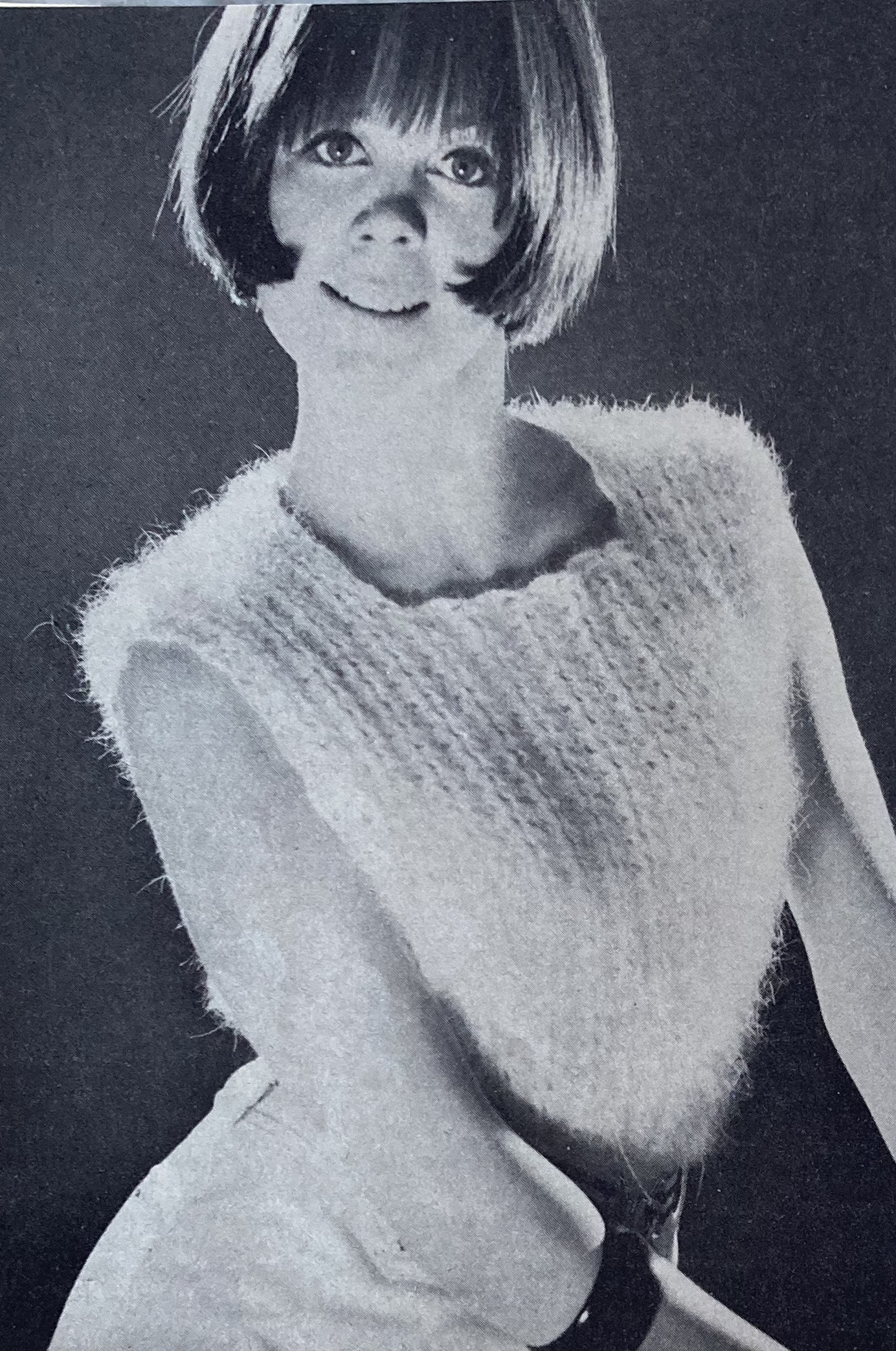
Fans of the knitted look with knitting can make a fluffy lace shell (what a terrible camera angle for the model’s nose), or a classic V-neck cardigan with bobble panels in larger sizes. With the exception of the angora-mohair shell, all are made in DK or slightly heavier wool — it is still winter, after all. Knitters looking ahead to the spring can make a fabulous lace-panel dress with matching cardigan in “Paris Pink” crepe 4-ply. The cardigan has a similar design to the large-size cardigan, just with a narrower bobble band on the fronts and a high-buttoning neck.

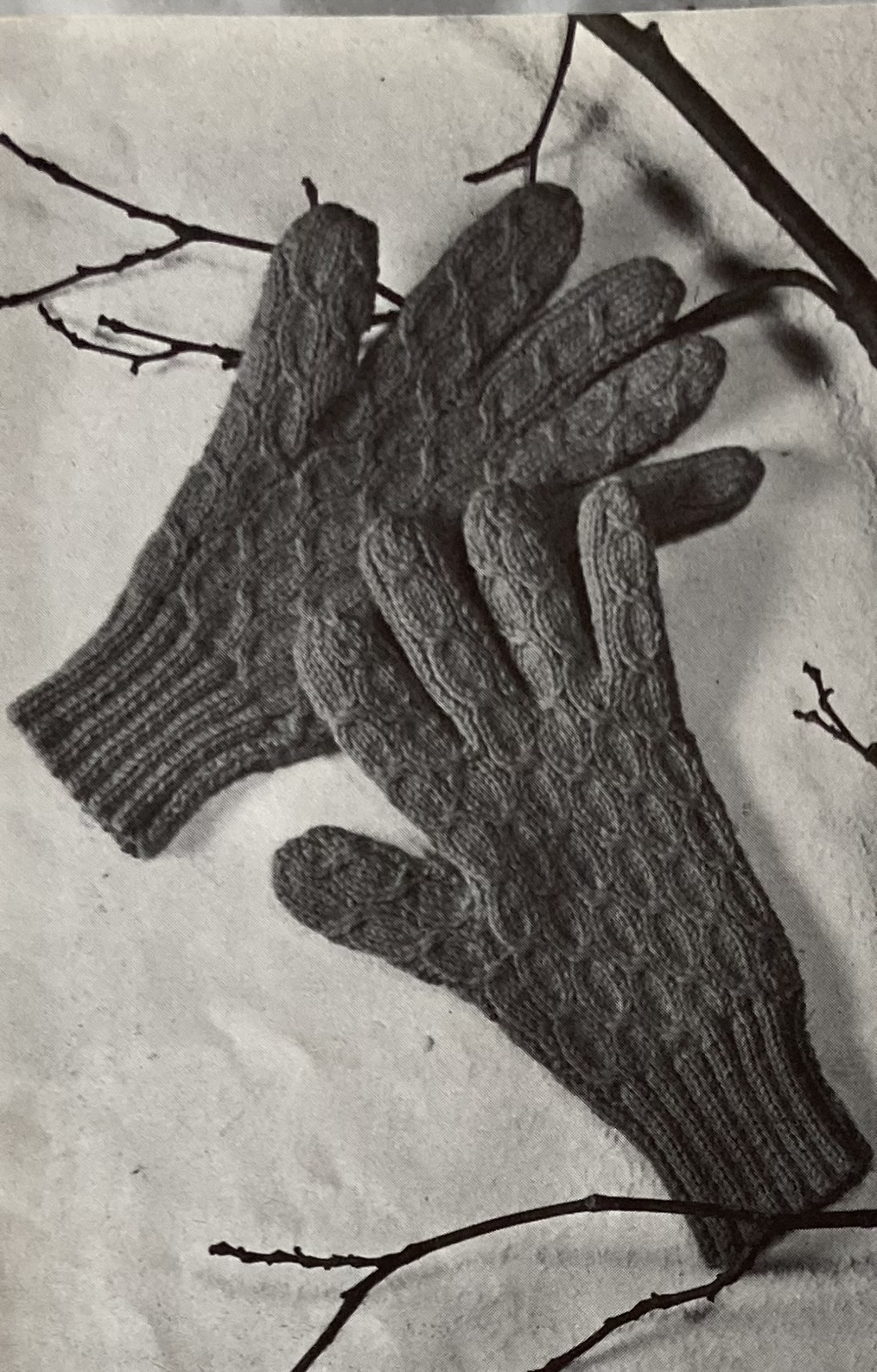
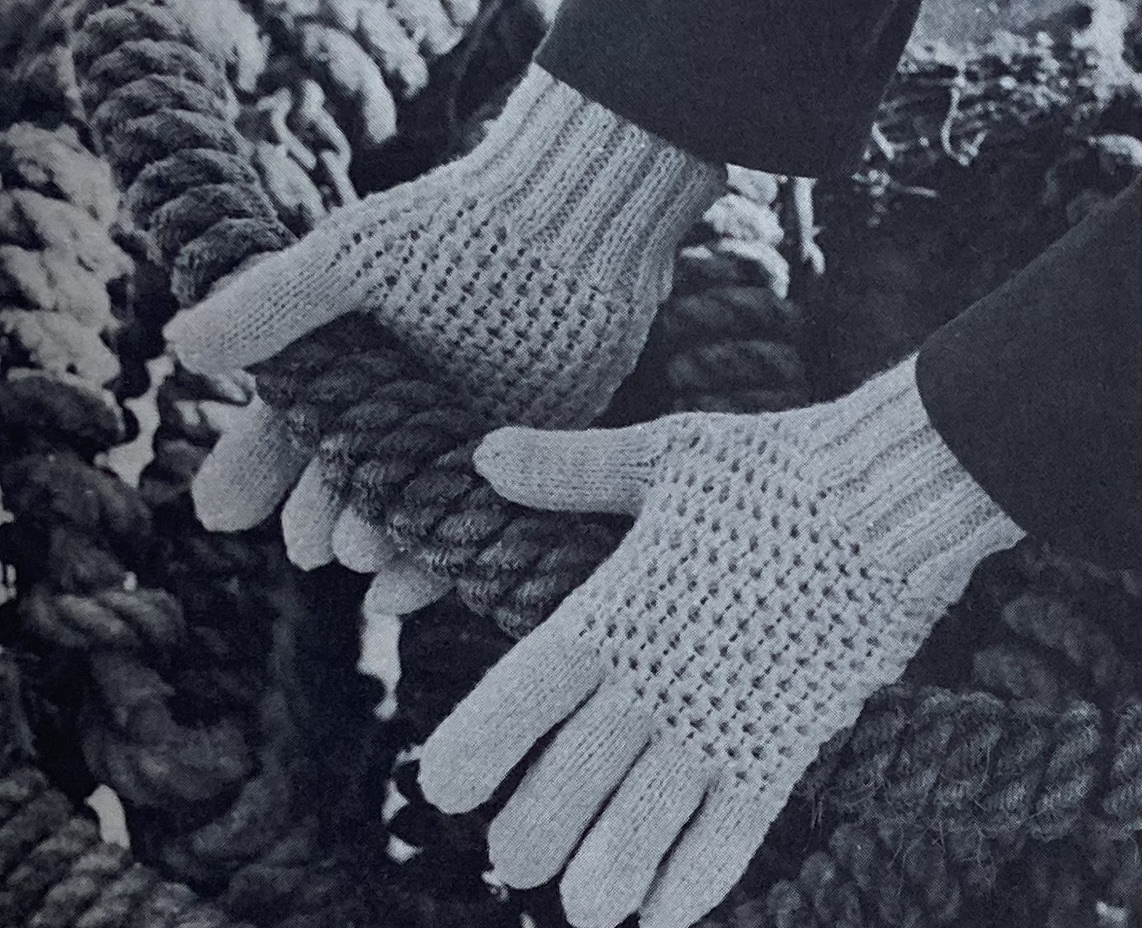
For men, there’s a “sailer with the traditional look” in guernsey style. Instructions are given for “a girl’s a size and a man’s size” (34-36 or 39-41 inch chest) for the partner-look. (Of course, when they say “girl”, they mean a grown woman who doesn’t mind being linguistically infantilised.) The guernsey is nice! There’s a jacket in thick “Capstan” wool for men, as well, which also gives a sort of sailor-y vibe. The interesting stitch pattern is made with twisted stitches set diagonally. Twisted stitches also feature in the men’s “Country Gloves” pattern, where I imagine the stitch pattern makes the gloves particularly warm and hard-wearing.

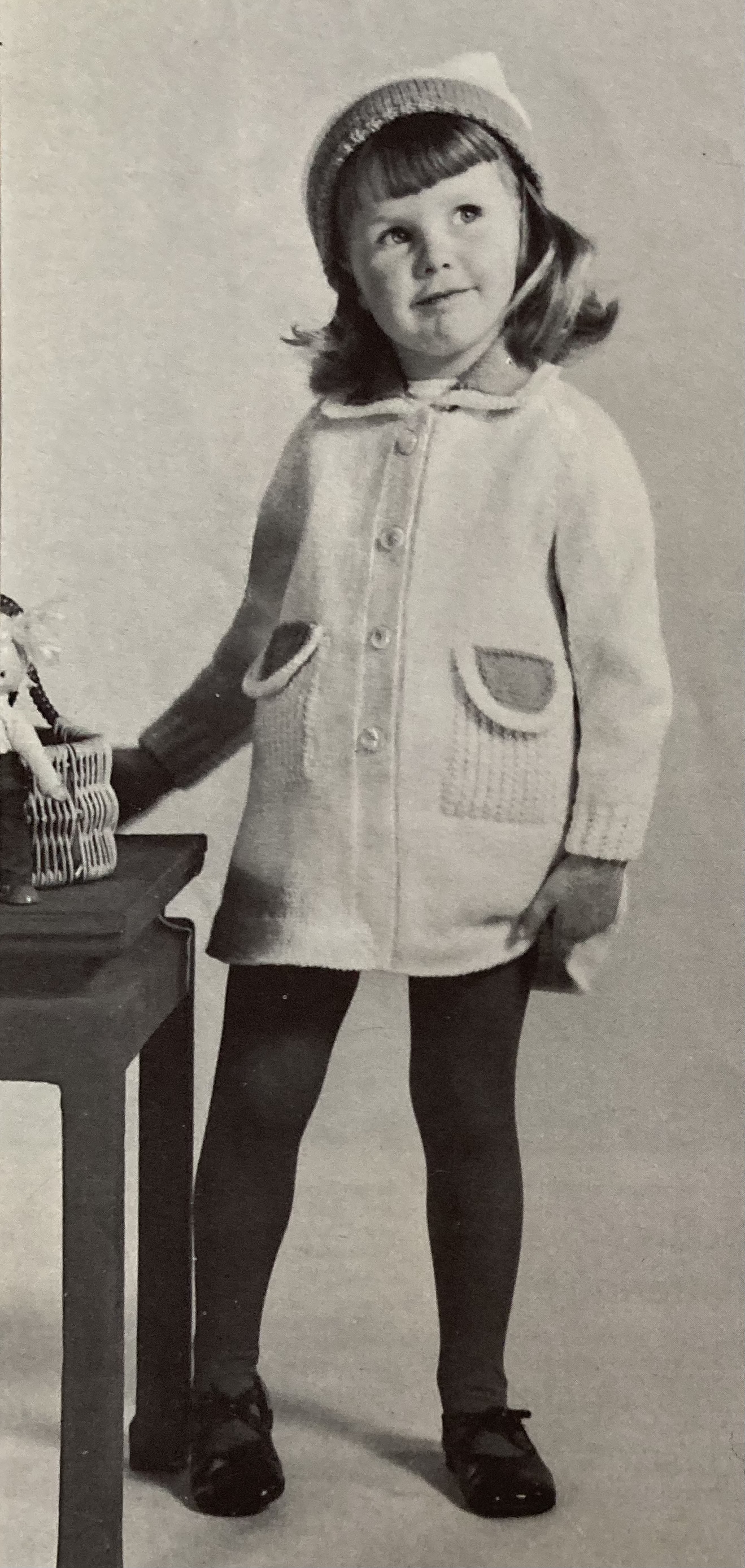
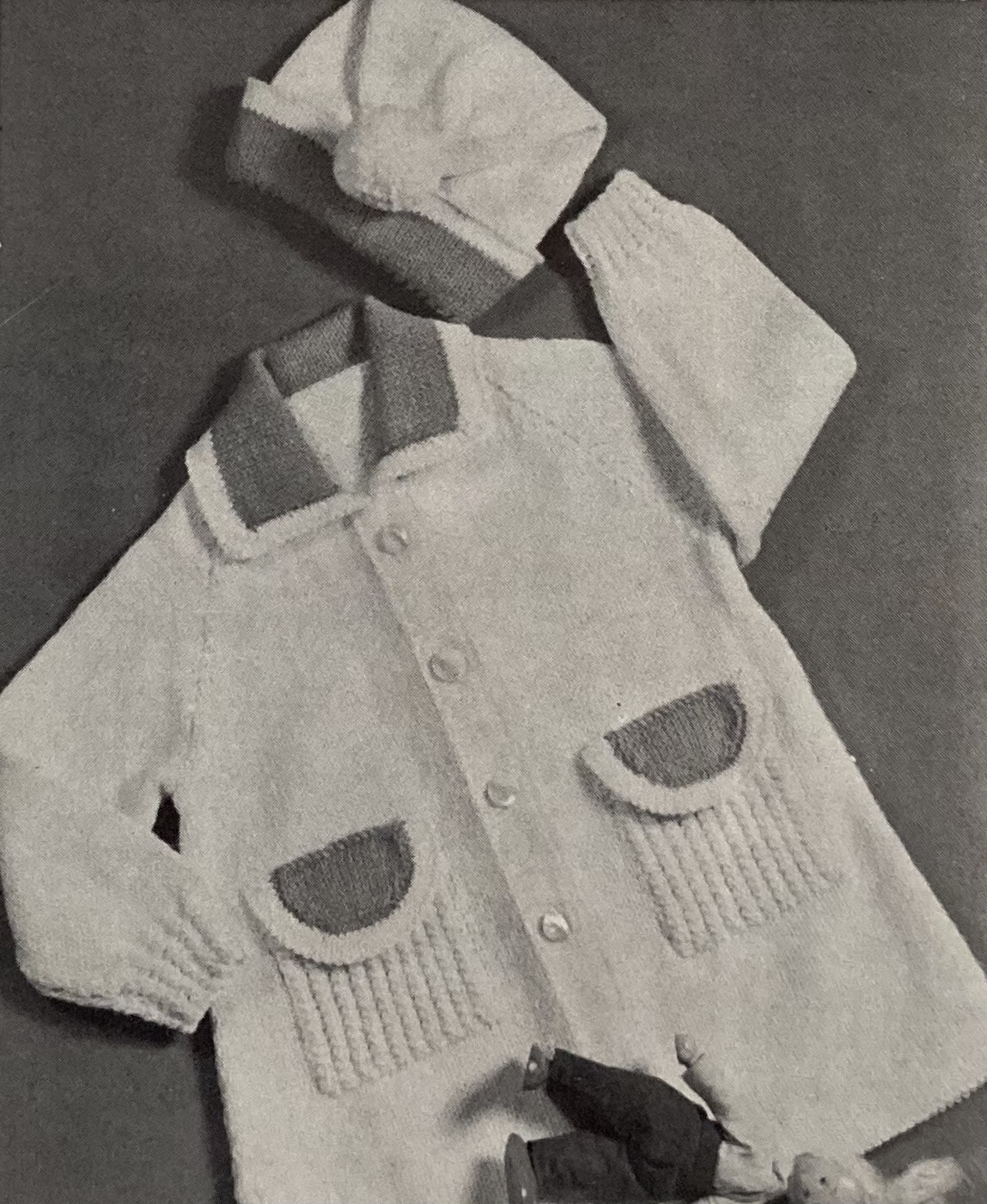
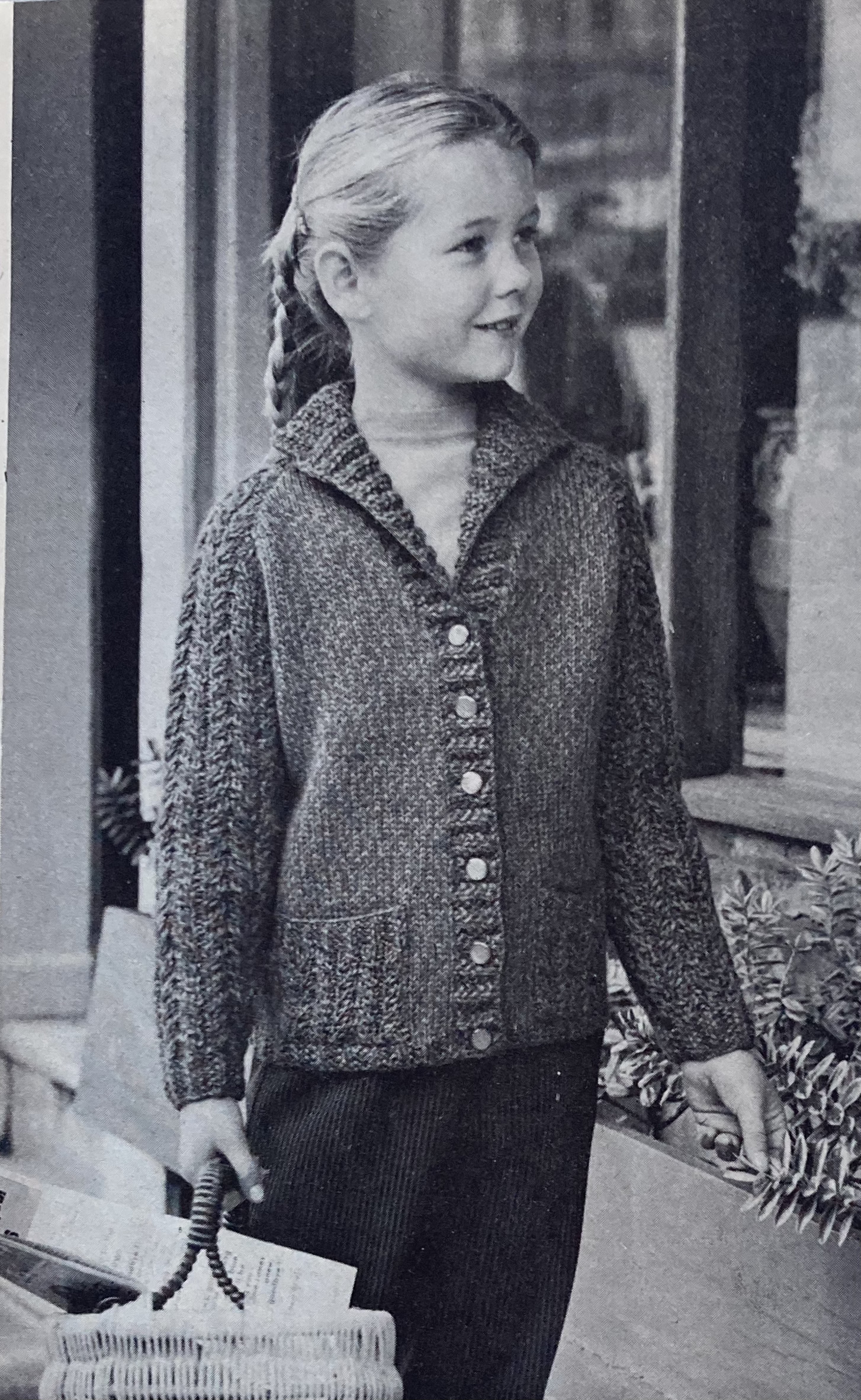
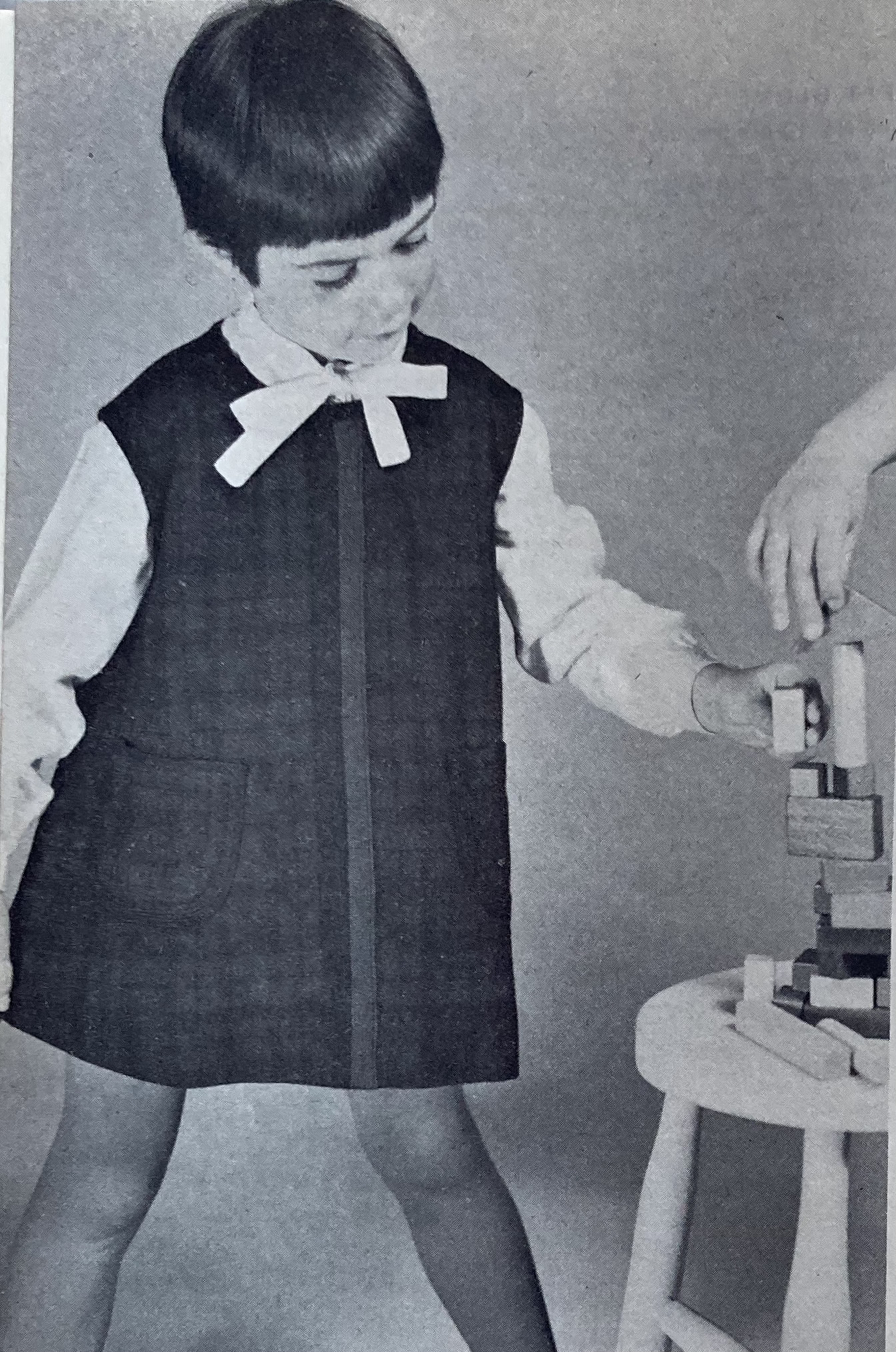
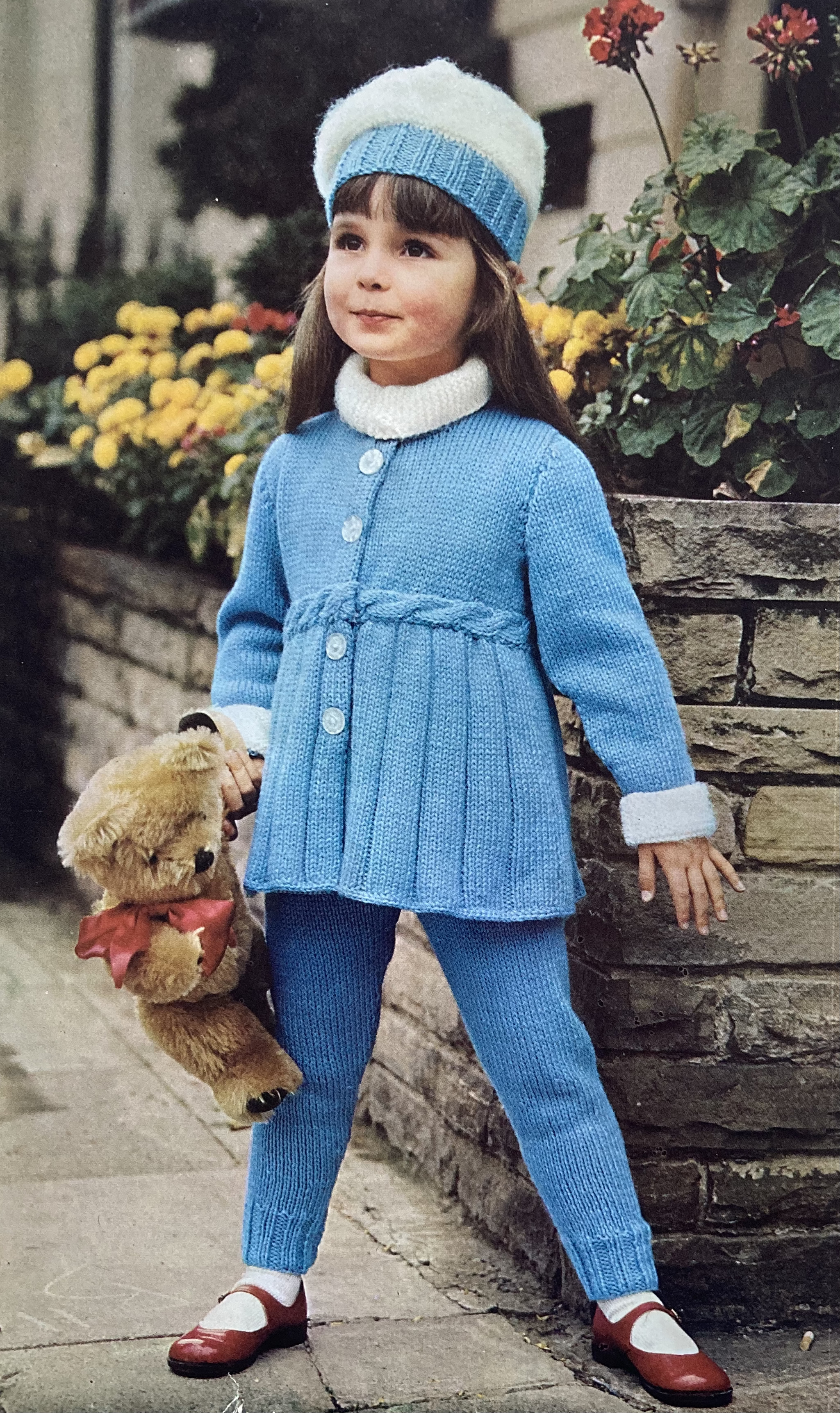
In addition to all that, this issue has some wonderful “Junior Fashion” children’s patterns. There’s a nice thick blazer for an 8-10 year old girl and a knitted shirt with knitted tie to “make a small boy feel very fashion conscious.” If you say so, Patience Horne! There’s a rare sewing pattern, too, for a simple pinafore dress. Best of all is the coat, leggings and hat set for a 3- or 4-year old. The white collar, cuffs and hat are knitted in the same wool as the rest — Shetland-mix “Fiona” — and then brushed with a teasle brush. Teasle or teasel brushes are used to felt and fluff knitted fabric and were often employed in home knitting at the time to give knitted blankets that furry “blanket” texture. Some earlier patterns in Stitchcraft say you should take the finished item in to the haberdashery store or send it away by post to get it professionally brushed; this one assumes that you can do the brushing yourself.

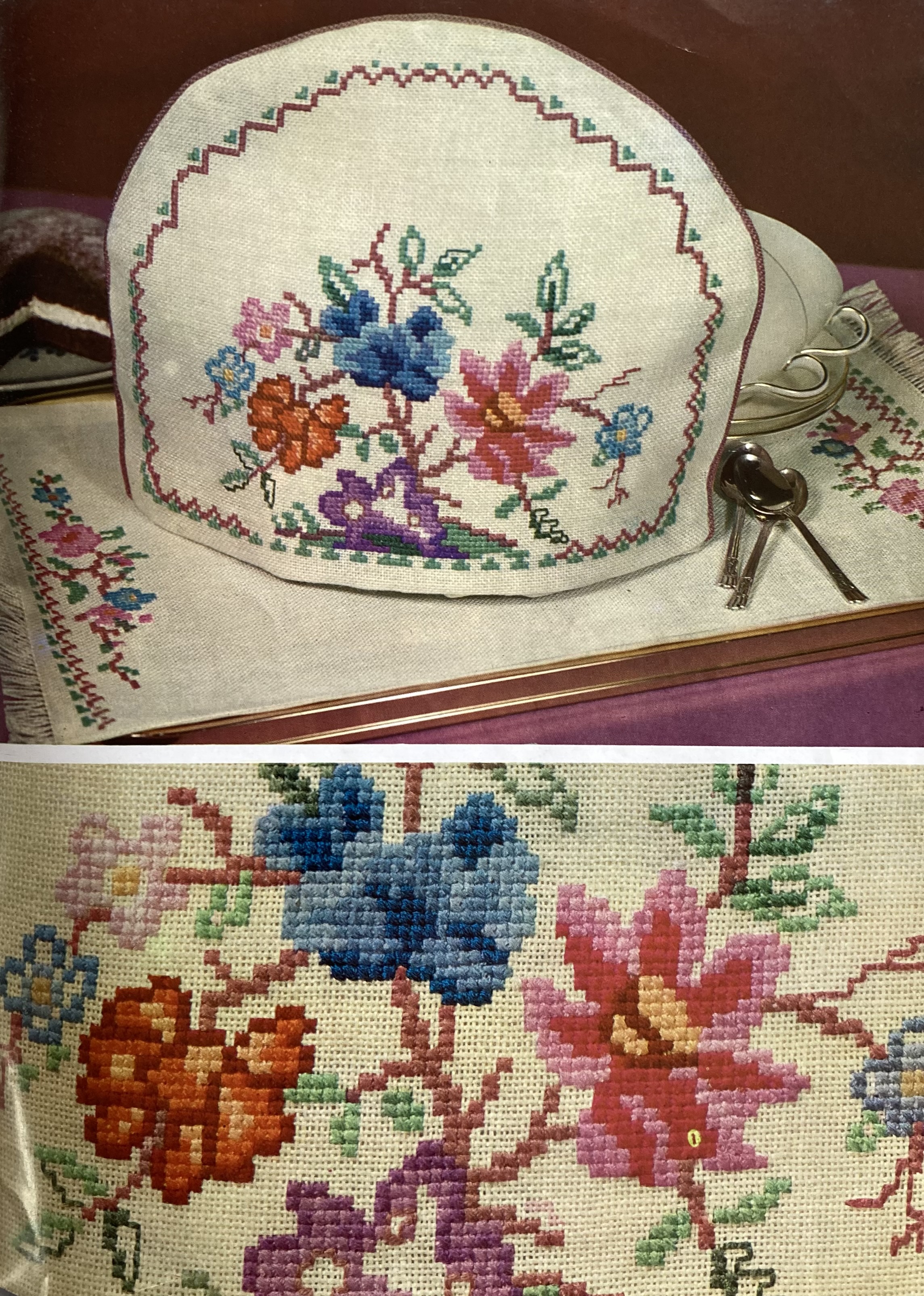
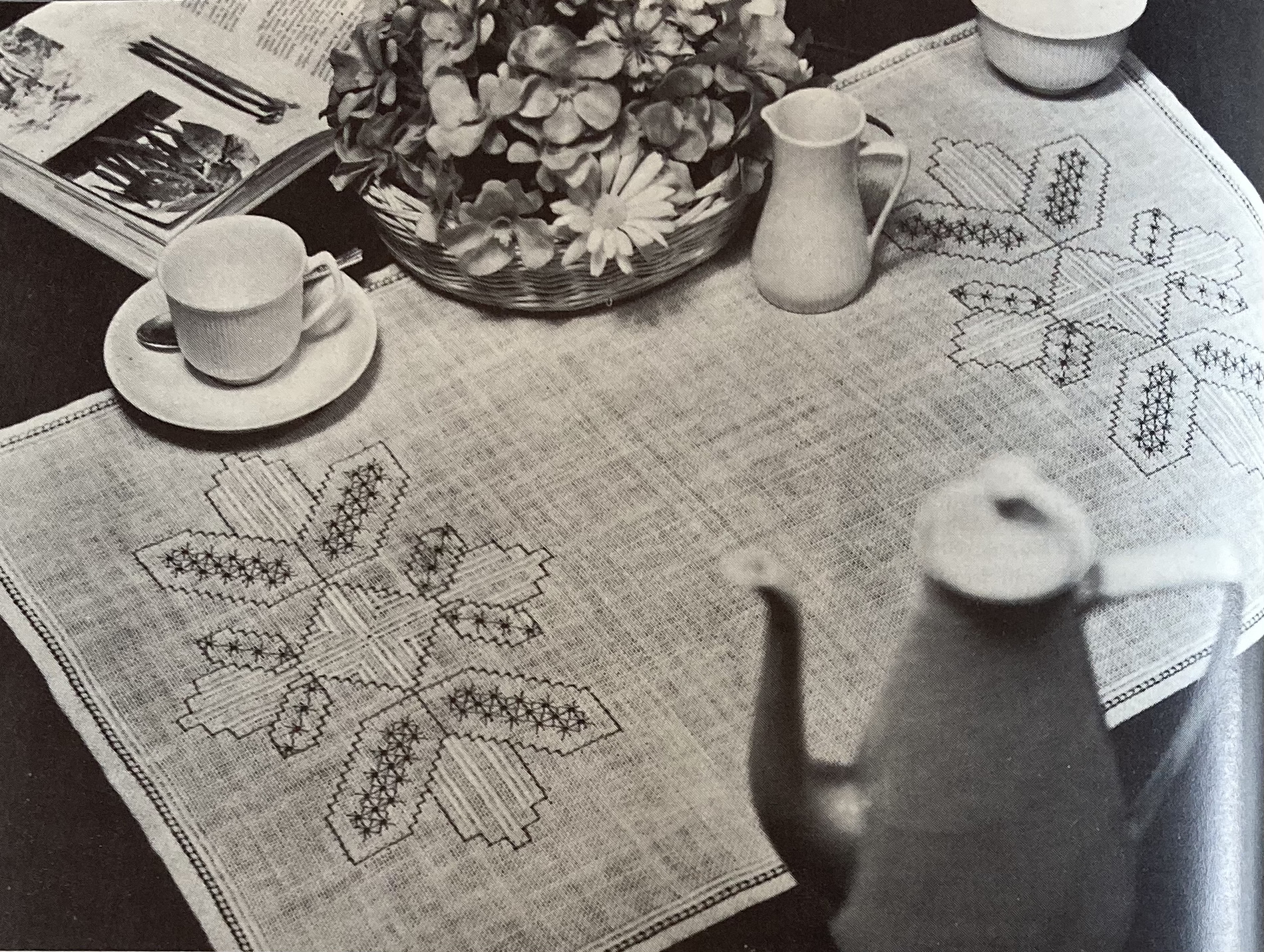
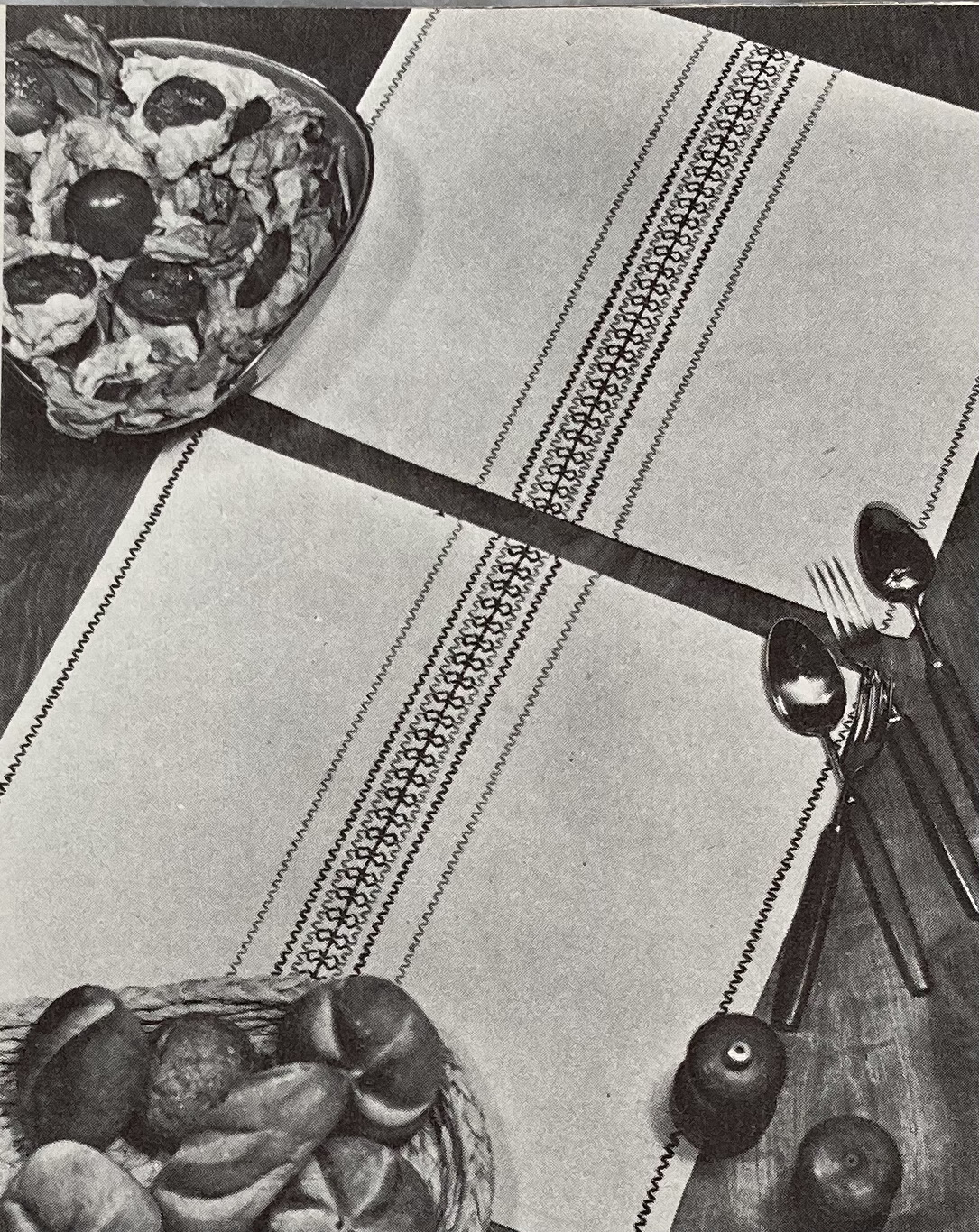
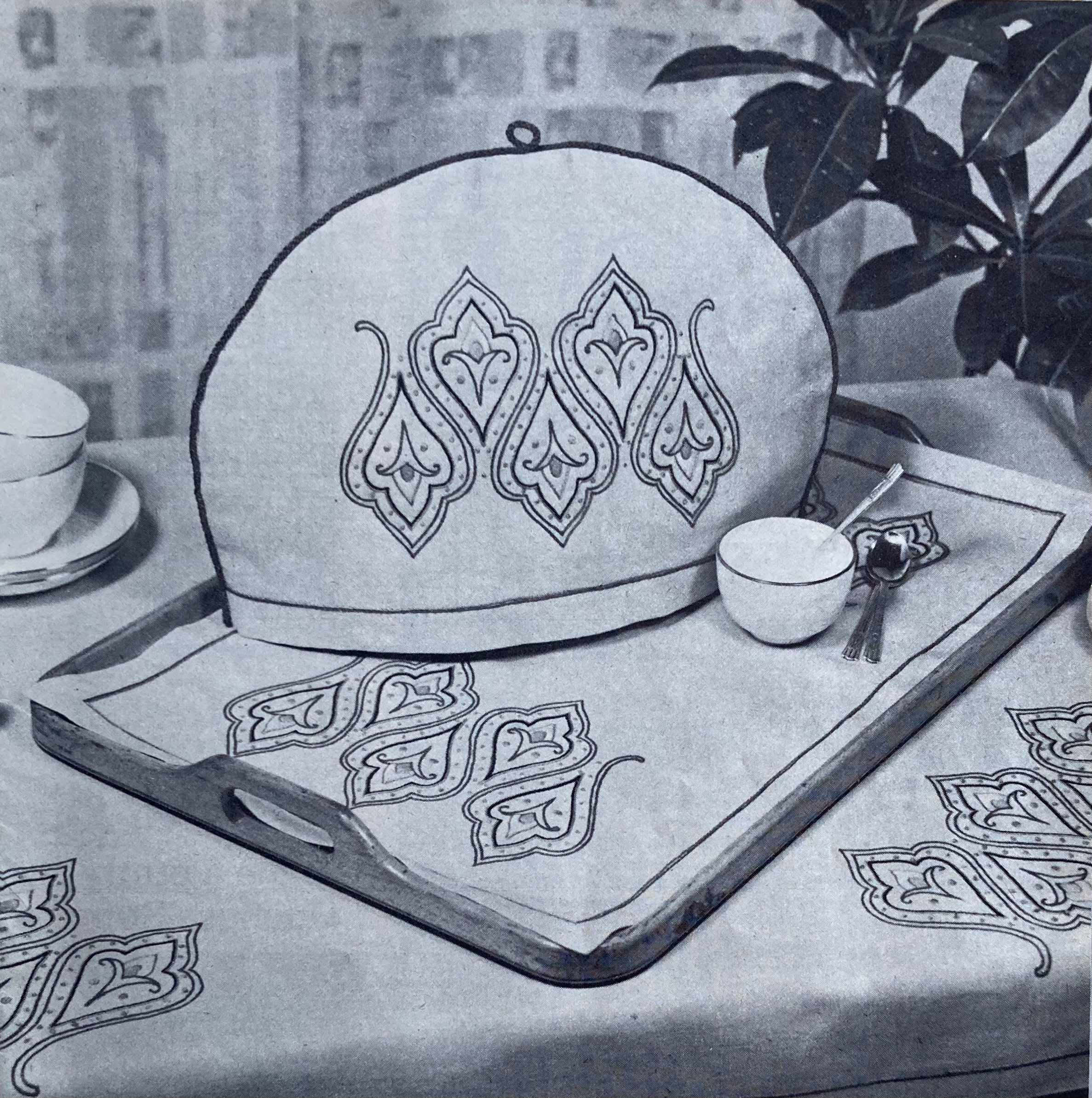
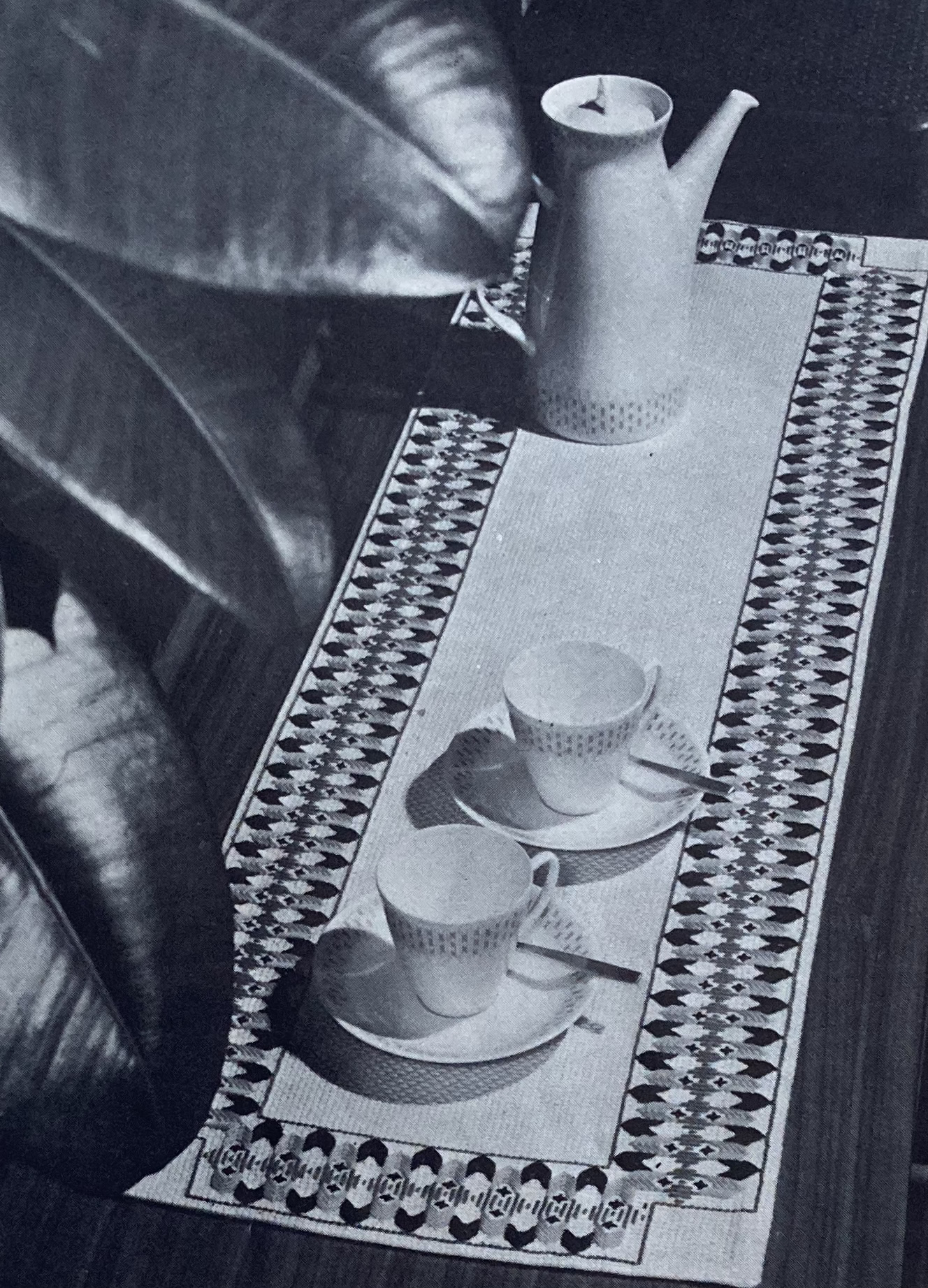
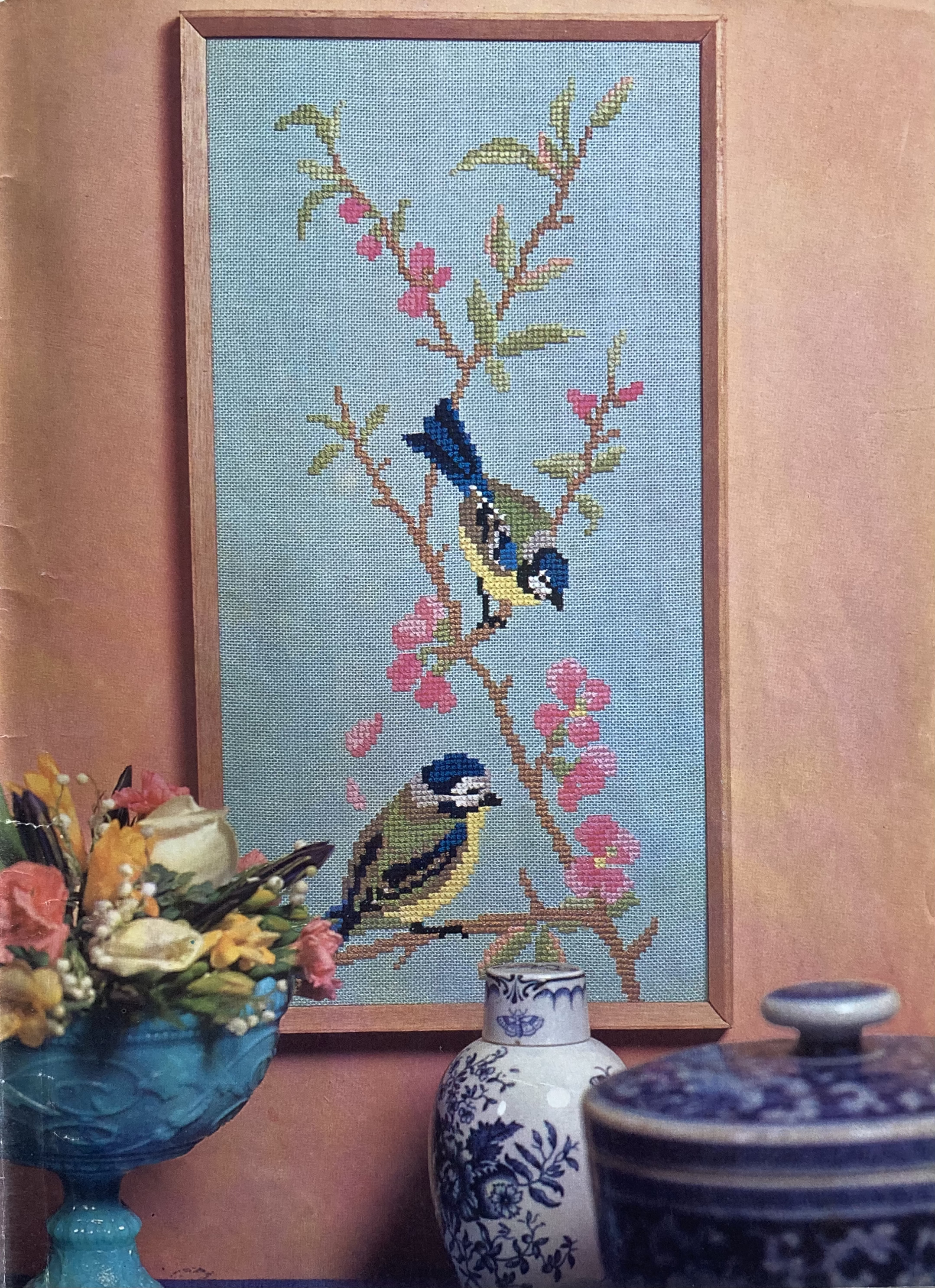
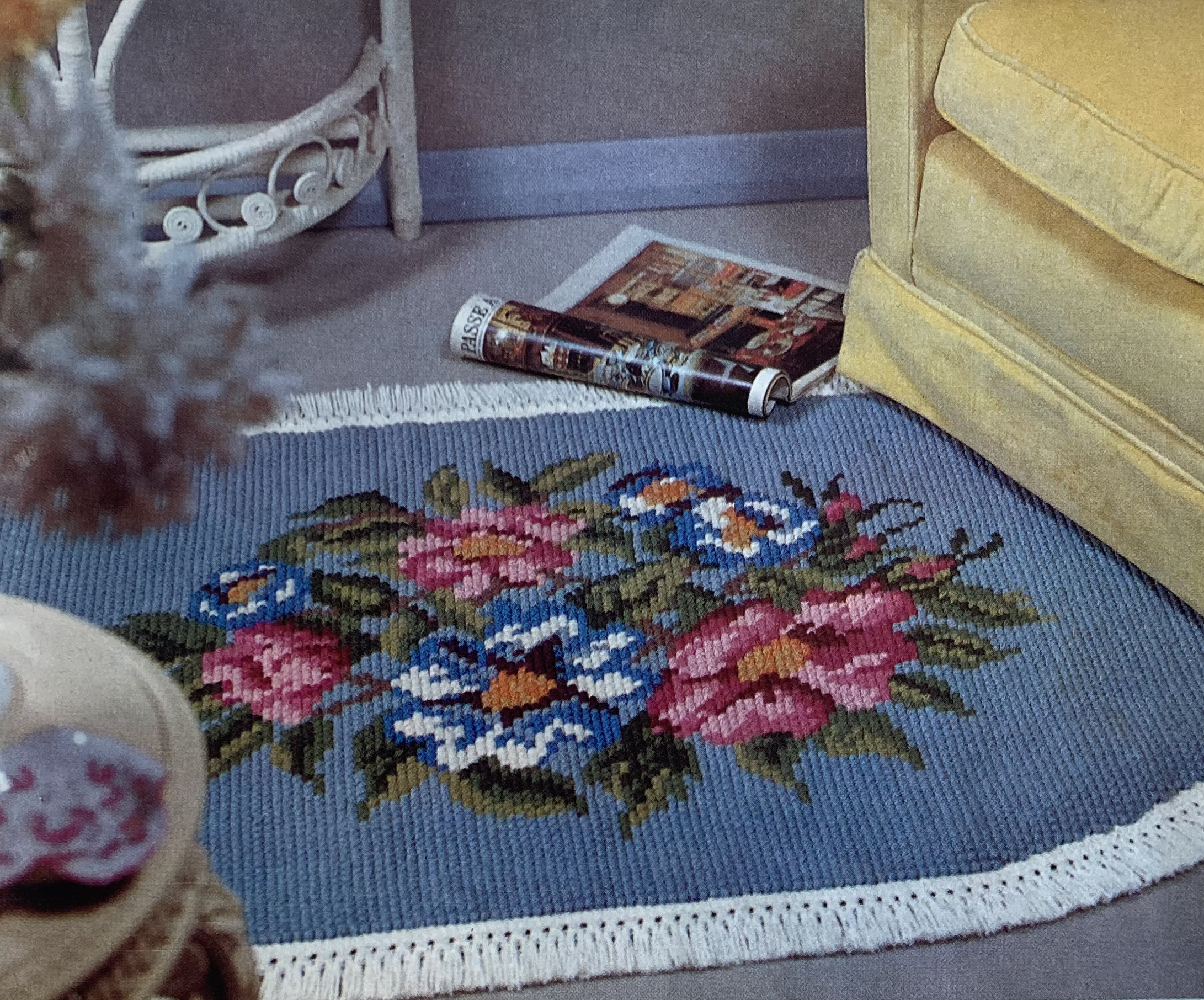
With all these great fashions, it’s no surprise that the homewares in this issue are a bit standard: embroidery for a tablecloth, tea-tray or cosy, embroidered dressing-table mats, or a runner for a Scandinavian-style long coffee table (in very 1960s colours of Tangerine, Coffee and Green), for example. Spring style shows itself best in the stitched rug in traditional floral design, or the birds-and-blossoms wall panel in cross-stitch.

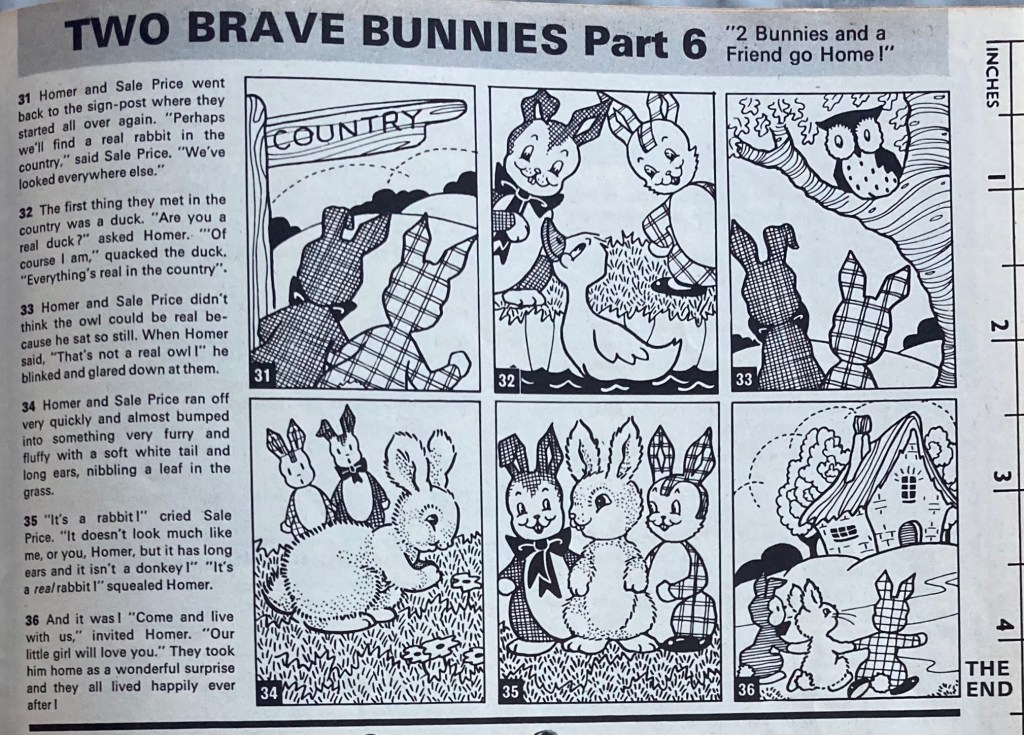
In the Readers’ Pages, we have reached the conclusion of our delightfully silly story of “Two Brave Bunnies” searching the world for a real live rabbit. (For those who haven’t been keeping up: the brave bunnies are sentient sewn toys.) Not having found a real live rabbit anywhere in town, they make the sensible decision to search the countryside instead. Et voilà! They find a real live rabbit and invite him home to come live with them and their human family. A happy ending for everyone involved.

There are so many fabulous patterns in this issue that it’s hard to not spend the next few months making all of them. I love the houndstooth set on the cover and the lace dress with cardigan, the child’s coat, the knee-high socks, the twisted-stitch gloves… Thinking both aesthetically and pragmatically, my choice was the child’s coat and hat set. I have too many clothes for myself right now and don’t want to start a huge new project, and while there are always great fashions for adults in Stitchcraft, there aren’t always nice projects for children. And I happen to know someone with a daughter of the right age and size, who would like it. And since it is not huge, there is a good chance that it might get finished on time. Perfect!

January 1966: Keep-them-warm Mittens

My 2024 New Year’s knitting resolutions are to 1) destash as much as possible and 2) finish all the “endless” WIPs. (Or to quote the famous German New Year’s Eve short film Dinner for One, “Same procedure as every year.”) In that spirit, my January blog project was made entirely from stash.

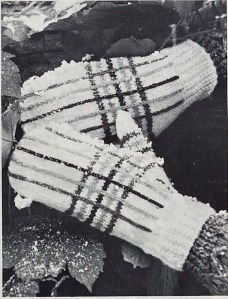
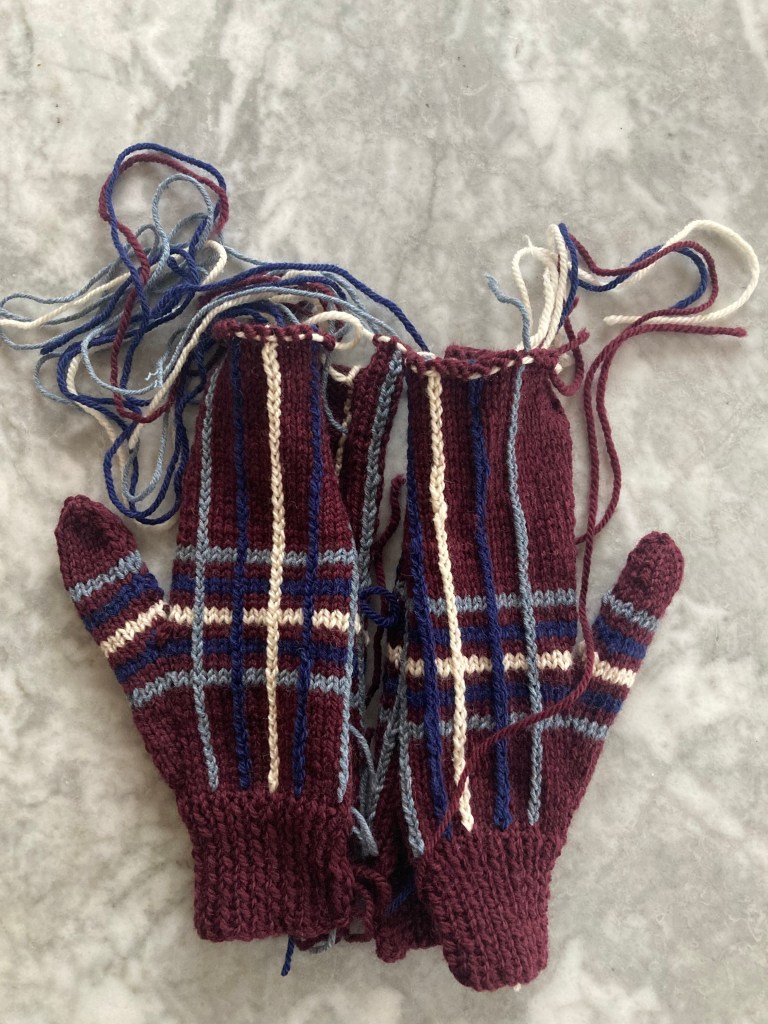
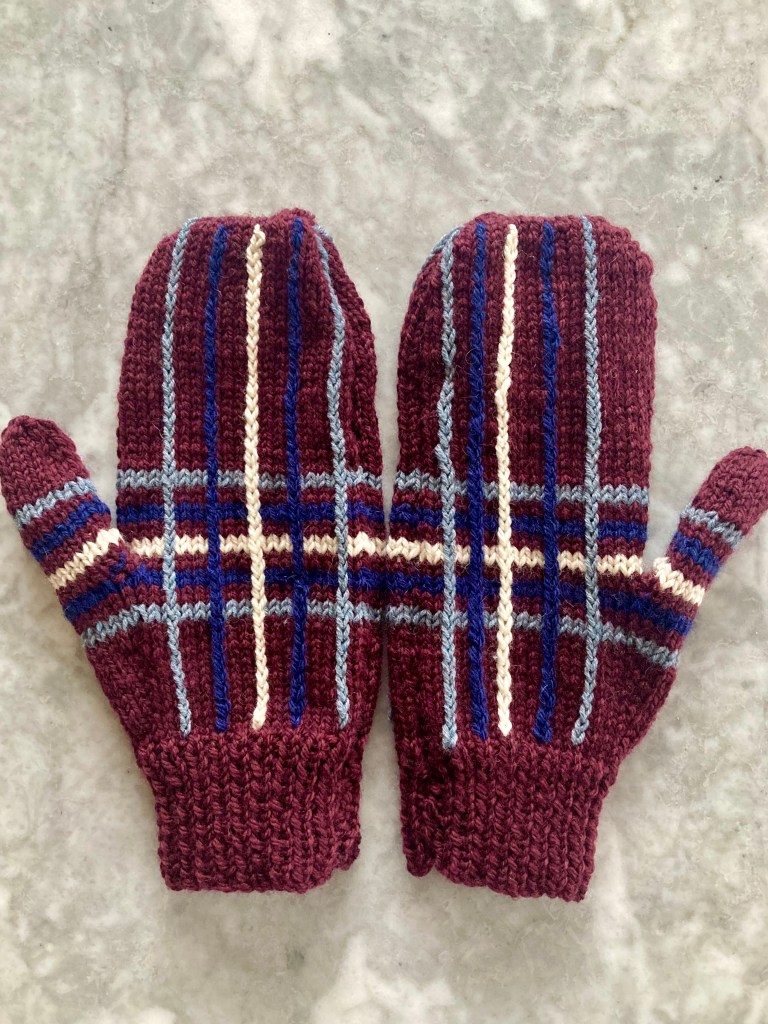
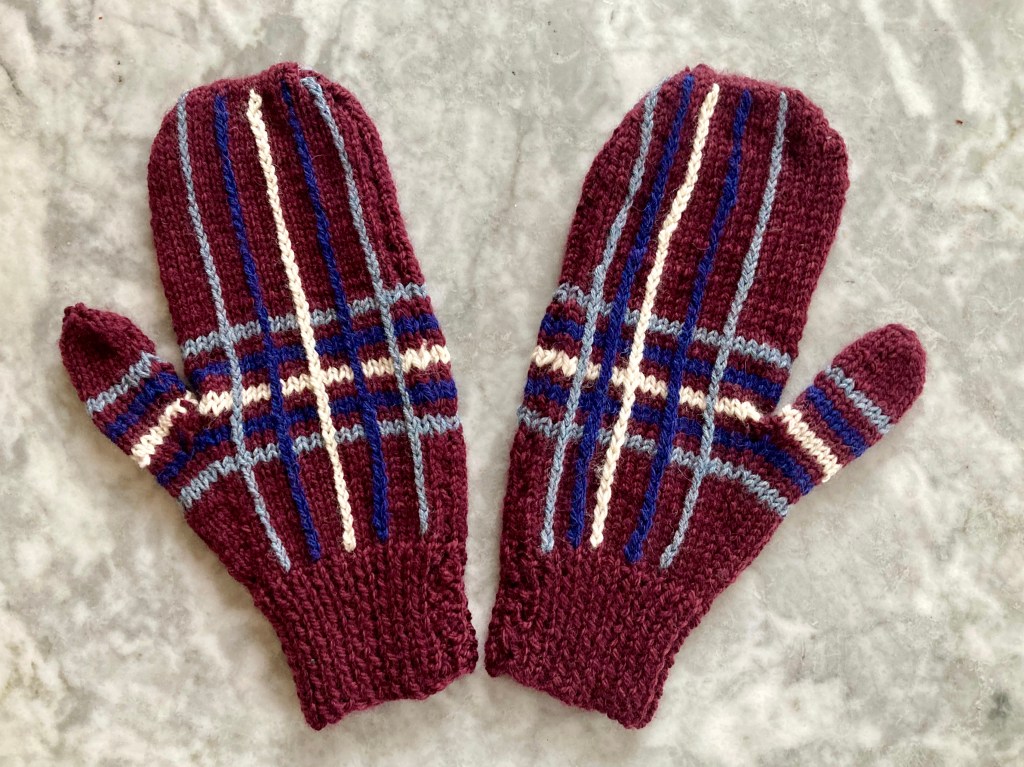
The mittens (Stitchcraft calls them “mitts”) are knitted in DK wool on two needles, i.e. worked flat and then sewn together. Aside from the fact that many mitten patterns were written this way at the time, it has a very practical reason in this case: the vertical stripes are embroidered on after the knitting is finished, which would obviously be significantly more difficult to do if the mittens were made in the round.

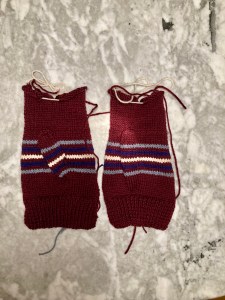
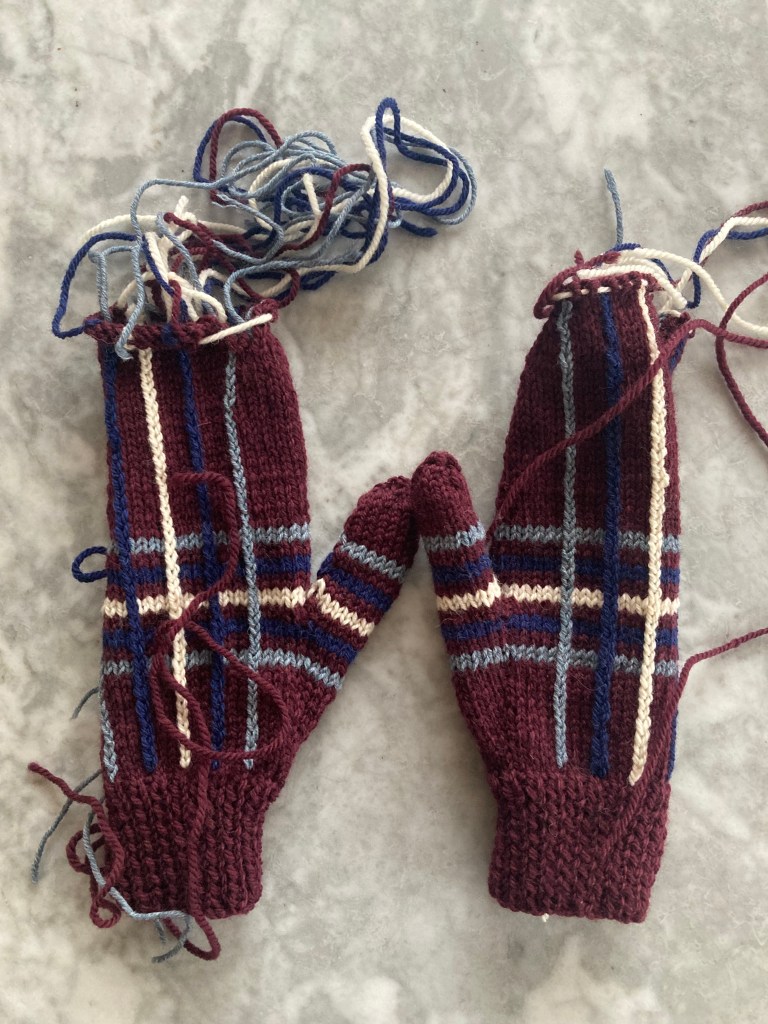
The original pattern uses the very 1966 colour scheme of “Loam Brown”, “Bright Olive” and “Tangerine” on a white background. I used leftover maroon wool from my 1920s men’s “sport coat” as the main colour, with stripes of white and medium blue (also left over from the same project) and light blue (left over from I don’t know what other project) with the intention of giving the gloves to the recipient of the 1920s cardigan as a late Christmas present.

The knitting was quite easy — all stocking-stitch. The horizontal stripes are knitted in the normal way and the thumb is made flat out of a gusset on the mitten. When the gusset is wide enough, you work the thumb to the end (back and forth), then pick up a few stitches at the base of the thumb and continue the hand part of the mitten flat as well.

The vertical stripes are embroidered in chain-stitch, which can be anchored very easily in the little horizontal strands between the knit stitches. That also makes it easier to keep the lines straight. The embroidery is on both the palm and the back of the hand. After embroidering, you weave in a whole lot of ends and sew up the side, top and thumb seams and voilà. I used a three-needle bind off on the tops or the mittens, since I thought it would be easier and more elegant than binding off and sewing a seam, but I don’t think it really made a difference in the end. I blocked them, but they hardly looked different before and after — all I did in the blocking was to widen the thumb a little bit, since it was fairly narrow in comparison to the hand width, and make sure the lines were nice and straight.

And that was it! Both I and the recipient are very happy with the finished mittens. They were quick and easy and used up some stash. Now I have some time in January to work on those endless WIPs. Stay tuned and maybe one will appear here soon.

January 1966: Overview

Happy New Year! It’s January 2024 in real time and January 1966 here at the blog. Get ready for shorter skirts (…finally. Stitchcraft is slow to catch up), horn-rimmed glasses, tweed bouclé and adventurous headwear. The theme of the January 1966 issue is “Colour for a Cold Spell”, with bright greens, redd and turquoise to carry everyone through the greyest month.

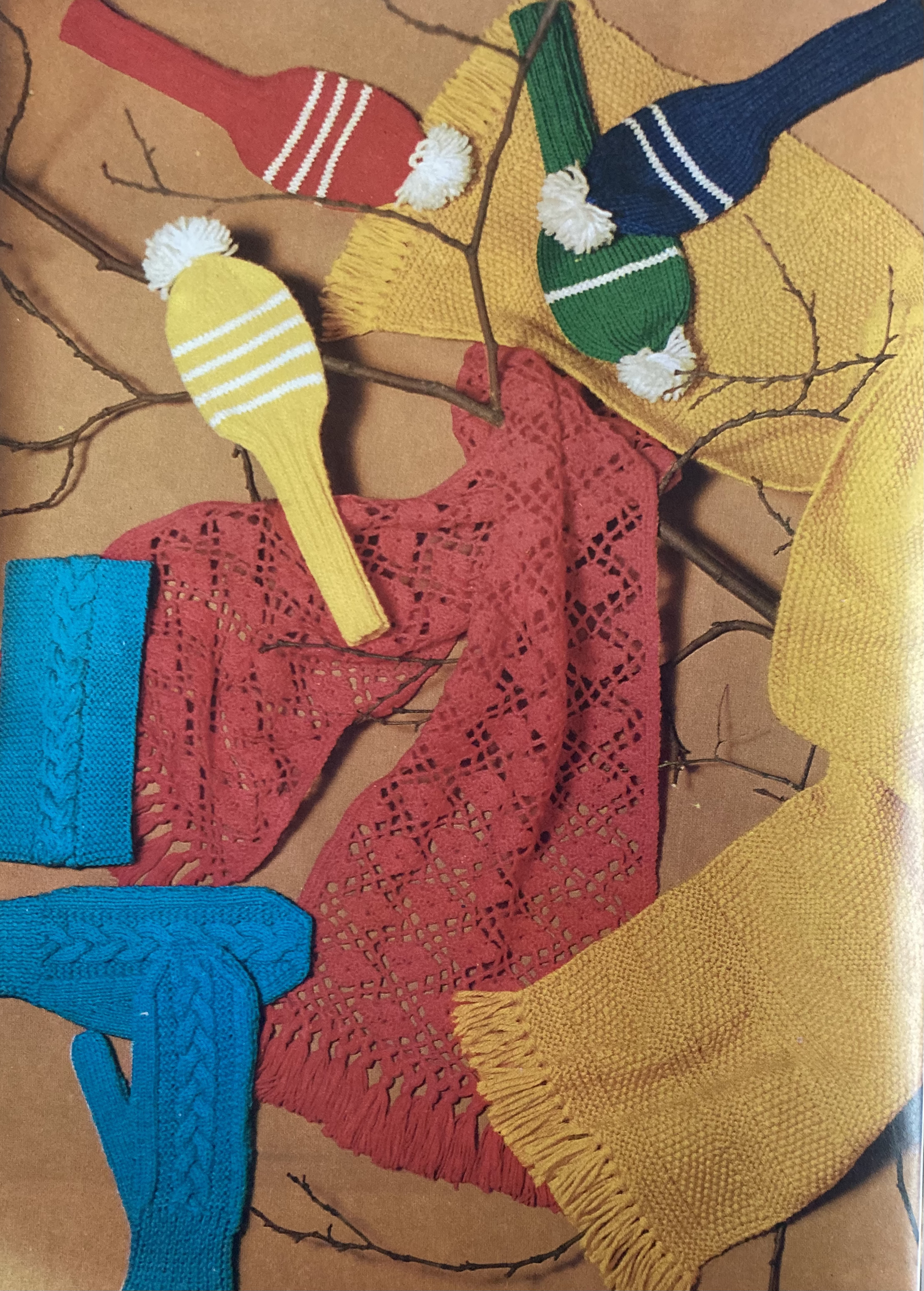
Our cover cardigan can be made long to wear as a coat as in the cover photo, or in fashionable hip-length. The trellis pattern is made by winding extra loops around the needle on the first row, then slipping this stitch on the next RS row to create a long loop stitch that is carried up via slip-stitches and knitted back in on row 7. The coat uses a whopping 28-33 ounces (ca. 750-900 g) of heavier-than-DK (modern worsted weight) “Flair”, so I would be wary about knitting this as it would presumably end up quite a bit longer than the 38-39 inches it should measure when finished. Love the pattern, though. I could imagine making the shorter cardigan in brown and embroidering it to look like flowers and plants climbing up a trellis.

Other women’s fashions include a turquoise pullover with both a vertical pattern panel and a horizontal stranded border. The matching hat foreshadows the weird and wild and fun and goofy hat fashions of the next couple of years to come. The trend for bold colour blocks is mirrored in the long-line boatneck pullover with its matching “helmet”-style cap. There’s a plain white pullover in slip-stitch rib and a very cute bedjacket — look at that come-hither smile!

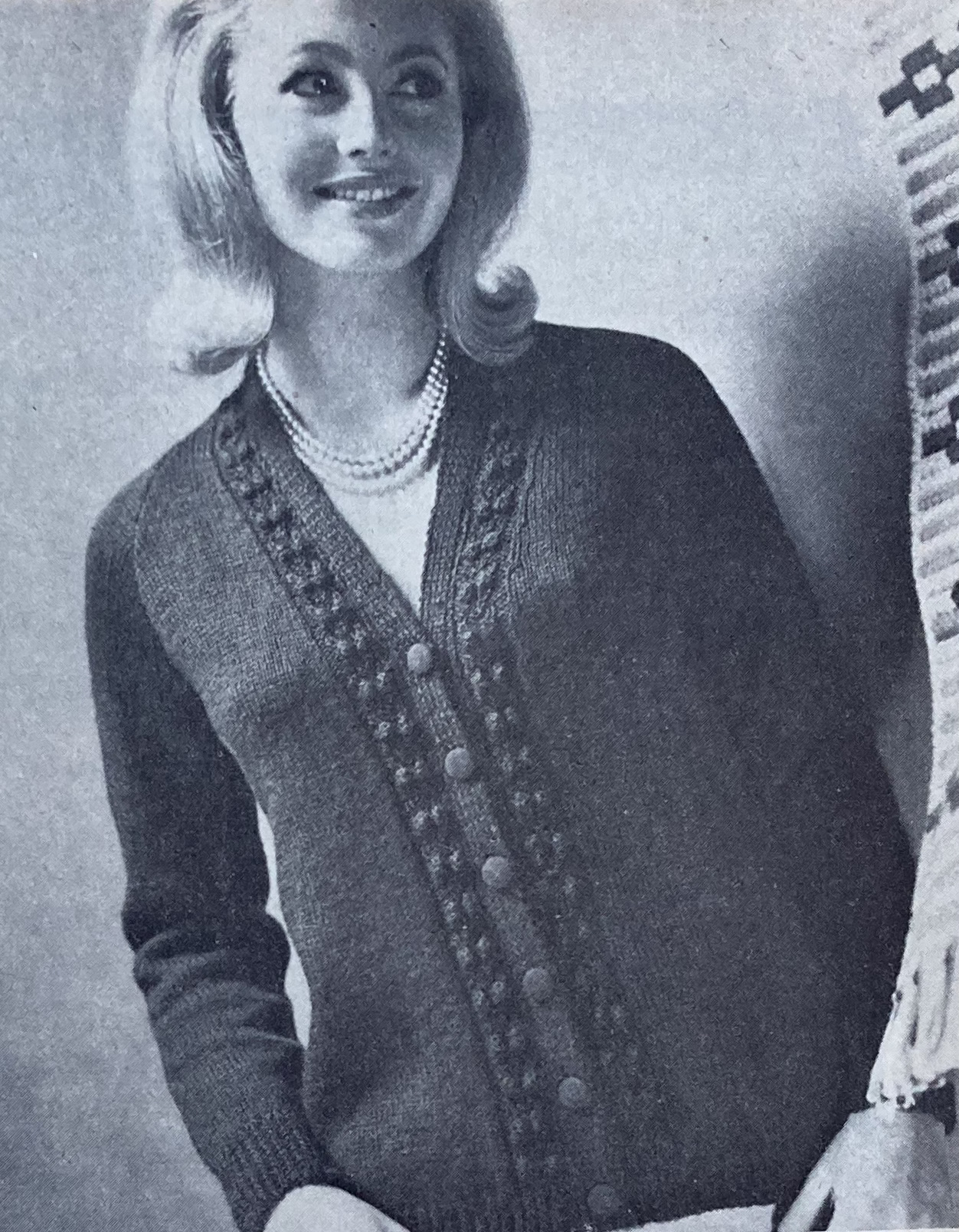
Men’s fashions are oversized and conservative, in spite of the “New Look” advertised for this V-neck half-cardigan. The classic V-neck pullover with cable stripes can be knit in tweedy marled or smooth, plain DK wool. I like that the magazine includes photos of both versions, so that you can see how much of a difference the colour and style of wool can make.

“Junior Fashions” include a wonderful warm dressing-gown with knitted squirrels appliquéd onto the pockets and embroidered — so cute — as well as a winter going-out set of leggings, pullover and hat and an oversized cardigan-jacket. The jacket claims to be windproof, which seems an odd claim to make about something knitted in an all-over eyelet pattern. In any case, all the children’s fashions are colourful and fun, and we will start to see the influence on adult women’s fashion as the 60s get swingier. Older children — or adults with small hands — can get a pair of warm mittens knitted flat and sewn together at the side. The plaid-like pattern is made by embroidering the vertical stripes in chain-stitch onto the finished mittens.

There are lots of homeware projects in this issue, January being a good month to stay inside and do needlework. The stitched rug is warm and sturdy, made in a Florentine stitch pattern that never really went out of fashion. You can knit a doll’s outfit complete with underwear and shoes, crochet a “tangerine” tea cosy with green felt for leaves, or make a cross-stitch border for a cushion or waste-paper basket.

For advanced needleworkers, there are wall pictures of “needle etchings” (black-and-white pictures embroidered in stem-stitch to give the effect of a pen-and-ink drawing) of Sussex churches or colourful flower sprays, as well as a tablecloth in rare “shadow work”, where the thread carried on the back side deliberately shows through the filmy organdie backing fabric. (Personally, I dread the thought of the back side of my embroidery being visible, ever…). For expert crocheters, there’s a lovely lace doily with a linen centre.

On to our children’s comic! The two brave bunnies (both plush toys) are still in search of a real live rabbit. Not having found one at the carousel, cinema or department store, they try the seaside, because why not? They have fun at the beach and think they find a rabbit — alas, it is only an inflatable sea-water toy! Will they ever complete their quest?

I will leave you with the latest wonderful ad from the Scotch Wool Shop, which had just launched its own line of very pretty underwear, “Golden Charm”. Available in 49 lucky towns! I hope your town and your 2024 are equally lucky. My project for this month will be the embroidered mittens.

December 1965: Workbag & Pretty Idea

It was hard to choose a project from the December 1965 issue. There were lots of nice things in it — the red pullover on the cover, the men’s classic cable V-neck, the two-piece wool dress, the fun knee-high socks, the swingy ribbed skirt — but I was not feeling any of it. I have so many large, unfinished projects and so much wool in stash (of which none would be suitable and/or enough for any of the nice garments in the issue.) Also, I have way too many finished knitted projects! My closet is past full. I need to start knitting exclusively for other people.

Though, as it turned out, I had also already made one of the projects from this issue, back before I started the blog. At the time, I had lots and lots of leftover Rauma 3-ply (which is double-knitting weight, not what you normally would expect “3-ply” to be) and Jamieson’s Double Knitting in stash from a tam and mitts combo that I had designed for Knit Now. And here in the December 1965 issue of Stitchcraft was this wonderful “Workbag for a friend” that was perfect for using up leftovers. The check pattern is easier than it looks — the colours are just staggered every four rows. I adapted the stitch counts to make it work with DK wool instead of the 4-ply called for in the pattern.

The bag is made in two pieces for front and back, with two separate gussets made in 1×1 ribbing, for the sides. This makes a nice, big bag. I bought non-vintage handles which were unfortunately not real wood, but accurate reproductions of the type in the magazine photo. They have a slot at the bottom through which you insert the ribbed top of the bag, fold it over to the inside and sew in place. Very easy. Although it’s not called for in the pattern, I lined the bag with non-stretchy, woven cotton material to keep it from stretching. It’s a great bag and I use it for large projects. (I apologise for having only a finished photo and no in-progress pictures. At the time, i didn’t know I was going to start writing a blog, and only took pictured of finished objects, if at all.)

Still, I felt like I was “cheating” by not making at least something new from this issue. How about a “Pretty idea for a Buffet Party” i.e. a trolly cloth and napkins embroidered with Christmas trees? Too much work… but how about one little embroidered Christmas tree on green felt, made from stash and sewn into a little bag to use for a tiny present? Okay! I had plenty of green felt scraps from various other projects and plenty of white, brown and gold embroidery cotton.

The tree is cleverly “drawn” in one single swooping line and worked in easy chain stitch. The pot is brown long-and-short stitch and the stars, straight stitch with French knots. Since nothing writes or transfers onto dark green felt, I traced the pattern directly from the magazine page onto sewing-pattern paper, embroidered over the paper and dissolved the paper under running water.

Too lazy to set up the sewing machine, I sewed it into a little bag (approx. 4 x 4.5 inches or 10.5 x 12 cm) by hand (very badly, very crookedly. Sorry, it is the end of the year, and I am tired) and fastened it with a snap. The yellow cotton I used for lining seemed familiar… Oh right, it was left over from lining the workbag, six years ago! I guess that brought everything full circle.

On that full-circle note, I hope you all have a very happy New Year. See you in 1966!

December 1965: Overview

Here it is — the 1965 “Christmas Number”! December at Stitchcraft is always a month of “quick” holiday trimmings and small gifts, mixed with warm winter clothing and party ideas.

Our cover model is wearing a cable-block pullover (with non-crossing cables) in bright red double-knitting weight wool and matching knee-high socks in a lacy rib pattern. The caption on the pattern page is “Fashion feels Young” — Stitchcraft is finally getting into the children’s-fashions-for-adult-women idea that influenced so much of mid-60s fashion. Note the short skirt on the cover model, along with the knee-high socks, the playful kerchief and the big straw hat accessory in the black and white photo. It’s not quite Twiggy or Mary Quant (spoiler: Stitchcraft was never that fashion-forward), but it’s starting to show their influence. “Young Fashion” fun is reflected in the matching cap and pullover set as well. Look at the enormous pom-pom on the hat, outdone only by the model’s fake eyelashes!

The other women’s fashions in this issue remain conservative: a warm tweed dress made in two parts sewn together at the waist (thus the obligatory belt), a cabled cardigan for larger sizes in thick, undyed “Capstan” wool, a lightweight wool jumper and swingy knee-length skirt in a “gay note” of blue or a “harlequin” pattern jumper in “bold” 1960s colours of white, gold and brown. I feel exactly the same way as the model in the colour photo when I finish a project and find that perfect gift on the same day.

Men can get a cabled pullover in a glorious shade of purple tweed and the reassurance that cables are manly (like our model’s eyelashes, which are almost as impressive as his colleague’s with the pom-pom hat). There’s a boatneck pullover in herringbone stitch as well, meant to be worn over a simple polo- ( aka turtle-)neck jumper, for which a pattern was given in the previous issue.

The manly-cable idea is continued on a lovely warm pullover for boys, and his younger sister can get a button-up cardigan in a frothy textured stitch pattern, made in synthetic-wool “Brilliante” for easy washing. Younger tots can enjoy warm ears with a chin-strap “helmet” hat that is guaranteed not to fall off or get lost.

The real focus of the issue is of course, Christmas preparations. Felt appliqué makes a big appearance this year, with place mats and name cards for the holiday table as well a winter-scene wall hanging. The appliqués are quite simple and designed to be used with scraps, and the instructions give ideas on alternate uses such as glueing the felt pieces onto paper for home-made Christmas cards. The place markers have a butterfly motif, making them appropriate for any time of year. Cutwork and embroidery fans can make a tablecloth with peonies, or a Christmas-tree-themed trolley cloth and napkins embroidered in simple chain-stitch. More religiously-minded readers can make a tapestry wall hanging of a Nativity scene (colour photo on inside back cover).

After dinner, it’s on to the gifts! The knitted tea cosy is supposed to represent a holly plant. The “workbag for a friend” is a fun way to use up leftover wool and I made one a couple of years ago. The “cushion for Granny” is a similar stash-buster. One would think it would be made in two squares either fron the center outwards or the edge inwards with raglan-type shaping, but no, you are supposed to make 4 identical triangle pieces for each side of the cushion and sew them together.

And let us not forget the other cushions: a simple cross-stitch number with a woodland design and a tough woven-tapestry chairback cushion in soumak and herringbone stitch. The colour scheme is brown with brown, with touches of orange and lime green for contrast. In the “just for fun” category, you can knit cosies for golf clubs.

Our two brave bunnies from the Readers Pages are still on their quest to find a real live rabbit. Thinking they might find one in a department store (why not), they get stuck on a moving staircase, try to eat a plastic apple, and find a stuffed rabbit who, unlike our co-protagonist Sale Price (also a stuffed rabbit), sadly cannot talk. Next month, they will try the seaside, which is not known for being home to very many rabbits, but I suppose a better chance than a department store, a movie theatre or a merry-go-round. Of course, around Christmas time, one of the surest places to find a real rabbit would be on the dinner table, ha ha. I guess that storyline might be considered inappropriate for a light-hearted children’s comic. At least our two toy rabbit protagonists aren’t in danger of being eaten.

Finally, there’s another wonderful advertisement from my favourite Stitchcraft-ad store, the Scotch Wool Shop. Here is a nice little article about a knitting book produced by the Fleming, Reid company, proprietors of the chain of shops. The ads always make me want to go out and buy things from the stores… which, sadly, no longer exist. These little gift ideas are marvellous.

That’s all for this issue — and this year! I don’t know what I will make from this issue, or if I will just write a post about the knitted workbag that I already made a while ago. I quite like the ribbed skirt, and could use one, but one look at the gigantic WIP pile discourages me from starting any long and boring project. Hopefully I’ll get a couple of those WIPs finished and can write about that for a 1965 / 2023 wrap-up. Until then, I leave you with this graphic from the December 1965 issue. Happy Holidays!

November 1965: Overview

Colour Radiance for Winter and Christmas Plans! At Stitchcraft, it’s generally either preparing-for-Christmas time or spring-summer holidays. This month, they countered the cold, grey days of November with bright, cheerful colours and easy homewares. Let the festive preparation begin.

The knitted sweater suit on the cover is made in an intriguing pattern stitch designed to give “the look of woven texture.” There’s a helpful close-up photo of the stitch pattern as well. Essentially, it’s made by making a wool-forward (yarn over) on the right-side row and then slipping that stitch over a garter-stitch base to make a horizontal “line”. The placement of the slipped stitch is staggered, to make a diagonal herringbone-type effect. Made in DK wool, I’m guessing the finished result is quite warm. The matching skirt is made in plain stocking-stitch. Note that the mini-skirt, or even anything-above-knee-length skirt, still hasn’t caught on with Stitchcraft’s more conservative readership.

Other women’s fashions include a bobbly-cabley “overpull” in undyed “Capstan” wool, made to be worn over a roll-neck knitted underblouse with or without sleeves. The underblouse keeps up the warm colour trend with the suggested colour of “Old Gold”. I love the model’s hairstyle!

There’s also a jumper for larger sizes with very ill-thought-out decorations going right over the bust, and a collared almost-cardigan with a deep placket and Peter Pan collar. The collared number is made in tweedy “Glenora”, one of the multicolour wools gaining popularity at the time. Men get a corollary set to the women’s “overpull” and “underblouse” with a slightly oversized bobbly-cabley cardigan and a 4-ply polo-neck in the same “Nylox” wool as the ladies’ underblouse. The “colour radiance” theme apparently does not extend to the men’s garments, being made in undyed Capstan and “Oystershell” off-white, respectively. The photo backgrounds colours are nicely chosen, though, to set off the diagonal poses and camera angles.

The photo of the girl’s twin set in the inside front cover photo also does a great job of harmonising the backdrop to the subject. Her set consists of a pullover with unbuttoned waistcoat in cheerful pink and blue. Her little brother or sister can go out in the pram or “toddling” in a warm set of hooded jacket and leggings. The child in the photo looks somewhat apprehensive, but the set looks quite snuggly.

And can we have a moment of appreciation for this “special gift” of a bedjacket? I love it! I would make it without the ribbon at the neck and wear it as a normal cardigan. The two-colour pattern is made by working and then dropping yo’s to make a “long” stitch, which is then carried up through the slip-stitch background. I am guessing it is quite spongy and squishy, and was also nice and warm in those unheated 1960s bedrooms. Love the hairstyle in the colour photo, too!

If the model on the left is looking a little suspicious, it’s probably because she was photo-bombed by Homer the Rabbit, star of our current children’s serial comic, “Two Brave Bunnies.” For the uninitiated: Homer (a home-made stuffed rabbit) and Sale Price (a store-bought stuffed rabbit) are on a quest to find a real live rabbit friend. So far, they have only met a merry-go-round rabbit, who assured them that he was not real, as he could carry children on his back. In this month’s episode, our two brave bunnies head to the Town, where they are eager to see “Miss Rosabelle Rabbit” on the cinema screen. Alas, she is only a film rabbit, so cannot communicate with our friends. No matter — they will persevere! Oh, right — and this month’s issue includes instructions on how to make your very own home-made Homer doll from felts.

Home-made Homer is one of this issue’s many small, fun “colour novelty” gift and decoration ideas, along with a felt Nativity panel mimicking stained glass, a couple of pot holders and a colourful ball to use as decoration or a baby’s toy. Embroidered gift ideas include a whimsical sewing apron and a cross-stitch calendar and chairset. I don’t really understand the calendar — it seems to be just a vertical wall panel that you attach the (tear-off?) small calendar onto. OK, I guess, but maybe not necessary?

You can also knit a stuffed panda bear, a snowman, or a garter-stitch blanket rug, or crochet a round disc to be adapted into either a girl’s beret or a round cushion. There’s a filet crochet table centerpiece and tapestry wall pictures of caravans or Bibury. Last but not least, there’s a counted-embroidery cushion-and-chairback set with a vivid purple flower design.

I don’t know about you, but I feel cosier already. My design for this month will be the bedjacket! The October 1965 cardigan blouse is almost finished, too, and I’ll update that post soon.

October 1965: Overview

Colour and Tweed for Autumn! This is a “bumper” issue full of many beautiful designs for adults, children, homewares and “novelties”, all with an autumn theme. My apologies for the slightly late post — I was traveling last week with no computer.

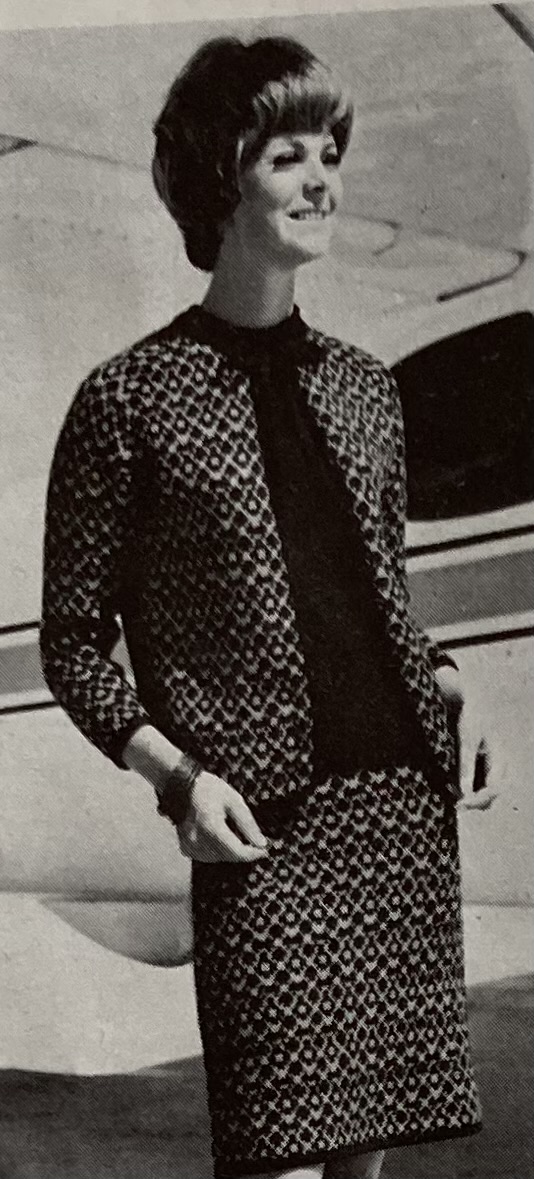
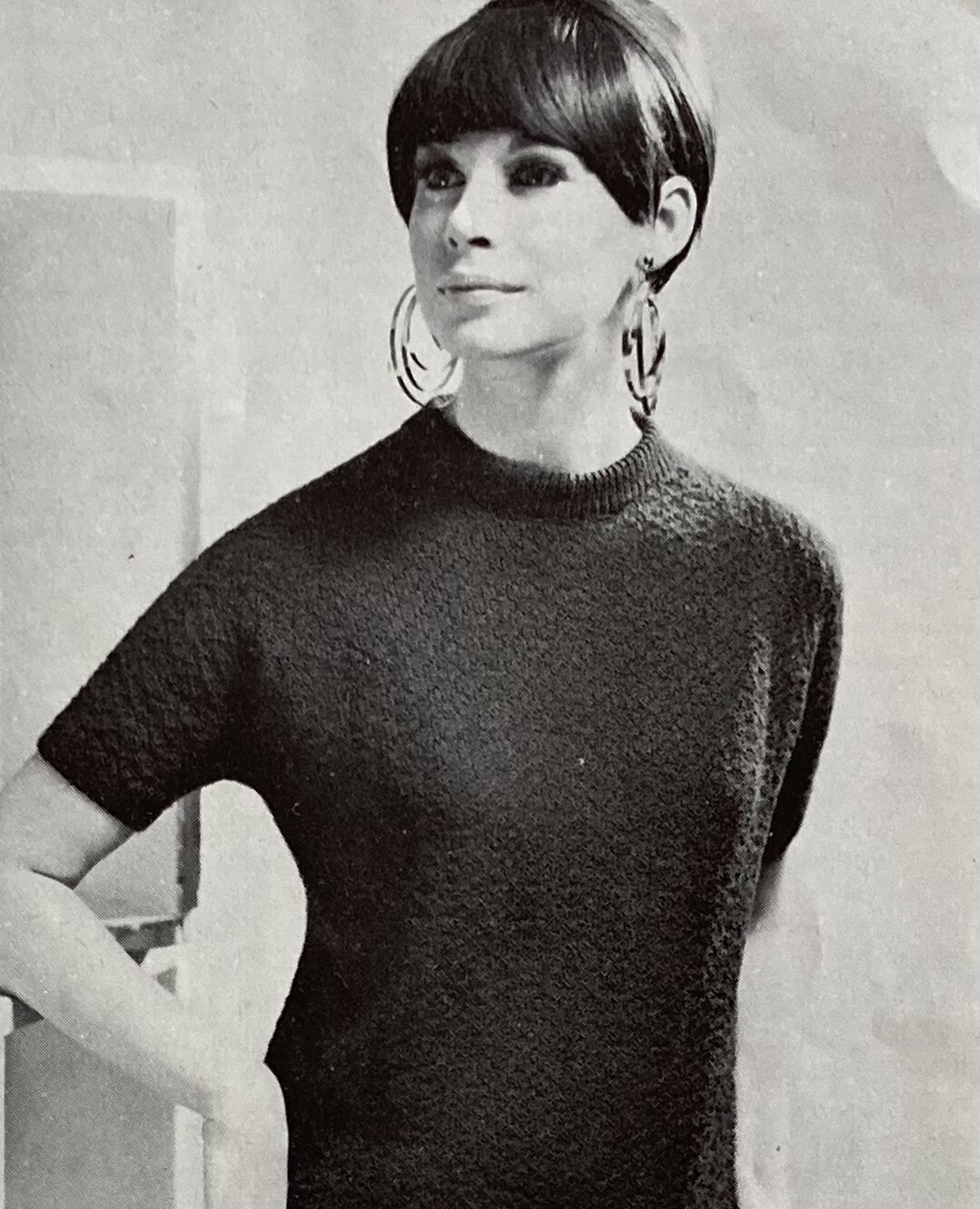
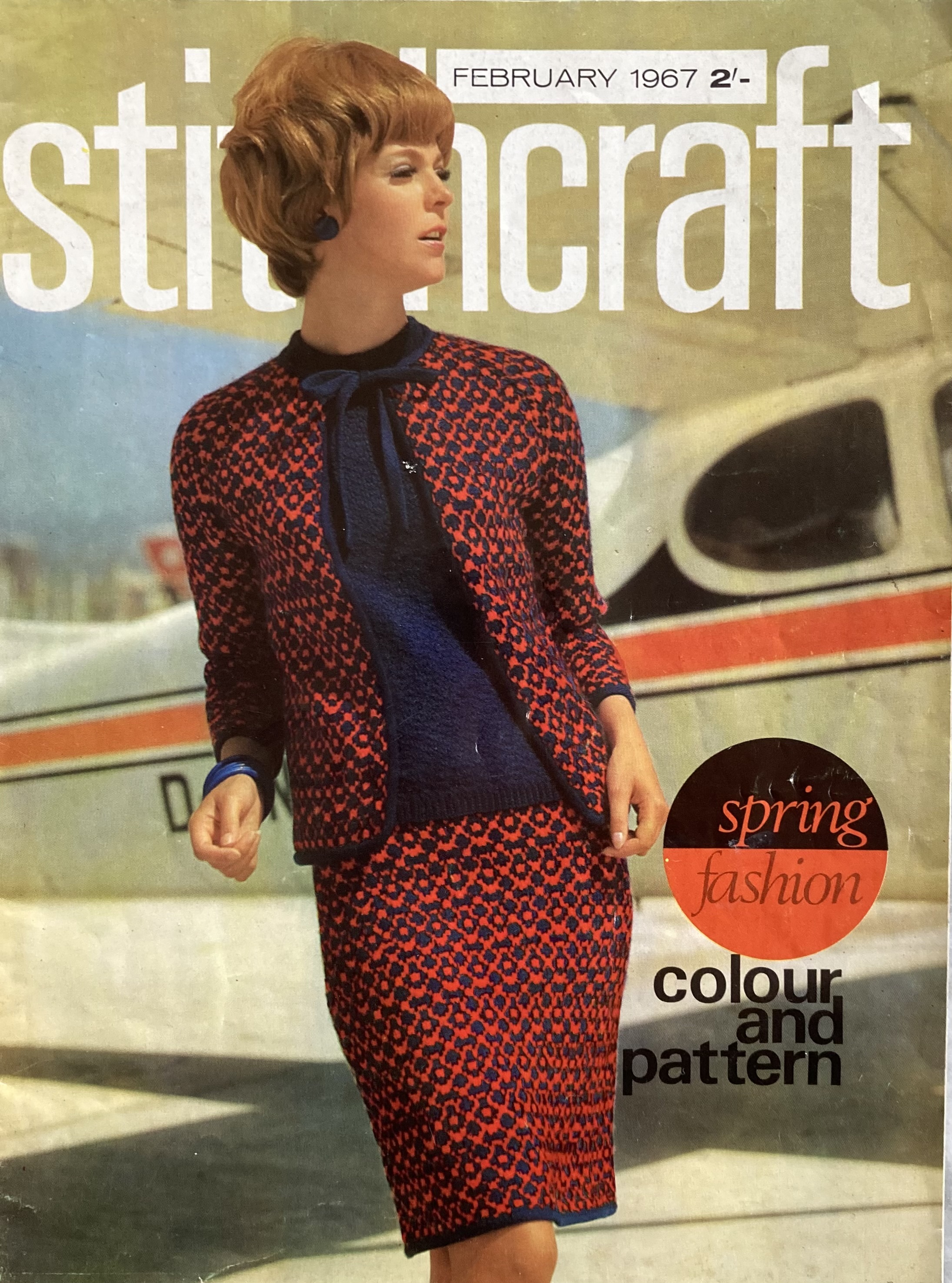
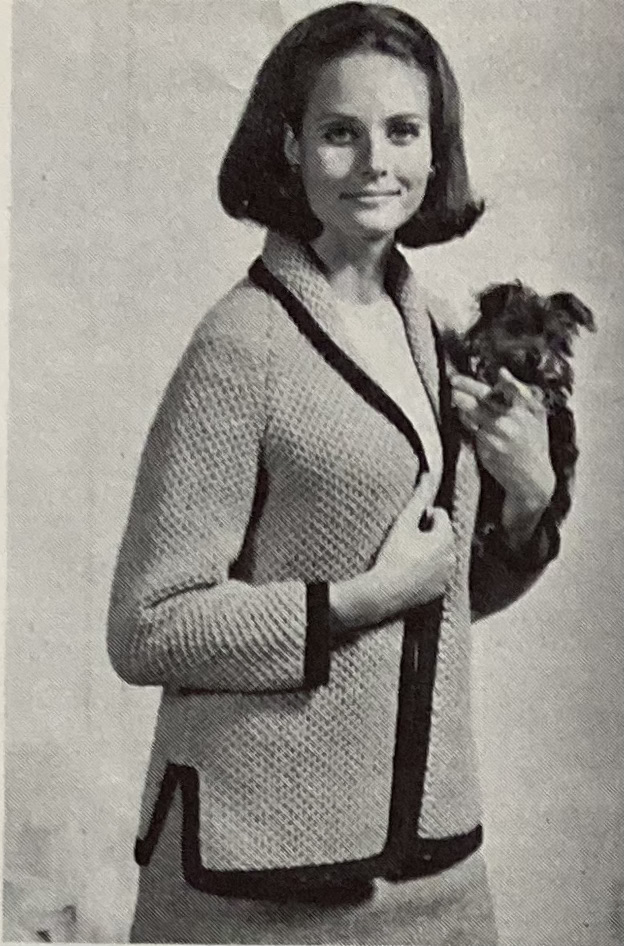
The cover photo is a “Chanel Style Suit” in Bracken Double Knitting tweed wool. 1965 was the heyday of Coco Chanel’s pioneer boxy, tweedy suit that was all the rage with celebrities and modern women. Her designs combined Scottish tweeds and multi-colour fabric patterns by Bernat Klein with her signature comfort, ease of movement and simple elegance to make a modern, essential wardrobe staple. Here is an excellent short introductory film about it (I’m sure readers of this blog will need no introduction; still, it’s great.) The knitted suit design in this issue of Stitchcraft is very true to the Chanel model, with its thick, tweedy wool, above-knee skirt and functional, square pockets in the jacket. There’s a short-sleeved knitted blouse in turquoise to match.

Other women’s garment designs include a brilliant red dress in Paton’s newest wool, Fiona; a “continental” pullover in a broken-cable design in regular Patons DK wool, a plain pullover with “new styling”, also in Fiona; and a fine-knit cardigan with crochet picot trim.

“Fiona” wool was a mix of Shetland wool and synthetic “Orlon”, made to combine the best qualities of both — warm, and lightweight like the wool, but easy-care and less scratchy. The “new styling” of the plain pullover means it is longer (23-24 inches) and looser-fitting than previous classic designs, and the raglan armholes are deeper, for an all-around casual fit. Colours are bright and snappy with yellows (“Maize”, “Celtic Gold” and “Inca Gold”) complementing the bright red of the dress. There’s a slipover for men as well, in bright “Peacock” shade and made in slightly thicker “Flair” — also a wool-synthetic mix. Cables of all sorts are popular, and the longer length can be seen in the Fiona advertisement as well as the garment photos.

The accessories are limited to one hat — but what a hat! The “tucked” pattern is made by inserting a “life-line” type extra thread every 5 rows and then knitting those stitches together with the current row. I love it, though the model has an unfortunately ridiculous expression on her face in the photo. No designs for babies this issue, but two wonderful and colourful sweaters for children with stranded hem and yoke accents.

In the embroidery and homewares department, we have the usual designs for cushions, chair-backs and chair-seats, plus a granny-square crochet pattern to use up scrap wool that, backed with woven fabric, can be used to make a workbag or cushion. Like the garment designs, colours are bright and bold, with reds and blues prevailing, along with black and white.

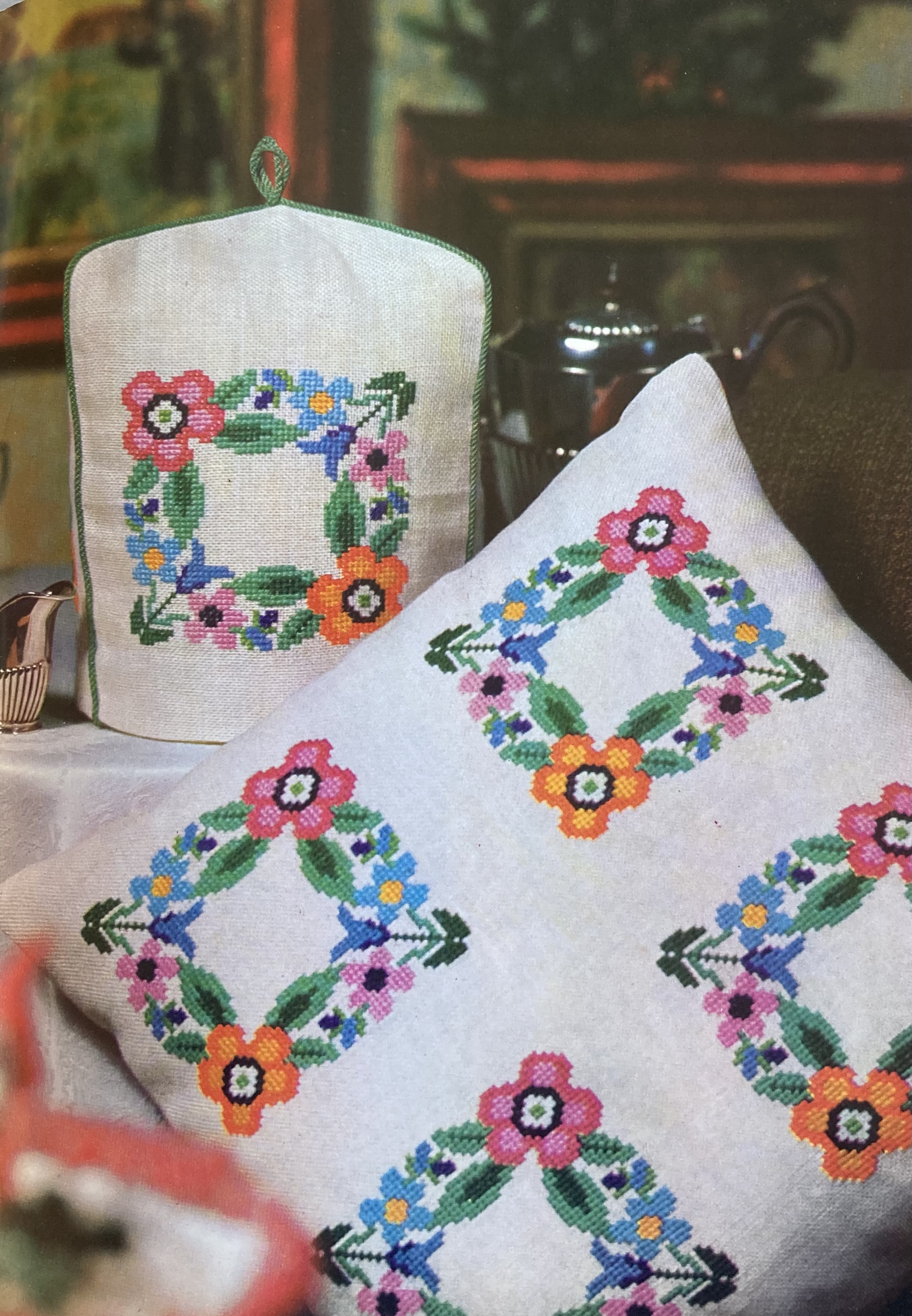
More advanced needleworkers can make a very pretty firescreen or a blackwork wall panel. Finally, there are embroidered cushions with flower designs — cornflower, corn not-flower-but-actual-corn, and red poppies. The loose, almost flowing style of the cushion designs looks ahead to later and even simpler patterns — complicated Jacobean work was on its way out. There’s a practical stitched rug in a geometric design as well.

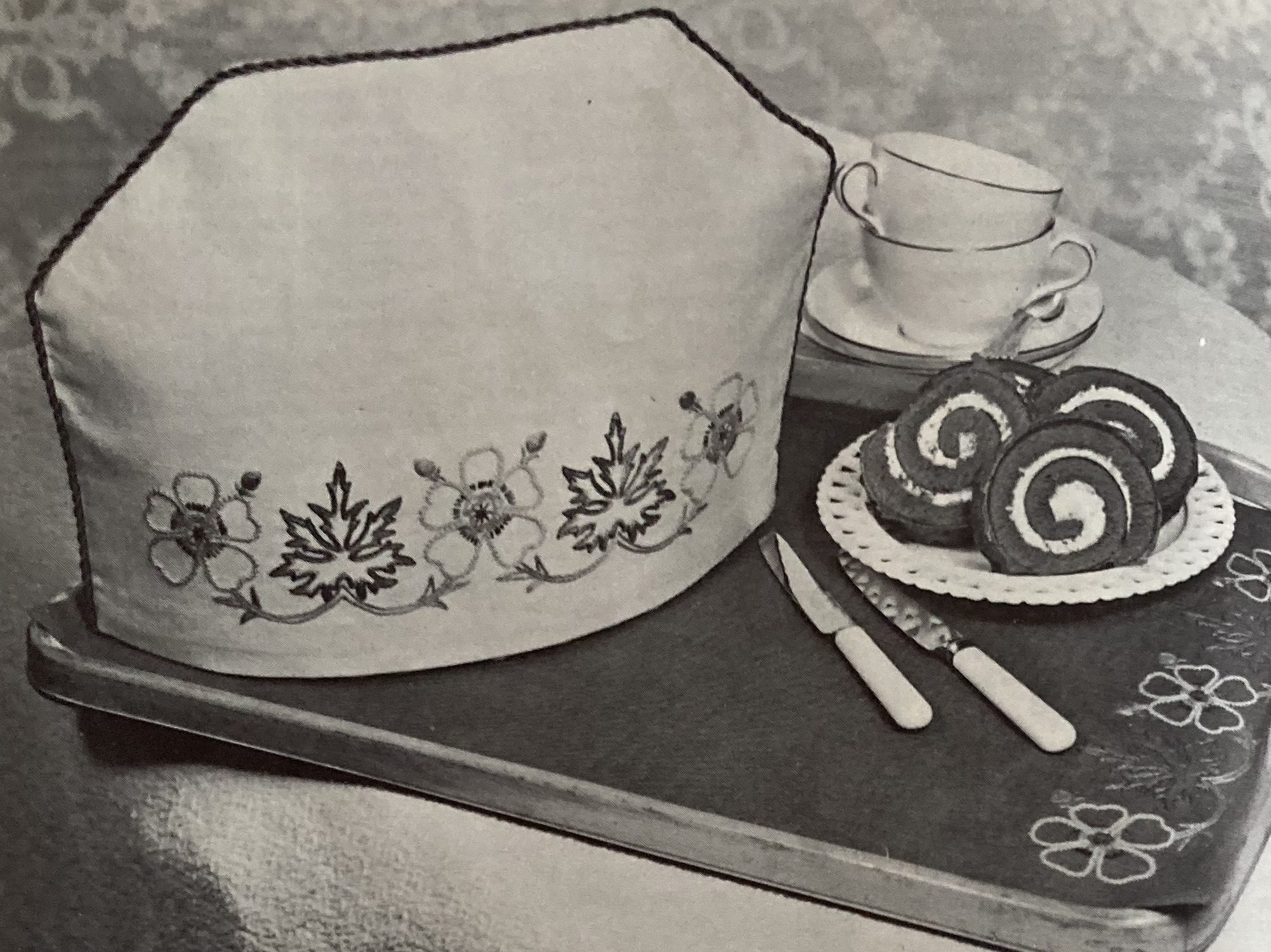
The bizarre-bazaar “novelties” never fail to amuse and wonder, and this month’s issue gives us a knitted tea cosy (festooned with pom-poms) that looks like a giant orange and/or lemon, and a crazy-eyed “Pete Puppy” doll in sewn and embroidered felt fabric that can be used for storing sewing implements — just poke those spare pins right into his belly like a voodoo doll. The “Readers Pages” offer some reprints of popular designs from earlier issues: a doll’s clothing set from November 1940 and a crocheted pram cover from … when was it exactly? It doesn’t say in the instructions and couldn’t find it in my previous posts, but I know I have seen it in another issue — possibly pre-1960.

In the current comic (really, one of the best ones), homemade rabbit doll Homer (because he’s home-made, get it?) and his friend, the store-bought rabbit doll Sale Price (self-explanatory) go on a quest in search of a real, live rabbit. Here’s they find a rabbit on a merry-go-round, who explains to them (logically enough) that he cannot be a real rabbit, as he can take children for rides, which a real rabbit cannot. Pedagogical message for children: do not try to ride on a real rabbit! Alas, Homer and Sale price must look further, and will continue their adventures in next month’s issue.

I will leave you with this ad for the Scotch Wool Shop, purveyors of knitting wool, stockings, underwear, and fashionable clothing for women. Always keeping up with the times, the ad shows a crocheted dress in Mary Quant style, named “Troy” and perfectly photographed for the Swinging Sixties.

That’s all for now! I have so, so many unfinished projects, but cannot resist the temptation to make the fine-knit cardigan blouse with picot crochet trim. It will definitely not be finished on time, but as always, I will update project posts when progress has been made.