February 1967: Overview

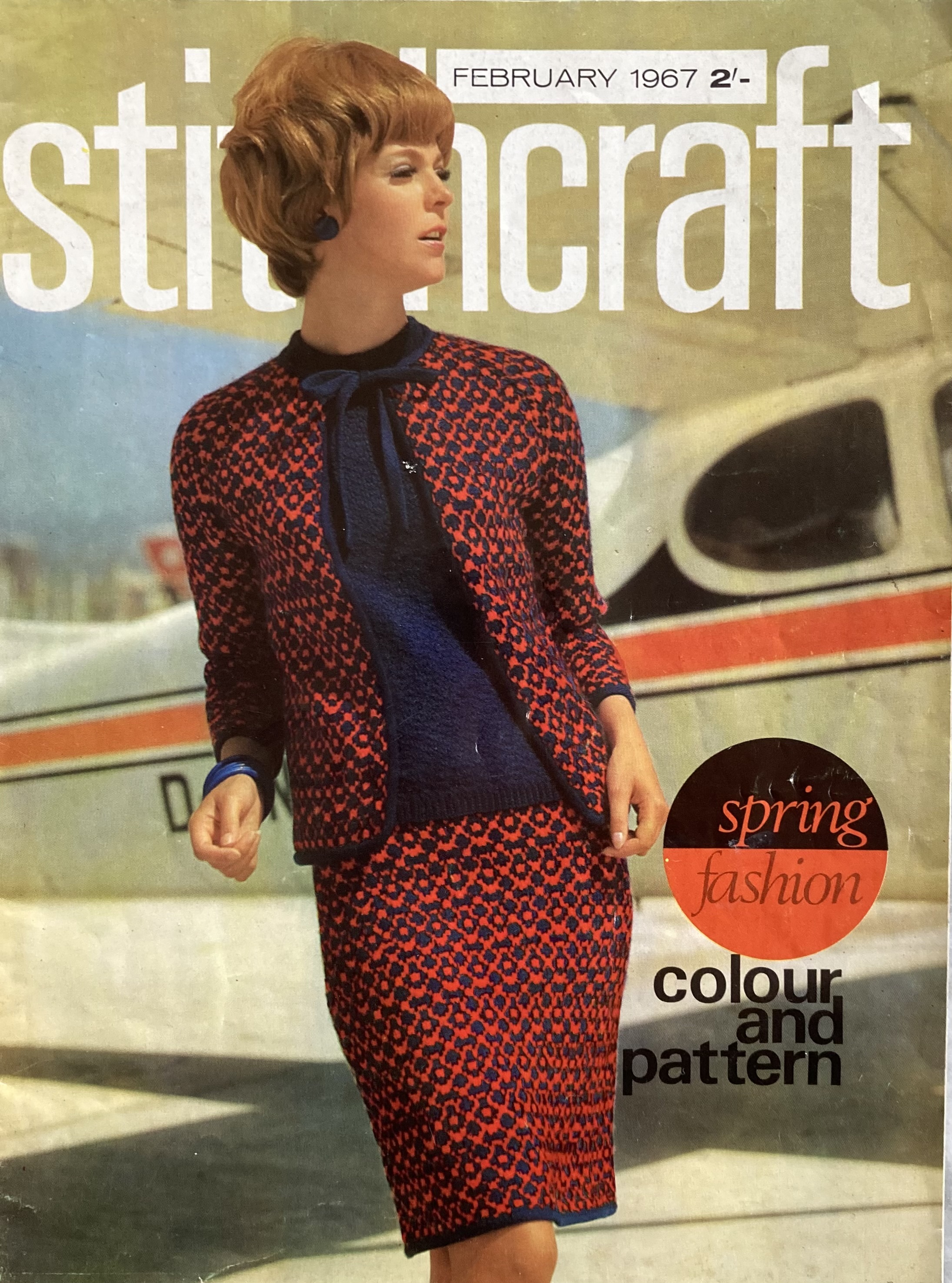
Spring Fashion is ready for take-off in the February 1967 issue of Stitchcraft, with its theme of “colour and pattern”. Fair-isle/stranded garments continue to “hold the scene”, along with a fun mix of non-stranded colour and texture designs. Colour and pattern of household items are influenced by spring and Easter (March 26th in 1967), with pastel florals and “novelties” for church bazaars.

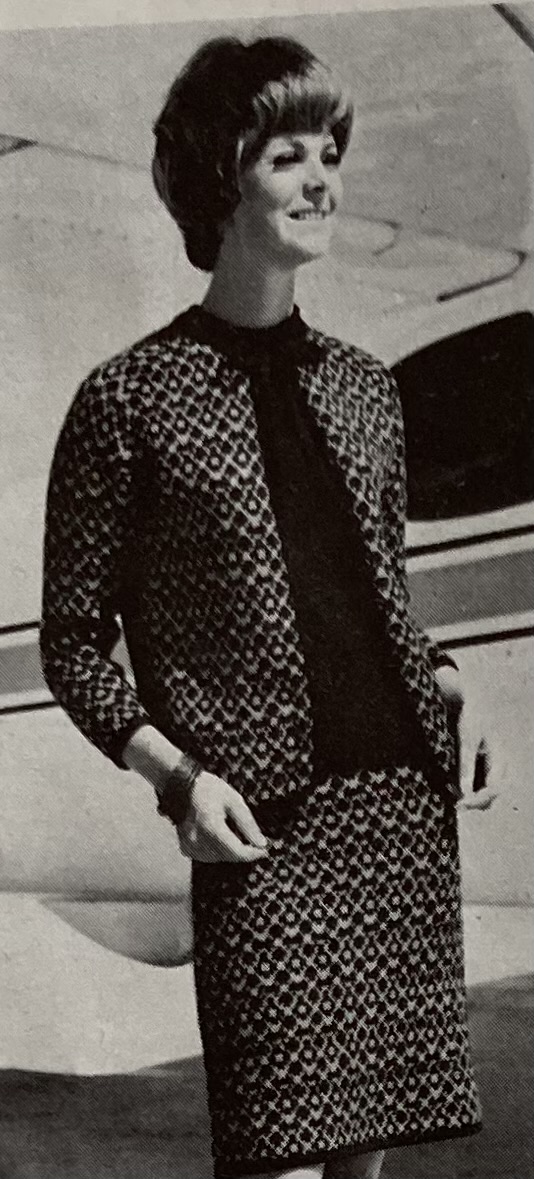
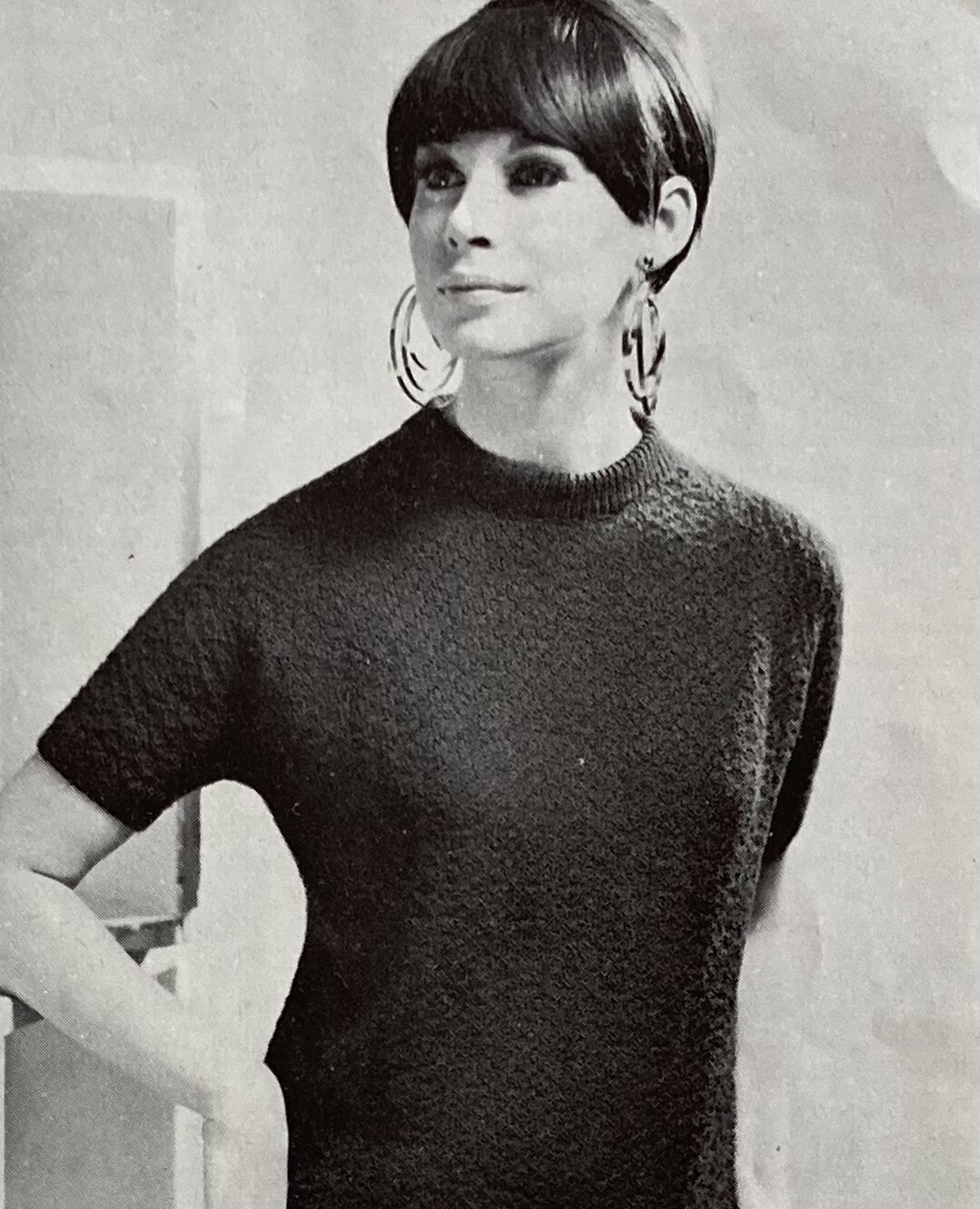
Our cover model sports an elegant “traveling suit” (don’t think it’s quite appropriate for flying in the tiny 2-seater plane in the background, but great photo) with an all-over stranded design in red and blue, paired with a short-sleeved knitted blouse. The suit is made in double-knitting weight wool with knitted bias binding in 4-ply Nylox (wool-nylon blend). The same Nylox wool is then used to make the blouse, which cleverly translates the stranded colour pattern into a single-shade textured pattern using knit and purl stitches. It’s a lovely and very well-coordinated ensemble.

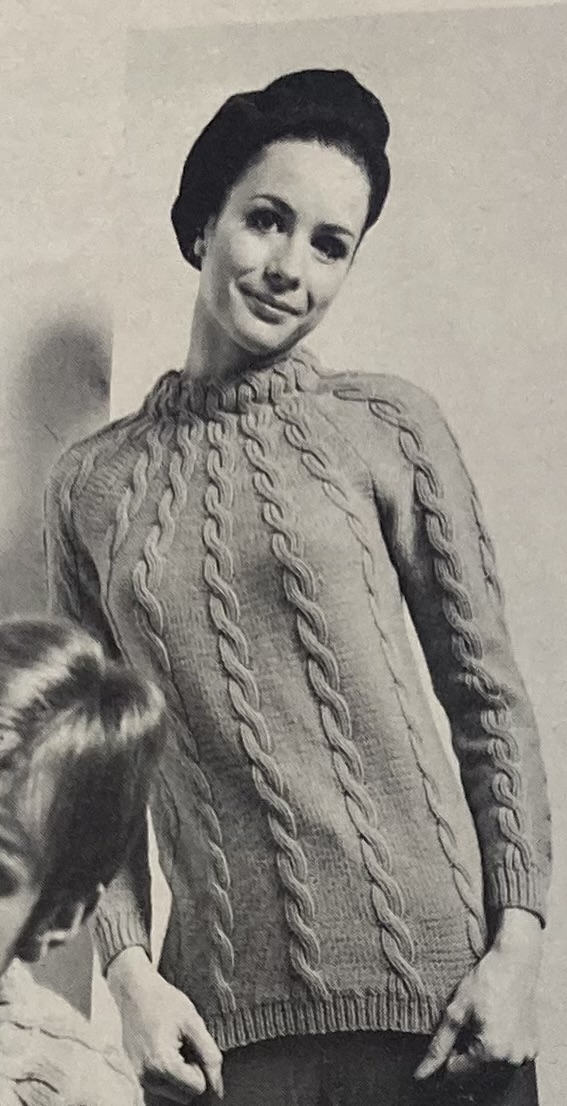
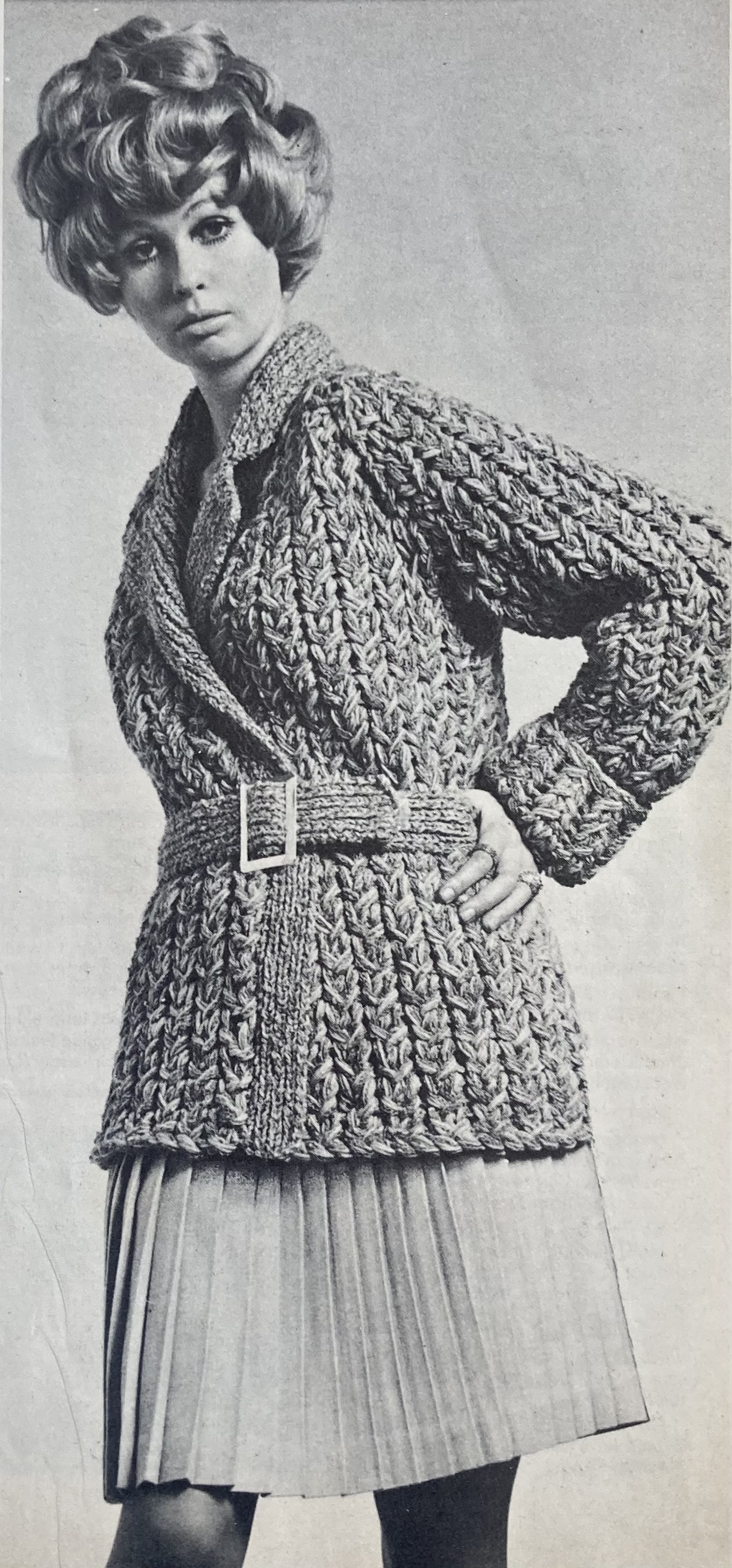
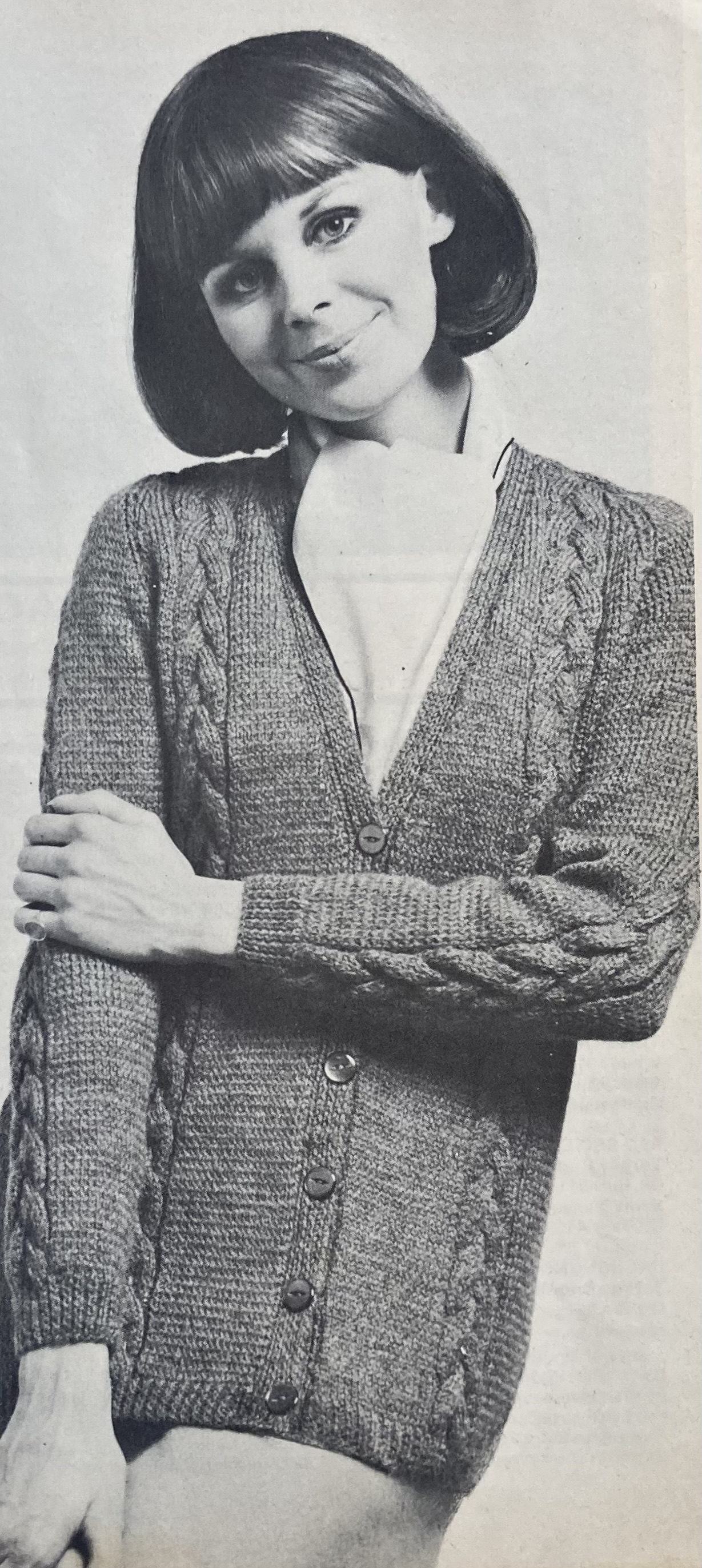
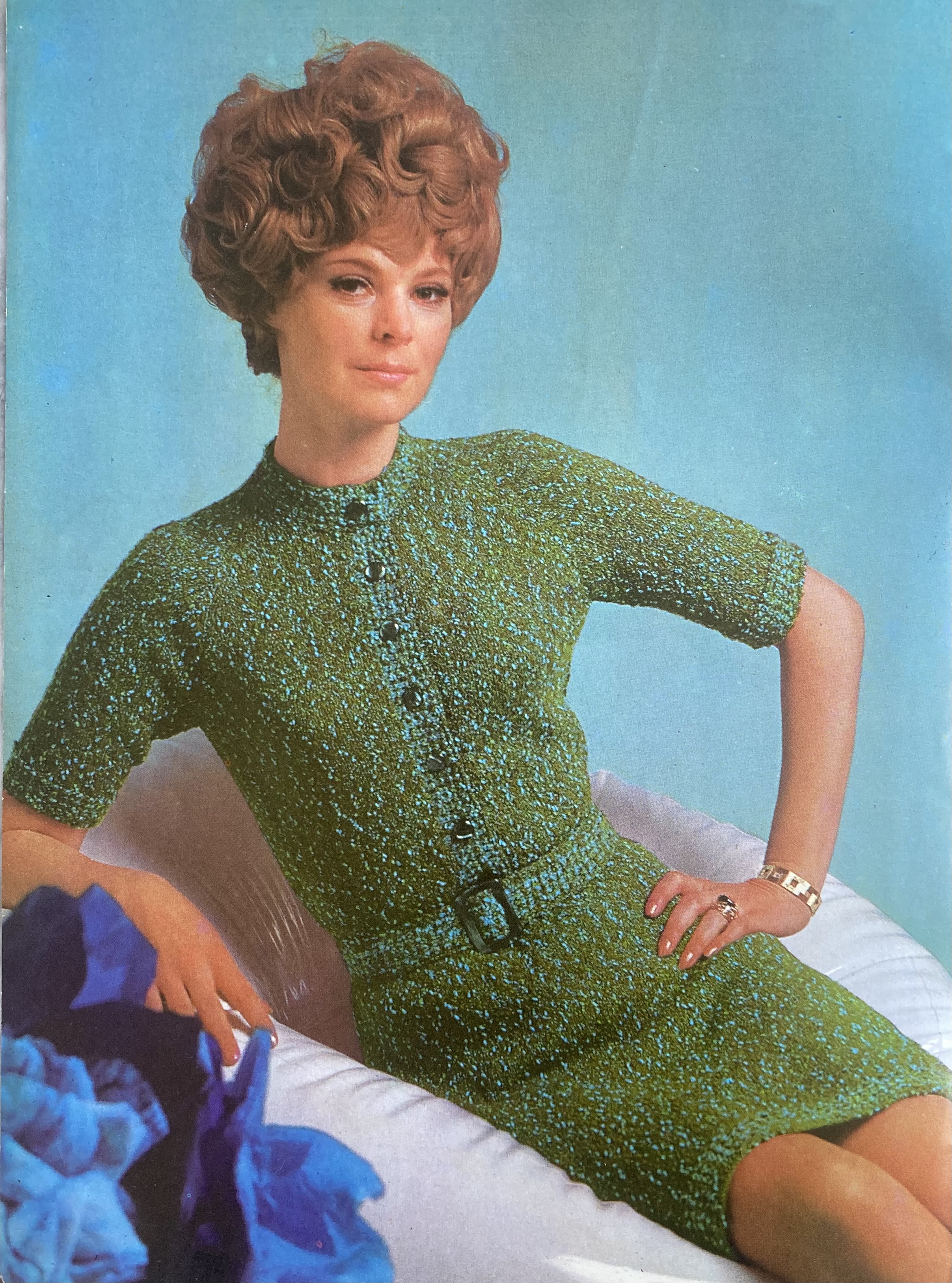
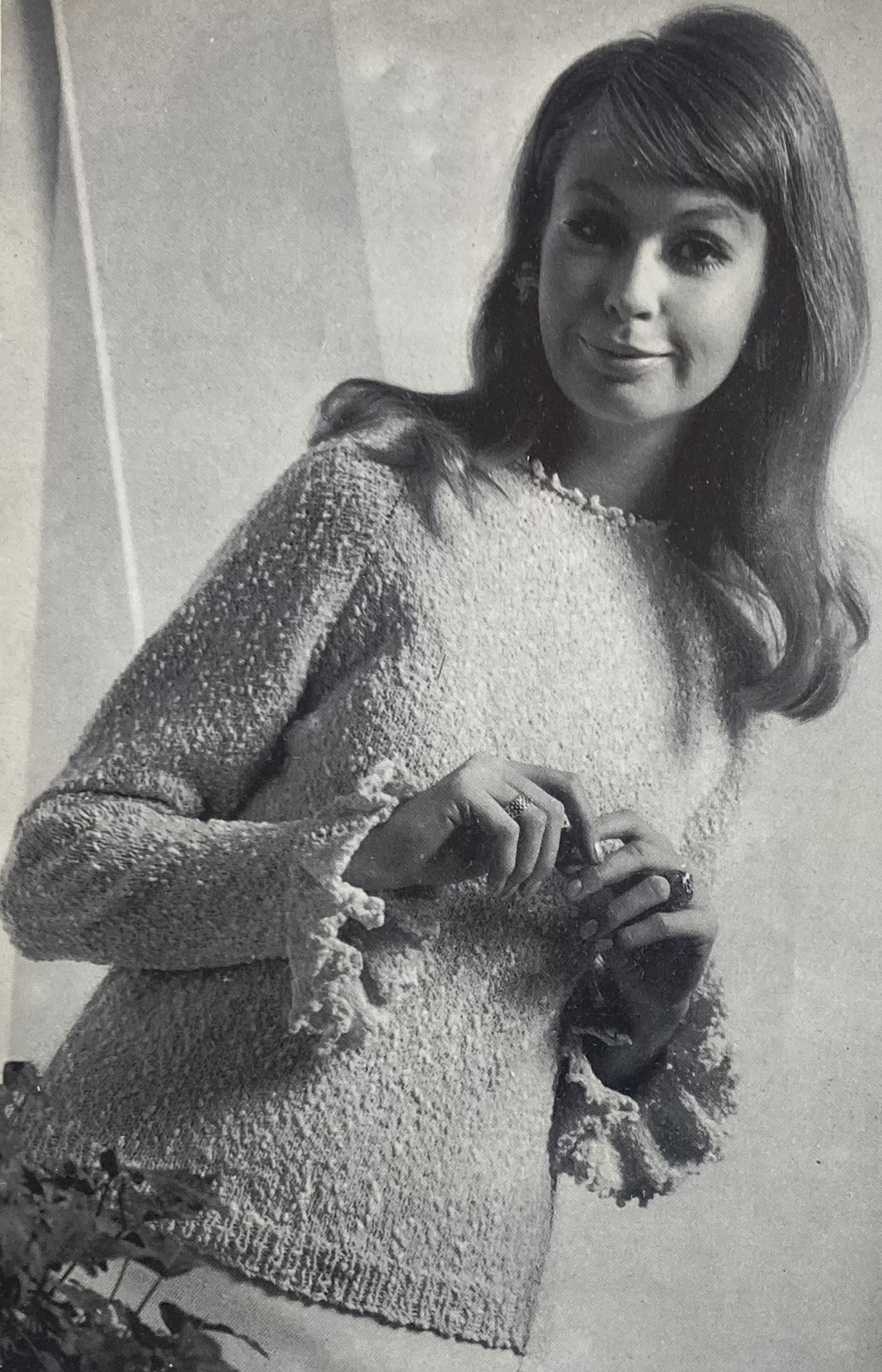
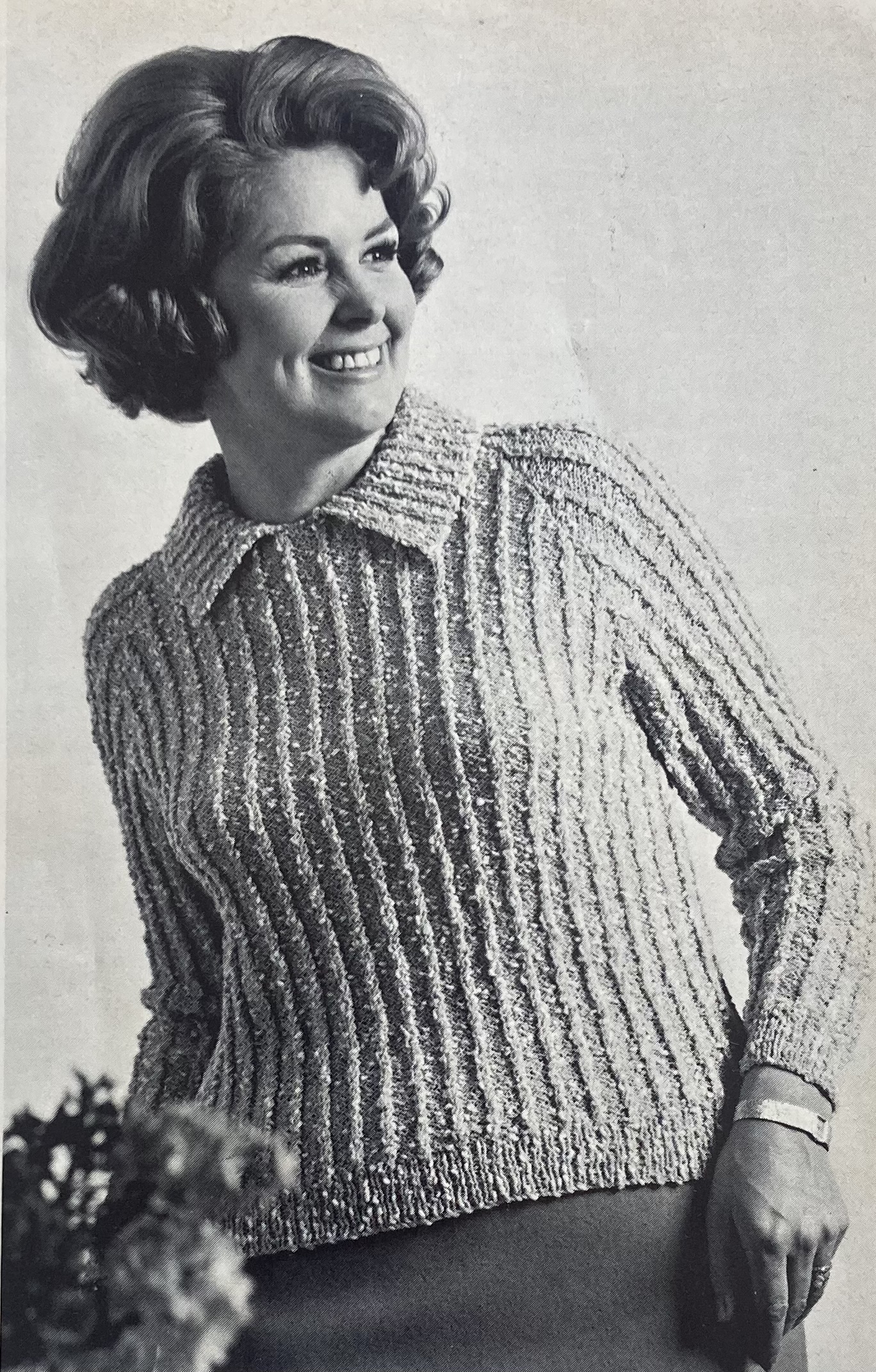
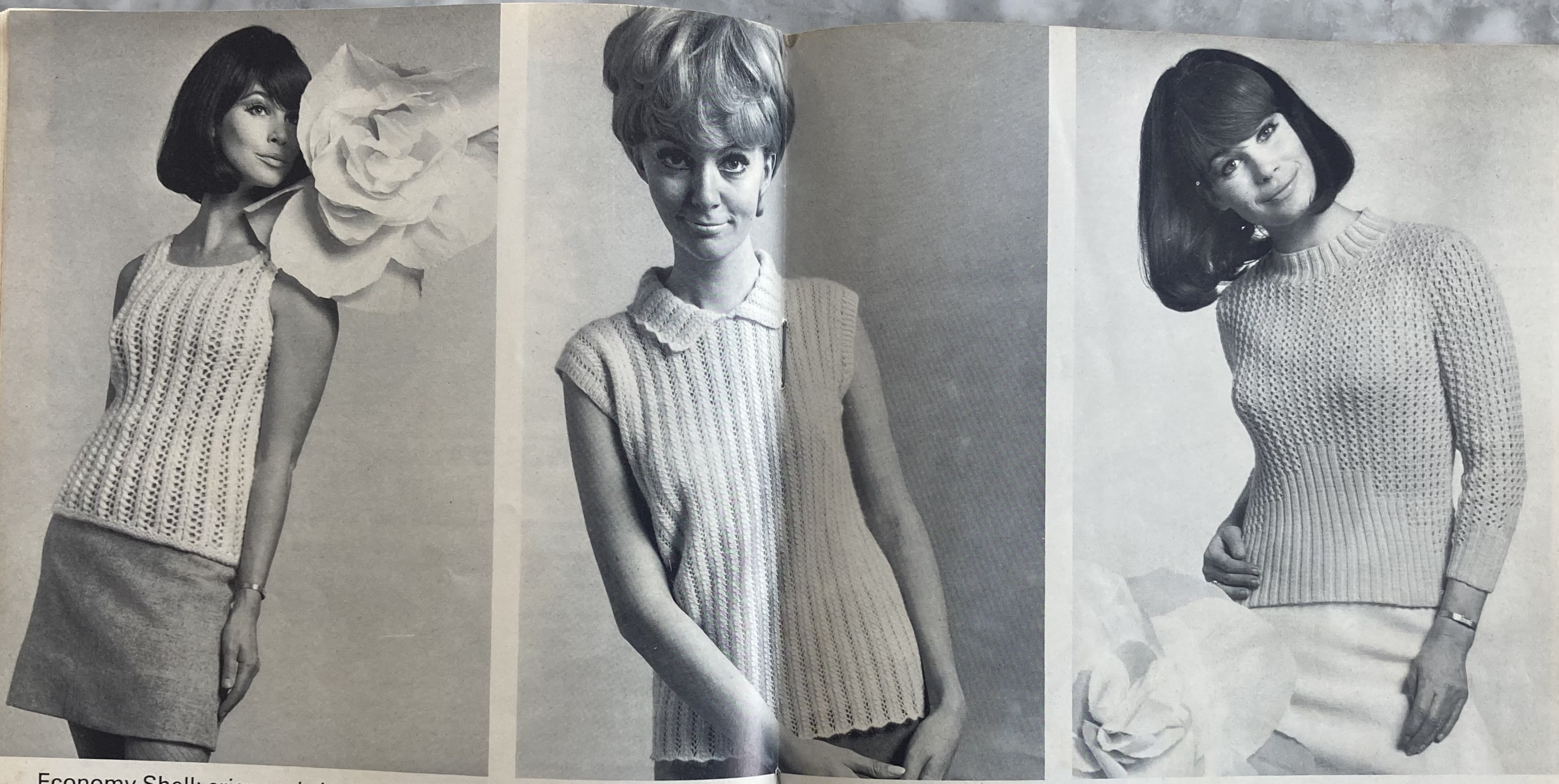
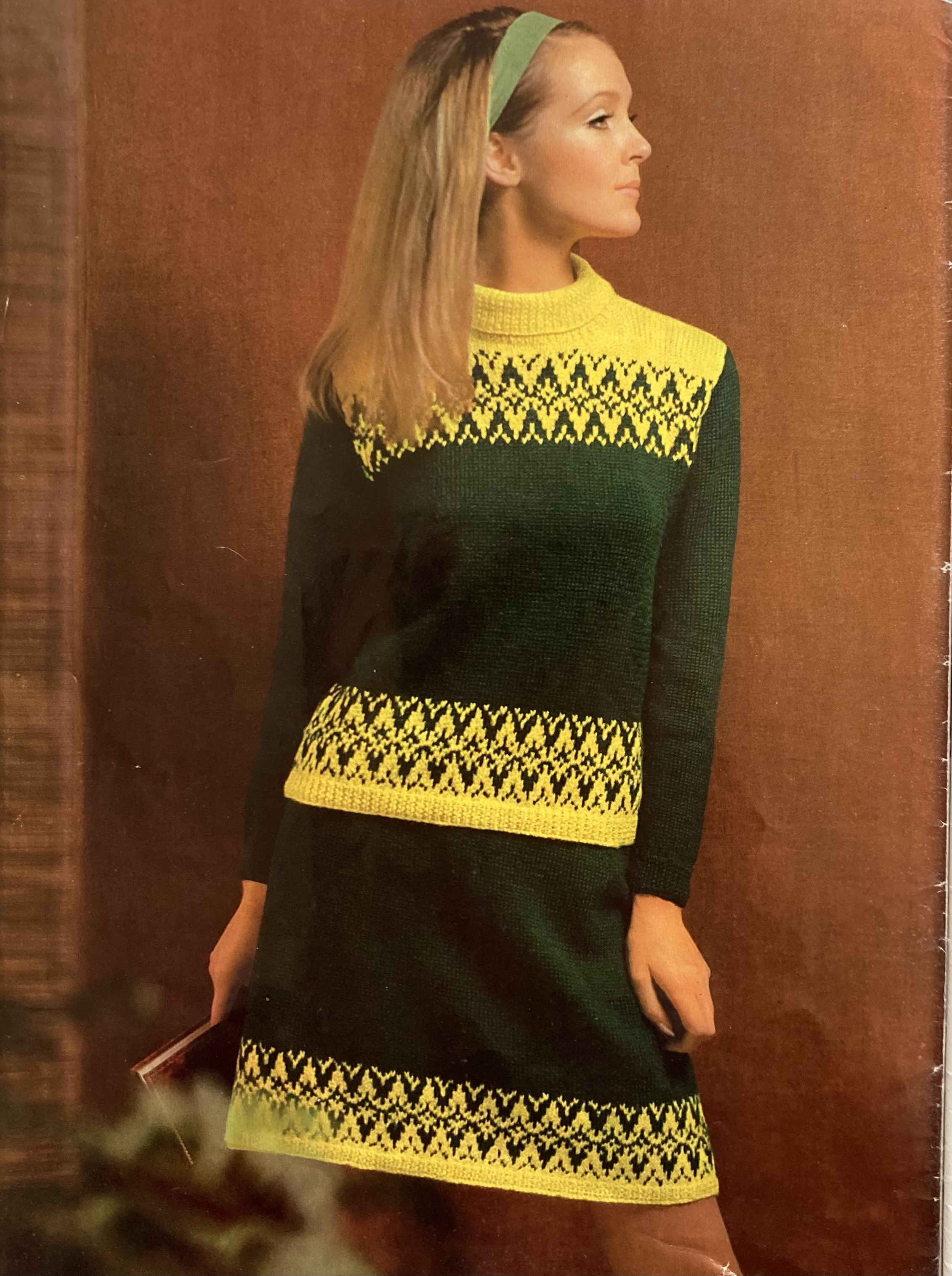
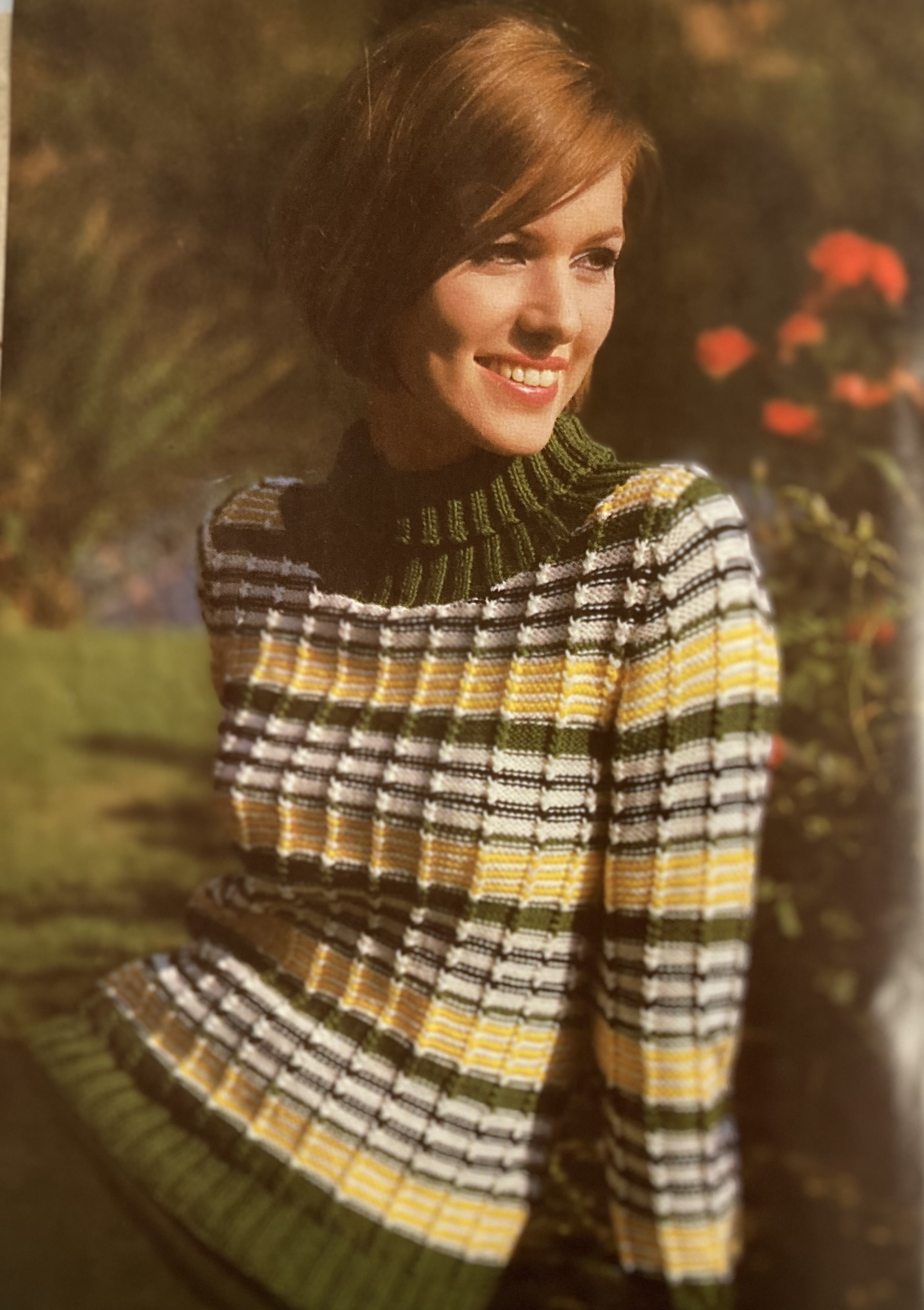
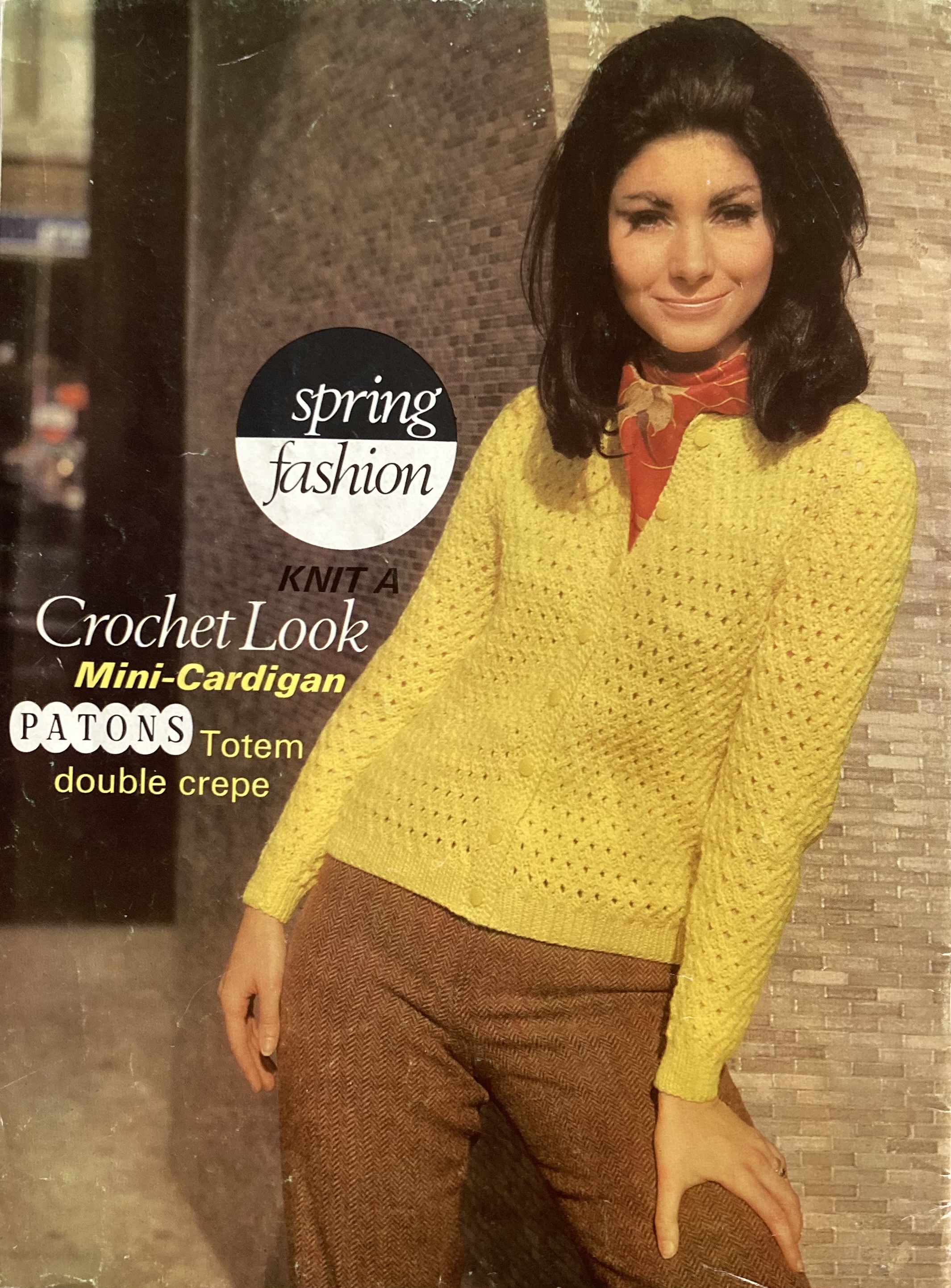
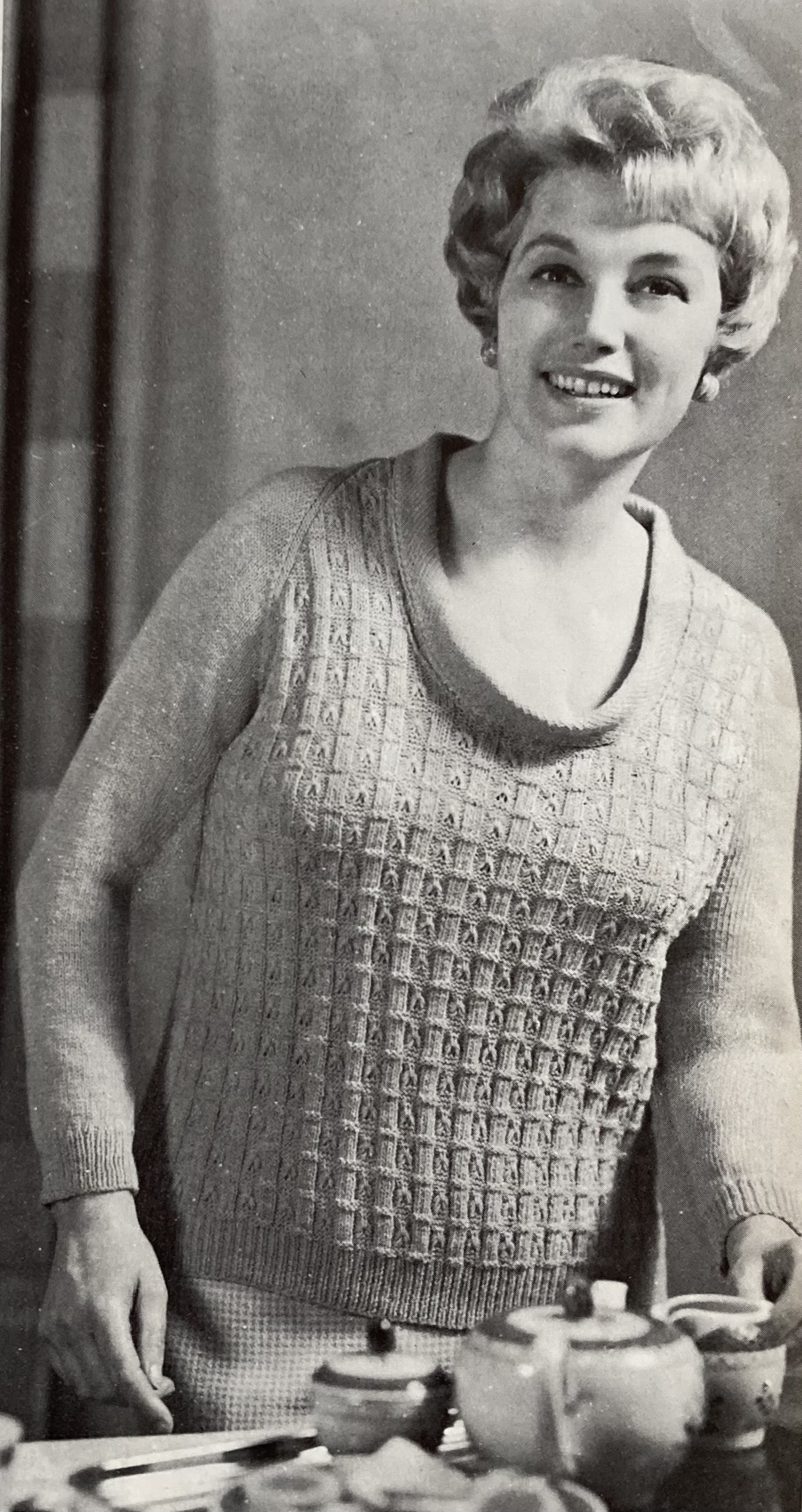
Fair Isle knitting (I know the Fair isle purists will remind us that not all stranded knitting uses traditional Shetland/Fair Isle designs or techniques, but Stitchcraft is not that picky, so I won’t be either…) features in the inside-cover sweater-suit design as well, with patterned borders on both skirt and sweater. Whereas the cover suit falls to just barely above the knee, this outfit is not afraid to go mini. More variations on colour and pattern can be seen in the striped and ribbed “country sweater” or the knitted mini-cardigan in “crochet look” — a nubbly twisted-stitch pattern. Larger ladies can make a very pretty blouse in a delicate feather-check pattern. The checked part is simple block ribbing with rows of garter stitch and the feather stitches are made by dropping a stitch down 5 rows and then working it together with the 5 stitches above it. Bright colours are trending (the blouse is turquoise) with yellow and green at the top of the list.
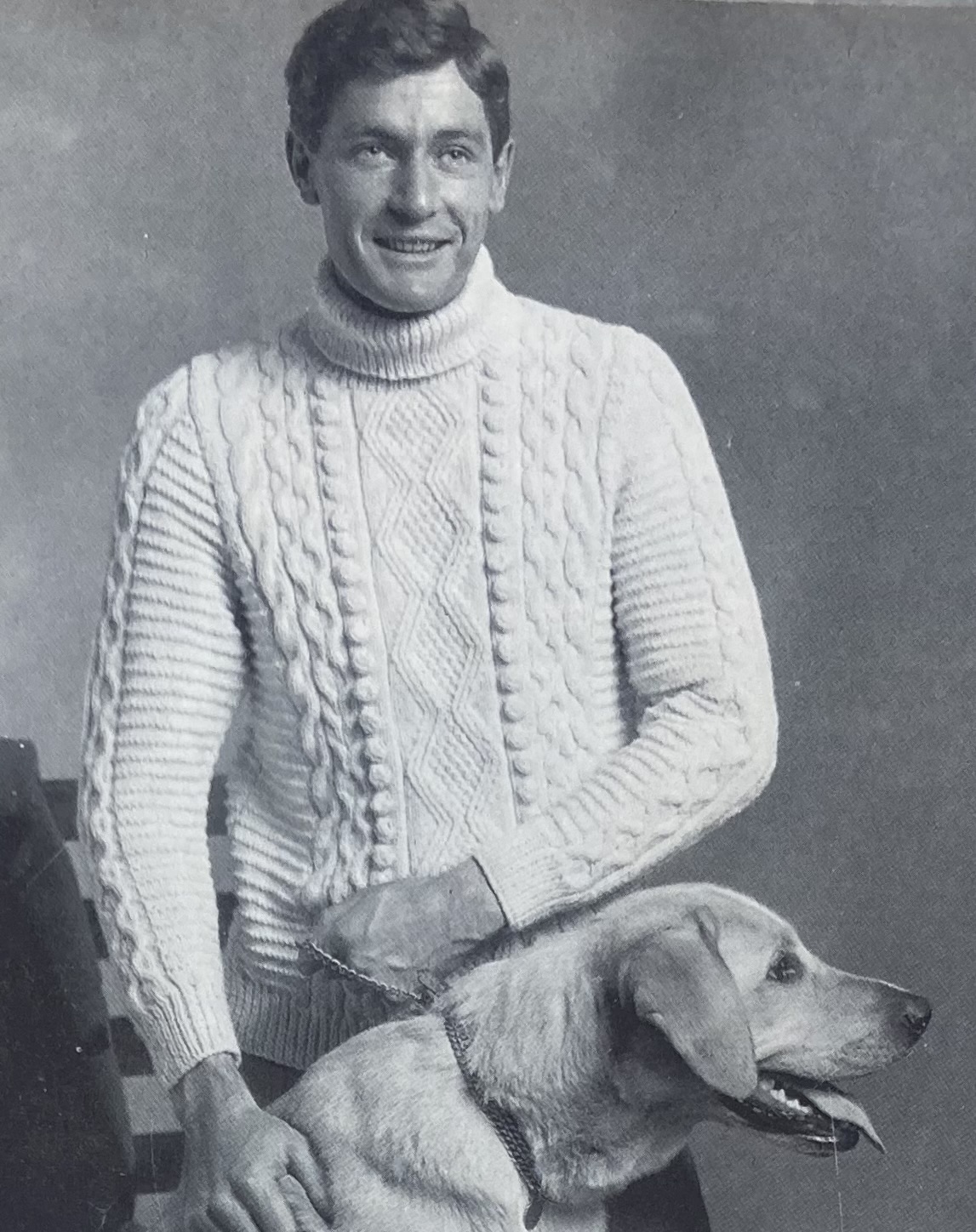
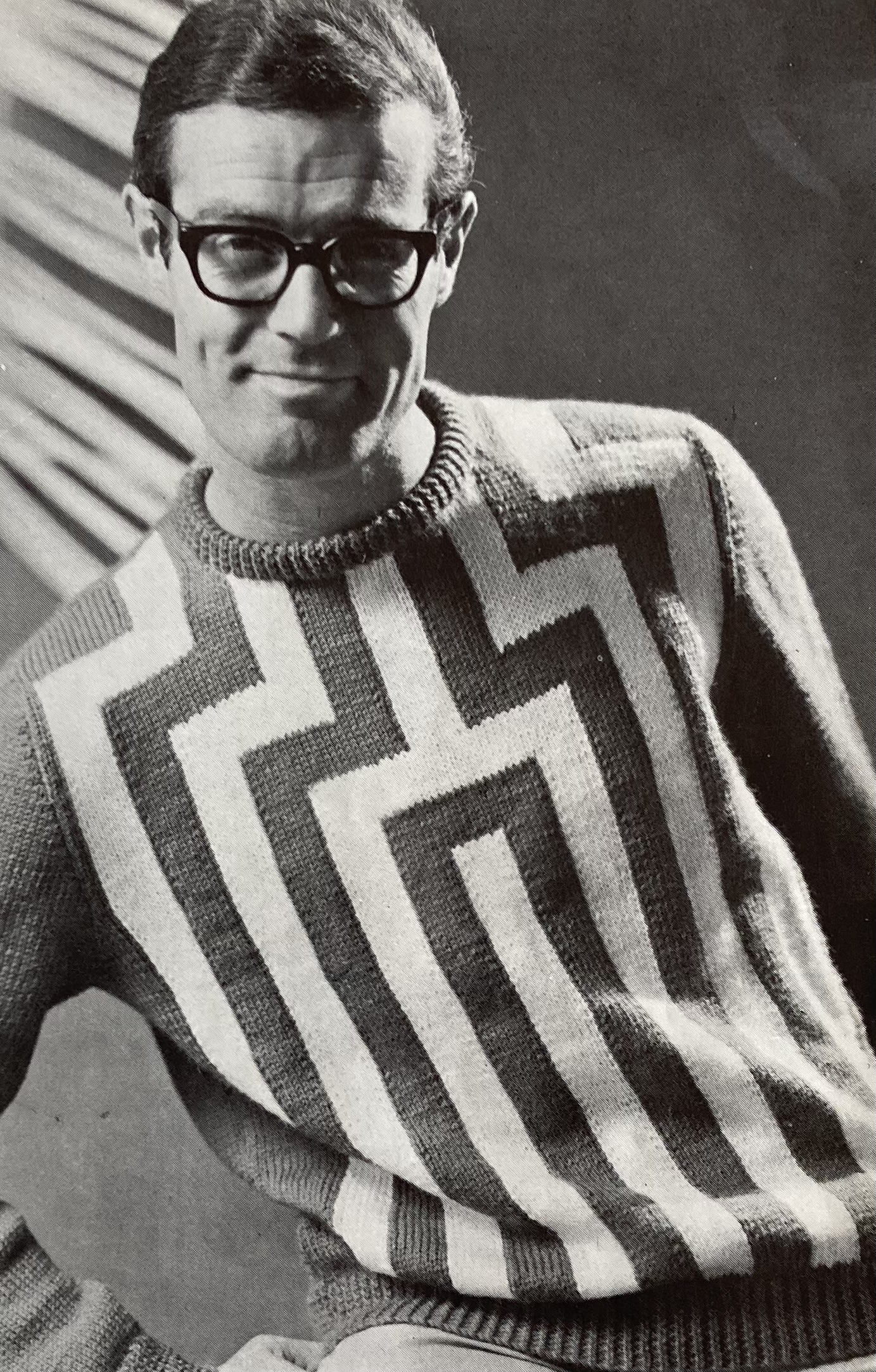
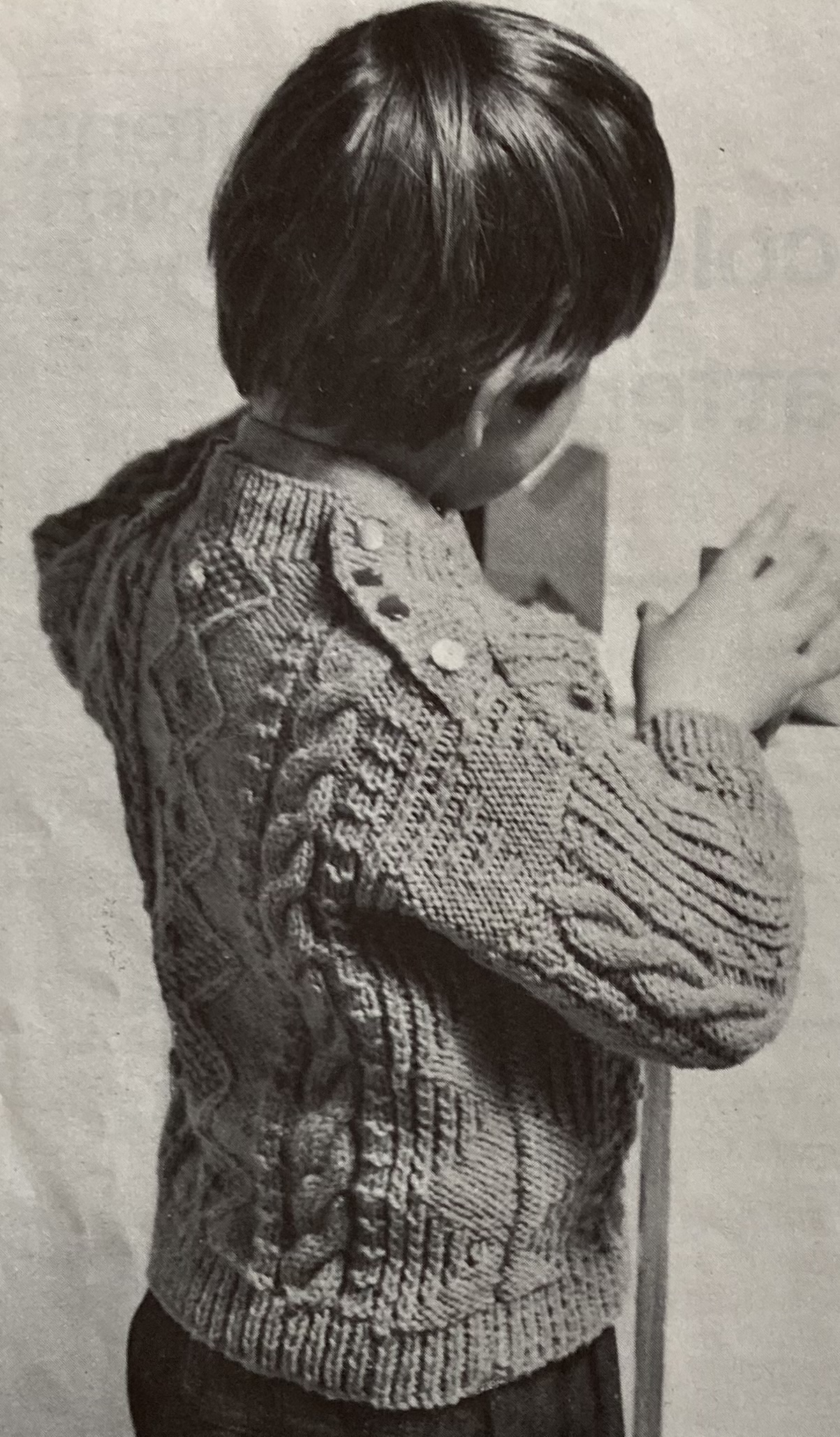
There are great patterns for the rest of the family, too: the man’s “Italian design” sweater is quintessentially 60s, and it’s not Stitchcraft‘s fault that the pattern looks like the glyph from the “White Bear” episode of Black Mirror. Little boys get a fun Aran-patterned sweater with practical buttons on the shoulder. Daughter “Melanie” gets a much less practical pinafore dress with polo sweater to go underneath, and the baby of the family can get dressed up for a special occasion in a shell-patterned dress and matinee coat ensemble.

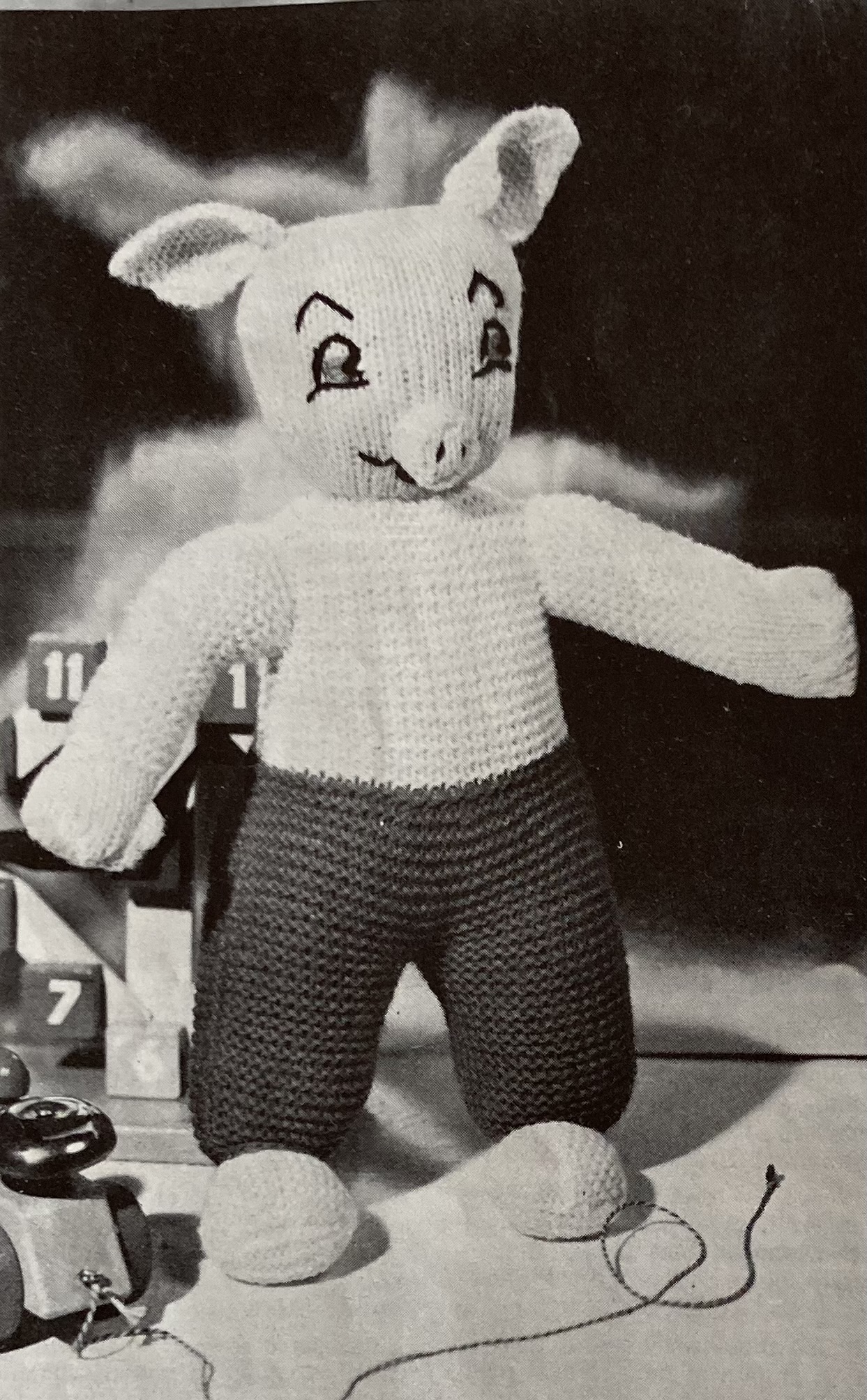
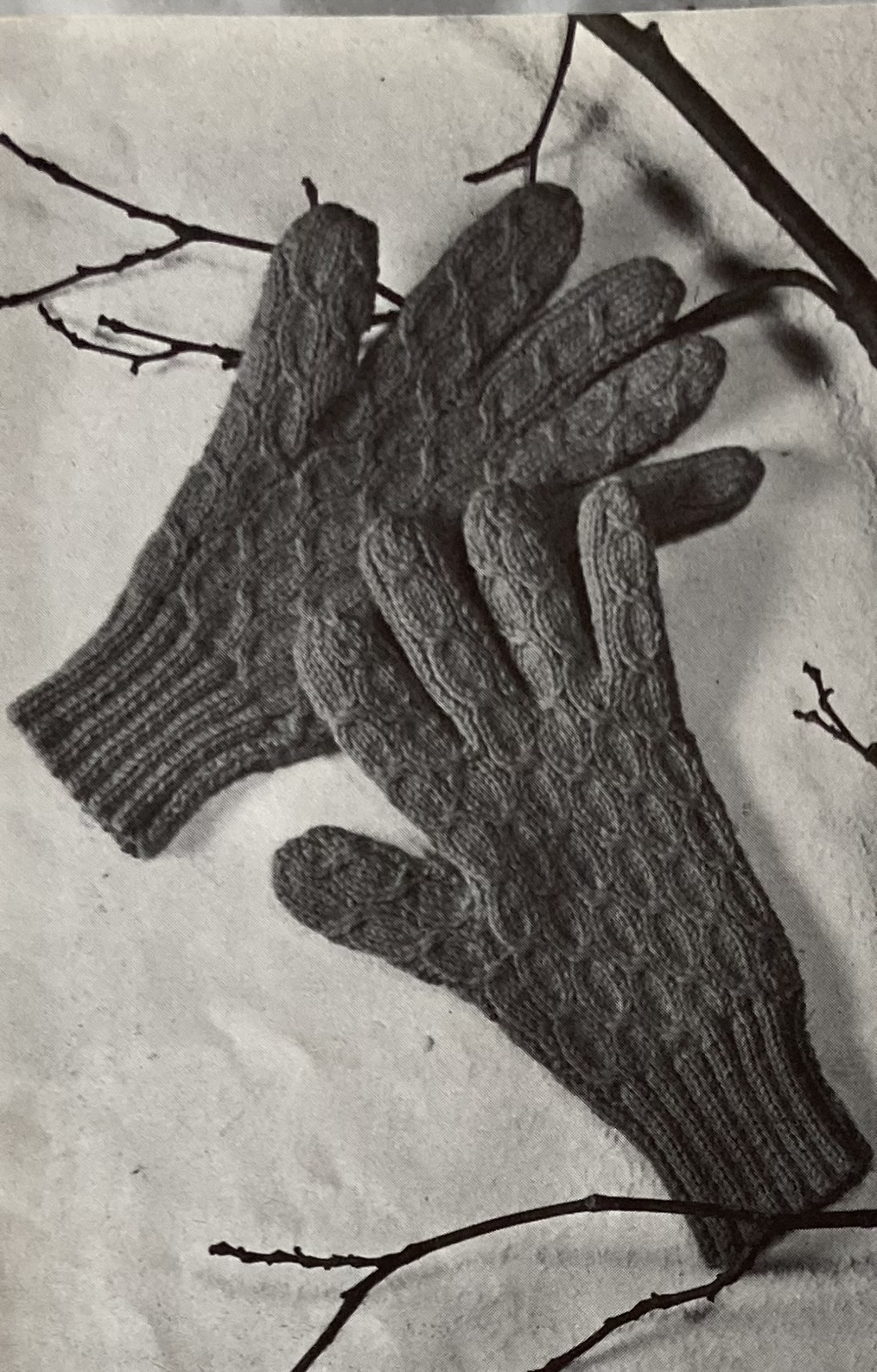
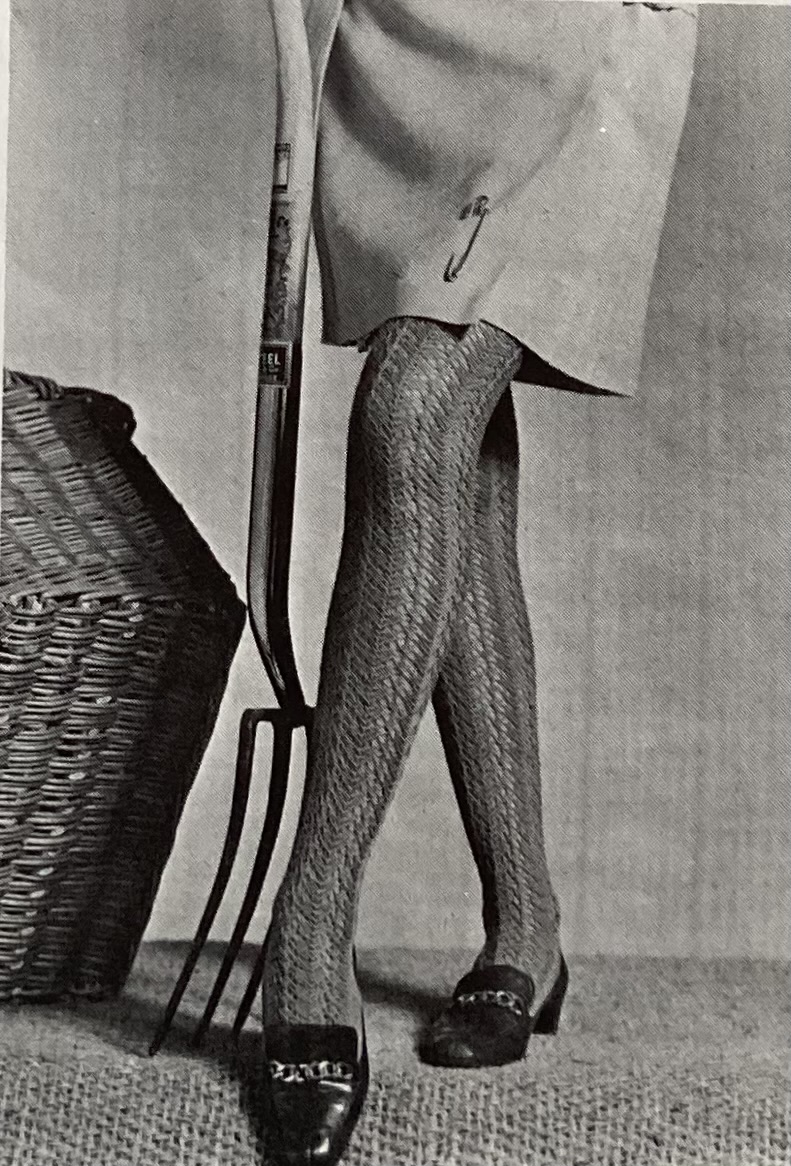
There are toys for the children as well: a knitted “Higgledy Piggledy” stuffed animal to go with the comic in the Readers Pages, and “Tracy the Knitted Doll”, interestingly not a “dress-up” doll like most of the dolls in Stitchcraft — her cap and scarf are knitted separately and removable, but shirt and leggings are integral to her body. “Country” accessories for adults round out the list of smaller items: warm cabled gloves for him and feather-pattern knee socks or stockings for her.

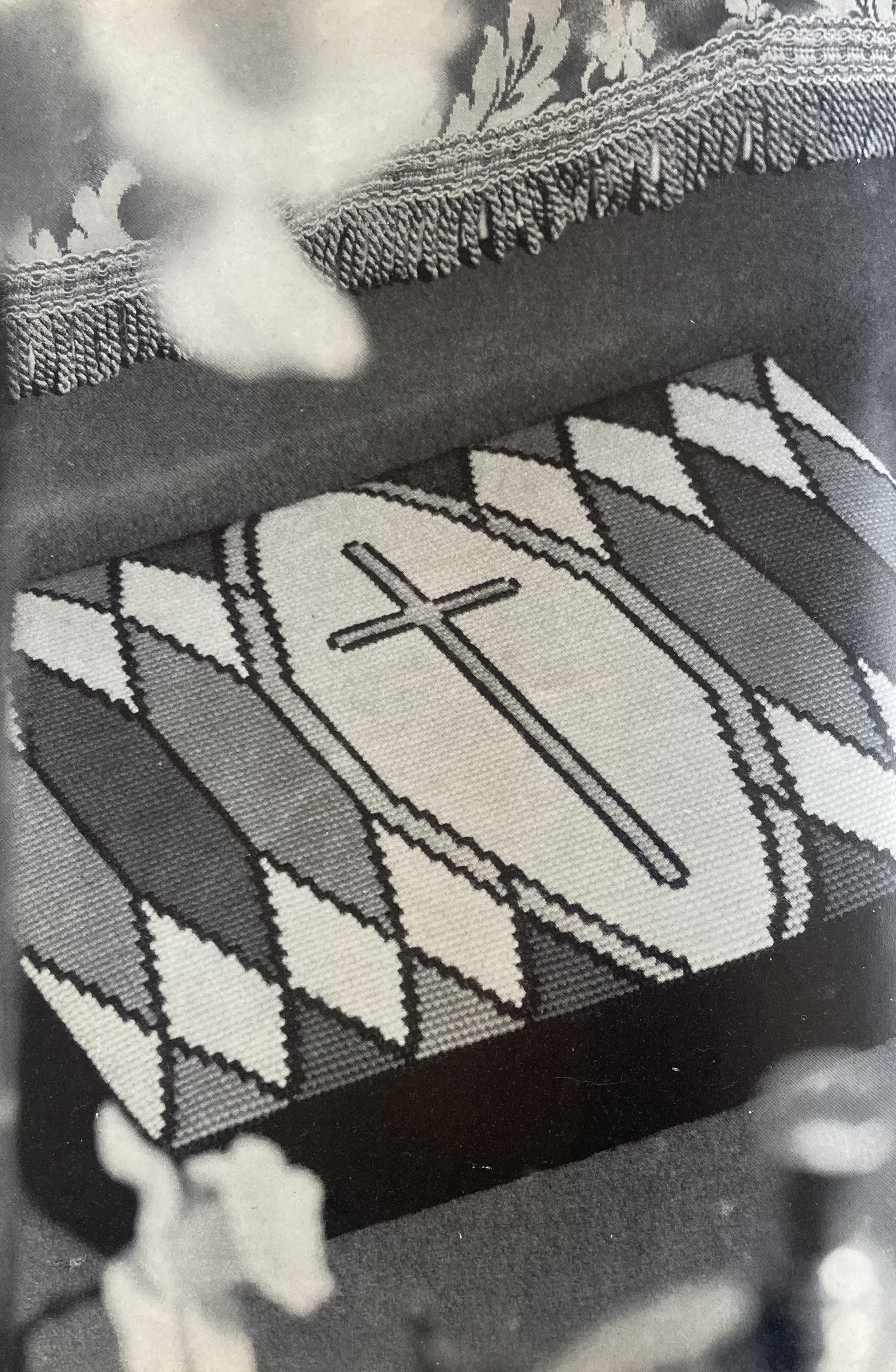
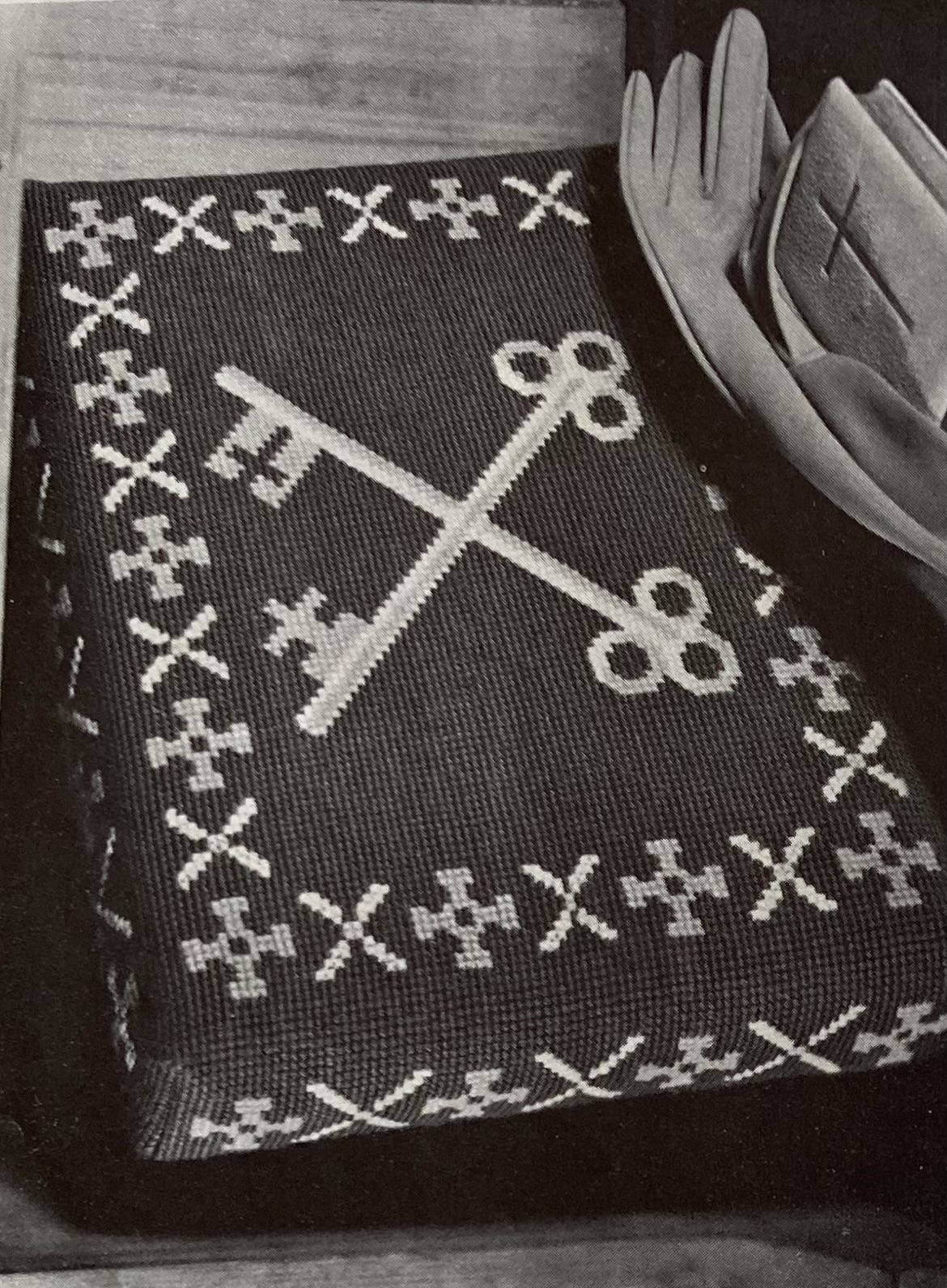
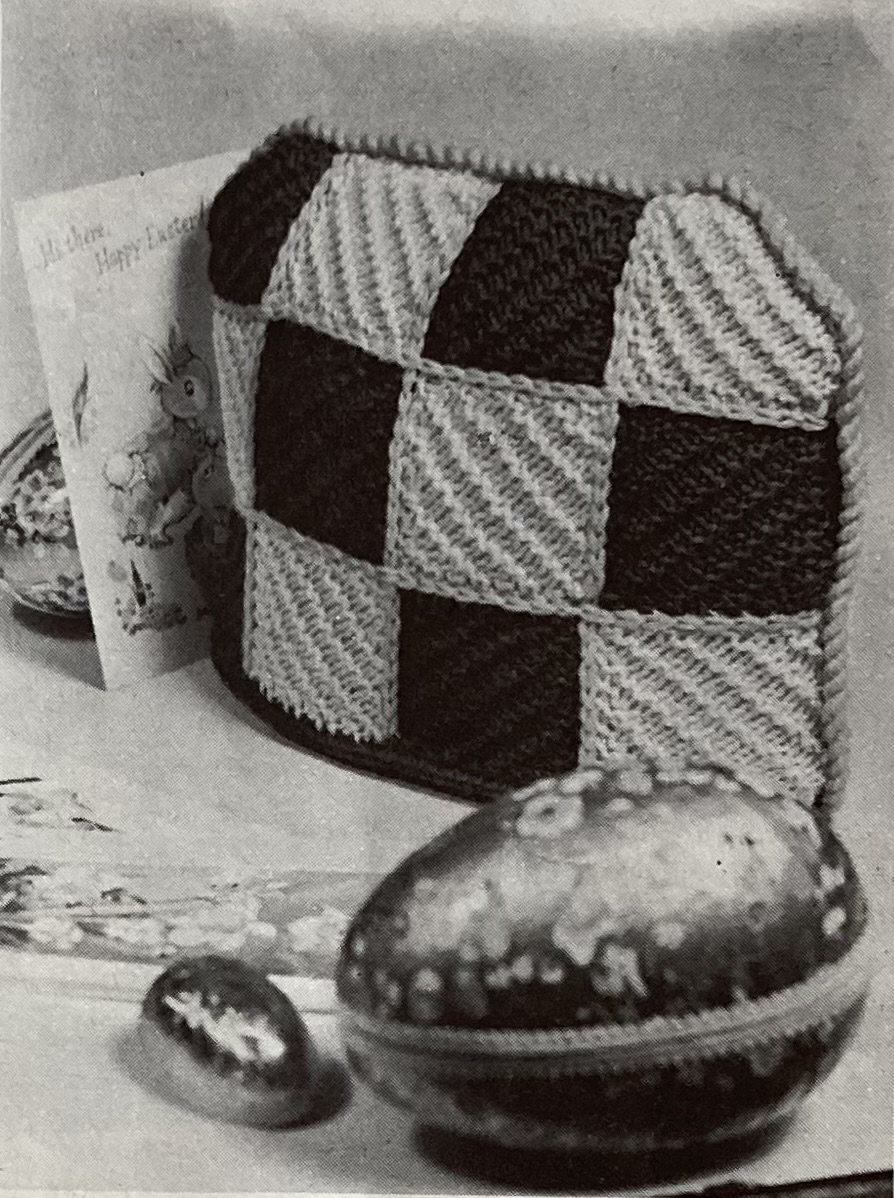
Homewares and “novelties” are themed for spring and Easter, starting with a tapestry church kneeler with church-key design. There’s a cushion and/or tea cosy in knitted patchwork, which is not particularly Easter-themed but would fit with an Easter brunch or church bazaar.

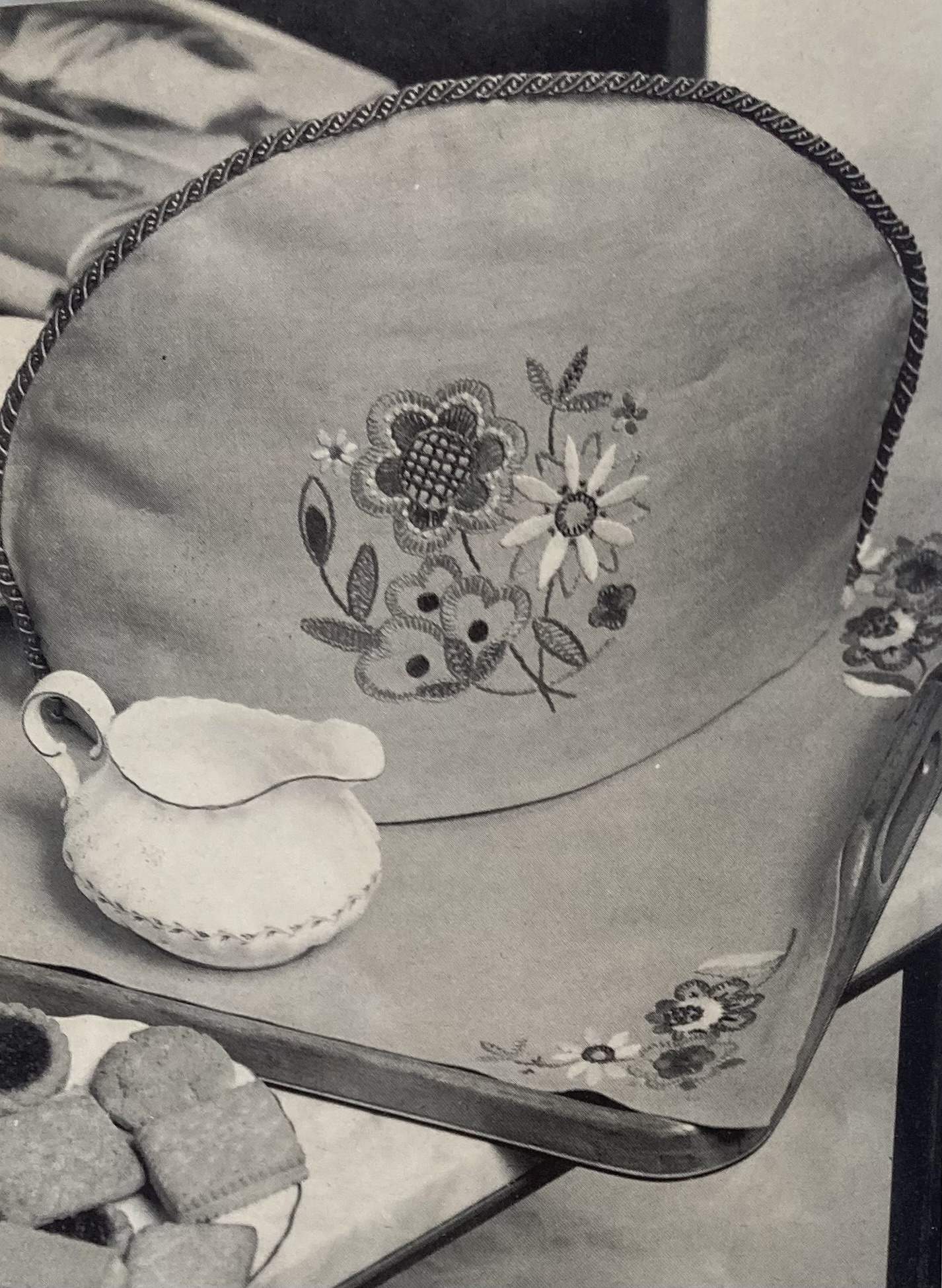
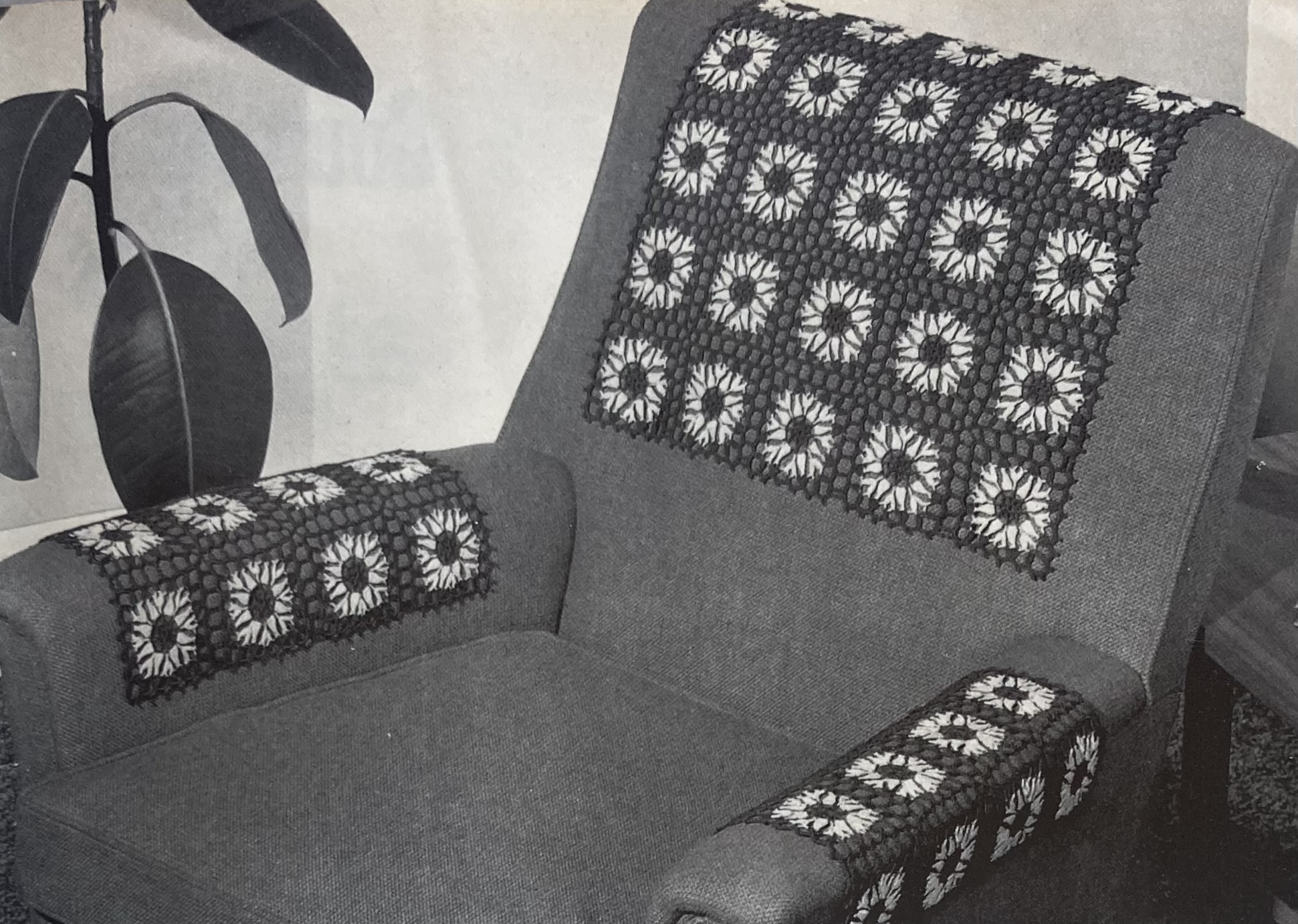
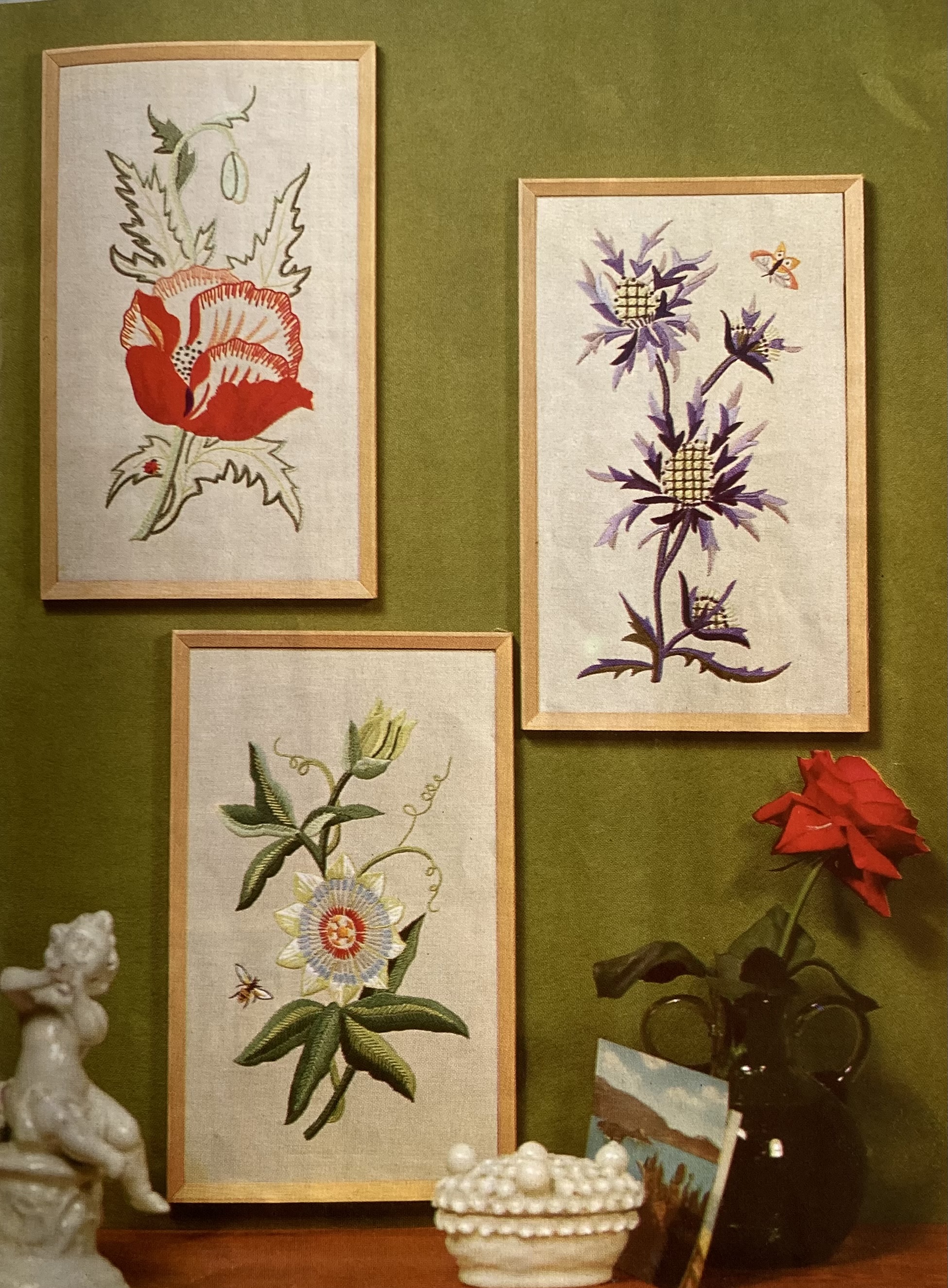
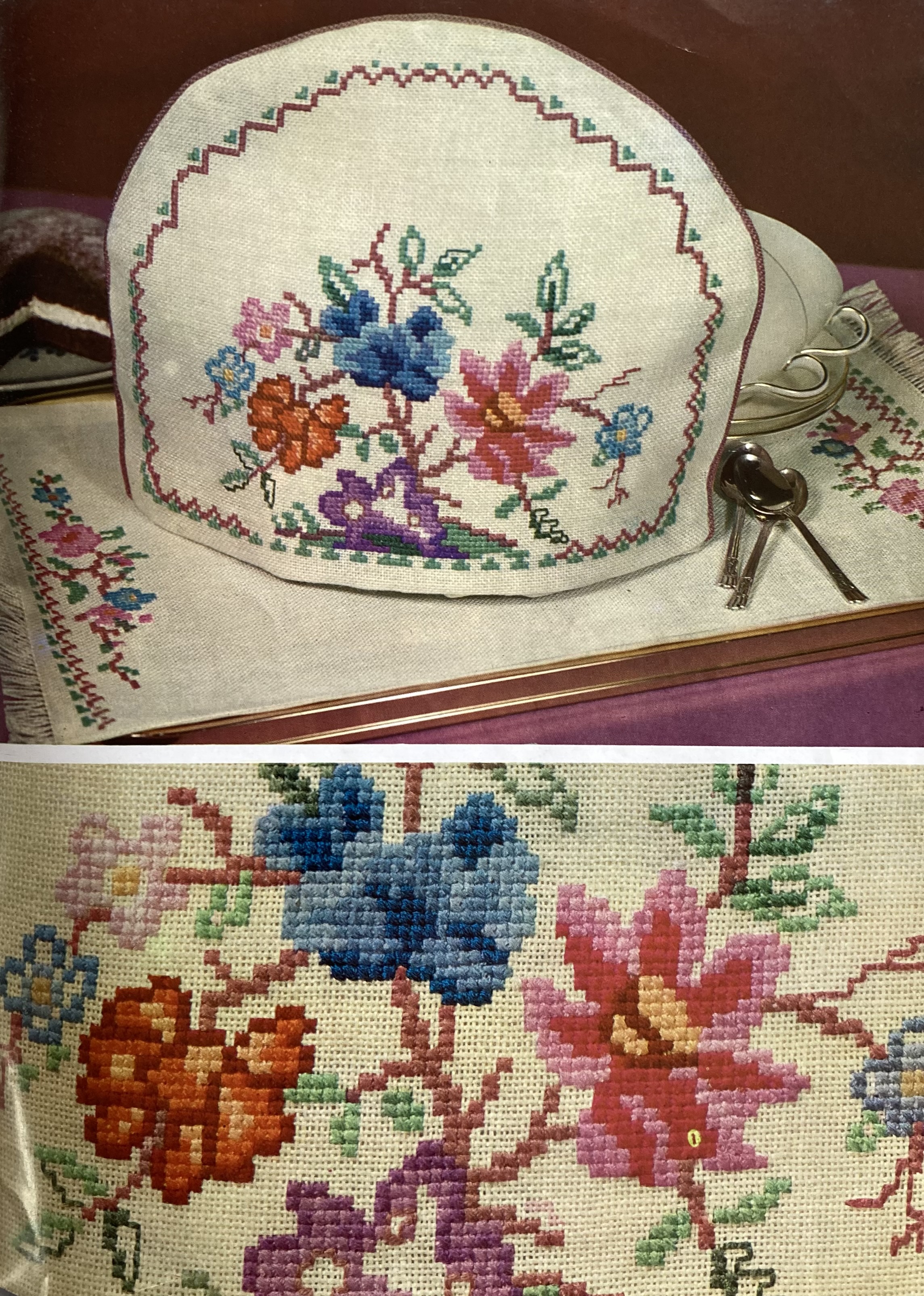
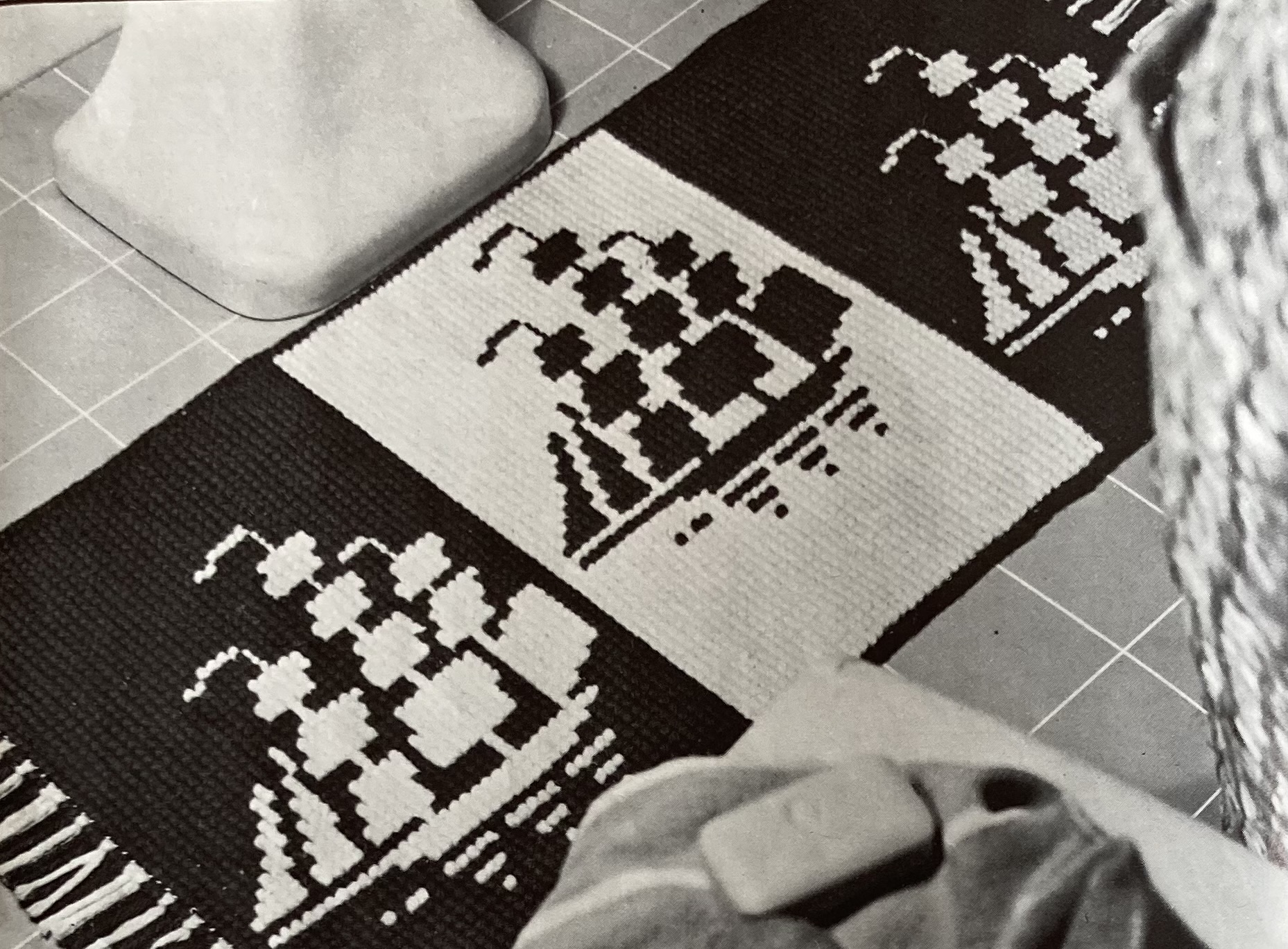
Spring flowers make an appearance in both a set of embroidered framed pictures and a cross-stitch traycloth and cosy. Finally, three cheerful sailing boats decorate a panelled rug for the bathroom.

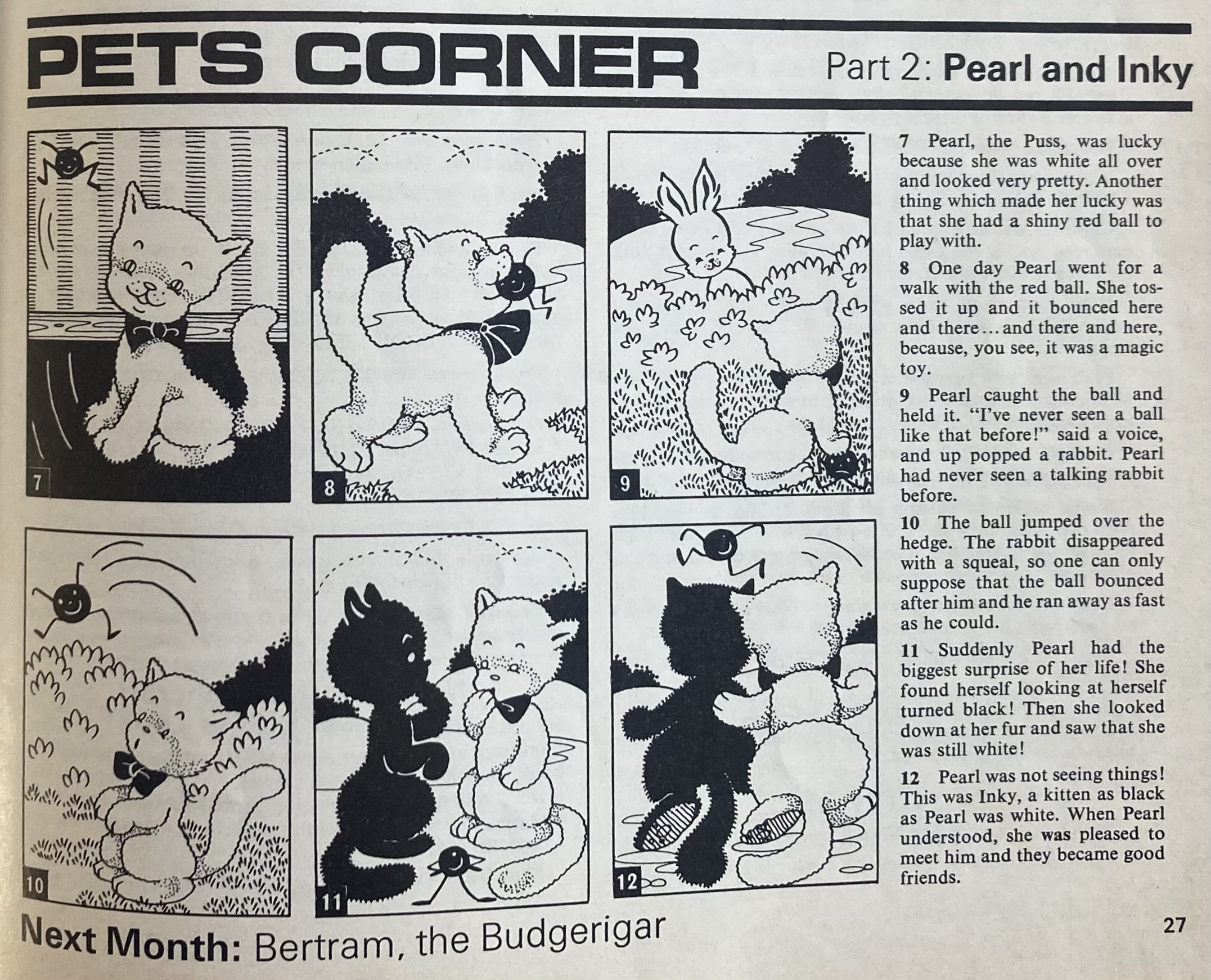
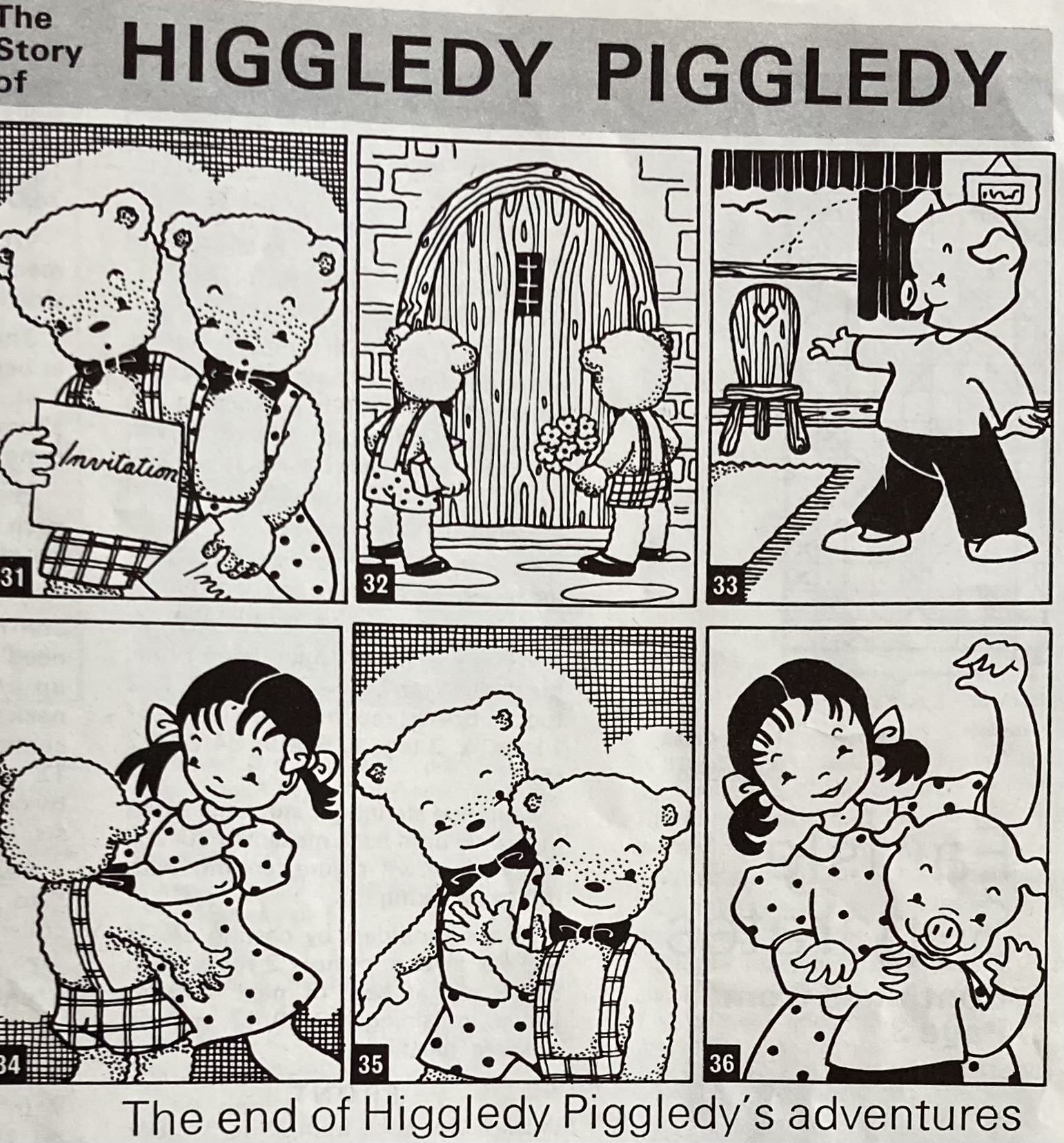
In the children’s comic, untidy piglet Higgledy Piggledy’s adventures come to an end when he moves in with Topsy Turvy, who likes to put right-side-up things upside-down and vice versa. So Higgledy Piggledy makes everything untidy and she tidies it up. Isn’t that grand? Doesn’t she just love constantly picking up after a messy male? Of course she does, it’s 1967. The End! Any girls who are too busy having fun on their own to be picking up after a husband (yet) can treat themselves to sexy underwear, courtesy of the Scotch Wool Shop. I love everything about this ad — the underwear, the art design and the copywriting.

My project for this month will be the mini-cardigan in “crochet look” and possibly at a future point, the knitted socks/stockings (over-knee socks in my version.) Plus the cardigan I was going to make from the January 1967 issue… plus another non-Stitchcraft cardigan that’s been a WIP for a while… all in the shortest month of the year, so we’ll see what actually gets finished. In any case, it’s going to be a well-knitted Spring.

April 1966: Knitted Lamb

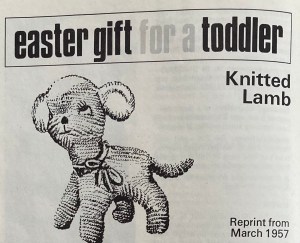
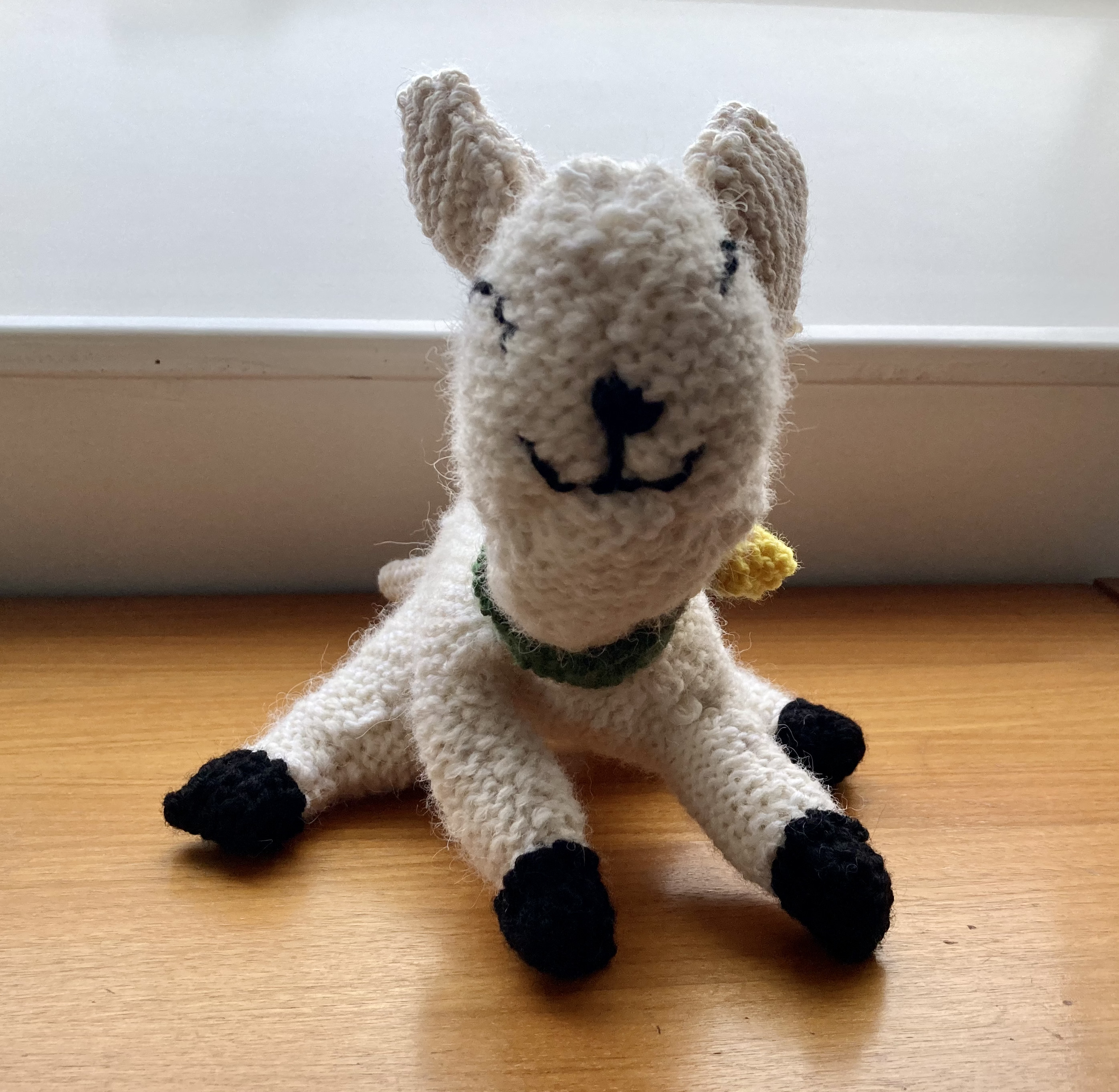
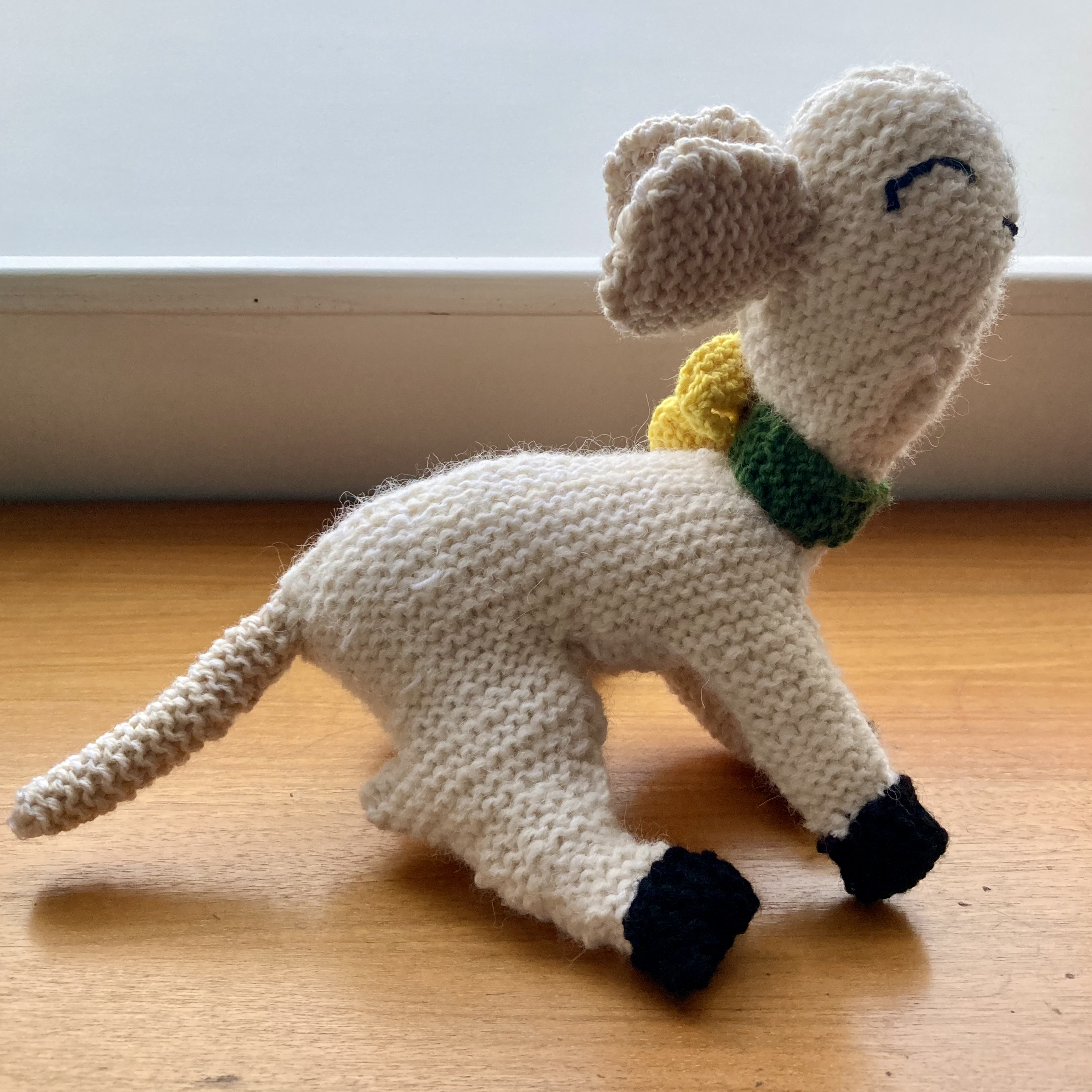
My Stitchcraft project from the April 1966 issue was actually a reprint from the March 1957 issue: a knitted lamb as an “Easter gift for a toddler.” Knit a little lamb for your knitting friend who is about to have a baby, they said. It will be fun and cute and use up leftover bits of wool, they said…

My first clue should have been the fact that there is no accompanying photo of the finished lamb in the 1966 issue. Either the original issue didn’t have a photograph (I don’t have the 1957 issue in my collection) or they just didn’t reprint it along with the pattern, since the latter version only has a drawn illustration. Why would the editors not want to show a lovely photograph of the lovely finished knitted lamb? Why indeed?

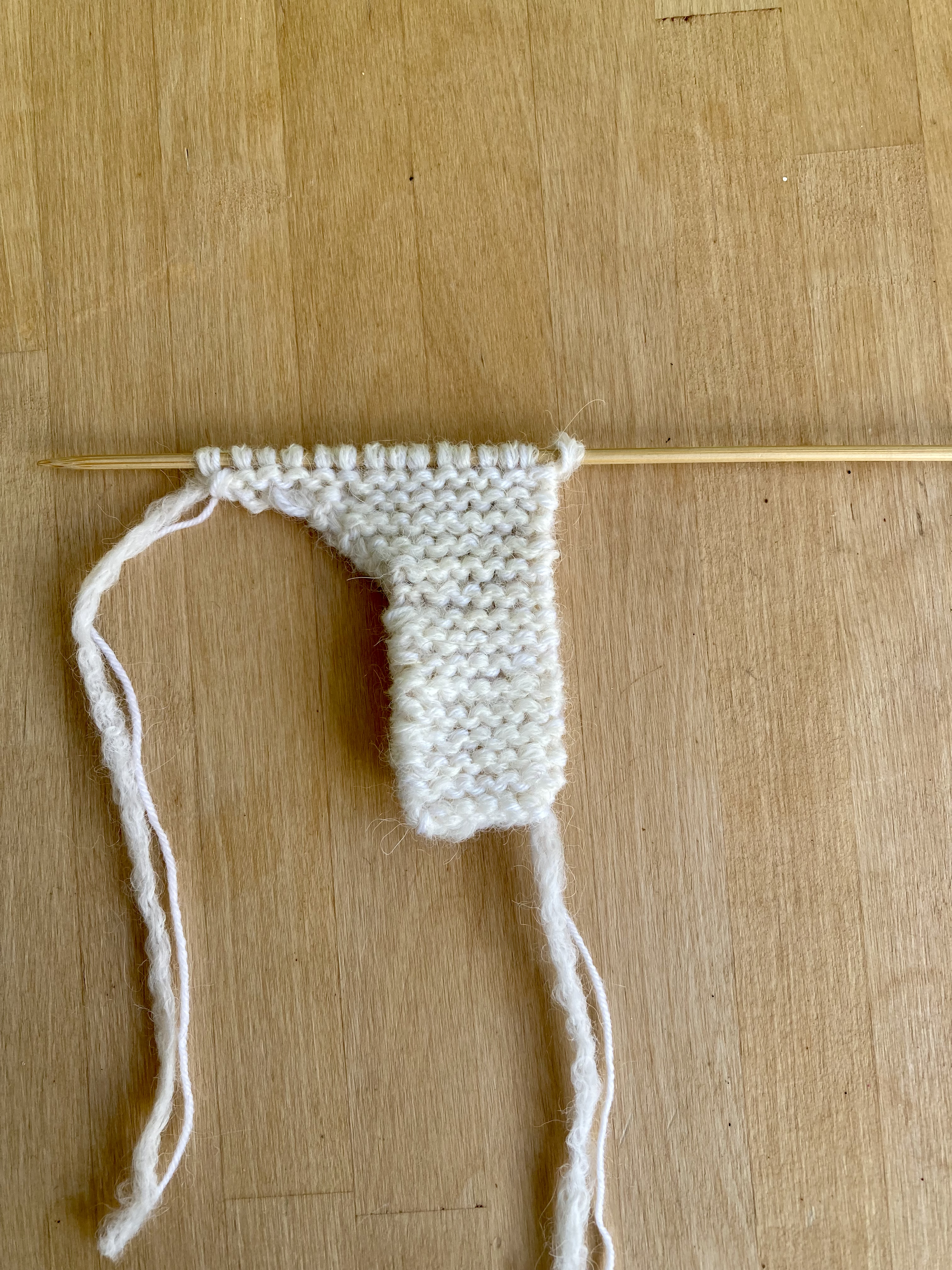
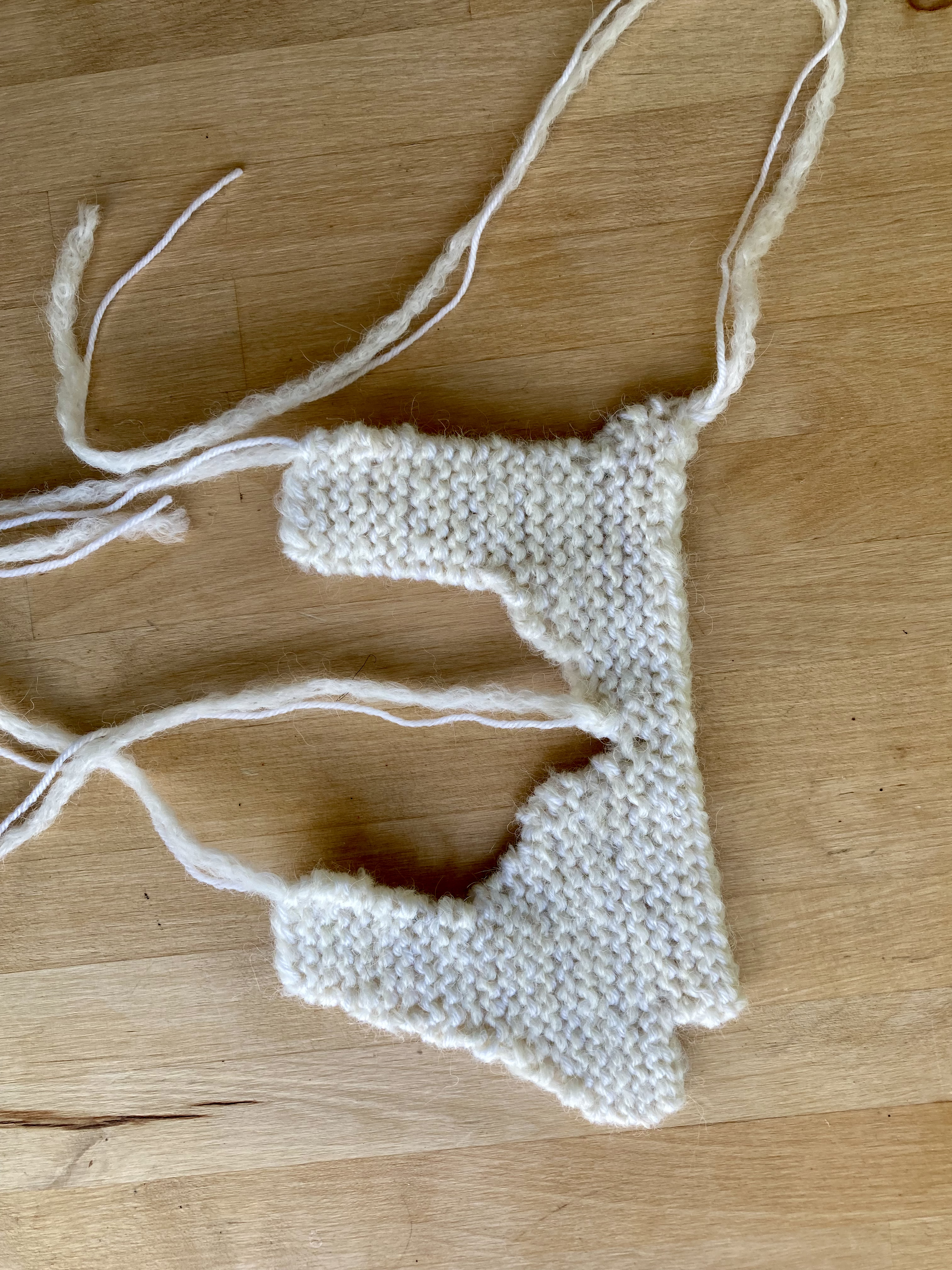
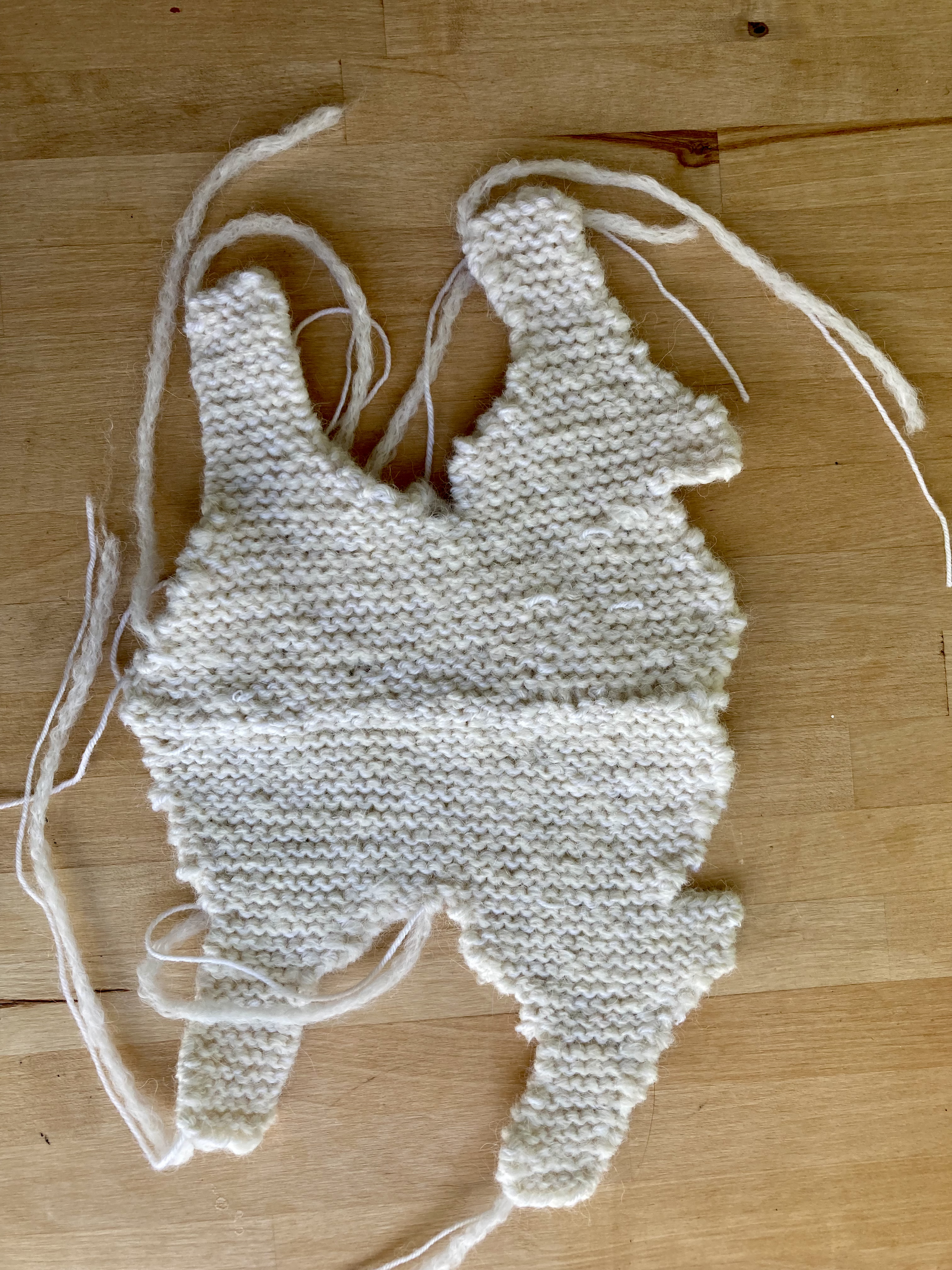
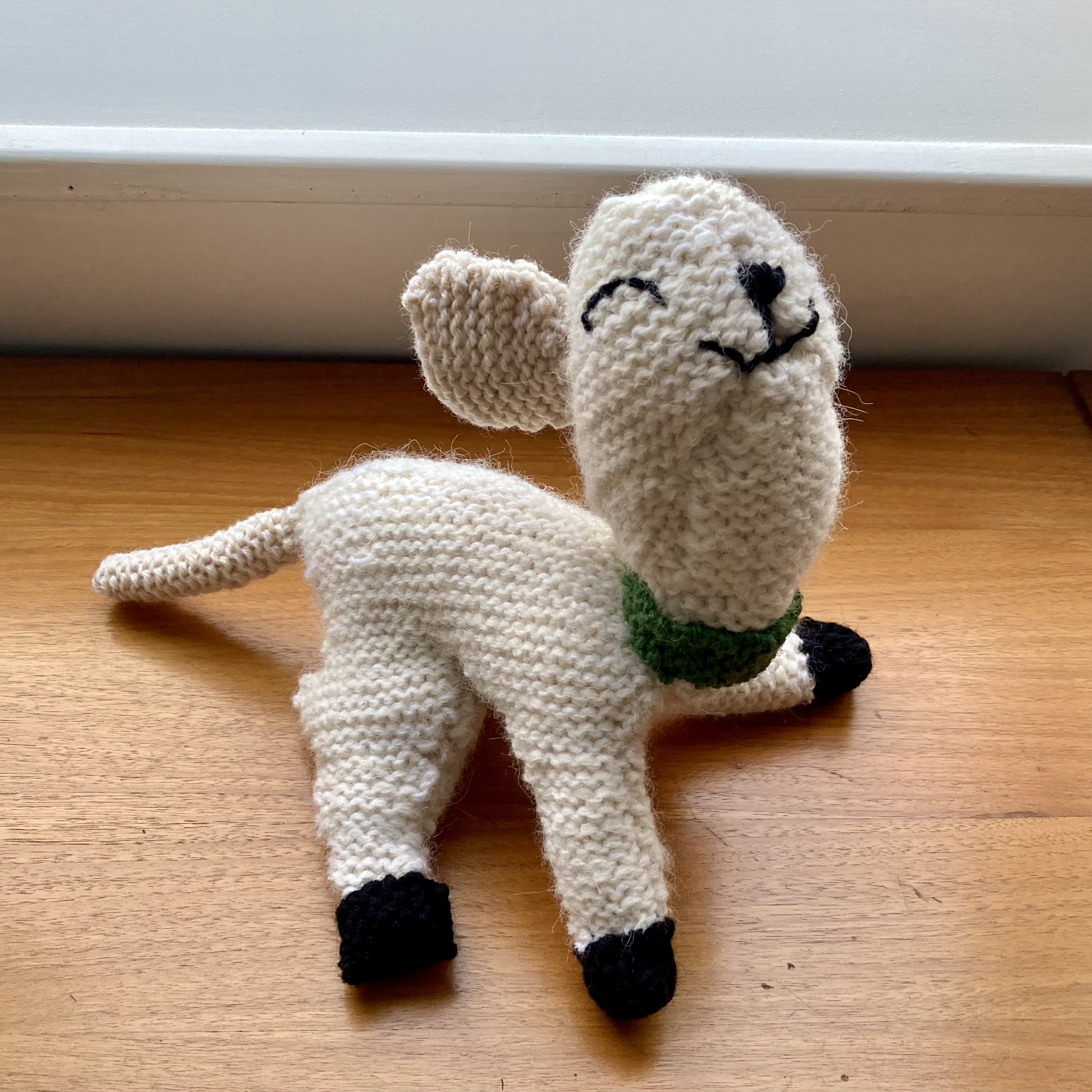
I admit the next step was “my fault”. Since the pattern called for 4-ply yarn held single, and I mostly had fluffy DK-or-thicker alpaca left over from the tot’s coat in February, I chose to adjust the stitch counts for a stitch-per-inch gauge and try to make the lamb turn out the same size as in the pattern. I did the math correctly, but I suspect something may have been off in the row gauge . The pattern starts with the legs and the main body (top part) in multiple pieces (1/2 each of back and front leg) and involves a complicated series of increases and decreases for the shaping. The “corner” on the back legs seemed odd to me, but I know I followed the pattern. Surely it will all come out right when sewn together, I told myself. After all, I successfully grafted the top back “spine” instead of sewing it! Obviously I was good at this! And it did pretty much look like a sheep’s pelt when laid out flat.

The next piece in sequence is the under-body, which is almost the same as the top, just shorter/narrower. I sewed it to the main body as instructed and stuffed it well, as instructed. The back legs were longer than the front ones, and what was with those weird “hocks” now? Shouldn’t they be sort of… attached to the rear end of the animal instead of just hanging off into space?

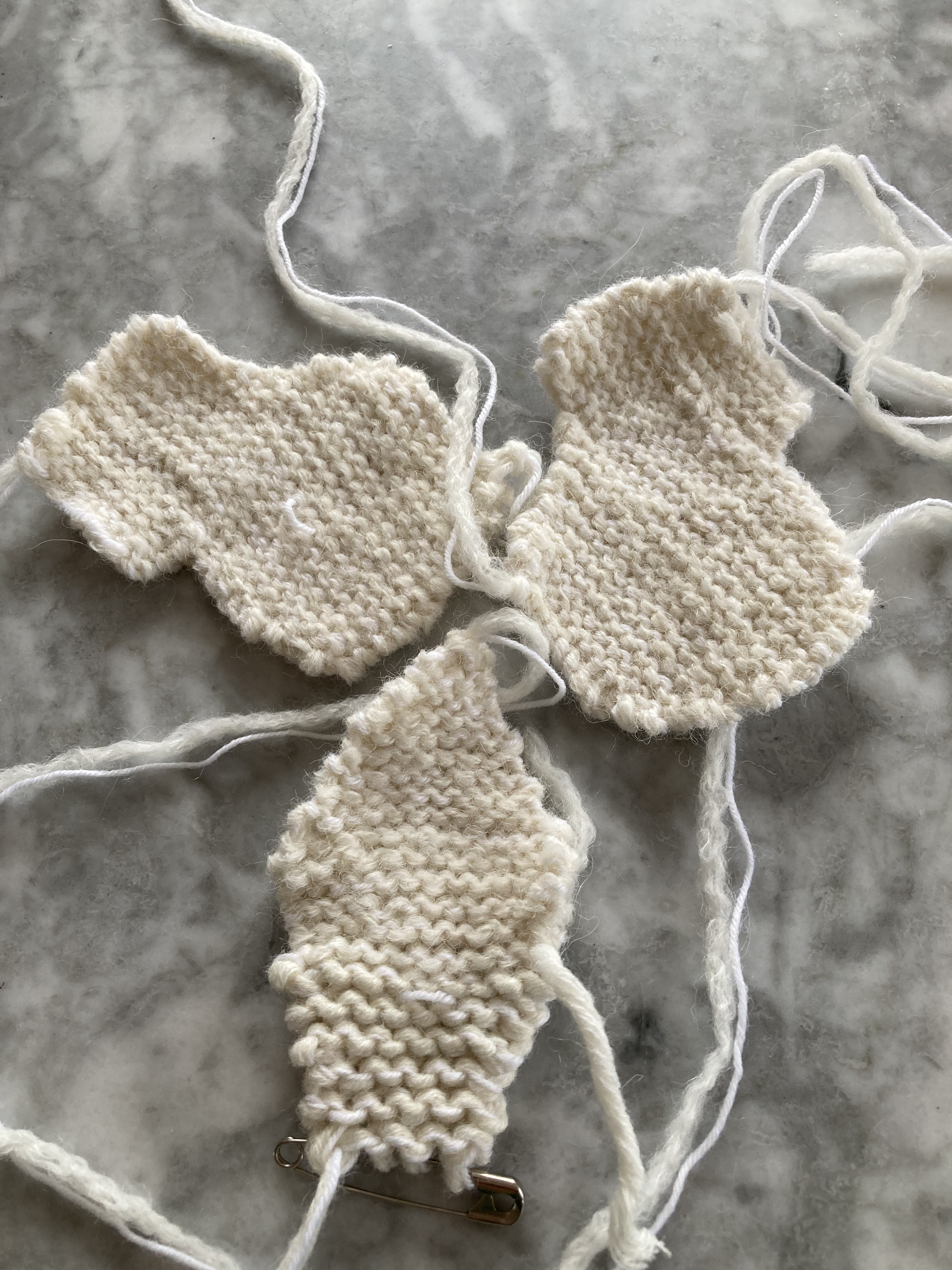
No matter, I made hooves. I guess the hooves were fine. Then the head, which was made in three parts: two sides and the “head gusset” for the “chin” and neck. I sewed them together as instructed, and it looked like Frankenstein’s lamb. The head was … not as round as in the illustration, and the neck strangely proportioned. Had I done the math wrong? Was it supposed to fit onto the opening of main and under-body? It didn’t really, but I persevered.

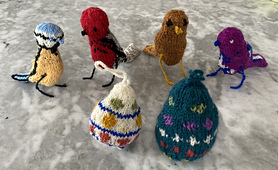
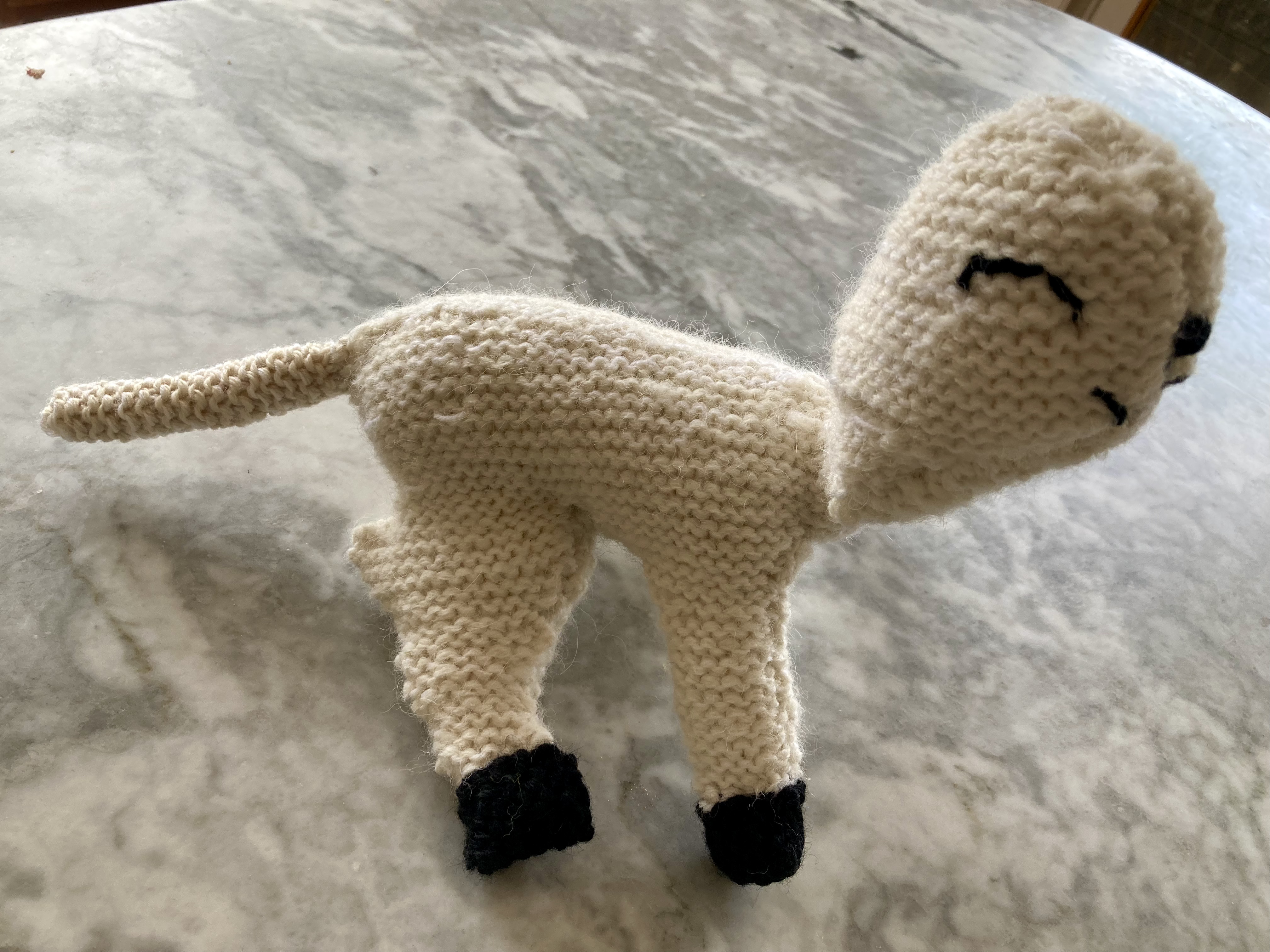
Eyes. The lamb needed to have eyes, as well as a symbolic nose and mouth. This was the part I had been dreading. Ever since I tried to knit some decorative stuffed birds that ended up looking sad, psychotic and/or dead (see photo), I have been afraid to embroider eyes on a toy. The eyes in the illustration look like the lamb is rolling its eyes in high annoyance (at all the knitters who fail at embroidering faces, no doubt.) Not wanting to even attempt that, I had the brilliant idea to make “closed” eyes. Just a little upside-down “u” and a smiling mouth! Hurrah, it worked! Little Lamb is so happy not to have been eaten for Easter supper!

Side note, marijuana was legalised in Germany on Easter Monday, one day after I finished this lamb. Perhaps the lamb was celebrating early. In any case, it’s really, really happy.

At this point I was torn between giving up entirely or just seeing it through. Oh, and I had also run out of the alpaca yarn, so when I decided to just roll with it and finish the project, I switched to some mystery something that was also sort of off-white for the ears and tail. The ears looked nothing like the ears in the illustration, but I was getting used to that by now.

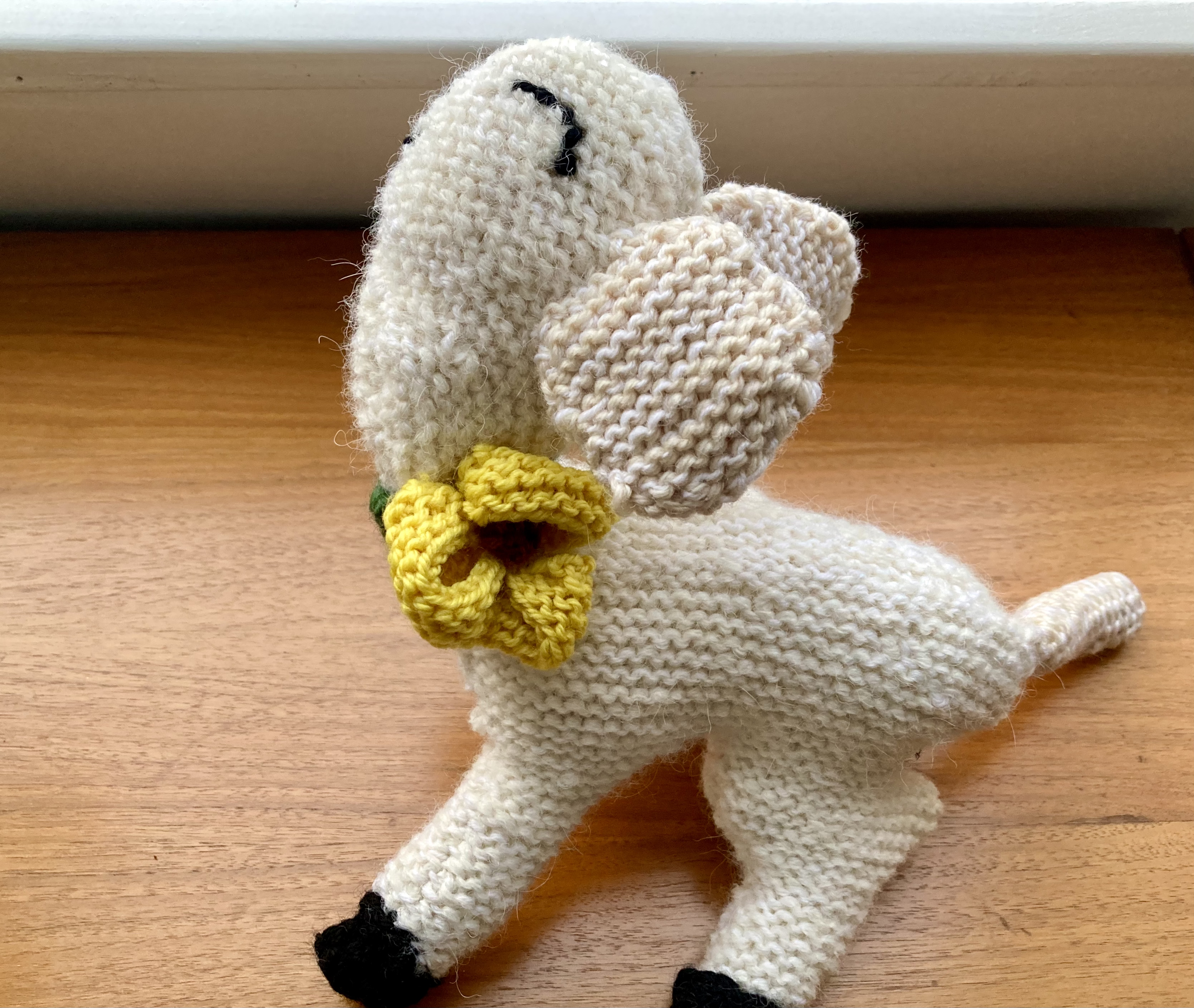
I sewed all the bits together and strangely, the head stayed up by itself. And the lamb could almost stand on its own, depending on what position you bent it into and how widely the legs were splayed out. (I do feel like that’s kind of accurate as to how real lambs look when they learn to walk, says the person who has never lived anywhere near the countryside or raised sheep.) The lamb’s “necklace” as given in the pattern was a complicated bit of braiding, knotting and embroidery, to which I said “nope” and made a little green collar with an easy yellow flower instead. (Thank you, Frankie Brown, for writing and publishing a great pattern for the flower. I donated to the Children’s Liver Disease Foundation and can promise you that I am not going to try to sell this lamb!) Luckily, the collar conveniently hid the awkward seams at the neck. Otherwise I would have had to go full Frankenstein and put in some screw-bolts.

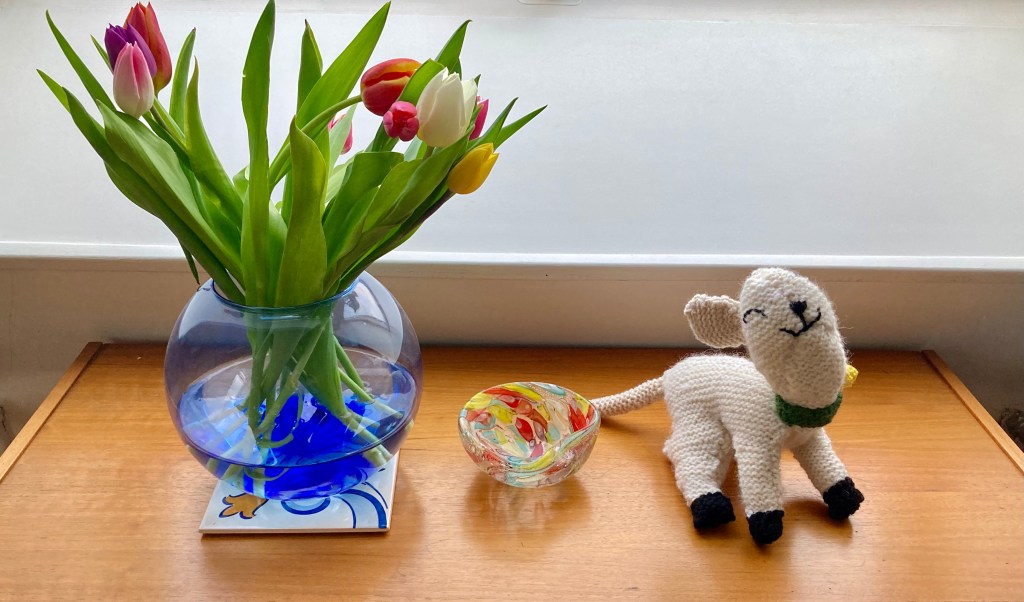
And there it was! Behold the finished lamb, in all his / her / its glory. It is so wonky. The more you look at it, the more weirdness you see. But also, the more you look at it, the happier you feel. I love this lamb so much and challenge all of you to look at it and not feel happy with me. I almost want to keep it for myself instead of giving it to the baby… Maybe it can stay with me just a little while longer?

May all your imperfect projects bring you such joy.

April 1966: Overview

The April 1966 issue of Stitchcraft has a “continental” flair, with “softer feminine styling from Paris” and this “Swiss” design pullover in a new “Banana Cream” shade of beige. The cover photo is classic mid-60s fashion photo shoot: layered shades of gold, brown and beige, the model with bobbed hair standing in a diagonal pose, sans-serif fonts and a relatively long, high-necked, unshaped pullover with geometric design in the stitch pattern.

The other women’s fashions have the same easy feel and generous fit, but allow more colour: turquoise and blue are trending this Spring. “PARIS keeps the Crochet Look” in a bright turquoise buttoned jacket, or you can knit a short-sleeved “easy-line sweater” in turquoise and pair it with an unbuttoned “casual jacket” in turquoise and navy for a twin-set effect. Both jumper and unbuttoned jacket are made in a simple slip-stitch pattern with a nubbly effect. The green “blister stitch” cardigan achieves the same effect with simple increases and decreases in garter stitch and rib.

The promised designs from Paris are a knitted dress in “The Granny Look”, “demure in lace with draw-string waist”, and a tweed beret (of course, Paris). The beret marks the start of the mid-late 60s fashion for oversized hats, knitted large and stiffened with “Staflex” lining. It is knitted in reverse stocking-stitch in four parts which are lined and stiffened separately and then sewn together. The model looks so sad! Does she not like her beret? (She didn’t seem to like the crocheted jacket either.) Rounding out the regional fashion parade are his-n-hers pullovers in black and white panels for the “London Look”. I love the vintage coffee set and judging from the photo, so do the models. Maybe the sad model just needs some of their coffee.

It’s a good issue for men and boys: in addition to the black-and-white “London” pullover, there’s a thick, warm knitted “car coat” for men, paired with a boy’s cabled lumber-jacket in the wonderful centrefold photo. A father, a son, a car and a boat! Everything colour-coordinated in those manly shades of red and royal blue! Diagonal poses for everyone!

(Side note: these diagonal poses are very uncomfortable. Sometimes the photographer just holds the camera diagonally, but otherwise it twists your spine all out of shape. I would be a sad model too, if I had to do that all day.)

For “younger folk”, there’s a pretty short-sleeved knitted blouse for a schoolgirl, and yes, a “deerstalker” hunters’ coat and hat for a (presumed male) toddler. It gives me a “so much wrong” feeling. Also, won’t somebody get this kid some clothing for the lower half of his body?

There’s more to come in the homewares department, though Stitchcraft seems to get less and less creative with homeware design as the 60s go on. There are little rugs, either stitched or crocheted in rug wool, as well as an unusually-shaped half-circle rug in Florentine stitch to put in front of a bookshelf. The Florentine design can also be stitched on tapestry canvas for a tea cosy.

A similarly versatile flower design can be made in cross-stitch for a chair set of cushion and back-cover or in tapestry on a church “kneeler” hassock. There’s an embroidered mat set for your dressing table and an intriguing embroidered wall panel of different gourd-type vegetables on a black linen background.

Finally, Easter was in April in 1966 and there are some cute Easter-themed gifts and “novelties”: an Easter egg kitchen bag (to hold clothespins) in felt appliqué and embroidery, a “nursery nightcase” (not Easter themed, but advertised as a good Easter gift) in the shape of a bedtime bus (Side note: when did people stop storing their pajamas or nightgowns in a special bag during the day?) or a knitted lamb toy, reprinted from the March 1957 issue.

To round it all off, there’s a great bathing-suit ad from the Scotch Wool Shop and for the first time, a partner promotional offer from Patons and the Kelloggs cereal company — knitting patterns featured on the backs of All-Bran and Bran Buds packets. The natural laxative foods! These types of promotions became more common in the later 1960s and especially the 1970s. Finally, in our children’s comic, Eustace the elephant and Mark the mouse get invited to tea in a house that Eustace can’t fit into very well.

My project from this issue is already finished… is that cheating? I started it last week to get a head start and it went very quickly. It was the knitted lamb, and though it didn’t turn out quite perfect, I had fun making it and it brings joy to anyone who looks at it. I will post about it soon, along with another destash project from a later issue of Stitchcraft. Happy Spring!

March 1965: Overview

It’s springtime! And the March 1965 issue of Stitchcraft is celebrating it with a bright, cheerful issue full of fun designs, great photography and very mid-60s hairdos. Our wonderful couple in the cover photo has just returned from the farmers’ and or flea market, proud of their purchases and sporting two of this season’s trends: textured stitch patterns and crochet.

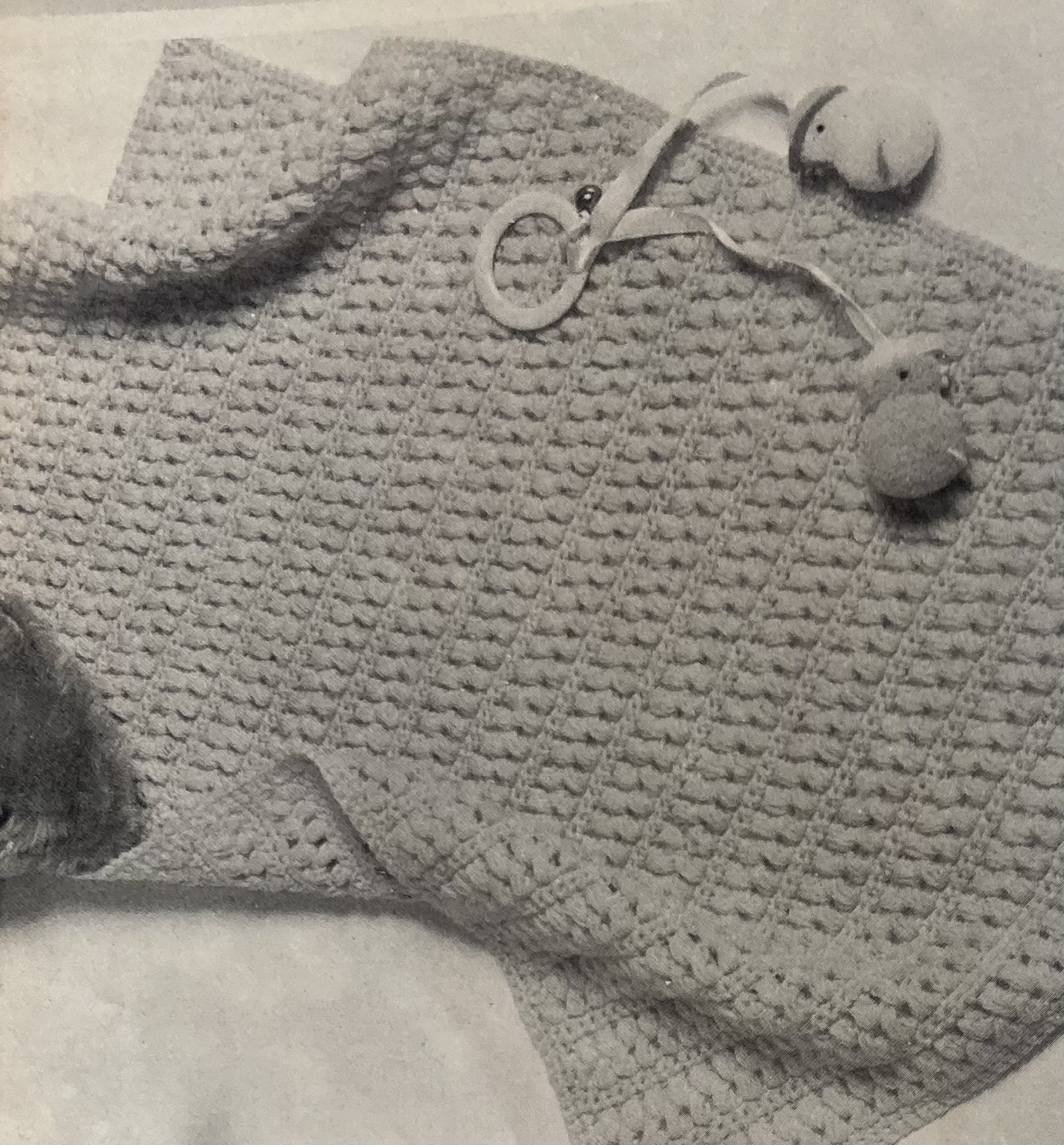
“The interest in Crochet continues” writes “editress” Patience Horne in the first-page notes, reminding readers that crochet is not nearly as difficult as some readers think, as it is “all founded on the simple chain stitch” and one “only requires a little practice and patience” to make a simple item. The cover dress is basically unshaped, and made in a relatively simple cluster stitch with a dashing fringed hem and neckline. Beginning crocheters can start with an easy bathroom mat in rug wool, or a crocheted chicken toy for a toddler.

Men’s fashions, like the cardigan on the cover, have a loose, casual fit and interesting stitch patterns, like the traveling stitches on the cover cardigan or the easy diamond-pattern stitch on the V-neck pullover. The traveling stitches are basically very narrow cables, except the cables never cross, and the diamond pattern is made entirely of knit and purl stitches. Colours are either warm and bold, like the red cardigan, or 1960s natural, like the “Golden Beige” pullover, and buttons are big and round.

The knitted women’s garments show a similar interest in flat, textured stitches, warm or neutral colours and bold buttons and trim. The skirt suit on the inside front cover integrates all three trends. There’s a similarly patterned, buttoned and collared beige-and-orange cardigan in DK weight Brilliante wool/nylon mix, a red belted pullover with a polo (turtle) neck and a more subtle skirt suit with choice of pullover or cardigan and pleated skirt, made in finder Bouclet wool. In all the photos, the warm colours of the outfit — green, red, or gold-beige — are intensified by the warm-toned photo background, and the bolder designs feature models with impressive bouffant hairdos. All of the garments are long, loose and unshaped, with the tops reaching to the hips and a skirt length of 25 to 26 inches.

There are some great designs for school-age children in this issue, with a “continental” cardigan-blazer in “Riviera Blue” for girls and a unisex jersey with a stranded yoke design. Here too, we see the large collar and bold, round buttons on the cardigan, and warm colour palette and textured stitch pattern on the pullover. For babies, there’s a pram blanket with (purchased separately, not home-made) bunny motifs.

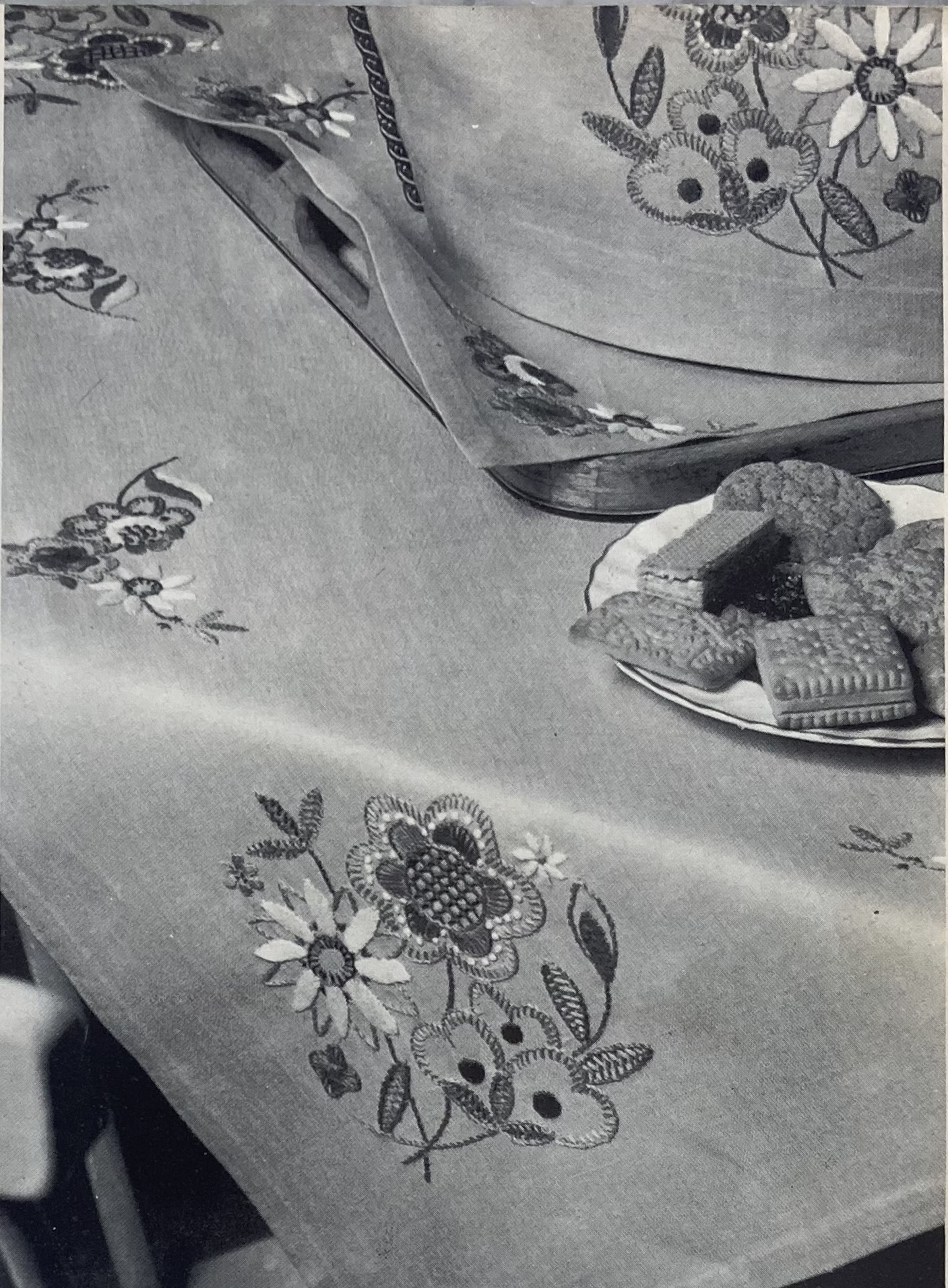
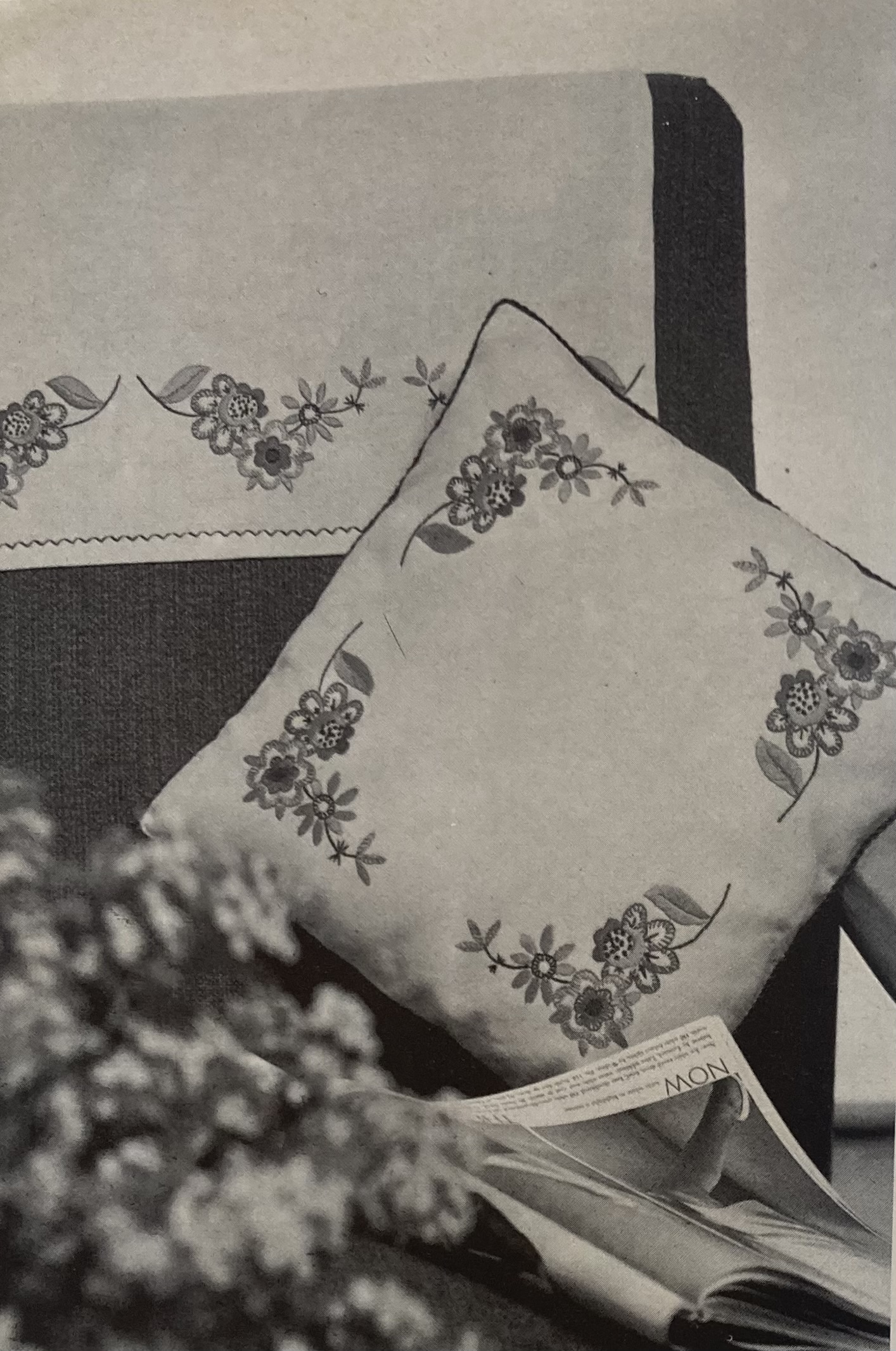
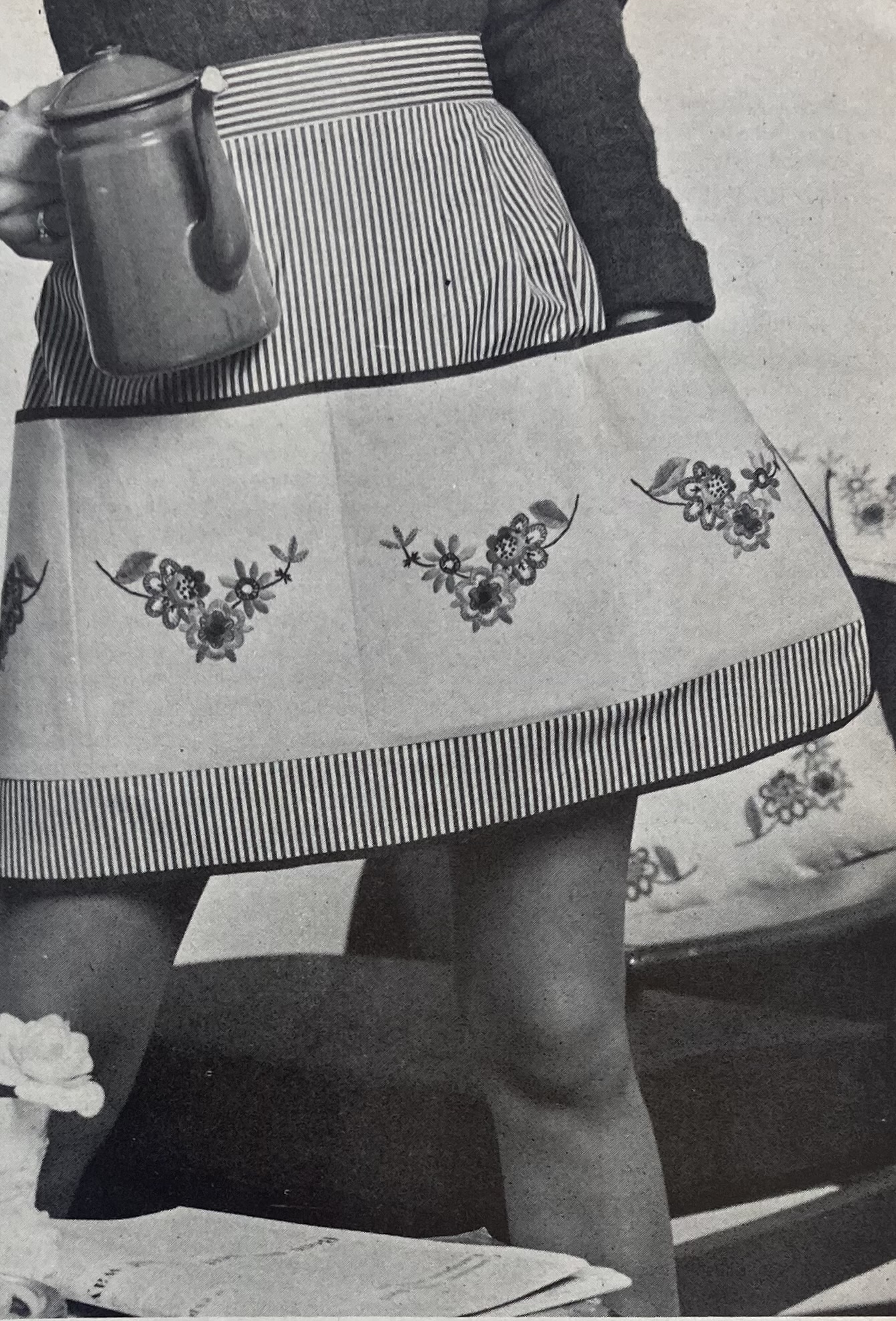
The homeware items are mostly practical and versatile. In addition to the crocheted bathmat, there’s a stitched rug/mat “for the bedroom” in an elegant arrowhead stitch and some cushion and/or stool-top designs in counted cross-stitch. A floral embroidery pattern can be adapted to make a door panel, frame a cushion, or decorate the edge of a pillowcase.

I wrote “mostly” practical items, but there is one unusual exception: these “Brass Rubbings to work with your needle.” They are two fairly large (7×16 inches) wall panels with icons of medieval people in the style of “brass rubbings“, which are made by laying heavy paper over one of those brass plaques often seen in medieval churches . The designs were inspired by “the interest in Church embroidery” per the description of the project, but I don’t know if the figures are meant to be specific, recognisable historical people or just representative of a typical medieval brass burial plaque. (Do any of you recognise them? It’s interesting that both of them are portrayed with small dogs at their feet, which seems like it should be a clue.)

Last but not least, Easter is coming soon (well, not that soon — Easter 1965 was on April 19th, which is actually fairly late) and it’s time to get started on those Easter gifts and novelties! Continuing the chicken (and egg) theme from the crocheted toddlers’ toy, there’s a stuffed felt “egg nest” in the form of a chicken with tiny accompanying chicks, and a gloriously huge knitted “Humpty Dumpty”, guaranteed not to break into pieces should he fall off a wall, and featured in colour in the inside back cover photo along with the child’s stranded-yoke pullover.

As much as I love this issue for its general aesthetic and fun, happy vibe, there isn’t a project in it that really grabs me. The mid-60s fashion for long, loose, unshaped upper-body garments is a terrible look for me and the homewares are generally not spectacular. I would love to make either of the children’s garments and am asking around if any friends with kids that age would like me to knit one, but I haven’t had any takers yet. If any of you are interested in a custom order, let me know! Otherwise, I’ll probably embroider the flower design onto something practical, like a little bag or a tablet/iPad cosy.

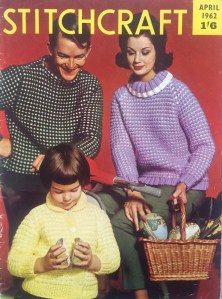
April 1962: Overview

IMG_3168“Easter Greetings” from Stitchcraft, April 1962! According to “editress” Patience Horne, “everyone is getting that “out-of-doors” feeling”. I and my fellow compatriots from 2020 have had a very much in-doors feeling for the last few weeks, as we watch Spring unfold from our quarantine windows.

Back in 1962, the whole family can sport matching waffle-stitch pullovers and cardigan jackets for those inevitable country rambles. All three cover-photo designs are made in bulky Big Ben wool at 3 1/2 stitches to the inch. Those who prefer double-knitting weight wool can make a men’s pullover in “slip-on shirt style for sailing and tennis” (with sporty illustration!), a buttonless women’s jacket, or a “crunchy” cabled pullover. Roll-necks or rolled collars are gradually eclipsing the larger, pointier collars of the years before.

There’s also a “travel set” of jumper, cardigan and two skirts to take on your spring holiday, made in both plain green and a marled two-tone green that appears to be one of the early multi-colour yarns just starting to come onto the market around this time, but is actually made by holding one strand of each of the two colours together . The child’s striped V-neck pullover seems like a good way to use up all the leftover yarn.

Even the baby of the family, or a baby-to-be, can expect a lovely Easter present in the form of a dress, bonnet, jacket, bootee and blanket set — plus a “pin tidy” to hold all the safety pins that will fasten our 1962 baby’s cloth nappy in place. The blanket is also made in Big Ben (ensuring it will be done in time for baby’s arrival), while the other garments are made in the usual 3- or 4-ply baby fingering wool.

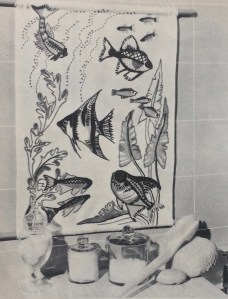
IMG_3173Springtime also means spring cleaning, and Easter means presents and bizarre sorry bazaar novelties (honestly, with some of the designs it’s hard to tell the difference.) Here’s an intriguing “splash panel” to hang on the bathroom wall. As with the elaborately embroidered “finger plates” for doors, its utility evades me. Why would anyone hang a hand-embroidered tapestry on the bathroom wall, for the express purpose of being splashed with soap and toothpaste and who knows what else, which would therefore need to be taken down and (hand!)-washed frequently, rather than just… wipe down the tile wall? I do like the fish design, though!

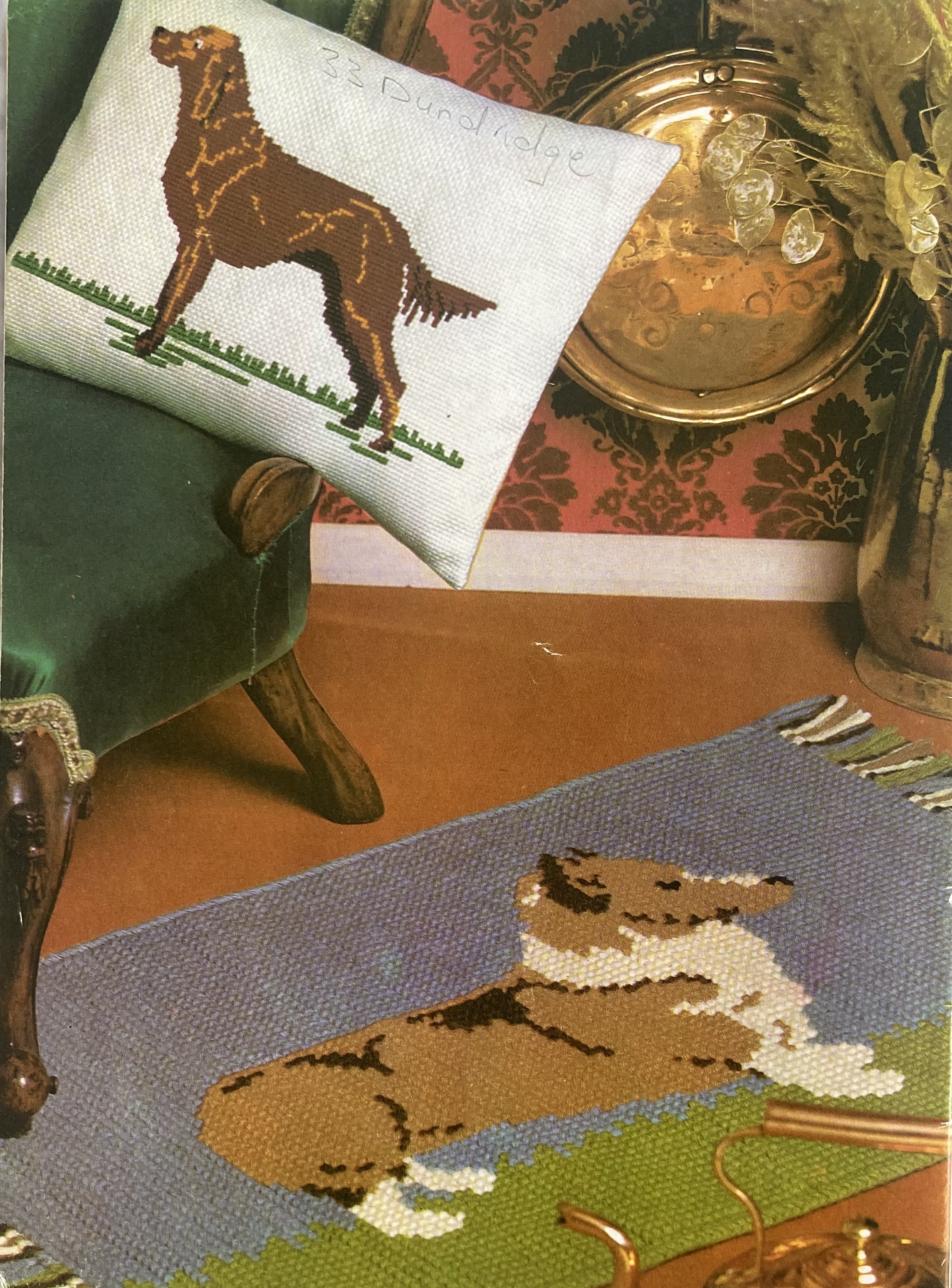
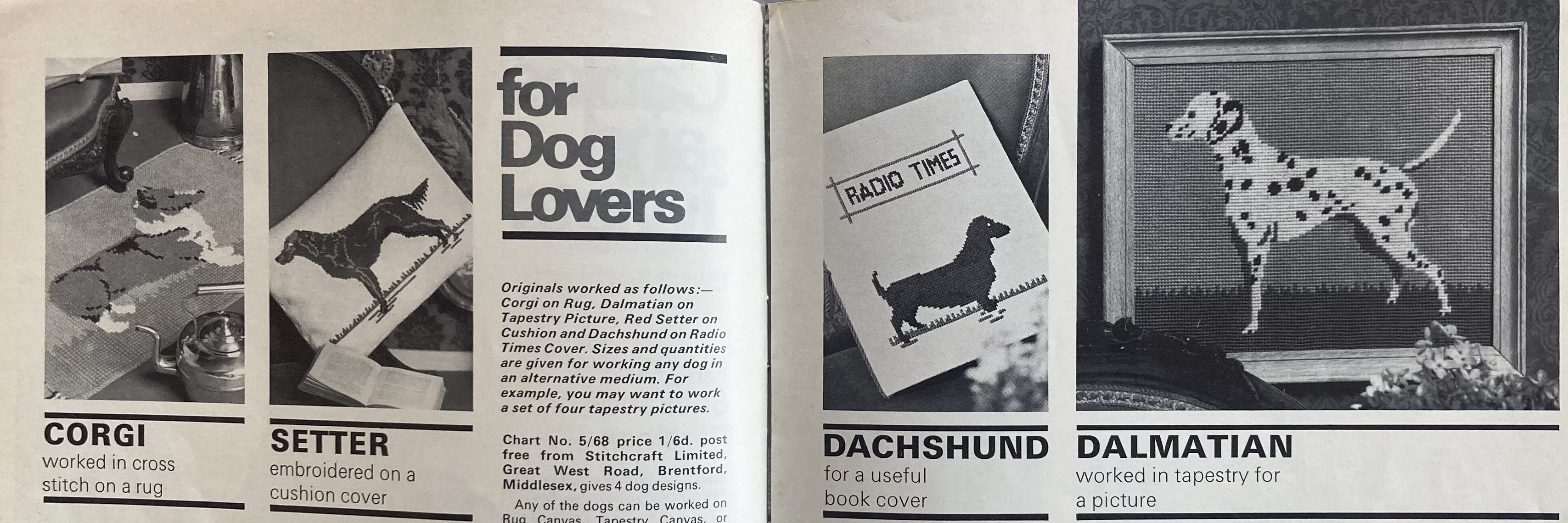
The pineapple (-ish) motif cushion, embroidered flower-of-the-month iris, latch-key and crocheted rugs are less interesting, but the Easter novelties — a stuffed polka-dot giraffe, a hedgehog pincushion (brilliant), a chicken egg cosy and a knitted lamb with mascara and eyebrows — do not disappoint. A crocheted altar cloth and a set of versatile cross-stitch animal motifs round out the homewares selection. Finally, there’s a great surprise on the inside back cover: a set of embroidered and appliquéd place mats and matching cushion with a chess-set motif! That’s actually quite a lot of fun.

I hope you are all staying sane and healthy in these unfortunate times. May you all have enough projects to keep you busy and enough non-physical-proximity games to keep you happy. Two friends of mine will be expecting babies in the summer, so my Stitchcraft project for April will be the jacket from the baby set. Hang in there, everyone!

April 1960: Overview

coverapr60“Already there is talk of holidays” says the introduction to the April 1960 issue, “and whether it’s to be the sea, country, sight-seeing or sailing, you can’t go without your holiday hand-knits.” At the same time, spring and April mean Easter, with lots of opportunities for hand-made accessories and knickknacks.

For knitters, there is a larger variety of wool weights and styles than in the last couple of issues. Houndstooth and checked patterns are still going strong — look at that great jacket on the front cover! — but lace and Rimple designs are offered too, and garments for babies, toddlers, and adult men and women.

For the patient, there is a cute 3-ply top and a shirt in cotton crochet yarn at 12 stitches to the inch. (This is the only type of cotton yarn I’ve ever seen featured in Stitchcraft, but usually it’s used for making doilies or other fine crochet items.)

For those who prefer to actually get their garment finished before the summer holidays start, there are “partner look” sailing sweaters, the houndstooth jacket on the cover, and pullovers in Rimple and Big Ben yarns. Rimple will continue to not be my taste in terms of texture, but isn’t the model cute?

Easter embroidery is big, and around this time, Stitchcraft started to include designs for church accessories — hassocks and kneelers in tapestry or cross-stitch. For those for whom Easter is less of a religious experience, there are some great “Easter novelties” (cosies for teapots and toilets) and who could resist those gay kitchen ideas? Standard needlework ideas for the home include a fitted chairback and a lovely Persian-inspired cushion.

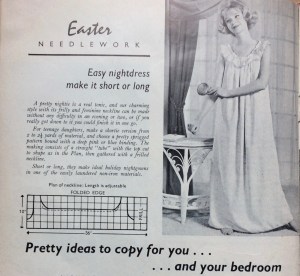
One thing that is really different in this issue is a sewing pattern, common in 1940s and 50s Stitchcraft but rare in the 1960s. It’s a very simple nightdress (for Easter and/or your holidays, of course) that is recommended to be made in “one of the easily laundered non-iron materials”, i.e. nylon or early synthetics.

nightdress

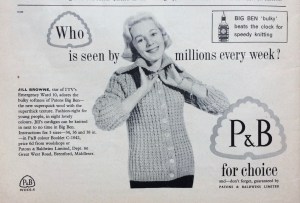
April’s celebrity “plug” is given to us by Jill Browne, the actress who played Nurse Carole Young on the soap opera Emergency – Ward 10, which aired on ITV from 1957 to 1967.  I have to admit I have never seen it, but it seems to have been quite progressive for its time, with Joan Hooley playing a female surgeon in an interracial relationship that was sealed with a kiss onscreen.

starad

On the back pages, it is the end of adventures for Good Teddy Bear and Naughty Teddy Bear, but they got two gay jerseys knitted for them in the end, so I think everyone was happy. Plus you can make your very own teddy bear to commemorate the series! The ads are for the usual things, except for this gem of a potty-training stool called “Bambino”, appearing for the first time.

My projects from this issue will be the 3-ply top and the appliqué goslings on a tea cosy. Happy Spring, everyone!