February 1968: Overview

After the “cold snap” predicted in the January 1968 issue of Stitchcraft (and which actually happened throughout the icy, snowy month of January 2026), the February 1968 issue looks toward Spring. There are still plenty of warm things to knit, but the focus is on layering and knitwear as outerwear.

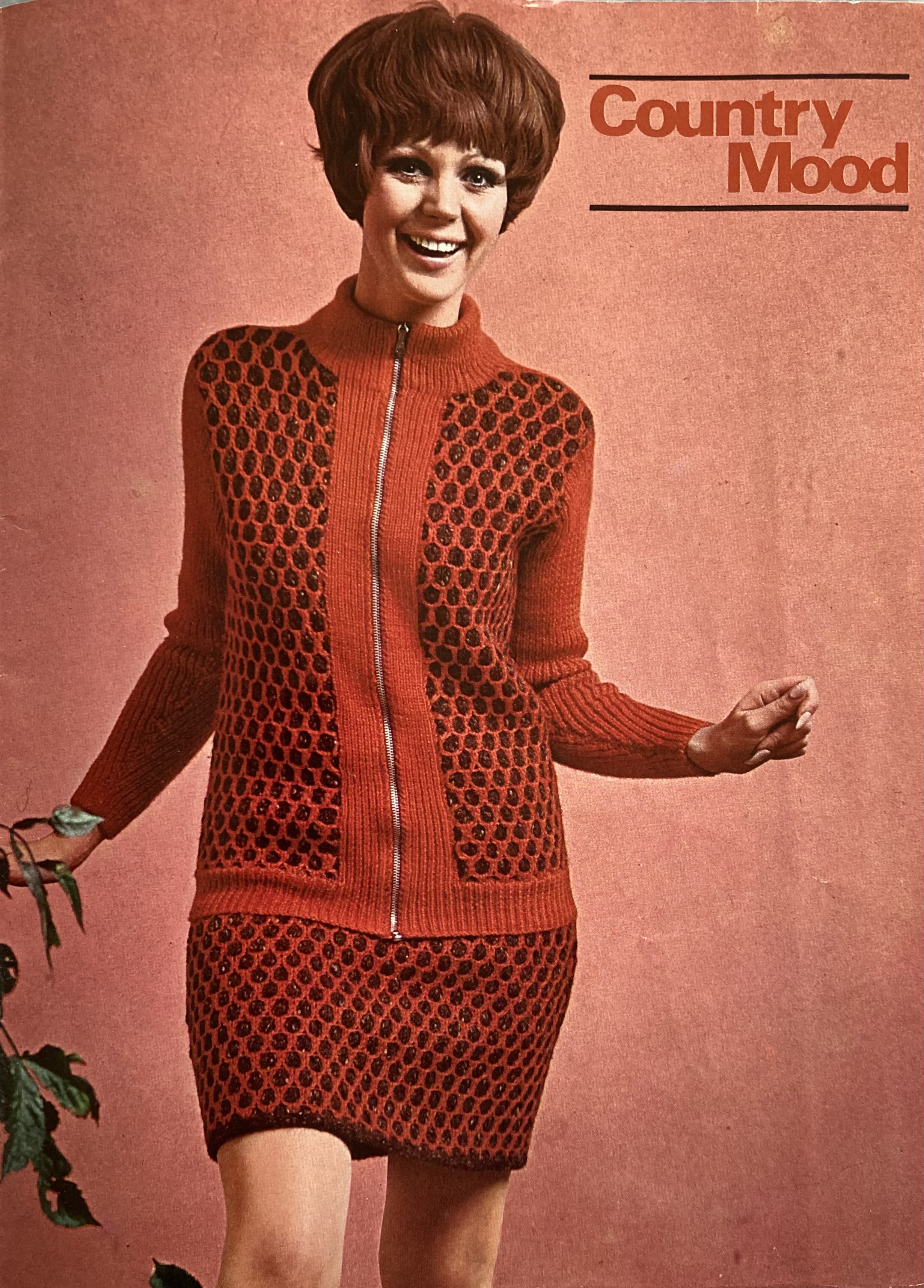
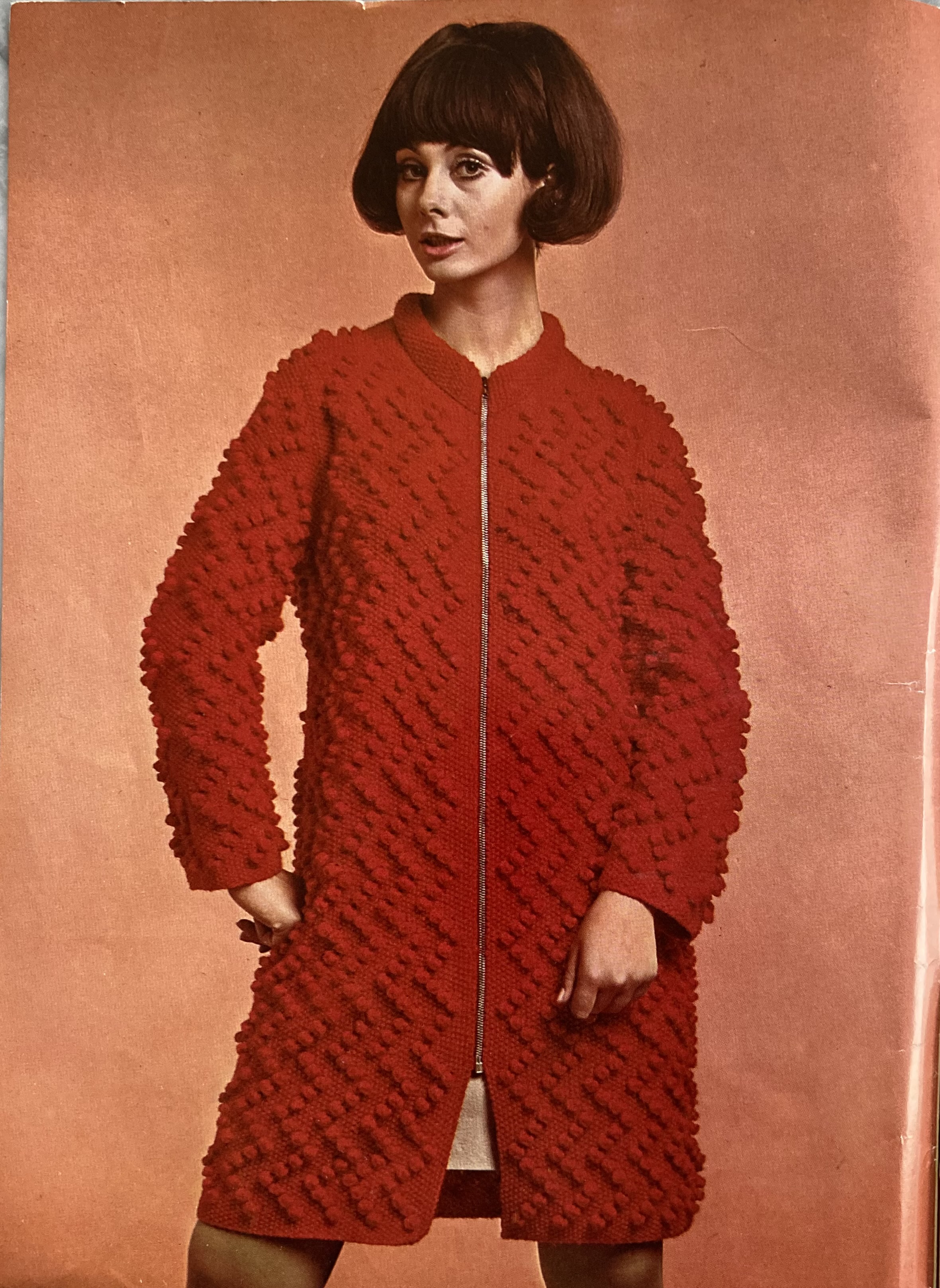
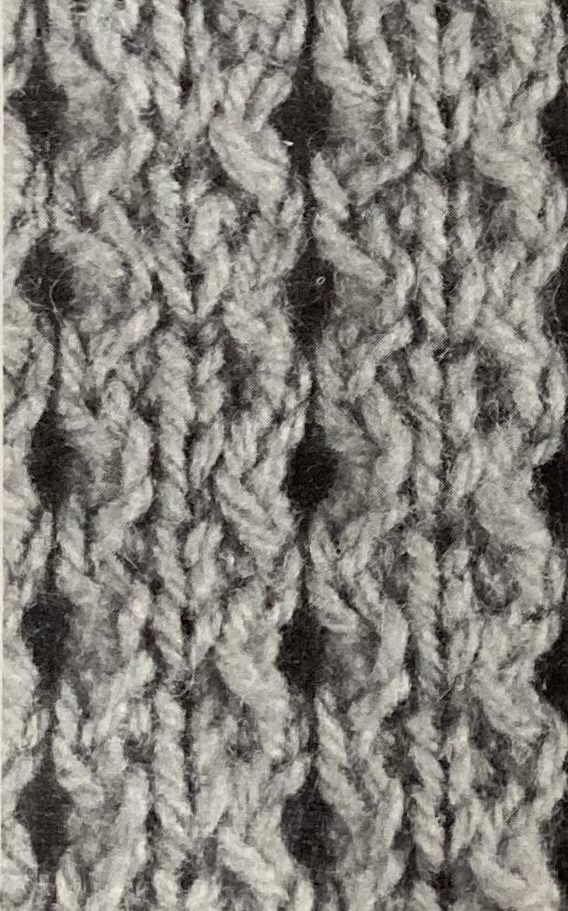
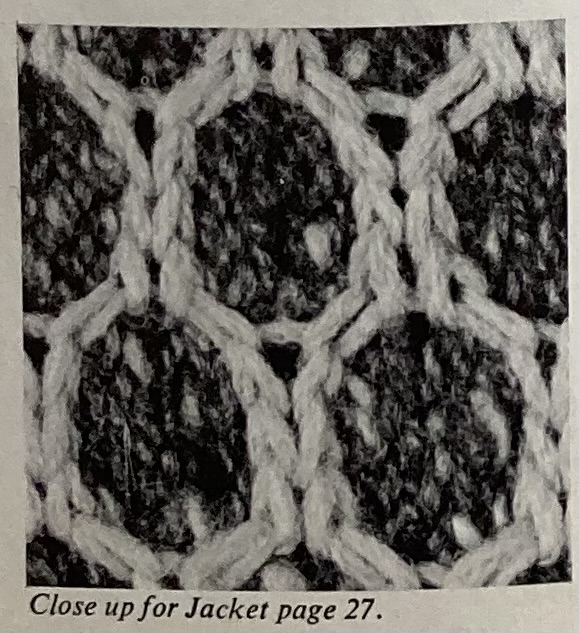
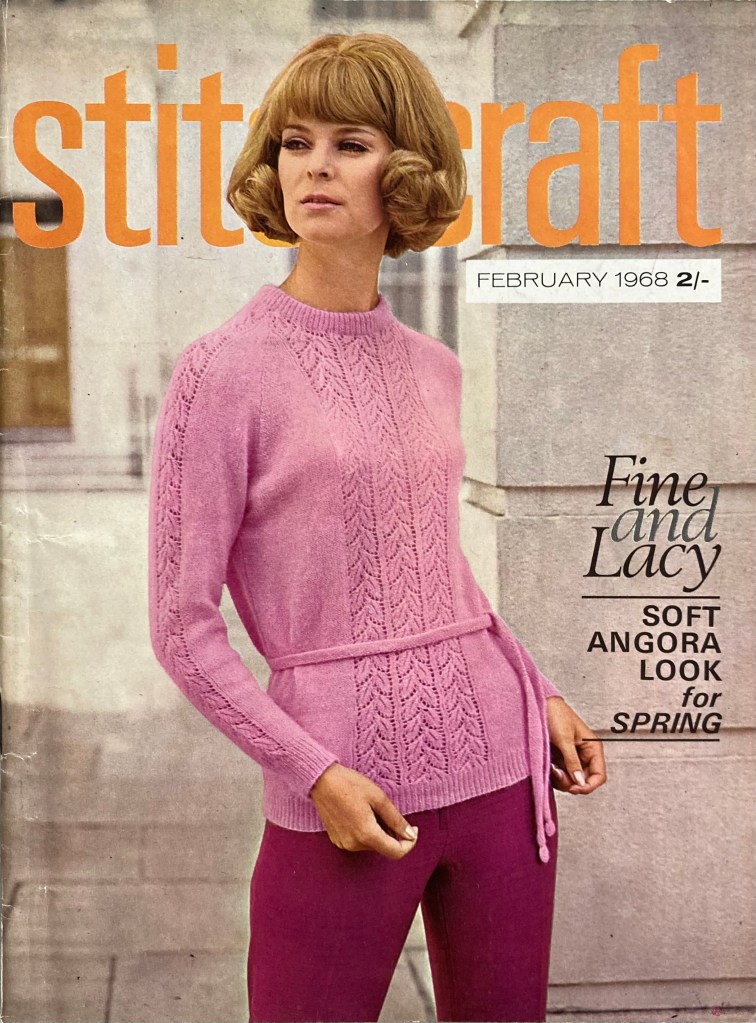
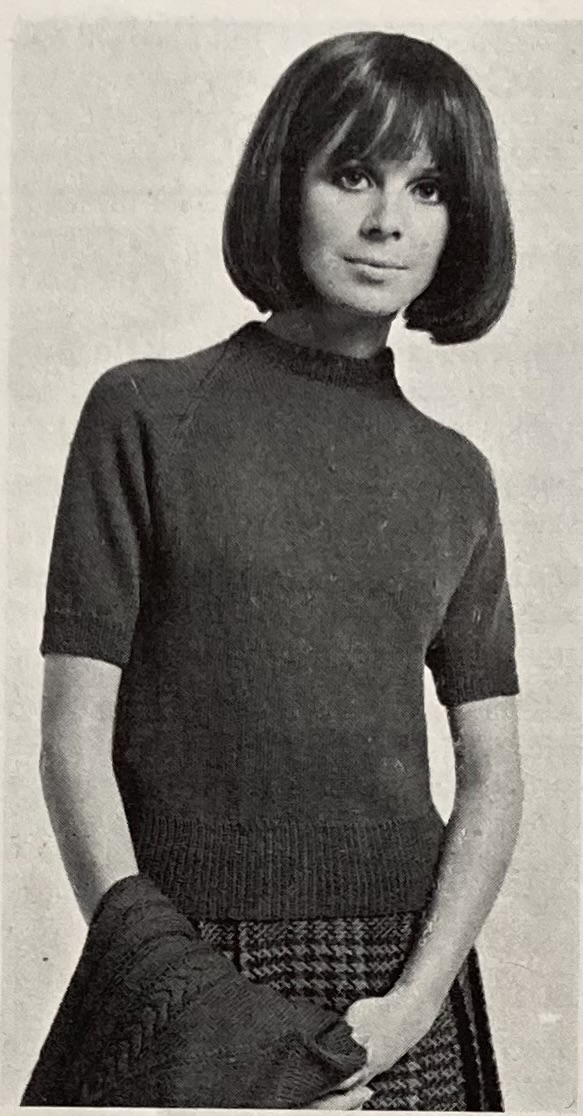
The cover design is a lightweight, but presumably warm pullover in a leafy lace-panel pattern and Patons “Princess” yarn (85% wool, 15% angora.) It’s slimmer, longer, high-necked, and belted — trends that will continue throughout the year. The back-cover design is a twin set in late 60s style, loose-fitting and worn with a kilt-like plaid skirt. It, too, is touted as a “long-liner” and the caption says it can be “belted if you like.” There’s a similar long-and-slim feeling to the “Country Mood” set on the inside back cover, which features a zipped cardigan over a mini-skirt, both in really interesting two-colour trellis pattern. The pattern looks like it would be made with slip-stitches, but is in fact stranded, with twisted stitches to give the trellis effect. Longest of all is the amazing bobble-stitch coat on the inside front cover, weighing in at a whopping 50-54 ounces and similarly zipped up the front.
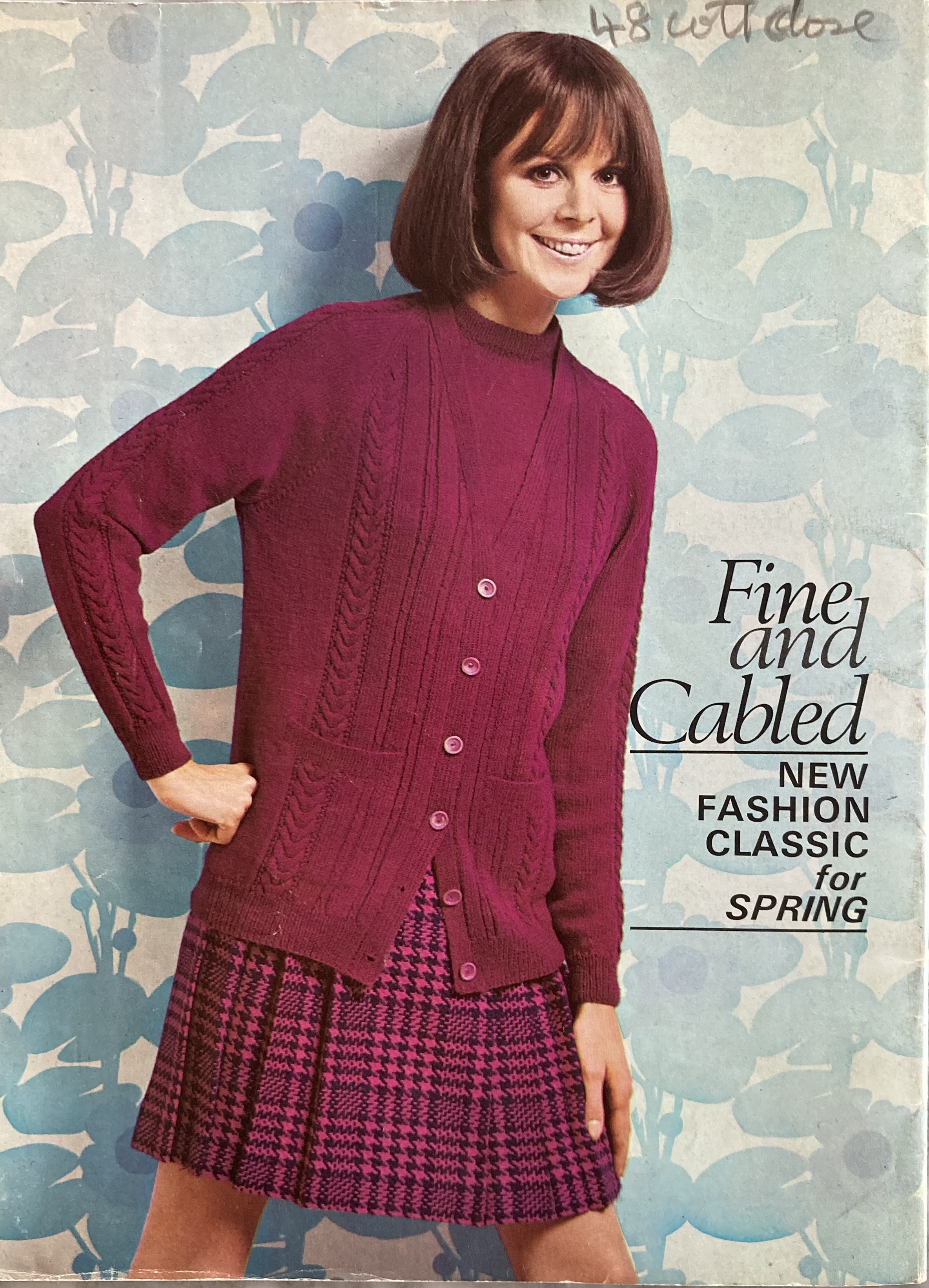
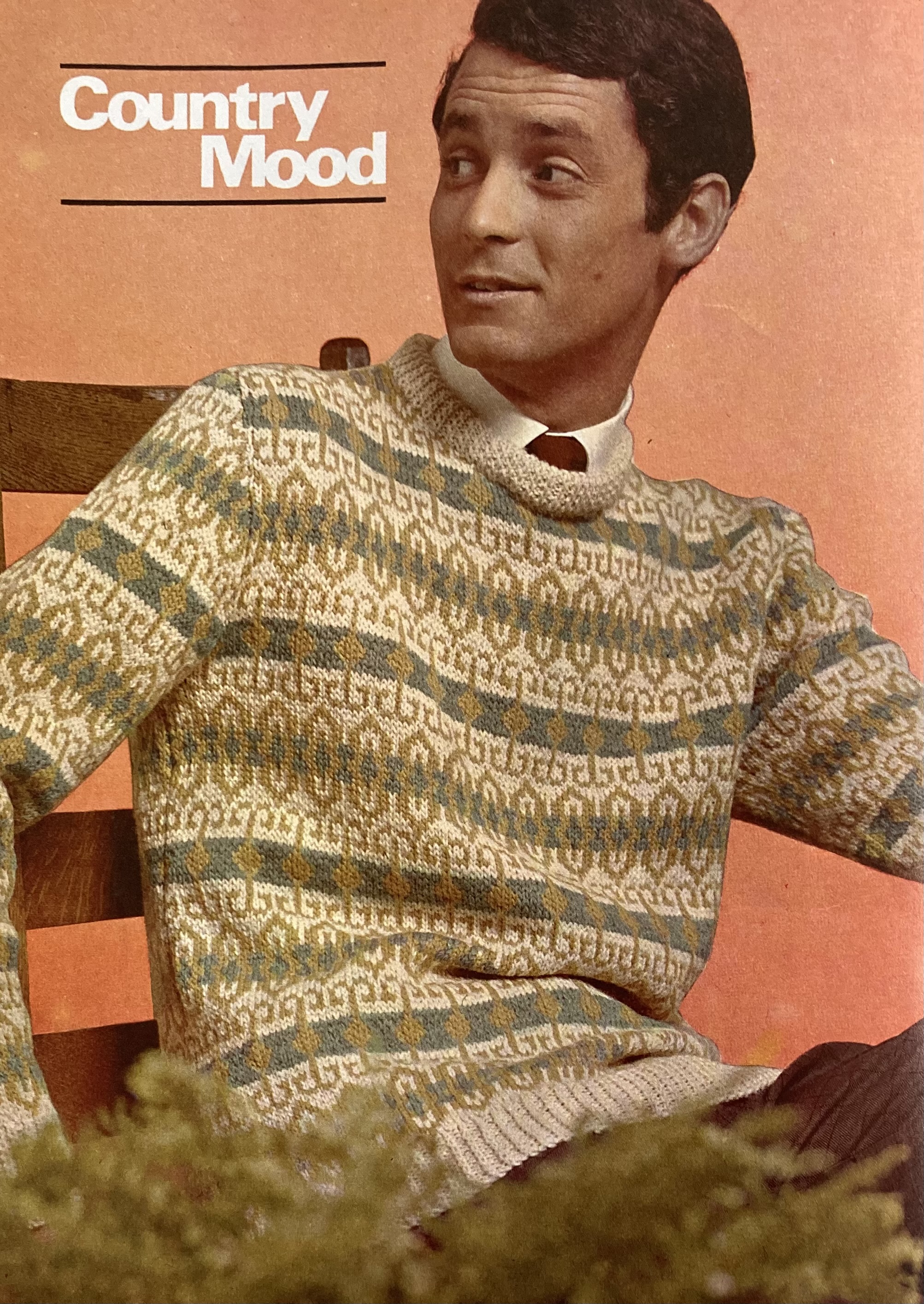
For men, there’s a his-and-hers “Two for the Country” bramble-stitch sweater to be worn indoors or out, and a softly-coloured stranded jumper in an interesting “key”-type pattern. It only uses three colours (“Banana Cream”, “French Mustard” and “Light Steel Grey”), but the pattern gives additional depth and richness.
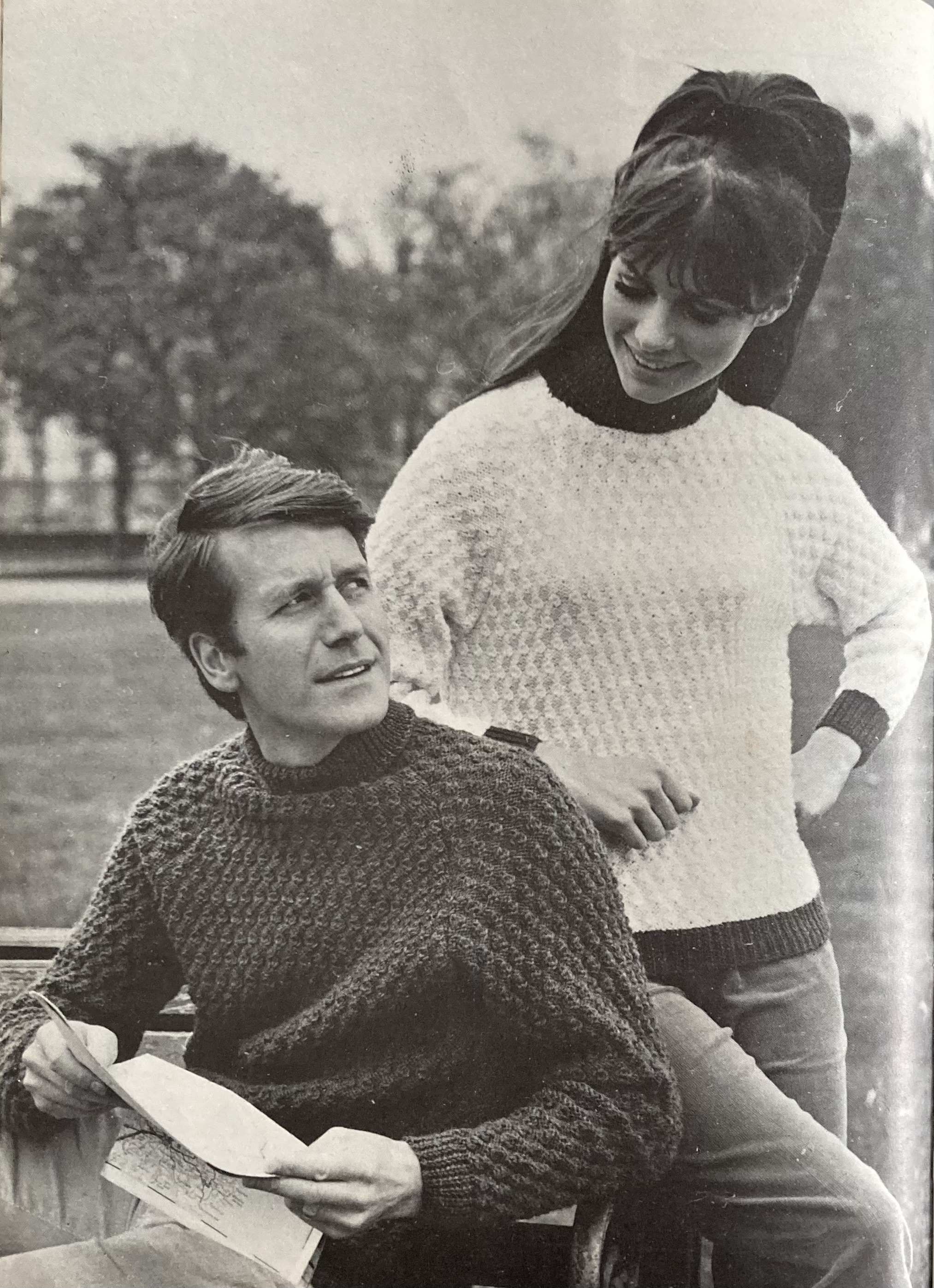
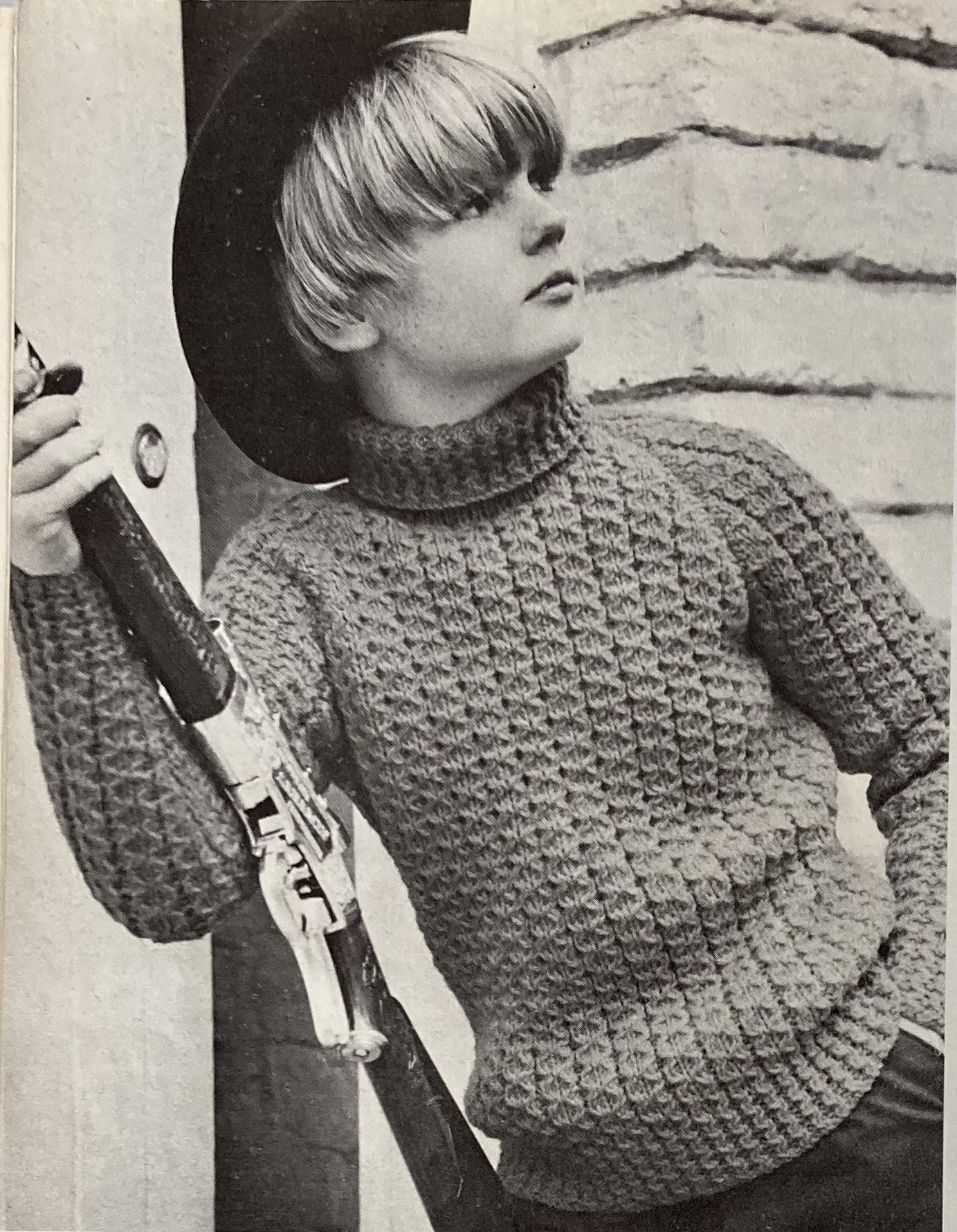
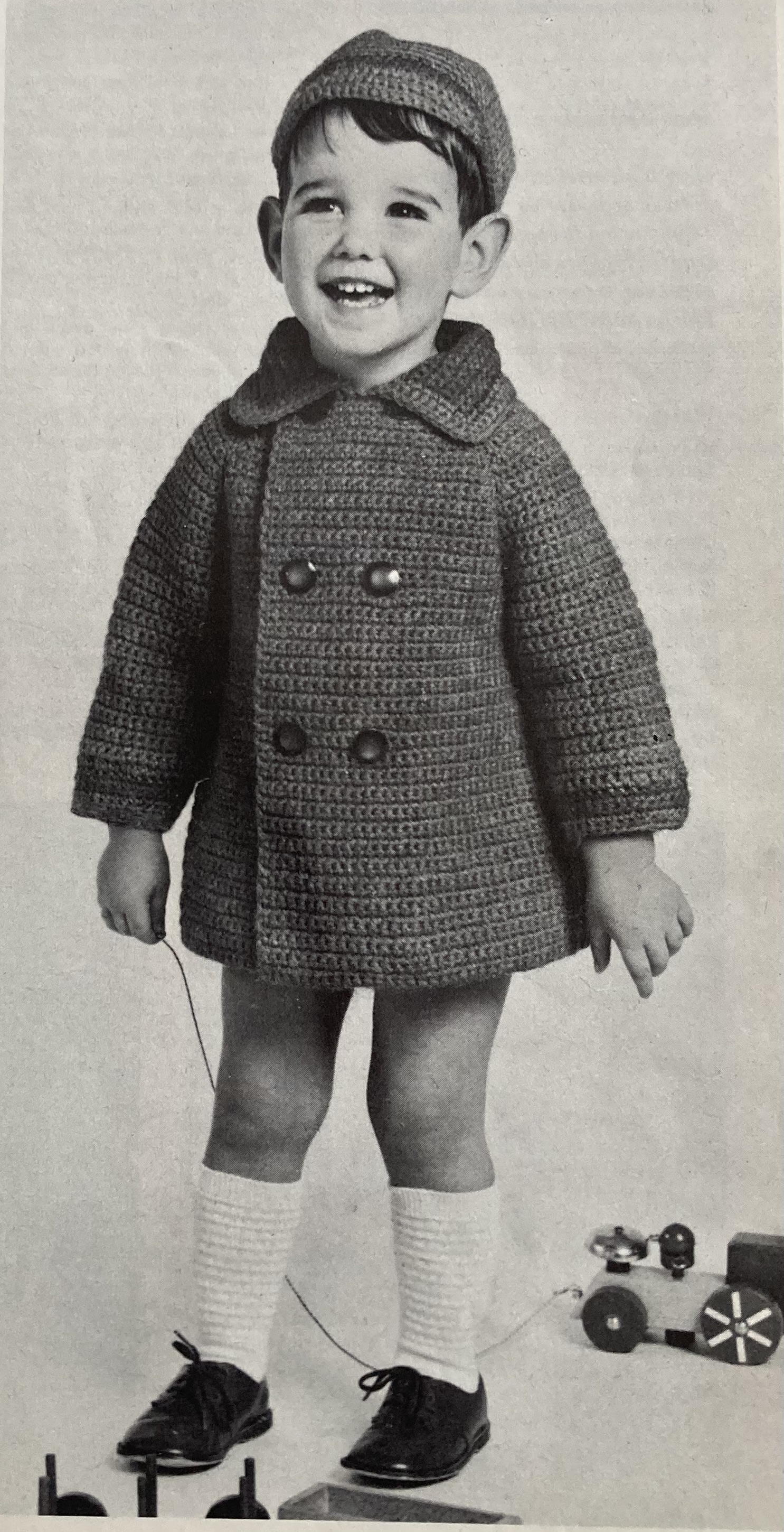
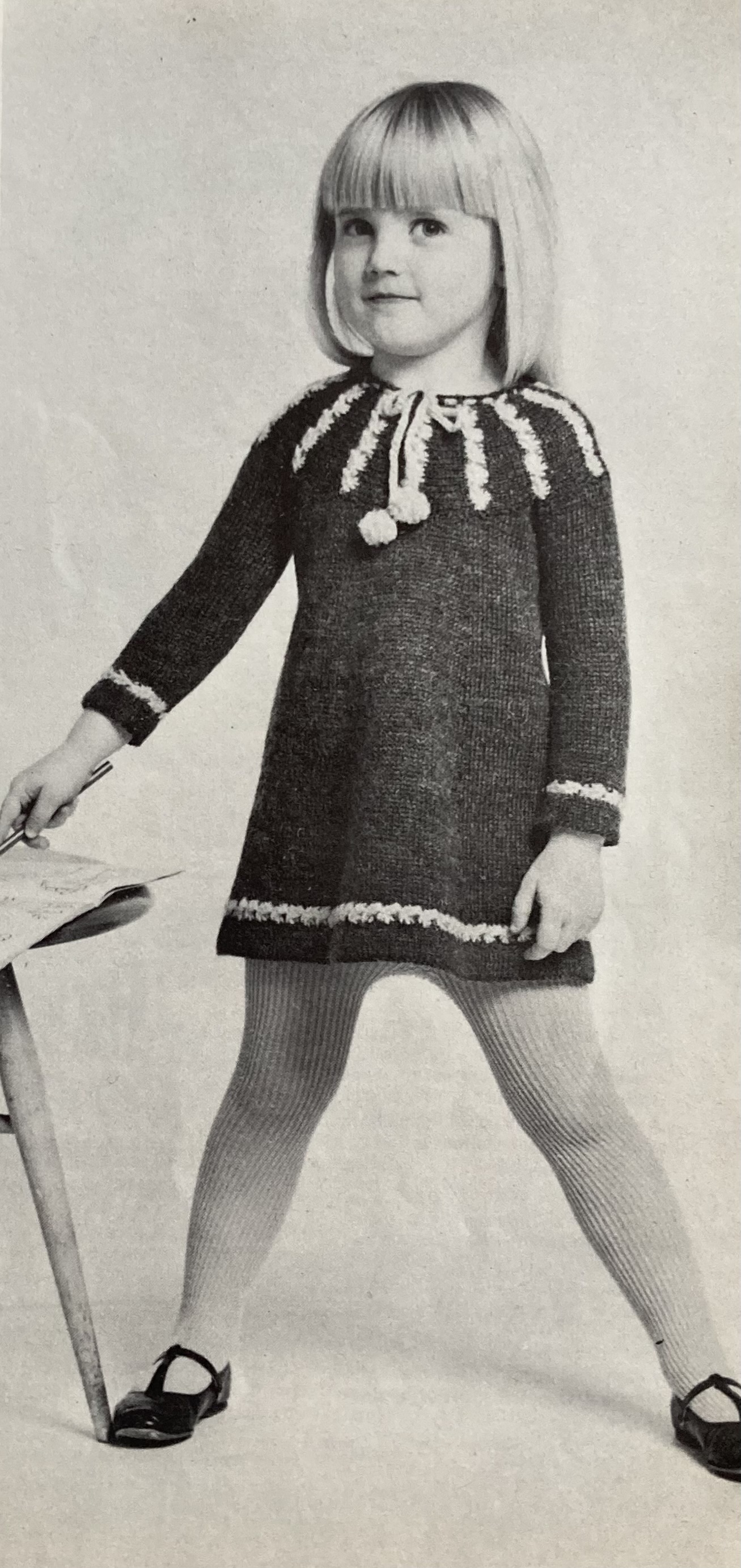
There are three patterns for children of different ages in this issue, starting with a coat-and-cap set for a little boy. I suspect he’s only looking so happy because he’s in a warm photo studio; if he ever actually went outside in that outfit, both his legs and his ears would freeze right off. I know if was customary to dress little boys in shorts at the time, but this poor kid doesn’t even seem to have those! How on earth is he supposed to play in the snow with a practically bare bum? At least the little girl gets to wear tights with her mini-dress/tunic this time, and since it is “for visiting”, I assume she will be wearing it inside. The circular yoke of the tunic is knitted horizontally and sewn on, and the white stripes are made by dropping stitches and picking them up later. The third design is a great indoor-outdoor sweater for a slightly older child, in thick “Capstan” wool and a twisted-stitch pattern that presumably acts as s sort of thermal blanket to keep warm.
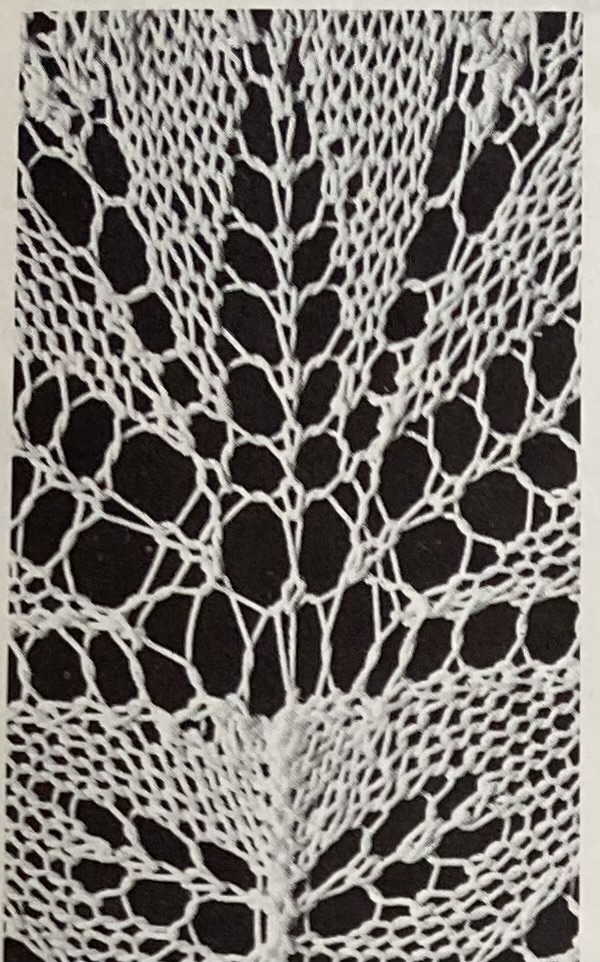
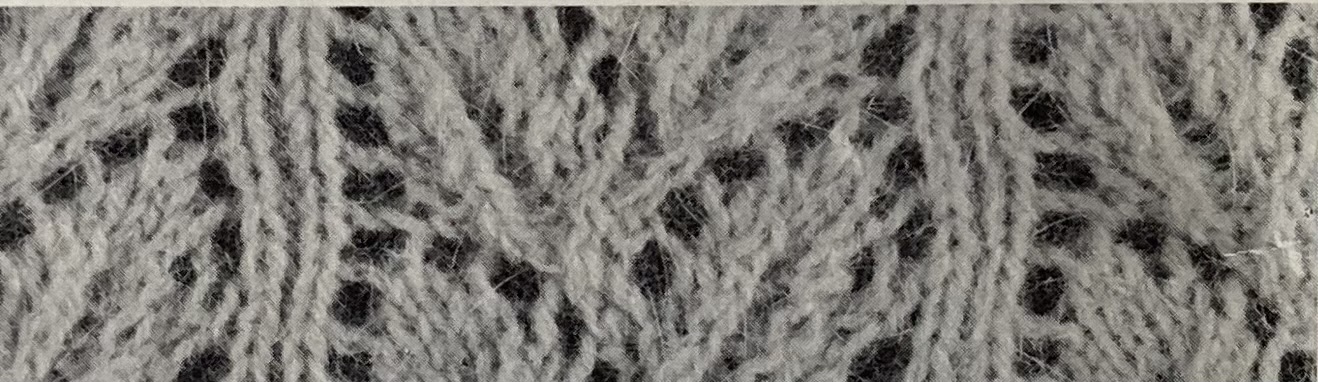
One nice thing about this issue is that there are extra close-up photos of the more interesting stitch patterns:
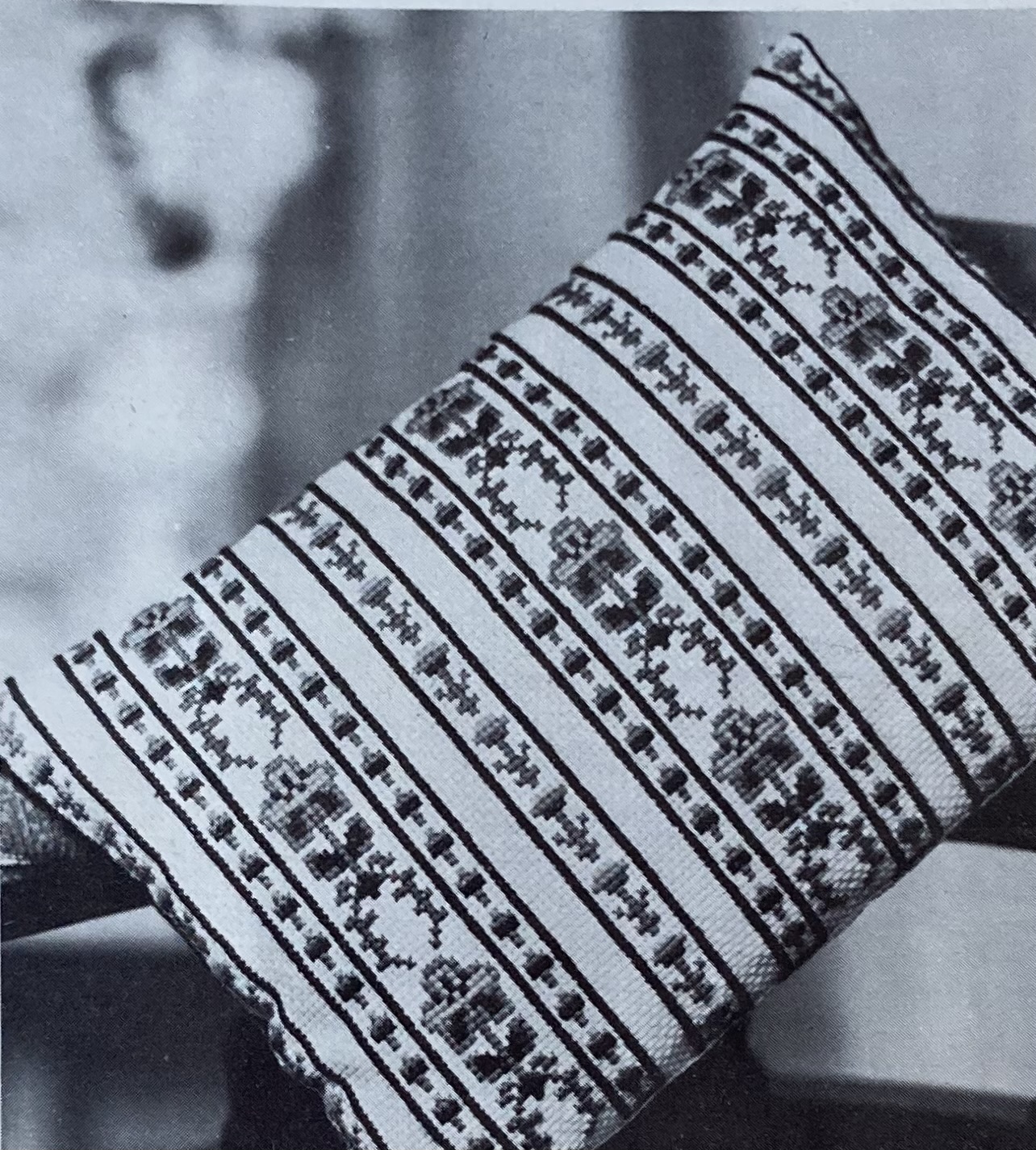
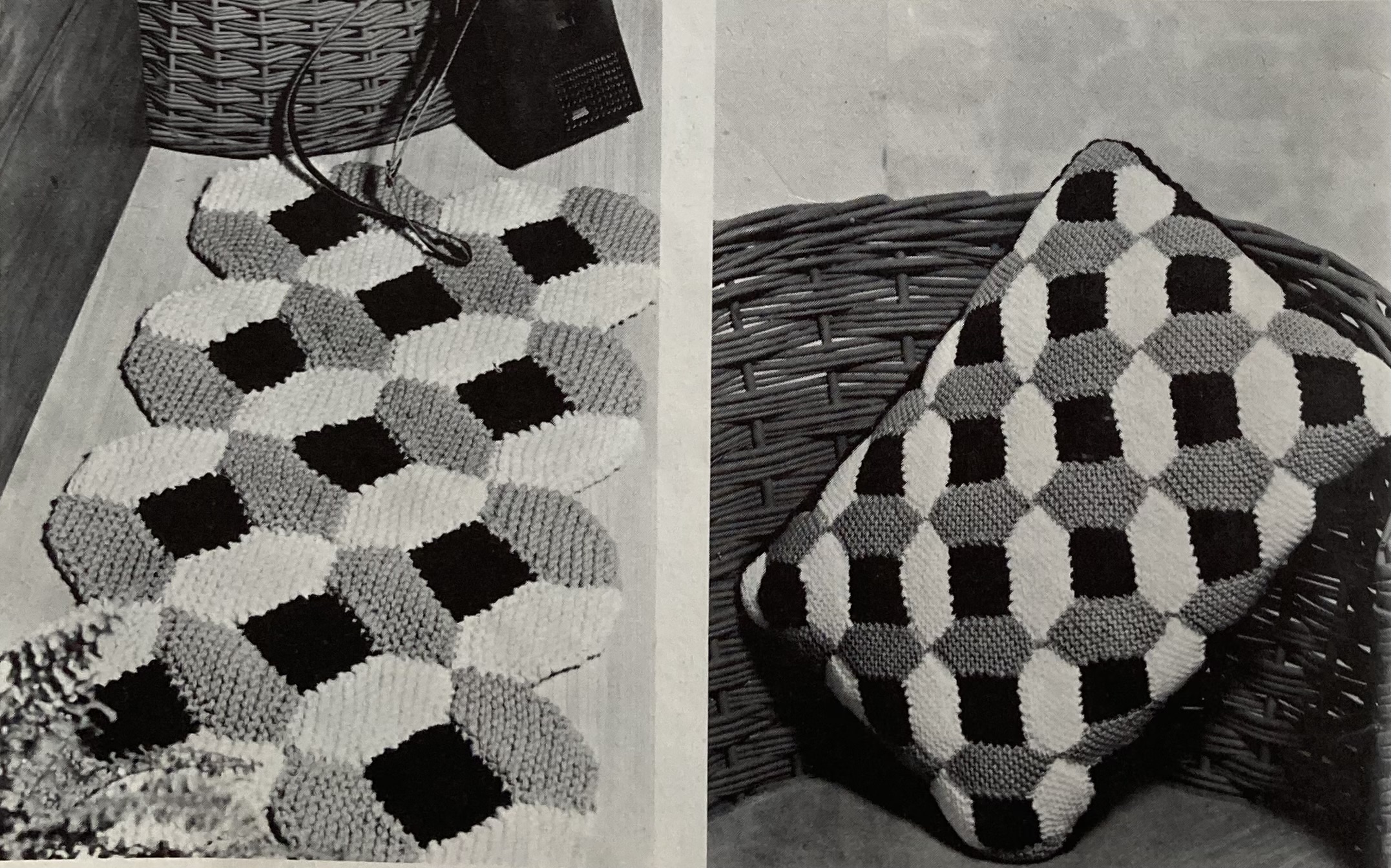
Most of the housewares in this issue are advertised as “Easter Gifts”, though I see no connection to the the patchwork rug and cushion, or the embroidered cushion and chairback.
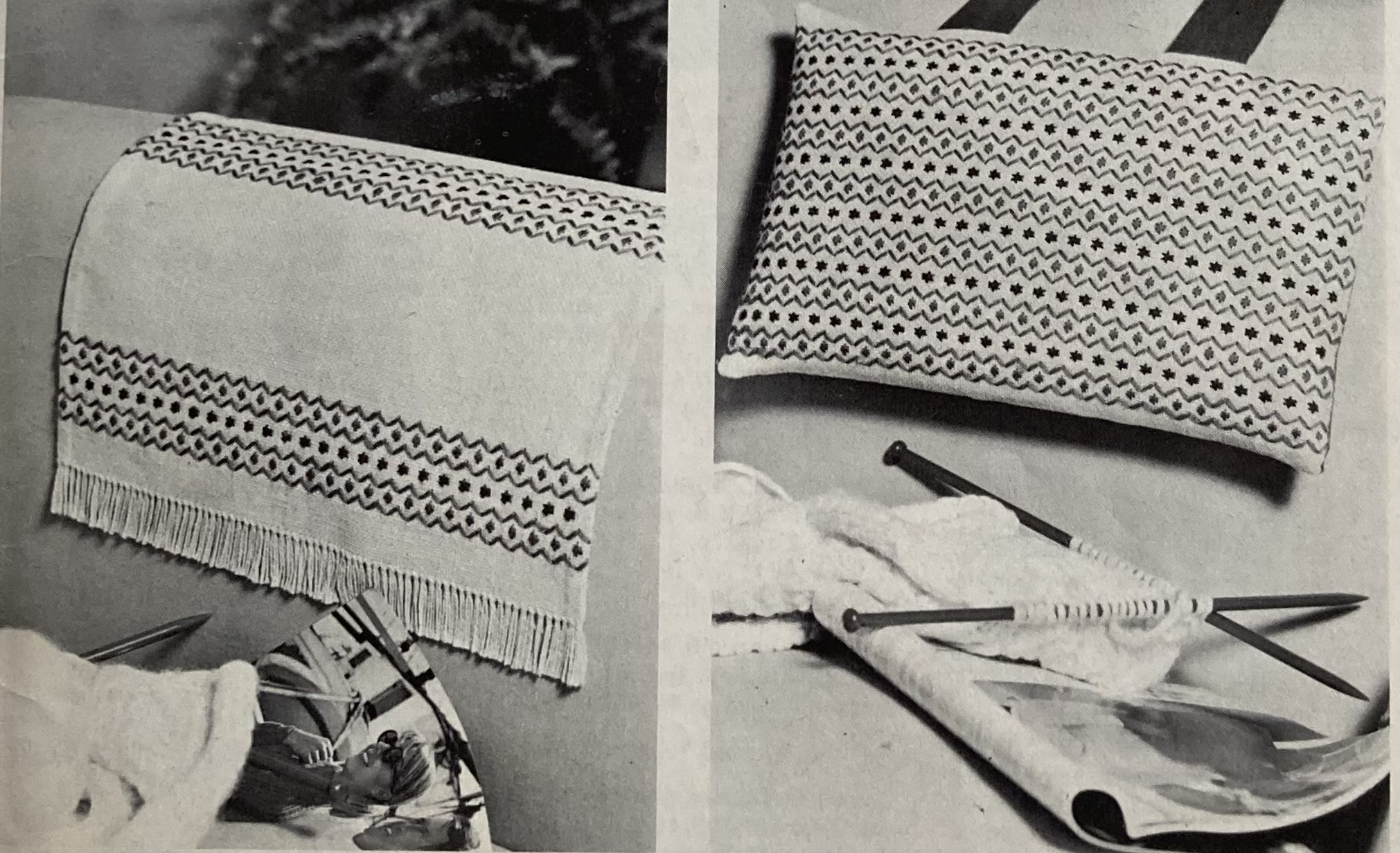
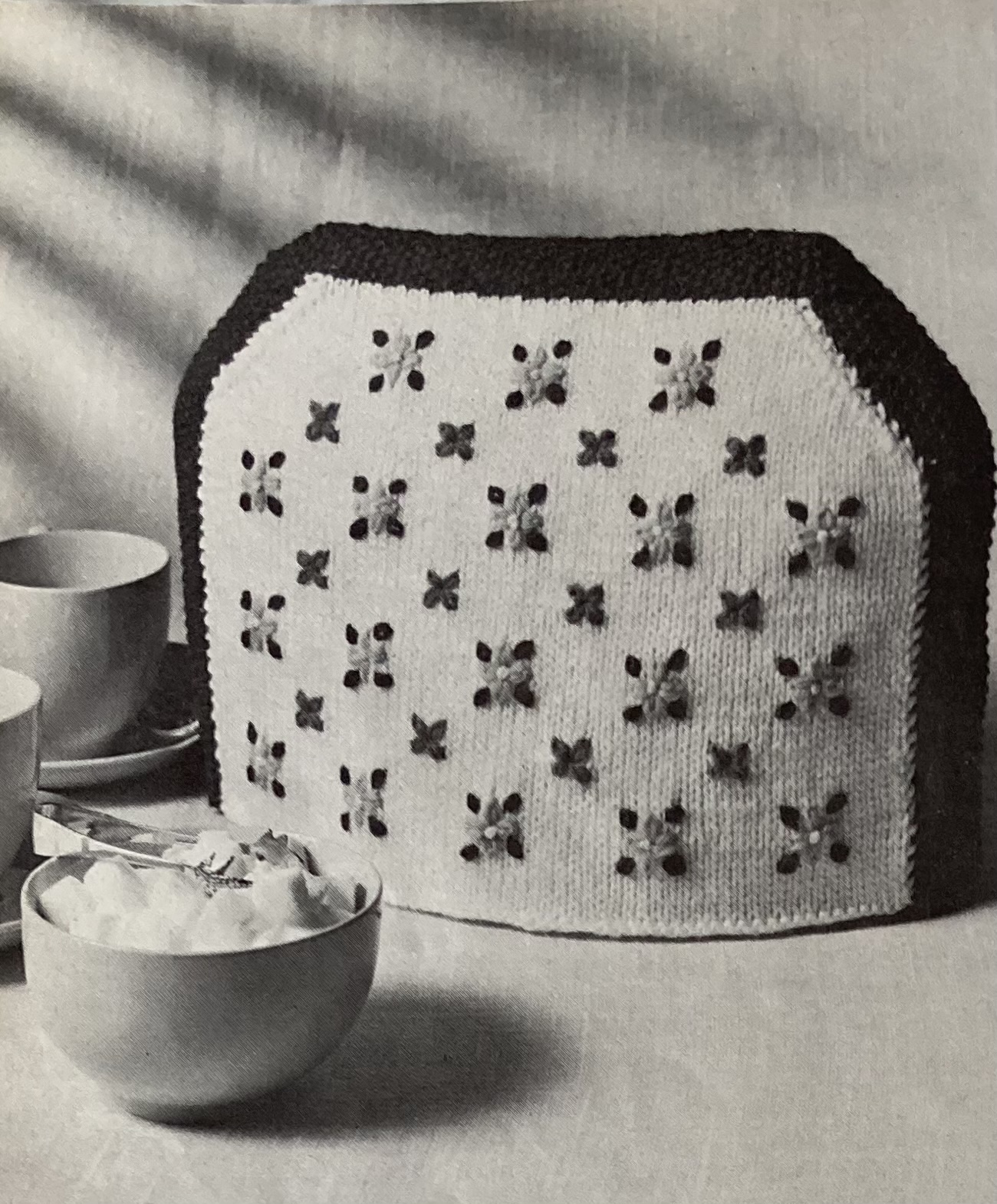
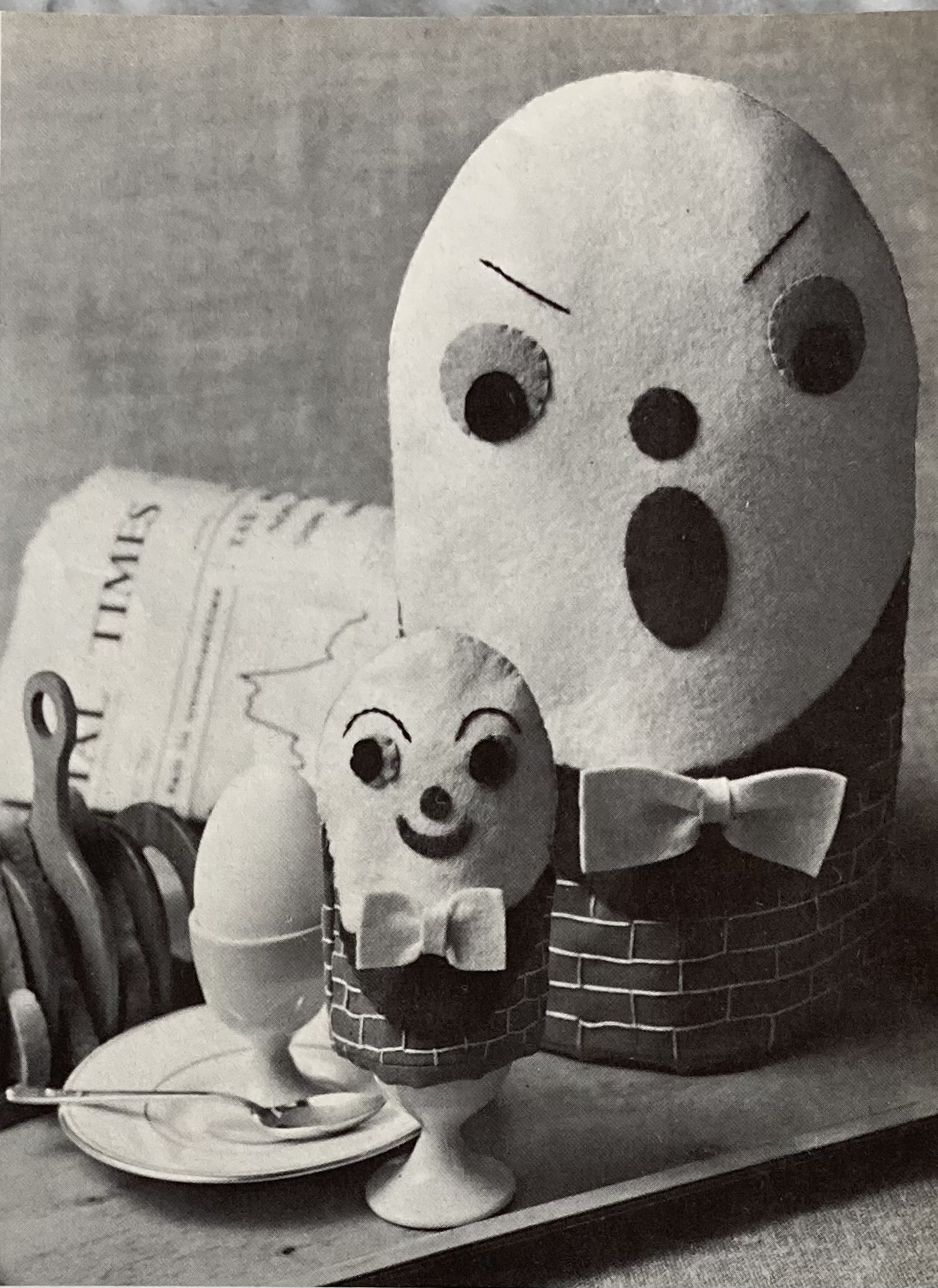
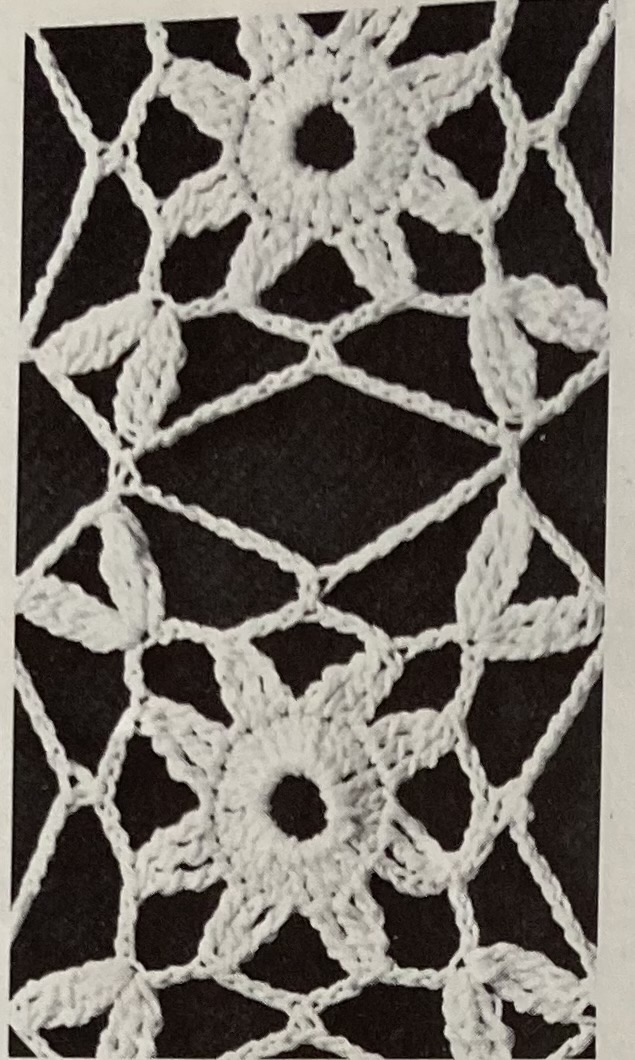
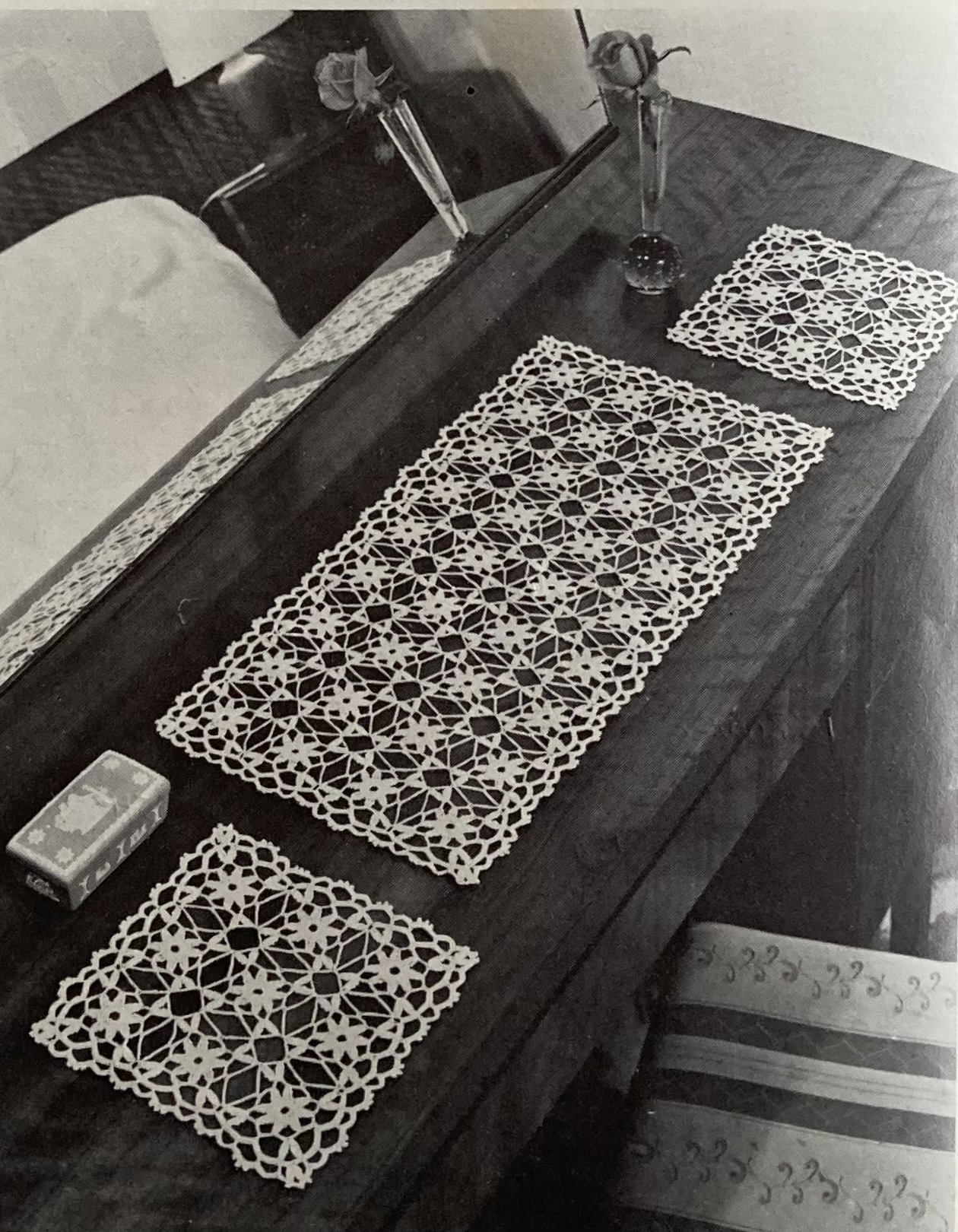
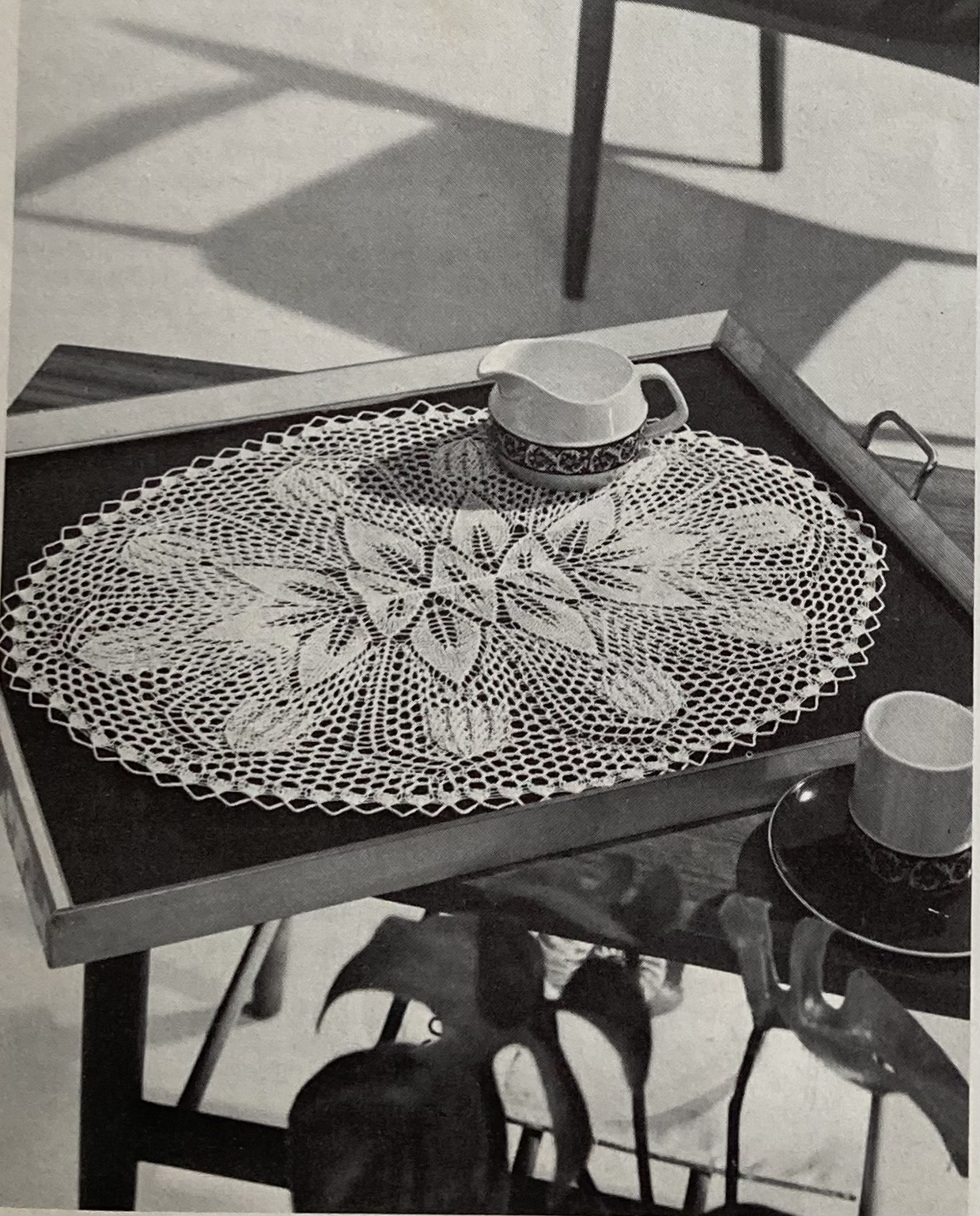
The elaborate crocheted or knitted doilies as well as the knitted tea cosy have floral patterns, but still no real connection to the holiday. I guess the “Humpty Dumpty” coffee-pot and egg cosies could accompany your Easter breakfast, if they don’t put you off it entirely! Stitchcraft is obsessed with Humpty Dumpty. Over the years, there have been egg cosies, stuffed toys, Christmas tree ornaments… I admire the creativity and the artistic commitment to a theme, but I do wonder. If you know why the egg cosy is happy and the coffee pot is angry, please tell me in the comments!
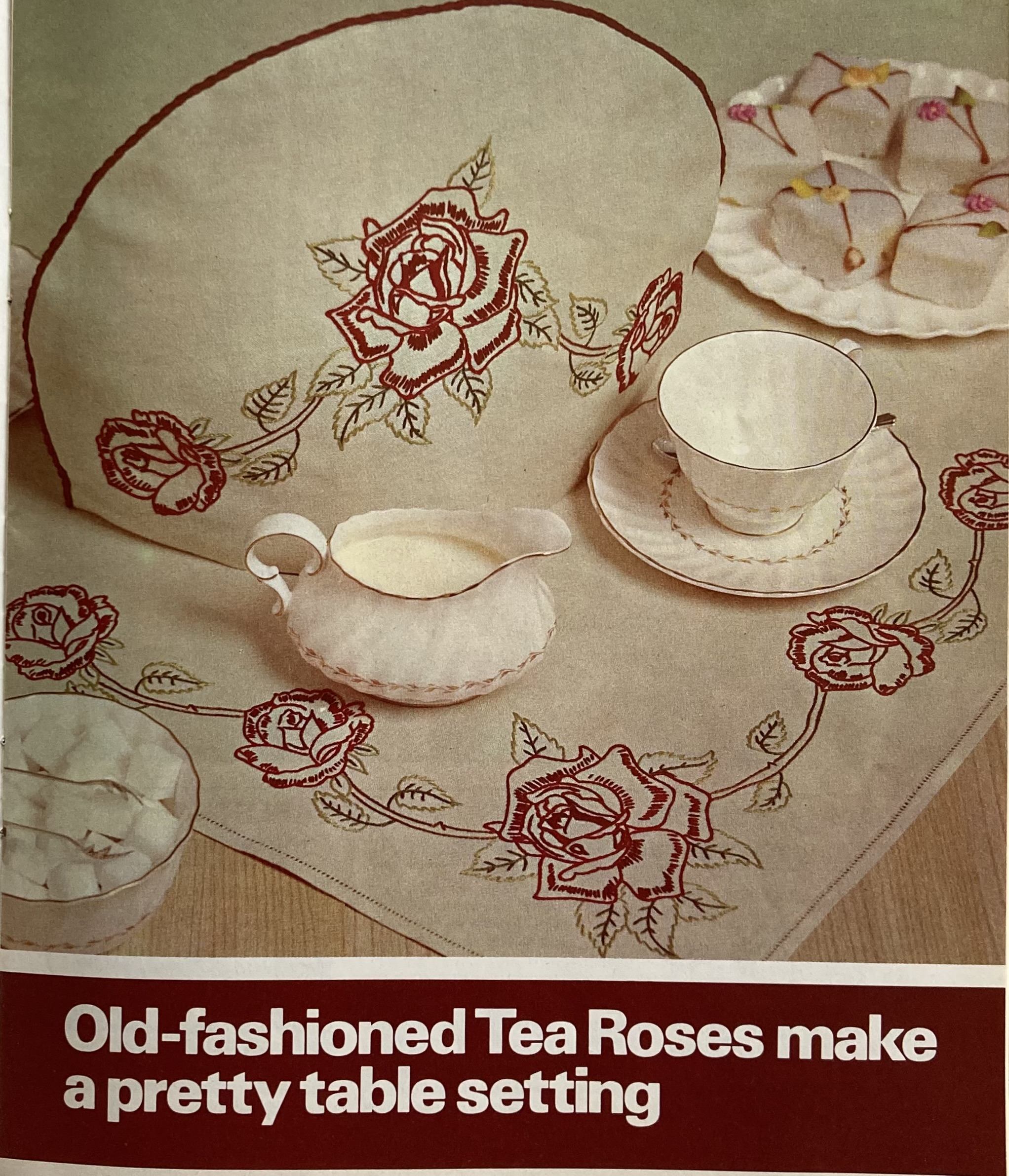
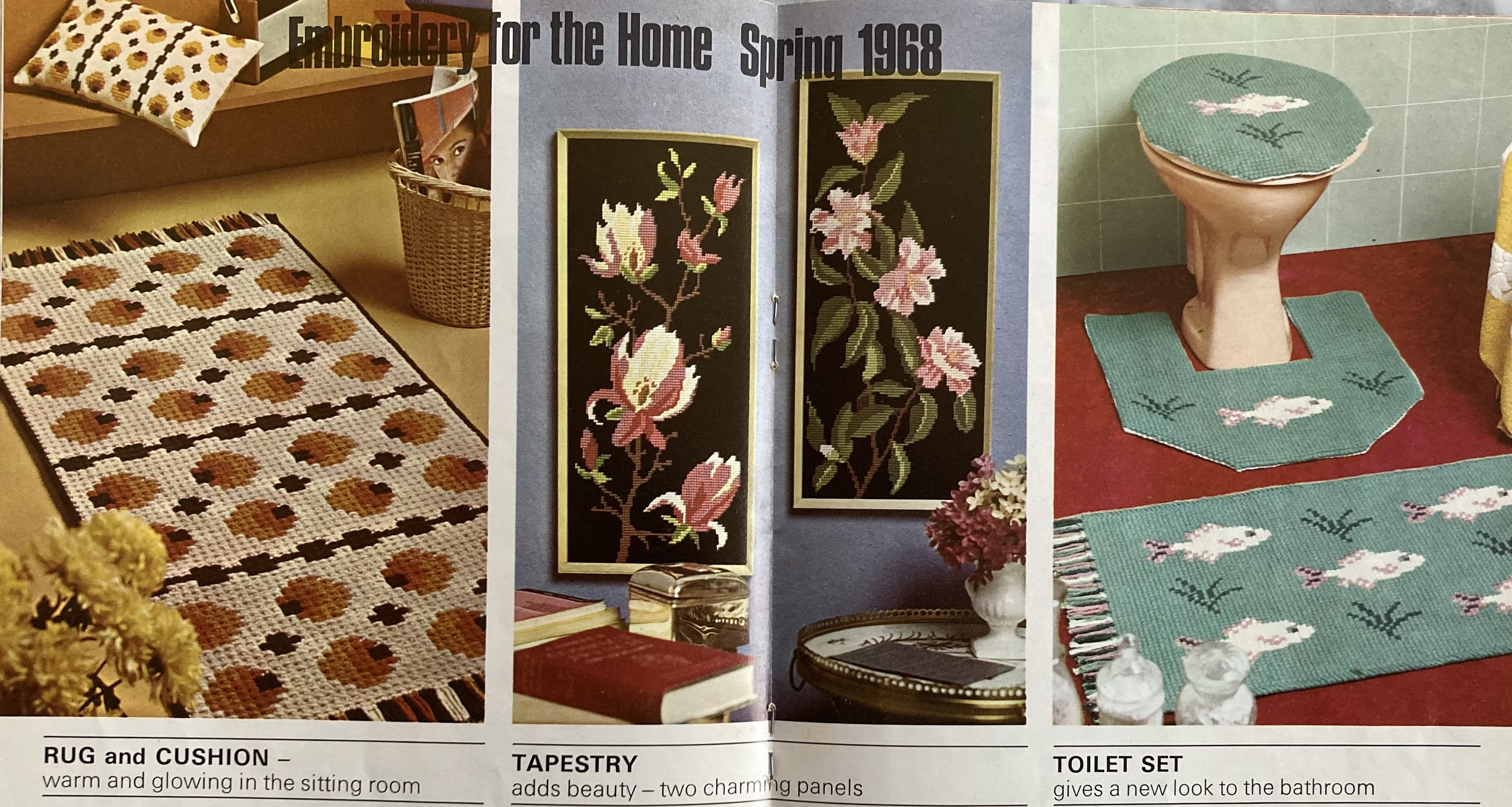
They apparently gave up on the Easter theme by the middle of the issue and just promise “4 pages of Rug-making, Tapestry and Embroidery for the Home”, which appear exactly as promised. There’s an elegant tea-table set of cosy and cloth in rose-pattern embroidery, a rug and cushion in best 1960s shades of brown, orange and gold, two floral tapestry wall panels, and a “Toilet Set” of toilet cosy and two mats. In previous issues, such items were called a “Pedestal Set”. I guess by 1968, there’s less need to be euphemistic. (But still a need to put a cosy on the toilet cover.)
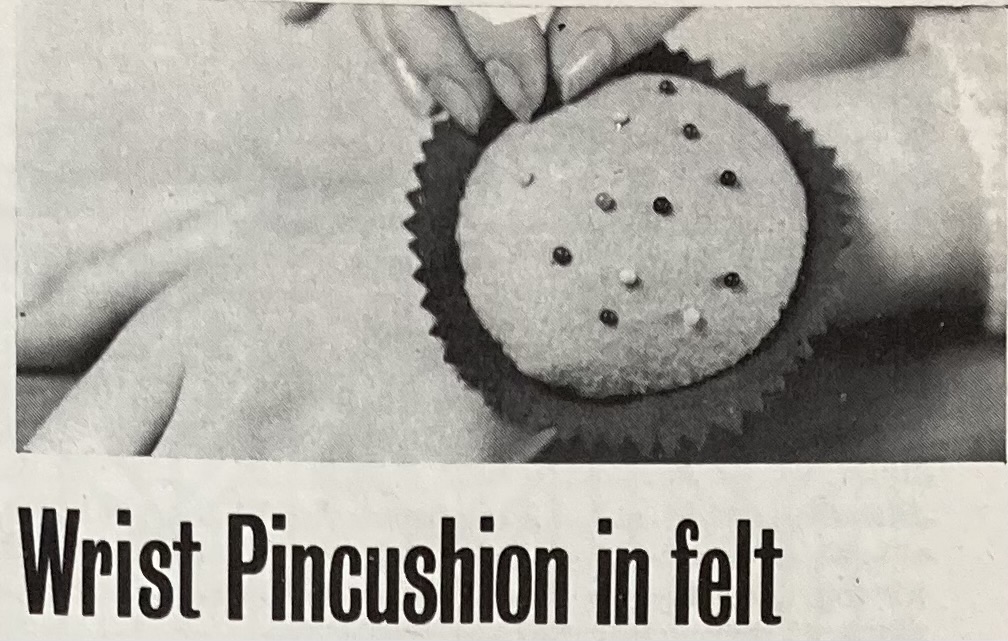
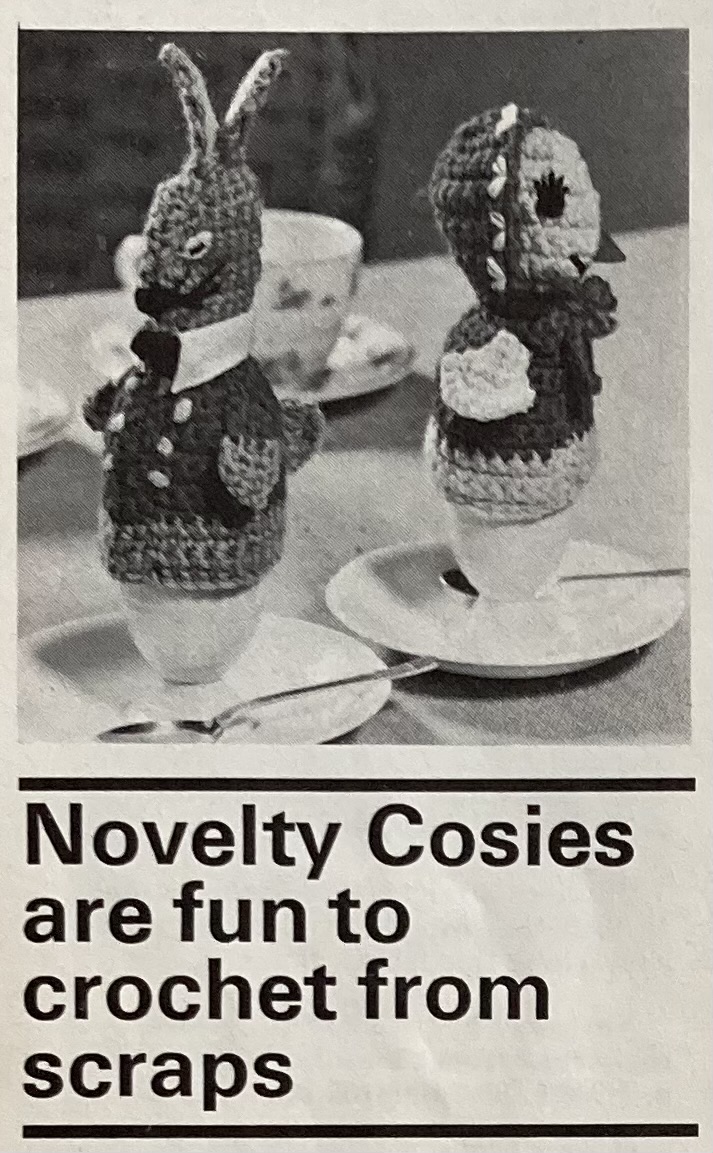
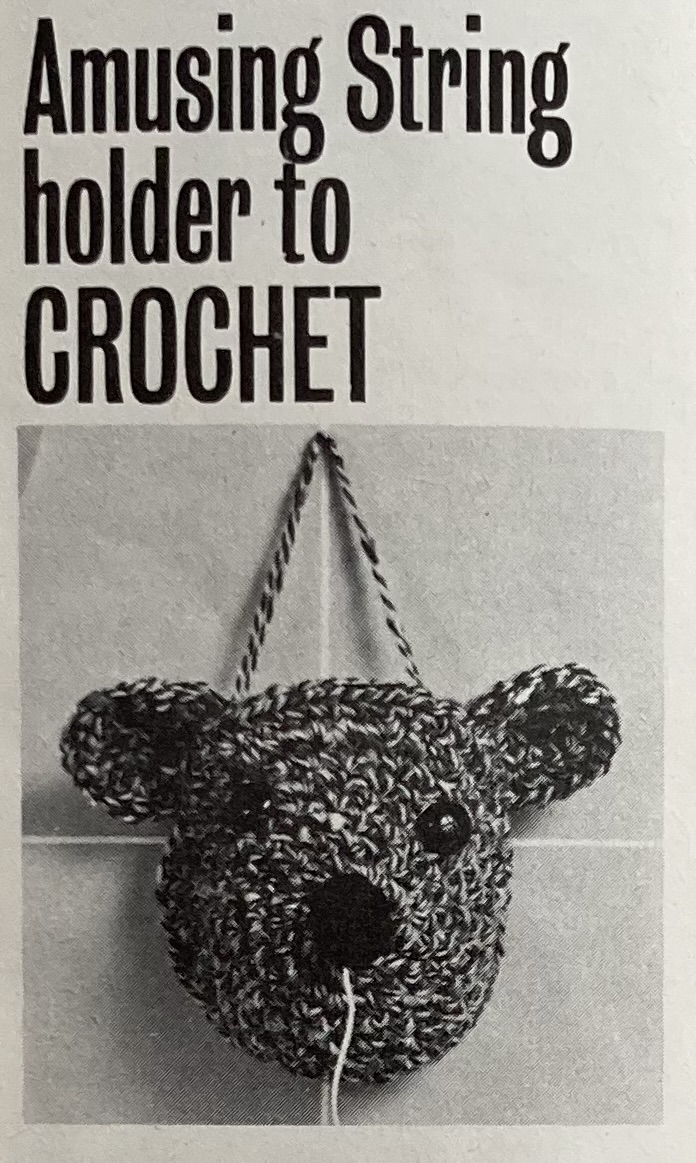
There are some great “novelty” and “bazaar” (…”bizarre” if you ask me) items in the Readers Pages: crocheted rabbit and chicken egg cosies and an “amusing” string holder. Like the Humpty Dumpty obsession, I don’t get the point of string holders. They always seem to involve pulling the end opf a ball of string through the mouth of some creature, in this case a koala. It’s better than the last one, which was a terrifying clown, but again, if you know why this was ever a thing, please enlighten me! The felt pincusion to wear on your wrist, on the other hand (heh), is practical and useful.
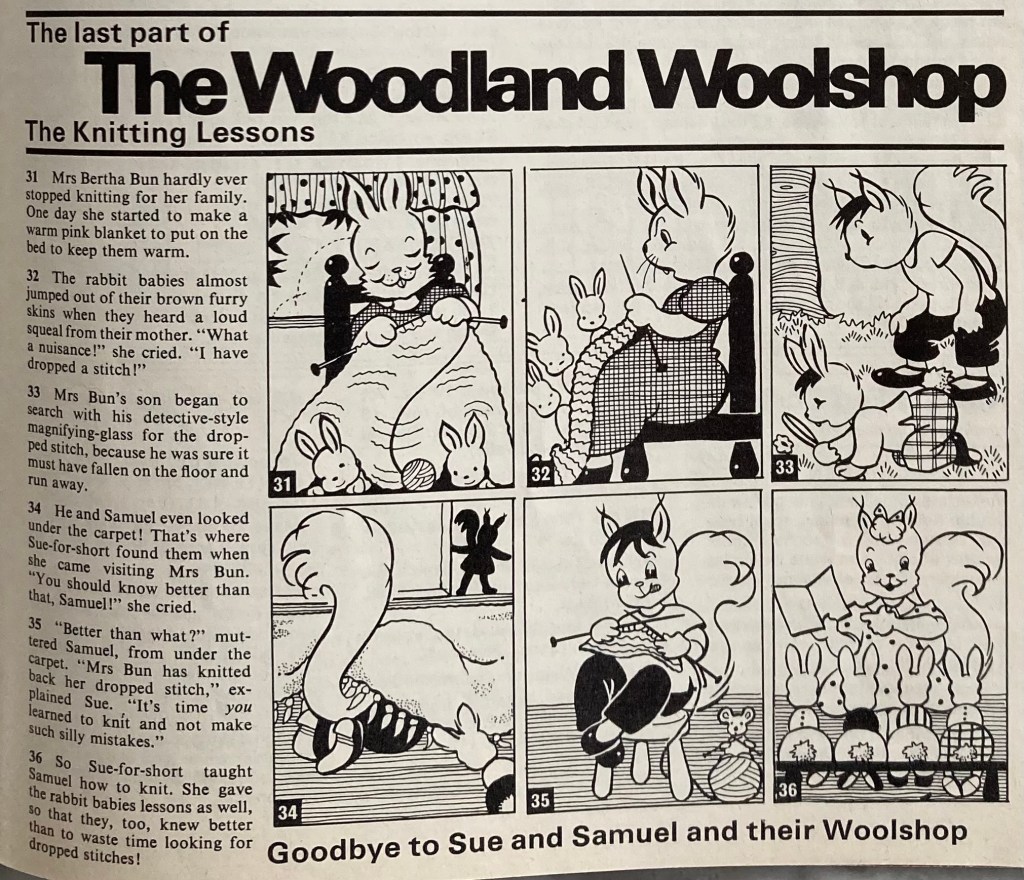
We have come to the end of our latest comic, “The Woodland Workshop”, in which various woodland animals learn that you cannot find a dropped stitch by looking for it on the floor! Words of wisdom, truly. I liked this comic.
I don’t know what to make from this issue. I love the little girl’s tunic-dress and the boy’s sweater, but don’t know any children of that age who might want one. I love the trellis stitch pattern from the “Country Mood” set, but don’t want to make a whole skirt or cardigan from it. Maybe I could adapt the pattern for mitts or something? Or I could work on the fabulous dress from the cover of the September 1967 issue, for which I bought the yarn and everything, but haven’t had time to start. We’ll see! I did finally finish the jaquard pullover from the November 1967 issue and will update that post on Tuesday, so stay tuned.
April 1967: Overview

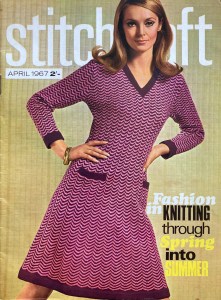
“Spring into Summer” with the April 1967 issue of Stitchcraft — one of my favourites. According to “editress” Patience Horne, the latest fashion trends include longer-bodied “skinny” sweaters (i.e. slightly less bulky than the previous oversized look), “still figure-fitting” (they aren’t, though) and “belts with everything” (none of the models in the photos are wearing belts.) Make what you will of that. “Fashion is very dashing — still young and gay in ideas — but slanted to a feminine look — pretty and flattering.” In other words, whatever you want it to be! Colours are definitely bright and fun, with interesting textured stitch patterns and colourwork.

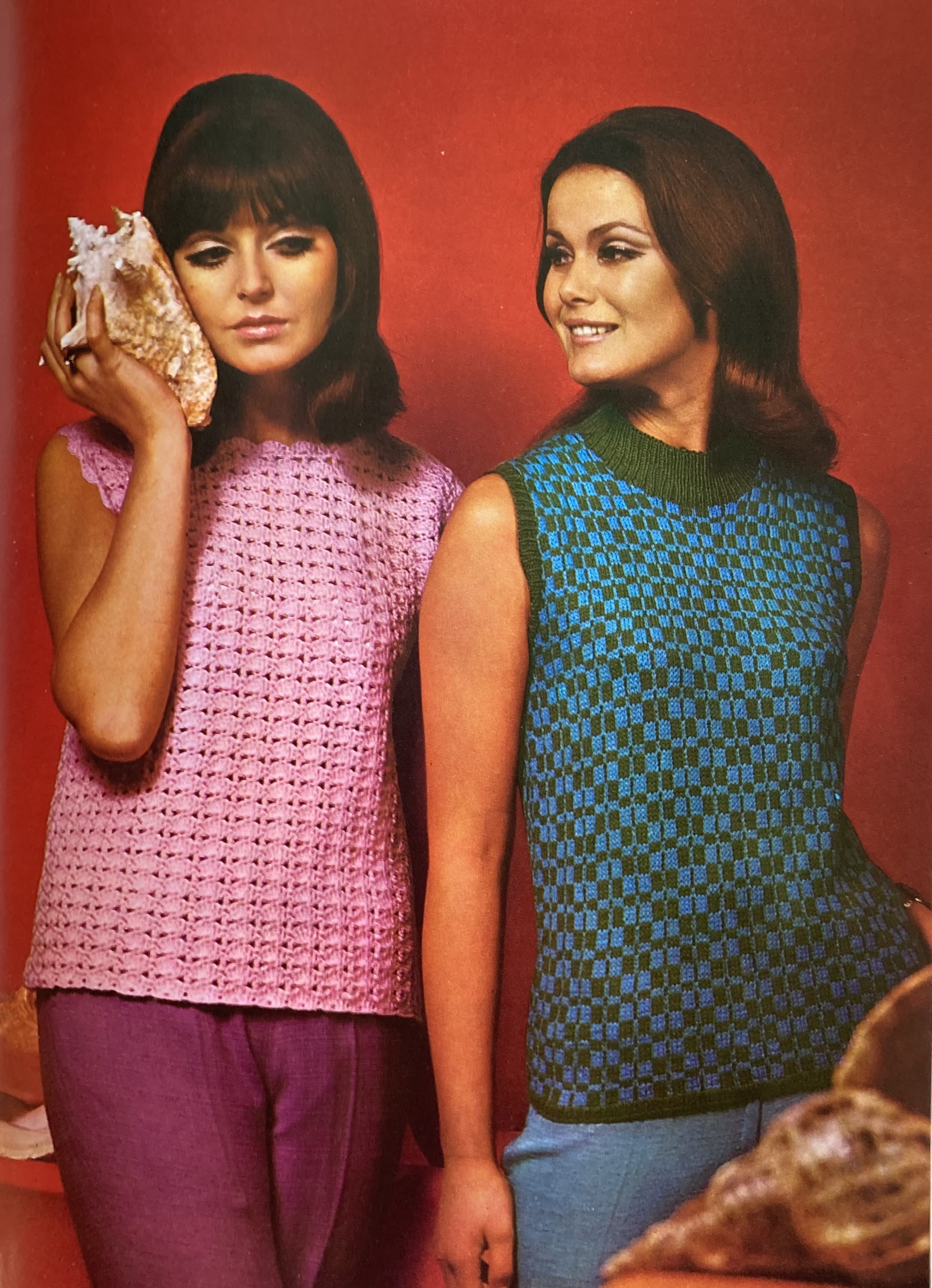
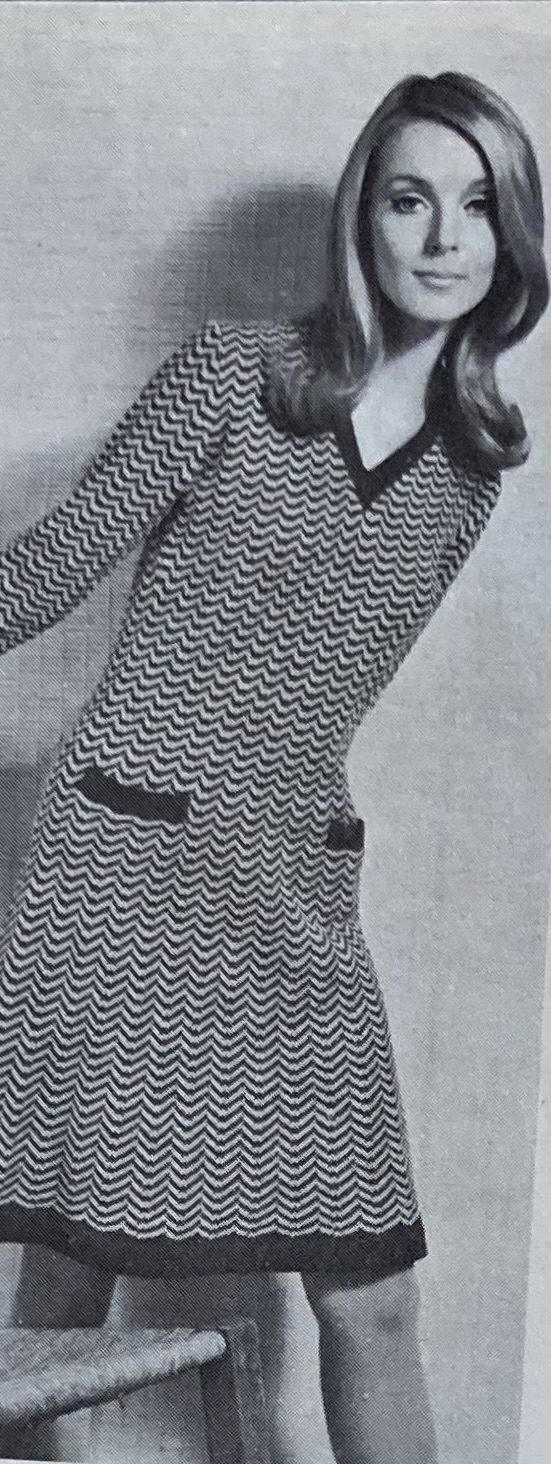
Our cover design picks up the trend for the retro-1930s look which will really take off around 1970 (could Stitchcraft actually be fashion-forward?) in bright, 1967 shades of pink and purple. The brilliantly orange pullover on the inside cover has an intriguing “pineapple” pattern. The summer “shells” (sleeveless tops) strike a nice balance between bold colour and crochet-lace patterning and more subtle, neutral bouclet. Love how they’re listening to shells in the photos! (Though sadly, the crochet model looks like she’s getting bad news.) Rounding out the adult women’s fashions is an understated and elegant fine-knit crepe blouse for larger sizes.

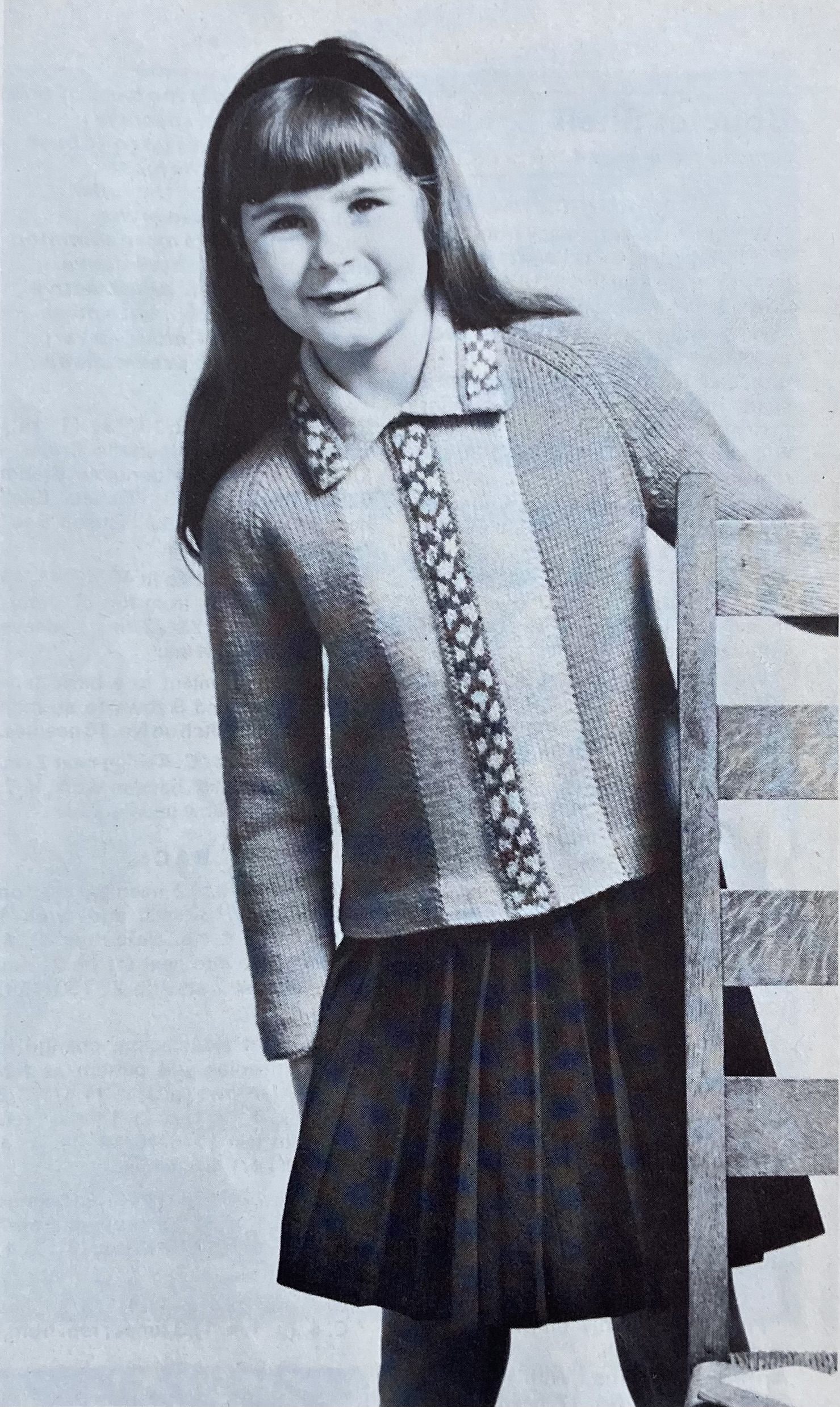
This issue has some great designs for school-aged children, starting with this “outdoor cardigan for rough-and-tumble wear” for a girl. Who is wearing leggings! That cover her legs and which she can actually move around in without flashing the neighbourhood! Finally! The model looks like she’s about to have a great time, too. Our more feminine model sports a pretty panelled pullover that looks like a buttoned-up cardigan. It’s just as practical as the more rustic design, but with elegant details. Her little sister gets a tunic top with a striped yoke and cuffs.

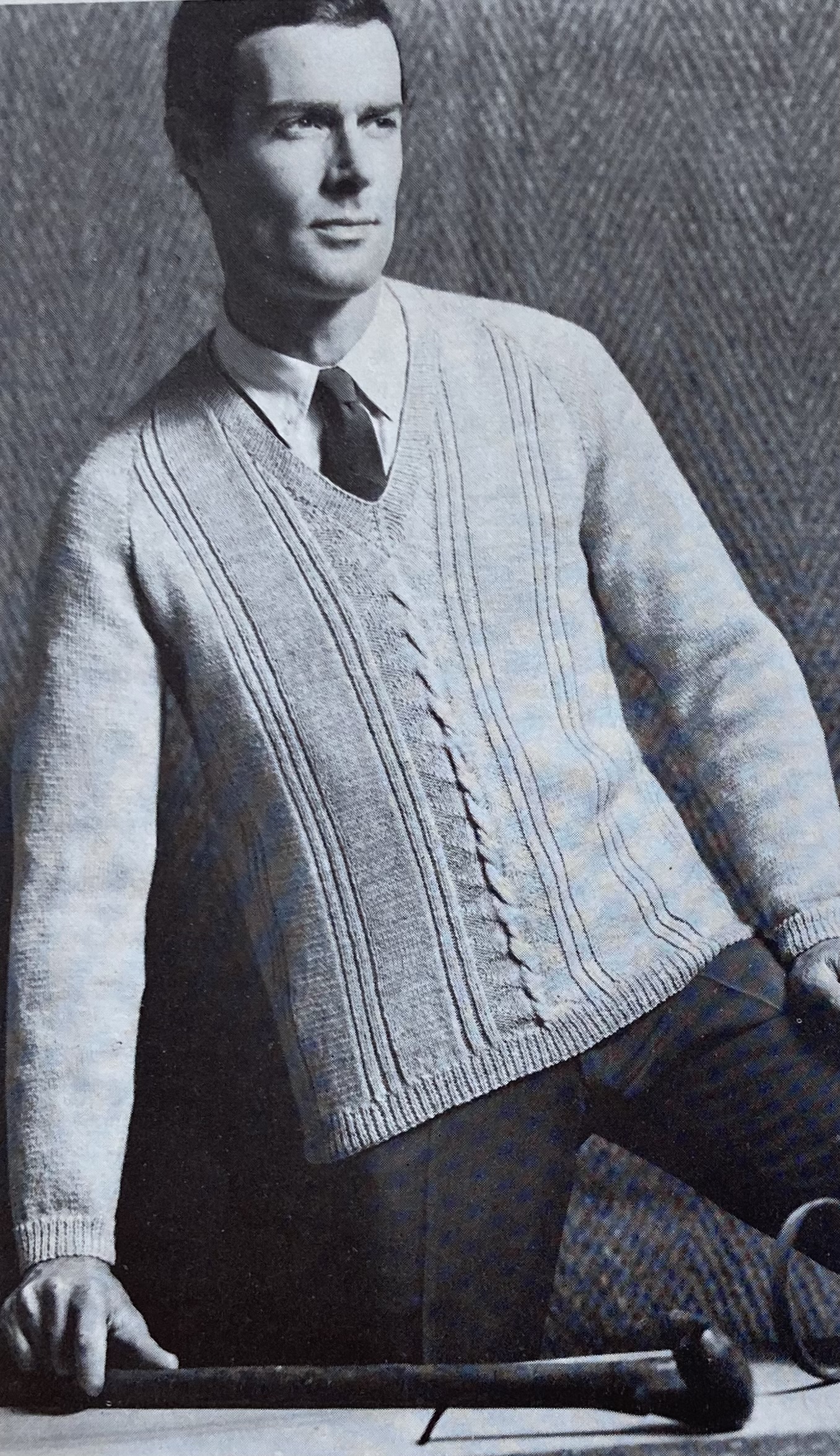
Oversized garments in neutral colours and vertical cablework patterns are still on trend for men’s fashions, represented here with a V-neck pullover in cable-and-rib pattern and a “country cardigan” in undyed “Capstan” wool with a crunchy Aran pattern on the fronts only.

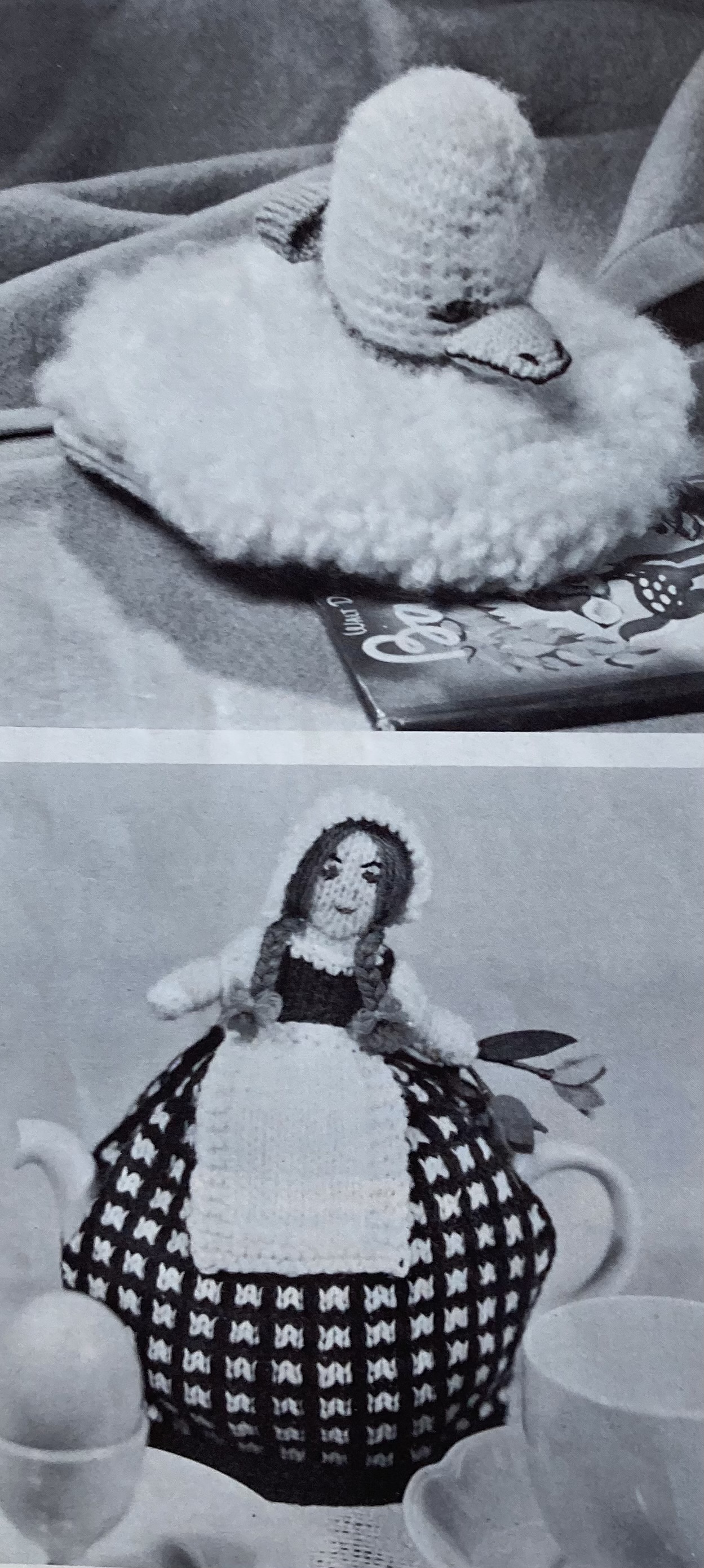
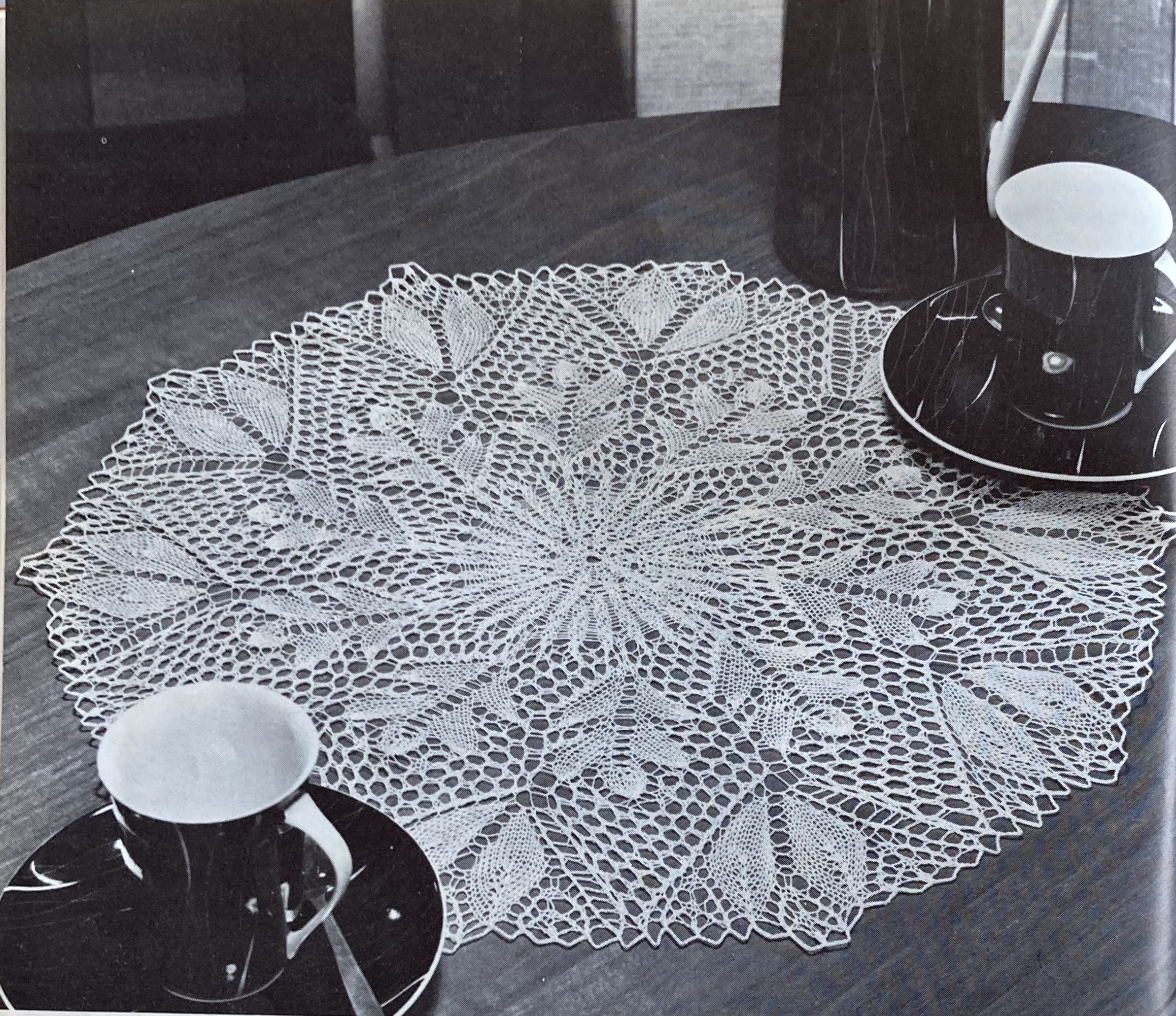
It wouldn’t be Stitchcraft without “Bazaar items”, and the ones in this issue are actually really cool. There’s a knitted nightcase that looks like a fluffy duck thanks to a loop-stitch pattern that is then brushed with a teasle brush to felt and fluff it up. The knitted doily is quite intricate and the “Dutch girl” tea cosy (holding a cluster of felted tulips!) is amazing.

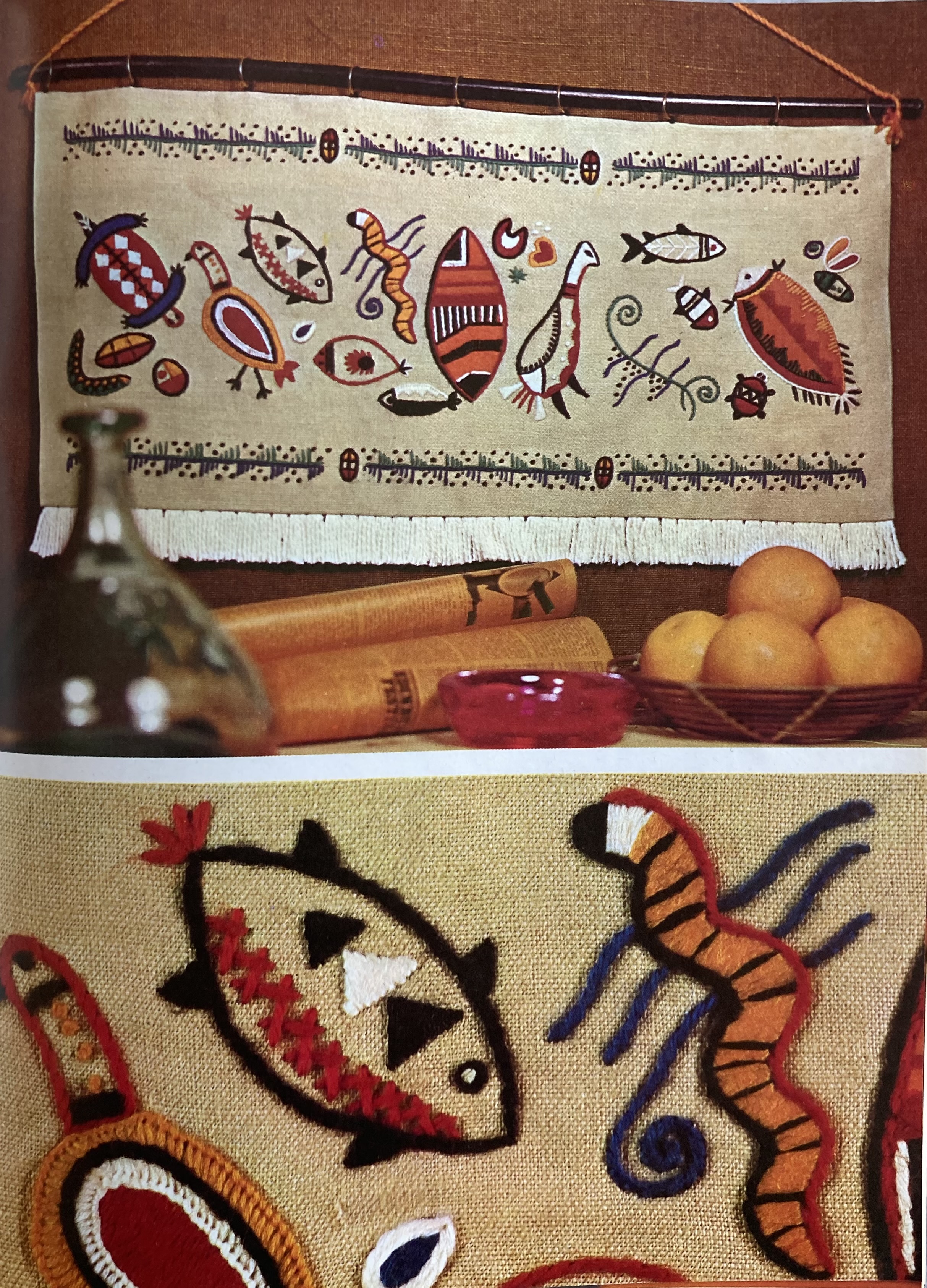
The regular homewares are also more creative than usual. Check out this embroidered “tropical fish” wall panel! (In non-tropical 1967 colours of brown, rust, and burnt orange.) I love it. The fantasy-animal theme continues with a tablecloth and/or table mats and/or cushion in Assisi design. The Victorian stool or cushion ribbon design is quite normal in comparison.

The back pages have the usual ads another nice one from the Scotch Wool shop, but not as dramatic as in the previous issues. in the “Children of other Lands” serial comic, Fifi the French girl takes a baguette home under her arm, only to have it eaten by birds on the way home. I told you this wasn’t the best comic of the Stitchcraft collection… Then there’s a nice extra pattern for a crocheted collar and cuffs in “bell” pattern to perk up your plain dresses.

I’ll be making two larger projects from this issue — the cover dress and the check-patterned “shell”. Neither of them will get done in April, but I’ll post something and update it with progress. Happy Spring!

July 1961: Overview

IMG_2650The motto of the July 1961 issue is “Sew through the Summer” and indeed, there are a lot more sewing projects than one would normally find in Stitchcraft, summer being a time when many people do not want to hold wool in their hands or think about colder weather to come. There’s more emphasis on homewares and small, fun projects to make and use on holiday. The farm photos were taken in Hertfordshire and the boating photos in “the heart of London’s Little Venice”. Doesn’t that sound like fun? Let’s dive in!
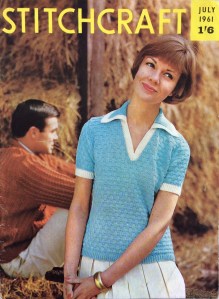
Our cover photo, taken at the Hertfordshire farm, featuresIMG_2654 a really pretty basketweave blouse with that V-neck-plus-collar design that we saw so much of in 1960 and the last years of the 1950s, not to mention just last month on the cover of the June 1961 issue. Personally, I love this style and I’m glad it stayed in fashion for so long. Except for the basketweave, this top is very similar to the blouse I made from the July 1960 issue, and probably not the last one of its kind that we’ll be seeing.

The other summer garments for adults are “cool in 3 and 4 ply” tops for women — one of them machine knit — and for boating or cooler outdoor nights, there’s a cardigan in double-knit Rimple, a little short-sleeved jacket in bulky Big Ben, or a man’s sweater in larger sizes in Totem double knitting. The cardigan “does duty as a sweater”.

On that note, a quick quiz:

  • What is the difference between a jumper and a sweater? (Hint: this is a British magazine that uses both terms, so “jumper is British and sweater is American” cannot be the only answer.)
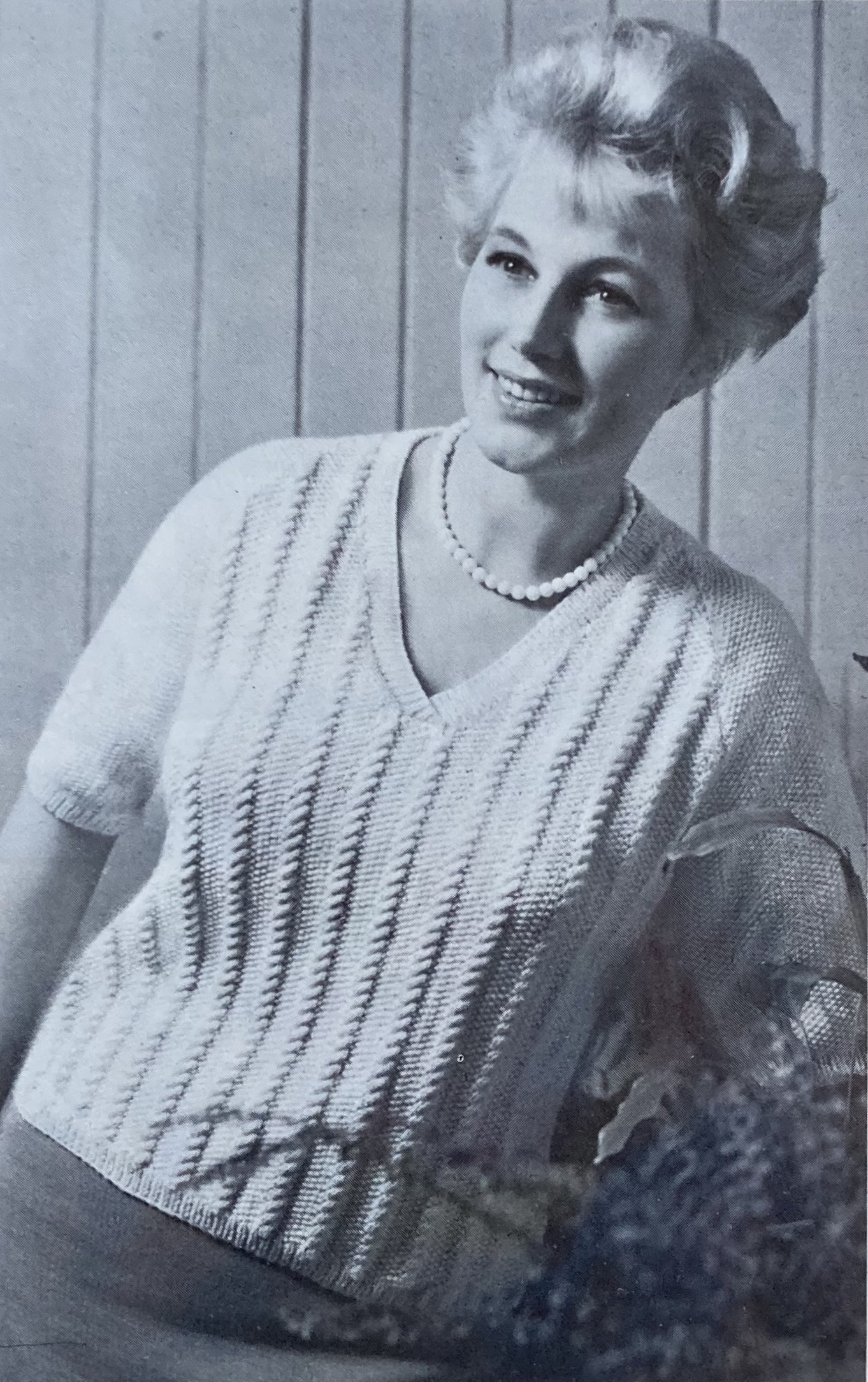
  • If a jumper is a pullover in a lighter weight/more dressy style, and a sweater is bulkier/warmer/more casual, why is the elegant, fine-knit short-sleeved top on page 12 a jumper (top left photo above), the elegant, fine-knit short-sleeved top on page 13 a sweater and/or shirt (top right photo above), and many elegant, fine-knit short-sleeved tops from other issues considered to be blouses?
  • On that note: Why can a cardigan double as a sweater, but not a jumper?
  • Bonus question 1: What is the difference between a cardigan and a jacket? (Okay, this one is easier.)
  • Bonus question 2: Is the blue-and-white garment on the front cover a jumper, a sweater, or a blouse?

The answer to the first two questions is, as far as I can tell, that there is no answer. “Jumpers” per Stitchcraft tend to be long- or short-sleeved, fine-knit, elegant pullovers, while “sweaters” per Stitchcraft tend to be bulkier, more casual, long-sleeved and looser-fitting pullovers, but every time you think you’ve figured out the system, they use the word you wouldn’t expect. “Blouses” tend to be, logically enough, tops (either pullover or cardigan style) that one would wear with only undergarments underneath, and put a suit jacket or other overgarment over. Following that logic, I guess the cardigan on page 21 does duty as a sweater and not a jumper because it is warmer, heavier and meant to be worn outside without a coat and with a blouse or something underneath it. Still, there is no real consistency that I can see. I would love to be able to ask “editress” Patience Horne what system she used.

For the smaller members of the family, there’s this lovely baby’s dress, featuring the most absurd baby photo ever (previewed in the June 1961 issue). I still don’t understand just why I find this baby so goofy. She is utterly cute but somehow, her face is too old for her. That combination of lots of hair and the knowing, watchful look in her eyes makes her look like someone pasted a grandmother’s head on a baby’s body. Anyway, the dress is wonderful. Older girls get a striped jumper with a collar and “gay bobbles” to tie the neck. Let’s hear it for gay bobbles! I’m not sure what today’s 6-, 8- or 10-year-olds would think of the bobble ties, but I think it’s a cute jumper.

The emphasis of this issue is on easy-to-make, no-stress homewares, starting with felt place mats and coasters appliquéd and embroidered with traditional inn signs. Make them for your Pride celebration, for they are “as gay as possible”! Fans of easy embroidery on canvas can make a cushion with purple thistle flowers in cross-stitch or bathroom accessories featuring this month’s Zodiac sign, Cancer. I don’t know about you, but I don’t want to step on a crab, even if it’s only a cross-stitch picture of one on a bathmat.

More ambitious embroiderers (I guess Stitchcraft would call them embroideresses) can make a really pretty fire screen with a modern vase-and-flower motif. I wish they had a colour photo. Even more ambitious knitters can make some beautiful lacy doily mats, and those who prefer to “sew through the Summer” can make a little laundry bag for used dusting cloths, or some easy items to sell at the “needlework stall”, church bazaar, etc. There’s a tea cosy that looks like a cottage, a beach bag with penguins, or an apron with a teakettle pocket.

I am woefully behind on projects, having not even finished my supposedly quick and easy blouse from June 1961, and with two other projects from that issue (the child’s beach dress and the embroidered-appliqué bird picture) still “in the queue”. But someone is always having a baby and that little dress is really sweet and should knit up quickly, so I’ll probably make that and try to work on the remaining June projects at the same time.

  • Bonus Answer 1: A cardigan definitely has buttons/fastenings and a knitted jacket often doesn’t. Unless it’s a suit jacket, then it does. Or whatever.
  • Bonus Answer 2: The garment on the front cover is a “cool, casual shirt-sweater”.