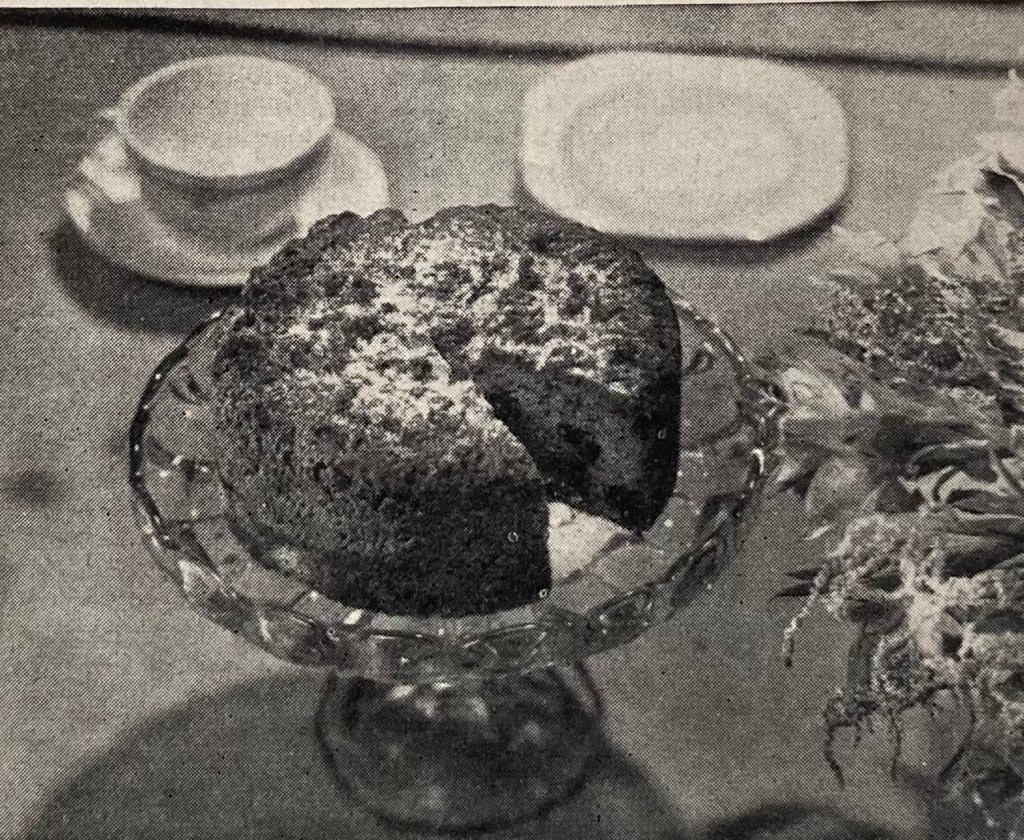
“Someone coming to tea, nothing much in the house and you are short of materials?” None of those things are likely to be true in our pandemic-stricken December 2020, but if it were September 1949, you might very well find yourself making one of Stitchcraft‘s recipes from this issue. After having excellent results with December 1949’s nut loaf recipe and fairly disastrous results with September 1949’s (this same issue) “oat crunchies”, I was cautiously excited to try out the date and ginger cake, which was promised to be “very welcome” and have a “delicious flavour”. It certainly looks appetising in the photo.
It claimed to make a 2-pound cake (weight, not price …) and that sounded huge to me, so I decided to make a half recipe for the first experimental run, using my little 16-centimetre-diameter round spring-form pan. The measurements in the original recipe are all in old-fashioned ounces by weight, so I did some halving and rounding to convert to gram measurements. (Apologies to any of my American readers who may want to try my version of the recipe at home — I meant to notice and record the measurements by volume as well, but I was too caught up in adapting that I forgot!)
Admittedly, there was a lot to adapt. The Stitchcraft recipe starts off with 8 ounces of self-raising flour, which I don’t use, so I had to figure out how much baking powder I should use for one-half of 8 ounces i.e. 4 ounces i.e. approximately 113 grams of flour. One teaspoon seemed right to me. One egg can’t reasonably be halved, so, one egg. Three ounces of margarine divided by two converts to about 40 grams — not very much for a cake! Then there’s one tablespoon of syrup or black treacle (“the latter for preference”) — I am lucky enough to be able to buy actual date syrup in my local yuppie organic supermarket, so I used a whole tablespoonful of that and reduced the sugar (I used Demerara brown sugar) to 1 tablespoon, so a bit less than half of the 3 tablespoons called for. Then 5 to 6 ounces of chopped dates (about 70 grams?), 3/4 cup aka a generous 1/4 cup milk (I used oat milk), and 1/2 = 1/4 teaspoon bicarbonate-soda i.e. baking soda. Plus almond and lemon essences (“although not essential, they do improve the flavour”) and/or a teaspoon or half teaspoon of lemon juice.
Are you still with me? Is your head spinning? You understand why I forgot to record the volume measurements. Also… where is the ginger??
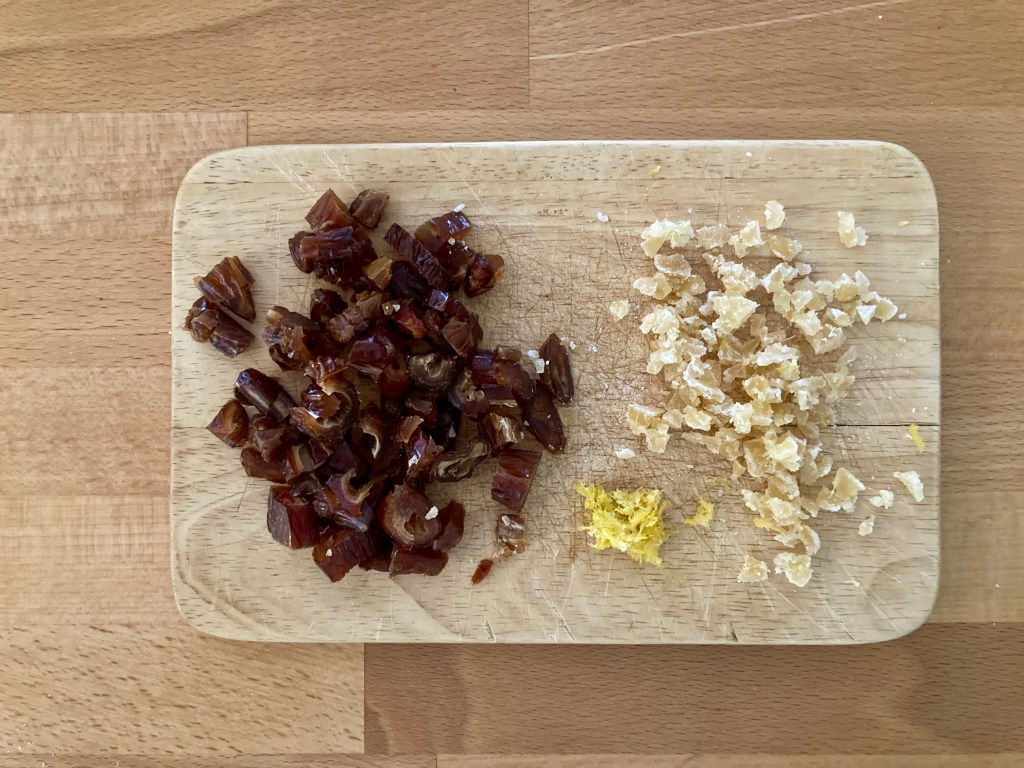
I read the recipe again. Definitely called “Date and Ginger Cake”. The description definitely mentioned the it was the combination of “dates, ginger and essences” (emphasis mine) that gave this cake its delicious flavour. And definitely no actual ginger mentioned in the list of ingredients! I think the cooking editress needs a proofreader. So I chopped up about 60 grams of dates and 20 grams of candied ginger, which looked like a good amount for a small cake, and added about a half or maybe it was closer to a whole teaspoon of grated lemon peel.
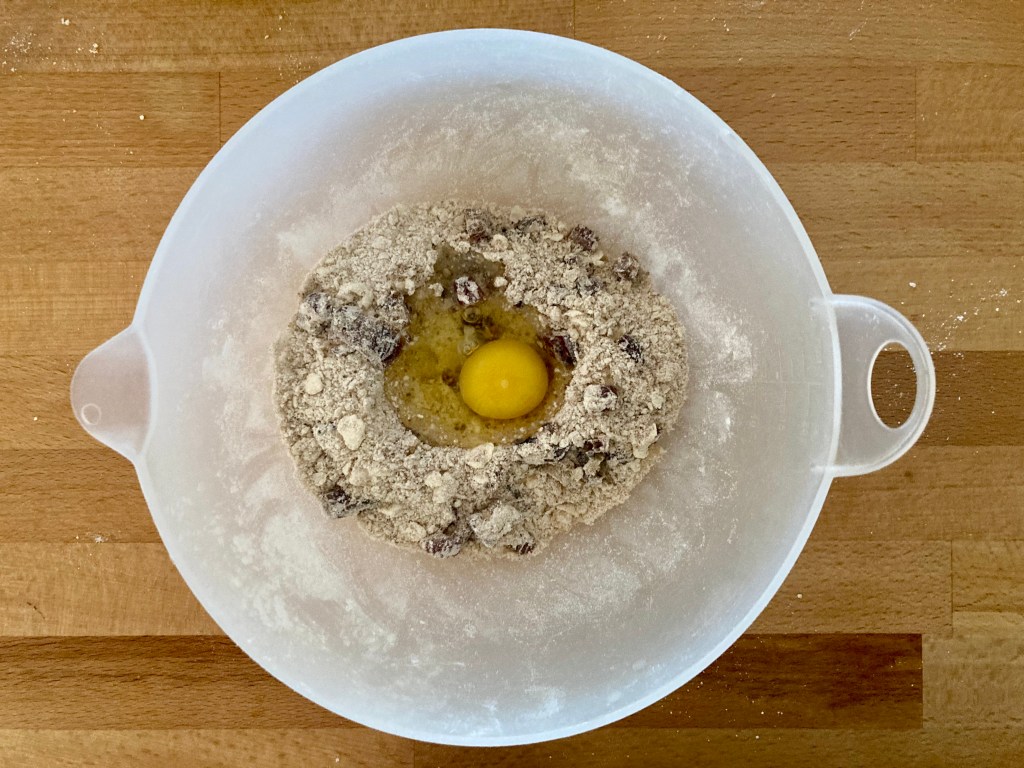
On to the recipe itself. “Rub fat into flour” — I was again impressed at the relatively small amount of margarine — “add dates, sugar and ginger”. Ah, so it is supposed to have ginger in it after all! Pro tip: toss the chopped dates in some of the flour before adding it to the mixture, so they don’t stick together. “Break egg straight into dry ingredients; stir in treacle.” The italics are original and I wonder what that “straight” is supposed to mean. Don’t beat the egg first? Don’t throw it in at an angle? “Dissolve bi-carbonate soda and essences in milk, add to mixture and mix thoroughly.” Okay. According to the recipe, the resulting batter should be fairly sticky and mine had a bit more liquid, so I added some more flour, then put it in the cake pan and baked it. The recipe said to bake it at Regulo 4, or 375 degrees, for … one and a half hours? That seemed excessive even when reduced for a half recipe, so I set a timer for 30 minutes.
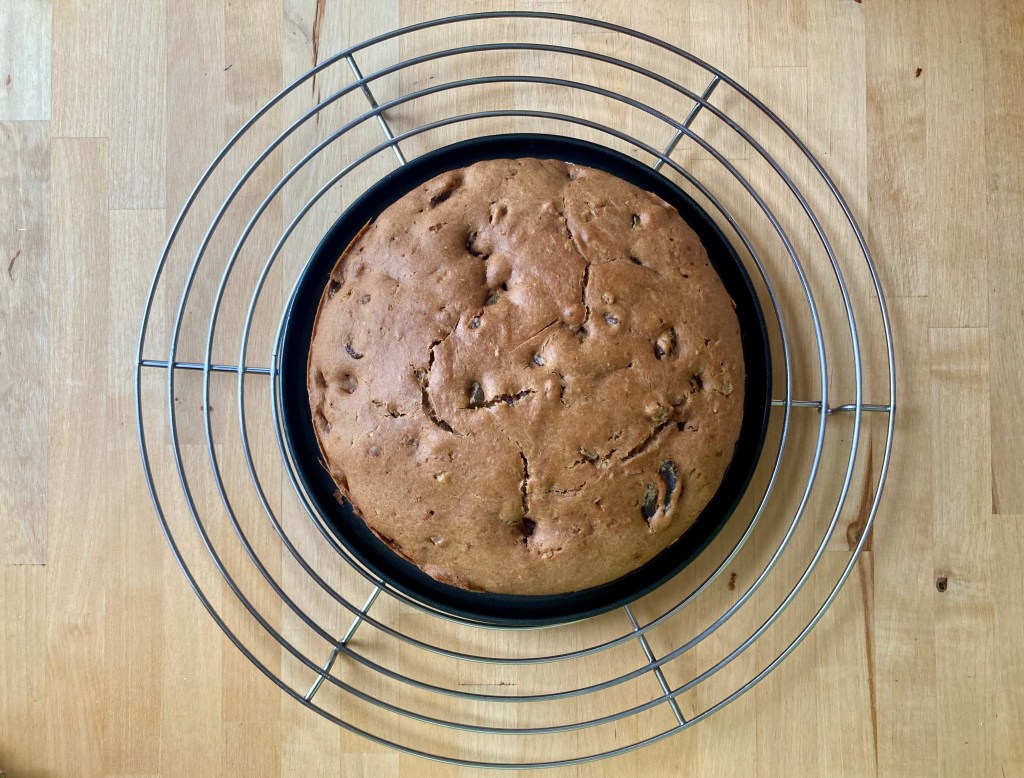
It baked fine in that time, though a little less would have been even better. Then I added my own personal secret ingredient: coconut icing. Nothing goes better with dates and ginger than coconut! I used a sweet coconut spread from the same organic supermarket, slightly warmed and then smoothed over the top, but it’s easy enough to make it yourself from coconut oil, dried coconut whizzed through a grinder to make a sort of powder, powdered sugar and a little coconut milk. Heat together in a double boiler until liquid enough to spread and spread it on the still-warm cake, then let it cool well.
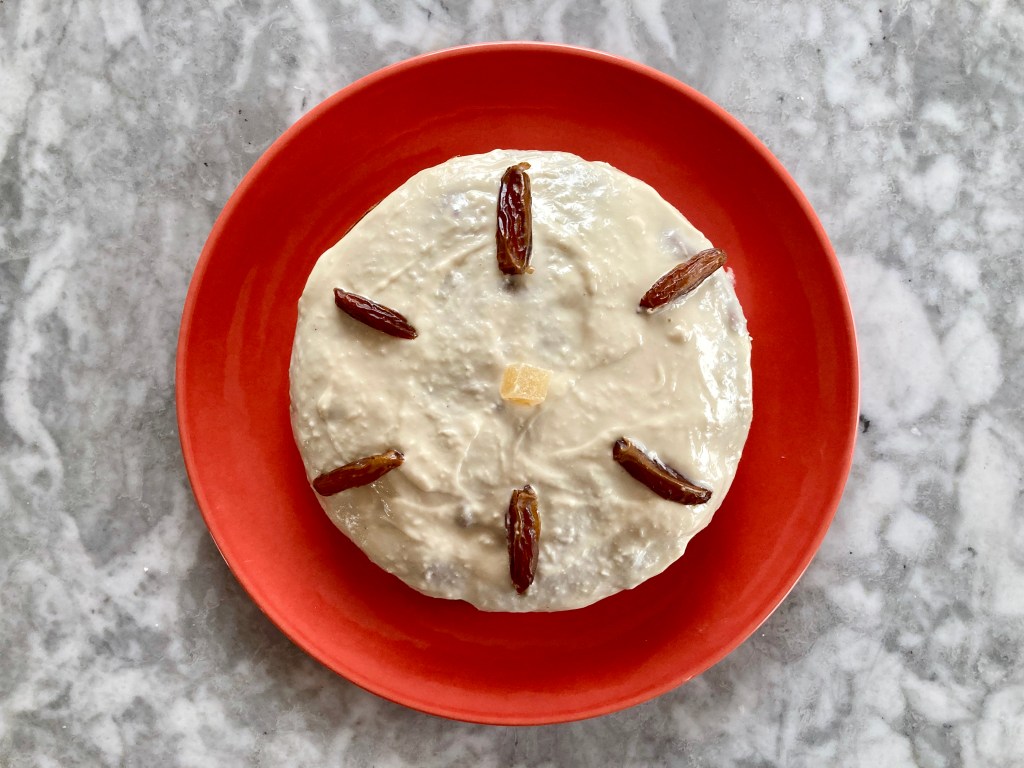
It looked good, but did it taste good? Yes! It tasted delicious. The consistency was a bit on the dry and crumbly side, which I guess is to be expected with so little fat in the batter, but the icing balanced that out perfectly. The date and ginger flavours came through well and harmonised. And it had that depth of flavour that comes from good gingerbread or spice cake, although I used no extra spices. The half-recipe cake is small, but rises well and will surely keep for a while if covered and in the refrigerator. It makes the perfect cake for your socially distanced, one-person 2020 holiday teatime. (If that’s any consolation.)
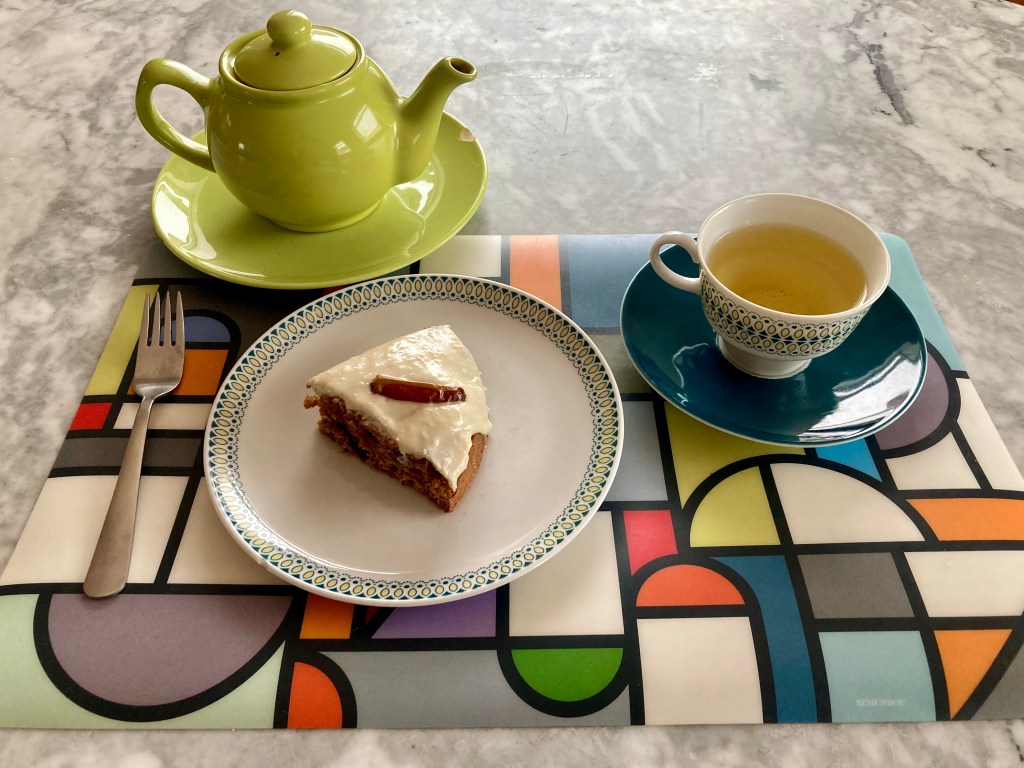
Here’s my version of the recipe, for a small cake:
DATE AND GINGER CAKE
- 125 grams flour (you can mix 1/2 whole grain and 1/2 white)
- 1 tsp baking powder
- Pinch salt
- 40 grams margarine
- 60 grams chopped, dried, pitted dates
- 20 grams chopped candied ginger
- 1/2 tsp grated lemon peel
- 1 tbsp brown or Demerara sugar
- 1 tbsp date syrup, dark sugar syrup or molasses/treacle
- 1 small egg
- 1/4 cup milk or milk substitute (almond, oat)
- 1/4 tsp baking soda
- Coconut icing
Toss dates in a small portion of the flour. Mix rest of flour, baking powder and salt in a large bowl; add margarine in small chunks and rub into the flour with fingers until crumbly. Add dates, sugar, ginger and lemon peel and mix. Make a small well in center of mixture and break the egg into it. Add syrup. Dissolve baking soda in milk; add to mixture and mix everything until blended. Drop into a greased and floured 16-centimetre-diameter round spring-form cake pan, smooth surface evenly and bake at 180 degrees C for approximately 30 minutes. Set on a rack to cool. Warm the icing in a small double boiler or microwave until spreadable and smooth over the still-warm cake. Decorate with date slivers, ginger or shredded coconut as desired and let cool completely before serving.
 “Someone coming to tea, nothing much in the house and you are short of materials? Here are three recipes that don’t need much in the way of ingredients, don’t take long to mix and are delicious to eat.”
 Previously, I had made a “


 In its earlier decades, Stitchcraft included a page of easy and economical recipes in each issue, mostly for tea-time cakes or pastries. The tradition ended around 1950, so none of my 1960s issues have a recipe page, but I do have a few magazines from the late 1940s and thought this would be a fun time to try out their “Christmas Cooking” ideas.


 The Stitchcraft Sixties