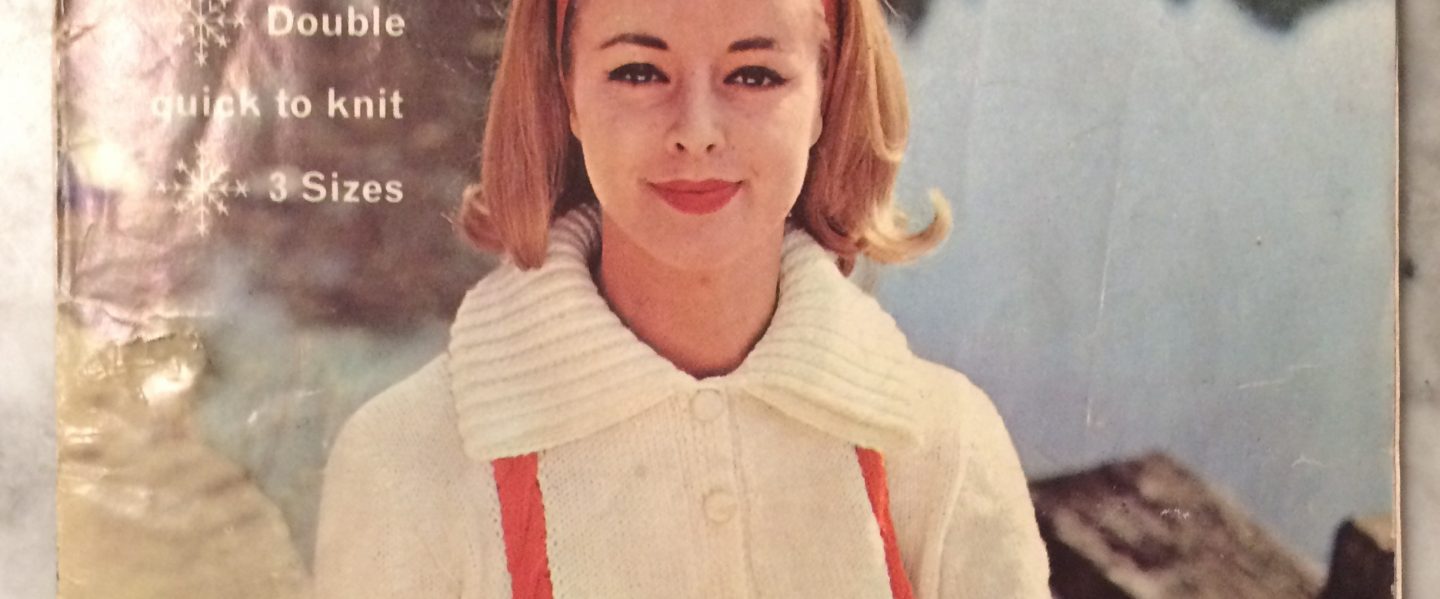
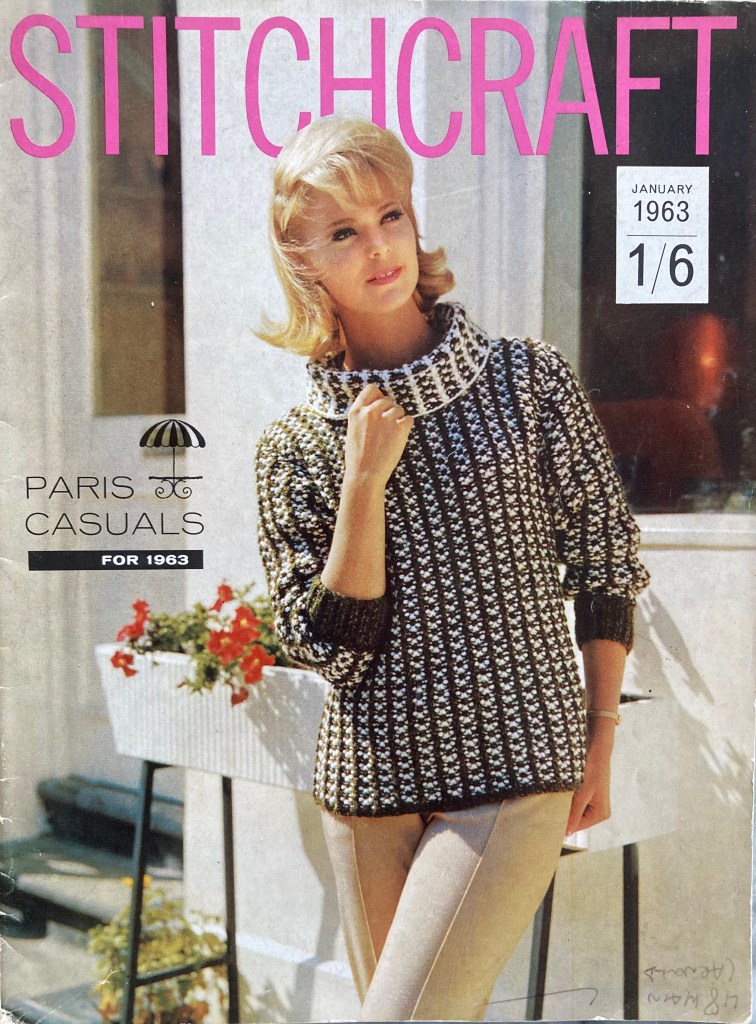
Happy New Year, everyone! It’s 2021 in the real world and 1963 in the Stitchcraft Sixties blog world. The real-life 1963 was a turbulent year: the Cold War escalated, as did the war in Vietnam; the civil rights movement in the US both gained ground and suffered violent setbacks; John F. Kennedy was assassinated; the Second Vatican council entered a new phase. In England, scandals abounded in the wake of the Profumo affair and the divorce of the Duke and Duchess of Argyll. On a happier note, the Beatles recorded their first album, Please Please Me, kicking off Beatlemania around the world, and women in Iran gained the right to vote. Also, the smiley-face symbol was invented. 🙂
Of course, none of this — not even the Beatles or the smiley face — had any direct influence on Stitchcraft (certainly not in the January issue, before any of it happened…). What we think of as “1960s fashion” — the miniskirt, the “space age” look, the shift dress, the Mod look, the hippie-bohemian styles of the later years of the decade — was just gearing up around 1963, and Stitchcraft was a fashion-conservative magazine. That said, holdover fashions from the 1950s like fitted, waist-length cardigans and wide, swingy skirts have disappeared completely by now; the female models often wear trousers or “slacks” and casual, bulky-knit sweaters are ubiquitous.

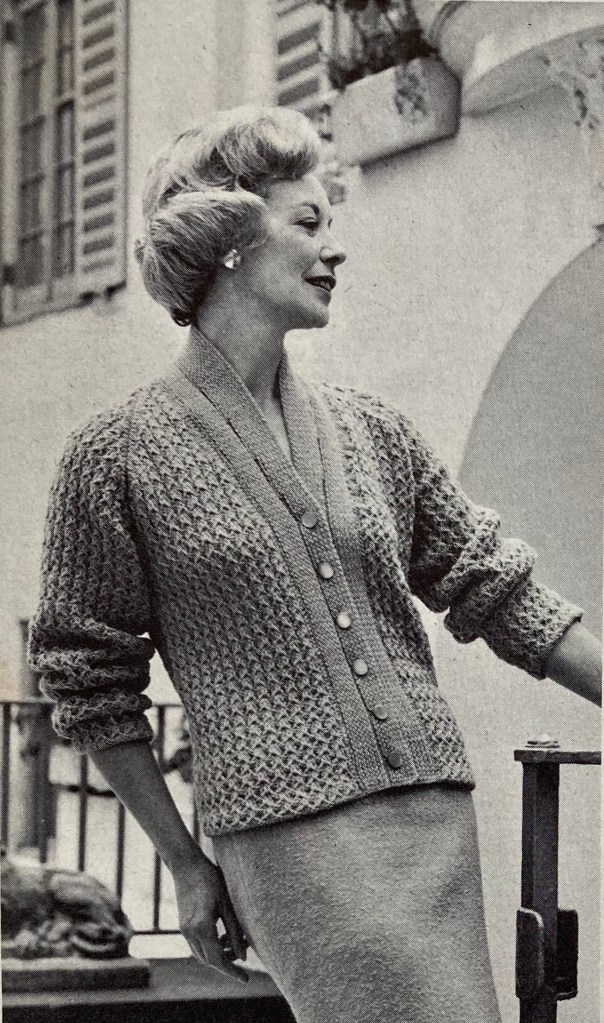

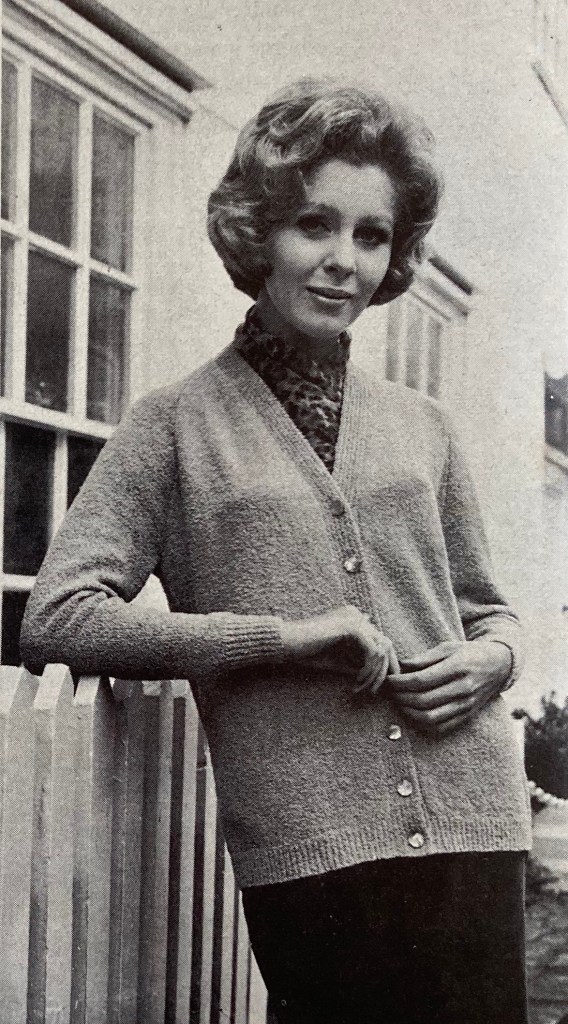
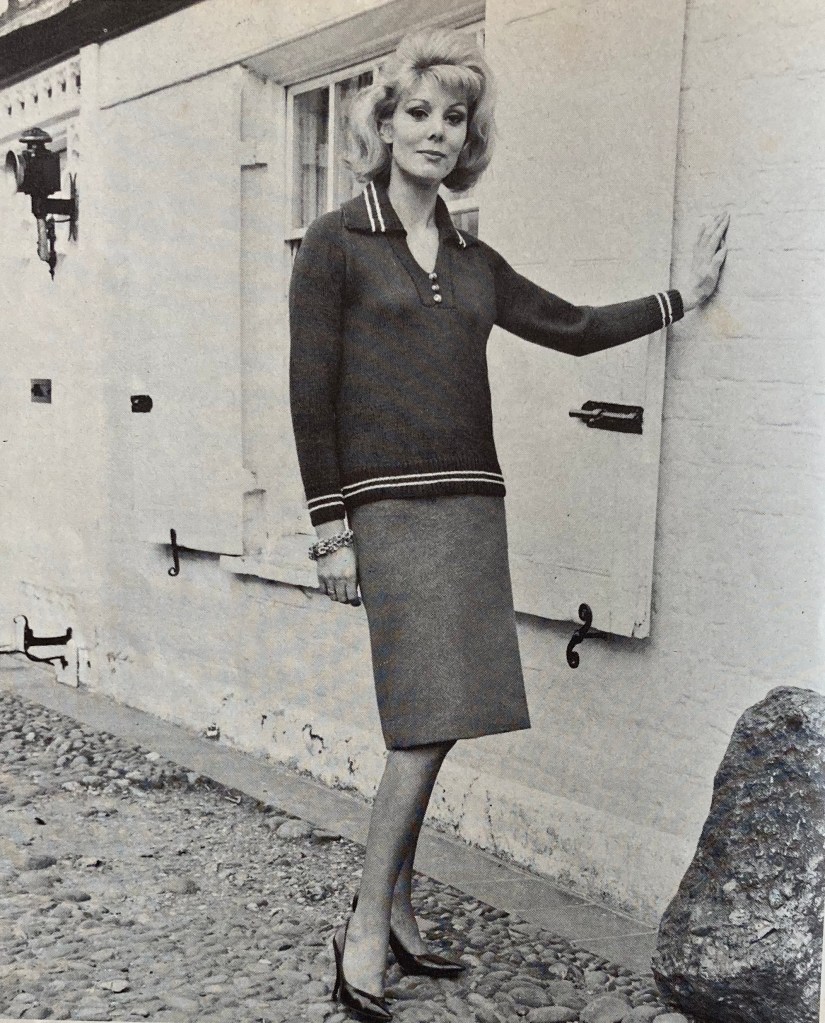
So what does January 1963 have in store for us? The theme of the January 1963 issue is “Paris Casuals” and resolves to start with “a bumper all-round family number.” For adults, that means warm, comfortable jumpers and cardigans in a range of wool weights with V-necks or interesting collars and textured stitch patterns. The cover garment epitomises all the trends: made in bulky Big Ben wool in a two-colour slip stitch pattern, it sports “this season’s Paris collar choice and longer line.” The textured raglan cardigan is a similar look, as is the man’s casual cardigan on the back cover. The bouclet cardigan gives a nod to earlier fashions with its choice of fine wool and classic shape, but here too it is longer and looser-fitting than previous classic bouclet garments. A simple collared jumper in double knitting with attractive fine details rounds out the adult garment selection.

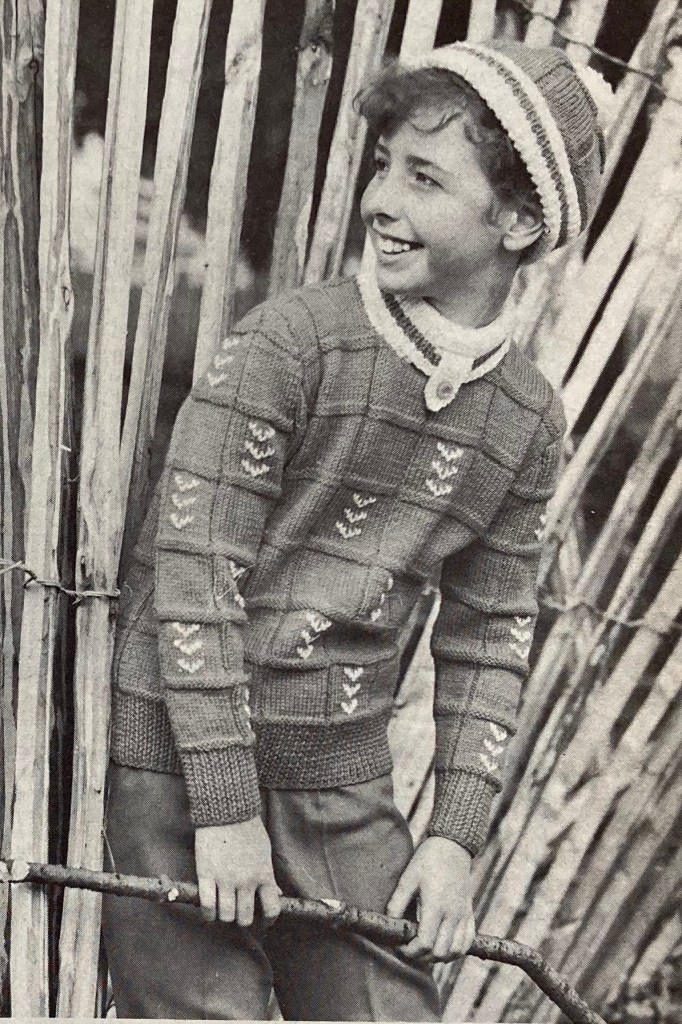
There are great winter fashions for children, first and foremost the girl’s skating set of skirt and collared pullover. Unfortunately, I suspect something went wrong with the sample knit, as both pictures show the model turned 3/4 away from the camera and it’s not clear how it is supposed to look from the front. (Also, could someone please give her some warm tights to wear before she goes out onto the ice.) Toddlers get a cute “buster suit” with a design of cherries on the jumper, and older children get a wonderful hoodie (to use the modern term) and jumper-cap set to wear while playing in the snow. (Or in the photo studio — check out the snowman and snowball made of wool and/or cushion stuffing fluff!). Crisp, wintery colours of blue and red with white are trending. Notice also that the girl model is wearing trousers, the hooded sweater is unisex, and the model wearing the red outfit in the black and white photo is allowed to be active and tomboyish for once. I wouldn’t even have known she was a girl if the sweater weren’t (for whatever reason) considered specifically a girls’ garment. Slowly, very slowly, roles are changing.


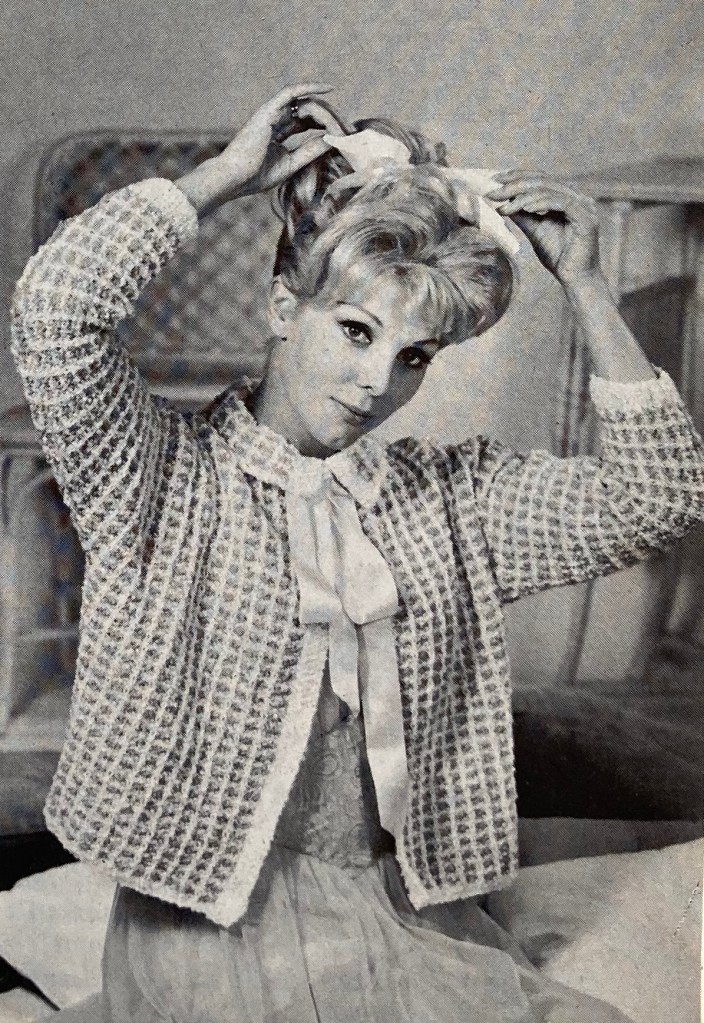
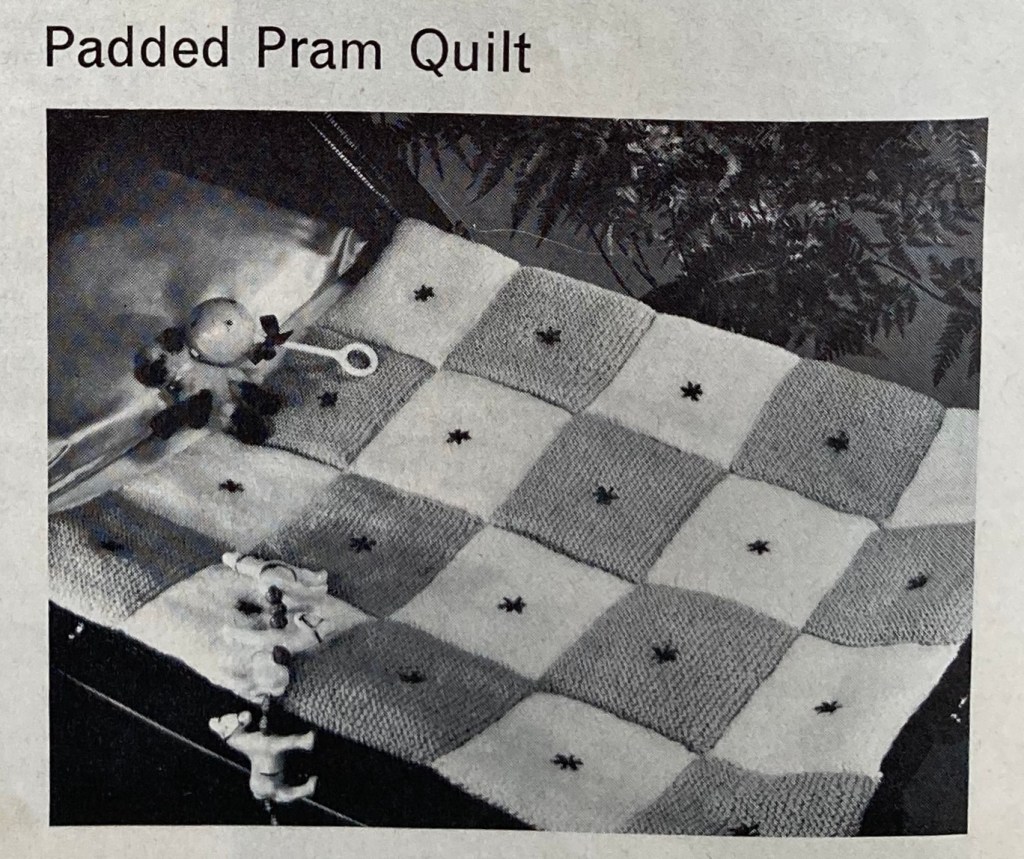
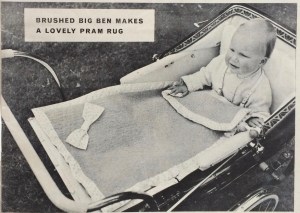
Babies get a pram cover instead of a garment this time — padded and quilted to be extra warm — and there’s a cute bedjacket and fantastic “tower” hat that is perfectly in fashion. (Side note: The caption, “PARIS HAT”, makes me think of that line “If a Harris pat means a Paris hat, Bébé… ooh la la!” in “Always True To You In My Fashion” from the musical Kiss Me, Kate. In true Cole Porter style, it’s an upbeat love song… in which the singer explains to her boyfriend that her dalliances with other men for gifts and money — basically sex work, though of course not explicitly described in those terms — shouldn’t count as infidelity, since she’s only doing it for the financial benefits and is true to him in her heart. Ah, romance! Anyway, the hat is great.)

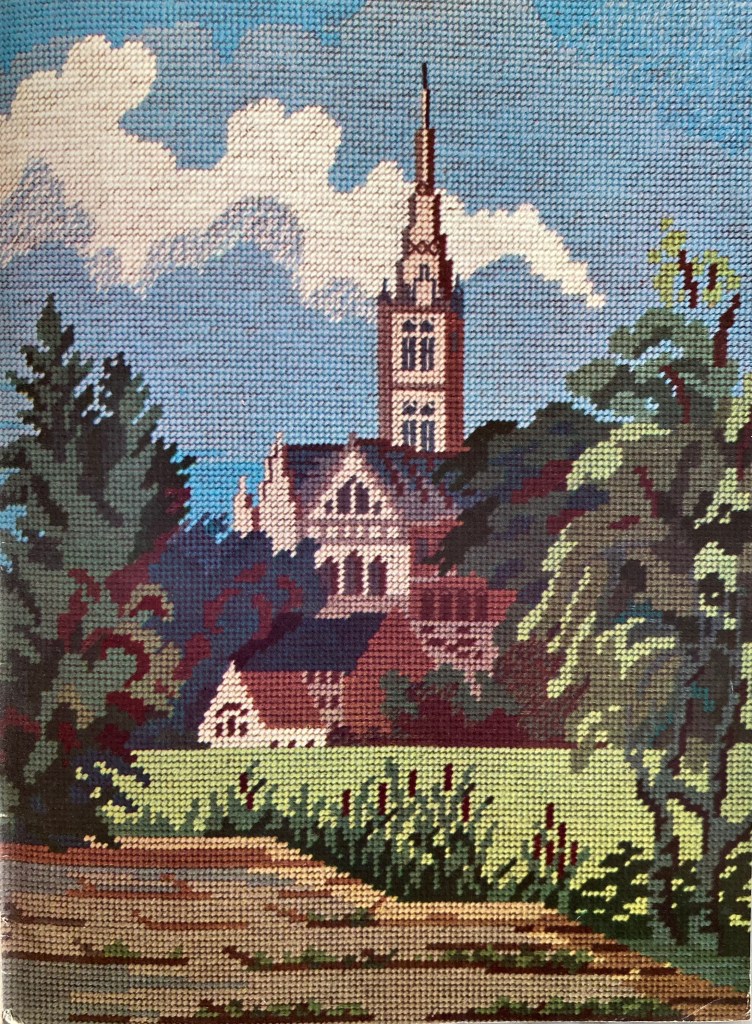
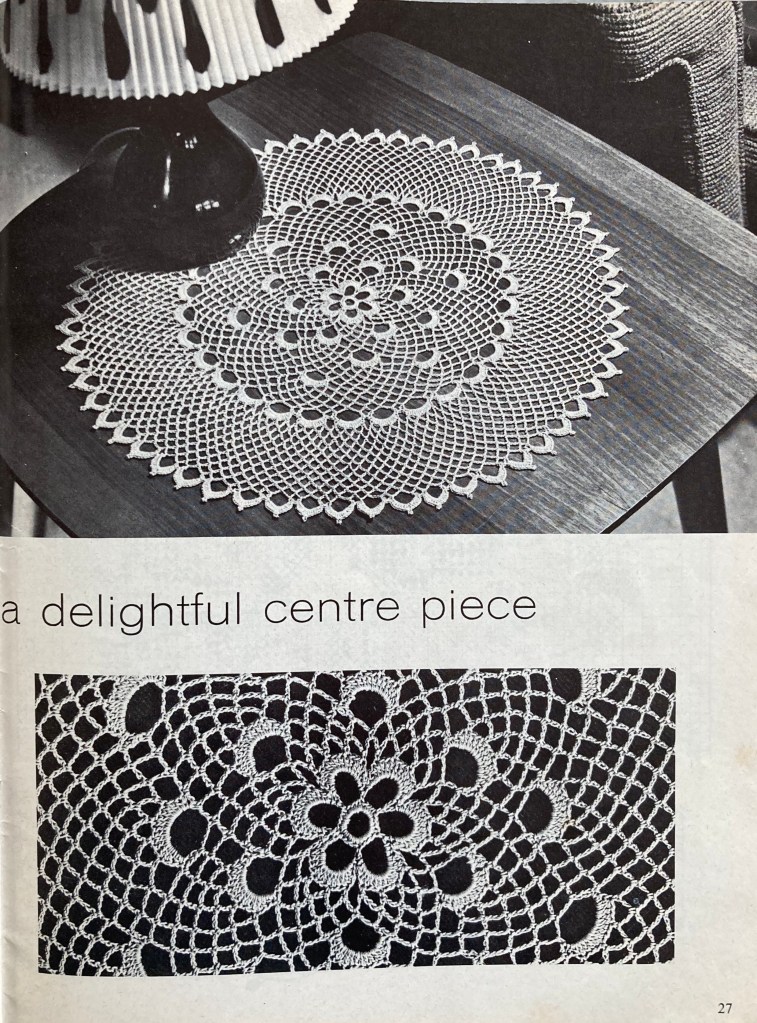
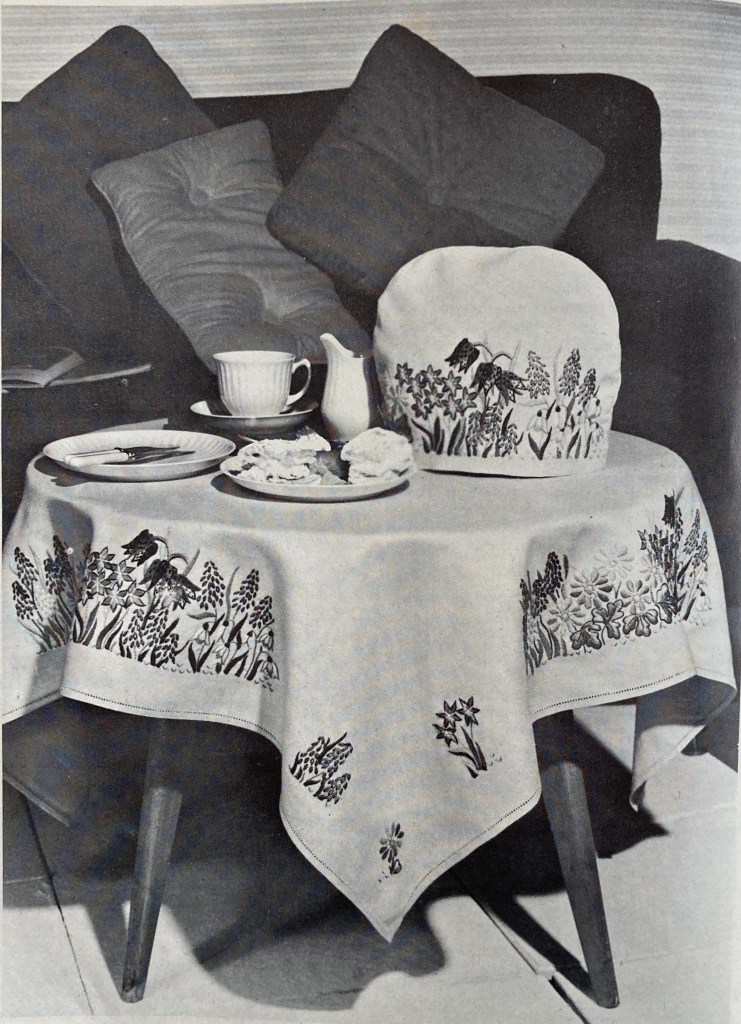
With all the great knitted items, home fashions are pretty standard this month. There are rugs and cushions, a lovely embroidered tablecloth and tea-cosy set, a tapestry picture, a cutwork table set, a very impressive crocheted doily and a hassock or kneeling cushion for church-goers.
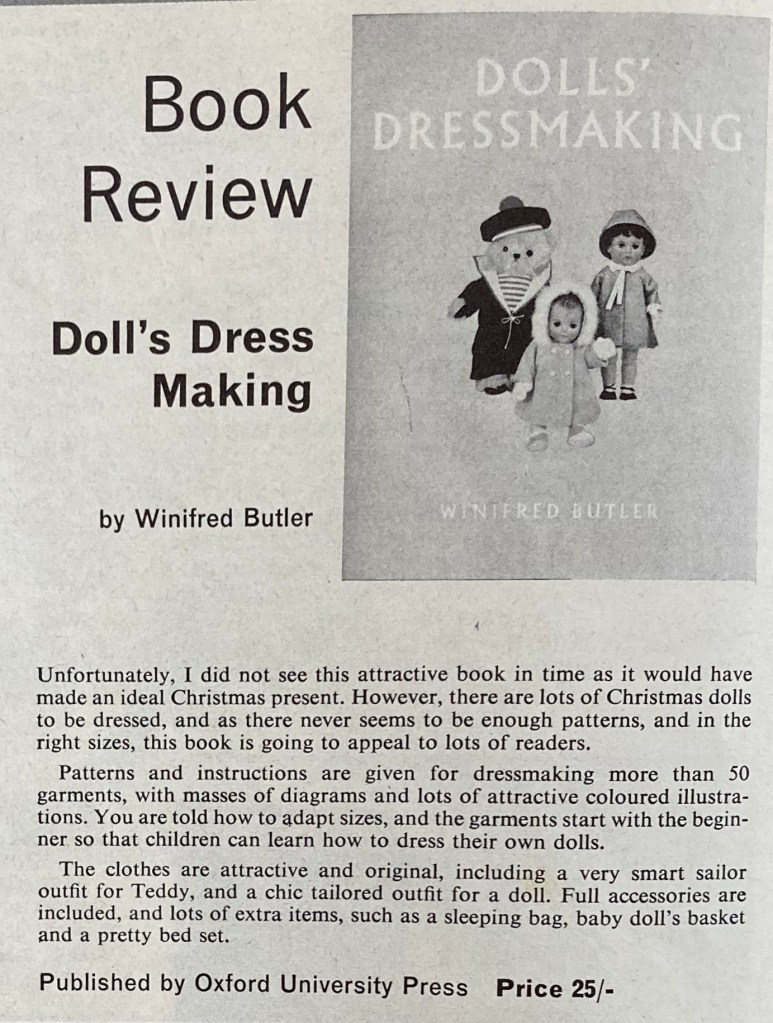
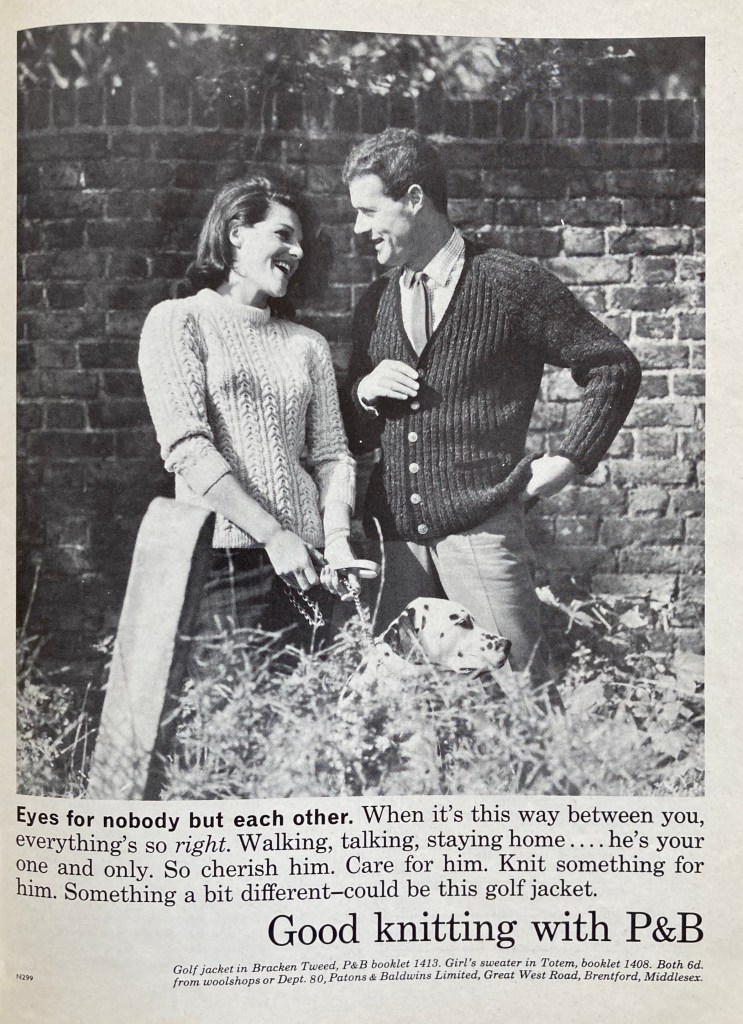
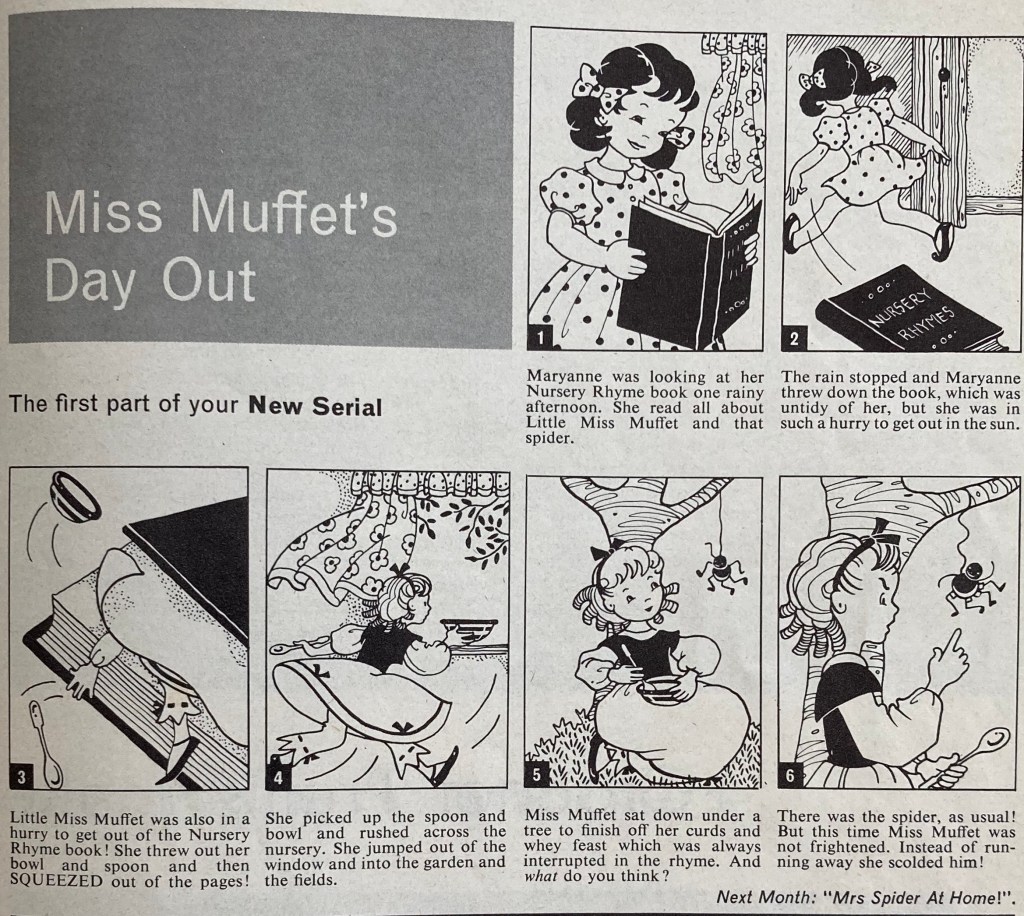
The “readers’ pages” have a review of what was probably a very interesting book on dressmaking for dolls, and –bucking the “single girl” trend of the early 1960s — we’ve got another “stand by your man and knit him something” ad for P&B wools (though this one is really quite sweet and romantic, unlike the “you only exist to be pretty for him” ad seen in other issues). There’s also a new cartoon serial for children: a re-telling of the “Little Miss Muffet” nursery rhyme, where Miss Muffet is not at all afraid of the spider. I’m sure, when she grows up, she will be not at all afraid to suggest to her man that he knit something for her for once.
My project from this issue will probably be a scaled-down version of one of the children’s sweaters for a smaller child. Stay tuned!
 April showers bring May flowers, or so they say. I’ll just say that, after the last couple of weeks of March, that umbrella on the cover of this month’s issue looks really familiar. As does the model on the right — she was featured (with a more flattering haircut) in many issues throughout the 1950s.
 to spend your holiday in April or May on the British isles or the North Sea coast, you will definitely want to wear one of the warm, bulky wool garments from this issue. “Jenny”‘s thick, double-knit Norwegian-style jumper and hat, described as “dazzling designs to cut a dash on the beach this summer”, tells you everything you need to know about that.


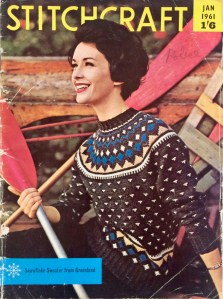 Happy New Year 2019! Or 1961, if you prefer. January 1961’s issue “starts with a swing” with “lots of colour” and “tip-top designs” like the gorgeous Greenlandic-style sweater on the cover.




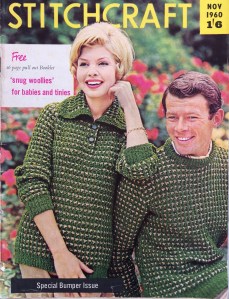 Brrrr! November 1960’s Special Bumper Issue” brings us “Colour for the Cold Days” and an extra 16-page pull-out booklet of baby woollies. Sadly, so sadly, the booklet from my copy of this issue has been pulled out long ago and is missing.


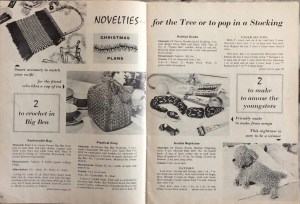 Homewares are still in a weird phase. The working woman or baby-boom mum (and those were overlapping categories, then as now) of 1960 didn’t have the time or patience to make too many elaborate Jacobean embroidery pieces or huge, detailed tapestries, especially not right before the great rush to get Christmas presents under the tree, so the focus is on quick, easy-to-make novelties for gifts. The aesthetic sense does seem to get lost a bit, though, if you ask me.


 (I notice that Word Press does not recognise the word “chairback”. They have been out of fashion for too many years, I guess, having fallen victim to cheaper furniture, more frequent hair-washings and less
 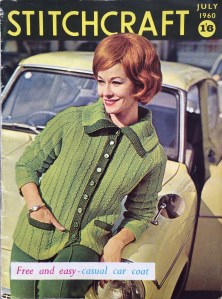 “Free and easy” is this month’s motto. Summer is here and nobody really feels like handling warm wool, so the emphasis is on “travel knits” (lightweight), “casual knits” (not too complicated) and “stroller styles” (loose and oversized). There is more embroidery and needlework than knitwear, and some easy sewing projects. Shall we relax and take a look?
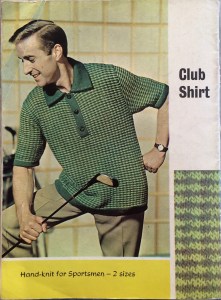 I have to take a moment here to quote one of my favourite Roald Dahl stories, “The Boy Who Talked With Animals.” It’s about a little boy who saves a giant tortoise from the soup kettle, and Dahl’s description of the tourists waiting on the beach for the caught tortoise to be hauled in has, for some reason, stayed with me through the years:




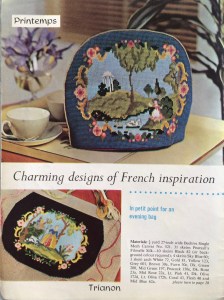 You can also embroider a tablecloth, make tea-towels in huckaback, or attempt this fabulous tea cosy and/or evening bag in faux eighteenth-century tapestry. I so, so want to make this evening bag! I would love it and use it all the time. But I am too overwhelmed by the idea of trying to make a chart based solely on the photos — the design is fairly intricate — and having never before attempted tapestry work, I fear it would just be too much for a rank beginner. I will definitely file it away for future days when I know how to approach it better.


 The Stitchcraft Sixties