October 1968: Overview

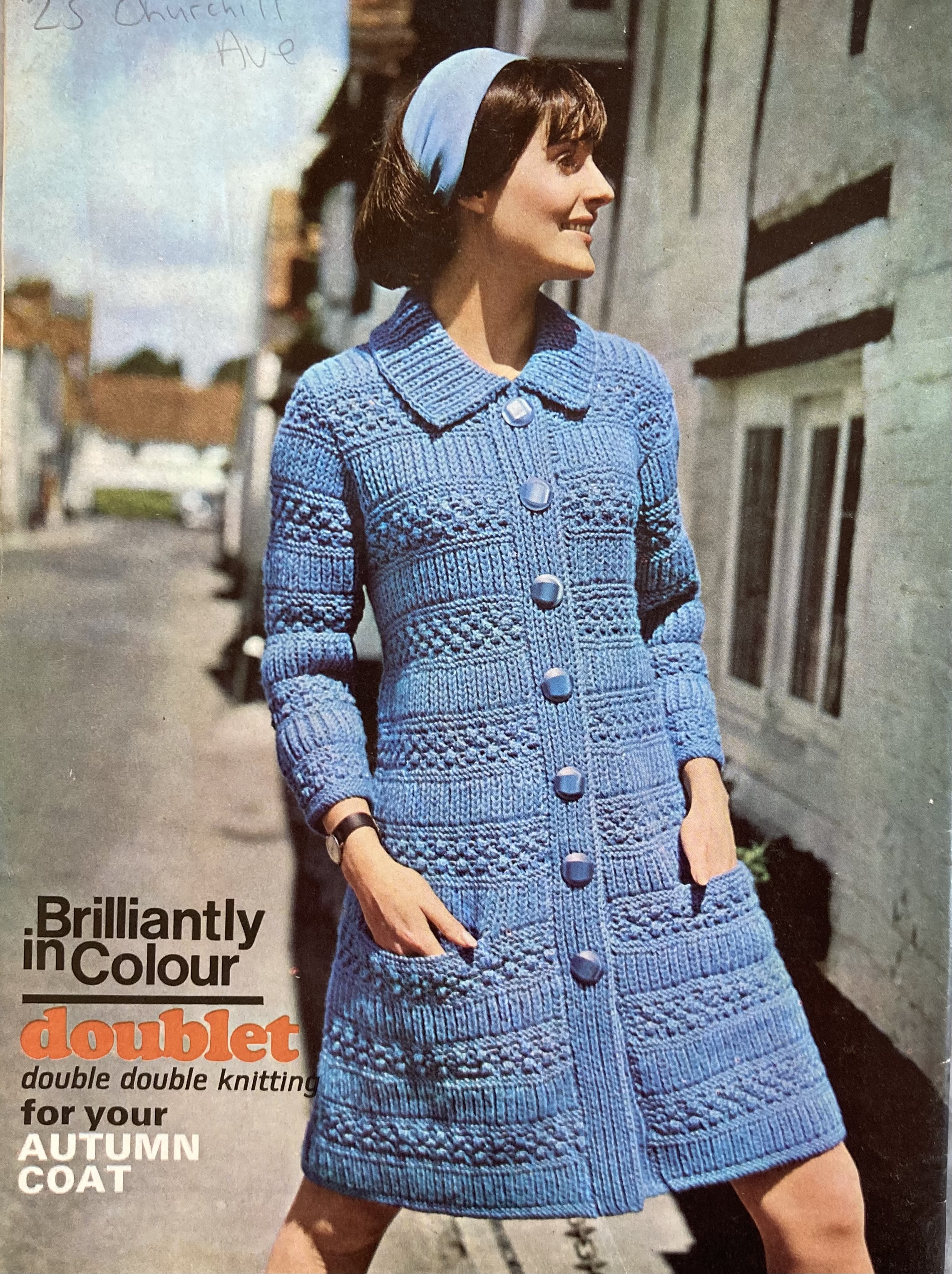
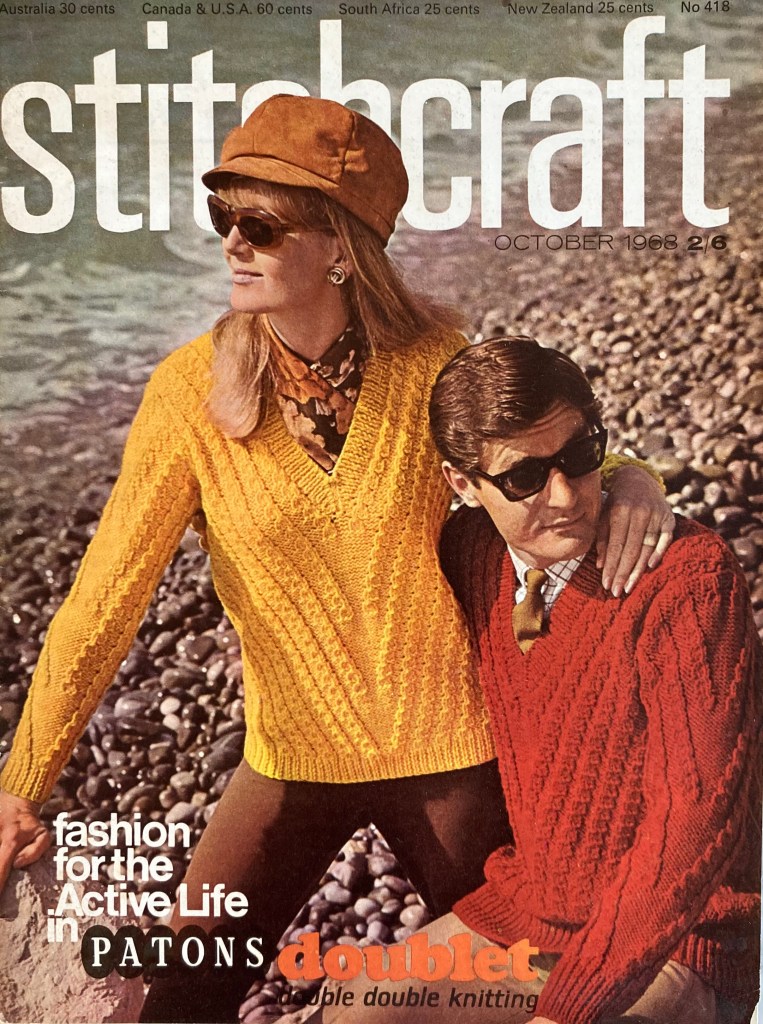
A new yarn made its debut in the October 1968 issue of Stitchcraft: Patons Doublet “double double” knitting. Designed to knit up heavy garments quickly, it was a super-bulky wool with a tension of 4 to 4,5 stitches per inch and was advertised as having a smooth texture and good stitch definition, perfect for the loose, casual shapes and textured cable patterns of the later 1960s as well as appealing to the “active lifestyle” of younger knitters who wanted to get projects done fast.

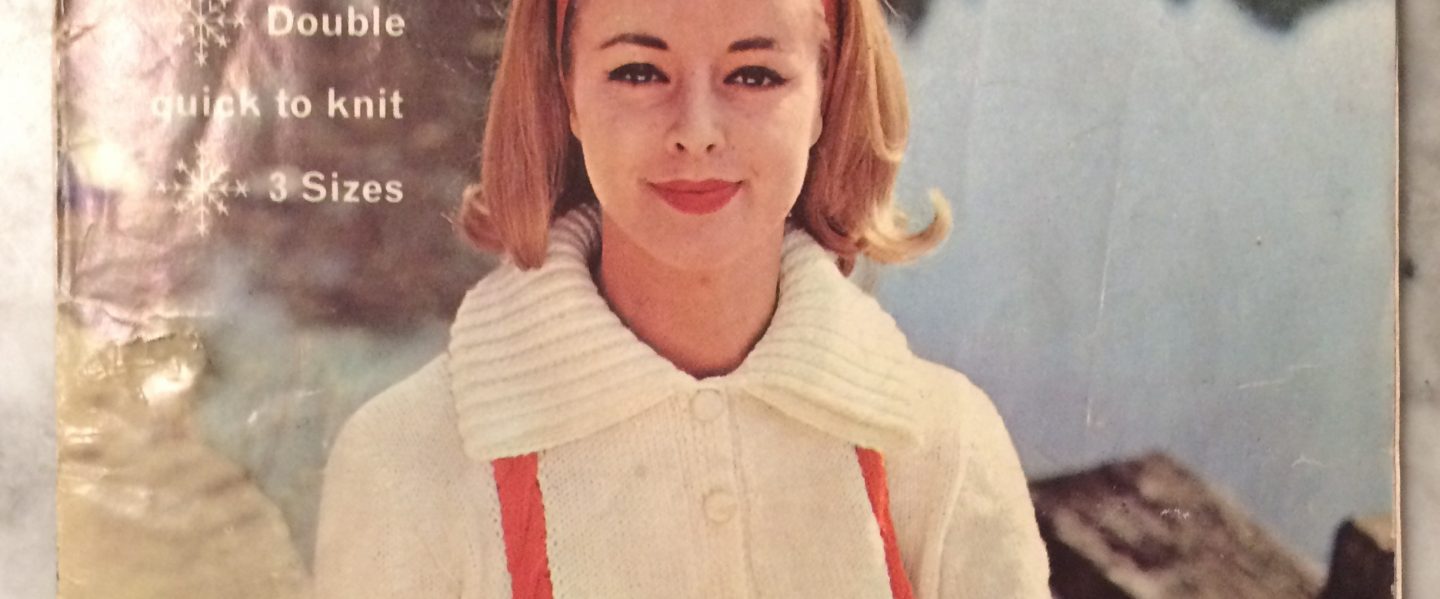
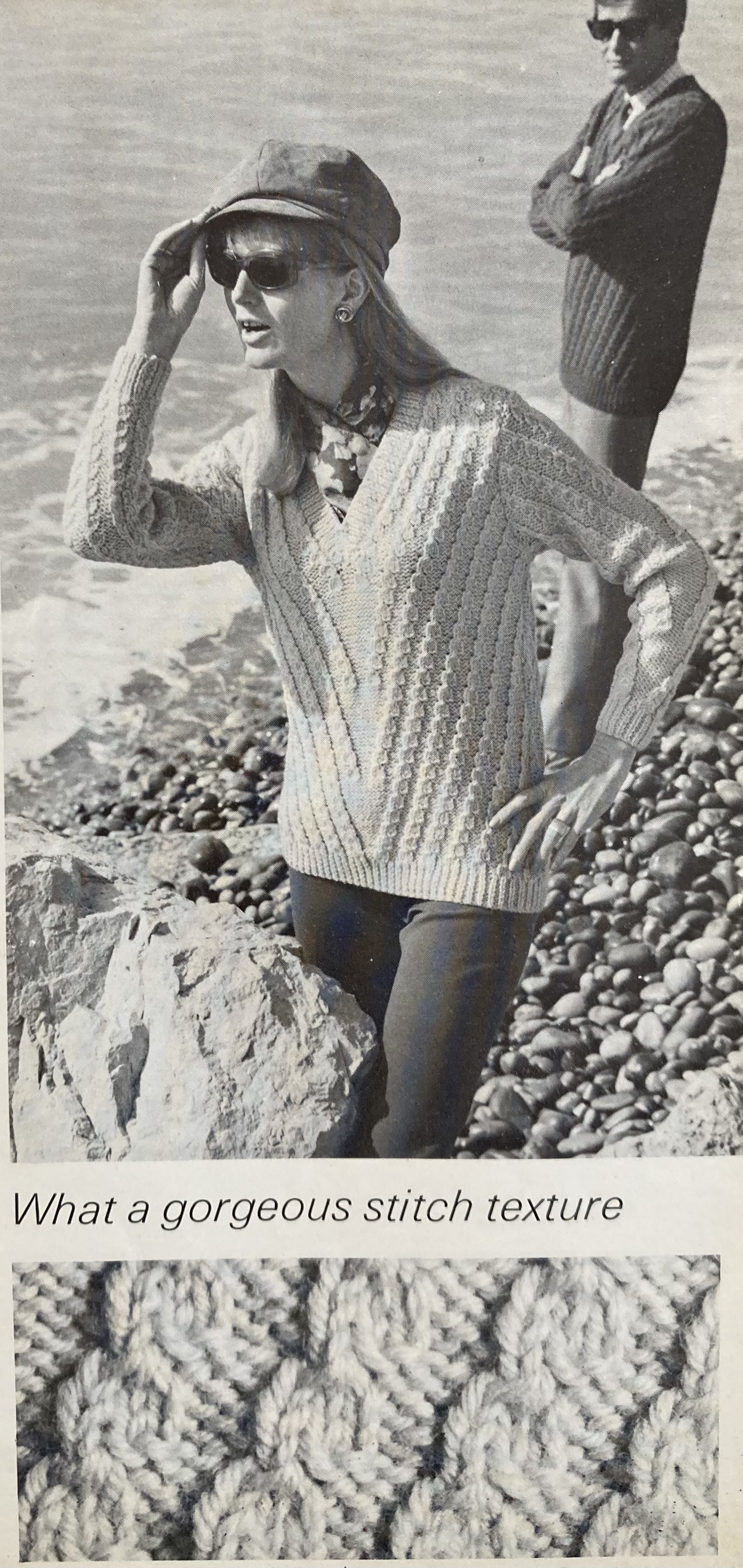
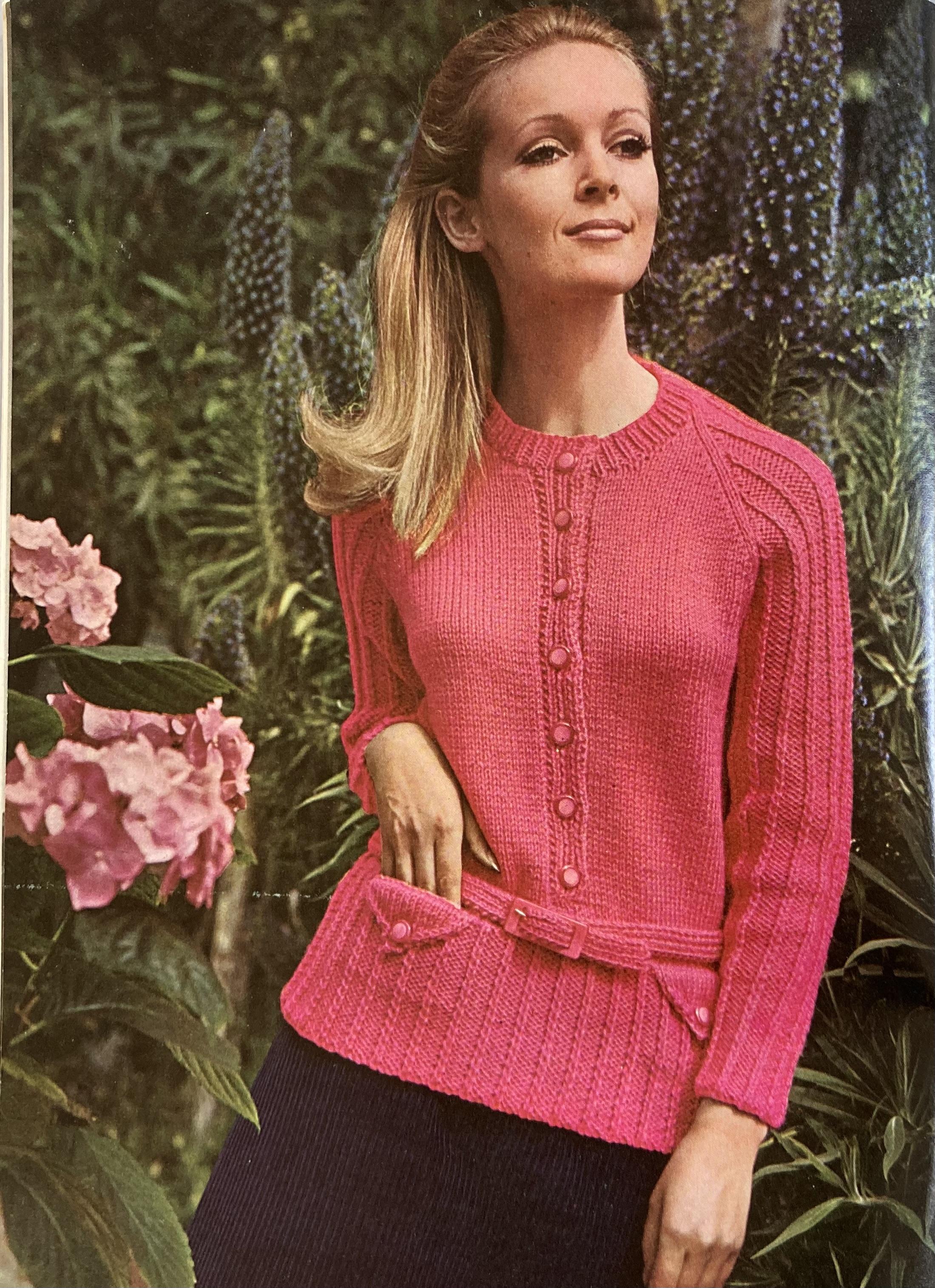
The design on the front cover uses Doublet for a unisex pullover with diagonal mock-cables that follow the V-neckline and continue down onto the sleeves. Previous designs of this sort had separate instructions for “his” and “hers” with slightly different proportions and shaping but using the same general design. This one simply gives the pattern for two sizes, 35-37 or 40-42 inch chest/bust, and designed to be long and loose on either figure. There’s a pink Doublet buttoned pullover as well (“knits a pretty look in half the time”) and a magnificent, but probably extremely unpractical coat that uses 60 ounces of Doublet wool for an average size. I imagine one would have to line it with sturdy woven fabric to keep it from stretching to the ground, but there is no mention of that in the pattern.
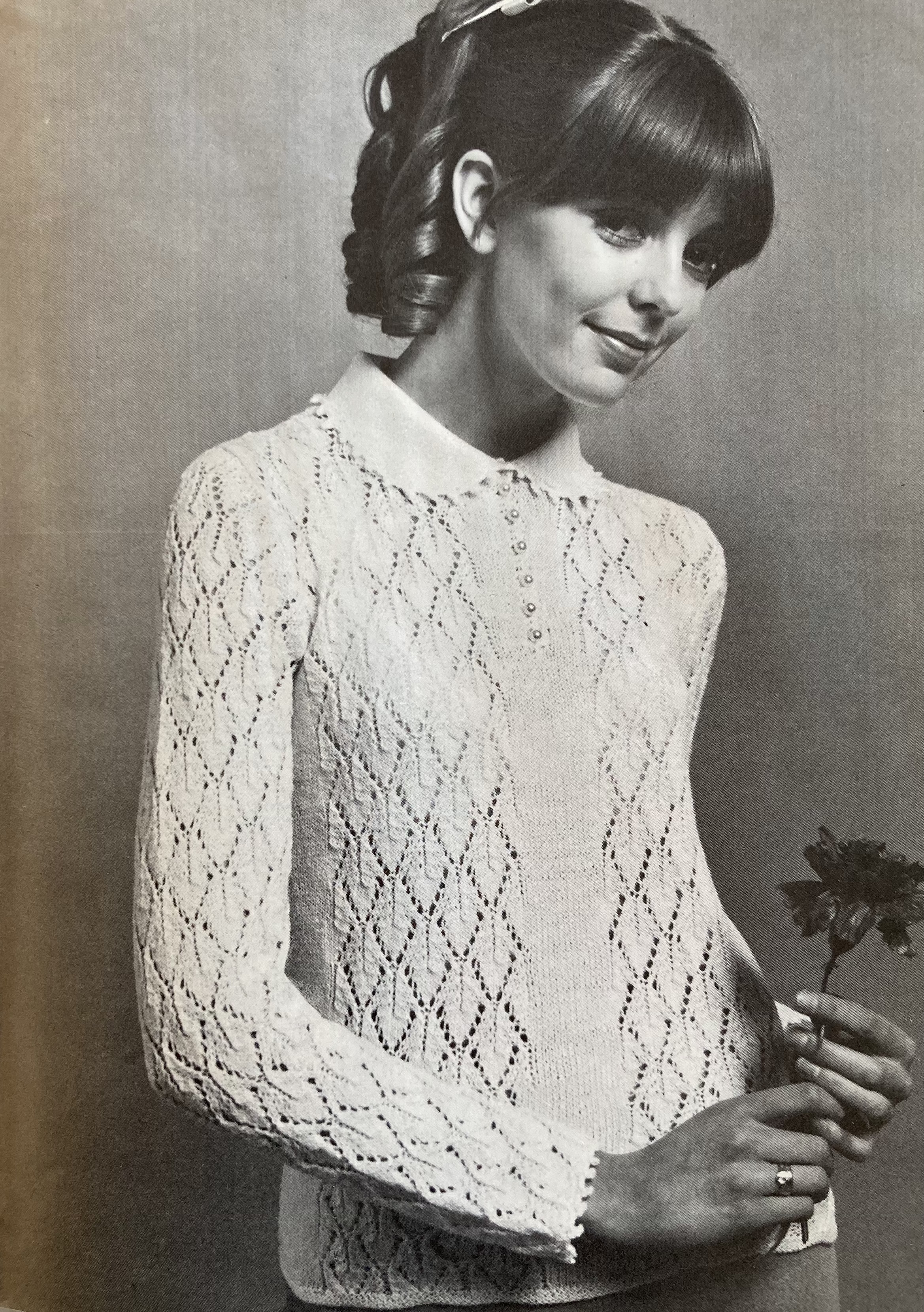
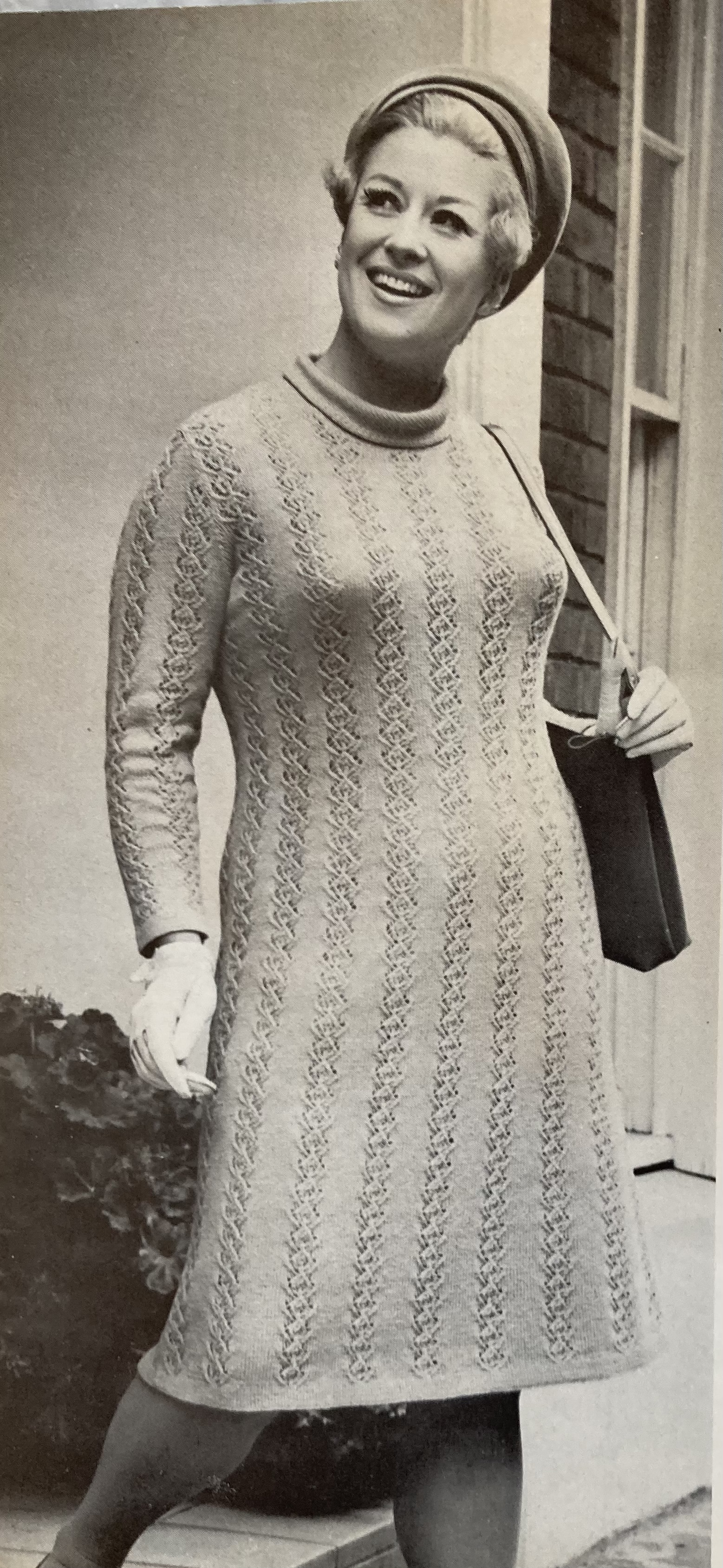
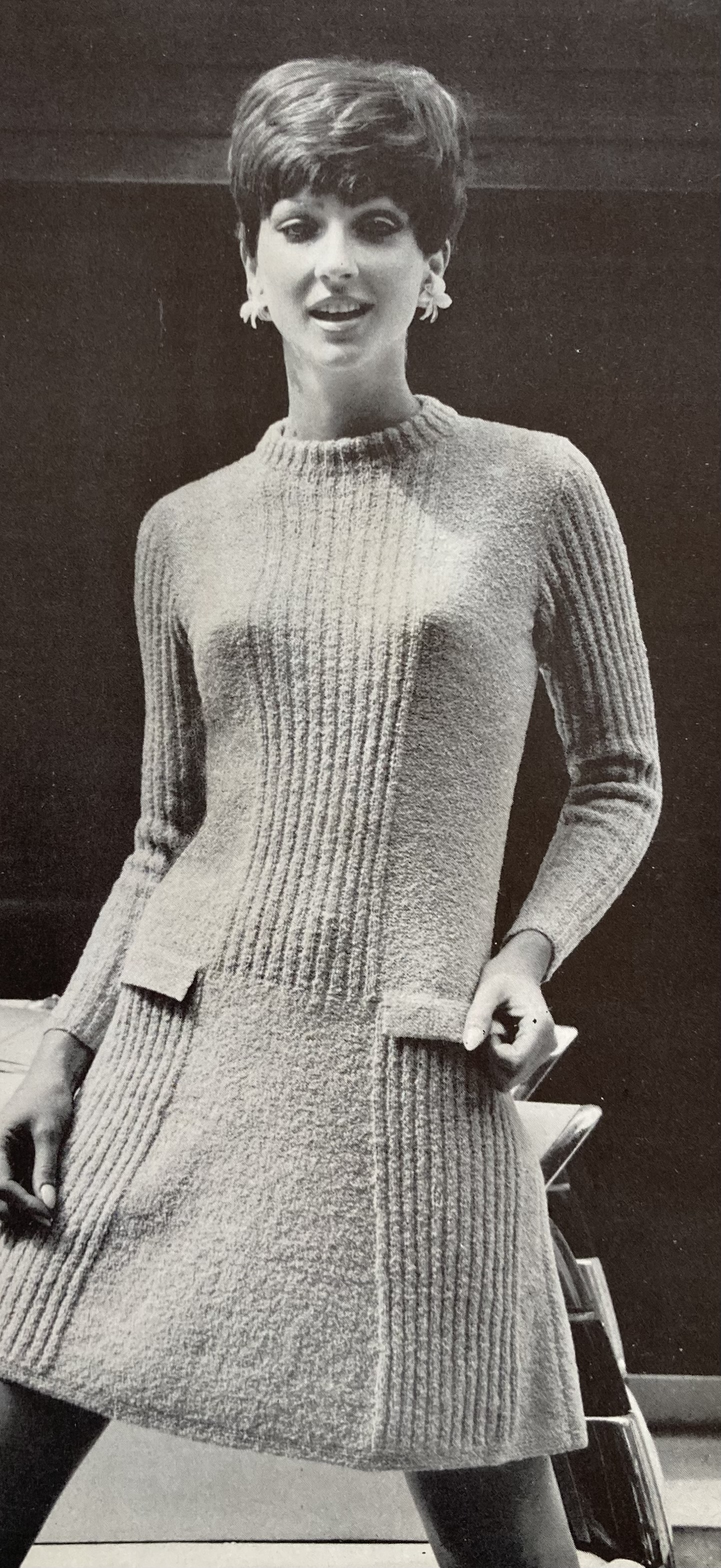
The other fashions for adults run the typical gamut from elegant fine-knits to practical, bulky sweaters in synthetic yarns. There’s a crepe lace dress for larger sizes (up to 43 inch bust/45 inch hips) and a classic bouclet dress for “the young set”, as well as a fancy, lacy blouse “to make you feel feminine”. The suggested colours for all three fine-knits are variants on white: Coffee Cream for the lace dress, Zircon for the bouclet and Snow White for the lace blouse.
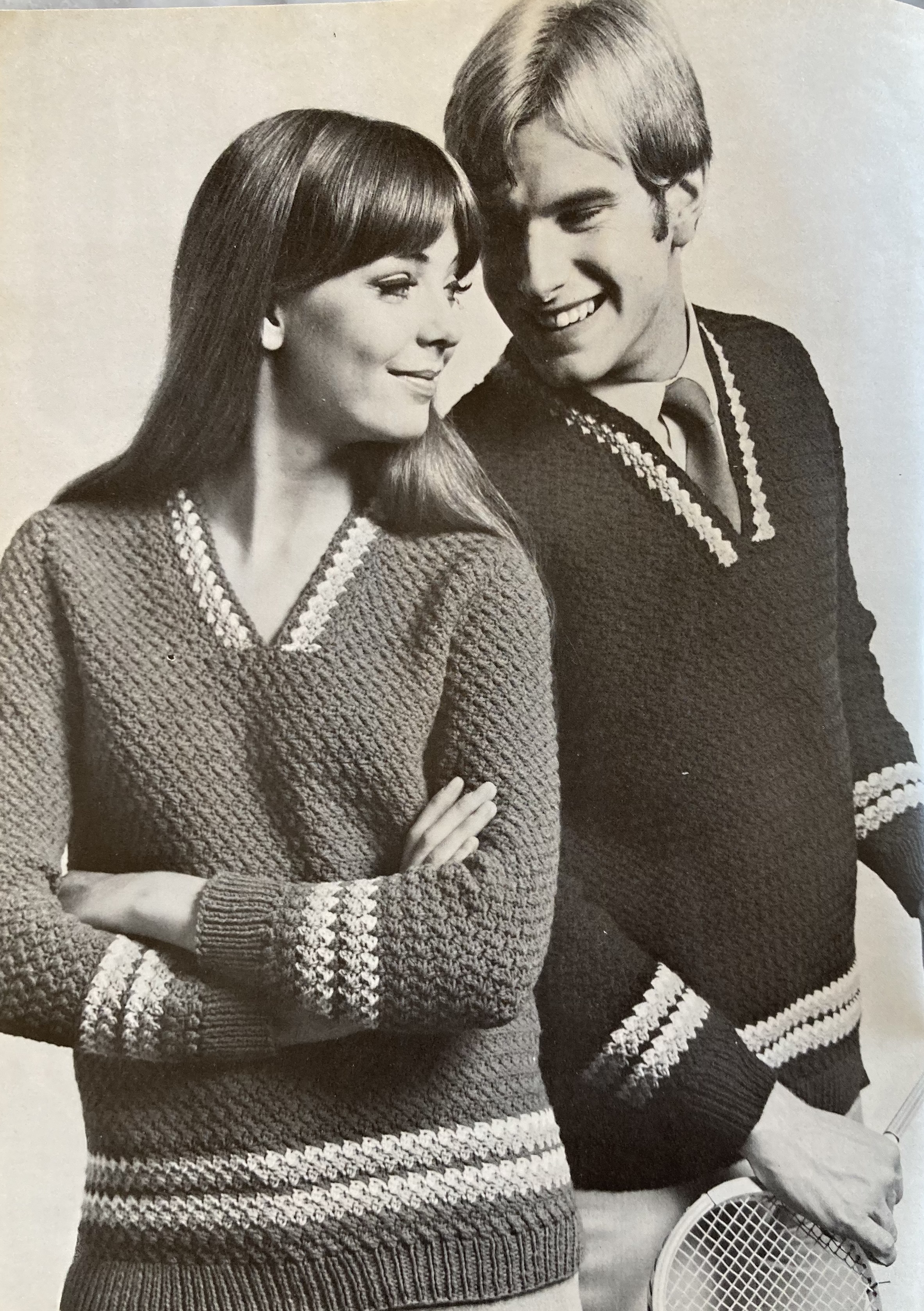
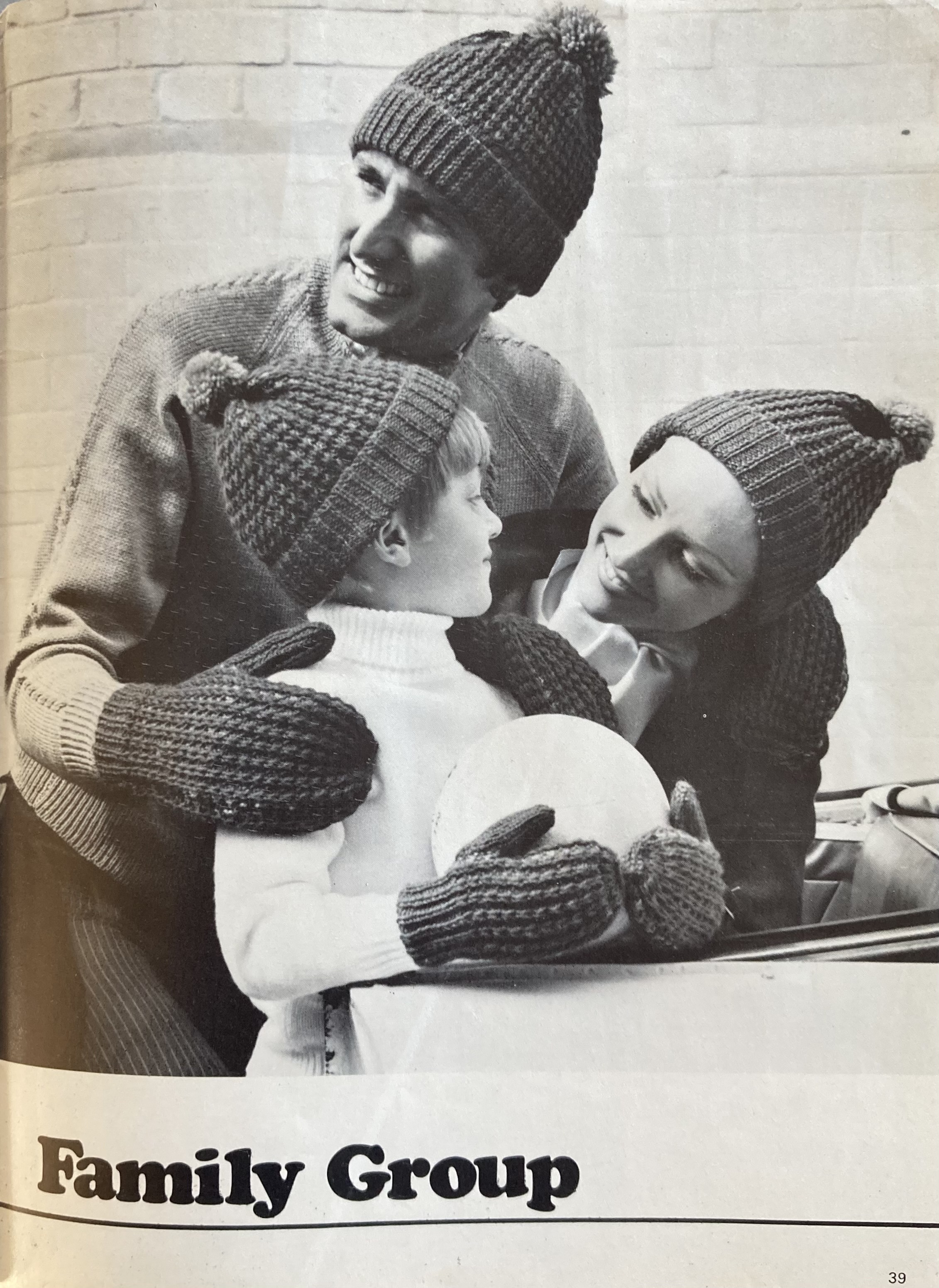
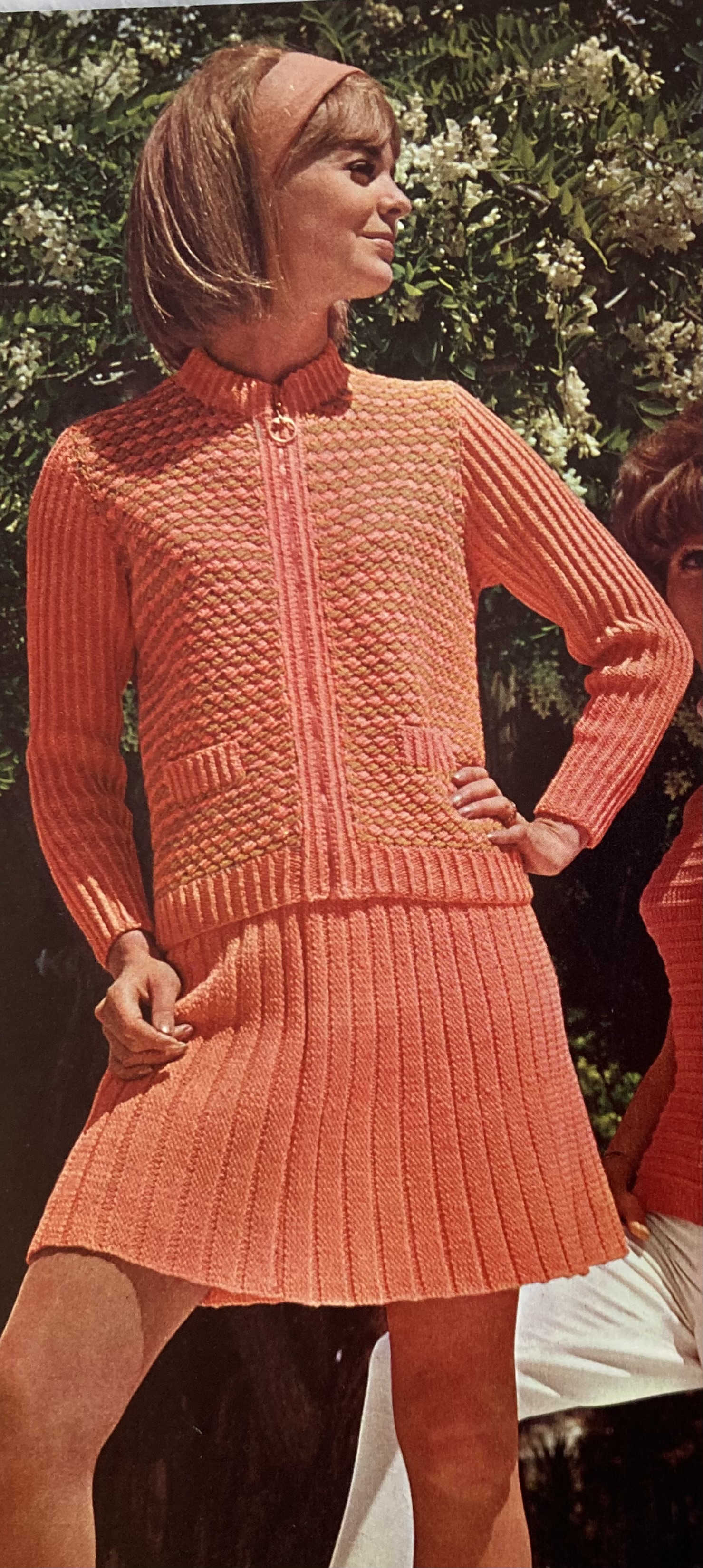
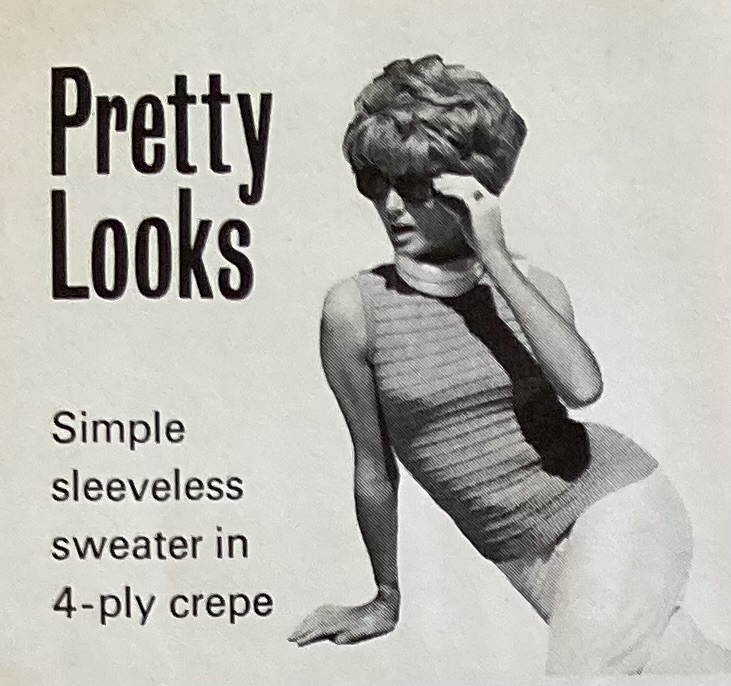
For contrast, there’s a casual cardigan suit in bright orange and gold, made in Double Knitting, with a bonus pattern for a simple 4-ply shell to wear underneath. Another his-and-hers bulky sweater set is crocheted for a change, in synthetic Courtelle Double Crepe. You can top it all off with caps and mittens in three sizes for the the whole family. Textured stitch patterns, vertical lines, pocket flaps and V-necks are all trending.
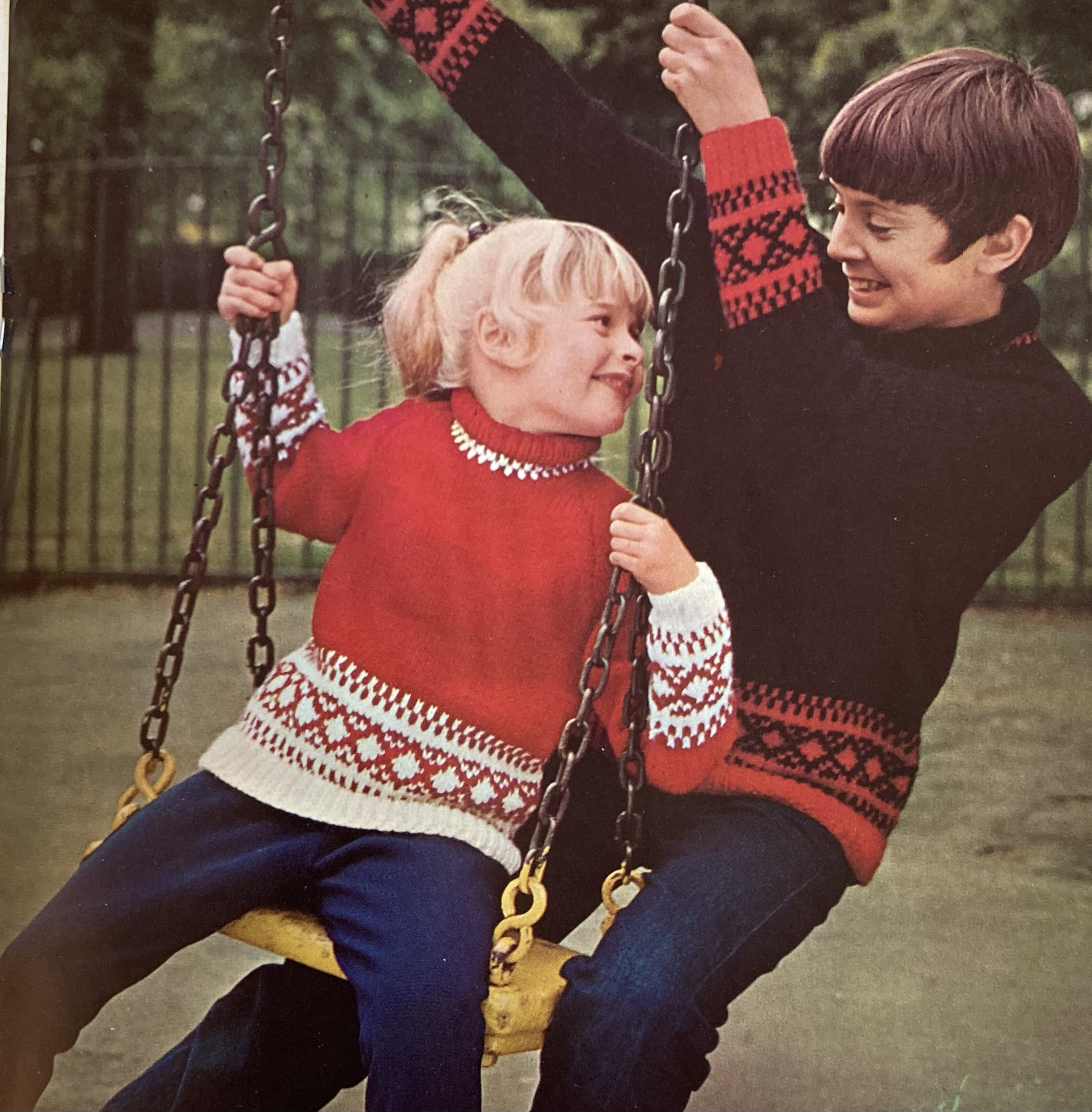
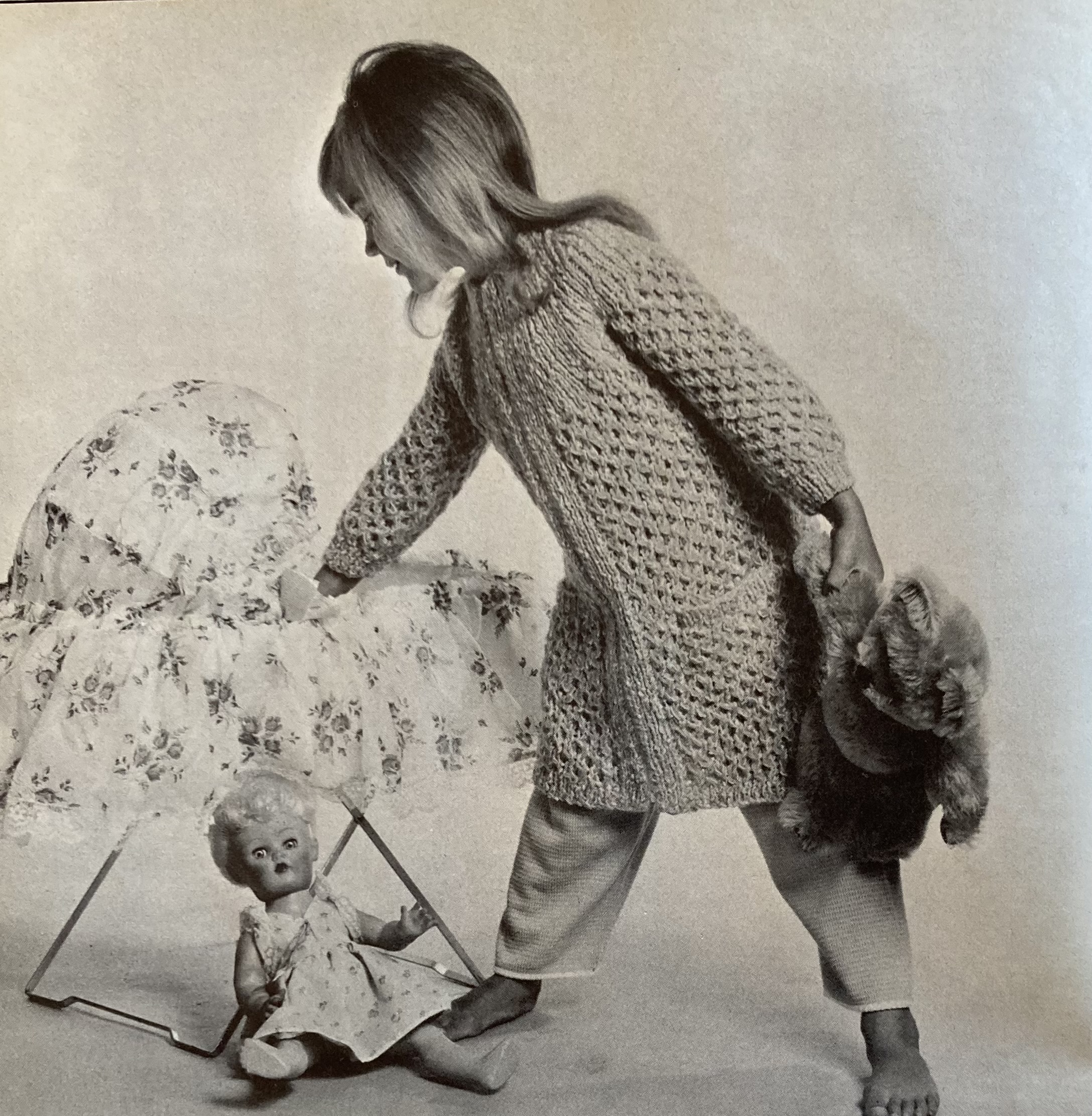
Children can get matching unisex sweaters, also in Doublet (so it can be finished before the child grows out of it). The little girl in the photo is actually wearing “slacks”! Her legs are covered and she can play on a swingset without fear of cold legs or flashing the neighborhood! Stitchcraft seems to be slowly entering the modern world. For evening playtime in a chilly home with no central heating, you can knit a child a nice warm dressing-gown with nubbly Four Seasons and fuzzy wool Fiona yarns held together.
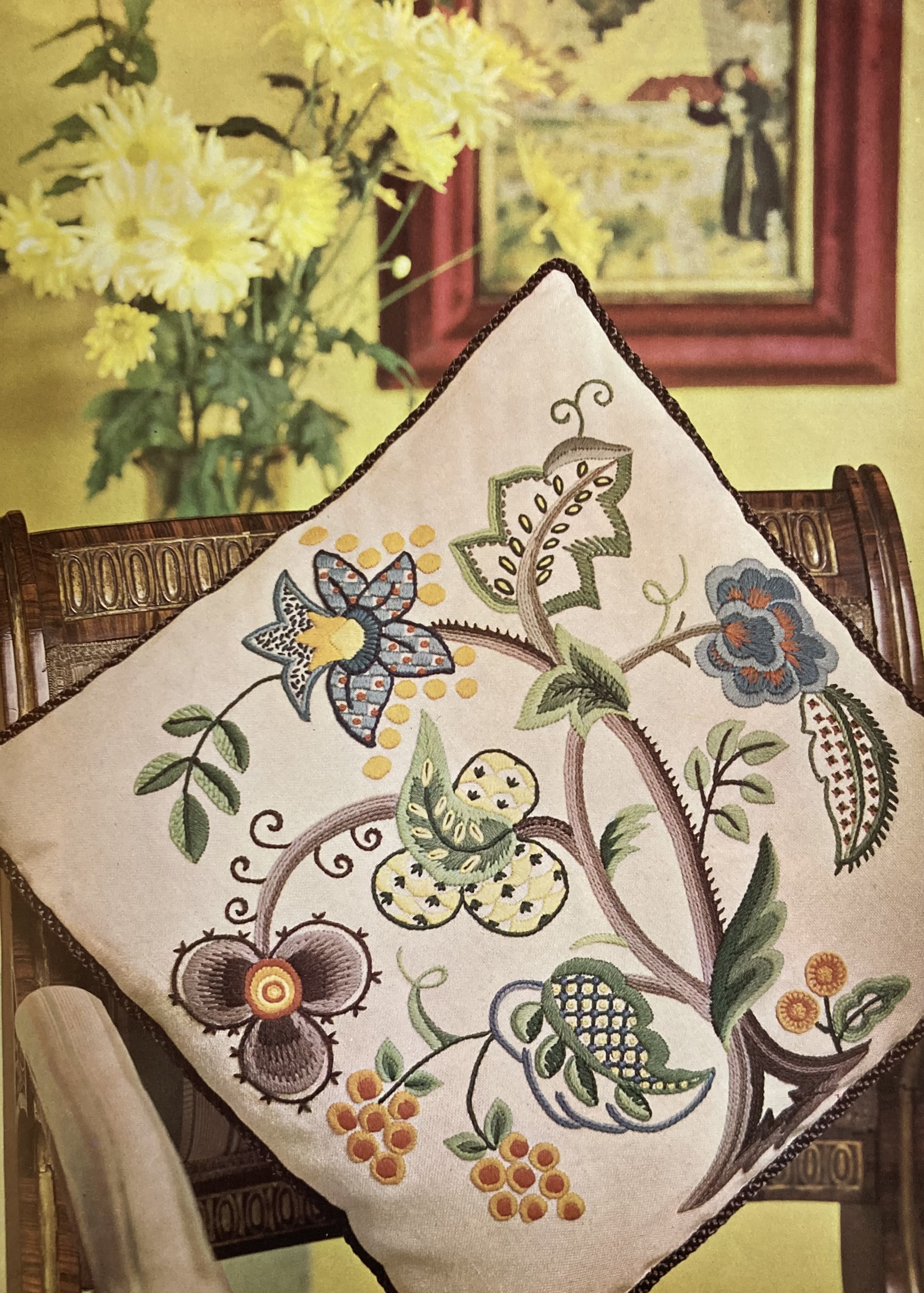
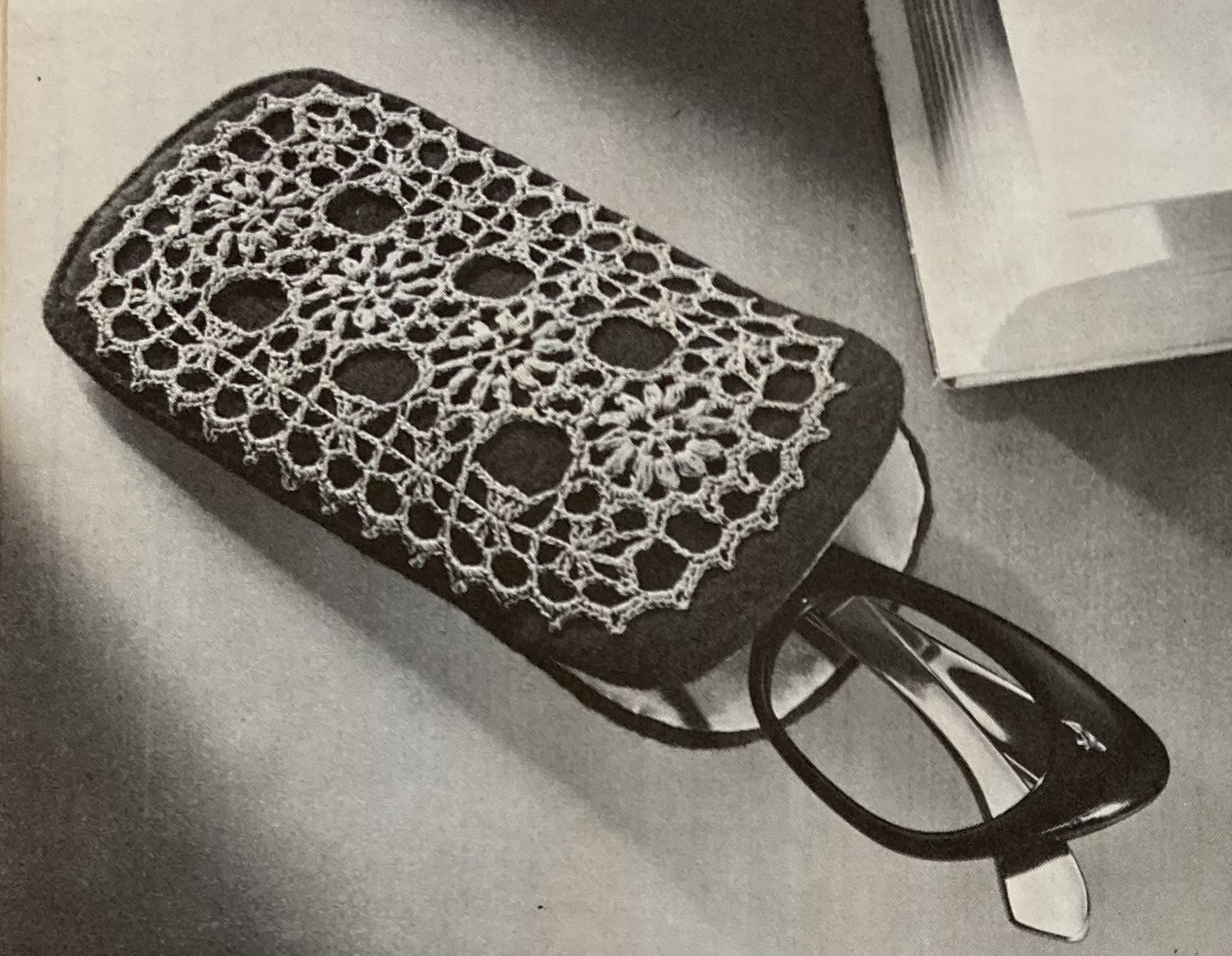
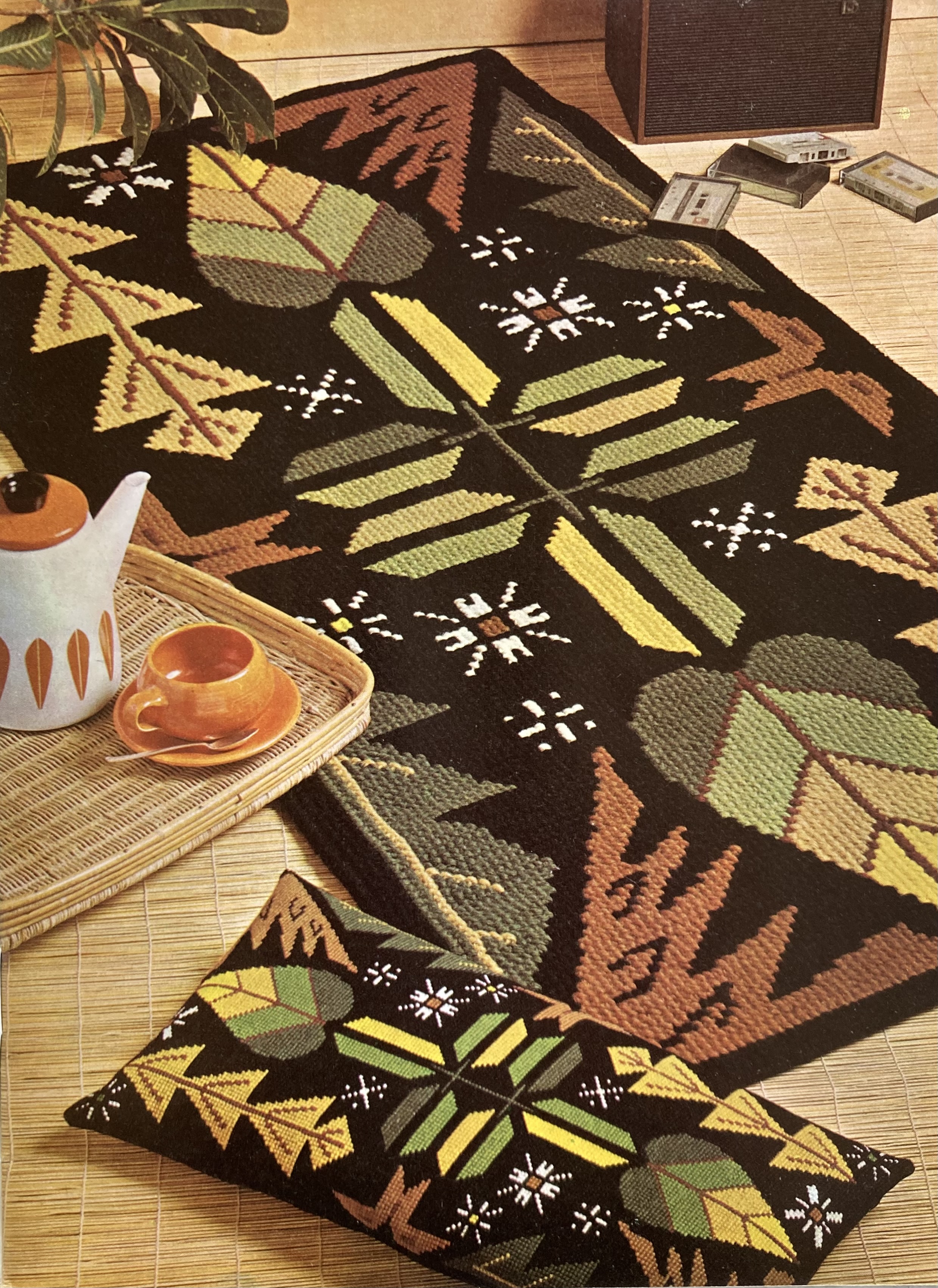
There are a couple of more unusual homeware projects, as well: a fancy lace spectacle case in fine crochet, a boldly patterned “Danish Design” cross-stitch rug and cushion, and a gorgeous “Jacobean”-style embroidered cushion, the last two using the additional colour photo pages to good advantage. The caption of the Jacobean cushion is “returning interest in traditional embroidery design”, which sums it up well: Jacobean-style embroidery kept coming back into fashion every few years from the 1940s until the 1970s.
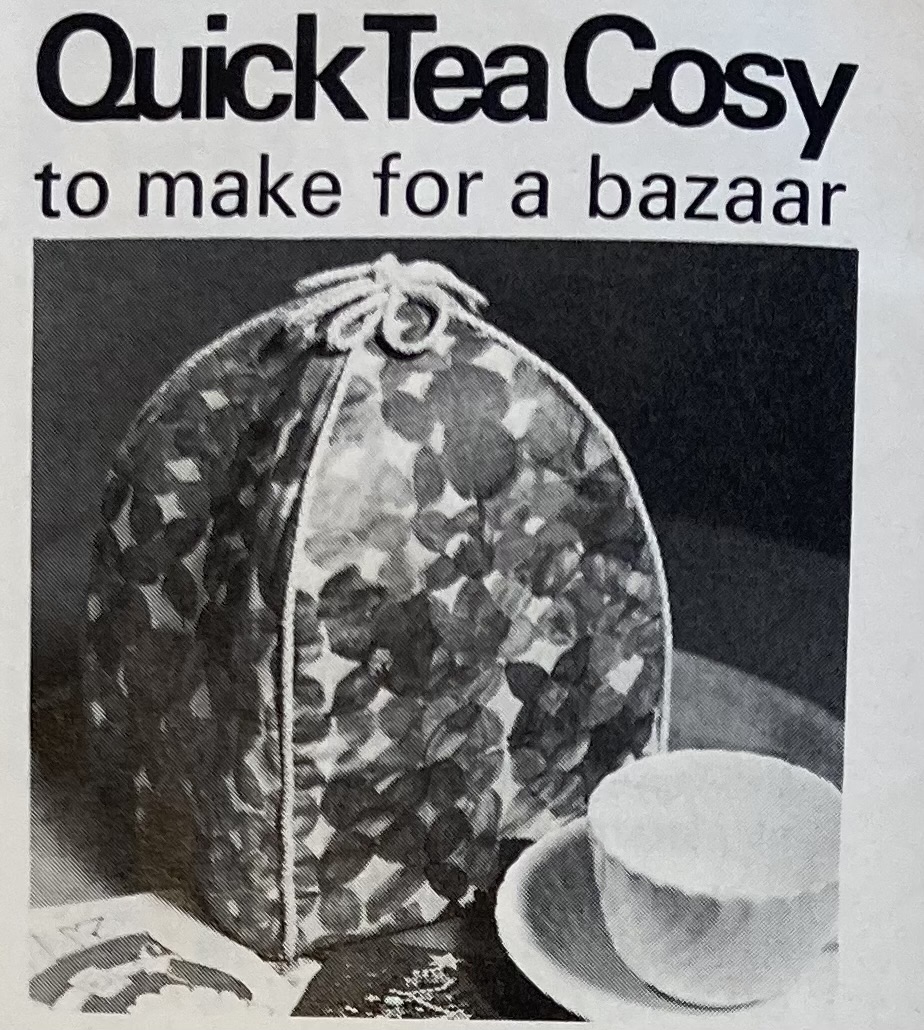
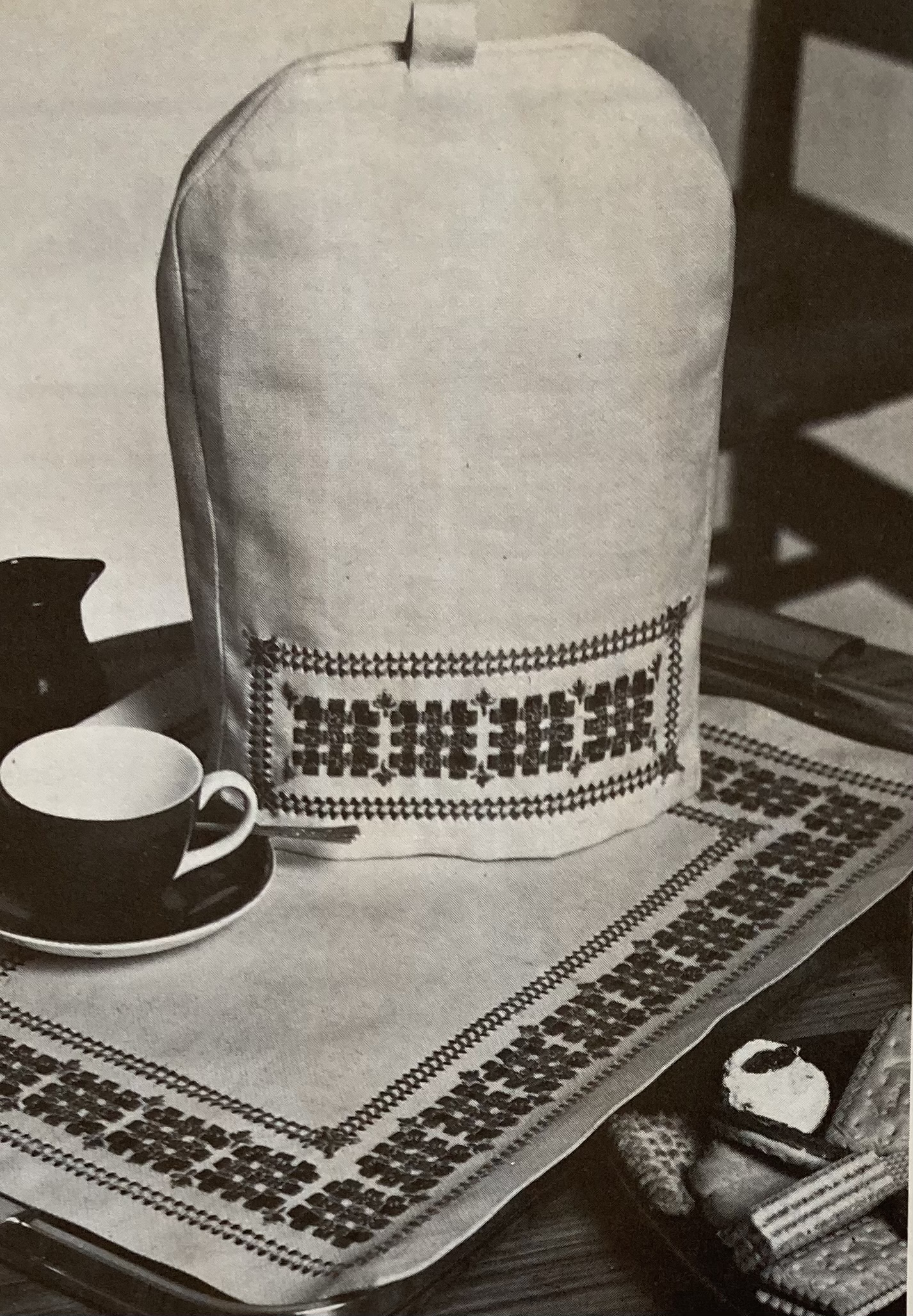
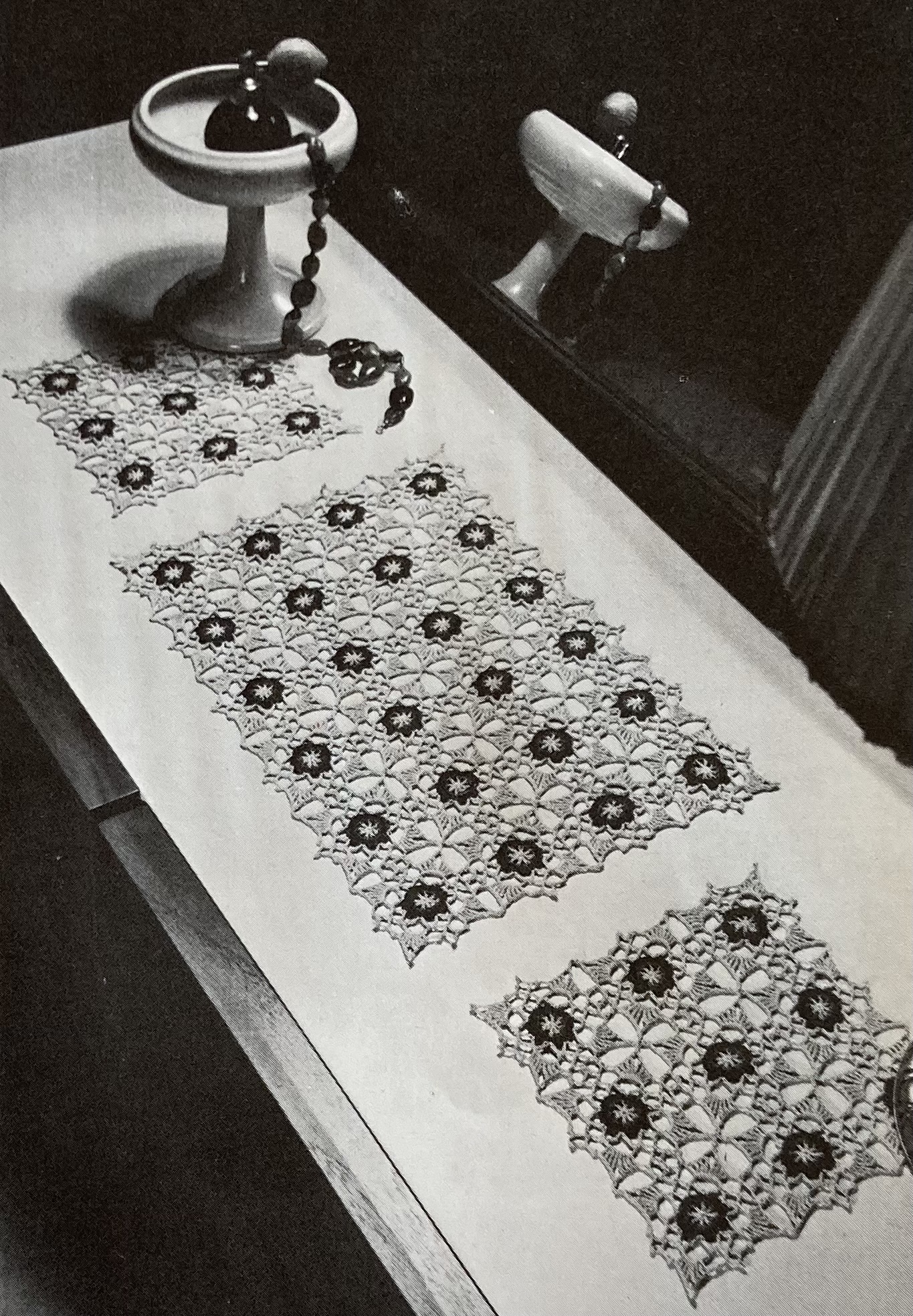
Less spectacular, but still perfectly nice, are the Hardanger drawn-thread embroidery pattern for a tray cloth and coffee/tea cosy, the crocheted mats “for your dressing table” and the quick sewn cosy in the “Readers Pages.”
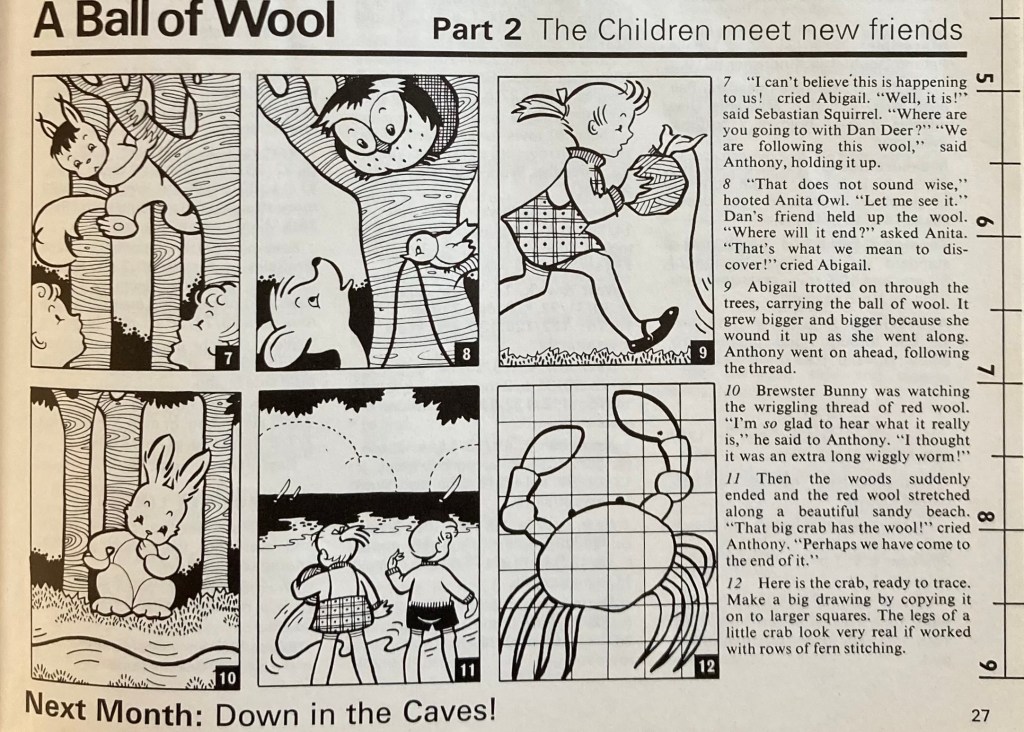
The Readers Pages also give us the latest installment (Part 2) of the current children’s comic, “A Ball of Wool”, in which Abigail and Anthony follow a magic ball of wool into a charmed forest full of talking animals. They pass by Sebastian Squirrel, Dan Deer, Anita Owl and Brewster Bunny before finding themselves on a beach with an unnamed and silent, but presumably friendly, large crab. What ever will happen next? It looks like they will go “Down in the Caves”!
I love this issue and will try to make both the lace blouse and the Jacobean cushion. Wish me luck!
June 1963: Practical Coat

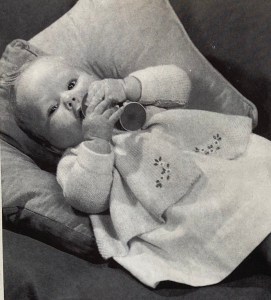
Baby in a knitted cardigan, pattern photo from Stitchcraft magazine, June 1963

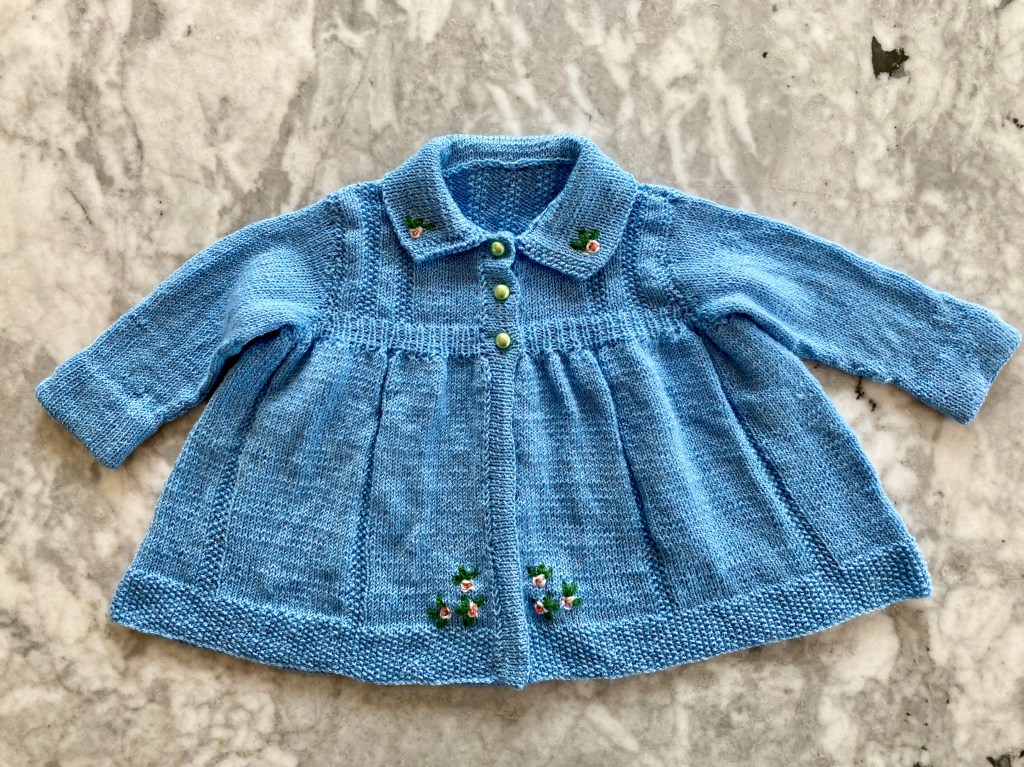
My June 1963 project was a lovely (if not quite as practical as the title suggests) “matinee coat” for a baby. Two styles are given in the pattern, “for a girl” (long coat with ribbing at the waistline, flared skirt and collar) or “for a boy” (straight up and down, basic cardigan styling.) Both styles have dainty flower embroidery as decorative accents. Not wanting to inflict 1960s gender roles on a modern baby and also not having a personal preference, I asked one of the child’s parents which style they liked more, and the answer was “the long coat”, so the long coat it was.

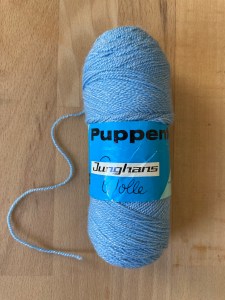
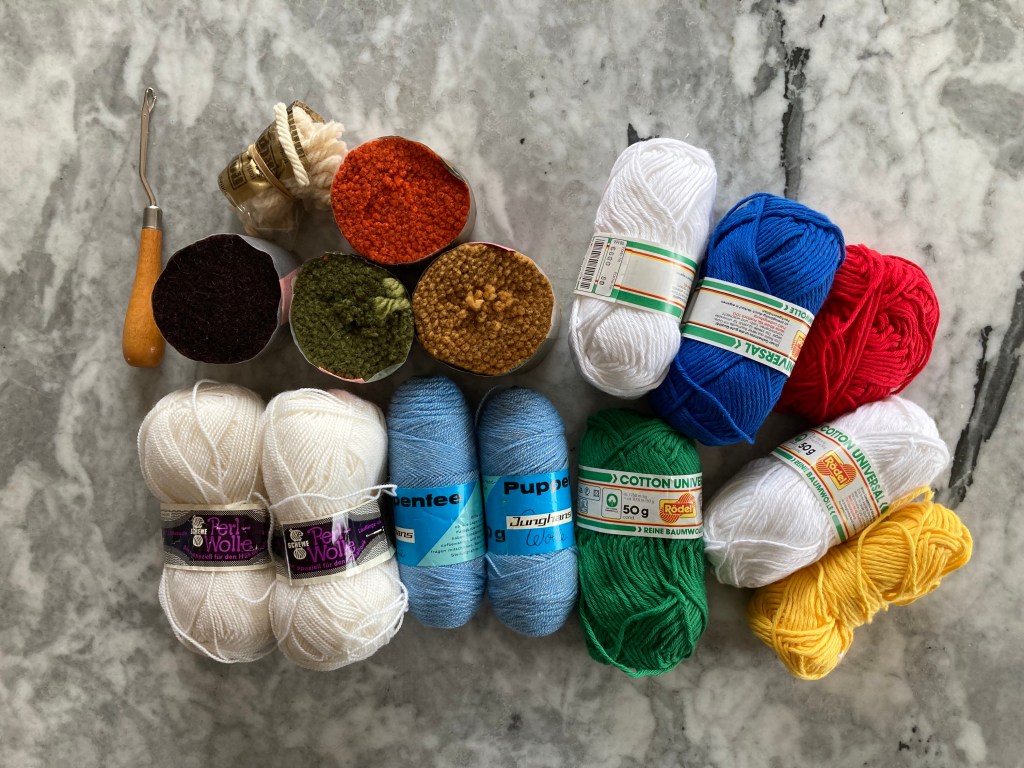
As for the wool, last year another colleague of mine, who knows that I like to knit from vintage patterns, came into a rather large stash of yarn when an elderly relative moved into a care home. Apparently, she (the relative) had liked to crochet and make latch-hook rugs, and when the younger generation of non-crafters cleared out her house, my colleague knew who would give the yarn a good home. There was some great stuff! In addition to a latch hook and some cut rug yarn in very 1960s shades of brown, tan, rust, beige and olive green, there was enough bright cotton to make a crocheted baby blanket, some nice, soft, plain white wool that would be great for baby clothes, and 400 grams of light blue “Puppenfee”, a yarn made by the German Junghans Wolle company in the 1960s? 1970s? which combines light 4-ply wool with a shimmery, presumably nylon or Lurex “Effektfaden”.

Just a selection — there was a lot more of each type of yarn!

The base colour is light blue, and the nylon strand makes the knitting softly sparkly and also very elastic — perfect for a baby cardigan. Happily, light blue was also the parents’ preferred colour, I had plenty of it and the tension and size in the pattern were perfect for this one-year old infant.

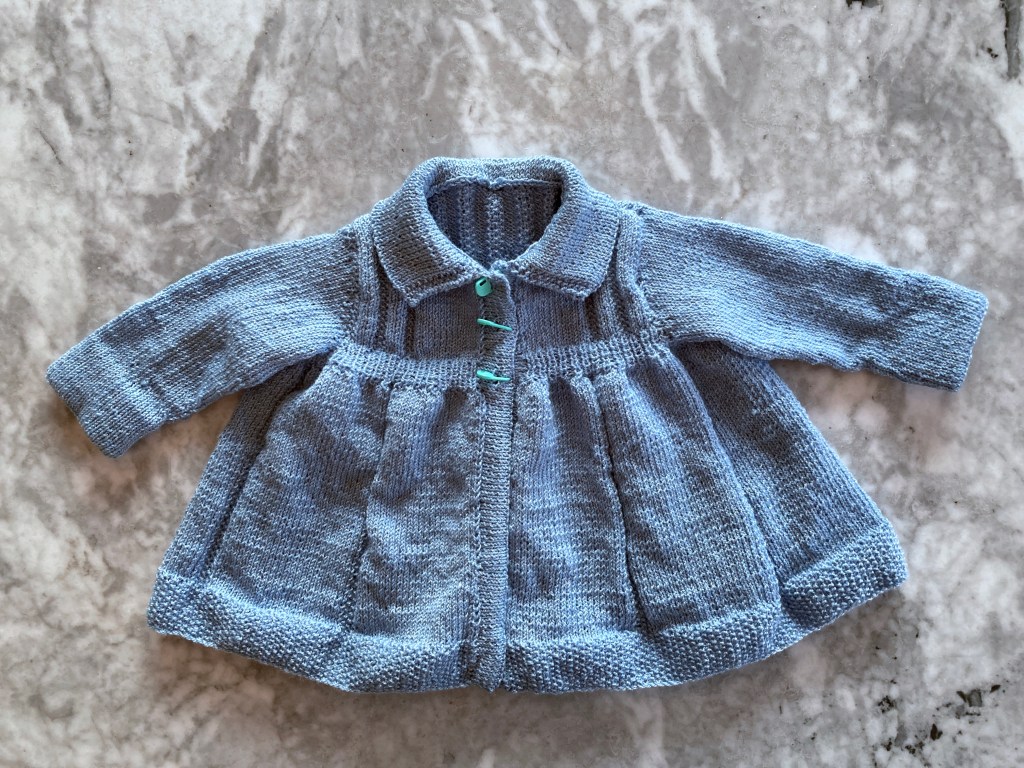
The coat is made in one piece from the moss-stitch lower border to the armholes, and the moss-stitch is carried up throughout the stocking-stitch skirt part in narrow vertical bands that make the skirt pleat prettily after the waist is gathered in with decreases and ribbing. Then the fronts and back are continued separately. I made the sleeves in the round from the top down, since that was faster, and made them a little longer than the pattern called for, as the baby is on the tall and thin side and will presumably get longer in the arms before it gets wider in the middle. (Though you never know with babies, but the cardigan is big enough to hopefully fit for a while in any case.)

Both the sleeve edges and interestingly, the collar are hemmed — in the case of the collar, that means stitches are picked up around the neckline as usual, then the collar is knitted in stocking stitch the “wrong way out” i.e. the inner side would be facing once the collar was opened down, then you make a purl ridge for the fold line and knit stocking-stitch for the depth of the collar back again and then sew it together. The result is very neat and crisp. There’s a narrow band of moss stitch (just 3 stitches) at the front corners of the collar to tie it together with the bands in the skirt.

The rosebud embroidery was very easy, no transfers, just a sketch in the pattern and colour choice suggestion. I used bits of leftover Jamieson & Smith Shetland wool in pink, white and green as suggested and finished everything off with three little buttons from stash. Do the buttons look familiar? They are the same ones I used on this “Sunday Best Dress” project from March 1963 / March 2021. And yes, it is even for the same lucky baby! Maybe, with the parents’ permission, we can even re-create the pattern photo. Until then, here it is without the baby — I actually got a project done on time for once!

I am very happy with the finished coat and I hope the baby and parents are as well.

July 1961: 1st Size Dress

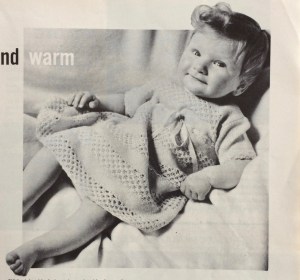
IMG_2661In 1961, Stitchcraft had a nice running feature they called “Stitchcraft Layette”: a set of matching baby clothes and accessories with a pattern in each issue for a few months running. The first was a light, warm dress in 3-ply Beehive Baby Wool which is “often asked for and it is really sensible for baby to wear on those in-between days when the wind is cold.” Still can’t get over how goofy that baby looks in the photo! The dress is made in stripes of stockinette stitch and a pretty “bramble stitch” lace pattern, fastens in the back and has a ribbon “belt”. There are patterns for a matinee coat and bootees on the August issue.
 

The bramble stitch itself is quite simple and effective:

  • Row 1: (RS) knit
  • Row 2: (WS) k1, *(k1, p1, k1 in the same stitch), sl1-k2tog-psso*
  • Row 3: knit
  • Row 4: k1, *sl1-k2tog-psso, (k1, p1, k1 in the same stitch),*

over a multiple of 4 plus 2 for the selvedge stitches. It makes a firm openwork lace that doesn’t roll or curl and so is good for borders and edges.

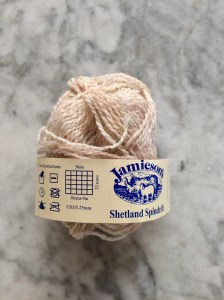
IMG_2705I made the project in Jamieson’s Shetland Spindrift, which I had a good stash of in a pretty colour called “Sand”. I generally don’t like variegated-colour wools, but if all of them were like this, I would love them. The colour accents are ever so subtle and just enough to give a light marbling effect without pools or splotches. Of course, it’s is a little too scratchy for a baby’s dress and the tension was not quite the same as in the pattern (8 stitches to the inch for the 3-ply, I get 7 or at most 7 1/2 with Spindrift depending on needles.)

So I did what I always do: changed the pattern around to make it fit the wool. Instead of a long, flared, beribboned, short-sleeved dress it became a medium-length, flared, ribbonless long-sleeved coat that fastens with buttons in the front. I adjusted stitch counts to fit the larger gauge but in the end I wish I hadn’t, as it turned out a bit smaller than expected. OK, so it will fit a smaller baby.

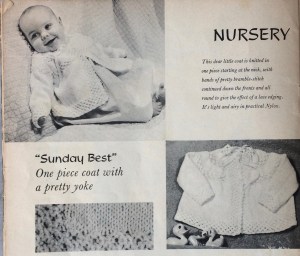
april1960I was happy with the result and it reminded me of another pattern I had seen somewhere… in another Stitchcraft... oh right, it was this “Sunday Best” from April 1960! Bramble and stockinette stitch: always a good choice for baby stuff.
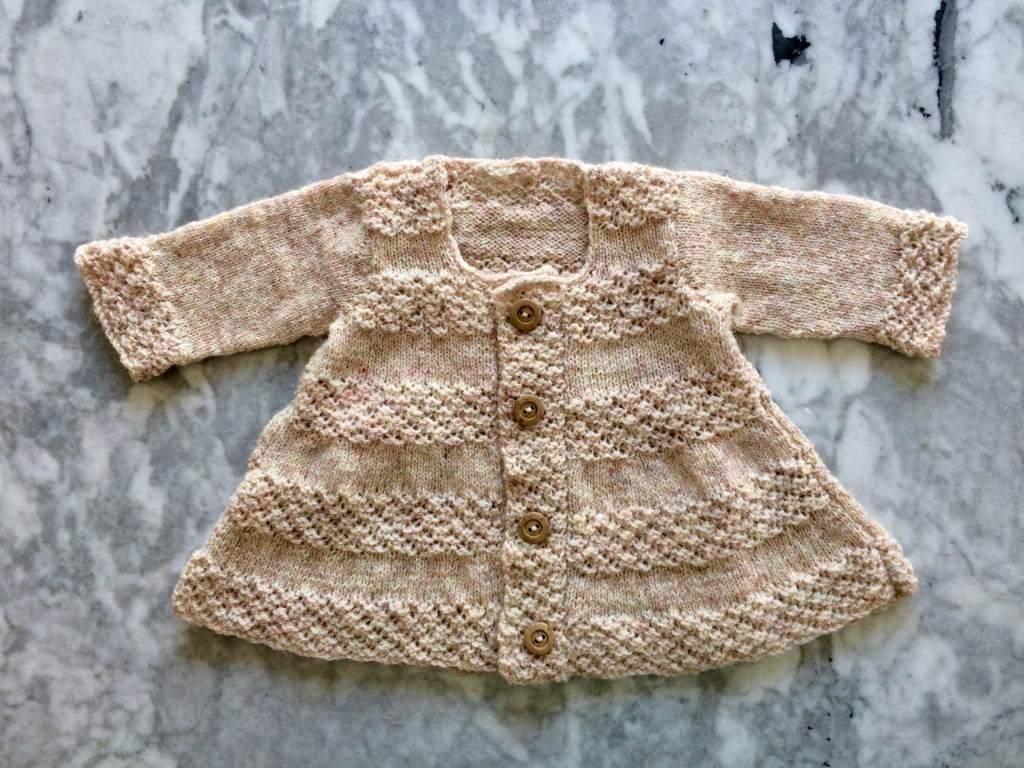
There’s no particular baby I needed to knit this for, but somebody will always have one at some point, so I’m prepared — and happy with how this turned out.

IMG_2704