
“Fashion At Ease” is the motto of the May 1963 Stitchcraft issue, in keeping with both the beginning summer holiday season and the fashion for casual, loose-fitting, bulky-knit garments. Our cover model is getting the picnic chairs ready in a cardigan made of “Ariel” yarn — a synthetic mix that is bulky but somewhat lighter-weight. (It’s always described as “light-as-a-feather”, “feather-weight” and so on, but the cardigan uses 9 or 10 2-ounce balls, which comes out to 18/20 ounces or about 510/560 grams in the basket rib and slip stitch patterns. That may be a bit lighter than the same type of garment made in bulky-weight 100% wool, but “feather-light” it is not.)
Other than that, the women’s garments are very similar: hip-length, made in plain, smooth stocking-stitch with V-necks and somewhat smaller pointy collars. The pullover of the green suit on the inside cover photo looks so similar to the raglan-sleeved “overpull” a few pages later that I had to check twice to make sure they were two separate designs and not a continuation of one pattern on a different page with another picture. The 4-ply collared pullover is also very plain (it’s even listed in the contents as “Plain 4-ply sweater”) and has gentle raglan sleeves and a similar small collar. There will be no rocking of the boats on this holiday, fashion-wise!


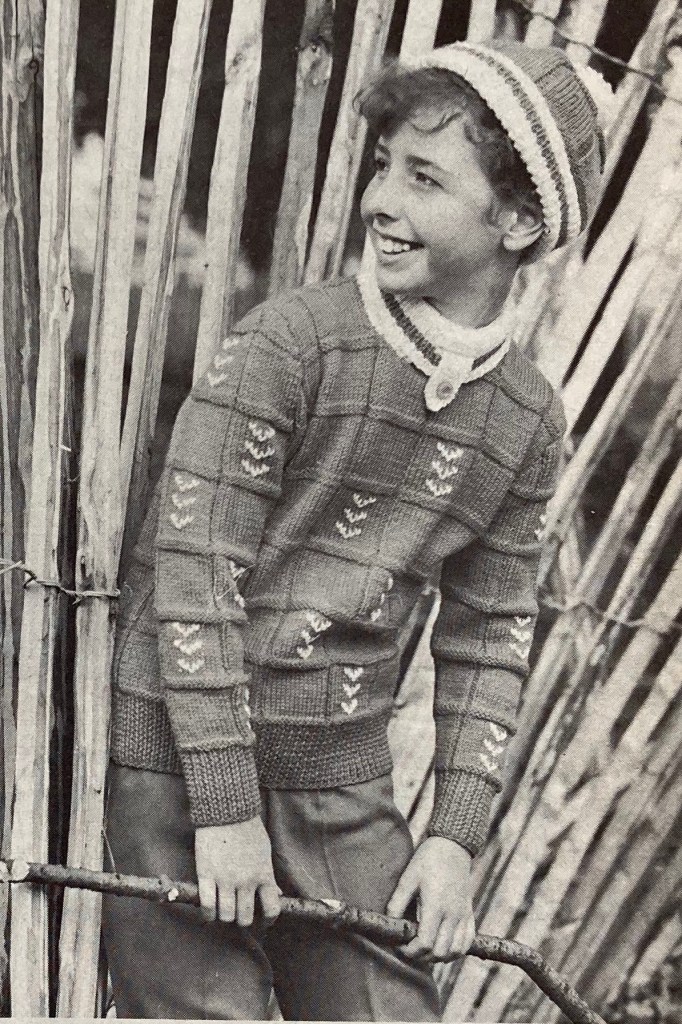
There’s a little more design interest in the “Italian” boatneck pullover with a stranded colour stripe across the hips as well as the wonderful “Tyrolean” cardigan and “Viennese” pullover for children. The use of different countries’ names in the descriptions seems more a way to highlight the international “continental” travel-holiday theme than any reference to traditional or regional design elements. I certainly don’t associate the stranded knitting pattern with Italy, as it’s much closer to traditional Fair Isle/Scandinavian/Baltic/northern stranded patterns. The children’s garments claim to be a “design from the Tyrol” and “From a Viennese design”, but you can make of that what you will. They are definitely cute and probably fun to wear.


Rounding out the knitting designs are a “crunchy” men’s pullover in Bracken Tweed, one of the early multicolour/tweed-flecked wools that became popular with hand-knitters in the early- and mid-1960s as well as an interesting hybrid cardigan featuring “waistcoat styling” — the front and back are knitted in plain stocking-stitch and the sleeves in a slip-and-drop textured stitch pattern in a lighter shade of the same DK wool. I’m not sure the look is successful, but it is an interesting idea.


There are plenty of ideas for housewares, starting with a coordinated latch-hook rug and cross-stitched floor mat for a child’s room. The puppy and kitten are quite cute and (not coincidentally) look a lot like the characters in some of the children’s comics printed in the back pages of the magazine. They are intended to be easy enough to make that “your young daughter” (only the daughter, of course) could help make it and thus expand or improve her handwork techniques. For any children who don’t have to help with housework (guess that would mean the boys eh), our happy housewife can make a felt bag for dirty linen shaped like a postbox, complete with a helpful embroidered sign with collection times (9:30 am Monday to Friday, no collection on Saturday or Sunday). There’s also a purely decorative Punch and Judy wall hanging and a nightdress case shaped like a tortoise. (I will never understand the point of a nightdress case, but I love the tortoise design.)


Going with the international/holiday theme, there are embroidery patterns for a chairback and tablecloth inspired by traditional Scandinavian designs, a flowery cross-stitch cushion and table mats and a very interesting tapestry pattern for a stool top. There’s also a knitted doily and — unusual for Stitchcraft — a design for a patchwork cushion with some very well-written basic instructions for doing patchwork with the paper piecing method. For the unacquainted: you cut out pieces of paper from a cardboard template in the desired shape, stitch the pieces of fabric around these paper pieces, then stitch the fabric pieces together at the side to make the larger patches. The paper pieces are then removed and re-used. The advantage of this method is that you don’t have to cut the fabric to perfectly accurate shapes or pay too much attention to the seam allowance.


That wraps it up for May 1963! The ads are the usual and in the alternative-nursery-rhyme children’s comic, Miss Muffet has shrunk to insect size and made friends with the very nice spider, who helps her get out of a flower and gives her a ride on a floating leaf. That sounds like fun.
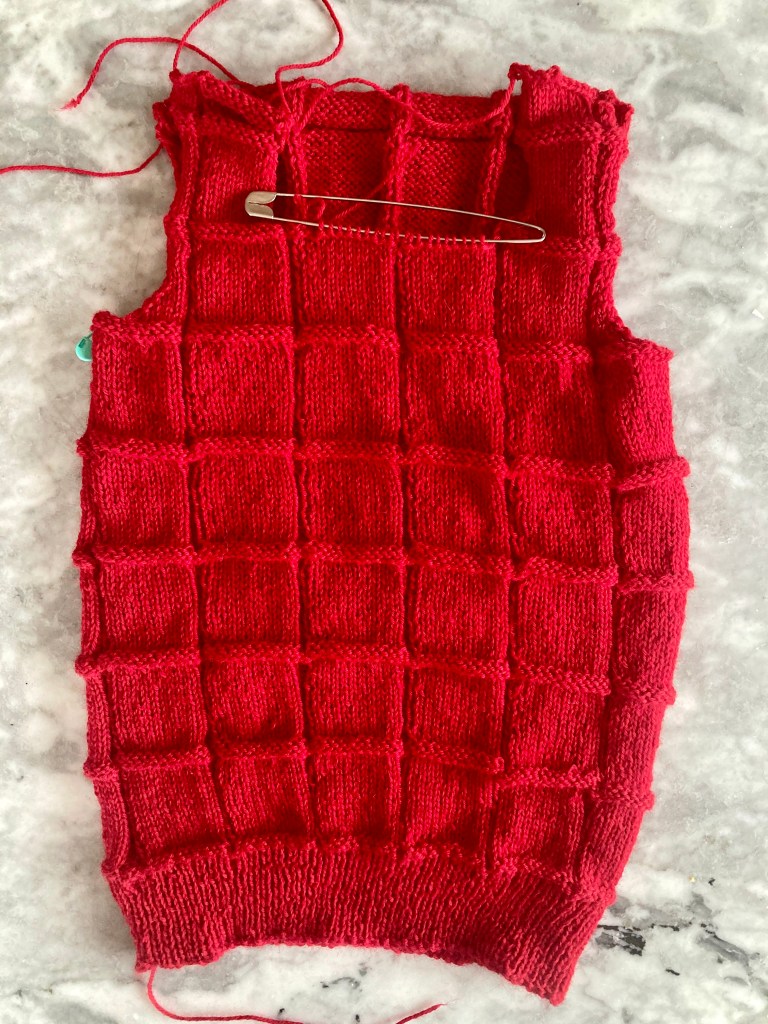
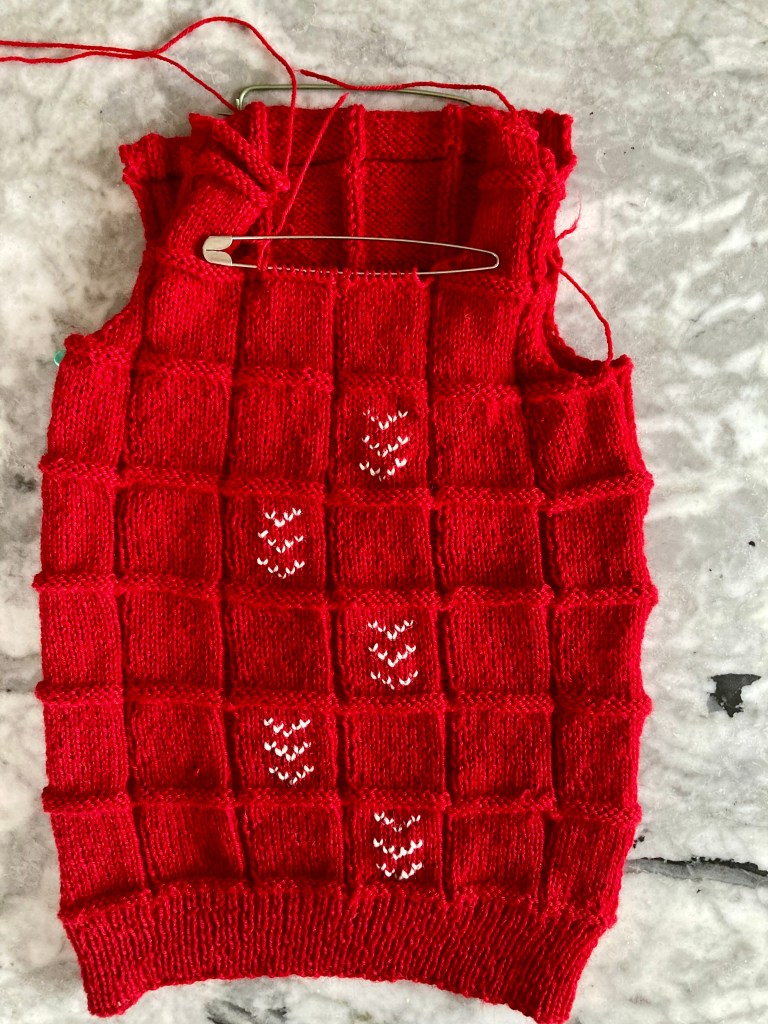
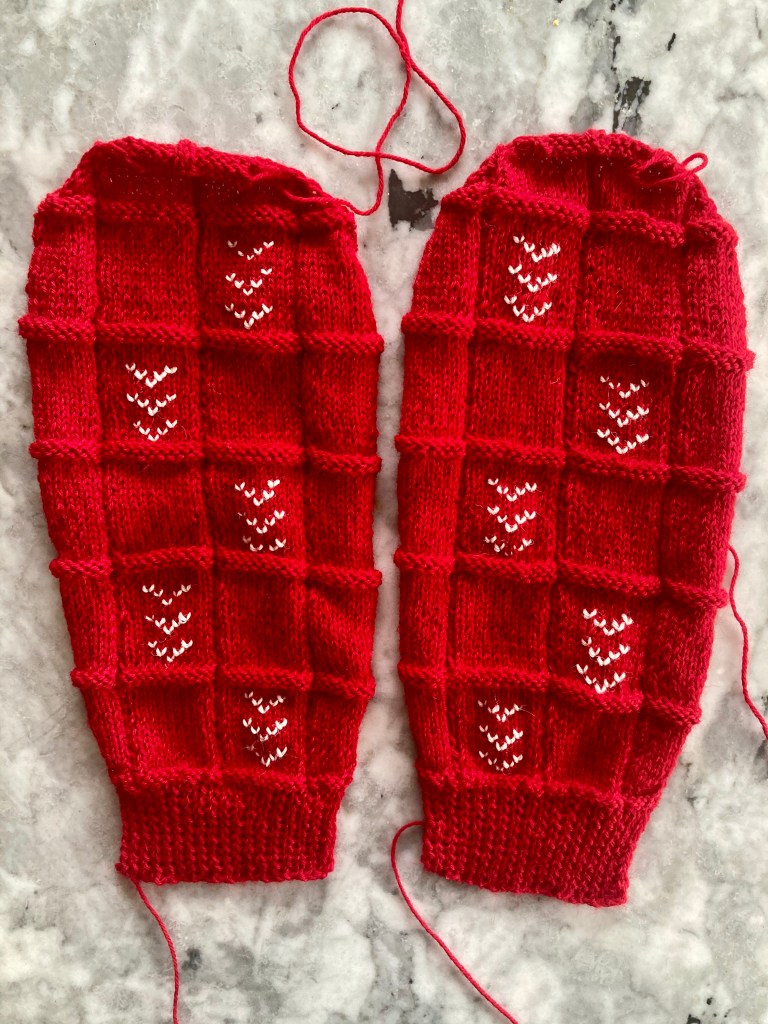
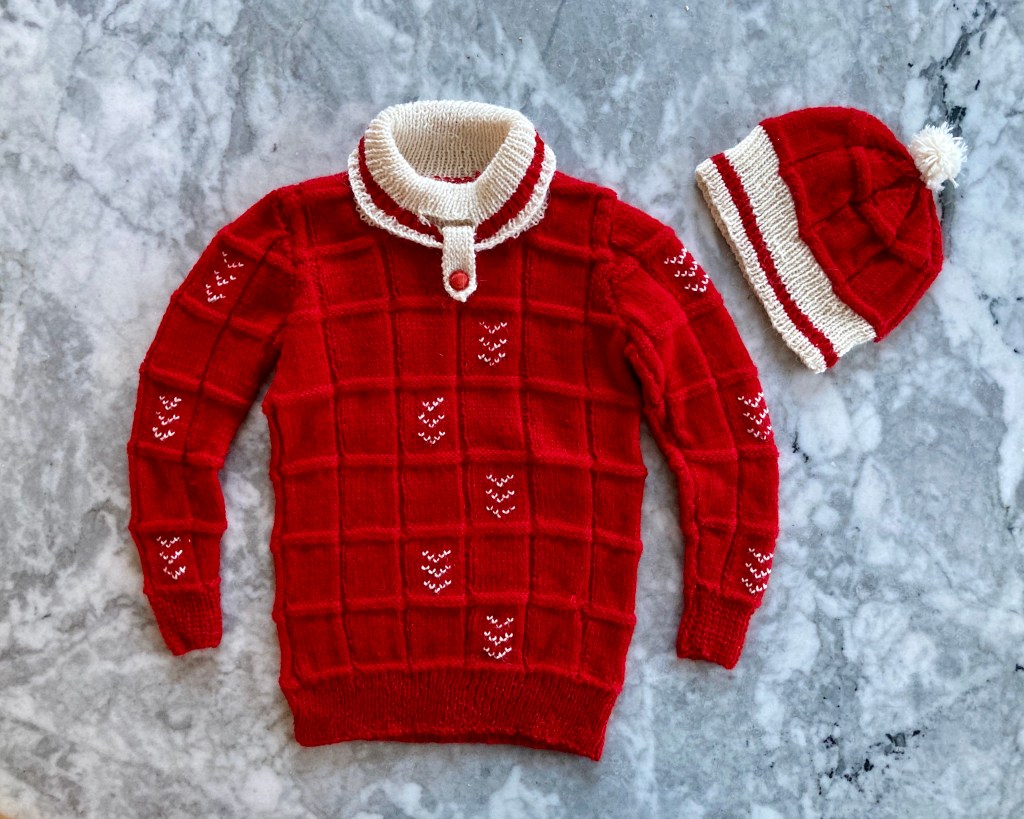
My project for this month will be the “Viennese” child’s pullover, made for a young relative. Said child was adamant about wanting a “smooth texture” on the pullover and not the reverse-stocking-stitch-rib in the pattern. I am also making it for summer wear in a very lightweight cotton, so the finished result may or may not look anything like the original design, but we’ll see. Also: many WIPs to finish. Happy Spring!
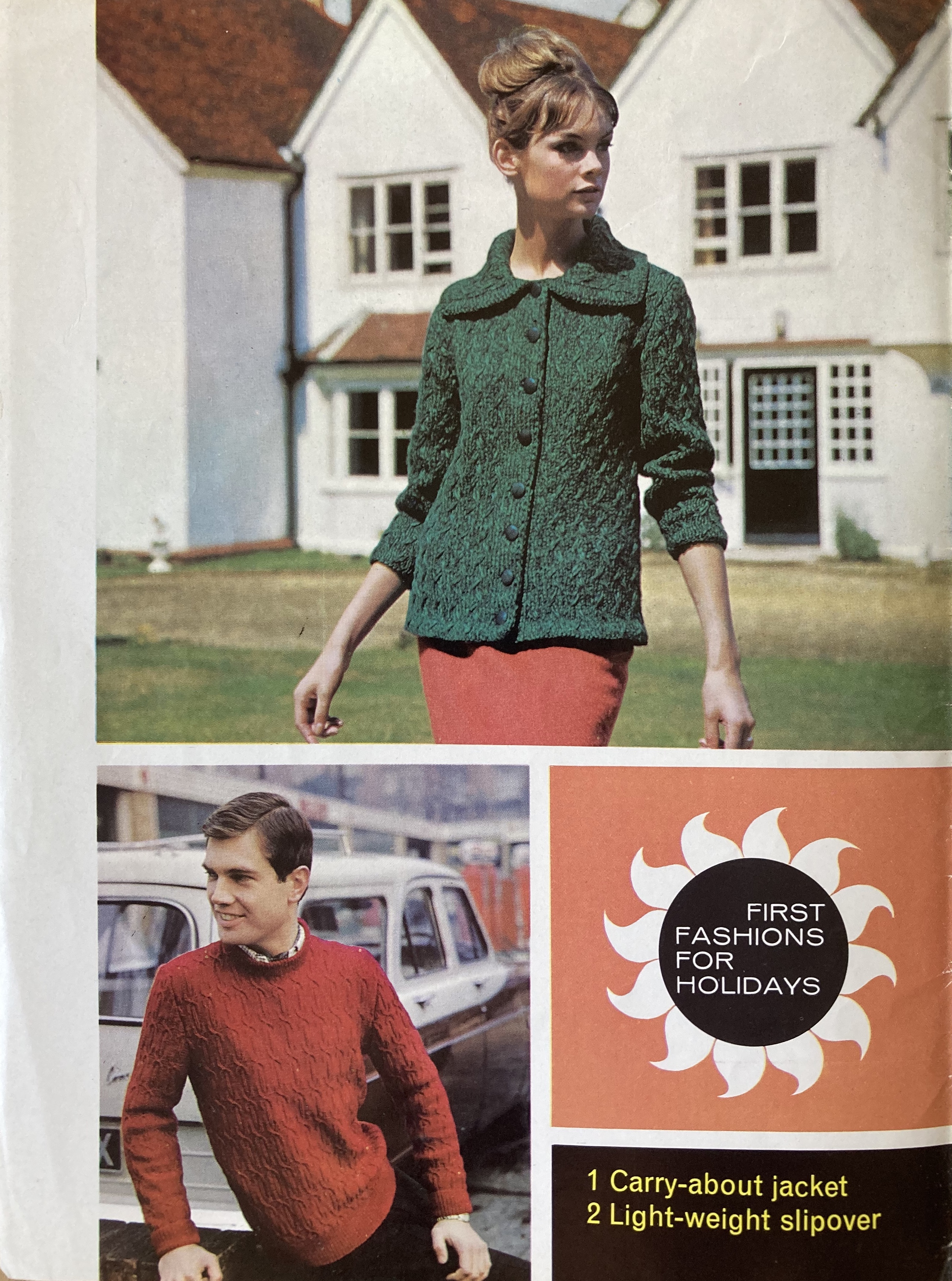

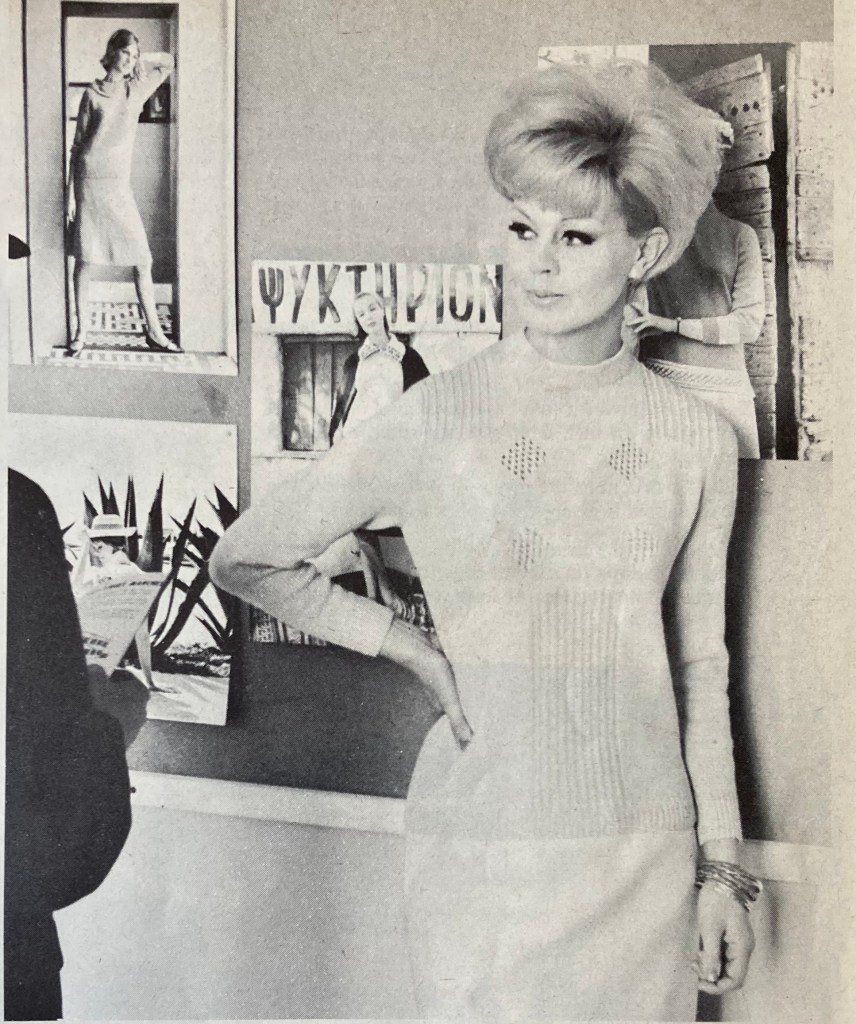

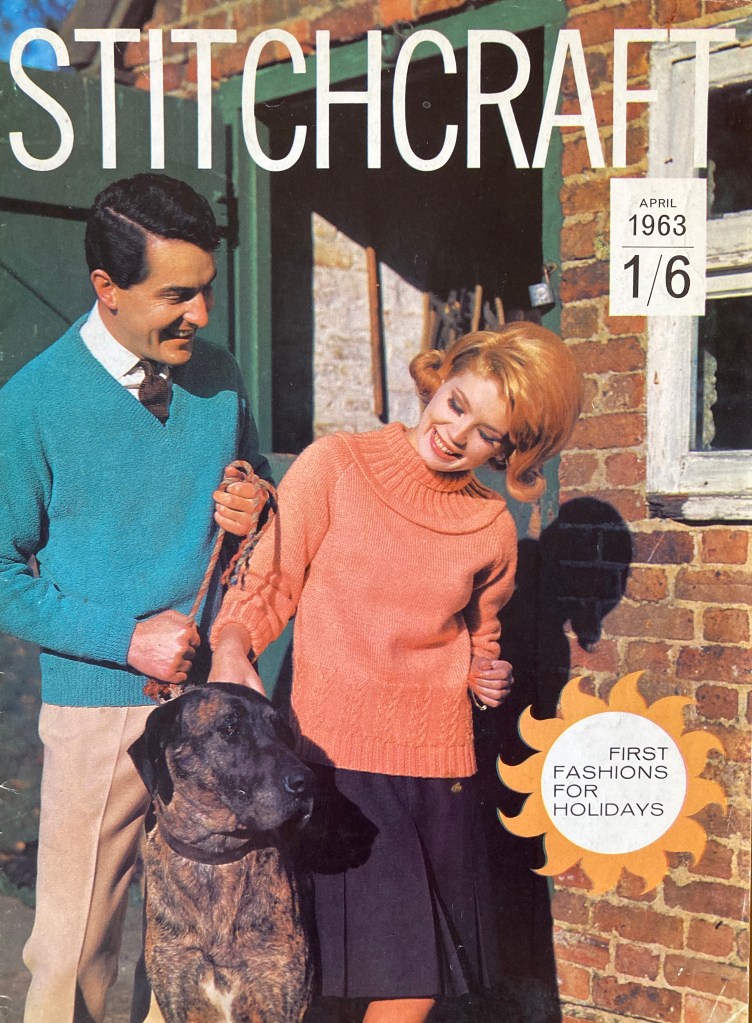
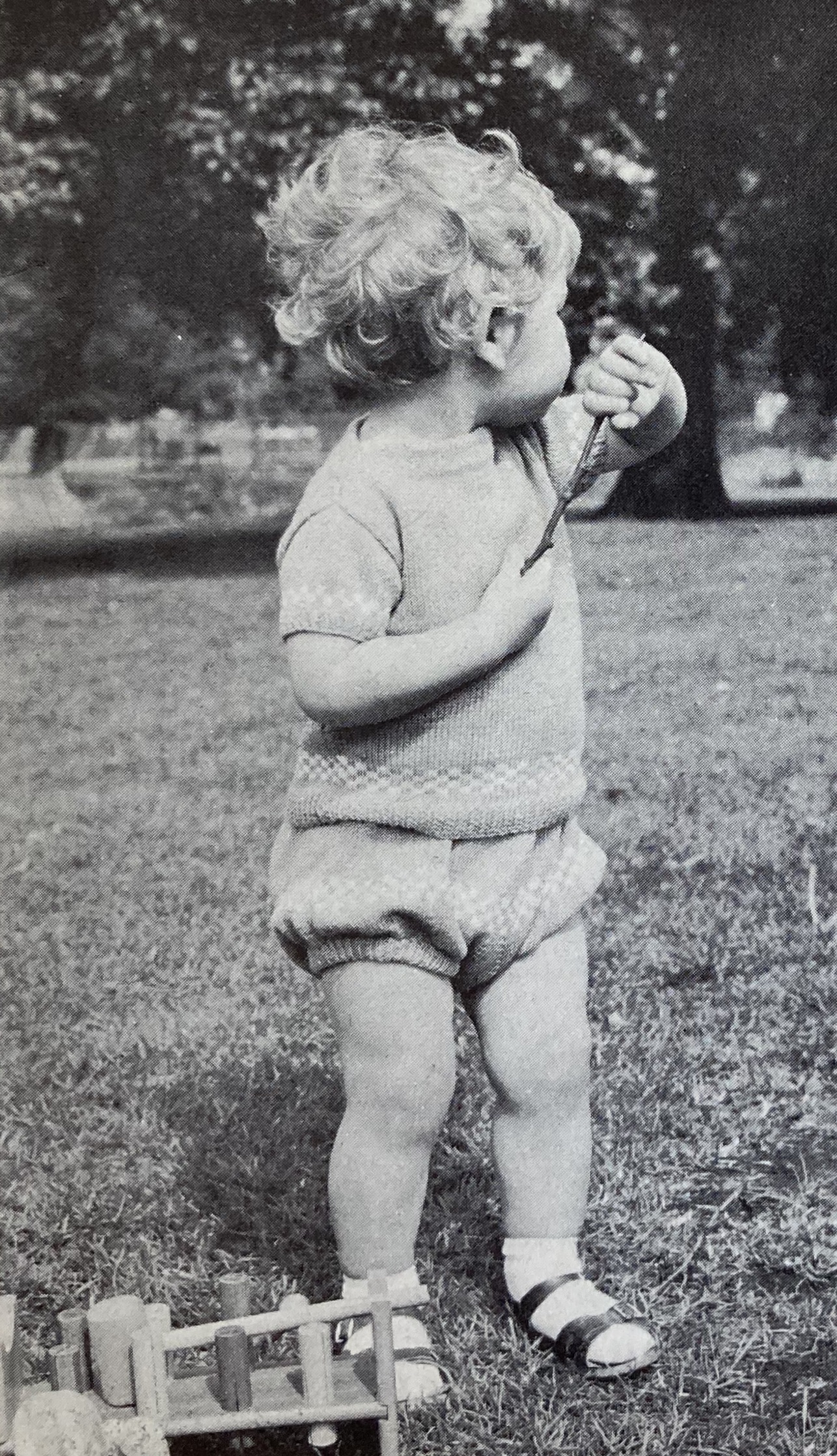
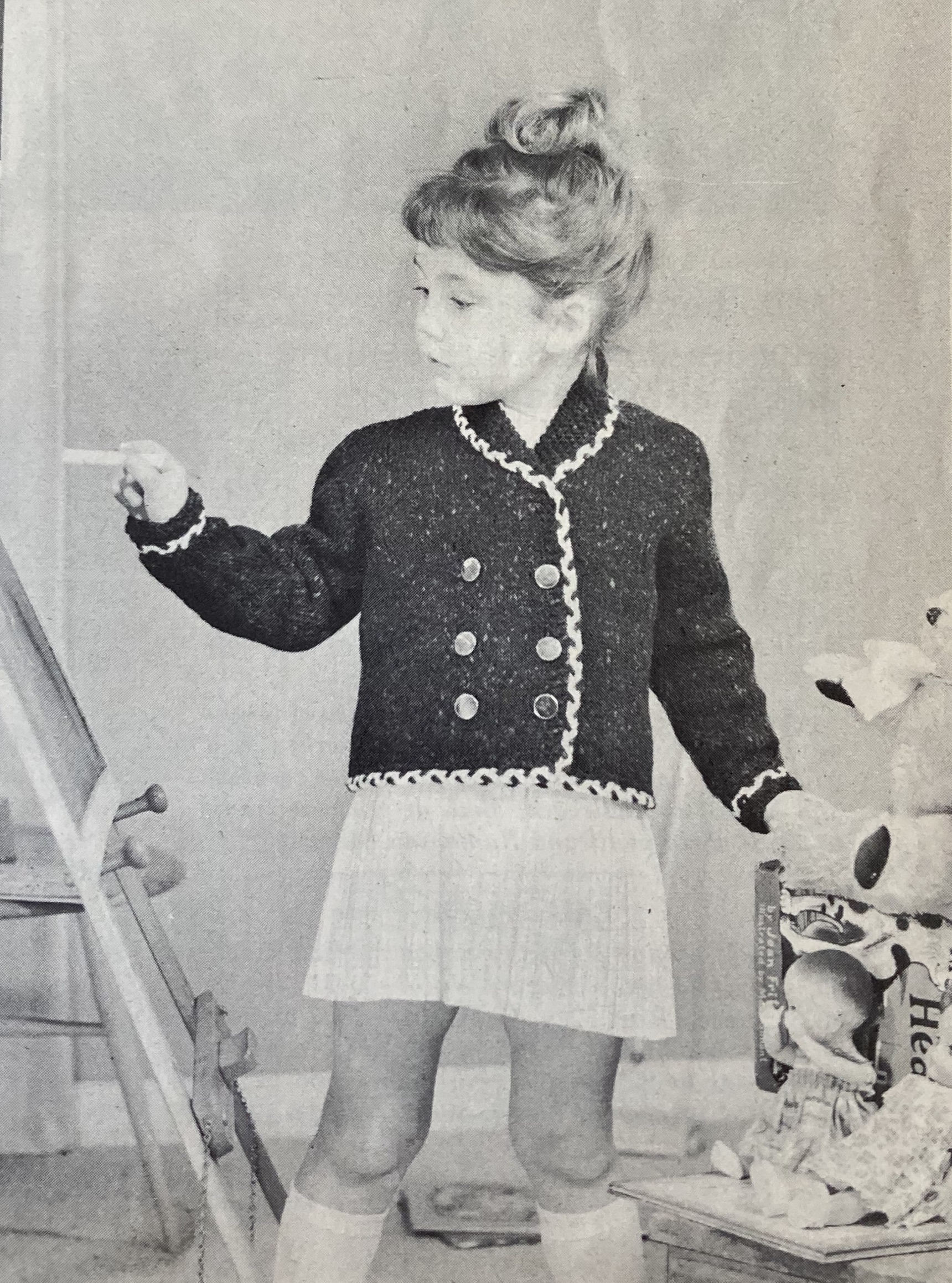
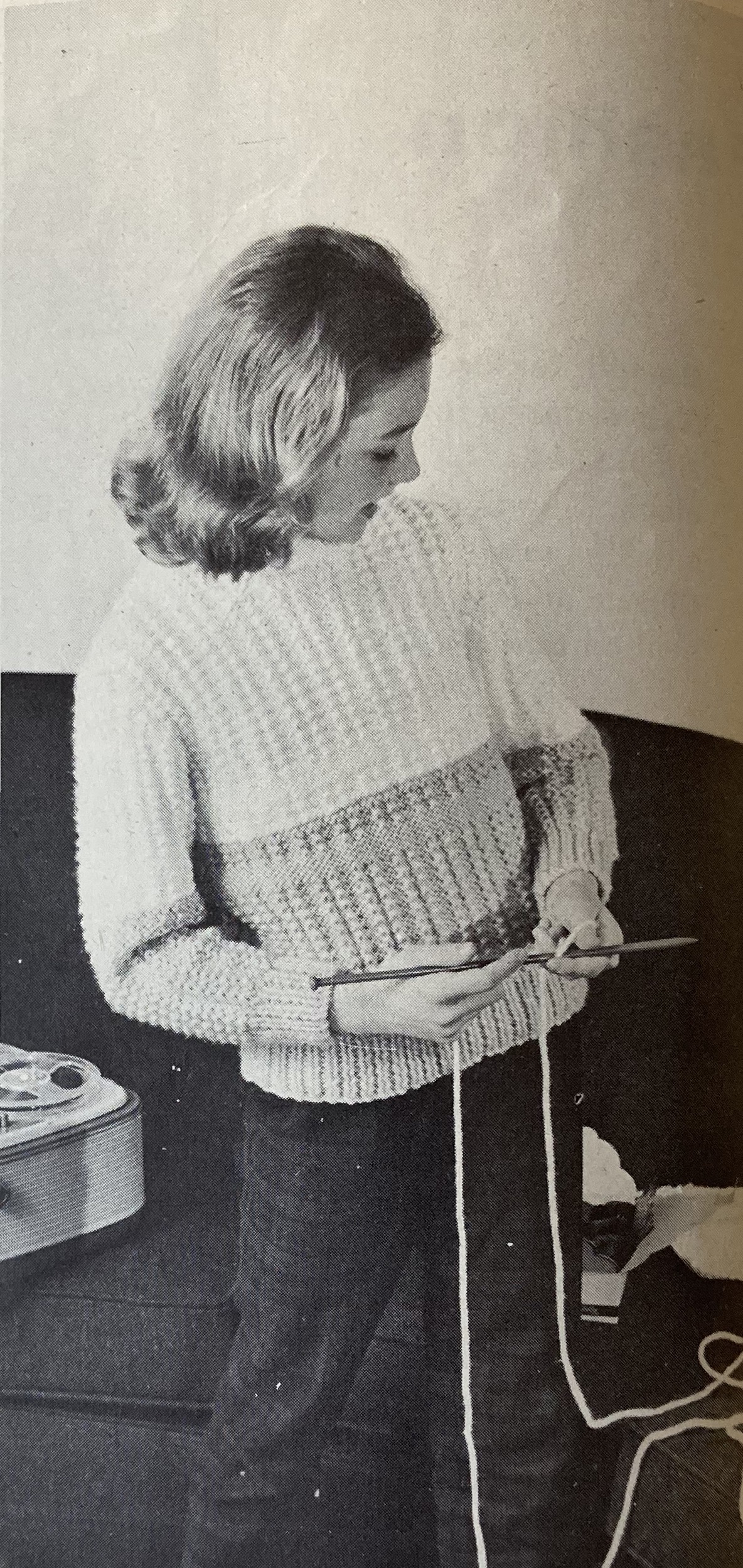
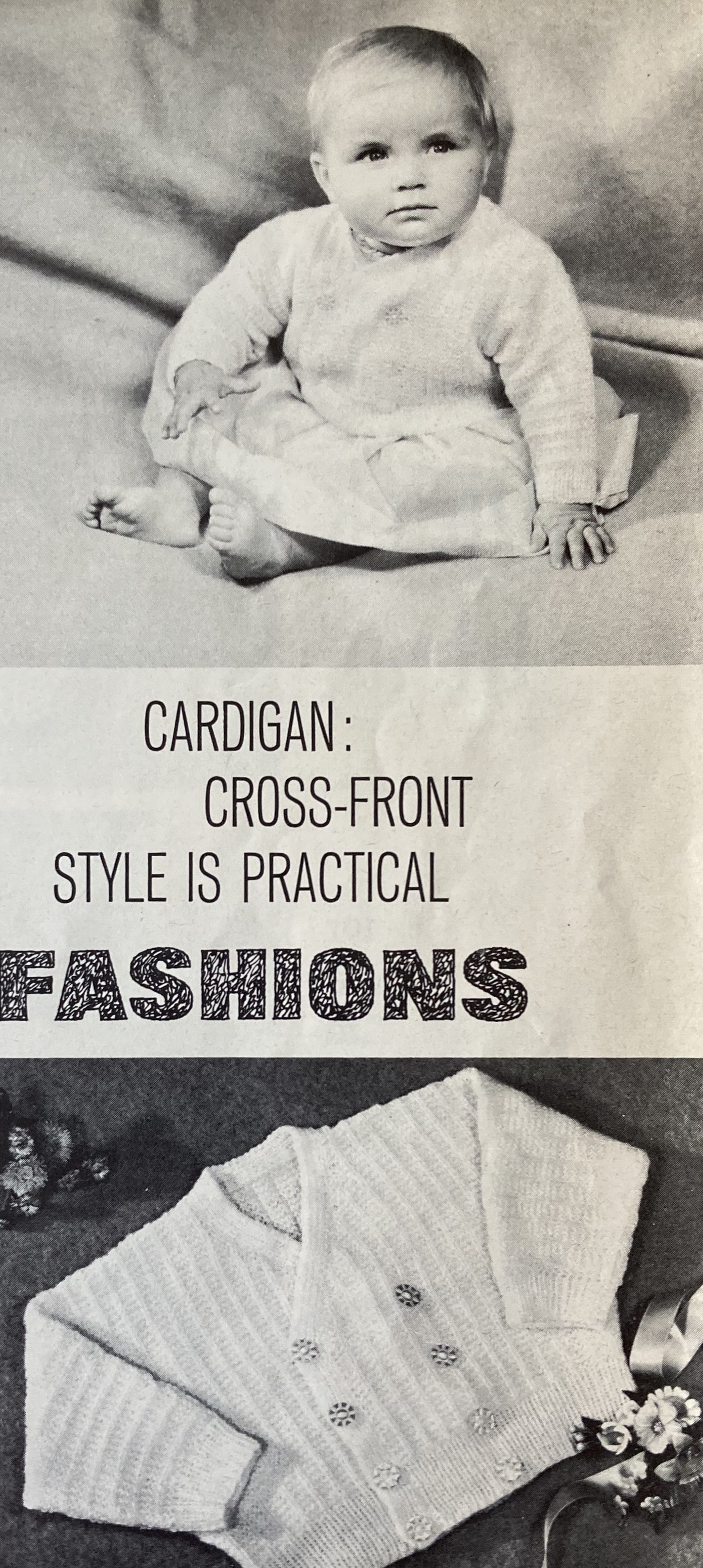


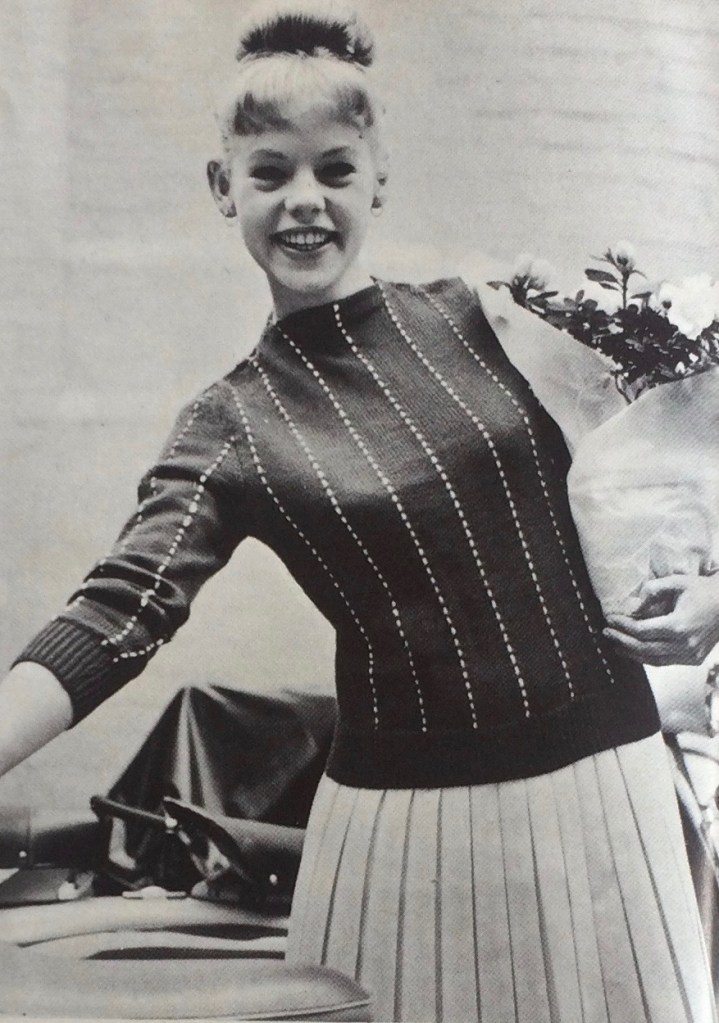
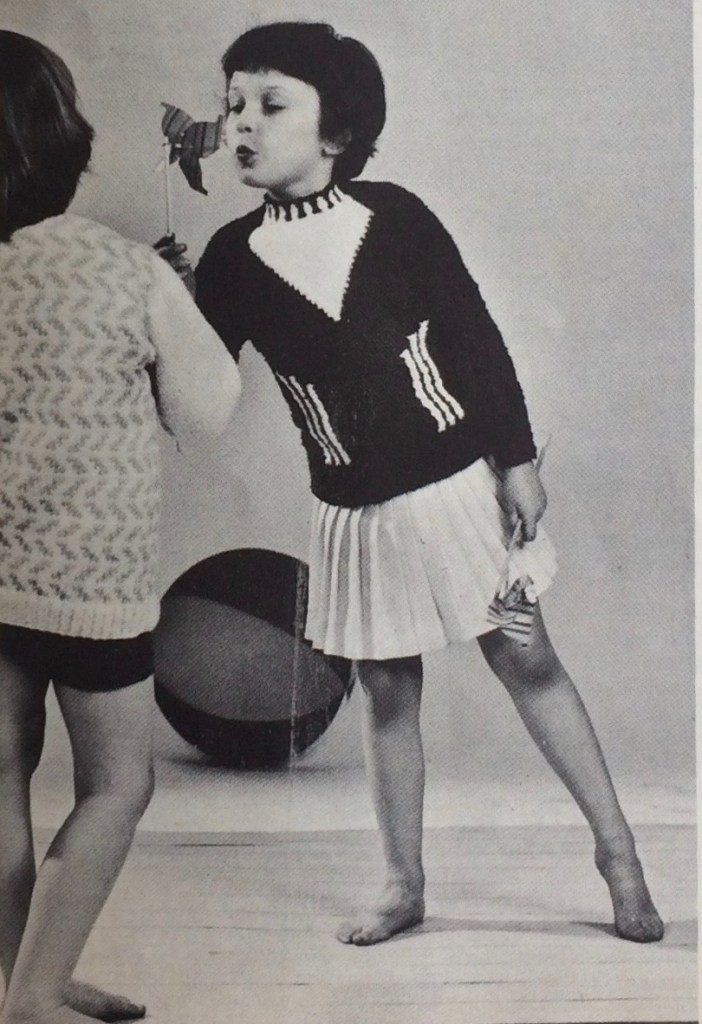
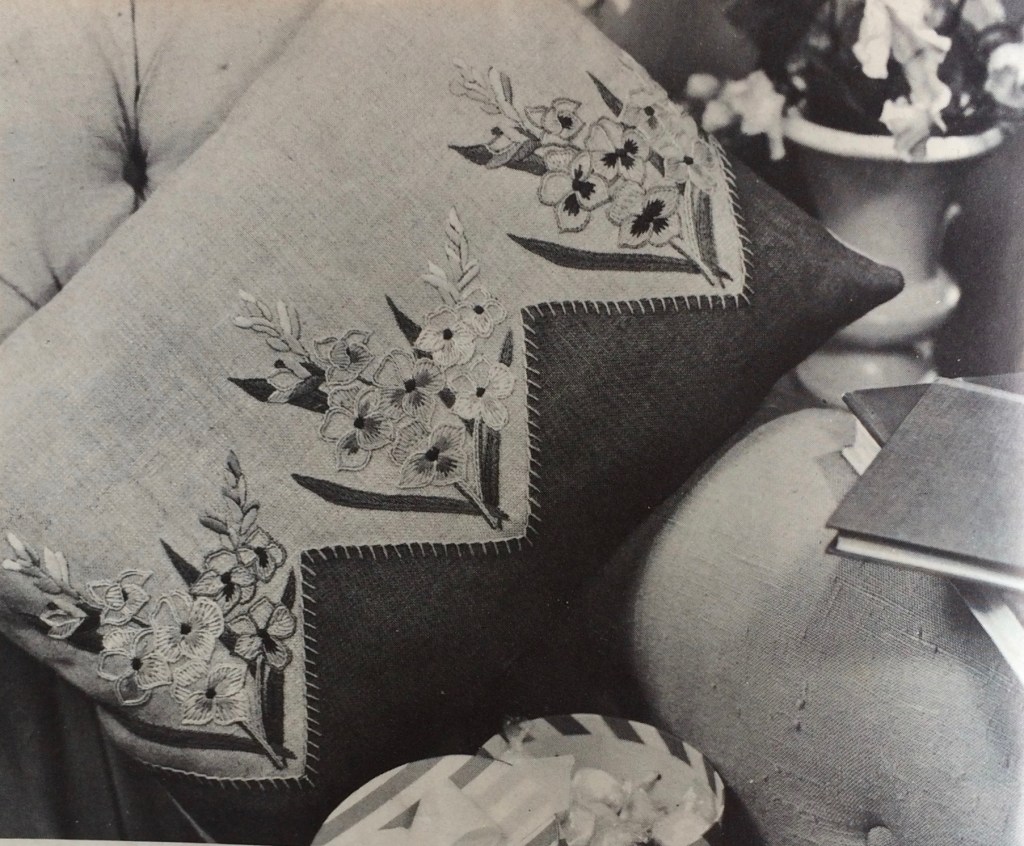
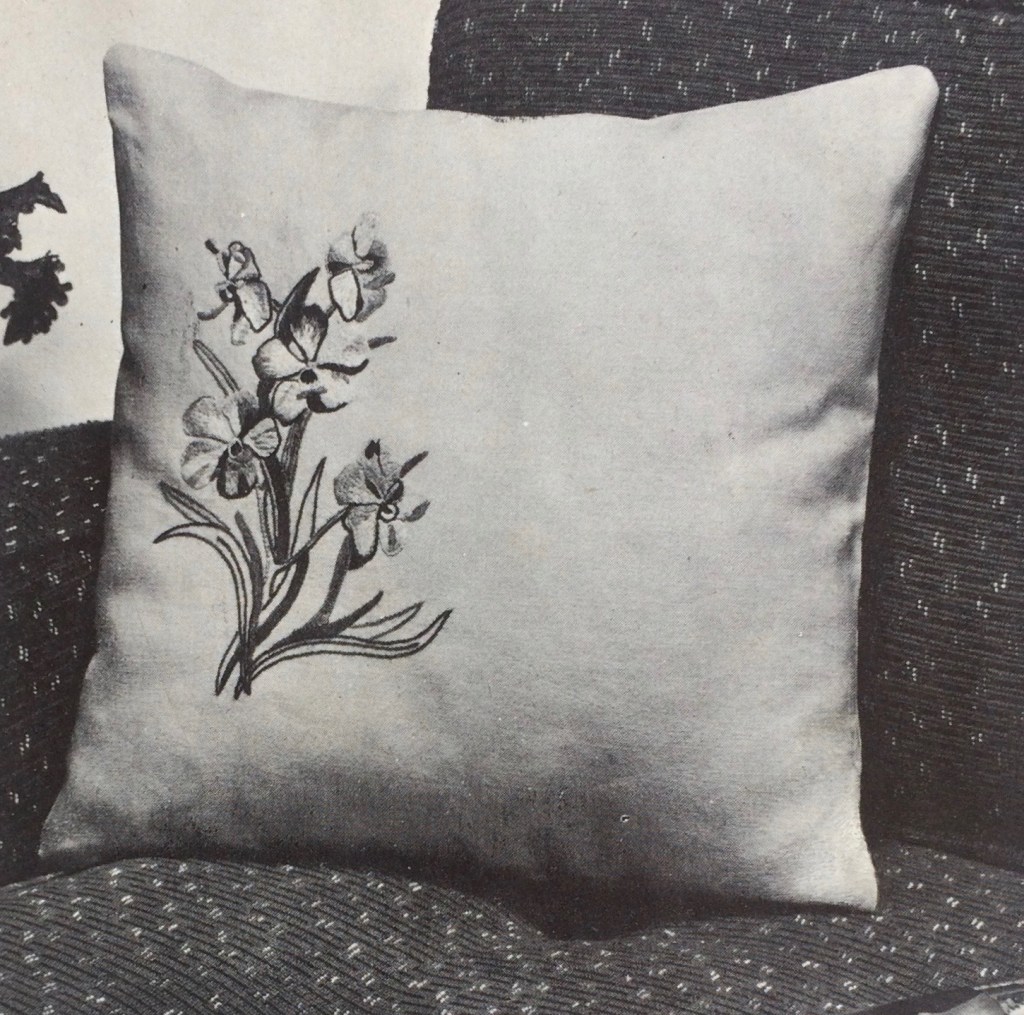
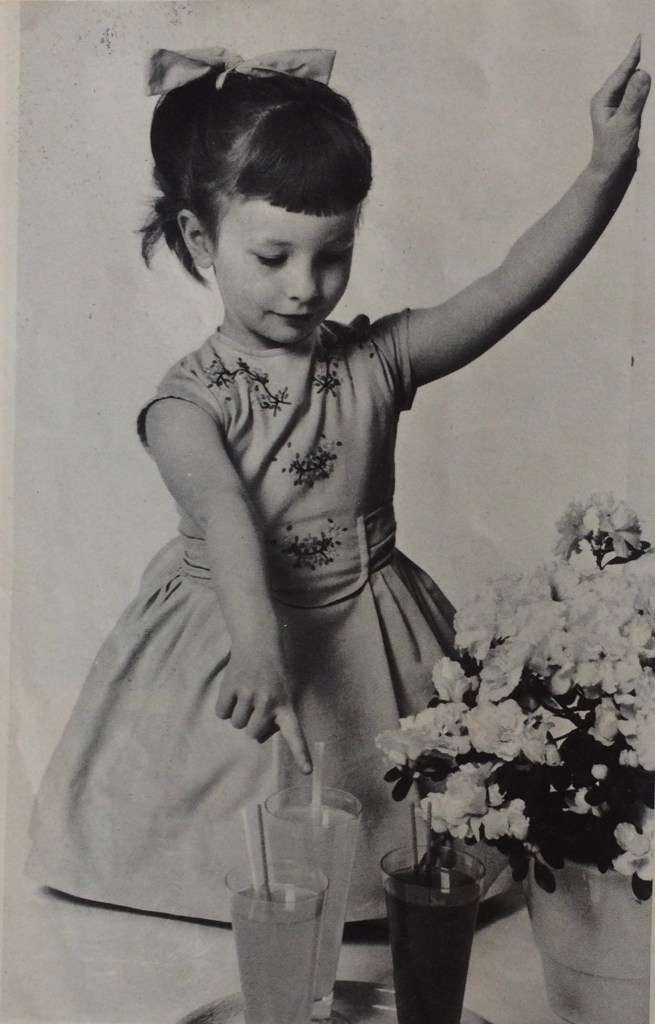
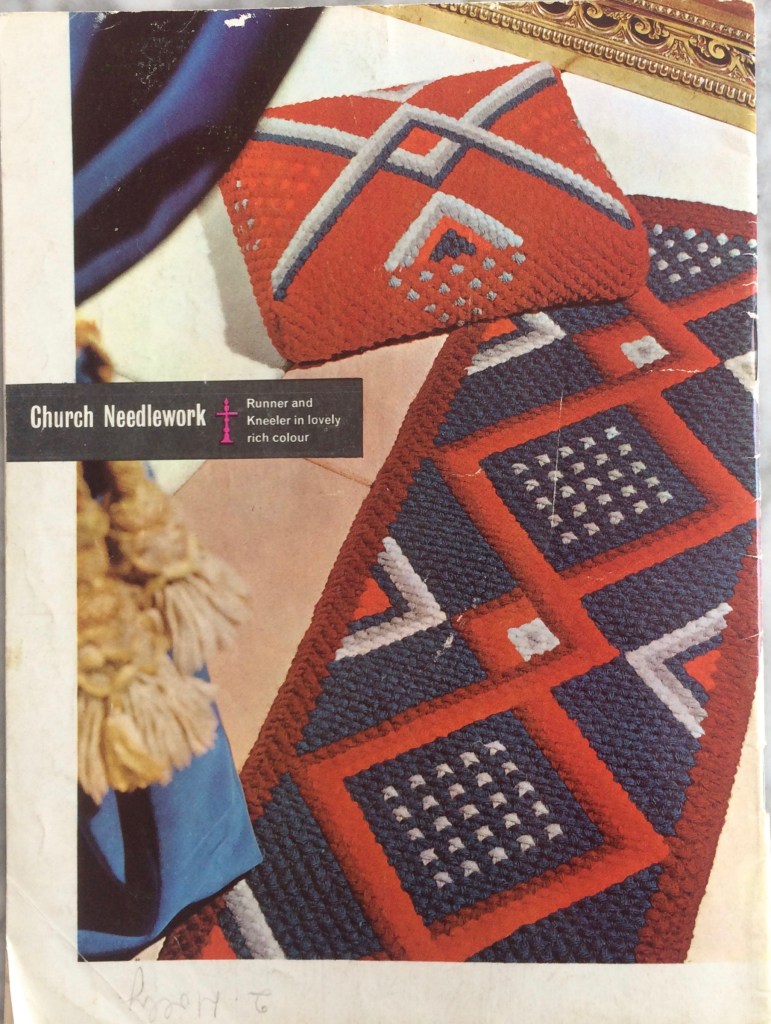
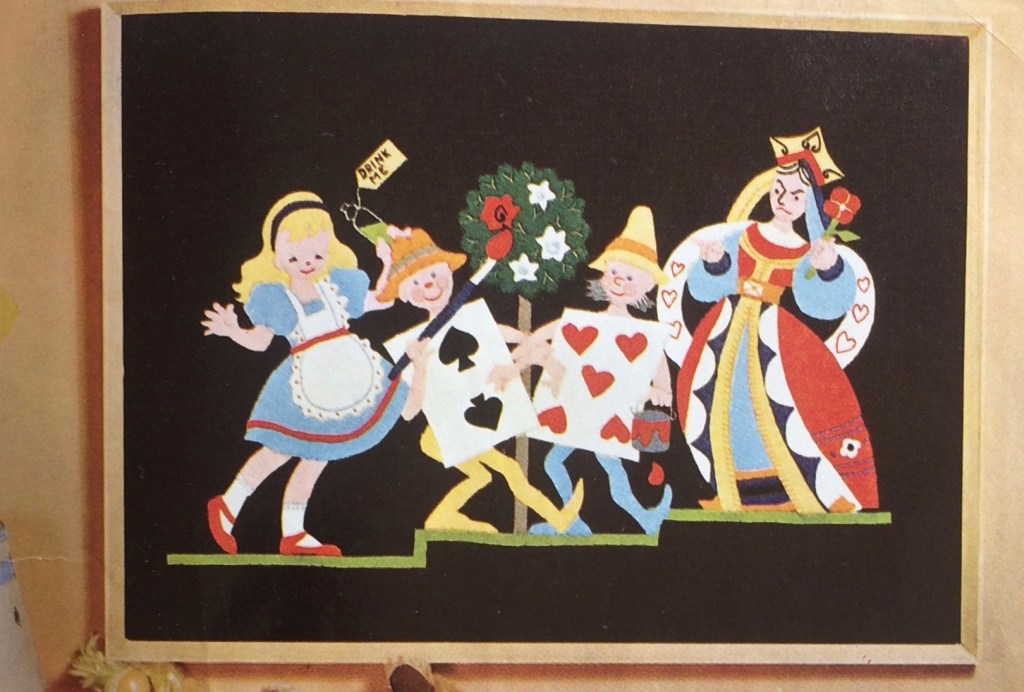


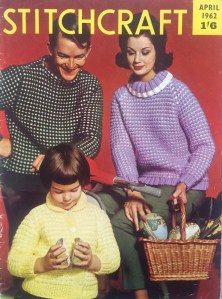 “Easter Greetings” from Stitchcraft, April 1962! According to “editress” Patience Horne, “everyone is getting that “out-of-doors” feeling”. I and my fellow compatriots from 2020 have had a very much in-doors feeling for the last few weeks, as we watch Spring unfold from our quarantine windows.


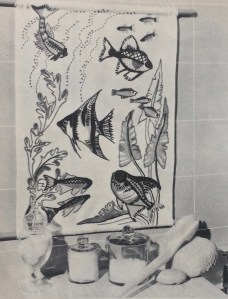 Springtime also means spring cleaning, and Easter means presents and


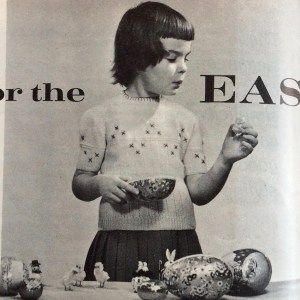 Greetings from the Covid-19 lockdown! March 1962’s project sports the headline “Ready for the Easter Parade” in the magazine, but there are definitely not going to be any Easter parades in March 2020. I hope all of you, dear readers, are staying healthy and staying home.

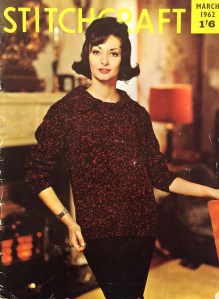 There are three seasons in the Stitchcraft year: autumn, Christmas and “holidays”, which start in March and continue until about September. Of course, most people take their holidays in the summer, but the beauty of knitting (or editing a knitting magazine) is that you can technically be knitting for them any time of the year, if you knit slowly enough. And so, the March 1962 issue of Stitchcraft, (motto: “Knit for Spring”) can already promise us “the fun of holidays to plan for.”




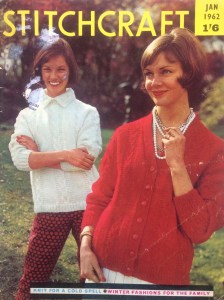 Happy New Year, everyone! It’s 2020 in my real world and 1962 in my blog world. Where will Stitchcraft take us?


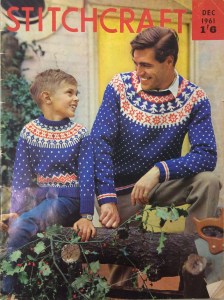 It’s that time of year again and December 1961’s issue has a lovely festive cover photo featuring matching father-son jumpers and a freshly-cut-down Christmas tree with holly branches. The jumpers are meant to be made in flat pieces with only the yoke worked in the round, but everything about them other than that is in the traditional Norwegian style, with a small snowflake pattern on the body and sleeves and a round yoke with tree and star patterns. I like that the jumpers’ pattern theme and colour choice are not so very specifically Christmas-y that they couldn’t be worn at any other time, or by people in our more diverse and modern times who don’t celebrate or don’t care much for Christmas and would just like a nice warm jumper with a wintery flair.


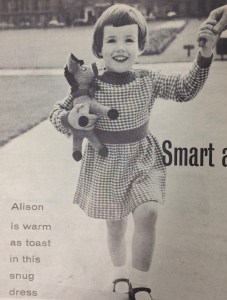 Children of all ages can look forward to practical, yet stylish winter garments — a knitted outdoor play-suit for toddlers in warm, bulky Big Ben, a smart fine-knit twin-set for girls of varying ages (sizes from 26-30 inch chest) and a wonderful knitted dress in a two-colour slip-stitch pattern that fits right into the tweed trend. The photo caption claims that Alison (the young model) is “warm as toast” but of course, her legs are going to be cold! She still seems pretty happy, though.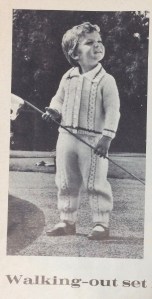


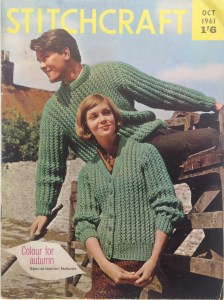 October 1961 gives us “Colour for autumn” with “special fashion features” and a great center spread with colour photos. “I always think October is a nice friendly month,” writes “editress” Patience Horne on the facing page, and I have to agree.
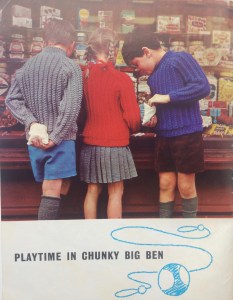 stitches play a prominent role in this month’s issue, starting with the partner-look pullover and cardigan on the front cover. Both are made in the same drop-stitch rib pattern — basically 2×2 ribbing, but you drop a stitch down 3 rows every 4th row and pick it up again in the next row to make a long vertical rib. Children get twisted-rib raglan pullovers to keep their upper bodies nice and warm while their legs freeze in tiny shorts and mini-skirts, typical for the era.




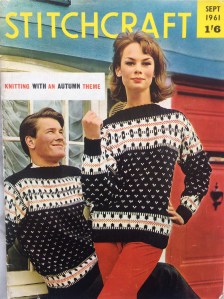 “Knitting with an Autumn Theme” is the motto of this month’s Stitchcraft from September, 1961. Knowing that September is the month where many knitters take up their needles again after not wanting to handle wool in the hot summer, I would have expected a “bumper issue” with extra ideas, new fashions from Paris, more colour photographs and so on. Not the case! It has more or less the same mix of “chunky”, bulky garments and easy homewares that we saw in the summer issues.
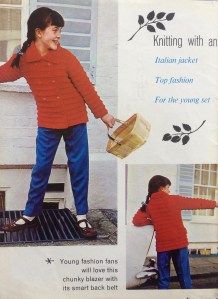 probably will never be my style). The kid’s coat looks cosy and fun to wear, and the “gay sweaters for him and her” in a Norwegian-style pattern are warm, practical and unisex. I imagine the boatneck collar on an unshaped front must scratch horribly across the neck, though.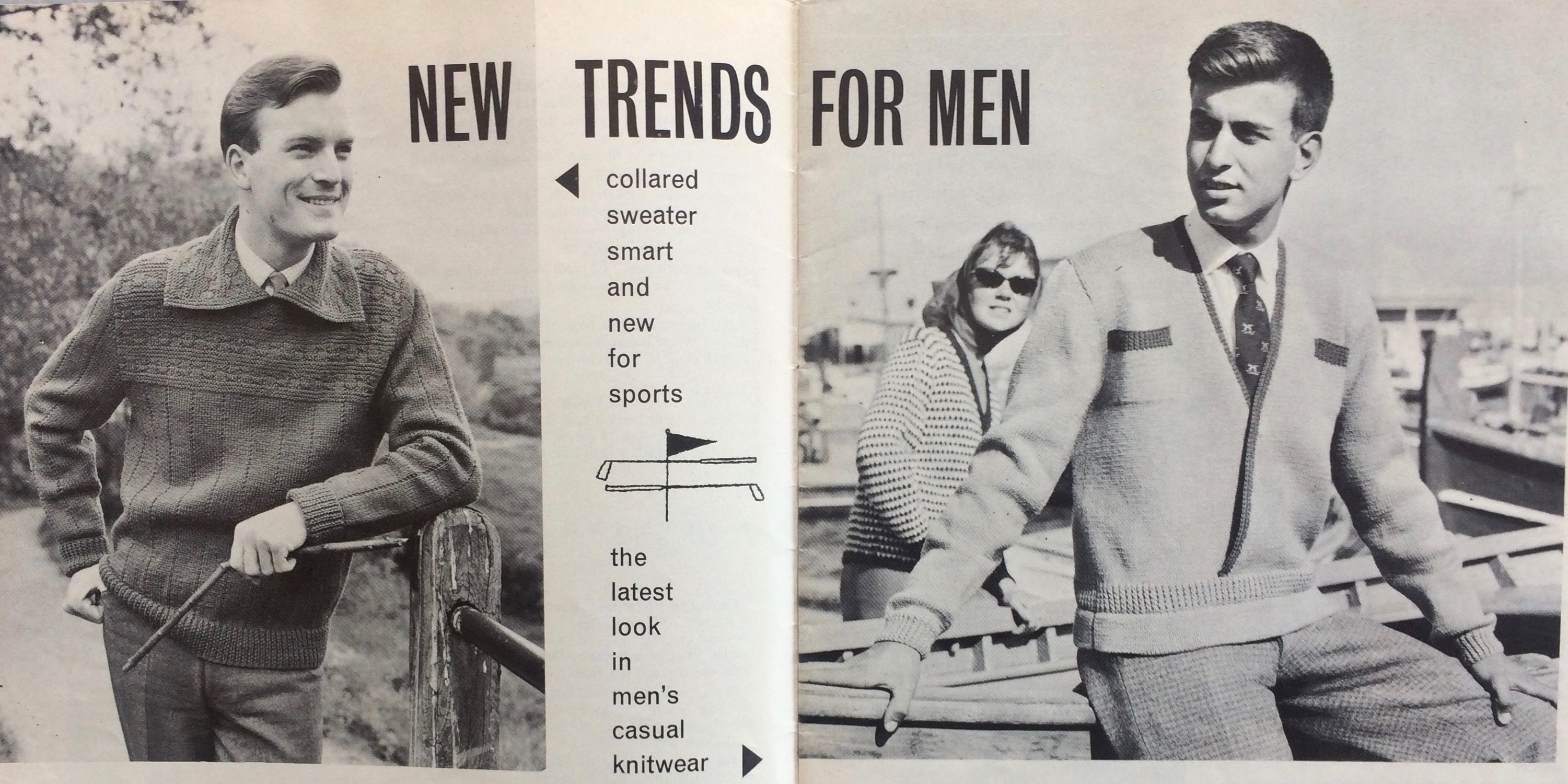


 June 1961 was the issue with too many great projects in it and not enough time to make them all. My “official” project was
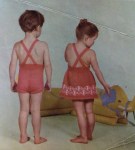 I decided to make it in cotton instead of Nylox (Patons wool-nylon mix from the 1960s) or a modern equivalent. It is always, always a problem to find non-mercerised cotton that is fine enough to give 7 stitches to the inch. Thick, mercerised dishcloth cotton is always available, mercerised crochet cotton is always available, but what passes as 4-ply or fingering weight non-mercerised cotton is just too thick. I decided on Natura “Just Cotton” which is non-mercerised, soft, pretty and supposedly free of harmful substances (Oeko-Tex certification). The label says it gets 27 stitches in 4 inches but that is illusory. The yarn is 8-ply! I don’t know why they don’t use 4 strands, thus making it a true 4-ply fine cotton for soft, light garments. I got 6 1/2 stitches to the inch with some effort, but the resulting fabric is a bit stiffer than I would have liked.


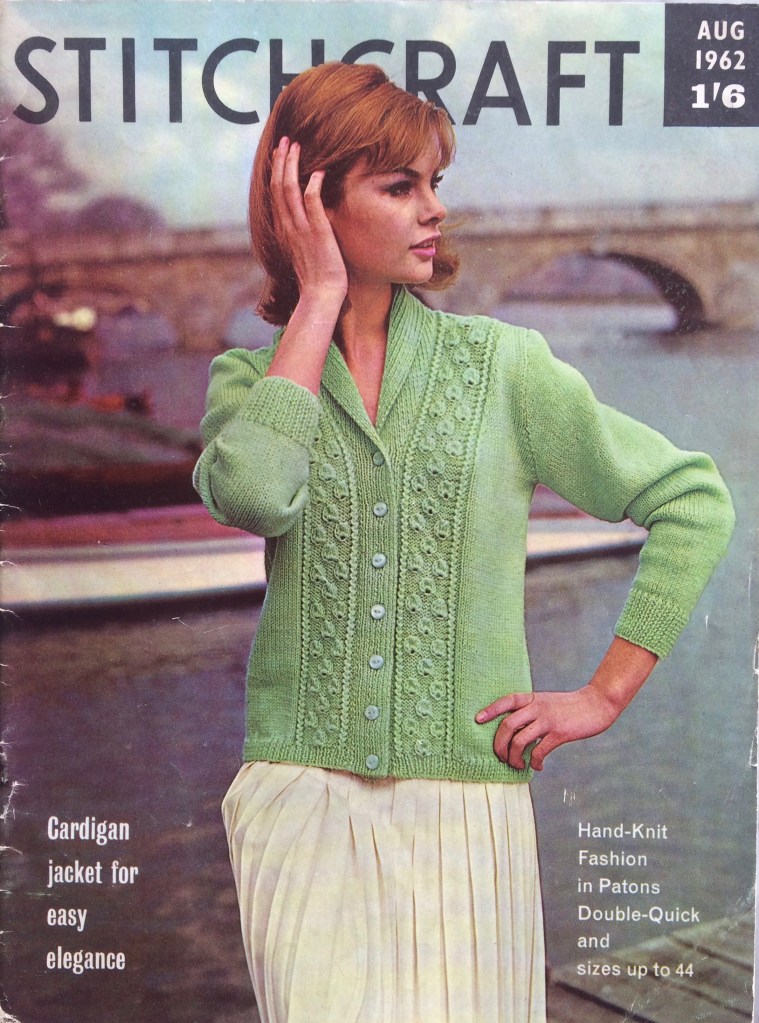
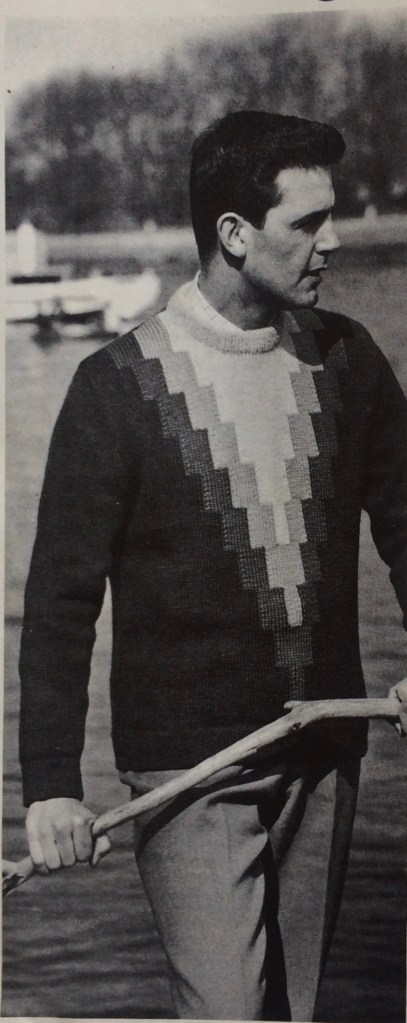
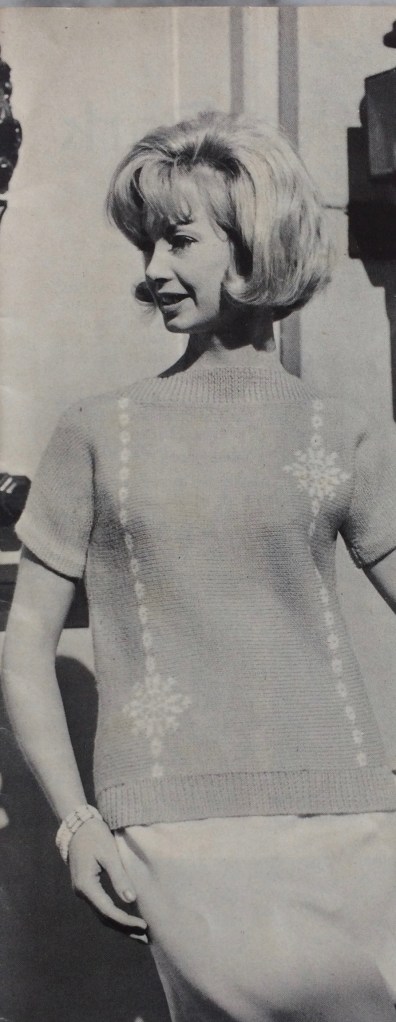
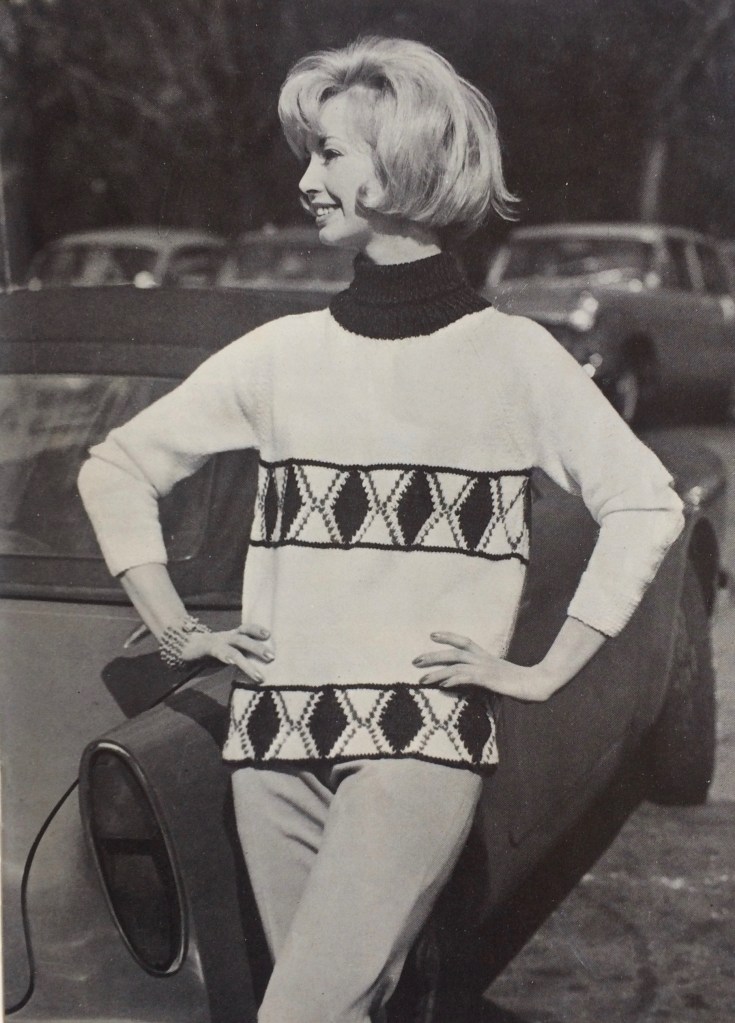
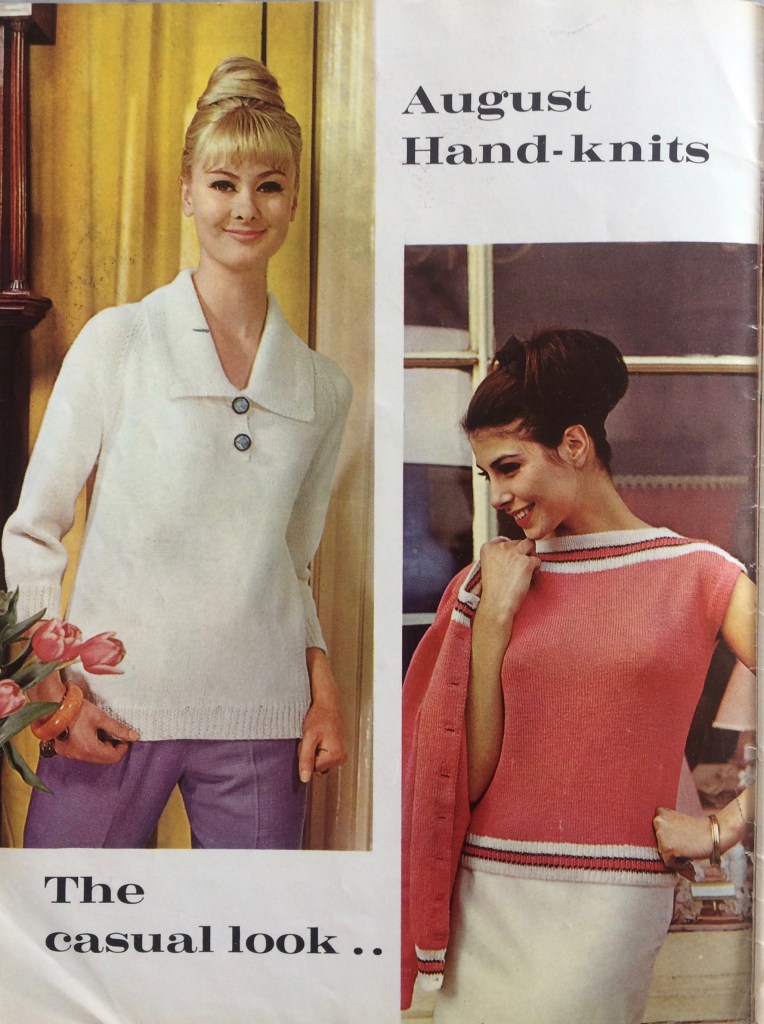
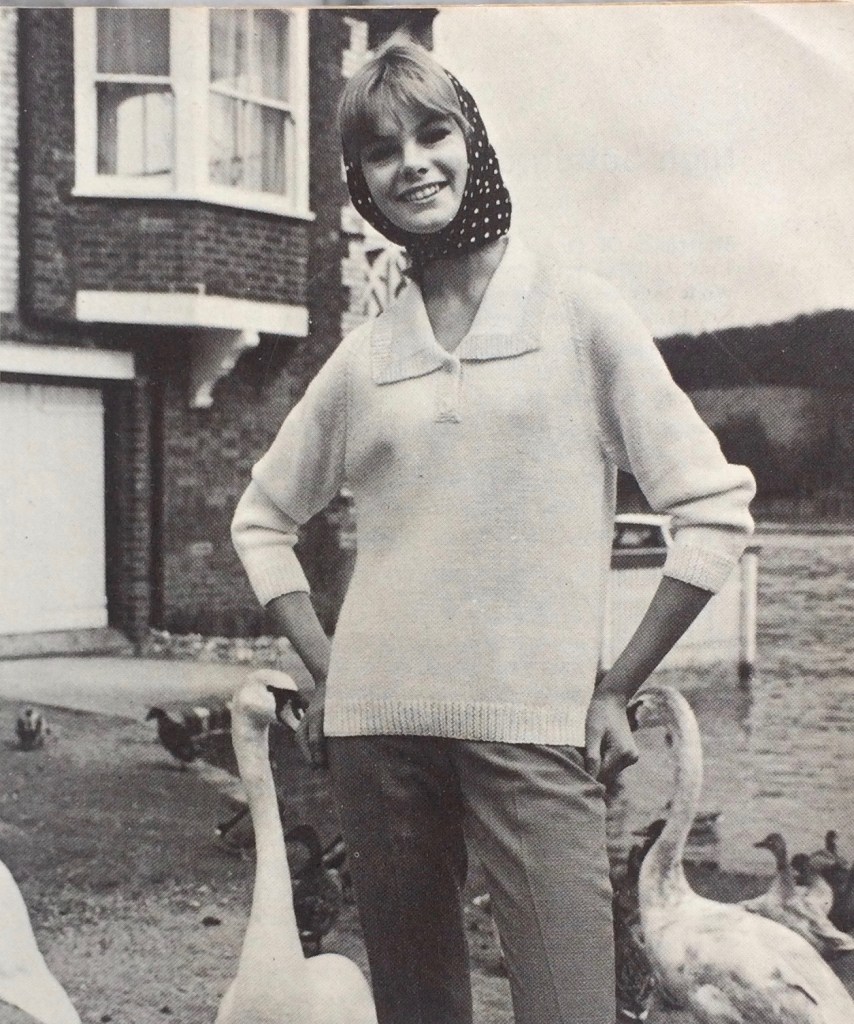
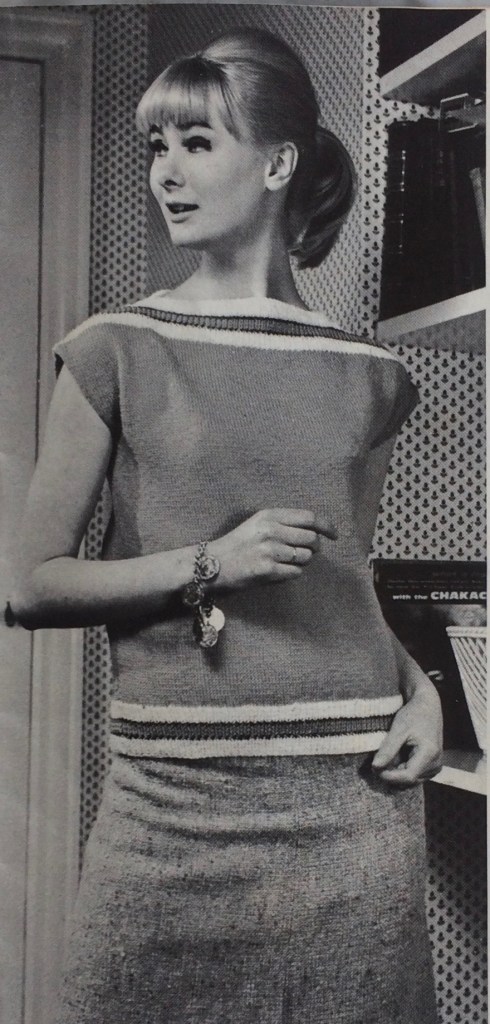
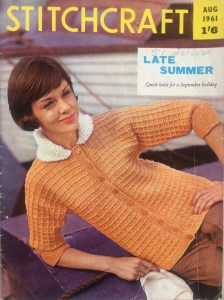 “August is an issue that needs special thought and planning” writes Stitchcraft‘s “editress”, Patience Horne, in the introduction to the August issue, pointing out that it is “rather an “in-between” month for needleworkers” — often too hot to want to wear or make heavy sweaters and too late in the year for fine-knits. At the same time, reminding people that “Autumn is around the corner” can be “a little depressing” to people enjoying their late-summer holiday.


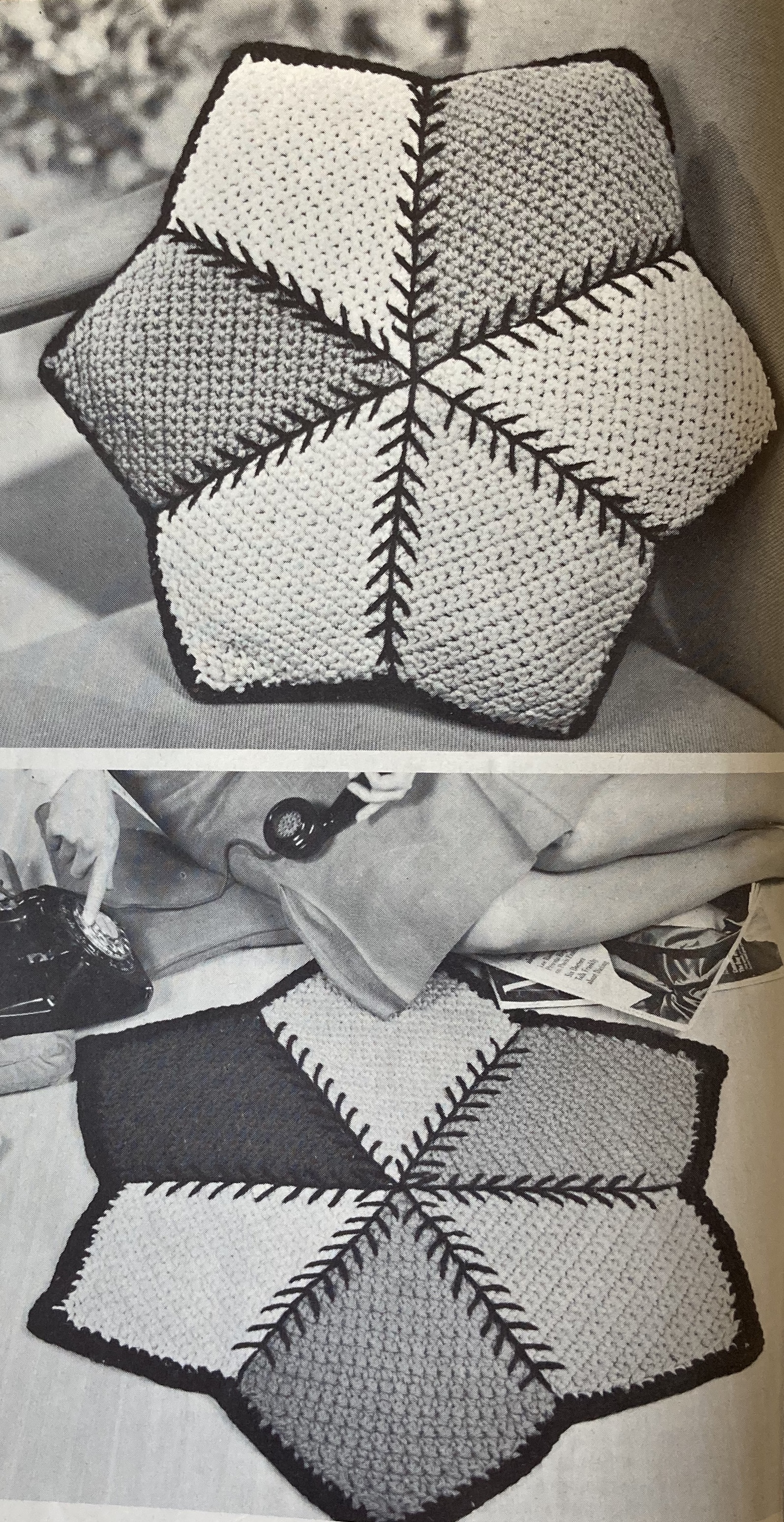
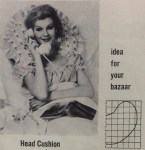 My favourite, though, is this sewing project: a head cushion that lets you recline charmingly in bed with your hair and makeup perfectly done, your satin nightie on, a book on your lap and your telephone on your ear. It’s glamorous leisure and lifestyle advertising personified, and though they say it’s an “idea for your bazaar”, I would bet the Stitchcraft readers who made this in 1961 did not make it to sell.
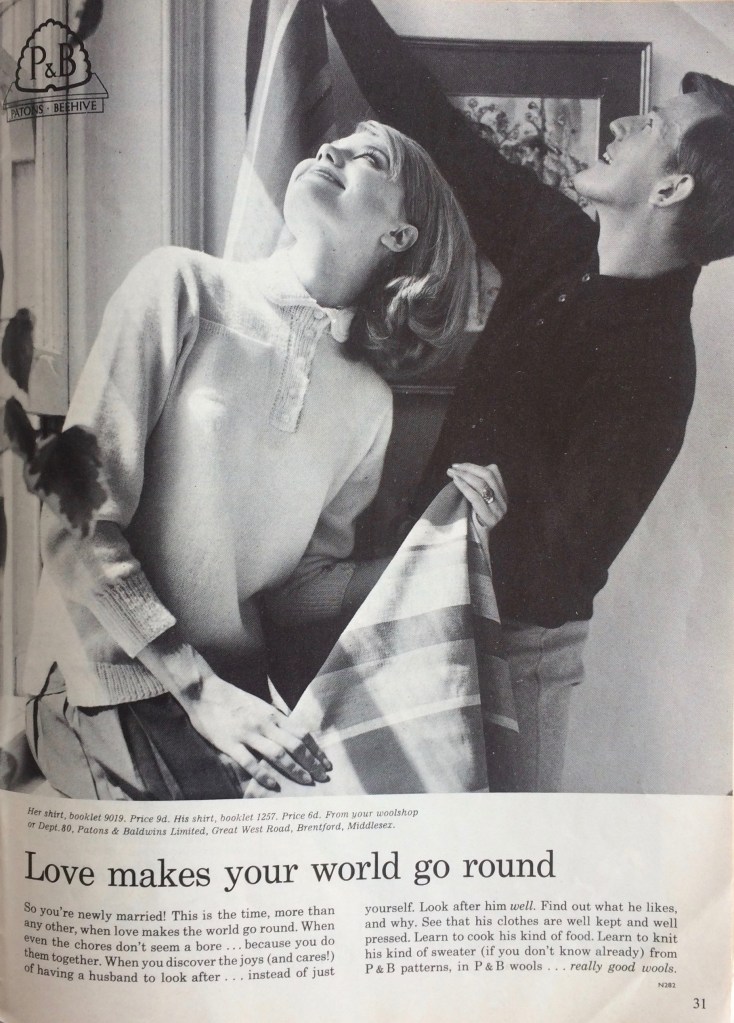
 Apropos lifestyle advertising, the early 1960s Stitchcrafts show a rise in full-page ads for Patons and Baldwins wools. That’s obviously not surprising considering the magazine was published for the Patons wool company, but the full-page ads that “tell a story” are a new trend: the late 1950s and 1960s issues up to now had little celebrity testimonials. This one caters to grandmothers and the message is clear: Knitting is not only a rewarding pastime on its own, but earns you the love and affection of the grandchildren for whom you knit. (But only if the kid likes it, and that’s only guaranteed if you use P&B wools, of course.) The 1950s and 1960s saw a huge shift in advertising methods towards a psychologically-based system, which is a huge topic that I won’t start with here, but suffice to say there will be more of these ads, and that they are representative of changing advertising styles.
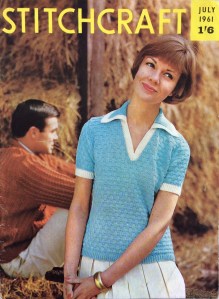 The motto of the July 1961 issue is “Sew through the Summer” and indeed, there are a lot more sewing projects than one would normally find in Stitchcraft, summer being a time when many people do not want to hold wool in their hands or think about colder weather to come. There’s more emphasis on homewares and small, fun projects to make and use on holiday. The farm photos were taken in Hertfordshire and the boating photos in “the heart of London’s Little Venice”. Doesn’t that sound like fun? Let’s dive in!
 a really pretty basketweave blouse with that V-neck-plus-collar design that we saw so much of in 1960 and the last years of the 1950s, not to mention just last month on the cover of the


 The Stitchcraft Sixties
