April 1967: Check pattern Shell

EDIT May 26, 2025: Finished! I had to wait for the photos but it was worth it. Scroll down to see…

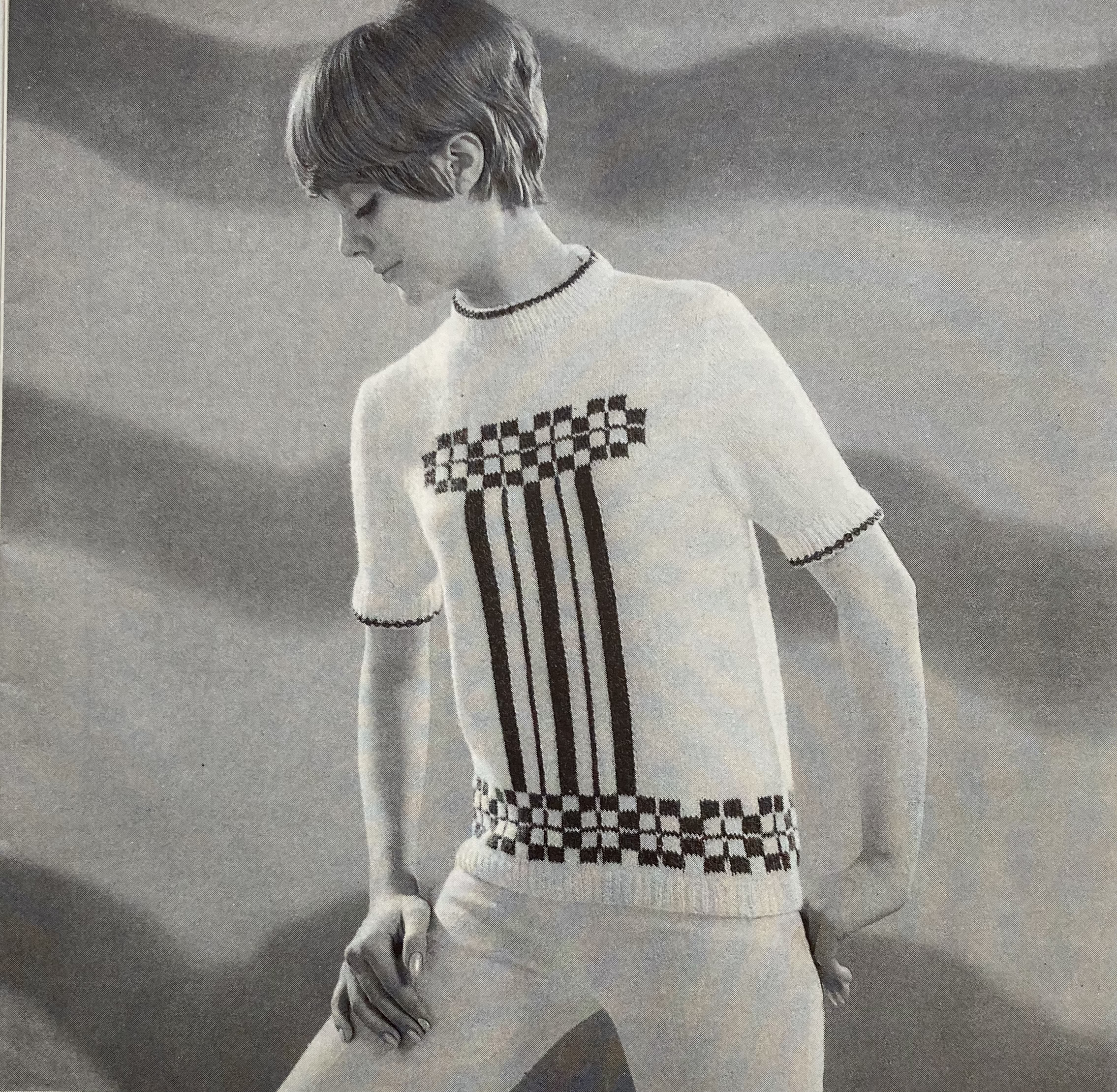
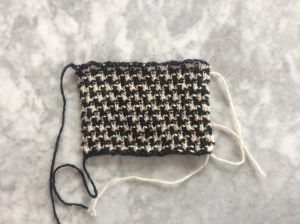
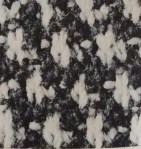
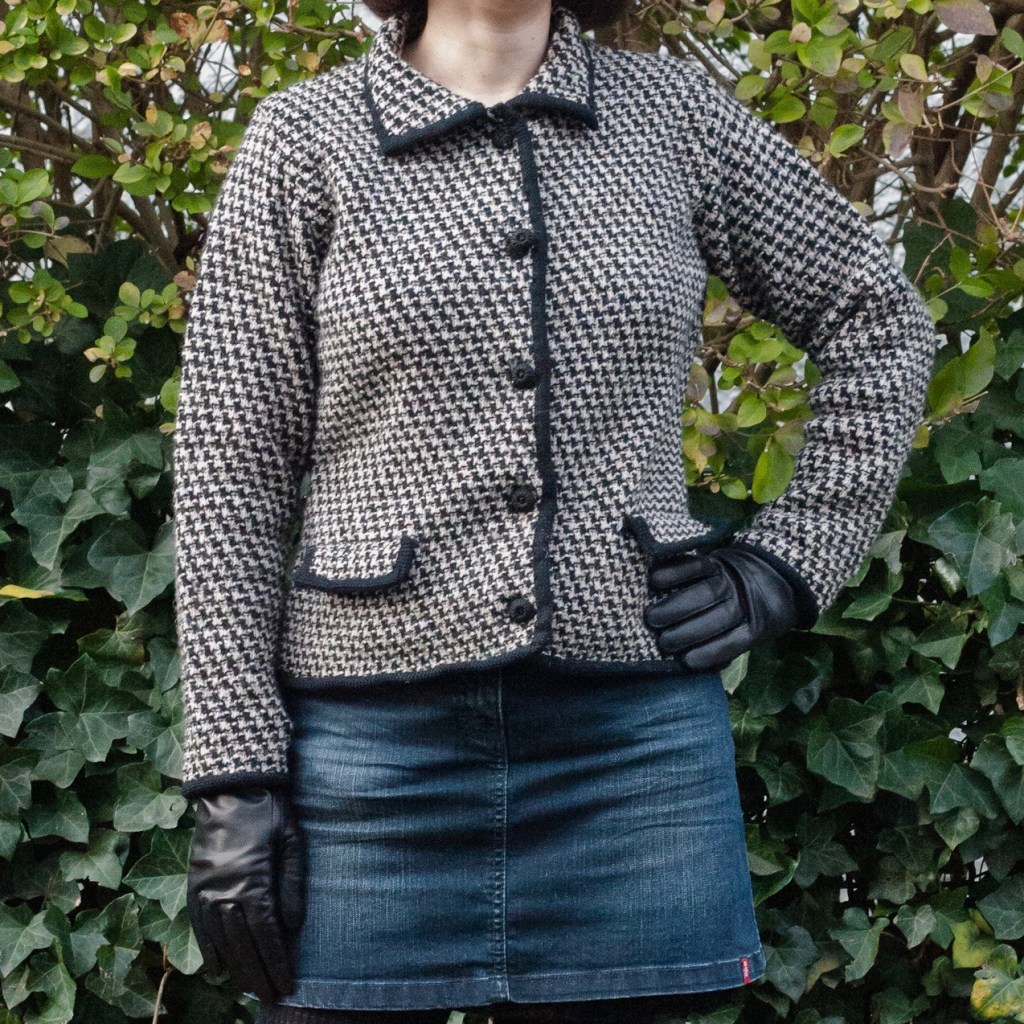
My April 2025 project was this “shell” (sleeveless top) in a stranded chequerboard pattern — one of three “summer shell” patterns in the April 1967 issue of Stitchcraft, along with a polo-neck bouclet and a crochet lacework design. (And shells. Listening to shells, because shell, get it? Yes, we got it, thanks.)

The wool in the pattern is Patons Cameo Crepe, a very smooth, twisted fingering-weight wool. I chose Lana Grossa Ecopuno, which I used for this “shaded blouse” and this sleeveless cardigan a couple of years ago. Though not as smooth as a crepe-twist yarn, it’s soft, light and not too warm, and available in many very pretty colours. I chose a dark green and pale, slightly seafoam-tinged blue, similar to the original colours but with more contrast.

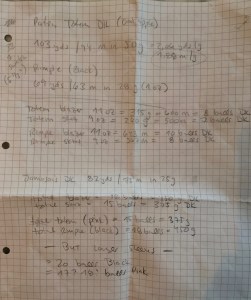
The tension in the pattern is 8 stitches to the inch in pattern, which I can’t get even with fine yarn, so I made the smallest size (for 32-33 inch bust) to fit me (38 inch bust) and calculated that it would come out with around 36 inches in the bust, i.e. two inches of negative ease instead of the 1-2 inches of positive ease in the pattern. I hear you out there saying “Never, ever knit a stranded pattern with negative ease!!!” but it can and should sometimes be done! The yarn is loose and drapey, even in a non-diagonal stranded pattern like this one, and even two inches of negative ease doesn’t look the least bit tight.

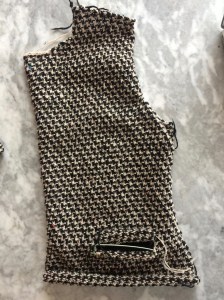
Which brings us to the shaping question: all three “shells” in the issue show the new longline silhouette — hipbone length and unshaped from hem to bust. If you look closely at the photos, you will notice that the poses often involve a hand on the back waist, a hand on the back, arm behind the back, elbow pointing at waist level… the things you do to make you look like you have a waist in your long, unshaped garment! I never make unshaped tops for precisely this reason — they look like a sack on me, as they tend to do on all but the skinniest or curviest figures. Having had good experiences with longer tops shaped from hip to bust, I started the top with even fewer stitches at the hip and increased up to the number in the small pattern size after the waist. I also made the top in the round from hem to armhole shapings.

To test the check pattern, I made a little phone cosy in a different wool (DK weight), Since the pattern has no diagonal lines, I was afraid it would pull together awkwardly . That was a concern with the DK sample, so I was very careful to strand loosely with the Ecopuno (another reason for sizing down) and had no problems. I did, however, make a mistake in the pattern, to be fixed with duplicate stitch because I’m too lazy to rip back that far.

It went wonderfully up until the front part above the armholes, where in spite of my careful calculations, I ran out of the light blue yarn. No problem, I had bought it at my local wool shop right in my neighbourhood, so popped over to buy another ball… But no! The shop is changing management and has been selling off all the inventory before the first of May! They still had some Ecopuno, but not in the right colour, so I had to order more online. Argh!

The new wool arrived and I finished the top easily enough. Of course, the new wool was a different dye lot and the one time it makes a difference… and it was on the front piece, too. The change line got less noticeable after blocking and letting dry. Also, the pattern tricks the eye into not seeing it.

My knit-night friends and I recreated the magazine photos. Here’s the black-and-white one:

And here is the magnum opus, where one knitting colleague photoshopped me into the original photos. Is it me, or is it the model?

I am very, very happy with this project — and the photos!
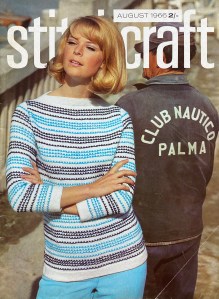
August 1966: Overview

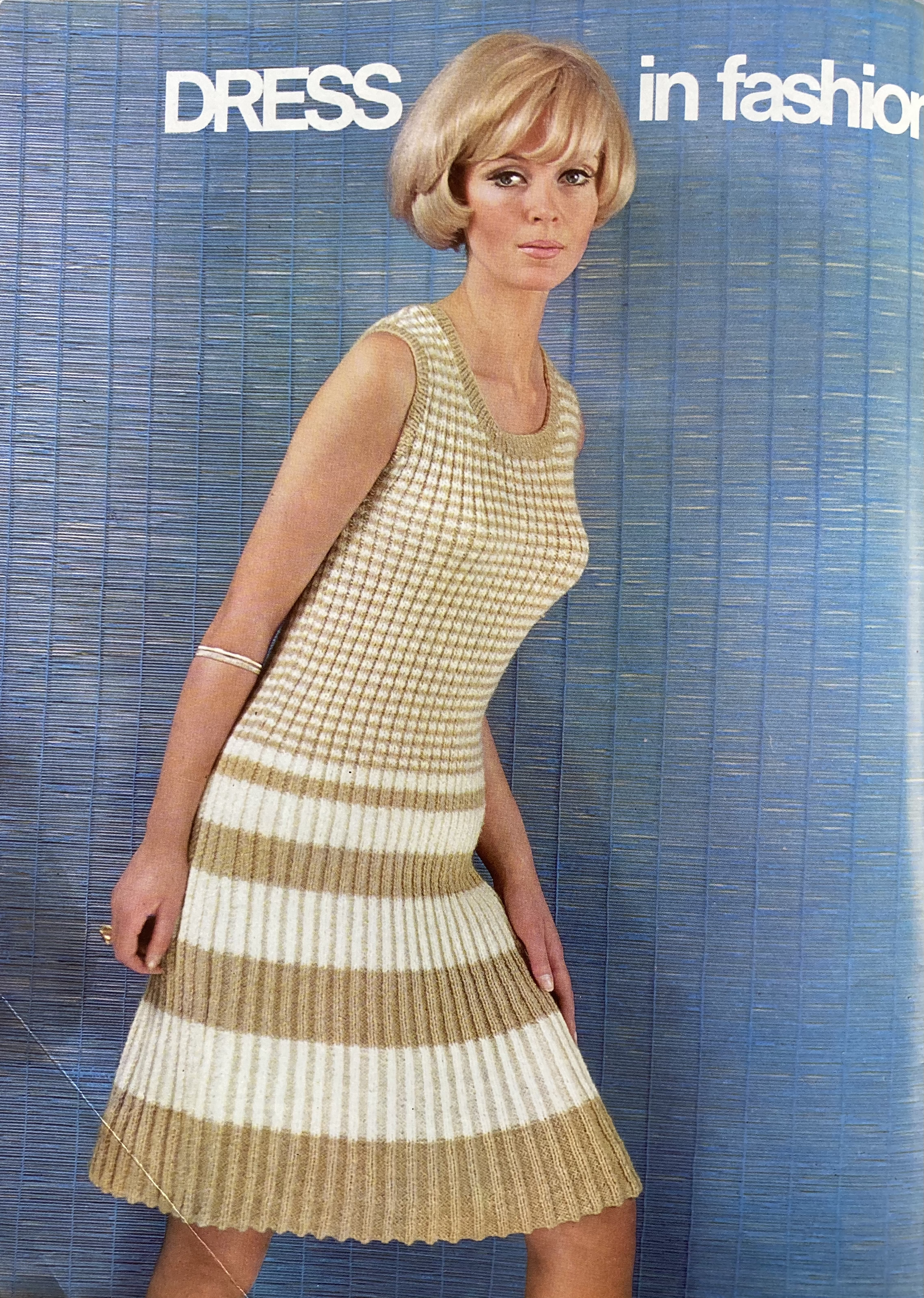
Dress in fashion for the height of summer! August is, as Stitchcraft‘s “editress” Patience Horne writes in this issue, a tricky month. Autumn is around the corner and it wouldn’t make much sense to keep knitting for warm weather, only for the season to change just as a project was finished. On the other hand, if it’s hot and muggy, you don’t want to hold warm wool in your hands. Stitchcraft‘s solution for August 1966? Sleeveless and short-sleeved garments in double-knitting weight that can be layered for cooler weather or worn in the evening on warmer days, plus some fine-knits and quick summer accessories to be worn right away.

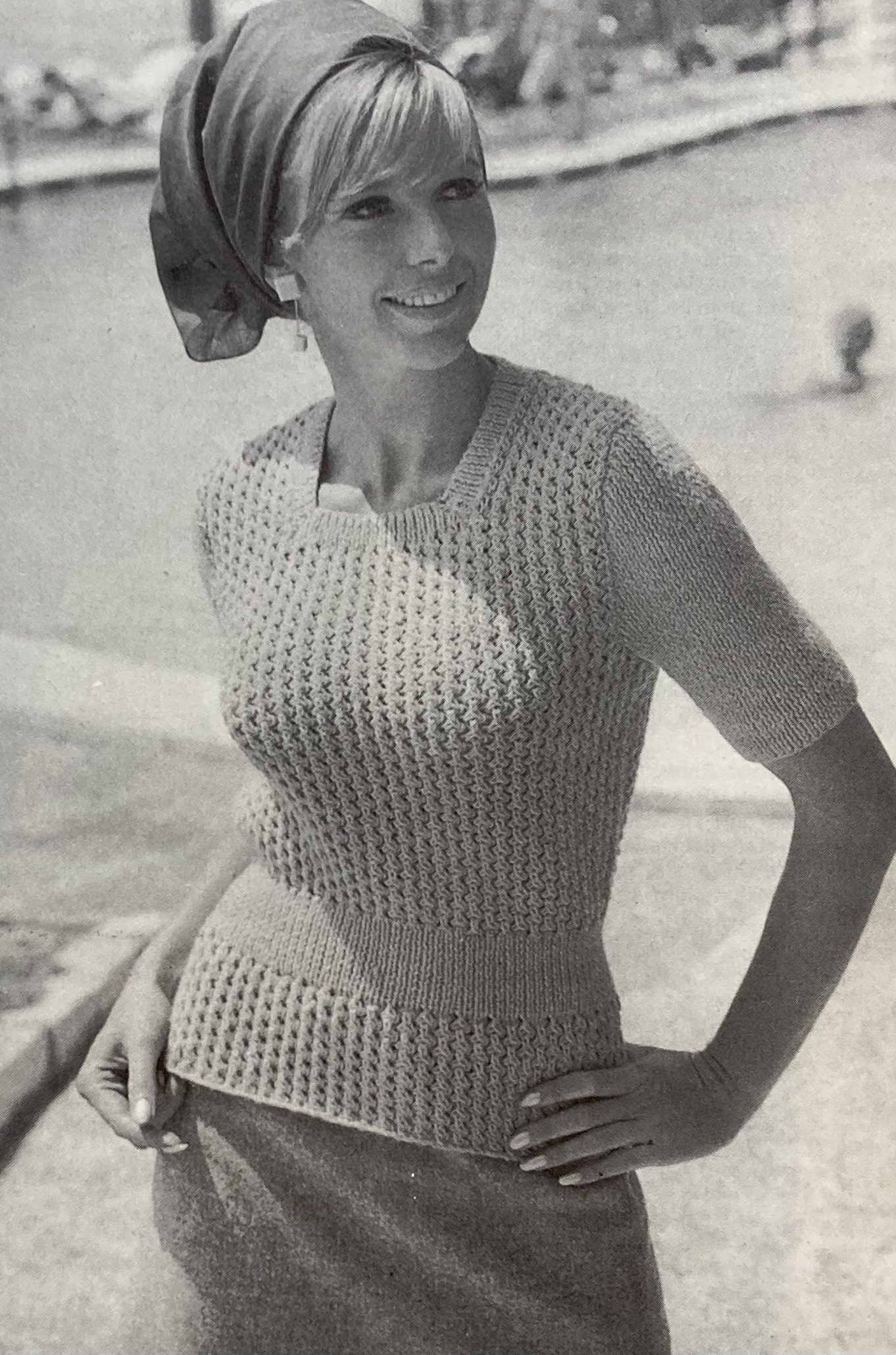
The “striped holiday tunic” on the cover strikes a good balance: made in Totem Double Crepe, it’s warm enough for sailing or windy-day wear, but the fresh white and turquoise stripes make it unquestionably a summer garment. The pattern is made by slipping the contrasting-colour stitches on the purl rows. More cool-warm fashions in DK wool are explored with a sleeveless, ribbed dress, a “racing stripe” jumper, and a short-sleeved twisted rib blouse “for cooler days” The ribbing on the dress gives a “pleated” effect to the skirt. Stripes and checks on white are a clear fashion trend.

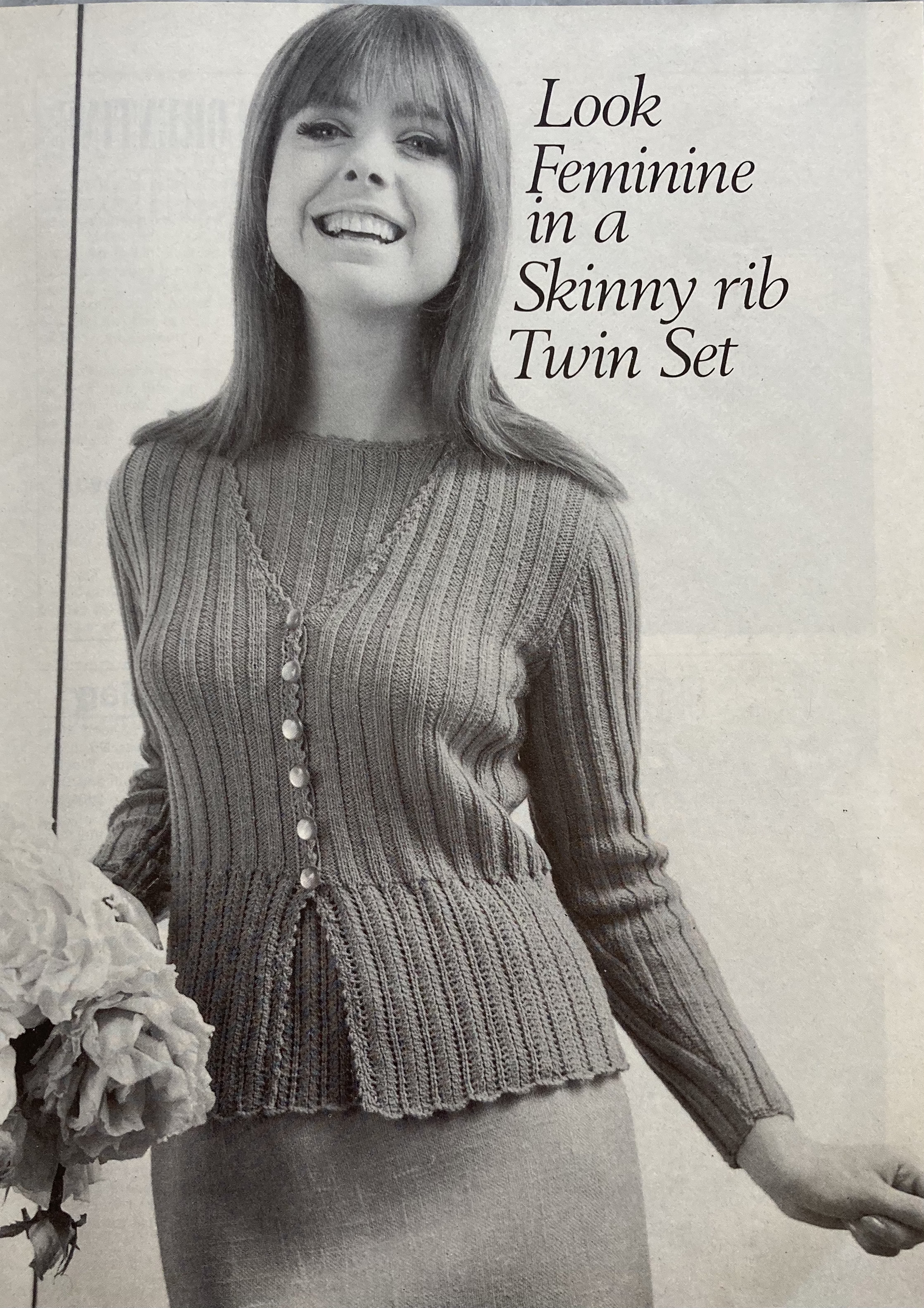
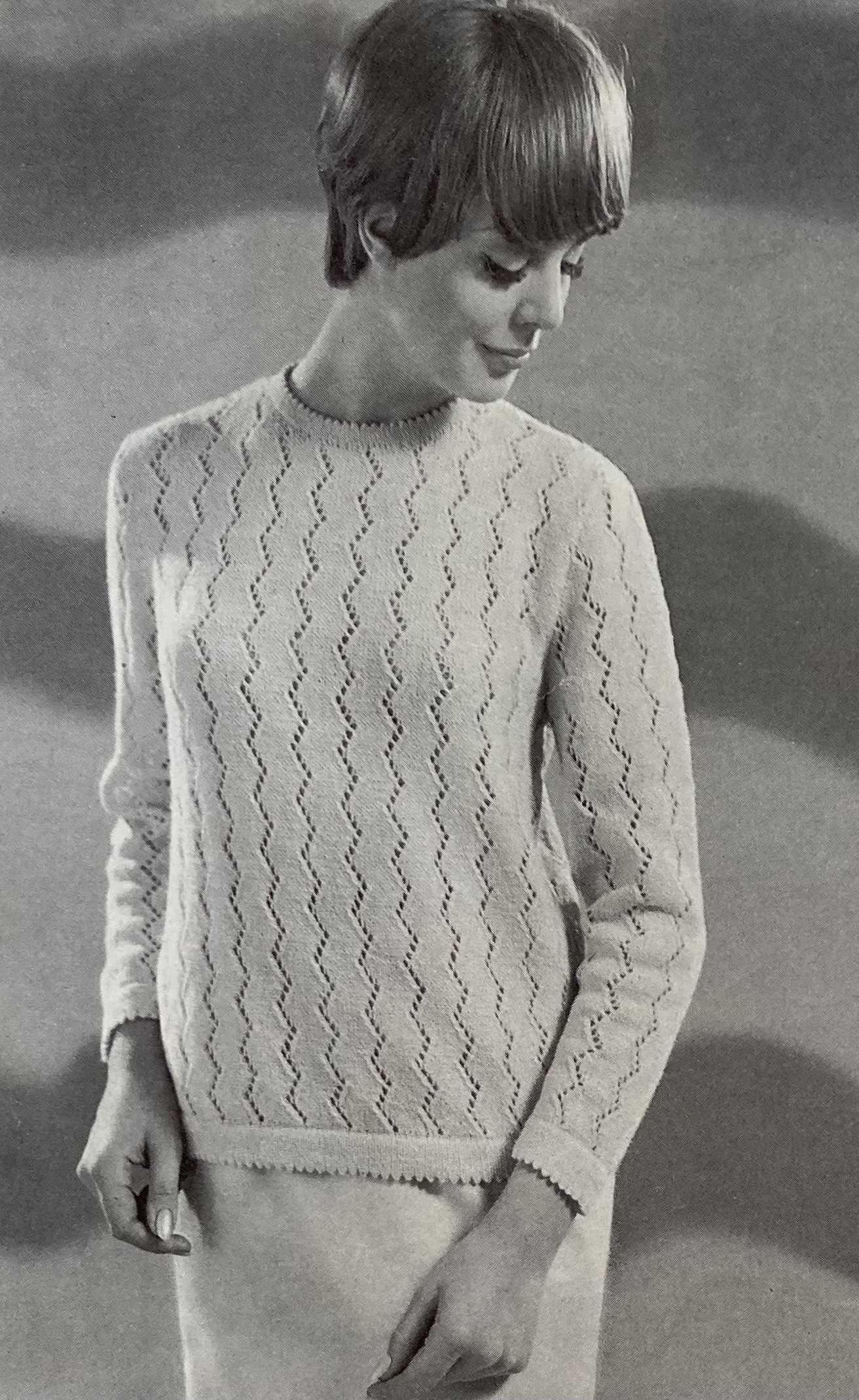
The more elegant designs are made in lightweight wools: a “skinny rib” twin set which promises to be flattering for both young and older women, with pearl buttons and a peplum-like “skirt” in ribbed lace, or a lace blouse with zig-zag motifs in both the lace and the picot hems. Here, the “stripe” trend is interpreted via pattern instead of colour.

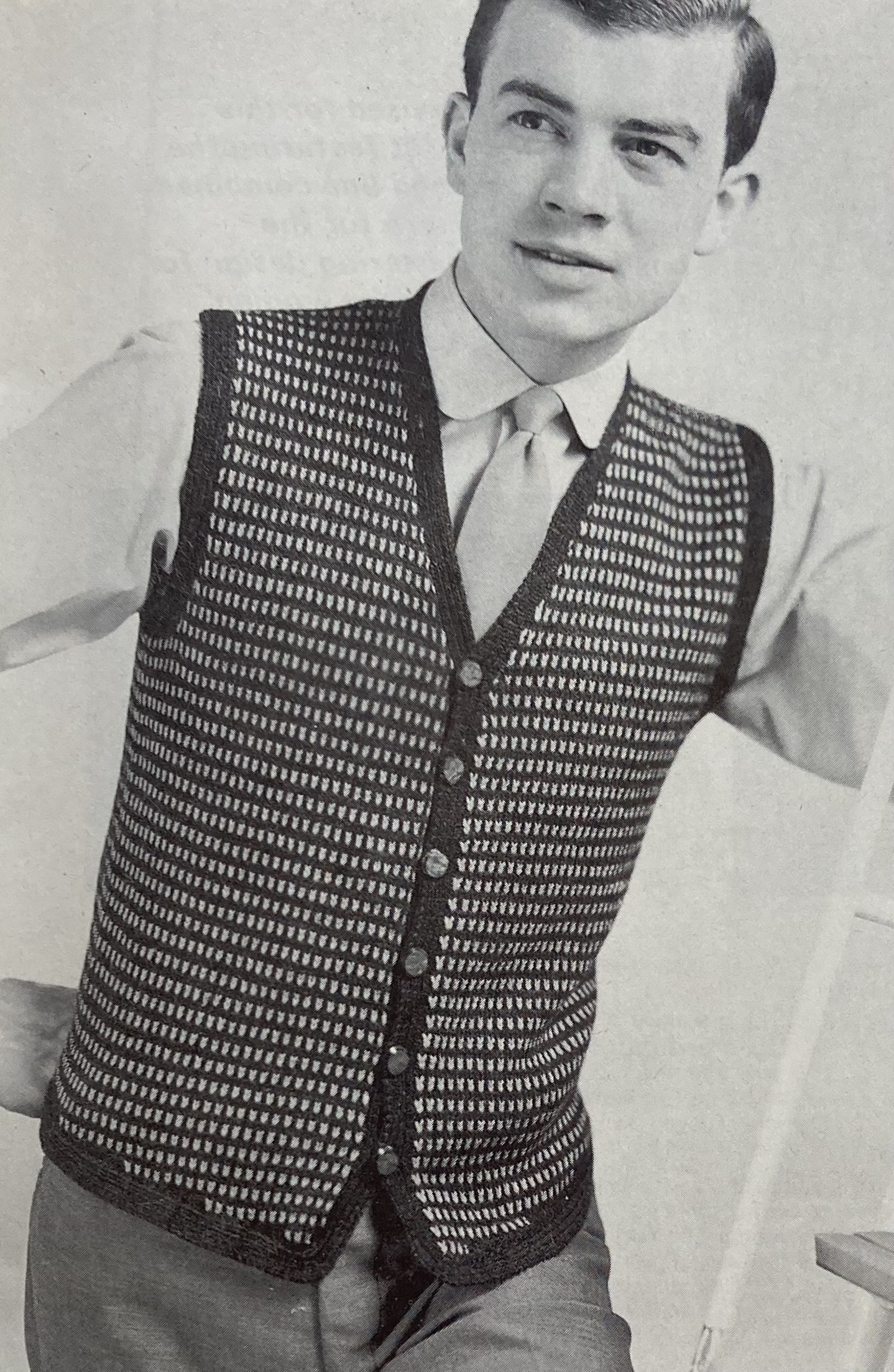
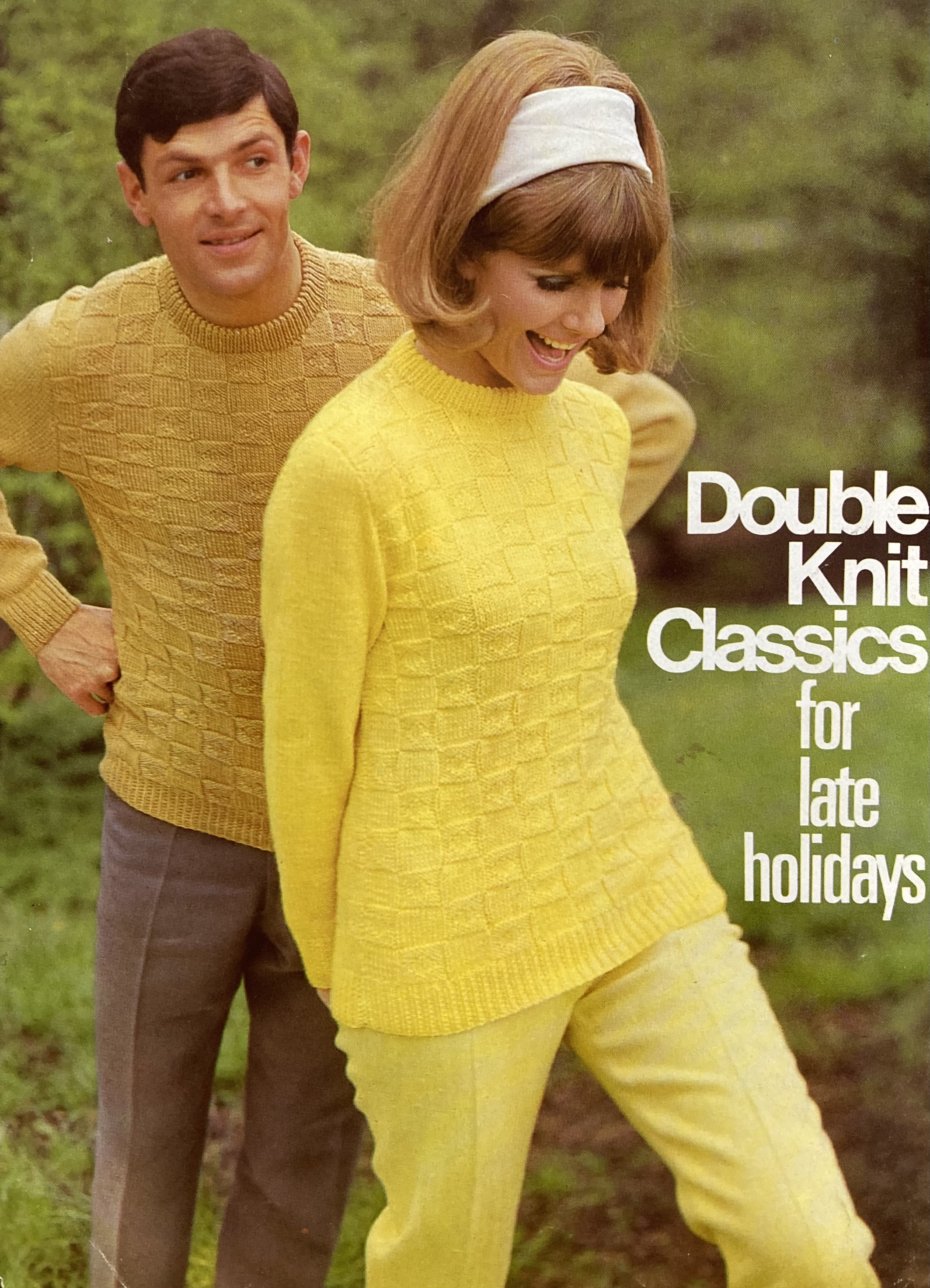
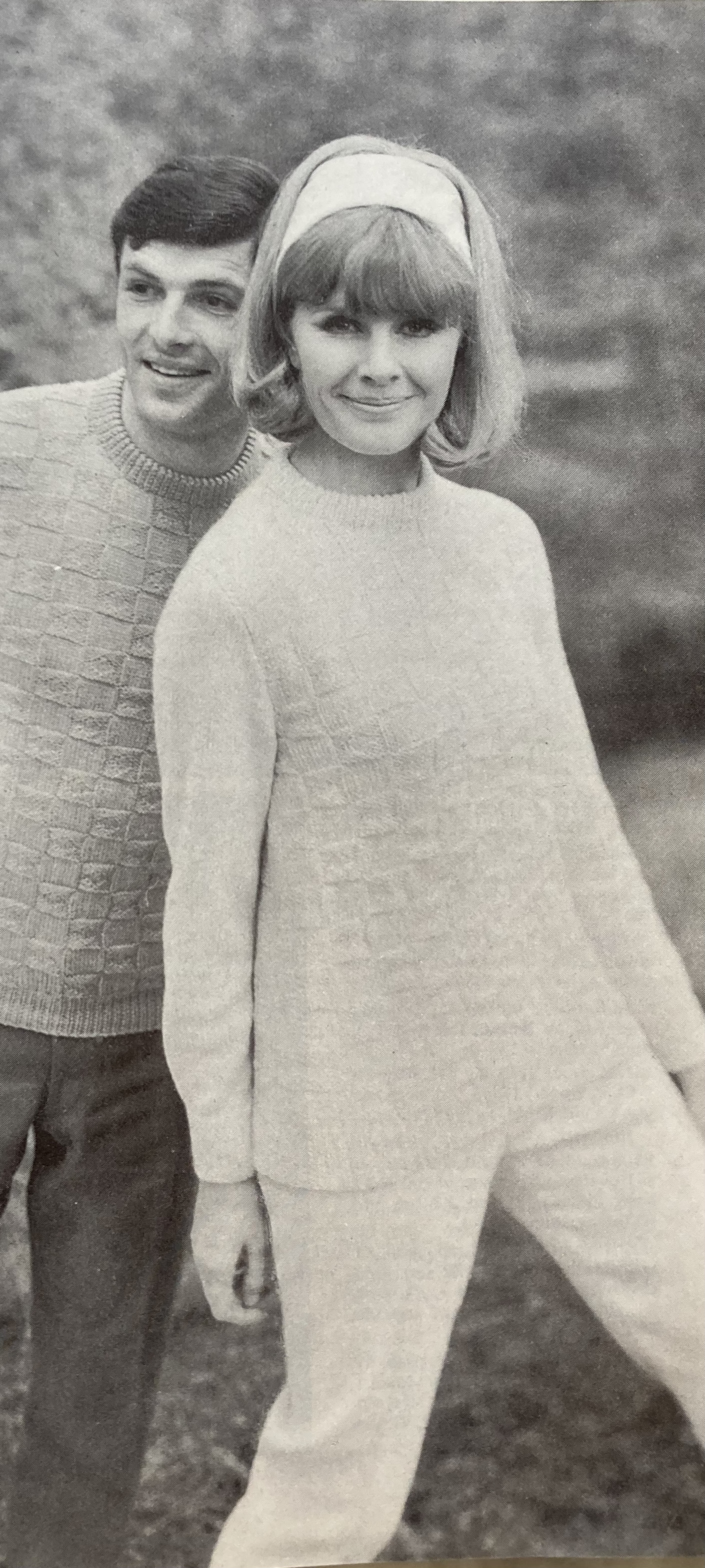
Continuing the stripe/check theme for men, there’s a nice V-neck waistcoat in a very 1960s-typical colour combination of charcoal and mustard (don’t eat it). The pattern is made stranded, and very easy, and the front and hem borders are made in one long strip, sewn in position as you go along. I have personally never had much success with this method, as you are supposed to stretch the strip “slightly” while sewing on and I find it difficult to get exactly the right, and same, amount of tension on both sides. There’a also a “his and hers” unisex pullover in a similar basketweave stitch as the short-sleeved blouse that I made from the June 1966 issue. Apropos unisex: this issue features a record number of women wearing slacks, and the short “pixie” or “five-point” cut has finally made it to the pages of Stitchcraft.

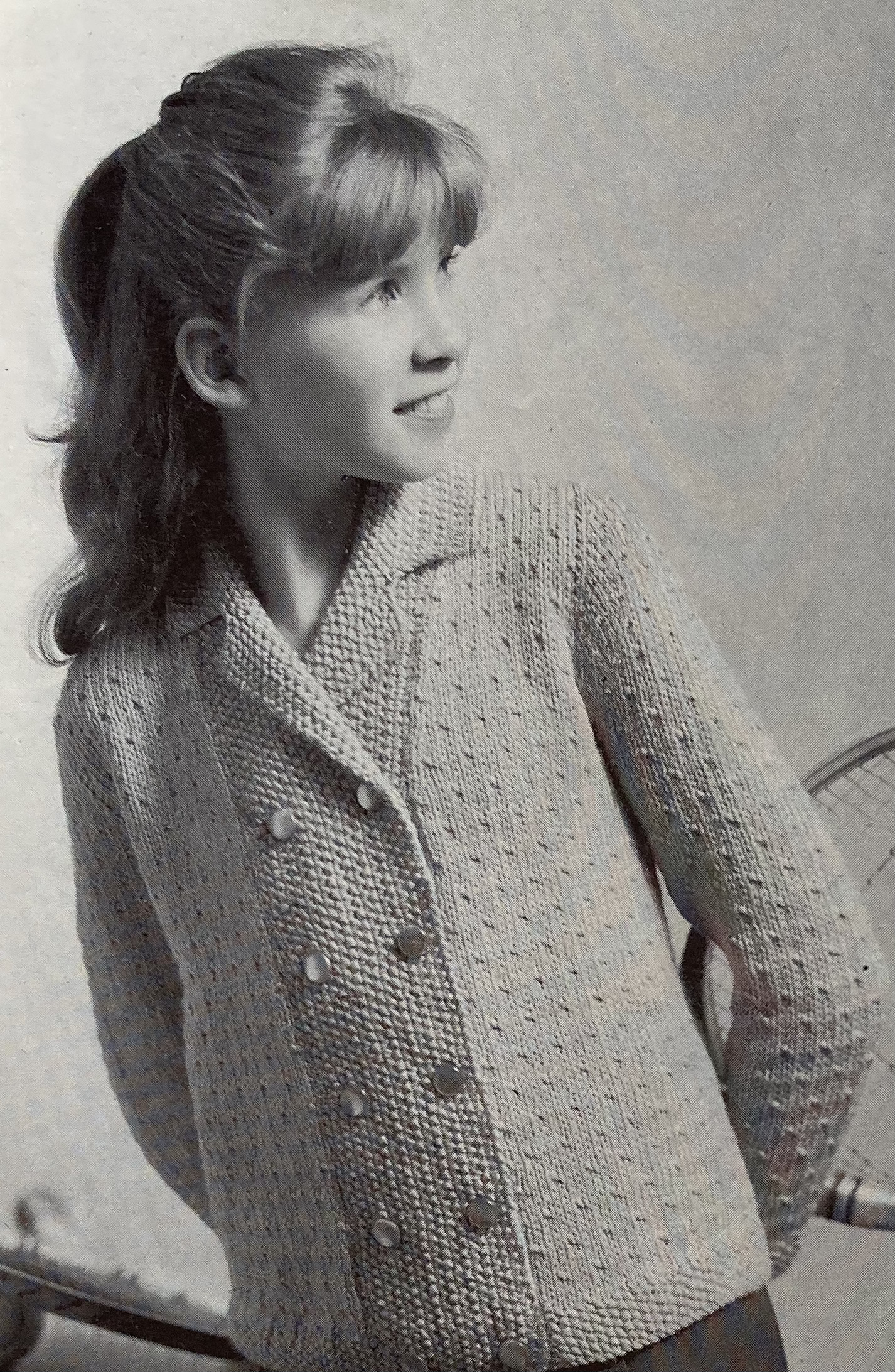
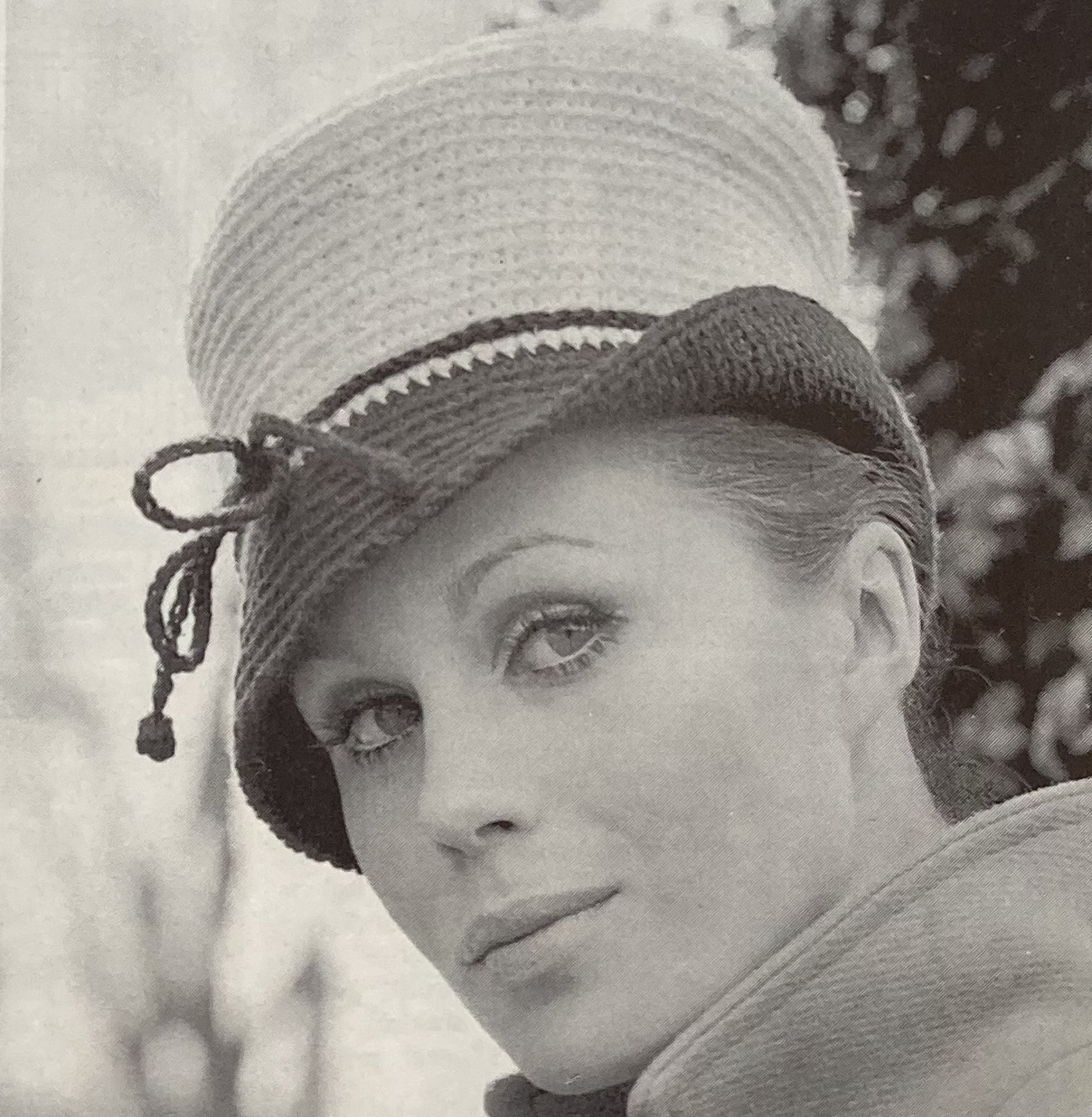
There’s nothing for babies or toddlers in this issue. Older kids and pre-teens get casual cardigans for layering or as outdoor garments. The stripe trend lives on in the boy’s zipped jacket, made in nautical colours of navy blue, red, and white. The girl’s tennis blazer is more subdued, in a neat spot-stitch pattern with moss-stitch revers. Top it off with a fun crocheted hat in the current “tall” style.

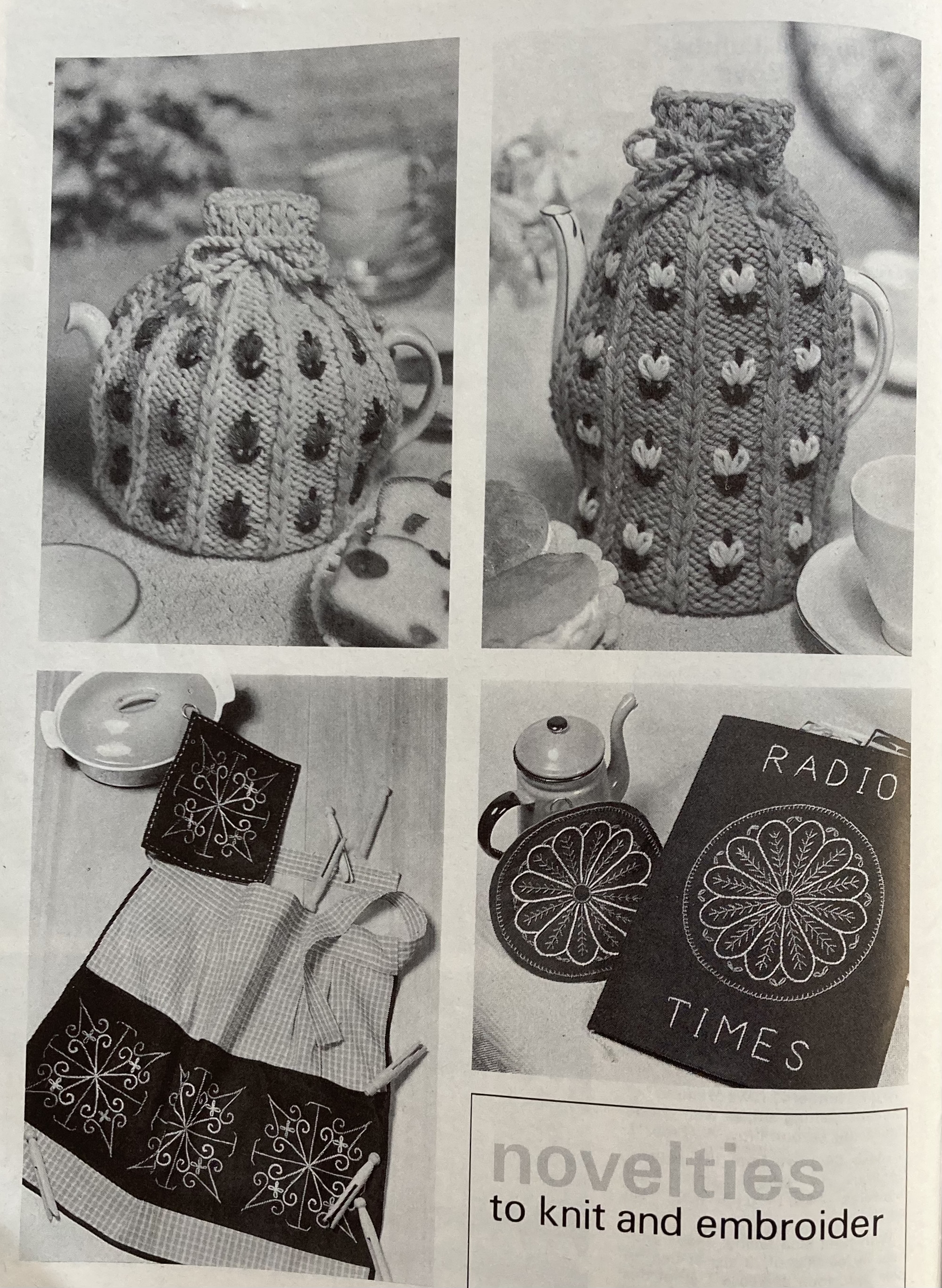
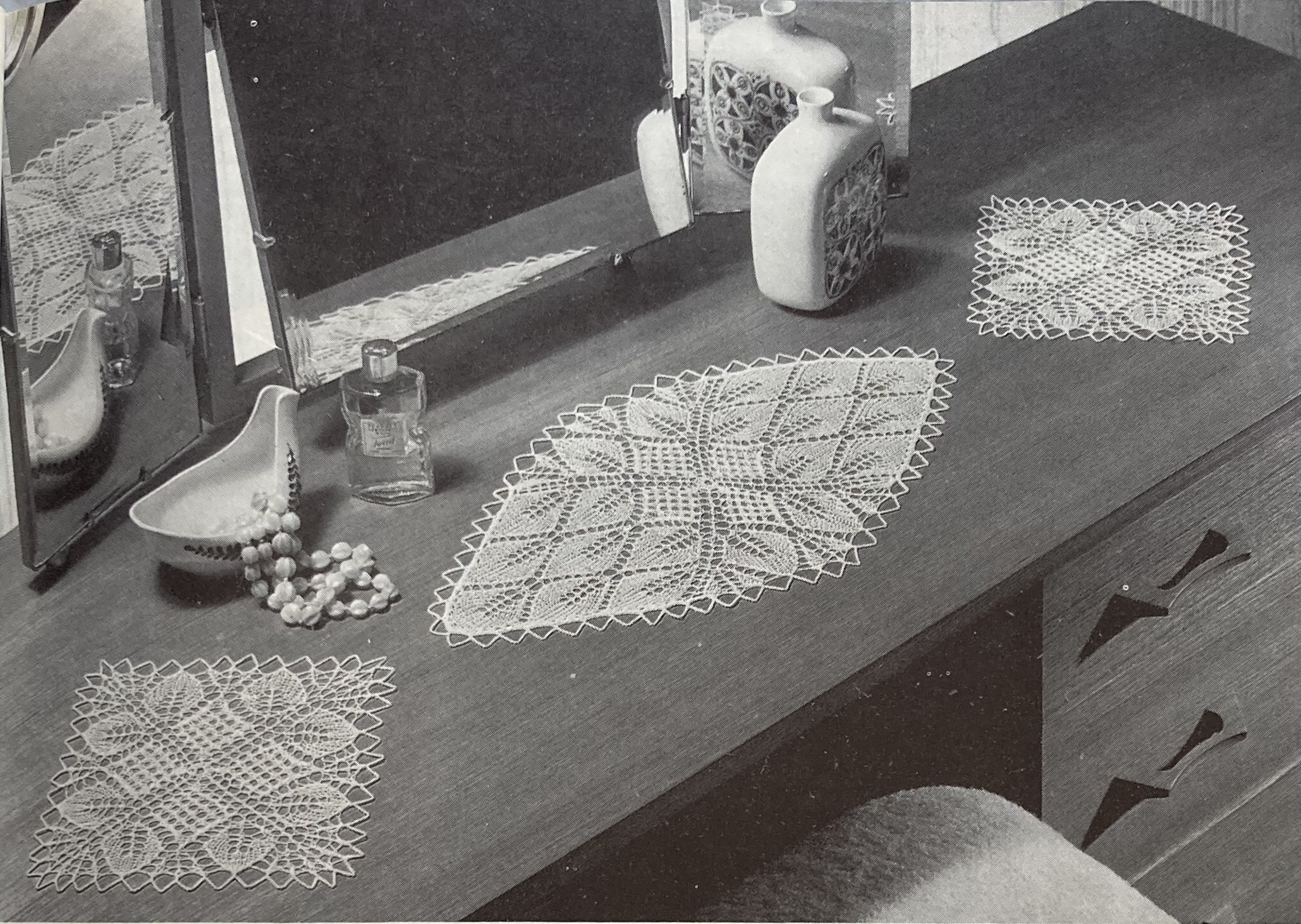
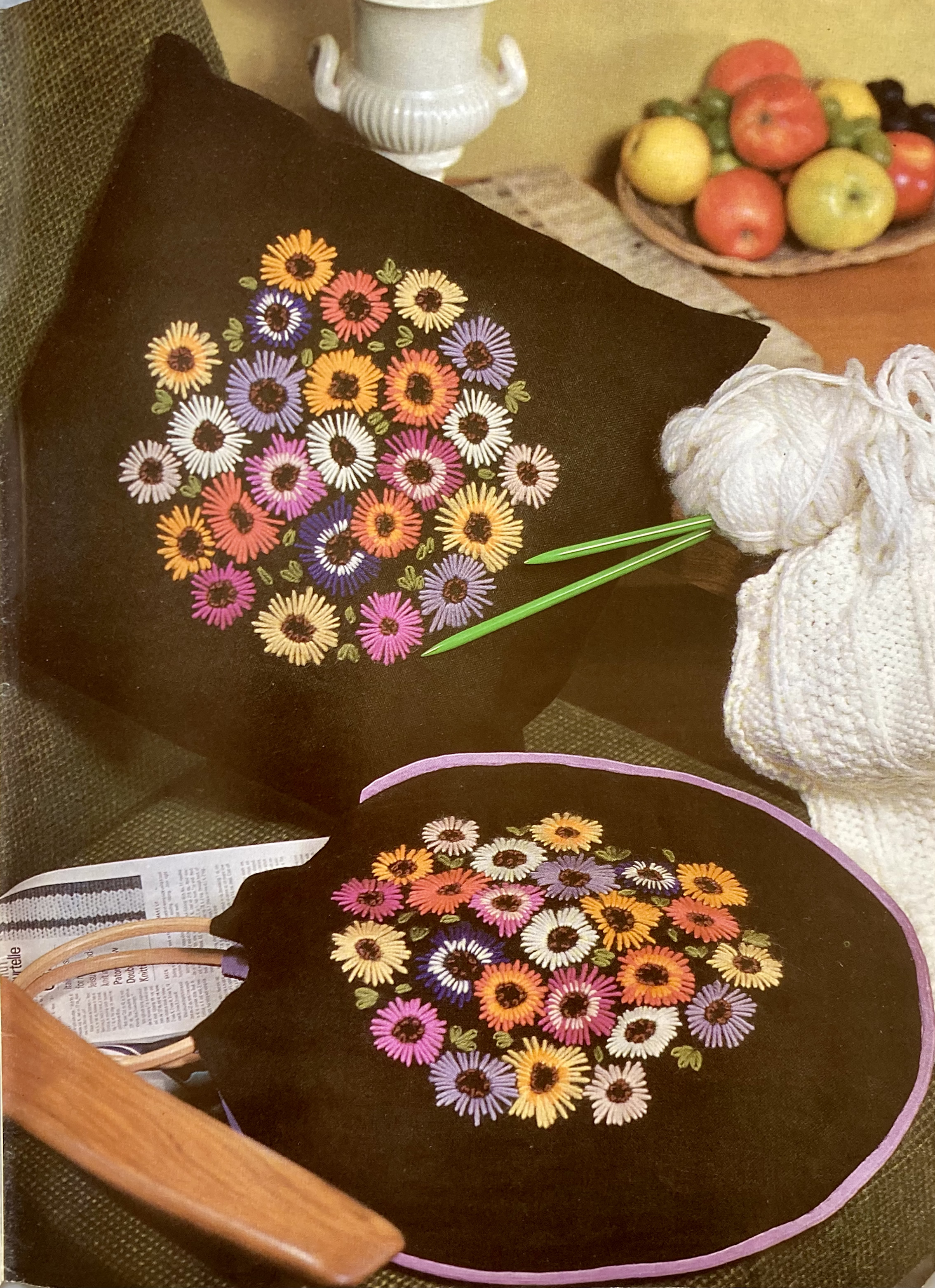
Those who do not like to hold wool in summer are always well served by the summer homeware designs, which tend to be small and easy — to pack in your holiday luggage and work on in your beach chair. There’s the usual page of bazaar items and “novelties”. I can’t make the bizarre-bazaar joke this time, since they are actually quite cute and nice. The fancy knitted lace mats are a more elaborate, but still portable, project, or you can embroider Mesembryanthemums on a cushion or workbag. I had never heard of this type of plant, hence the Wikipedia link in case you haven’t either.

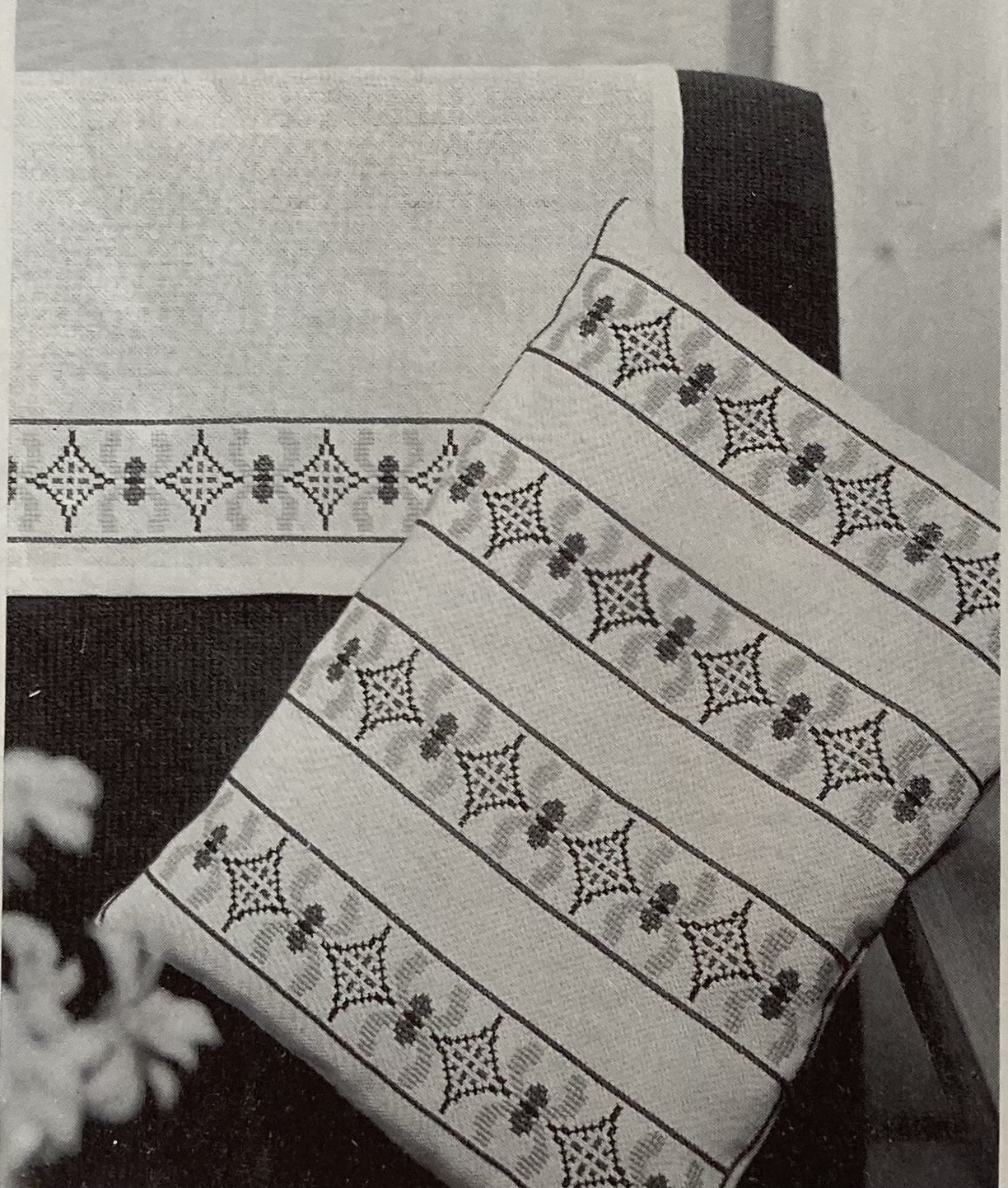
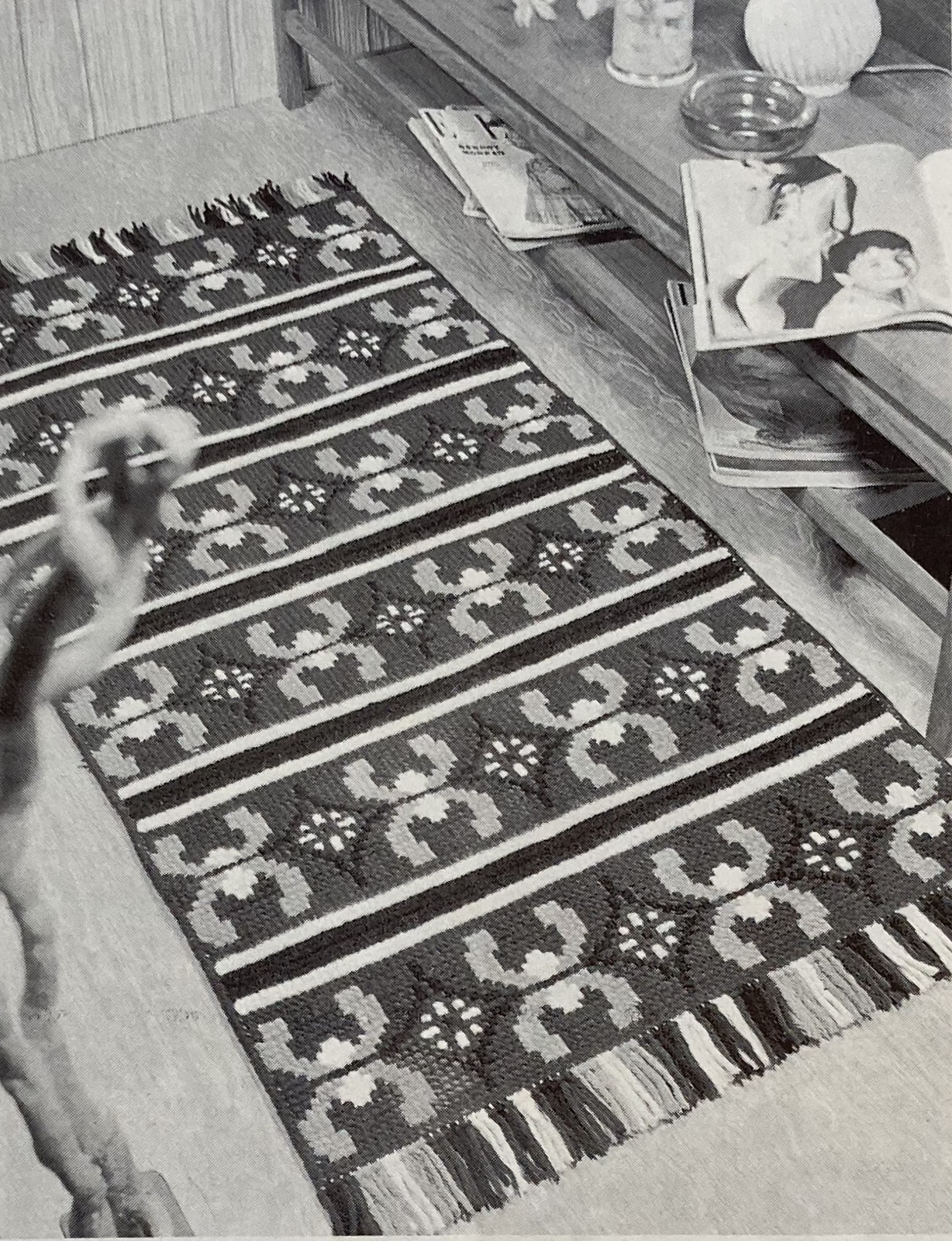
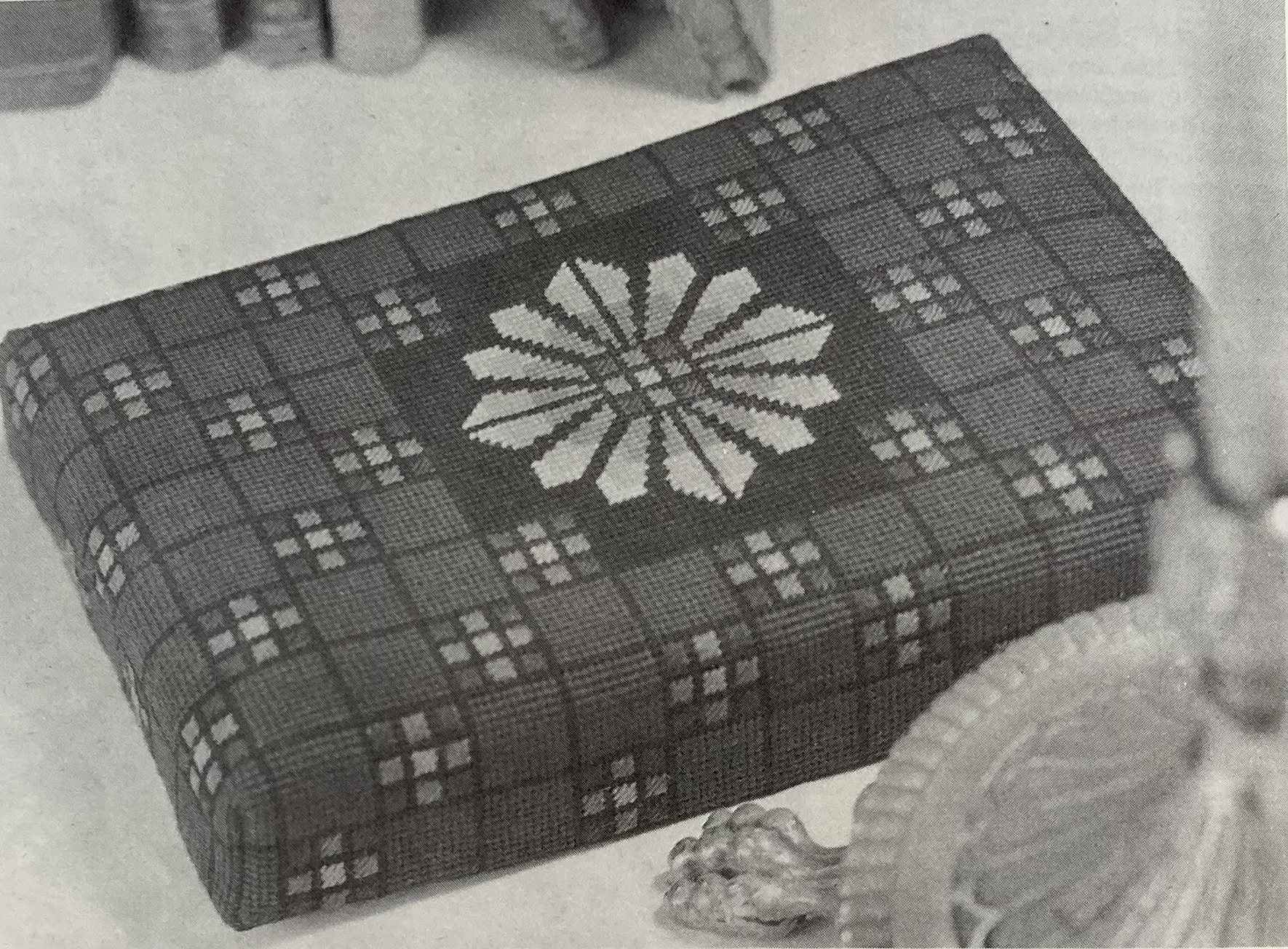
The other homewares are more suited to making at home. There’s a cross-stitch cushion and/or chairback in a traditional Greek pattern (says Stitchcraft — I cannot confirm or deny authenticity) and a rug in a matching colour scheme. For churchgoers, there’s a tapestry kneeler with a pattern inspired by stained-glass windows. The stripe-check trend that we see in the garments appears again in the woven-tapestry wool cushion and knitting bag.

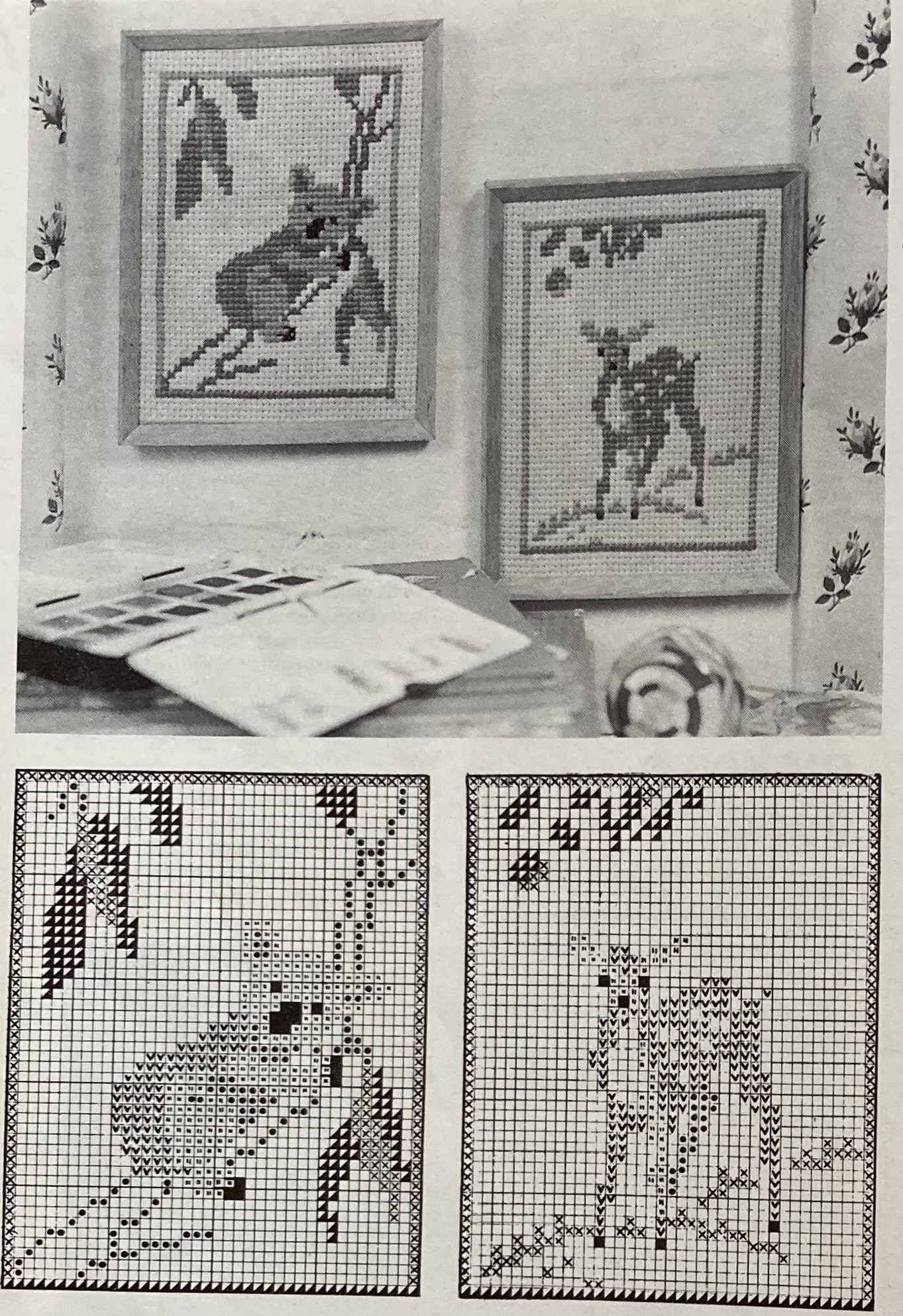
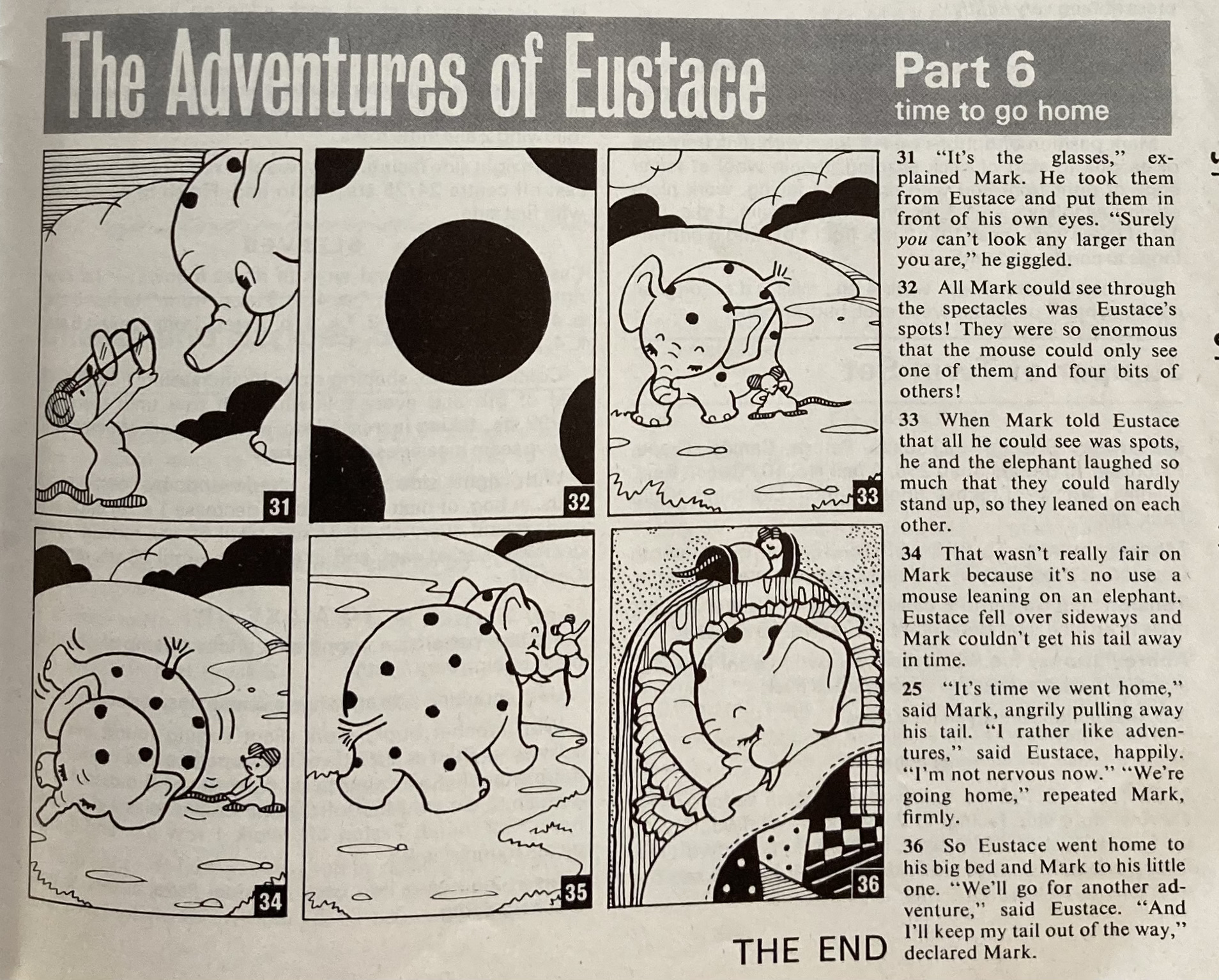
The “Readers Pages” give us a reprint of a July 1963 design for two little cross-stitch pictures, some helpful hints on mounting tapestry designs (mount it on cardboard with pins or threads and check that the tension on the right side is even), and the conclusion of our latest children’s serial comic, “The Adventures of Eustace”. For those who haven’t been keeping up (including myself; this story was not one of the more interesting ones), Eustace is an elephant who went on some very tame adventures (highlights: eating buns for tea, looking through glasses the wrong way) with his friend Mark, the mouse. Mark calls an end to the adventure and the comic, and they go home and have a nap. That sounds like my kind of summer adventure.

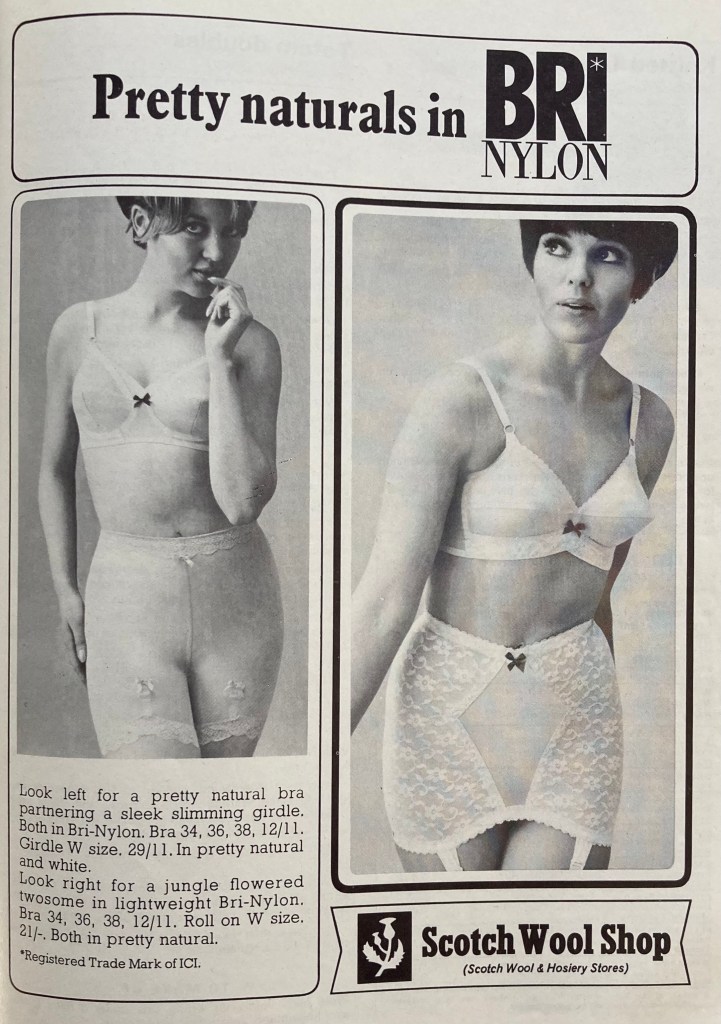
I will leave you with this ad for “pretty natural” underwear from the Scotch Wool Shop. The underwear is made from extremely synthetic Bri-Nylon and is intended to shape one’s body in directions it doesn’t go by itself, so the only “natural” thing going on here is the colour, if you have pale beige skin. But it is quite pretty.

Enjoy the rest of your summer! My project will be the mesembryanthemum embroidery on a vegetable bag.

July 1966: Overview

It’s all about teamwork in Stitchcraft’s July 1966 issue: two-piece sets for casual, sport or city wear as well as matching designs for all members of the family. Appropriately for the theme and the season, the emphasis is on sports and leisure, with casual, loose-fitting designs.

Our cover ensemble pairs a checked, sleeveless top with a skirt whose pleated insets match the check pattern. The check pattern is stranded, and I hope the navy blue didn’t bleed into or show through the white at the first washing. It’s the dressiest of the designs in this issue, but still keeps a casual air with its loose, unshaped top and shorter skirt (hemlines are finally rising at Stitchcraft, long after the miniskirt became popular everywhere else) and the check pattern, which is reminiscent of a race-car flag. The “favourite continental look for casual wear” is a team of “overpull” (oversized pullover) and short-sleeved blouse with a polo (turtle) neck in matching colour.

For warmer days, there’s a trio of lightweight and/or sleeveless blouses: in a lacy striped pattern or textured rib in 4-ply, or a mini-top in eyelet rib. Pink, white and turquoise are fun ice-cream colours for summer and harmonise well with the maritime blue of the checked suit.

A high-buttoning cardigan in heavier DK is good for cooler weather. Twisted stitches are the summer knitting trend, seen in the cardigan as well as in the eyelet rib and the striped lace tops. Our male model teams up with a horse to show off his cleverly designed “Viennese sports pullover” in tan DK wool with white cable stripes going up and down the front and back as well as down the sleeves.

The ultimate 1960s team is, of course, the nuclear family, and this issue offers a design for (almost) everyone: a simple, casual pullover with a trellis pattern in three sizes. The trellis is formed by making a k2tog or sl-k-psso at the right point in the pattern with a yo right before it to keep the stitch count even. The purl stitches on the wrong side are worked into the back of the “made” stitches to close the yo holes even more and make the trellis stitches stand out. Here too, summery ice-cream pastels and neutrals are in: “Banana Cream” for him and light green “Linden” for her and the daughter.

I did say “almost” the whole family, right? The youngest members have their own designs. Junior’s play jersey in blue and white echoes the women’s check suit, but here the check pattern is made by slipping stitches and/or letting them drop and picking them up a few rows later. The baby gets its own “teamwork” set of matinee coat and bootees in pretty lace and moss stitch.

The homeware designs are pretty standard, but numerous and cover all the home bases. There are some easy floral cross-stitch and pulled-thread mats, a cushion and/or stool top in tapestry (a check design, once again) or a stitched rug in Florentine design. More ambitious tapestry fans can make a wall panel of boats at Norfolk Broads.

And for once, the “Summer Bazaar” designs are not weird! There’s a simple crochet tea cosy, crocheted lace coaster mats, or an apron and/or potholder set appliquéd and embroidered with cute images of vegetables. In the “Readers Pages”, there’s a reprint of a 1961 pattern for a knitted pram blanket, and Eustace the elephant gets very startled when he tries on a pair of spectacles and suddenly sees Mark the mouse in larger-than-life size.

That’s all for this issue! Since I didn’t get around to making the sun cushion last month, I’ll make it this month. (Technically, it’s sort of part of this issue as well, since it photo-bombed the picture of the ribbed polo blouse.) And nothing else from this issue really called to me. Sunny days ahead, and may your team always win.

February 1966: Overview

“This is the time to look ahead and start knitting for the first Spring days,” writes “editress” Patience Horne in the header notes to the February 1966 issue of Stitchcraft. I get that feeling in February too. Of course, it is still the middle of winter and one may be drowning in snow or battling freezing rain or waiting out the long grey darkness, but every once in a while (like today), the sun will come out and I can imagine that Spring will arrive at some point. The fashions in this month’s issue are appropriately cheerful and fun, with a special emphasis on “Junior Fashion” for small or school-age children.

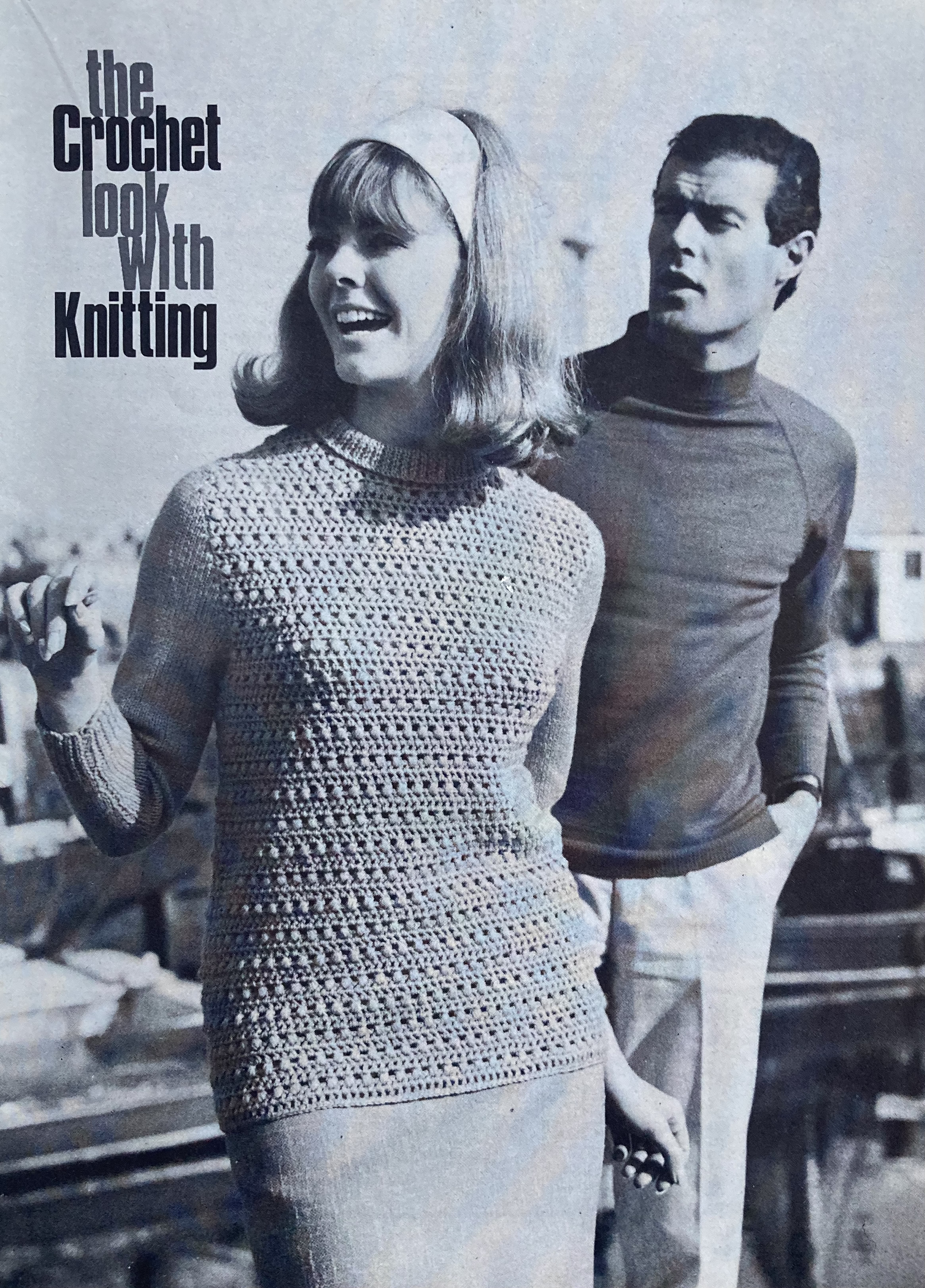
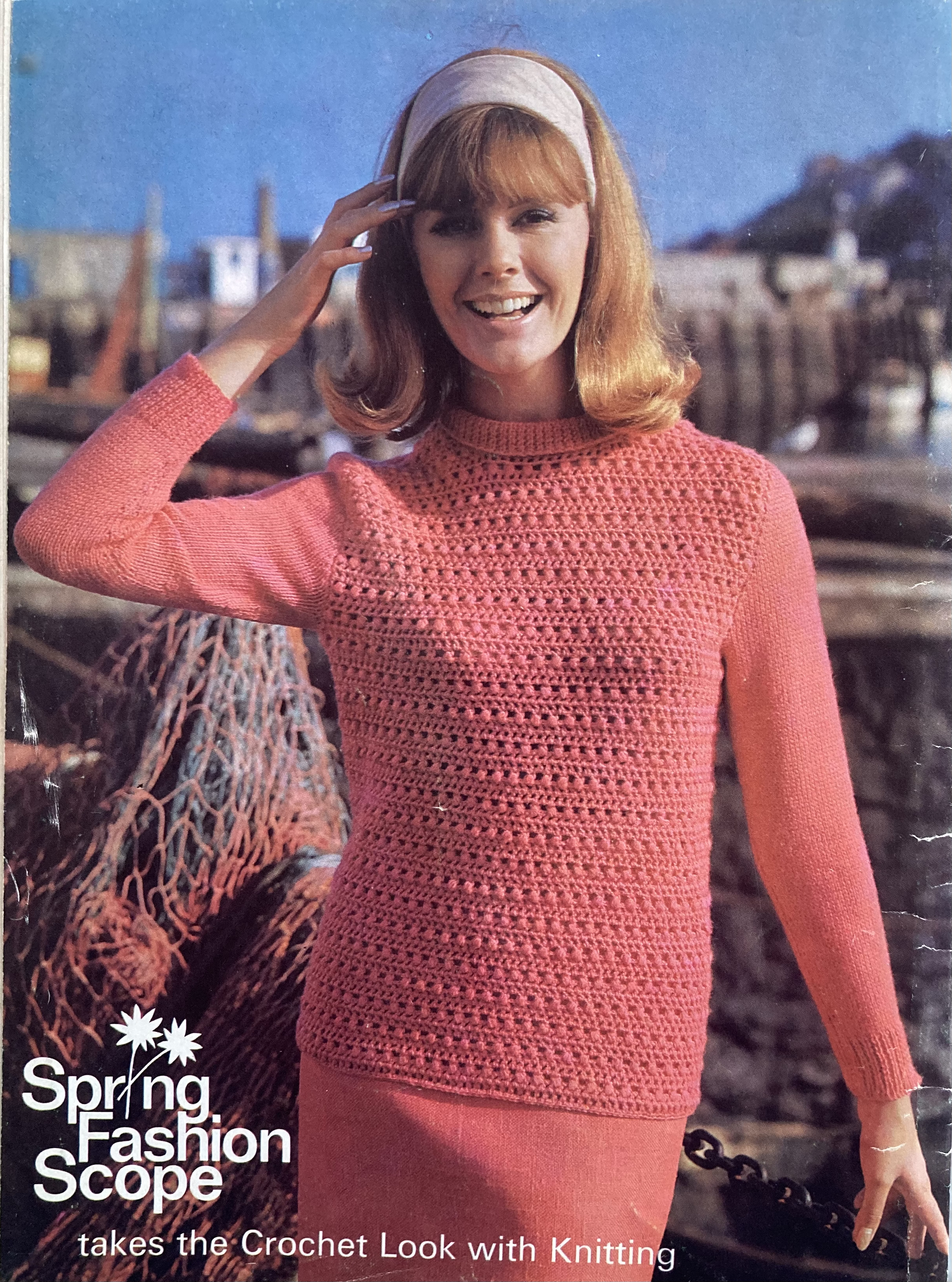
The cover ensemble brings back houndstooth, which never really goes out of fashion in the 60s, but was last seen in this form in the earlier years of the decade. It’s a clever choice for a skirt, as the fabric is fairly firm, preventing all too much sagging in the back. The set can be complemented by a wonderful pair of matching-pattern knee socks. Or you can achieve the lastest stitch-pattern trend, namely “the Crochet look with Knitting”, with a sweater that is… well, crocheted, for the most part. Only the sleeves are knitted, in plain stocking-stitch; back and front are crocheted in a bobble-treble pattern. The silhouette for both outfits is long and unshaped, but not baggy: the sweaters have set-in sleeves and high necklines and the skirt sits just above the knee.

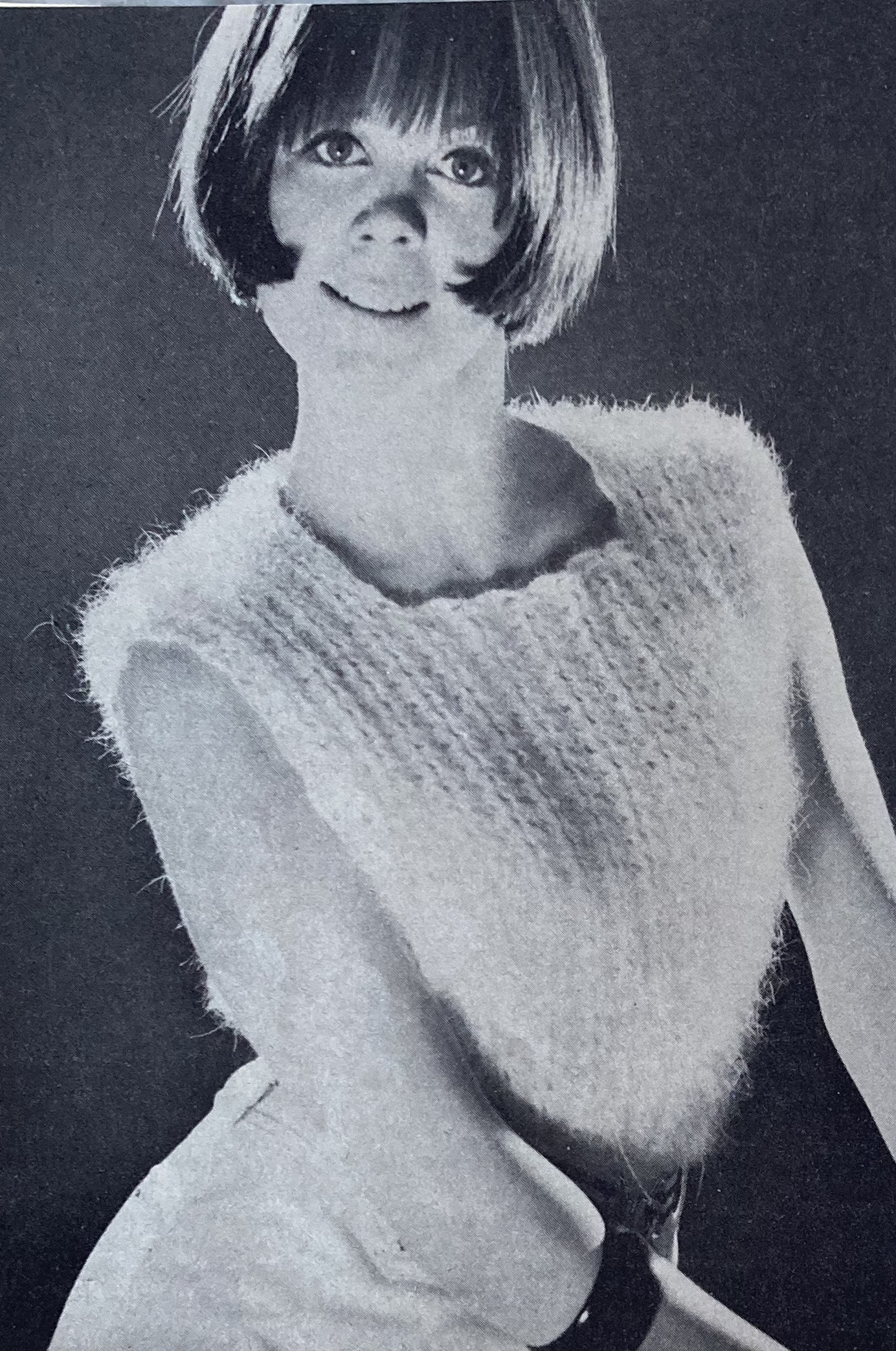
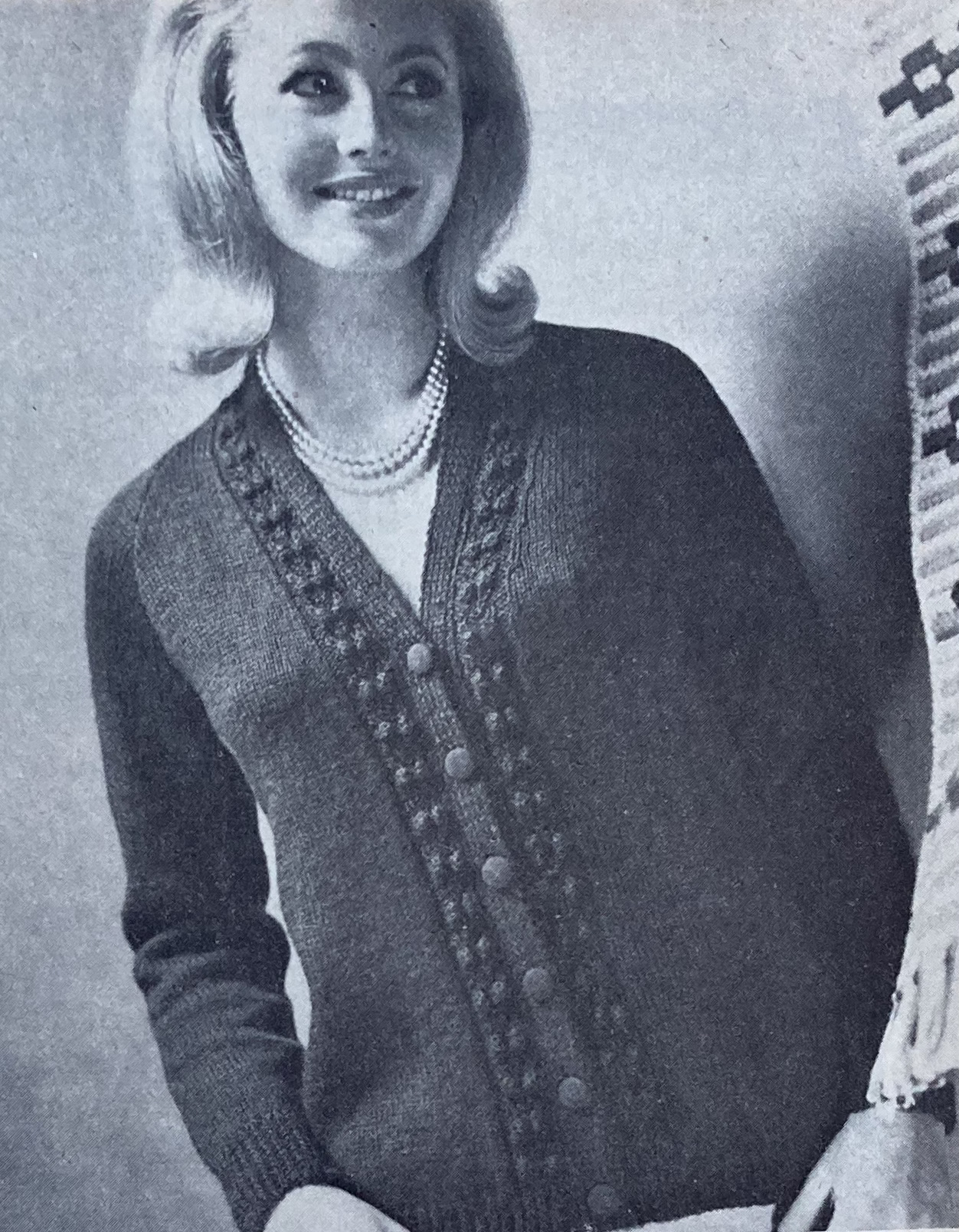
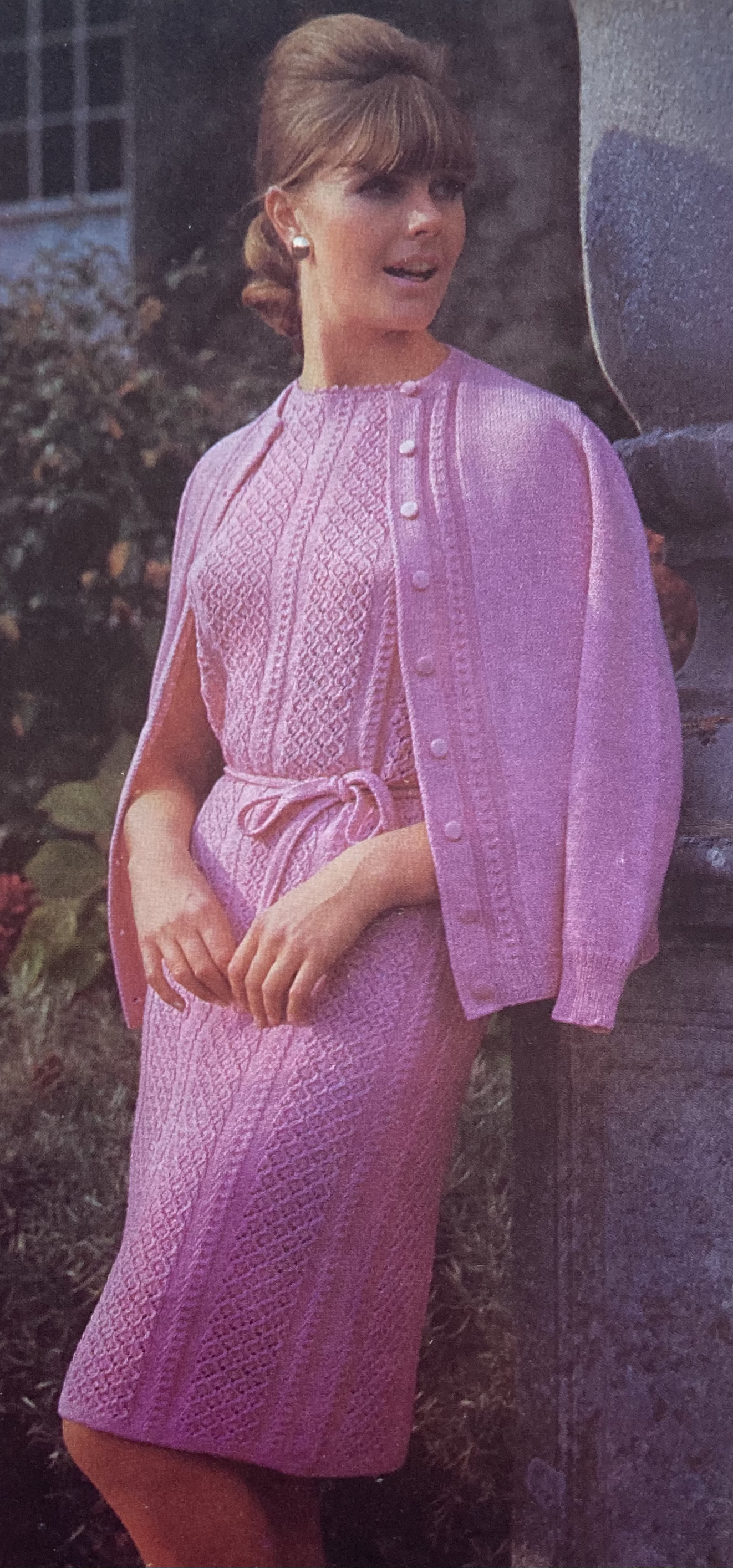
Fans of the knitted look with knitting can make a fluffy lace shell (what a terrible camera angle for the model’s nose), or a classic V-neck cardigan with bobble panels in larger sizes. With the exception of the angora-mohair shell, all are made in DK or slightly heavier wool — it is still winter, after all. Knitters looking ahead to the spring can make a fabulous lace-panel dress with matching cardigan in “Paris Pink” crepe 4-ply. The cardigan has a similar design to the large-size cardigan, just with a narrower bobble band on the fronts and a high-buttoning neck.

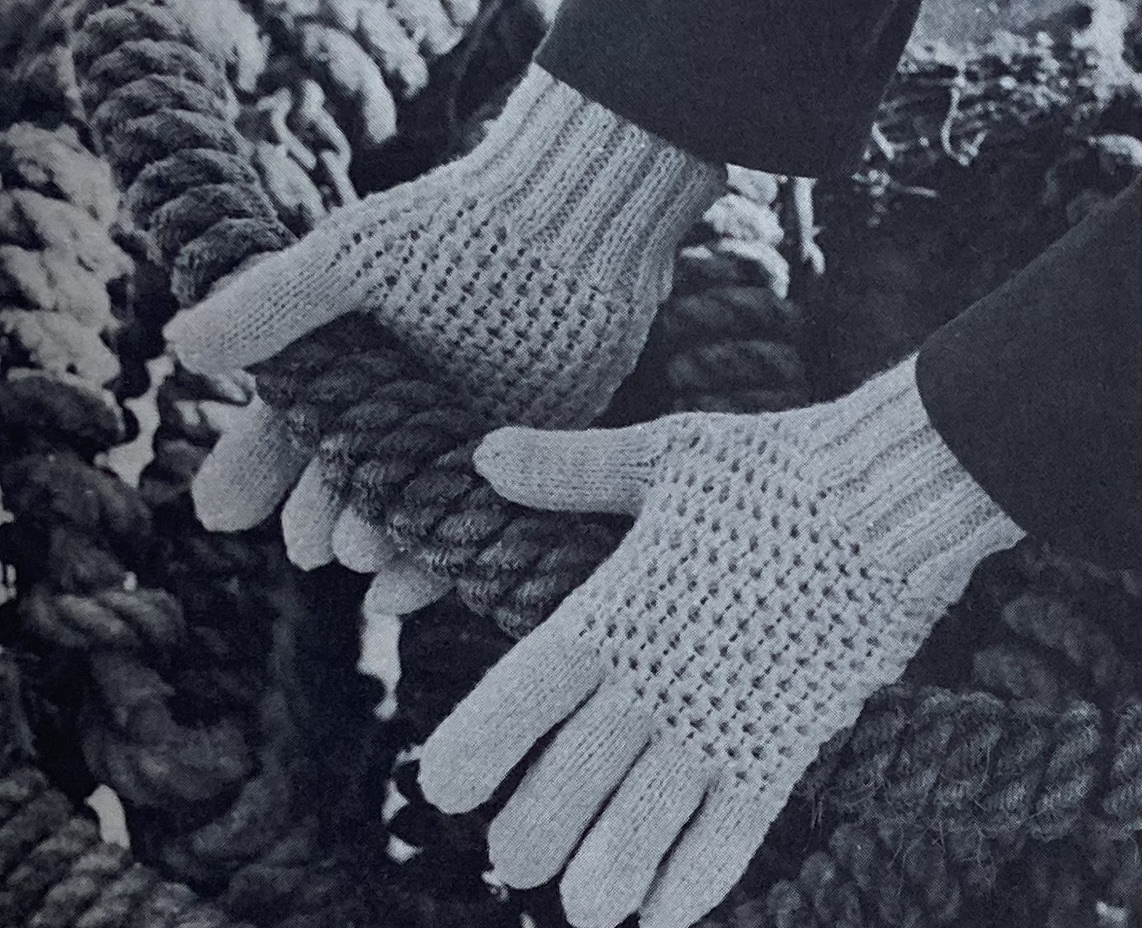
For men, there’s a “sailer with the traditional look” in guernsey style. Instructions are given for “a girl’s a size and a man’s size” (34-36 or 39-41 inch chest) for the partner-look. (Of course, when they say “girl”, they mean a grown woman who doesn’t mind being linguistically infantilised.) The guernsey is nice! There’s a jacket in thick “Capstan” wool for men, as well, which also gives a sort of sailor-y vibe. The interesting stitch pattern is made with twisted stitches set diagonally. Twisted stitches also feature in the men’s “Country Gloves” pattern, where I imagine the stitch pattern makes the gloves particularly warm and hard-wearing.

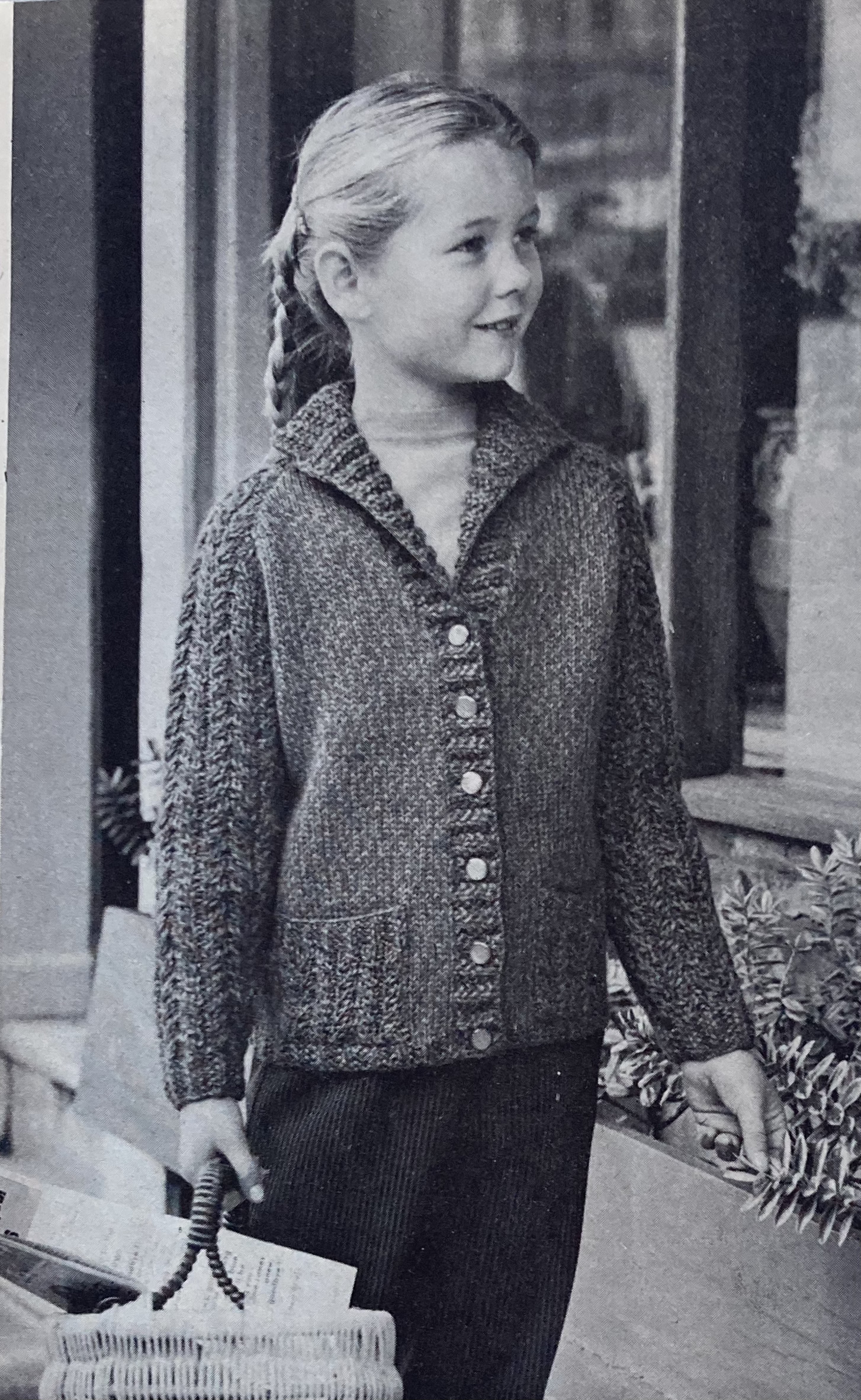
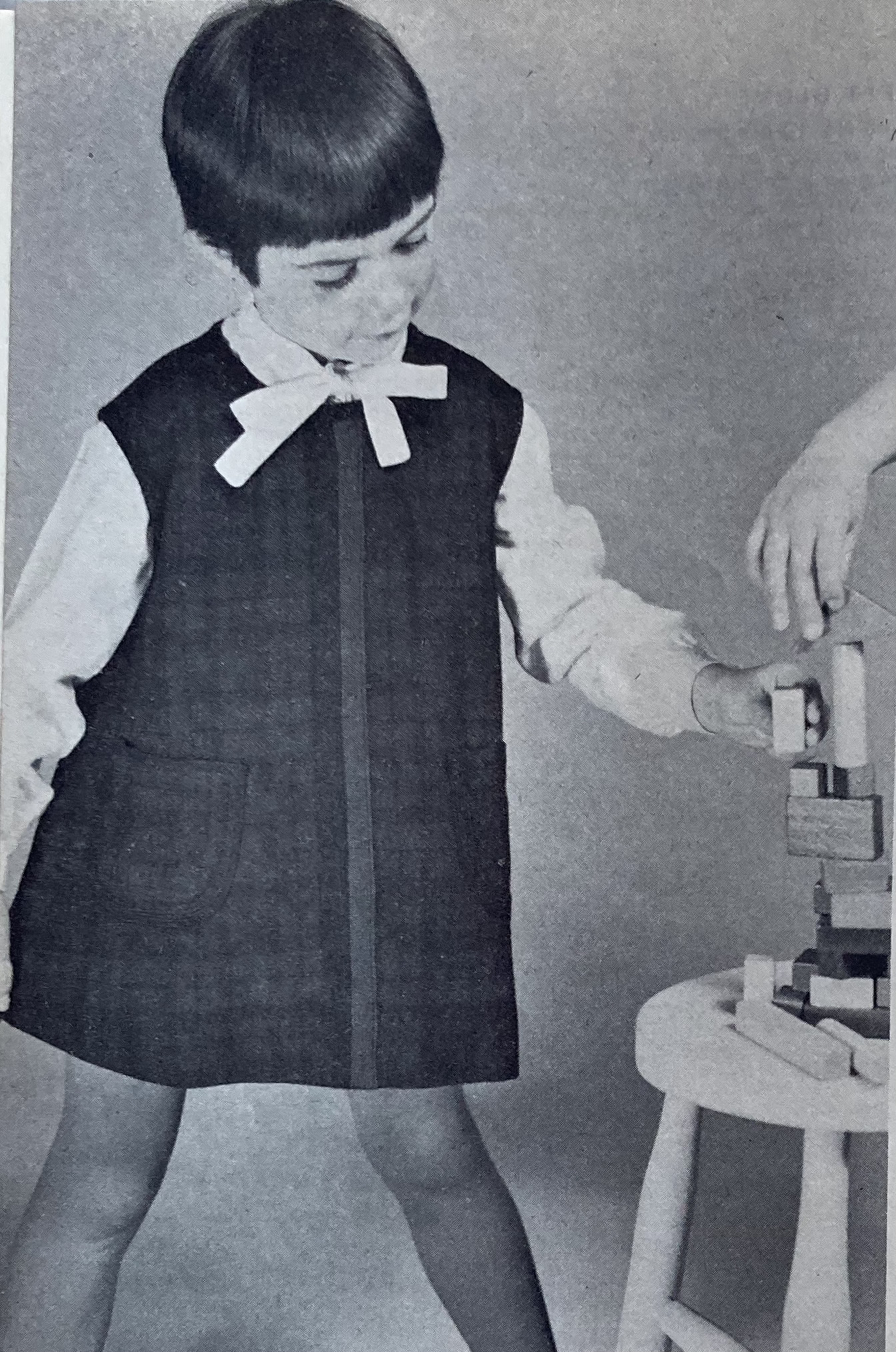
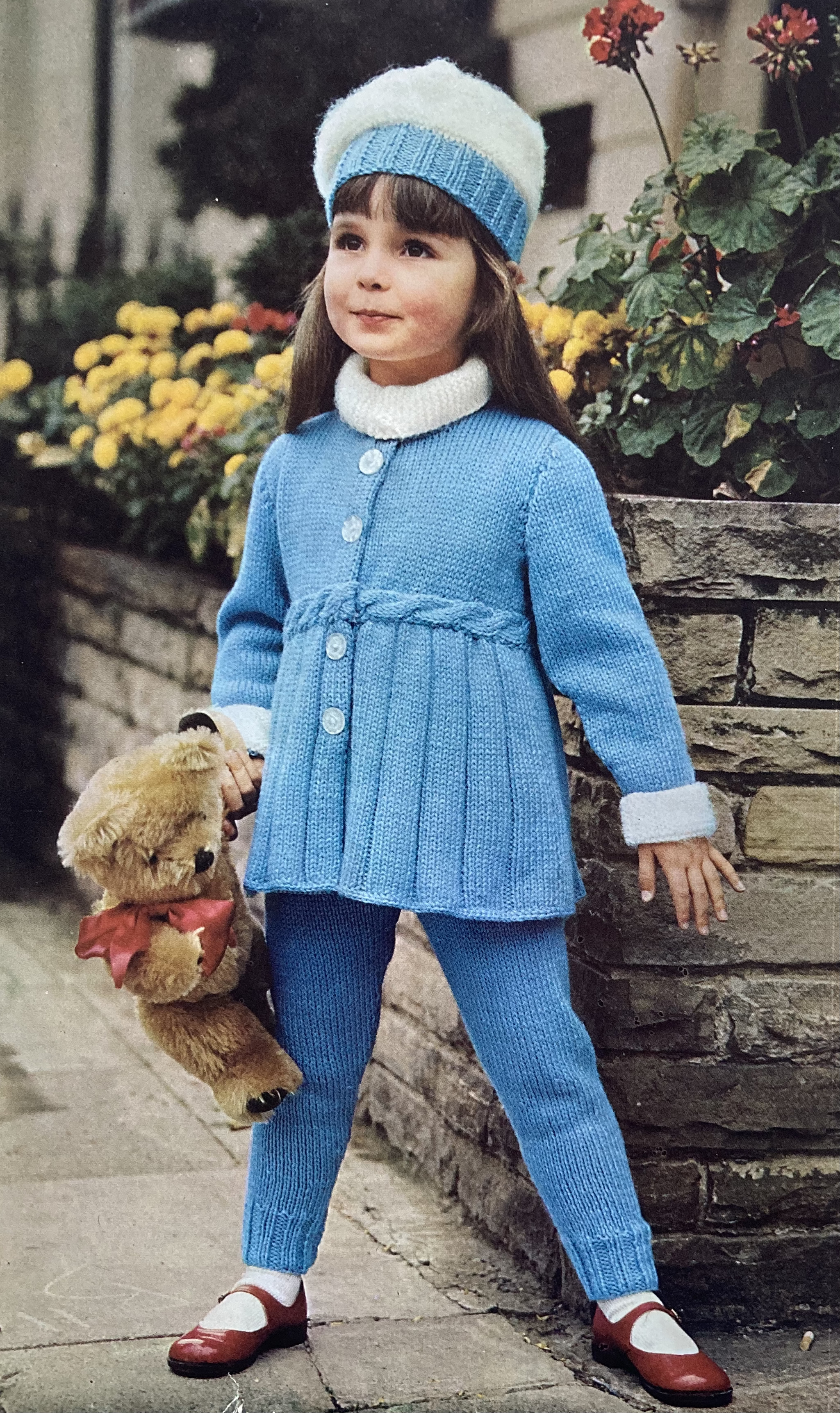
In addition to all that, this issue has some wonderful “Junior Fashion” children’s patterns. There’s a nice thick blazer for an 8-10 year old girl and a knitted shirt with knitted tie to “make a small boy feel very fashion conscious.” If you say so, Patience Horne! There’s a rare sewing pattern, too, for a simple pinafore dress. Best of all is the coat, leggings and hat set for a 3- or 4-year old. The white collar, cuffs and hat are knitted in the same wool as the rest — Shetland-mix “Fiona” — and then brushed with a teasle brush. Teasle or teasel brushes are used to felt and fluff knitted fabric and were often employed in home knitting at the time to give knitted blankets that furry “blanket” texture. Some earlier patterns in Stitchcraft say you should take the finished item in to the haberdashery store or send it away by post to get it professionally brushed; this one assumes that you can do the brushing yourself.

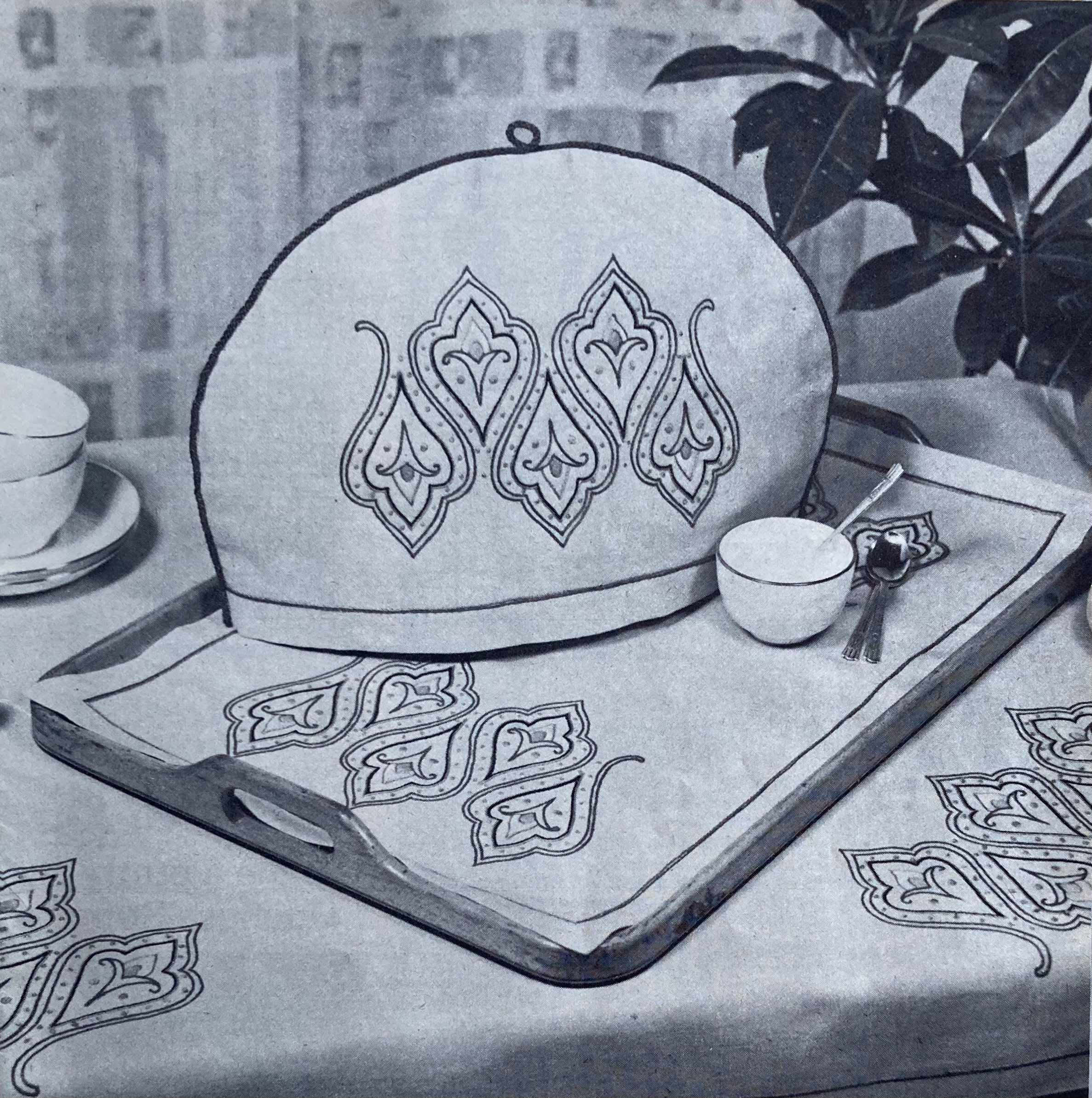
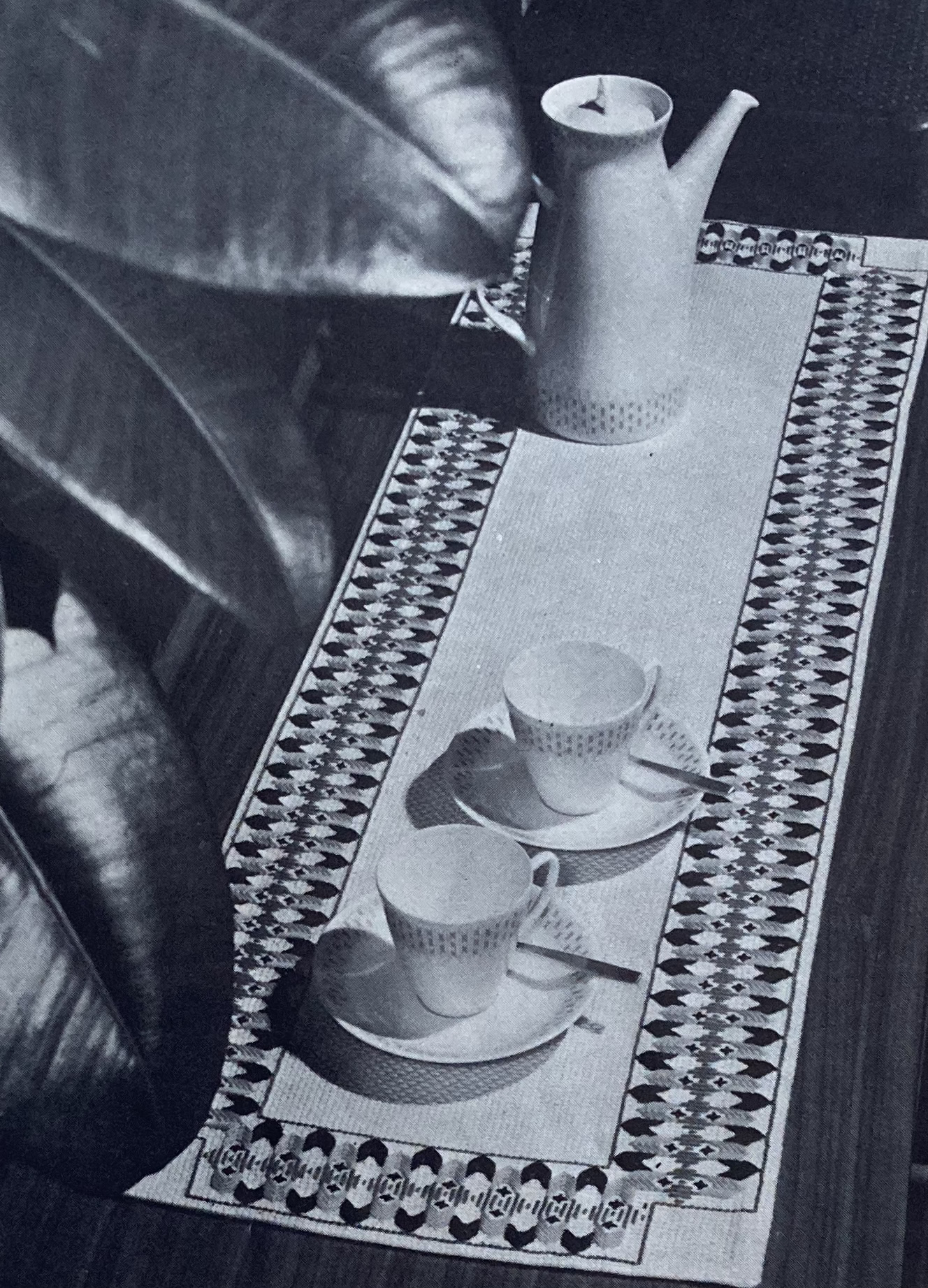
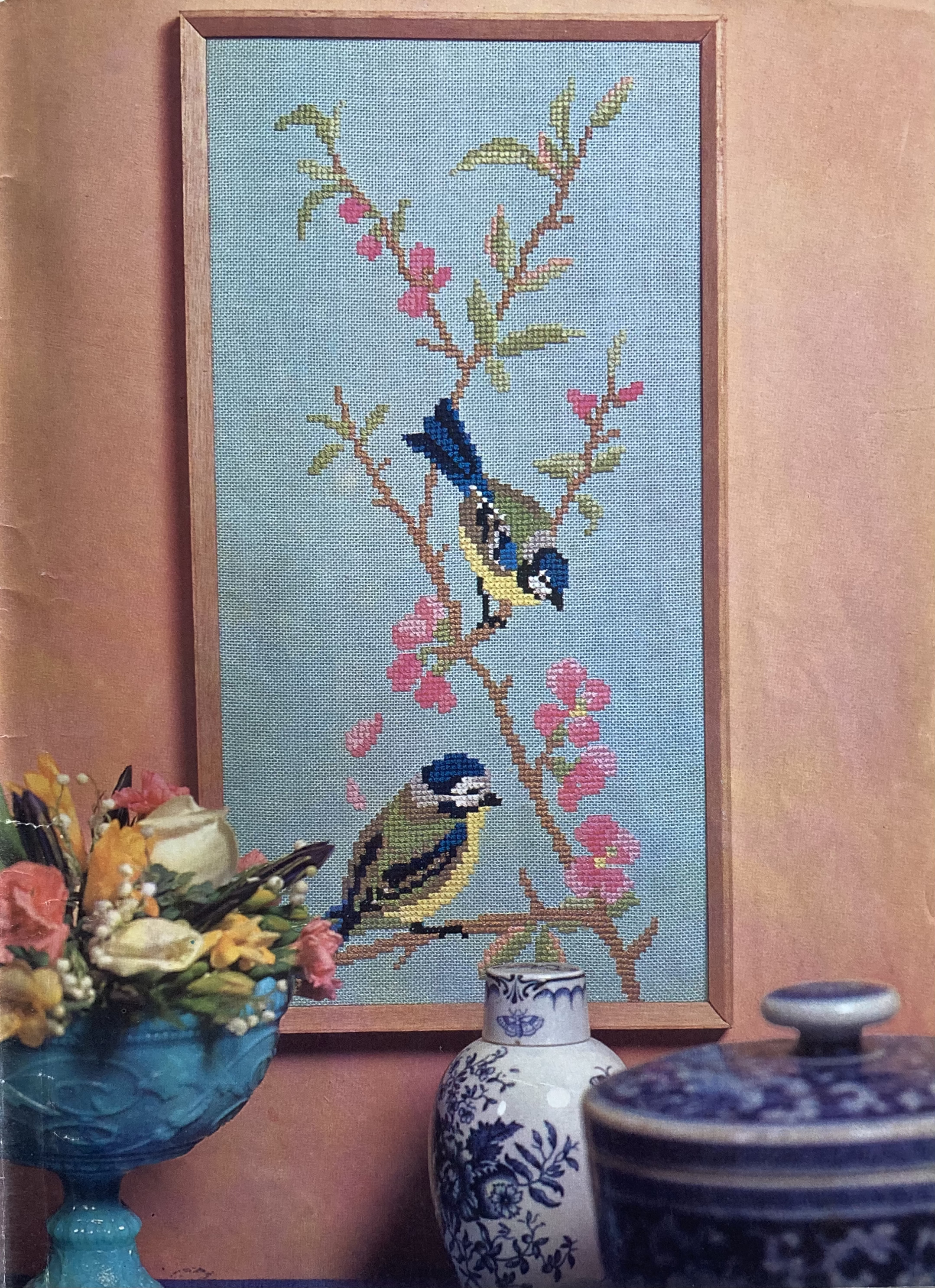
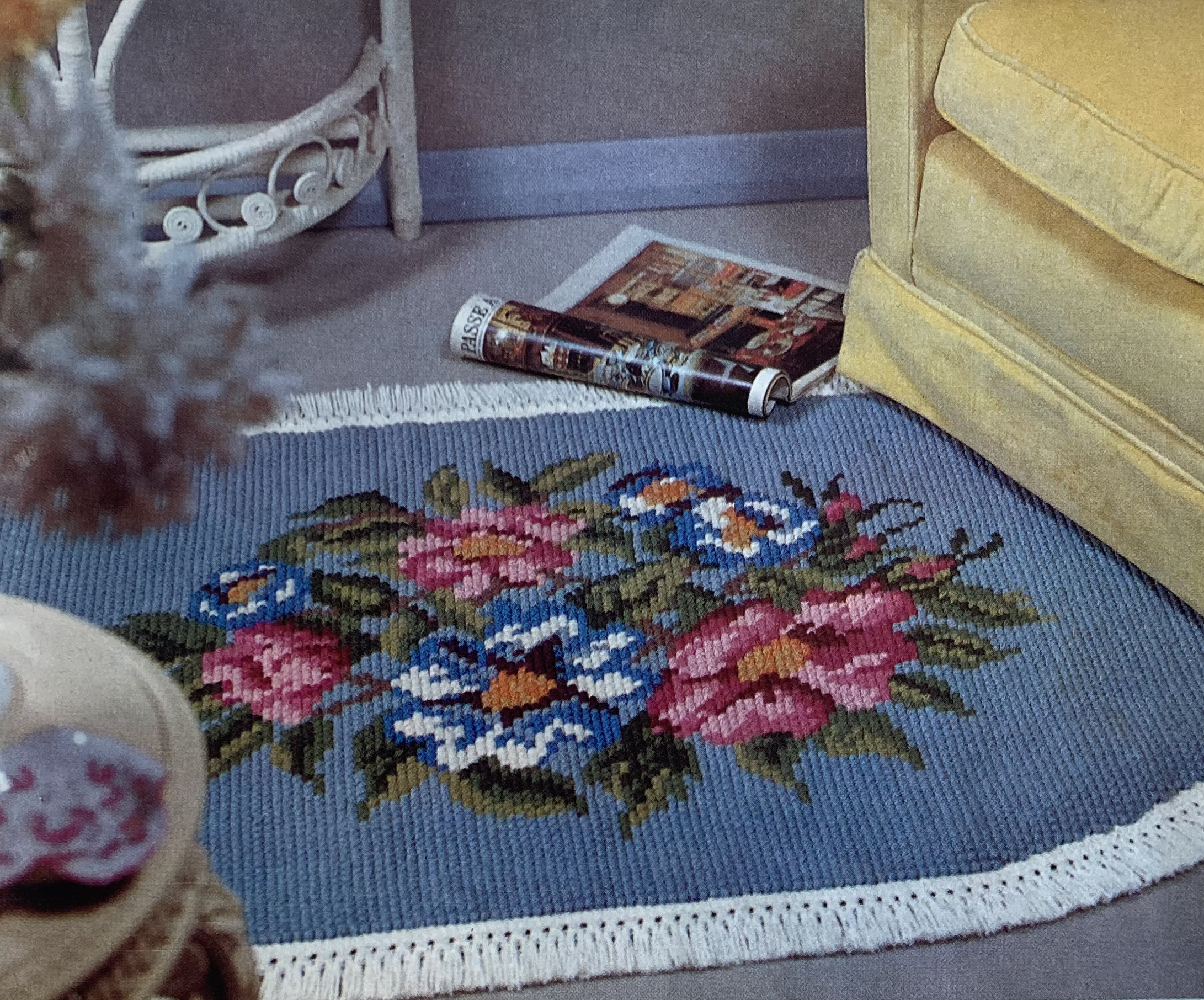
With all these great fashions, it’s no surprise that the homewares in this issue are a bit standard: embroidery for a tablecloth, tea-tray or cosy, embroidered dressing-table mats, or a runner for a Scandinavian-style long coffee table (in very 1960s colours of Tangerine, Coffee and Green), for example. Spring style shows itself best in the stitched rug in traditional floral design, or the birds-and-blossoms wall panel in cross-stitch.

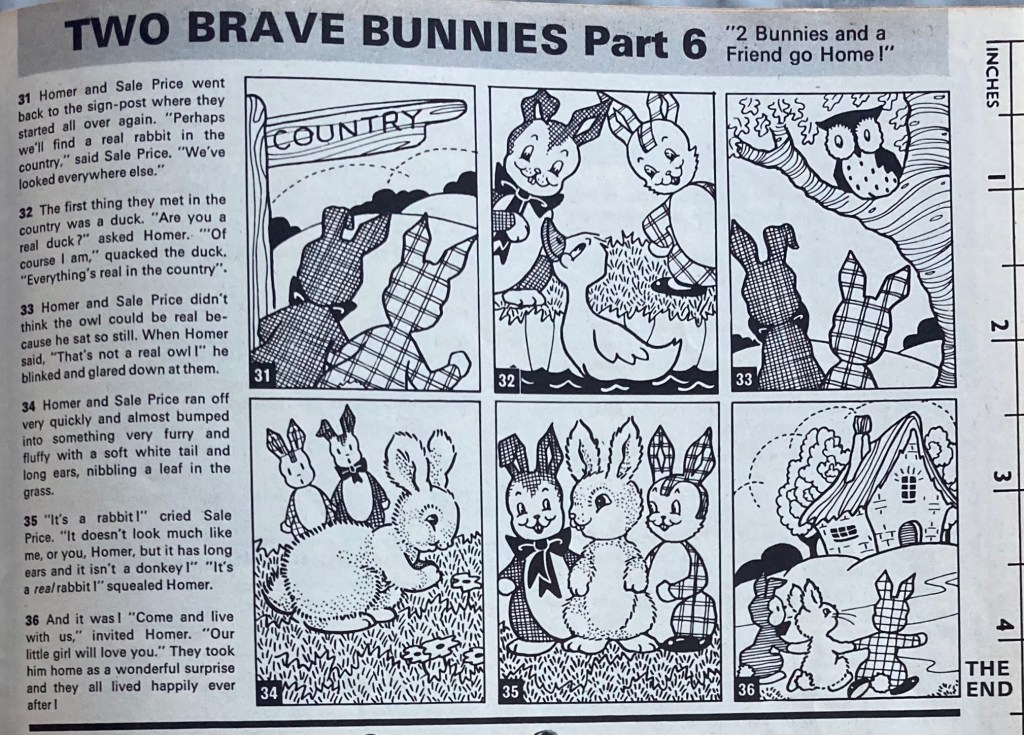
In the Readers’ Pages, we have reached the conclusion of our delightfully silly story of “Two Brave Bunnies” searching the world for a real live rabbit. (For those who haven’t been keeping up: the brave bunnies are sentient sewn toys.) Not having found a real live rabbit anywhere in town, they make the sensible decision to search the countryside instead. Et voilà! They find a real live rabbit and invite him home to come live with them and their human family. A happy ending for everyone involved.

There are so many fabulous patterns in this issue that it’s hard to not spend the next few months making all of them. I love the houndstooth set on the cover and the lace dress with cardigan, the child’s coat, the knee-high socks, the twisted-stitch gloves… Thinking both aesthetically and pragmatically, my choice was the child’s coat and hat set. I have too many clothes for myself right now and don’t want to start a huge new project, and while there are always great fashions for adults in Stitchcraft, there aren’t always nice projects for children. And I happen to know someone with a daughter of the right age and size, who would like it. And since it is not huge, there is a good chance that it might get finished on time. Perfect!

November 1961: Blazer with the Boutique Look

IMG_2931Post updated on December 28, 2019: Finished!

November 2019’s project was the blazer from this wonderful tweed check suit in the November 1961 issue. As it says in the description, “separates in the height of fashion illustrate why hand-knitting is chosen for today’s couture look.” The blazer, especially, is really a timeless, classic piece.

The stitch pattern is very clever and simple: k 1, sl 1, p 1 on the right-side rows, moved one stitch to the left every time, and purl back on the wrong side rows, with 2 rows in each colour. This makes a firm, structured fabric with minimal curling at the edges (which are finished with wool braid binding).

IMG_2920The pattern calls for Patons Rimple DK (nubbly wool with synthetic) in black and Patons Totem DK (smooth “crepe” wool) in “Oakapple”. I admit I had never heard of an an oak apple before and looking at the black-and-white photo, it’s it’s hard to tell what exact colour was used — but it’s obviously some kind of whitish-beige. Which, as it turns out, is pretty much the colour of at least some kind of real oak apple, which, as it also turns out, is not any kind of apple at all, but a wasp gall. My choice of wool, Jamieson’s Double Knitting, was clear from the beginning and I was lucky enough to be able to buy it “in person” at the wonderful Shetland Wool Week. Both the “black” (Mirrydancers)  and “white” (Sand) yarns are ever so subtly tweedy, which gives a beautiful depth to the colour.

IMG_2967
Why did I even bother?

Calculating the amounts was a nightmare, though. I had thought ahead and written it all out on paper: how many yards of Totem and Rimple there were in an ounce (thank you, Ravelry, for listing discontinued yarns with useful information about them), how many yards I would then need for each colour if making just the blazer, just the skirt or both, then comparing that with the number of metres per gram of Jamieson’s DK, dividing for number of 25 gram skeins, checking it all through and of course adding at least a few skeins of each colour for swatching, making full-length sleeves, extra security, and knowing that I wouldn’t be in Shetland again anytime soon. It was just barely enough! As I learned the other way around while making the green crocheted rug a little while ago, you can calculate all you want, (even with the help of a professional mathematician who knows extra-special secret formulas with Greek letters), or weight your swatches or whatever, but the only real way to know how much wool you are going to need is by making the thing. Argh.

IMG_2968The knitting itself was a dream, though — so nice to work in DK after the fingering-weight projects of recent months past. It knitted up fast and easily and the fabric feels good in the hands. The pattern is quite clear and simple. Even the set-in pockets with flaps and the buttonholes (such a nightmare, always) were successful and the buttonholes evenly spaced. (I used the method that Stitchcraft always suggests: make the side without buttonholes first, then mark the button positions with pins and make the buttonholes to correspond. With a repeating pattern like this one, you can count the rows between buttonholes quite accurately.)

I added a bit of waist shaping for a more tailored look, using a well-fitting blazer from my closet for a guide. I also made full-length sleeves. Originally I thought to make the sleeves from the top down for a better sleeve-cap fit and to make sure I didn’t run out of yarn, but I realised that that would reverse the direction of the diagonal pattern and I wasn’t sure if that would be a problem or not. I made them in the normal way from the cuff up, but made them narrower.

IMG_2932After putting it together and blocking, the back piece had stretched width-wise, the sleeves had stretched length-wise and the sleeve cap didn’t fit well. Also, the shoulders were too wide. What to do? I didn’t want to cut the knitted fabric, nor do everything over. My solution: I re-sewed the sleeve caps in where the shoulder and sleeve line should have fallen, then tucked the resulting extra fabric in towards the neck on the front piece to make a sort of built-in shoulder pad. I normally hate shoulder pads and rip them out of everything I buy, but in this case it turned the droopy, sloppy-looking shoulder into a crisp, tailored-looking one. I’m so sorry I forgot to take a “before” picture — the change was pretty dramatic.

IMG_3018To fix the back width, I added two vertical darts. That wasn’t as elegant as it could have been if I had knitted them in, but it was fine. The sleeve-cap changes pulled the sleeves in a little shorter, so I just finished the cuffs with the same binding that I used for the rest. The buttons are modern, but aren’t they perfect? I even remembered to buy a few extra.

It took a lot of finicky finishing work, but in the end, I was very happy. The blazer is warm, elegant, comfortable and fun to wear. It looks good as part of a retro-style outfit or a modern one. What more could I want? I don’t feel the need to make the skirt. I’m just happy with my blazer the way it is.

_1180419

September 1961: Overview

IMG_2772“Knitting with an Autumn Theme” is the motto of this month’s Stitchcraft from September, 1961. Knowing that September is the month where many knitters take up their needles again after not wanting to handle wool in the hot summer, I would have expected a “bumper issue” with extra ideas, new fashions from Paris, more colour photographs and so on. Not the case! It has more or less the same mix of “chunky”, bulky garments and easy homewares that we saw in the summer issues.

Not that that’s bad, of course (though bulky is not andIMG_2773 probably will never be my style). The kid’s coat looks cosy and fun to wear, and the “gay sweaters for him and her” in a Norwegian-style pattern are warm, practical and unisex. I imagine the boatneck collar on an unshaped front must scratch horribly across the neck, though.

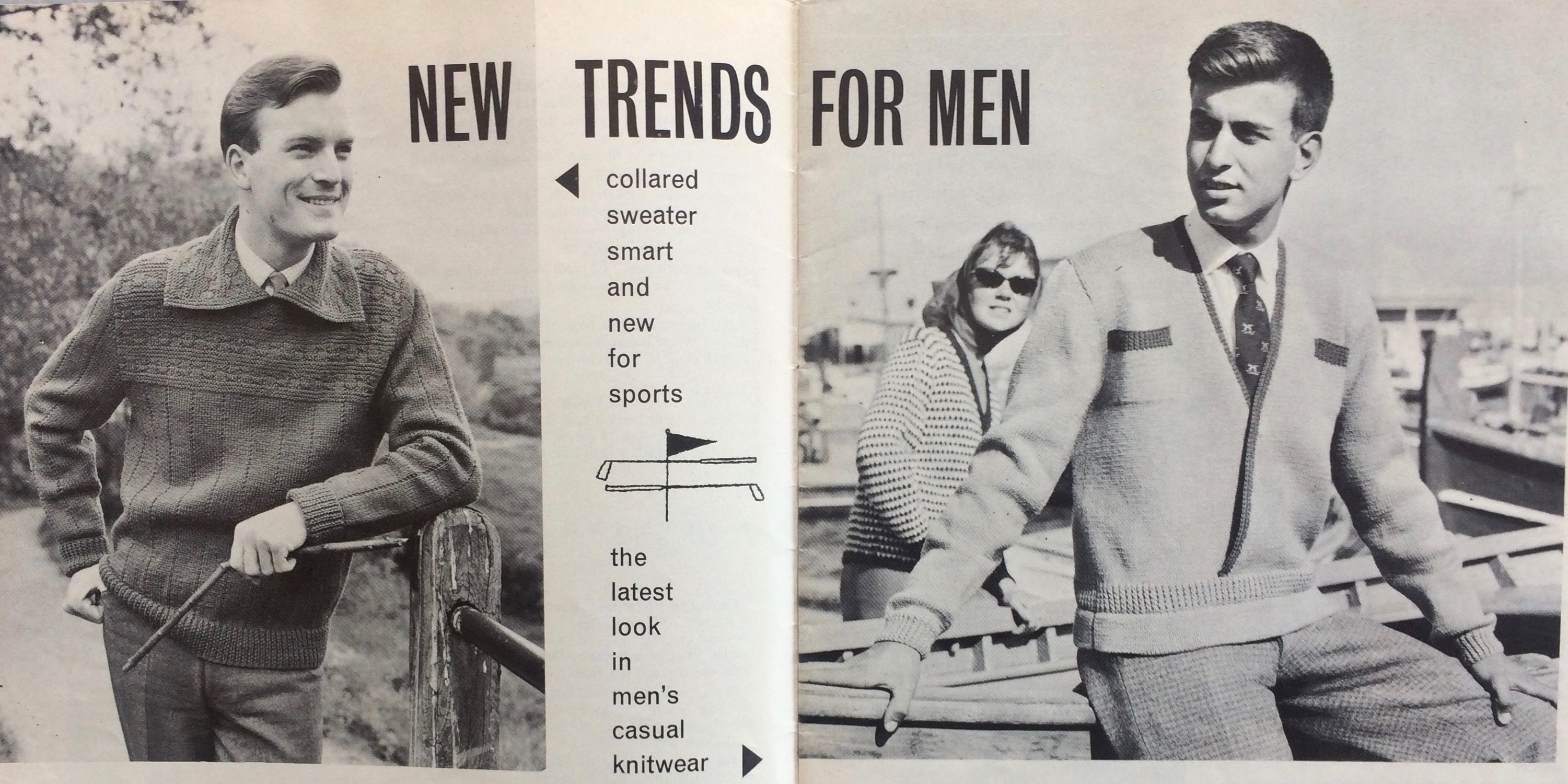
There are more men’s garments than usual: a wide-collared “sports sweater” and an elegant crossed-front pullover with twisted-rib details on the pockets and borders. The former is meant to be worn for “golf, country walks and all the week-end jobs in the garden”. I’m guessing the plants in the garden will grow better if you wear a shirt and tie under your sweater while working on those week-end jobs, as it will make them feel important and worth dressing up for. Maybe I should try it — I’m terrible with plants.

IMG_2775 2


Collars, V-necks and checked patterns are still in fashion, as seen on the comfortable, yet elegant cardigan suit and the cardigan in a familiar three-colour slip stitch pattern. Terry-towel-like Rimple is still going strong, featured here in a cardigan for larger sizes.

Babies get a bonnet and jacket in the same bramble stitch pattern as last month’s coat and July’s dress (“Part 3 of our Layette”) as well as a vest and pilch (underpants/diaper cover) and small children get machine-knit slacks to match the blazer. Hooray for warm legs, finally!

If all of that sounds underwhelming, we haven’t even gotten to the housewares… The knitting and crochet projects focus on using up scraps and “leftovers” to make either a cushion, a stuffed puppy toy or some utterly goofy egg cosies. Needlewomen (sadly, they don’t write “embroideresses”, which would be more entertaining) can make floral cutwork mats or a cushion, or a “Vintage Parade” of early-20th-century automobiles. There’s a tapestry hassock for church-goers and the last of the Zodiac-themed projects — this month’s sign is Virgo.

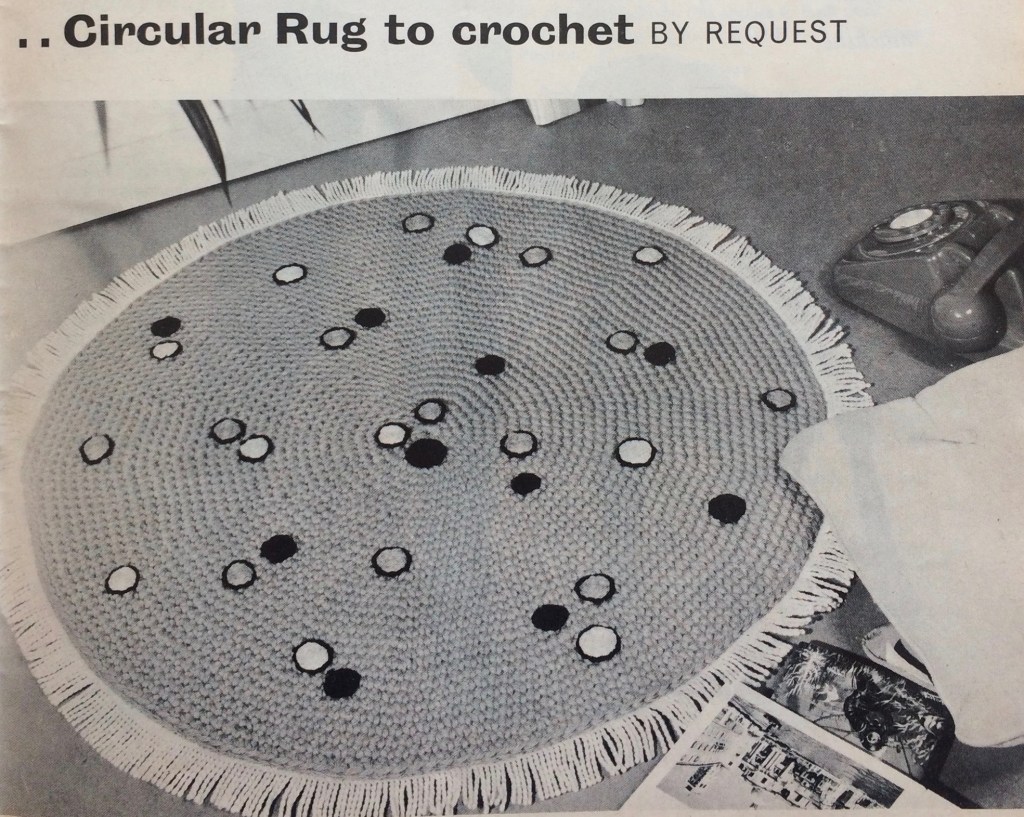
I almost gave up on this issue, as there just wasn’t anything that inspired me… but then there was this rug! This utterly 1960s, easy enough for me to crochet, fringed and polka-dotted rug that would look marvellous underneath my vintage, Danish Modern coffee table and, if made in the right colour, would perfectly match my embroidered cushion from the January 1960 issue. I love it! Rug wool in skeins isn’t really sold anywhere these days, but I’ve got a solution for that that I think will work.

IMG_2785

Stay tuned for the result… and the “special bumper issues” with “extra features in colour” that are promised for October and November.

Inspired by Stitchcraft: Red and Blue Dress

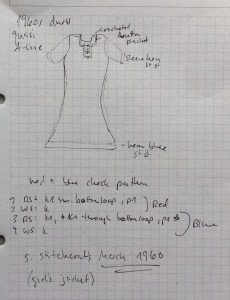
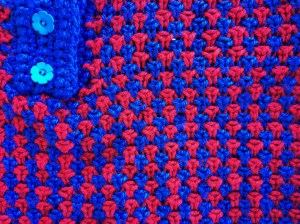
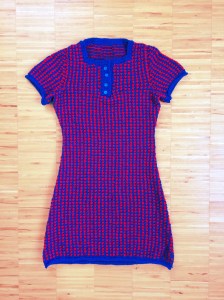
IMG_2498This month’s project was a little bit different than usual. Instead of making something from the April 1961 issue, which didn’t have any projects that really spoke to me, I decided to finally make something I’ve been dreaming of ever since I made this little girl’s jacket from the March 1960 issue. I loved the check pattern and the bright red and blue combination. “Wouldn’t that make a great 1960s-style minidress?” I asked myself, and the idea has been percolating in my mind since then.

I chose the same yarn and colours from the child’s jacket: Schachenmayr Bravo, which is inexpensive, machine-washable and knits up quickly. It’s even historically correct for a 1960s design, which is a nice way of saying “100% acrylic.” (Though true 60s synthetic wools were more often Bri-Nylon or Orlon.)

IMG_2497I chose a typical basic construction with front, back and sleeves all made flat and separately from the bottom up and sewn together, and made a stockinette-stitch hem with the blue yarn. The dress shape is a modified A-line: flared at the hem and narrowed to the top waist, then increased slightly at the bust. I used another knit dress as a pattern, but had to deviate from it as the stitch pattern made the fabric behave differently. The sleeves are short, simple and set-in. The front piece is essentially the same as the back, but divided in half after the armhole cast-offs and rounded a bit at the neck. The button band is plain crochet.

IMG_2494After it was all done, I realised that I liked the roll of the blue stockinette stitch hems, so I decided to just leave them as is. That means the bottom hem is a little bit narrow in the blue part where it should flare out. I may or may not fix that in time, depending on my laziness levels.

It’s soft and squishy and in spite of the synthetic yarn, doesn’t feel like plastic or make me sweat uncontrollably.  The only real disadvantage is the virtual weight it puts on. It’s got negative ease everywhere and is narrower than the very svelte-looking dress that I used as a pattern, but the sponginess and three-dimensionality of the stitch pattern makes me look much bulkier than I actually am. I thought a crocheted belt in blue would help define the waist area a bit more, but the belt is curly and not heavy enough. Maybe a 1960s metal ring-chain belt would do the trick? But it’s utterly comfortable and fun to wear, so I’m happy.

November 1960: Overview

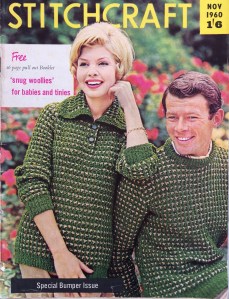
IMG_2168Brrrr! November 1960’s Special Bumper Issue” brings us “Colour for the Cold Days” and an extra 16-page pull-out booklet of baby woollies. Sadly, so sadly, the booklet from my copy of this issue has been pulled out long ago and is missing.

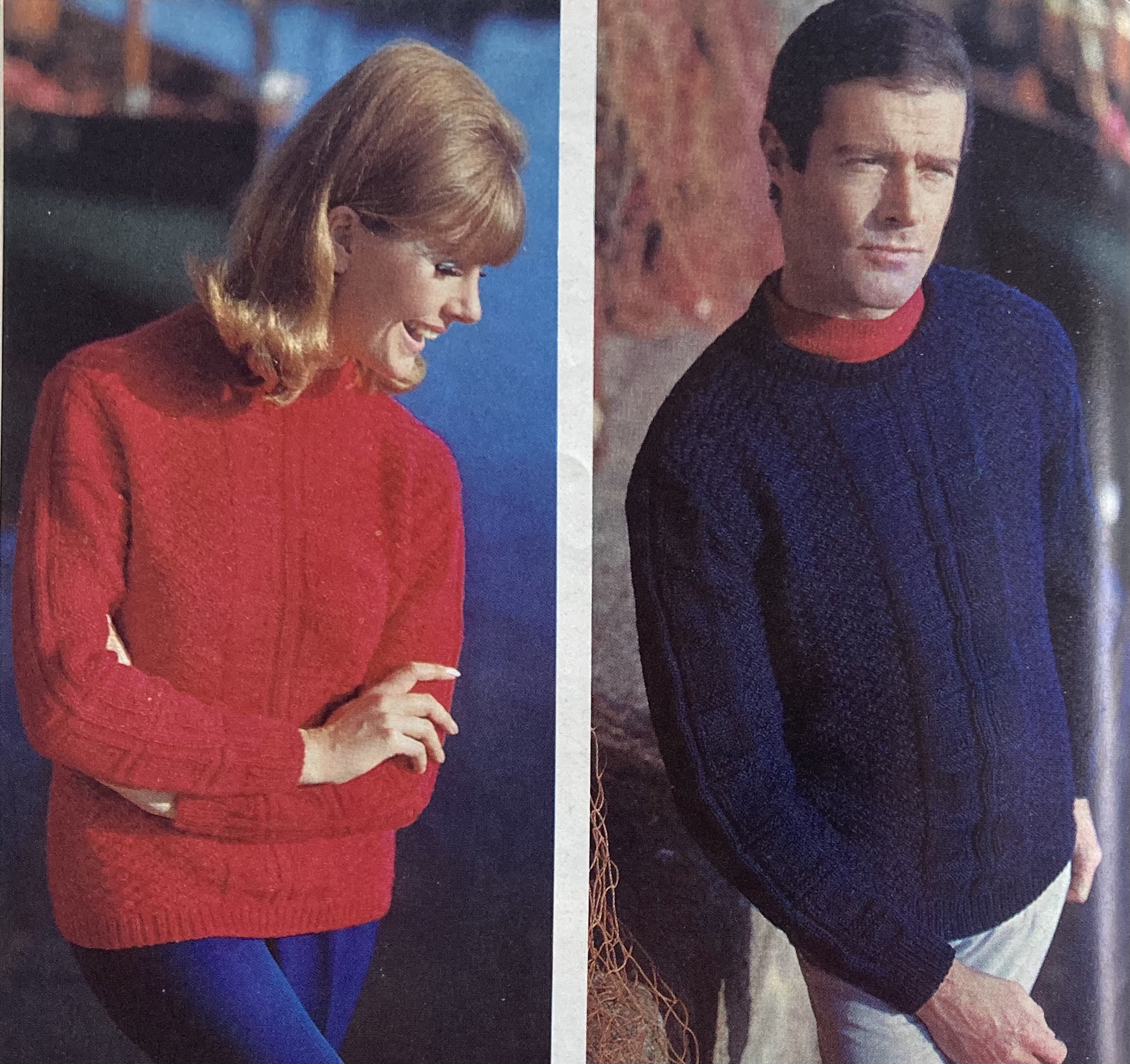
There are still plenty of lovely cold-weather fashions and interesting homewares to make, starting with the comfortable, matching “his and hers” sweaters from the front cover. Green checks continue to be in fashion, this time made with a complicated slip-drop-and-pick-up-later stitch pattern in two colours of Rimple. The idea of the “partner look” is just starting now, but will carry on throughout the 1960s into the androgynous 1970s and even the oversized-sweaters-for-everyone 1980s. Both fashion and gender roles were still quite rigidly stratified in 1960, but I see a parallel between the gradual softening of gender-based norms and the increased interest in gender-neutral “partner” garments that both started around this time. The two sweaters in this issue are both loosely-fitted, shaped (or not shaped, as is the case) the same, and available in overlapping sizes. The only proportional differences are in the shoulder width and sleeve/overall length, and the only cosmetic difference is the collar.

IMG_2170

Women’s fashions without men’s versions include a “sports” sweater with coloured lines made from a bobbled two-colour stitch pattern and added embroidery, a “top-fashion” jacket with a wide collar, a belted jumper and a cute hat with a buckled brim. Waist-length and closely fitted is definitely out, and the long-line with minimal shaping and a collar is definitely in. Men’s fashions are similarly long and loose-fitting, with dolman sleeves and interesting yoke details, and there’s a fantastic twin-set for young girls aged 5-9.

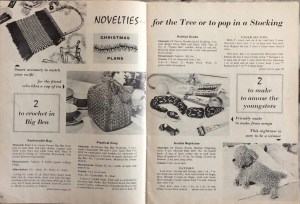
IMG_2172Homewares are still in a weird phase. The working woman or baby-boom mum (and those were overlapping categories, then as now) of 1960 didn’t have the time or patience to make too many elaborate Jacobean embroidery pieces or huge, detailed tapestries, especially not right before the great rush to get Christmas presents under the tree, so the focus is on quick, easy-to-make novelties for gifts. The aesthetic sense does seem to get lost a bit, though, if you ask me.

Of course, if you do have the time and leisure, you can go ahead and make a piano-stool and cushion set in Victorian-style tapestry, or a large room-divider screen with colourful parrots. Truly modern and up-to-date novelty lovers can continue the Zodiac series with a Scorpio motif for cushions, chairbacks or waste-paper baskets.

IMG_2178(I notice that Word Press does not recognise the word “chairback”. They have been out of fashion for too many years, I guess, having fallen victim to cheaper furniture, more frequent hair-washings and less Brylcreem. Pity that no one likes them now, as they do seem kind of fun.)

In the back pages, Jill Browne is still happily endorsing Patons Big Ben wool, and a lovely new children’s serial, “Wendy and Wag in Wallpaper Land” has started. Note the printed ruler at the side of the page, included in each issue as an easy way to measure your tension swatch. Also, there’s a rug reprint, a toy pig made of pink felt, a panda-bear motif and gay pot holders. What more could you want? My project will be the cloche hat, and I’ll consider the belted jumper if I have more time.


October 1960: Overview

0E56629B-4509-4599-B9F4-63679CA72DCCOctober and November are really the best months for knitting. The weather has gotten cold enough that you really want to wear and make warm, woolly things, and there’s the nice “surprise” of packing the winter clothes out of storage, and so remembering what nice hand-knitted pieces you made in other years. At least, that’s my experience.

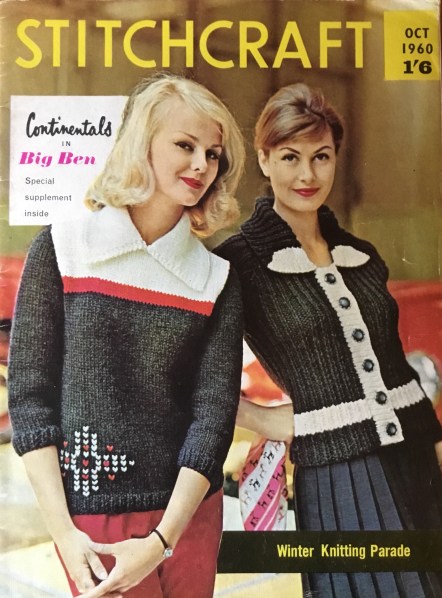
Stitchcraft also knows that knitters like to start more projects in the fall, so this month’s “bumper” issue has lots of warm clothing for adults and children as well as Christmas presents for home and family (for those who like to think ahead). And in the middle of the magazine is a special supplement of fashions in “Big Ben” — bulky triple-weight wool.

Women’s fashion features the “new length” of 23-25 inches in all jumpers, with minimal or no waist shaping, a sign that the era of waist-length sweaters and knitted blouses so popular in the 1950s is coming to an end. The sleeves have a new length, too — the “smart bracelet length” i.e. 3/4 length. I guess it lets you show off your bracelets, but I get cold forearms! Two are in 4-ply and one in an interesting “Italian waffle” slip-stitch pattern in double knitting.

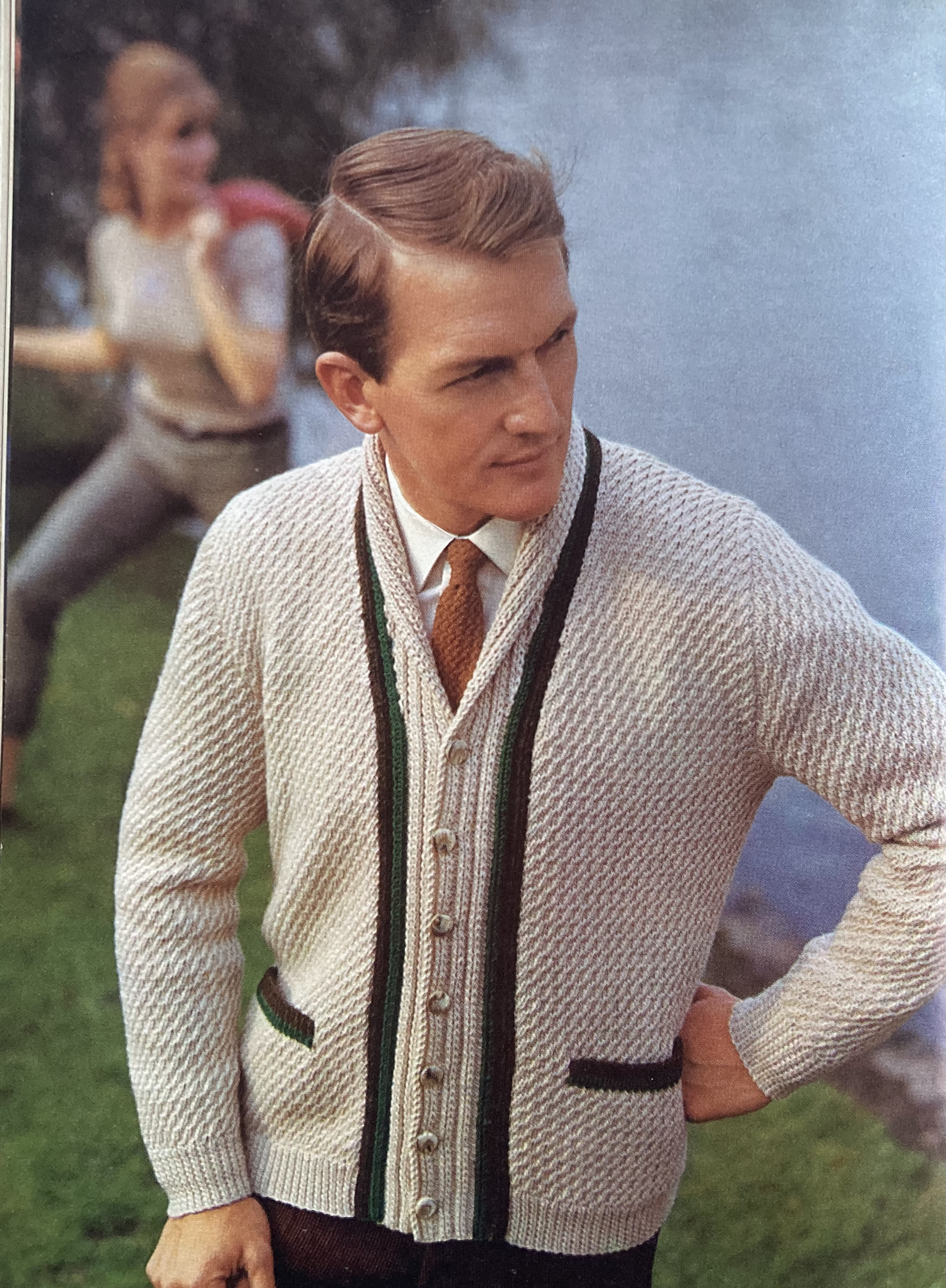
There are some great fashions for men, as well, both in the regular magazine and the supplement. The long socks and lined scarf in ever-fashionable green checks are definitely cosy and “would make very acceptable presents for a grown-up son or special boy-friend“. The jumper features a shawl collar, here referred to as a „reefer neck“. Reefer neck? When I think of the 1950s or 1960s and „reefer“, a shawl-collared jumper is not what comes to mind. Perhaps that grown-up son or special boy-friend has special recreational plans to wear that sweater for? In an case, it‘s attractive and warm-looking, as is the model.


There are plenty of little trinkets to make for the home, „for your Church Bazaar“ or for Christmas gifts. Looking at some of them, I think more bizarre than bazaar — Peter the Pup has a very weird look in his eyes and you don’t really mentally associate an igloo with the idea of keeping tea warm, right? (Though I know, I know, the thick ice walls of real igloos make excellent insulation.)

Homewares are always fun and this month has a bathroom set with seahorses for those who like a hand-made woolly toilet seat cover (makes me think of my great-aunt, who even made those woolly extra-toilet-paper-roll covers).

A7780FA8-D51D-4E8B-B746-87CDC99D50A6

There’s also a landscape tapestry, a cushion embroidered with sprays of fuchsia and a „Chippendale“ chair seat. In home-wears, there‘s a bed-jacket that‘s pretty enough to wear as a cardigan and the start of a new embroidery series with signs of the Zodiac. I always though the interest in astrology was a 1970s phenomenon, but here we have an entire year of zodiac-themed home accessories in 1960. I personally have no interest in astrological signs, but I do absolutely love her dress — check out that lovely lacing in the front. (And be sure to wear your frilliest petticoat while ironing.)

And we haven‘t even gotten to the Big Ben supplement! It truly is a bumper issue. The Big Ben offerings are under the signs of „Continental“ and „Italian“ styling: a long, slim, mostly unshaped silhouette with square collars and nubbly stitch patterns. Toddlers get a classic „lumber style“ jacket with pockets. The Norwegian „playtops“ aren‘t from the Big Ben supplement, but they are awfully nice.

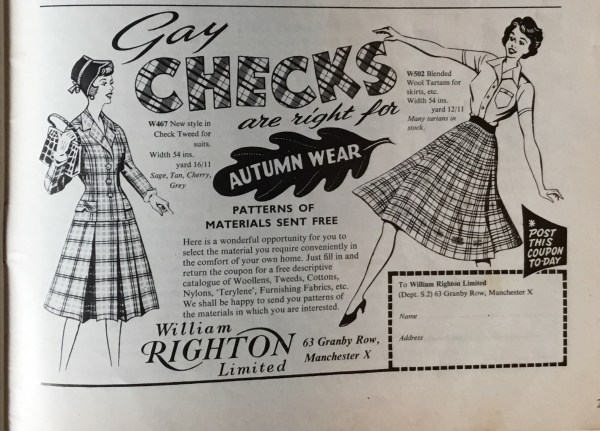
Last but not least, you can order yourself some sewing fabric from the advertisements in the back pages, and what could be better for autumn wear than gay checks? I wholeheartedly approve… and want that suit that the lady on the left is wearing. My October project will be a variation of the fuchsia embroidery. Happy autumn knitting parade, everybody!

AFBB9680-EB48-4119-AADE-8D7F92D38520

April 1960: Overview

coverapr60“Already there is talk of holidays” says the introduction to the April 1960 issue, “and whether it’s to be the sea, country, sight-seeing or sailing, you can’t go without your holiday hand-knits.” At the same time, spring and April mean Easter, with lots of opportunities for hand-made accessories and knickknacks.

For knitters, there is a larger variety of wool weights and styles than in the last couple of issues. Houndstooth and checked patterns are still going strong — look at that great jacket on the front cover! — but lace and Rimple designs are offered too, and garments for babies, toddlers, and adult men and women.

For the patient, there is a cute 3-ply top and a shirt in cotton crochet yarn at 12 stitches to the inch. (This is the only type of cotton yarn I’ve ever seen featured in Stitchcraft, but usually it’s used for making doilies or other fine crochet items.)

For those who prefer to actually get their garment finished before the summer holidays start, there are “partner look” sailing sweaters, the houndstooth jacket on the cover, and pullovers in Rimple and Big Ben yarns. Rimple will continue to not be my taste in terms of texture, but isn’t the model cute?

Easter embroidery is big, and around this time, Stitchcraft started to include designs for church accessories — hassocks and kneelers in tapestry or cross-stitch. For those for whom Easter is less of a religious experience, there are some great “Easter novelties” (cosies for teapots and toilets) and who could resist those gay kitchen ideas? Standard needlework ideas for the home include a fitted chairback and a lovely Persian-inspired cushion.

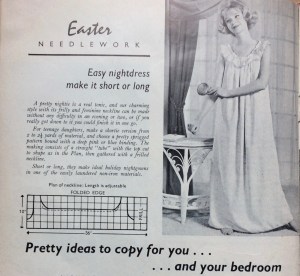
One thing that is really different in this issue is a sewing pattern, common in 1940s and 50s Stitchcraft but rare in the 1960s. It’s a very simple nightdress (for Easter and/or your holidays, of course) that is recommended to be made in “one of the easily laundered non-iron materials”, i.e. nylon or early synthetics.

nightdress

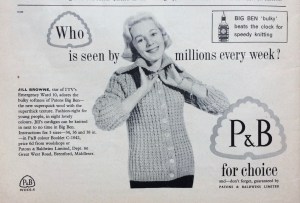
April’s celebrity “plug” is given to us by Jill Browne, the actress who played Nurse Carole Young on the soap opera Emergency – Ward 10, which aired on ITV from 1957 to 1967.  I have to admit I have never seen it, but it seems to have been quite progressive for its time, with Joan Hooley playing a female surgeon in an interracial relationship that was sealed with a kiss onscreen.

starad

On the back pages, it is the end of adventures for Good Teddy Bear and Naughty Teddy Bear, but they got two gay jerseys knitted for them in the end, so I think everyone was happy. Plus you can make your very own teddy bear to commemorate the series! The ads are for the usual things, except for this gem of a potty-training stool called “Bambino”, appearing for the first time.

My projects from this issue will be the 3-ply top and the appliqué goslings on a tea cosy. Happy Spring, everyone!


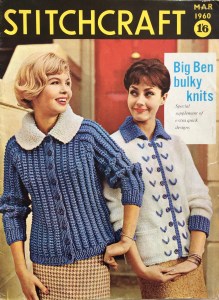
March 1960: Spring Magic

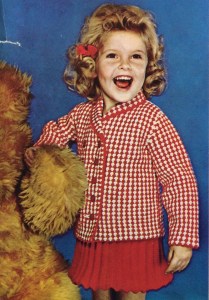
Version 2First project for March: this charming jacket from the jacket-and-skirt set titled “Spring Magic in Judy’s trim Outfit”. What a great title! And what a great photo in the booklet. I’m glad today’s girls don’t generally get their hair tortured into curls like litte Judy’s in the picture, but she certainly looks happy enough holding hands with her gigantic teddy bear.
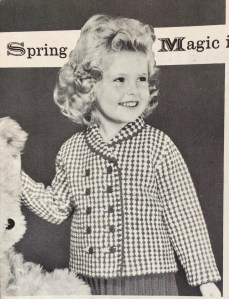
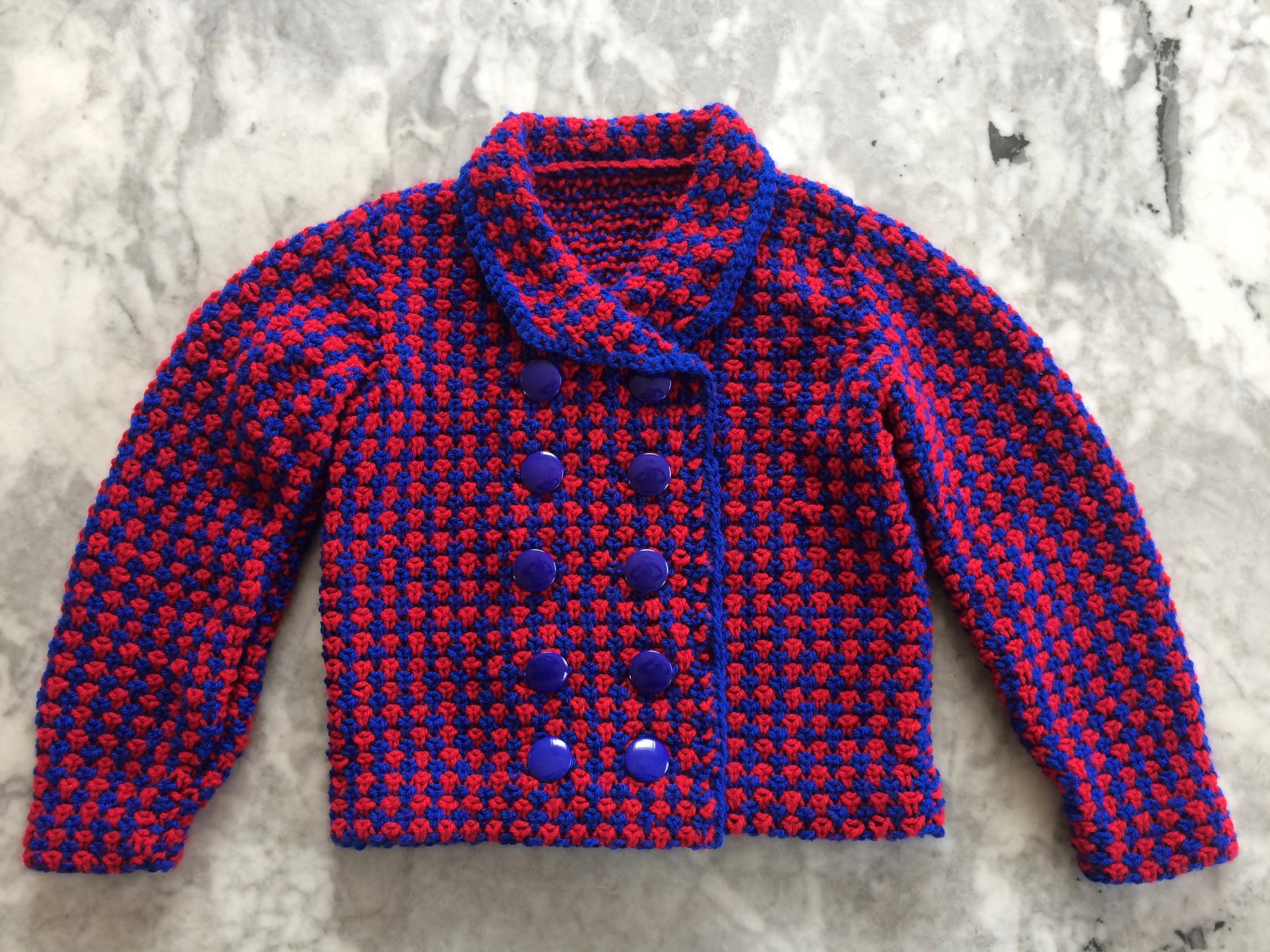
The pattern calls for Patons Double Knitting at a gauge of 18 stitches to 4 inches over the stitch pattern. The child I knit this for can’t wear wool, though, so I made it in wonderful, easy-care, electric red and blue acrylic Bravo Originals from Schachenmayr. It did turn out to be a bit bulkier than Patons DK, so I adapted the stitch counts to reflect a gauge of 15 stitches to 4 inches.IMG_1566 (1)

The stitch pattern looks complicated but is actually very easy — fundamentally just k1, p1 on the right side and k on the wrong side, but the k stitches on the right side are made through the purl bump of the row below, giving a sort of check pattern without stranding or slip stitches. It has stockinette-stitch hems on the cuffs and bottom edge and a row of double crochet (British terminology, i.e. single crochet for Americans) around the front and collar edges.

It knit up so fast, and the colours were so bright, and the yarn so space-age, that I bought a whole lot more of it in order to make a 1960s-style, short-sleeved, A-line minidress for myself. I can’t wait!

judysfo

March 1960: Overview

IMG_1544

March 1960 promises “Spring Magic” and a special pull-out supplement with designs in “Big Ben”, Patons’ new Aran-weight wool that promises to knit up especially quickly, so you can have your thick, warm woolies finished in time for the summer holidays. (Anyone who lives in Northern Europe or who has taken a holiday on the northern Atlantic or North Sea coast will understand perfectly.) Fine-gauge knitting is right out: the designs not written for Big Ben, like the excellent yellow pullover and sleeveless waistcoat for men, the “Young Style Designs” for teenage girls, or the fabulous checkered coat for a toddler, are all in DK-weight wool. The only exception is “John’s new pullover” in 4-ply.


The embroidery and homecraft projects focus on springtime and Easter, with a floral tablecloth and a cushion and chairback in traditional Hungarian design. It’s a pity nobody uses chairbacks these days, as they are a nice decoration and certainly prolong the life and cleanliness of a chair or sofa. The stitched rug is a “quick and easy modern design” and there are tapestry and needle-etching pictures of quaint-looking English town streets.


In comic land, Good Ted and Naughty Ted (two teddy bears) and their human friends Beth and Bill take a balloon ride to Magic Way, where a fairy turns Beth and Bill into animals in order for them to visit Noah’s Ark. As usual, the ads are for Lux soap, Opti-Lon zippers, Cow & Gate baby formula and various sewing and knitting machines.


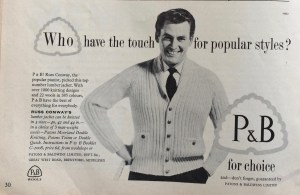
One older style of ad is the Patons and Baldwin’s testimonial, in which a famous personage shows off their favorite hand-knit garment made from P&B wool. Here we have Russ Conway, the popular music pianist, at the peak of his career and wearing a lumber jacket in “man-weight wool”. Russ Conway was a multi-talented, self-taught piano player and composer who enjoyed enormous success, producing multiple No.1 hits and playing in a distinctive “honky-tonk” style. Though plagued by serious health conditions, he continued to compose, produce, and fund-raise for charity until his death in 2000 at the age of 75. You can read more about his life and career and hear some of his music on his tribute website .

IMG_1560I will be making two children’s designs: the fabulous checkered coat for a toddler, and “John’s new pullover” for a soon-to-be six-year-old.
January 1960: Green check jumper

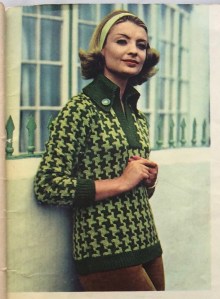
greencheck_issuefoto2My knitting project from this issue was a houndstooth-check jumper, made in double knitting wool in two shades of green. Large checked patterns of this type were popular this year, which is presumably why Stitchcraft categorized this jumper as “fashion knitting” rather than “casual knitting”.
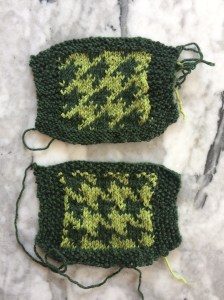
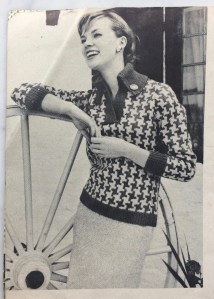
I love the big green collar and the interplay of the two colours. What I didn’t like as much was the pattern itself. It looked fine in the photos but in a swatch, I found it looked too much like plusses or crosses and not like what I think of as houndstooth. Also, the straight vertical placement of the stitches made the fabric pucker. I experimented with a couple of other houndstooth variations and decided on the second one (lower swatch in photo.)greencheck_2swatches

My only other intended modifications were minimal: knitting it in the round with invisible fake “side seams” instead of in pieces with real seams, as I don’t like purling in two colours, and making the sleeves full-length instead of the 3/4 or 7/8 shown in the photos. However, once the body and upper back were finished, it looked as though the upper back would not be wide enough. I suppose the average Stitchcraft reader of 1960 was not particularly athletic, by modern standards… The shoulder width was fine, so the solution was to simply space the decreases from the beginning of the armhole farther apart (at each end of every 4th row instead of every other row). I did the same on the upper fronts and increased the total stitch count on the upper arms by 4 stitches, making the decreases more gradual on the sleeve caps as well.

greencheck_issuefoto1

The pattern calls for Patons Double Quick Knitting. I got a good gauge (6 sts to an inch in pattern) and a fantastic colour match with Patons Diploma Gold DK, a wool-acrylic-nylon blend. I had plenty of it on hand from a frogged project, but the work in progress was nubbly. I thought it would get smooth again with blocking, but alas, the original project was probably blocked “too well” and the finished product is not quite smooth. Since it’s the same all over, though, I decided to think of it as a design feature.

The fit is excellent, everything worked out wonderfully and I am very satisfied with the final result.