
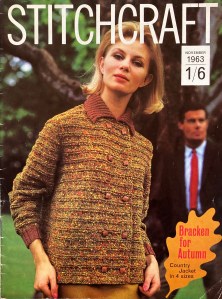
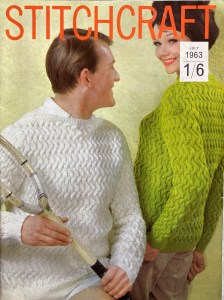
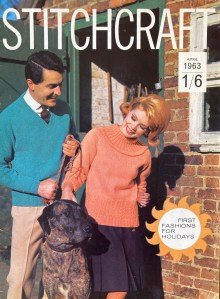
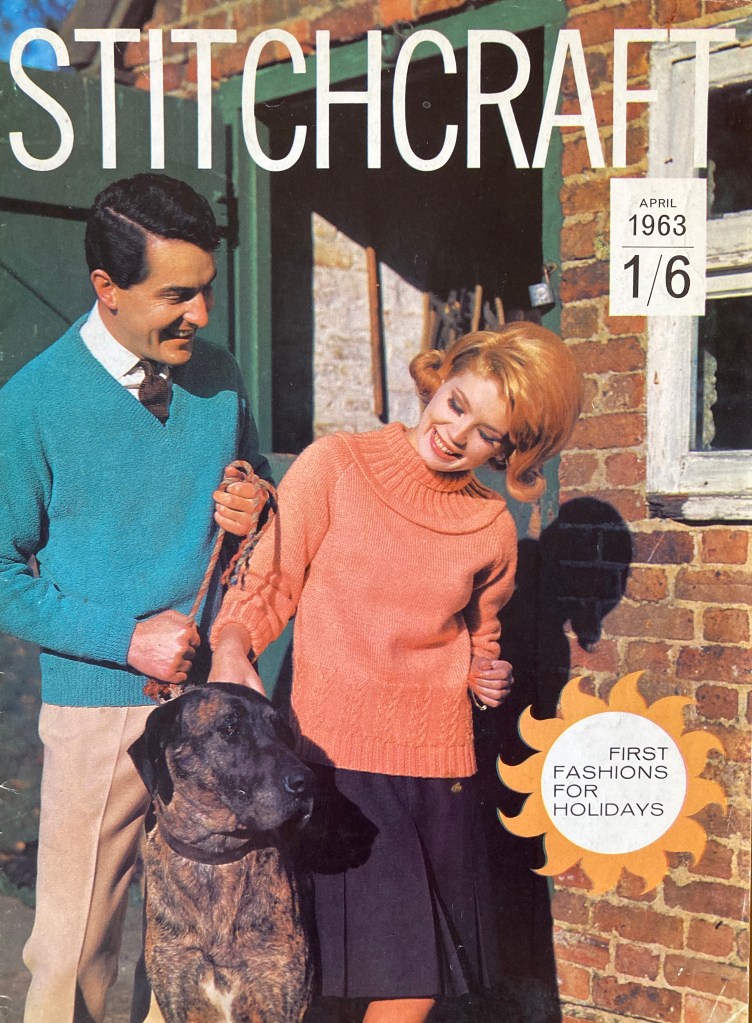
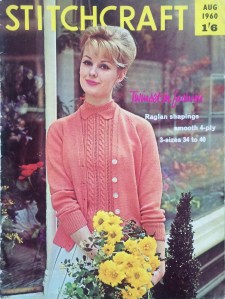
Greetings from Kent from your March 1964 issue of Stitchcraft, featuring “Spring Into Summer Fashions” photographed in “some of your favourite spots around Canterbury and Tunbridge Wells” so that you can see the knitwear “in their own settings as you would wear them.” Shall we go?
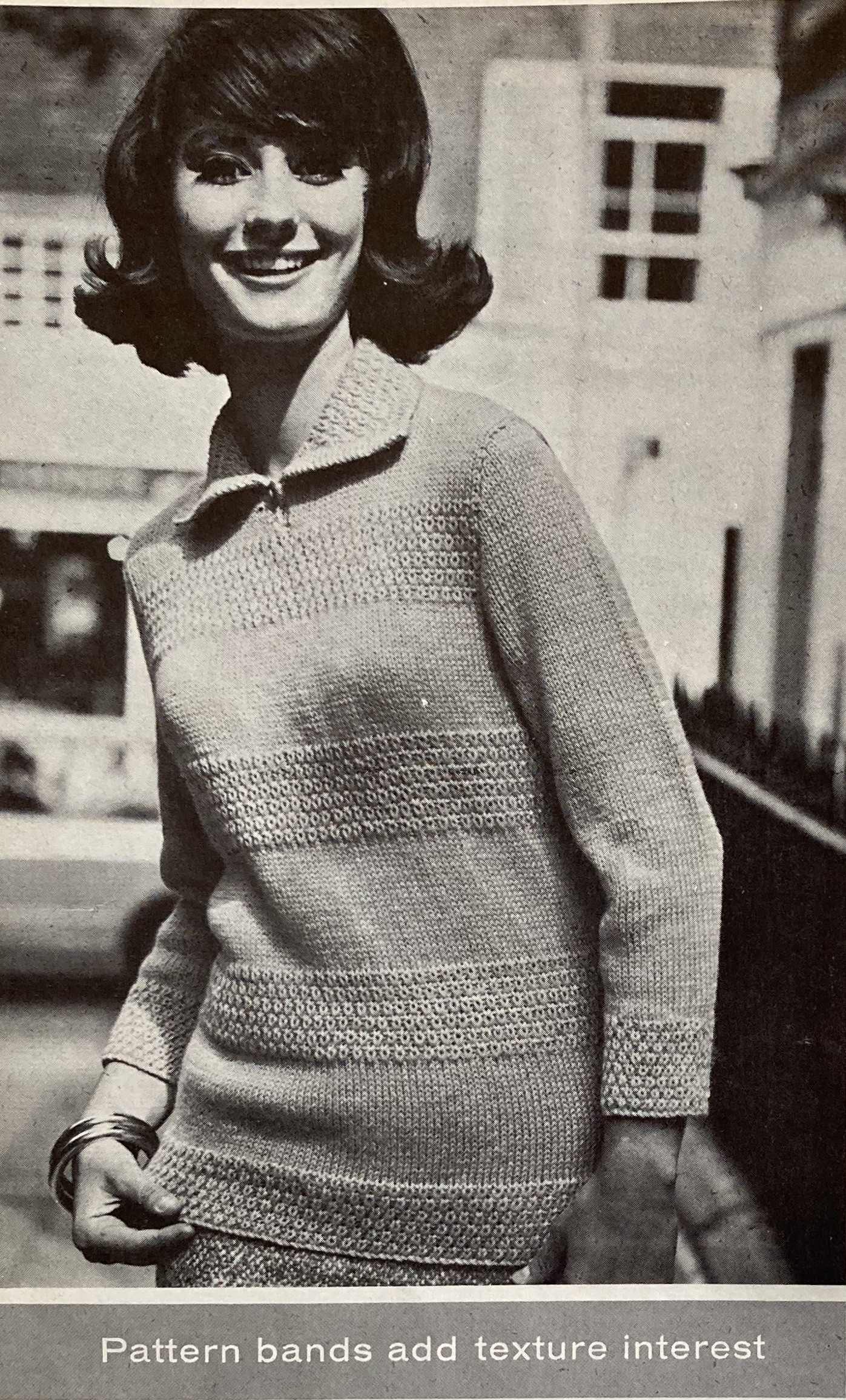
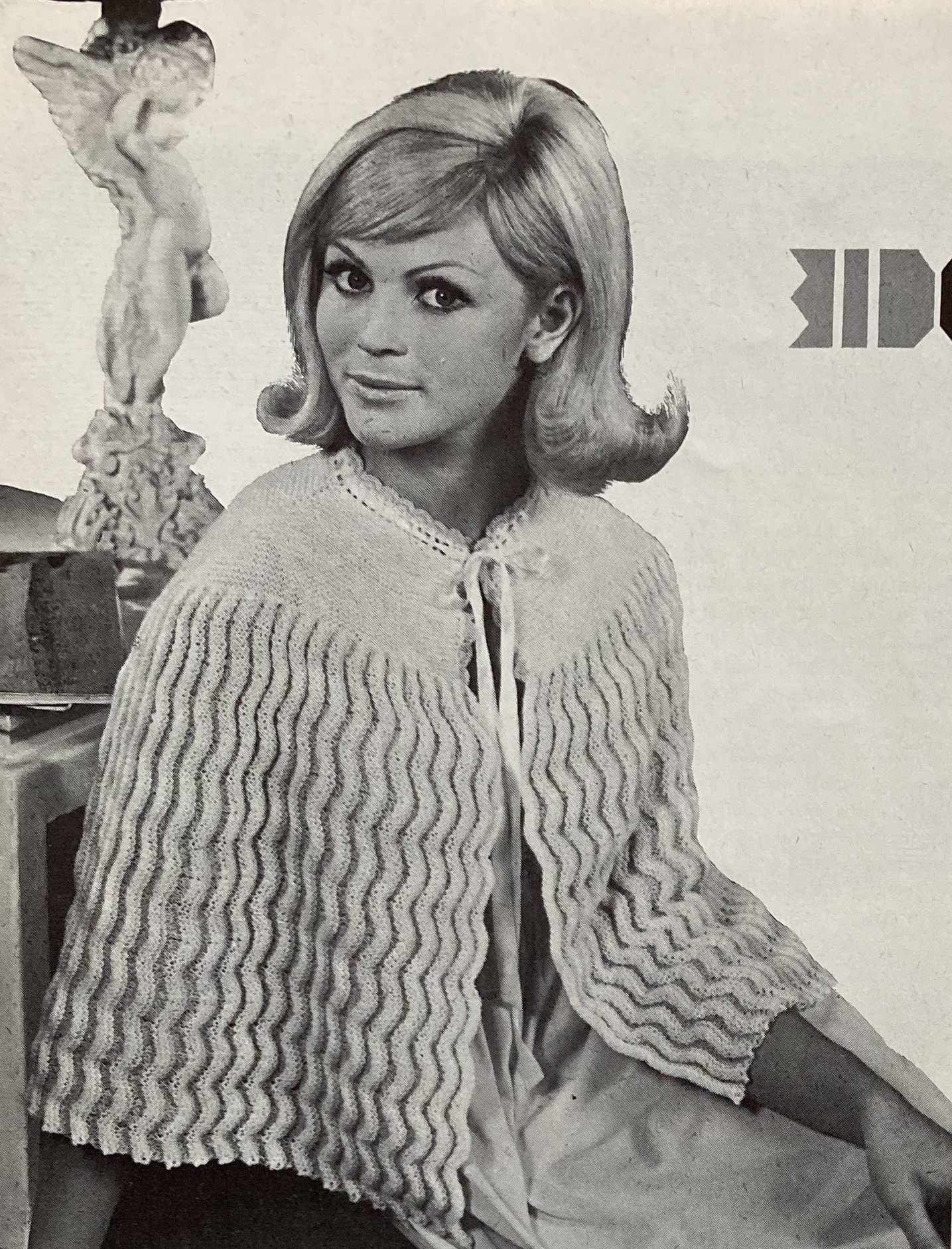
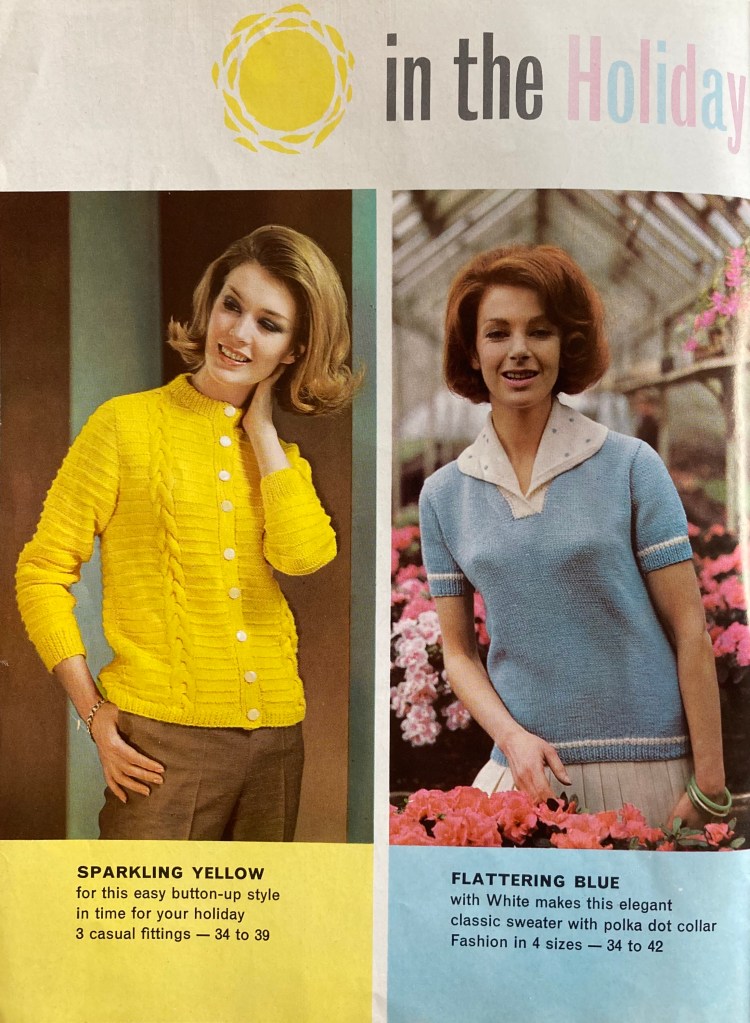
“For our climate”, writes editress Patience Horne, the best outfit for the spring and early summer months is a sweater suit, quickly knitted in double knitting wool. Cool blues, salmon pink and yellow-green are the trendy colours, and pattern stitches are used sparingly as an accent on hems or collars, or as a single vertical stripe panel.


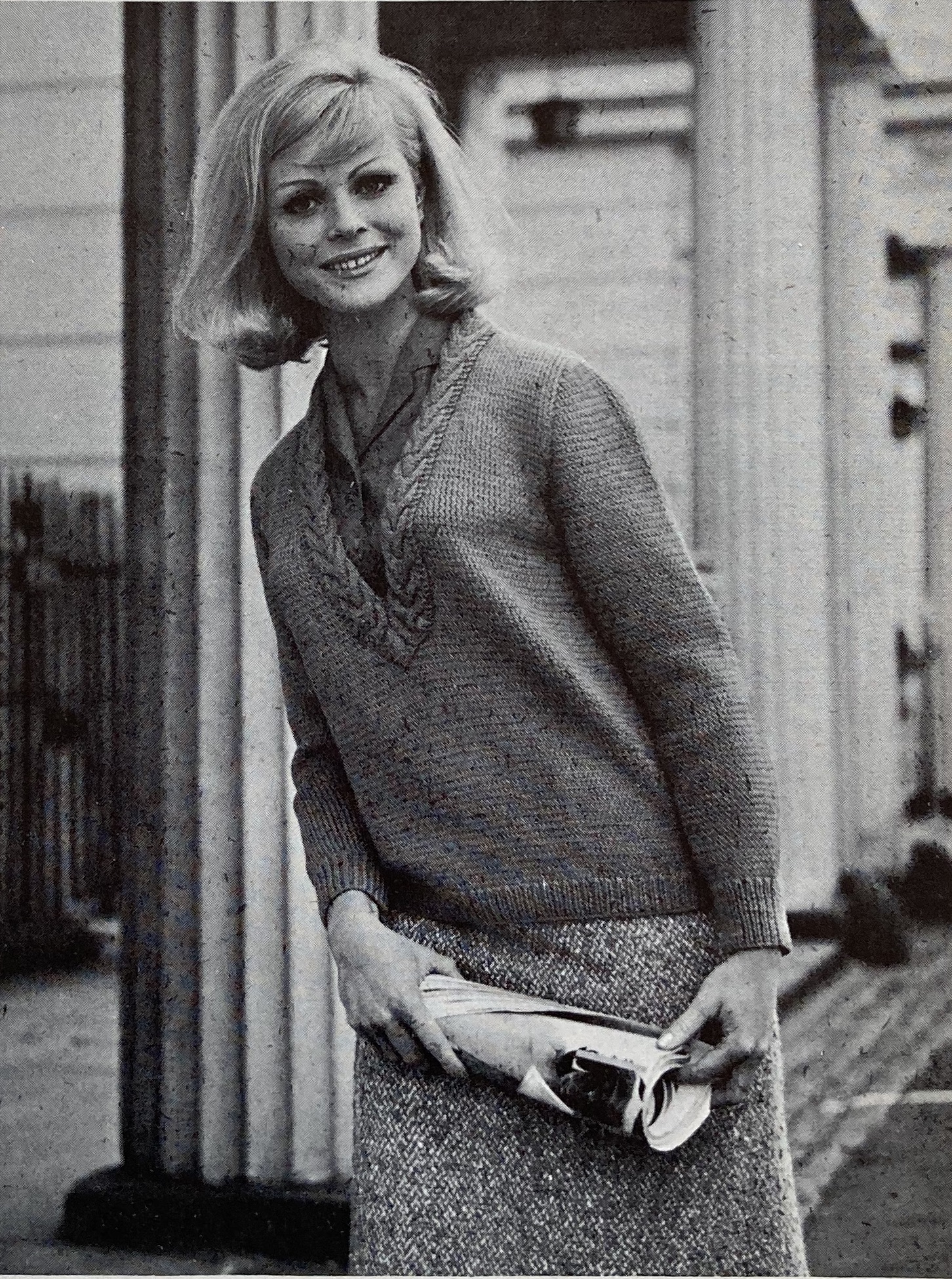
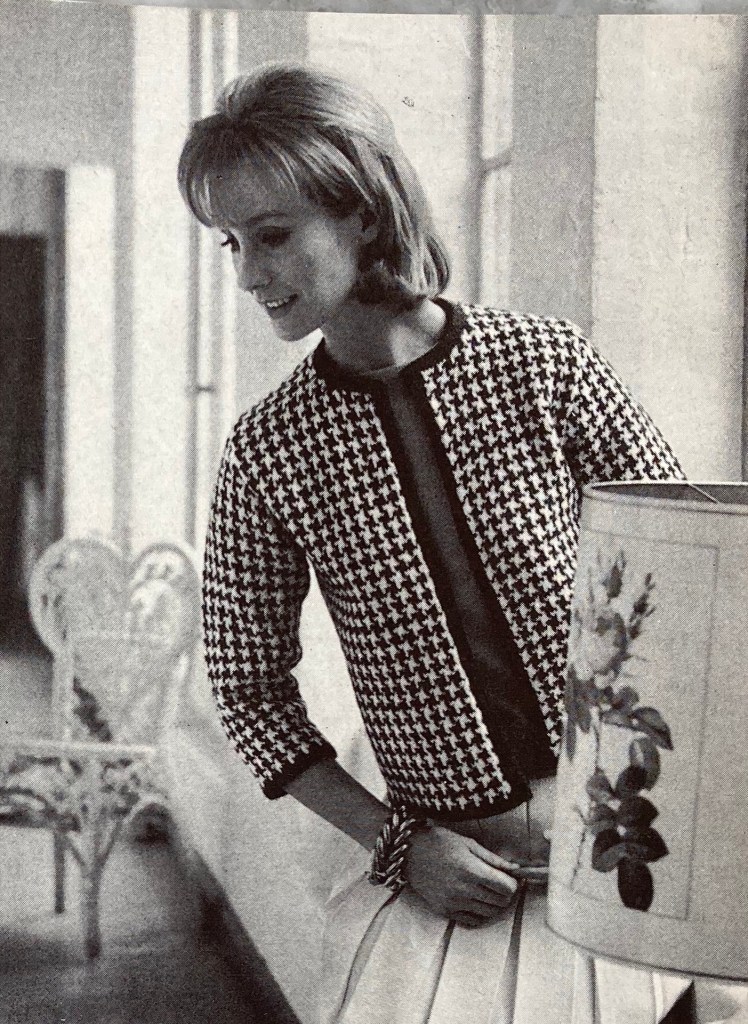
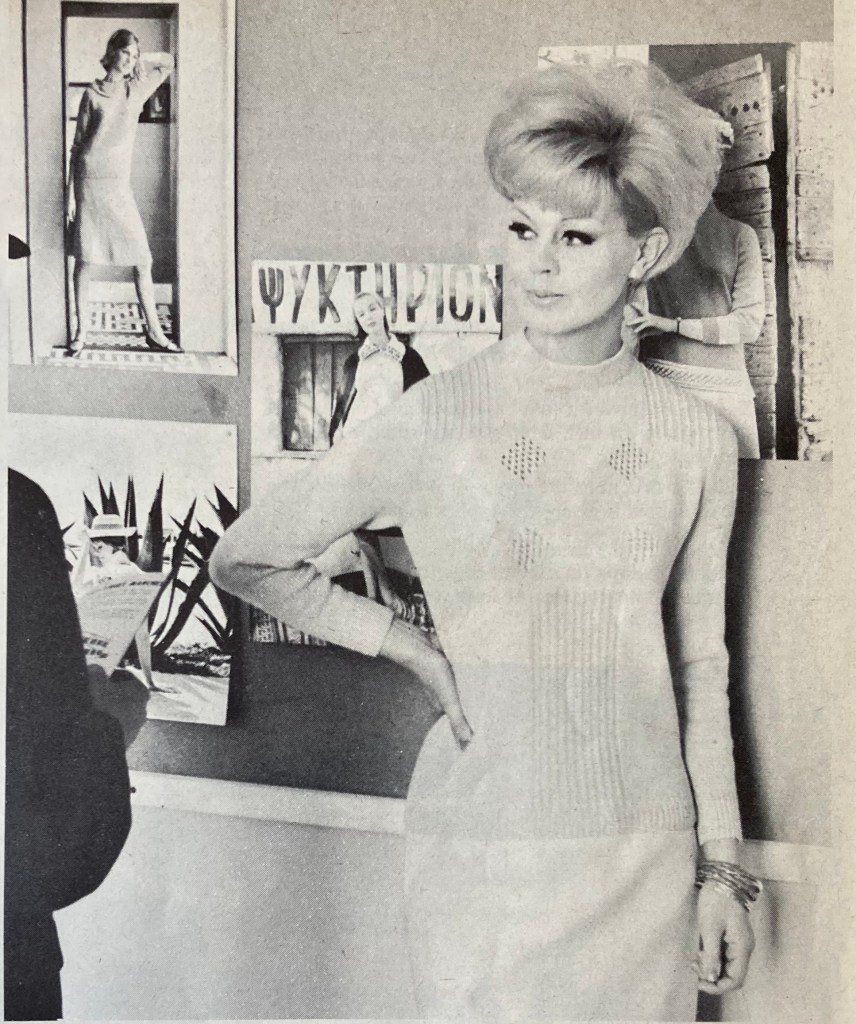
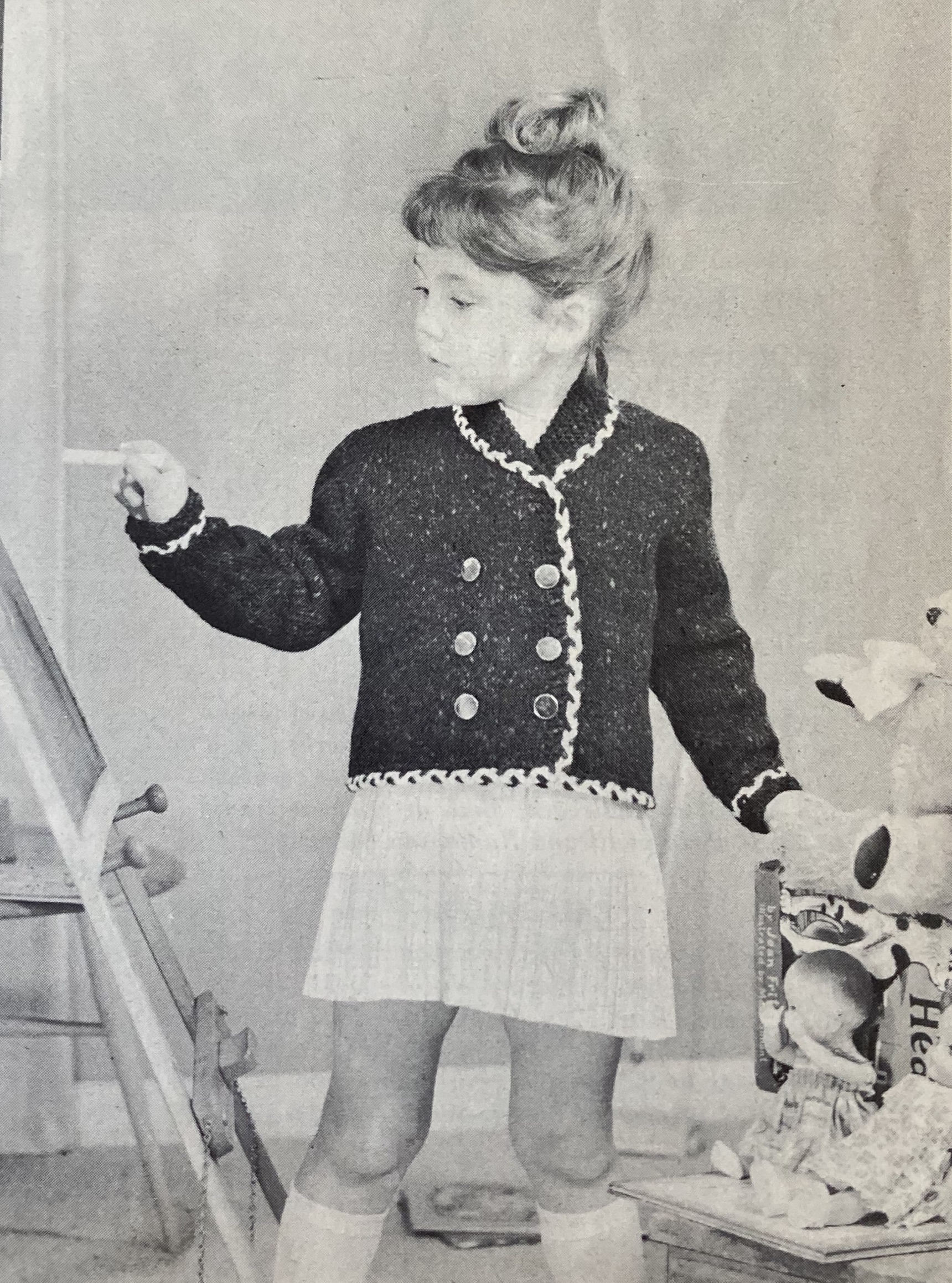
Our cover model is wearing a twin set with a trellis pattern accent on the cuffs, pockets and collar of the jacket and the hem of the short-sleeved jumper underneath. Here, again, we see how twin-set styles have changed since the 1940s — everything is long, loosely-fitting and unshaped. The “Golden Willow” sweater suit on the inside front cover is similarly unfitted, with a cable “V” pattern stripe. For “The Creamy Look”, there’s a a high-buttoning cardigan with a subtle diamond pattern on the fronts. All three models are made in “Double Quick” knitting.


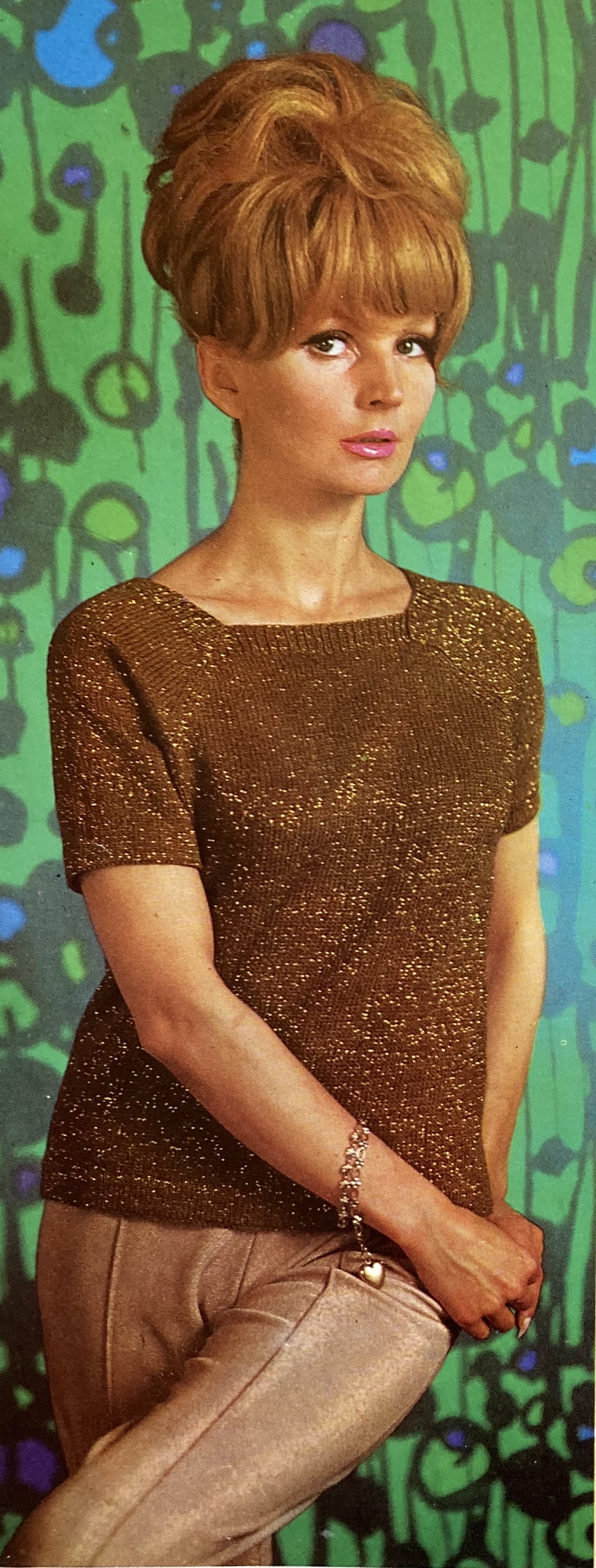
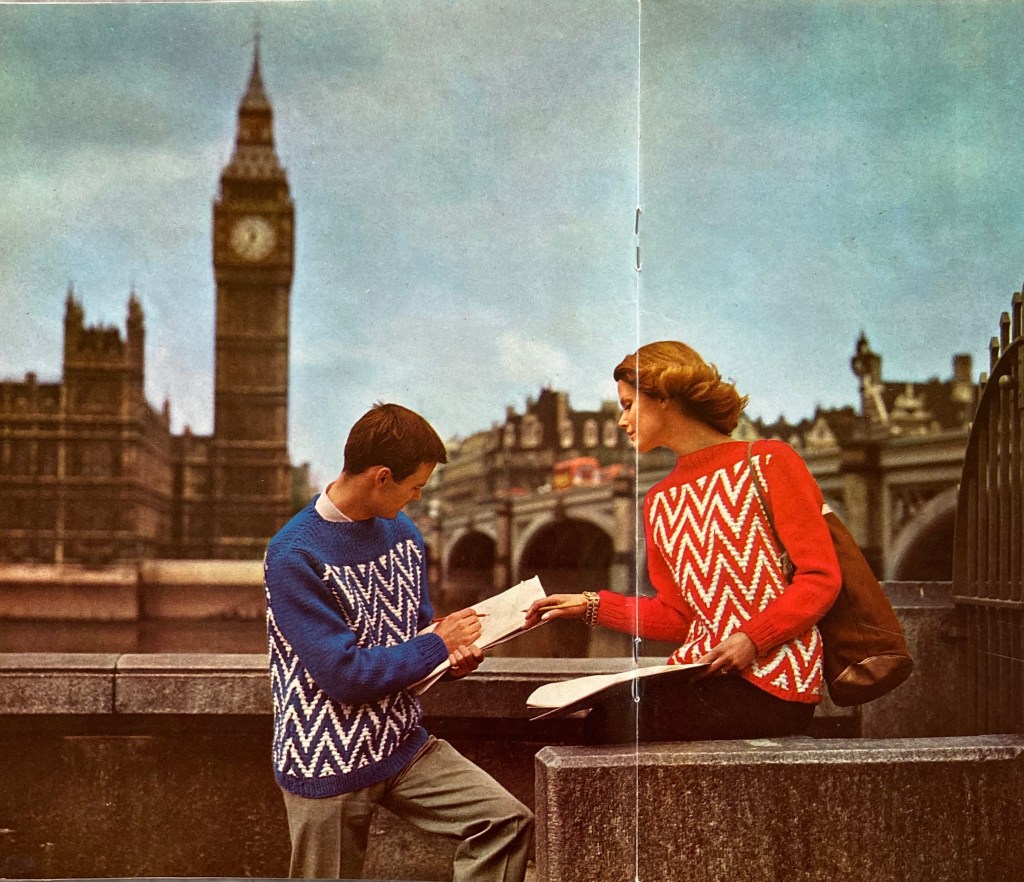
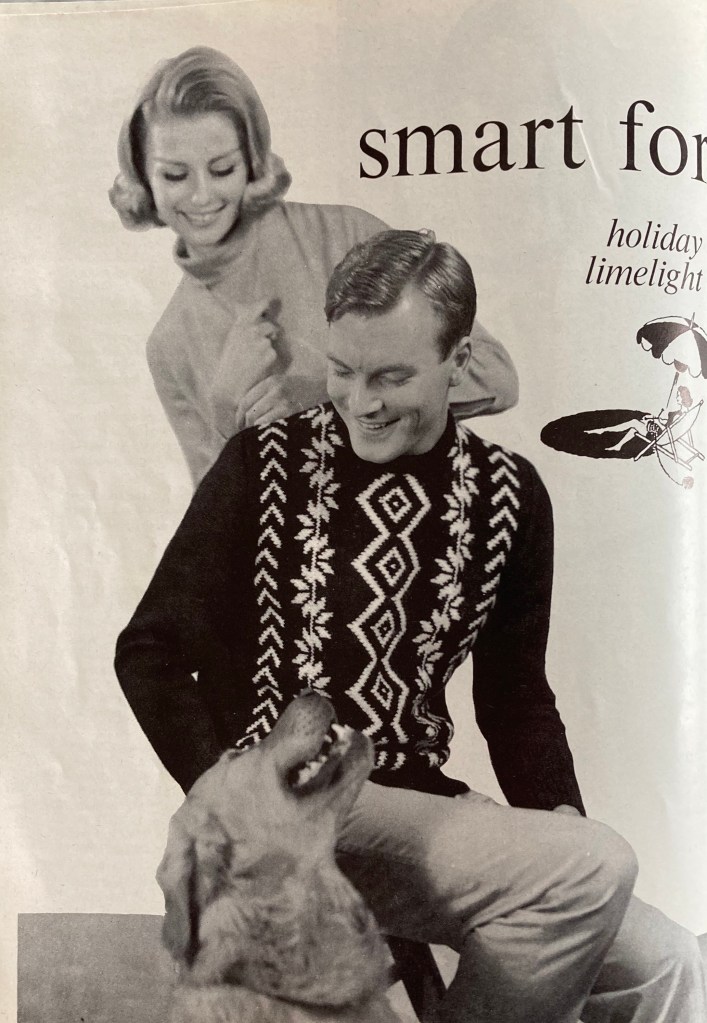
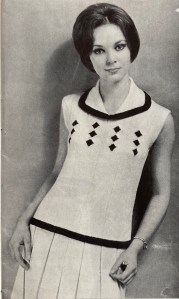
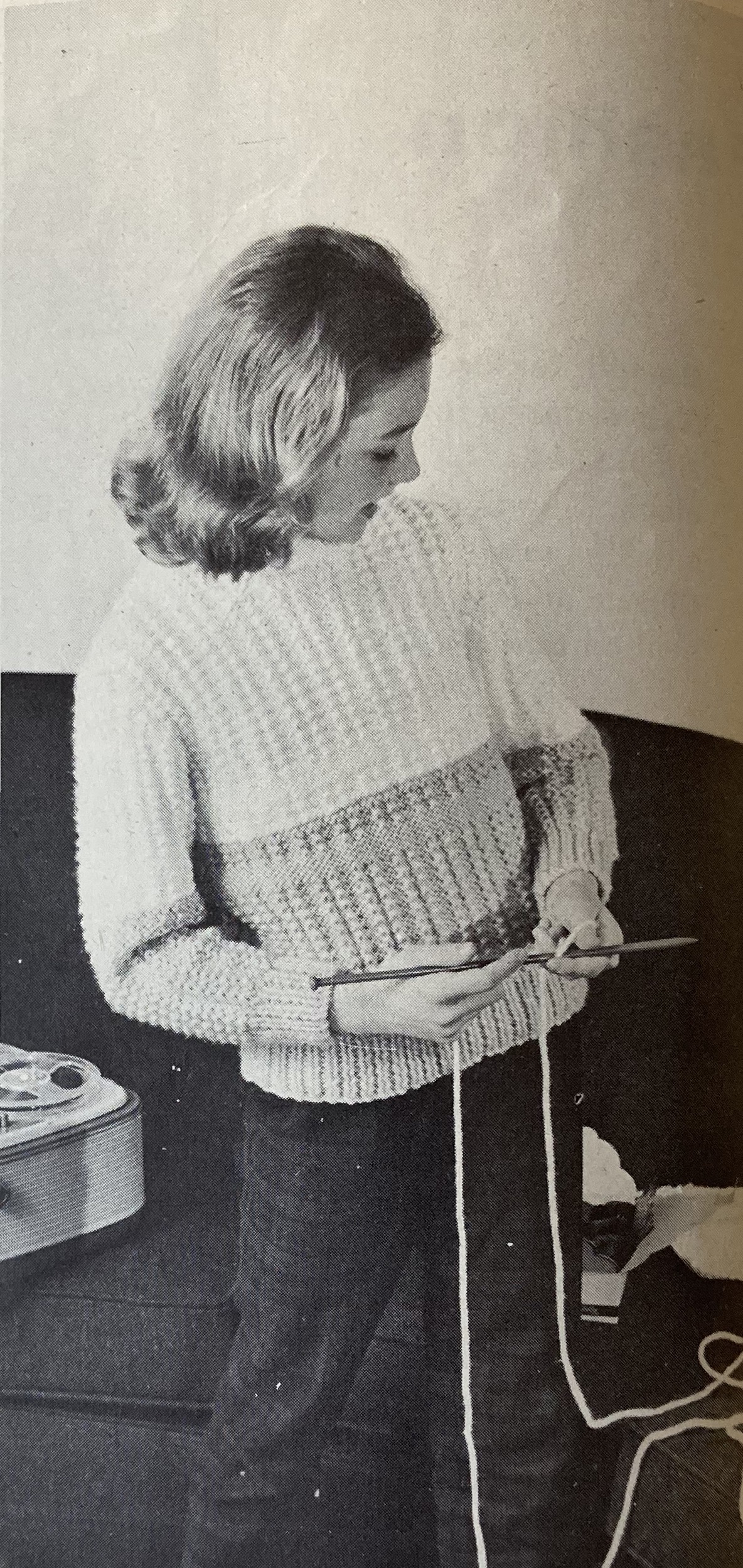
“Double Quick” is also the featured wool for the men’s and women’s “sport sweaters” in the lovely full-color center photo. I’m not sure what makes those two garments more “sporty”, as they look equally as elegant as anything else in the issue. His sweater is worked in stranded technique from a chart included in the instructions, and hers is made in plain stripes with the diamond pattern embroidered on later in Swiss darning / duplicate stitch. If “Double Quick” is not bulky enough for you, there are matching sports sweaters for him and her made in bulky “Big Ben” at 3 1/2 stitches to the inch. The salmon-pink jumper (Stitchcraft calls is a “sweater blouse”), by contrast, is made in 4-ply wool in a classic shape, with pattern accent panels in an interesting mini-bobble stitch.


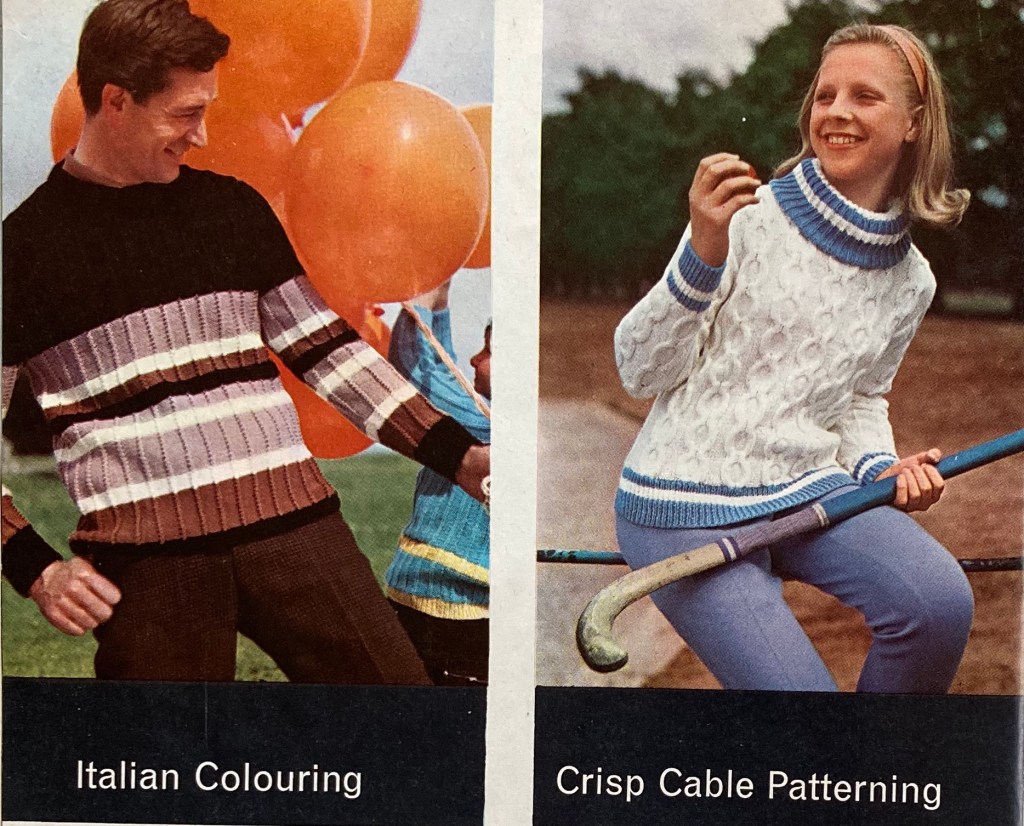
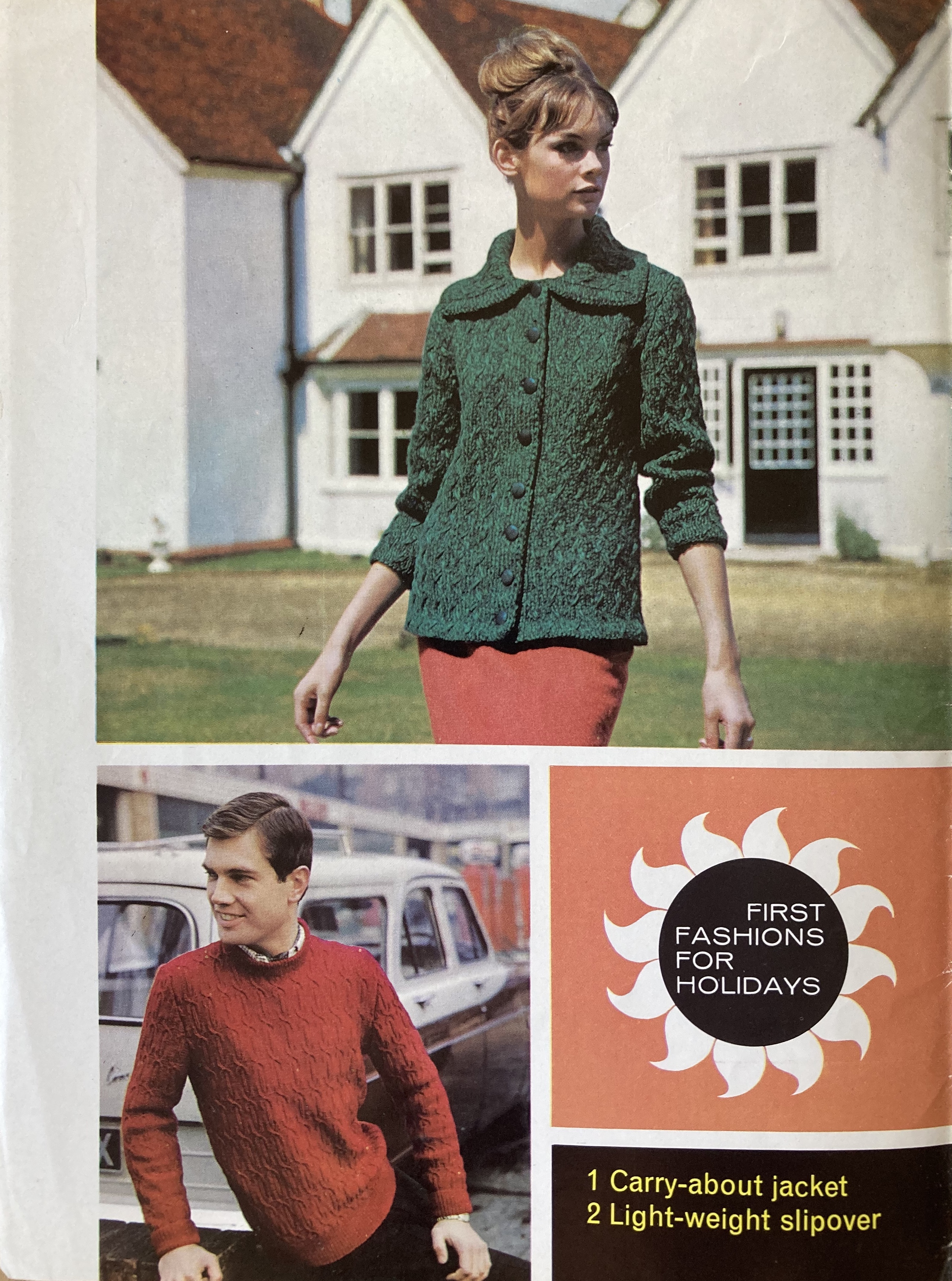
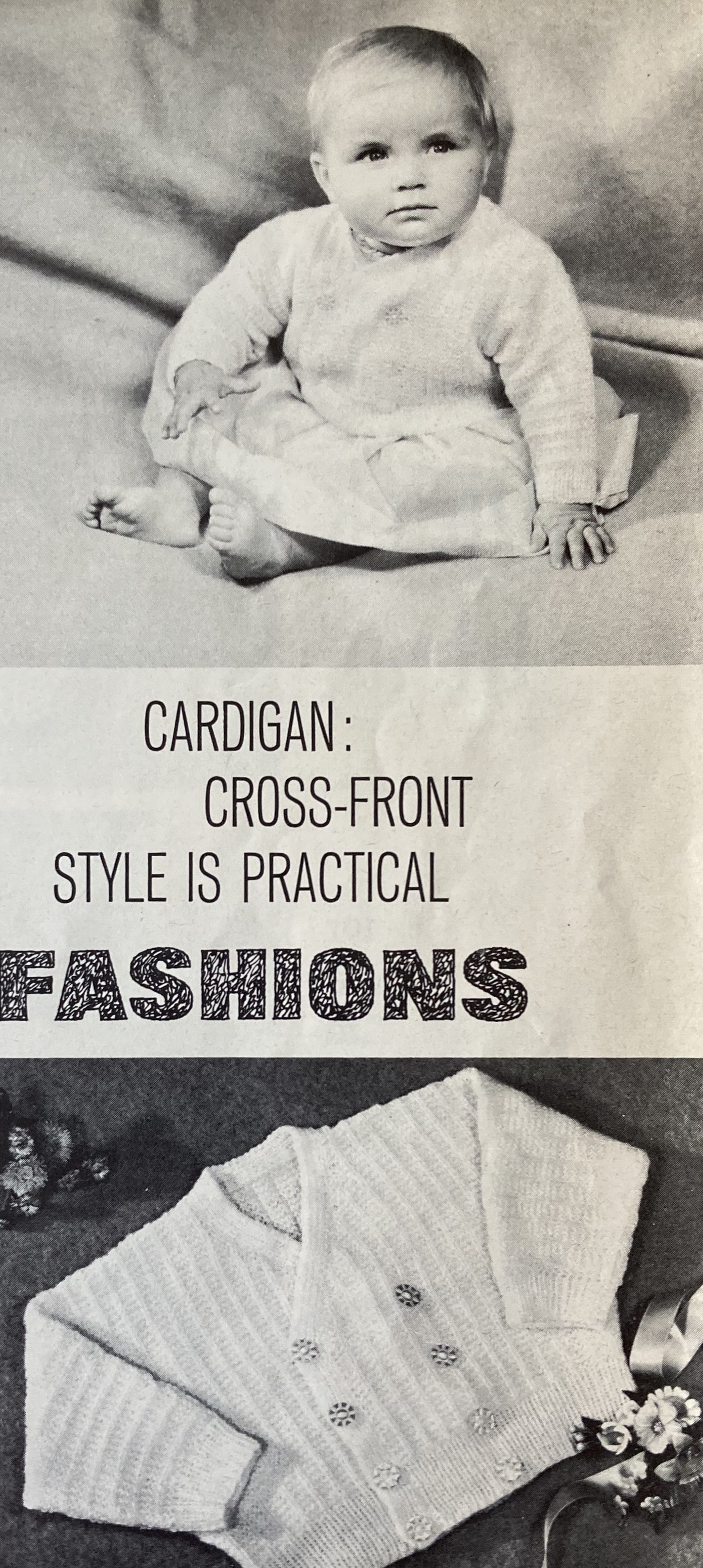
Babies get a wonderful pram set of footed leggings, coat and matching bonnet. It’s referred to in the index as a “four-piece” set, but I am at a loss to find a fourth piece anywhere in the instructions or photos. Maybe they planned to make matching mittens and then didn’t? Bigger children get a cute slipover with an argyle pattern on the front. The photo is very 1960s, with the girl freezing her legs off in a micro-mini skirt and the boy sporting a bow tie.


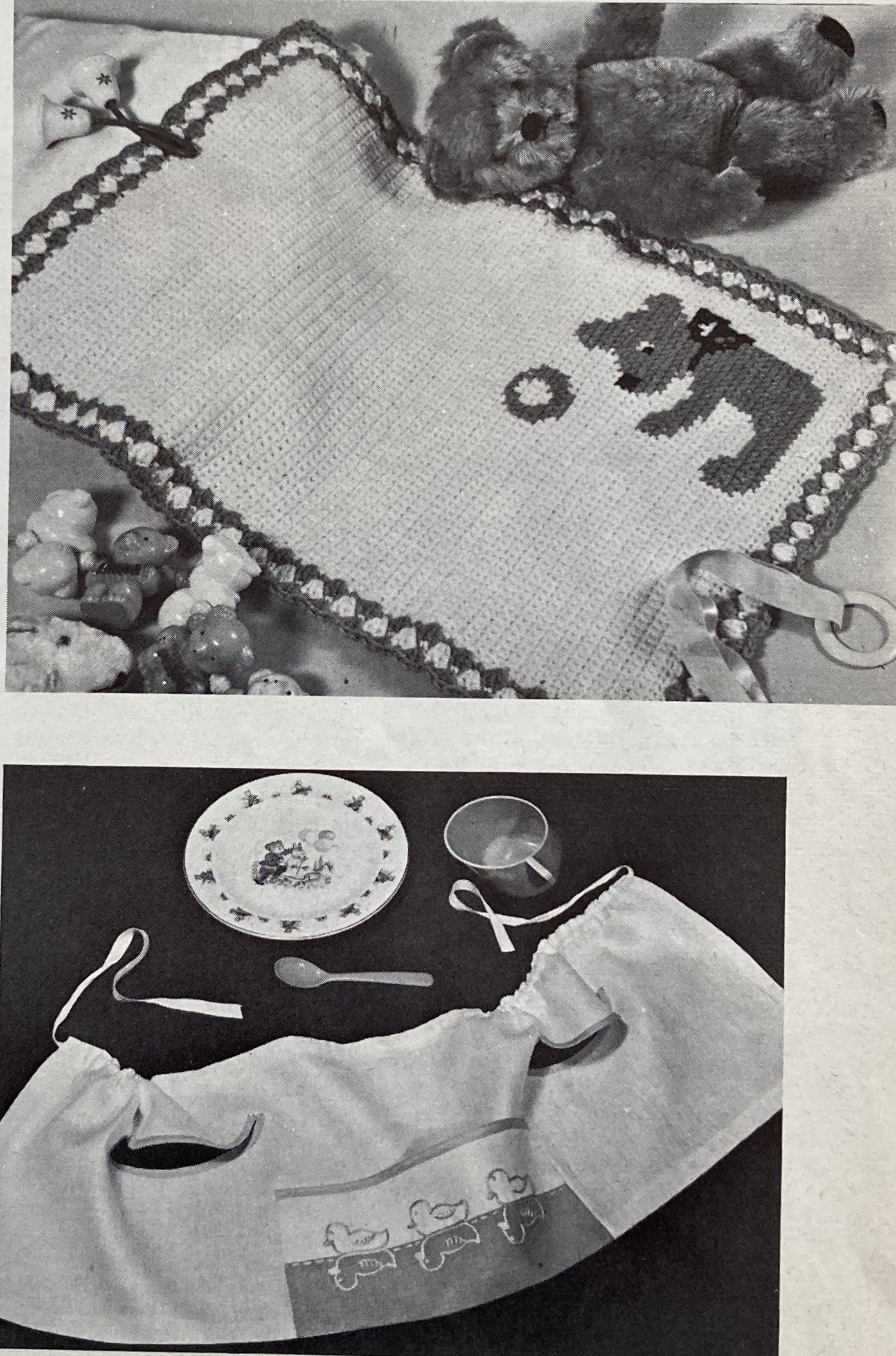
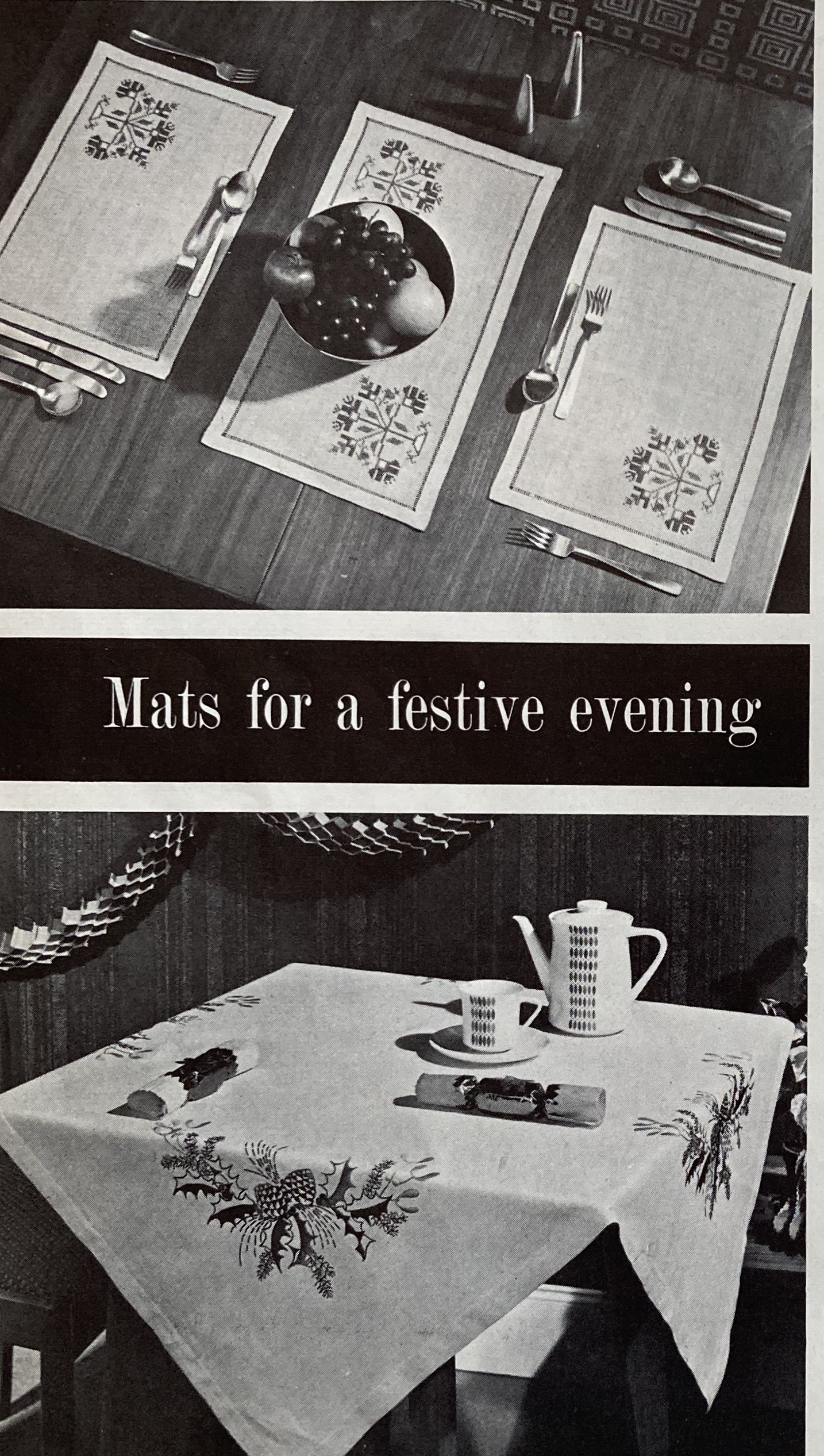
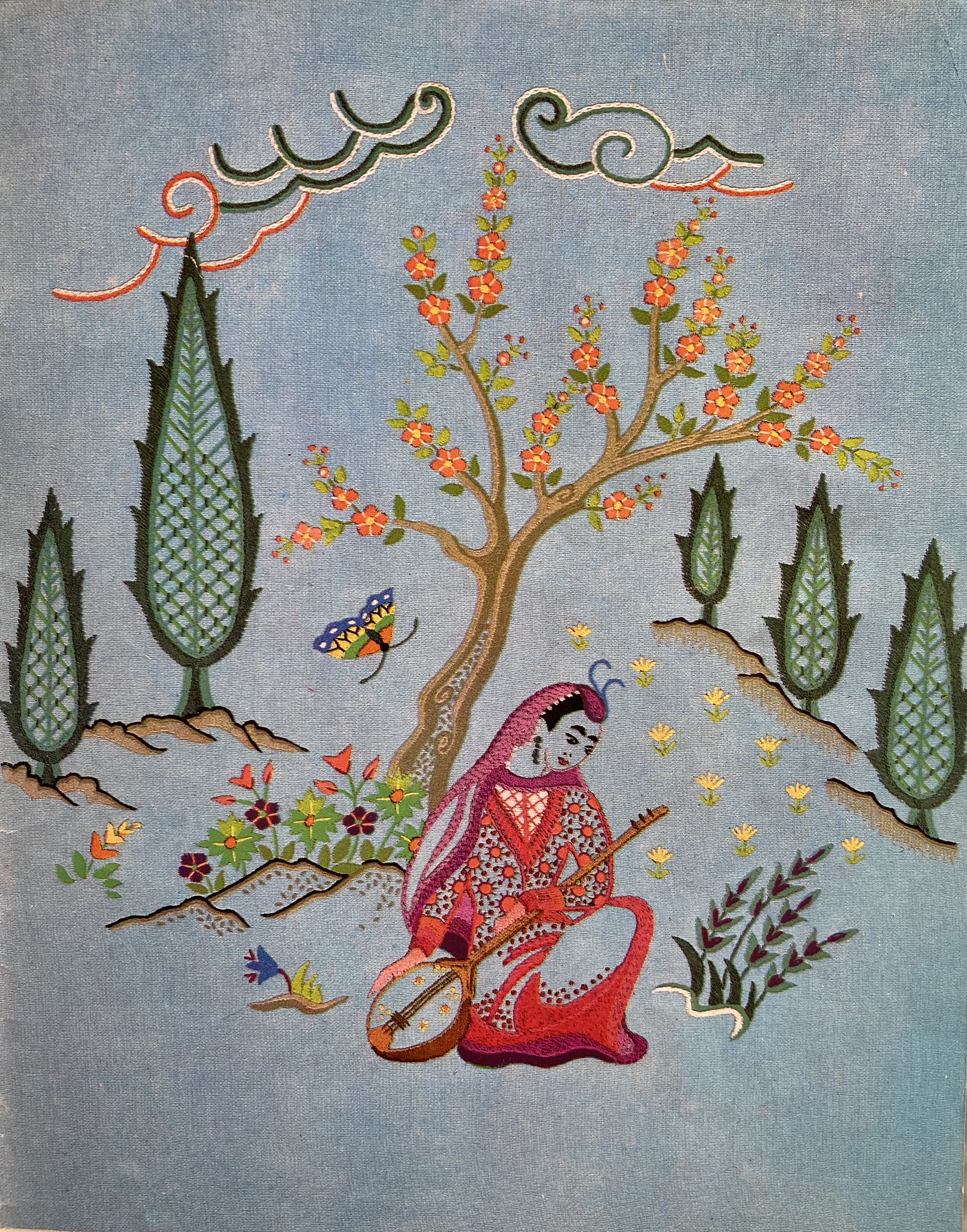
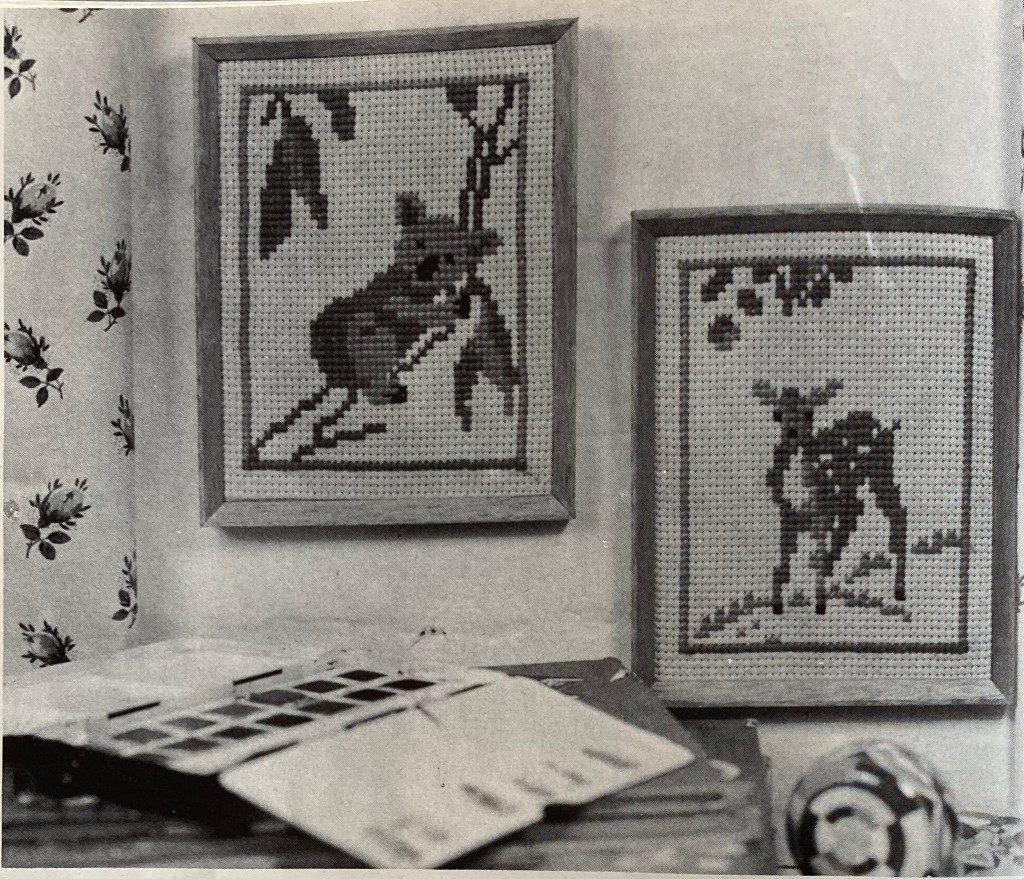
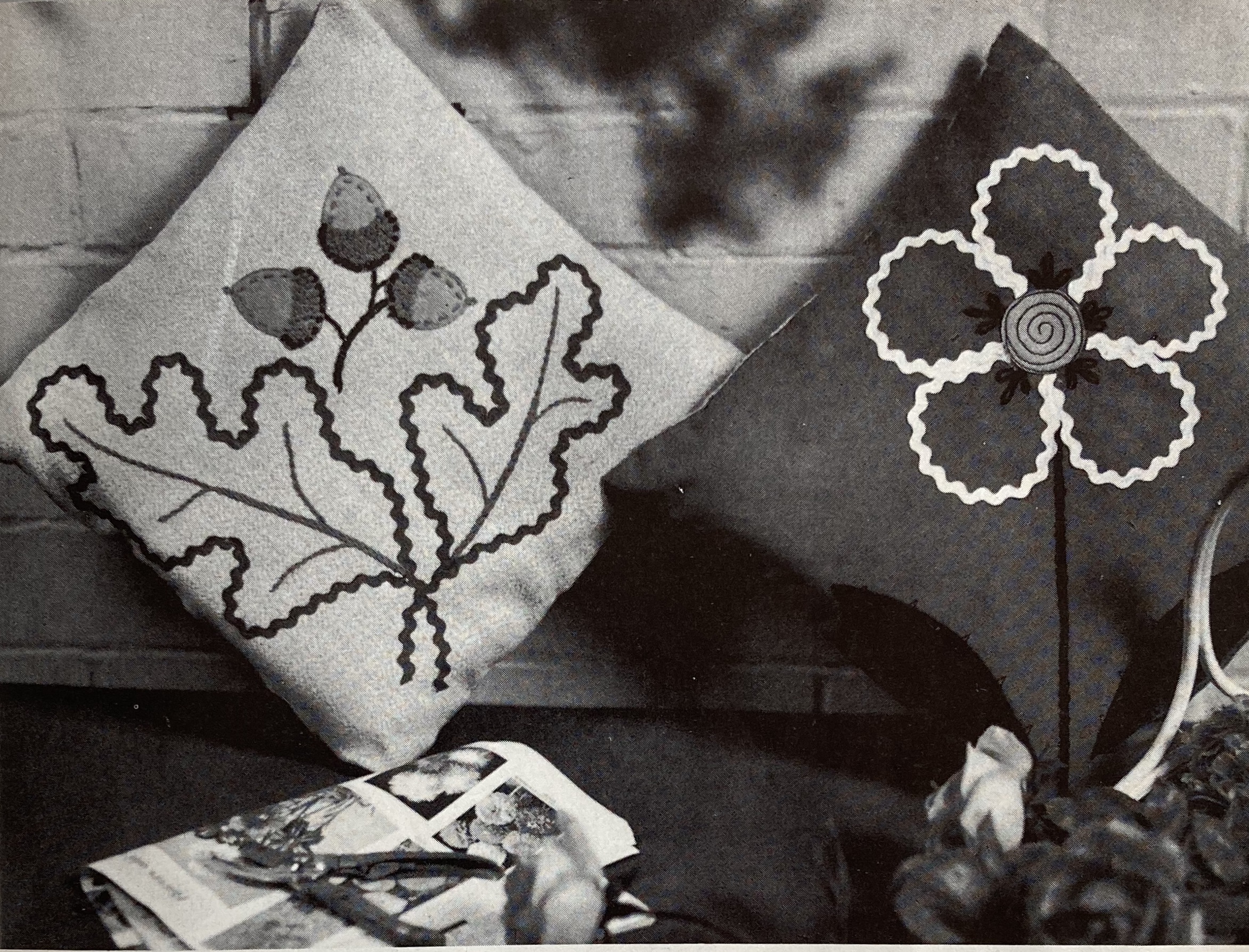
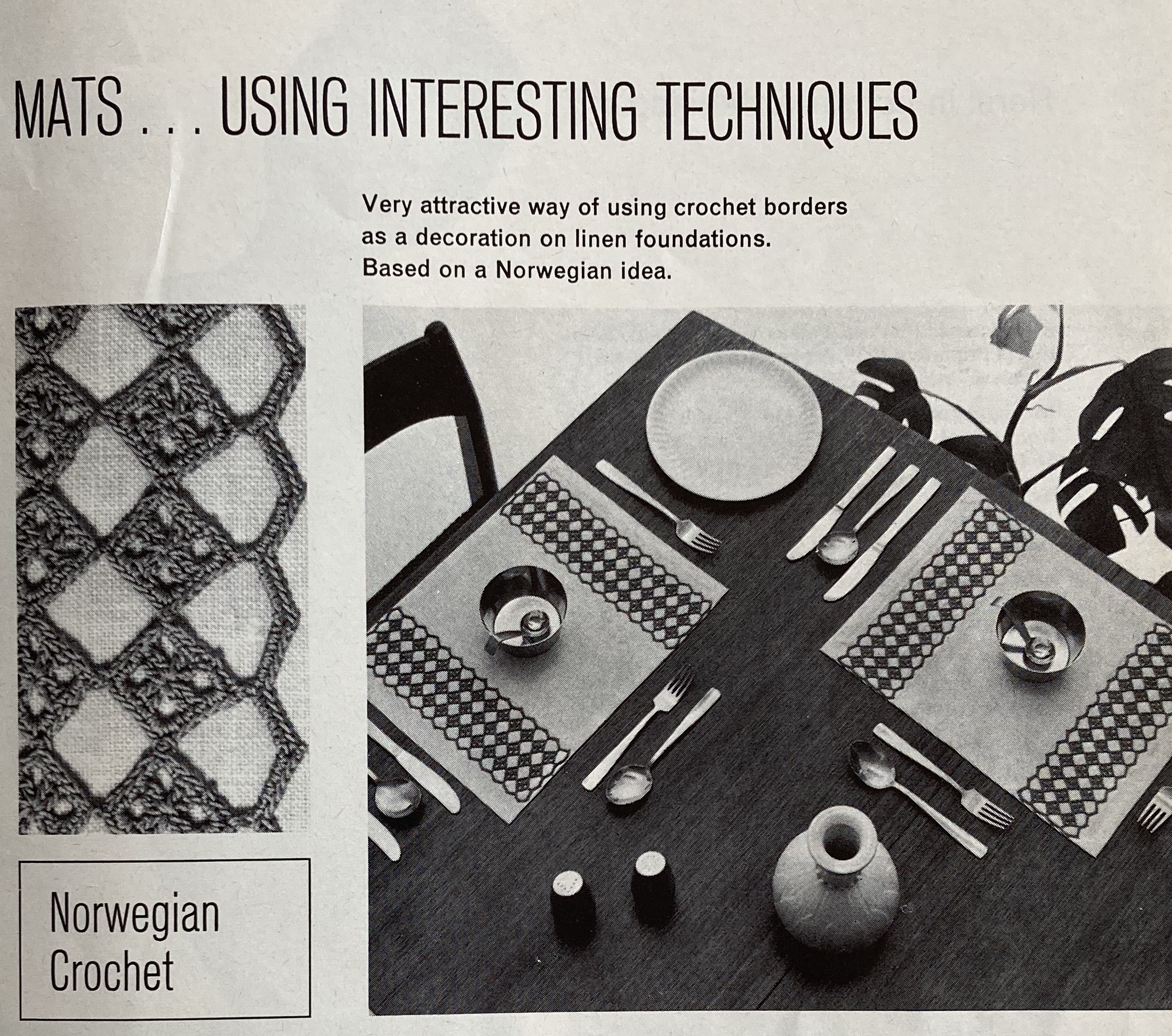
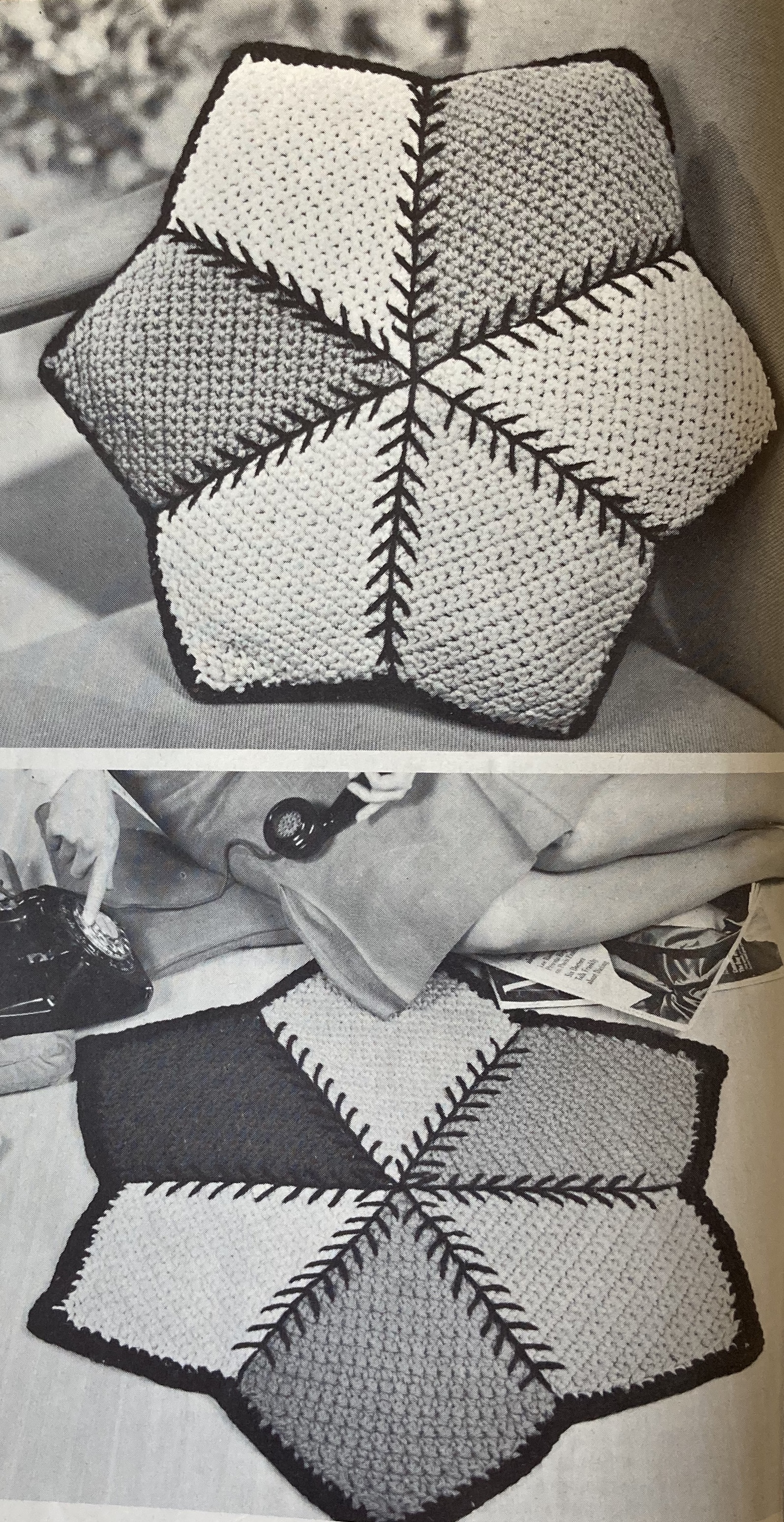
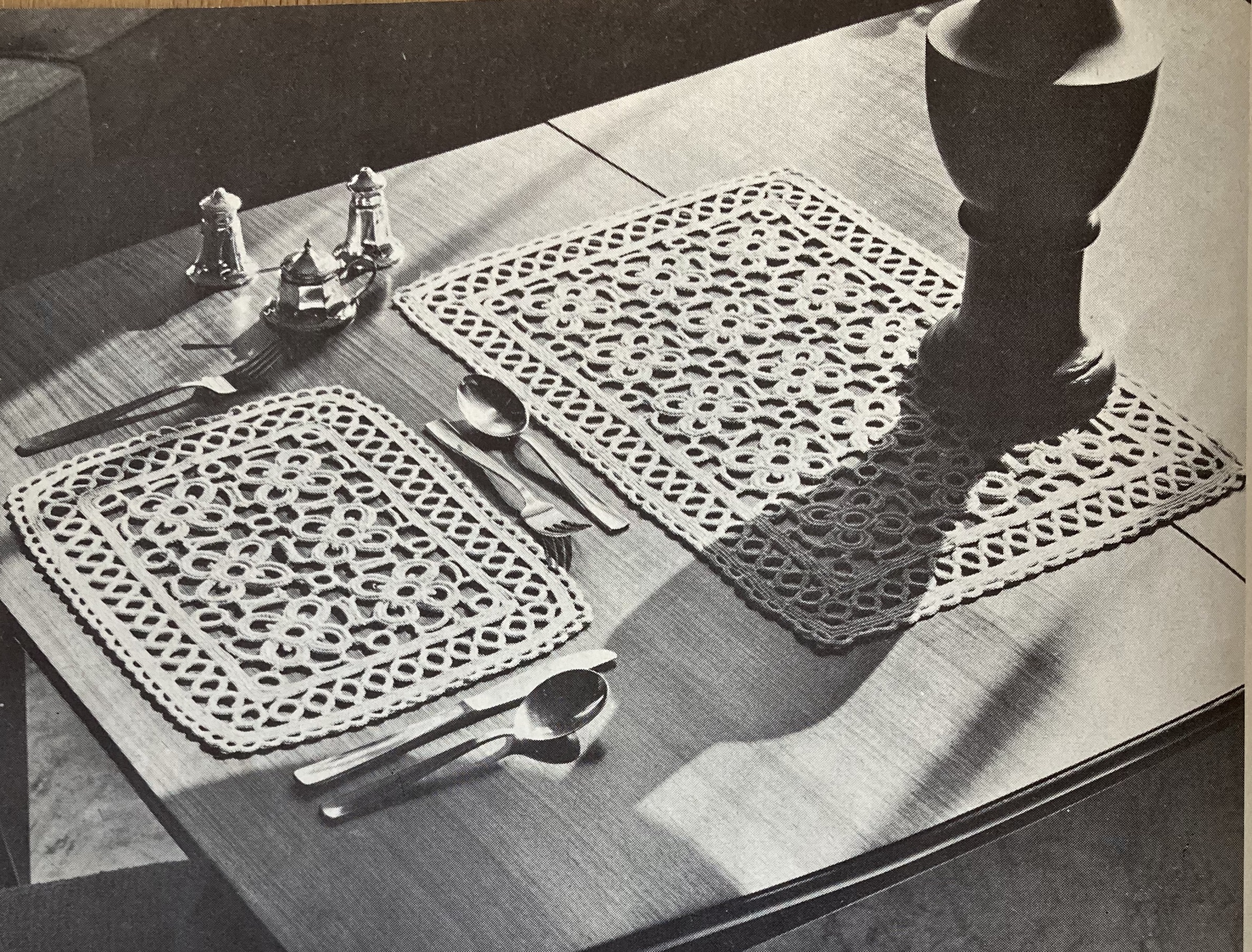
The homewares are fairly standard: a tea cosy, apron and tray set and a knitted kangaroo with baby for your bizarre/bazaar novelty needs (there’s also a reprint of a 1956 knitted ice-skating panda bear doll, if the kangaroo isn’t enough for you.) You can also cross-stitch a rug and pyjama case with square-headed dancing soldiers to haunt your small son’s dreams, or some flowered place mats, a cushion or wall hanging, or another cushion inspired from a traditional Greek star design.


In the “Readers Pages”, a new serial comic is starting: “Susan’s Sampler”, in which our heroine learns embroidery from a magic needle, and our back cover ad (for Patons Double Quick Knitting wool) shows yet another woman lovingly looking up at a man who has trapped her with her back to the wall in order to mansplain something to her. Feel free to give the photo some speech bubbles befitting a modern interpretation of this scenario!


That’s all for this issue. I’ll be making the child’s slipover and for once, I’m quite sure it will be done on time. Happy Spring!
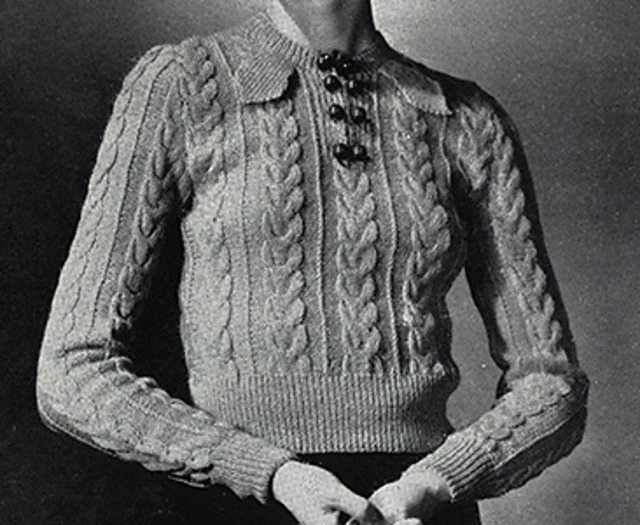

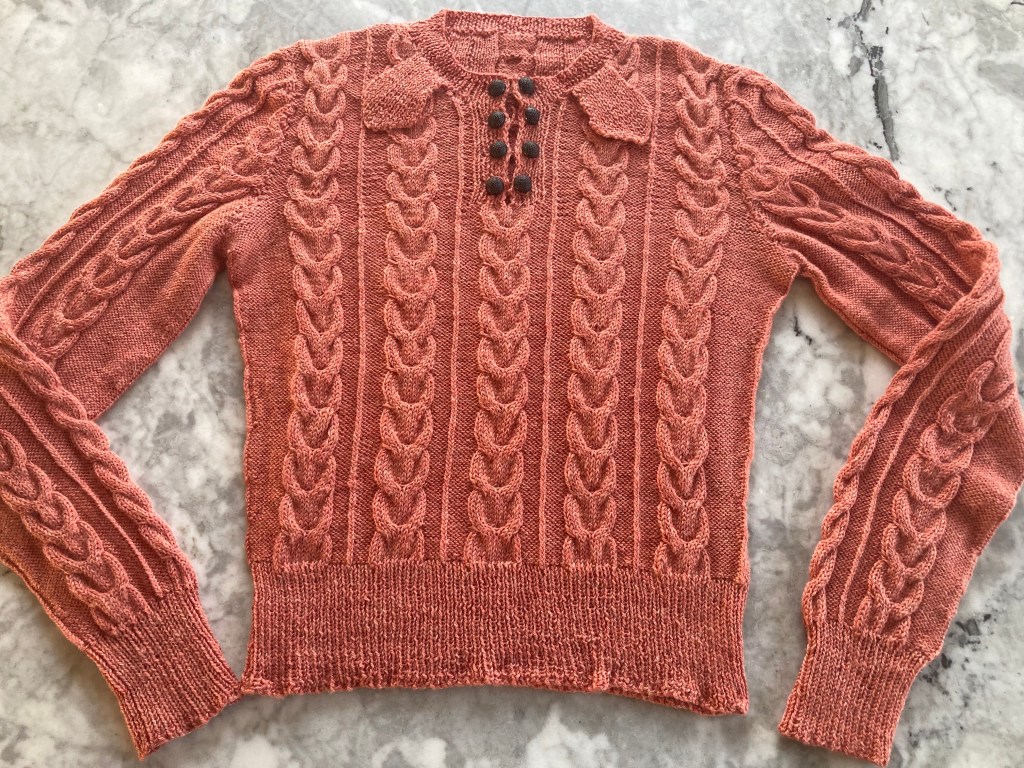
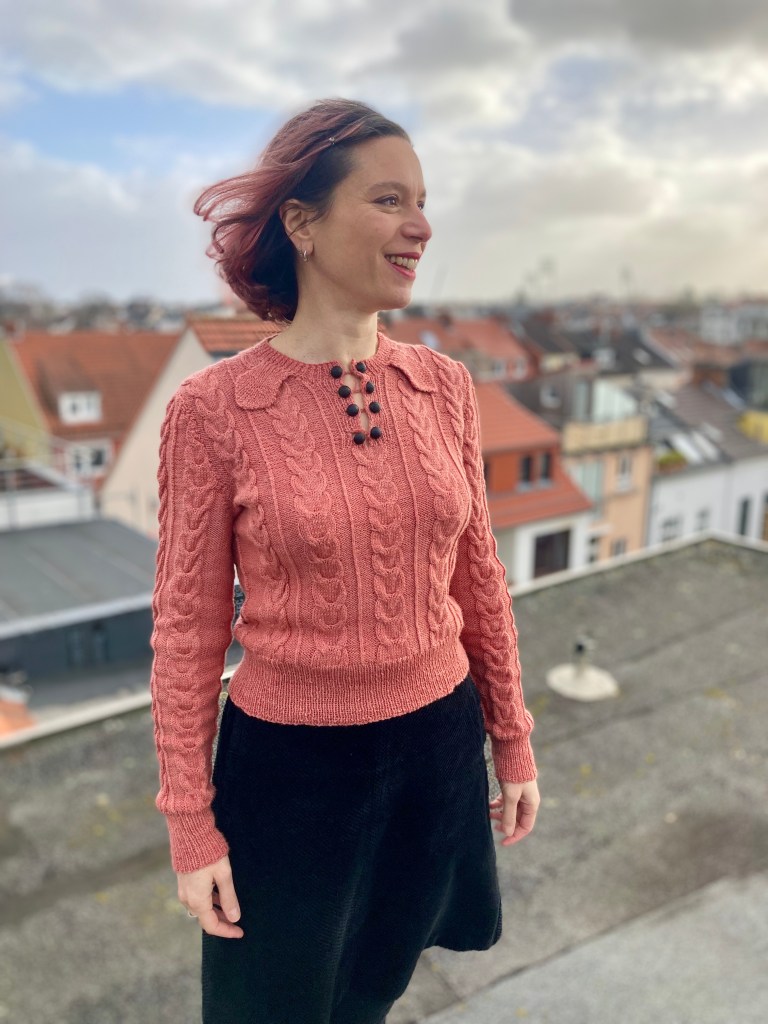
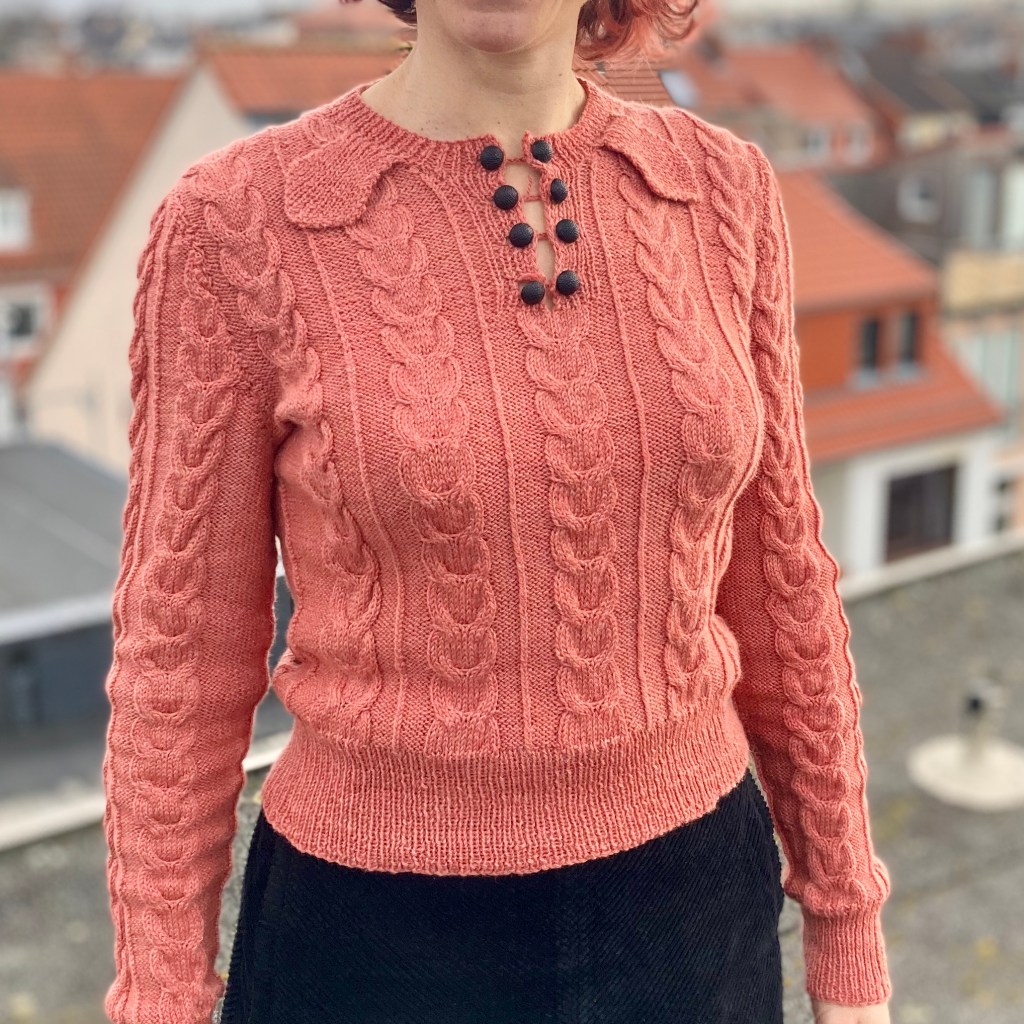




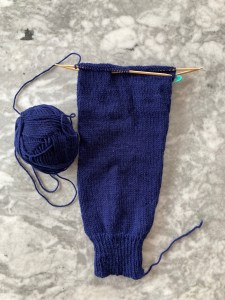
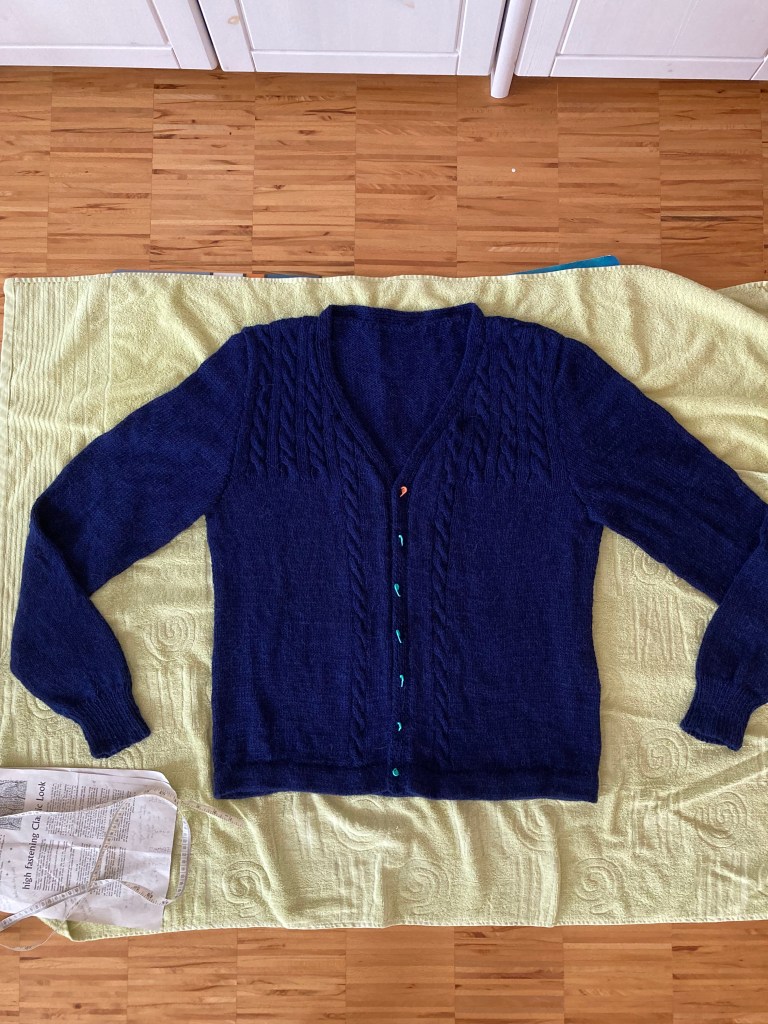
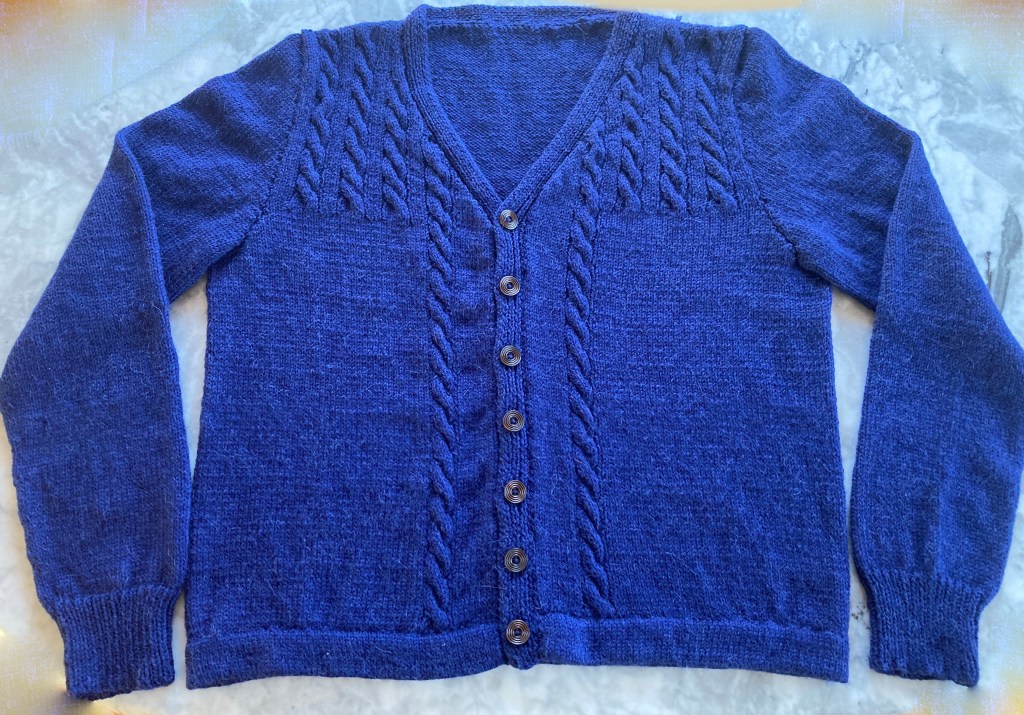







 I loved this twinset at first sight. I loved the short raglan sleeves on the pullover, the cable-and-mesh panel on the front and the very original mock-turtleneck-meets-peter-pan collar. It’s one of the reasons I started this whole long-term Stitchcraft blog project, so I’m thrilled to have it come to life.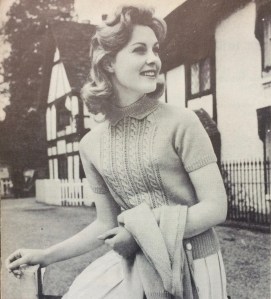
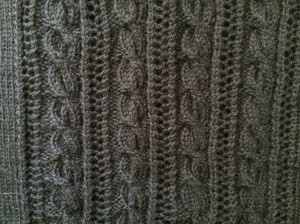 The cables have an interesting twist — literally. You put four stitches on the cable needle, knit the other four and then give the cable needle an extra 360 degree clockwise twist before knitting the stitches off of it. This gives them a cool extra definition. I forgot to do it once and it was almost unnoticeable — almost — but I didn’t want to rip back that far, so when everything was done I looped a little tiny thread around one of the cable stitches and just pulled it over more to the side and tacked it down by tying the thread ends in a knot on the wrong side. Look at the close-up picture above — can you tell which cable it was? I can’t on the finished garment. Good to know.


 The cardigan is somewhat more plain, as it doesn’t have the cables, but it makes such a lovely set with the pullover — not to mention it’s an excellent “everyday” cardigan to go with lots of other outfits. The sleeves came out a bit long — I was obviously over-compensating for my long arms and the fact that I always have to lengthen the arms a bit — but it looks just as good with the cuffs turned back, and I can turn them down for extra warmth under a coat and gloves. I hadn’t expected the raglan sleeves to have so much armhole depth. I thought about adding facing ribbon to the button bands, but it turned out to not be necessary, as the cardigan fits fine whether buttoned or unbuttoned. In short, I am thrilled with my new twin-set and it will surely get a lot of use this winter.


 The Stitchcraft Sixties