April 1964: Overview

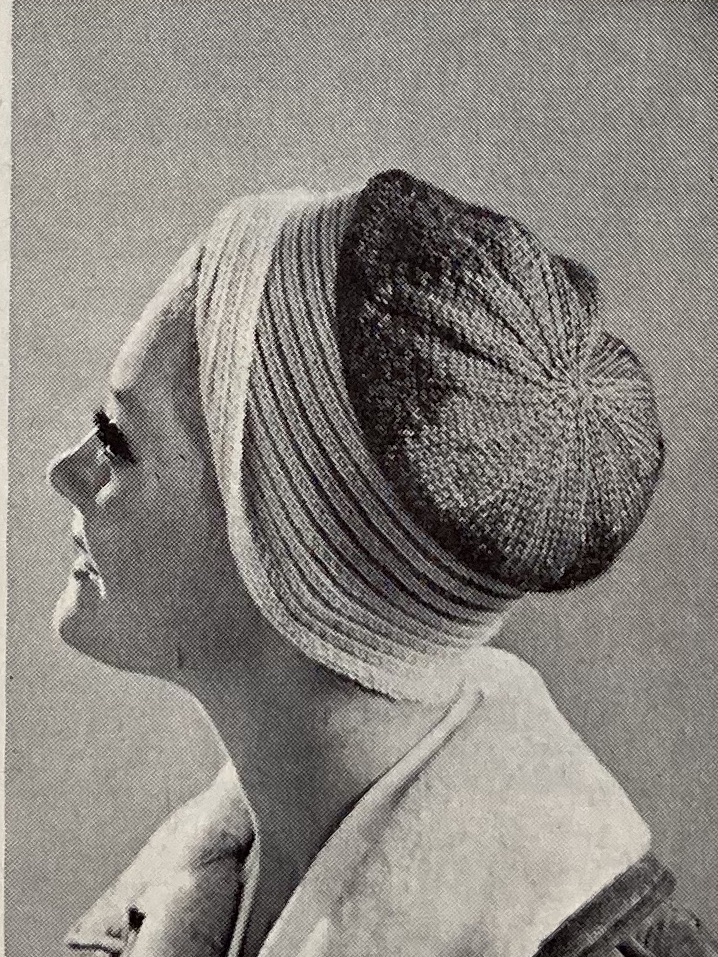
Like March April weather, Stitchcraft‘s „Spring Lineup“ from March April 1964 has a little bit of everything to offer. (No, that was not an April Fool’s joke — I have apparently lost track of time. Thank you Gretchen for noticing!!) There are warmer garments to wear on a spring ramble or for summer sailing, knitted cardigan jackets to take the place of outerwear, some slightly dressier separates for a going-out ensemble, and easy homewares that can be packed and taken along on your coming holiday.

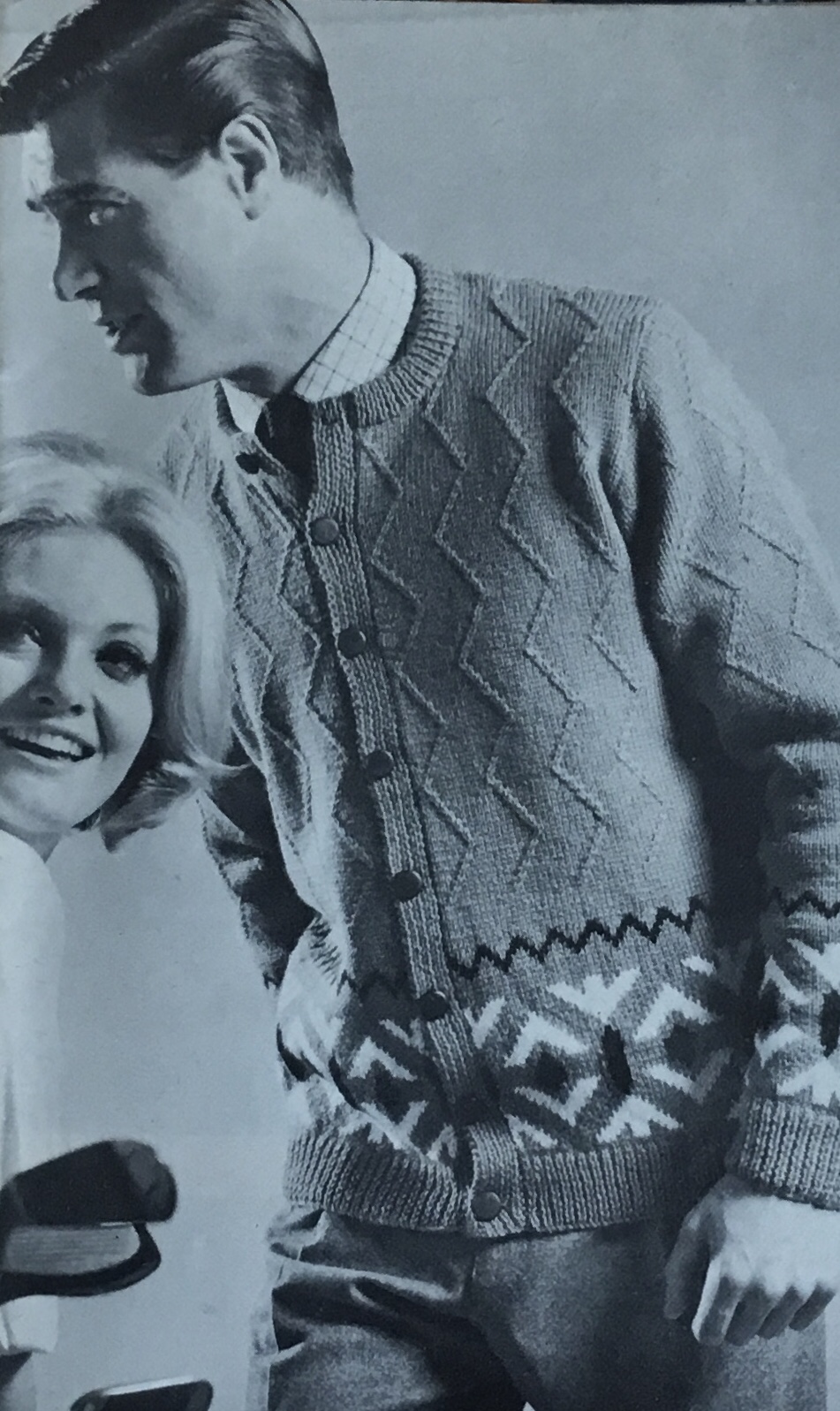
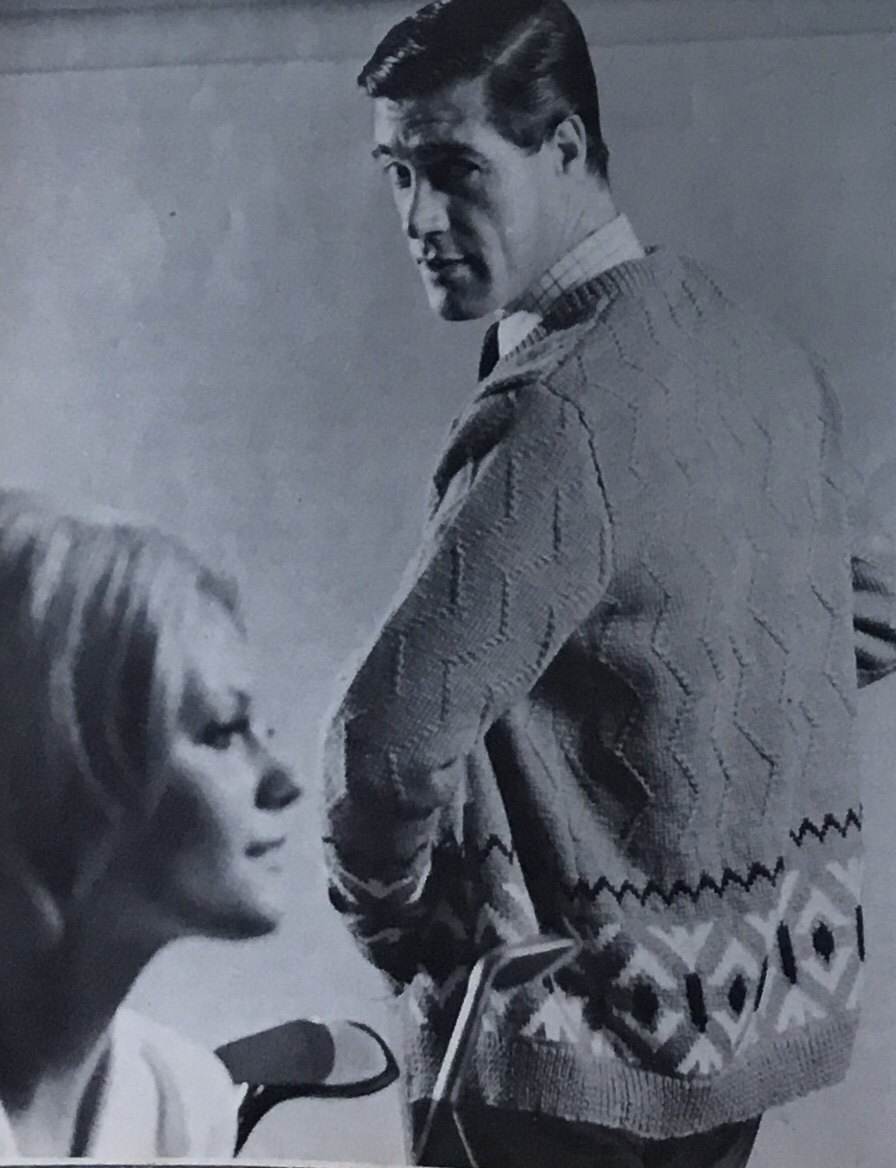
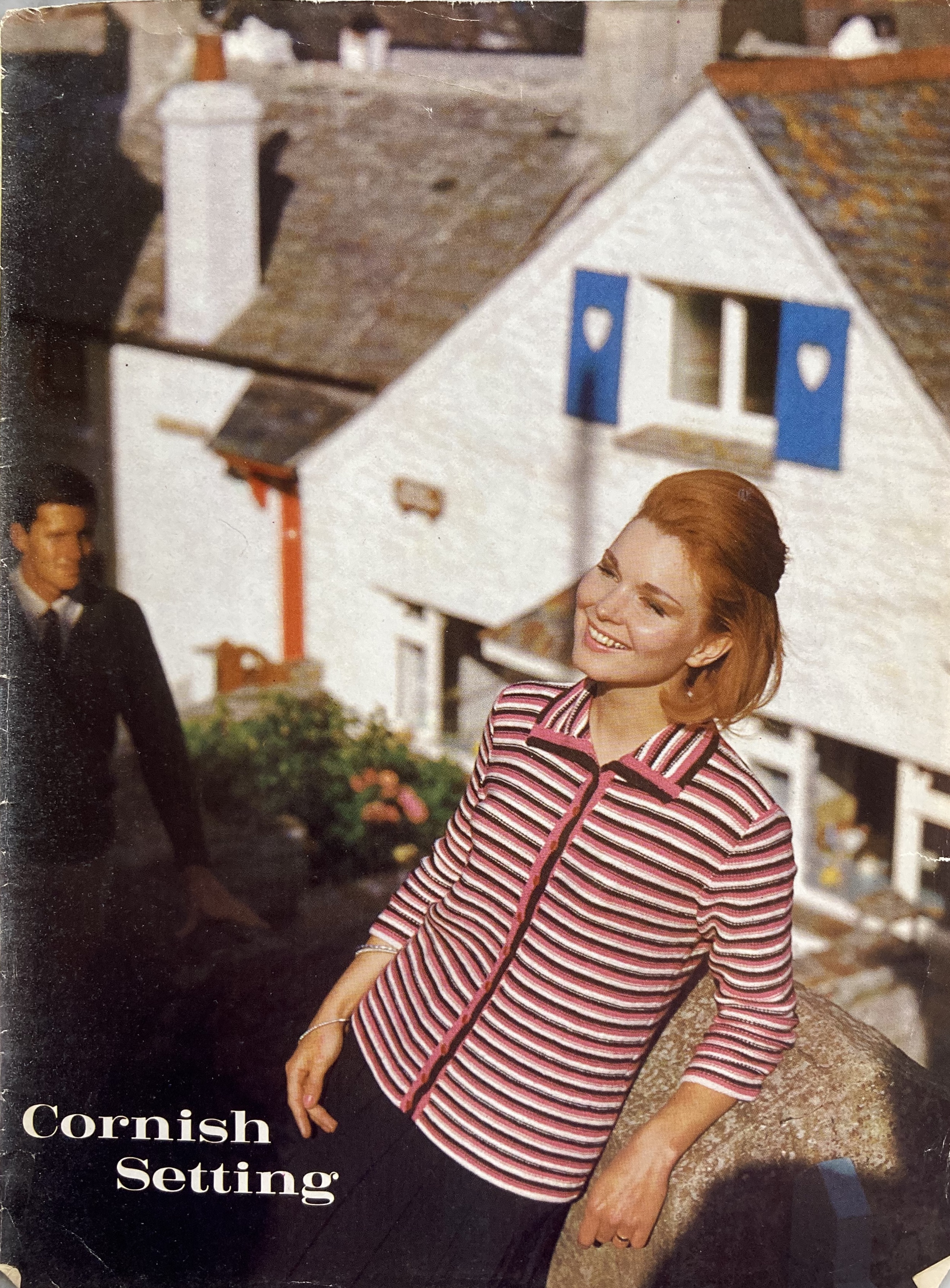
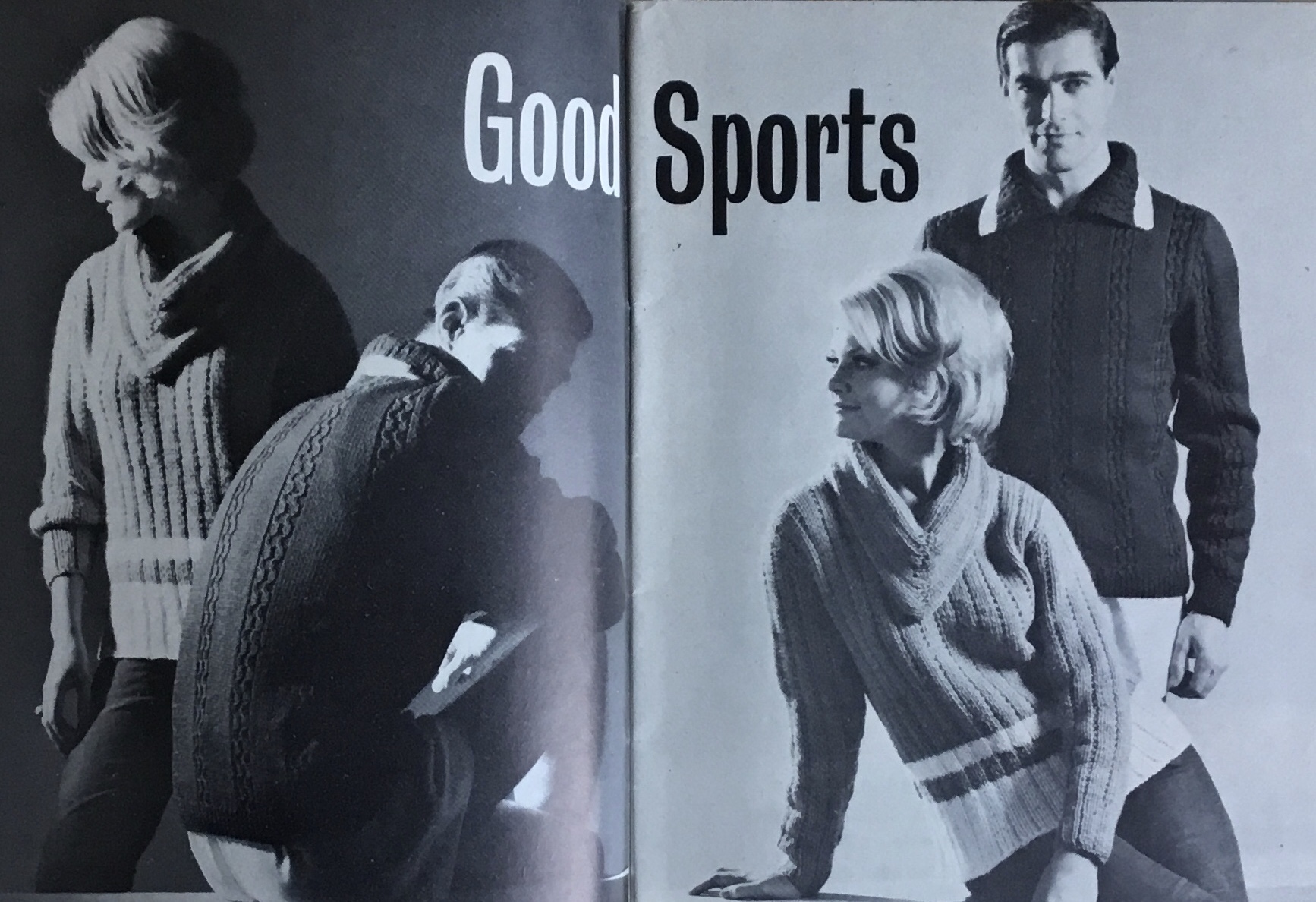
Our cover model is wearing a knitted jacket whose texture almost gives the appearance of being woven, thanks to a very firm three-colour slip-stitch pattern made by moving the working wool back and forth and so „wrapping“ the slipped stitches on each row. It‘s made in Totem Double Crepe and is intended to be worn as outerwear — as well as being „ideal for the car.“ Men get an outerwear-cardigan as well, this time with a combined texture and colour pattern and classic shape, and anyone can wear these casual, loose-fitting „sports sweaters“ while sailing or otherwise out in cooler maritime weather.
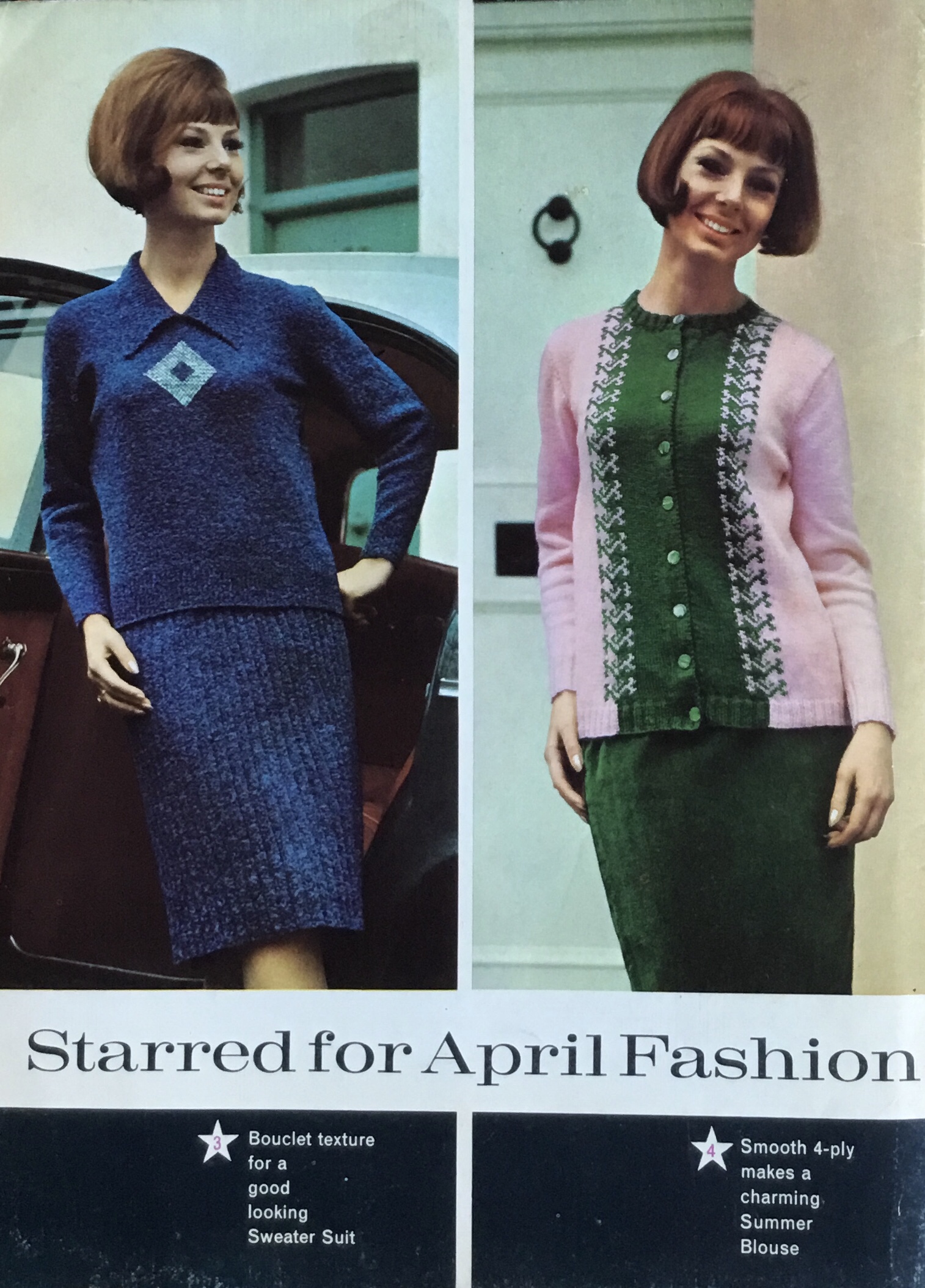
For more dressier occasions, there‘s a two-colour fancy cardigan in 4-ply fingering weight, or a jumper with matching pleated skirt in 4-ply bouclet. You can also make an „overblouse“ in double knitting to wear over a short-sleeved, lightweight jumper in a new twist on the twin-set theme. Zig-zag patterns, whether worked in colour or texture, and large collars continue to be popular.
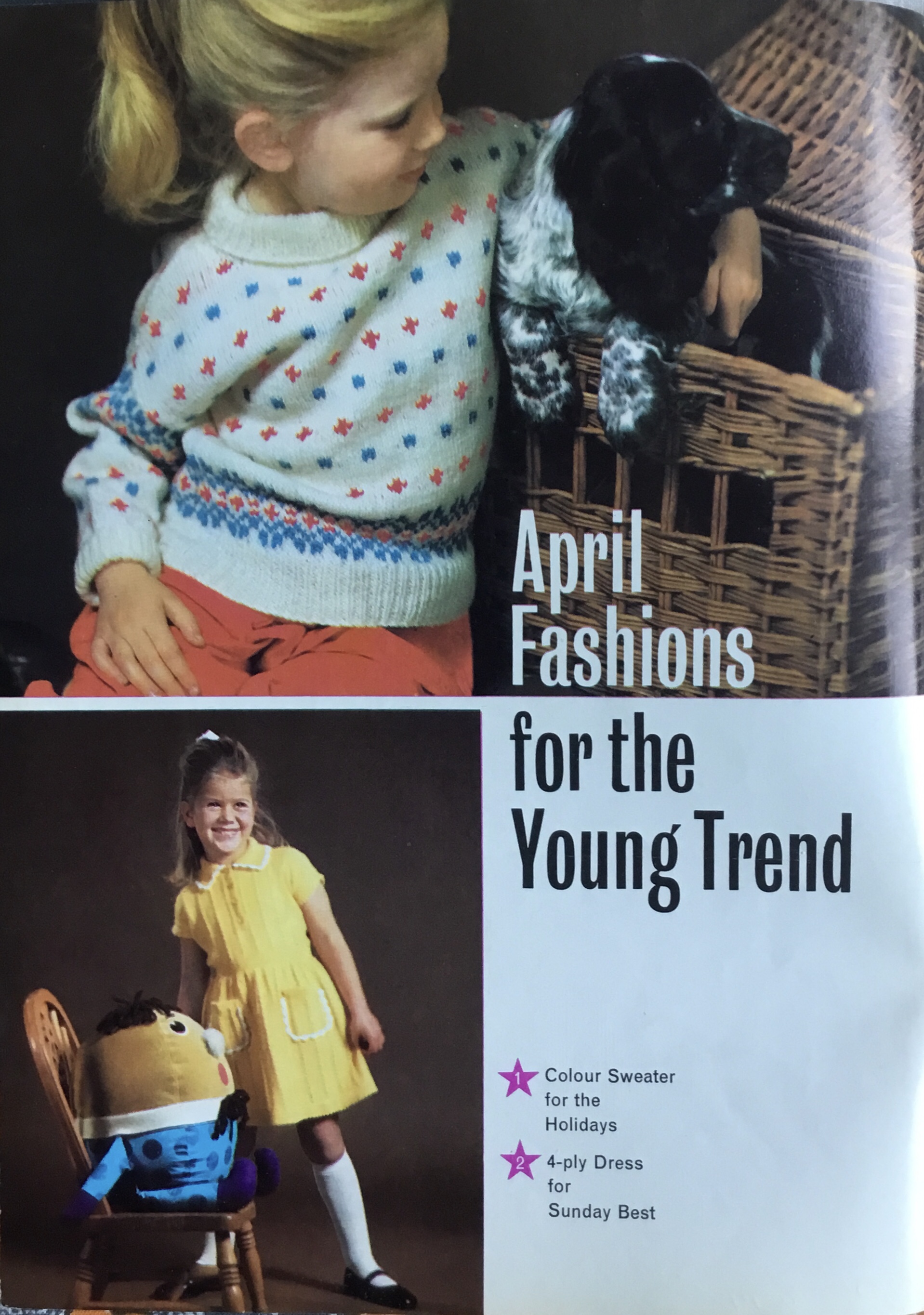
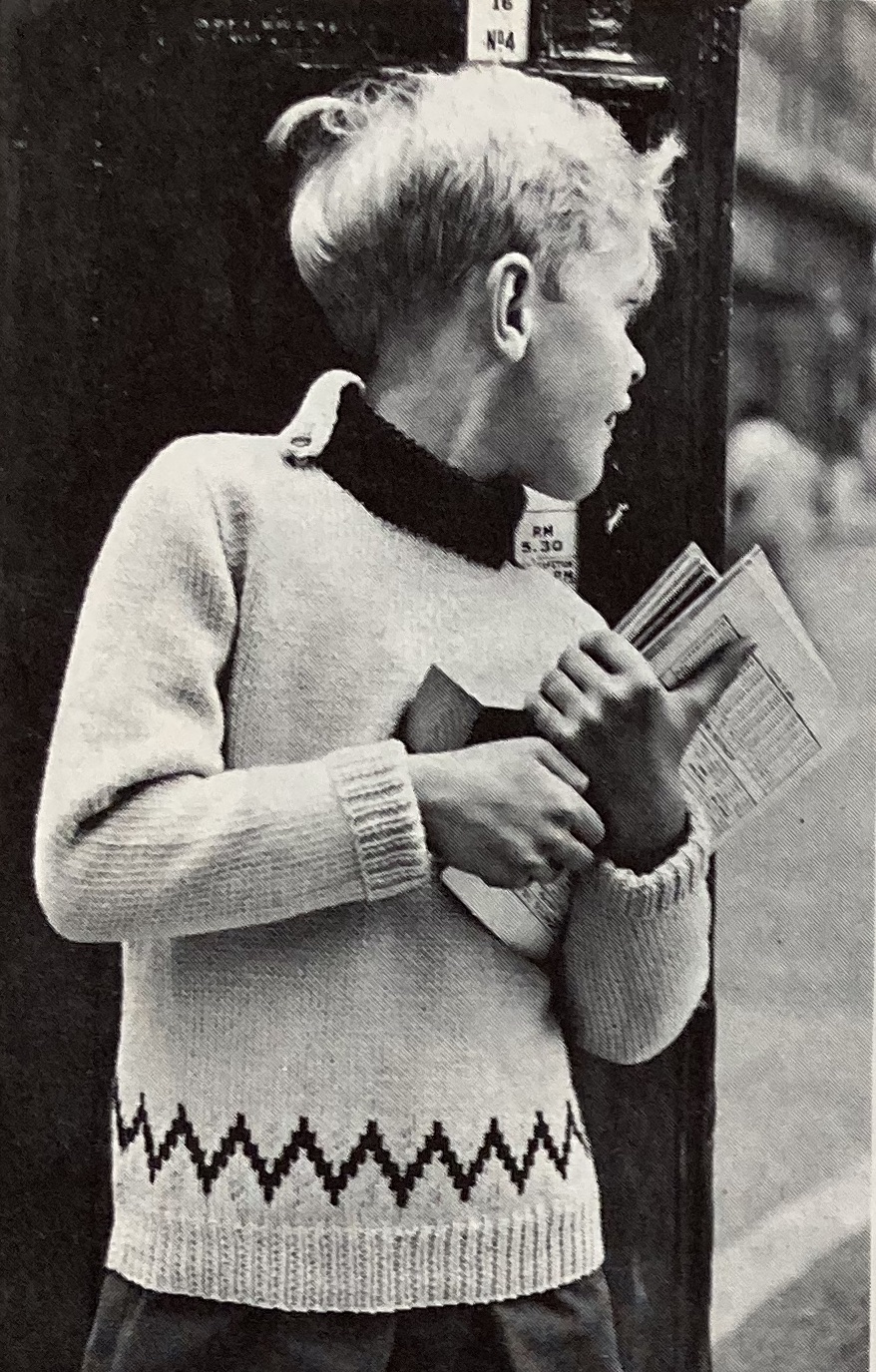
In the „Junior Knitting Fashions“ department, there‘s both a warm Scandinavian-style sweater in a typical snowflake pattern, or a wonderful „Sunday best“ dress.

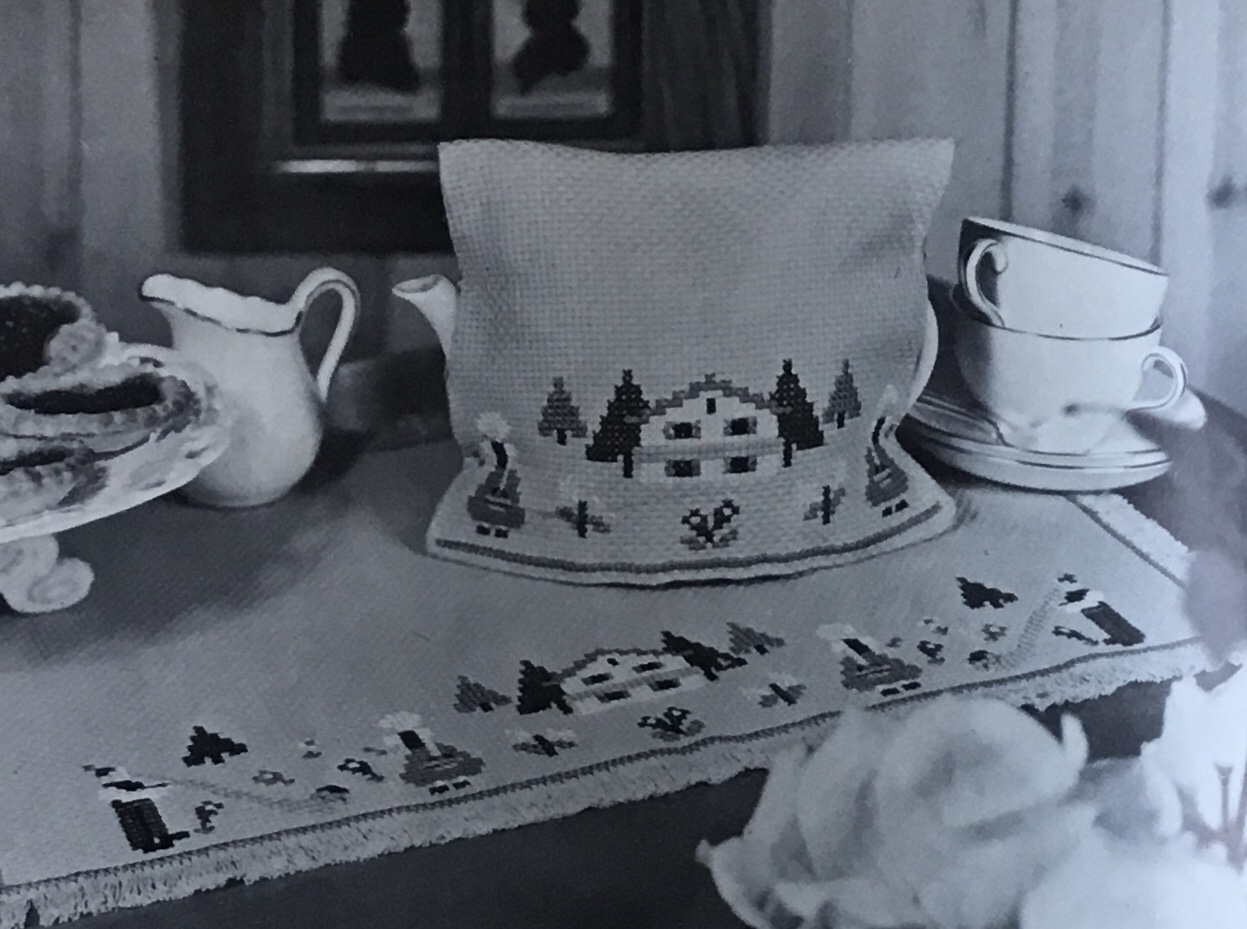
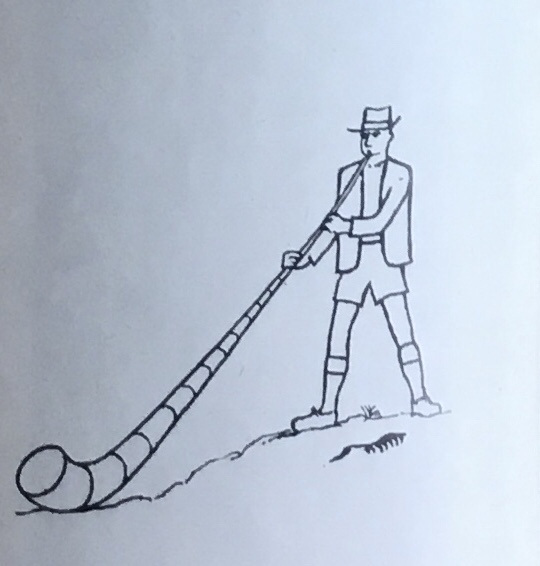
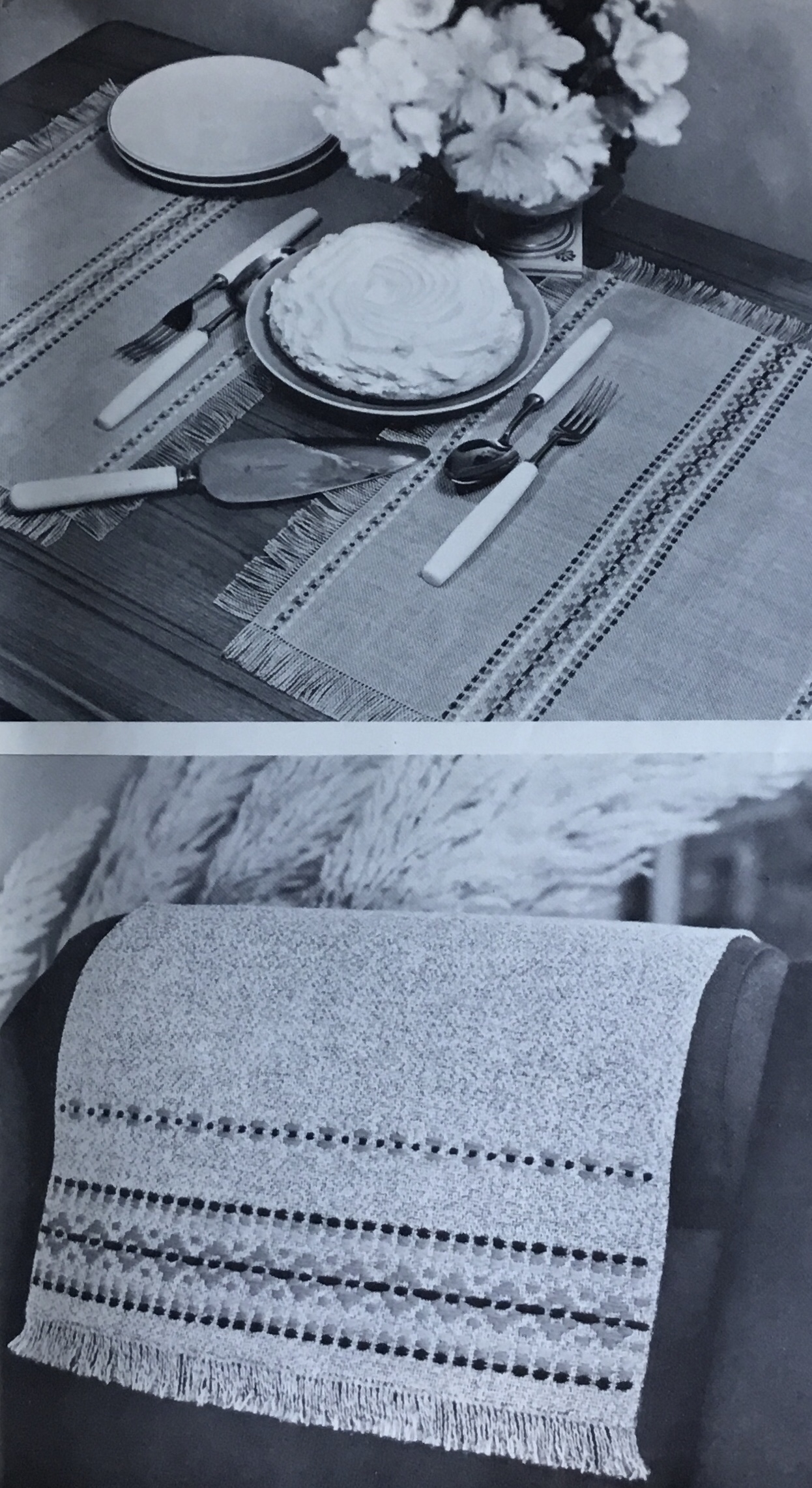
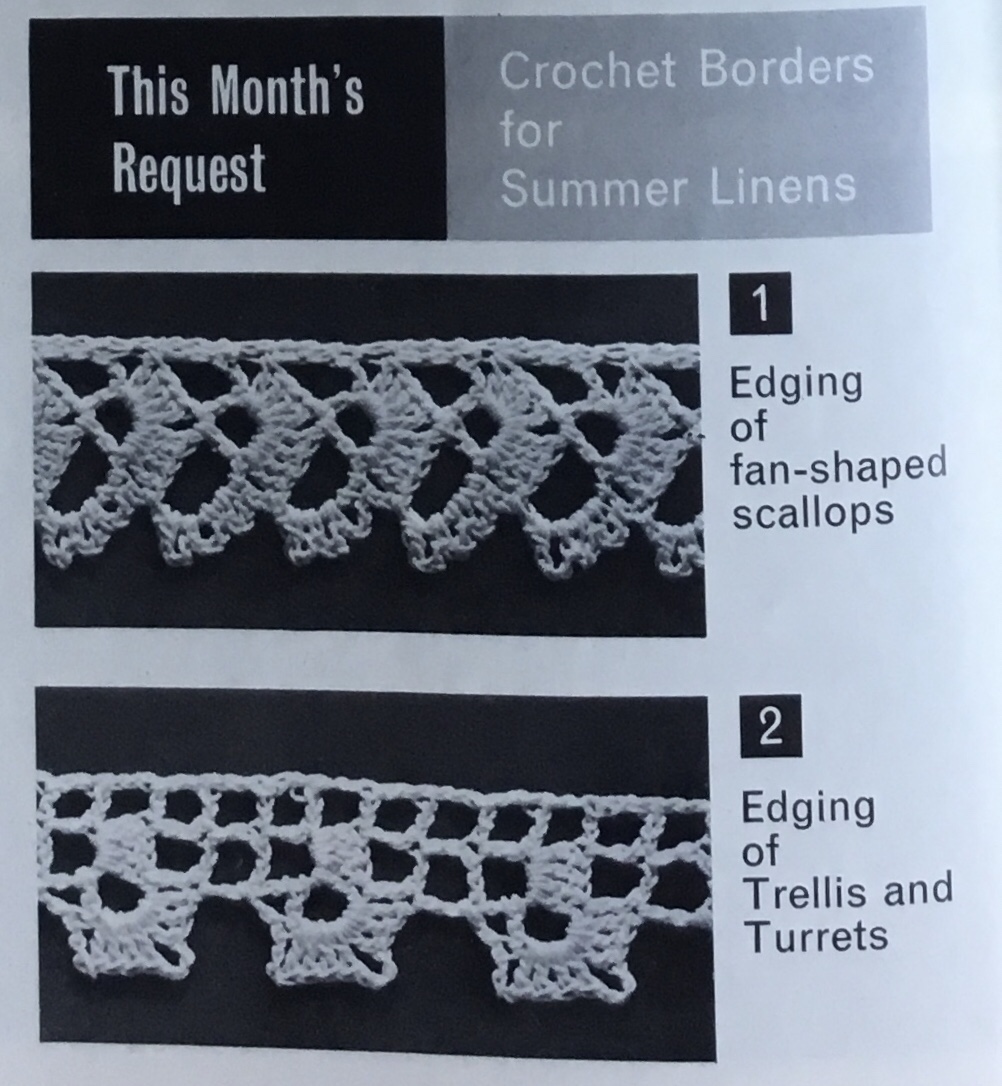
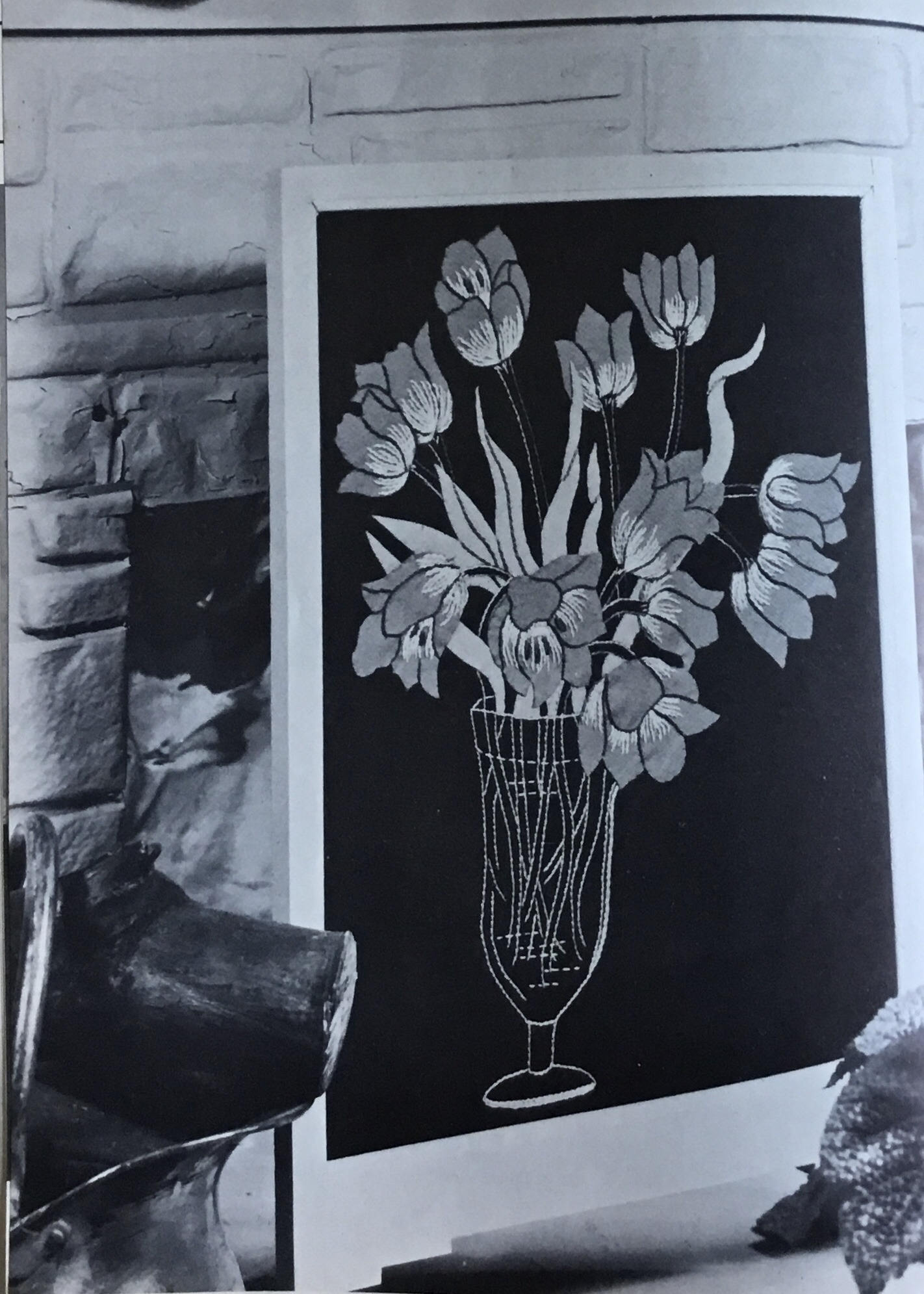
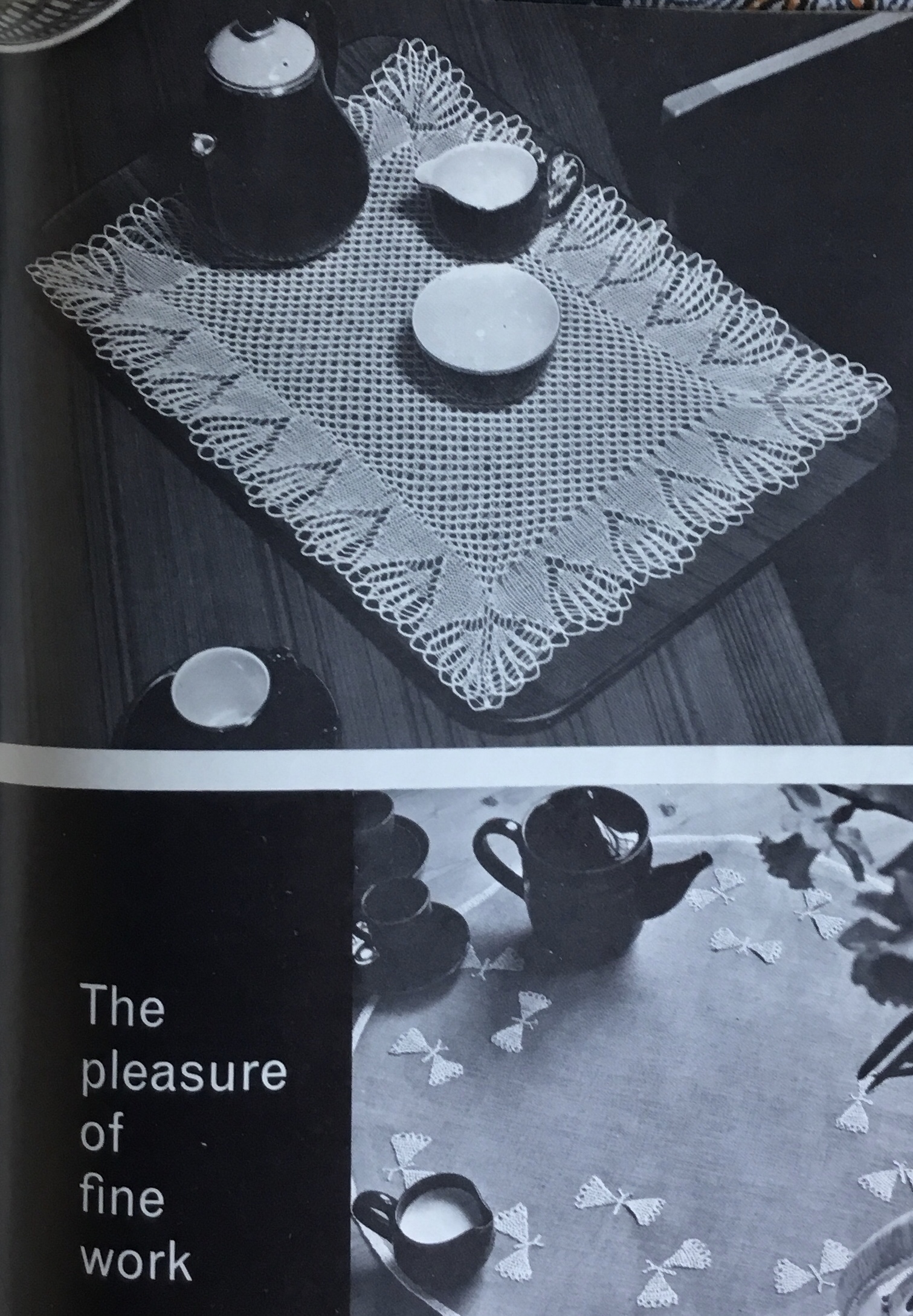
Homeware project ideas are plentiful, but not out of the ordinary. Embroidery fans can make a lovely apron with a traditional Romanian design, or cross-stitch a kitschy „Swiss border“ (nice illustration of an Alphorn player!), or work a counted darning pattern on placemats or a chair back. There‘s a fire screen with appliquéd tulips, a tapestry chair seat, a fancy knitted lace traycloth and a mat with appliquéd crocheted butterflies. You can also crochet lace borders to trim linens or whatever else you like. Truly, there is something for everyone!
I would love to make the child‘s dress, but don‘t necessarily know a child who wants one. Maybe I should size it up for myself? I would wear it! Otherwise, the embroidered apron is really nice. Maybe too nice to get splattered with food… but it would make a great knitting apron as well. We‘ll see!

P.S. Sorry for the lousy formatting. The WordPress editor does not work well on a tablet.

February 1964: Overview

Cover photo from Stitchcraft magazine, February 1964

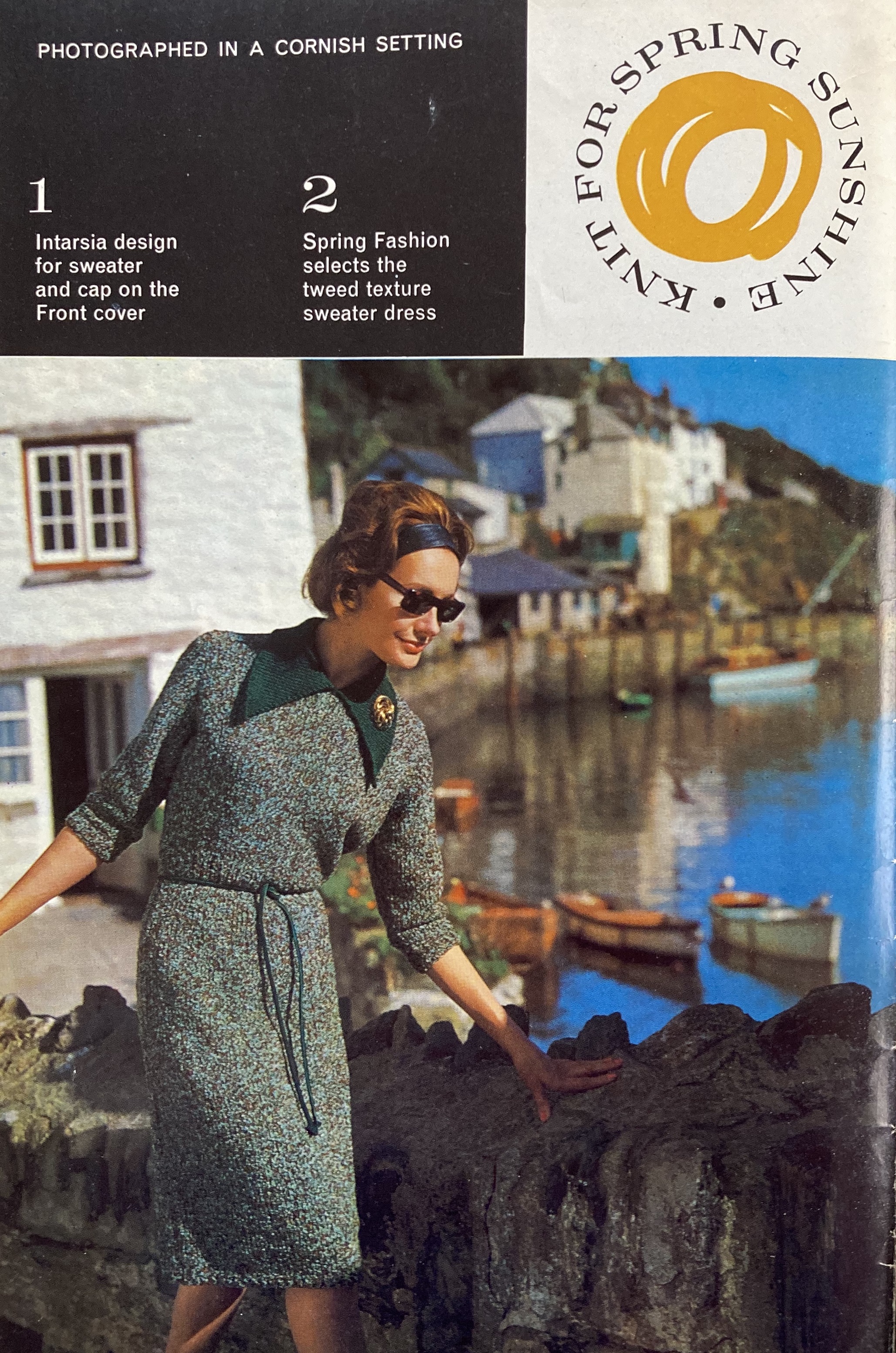
Knit for Spring Sunshine! It’s four o’clock in the afternoon here on February 1st, 2022, getting dark, raining sleet and there has not been a single minute of today where I was able to do anything without turning on the lights, so I am especially happy to dream of modelling beautiful handknits in sunny Polperro in Cornwall, where this issue was photographed.

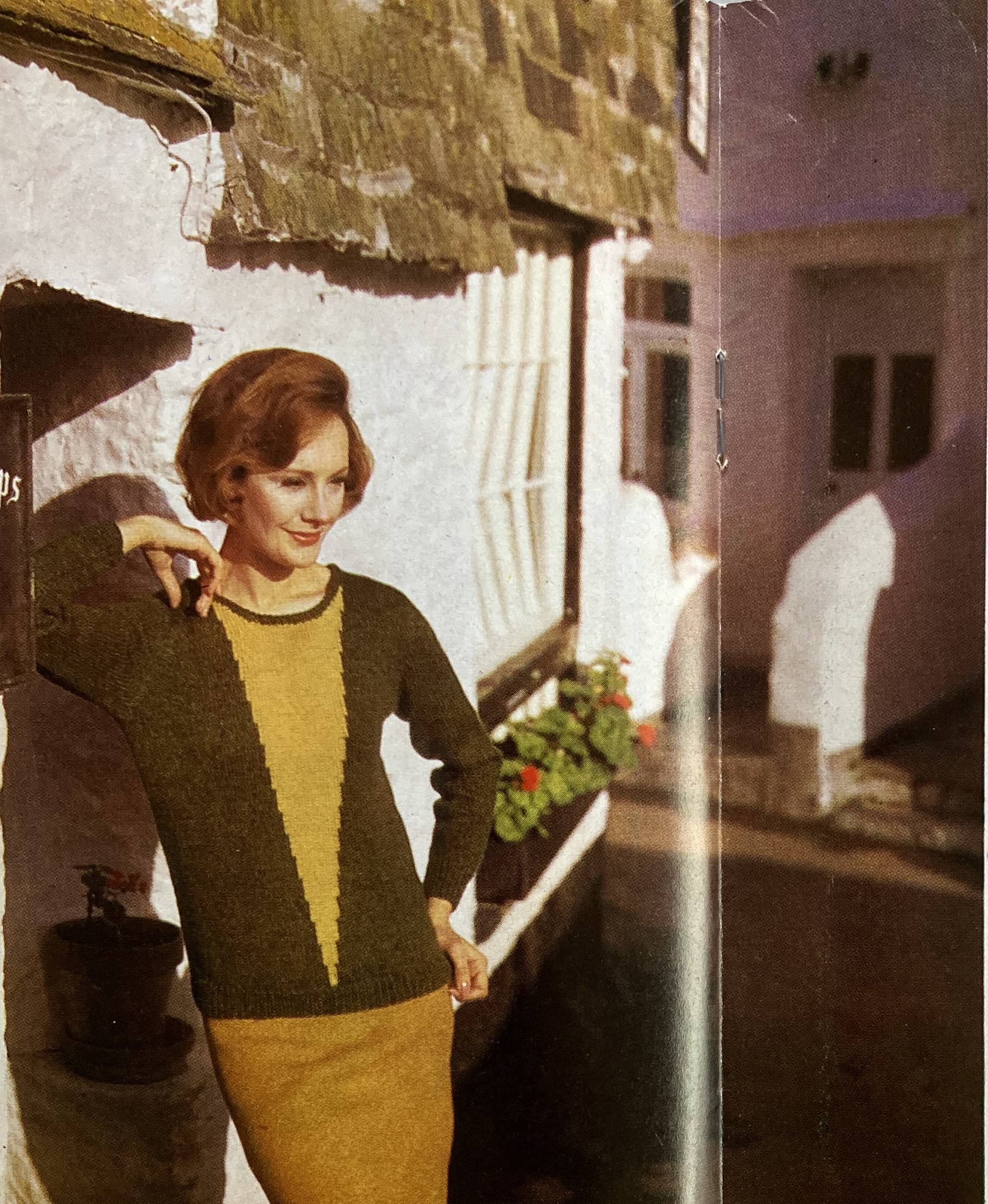
Colour variations are a big theme this month, be it tweedy new multicolour yarns, stripes or classic stranded colourwork and intarsia. Our cover model shows off the gradient look in a fun diamond-pattern sweater with a matching tie and cap. Both cap and sweater are knitted in intarsia technique with the different colours of wool wound onto bobbins, but strangely, I can’t see the diamond pattern on the cap at all. I guess it’s because the top part of the cap only uses the two darker colours, and they don’t show up well in a black and white photo (see close-up of the cap below).

Collars and ties make an appearance in the tweed dress from the inside front cover, made in multicolour “Glenora” wool, and there’s a sparkly tweed suit in purple Bracken Tweed wool as well. Men get a classic raglan V-neck, also in Glenora tweed. Deep jewel tones (I’m guessing the colour “Trossach” from the men’s pullover is a sort of deep fenny green, named after the Trossachs area in the Scottish Highlands) are in fashion as well as gold, featured in two pullovers on the inside pages. A loose, casual fit with no shaping remains the preferred silhouette (or lack thereof).

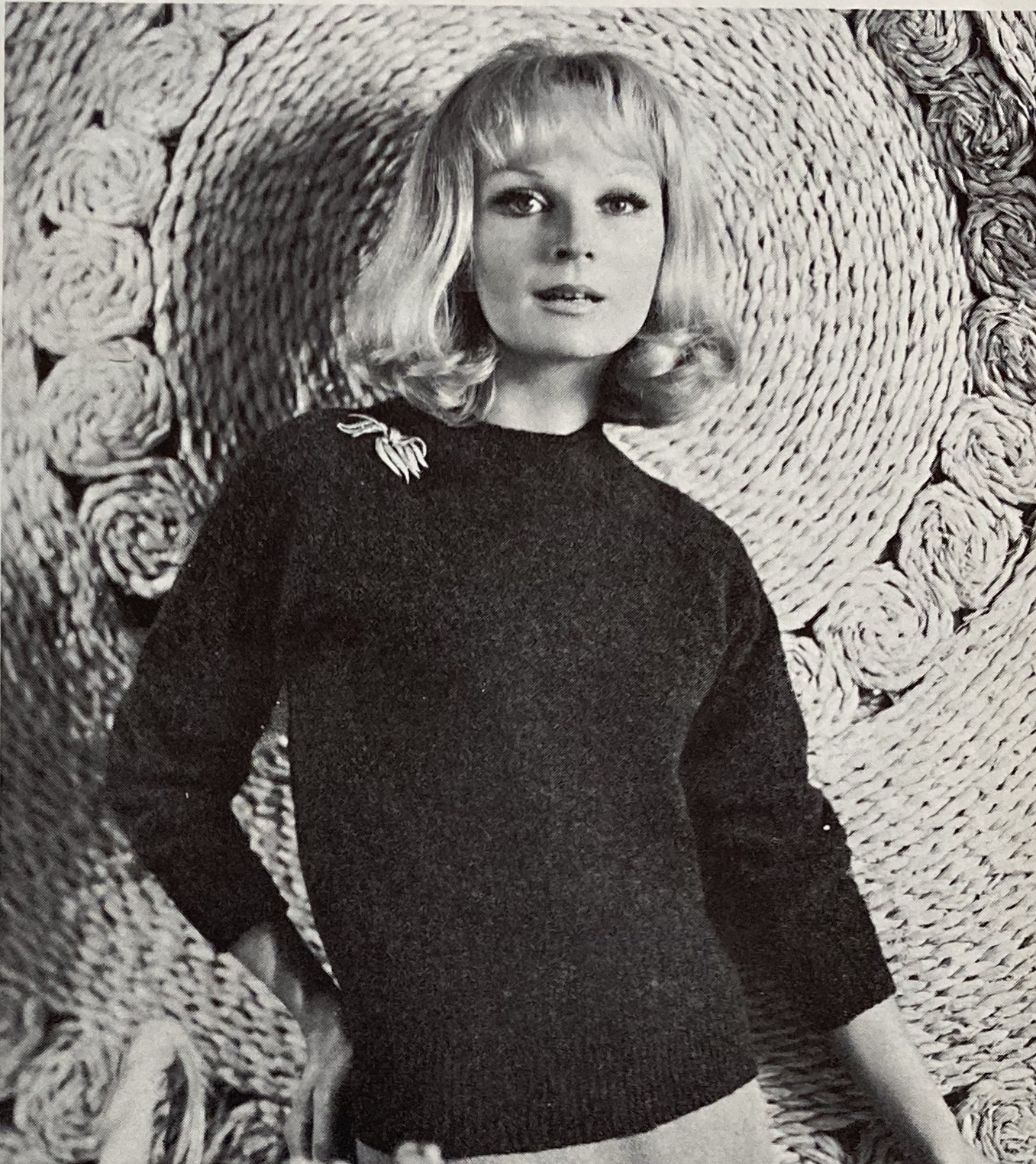
For contrast, there’s a classic, lightweight jumper in 4-ply wool bouclet. The jumper style would be right at home in other decades, but the photo style is as 60s as you will ever find, with an extreme close-up of a round braided place mat used as a backdrop. I’m almost waiting for it to start swirling! Finishing off the adult garments is a cheerful striped cardigan in 4-ply Nylox (wool/nylon blend).

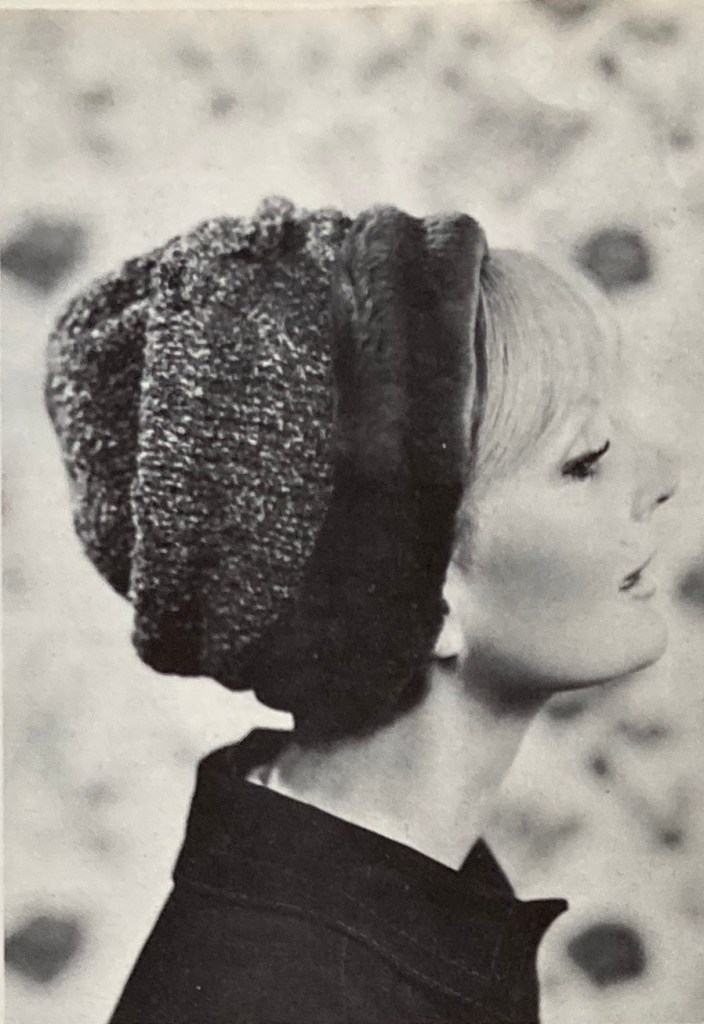
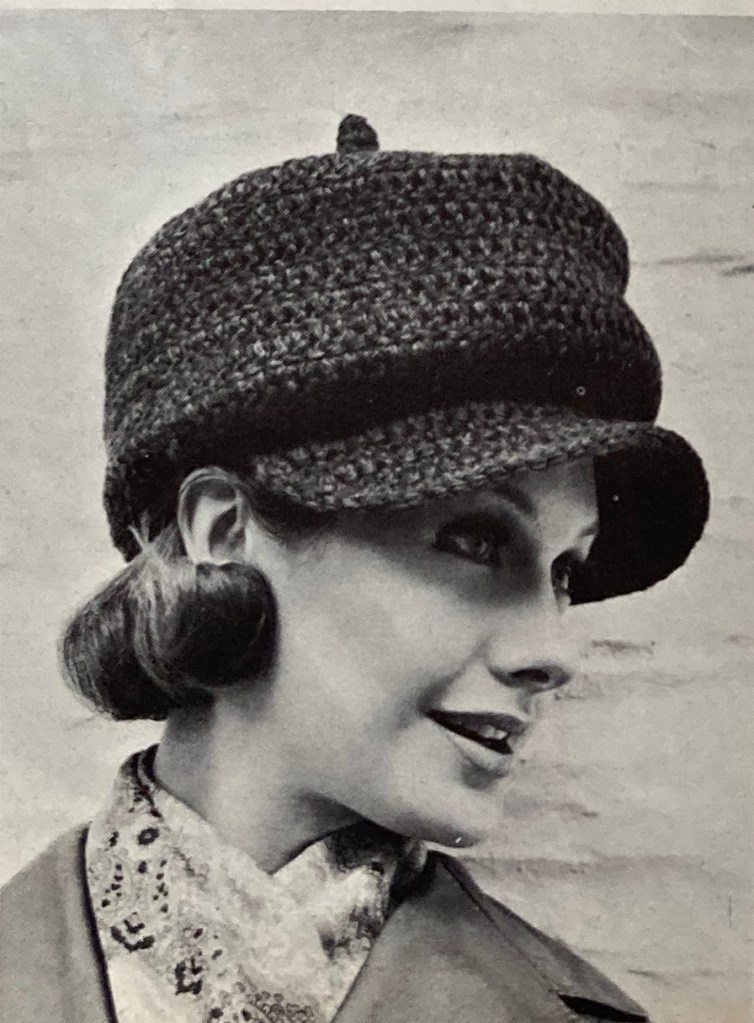
The accessories match the garments well, using the same wools and in similar casual, oversized style. Besides the diamond cap, there’s a knitted cap in Glenora with fur trim and a “baker boy” cap to crochet.

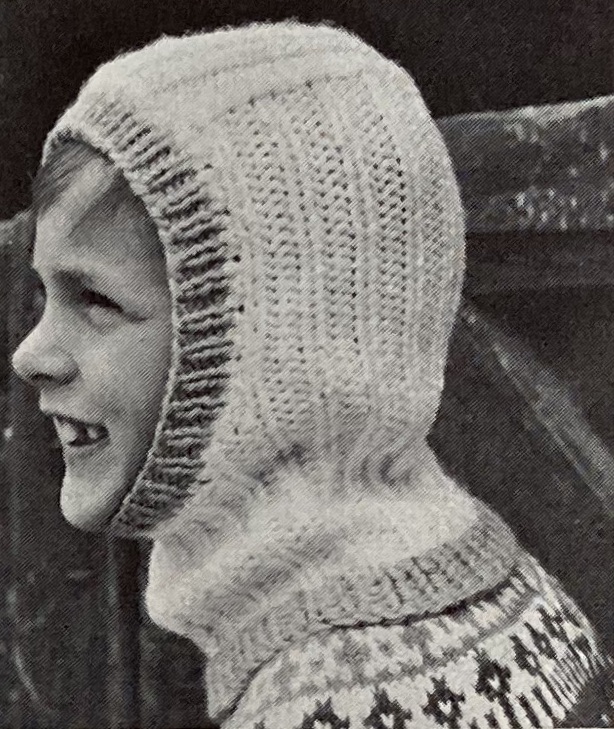
There’s nothing for babies or very young children in this issue, but older kids can get some very nice new additions to their wardrobe, like this wonderful dress in blue Bracken Tweed with contrasting checked collar and cuffs, or a sweater for boys with in intriguing tab collar and colour detail at the hem. There’s also a balaclava-style “helmet” to keep out any March winds.

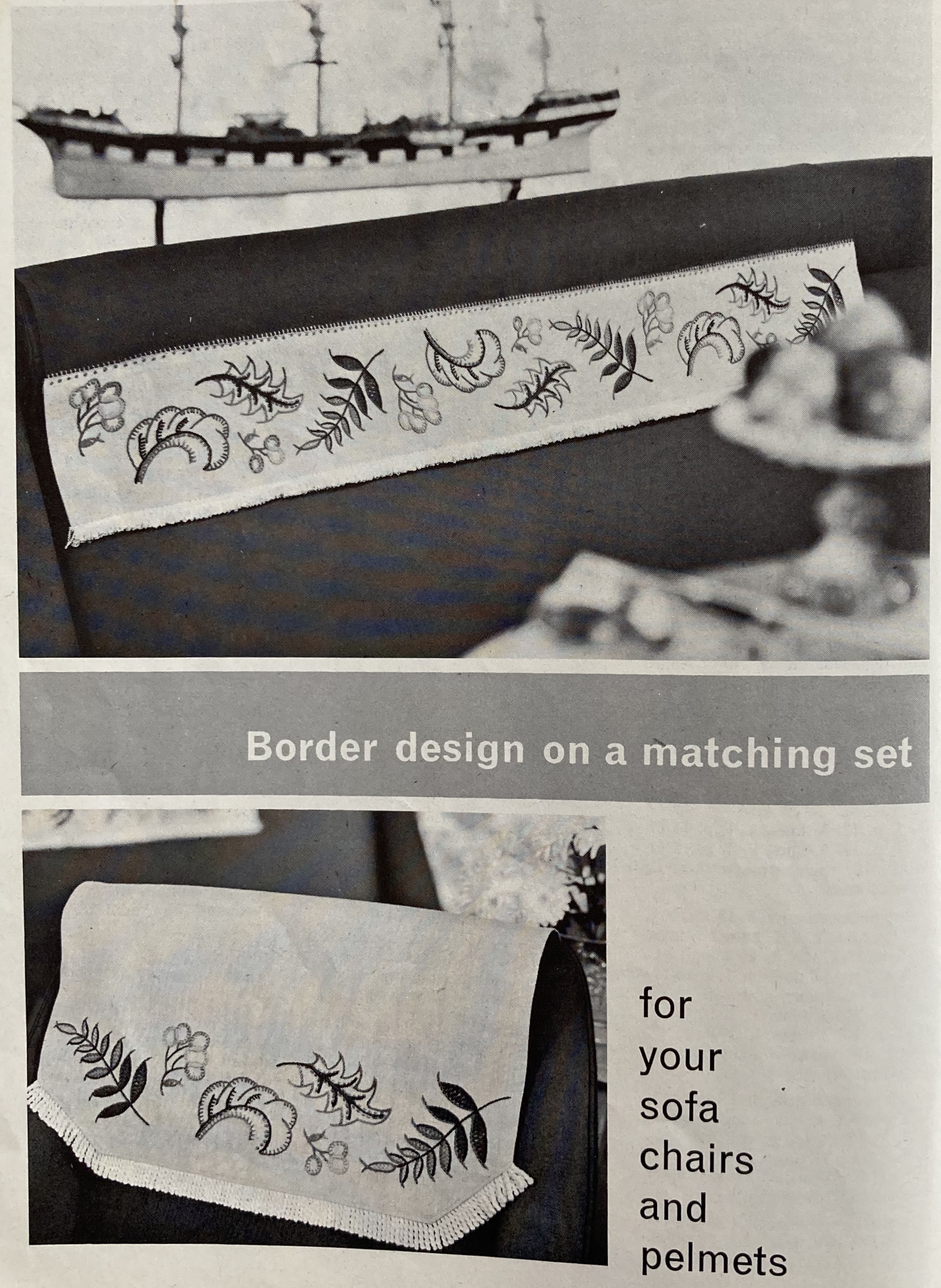
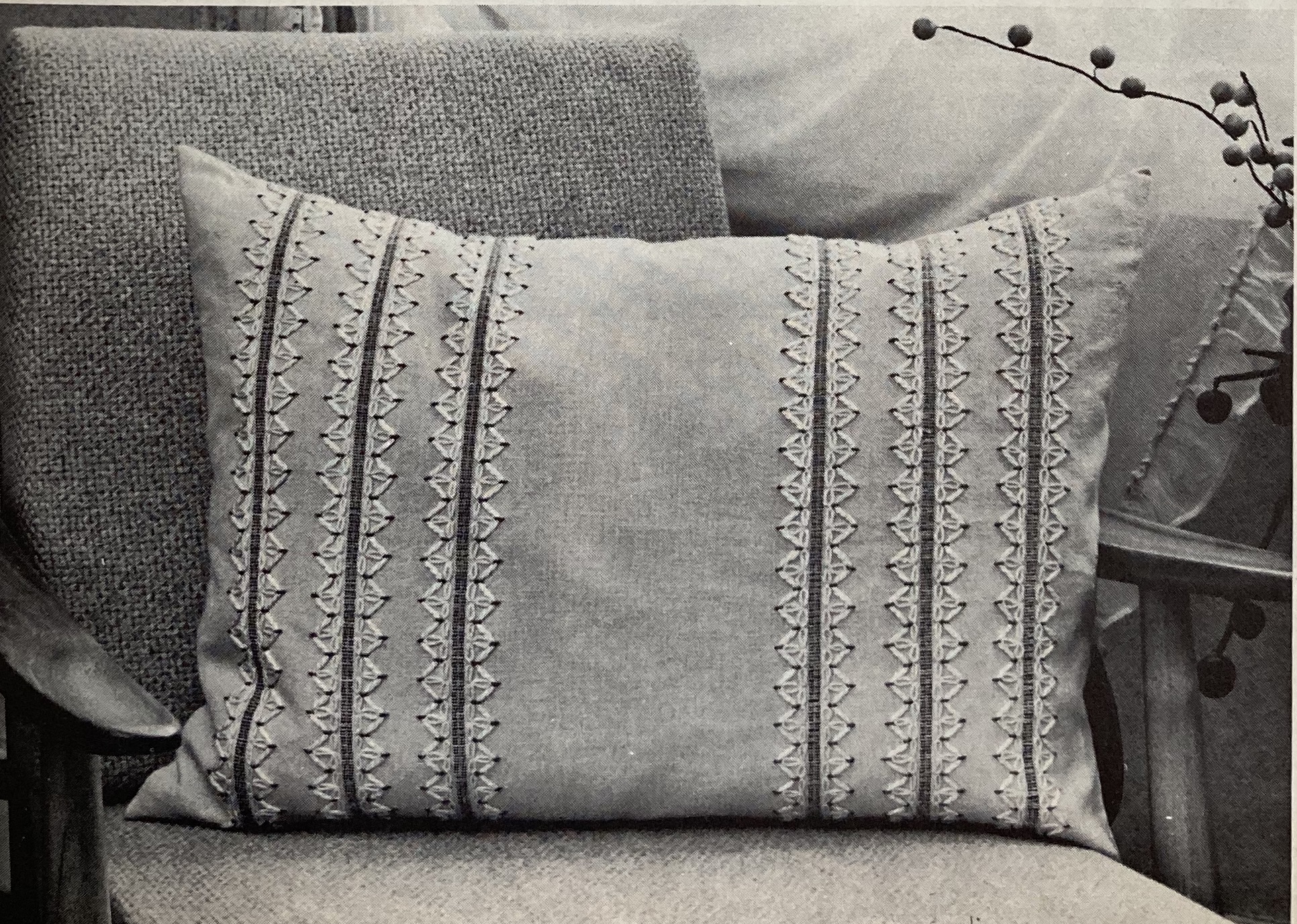
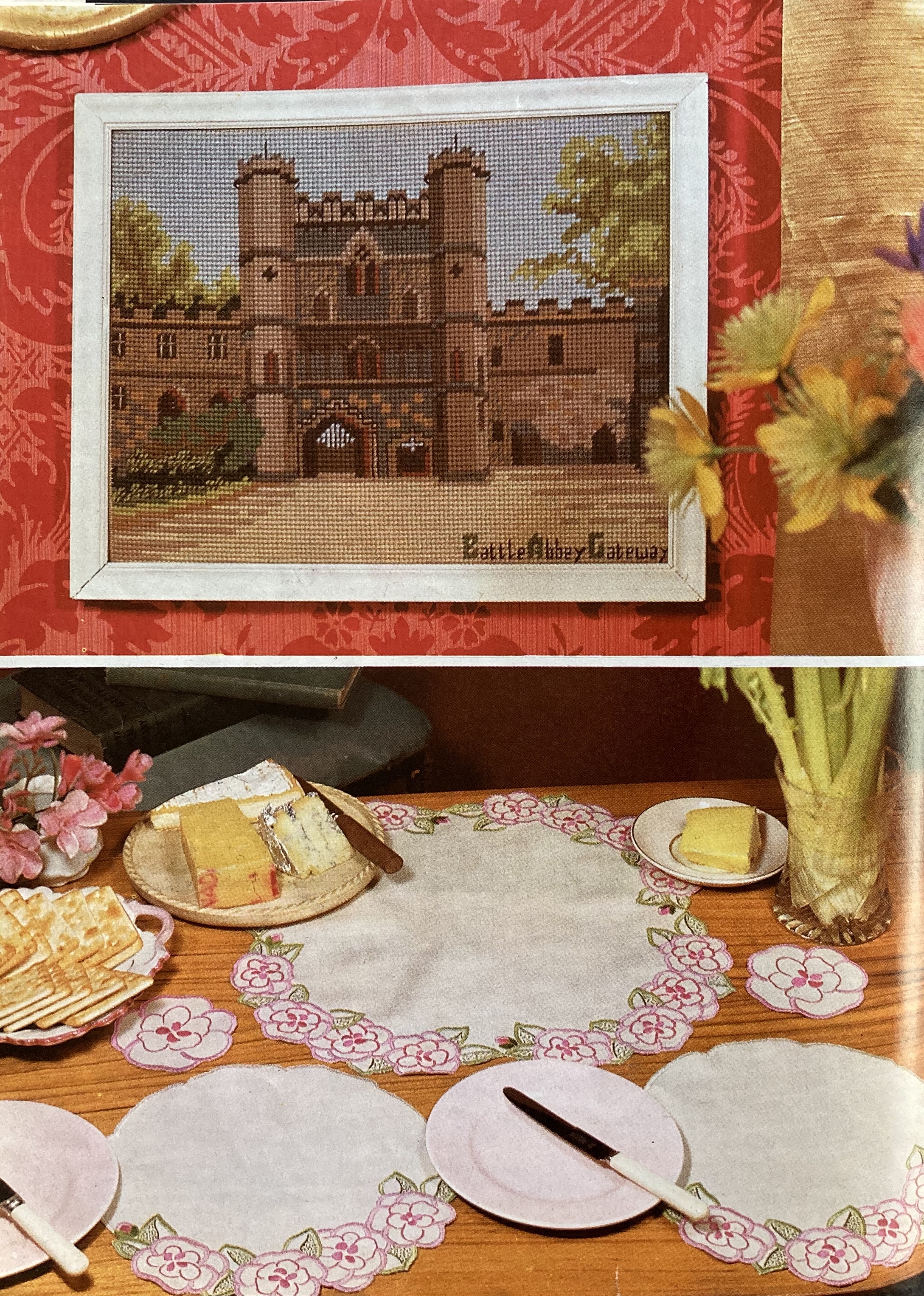
With all these larger projects to knit, it’s no wonder that the homewares are less than spectacular this month. There are embroidery projects for sofas, chair backs and pelmets (N.B. if you, like me, are not familiar with the last word, it’s that strip of fabric at the top of old-fashioned curtains, that hides the curtain rings / mechanism.) There’s a cushion and/or fire screen in a traditional Yugoslavian pattern, a stitched bathroom rug, a tapestry picture and dressing-table mats in cutwork embroidery. The cushion in “Continental laced stitch” is the most interesting of the projects, to me — it’s made by drawing threads and stitching around the resulting rows of holes, then putting the cover over a contrasting-colour cushion.

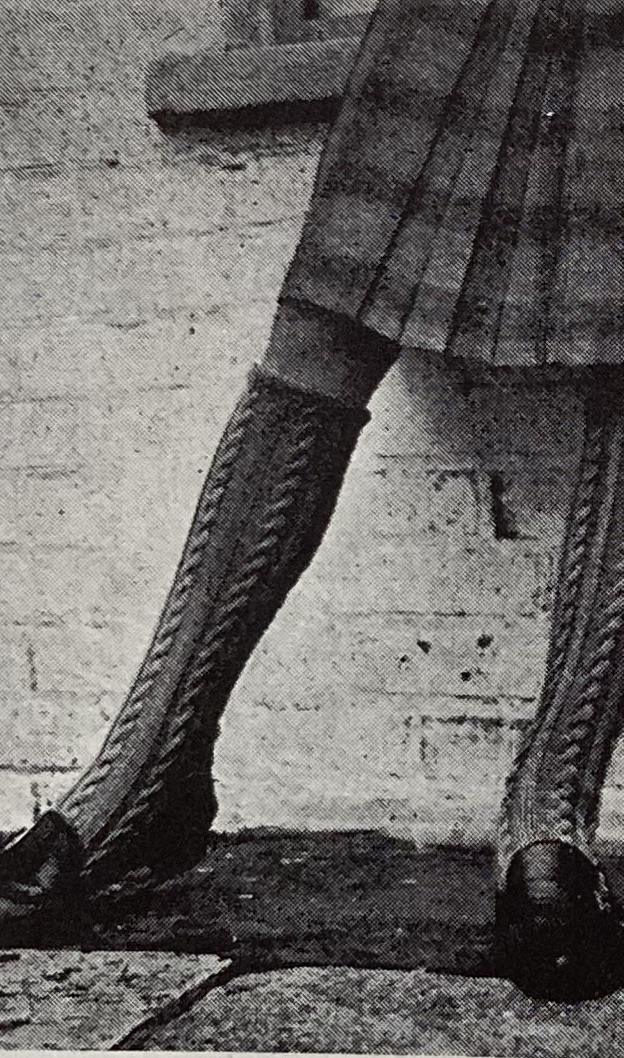
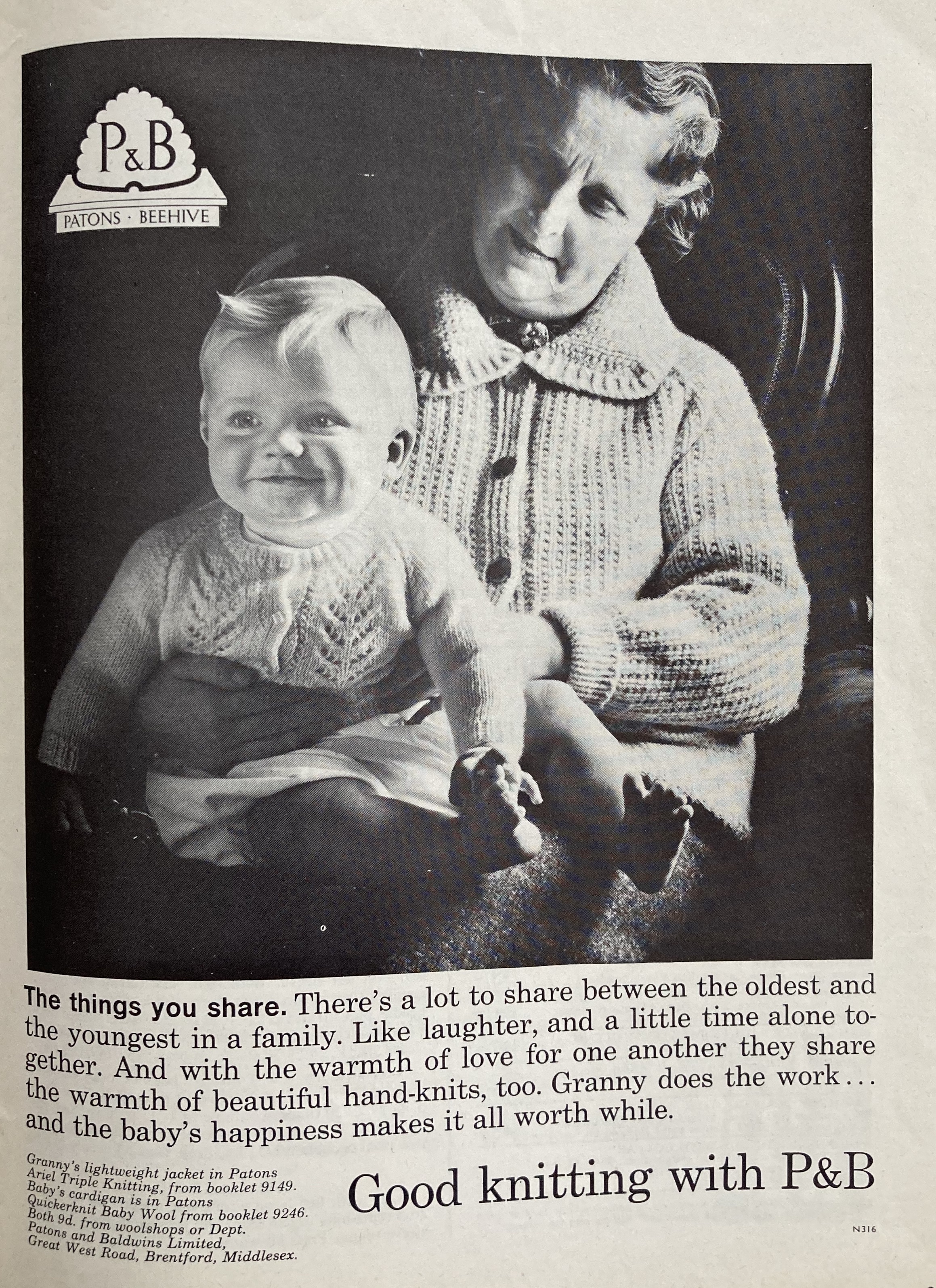
There is no children’s comic this time (how sad!) but the “Readers Pages” offer a reprint of a 1955 pattern for knee-high cabled socks, instructions on how to make a wool daisy and a magnificent “flower basket” teapot cosy featuring those wool daisies. If you’re on Ravelry and search projects for “flower basket” tea cosies, you will find many similar examples — this seems to be a popular item in modern times as well! The Patons wool advertisement shows a happy baby whose grandmother has knit him something pretty, and the back-cover Lightning Zip ad has a very practical dress pattern laid out. I’m tempted to copy it large and sew it up.
That’s all for this issue. My project will be the (faux) fur-trimmed tweed hat. See you soon and until then, let’s dream of spring sunshine!

February 1963: Overview

This month’s issue brings us on another lovely photographic journey, with “elegant settings for Spring Fashions” in and around historic Bath. Looking closer at the photos, it’s clear that some thought went into the combinations of outfit and setting. The “city” photos show models in elegant knitted dresses or suit-like separates, whilst the “country” photos highlight the continuing trend for casual, bulky garments that could theoretically be worn as outer garments instead of a coat in spring weather.

Our cover model starts off the “city” look with a fur-trimmed dress in “Ariel“, a bulky, yet airy triple-knit wool-acrylic blend. It’s advertised as being “light as thistledown” — the whole dress uses 14, 15 or 16 2-ounce balls of wool, which comes out to about 550 grams for the middle size stitch pattern. I’m guessing the diagonal slip-stitch herringbone pattern and ribbed, belted waistline also help control any sagging. The same yarn and same stitch pattern are used for a jumper-and-skirt set in a dramatic yellow and black colour combination. Look at that model’s hair! I always thought people with red hair should never wear yellow, but she looks amazing. Bobbles on ties feature in both the belt of the dress and the neckline of the jumper and skirts are still just below the knee.

Rounding out the elegant city category is a classic skirt set whose rectangular, unshaped form is made more elegant by the use of vertical lines on the cardigan. Bouclet wool in fingering weight keeps the effect sleek and light.

For casual country wear (a.k.a. “The Open-Air Look”), bulky Big Ben wool is still the first choice, or double knitting weight for a somewhat lighter look. Both the men’s and women’s garments are hip-length and unshaped and cardigans are mean to be worn buttoned. At the same time, interesting stitch patterns, textured wools and details like collars and pockets break up some of the shapeless-bulky effect. Even toddlers can join in on the fashion fun with a knitted bathrobe, which showcases many of the current trends (bulky “Ariel”, textured stitch pattern, contrasting collar and cuffs, and a bobble-tie belt) as well as being practical for chilly homes in February.

The homewares in this issue are mostly standard fare — cutwork or embroidered aprons, tablecloths or finger plates — but a couple of more creative ideas stand out. There’s a pile rug with a “modern” design, which I would have loved to have seen in a colour photo (note guitar and records — I did mention that the Beatles’ first album came out in 1963, right?) and a crocheted and cross-stitched bathmat that makes it very clear in which room it belongs (though I can’t help laughing when I think that this issue was also photographed in Bath — they could have had some absurd fun with the bath mat in front of the cathedral or one of the historic buildings…)

For tapestry fans, there’s a prayer book cover and kneeler “for an Easter bride” with a flowery cross pattern, using gold Lurex thread together with wool (kneeler) or silk (book cover) for extra luxury. There’s also a footstool made up of old tins! They used old stockings to pad and wrap the clean, empty tins, then stitched fabric around the bottom and sides and covered the top with the tapestry. The result is a bit oddly shaped, but I suppose it would be quite useful — strong and able to support a bit of weight, but still quite light — and I admire the creativity and the upcycling spirit.

There are no particularly interesting advertisements in this issue, but in the ongoing children’s retelling-of-fairy-tales comic series, Miss Muffet gets invited to the spider’s home, where Mrs. Spider shows her the lace curtains and tablecloths she has spun out of spider-silk and teaches her to spin a shawl. How sweet! Next month: “The Beetle-lady.” (Also: Note the ruler printed on the side of the page, to make it easy to check your knitting tension. It’s in every issue.)

I’m a bit at a loss as to what project to make from this issue. I love the “Ariel” cover dress and yellow sweater, but I have serious stash overflow and so, so many unfinished projects, so I would prefer to make something small and easy. I am not religious and would probably not have much use for a prayer-book cover or kneeling pad even if I were, but the flower tapestry design without the cross would be pretty and versatile, and I still have tapestry wool and backing fabric from an earlier failed project. The question is, what should I make out of it? A clutch purse? Coin purse? Cell phone cosy?? I already have so many little zippered bags for knitting tools and sewing notions and general “stuff”. I’ll give it some thought and let you know. If it’s easy enough, I will hopefully be able to finish up and edit some of the WIPs lying dormant in the blog. Stay tuned!

March 1962: Overview

IMG_3126There are three seasons in the Stitchcraft year: autumn, Christmas and “holidays”, which start in March and continue until about September. Of course, most people take their holidays in the summer, but the beauty of knitting (or editing a knitting magazine) is that you can technically be knitting for them any time of the year, if you knit slowly enough. And so, the March 1962 issue of Stitchcraft, (motto: “Knit for Spring”) can already promise us “the fun of holidays to plan for.”

Spring is also “the time of year to wear smart two-piece suits and dresses, which you can now knit so quickly and easily” — a nod to the double-knitting and bulkier-weight wools now available and in fashion, relieving knitters of the earlier boredom of making dresses and long-skirted suits at 8 stitches to the inch. Here is a skirt set in nubbly Rimple DK. Top-fashion colours of dull green and beige-gold (or as Stitchcraft calls them, “mustard and pheasant” — sounds delicious!) are repeated in a finer-knit bouclet sweater.

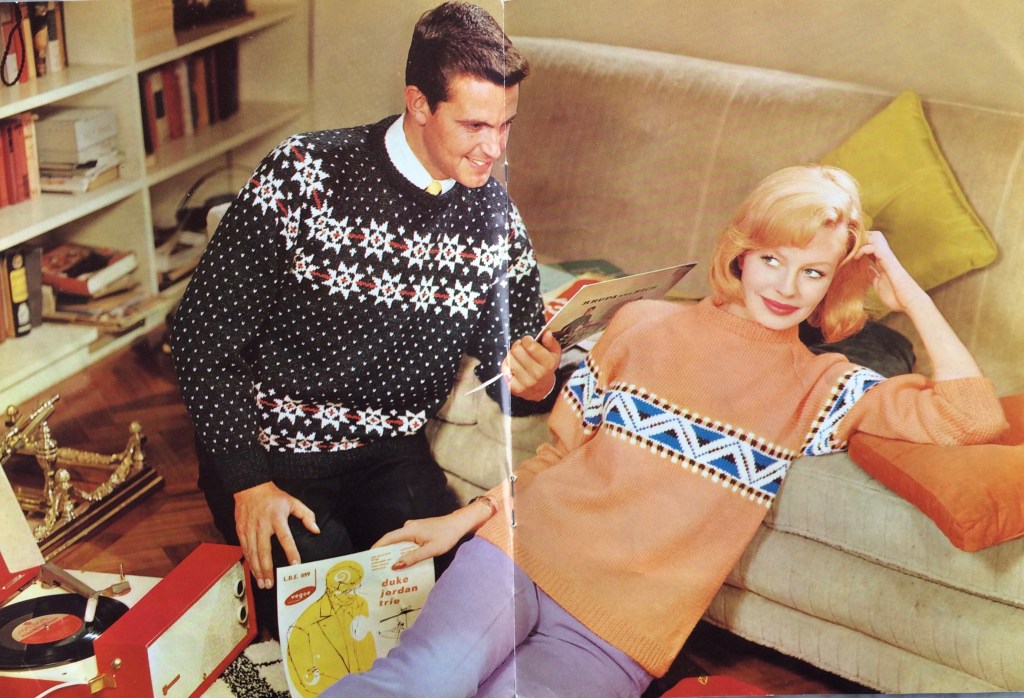
Interesting textures and colour blends are key: in addition to the Rimple and bouclet offerings, the cover jumper is made in Bracken Tweed, one of the newer marled/flecked wools. Stranded colourwork is featured in a Norwegian-style pullover for men and, in more subtle form, in a bright band across a warm women’s raglan sweater. Look at that perfect 1962 “lifestyle” photo of our knitter lounging in her beige-coloured living room and smiling seductively at her man while listening to jazz!

IMG_3136

“Informal sweaters” that combine colour and texture elements, as well as a lovely little twin-set for a child and granny-square bonnet and mittens for a toddler round out the collection. The homewares are varied, but predictable: another tapestry town scene, a Florentine rug (pity they didn’t get a colour photo of that), traditional cross-stitch designs and a daffodial embroidery transfer for a coffee-pot cosy or night-dress case.

And of course it wouldn’t be Stitchcraft without “novelties”, in this case, matching “boy” and “girl” egg cosies made to look like nightcaps — I’m guessing somebody must have found the egg holders with painted-on faces and had an inspiration. The back cover is another fun, if slightly “uncanny valley”, advertisement for Escorto “Gold Seal” fabrics — “easy” due to being 100% synthetic material.

My March project will be the jumper from the girl’s twin-set as well as another “blast from the past” which I have been working on for literally years and will hopefully finally finish soon. Happy Spring!

February 1962: Overview

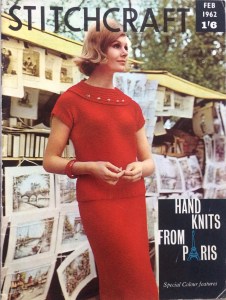
IMG_3048Put on your best traveling suit, pack your Aeros and have your Kodak Instamatic in hand, because it’s February 1962 and Stitchcraft is going to Paris! This month’s issue  features Paris-inspired designs (whatever that means) and extra pages in colour to show off the latest knitwear against a backdrop of Parisian tourist classics.

Travel from London to Paris in the early 1960s was, of course, not on the speedy Eurostar or even quicker cheap flight of our modern times. Commercial air travel was a luxury for the well-to-do and the only way to cross the Channel by train was on the Night Ferry, which ran from London Victoria to Paris Gare du Nord and back. The overnight journey took 11 hours, of which three were spent on the water;  the entire train was loaded onto a ferry for the Channel crossing. I really recommend clicking on the link, which leads to the Wikipedia article. There’s a lot more information about the Night Ferry there, and even a short list of books and films set on or inspired by it.

So what does Paris fashion 1962 have in store for us? Dresses, strong dark colours and smooth crepe wools are all “in”, with a special trend for fringes and bobbles. The two-piece dress on the cover is made in fine bouclet wool and photographed against one of the little bookselling stands that still line the roads along the Seine today. Fine, red crepe wool is the choice for the similar two-piece outfit with fringey bobbles on the front of the jumper, photographed in Montmartre. Are the bobbles supposed to suggest the legs of the painter’s tripod, or an upside-down Eiffel Tower? The dress on the facing page (Sacre-Coeur in the background) is also made in smooth crepe wool, this time in somewhat thicker Totem Double Knitting.

Fringe makes additional appearances in a lemon-yellow jumper with the newly fashionable high neckline and extra collar (Place de l’Opéra) and in the dark green and black plaid-effect longline jumper on the inside front cover (which appears to have been photographed in a Métro station, though I can’t immediately place which one.) Even without fringe, large collars are still going strong, as seen in the belted Rimple jacket. “Chunky” bulky wool makes an appearance in the beret and oversized handbag set (Capucines). The bag is reinforced with strips of cardboard along the top edges and a woven fabric lining to prevent otherwise inevitable sagging.

With all these lovely large projects and the special Parisian focus, it’s not surprising that the rest of the designs in the issue are unspectacular. There are some easy knitted classics for men and children, the usual “Victorian” and “Jacobean” tapestries for the home, and some fun little crafty projects like these “mats with hats” coasters. In the “Little Bobby” serial comic, John and Jane both have a cold. That’s February for you!

I have so many unfinished projects, including the January 1962 jumper, that my February project will be something small and easy. Maybe not the mats with hats, but probably a little embroidered lilac sprig (flower of the month) on a vegetable or project bag. In the meantime, watch for updates on the January project — it’s knitting along quite quickly — and a special 1950s “blast from the past” post.