January 1968: Overview

Happy New Year, everyone! It’s 2026 in the real world and 1968 at the Stitchcraft Sixties.

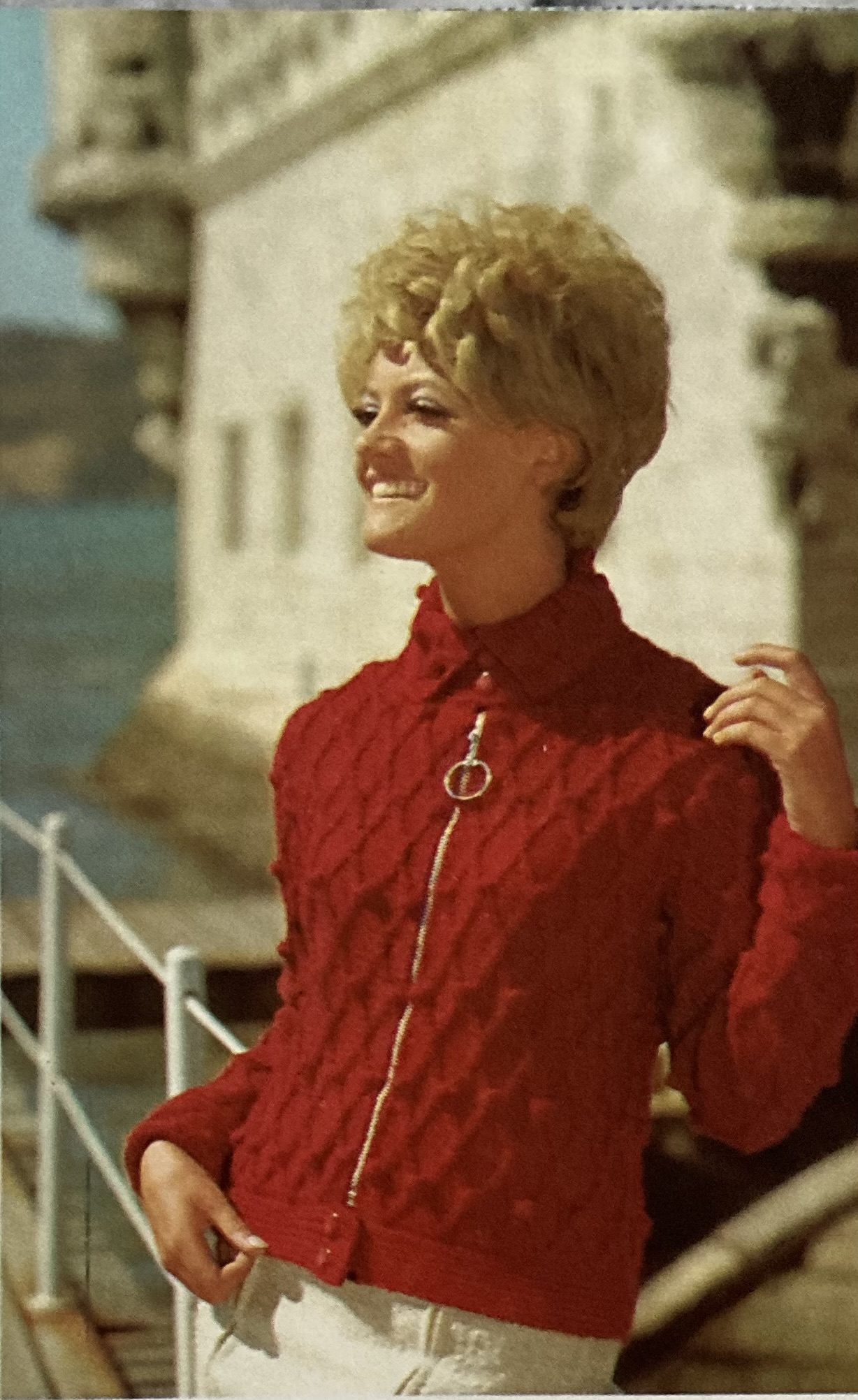
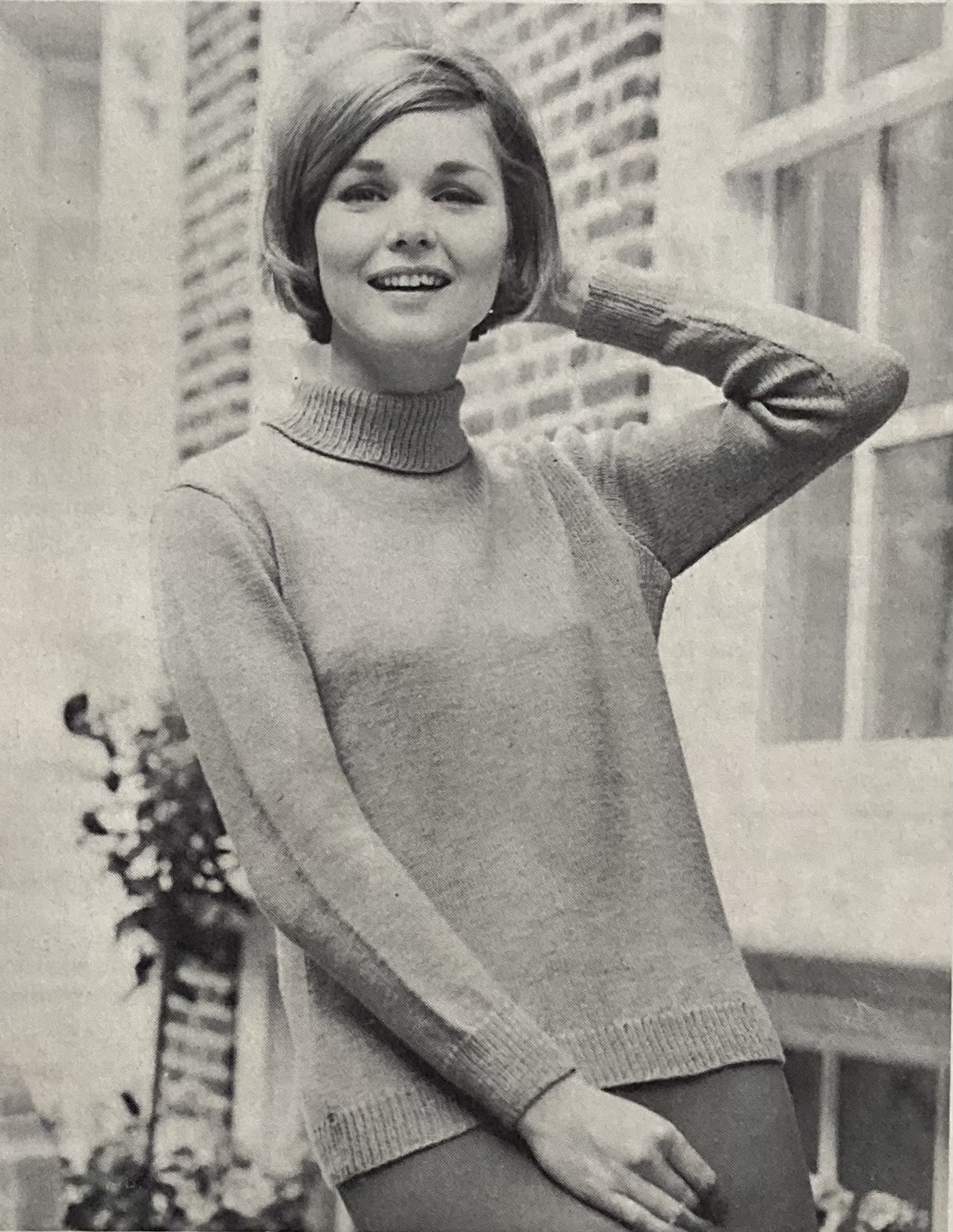
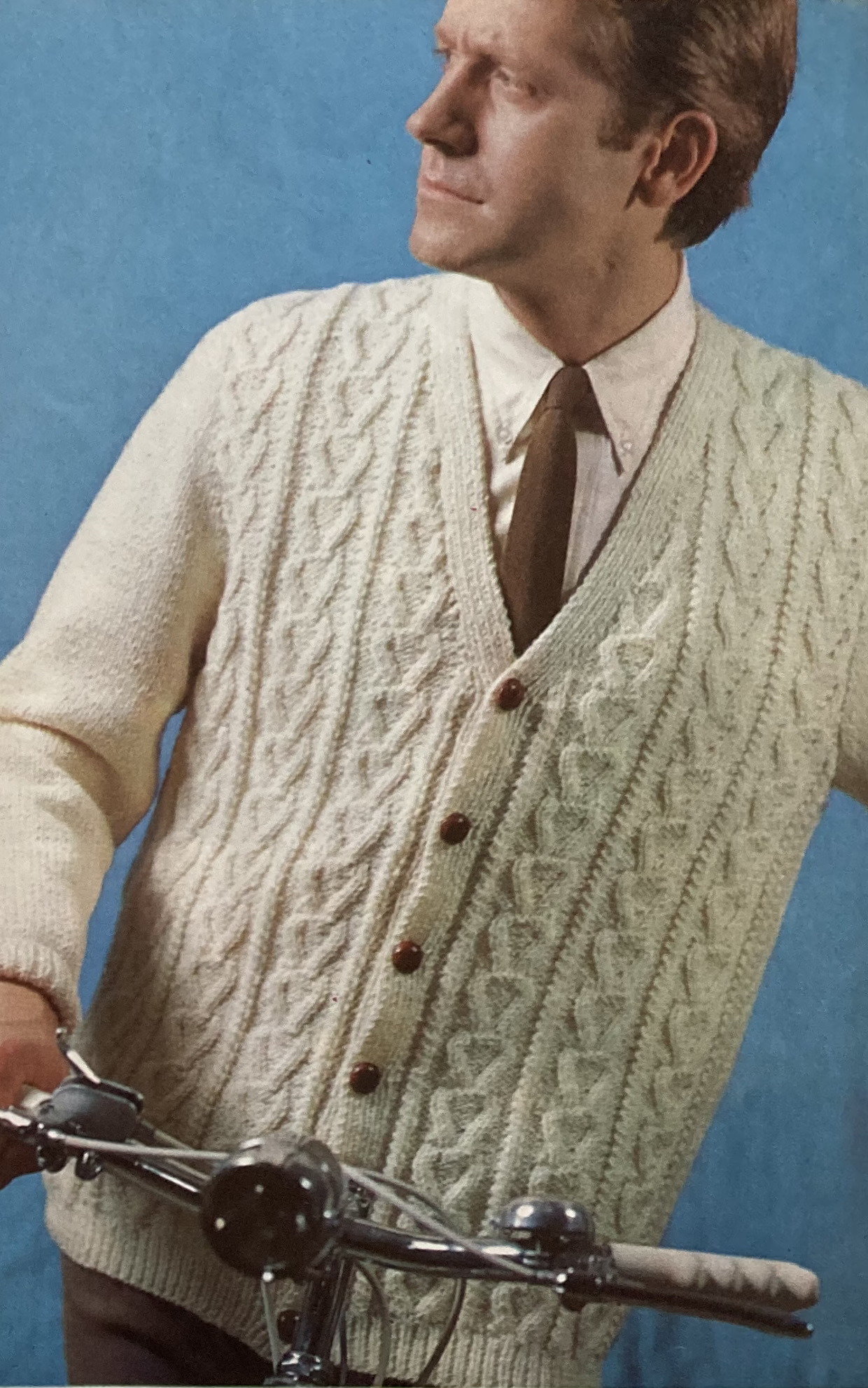
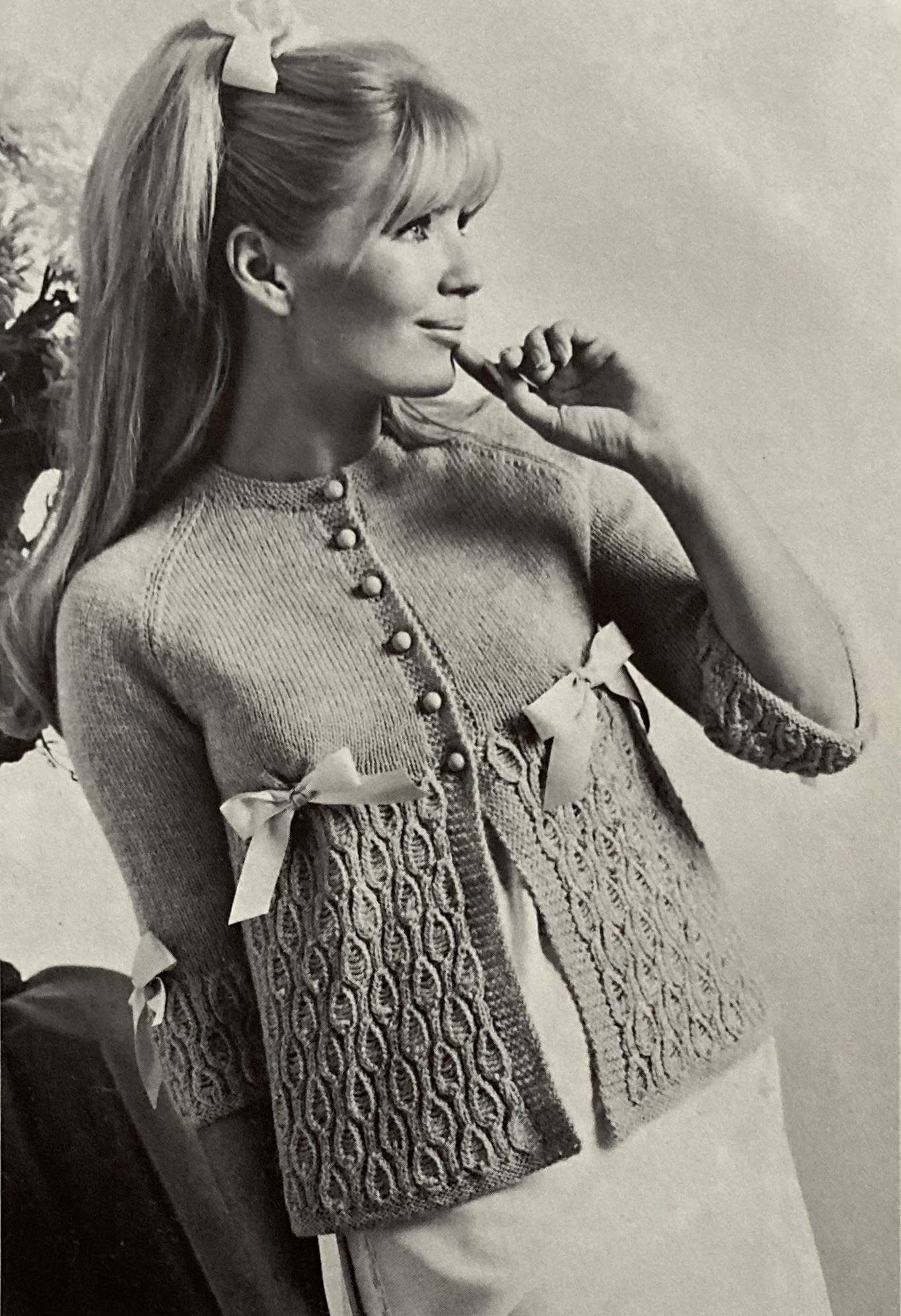
Looking ahead, 1968 is the year that Stitchcraft finally starts to get into the “Swinging Sixties” vibe, with miniskirts, oversized hats, bright patterns and lots of dresses. The January issue doesn’t quite get there yet, though. The cover cardigan has a similar construction and fit to similar garments from 1966 or 1967: long and loose-fitting, with deep raglan sleeves and a collar. The stitch pattern looks like small horseshoe cables, but is made entirely with knit, purl and slip stitches!

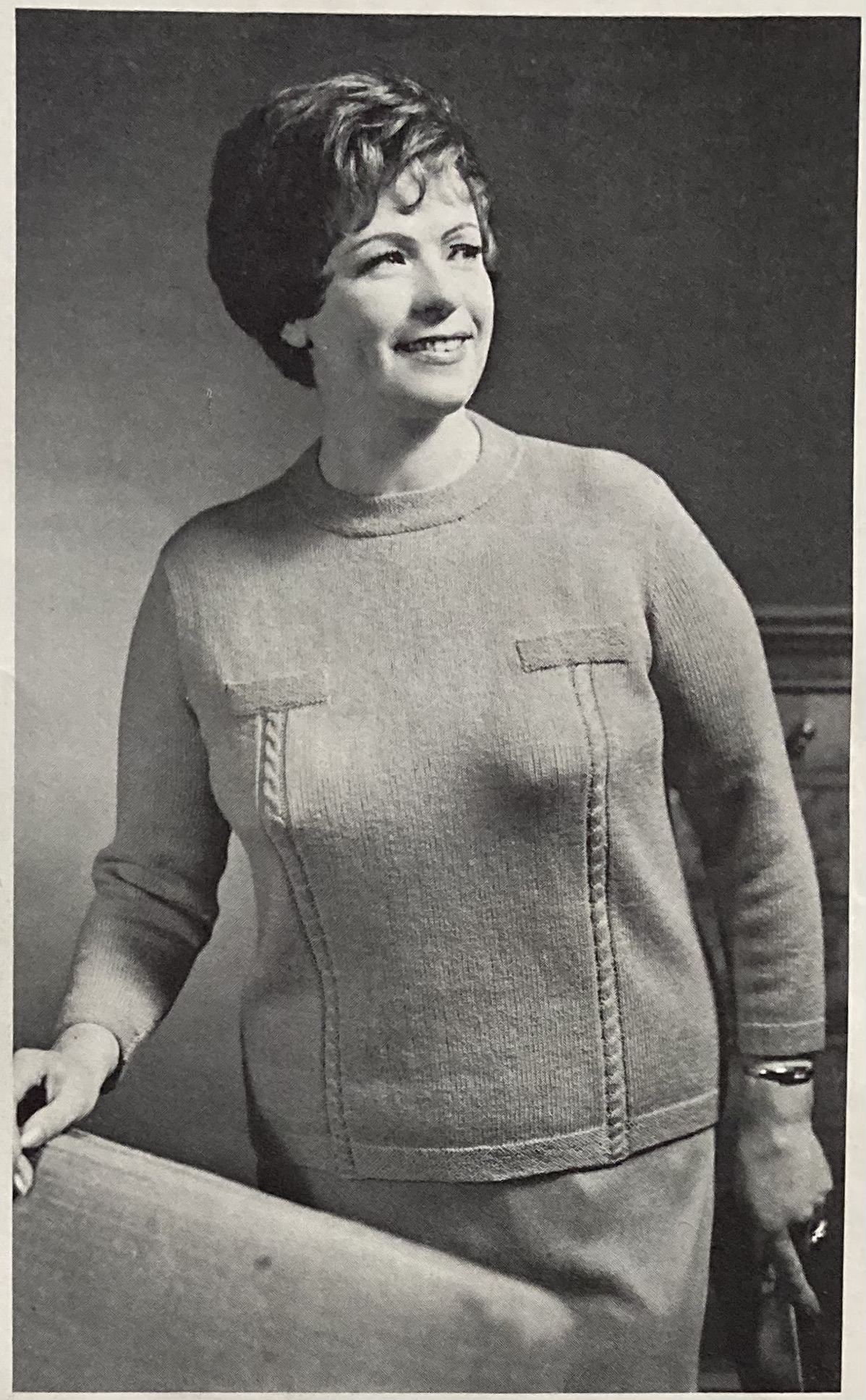
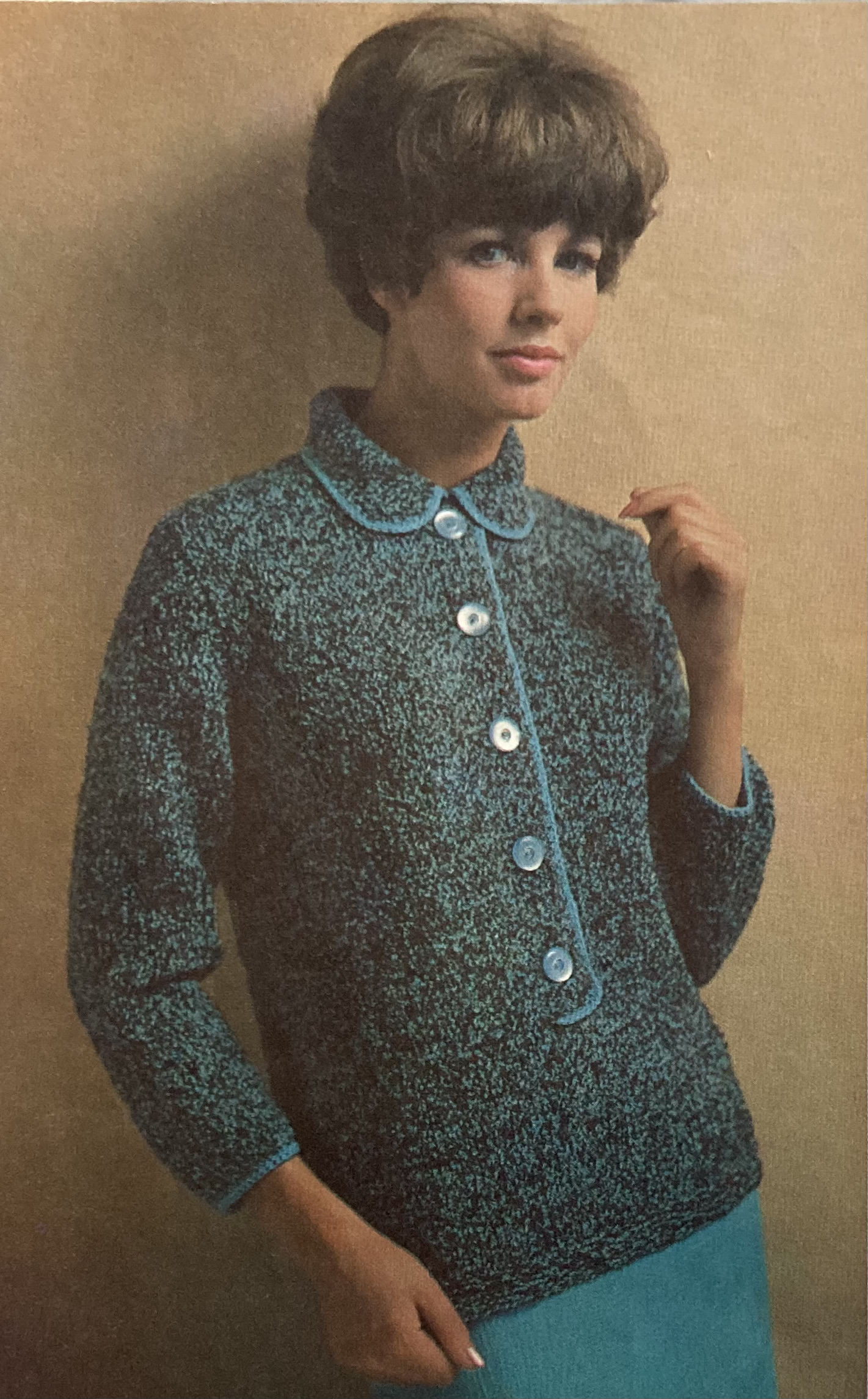
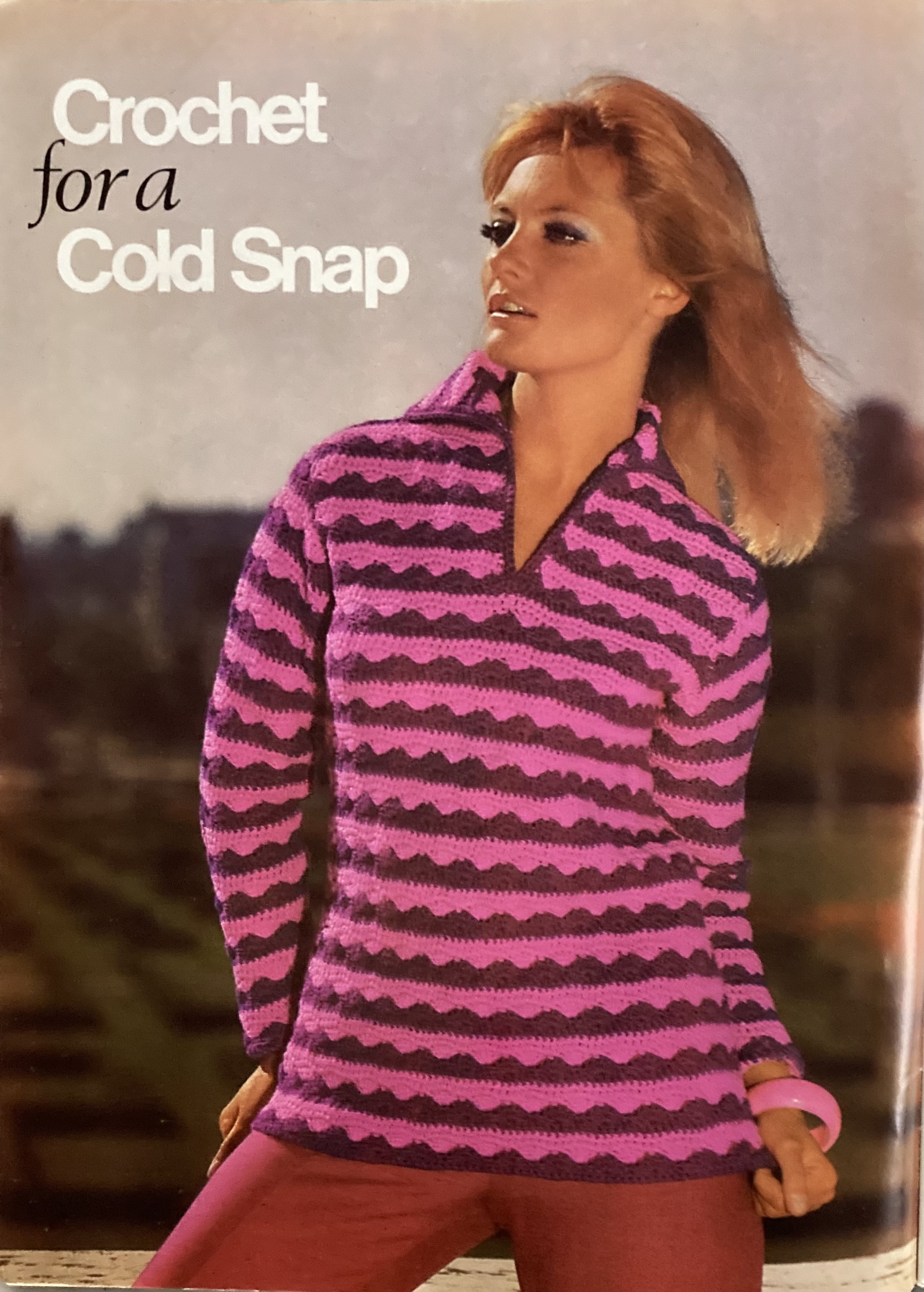
Other women’s garments include a bright pink-and-purple crocheted pullover with a similar bulky, V-necked shape. The model has a bizarre January tan that can only come from a bottle. There’s also a colourwork design to use on either a sleeveless top or a dress, and a short, zippered cabled jacket.
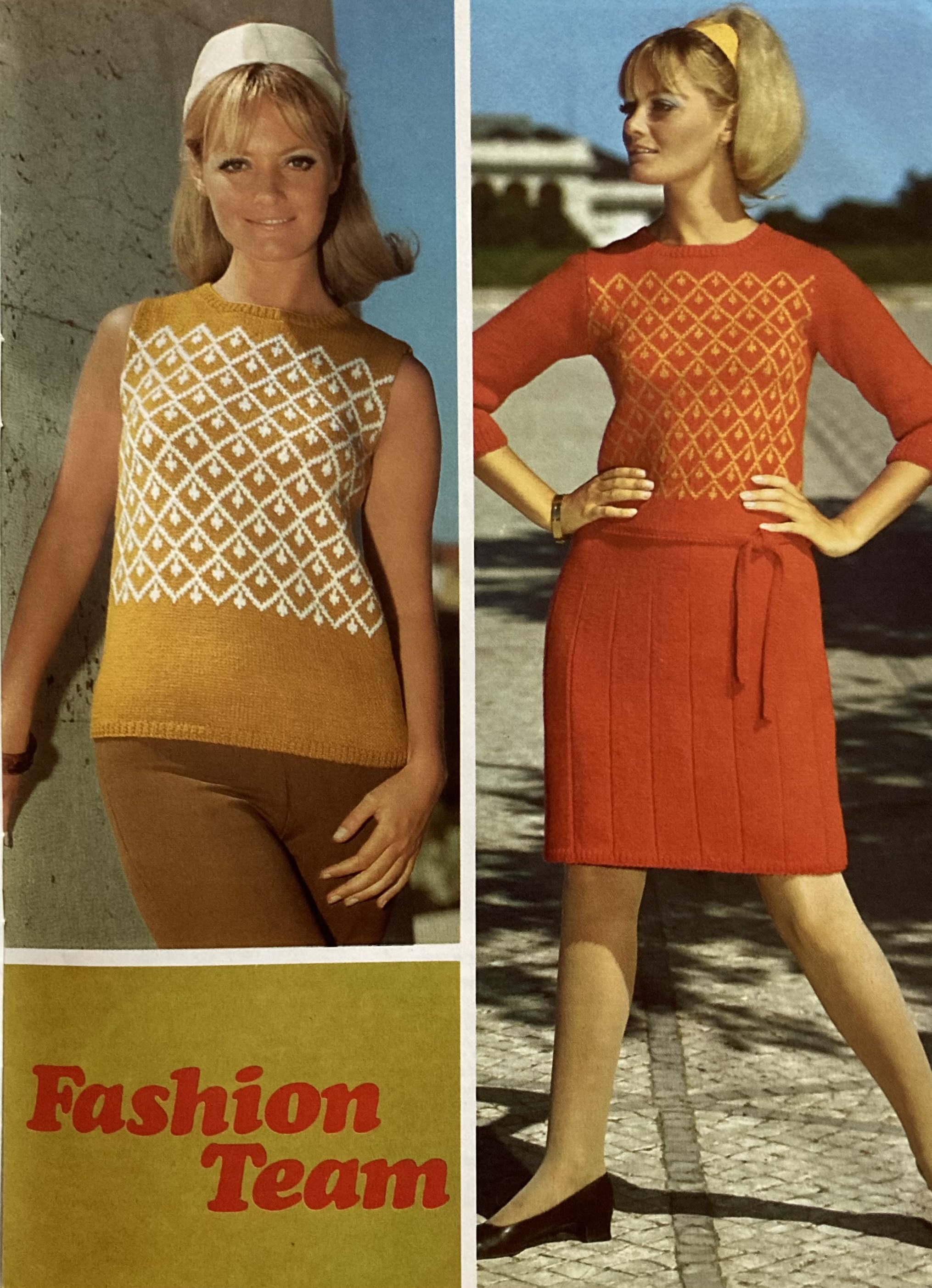
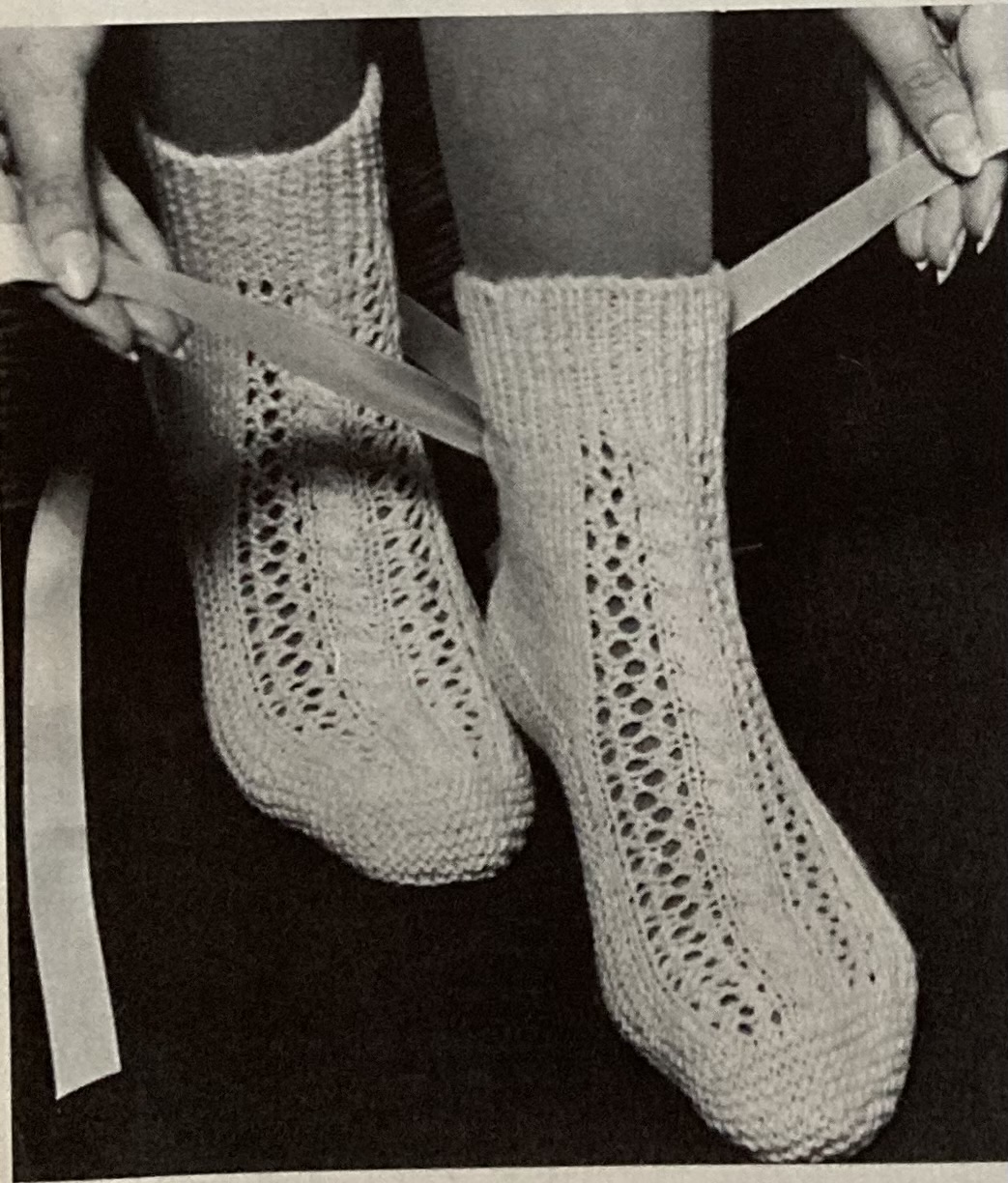
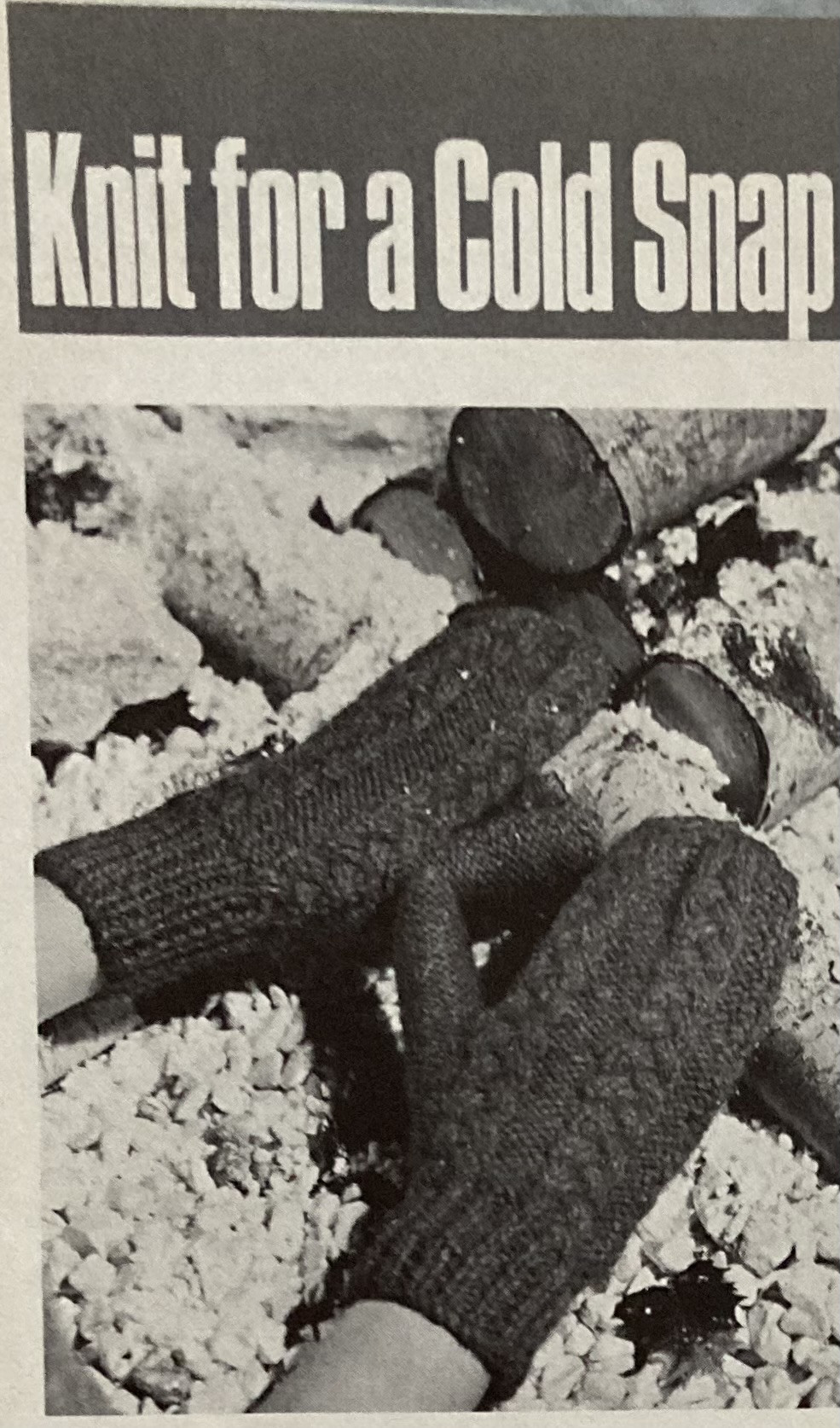
Cable, mock-cable, and bobble patterns are trending, and warm reds and golds pair with bold pink and winterly white. Warm accessories include a a chic little bed-jacket with ill-placed (or strategically designed to draw the attention of one’s bed partner?) bows. You can make a pair of warm cabled gloves, or bed socks with ribbon bows to match the bed-jacket.
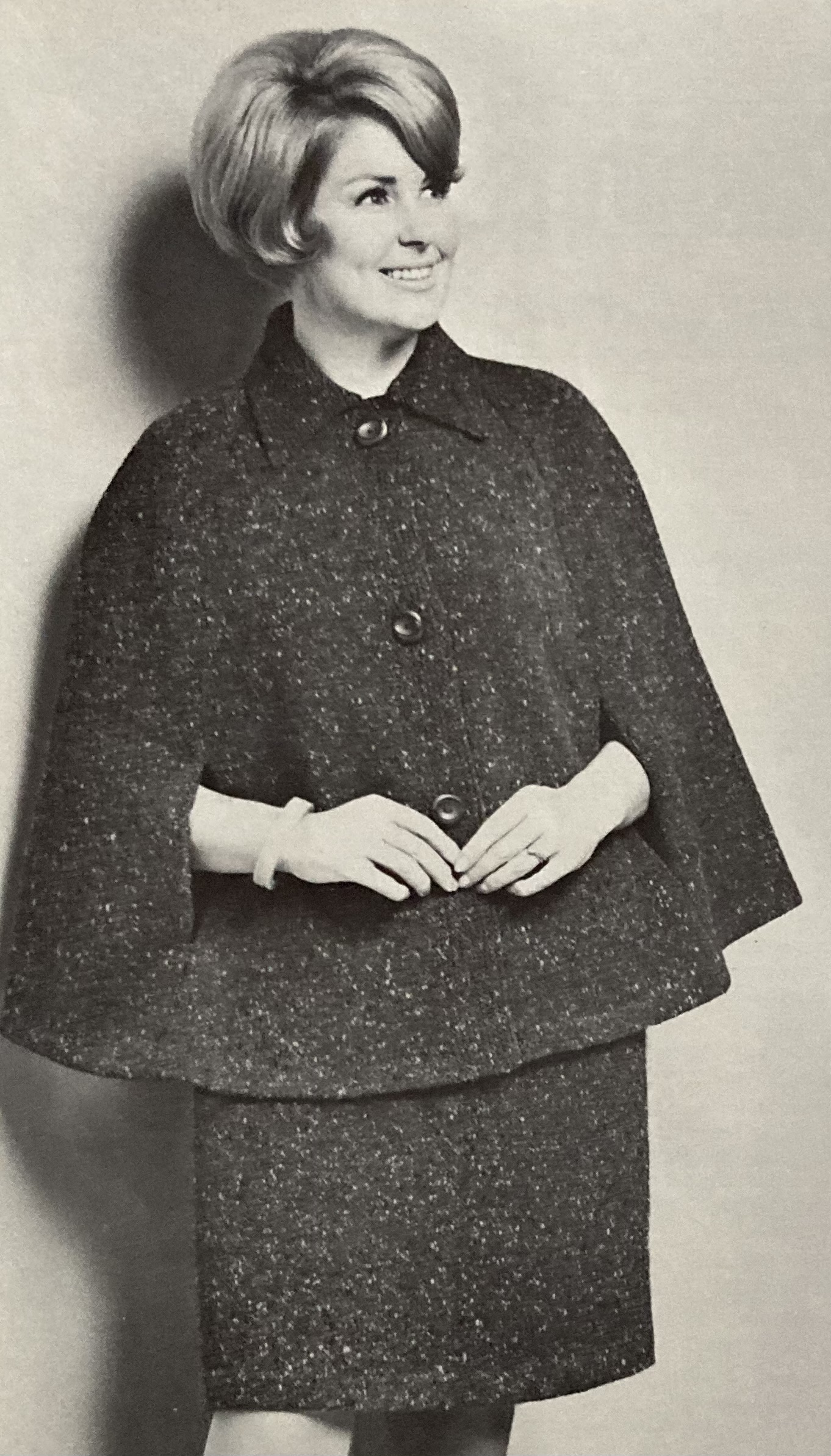
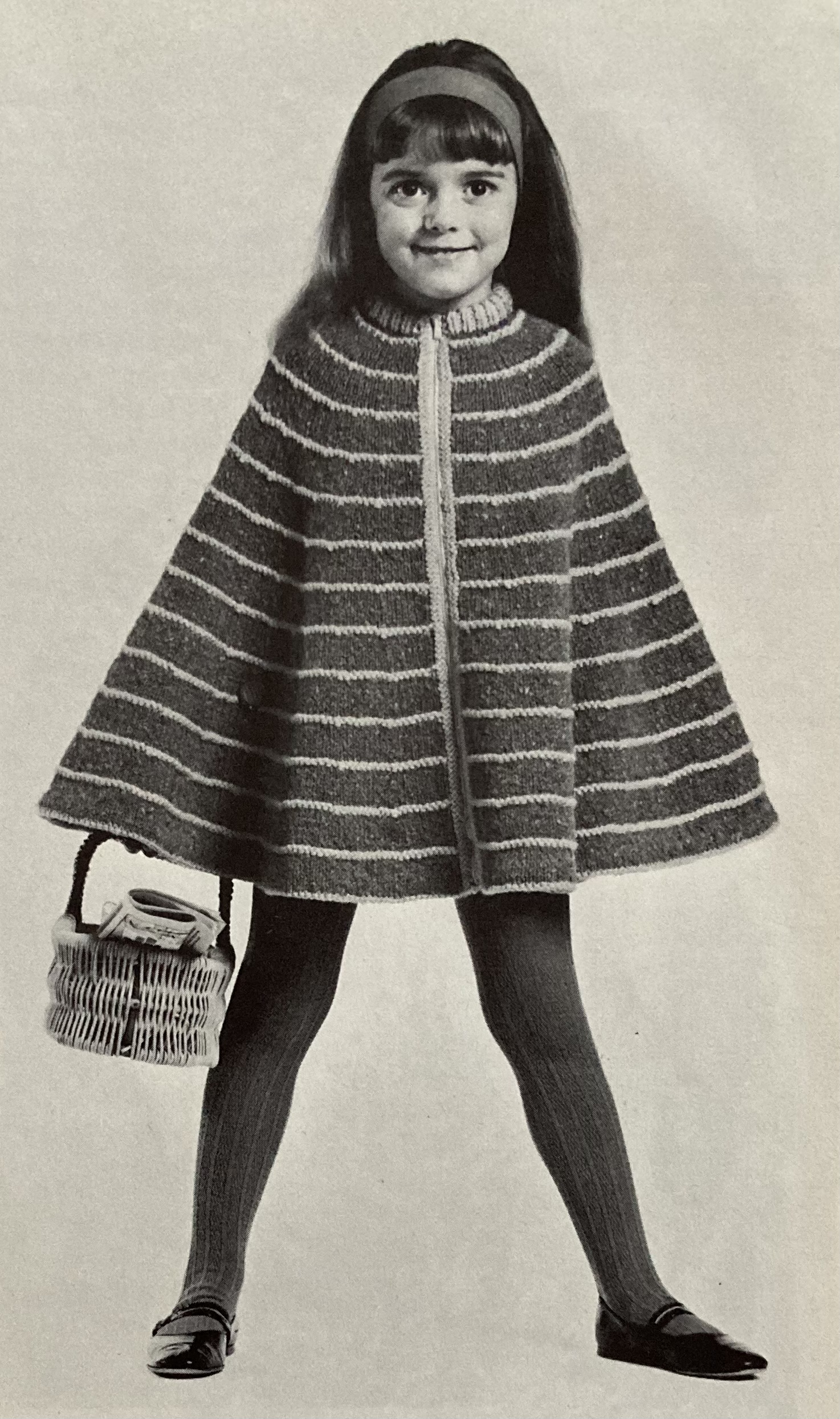
Two of the women’s garments stand out. The cape made a brief fashion appearance in the later 1960s, and Stitchcraft‘s version pairs it with a skirt in an ensemble for larger sizes (to fit 38/40/42 inch bust). There is even an adorable version for a little girl, with one of the cutest photos ever. She looks like Little Red Riding Hood going out to see her grandmother on New Year’s Day, but with cold legs. At least she’s wearing tights, for once! The adult version is made in an intriguing “Purple Dusk” shade of Bracken Double Knitting tweed, the children’s version in the same wool, but in two shades of pink: Gentian and Raspberry. Little Pink Riding Hood, as it were (and without the hood.) The caption to the cape photos is “The Cape makes sense”. I disagree — capes are bulky and hard to layer. It does have a certain flair, though.
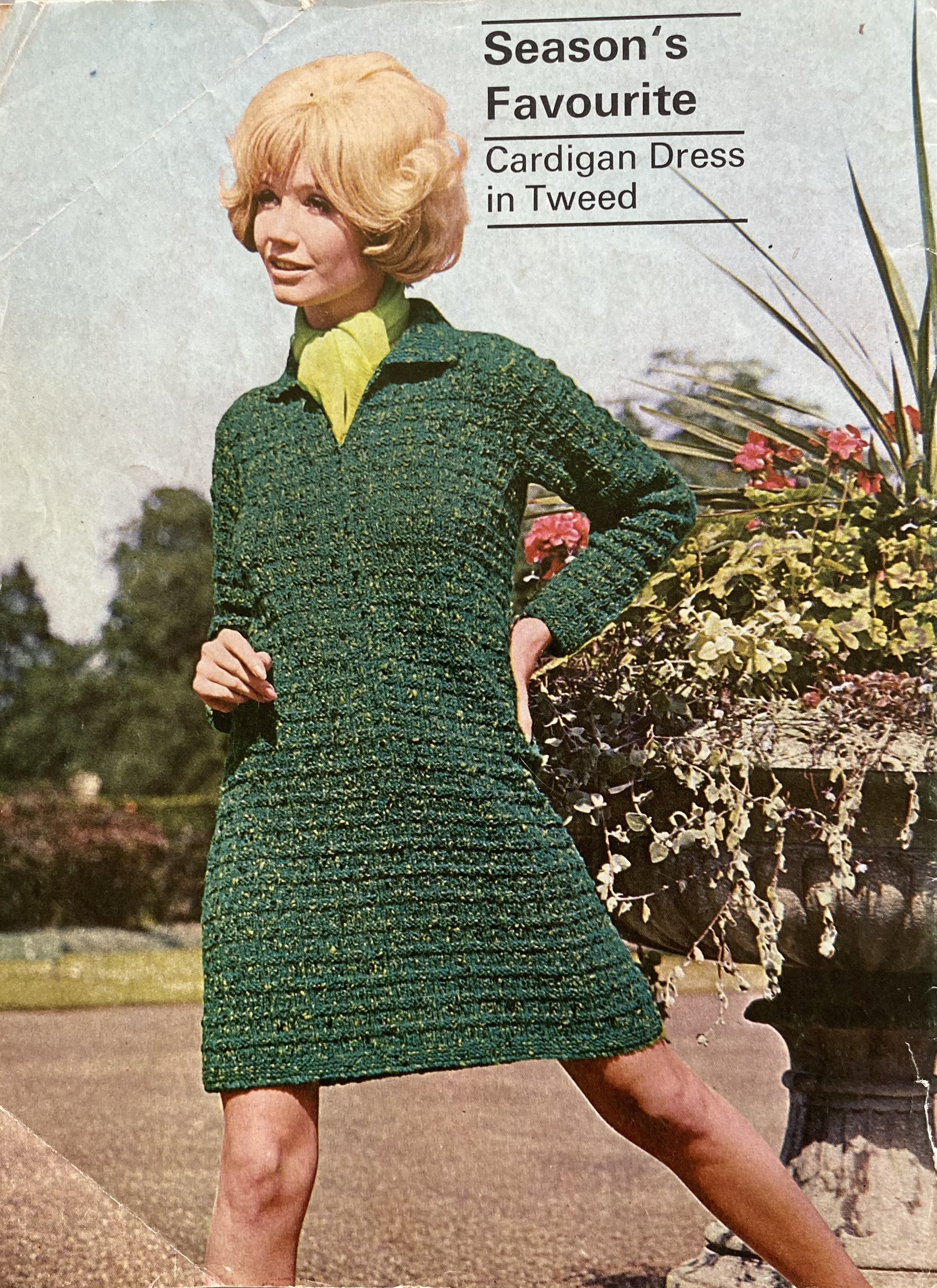
Speaking of bulky and hard to layer, another late 60’s flash-in-the-pan trend was extremely bulky garments made by holding 4 or more strands of bulky wool together. Patons called this “Super-Sonic” and included a pattern for a cabled and moss-stitch dress that can be made in 8 hours at a tension of almost 1 stitch/inch using 4 strands of bulky “Big Ben” wool on 00 needles — that’s 9mm or a US 13. The accompanying text says, “The thick fabric is firm and elastic and 2 inches at least, are deducted from the length of a dress, to allow for settlement.” That’s a nice way of putting it! I imagine it sags immediately. The colours are a wild mix of Light Navy, Sunglint (yellow), French Mustard, and Jade.

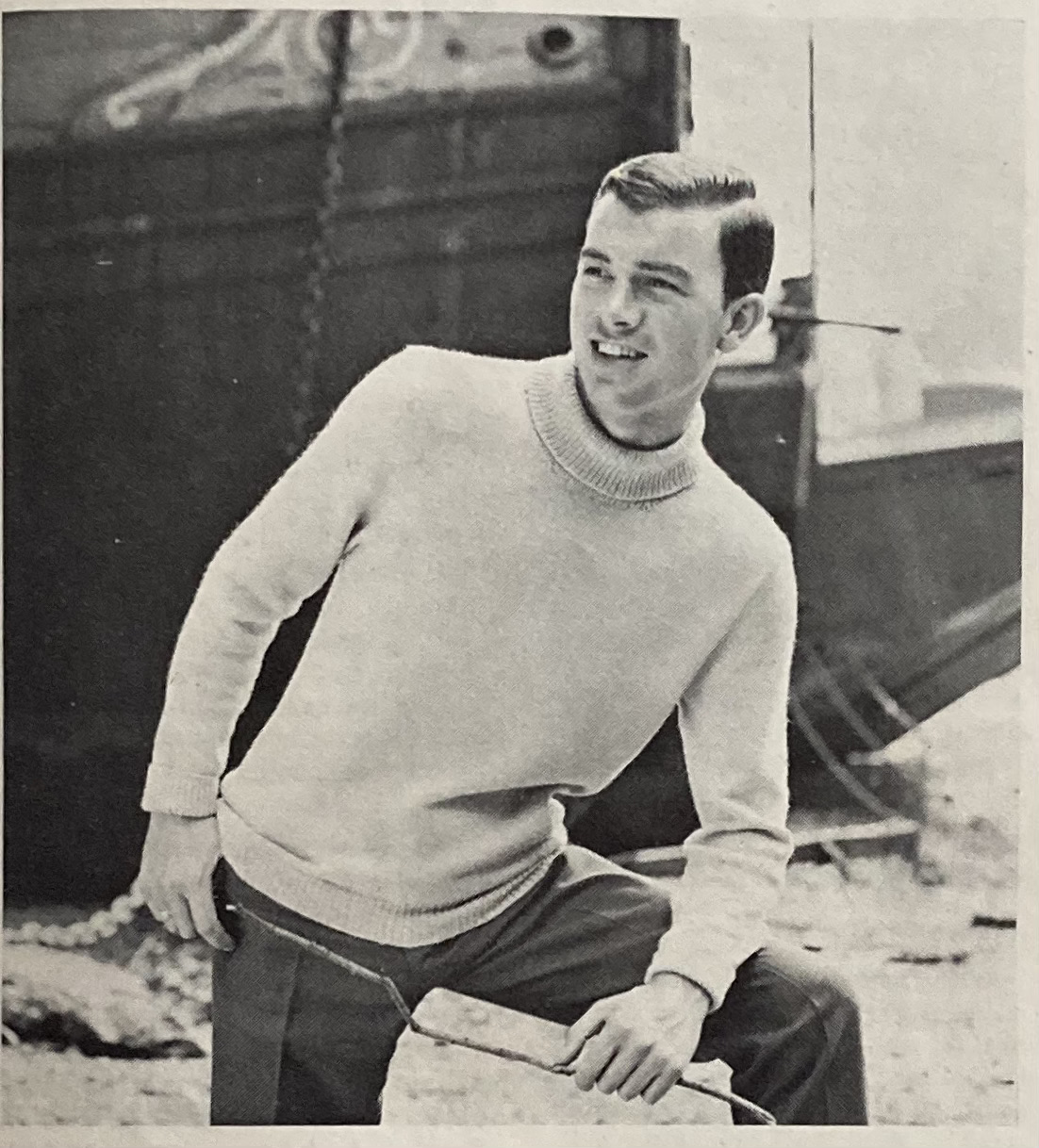
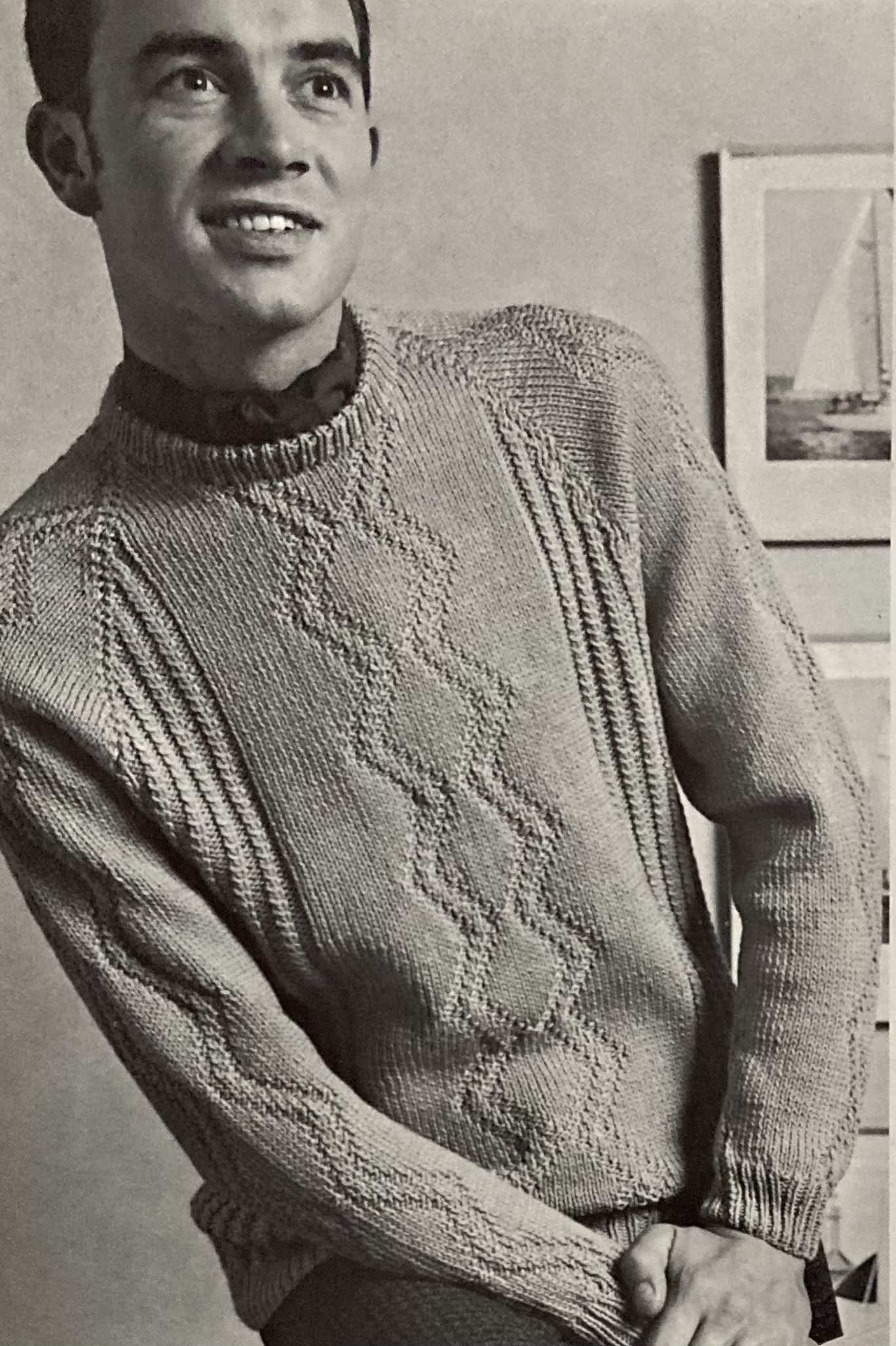
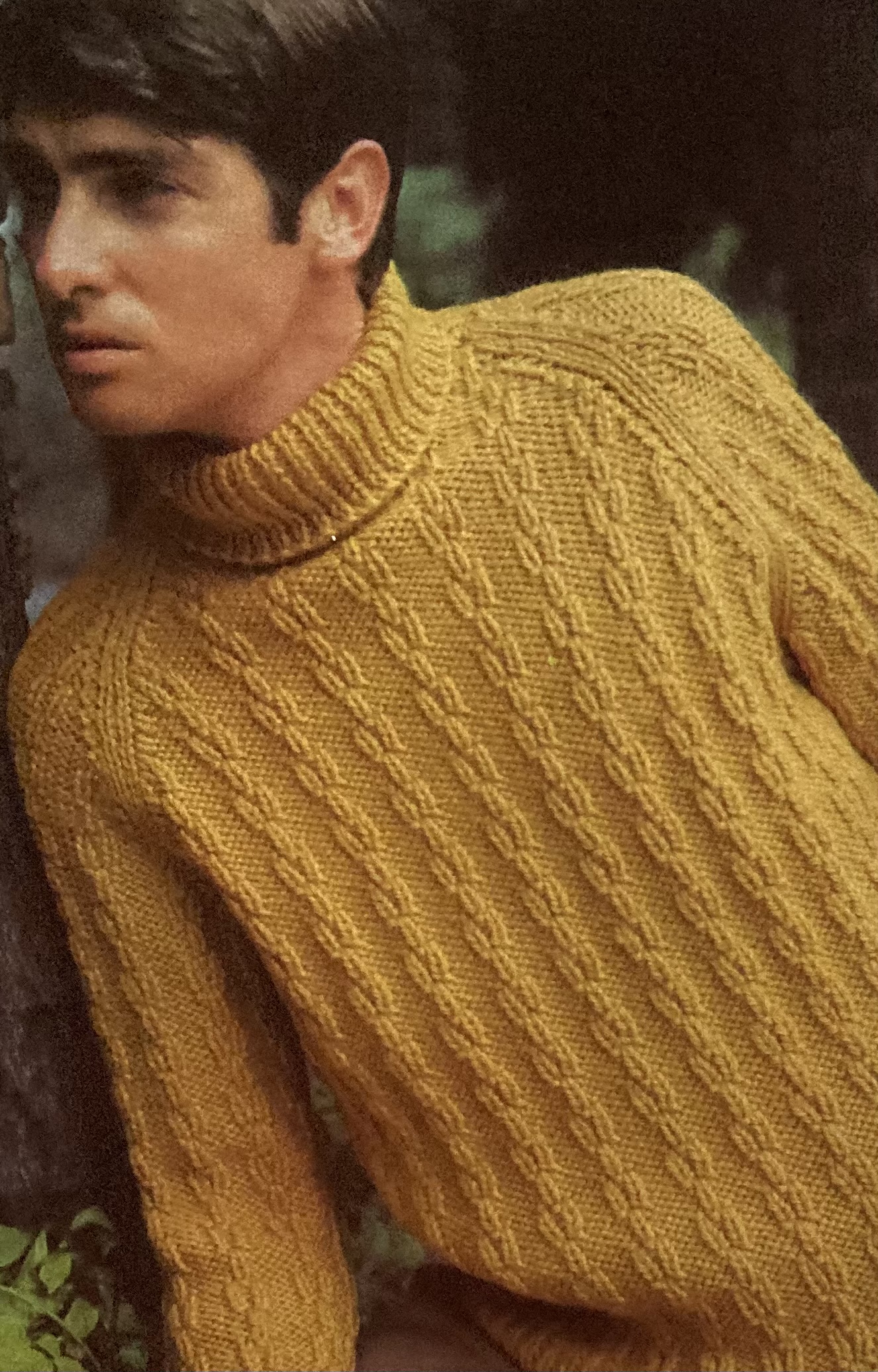
There are two designs for men, both featuring thick wool, warm gold colours, and textured, geometric patterns similar to the ones used in the women’s garments. The zig-zag pattern is made with knit and purl stitches, with twisted stitches on the front side panels, and the textured looks-like-a-mini-cable pattern on the polo-neck pullover is made entirely with knit and purl stitches on a reversed stocking-stitch background. Note the very 1960s dynamic diagonal-line photo poses.
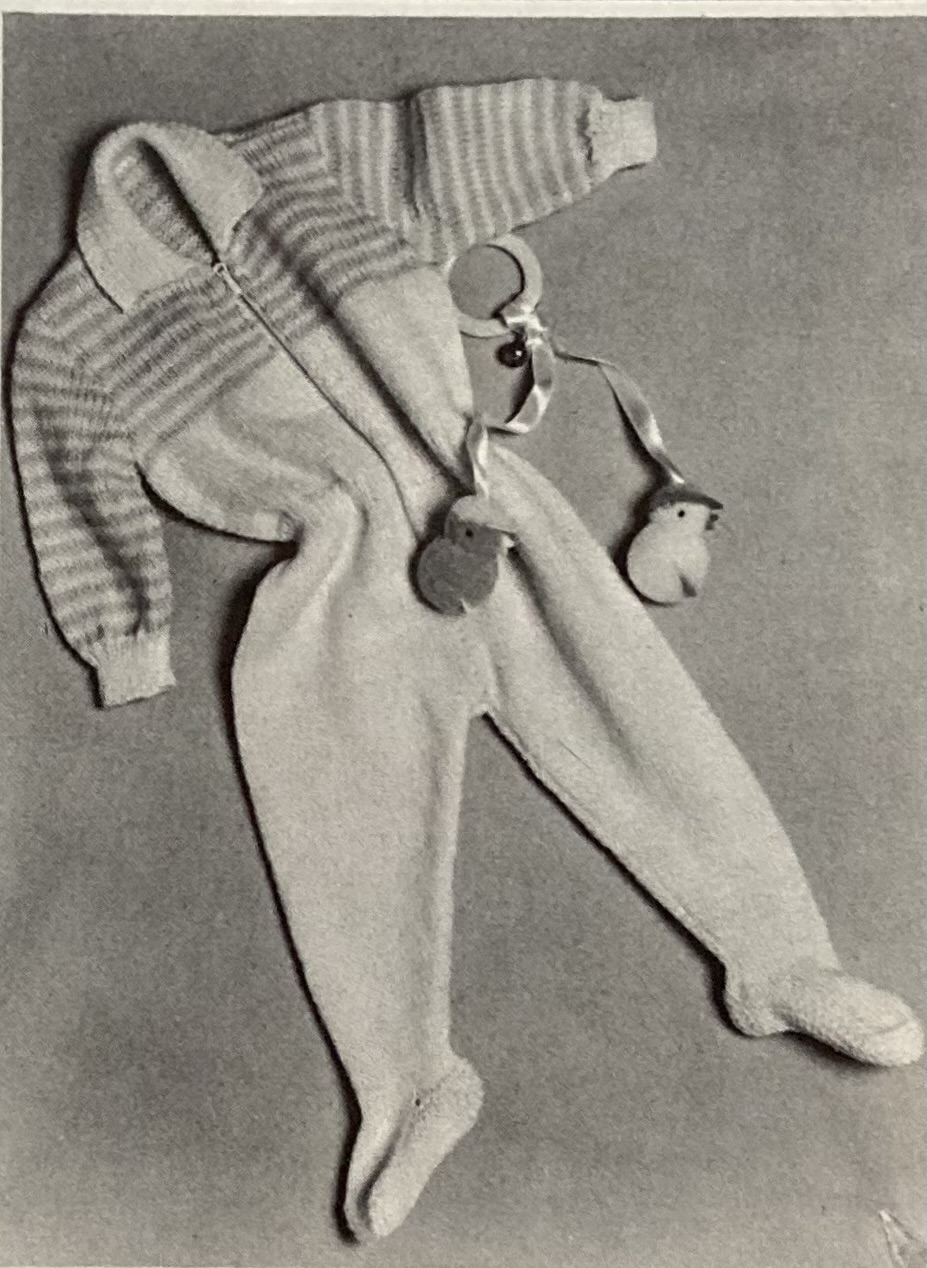
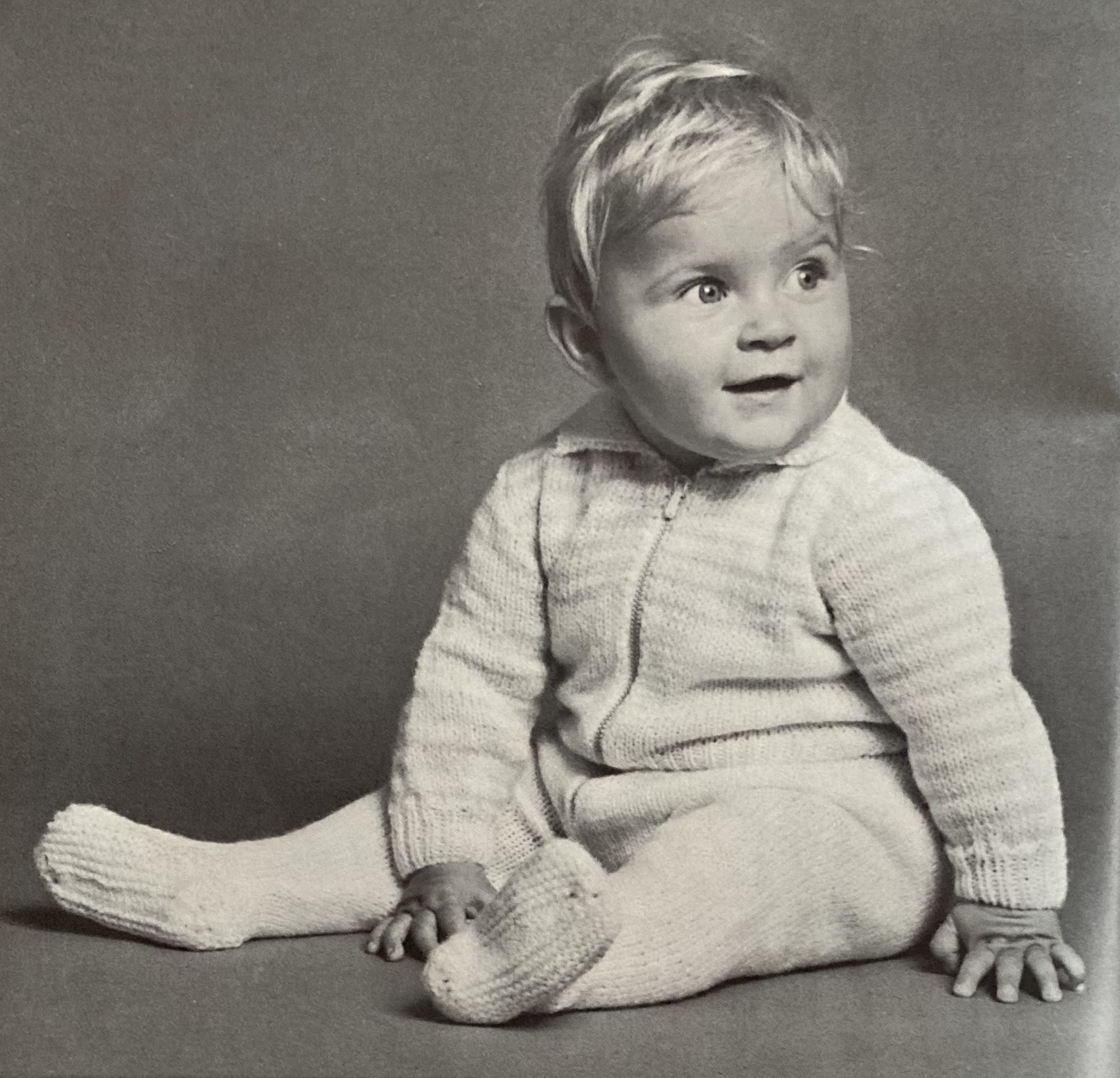
For babies, there’s a thoroughly cute, but also quite practical, zippered romper. Congratulations to the photo team for getting a baby to smile in two different photos! That’s what having warm legs will do for you.
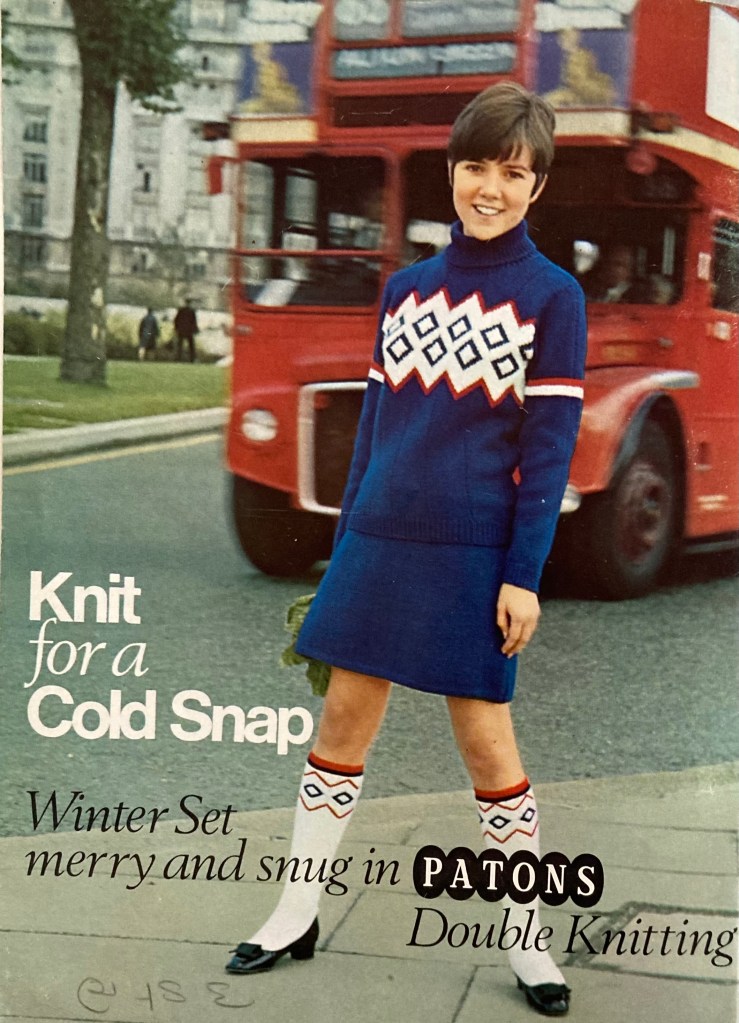
The last garment in the issue is a wonderful set intended for a young teen, made up of a jumper, skirt and matching knee socks. Here we see Stitchcraft finally getting into the swing of things, with a fun, geometric colour motif in primary colours that looks like it was inspired by a Roy Lichtenstein comic-art speech bubble.
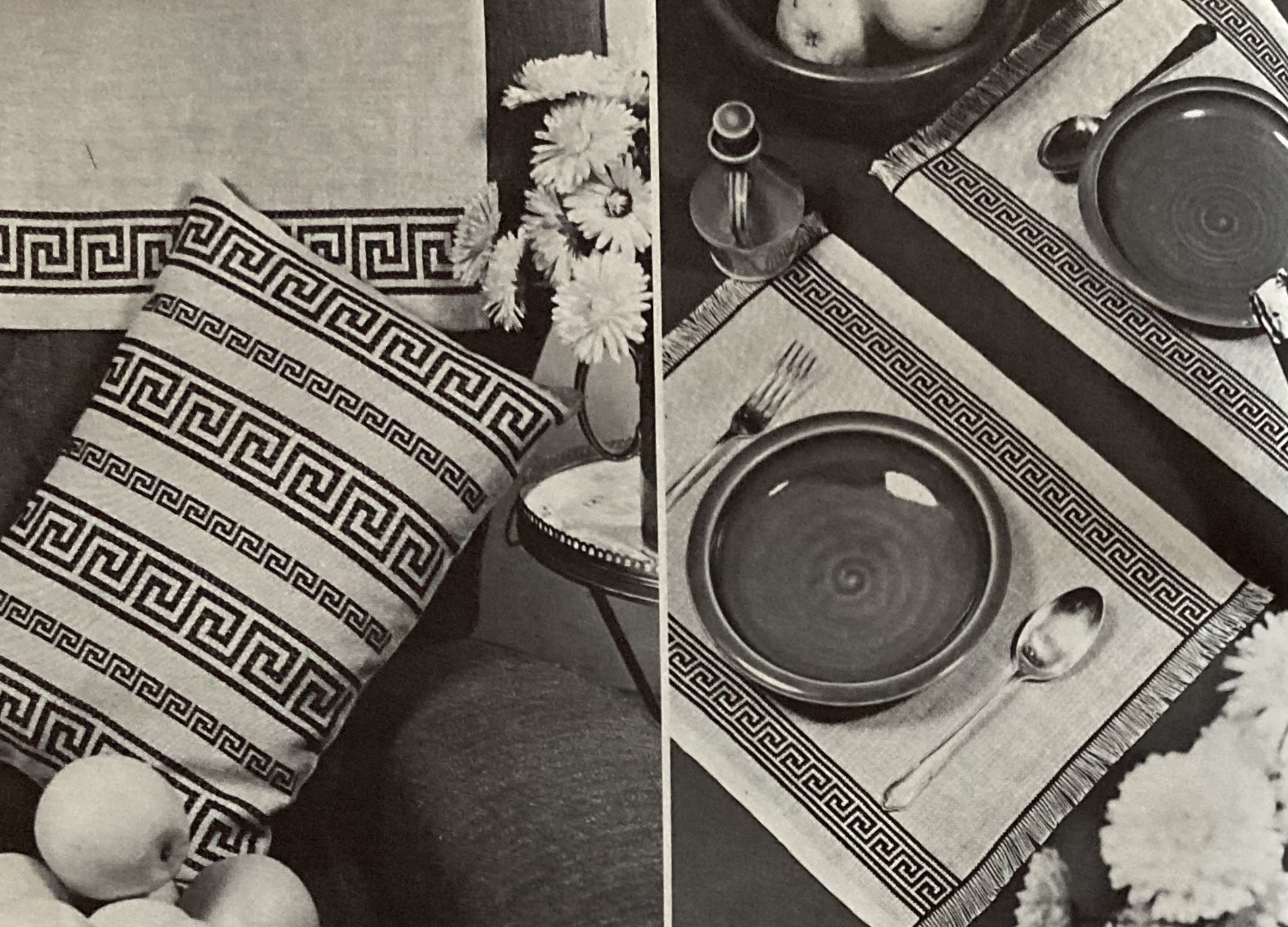
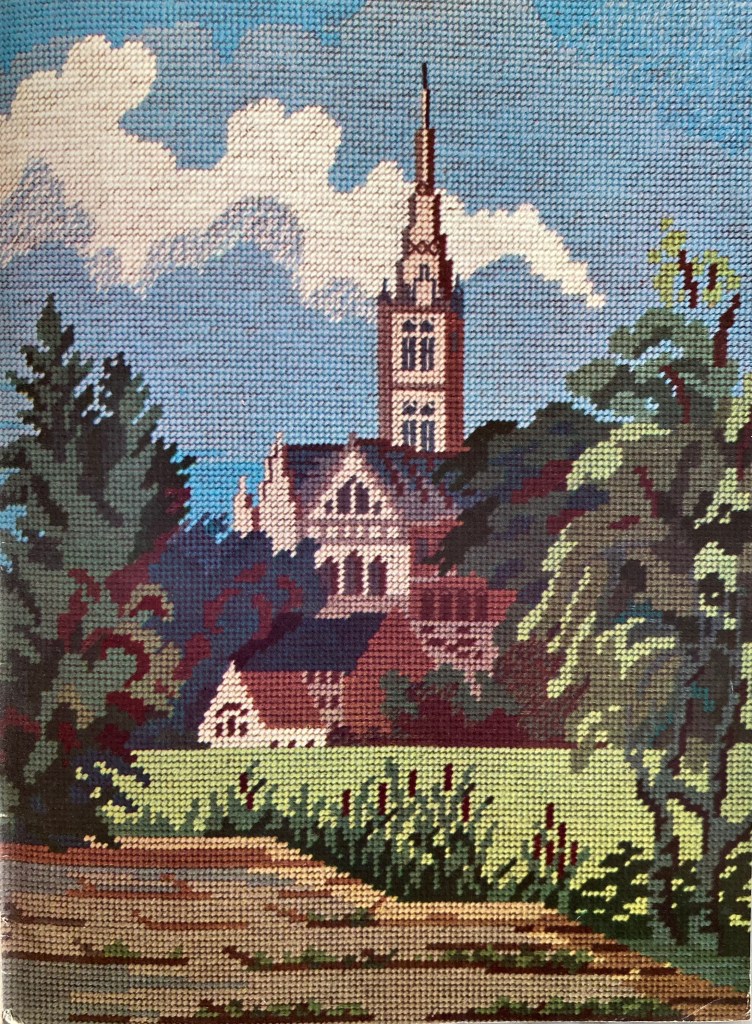
With all these great garments, it’s no wonder that the homewares are a little boring, but that’s also the direction Stitchcraft‘s homeware designs will take in the later 1960s. The most interesting design is an “attractive scene for your first attempt at a picture in tapestry.” Then there’s a tapestry design for a cushion or church kneeler, a “key pattern” embroidery design for a cushion or place mats, a cross-stitch design for a cushion or chair-back, and a design in woven embroidery for a cushion or workbag.
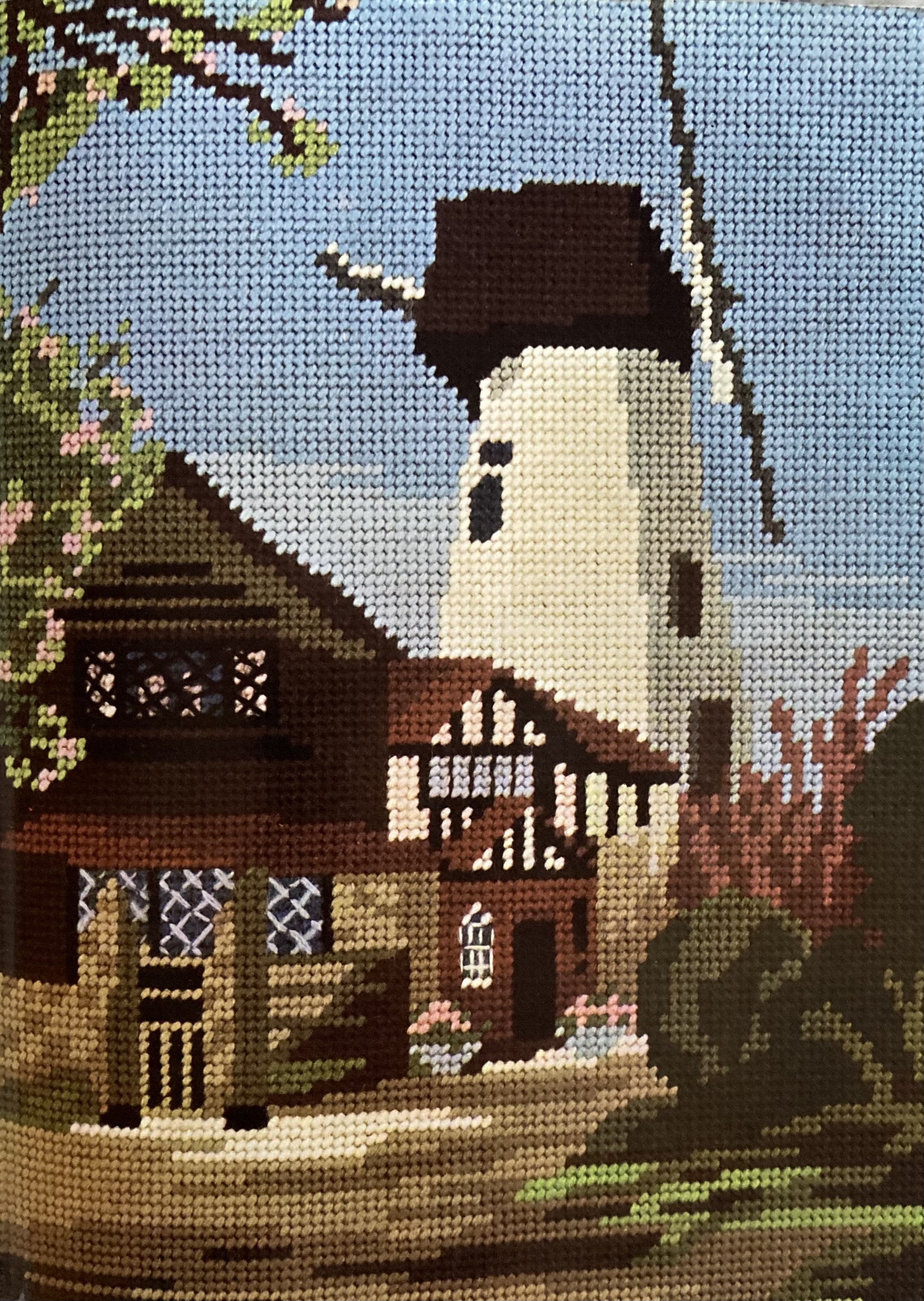
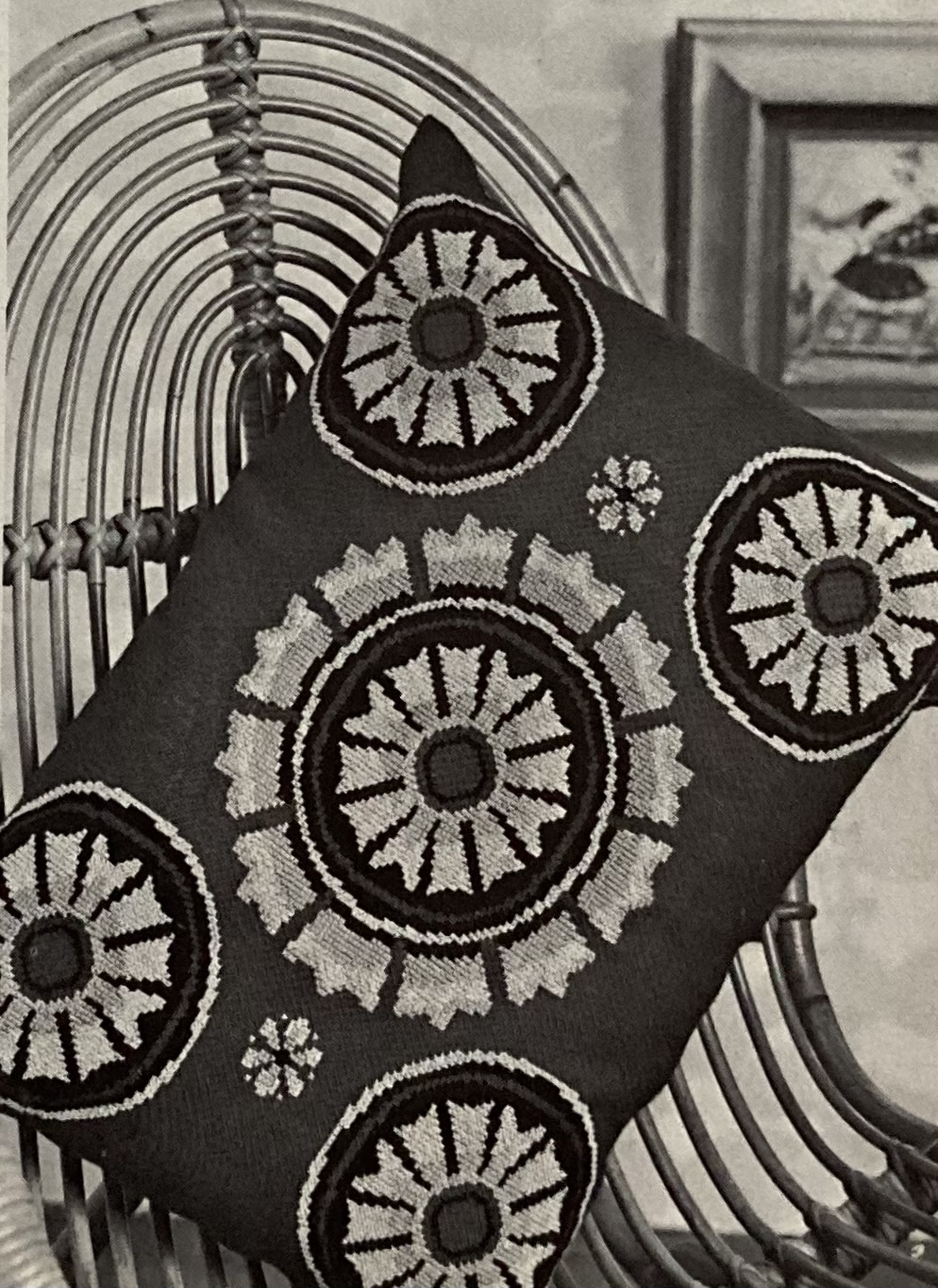
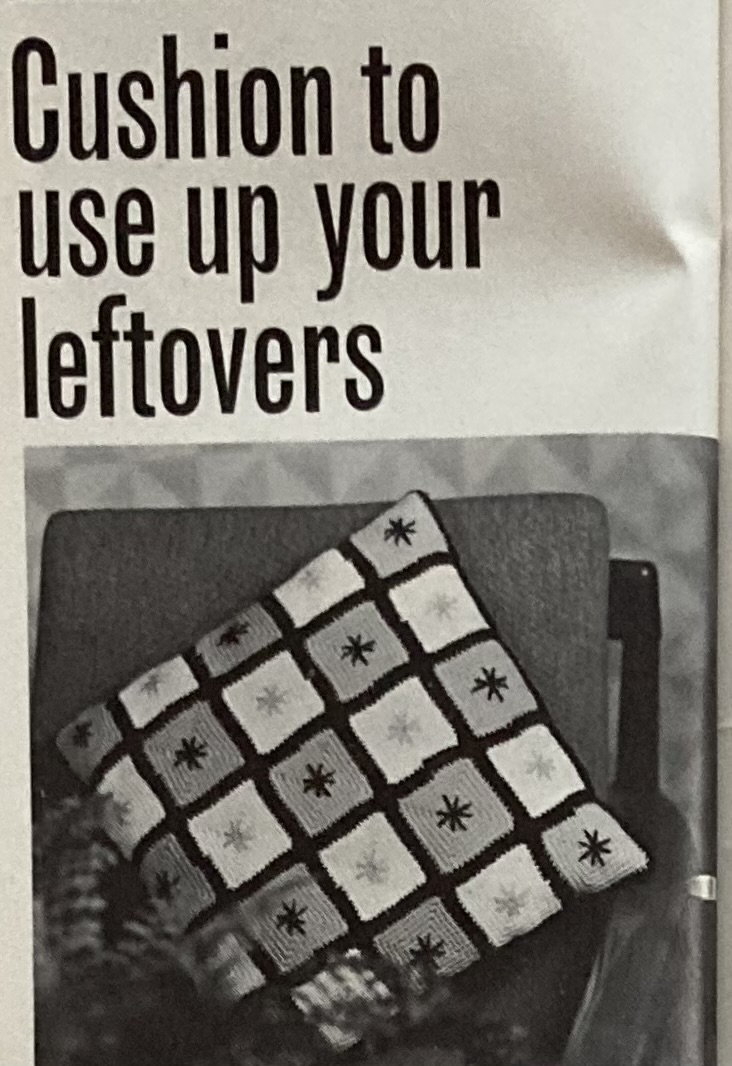
Versatility is key (but when in doubt, make a cushion.) Even the Readers Pages offers a design for a cushion, knit in squares from leftover wool.
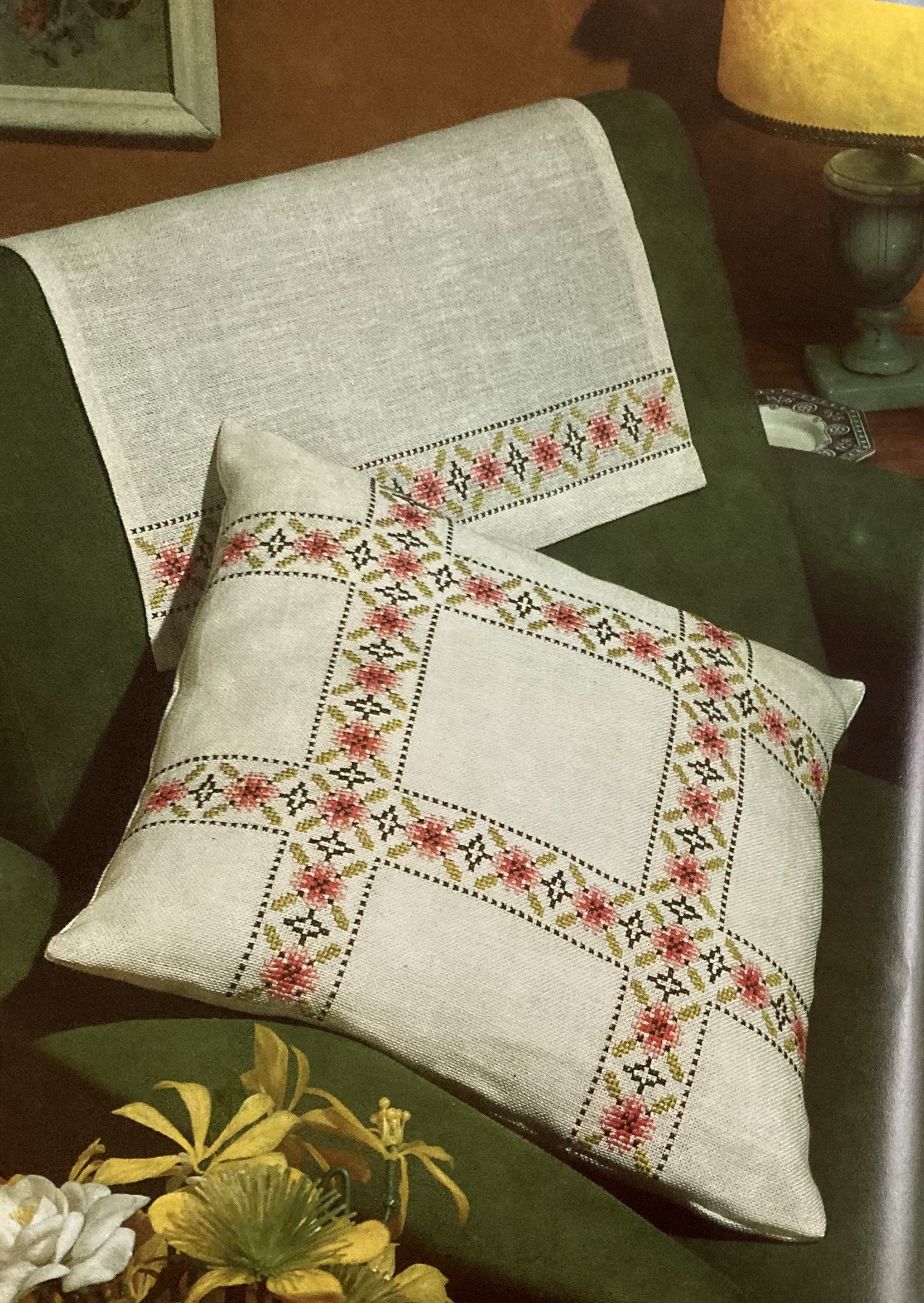
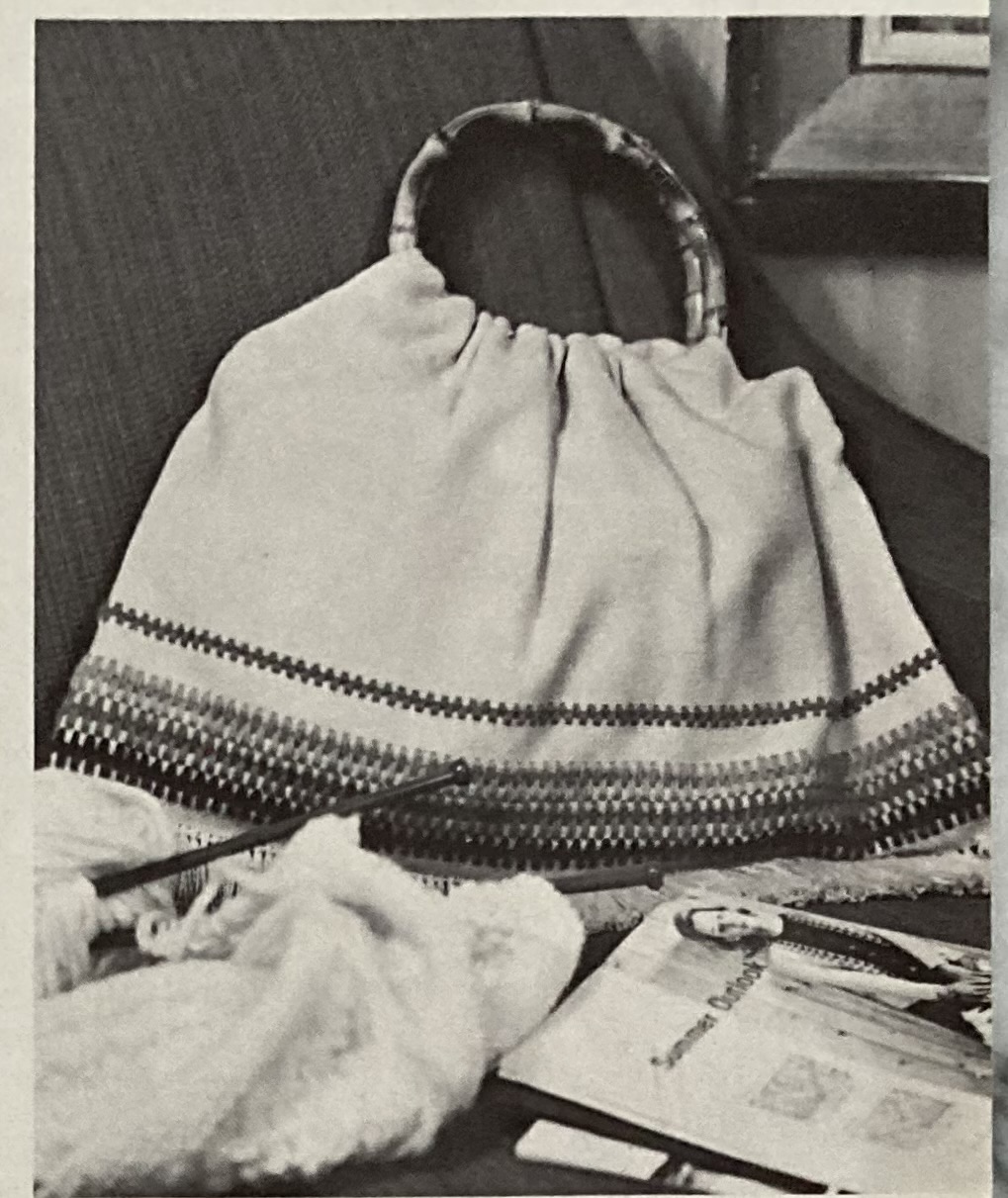
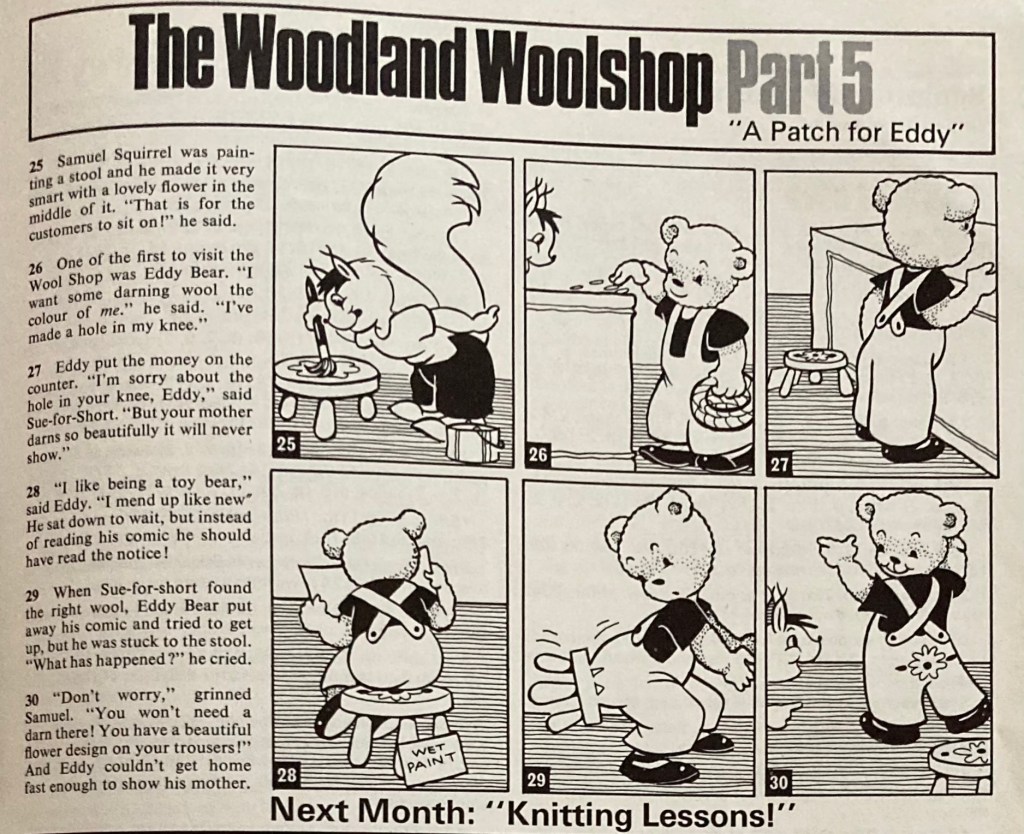
In the children’s comic, “The Woodland Woolshop”, Samuel Squirrel finds out what happens if you don’t use cushions — he paints a stool and then Eddy Bear, who has come in to replace a hole in his knee, unknowingly sits on it and gets a flower design on the seat of his trousers. May all your mistakes turn out so fortunate.
November 1967: Overview

Autumn is officially here, winter is around the corner, and Stitchcraft‘s November 1967 issue presents “the GOLDEN LOOK for winter sparkle”, with warm garments, warm colours, fun textures, and matching his-and-hers outfits to chase away the cold, grey days of November.

Our cover models sport matching polo- (aka turtle-) neck sweaters in “Flair” wool and a suitably golden colour called “Musk.” There are only two sizes given: 35-37 or 40-42 inch bust, so intended as a one-size-fits-most, basically unisex pattern. The textured pattern is made entirely with knit and purl stitches. Our other partner-look models wear polo-neck pullovers as well, with a simple stranded chevron border at the hem. They seem to be designed for somewhat younger and thinner folks, with three sizes from 32-33 to 38-39 inch bust. There’s one more design just for men: a “country cardigan” in blue wool and a fern-like textured pattern.

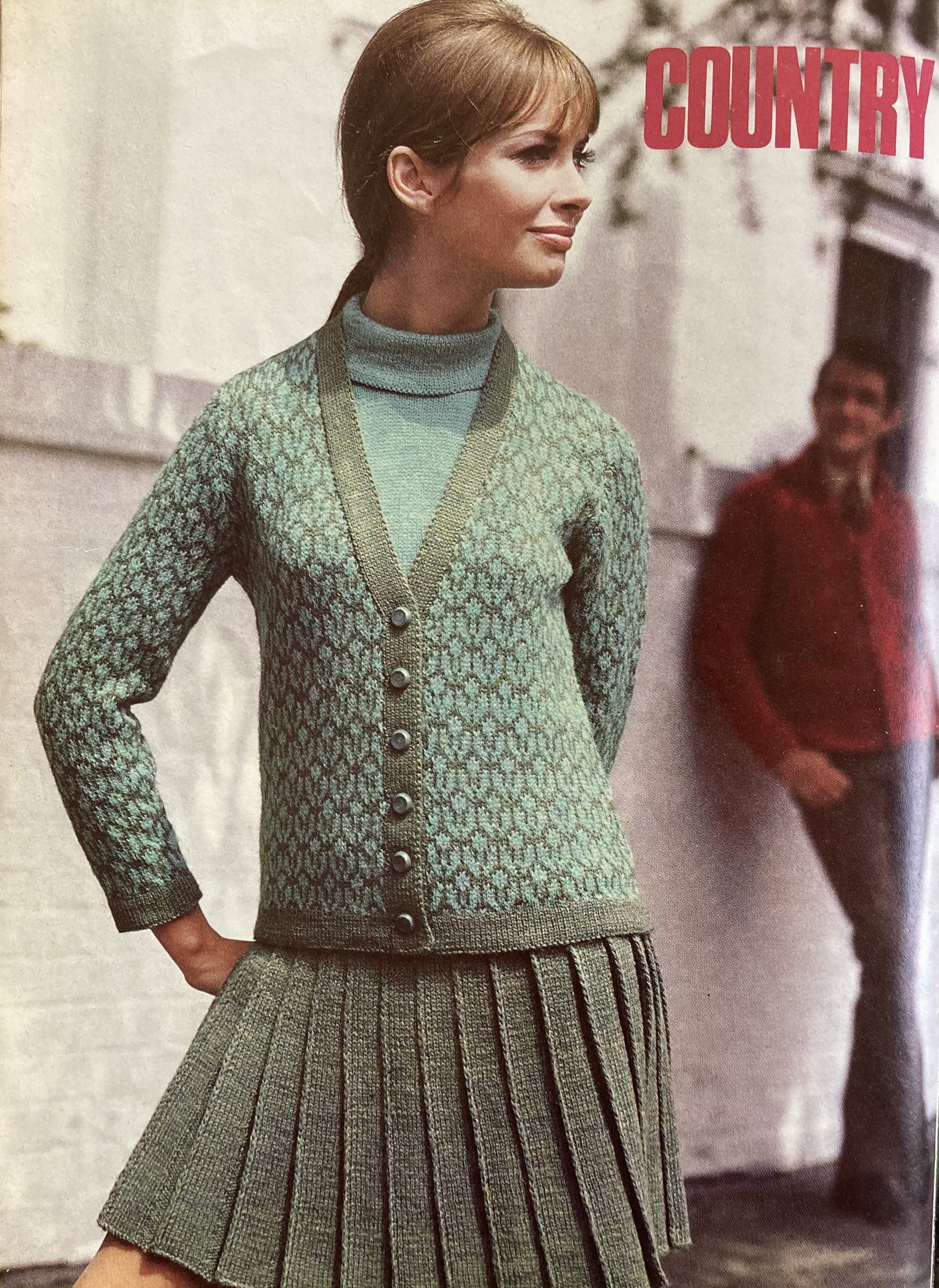
The women’s designs include a rich green jumper suit, with a buttoned pullover in low-contrast stranded diamond pattern and a plain olive-green skirt; a hooded jacket in a chunky bobble-like pattern made with twisted stitches; a delicate jumper in soft, fuzzy “Princess” wool with a contrasting colour yoke; a polo-neck pullover in colourful “rainbow” chevron pattern; and a bright blue cabled jumper for larger sizes (40-45 inch bust).

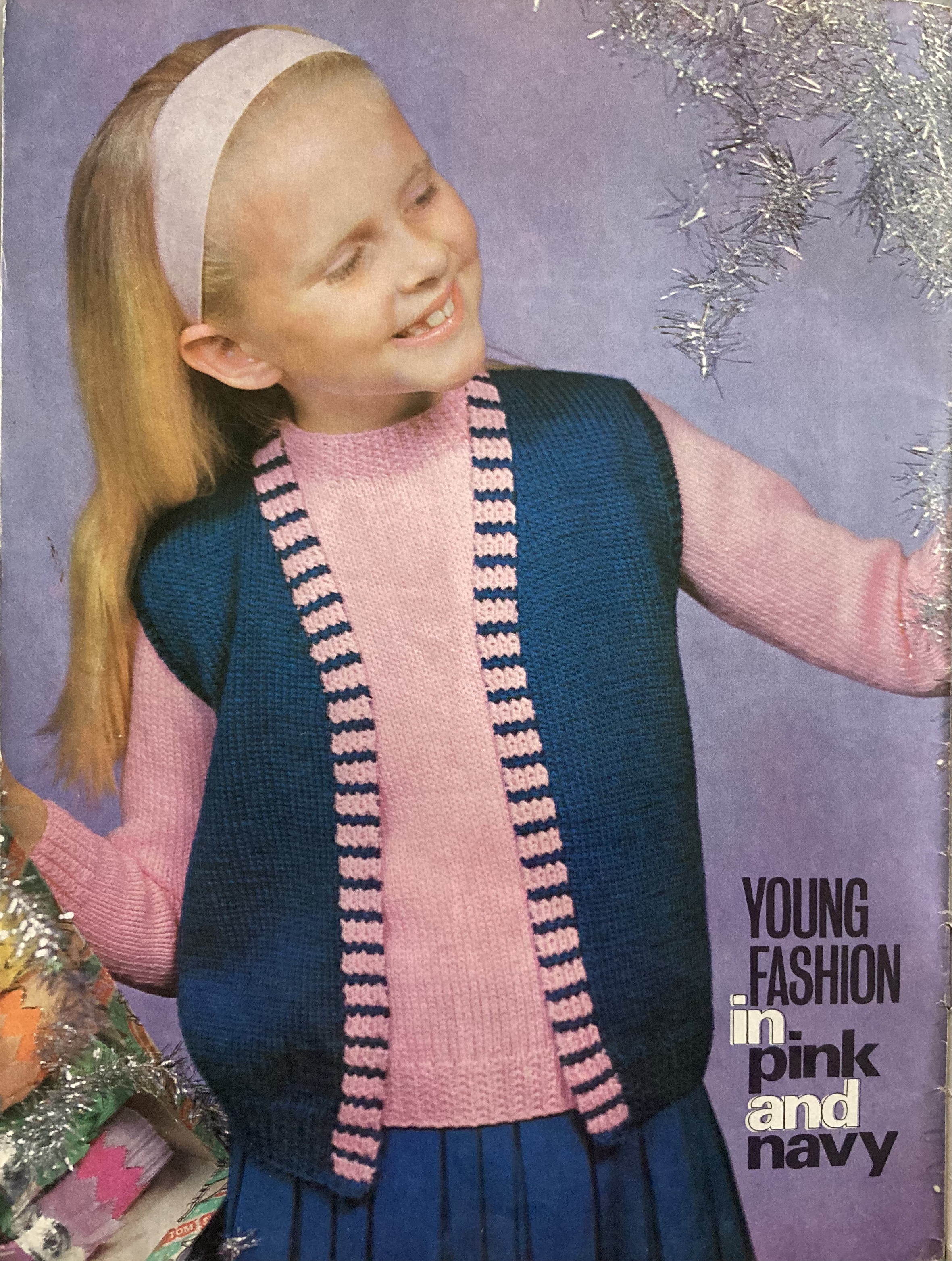
With all these great designs for adults, it’s not surprising that there’s only one children’s pattern in this issue, a tunic for girls age ca. 4 to 7. It’s knitted sideways in pieces, starting at the left side edge of the back, then the fronts separately, then the sleeves separately, which are also knit sideways. I’m glad to see the girl model wearing tights, for once! The children’s comic in the “Readers Pages”, titled “The Woodland Wool Shop”, tells the story of Daisy Lamb, who wants to learn cross-stitch, but doesn’t want to be cross about it.

The homewares and “novelties” are all designed with an eye towards December gift-giving, and most of them are featured in a single, big colour photograph. There are lots of things to make in felts: holiday-themed potholders and party mats, a night-case patterned after the nursery rhyme about the old woman who lived in a shoe, some racist “Golliwog” puppet mitts (unfortunately, still a thing), giraffes to appliqué onto an apron, coffee cosy or apron, and another truly terrifying clown intended for use as a string dispenser — yes, you put a roll of string in its head and pull the string out through its mouth. Stephen King was already 20 years old when this issue of Stitchcraft came out (and lived in another country), but if he grew up with things like this in the 50s, it’s not hard to see where he got the inspiration for It. Just saying.

You can also embroider sprays of holly on place mats or another apron, or make a cross-stitch rug or cushion in a Norwegian pattern, or a different cushion in a Florentine pattern. More advanced tapestry aficionados can make a tray-cloth or yet another cushion based on a design from a Chinese tapestry. On the simpler side, you can sew a little doll and dress her in traditional Dutch clothing, or knit a little stuffed toy set of a mother and baby fox. Many, many gift ideas in this issue. Oh, and another rug, in cross stitch!

The ideas keep coming, with two little cross-stitch pictures symbolising “Autumn” and “Winter” (to match the “Spring” and “Summer” pictures in the last issue). And how could I not mention the best gift idea of all: the bed-jacket in loop-stitch, modeled by my favourite model, who seems to have been hired by Stitchcraft exclusively to model bed-jackets with a sexy come-hither smile. I have to admit, the loop-pattern spoils the sexiness for me, but we all have our own preferences… Love the pink-on-pink photograph, though.

That’s all for this issue! My project will be the buttoned pullover from the jaquard jumper suit (just the jumper for now.) May your November be bright and golden.

October 1967: Overview

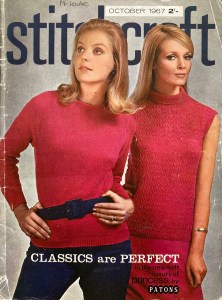
The October 1967 issue of Stitchcraft brings “special news for knitters”: a new wool, Patons Princess. A lightweight yarn made up of 85% lambswool and 15% angora, it was presumably soft and fluffy, and promised to be “smooth and easy to knit”. The classic raglan pullover and lacy “shell” on the cover both use it, in bright pink “Camellia” colour.

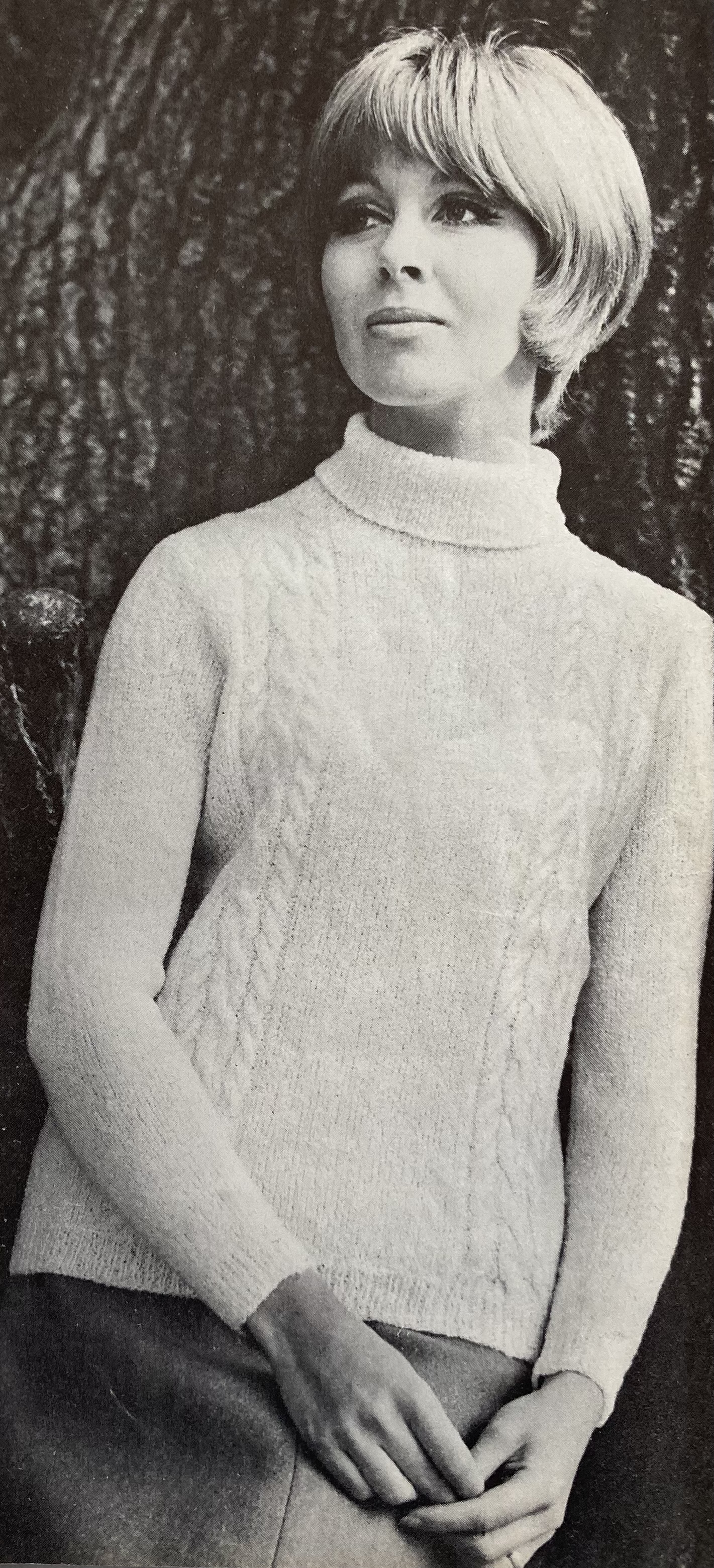
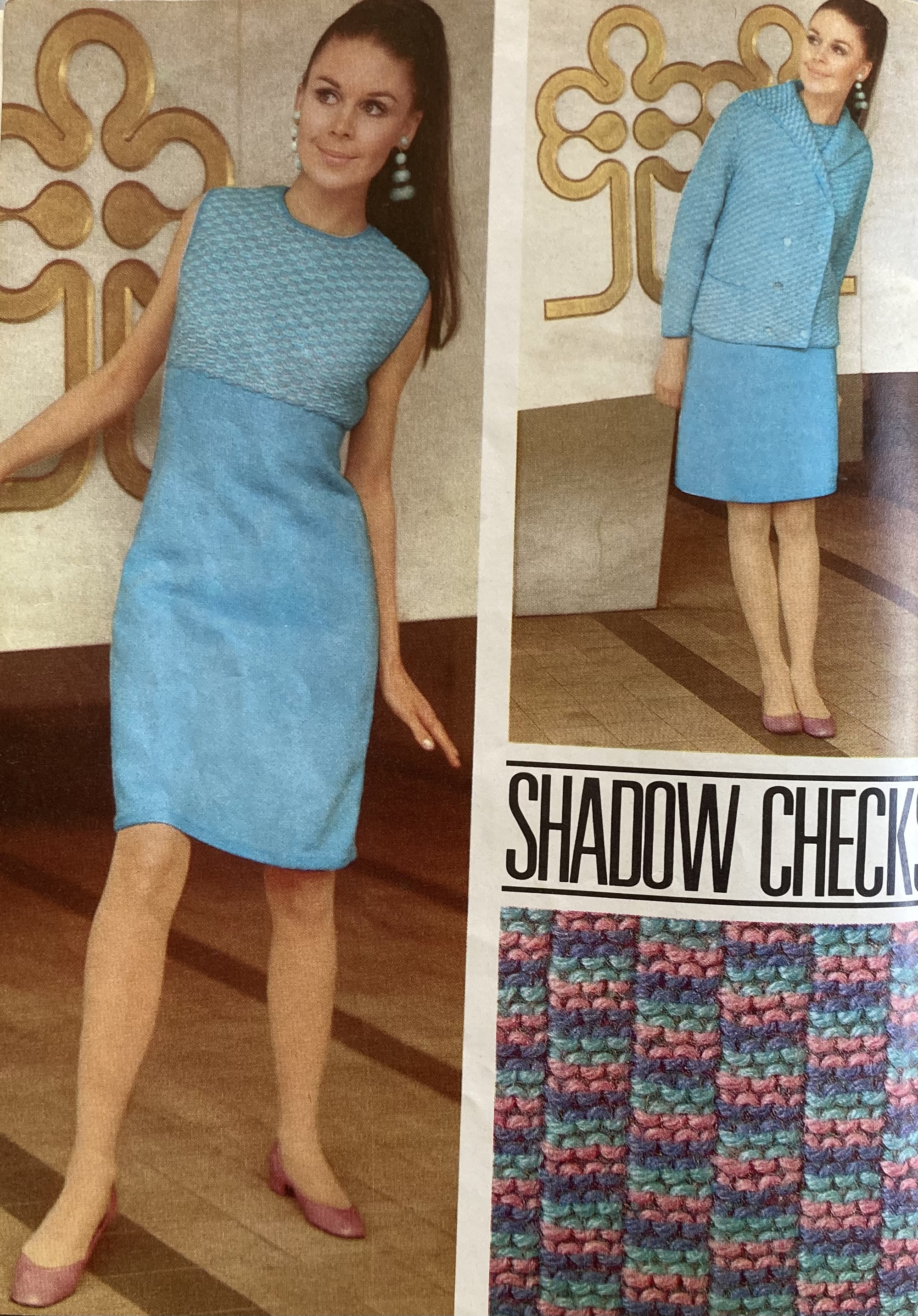
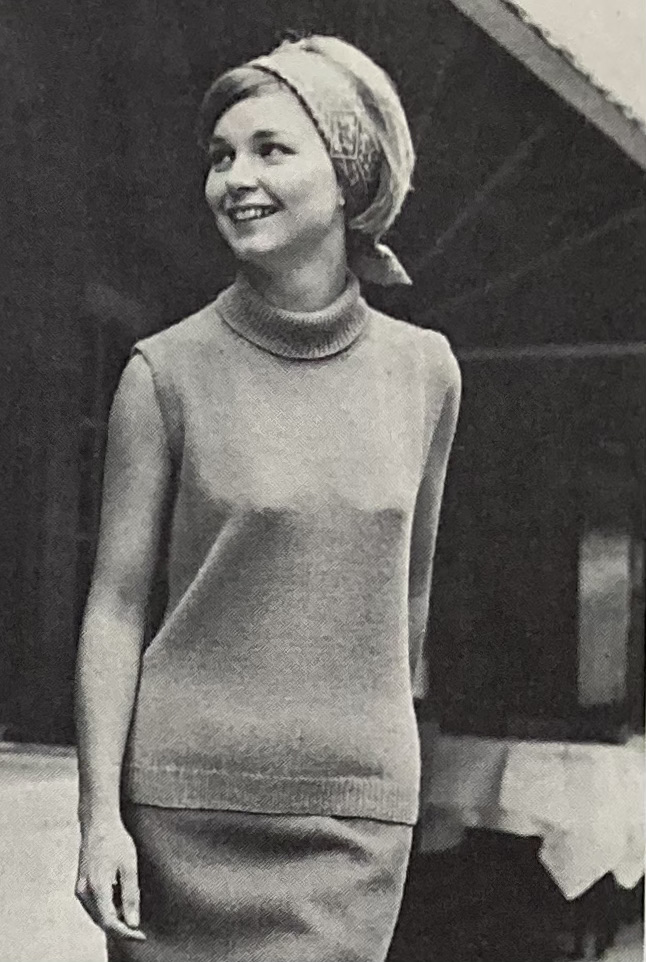
Sleeveless shell notwithstanding, the issue looks towards cooler autumn days and the pre-Christmas holiday craft rush. “Winter Plans include the Polo Classic” is the caption for a bouclet pullover with double-strips of cables on the front. Other women’s fashions bridge the changing season with layered separates: a sleeveless dress in DK weight with “shadow check” patterned yoke and matching blazer, or a three-piece set of plain, sleeveless polo shell with pleated skirt and stranded cardigan in Shetland-mix “Fiona” wool. Polo neck(aka turtleneck) collars are in fashion, in shades of green, pink and red or in classic white and winter white.. For the coldest days, there’s a thick, warm coat-dress in brilliant marled green.

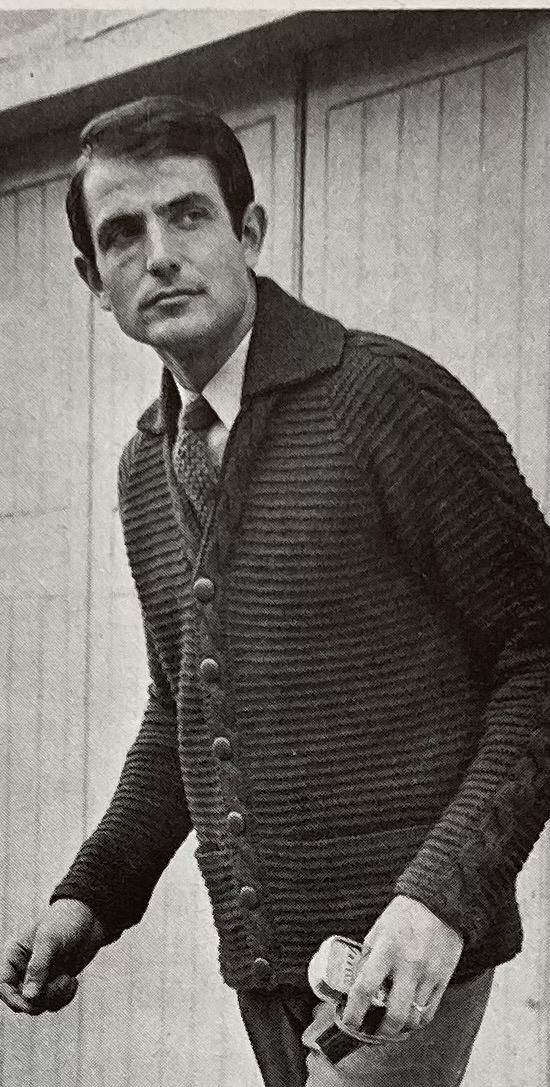
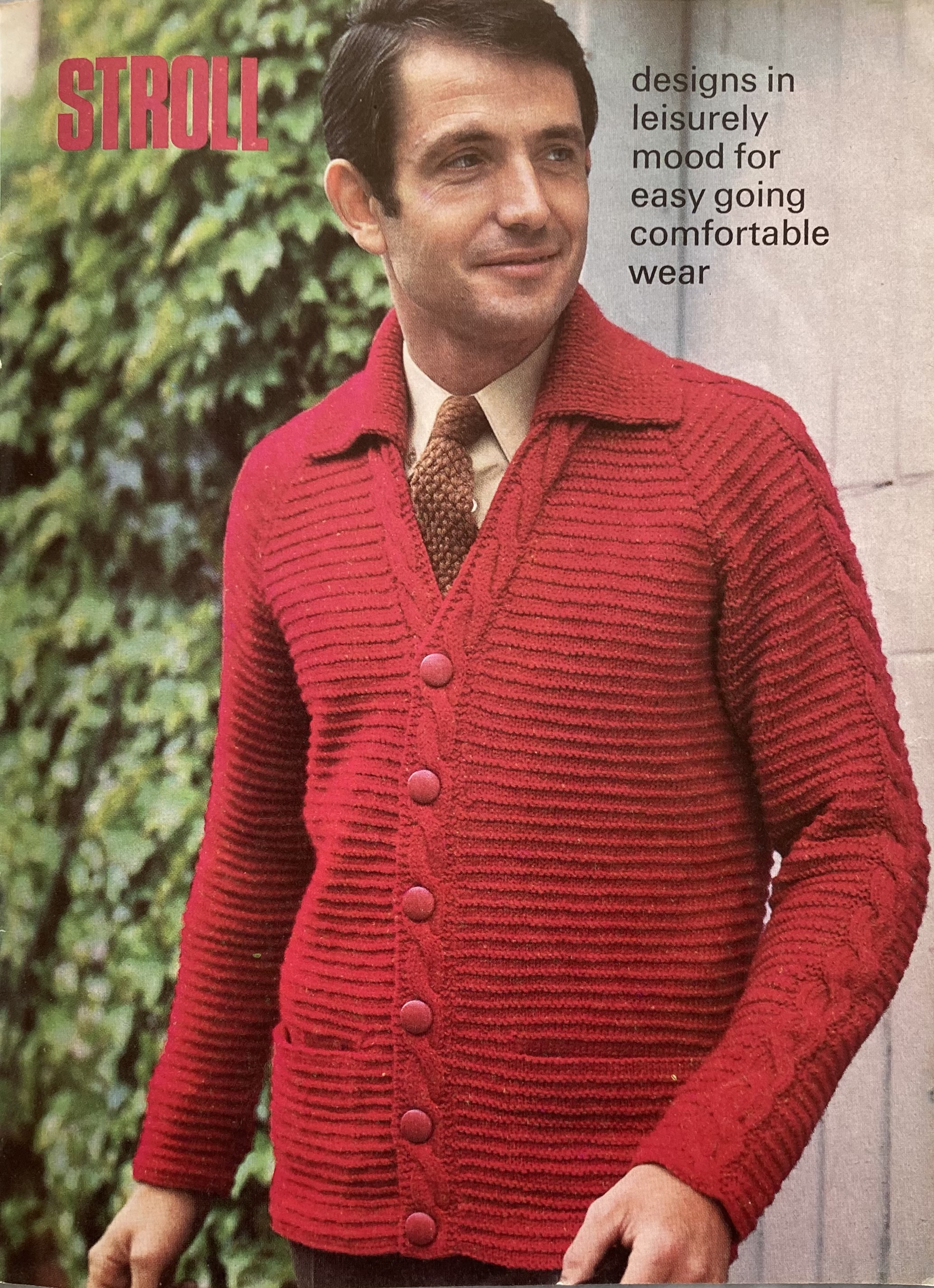
The two designs for men have a similar aesthetic to the women’s, but without the polo necks: a winter-white pullover with a simple cable pattern over reversed stocking stitch and a berry-red “stroller jacket” in a horizontal welt patttern with a nice use of cables on the saddle sleeves and button band. Note the knitted tie!

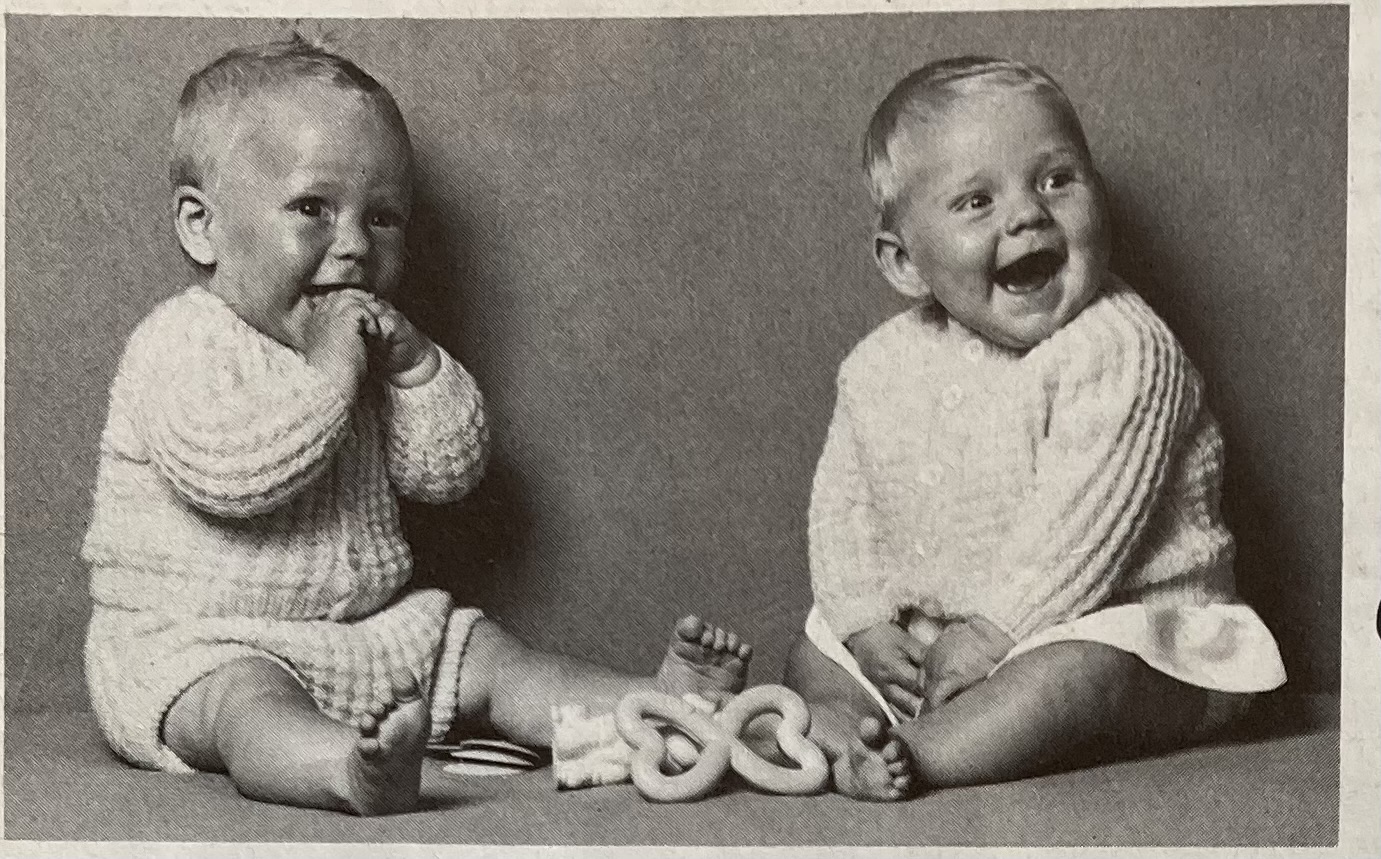
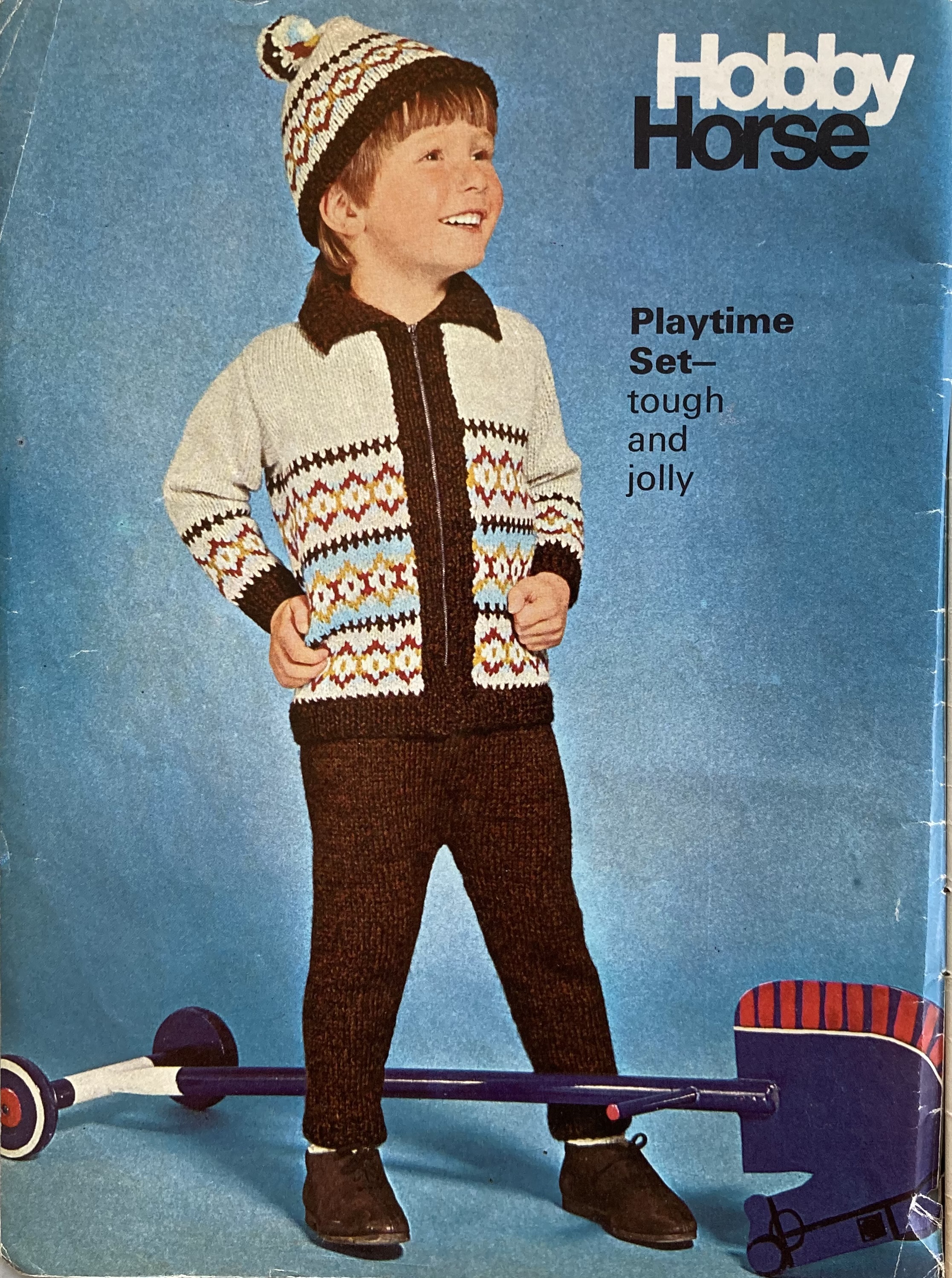
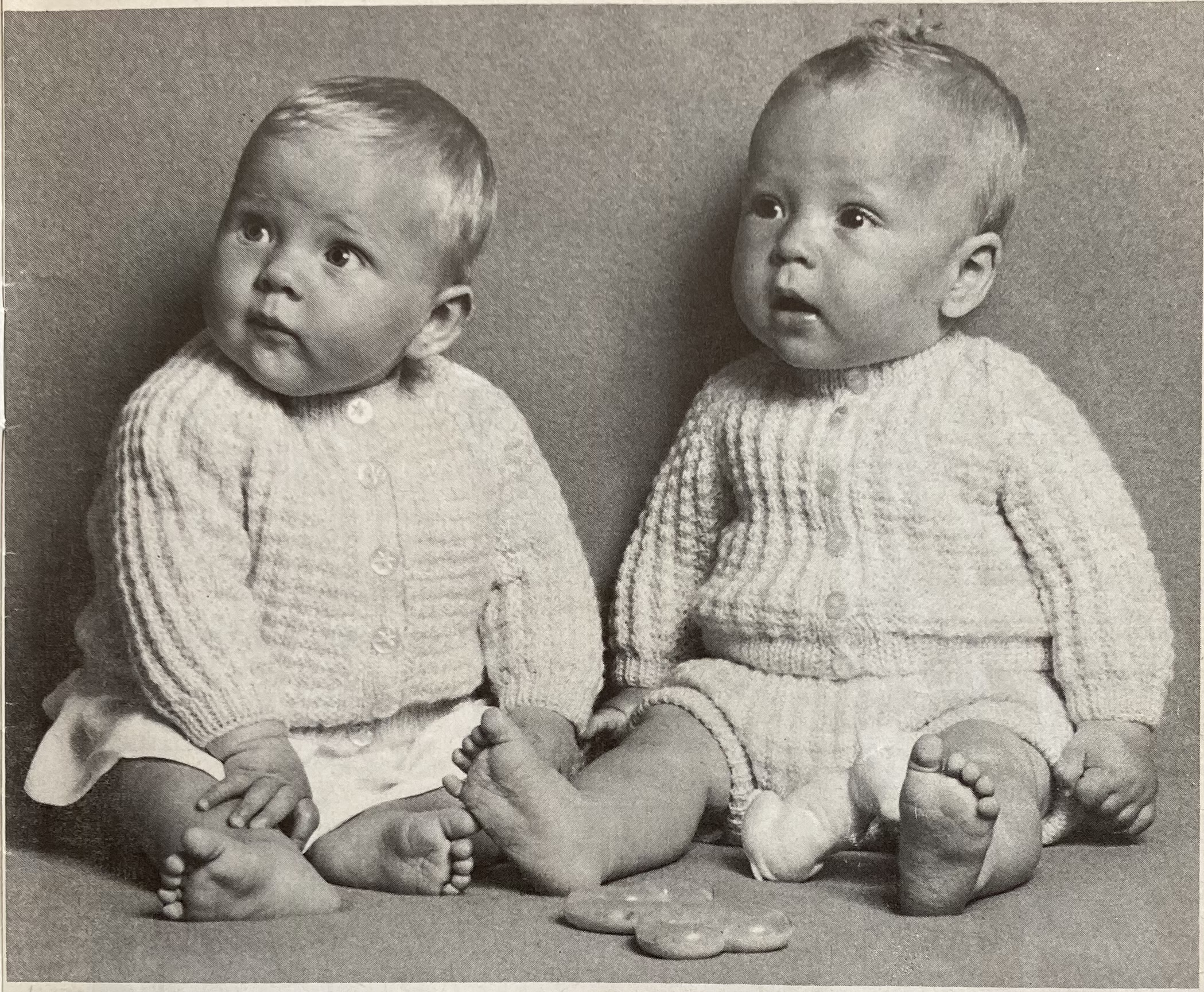
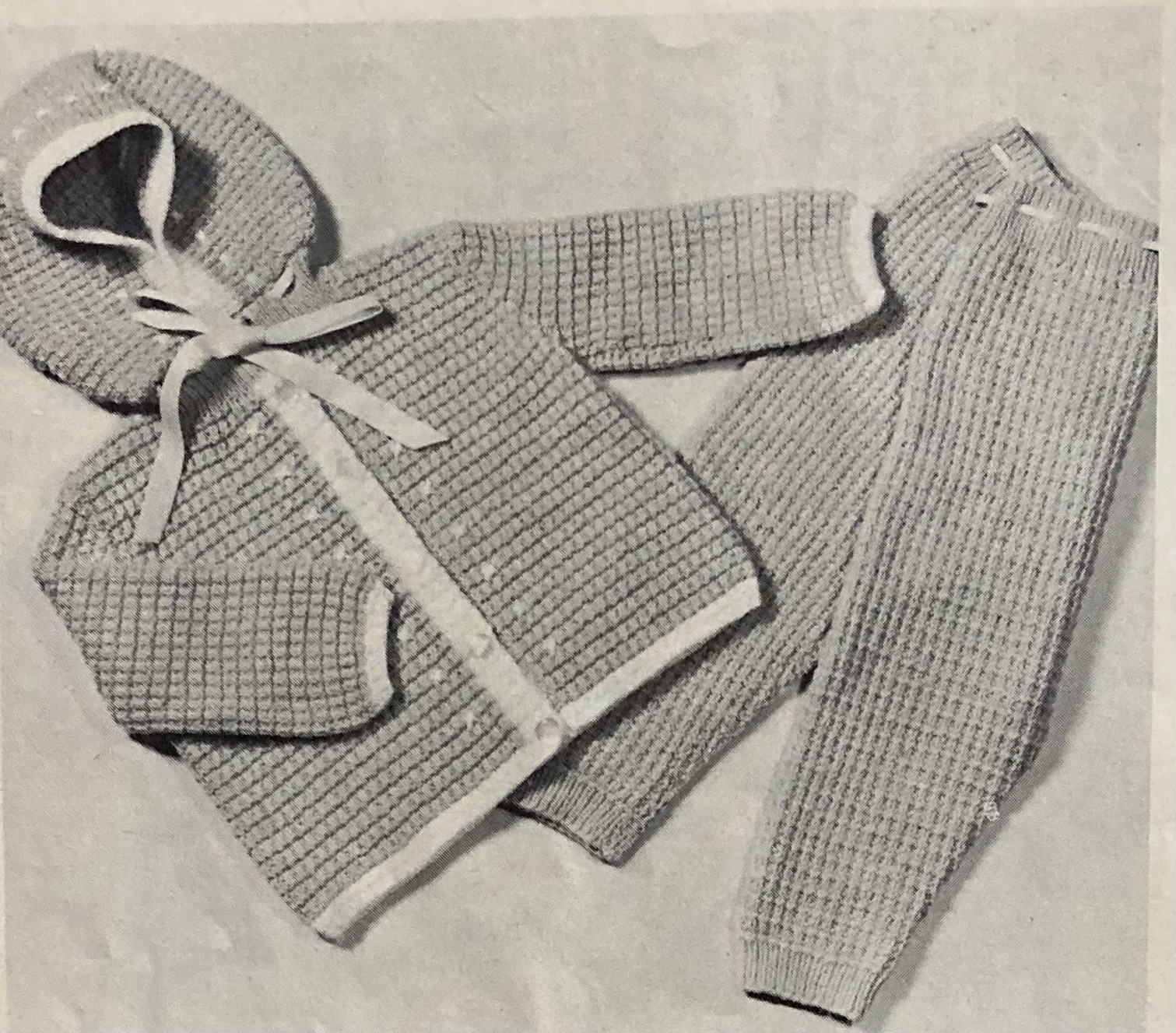
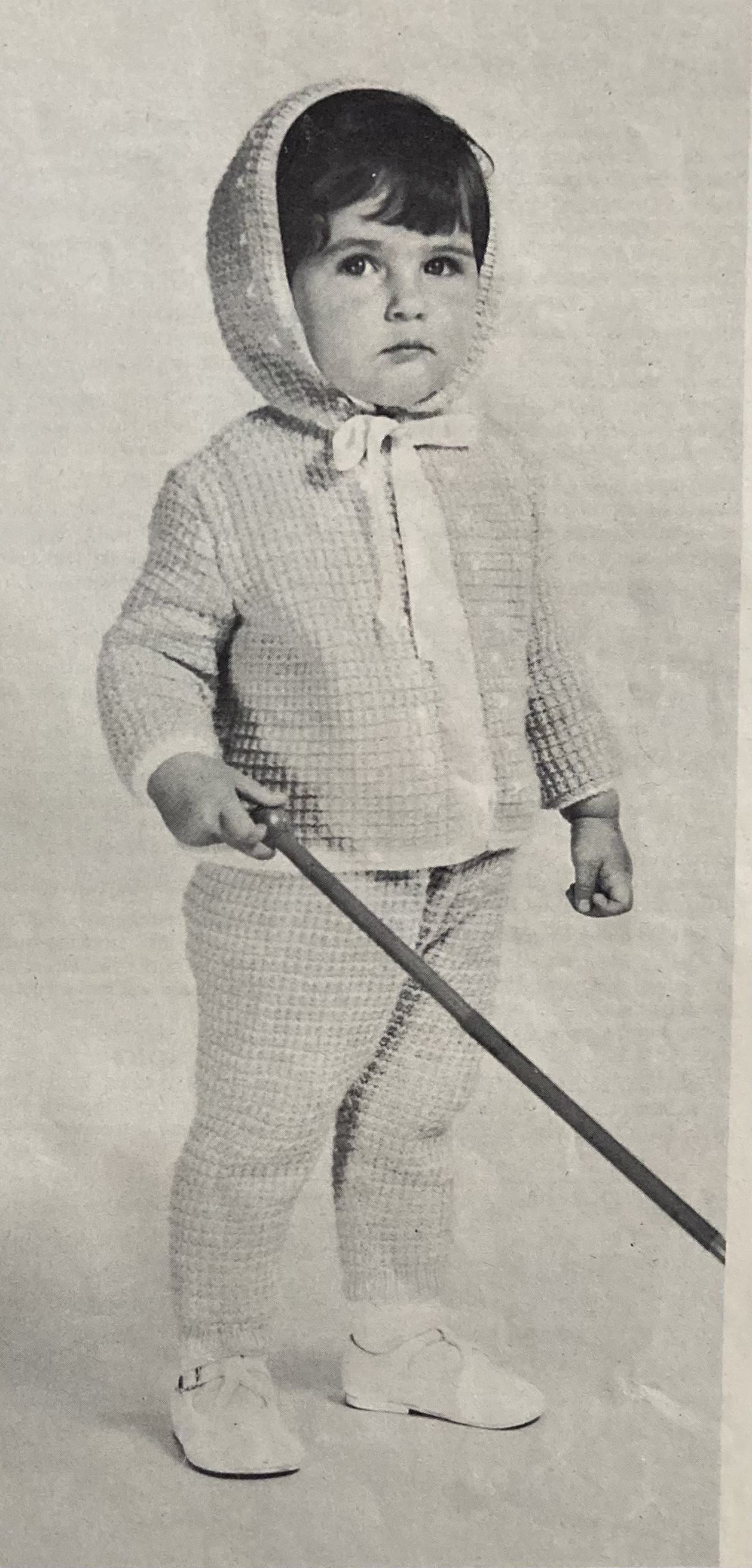
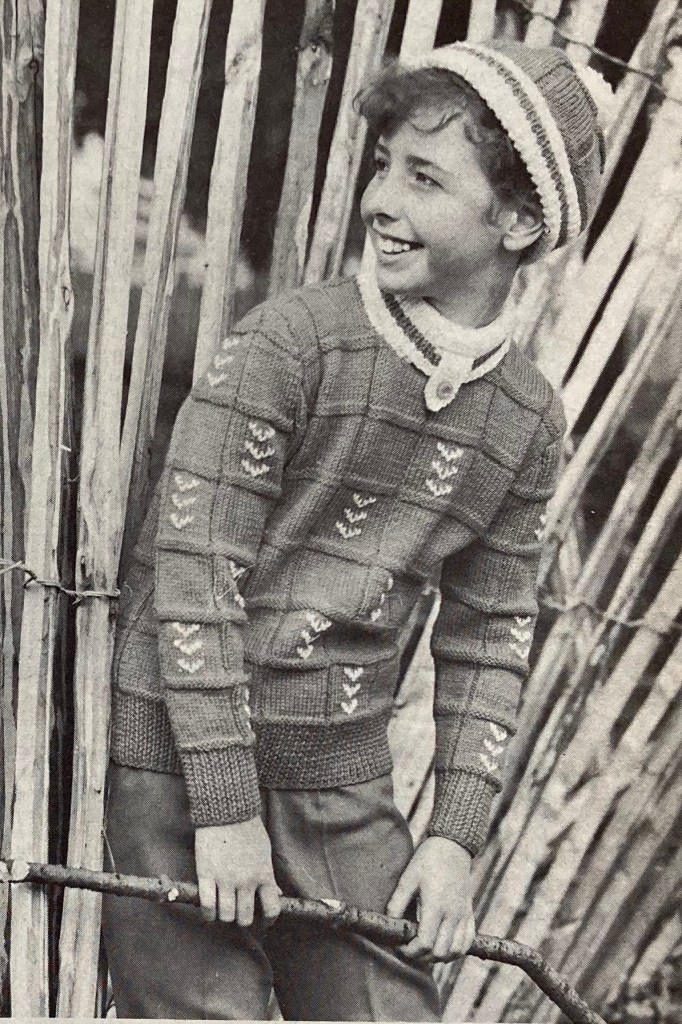
For the youngest in the family, there’s a babies’ cardigan and matching trunks (for boys — girls have to get used to a cold behind early in the age of bare-legged miniskirts and tunics). “For boys”, as well, there’s a “playtime set” of warm leggings, zipped cardigan and bobbled hat in a stranded colour pattern. Rebellious mothers could knit it for a girl, I suppose.

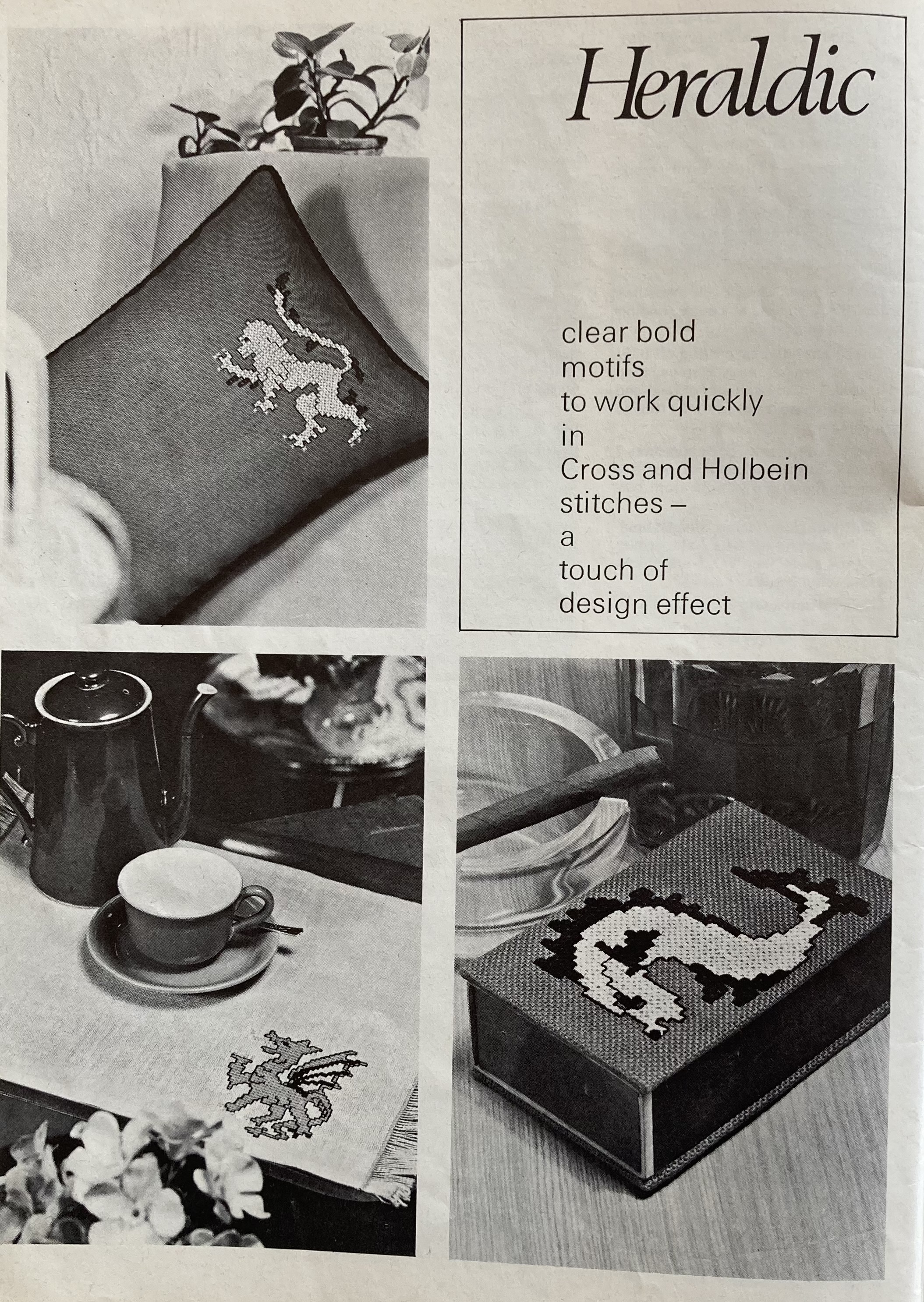
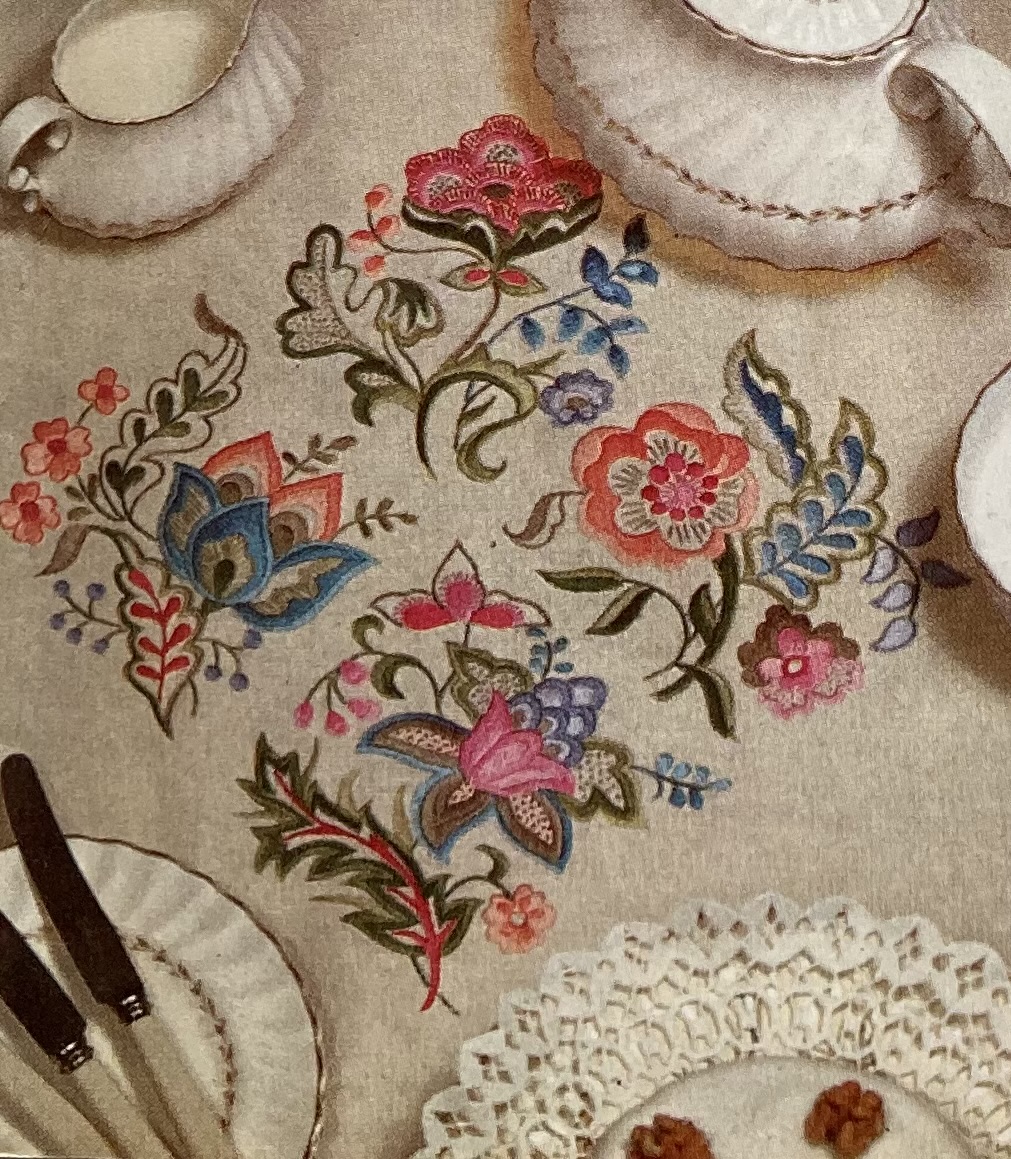
In the housewares department, there are multi-use heraldic designs of a unicorn, dragon, and fish to be worked in cross-stitch and Holbein stitch on a cushion cover, place mat, tray cloth or, interestingly, a matchbox cover. You embroider the cloth (two pieces), mount them on two pieces of cardboard and then glue them to the top and base of an existing matchbox of the larger sort that holds kitchen or fireplace matches. I actually really like the idea. There’s also a Jacobean crewel design that looks stunning on a black cushion or dainty and fancy on a white tablecloth.

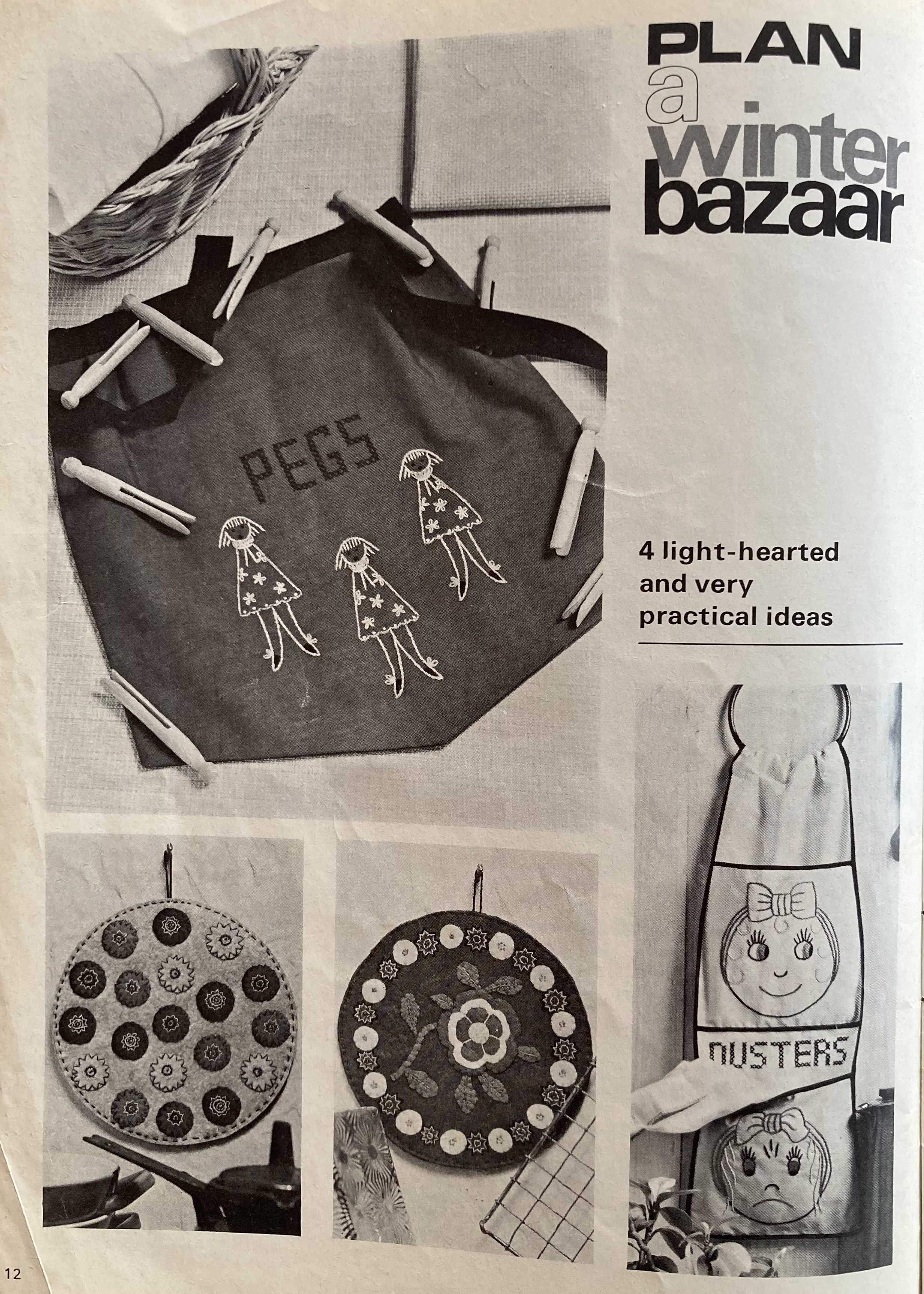
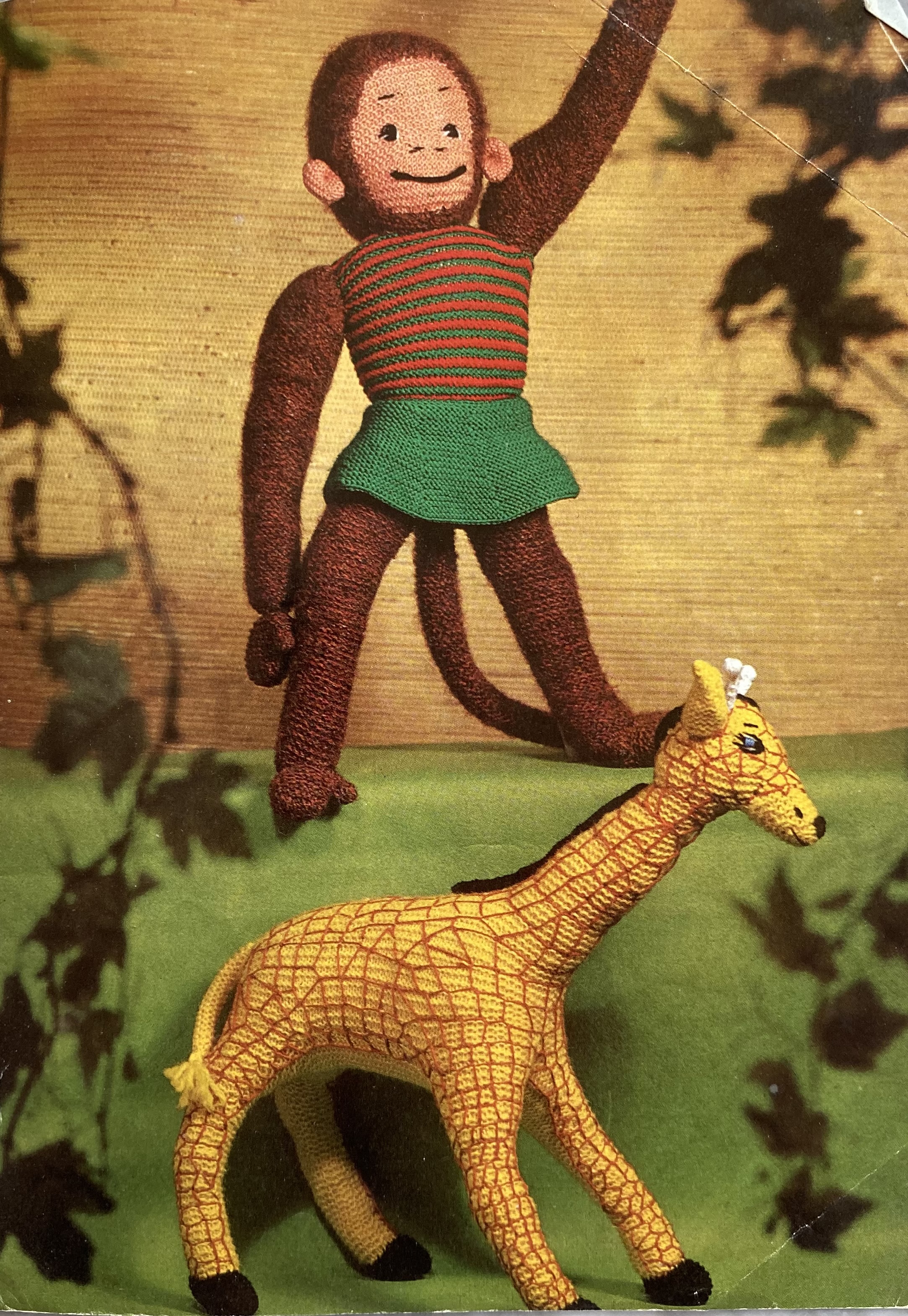
Other home and personal accessories fall under the categories of “Knitted Gifts” or the ever-present “Bazaar Items”, starting with a pretty bed-jacket worn by the Stitchcraft model who models all the bed-jackets. And if you look at any of her photos, you will know why! No other model perfects the come-hither look like she does. The resulting offspring will appreciate a cute stuffed monkey or giraffe toy. I like how the giraffe’s pattern is embroidered on, even if it doesn’t look quite accurate to a real giraffe. Finally, you can make a simple and cheerful sewn and embroidered laundry peg bag, dusting cloth bag with pockets for “clean” (happy!) and “dirty” (sad!) or a set of felt-appliqué pot holders.

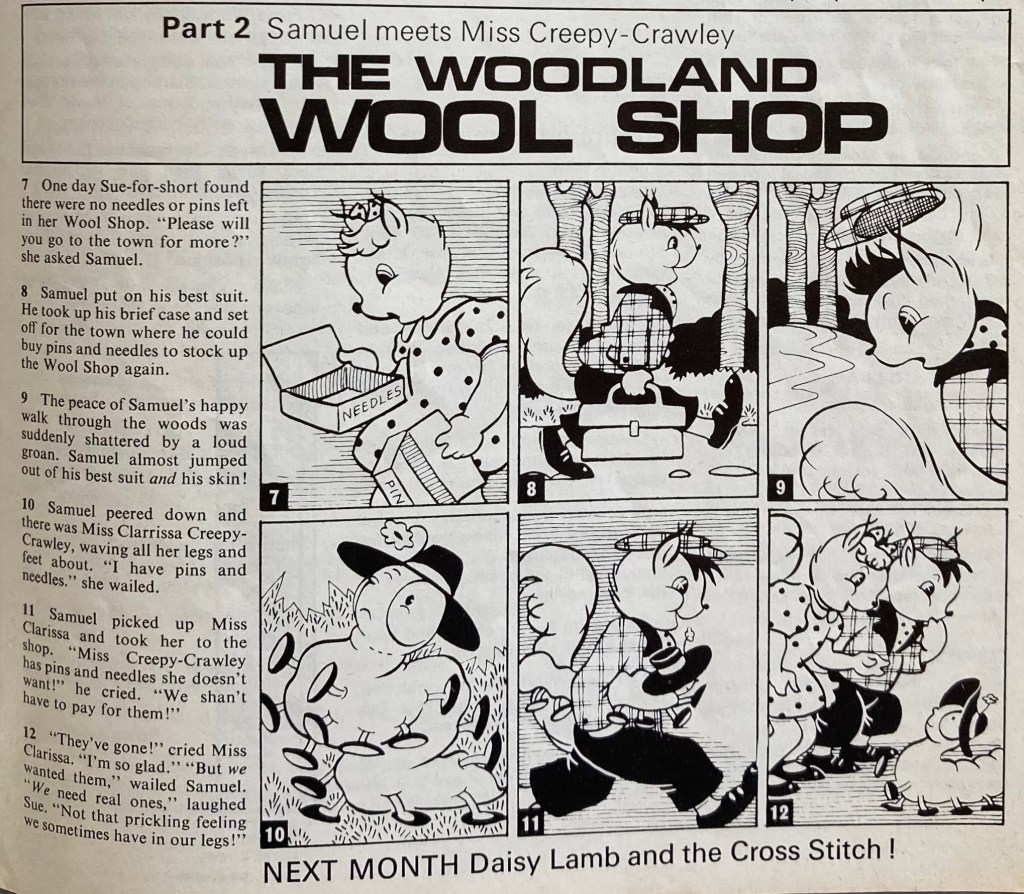
The ads are the usual ones for a sewing machine, Patons knitting books or “liver pills” to cure constipation, and the Readers Pages offer two reprints of popular items: little cross-stitch pictures of “Autumn” and “Winter” scenes for the nursery, or a cabled and bobbled ski hat that looks too small for any adult person’s head and would surely fly off if actually worn while skiing. In Part 2 of the children’s comic “The Woodland Wool Shop”, employee Samuel meets “Miss Clarissa Creepy-Crawley” (I’m sure there’s a Downton Abbey joke in there somewhere), a caterpillar with “pins and needles” — but not the kind Samuel has to buy! No fear, there’s a happy ending for all involved.

My project will be the little baby cardigan, for my colleague who is expecting a baby in November. I also ordered wool for the fabulous “Fashion Switch” knitted dress from the cover of the September 1967 issue, which will take a while to make, but maybe I can get a post about it up in October. Till then!

November 1965: Overview

Colour Radiance for Winter and Christmas Plans! At Stitchcraft, it’s generally either preparing-for-Christmas time or spring-summer holidays. This month, they countered the cold, grey days of November with bright, cheerful colours and easy homewares. Let the festive preparation begin.

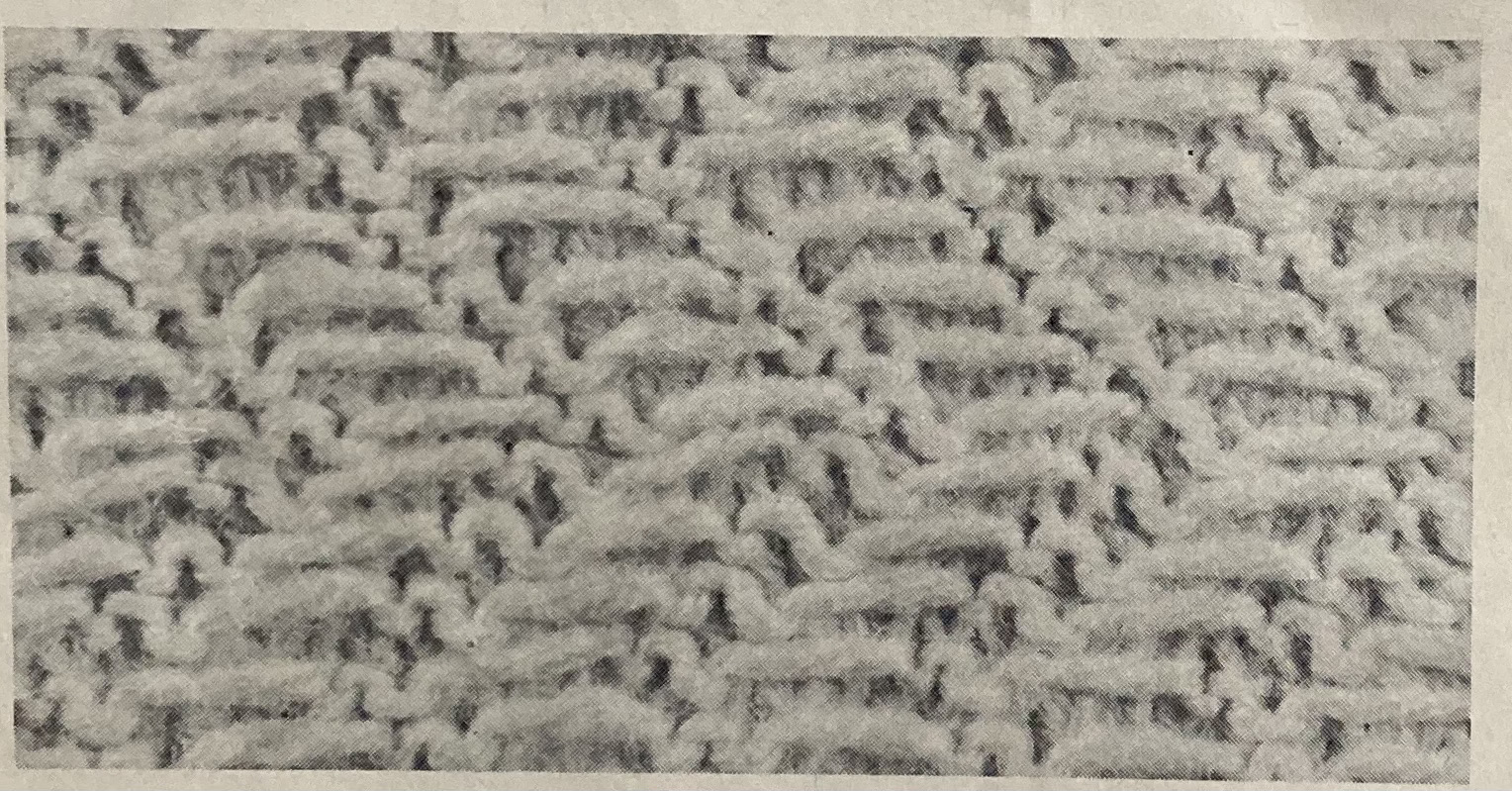
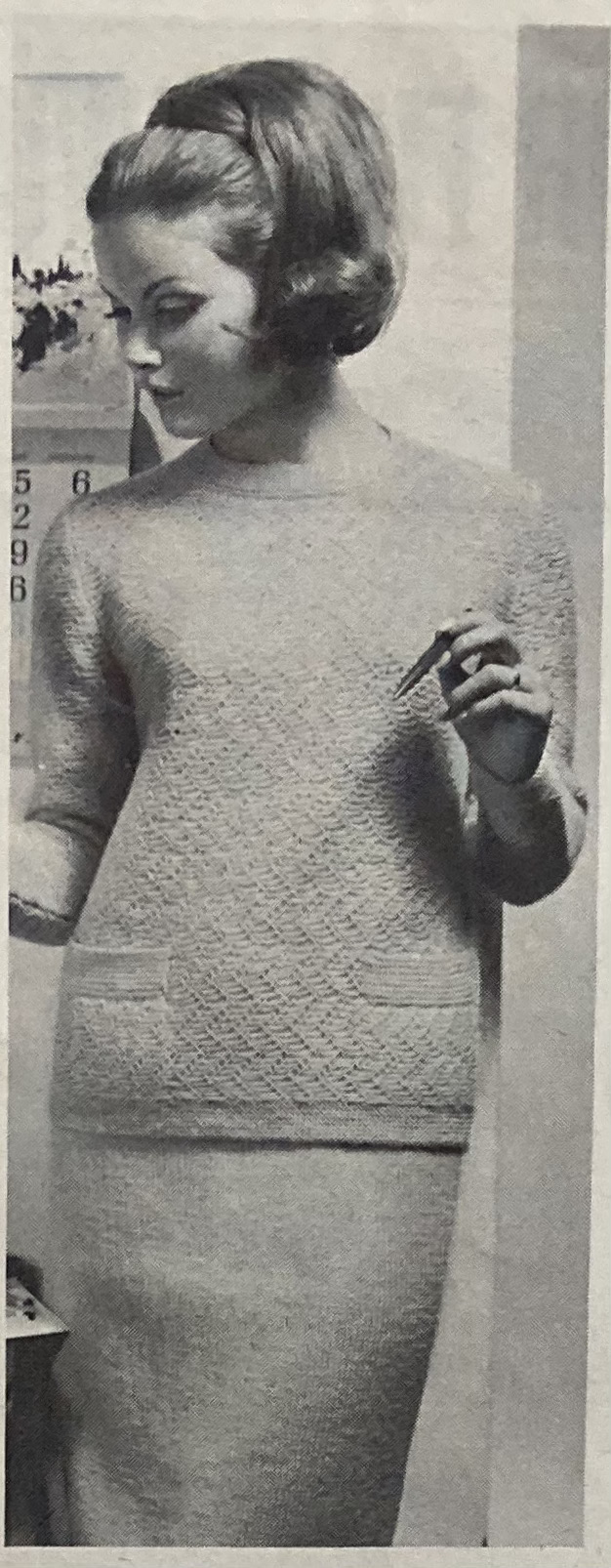
The knitted sweater suit on the cover is made in an intriguing pattern stitch designed to give “the look of woven texture.” There’s a helpful close-up photo of the stitch pattern as well. Essentially, it’s made by making a wool-forward (yarn over) on the right-side row and then slipping that stitch over a garter-stitch base to make a horizontal “line”. The placement of the slipped stitch is staggered, to make a diagonal herringbone-type effect. Made in DK wool, I’m guessing the finished result is quite warm. The matching skirt is made in plain stocking-stitch. Note that the mini-skirt, or even anything-above-knee-length skirt, still hasn’t caught on with Stitchcraft’s more conservative readership.

Other women’s fashions include a bobbly-cabley “overpull” in undyed “Capstan” wool, made to be worn over a roll-neck knitted underblouse with or without sleeves. The underblouse keeps up the warm colour trend with the suggested colour of “Old Gold”. I love the model’s hairstyle!

There’s also a jumper for larger sizes with very ill-thought-out decorations going right over the bust, and a collared almost-cardigan with a deep placket and Peter Pan collar. The collared number is made in tweedy “Glenora”, one of the multicolour wools gaining popularity at the time. Men get a corollary set to the women’s “overpull” and “underblouse” with a slightly oversized bobbly-cabley cardigan and a 4-ply polo-neck in the same “Nylox” wool as the ladies’ underblouse. The “colour radiance” theme apparently does not extend to the men’s garments, being made in undyed Capstan and “Oystershell” off-white, respectively. The photo backgrounds colours are nicely chosen, though, to set off the diagonal poses and camera angles.

The photo of the girl’s twin set in the inside front cover photo also does a great job of harmonising the backdrop to the subject. Her set consists of a pullover with unbuttoned waistcoat in cheerful pink and blue. Her little brother or sister can go out in the pram or “toddling” in a warm set of hooded jacket and leggings. The child in the photo looks somewhat apprehensive, but the set looks quite snuggly.

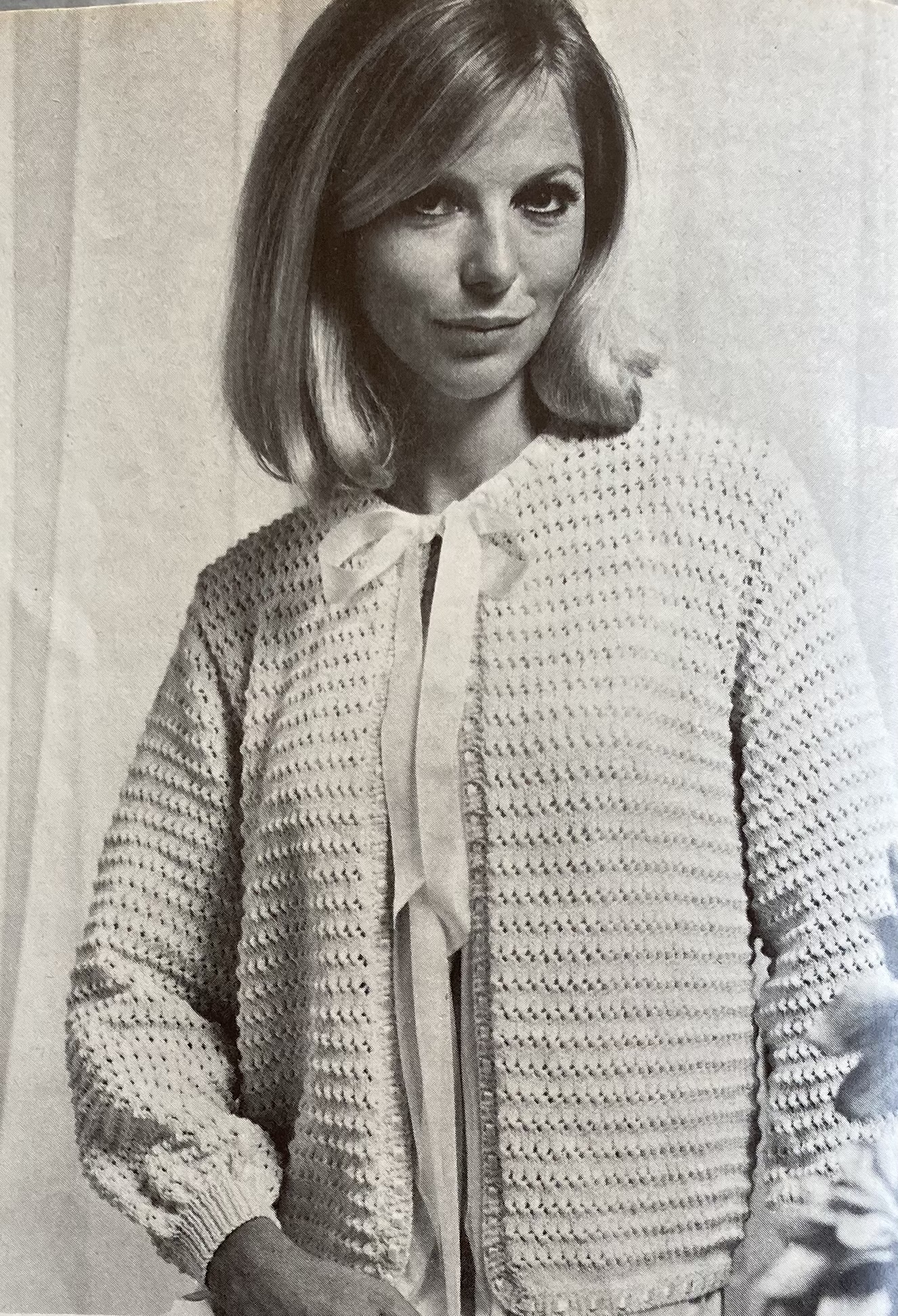
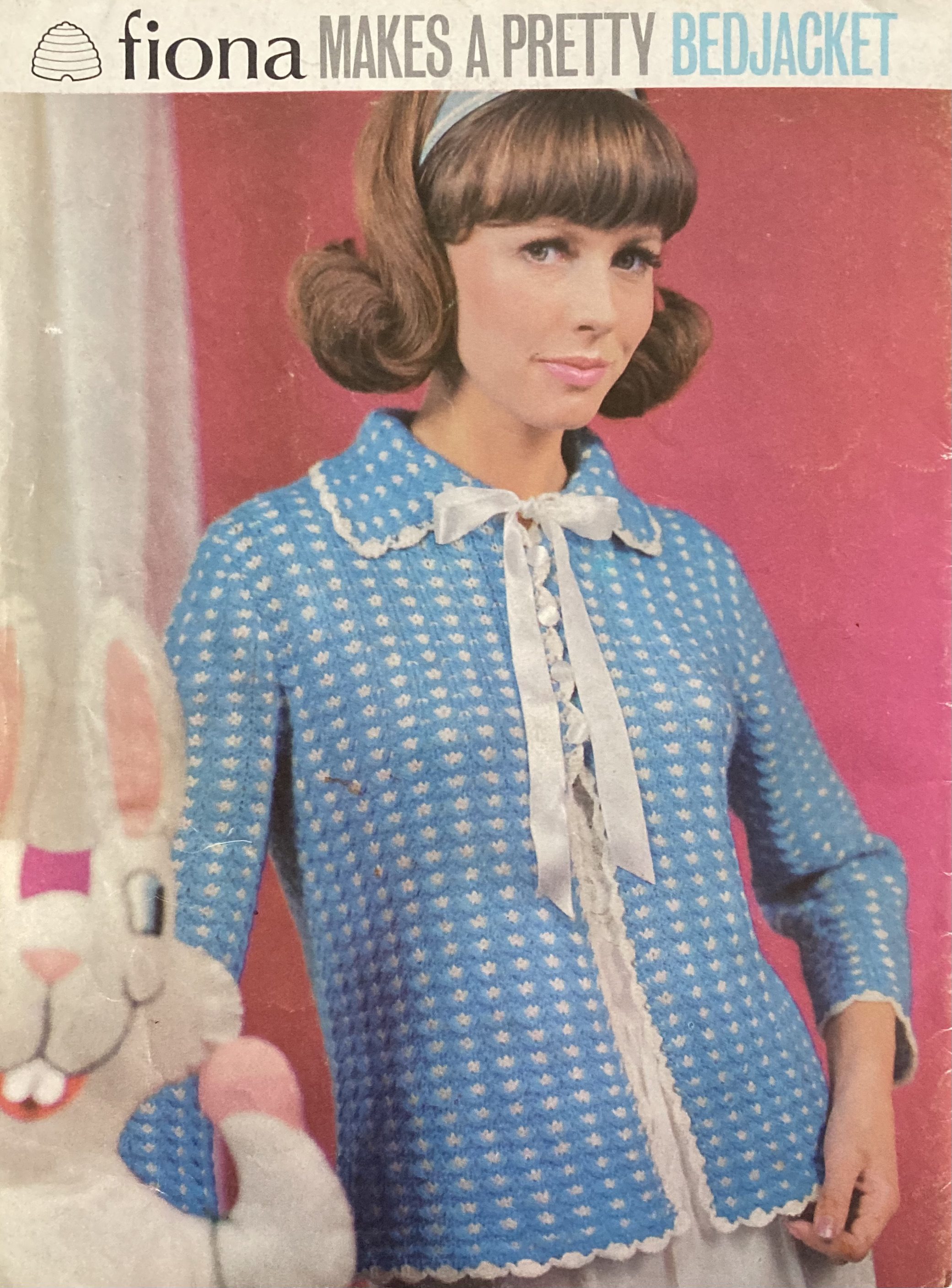
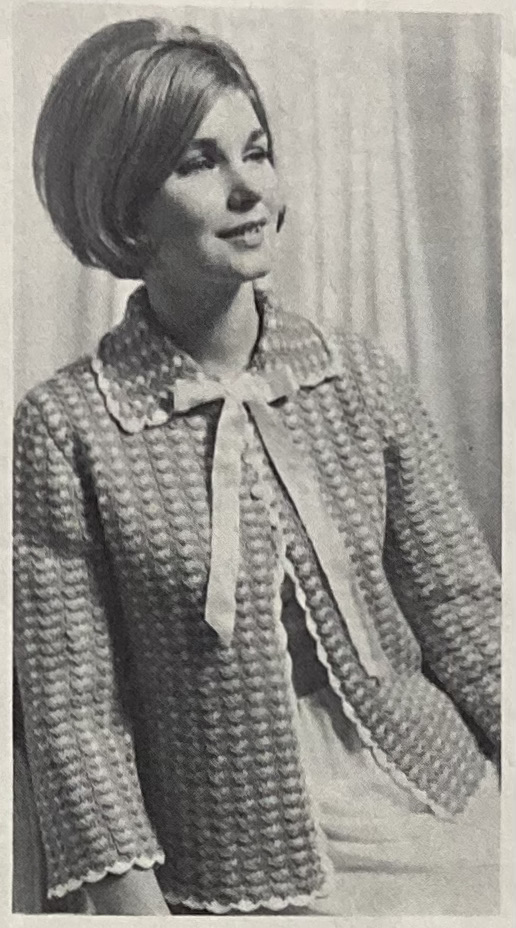
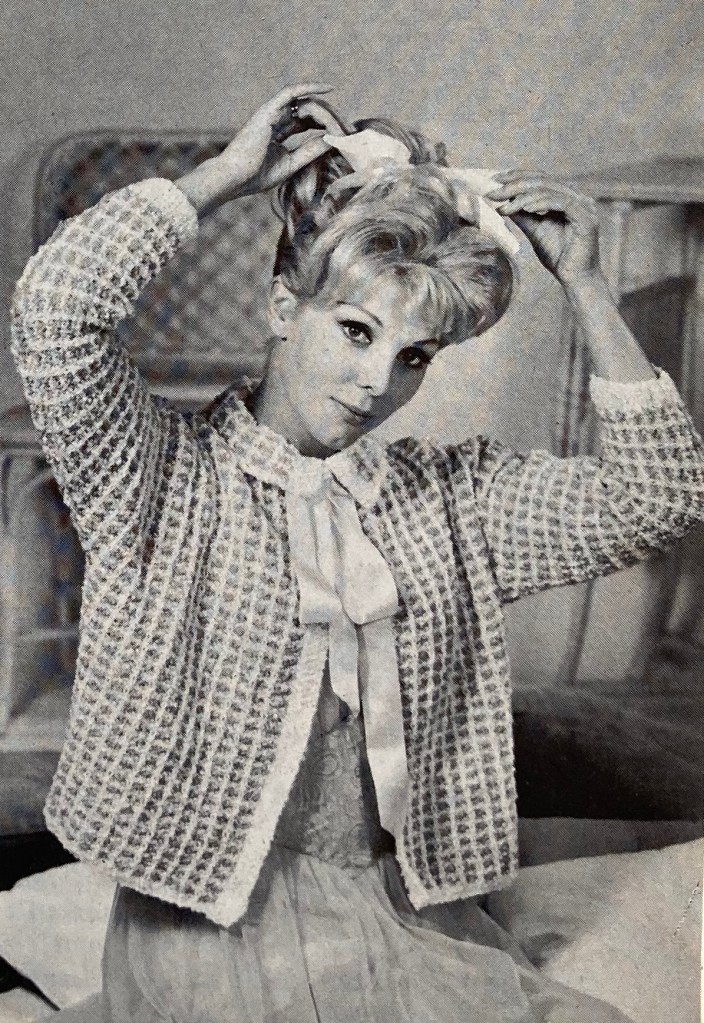
And can we have a moment of appreciation for this “special gift” of a bedjacket? I love it! I would make it without the ribbon at the neck and wear it as a normal cardigan. The two-colour pattern is made by working and then dropping yo’s to make a “long” stitch, which is then carried up through the slip-stitch background. I am guessing it is quite spongy and squishy, and was also nice and warm in those unheated 1960s bedrooms. Love the hairstyle in the colour photo, too!

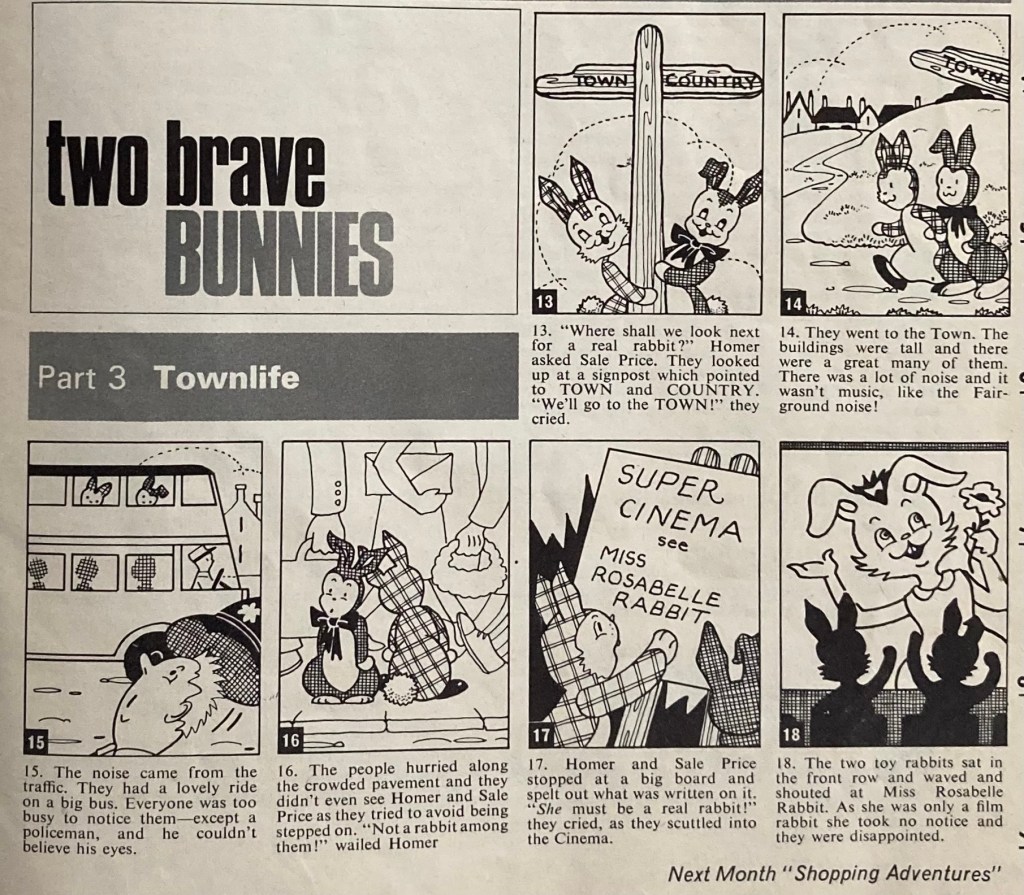
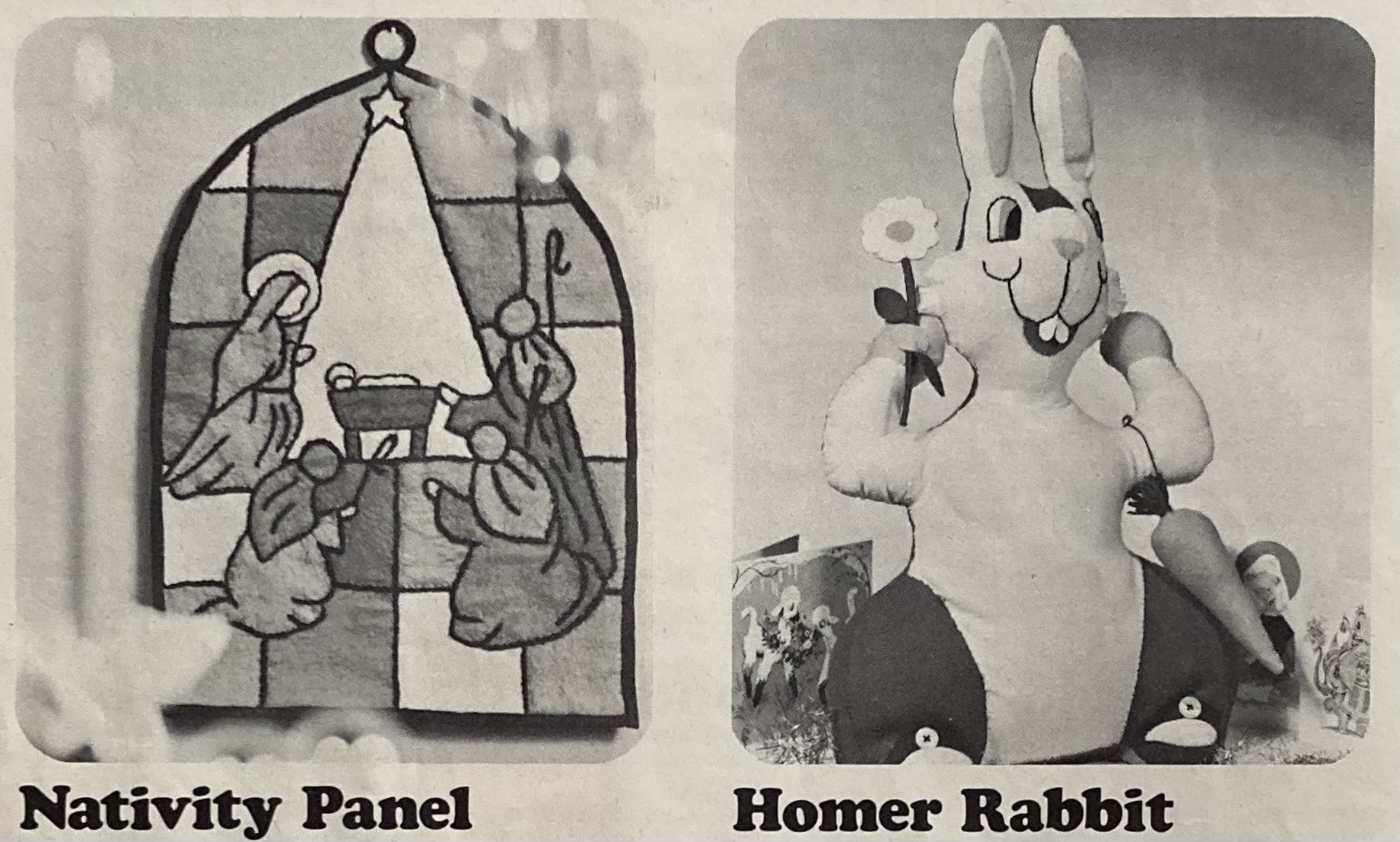
If the model on the left is looking a little suspicious, it’s probably because she was photo-bombed by Homer the Rabbit, star of our current children’s serial comic, “Two Brave Bunnies.” For the uninitiated: Homer (a home-made stuffed rabbit) and Sale Price (a store-bought stuffed rabbit) are on a quest to find a real live rabbit friend. So far, they have only met a merry-go-round rabbit, who assured them that he was not real, as he could carry children on his back. In this month’s episode, our two brave bunnies head to the Town, where they are eager to see “Miss Rosabelle Rabbit” on the cinema screen. Alas, she is only a film rabbit, so cannot communicate with our friends. No matter — they will persevere! Oh, right — and this month’s issue includes instructions on how to make your very own home-made Homer doll from felts.

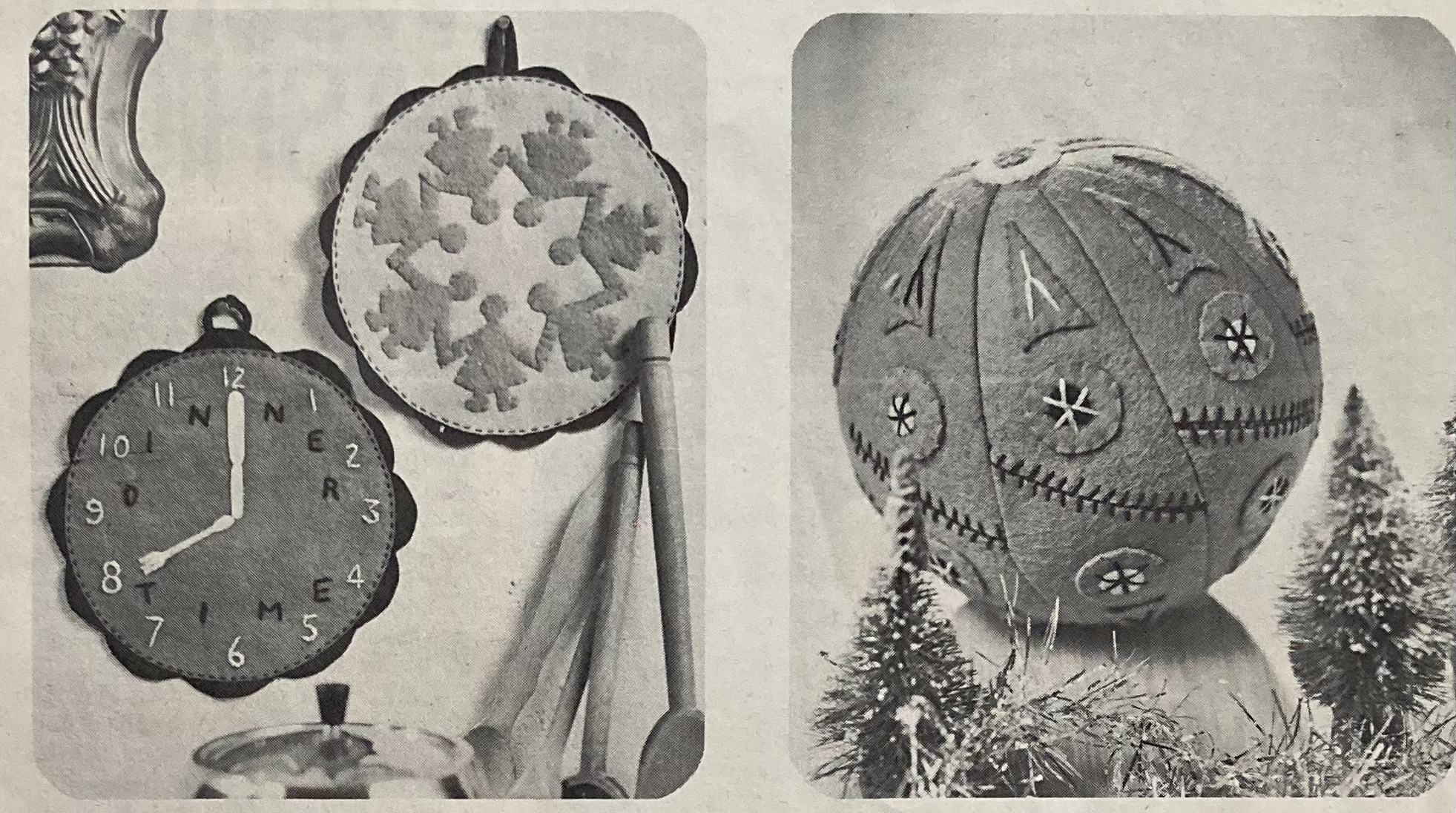
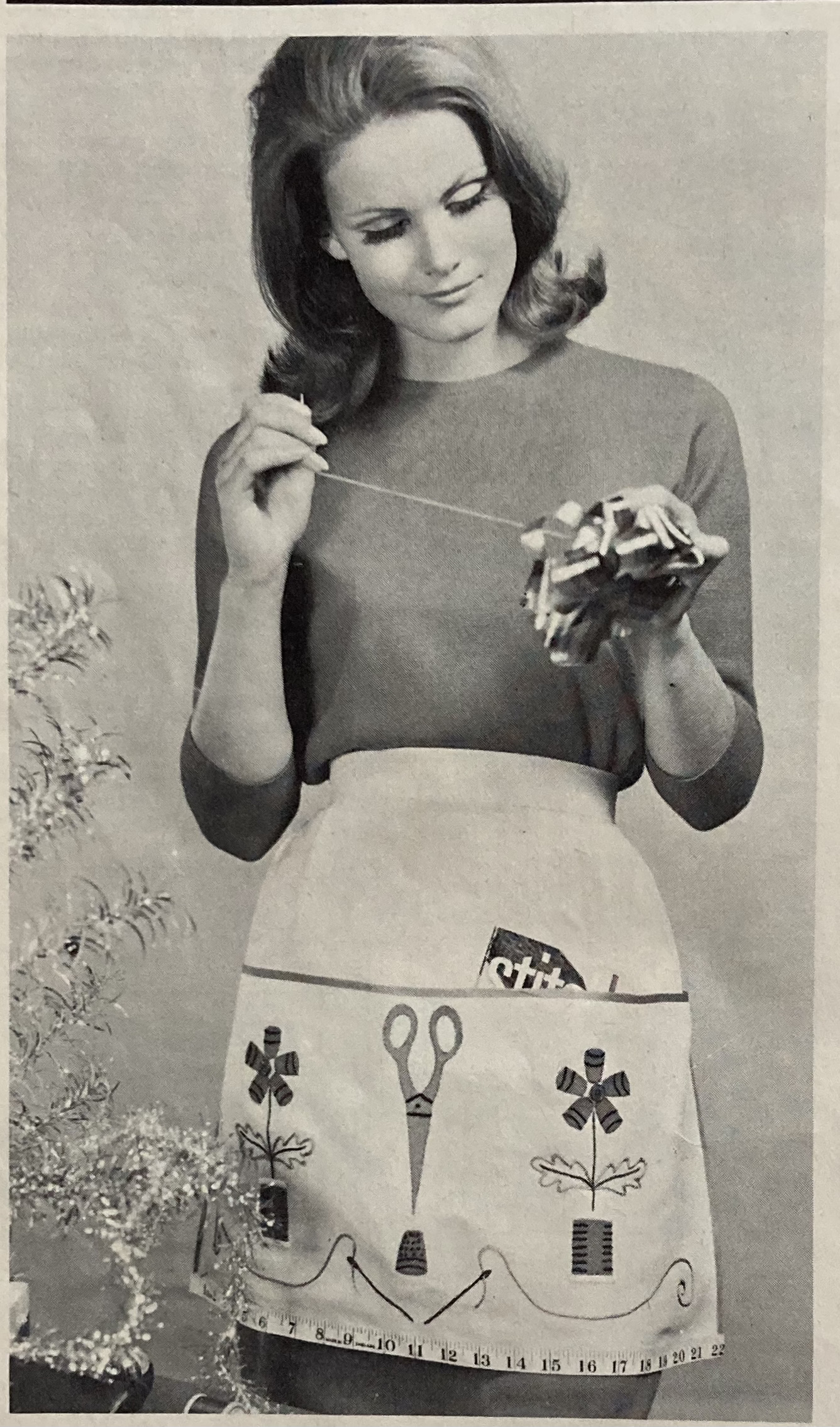
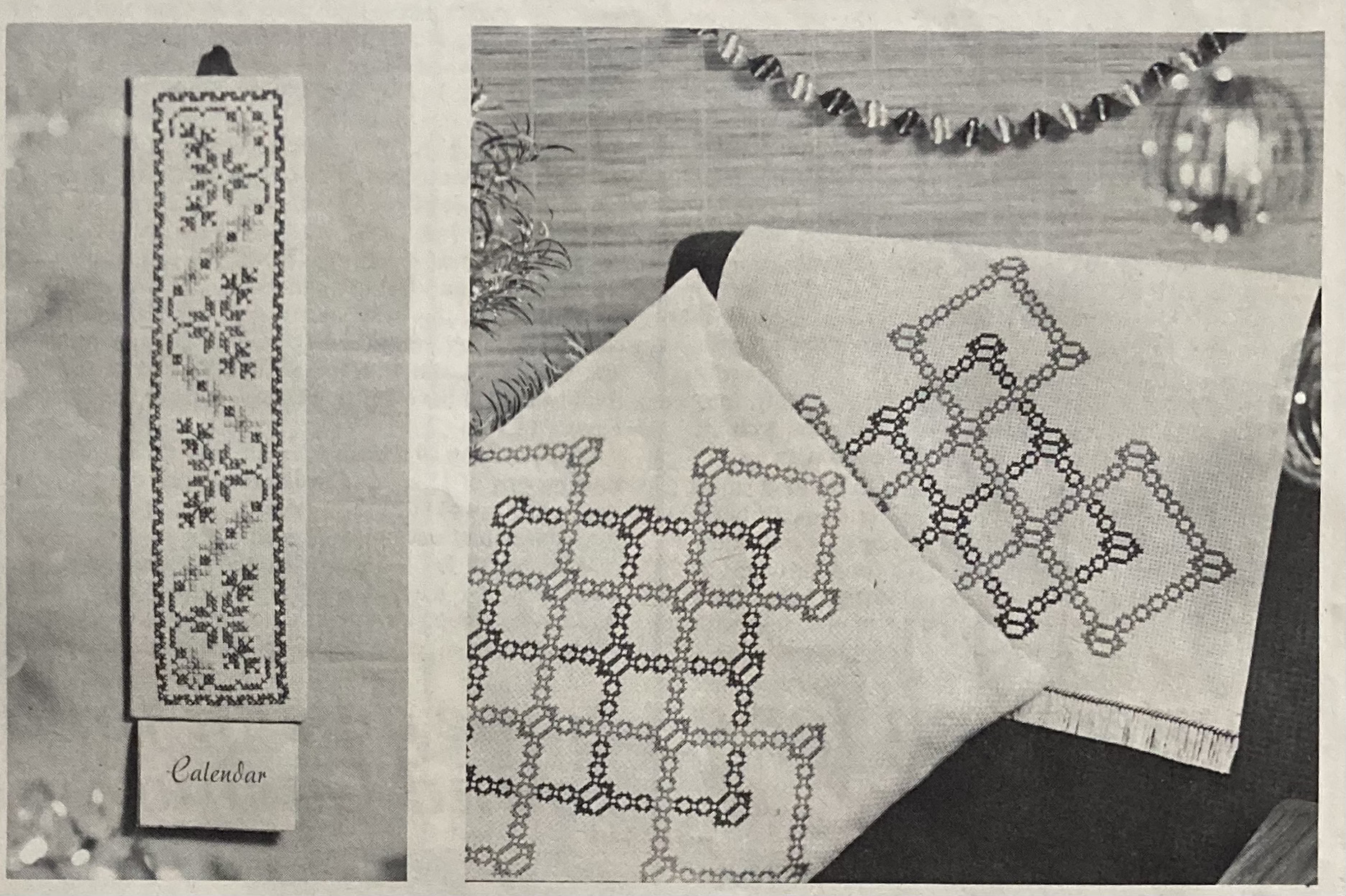
Home-made Homer is one of this issue’s many small, fun “colour novelty” gift and decoration ideas, along with a felt Nativity panel mimicking stained glass, a couple of pot holders and a colourful ball to use as decoration or a baby’s toy. Embroidered gift ideas include a whimsical sewing apron and a cross-stitch calendar and chairset. I don’t really understand the calendar — it seems to be just a vertical wall panel that you attach the (tear-off?) small calendar onto. OK, I guess, but maybe not necessary?

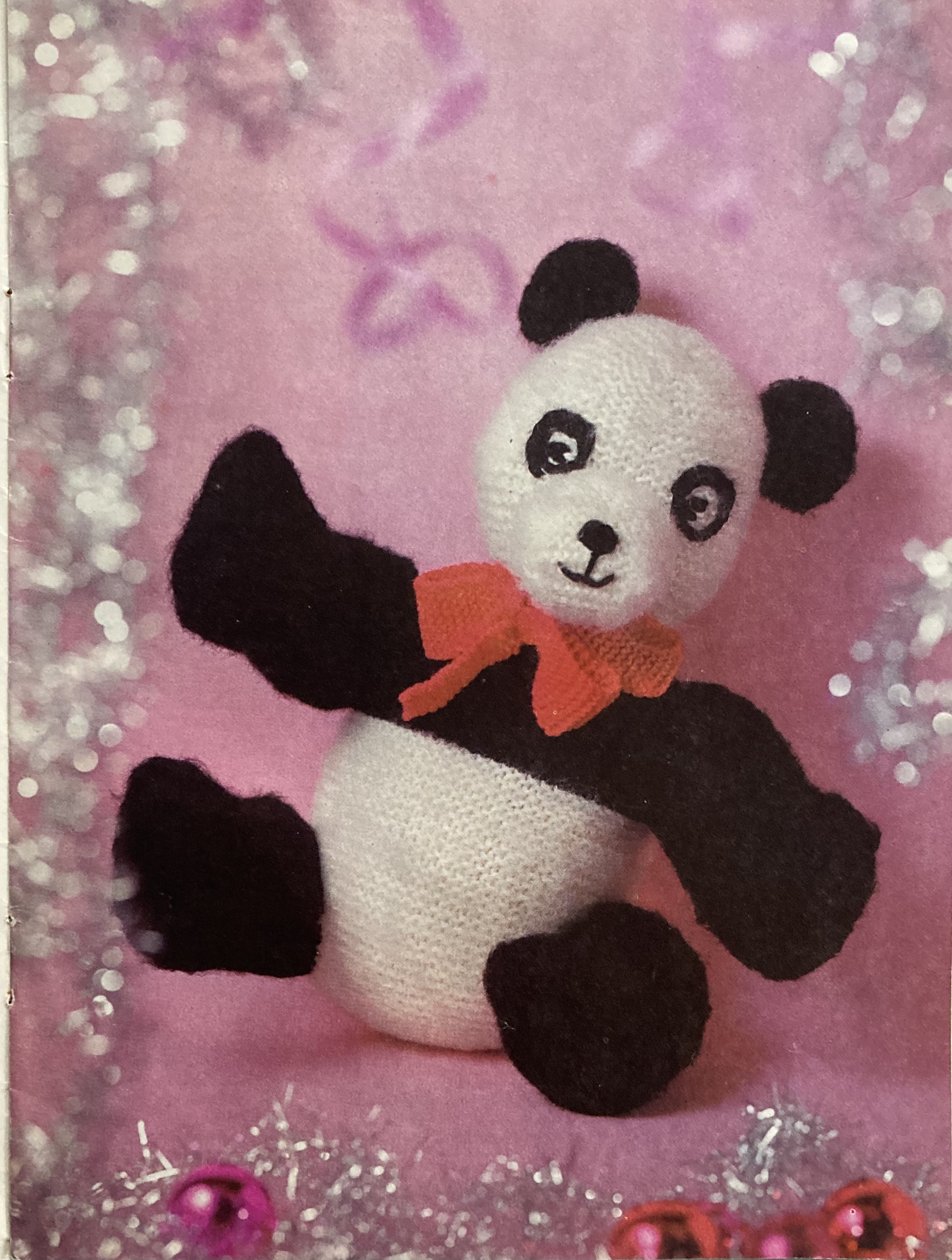
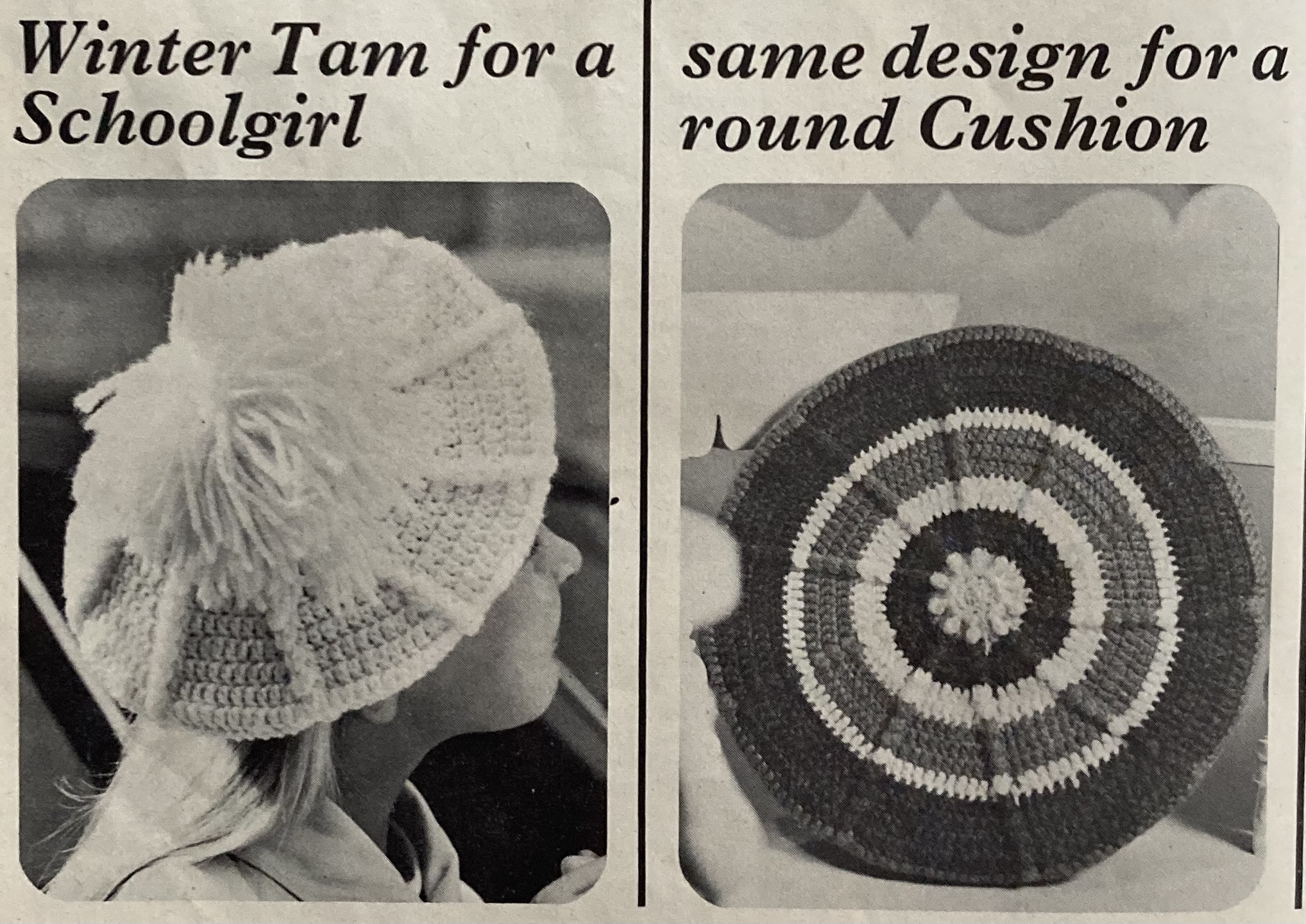
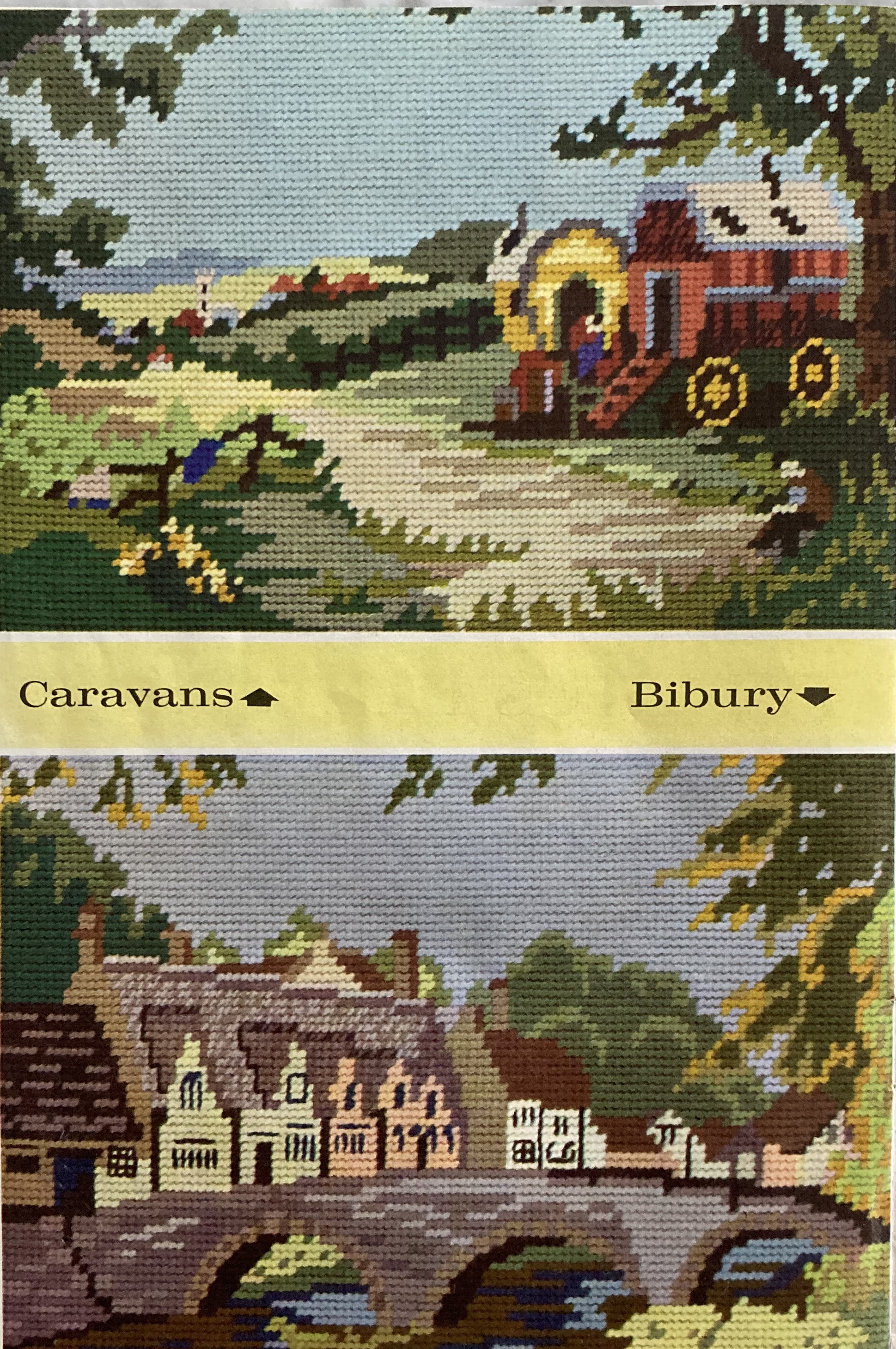
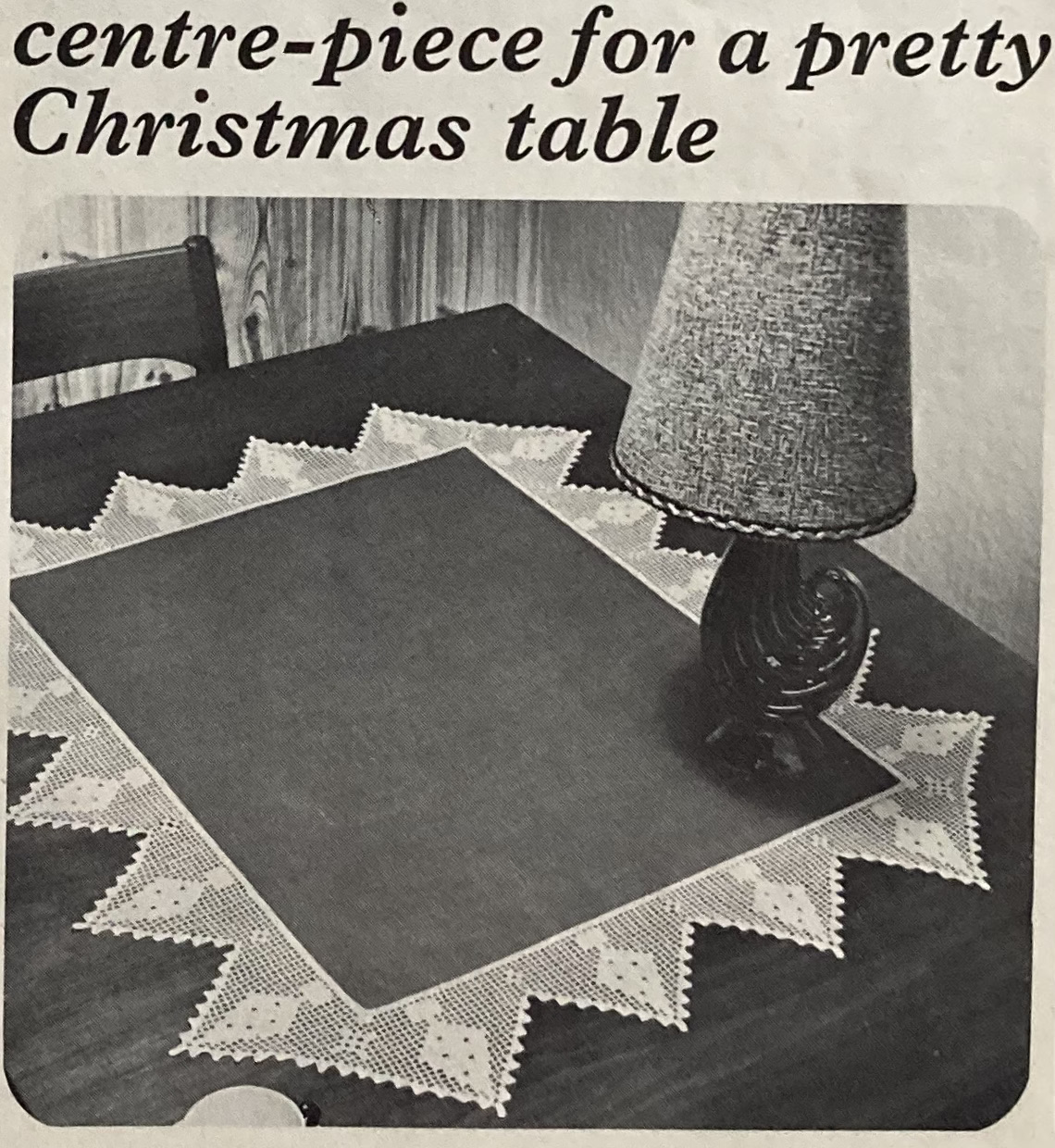
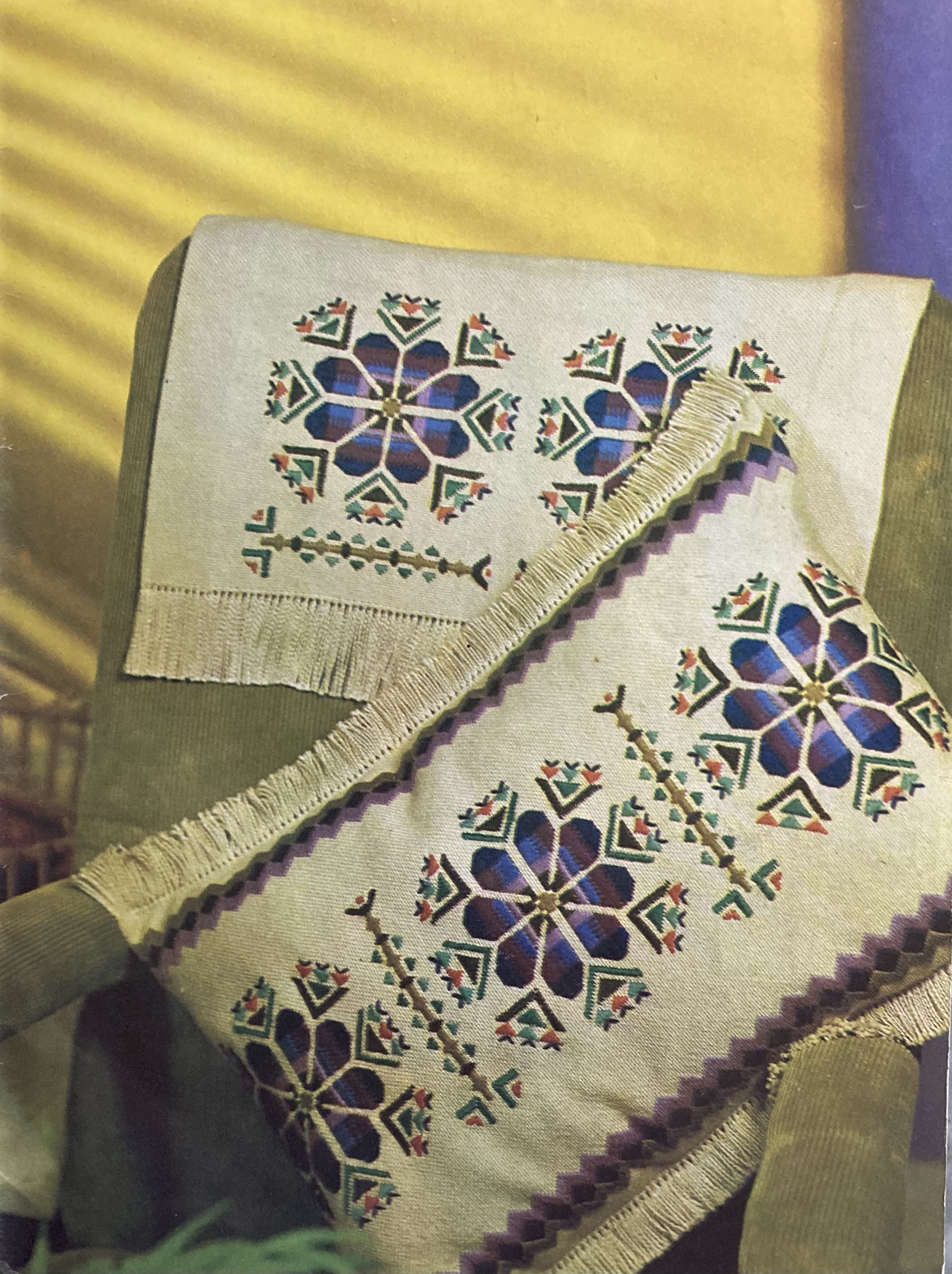
You can also knit a stuffed panda bear, a snowman, or a garter-stitch blanket rug, or crochet a round disc to be adapted into either a girl’s beret or a round cushion. There’s a filet crochet table centerpiece and tapestry wall pictures of caravans or Bibury. Last but not least, there’s a counted-embroidery cushion-and-chairback set with a vivid purple flower design.

I don’t know about you, but I feel cosier already. My design for this month will be the bedjacket! The October 1965 cardigan blouse is almost finished, too, and I’ll update that post soon.

January 1963: Overview

Happy New Year, everyone! It’s 2021 in the real world and 1963 in the Stitchcraft Sixties blog world. The real-life 1963 was a turbulent year: the Cold War escalated, as did the war in Vietnam; the civil rights movement in the US both gained ground and suffered violent setbacks; John F. Kennedy was assassinated; the Second Vatican council entered a new phase. In England, scandals abounded in the wake of the Profumo affair and the divorce of the Duke and Duchess of Argyll. On a happier note, the Beatles recorded their first album, Please Please Me, kicking off Beatlemania around the world, and women in Iran gained the right to vote. Also, the smiley-face symbol was invented. 🙂

Of course, none of this — not even the Beatles or the smiley face — had any direct influence on Stitchcraft (certainly not in the January issue, before any of it happened…). What we think of as “1960s fashion” — the miniskirt, the “space age” look, the shift dress, the Mod look, the hippie-bohemian styles of the later years of the decade — was just gearing up around 1963, and Stitchcraft was a fashion-conservative magazine. That said, holdover fashions from the 1950s like fitted, waist-length cardigans and wide, swingy skirts have disappeared completely by now; the female models often wear trousers or “slacks” and casual, bulky-knit sweaters are ubiquitous.

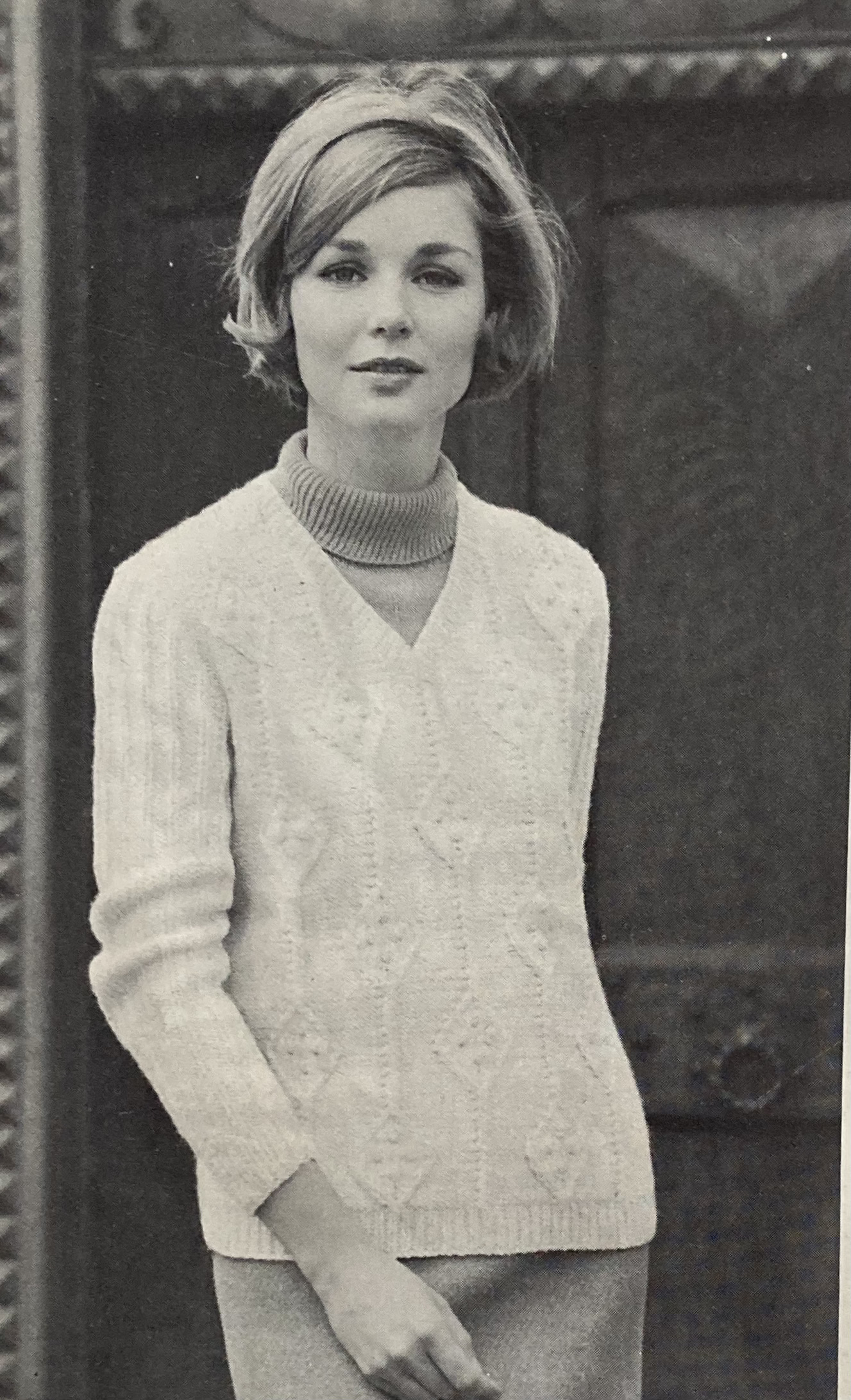
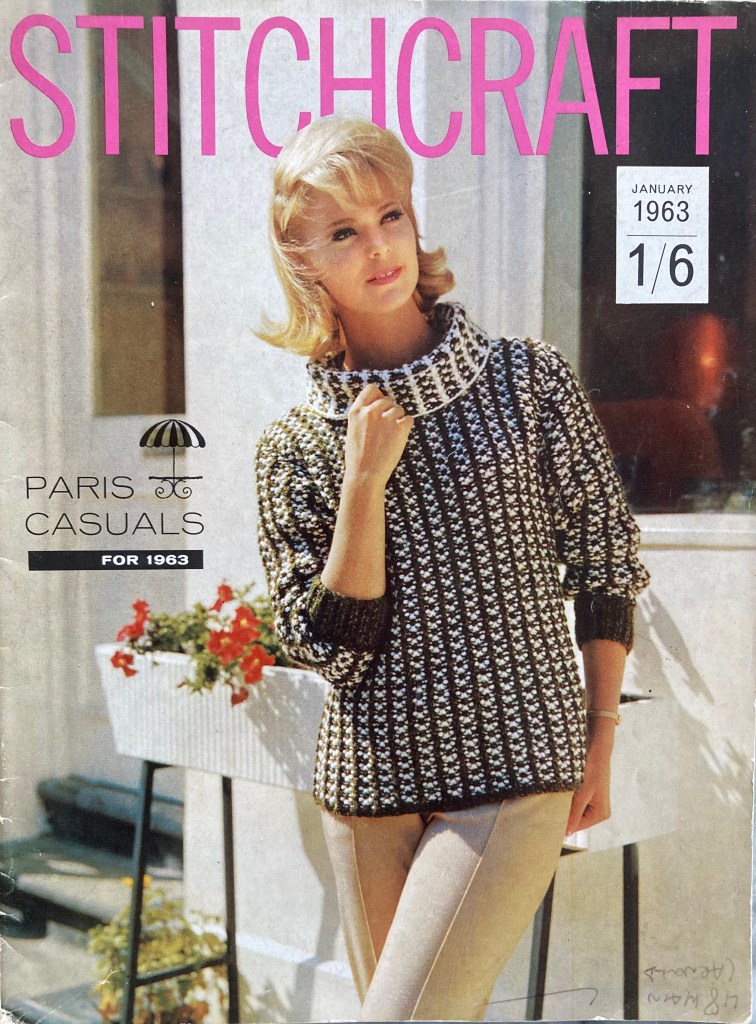
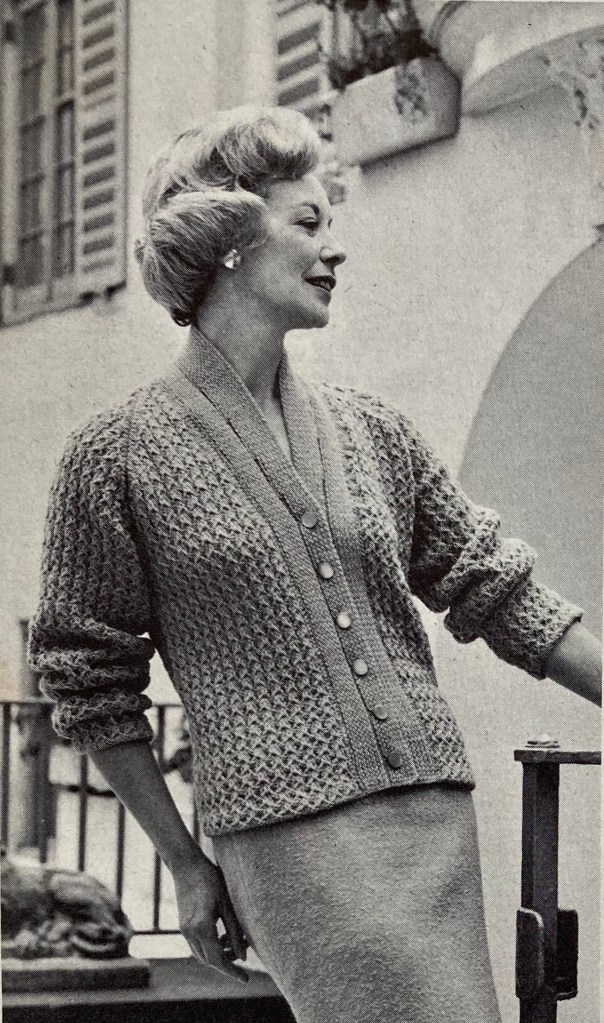
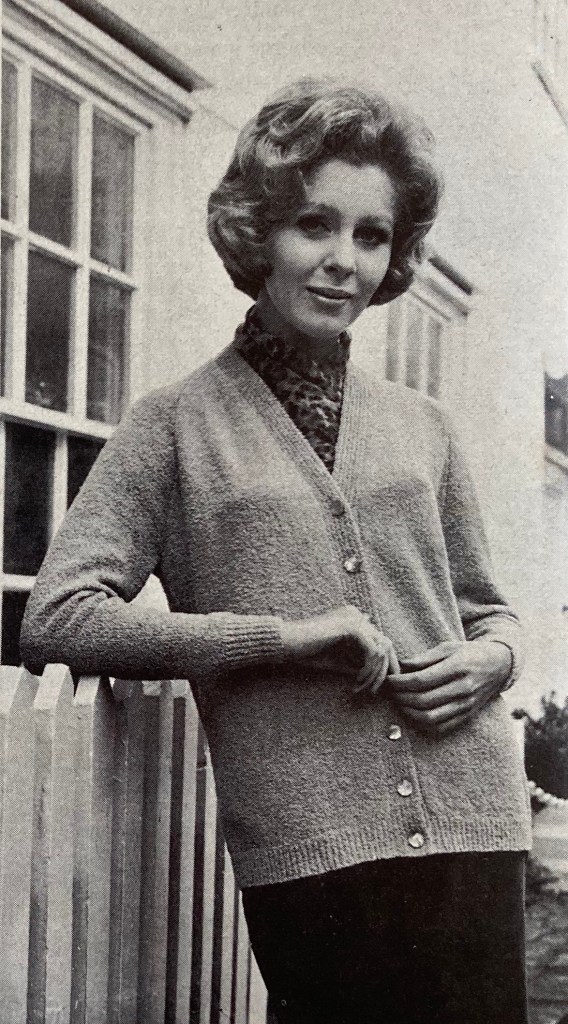
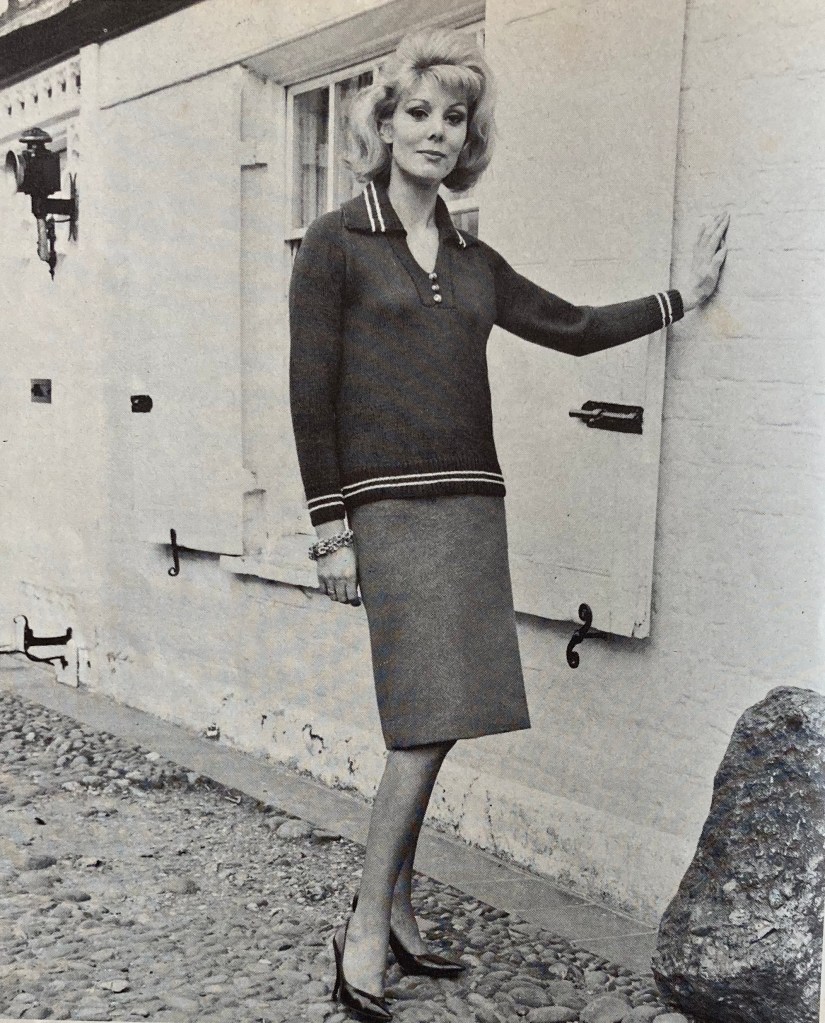
So what does January 1963 have in store for us? The theme of the January 1963 issue is “Paris Casuals” and resolves to start with “a bumper all-round family number.” For adults, that means warm, comfortable jumpers and cardigans in a range of wool weights with V-necks or interesting collars and textured stitch patterns. The cover garment epitomises all the trends: made in bulky Big Ben wool in a two-colour slip stitch pattern, it sports “this season’s Paris collar choice and longer line.” The textured raglan cardigan is a similar look, as is the man’s casual cardigan on the back cover. The bouclet cardigan gives a nod to earlier fashions with its choice of fine wool and classic shape, but here too it is longer and looser-fitting than previous classic bouclet garments. A simple collared jumper in double knitting with attractive fine details rounds out the adult garment selection.

There are great winter fashions for children, first and foremost the girl’s skating set of skirt and collared pullover. Unfortunately, I suspect something went wrong with the sample knit, as both pictures show the model turned 3/4 away from the camera and it’s not clear how it is supposed to look from the front. (Also, could someone please give her some warm tights to wear before she goes out onto the ice.) Toddlers get a cute “buster suit” with a design of cherries on the jumper, and older children get a wonderful hoodie (to use the modern term) and jumper-cap set to wear while playing in the snow. (Or in the photo studio — check out the snowman and snowball made of wool and/or cushion stuffing fluff!). Crisp, wintery colours of blue and red with white are trending. Notice also that the girl model is wearing trousers, the hooded sweater is unisex, and the model wearing the red outfit in the black and white photo is allowed to be active and tomboyish for once. I wouldn’t even have known she was a girl if the sweater weren’t (for whatever reason) considered specifically a girls’ garment. Slowly, very slowly, roles are changing.

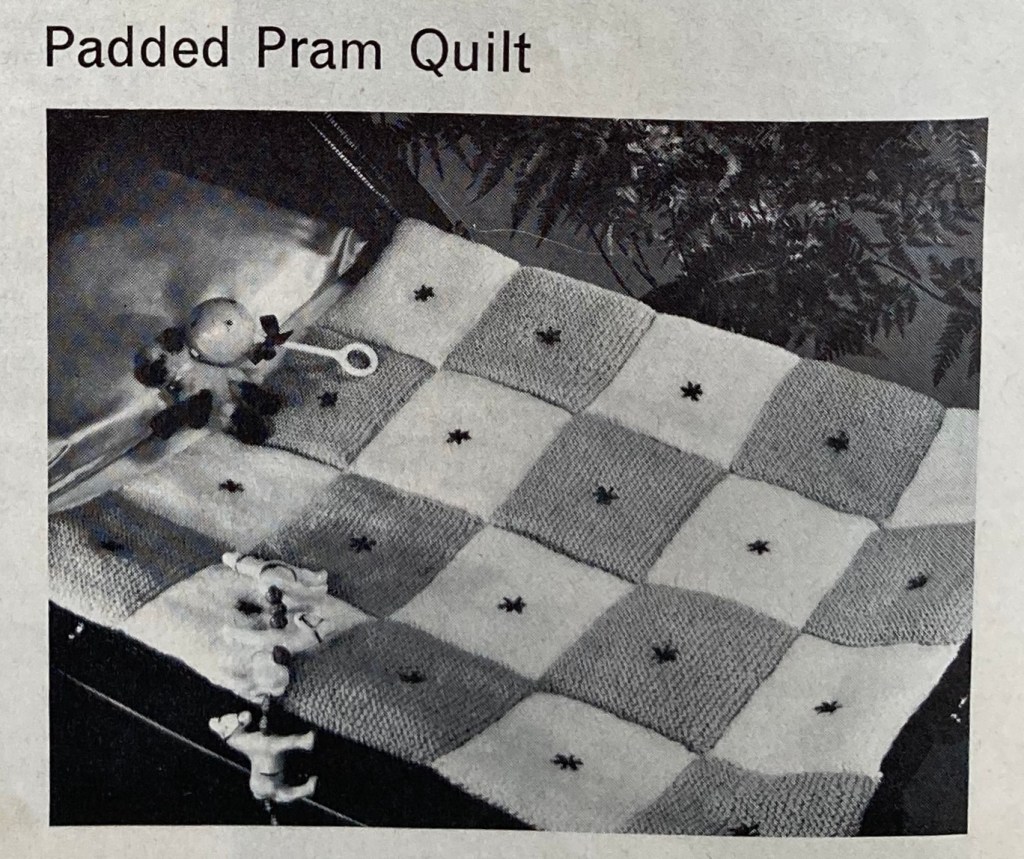
Babies get a pram cover instead of a garment this time — padded and quilted to be extra warm — and there’s a cute bedjacket and fantastic “tower” hat that is perfectly in fashion. (Side note: The caption, “PARIS HAT”, makes me think of that line “If a Harris pat means a Paris hat, Bébé… ooh la la!” in “Always True To You In My Fashion” from the musical Kiss Me, Kate. In true Cole Porter style, it’s an upbeat love song… in which the singer explains to her boyfriend that her dalliances with other men for gifts and money — basically sex work, though of course not explicitly described in those terms — shouldn’t count as infidelity, since she’s only doing it for the financial benefits and is true to him in her heart. Ah, romance! Anyway, the hat is great.)
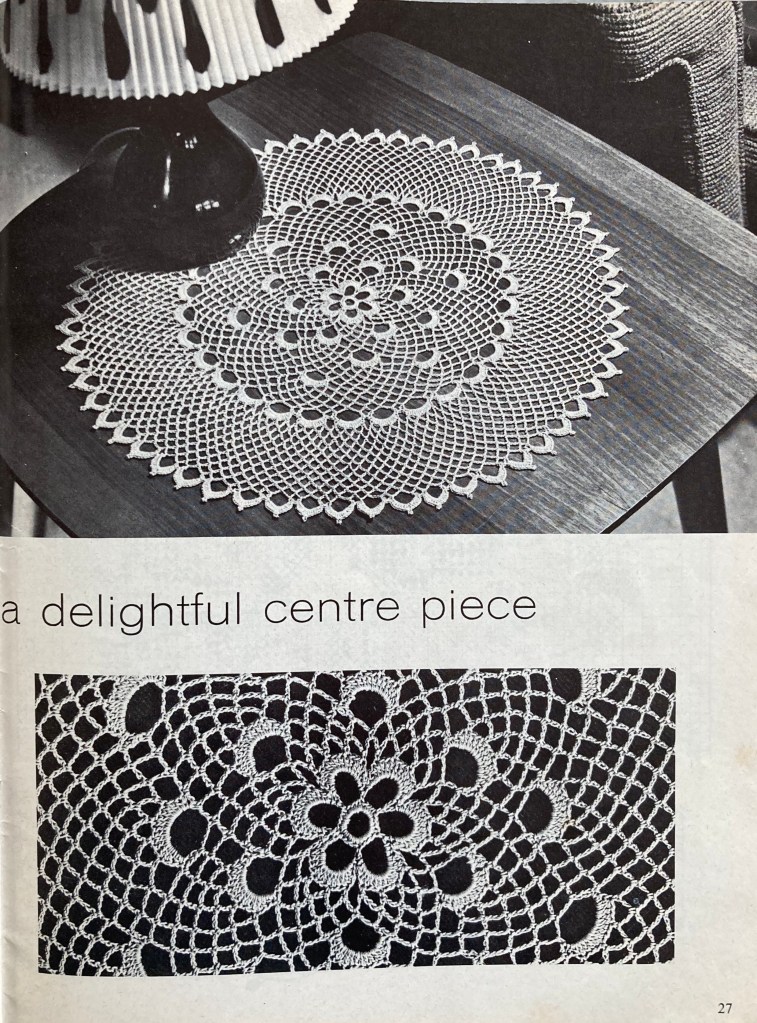
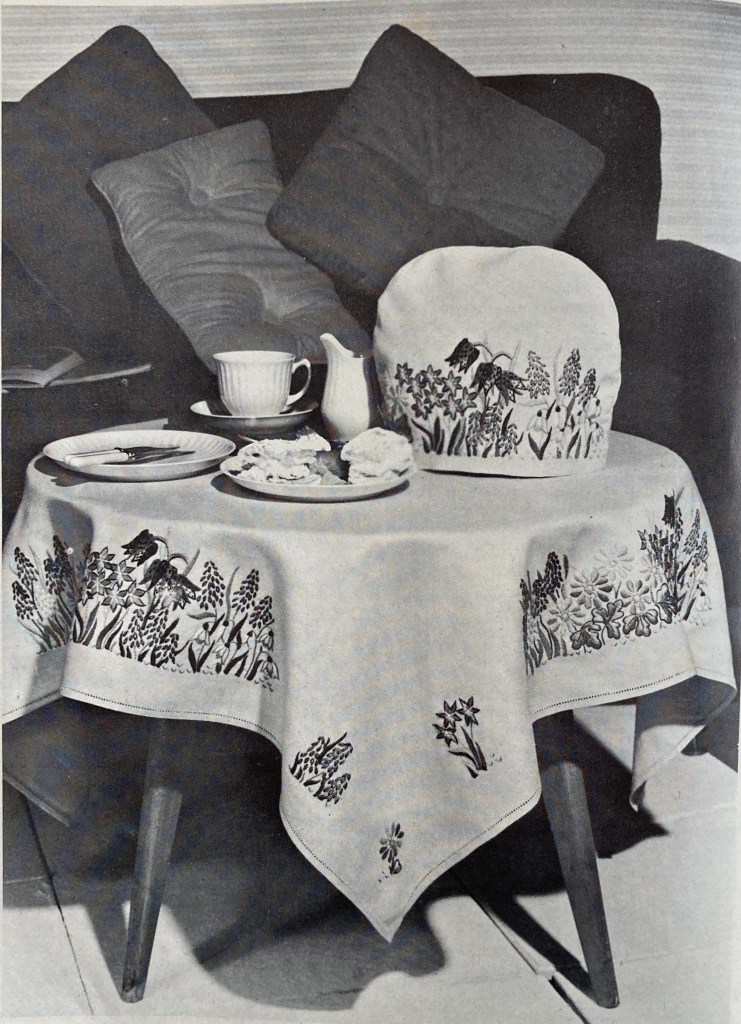
With all the great knitted items, home fashions are pretty standard this month. There are rugs and cushions, a lovely embroidered tablecloth and tea-cosy set, a tapestry picture, a cutwork table set, a very impressive crocheted doily and a hassock or kneeling cushion for church-goers.

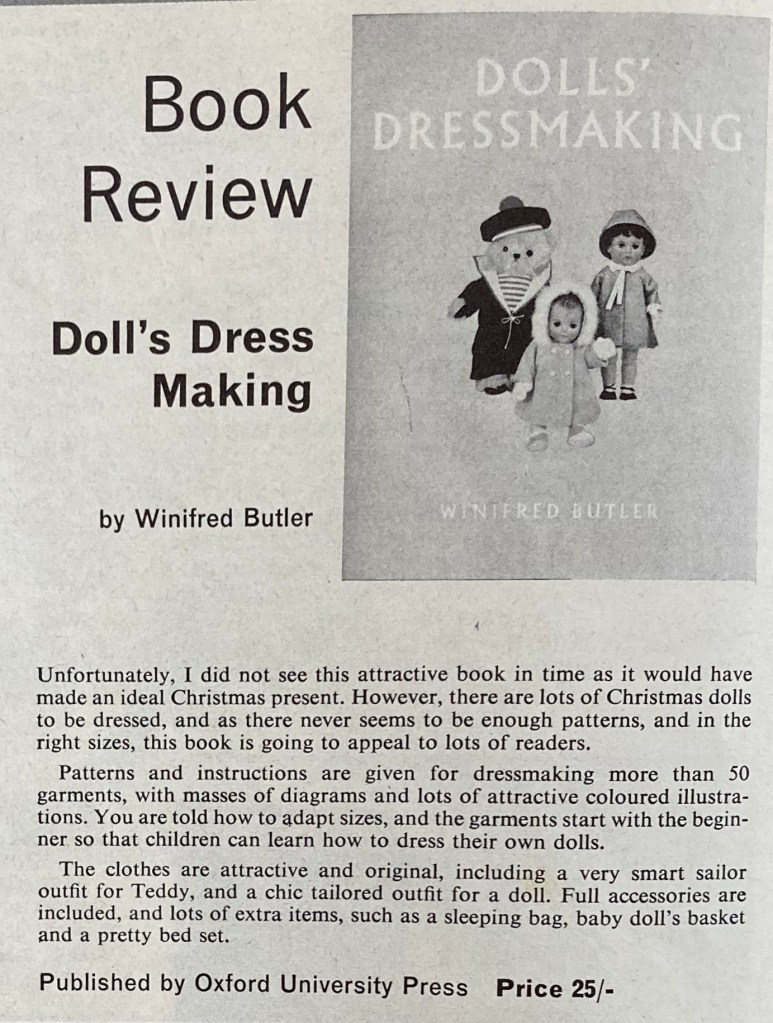
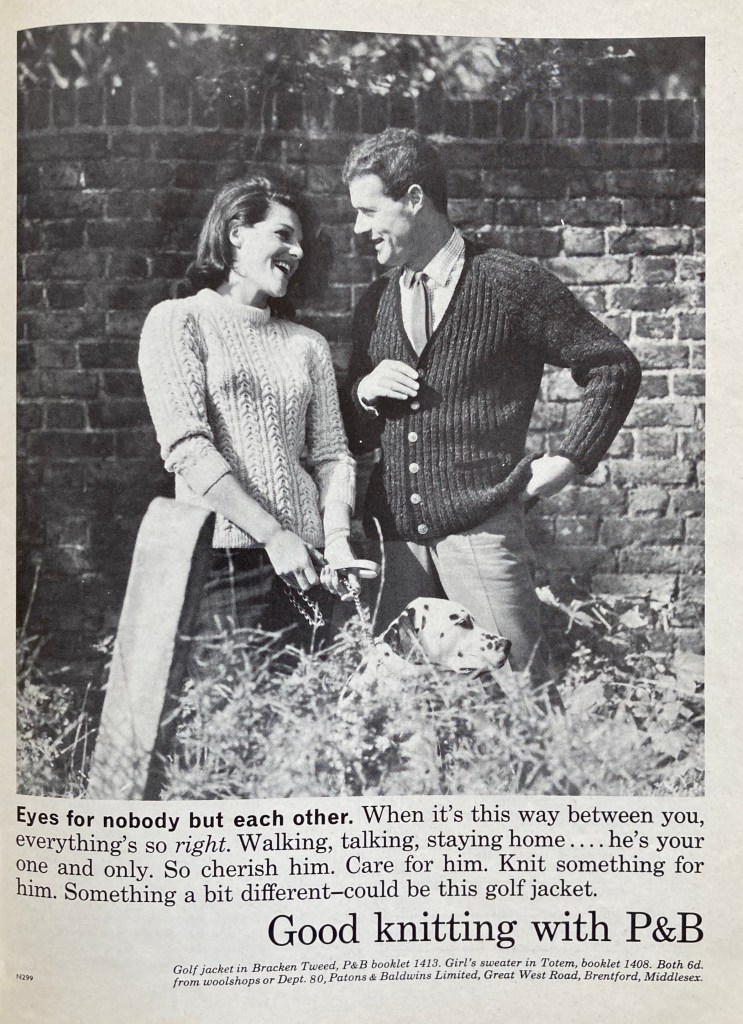
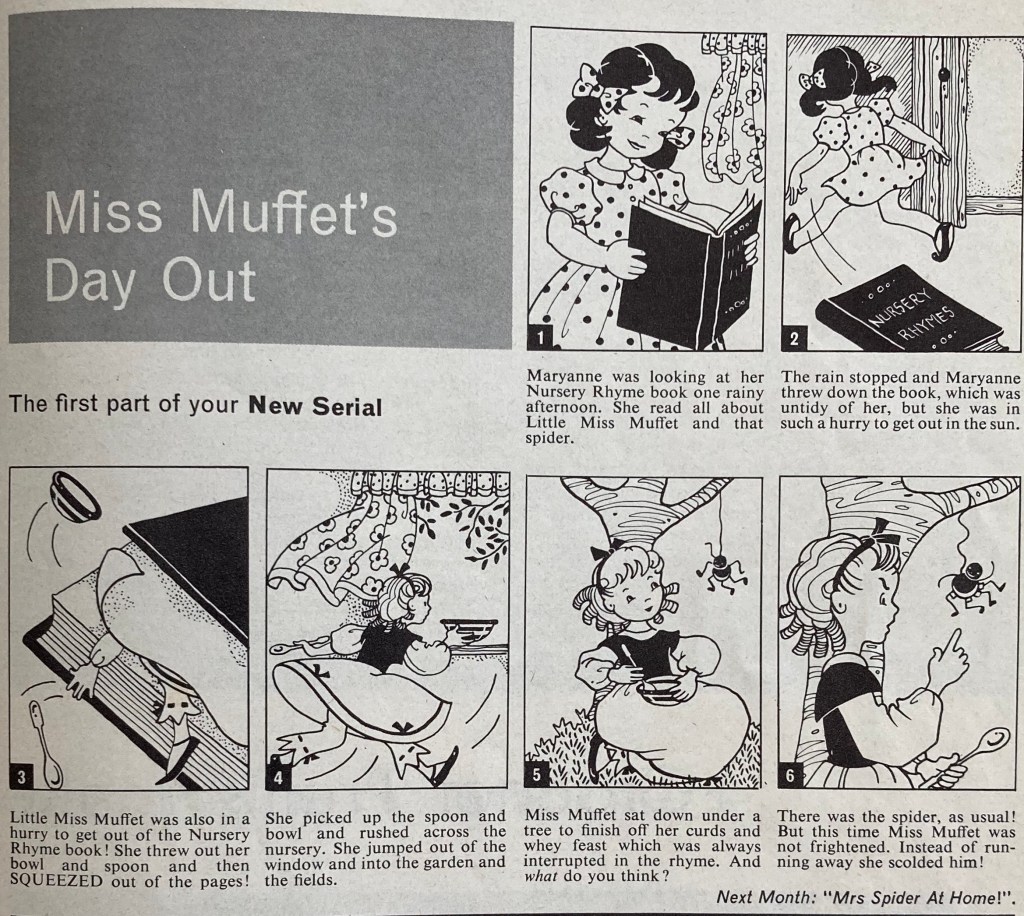
The “readers’ pages” have a review of what was probably a very interesting book on dressmaking for dolls, and –bucking the “single girl” trend of the early 1960s — we’ve got another “stand by your man and knit him something” ad for P&B wools (though this one is really quite sweet and romantic, unlike the “you only exist to be pretty for him” ad seen in other issues). There’s also a new cartoon serial for children: a re-telling of the “Little Miss Muffet” nursery rhyme, where Miss Muffet is not at all afraid of the spider. I’m sure, when she grows up, she will be not at all afraid to suggest to her man that he knit something for her for once.
My project from this issue will probably be a scaled-down version of one of the children’s sweaters for a smaller child. Stay tuned!