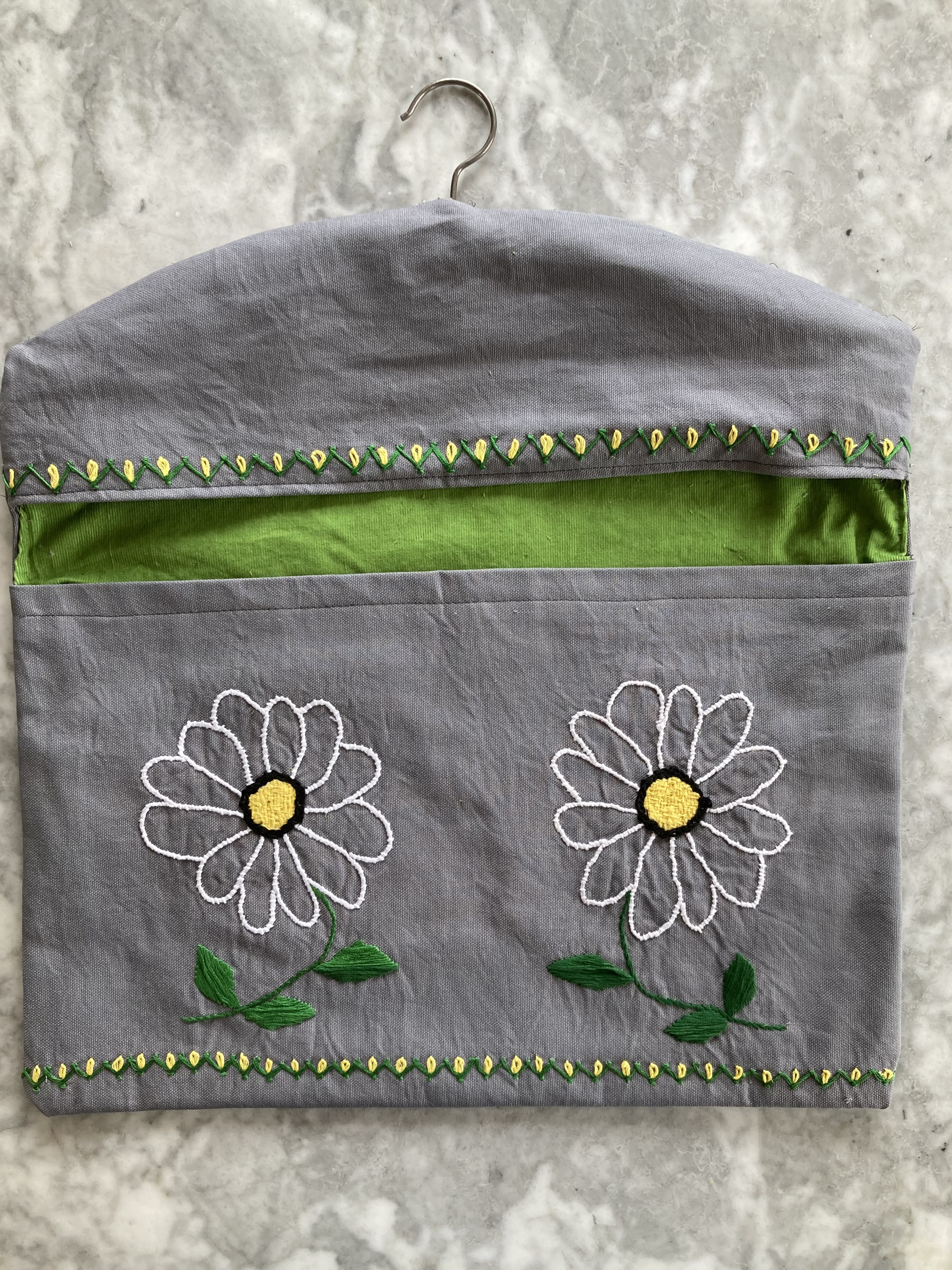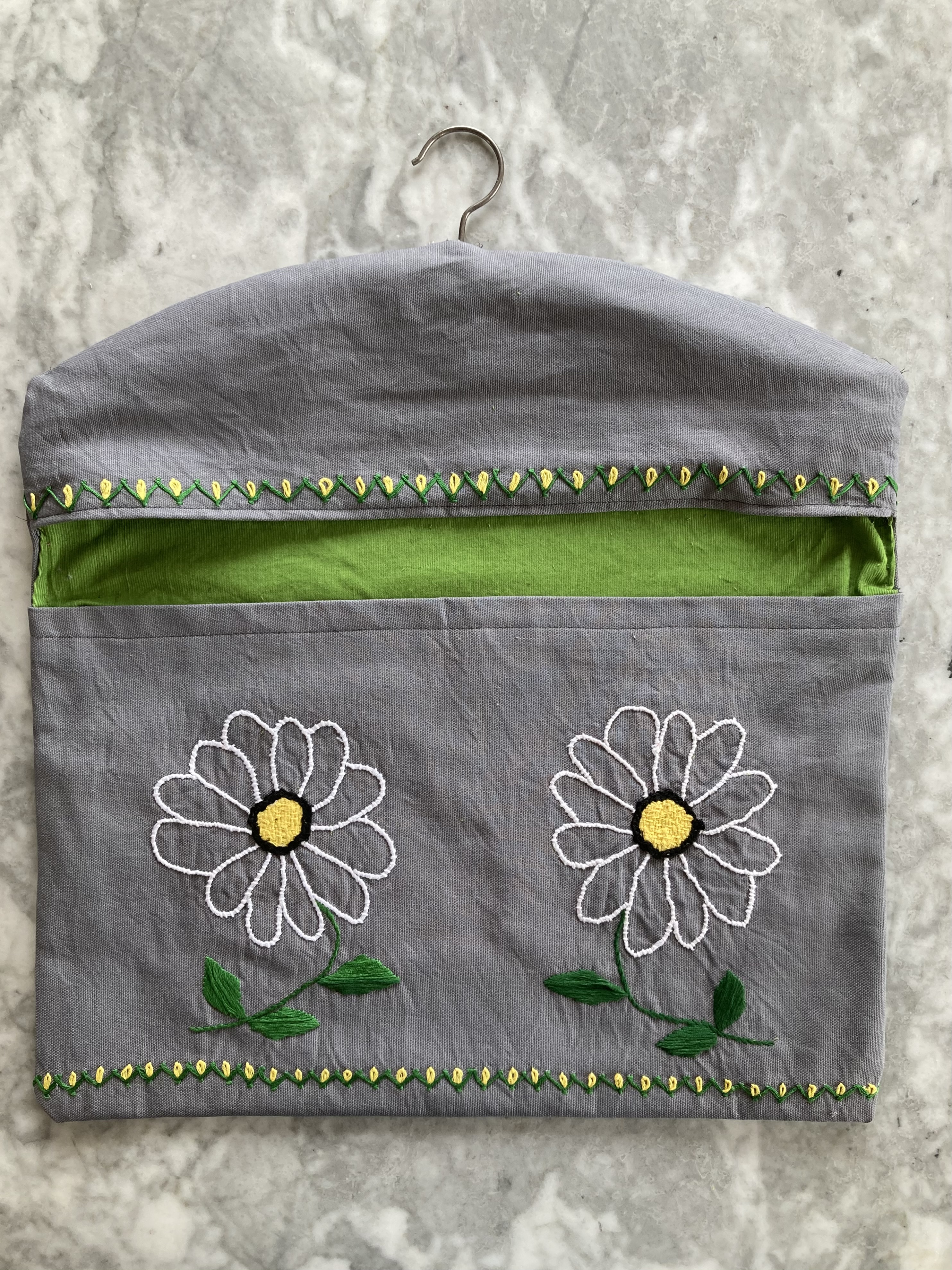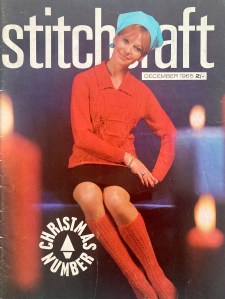
December 1967: Appliqué Cats are Lucky

My project for December 1967 a.k.a. December 2025 was an adaptation of a cross-stitch design for a three-piece children’s room set.

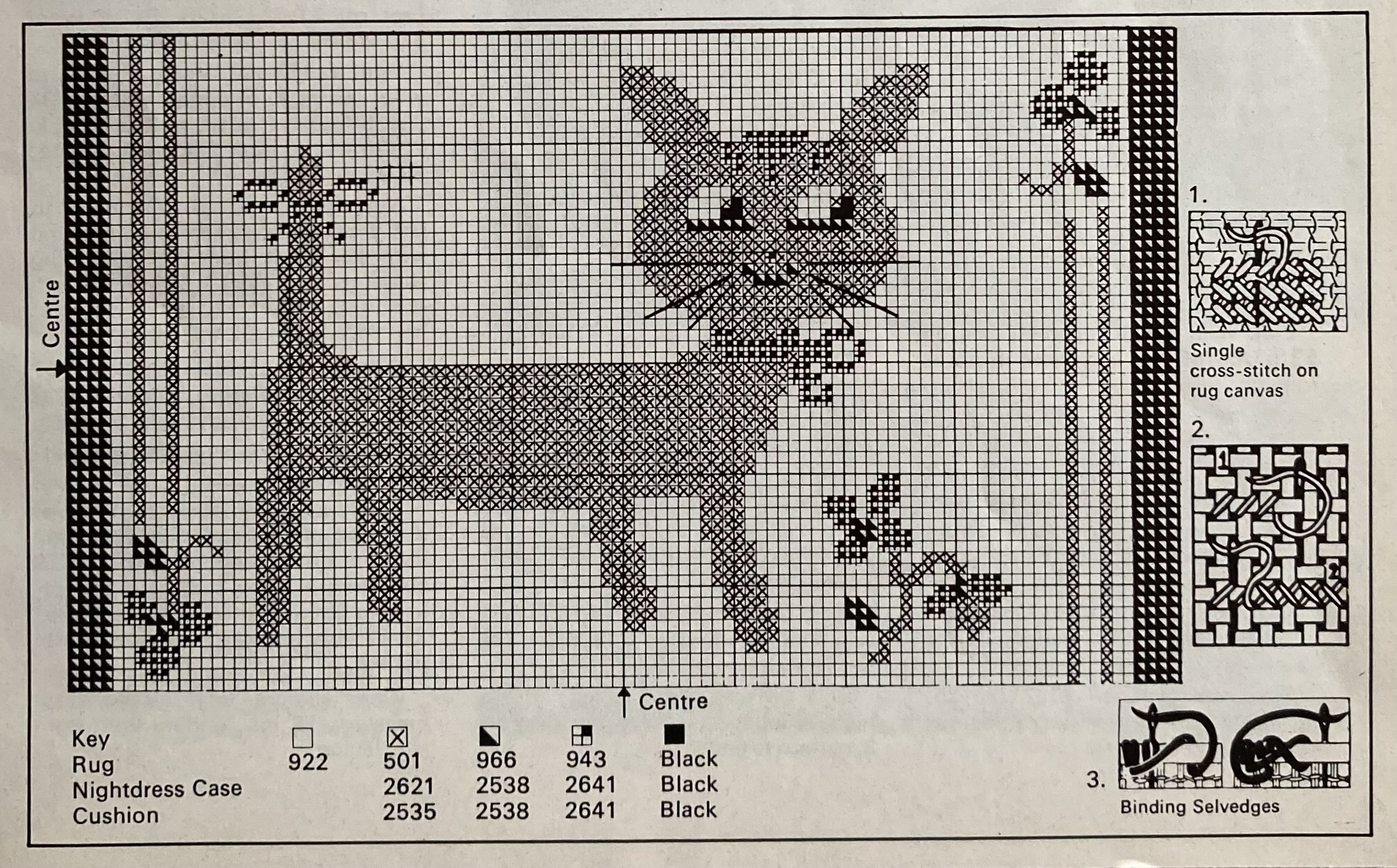
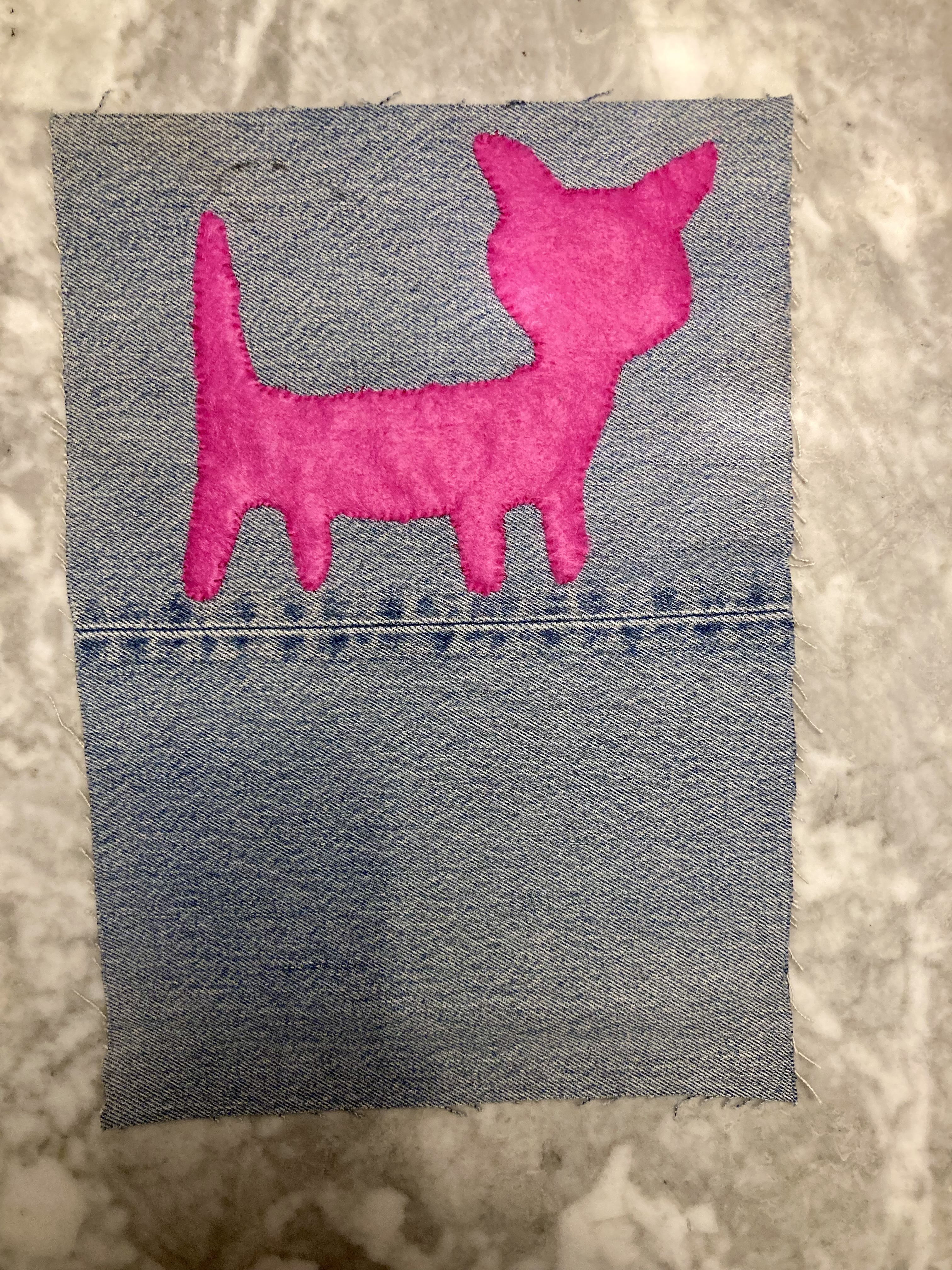
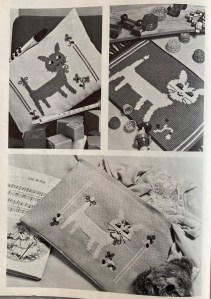
“Cross-stitch Cats are lucky” says the caption in the magazine, and I could definitely use some good luck right now. Cross stitch, however, is not lucky for me. I really, really dislike counting tiny boxes on a pattern or tiny holes in a fabric, all of which are impossible to see even with glasses, and the cross-stitch aesthetic is generally not my favourite. I like crewel embroidery and appliqué. Stitchcraft gives three variations on the design, for a cushion, small rug or night-case. I made a slightly smaller bag that can be used for pencils or chargers or knitting/crafting accessories or any kind of little “stuff.”
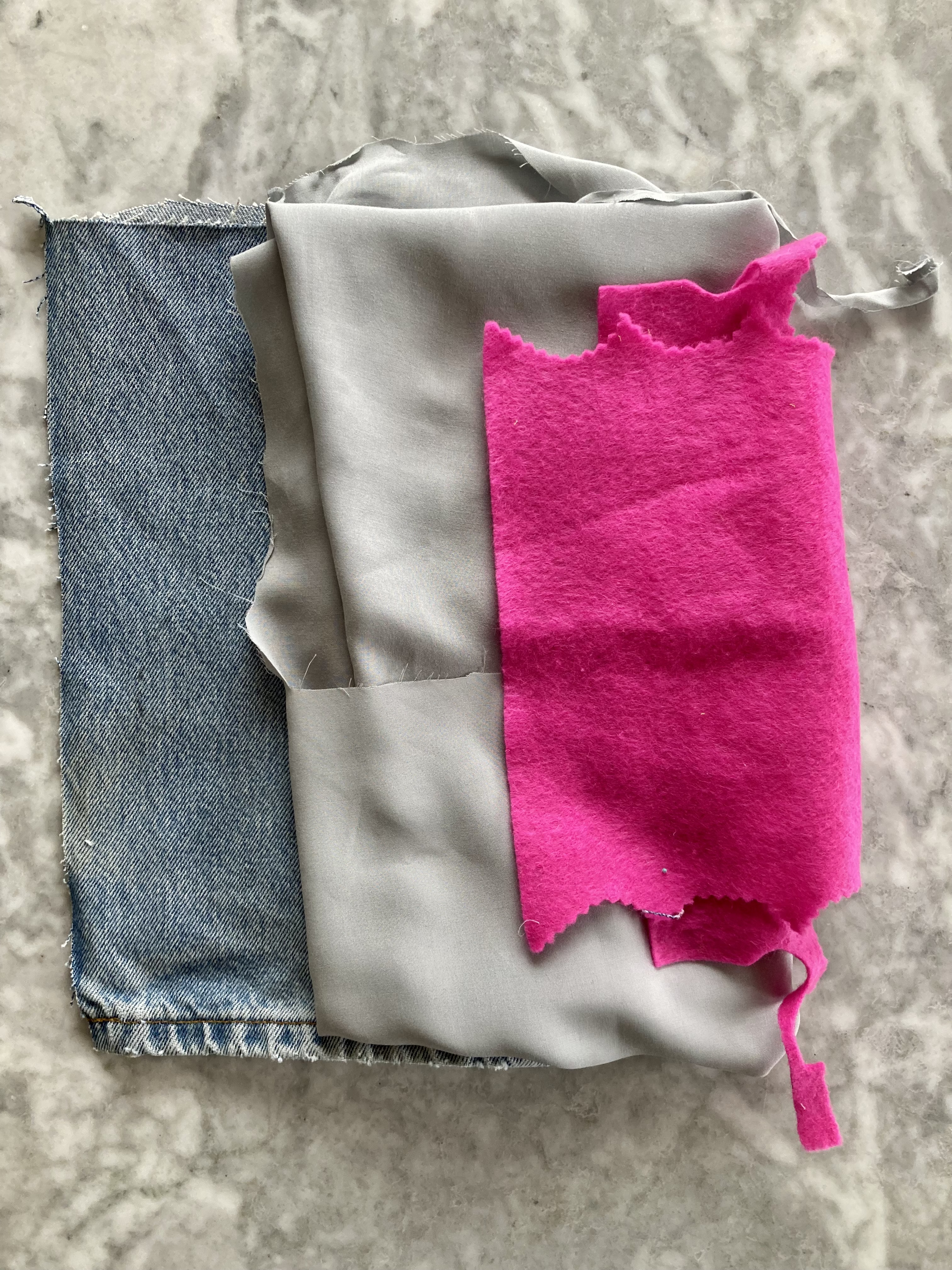
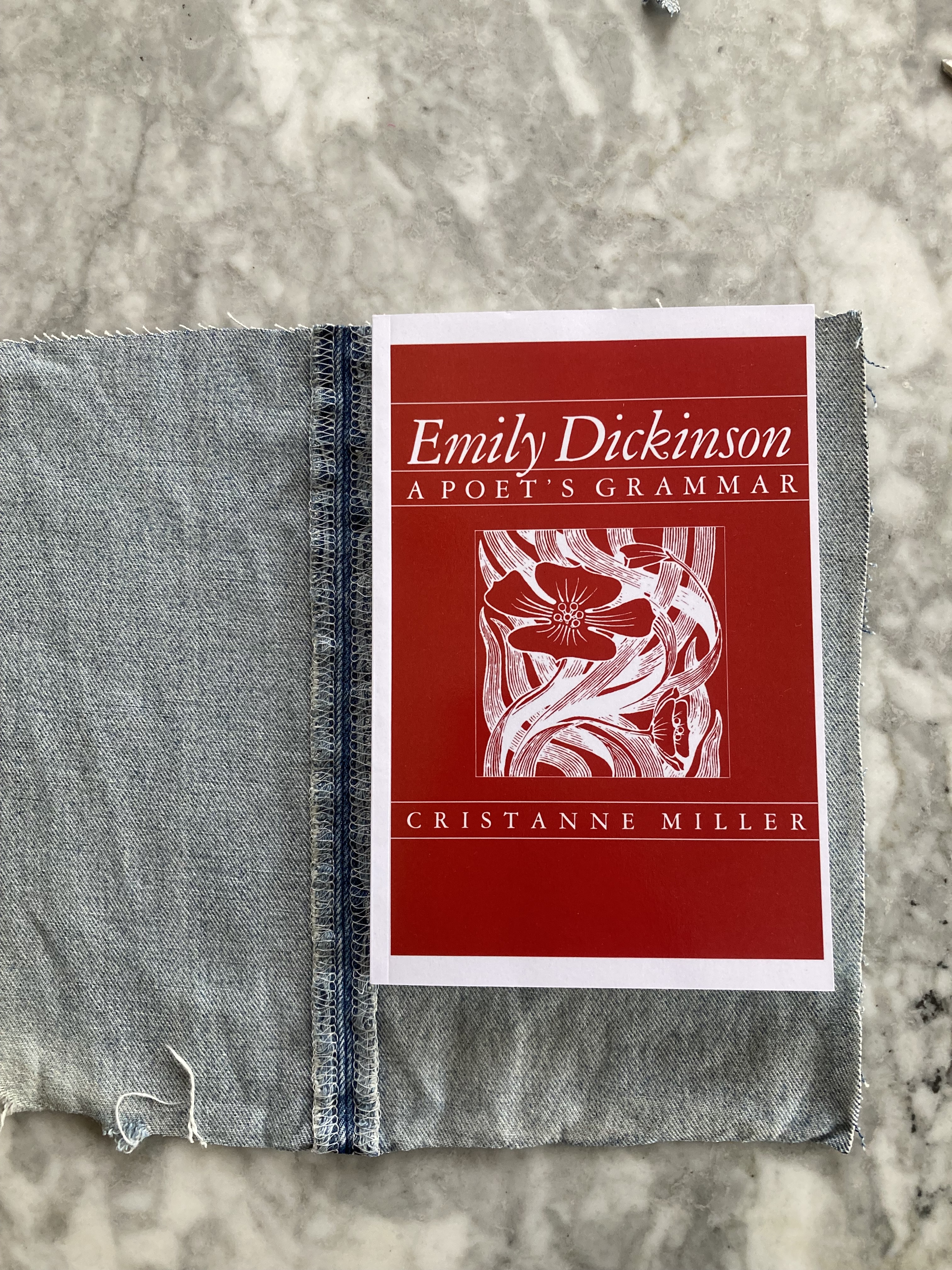
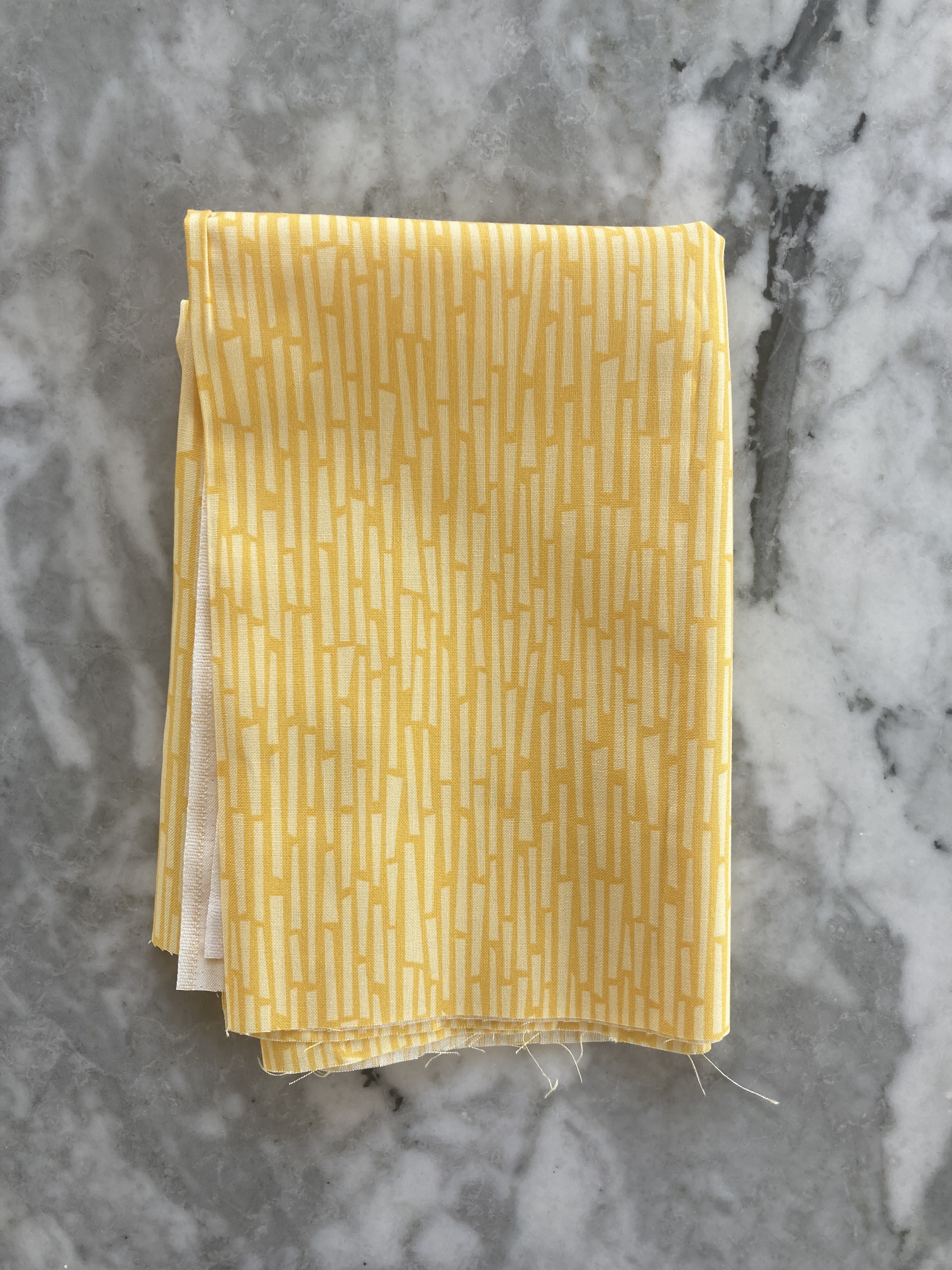
My backing fabric was from the leg of an old pair of jeans from the upcycling drawer. I used the leg seam as the bottom of the bag and found some lining material to match. Cristanne Miller’s book on Emily Dickinson’s grammar made an excellent straightening guide.
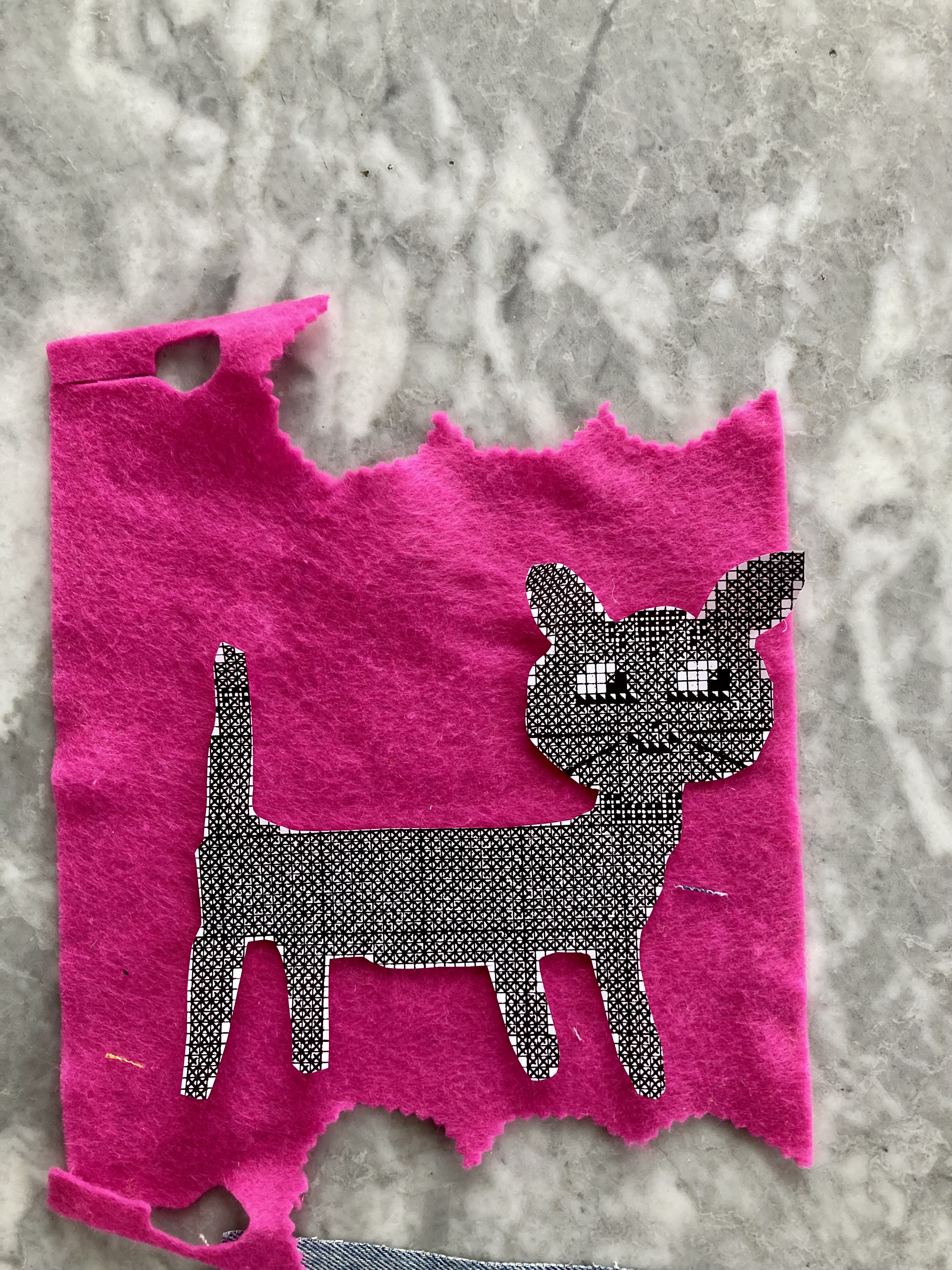
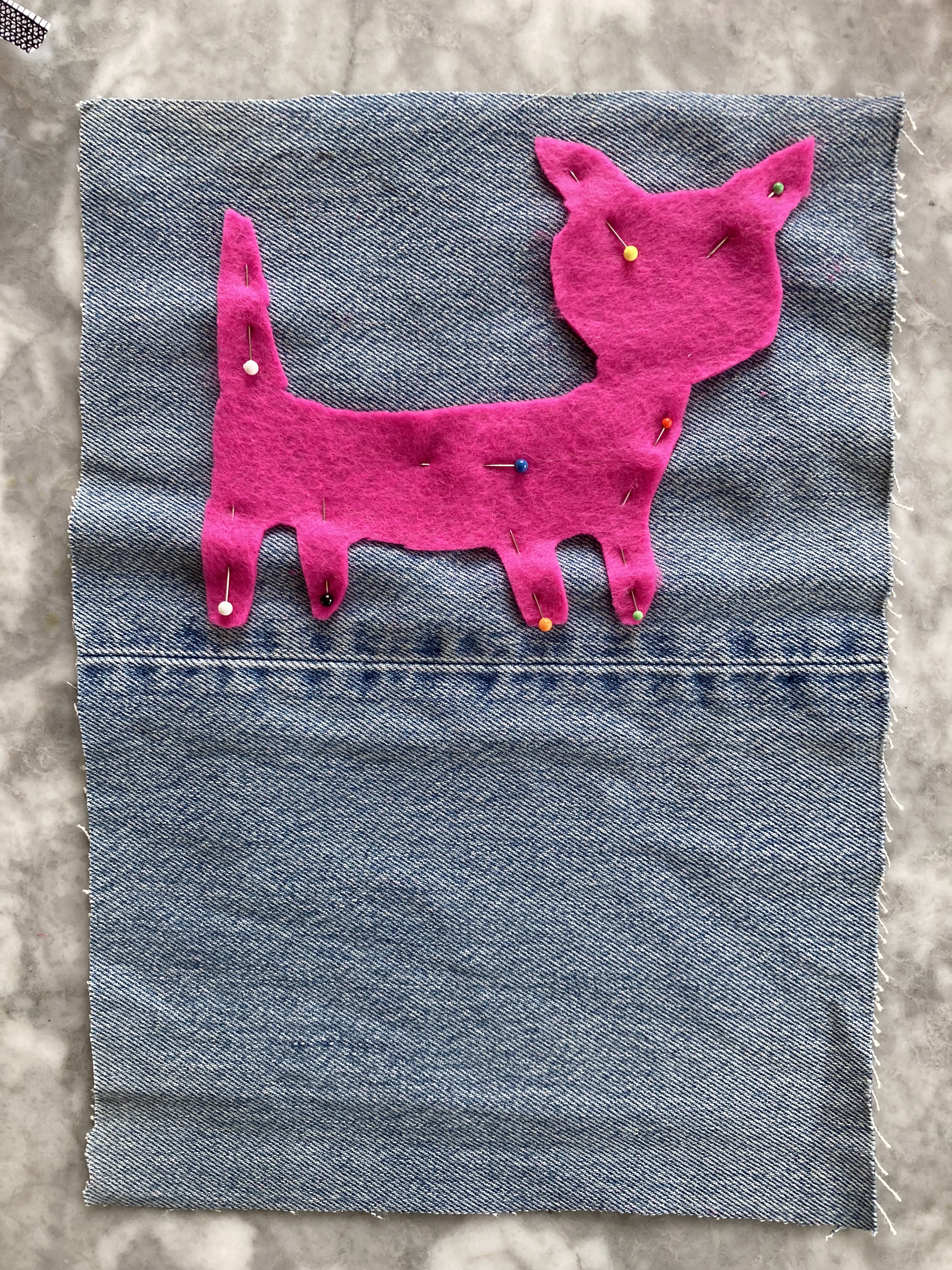
What colour cat? The cats in the pattern are white (rug, on royal blue background), white (nightcase, on light blue background), or blue (cushion, on cream background). I could have gone more realistic, with light grey or charcoal grey or brown. It didn’t seem whimsical enough, though. The design is so cute and cartoony that I found it better to use an entirely unrealistic colour, like the blue cat on the cushion. I had a big piece of pink felt that looked great on the blue jeans, so there it was. I made a cut-out template by photocopying the magazine page enlarged.
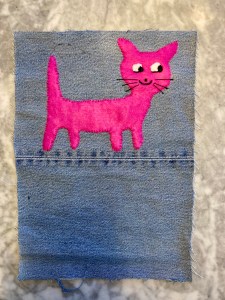
I appliquéd the eyes with pieces of white felt and embroidered the pupils, face and whiskers: satin-stitch and stem-stitch for the eyes, stem-stitch for the mouth, a French knot for the nose and individual long straight stitches for the whiskers. I was nervous, because anything with eyes is tricky, but I was so happy with the result! I think I really nailed the happy, lucky cartoon cat vibe.

I tried out a few different ideas for the flowers before committing to sewing anything down. My design didn’t leave a lot of room for seam allowances, so I left off the decorative lines on the sides. A single flower at the bottom right looked good, but unbalanced, so I added two more flowers at the upper left and upper middle. I adapted the bow around the cat’s neck into a more simple collar and left off the bow on the cat’s tail.
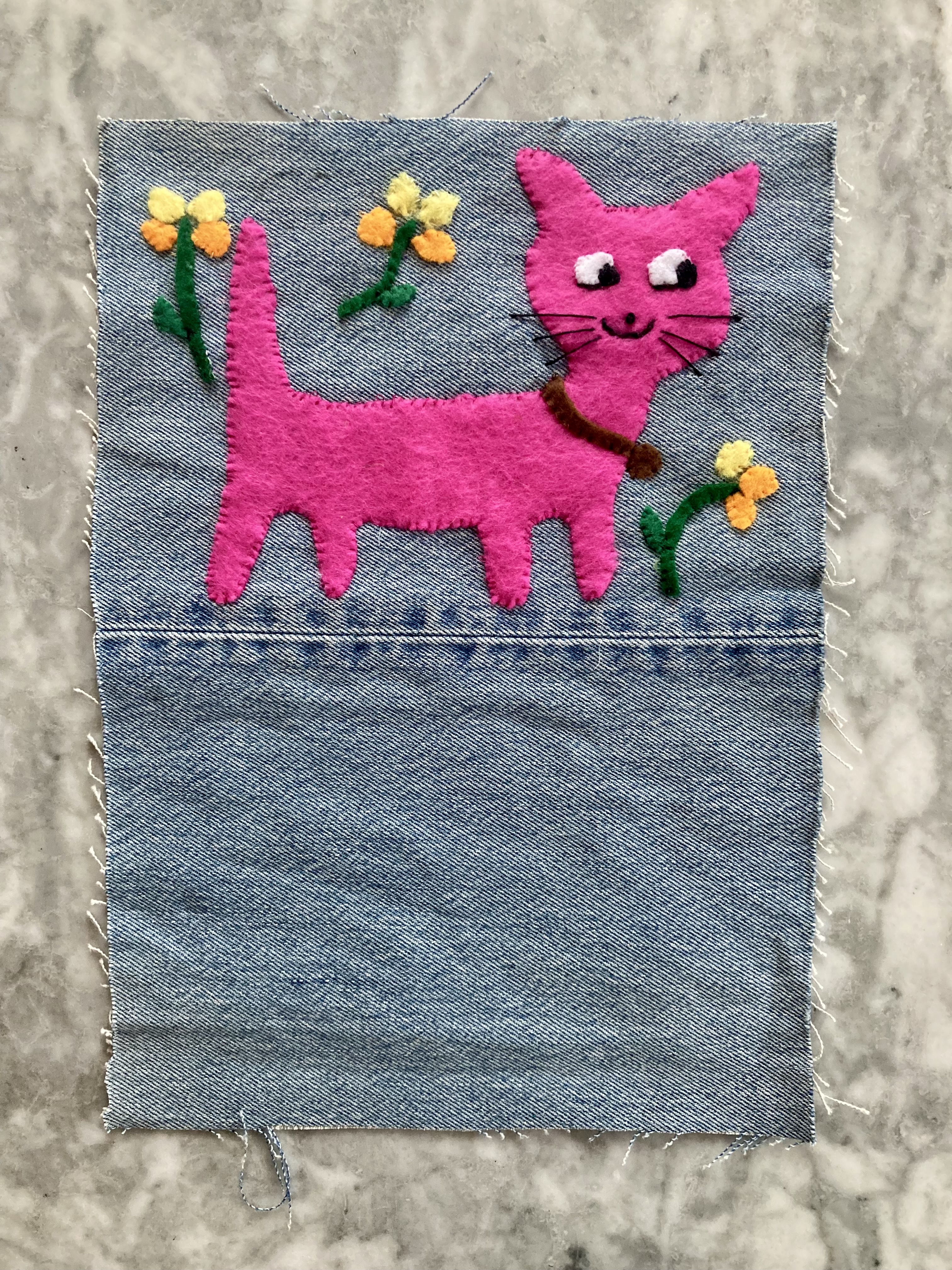
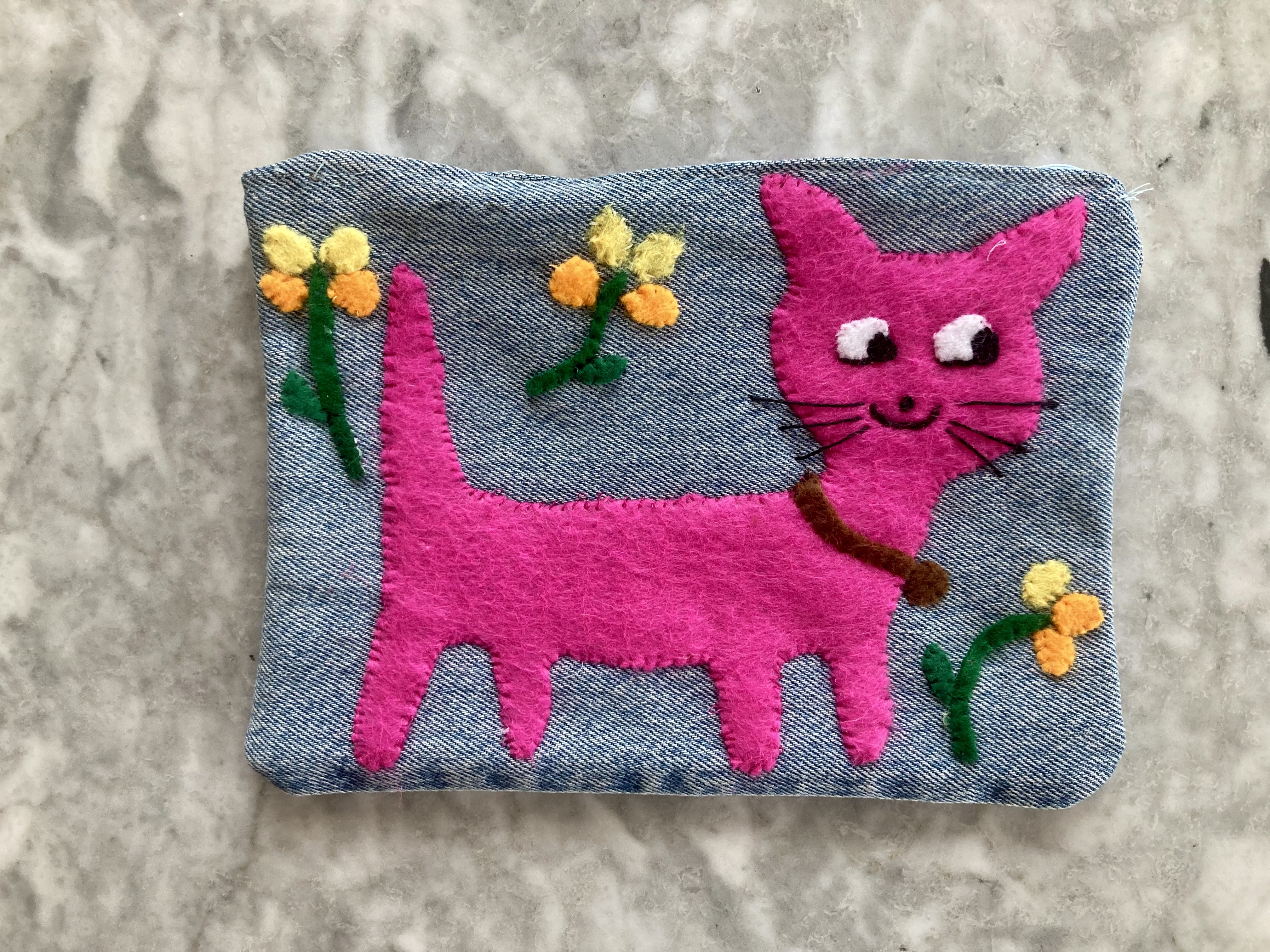
I sewed it up with minimal stress, except for the zipper, of course. Ugh, I hate zippers. This one was finicky and ended up a bit wavy, but nothing on earth will persuade me to re-do a zipper, as long as it works at all. It wasn’t until I starting writing this post, two days after the bag was finished, that I saw that I had forgotten to sew down one side of one flower and one side of the collar! Whoops. That’s what happens when you try to sew in northern Europe in December — there is no light anywhere. Can you see it in the photo? I fixed the flower and collar and then the project was really and truly finished.
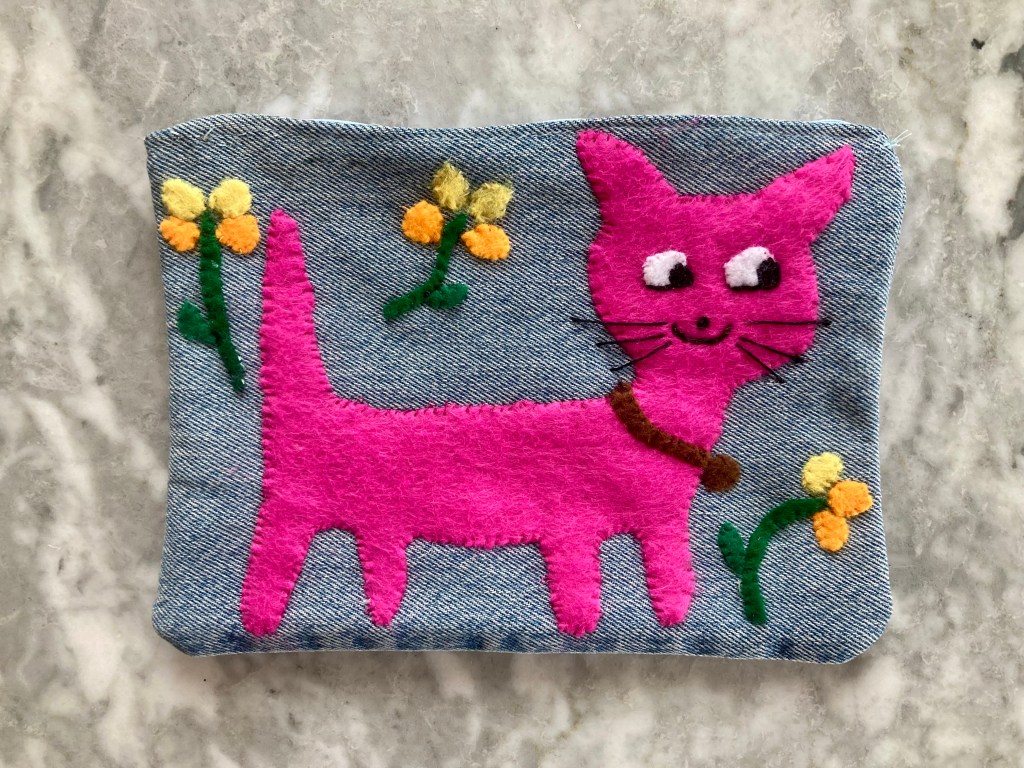
I am so, so happy with this project. It is so cute! The facial expression is perfect. I dare anyone, even cat haters, to look at this bright pink cat and not smile and feel happy. I would love to keep it for myself but I am going to give it to a cat-loving friend who could use some smiles and happiness right now. That way, it will bring both of us good luck.

Happy December Holidays to all of you, and all the best for 2026.

September 1967: Overview

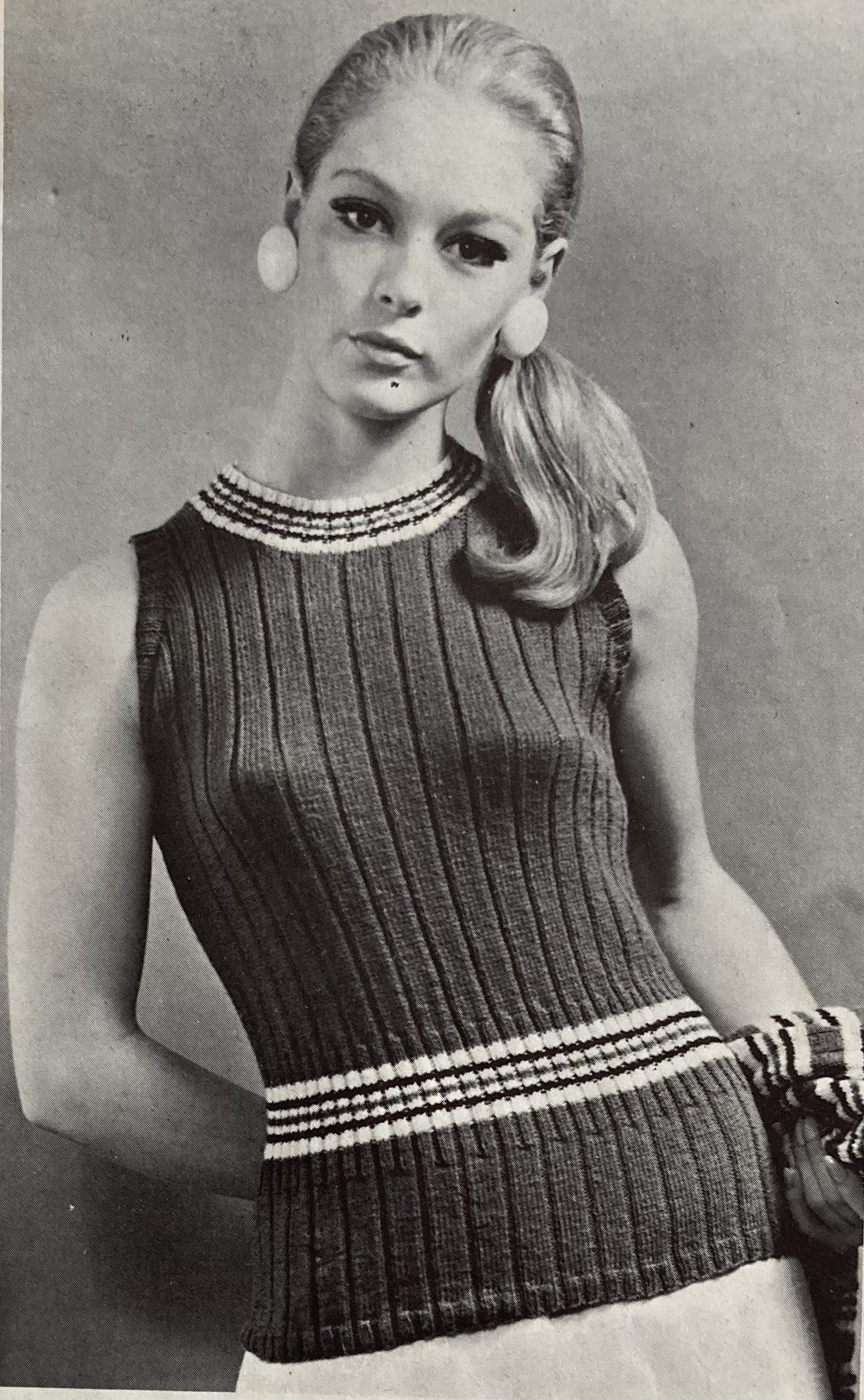
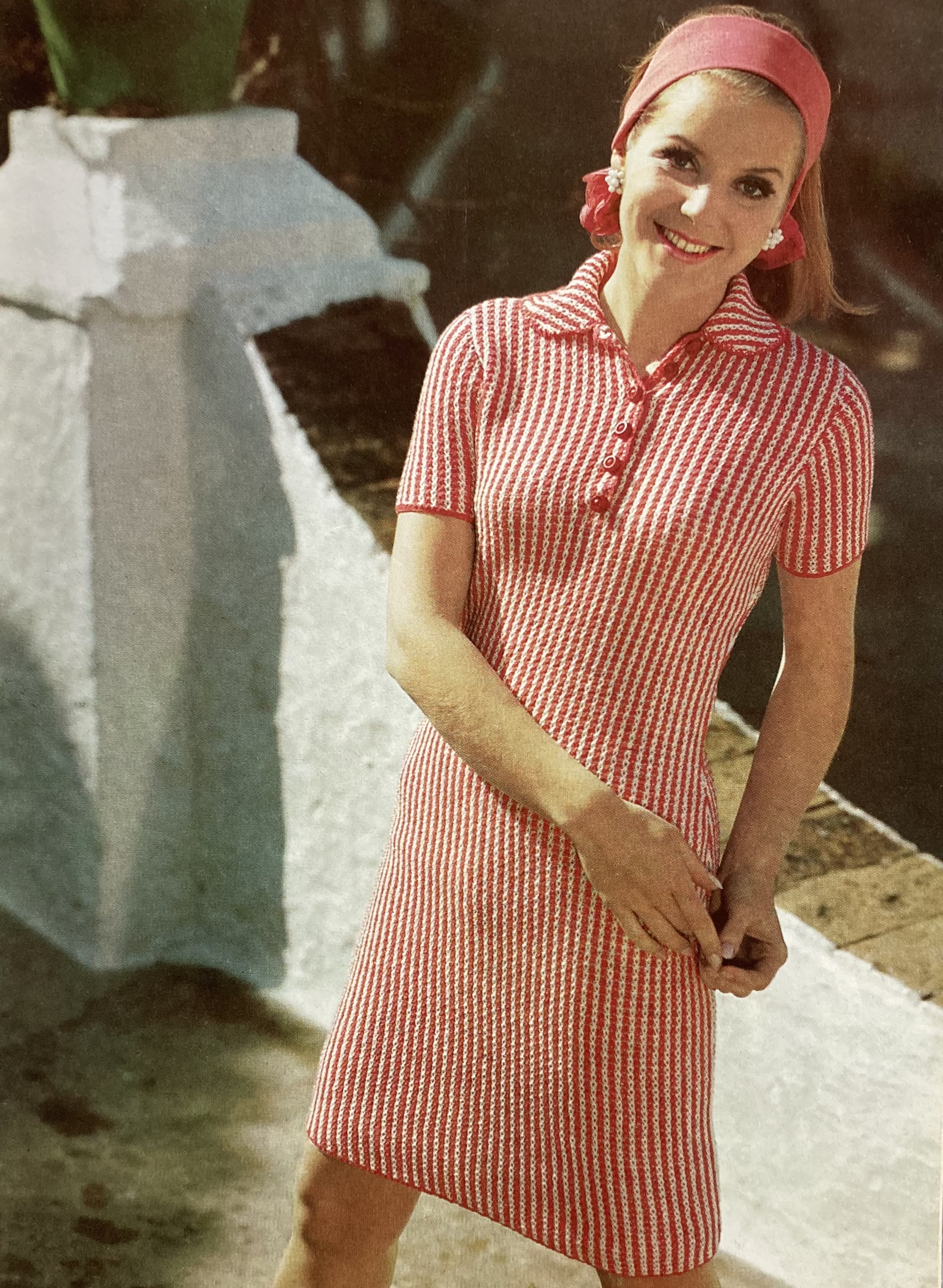
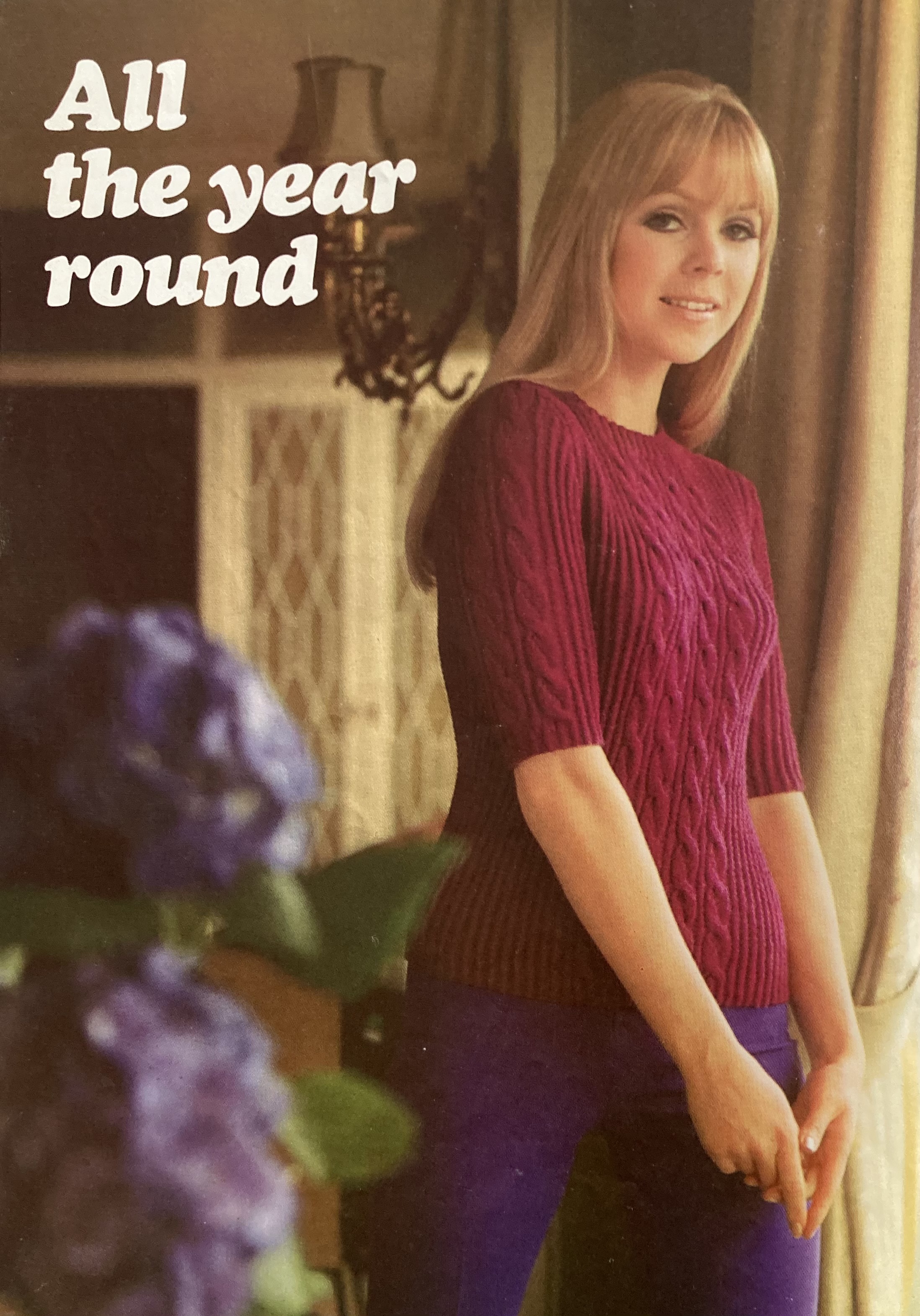
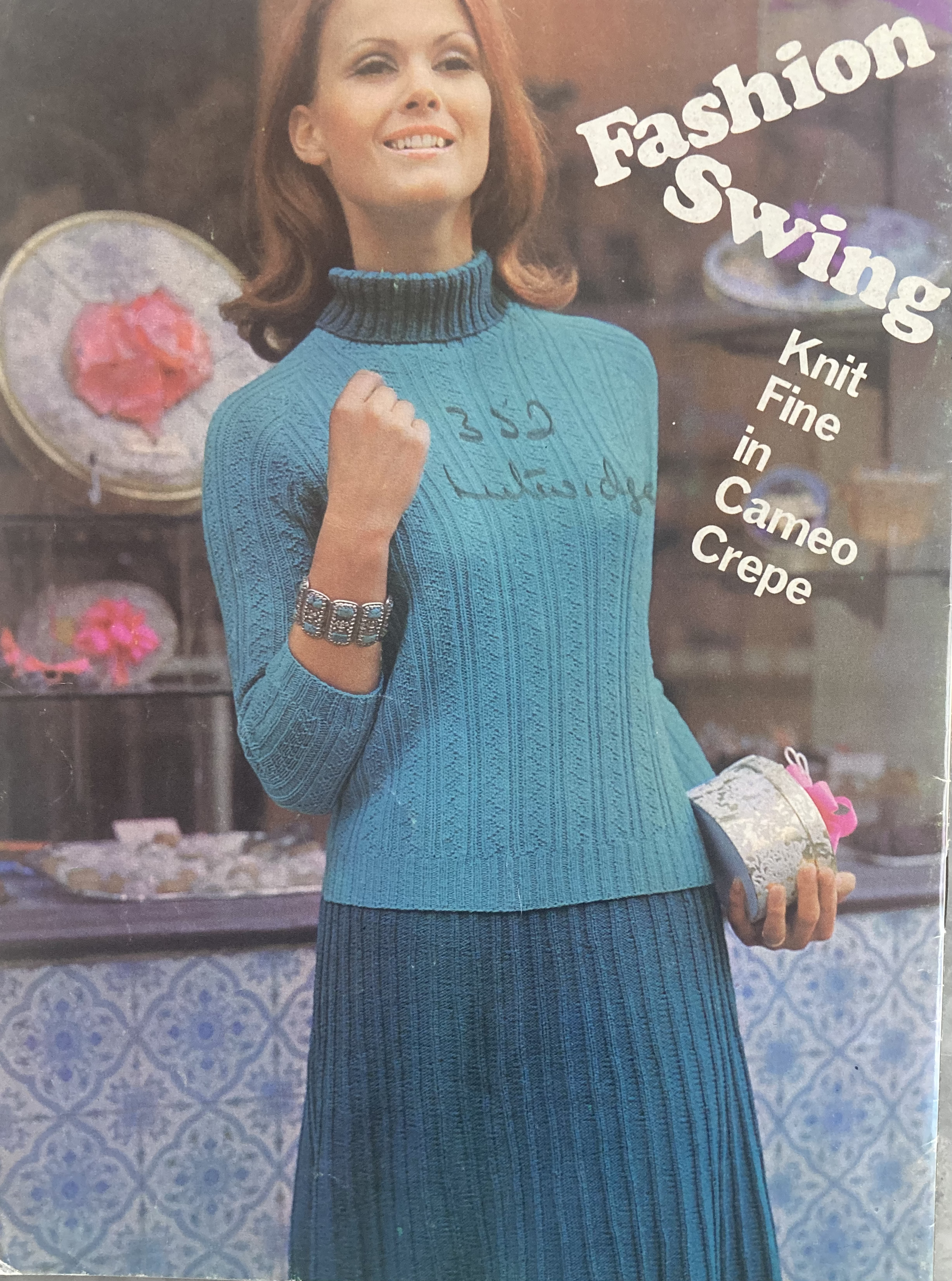
It’s time for a “Fashion Switch” over at Stitchcraft! 1967 is the year where knitted dresses really start to feature, and as far as I can tell, the “switch” part means you can either make a dress or a skirt combo and mix and match. The cover designs fit in well with the trend: high necks, short skirts, deep raglan armholes, A-line shaping and big patch pockets. Note, too, the huge hats — they will only get bigger in the months to come.
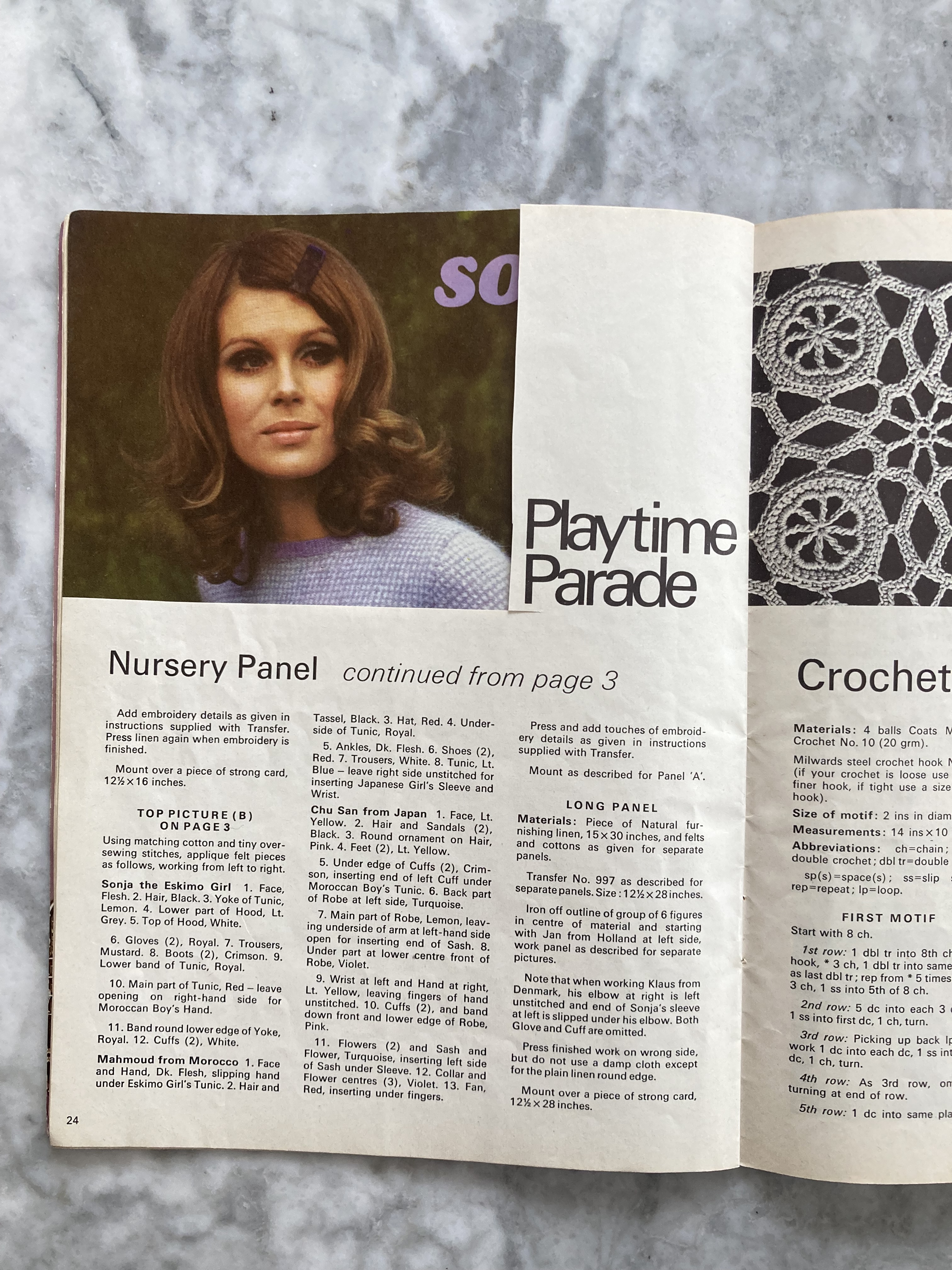
The centrefold photo shows a slinky variation on the theme with a dress and/or skirt combo featuring a pretty beaded and textured design. Like the chevron dress from April 1967, the designs pick up some elements of 1920s and 30s fashion, while keeping a distinctly late-60s shape.

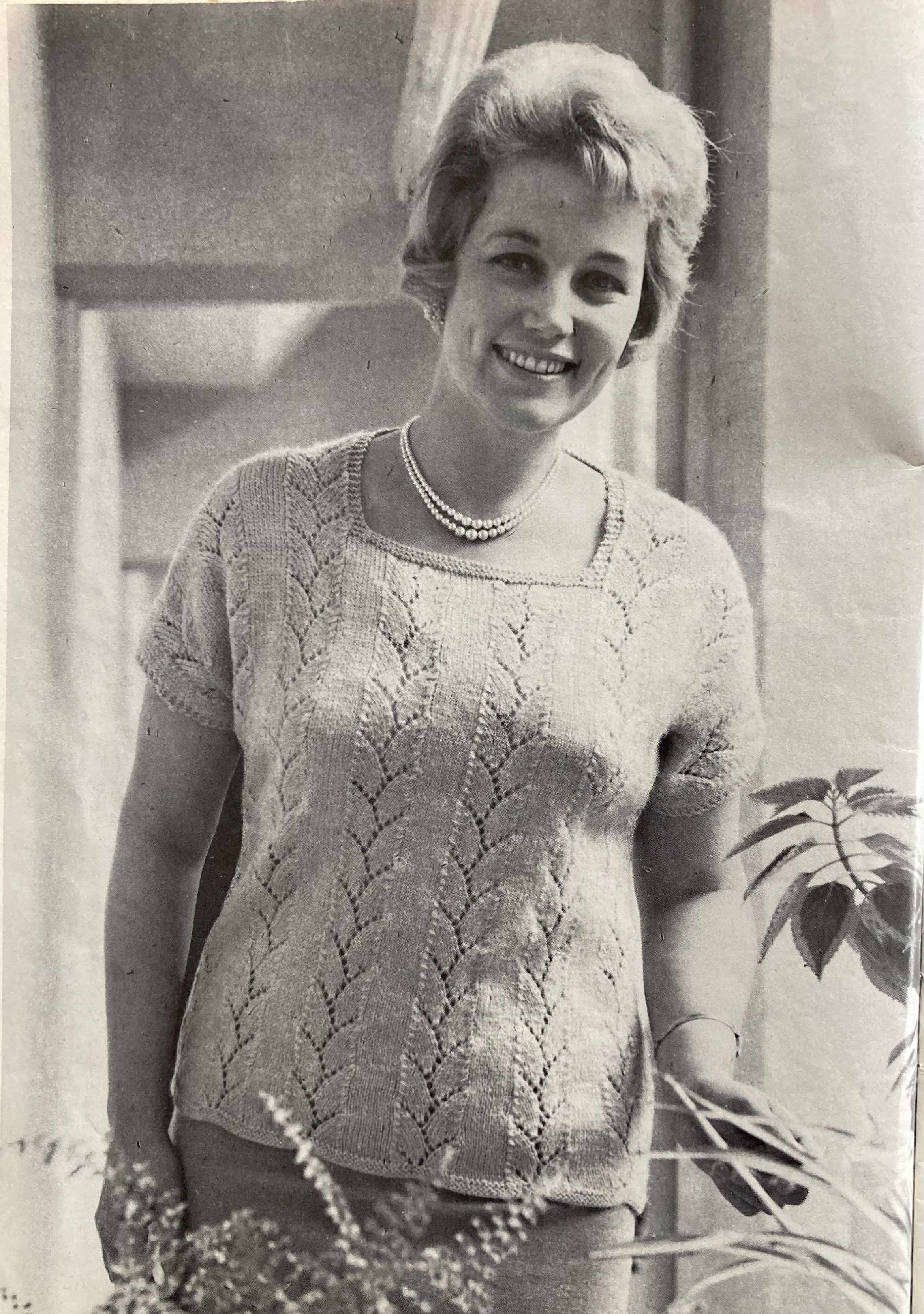
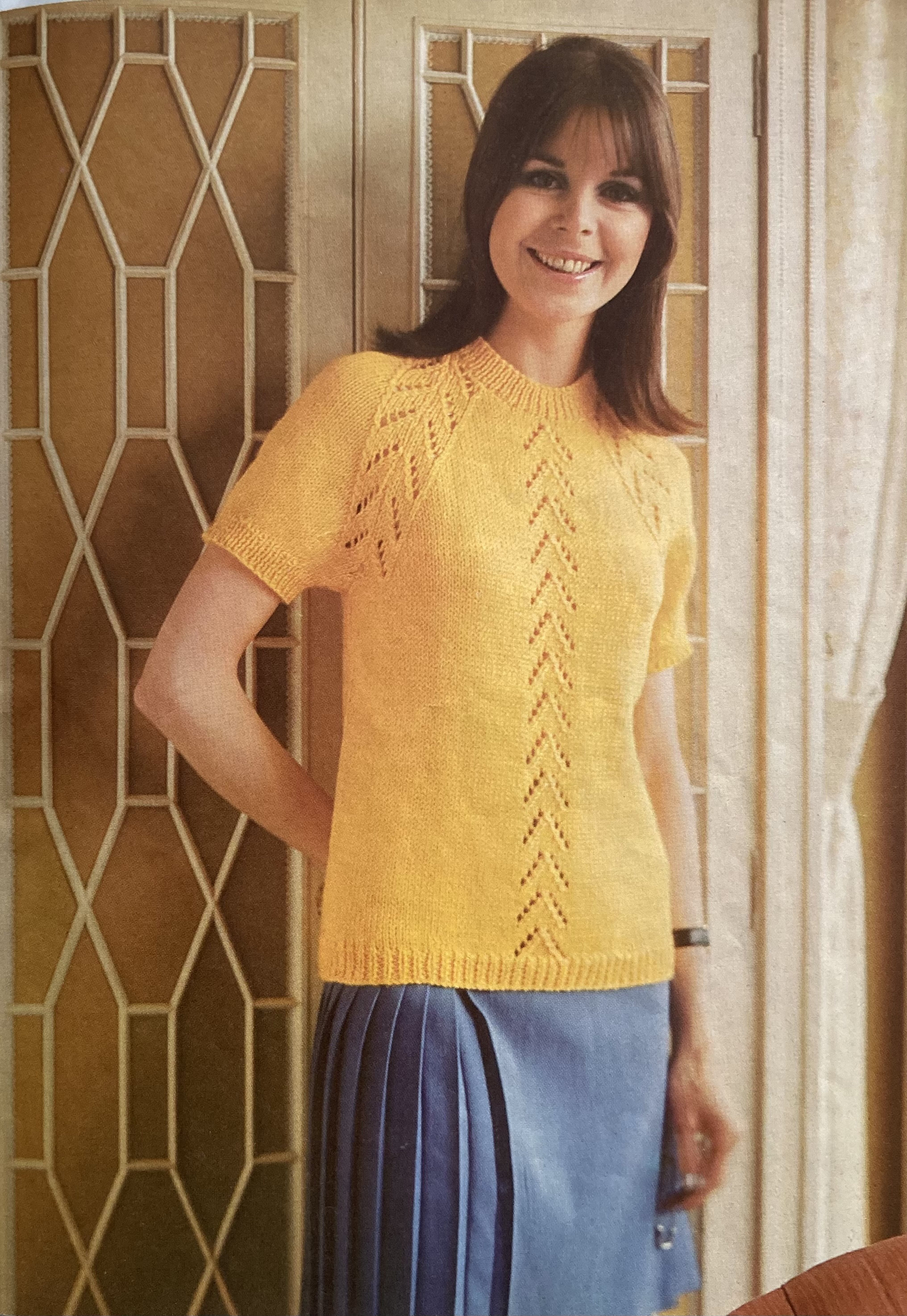
Other women’s knits include a bouclet blouse for the fuller figure with a very neat and pretty “soft-roll” neckline, a casually elegant afternoon suit with cable trims, a striped skirt combo in “colour brilliance” (tangerine and violet!), and a “Golden Glow” bright yellow pullover.

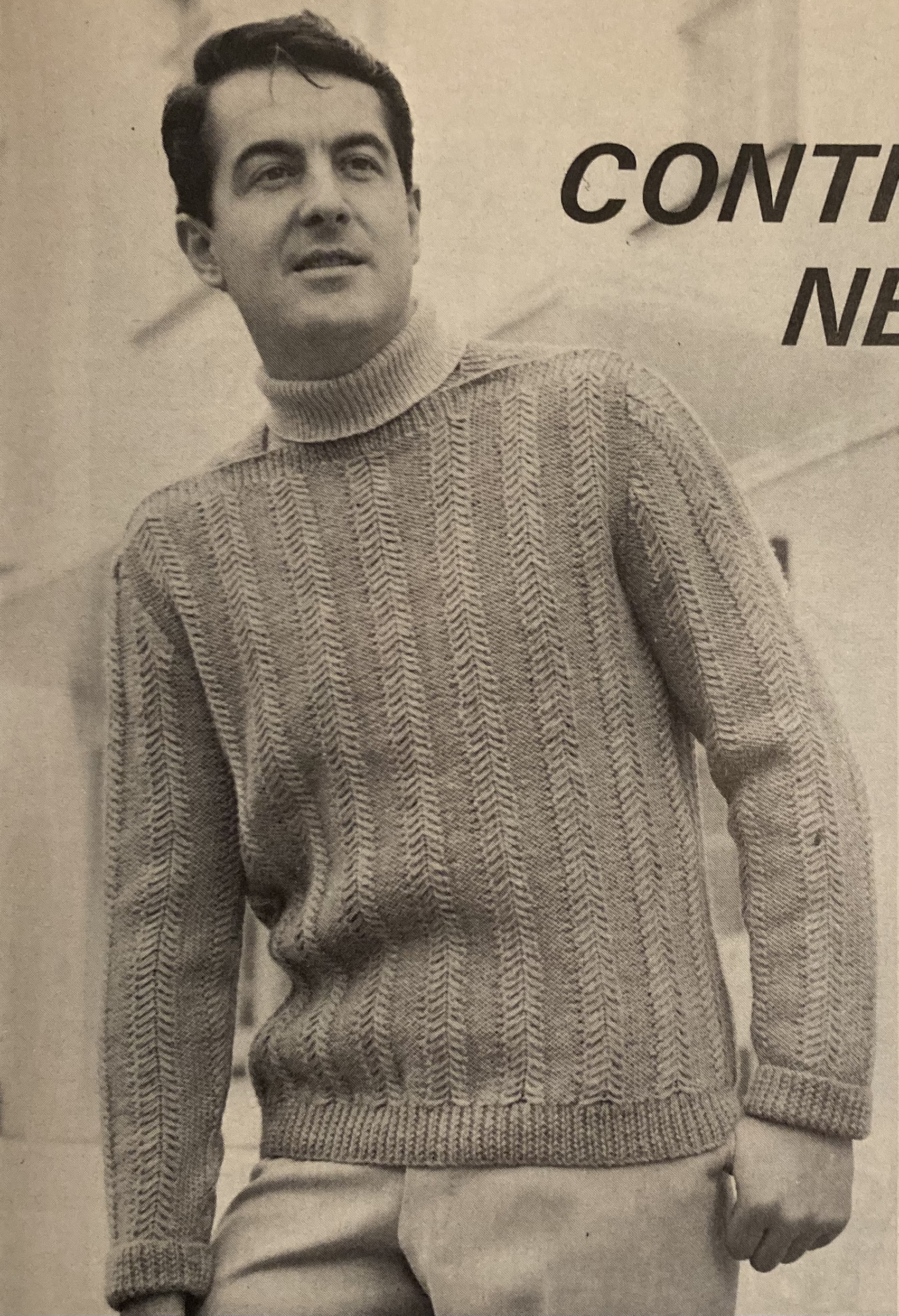
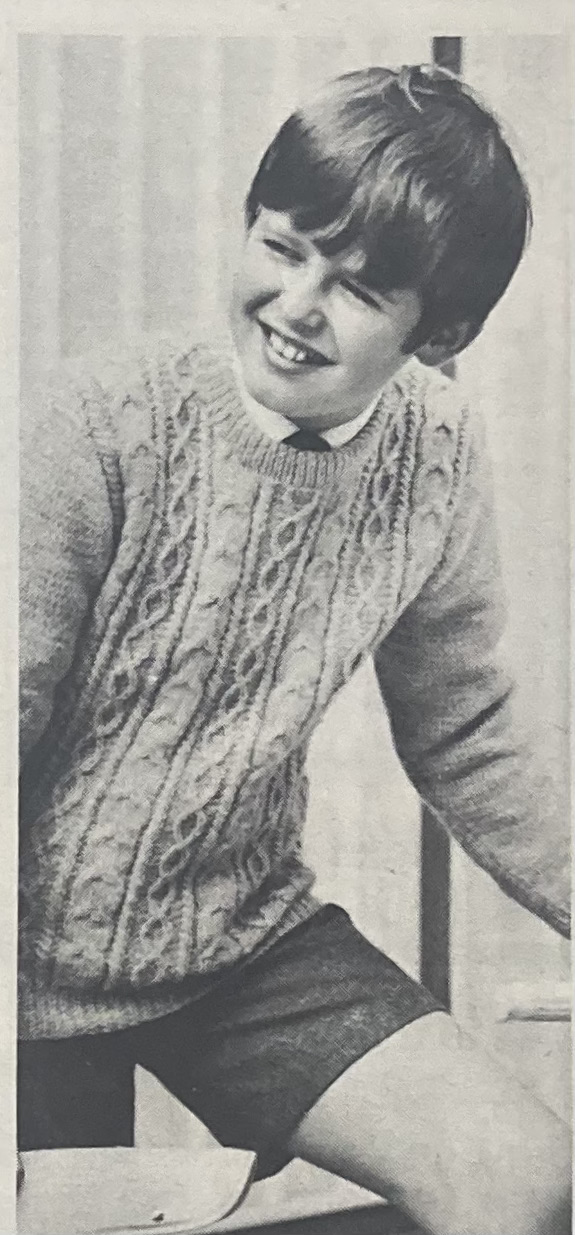
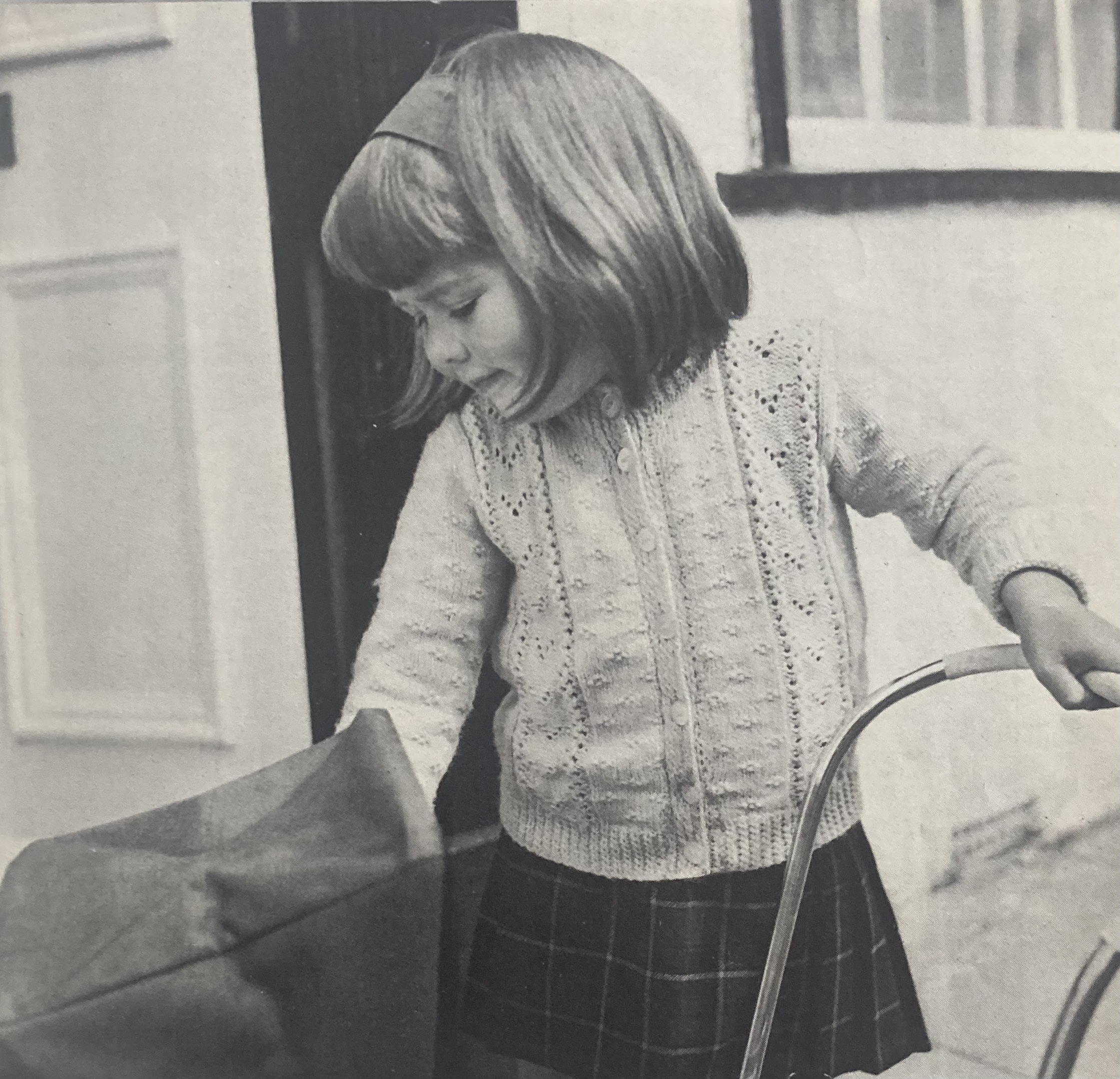
“Colour brilliance” applies to men’s fashions too, for once, and this green and yellow slip-stitch cardigan is a masterpiece. The model looks a bit like a colleague of mine — should I knit it for him? The other men’s garment, a chunky but streamlined pullover, echoes some of the design features of the women’s “fashion switch” combos. like the big patch pocket and contrasting-pattern sleeves. The photo is black-and-white, but the suggested colour is “Curry”, which I assume will be some kind of dark gold-brown-orange (so 60s). For children, there are two nice, sturdy, basic raglan pullovers in a more classic colour scheme — dark charcoal with red trim for the boy’s and “Cloud-dust Pink” with “Aztec Gold” trim for the girl’s.

There are some fun homewares for all styles and abilities, starting with some very easy sewn and embroidered aprons with whimsical kitchen designs. I’m not interested in the aprons, but I love the top that the “teatime” model is wearing! You can make a tapestry panel of an Irish homestead in Rosguill, Donegal or a cushion or chair-back in a gorgeous traditional-inspired design updated “for a modern setting”. Both are done in tapestry wool on furnishing linen.

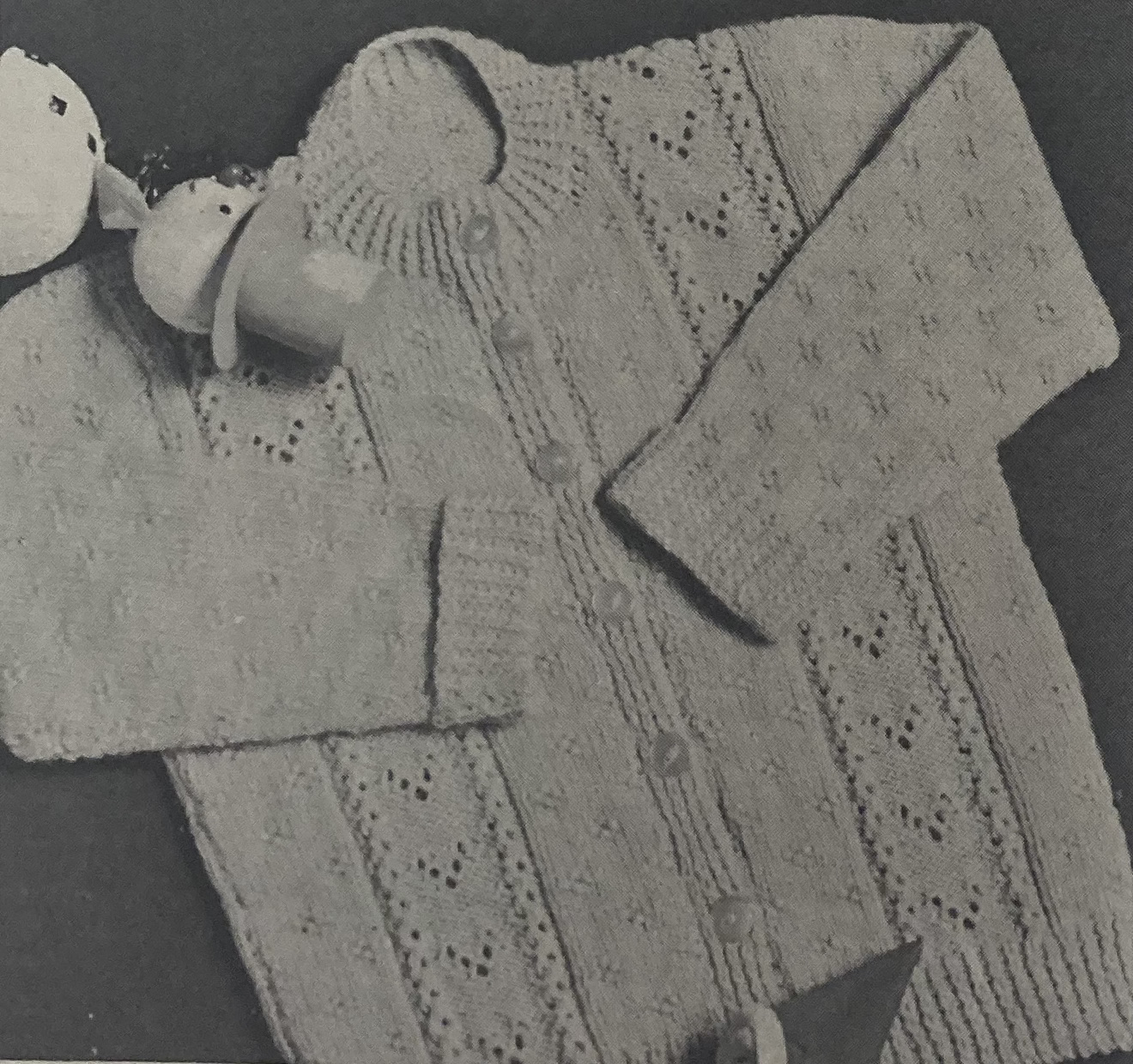
It’s not too early to start on little gifts for Christmas, and here’s a little bag “for a friend” and a knitted tortoise toy “for a toddler.” Baby gets a thick, squishy pram cover in fluffy “Ariel” wool and a raised cable trellis design.

Or you can make a Florentine-pattern workbag or cushion for yourself. The colours — gold, green, and yellow — will match nicely with a lot of the knitted designs from this month.

In the “Readers Pages”, we finall have a new comic: Sue and Samuel Squirrel run the Woodland Wool Shop. Their adventures start when Sue finds a loose thread of yarn in the woods and winds it up — only to find that she has unraveled an elephant’s vest and needs to knit it all up again! Poor Sue. The only full-page advert is for Bri-Nylon. I imagine the dress in the photo is quite hot and impractical, especially if knitted in synthetic nylon wool, but what a lovely photo.

That’s it for this month! There are so many great projects that it’s hard to choose, especially since the ones that call to me are all big projects and I just finished the chevron dress from April 1967. I love the orange cover dress and the men’s slip-stitch cardigan, particularly, as well as the fancy embroidery design, which I think would look lovely going around the hem of a full black skirt. Or maybe even the Florentine needlepoint? I don’t have much time in September to knit, though, and even less to adapt an embroidery or tapestry pattern. We’ll see!

August 1967: Overview

“The LAST of the SUN” is the headline of the introductory page of Stitchcraft’s August 1967 issue, and there is no blurb about the latest fashions or designs: just the subtitle “fashion for late holidays and the first smoky days.” (That the first cooler days of the year were called “smoky” is presumably meant quite literally, seeing that a good portion of family homes in the UK were still heated with coal fires in 1967.) The late-summer fashions in this issue are warmer, but still sunny and colourful, with layered and mid-weight garments that can be worn indoors or out.

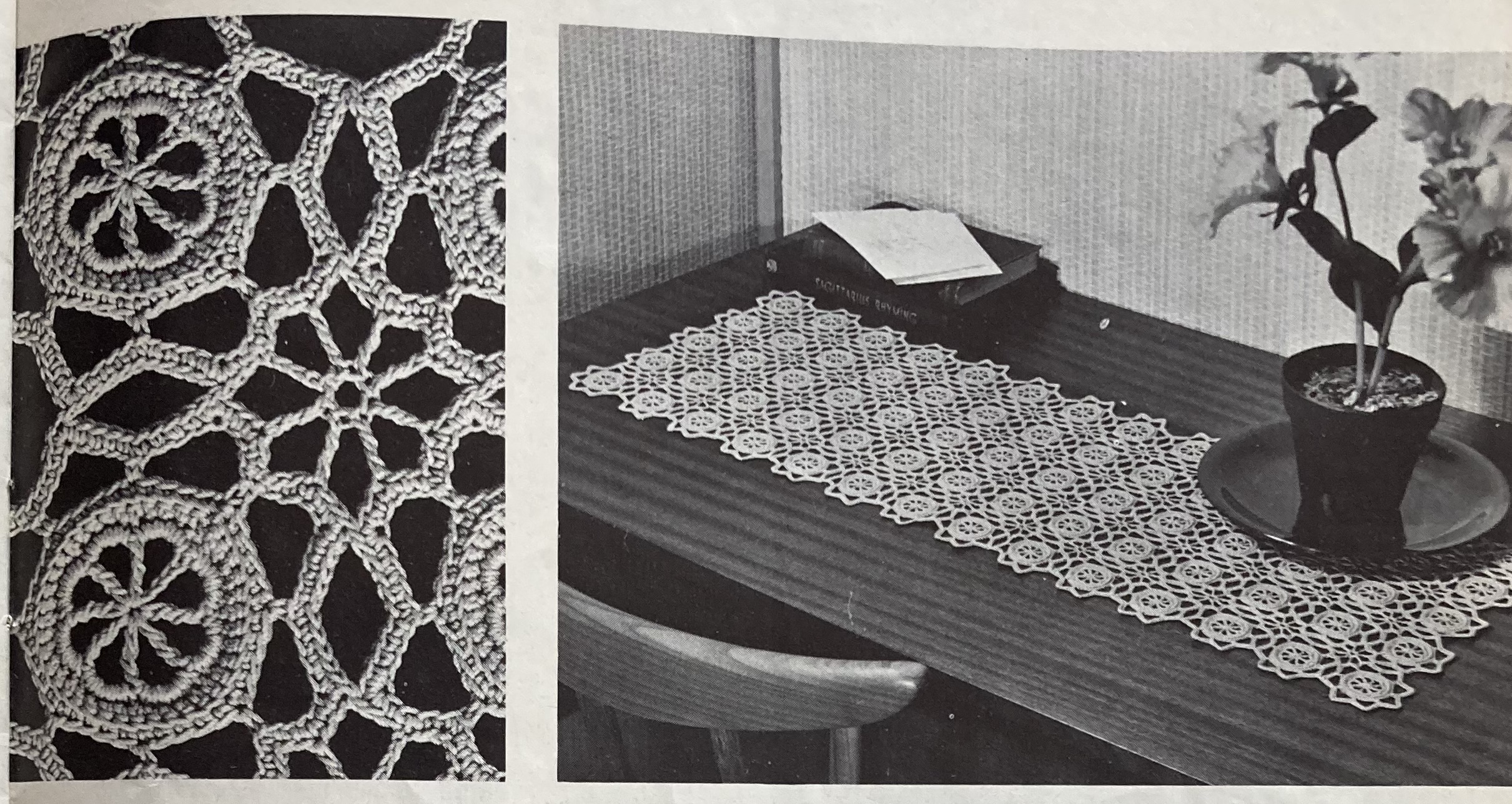
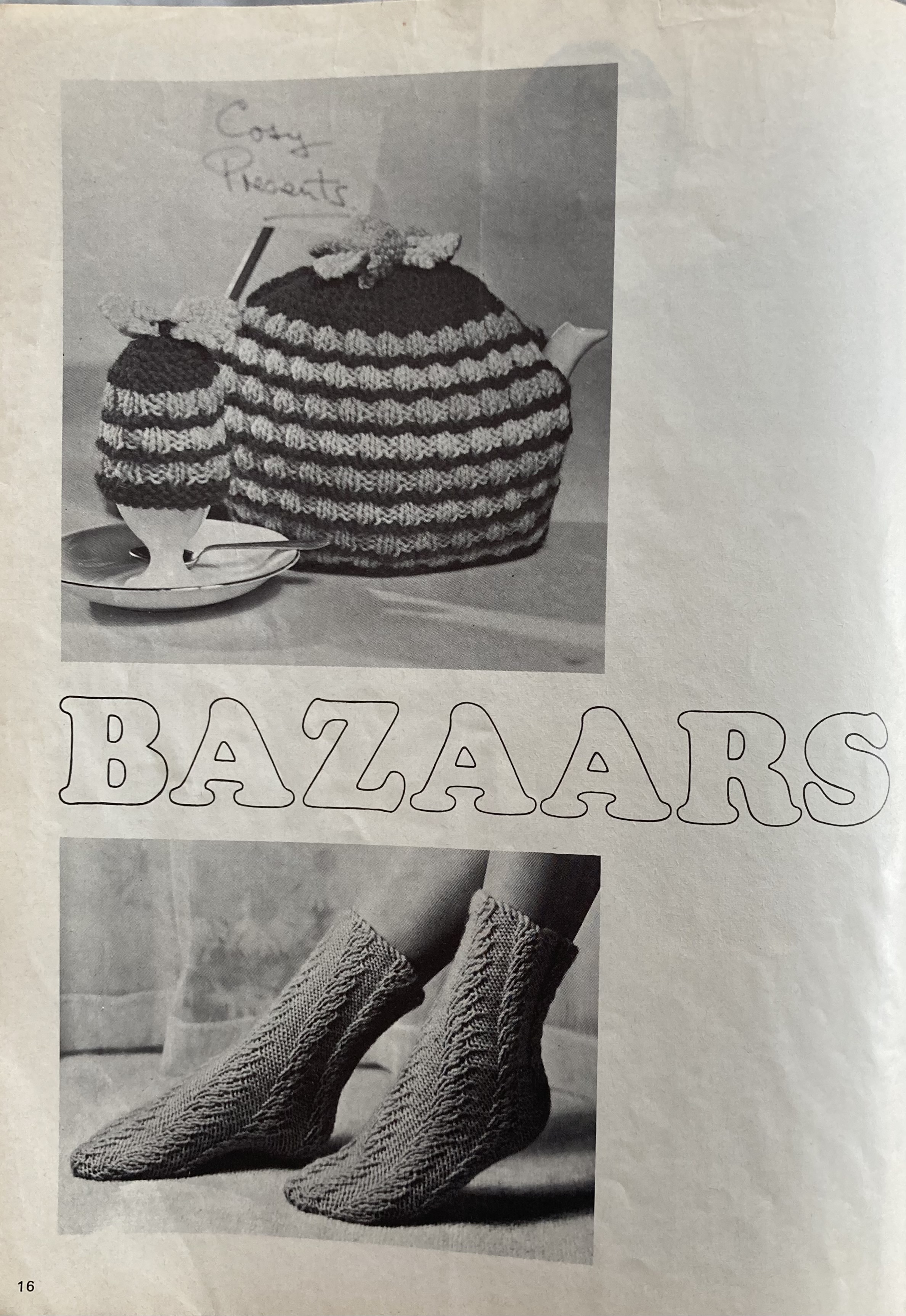
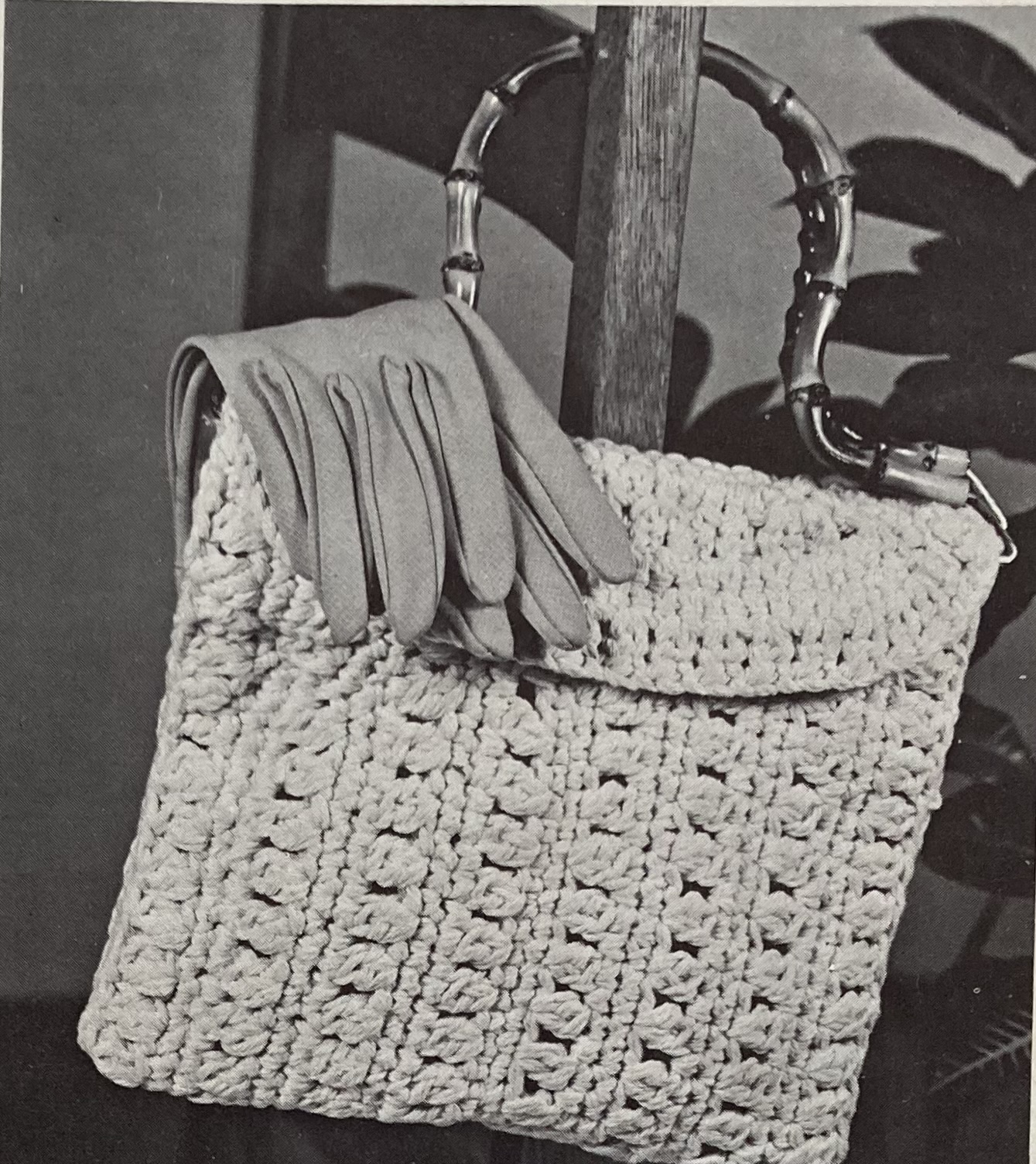
Case in point: the cover design, a twin-set of sleeveless “shell” and lightweight cardigan with elbow sleeves in cheerful, sunny yellow and blue. Note how short skirts have gotten! I think this might be the first Stitchcraft cover photo that features a true miniskirt. My copy of this issue was clearly used — according to the handwritten notes on the cover, the previous owner was interested in the crochet runner, the felt panel, the knitted tea cosy, egg cosies, and bed socks on page 16, and the handbag on page 17.

The other women’s fashions include a lacy top in larger sizes (to fit 42/44/46 inch bust), a two-colour shirtdress in a slip-stitch pattern, two short-sleeved knitted jumpers, and a heavier saddle-shoulder cardigan to work as a jacket on those cooler days. With the exception of the larger-sizes jumper in pastel “Camelia” pink, bold colours prevail: yellow, pink, red, or blue tones. (The saddle-shoulder cardigan is navy blue with white.) There are more colour photos in this issue than in previous issues.

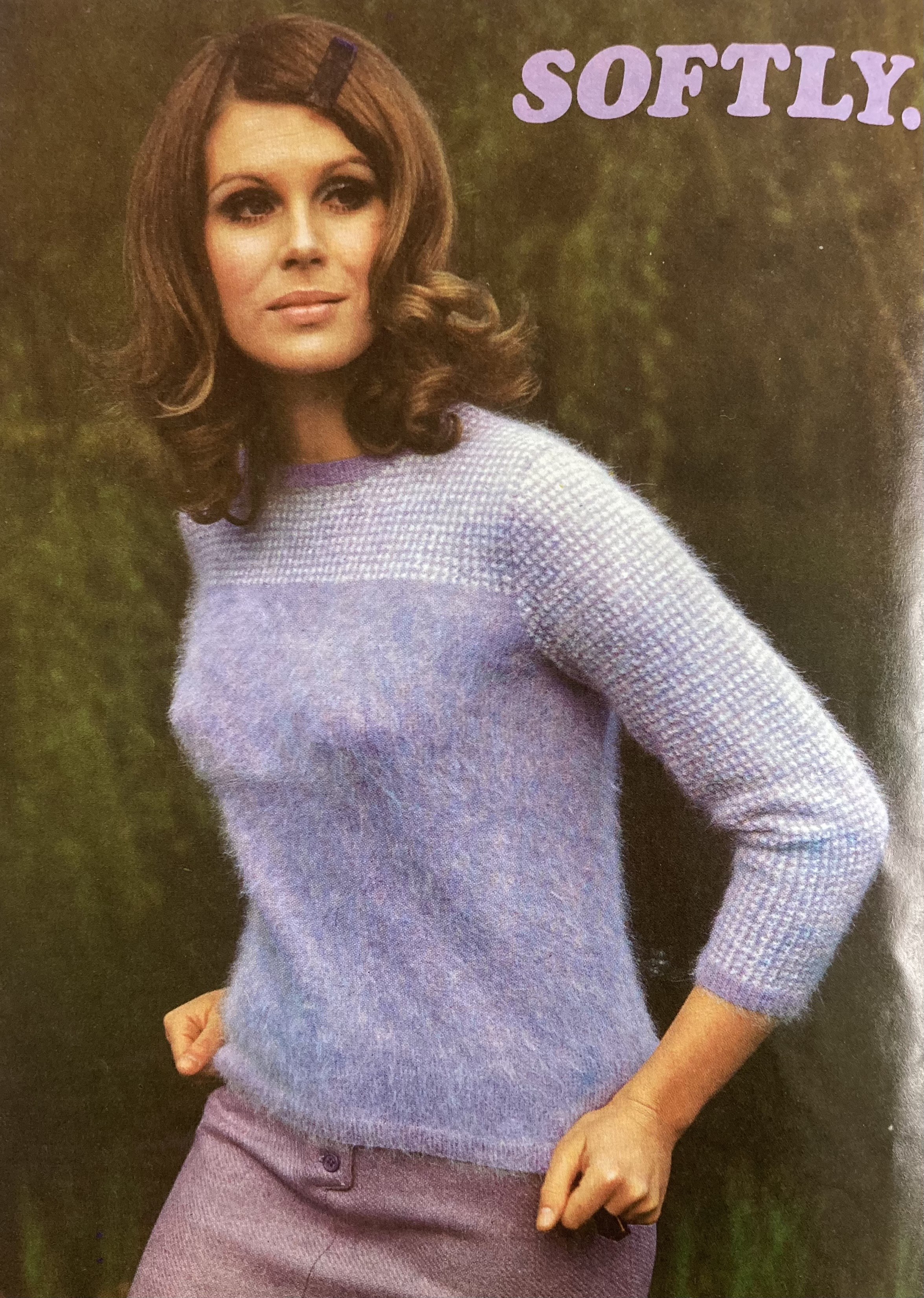
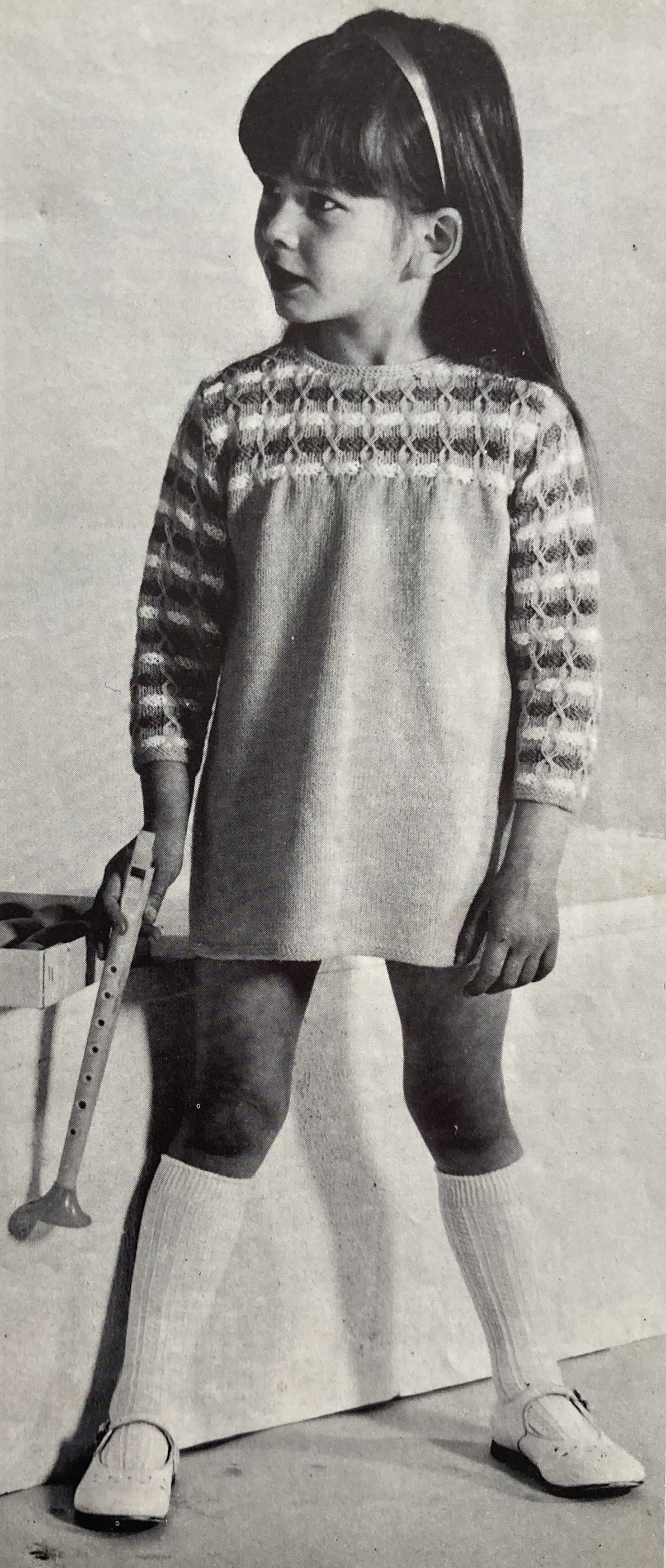
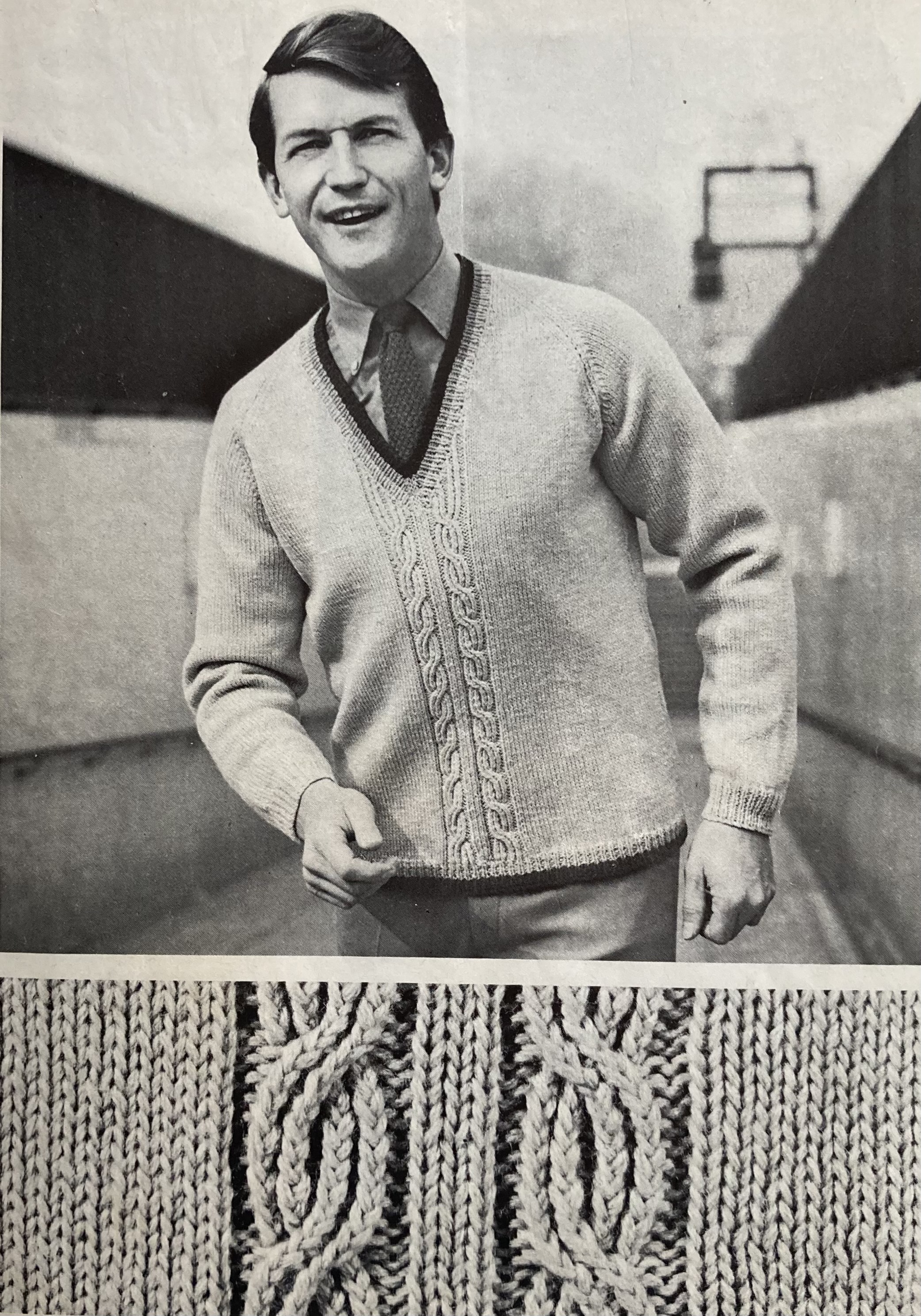
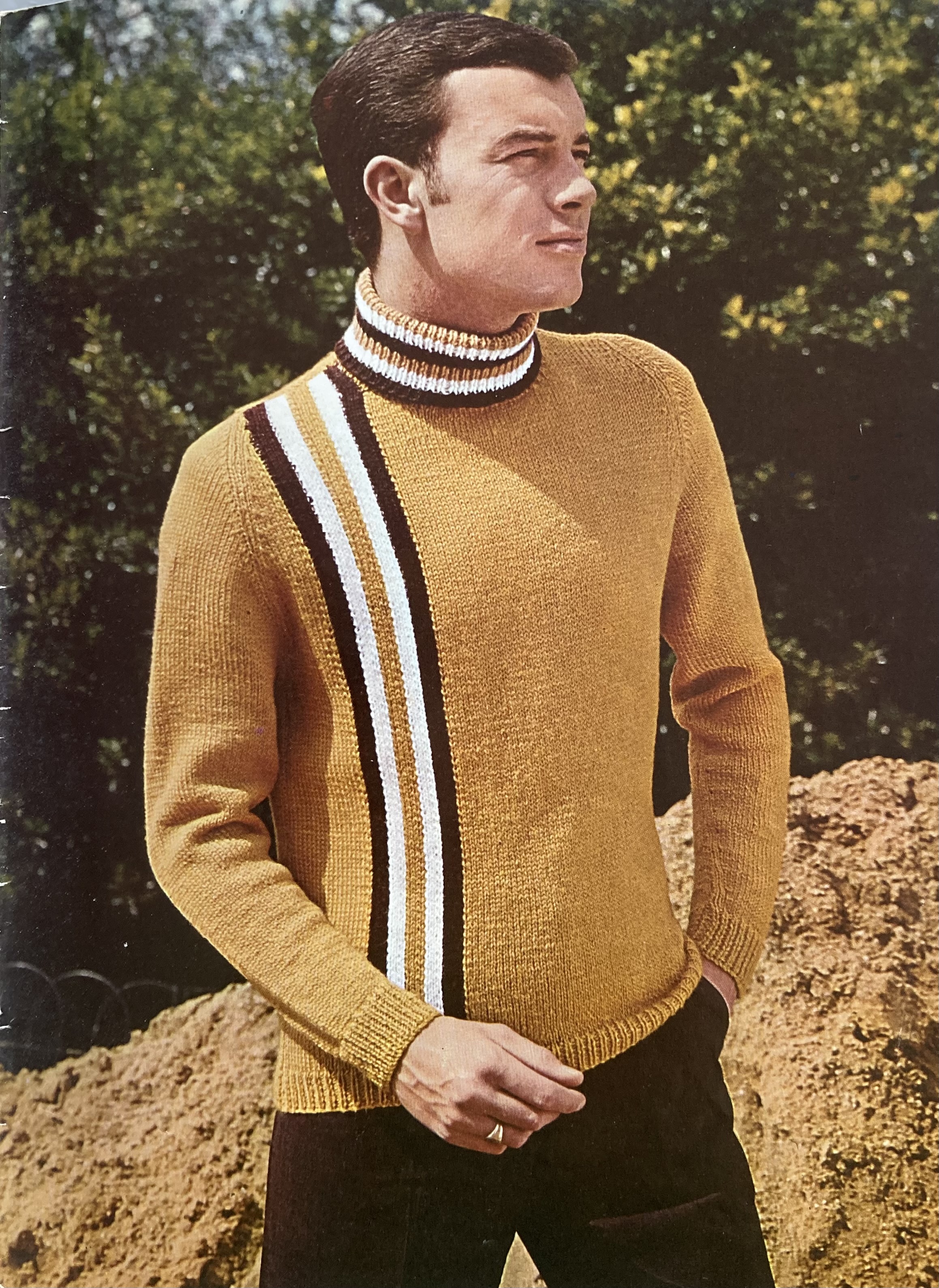
A micro-trend for contrasting yokes that encompass the sleeves and the upper bust area can be seen in both the “Fuzzy-Wuzzy” (that is the name of the wool, an angora blend) jumper for adult women and the little girl’s way-too-short-to-actually-play-in tunic dress featuring a smocked effect made by dropping an extra-long stitch and then picking it up a few rows later and a few stitches over. It is designed to be made in the very 1960s colours of “Spark Gold” with “French Mustard” and white. Men are unusually well served in this month’s issue with both an “Autumn Stroller” V-neck pullover with cable panel and a “rugged for the outdoor life” racing-stripe pullover “designed for slim chaps”. Here as well, late-60s brown and gold tones are on trend.

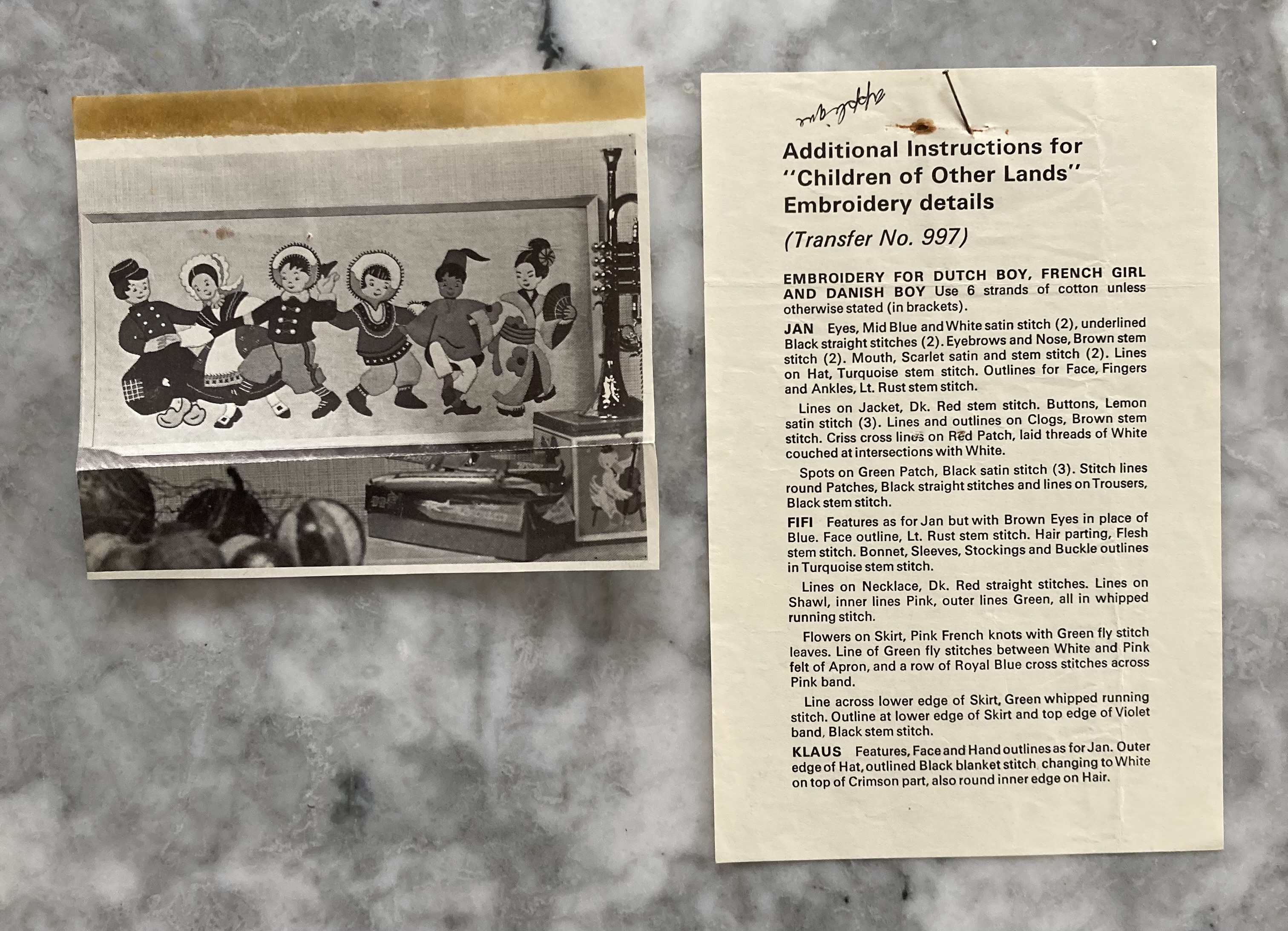
Housewares are either quite complex or easy enough to dash off quickly for a church bazaar or quick gift. On the more complicated and difficult side, there’s a large wall panel made in felt appliqué, designed after the “Children of Other Lands” serial comic that winds up in this month’s issue. Like the comics, the wall panel is sweet and well-meant (and well-designed from a technical standpoint) and the fictional children are not portrayed negatively in any way, but of course their depictions and their comic stories draw very, very heavily on outdated stereotypes. The previous owner of my copy of this issue seemd to be a fan and presumably made the wall panel: she cut out the extra photo of the finished panel from another page in the magazine and pinned a small page with additional instructions into the first page of the pattern. I’m guessing the additional instructions came with the embroidery transfer, which readers had to send away for by post.

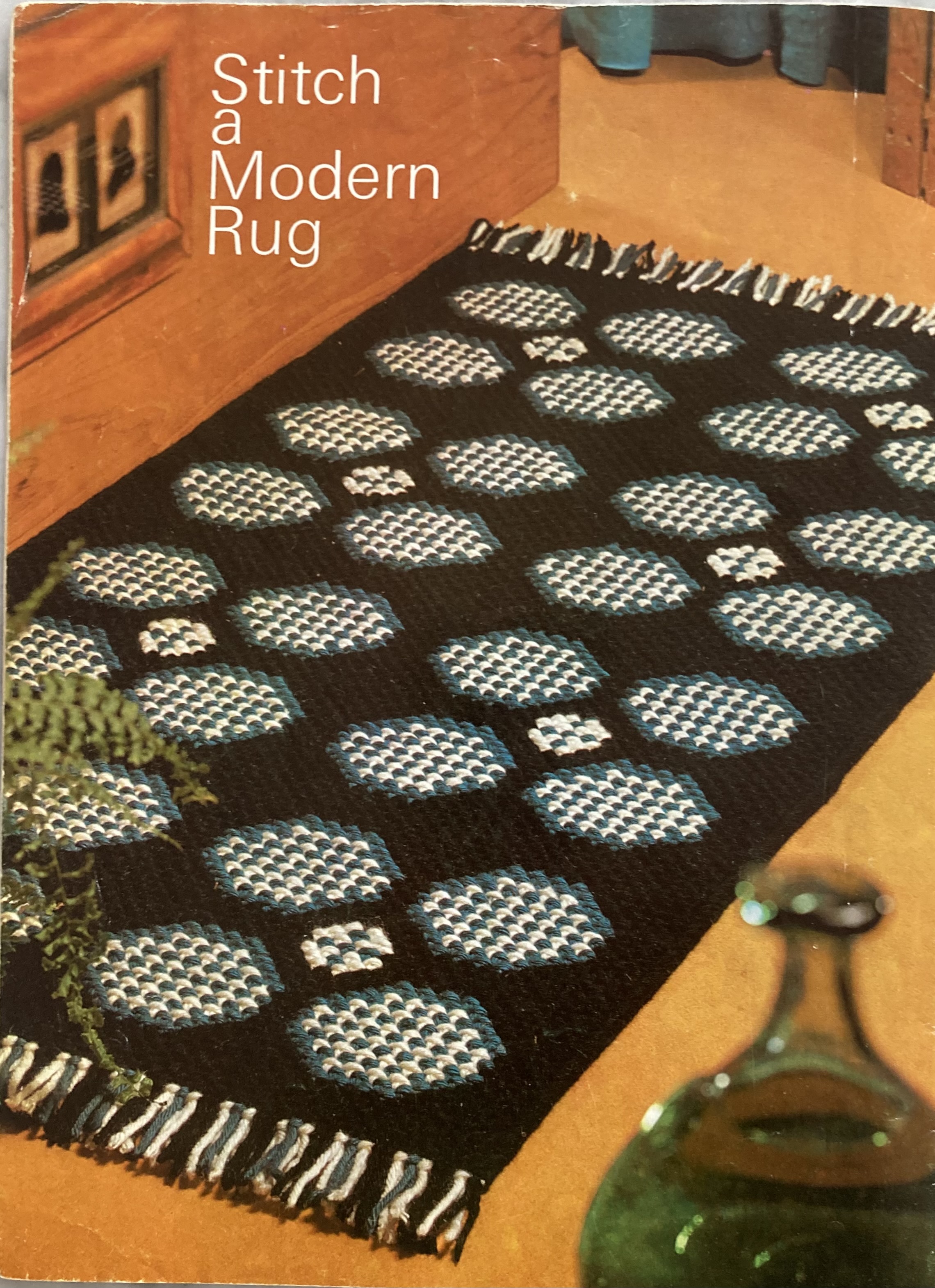
There’s an ambitious stitched rug in a very modern pattern, and a crocheted table runner (also on the list that the previous owner wanted to make) that looks quite intricate to me.

The cutwork chair set and breakfast tray set with Celtic-inspired design elements seem to be of average difficulty. Finally, there are quick and easy cosies and a crocheted handbag that promise to be “easy knitters” and “top sellers” at your next church or charity bazaar.

That’s all for this issue! I have to admit that there is nothing in it that particularly inspires me, so I will use this month to hopefully finish up the spectacular chevron-striped dress from April 1967 and the “Fair Isle Country Cardigan” from January 1967. I should be prepared for any kind of late-summer weather then.

June 1967: Daisy Motif Peg Bag

My project from the June 1967 issue of Stitchcraft was a “peg bag” adorned with simple embroidery.

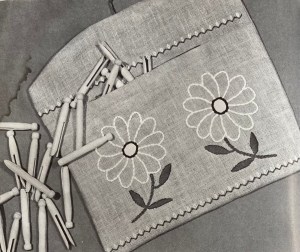
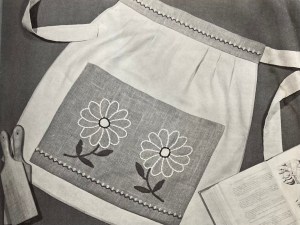
“What is a peg bag?”, some of those who dry their laundry on a rack indoors or in an electric dryer may ask. As you can probably tell from the photo, it is a bag to hold laundry pegs a.k.a. clothespins so that they are close at hand while you are hanging up your clean laundry on a line to dry. The design from this issue had a folded-over top into which you insert a wooden coat hanger to hang it up while you work, as well as a matching apron for maximum laundry-hanging style which I didn’t make this time, but will keep in mind for later.

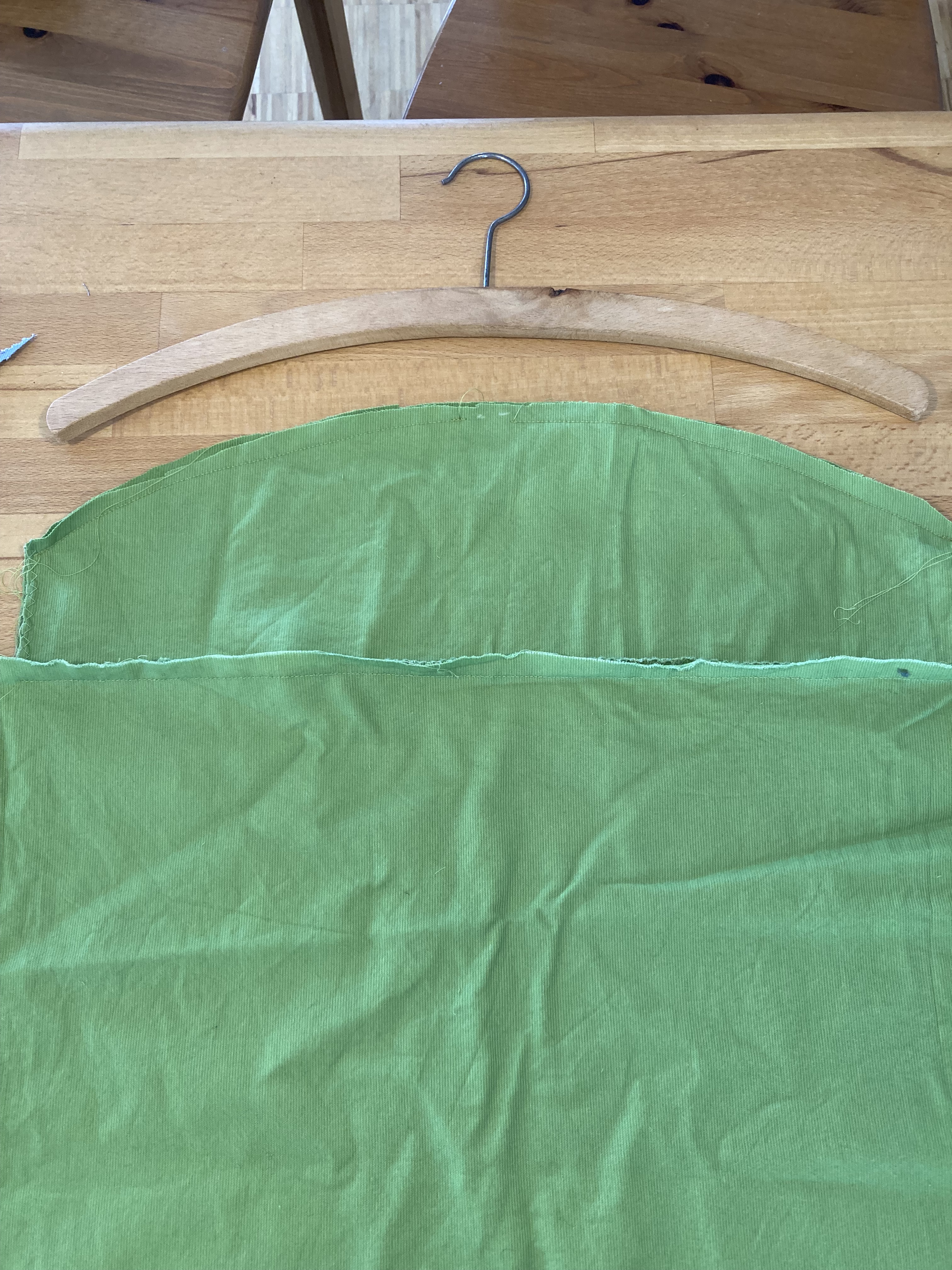
The base fabric is supposed to be orange or gold coloured — I used leftover dark grey from last month’s “crab” cushion. It is supposed to be lined with gingham — I used leftover green fine corduroy from last month’s “fish” cushion. The only thing I had to buy was more embroidery thread — I had enough white and black, but not enough yellow or green.

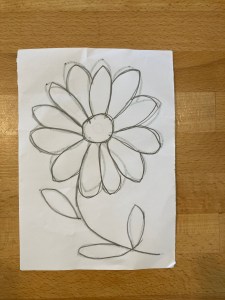
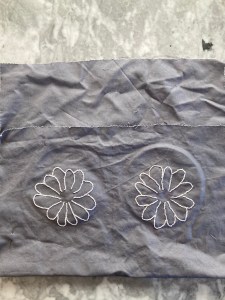
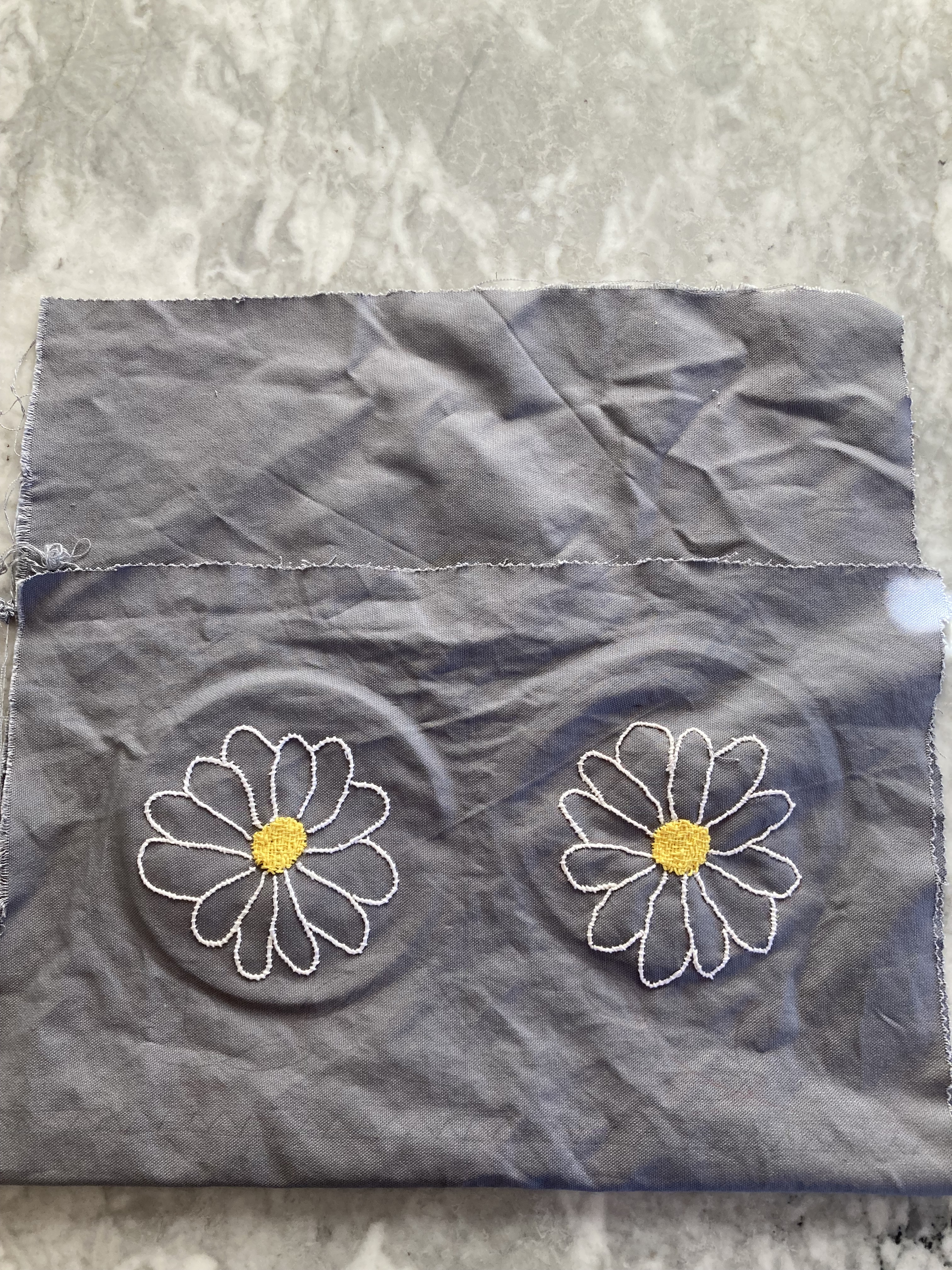
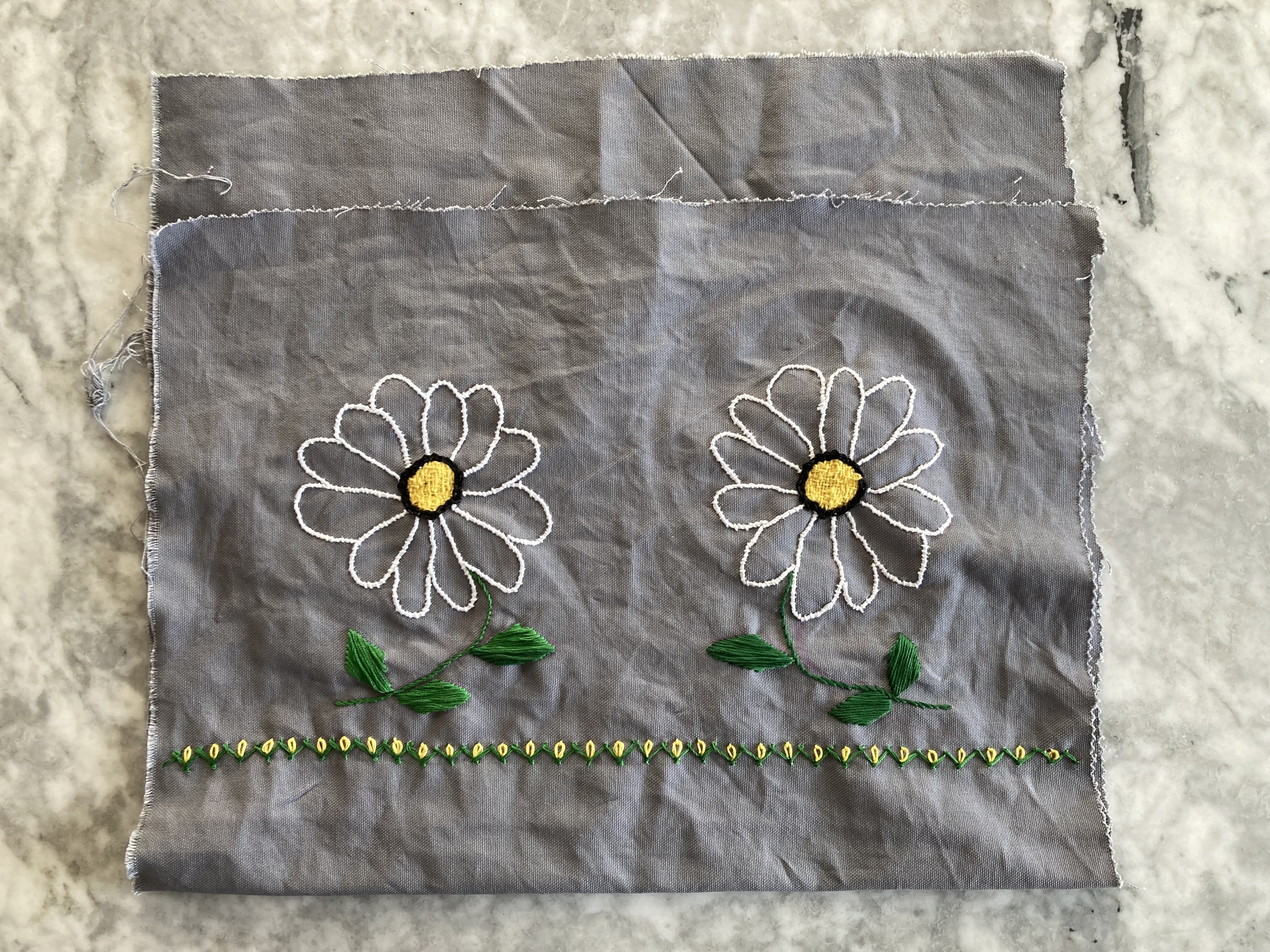
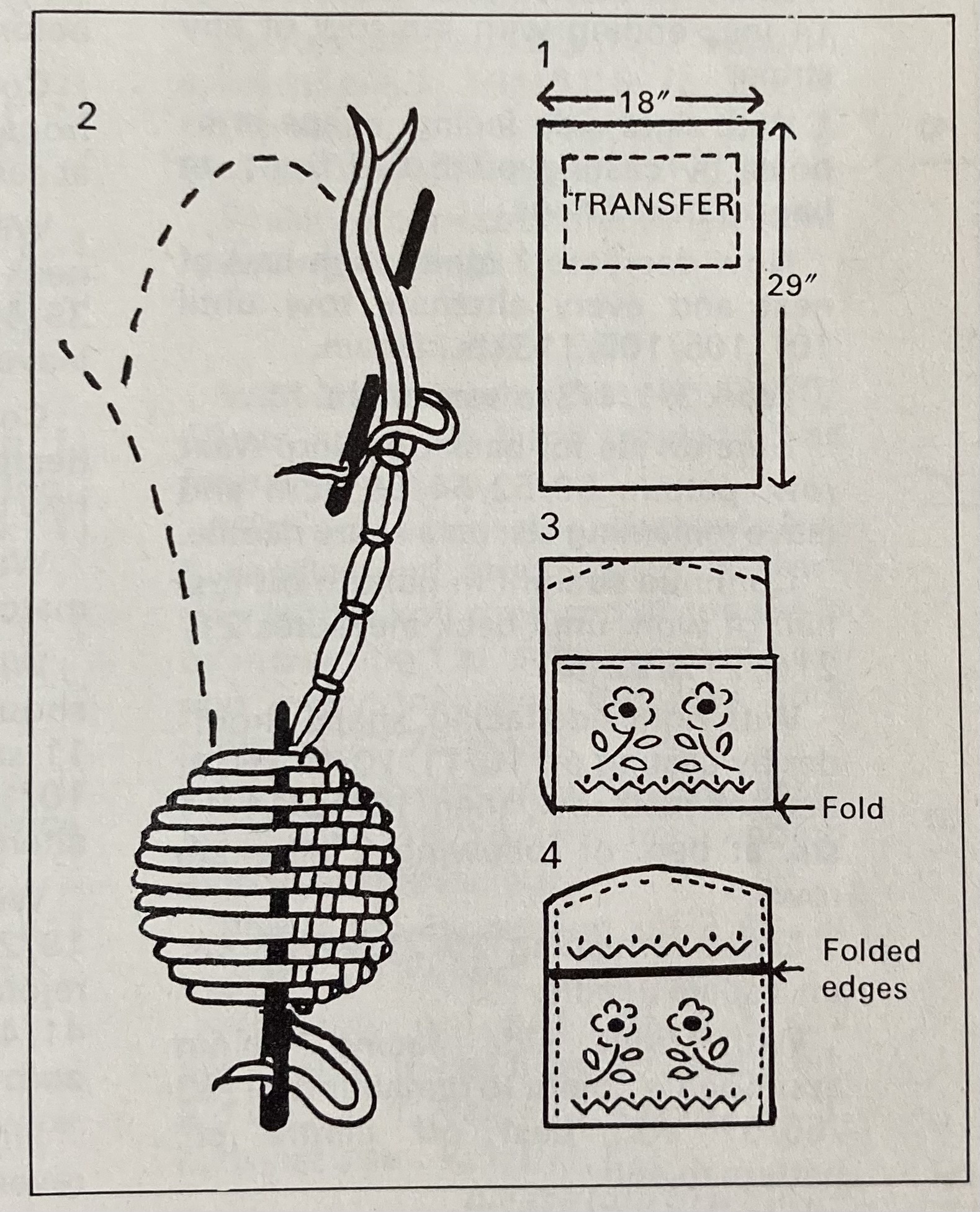
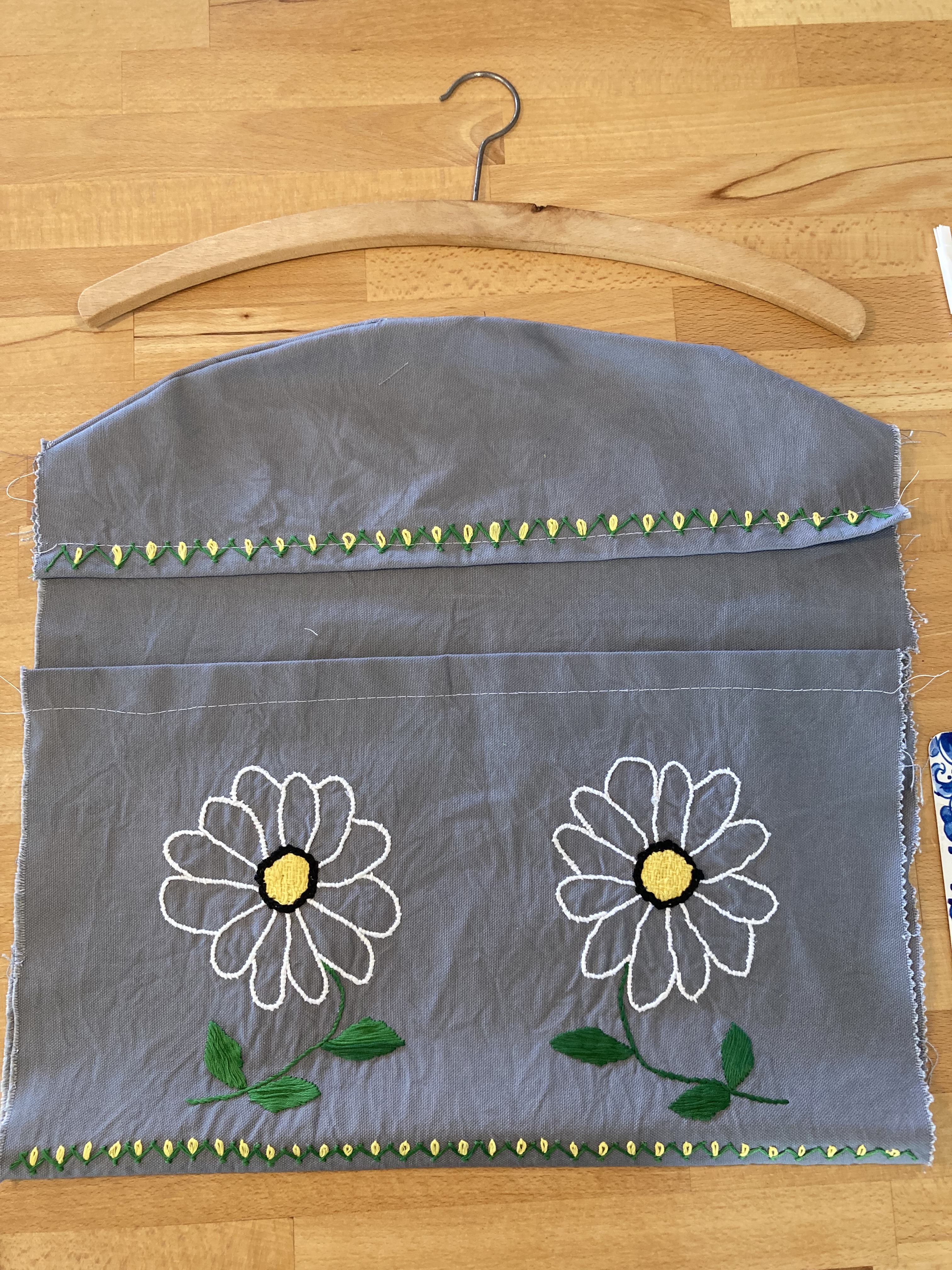
Not having a transfer as usual, I just drew the daisy on a piece of paper freehand and copied it onto the fabric with carbon transfer paper. For the chevron-and-loop-stitch borders, I drew two parallel lines with V’s in between for the chevrons. The embroidery was not quite as simple as the design would lead you to believe. The white outlines of the daisies are done in couching stitch — laying down a thread and tacking it down with tiny stitches along its length. Easy in theory, but tricky in practice. In retropsect, I could have glued down the outline threads with water-soluble glue before couching them, to make them stay in place better. (Do any of you do this?)

The yellow centers are also couched, or actually woven — you put down slightly loose satin stitches in one direction and weave cross-threads through in the other direction. It gives a marvelous texture, but I was working with 6 strands and the cross-threads were prone to either split or skip over the ones they were supposed to be weaving through. The outline around the centers is black chain-stitch and the leaves and stems are satin and chain-stitch — except that I didn’t read carefully enough and did the stems in stem stitch. Also, I think two different shades of green got mixed up in my green thread stash? But it gives a nice subtle shading effect. The borders are chevron stitch with loop stitches.

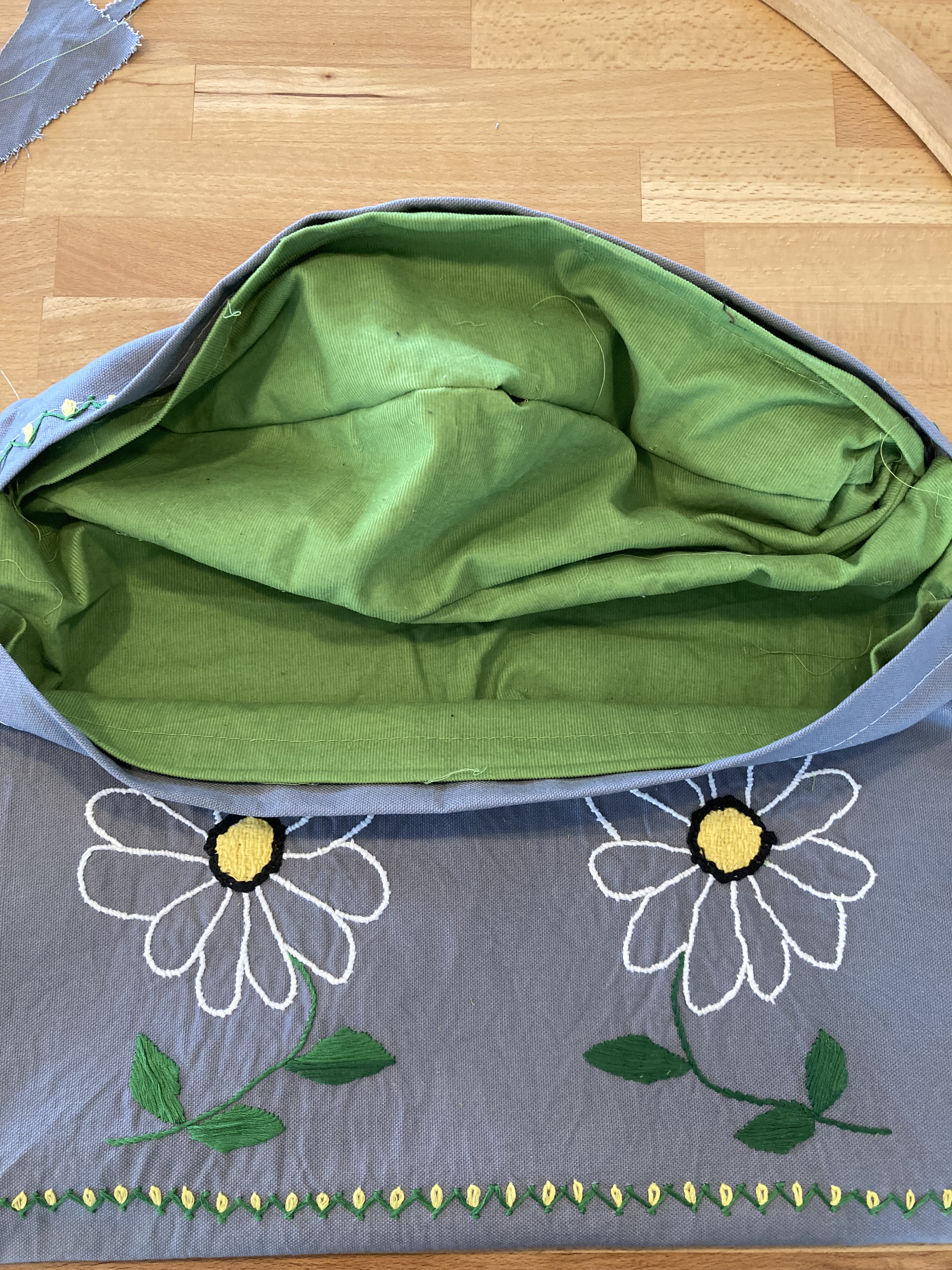
The difficult part of this project was the construction, particularly the lining. I had to rip out the top-pocket seam more than once and re-position it to make all the right and wrong sides come out correctly. When I finally got it right, the lining did not stay in perfectly smoothly, but i will live with it. Also, the corduroy-ish fabric is not really a good lining choice, as it picks up every tiny bit of fuzz floating around while also producing its own. The colour is good, though!

I inserted an old-fashioned wooden coat hanger and noticed that the lining “caught” on one side, so did some more adjustments until it fit better. Voilà. It looks better in real life — the camera makes weird shadow patterns. My only complaint, besides my inability to sew straight lines, is that the finished bag is quite big — how many pegs / pins are you really going to put in it? But it can also be useful for hanging in the hallway / coat rack area to hold gloves, accessories, cat toys or whatever.

I have both an electric dryer and a drying rack, but no outside space to hang up laundry, so I will give this bag to someone who has a garden with a clothesline. The intended recipient also wears hats and fingerless gloves and has two cats, so the bag will find a use in any case.

Not the most exciting project I have ever made, but fun, cute and useful.

August 1966: Flower Design Veggie Bag

Lovely sparkling colours of simple flower heads, show up beautifully on dark linen. Just a circular cluster of the flowers look very effective on a cushion or workbag.

My August 1966 / August 2024 project was this fun and easy embroidery design featuring a flower whose name, at least, was unfamiliar to me: the tongue-twisting Mesembryanthemum. The name encompasses an entire genus of plants, native to southern Africa, of which some species are succulents and others more “flowery” types. The species that inspired the embroidery is presumably M. crystallinum, aka “iceplant”, which I have encountered without knowing what it was called. Now I know!

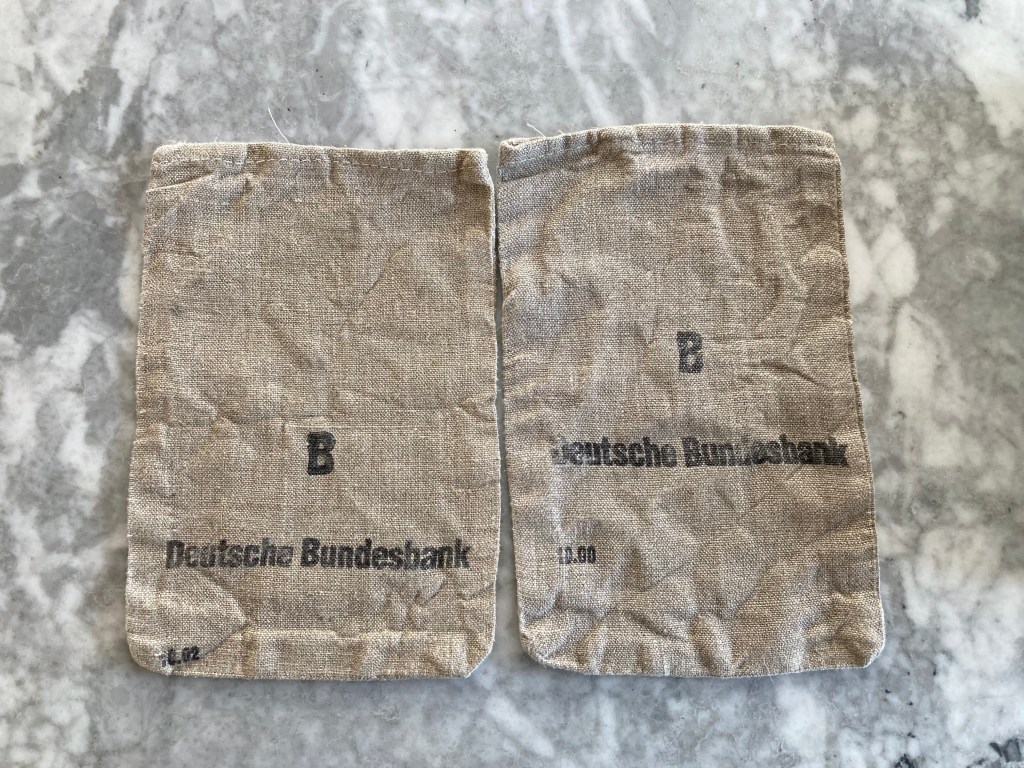
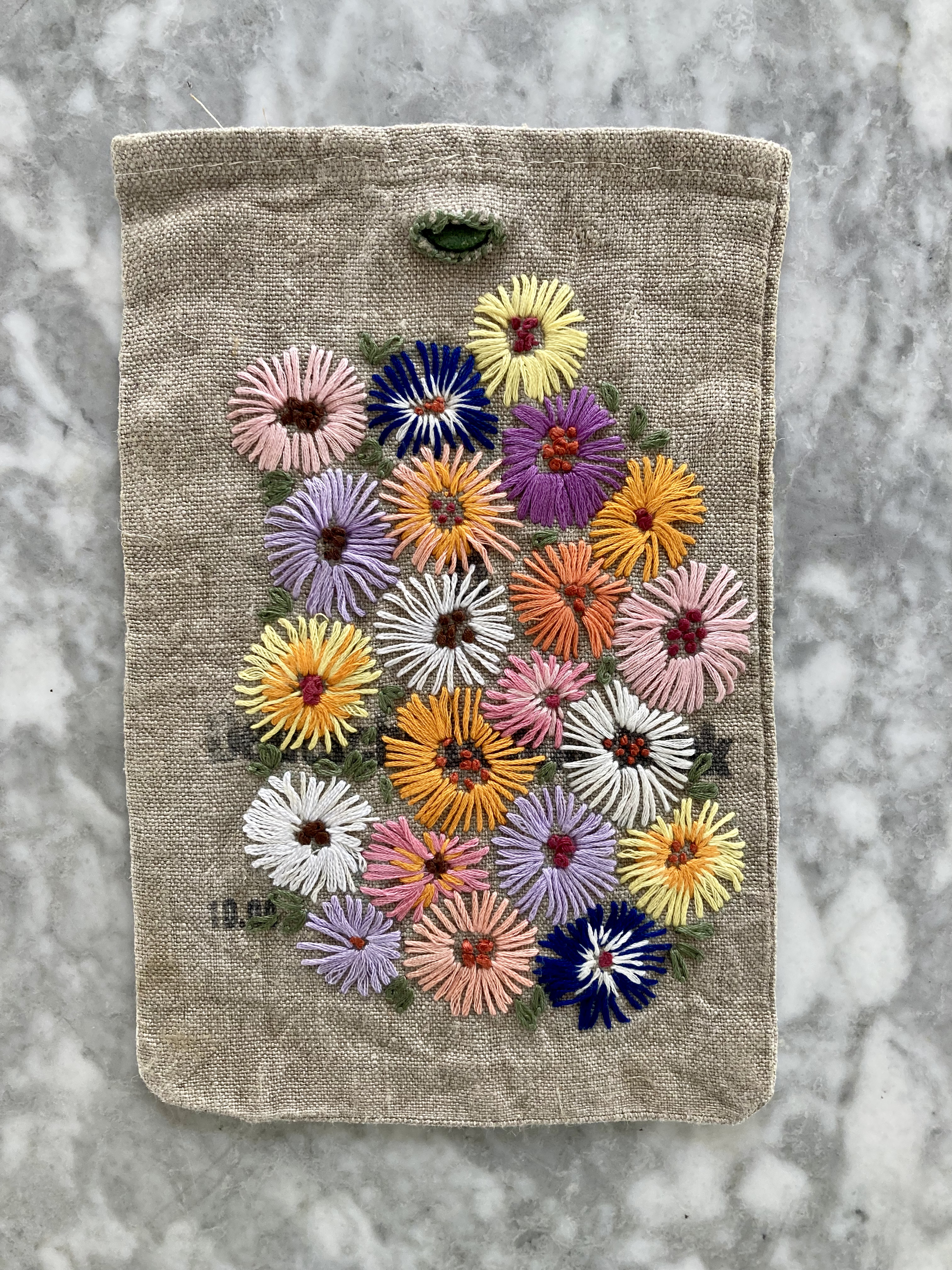
The pattern is for a cushion or workbag, and the flowers are meant to be worked in wool embroidery on black linen. I have too many cushions and workbags already, so I adapted the design to make another little bag to buy and transport unpackaged fruits and vegetables from the farmers’ market, organic supermarkt, etc. (Here’s an overview of previous embroidered bag projects.) I bought a bunch of old money bags at an antique sale a while ago, which I upcycle and decorate for this purpose.

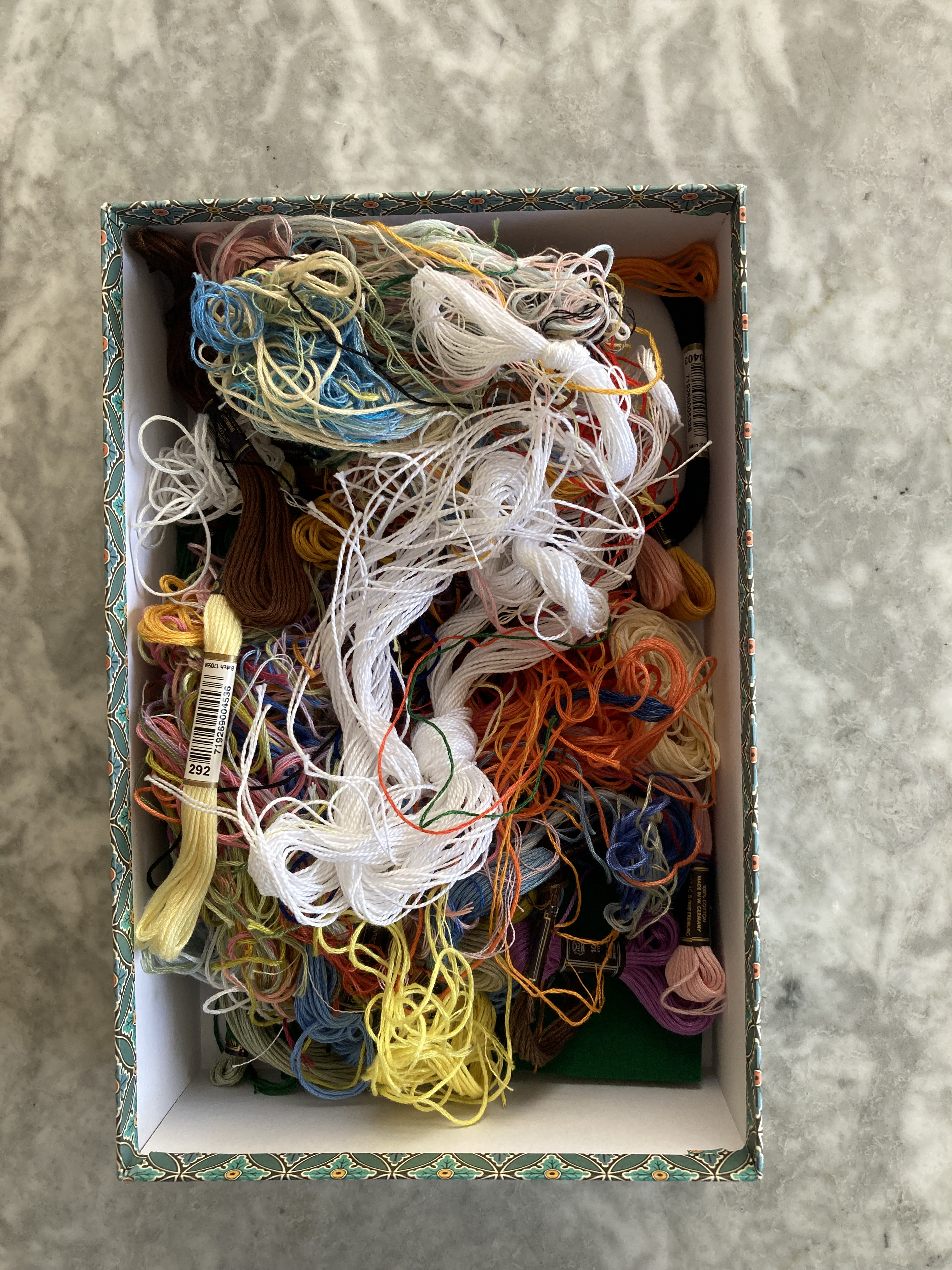
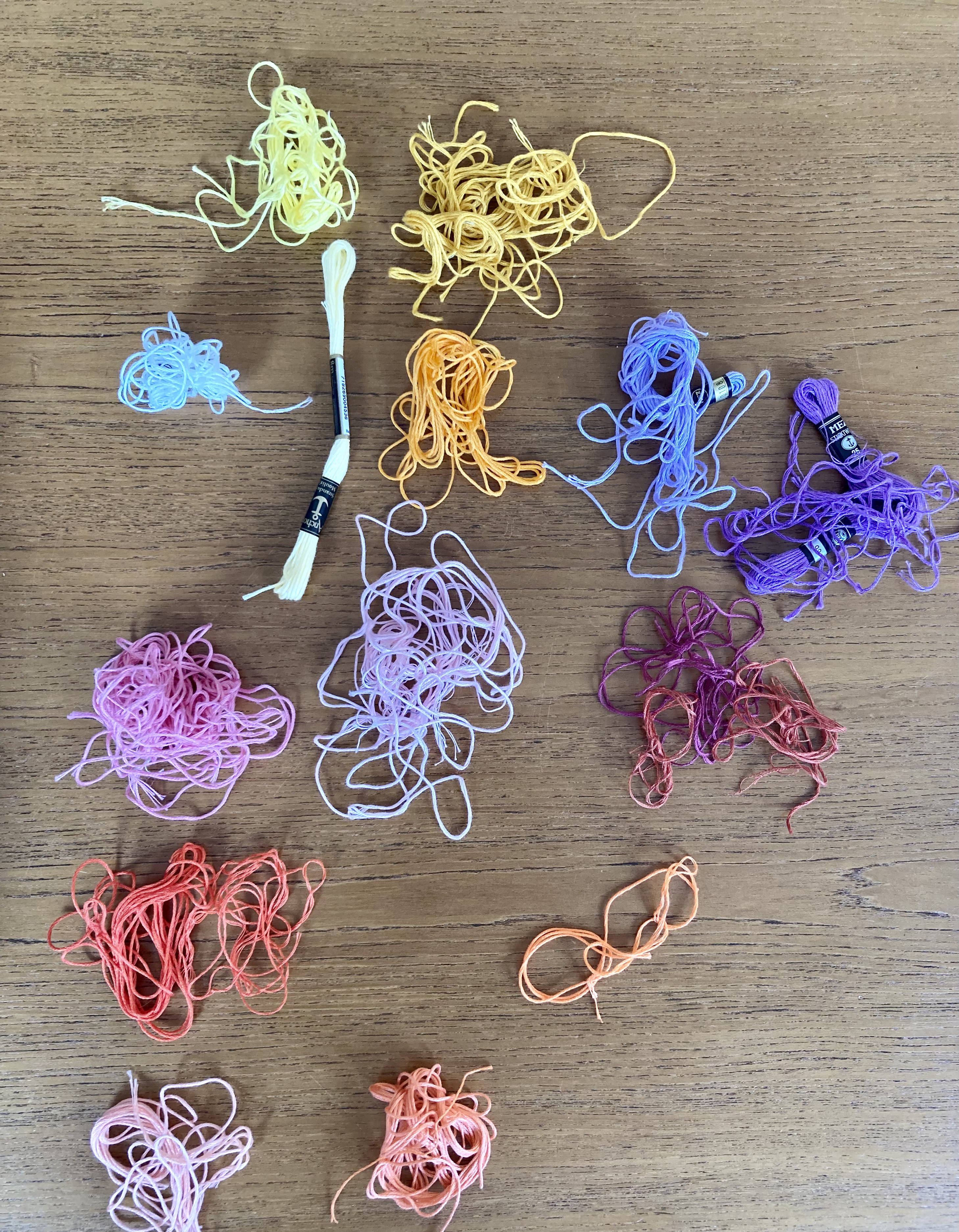
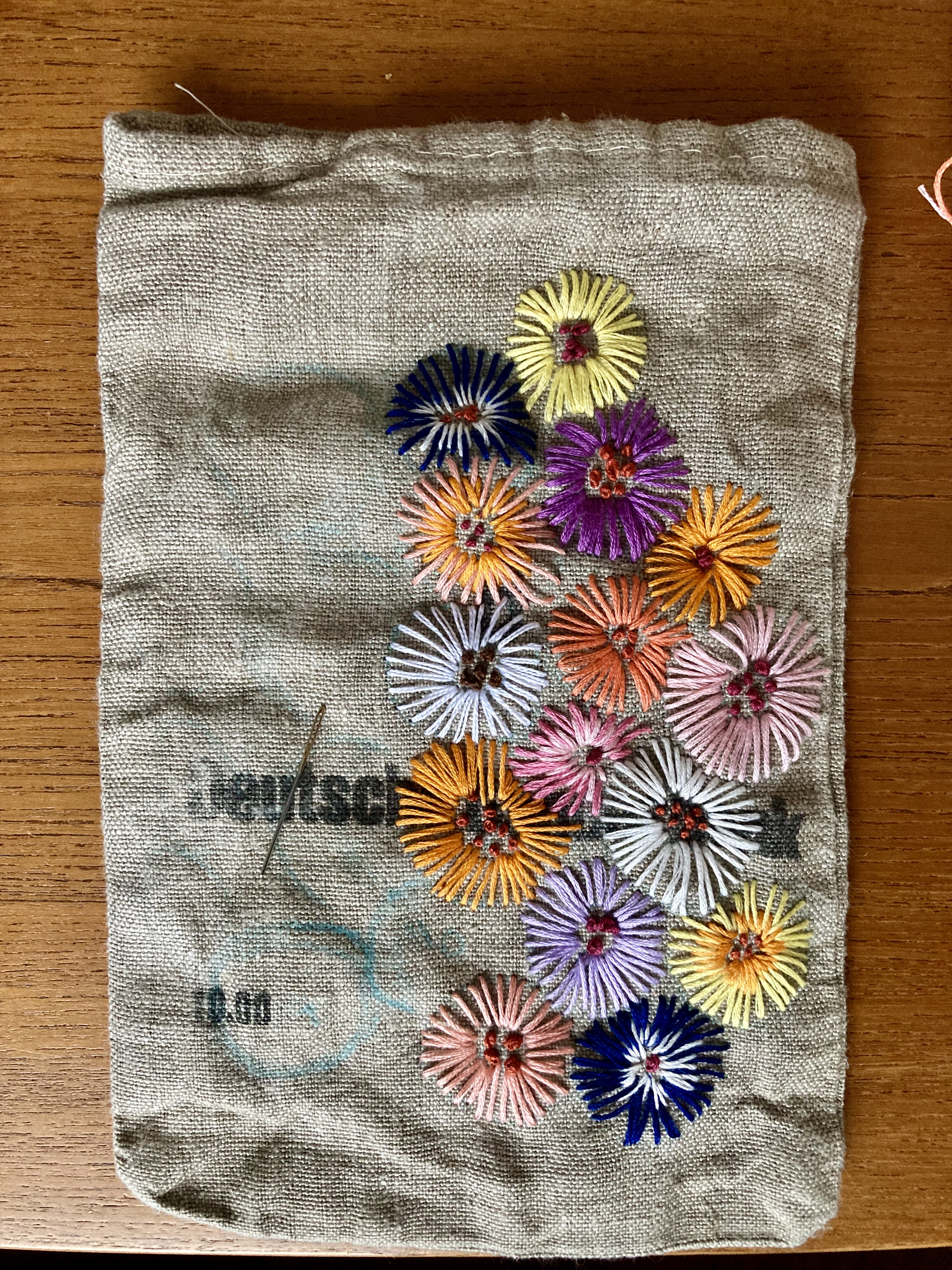
The flattish flowers with slender petals translate well to easy embroidery — the flowers are all worked in straight stitches, with French knot centres, and the little leaf details are loop stitches. I used scraps of cotton floss instead of wool, since the bag will be used and washed frequently. N.B. the tangled mess in the box of embroidery thread is not my doing! I inherited a big handful of embroidery cotton scraps from someone downsizing their elderly relative’s home. It proved very useful for this project, as I was able to match the colours from the pattern (white, maize, orange, mauve, violet, light pink, light magenta, magenta, spice pink, and plum, plus olive for the leaves) fairly accurately without having to buy anything new. Also, “spice pink” is listed in the materials section, but not included anywhere in the instructions. The colours in the photo are not accurate, either — what looks like sky blue and light turquoise is actually navy blue (my version of “violet”) and white.

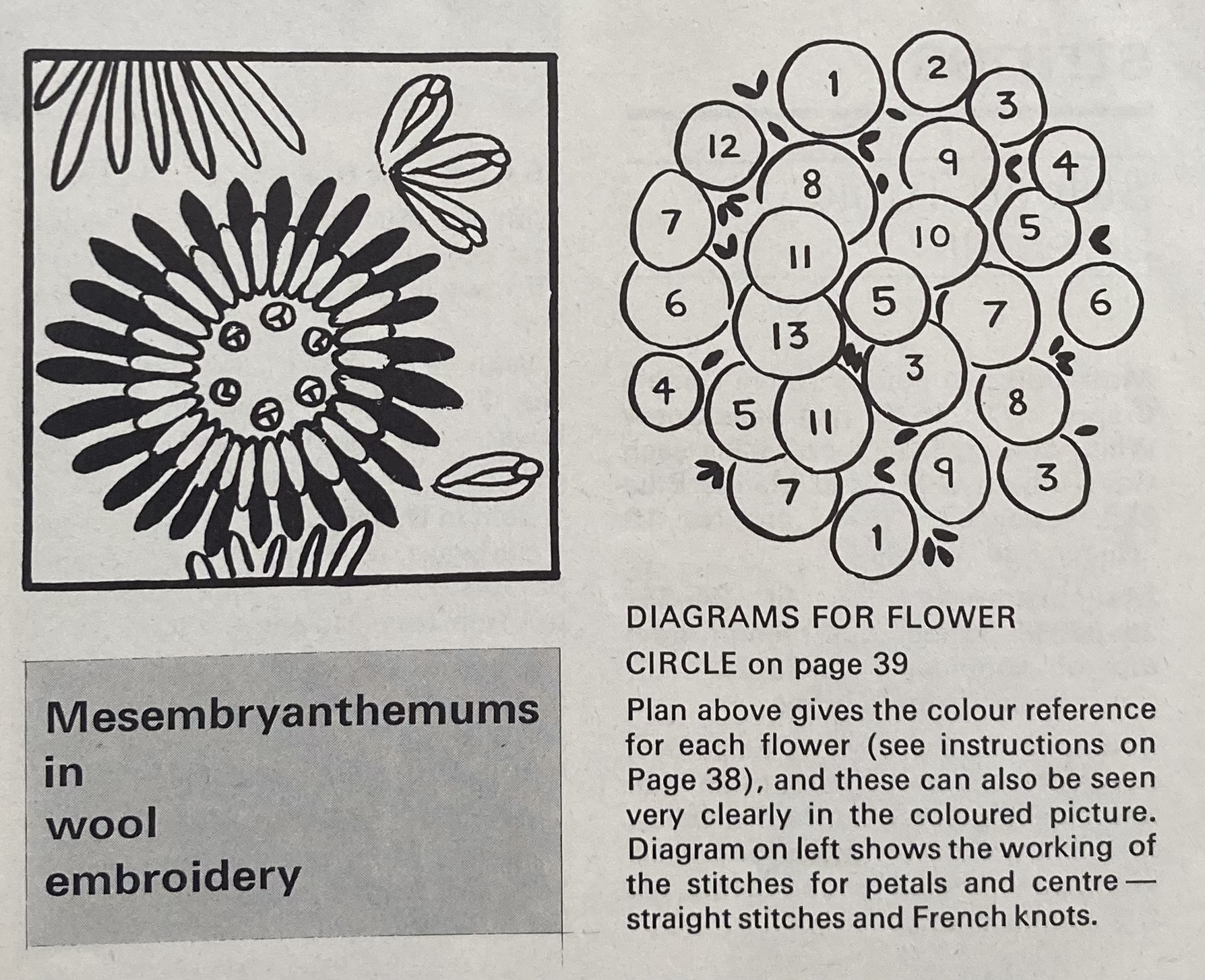
The positions and colours of the individual flowers are given on a separate page in the magazine, which was practical as of course I didn’t have (or would have been able to use) a transfer. I had to adapt it anyway to fit the rectangular bag, but kept to the schematic as well as possible. Looking back, I could have balanced it out better by making the second flower from the bottom on the left side purple or orangey-pink instead of white, but whatever. I used my approximation of “plum” plus a sort of brick orange and medium brown for the French knot centres, using up the colours I only had little bits of. I finished off the bag with a button — always nice to find a use for that interesting, but singular button from the 10-cent random button bowl.

And that’s it! This was the perfect upcycling project — I made something useful and sustainable from 100% re-used and/or vintage materials. I love using these bags and can’t wait to show this new one to the cashier at the organic supermarket who always takes a second to admire them. I should make the next one for her.

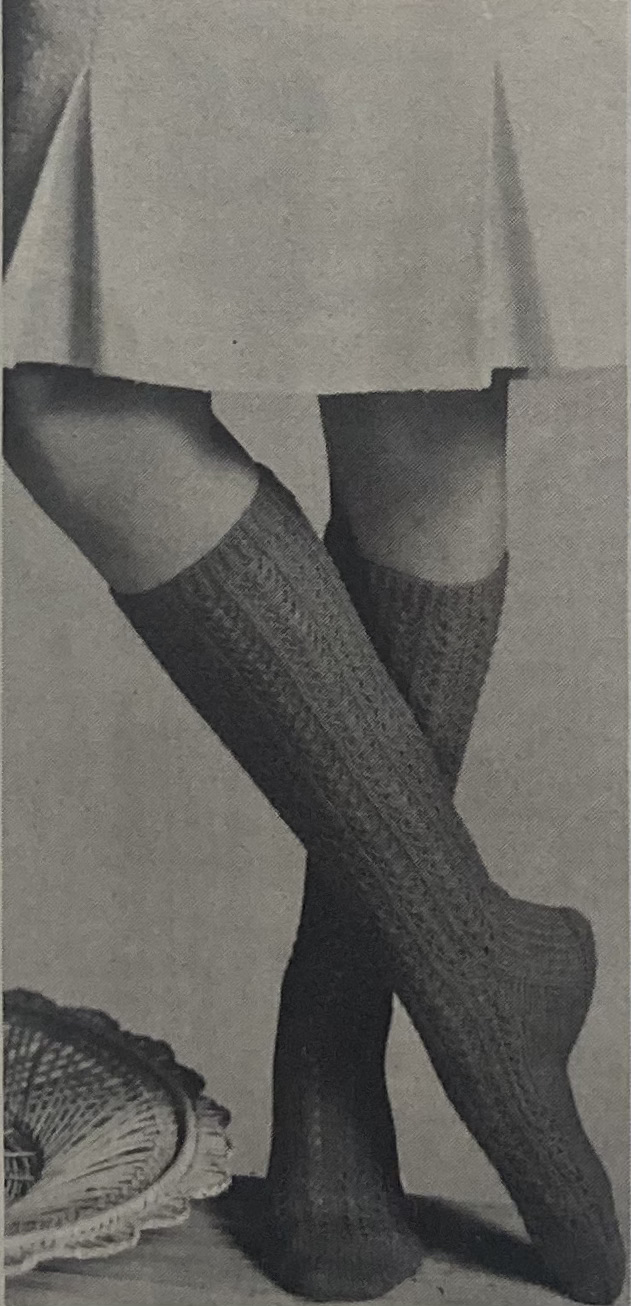
December 1965: Workbag & Pretty Idea

It was hard to choose a project from the December 1965 issue. There were lots of nice things in it — the red pullover on the cover, the men’s classic cable V-neck, the two-piece wool dress, the fun knee-high socks, the swingy ribbed skirt — but I was not feeling any of it. I have so many large, unfinished projects and so much wool in stash (of which none would be suitable and/or enough for any of the nice garments in the issue.) Also, I have way too many finished knitted projects! My closet is past full. I need to start knitting exclusively for other people.

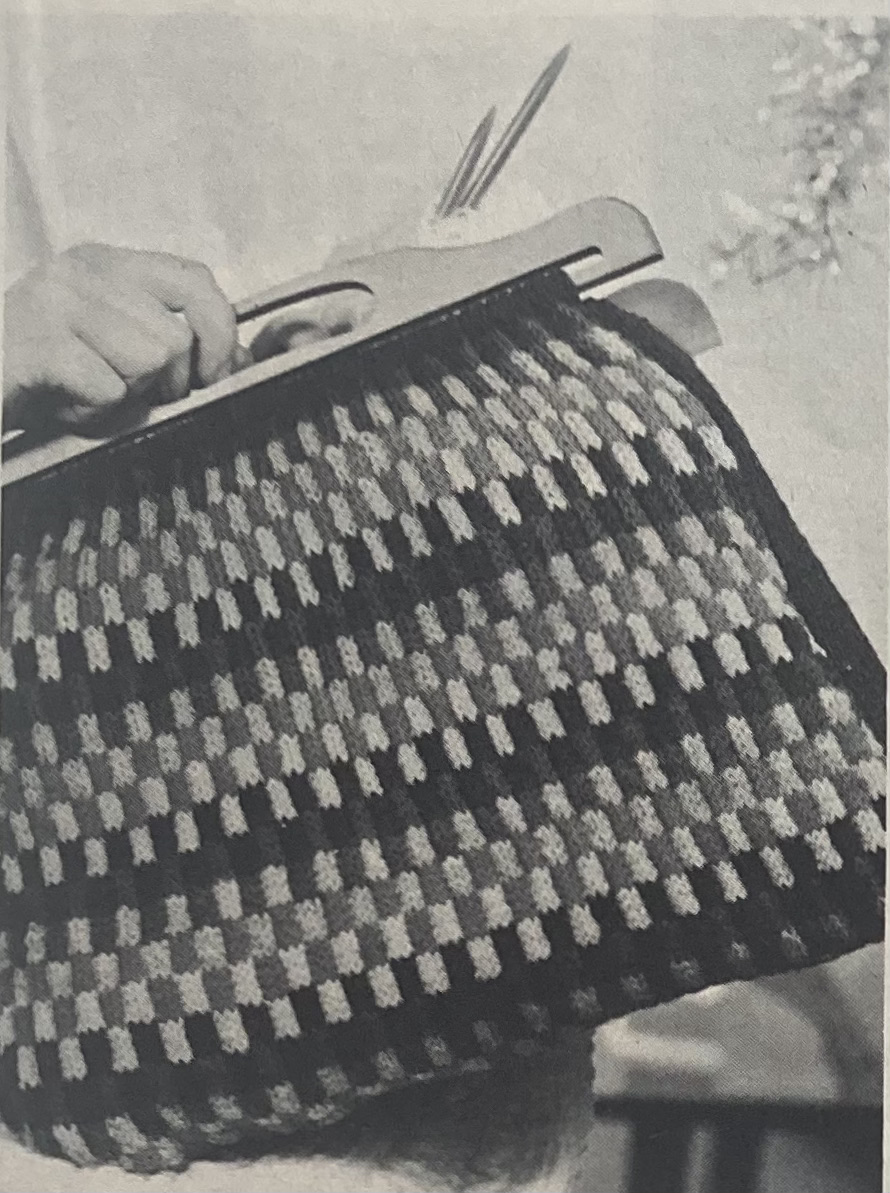
Though, as it turned out, I had also already made one of the projects from this issue, back before I started the blog. At the time, I had lots and lots of leftover Rauma 3-ply (which is double-knitting weight, not what you normally would expect “3-ply” to be) and Jamieson’s Double Knitting in stash from a tam and mitts combo that I had designed for Knit Now. And here in the December 1965 issue of Stitchcraft was this wonderful “Workbag for a friend” that was perfect for using up leftovers. The check pattern is easier than it looks — the colours are just staggered every four rows. I adapted the stitch counts to make it work with DK wool instead of the 4-ply called for in the pattern.

The bag is made in two pieces for front and back, with two separate gussets made in 1×1 ribbing, for the sides. This makes a nice, big bag. I bought non-vintage handles which were unfortunately not real wood, but accurate reproductions of the type in the magazine photo. They have a slot at the bottom through which you insert the ribbed top of the bag, fold it over to the inside and sew in place. Very easy. Although it’s not called for in the pattern, I lined the bag with non-stretchy, woven cotton material to keep it from stretching. It’s a great bag and I use it for large projects. (I apologise for having only a finished photo and no in-progress pictures. At the time, i didn’t know I was going to start writing a blog, and only took pictured of finished objects, if at all.)

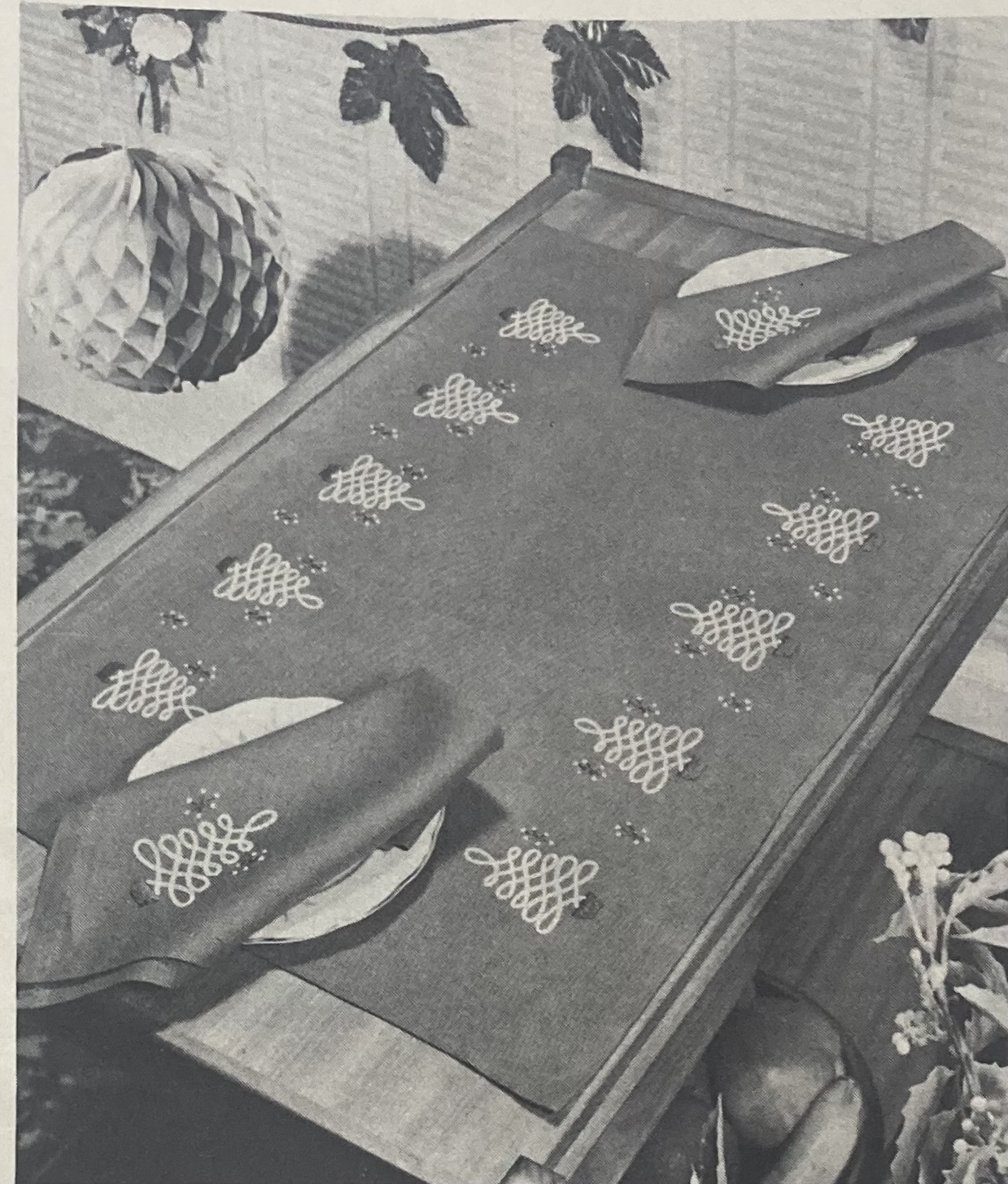
Still, I felt like I was “cheating” by not making at least something new from this issue. How about a “Pretty idea for a Buffet Party” i.e. a trolly cloth and napkins embroidered with Christmas trees? Too much work… but how about one little embroidered Christmas tree on green felt, made from stash and sewn into a little bag to use for a tiny present? Okay! I had plenty of green felt scraps from various other projects and plenty of white, brown and gold embroidery cotton.

The tree is cleverly “drawn” in one single swooping line and worked in easy chain stitch. The pot is brown long-and-short stitch and the stars, straight stitch with French knots. Since nothing writes or transfers onto dark green felt, I traced the pattern directly from the magazine page onto sewing-pattern paper, embroidered over the paper and dissolved the paper under running water.

Too lazy to set up the sewing machine, I sewed it into a little bag (approx. 4 x 4.5 inches or 10.5 x 12 cm) by hand (very badly, very crookedly. Sorry, it is the end of the year, and I am tired) and fastened it with a snap. The yellow cotton I used for lining seemed familiar… Oh right, it was left over from lining the workbag, six years ago! I guess that brought everything full circle.

On that full-circle note, I hope you all have a very happy New Year. See you in 1966!

December 1965: Overview

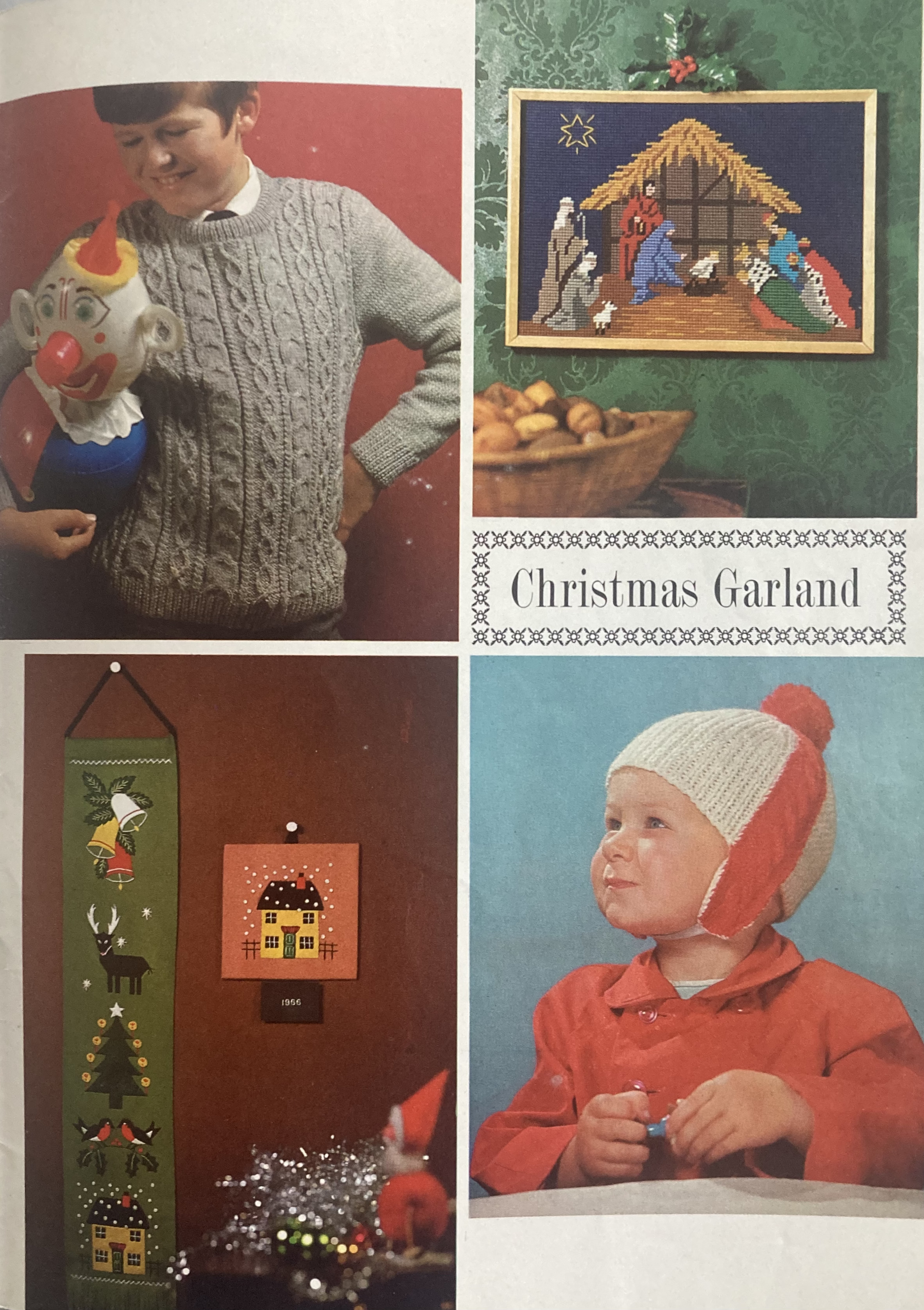
Here it is — the 1965 “Christmas Number”! December at Stitchcraft is always a month of “quick” holiday trimmings and small gifts, mixed with warm winter clothing and party ideas.

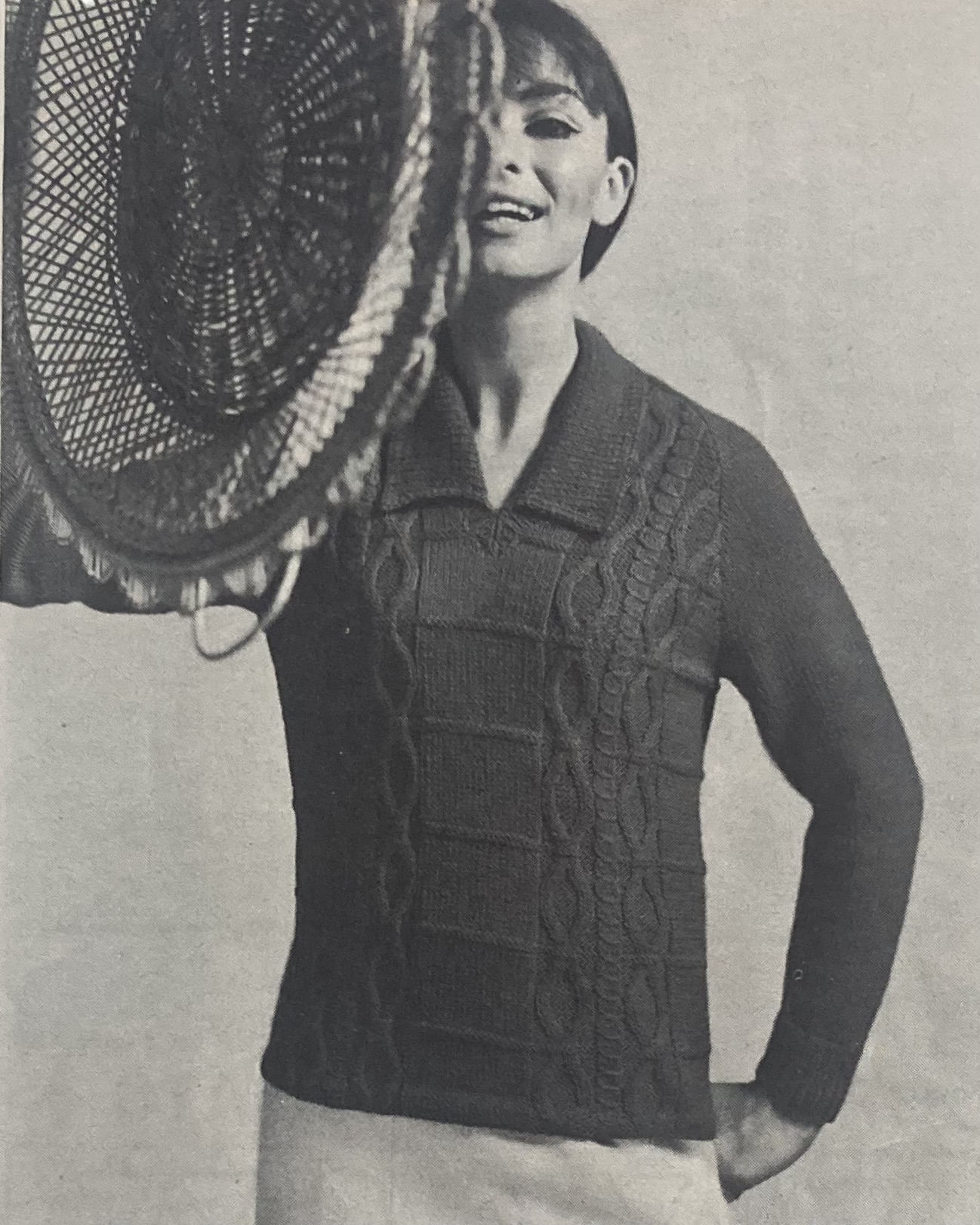
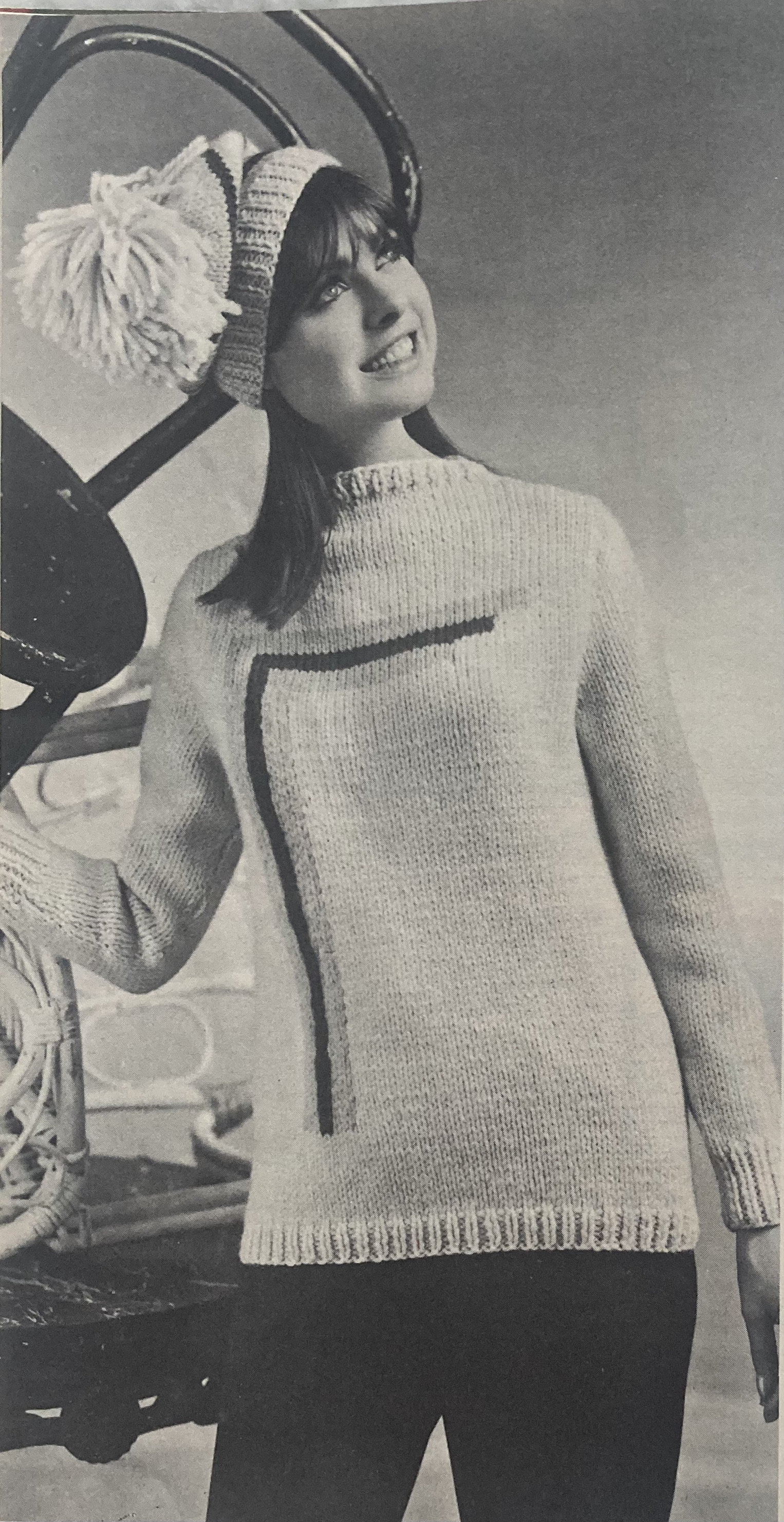
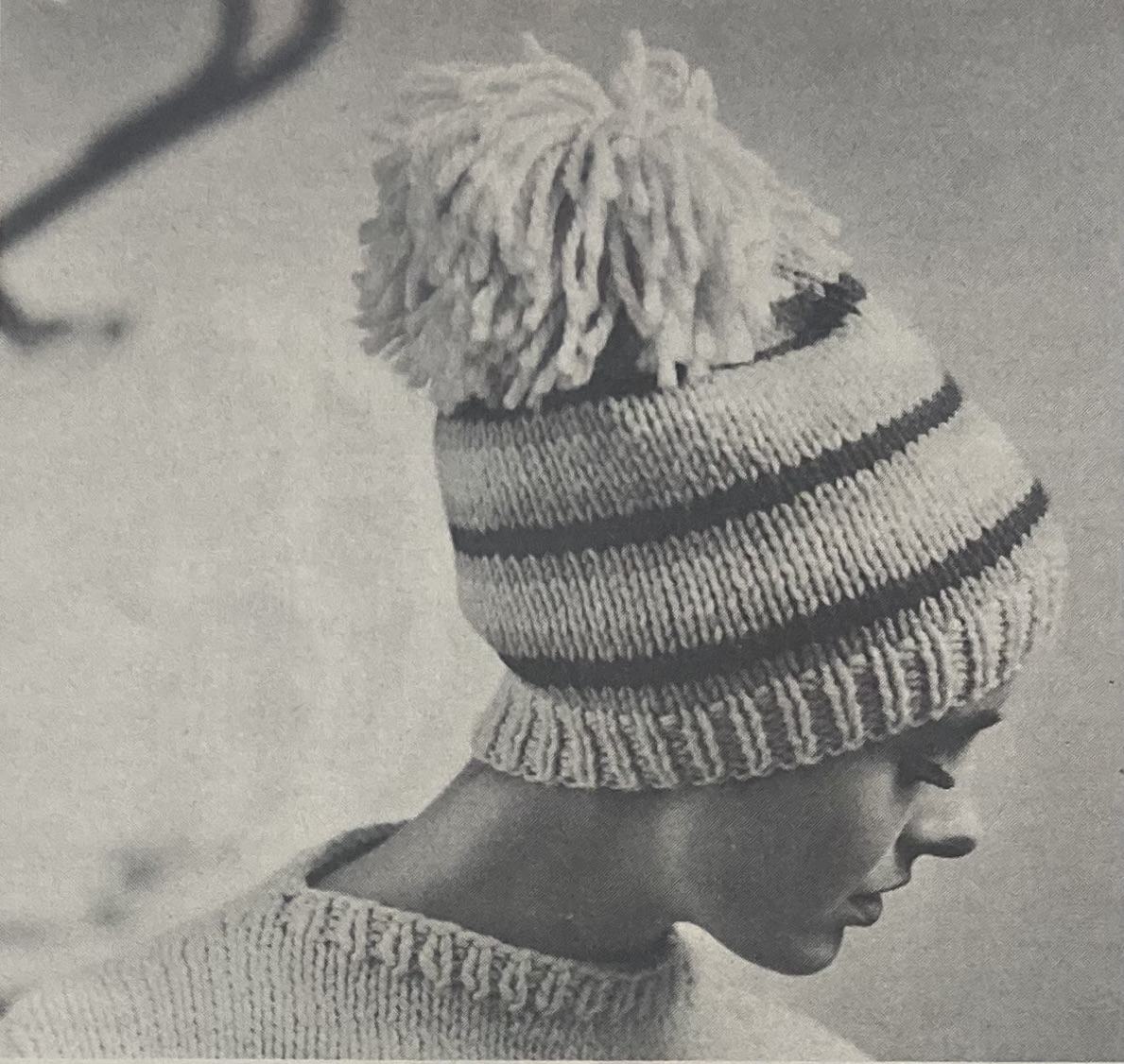
Our cover model is wearing a cable-block pullover (with non-crossing cables) in bright red double-knitting weight wool and matching knee-high socks in a lacy rib pattern. The caption on the pattern page is “Fashion feels Young” — Stitchcraft is finally getting into the children’s-fashions-for-adult-women idea that influenced so much of mid-60s fashion. Note the short skirt on the cover model, along with the knee-high socks, the playful kerchief and the big straw hat accessory in the black and white photo. It’s not quite Twiggy or Mary Quant (spoiler: Stitchcraft was never that fashion-forward), but it’s starting to show their influence. “Young Fashion” fun is reflected in the matching cap and pullover set as well. Look at the enormous pom-pom on the hat, outdone only by the model’s fake eyelashes!

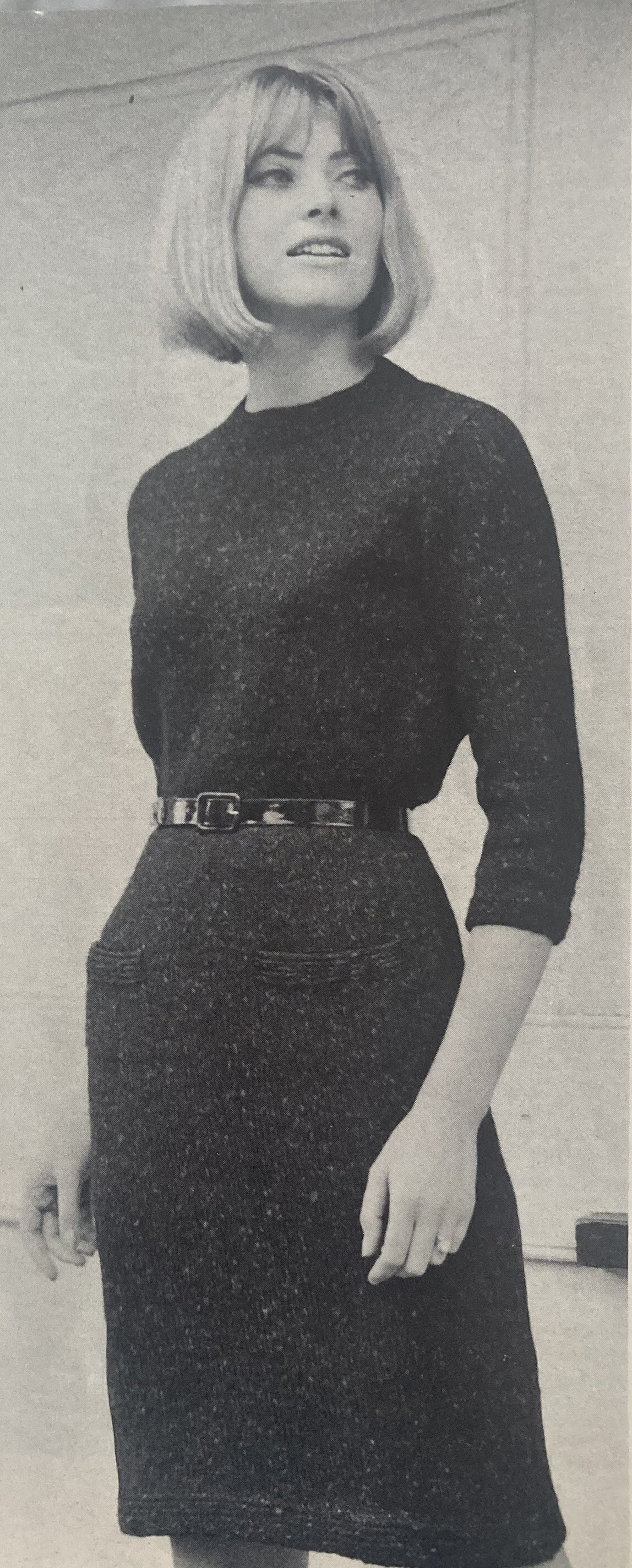
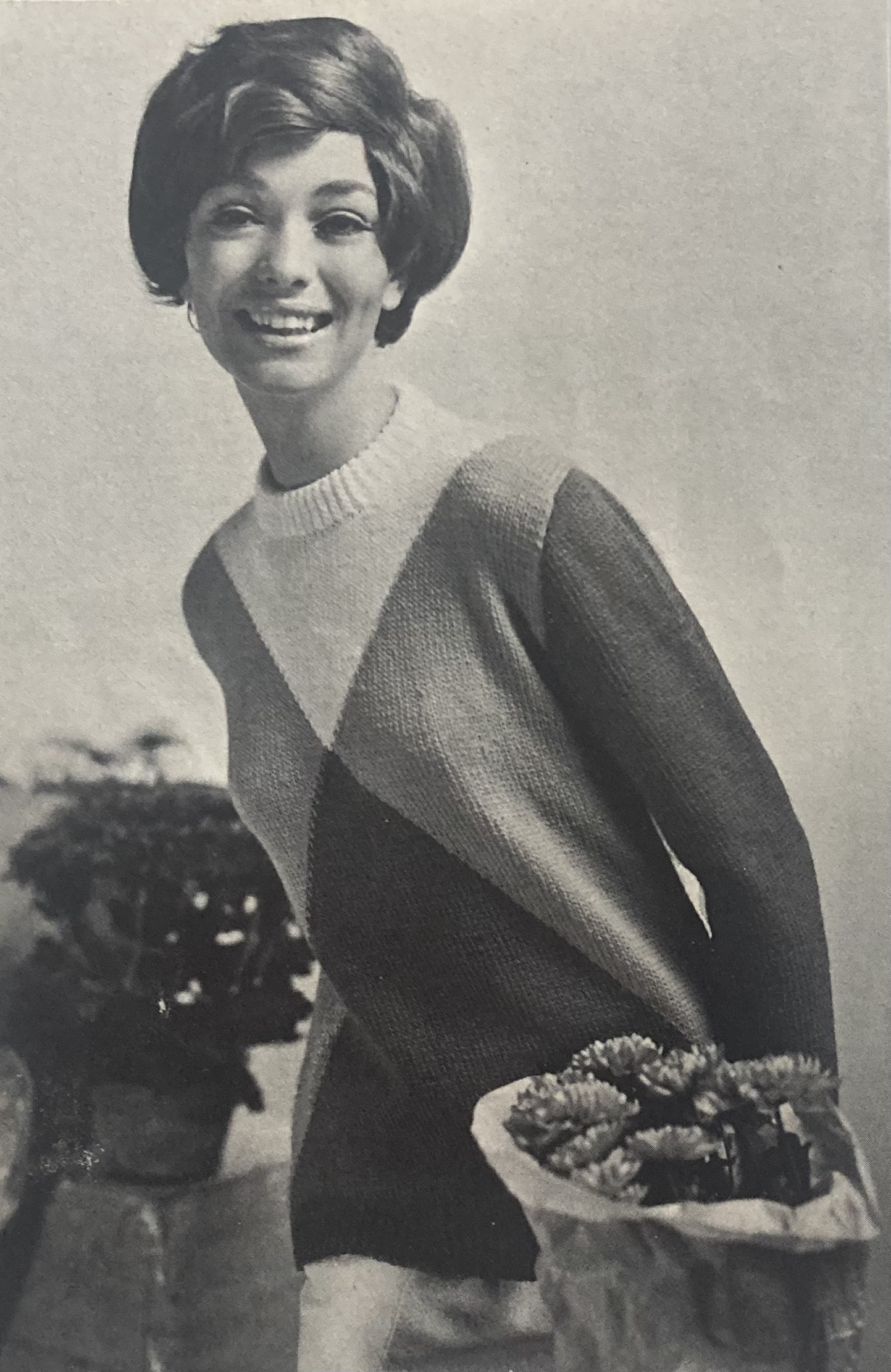
The other women’s fashions in this issue remain conservative: a warm tweed dress made in two parts sewn together at the waist (thus the obligatory belt), a cabled cardigan for larger sizes in thick, undyed “Capstan” wool, a lightweight wool jumper and swingy knee-length skirt in a “gay note” of blue or a “harlequin” pattern jumper in “bold” 1960s colours of white, gold and brown. I feel exactly the same way as the model in the colour photo when I finish a project and find that perfect gift on the same day.

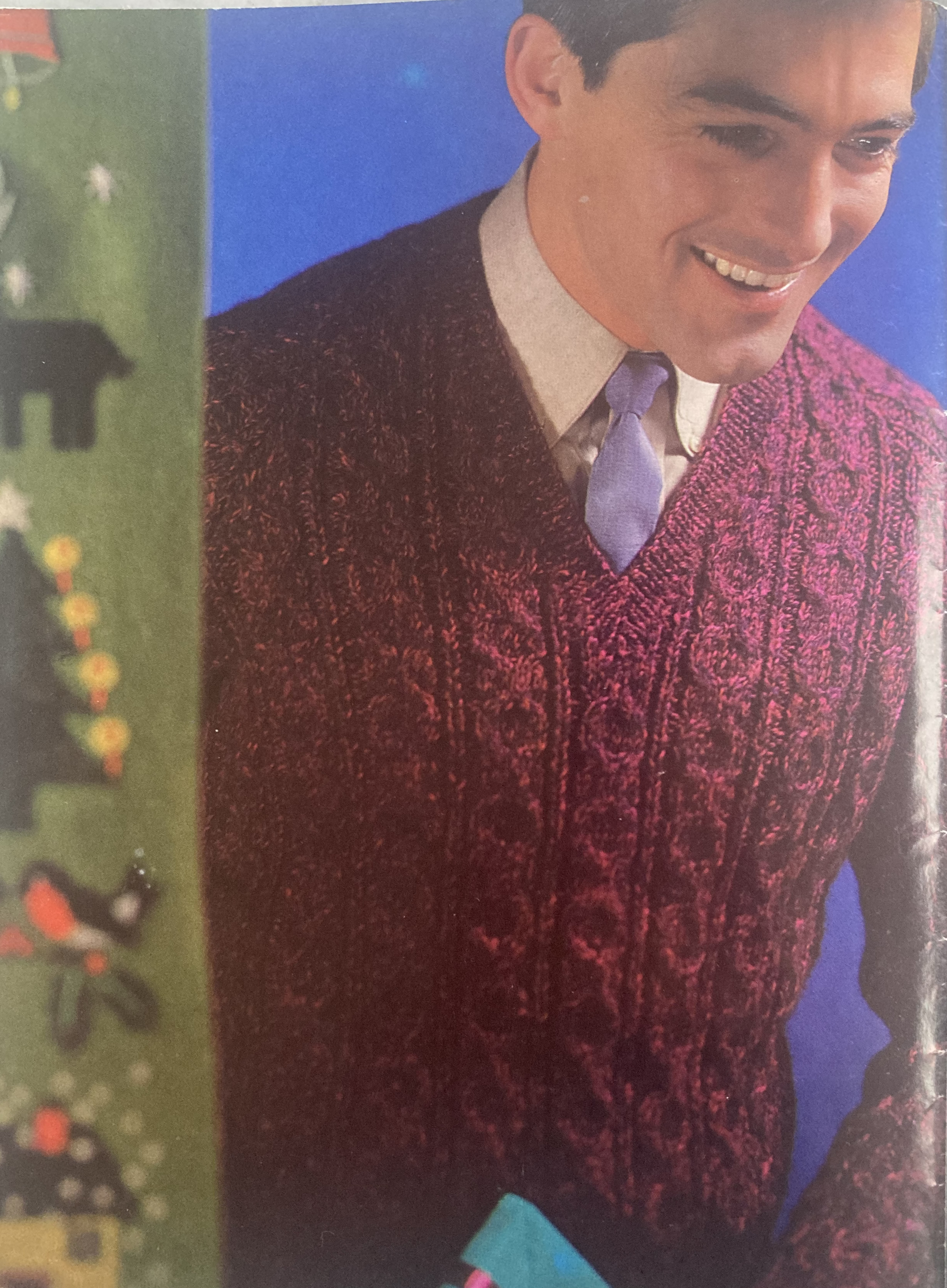
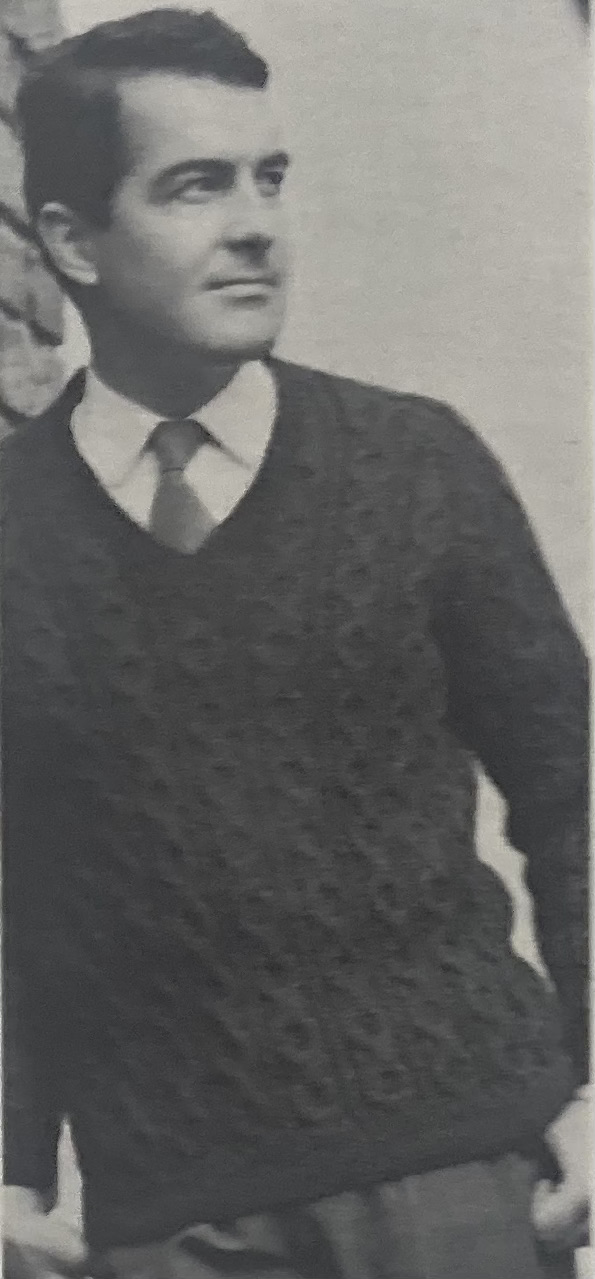
Men can get a cabled pullover in a glorious shade of purple tweed and the reassurance that cables are manly (like our model’s eyelashes, which are almost as impressive as his colleague’s with the pom-pom hat). There’s a boatneck pullover in herringbone stitch as well, meant to be worn over a simple polo- ( aka turtle-)neck jumper, for which a pattern was given in the previous issue.

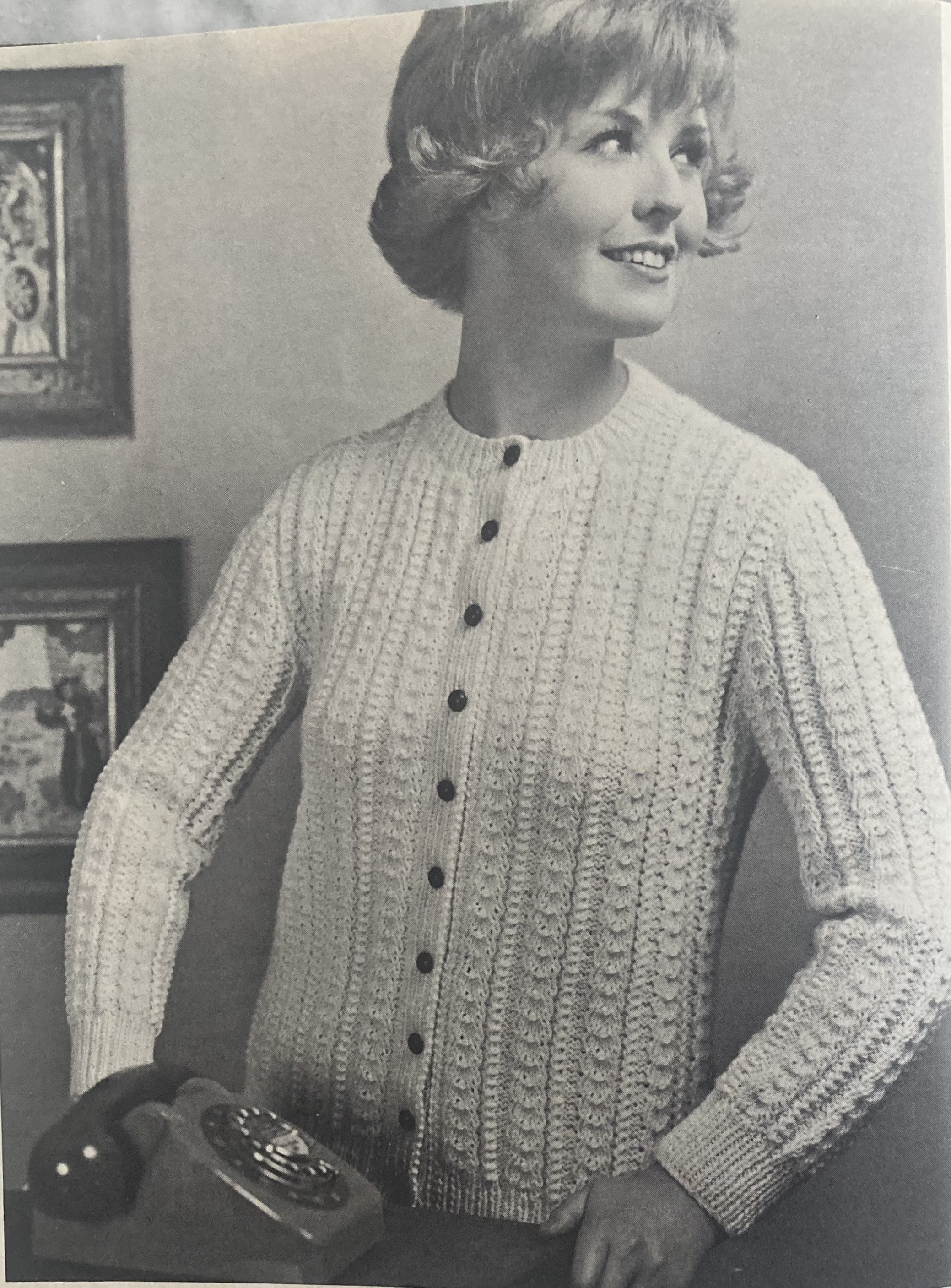
The manly-cable idea is continued on a lovely warm pullover for boys, and his younger sister can get a button-up cardigan in a frothy textured stitch pattern, made in synthetic-wool “Brilliante” for easy washing. Younger tots can enjoy warm ears with a chin-strap “helmet” hat that is guaranteed not to fall off or get lost.

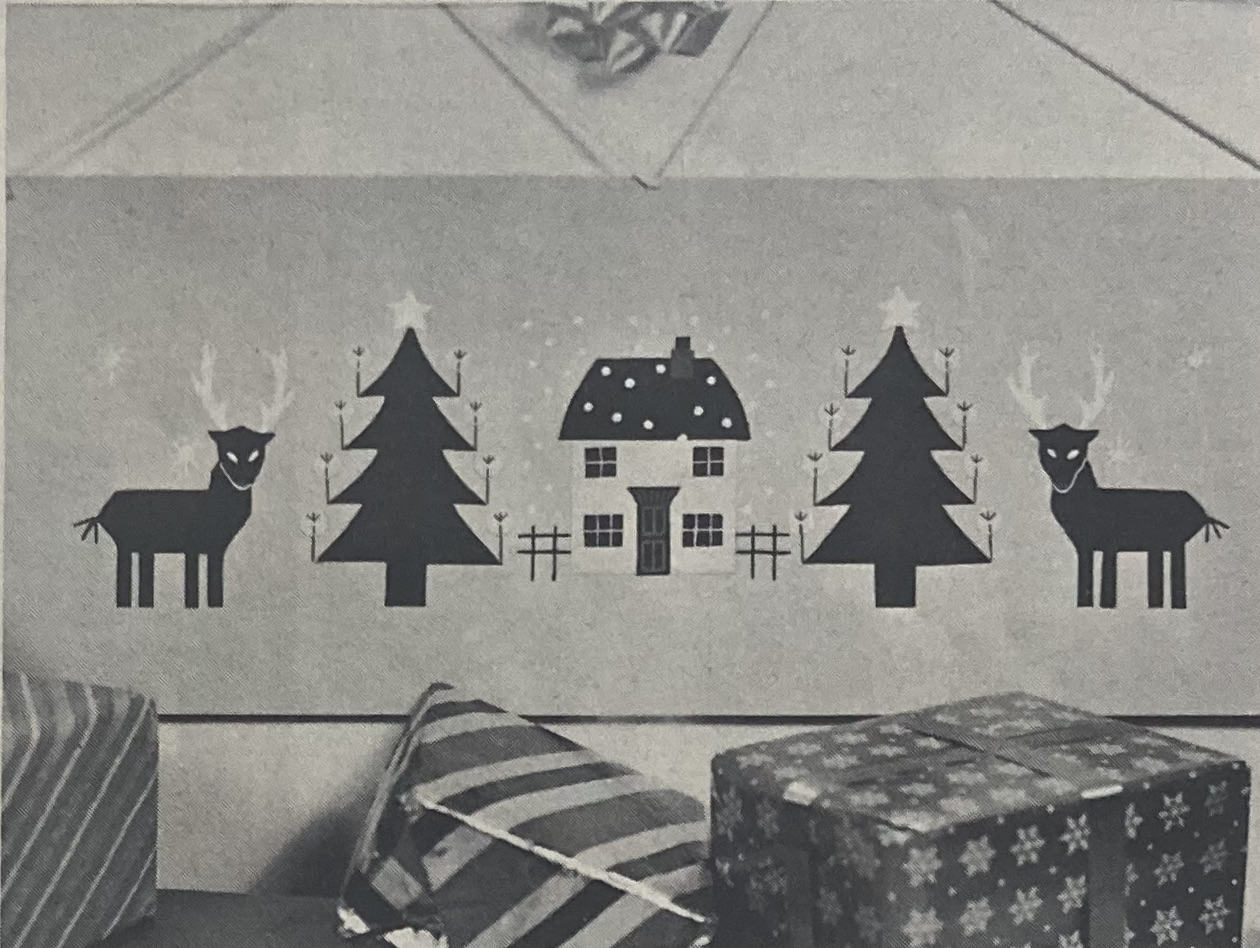
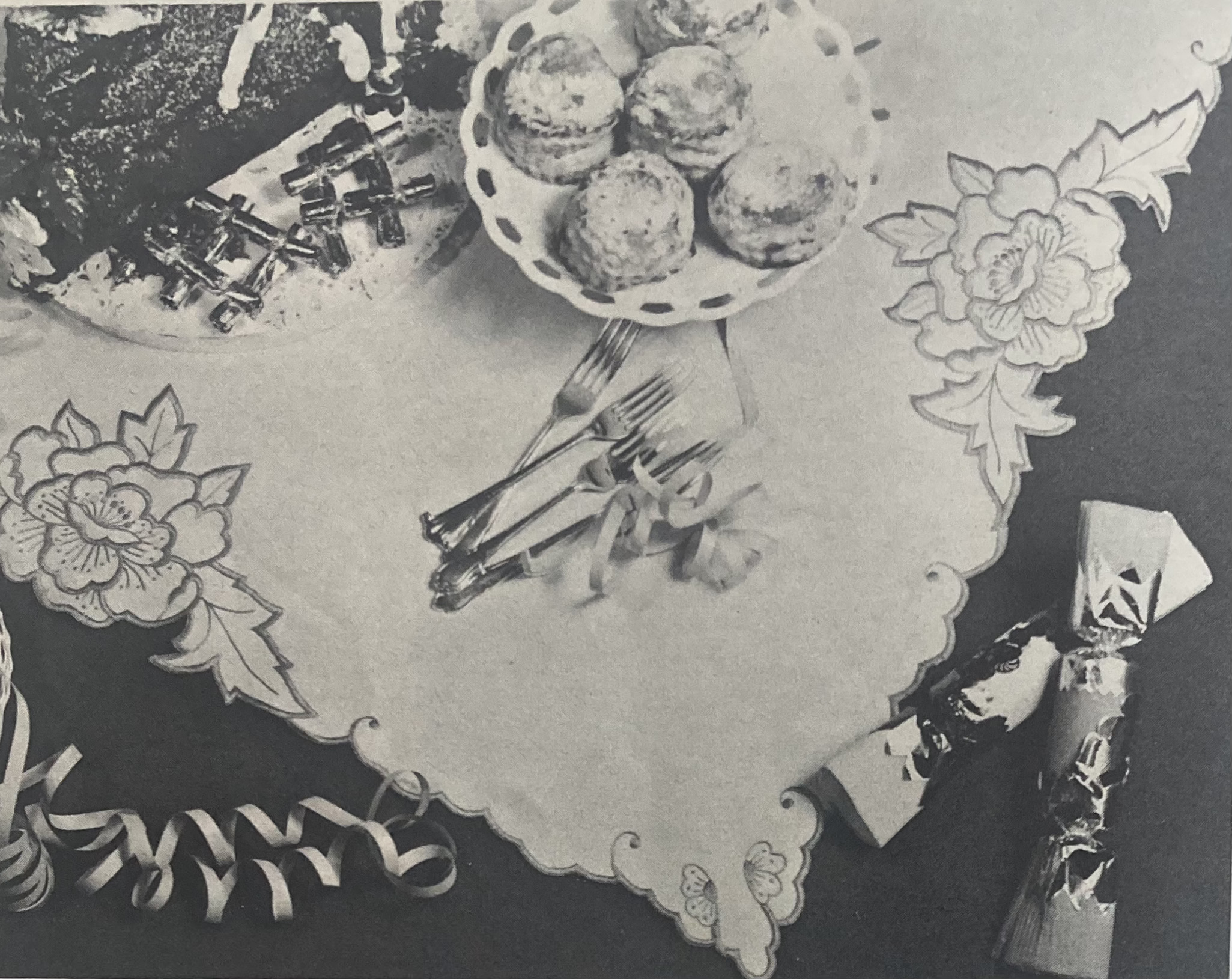
The real focus of the issue is of course, Christmas preparations. Felt appliqué makes a big appearance this year, with place mats and name cards for the holiday table as well a winter-scene wall hanging. The appliqués are quite simple and designed to be used with scraps, and the instructions give ideas on alternate uses such as glueing the felt pieces onto paper for home-made Christmas cards. The place markers have a butterfly motif, making them appropriate for any time of year. Cutwork and embroidery fans can make a tablecloth with peonies, or a Christmas-tree-themed trolley cloth and napkins embroidered in simple chain-stitch. More religiously-minded readers can make a tapestry wall hanging of a Nativity scene (colour photo on inside back cover).

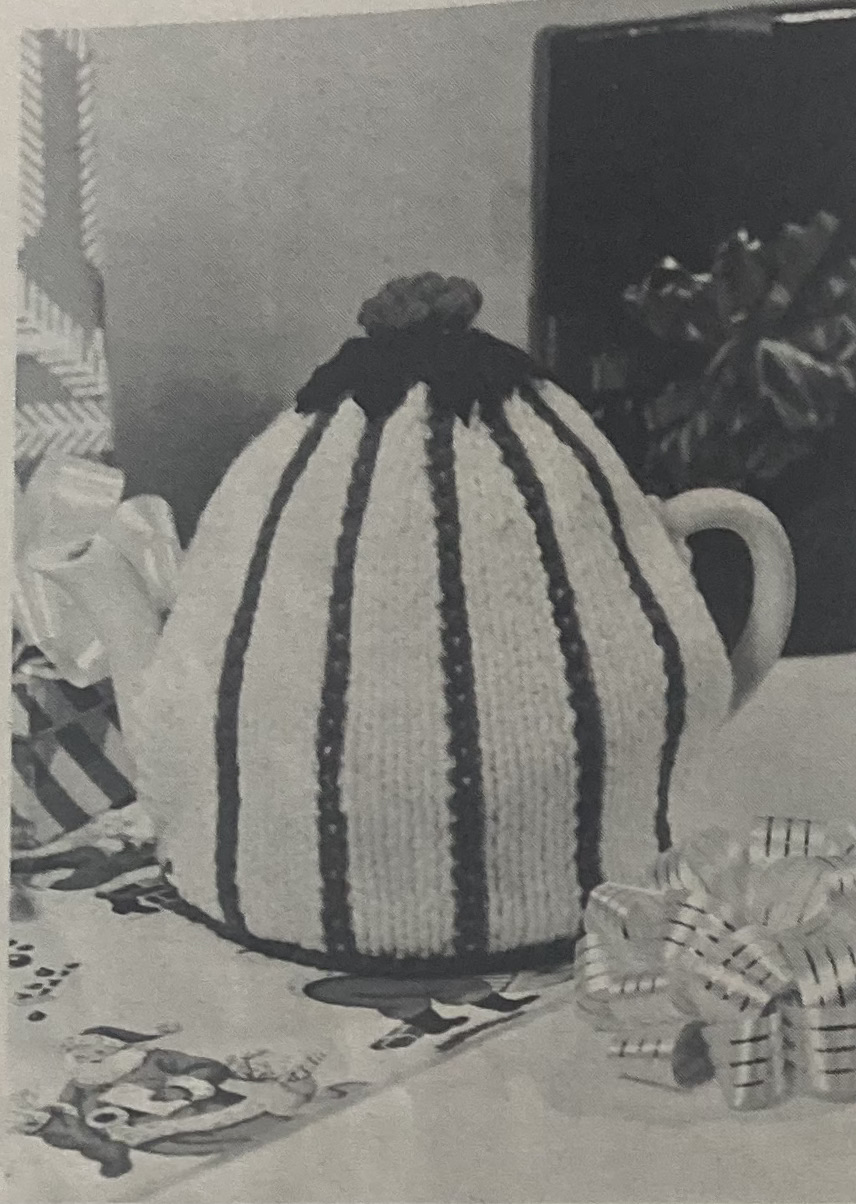
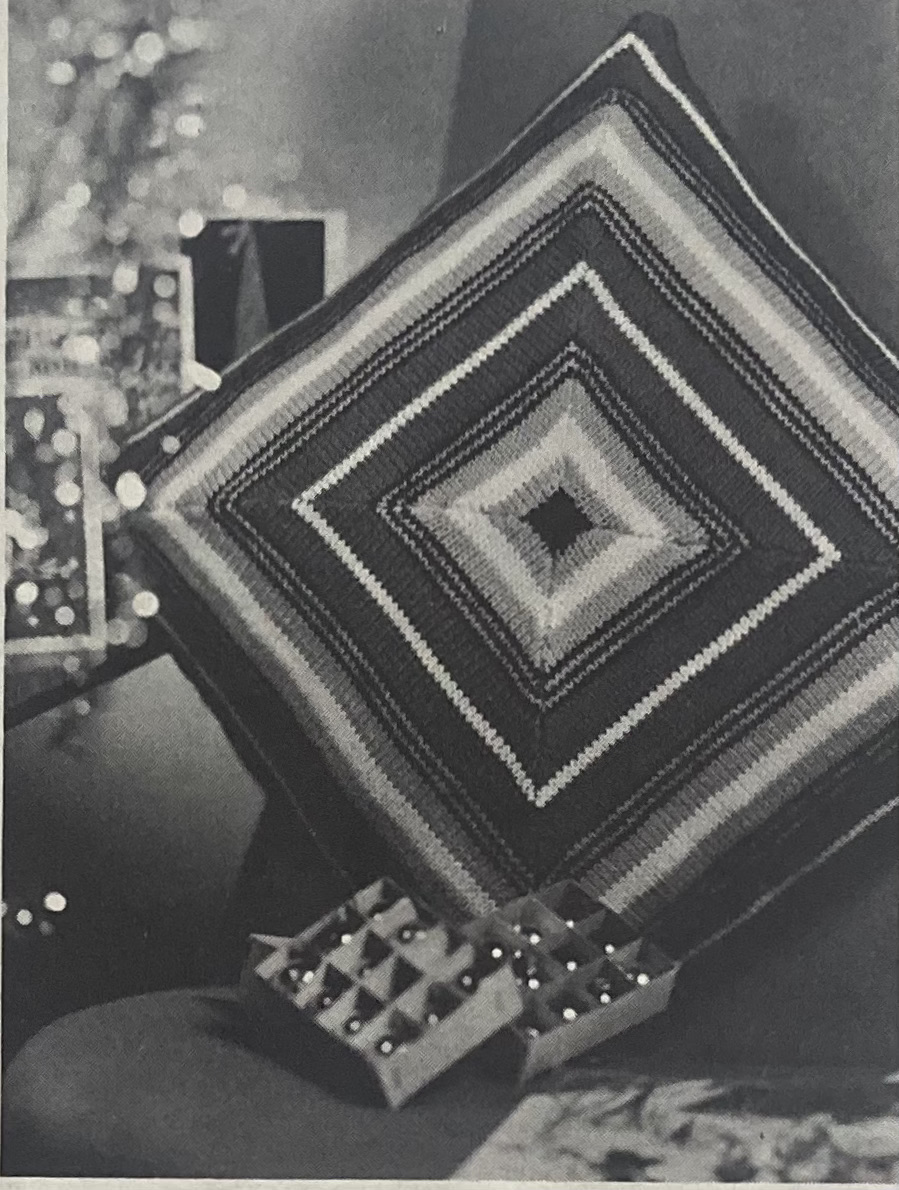
After dinner, it’s on to the gifts! The knitted tea cosy is supposed to represent a holly plant. The “workbag for a friend” is a fun way to use up leftover wool and I made one a couple of years ago. The “cushion for Granny” is a similar stash-buster. One would think it would be made in two squares either fron the center outwards or the edge inwards with raglan-type shaping, but no, you are supposed to make 4 identical triangle pieces for each side of the cushion and sew them together.

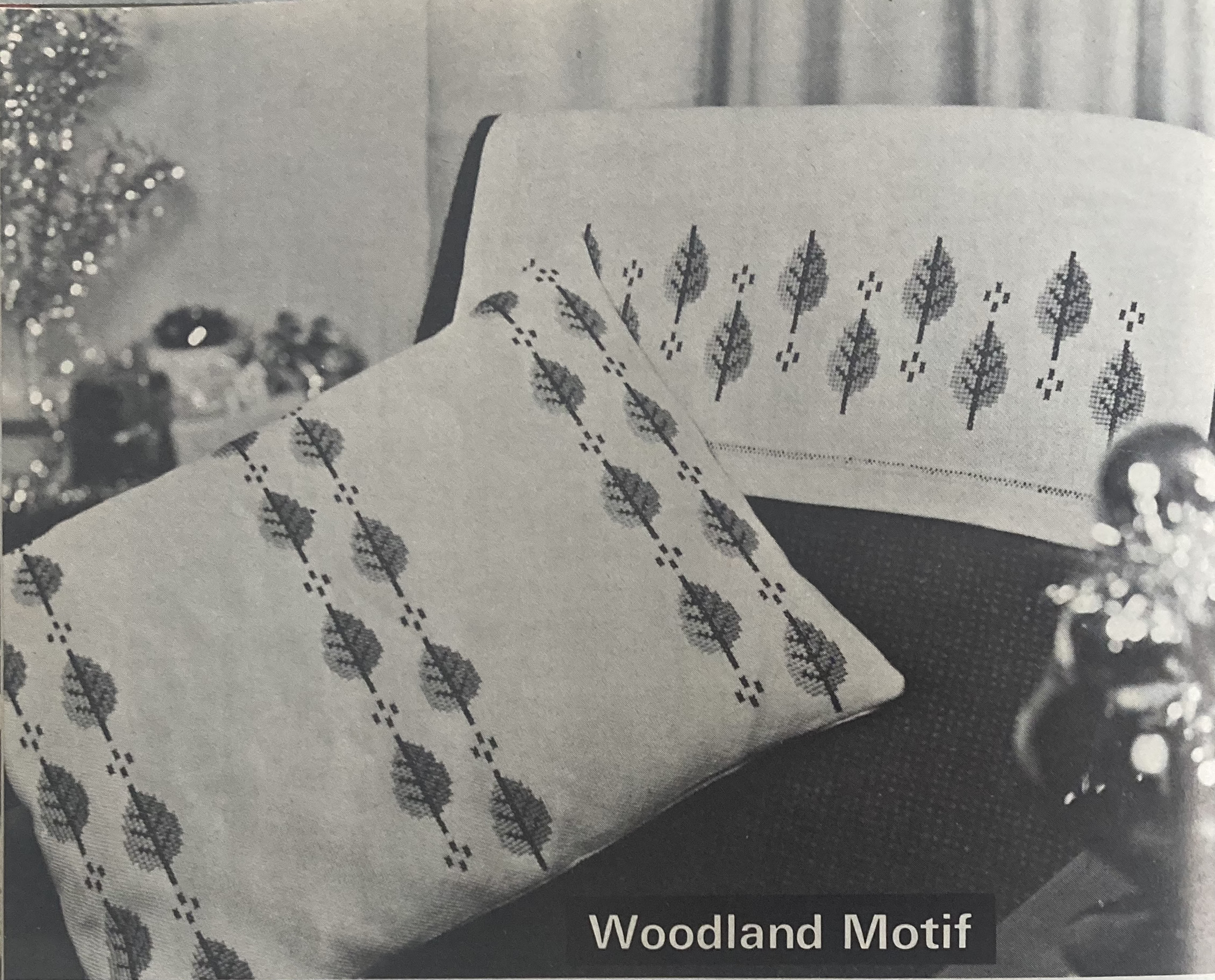
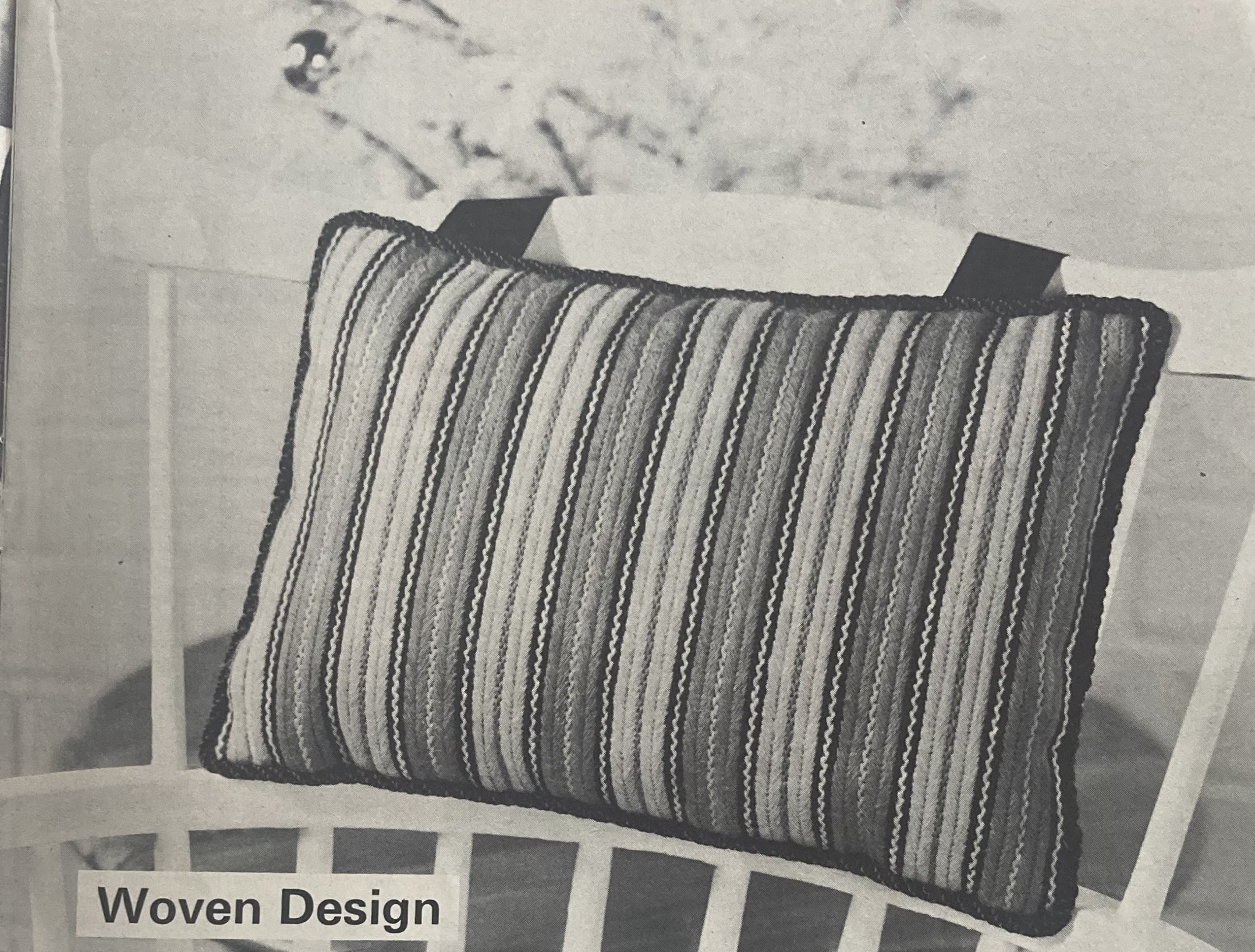
And let us not forget the other cushions: a simple cross-stitch number with a woodland design and a tough woven-tapestry chairback cushion in soumak and herringbone stitch. The colour scheme is brown with brown, with touches of orange and lime green for contrast. In the “just for fun” category, you can knit cosies for golf clubs.

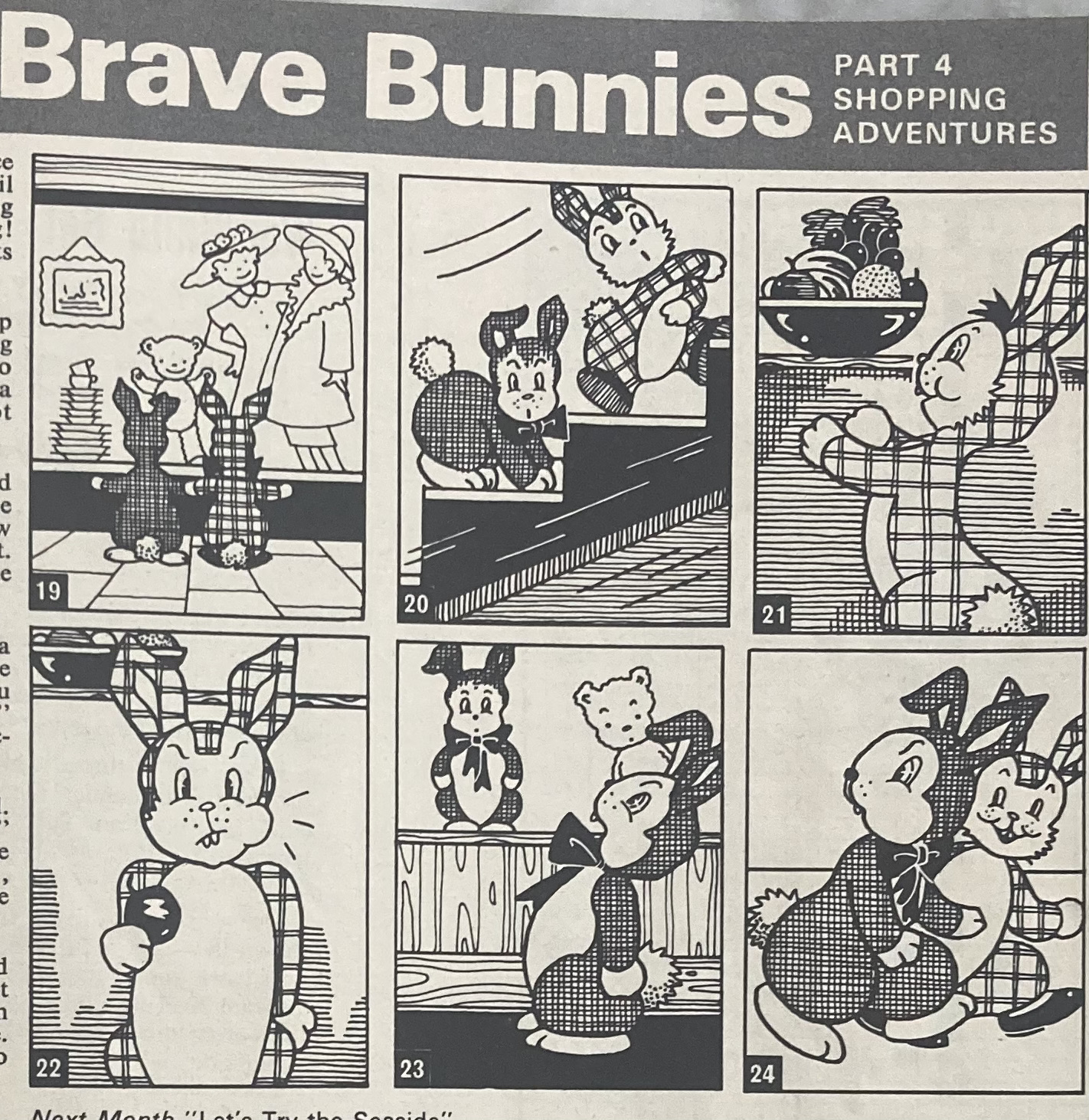
Our two brave bunnies from the Readers Pages are still on their quest to find a real live rabbit. Thinking they might find one in a department store (why not), they get stuck on a moving staircase, try to eat a plastic apple, and find a stuffed rabbit who, unlike our co-protagonist Sale Price (also a stuffed rabbit), sadly cannot talk. Next month, they will try the seaside, which is not known for being home to very many rabbits, but I suppose a better chance than a department store, a movie theatre or a merry-go-round. Of course, around Christmas time, one of the surest places to find a real rabbit would be on the dinner table, ha ha. I guess that storyline might be considered inappropriate for a light-hearted children’s comic. At least our two toy rabbit protagonists aren’t in danger of being eaten.

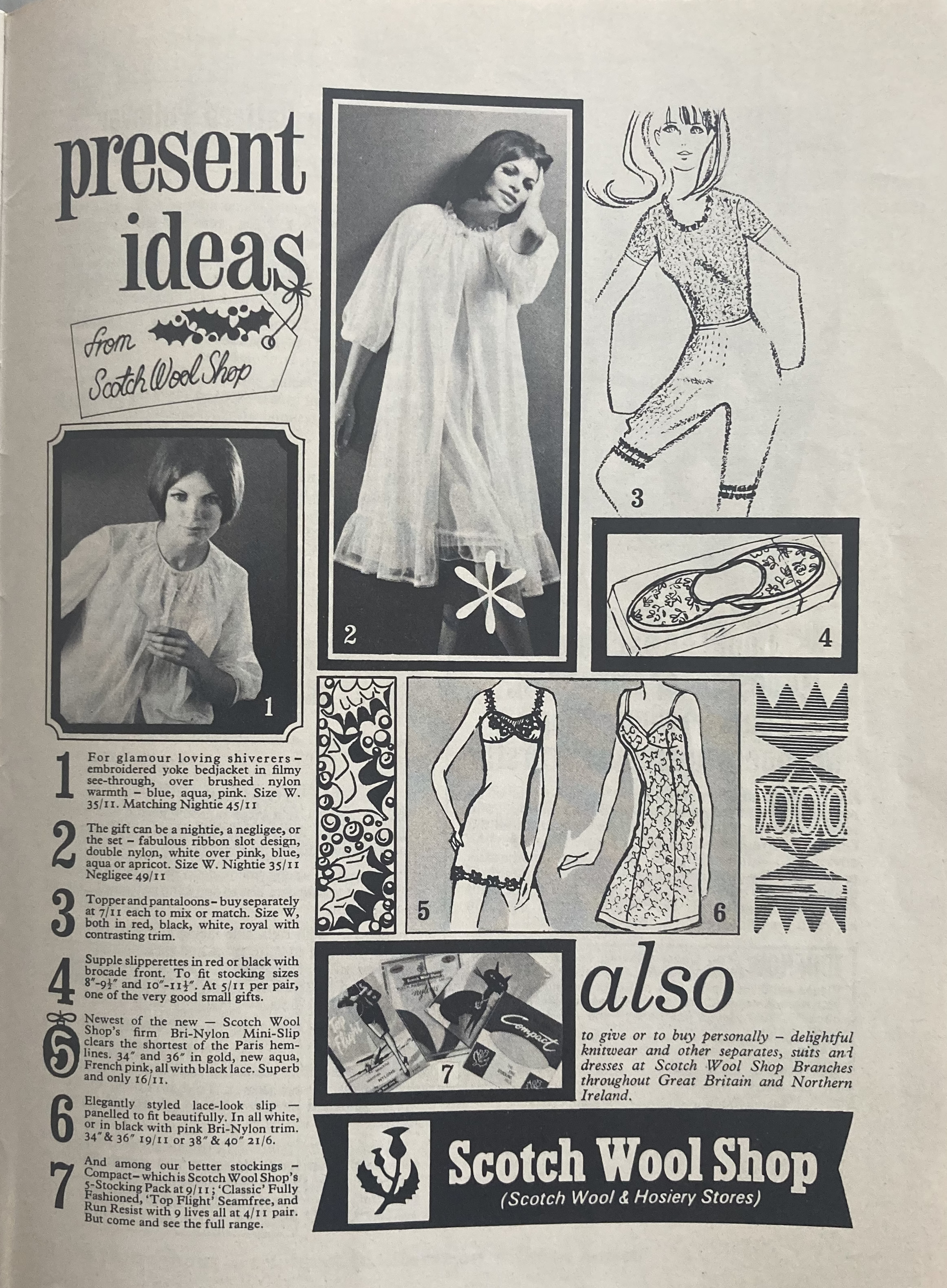
Finally, there’s another wonderful advertisement from my favourite Stitchcraft-ad store, the Scotch Wool Shop. Here is a nice little article about a knitting book produced by the Fleming, Reid company, proprietors of the chain of shops. The ads always make me want to go out and buy things from the stores… which, sadly, no longer exist. These little gift ideas are marvellous.

That’s all for this issue — and this year! I don’t know what I will make from this issue, or if I will just write a post about the knitted workbag that I already made a while ago. I quite like the ribbed skirt, and could use one, but one look at the gigantic WIP pile discourages me from starting any long and boring project. Hopefully I’ll get a couple of those WIPs finished and can write about that for a 1965 / 2023 wrap-up. Until then, I leave you with this graphic from the December 1965 issue. Happy Holidays!

May 1965: Primroses and Violets

For this month’s project, I couldn’t decide whether to make the pretty 3-colour “Shaded Blouse” (knowing that I have plenty of knitted tops, and that I would have to buy yarn for it when I am trying hard to reduce my stash) or adapt the tablecloth/dressing-table set embroidery pattern for another vegetable bag (quick, easy, useful, environmentally friendly and reduces the stash of embroidery thread and yet-unembroidered bags). Spoiler: I made both, so the stash balance will remain even. The top will take a little while, so here’s the veggie bag in the meantime.

The pattern is a design of yellow primroses and purple violets, but not in the same “bouquet” — there’s an option for a tablecloth with the primrose sprays in the corners and the smaller, individual violets scattered across the middle surface, or a “cheval set” for your dressing table with one large mat (2 primrose sprays and 2 violets) and two small mats (one violet each.) I chose to just make the primrose spray.

The bag is one of several that I bought at an antique sale a few years ago for a euro each. They are literally old moneybags, formerly used to transport money to and from the German national bank (hence the “Deutsche Bundesbank” and date printed on it; this bag was apparently from January 1997.) After 2002, the German Bundesbank replaced the old bags with newer and better ones (better in the sense that they presumably fulfilled new security regulations for the Euro) and you can now buy the disused old bags at antique markets, via ebay, etc. How they got from the bank to there, I do not know, but would love to find out. (If you are an expert in the sale and trade of disused moneybags, please share your wisdom in the comments — I genuinely would like to know.)

Anyway, apart from the fascinating can of worms that is their origin story, the bags are the absolute best for buying vegetables at the grocery store, farmers’ market etc, being made of a very thick linen (?) fabric and just the right size for small amounts of things like mushrooms, green beans, shallots, etc. Because they are both tough and easily washable (of course I washed them thoroughly before starting to use them for food items — money is literally filthy) they are particularly good for sandy or earthy vegetables like the aforementioned mushrooms, new potatoes, or the kind of carrots that I like to eat, which are grown in peat and therefore quite “dirty” (but taste better than regular carrots).

The actual embroidery pattern was not difficult. Of course, I had no transfer, since I would have had to order it in the mail in 1965. But it was no problem to sketch out the flower spray from the photo. I used transfer paper to transfer the design onto the fabric. The ink was quite faint, so I went over it with a ball-point pen (washable), which worked well enough. There were instructions in the magazine and even a helpful close-up of the stitches, which were all extremely easy: satin stitch for the petals, blanket stitch for the leaf outlines and stem stitch for everything else. I ran out of light yellow after embroidering half of the flowers, and the new skein I bought was one colour-shade different. You can tell if you look closely, but I don’t think it’s a flaw — it gives the flowers a little more depth.

This is the third “Bundesbank” bag that I’ve embroidered, as well as another bag of regular cotton fabric. I used the other bags to buy stuff at the local organic supermarket last week and the cashier stopped in the middle of my checkout to say, “I’m sorry, I just need to take a second to admire this beautiful work.” That was sweet! If I ever get enough of these made, I’ll probably start selling them.

Stay tuned for the “shaded blouse”!

April 1965: “Spot” Design Adaptation

For this month’s project, I wanted to try something different and convert a cross-stitch pattern into knitting. The April 1965 issue of Stitchcraft had two designs for counted-stitch cushions embroidered with tapestry wool on coarse “Portree” cloth. Portree seems to be a grouped-thread fabric similar to Aida, but doesn’t seem to be manufactured under this name anymore. (If you know anything about it, please tell me!)

Anyway, I don’t like counted cross-stitch and I have enough cushions, but I was interested to see how one could convert the cross-stitch pattern into knitted form and what type of object or garment it would be suitable for. Theoretically, any counted-stitch chart can be used as a knitting chart. In practice, many cross-stitch patterns are not suitable for stranded or intarsia knitting due to the number of colours in a row or the placement of motifs. I thought this design would work as an intarsia design because the motifs are small and self-contained. The diagonal lines could be added in later either with embroidery on the finished knitting, or with duplicate stitch.

The original pattern uses Lime, Orange and Brown wools on natural colour cloth (how very 1960s.) I had lots of scraps of Shetland wool and used green (lime, I guess) and yellow (lemon?) for the spots on a slightly pink natural background. For the little motifs between the spots (brown in the original design), I chose some pink silk-wool blend of which I also had a small amount left over. The spots are 3, 5, 7, 7, 7, 5, 3 stitches wide and I stranded the wool on the seven-stitch rows and twisted the background and spot colours together at the changes on the edges of the spots. I made a modified square with slightly rounded edges, thinking if I didn’t know what to do with it, I could always mount it in a circular embroidery hoop-frame and hang it on the wall. Nine rows of spots made a piece about 10 inches wide and 9 inches long. Here it is after blocking, but before adding the duplicate stitch lines:

So far, so good. Of course, there were a million ends to weave in.

The duplicate stitch lines were surprisingly difficult. They are supposed to go from one 5-stitch-wide row to another, but I couldn’t always make it work out with the diagonals and the number of stitches and rows. Mathematically, it should not be a problem. In practice, I guess I didn’t always find the correct stitch to duplicate.

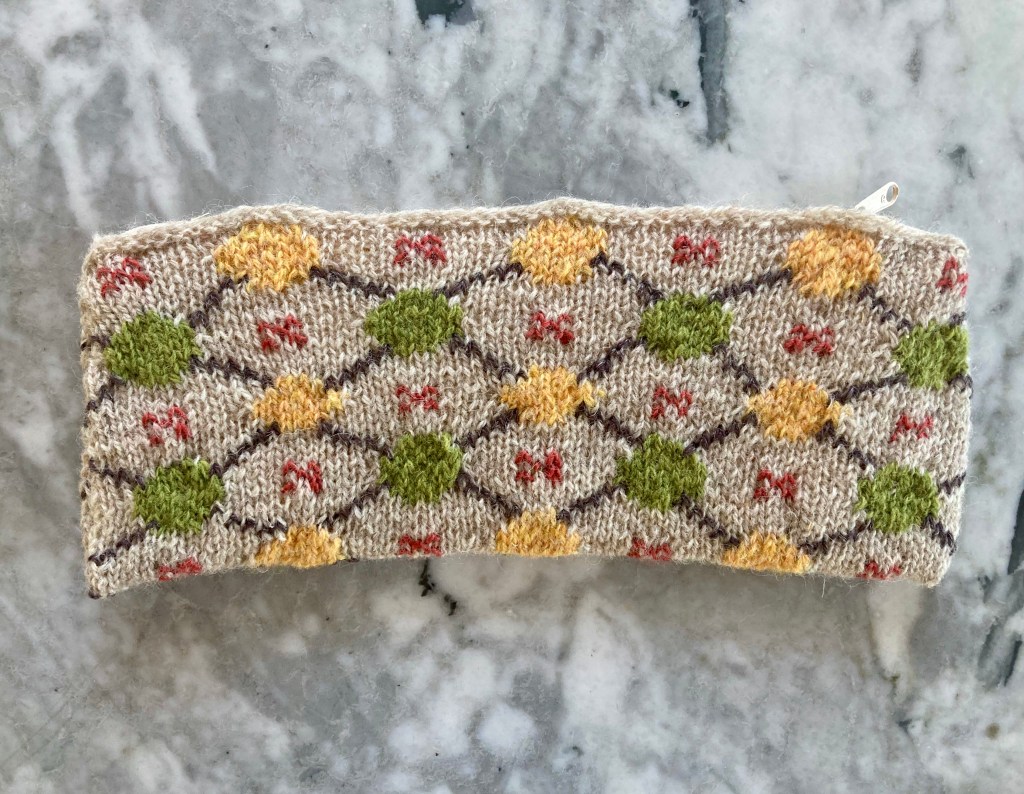
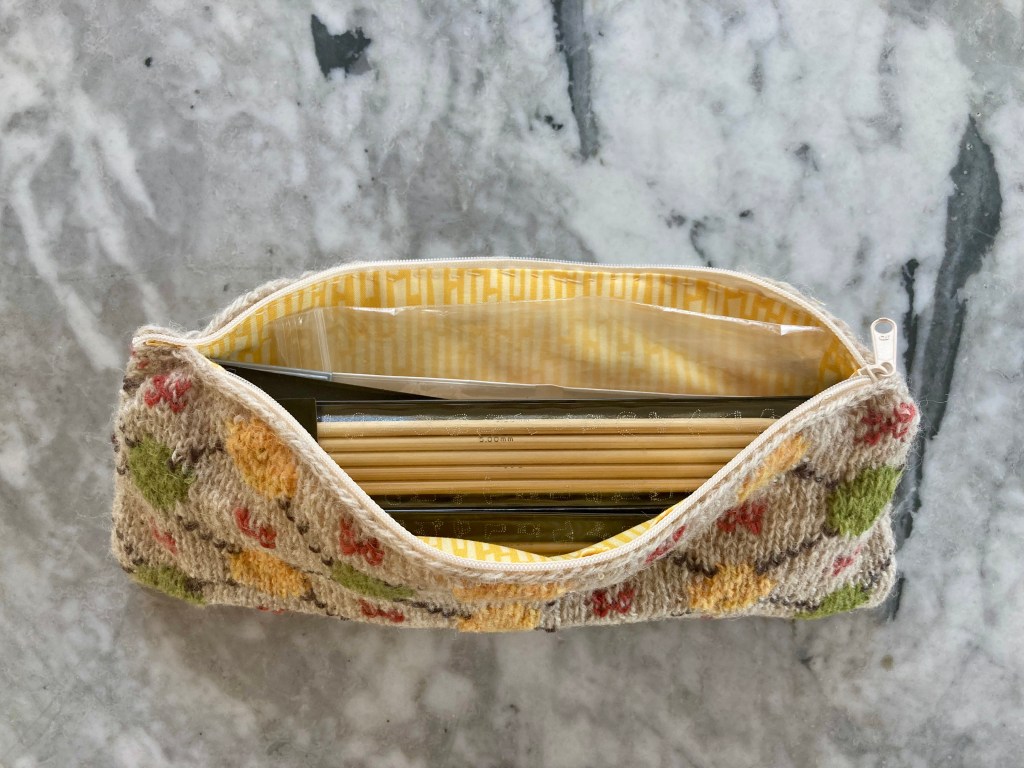
At this point, I had realised that I could fold it in half to make a little rectangular case for pencils or double-pointed needles. Not that I need that, particularly, but if it turned out well enough, I could give it away or sell it or something. I bought a small piece of yellow cotton for the lining and a zipper, sewed it up and there it was.

Sewing in the zipper was a disaster, as it usually is, and for some reason, the finished bag is a bit… warped? It was perfectly flat, as was the lining, before putting in the zipper. I think the knitted fabric pulled a little more on one side than the other. But other than that, it’s fine.

I could imagine a design like this for a rectangular sort of garment, like a slipover/vest/whatever you call it thing with no sleeves — sort of like an argyle design. The only truly annoying part is weaving in the thousand ends. This was a good learning experience and I definitely feel more confident about converting cross-stitch designs after doing it.

October 1963: Knitting Apron

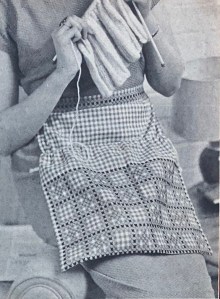
Photo of a woman wearing a knitting apron and knitting, Stitchcraft magazine, October 1963

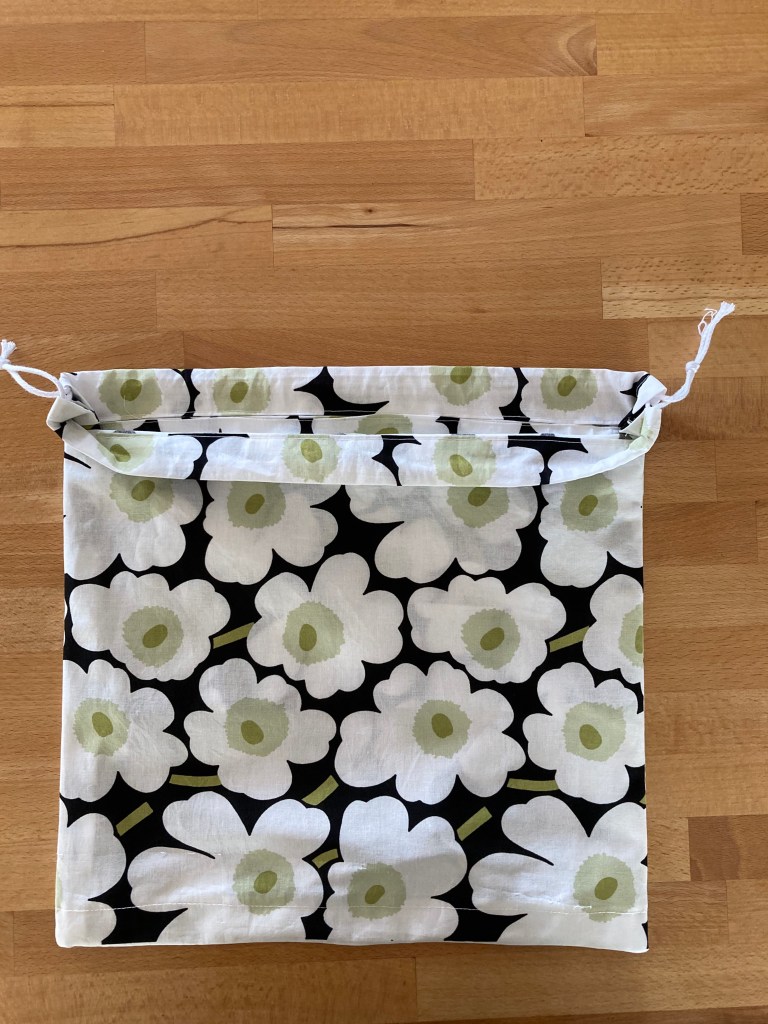
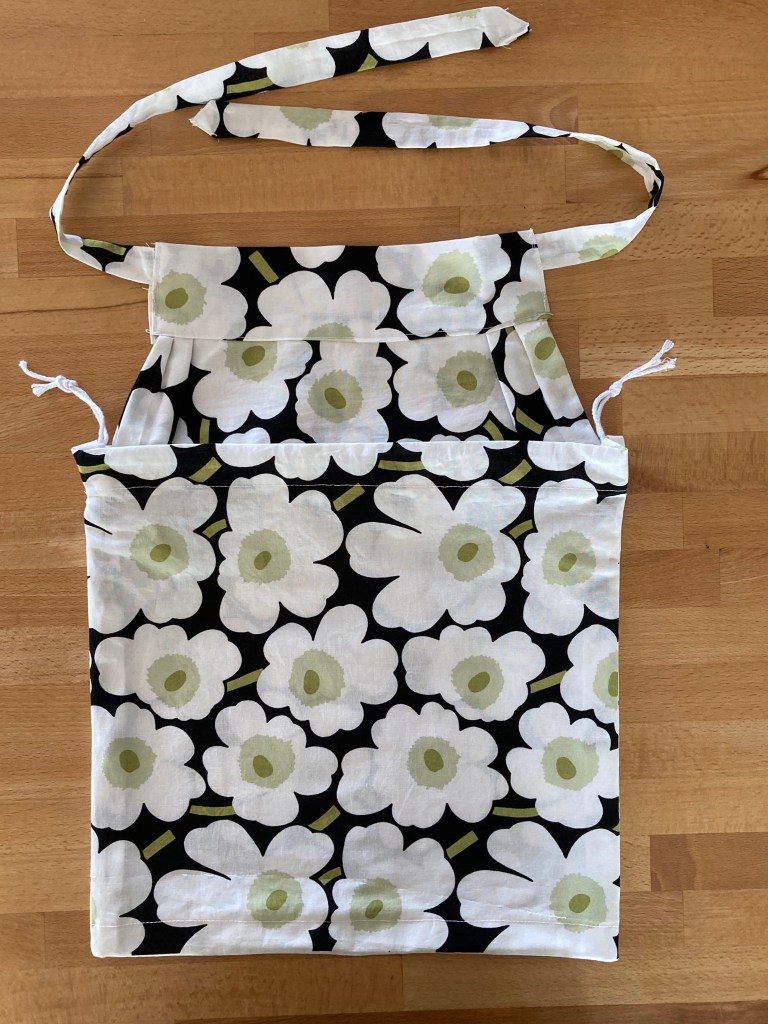
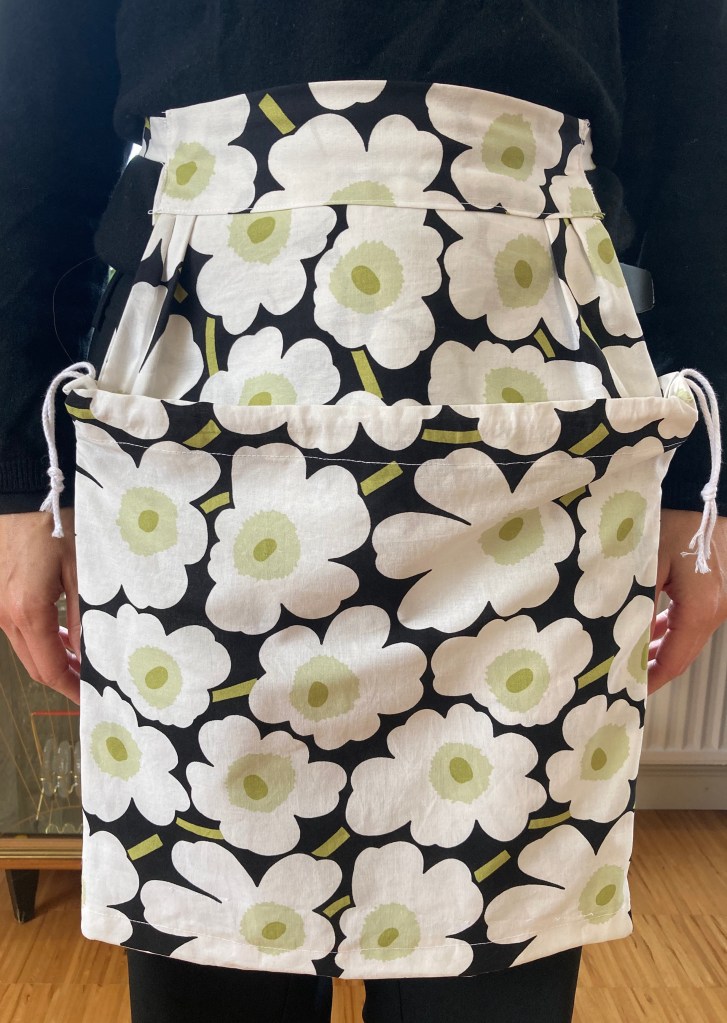
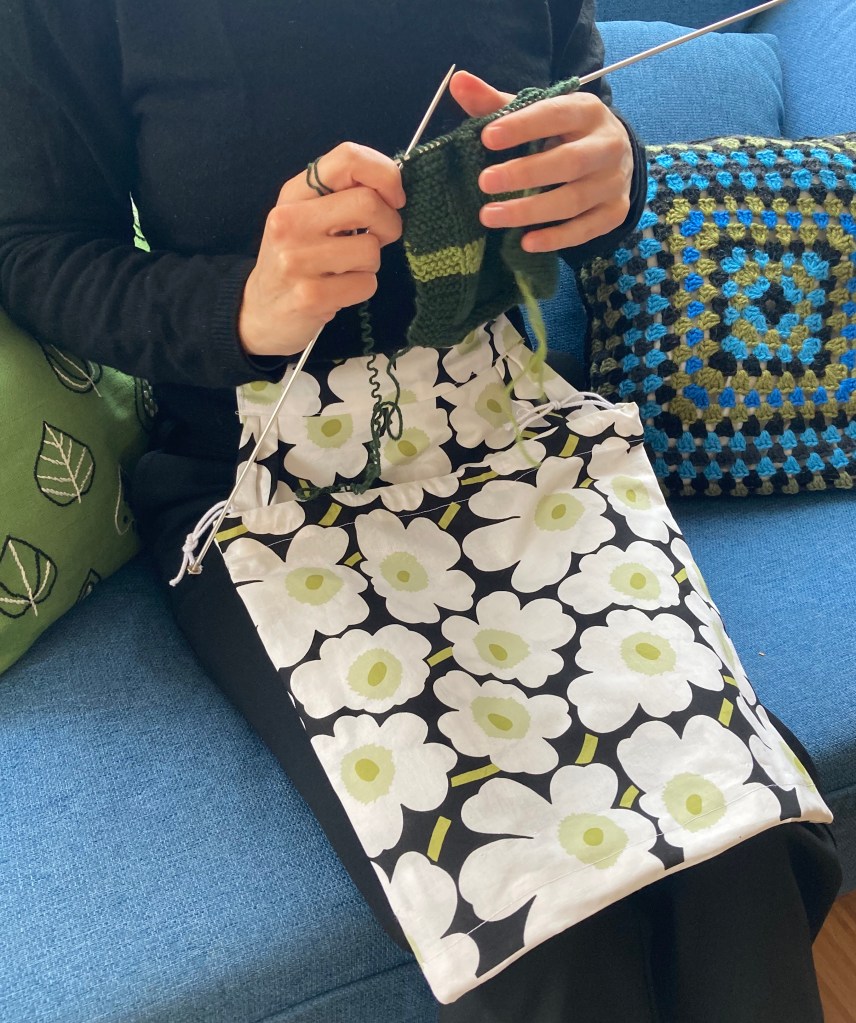
This month’s project was, as its name suggests, a knitting workbag with an apron-style top, allowing you to “tie it on and keep your wool in your pocket as you work.” Brilliant idea! I actually have a vintage, embroidered apron that I inherited from my grandmother that I use as a tie-on knitting bag, but this Stitchcraft project goes one better in that the apron top folds down into the bag when not being worn, allowing you to close the bag with drawstrings so that nothing falls out in transport.

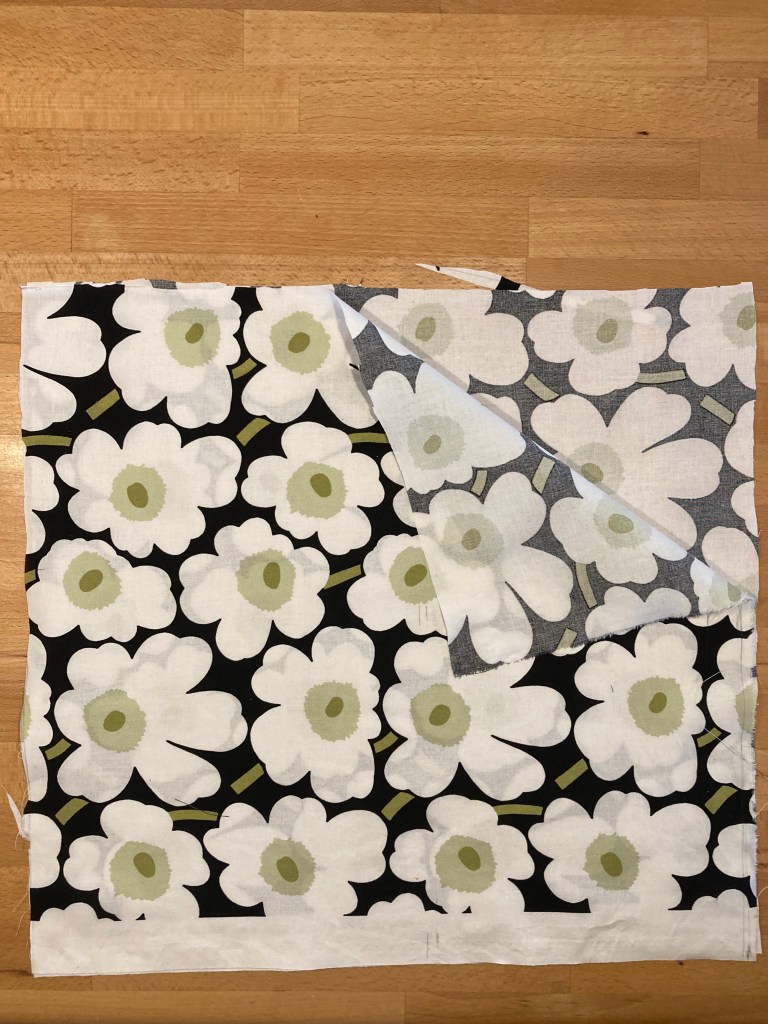
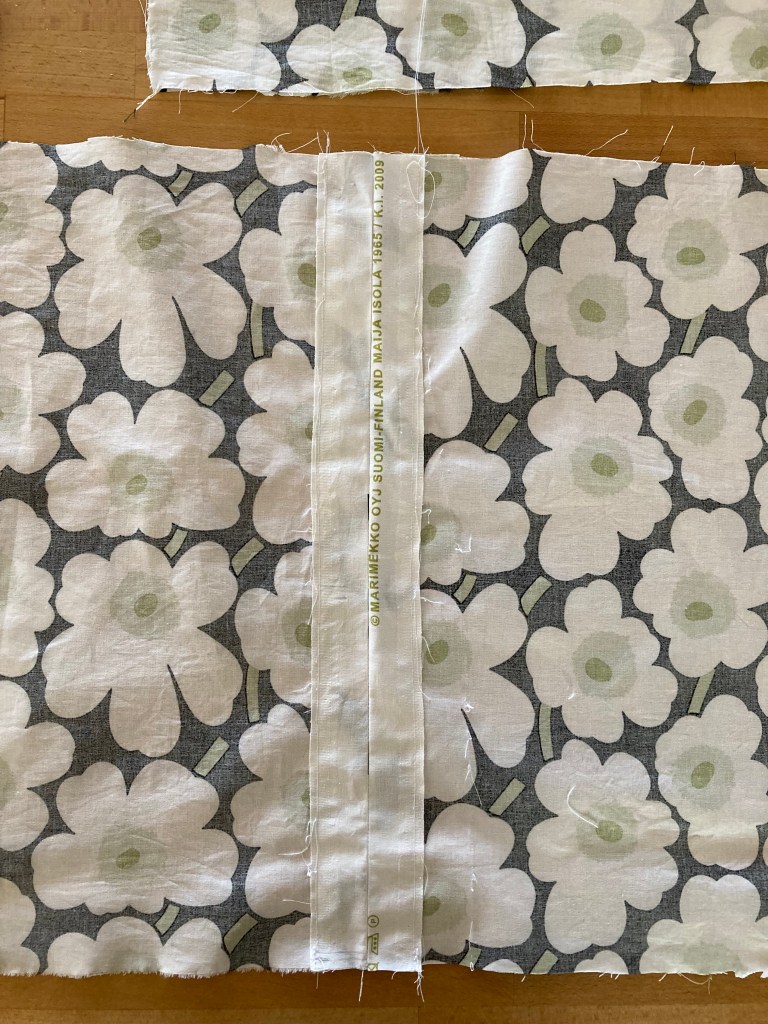
It’s supposed to be made with gingham fabric and embroidered with cross-stitches in the gingham squares, but I have so many unfinished embroidery projects that I went ahead and made this one plain, using a nice cotton print from Marimekko.

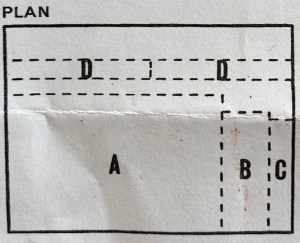
Fabric cutting plan

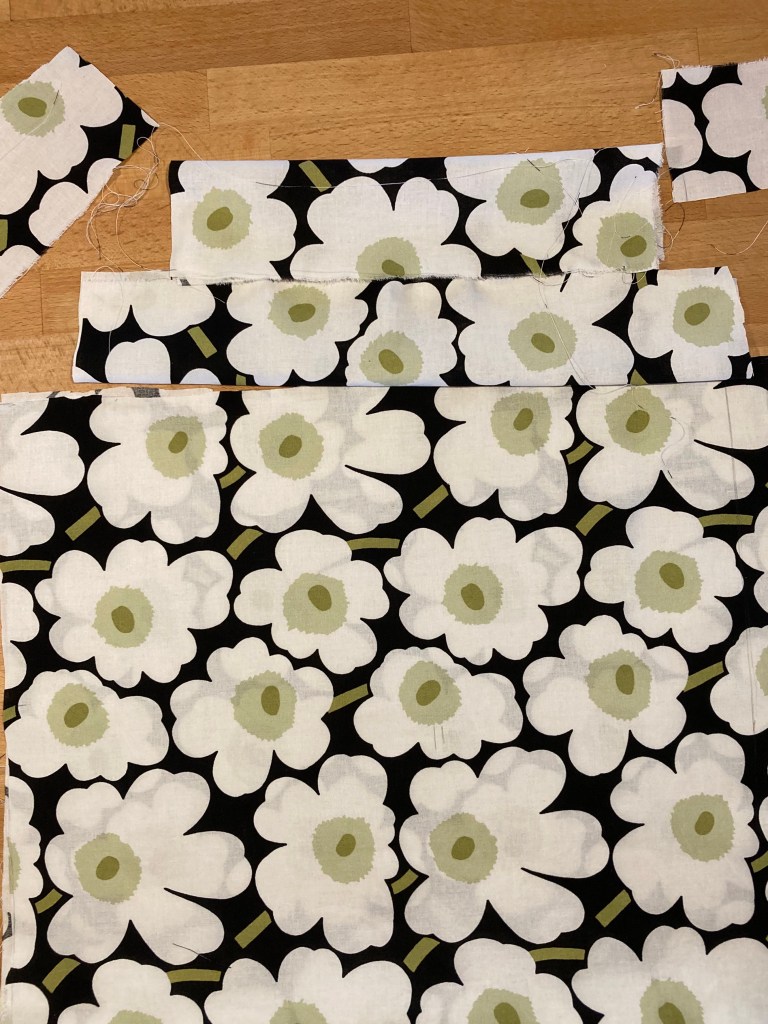
Since the “pattern pieces” are all just squares and rectangles, there’s a little chart showing how to divide up the fabric to get piece A (bag), B (apron top), C (waistband), and D (tie strings). After cutting out all the pieces (why are straight lines the hardest to cut?) I was suddenly confused: The bag, piece A, was 18×17 inches. That’s pretty big, and in fact looks just about that size in the photo, but a bag has a front and a back… Was I supposed to cut it on the fold? Or cut two pieces? The waistband is obviously folded in half, and the instructions for hemming the apron top make it clear that only one, unfolded piece was needed. Huh?

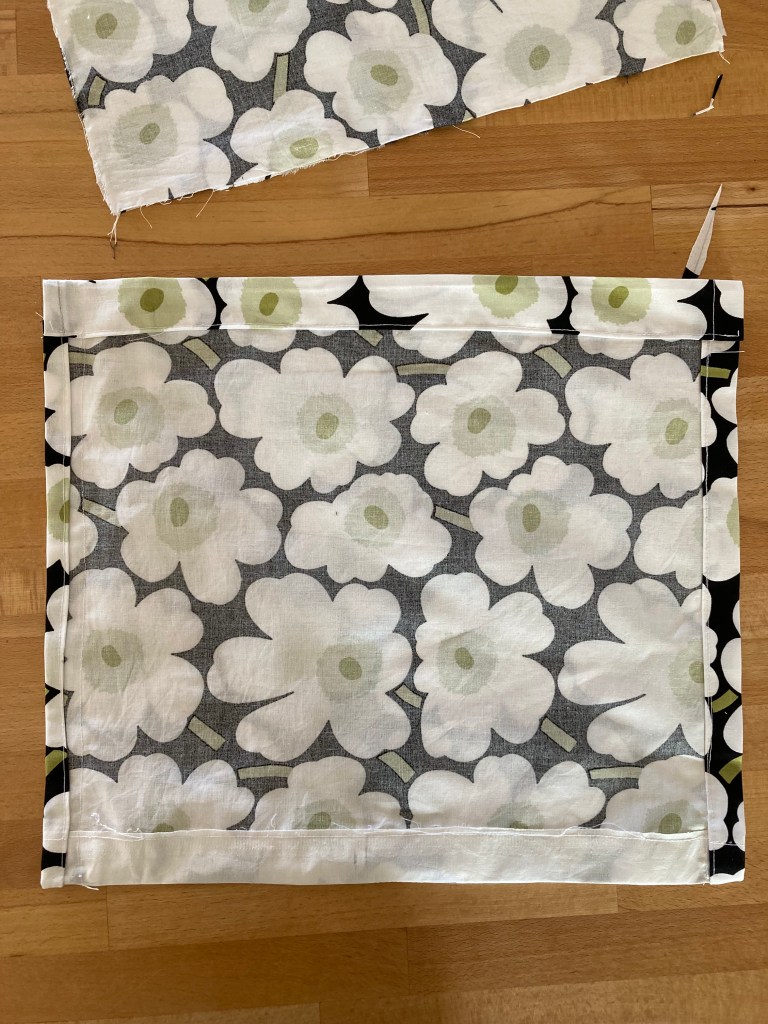
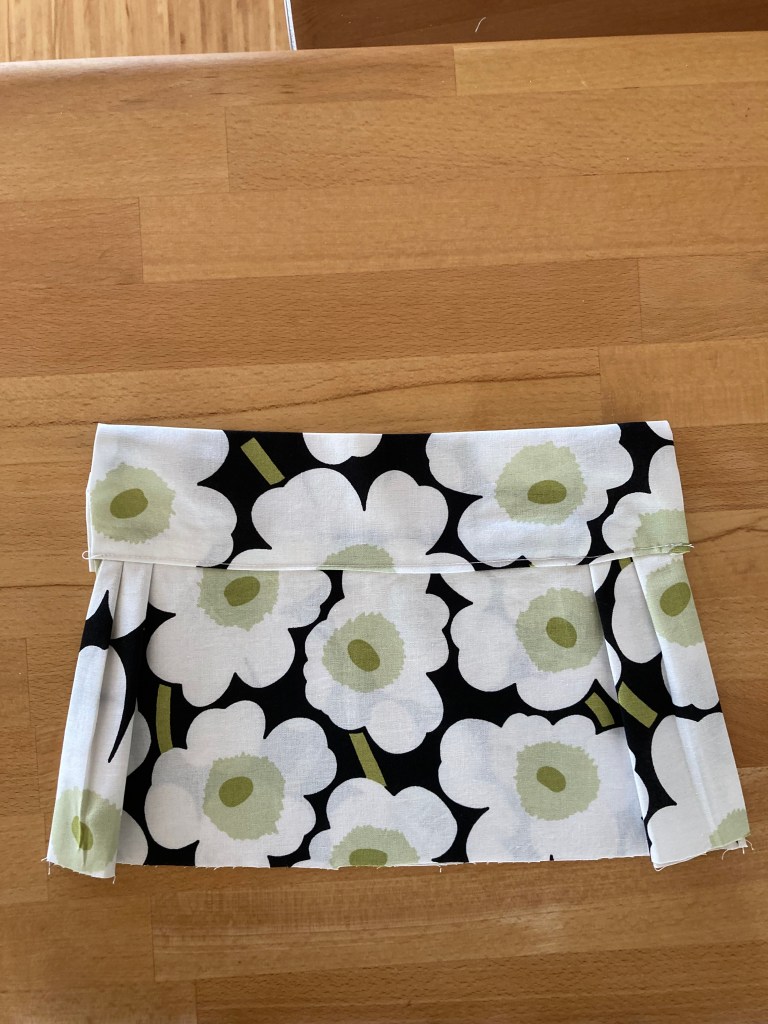
I cut another identical piece for the bag and decided to also cut another identical piece for the apron top, so the hems could be neater and the fabric stronger. I cut the two bag pieces with the selvedge on the bottom edge to make a very wide seam allowance, which I could then open up and sew down to make a really sturdy bag bottom. Similarly, I hemmed the side edges before making the side seams instead of zig-zagging the raw edges. This made everything very sturdy and very neat.The apron top is made with a couple of little pleats on the sides to bridge the width difference between bag top and waistband. Before it was sewn on, it looked like a little doll miniskirt!

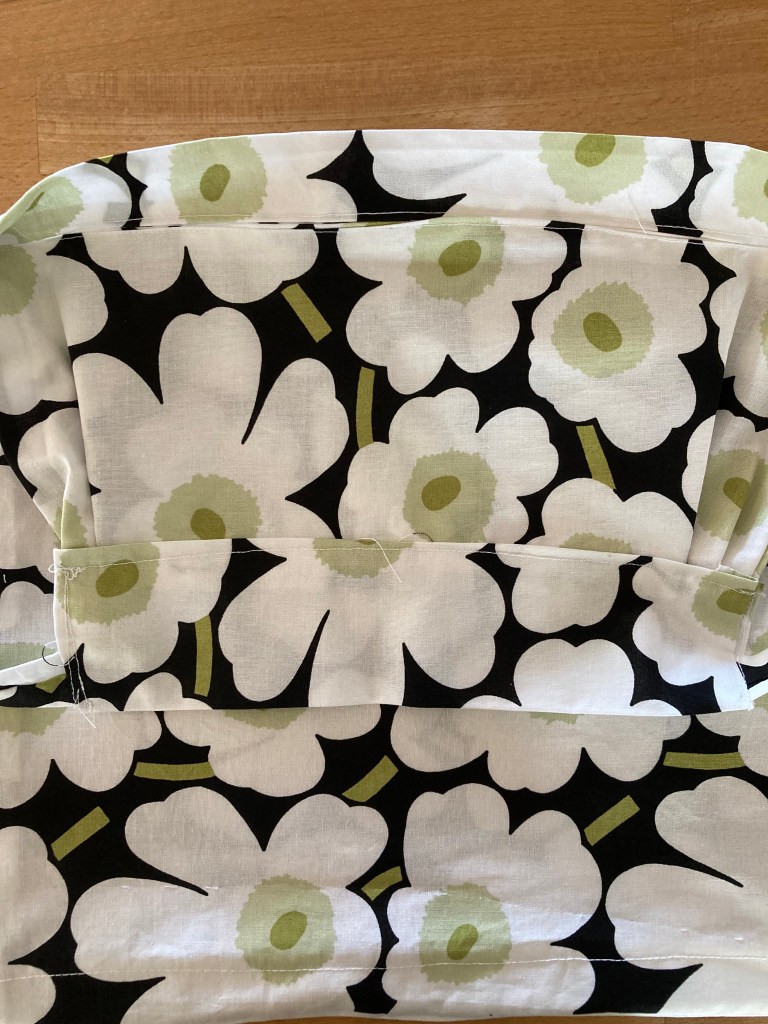
The apron top is sewn into the back part of the bag, so that it folds down into the bag when not in use. I was really glad I had made the apron top double, as it makes the seams even neater and everything looks very smartly finished from every angle, inside and out. (I am a sloppy sewer, so always impressed with myself when lines are straight or seams are not ragged.)

That was it! I finished the whole thing in three hours. It works perfectly and I can use it to knit while standing, walking, sitting in the train, etc. without worrying that my yarn will roll away, and it packs up in a flash. The bag part is quite large — if I made it again, I would make it slightly smaller. Other than that, it’s perfect. I imagine it would be a lot of fun to make in felt, with an embroidered front part, and that I could adapt a lot of the typical Stitchcraft designs for embroidered chairbacks, cushions, tea cosies etc. to make more of these.

February 1963: Needlepoint Bag

Magazine photo of a needlepoint church kneeler and prayer book (1963)

I was a bit uninspired by the February 1963 issue, which had several nice garments that were either too bulky for my taste or would just take too long to finish. I’m also trying to work from stash as much as possible. With that in mind, I adapted this “Prayer book cover and kneeler for a bride” tapestry design for a small, simple needlepoint bag.

My first, and until now, only tapestry/needlepoint project (what is the difference, anyway? Stitchcraft always uses the word “tapestry”and often qualifies it with gros point or petit point, but I see “needlepoint” used just as often in other sources) was this unfinished failure from the May 1961 issue. I still had the wool and enough canvas to make a smaller bag using the flower part of the design from the prayer-book cover.

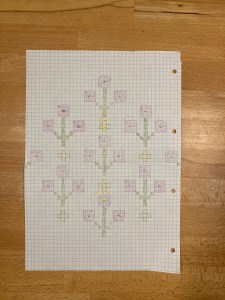
Since the original chart was not printed in the magazine but had to be ordered via post, I had to recreate it myself on graph paper, which wasn’t too difficult. The basic stitch is a half cross stitch, which works much better with this combination of wool thickness and canvas density than the earlier project, which was all in cross-stitch. The flower heads are made with eye stitch — 8 stitches all going into the same center hole. The stems of the flowers and the little hash marks between them in the original are supposed to be embroidered over the tapestry using gold Lurex thread, but I changed that to add some little pink and yellow blossom-like accents and just worked the stems in green wool.

Needlepoint chart drawn on graph paper with coloured pencils

So far, so good. I ordered a little bag clasp, marked out the approximate area of the needlepoint and started on the first half. In the middle of the large piece of canvas. Obviously that was a bad move, because a bag has to be worked symmetrically along the bottom fold line, no? The canvas was just large enough to divide it into two parts, but obviously it would have been better to work the whole thing in one mirrored piece and not have to sew a seam on the fraying bottom edge.

Once that problem was solved, I found the actual work to be relaxing, if somewhat boring (lots and lots of grey background). Also, I just barely squeaked through with enough grey wool to finish both pieces. The hard part came when fitting the finished tapestry into the clasp frame and dealing with the lining. The tapestry was… strangely twisted? The two sides of the bag did not lie flat over each other even though both pieces were perfectly identical and perfectly mirrored. I steamed the life out of it with the steam iron and managed to get it flatter, but… why? How? Things only got worse when I added the lining. I hate sewing and I hate linings. No matter how carefully I cut out a lining to the correct size and pin it and mark it and all the other boring things you are supposed to do, it never, ever comes out to the right size, or lies flat, or looks neat and deliberate. (I did manage to get the lining into the bag with a nice neat edge at the top… then realised it made no difference, as the top edge was going to be sewn to the metal clasp.)

Needlepoint bag without lining or clasp

The clasp has holes in it to sew the bag and lining in on the top and sides, and it was clear enough how that should be done, but theory was easier than practice and there was much clenching of teeth and growling. Also, a lot of that nice neat edge needed to be painstakingly ripped out to fit it over the clasp rim, reducing the nice neatness considerably. Did I mention how much I hate sewing? In the end, the edge was quite messy on the inside and not perfectly aligned on the outside. Both the needlepoint and the lining are oddly twisted and uneven and steaming it didn’t help anymore.

My take from this project: Needlepoint is fine, but not as much fun as knitting. Some older issues of Stitchcraft give an address where you can send tapestry projects in to be professionally made up into a bag or cosy or whatever “for a reasonable price” and if that service still existed, I would definitely take advantage of it! I have to make up the project myself, it is not worth it.

November 1962: Star Motif Embroidery

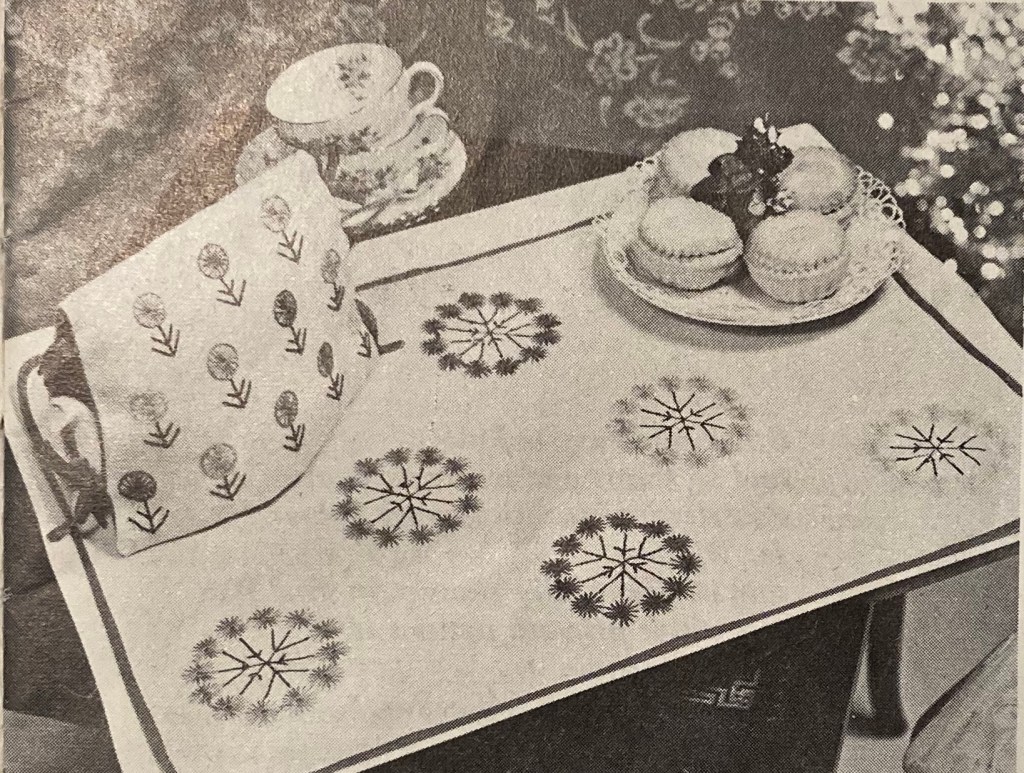
The November 1962 issue had so many exciting projects that I wanted to make, but as I am woefully behind on so many other projects, I settled for a modern version of the cute embroidered tea cosy from this “star motif” cosy-and-tray-cloth set. The star design only really comes out on the tray cloth, where flowers with spiky leaf bases are embroidered in circles. The tea cosy has the flowers arranged individually in lines.

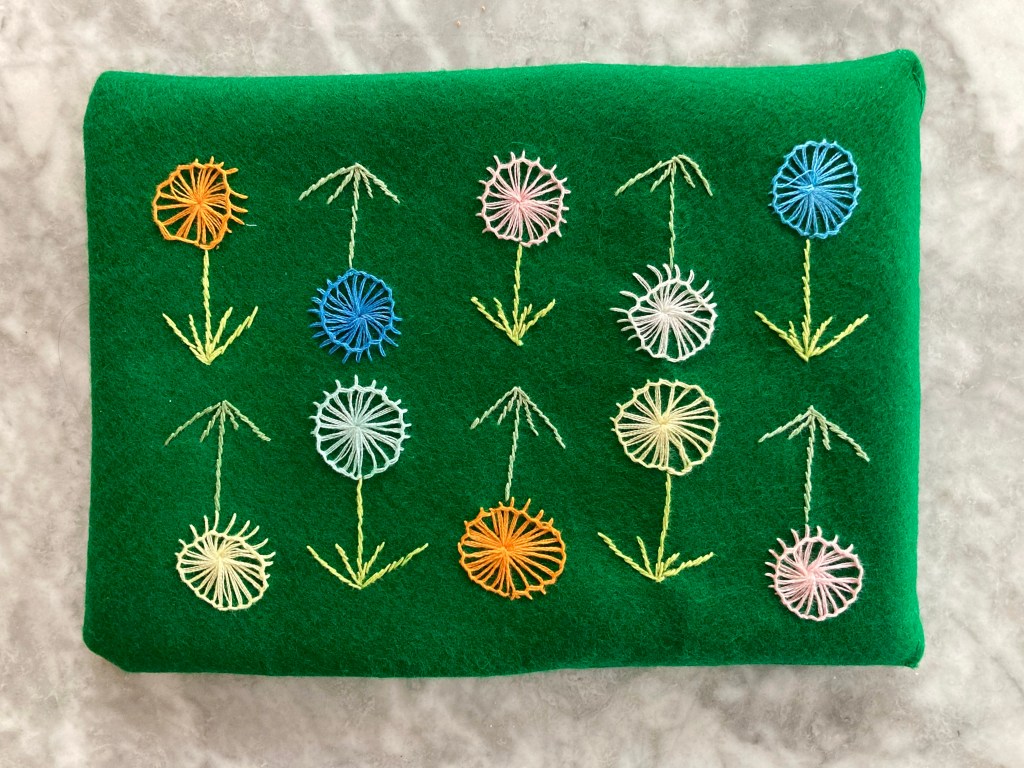
Since I don’t use tea cosies, I adapted the design as an iPad / tablet cosy, like I did with the “Gay Goslings” design from April 1960 and the “Posies for Cosies” from March 1961. I had plenty of green felt left over from the not-so-successful October 1960 “No Fun Fuchsia” project and enough scraps of embroidery floss in fitting colours to make everything from stash.

Obviously I didn’t have a transfer, but luckily this design is so simple that I was able to just draw around a coin with chalk for the flower heads and add in the stems freehand. I say “simple” and “just”, but the felt material was of a nature that chalk does not stick to it for more than a minute and the colour is too dark to draw on with a pencil or embroidery marking pen. My continuing incompetence in drawing, cutting or embroidering straight lines came back to haunt me! Oh well, that’s how you know it’s handmade.

The tea cosy has three rows of flowers: three in the top row, four in the second and five in the third. Not sure exactly how to scale the design for a tablet cosy, I started by embroidering two rows of flowers with three flowers in the top row and two in the bottom row. I didn’t like the asymmetry, so I filled in the gaps with more flowers aligned upside down.

Making it up into a bag was straightforward enough (except for the not being able to cut in straight lines thing, even using a ruler and template) and I finished it off with a vintage fabric-covered button from the button box. I’m quite happy with the result, even if the design is not entirely even and the buttonhole stitch pulls to the center of some of the flowers (not sure how to correct that.) And it went so fast! I did the embroidery last night and made it up into a bag this afternoon.

It looks very 1960s!

Since I still use and love my “gay gosling” iPad cover, I will send this one to a friend as a birthday/Christmas present.

August 1962: Gladioli

August was a pretty blah month this year, what with the never-ending Covid-19 pandemic and associated long-term isolation, illness and unemployment. My knitting motivation is sub-par and the August 1962 issue of Stitchcraft didn’t have any projects in it that really inspired me. Still, I’ve been trying to turn the situation into an “opportunity” to save money and free up space by finishing WIPS and making new projects from stash.

This month’s embroidery flower was the gladiolus, with a special extra design of wild orchids. I chose the gladioli and embroidered them on another one of the recycled moneybags that I bought at an antique market last year. They really do make excellent sturdy little bags for buying small amounts of potatoes, mushrooms or other vegetable items, and with a zipper on the top they would even be good for buying and storing things like beans and lentils in bulk. They also work well as small project bags — I kept this WIP in the bag that I made in December.

The colours that I had in the embroidery-thread scrap box were more or less accurate to the pattern (mauve, mid-mauve, violet, yellow, gold, dark green and light green.) Also, the stitches are technically not very hard to do: the petals are long-and-short buttonhole (blanket) stitch outlined in stem stitch with straight-stitch center lines and satin stitch centres, the buds are satin stitch, the stems are stem stitch and the leaves are fishbone stitch. I like the effect of the dainty flower embroidery on the rough burlap fabric, too.

On the critical side… I am really not that great at embroidery, especially when I don’t have a transfer and I’m working with fabric like this, on which I can’t draw a design outline very well. I drew a few straight lines and dots with a pencil and improvised from there. Also, since the fabric is already made up into a bag, it’s difficult to use a hoop properly or work on the lower edge. The buttonhole/blanket stitch is a strange choice for the flowers, if you ask me — they look very scraggly! (Just like my real plants at home, ha ha.)

I left the top edge unfinished for now, as I couldn’t decide whether to make a simple button closure like on the other embroidered money bag, a fold-over buttoned closure, or a drawstring. (I don’t have a zipper of the right length on hand and I’d like to stay on the “no-buy” wagon for as long as possible, but it would be the most practical solution.)

I still have plenty more of the bags, so I can keep making one every time a little embroidery project presents itself.

February 1962: Squirrel or Chicken?

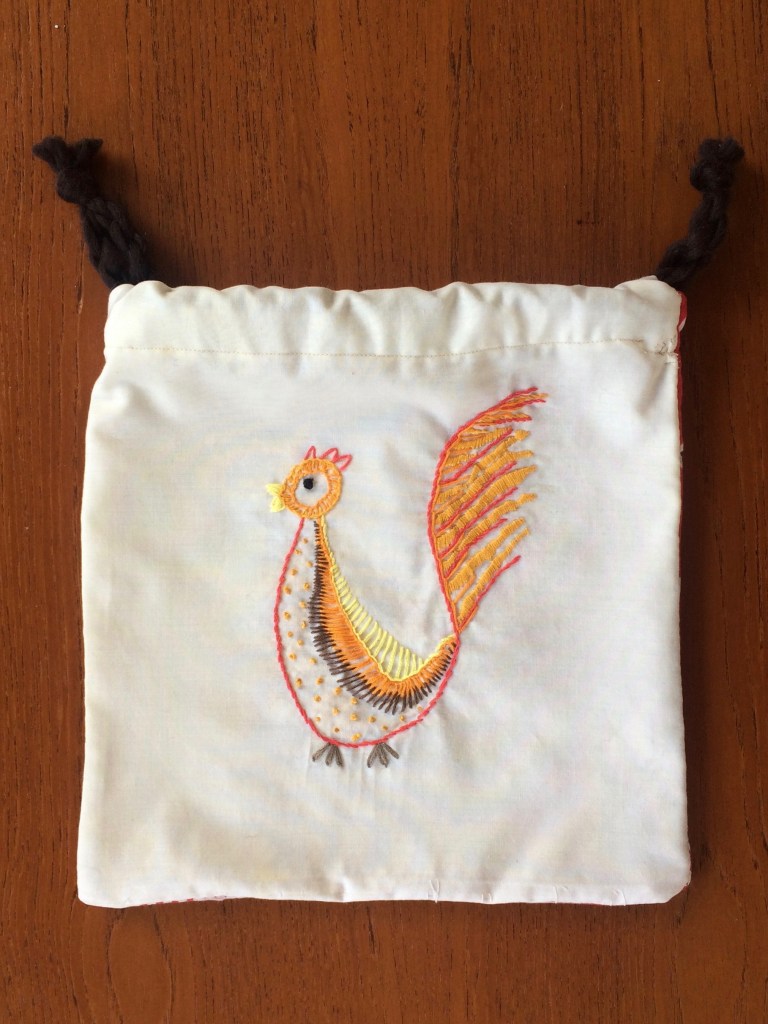
IMG_3058No, it’s not the menu choice for tonight’s dinner, don’t worry. My February 1962 was a little embroidered… animal , originally designed for a toddler’s “feeder” and which I adapted into a bag for vegetables/small projects/”stuff”. I say “animal” in this vague way because it is referred to as a “Squirrel” in the instructions, followed by more specific instructions on how to embroider the supposed squirrel’s beak and feathers. I can maybe, maybe forgive enough poetic license to call a squirrel’s mouth a “beak”, and the creature’s fluffy tail could be mistaken for a squirrel’s, but feathers… no. It also looks suspiciously like a chicken in the photo! So, not a squirrel, but a chicken and a proofreading error.

The photo is about as vague as the animal’s species, so I followed the instructions as best I could and then, ahem, winged it from there. Obviously, I did not have a transfer, so I just drew an approximation of the shape on the fabric with a pencil.

The fabric was up-cycled from a tattered pillowcase and an old red bandana. I embroidered the chicken on one thickness of pillowcase fabric and then flat-lined that piece with another piece of the same fabric for more stability and to keep the back side of the embroidery from fraying. The embroidery floss was all leftover bits and the cord is monk’s cord made from scraps of felting yarn, so this was a 100% up-cycled / didn’t have to buy anything new project, in keeping with the environmentally friendly cloth vegetable bag idea.

IMG_3124

It looks quite “homemade” — my embroidery skills are still far from professional level — but cute and very 1960s. I have a friend who actually keeps chickens in her garden and gets most of her food from them, the garden or food-sharing, so obviously this will be a present for her. I think she’ll appreciate it.

February 1962: Overview

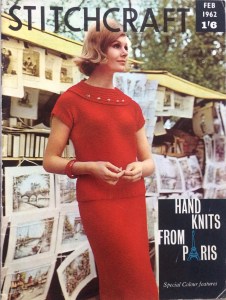
IMG_3048Put on your best traveling suit, pack your Aeros and have your Kodak Instamatic in hand, because it’s February 1962 and Stitchcraft is going to Paris! This month’s issue  features Paris-inspired designs (whatever that means) and extra pages in colour to show off the latest knitwear against a backdrop of Parisian tourist classics.

Travel from London to Paris in the early 1960s was, of course, not on the speedy Eurostar or even quicker cheap flight of our modern times. Commercial air travel was a luxury for the well-to-do and the only way to cross the Channel by train was on the Night Ferry, which ran from London Victoria to Paris Gare du Nord and back. The overnight journey took 11 hours, of which three were spent on the water;  the entire train was loaded onto a ferry for the Channel crossing. I really recommend clicking on the link, which leads to the Wikipedia article. There’s a lot more information about the Night Ferry there, and even a short list of books and films set on or inspired by it.

So what does Paris fashion 1962 have in store for us? Dresses, strong dark colours and smooth crepe wools are all “in”, with a special trend for fringes and bobbles. The two-piece dress on the cover is made in fine bouclet wool and photographed against one of the little bookselling stands that still line the roads along the Seine today. Fine, red crepe wool is the choice for the similar two-piece outfit with fringey bobbles on the front of the jumper, photographed in Montmartre. Are the bobbles supposed to suggest the legs of the painter’s tripod, or an upside-down Eiffel Tower? The dress on the facing page (Sacre-Coeur in the background) is also made in smooth crepe wool, this time in somewhat thicker Totem Double Knitting.

Fringe makes additional appearances in a lemon-yellow jumper with the newly fashionable high neckline and extra collar (Place de l’Opéra) and in the dark green and black plaid-effect longline jumper on the inside front cover (which appears to have been photographed in a Métro station, though I can’t immediately place which one.) Even without fringe, large collars are still going strong, as seen in the belted Rimple jacket. “Chunky” bulky wool makes an appearance in the beret and oversized handbag set (Capucines). The bag is reinforced with strips of cardboard along the top edges and a woven fabric lining to prevent otherwise inevitable sagging.

With all these lovely large projects and the special Parisian focus, it’s not surprising that the rest of the designs in the issue are unspectacular. There are some easy knitted classics for men and children, the usual “Victorian” and “Jacobean” tapestries for the home, and some fun little crafty projects like these “mats with hats” coasters. In the “Little Bobby” serial comic, John and Jane both have a cold. That’s February for you!

I have so many unfinished projects, including the January 1962 jumper, that my February project will be something small and easy. Maybe not the mats with hats, but probably a little embroidered lilac sprig (flower of the month) on a vegetable or project bag. In the meantime, watch for updates on the January project — it’s knitting along quite quickly — and a special 1950s “blast from the past” post.

December 1961: Star-Spangled Theatre Bag

IMG_2976Technically, it was more of a “star-spangled burlap bag”, but that doesn’t have quite the same ring to it. Happy December, everyone! The 1961 festive holiday season, as envisioned by Stitchcraft magazine, involved at least a couple of glamorous parties and evenings out, for which this white satin drawstring clutch bag could be the perfect accessory.
My holiday season was going along festively enough, but I actually have a couple of vintage evening bags and clutches, should I need one to feel glamorous, and I don’t need a white satin anything. I did love the embroidery design, which features pearls and sequins sewn into flowery “star” motifs in various shades of pink and green. The motifs look very “modern” in that 1960s way — abstract and spiky, but also dainty and bright. What could I embroider them onto?

As it turns out, a few weeks ago I found myself at an antiques fair in Hamburg, Germany, and one of the stands was selling literal moneybags — sacks of burlap linen in different sizes that had been used by the German federal bank to transport money and were then at some point taken out of circulation. The material is very sturdy, finer and more tightly woven than coffee or potato sack burlap, but with a similar feel. The bags were also in perfectly good condition in spite of their age and use — each one is printed with a date, and many of them were from the 1990s. At the very modest price of one Euro each, I went ahead and bought ten of the smaller size (approximately 18 centimetres wide by 30 long).

IMG_3011

So … what to make of them? (Literally.) More vegetable bags? Gift sacks? Little knitting project bags? All of the above? Whatever their use(s), at least one of the bags was going to be star-spangled. Putting fine, pretty flowery embroidery on a coarse natural-fiber sack was a fun idea for a style-mix experiment that I couldn’t resist. After thoroughly machine-washing and steam-ironing the bags (“money is dirty” as the seller said with a IMG_2998wink, and who knows if they had been treated with some kind of additional preservative chemical), I drew the motifs onto the bag with a wax embroidery-transfer pen, tracing around different sizes of button to get the circles, and embroidered them using leftover bits of pink and green embroidery cotton. I decided to forego the pearls and sequins and just made French knots instead. I also didn’t care too much about perfect symmetry or absolutely “clean” lines — I wanted it to look a little bit rough and homemade.

Originally, I wanted to put in a zipper at the top, but didn’t have one to upcycle, so I just made a buttonhole and found a button from the “singles” jar. I might change the button over to the back side of the bag to make a fold-over top closure if stuff falls out, but I preferred the way the bag looked from the front with the single button.

And that was it! I like the result. It’s goofy and incongruous and has a vintage feel in a few different ways. I had already used a few of the other bags as non-embroidered gift bags, so I’ll keep this one for myself as a project bag for small projects, or possibly a vegetable bag. Star-spangled Brussels sprouts, anyone?