November 1963: Overview

The autumn months are always the best for knitting magazines, with a mixture of heavy garments for colder days, easy-to-make holiday gifts, warm accessories and a few glamorous items for parties. Stitchcraft‘s November 1963 issue puts the focus on “warm family fashions… with the emphasis on colour and attractive textures that are interesting to knit and very becoming to wear”. There’s something for family members of every age and “for the petite to the not-so-slim.” The homewares and little projects are quick and fun to be finished in time for holiday decorating and/or gift-giving.

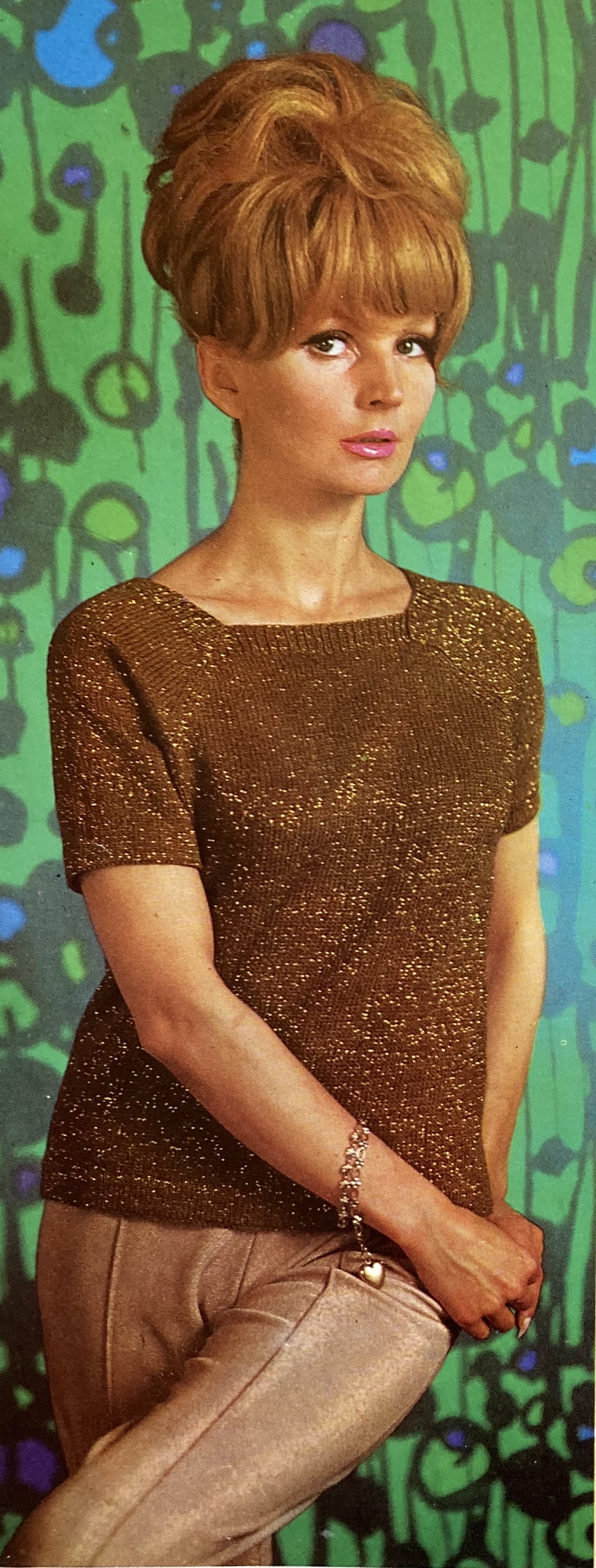
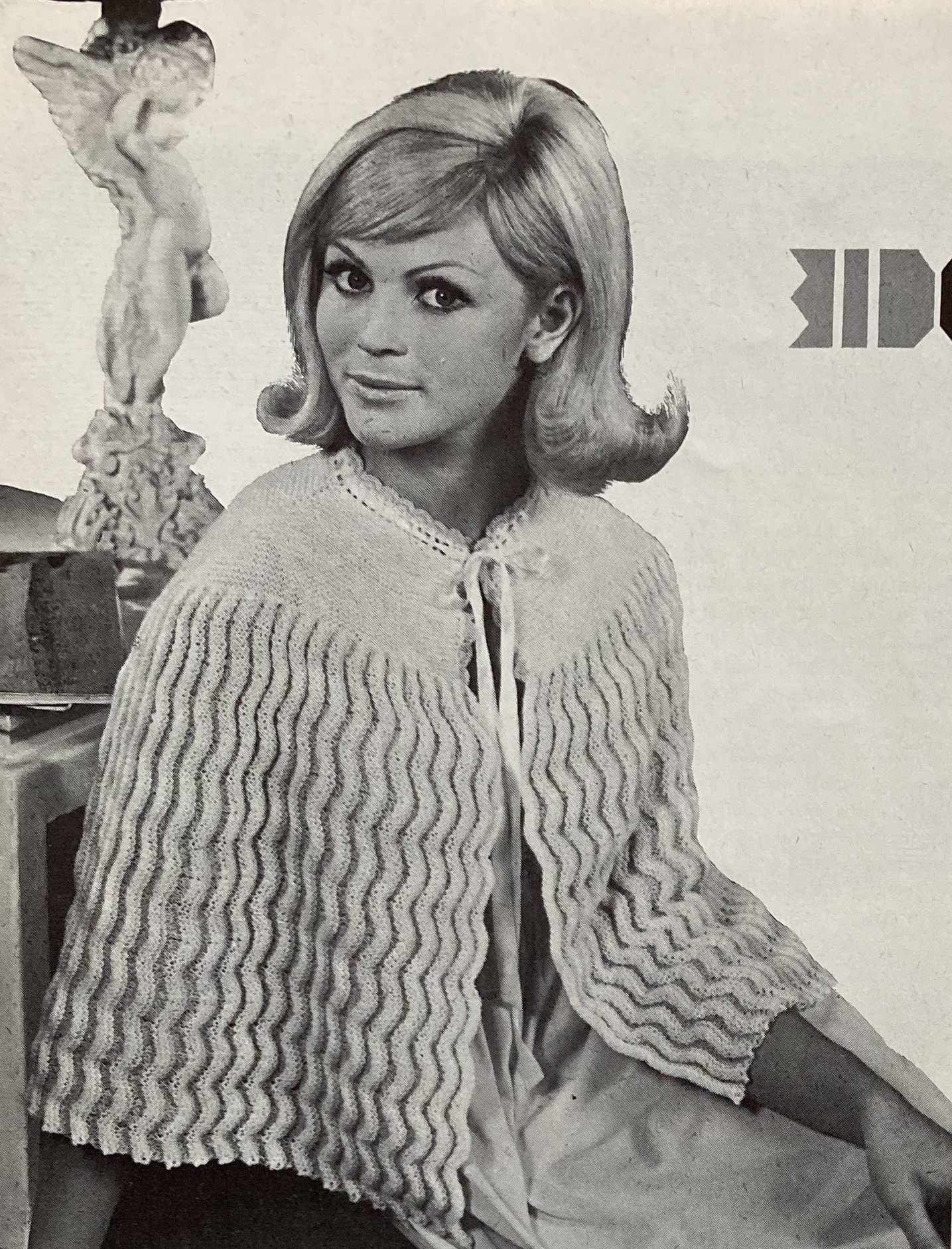
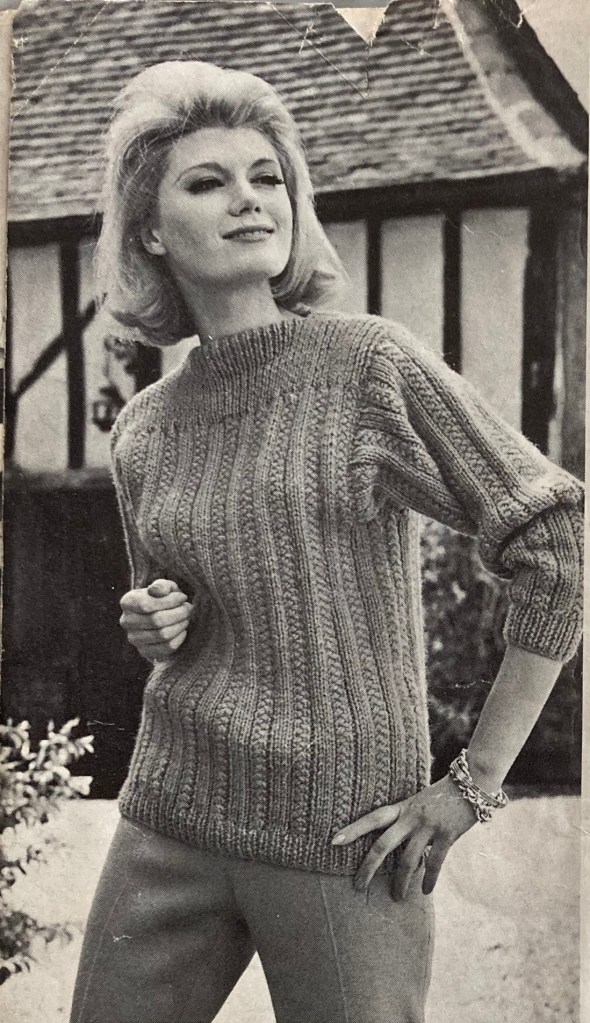
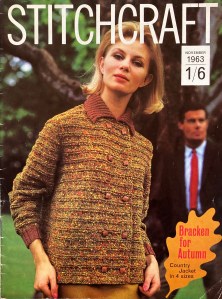
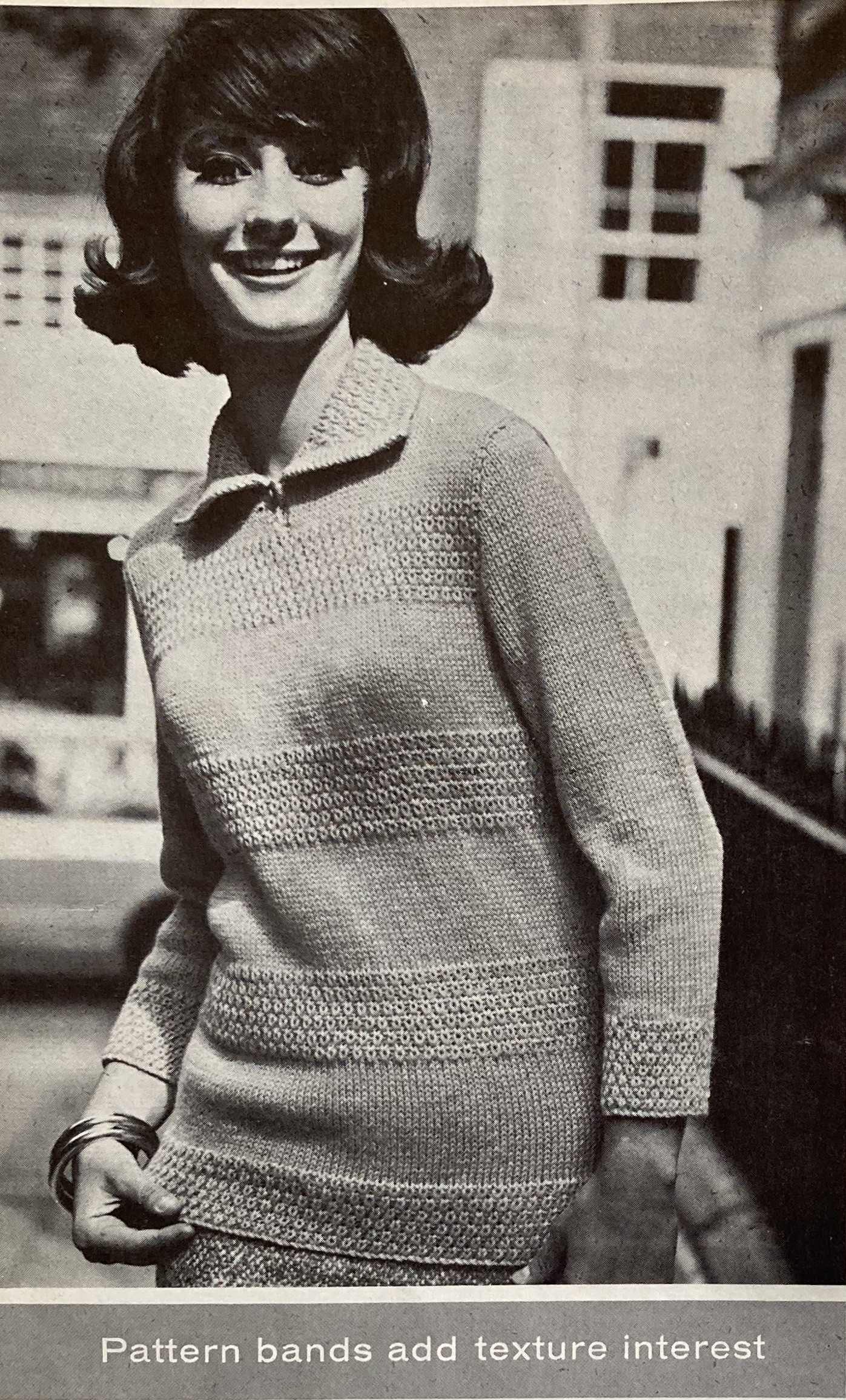
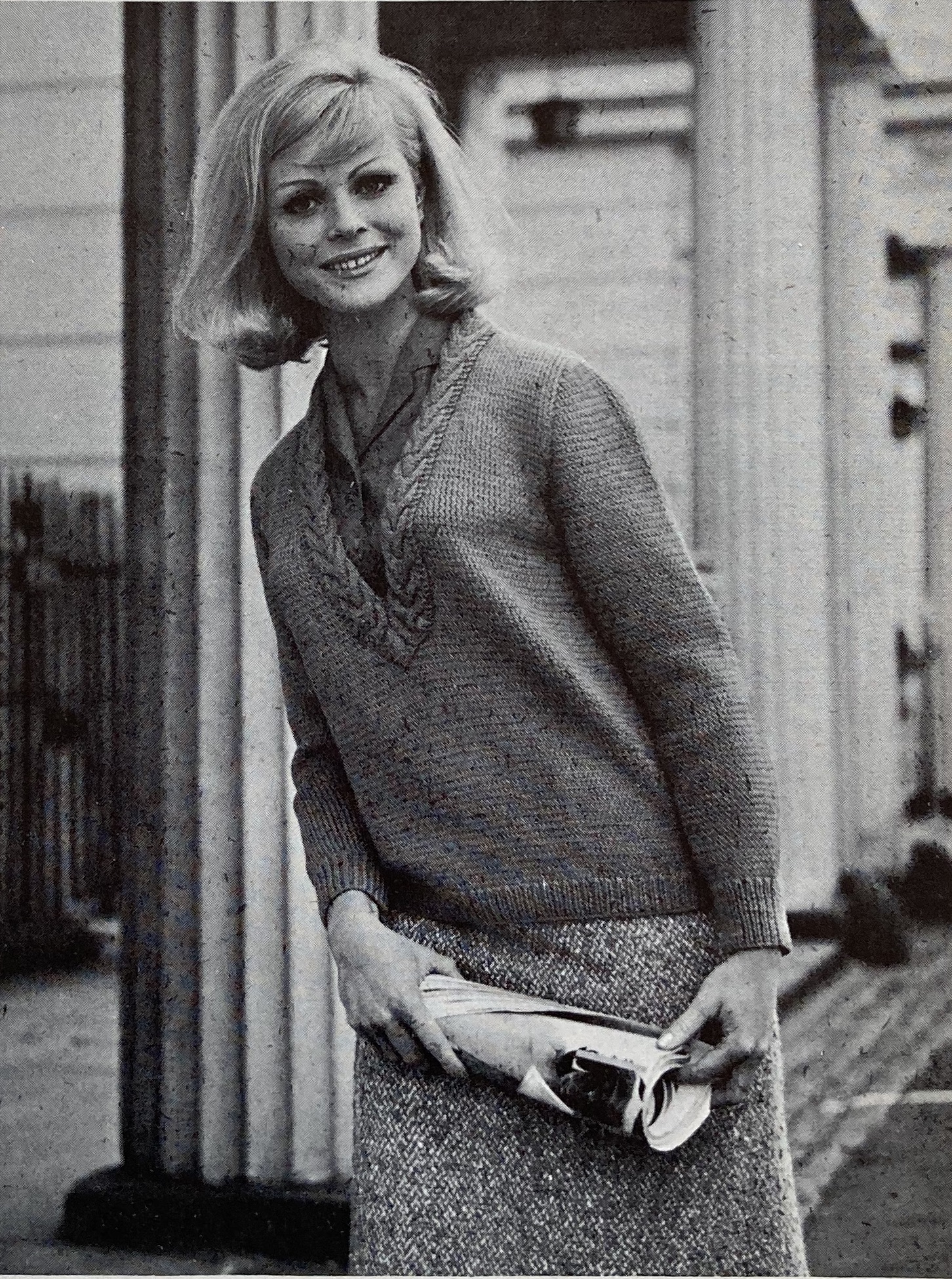
The “country jacket” on the cover continues the tweedy, variegated colour effect in fashion this fall, using Bracken Tweed wool for the main body and Totem DK for the collar and cuffs. I finally know what colour Totem “Oakapple” is! The other women’s outdoor-wear fashions include a zip-neck sweater with textured pattern bands in turquoise, an “overpull” with cabled neckline in flecked “Cantaloupe” colour (sadly, no colour photo, I have no idea how it looked in real life) and a simple brown top made glamorous by knitting the wool (Cameo Crepe 4-ply) together with a strand of sparkly Lurex thread. There’s also a warm, soft cape for winter reading in bed, knitted sideways in an easy zig-zag pattern. Aside from the green and white bedcape, shades of autumn brown as well as bold blues and red are the season’s trendy colours. Stripes, zig-zags and textures complete the Autumn 1963 look.
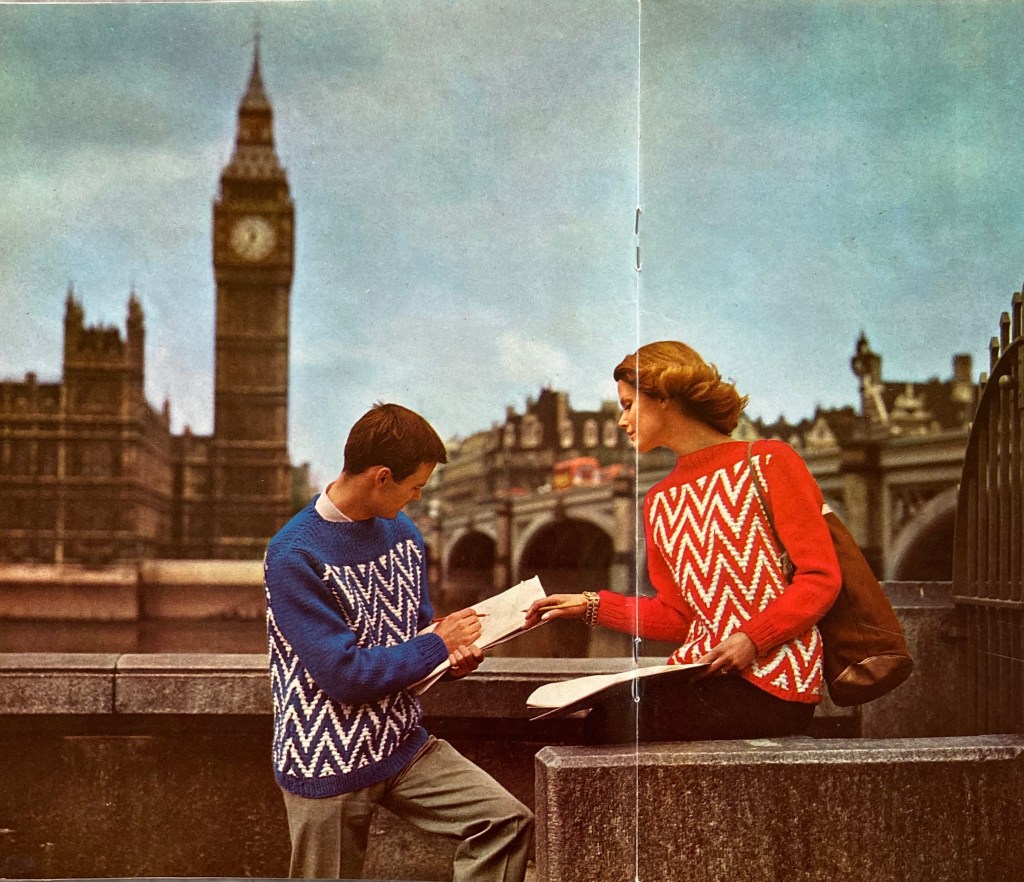
Men’s fashions are just as colourful as the women’s, or even more so (less use of plain brown…) and show more of the zig-zag trend. Here are some bold designs for “him and her” using bulky Big Ben wool (and photographed in front of…). The construction is the same for both, with the smaller design for bust sizes 33-35 inches and the larger for 39-41 inches, with the advice that “Plumper girls could follow his size”. The man’s pullover in “Italian colouring” uses stripes and textures, toned down by the use of more neutral colours. The blue-and-white cabled sweater in the photo next to it is for teenagers.
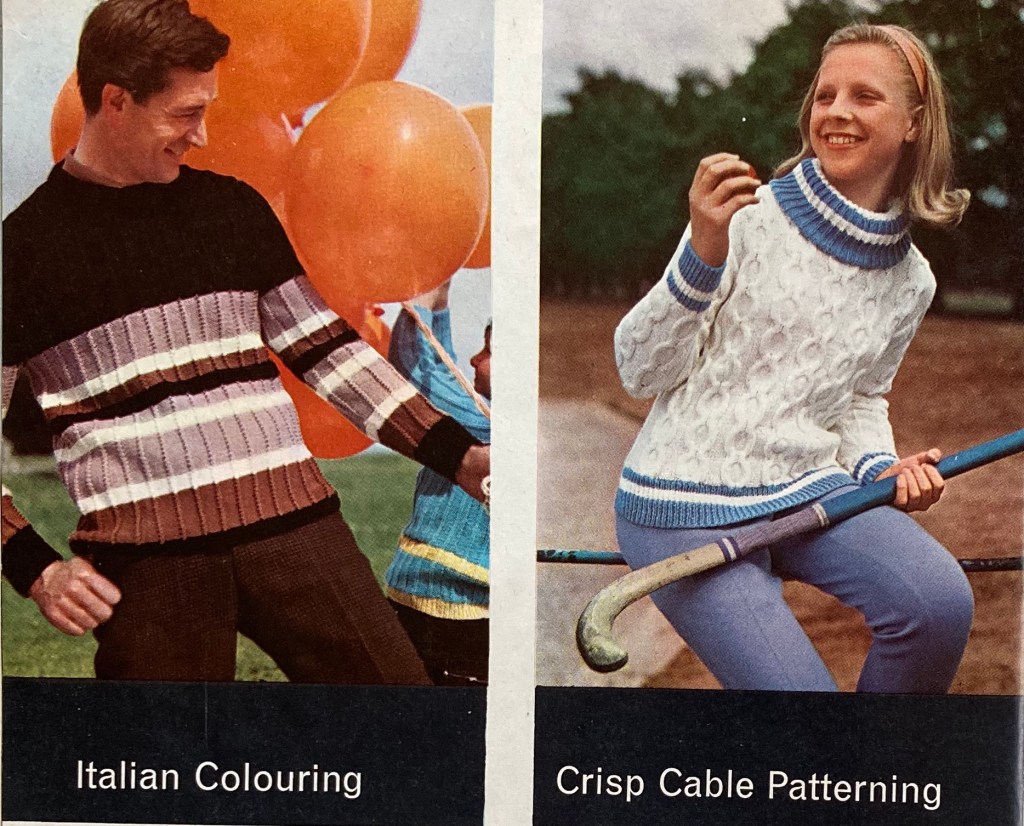
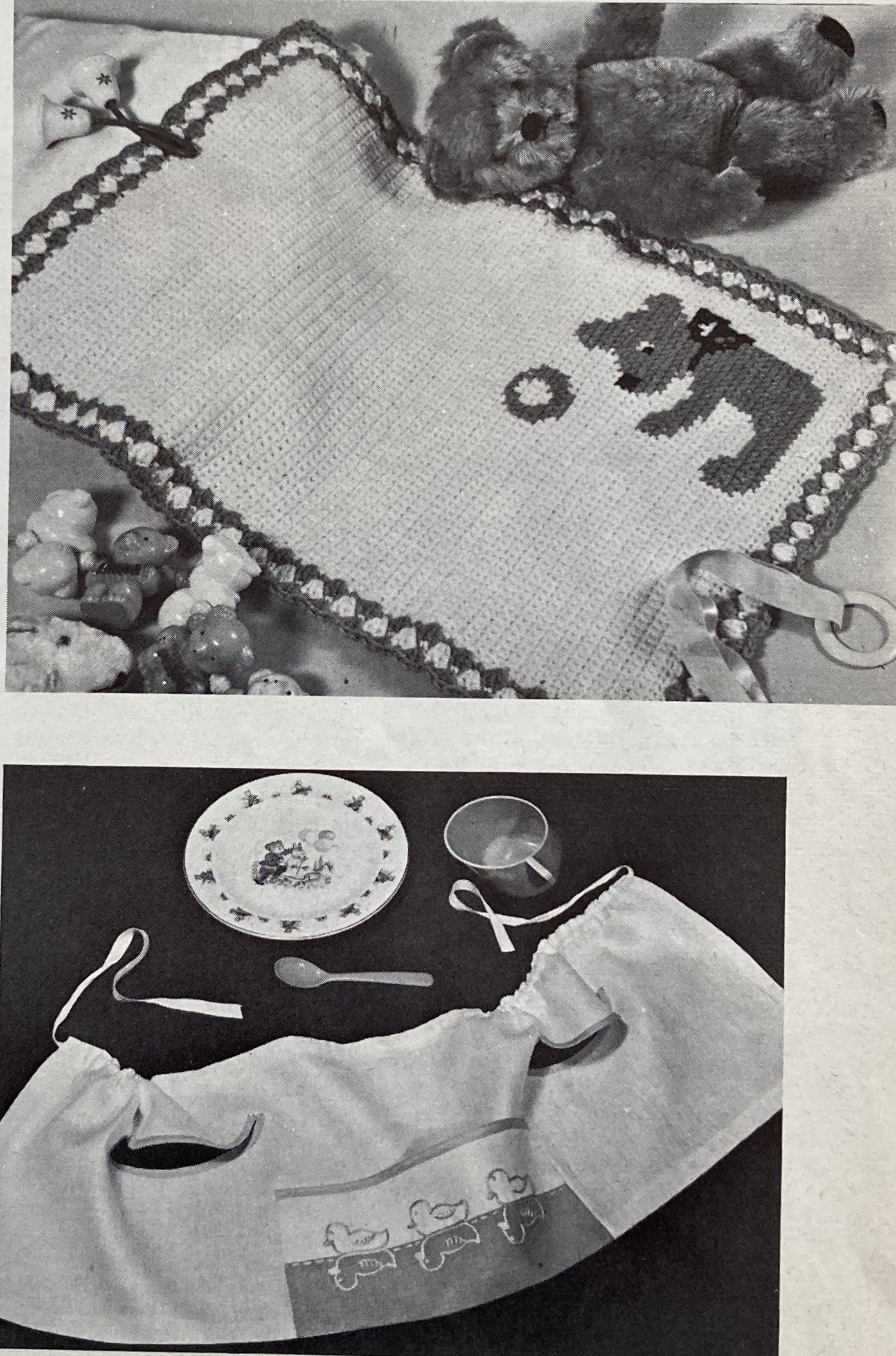
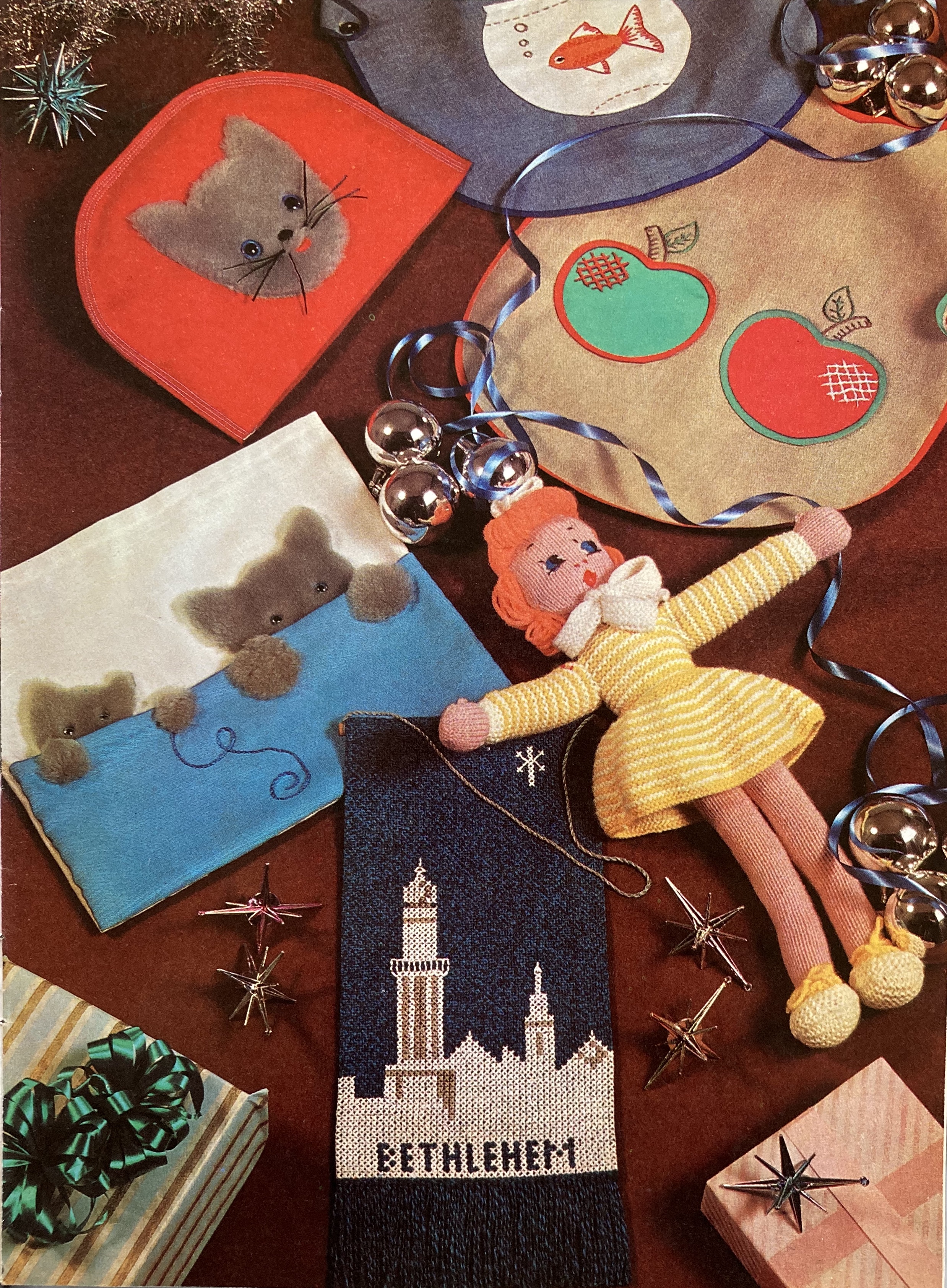
School-age children get their own “tough, tomboy sweaters” in Bracken Tweed wool. The suggested colours are “Black Olive” or “Gorse Heath”, which I assume is a sort of green-yellow tweed (no colour photo). Babies get a lovely shawl to match the layette from the September and October issues. It’s easy to knit, as the centre and borders are made separately. The other baby/nursery-age items are crocheted, sewn or stitched: a pram cover with a teddy-bear motif, a little nightcase with fluffy appliquéd kittens, a knitted doll, an embroidered “feeder”, sewn and appliquéd pinafore smocks…

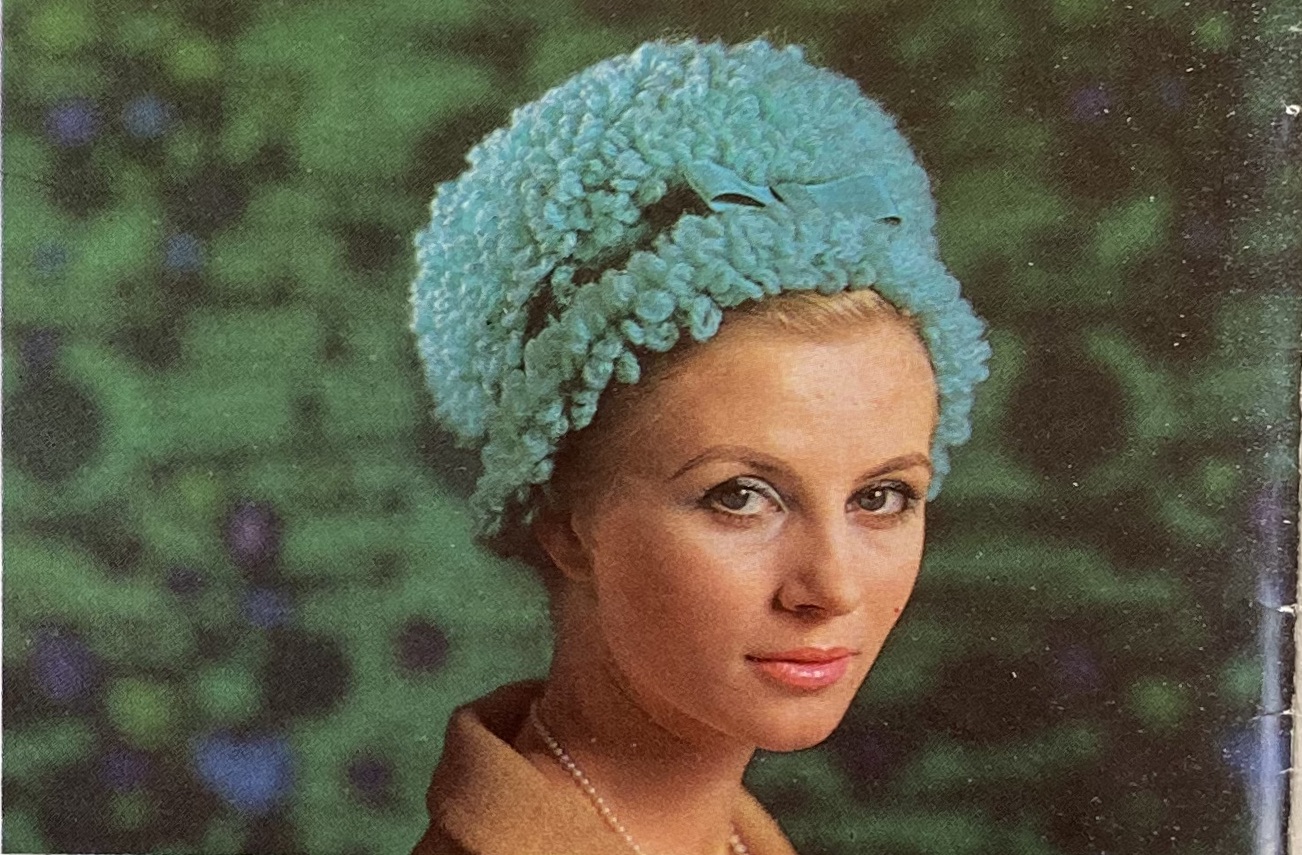
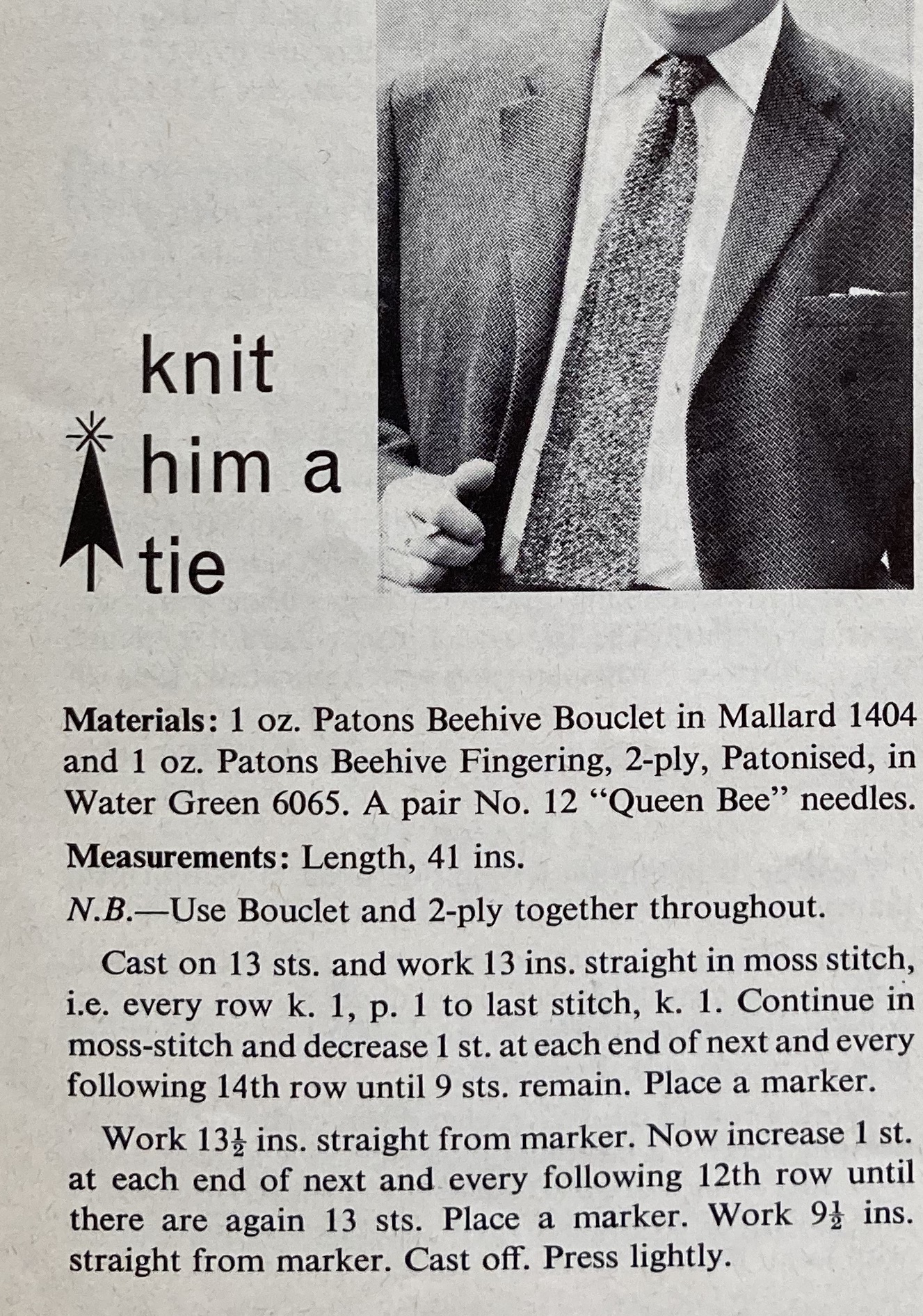
There are fewer designs for accessories, but the utter fabulousness of this loop-stitch crocheted hat makes up for anything else that could be missing. The model in the photo features in many issues from this time period and always looks either quite sad or has that alluring Mona Lisa smile that’s she’s sporting here. (Am I mean, or wrong, to assume that she probably had bad teeth?) I would smile widely if wearing that hat, and I hope everyone who saw me in it would too. Also, knit your man a tie!
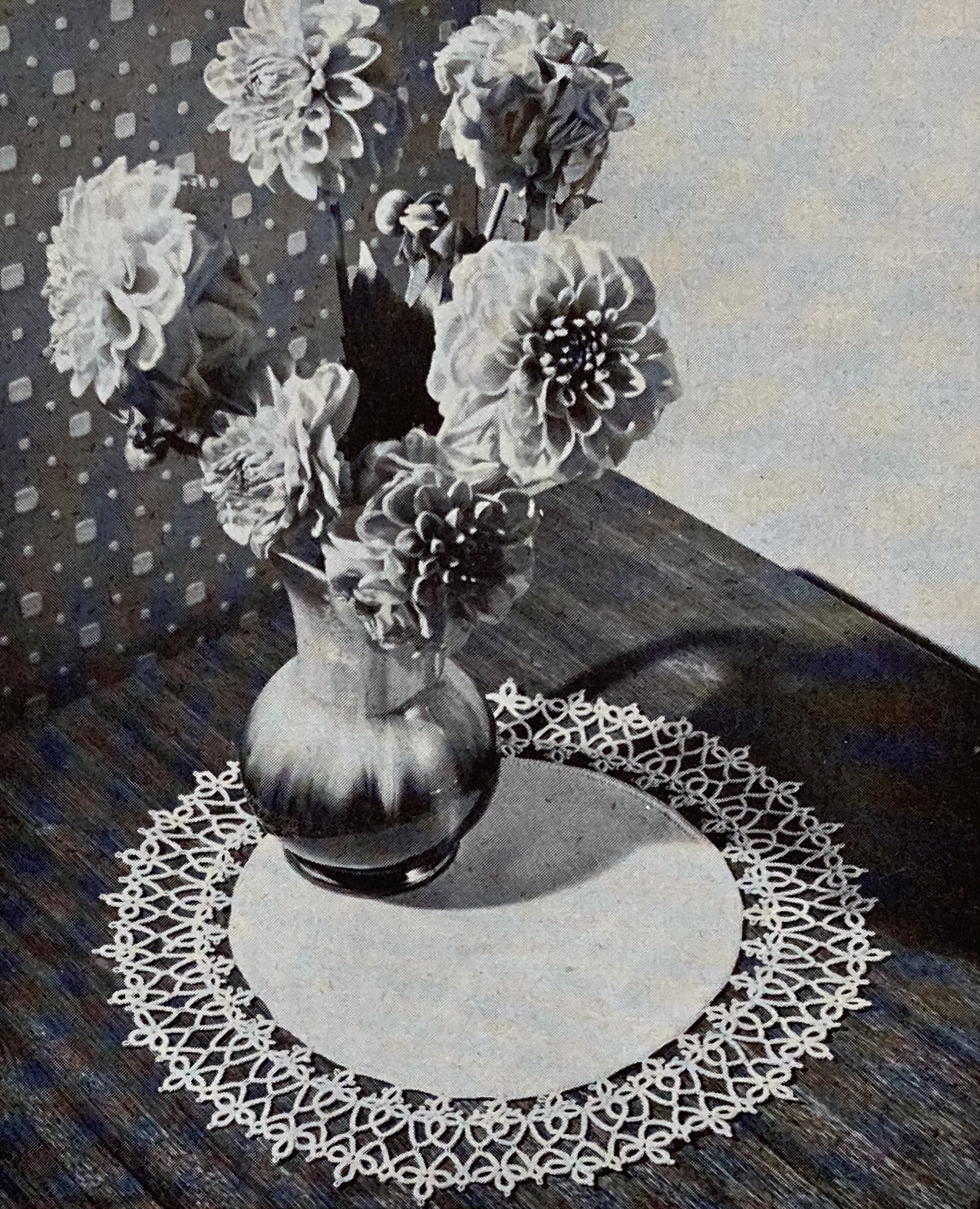
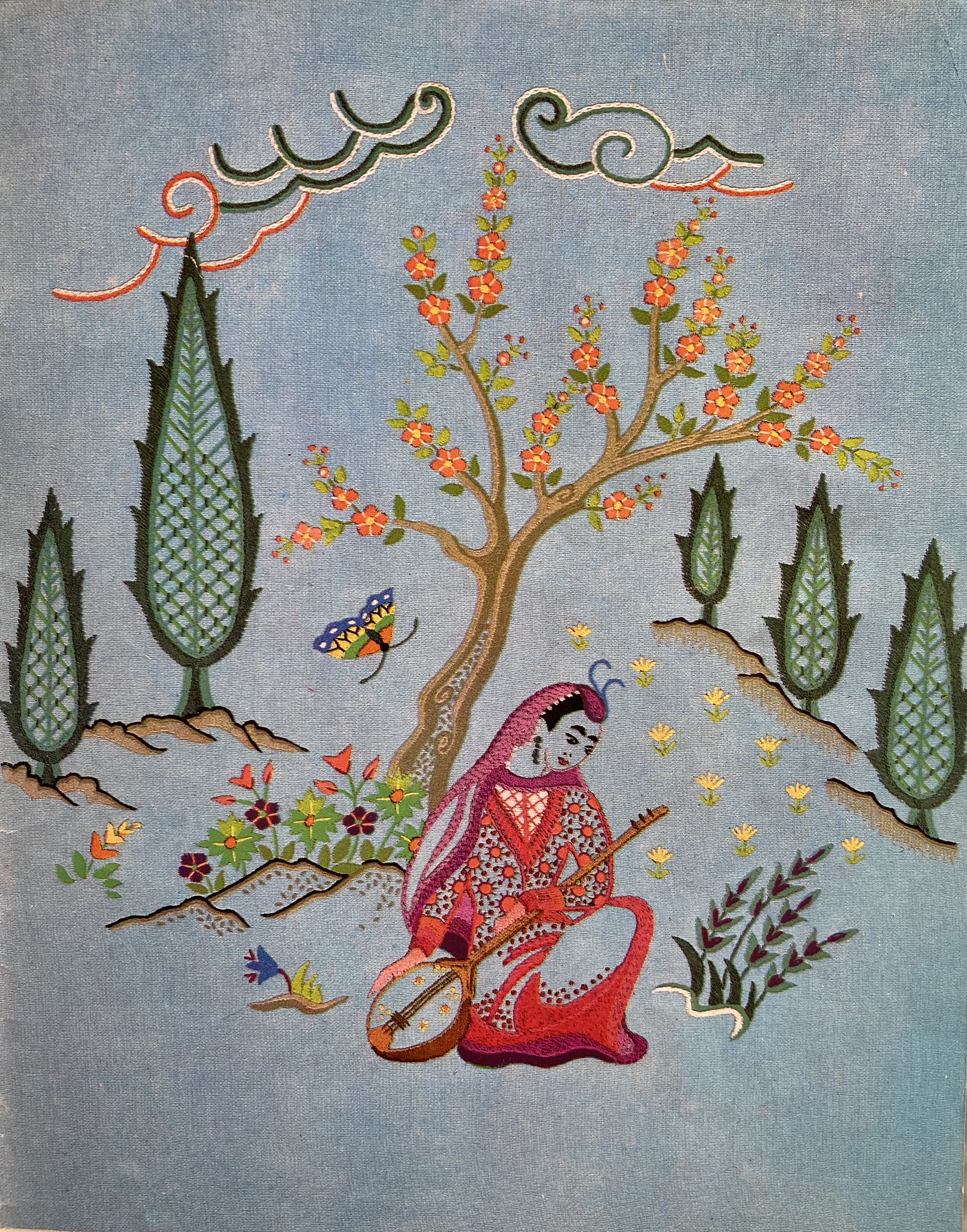
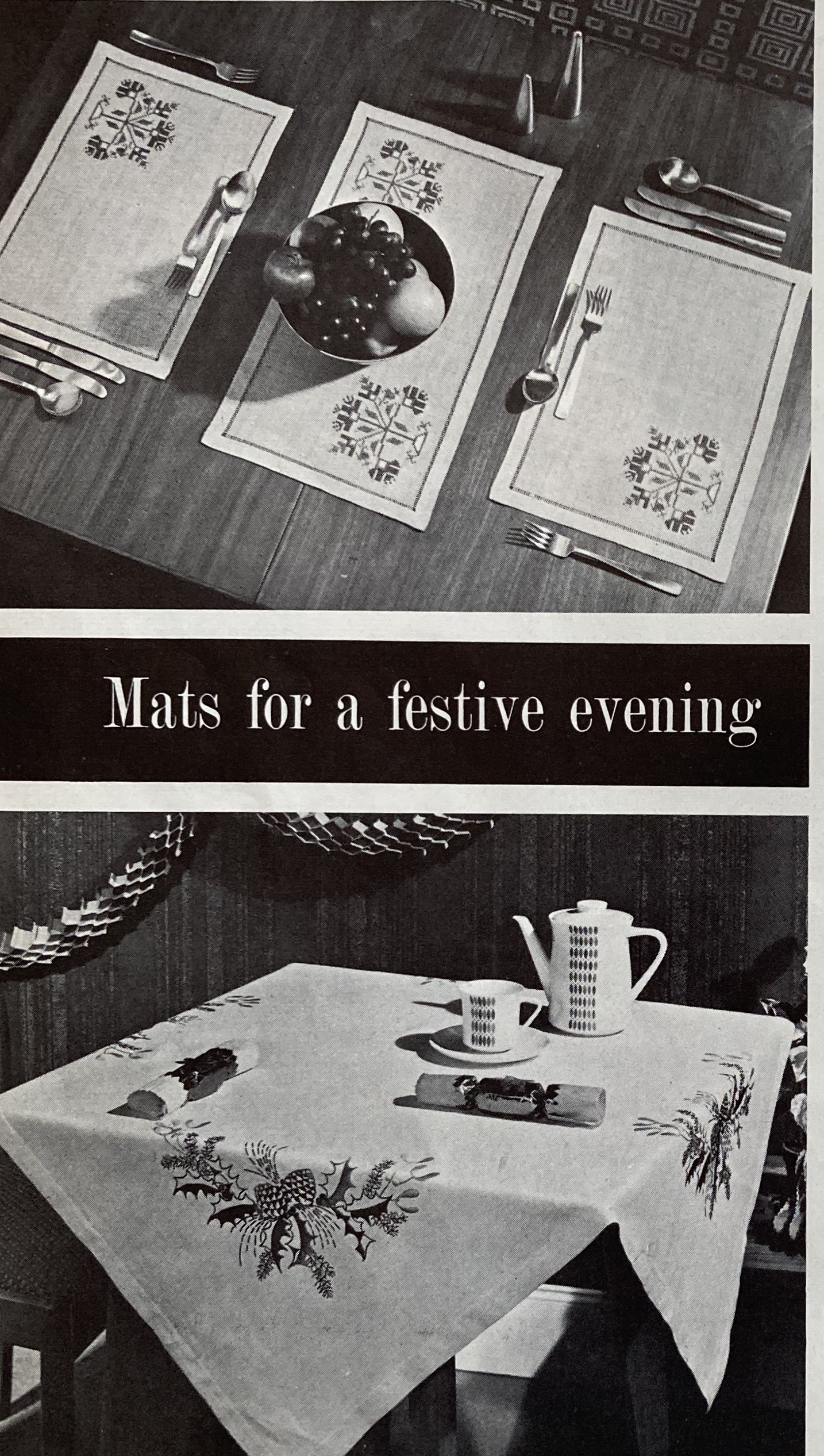
With all this bounty, the homewares are mostly standard: embroidered table mats and a Christmas-design tablecloth, a decorative panel with the Star of Bethlehem for more religiously-minded households, and a very impressive tatted doily and crocheted trolley-mat. The show-stopper is a lovely decorative panel “taken from a book of Oriental designs” embroidered in Filoselle silk on linen. (The design is allegedly of Persian origin, though of course neither Stitchcraft nor its typical readers of the time gave much thought to questions of authenticity, nomenclature, exoticism or any related issues that we would regard and discuss today.) It is a pretty picture in any case, and was probably not too difficult to embroider, consisting mostly of standard seed and straight stitches, French knots, and so on.
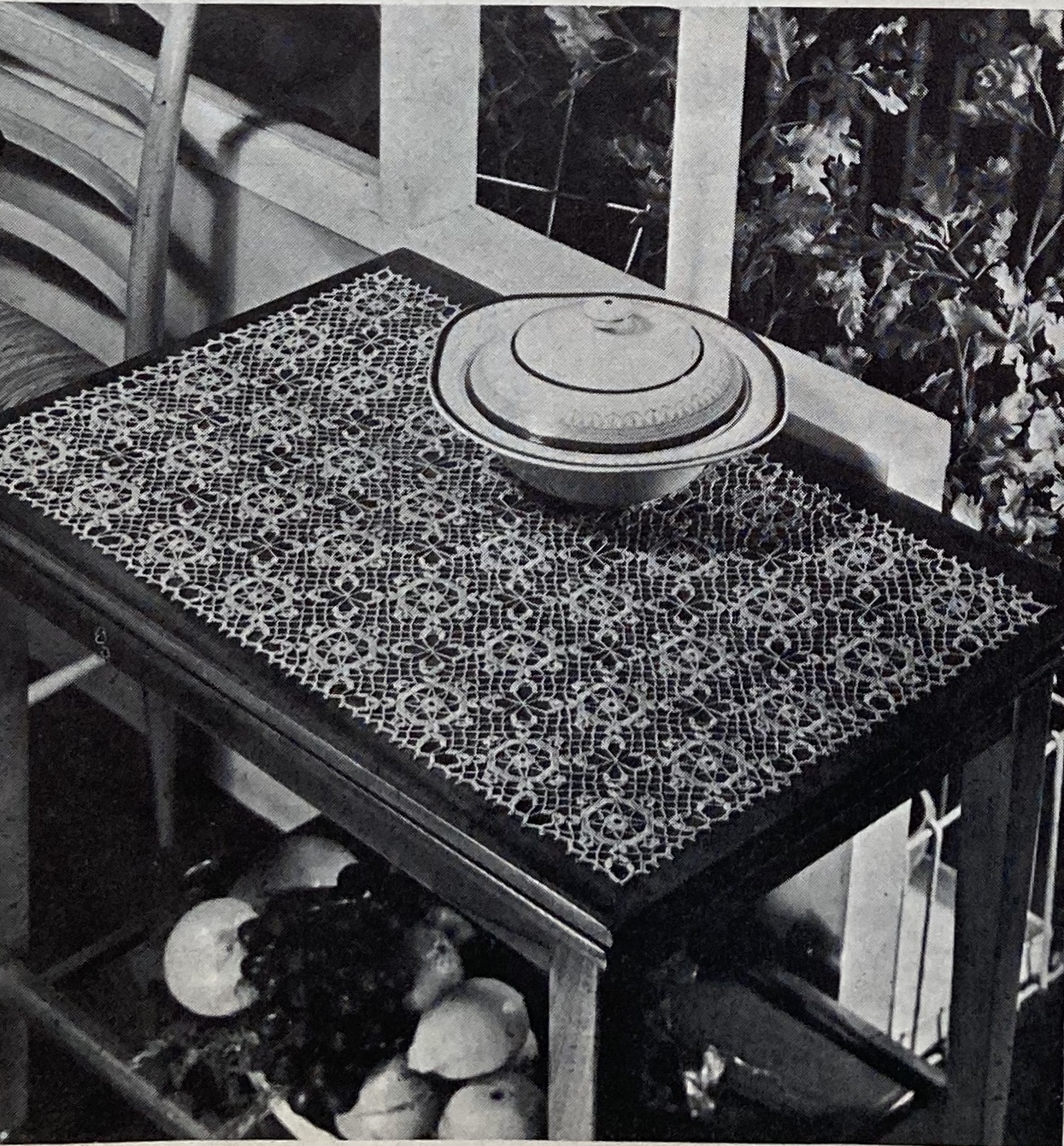
That’s all for this issue! I am going to make that wonderfully ridiculous hat.

October 1963: Overview

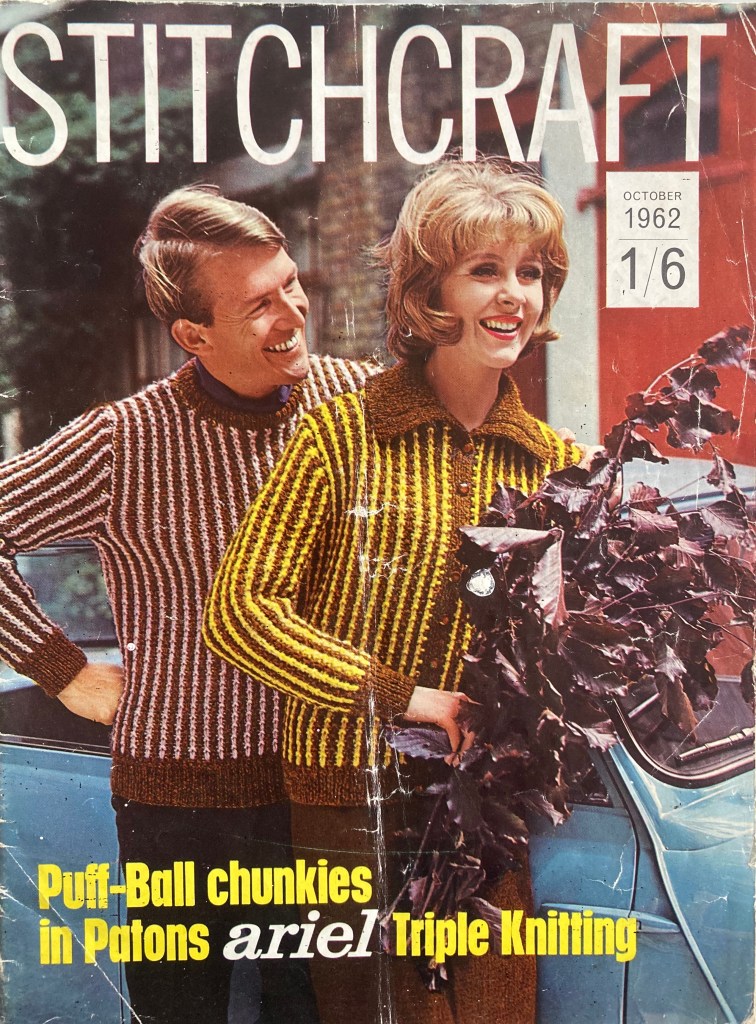
Cover photo, Stitchcraft magazine, October 1963

Tweed! Remember last month’s post with the advertisement for variegated-colour yarn? This month’s issue presents Patons’ new variegated wool, “Glenora Tweed”, a slightly thicker DK-weight wool with dark tweedy flecks. It appears to have been made up of 80% wool and 20% synthetic fibre. The twelve colours were chosen to be as vibrant as tweed can be (and very 1960s…) with rich shades of red, green, orange and yellow.

As it knits up fast at about 4 stitches to the inch (but promises to still give a “beautifully firm crunchy texture” i.e. hopefully not sag too much under its own weight), it is showcased with larger garments — the “pinafore-style” over-dress and men’s cardigan shown on the cover and two two-piece suits for women. There’s also a pinafore-style overdress with pleated skirt for a older girl and a boatneck sweater for men, both in similar Bracken Tweed wool. In keeping with the newer, looser and more square-shaped style, the garments have minimal or no shaping (except the girl’s outfit) and the skirts come to just above the knee. To me, the women’s Glenora garments look so similar that I had to check twice to assure myself that the pinafore dress on the cover (with high scoop neck) and the two-piece set with skirt and “overblouse” (V-neck) were in fact different designs.

There is a matching 4-ply (women’s) or DK-weight (girl’s) jumper to go underneath the pinafore looks or the overblouse, which, combined with the thick over-garments, must have been suitably warm for outdoors or poorly heated rooms in October. (The girl, of course, is going to have cold legs all the same.) For those who resist the tweed craze, there’s also a bright, fun colour-block sweater in a three-colour slip stitch pattern. I love the matching orange head scarf!

There’s also a fun 4-ply jumper for a child with some easy stranded colourwork blocks at the waist and yoke. The accessories continue the bulky, easy-to-knit trend, with a cap and scarf in Big Ben wool and a big, cosy scarf for men in an intriguing reversible cable-moss pattern.

Rounding out the family’s fall wardrobe is a matinee coat and “helmet”-style cap for a baby, matching the dress from the September issue. The November issue promises a warm shawl to match again, thus rounding out the set. Judging from the photo, “dear little baby Alicia” seems to have realised that the purpose of a helmet-style cap is to prevent the baby from removing it and flinging it around the room, and is suitably disappointed. It’s a great design, though, with the sides and chin strap done in garter stitch to accommodate movement and growing heads.

The homewares are plentiful and here again, there are some larger projects to be tackled at home during the colder Autumn days. The bright red rug in Soumak stitch and traditional design is vivid and cheerful, as is the Jacobean cushion “for the skilled needlewoman” which I would love to make if I didn’t already have two unfinished embroidered cushions in the WIP pile. (Not to mention that I am not skilled enough to make that elaborate a design, especially without a transfer.) The Autumn-themed acorn cushion is definitely easier. There’s a Regency ribbon design for tapestry or cross-stitch, too.

For those who want a quicker, easier homeware project or are already getting started on the Christmas presents, there are more embroidered acorns on cutwork mats and some knitted and crocheted goodies: a “Scottie-dog” night-case, a crocheted bag, and… a hippo, yes, a friendly knitted hippo stuffed animal. Well, why not? It’s cute. An older child might embroider her own Little Miss Muffet picture in cross-stitch.

The very last project in the issue, tucked way back in the “Readers’ Pages”, is the one I will make. In fact, I have been waiting for this issue to come up specifically so that I can make it! It is a very simply constructed and embroidered “Apron-cum-Knitting-Bag” where the front panel and waist ties of the apron fold into the bag part along with your knitting. Pull the drawstrings closed and carry the bag around, then when it’s time to knit you can undo the strings, pull the apron part out of the bag and tie it around your waist, Presto, you are ready to knit in any situation, standing or sitting, and your ball of wool will not fall down and roll about the room. Stay tuned for a project that will actually get finished on time, as well as progress on those projects that didn’t.

October 1962: Overview

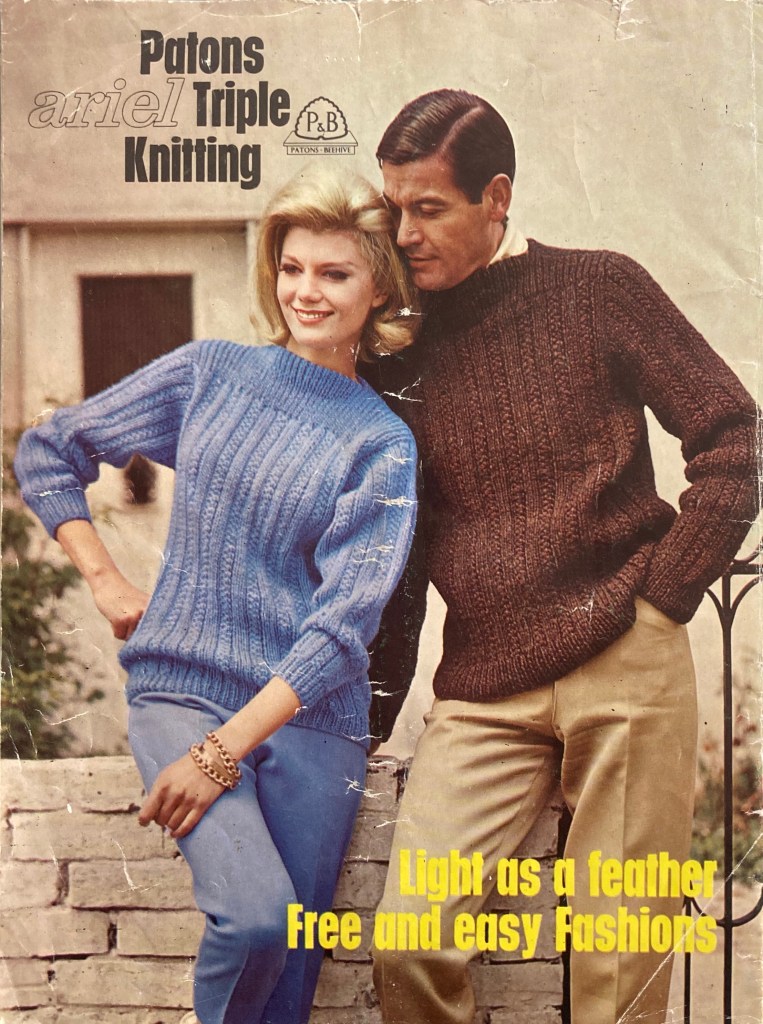
“There are several “special” things about this issue” writes Stitchcraft’s “editress” on the facing page, and I’m glad she put the word “special” in quotes, because this month’s issue is definitely a mixed bag. On the plus side, it has extra pages in colour and introduces a new yarn: Patons Ariel, designed to be “triple-knit” bulky and therefore quick to knit, but still lightweight. On the minus side… we’ll get to that later in the post.

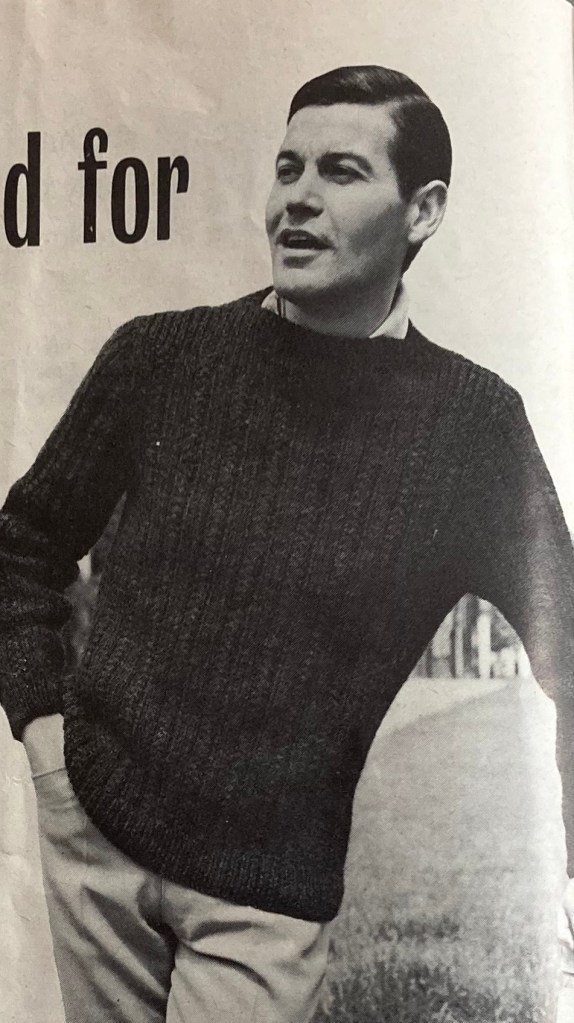
The new wool, Ariel, is listed on Ravelry as bulky weight (97 yards in a 2-ounce ball) and composed of 80% wool and 20% “other” (synthetic fibres). According to the person who wrote the Ravelry entry, it may or may not have been waterproof! It appears to be quite fluffy, thus the name and the “light as a feather” claim. It’s used for the two-colour, slip-stitch-patterned garments in the cover photo as well as the identical boatneck pullovers for men or women. The partner-look idea is still going strong.

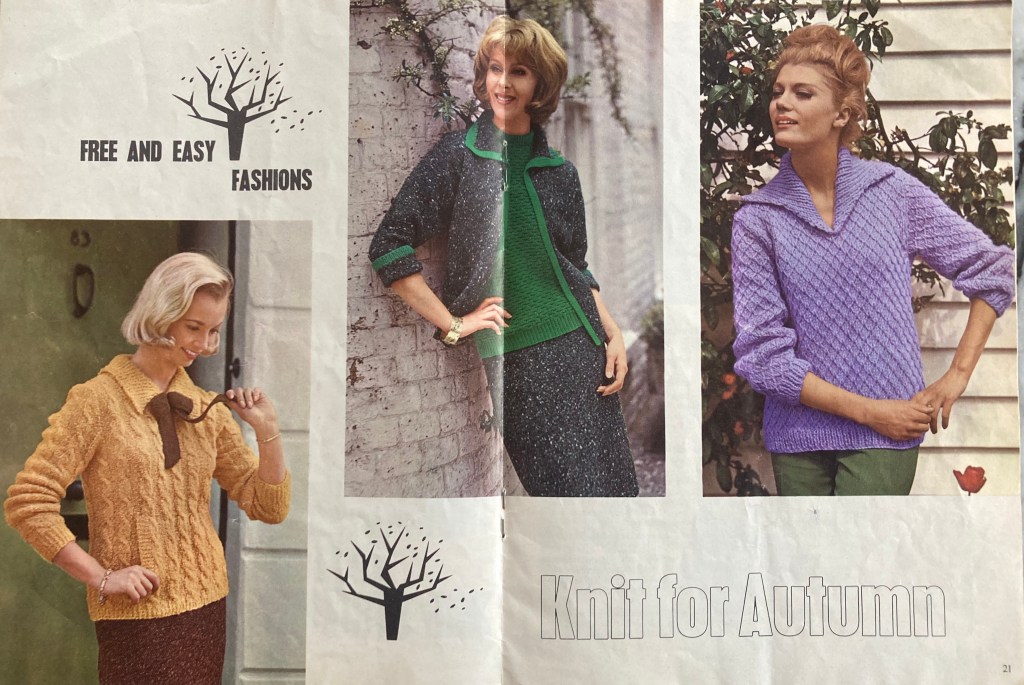
Tweed looks and suits are always popular in the fall, and this month’s issue gives us a loose-fitting suit with a short-sleeved jumper to wear underneath, all in double knitting weight. Nubbly Rimple yarn is also DK weight and still a fashionable choice for this sweater with a contrasting bow-tie. The purple pullover with the big collar (still in fashion after two years!) is made in bulky Big Ben wool. Greens, browns and yellows dominate the colour palette and go with the autumn theme.

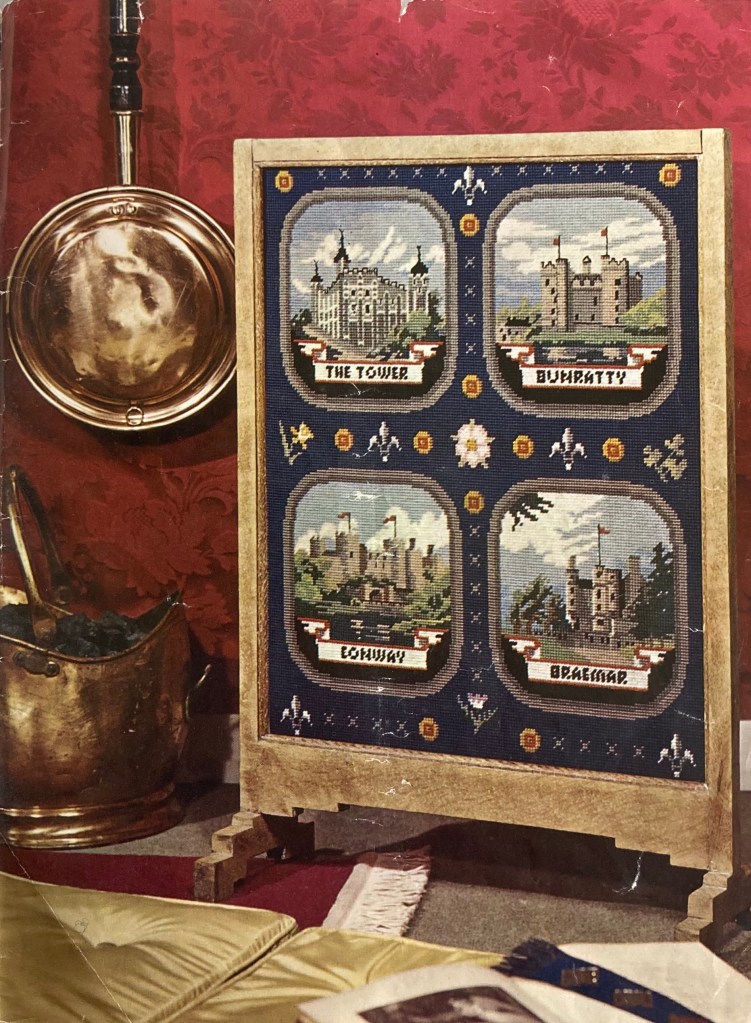
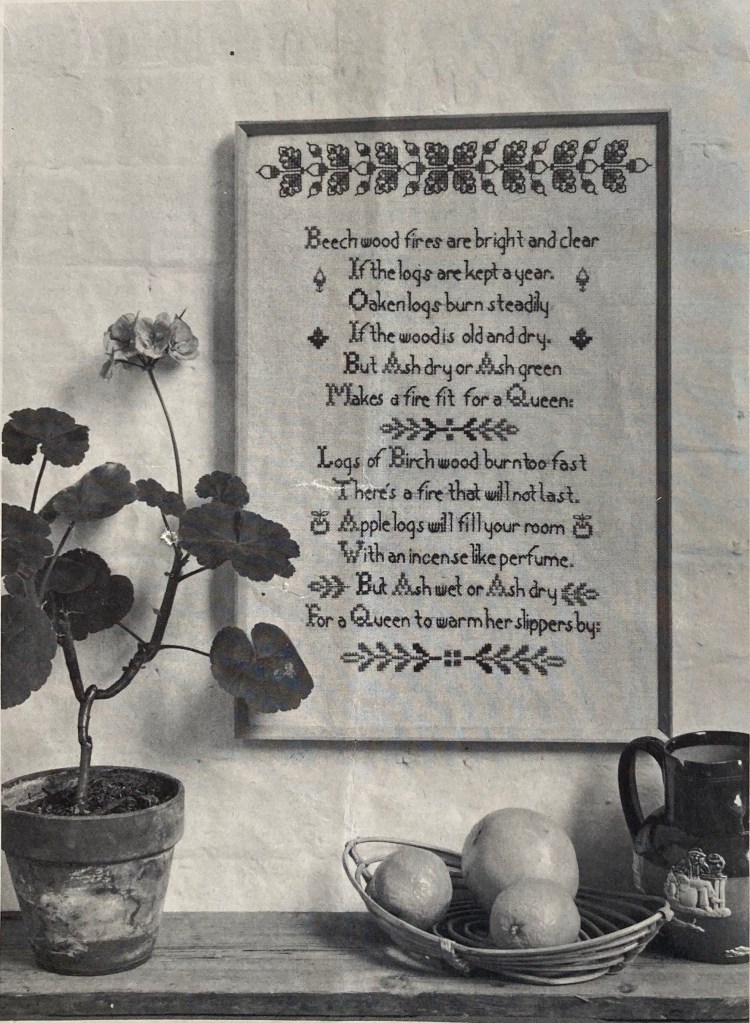
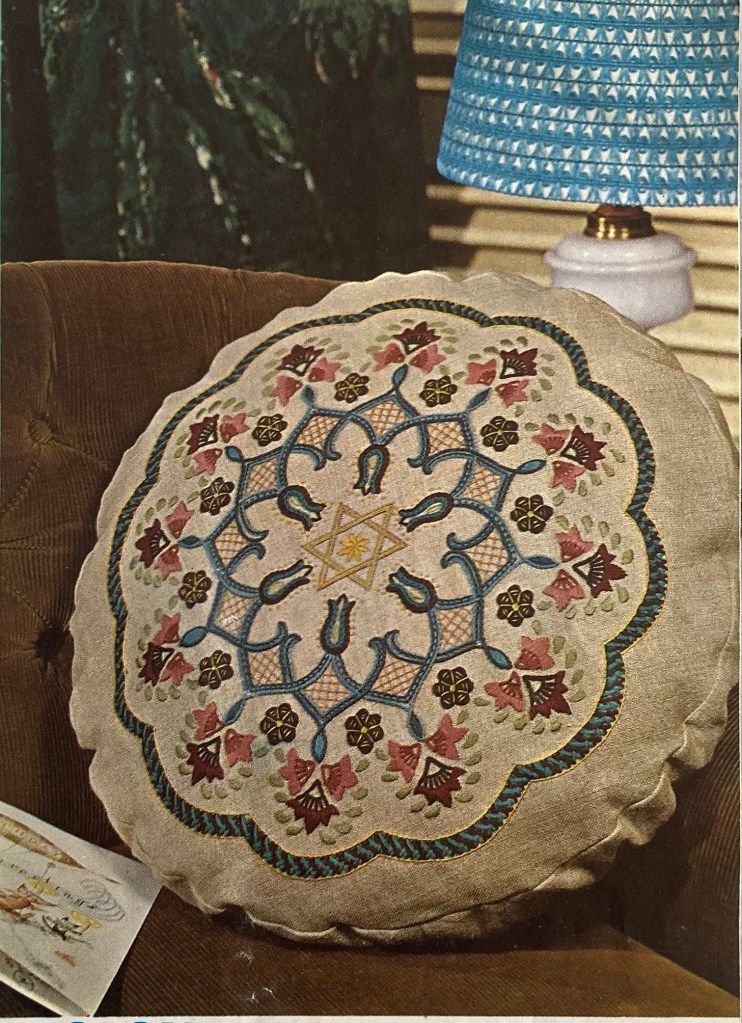
Embroidery and tapestry take a backseat to the autumn knits in this issue, with typical floral chair-back, apron, and traycloth designs. There’s a tapestry of four famous castles, a cross-stitch wall hanging with a poem about what type of wood to burn in a fireplace (I had never heard this rhyme, have any of you?) and a more complexly embroidered cushion of “Indian design”. I cannot vouch for its cultural authenticity, but the woven and latticed stitches are certainly striking and effective.

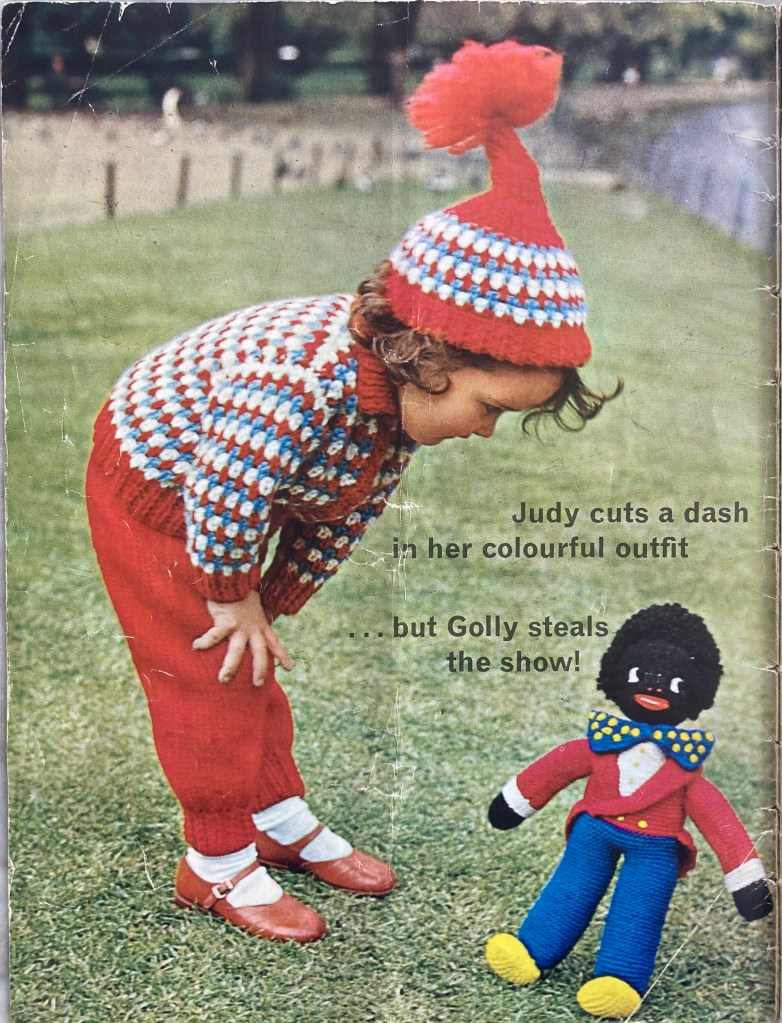
Speaking of cultural history, remember our little model Judy with her “trim Outfit” from 1960? (Of course you don’t, and I wouldn’t have recognised her either if her name weren’t in the caption.) Here she is, two years older, cutting a dash in her warm 3-piece play suit and all set to play with…

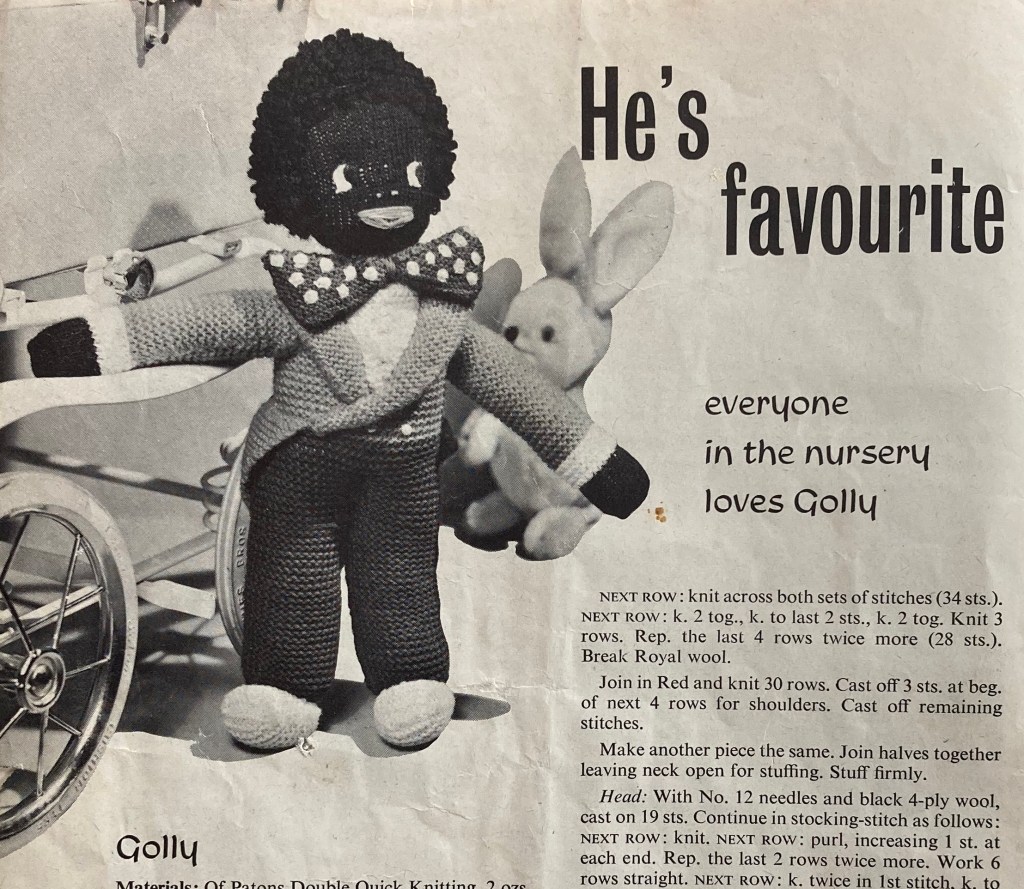
Ah, right. Her “Golly”, who “steals the show” and whom readers can also knit from a pattern in this issue. “He’s favourite”, writes our editress, and “everyone in the nursery loves Golly.” Who is he?

In 1895, the English-American cartoonist and illustrator Florence Kate Upton produced her first children’s book, titled The Adventures of Two Dutch Dolls and a Golliwogg. Over the next fourteen years, she and her mother Bertha collaborated on twelve more books starring the same characters. The books, and particularly the “Golliwog” character, enjoyed enormous popularity for at least sixty years afterwards and “Golly” dolls and toys as well as “golliwog” images on brand names and household products were practically ubiquitous in popular culture — particularly children’s culture — in the UK and elsewhere throughout the 1950s and 1960s.

Though Upton intended the Golliwog(g) to be a positive character and the hero of the story, it can’t be denied that his representation is a racist caricature born of the blackface minstrel tradition in the United States. According to Upton herself, her inspiration for the character was a Black minstrel doll found in her house, and typical “Golly” representations show him with exaggerated, distorted features and wearing an outfit typical of minstrel performers in the early 20th century. Later literary and cultural depictions of “golliwogs” often portrayed them as animalistic, uncultured or criminal, thus reflecting and perpetuating negative racial stereotypes about Black people. Over time, the word “golliwog” and shortened forms of it became used and recognised as demeaning racial slurs.

Though many white Britons, Americans and Australians who grew up with golliwog dolls continue to claim that they are inoffensive (and capitalise on their popularity via Internet auctions and collectors’ organisations), it should be pretty obvious that they, and their related imagery, are problematic. For a more in-depth understanding of why, I encourage further reading, starting with this excellent article from the Jim Crow Museum of Racist Memorabilia at Ferris State University in Michigan (US).

It’s not the first or only time that Stitchcraft (like just about every other knitting/craft publication of its time) has featured patterns for toys or dolls that reflect stereotypes of particular ethnic groups or portray them as an “exotic Other”, even if those representations are supposed to be positive. Many patterns from the 1940s and 1950s are particularly offensive (take my word for it, I don’t want to show them here), as is the use, up until the late 1950s in some cases, of racial slurs as colour names for certain shades of wool (ditto). By the way, I have issues of Stitchcraft and many other vintage knitting magazines up to the mid-1970s and nowhere, in any of them, have I ever seen a model who was not white — the caricatures were also the only representation to be found. Let’s remember that, for all their fantastic fashions, the mid-century decades were definitely not the “good old days”.

On top of all that, there’s no pattern in this issue that I particularly want to make, so I’ll either embroider some anemones on a vegetable bag or finish up something from the WIP pile.

November 1960: Overview

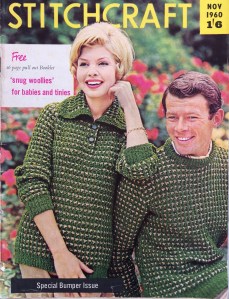
IMG_2168Brrrr! November 1960’s Special Bumper Issue” brings us “Colour for the Cold Days” and an extra 16-page pull-out booklet of baby woollies. Sadly, so sadly, the booklet from my copy of this issue has been pulled out long ago and is missing.

There are still plenty of lovely cold-weather fashions and interesting homewares to make, starting with the comfortable, matching “his and hers” sweaters from the front cover. Green checks continue to be in fashion, this time made with a complicated slip-drop-and-pick-up-later stitch pattern in two colours of Rimple. The idea of the “partner look” is just starting now, but will carry on throughout the 1960s into the androgynous 1970s and even the oversized-sweaters-for-everyone 1980s. Both fashion and gender roles were still quite rigidly stratified in 1960, but I see a parallel between the gradual softening of gender-based norms and the increased interest in gender-neutral “partner” garments that both started around this time. The two sweaters in this issue are both loosely-fitted, shaped (or not shaped, as is the case) the same, and available in overlapping sizes. The only proportional differences are in the shoulder width and sleeve/overall length, and the only cosmetic difference is the collar.

IMG_2170

Women’s fashions without men’s versions include a “sports” sweater with coloured lines made from a bobbled two-colour stitch pattern and added embroidery, a “top-fashion” jacket with a wide collar, a belted jumper and a cute hat with a buckled brim. Waist-length and closely fitted is definitely out, and the long-line with minimal shaping and a collar is definitely in. Men’s fashions are similarly long and loose-fitting, with dolman sleeves and interesting yoke details, and there’s a fantastic twin-set for young girls aged 5-9.

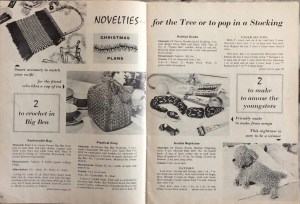
IMG_2172Homewares are still in a weird phase. The working woman or baby-boom mum (and those were overlapping categories, then as now) of 1960 didn’t have the time or patience to make too many elaborate Jacobean embroidery pieces or huge, detailed tapestries, especially not right before the great rush to get Christmas presents under the tree, so the focus is on quick, easy-to-make novelties for gifts. The aesthetic sense does seem to get lost a bit, though, if you ask me.

Of course, if you do have the time and leisure, you can go ahead and make a piano-stool and cushion set in Victorian-style tapestry, or a large room-divider screen with colourful parrots. Truly modern and up-to-date novelty lovers can continue the Zodiac series with a Scorpio motif for cushions, chairbacks or waste-paper baskets.

IMG_2178(I notice that Word Press does not recognise the word “chairback”. They have been out of fashion for too many years, I guess, having fallen victim to cheaper furniture, more frequent hair-washings and less Brylcreem. Pity that no one likes them now, as they do seem kind of fun.)
In the back pages, Jill Browne is still happily endorsing Patons Big Ben wool, and a lovely new children’s serial, “Wendy and Wag in Wallpaper Land” has started. Note the printed ruler at the side of the page, included in each issue as an easy way to measure your tension swatch. Also, there’s a rug reprint, a toy pig made of pink felt, a panda-bear motif and gay pot holders. What more could you want? My project will be the cloche hat, and I’ll consider the belted jumper if I have more time.


October 1960: Overview

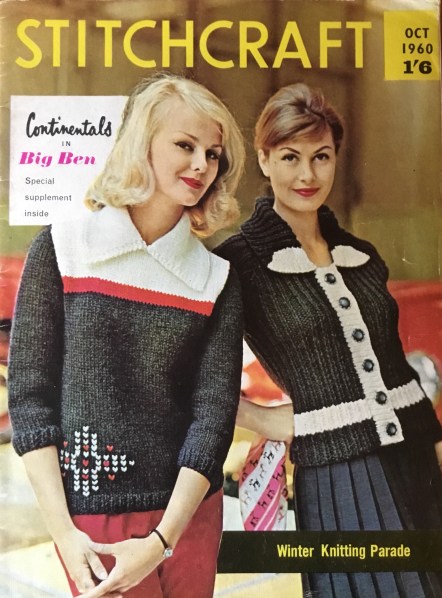
0E56629B-4509-4599-B9F4-63679CA72DCCOctober and November are really the best months for knitting. The weather has gotten cold enough that you really want to wear and make warm, woolly things, and there’s the nice “surprise” of packing the winter clothes out of storage, and so remembering what nice hand-knitted pieces you made in other years. At least, that’s my experience.

Stitchcraft also knows that knitters like to start more projects in the fall, so this month’s “bumper” issue has lots of warm clothing for adults and children as well as Christmas presents for home and family (for those who like to think ahead). And in the middle of the magazine is a special supplement of fashions in “Big Ben” — bulky triple-weight wool.

Women’s fashion features the “new length” of 23-25 inches in all jumpers, with minimal or no waist shaping, a sign that the era of waist-length sweaters and knitted blouses so popular in the 1950s is coming to an end. The sleeves have a new length, too — the “smart bracelet length” i.e. 3/4 length. I guess it lets you show off your bracelets, but I get cold forearms! Two are in 4-ply and one in an interesting “Italian waffle” slip-stitch pattern in double knitting.

There are some great fashions for men, as well, both in the regular magazine and the supplement. The long socks and lined scarf in ever-fashionable green checks are definitely cosy and “would make very acceptable presents for a grown-up son or special boy-friend“. The jumper features a shawl collar, here referred to as a „reefer neck“. Reefer neck? When I think of the 1950s or 1960s and „reefer“, a shawl-collared jumper is not what comes to mind. Perhaps that grown-up son or special boy-friend has special recreational plans to wear that sweater for? In an case, it‘s attractive and warm-looking, as is the model.


There are plenty of little trinkets to make for the home, „for your Church Bazaar“ or for Christmas gifts. Looking at some of them, I think more bizarre than bazaar — Peter the Pup has a very weird look in his eyes and you don’t really mentally associate an igloo with the idea of keeping tea warm, right? (Though I know, I know, the thick ice walls of real igloos make excellent insulation.)

Homewares are always fun and this month has a bathroom set with seahorses for those who like a hand-made woolly toilet seat cover (makes me think of my great-aunt, who even made those woolly extra-toilet-paper-roll covers).

A7780FA8-D51D-4E8B-B746-87CDC99D50A6

There’s also a landscape tapestry, a cushion embroidered with sprays of fuchsia and a „Chippendale“ chair seat. In home-wears, there‘s a bed-jacket that‘s pretty enough to wear as a cardigan and the start of a new embroidery series with signs of the Zodiac. I always though the interest in astrology was a 1970s phenomenon, but here we have an entire year of zodiac-themed home accessories in 1960. I personally have no interest in astrological signs, but I do absolutely love her dress — check out that lovely lacing in the front. (And be sure to wear your frilliest petticoat while ironing.)

And we haven‘t even gotten to the Big Ben supplement! It truly is a bumper issue. The Big Ben offerings are under the signs of „Continental“ and „Italian“ styling: a long, slim, mostly unshaped silhouette with square collars and nubbly stitch patterns. Toddlers get a classic „lumber style“ jacket with pockets. The Norwegian „playtops“ aren‘t from the Big Ben supplement, but they are awfully nice.

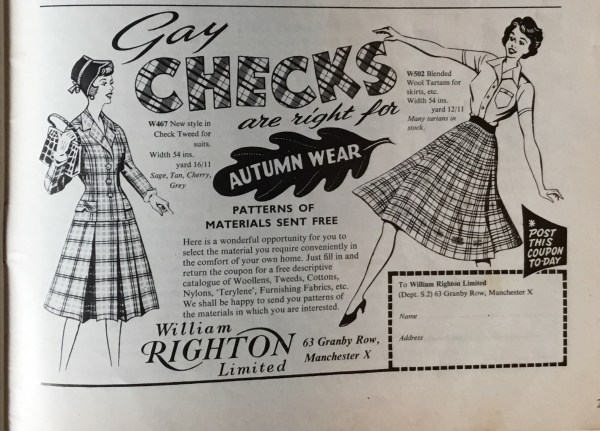
Last but not least, you can order yourself some sewing fabric from the advertisements in the back pages, and what could be better for autumn wear than gay checks? I wholeheartedly approve… and want that suit that the lady on the left is wearing. My October project will be a variation of the fuchsia embroidery. Happy autumn knitting parade, everybody!

AFBB9680-EB48-4119-AADE-8D7F92D38520

September 1960: Overview

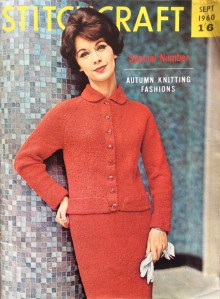
IMG_2045September 1960 is supposedly a “Special Number” of autumn knitting fashions. I’m not sure what exactly makes it so special, since it doesn’t seem to have any more, or particularly different, projects than the average issue. I guess it’s special in that September is finally a bit cooler weather-wise, so you can start to make some nice wool garments for the colder months — very appropriate in 2018, where we had the summer to end all summers. Things have cooled down a bit now, so I’m looking forward to wearing my (still unfinished) projects from July and August soon.

But back to September 1960. “You must include some heavy-knits for the really cool days out of doors, but for the milder days, a fashion feature to note is the use of finer knitting,” Patience Horne tells us, and this month’s issue gives a good mix of finer and bulkier garments for adults and children. The 4-ply women’s sweaters (why sweaters and not jumpers? I still can’t figure out why they sometimes use one term and sometimes  the other for the exact same type of garment) have those big square collars that we’ve seen on other 1960 designs, with or without buttons. The pink sweater is made in super-fine-ply Lucelle at 10 stitches to the inch! If hand-knitting in fine yarn is too time-consuming for you, you can make a lacy cardigan on your machine.

Moving up the bulkiness scale, we’ve got the lovely skirt suit on the cover, made in Rimple, a sweater in “overblouse style” and a “raglan golf sweater” for men in green plaid. Green checks continue to be in fashion!  The “young sports fans” in the family get comfortable jackets in double knitting weight, “made to match for brother and sister.” Can you spot the difference between the boys’ and girls’ versions? (Do you remember those “can you spot the 10 differences between these pictures” puzzles in the kids’ comics section? Do they still have those?) If you can’t, I won’t tell you, but try buttoning a cardigan made for the “opposite” sex if you need a hint.

Fans of Big Ben bulky knitting can make a Viennese design with added-on embroidery in duplicate stitch, or a trio of crochet items in “crunchy Pineapple-stitch”. I love the pram cover, bound with blanket edging, but I wish I could see the bonnet from the front.

Homewares are well represented by a stool cover in Florentine tapestry, a great embroidered cushion in blackwork design, traditional and “modern” pile rugs and some interesting tablewares — tapestry table mats with pictures of “3 famous castles” and crocheted raffia drink mats for your cocktail party. Cheers, everyone! My September project will be the blackwork cushion, and I hope to finish up the knitted blouse from July and the cardigan from the August twin-set.