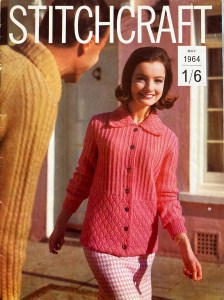
Stitchcraft‘s May 1964 issue promises a “May Merry-Go-Round” of “a wide choice of Summer Knits for leisure, holidays, travel and all the warmer weather activities.” Time flies so fast that I feel like I’m on a merry-go-round even without knitting — but let’s see what this issue has in store for us.
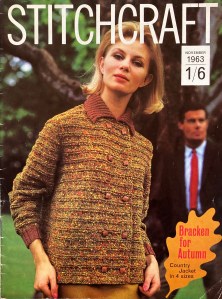
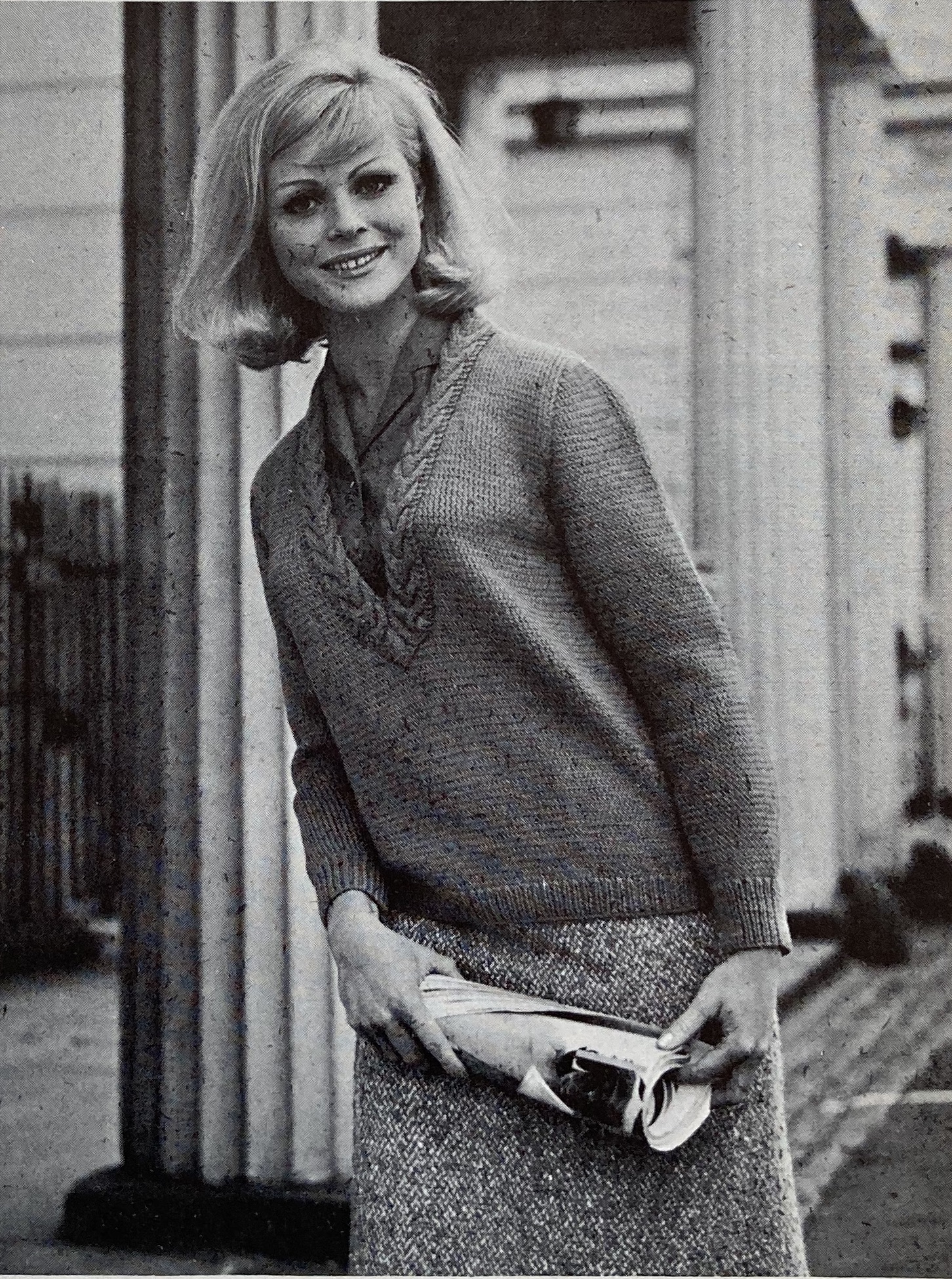
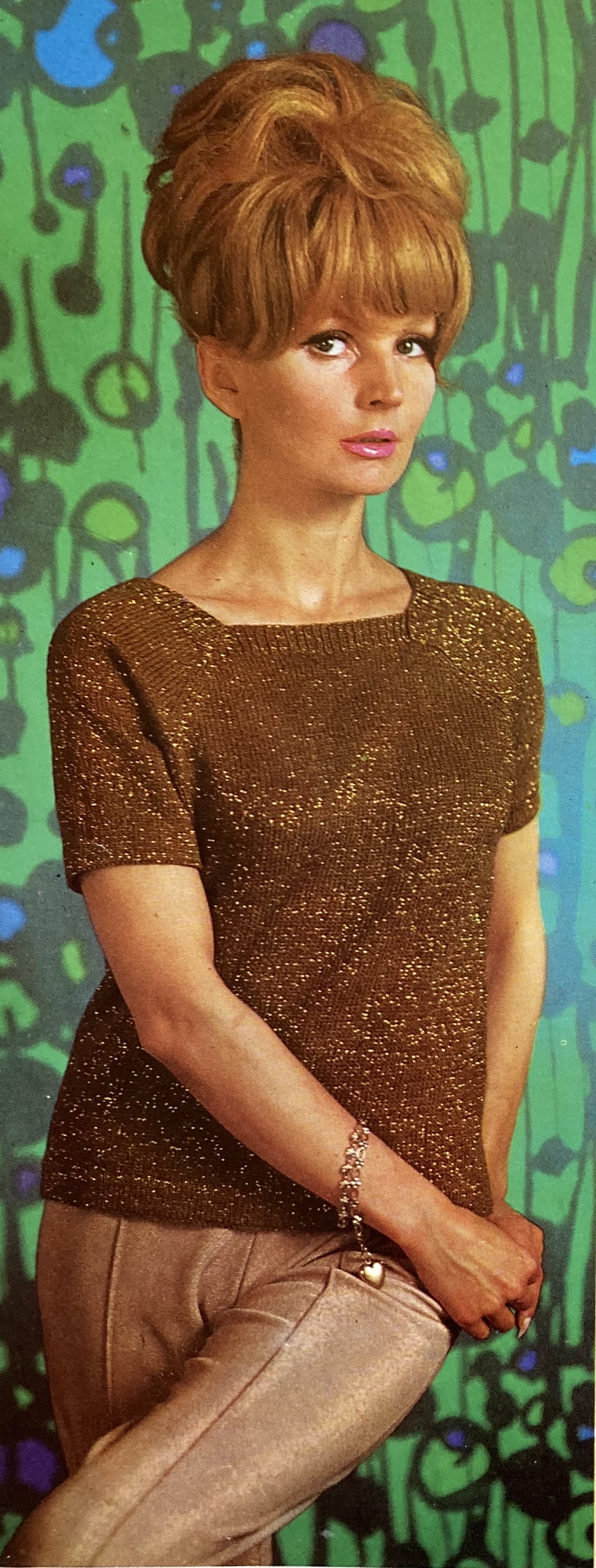
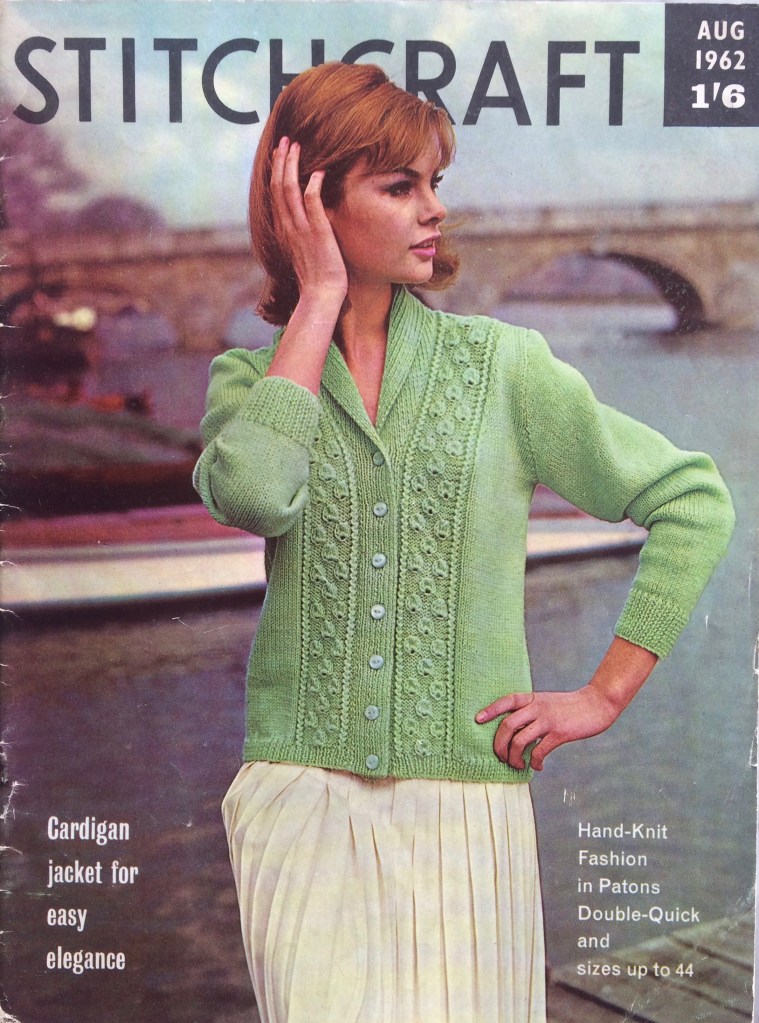
Our cover feature is a high-buttoned cardigan with a deep “pineapple stitch” hem and collar. It’s made in DK weight wool, but the pineapple stitch and slip-stitch rib make it quite heavy (20 oz.) and presumably warm and sturdy. There’s a less bulky design in DK wool on the facing page; no collar and a plain twisted stocking-stitch make it require only 12-14 ounces of wool. Patterns that utilise texture and lines, especially diagonal lines, are still very much in fashion, as are high necklines and collars.
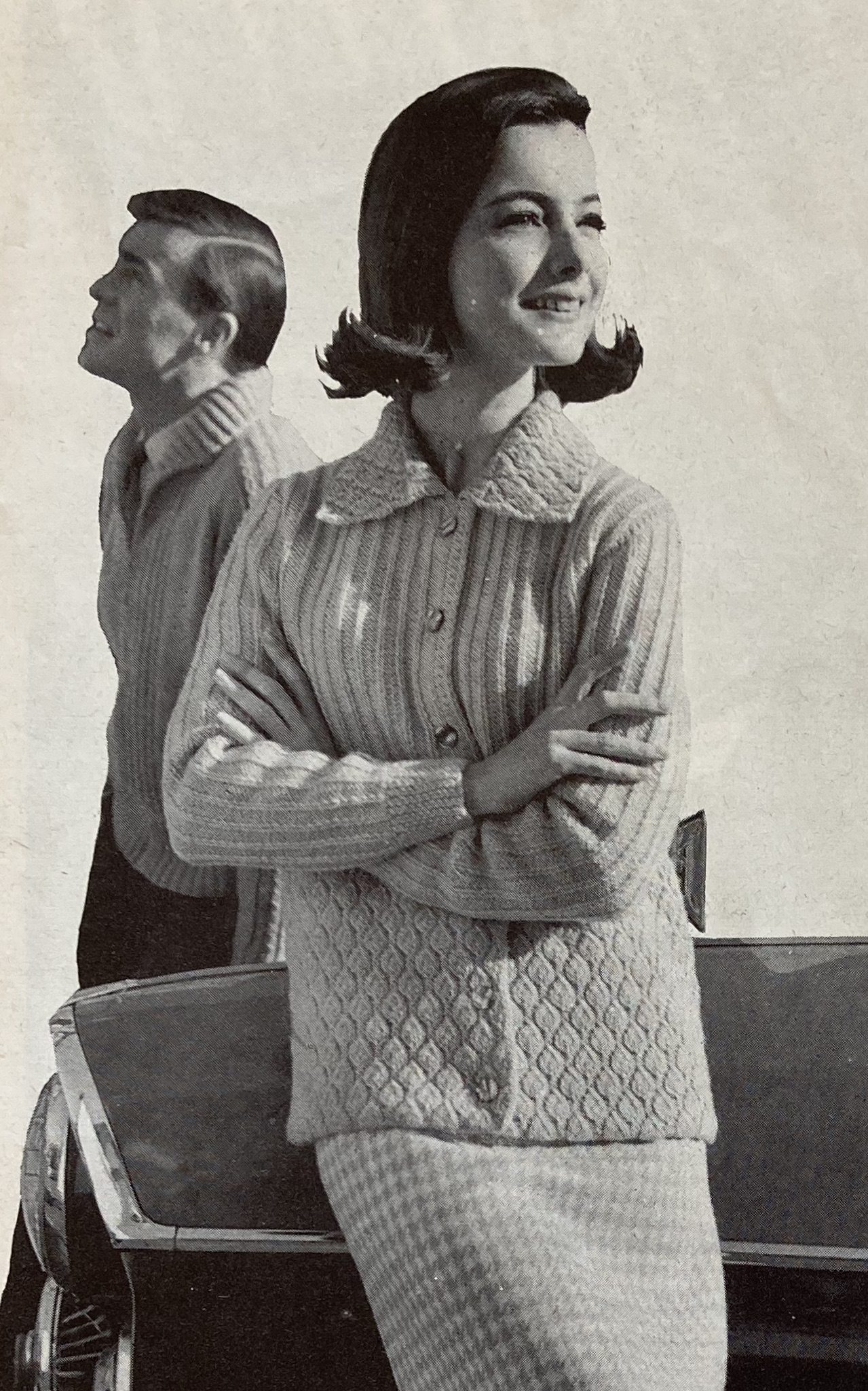
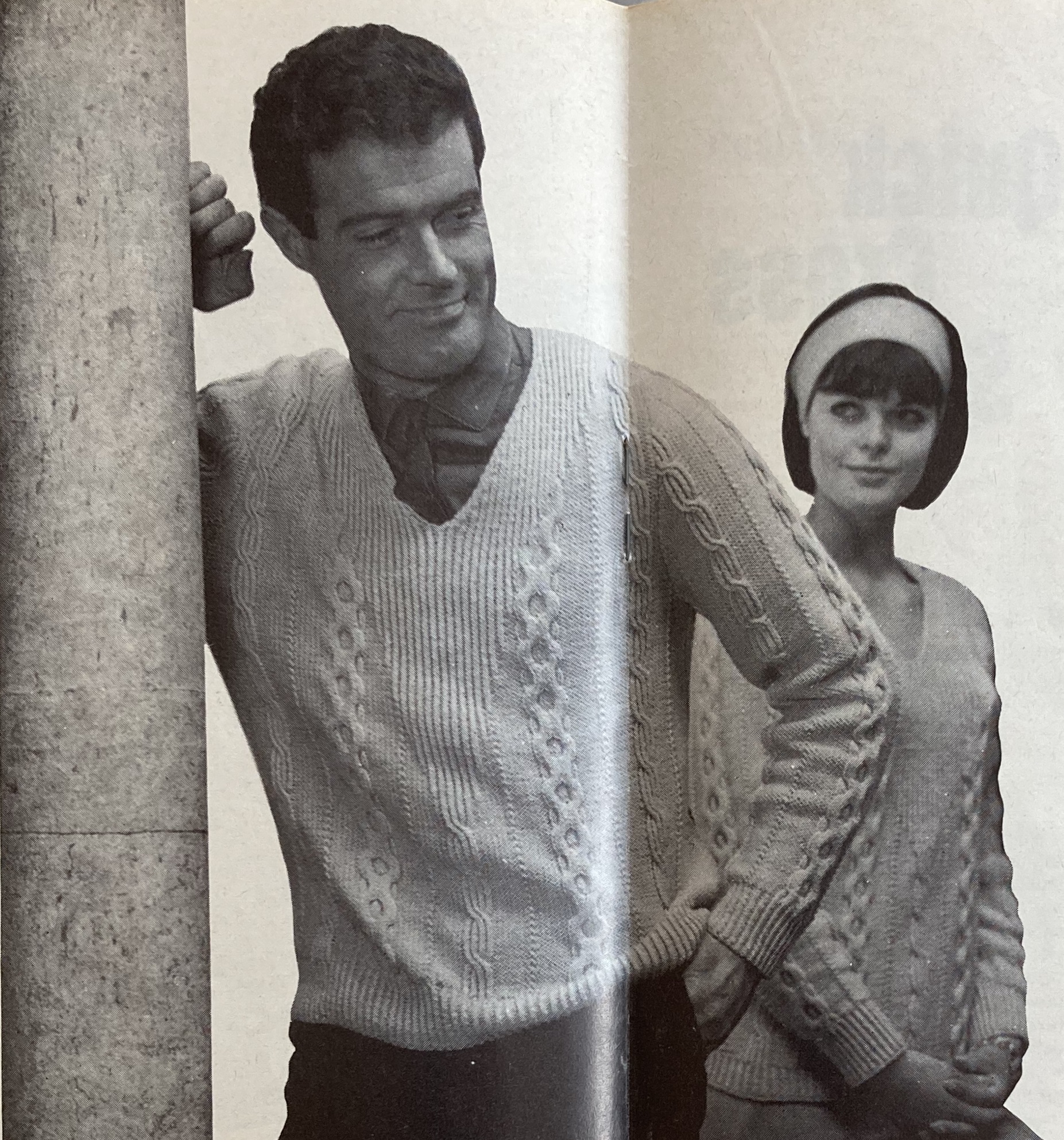
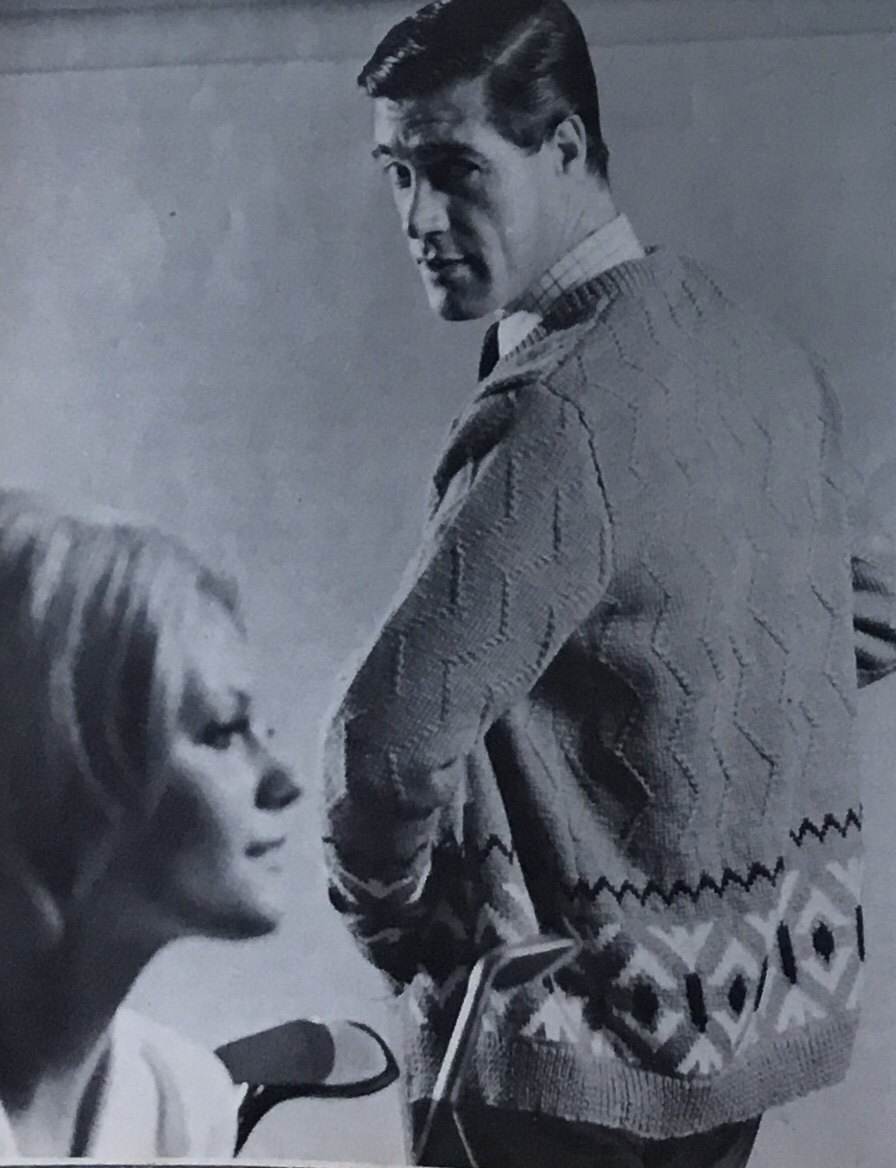
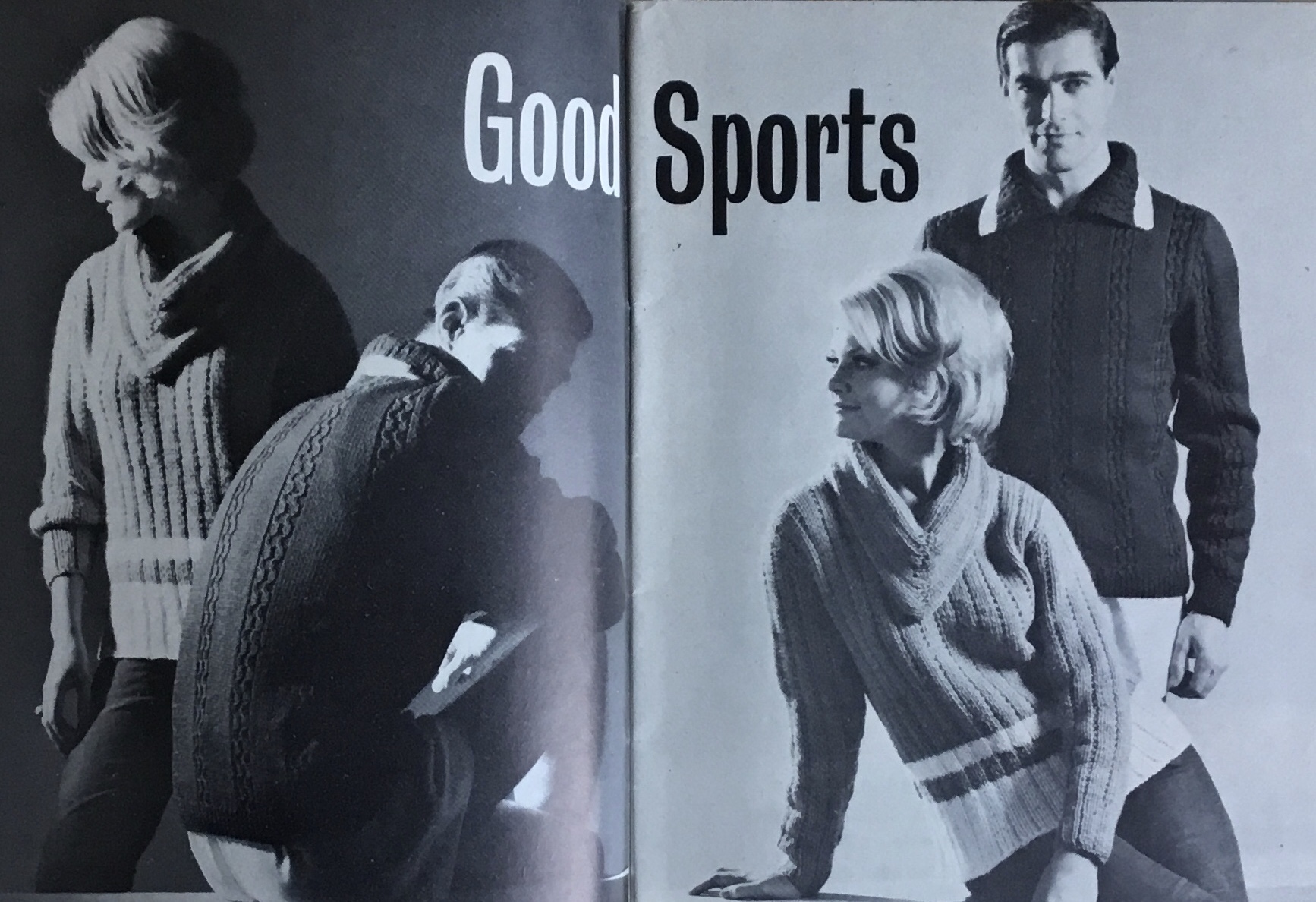
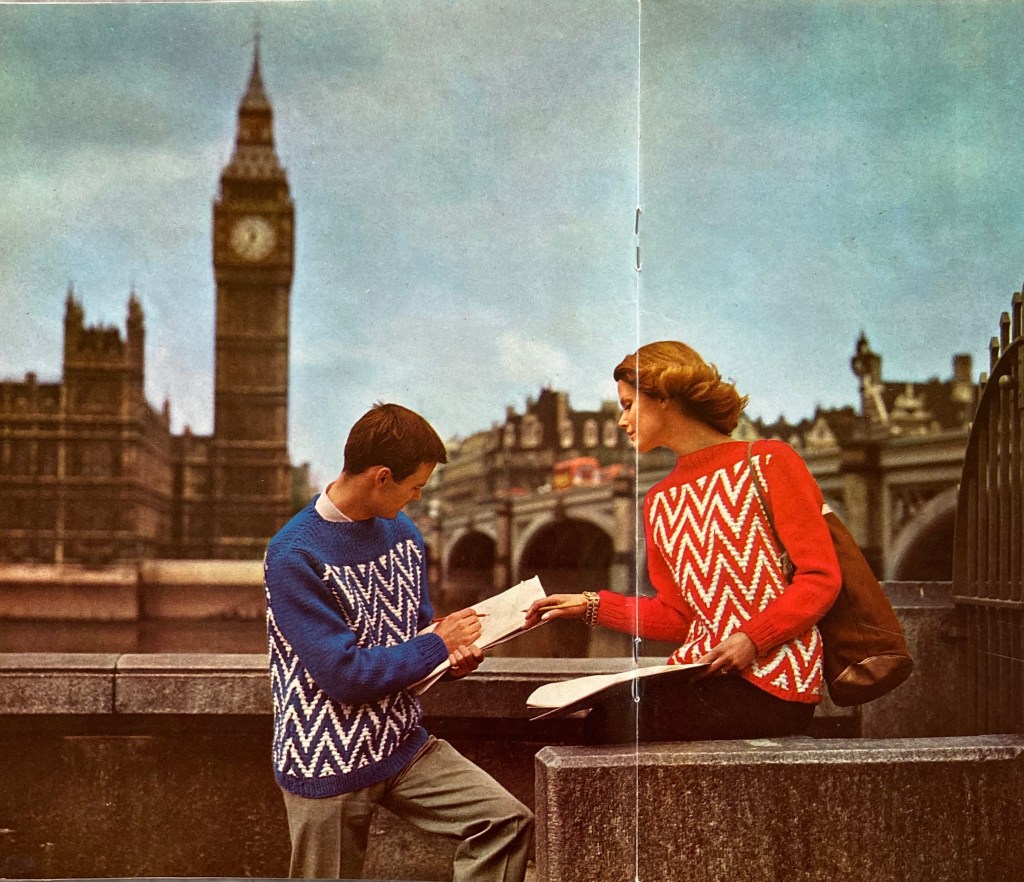
The back cover shows off the latest in partner-look sweaters, this time with a V-neck. It’s not what you would call a traditional Aran-pattern design, but it combines some of the typical cable elements with textured ribbing for a sleek, modern twist on the traditional look. The sweaters are made in light colours with Patons Totem Double Crepe, a very smooth yarn with a tight (“crepe”) twist, to make the pattern stand out.

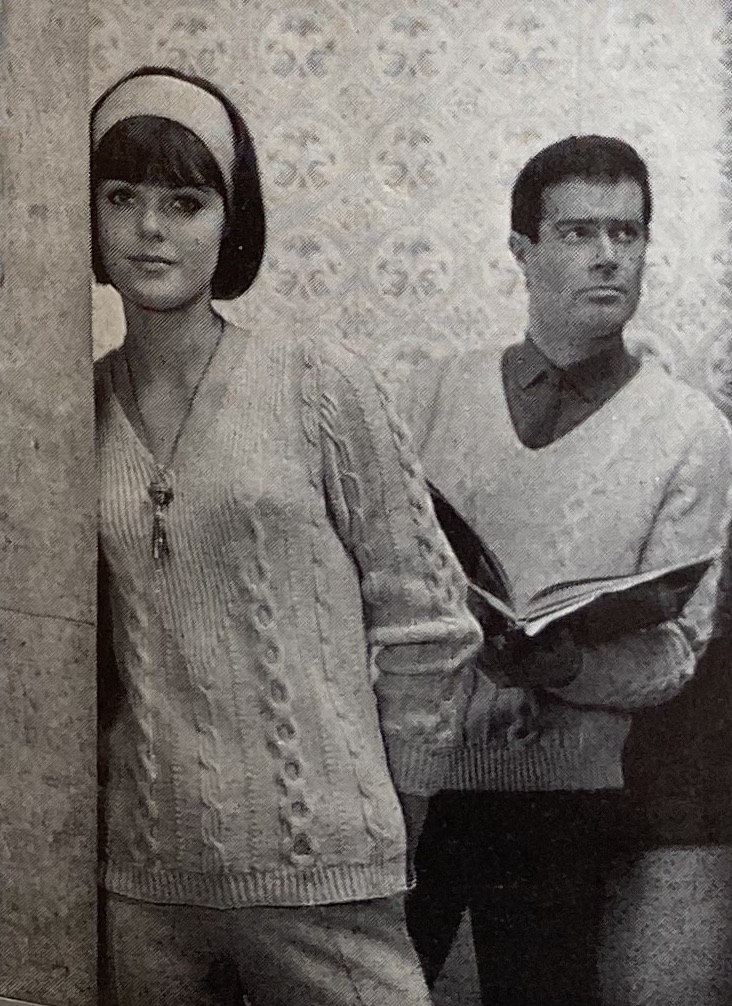
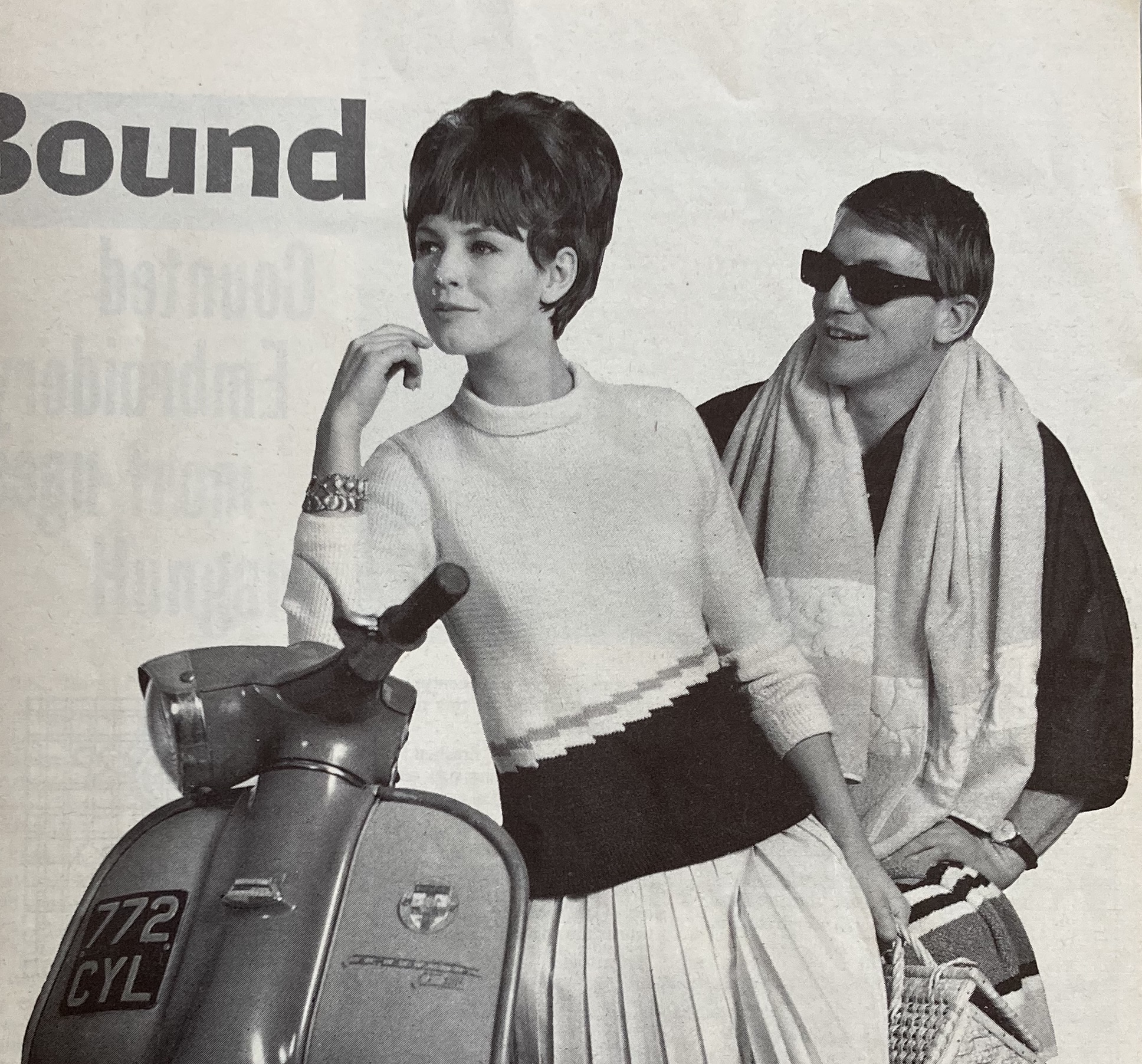
(Side note: This issue is visually one of the most fun I have encountered, thanks to multiple photographs of the same garments and models in different poses, and the liberal use of illustrations. I particularly like the one with our male model looking up out of his book (travel atlas?), apparently quite concerned, while the female model looks calmly into the distance. Feel free to suggest captions!)

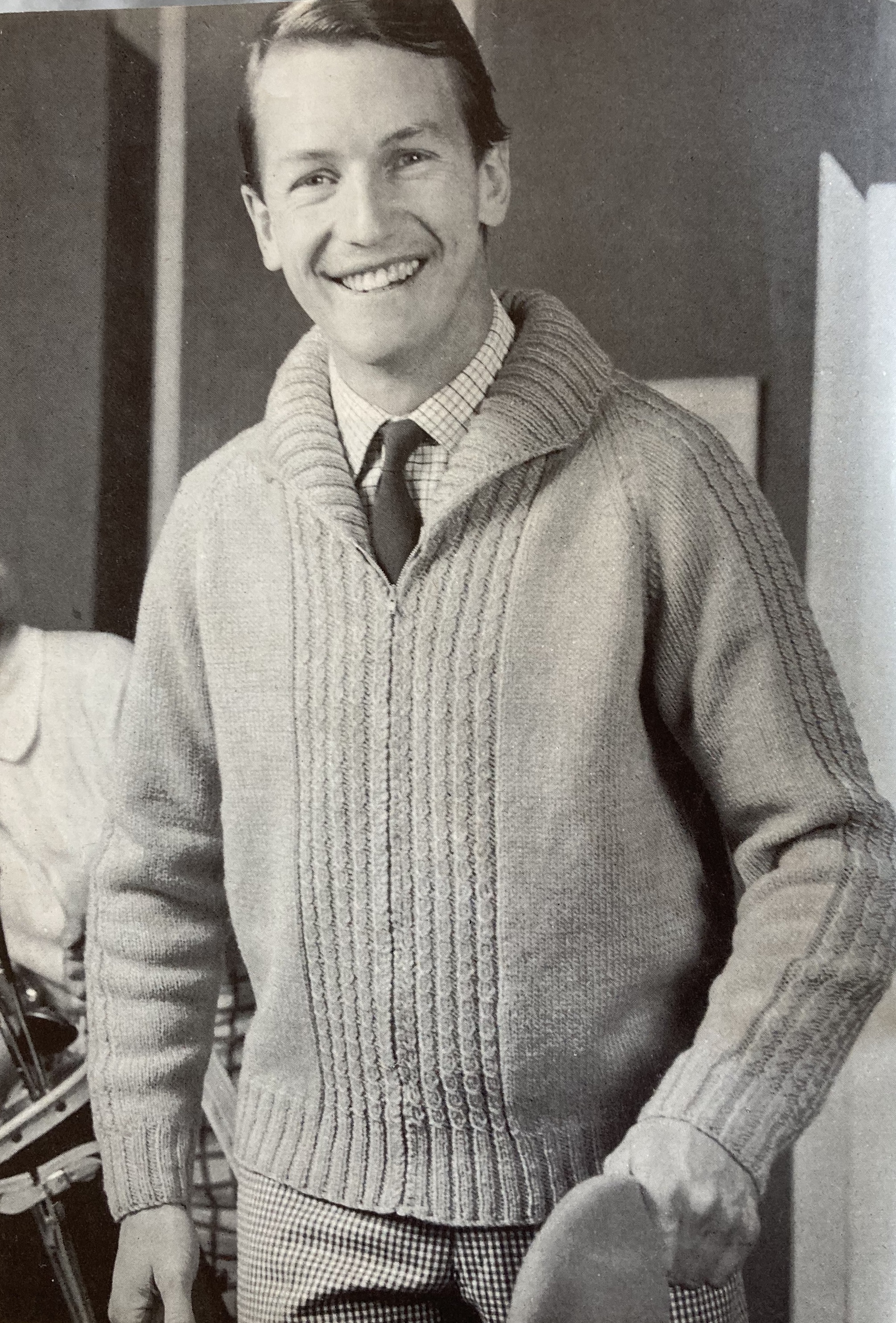
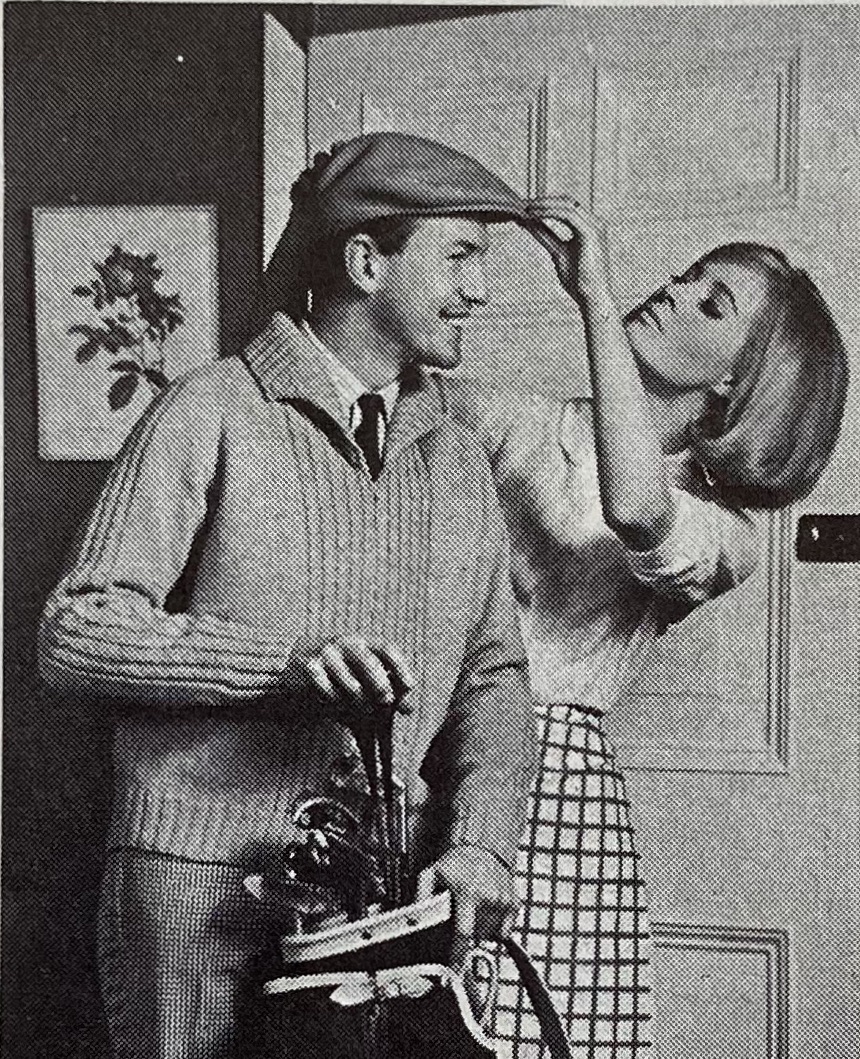
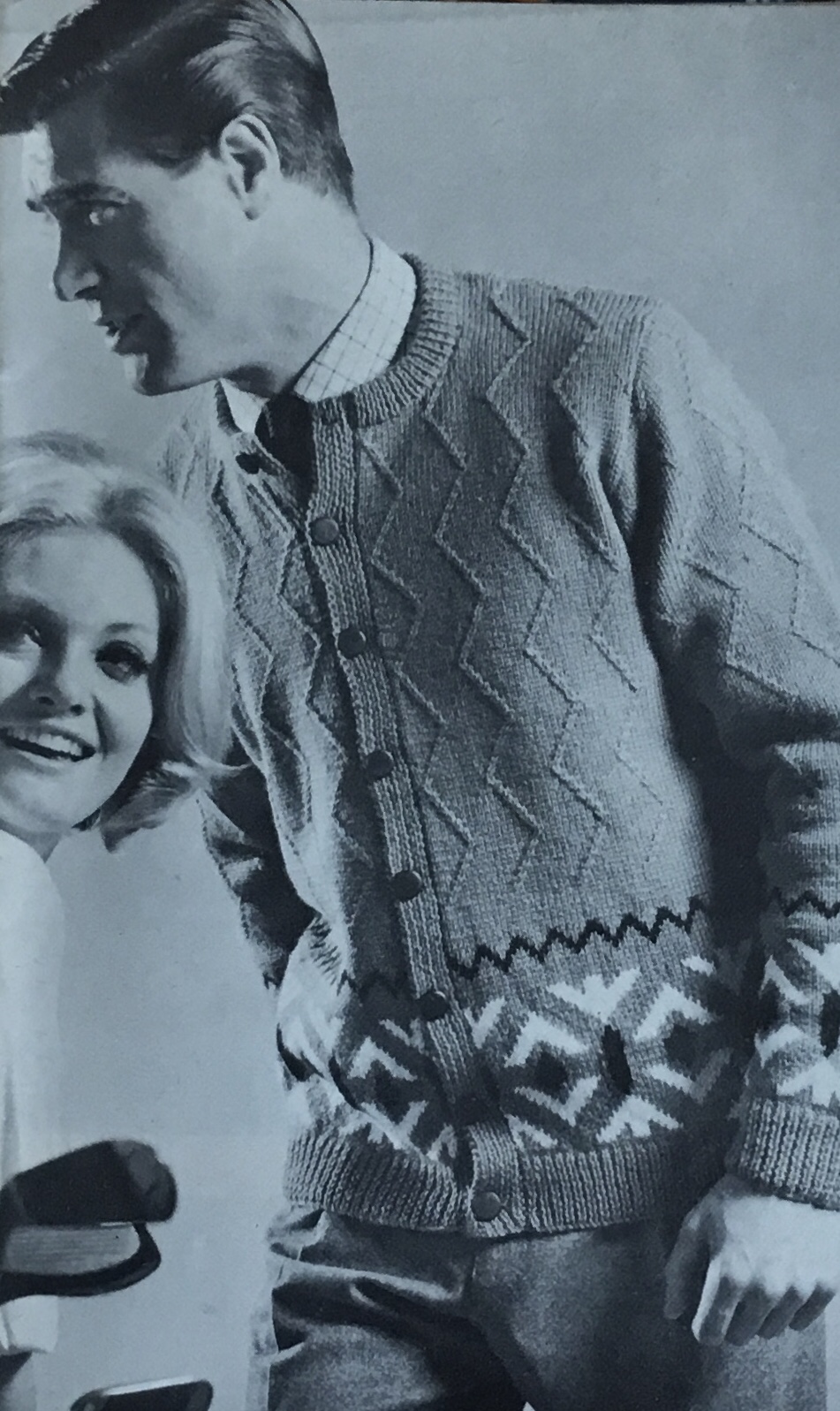
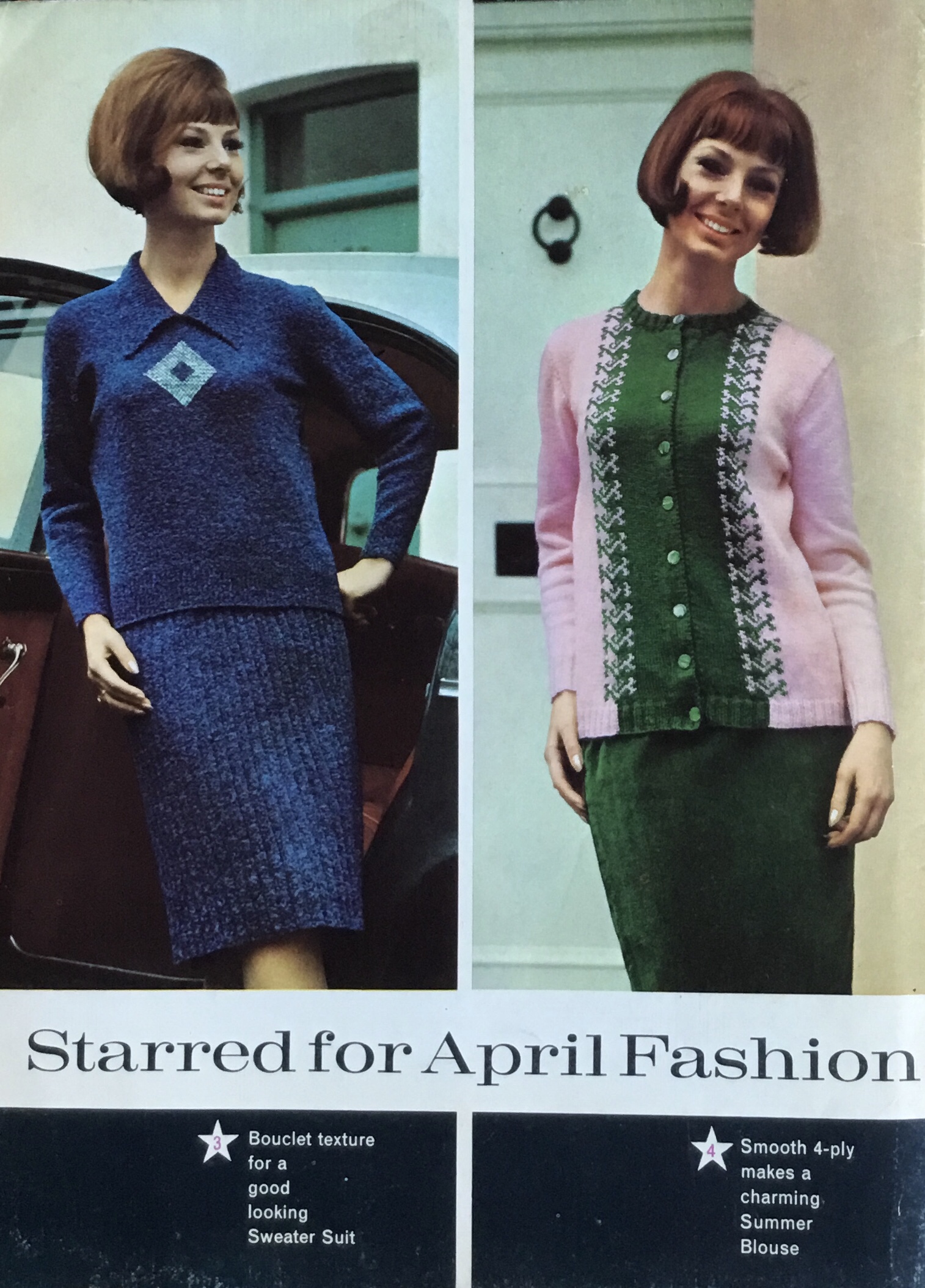
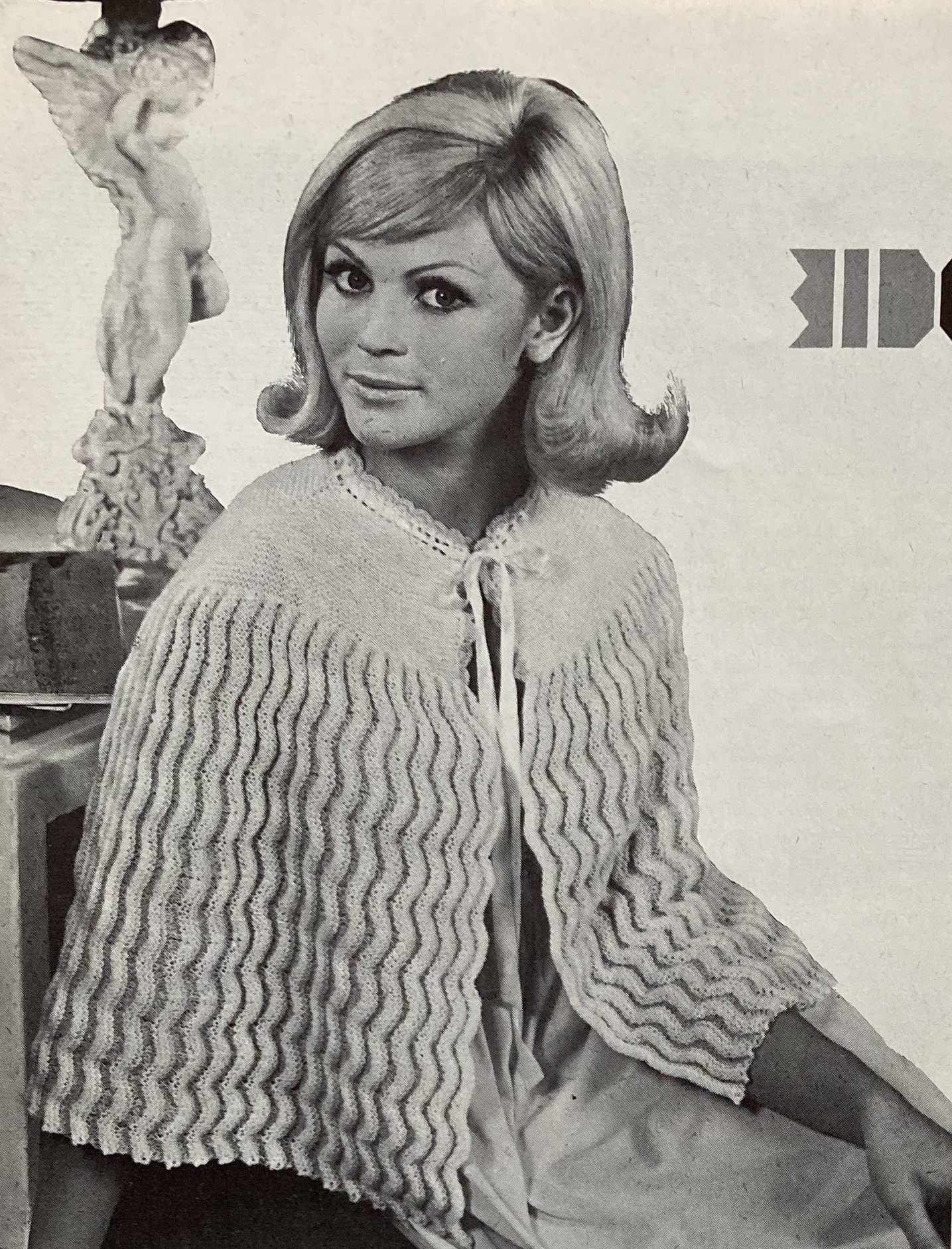
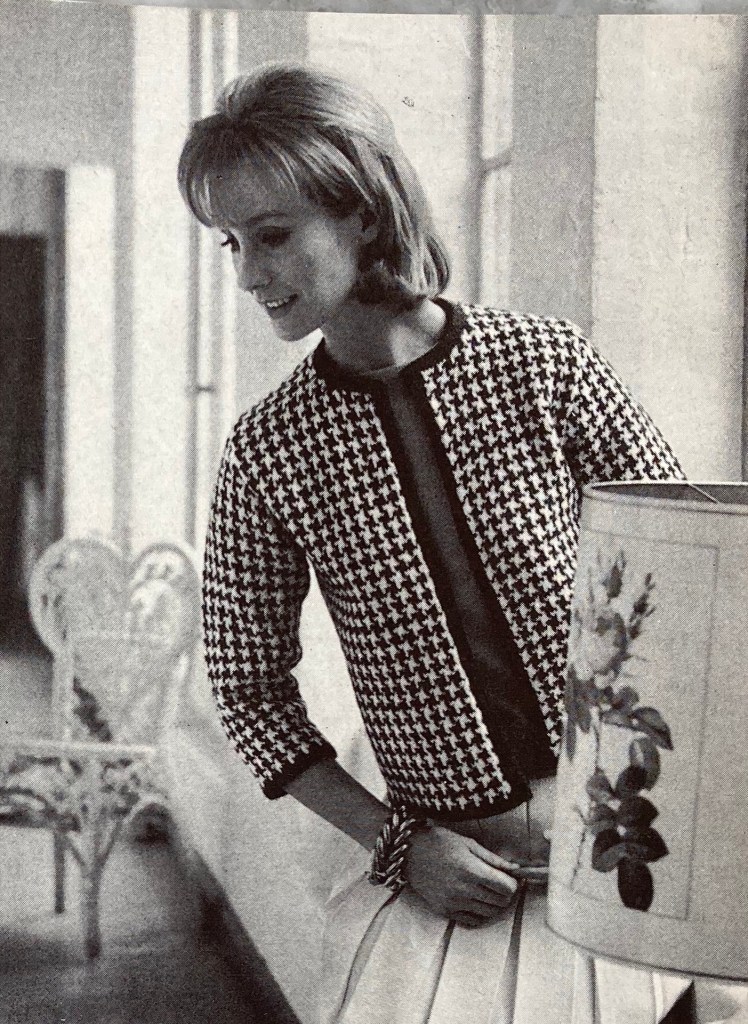
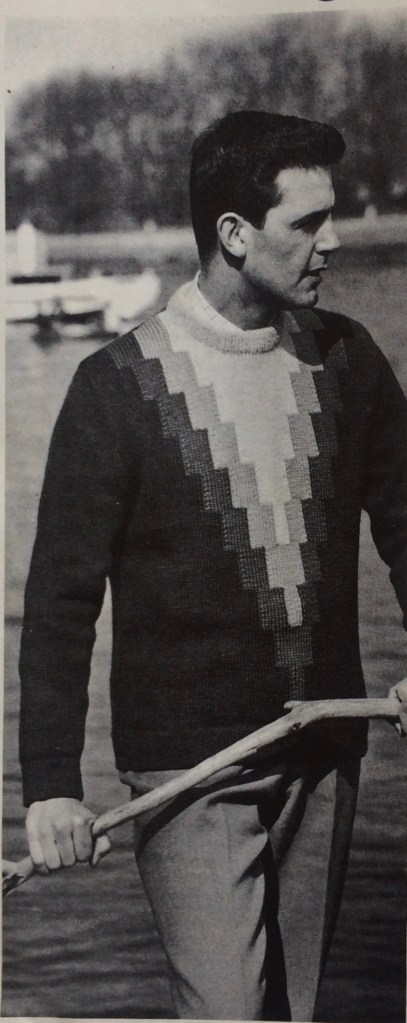
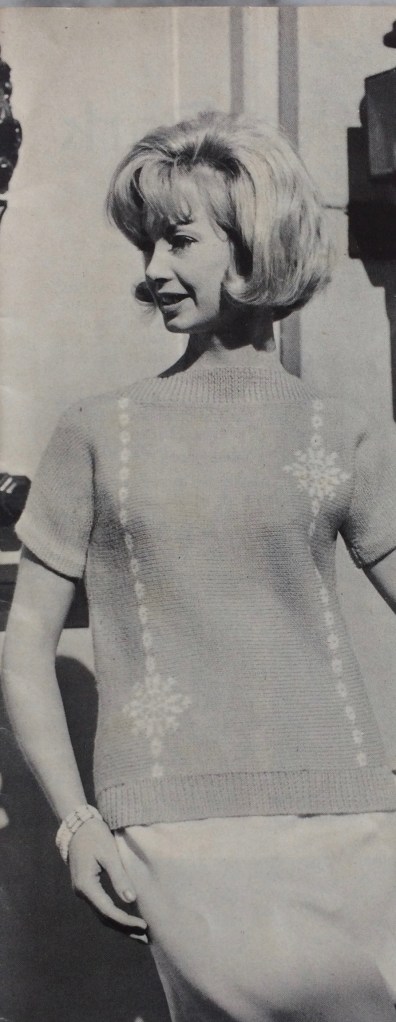
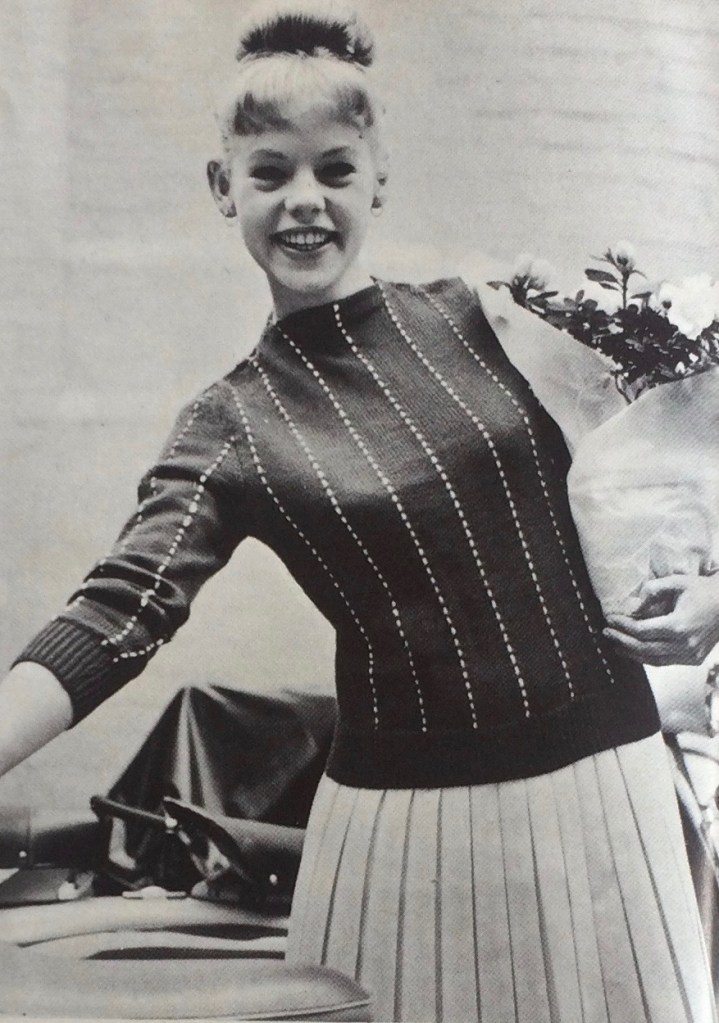
“Finer-knit fans need not feel neglected” by all these bulky, loose-fitting overgarments, promises our “editress” in the facing-page notes: here’s a cute blouse-cardigan in 4-ply wool with the same use of vertical lines, textured pattern and collar, but all in a more refined and elegant look. It’s made in Nylox, a wool-synthetic blend much like modern 4-ply sock wool, and promises to be “very pretty and feminine worn with a pastel skirt.” The man of the family sticks with DK-weight wool, though, and gets a “best of all golfer style” zipped cardigan with classic shawl collar and mock cable detail. I’m only sorry that they chose the normal pose for the full-page photo and relegated the fun one to the facing page.

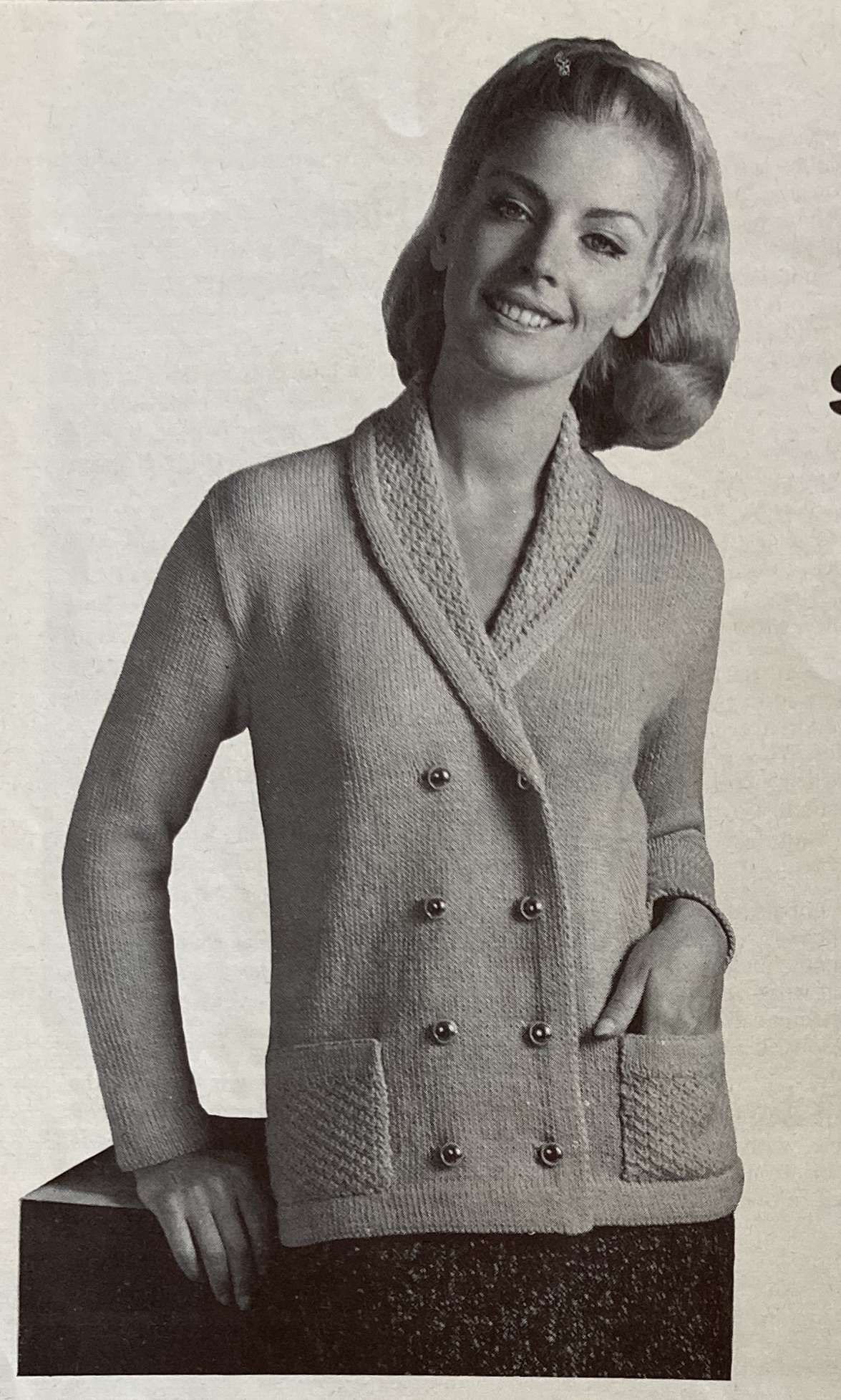
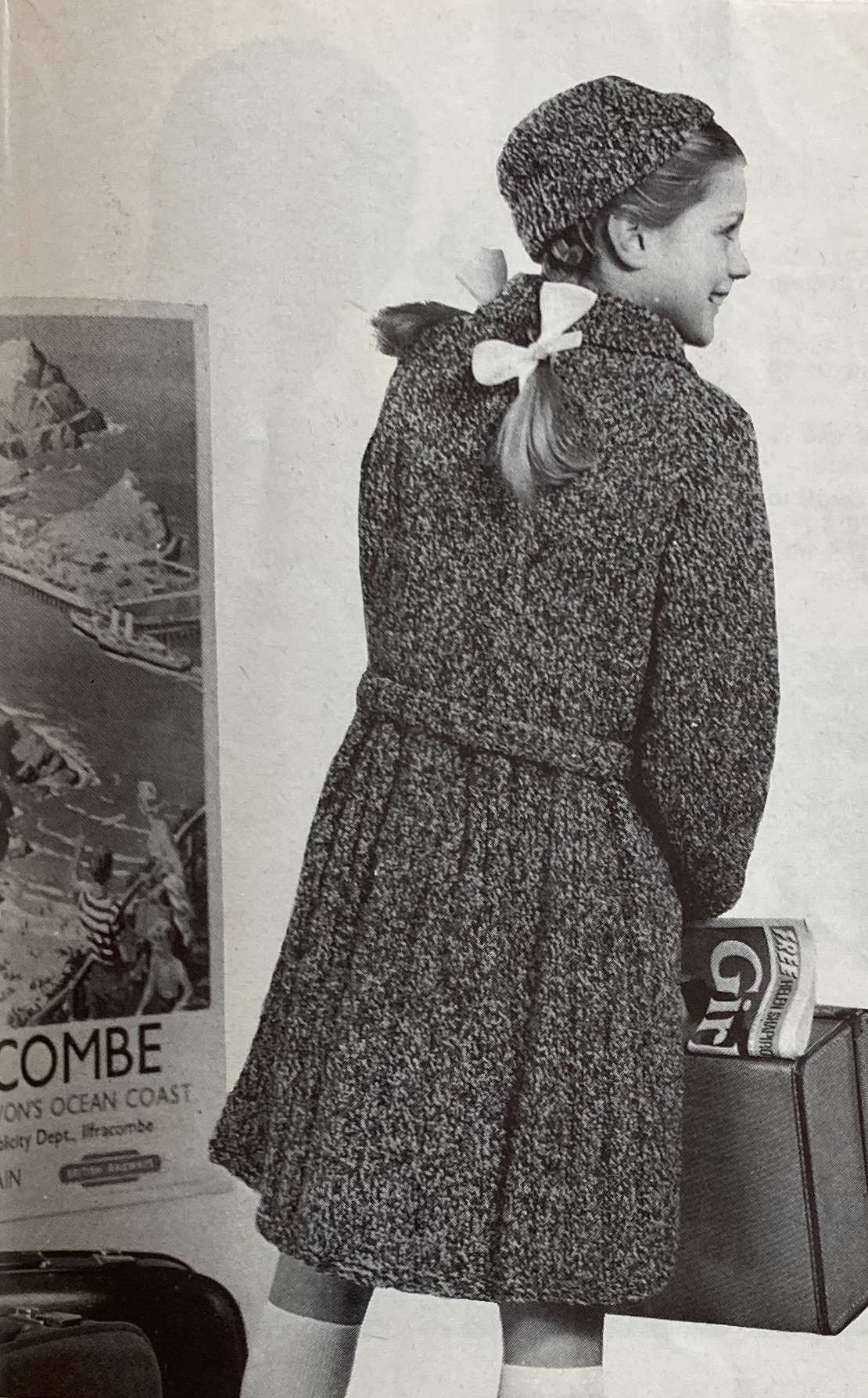
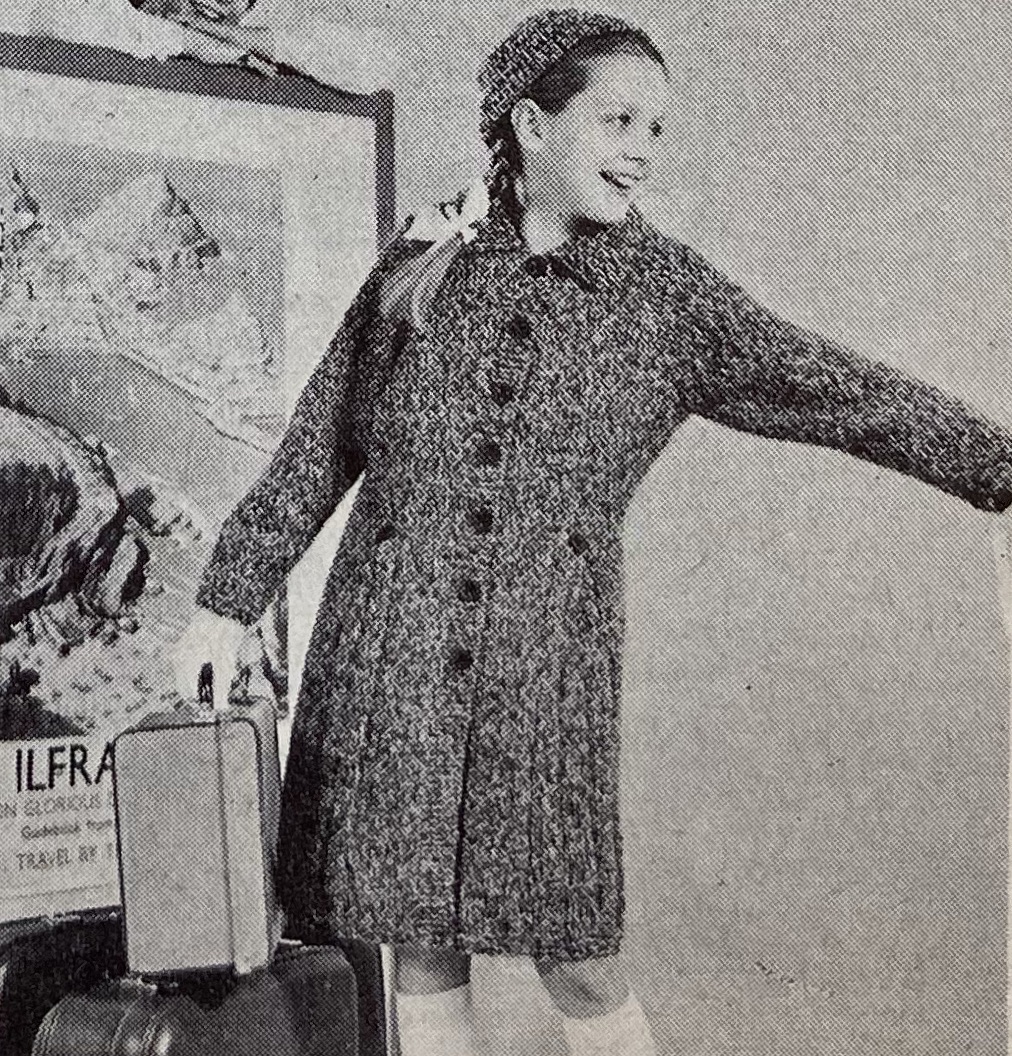
A cardigan jacket for indoor-outer wear is practical for summer travelling, so this month’s issue offers us a structured, yet comfortable “Blazer for Globe-Trotting” in DK weight as well as a belted coat with pleated swing back for the teenage daughter. The coat has a matching cap, as well, and is made in tweedy, bulkier “Glenora” wool. Here, again, there are multiple photos, so you can get a sense of the coat in its entirety.
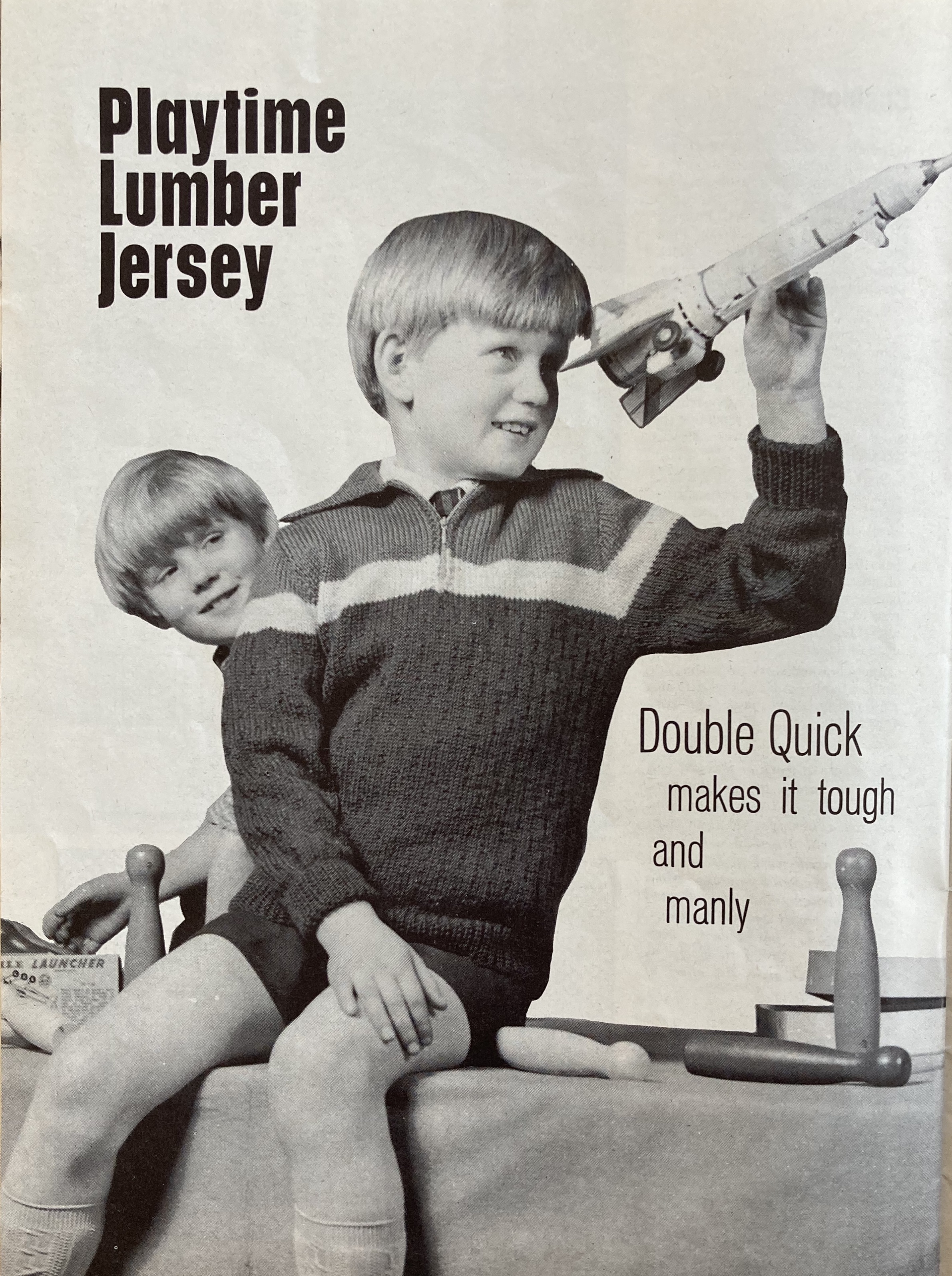
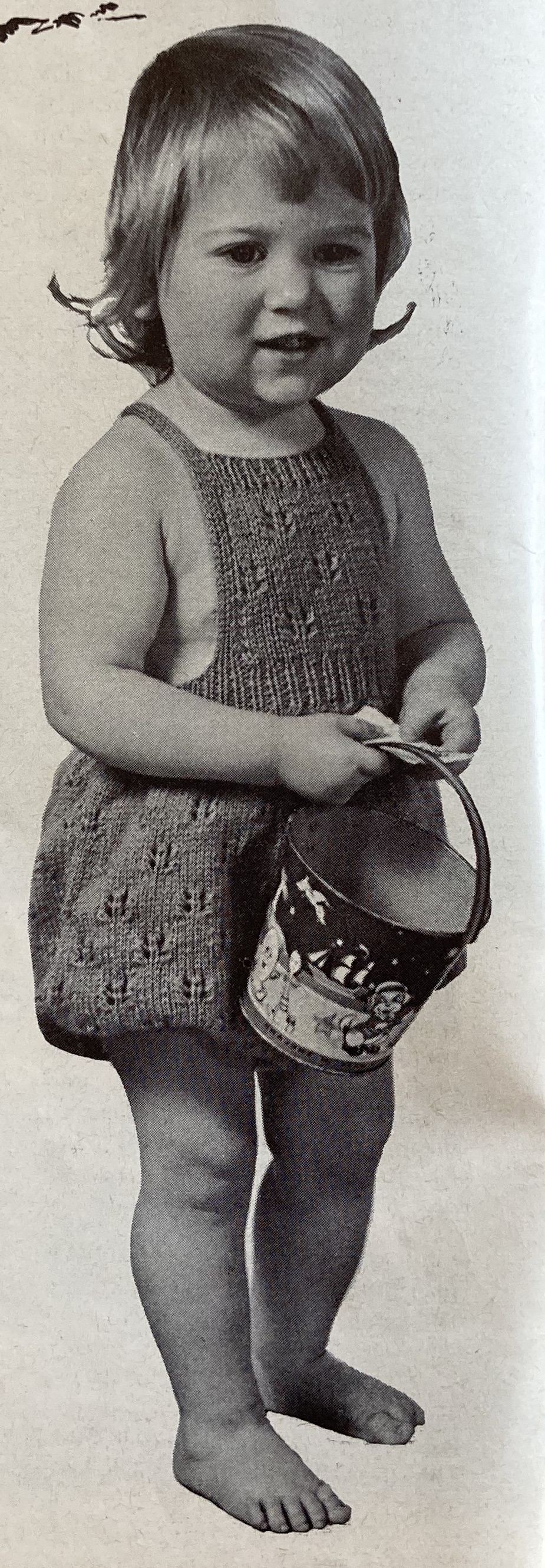
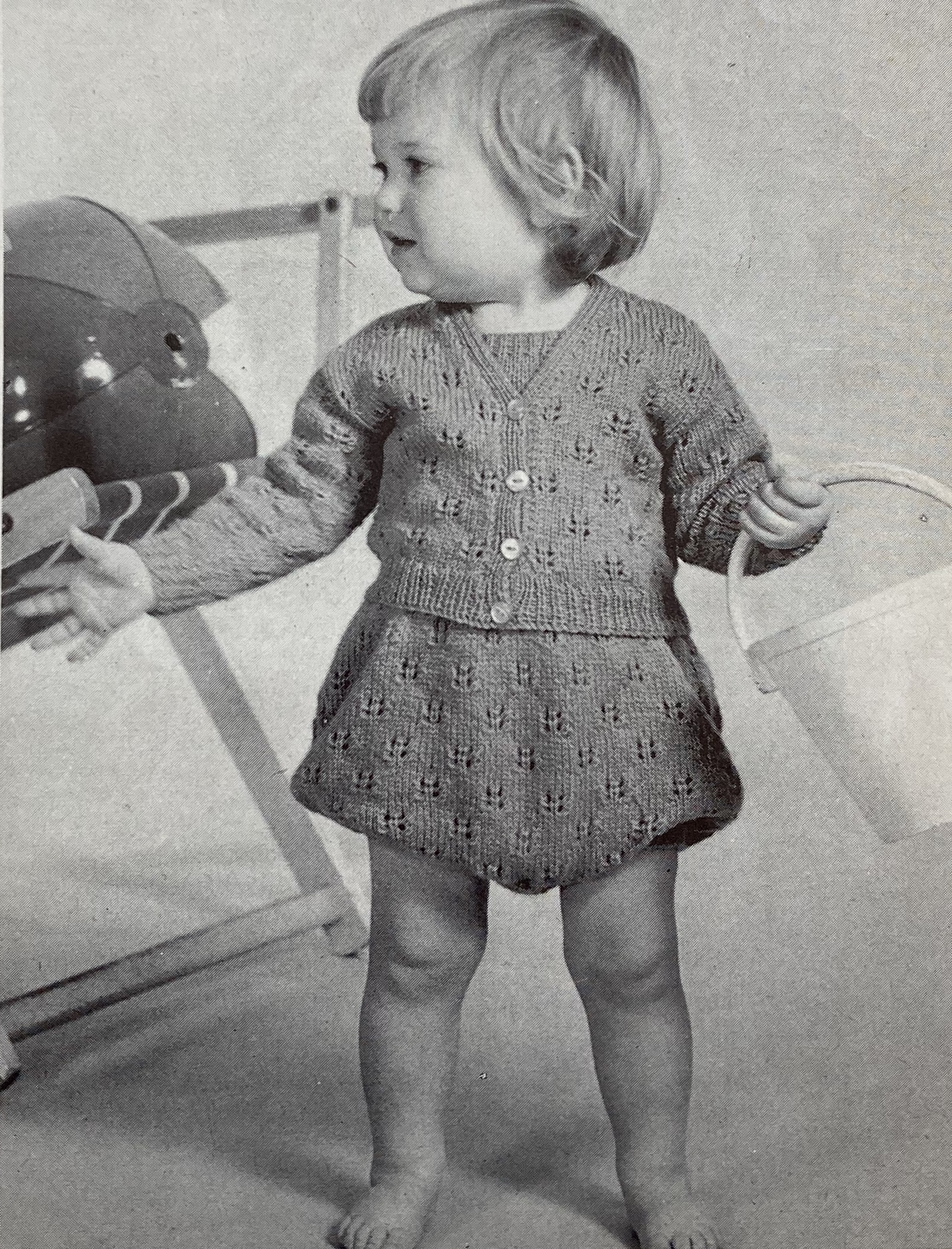
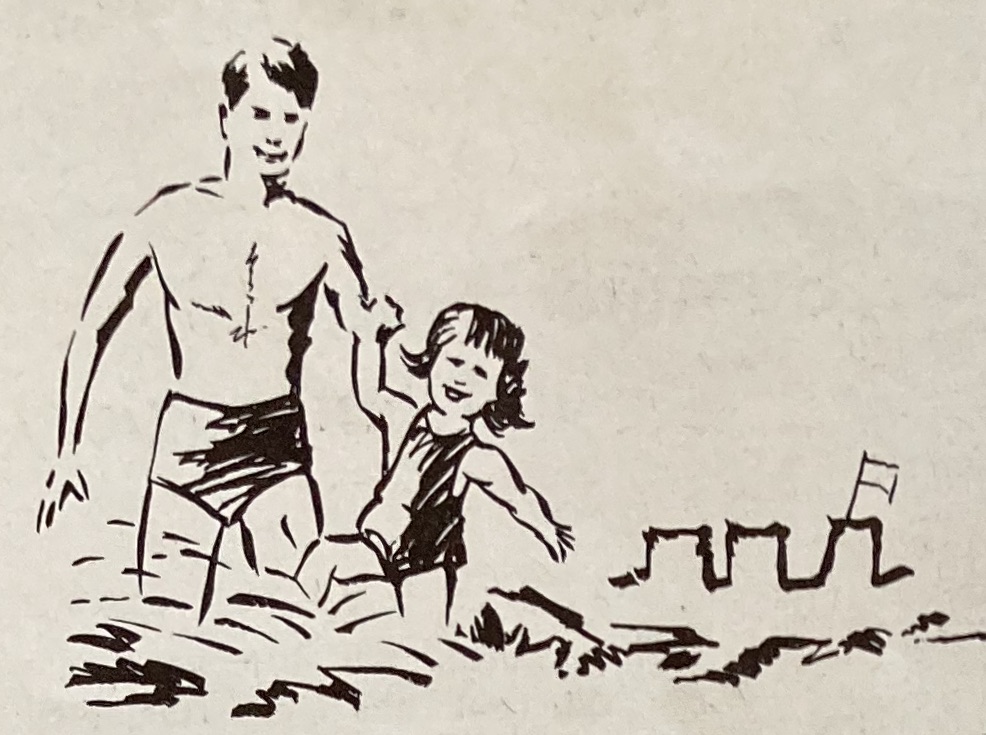
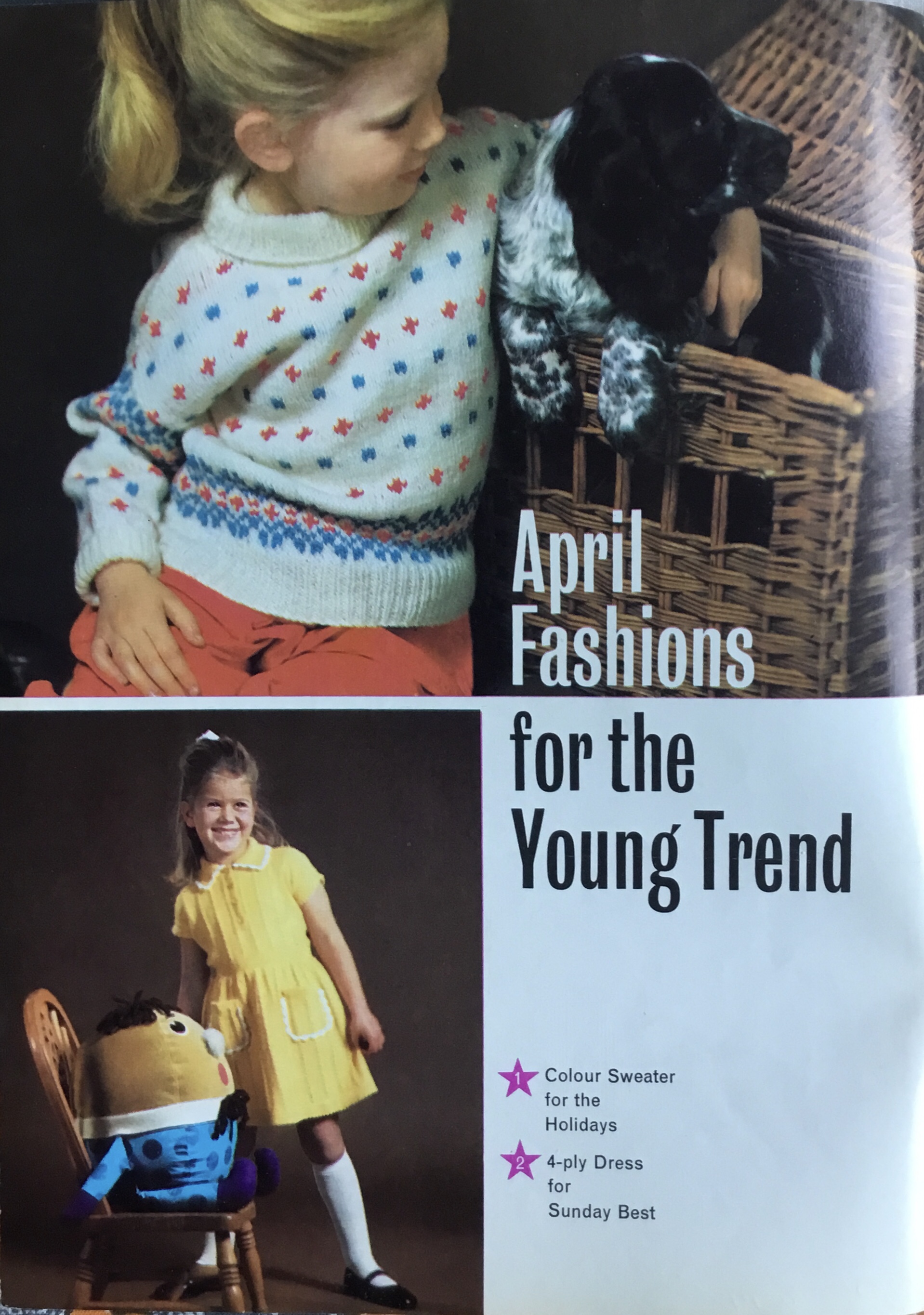
Younger children can enjoy their holidays in hand-knits as well: the boy’s zip-neck jersey promises to be “tough and manly” for the future rocket scientist of the family and makes nice use of stripes and a more subtle textured pattern. (The colours, from neck to waist, are “Breton Red”, “Magnolia” and “Woodland Green”.) Toddlers can go “splashing and paddling” at the beach in a cute romper with a matching cardigan to cover up when it gets chilly. And here’s another great illustration, showing our little model splashing and paddling with her father, sand castle in the background.
Speaking of beach holidays, how are you going to transport your (possibly wet) swimsuit, sunglasses, towel and whatever else you need back and forth? In a chic, yet practical home-made kit bag, of course. Here are two designs to sew yourself: an “envelope type” made out of tough deck-chair canvas, or a drawstring bag made out of towelling material lined with plastic and decorated with a sailboat motif in appliqué and embroidery.
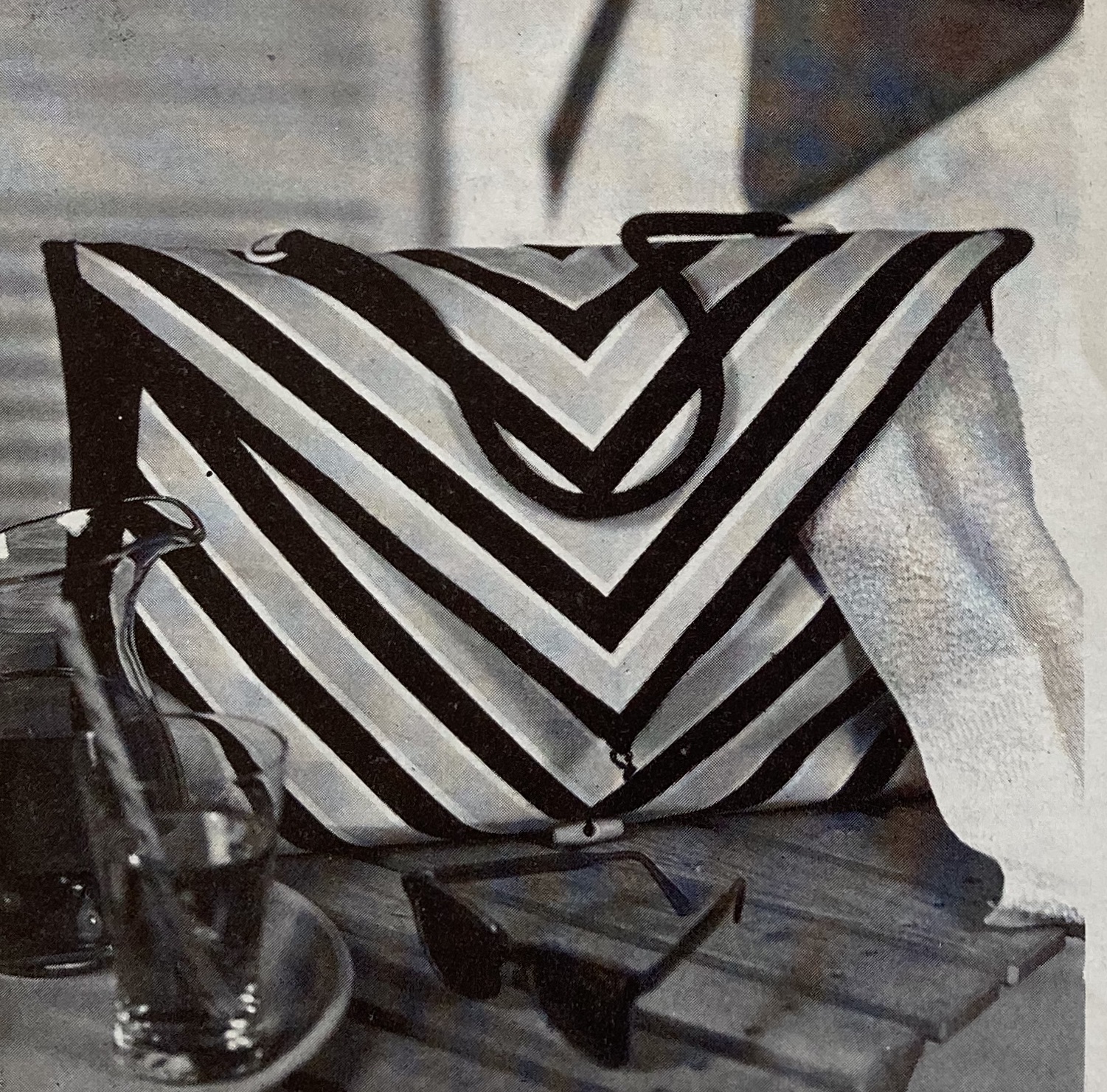
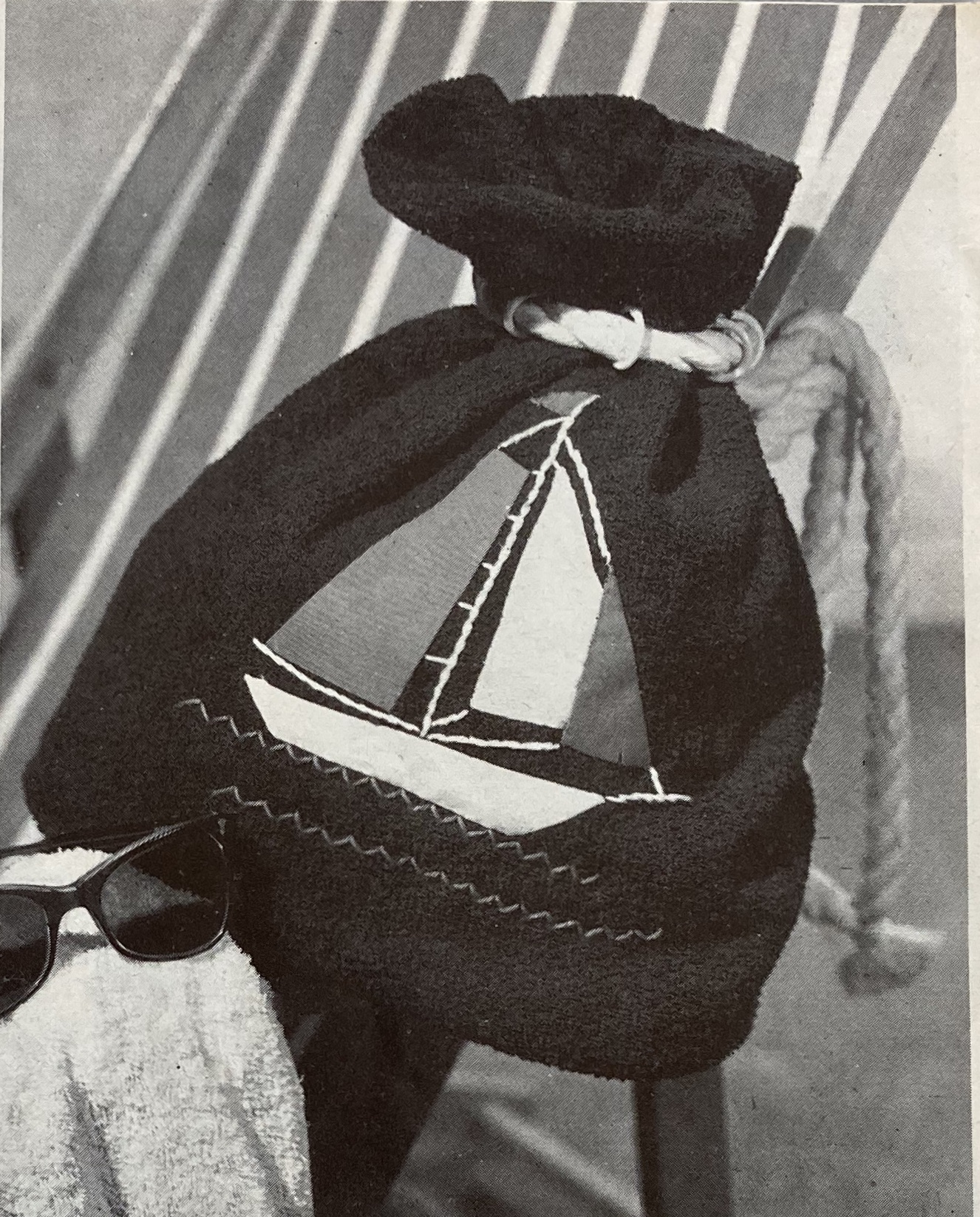
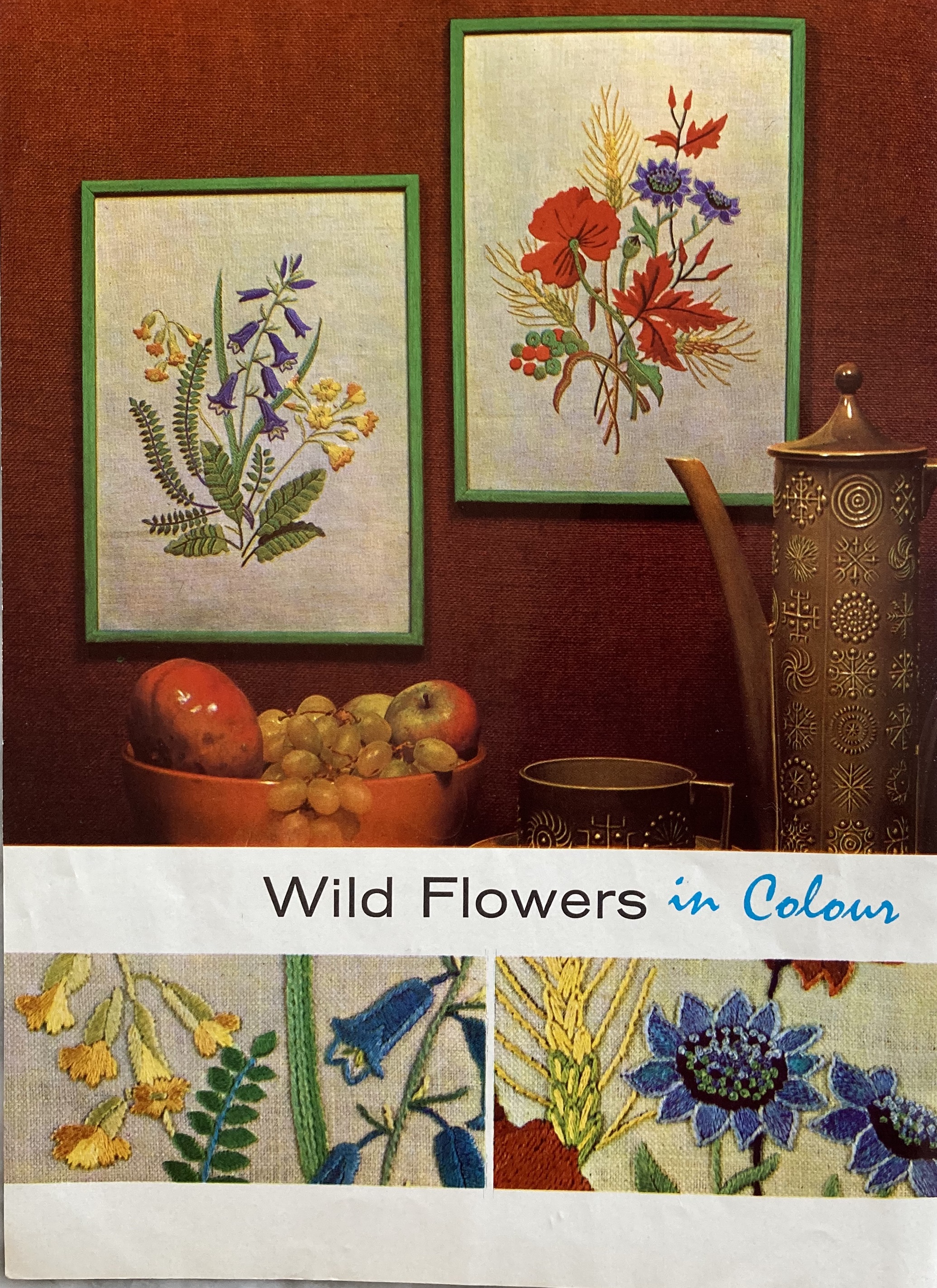
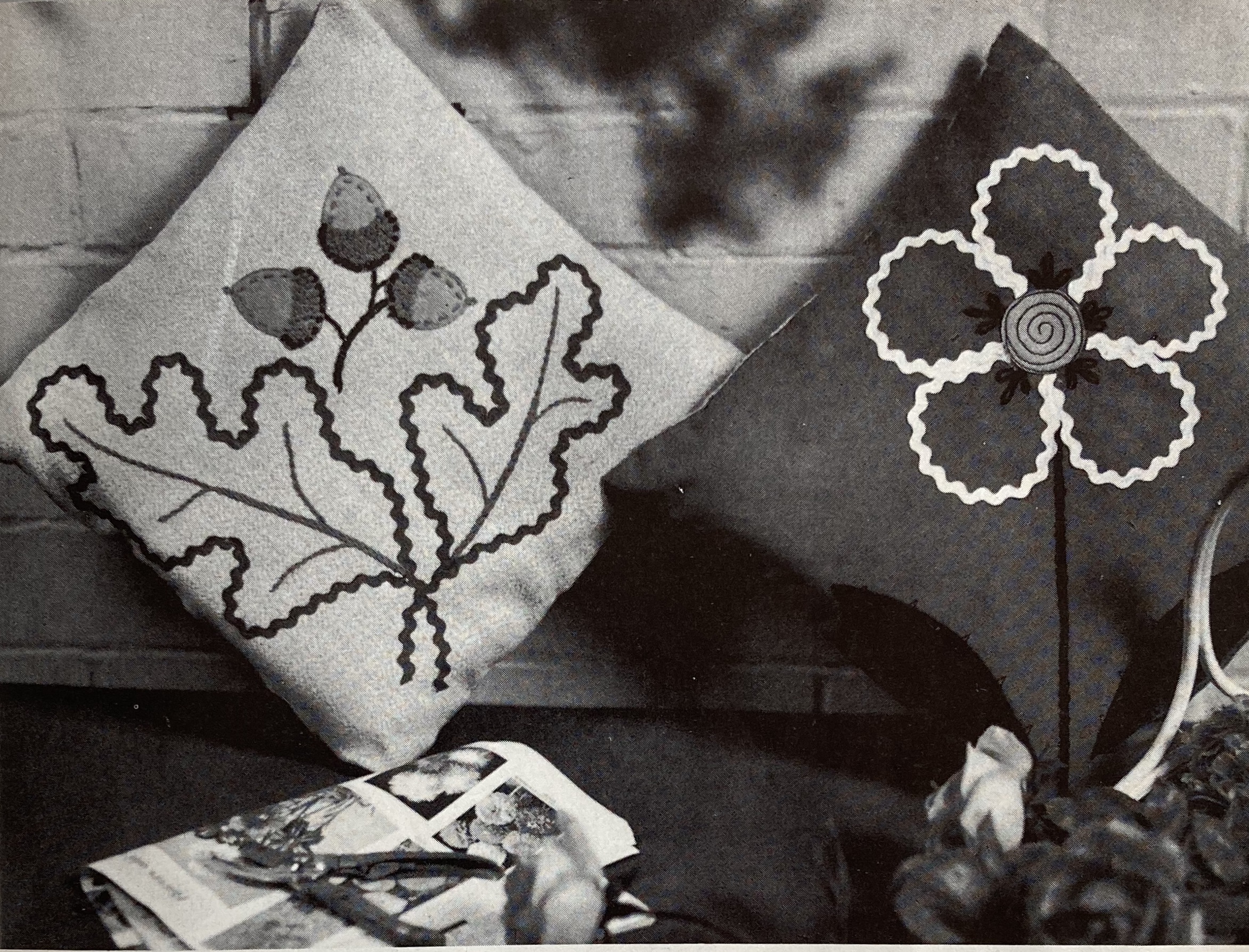
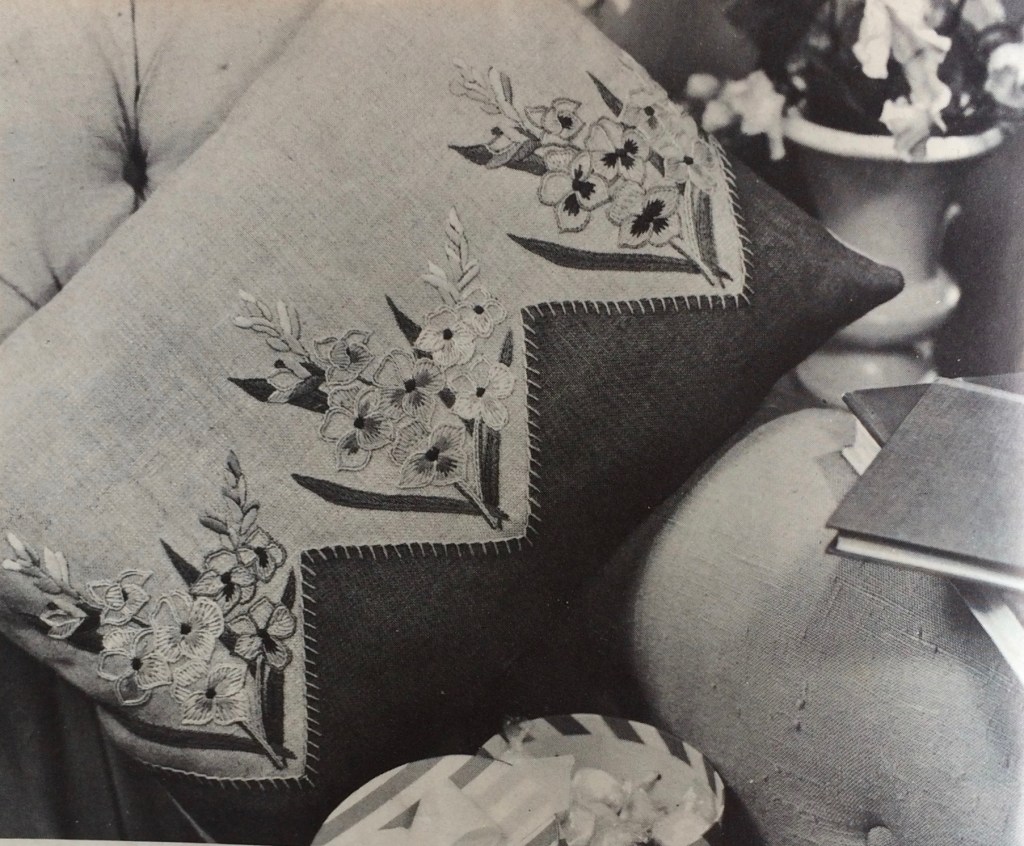
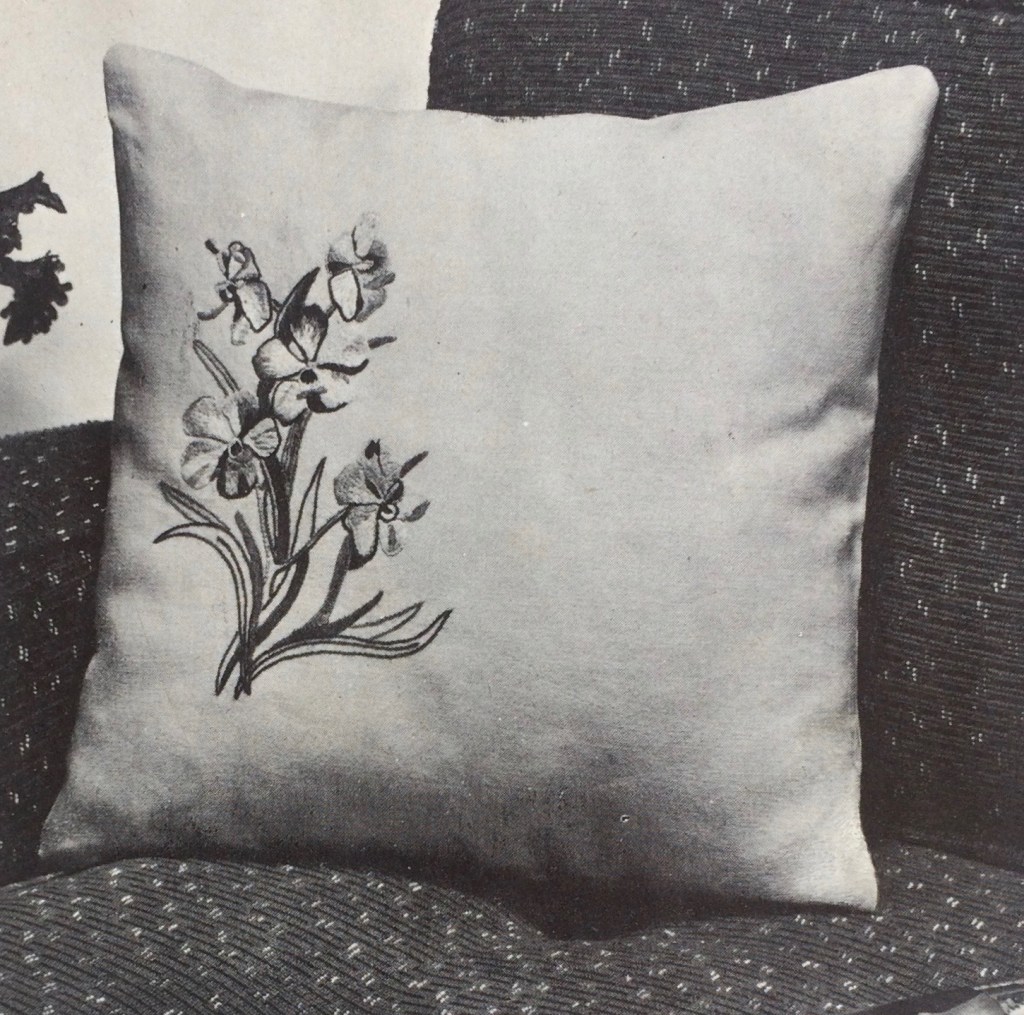
There’s regular embroidery for the home, too (to work on which sunning in your deck-cair, perhaps): an easy cross-stitch book jacket for the Radio Times, another traditional chair-back/cushion design, and some more intricate wall panels with colourful wildflowers.
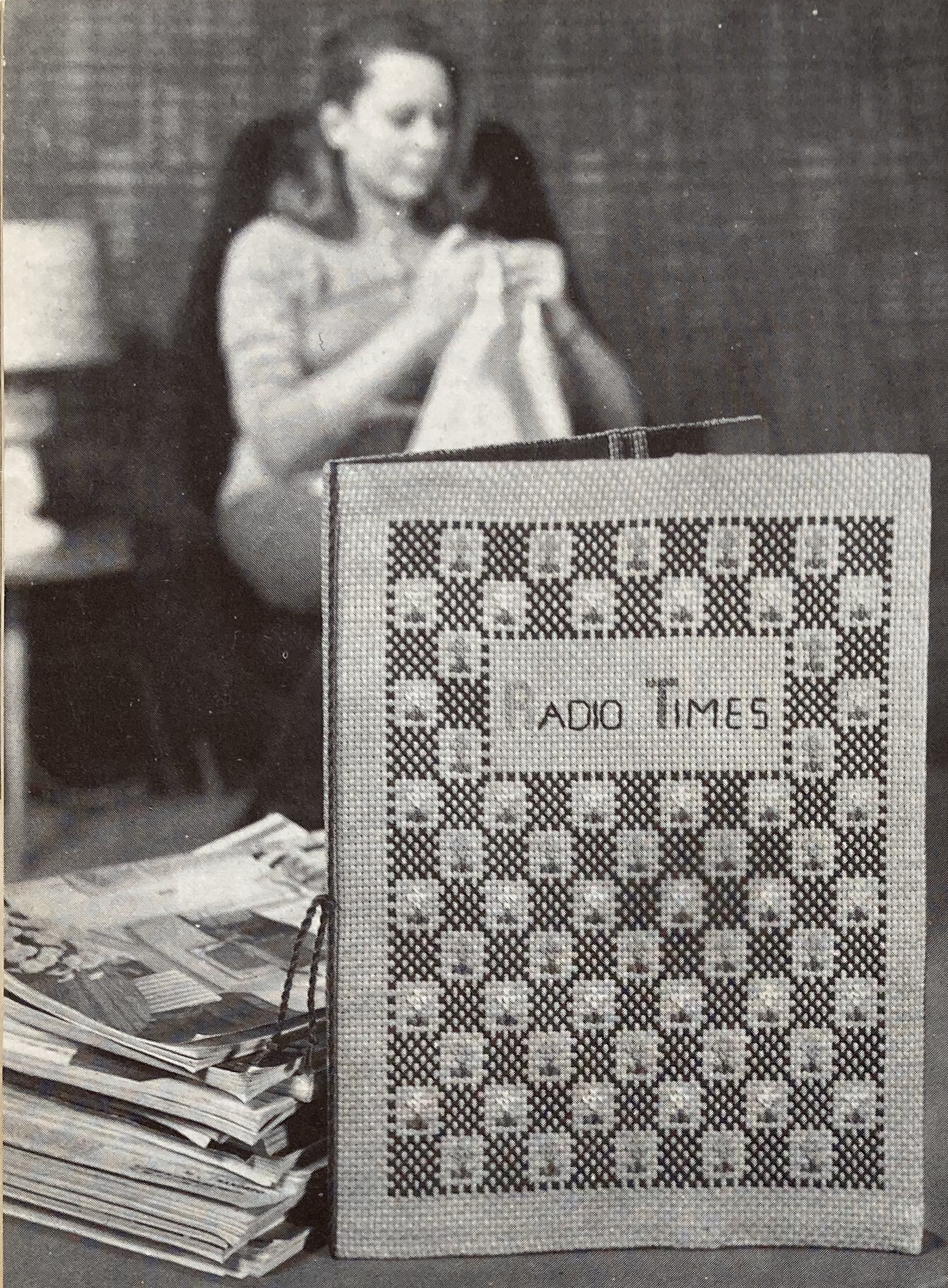
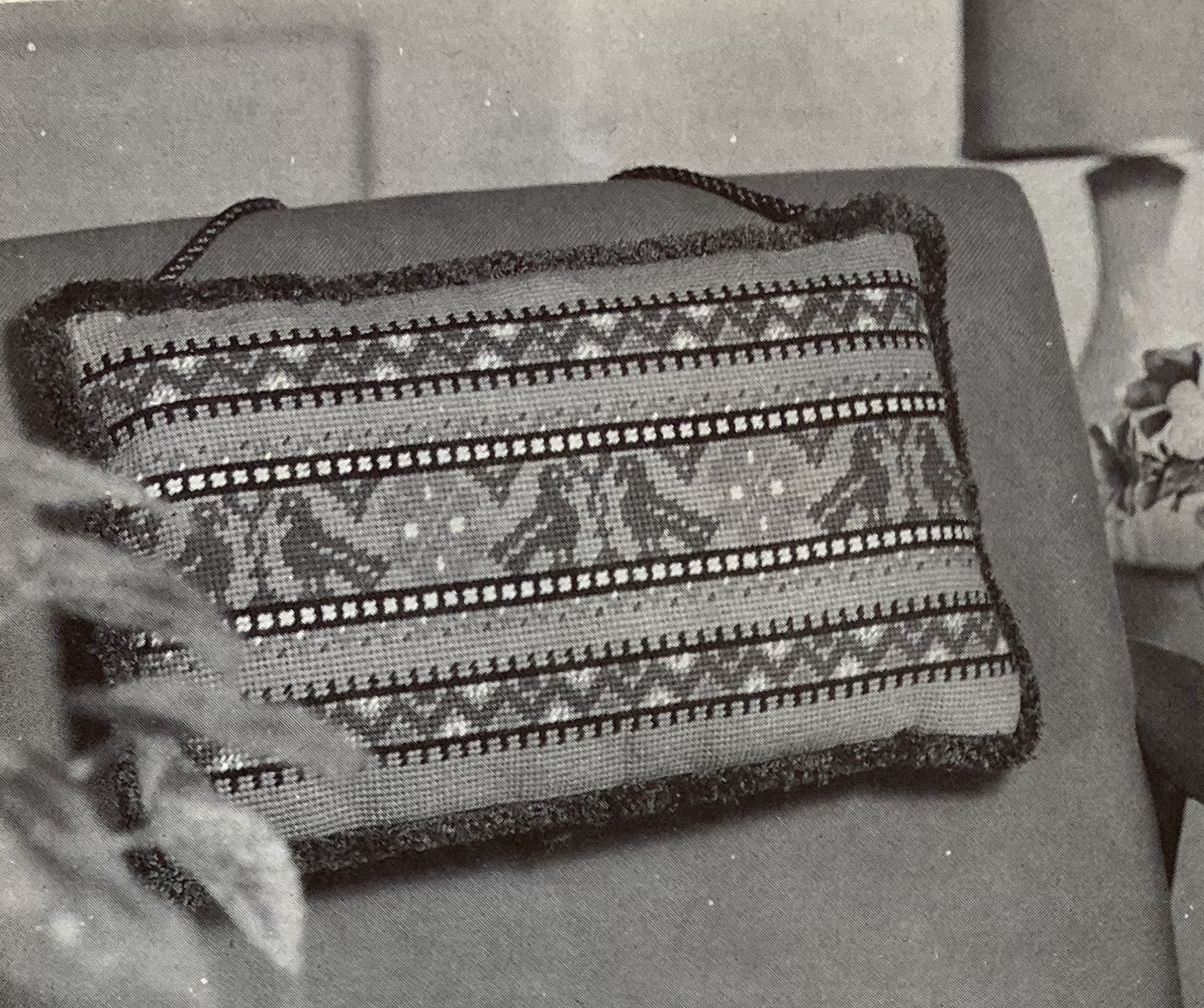
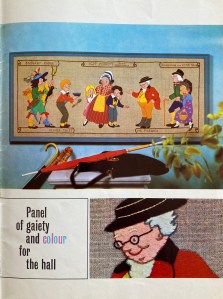
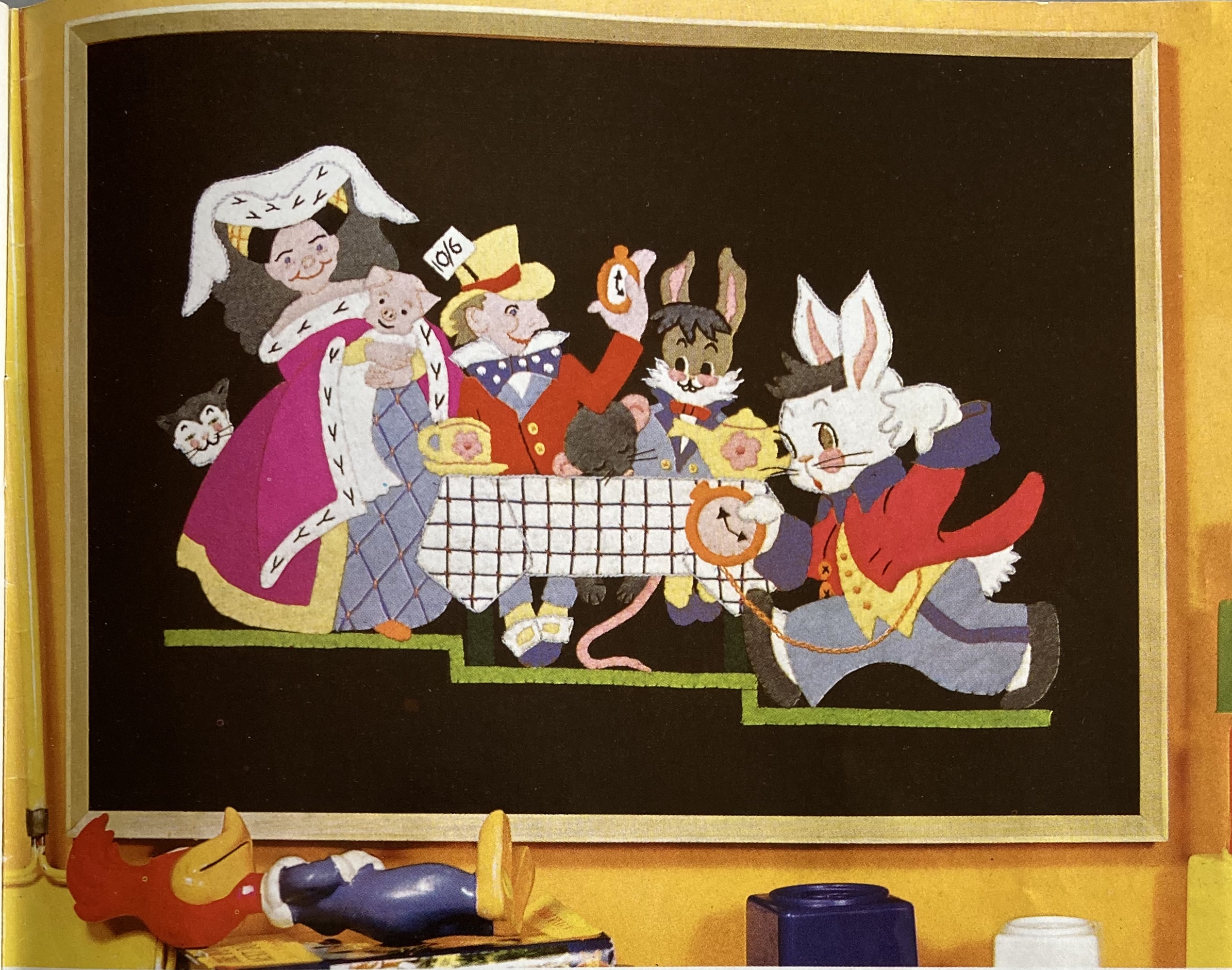
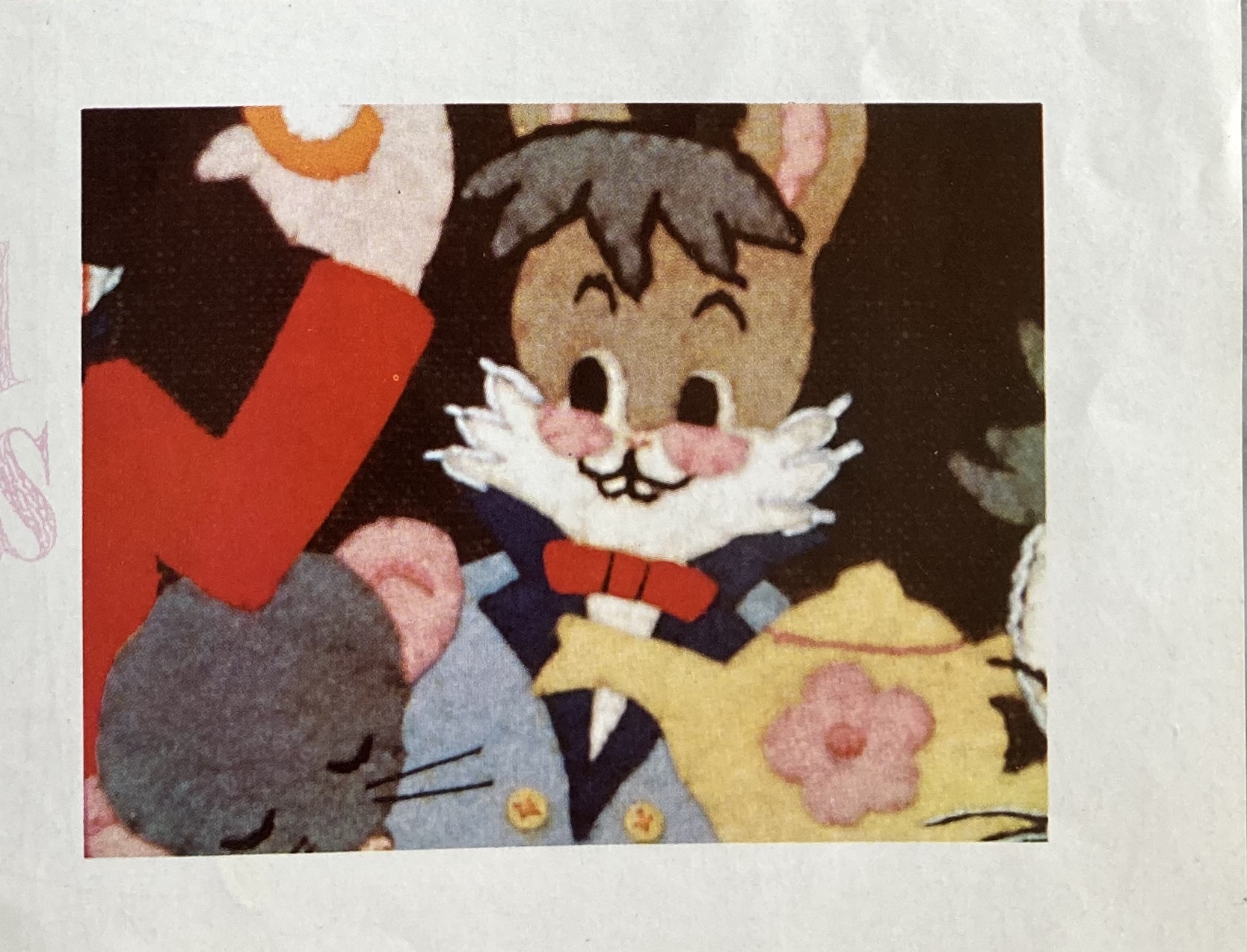
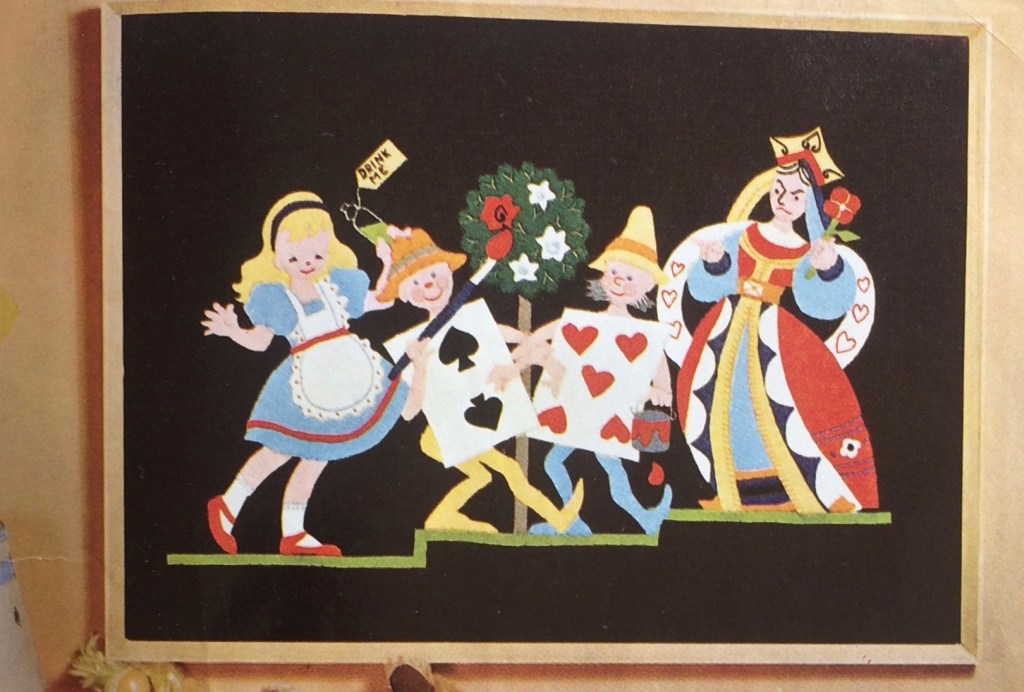
Speaking of intricate wall panels: if all that weren’t enough, there’s another amazing felt appliqué wall panel, this one featuring characters from “favourite books.” That is, if your favourite author is Charles Dickens, which, why not, I suppose? There’s Barnaby Rudge and Oliver Twist from their namesake novels, Peggoty, Little Emily and David Copperfield from his namesake novel, Mr Pickwick from his namesake novel (‘s papers) and Grandfather and Little Nell from… (OK, I admit I had to resort to Wikipedia for this one) The Old Curiosity Shop, one of Dickens’ books which I have heard of, but never read. Anyway, the appliqué is fantastic — just look at the detail photo on Mr Pickwick’s face.
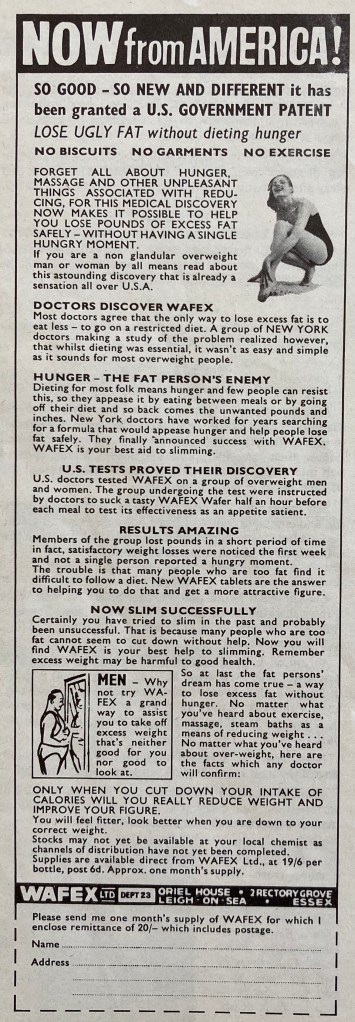
That brings us to the end of our issue, and by the way, if you suffer from unwanted weight gain as a result of all your holiday leisure, why not try sucking on a tasty “WAFEX” wafer half an hour before each meal? I’m suuuuuure it’s not only extremely effective, but also perfectly safe. After all, it’s “SO GOOD — SO NEW AND DIFFERENT that it has been granted a U.S. GOVERNMENT PATENT” ! (Note: I do not actually know what was in these appetite suppressant wafers, but seeing as it was 1964, they could contain anything from sugar to amphetamines to absolutely nothing. Please do not take medical advice from me, or from 1960s knitting-magazine advertisements.)
I would love to make the 4-ply cardigan blouse, but it will take a while, as I have so many unfinished larger projects on the needles at the moment. Until then, enjoy your Spring, Summer, holidays, travel or whatever else May has in store for you.




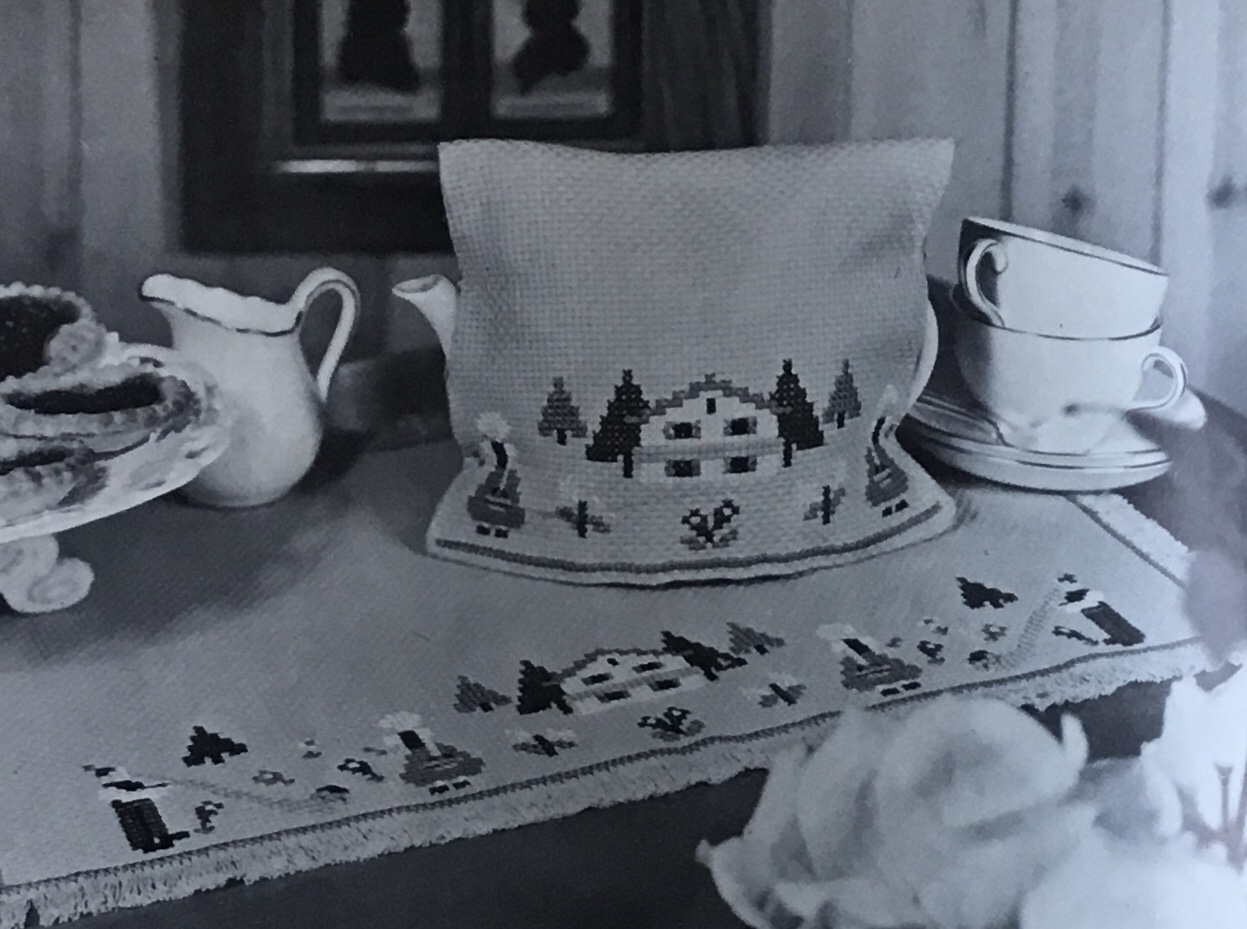
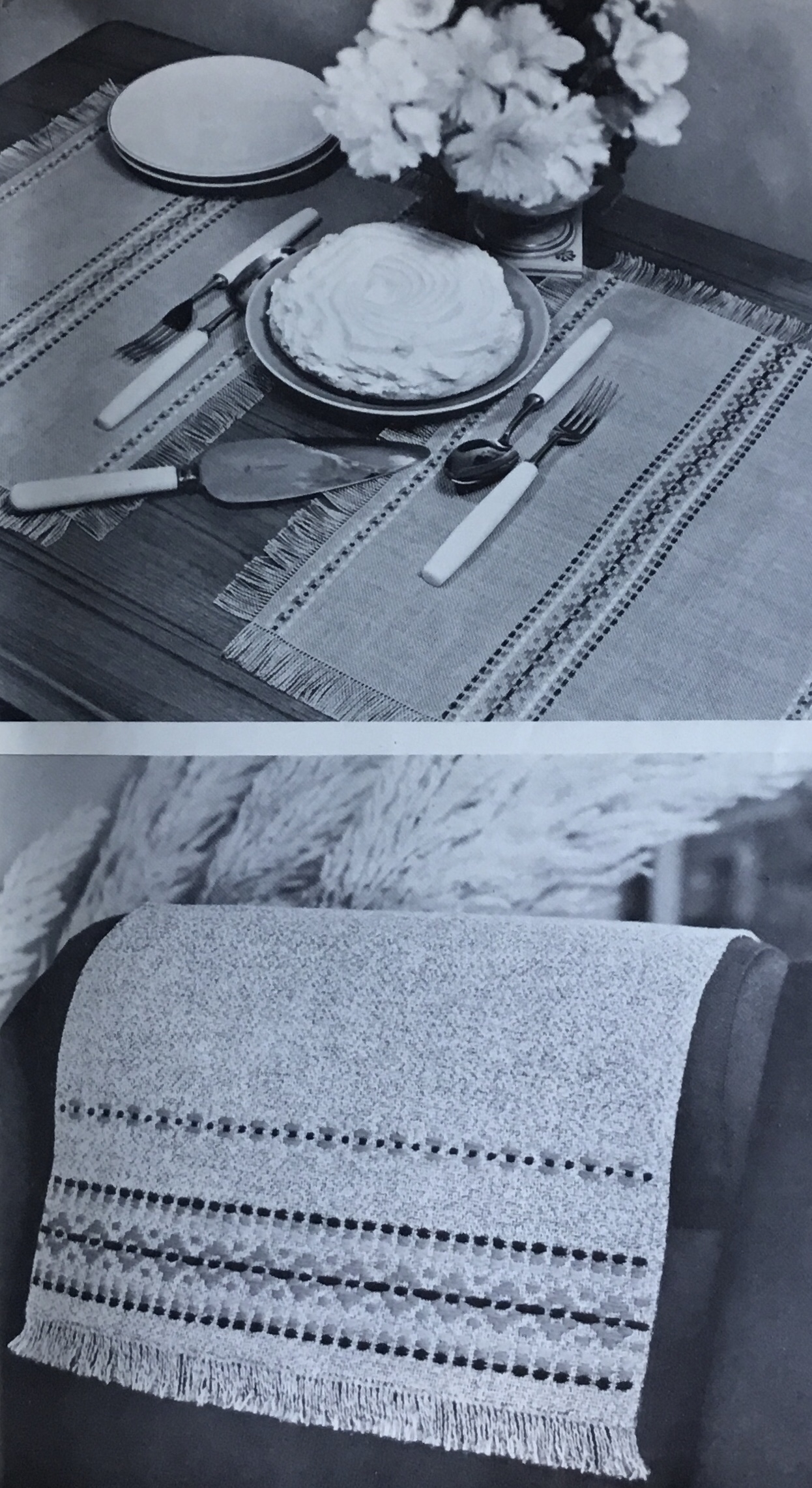
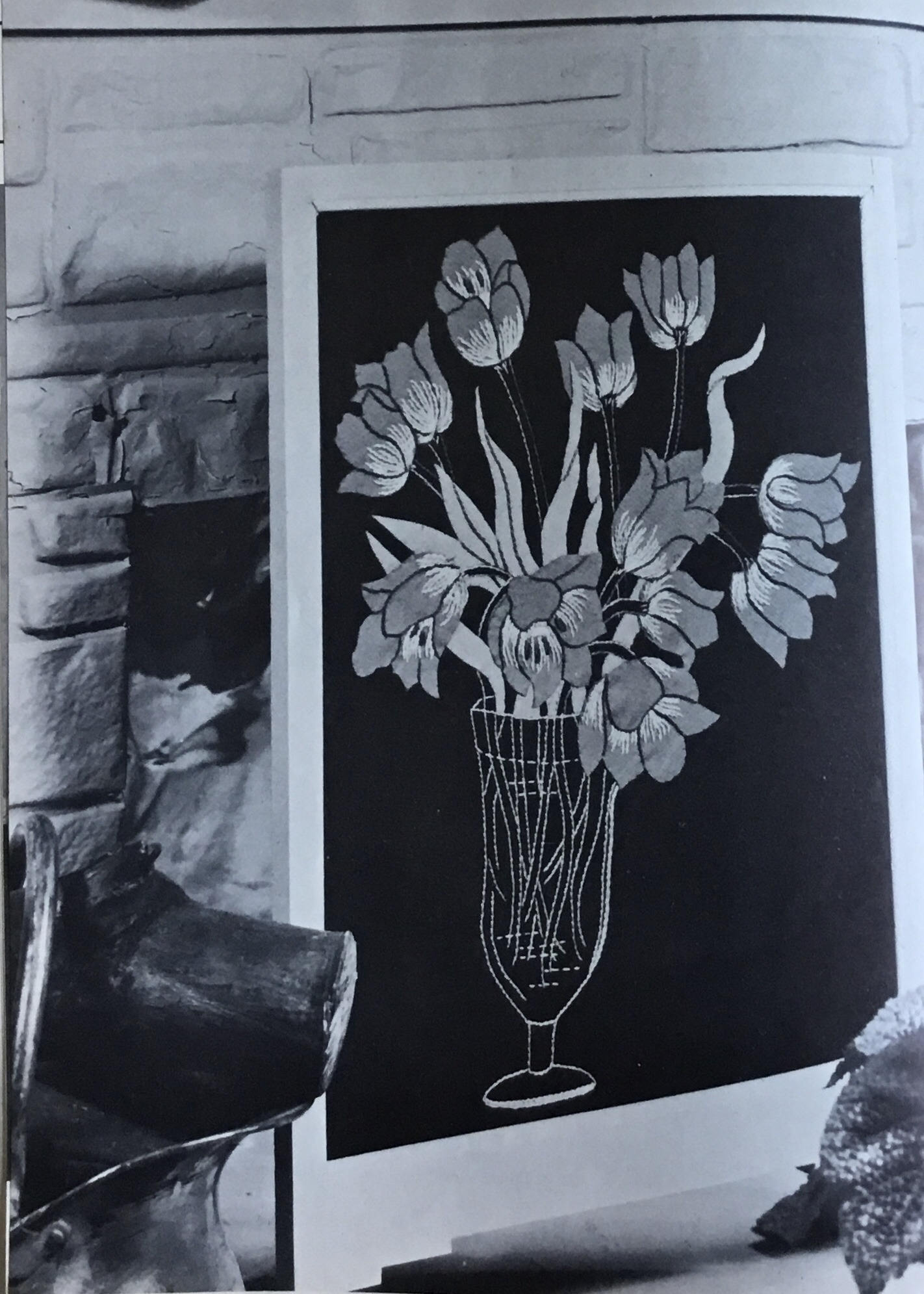




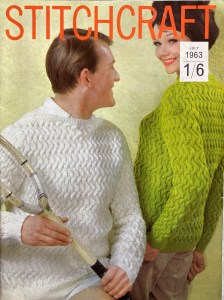
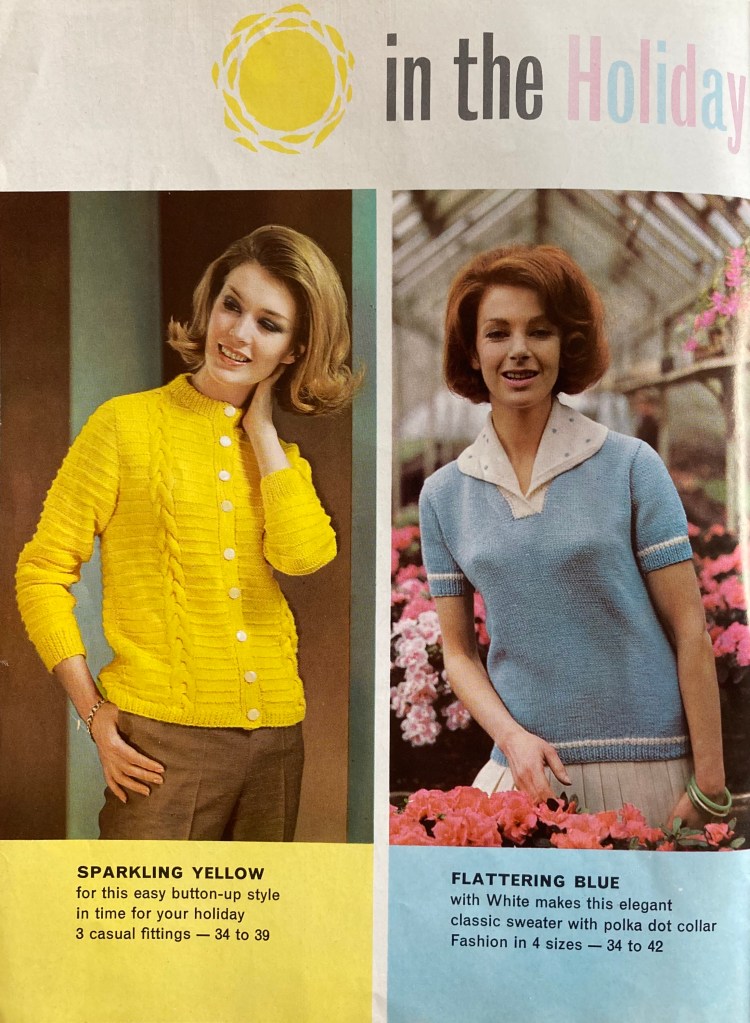
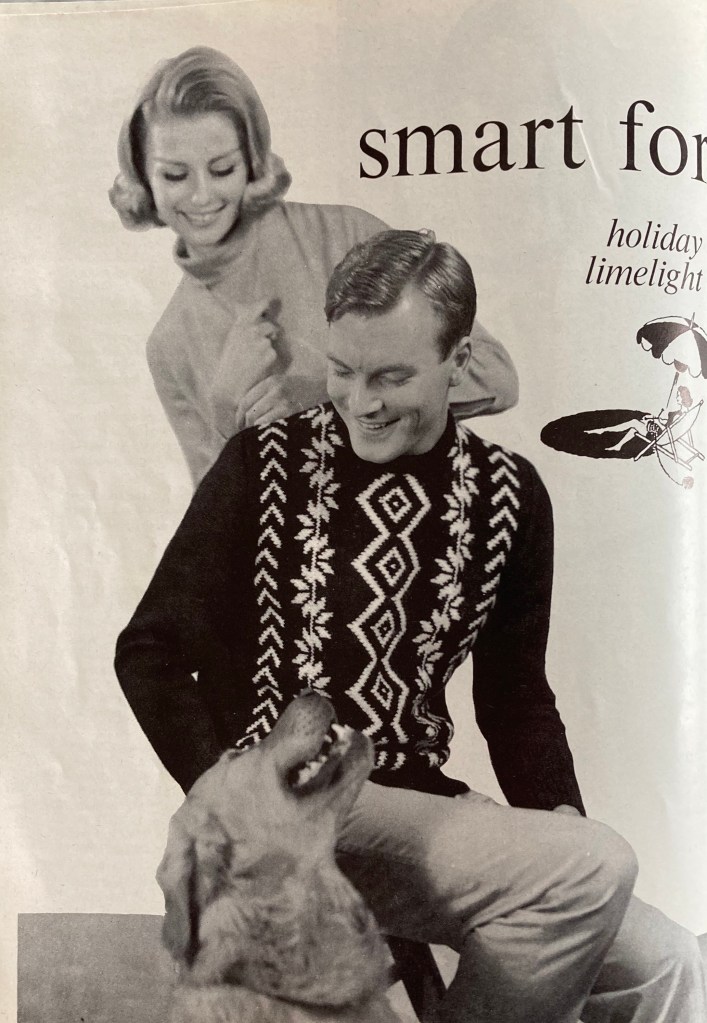



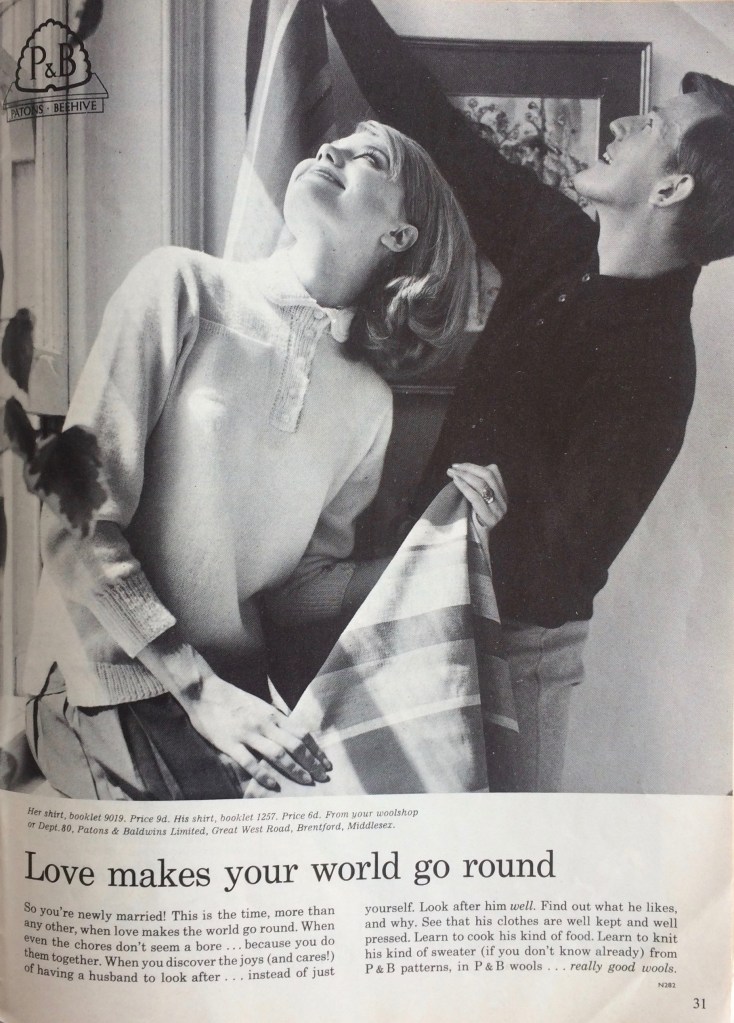
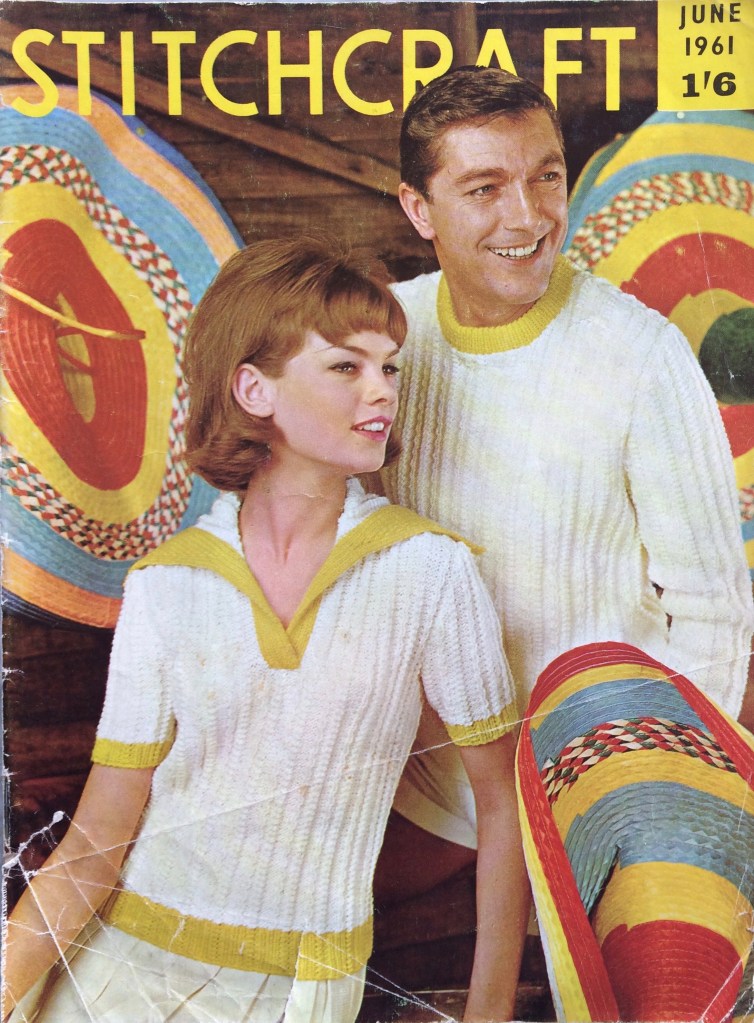
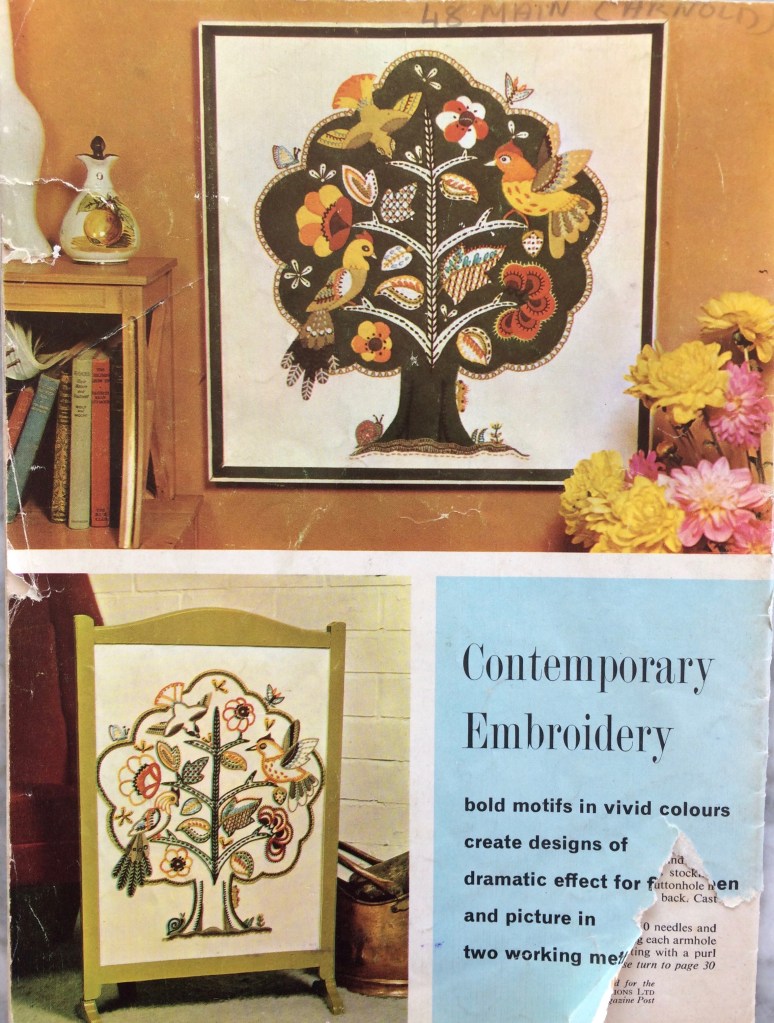
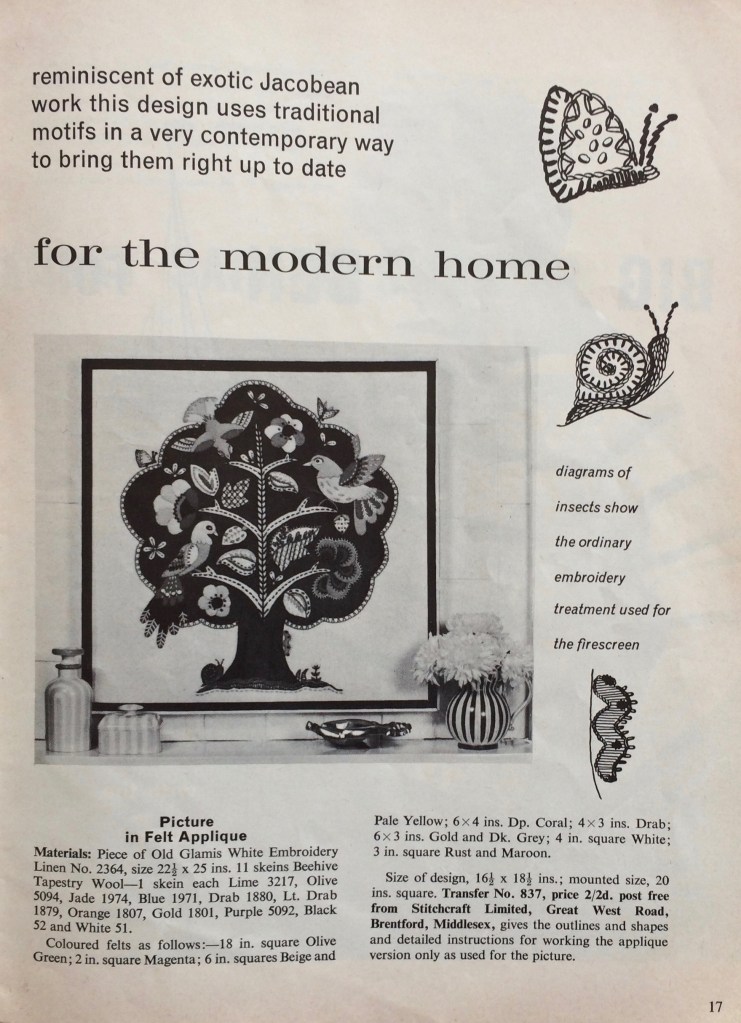
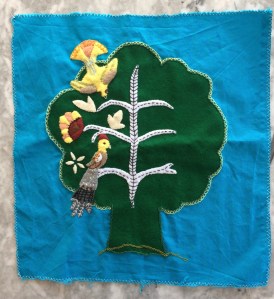
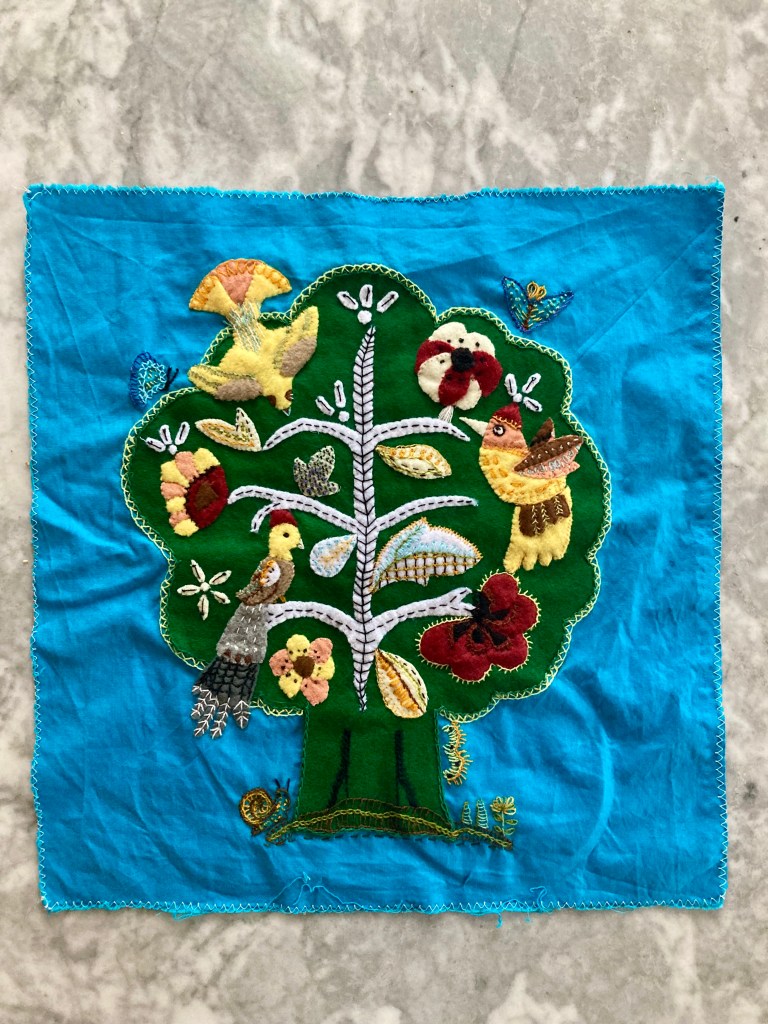
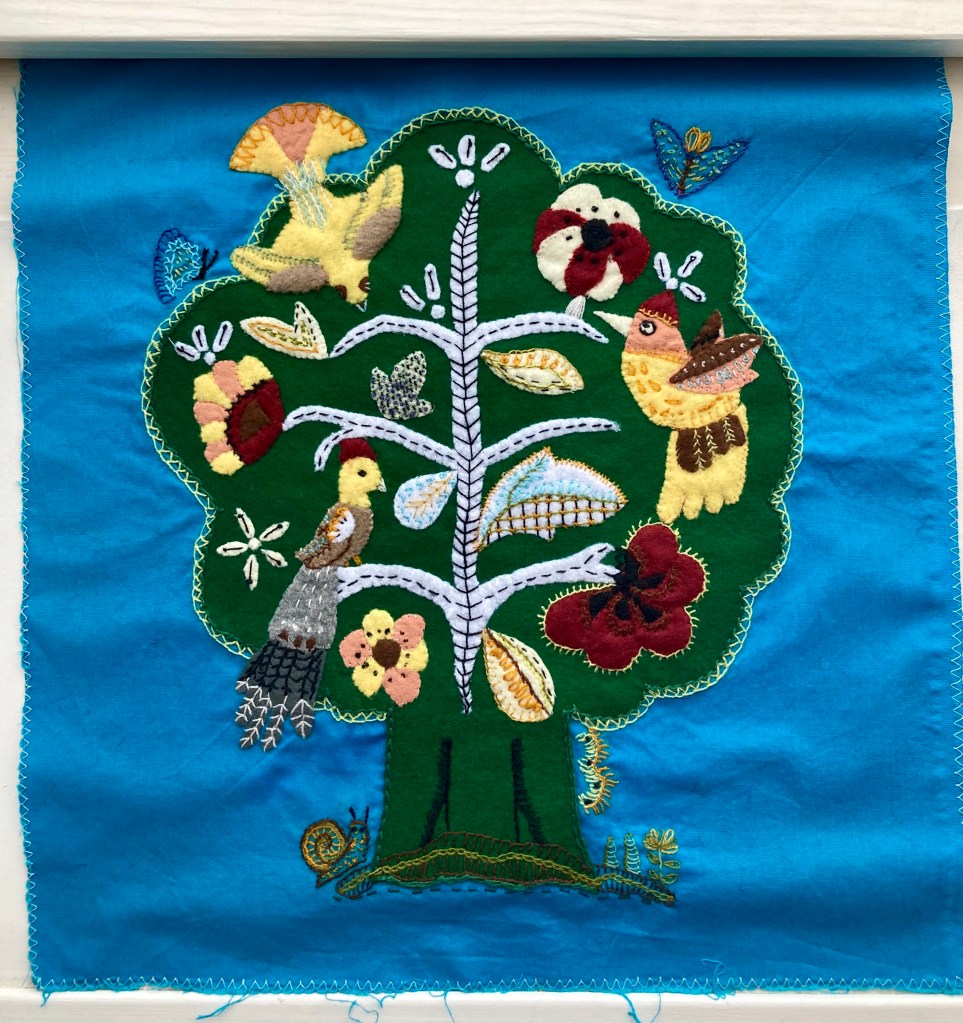

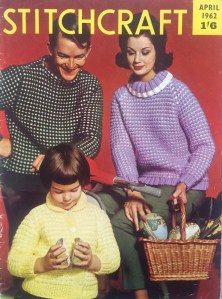 “Easter Greetings” from Stitchcraft, April 1962! According to “editress” Patience Horne, “everyone is getting that “out-of-doors” feeling”. I and my fellow compatriots from 2020 have had a very much in-doors feeling for the last few weeks, as we watch Spring unfold from our quarantine windows.


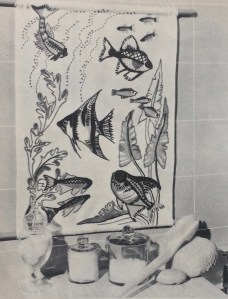 Springtime also means spring cleaning, and Easter means presents and


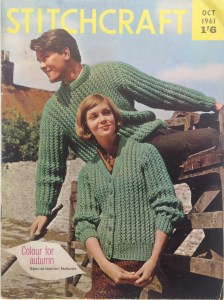 October 1961 gives us “Colour for autumn” with “special fashion features” and a great center spread with colour photos. “I always think October is a nice friendly month,” writes “editress” Patience Horne on the facing page, and I have to agree.
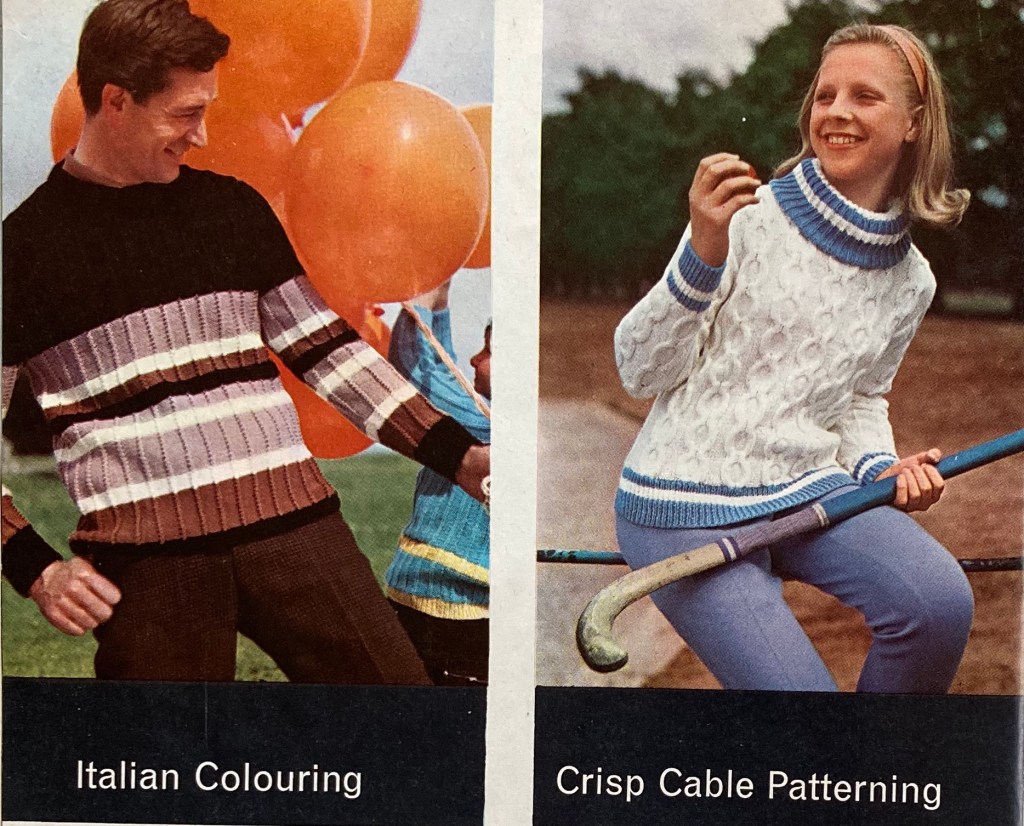
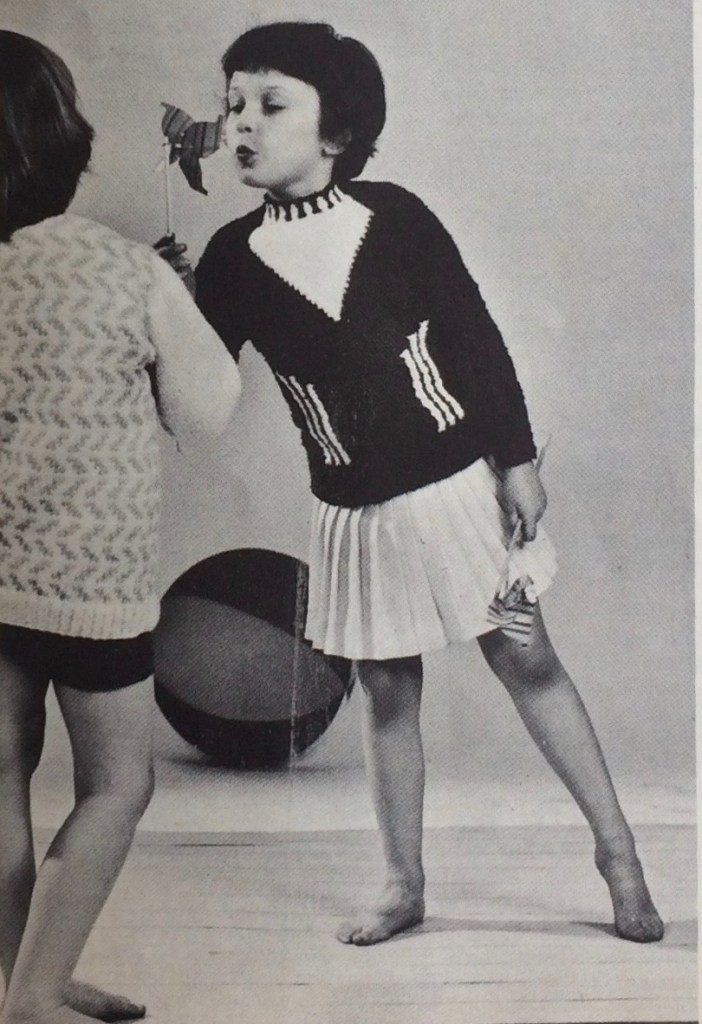
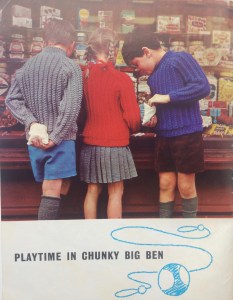 stitches play a prominent role in this month’s issue, starting with the partner-look pullover and cardigan on the front cover. Both are made in the same drop-stitch rib pattern — basically 2×2 ribbing, but you drop a stitch down 3 rows every 4th row and pick it up again in the next row to make a long vertical rib. Children get twisted-rib raglan pullovers to keep their upper bodies nice and warm while their legs freeze in tiny shorts and mini-skirts, typical for the era.




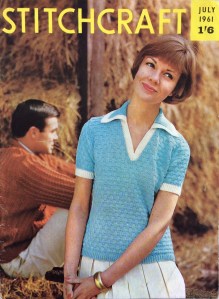 The motto of the July 1961 issue is “Sew through the Summer” and indeed, there are a lot more sewing projects than one would normally find in Stitchcraft, summer being a time when many people do not want to hold wool in their hands or think about colder weather to come. There’s more emphasis on homewares and small, fun projects to make and use on holiday. The farm photos were taken in Hertfordshire and the boating photos in “the heart of London’s Little Venice”. Doesn’t that sound like fun? Let’s dive in!
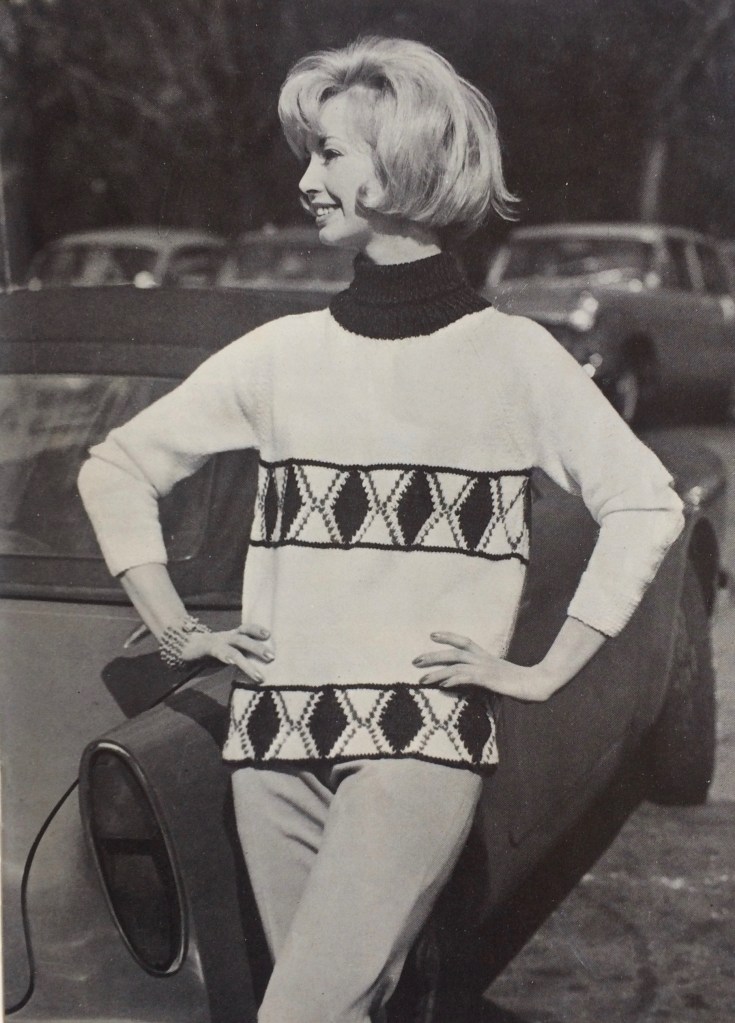
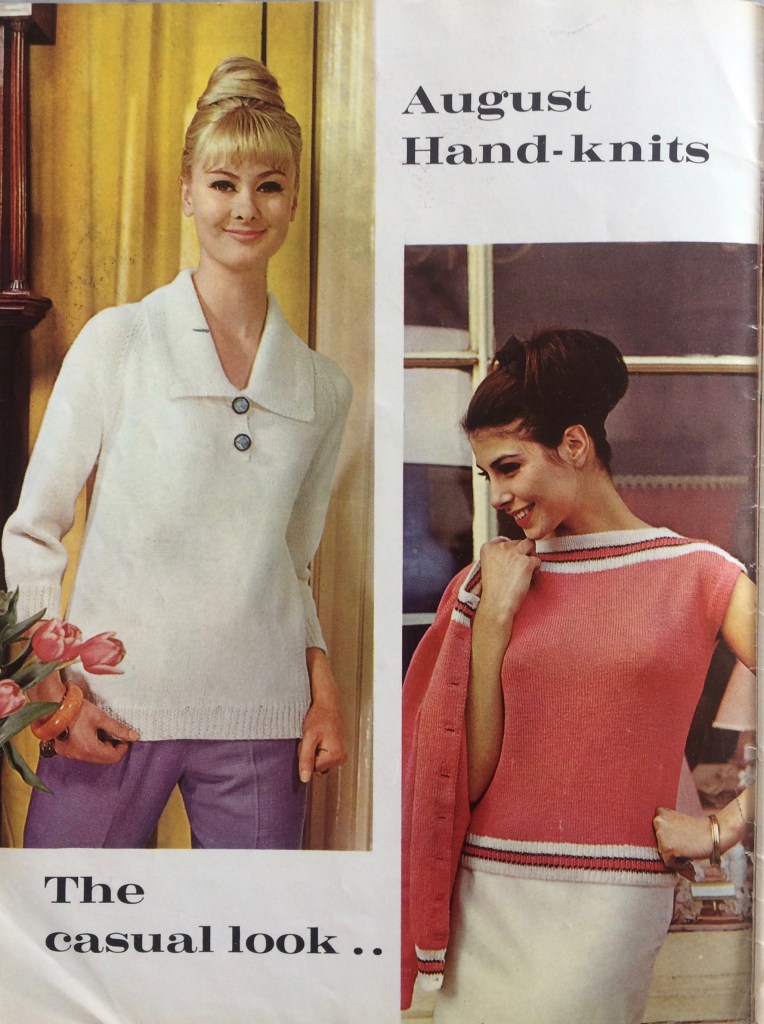
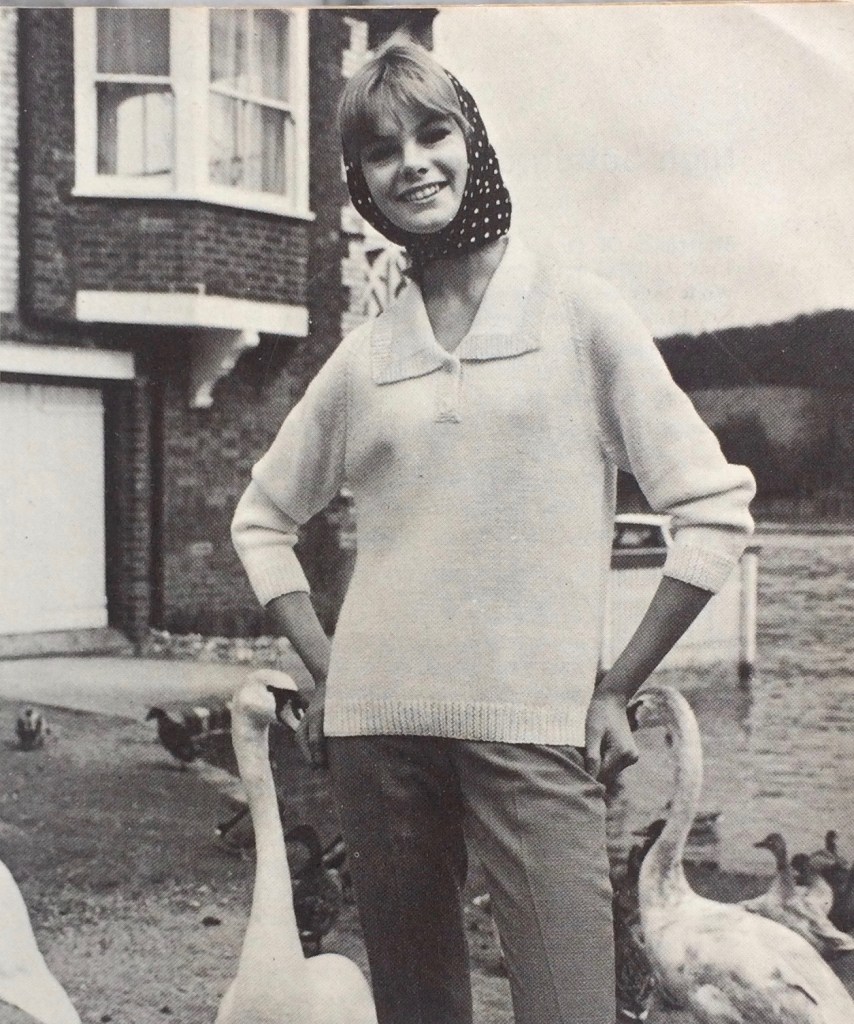
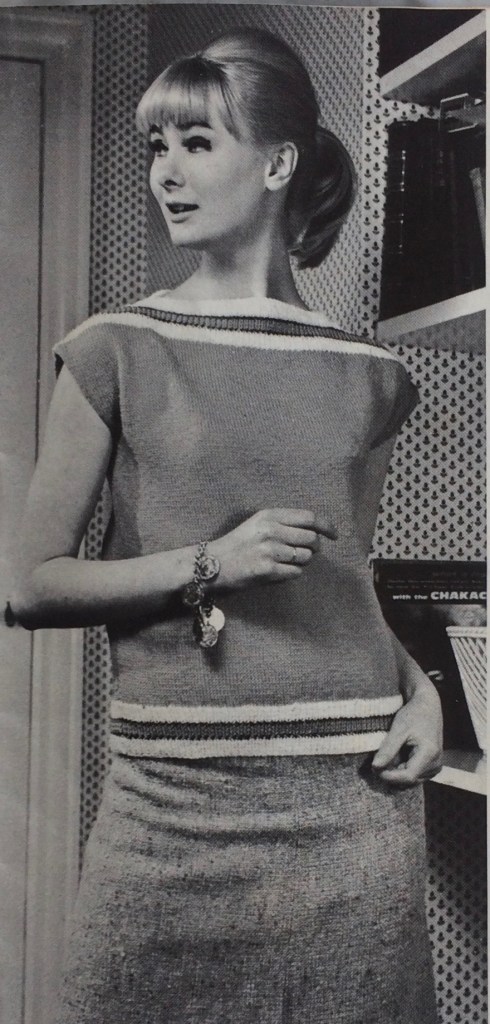
 a really pretty basketweave blouse with that V-neck-plus-collar design that we saw so much of in 1960 and the last years of the 1950s, not to mention just last month on the cover of the


 This is definitely a “cosy of unusual charm”! (Despite the ripped corner on the back cover photo.) It features appliqué and embroidery with different designs on each side and instructions to make it up into either a regular cosy to put over the teapot, or a “nest” to put the teapot into.


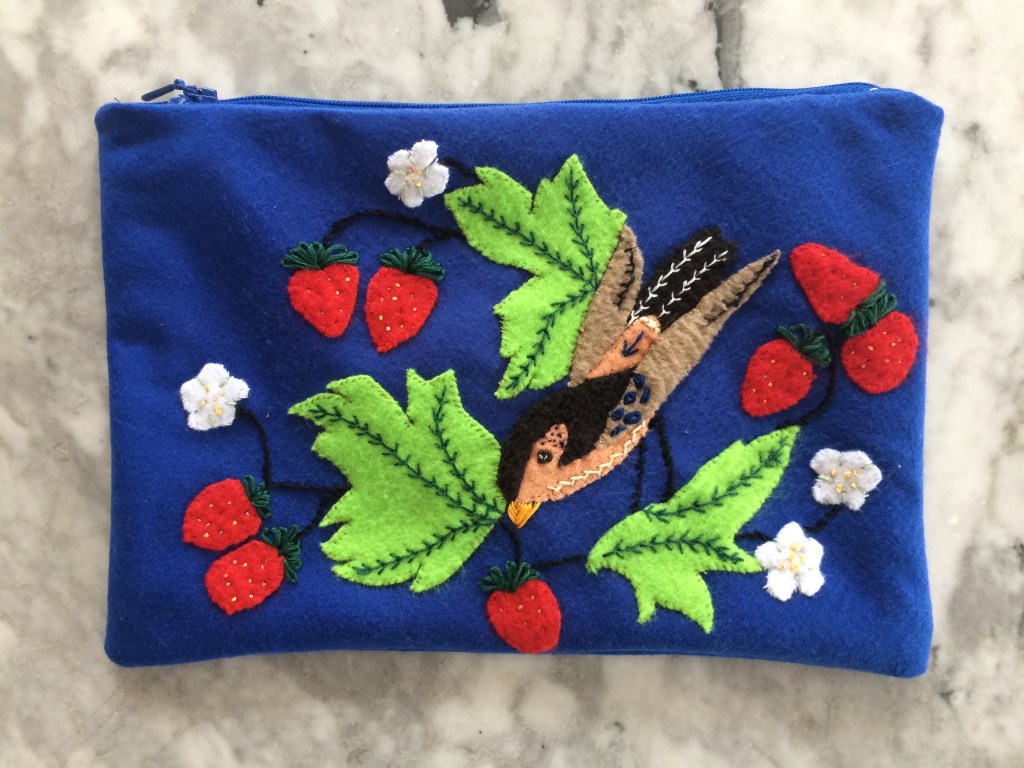
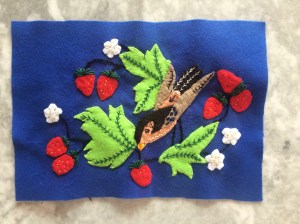 bit of herringbone and the tiny straight stitches in the strawberries. Still, it was more ambitious than any embroidery I have tried up until now. It doesn’t look quite like the picture and I did take a little bit of licence, but on the whole I was pretty satisfied… except for the legs. Oh dear, oh my, oh no, the legs. I did them three times and they still look weird. Either the angle is wrong, or the thickness, or I don’t know what, but I figured doing it again would only chew up the fabric more, so it is what it is.



 Is it already May? Nothing makes time fly like writing monthly blog posts! May 1960 is a “Roundabout of Holiday Knitting” (complete with a little circus-fair logo that fills up any little dead space in the page formatting, how cute) where in “today’s story”, “no one thinks of going away without 2 or 3 brand-new woollies packed away in their luggage.” So let’s get started…
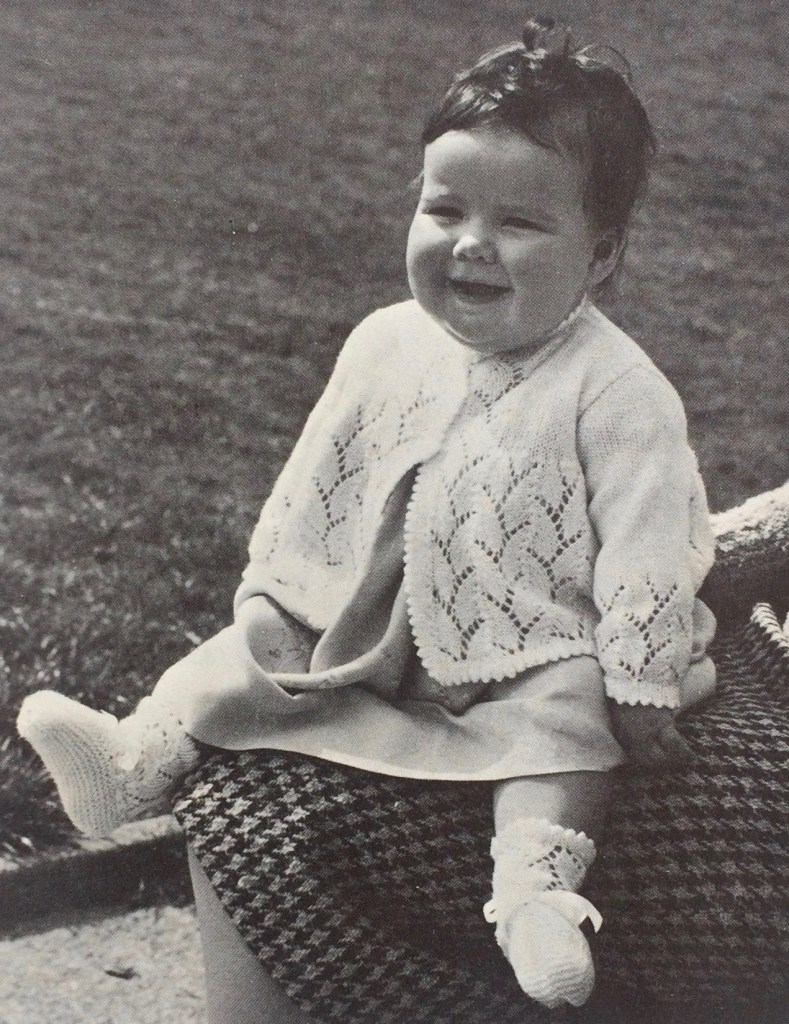
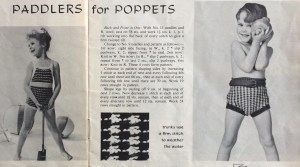 I am quite sure no small child wants to swim in hand-knitted wool trunks with a belt these days, but I imagine the sun-suit on the opposite page would be fun and practical for beach wear if made in cotton. The baby and older girls of the family get pretty cardigans or a tunic “to wear with her jeans.” I’m glad to see activewear for girls, since generally one is assumed to make pretty, decorative stuff for girls and strong, “manly” stuff for boys — sexism that is not surprising in 1960, but which always depresses me to see in today’s knitwear patterns for children.


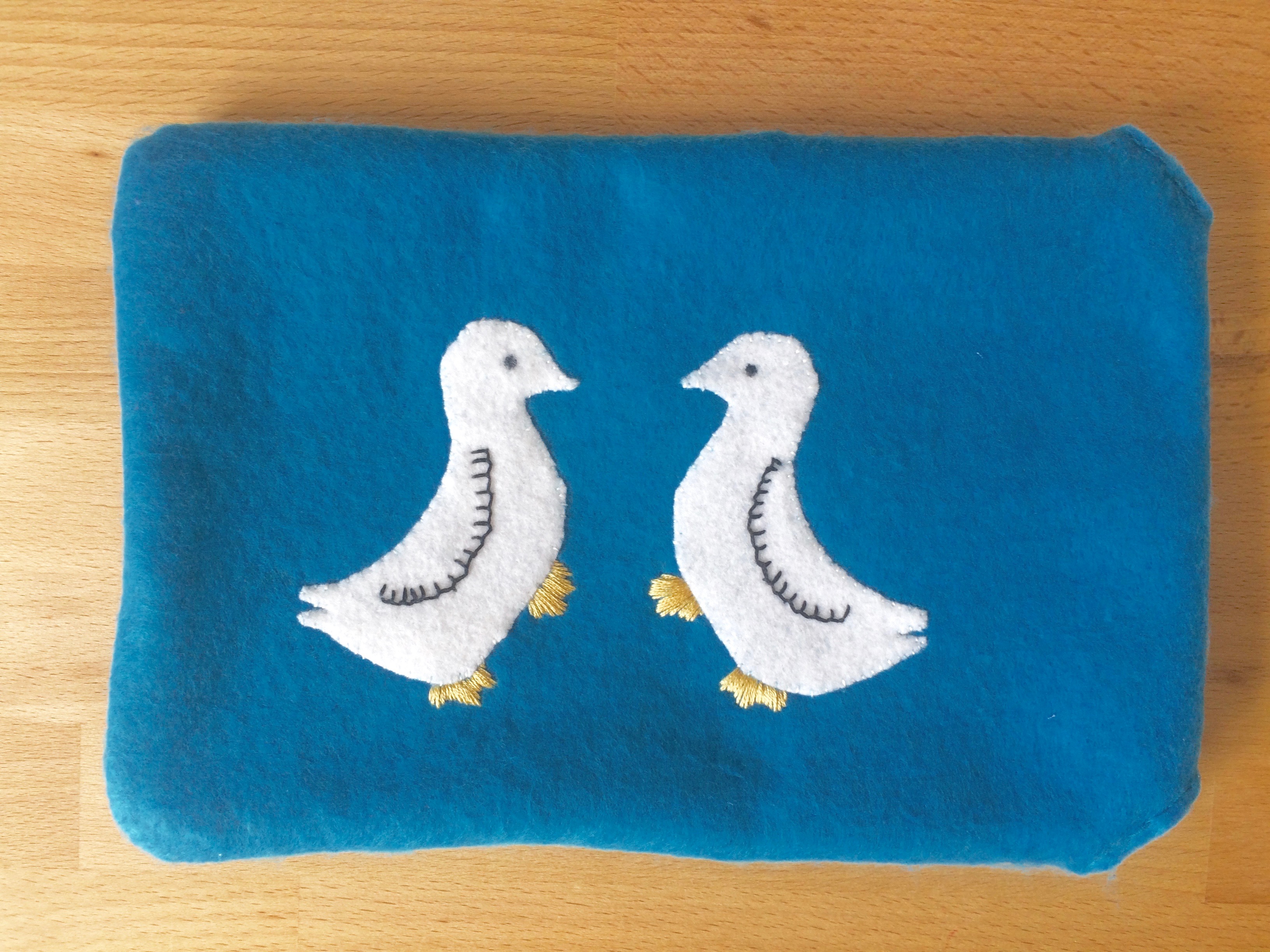
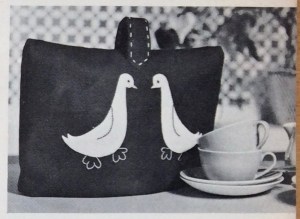 “Cheerful goslings make gay kitchen ideas” — who could resist? There are patterns for a serving glove and a felt tea cosy, neither of which I particularly needed, but the tea-cosy pattern is just about the right size for an iPad case. So this became the modern version.


 The Stitchcraft Sixties