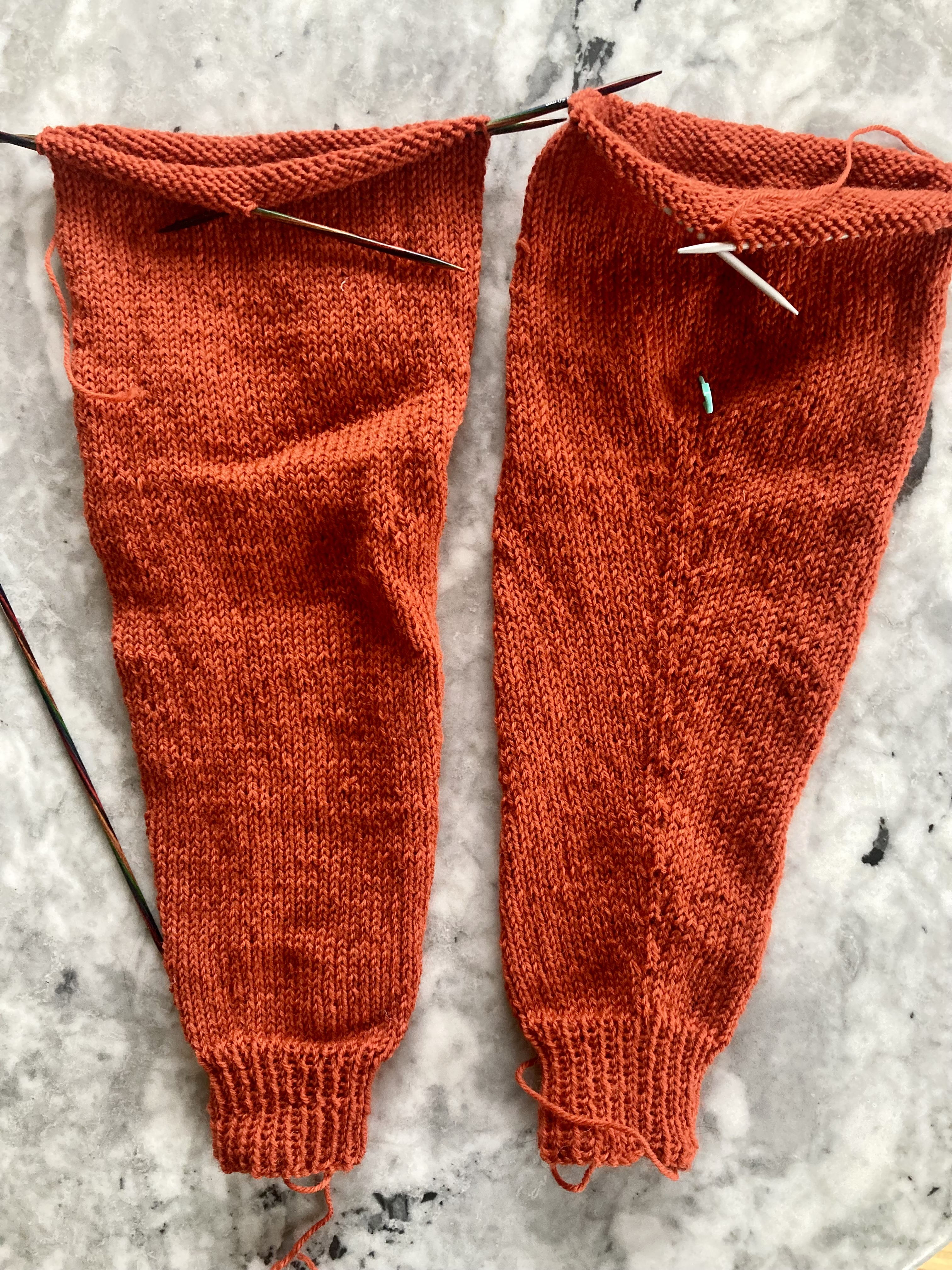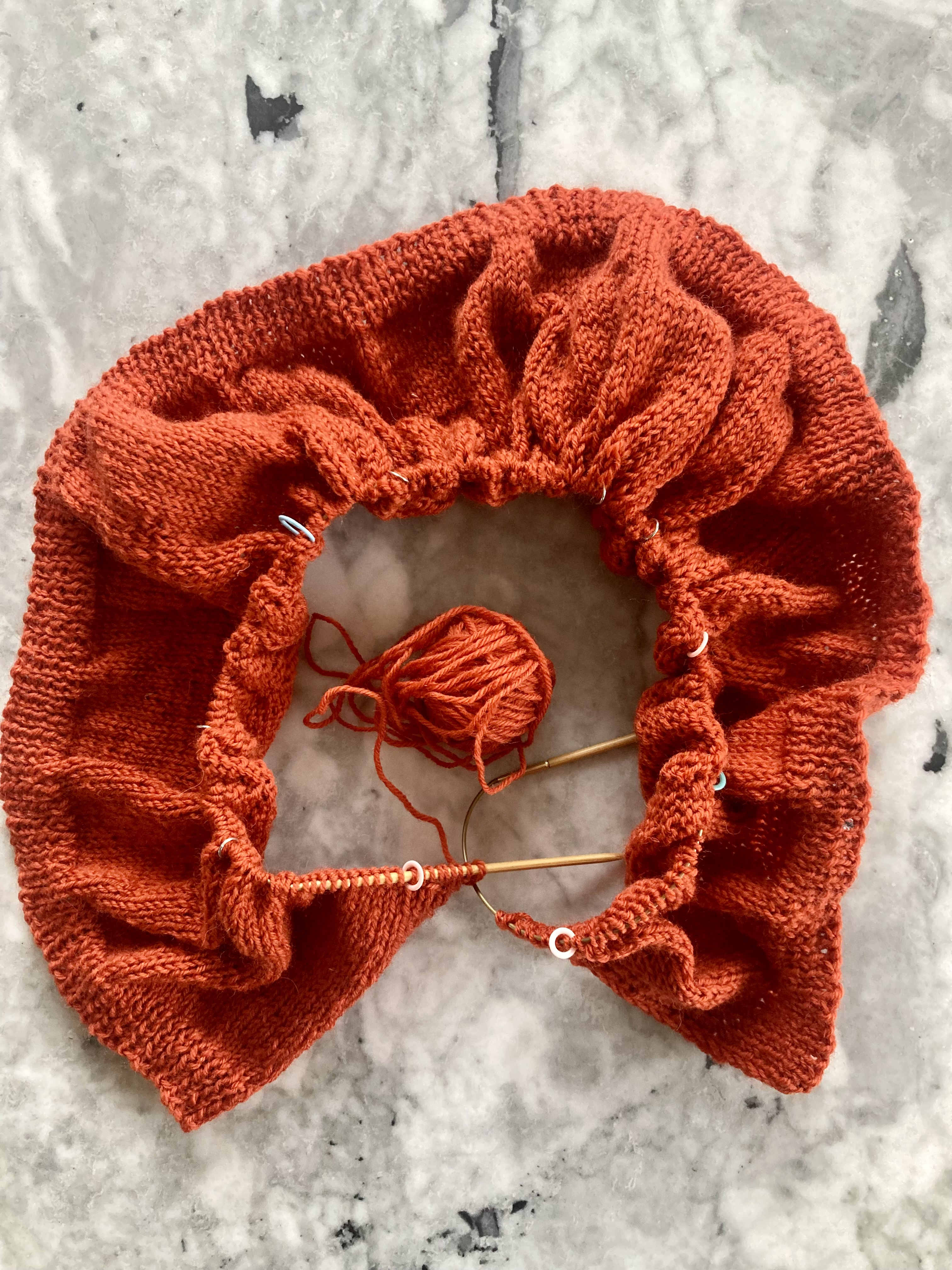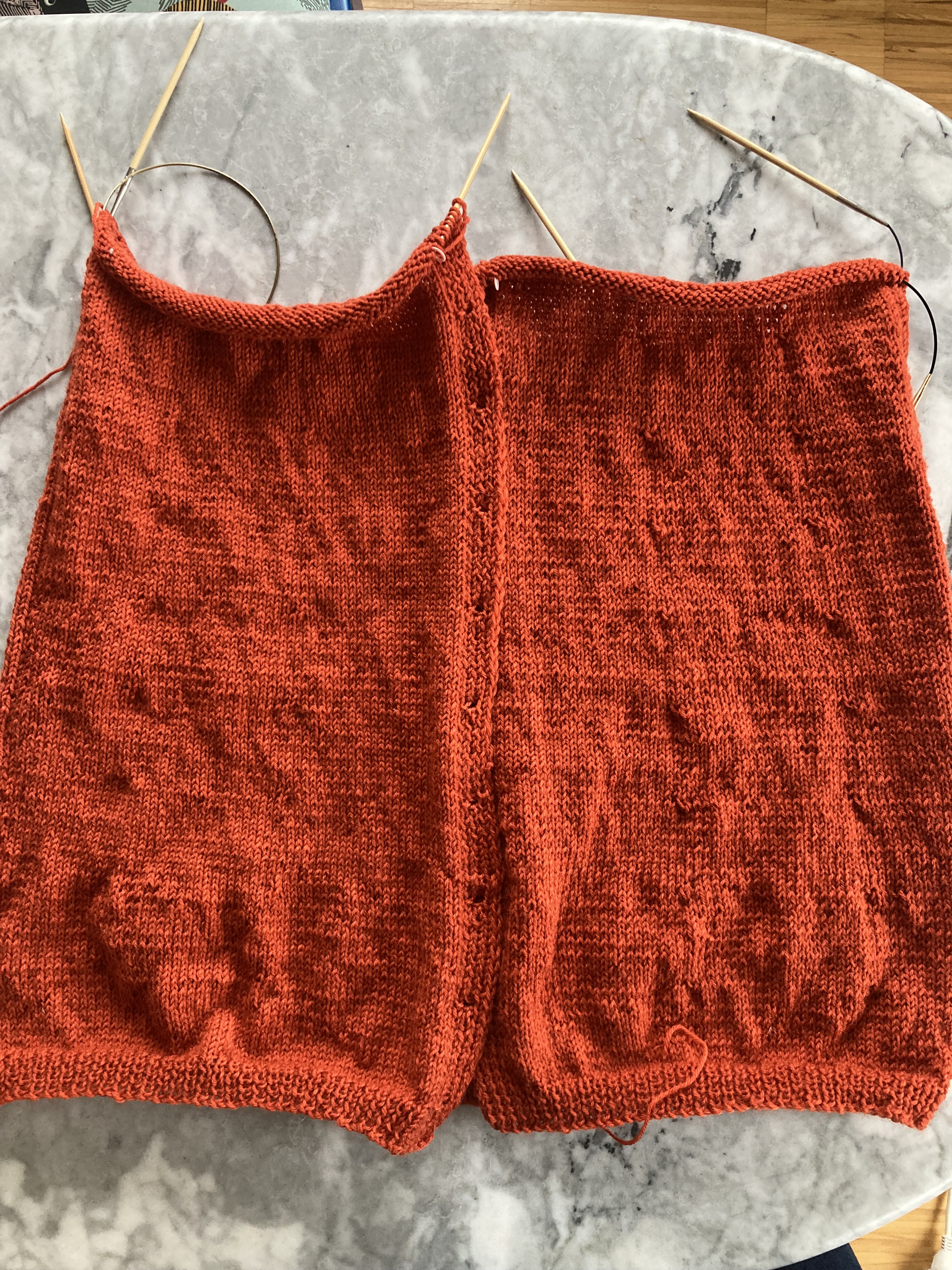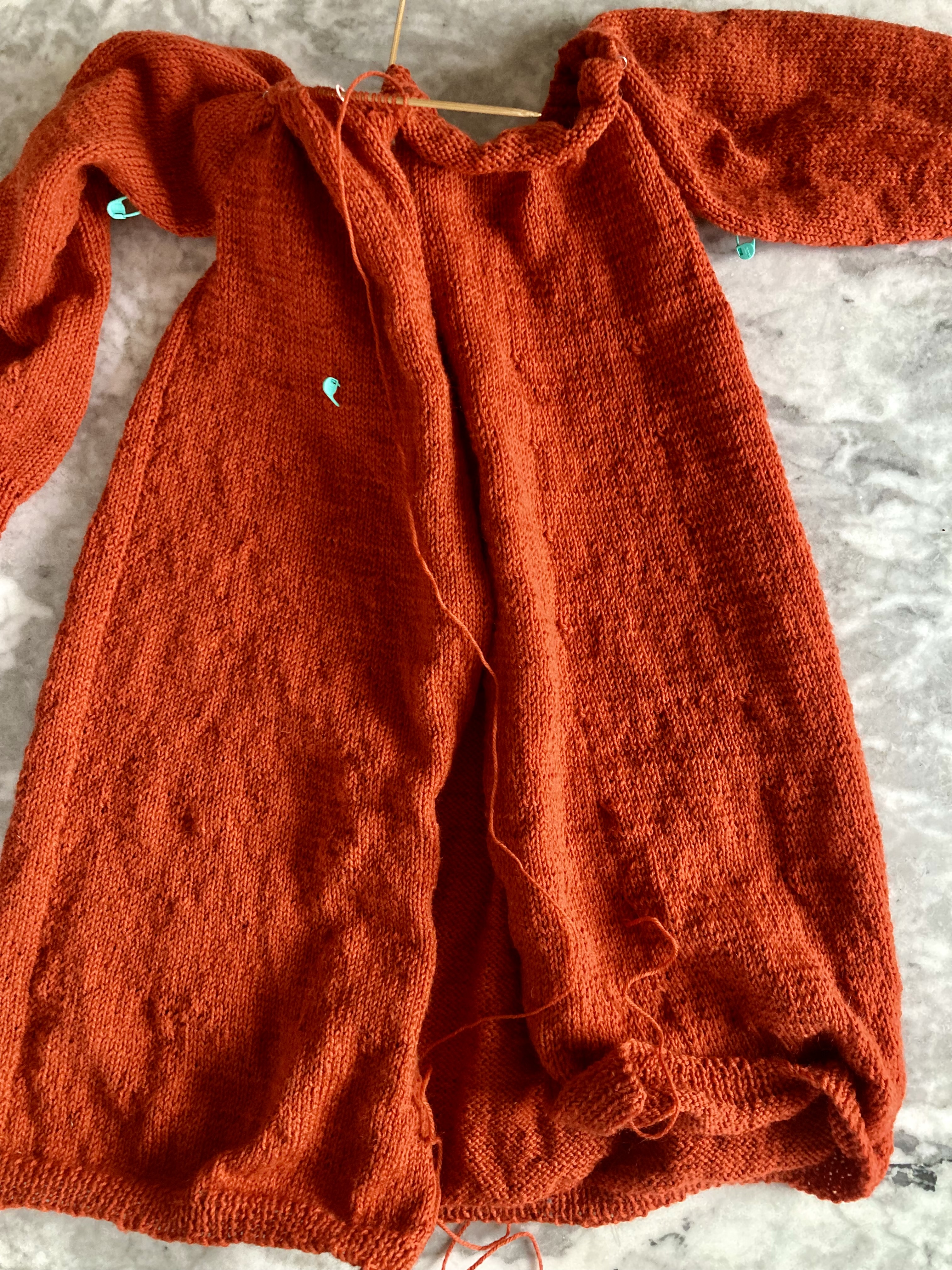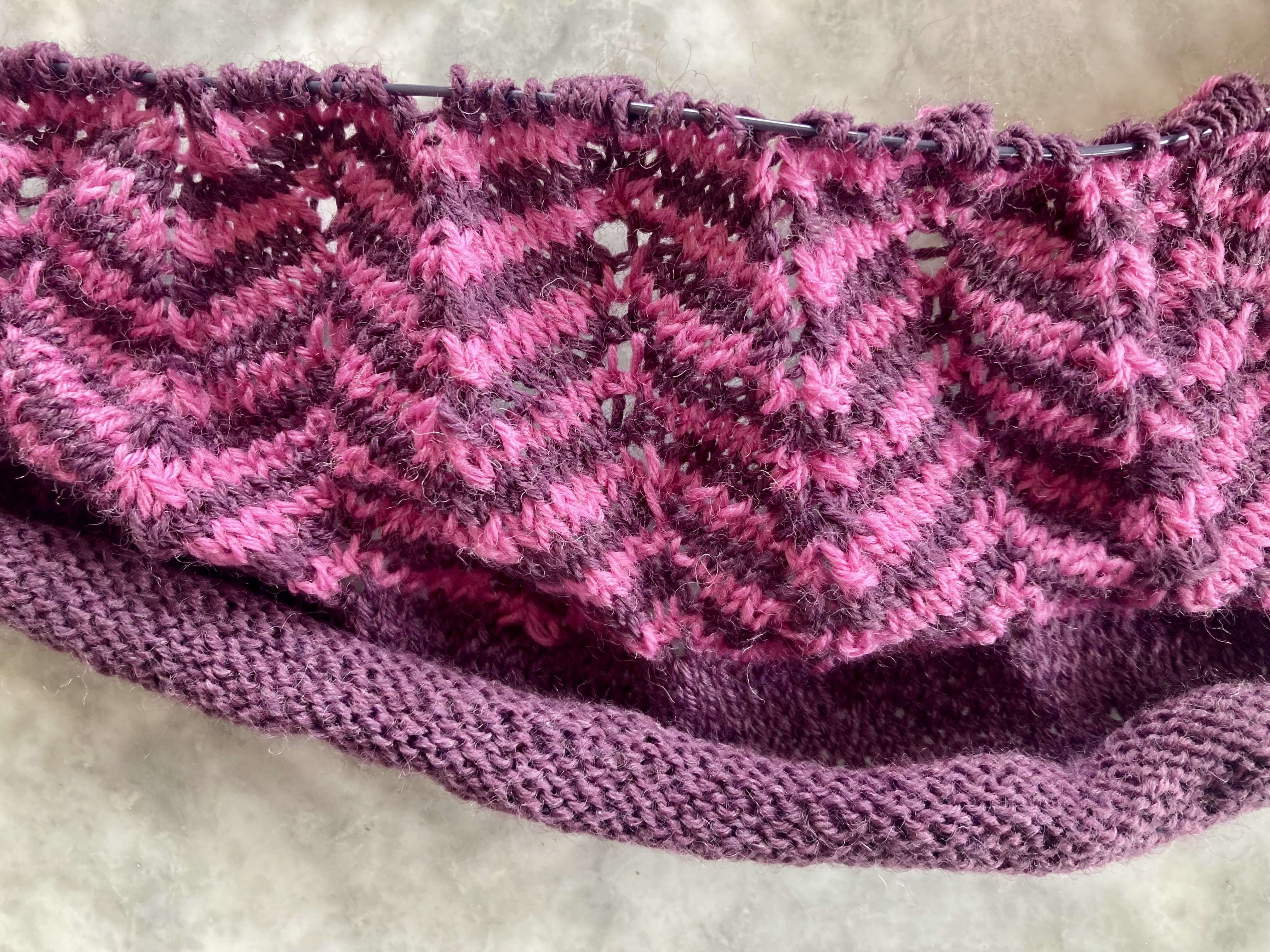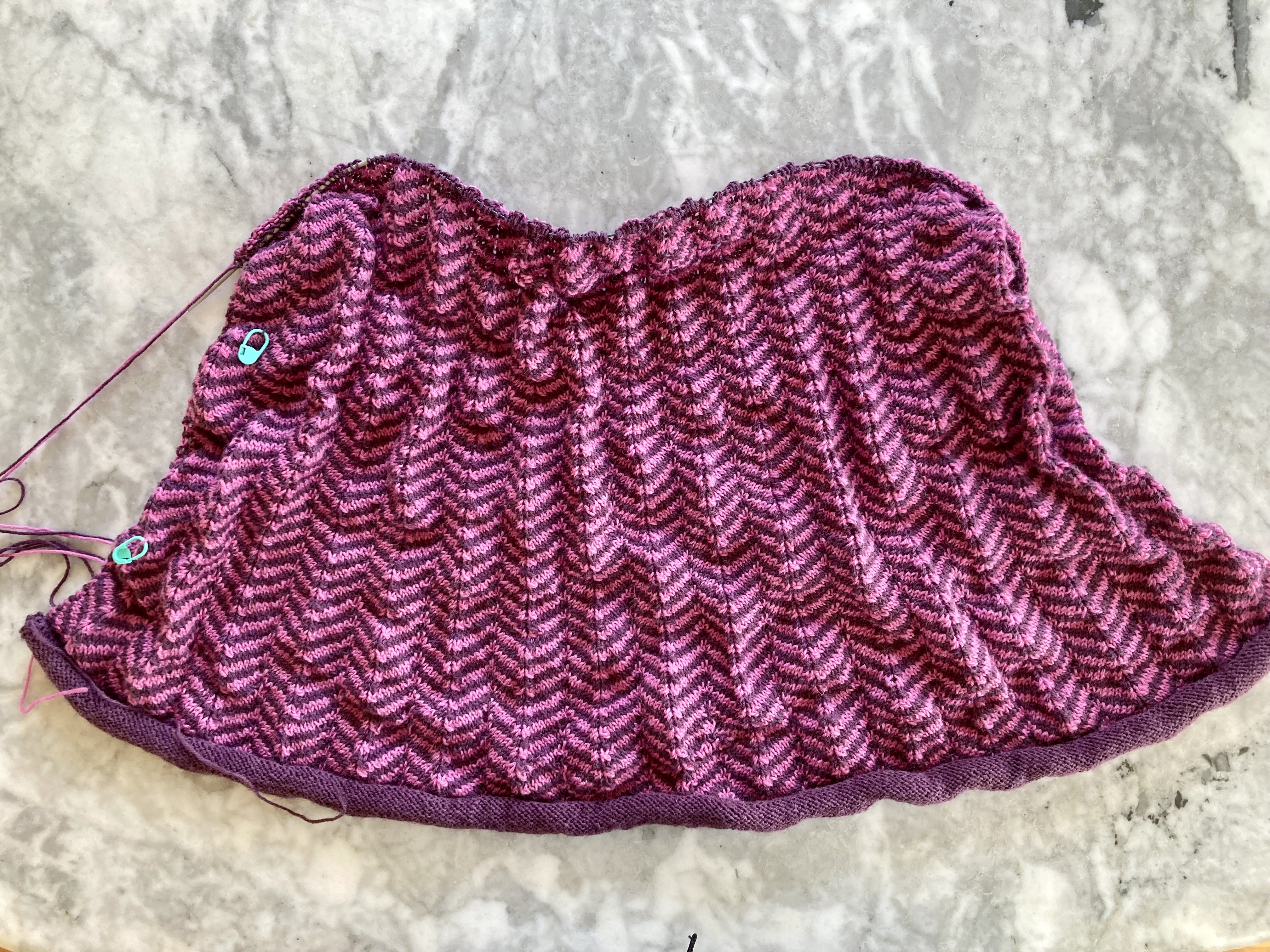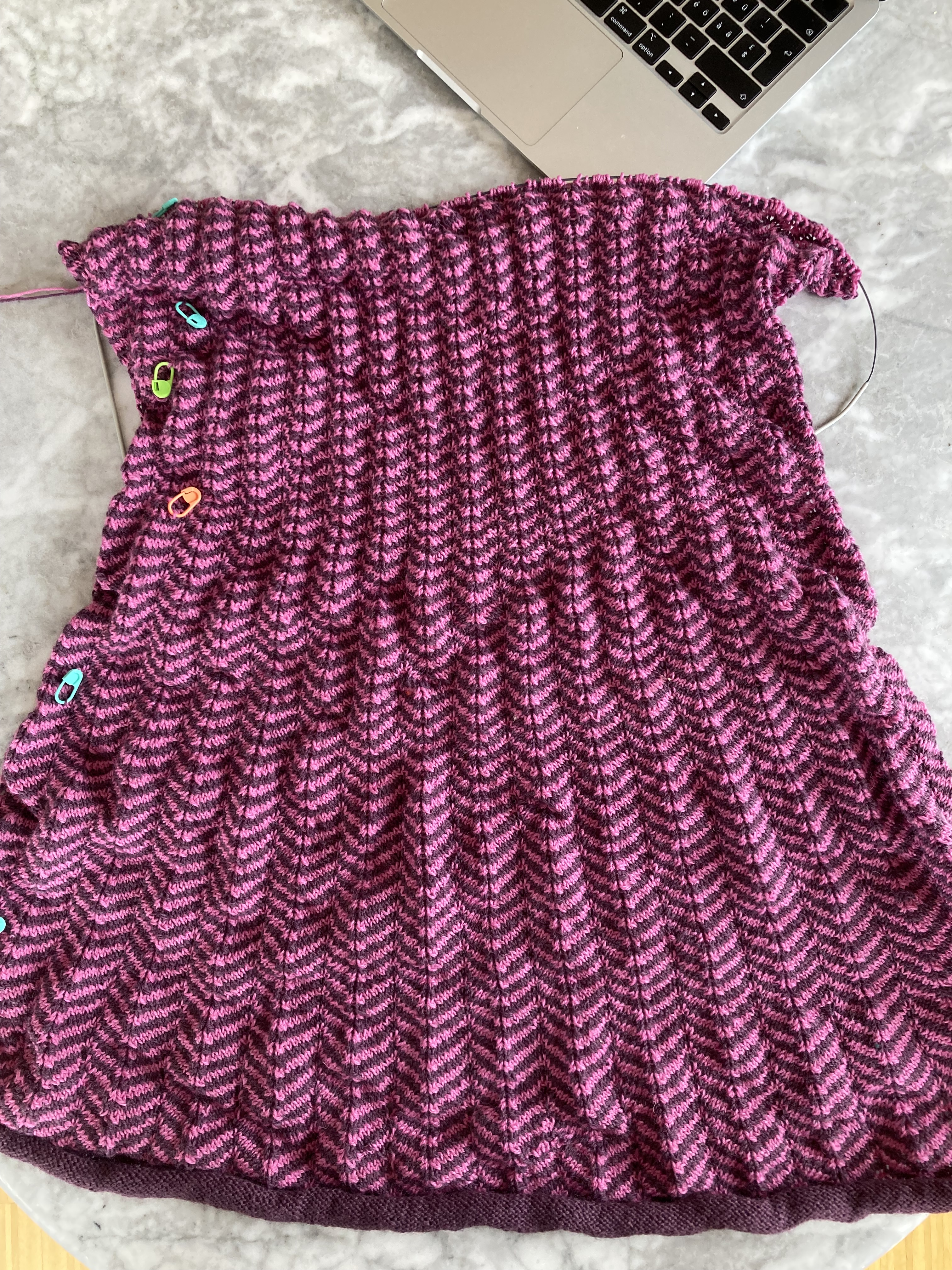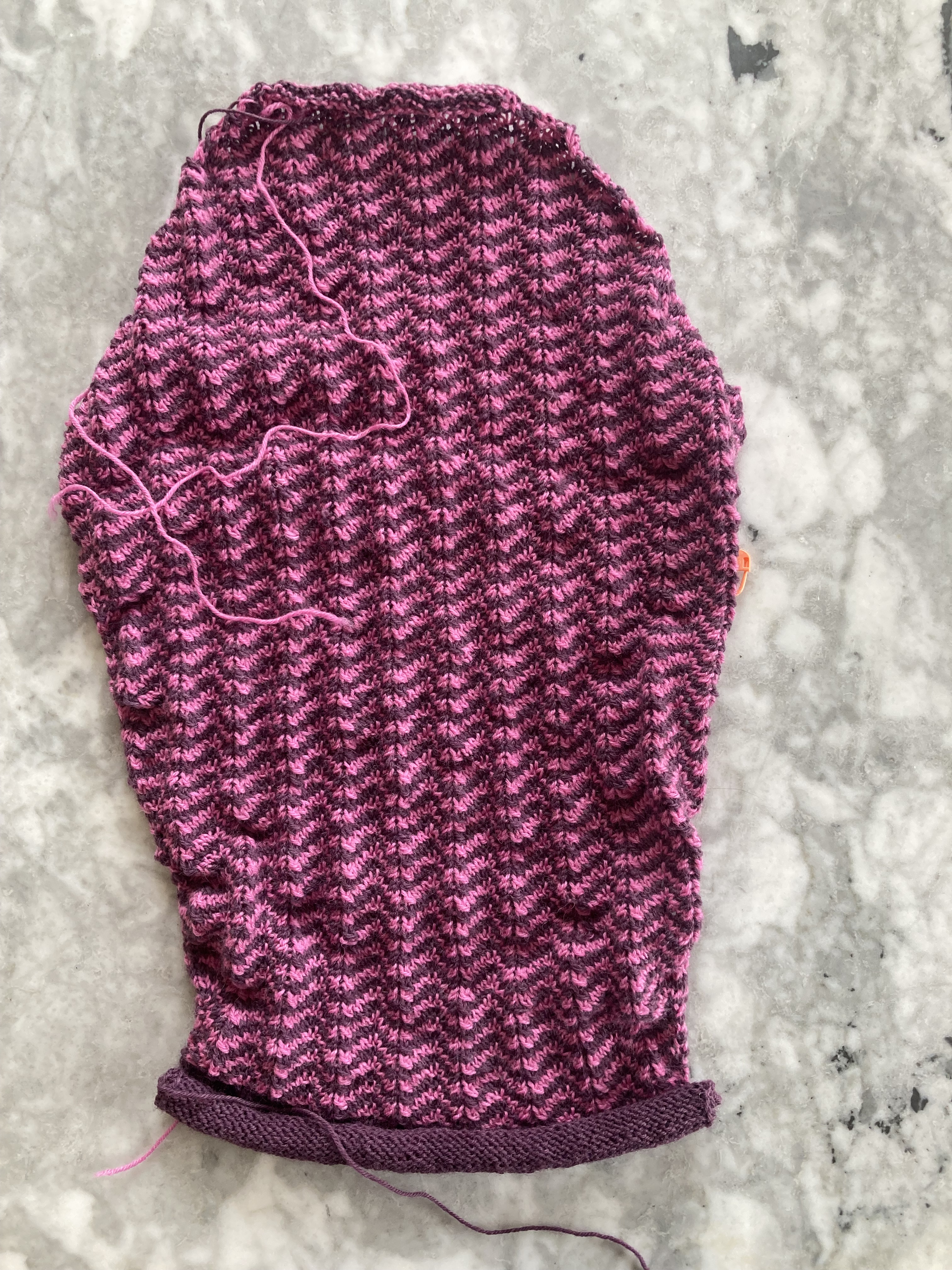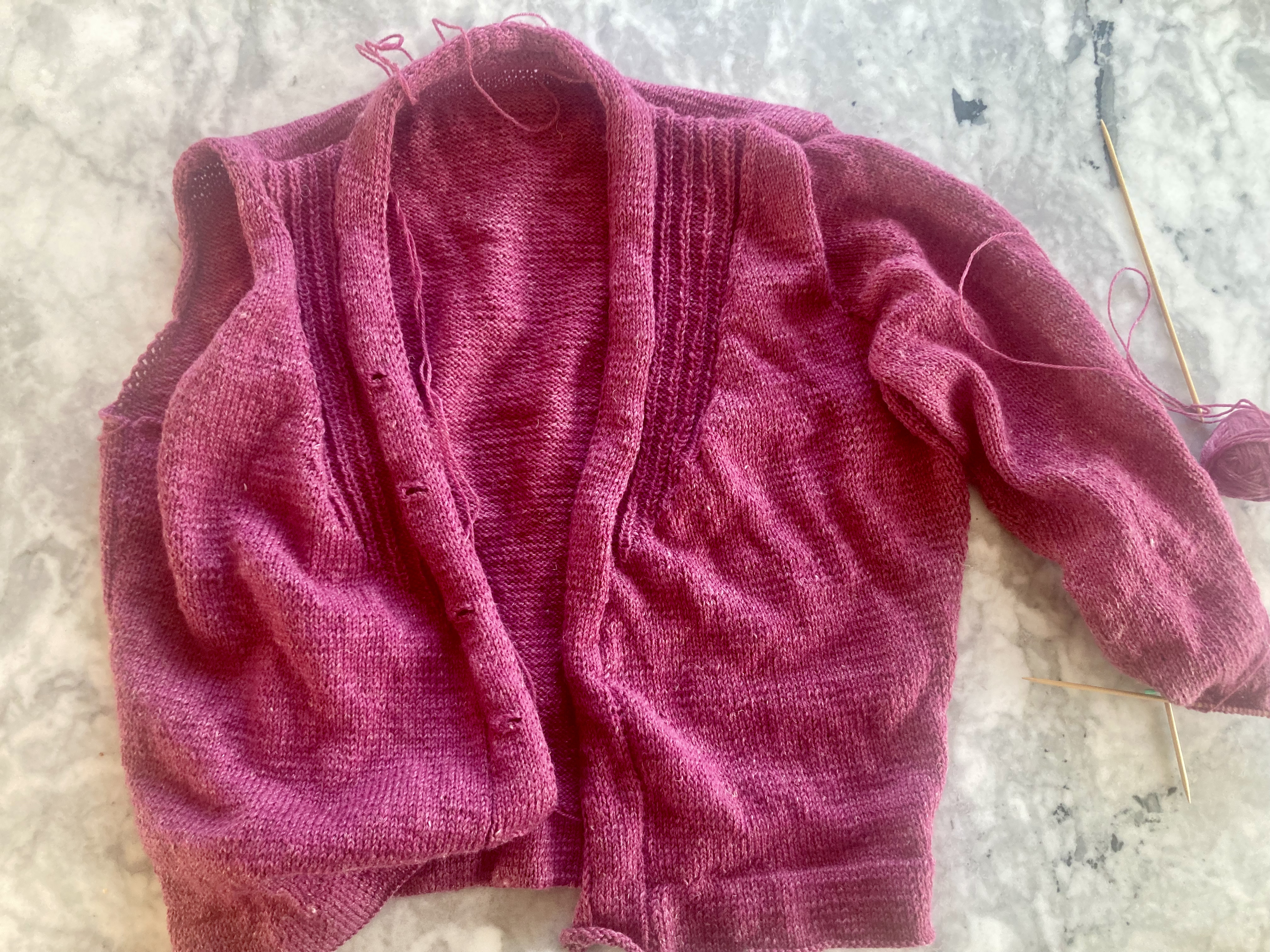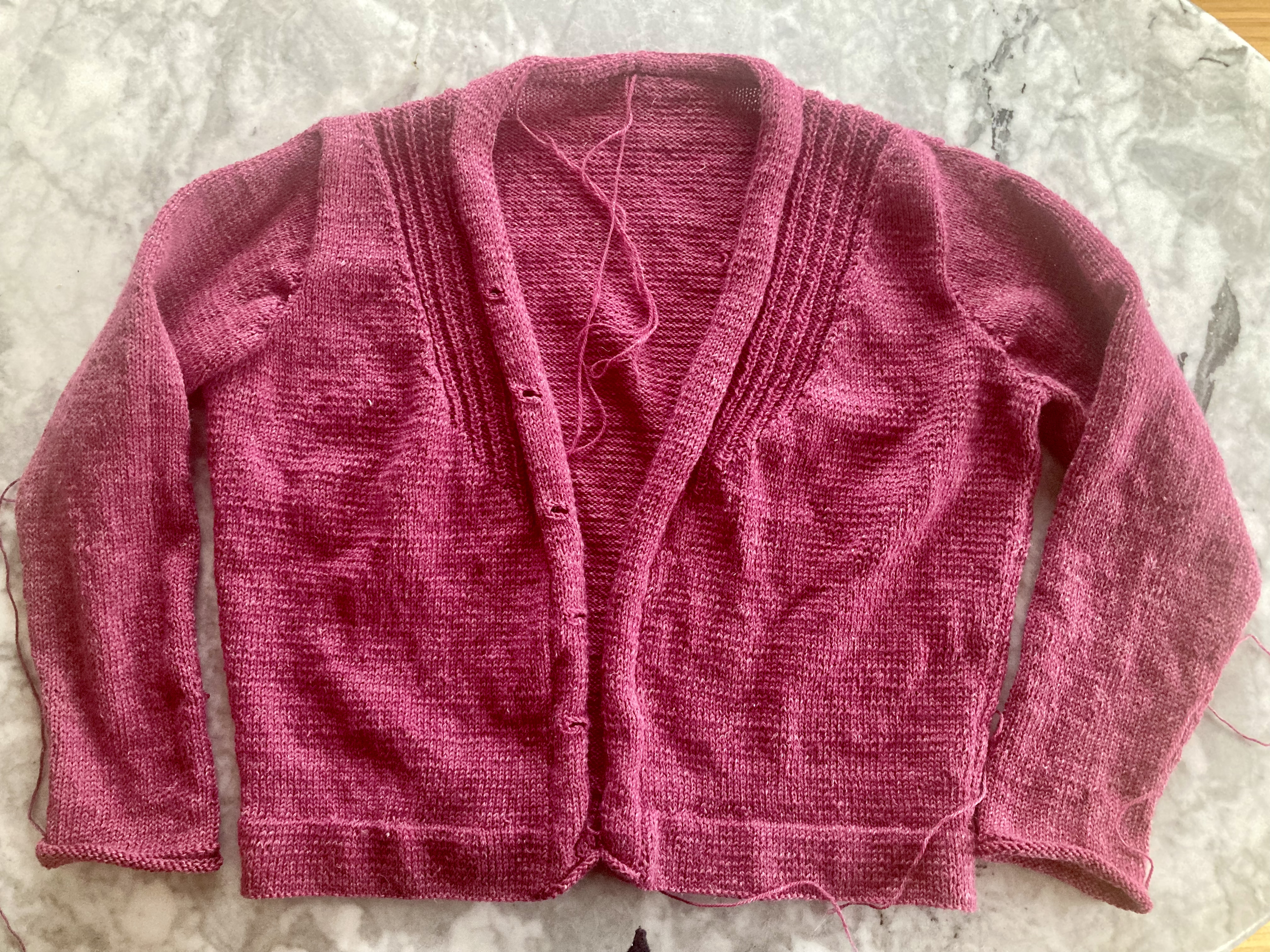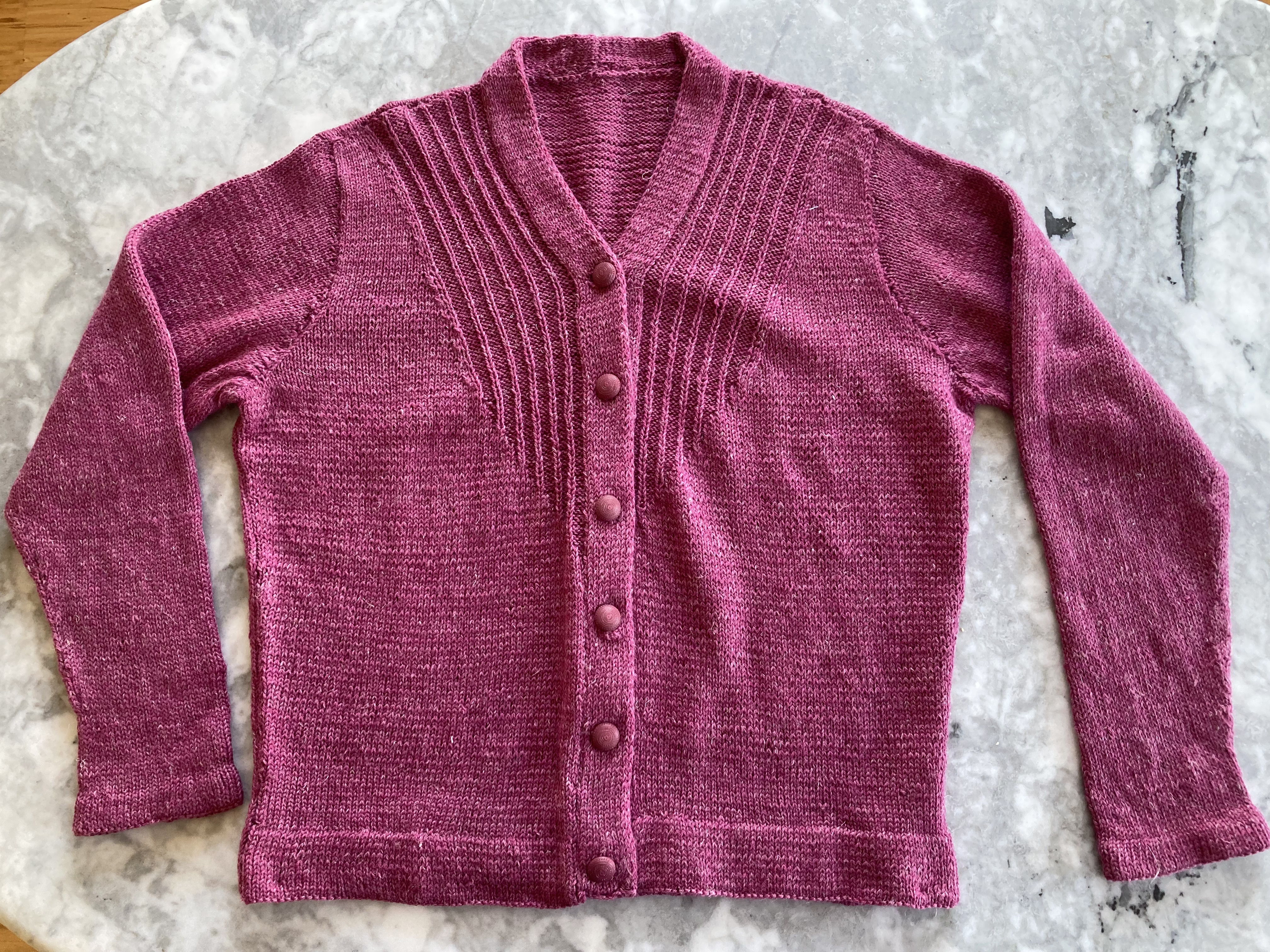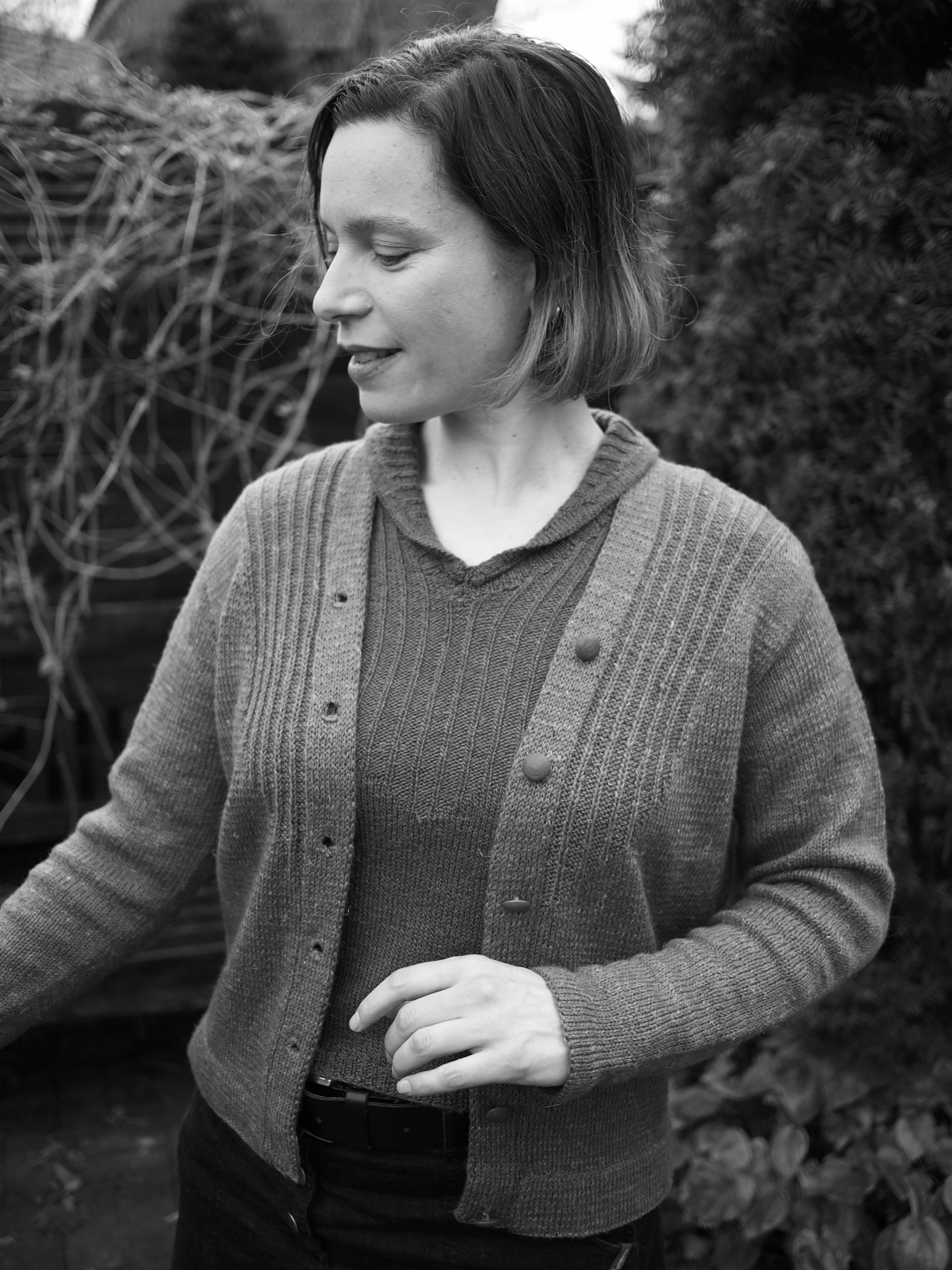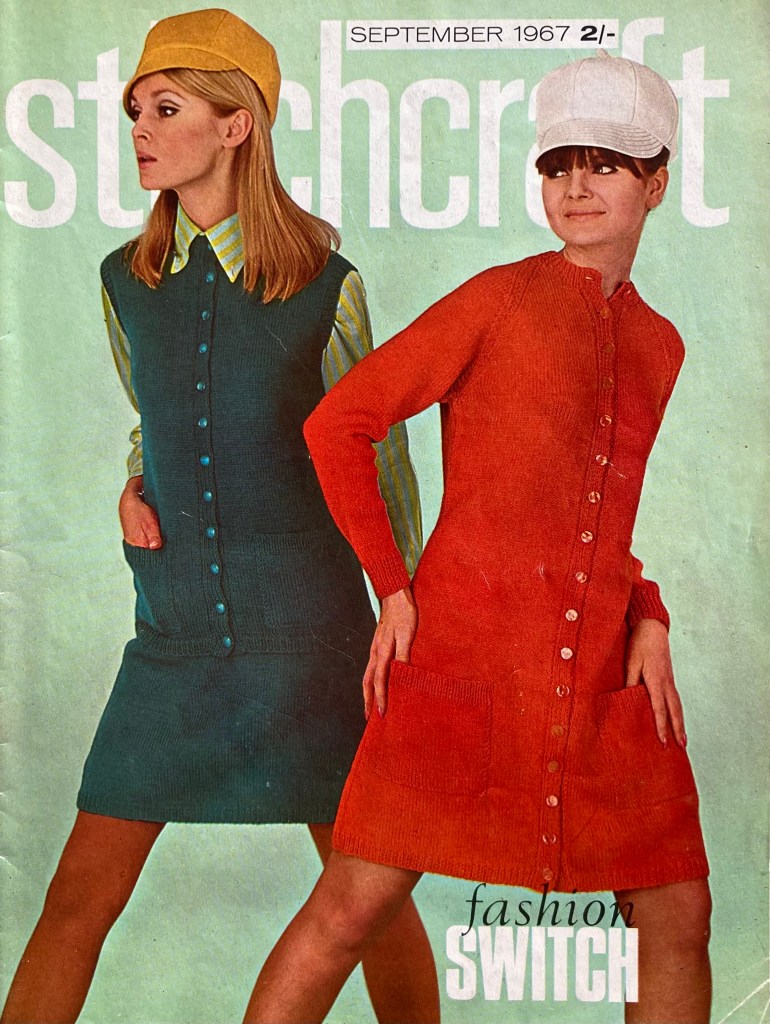
Out of Order: Fair Isle Country Cardigan, January 1967

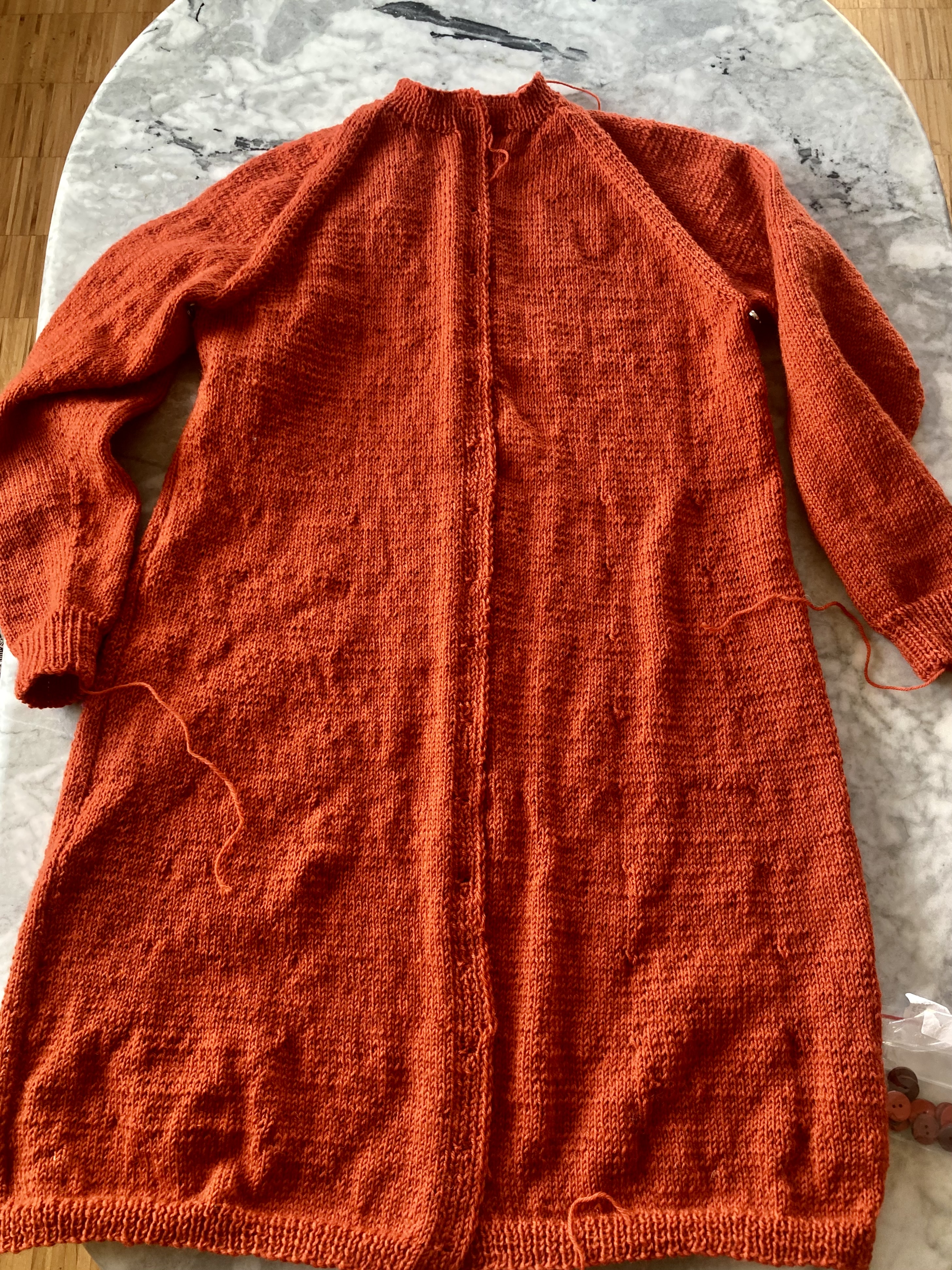
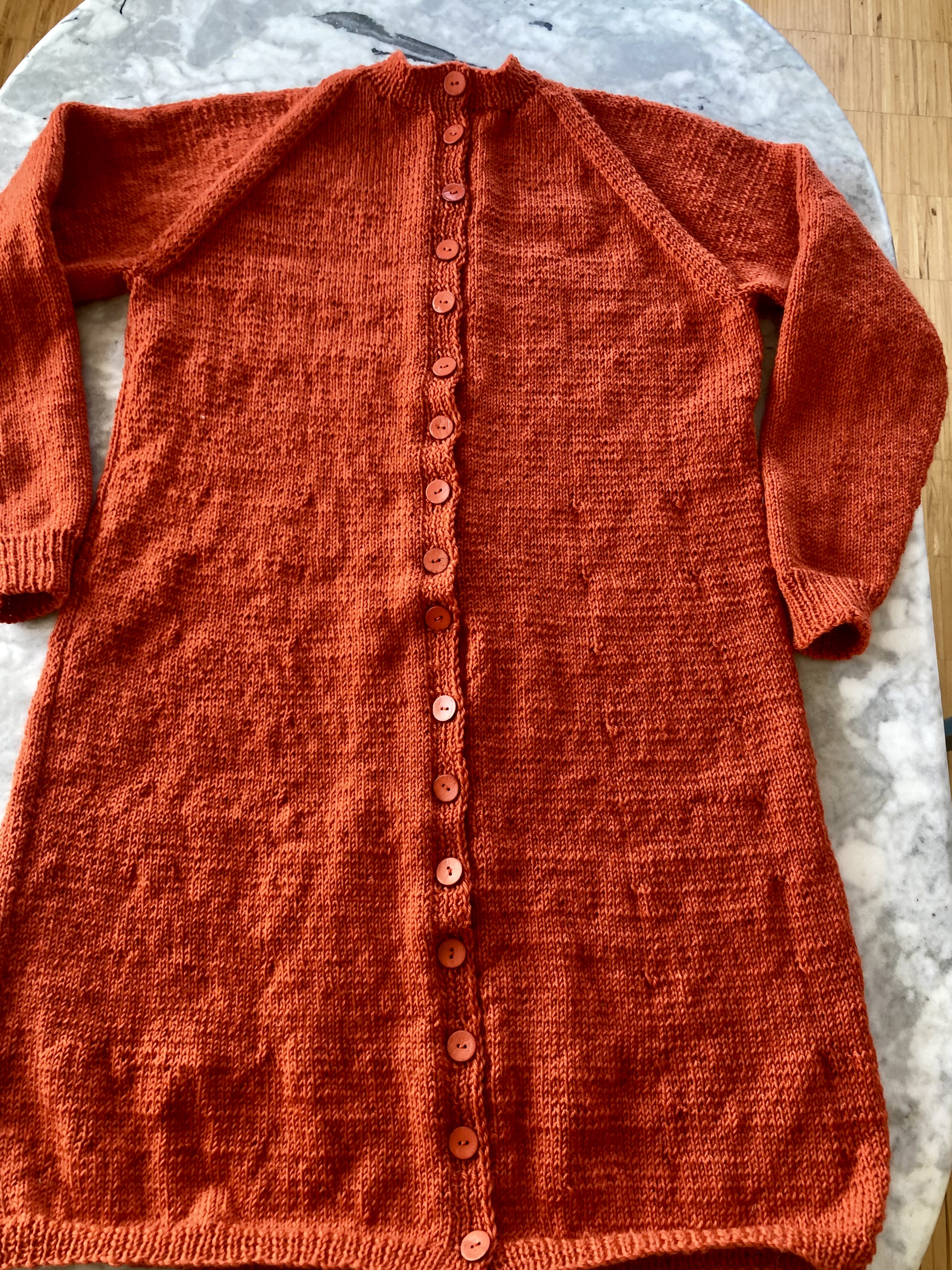
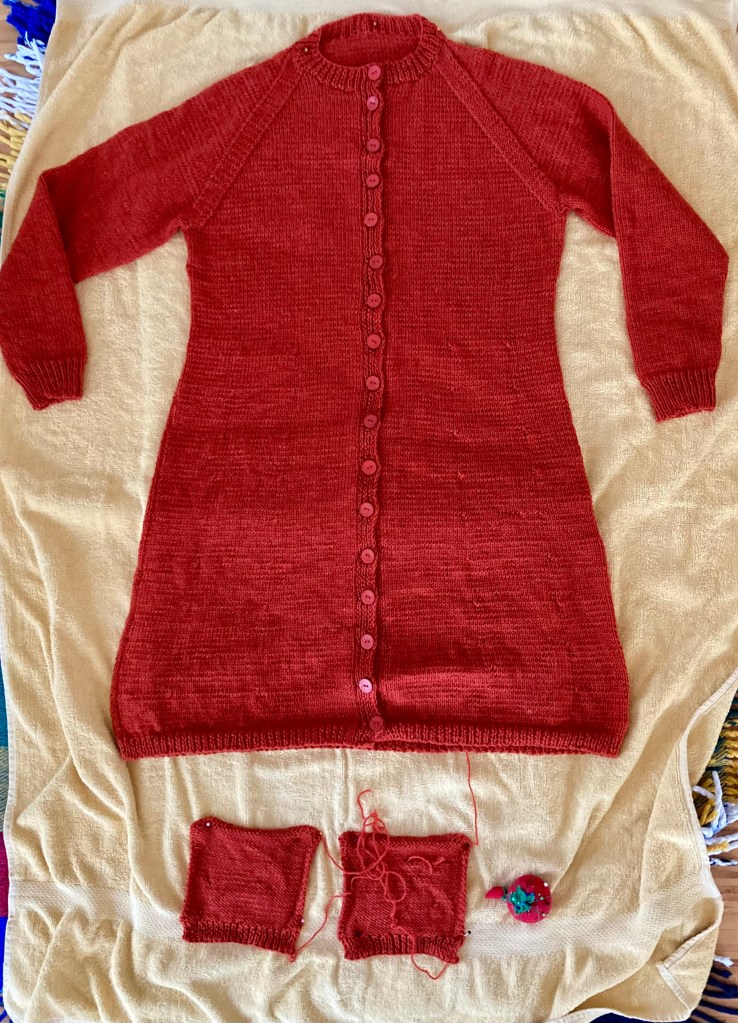
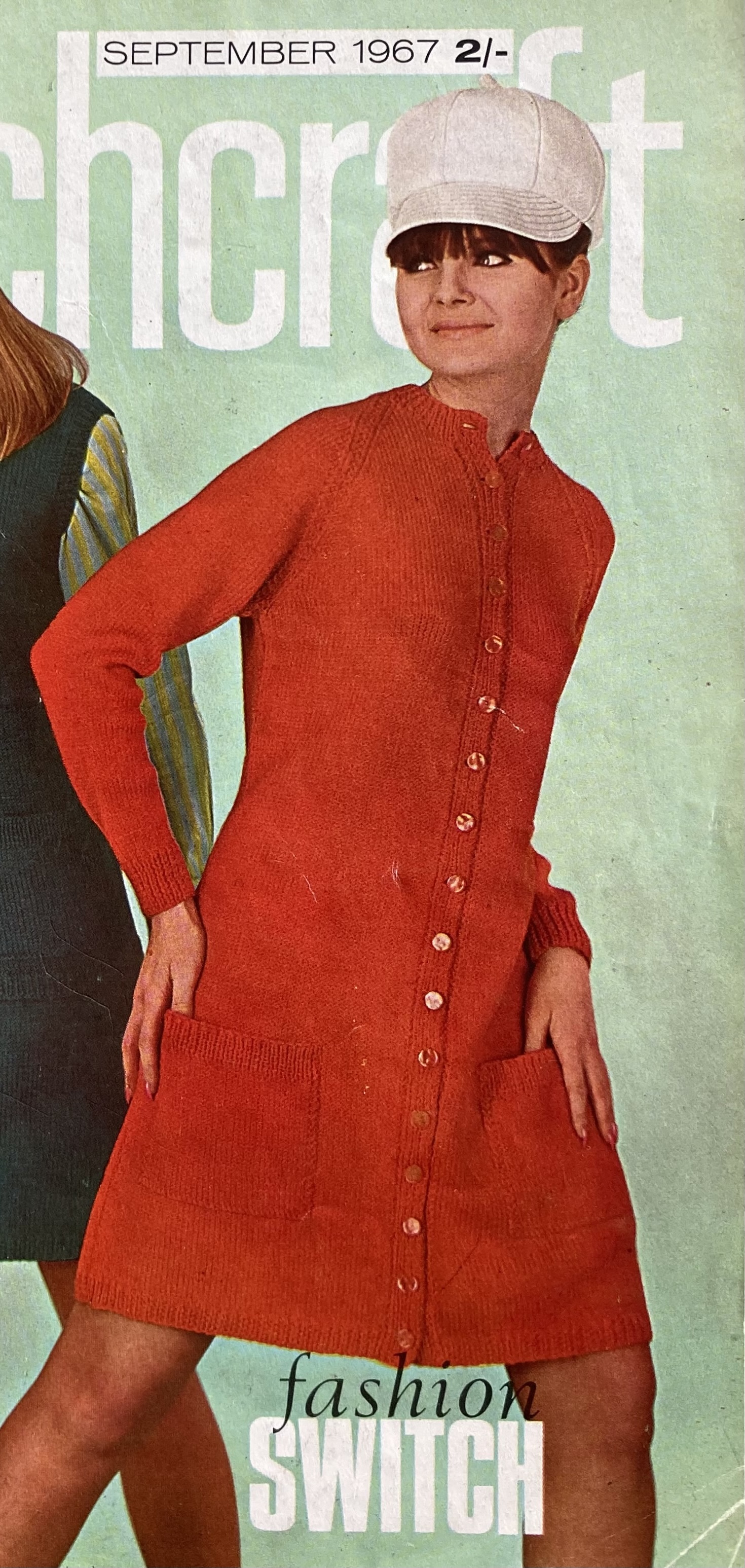
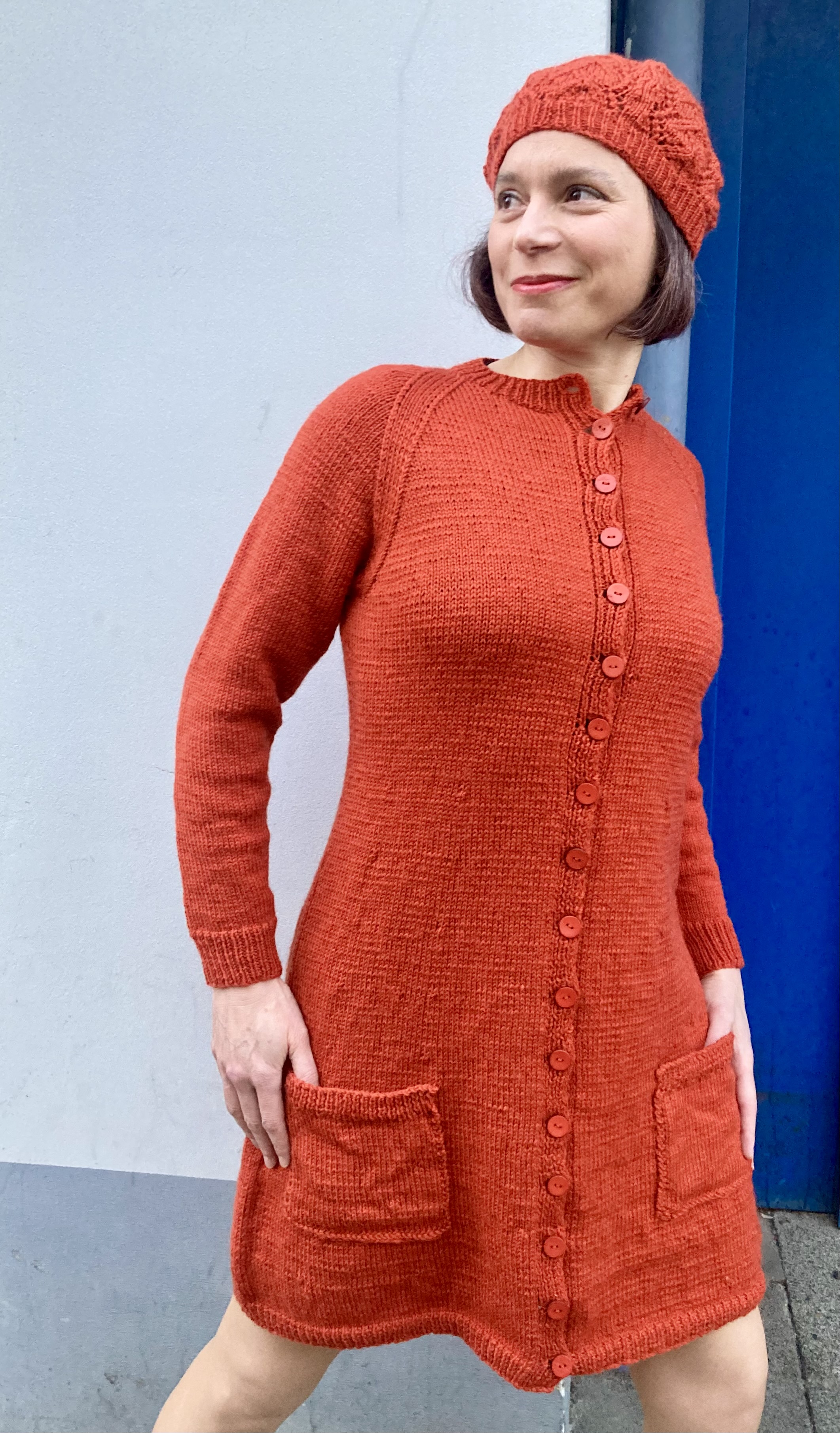
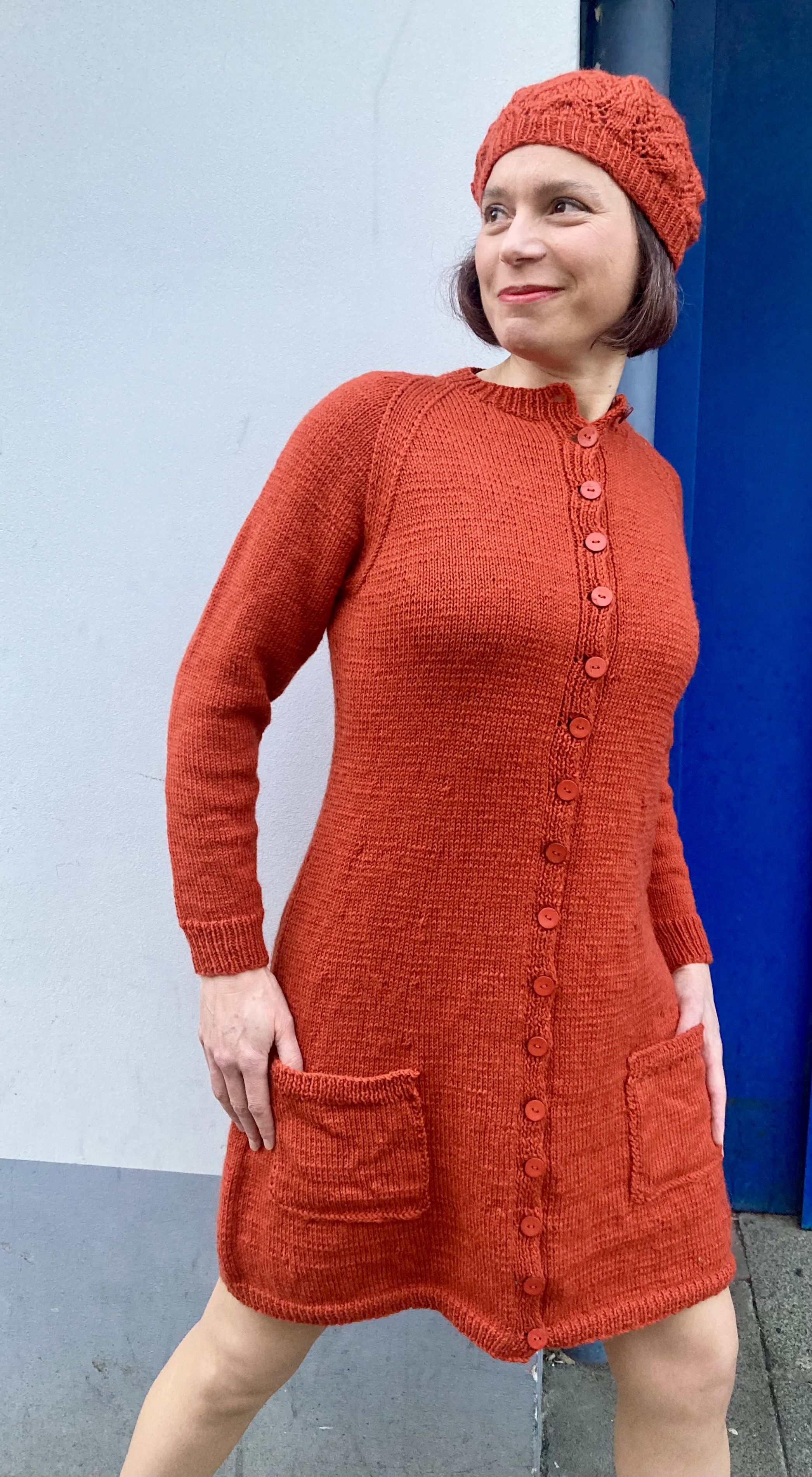
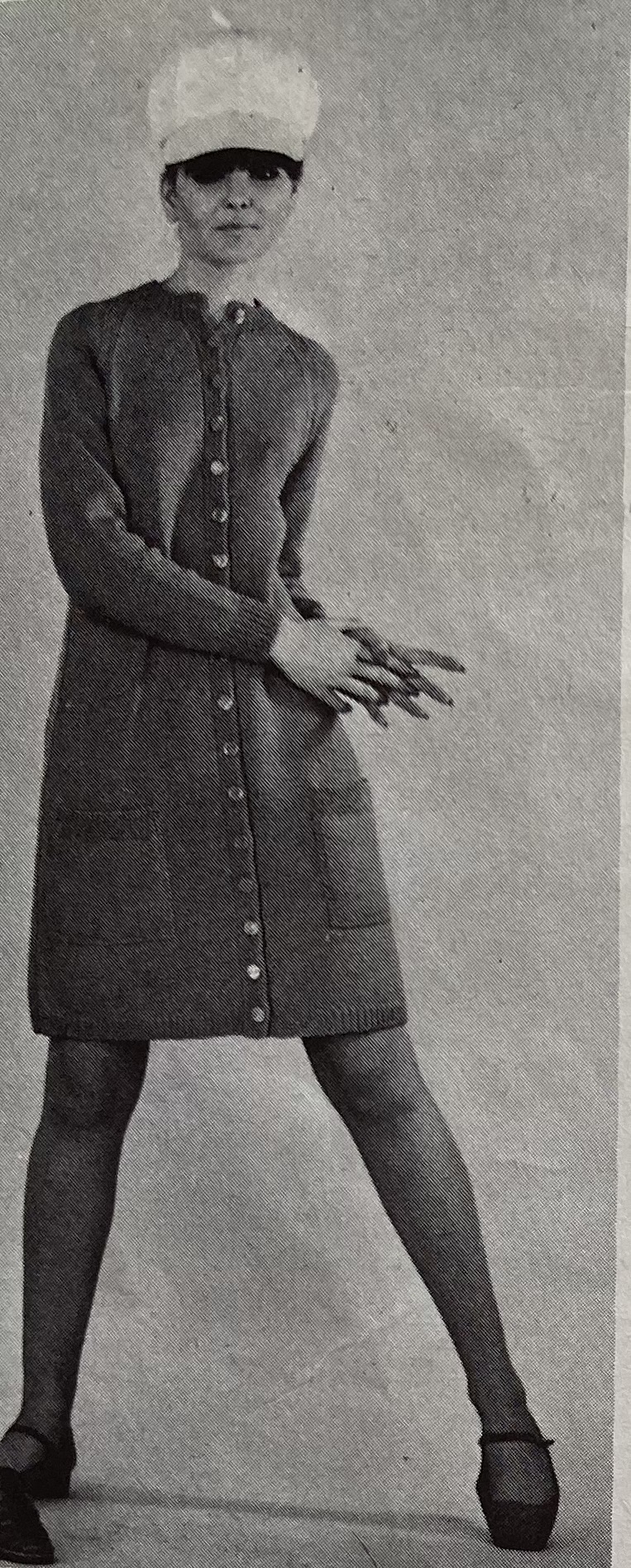
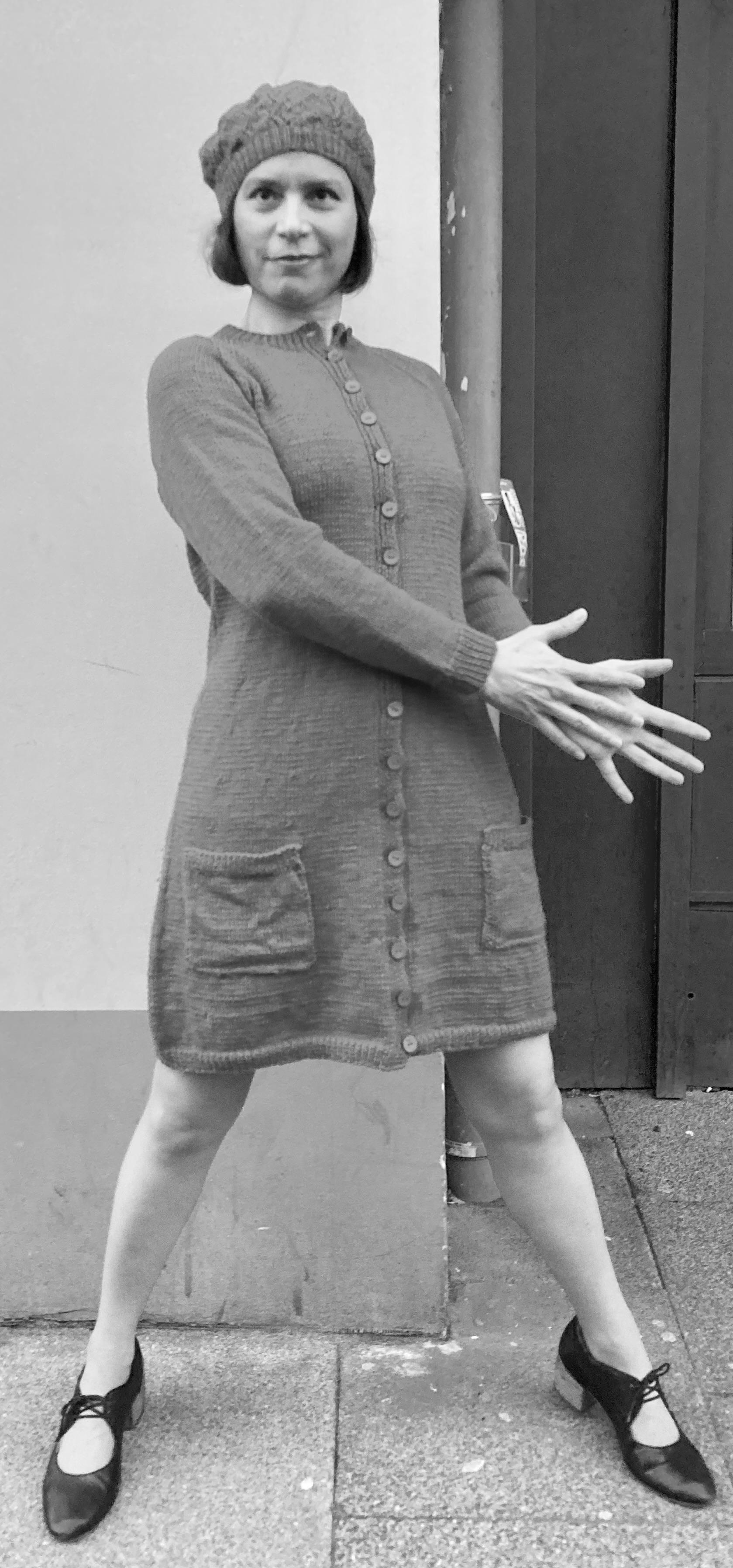
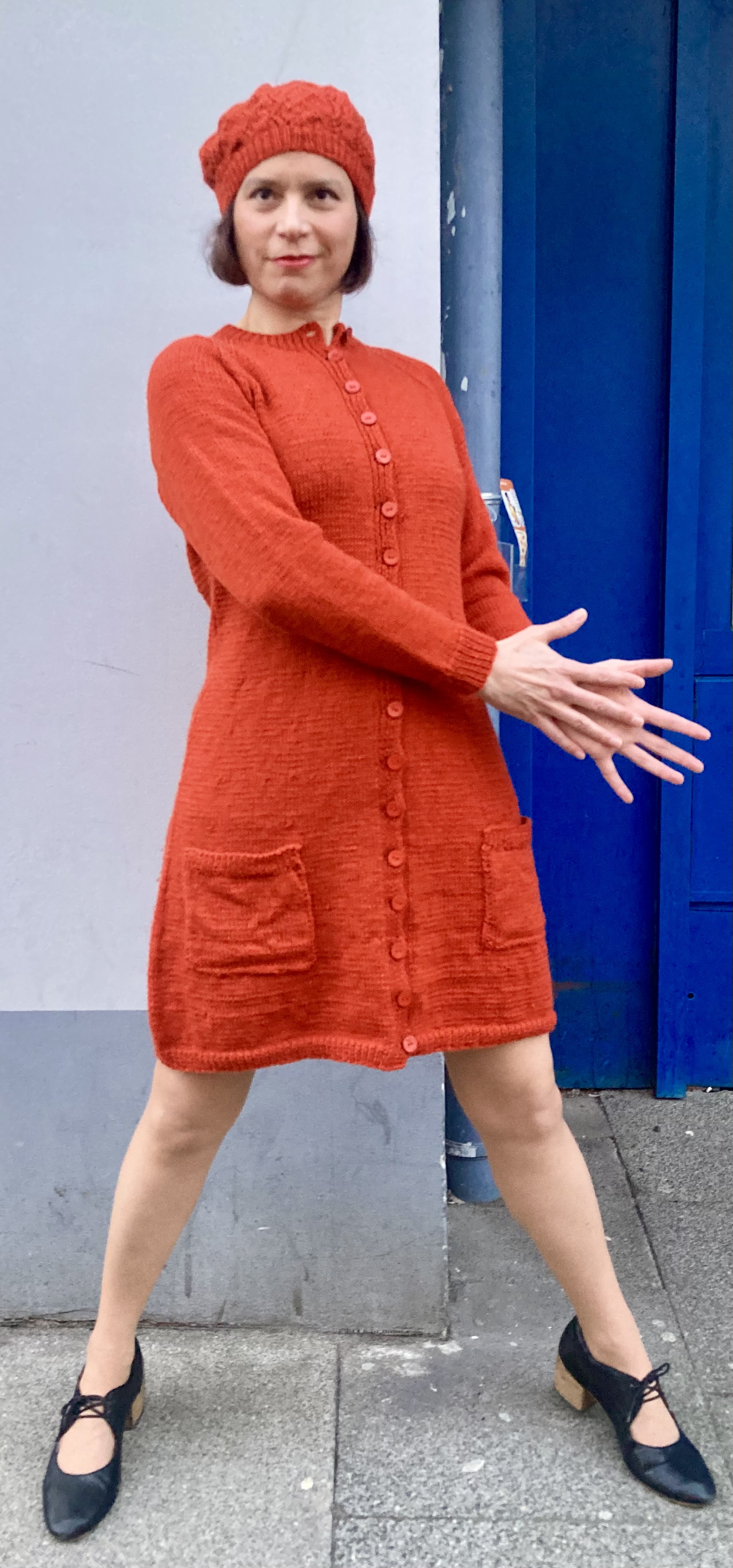
The September 1967 issue of Stitchcraft had three fantastic projects in it that were all too time- and labor-intensive to finish (or possibly even start…) in September, so I concentrated on finishing up this cardigan from the January 1967 issue.

This was one of the projects that I had been looking forward to for years, since I have a 1960s vintage dress from my grandmother that would match it perfectly in colour and style as pictured in the magazine. But for some reason, this project was cursed.

It started with the wool — I wanted to be authentically Fair Isle and make in in Shetland wool, and Jamieson’s of Shetland has a DK wool in a perfectly matching shade of turquoise. There’s a yarn store in a nearby city to me that carries Jamieson’s, so I wrote them an email to order… only to get a phone call saying that the wool couldn’t be ordered at the moment due to international customs negotiations (Damn you, Brexit!). So I thanked them and asked them to cancel the order, ordered some Rauma 3-ply from a different supplier instead, which was fine, and started with that. I chose a more rust-orange instead of “Red Hackle” for the stranded yoke, along with natural white and anthracite.

The cardigan is meant to be knitted in pieces from the bottom up and has a very interesting sleeve and shoulder construction: set-in sleeves but with a round yoke over only the yoke part of the front and back (not a true round yoke as one would find on a “real” Shetland-style garment.) Interestingly, the men’s pullover version of the same design has a traditional round yoke. In any case, I started with the sleeves, to check how the tension and pliability (Rauma 3-ply is sturdy, but can be rather stiff) would work out. It seemed fine.

Then it was time for the fronts and back, which I made in one piece back-and-forth (no steeks, since the only stranding is on the yoke.) I was concerned that the straight-up-and-down, oversized style would look dumpy on me, so made it a size smaller than indicated for my bust measurement and added in some waist shaping. Also, I made the button bands along with the fronts even though they are supposed to be made on a smaller needle, since I hate making vertical button bands and sewing them on afterwards.

It was very boring knitting and mostly sat around in the cabinet while I worked on more exciting projects. (On that note, please excuse the wall of text — I never though to take photos of the work in progress, since nothing interesting happened.) Then, somewhere around this time, I got a call from the yarn shop in the nearby city. “Your order of Jamieson’s DK has arrived!” What? I thought it wasn’t possible to order it? It turned out there was a misunderstanding and they hadn’t cancelled my order, just put it on “pending” until whatever regulations were changed. Well, you can never have too much yarn, I guess…

Back to the cardigan… It seemed fine while knitting, but it was hard to check for fit, and I couldn’t shake the feeling that the wool, although pleasantly lightweight, seemed to stretch more and more width-wise the longer the body got. The real problem came with the yoke. Because of the weird set-in-sleeve-plus-stranded-yoke construction, the stranded work starts a few inches in from the shoulder seam. The seam is unavoidably a bit bulky (DK wool…) and the way the stranded work starts resulted in a weird tension difference that made the shoulder seam stand out in an ugly way and also made the sleeves “balloon” at the top for an almost Victorian leg-o-mutton look. Not a good look for me! Not at all! Also, the stranded part is too long and the neckline very high, making the shoulders too wide. And the rest of the fit wasn’t good either — it continued to stretch width-wise and even having made a smaller size, it was all just huge and baggy. Even the sleeves were too long. To top it all off, in spite of making the button bands along with the body, I didn’t get the spacing right. (I did find nice buttons, at least.)

I tried blocking it into shape, but there was only so much that that could accomplish, and now I don’t really know what to do with it. I thought about removing the sleeves and re-positioning the shoulder seam as one would with a sewn garment, and just cutting down the sides and sewing side-seams, then getting rid of the excess fabric. That would be pretty brutal, and also a lot of work, and I don’t like machine-sewing and cutting hand-knitted garments. I thought about giving it to a friend who has wider shoulders and a larger size than me. I thought about wearing it in the winter and just living with the oversized style, even though it is not my style. I made a matching tam while I was contemplating all of this, and even the tam turned out too big. I considered putting the tam through the washing machine and/or dryer to see what happened (would it felt too much, or just get smaller) and if successful, doing the same with the cardigan.

As of this post, I have still not decided what to do, but if it fits my friend, I think I will give it to her and knit myself another version from the Jamieson’s wool. Perhaps with pink instead of rust for the contrast yoke colour, and not following the pattern, but just making it in a size that fits me the way I want it to fit, and with a traditional round yoke. We’ll see! I do still love the design.

Out of Order: Chevron Dress from April 1967

EDIT: Now with photos!

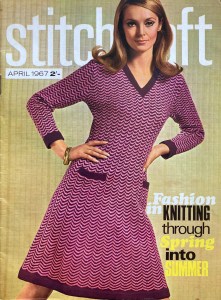
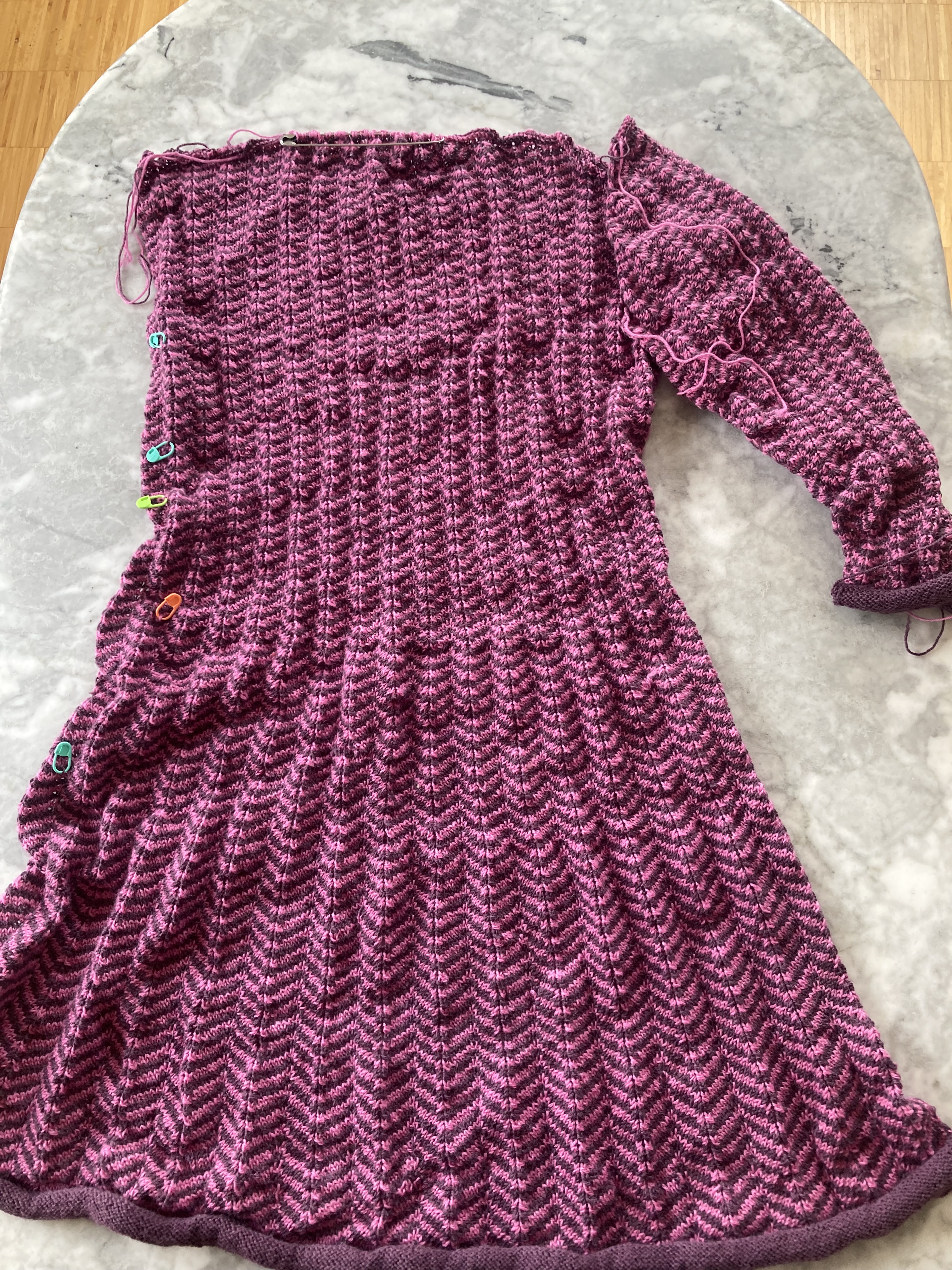
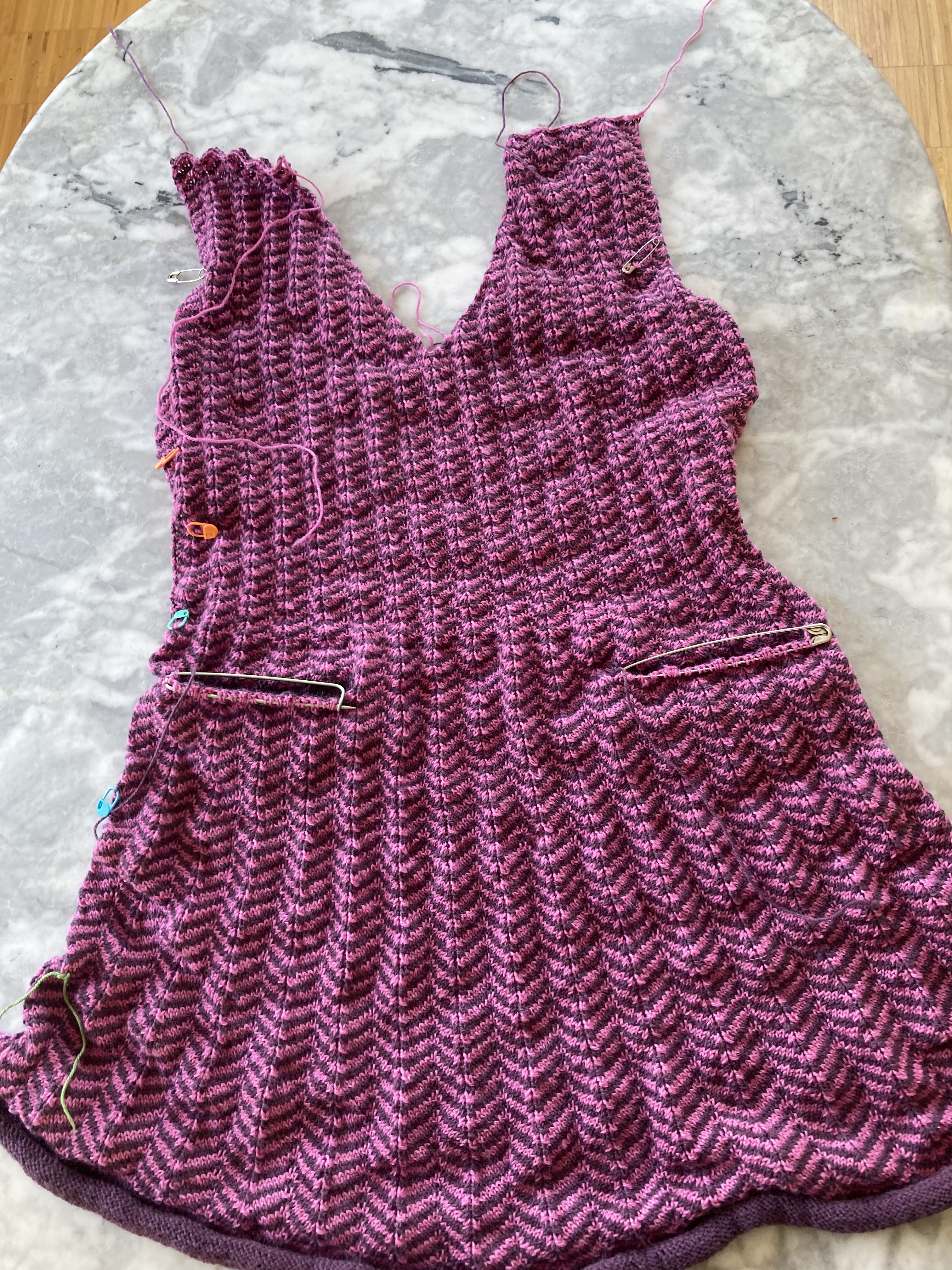
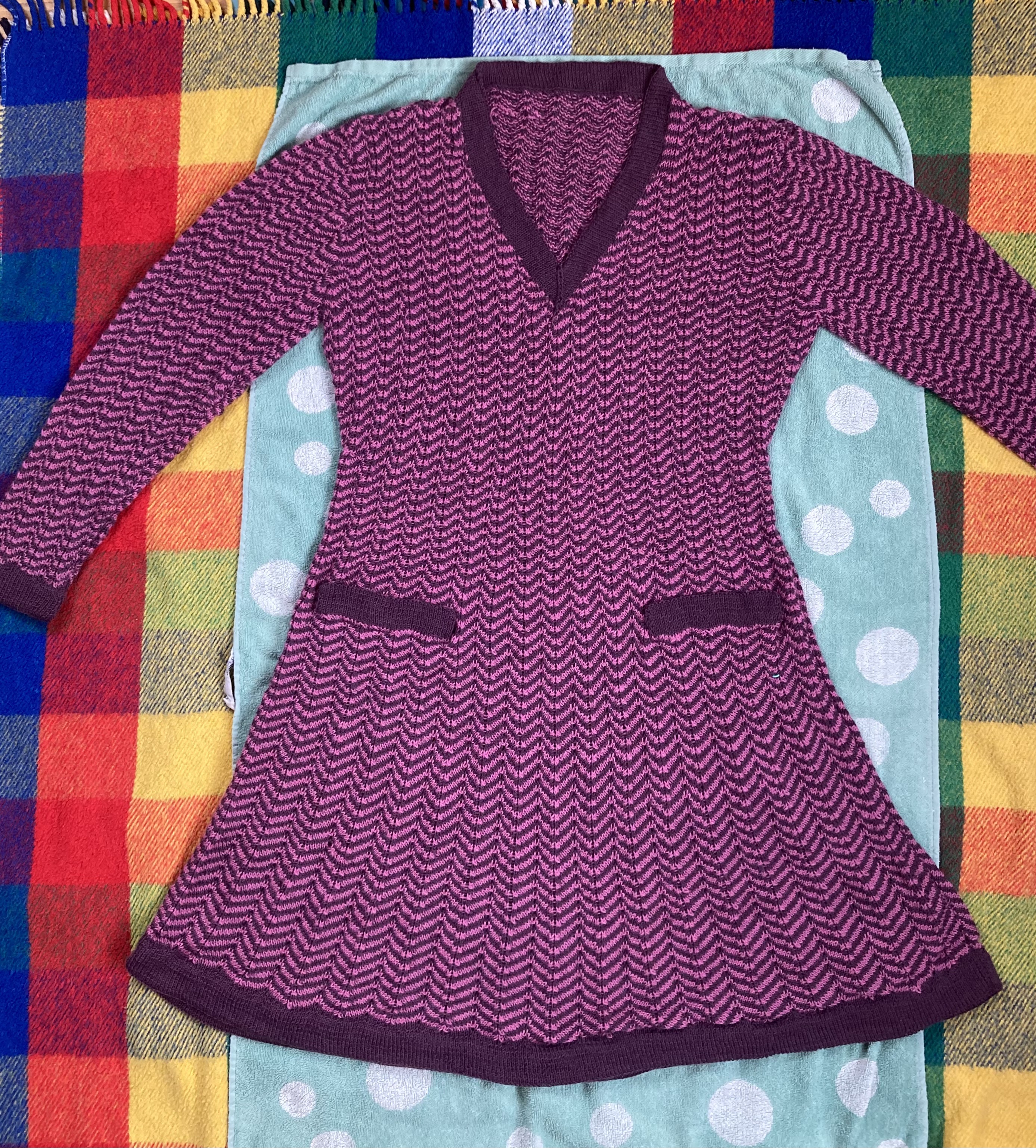
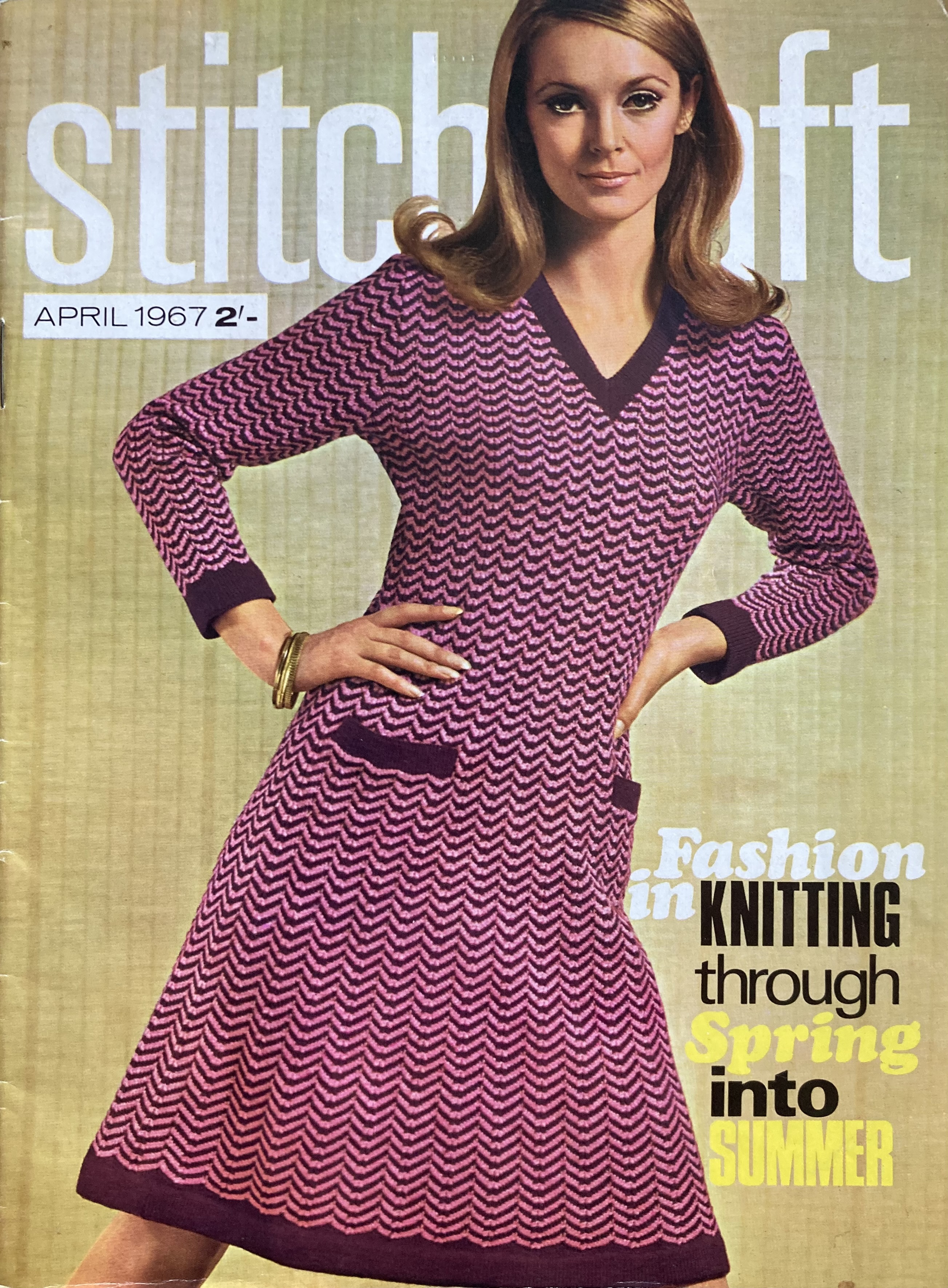
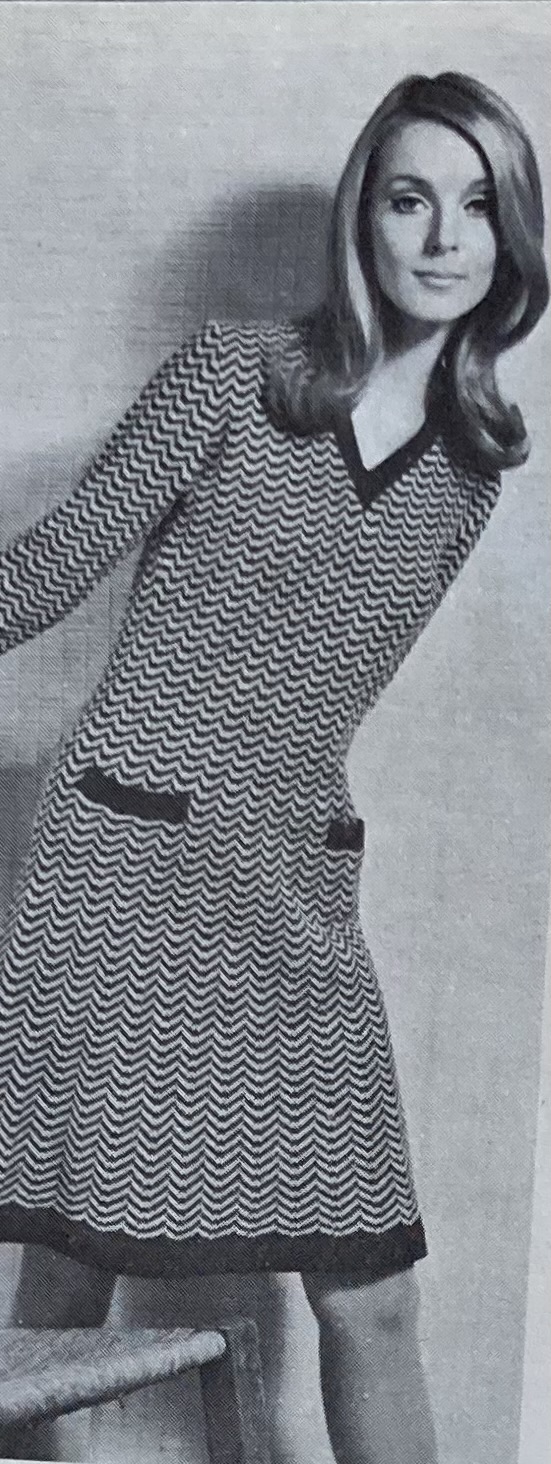
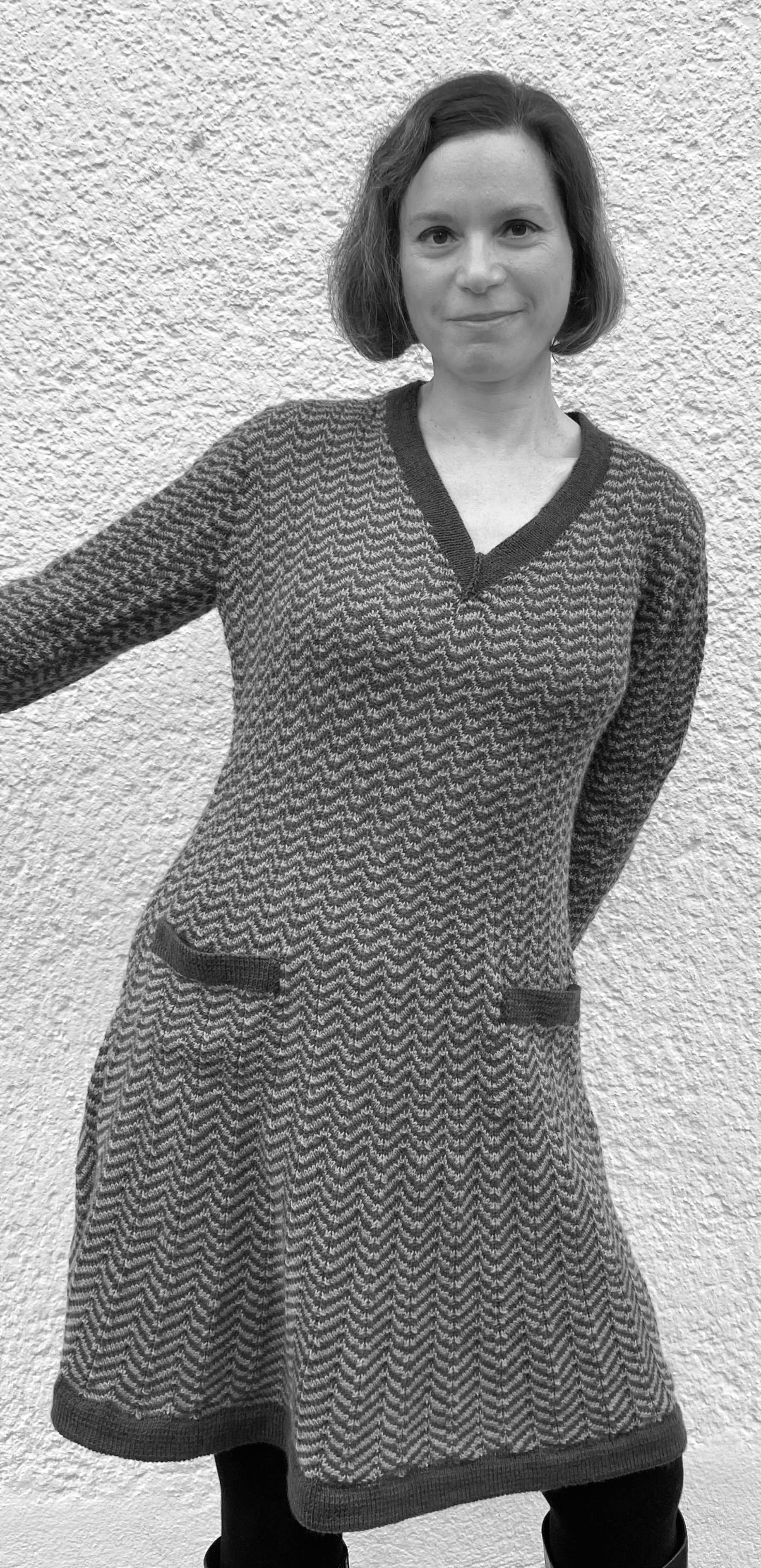
The April 1967 issue of Stitchcraft had many great designs in it and my favourite was this pink and purple chevron-striped dress on the front cover. And since the August 1967 issue didn’t have any projects that particularly inspired me, I worked on the chevron dress all summer and got it finished just in time for the August blog.

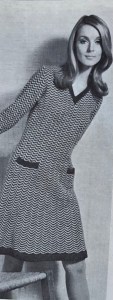
The “easy-line dress is fashion styling for all age groups” and claims to be in “the 30’s Look” — interesting, considering that dresses in the actual 1930s were still much longer, of course, and this dress, while not a mini-dress, falls at least a little bit above the knee. Also, this dress has a typical mid-60s A-line shape and not the typical long and willowy 1930’s silhouette. But the chevron pattern was very popular in the 1930s, as was the dropped waist and the flowy shape.

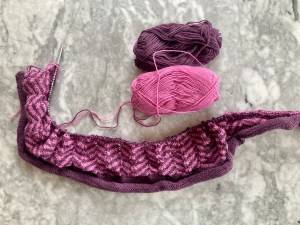
The pattern is written for plain Patons Beeehive 4-ply (fingering-weight) wool, but I decided to use sock yarn for easier washing and wearing. DROPS Fabel is easy to knit with, inexpensive, and available in a huge range of colours, including an almost-perfect match for the original “Wine” (purple) and “Radiant” (pink). I decided to make it a little bit shorter than in the pattern (third size should be 37 inches), as I expected it would stretch with weight and wearing. That was my only modification.

The shaping is mostly done in the chevron pattern itself — it starts off at the hem with 5 stitches in between the zig-zag increases and decreases, then reduces at intervals to only 2 stitches between at the waist. All further increases and decreases to the bust and after the armhole point are done by increasing and decreasing at the edges. (Contrary to my usual modifications, I knit the dress flat in pieces for more stability, as called for in the pattern.) The sleeves are made entirely in the 2-stitch chevron pattern. There are small knitted-in pockets with flaps on the right side. All the edgings, including the V neck, are made with folded-over and sewn-down stocking-stitch hems.

The chevron pattern makes the fabric quite nubbly, so it wasn’t clear exactly how long the dress would be before blocking. I was afraid I might have made it a little too short (I took 3 inches off the pattern length by adjusting the spacing between skirt decreases) because it fell quite a bit above the knee before blocking and the proportions seemed off. Also, the sleeves were a bit shorter than “bracelet” length and a bit tight at the hem. Blocking smoothed it out well, though — maybe even a bit too well! I didn’t pin it or anything, just hand-washed and laid it out flat as I usually do, and it is now actually 37 inches long and the sleeves are long sleeves. The fit in width is fine.

I’m guessing it stretched so much because the wool is superwash. The only solution I have ever found for the problem of superwash-stretch is to put the garment in the dryer (maybe a nice reader of this blog has a less dangerous idea?) I didn’t dare to do it with this dress at the very first blocking after putting so much work into it and being so happy with the final result, but I might cautiously try it next time I wash it. I’m happy with the fit the way it is, but it would look snappier and more authentic if it were just a bit shorter and if the sleeves were truly bracelet length.

As always, we had fun with the photos! I don’t know how the models were able to twist their backs up so severely and still look relaxed and pretty.

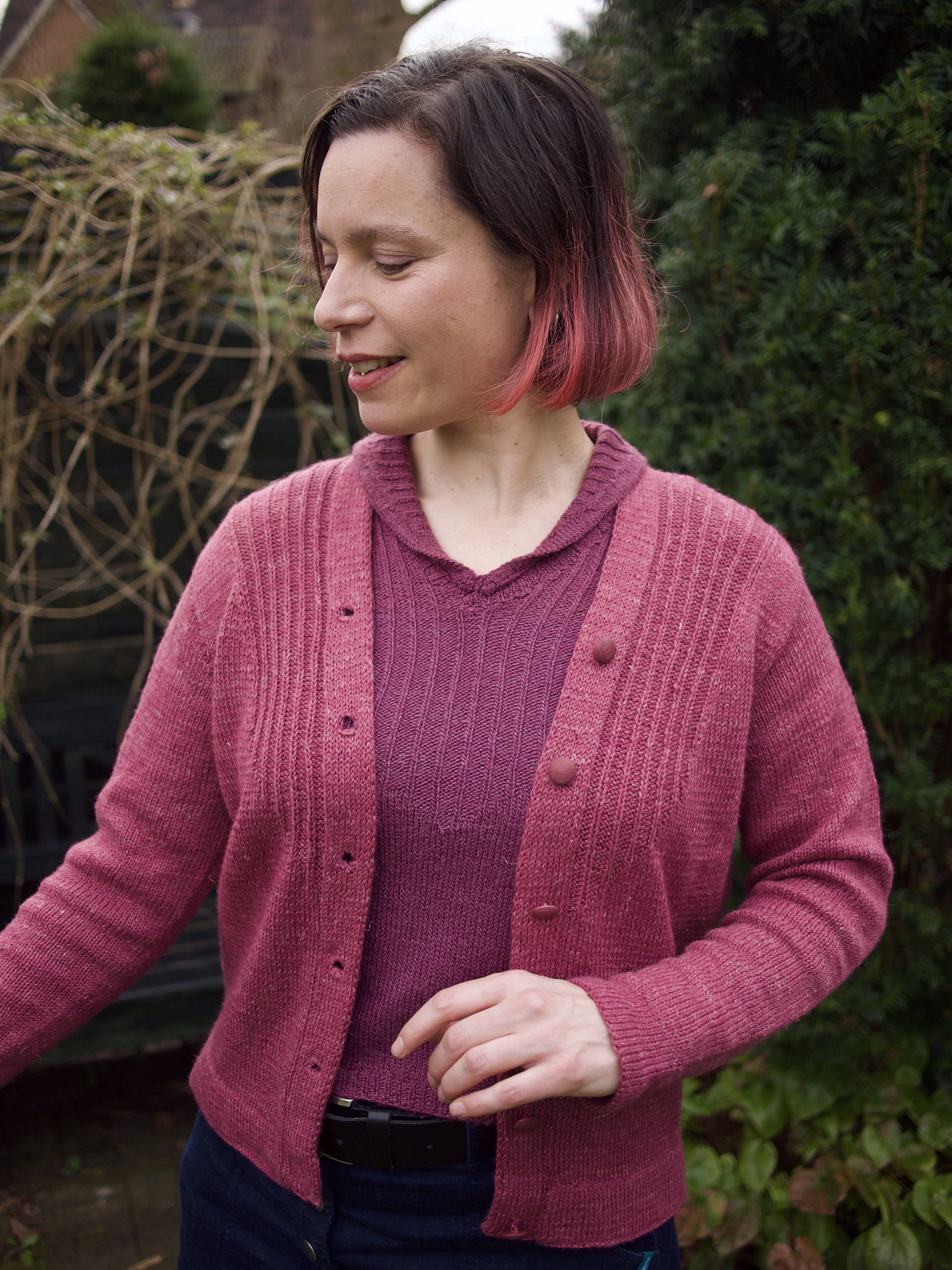
Out of Order: Softly Fitting Cardigan

The March 1966 issue of Stitchcraft didn’t have any projects that particularly called to me, and I am still in destash/finish up old projects mode. So this month, I finally finished the cardigan to the “Softly Fitting” twinset from January 1962.

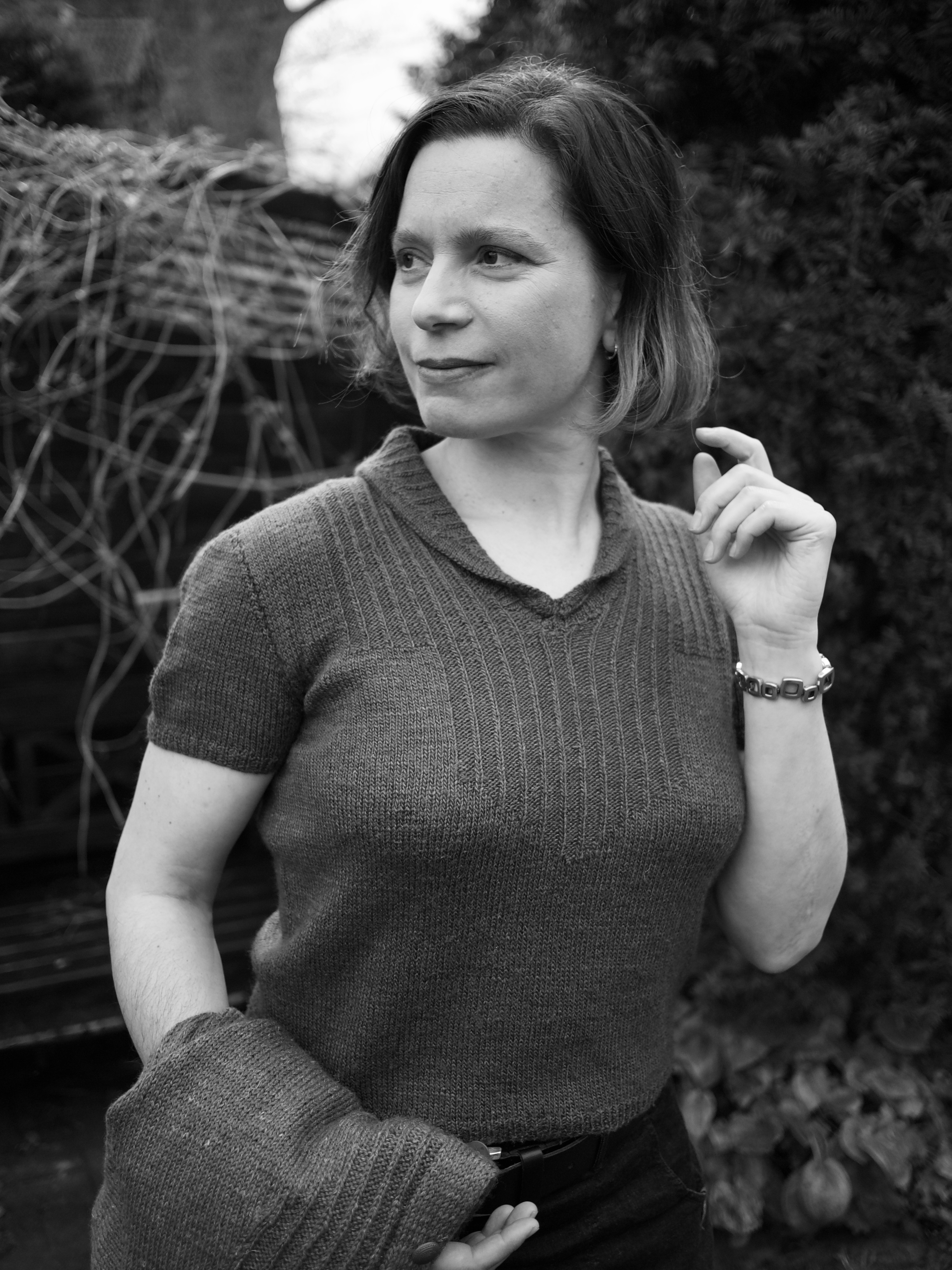
The original twinset is made in two different colours of the same wool: Patons Cameo Crepe “French Green” for the cardigan and “Pearl Frost” for the jumper. I had already made the jumper in Concept by Katia Silky Lace in a more blue-ish shade of purple, and had 300 grams of wonderful Lana Grossa Slow Wool Lino in stash in a slightly more reddish shade of purple. The two purples harmonised quite well, and although the yarns are different compositions, they are both the same weight and have a similar drape and softness.

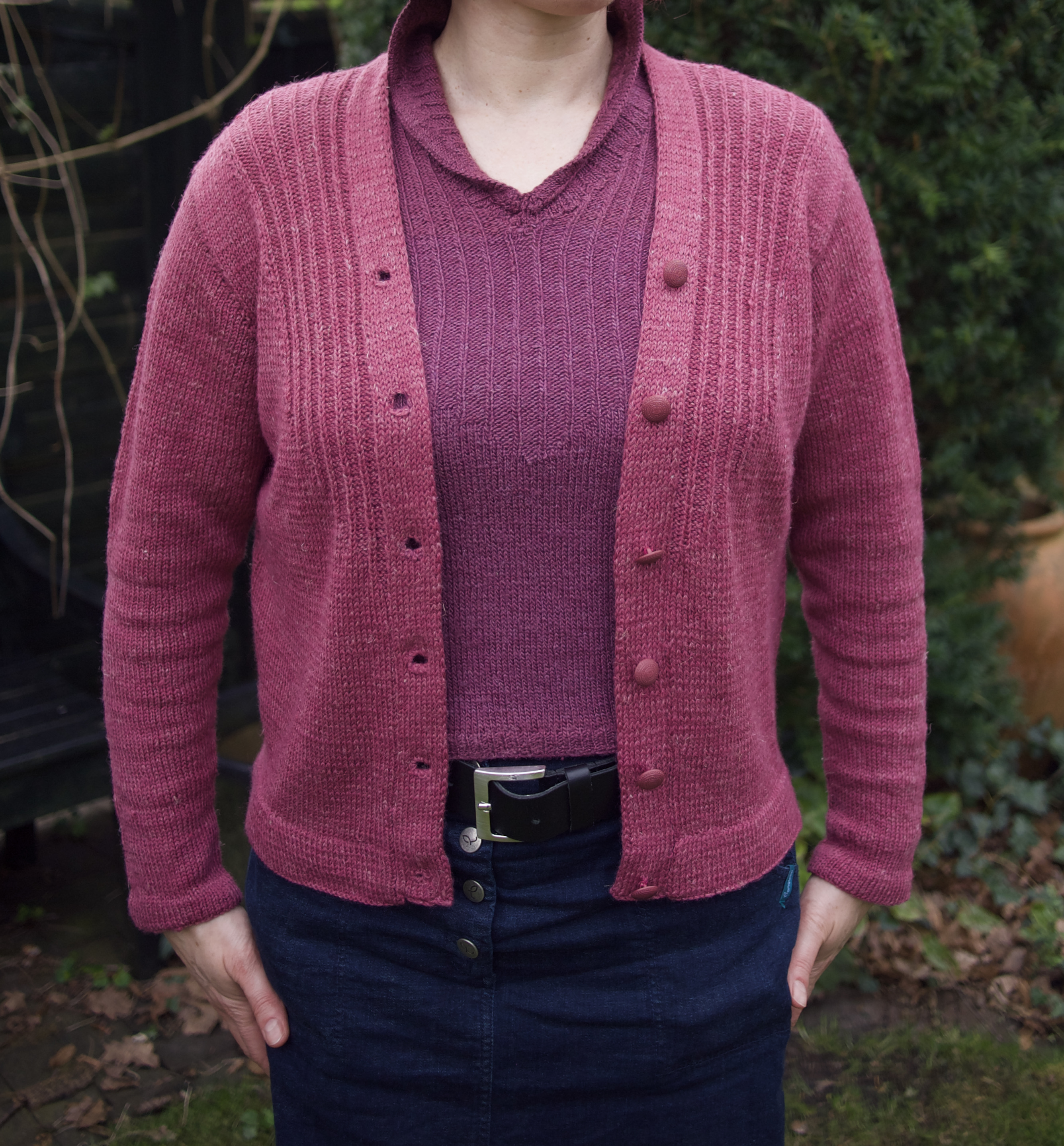
Like many designs from the mid-1960s, the cardigan has stocking-stitch hems at the bottom edge and sleeve edge, as well as double front bands. Both hems and bands are made easier by working one purl row on the right side (hems) or one slip stitch every other row at the same stitch (bands) to make a fold line. I made the body hem by knitting one stitch from the live stitches together with one stitch from the cast-on edge all across the piece — nerve-wracking, but saves sewing it later.

The cardigan itself is very easy — stocking-stitch with a little bit of rib detail on the yoke, and set-in sleeves — but the challenge for me was making sure that I had enough yarn. Slow Wool Lino has unfortunately been discontinued, and I bought the wool at a buy-up-whatever-we-have-left type of sale, so the chance of finding any more in the right colour was minimal. 300 grams should be enough, I thought, even for a cardigan with double front bands and a stocking-stitch hem. But to be sure, I knit the front bands together with the fronts and back in one piece and finished the bands around the back neck before starting on the sleeves. Then I knit the sleeves top-down, picking up around the armhole and dividing the remaining wool exactly in half. That way, if I ran out of wool, the sleeves would just be “bracelet length”, which wouldn’t bother me.

What can I say… it was perfect! I hd to use a little bit of the leftover Katia from the jumper to finish the underside of the hem on one sleeve (invisible) and sew down the sleeve hems and front bands (also invisible). Thus the yarn was de-stashed perfectly. The sleeves were in fact bracelet length after knitting, then stretched to normal long length after blocking. (I didn’t even have to pin them, they grew by themselves.) To top it all off, I went down to my local yarn store / mercerie and immediately found buttons that perfectly matched in size, colour and style.
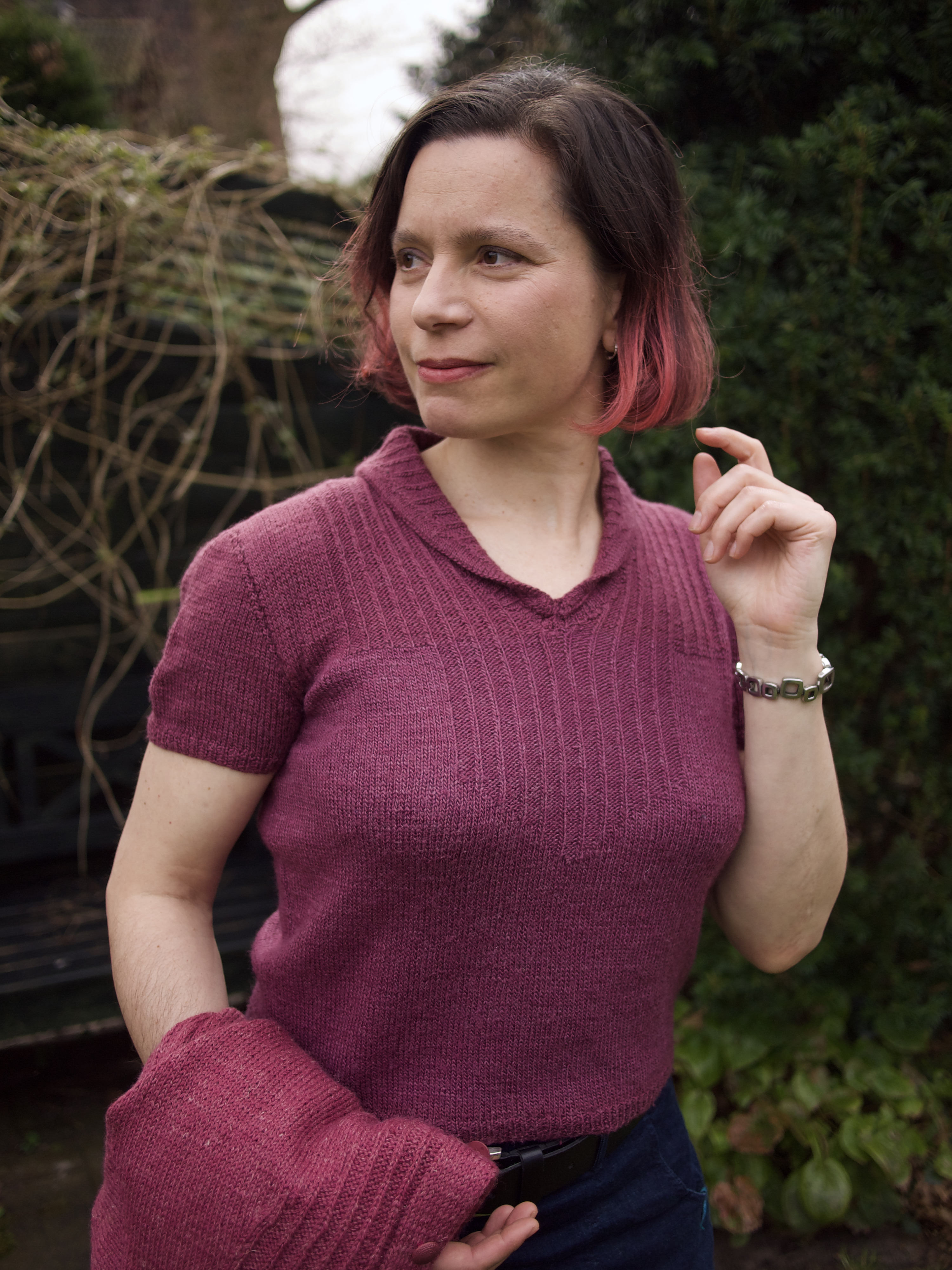
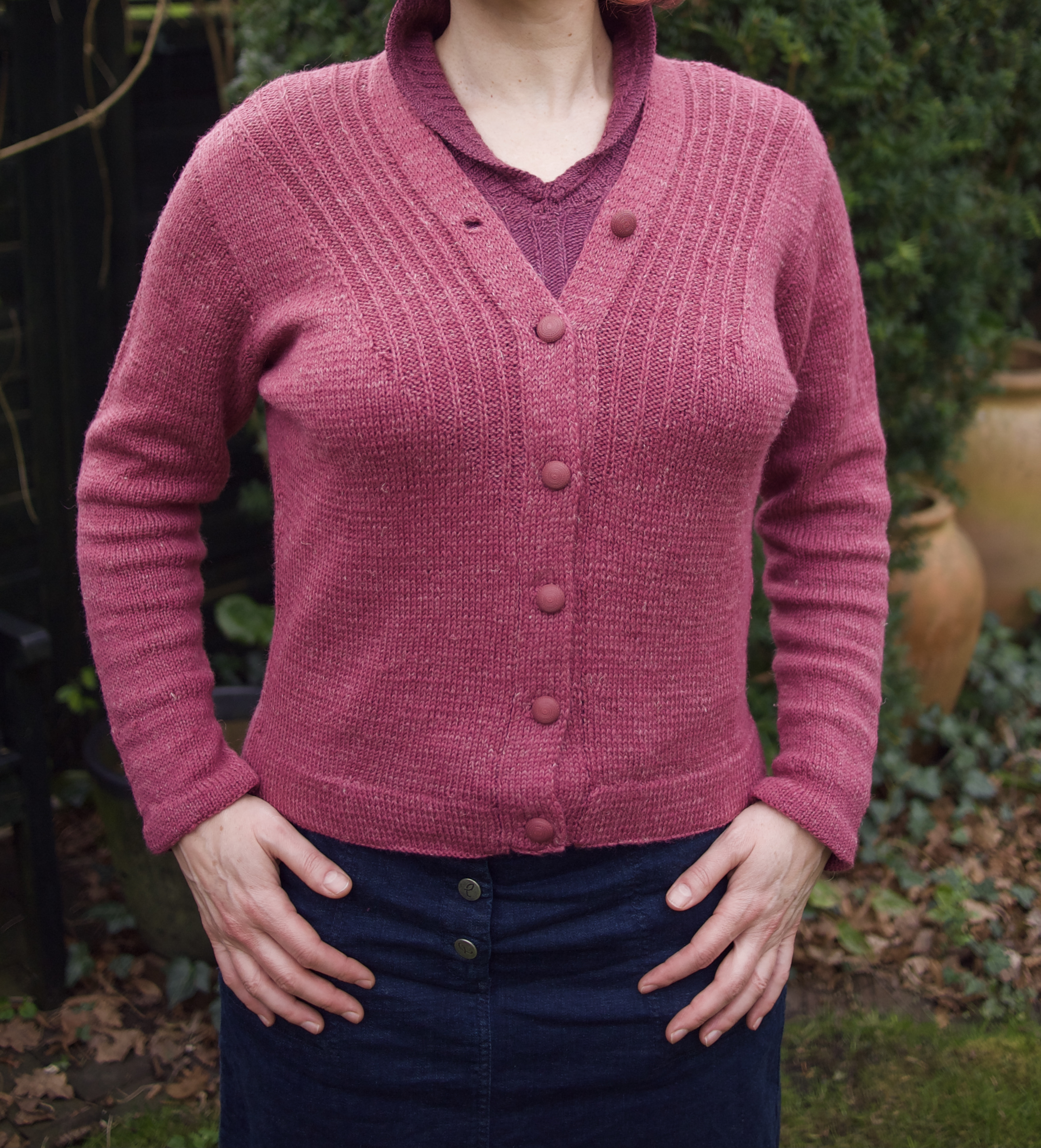
As always, we had fun re-creating the original poses from the magazine.

In the “normally posed” photos, neither I nor the photographer noticed that the collar of the jumper was sticking up. Normally, it overlaps the non-collared cardigan elegantly, as in the other photos. We’ll try to take some more pictures in the next few days if it ever stops raining.

Really happy with this twin set and I’m sure it will get a lot of use this spring. The combination of lightweight wool-silk and lightweight merino-linen makes both pieces very adaptable to changing temperatures, warming and cooling as needed. The pattern was easy and I would recommend it to anyone.

Out of Order: Contemporary Embroidery, June 1961

EDIT December 31st, 2021: FINISHED!
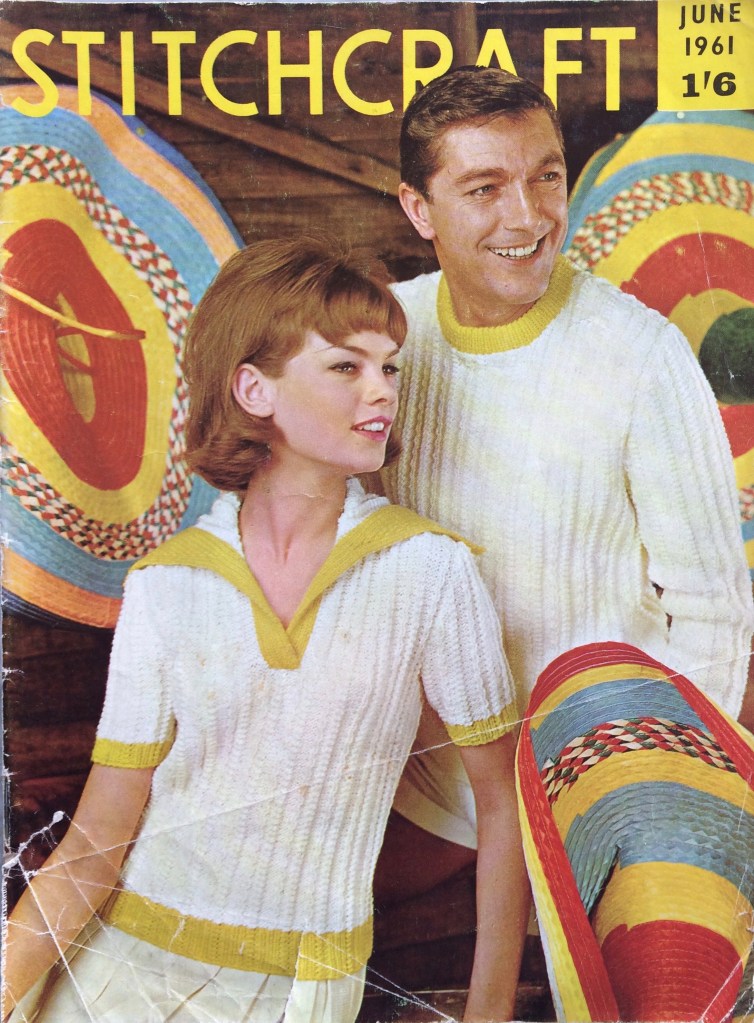
July 1962’s issue didn’t have anything in it that particularly interested me, so I took the time to go back to the June 1961 issue, which had so many nice projects in it that it was hard for me to decide which to make. (I ended up making this lacy top and later, this child’s tunic-dress.)

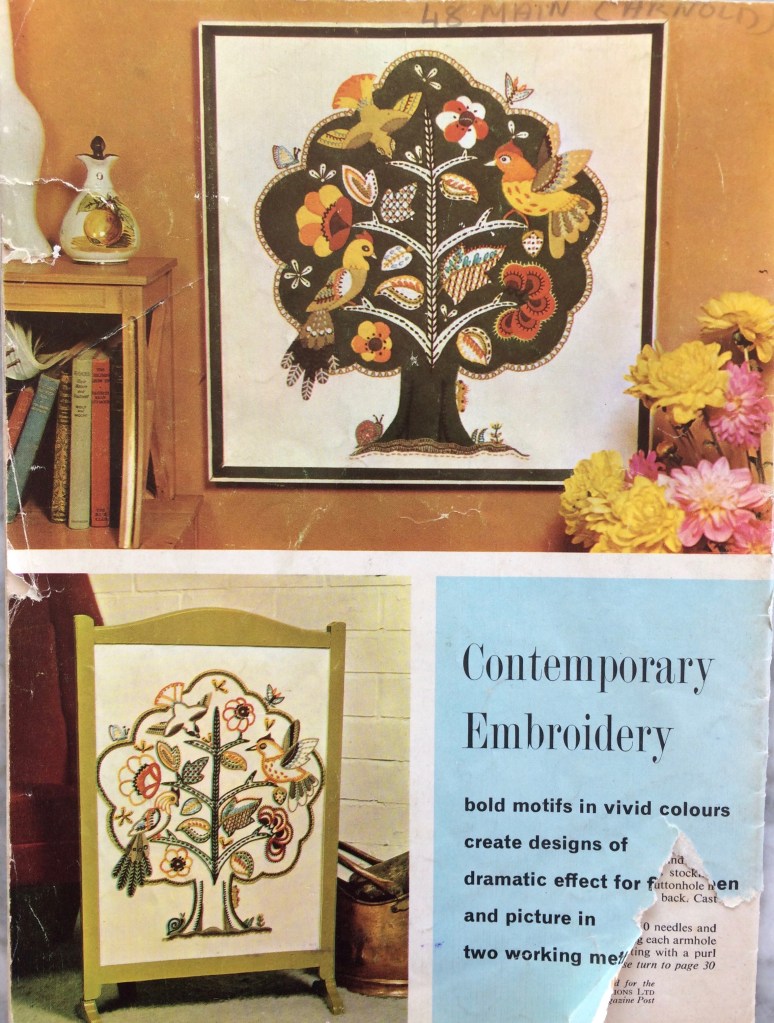
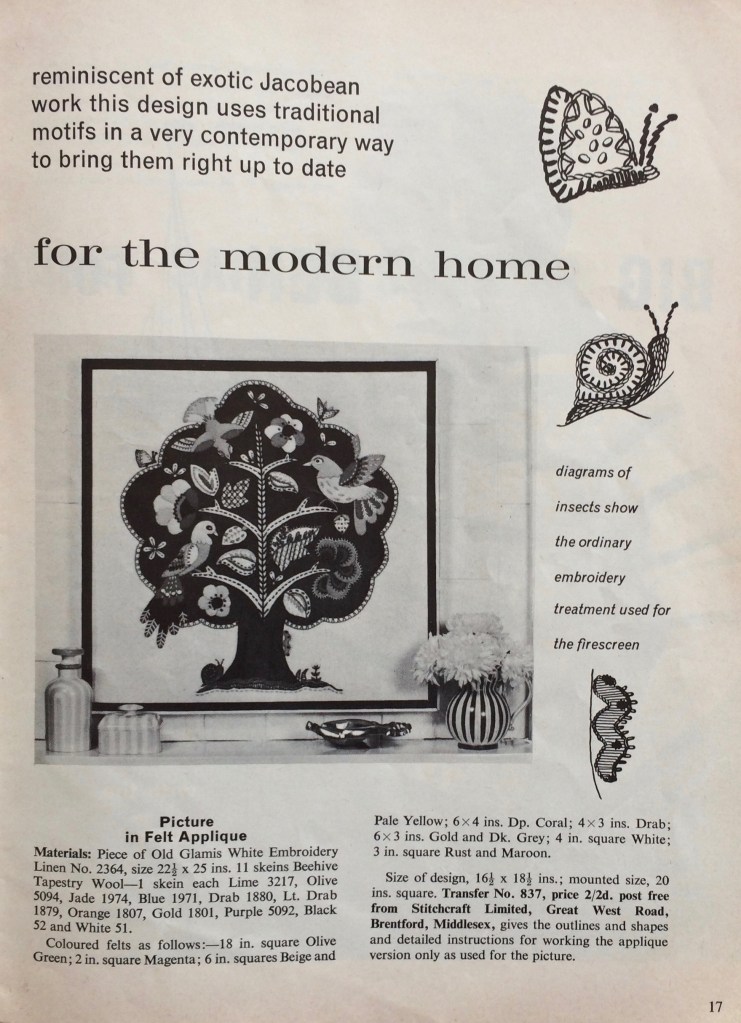
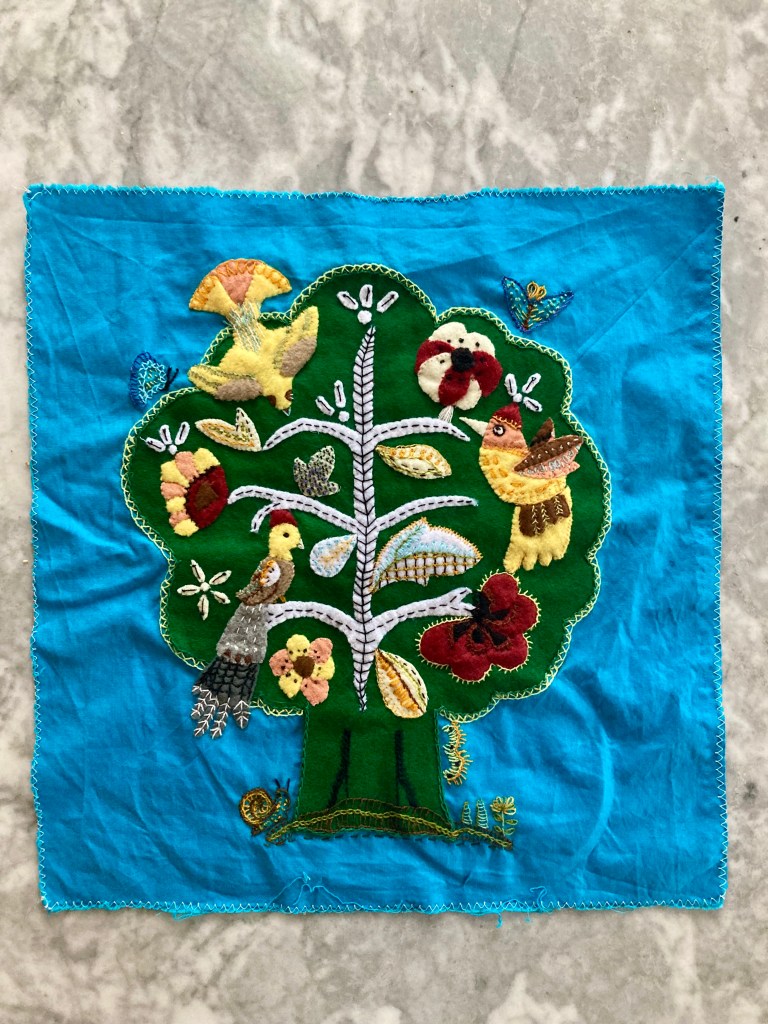
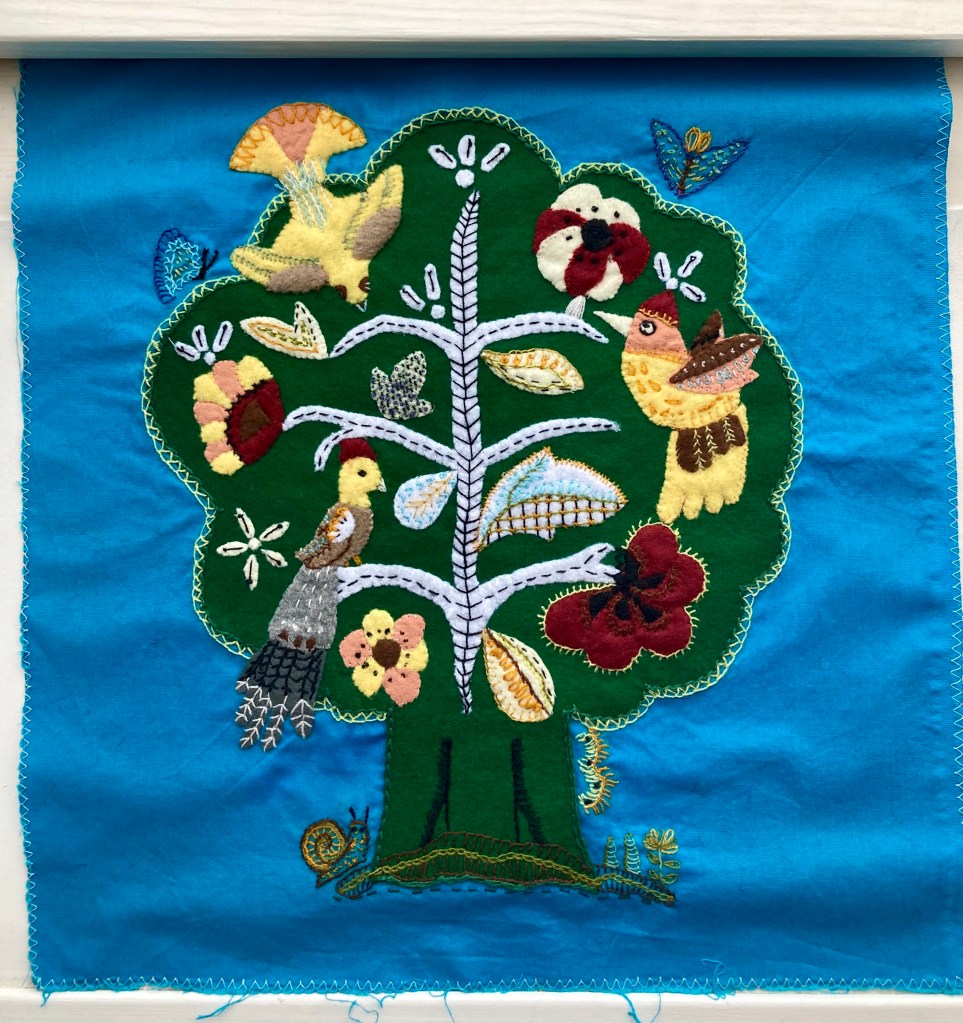
I loved the extremely complicated, heavily embroidered, faux-neo-Jacobean felt appliqué “birds in a tree” extravaganza featured in colour on the back cover, but it was too daunting. For one thing, of course I didn’t have the transfer or pattern for the appliqué pieces, since I would have had to have sent away for them via postal order in 1962. For another, there weren’t even any instructions in the magazine — the design was offered as either an embroidery or an appliqué project (see photo), and the instructions in the magazine only covered the embroidered version in any detail. The appliqué version just gave a list of materials, size of finished design, and the address where one could order the pattern and instructions. And when it comes right down to it, my appliqué and especially, embroidery skills are really not very well developed.

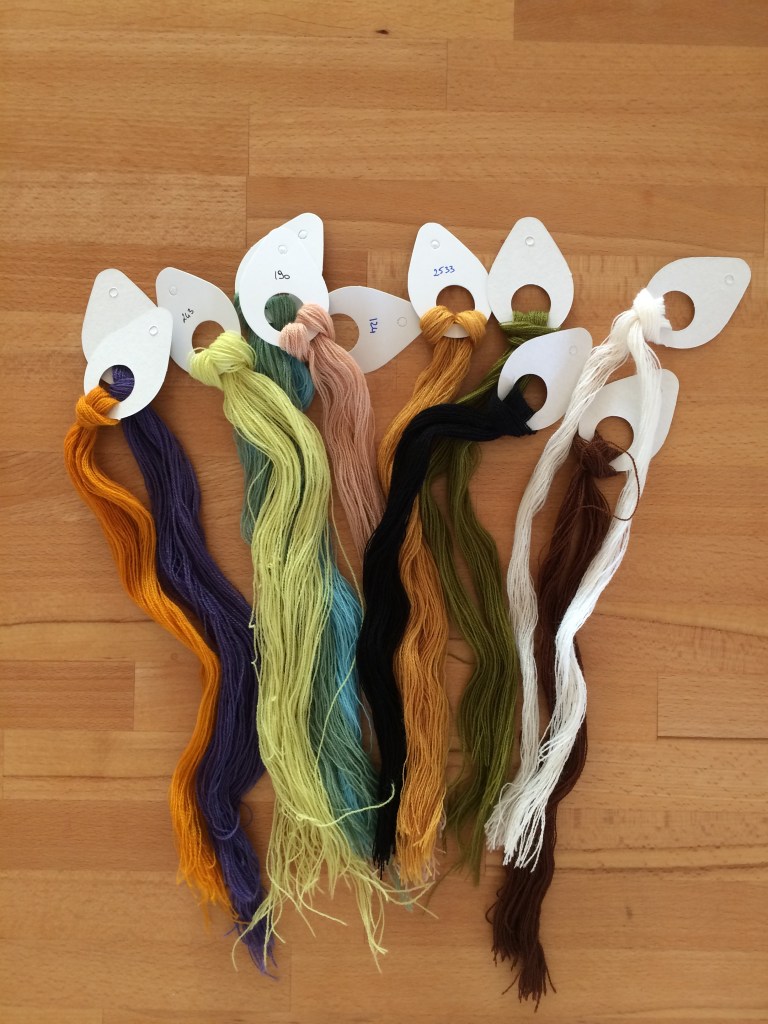
Oh yes, and while felt is easy enough to buy, the materials included tapestry wool for the embroidery, which is impossible to find in stores anywhere near me and even difficult to order online in the right weight (very fine)! Luckily, last year I happened to be in the one city I know that houses the one shop I know that actually specialises in tapestry and sells the right kind of wool, so I was able to get that, at least.

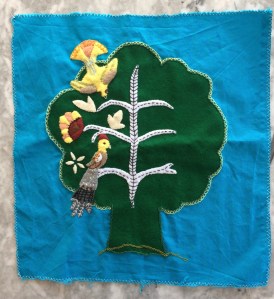
I decided to make it as a cushion, not a wall hanging. The background tree was easy enough. Technically, the white branches and leaves should have been made by cutting holes in the green tree felt and letting the (white/beige) background fabric show through, but since I chose a blue background fabric, I appliquéd them as well. It was predictably difficult to make and cut out my own patterns for the little bits of felt for the birds and leaves, and after making the first two birds, I realised it was easier to just cut the pieces freehand. Since there were no instructions to follow, I went from the photo and the instructions for the embroidered version, which obviously didn’t give much useful information.

Such a detailed project took forever, of course. It needed many tools and materials, so I could only work on it at home at a table, and not during the winter months, as I needed natural light for the fine work.

I made two of the birds on the left first, wasn’t really happy with them, and realised why after making the first flower on the left. I liked the way the flower turned out — it’s much simpler! The birds seemed overdone in comparison. I thought about changing the design and realised at some point that, of course, the who idea of this neo-Jacobean, embroidered and appliquéd extravaganza is that it is supposed to be over the top.

And so, slowly and painstakingly, it got done, one piece at a time. (It also spent a lot of time in the cupboard in between bursts of activity.) The embroidery directions in the magazine were often quite different from the appliqué version, so I did a lot of guesswork and adaptation based on the (rather small) colour photo on the back cover, from which the colours had changed and faded in the 50 years since its printing.

I was determined to get it done before the end of 2021, and I did (on December 31st.) It was a huge milestone for me in my appliqué / embroidery learning process, and I am really, really happy with the way it turned out.

Out of Order: Beach dress, June 1961

IMG_2566June 1961 was the issue with too many great projects in it and not enough time to make them all. My “official” project was this wonderful knitted blouse  which took up the whole month, but there was also a very intricate appliquéd and embroidered cushion that will probably become a long-term learning experience project, as well as a great beach dress for a small child. Summer is waning, but I got the beach dress done.
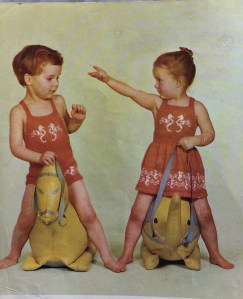
There’s so much I love about this design: the sea horses, the buttoned straps in the back, not to mention the ridiculous poses and strange inflated? stuffed? animals that the kids in the photos are riding. Also: illustrations in the magazine, done by hand, with bubbles.IMG_2566 2

The pattern is for a 23-24 inch chest, with an 8 1/2 inch long skirt. The child I knit it for is a little thinner, but taller, so I made the width from the pattern and added 1 1/2 inches to the skirt length and made longer straps with multiple buttonholes for different length options/growing room.

Version 2I decided to make it in cotton instead of Nylox (Patons wool-nylon mix from the 1960s) or a modern equivalent. It is always, always a problem to find non-mercerised cotton that is fine enough to give 7 stitches to the inch. Thick, mercerised dishcloth cotton is always available, mercerised crochet cotton is always available, but what passes as 4-ply or  fingering weight non-mercerised cotton is just too thick. I decided on Natura “Just Cotton” which is non-mercerised, soft, pretty and supposedly free of harmful substances (Oeko-Tex certification). The label says it gets 27 stitches in 4 inches but that is illusory. The yarn is 8-ply! I don’t know why they don’t use 4 strands, thus making it a true 4-ply fine cotton for soft, light garments. I got 6 1/2 stitches to the inch with some effort, but the resulting fabric is a bit stiffer than I would have liked.

On the first try, the first ball of turquoise ran out shortly after the bottom sea-horse band and I was worried that I wouldn’t have enough, so I started over and made the skirt less full. Of course, the skirt lost a lot of its swing and I ended up with a ball and a half left over at the end… I used some of the rest to make a little kerchief that the kid can wear on her head for extra sun protection and cuteness. Let’s just hope it stays warm enough for her to still wear it this year.