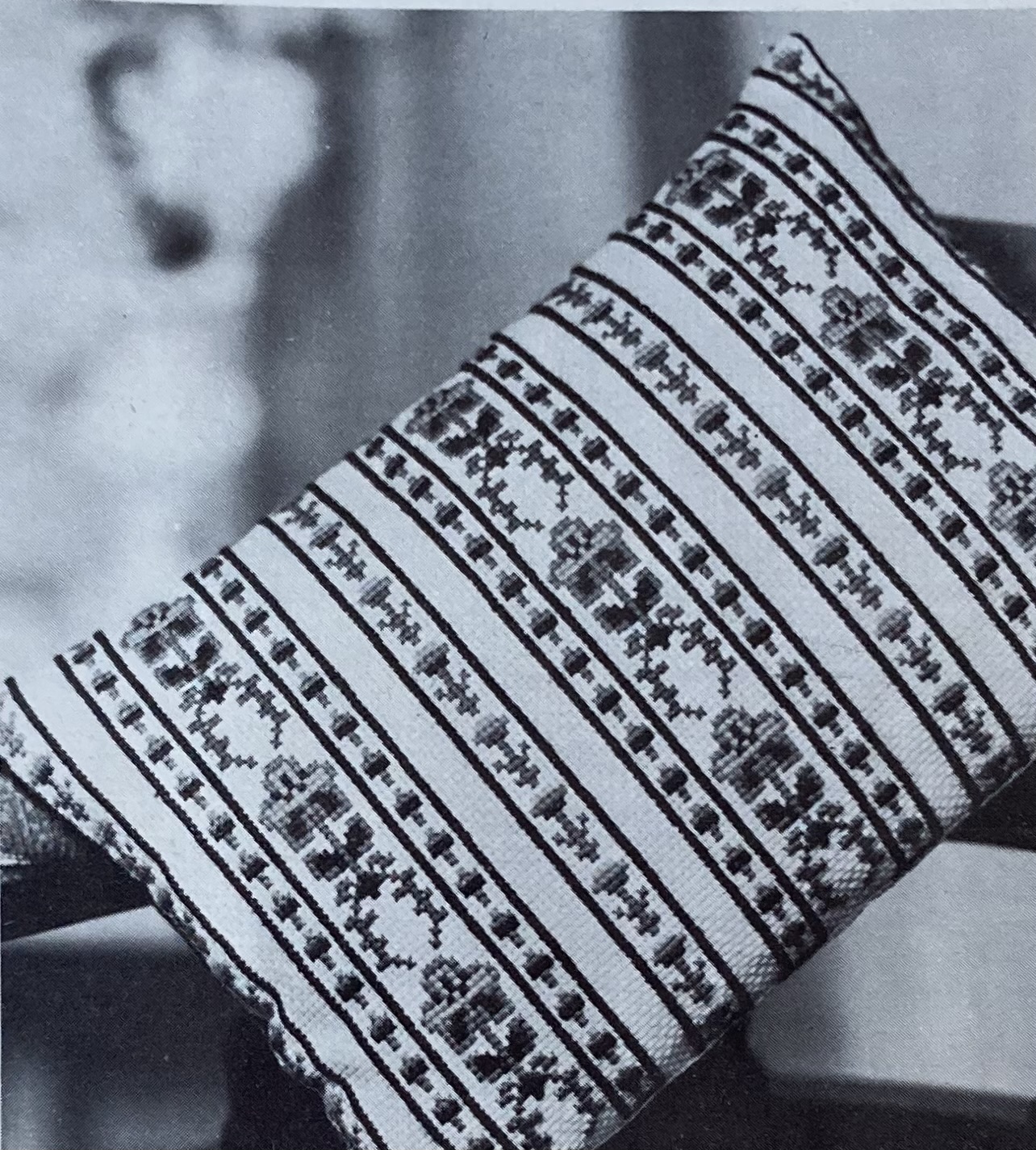
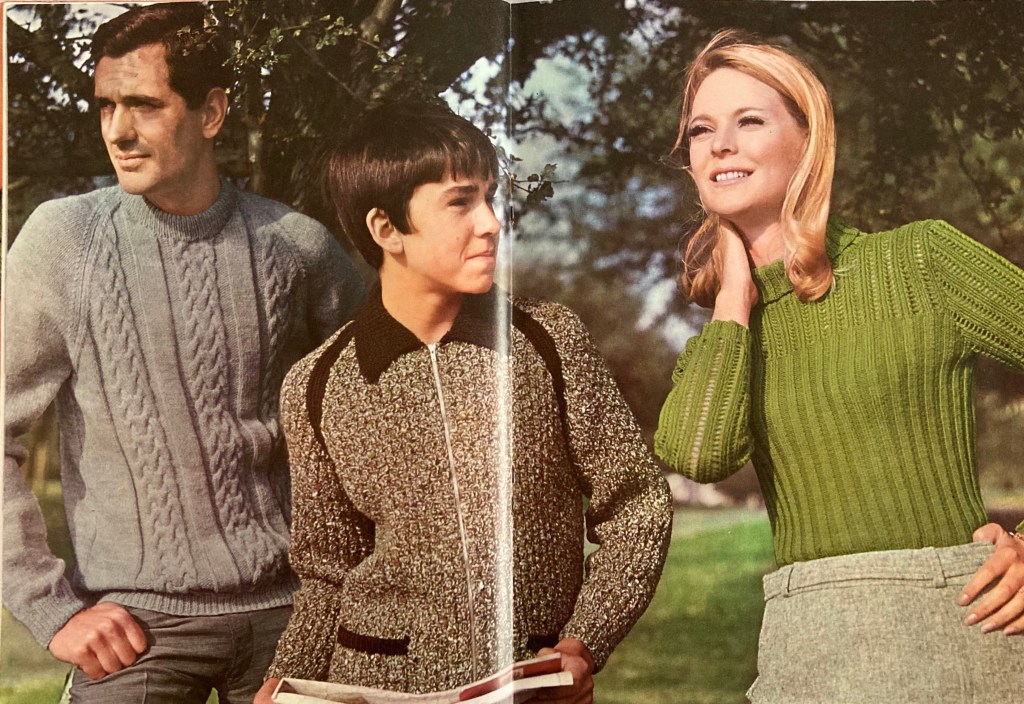
April 1967: Check pattern Shell

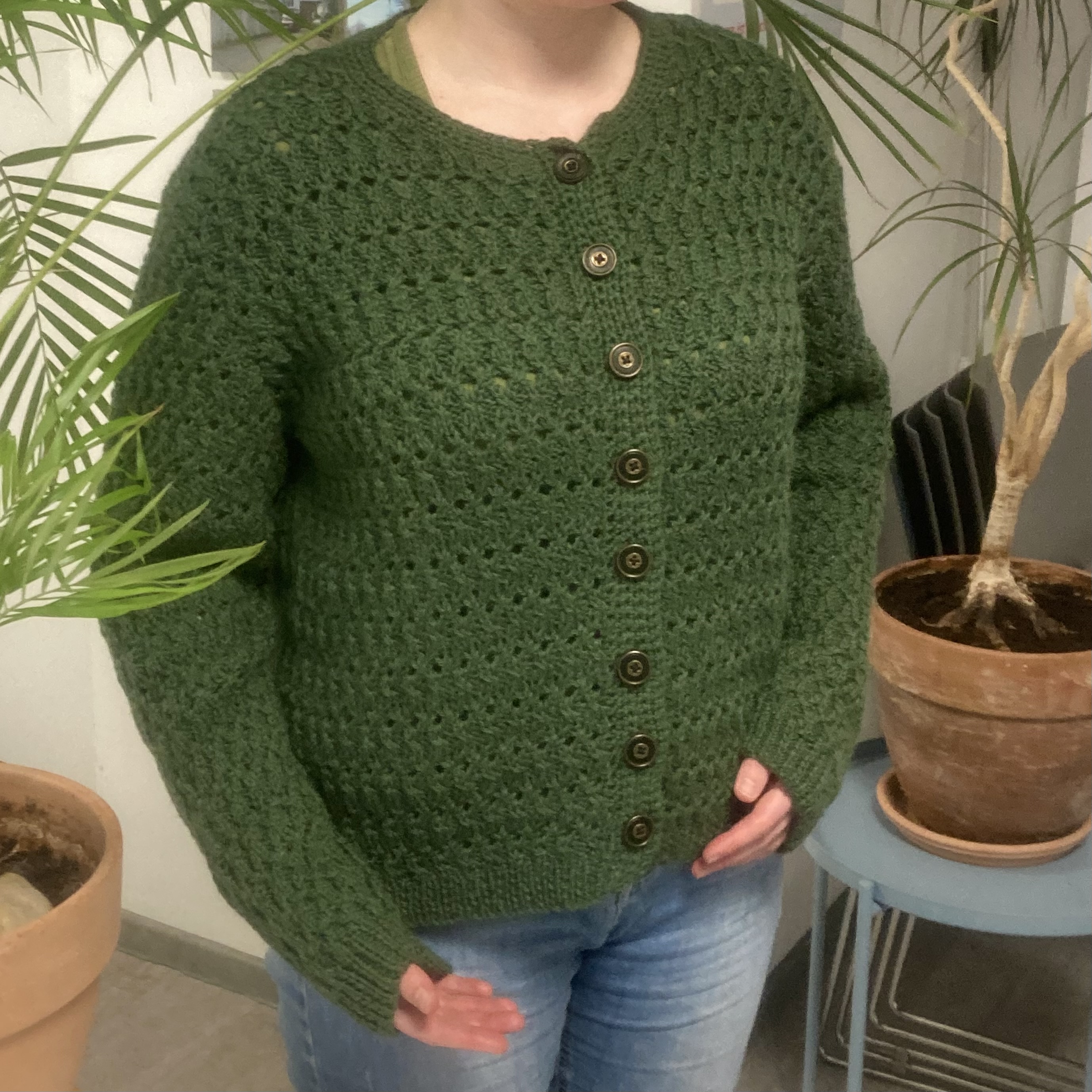
EDIT May 26, 2025: Finished! I had to wait for the photos but it was worth it. Scroll down to see…

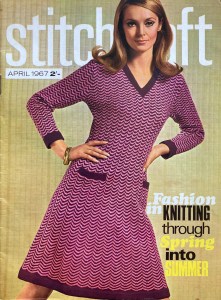
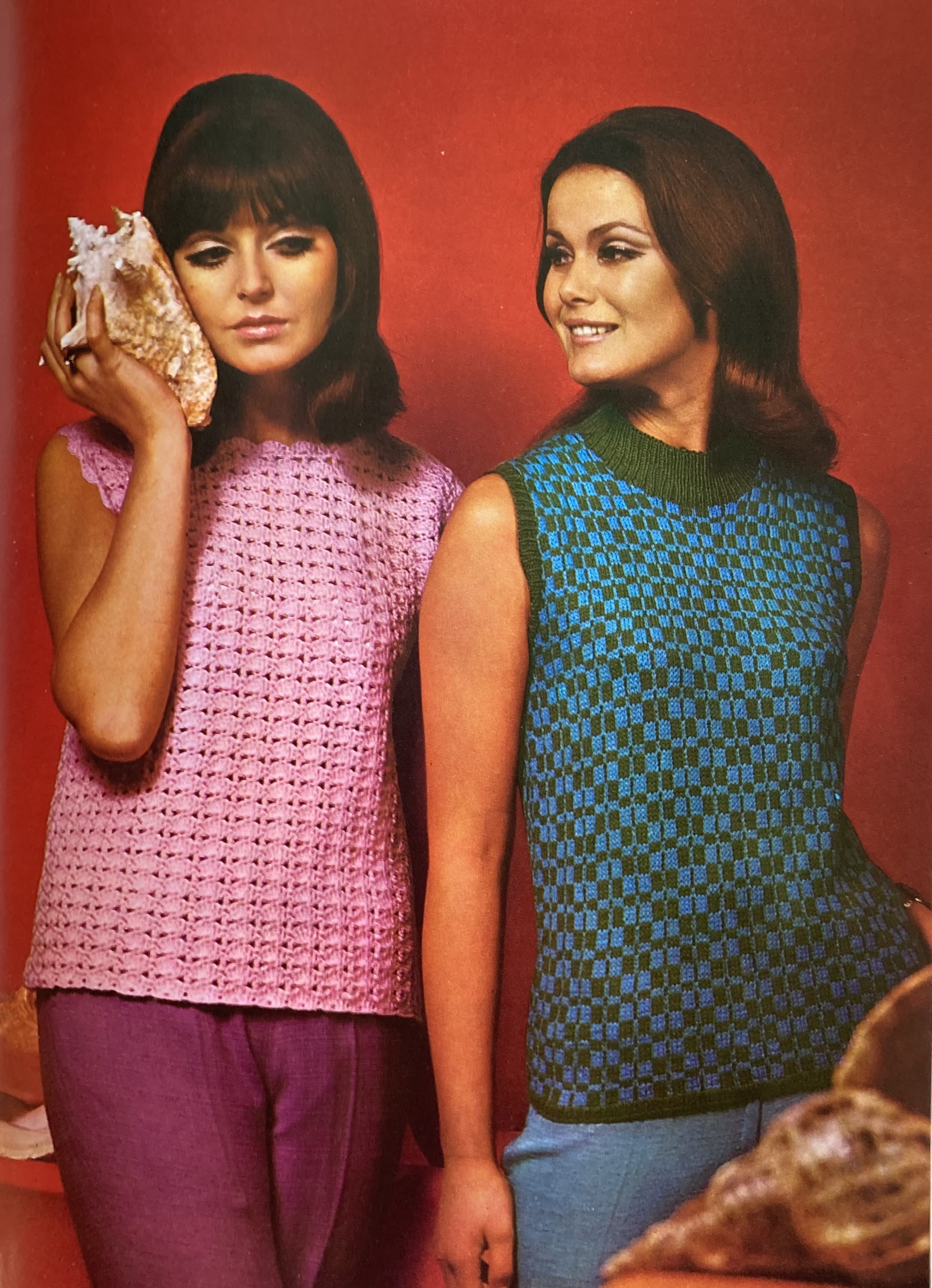
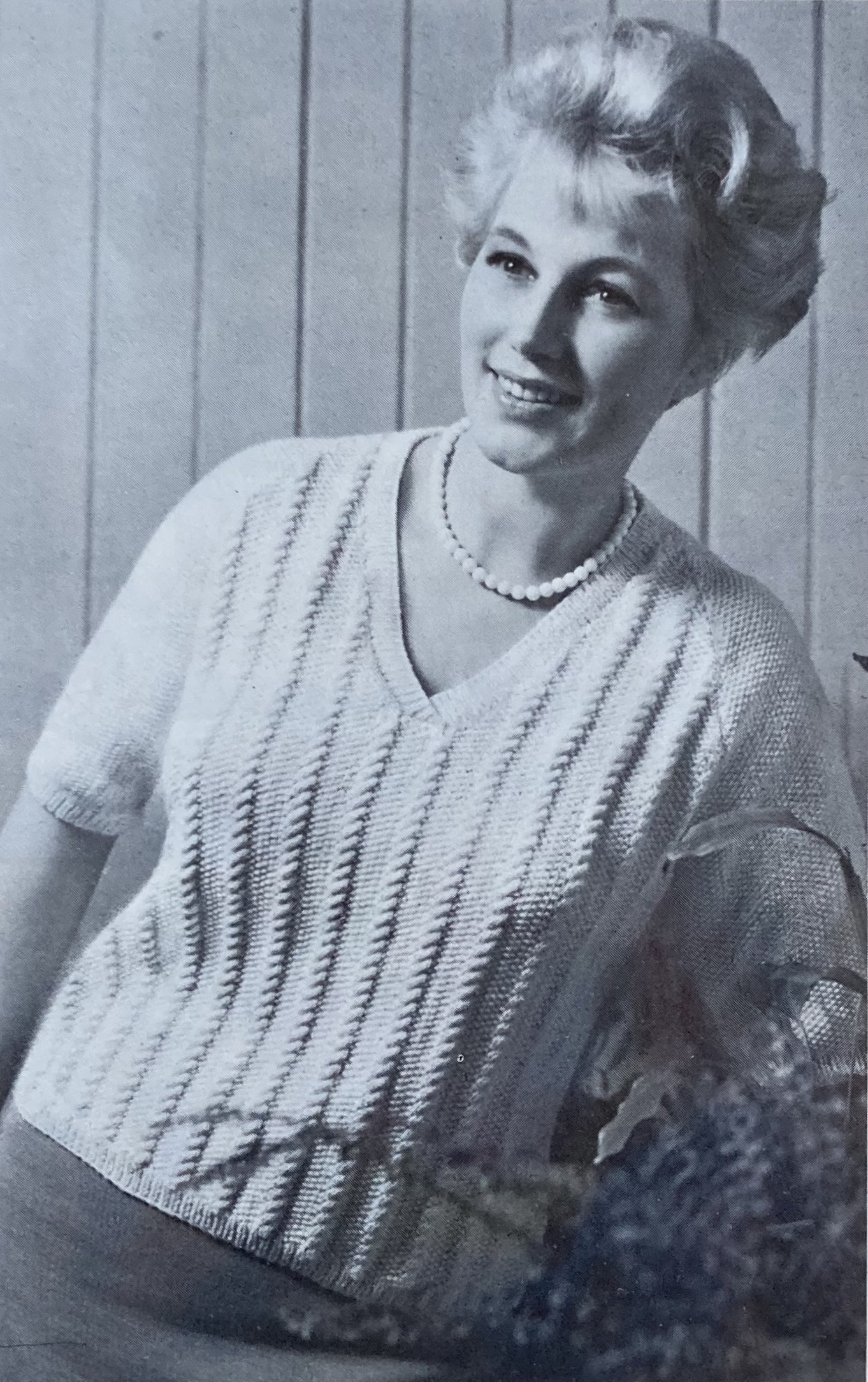
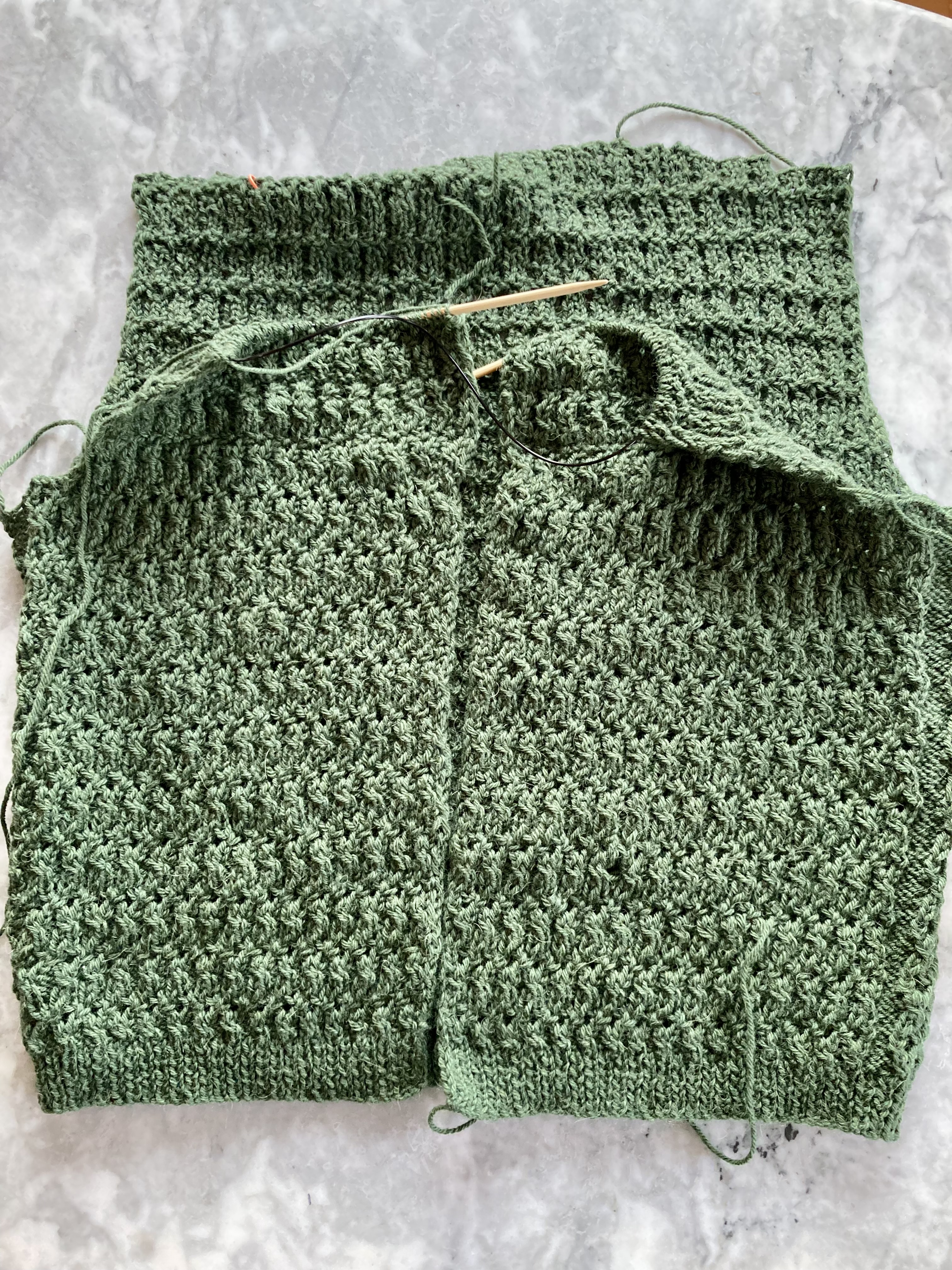
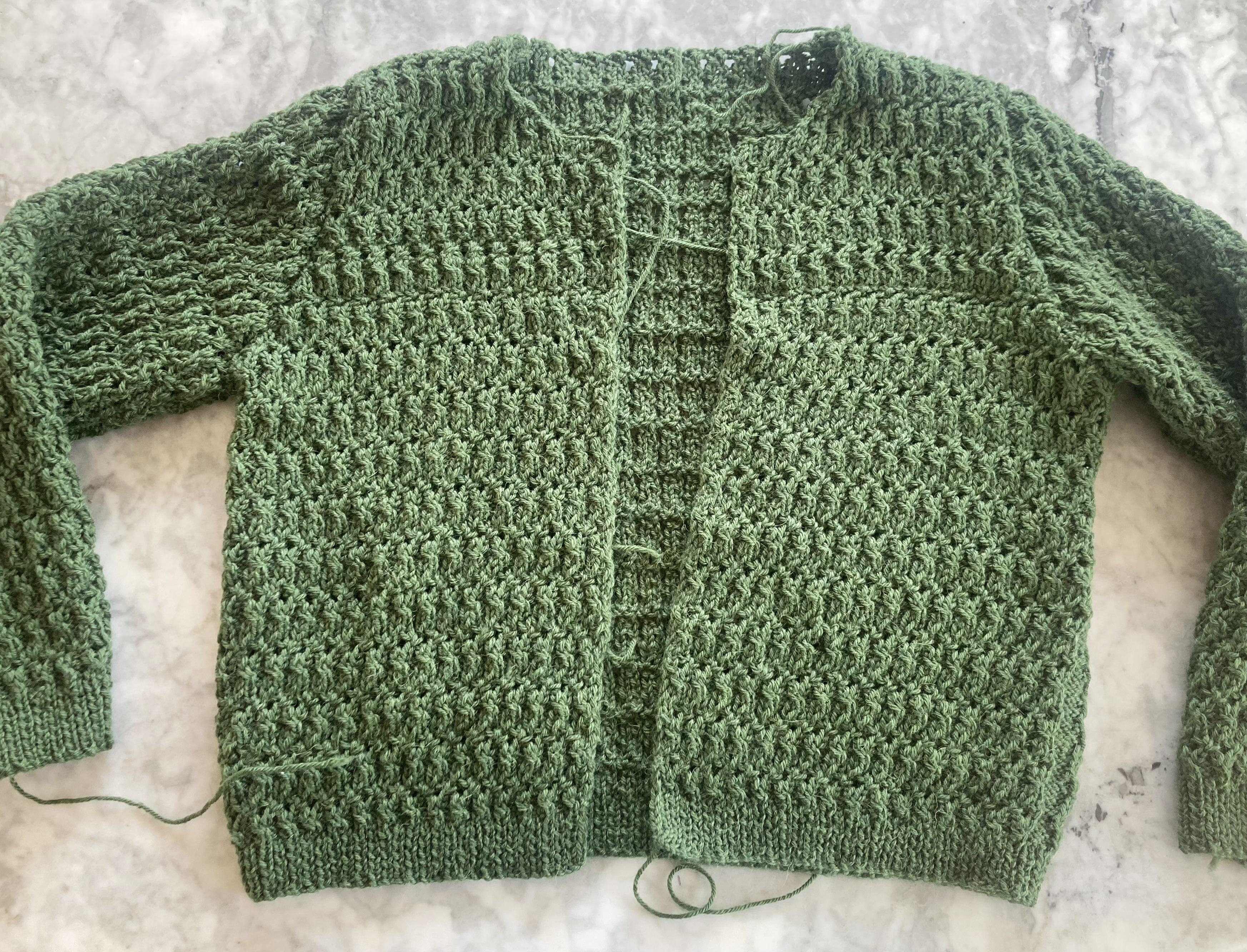
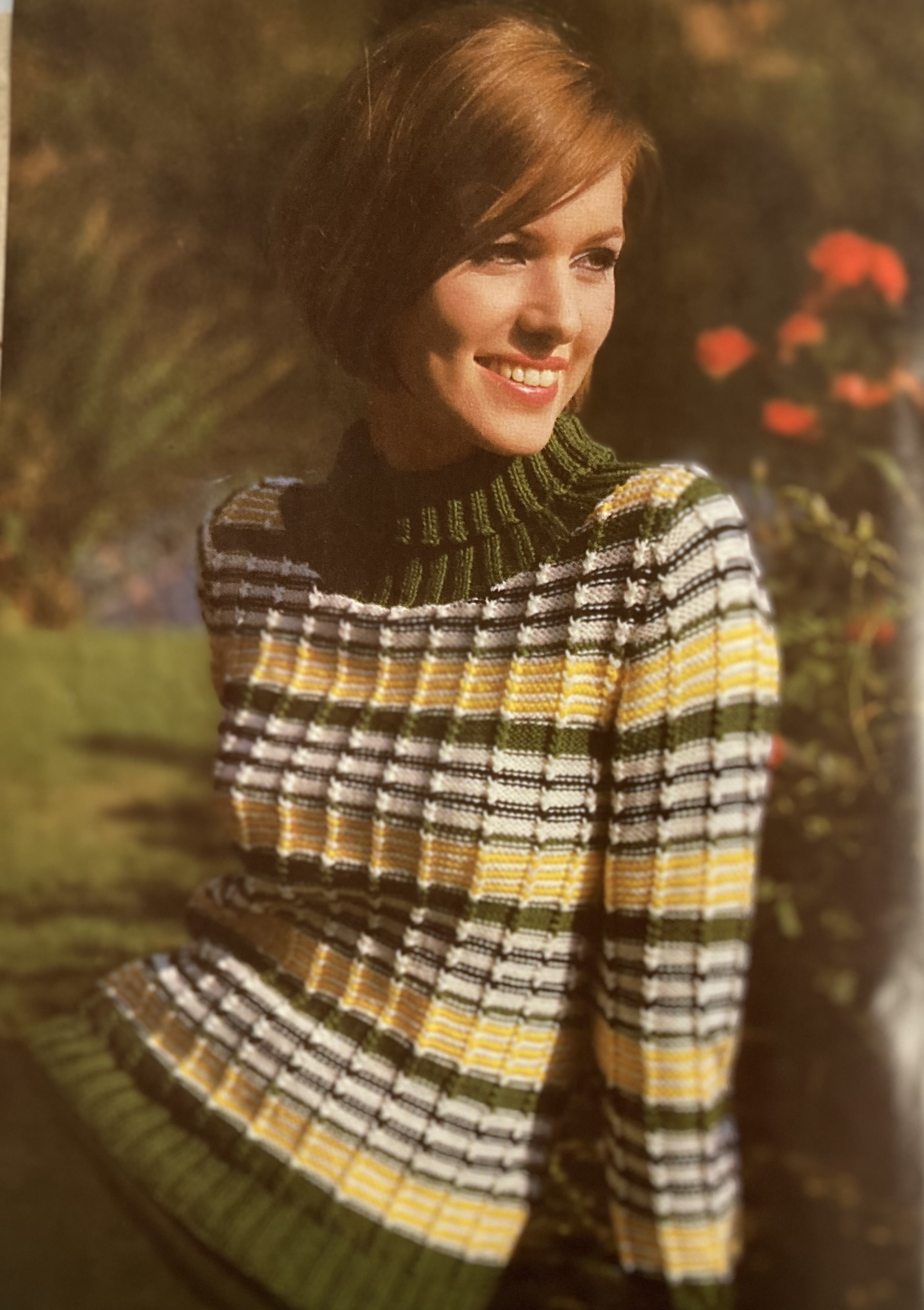
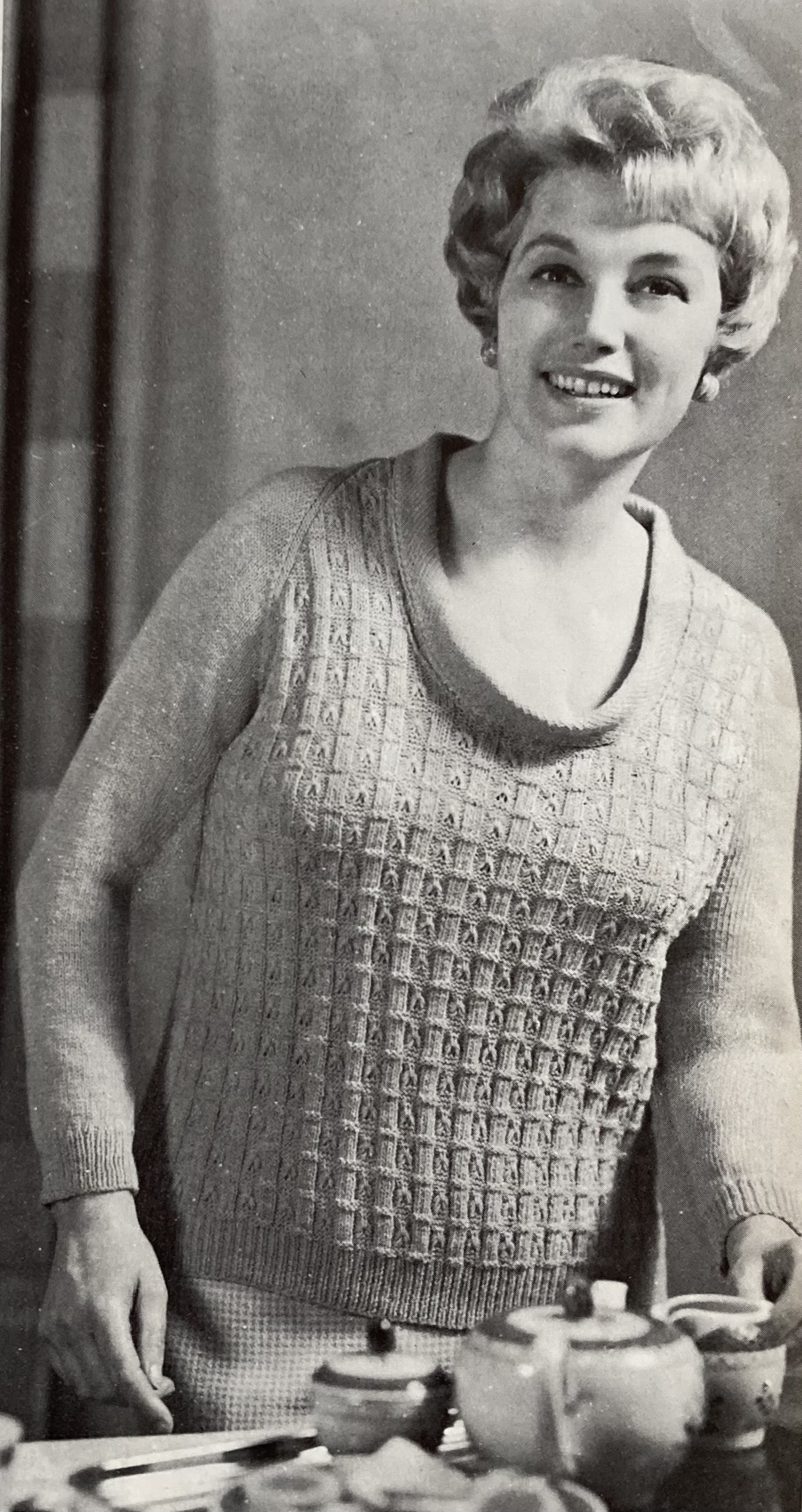
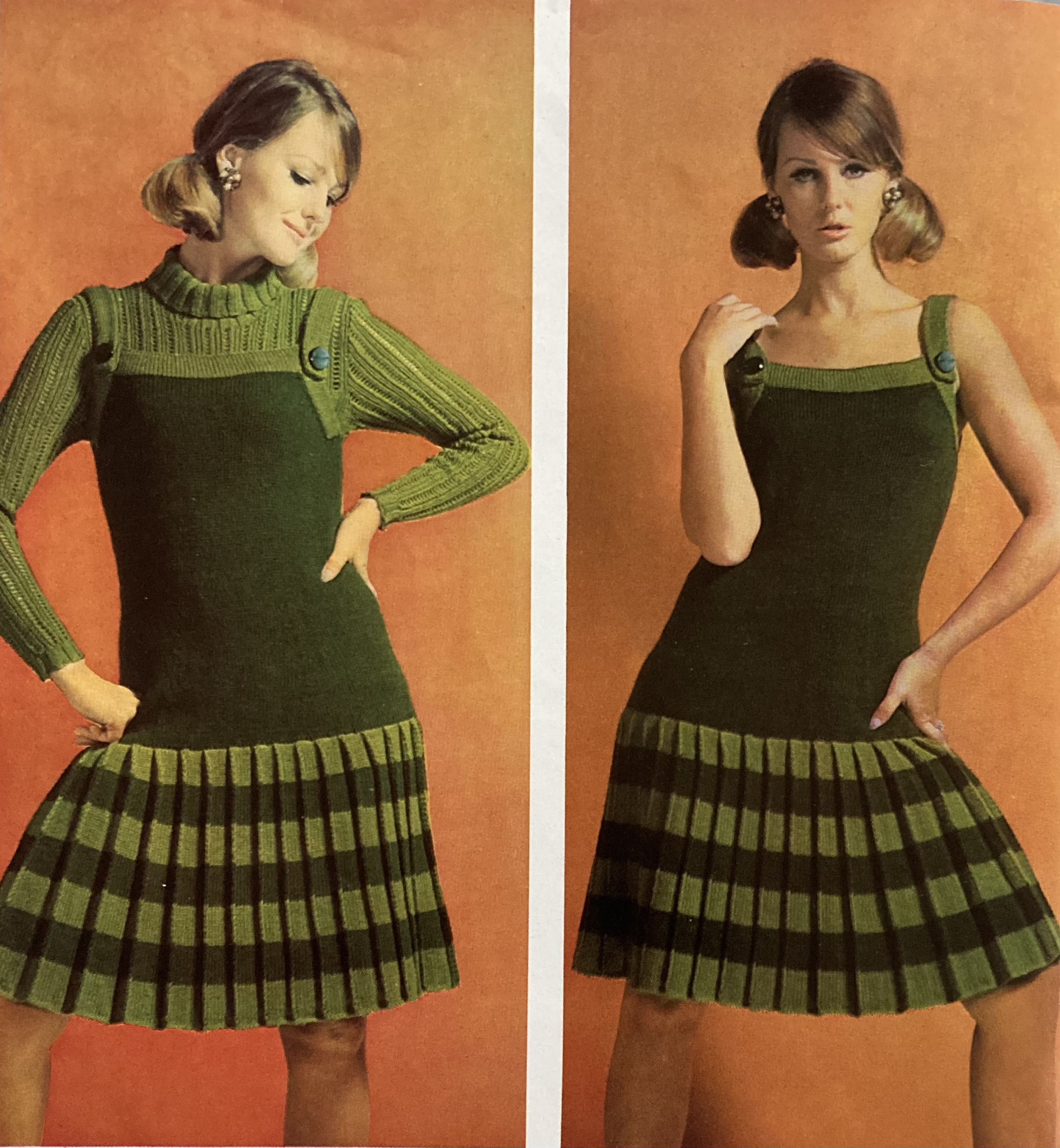
My April 2025 project was this “shell” (sleeveless top) in a stranded chequerboard pattern — one of three “summer shell” patterns in the April 1967 issue of Stitchcraft, along with a polo-neck bouclet and a crochet lacework design. (And shells. Listening to shells, because shell, get it? Yes, we got it, thanks.)

The wool in the pattern is Patons Cameo Crepe, a very smooth, twisted fingering-weight wool. I chose Lana Grossa Ecopuno, which I used for this “shaded blouse” and this sleeveless cardigan a couple of years ago. Though not as smooth as a crepe-twist yarn, it’s soft, light and not too warm, and available in many very pretty colours. I chose a dark green and pale, slightly seafoam-tinged blue, similar to the original colours but with more contrast.

The tension in the pattern is 8 stitches to the inch in pattern, which I can’t get even with fine yarn, so I made the smallest size (for 32-33 inch bust) to fit me (38 inch bust) and calculated that it would come out with around 36 inches in the bust, i.e. two inches of negative ease instead of the 1-2 inches of positive ease in the pattern. I hear you out there saying “Never, ever knit a stranded pattern with negative ease!!!” but it can and should sometimes be done! The yarn is loose and drapey, even in a non-diagonal stranded pattern like this one, and even two inches of negative ease doesn’t look the least bit tight.

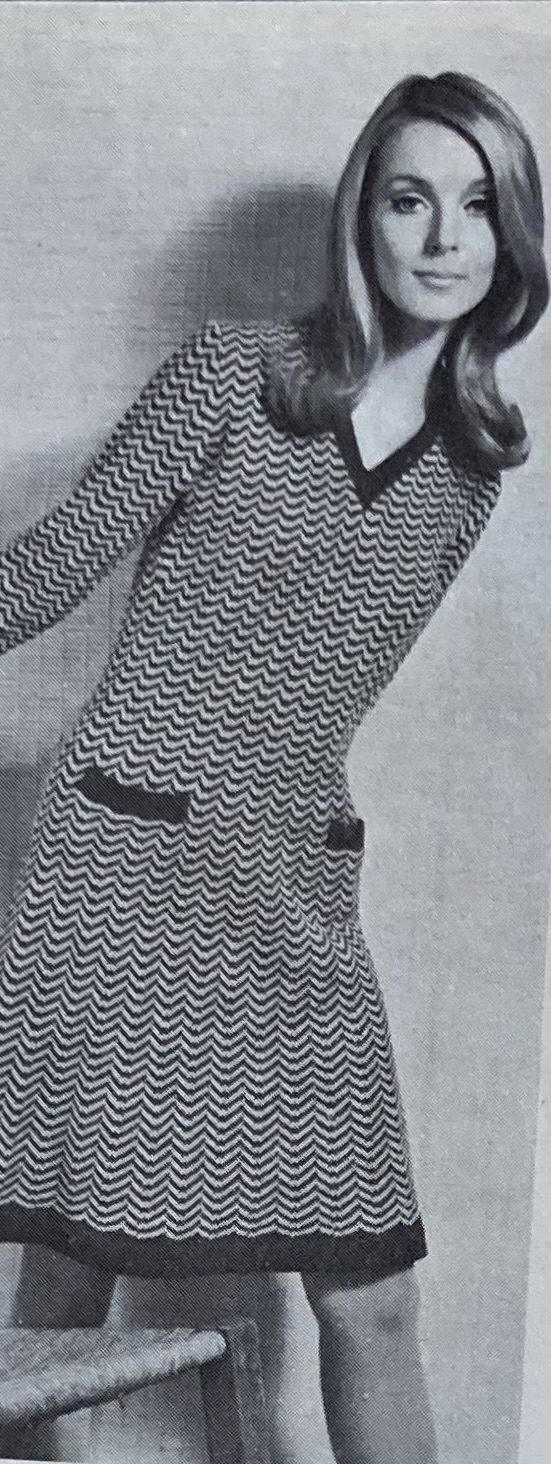
Which brings us to the shaping question: all three “shells” in the issue show the new longline silhouette — hipbone length and unshaped from hem to bust. If you look closely at the photos, you will notice that the poses often involve a hand on the back waist, a hand on the back, arm behind the back, elbow pointing at waist level… the things you do to make you look like you have a waist in your long, unshaped garment! I never make unshaped tops for precisely this reason — they look like a sack on me, as they tend to do on all but the skinniest or curviest figures. Having had good experiences with longer tops shaped from hip to bust, I started the top with even fewer stitches at the hip and increased up to the number in the small pattern size after the waist. I also made the top in the round from hem to armhole shapings.

To test the check pattern, I made a little phone cosy in a different wool (DK weight), Since the pattern has no diagonal lines, I was afraid it would pull together awkwardly . That was a concern with the DK sample, so I was very careful to strand loosely with the Ecopuno (another reason for sizing down) and had no problems. I did, however, make a mistake in the pattern, to be fixed with duplicate stitch because I’m too lazy to rip back that far.

It went wonderfully up until the front part above the armholes, where in spite of my careful calculations, I ran out of the light blue yarn. No problem, I had bought it at my local wool shop right in my neighbourhood, so popped over to buy another ball… But no! The shop is changing management and has been selling off all the inventory before the first of May! They still had some Ecopuno, but not in the right colour, so I had to order more online. Argh!

The new wool arrived and I finished the top easily enough. Of course, the new wool was a different dye lot and the one time it makes a difference… and it was on the front piece, too. The change line got less noticeable after blocking and letting dry. Also, the pattern tricks the eye into not seeing it.

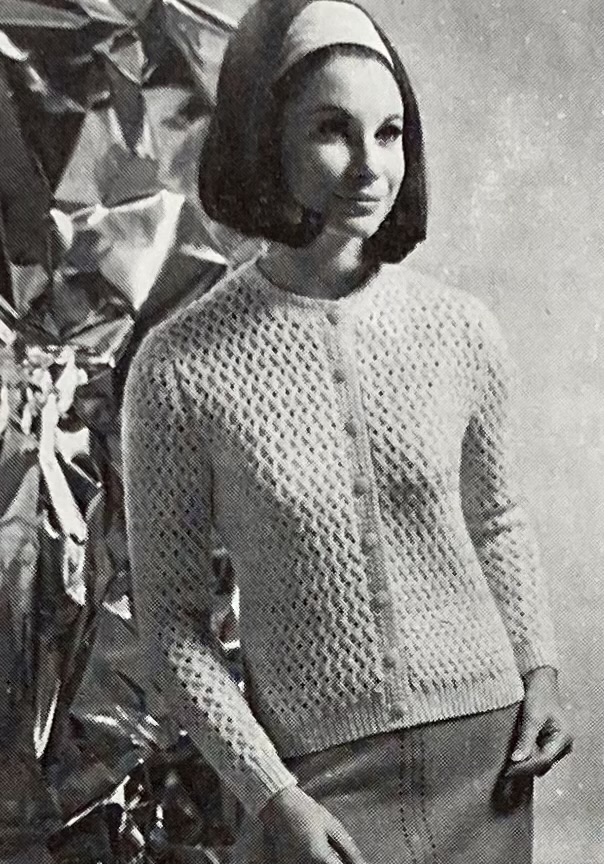
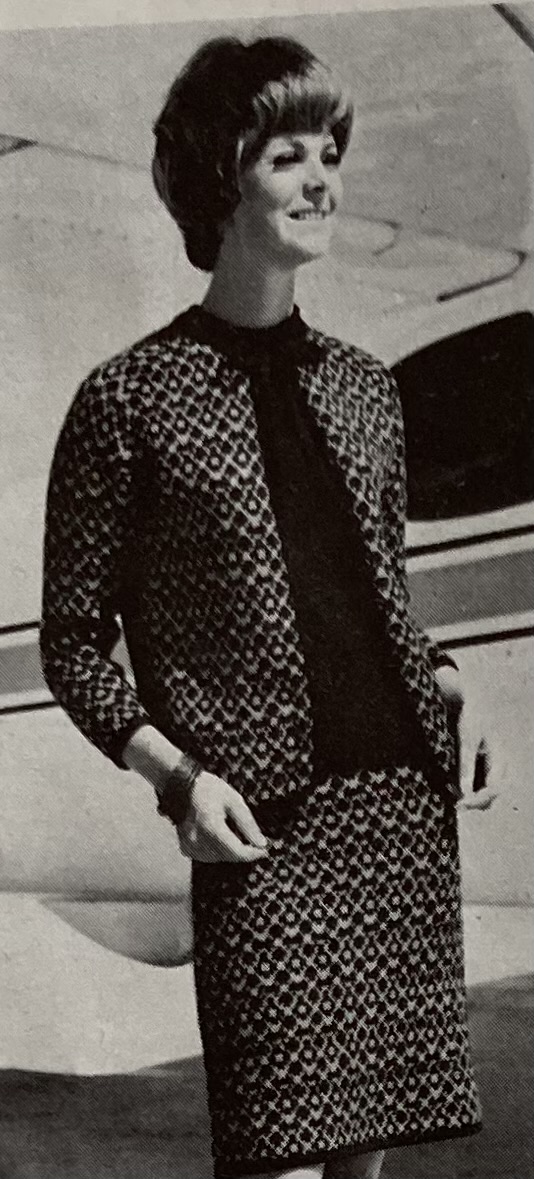
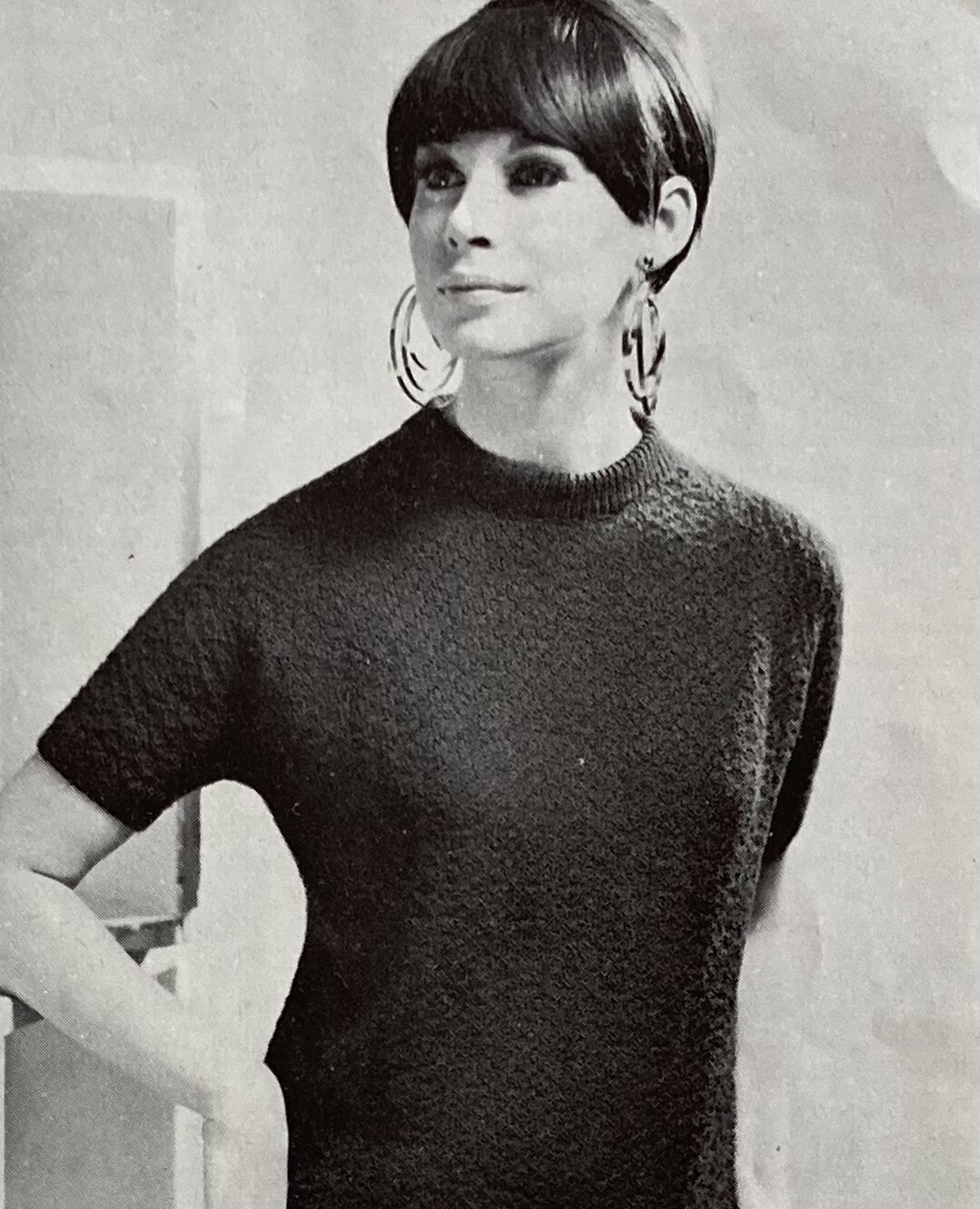
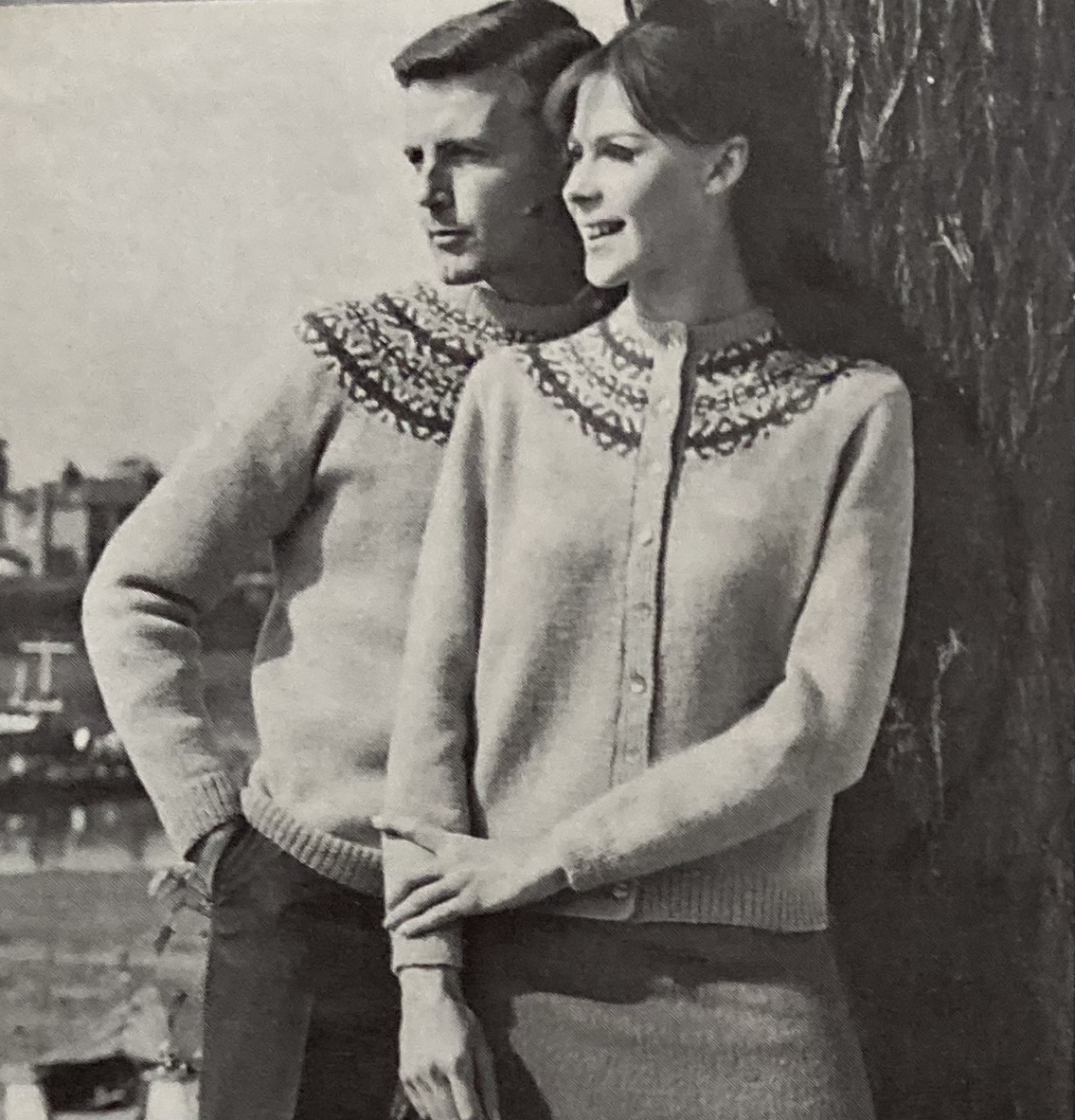
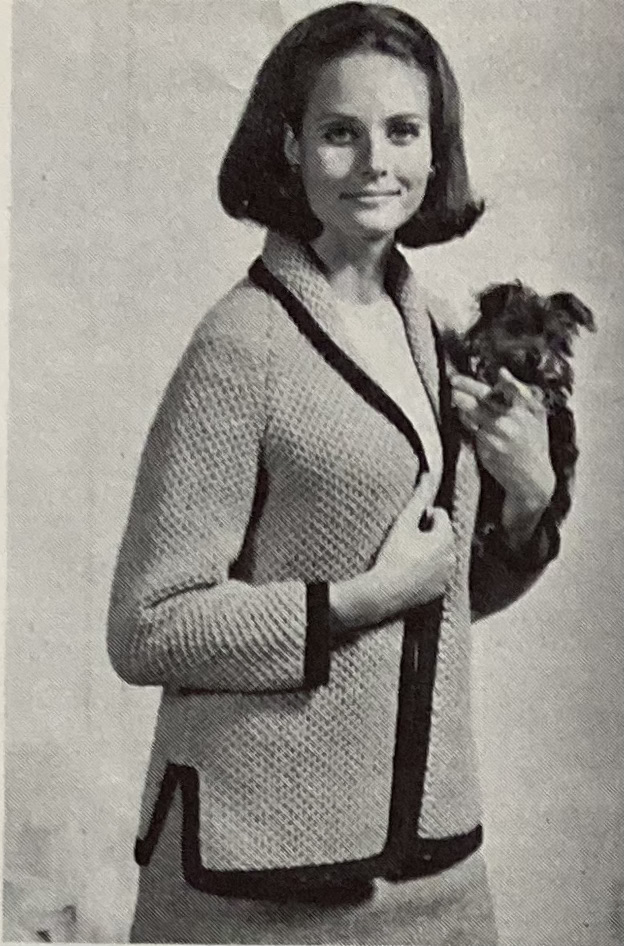
My knit-night friends and I recreated the magazine photos. Here’s the black-and-white one:

And here is the magnum opus, where one knitting colleague photoshopped me into the original photos. Is it me, or is it the model?

I am very, very happy with this project — and the photos!

April 1967: Overview

“Spring into Summer” with the April 1967 issue of Stitchcraft — one of my favourites. According to “editress” Patience Horne, the latest fashion trends include longer-bodied “skinny” sweaters (i.e. slightly less bulky than the previous oversized look), “still figure-fitting” (they aren’t, though) and “belts with everything” (none of the models in the photos are wearing belts.) Make what you will of that. “Fashion is very dashing — still young and gay in ideas — but slanted to a feminine look — pretty and flattering.” In other words, whatever you want it to be! Colours are definitely bright and fun, with interesting textured stitch patterns and colourwork.

Our cover design picks up the trend for the retro-1930s look which will really take off around 1970 (could Stitchcraft actually be fashion-forward?) in bright, 1967 shades of pink and purple. The brilliantly orange pullover on the inside cover has an intriguing “pineapple” pattern. The summer “shells” (sleeveless tops) strike a nice balance between bold colour and crochet-lace patterning and more subtle, neutral bouclet. Love how they’re listening to shells in the photos! (Though sadly, the crochet model looks like she’s getting bad news.) Rounding out the adult women’s fashions is an understated and elegant fine-knit crepe blouse for larger sizes.

This issue has some great designs for school-aged children, starting with this “outdoor cardigan for rough-and-tumble wear” for a girl. Who is wearing leggings! That cover her legs and which she can actually move around in without flashing the neighbourhood! Finally! The model looks like she’s about to have a great time, too. Our more feminine model sports a pretty panelled pullover that looks like a buttoned-up cardigan. It’s just as practical as the more rustic design, but with elegant details. Her little sister gets a tunic top with a striped yoke and cuffs.

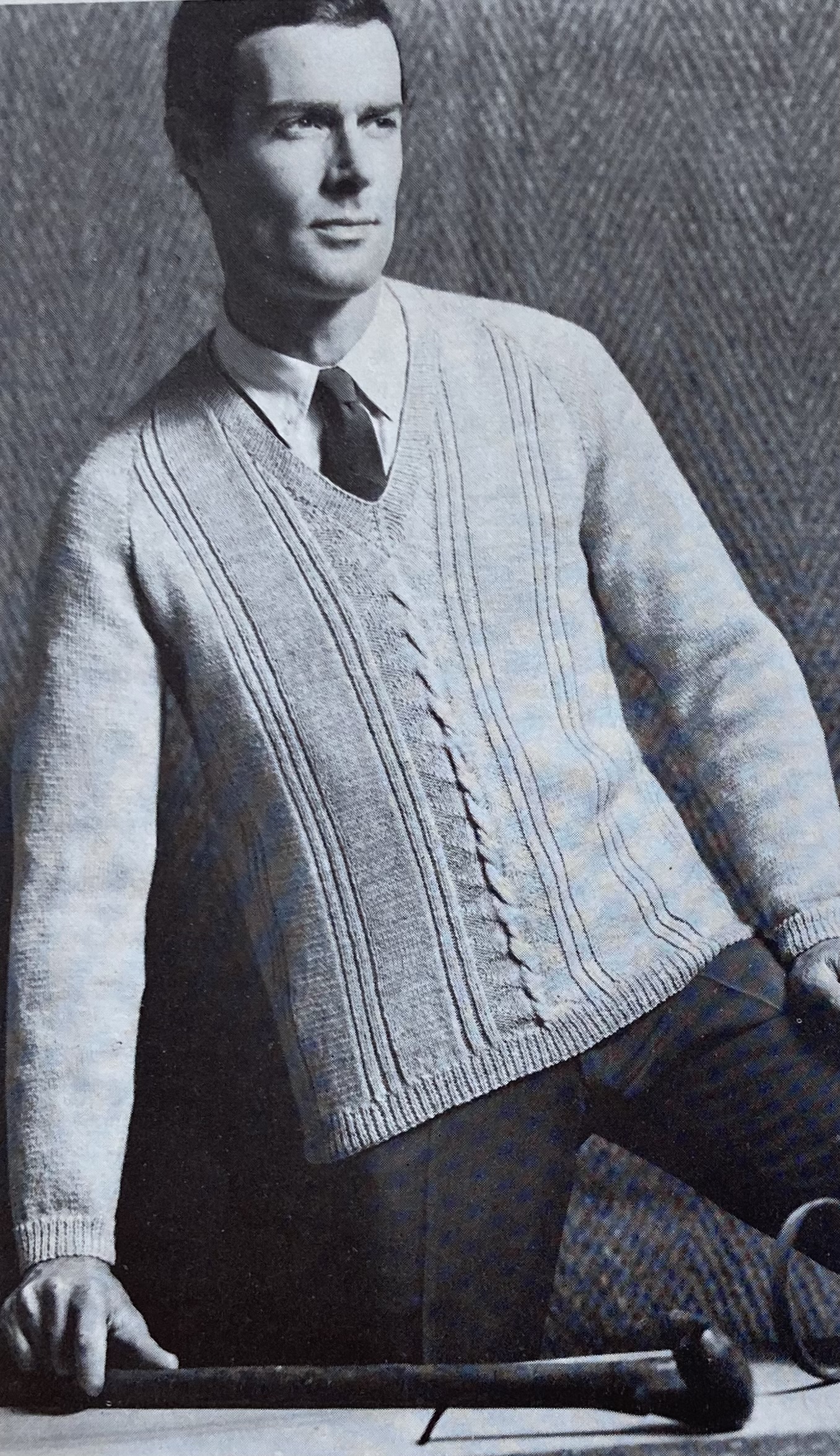
Oversized garments in neutral colours and vertical cablework patterns are still on trend for men’s fashions, represented here with a V-neck pullover in cable-and-rib pattern and a “country cardigan” in undyed “Capstan” wool with a crunchy Aran pattern on the fronts only.

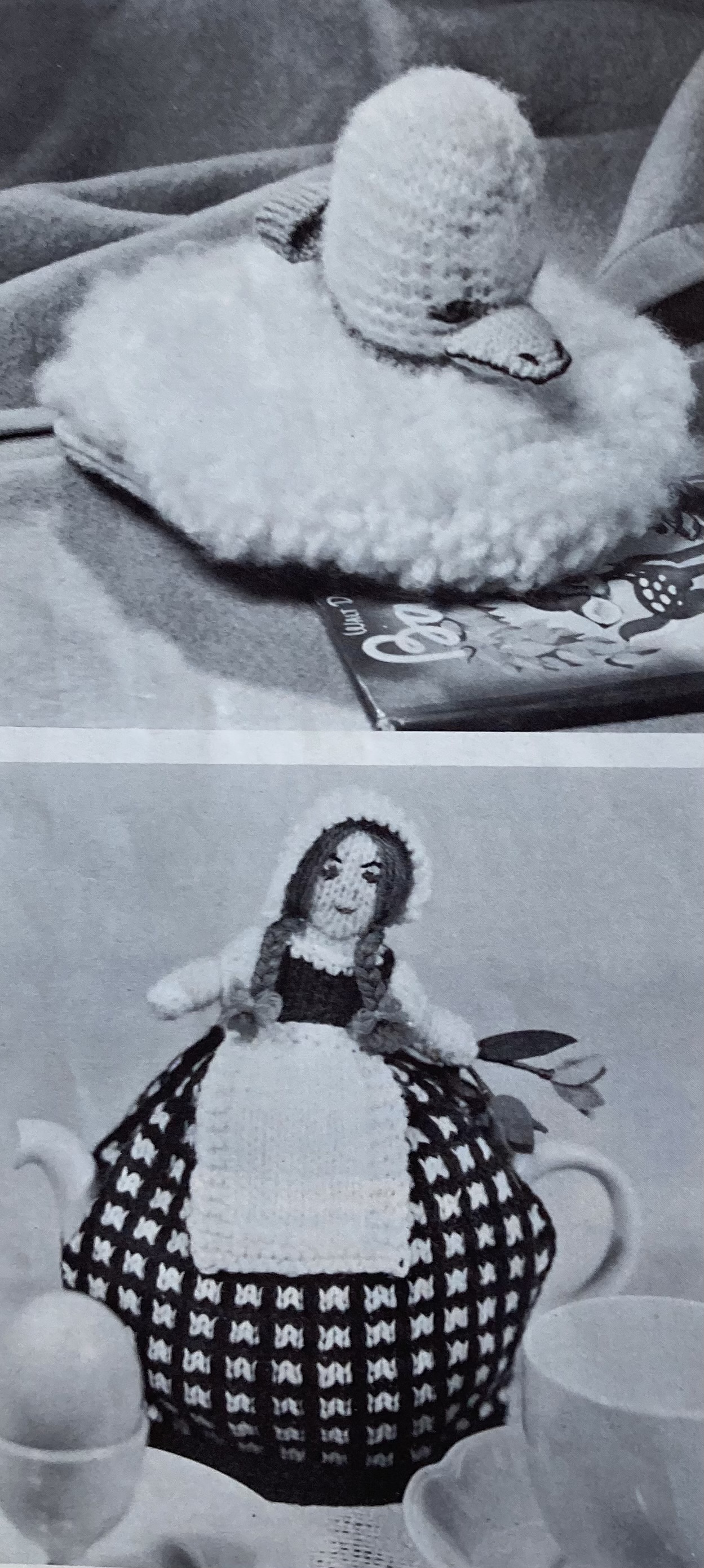
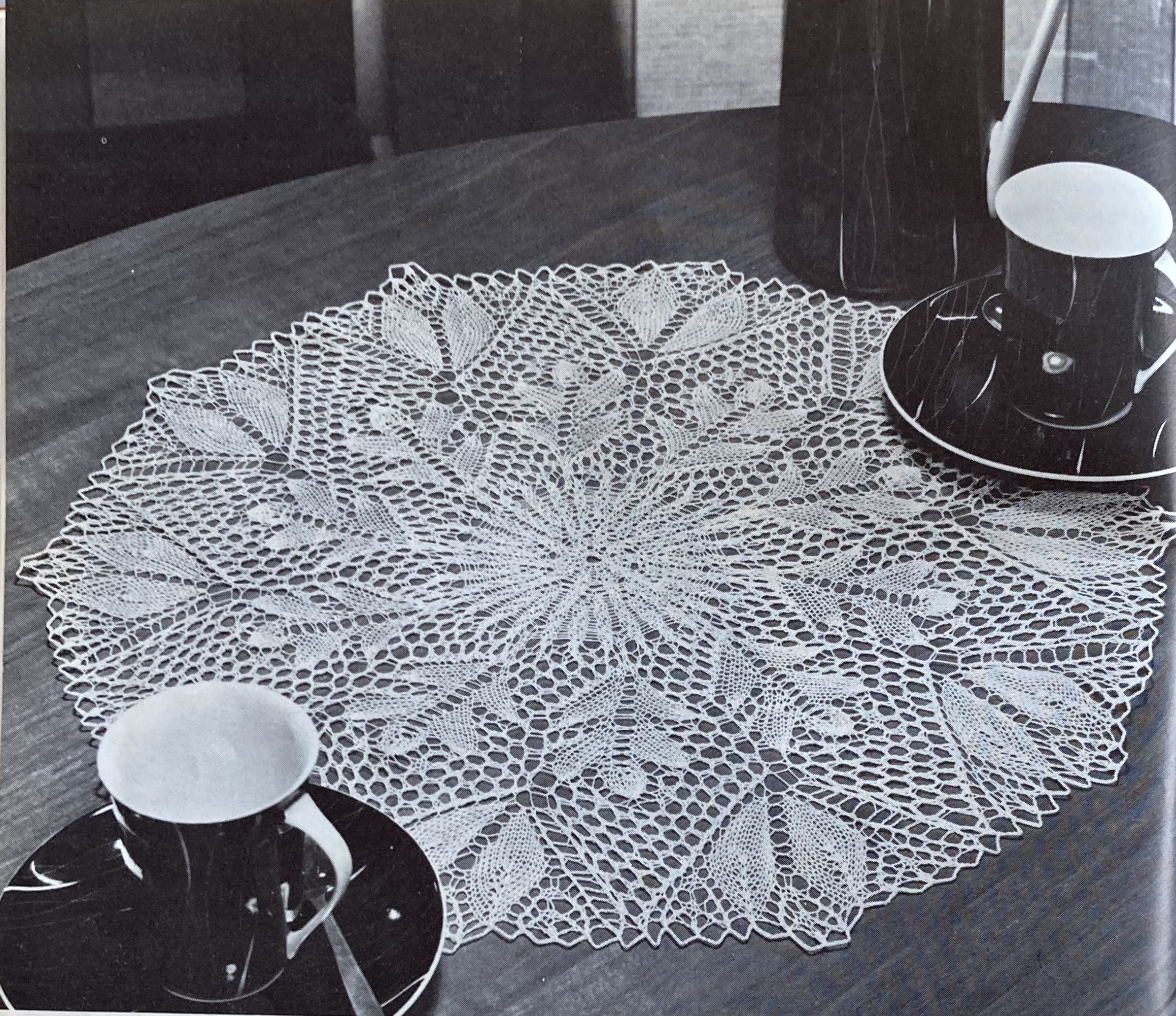
It wouldn’t be Stitchcraft without “Bazaar items”, and the ones in this issue are actually really cool. There’s a knitted nightcase that looks like a fluffy duck thanks to a loop-stitch pattern that is then brushed with a teasle brush to felt and fluff it up. The knitted doily is quite intricate and the “Dutch girl” tea cosy (holding a cluster of felted tulips!) is amazing.

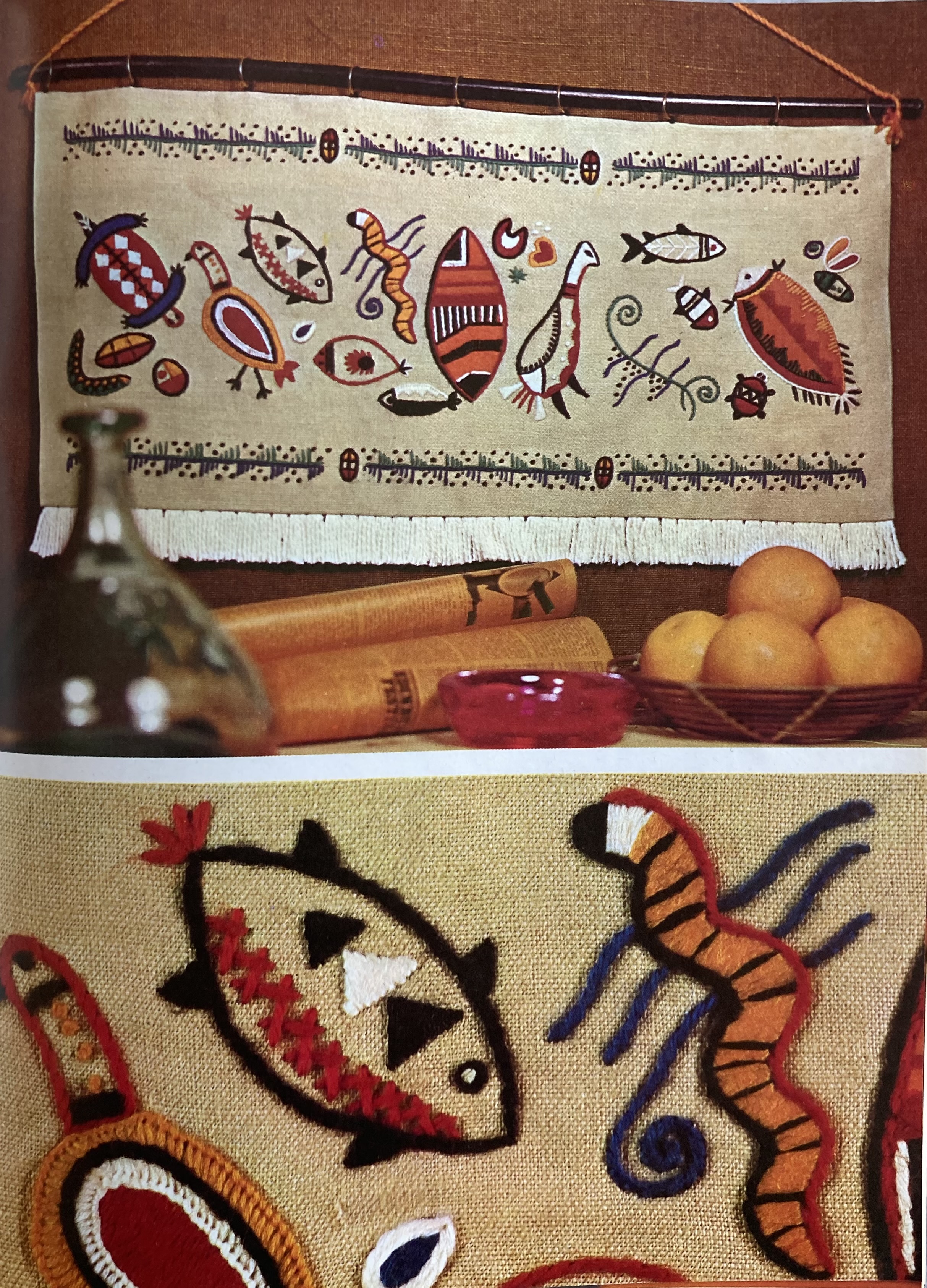
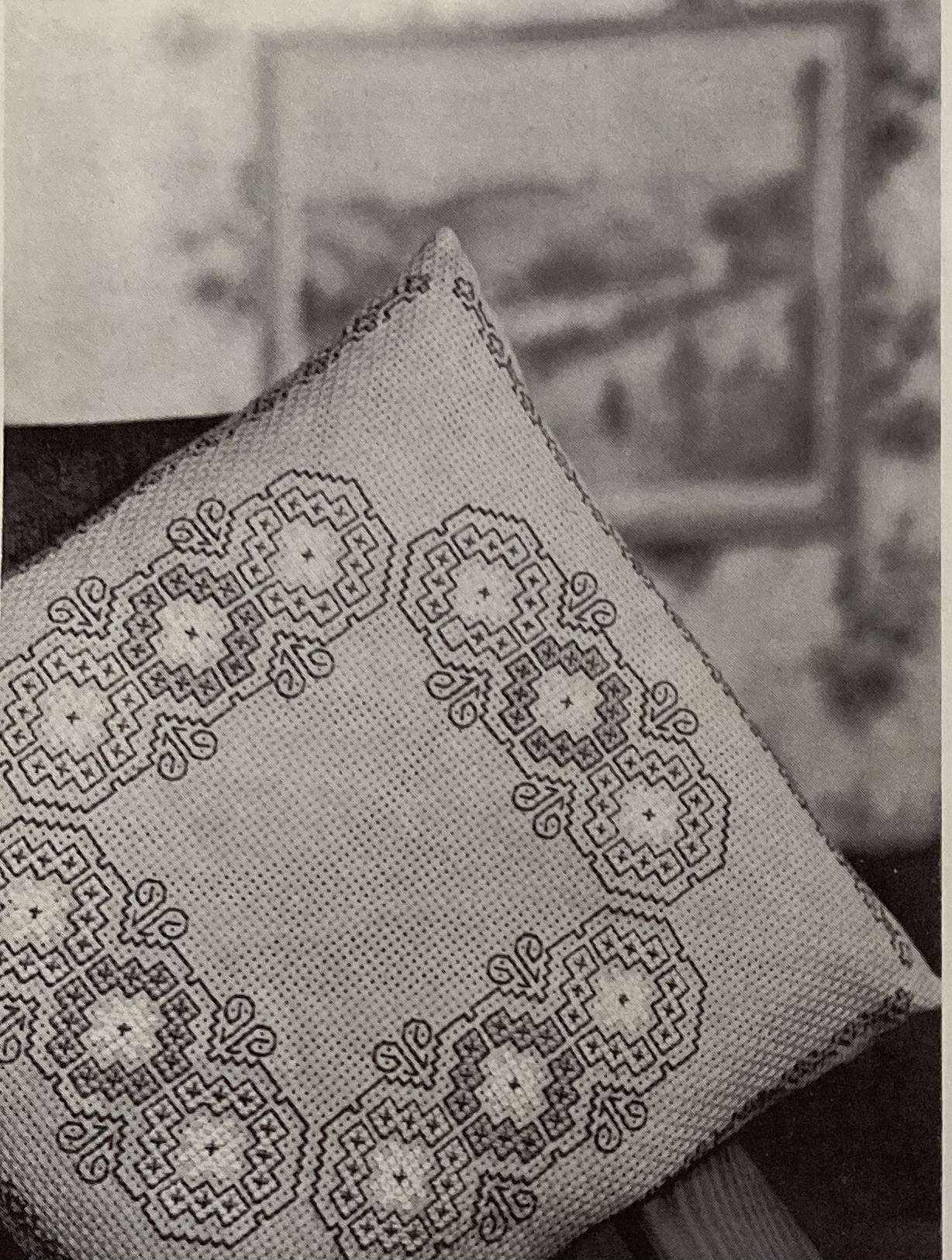
The regular homewares are also more creative than usual. Check out this embroidered “tropical fish” wall panel! (In non-tropical 1967 colours of brown, rust, and burnt orange.) I love it. The fantasy-animal theme continues with a tablecloth and/or table mats and/or cushion in Assisi design. The Victorian stool or cushion ribbon design is quite normal in comparison.

The back pages have the usual ads another nice one from the Scotch Wool shop, but not as dramatic as in the previous issues. in the “Children of other Lands” serial comic, Fifi the French girl takes a baguette home under her arm, only to have it eaten by birds on the way home. I told you this wasn’t the best comic of the Stitchcraft collection… Then there’s a nice extra pattern for a crocheted collar and cuffs in “bell” pattern to perk up your plain dresses.

I’ll be making two larger projects from this issue — the cover dress and the check-patterned “shell”. Neither of them will get done in April, but I’ll post something and update it with progress. Happy Spring!

March 1967: Overview

The March 1967 issue of Stitchcraft promises us „new fashion looks for Spring knitting“. March weather being notably unpredictable, there are warm, bulky knits for colder days (or to wear as sporty outerwear) and finer knits for Spring. The former are mostly made in „Big Ben“ to knit up quickly and warmly, but slightly less bulky in shape than before, the latter in smooth crepe wool with or without glittery accents. The „skinny“ „mini“ jumper makes an appearance as an alternative to the bulky look for young folks, and the crochet look in knitwear is still trending.

Our cover duo sports (heh) matching bulky V-necks in Big Ben wool, knitting up quickly at 3 1/2 stitches per inch. The cable panels down the front give it a little bit of vertical line to counteract the bulk. The cable-and-V-neck combination show up in a slightly less heavy-knit casual cardigan for larger sizes. The „Sweater with flower trims“ on the inside cover looks bulky, but is merely oversized and actually knitted in fine Cameo Crepe at 8 stitches to an inch. The flowers are made with intarsia with crocheted motif centres sewn on and the buttons are covered in fabric knitted from the same wool as the sweater — a cute extra touch. The crochet look in knitting continues with a high-buttoned cardigan in a sort of arrowhead-shaped slip-stitch pattern. It too is knitted in fine crepe wool, but looks bulky due to the oversized design and three-dimensional stitch pattern.

Teenage girls can knit themselves a „Little Shetland“ cardigan or pullover with an easy stranded pattern at the yoke or hem, or a fine-knit „skinny rib top“ which would be just as much in fashion nowadays as then. Whatever the girl behind the skinny rib top model is wearing is not part of this issue and will remain a mystery.

Finally, there‘s a glamourous sleeveless cocktail dress with matching jacket. The lacy pattern panels get a little extra glitz from knitting with the base wool (Cameo Crepe) and Lurex thread held together.

There are so many women‘s fashions in this issue that there apparently wasn‘t much room for men‘s or kid‘s designs. What there is is great, though: a three-piece baby set for spring outings in the pram and a hard-wearing cabled Aran pullover for a school-age boy.

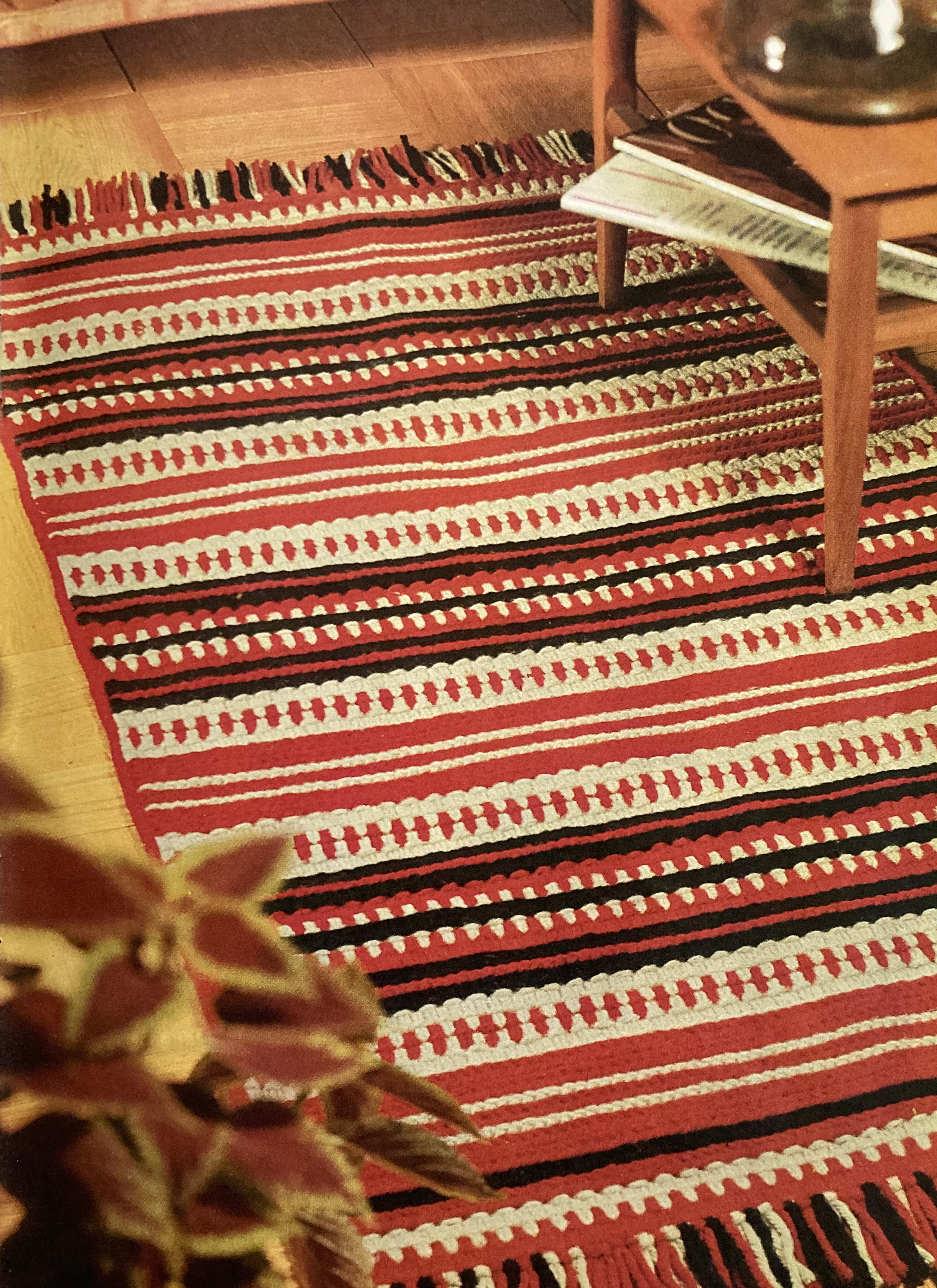
The homewares in this issue are less interesting than usual and feature versatile designs that can be adapted to different furnishing needs: a woven design for a rug or cushion, grapes and leaves to embroider on an apron, mats or cushion, etc. Ambitious crafters could make an entire set for a room that way.

There‘s a cute breakfast set for a child‘s Easter morning and a crocheted mat for the adult‘s afternoon coffee table. Really ambitious embroideresses could make an elaborate and very pretty flowered tablecloth.

There‘s a new comic series in the Readers Pages which is cute and well-meant, but also fairly eyeroll-y for modern sensibilities: „Children of Other Lands“, featuring well-trodden clichés about cultural practices etc. in non-British countries. This month features Jan, a Dutch boy whose wooden shoes get stolen by mice, who use them as a boat on the canal. You get the idea. The ad for the Scotch Wool shop manages to be at least as much fun without any stereotypes.

That‘s all for this issue! I don‘t know what to make. I love the cocktail dress combo, but the ratio of time and effort in making / actual use I would get out of it doesn‘t add up. The larger-sizes cardigan is practical and nice, but I have multiple larger projects on the needles and don‘t want to start a warm cardigan in Spring. I might make another project from the January 1967 (the Fair Isle cardigan! Finally bought the wool for it!) or February 1967 (Lacy knee socks!) issue instead, or start ahead on the April project (chevron striped dress.) I promise to get something done sometime. Happy Spring!
February 1967: Crochet-Knit Cardigan

EDIT March 18, 2025: Finished!

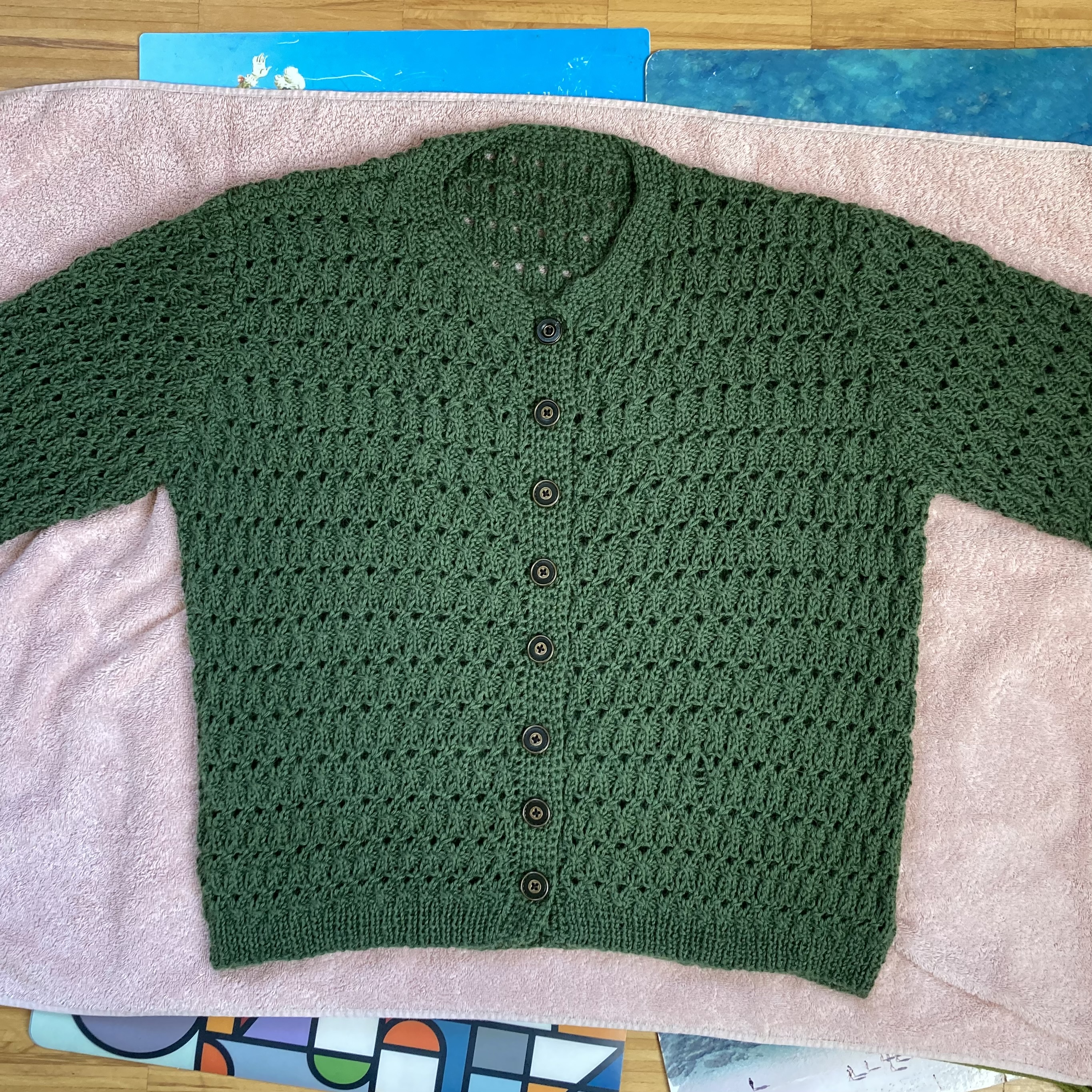
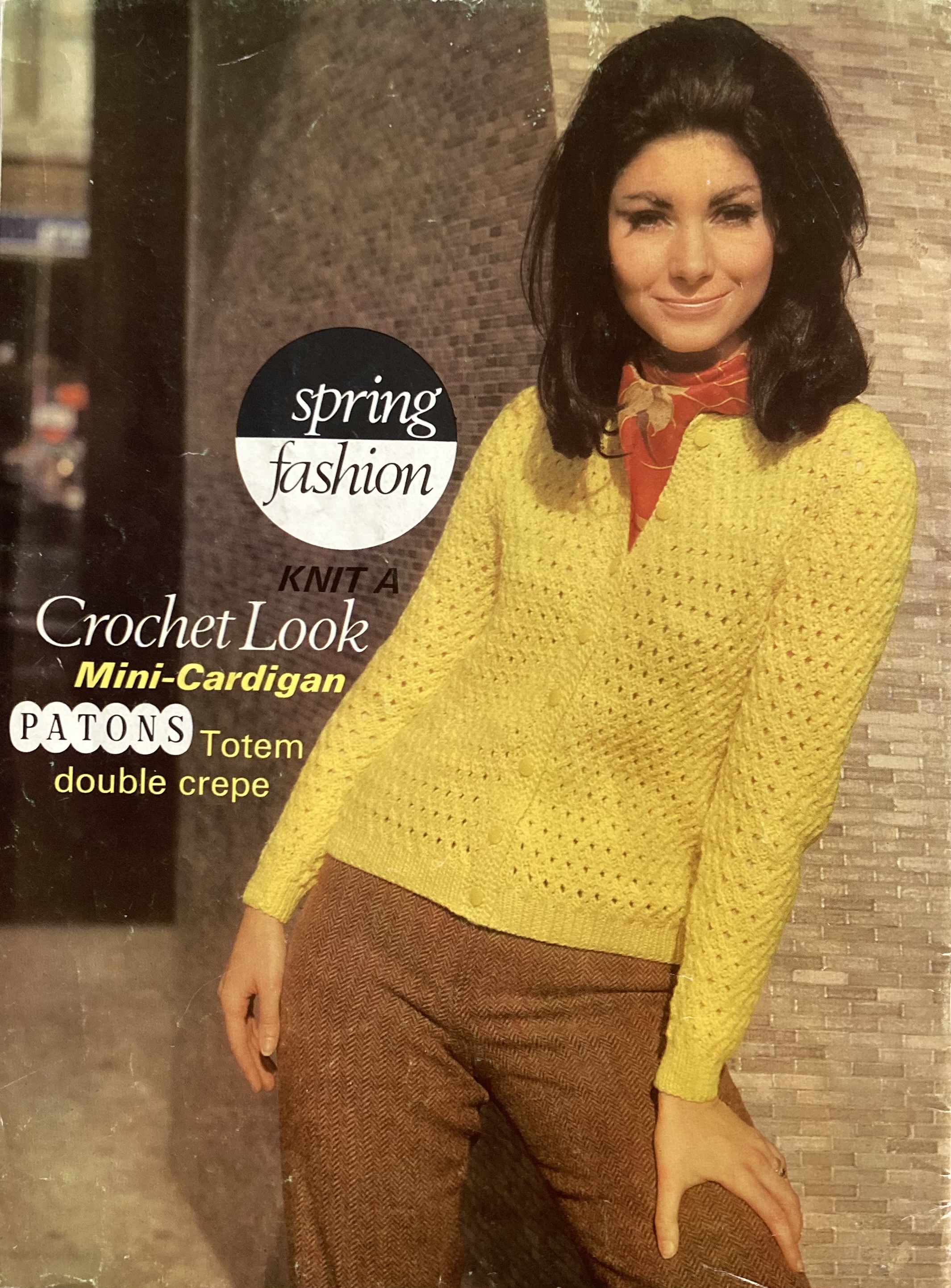
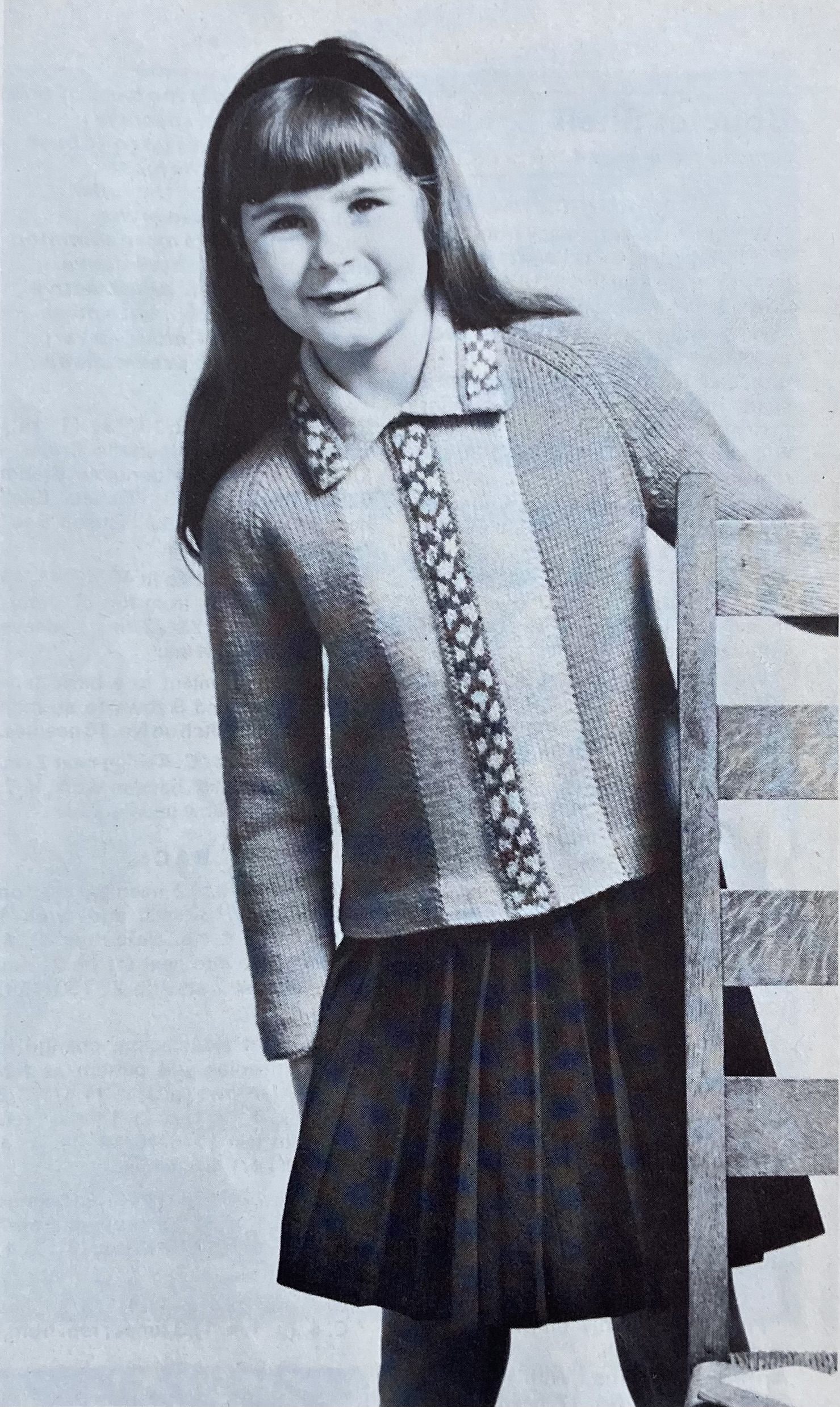
The February 1967 issue of Stitchcraft picked up the trend for knitted work that looks crocheted with a “mini-cardigan” featured on the back cover. Interestingly, it bucks the other, longer-lived trend for oversized and shapeless garments, being more close-fitting and just above hip length. (Though more on that later…) The construction of the cardigan is quite basic, with no shaping in the body (the pattern makes it conform to shape nicely… though more on that later) and a plain, high neck. The edgings are actually crocheted.

It’s designed to be made in Patons Totem Double Crepe, a very smooth, worsted-spun 100% wool that shows the pattern well. A merino wool or something like Lana Grossa Cool Wool would have be the most appropriate modern equivalent. but I was still trying to reduce my stash and I had 200 grams of Drops Lima that I could add to that and hopefully buy just the right amount to use everything up. Lima is less smooth than it “should” be for this cardigan, since it’s 35% alpaca, but it’s spun tightly enough and anyway, I like it and it works. The color is more “loden” green than it appears in my photos. For some reason it doesn’t photograph very well — I’m guessing that the three-dimensionality of the stitch pattern messes up the automatic light sensors.

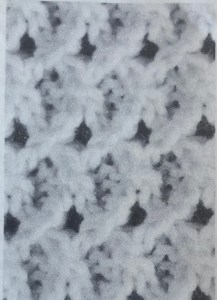
The pattern is sort of based on 2×2 rib, overlaid with twisted stitches and double yarn-overs to give a trellis effect. It was also very slow to knit, with twisted stitches on both RS and WS rows and a fairly large number of stitches per row, as it pulls together quite a lot. The fabric it makes is both stretchy and clingy, and quite warm in a thermal-blanket type of way, as well as being very heavy. I calculated it out from the Totem DK yarn weight and started with 600 grams. That started to look like it wouldn’t be enough at all, and I was on tour and hadn’t packed all of the wool, so I bought another 150 grams while on the road. That was, of course, more than necessary and now I have almost 150 grams extra. So much for destashing!

Apropos pattern, here it is:

  • Tw2L = k into back of 2nd st, then front of 1st st, slip off tog
  • Tw2R = k into front of 2nd st, then front of 1st st, slip off tog
  • Tw2M = p into front of 2nd st, then front of 1st st, slip off tog
  • Row 1: p2, *k2, p2*
  • Row 2: k2, *p2, k2*
  • Row 3: p2, *Tw2L , p2*
  • Row 4: as Row 2
  • Row 5: p1, *k2tog, bring wool forward to front of work, wrn, sl1-k1-psso*, k1
  • Row 6: k1, p1, *(k1, ktbl) into the two new loops, Tw2M* to last 4 sts, (k1, ktbl) into the two new loops, p1, k1
  • Row 7: p1, *Tw2L, Tw2R*, p1
  • Row 8: as Row 4

For whatever reason, I couln’t make Row 6 work the way it was supposed to. There were two “extra” loops from the yarn-overs in Row 5, but the way they lay on the needles made it impossible to knit the first and then ktbl the second. I tried making the yarn-overs in the other direction on Row 5 and that didn’t work either. What did work was k1tbl, k1 on Row 6. I’m guessing the designer held her needles differently or did the yo / wrn from another direction.

After the ribbing (on 3.5 mm needles), it is supposed to be knit on 4.5 mm needles. I started with 4 mm needles, since I didn’t want to yarn to stretch out too much. That seemed too tight, so I switched to 4.5 mm needles after a couple of inches on both the sleeves and the body. I finished the sleeves at the end of February and the rest on the long tour with many plane and train rides, making the back and fronts in one piece.

Somewhere near the end of the fronts, I re-read the pattern and realised that I had been knitting it wrong all along! After one pattern repeat, you are supposed to repeat rows 3-8. I repeated the whole pattern, rows 1-8. So my stitch pattern was slightly elongated vertically. It honestly didn’t look much different from the pattern close-up photo in the magazine, though.

The jacket seemed to be knitting up a bit larger than I wanted, but I couldn’t try it on properly until it was finished. It was a little bigger and floppier than I wanted (so heavy!) but the pattern would make it pull in tighter… right? right? No! I made the (crocheted) borders nice and tight in the hopes they would rein it in… not enough. After blocking, it just ballooned in all directions and ended up too big for me — I don’t like the “oversized” look. I decided to sell it or give it to a good home, and luckily a fellow knitter from my knitting group liked it and bought it from me.

Sadly, this project was more frustrating and less successful than I wanted. The sizing did not work out, the wool was too heavy, I made the stitch pattern wrong… there were just too many problems. On the up side, I love the pattern and the colour, the wool is warm and soft and cosy, and I even found incredible buttons that match the colour and style perfectly. Most importantly, my knitting friend is happy to have the cardigan, so I guess “all’s well that ends well.”

February 1967: Overview

Spring Fashion is ready for take-off in the February 1967 issue of Stitchcraft, with its theme of “colour and pattern”. Fair-isle/stranded garments continue to “hold the scene”, along with a fun mix of non-stranded colour and texture designs. Colour and pattern of household items are influenced by spring and Easter (March 26th in 1967), with pastel florals and “novelties” for church bazaars.

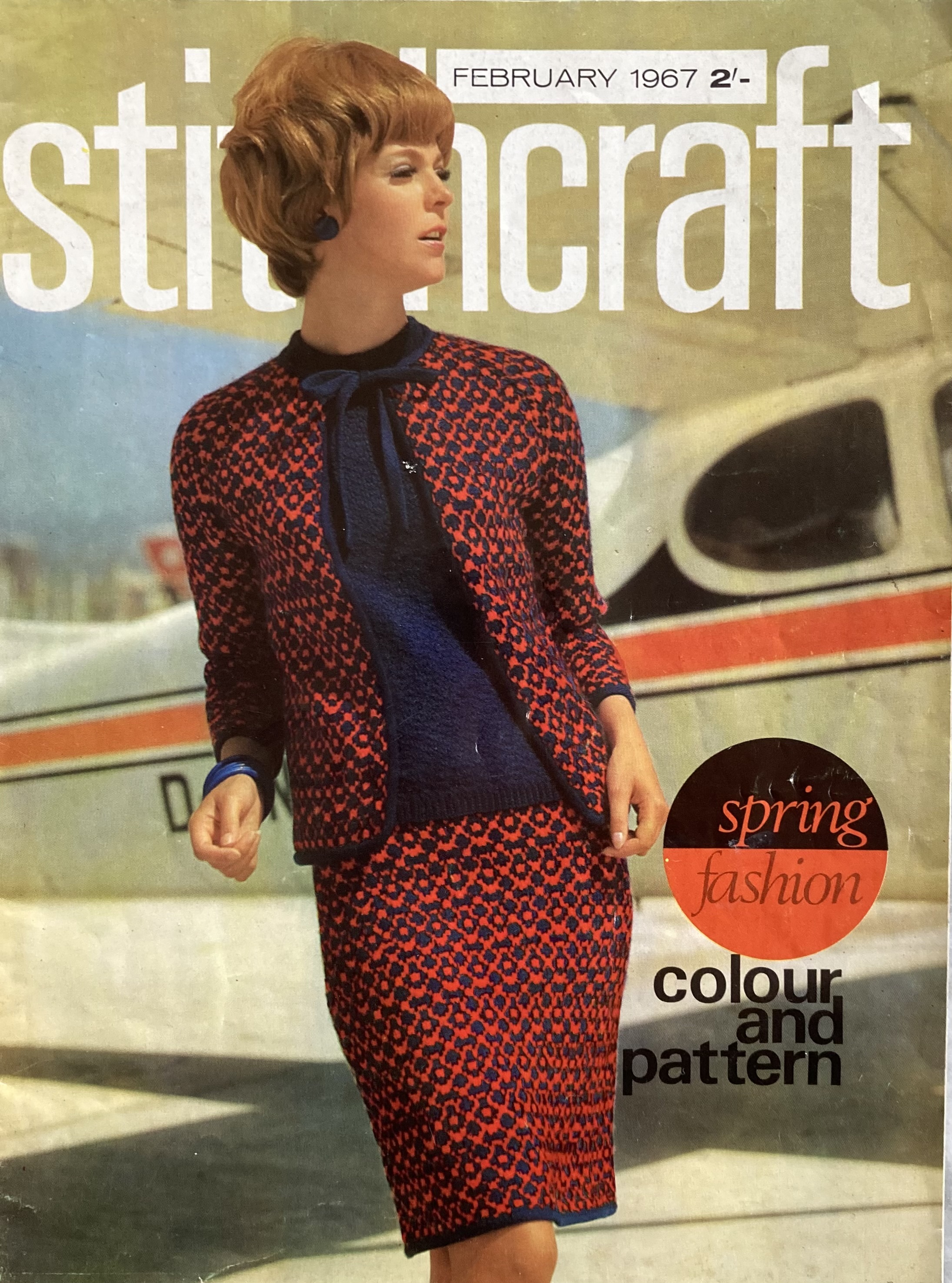
Our cover model sports an elegant “traveling suit” (don’t think it’s quite appropriate for flying in the tiny 2-seater plane in the background, but great photo) with an all-over stranded design in red and blue, paired with a short-sleeved knitted blouse. The suit is made in double-knitting weight wool with knitted bias binding in 4-ply Nylox (wool-nylon blend). The same Nylox wool is then used to make the blouse, which cleverly translates the stranded colour pattern into a single-shade textured pattern using knit and purl stitches. It’s a lovely and very well-coordinated ensemble.

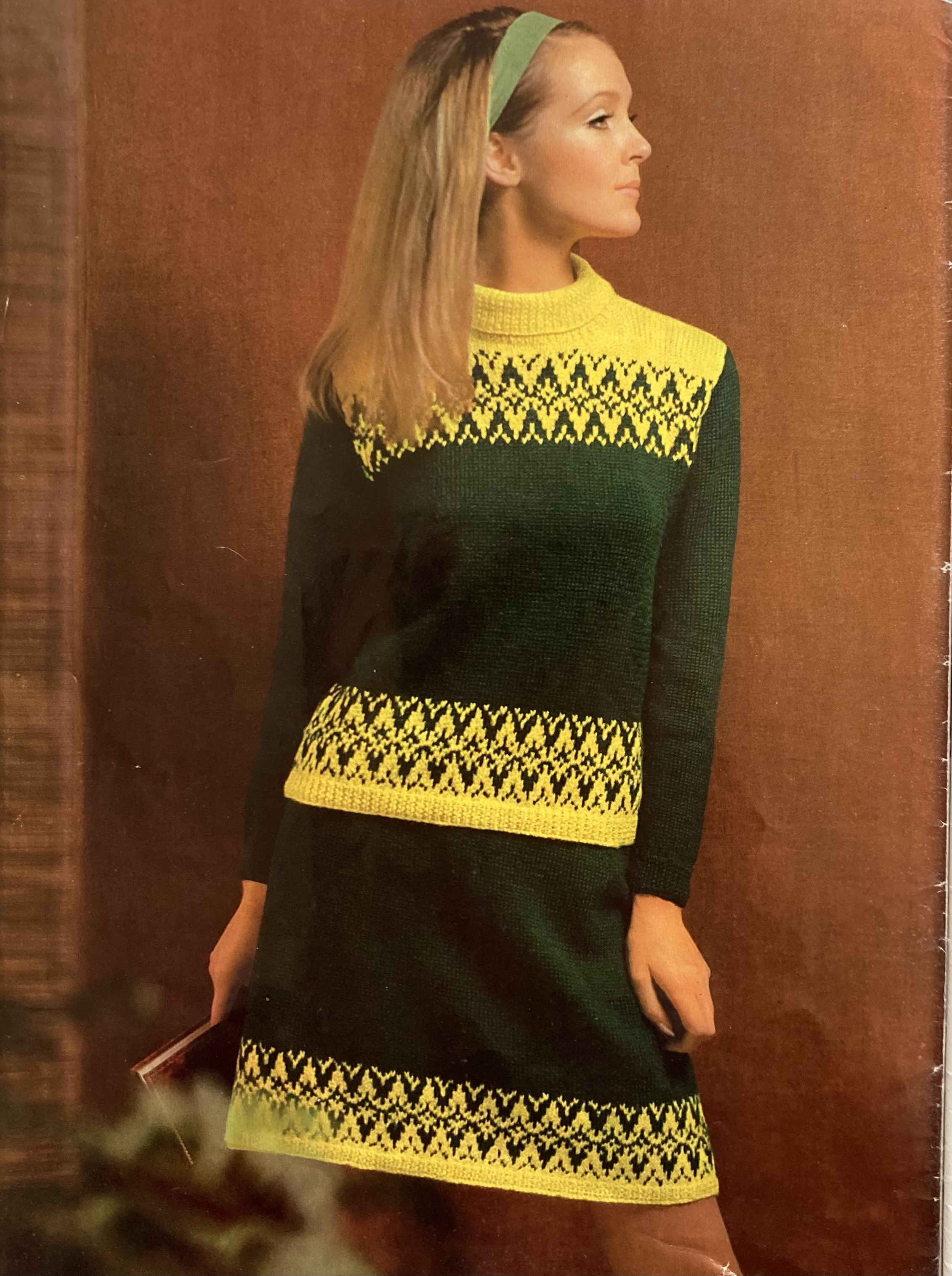
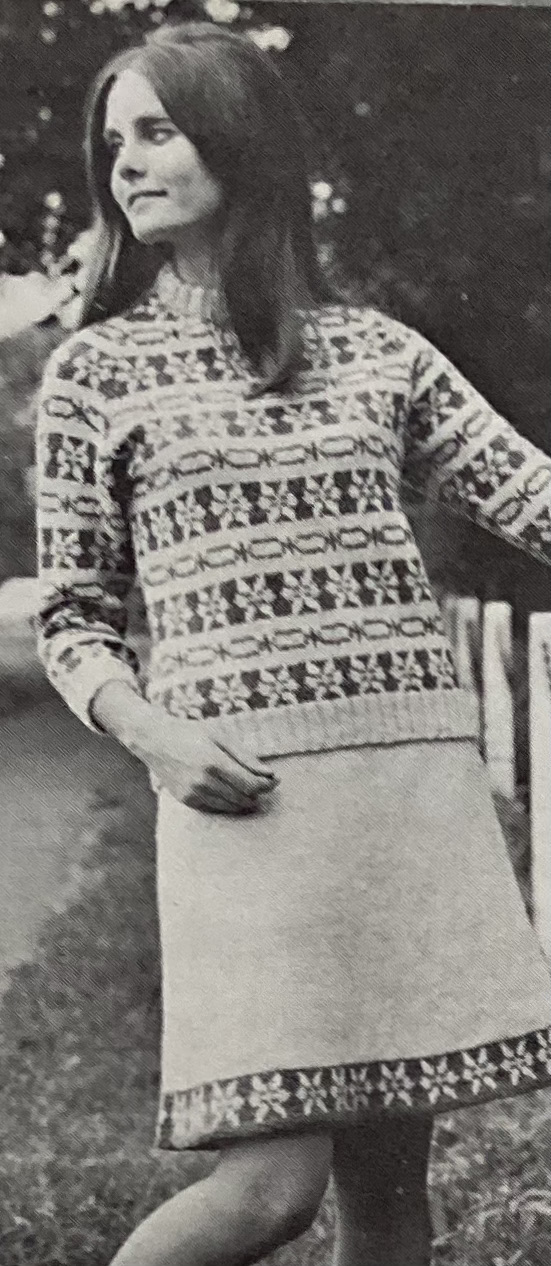
Fair Isle knitting (I know the Fair isle purists will remind us that not all stranded knitting uses traditional Shetland/Fair Isle designs or techniques, but Stitchcraft is not that picky, so I won’t be either…) features in the inside-cover sweater-suit design as well, with patterned borders on both skirt and sweater. Whereas the cover suit falls to just barely above the knee, this outfit is not afraid to go mini. More variations on colour and pattern can be seen in the striped and ribbed “country sweater” or the knitted mini-cardigan in “crochet look” — a nubbly twisted-stitch pattern. Larger ladies can make a very pretty blouse in a delicate feather-check pattern. The checked part is simple block ribbing with rows of garter stitch and the feather stitches are made by dropping a stitch down 5 rows and then working it together with the 5 stitches above it. Bright colours are trending (the blouse is turquoise) with yellow and green at the top of the list.

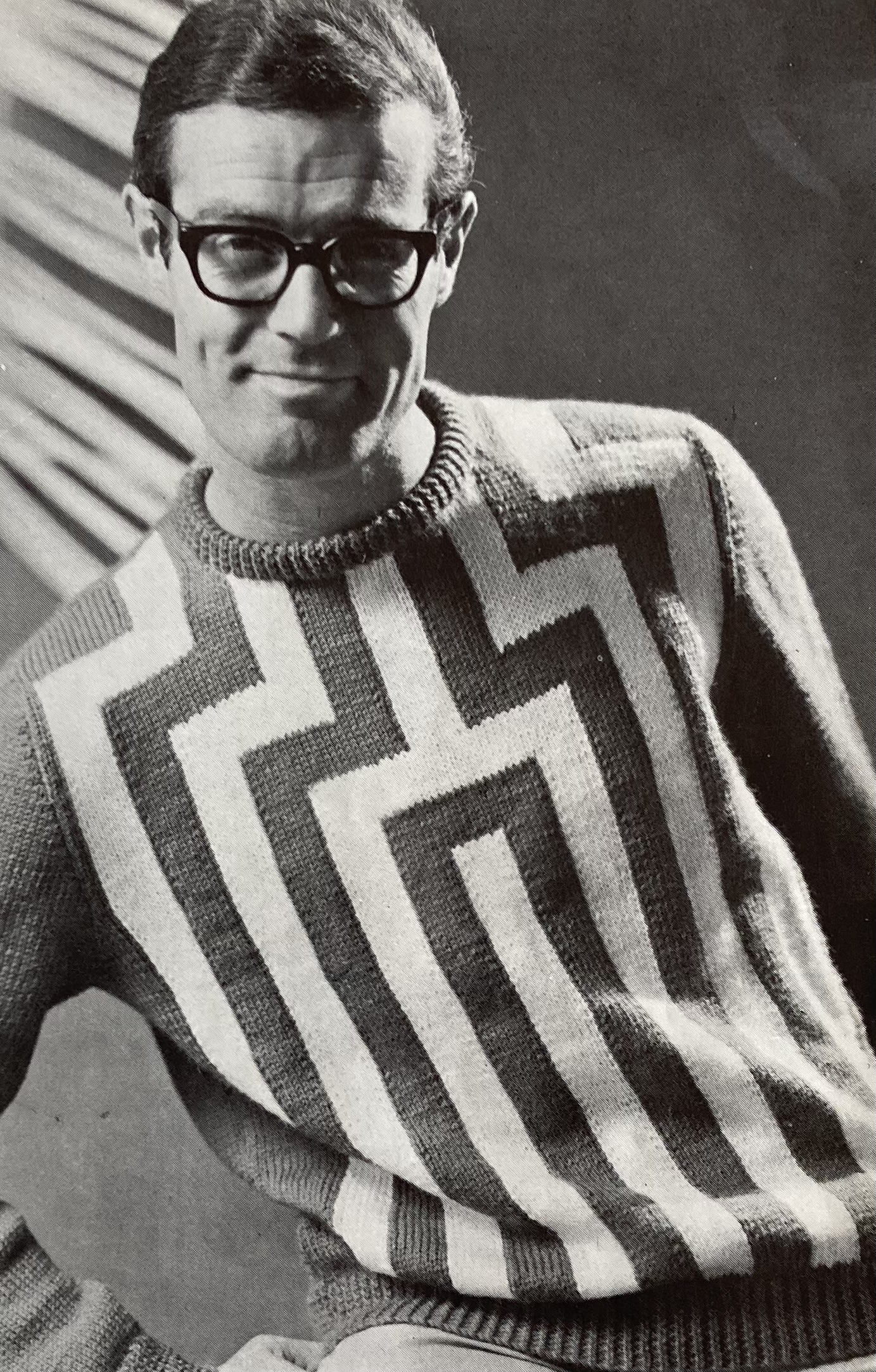
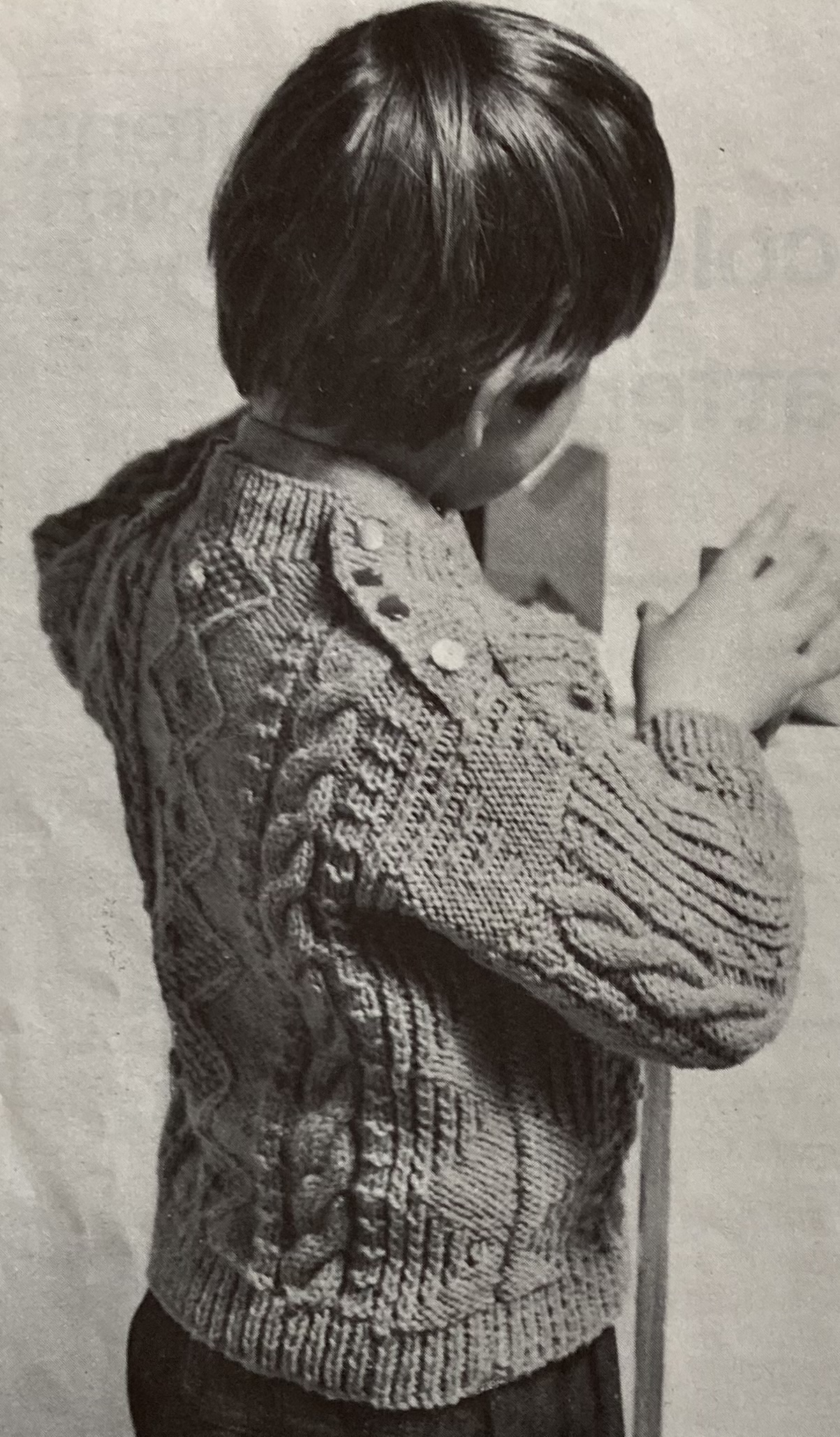
There are great patterns for the rest of the family, too: the man’s “Italian design” sweater is quintessentially 60s, and it’s not Stitchcraft‘s fault that the pattern looks like the glyph from the “White Bear” episode of Black Mirror. Little boys get a fun Aran-patterned sweater with practical buttons on the shoulder. Daughter “Melanie” gets a much less practical pinafore dress with polo sweater to go underneath, and the baby of the family can get dressed up for a special occasion in a shell-patterned dress and matinee coat ensemble.

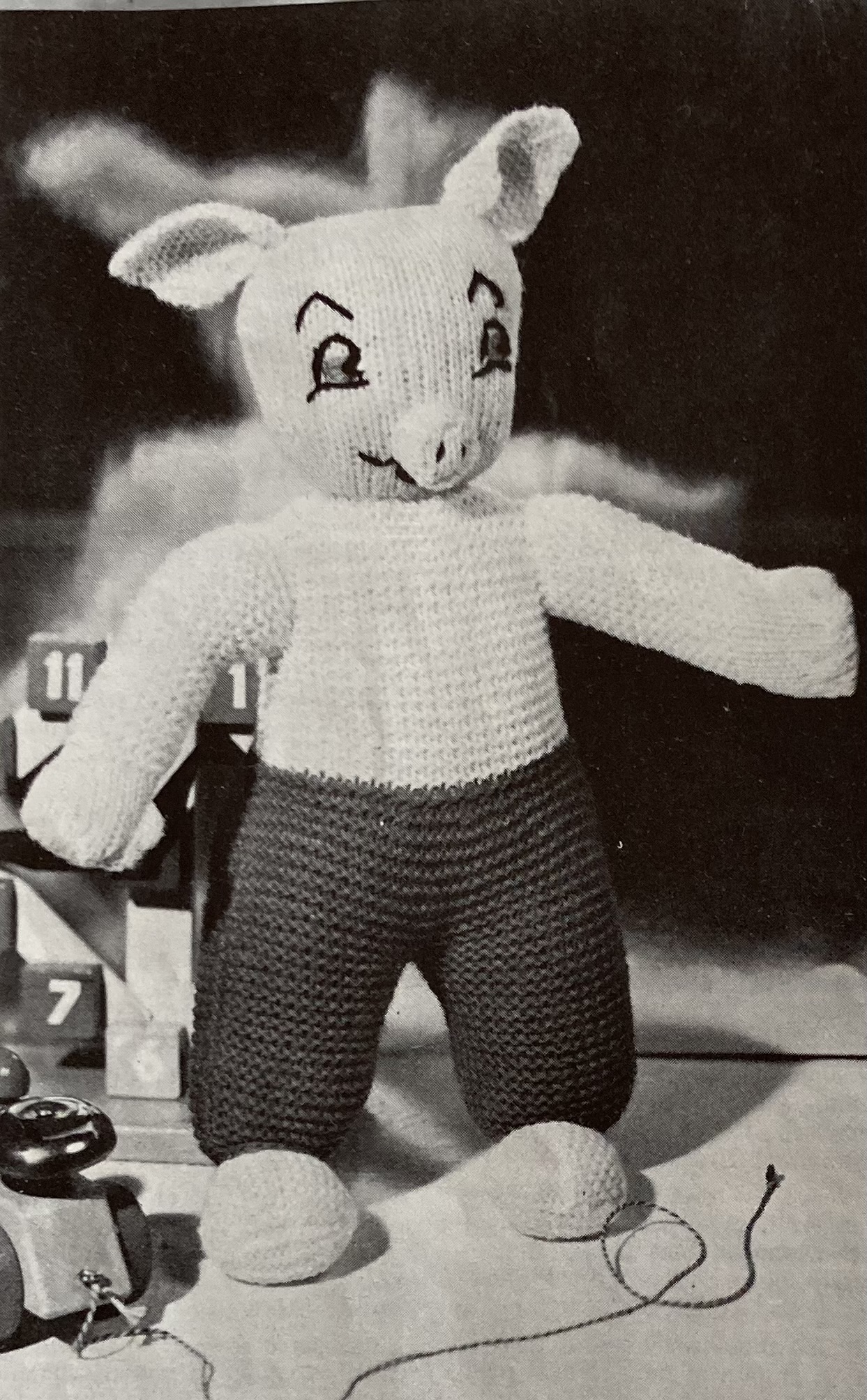
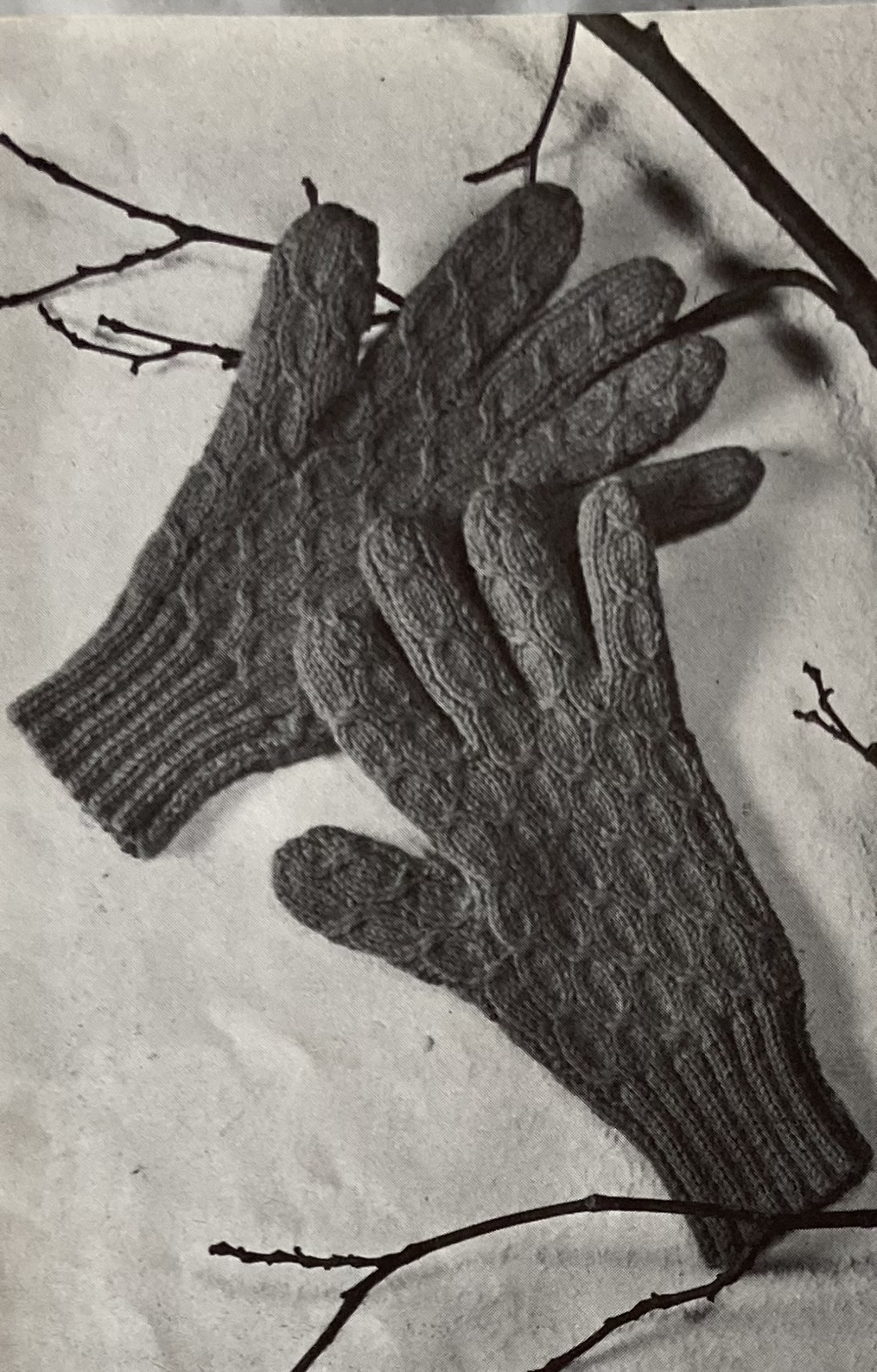
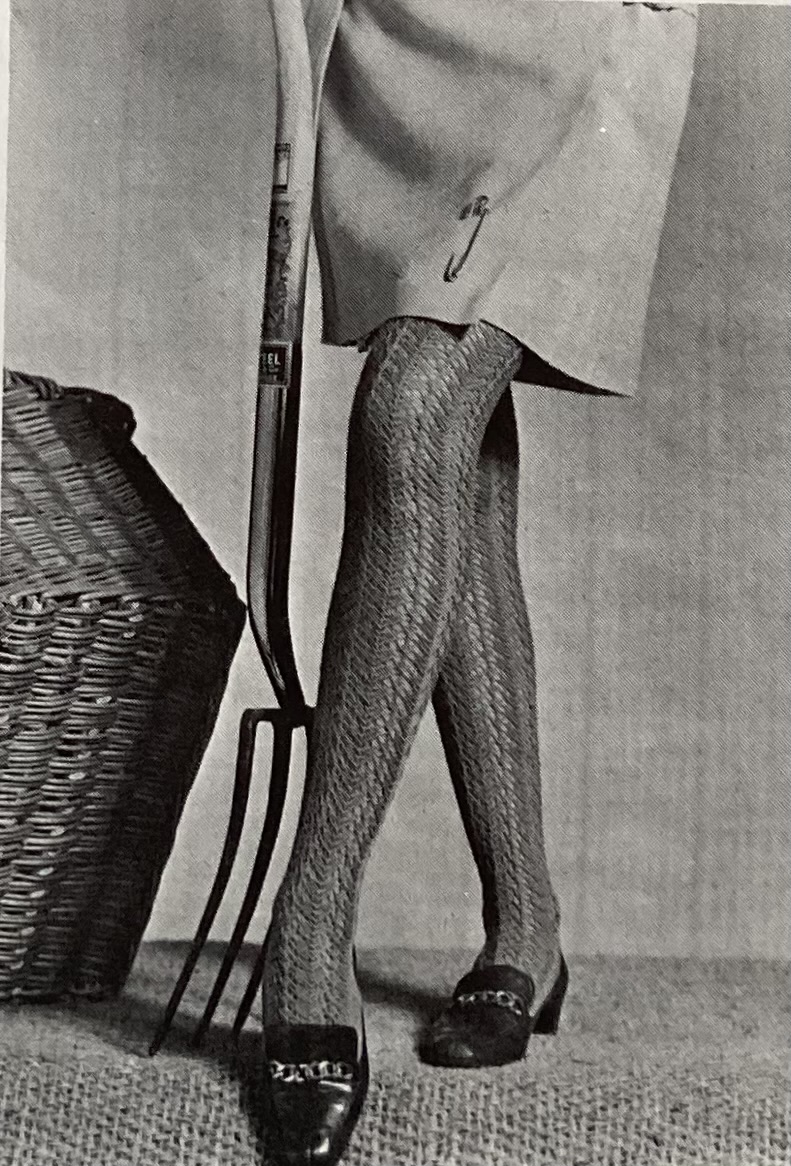
There are toys for the children as well: a knitted “Higgledy Piggledy” stuffed animal to go with the comic in the Readers Pages, and “Tracy the Knitted Doll”, interestingly not a “dress-up” doll like most of the dolls in Stitchcraft — her cap and scarf are knitted separately and removable, but shirt and leggings are integral to her body. “Country” accessories for adults round out the list of smaller items: warm cabled gloves for him and feather-pattern knee socks or stockings for her.

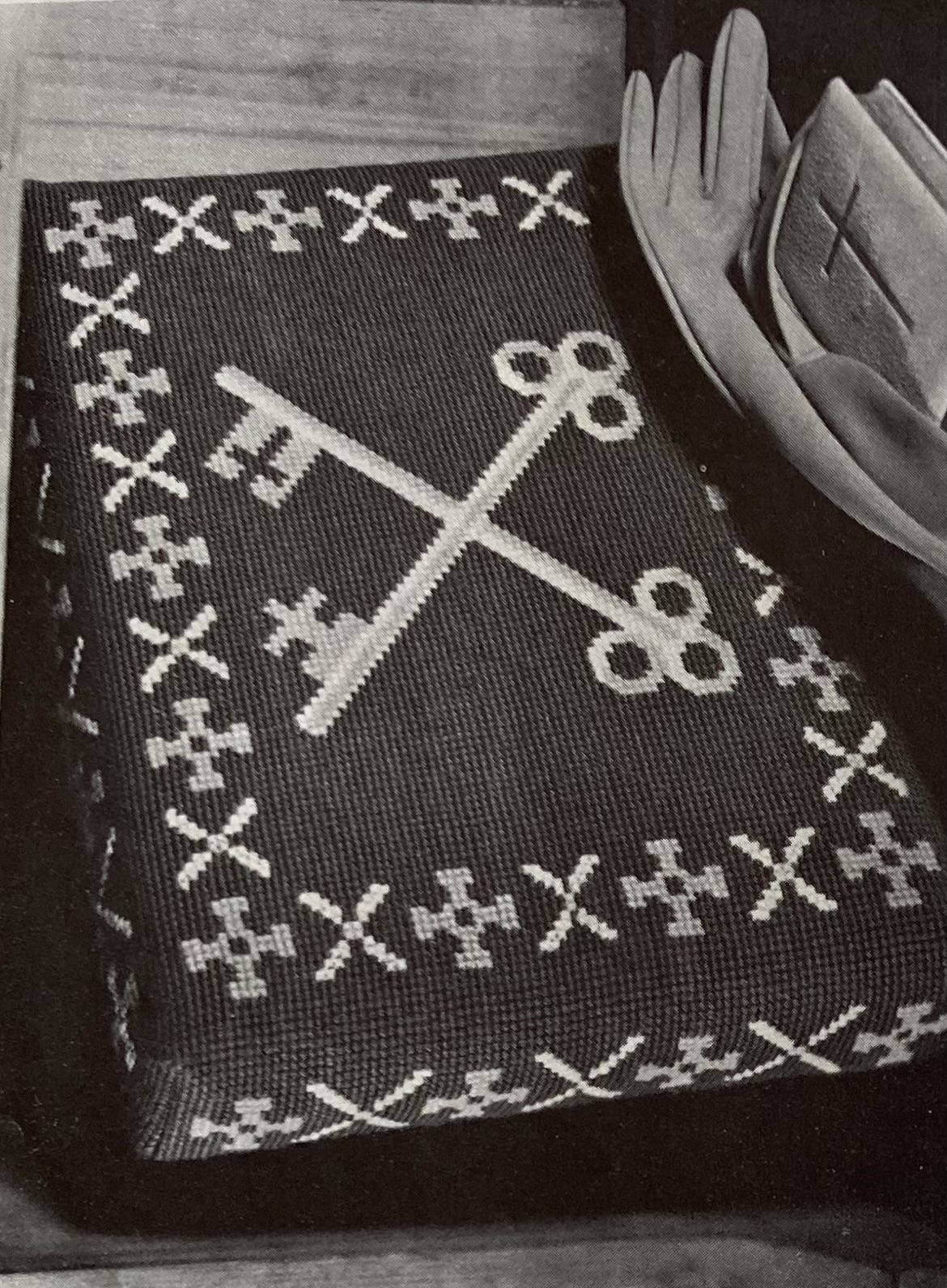
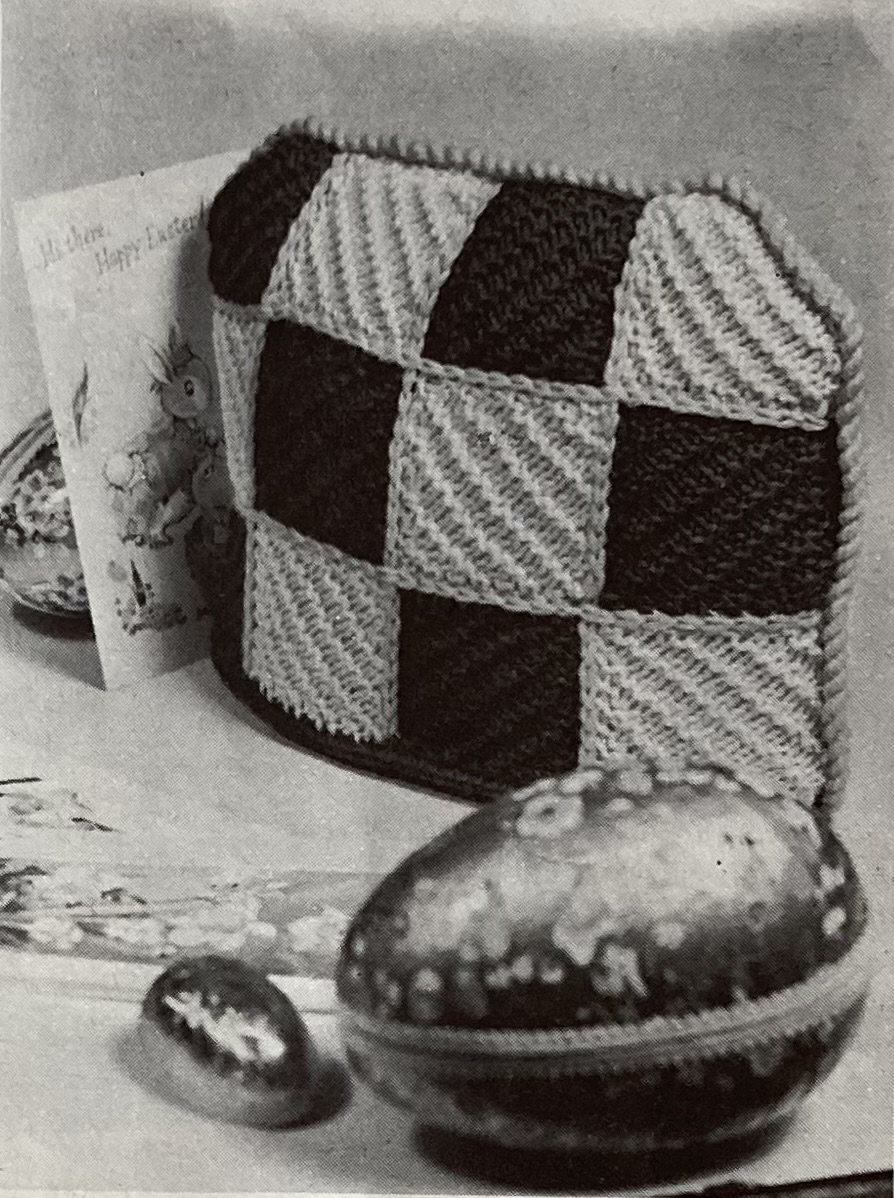
Homewares and “novelties” are themed for spring and Easter, starting with a tapestry church kneeler with church-key design. There’s a cushion and/or tea cosy in knitted patchwork, which is not particularly Easter-themed but would fit with an Easter brunch or church bazaar.

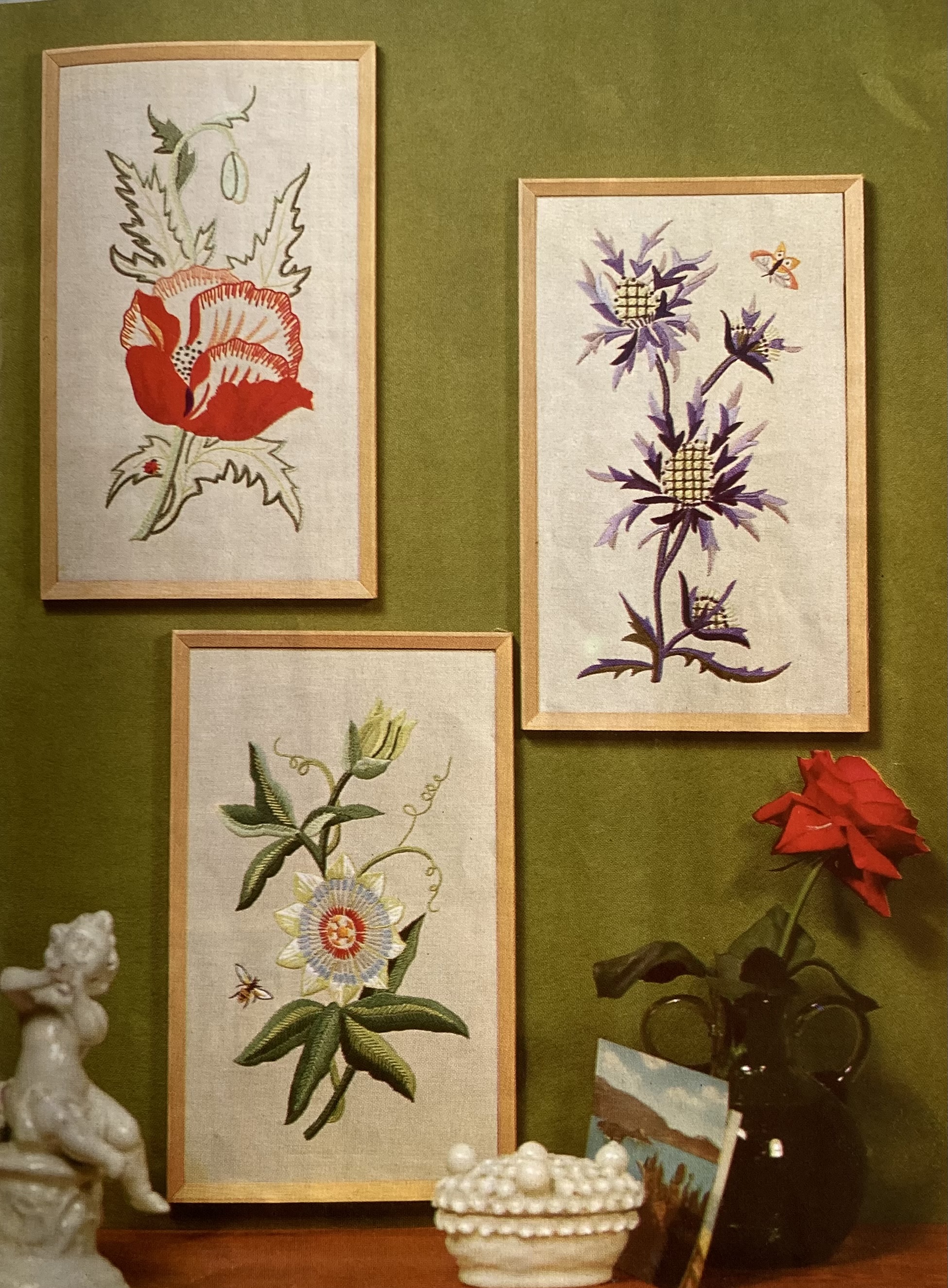
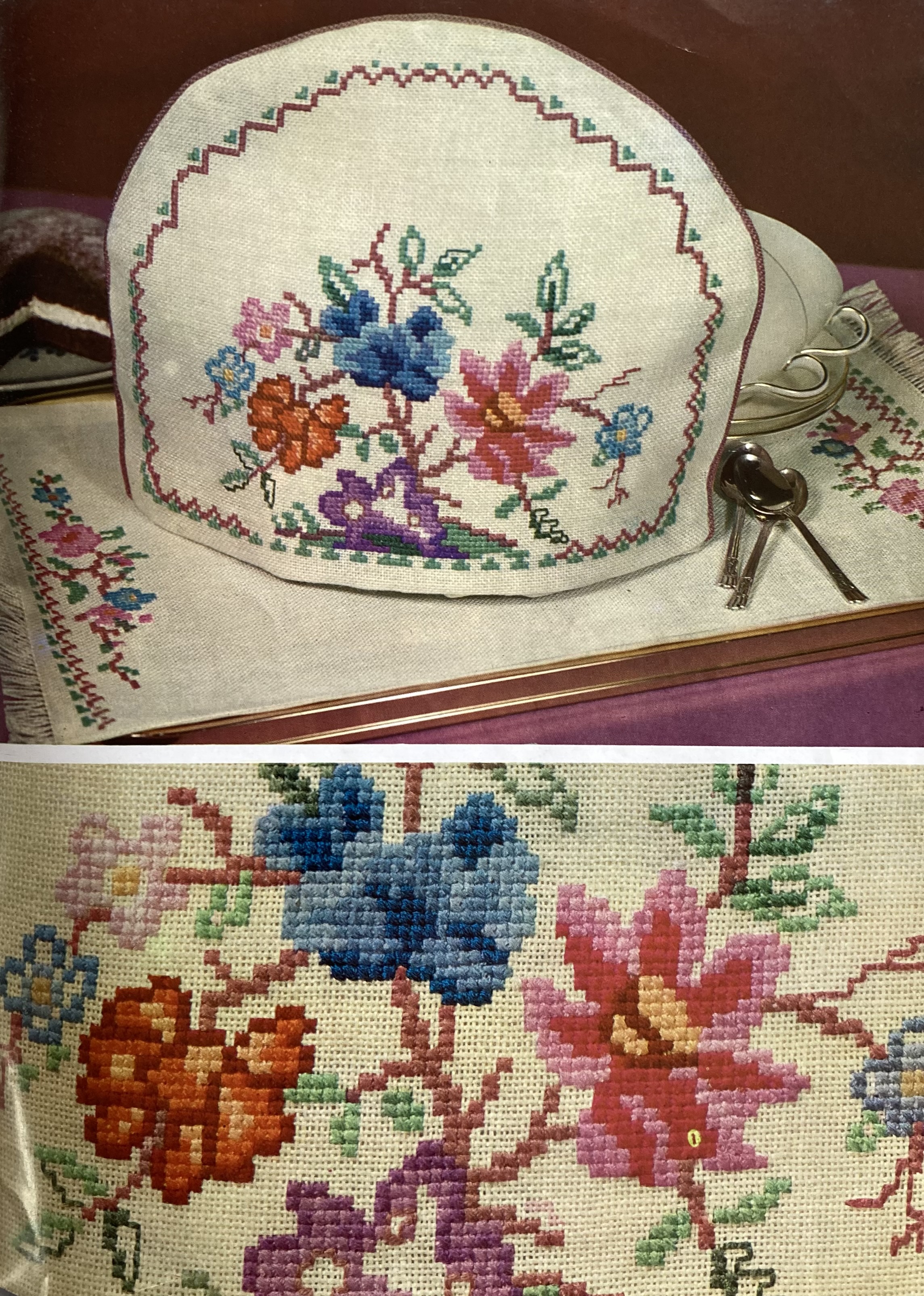
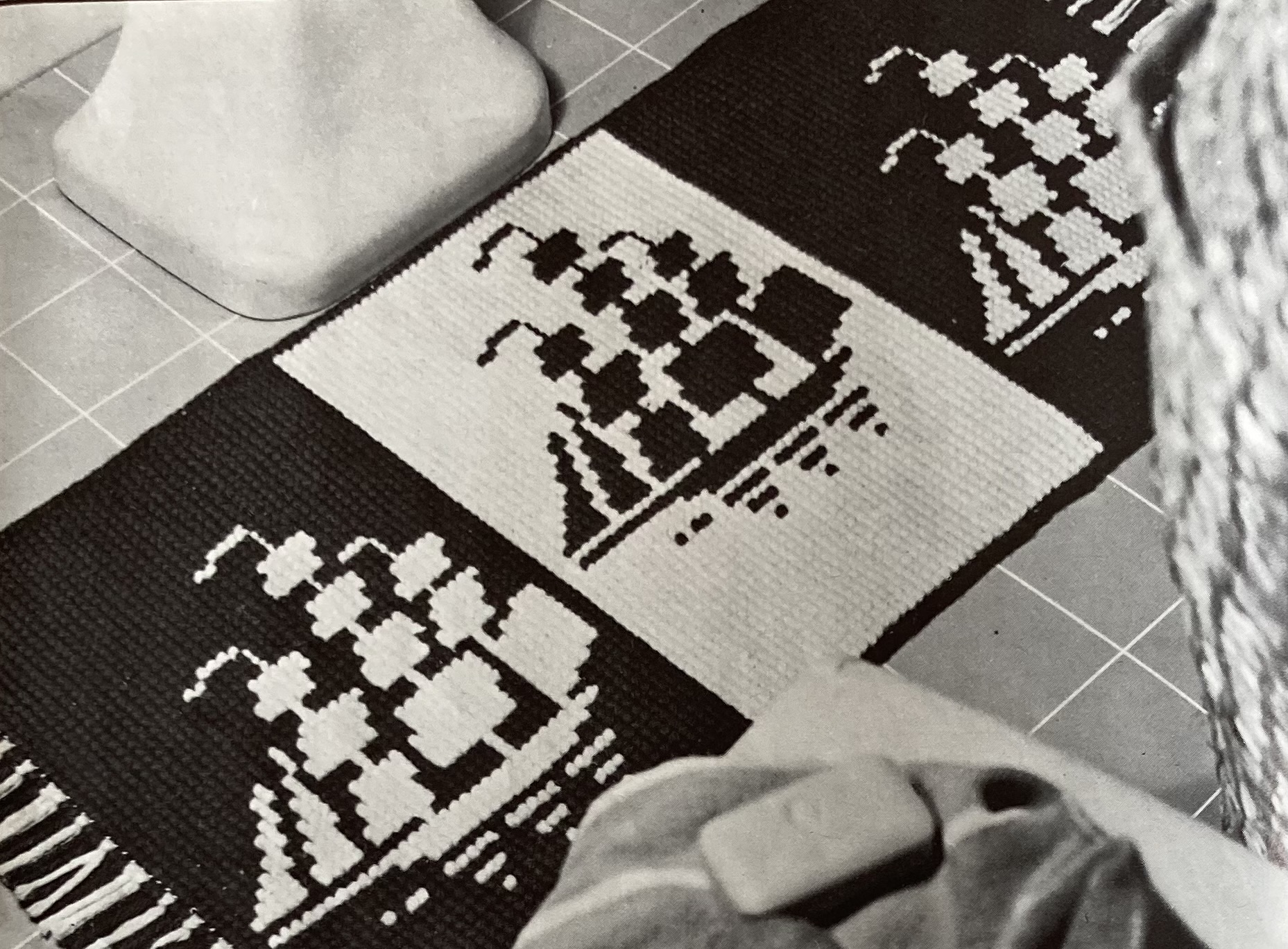
Spring flowers make an appearance in both a set of embroidered framed pictures and a cross-stitch traycloth and cosy. Finally, three cheerful sailing boats decorate a panelled rug for the bathroom.

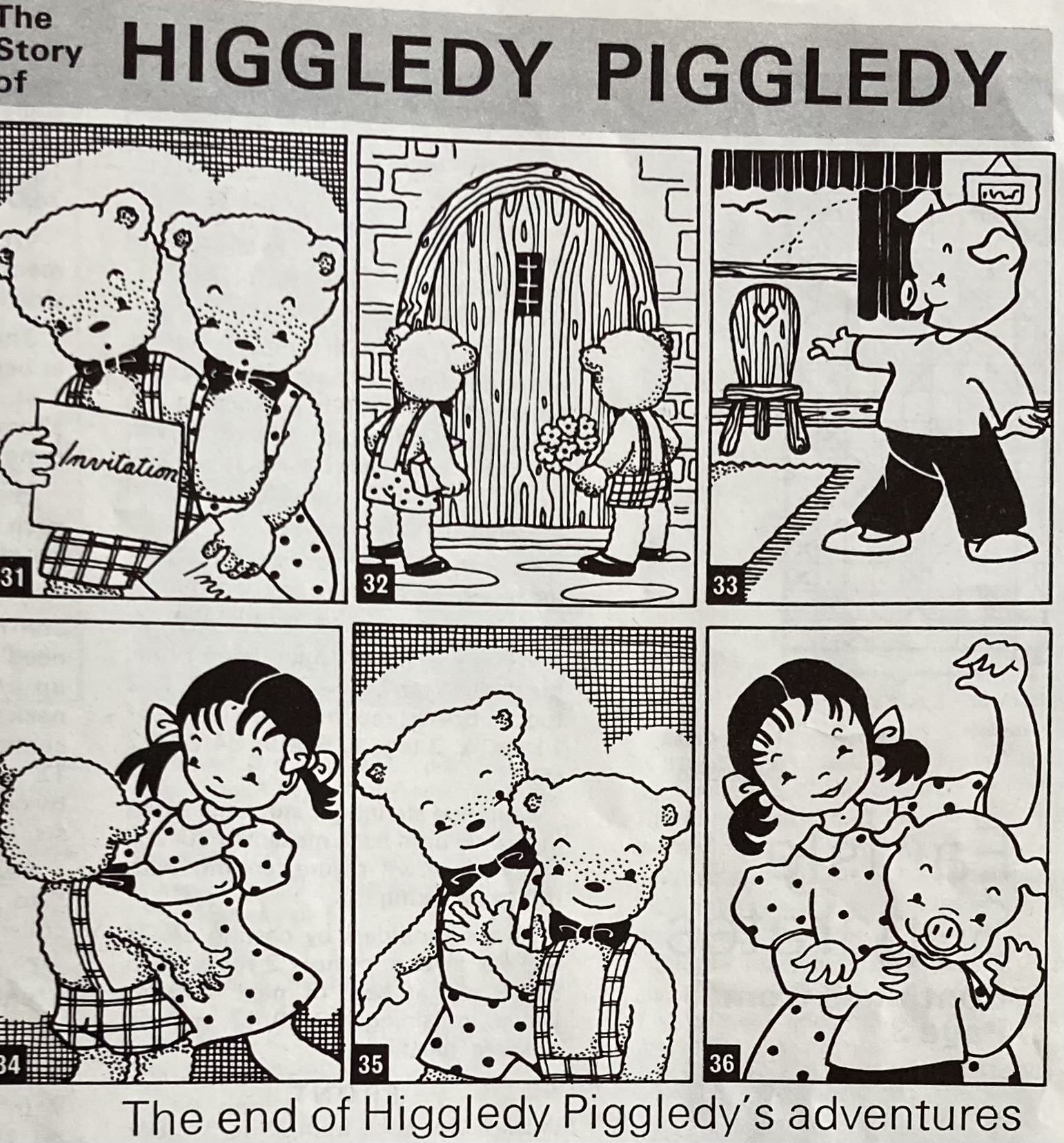
In the children’s comic, untidy piglet Higgledy Piggledy’s adventures come to an end when he moves in with Topsy Turvy, who likes to put right-side-up things upside-down and vice versa. So Higgledy Piggledy makes everything untidy and she tidies it up. Isn’t that grand? Doesn’t she just love constantly picking up after a messy male? Of course she does, it’s 1967. The End! Any girls who are too busy having fun on their own to be picking up after a husband (yet) can treat themselves to sexy underwear, courtesy of the Scotch Wool Shop. I love everything about this ad — the underwear, the art design and the copywriting.
My project for this month will be the mini-cardigan in “crochet look” and possibly at a future point, the knitted socks/stockings (over-knee socks in my version.) Plus the cardigan I was going to make from the January 1967 issue… plus another non-Stitchcraft cardigan that’s been a WIP for a while… all in the shortest month of the year, so we’ll see what actually gets finished. In any case, it’s going to be a well-knitted Spring.

January 1967: Headband and Mitts

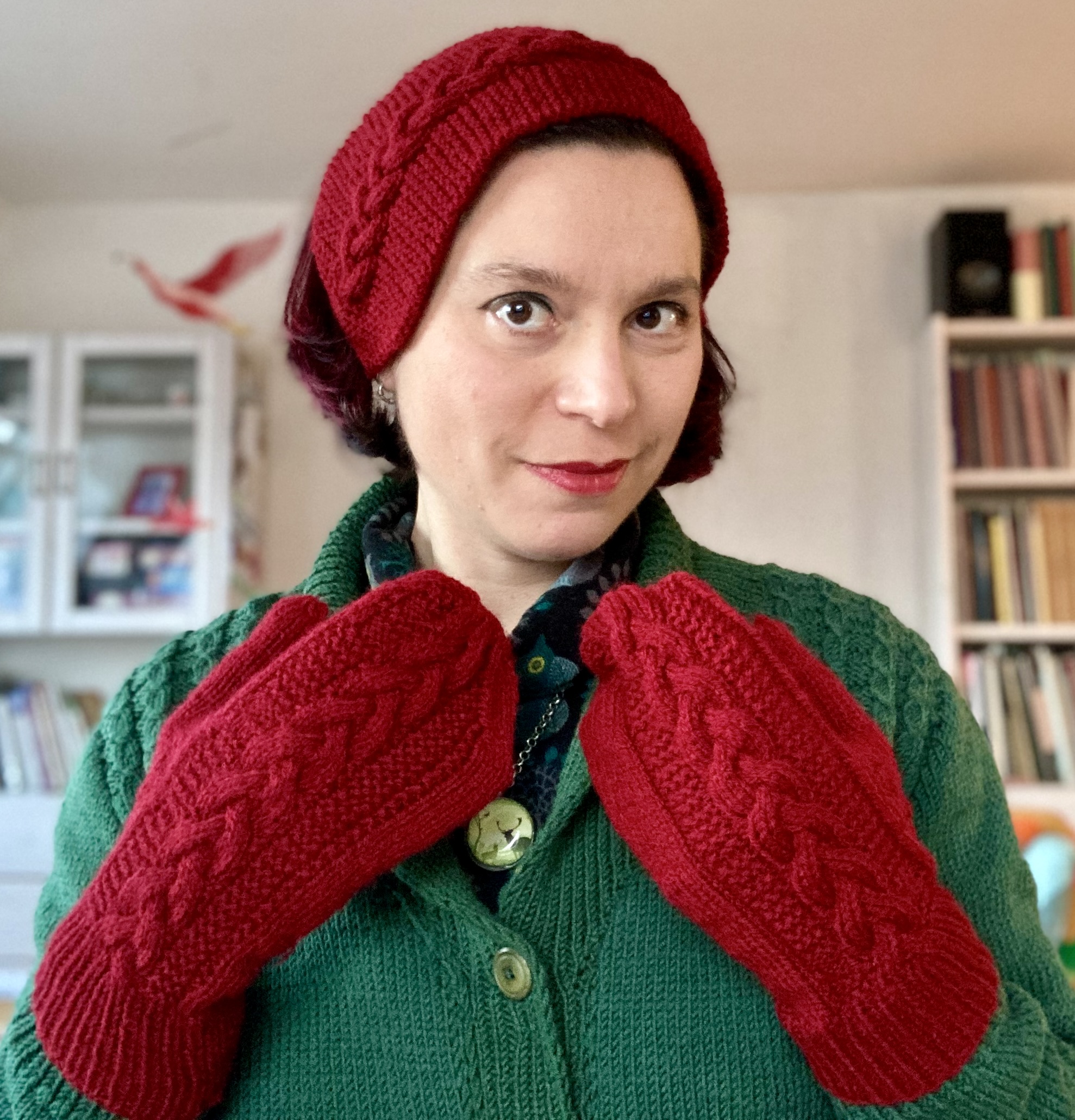
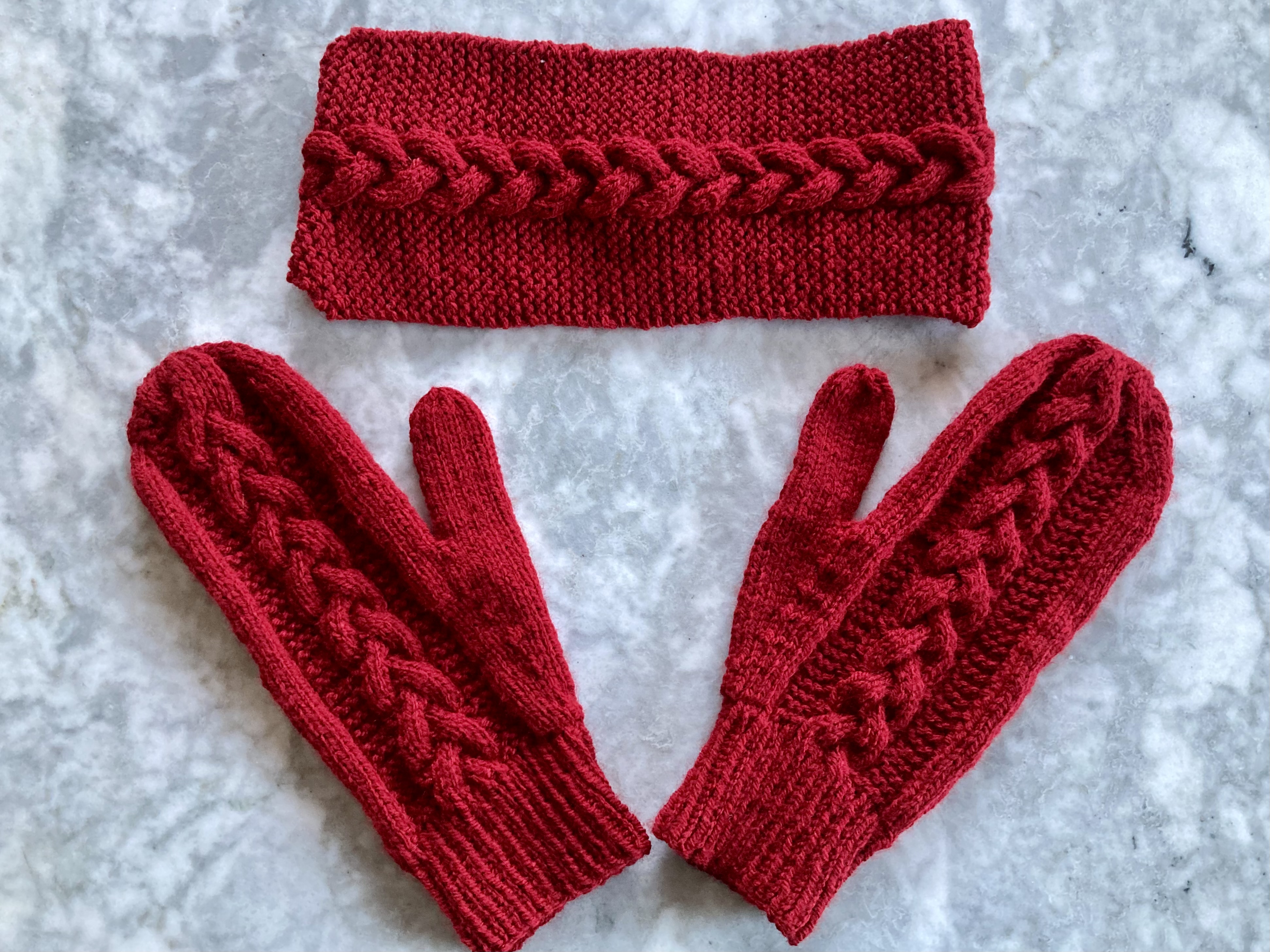
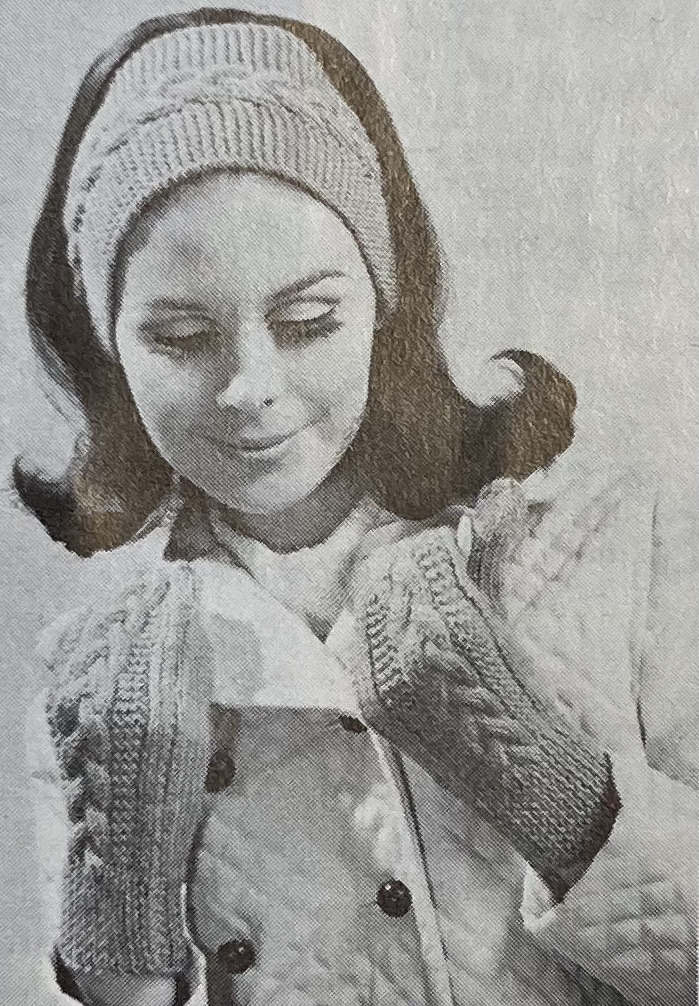
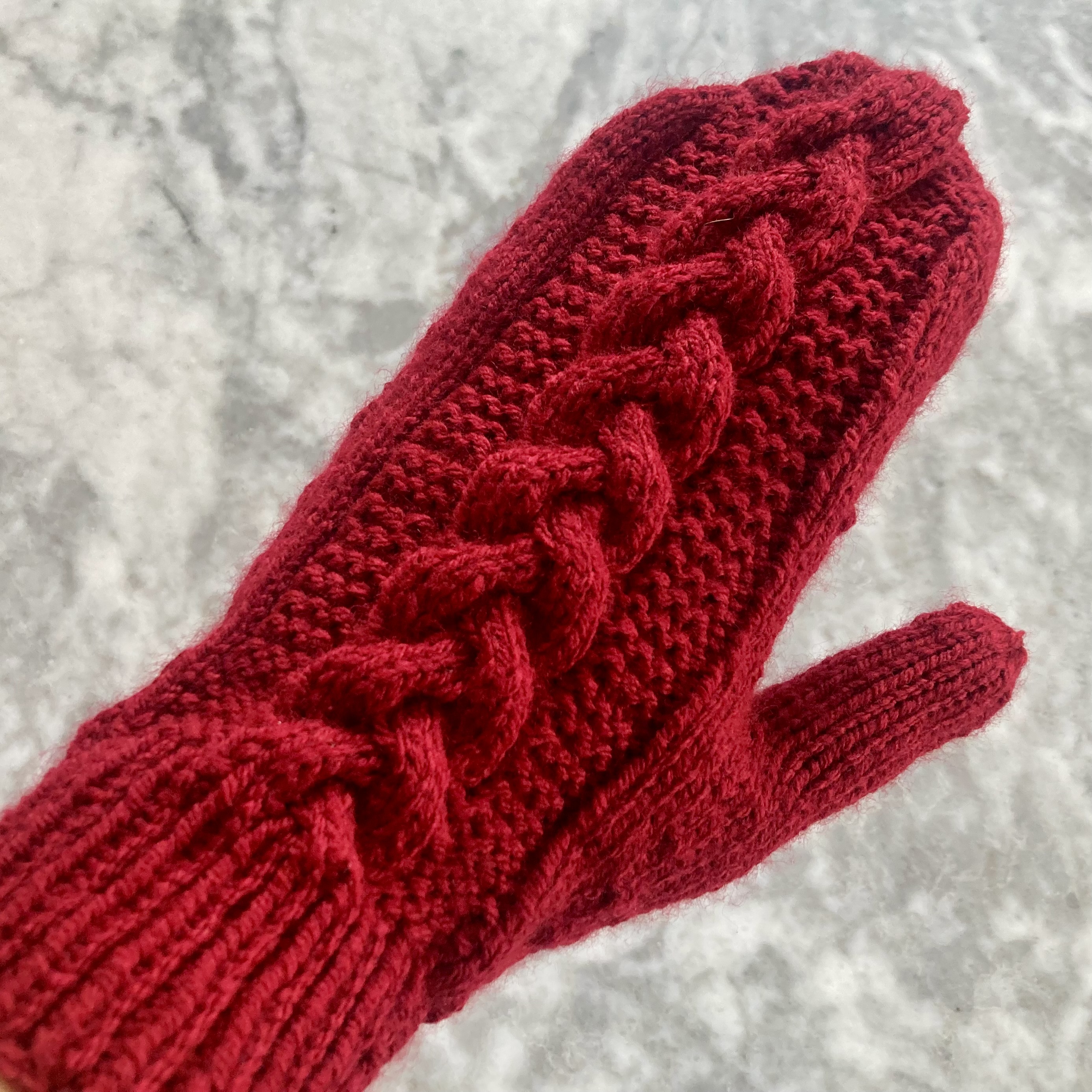
Welcome back to January 1967, one of my favourite 1960s issues of Stitchcraft. After making the failed “Pinafore Dress”, the successful “Lace and Ribs” pullover, and the the utterly cute “Fashion for Tots” jacket, I wanted very much to make the turquoise Fair isle cardigan on the back cover… but alas, it was not to be, as it is not possible to order wool from Scotland to continental Europe at the moment. But I won’t give up hope! While waiting for different wool to arrive, I made a simple headband-and-mitt(en)s set from the “Accessories for the Outdoor Life” page.

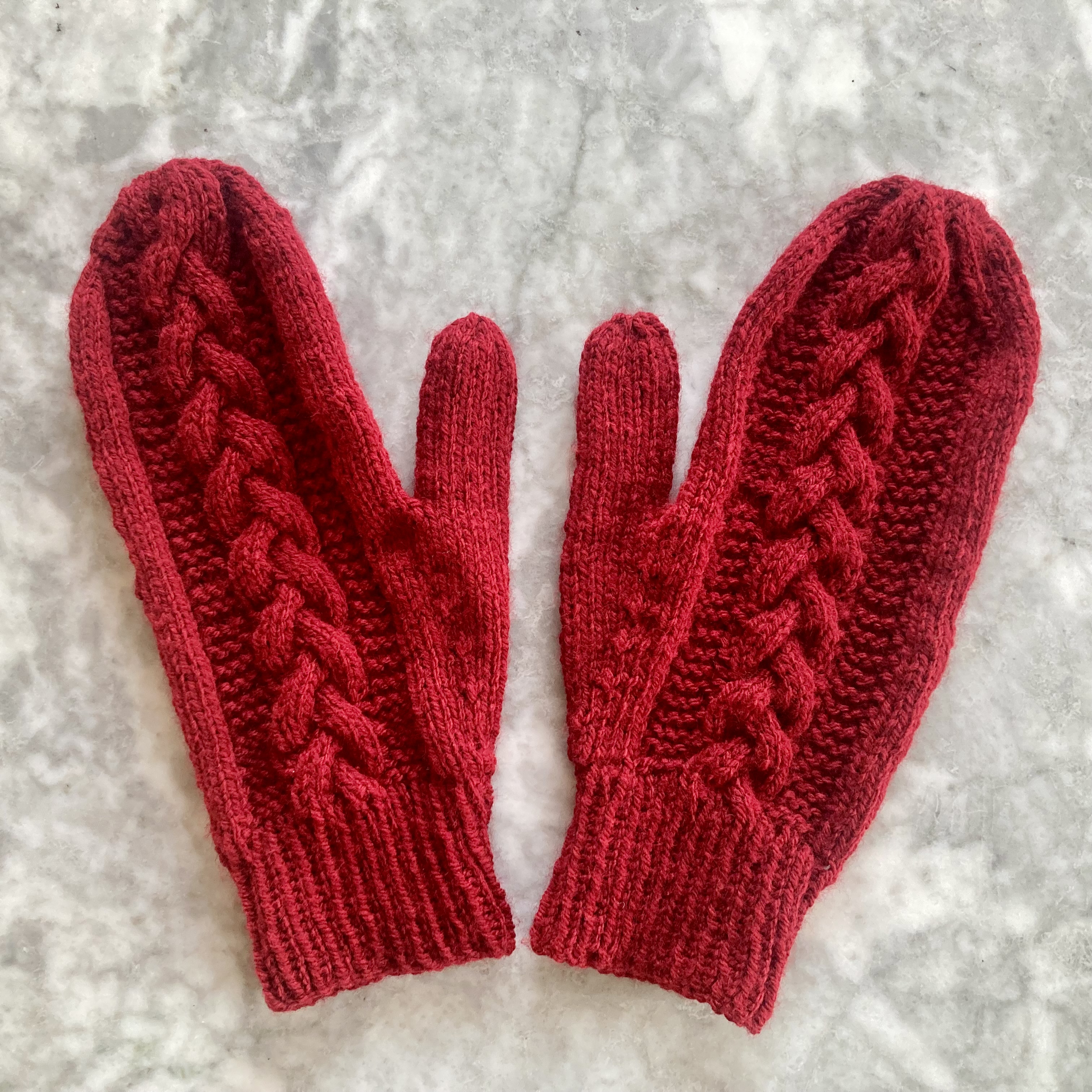
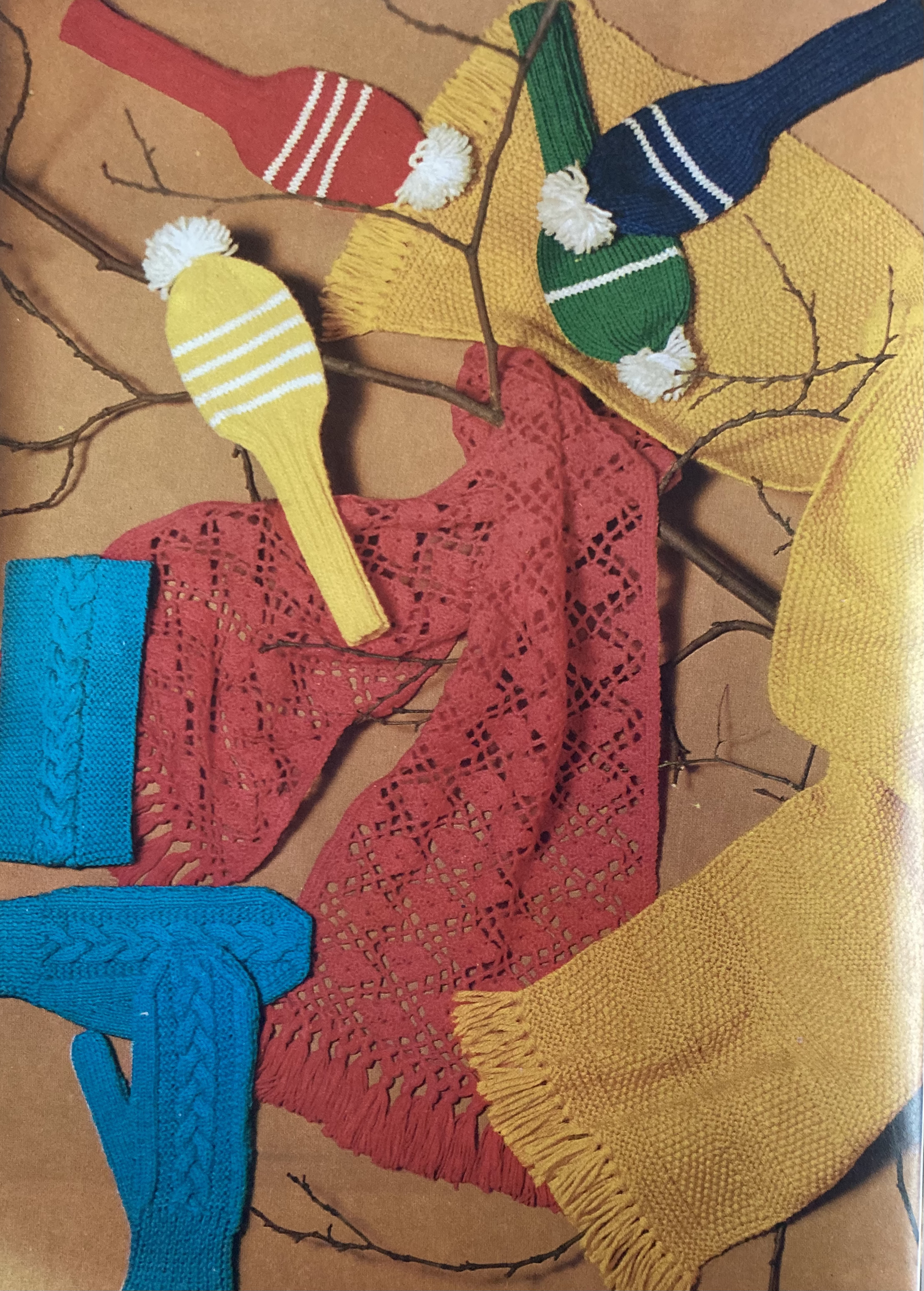
The mittens (Stitchcraft calls them “mitts”, but I’ll call them mittens to avoid confusion with fingerless mittens/gloves) and headband both feature a simple 9-stitch braided cable set in garter stitch (only 4 stitches on the mittens with the rest in stocking-stitch) with 1 stitch of reversed-stocking stitch on either side of the cable. The mittens are meant to be knit flat back-and-forth, but I wanted to make them in the round to save time and a seam.

Re-writing or re-thinking the pattern to accomplish that was… not easy. Of course the pattern doesn’t say, “Make a 9-stitch cable with 1 stitch of reversed stocking-stitch and 4 stitches of garter stitch on each side, and the rest in stocking-stitch”. It says things like “k3, (p1, k3) twice, C 6 B, (p1, k3) twice, k twice in next st., k to last 20 sts, k twice in next st, k 19” and then the wrong-side row is “purl to last 22 sts, k5, p9…” and so on. I tried to chart it out and was even more confused than before. The cable was all wrong and didn’t cover nine stitches. I finally figured it out, but the pattern wording didn’t help.

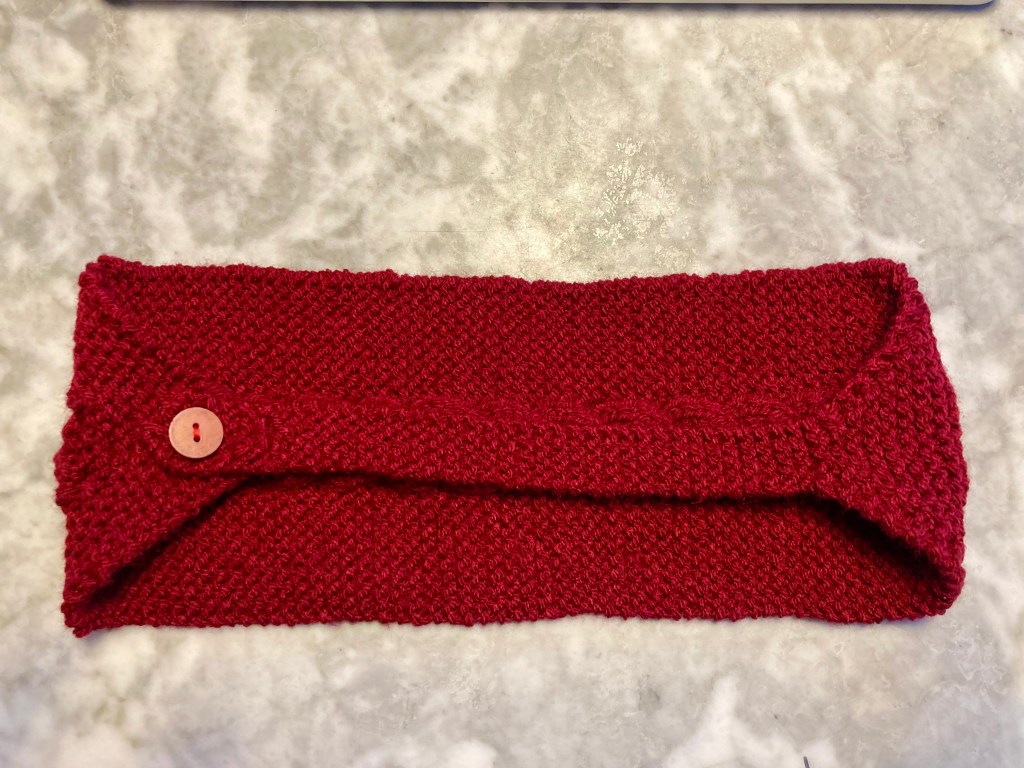
The headband was very easy and took two evenings. It fastens around the head with a buttoned strap, which I found very charming. The strap as given in the pattern (3 inches) was too short, so I made it to fit. It’s a little loose on me, but my friend has fluffy hair. Of course, she can always move the button if it doesn’t fit her properly.

Friend is wool-sensitive, so I made these in 1960s-appropriate 100% polyester yarn (Pro Lana Star). For a synthetic wool, it’s quite nice — soft and doesn’t feel too plastic-y. I chose a lovely cherry red colour to feel festive in winter.

That was it! I will return to this issue when the substitute wool I ordered for the Shetland cardigan (Rauma 3-trads Strikkegarn) arrives and make an extra post. I don’t mind that it didn’t work out to make the cardigan this month, as I probably would have overlooked the headband and mitts. They were fun to make and look really cute, so maybe I’ll make a set for myself sometime.

January 1967: Overview

Happy New Year, everybody! It’s 2025 in the modern world and 1967 at the Stitchcraft Sixties. What does our first issue of the year have to offer?

1967 was the year that Stitchcraft finally started to get just a little bit fashion-forward, albeit in a slow and conservative way. It starts with the title fonts, which keep getting bigger and more sans-serif (graphic designers, please excuse my layperson’s vocabulary — I’m sure there’s a better word for what I’m trying to say, but I don’t know it.) The skirt and dress designs are finally just barely above the knee — three years after Mary Quant introduced the “mini” in her shop in London — and a sense of fun and “swing” is slowly but surely creeping into the aesthetic.

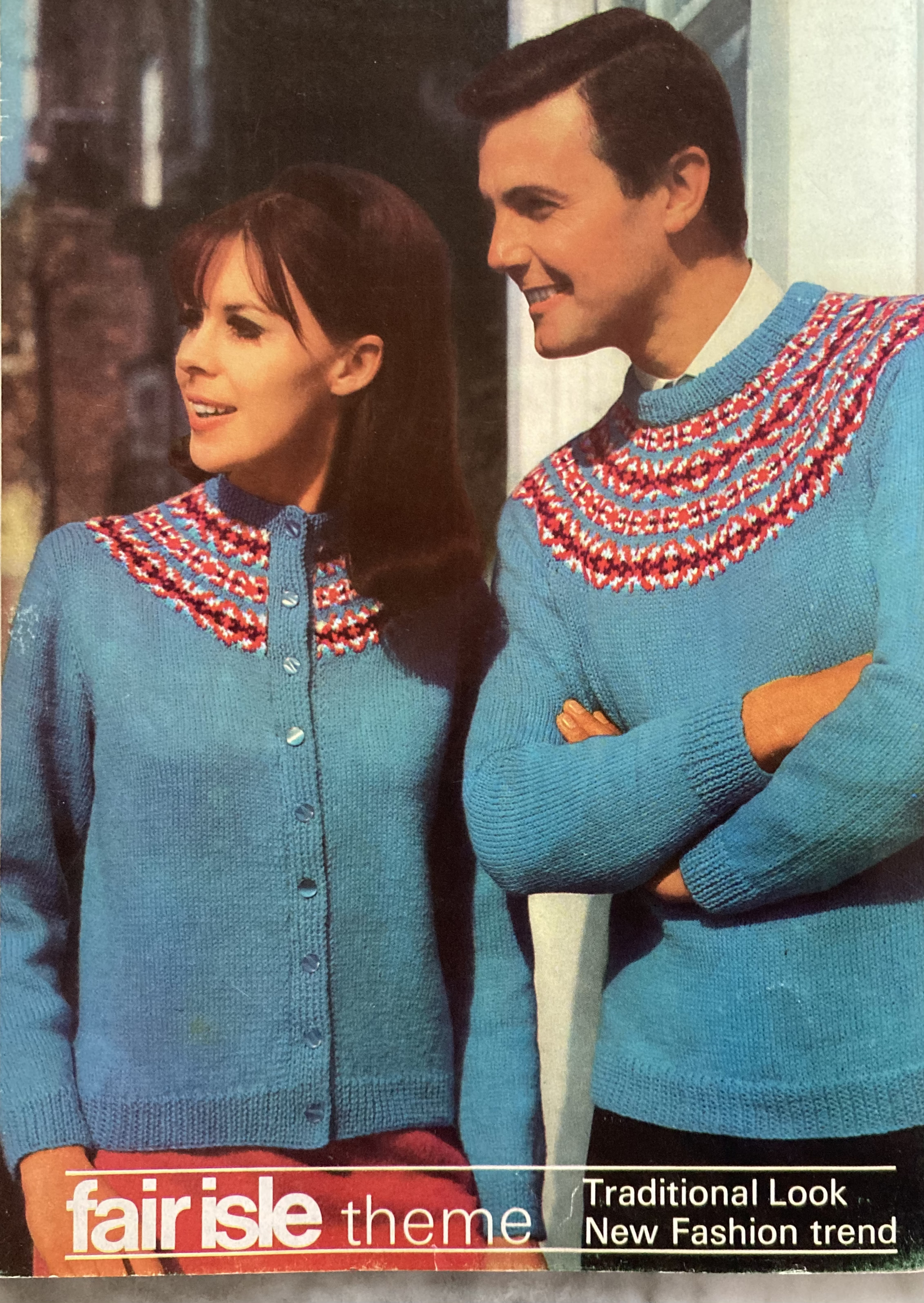
The January 1967 issue features a “fair isle theme” of stranded colourwork, starting with the sweater-suit on the cover. It’s made with Patons “Fiona” wool, a blend of Shetland wool and synthetic. Fiona was also one of the first Patons wools to be sold in 2-oz balls — a precursor to the metric transition in the early 1970s, after which yarn was sold in 50g balls. The sweater has typical Fair Isle border patterns, of which the flower pattern is repeated near the skirt hem. There’s a his- (pullover) and-hers (round-yoke cardigan) Fair Isle set as well, also in “Fiona” wool. The knitting techniques are not at all traditional Shetland-style, as all the garments are knitted flat, back-and-forth in pieces and sewn together. Even the round yoke is only picked up after the front(s), back and sleeves are made separately and worked flat for a few inches above the armholes.

Non-stranded patterns include a swingy “pinafore” dress, to be worn with or without a tight-fitting ribbed pullover underneath. I tried to make this dress and it was a failure! The pleated skirt, in DK wool, was extremely heavy and stretched the stocking-stitch top part uncontrollably. I ended up frogging it. A few years later, I made the ribbed pullover and wrote about it in this post on the blog. That turned out fine at first, bit the wool was too lightweight and not 100% wool (part linen), so that even the rib pattern couldn’t save it from getting shorter and wider. How I love wool that keeps its shape! Sadly, it was not the case with either of these projects.

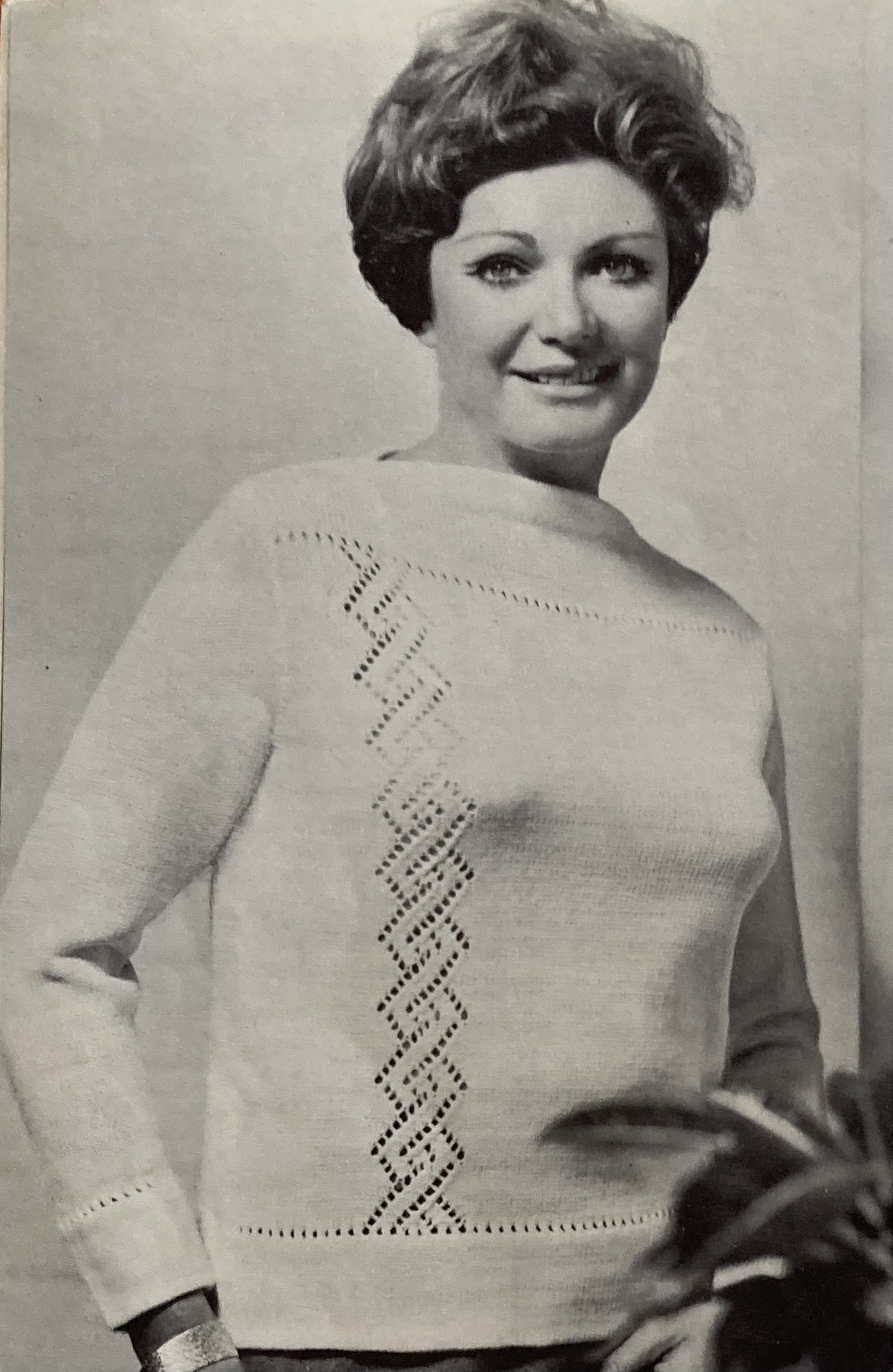
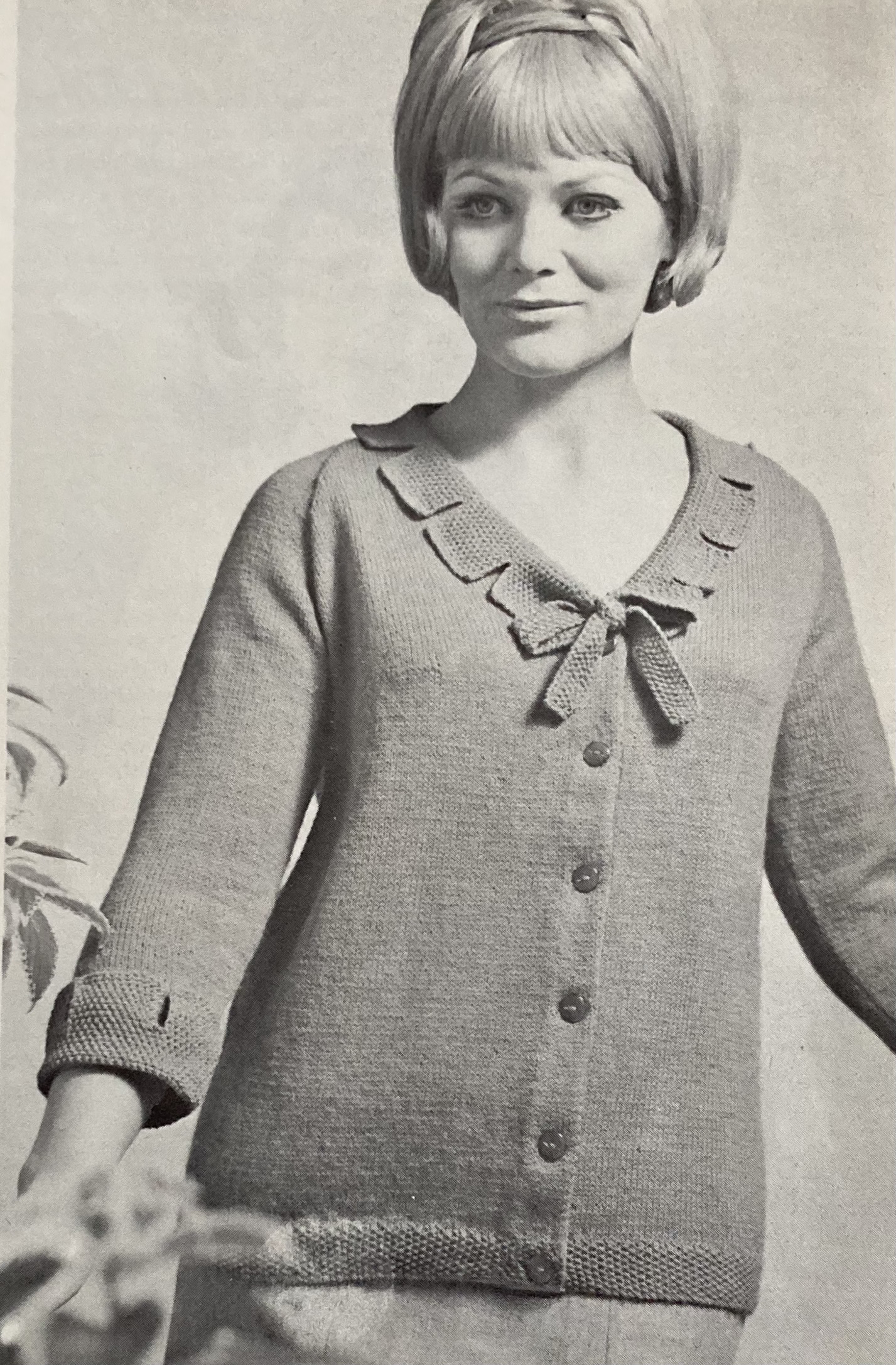
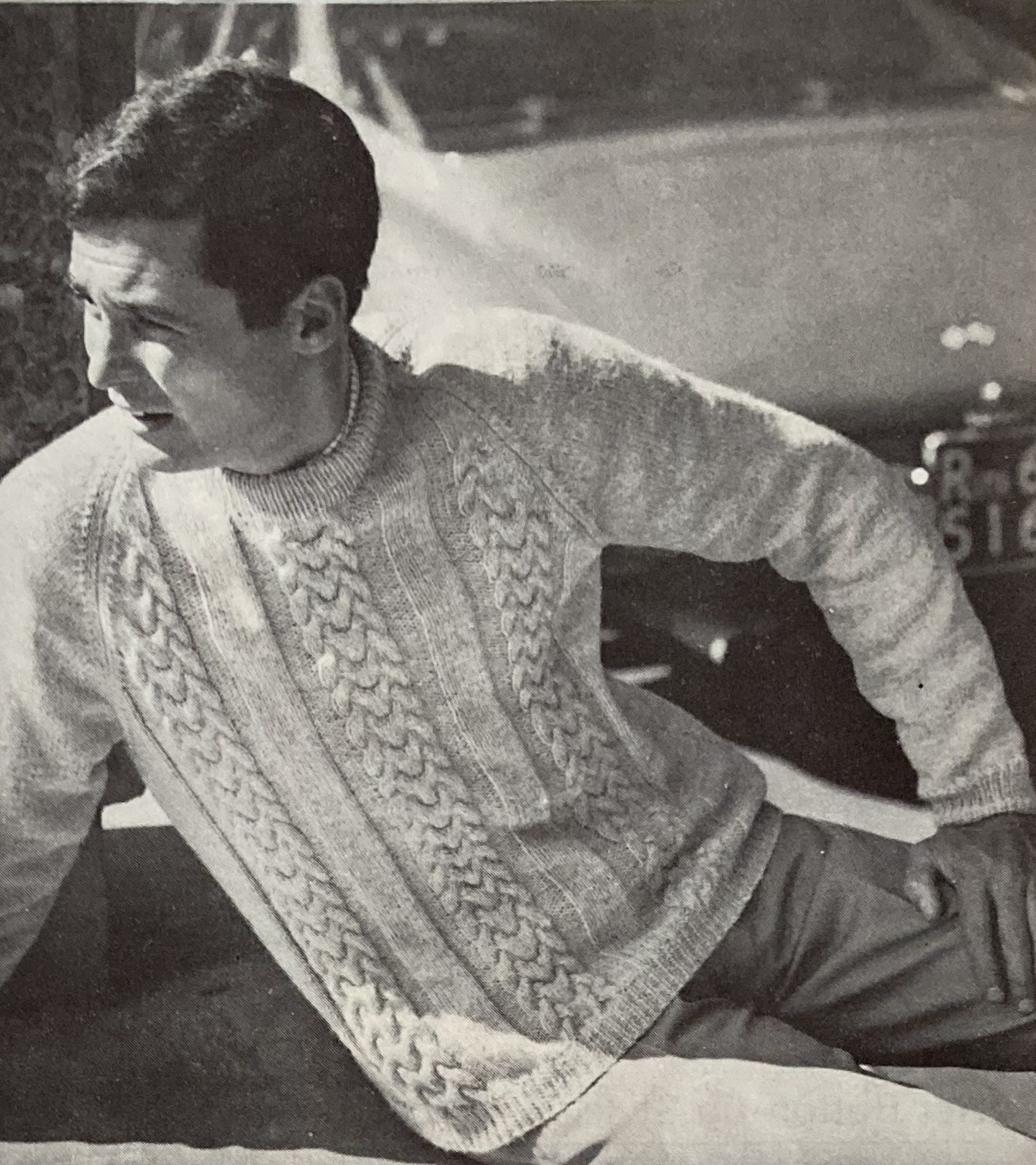
Other designs include a slip-stitch cardigan jacket which you are supposed to “slip on when the January winds make you chilly”, even though it doesn’t have buttons or any kind of fastening in the front, so I think the wind would get in pretty easily. For larger-sized ladies (up to 46-inch bust, which is pretty size-inclusive for 1967 standards), there’s a machine-knit jumper with a lace panel and a simple cardigan blouse with a pretty “petal” edging on the neckline. Men get a classic raglan crew-neck pullover with cables in Courtelle synthetic DK wool.

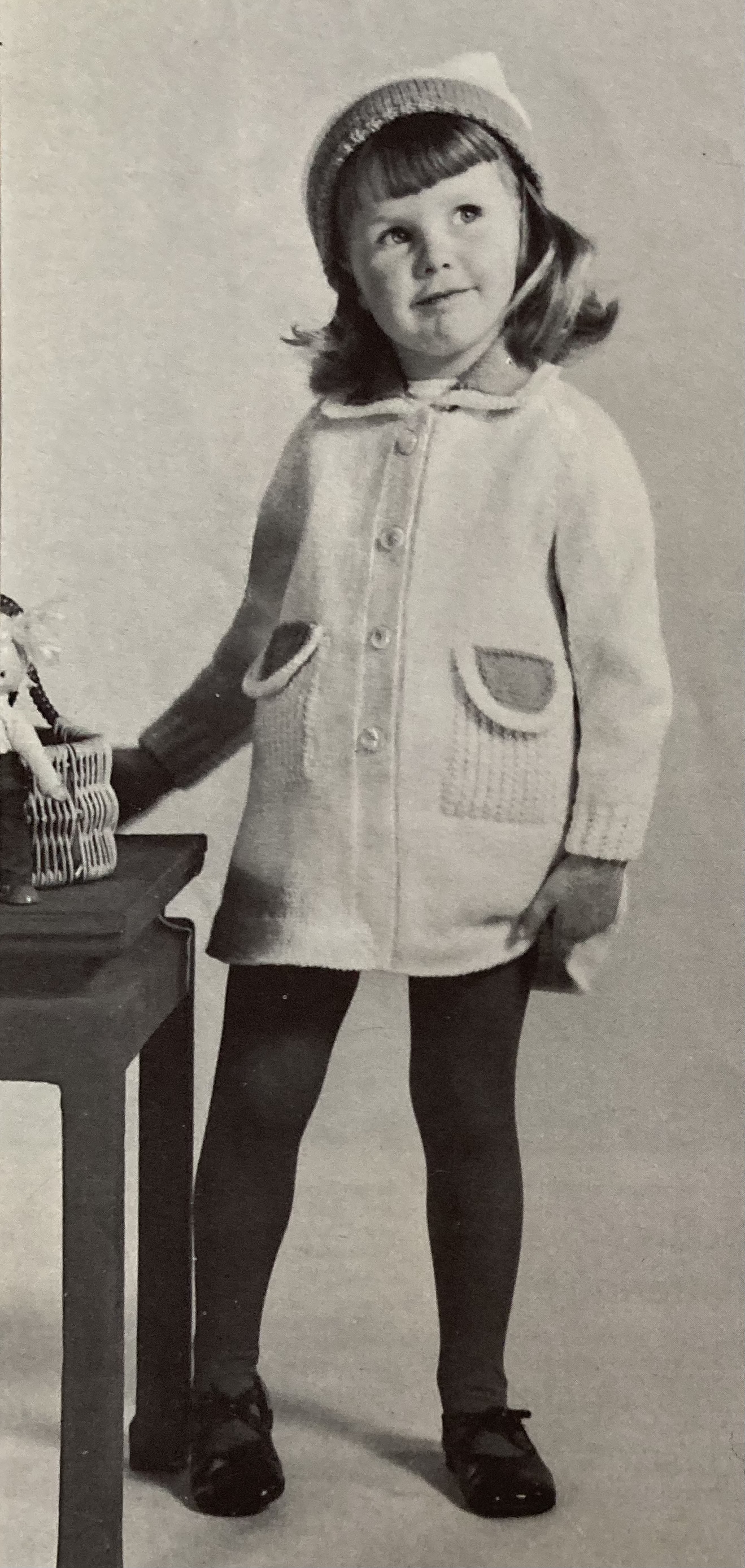
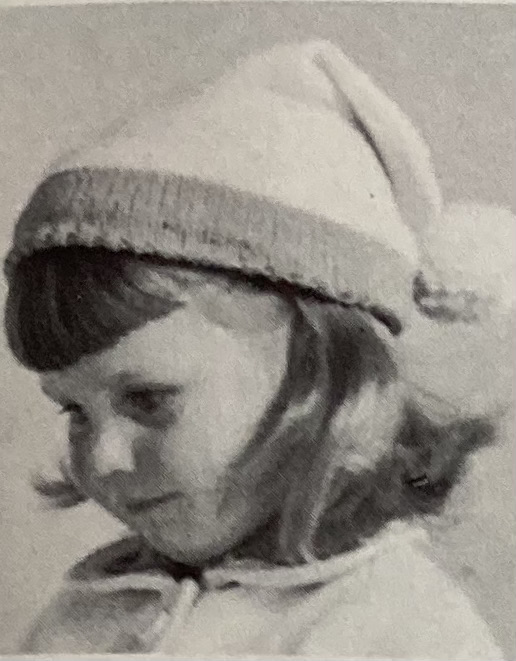
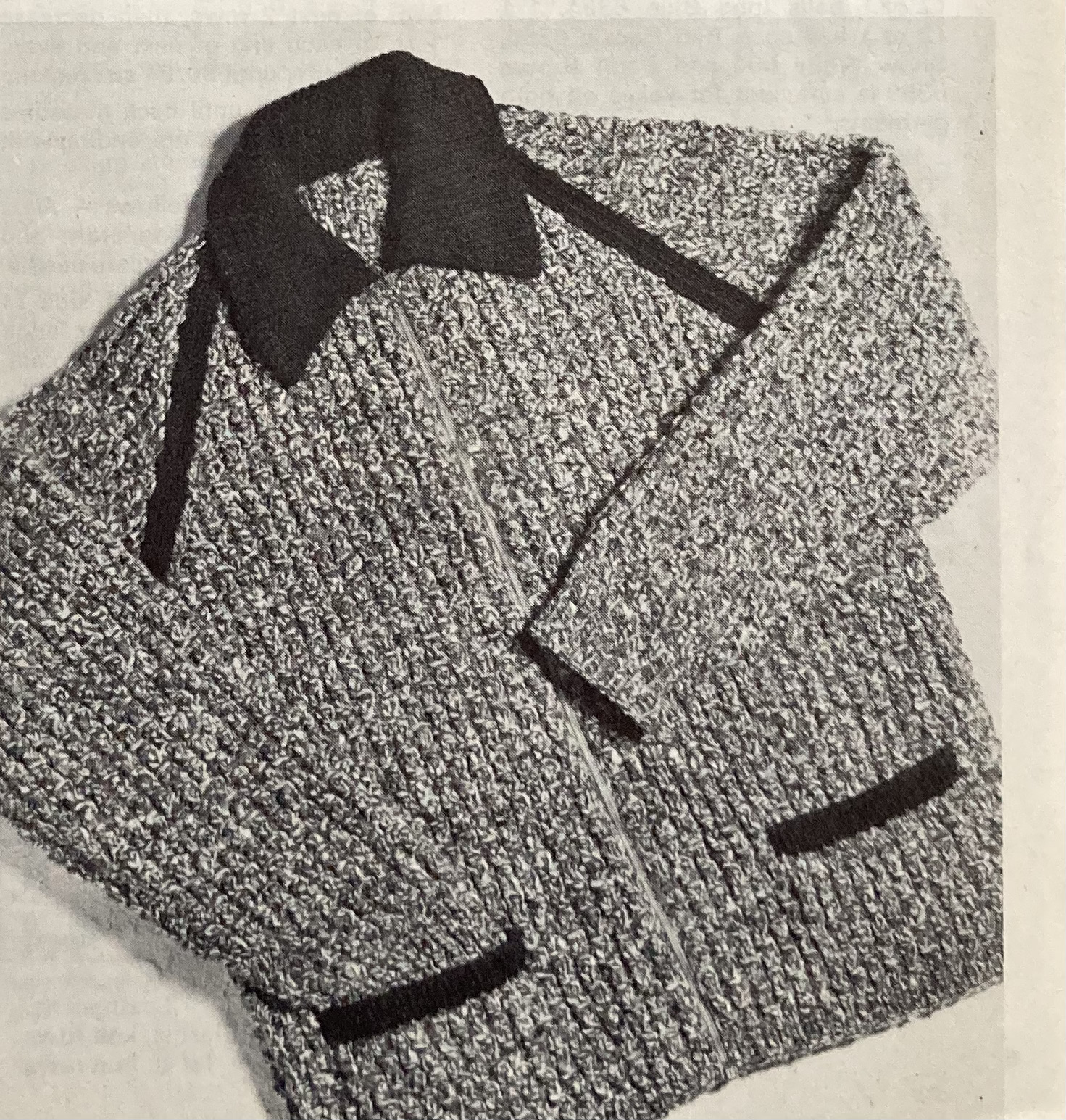
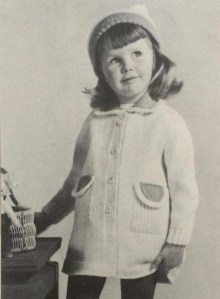
“Fashion for tots” gives us this wonderful tunic-coat and hat for 3- to 6-year-olds, which I also made and wrote about here on the blog. Older boys get a cardigan as well, in tough “Bracken” wool with a practical zip and contrasting collar and details.

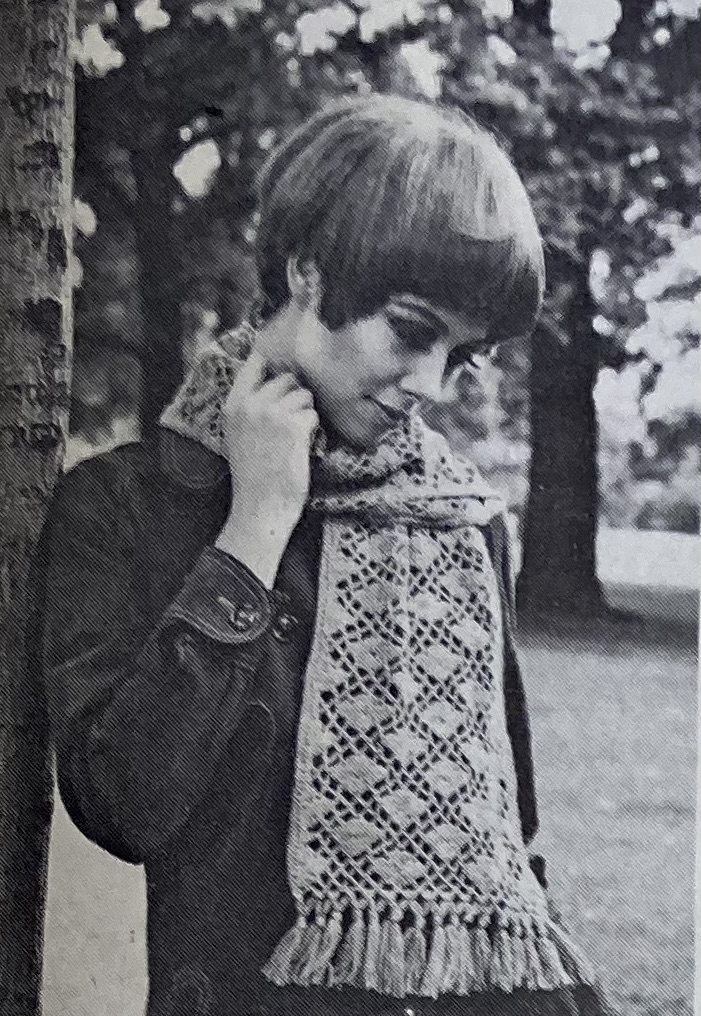
There’s a whole page of lovely winter accessories: a lacy, fringed crocheted scarf, a classic moss-stitch scarf, and a set of headband and mittens with a cable-and-moss pattern. Plus golf club covers! I guess you could consider them to be hats, in their way. If any golfers read this blog, please tell me why golf clubs need covers? Is it so they don’t get scratched? (I would think they would get more scratched up from hitting a golf ball all the time than by being stored somewhere, but I have never played golf and wouldn’t know.)

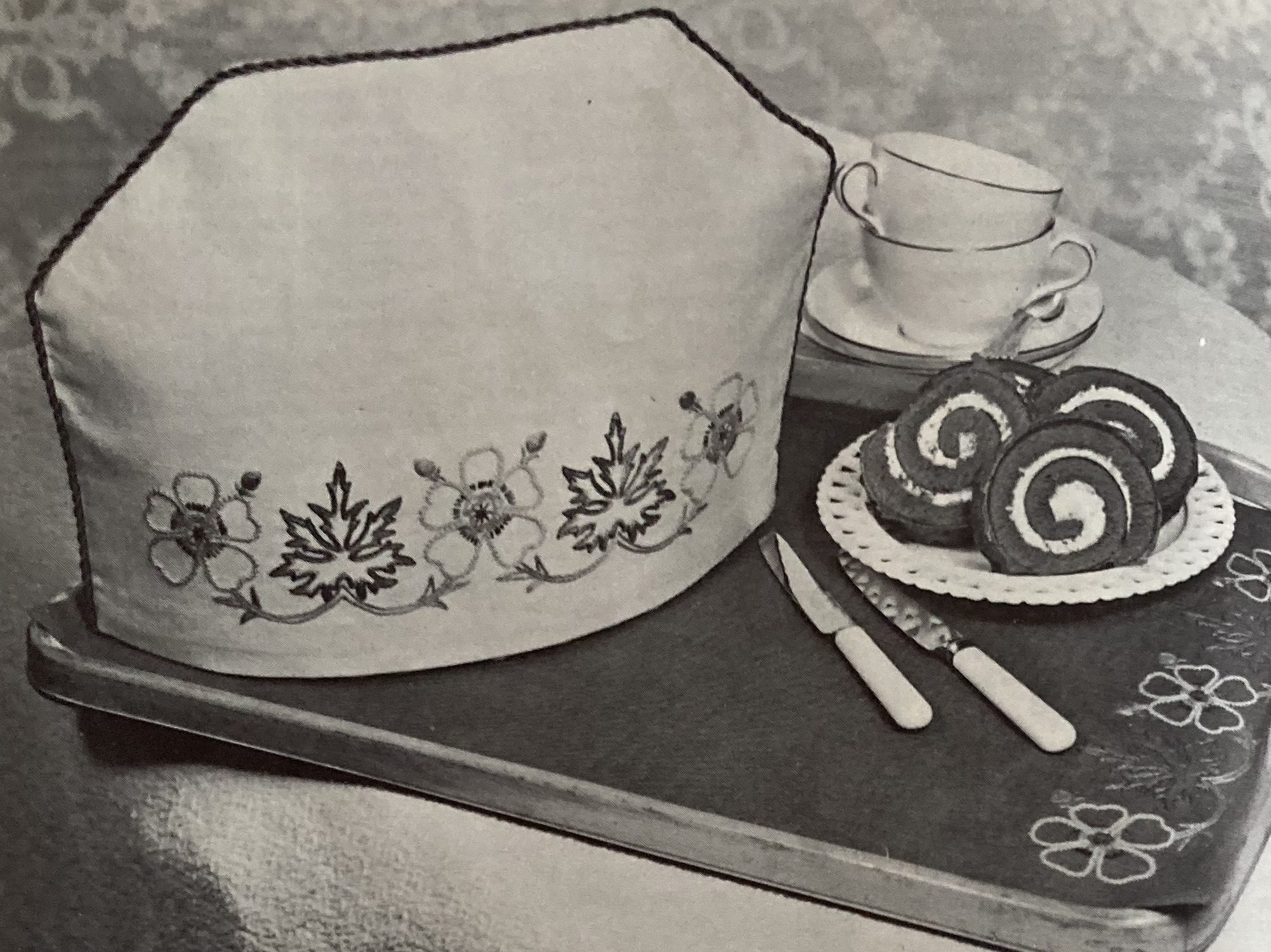
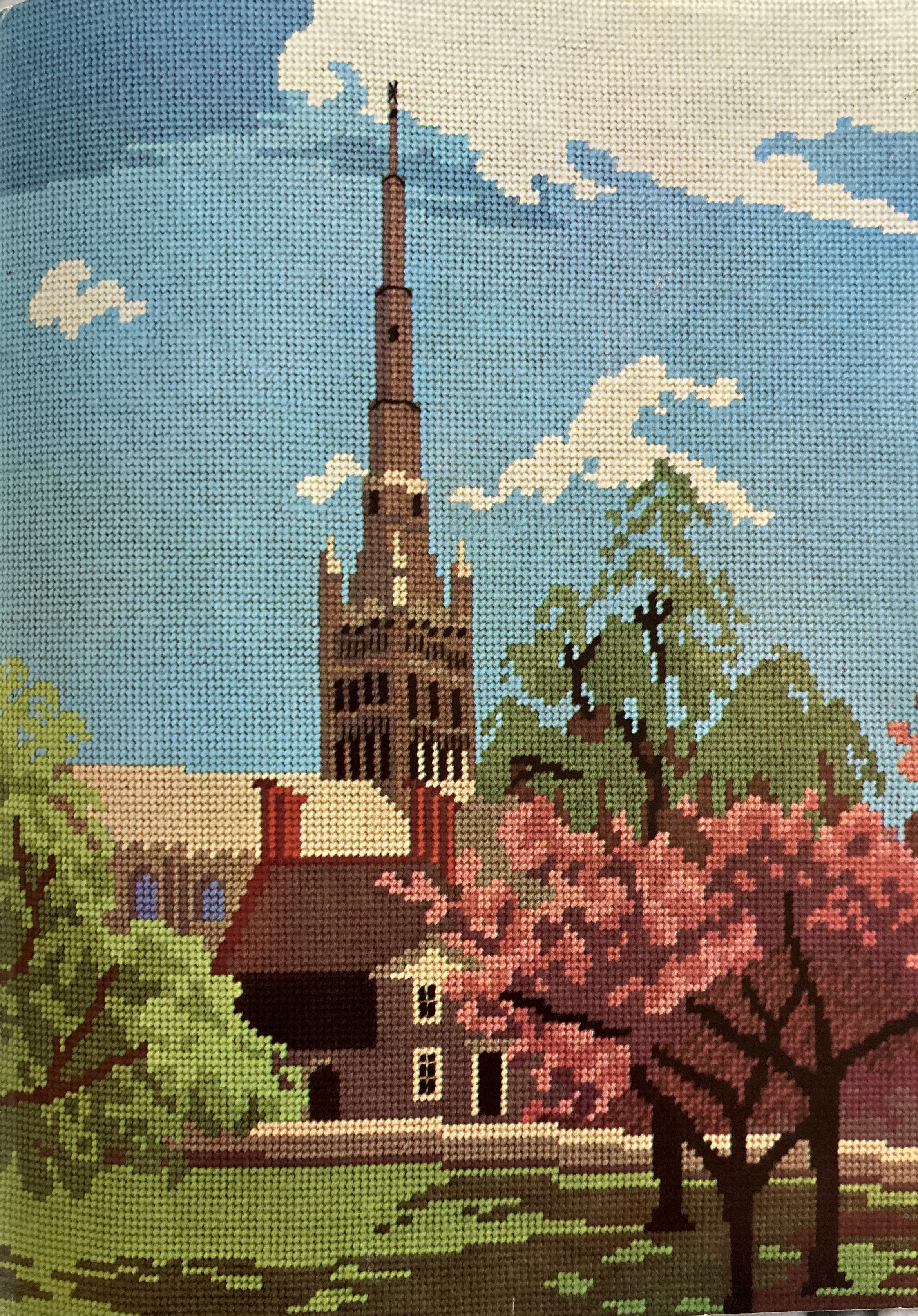
Homewares are unspectacular in this issue: place-mats or a cushion with easy cross-stitch on Binca cloth, or flowers embroidered on a tea cosy or tray-cloth. There’s a stitched rug in bright wintry colours, or a fireplace screen with the church of Norwich worked in wool tapestry.

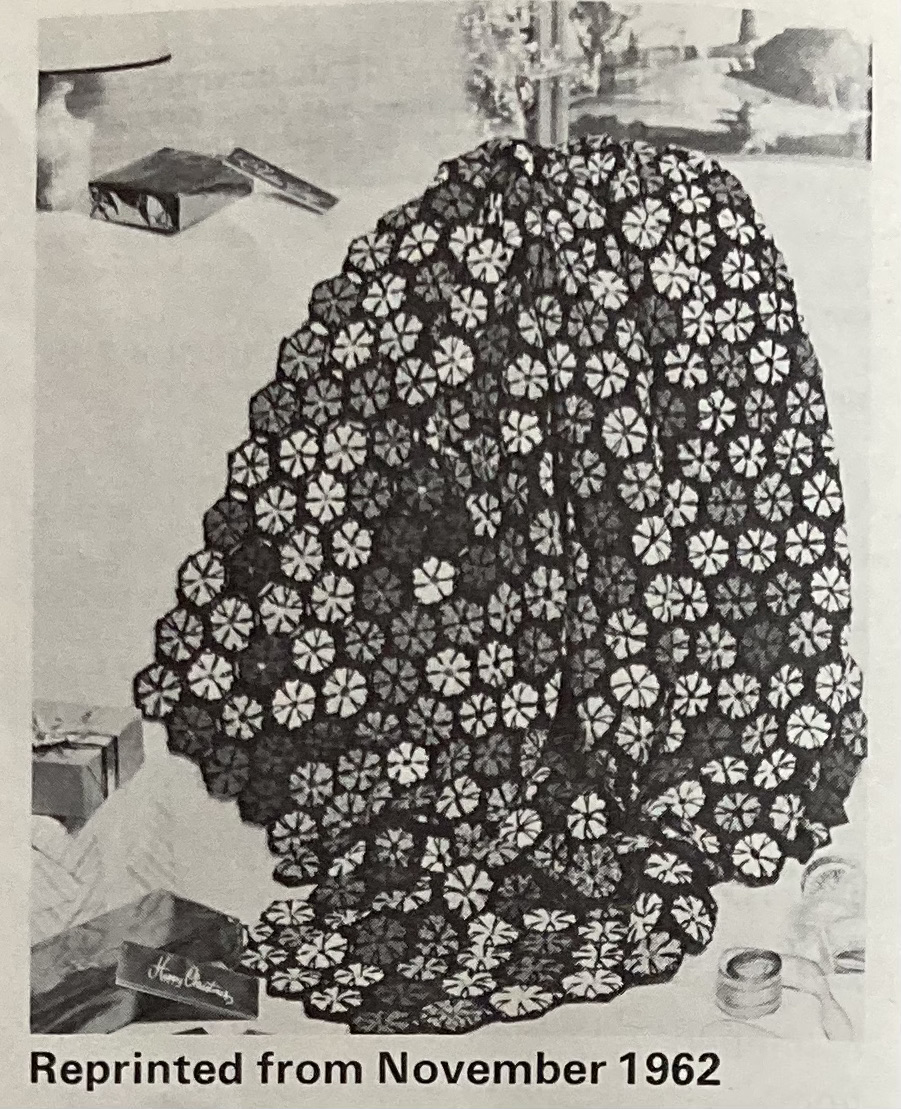
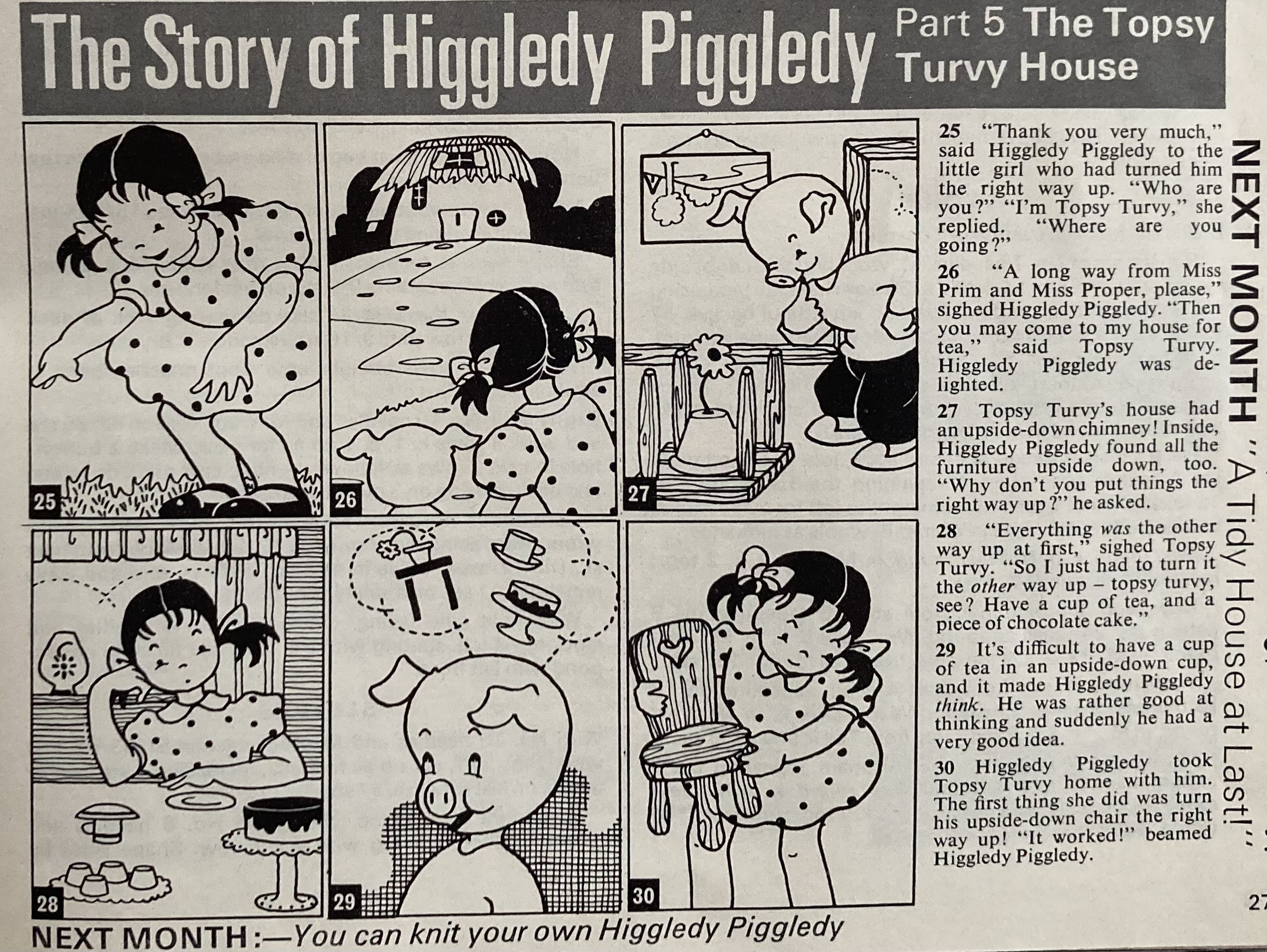
The Readers Pages give us a reprint of a crocheted afghan from the November 1962 issue, tips for knitting in stranded technique, and the continuing adventures of the untidy piglet, Higgledy Piggledy. In this instalment, he has run away from his tutors, Miss Prim and Miss Proper, to find refuge in a house with a girl named Topsy Turvy who turns everything that is upside-down, right-side-up, and everything that is right-side-up, upside-down. I am reminded of a colleague who claims to turn straight people gay, and gay people straight. Anyway, that’s it for this issue!

There are so many good projects in this issue that I’m glad I’ve made a few of them already. My project for this time will be the turquoise Fair Isle cardigan, but it might have to wait a while because I want to make it in Jamieson’s DK wool, which I have to order through a wool shop in the next city over from me, and that will take a while to happen before I can even start knitting. In the meantime, I’ll either skip ahead to the February 1967 issue, which also has some great larger projects, or make one of the smaller accessories (not the golf club covers). Stay tuned!

Fast Forward: January 1967

IMG_2554I do have a project from the May 1961 issue and will post about it soon, but it won’t be done by the end of May. In the meantime, I made a very cute coat for a friend’s child from the January 1976 issue of Stitchcraft, using the leftover yarn from the red and blue dress I finished last month.
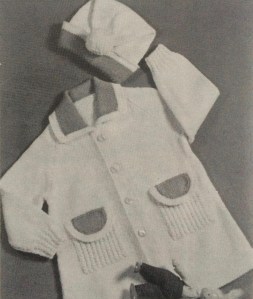
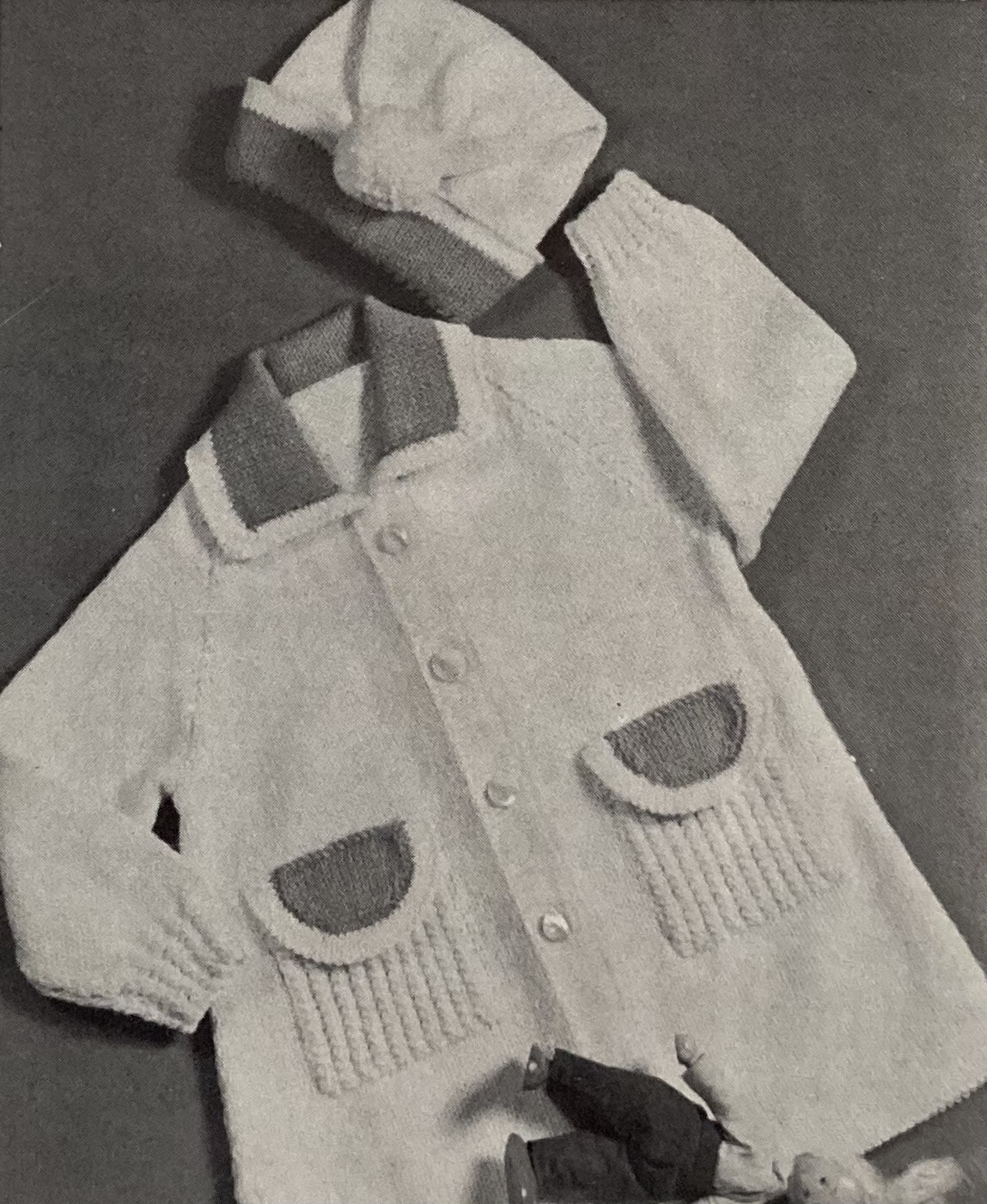
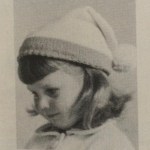
The pattern — “Fashion for Tots” — encompasses a single-breasted coat with patch pockets and a collar in contrasting trim, and a pixie hat with the contrast colour in the ribbing. The coat has an A-line shape and raglan sleeves and is given in three sizes, to fit a 22-23, 24-25 or 26-27 inch chest measurement. I made the smallest size, for a two-year-old with a 21 1/2 inch chest, so hopefully it will fit for a while even if it doesn’t get used very much in the summer.

IMG_2556As usual, you’re supposed to make everything in separate pieces, and for once, I almost did! That is to say, I made the back, fronts and sleeves up to the raglan underarm join in pieces, then made the raglan yoke all in one piece working back and forth. Sewn raglans always look so messy (when I make them…), so it was worth it for that, and making the rest in pieces gave the sides some stabilising seams and didn’t take any longer than making the body in one piece working back and forth would have done.
The coat has a cute mitred hem at the bottom, which makes a neat join into the button bands. The collar and pockets are made separately and sewn on, and the collar has an interesting two-piece mitred construction to get the two different colours to make clean corners. The pockets are in twisted mock-cable rib.

IMG_2557I noticed that it wasn’t quite going to work out with the total amount of yarn in the proper colour scheme, so I played with the amounts of red and blue and ended up just perfectly using up the rest of the red with a few metres left over should the coat ever need repairing. Of course, that meant I couldn’t make the hat. The project was fast and fun, though, so who knows, maybe I’ll make another one when January 1967… wait, when will that be again… January 2025 ?!? comes around. If we’re all still here! Hang in there and stick around.

IMG_2537