March 1965: Flower Border Bag

Choosing a project from the March 1965 issue of Stitchcraft was an interesting process. I loved both of the children’s designs (a “continental” cardigan and a textured pullover with a round stranded yoke), but could find no takers among the children / parents of children that size that I knew. I loved the red cardigan in the cover photo, but didn’t feel like going through the work of re-sizing and re-proportioning it for myself and it wasn’t the right style for any knit-worthy men in my life. None of the bulky, large, unshaped garments in the issue would have suited me. Also, I had multiple “endless” WIPs that I wanted to finish and other projects that have been waiting in the queue for a long time. So — I made a little embroidery project.
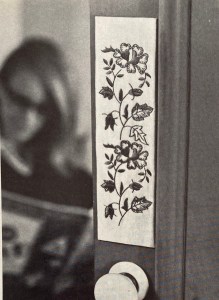
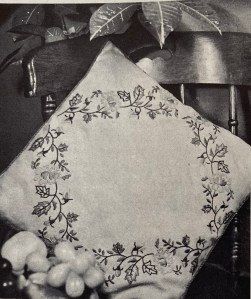
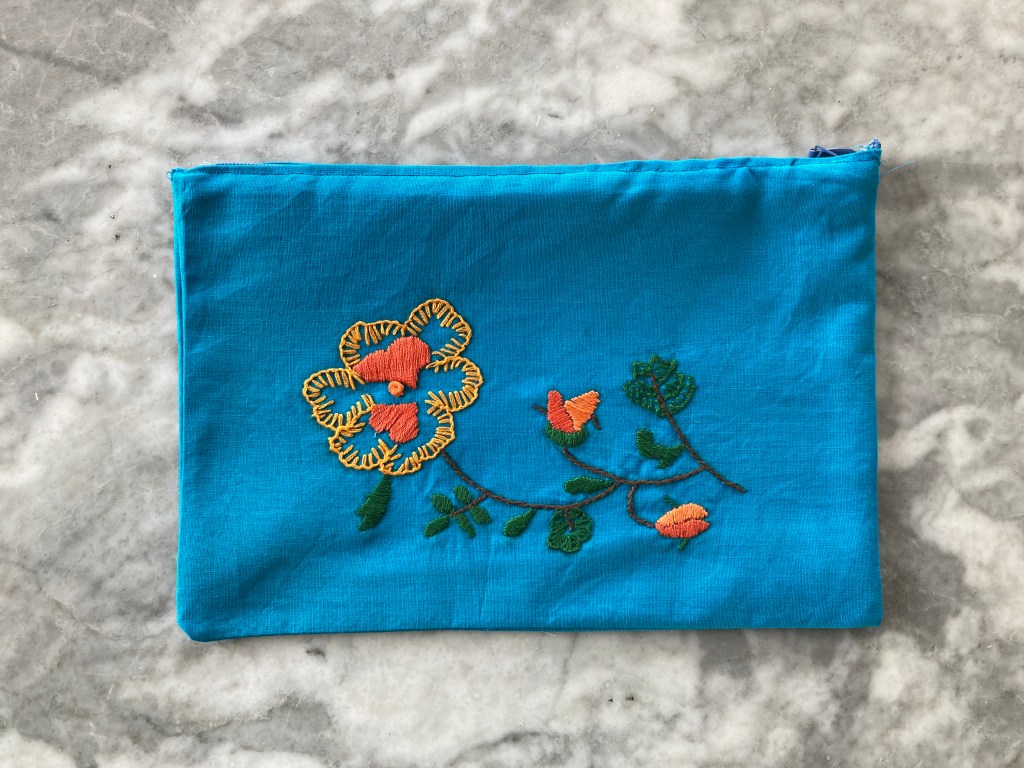
The project as presented in the magazine is a flower border in simple stitches and a limited colour palette (all blue, all “peacock”, or green and orange), to be worked either on a cushion, as a border on a pillowcase, or on satin fabric for a door panel. Not needing any of those things, I embraced the spirit of versatility and made a little embroidered and zippered bag that can be used for spare knitting needles / accessories or any other kind of easy-to-categorise-but-hard-to-contain “stuff”. I have many of these bags around the house, some made by me and some by friends. They are particularly useful for organising things in drawers or travel luggage. You can never have enough… and yet I kind of do! Luckily, they also make great little presents for friends, and one of mine has a birthday coming up, so I made it for her.

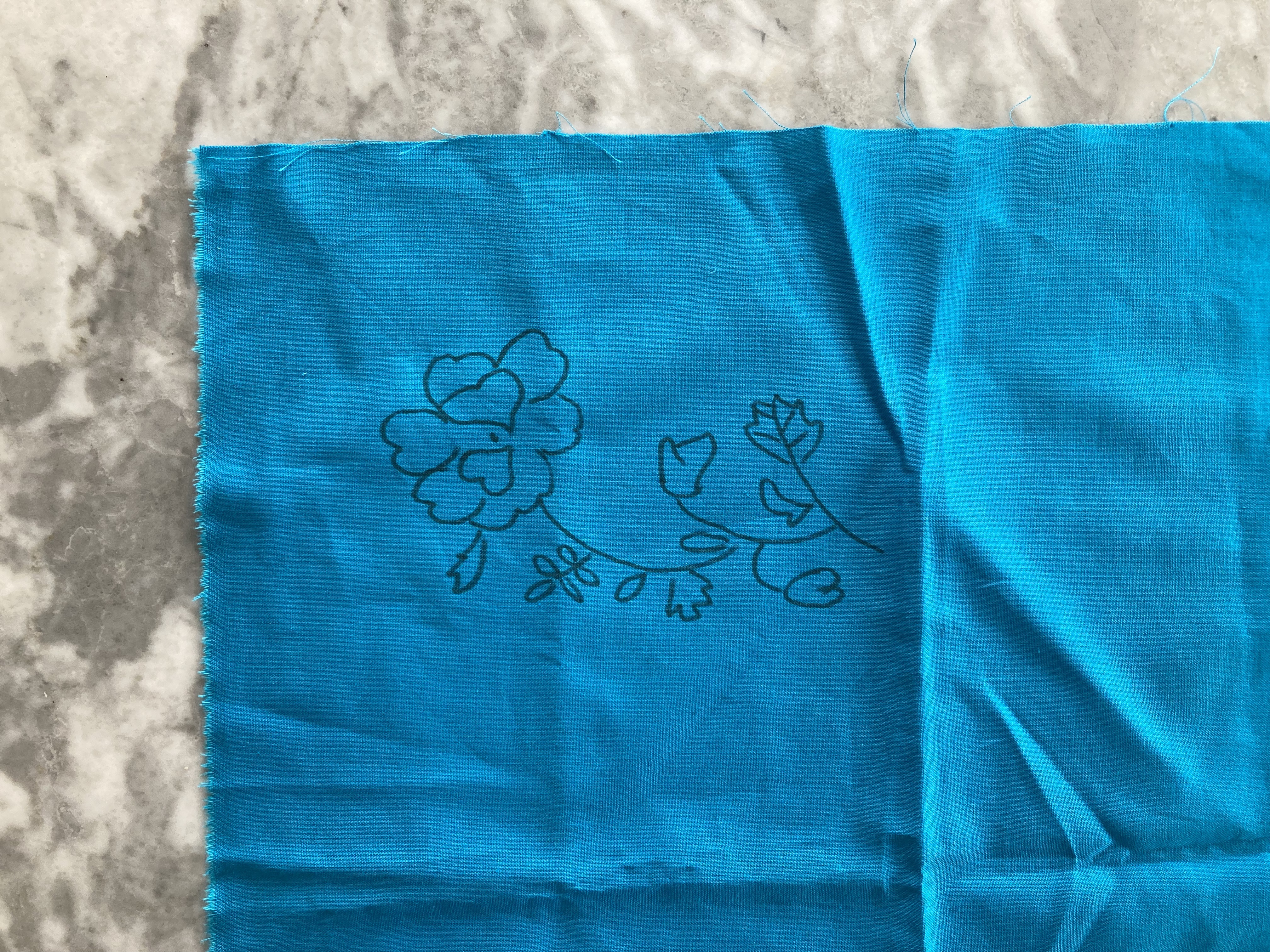
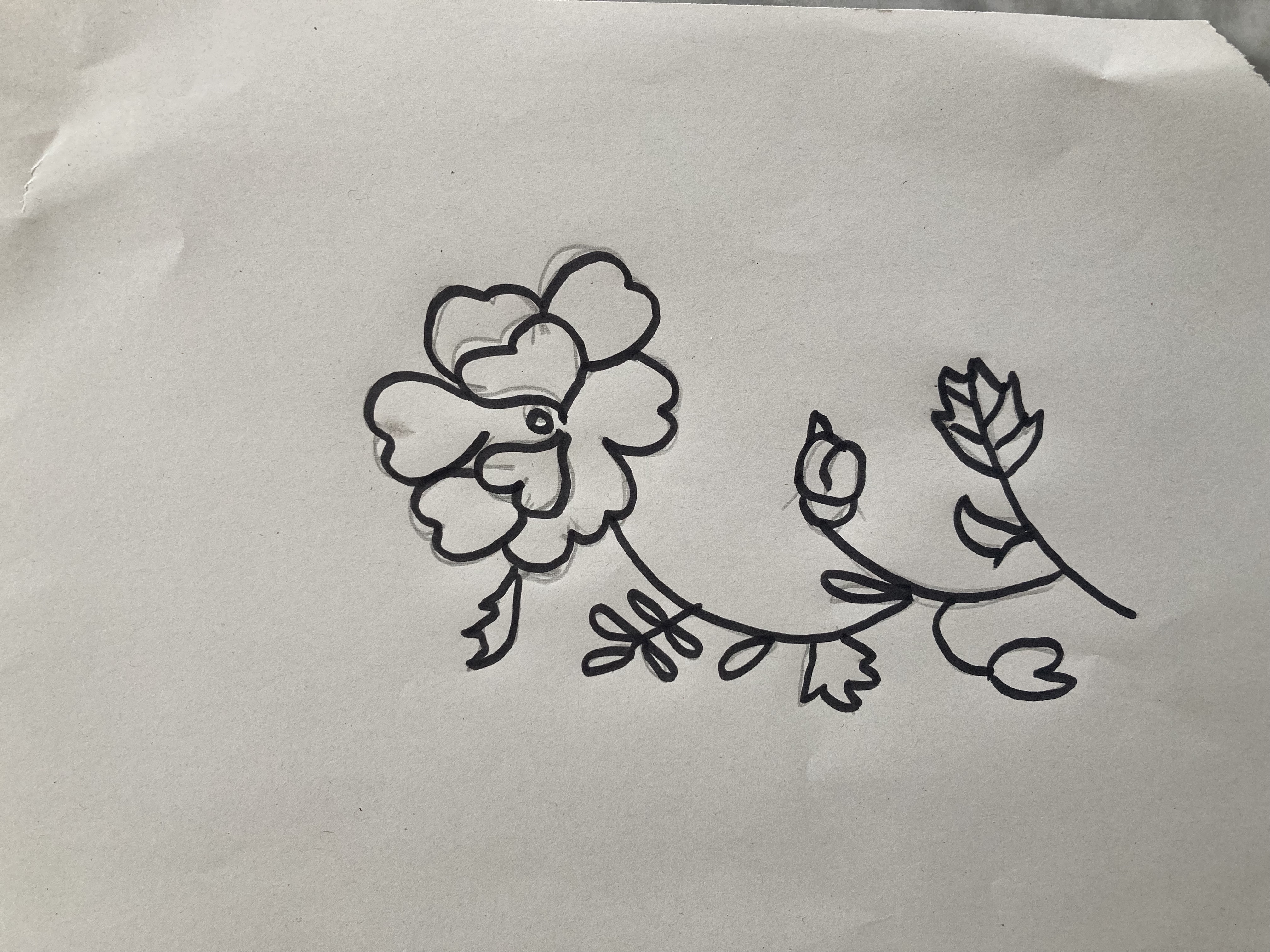
Of course, I don’t have the embroidery transfer from the magazine — readers had to send away for them back in the day. The flower is quite simple, however, and I was able to just copy it onto a piece of paper freehand. I had some nice bright turquoise linen left over from this cushion, some dove-grey viscose for lining left over from whatever, and embroidery floss in several shades of orange left over from this cushion as well as brown, so all I had to buy was a skein of green floss and a zipper. I transferred the pattern to the fabric by taping it up on the window and tracing with a marker pen and was good to go.
The embroidery is done entirely in satin, stem and blanket stitches — really fast and easy. I finished it in one afternoon, washed it out by hand under the tap to get rid of the marker lines and let it dry overnight. The next day, I made it up into a bag and voilà, finished.
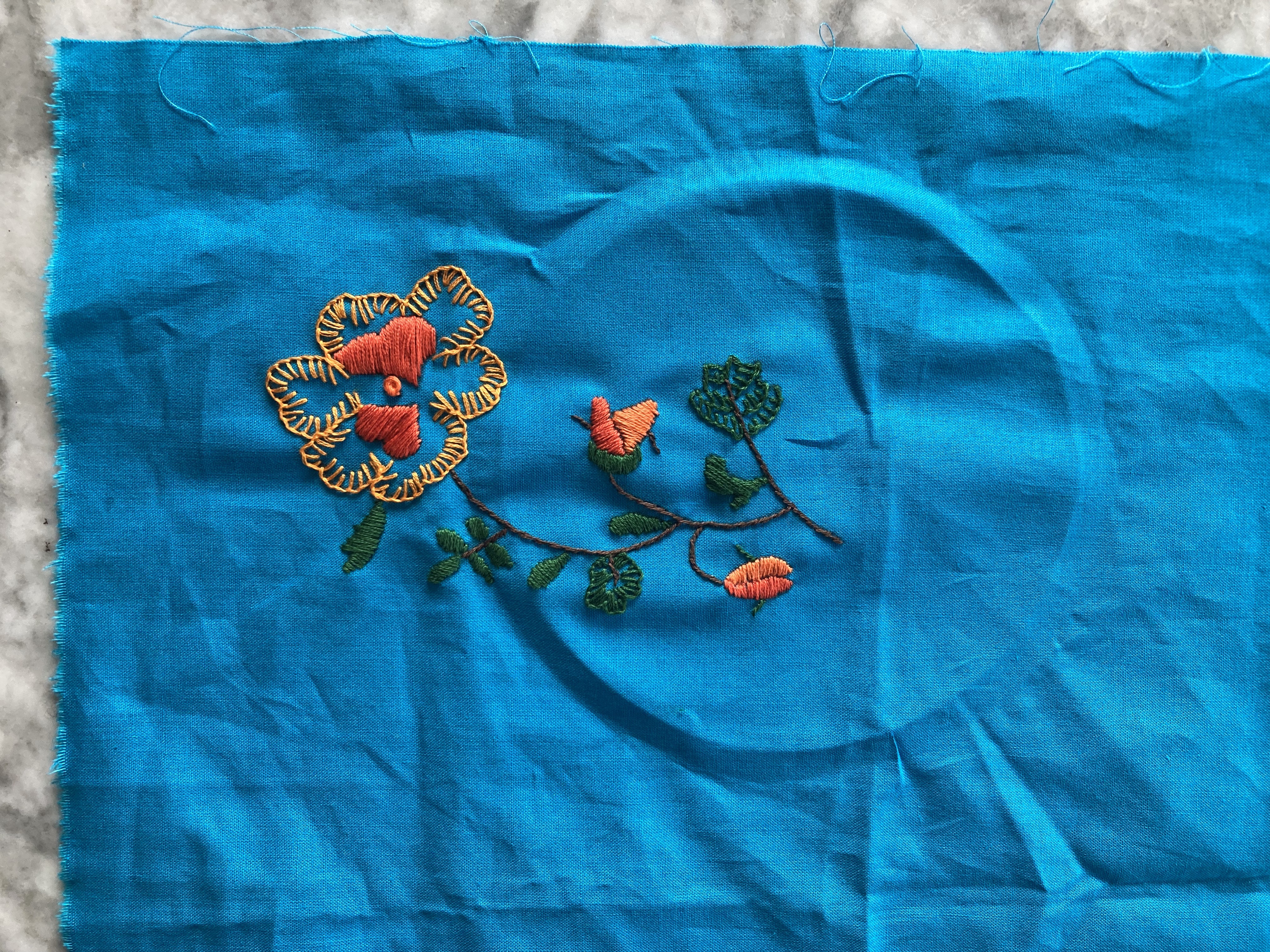
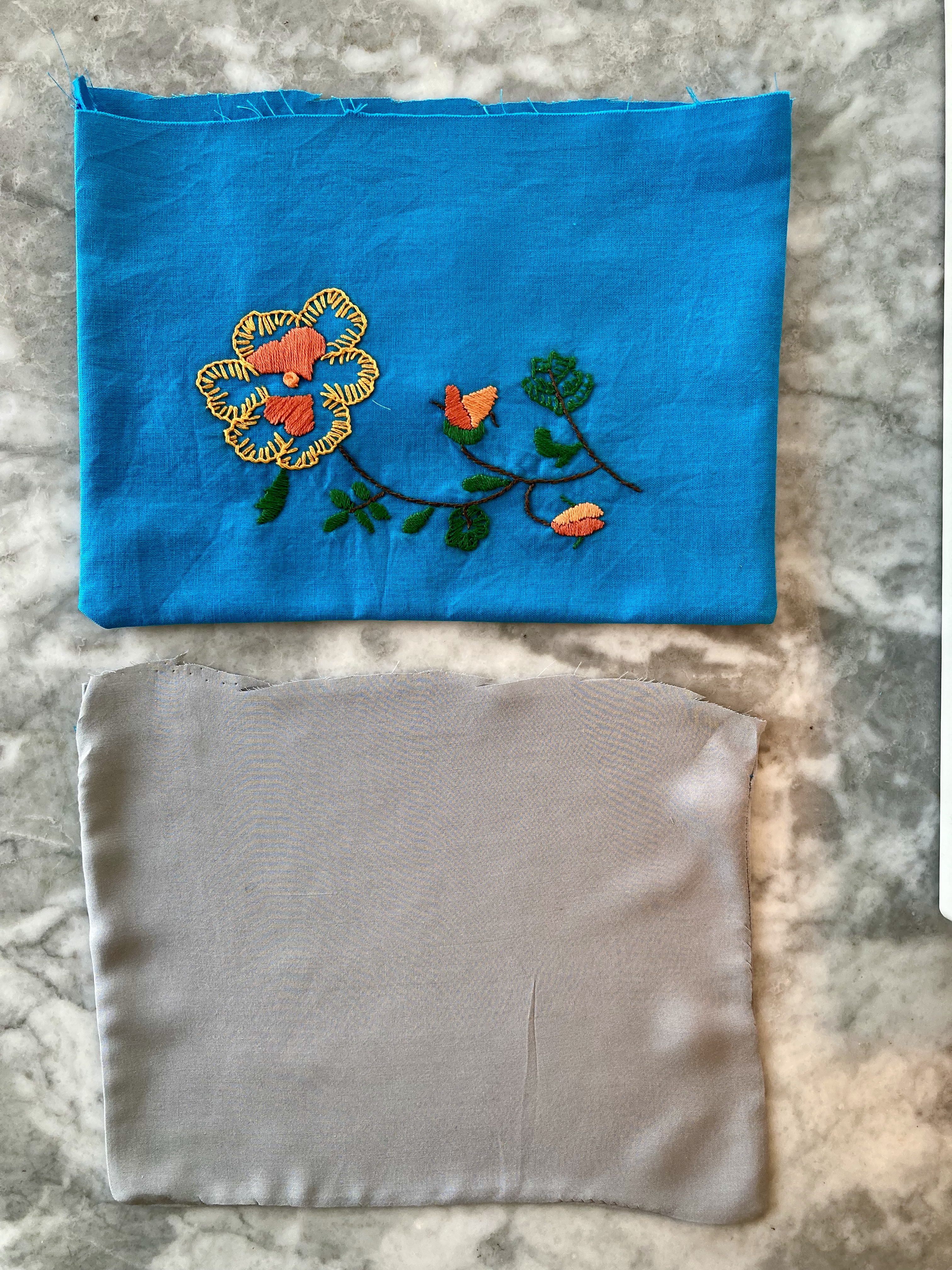
It measures about 24×17 cm or 9.5×6 inches, a practical size, and the design works well. I could have chosen a more vibrant green for the leaves, but the subtlety of the leaves and stems makes the bright orange flower pop even more, and I think the smaller orange buds balance it out nicely. I am also very proud of my zipper-setting skills. All in all, I think this was a great example of how vintage designs can be adapted to fit modern needs and make homeware items that are both useful and attractive.
March 1965: Overview

It’s springtime! And the March 1965 issue of Stitchcraft is celebrating it with a bright, cheerful issue full of fun designs, great photography and very mid-60s hairdos. Our wonderful couple in the cover photo has just returned from the farmers’ and or flea market, proud of their purchases and sporting two of this season’s trends: textured stitch patterns and crochet.

“The interest in Crochet continues” writes “editress” Patience Horne in the first-page notes, reminding readers that crochet is not nearly as difficult as some readers think, as it is “all founded on the simple chain stitch” and one “only requires a little practice and patience” to make a simple item. The cover dress is basically unshaped, and made in a relatively simple cluster stitch with a dashing fringed hem and neckline. Beginning crocheters can start with an easy bathroom mat in rug wool, or a crocheted chicken toy for a toddler.

Men’s fashions, like the cardigan on the cover, have a loose, casual fit and interesting stitch patterns, like the traveling stitches on the cover cardigan or the easy diamond-pattern stitch on the V-neck pullover. The traveling stitches are basically very narrow cables, except the cables never cross, and the diamond pattern is made entirely of knit and purl stitches. Colours are either warm and bold, like the red cardigan, or 1960s natural, like the “Golden Beige” pullover, and buttons are big and round.

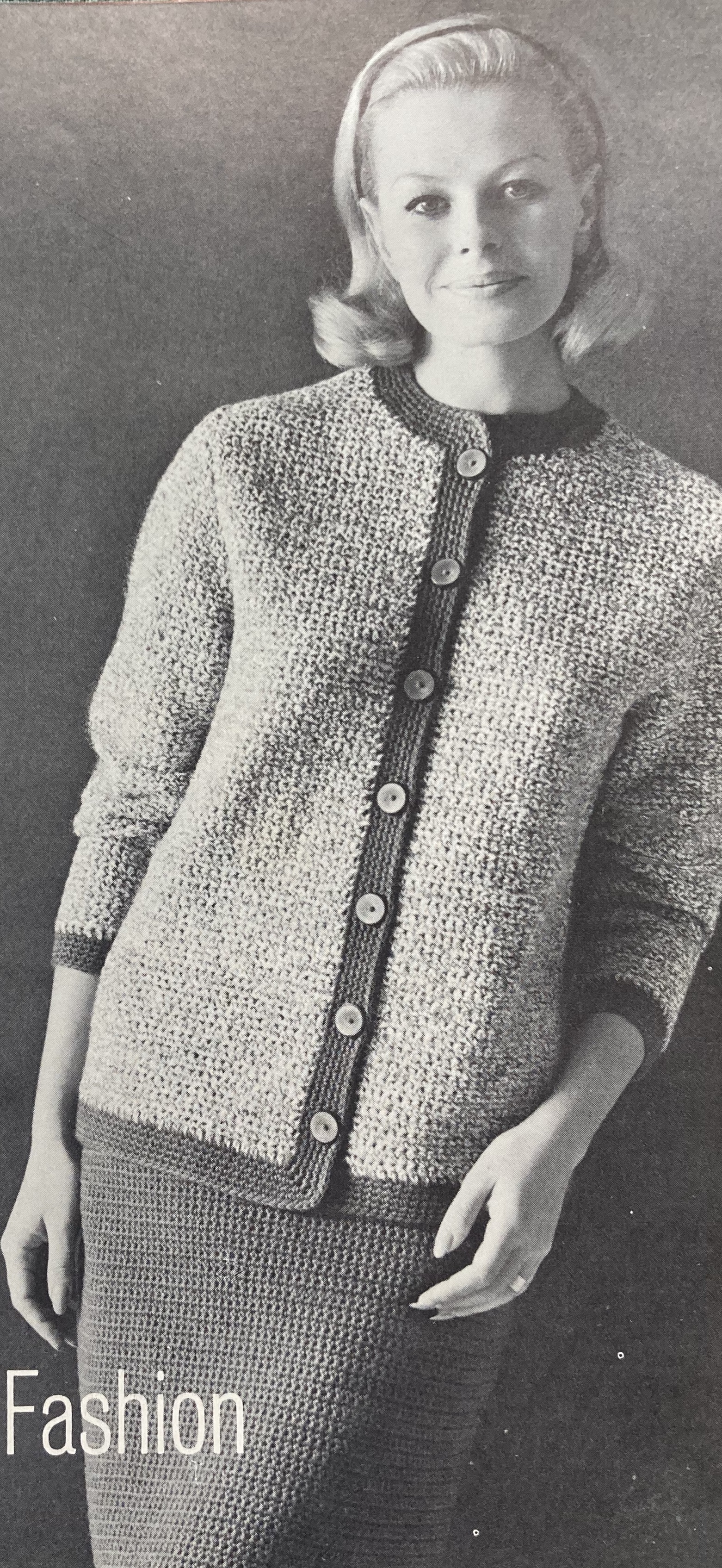
The knitted women’s garments show a similar interest in flat, textured stitches, warm or neutral colours and bold buttons and trim. The skirt suit on the inside front cover integrates all three trends. There’s a similarly patterned, buttoned and collared beige-and-orange cardigan in DK weight Brilliante wool/nylon mix, a red belted pullover with a polo (turtle) neck and a more subtle skirt suit with choice of pullover or cardigan and pleated skirt, made in finder Bouclet wool. In all the photos, the warm colours of the outfit — green, red, or gold-beige — are intensified by the warm-toned photo background, and the bolder designs feature models with impressive bouffant hairdos. All of the garments are long, loose and unshaped, with the tops reaching to the hips and a skirt length of 25 to 26 inches.

There are some great designs for school-age children in this issue, with a “continental” cardigan-blazer in “Riviera Blue” for girls and a unisex jersey with a stranded yoke design. Here too, we see the large collar and bold, round buttons on the cardigan, and warm colour palette and textured stitch pattern on the pullover. For babies, there’s a pram blanket with (purchased separately, not home-made) bunny motifs.

The homeware items are mostly practical and versatile. In addition to the crocheted bathmat, there’s a stitched rug/mat “for the bedroom” in an elegant arrowhead stitch and some cushion and/or stool-top designs in counted cross-stitch. A floral embroidery pattern can be adapted to make a door panel, frame a cushion, or decorate the edge of a pillowcase.

I wrote “mostly” practical items, but there is one unusual exception: these “Brass Rubbings to work with your needle.” They are two fairly large (7×16 inches) wall panels with icons of medieval people in the style of “brass rubbings“, which are made by laying heavy paper over one of those brass plaques often seen in medieval churches . The designs were inspired by “the interest in Church embroidery” per the description of the project, but I don’t know if the figures are meant to be specific, recognisable historical people or just representative of a typical medieval brass burial plaque. (Do any of you recognise them? It’s interesting that both of them are portrayed with small dogs at their feet, which seems like it should be a clue.)

Last but not least, Easter is coming soon (well, not that soon — Easter 1965 was on April 19th, which is actually fairly late) and it’s time to get started on those Easter gifts and novelties! Continuing the chicken (and egg) theme from the crocheted toddlers’ toy, there’s a stuffed felt “egg nest” in the form of a chicken with tiny accompanying chicks, and a gloriously huge knitted “Humpty Dumpty”, guaranteed not to break into pieces should he fall off a wall, and featured in colour in the inside back cover photo along with the child’s stranded-yoke pullover.

As much as I love this issue for its general aesthetic and fun, happy vibe, there isn’t a project in it that really grabs me. The mid-60s fashion for long, loose, unshaped upper-body garments is a terrible look for me and the homewares are generally not spectacular. I would love to make either of the children’s garments and am asking around if any friends with kids that age would like me to knit one, but I haven’t had any takers yet. If any of you are interested in a custom order, let me know! Otherwise, I’ll probably embroider the flower design onto something practical, like a little bag or a tablet/iPad cosy.

February 1965: Overview

Whew! January is over. I don’t know about all of you, but it’s my least favourite month. The holidays are a dim memory, it’s still cold and dark and damp in my northern climate, and spring feels far away.

Stitchcraft seems to know how I feel, since this month’s issue features outdoor photos in pretty, colourful outfits and interesting settings “to get away from the last of that tired January feeling.” There are lots of warm indoor-outdoor garments, like the boxy jacket on the cover with cable details on the pockets and collar. It matches a short-sleeved cable jumper to make a casual twin-set or to be worn separately, and both are showcased in the centrefold photo montage with another “country cardigan” in a twisted-stitch wheat-ear pattern. The cover cardigan and cabled jumper are both made in warm, normal Patons DK, the country cardigan in slightly thicker Flair. All have the typical mid-60s shape: long, loose-fitting and unshaped, and are made in natural, outdoorsy colours of off-white, gold and caramel brown.

The other adult women’s garments include an intriguing sweater in a “crunchy bramble knit … to look like crochet.” The bramble pattern is made by making a k1, yo, k1 all into the same stitch, then purling these 3 stitches together on the next row. It’s presumably very warm, uses a lot of wool and while it doesn’t exactly look like crochet, it has the same sort of nubbly texture you could get with crochet stitches. There’s no colour photo, but in white, “Golden Willow” and “Oakapple”, it fits nicely into the outdoor-casual colour scheme. For something a little less casual and a little more colourful, there’s a tweedy bright-purple cardigan suit in heavy-weight “Glenora”and two more elegant, fine-knit designs: a smooth, collared turquoise jumper with front-panel detail in Cameo Crepe and a bouclet suit with a dramatic blue-and-white colour-block design.

The men’s garments are casual and outdoorsy in form, but colourful and creative in design: a casual (though he’s probably secretly wearing a tie under it…) boat-neck pullover in a two-colour pattern made by knitting the RS rows in “Cool Lime” green and working the WS rows as k1, p1 in “Tahiti” brown. Even more impressive is the pullover in a remarkable “woven texture from Vienna”, featured in colour in the back cover. This “new Continental stitch” is made by combining normal two-colour stranded knitting with “long” stitches (wool wrapped three times around the needle) which are then slipped for a few rows before being knitted back in. It’s ingenious and produces a very striking effect without being very difficult to knit. Here too, natural colours of brown, beige and green are trending.

My photos aren’t crooked, by the way. It seems to be a trend to have the models stand at an angle, or have the models stand straight and take the photo at an angle, to get that dynamic diagonal effect.

And speaking of dynamic, check out this fantastic “play sweater for the space age”! It’s got a “cheerful mechanical man” motif on the front and is matched with a “jolly robot” hat (same motif, but with bobbles on top that make the robot look like a cheerleader.) This is as 1965 as it gets! The other children’s fashions are practical and easy: a back-buttoning “pinafore” and matching jumper for little girls (could she please wear more clothing on her lower body, though?) and a broken-rib button-up for school-age tots made with “Brilliante” synthetic-blend yarn.

The embroidery and housewares department is less exciting, with a few standard items in different craft categories. There’s a cross-stitch “ABC” rug for the children’s playroom, an apron and traycloth set in huckaback embroidery and easy counted- and cross-stitch items for the table.The inside back cover has a nice colour photo of a cross-stitch picture panel of the church spire in Chester.

There are so many fantastic designs in this issue, and yet I don’t have a practical use for any of them. Big, casual sweaters with no shaping are not really my style (even in that fabulous Viennese stitch) and I can’t think of any children I know of the right age and size who would want a space-age, robot-motif sweater (more’s the pity). If anyone wants to commission me to make one for their kid (to fit 28/30/32 inch chest), send me an email! Otherwise, I’ll use this month to finish a long-term WIP from a slightly later issue of Stitchcraft.

January 1965: Norwegian Cap and Mitts

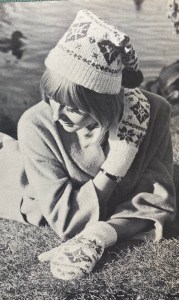
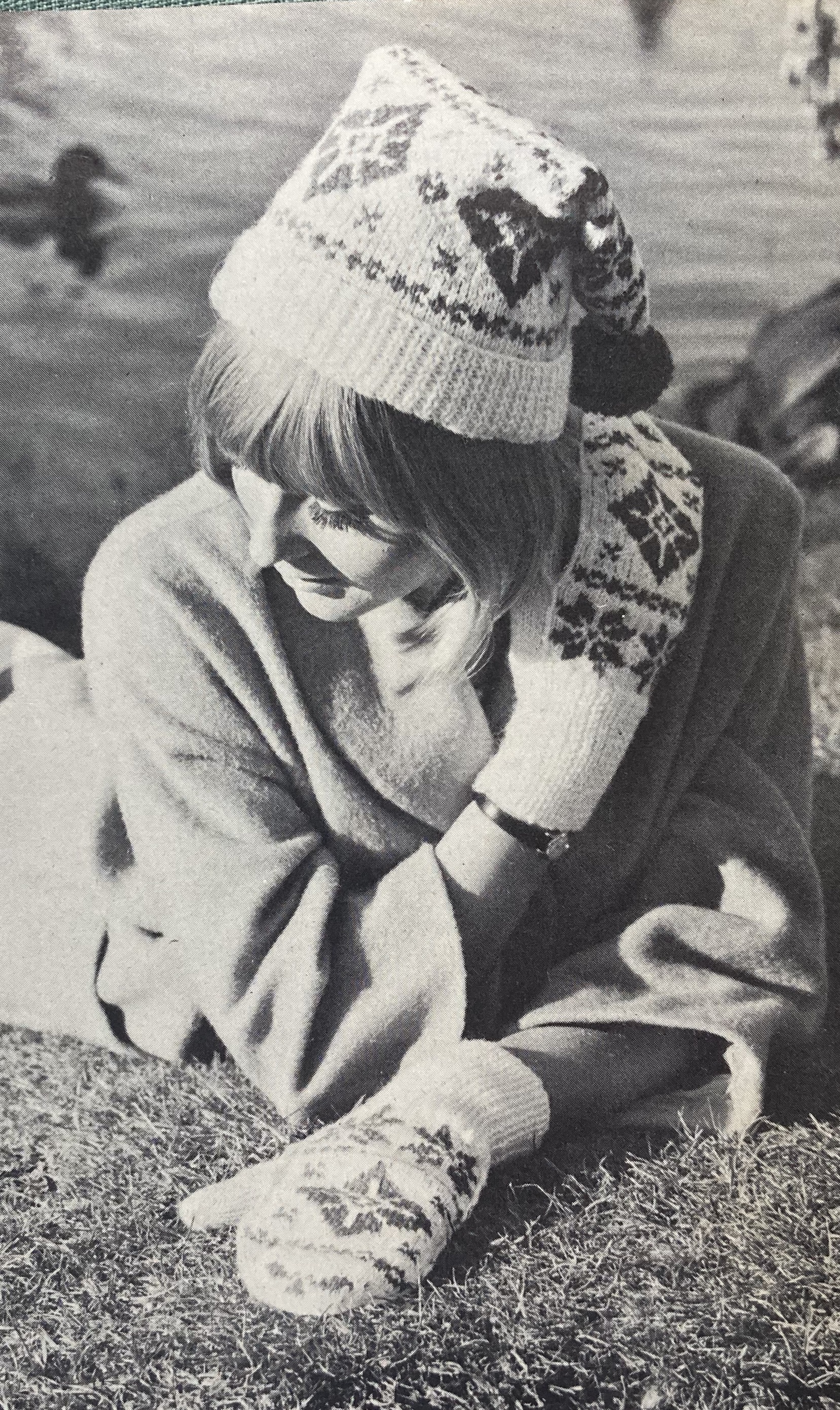
Photo of hat and mitten set worn by model, Stitchcraft magazine, January 1965 issue.

I had long admired this cap and mitten set and was very happy to arrive at this issue in order to knit it.

… That is, until I actually took a better look at the pattern and made it! The snowflake pattern and folded stocking-cap design looks great in the photo, but the pretty setting and pose detract from some of the design flaws, which became glaringly apparent once I started work on it.

But first things first: It’s written for Patons DK yarn, 100% wool, in white with “Lipstick Red” pattern. I have a good stash of leftover DK wool from other projects and decided on a dark blue background (Schachenmayr Regia 6-ply sock wool) with the pattern in white (Wolle Rödel Soft Merino) and blue-grey (Lana Grossa Cool Wool Big Mélange) to really bring out the snowflakes. The written pattern gives no row gauge and assumes a tension of 6.5 stitches to the inch over the stranded pattern on No. 10 (3.25 mm) needles for the mittens, and 6 stitches to the inch on No. 8 (4 mm) needles for the hat.

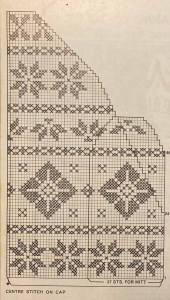
6 and especially 6.5 stitches to the inch is quite tight for DK wool, but I did my best on 3.5 needles (I don’t have 3.25 needles — the pattern is written for old UK sizes) and started with the hat. I noticed it was meant to be knitted flat and seamed up the back, but no worries, I could just make it in the round. There was even a chart (not a given with vintage patterns), so everything seemed fine.

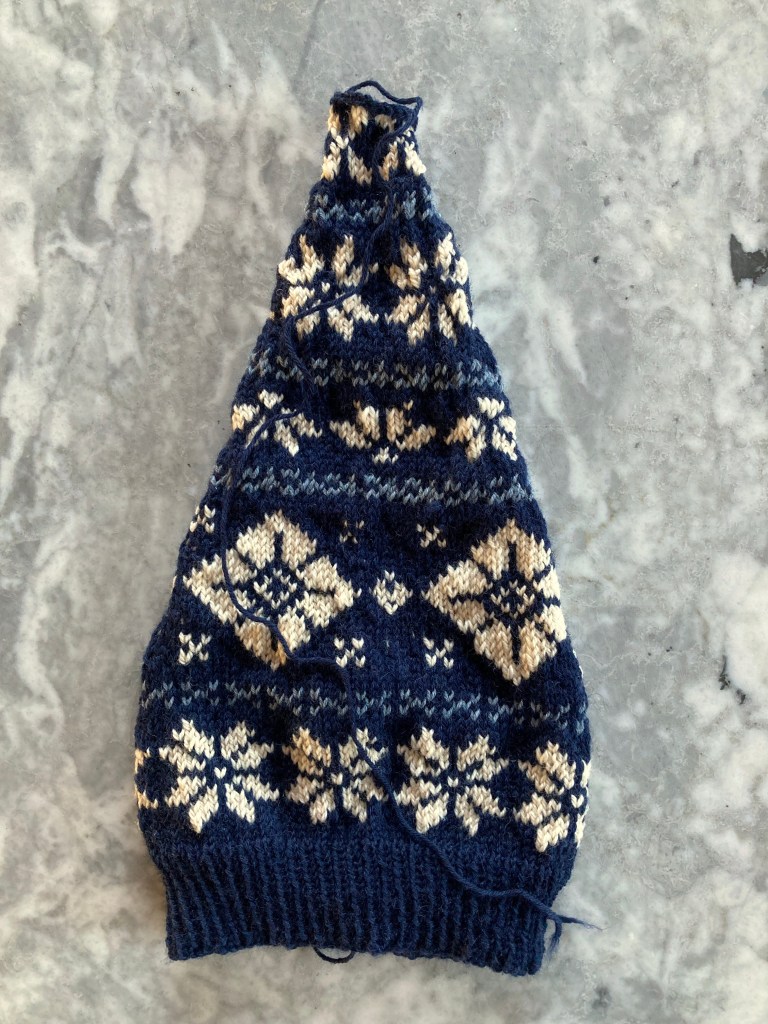
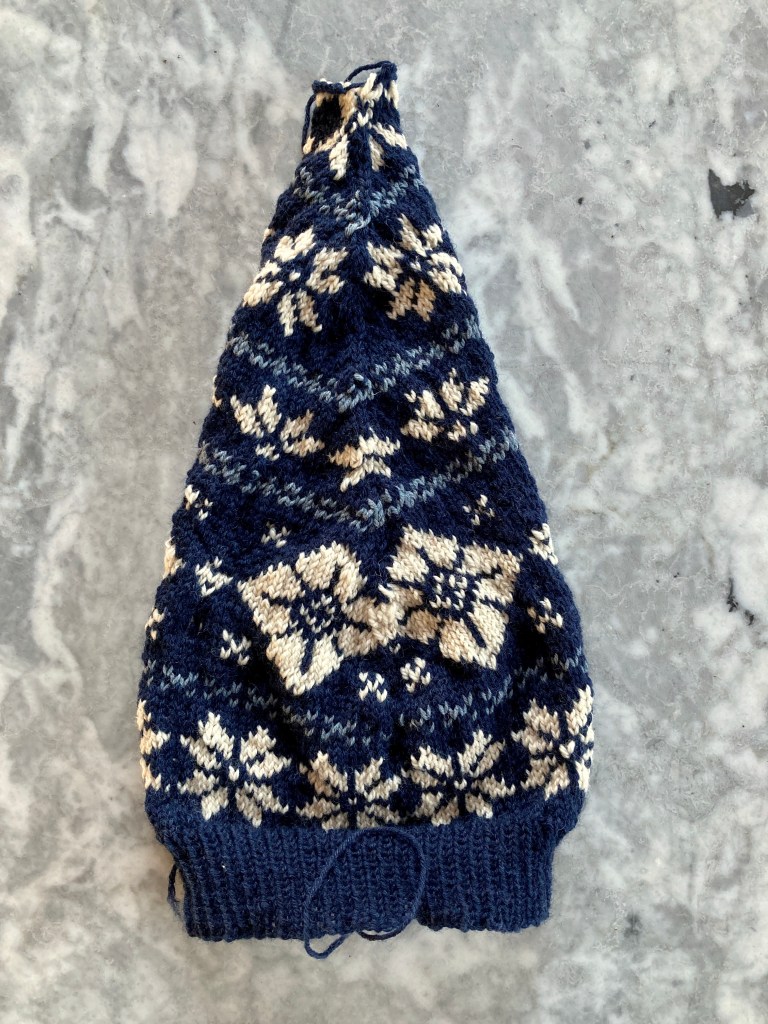
Well — after the first snowflake, it was clear that this hat would not fit any adult head, even that of the friend it was intended for, whose head is quite small. Knitting stranded DK that tightly just made it impossible to stretch, as well. Looking back at the photo, I noticed that the finished hat is just sort of perched on the of the model’s head, not pulled down over her forehead like one would normally wear a hat…! Yeah, 6 stitches to the inch is too tight. So I started over with 4 mm needles for the pattern and 3.5 mm for the ribbing.

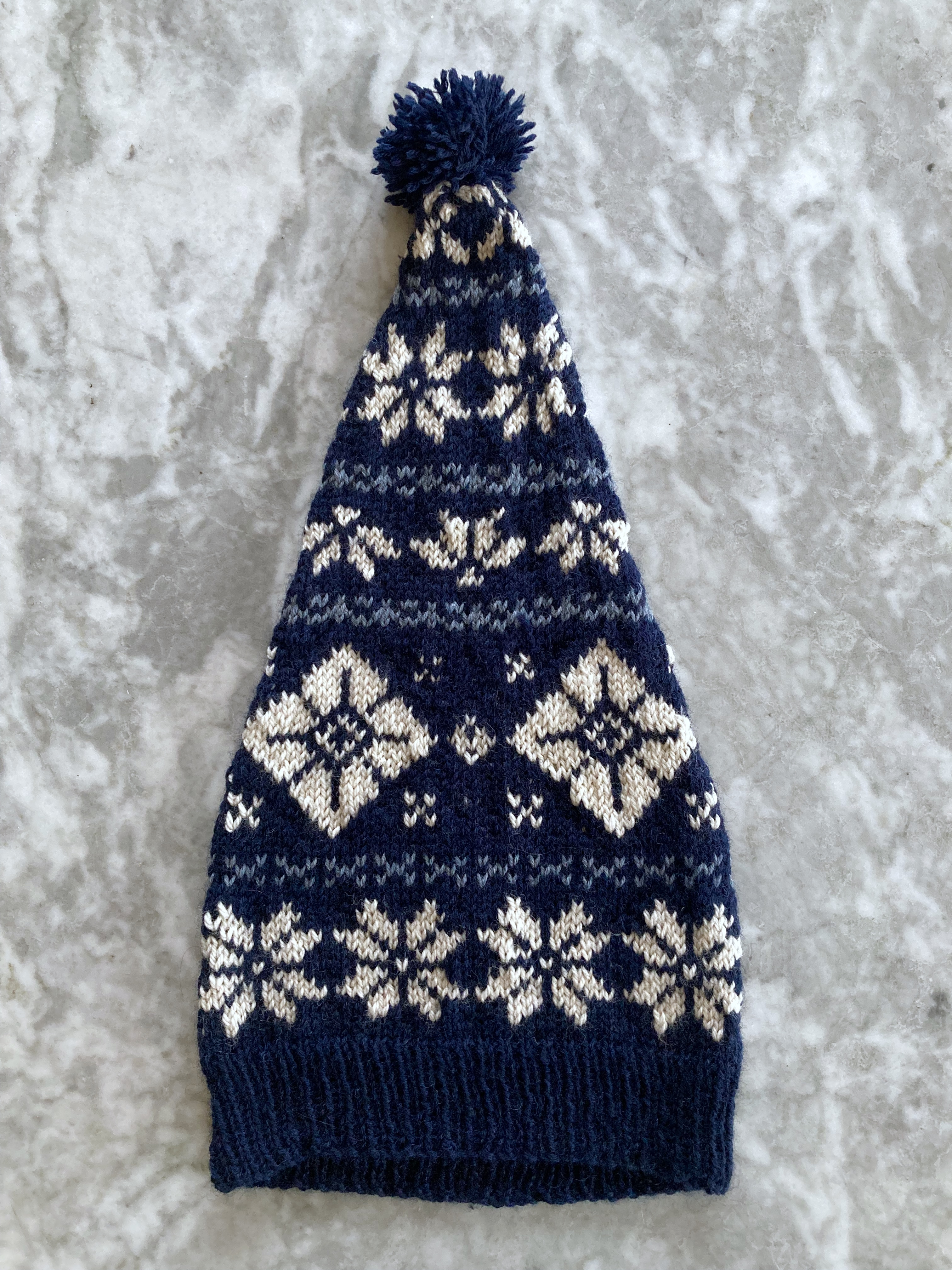
That solved the first problem, but as soon as the large diamond pattern started, I noticed how badly designed the colourwork pattern was. There were huge gaps between colour changes, necessitating weaving-in the wool constantly, and even then, the white wool showed in the gaps. I can’t imagine how this would have worked with stranding bright red behind white! Even worse, the pattern doesn’t match up in any way at the “seam” / round change. The large diamonds just get swallowed into each other like in of all those Netflix opening credits that use mirror effects. I was able to finesse it on the smaller snowflake and the repeat of the medium-size snowflake at the top of the hat, and the back “seam” does get covered by the long upper part of the hat when it fold over, but still, it looks messy.

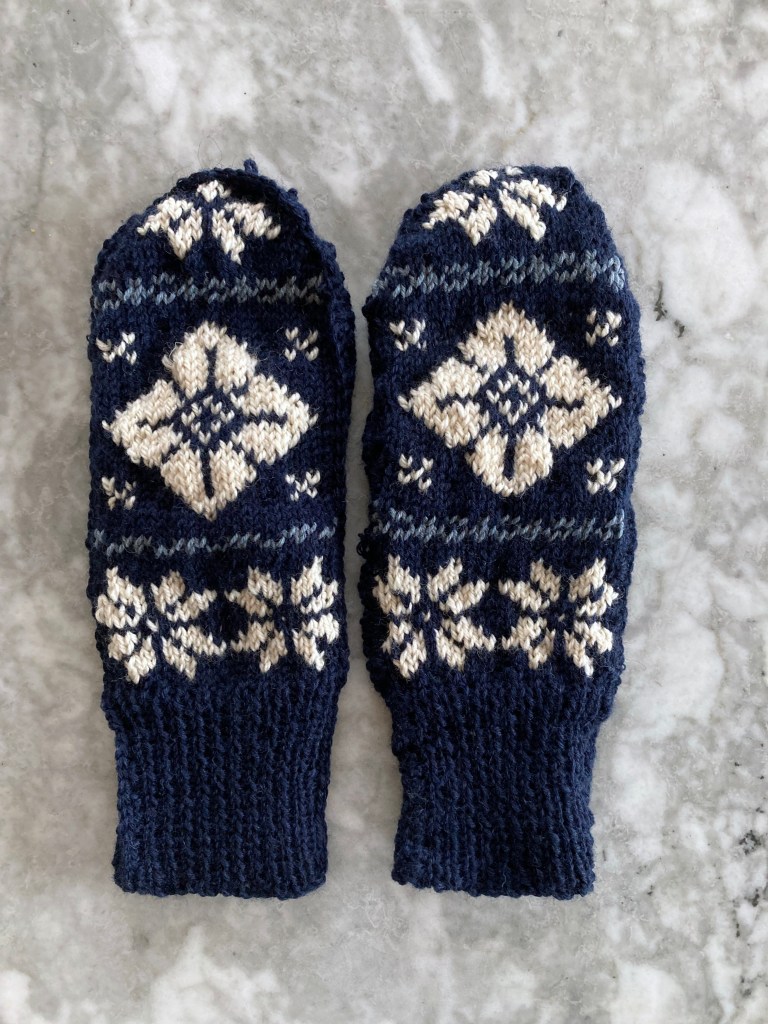
Starting on the mittens, it became obvious why the hat pattern was so badly designed: The mitten pattern is perfectly centered and balanced and looks fine. There’s no problem with patterns bleeding into each other because the decreases only happen at the top of the fingers, and no big problem with weaving in across the back, because the back-of-the-hand and palm pieces are knitted flat and separately and there is no patterning on the palm, so the pattern motifs are made in sort of stranded intarsia. It seems the designer designed a pattern for mittens and, when instructed to make a matching hat, just extended the pattern out to hat size without much though about pattern placement or correct sizing.

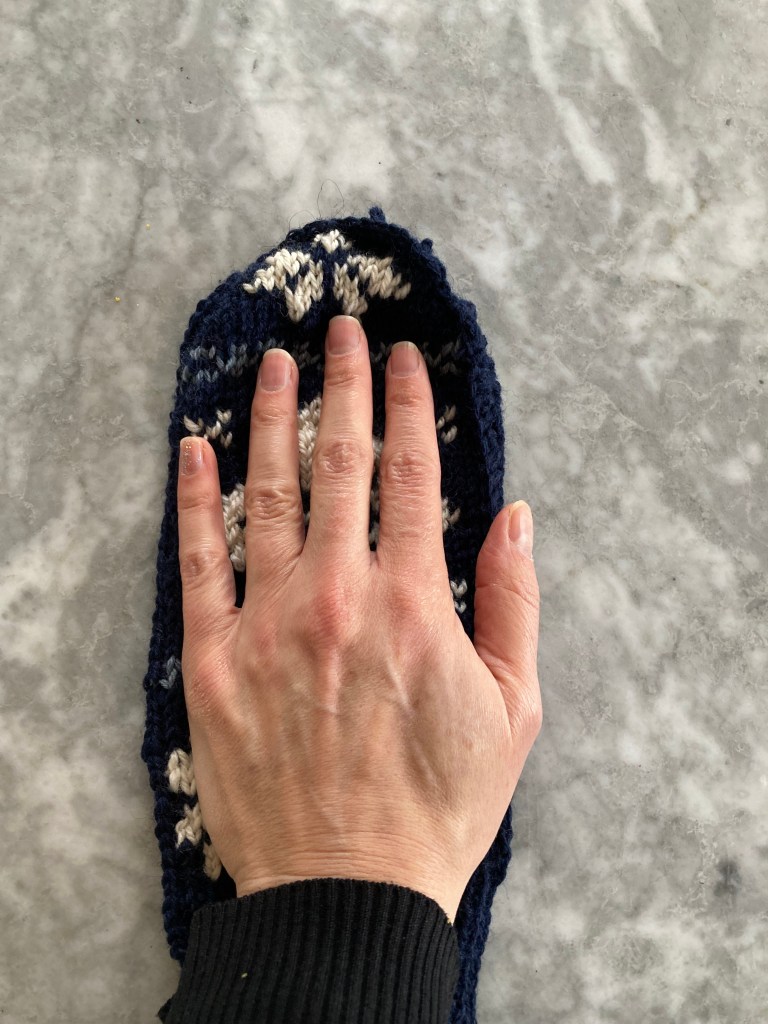
Speaking of sizing, though… The finished mittens were way too long! I have size 8 hands and really long fingers, but even they look stubby on this photo, simply because the mitten length is out of all proportion. Looking at the magazine photo again, I think they are too long for the model’s hands as well. Yes, I should have checked it as I went along, but of course I didn’t, so I only noticed the problem after all the pieces were made and seamed together. (Using a crochet seam as directed in the pattern.) I thought I could block them shorter… Erreur fatal! Blocking not only made no difference in the size, it cemented that crocheted seam so solidly that it was not possible to undo it in order to frog and re-knit the mitten tops in a better size. By the time I was finished “undoing” the first mitten seam, the whole mitten looked like it had been mangled by a dog.

I will give the hat to my friend as intended, as it turned out OK and the weaving-in blotches mostly disappeared after blocking. It does look cute, especially with a pompom on the tip. As for the mittens, I consigned them to the upcycling drawer, as I just didn’t want to deal with them any more.

This project was no fun to knit, but I will call it a learning experience and move on. And I do think my friend will like the hat, at least.

January 1965: Overview

Happy New Year, everyone! It’s 2023 in the present day and 1965 here at the Stitchcraft Sixties.

We are now solidly in the mid-60s fashion era of miniskirts, Twiggy and the “Space Age” look, but Stitchcraft was a conservative magazine, so hemlines are still at least knee length and the “country casual” look prevails. To be fair, it’s also January, so the focus is on practical, warm garments for both outdoors and in (good central heating was still not available in many British homes) and homeware projects to keep hands busy during the long, dark winter evenings.

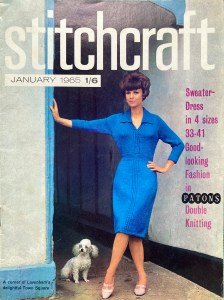
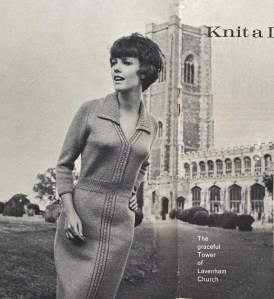
The January 1965 issue was photographed in Lavenham, a medieval town noted for its timber-frame houses and its connection to the wool industry in the 16th century — a fitting setting for knitting magazine photos! Our model poses for the cover in “A corner of Lavenham’s delightful town square” whose entryway arch perfectly matches her bright blue sweater-dress (I don’t know if the poodle is hers or just happened to stop by for the photo) and for the inside photo in front of the historic St. Peter and St. Paul Church, whose construction was financed primarily by merchants in the wool and cloth business.

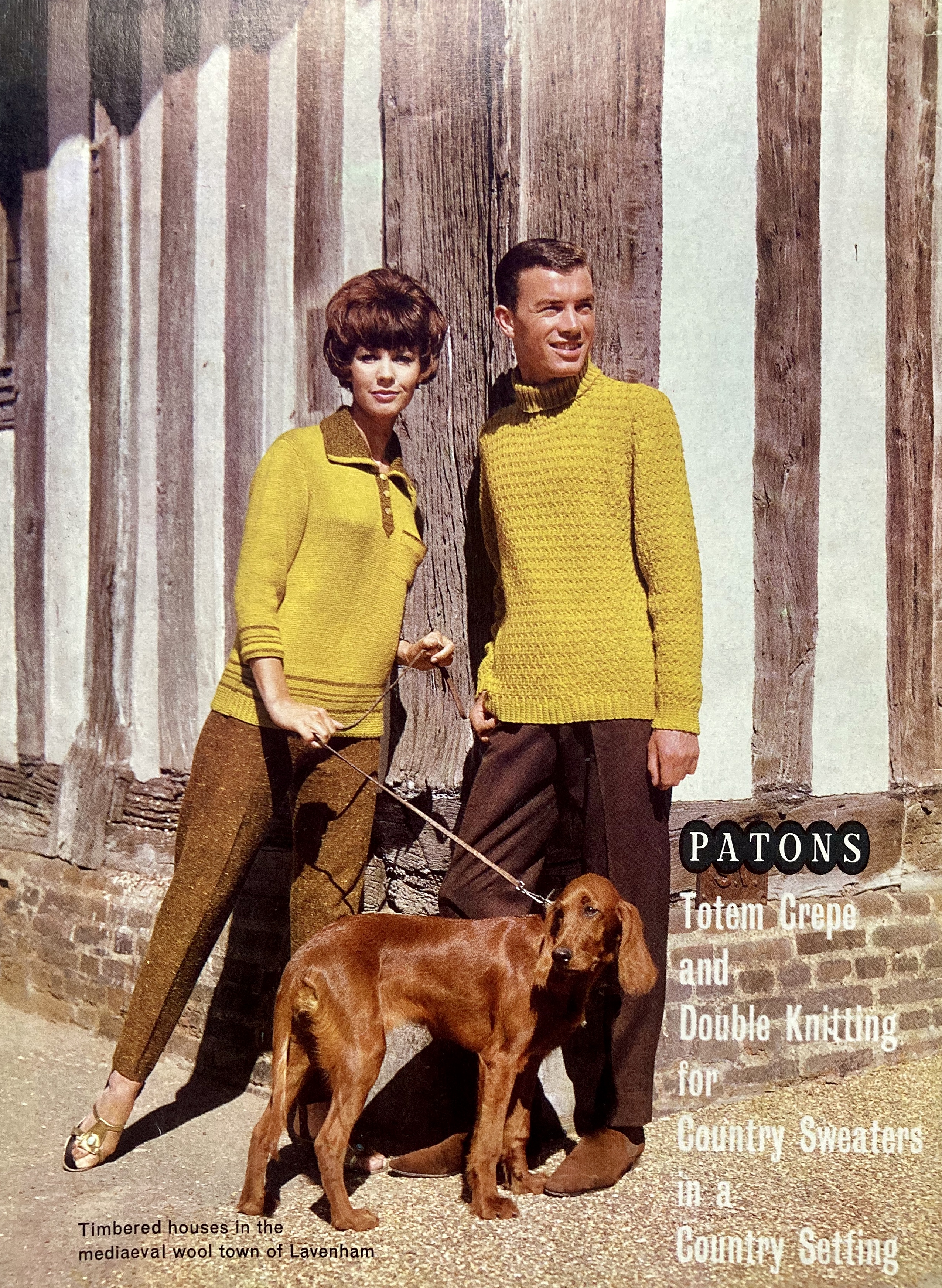
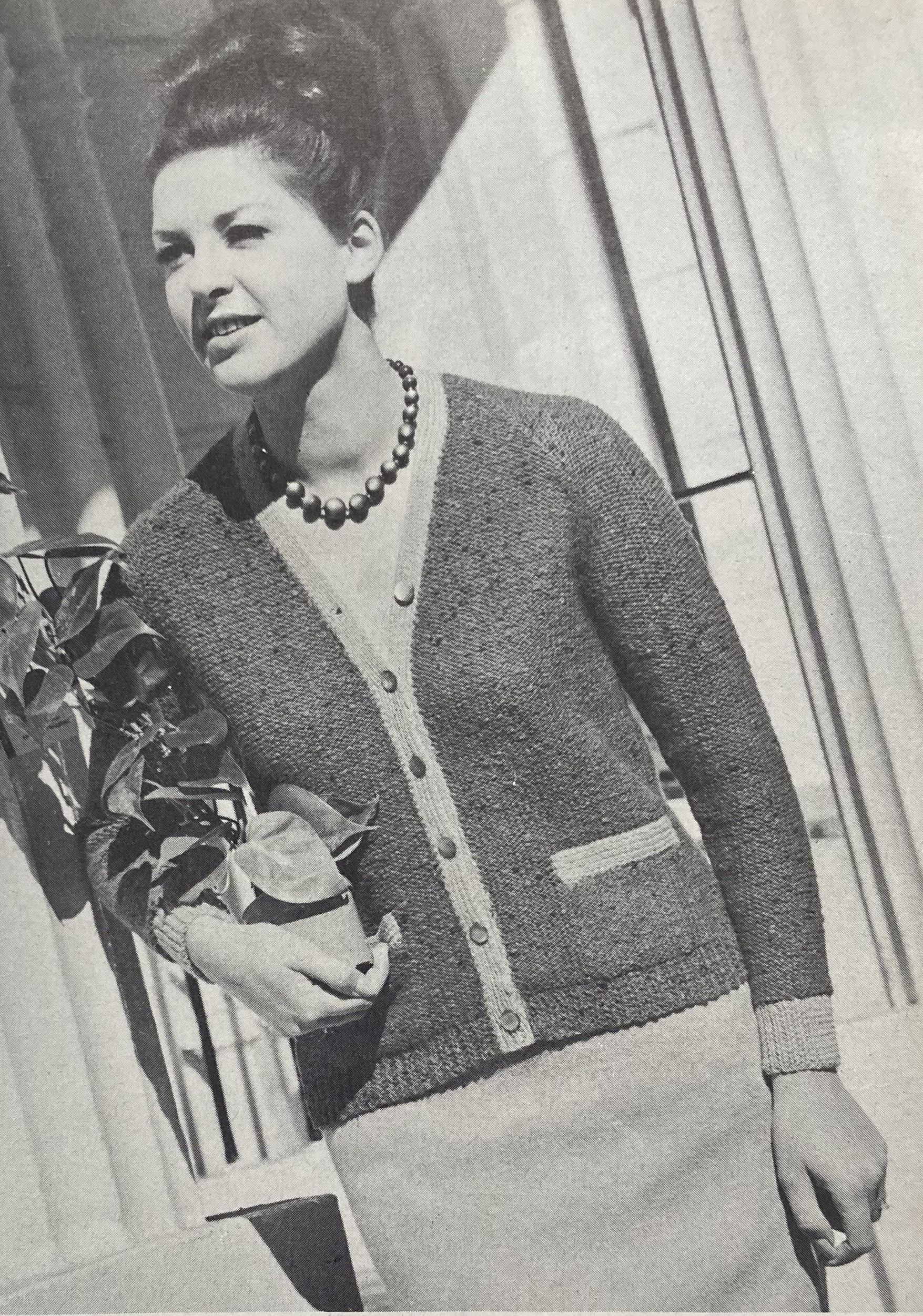
Other warm “sweater” garments for adults include a shirt-style pullover for women and a smocked-cable pullover for men in shades of gold and brown, a tweed cardigan in larger sizes (up to 43 inch bust), a crocheted skirt suit, and a “senior pullover” for “Father’s Classic Look”. All of them are in DK-weight or heavier wool. With the exception of the cover dress and the larger-sizes cardigan, both made in bright blue, tweedy, marled colours of brown, gold, copper and olive green prevail. Photographic fashion favours strong, straight-standing poses for the “bold” look, often with the camera held at a diagonal angle.

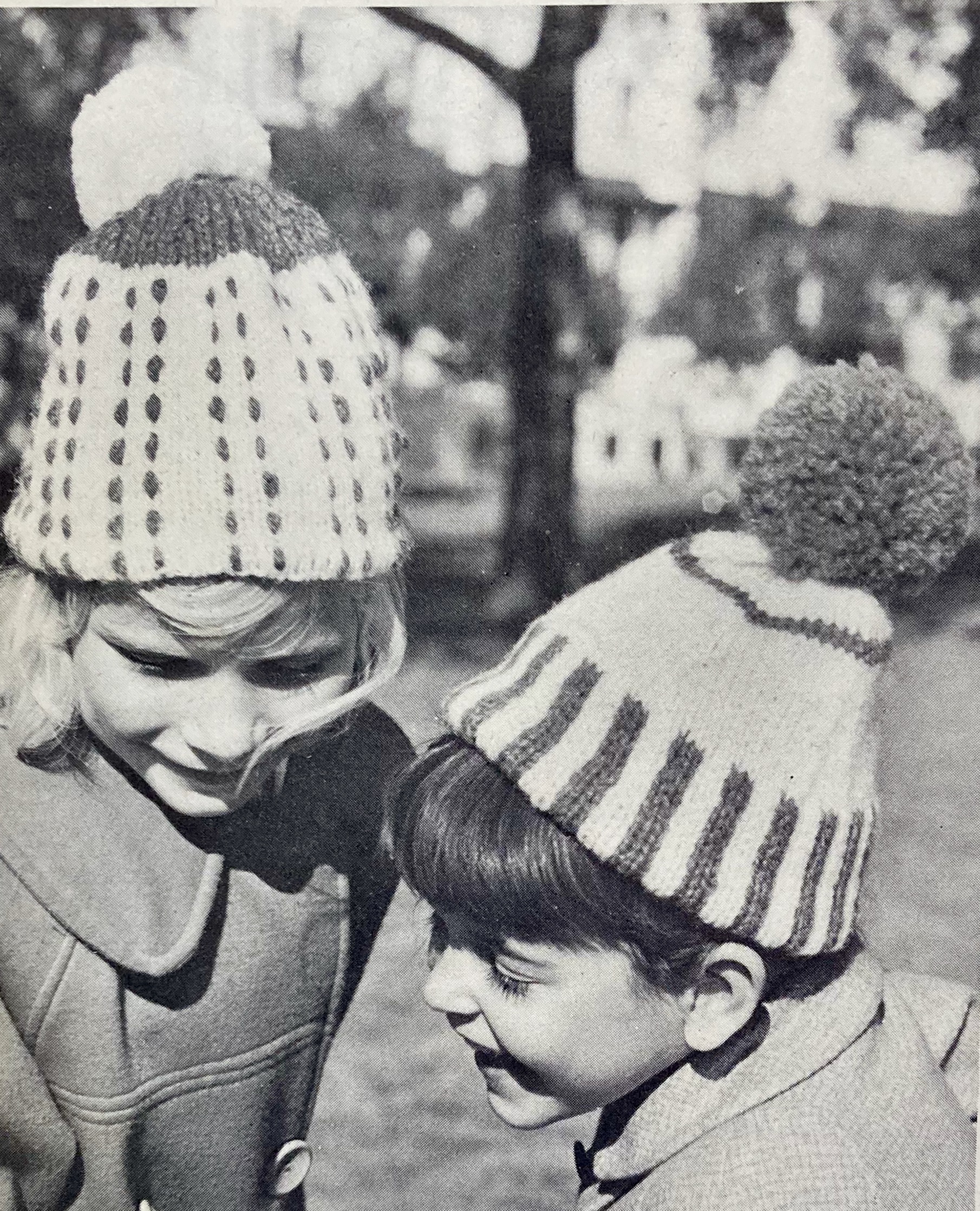
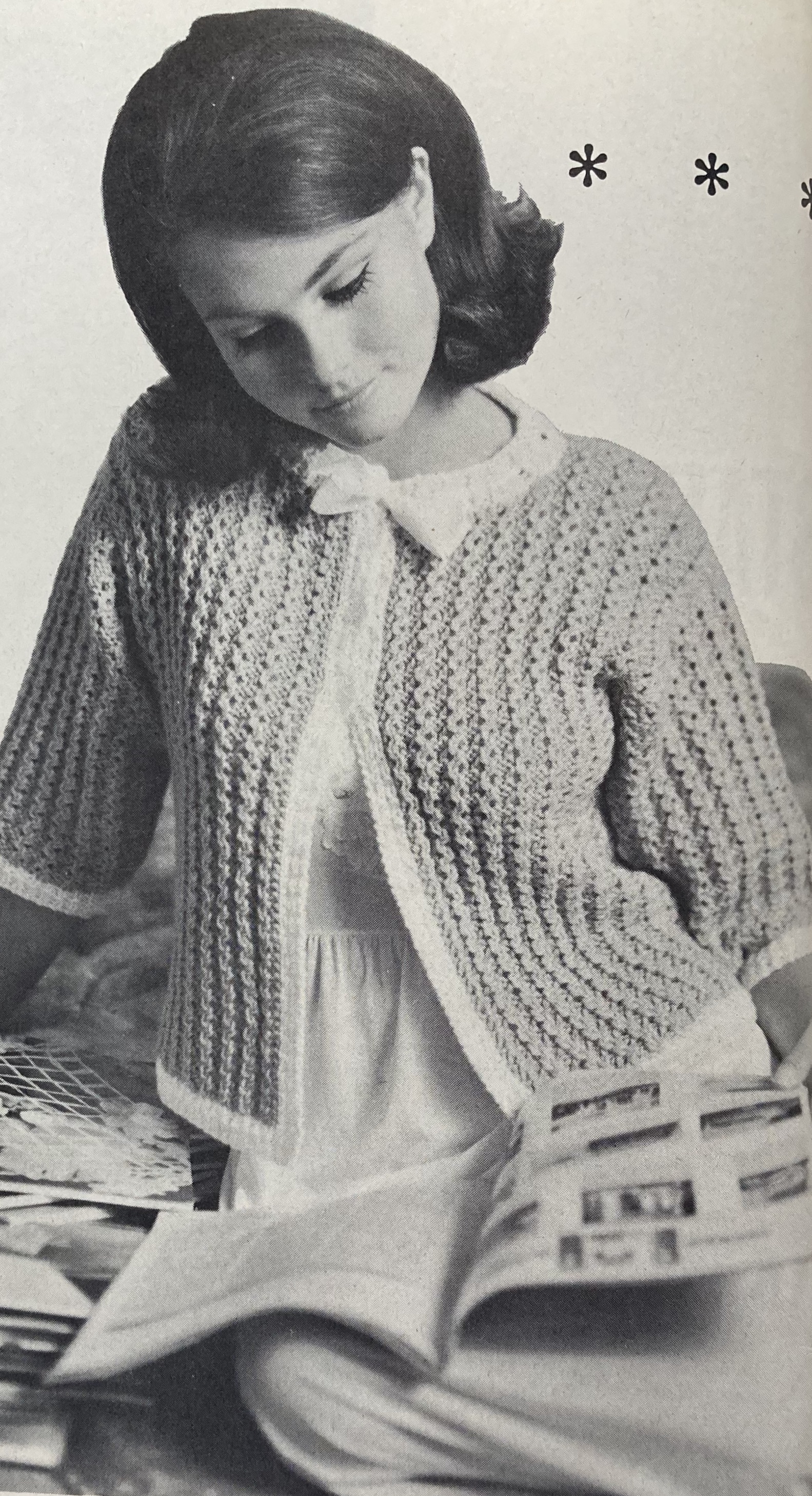
Winter means warm, quickly knit accessories as well, and this issue has some fun hats and mittens with Norwegian or blocky stripe patterns (the one with the broken lines is done by saddle-stitching embroidery on the finished cap.) No harvest golds and burnished coppers here: the caps are all made in red and white or royal blue and white for a typical wintery snowflake look. The cosy bedjacket is also blue and white and features a soft, squishy slipped-stitch lace pattern that is presumably very warm and comfortable.

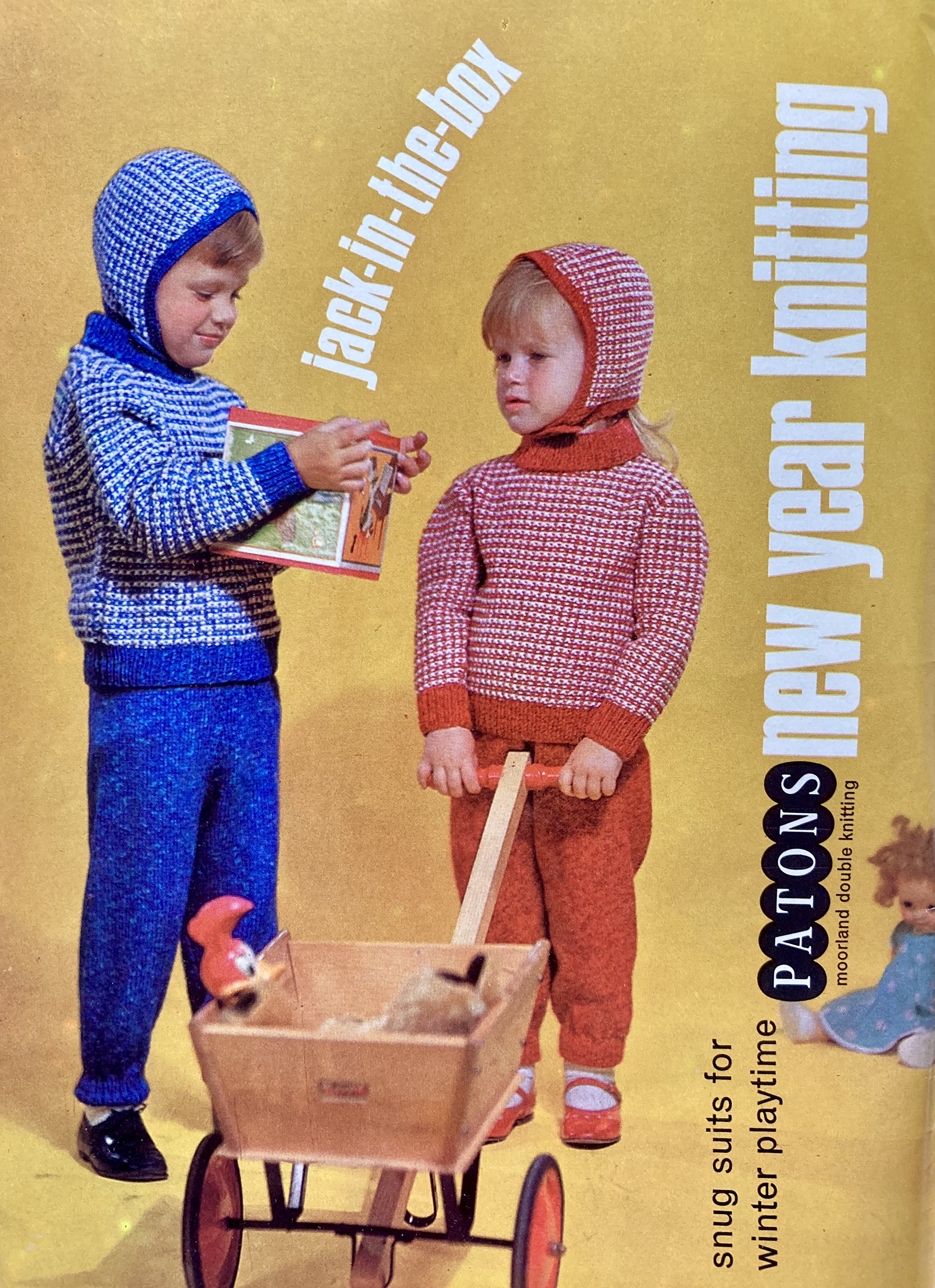
Younger children can wear a truly cosy “snug suit for winter playtime”: a set of pullover and “helmet”-style cap in a thick slipped-stitch pattern with knitted leggings. Blue and white or red and white are the colour choices here as well. There’s also a pullover for “Junior” (three sizes to fit 24-29 inch chest) in light blue and dark blue. The “crunchy” stitch pattern looks complicated, but is made entirely using normal knit and purl stitches in a combination of stocking-stitch, reverse stocking-stitch and small bobbles made by knitting, purling, knitting into the same stitch on one row and purling 3 together three rows later.

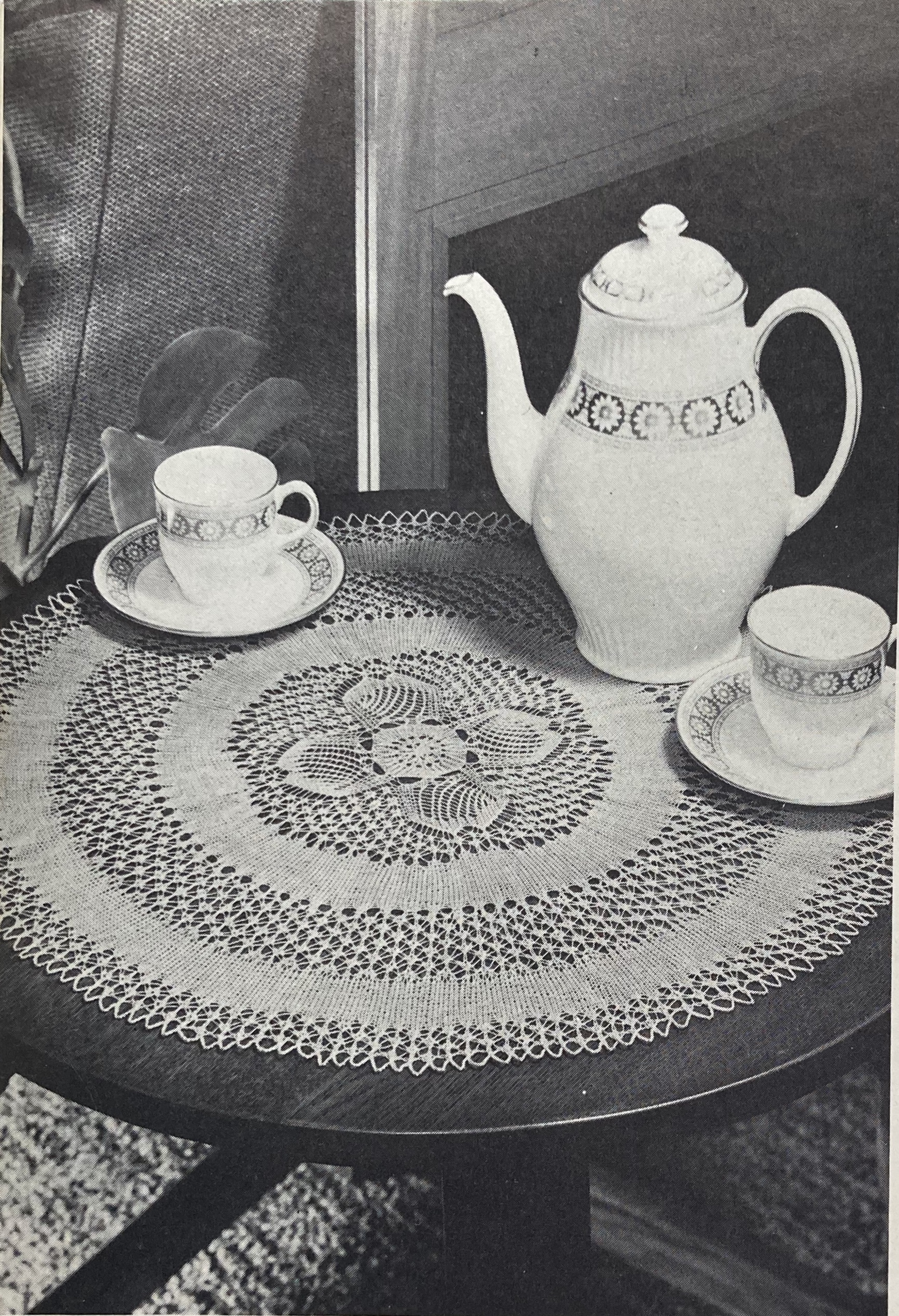
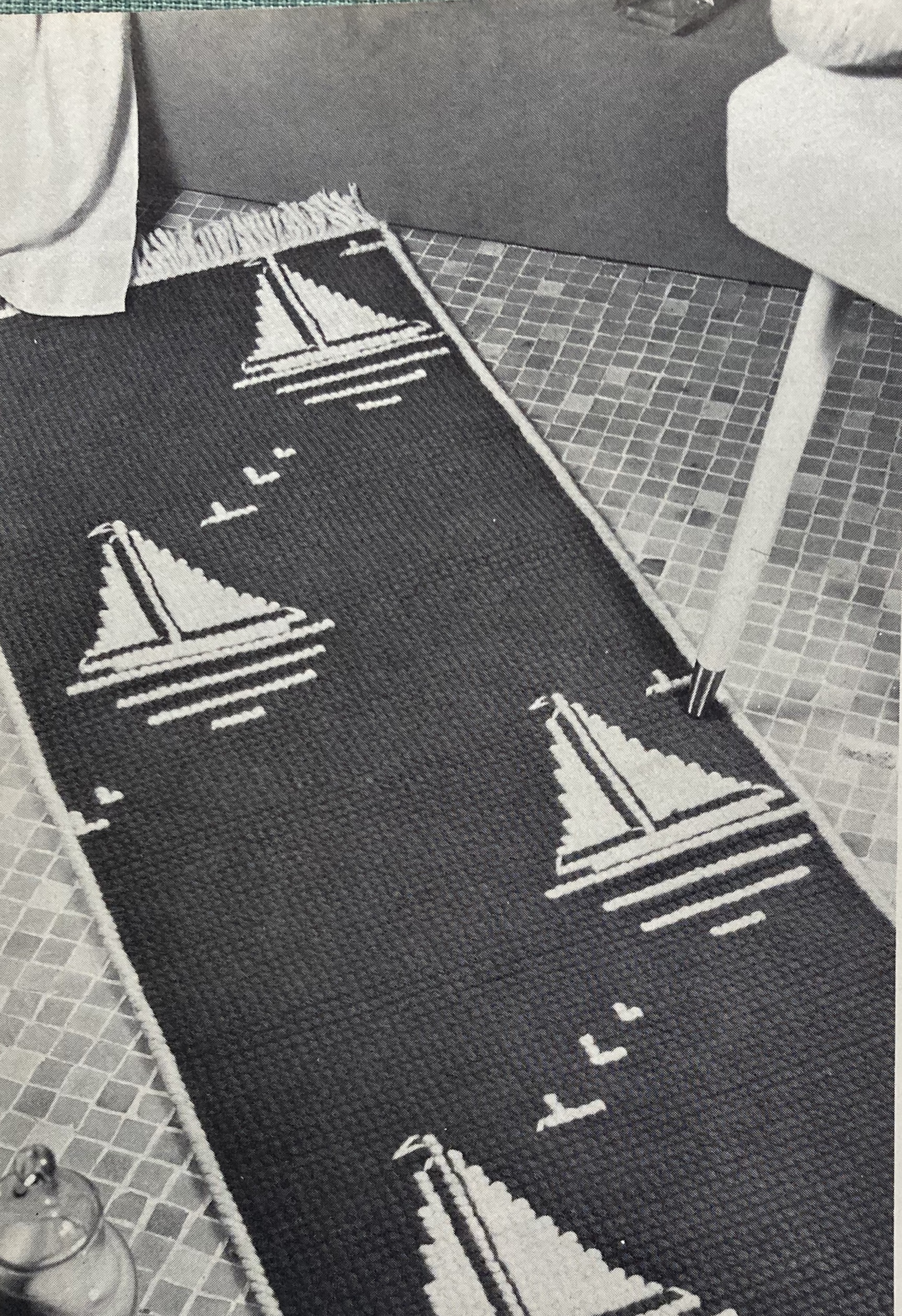
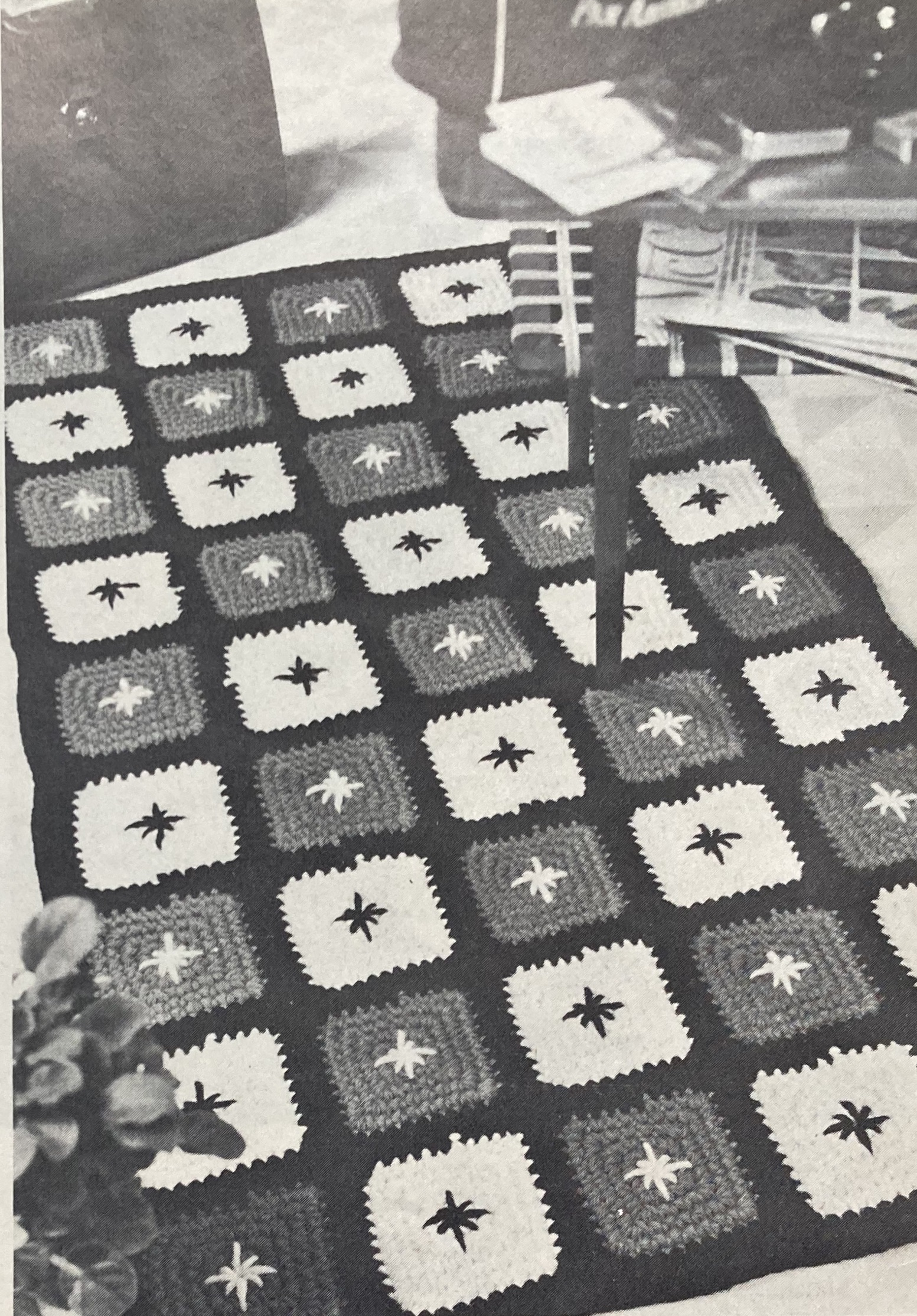
There are plenty of homeware projects as well: like the knitted items, everything except the lace doily is more serviceable than fancy. There are stitched and crocheted rugs– and a conveniently placed advertisement for rugmaking which is one of the very few advertisements of this era that show a man working on handcrafts.

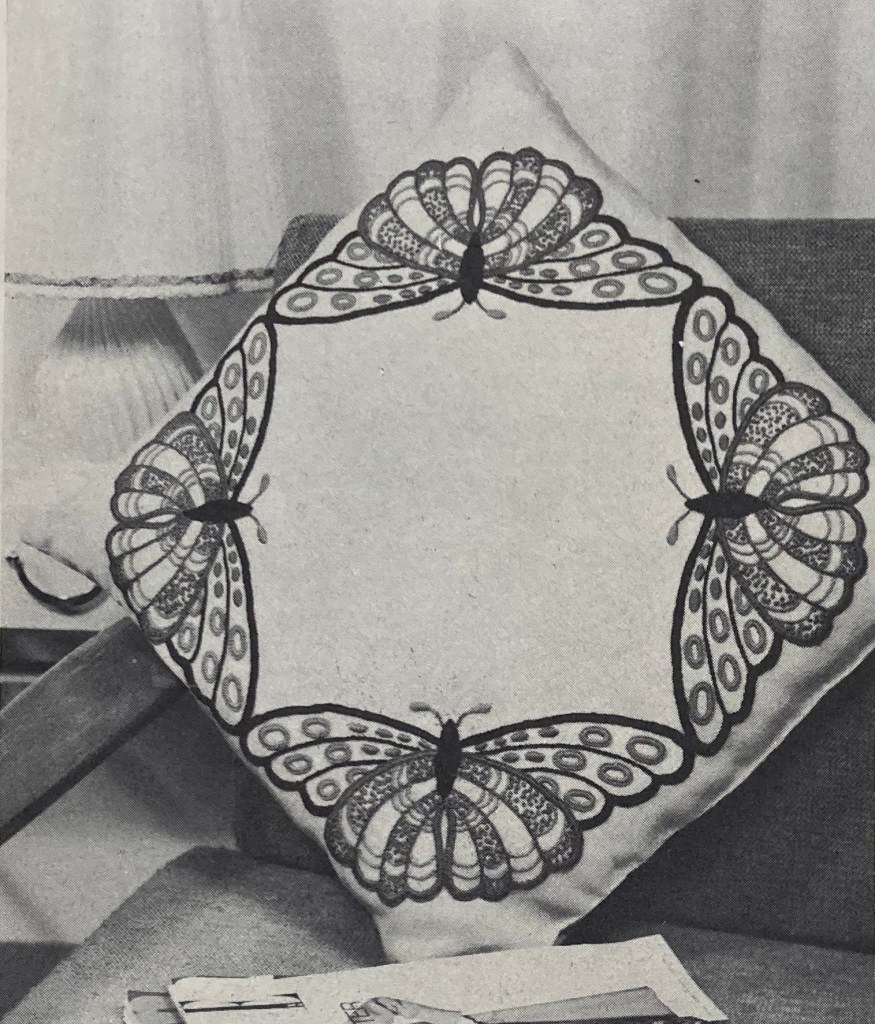
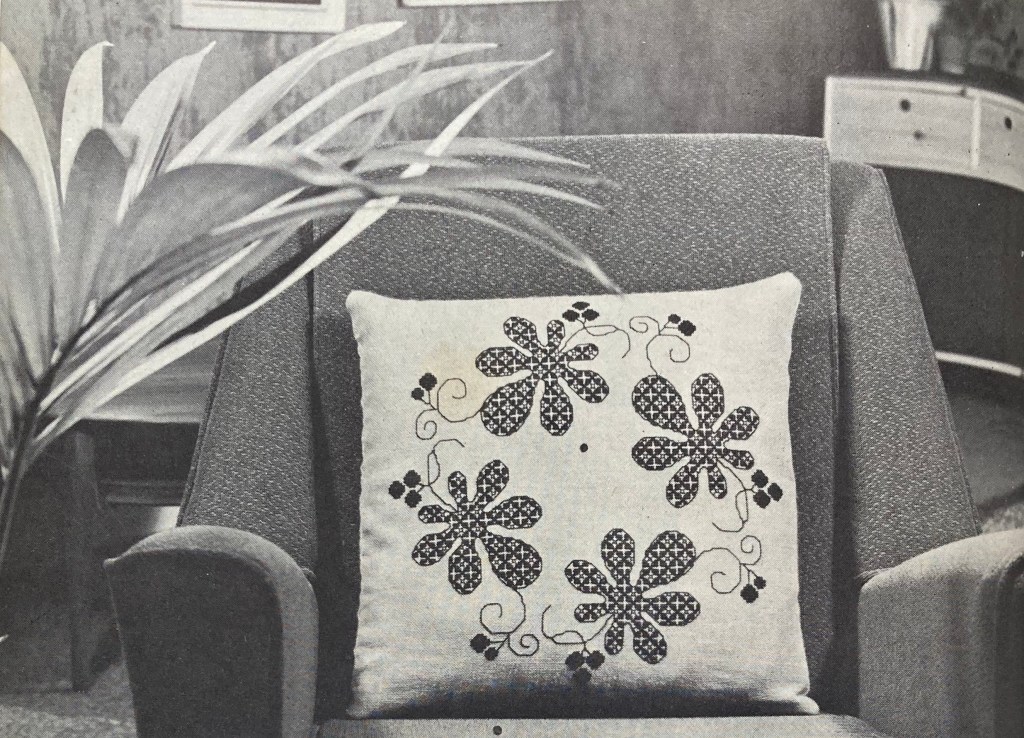
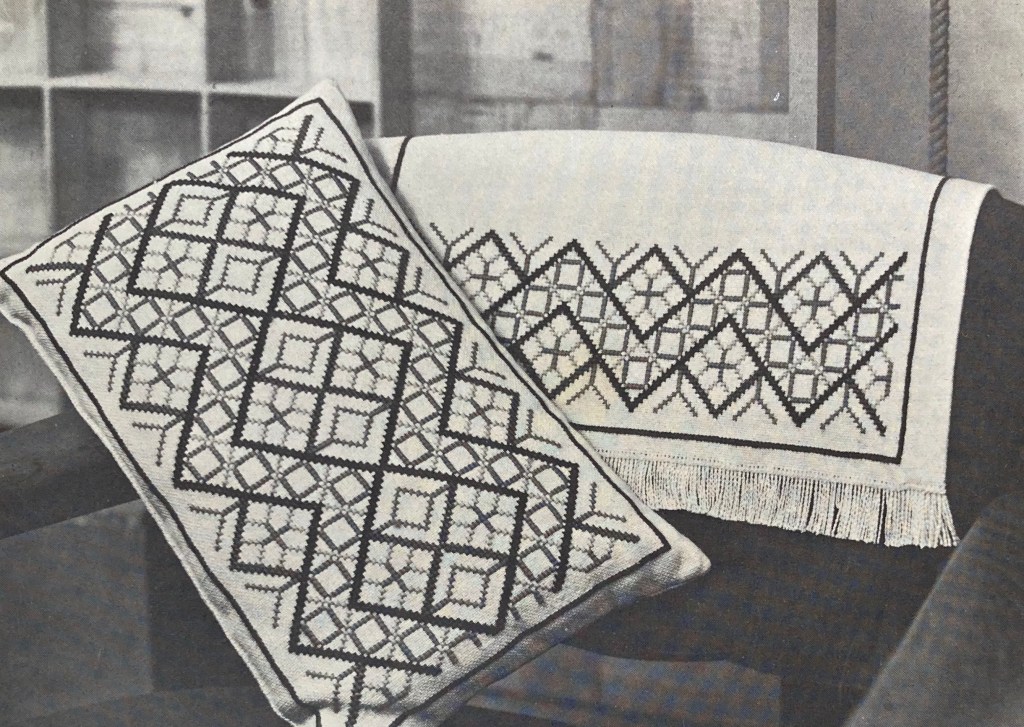
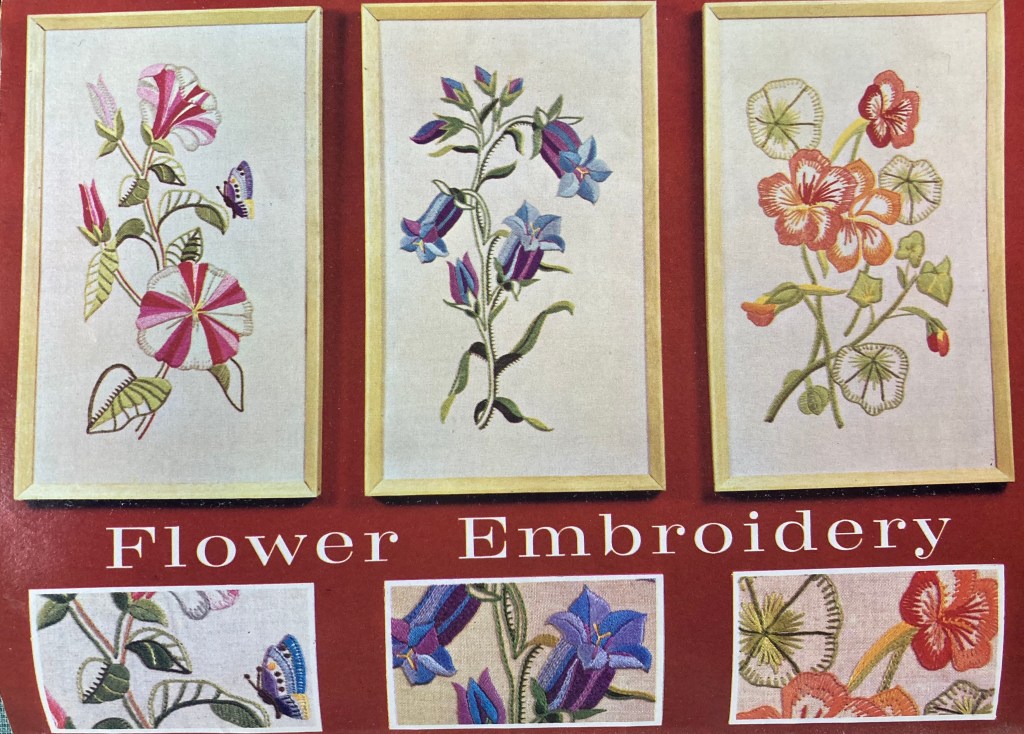
There’s a butterfly design in cutwork or as wool embroidery on a cushion in mid-60s shades of brown and dark green as well as more cushions in Tudor blackwork design or a geometric “peasant” pattern. The latter two take up the “bold” colour scheme idea with black on bright red or royal blue, scarlet, gold and jade on natural fabric. Finally, there are three flower panels than can be worked individually or combined to decorate a folding 3-part screen.

That’s this issue! My project will be the Norwegian cap and mitts in trending 1965 colours of blue and white. Happy New Year to you all.