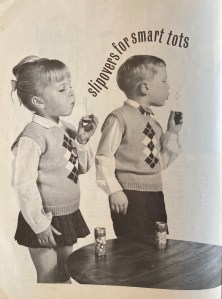
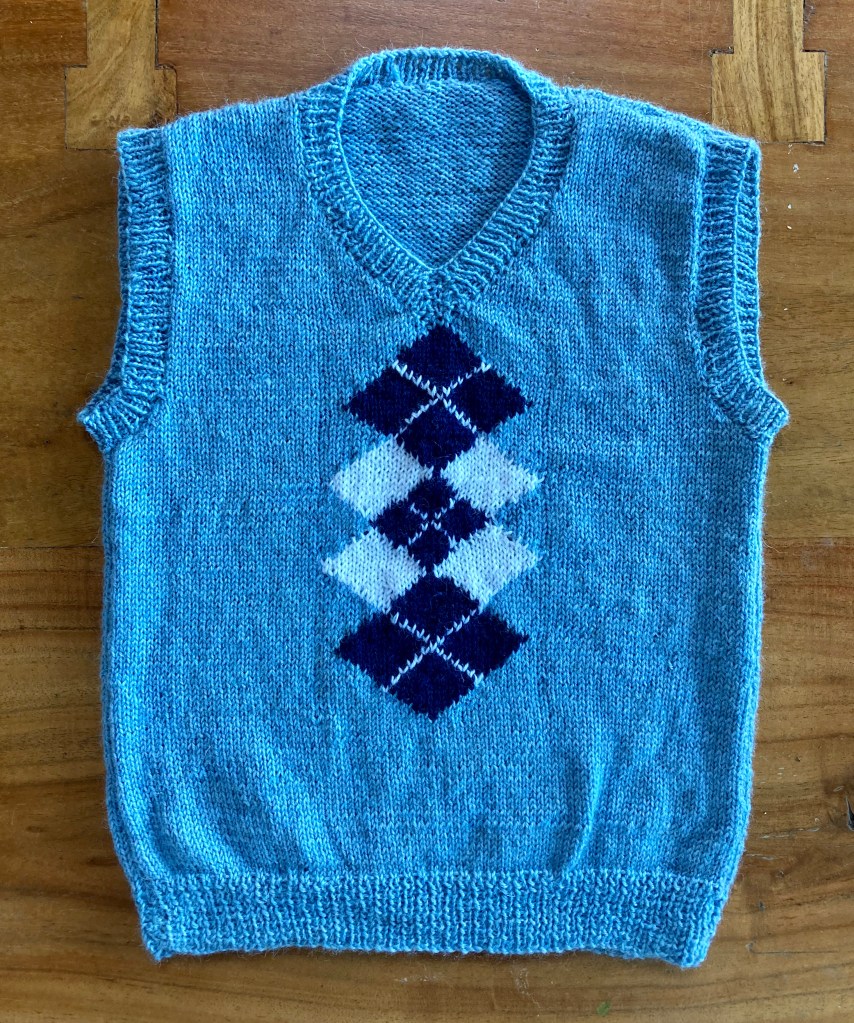
My March project was a cute slipover (vest, sweater-vest, tank top, pullover or whatever you call a knitted over-shirt garment with no sleeves and no front opening) for “tots with a fashion sense.” The tots in the photo definitely look very smart and very 1960s, with the little girl in her tiny micro-miniskirt and the boy sporting a bow tie.
The design (“from Vienna”) features a high V-neck and a simple, but effective argyle-type diamond pattern on the front. It’s written for Patons Nylox Knitting in 4-ply (fingering) weight. Nylox was a wool-nylon blend, fairly new on the market at the time and marketed for hand-knit garments that needed to stand up to lots of washing and wearing, so especially suitable for children’s clothes.
I used modern sock yarn (Meilenweit by Lana Grossa), an 80% wool / 20% polyamide mix which comes pretty close to the original Nylox yarn, and kept the original colour scheme of light blue with the diamond motif in white and navy, so this project was quite authentic to the original. The only change I made was to lengthen the body somewhat to fit the intended wearer, who is on the taller side for his age.
I don’t often work with intarsia designs, so this was a fun change and something new. It went quite quickly, as the pattern is easy and clearly written, so there’s not too much to say about it! I do think it will be well appreciated by the smart tot it was knitted for, as well as his parents.
There are some great children’s designs coming up in the next few months’ issues, so stay tuned for more well-dressed kids.
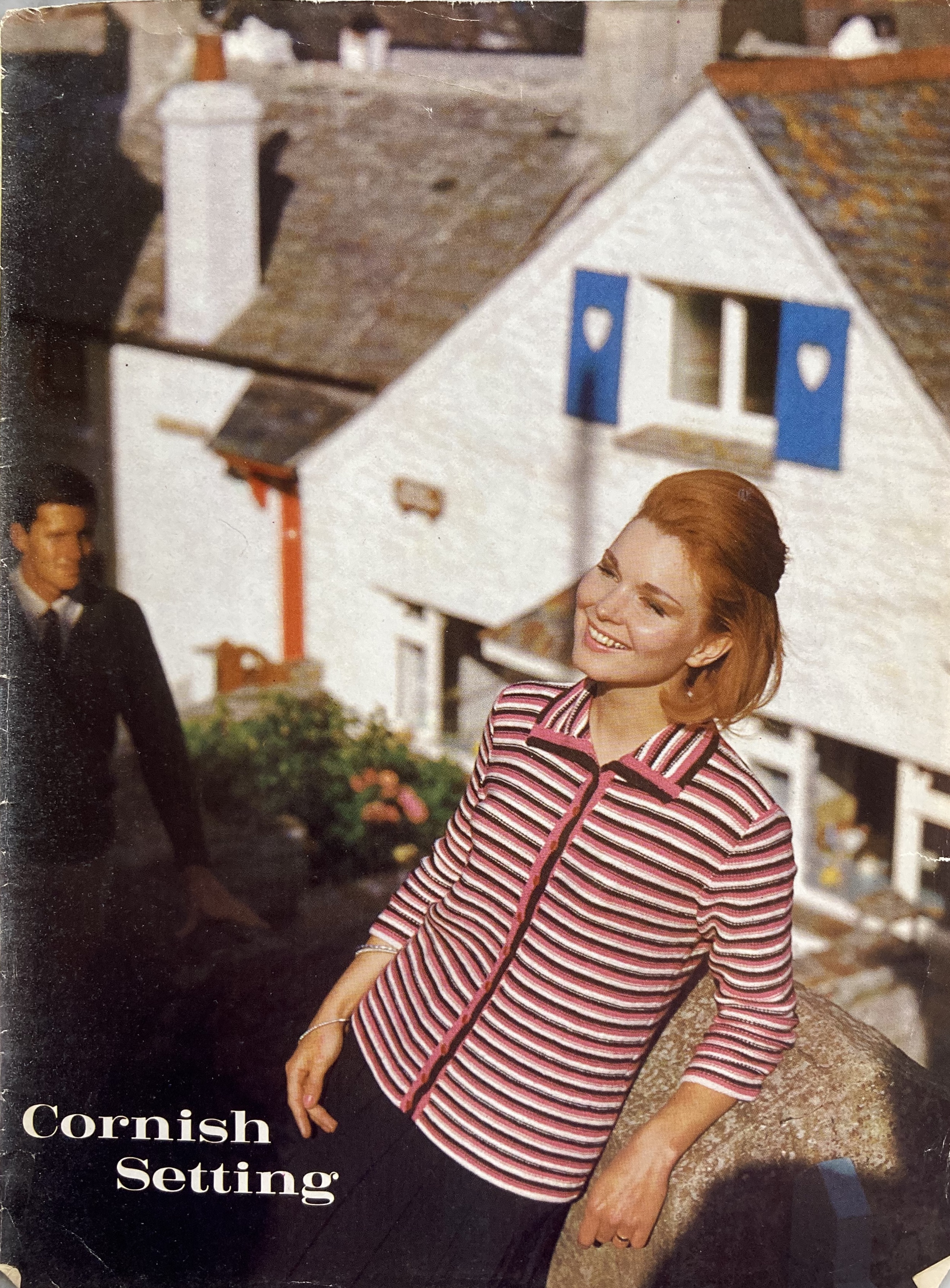
Greetings from Kent from your March 1964 issue of Stitchcraft, featuring “Spring Into Summer Fashions” photographed in “some of your favourite spots around Canterbury and Tunbridge Wells” so that you can see the knitwear “in their own settings as you would wear them.” Shall we go?
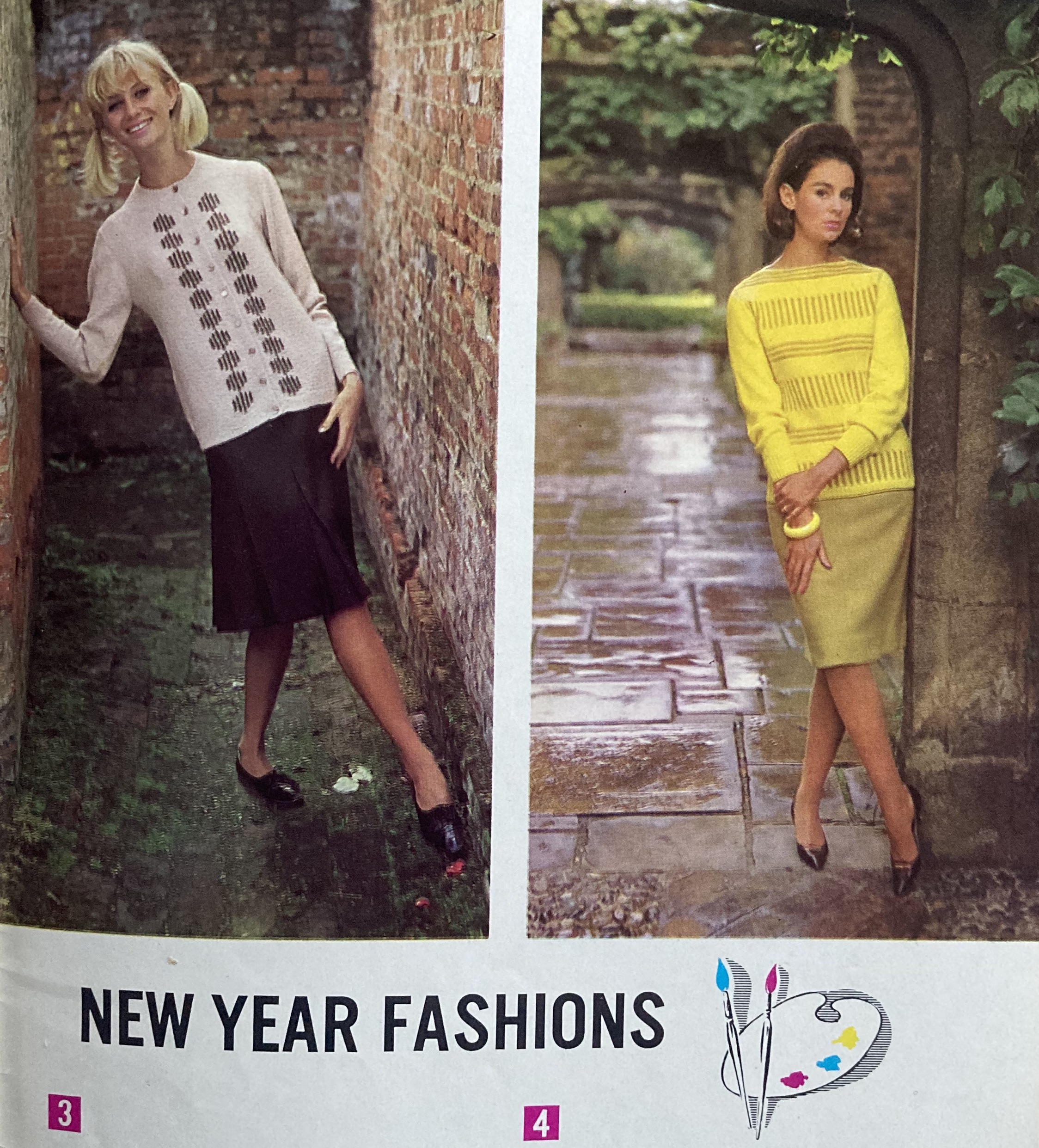
“For our climate”, writes editress Patience Horne, the best outfit for the spring and early summer months is a sweater suit, quickly knitted in double knitting wool. Cool blues, salmon pink and yellow-green are the trendy colours, and pattern stitches are used sparingly as an accent on hems or collars, or as a single vertical stripe panel.
Our cover model is wearing a twin set with a trellis pattern accent on the cuffs, pockets and collar of the jacket and the hem of the short-sleeved jumper underneath. Here, again, we see how twin-set styles have changed since the 1940s — everything is long, loosely-fitting and unshaped. The “Golden Willow” sweater suit on the inside front cover is similarly unfitted, with a cable “V” pattern stripe. For “The Creamy Look”, there’s a a high-buttoning cardigan with a subtle diamond pattern on the fronts. All three models are made in “Double Quick” knitting.
“Double Quick” is also the featured wool for the men’s and women’s “sport sweaters” in the lovely full-color center photo. I’m not sure what makes those two garments more “sporty”, as they look equally as elegant as anything else in the issue. His sweater is worked in stranded technique from a chart included in the instructions, and hers is made in plain stripes with the diamond pattern embroidered on later in Swiss darning / duplicate stitch. If “Double Quick” is not bulky enough for you, there are matching sports sweaters for him and her made in bulky “Big Ben” at 3 1/2 stitches to the inch. The salmon-pink jumper (Stitchcraft calls is a “sweater blouse”), by contrast, is made in 4-ply wool in a classic shape, with pattern accent panels in an interesting mini-bobble stitch.
Babies get a wonderful pram set of footed leggings, coat and matching bonnet. It’s referred to in the index as a “four-piece” set, but I am at a loss to find a fourth piece anywhere in the instructions or photos. Maybe they planned to make matching mittens and then didn’t? Bigger children get a cute slipover with an argyle pattern on the front. The photo is very 1960s, with the girl freezing her legs off in a micro-mini skirt and the boy sporting a bow tie.
The homewares are fairly standard: a tea cosy, apron and tray set and a knitted kangaroo with baby for your bizarre/bazaar novelty needs (there’s also a reprint of a 1956 knitted ice-skating panda bear doll, if the kangaroo isn’t enough for you.) You can also cross-stitch a rug and pyjama case with square-headed dancing soldiers to haunt your small son’s dreams, or some flowered place mats, a cushion or wall hanging, or another cushion inspired from a traditional Greek star design.
In the “Readers Pages”, a new serial comic is starting: “Susan’s Sampler”, in which our heroine learns embroidery from a magic needle, and our back cover ad (for Patons Double Quick Knitting wool) shows yet another woman lovingly looking up at a man who has trapped her with her back to the wall in order to mansplain something to her. Feel free to give the photo some speech bubbles befitting a modern interpretation of this scenario!
That’s all for this issue. I’ll be making the child’s slipover and for once, I’m quite sure it will be done on time. Happy Spring!
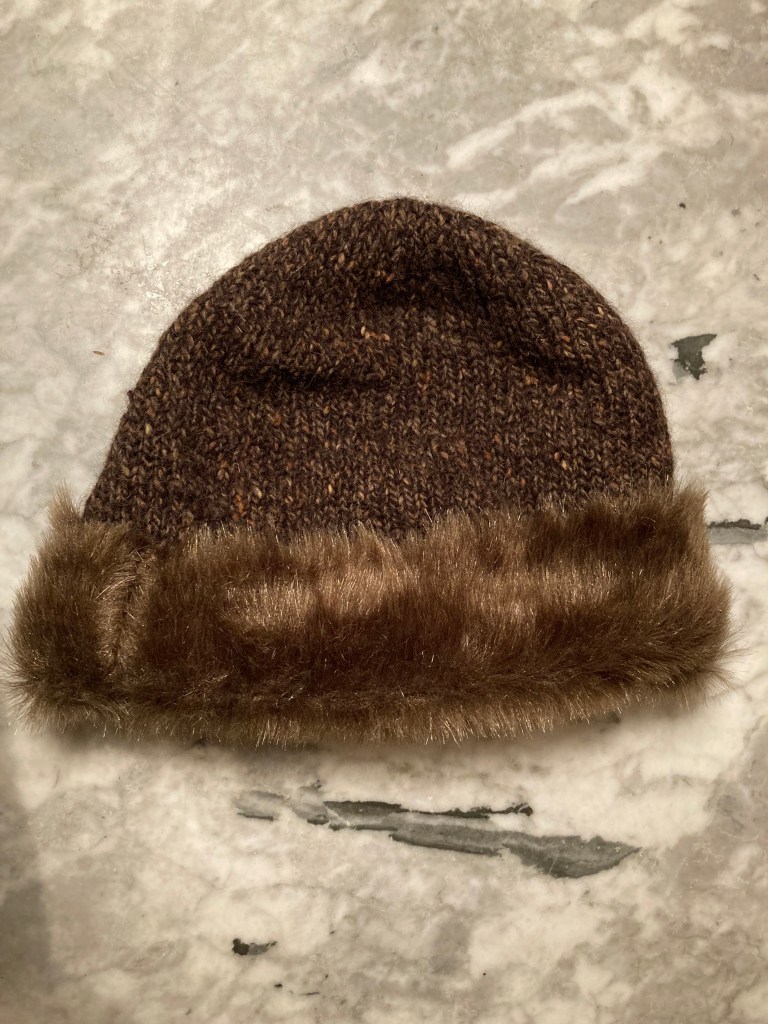
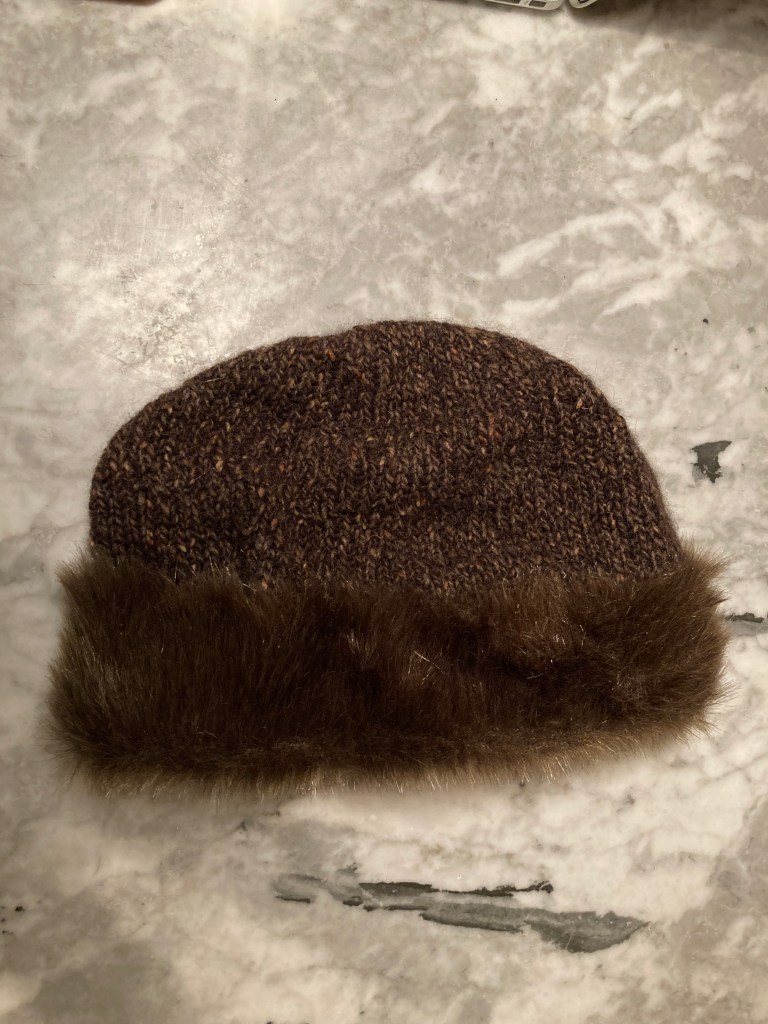
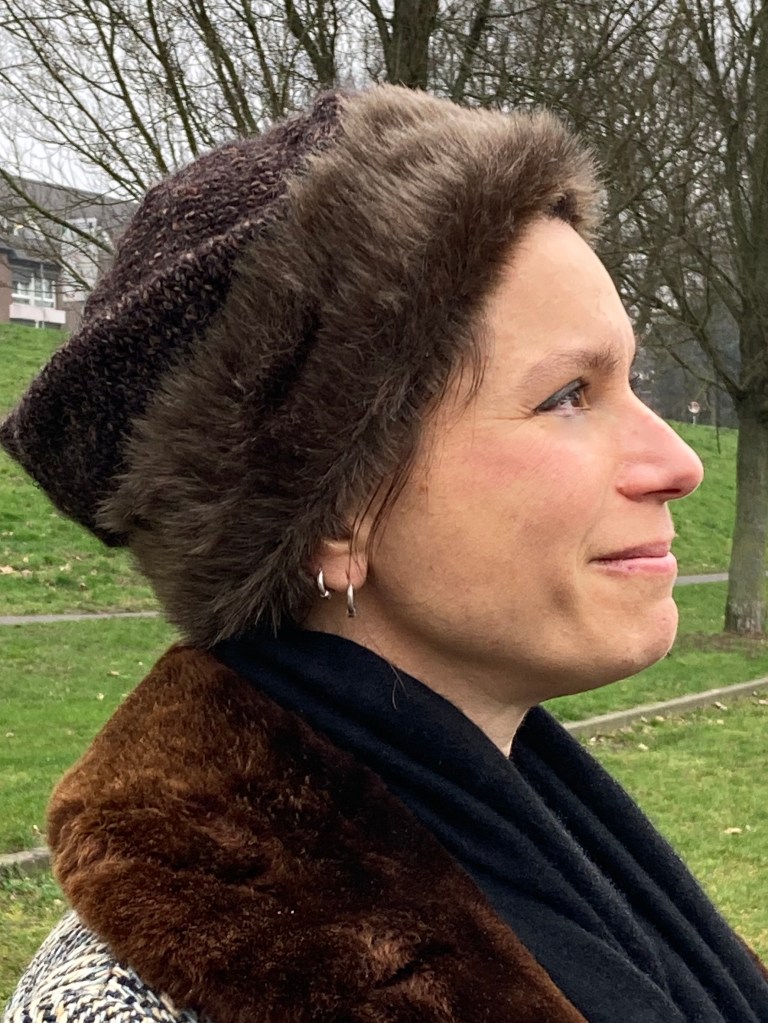
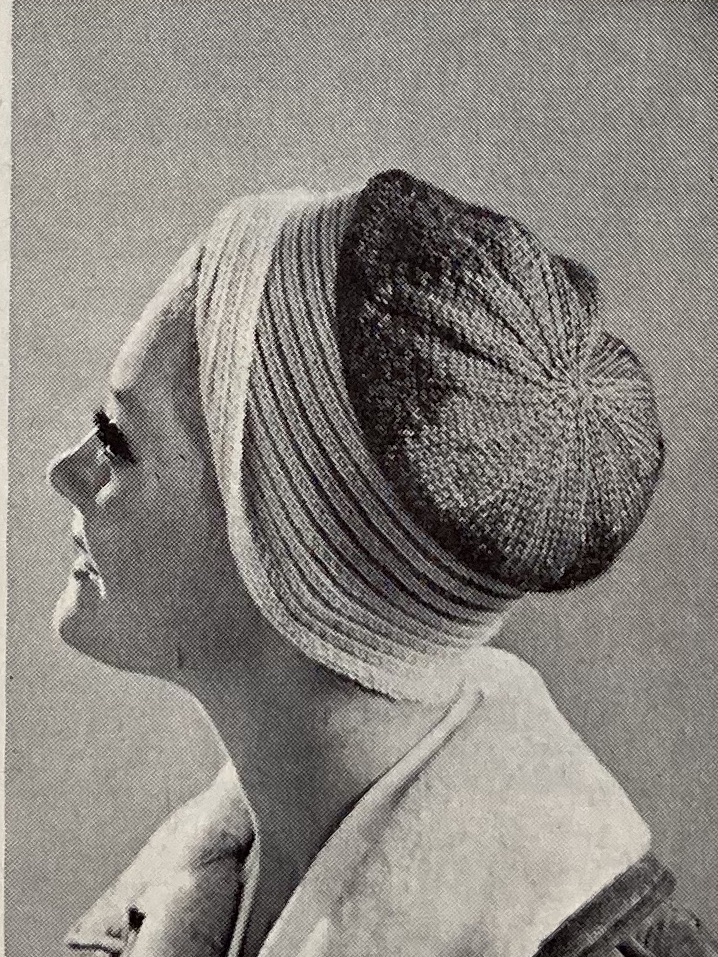
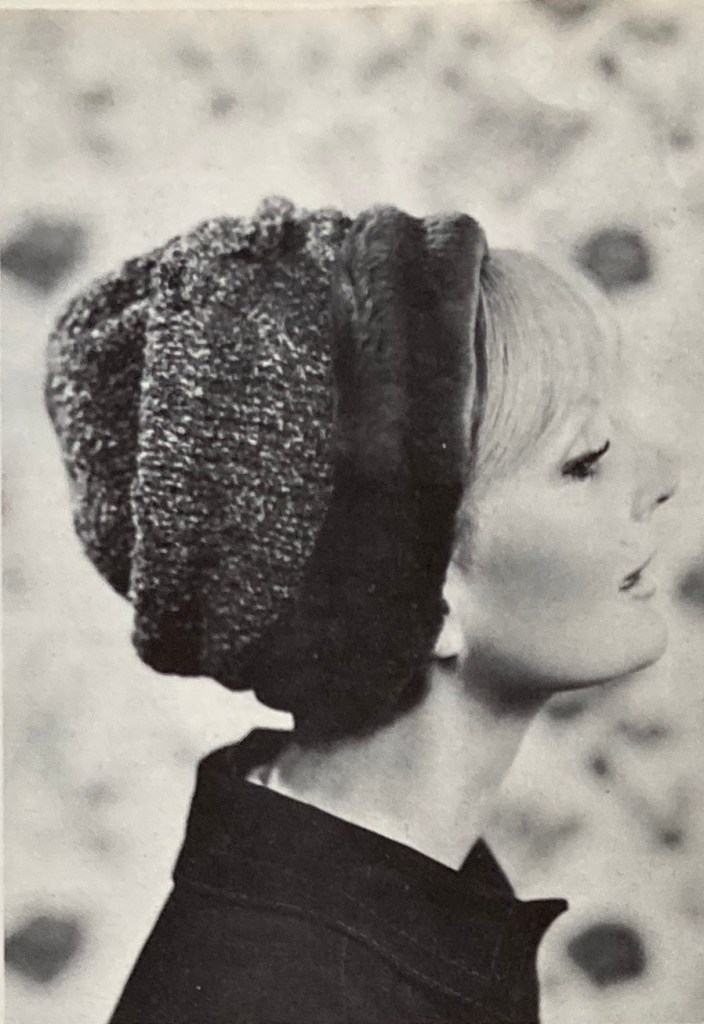
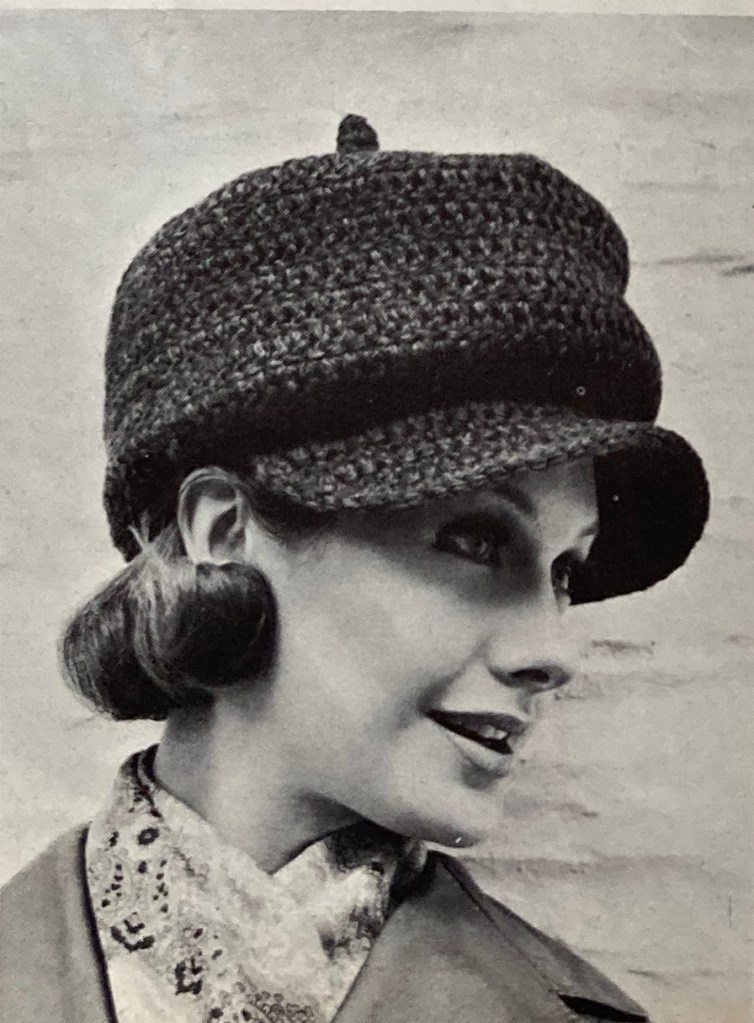
February’s project was this wonderful fur-trimmed hat. Fur or fur-brimmed hats were all the rage in the mid-1960s (my grandmother had a hat very much like this one with real fur — but too small for my head). Also, hats were big – wide-brimmed or with wide bands around the front, and often with a crown that was much higher than the wearer’s head, like the “baker boy” style crocheted cap from the same February 1964 issue, so this item is perfectly on trend.
This pattern was written to knit in Patons “Glenora”, a medium-bulky tweed yarn. (It appears to be a wool-synthetic mix, but if anyone has more detailed information, I would love to know.) The hat part is knitted and a fur strip is then sewn onto the front band. I used Lana Grossa “Fashion Tweed” (71% merino wool, 17% alpaca wool, 12% synthetic), which is lovely to work with — soft, fluffy and lightweight even at a tension of 4-4.5 stitches to the inch.
Like almost all 1960s patterns (even for hats and many gloves and mittens), this one is written to knit back-and-forth with a seam. I made it in the round. It took one evening of Netflix to knit and one evening to cut and sew the fur band and do the finishing touches. The fur in my version is fake, and was very interesting to cut: when I bought it, the saleslady wasn’t sure if she should cut into it and rip as customary when buying fabric, or cut it with scissors, since the synthetic fur is quite thick and has a slightly stretchy woven base. Ripping it took some effort, but had the advantage that the edge curled in slightly and didn’t ravel. Experiments on scraps at home showed that cutting this fake fur makes a less neat edge and lots of tiny bits of fur everywhere.
After knitting, blocking and sewing on the fake-fur band, the hat is pleated at the front edge and tucked at the crown to give the shape seen in the magazine photo. There’s a little decorative tie at the front edge too, just above the band, that is hard to see in the photos. The tie is made by knitting a strip in stocking stitch and then letting it naturally roll into a narrow tube. I suppose the modern version would be to knit some i-cord, but this worked just as well. The tuck and pleat, on the other hand, didn’t work quite as well in the wool I chose, since it is less bulky and thus has less intrinsic shape than Glenora. Still, the effect is about the same.
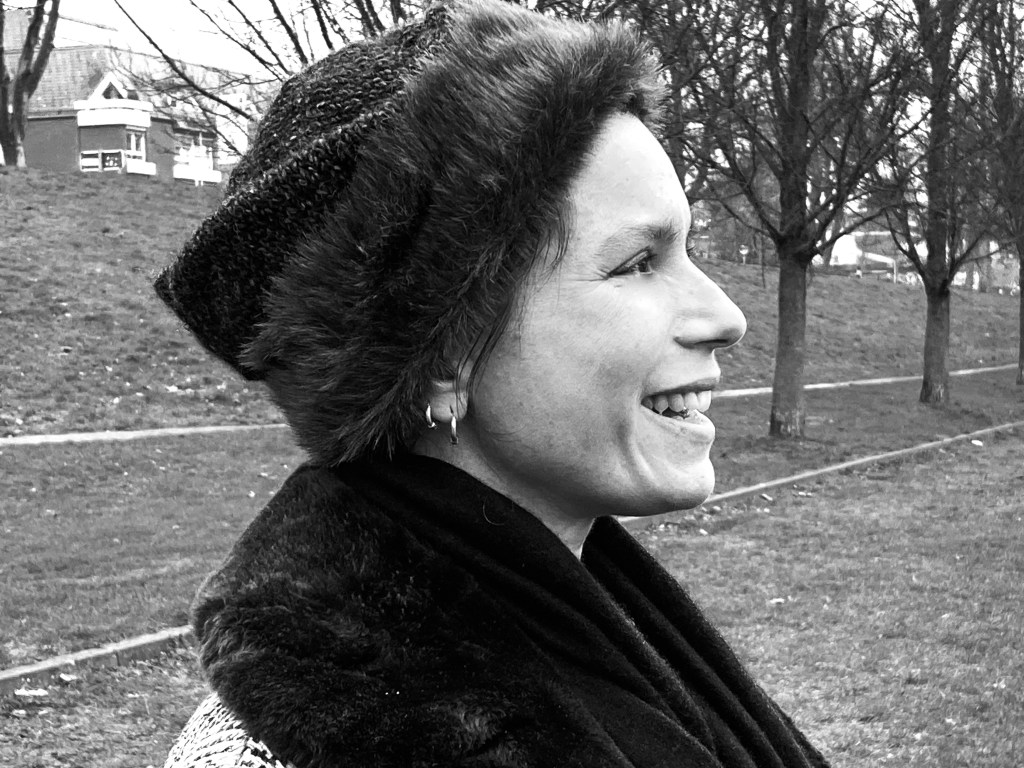
I made this hat for a friend’s daughter, but I would gladly make another for myself. It’s warm and fun and looks very, very 60s. I wore it for the photo with a coat inherited from my grandmother which also features a dramatic plush “fur” trim. (Sadly, the sleeves are way too short for me. They are also plain wool, and every year I search for a plush fake fur that matches the collar, so that I can make matching cuffs. I never, ever find this right colour and degree of plushness, but am considering using the same fake fur from this project, since it’s the closest I’ve ever found).
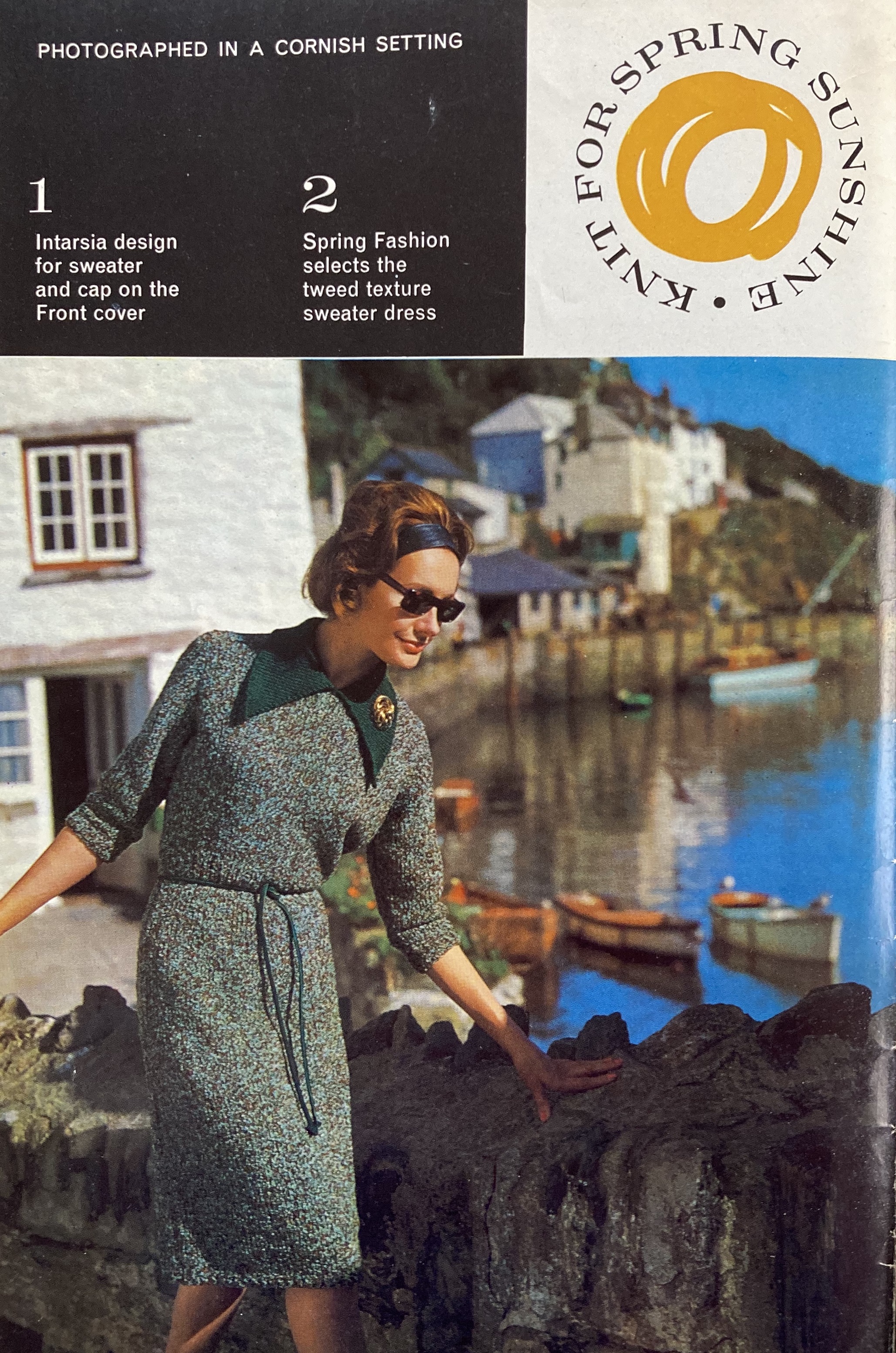
Knit for Spring Sunshine! It’s four o’clock in the afternoon here on February 1st, 2022, getting dark, raining sleet and there has not been a single minute of today where I was able to do anything without turning on the lights, so I am especially happy to dream of modelling beautiful handknits in sunny Polperro in Cornwall, where this issue was photographed.
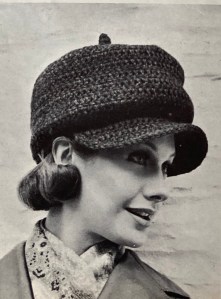
Colour variations are a big theme this month, be it tweedy new multicolour yarns, stripes or classic stranded colourwork and intarsia. Our cover model shows off the gradient look in a fun diamond-pattern sweater with a matching tie and cap. Both cap and sweater are knitted in intarsia technique with the different colours of wool wound onto bobbins, but strangely, I can’t see the diamond pattern on the cap at all. I guess it’s because the top part of the cap only uses the two darker colours, and they don’t show up well in a black and white photo (see close-up of the cap below).
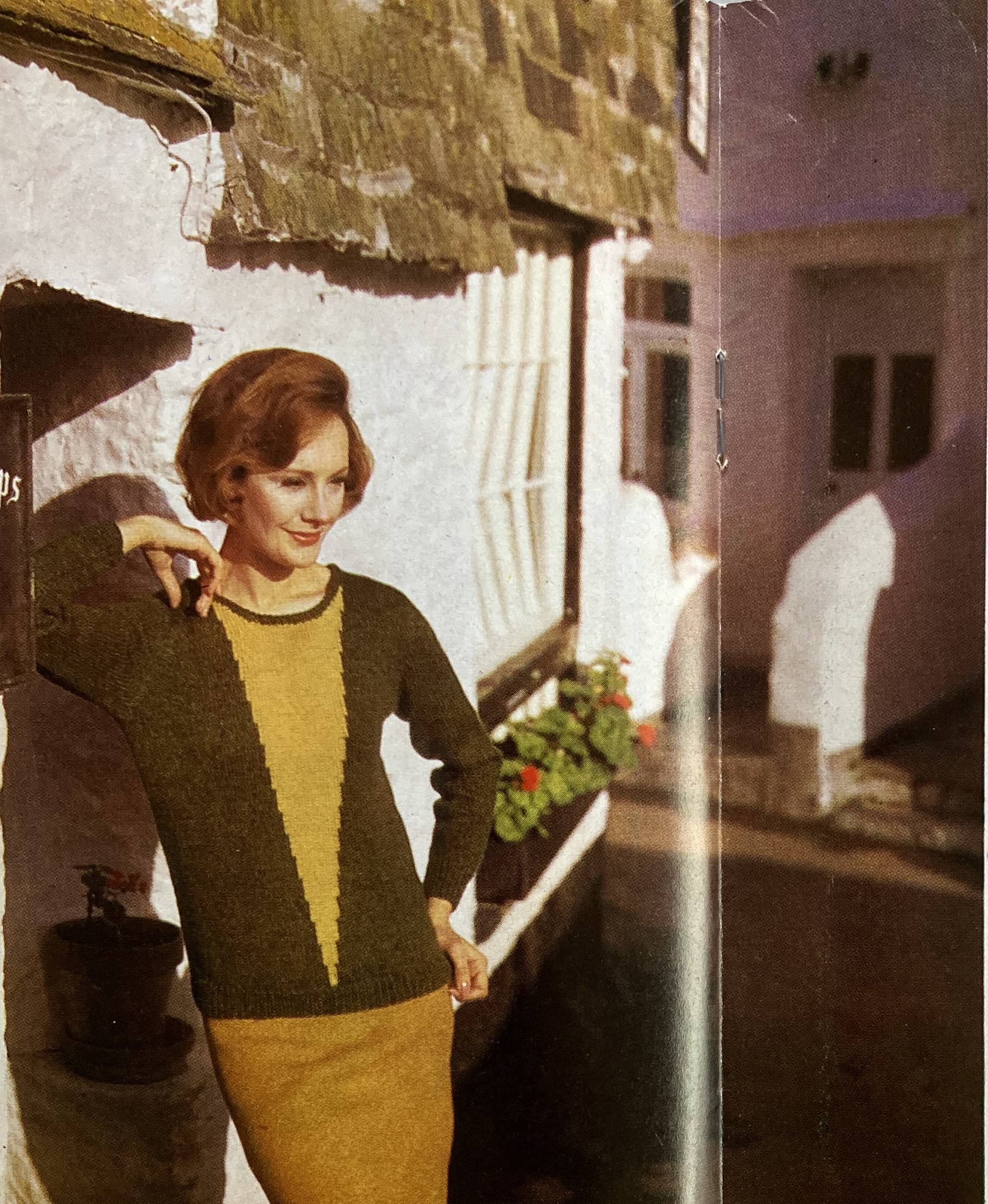
Collars and ties make an appearance in the tweed dress from the inside front cover, made in multicolour “Glenora” wool, and there’s a sparkly tweed suit in purple Bracken Tweed wool as well. Men get a classic raglan V-neck, also in Glenora tweed. Deep jewel tones (I’m guessing the colour “Trossach” from the men’s pullover is a sort of deep fenny green, named after the Trossachs area in the Scottish Highlands) are in fashion as well as gold, featured in two pullovers on the inside pages. A loose, casual fit with no shaping remains the preferred silhouette (or lack thereof).
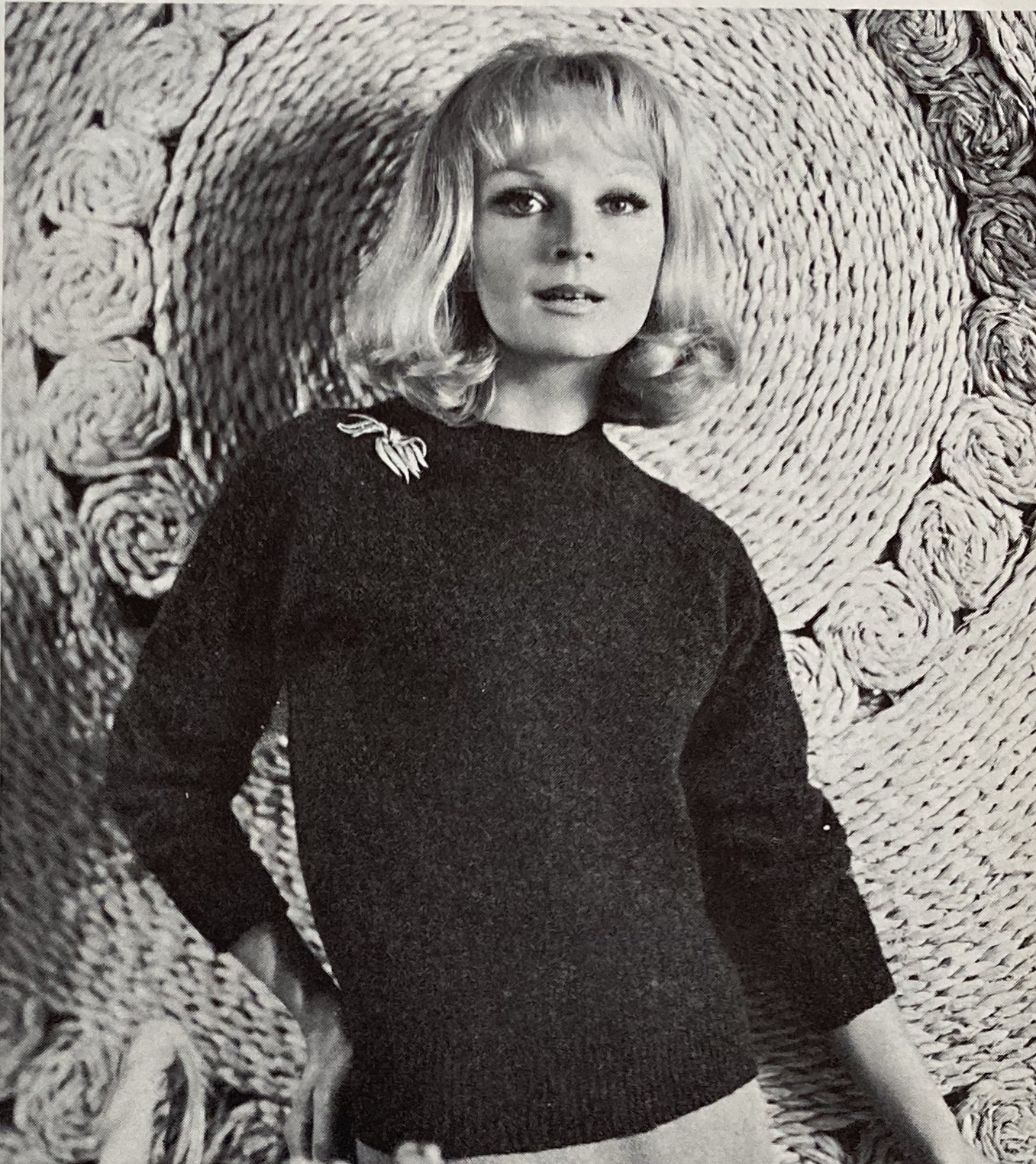
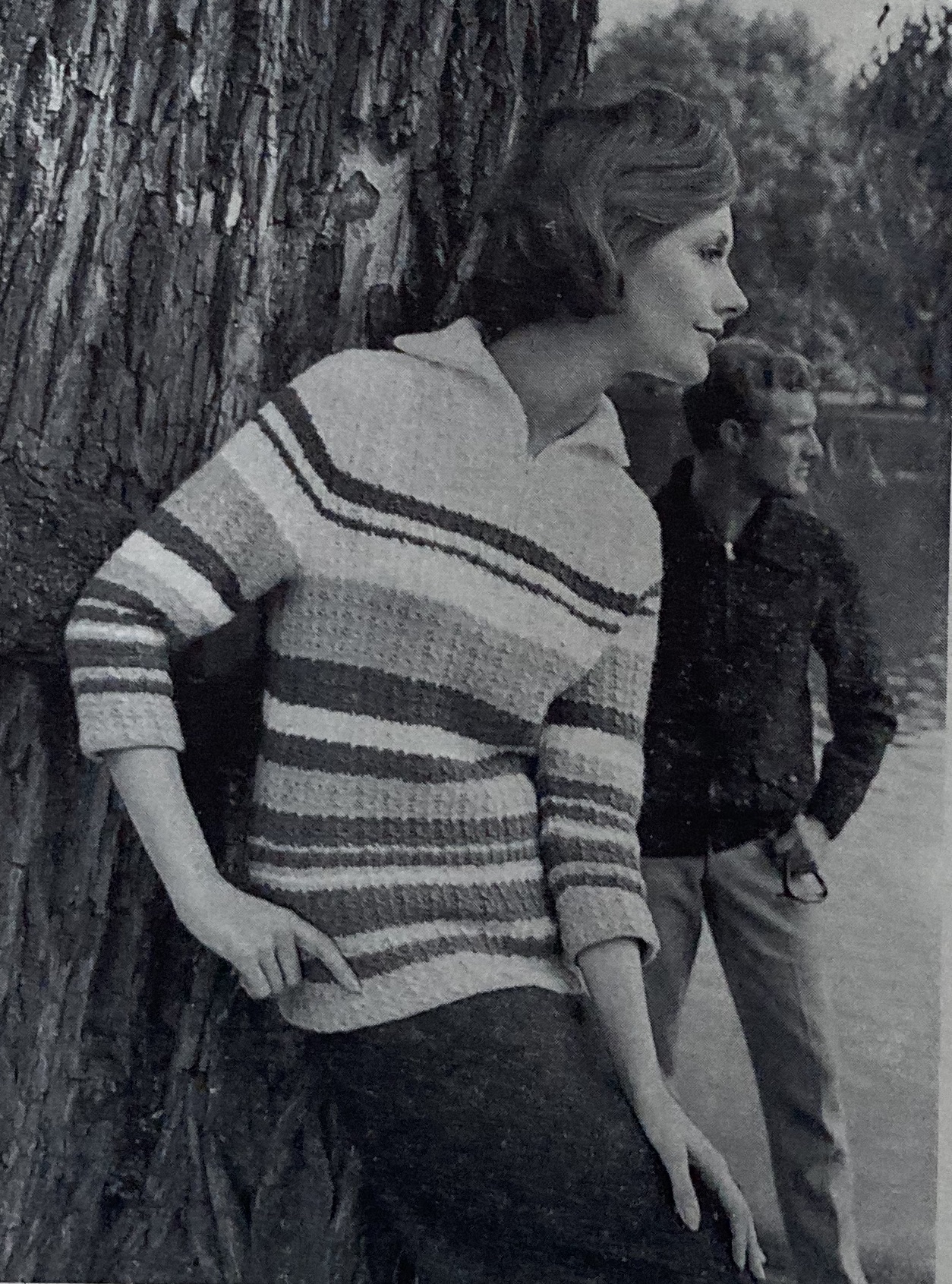
For contrast, there’s a classic, lightweight jumper in 4-ply wool bouclet. The jumper style would be right at home in other decades, but the photo style is as 60s as you will ever find, with an extreme close-up of a round braided place mat used as a backdrop. I’m almost waiting for it to start swirling! Finishing off the adult garments is a cheerful striped cardigan in 4-ply Nylox (wool/nylon blend).
The accessories match the garments well, using the same wools and in similar casual, oversized style. Besides the diamond cap, there’s a knitted cap in Glenora with fur trim and a “baker boy” cap to crochet.
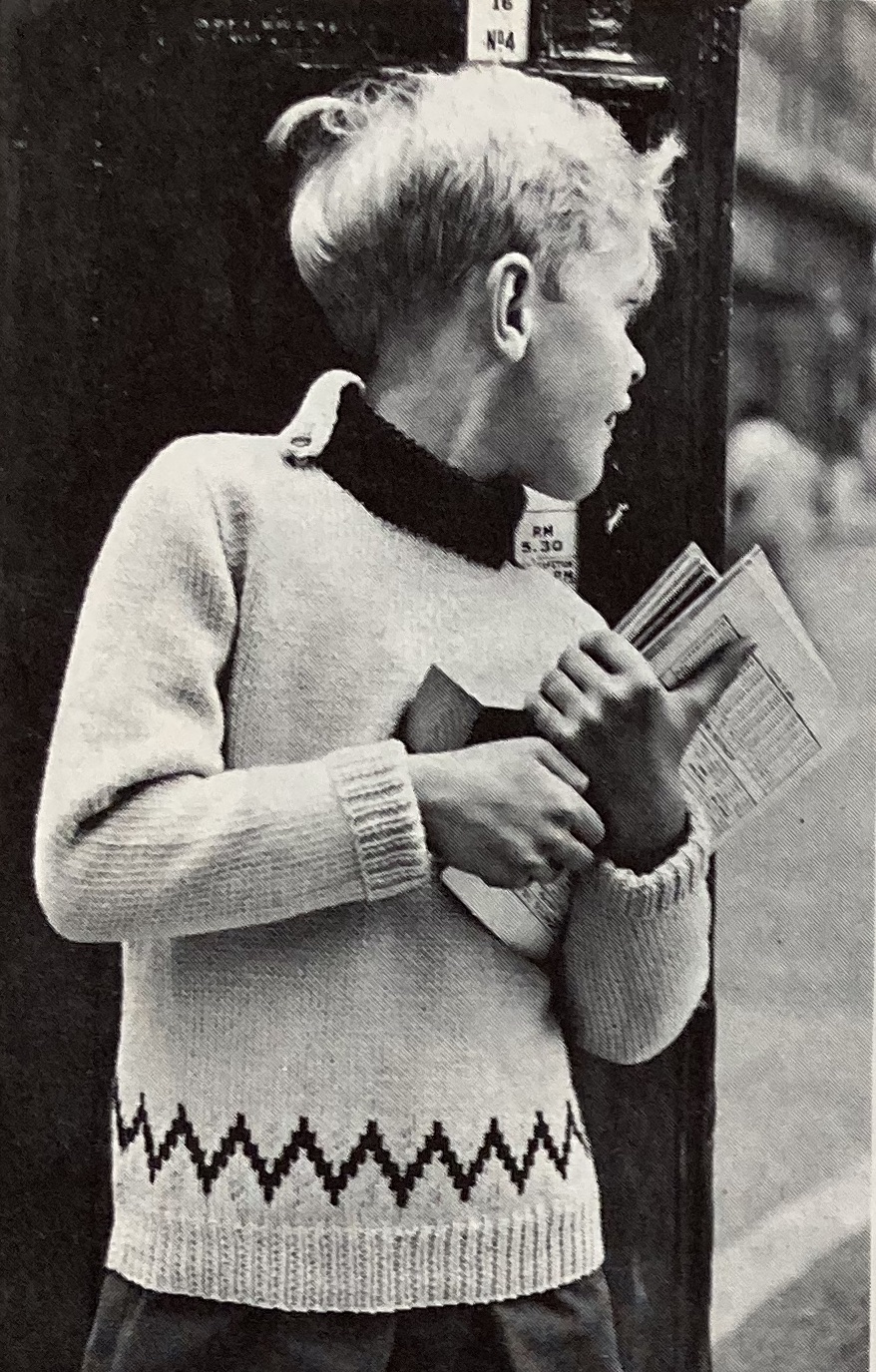
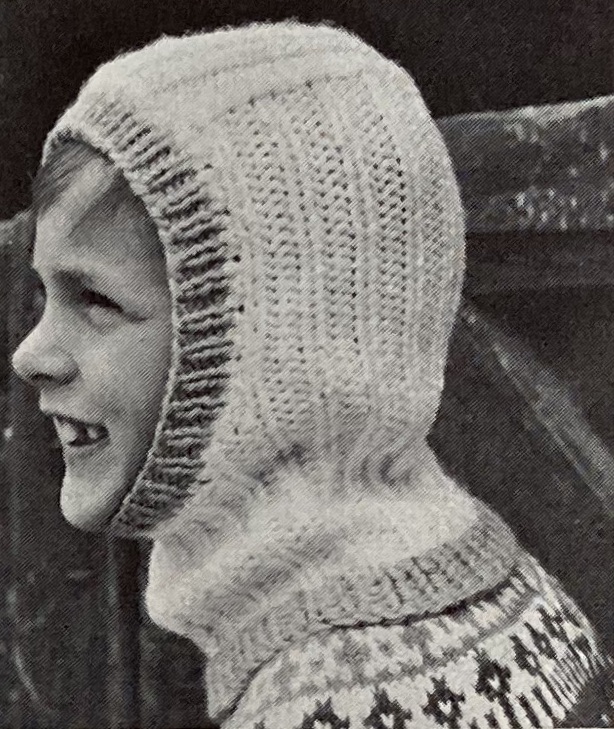
There’s nothing for babies or very young children in this issue, but older kids can get some very nice new additions to their wardrobe, like this wonderful dress in blue Bracken Tweed with contrasting checked collar and cuffs, or a sweater for boys with in intriguing tab collar and colour detail at the hem. There’s also a balaclava-style “helmet” to keep out any March winds.
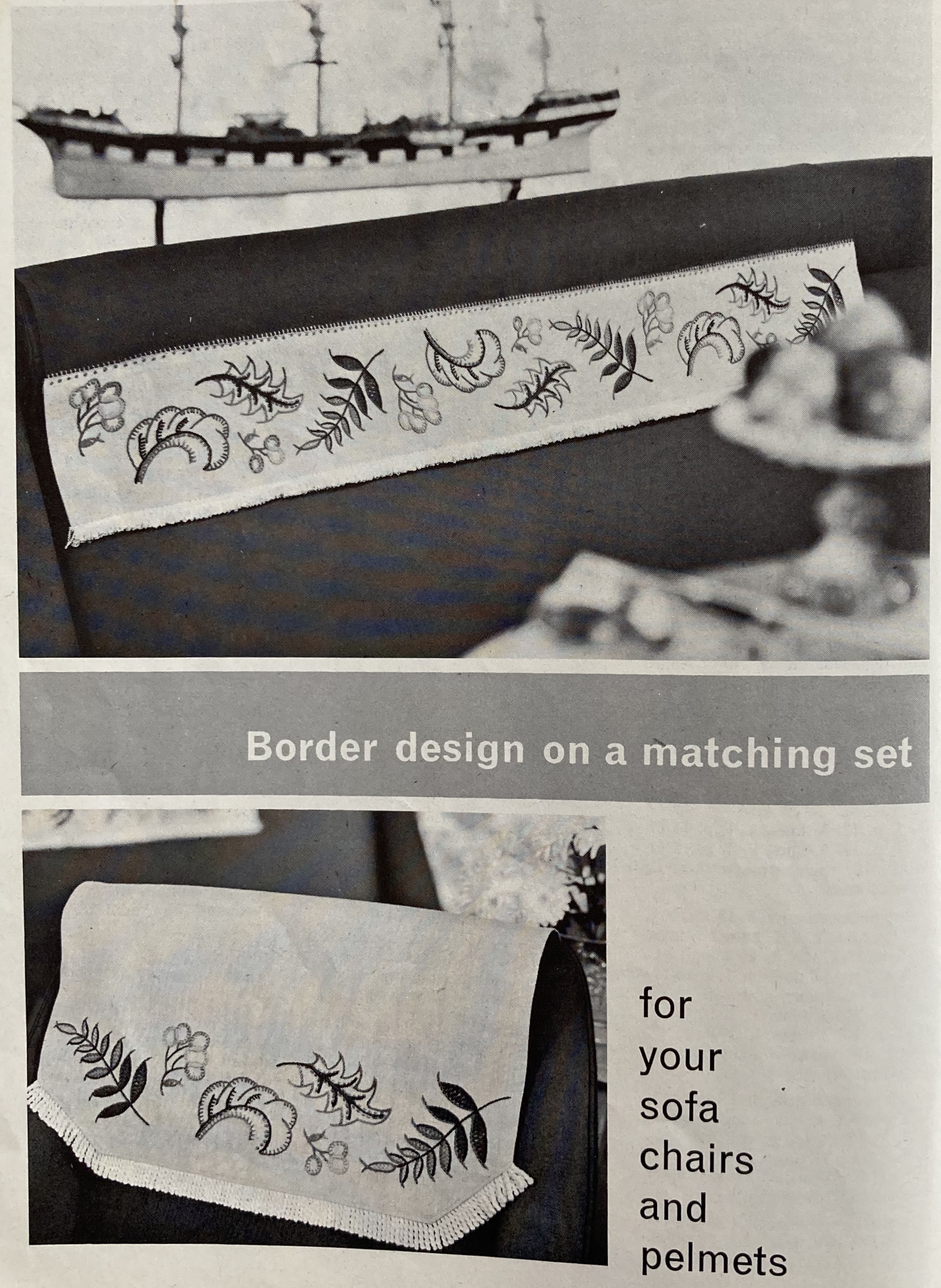
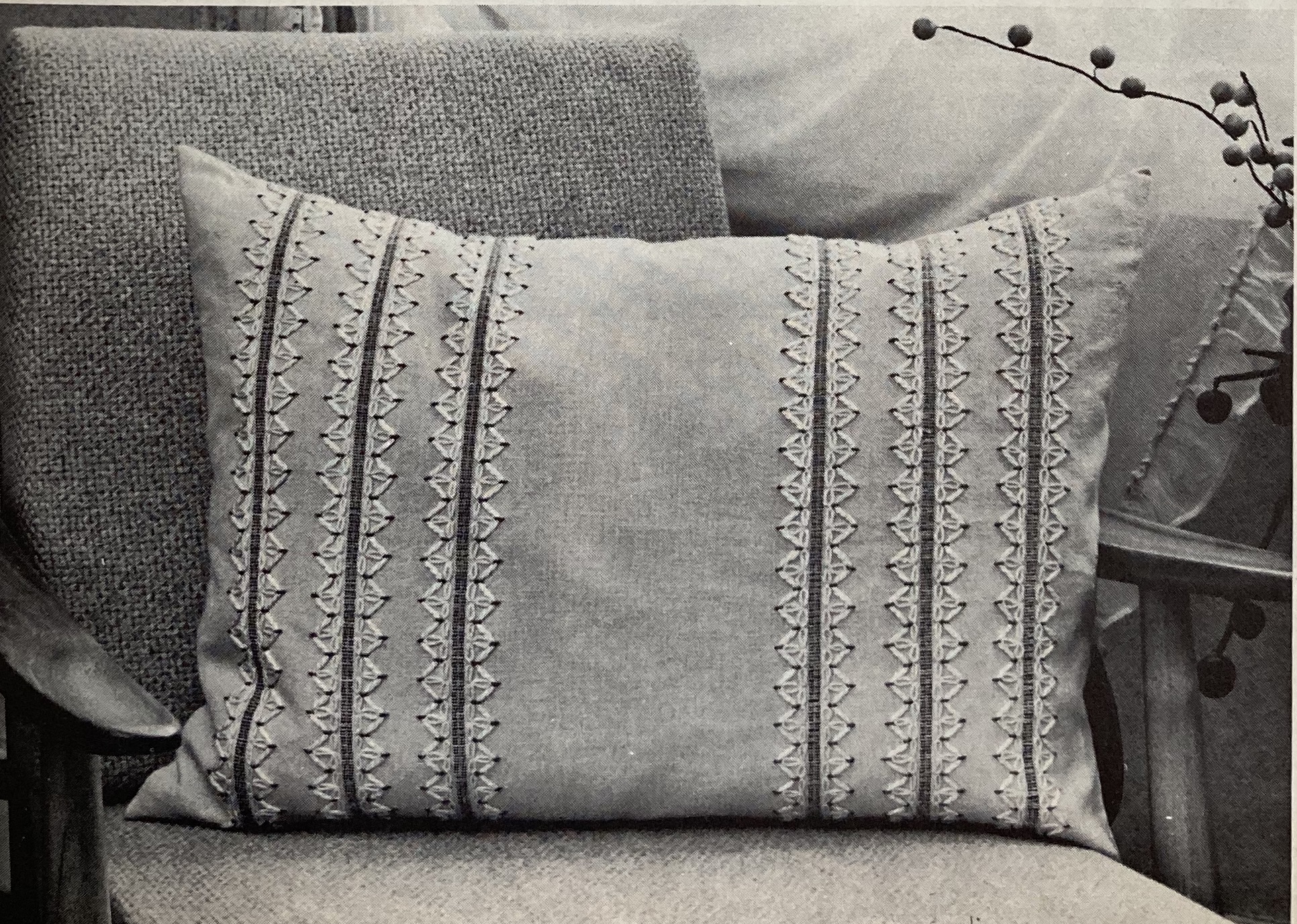
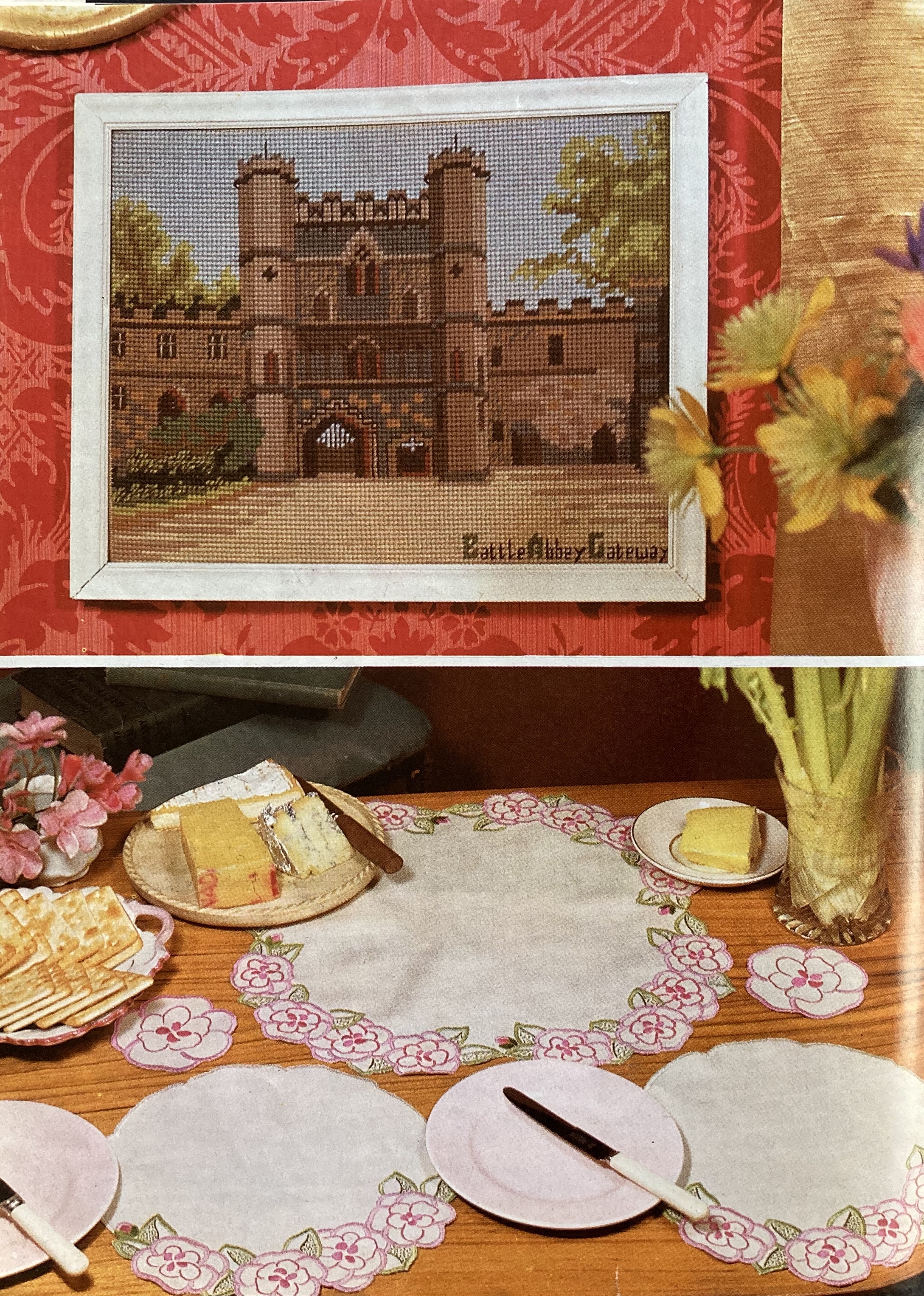
With all these larger projects to knit, it’s no wonder that the homewares are less than spectacular this month. There are embroidery projects for sofas, chair backs and pelmets (N.B. if you, like me, are not familiar with the last word, it’s that strip of fabric at the top of old-fashioned curtains, that hides the curtain rings / mechanism.) There’s a cushion and/or fire screen in a traditional Yugoslavian pattern, a stitched bathroom rug, a tapestry picture and dressing-table mats in cutwork embroidery. The cushion in “Continental laced stitch” is the most interesting of the projects, to me — it’s made by drawing threads and stitching around the resulting rows of holes, then putting the cover over a contrasting-colour cushion.
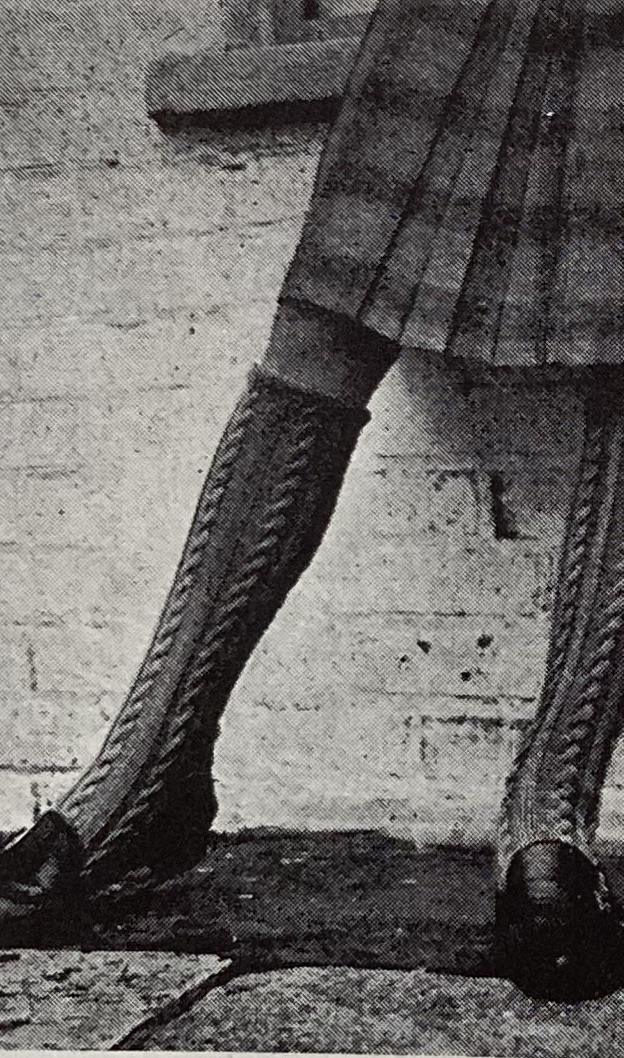
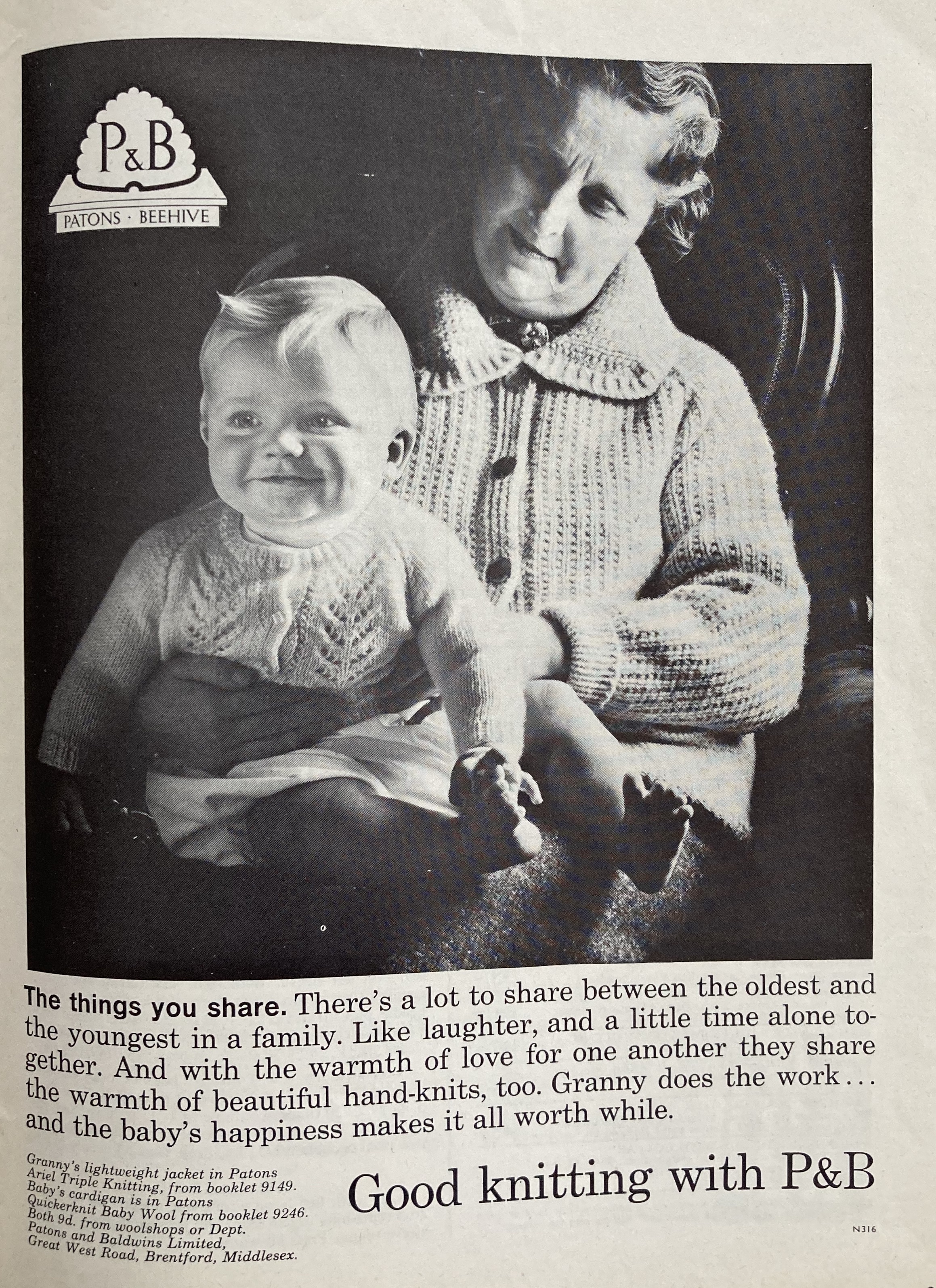
There is no children’s comic this time (how sad!) but the “Readers Pages” offer a reprint of a 1955 pattern for knee-high cabled socks, instructions on how to make a wool daisy and a magnificent “flower basket” teapot cosy featuring those wool daisies. If you’re on Ravelry and search projects for “flower basket” tea cosies, you will find many similar examples — this seems to be a popular item in modern times as well! The Patons wool advertisement shows a happy baby whose grandmother has knit him something pretty, and the back-cover Lightning Zip ad has a very practical dress pattern laid out. I’m tempted to copy it large and sew it up.
That’s all for this issue. My project will be the (faux) fur-trimmed tweed hat. See you soon and until then, let’s dream of spring sunshine!
Happy New Year! It’s 1964 in the Stitchcraft blog world. “Busy as we all are,” writes “editress” Patience Horne in the issue notes, “it is surprising how many things needlewomen manage to make in a year.” Well, it’s my New Year’s handcraft resolution to finish up WIPs and reduce yarn stash, so let’s see how many new things I will manage to make.
Back to January 1964, what does the New Year have in store for us, fashion-wise? At first glance, it doesn’t look much different from the trends of 1963. Garments are warm, bulky, tweedy and textured, and homewares are traditional and floral. The Swinging Sixties have not swung through the pages of fashion-conservative Stitchcraft yet. Still, the designs are fun and easy-going, the bulky items quick to make.
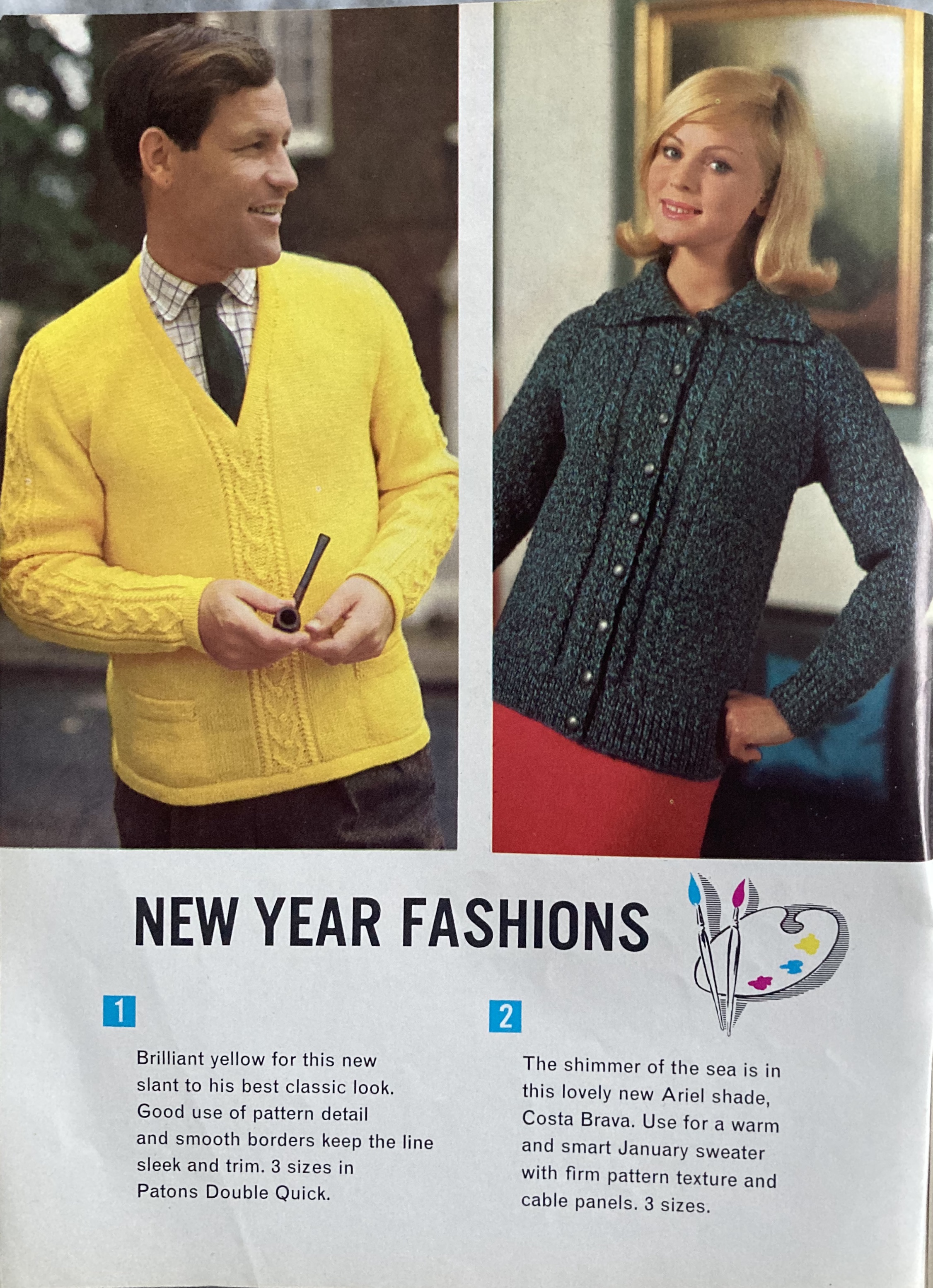
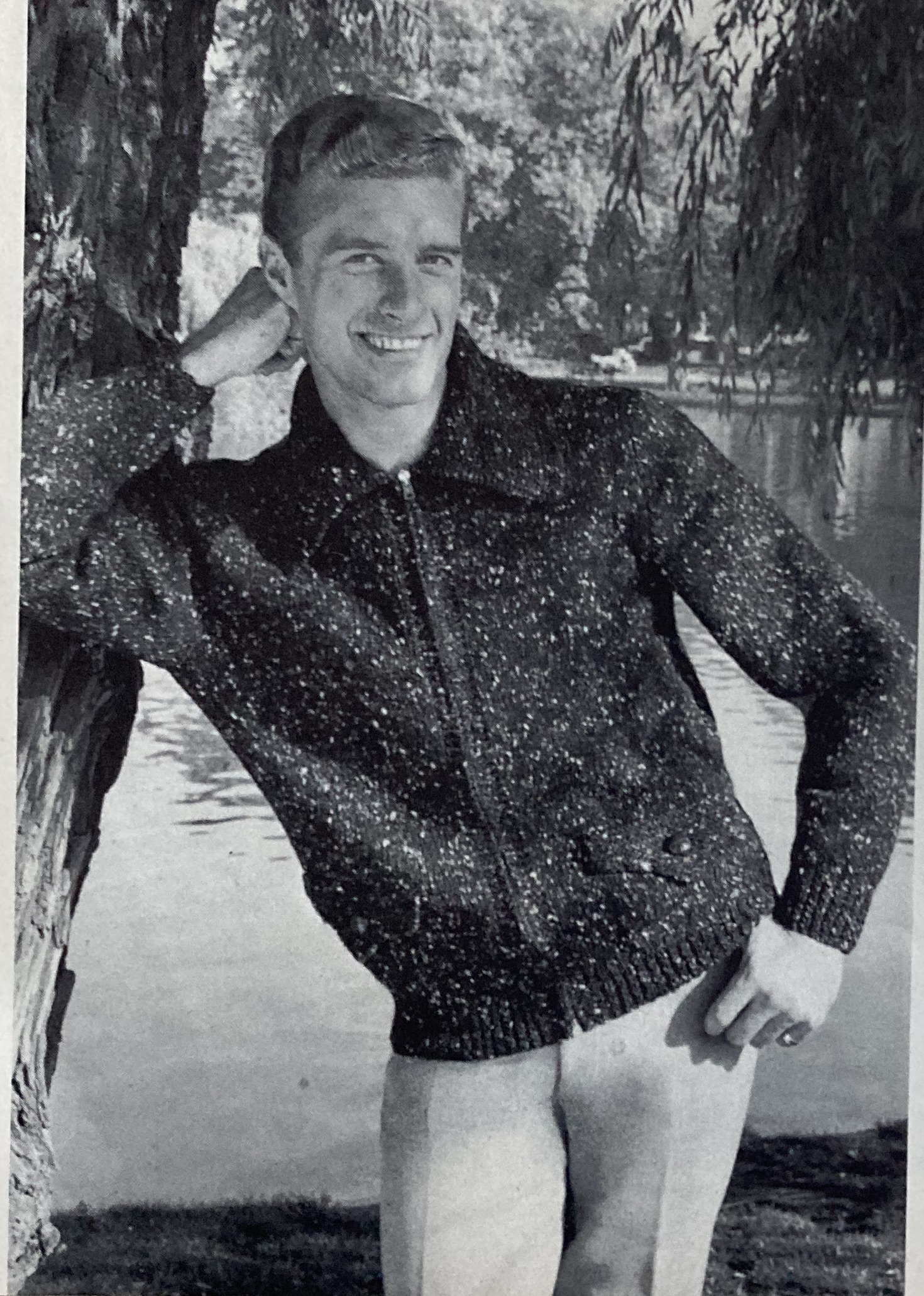
Our cover design is a sweater suit in in plain DK and tweedy Patons “Glenora” wool. There’s an equally tweedy cardigan in bulky Ariel for women as well as garments with fun colour motifs and textured stripes. The colours are warm and vibrant, with deep pinks and yellows prevailing. Men get a very yellow pullover with nice cable details and a zip-up cardigan for the casual “country look” (with a coquettish smile from our handsome model.)
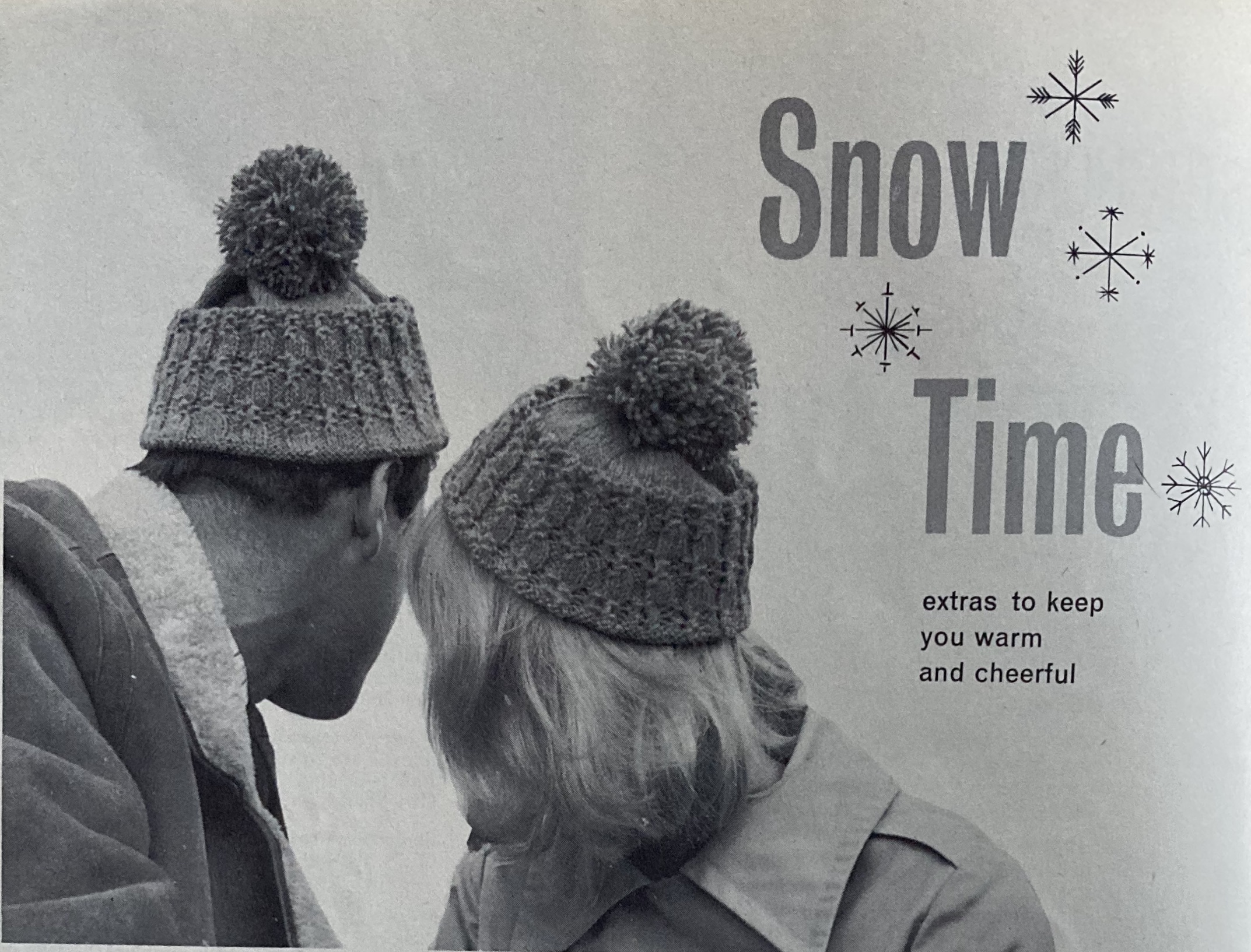
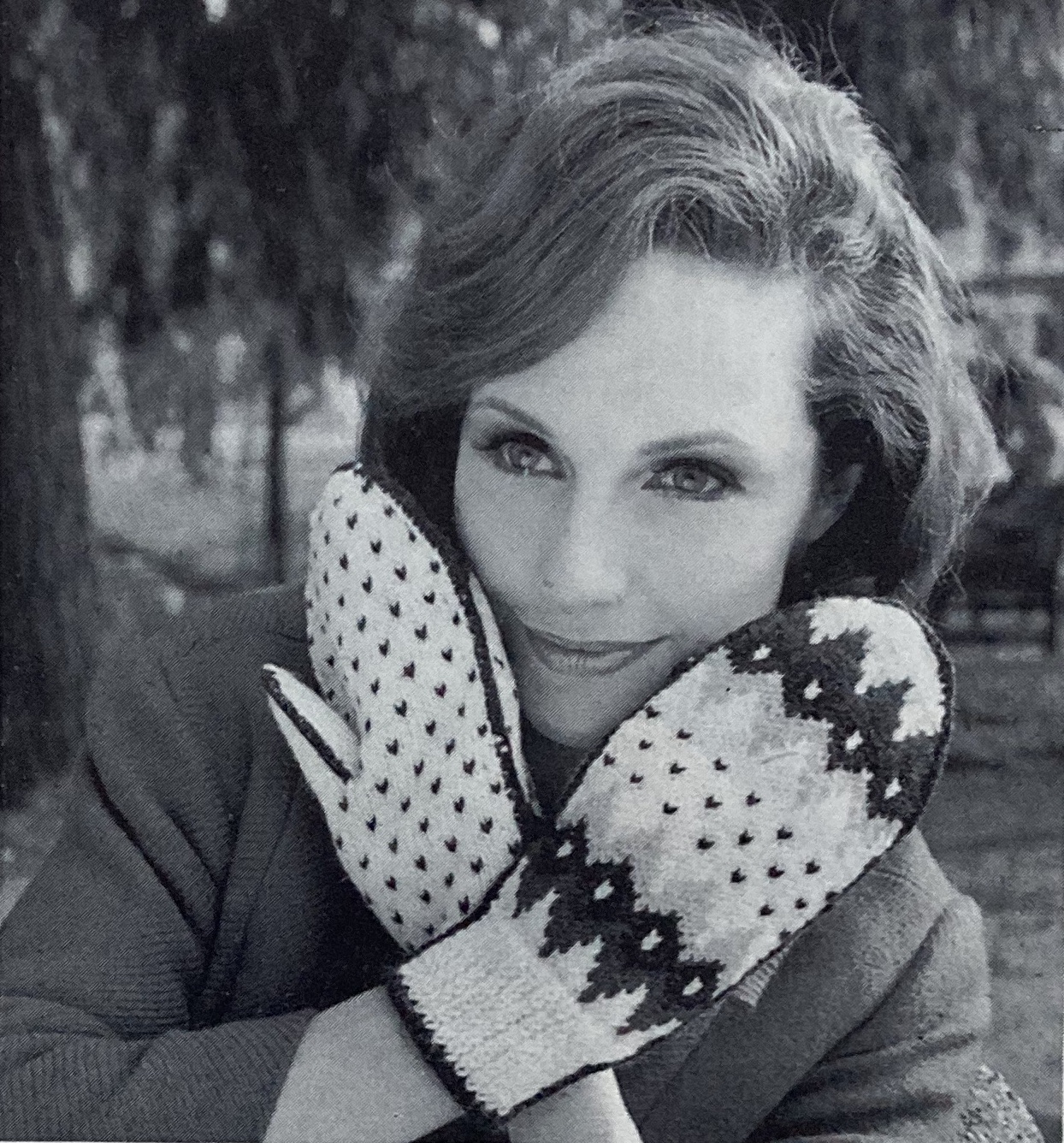
Appropriately enough for January, the accessories are warm and practical: cheerful hats in an interesting tied-loop stitch for “him and her” and warm mittens in stranded colourwork. As usual for this time, the stranded patterns, even for gloves, are worked back and forth, with front and back pieces worked separately and crocheted together.
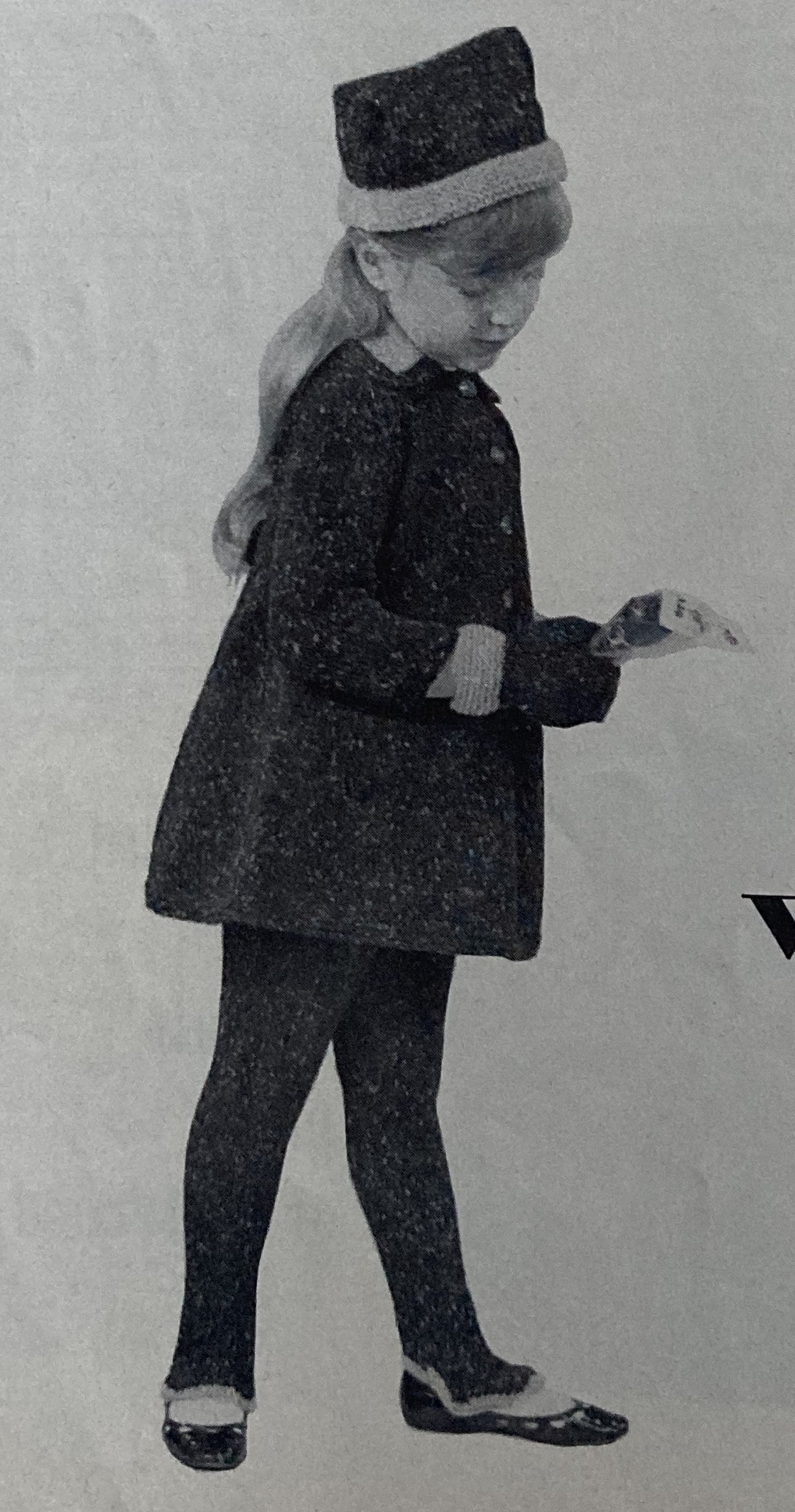
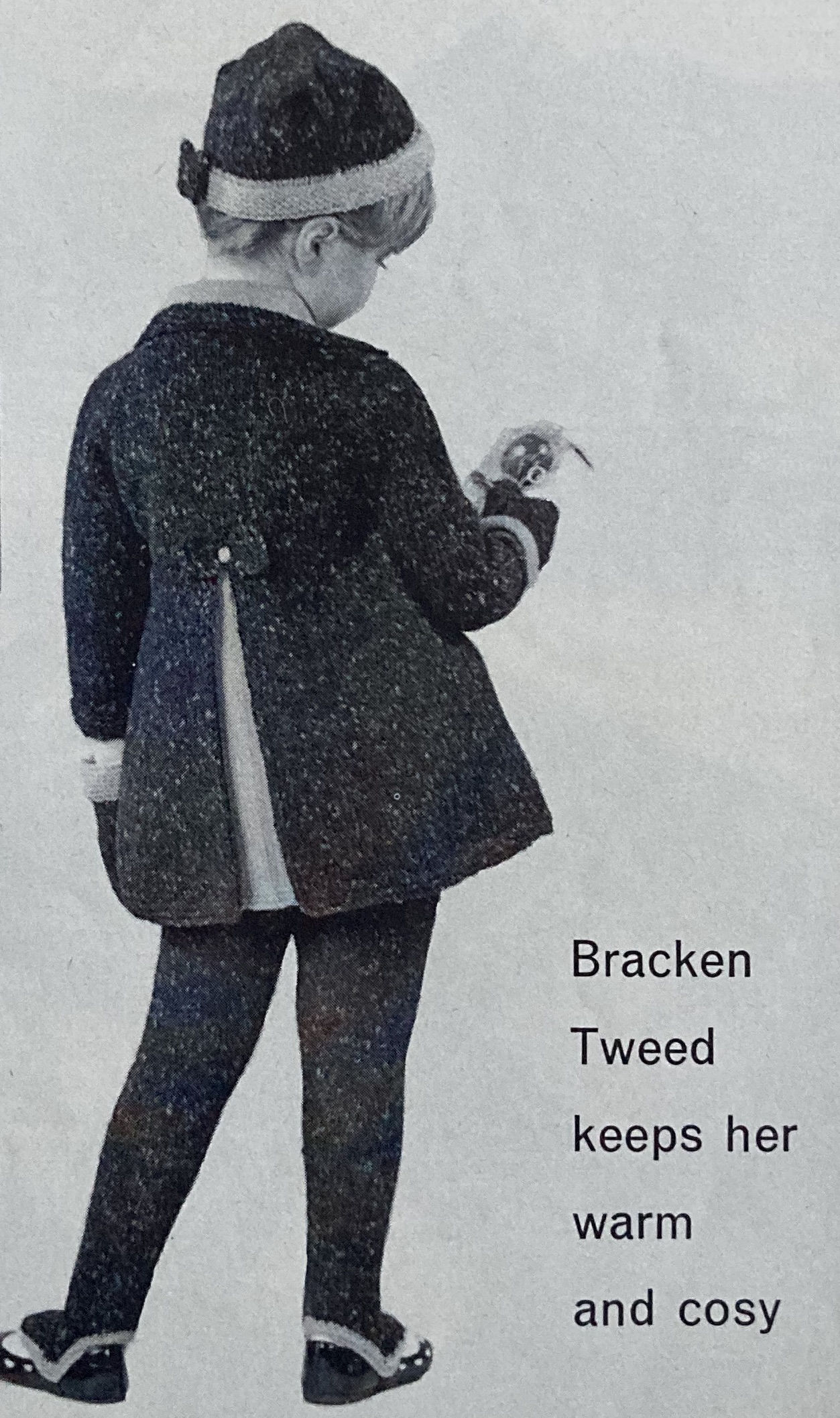
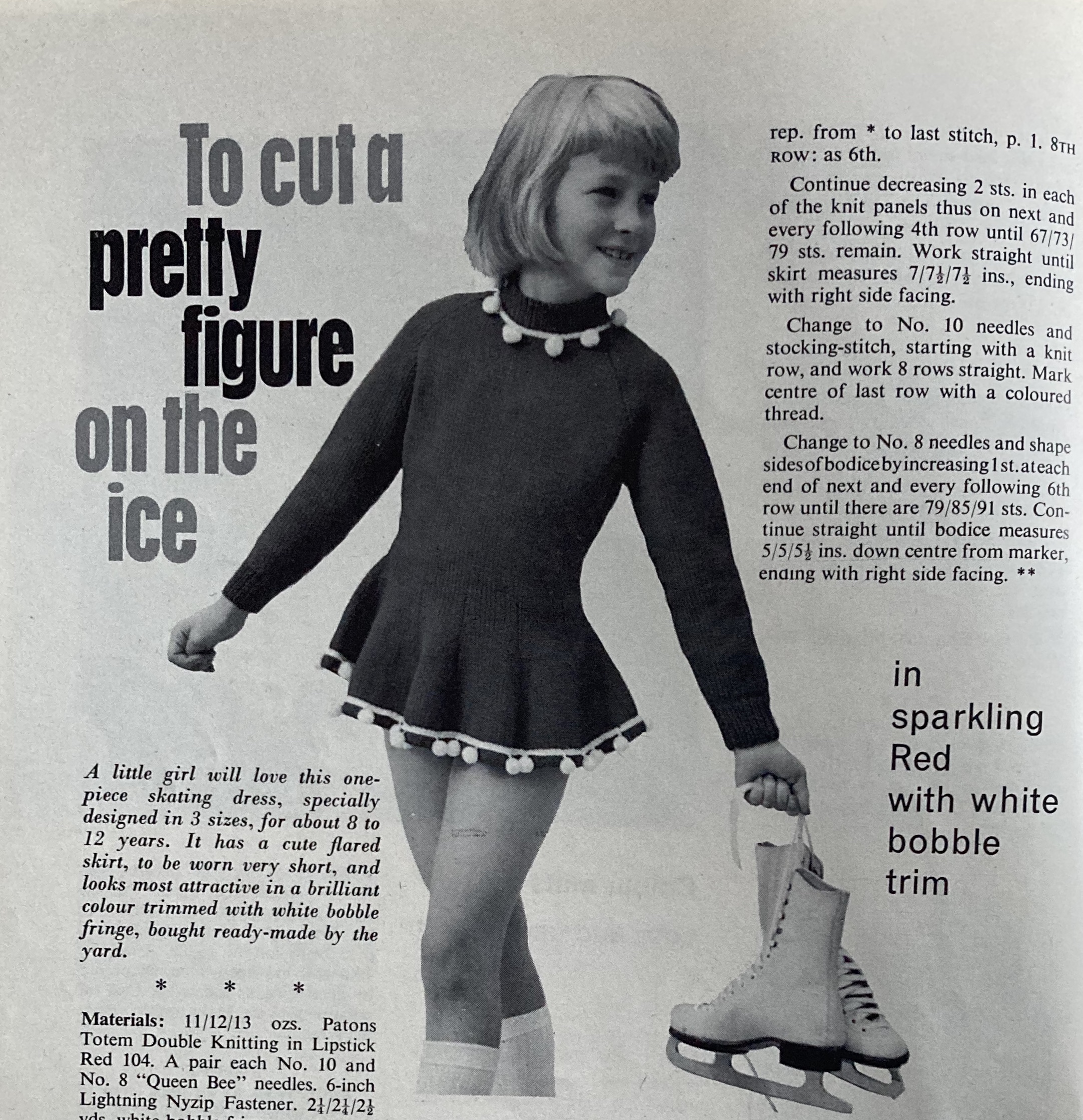
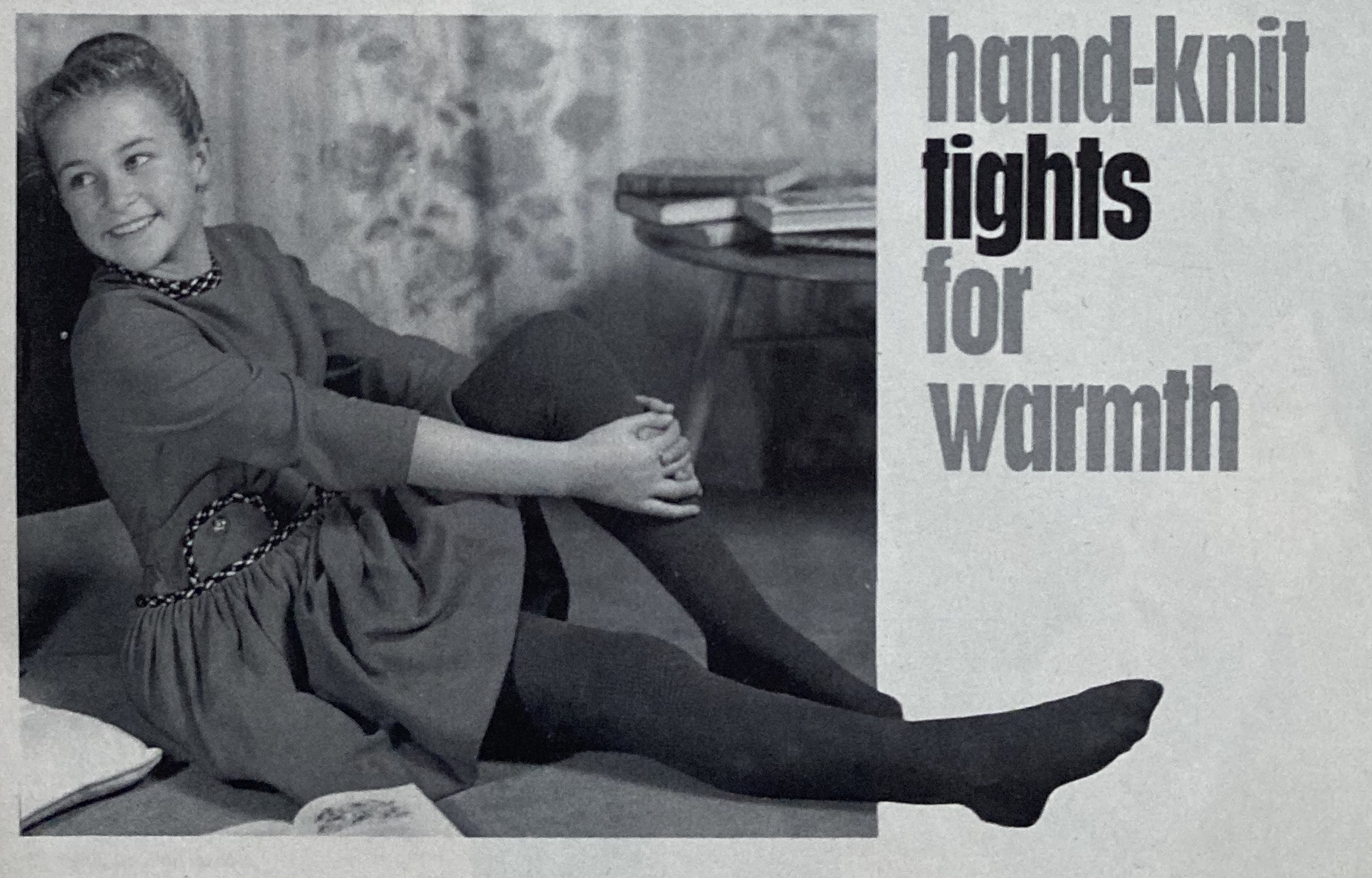
There are three fantastic designs for a young girl in this issue: a wonderful “walking set” for a toddler, a warm wool dress for an ice-skater and — at long last! — hand-knitted tights to keep a girl’s legs warm. (Strangely, our skating model is not wearing the tights, though you think she would need them out on the ice more than the young model pictured in an indoor setting!) I love the toddler’s outfit, with its contrasting colour in the flared back seam of the coat and ribbing on the hat, mittens and leggings. I like the seated girl’s dress too, as well, though it’s neither knitted nor one of the magazine’s designs.
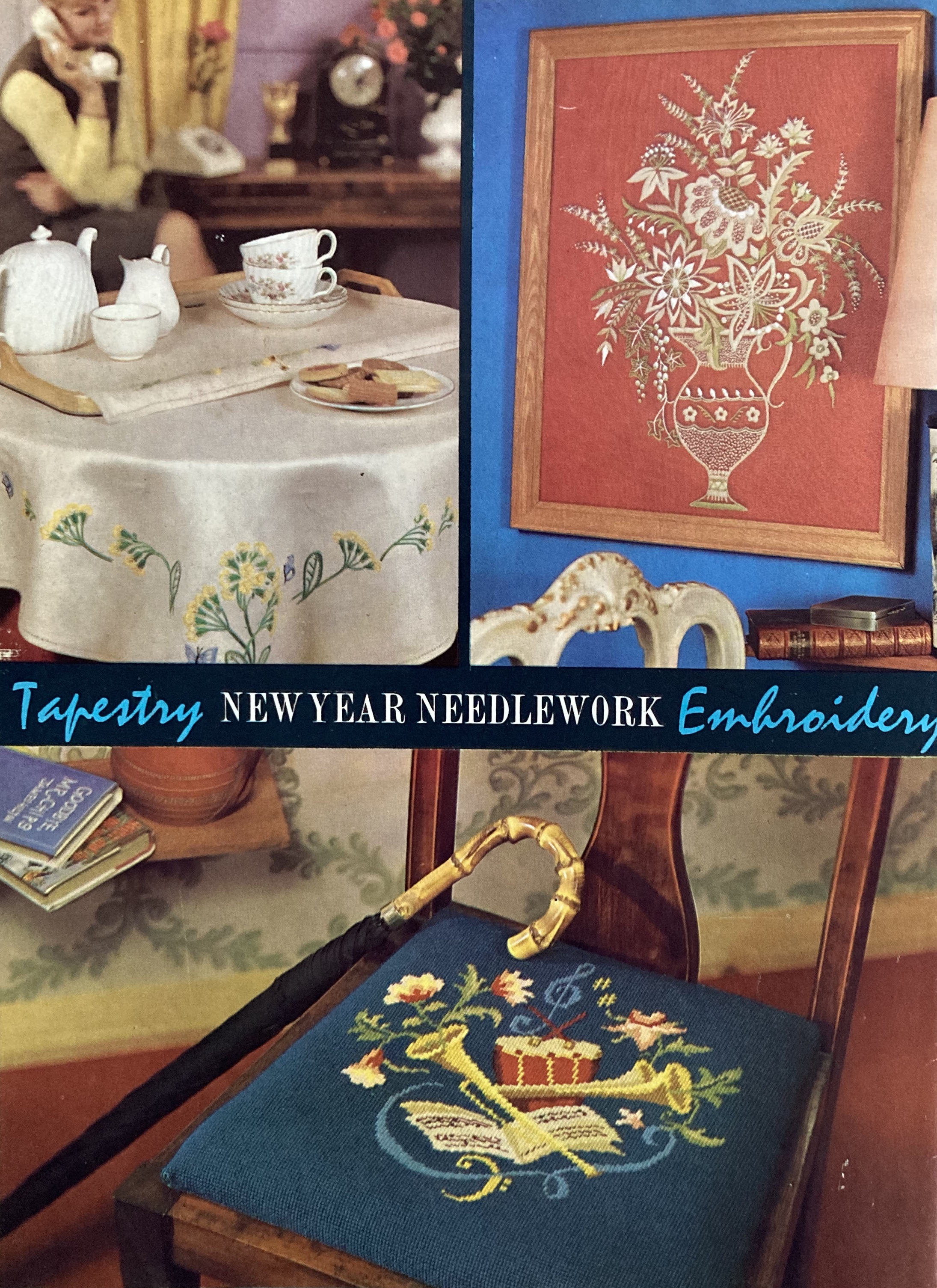
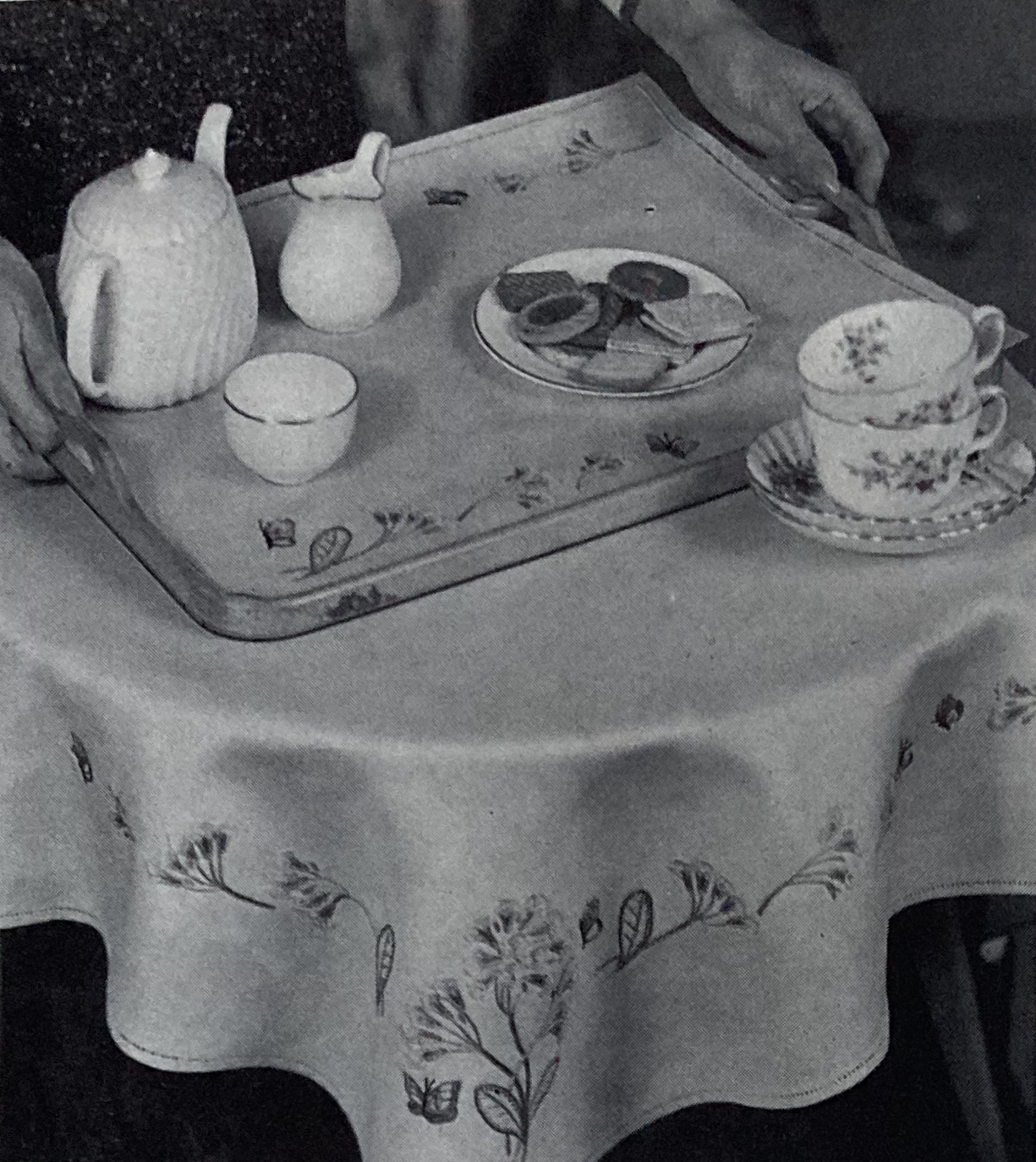
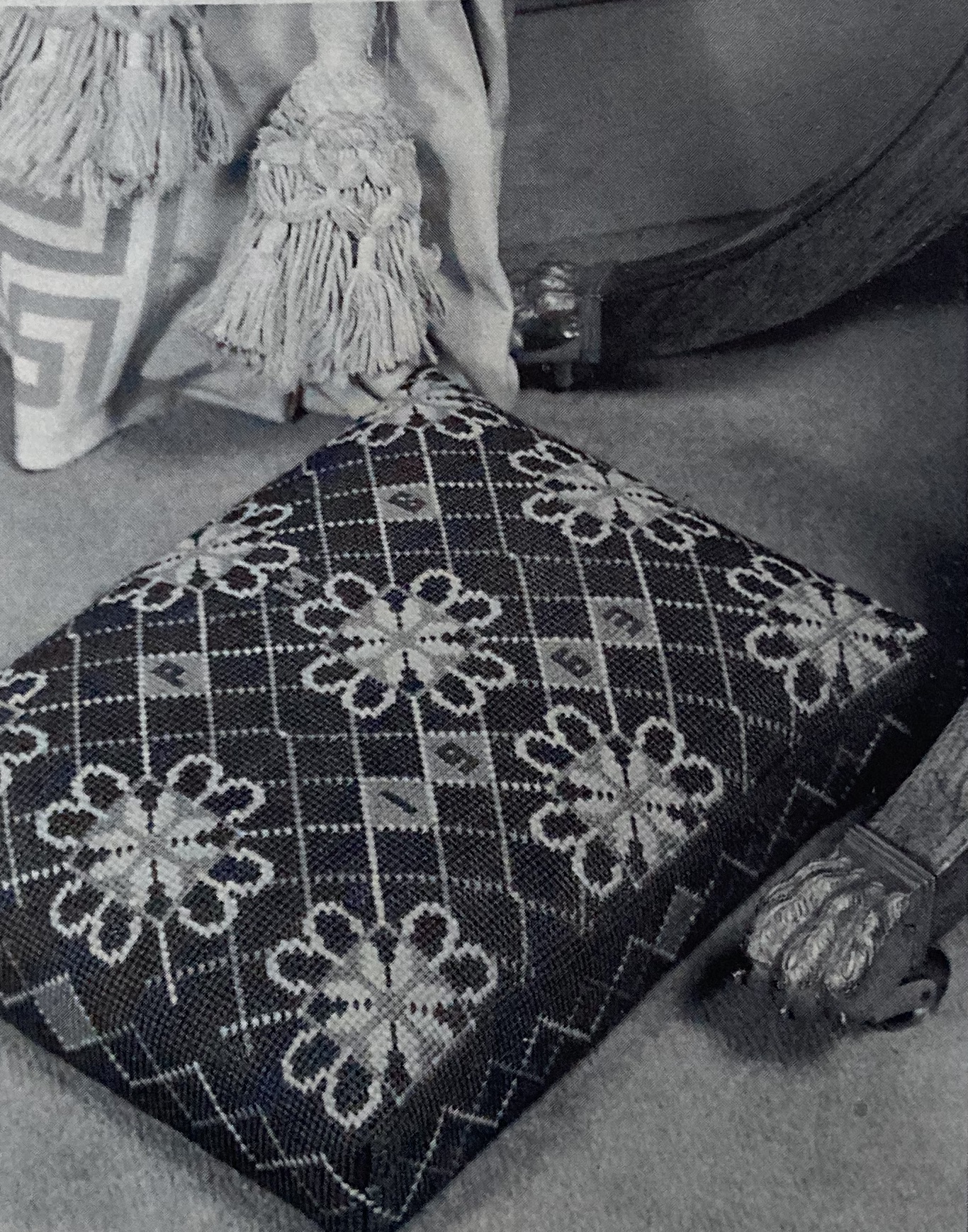
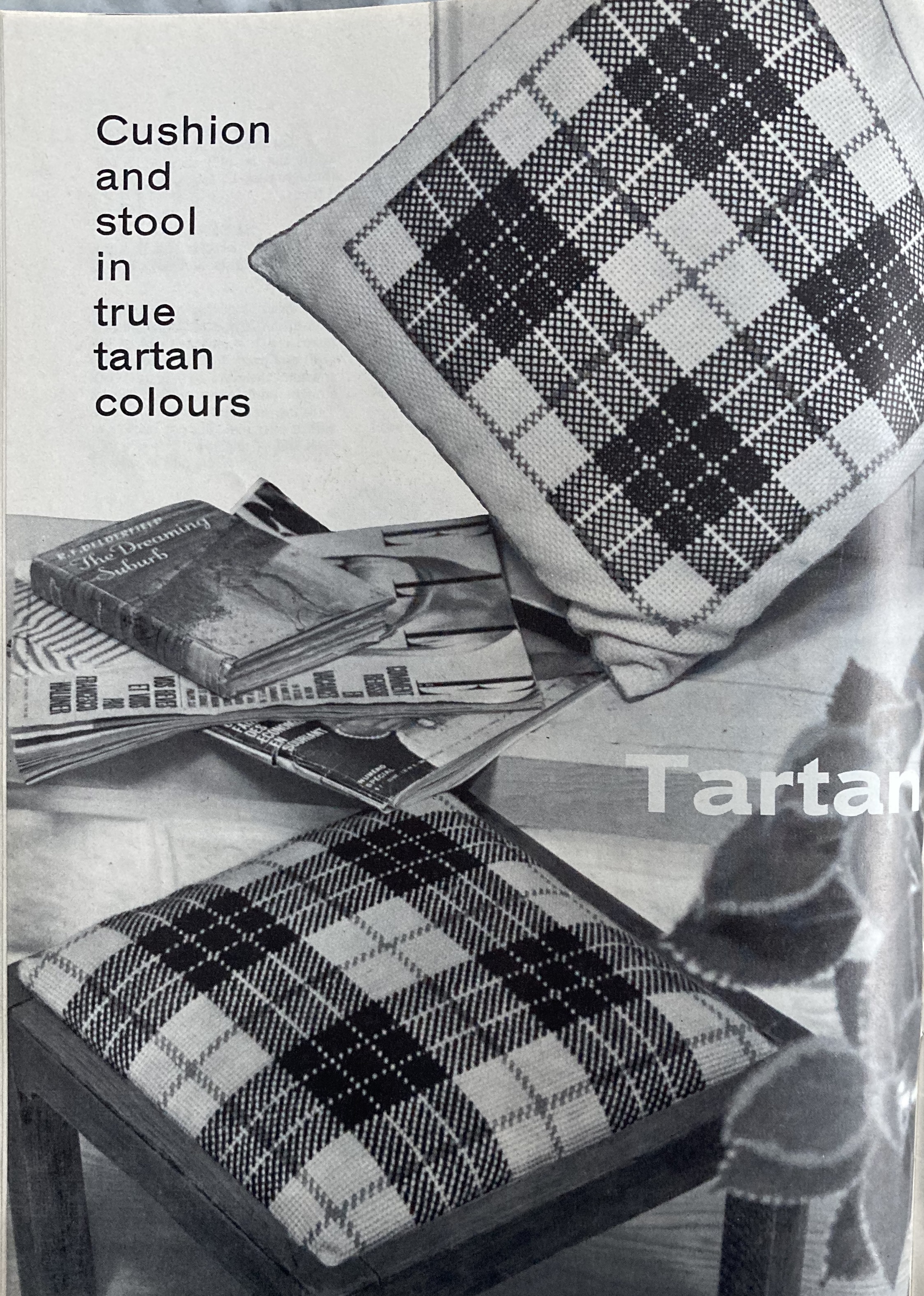
The homeware projects are fairly standard: a floral tablecloth, a tartan tapestry chair seat, a decorative panel with a white vase worked on a red background. The “music” tapestry motif is quite classic, as is the tapestry kneeler for church use.
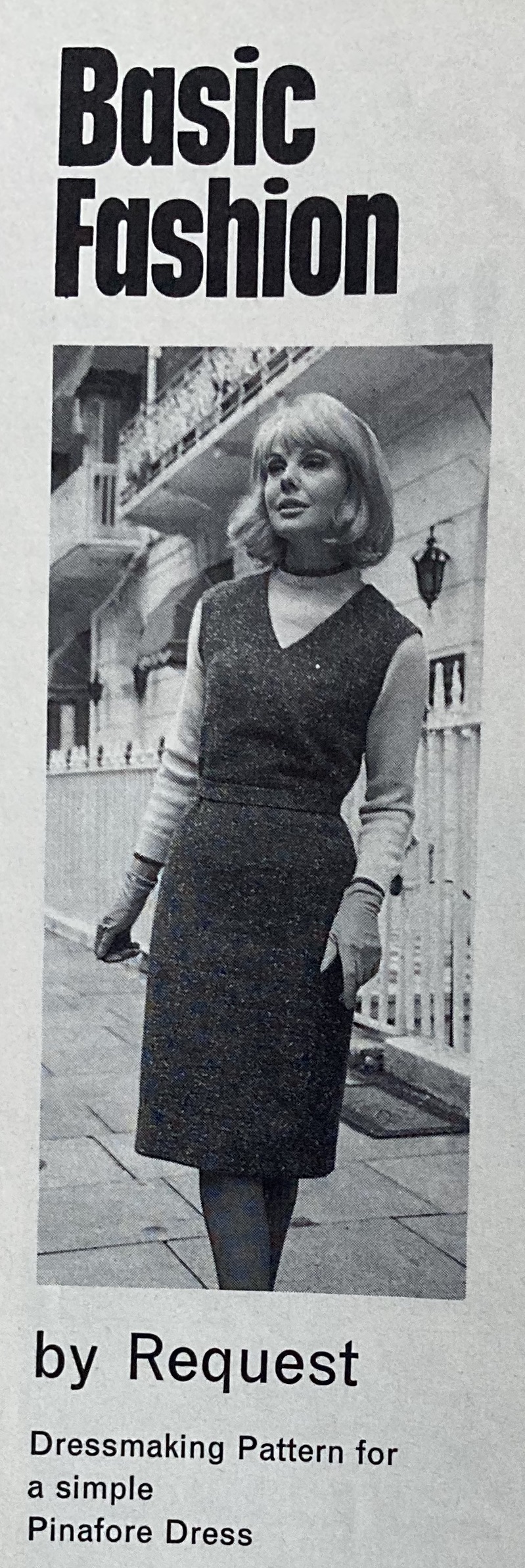
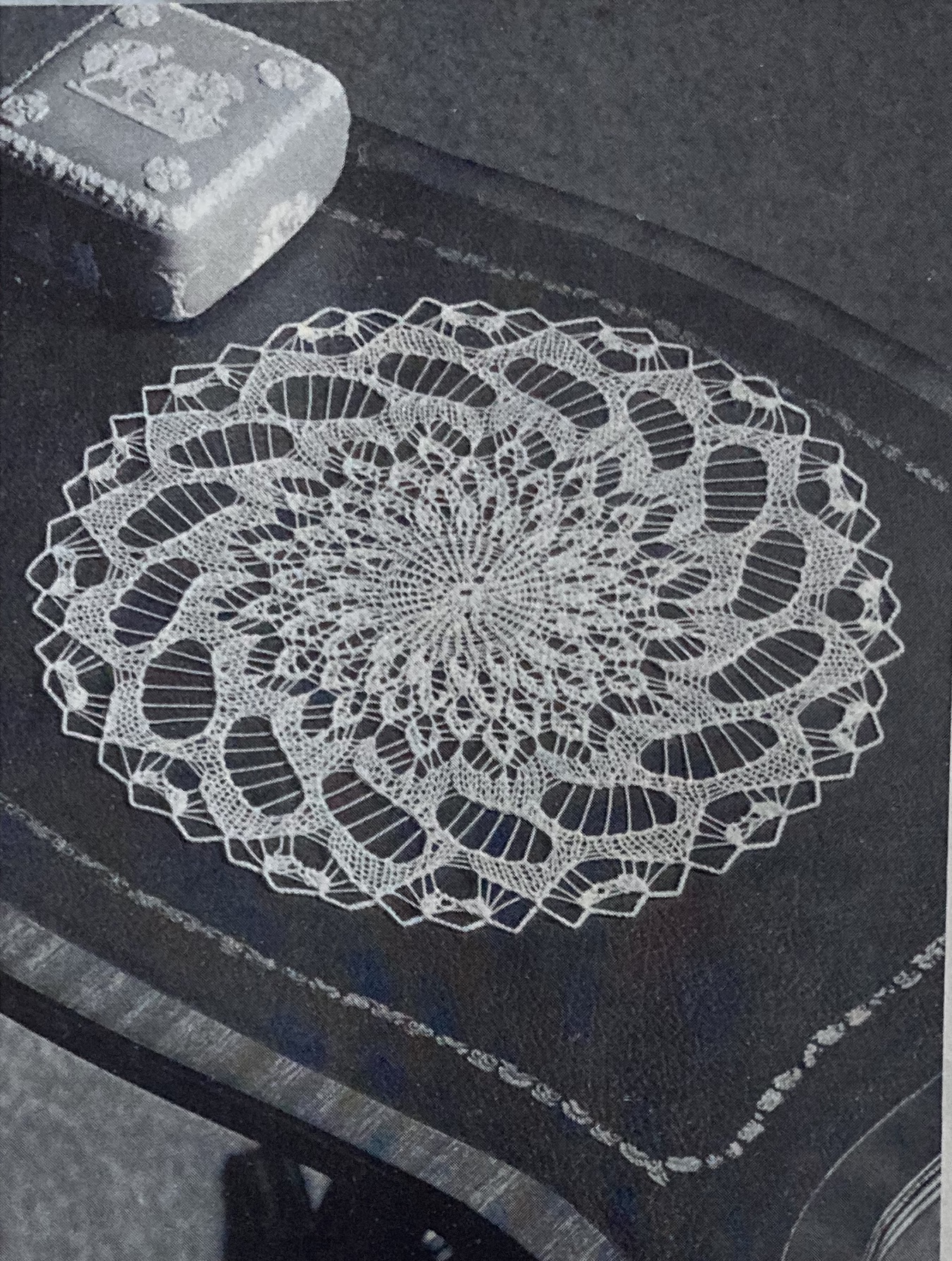
As always, some of the most interesting features are tucked away in the back pages. I would love to be able to send away for this sewing design, offered by Vogue patterns in cooperation with Stitchcraft. It’s a simple, sewn woolen “pinafore dress” that could be worn over a blouse or lightweight jumper, with a blazer for a suit effect, etc. Unfortunately, I can’t sew well enough to reverse-engineer a no-longer-existent sewing pattern from a photo. Also, what a beautiful knitted doily.
As much as I would love to make the toddler’s walking outfit, I don’t currently know a child of the right age, and starting another huge project seems daunting at the moment. I’ll probably skip ahead or back a few years to find a project from another issue that will help me de-stash. Stay tuned for details, and happy New Year!










 The Stitchcraft Sixties