December 1963: Appliquéd Archie

My December project was a bit of a detour: an adaptation of a little embroidery design from the “readers’ pages” of the December 1963 issue.

A lot of the embroidery and needlework projects in vintage Stitchcrafts have great designs, but are intended for items that I don’t personally need or use: tea cosies, finger plates, chair-back covers, fireplace screens and so on. I had already adapted some of the designs into decorations for useful modern things like this appliquéd tablet cosy, or this embroidered tablet cosy, or this other embroidered tablet cosy, or various vegetable bags like this one, this one, and this one. In this case, a dear person in my life had recently bought a pocket synthesizer and requested a soft case for it as a Christmas present. I aim to please, and adaptations are fun.

1960s Stitchcrafts always featured a children’s comic serial in the back pages, usually a fairy-tale-like story about a child or children (often, a brother and sister) who go on magical adventures. The adventures sometimes involve knitting or textile work, and there are often tie-ins with simple projects that a child could make and that relate to the story or the characters. The story that has been running in Stitchcraft since August 1963, “The Smuggler’s Sack”, stars children Joe and Jenny on a quest for the mysterious “Smuggler’s Sack” that is possibly hidden somewhere in the seaside town with a history of pirates (think Cornwall).

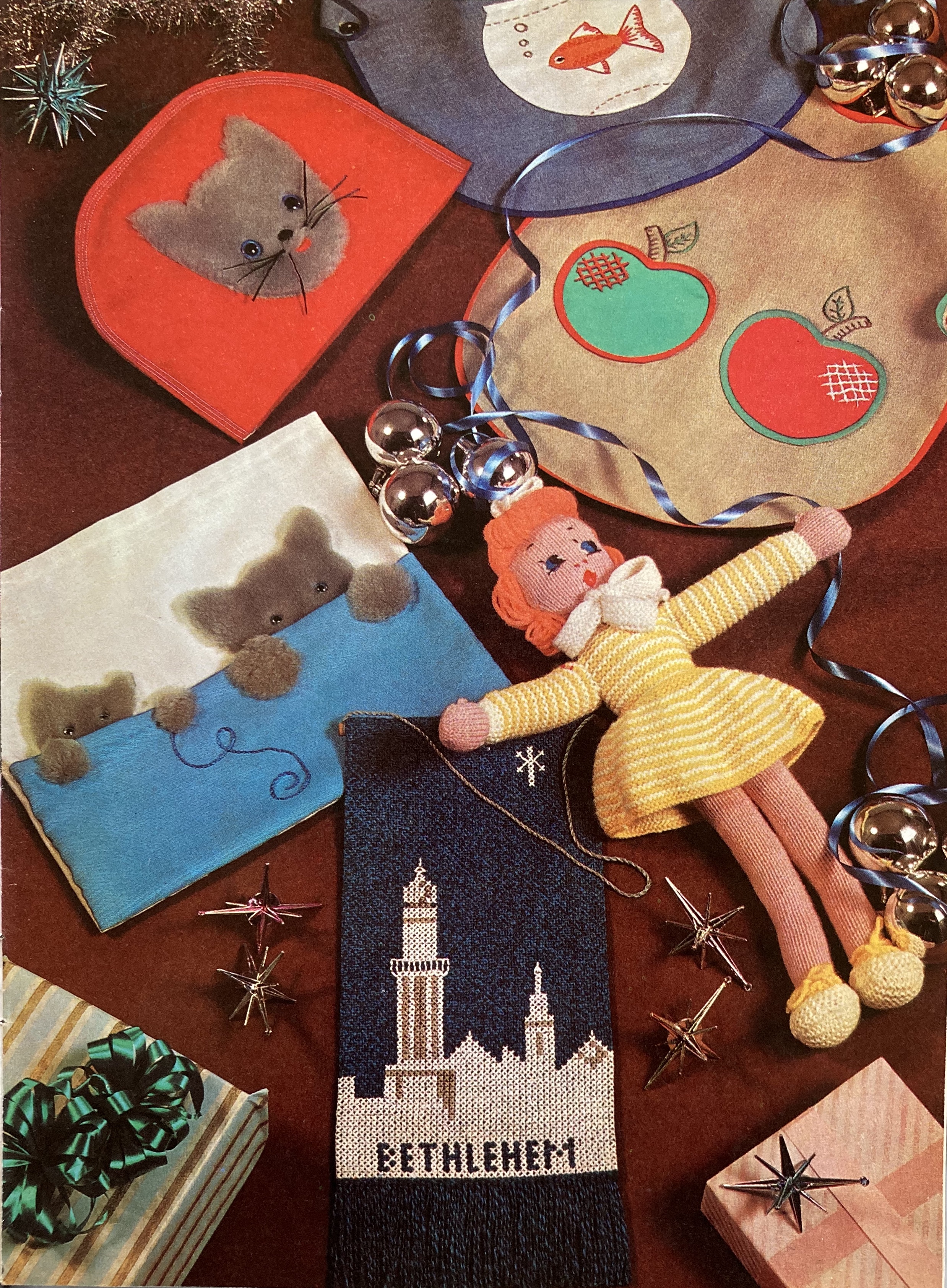
They are joined on their adventures by their horse, Archie, and the December issue offers a design for your very own “Smuggler’s Sack” bag to sew up easily from sailcloth and embroider with a cute portrait of Archie. The Archie picture was very cute and suitable for appliqué, I had an old pair of jeans that would make a great case as well as some fuzzy fleece that would look perfect as a horse’s head. The intended recipient even used to ride horses in their younger years, so it all fit perfectly.

What didn’t immediately fit perfectly was the design for the inside of the case. The pocket synthesizer is not flat: it has two knobs on the front that poke out about 2 centimetres, and two AAA batteries on the back that poke out about 1 centimetre. I had to decide whether to make a simple bag that didn’t conform to the shape, a closed case that let the knobs poke out, or a more complicated case with a made-to-fit inner lining. Of course, I chose the most complicated design…

… meaning I had to first figure out the inner dimensions of the front and back pads, and make sides for the case as well. I am not great at measuring or making things come out straight and even, so this was a challenge. I have to say, I did a really good job with the pattern, though! I made the front pad in felt and stuffed it with a bit of pillow stuffing, and the back pad with some folded fleece, then sewed them to a felt lining. The outer case was made of denim and of course had to be measured to fit perfectly. How frightening! (This is why I like knitted things that stretch and so not have to be perfectly exact).

The appliqué and embroidery was the easiest part and the most fun. I decided to not give Archie a bridle, as in the picture. The “Whee” caption is a joke between the recipient and myself, but conveniently also what a horse says when it neighs happily (if you stretch your imagination a little.) I hate setting in zippers and this one was particularly awful because of the felt and padding, but it worked out OK in the end.

I am really happy with Archie the pocket synthesizer horse and I think he will be well used and appreciated!

Merry Christmas, if that’s your holiday, and Happy New Year to you all.

December 1963: Overview

Cover photo from Stotchcraft magazine, number 360, December 1963

“Christmas is very nearly here” — where did the year go? As always, Stitchcraft‘s December issue is a mix of warm, bulky, quick-to-knit winter garments for the family and little handcrafts for presents and decorations.

Our cover model is wearing a hat in trendy “high-crowned” style with matching muffler. It uses “Glenora”, Patons new tweedy-multicolour wool. Unlike the “tufted” hat from last month’s issue, this one needs no millinery wire to keep it from flopping — the wool is relatively thick and is used double on the hat to make it really solid and windproof. The buttons are purely decorative and are made by covering button moulds with velvet cut from a strip of ribbon.

Other cold-weather accessories include these mitt(en)s, crocheted in a spiral to make the backs and fronts. Aside from the stripes on the fronts, they are almost identical to these mittens from February 1960. The full-size garments are all made of bulky wools for wamth and quicker knitting. There are pullovers for men and women in Big Ben or Ariel wools, a check-patterned pullover in double knitting weight and a cardigan “in larger sizes” (39-42 inch bust). Both of the bulky pullovers as well as the cardigan use variations on twisted or mock-cable stitch patterns, where you knit stitches in the “wrong order” in order to cross them. Big, pointy collars are still very much in fashion and the colours are bright and bold for winter: “Lipstick Red”, “Strawberry Ice” and “Royal Blue”.

Children get “Christmas sweaters” in holiday colours of red, green, and white, with bold snowflake motifs in stranded patterning.There’s a frilly bed jacket in lightweight 3-ply and a waistcoat variation on the men’s pullover, as well. They’re photographed in colour on the inside back cover. Funny that, with all the brightly coloured garments in the issue, they chose the one beige garment for the colour photo! You do see the tweed flecks better, though. That amazing creation at the top of the page is the Royal Pavilion in Brighton, reproduced in fine embroidery in felt appliqué. This isn’t the first huge, complicated wall panel project we’ve seen and I can only assume that Stitchcraft had a really good appliqué designer.

The other homeware/decoration projects are small and easy, intended for little gifts, holiday bazaar sales or to brighten up the festive table. You can knit a little puppy doll complete with its own fully dressed bed, or make some silly but nonetheless cute egg cosies (the human-looking one is supposed to be Friar Tuck.) There’s a “pinny” apron to sew for a child, party table mats with a star motif, and these stuffed and embroidered felt stars to hang on the tree. I made one of these last year and will probably make some more this year — they are quick to make and just the thing for a mini-present.

If you have a little more time (but don’t want to tackle the Brighton panel), you can knit a knitting bag, crochet a floor mat, or make a hard-wearing cushion in a standard “ribbon” needlepoint design. If you’ve really got some time on those long winter nights, you can make a set of dining-room chair seats in tapestry, or a large pile rug in a “Byzantine” design. (Beautiful leather satchel in that photo as well! It’s a just a prop, though, of course — Stitchcraft‘s crafts didn’t extend to leather-work.)

Then there’s this design for a little sewn bag with an embroidered horse named Archie on it. Archie, since you asked, is the horse in the children’s comic “The Smuggler’s Sack”, which has been running on the back pages of Stitchcraft for the past few months. It features children Joe and Jenny, who live in a waterfront town whose mystery pirate/smuggler treasure has never before been discovered. Will they be the ones to find it at last? As of yet, they’ve found a mysterious box … which has a false bottom … which contains a map and a key .. which leads them to .. an inn called “The Smuggler’s Sack.” They’re disappointed, but could the inn hold the clue they’ve been looking for? Shades of Daphne du Maurier!

“Archie” will in fact feature in my December project, where I will be embroidering him onto a modern soft case / traveling bag for a pocket synthesizer.

Happy Holidays, everyone!

November 1963: Tufted Hat

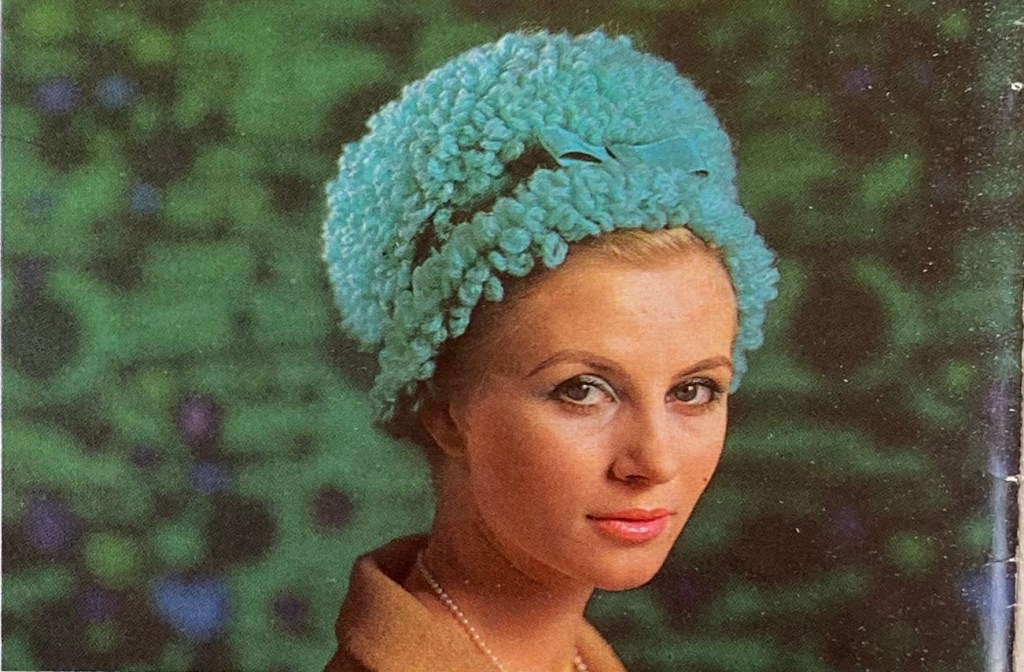
Once upon a time, there was a top hat that fell in love with a mop. Or was it a poodle? Either way, they had a child and it was… this hat. This amazing “tufted” hat made in crocheted loop stitch, “snug and gay” and shown here in a glowing shade of “Blue Lagoon” turquoise.*

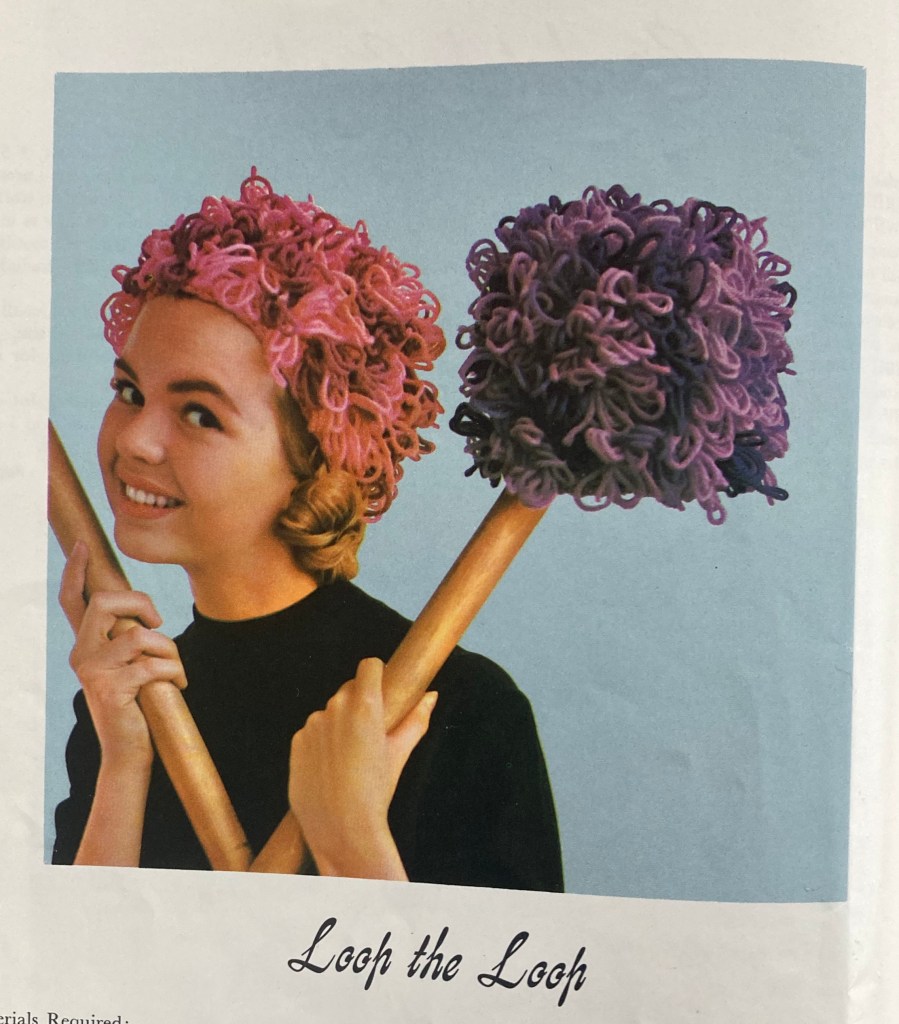
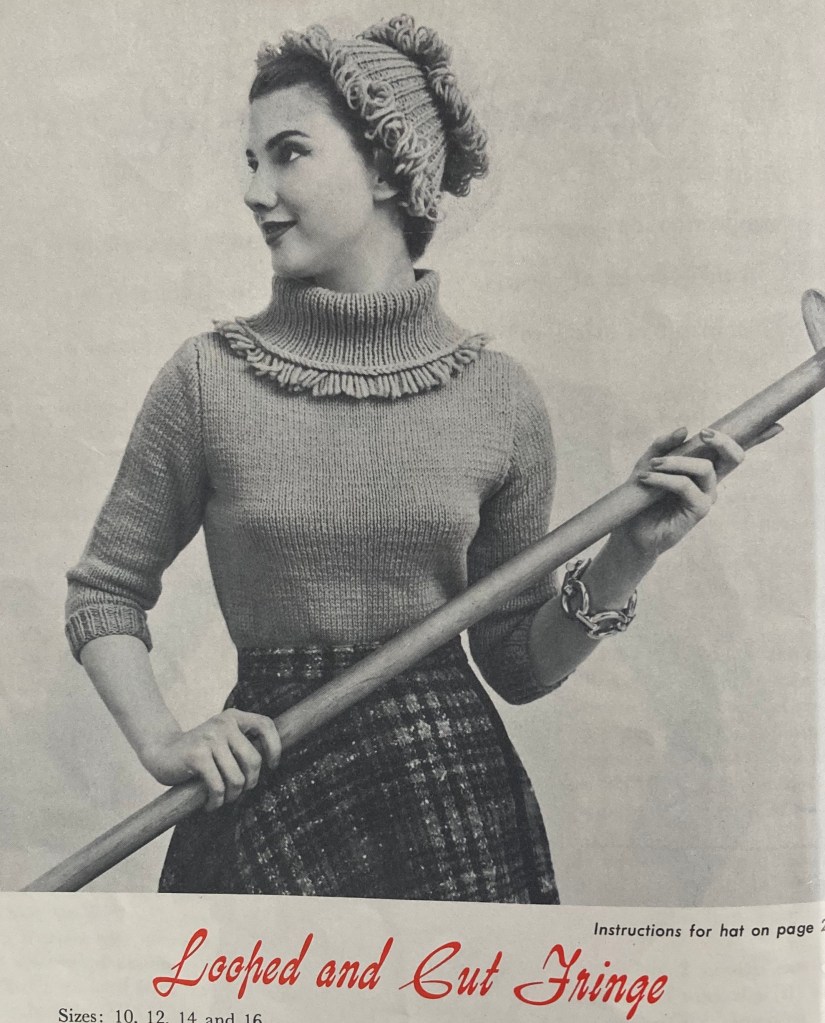
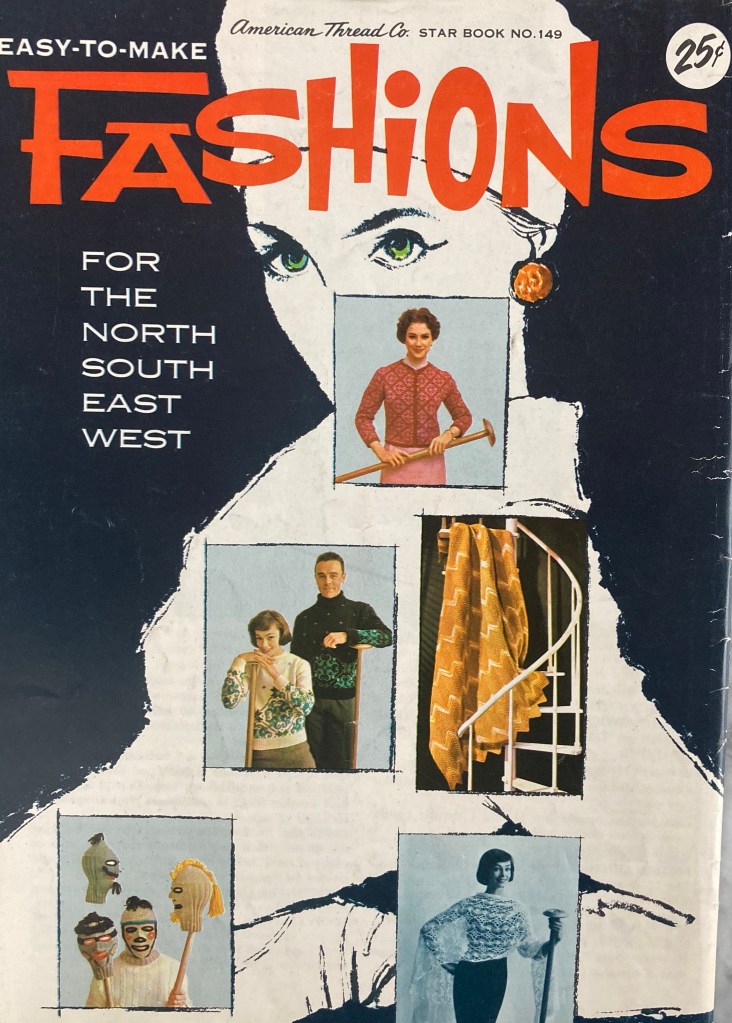
Loop-stitched accessories (knit or crocheted) enjoyed a trend in the early 1960s, and some of the designs were even more over-the-top than this one. Here are some examples from a 1959 American Thread Co. magazine book, “Fashions for the North South East West” for a “Loop the Loop” knitted hat as well as a knitted, looped-and-cut fringe hat and sweater. (The thing the model is holding the “Loop the Loop” on is supposed to be an oversized knitting-needle pole, but it just makes the hat look more mop-like.)

My first challenge with the crocheted Stitchcraft hat was finding the right wool. It’s written for “Ariel”, a wool-synthetic mix which is described as “triple knitting” but also “feather-light” and has between 15 and 19 stitches to 4 inches in stocking stitch, depending on the design. It seems to be normally plied and just slightly fuzzy. I had a hard time finding modern yarn in the right thickness (DK is usually 22 sts in 4 inches, and the bulky yarns I could find were more in the 12-16 stitch range.) Ultimately, I settled on Schachenmayer “Boston”, which is technically too bulky for this project, but which gave a great loop effect. I figured I could always make the hat a little smaller. It’s acrylic, which, I know, not great from an environmental standpoint, but very vintage-appropriate (not to mention probably waterproof).

I am not the world’s best crocheter and the loop stitch was a new technique for me, so it took a bit of getting used to. The word-for-word instructions are “insert hook into next stitch, place first finger of left hand behind hook and take wool anti-clockwise under finger and over hook then under finger again, (put wool clockwise over hook and draw through two loops) twice.” And true enough, if you follow those instructions exactly, it works, but requires a certain dexterity of brain as well as fingers. (1963 was a long way from the age of video tutorials…)

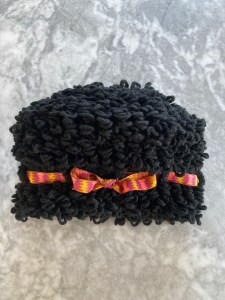
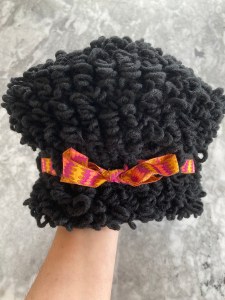
The finished hat has a loop of millinery wire in the crown to keep it from collapsing (and make it fit over your bouffant) and a ribbon to give it some shape. I had a bit of ribbon in stash with a very psychedelic pattern (so actually a few years too late in terms of 60s fashion — Stitchcraft has definitely not gone psychedelic yet — but it’s what I had.)

My colour choice was basic black, which I realised halfway through was maybe not a great idea. On the plus side, the loop fabric looks uncannily like those Persian lamb coats that were quite popular in the the mid-century years, and the hat would make the perfect matching accessory. You could even go all out and crochet yourself a modern faux-Persian-lamb coat in vegetarian-friendly synthetic yarn! Any vegans out there who have guilty dreams of vintage Persian lamb, this is your answer! I don’t have a Persian lamb coat though, nor do I particularly want one, and though I see the appeal of making a faux one, I don’t want it enough to put in the time and effort to design and make one. (Billie from the Show and Tell podcast suggested making long cuffs for a cloth coat in loop stitch to match the hat — that’s a really good idea.)

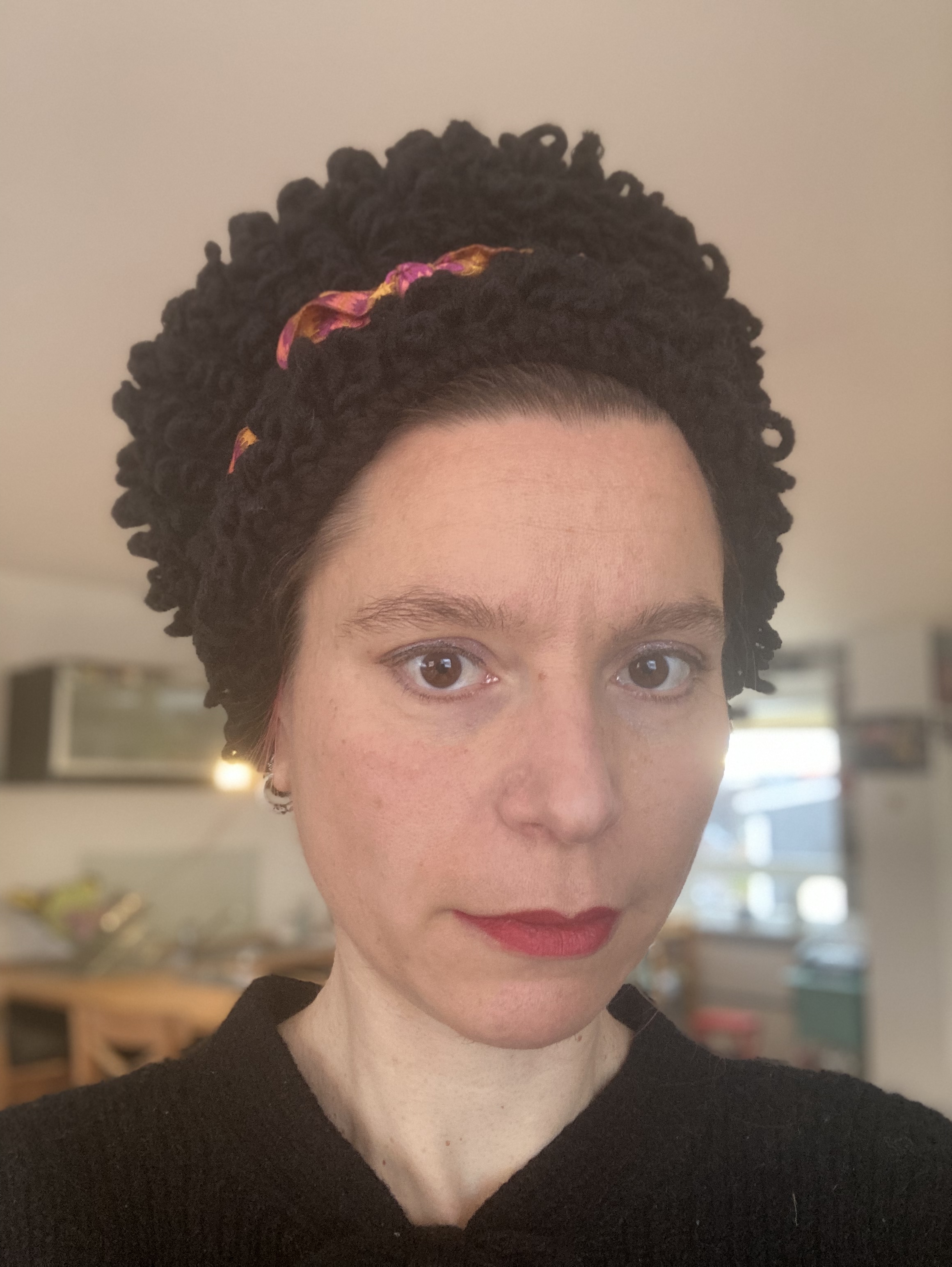
On the down side, I realised that this particular design in black had a high probability of making me look like either a recently groomed poodle or a white person in an Afro wig, neither of which are looks that I am trying to cultivate.

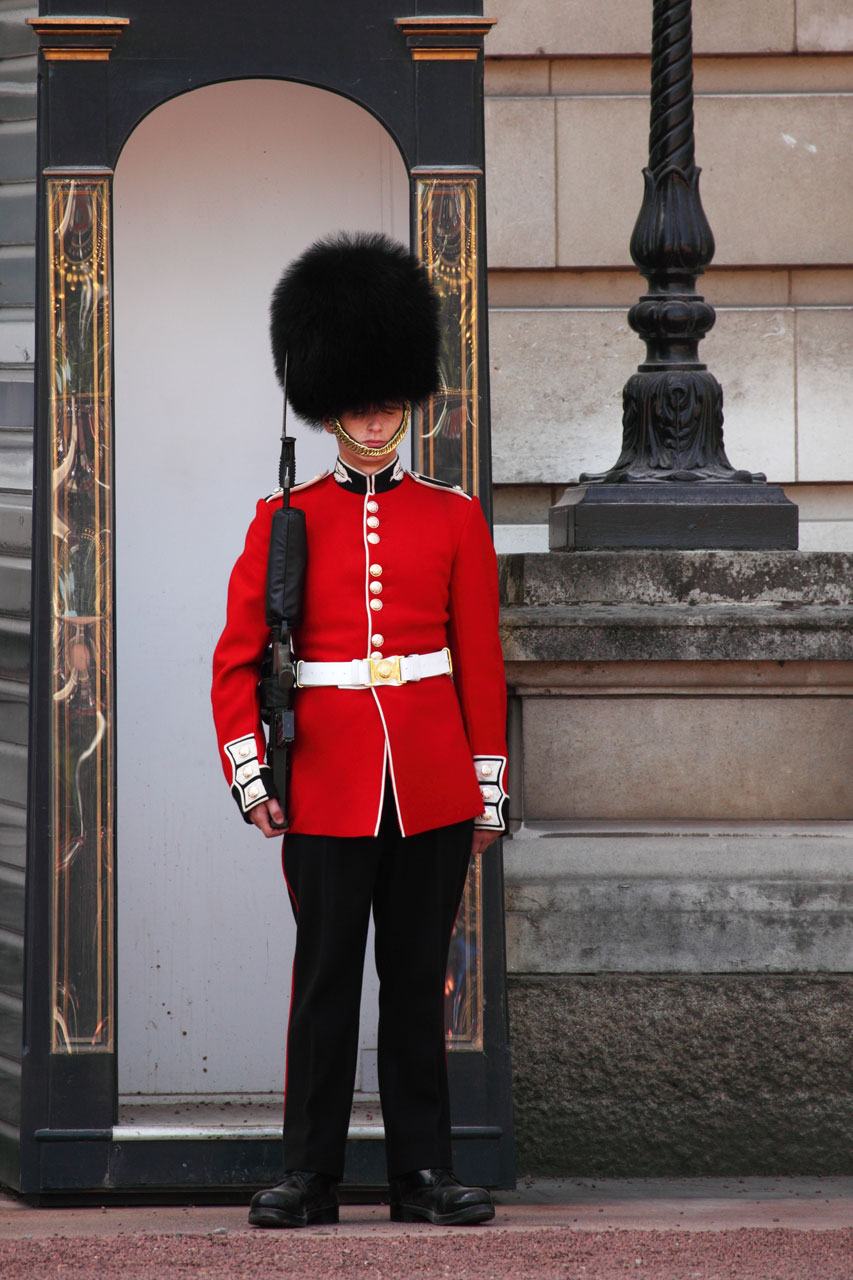
It ended up looking quite accurate, so you could say it turned out well, but I have to say, I am not convinced. The photo doesn’t do justice to the sheer ridiculous size of this thing, and the mop/poodle association is strong. If I wear it on top of my head, it looks like I am trying to join the Buckingham Palace guards.

If I push it back behind my hairline like the Stitchcraft model in the photo, it has the right basic shape and looks very 1960s, but it is still huge — the photo doesn’t do justice to the sheer size and mass of it. As always, I tried to recreate the magazine photo, and now I understand why the model looks less than overjoyed.

I don’t know what I am going to do with this hat, but I had fun making it and learned a new crochet technique, so I’m satisfied.

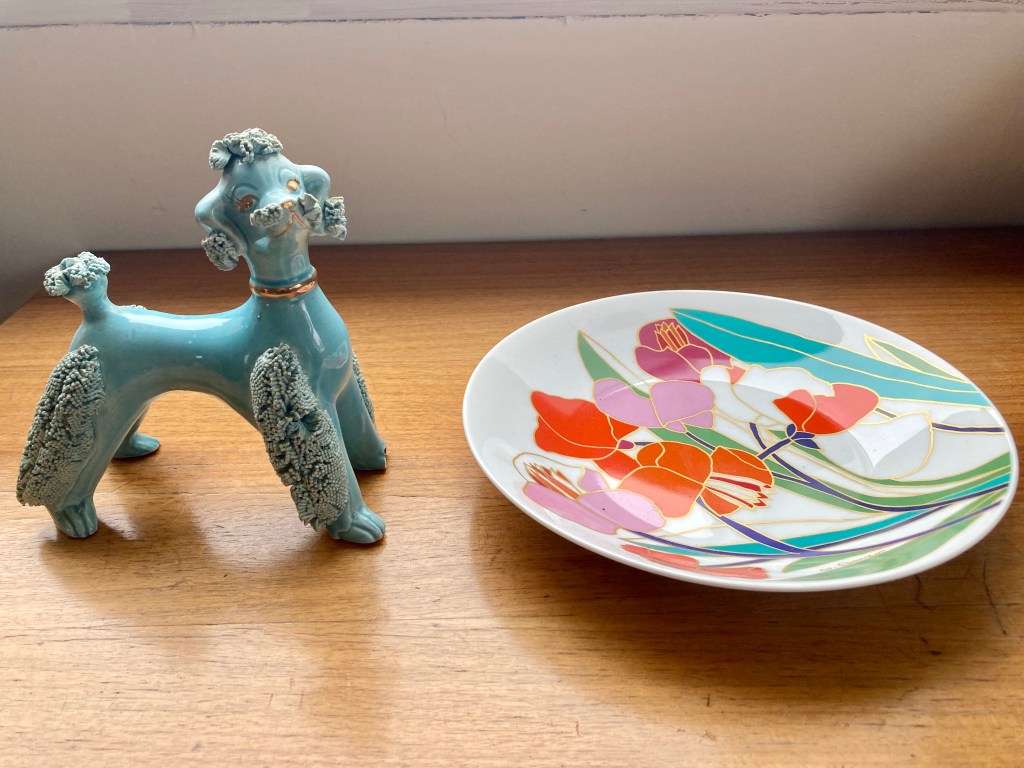
*For anyone thinking, “Turquoise poodles don’t exist”, may I present this amazing knick-knack that I inherited from my grandmother? (With historically appropriate plate.)

November 1963: Overview

The autumn months are always the best for knitting magazines, with a mixture of heavy garments for colder days, easy-to-make holiday gifts, warm accessories and a few glamorous items for parties. Stitchcraft‘s November 1963 issue puts the focus on “warm family fashions… with the emphasis on colour and attractive textures that are interesting to knit and very becoming to wear”. There’s something for family members of every age and “for the petite to the not-so-slim.” The homewares and little projects are quick and fun to be finished in time for holiday decorating and/or gift-giving.

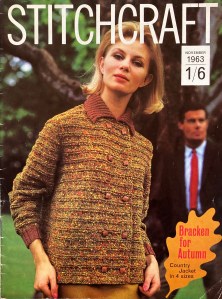
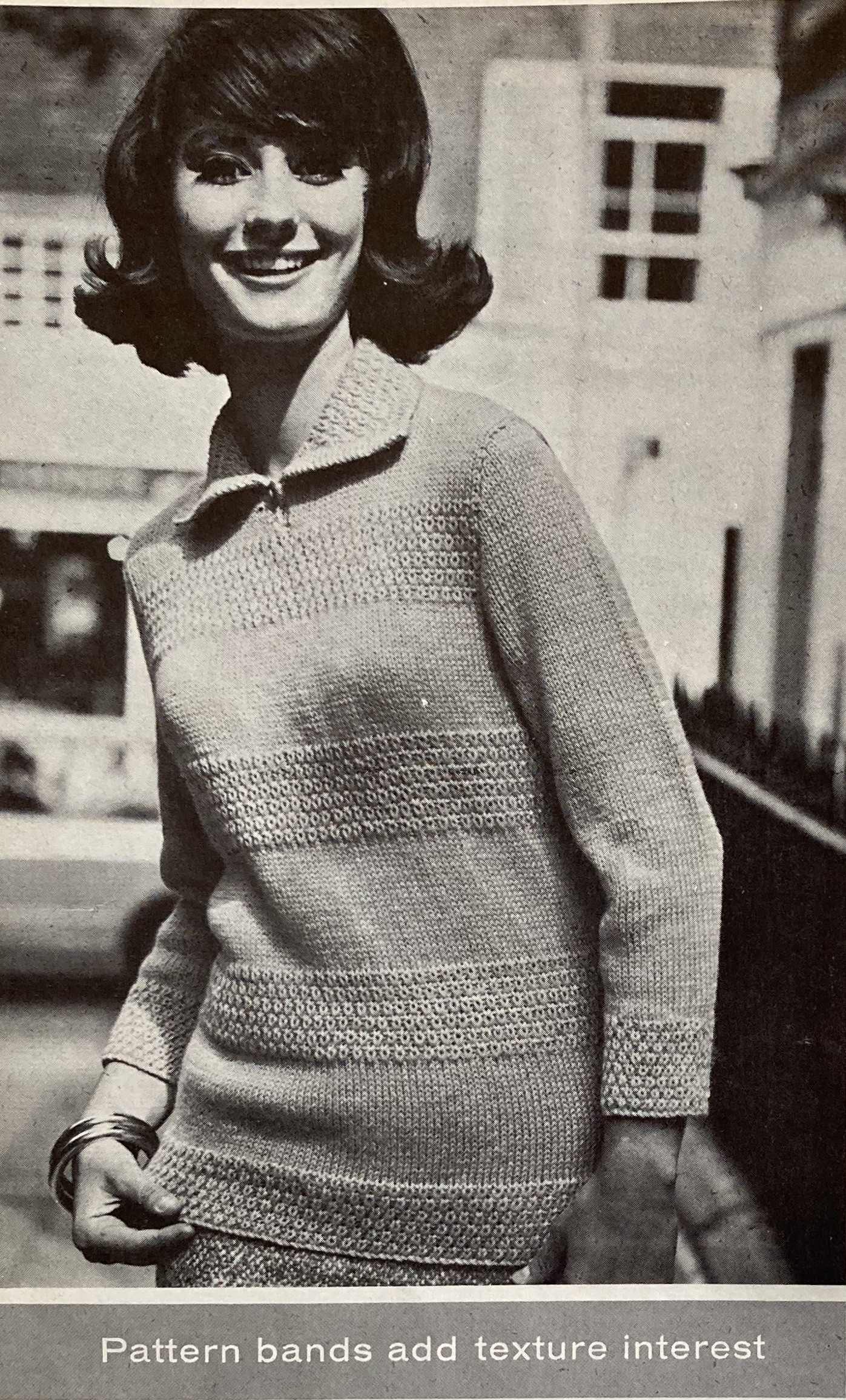
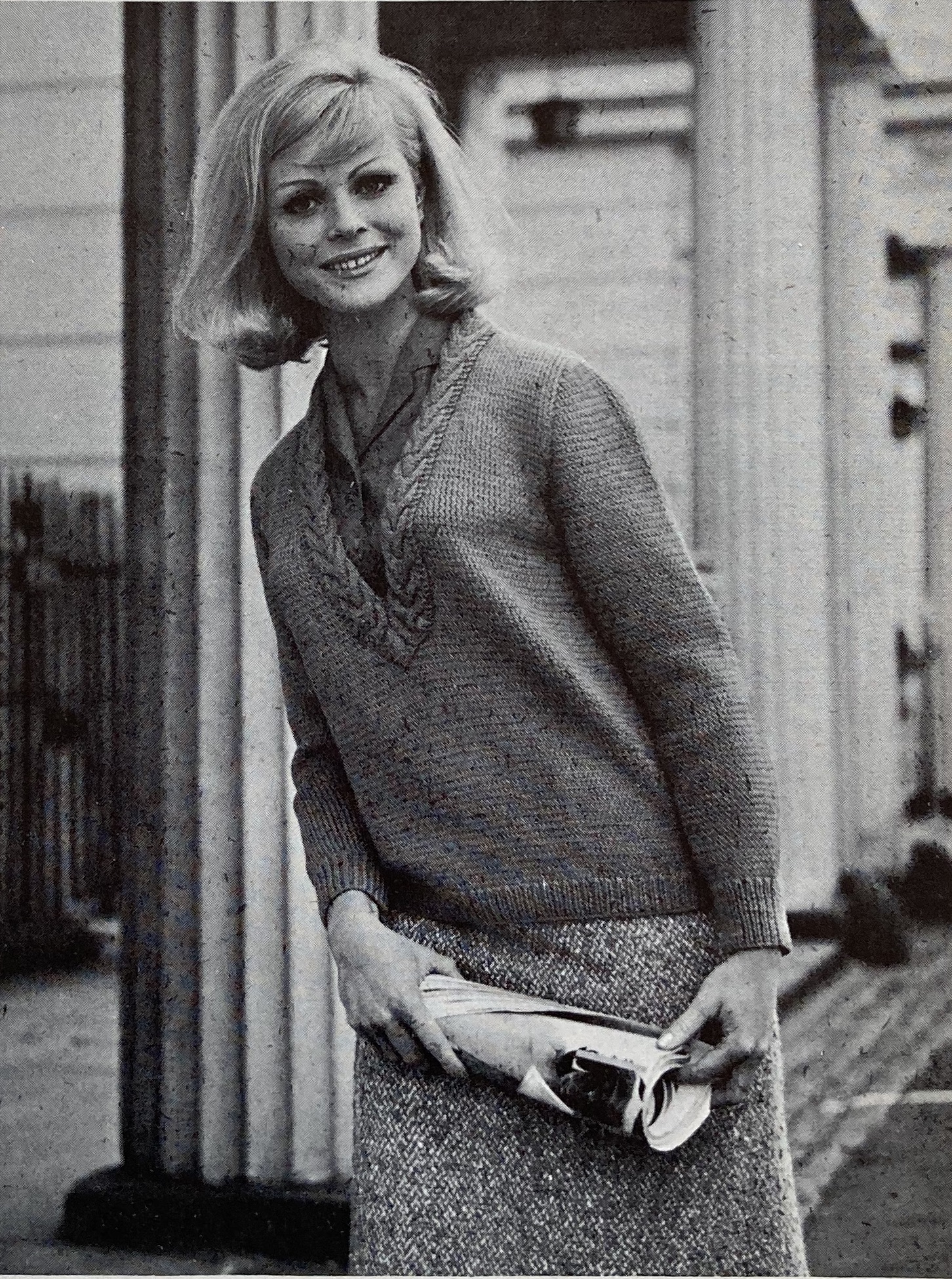
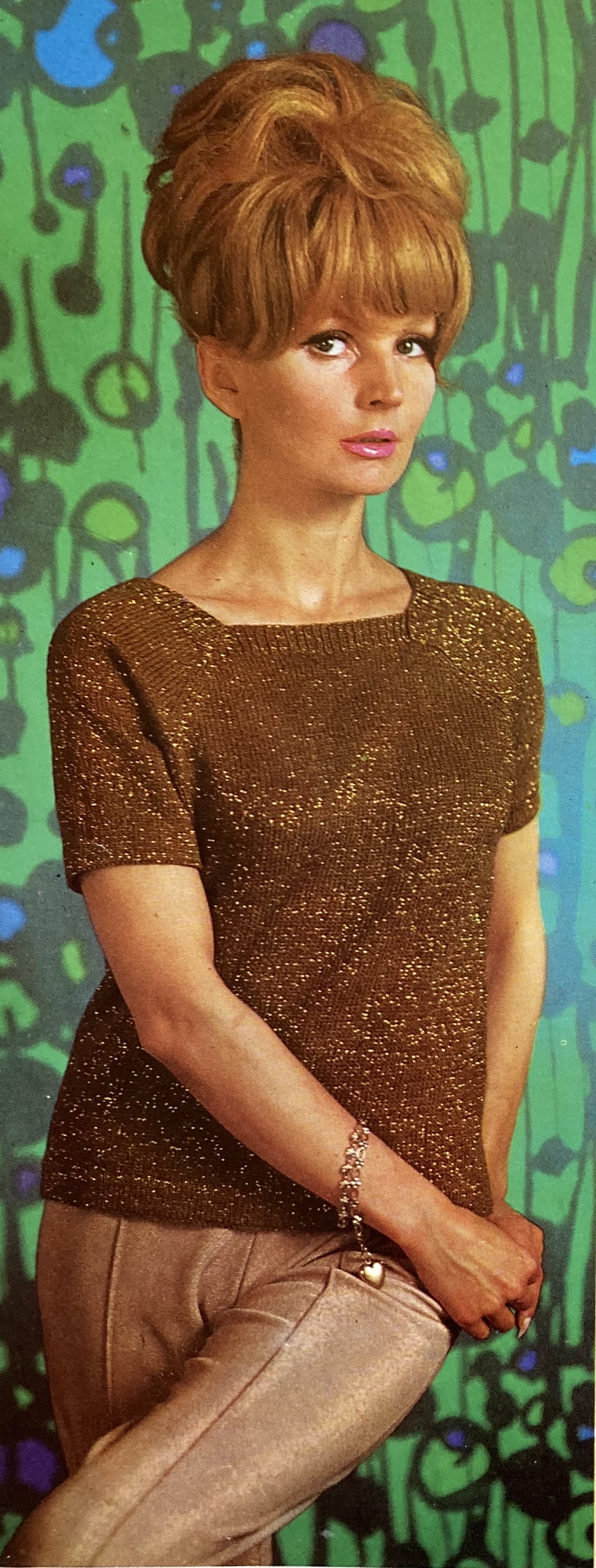
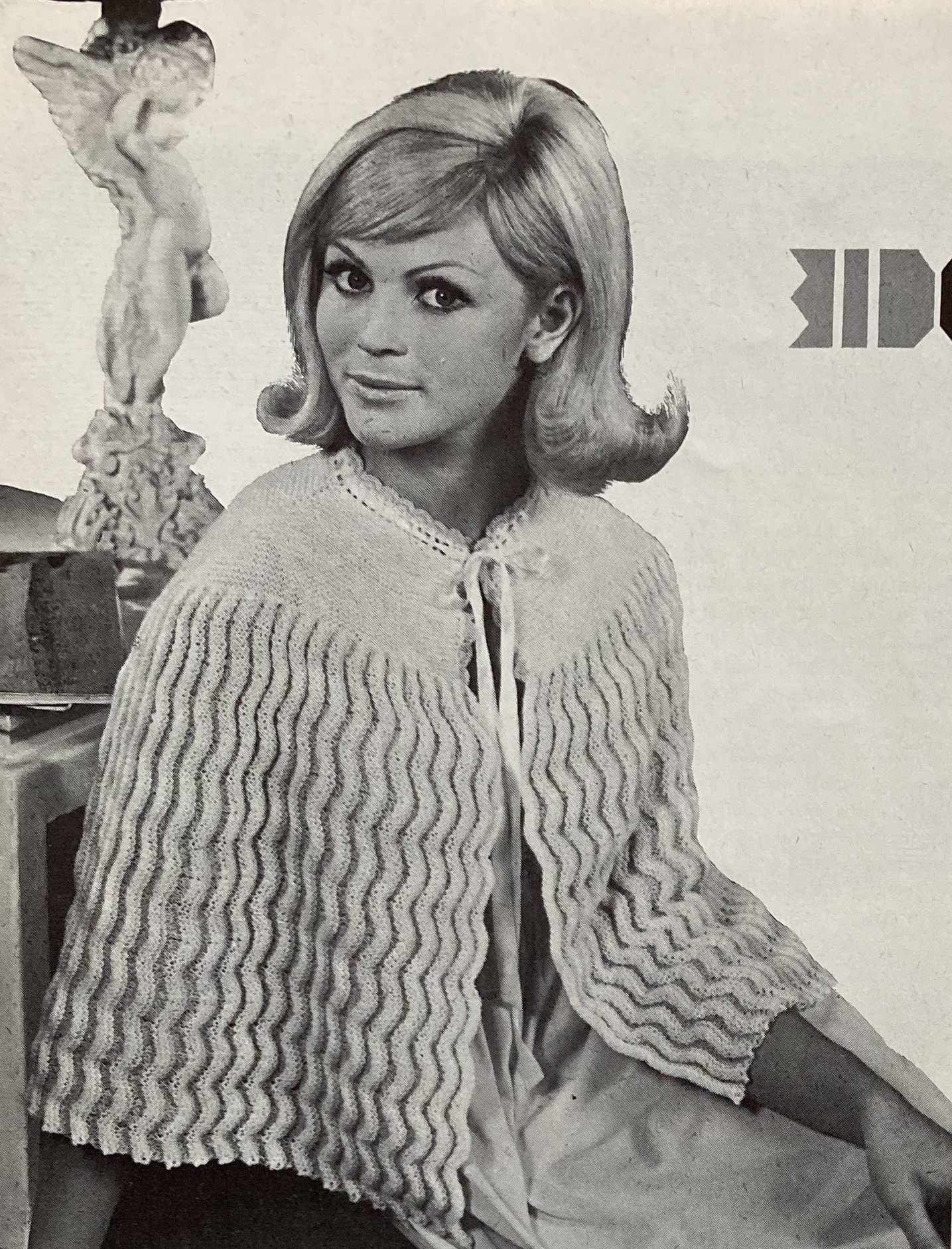
The “country jacket” on the cover continues the tweedy, variegated colour effect in fashion this fall, using Bracken Tweed wool for the main body and Totem DK for the collar and cuffs. I finally know what colour Totem “Oakapple” is! The other women’s outdoor-wear fashions include a zip-neck sweater with textured pattern bands in turquoise, an “overpull” with cabled neckline in flecked “Cantaloupe” colour (sadly, no colour photo, I have no idea how it looked in real life) and a simple brown top made glamorous by knitting the wool (Cameo Crepe 4-ply) together with a strand of sparkly Lurex thread. There’s also a warm, soft cape for winter reading in bed, knitted sideways in an easy zig-zag pattern. Aside from the green and white bedcape, shades of autumn brown as well as bold blues and red are the season’s trendy colours. Stripes, zig-zags and textures complete the Autumn 1963 look.

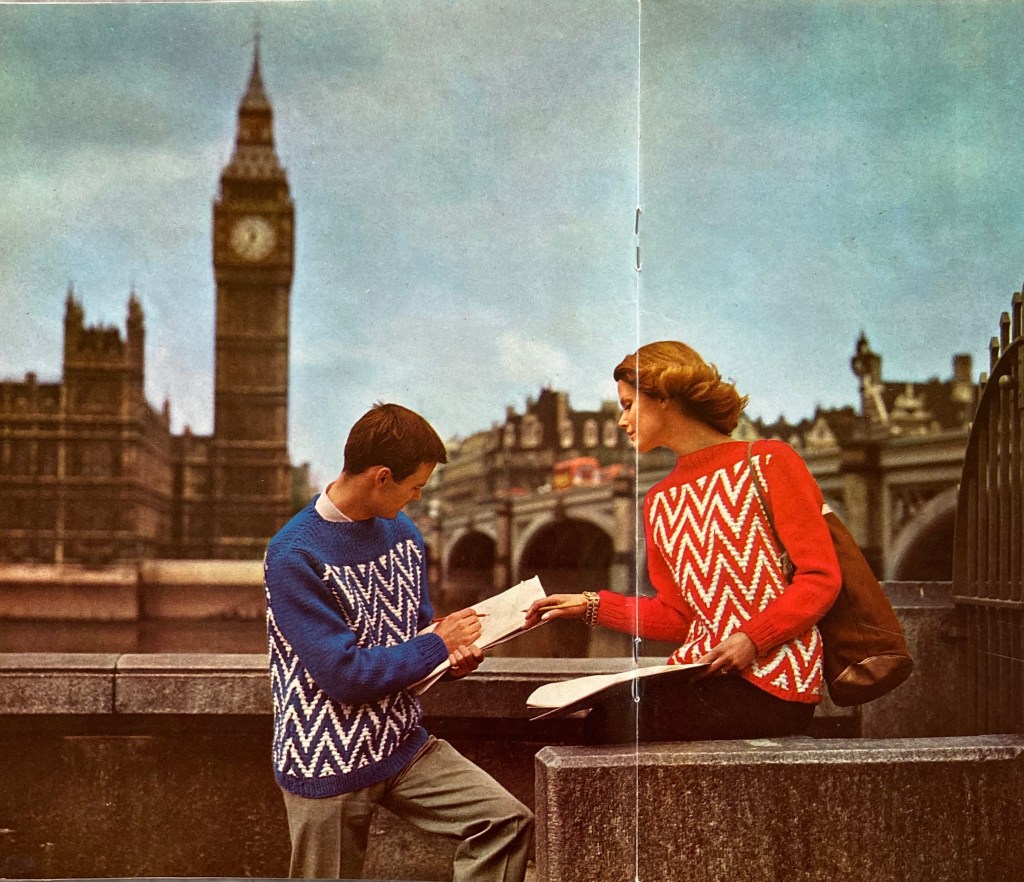
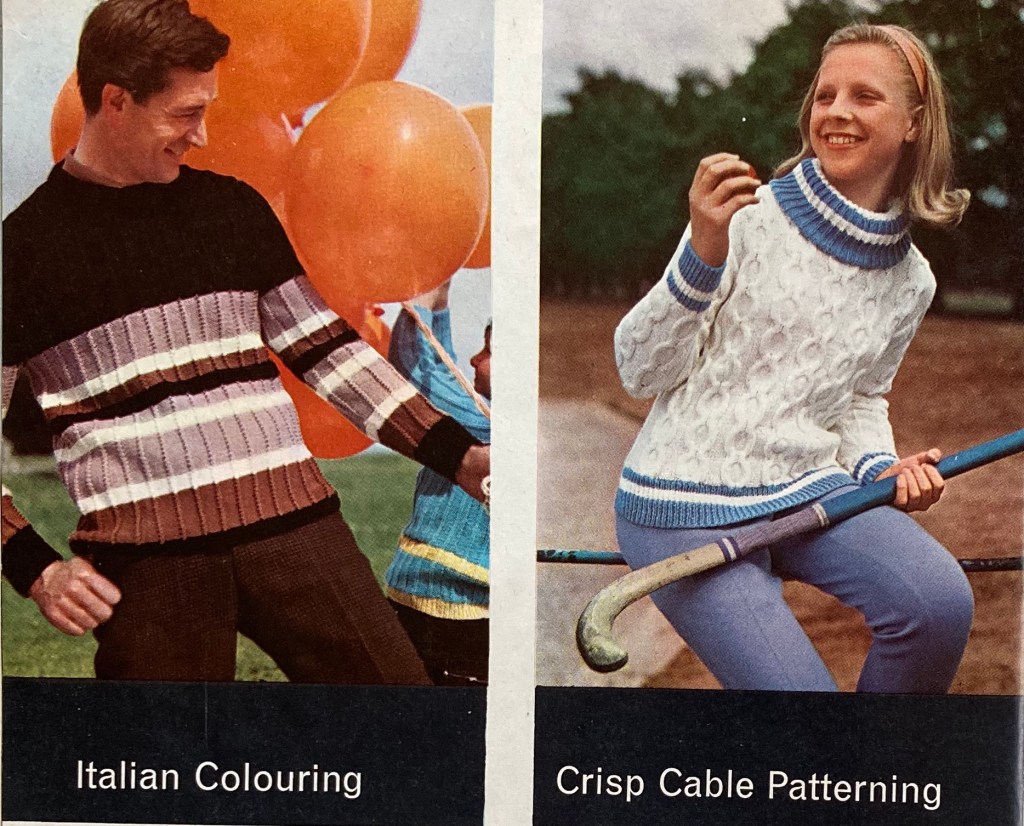
Men’s fashions are just as colourful as the women’s, or even more so (less use of plain brown…) and show more of the zig-zag trend. Here are some bold designs for “him and her” using bulky Big Ben wool (and photographed in front of…). The construction is the same for both, with the smaller design for bust sizes 33-35 inches and the larger for 39-41 inches, with the advice that “Plumper girls could follow his size”. The man’s pullover in “Italian colouring” uses stripes and textures, toned down by the use of more neutral colours. The blue-and-white cabled sweater in the photo next to it is for teenagers.

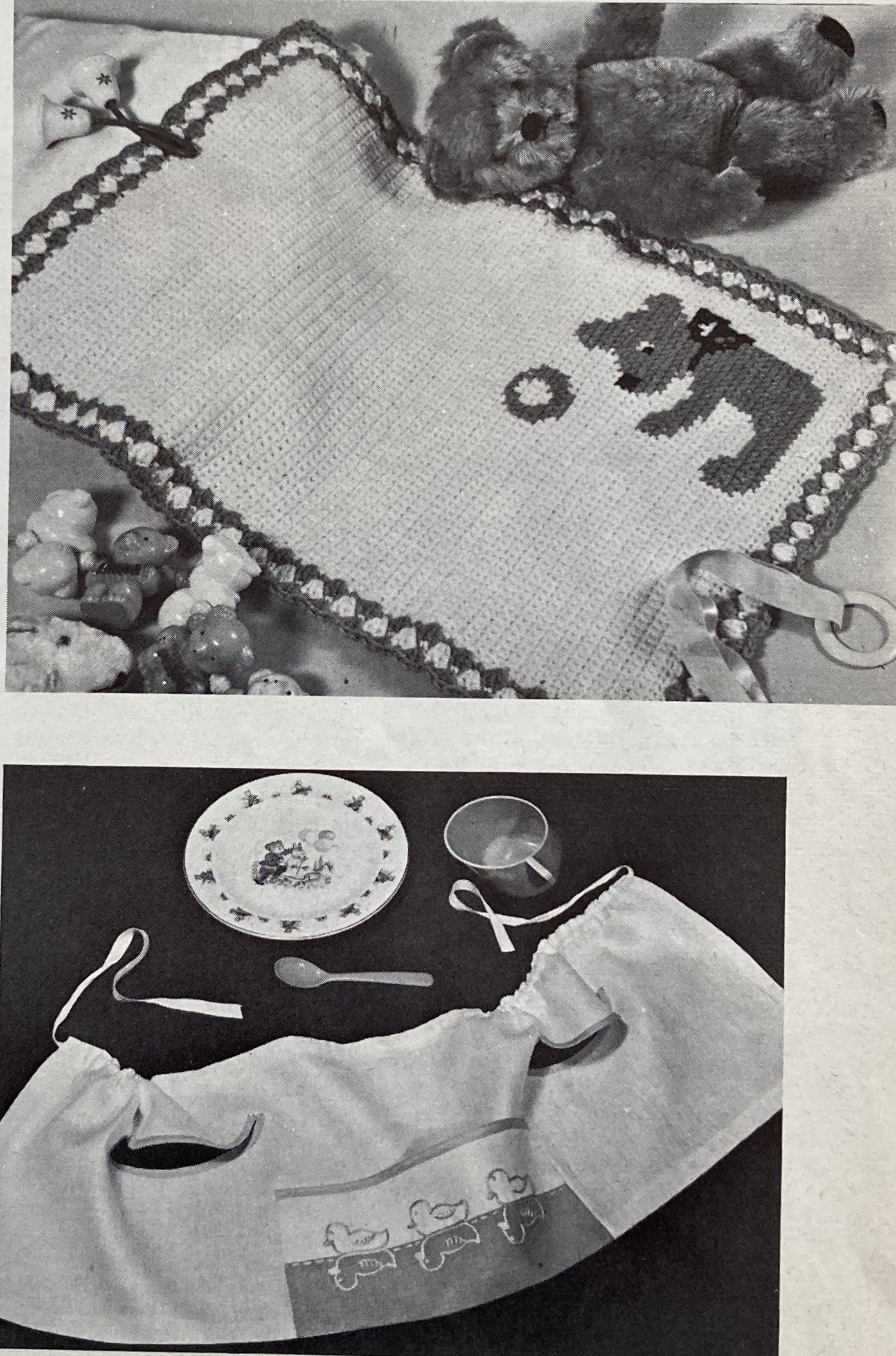
School-age children get their own “tough, tomboy sweaters” in Bracken Tweed wool. The suggested colours are “Black Olive” or “Gorse Heath”, which I assume is a sort of green-yellow tweed (no colour photo). Babies get a lovely shawl to match the layette from the September and October issues. It’s easy to knit, as the centre and borders are made separately. The other baby/nursery-age items are crocheted, sewn or stitched: a pram cover with a teddy-bear motif, a little nightcase with fluffy appliquéd kittens, a knitted doll, an embroidered “feeder”, sewn and appliquéd pinafore smocks…

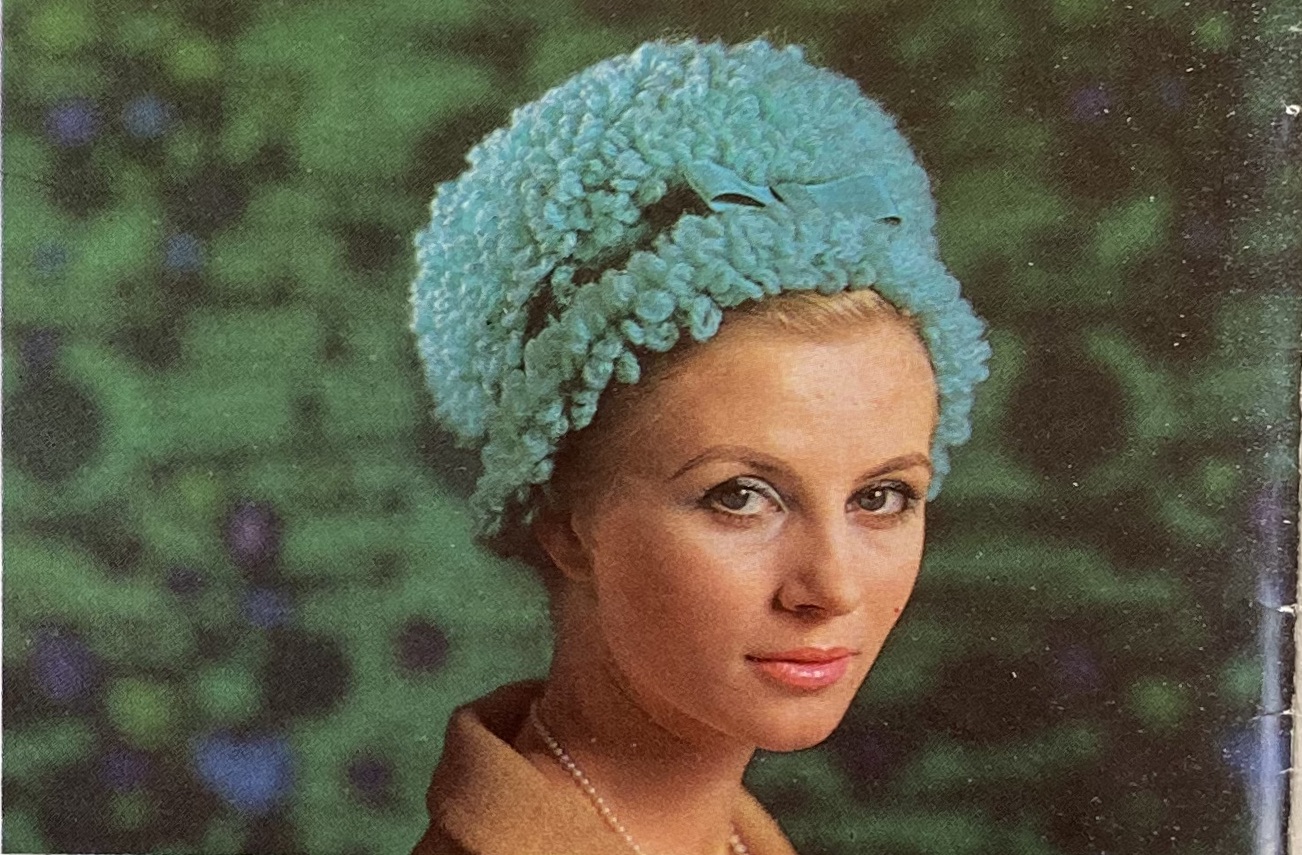
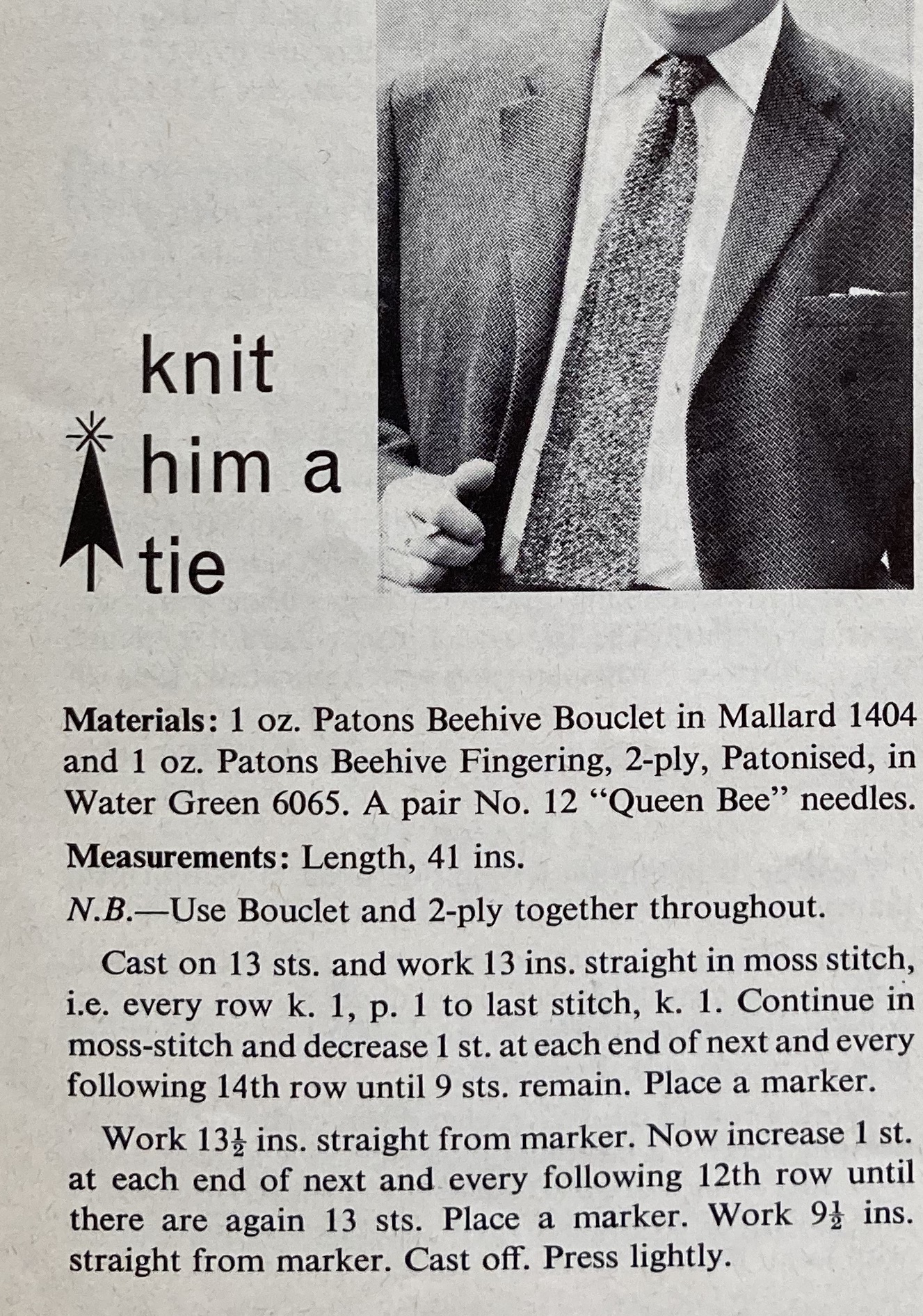
There are fewer designs for accessories, but the utter fabulousness of this loop-stitch crocheted hat makes up for anything else that could be missing. The model in the photo features in many issues from this time period and always looks either quite sad or has that alluring Mona Lisa smile that’s she’s sporting here. (Am I mean, or wrong, to assume that she probably had bad teeth?) I would smile widely if wearing that hat, and I hope everyone who saw me in it would too. Also, knit your man a tie!

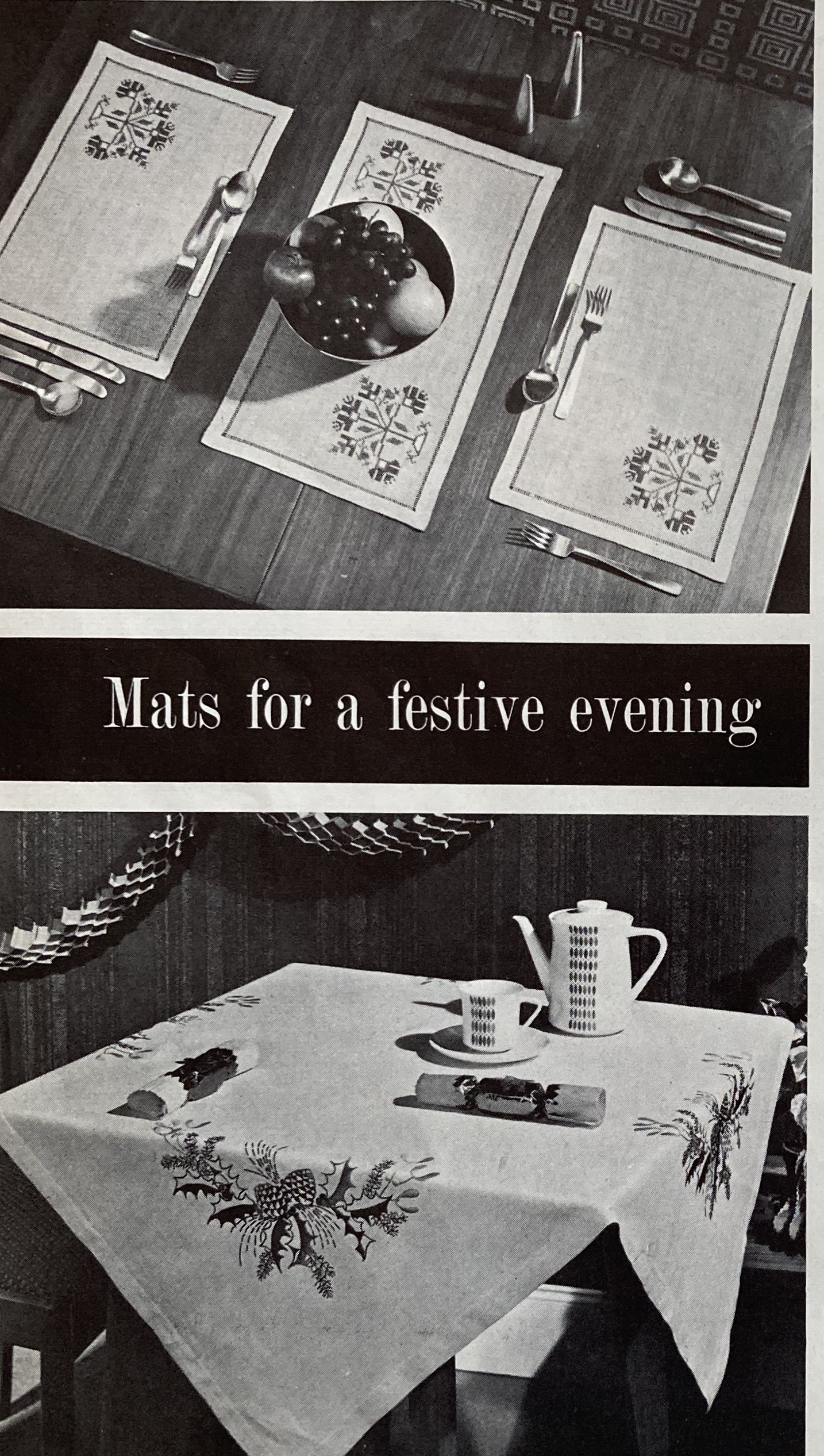
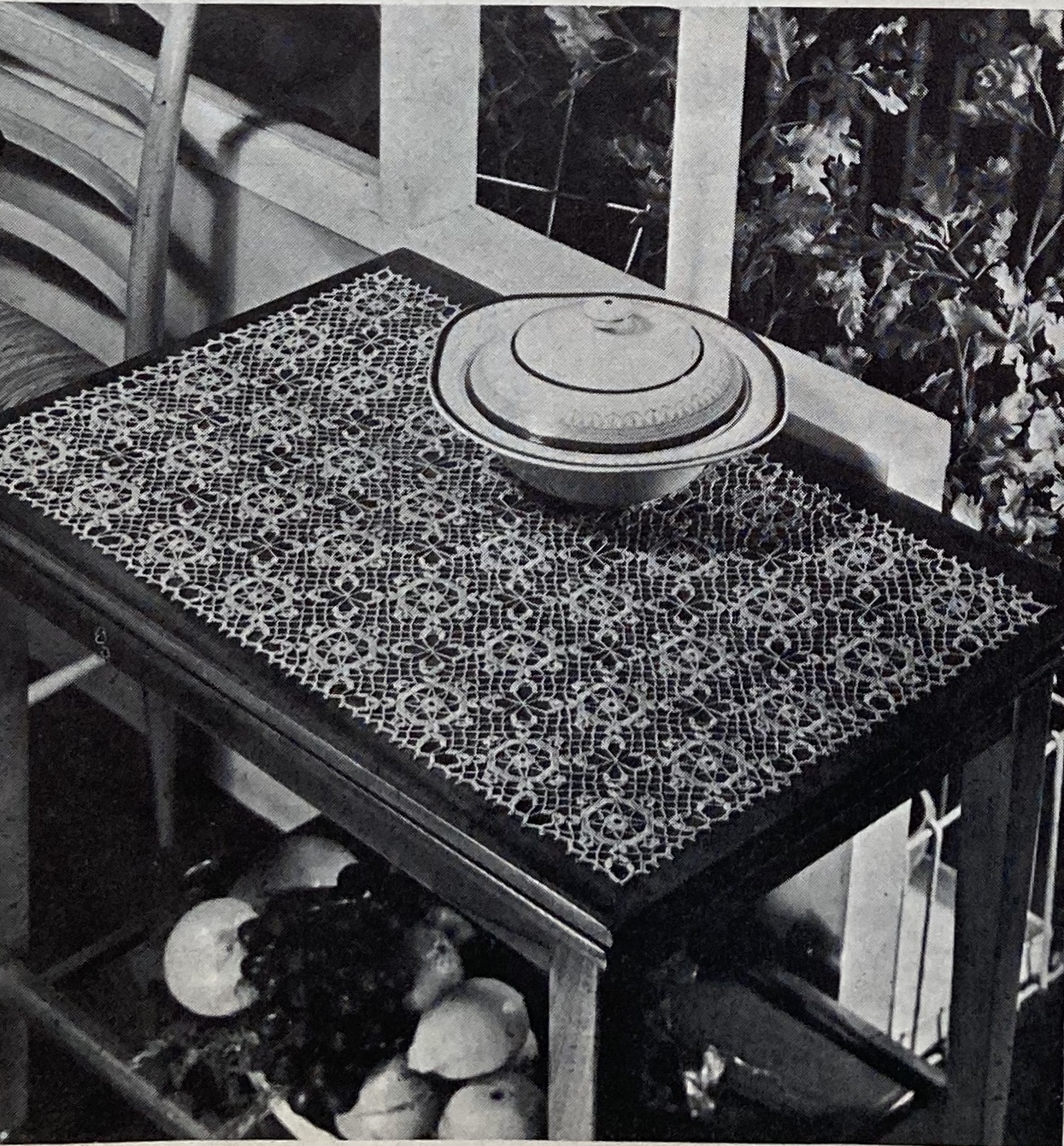
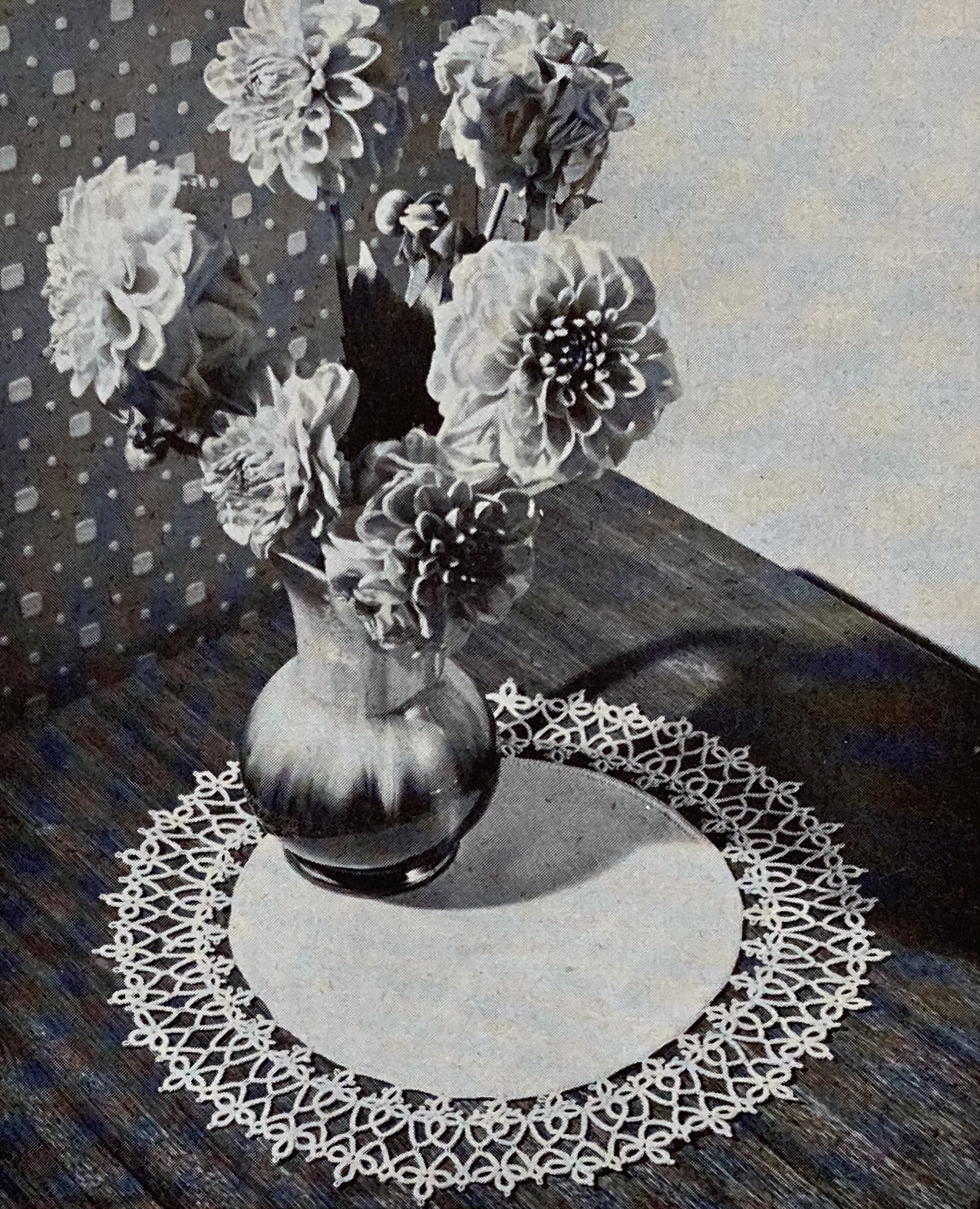
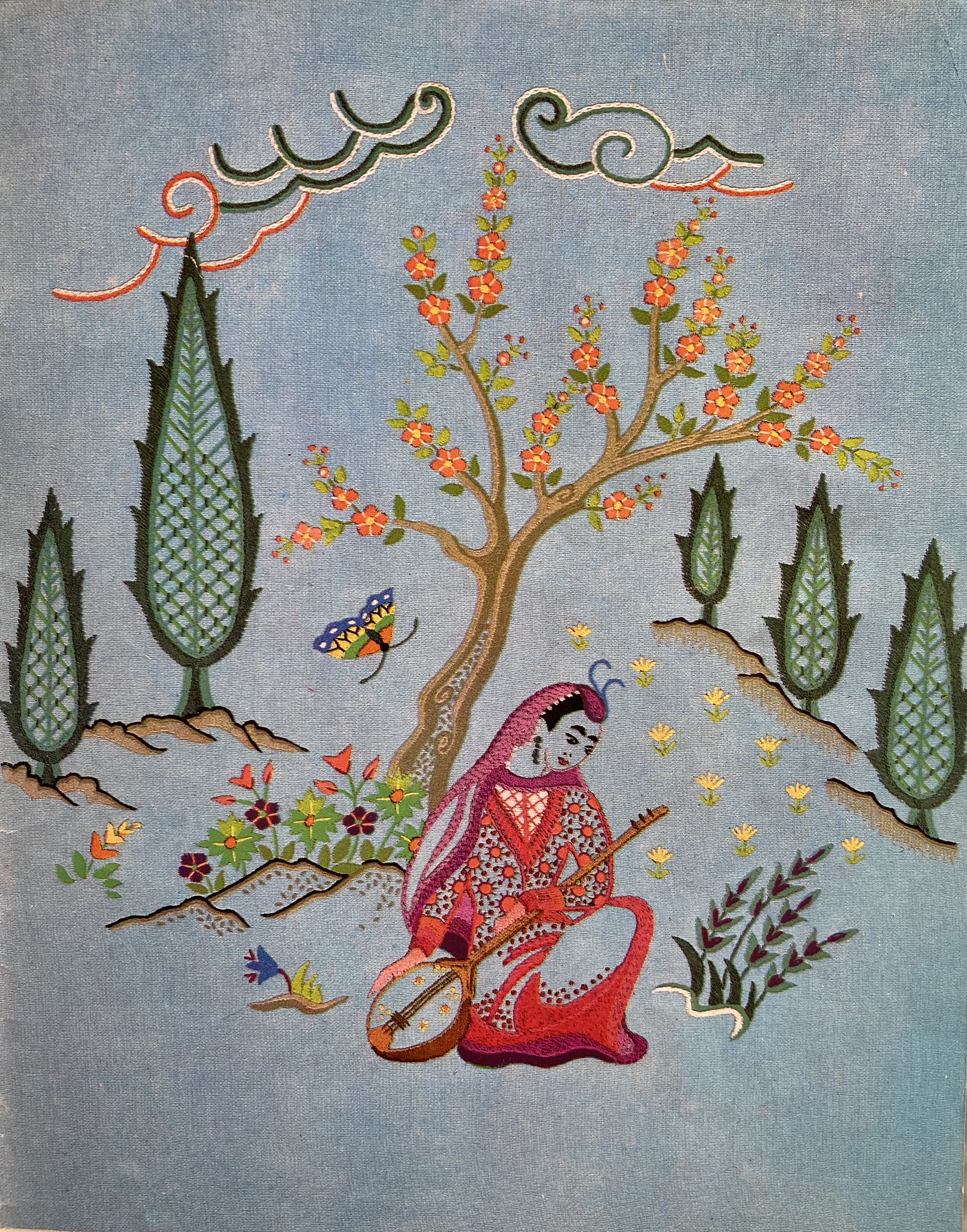
With all this bounty, the homewares are mostly standard: embroidered table mats and a Christmas-design tablecloth, a decorative panel with the Star of Bethlehem for more religiously-minded households, and a very impressive tatted doily and crocheted trolley-mat. The show-stopper is a lovely decorative panel “taken from a book of Oriental designs” embroidered in Filoselle silk on linen. (The design is allegedly of Persian origin, though of course neither Stitchcraft nor its typical readers of the time gave much thought to questions of authenticity, nomenclature, exoticism or any related issues that we would regard and discuss today.) It is a pretty picture in any case, and was probably not too difficult to embroider, consisting mostly of standard seed and straight stitches, French knots, and so on.

That’s all for this issue! I am going to make that wonderfully ridiculous hat.

October 1963: Knitting Apron

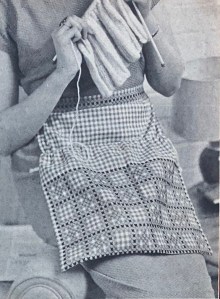
Photo of a woman wearing a knitting apron and knitting, Stitchcraft magazine, October 1963

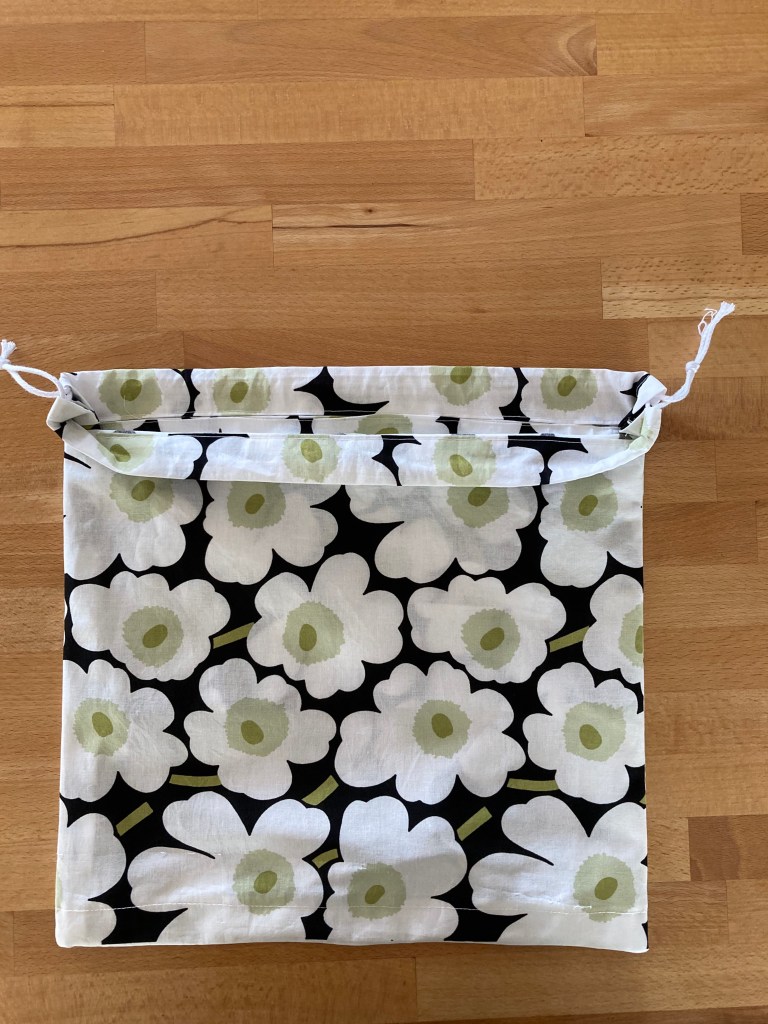
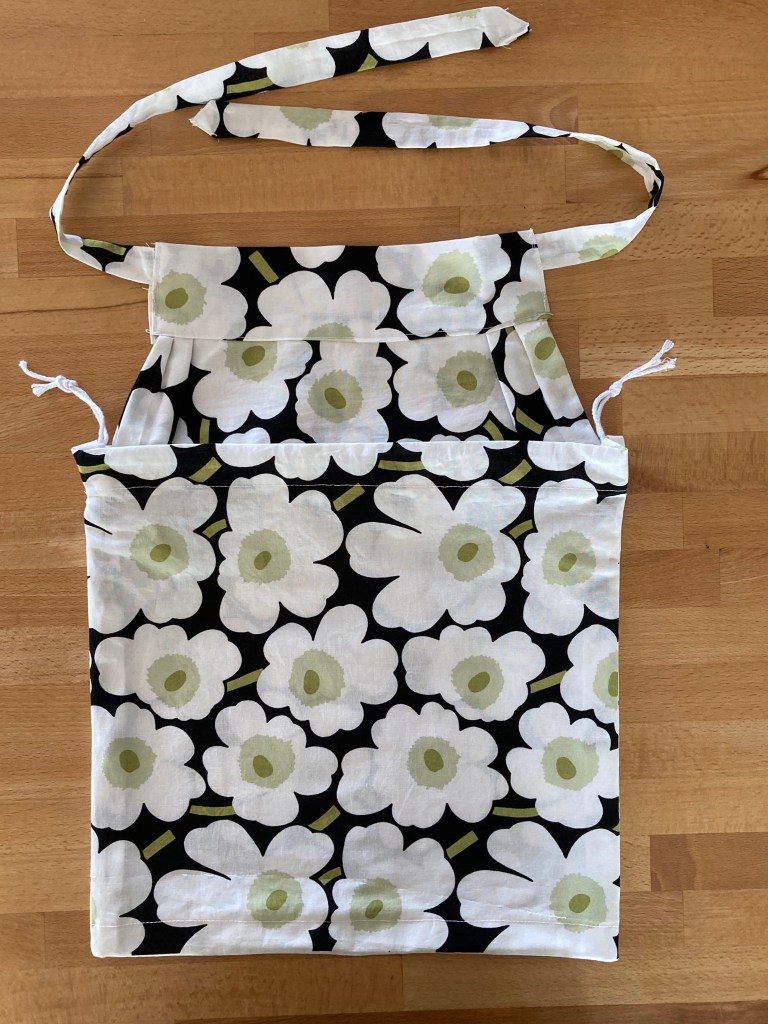
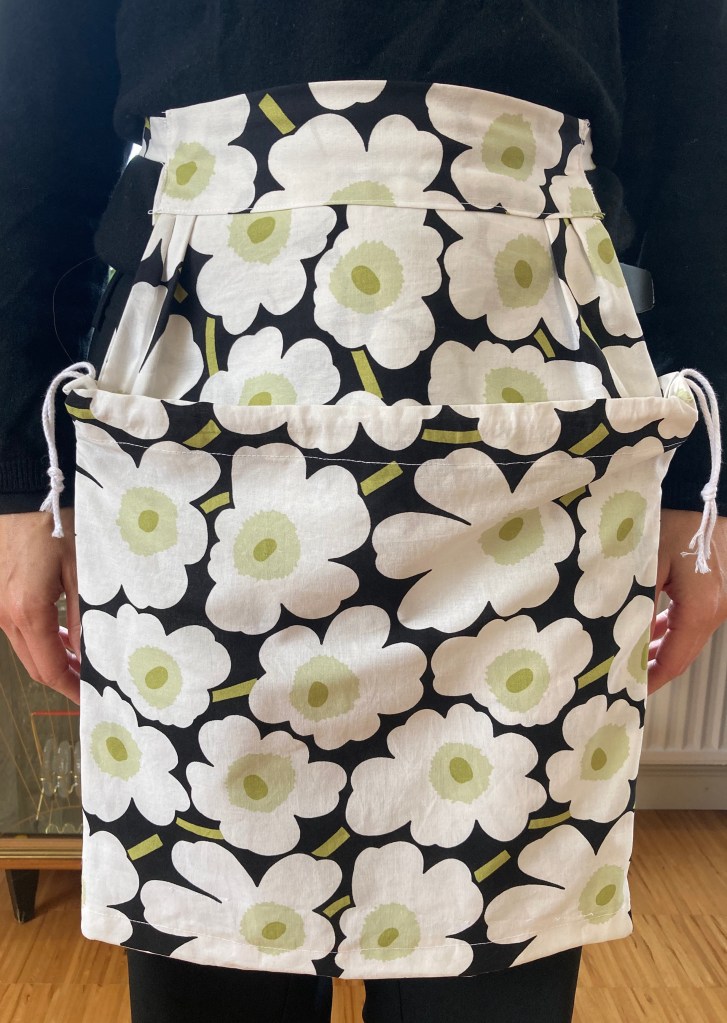
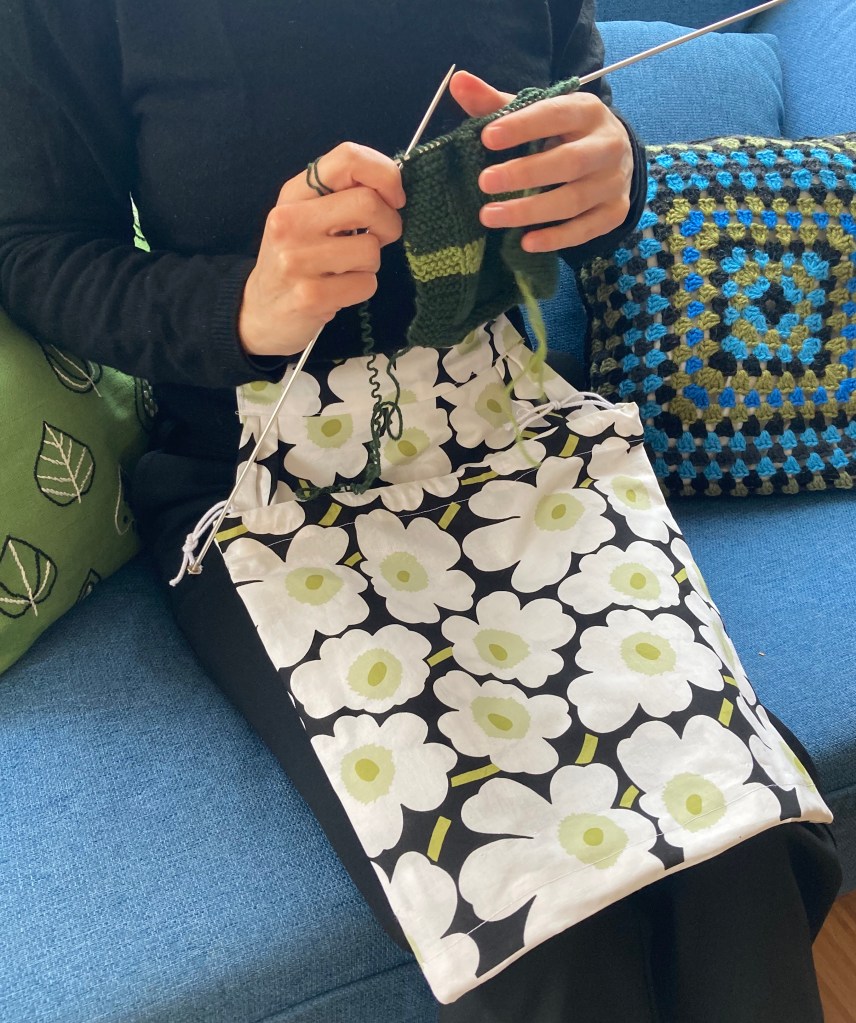
This month’s project was, as its name suggests, a knitting workbag with an apron-style top, allowing you to “tie it on and keep your wool in your pocket as you work.” Brilliant idea! I actually have a vintage, embroidered apron that I inherited from my grandmother that I use as a tie-on knitting bag, but this Stitchcraft project goes one better in that the apron top folds down into the bag when not being worn, allowing you to close the bag with drawstrings so that nothing falls out in transport.

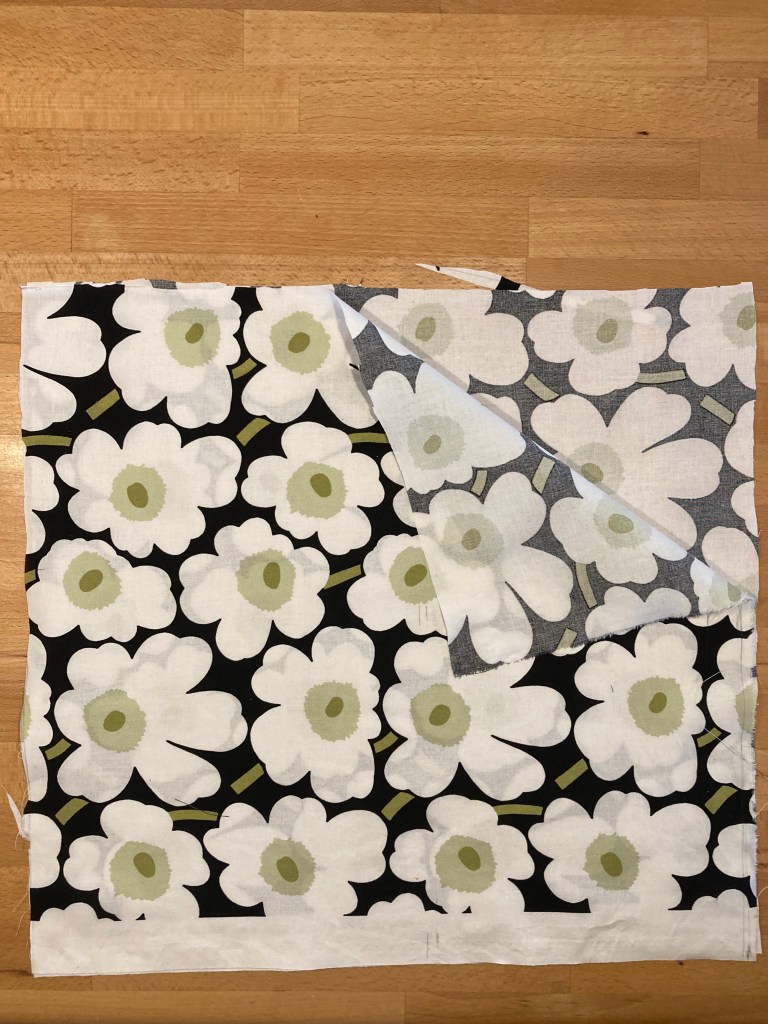
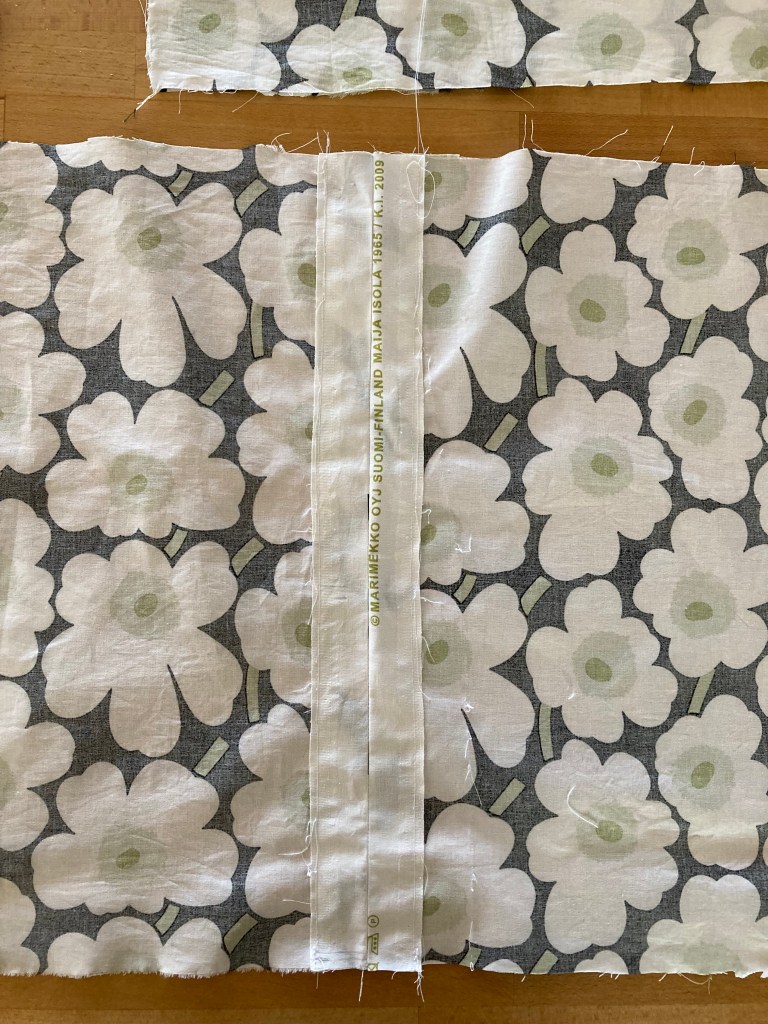
It’s supposed to be made with gingham fabric and embroidered with cross-stitches in the gingham squares, but I have so many unfinished embroidery projects that I went ahead and made this one plain, using a nice cotton print from Marimekko.

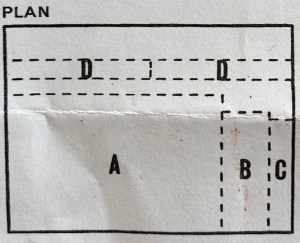
Fabric cutting plan

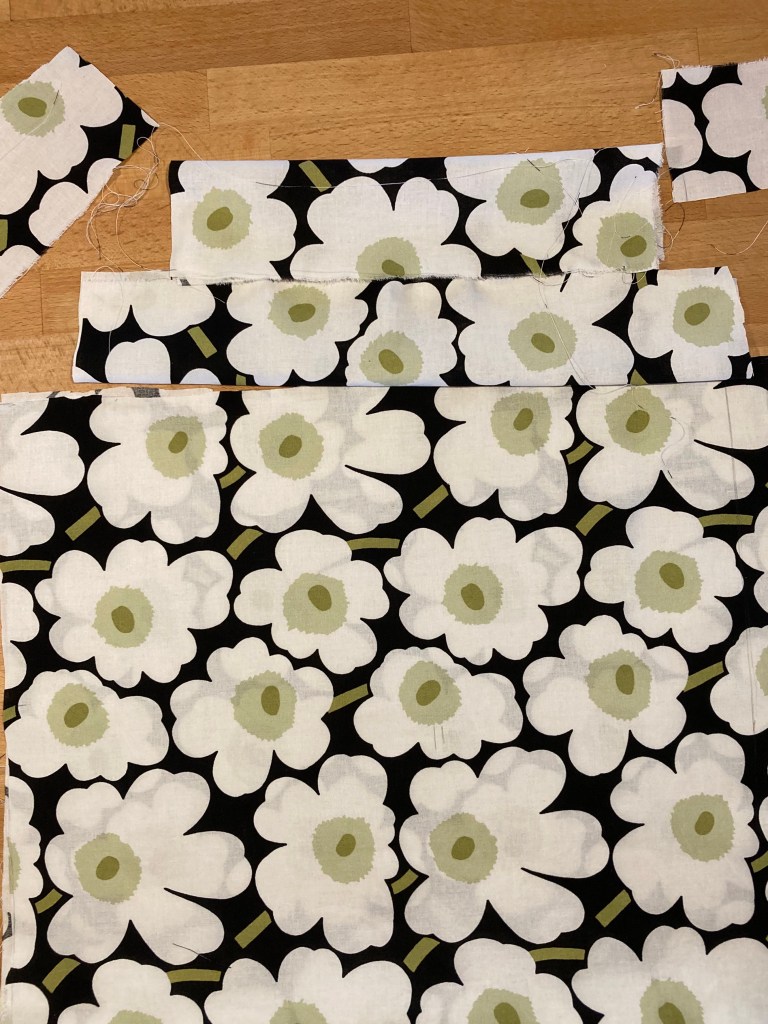
Since the “pattern pieces” are all just squares and rectangles, there’s a little chart showing how to divide up the fabric to get piece A (bag), B (apron top), C (waistband), and D (tie strings). After cutting out all the pieces (why are straight lines the hardest to cut?) I was suddenly confused: The bag, piece A, was 18×17 inches. That’s pretty big, and in fact looks just about that size in the photo, but a bag has a front and a back… Was I supposed to cut it on the fold? Or cut two pieces? The waistband is obviously folded in half, and the instructions for hemming the apron top make it clear that only one, unfolded piece was needed. Huh?

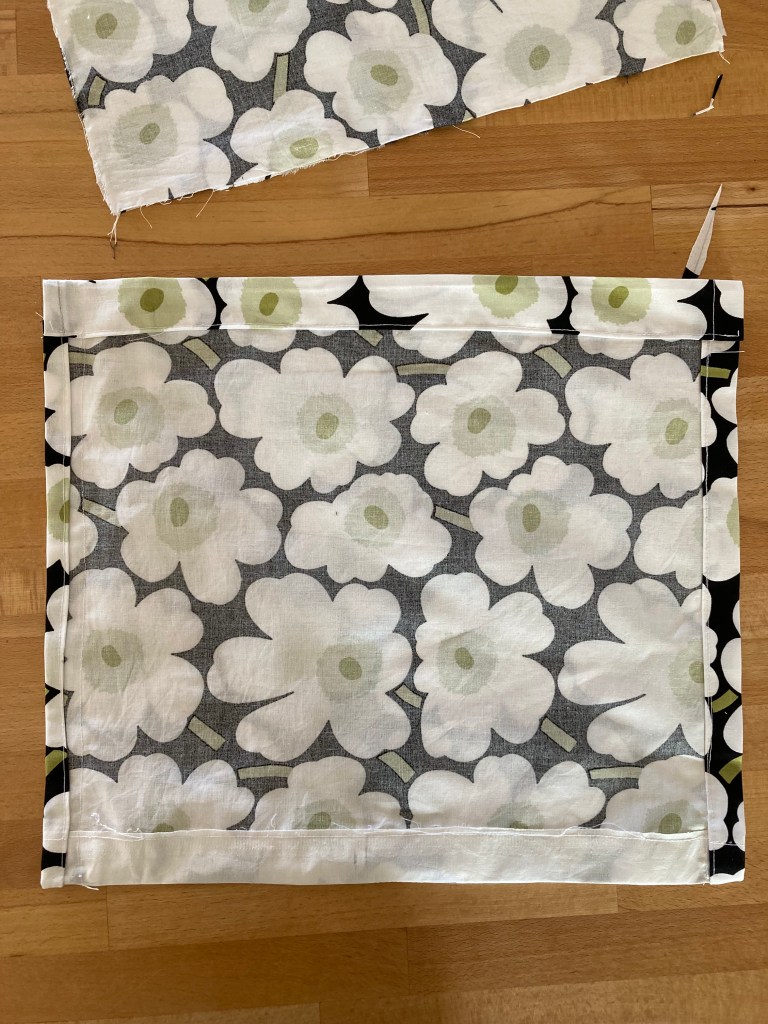
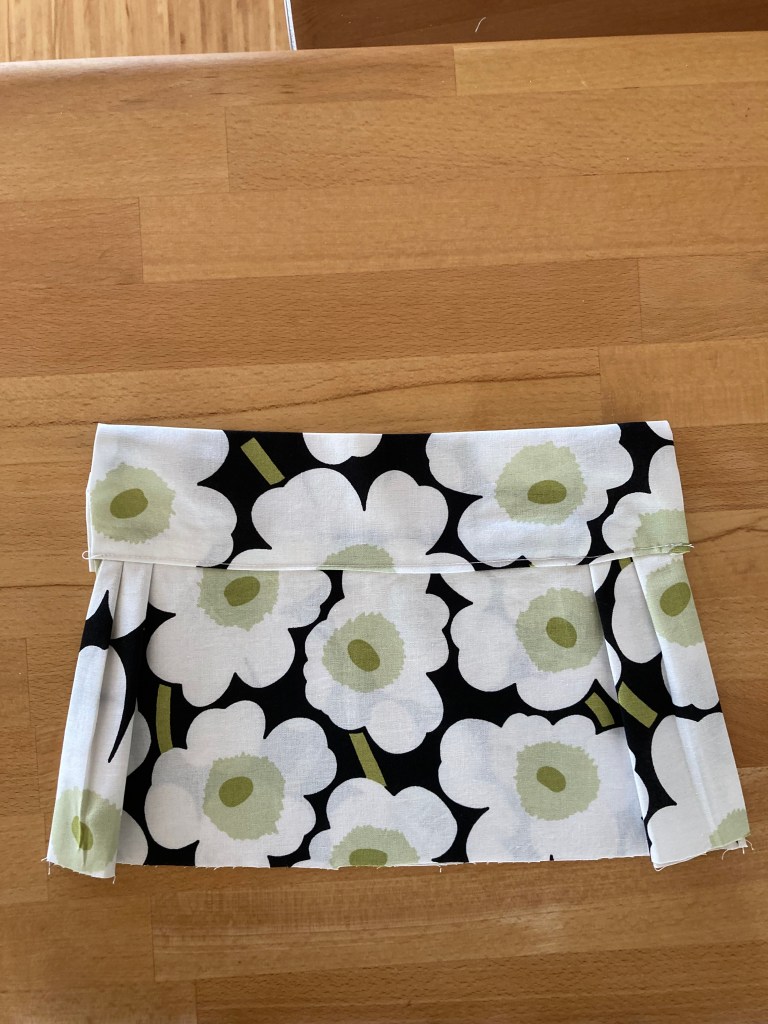
I cut another identical piece for the bag and decided to also cut another identical piece for the apron top, so the hems could be neater and the fabric stronger. I cut the two bag pieces with the selvedge on the bottom edge to make a very wide seam allowance, which I could then open up and sew down to make a really sturdy bag bottom. Similarly, I hemmed the side edges before making the side seams instead of zig-zagging the raw edges. This made everything very sturdy and very neat.The apron top is made with a couple of little pleats on the sides to bridge the width difference between bag top and waistband. Before it was sewn on, it looked like a little doll miniskirt!

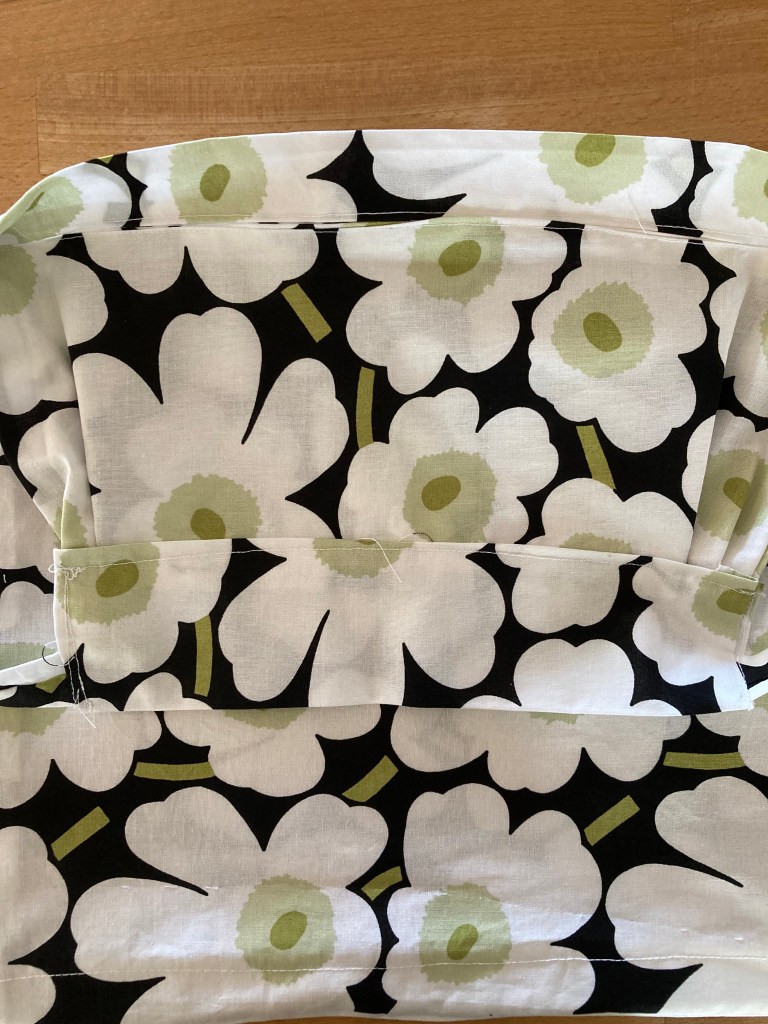
The apron top is sewn into the back part of the bag, so that it folds down into the bag when not in use. I was really glad I had made the apron top double, as it makes the seams even neater and everything looks very smartly finished from every angle, inside and out. (I am a sloppy sewer, so always impressed with myself when lines are straight or seams are not ragged.)

That was it! I finished the whole thing in three hours. It works perfectly and I can use it to knit while standing, walking, sitting in the train, etc. without worrying that my yarn will roll away, and it packs up in a flash. The bag part is quite large — if I made it again, I would make it slightly smaller. Other than that, it’s perfect. I imagine it would be a lot of fun to make in felt, with an embroidered front part, and that I could adapt a lot of the typical Stitchcraft designs for embroidered chairbacks, cushions, tea cosies etc. to make more of these.

October 1963: Overview

Cover photo, Stitchcraft magazine, October 1963

Tweed! Remember last month’s post with the advertisement for variegated-colour yarn? This month’s issue presents Patons’ new variegated wool, “Glenora Tweed”, a slightly thicker DK-weight wool with dark tweedy flecks. It appears to have been made up of 80% wool and 20% synthetic fibre. The twelve colours were chosen to be as vibrant as tweed can be (and very 1960s…) with rich shades of red, green, orange and yellow.

As it knits up fast at about 4 stitches to the inch (but promises to still give a “beautifully firm crunchy texture” i.e. hopefully not sag too much under its own weight), it is showcased with larger garments — the “pinafore-style” over-dress and men’s cardigan shown on the cover and two two-piece suits for women. There’s also a pinafore-style overdress with pleated skirt for a older girl and a boatneck sweater for men, both in similar Bracken Tweed wool. In keeping with the newer, looser and more square-shaped style, the garments have minimal or no shaping (except the girl’s outfit) and the skirts come to just above the knee. To me, the women’s Glenora garments look so similar that I had to check twice to assure myself that the pinafore dress on the cover (with high scoop neck) and the two-piece set with skirt and “overblouse” (V-neck) were in fact different designs.

There is a matching 4-ply (women’s) or DK-weight (girl’s) jumper to go underneath the pinafore looks or the overblouse, which, combined with the thick over-garments, must have been suitably warm for outdoors or poorly heated rooms in October. (The girl, of course, is going to have cold legs all the same.) For those who resist the tweed craze, there’s also a bright, fun colour-block sweater in a three-colour slip stitch pattern. I love the matching orange head scarf!

There’s also a fun 4-ply jumper for a child with some easy stranded colourwork blocks at the waist and yoke. The accessories continue the bulky, easy-to-knit trend, with a cap and scarf in Big Ben wool and a big, cosy scarf for men in an intriguing reversible cable-moss pattern.

Rounding out the family’s fall wardrobe is a matinee coat and “helmet”-style cap for a baby, matching the dress from the September issue. The November issue promises a warm shawl to match again, thus rounding out the set. Judging from the photo, “dear little baby Alicia” seems to have realised that the purpose of a helmet-style cap is to prevent the baby from removing it and flinging it around the room, and is suitably disappointed. It’s a great design, though, with the sides and chin strap done in garter stitch to accommodate movement and growing heads.

The homewares are plentiful and here again, there are some larger projects to be tackled at home during the colder Autumn days. The bright red rug in Soumak stitch and traditional design is vivid and cheerful, as is the Jacobean cushion “for the skilled needlewoman” which I would love to make if I didn’t already have two unfinished embroidered cushions in the WIP pile. (Not to mention that I am not skilled enough to make that elaborate a design, especially without a transfer.) The Autumn-themed acorn cushion is definitely easier. There’s a Regency ribbon design for tapestry or cross-stitch, too.

For those who want a quicker, easier homeware project or are already getting started on the Christmas presents, there are more embroidered acorns on cutwork mats and some knitted and crocheted goodies: a “Scottie-dog” night-case, a crocheted bag, and… a hippo, yes, a friendly knitted hippo stuffed animal. Well, why not? It’s cute. An older child might embroider her own Little Miss Muffet picture in cross-stitch.

The very last project in the issue, tucked way back in the “Readers’ Pages”, is the one I will make. In fact, I have been waiting for this issue to come up specifically so that I can make it! It is a very simply constructed and embroidered “Apron-cum-Knitting-Bag” where the front panel and waist ties of the apron fold into the bag part along with your knitting. Pull the drawstrings closed and carry the bag around, then when it’s time to knit you can undo the strings, pull the apron part out of the bag and tie it around your waist, Presto, you are ready to knit in any situation, standing or sitting, and your ball of wool will not fall down and roll about the room. Stay tuned for a project that will actually get finished on time, as well as progress on those projects that didn’t.

September 1963: Use up your left-overs

Crocheted cushion, Stitchcraft magazine, September 1963

This month’s project was a crocheted cushion “to use up your wool left-overs.” It was promised to be “very quickly and easily made”, and it was! Nota bene, today is September 5th, I started this project on the evening of September 1st, and it is already finished, including blocking and photographing. I don’t think I have ever made any project, no matter how small, that went this fast.

It’s designed for DK wool and the original colours are black, flamingo pink, silver and white. Of course, I used leftovers of DK wool that I had in stash, and they happened to be more in the blue and green spectrum. The black is Jamieson’s Double Knitting left over from this blazer, the dark grey and turquoise are Reginella wool-alpaca mix from Chile left over from a non-vintage project, the more blue-blue is lovely Schoeller&Stahl left over from swatch knitting, the slightly darker green is Drops Lima left over from another non-vintage project and the lighter green is not technically a left-over, but hand-dyed wool from a knitting colleague. Yay, I used up some leftovers! The pattern is a standard granny-square shell stitch which just continues around to make… two giant granny squares.

I worked on both squares (front and back of cushion cover) at the same time in alternatum and was glad I did, because I ran out of some colours sooner than expected and had to adjust the colour scheme accordingly. I like how the colours turned out. The finished size in the pattern is 13 inches square, but I happened to have a cover-less cushion in the sewing drawer that was about 15 inches square, so I added another colour pattern repeat to make it fit. I considered dyeing the cushion turquoise, since I had some fabric dye and the crochet is fairly hole-y, but in the end I thought the white cushion showing through gave the dark colours in the crochet work a bit more pop. The edges of the two squares are crocheted together on the right side.

What more is there to say? I now have time to finish all those WIPs, so stay tuned for progress on the August 1963 cardigan… and the April 1963 embroidered blackwork cushion… and the I-don’t-even-remember-when-I-started-it-it’s-been-so-long epic Jacobean appliqué cushion. So many cushions, not enough sofas! Here’s one, at least.

September 1963: Overview

Cover photo from Stitchcraft magazine, September 1963

“Knitting Time starts with a Sparkle” is Stitchcraft’s motto for the September 1963 issue, and the editress’ note assures us that “this is going to be a particularly interesting Autumn-Winter knitting season.” What does that mean for us? Lots of interesting use of bolder colours in traditional or not-so-traditional stranded and geometric patterns as well as subtler use of colour variation in tweeds and toning changes.

1963 was the year when variegated yarns, so beloved by modern knitters, first came into fashion (hence the “sparkle”), and although Patons doesn’t yet offer a truly colour-variegated yarn, here’s one from the competition: Bernat Klein No. 1, as featured in this stunning eight-page advertisement in Vogue Knitting Book No. 62 from 1963:

(The Lux and Opti-lon ads should look familiar to Stitchcraft enthusiasts as well.)

The tweedy look starts with the three-piece suit from the cover photo, consisting of a skirt, long-sleeved jumper and high-buttoning cardigan with stripe accents to bring out the lighter blue tweed flecks. Apropos “fleck”, that’s the name of the yarn: Totem Fleck. The jumper is made in the lighter, solid blue color with ribbing accents in the tweed shade. It seems to be a “switch-around” ensemble, i.e. you are not intended to wear the cardigan over the jumper as you would with a twin-set. Bracken Tweed, the somewhat bulkier tweed wool of the season (Totem Fleck is DK and Bracken is more like Aran-weight at 18 sts to the inch), is featured in this blazer “for young men who like comfortable clothes”. You know, the kind of clothes you can play ball sports in: a button-up shirt with tie, short wool trousers and a hand-knitted tweed blazer. Of course.

The other adult or teen garments feature bolder colours and interesting stranded or textured designs, like this intriguing dolman sweater with the stranded stripe running horizontally across the yoke and down the sleeves. I feel like this use of colour would look terrible on me (wide chest and long arms), but I love the idea! The man’s sweater uses a more traditional placement of the colour bands, but in contrasting green and orange tones and a spiky geometric diamond design (continuing the trend from summer 1963). The sweaters on the inside back cover have a more muted colour palette and subtle diamond texture pattern. Textured patterns make a showing in the other women’s garments as well: a bobbled raglan pullover, mock-cable cardigan and nubbly “Rimple” jumper. I want those glasses! The diamond-shape trend shows itself here in more subtle form via V-neck openings and pointy collars.

This issue also starts a new layette set for the youngest members of the family, starting with a warm dress, hat and bootees. Next month’s issue promises a matching matinee coat and cosy “helmet” cap. The caption for the modelled photo reads, “Jonathan is just 2 months” and reminds us that babies of both sexes wore lacy dresses with both pink and blue embroidery on them. 1963 was definitely a more sexist era, but also a more practical one in some ways.

There’s an interesting selection of Autumn-themed homewares as well, like a leafy fender-stool and chair-seat set, some blackwork finger-plates for the door (reminding me that I still have not finished my blackwork butterfly cushion from April…) a cushion and runner with Chinese motifs (I cannot vouch for any kind of authenticity — the motifs look very similar to the traditional European “Jacobean” designs to me, but what do I know), a pair of crochet-appliqué trolley cloths and a crochet-motif cushion.

And then there’s this “practical idea” — cover an old box (they used a wooden margarine box of about 16×12 inches and 8 inches deep, which sounds like a lot of margarine ha ha) with embroidered Binca canvas, cushion the lid with foam rubber under the embroidery and strengthen it with a piece of wood on the under-side and voilà: a “magazine tidy” which can also be used as a little stool to sit on. Very practical indeed and reduces clutter. I like it.

That’s all for this issue! I’ll be making the quick ! easy ! uses up leftovers ! crochet cushion. How quick and easy is it, you ask? I’ll tell you: it is so quick and easy that I started working on it last night, September 1st, and am already more than half finished: (Working on both halves of the cushion cover alternately so as to gauge how much wool I have of each colour.)

So there will definitely by a finished project in September, and hopefully this will give me some time to finish up the rest of the WIPs. I did also complete a retro-themed jumper of my own design which is not technically from Stitchcraft, but I’ll post about it anyway, because it was fun.

August 1963: Man’s Cable Cardigan

Man modeling a cardigan, from Stitchcraft magazine, August 1963 issue

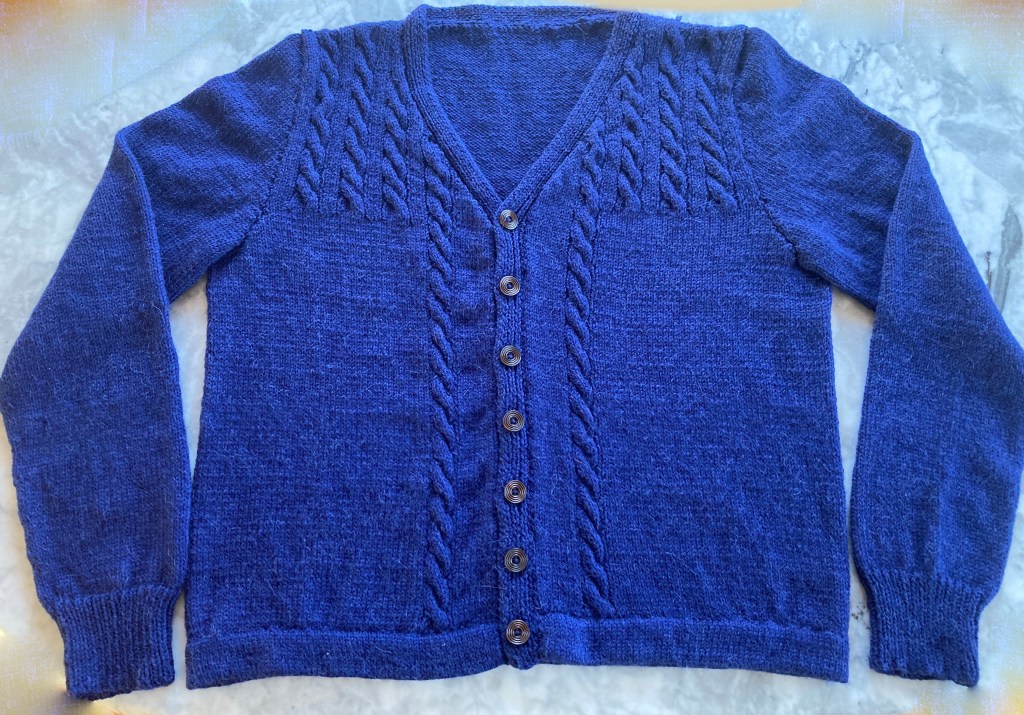
UPDATE November 2021: Finished!

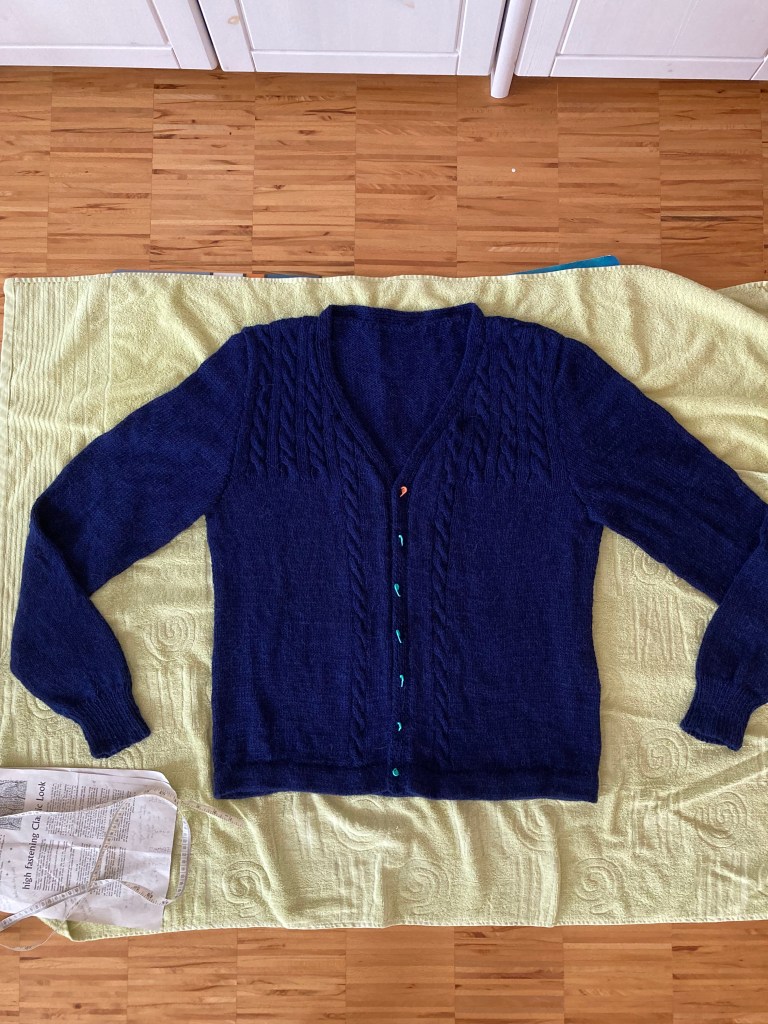
The August 1963 issue had some nice projects in it, most of them pretty labor-intensive. None of the women’s garments spoke to me and while I liked some of the embroidery projects, I still hadn’t finished my blackwork butterfly cushion (From April. April !!) and was not going to start on a huge tablecloth. I loved this cabled men’s cardigan, though! It has a nice classic form and just enough detailing to keep the knitting interesting. And it’s made in DK weight wool, so it should go fast… right?

Incompletely knitted sleeve of a cardigan in blue wool

Ha ha. No, of course it did not go that fast. I had been trying to finish up a lot of other wips (not necessarily vintage or Stitchcraft-related) and the pandemic had eased enough in my corner of the world that my work started up again, so the cardigan was not nearly finished at the time of the first draft of this post. As of August, I had knitted one sleeve completely and was quite a ways on the other sleeve and that was all.
I would be happy to wear this design myself and could have juggled the proportions and made it in a smaller size for me. At the same time, I have so many clothes and a close family member who would love to have a nice hand-knitted cardigan has a “big” birthday coming up later this year. At his request, I made making the cardigan in a lovely shade of deep blue in lovely Drops Garnstudio Lima (65% wool, 35% alpaca.) He hasn’t seen the design (that part will be the surprise).

The sleeves are quite straightforward stocking stitch, so not much to report. I really loved the wool.

I made the body in one piece to avoid having to seam more than necessary (likewise, I made the sleeves in the round). The cable pattern is quite standard, but used here in an effective and interesting way to narrow the top yoke. The hem at the bottom is neat and tidy and does not flip up.

The intended recipient is slightly bigger than the largest size given in the pattern, so I made the cardigan on 4 mm needles for a bit looser gauge. Recipient is also more square-shaped than the “rectangular” model in the photo, but it will fit him with the same amount of ease.

That’s pretty much all there is to say! It came out perfectly and will be delivered on time for the big birthday. I’ll also definitely keep this pattern around to maybe make another one for myself some time.

August 1963: Overview

End of the Season! Sadly, yes, the “holiday” season is drawing to a close and although it’s only the last day of July, it feels like autumn is around the corner. On the bright side, the late summer and autumn issues of Stitchcraft are always the most fun, with a good range of lighter-weight and warmer garments, children’s things for school, and more intricate homewares.

“The trend for colour use is in these bold clear motifs” writes “editress” Patience Horne, a trend which is reflected in “chunky”, boxy shapes, bright colours and simple stripe or geometric designs. The cover illustration shows two of a three-piece “his and hers” set — cardigan and mock-layered turtleneck for her and a buttoned-collar pullover for him– that all make use of single bold stripes. The woman’s matching pullover is made to look like a deep V-neck over a turtleneck top, but the under-layer is just an insertion knitted separately and sewn in.

There’s more use of simple, geometric motifs in the other women’s garments: a classic pullover with a wide check stripe down the front in double knitting and a colour-block cardigan with diamond motifs made in bulky “Ariel” wool. Diamond shapes are still trending from last month. There’s a bulky indoor-outdoor cardigan jacket in Big Ben wool, made in a slightly less simple striped waffle stitch. Necklines are high, whether buttoned or not, and collars are either big and square or non-existent.

Continuing the interesting neckline/collar trend, we’ve got unisex “tomboy tops” for children, with a cute “tie” decoration on one of the pullovers. Simple, bold stripes and pointy diamond patterns show up here as well, whether in colour or as a stitch pattern element. The one lighter-weight design is a square, buttoned-neck pullover with double stripes near the hem and a coordinated skirt. Rounding out the garments is a lovely classic cardigan for men featuring cables on the upper yoke and — you guessed it — in two simple lines down the fronts.

Unlike the knit designs, some of the embroidery and tapestry projects are quite elaborate and ornate. Look at these Chippendale chairseats! That seems quite out of place to me in a modern 1963 home of clean lines and unfussy decoration, but of course many of Stitchcraft’s readers were older and/or conservative in their style, and probably not on the cutting edge of home redecoration even if they had the money to spend on it (which I’m guessing most of the readership didn’t.) The “peasant motif” tablecloth and cross-stitch place mats have more of a clean, colour-block aesthetic. I really love the tablecloth design! It can also be adapted for a cushion. Speaking of cushions, here’s a fancy one made of essentially two very large, intricately knitted lace doilies joined together around the cushion base.

And let’s not forget that standby of every proper 1960s home… the fluffy hand-made bathmat and matching well-dressed “pedestal” aka toilet! Hats off to every grandmother and great-aunt who kept true to this amazing home furnishing concept throughout the rest of the 20th century. (Seriously, one of my great-aunts had a setup like this in her guest bathroom in the plushiest, fluffiest, yellow and black shag carpeting you could imagine, and I’m pretty sure it stayed there until the turn of the millennium.)

That about wraps it up for this month’s issue. The ads are unspectacular and a new children’s comic is starting up, featuring twins Joe and Jenny on their hunt for the legendary “Smuggler’s Sack” that just might be waiting to be found in the caves near the beach. Good luck, little friends! My project for this month will be the men’s cabled cardigan.

July 1963: Diamond Yoke Design

UPDATE August 21st, 2021: Finished!

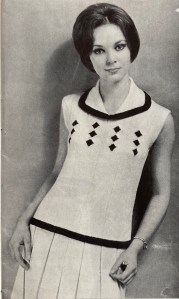
My July project was this sleeveless jumper with contrasting colour accents on the collar, upper bust and hem.

It’s written for Patons Cameo Crepe wool, but I thought a summer top like this would be more practical in cotton. Sadly, it is nearly impossible to find a truly fingering-weight, non-mercerised cotton yarn. Crochet cotton is always mercerised and I don’t like the stiff and shiny look and feel. Non-mercerised cotton is generally DK weight i.e. too thick. The only company I know that makes a nice, soft, pretty much fingering-weight cotton is Mayflower and I can’t get their yarn anywhere at the moment. Also, it’s summer, and cotton yarns, especially seem to be only available in “summer colours” of white, neutral and pastel, which I do not like or wear. What to do?

Well, remember my May project — the child’s T-shirt made with cotton from the Hamburger Wollfabrik? (Again, city, not food…)When ordering the yarn for that project, I went ahead and ordered 250 grams of the same cotton 4-ply yarn in a slightly darker colour, thinking that I would probably want to make a summer cotton top for myself at some point. That was good forward thinking… only, after making the May project, I realised I really didn’t like the yarn, as it was un-plied and therefore splitty and difficult to work with. The green colour I chose for myself was also still too “cold” — not dark enough or green enough for my taste. But since I didn’t know what else to do with it, I went ahead and used it for this month’s project.

The pattern is basically stocking stitch with “lines” of purl stitches to make a just-slightly-like-ribbing, geometric effect. It has a hemmed bottom edge, which was very much in fashion for knitted garments in 1963. As far as hems are concerned, I should probably have learned a lesson from this jumper from last year, which was also lightweight and hemmed, and has continually gotten shorter and wider with time — the hem neither weighs enough nor cinches in enough to keep the sideways expansion in check, thus ruining the “long-line” effect and making me look short and dumpy in it. At this point I am convinced that hems do not belong on knitted garments unless they are heavy enough and really need to be flared at the bottom, e.g. an A-line coat, but of course I didn’t have the foresight to think about that before starting and replace the hem with ribbing. We’ll see how it turns out.

The knitting itself was boring and slow. The intarsia diamonds were fun, at least. (I used bits of leftover black merino for the contrast colour parts.)

The sleeves are finished with simple ribbing that is supposed to be turned in and hemmed, like the bottom edge, but I decided it looked better with just ribbing. The collar is made, in typical 1960s style, without short-rows as one would probably make it these days — there are increases and decreases at the front “corners” to make the shaping. The black edge of the collar is also hemmed and then the collar is sewn on.

This will probably never be my favourite project, but it turned out better than expected. The colour is not the best for my skin tone, but it looks much better now that I have pink hair! Also, I should have made the larger size. It fits OK, but a bit longer and wider would be more in keeping with the way it is supposed to fit. Also, the neckline is very tight — I can hardly get it over my head and definitely not over a bouffant hairdo. (And a top should always fit over your bouffant hairdo.) But it’s comfortable and fun — and best of all, it’s finished!

July 1963: Overview

Cover photo of Stitchcraft magazine, July 1963

“In the Holiday Limelight” is the theme of this month’s issue, covering sporty, casual garments for holiday wear, a few slightly more dressy options and — with one incredible exception — quick and easy homeware projects.

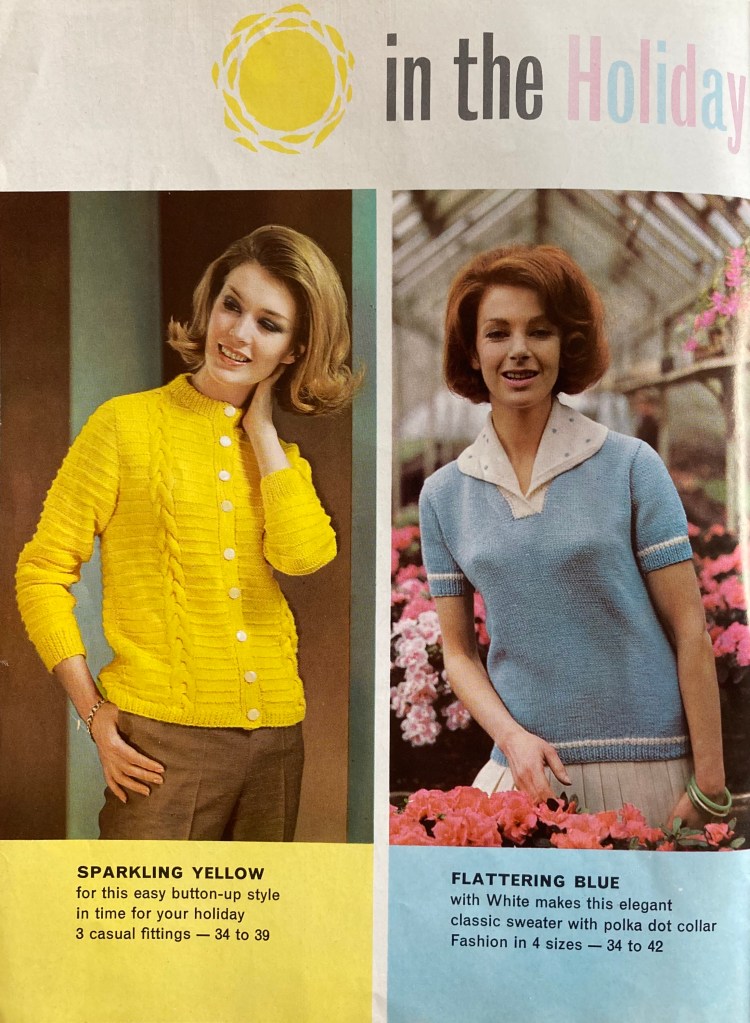
Most of the adult garments seem quite warm and heavy for summer wear, but most are meant to be worn as outerwear in an unpredictable northern-maritime climate. Our partner-look cover duo, for example weighs in at 22-24 (hers) or 28-30 ounces of heavily cabled DK wool and is expressly touted as “in colour for sailing” (hers) or “white for tennis” (his). I imagine it would be quite warm for tennis but probably very good for sailing, as the textured stitch pattern would ward off splashes and insulate from cold winds. Unusual cables are also featured on the bright yellow button-up cardigan, while the design (“from Vienna”) of the mens’ black-and-white pullover suggests a cable-like vertical movement in the sideways-knitted colourwork front piece. A short-sleeved collared jumper and houndstooth-pattern jacket round out the warmer, double-knitting-weight garments.

For more dressy occasions, there are two lightweight jumpers made of Patons Cameo Crepe (fingering-weight wool with a tight twist for a smooth texture in stocking stitch). Both have a slightly nautical theme, at least in the names and colour choices. The “sailor collar” jumper is excellently photographed with matching red hairband and telephone! The diamond-pattern jumper in white with marine blue has a similar round collar to the heavier short-sleeved jumper, as well as a similar idea of using little dots or diamonds as decoration. (I imagine the diamonds must be placed very carefully to fall above the bustline.)

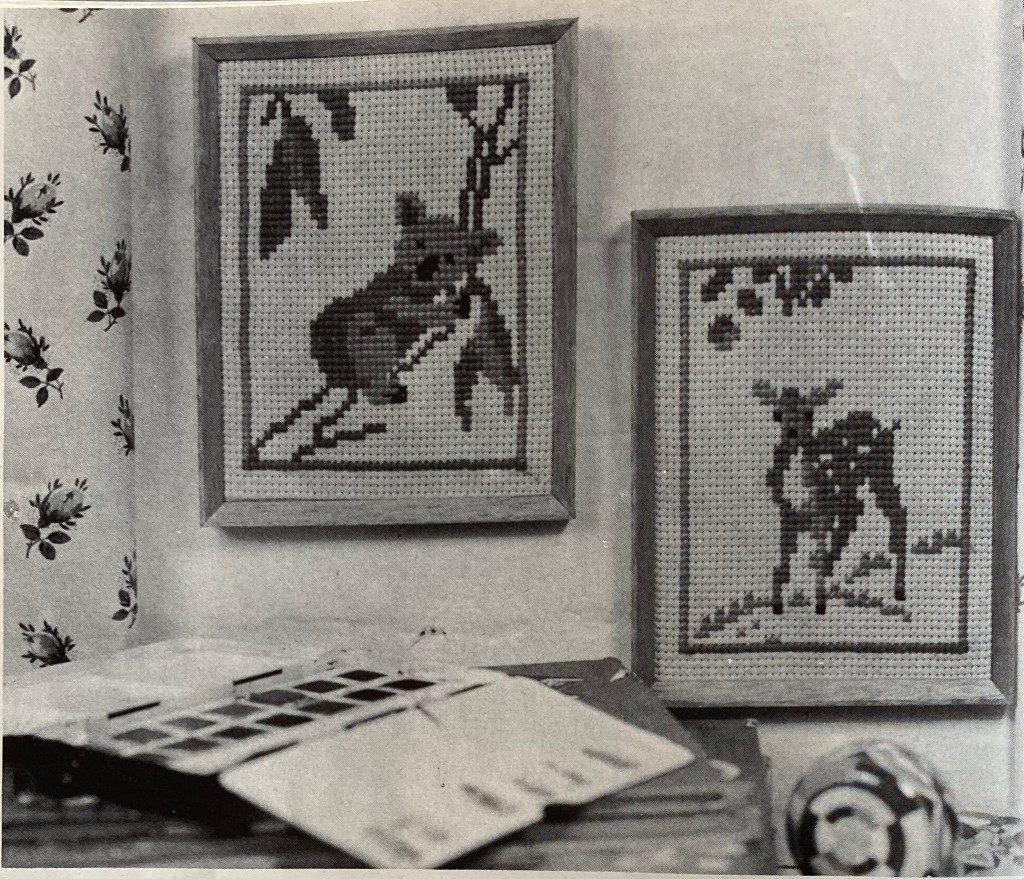
There’s a charming striped cardigan for a young girl, who could be encouraged to practice her budding handcraft skills on two miniature cross-stitch pictures — a deer and a koala bear. Embroidered on Bincarette mesh fabric (an older word for Binca fabric, roughly the same as Aida but slightly fewer threads per inch), the background is not filled in, so there are very few stitches to actually make and they could be easily done by a young child to hang in her room. More experienced “embroideresses” can make this densely-worked cushion, which combines cross-stitch with Holbein or double running stitch in a tessellated design.

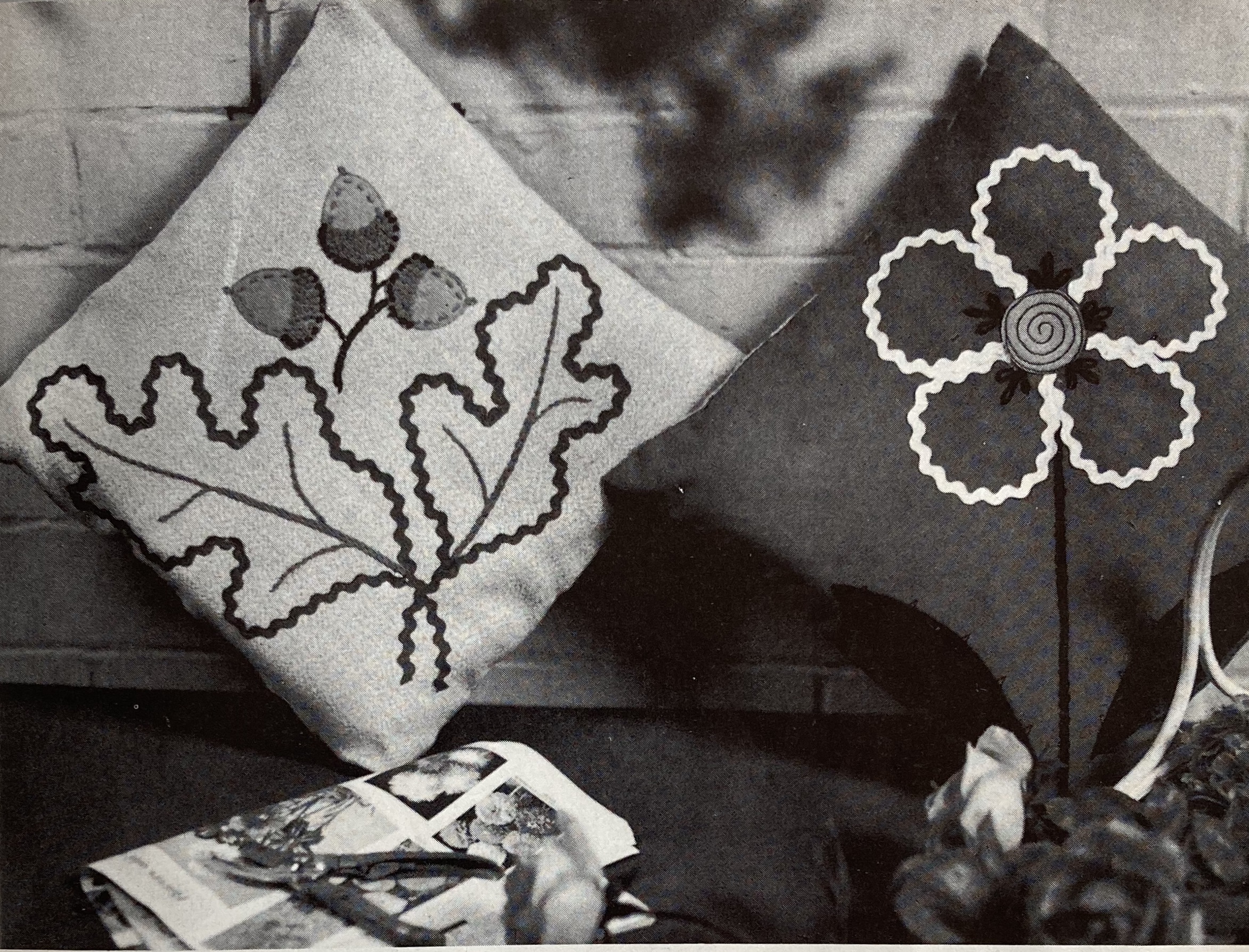
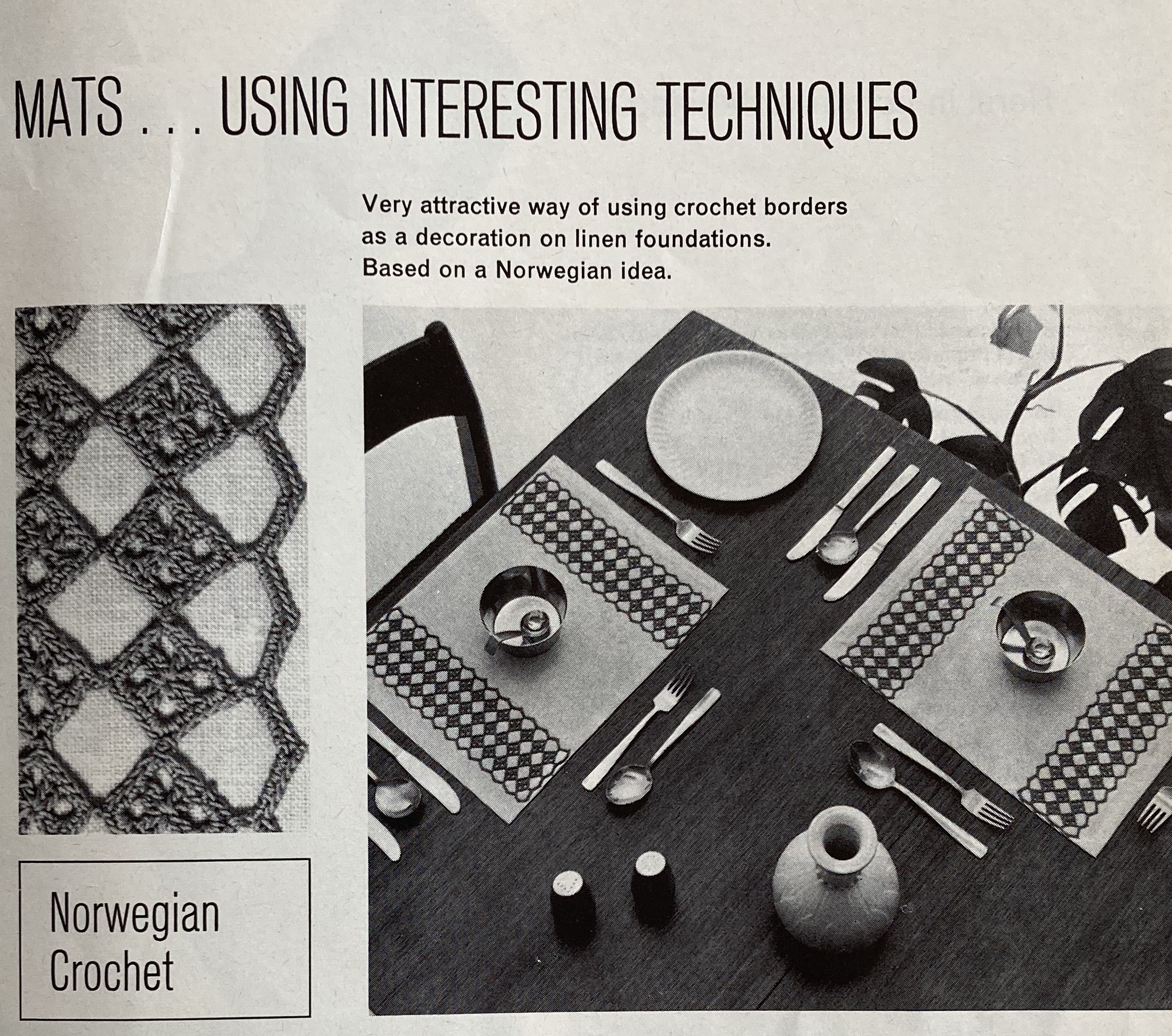
Continuing the homeware designs are two hard-wearing, but very easy to make, applique/embroidery cushions for the garden. Perfect for a staycation, they are made with strong sailcloth material and stuffed with foam clippings to repel moisture. Readers could set their garden table with interesting placemats made in blackwork or with appliquéd crocheted bands. Especially pious readers who prefer to spend their holiday doing church work can even make a kneeler, a Bible marker and/or a secular footstool cover in tapestry.

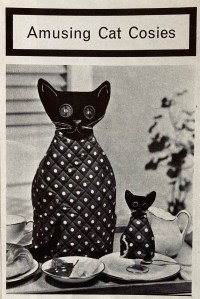
Oh yes, and in the is it-for-a-bazaar-or-is-it-just-bizarre category, here are some “amusing” coffee-pot and egg cosies in the form of sad, legless, eyes-follow-you-around-the room-quilted cats! Add them to your collection of murderous crocheted clowns, evil felt Father Christmases and disembodied-head egg cosies, or demand that your church sell them at their next bazaar in return for the lovely Bible marker you made for them.

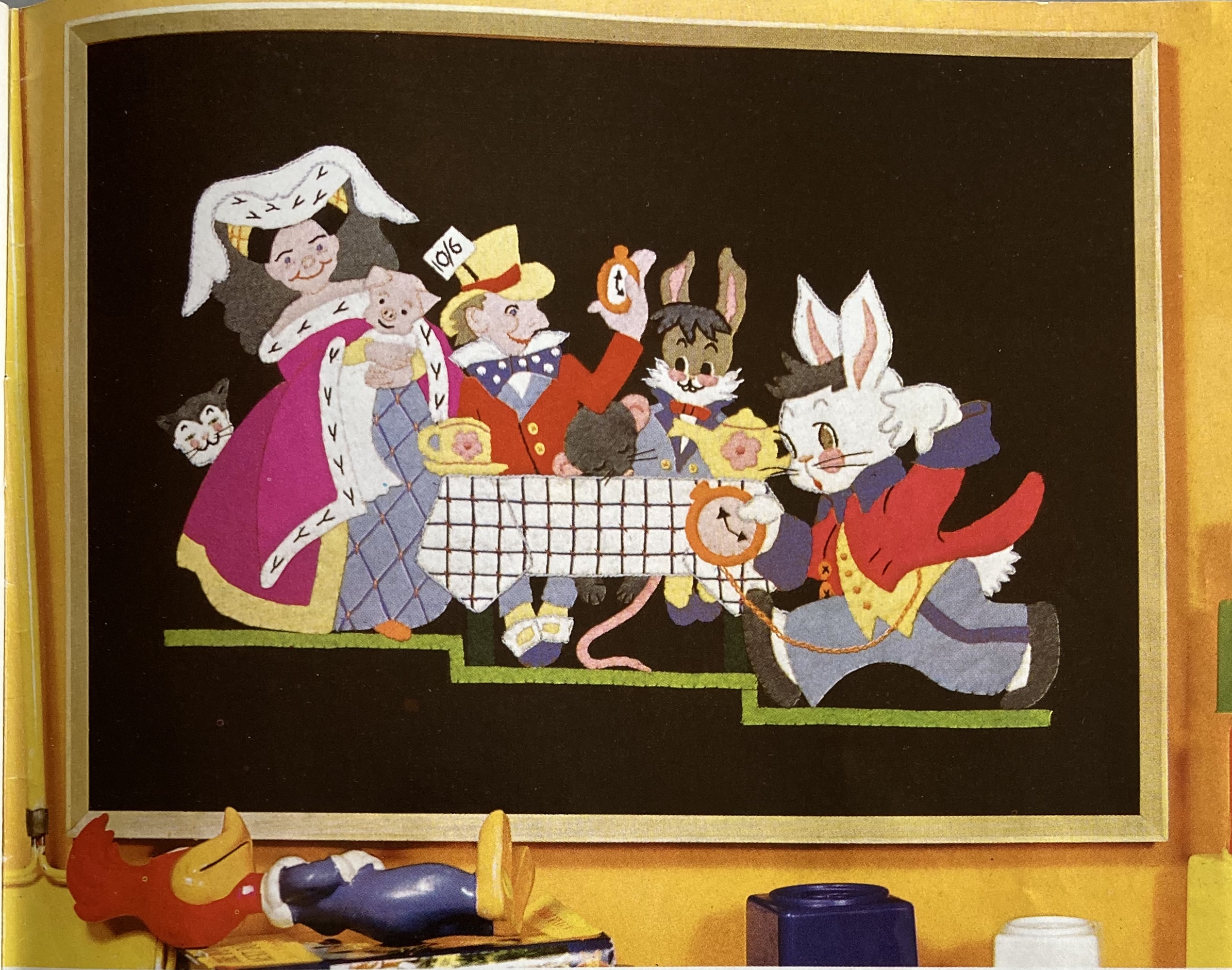
But wait, there’s more, and as always, the best comes last… Did I say that the homewares were easy, with one incredible exception? I am in awe of this large (16×22 inches) yet finely detailed appliqué wall hanging depicting the Mad Hatter’s Tea Party from Alice in Wonderland. It is the companion piece to the “Alice” wall hanging showing the Queen of Hearts and the gardeners from the August 1962 issue, and is designed so that both pictures can be fitted together to make a single panel. The stitch detail and precision required to make all those tiny felt pieces fit perfectly is amazing.

That wraps it up for our July 1963 issue! I will probably make the diamond-pattern jumper, since I have some more of the annoying un-plied cotton from the Hamburger Wollfabrik that I might as well use to make something with, and the long-line style will suit me well. I might, just might, also finish the blackwork butterfly cushion sometime soon. Happy Summer!
June 1963: Practical Coat

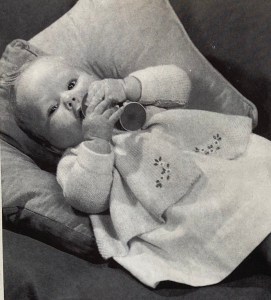
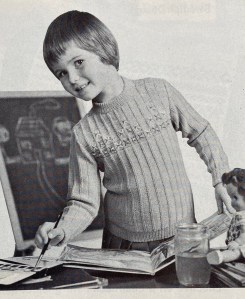
Baby in a knitted cardigan, pattern photo from Stitchcraft magazine, June 1963

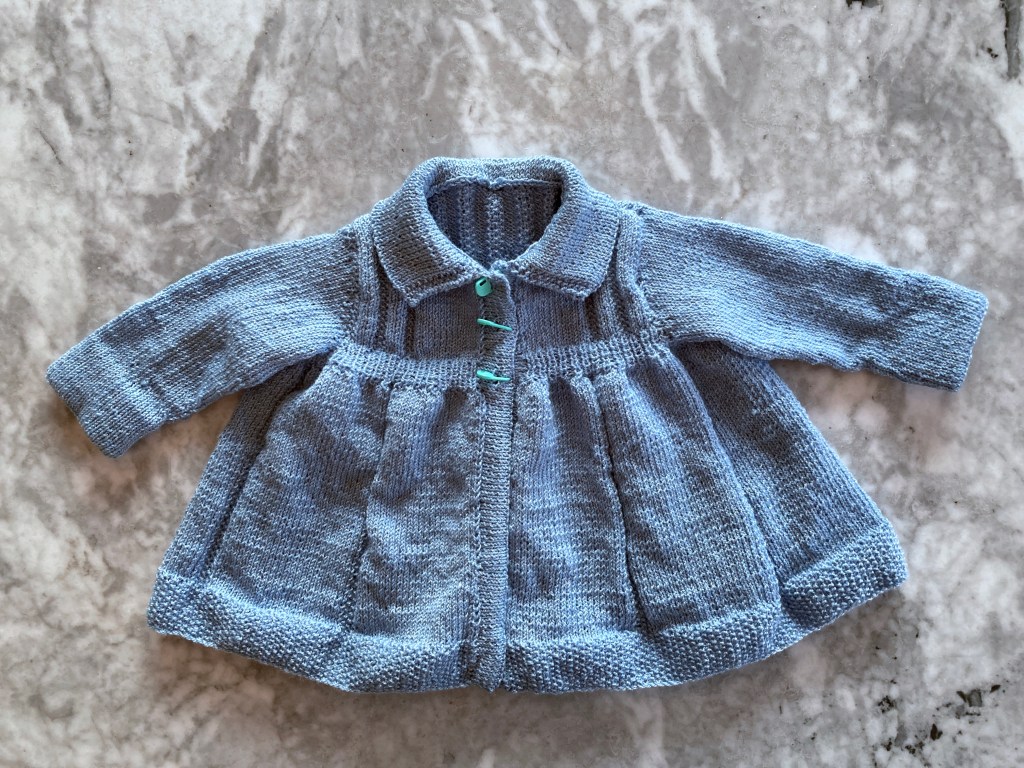
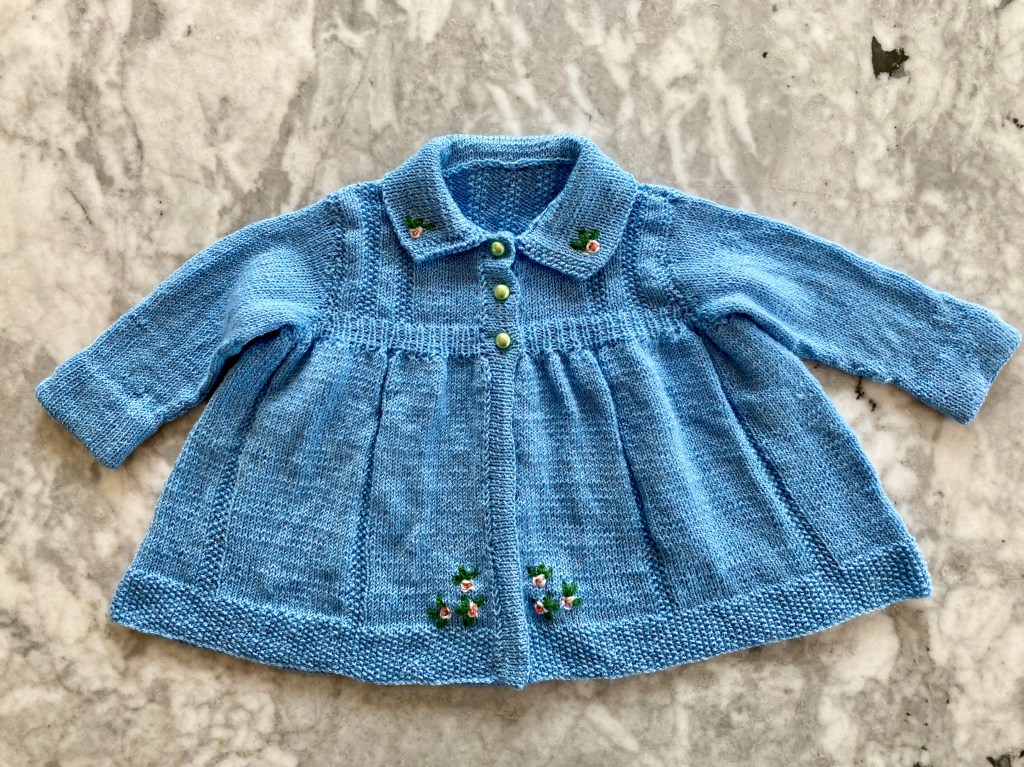
My June 1963 project was a lovely (if not quite as practical as the title suggests) “matinee coat” for a baby. Two styles are given in the pattern, “for a girl” (long coat with ribbing at the waistline, flared skirt and collar) or “for a boy” (straight up and down, basic cardigan styling.) Both styles have dainty flower embroidery as decorative accents. Not wanting to inflict 1960s gender roles on a modern baby and also not having a personal preference, I asked one of the child’s parents which style they liked more, and the answer was “the long coat”, so the long coat it was.

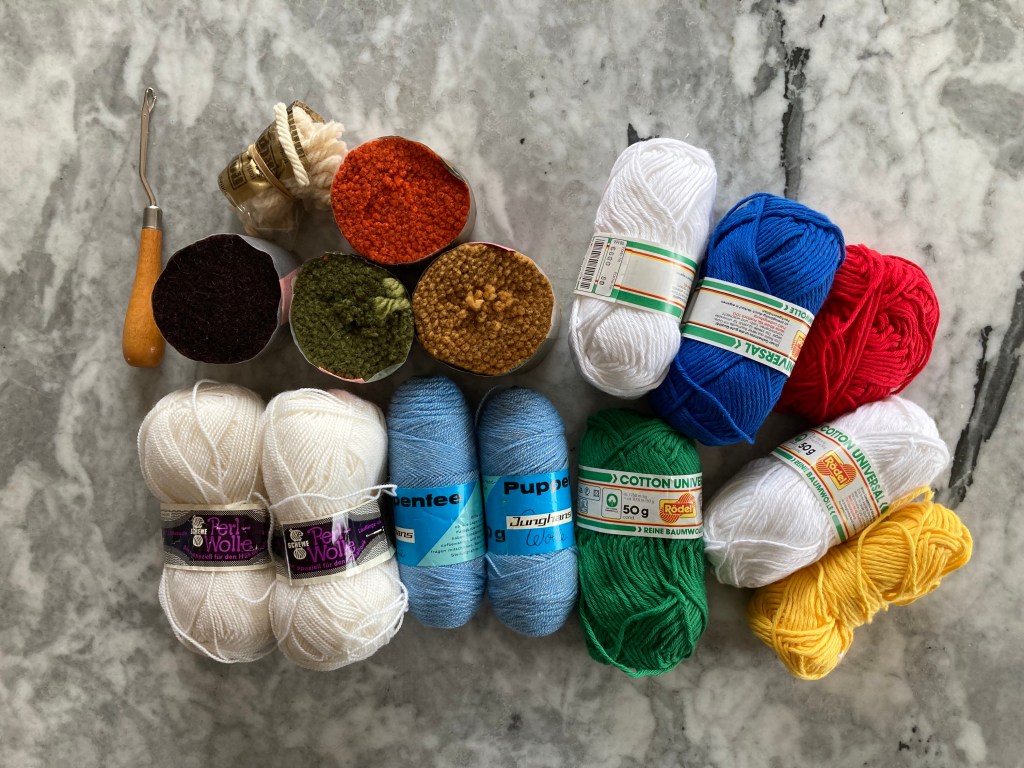
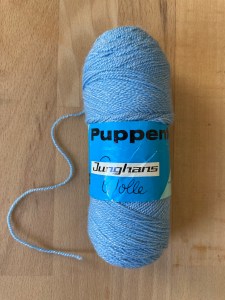
As for the wool, last year another colleague of mine, who knows that I like to knit from vintage patterns, came into a rather large stash of yarn when an elderly relative moved into a care home. Apparently, she (the relative) had liked to crochet and make latch-hook rugs, and when the younger generation of non-crafters cleared out her house, my colleague knew who would give the yarn a good home. There was some great stuff! In addition to a latch hook and some cut rug yarn in very 1960s shades of brown, tan, rust, beige and olive green, there was enough bright cotton to make a crocheted baby blanket, some nice, soft, plain white wool that would be great for baby clothes, and 400 grams of light blue “Puppenfee”, a yarn made by the German Junghans Wolle company in the 1960s? 1970s? which combines light 4-ply wool with a shimmery, presumably nylon or Lurex “Effektfaden”.

Just a selection — there was a lot more of each type of yarn!

The base colour is light blue, and the nylon strand makes the knitting softly sparkly and also very elastic — perfect for a baby cardigan. Happily, light blue was also the parents’ preferred colour, I had plenty of it and the tension and size in the pattern were perfect for this one-year old infant.

The coat is made in one piece from the moss-stitch lower border to the armholes, and the moss-stitch is carried up throughout the stocking-stitch skirt part in narrow vertical bands that make the skirt pleat prettily after the waist is gathered in with decreases and ribbing. Then the fronts and back are continued separately. I made the sleeves in the round from the top down, since that was faster, and made them a little longer than the pattern called for, as the baby is on the tall and thin side and will presumably get longer in the arms before it gets wider in the middle. (Though you never know with babies, but the cardigan is big enough to hopefully fit for a while in any case.)

Both the sleeve edges and interestingly, the collar are hemmed — in the case of the collar, that means stitches are picked up around the neckline as usual, then the collar is knitted in stocking stitch the “wrong way out” i.e. the inner side would be facing once the collar was opened down, then you make a purl ridge for the fold line and knit stocking-stitch for the depth of the collar back again and then sew it together. The result is very neat and crisp. There’s a narrow band of moss stitch (just 3 stitches) at the front corners of the collar to tie it together with the bands in the skirt.

The rosebud embroidery was very easy, no transfers, just a sketch in the pattern and colour choice suggestion. I used bits of leftover Jamieson & Smith Shetland wool in pink, white and green as suggested and finished everything off with three little buttons from stash. Do the buttons look familiar? They are the same ones I used on this “Sunday Best Dress” project from March 1963 / March 2021. And yes, it is even for the same lucky baby! Maybe, with the parents’ permission, we can even re-create the pattern photo. Until then, here it is without the baby — I actually got a project done on time for once!

I am very happy with the finished coat and I hope the baby and parents are as well.

June 1963: Overview

Cover photo from Stitchcraft magazine, June 1963

“Light & Airy” is the theme of the June 1963 issue, with short-sleeved 4-ply knits as well as bulky items made in fluffy, lighter wool/synthetic blends. June is also the beginning of the holiday season, “where the emphasis to-day is so much on the active side and casual look — sailing, rambling and of course, so much travelling” (Patience Horne, “Editress”). Accordingly, many of the projects are easy, quick and/or small, to be finished before the travelling starts or suitable for working from your deck-chair.

In her introduction to this issue, Editress Horne also has a “special word for older readers”:

Remember that top models all come in the young age groups, but many of our designs, though often photographed on young models, are very suitable for older women, and often, a sweater with a long line, can be shortened without difficulty, for the more mature figure.

Graphic of a dandelion with the words "Light & Airy"

The 1940s and 1950s issues of Stitchcraft did have older models from time to time, usually modelling the designs intended for those “mature figures”. The 1960s issues often have plus-size designs and models, but they are indeed all on the younger side. I assume this had to do with the target demographic slowly moving from young working women and older matrons after the war, to young(ish) mothers of future Baby Boomers in the later 1950s and 1960s.

Anyway, on to the designs! The happy holidaying couple can make matching cardigan jackets in lightweight-but-bulky “Ariel” yarn when they play tennis or go “strolling and sight-seeing.” Diamond and zig-zag patterns make a showing in stranded colourwork patterns (the cover blouse), textured stitch patterns (the panelled 4-ply jumper and short-sleeved cardigan blouse) or Swiss darning (the colourblock “playtime sweater” worn by our young drummer.) The same Swiss darning (a.k.a. duplicate stitch) embroidery is used for tiny accents on a casual, collared cardigan.

The youngest of the family get a cute “matinee coat” and/or jacket decorated with regular embroidery, or a sun-suit with matching short-sleeved cover-up. Embroidery is definitely a trend! Collars and neckline finishings can be subtle, non-existent or big and bold, as seen on the woman’s cardigan and this men’s casual, tweedy shawl-collar number.

The homeware projects are all fairly simple and versatile, one design being suitable for different types of project, but some are too large to want to take along on holiday. There’s a tablecloth and/or chairback with cutwork ivy design, a rose motif apron and/or cushion, and a Victorian-inspired cushion and/or stool seat in tapestry and/or cross-stitch. Pick your combination!

The outdoor cushions with sea motifs are a good summer-themed project, or you can preserve your holiday memories in a needlepoint picture of Lynmouth. There’s also a cross-stitch rug for a larger, at-home project.

With so many interesting ideas to choose from, I’m sure nobody’s holiday will be too relaxing, ha ha. I am undecided about what project to make. I am so far behind and have so many unfinished projects! At the same time, there are too many projects from this issue that I would like to make. I could genuinely use a new cardigan and the embroidered one with the big collar is just my style… but where will I find the time to make another full-size adult garment? The same goes for the short-sleeved cardigan blouse and the panelled diamond-stitch jumper. The baby coat or cardigan would be practical for using up stash and might actually be done quickly enough, so that might be the best choice. Stay tuned!

May 1963: Viennese

Photo from Stitchcraft magazine, May 1963

My May project was this jumper “from a Viennese design” for a young relative whose birthday was in May. Spoiler: unfortunately, the jumper was not ready in time for the birthday. May went by so quickly and I feel like I hardly made progress on any of my multiple unfinished projects. Let’s hope the kid doesn’t have a growth spurt before I finally get this done.

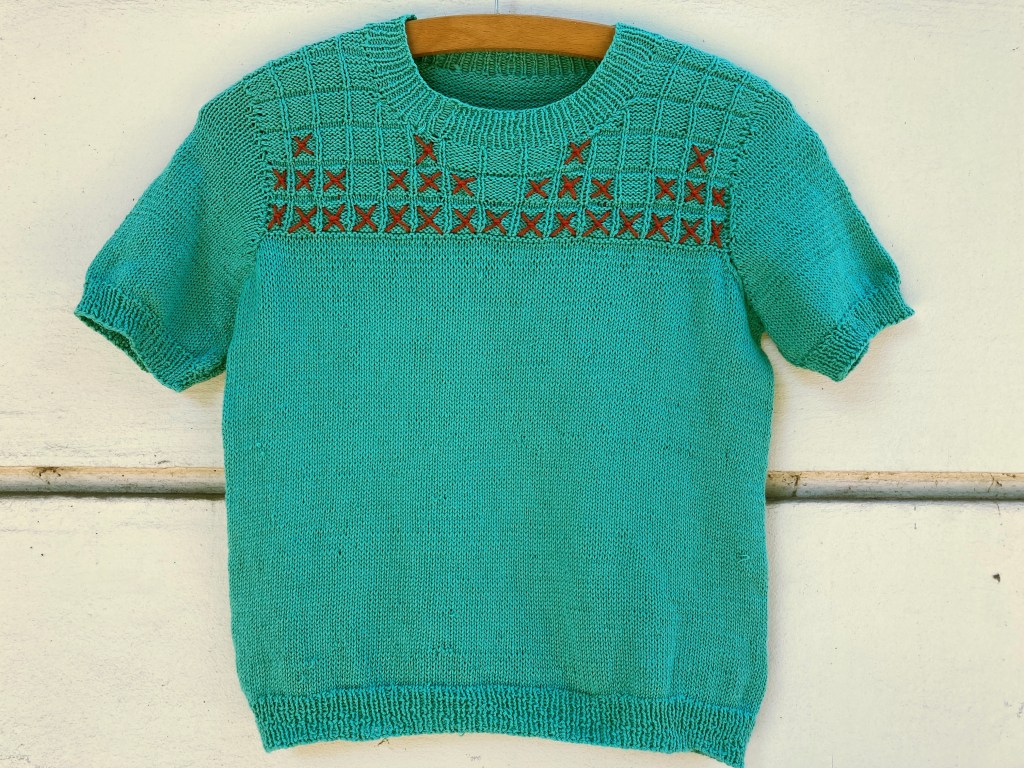
The jumper is written in a narrow reverse-rib pattern and the interesting stitch design on the yoke is embroidered on later. The recipient of this project was not opposed to the embroidery but very adamant about wanting the garment to have a “smooth texture”, i.e. stocking stitch. I aim to please, so stocking stitch it was, except for the yoke.

Cone of green cotton yarn

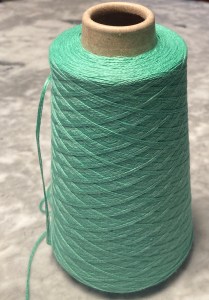
Said relative lives in a warm climate and is somewhat sensitive to wool at the moment, so I decided to make it in fine cotton. The tension according to pattern is 14 1/2 stitches in 2 inches, which is as much as I can ever accomplish even with very fine yarn and tiny needles, so finding cotton that works for me at that gauge is difficult — most cotton yarns are mercerised DK weight for making dishcloths, accessories, amigurumi, etc. Of course, there is always fine crochet cotton, but that is usually also mercerised (I don’t like the shininess of mercerised cotton.) Mayflower DK makes a lovely fine-gauge cotton that is hard to find in stores and can’t be ordered from their (Danish-language only) website. Yarn stores were still closed in my area in any case when I started this project and I didn’t have anything appropriate in stash. Luckily, the wonderful Hamburger Wollfabrik spinning mill company (as in, the German city of Hamburg, not the food! I realise that name sounds funny when you read it in English…), which was closed for a long time after a burst pipe caused severe water damage a while ago, is back up and running online with a brand new website and a beautiful selection of yarns of different fibres and weights. I chose the super-combed cotton in a 4-ply weight and a spearmint green colour.

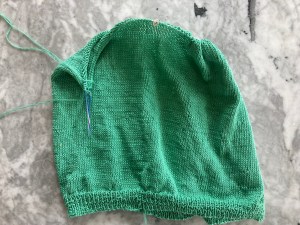
Work in progress -- knitted children's jumper

I was happy with the weight and colour of the yarn but unpleasantly surprised to see that it was completely un-plied! Nowhere on the website does it say what kind of twist they use, nor is there an option to select what you want, but the yarn in the sample colour photos definitely looks plied and my yarn was utterly not. It is really, really hard to work with un-plied cotton, as it just splits everywhere. I guess I should call them next time I order from them and ask about that.

It is also very lightweight, which is lovely. I used that to my advantage by making the finished garment short-sleeved, making it a fancy knitted T-shirt and not a jumper. but the finished garment will be more like a T-shirt than a jumper. I tried a couple of combinations for the yoke and decided to make it in the pattern stitch with the large contrasting cross-stitch “pyramid” design in bright orange.

It blocked out kind of uneven, as I didn’t have a clothes dryer. Strange to have a knitted item that should not be dried flat! But I think this cotton needs the evening-out and fluffing-up effect of a dryer.

The combination of boring stocking stitch and un-plied yarn made progress very slow, but I got it finished by the middle of June, at least. Let’s hope the kid likes it!

May 1963: Overview

Cover image from Stitchcraft magazine, May 1963

“Fashion At Ease” is the motto of the May 1963 Stitchcraft issue, in keeping with both the beginning summer holiday season and the fashion for casual, loose-fitting, bulky-knit garments. Our cover model is getting the picnic chairs ready in a cardigan made of “Ariel” yarn — a synthetic mix that is bulky but somewhat lighter-weight. (It’s always described as “light-as-a-feather”, “feather-weight” and so on, but the cardigan uses 9 or 10 2-ounce balls, which comes out to 18/20 ounces or about 510/560 grams in the basket rib and slip stitch patterns. That may be a bit lighter than the same type of garment made in bulky-weight 100% wool, but “feather-light” it is not.)

Other than that, the women’s garments are very similar: hip-length, made in plain, smooth stocking-stitch with V-necks and somewhat smaller pointy collars. The pullover of the green suit on the inside cover photo looks so similar to the raglan-sleeved “overpull” a few pages later that I had to check twice to make sure they were two separate designs and not a continuation of one pattern on a different page with another picture. The 4-ply collared pullover is also very plain (it’s even listed in the contents as “Plain 4-ply sweater”) and has gentle raglan sleeves and a similar small collar. There will be no rocking of the boats on this holiday, fashion-wise!

There’s a little more design interest in the “Italian” boatneck pullover with a stranded colour stripe across the hips as well as the wonderful “Tyrolean” cardigan and “Viennese” pullover for children. The use of different countries’ names in the descriptions seems more a way to highlight the international “continental” travel-holiday theme than any reference to traditional or regional design elements. I certainly don’t associate the stranded knitting pattern with Italy, as it’s much closer to traditional Fair Isle/Scandinavian/Baltic/northern stranded patterns. The children’s garments claim to be a “design from the Tyrol” and “From a Viennese design”, but you can make of that what you will. They are definitely cute and probably fun to wear.

Rounding out the knitting designs are a “crunchy” men’s pullover in Bracken Tweed, one of the early multicolour/tweed-flecked wools that became popular with hand-knitters in the early- and mid-1960s as well as an interesting hybrid cardigan featuring “waistcoat styling” — the front and back are knitted in plain stocking-stitch and the sleeves in a slip-and-drop textured stitch pattern in a lighter shade of the same DK wool. I’m not sure the look is successful, but it is an interesting idea.

There are plenty of ideas for housewares, starting with a coordinated latch-hook rug and cross-stitched floor mat for a child’s room. The puppy and kitten are quite cute and (not coincidentally) look a lot like the characters in some of the children’s comics printed in the back pages of the magazine. They are intended to be easy enough to make that “your young daughter” (only the daughter, of course) could help make it and thus expand or improve her handwork techniques. For any children who don’t have to help with housework (guess that would mean the boys eh), our happy housewife can make a felt bag for dirty linen shaped like a postbox, complete with a helpful embroidered sign with collection times (9:30 am Monday to Friday, no collection on Saturday or Sunday). There’s also a purely decorative Punch and Judy wall hanging and a nightdress case shaped like a tortoise. (I will never understand the point of a nightdress case, but I love the tortoise design.)

Going with the international/holiday theme, there are embroidery patterns for a chairback and tablecloth inspired by traditional Scandinavian designs, a flowery cross-stitch cushion and table mats and a very interesting tapestry pattern for a stool top. There’s also a knitted doily and — unusual for Stitchcraft — a design for a patchwork cushion with some very well-written basic instructions for doing patchwork with the paper piecing method. For the unacquainted: you cut out pieces of paper from a cardboard template in the desired shape, stitch the pieces of fabric around these paper pieces, then stitch the fabric pieces together at the side to make the larger patches. The paper pieces are then removed and re-used. The advantage of this method is that you don’t have to cut the fabric to perfectly accurate shapes or pay too much attention to the seam allowance.

That wraps it up for May 1963! The ads are the usual and in the alternative-nursery-rhyme children’s comic, Miss Muffet has shrunk to insect size and made friends with the very nice spider, who helps her get out of a flower and gives her a ride on a floating leaf. That sounds like fun.

My project for this month will be the “Viennese” child’s pullover, made for a young relative. Said child was adamant about wanting a “smooth texture” on the pullover and not the reverse-stocking-stitch-rib in the pattern. I am also making it for summer wear in a very lightweight cotton, so the finished result may or may not look anything like the original design, but we’ll see. Also: many WIPs to finish. Happy Spring!