March 1968: Bold and Bright

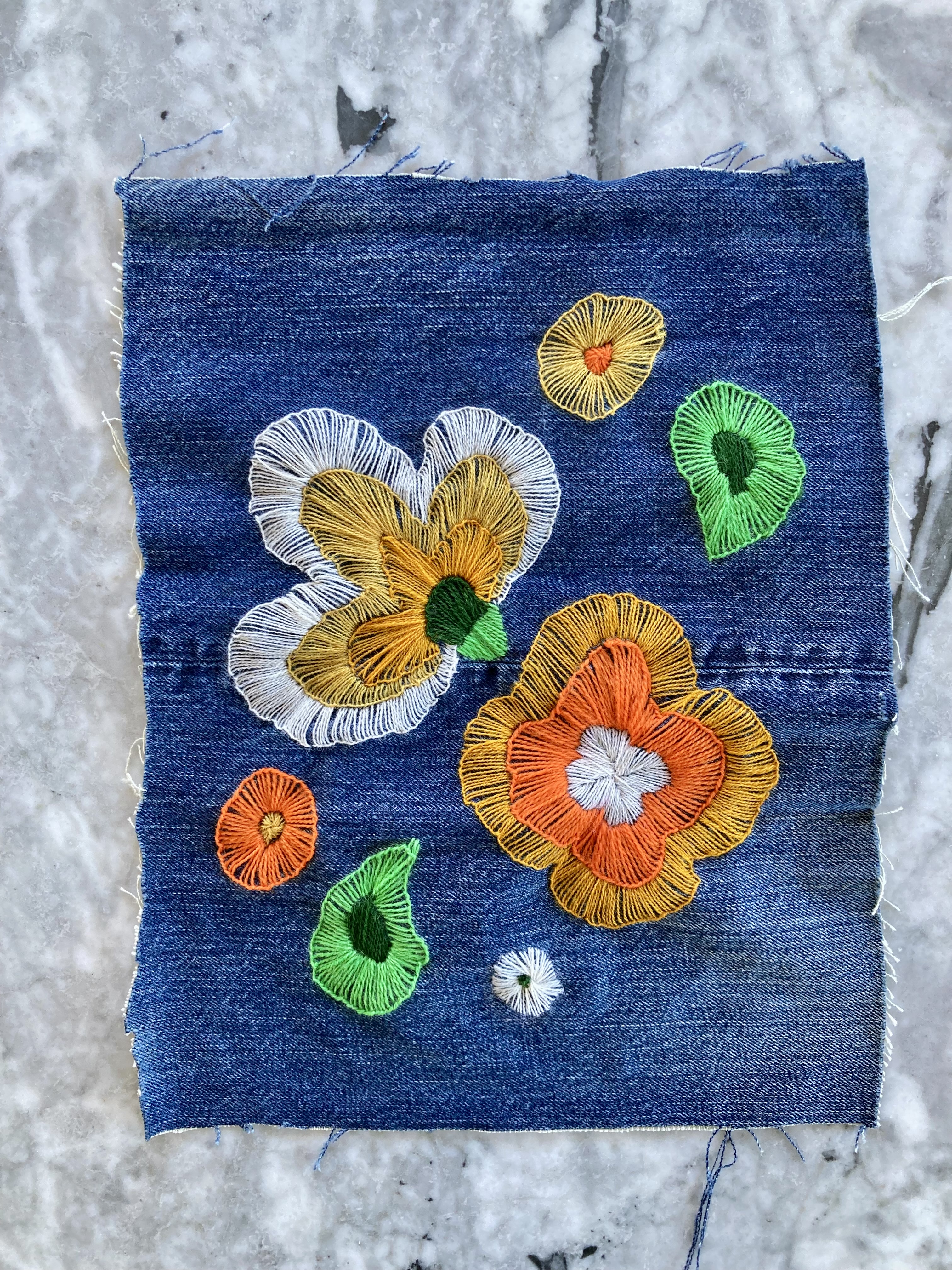
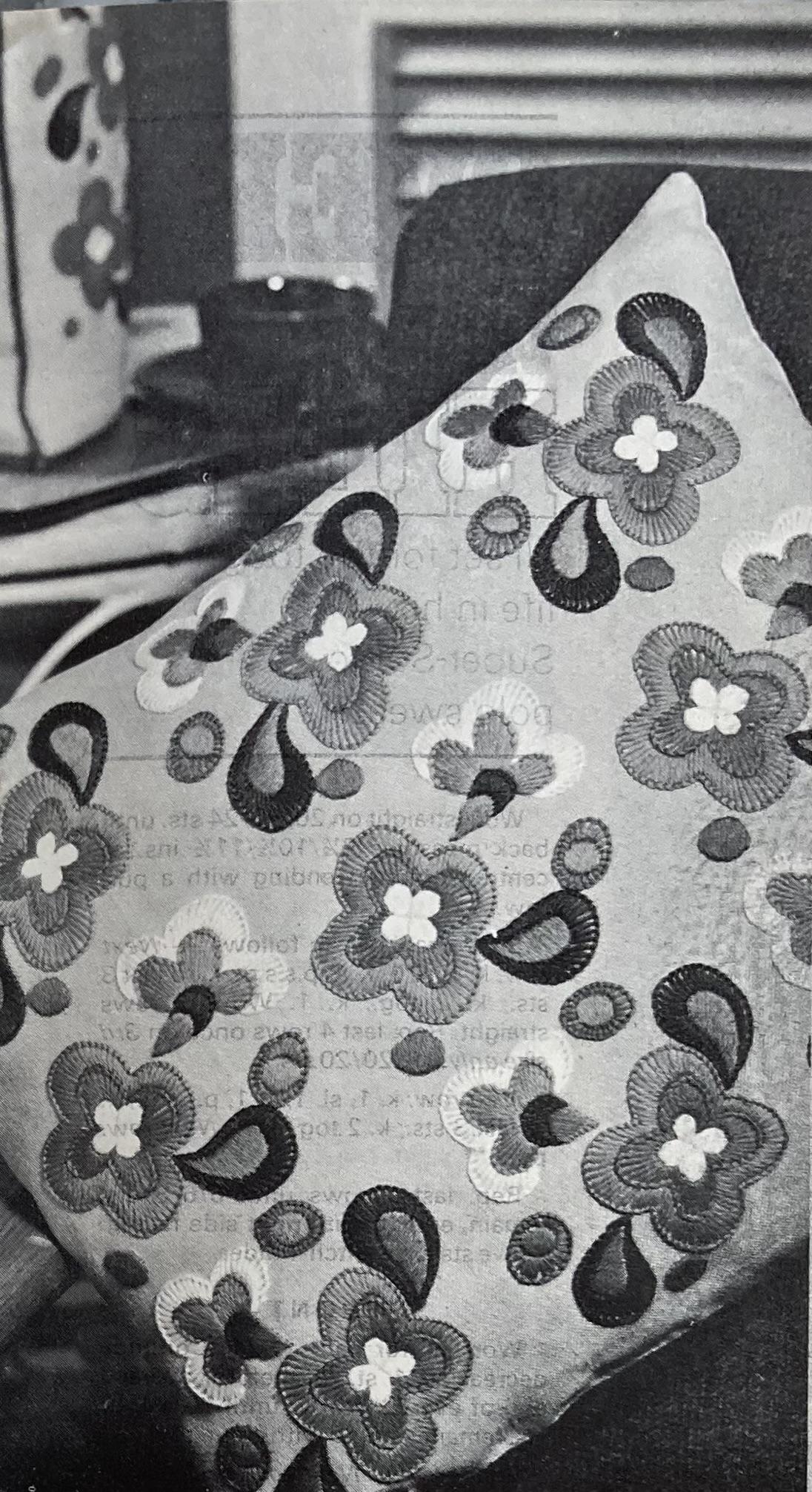
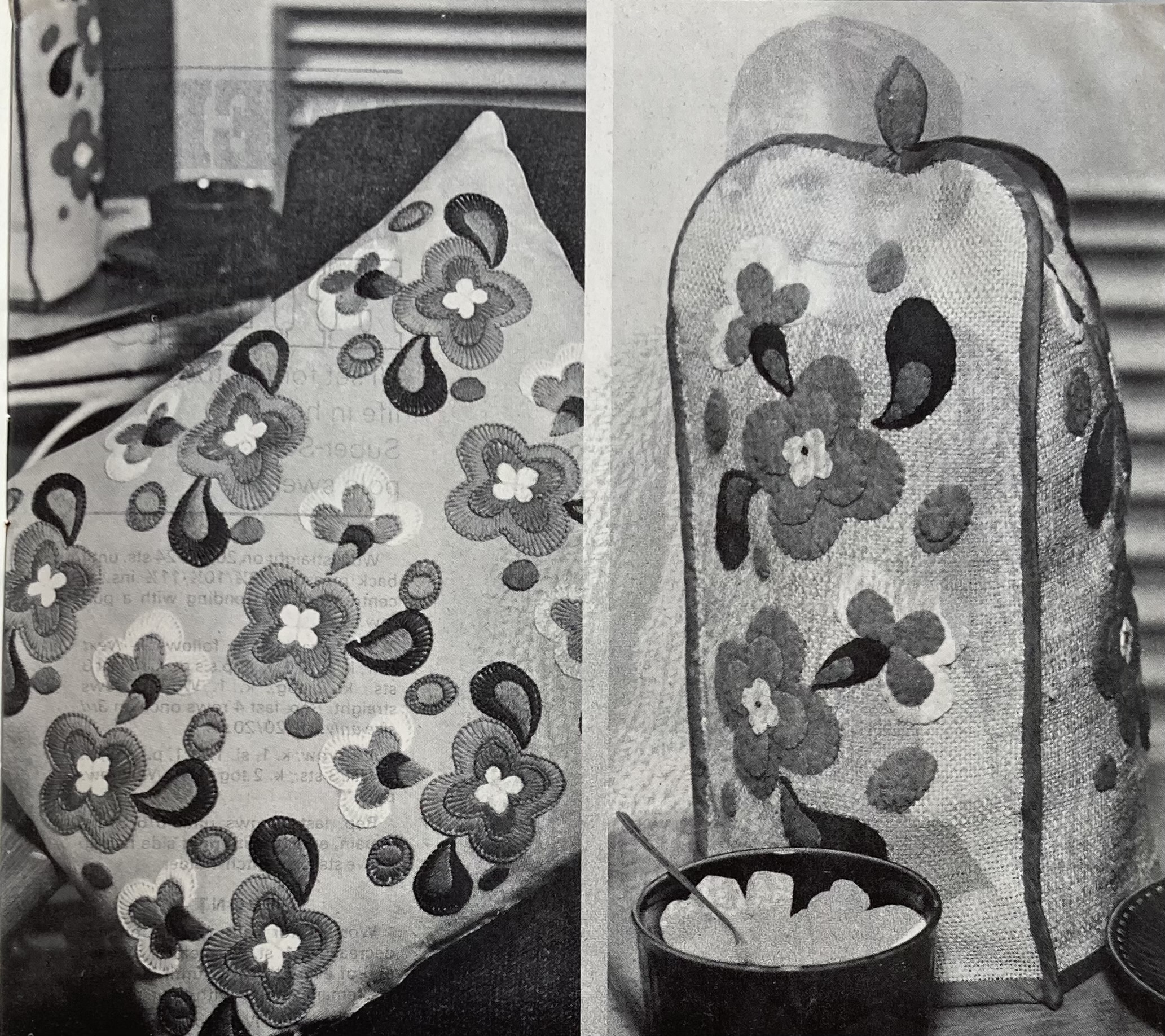
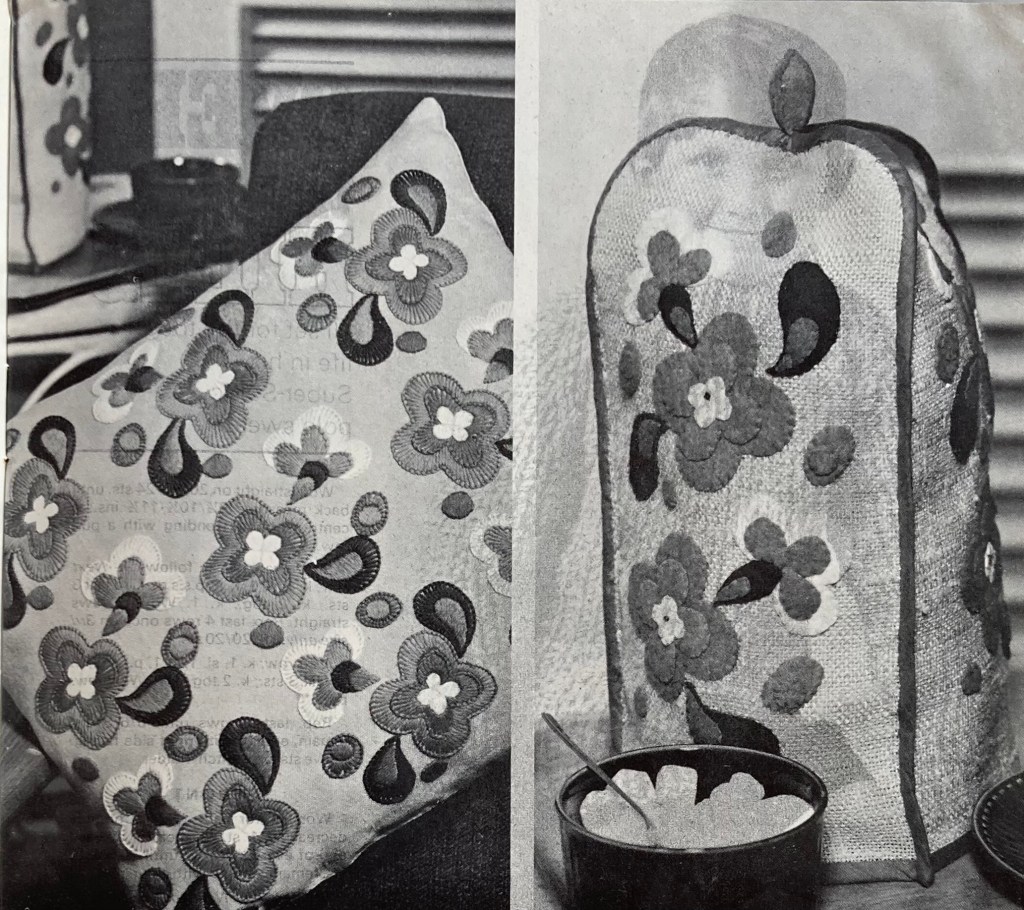
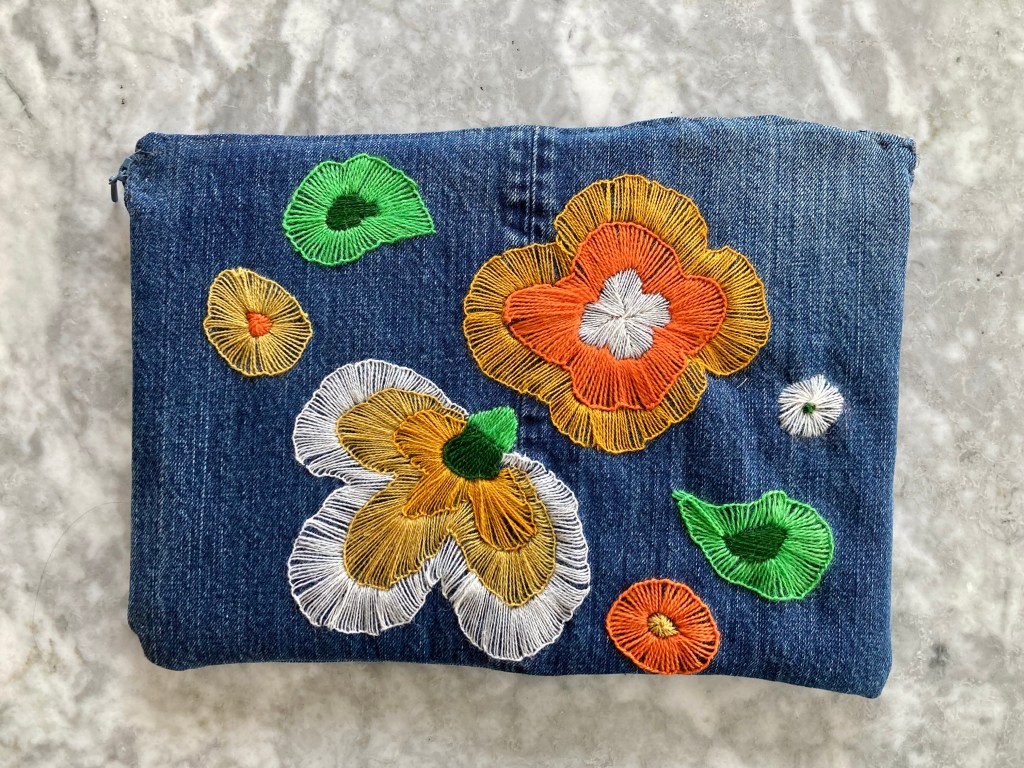
There were some nice knitting designs in the March 1968 issue of Stitchcraft as well as a very 1960s “bold and bright” embroidery/appliqué design. Captioned “The Modern Look for Embroidery”, it featured flower motifs in a sort of, I don’t know the word — cartoon style? The opposite of delicate and ornate. You could embroider them onto a cushion or appliqué them onto a coffee cosy. I have more cushions than sofas and do not need a coffee cosy, but a new laptop case would be useful and pretty.
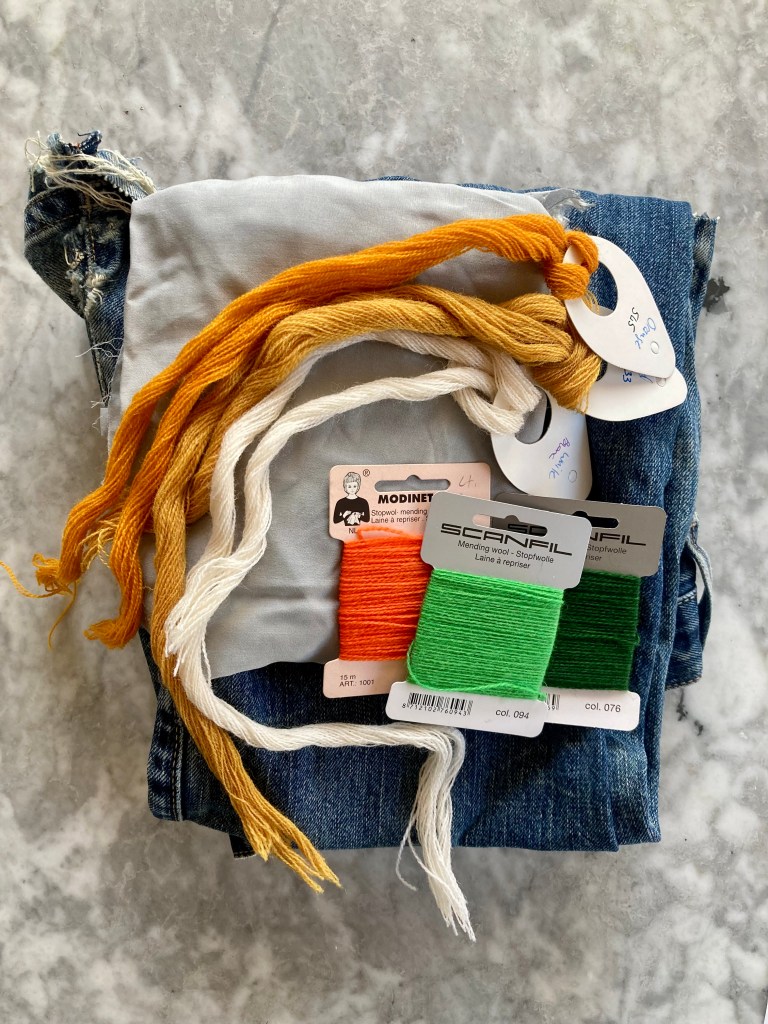
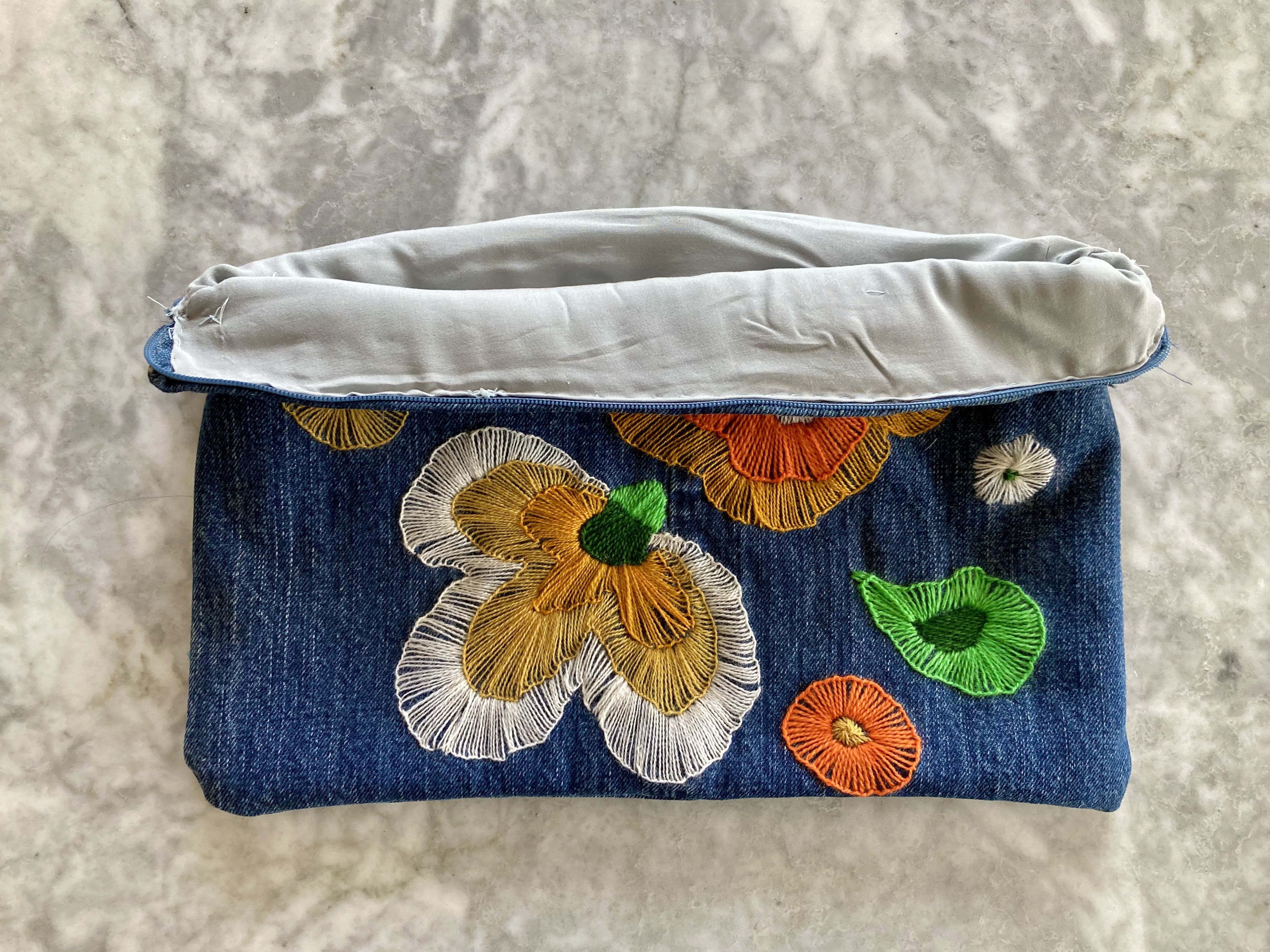
In keeping with the spirit of upcycling / using up scraps before buying new products, I decided to make the embroidered version, since I had some wool embroidery thread in the appropriate colours (gold, orange, white and two shades of green) left over from other projects. I had lots of appliqué felt too, but not the right colour scheme. Still had plenty of denim from an upcycled pair of jeans (original would have been yellow furnishing linen), lining fabric from the fabric drawer and quilt interlining for padding. All I needed to buy was a spool of thread and a zipper.

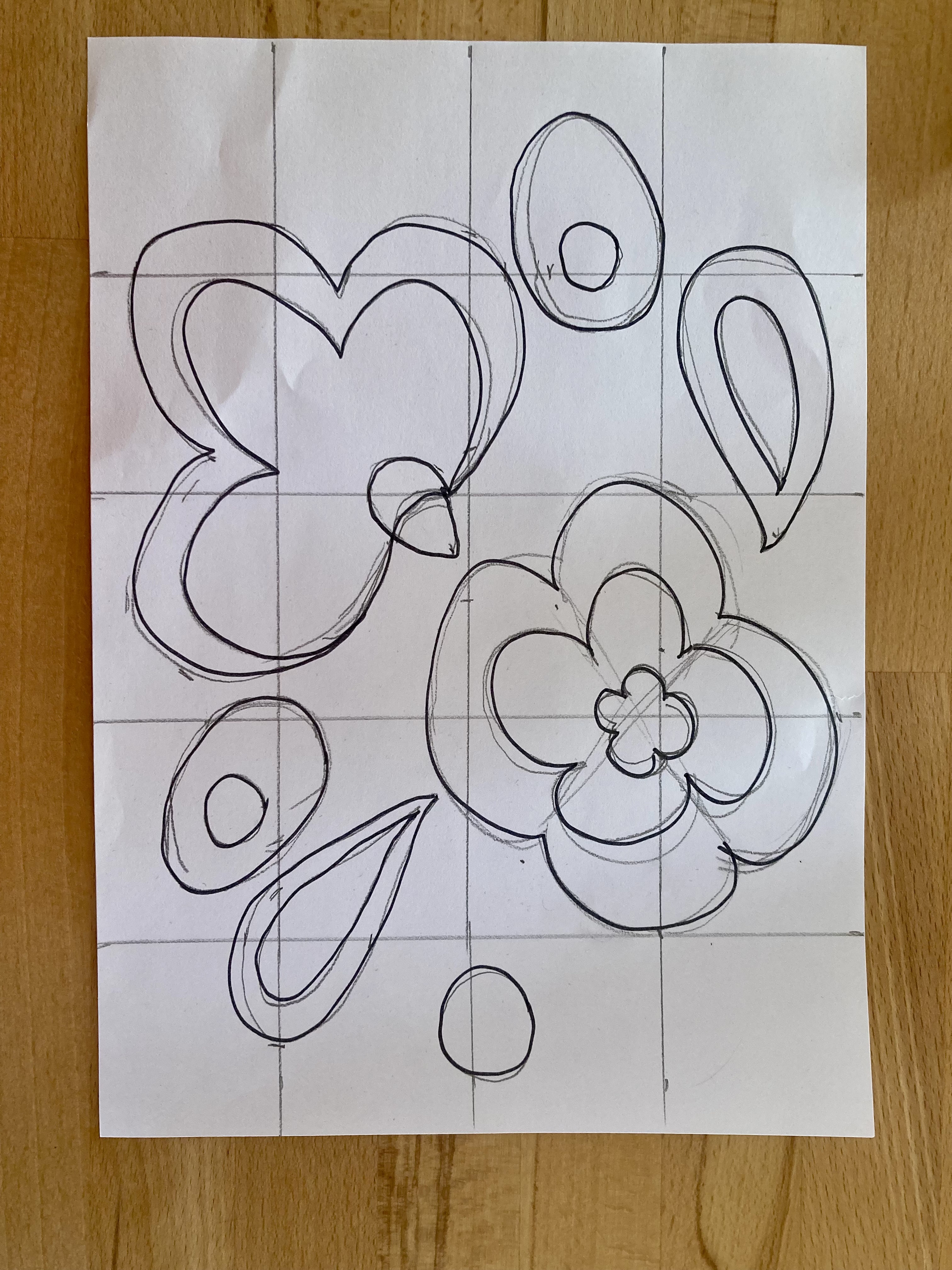
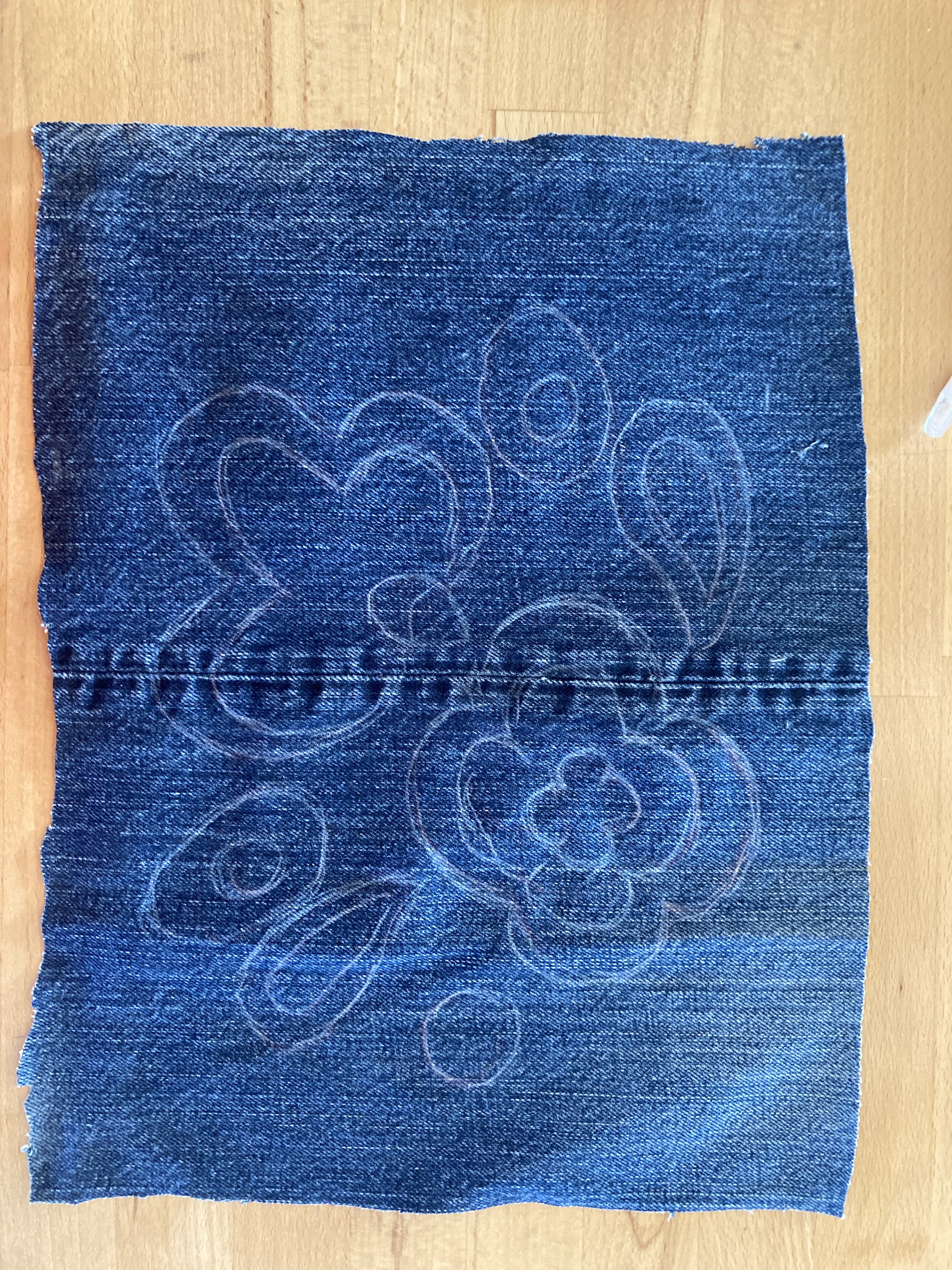
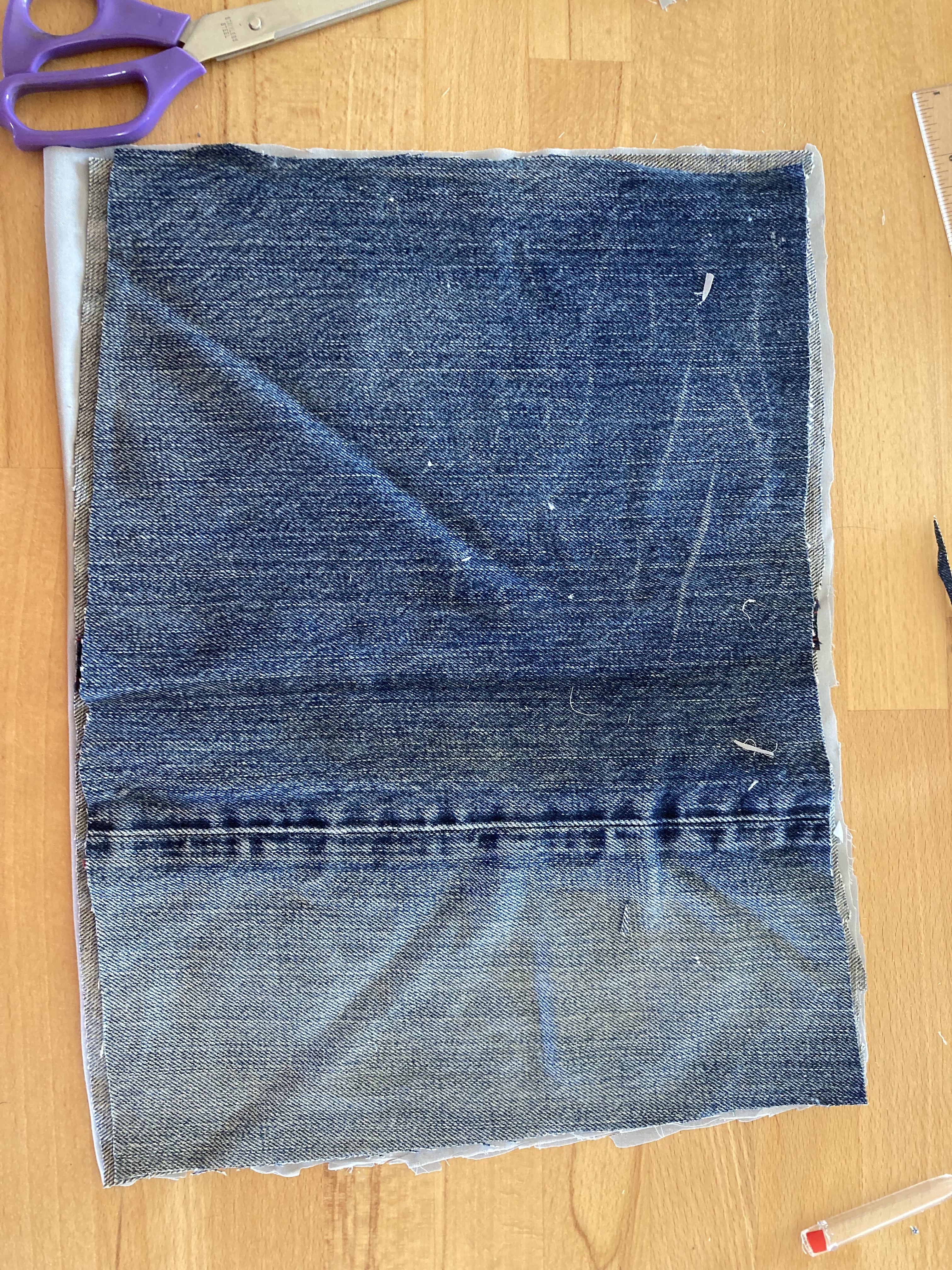
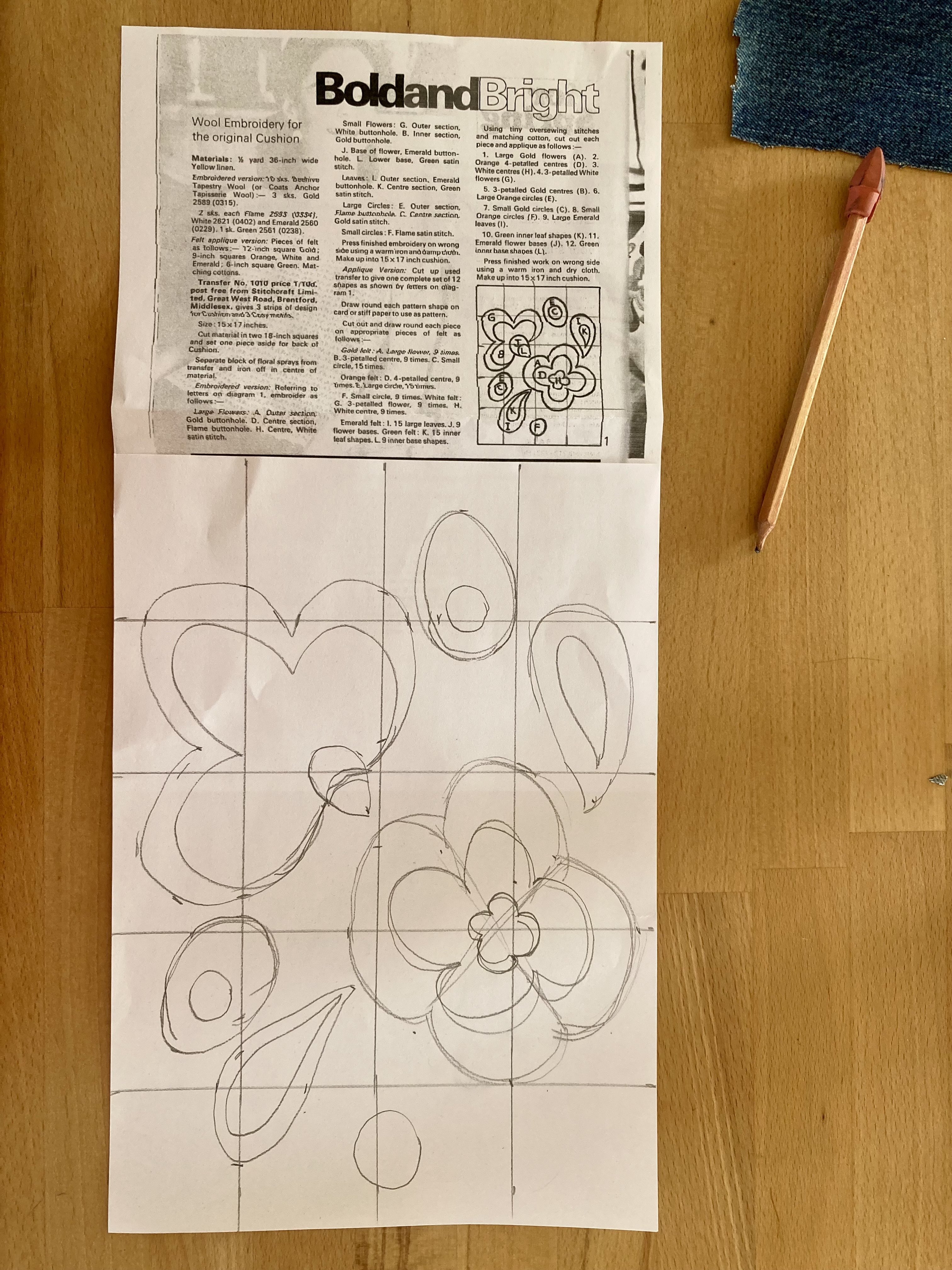
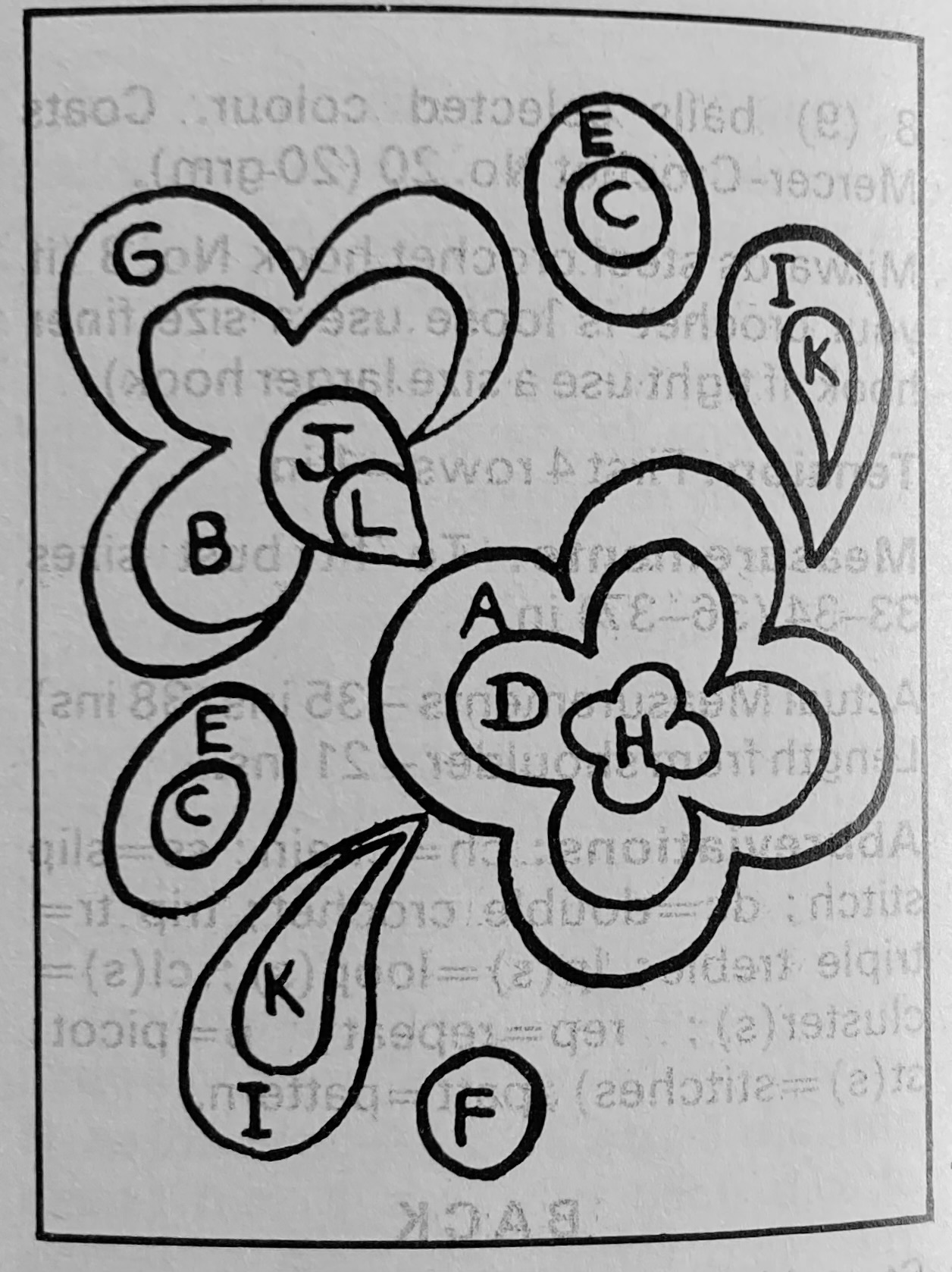
Als always, I would have had to send away for the transfer in 1968, but there was a helpful schematic in the magazine which I transfered over to paper and then onto the denim, sizing it up to fit. Transfering the design to the denim was hard, even with a white tracing pencil. I had to go over it with chalk and then of course keep going over it again and again because the chalk wiped off during the embroidery. One of these days I will try using solvent paper.
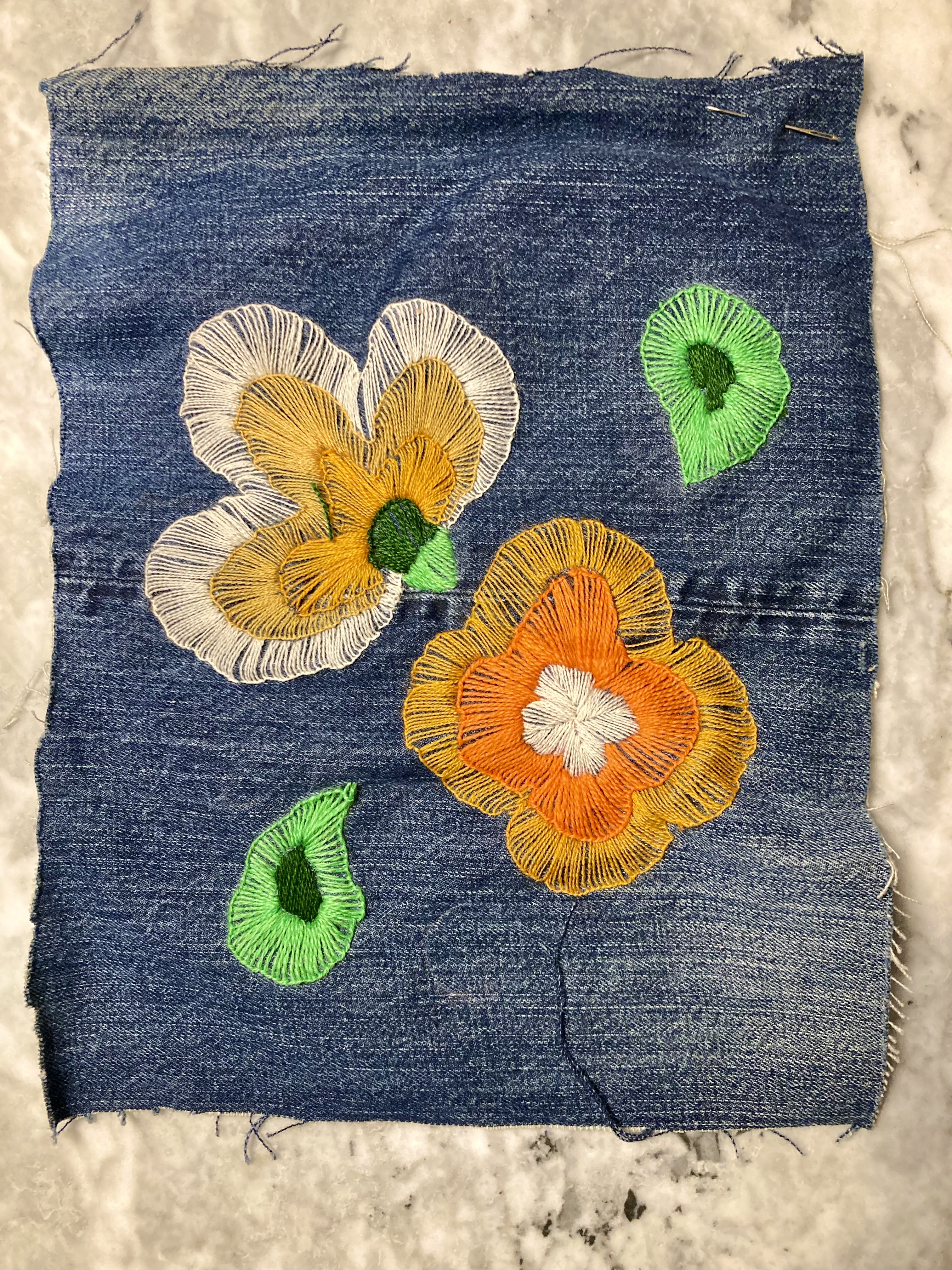
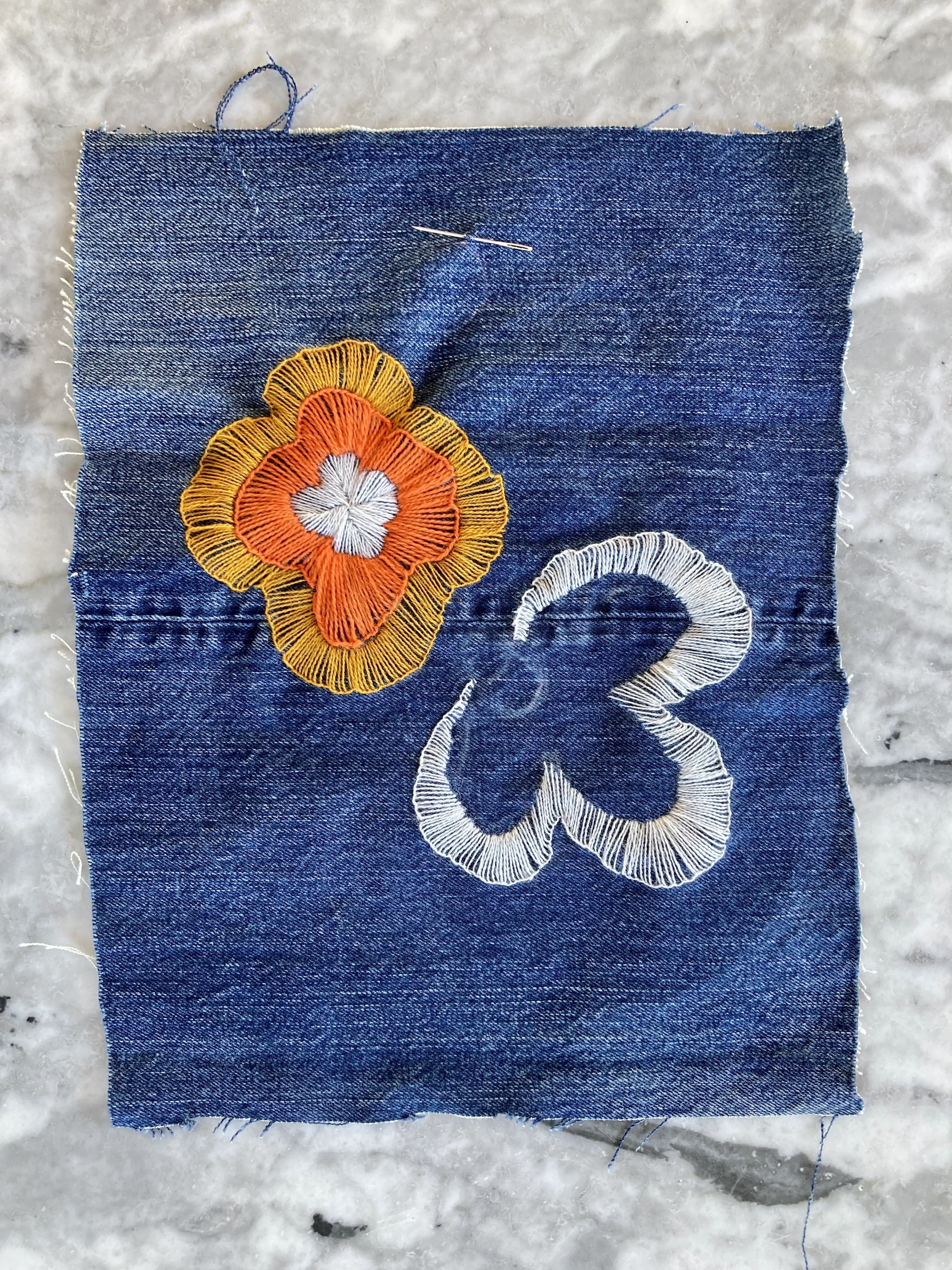
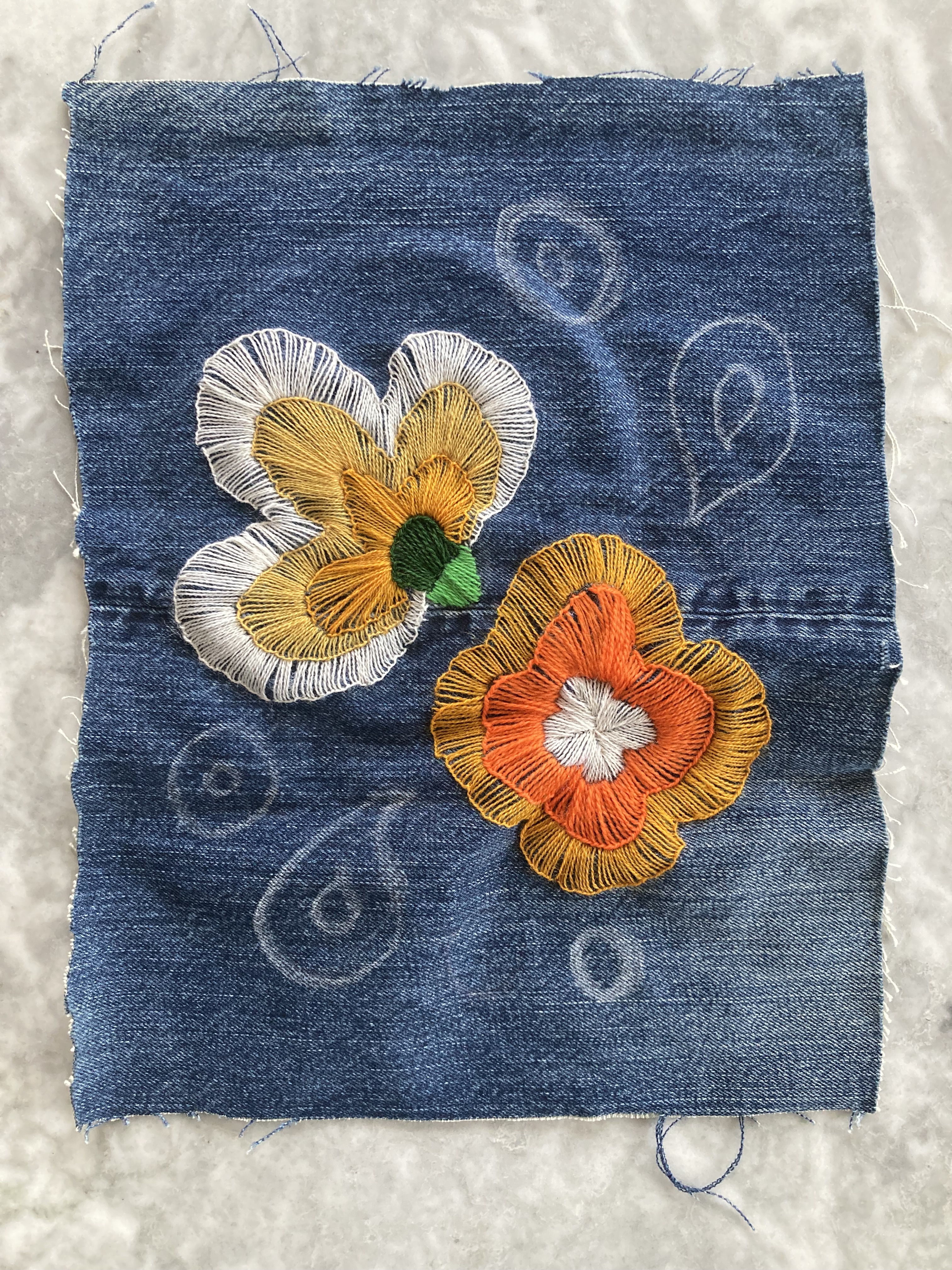
The embroidery itself was not hard, but lots and lots of buttonhole stitch over a large area. I had two kinds of embroidery wool and one kind (the two shades of gold and the white) was very fine and thin. There would have been no way to make a proper buttonhole stitch where the threads like right next to each other. So it came out somewhere between buttonhole and blanket stitch.
The hardest part, as always, was setting in the zipper. I try not to use profanity on this blog, so I will just say that I was greatly frustrated. Also, why am I utterly incapable of cutting or sewing a straight line? It is a rectangle…. it is not difficult… I measured constantly in all directions … I have one of those quilting mats with measuring lines on it… I don’t know what my problem is. In the end, I just sewed the zipper in by hand, which was far neater and easier than doing it on the machine. I tacked the lining on by hand as well.
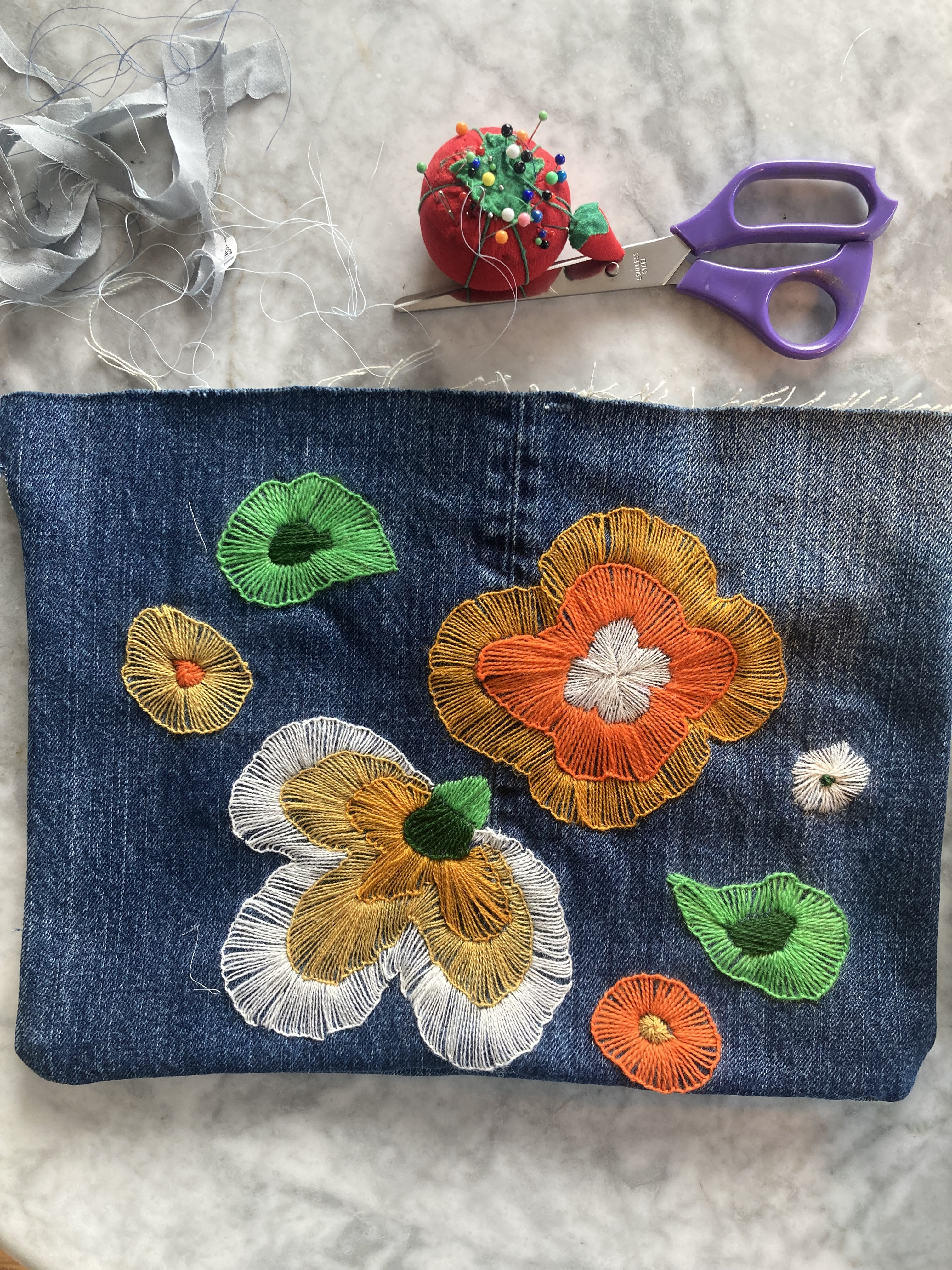
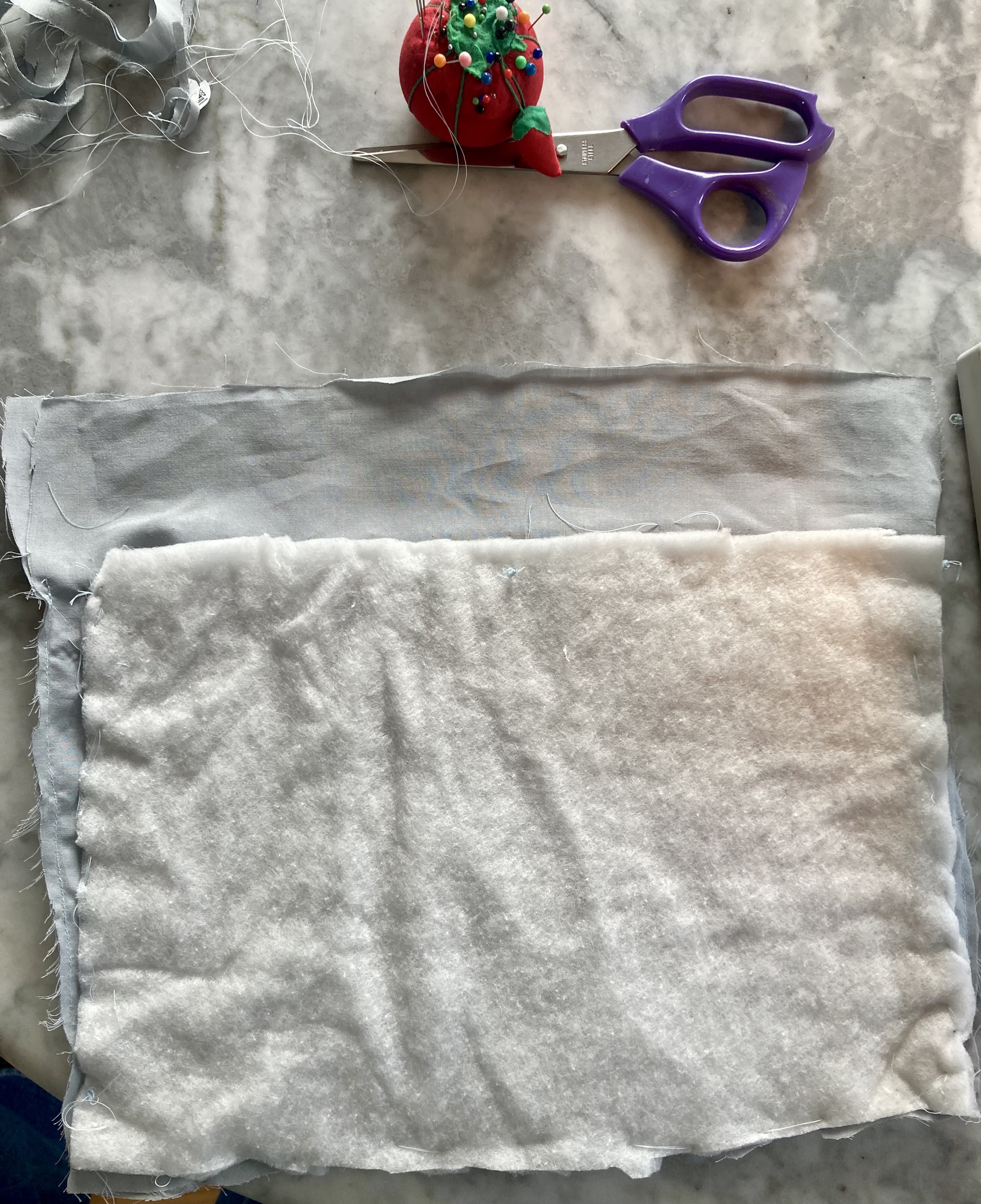
When it was finally finished and I had successfully managed to not throw either the project or my sewing machine out of the window, I realised two things: 1) in spite of the deep frustration and the hours (yes, plural) spent trying to get the zipper in, the upper edge (zipper edge, of course) was totally crooked and 2) the motif was actually meant to be repeated smaller and multiple times across the fabric, not just once and big. No wonder the buttonhole stitch was so hard to do correctly… Yes, there is a photo of both cushion and cosy in the magazine. No, it somehow didn’t dawn on me in spite of consulting the pattern frequently. No, I don’t know what my problem is.
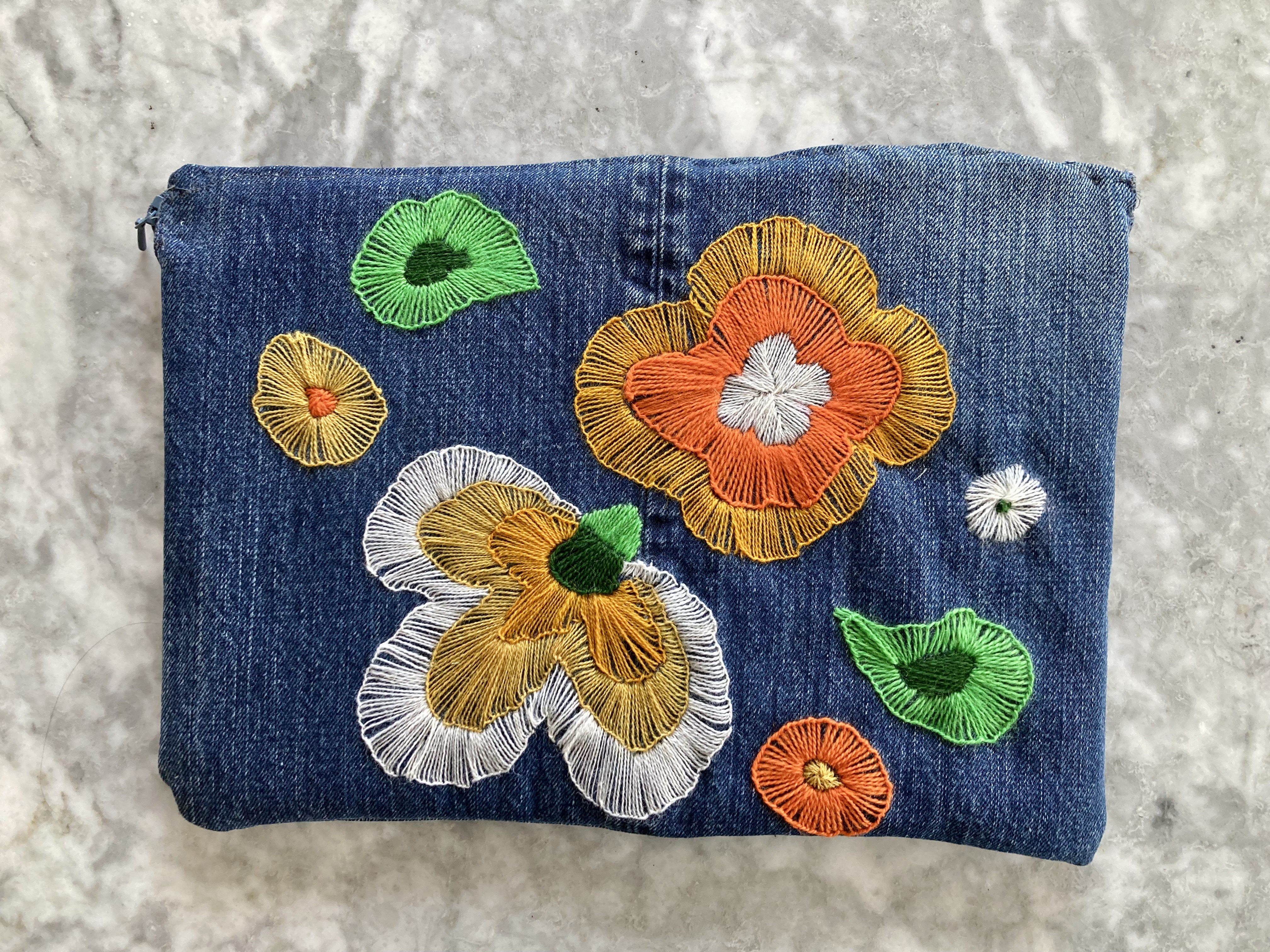
In spite of that, it’s…. not bad? I mean, functionally it’s fine. My laptop fits in it perfectly, the zipper works (hallelujah), the padding is a good thickness, and denim is a good, tough, washable fabric for laptop cases. The design is indeed bold and bright, and quite cheerful. The crooked edge annoys me, but I could re-do it. Still, somehow I feel this project is not quite right. Maybe I will fix the crooked edge and try to sell it? Give it as a gift to someone with the same size laptop? Keep it and let it grow on me? We’ll see.
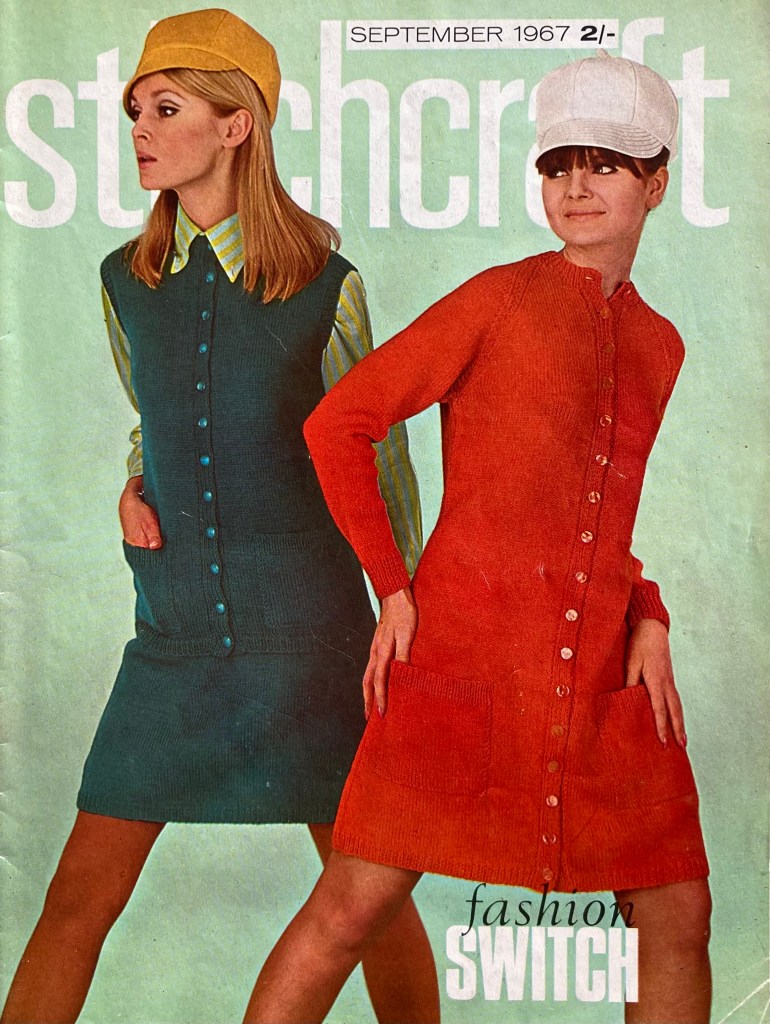
Out of Order: Fashion Switch, September 1967

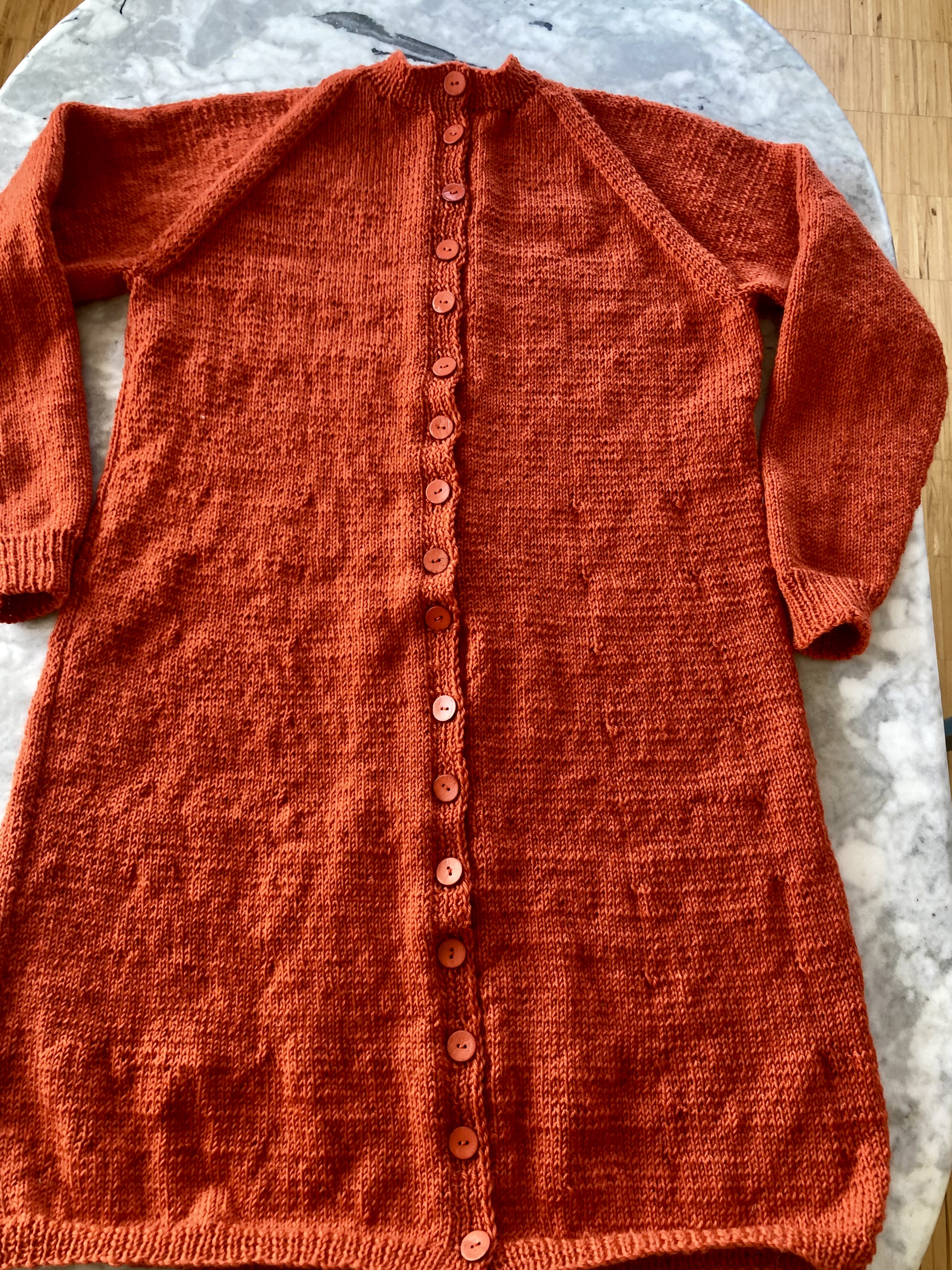
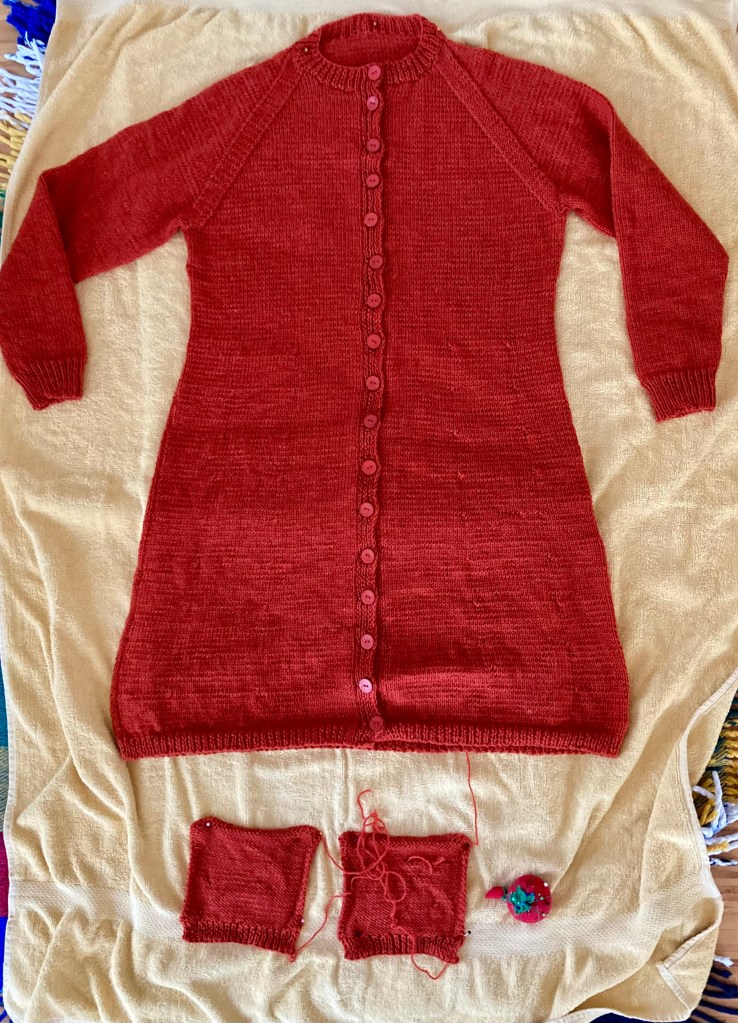
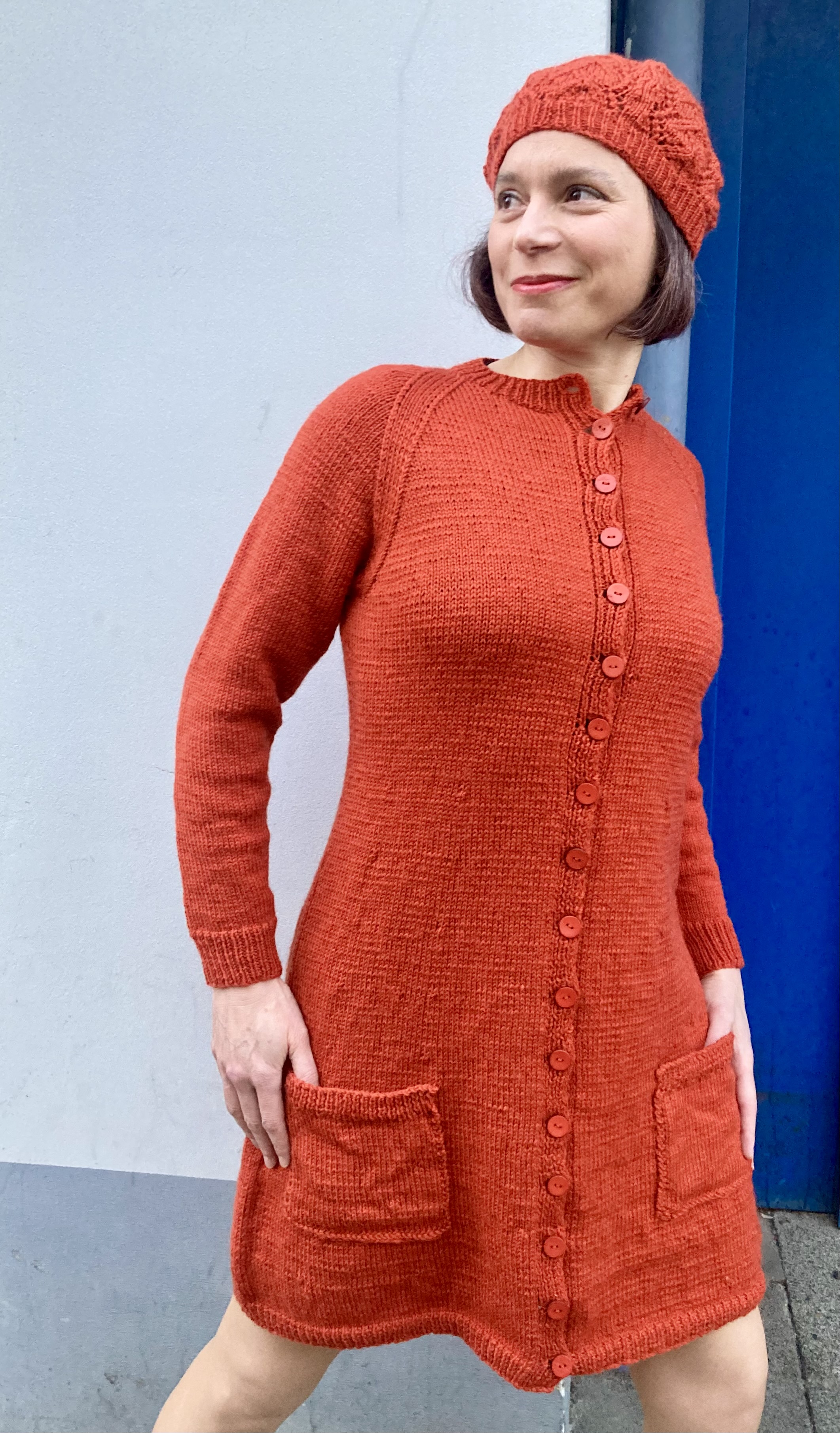
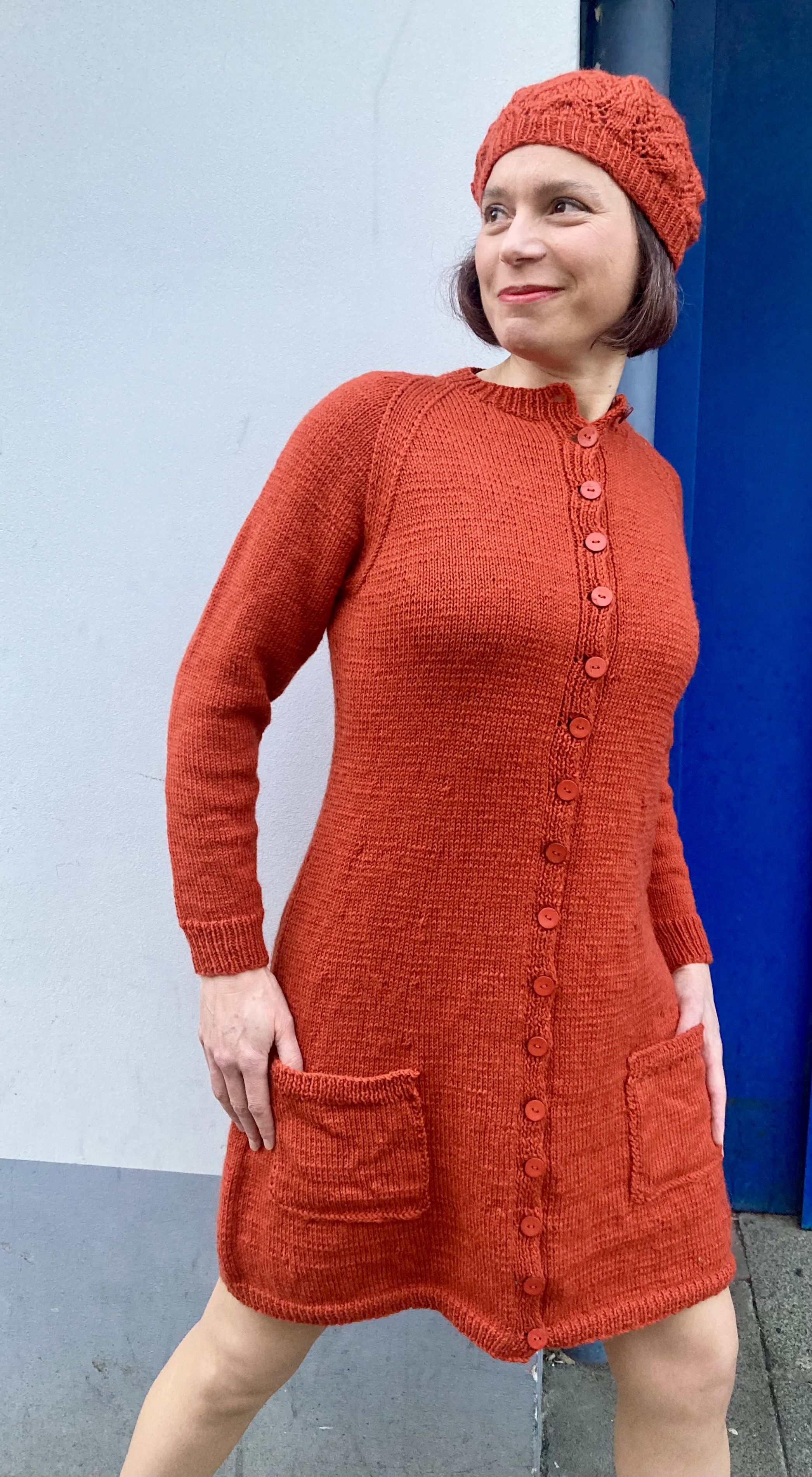
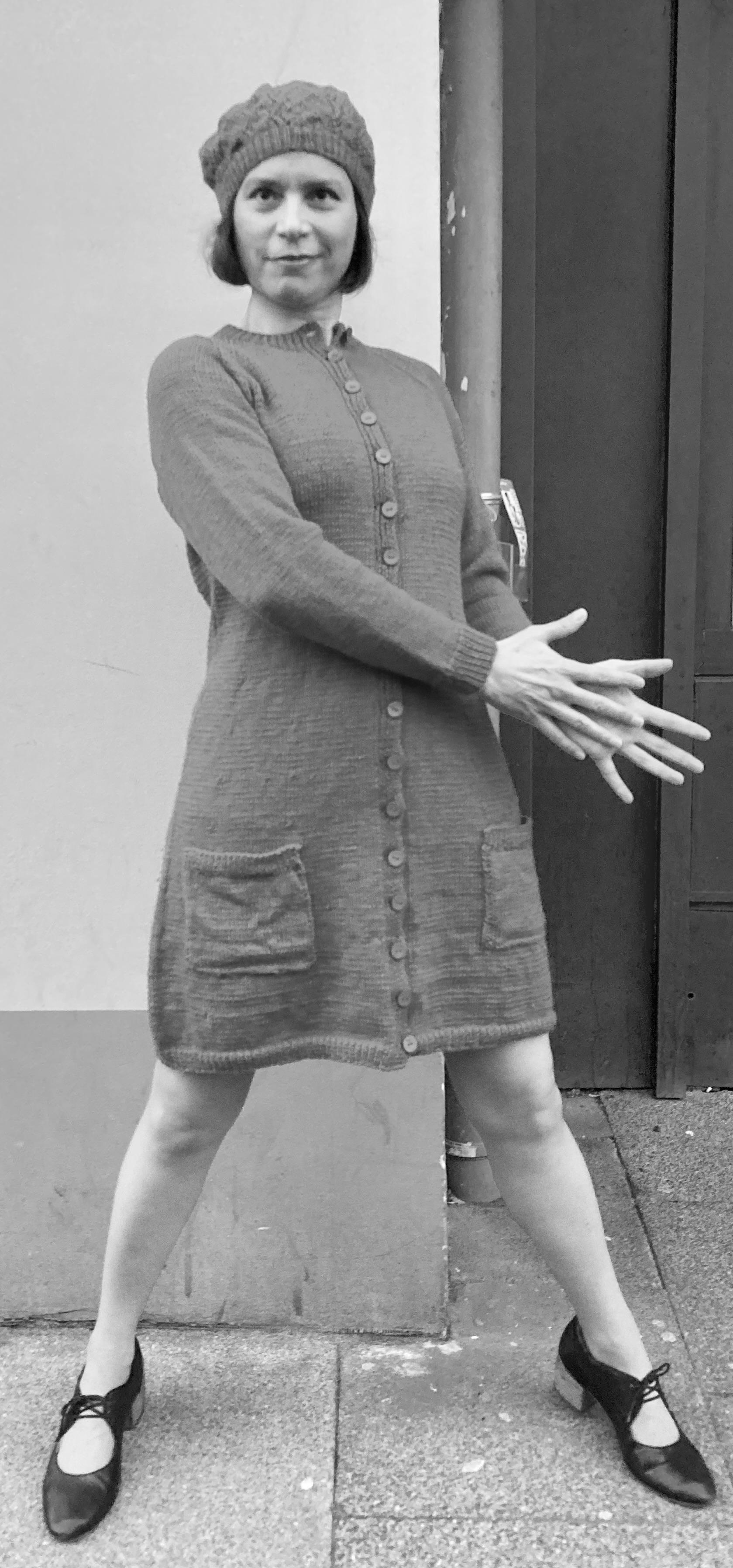
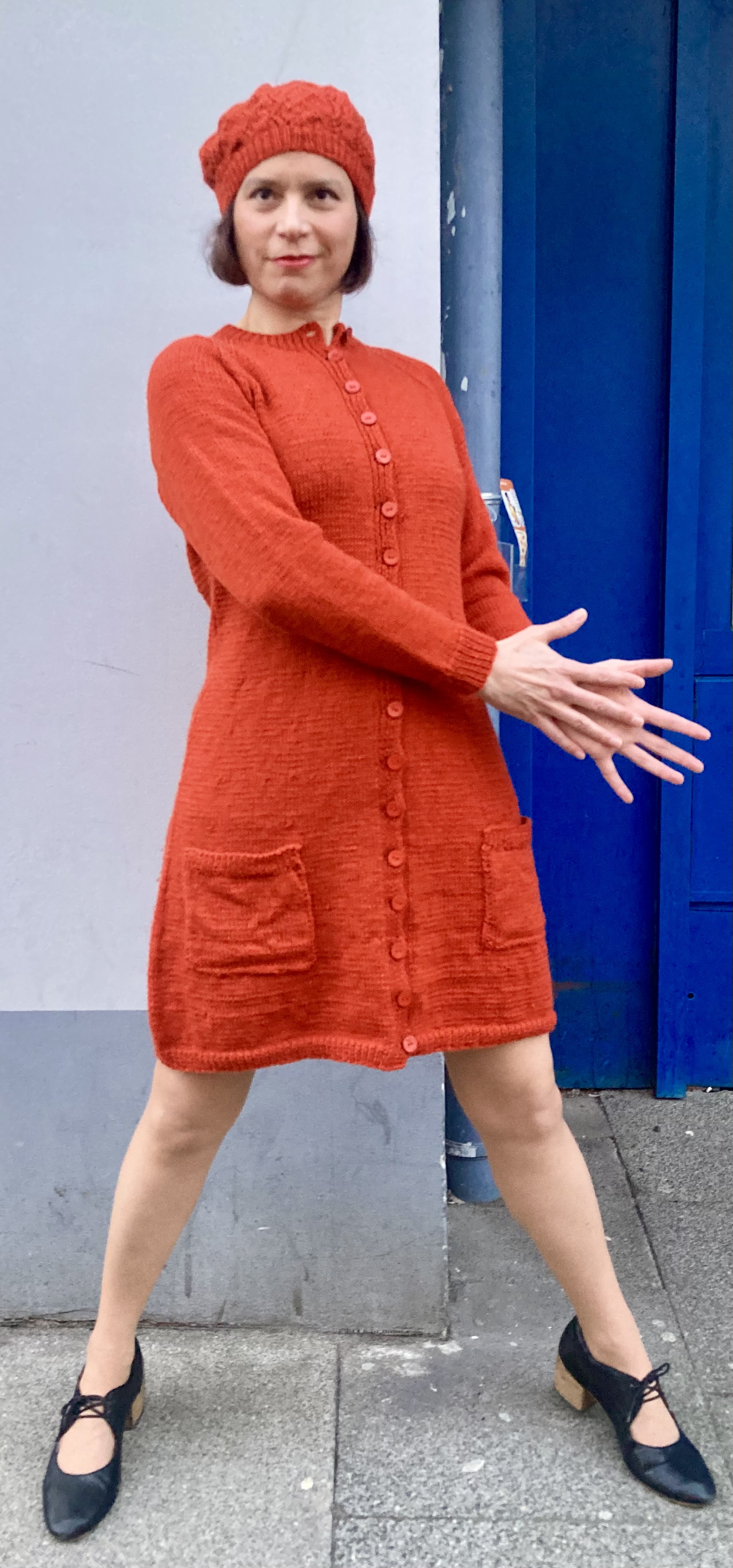
I have finally finished the magnificent cardigan dress from September 1967!

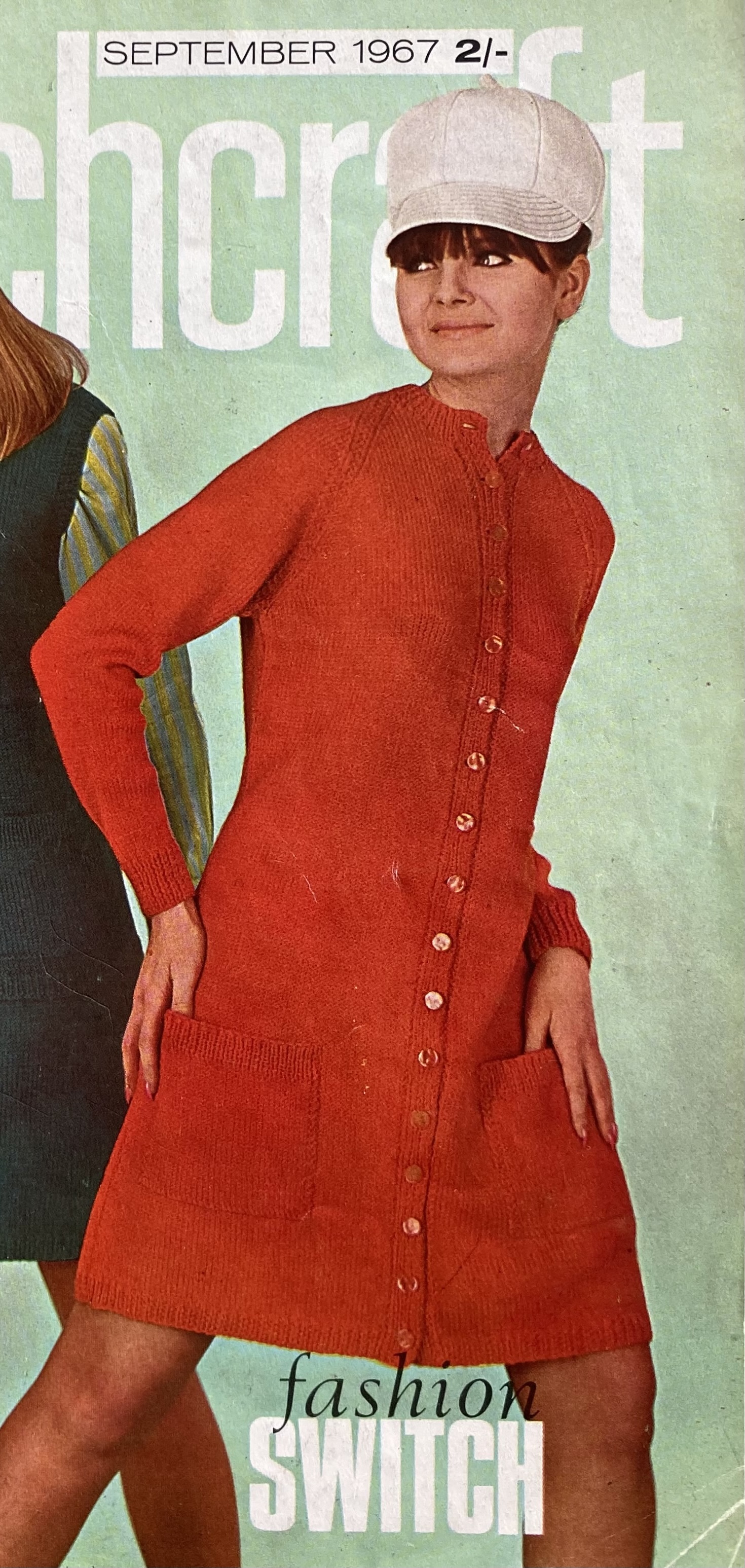
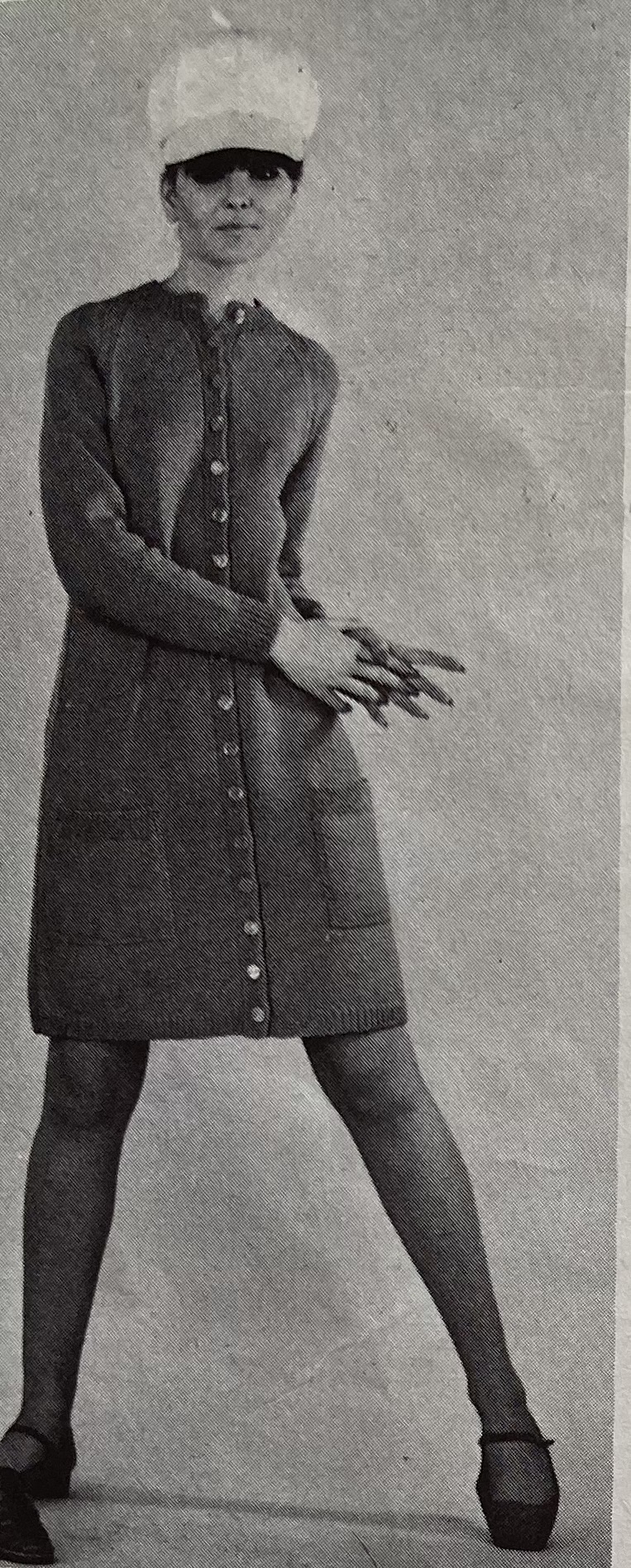
Captioned “Fashion Switch” along with the waistcoat-and-miniskirt set in the cover photo, the dress was written to be knit in Patons Double Knitting in the colour “Burnt Orange” 5020. I had already had great results (“Front Panel Classic Sweater” from 1964 and the inspired-by-Stitchcraft fingerless gloves from December 1966) with G-B Jil wool in the perfect shade of orange, so the choice of yarn was easy.

I am a bit sceptical when it comes to A-line dresses, since the often look too sack-like on me — I need dresses to be shaped or belted or nipped in at the waist in some way. The pattern has four sizes, to fit 33-34 up to 39-40 inch bust. I got perfect tension with 3.5 mm needles on the other projects with this wool, so I made the third size, for 37-38 inch bust and figured I could always adjust by continuing the A-line skirt decreases and/or adding extra stitches before the underarm shaping.

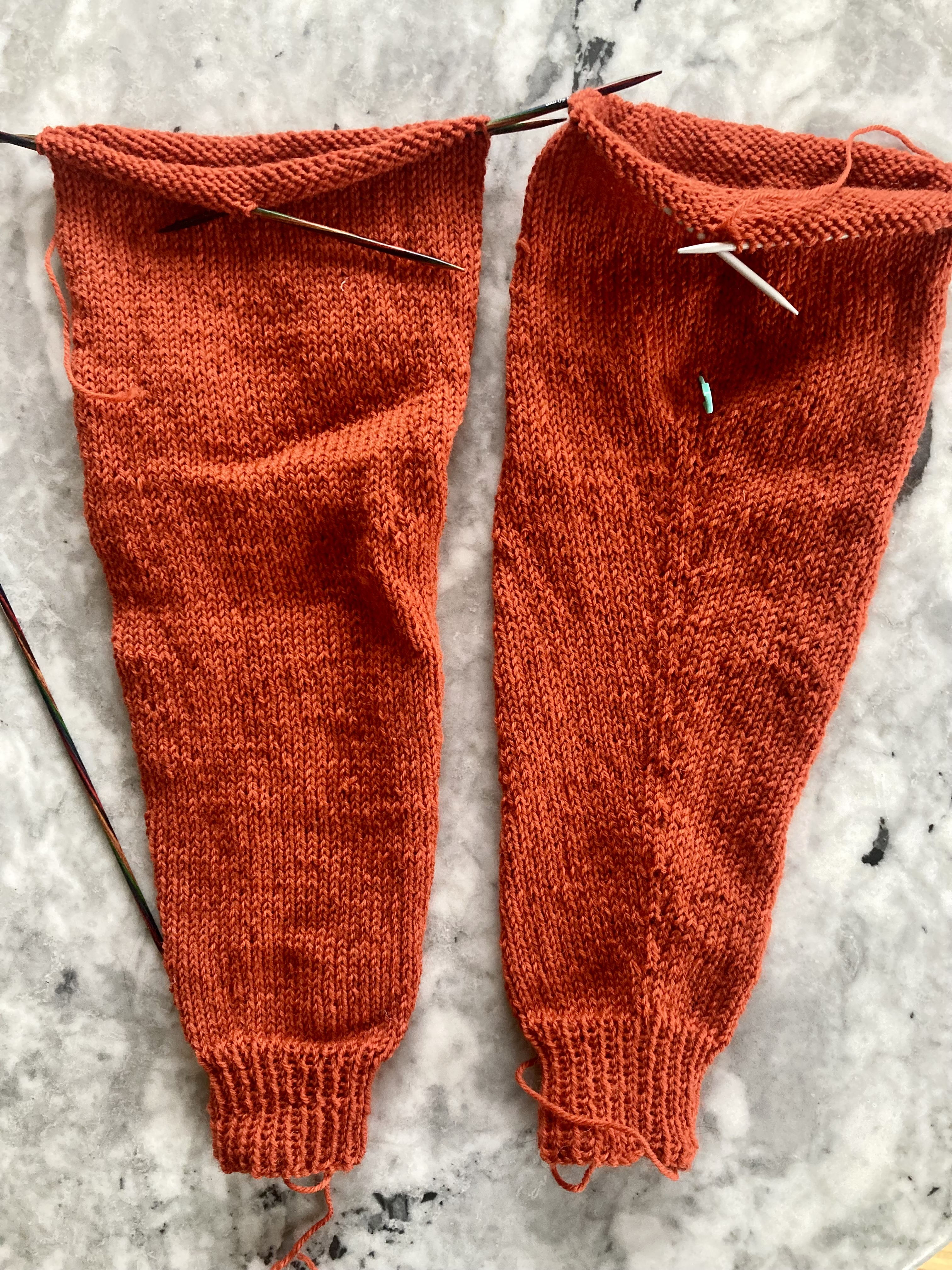
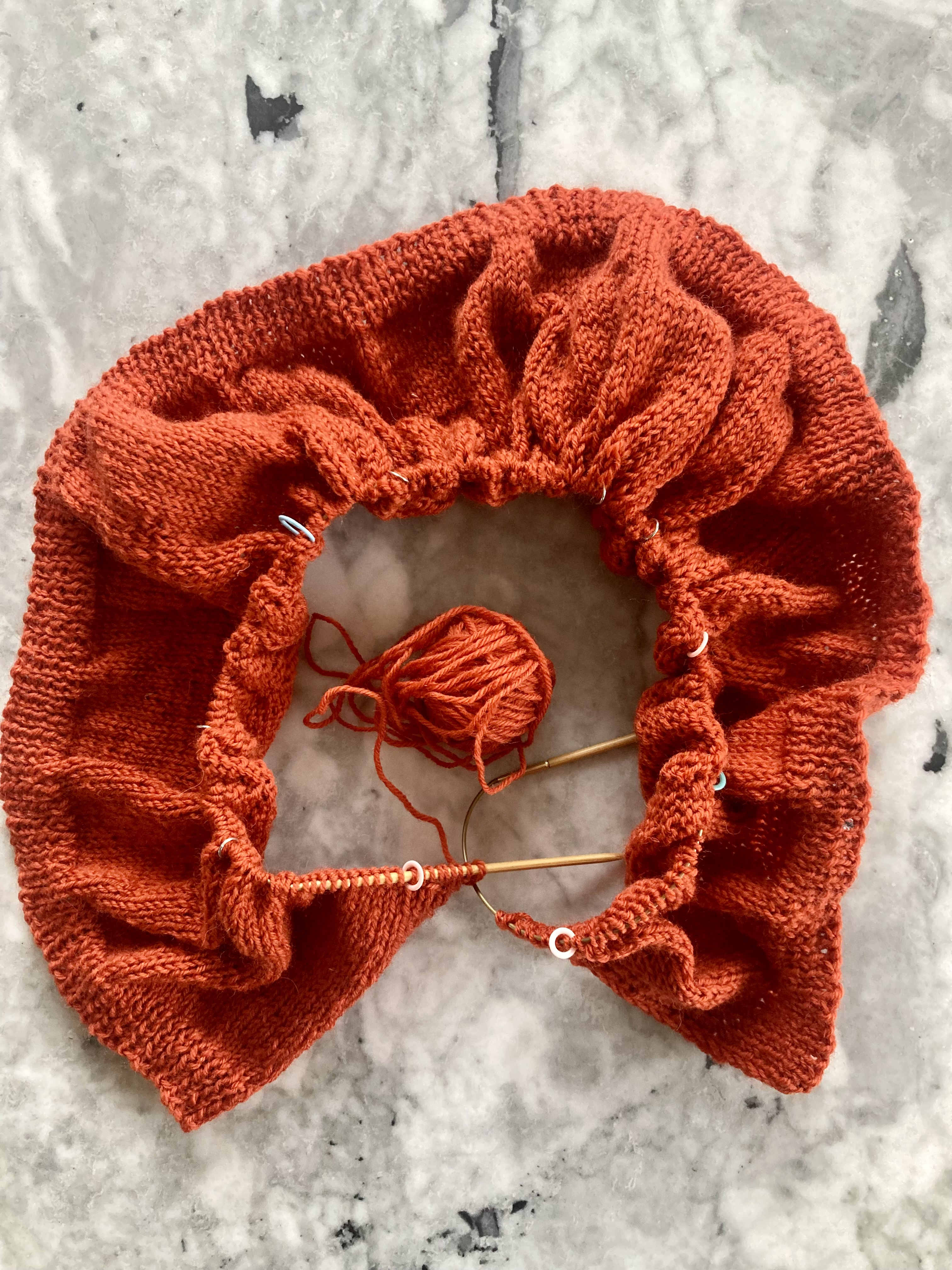
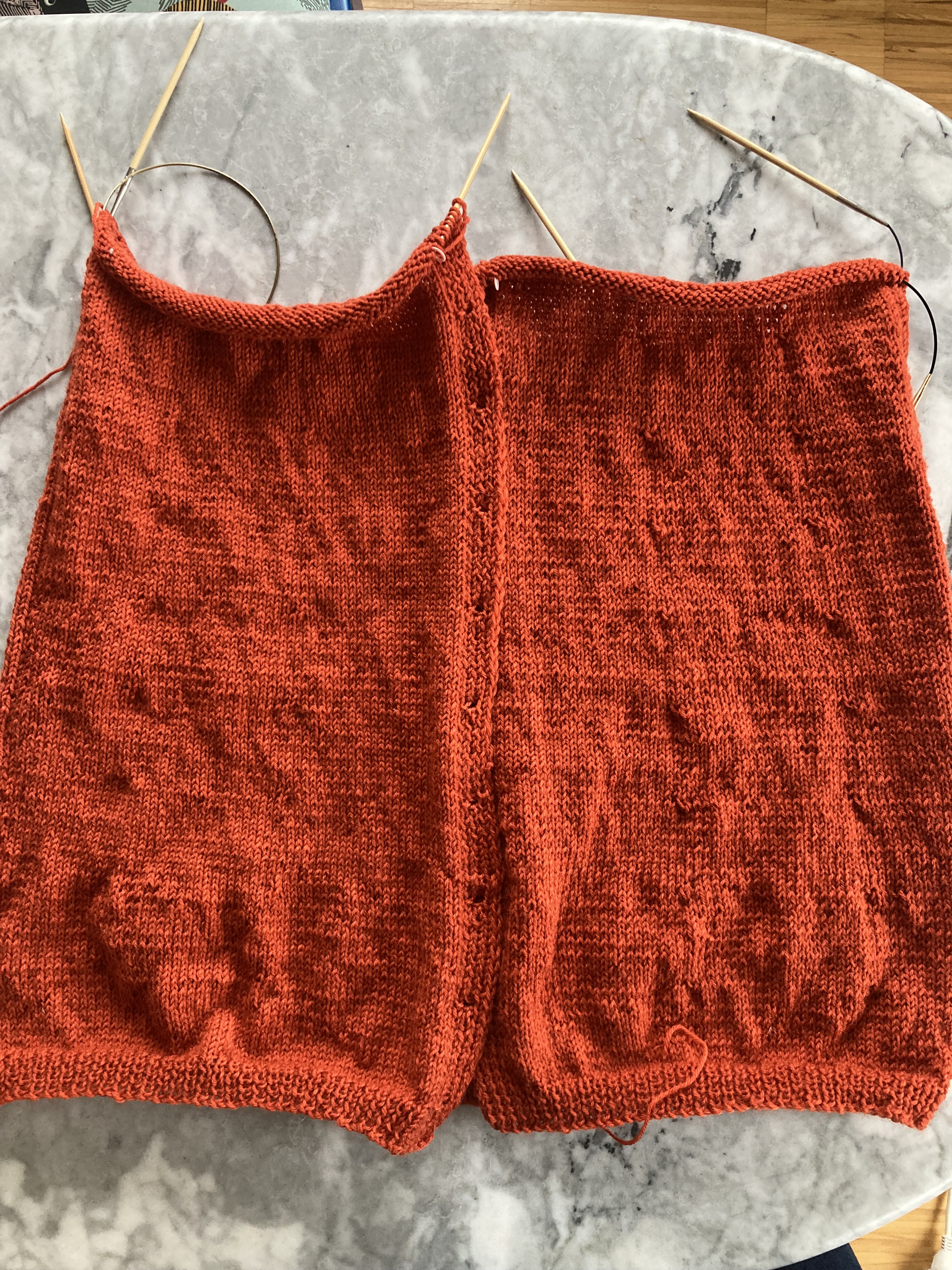
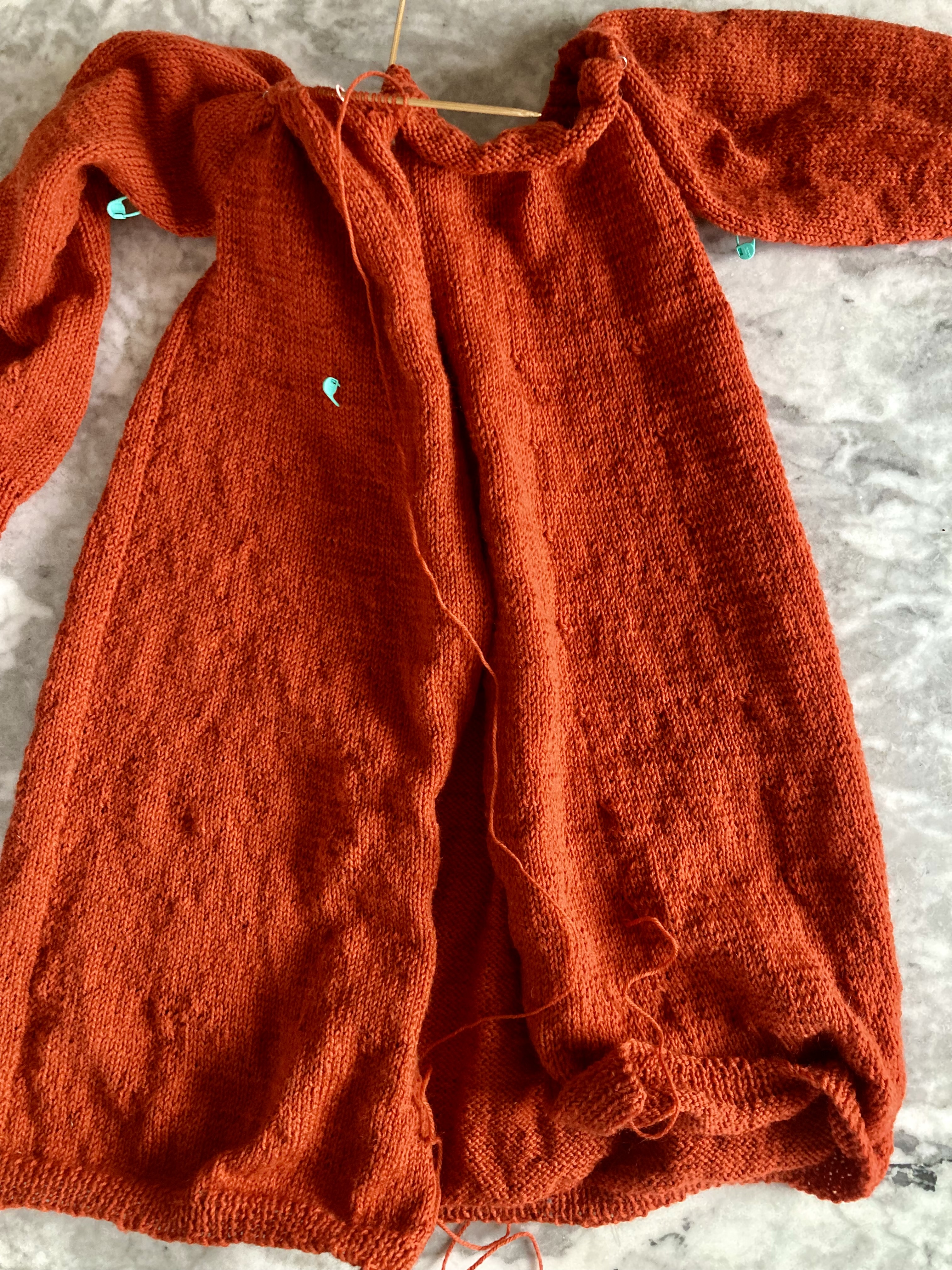
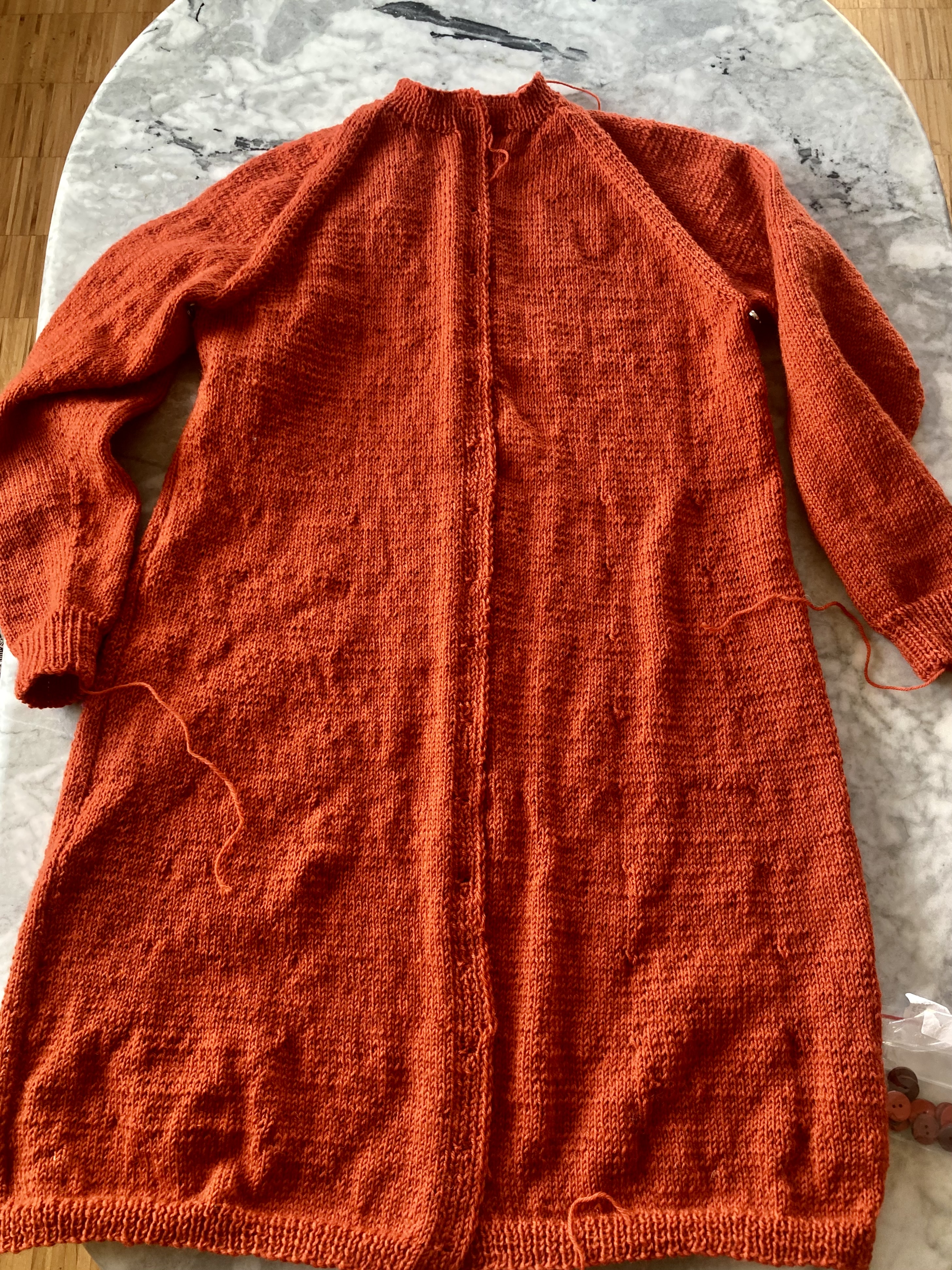
I made the sleeves first to check for size and tension. That had the extra advantage of not having to make the sleeves after finishing the entire body of the dress and procrastinating. I made them in the round and other than the wrists being a little tight, they were fine. I also made the body in one piece with fake side “seams” (1 extra p stitch) including the button bands. Of course, the bands should have been knit a little shorter than the garment and on a smaller-size needle. I was happy to ignore that rule this time, because if there was one thing I did not want to do, it was to knit and sew on extra vertical-rib button bands on a 34 inch long dress. Also, the skirt decreases were placed every 16 rows, which was conveniently about 2 inches apart — the exact spacing of the buttonholes. For once in my knitting career, all the buttonholes were evenly spaced!
It started off very slowly, because the skirt is wide at the hem, and I was worried that I might not have enough yarn, since the first 100 or 150 grams got knitted away very quickly. It slowed down with the decreases, though (8 stitches decreased every 16 rows in “princess seam” style, 2 rows of decreases the the right and left of the center line on both front and back.) For a slightly more nipped-in waist, I continued the decreases 1 more time and then, after a couple of inches straight, increased on the side “seams” until the stitch count was back up to the 3rd size.

It was hard to try on while knitting, since the front edges curled a lot before blocking and buttoning. I found some incredible and very 1960s looking buttons, but there were not enough of them at the shop and they couldn’t be re-ordered. Bummer! The cover model seems to have those plain, clear plastic buttons that one otherwise uses to close a duvet clover. I found similar plain buttons in a surprsingly good matching burnt orange shade, and there were exactly 18 of them in stock (17 for the dress and one extra.)

The G-B Jil wool washes really well in the machine and can be dried in the dryer. It’s superwash, so I knew it would stretch bit when washed and could either be dried flat to keep it slightly larger, or dried in the machine to shrink it down a bit. I knit and blocked the pockets separately and sewed them on after everything was dry and flat, to get a good placement. The pattern said to place them 4.5 inches up from the bottom hem, which seemed too low to me… and also seems lower than in the pattern photo. If it annoys me, I can always remove them and sew them on a little higher — the advantage of patch pockets.

The dress fit quite well after being dried flat. The only problem was that the neckline was a bit too high and the last button pressed against the front of my throat annoyingly. Looking back at the magazine photo, I see the Stitchcraft model had the same problem! I adopted the same solution: leave the top button unbuttoned.

We had a great photo session at our Monday knit night and even got a perfect 60s-esque colour-block background.

I love this dress and am very happy that I took the time to make it!

March 1968: Overview

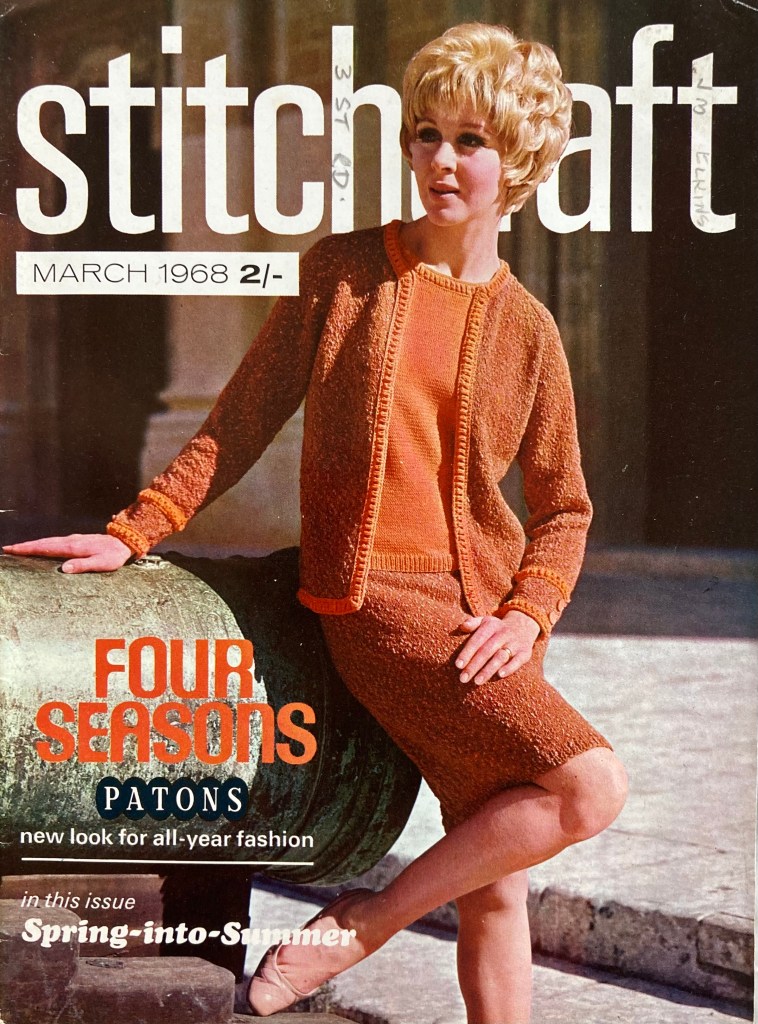
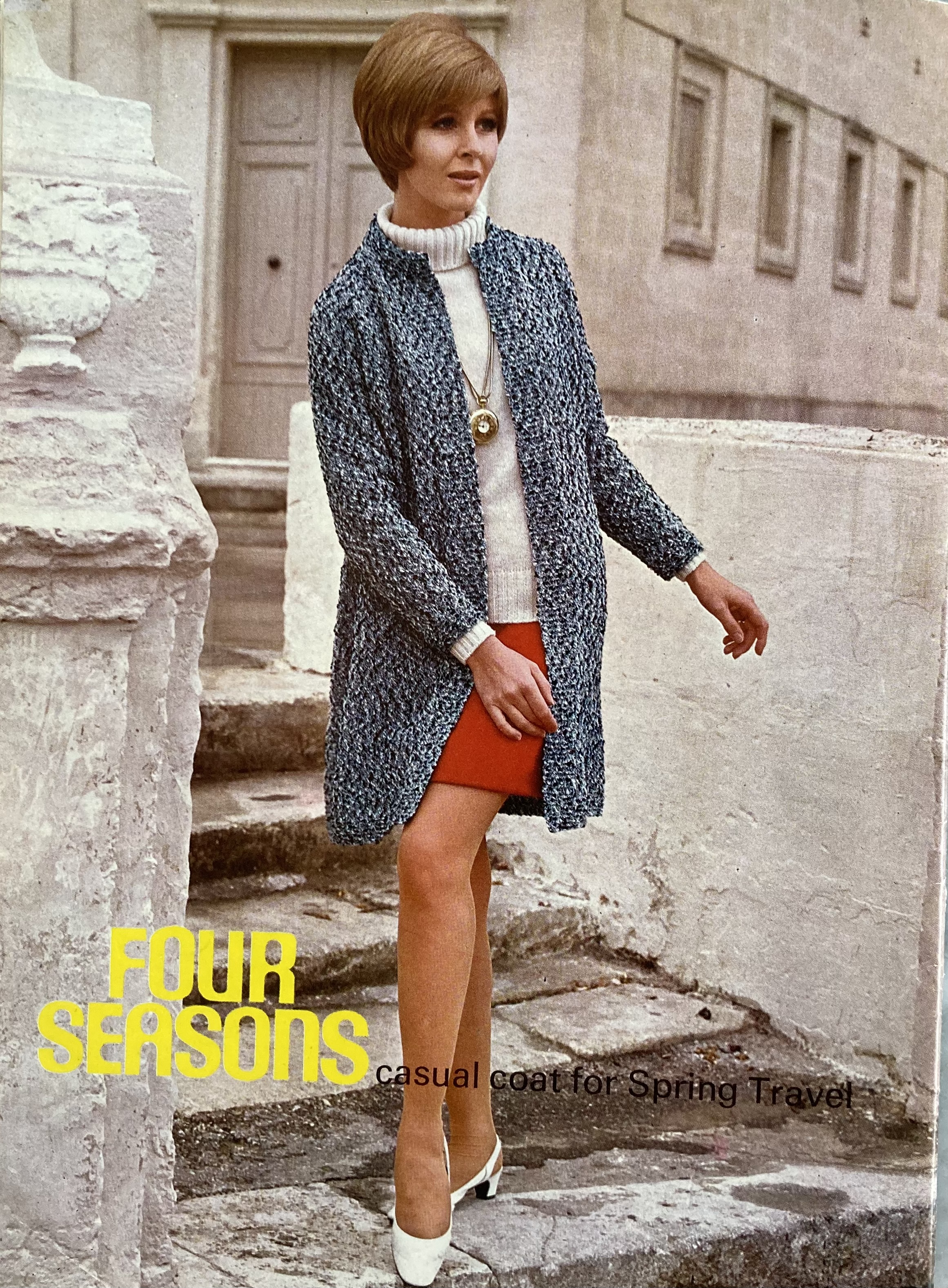
Spring is here and the March 1968 issue of Stitchcraft celebrated by introducing a new yarn: Patons “Four Seasons“. Four Seasons was a crinkly, nubbly mix of synthetic fibres (59%) and wool (41%) that produced a textured, tweedy effect by virtue of the “nubs” being a different colour than the rest of the yarn. It was double-knitting thickness when knit up and produced an interesting colour and texture even in plain stocking-stitch, so was perfect for making simply styled garments quickly.

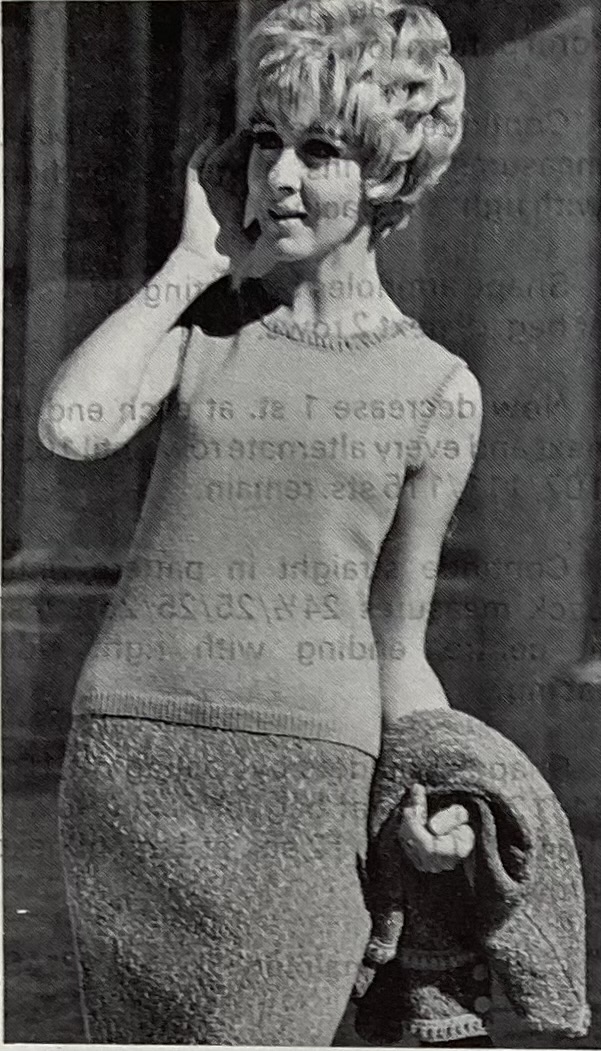
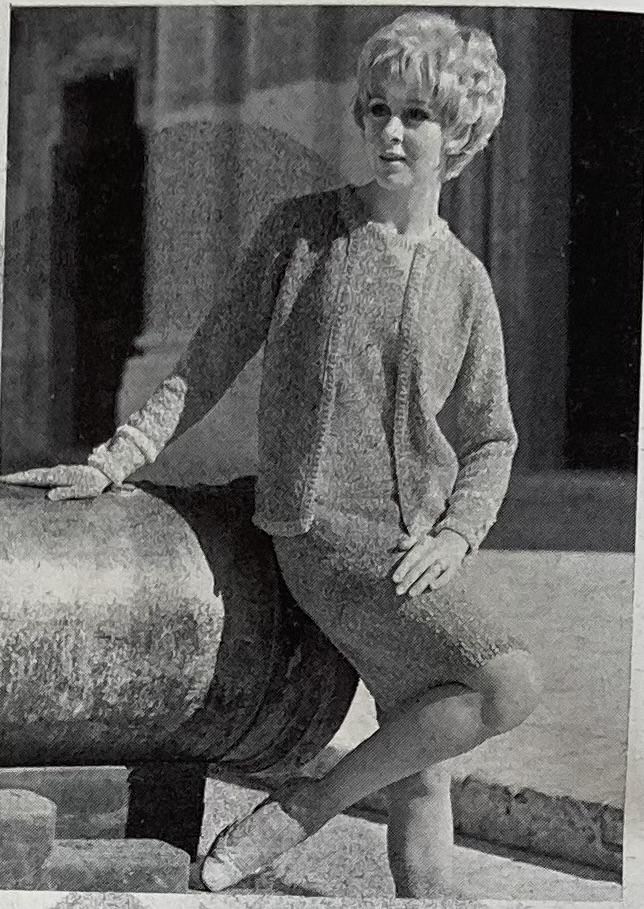
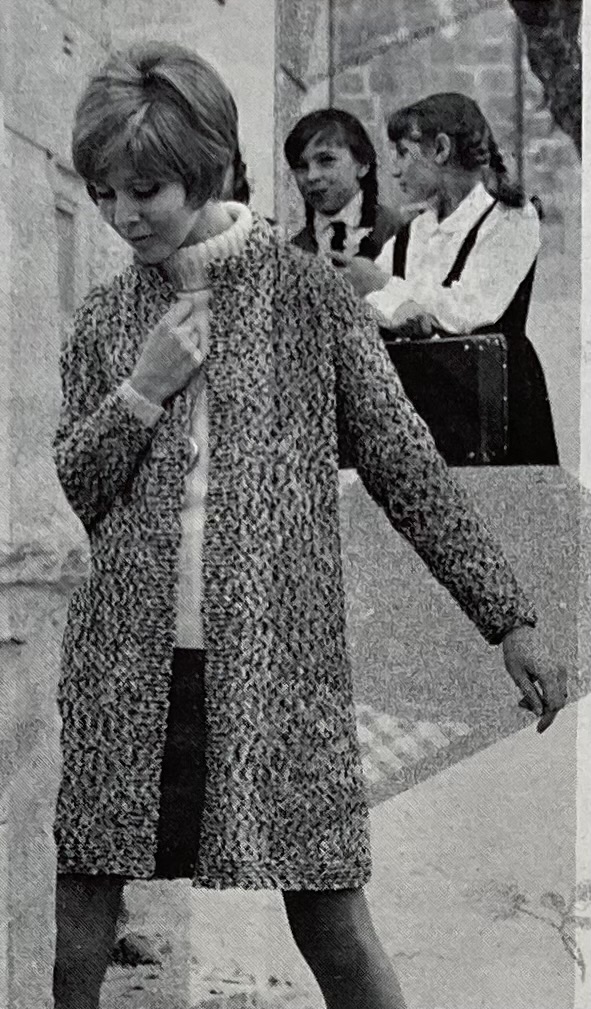
The simply designed, next-to-no shaping “Chanel Style” suit on the cover (Stitchcraft’s name for it, not mine, and shows how iconic the Chanel suit was) is made in plain stocking-stitch with Four Seasons and trimmed with an interesting crochet braid in plain wool “Cameo Crepe” yarn. You can see how Patons coordinated the Four Seasons colour palette to make it match with the plain wool yarns already in production. The matching sleeveless blouse is also made in the same shade of Cameo Crepe. The equally simply-knit travel coat in Four Seasons goes well over a plain jumper and mini-skirt.

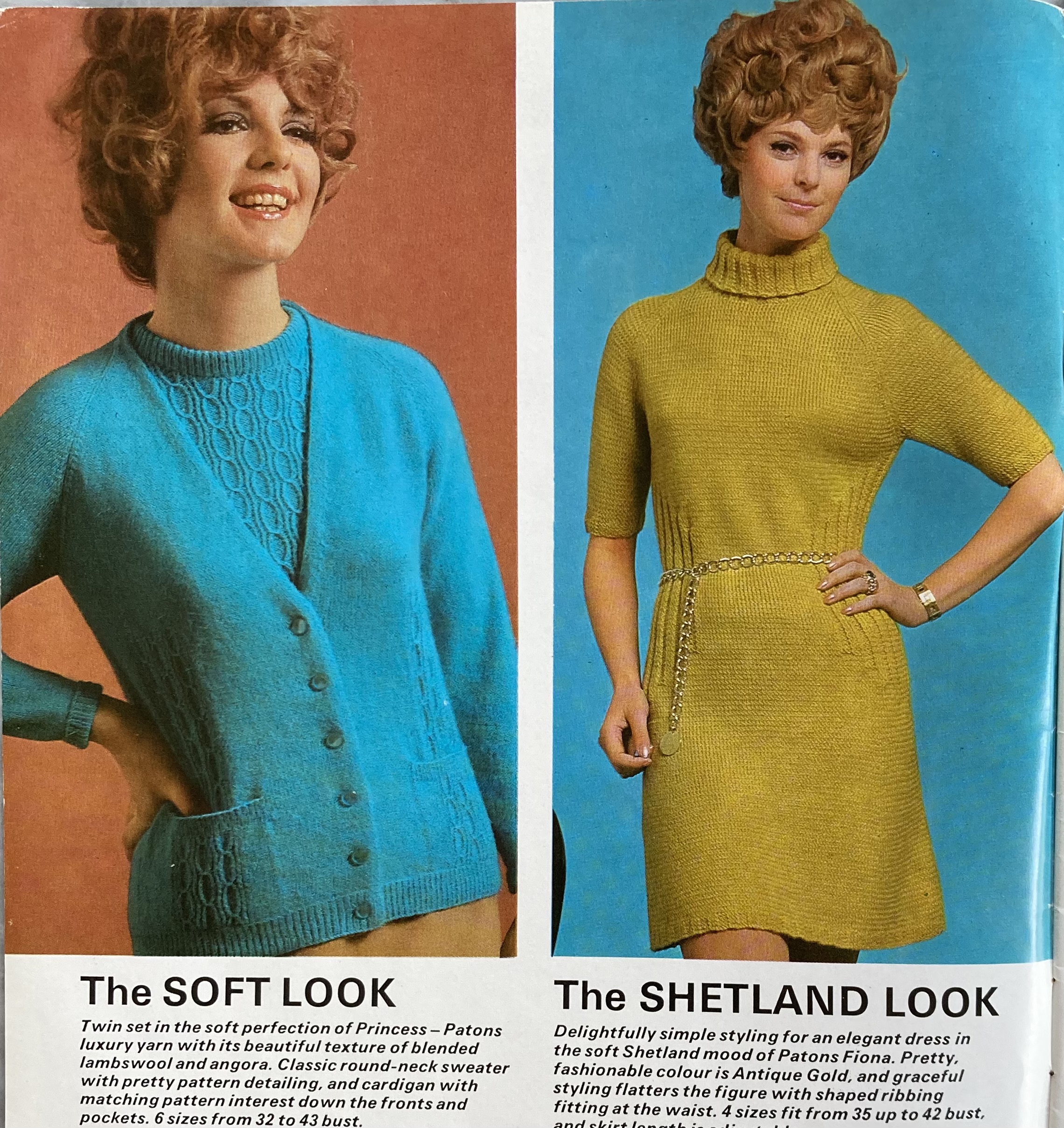
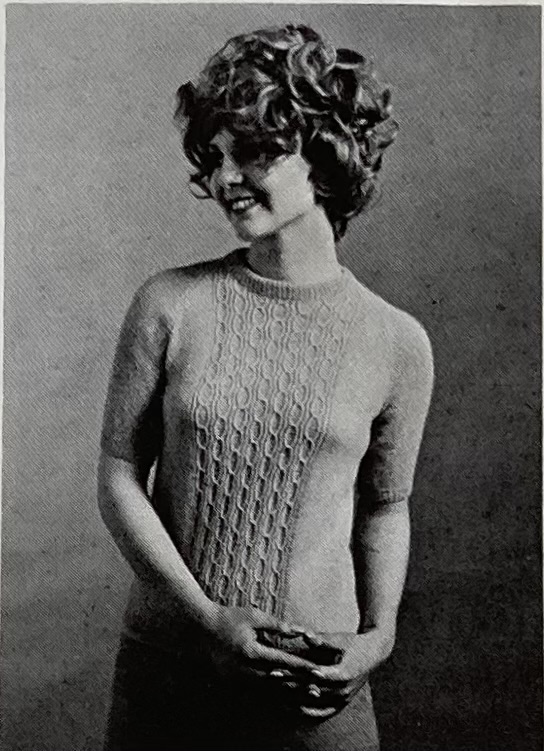
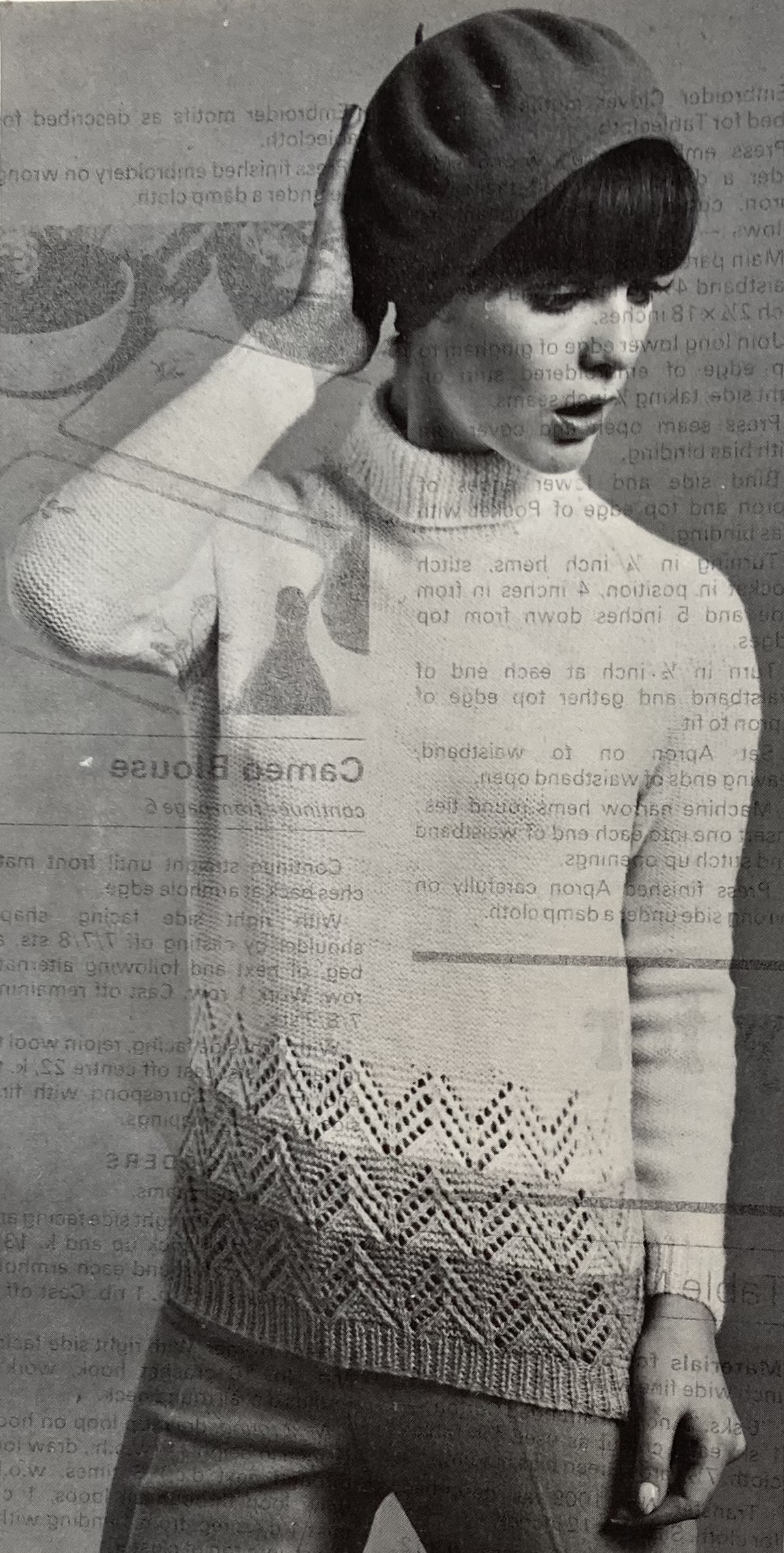
Other women’s fashions include a twin-set in Patons’ almost-new yarn, “Princess“, a soft, fluffy wool-angora mix. The colour photos on the inside front cover contrast the “Soft Look” (Princess) with the “Shetland Look” (Patons “Fiona“, a mix of 51% Shetland wool and 49% acrylic) while also making great use of blue-orange-mustard contrasts. Also, amazing wig on that model in the mustard-coloured dress! The “soft misty mood of the traditional Shetland look” gets exploited for all its worth in a pretty, but very much not traditional Shetland-style graded-colour pullover.

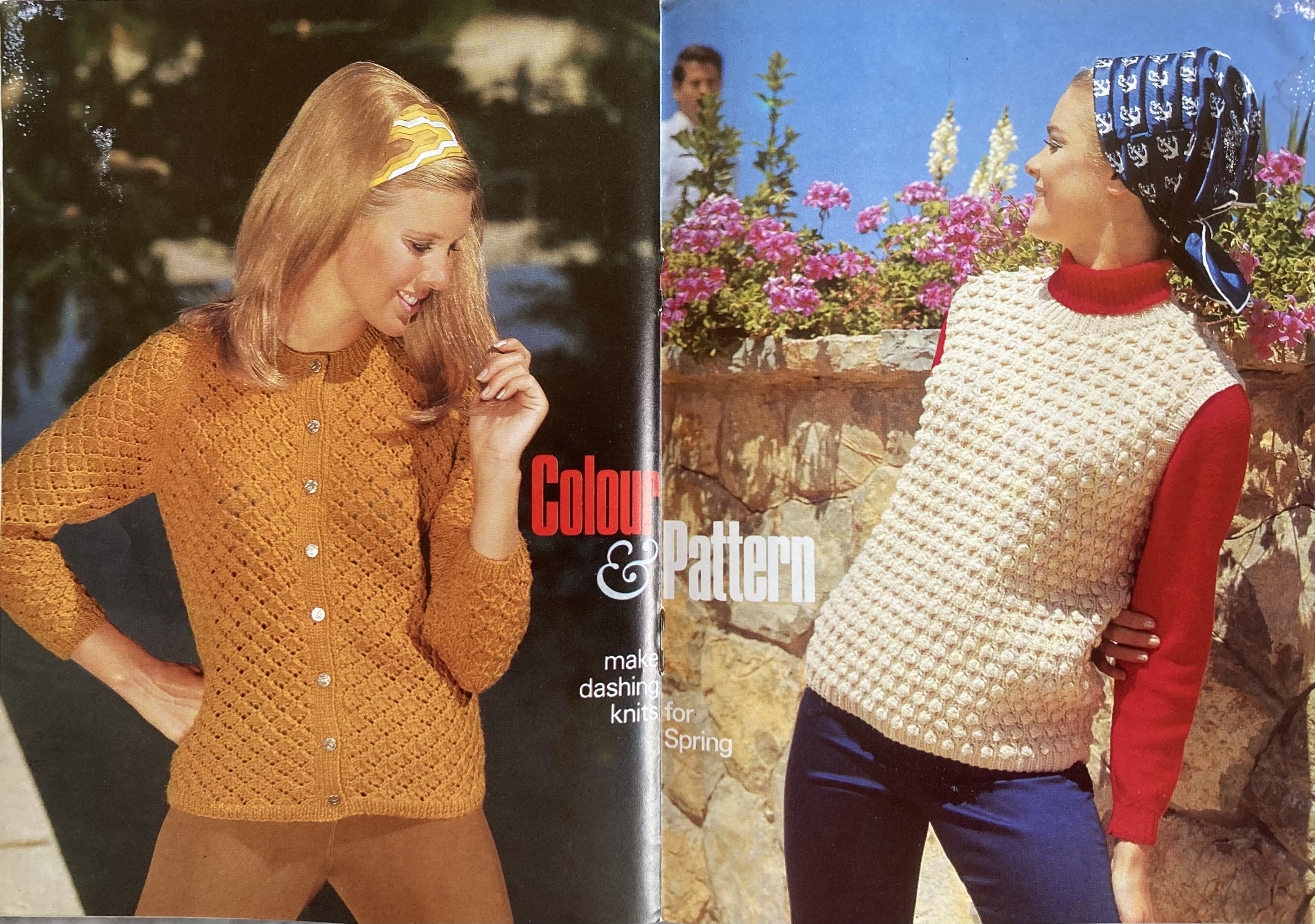
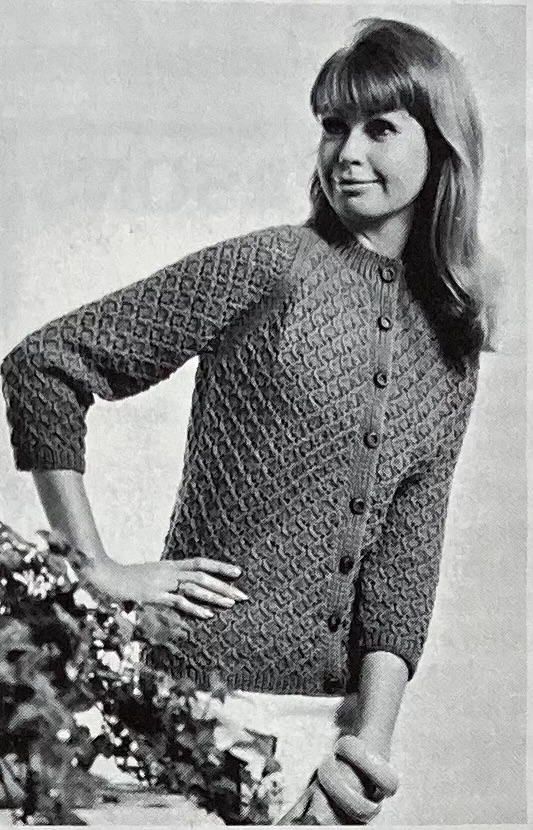
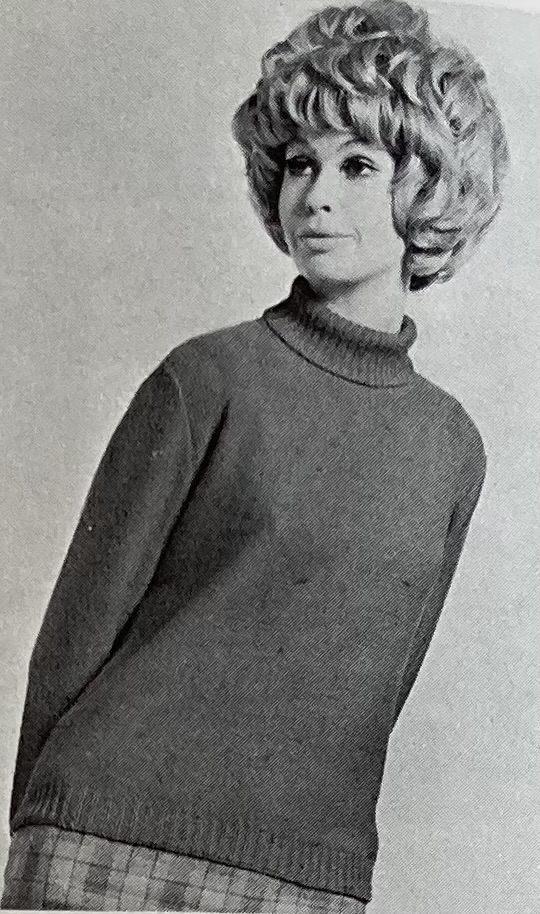
There’s more! The “overpull” in bramble stitch has a great three-dimensional texture, as does the high-buttoned cardigan in a trellis lace pattern. Knitters who preferred the smooth and simple look could make a classic, loose-fitting polo-neck jumer. All three are in tried-and-true Patons 100% wool yarns: the classic jumper in Cameo Crepe, the overpull in Totem Double Crepe, and the cardigan in Patons Double Knitting. That 1960s diagonal-line photography becomes amusingly apparent when you place photos next to each other.

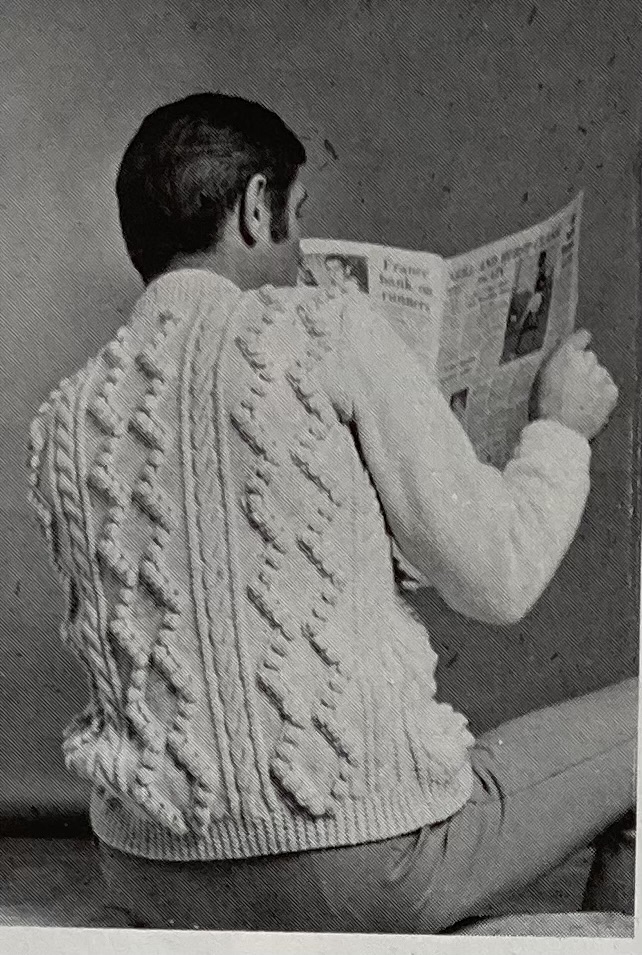
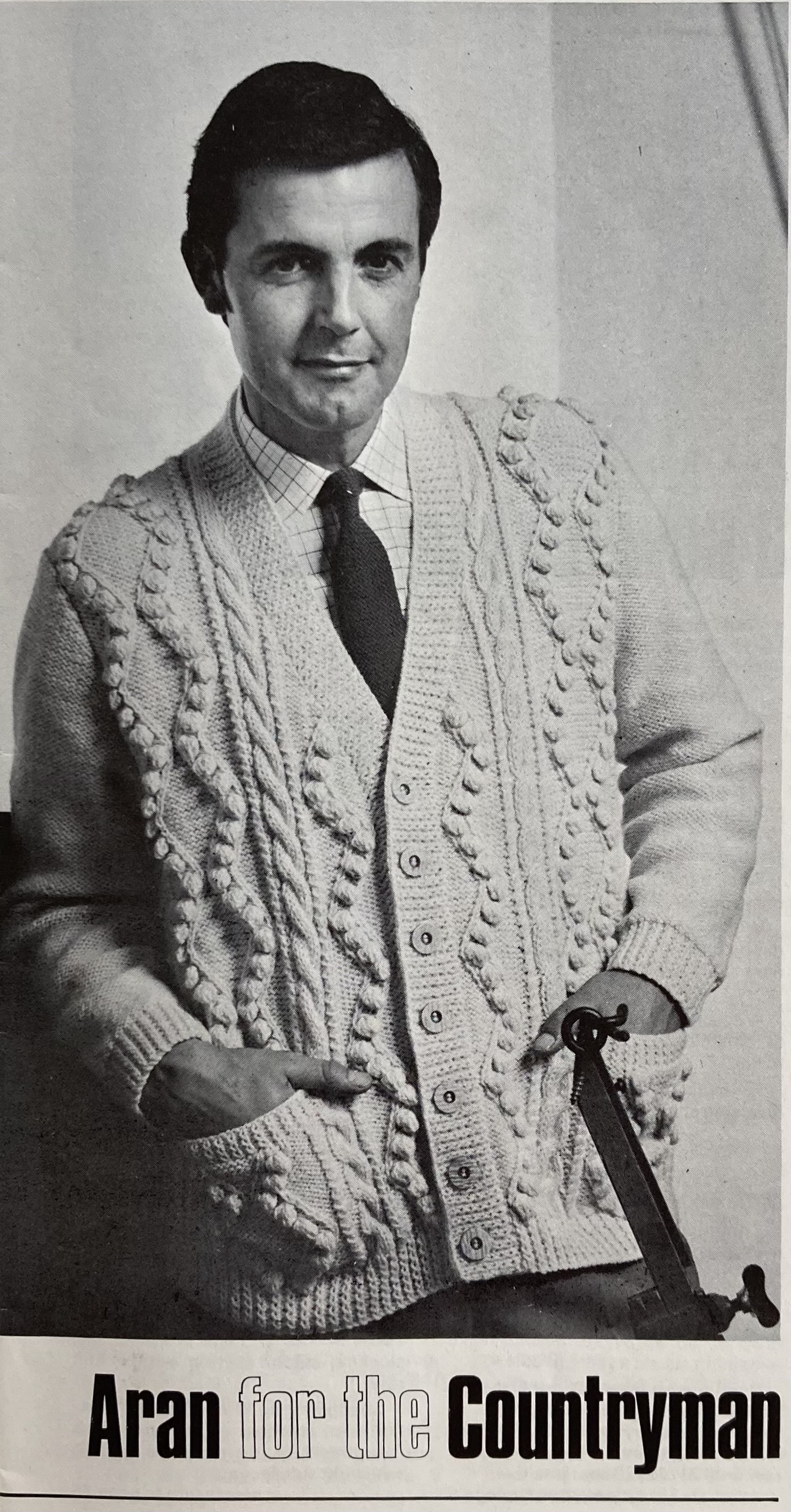
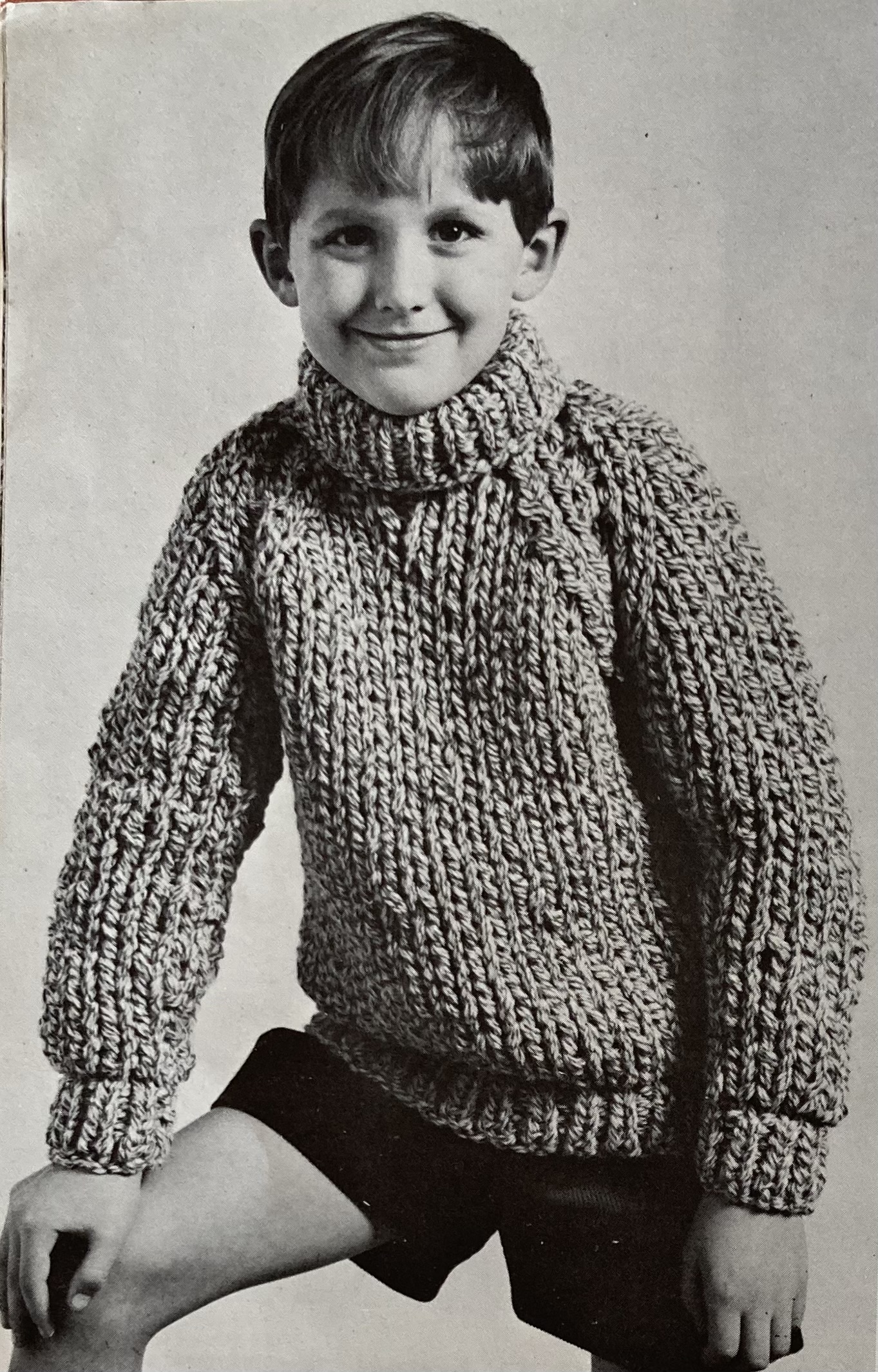
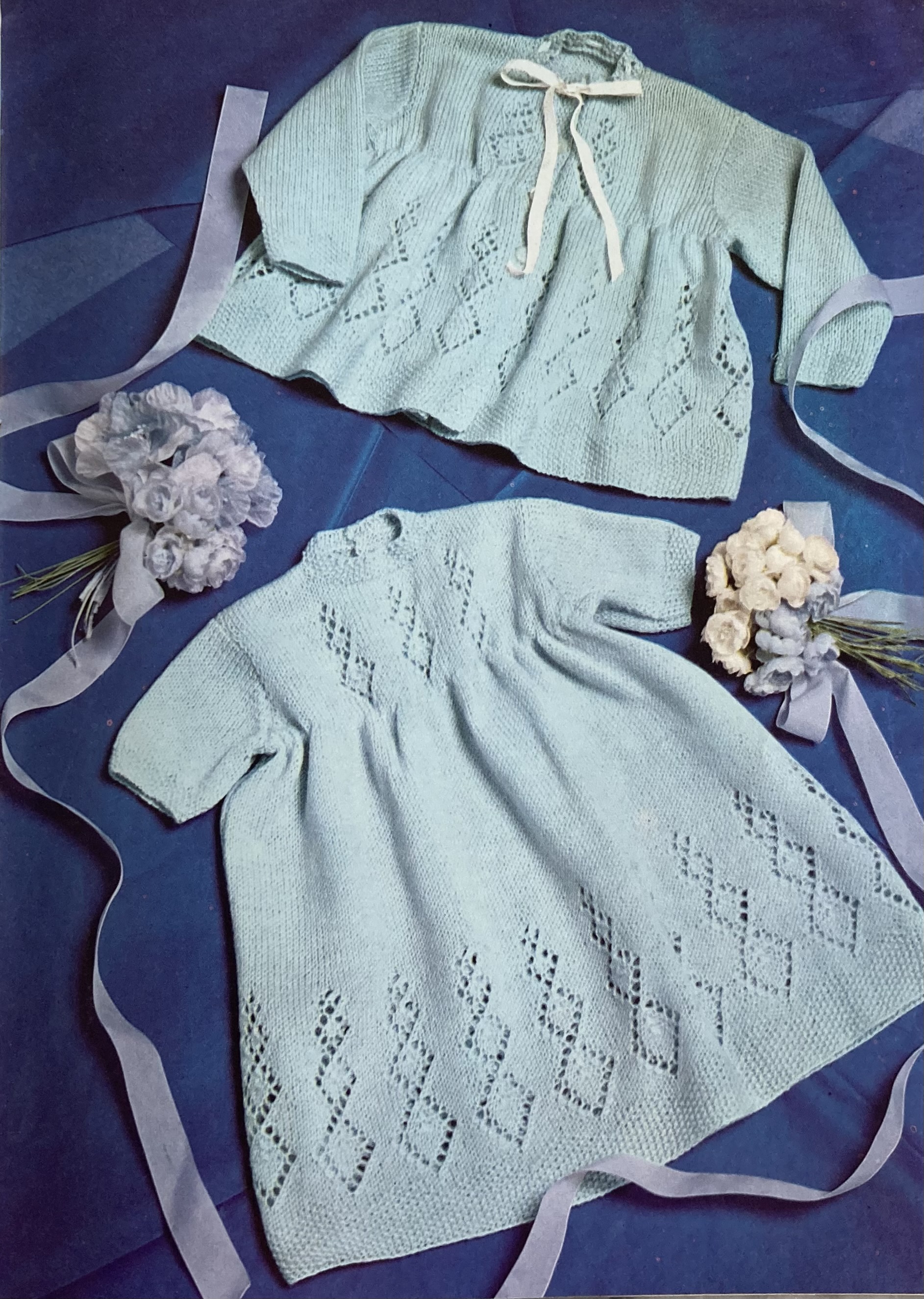
Men, boys and babies get their due as well. The men’s Aran-patterned cardigan in thick “Capstan” wool features the same model from the September 1967 issue, who looks like a friend of mine. The cardigan, available in four sizes from 39-40 to 45-46 inch chest, seems way too big for him, though. The photo of the boy’s “Super-Sonic” polo sweater has the same too-bulky, too big mismatch, though anything knit the “Super-Sonic” way (6 ! strands of DK wool held together on huge “Maxi Pin” needles to get 3 stitches to the inch) will look huge and bulky anyway. Babies, at least, still wear fine-knits, like the lacy set of dress and matinee coat for Spring.

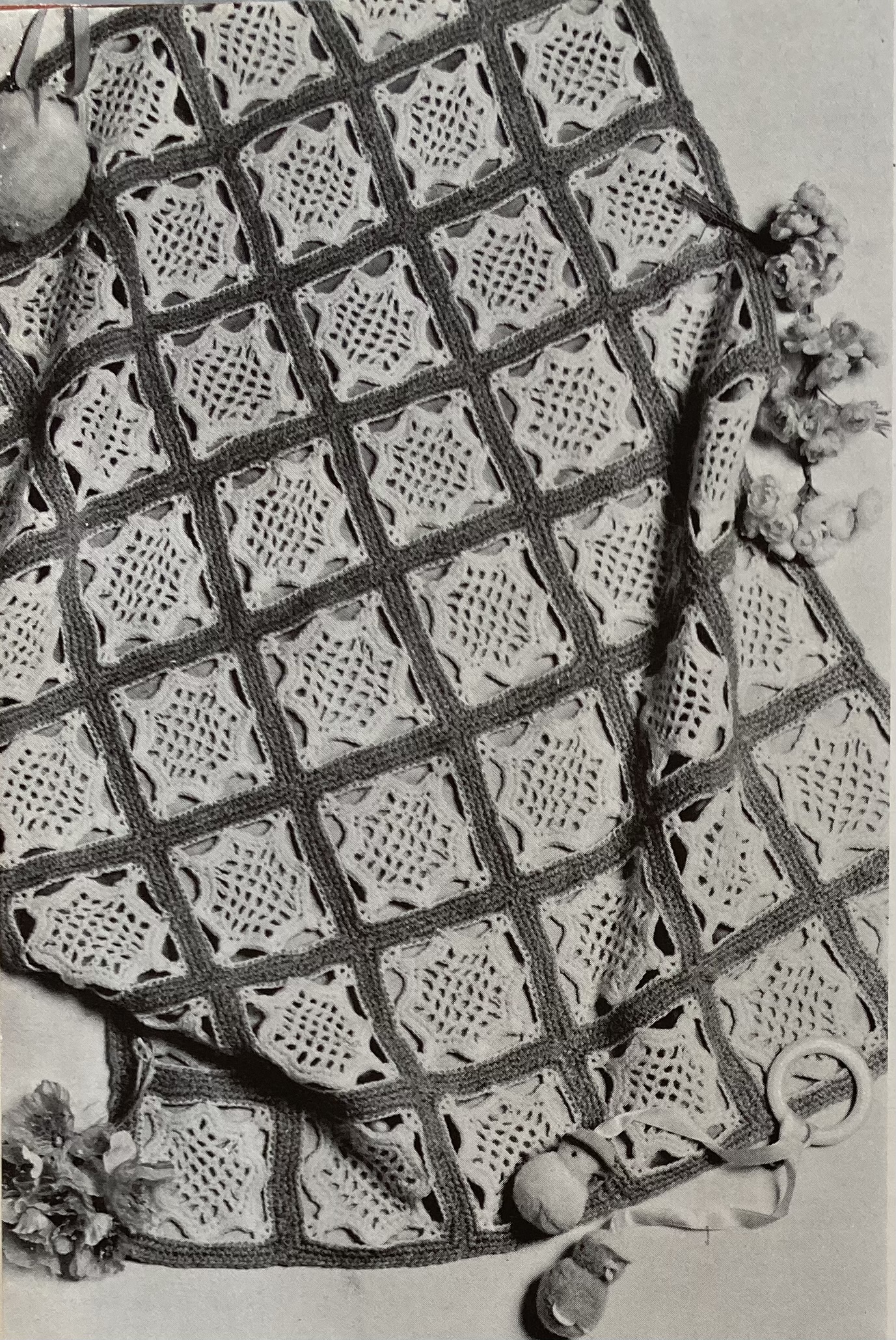
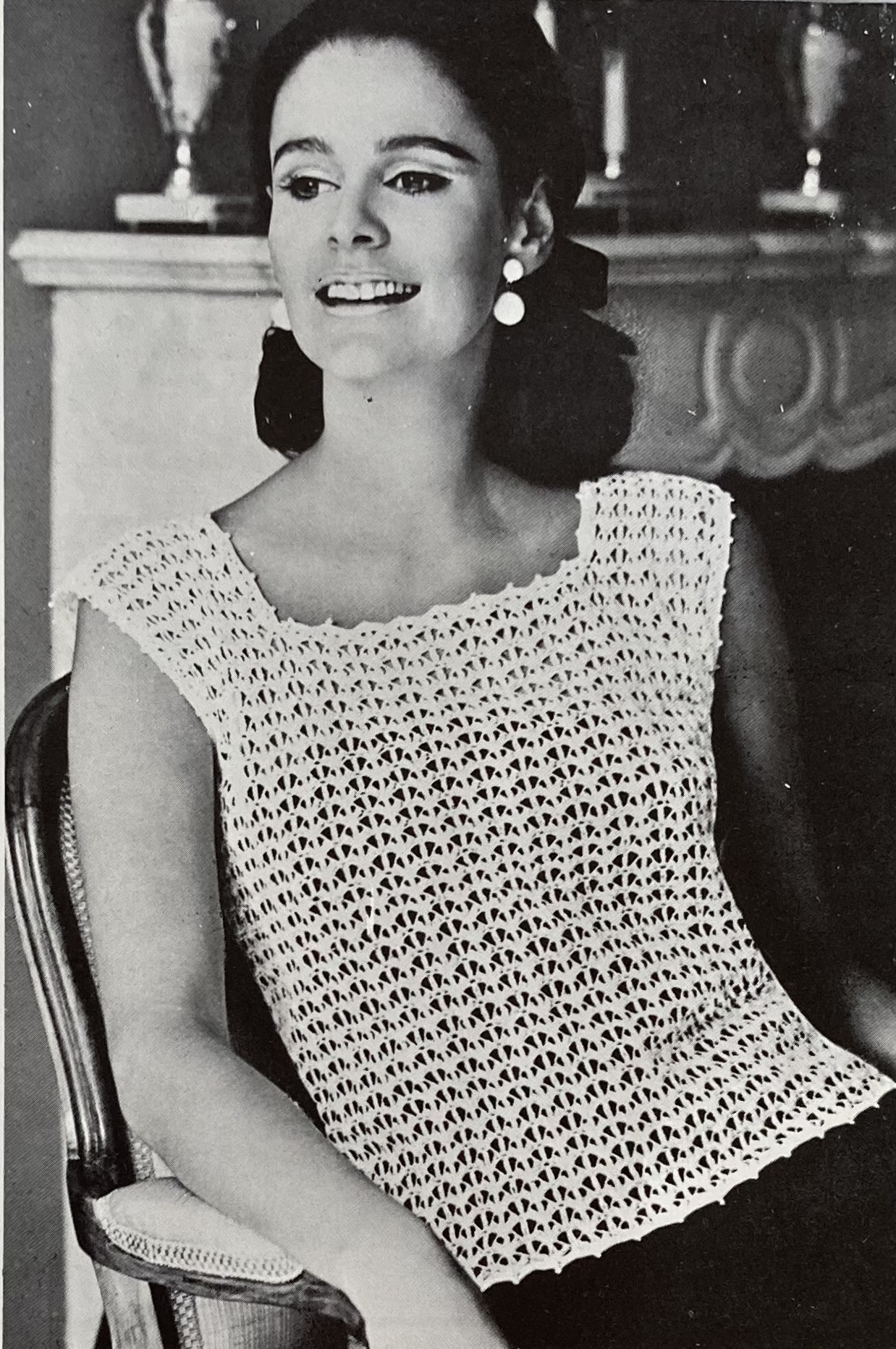
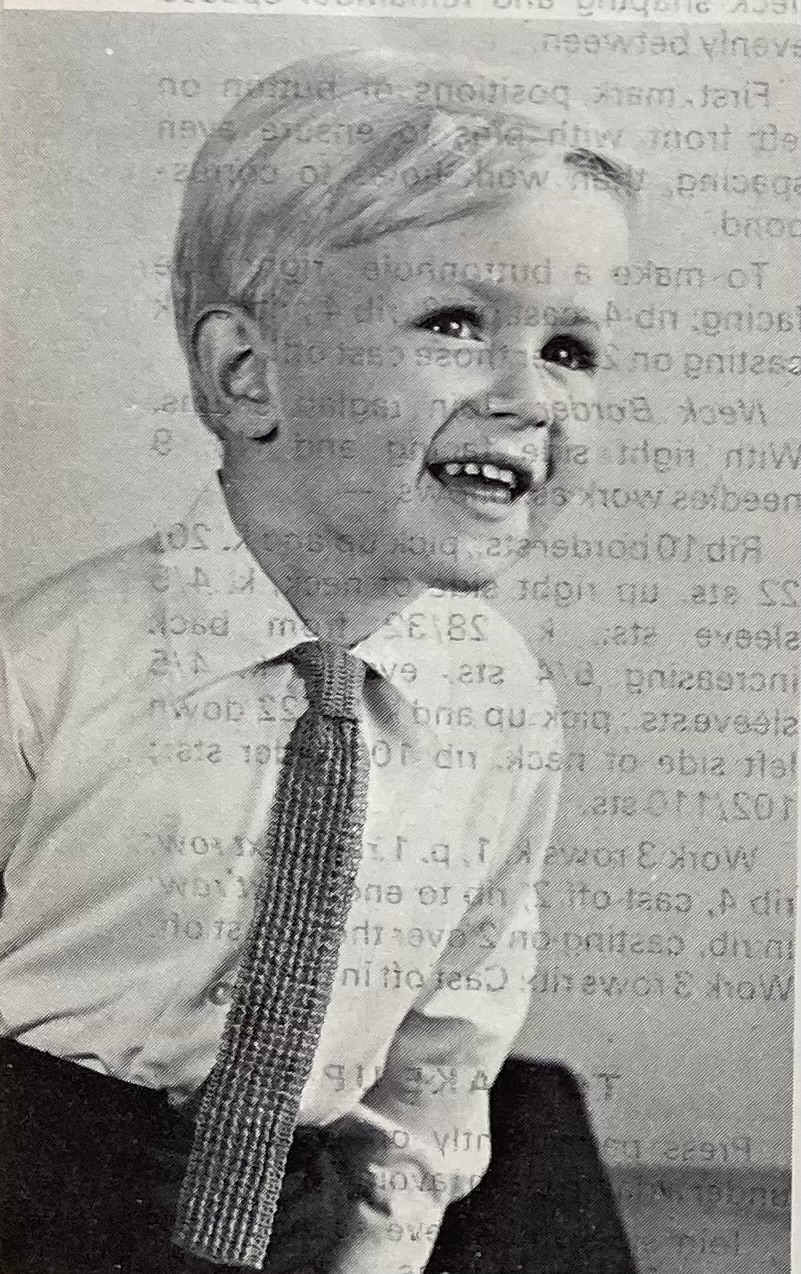
Crochet fans can make something for baby, too: a soft and pretty blanket made of 48 lacy motif squares in Patons “Fiona”, bordered with plain dark bands and lined with blue fabric. You can make a lacy blouse for yourself in the usual Mercer-Crochet thread, and use the leftovers to make a tie for a little boy for Easter! Can’t tell if the kid is happy about having to wear a tie or not, or if someone is holding a candy bar just behind the camera.

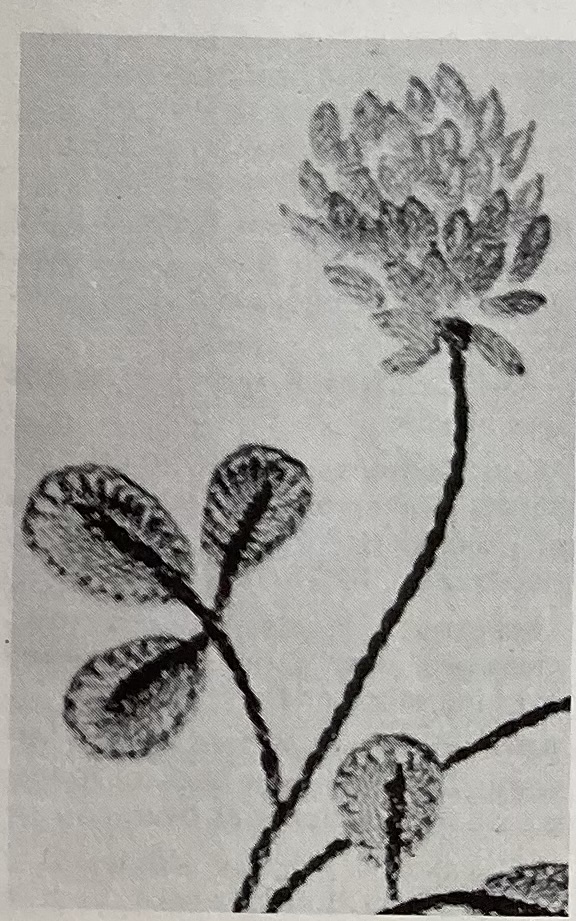
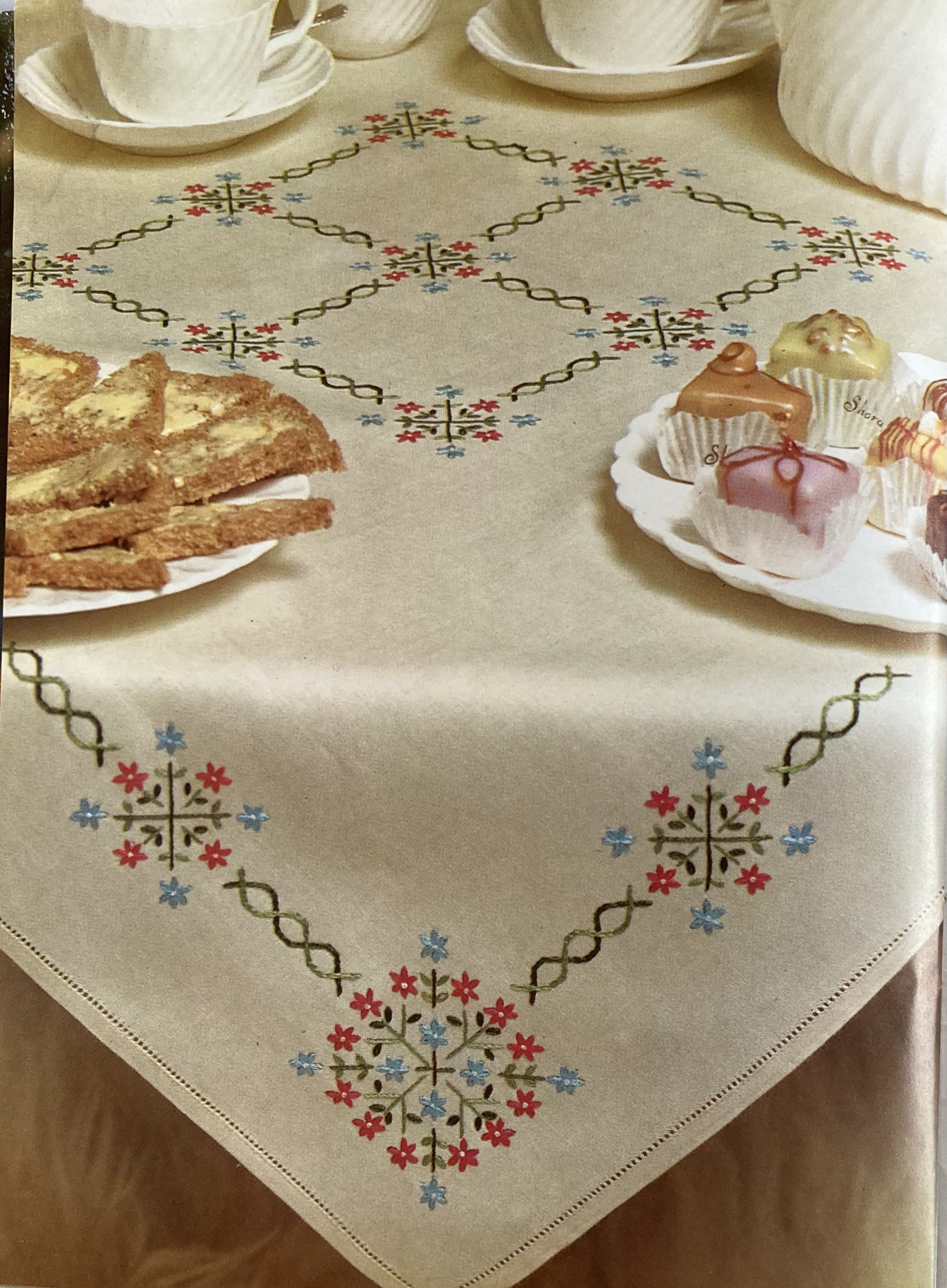
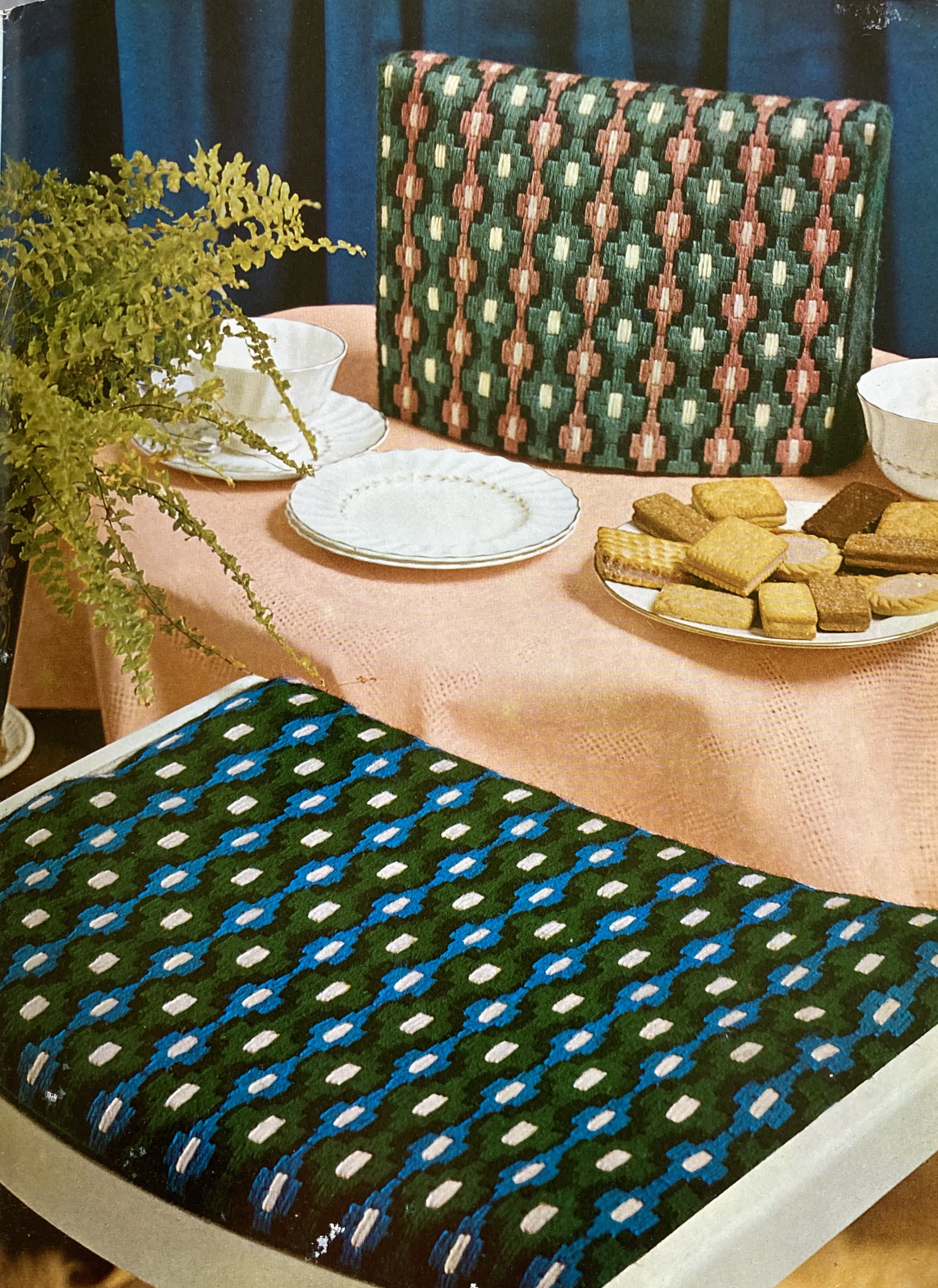
With all those great Spring fashions, it’s no wonder that the homewares are a little boring this time. There’s a little flower motif to embroider on an apron, or place mats, or a tablecloth, and a wonderful and very 60s floral design for a cushion in wool embroidery, or adapted to appliqué for a coffee cosy. Beginning embroideresses can practice stem stitch, loop stitch and chain stitch with lots of simple motifs on a tablecloth. There’s also an easy Florentine tapestry design for a large tea cosy or stool-top.

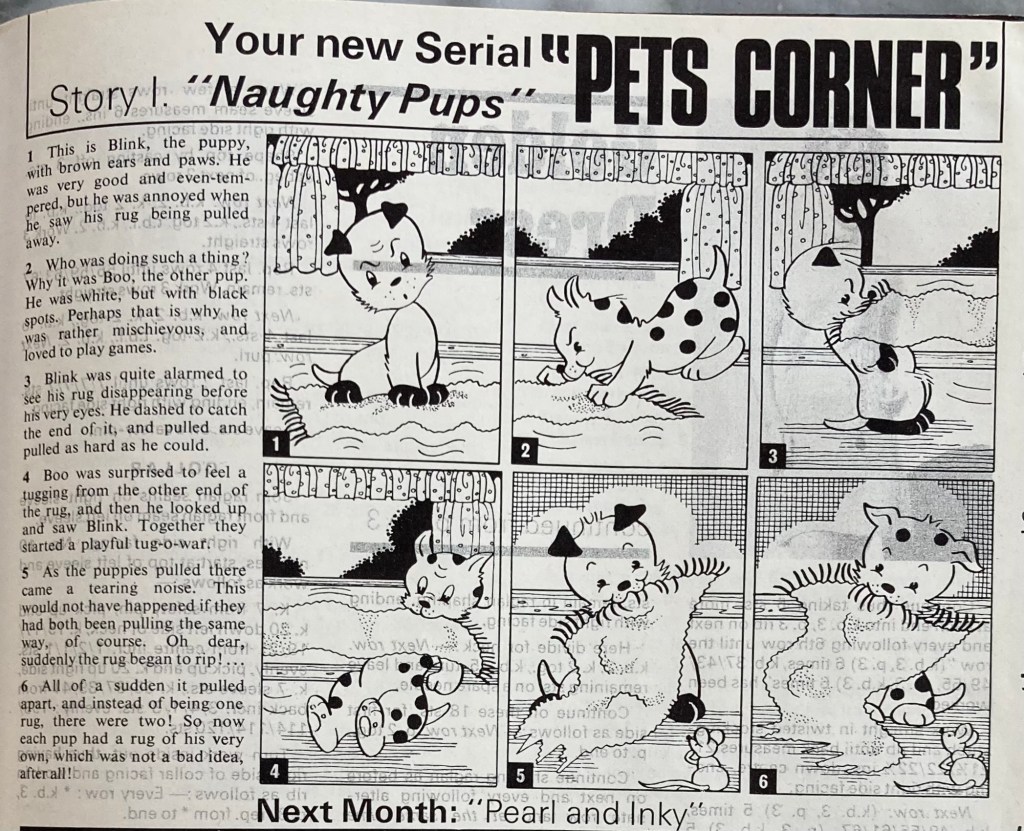
There’s a new serial comic, “Pets Corner”, whose first episode features puppie Blink and Boo, who do rascally puppy stuff and end up tearing a rug apart. But then they each have their own rug, so it’s all good.

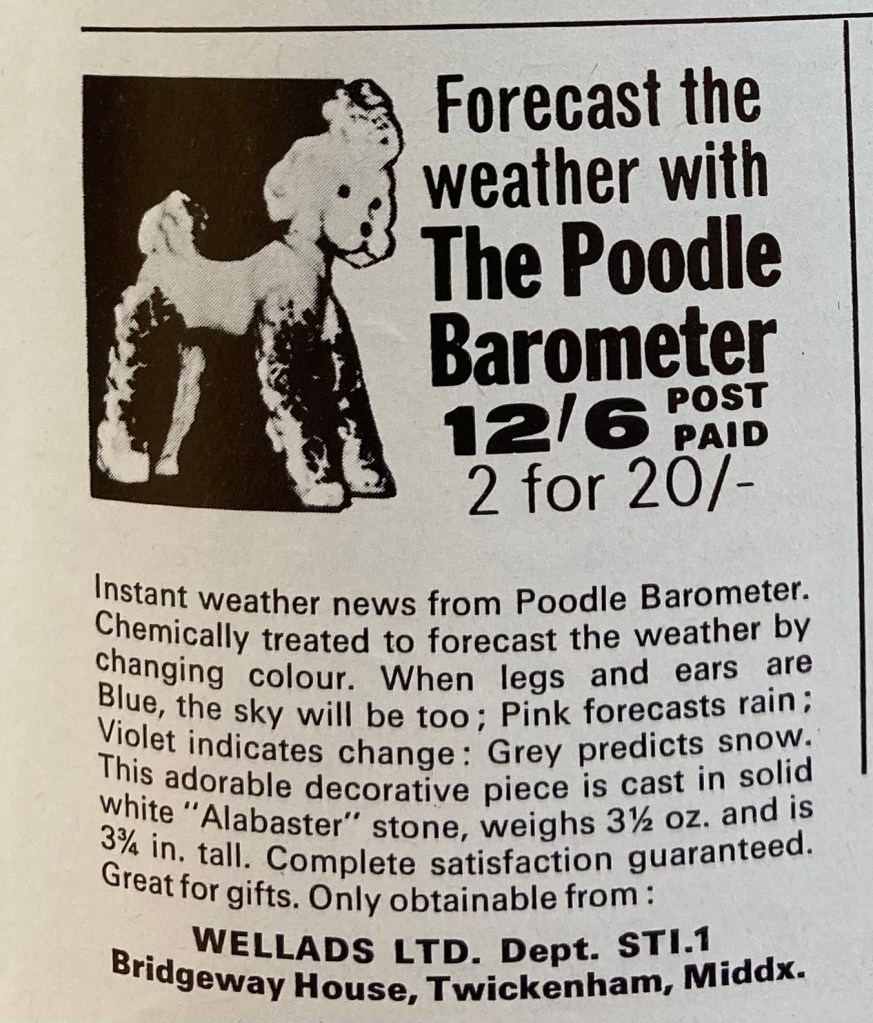
The ads are the usual: Carters Liver pills for constipation, mail-order services for fabric remnants and marked tablecloths to embroider, pen pals, a poodle barometer…

Wait, what?!?

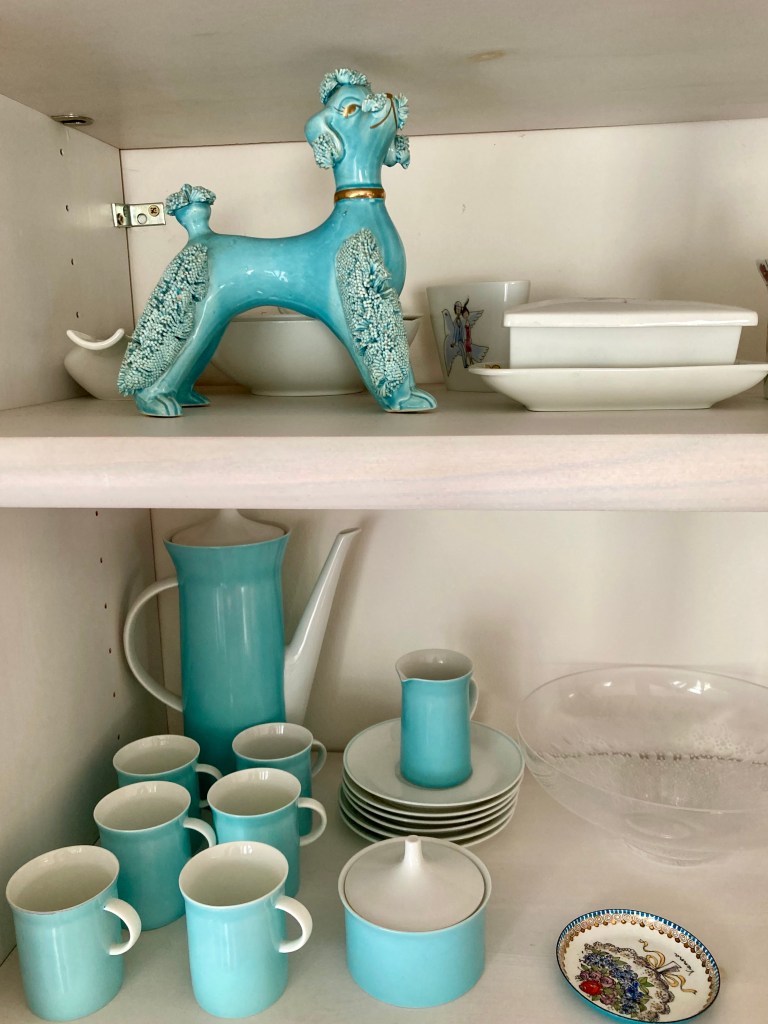
Yes, a poodle barometer. A decorative stone poodle that has been chemically treated with something that presumably responds to changes in humidity and/or temperature. Okay? I too have a vintage poodle, so I shouldn’t say anything. Mine is made of porcelain and doesn’t predict the weather, but does a great job guarding my grandmother’s 1950s Rosenthal coffee service.

Enjoy the Spring! My project will be some variation on the embroidered or appliquéd flower pattern. And I will soon be finished with the amazing orange dress from the September 1967 issue, so stay tuned.