
EDIT May 26, 2025: Finished! I had to wait for the photos but it was worth it. Scroll down to see…
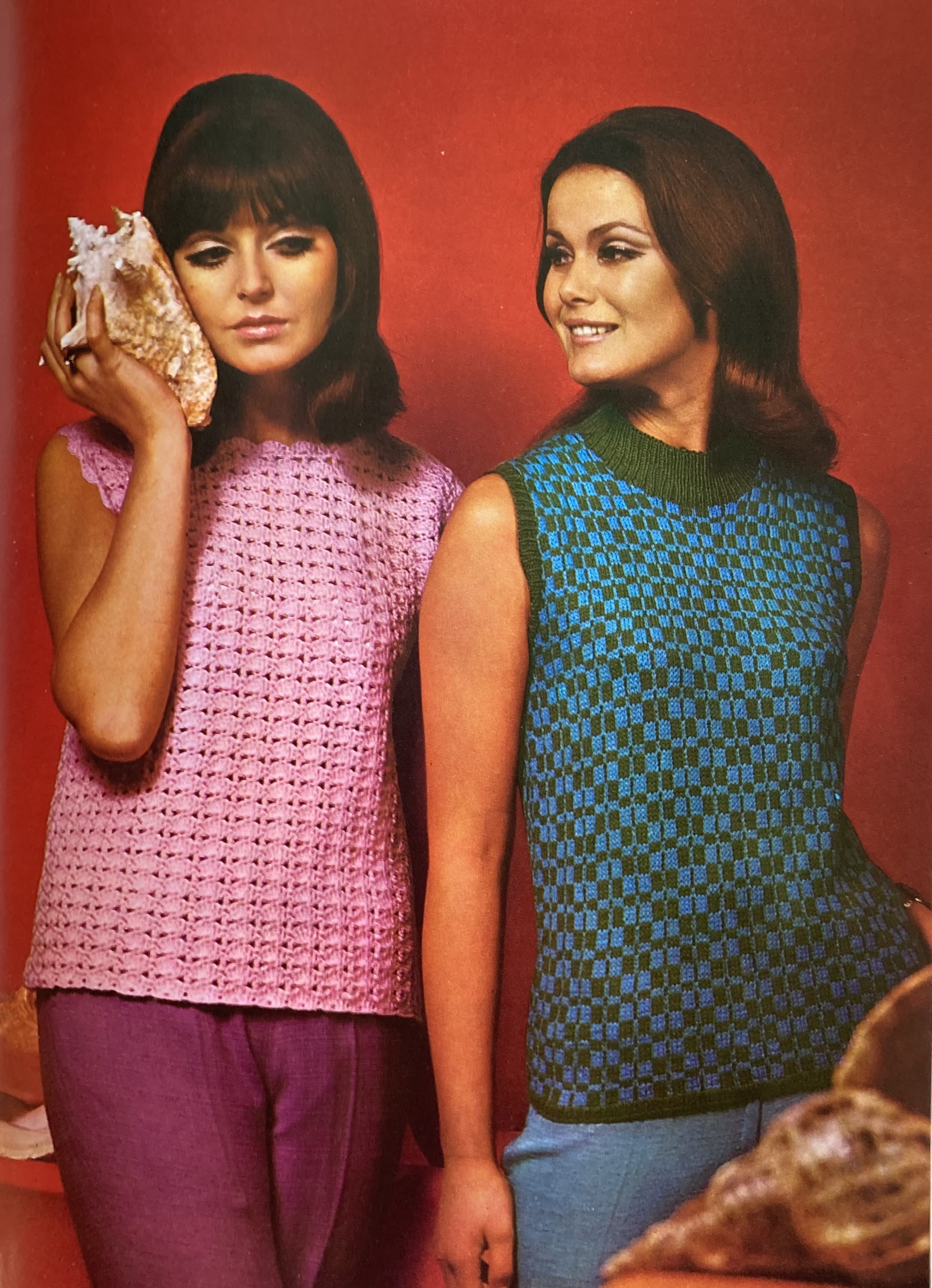
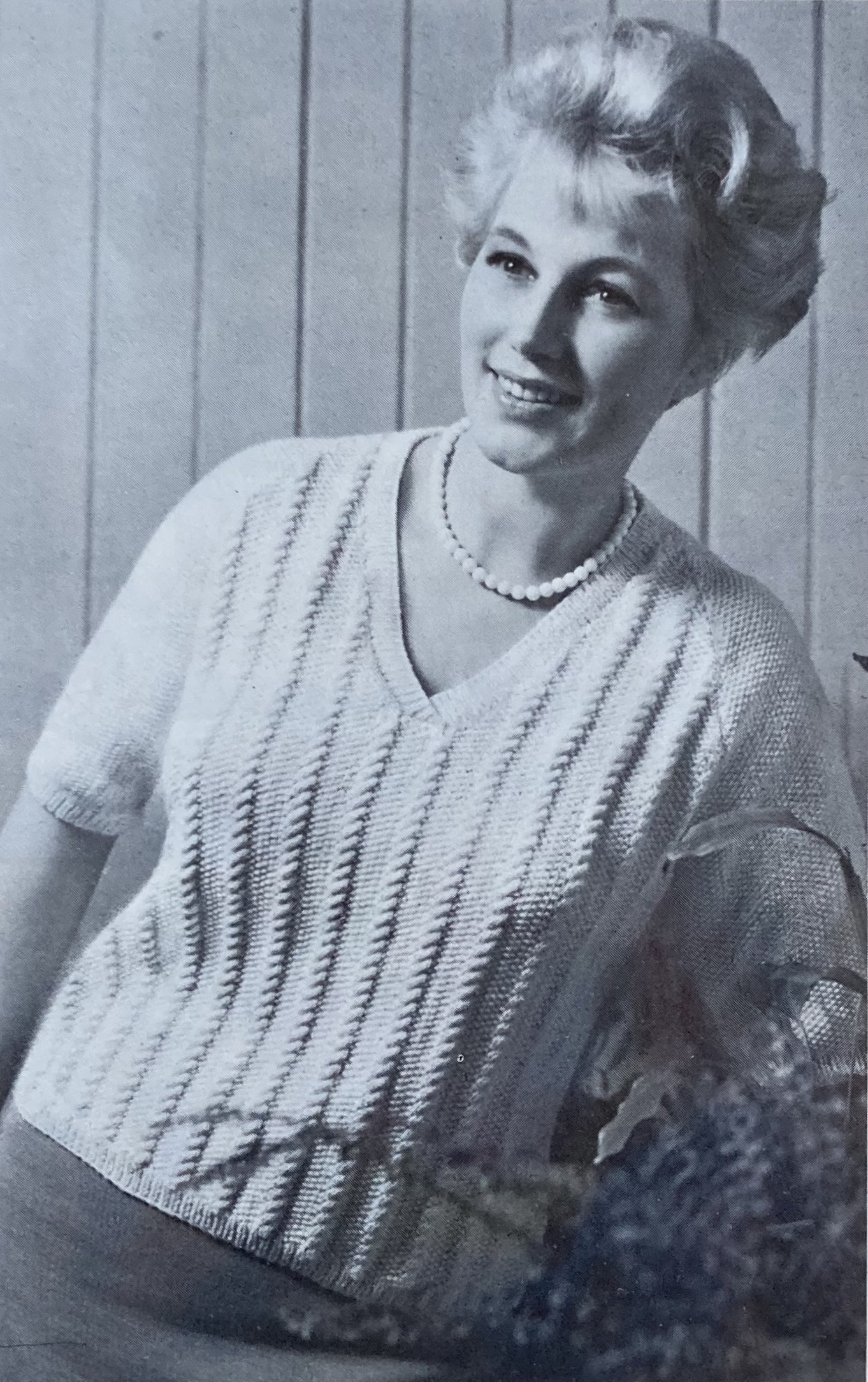
My April 2025 project was this “shell” (sleeveless top) in a stranded chequerboard pattern — one of three “summer shell” patterns in the April 1967 issue of Stitchcraft, along with a polo-neck bouclet and a crochet lacework design. (And shells. Listening to shells, because shell, get it? Yes, we got it, thanks.)
The wool in the pattern is Patons Cameo Crepe, a very smooth, twisted fingering-weight wool. I chose Lana Grossa Ecopuno, which I used for this “shaded blouse” and this sleeveless cardigan a couple of years ago. Though not as smooth as a crepe-twist yarn, it’s soft, light and not too warm, and available in many very pretty colours. I chose a dark green and pale, slightly seafoam-tinged blue, similar to the original colours but with more contrast.

The tension in the pattern is 8 stitches to the inch in pattern, which I can’t get even with fine yarn, so I made the smallest size (for 32-33 inch bust) to fit me (38 inch bust) and calculated that it would come out with around 36 inches in the bust, i.e. two inches of negative ease instead of the 1-2 inches of positive ease in the pattern. I hear you out there saying “Never, ever knit a stranded pattern with negative ease!!!” but it can and should sometimes be done! The yarn is loose and drapey, even in a non-diagonal stranded pattern like this one, and even two inches of negative ease doesn’t look the least bit tight.

Which brings us to the shaping question: all three “shells” in the issue show the new longline silhouette — hipbone length and unshaped from hem to bust. If you look closely at the photos, you will notice that the poses often involve a hand on the back waist, a hand on the back, arm behind the back, elbow pointing at waist level… the things you do to make you look like you have a waist in your long, unshaped garment! I never make unshaped tops for precisely this reason — they look like a sack on me, as they tend to do on all but the skinniest or curviest figures. Having had good experiences with longer tops shaped from hip to bust, I started the top with even fewer stitches at the hip and increased up to the number in the small pattern size after the waist. I also made the top in the round from hem to armhole shapings.


To test the check pattern, I made a little phone cosy in a different wool (DK weight), Since the pattern has no diagonal lines, I was afraid it would pull together awkwardly . That was a concern with the DK sample, so I was very careful to strand loosely with the Ecopuno (another reason for sizing down) and had no problems. I did, however, make a mistake in the pattern, to be fixed with duplicate stitch because I’m too lazy to rip back that far.


It went wonderfully up until the front part above the armholes, where in spite of my careful calculations, I ran out of the light blue yarn. No problem, I had bought it at my local wool shop right in my neighbourhood, so popped over to buy another ball… But no! The shop is changing management and has been selling off all the inventory before the first of May! They still had some Ecopuno, but not in the right colour, so I had to order more online. Argh!


The new wool arrived and I finished the top easily enough. Of course, the new wool was a different dye lot and the one time it makes a difference… and it was on the front piece, too. The change line got less noticeable after blocking and letting dry. Also, the pattern tricks the eye into not seeing it.
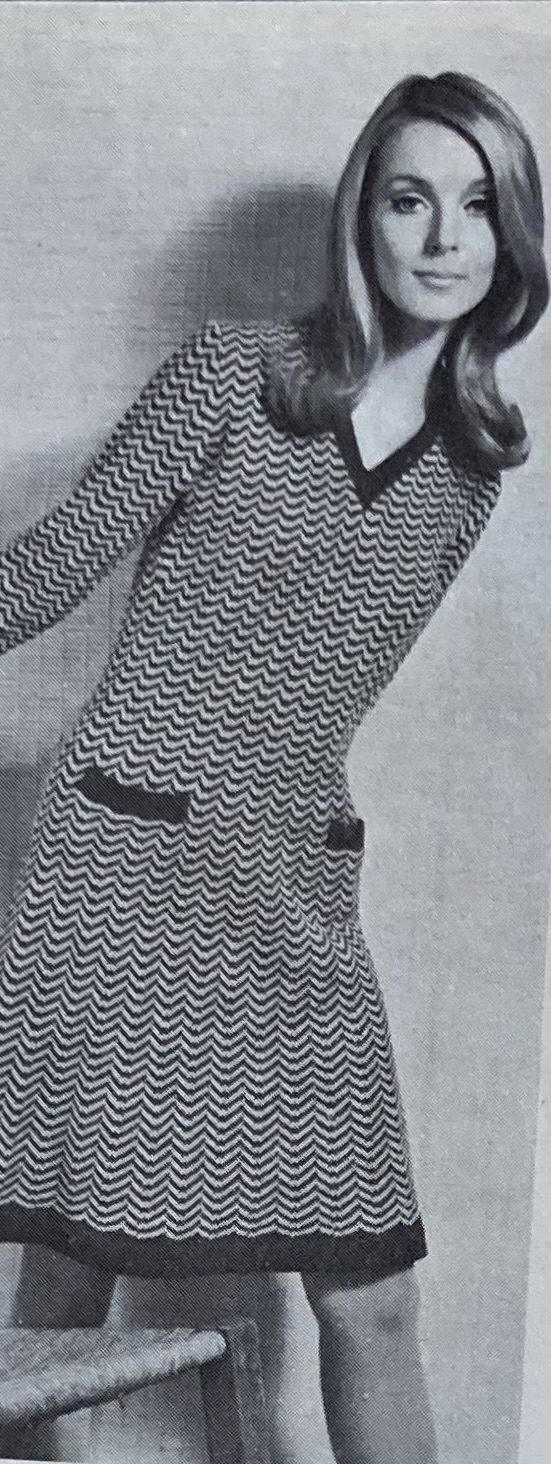
My knit-night friends and I recreated the magazine photos. Here’s the black-and-white one:


And here is the magnum opus, where one knitting colleague photoshopped me into the original photos. Is it me, or is it the model?


I am very, very happy with this project — and the photos!








 The Stitchcraft Sixties