
EDIT December 26, 2024: Finished!
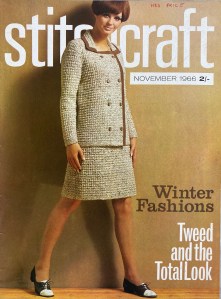
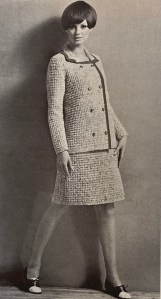
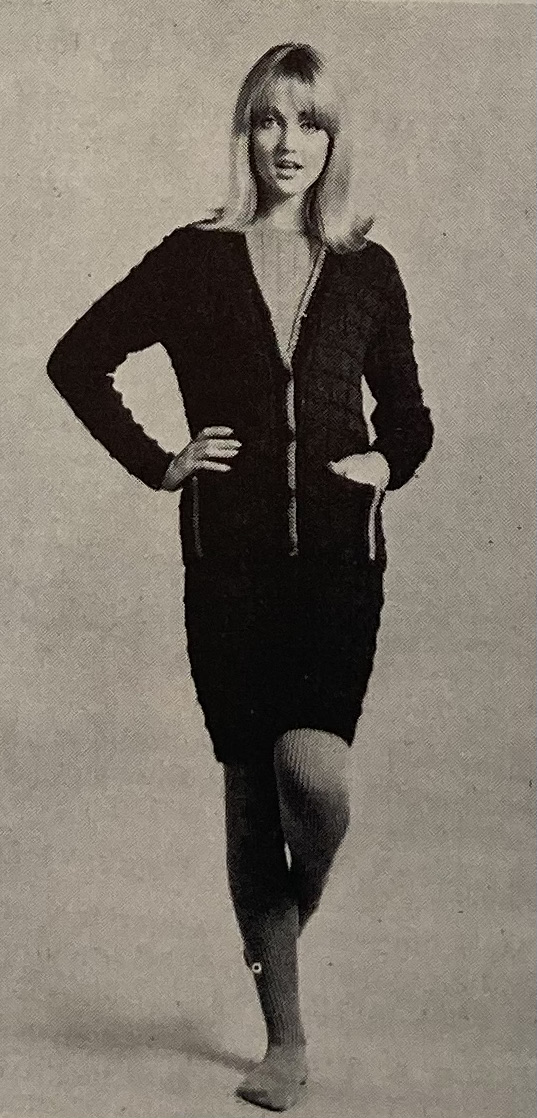
The November 1966 issue of Stitchcraft was perfectly nice, but the projects in it that interested me were either too much of an undertaking (i.e. an entire suit) or something I would like to knit later when I have more time to plan it out (the top-down round-yoke cardigan). I decided instead to make a project whose pattern and wool had been sitting around for a long time waiting for me to use them: the Bestway A2063 “Love Bird” jumper.
The booklet isn’t dated, but presumably from the 1940s. I got the pattern as a PDF from the wonderful Subversive Femme website. A few years ago during the horrible wildfires in Australia, Bex, who runs the site, offered a free pattern to anyone who donated to the fire relief fund. I did, and was very kindly given this pattern as a thank-you. The wool is “Darnie” by Studio Donegal, a fingering-weight lambswool in the perfect shade of green, which I bought in Galway while on a work trip to Ireland.
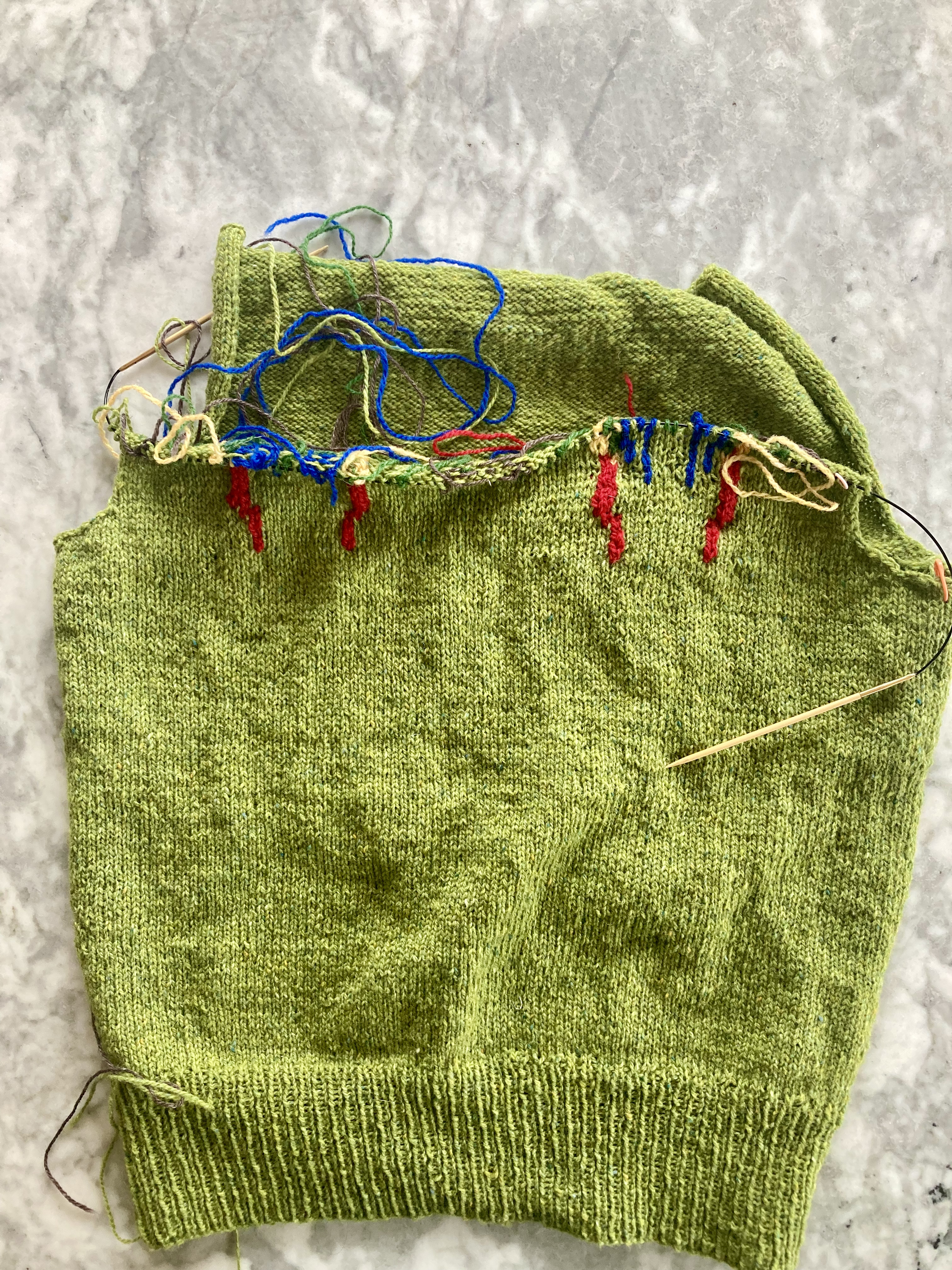

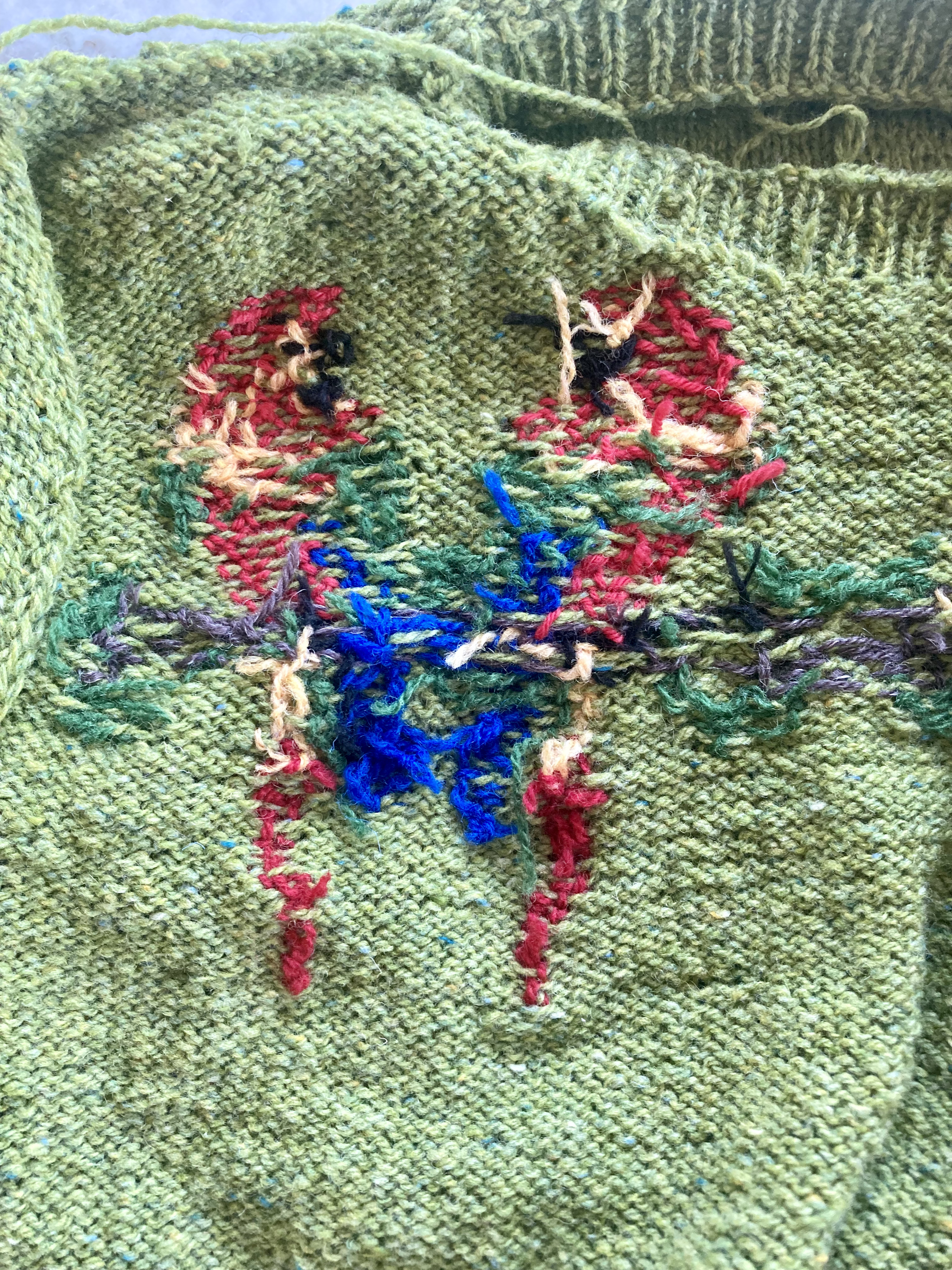
The original pattern has a tension of 8 sts/inch, which I don’t get even with the finest of wools and smallest of needles, but I am also larger than the 34 inch/stretch to fit 36 inch bust finished size. I have had good results in the past with making 8 sts/inch, 34-inch jumpers at 7 sts to the inch with the original stitch counts and just adding an inch or two to the waist-to-armhole length, but that didn’t work here. I love the wool — it’s quite soft and not at all scratchy, and the little bits of tweed catch the light beautifully — but it was impossible to calculate the tension even with a good-sized, blocked swatch. The wool is so lightweight that it stretches more in width the longer it gets in length, so the tension is variable even when knitted closely and evenly. So at some point around rib height, I had to rip back quite a lot and adjust the waist-to-armhole increases. I tried to keep it close to the original proportions, but make it fit me. That worked out pretty well, though I hoped it wouldn’t shrink or stretch too much in blocking.
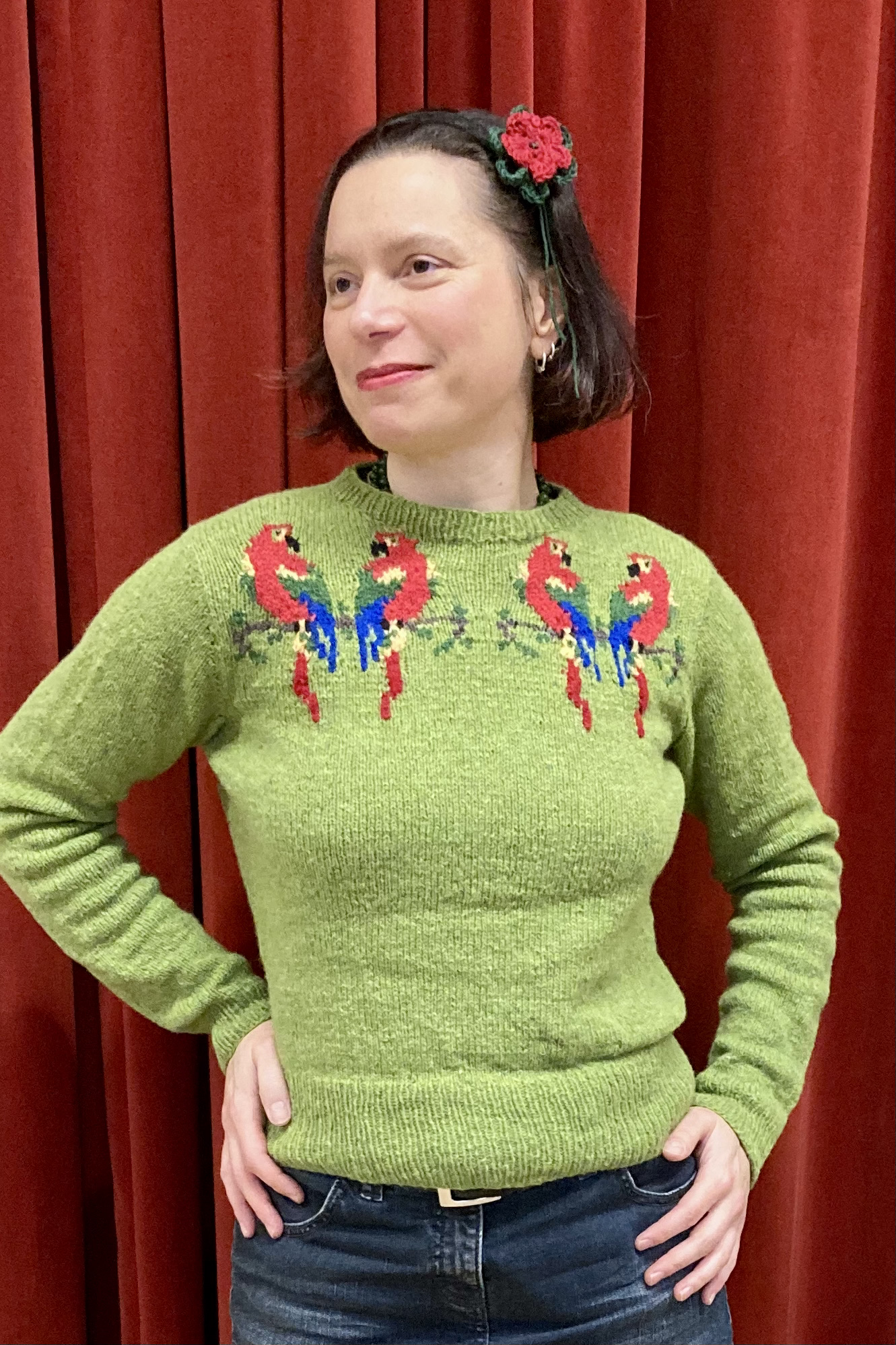
The birds are worked in stranded intarsia, i.e. you use different short lengths of the colours for the four birds, and strand the light green main colour behind. I am very good at stranded work and not bad with intarsia, but I found the combination of the two very tricky! The yarns bulk up at the back and/or leave holes (in spite of twisting together and weaving in) and it is hard to gauge whether the strands are too tight or too loose. There are a hundred ends to weave in and they are all in roughly the same spot, so the back side is very “full” and doesn’t lie down flat easily. Presumably, it should block out?? Also, I should have used a larger needle for the bird section — too late!
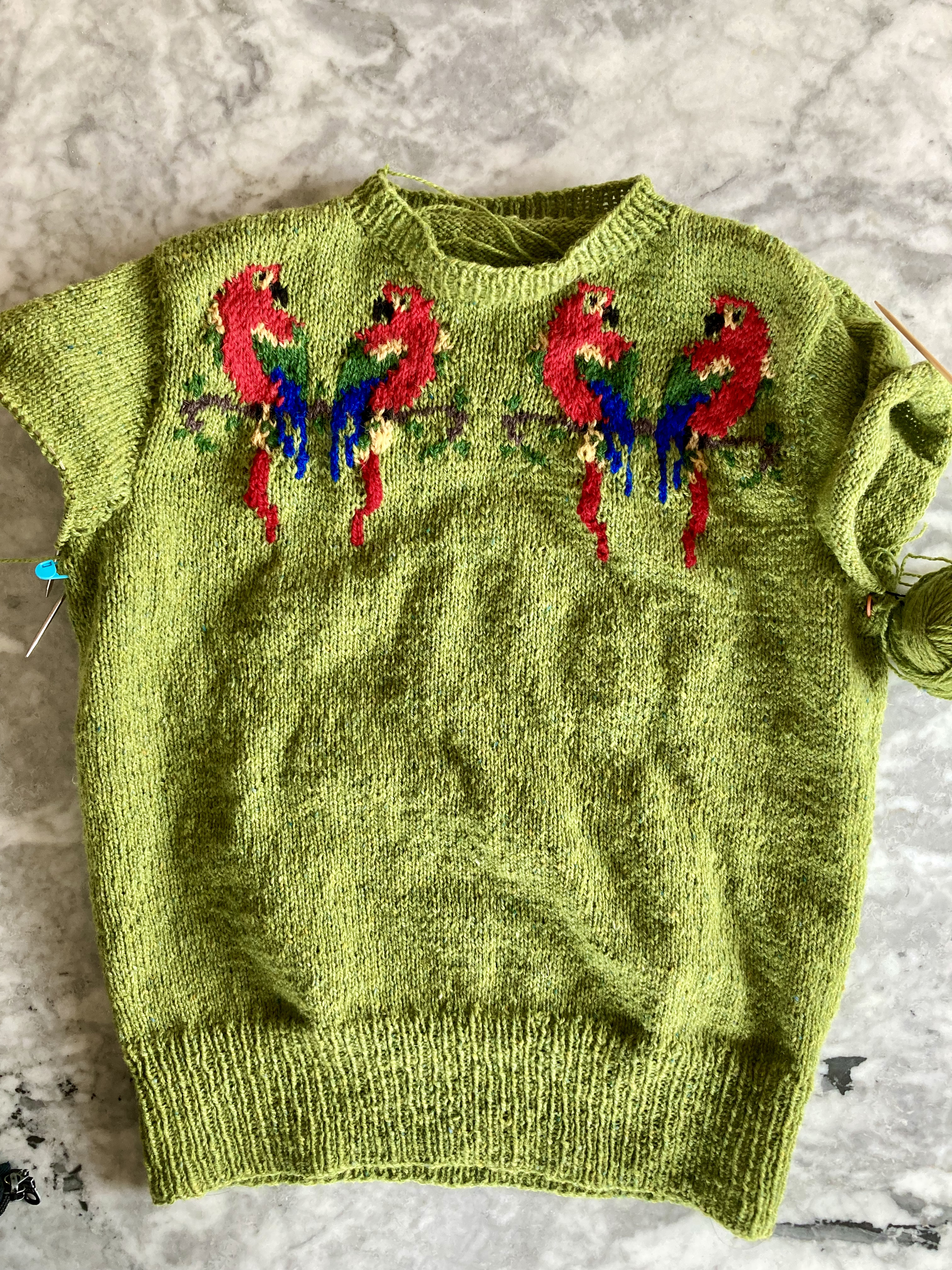
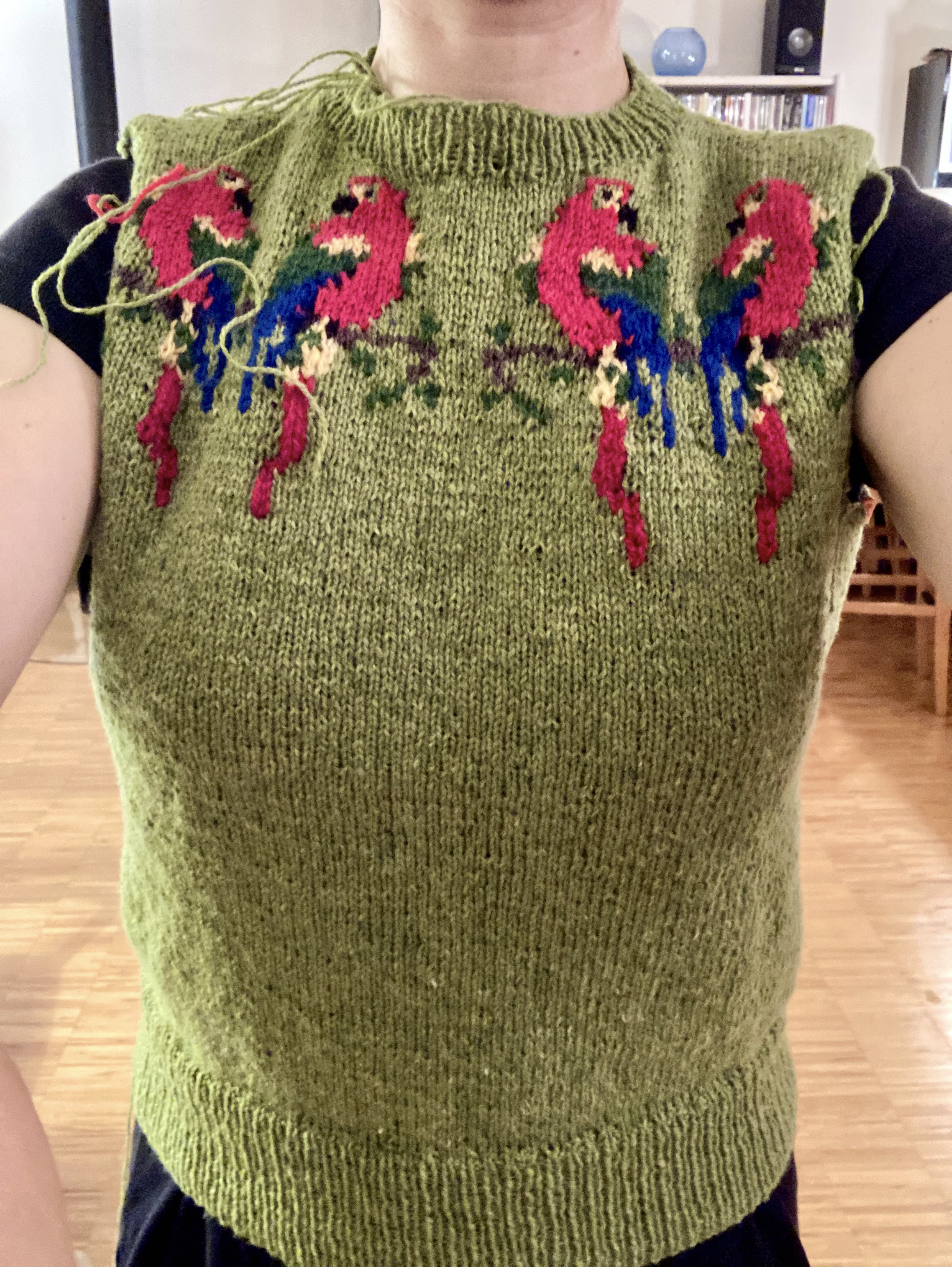
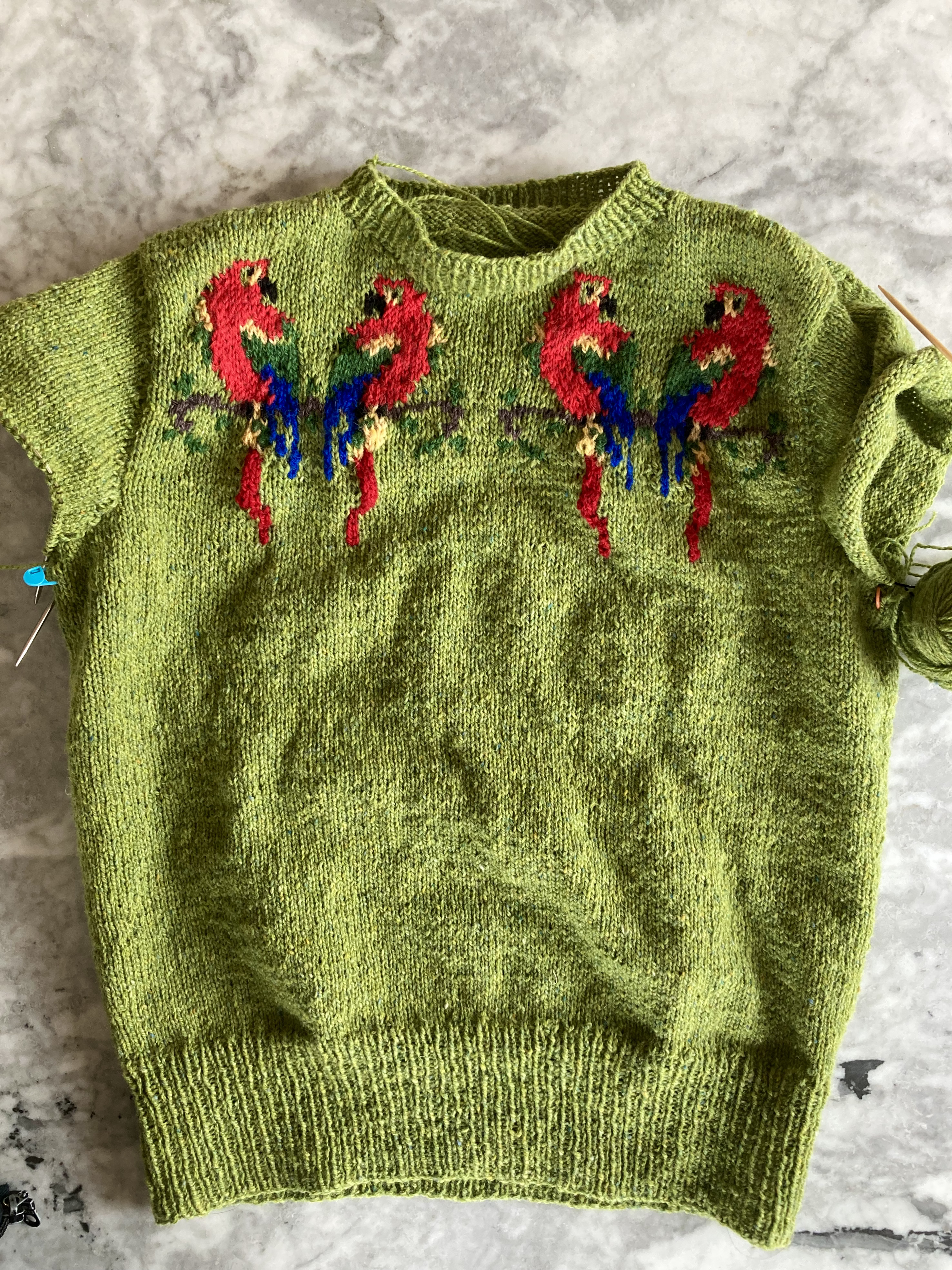
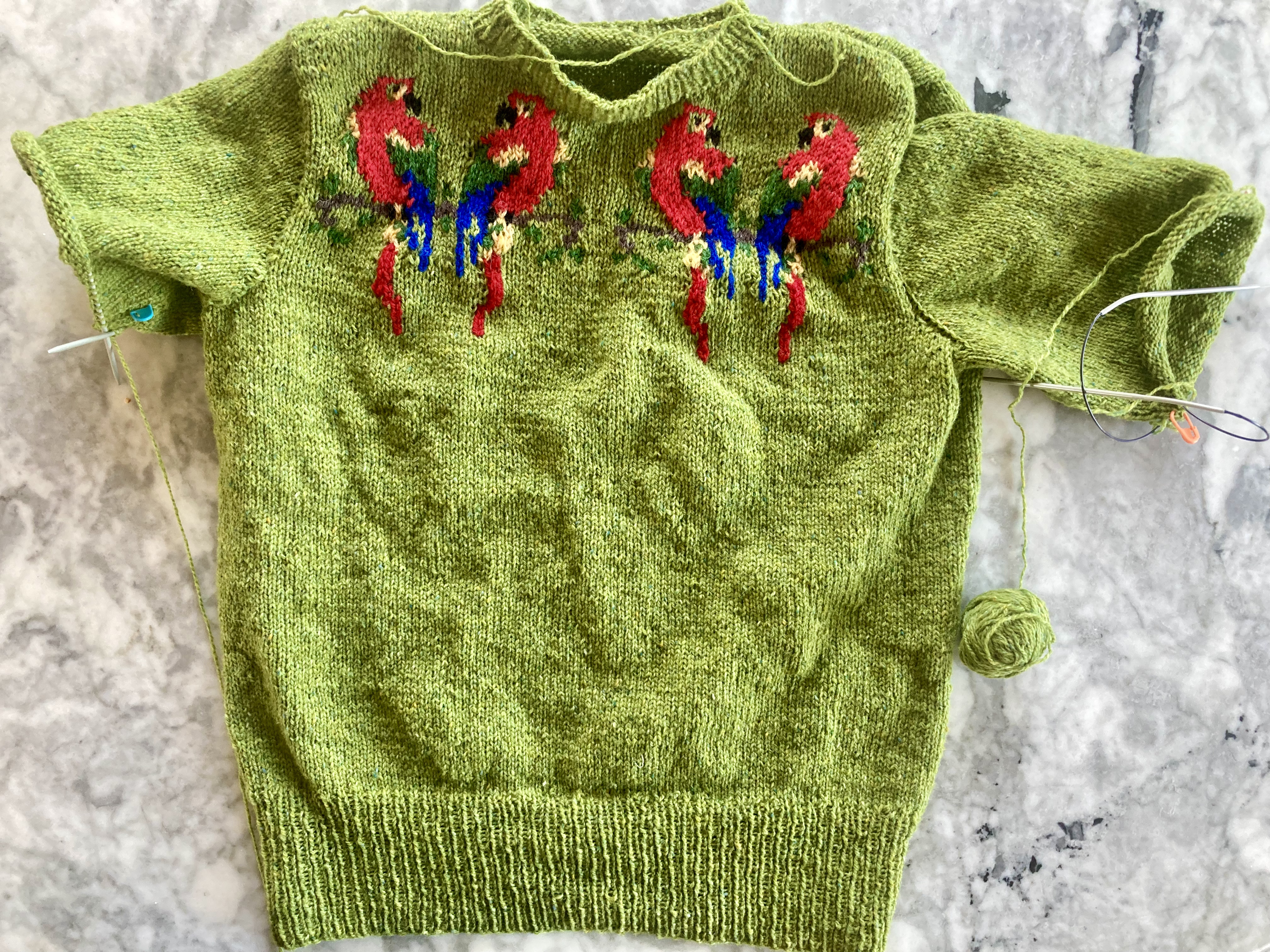
Not to mention that the bird tails start BEFORE the armhole decreases, and since I didn’t read ahead (I know…), I had already finished the body to the armholes in the round and the entire back part above the armholes before I realised it. Yes, I should probably read ahead and also think ahead! Yes, I am also too lazy to rip everything back, especially since I had to re-do the upper back once already to get the sizing right. Oh yeah, and I also forgot, twice, to make an opening in the back neck to accommodate the close, high neck, AND since I started the birds at the armhole instead of below, the neck was even higher and tighter than it should have been. Sigh.
In spite of all of that, it looked good (even before blocking) and fit great (ditto). It does fit over my head and I don’t think it’s a problem that the birds sit a little higher than they should. I made the sleeves from the top down, picking up stitches around the armhole, and only had to restart them twice to get the decreases right.
It was so worth it, though! It blocked to exactly the knitted proportions without shrinking or stretching, and the birds flattened out well enough. (The tails, which I made in a different, slightly thicker red wool than the bird bodies, are still bulkier than the background. I will call it a “3-D effect” design feature.)
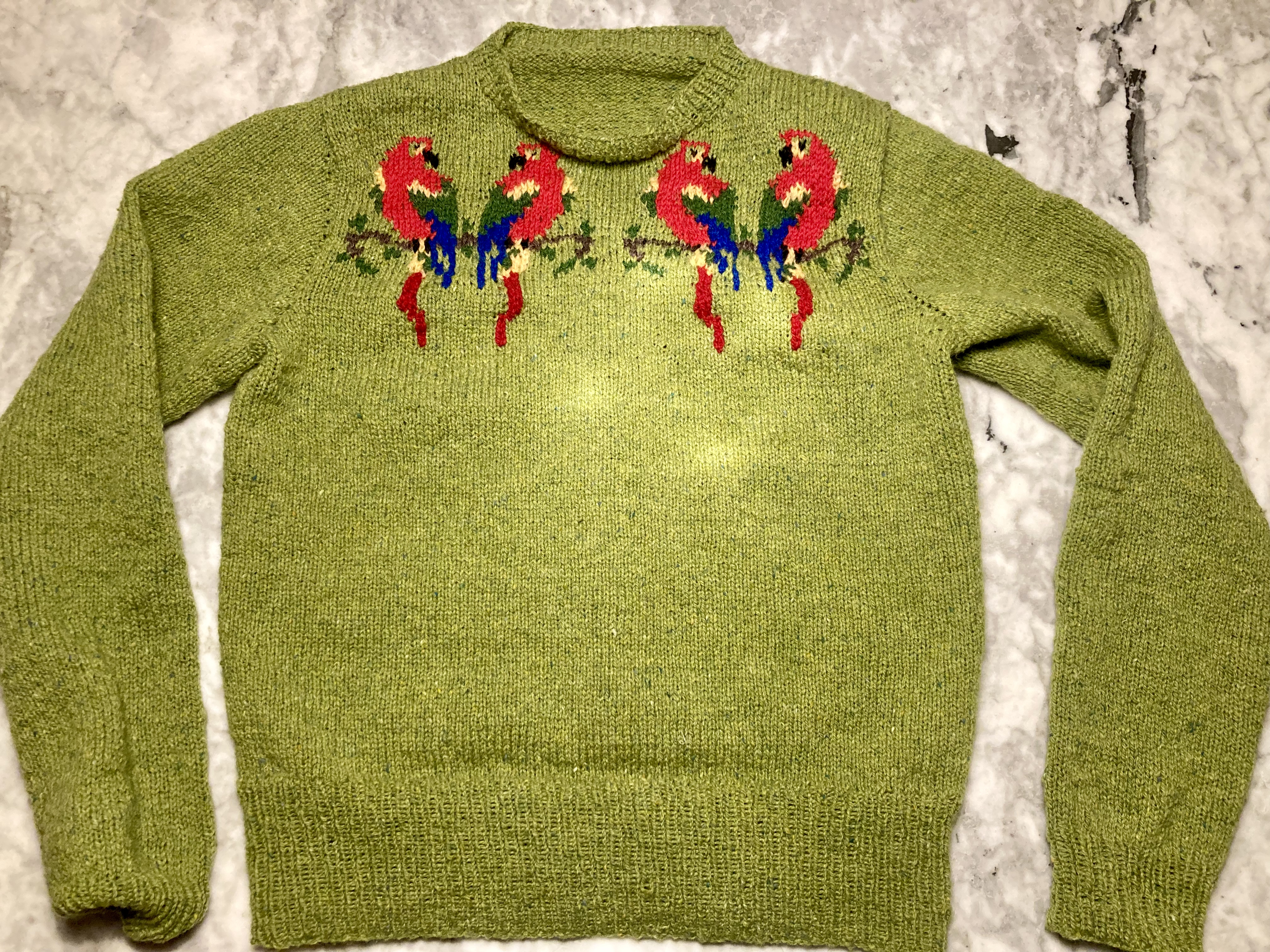
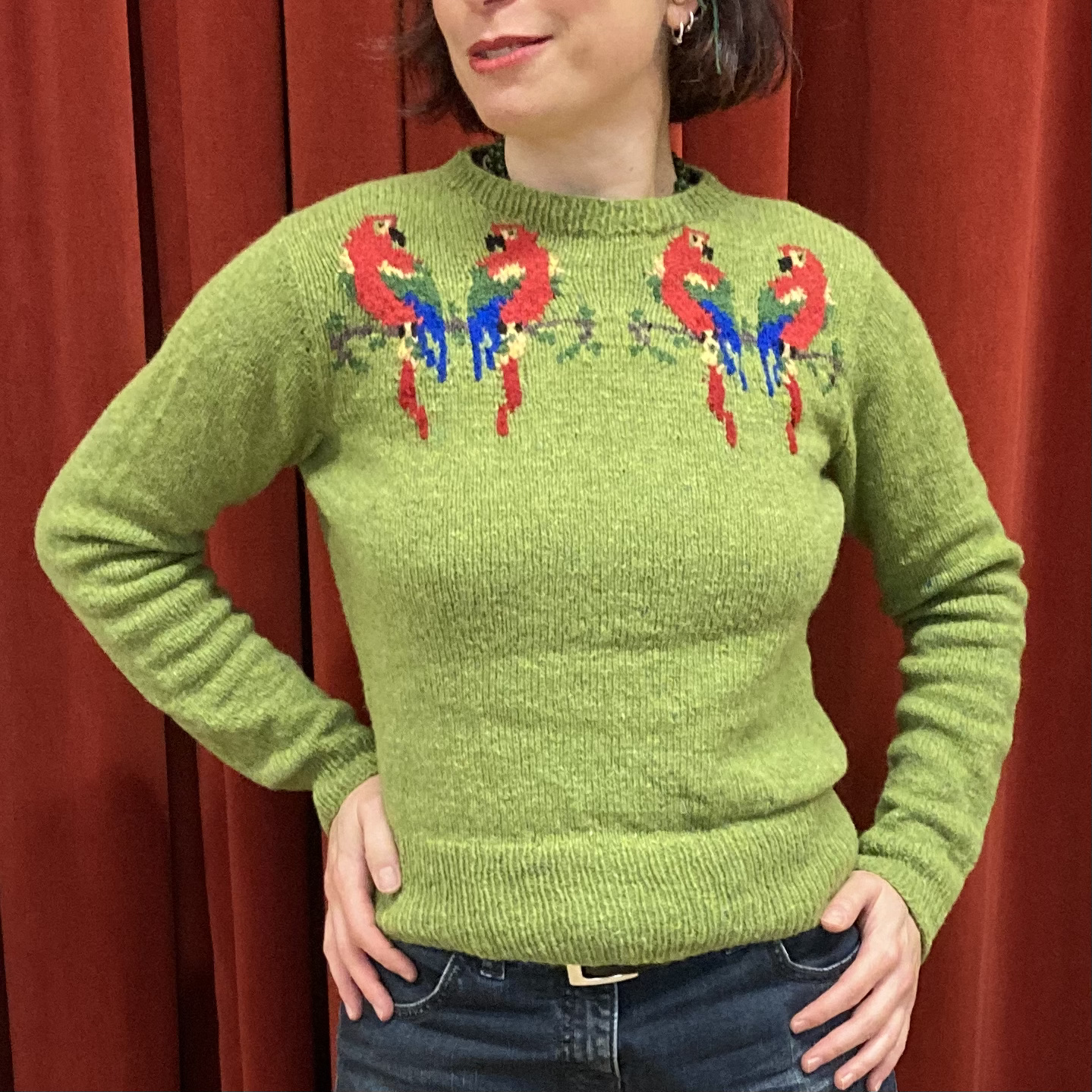
I am very happy with this jumper and it has gotten a lot of compliments already. Didn’t get the pose quite right for the photo re-creation — head tilted the wrong way! — but I thought the red curtain made a nice background.



 The Stitchcraft Sixties