Out of Order: Softly Fitting Cardigan

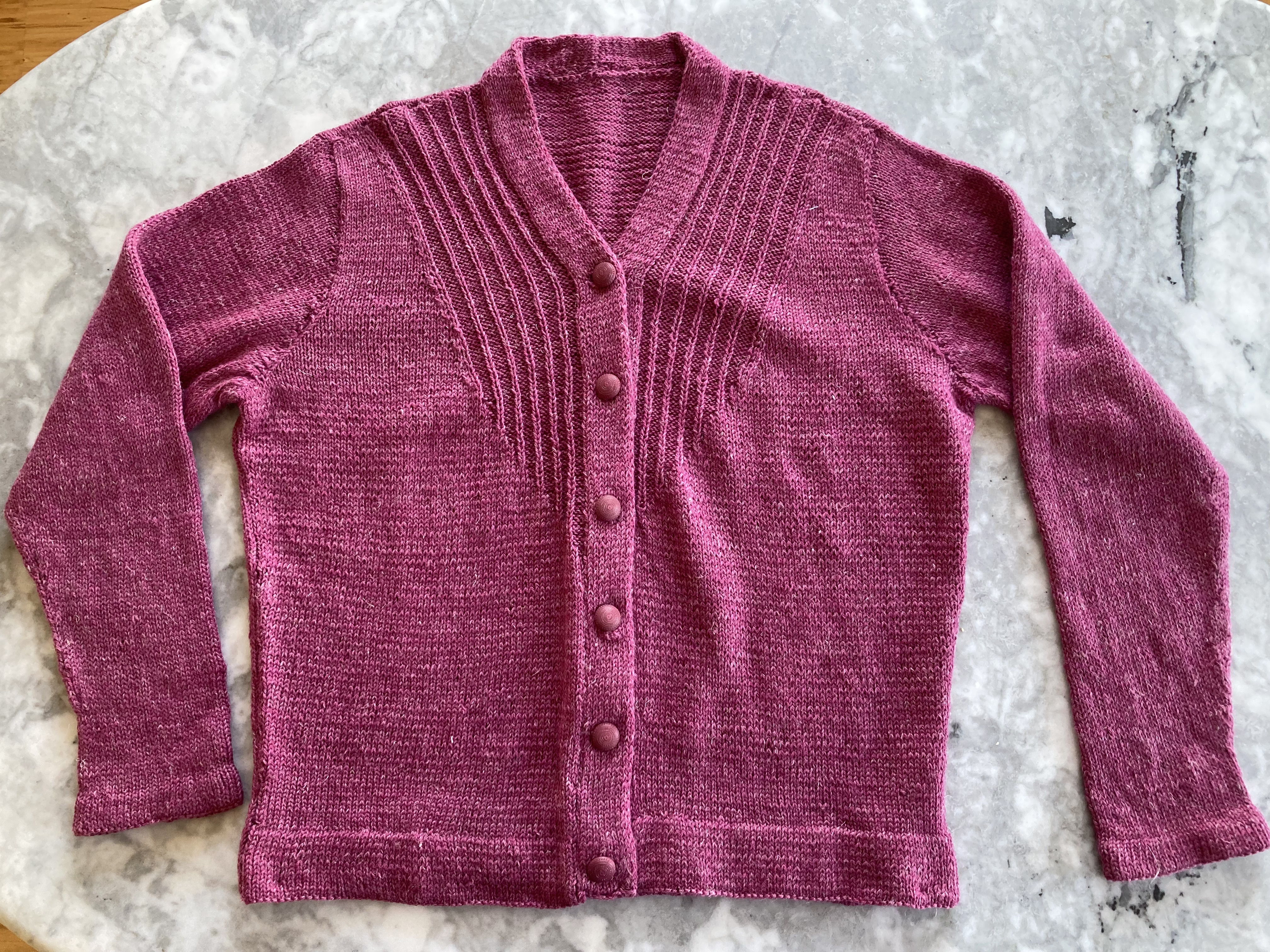
The March 1966 issue of Stitchcraft didn’t have any projects that particularly called to me, and I am still in destash/finish up old projects mode. So this month, I finally finished the cardigan to the “Softly Fitting” twinset from January 1962.

The original twinset is made in two different colours of the same wool: Patons Cameo Crepe “French Green” for the cardigan and “Pearl Frost” for the jumper. I had already made the jumper in Concept by Katia Silky Lace in a more blue-ish shade of purple, and had 300 grams of wonderful Lana Grossa Slow Wool Lino in stash in a slightly more reddish shade of purple. The two purples harmonised quite well, and although the yarns are different compositions, they are both the same weight and have a similar drape and softness.
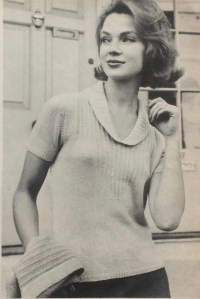
Like many designs from the mid-1960s, the cardigan has stocking-stitch hems at the bottom edge and sleeve edge, as well as double front bands. Both hems and bands are made easier by working one purl row on the right side (hems) or one slip stitch every other row at the same stitch (bands) to make a fold line. I made the body hem by knitting one stitch from the live stitches together with one stitch from the cast-on edge all across the piece — nerve-wracking, but saves sewing it later.

The cardigan itself is very easy — stocking-stitch with a little bit of rib detail on the yoke, and set-in sleeves — but the challenge for me was making sure that I had enough yarn. Slow Wool Lino has unfortunately been discontinued, and I bought the wool at a buy-up-whatever-we-have-left type of sale, so the chance of finding any more in the right colour was minimal. 300 grams should be enough, I thought, even for a cardigan with double front bands and a stocking-stitch hem. But to be sure, I knit the front bands together with the fronts and back in one piece and finished the bands around the back neck before starting on the sleeves. Then I knit the sleeves top-down, picking up around the armhole and dividing the remaining wool exactly in half. That way, if I ran out of wool, the sleeves would just be “bracelet length”, which wouldn’t bother me.
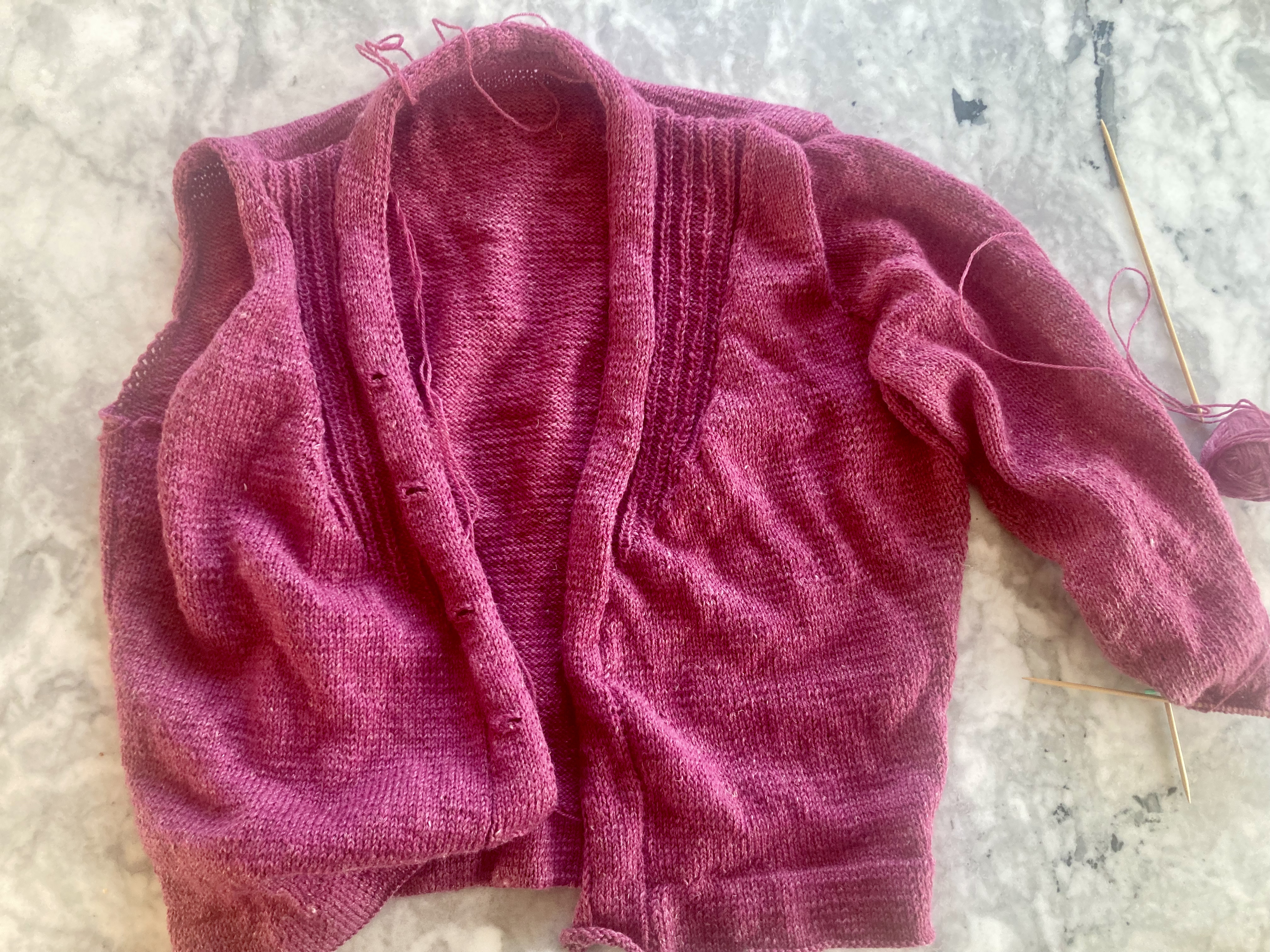
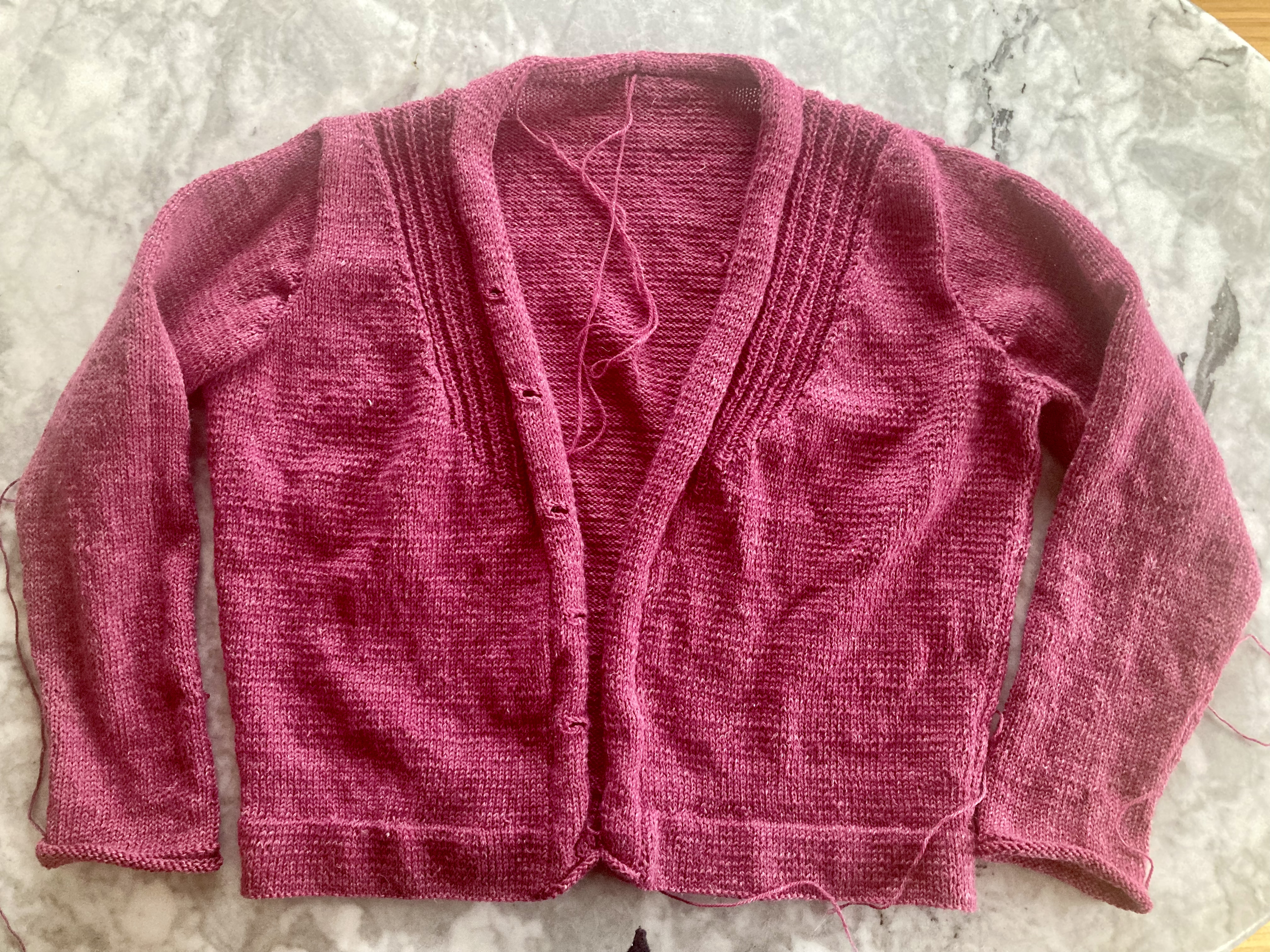
What can I say… it was perfect! I hd to use a little bit of the leftover Katia from the jumper to finish the underside of the hem on one sleeve (invisible) and sew down the sleeve hems and front bands (also invisible). Thus the yarn was de-stashed perfectly. The sleeves were in fact bracelet length after knitting, then stretched to normal long length after blocking. (I didn’t even have to pin them, they grew by themselves.) To top it all off, I went down to my local yarn store / mercerie and immediately found buttons that perfectly matched in size, colour and style.
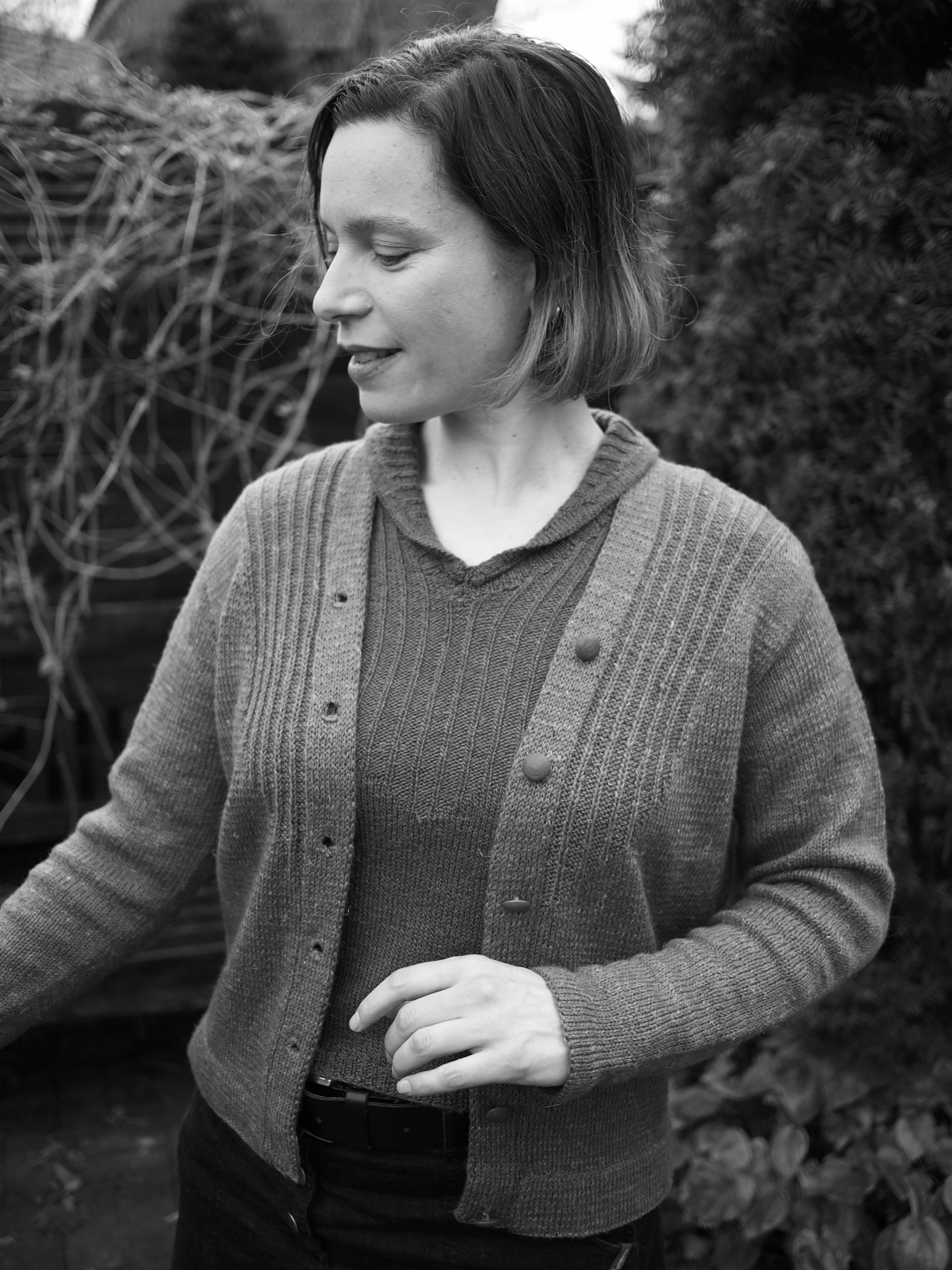
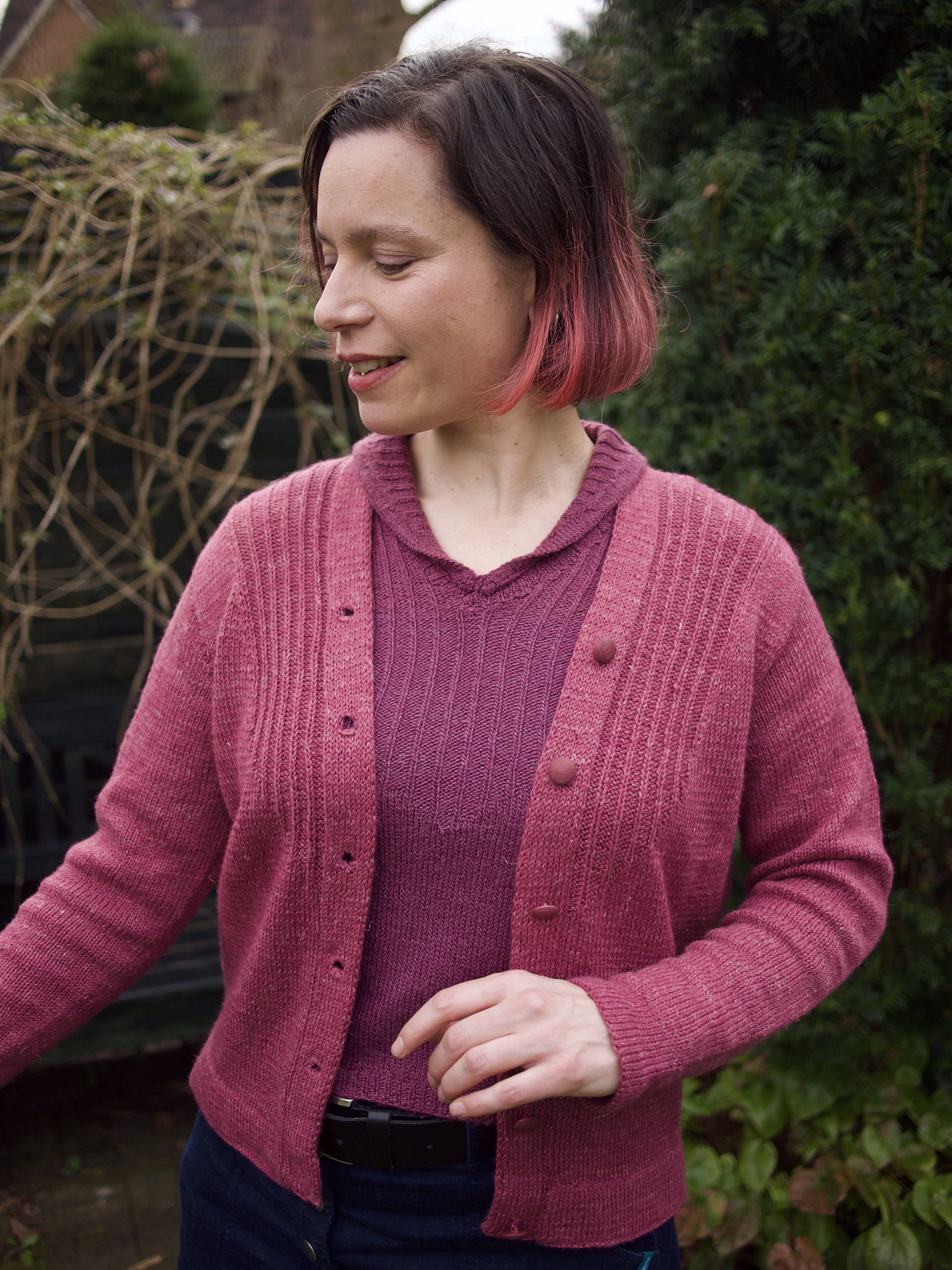
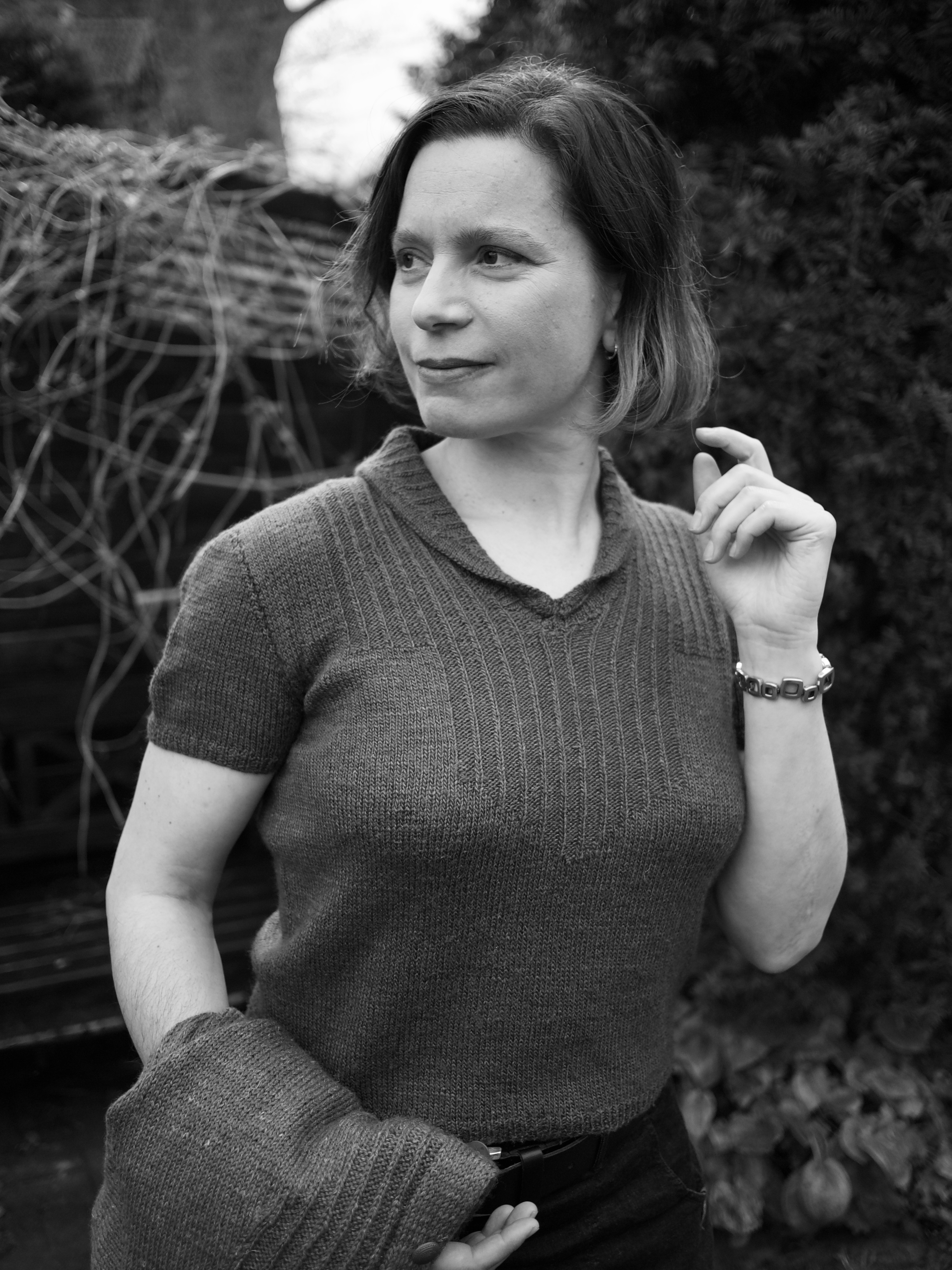
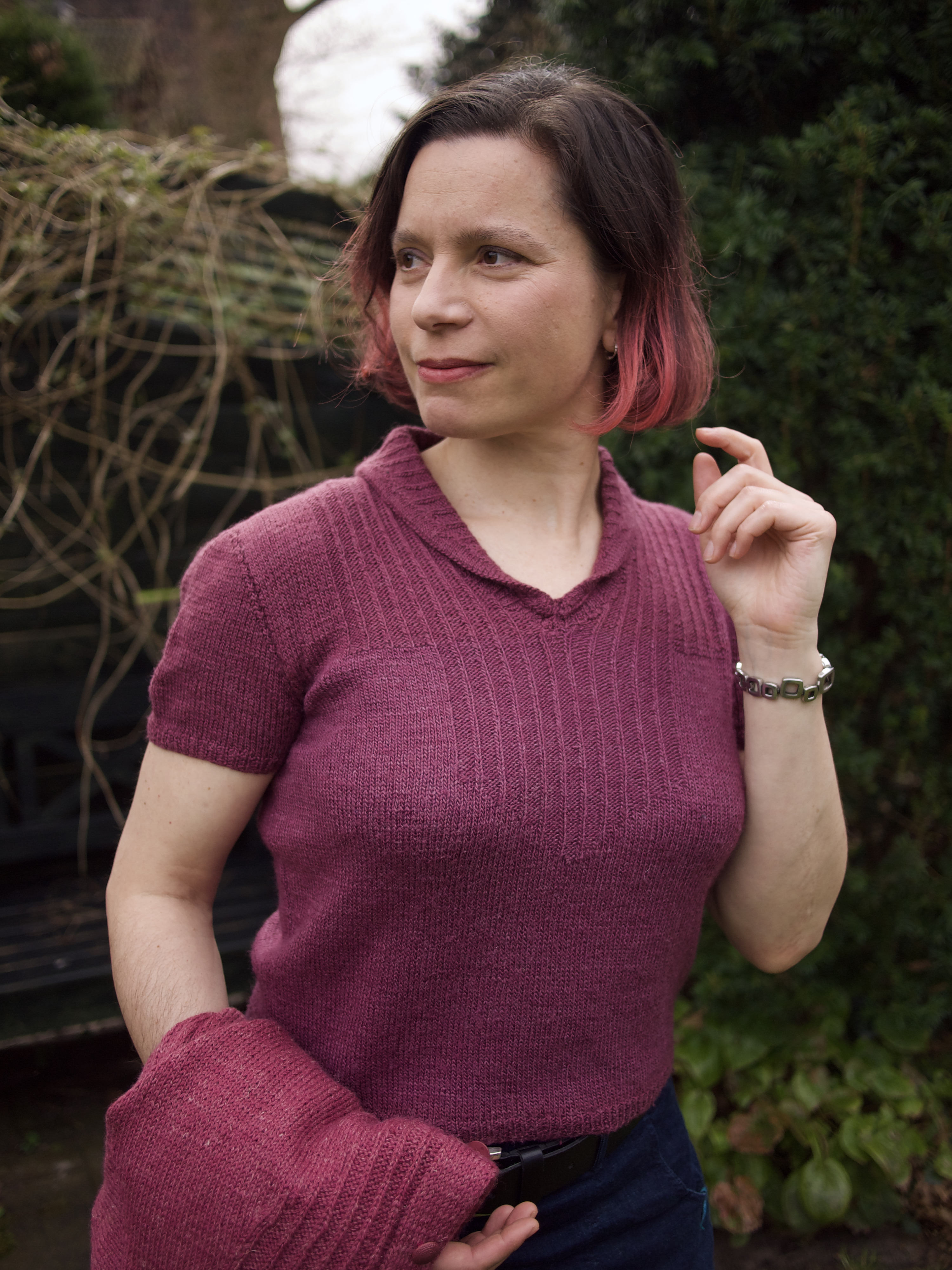
As always, we had fun re-creating the original poses from the magazine.

In the “normally posed” photos, neither I nor the photographer noticed that the collar of the jumper was sticking up. Normally, it overlaps the non-collared cardigan elegantly, as in the other photos. We’ll try to take some more pictures in the next few days if it ever stops raining.
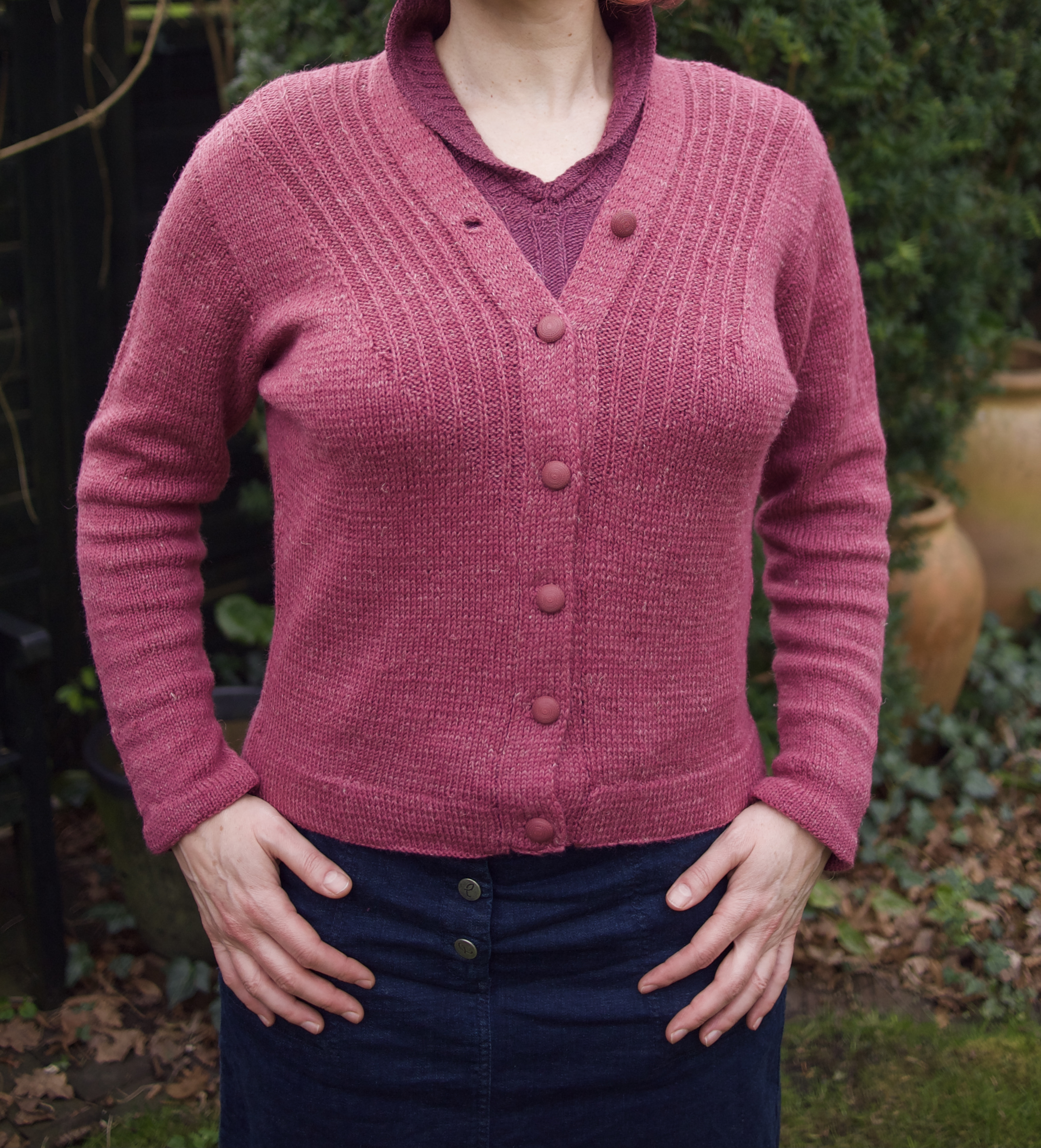
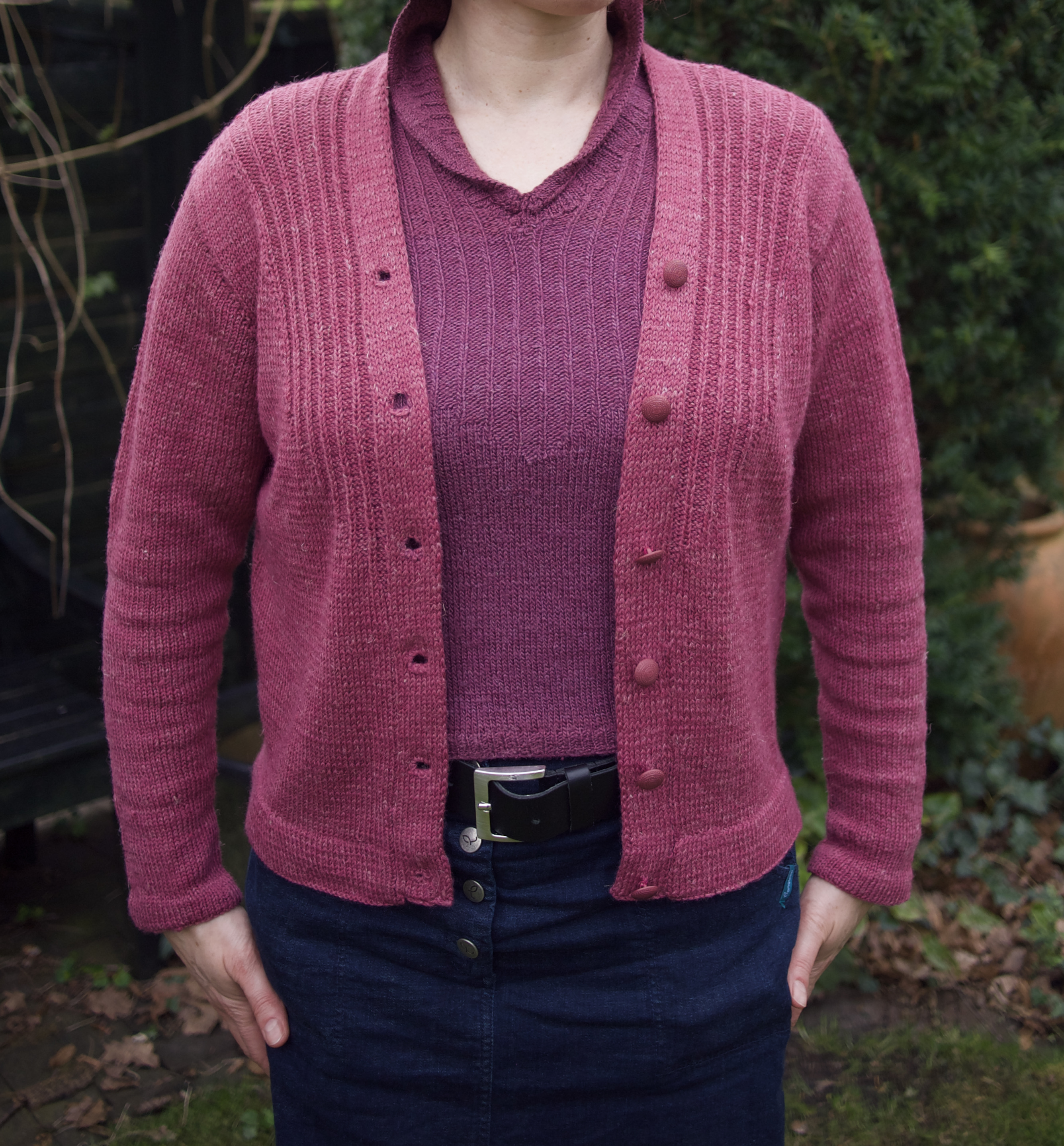
Really happy with this twin set and I’m sure it will get a lot of use this spring. The combination of lightweight wool-silk and lightweight merino-linen makes both pieces very adaptable to changing temperatures, warming and cooling as needed. The pattern was easy and I would recommend it to anyone.

March 1966: Overview

“Knitting GLOWS with COLOUR and Needlework has Distinction for Spring 1966.” is the headline of the March 1966 issue of Stitchcraft, featuring a new yarn, Patons 101 Double Knitting Courtelle.

“Courtelle” was a synthetic fibre developed in the late 1950s by Courtaulds Ltd, a textile manufacturing company that expanded to include artificial silk (rayon/viscose) at the beginning of the 20th century and went on to produce many different types of artificial and synthetic fabrics, either cellulose-based (acetate, lyocell) or acrylic. Courtelle was an acrylic fibre, 100% synthetic, and featured in many different brands of hand-knitting wool around this time, such as Chadwick’s, Bairnswear (the company was bought by Courtaulds in 1953), Emu or Sirdar in the UK, Sofil, Laines du Pingouin or Georges Picauld in France, Austermann in Germany, Elle, Fiesta or Saprotex in South Africa, Phentex in Canada, and so on. As Patience Horne writes in this month’s issue of Stitchcraft, it was “easy and smooth to knit” (didn’t tangle), “very economical”, and “washes and wears wonderfully” (didn’t shrink or fade). She also claims it was “lovely warm” (pretty sure one sweated in it quite awfully) and “light as a feather” (it was not).

These days, of course we know that synthetic fibres pollute the environment quite terribly in the course of manufacturing, are non-biodegradable and generally not recyclable, and that washing them releases microplastics into wastewater, the long-term effects of which are not wholly known at this point, but certainly not good for human or animal life. Here, for example, is just one very recent and unsettling article about a study published in the journal Toxicological Sciences. To be fair, most of the microplastics found in the study were polyethelene or PVC, which are more commonly used in plastic bags and objects than in textiles, but nylon, used heavily in textiles as well as in other things, was also high on the list.

What to do? I try to avoid buying new synthetic yarn whenever possible. It is not always possible, since many brands and types of wool combine natural fibres with nylon or polyamide. The vintage garments in my closet get worn and used and repaired, washing only as necessary, since the worst thing one can do with plastic is throw it away (doesn’t decompose, can release toxins into air or water if buried or incinerated). One good thing about 1960s and 70s synthetic fabric is that it is virtually indestructible. The dresses and blouses that I inherited from my grandmother or bought in secondhand shops look as new now as they did fifty or sixty years ago, and will presumably keep their bright colour and shape long after whatever environmental/nuclear/zombie or other apocalypse has destroyed humanity. (Maybe the giant radioactive cockroaches will enjoy wearing them.)

Anyway, enough soapboxing and doom. I’m sure you would all rather read about what readers in 1966 could make from this wonderful, evil new yarn! This issue uses it for a “fashion set of 3 garments”: the twisted-rib-and-eyelet pullover on the cover, a “casual dress” in a different type of twisted-stitch, and a sideways-knit pullover for men. All three feature bold and brilliant colours, a hallmark of early acrylic fabrics and in keeping with the bright, fun vibe of a mid-60s spring.

Twisted, textured and lacy pattern stitches show up in the other garments as well, like this update on the “granny” jumper featuring narrow just-above-the-elbow sleeves and a longline body with no extra ribbing or hem treatment, or the tunic-dress with lacy front panel and hem decoration for a little girl.

“Colour for Spring” shows up in a deep gold sweater suit with a chevron pattern made entirely of knit and purl stitches, a short-sleeved jumper in harlequin diamond pattern or a cute stranded hem decoration on a toddler’s “buster suit”. The ever-expanding use of colour photography really makes a difference here — in black and white, the designs don’t stand out, but artfully photographed with matching or contrasting background drops, they really pop.

For those not wishing to follow the pattern and colour trends, there’s a three-piece pullover, slipover and cardigan set for men in smooth beige crepe or brown bouclet, and a “country classic” high-buttoned, stocking-stitch cardigan in DK weight Fiona.

What about that “Needlework with Distinction”? Old-fashioned themes and designs make a comeback this month. There’s an impressive tapestry firescreen and rug with a pattern of early musical instruments guaranteed to “give an air of dignity to your sitting room on those occasions when you have more formal entertaining to do.” Impress your formal guests even more by hanging a homemade tapestry picture of Windsor Castle on your wall! Churchgoers can make a kneeler and prayer-book cover in tapestry, with a floral theme suitable for an Easter service. Spring flowers feature in the Victorian-inspired ribbon garland embroidery for a tablecloth as well, or the simple catkin sprays to be worked on a cushion, tray cloth or placemat.

Last but not least, we have a new children’s serial comic, in which Mark the mouse and Eustace the elephant set out in search of buns. Yum yum.

I love this issue, but strangely, none of the projects speak to me. I will use this month to finish a WIP that has been lying around for ever, namely the cardigan to this “softly fitting” jumper from the January 1962 issue, four years ago. I just need to finish the sleeves and sew some seams, so it should be finished soon.