February 1966: Flair for Tots

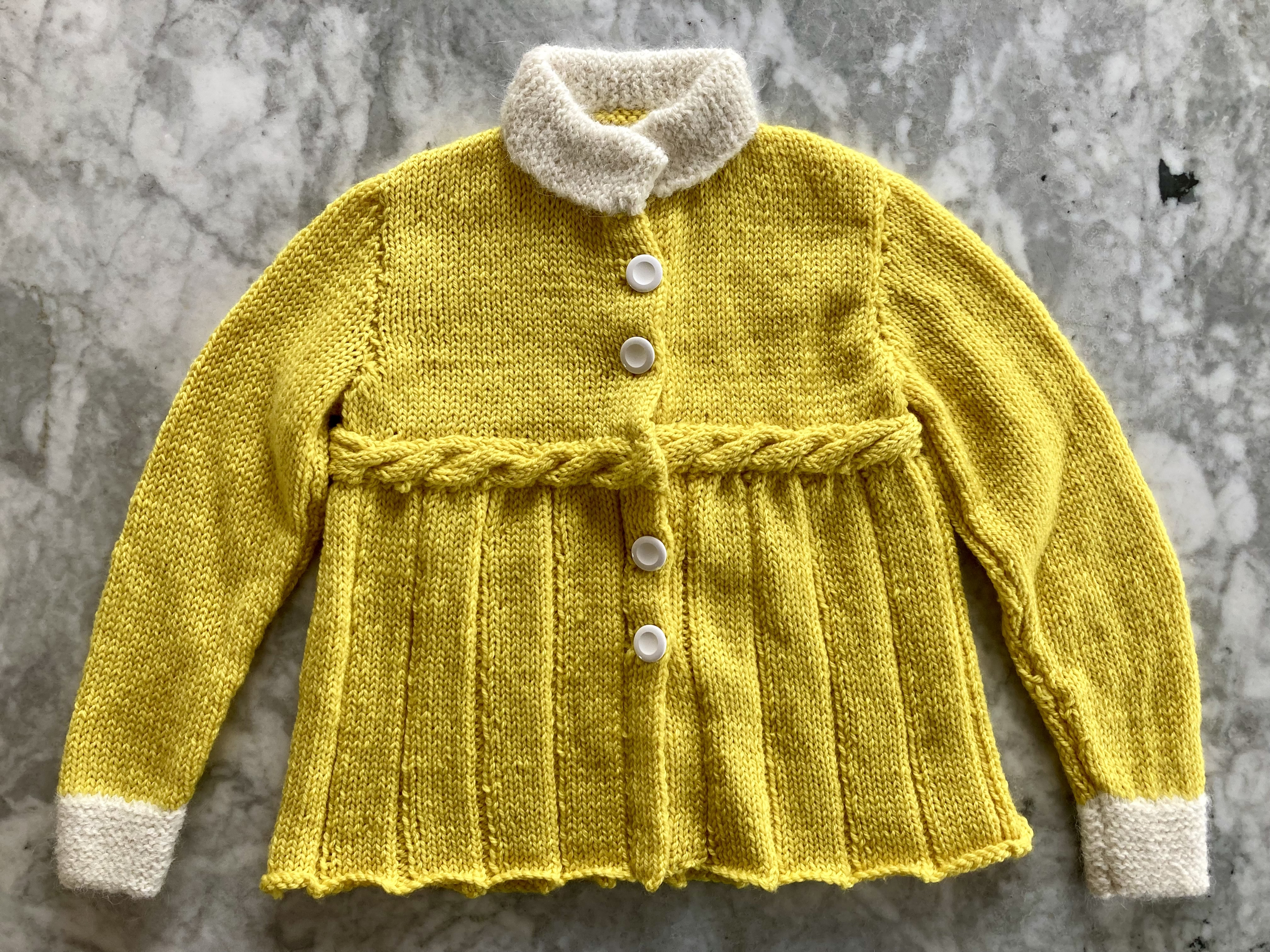
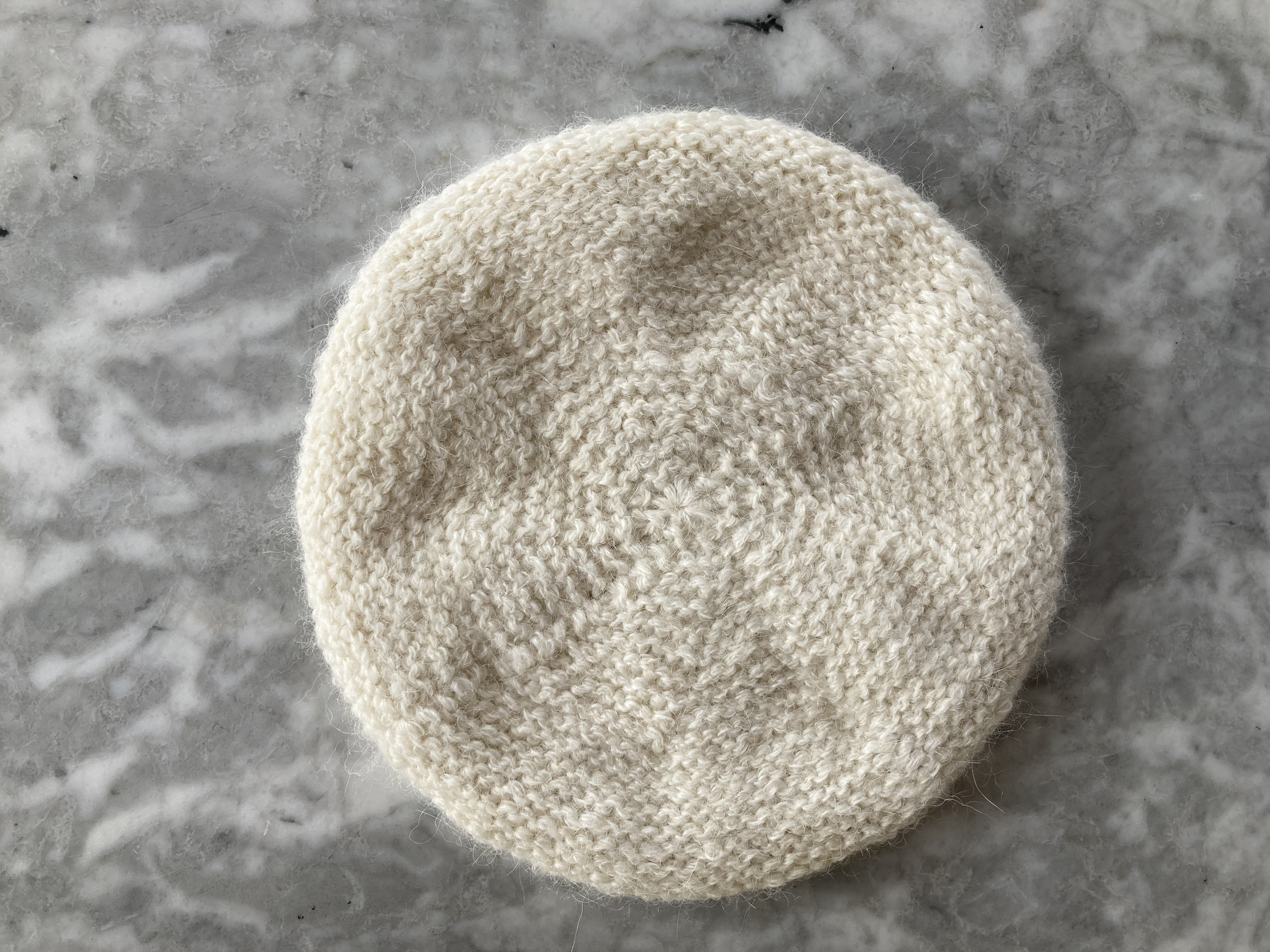
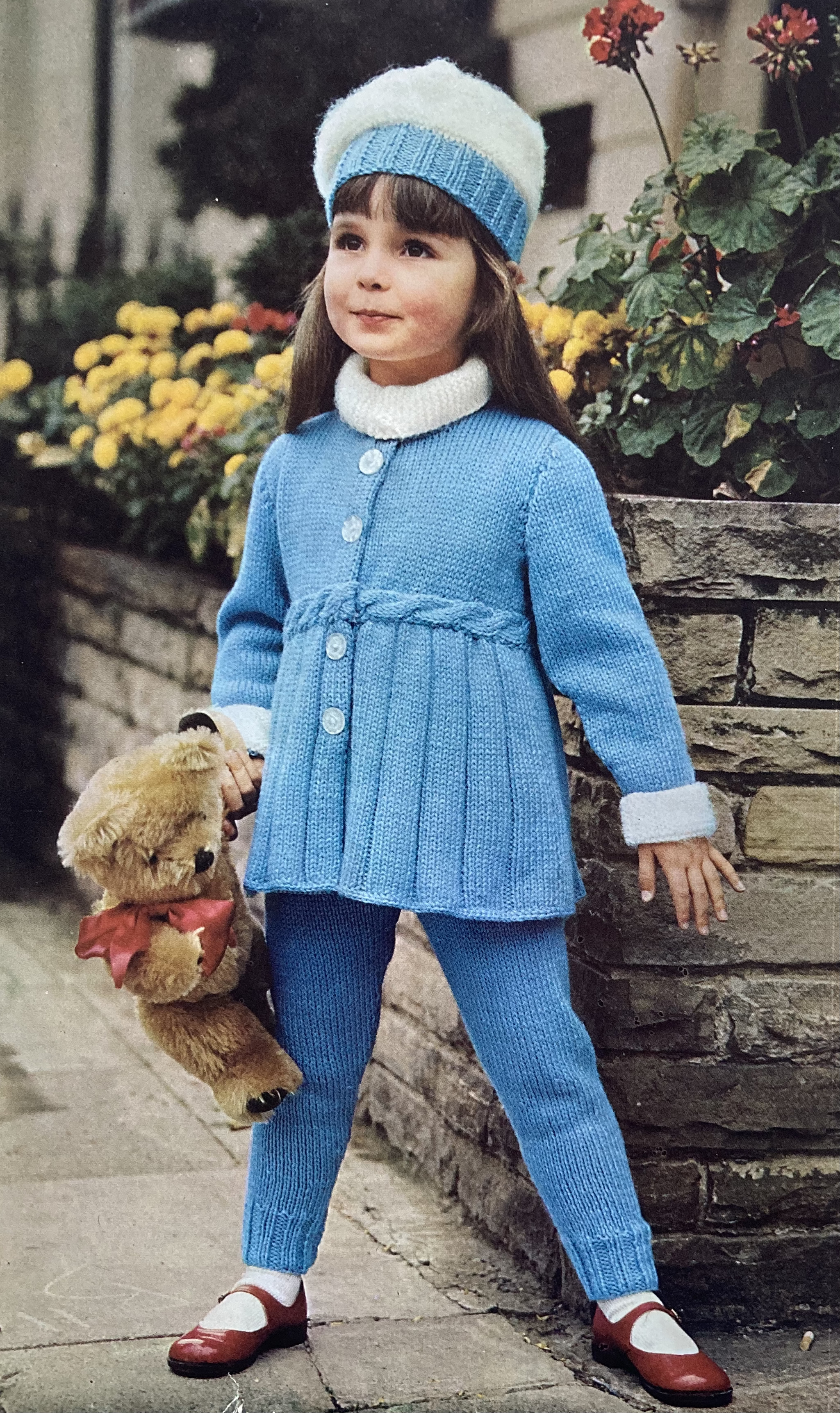
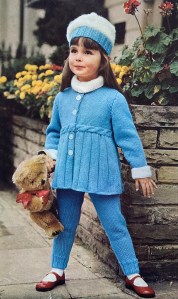
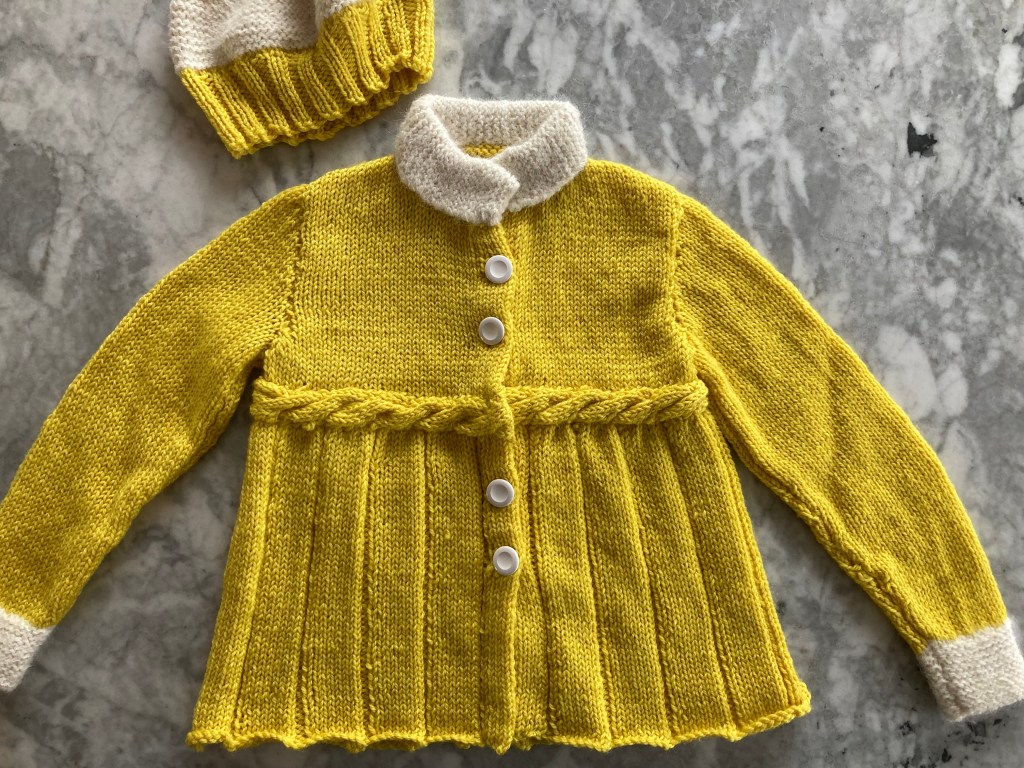
My February project (So glad 2024 is a leap year! It gave me one more day to get this blog post in on time) was this wonderful “Flair for Tots” set for a little girl. I made the coat-jacket and hat, but not the leggings.

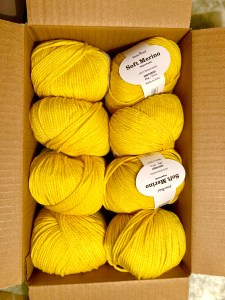
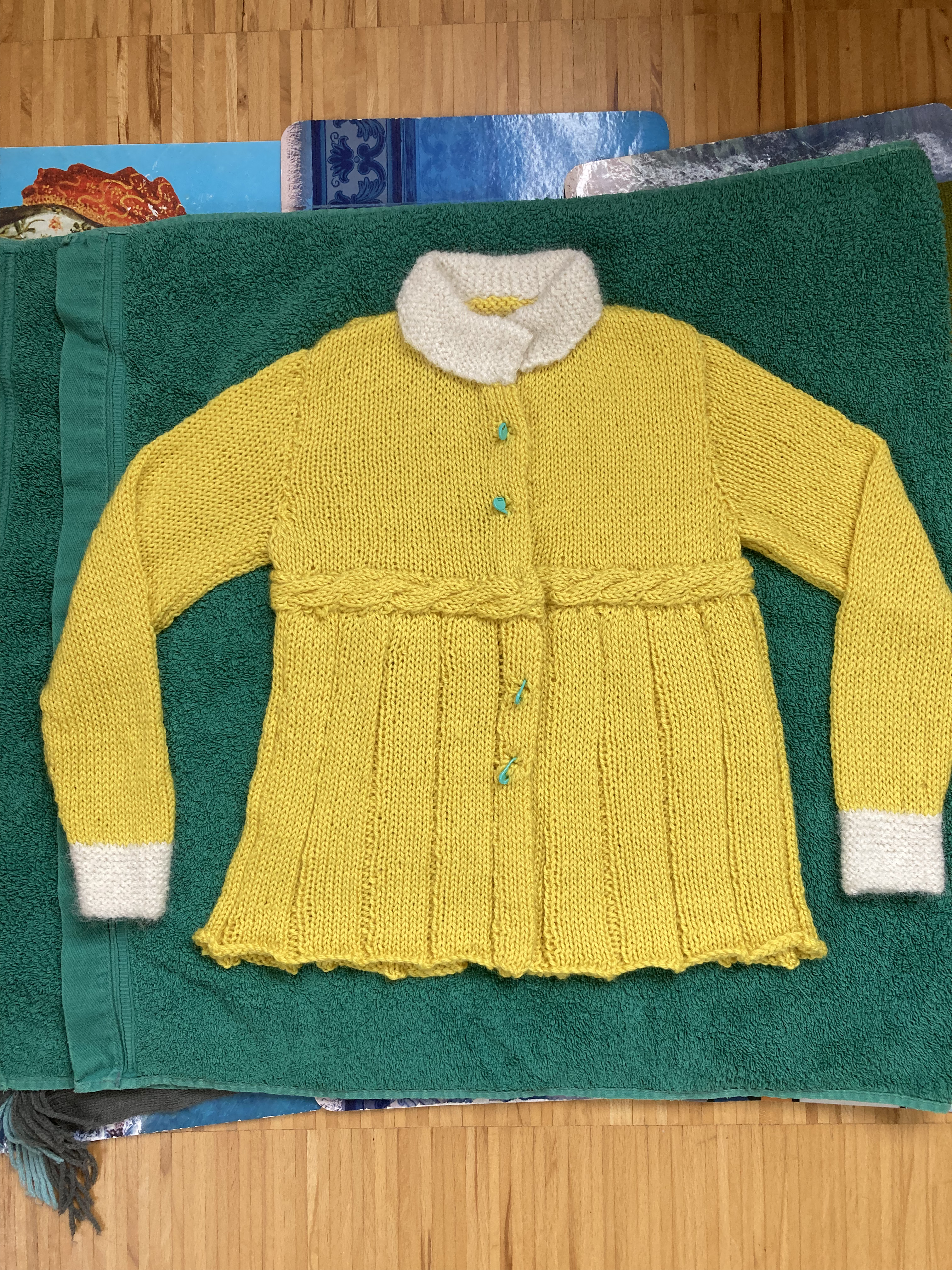
The set certainly has plenty of flair, and “Flair” is also the name of the slightly heavier-than-DK wool-synthetic mix yarn that it is written for. I decided to use Soft Merino by Wolle Rödel, which is 100% wool, quite soft, and give me the correct tension of 19 stitches in 4 inches on 5 mm needles. The intended recipient (the daughter of a nice colleague, for whom I had already made both this “Practical coat” and this “Sunday Best Dress“) requested yellow and it looks like she was perfectly on trend — as soon as I bought the wool and started knitting, I started noticing how many people I saw in the course of a day were wearing a similar bright canary yellow.
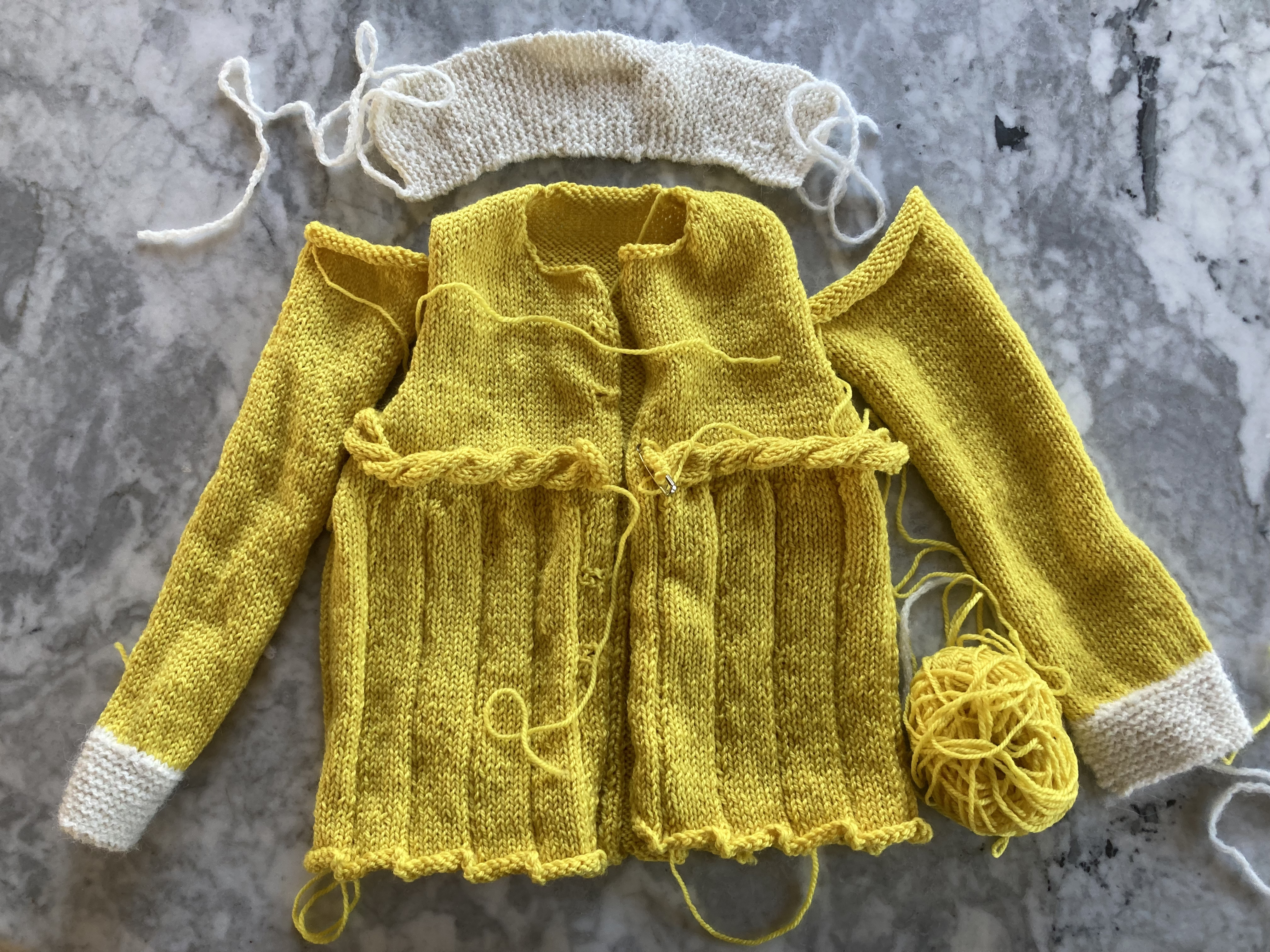
The jacket pattern starts at the hem with a k7, p1 flattened rib. I made the back and fronts in one piece to avoid seams. The pattern switches to stocking-stitch a couple of inches before the armhole openings to make room for the belt (a simple strip of 6-stitch cable knit separately and sewn on later). The front bands are knitted along with the fronts and are exactly the width of one flattened rib, doubled over with a slip stitch fold line and double buttonholes.

In the pattern, the white wool trim at the collar (made separately and sewn on later) and cuffs is the same “Flair” wool used to make the rest of the set, but fluffed up by brushing with a teazle (aka teasel, teasle) brush. It’s a brush with metal tines for back-combing wool the same way you might tease your hair with a rat-tail comb, and with the same effect: it breaks and felts some of the fibres, creating a fluffy-blanket effect. Occasionally, there’s a pattern in an older Stitchcraft for brushed wool items (usually a baby blanket), and, there, readers are advised to send their finished knitting to a special service to get it brushed “for a very reasonable price.” By 1966, I guess anyone could buy a teazle brush and do their own brushing on the knitted trims.
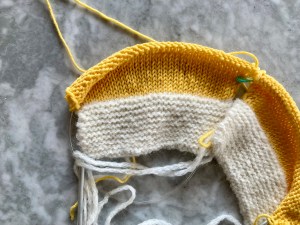
All well and good, but these days one can also just buy fluffy yarn, and I saved myself some time and trouble by doing that. The white contrast yarn is Luxury Alpaca by Rico Design, a 63% alpaca, 37% polyamide mix that confusingly has both the terms “Superfine” and “Aran” in its name and knits up, like the Soft Merino, a bit bigger than DK on 4.5 or 5 mm needles.

The belt and collar are knitted separately and sewn on. The collar has a nice sort of crescent shape made with short rows. It is supposed to have double buttonholes to button up very high on the neck, but although I made the collar perfectly according to pattern and it fit fine on the jacket neck edge, the double buttonholes didn’t line up anywhere near each other. No worries — I don’t think any child would enjoy having something tightly buttoned around their neck, the collar stands up on its own anyway, and I didn’t even have to sew the buttonholes together, since the wool is so fluffy. Similarly, I saw no need to add a snap fastener to the neckline above the last button, as called for in the pattern, but I did add a snap fastener at the waist as indicated.
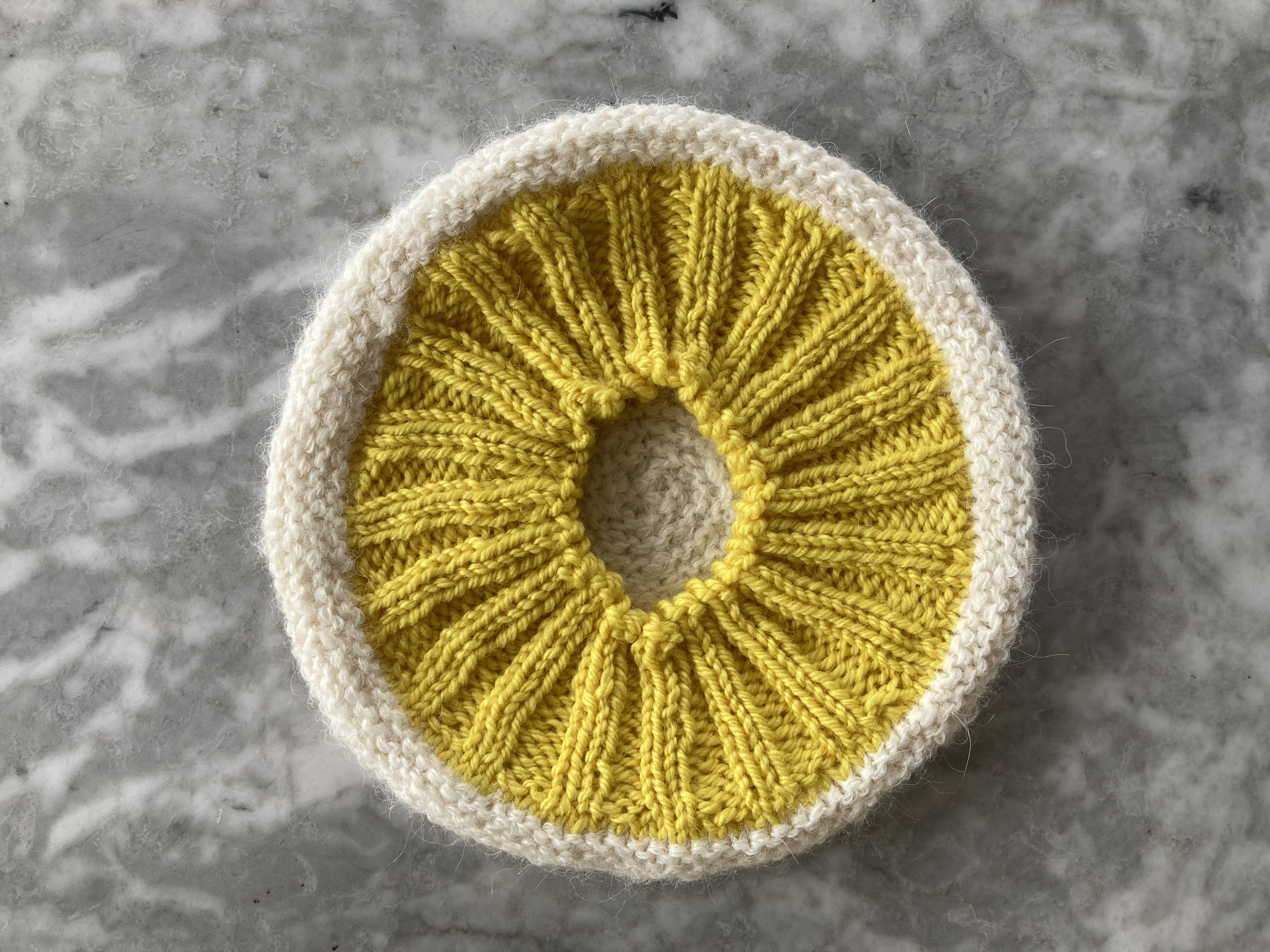
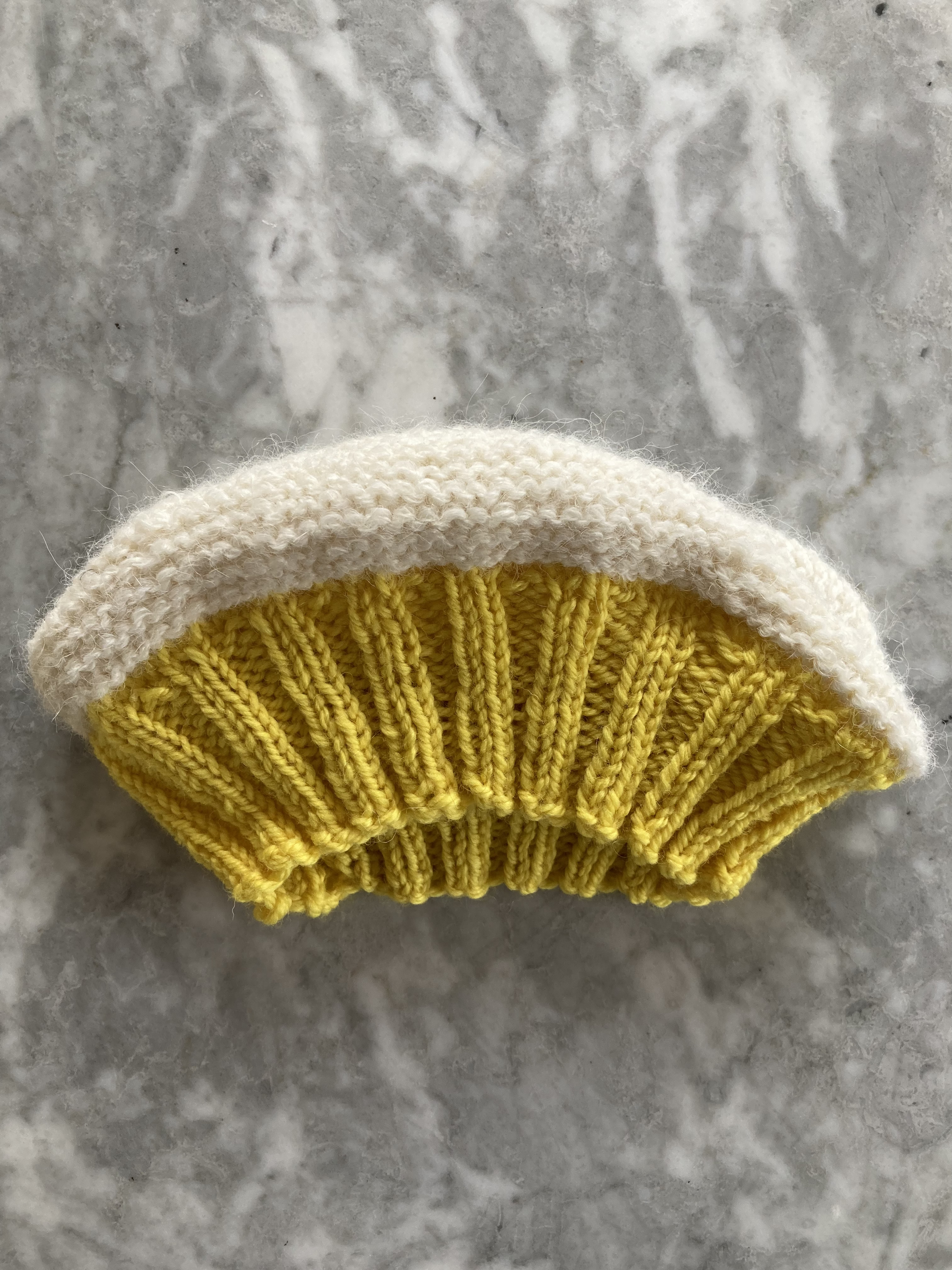
The hat is a simple modified beret, intended to be knit flat, but I made it in the round. The crown has a nice, easy decrease pattern: from 108 stitches, you k10, k2tog for 1 row (round), then 1 row straight, then k9, k2 tog, one row straight, then k8, k2tog and so on.
That’s it! I had a fun time knitting this set and was very glad to know someone to knit it for. I hope she likes it!
February 1966: Overview

“This is the time to look ahead and start knitting for the first Spring days,” writes “editress” Patience Horne in the header notes to the February 1966 issue of Stitchcraft. I get that feeling in February too. Of course, it is still the middle of winter and one may be drowning in snow or battling freezing rain or waiting out the long grey darkness, but every once in a while (like today), the sun will come out and I can imagine that Spring will arrive at some point. The fashions in this month’s issue are appropriately cheerful and fun, with a special emphasis on “Junior Fashion” for small or school-age children.

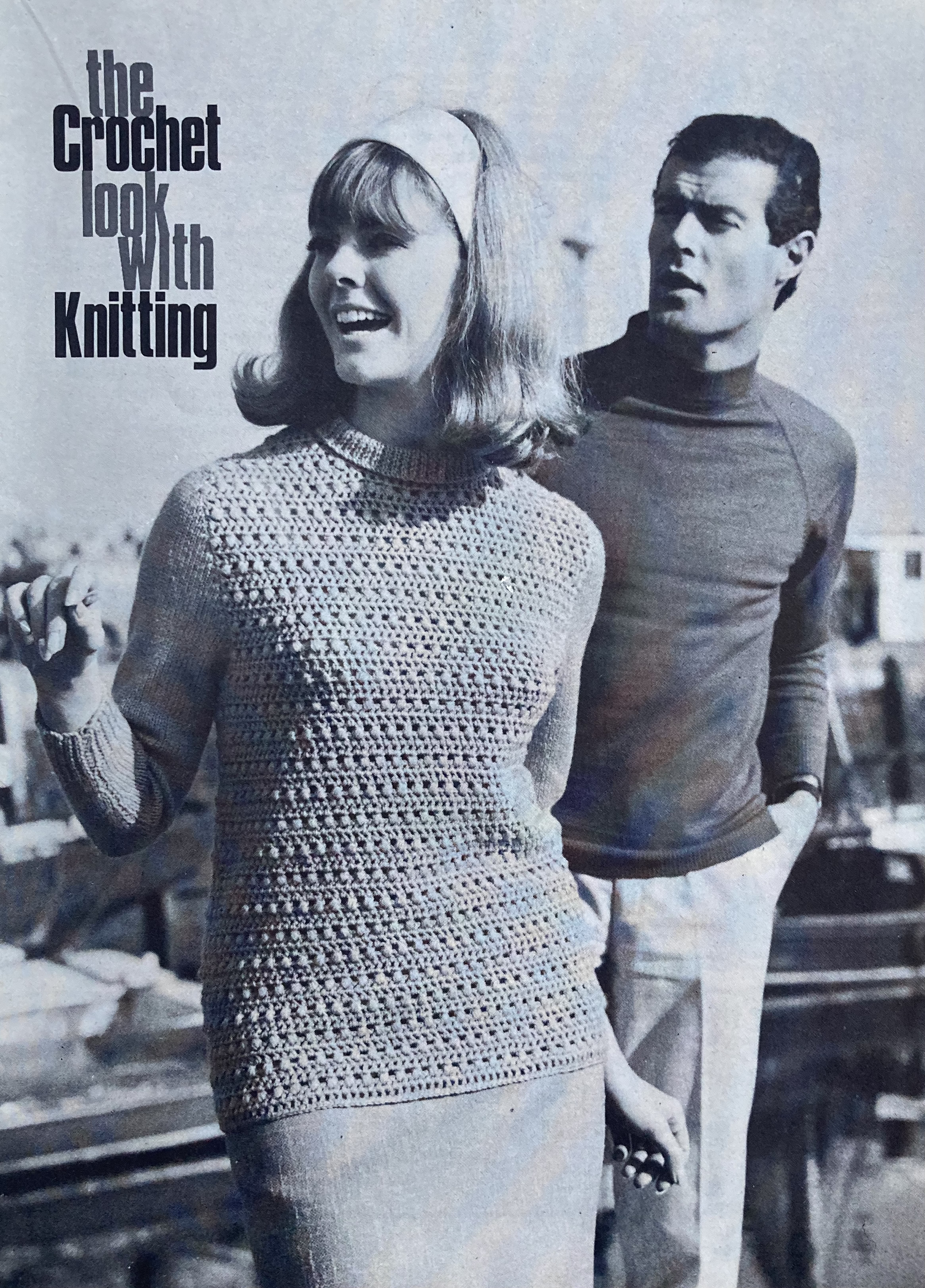
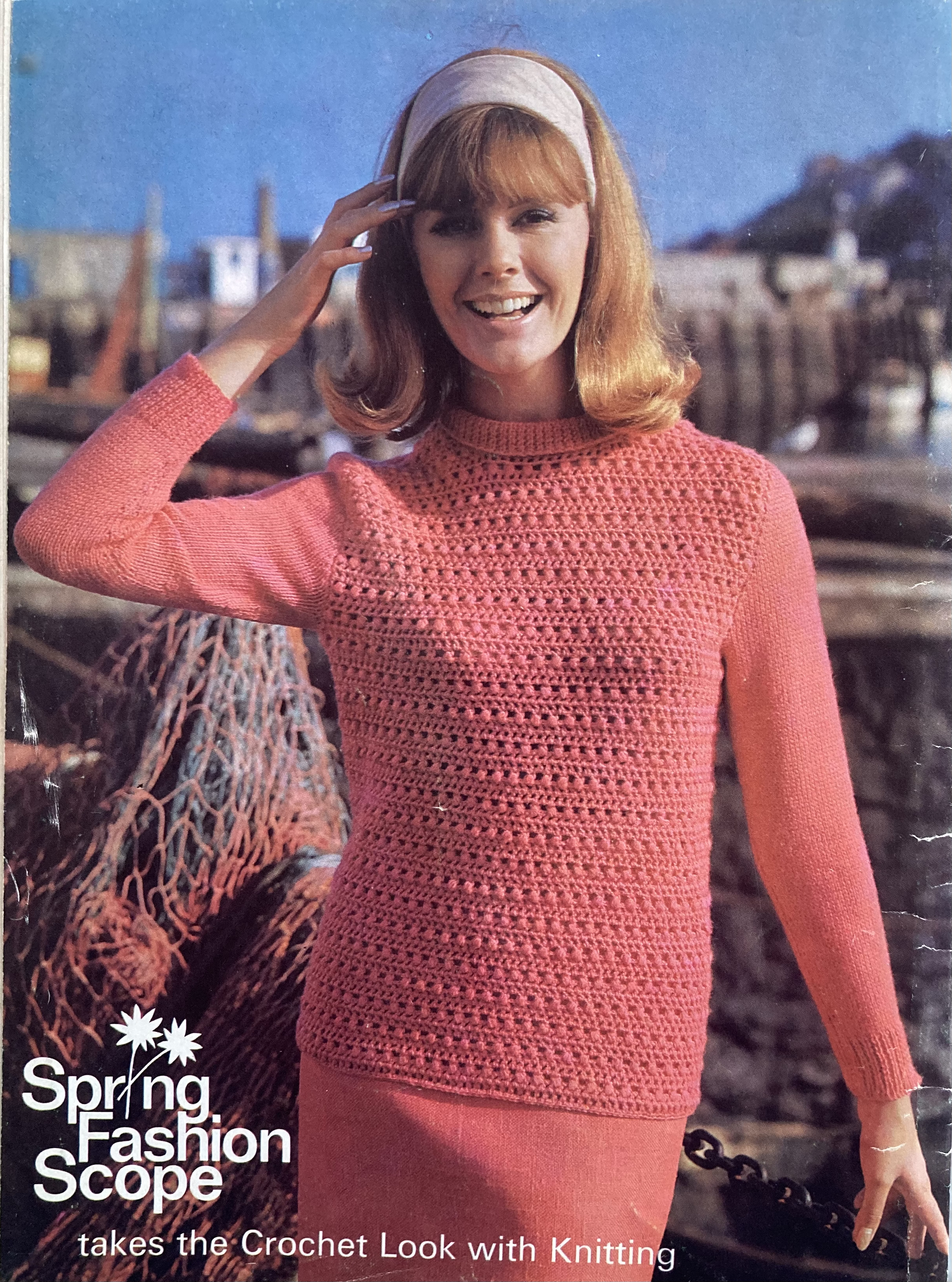
The cover ensemble brings back houndstooth, which never really goes out of fashion in the 60s, but was last seen in this form in the earlier years of the decade. It’s a clever choice for a skirt, as the fabric is fairly firm, preventing all too much sagging in the back. The set can be complemented by a wonderful pair of matching-pattern knee socks. Or you can achieve the lastest stitch-pattern trend, namely “the Crochet look with Knitting”, with a sweater that is… well, crocheted, for the most part. Only the sleeves are knitted, in plain stocking-stitch; back and front are crocheted in a bobble-treble pattern. The silhouette for both outfits is long and unshaped, but not baggy: the sweaters have set-in sleeves and high necklines and the skirt sits just above the knee.

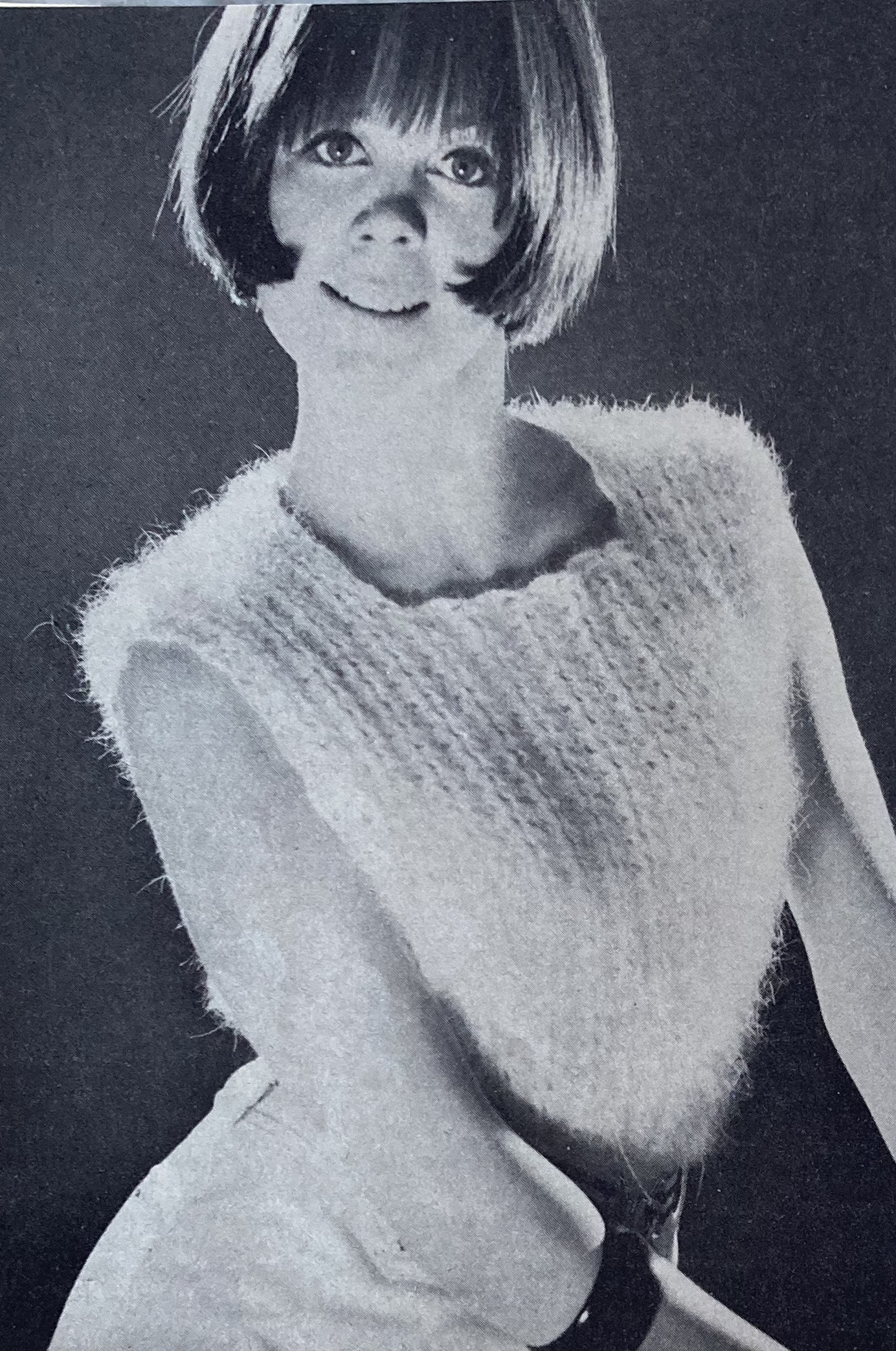
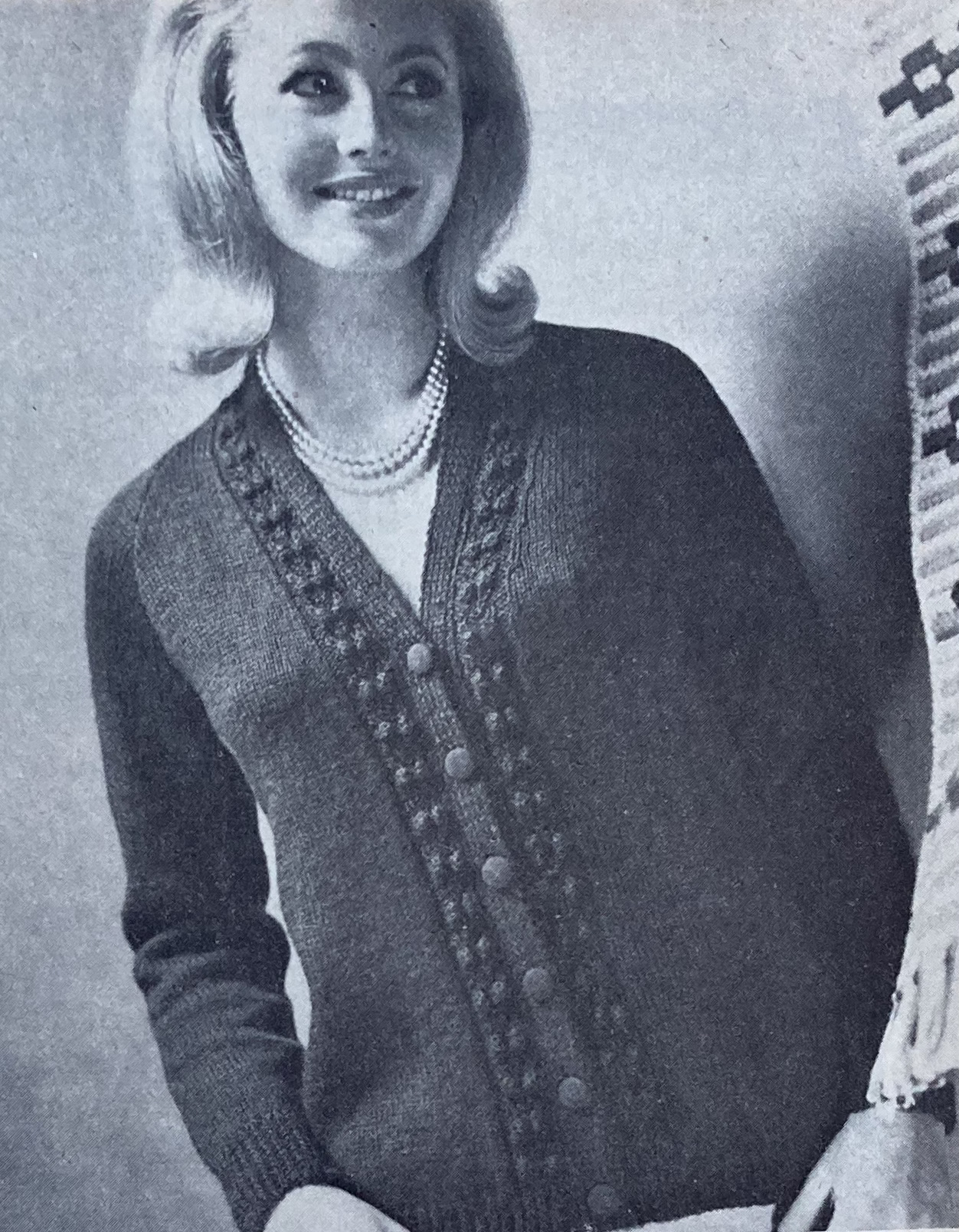
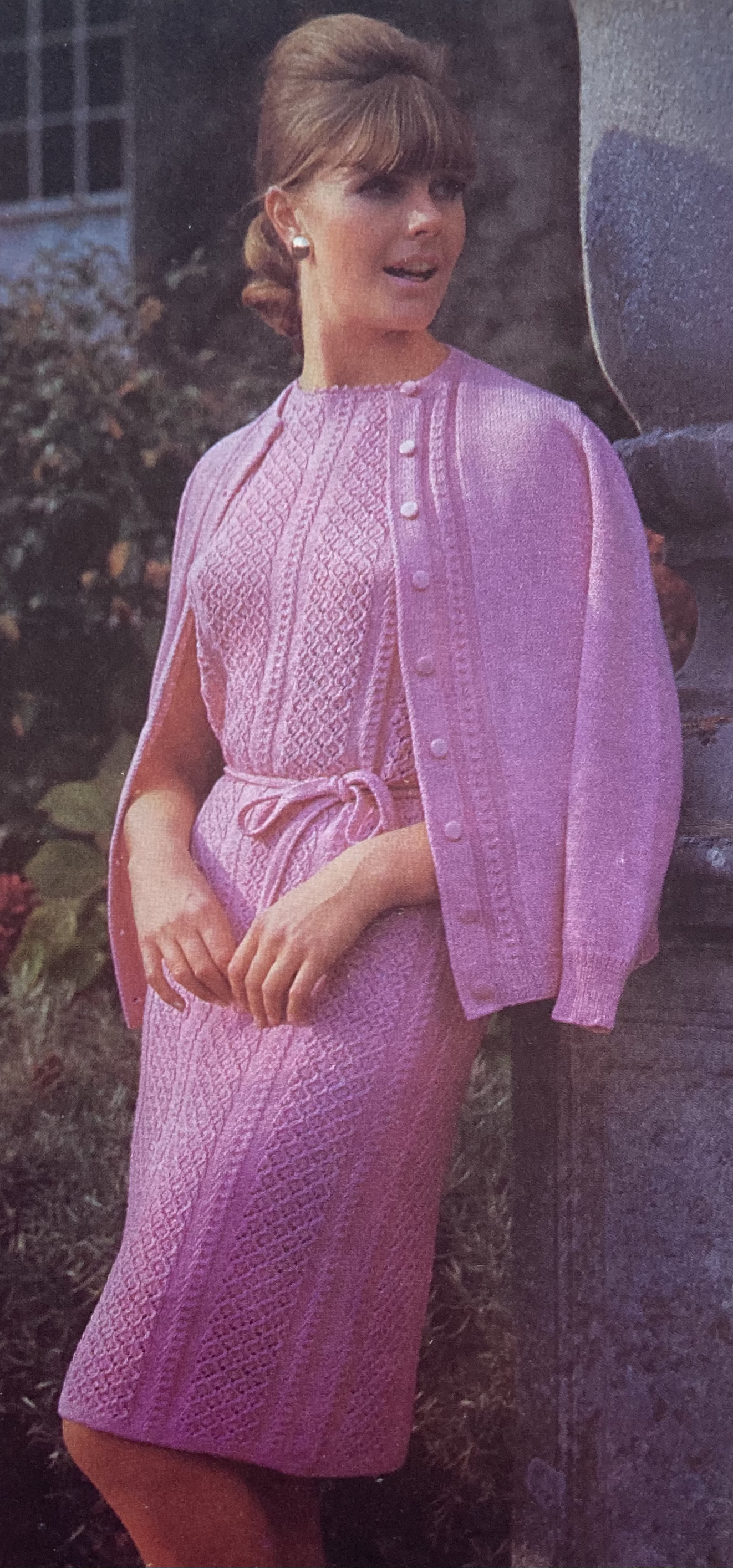
Fans of the knitted look with knitting can make a fluffy lace shell (what a terrible camera angle for the model’s nose), or a classic V-neck cardigan with bobble panels in larger sizes. With the exception of the angora-mohair shell, all are made in DK or slightly heavier wool — it is still winter, after all. Knitters looking ahead to the spring can make a fabulous lace-panel dress with matching cardigan in “Paris Pink” crepe 4-ply. The cardigan has a similar design to the large-size cardigan, just with a narrower bobble band on the fronts and a high-buttoning neck.

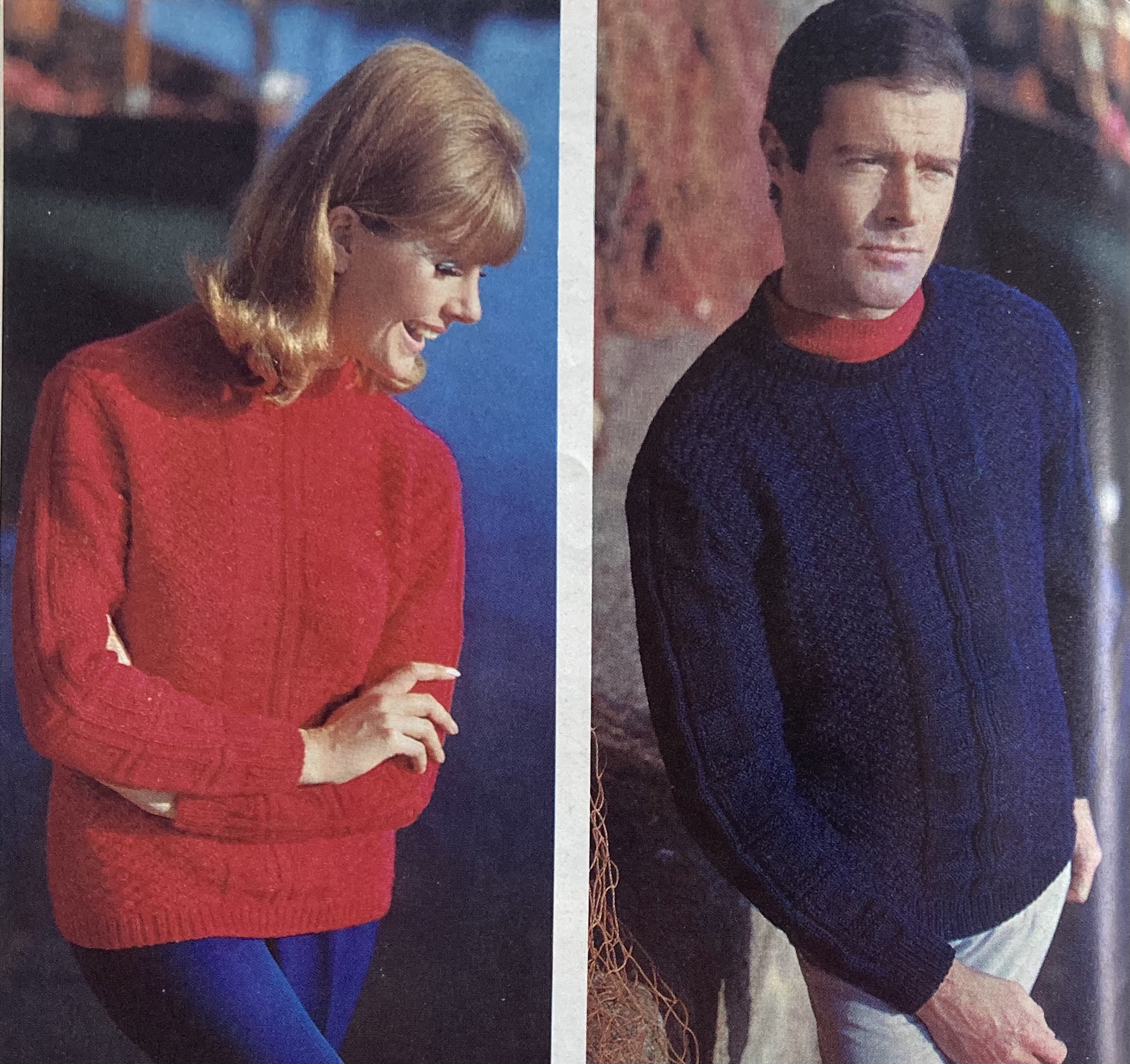
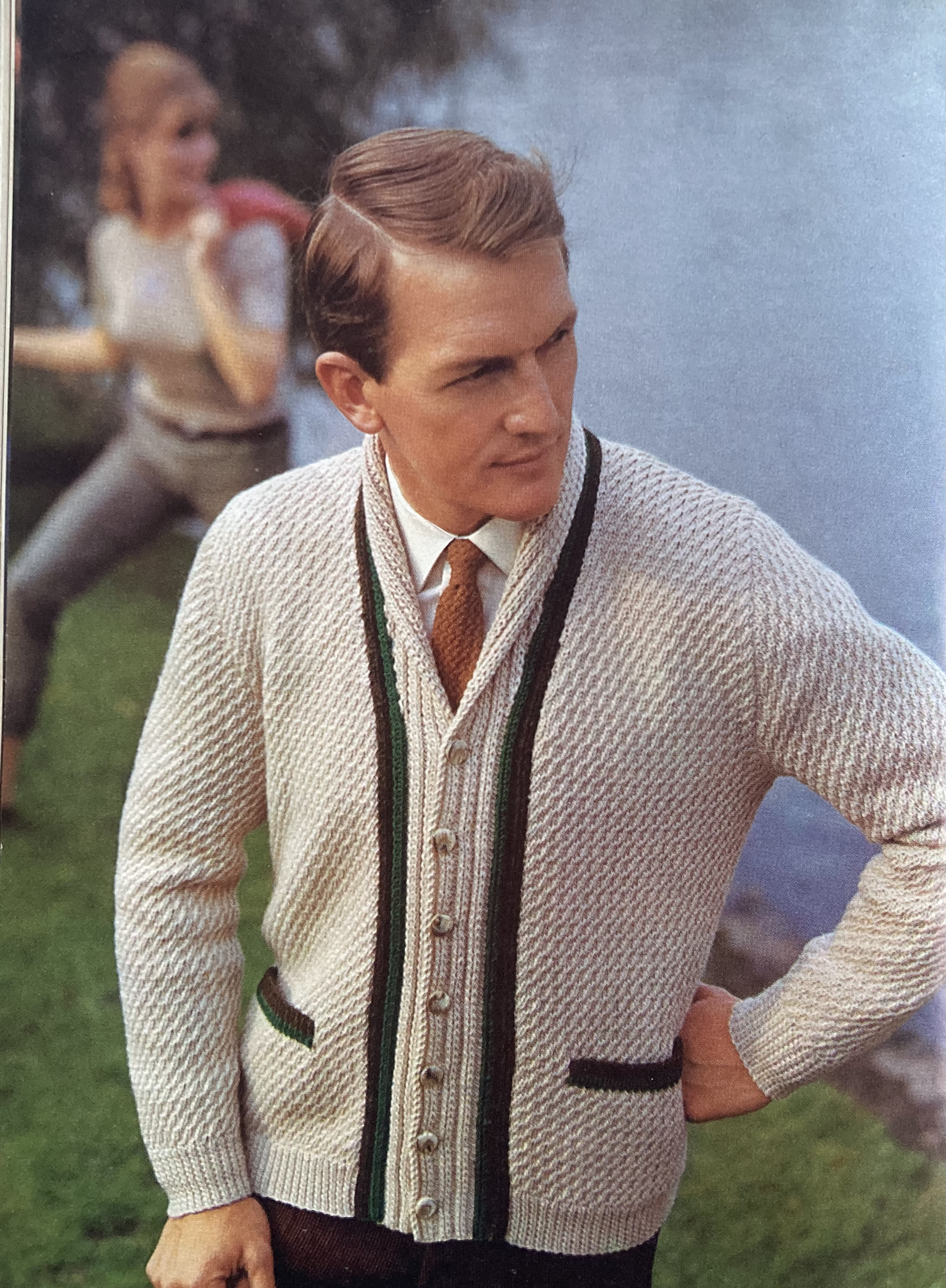
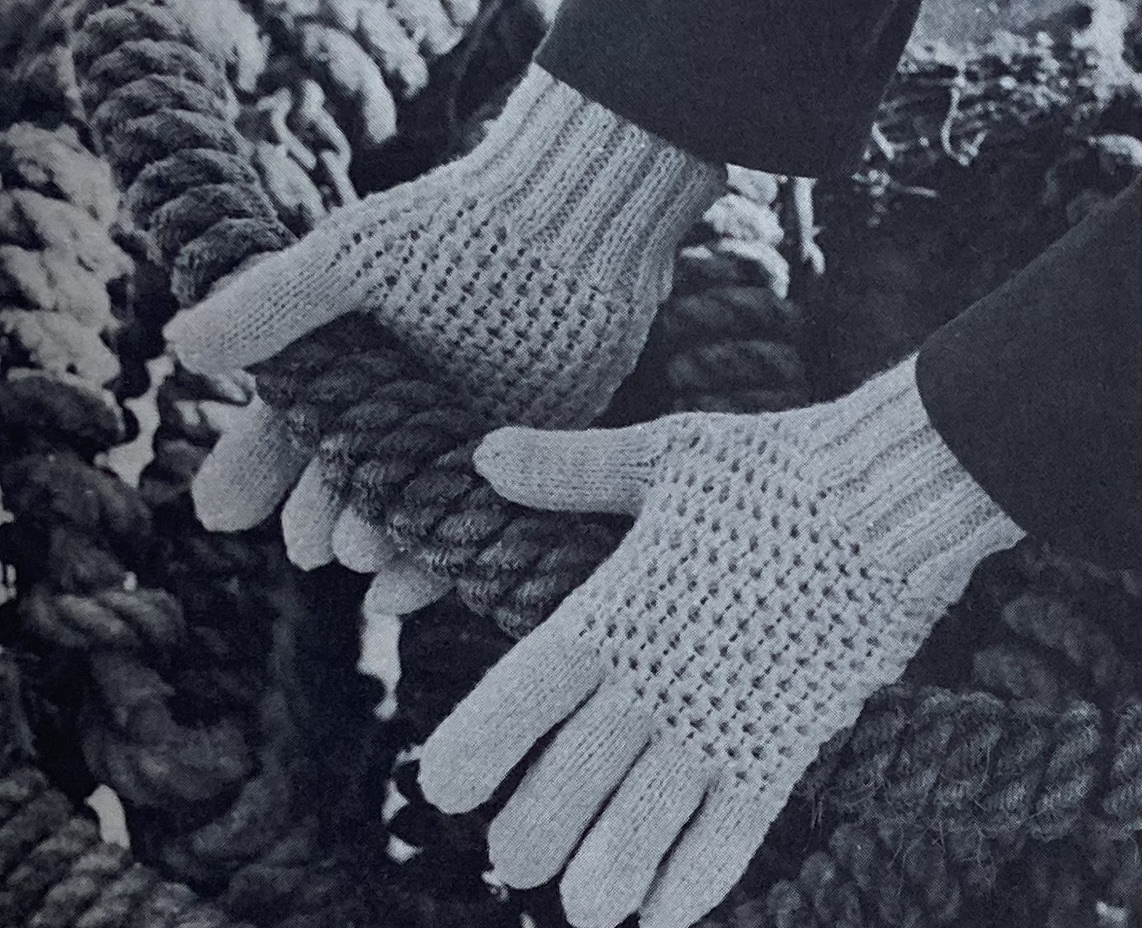
For men, there’s a “sailer with the traditional look” in guernsey style. Instructions are given for “a girl’s a size and a man’s size” (34-36 or 39-41 inch chest) for the partner-look. (Of course, when they say “girl”, they mean a grown woman who doesn’t mind being linguistically infantilised.) The guernsey is nice! There’s a jacket in thick “Capstan” wool for men, as well, which also gives a sort of sailor-y vibe. The interesting stitch pattern is made with twisted stitches set diagonally. Twisted stitches also feature in the men’s “Country Gloves” pattern, where I imagine the stitch pattern makes the gloves particularly warm and hard-wearing.

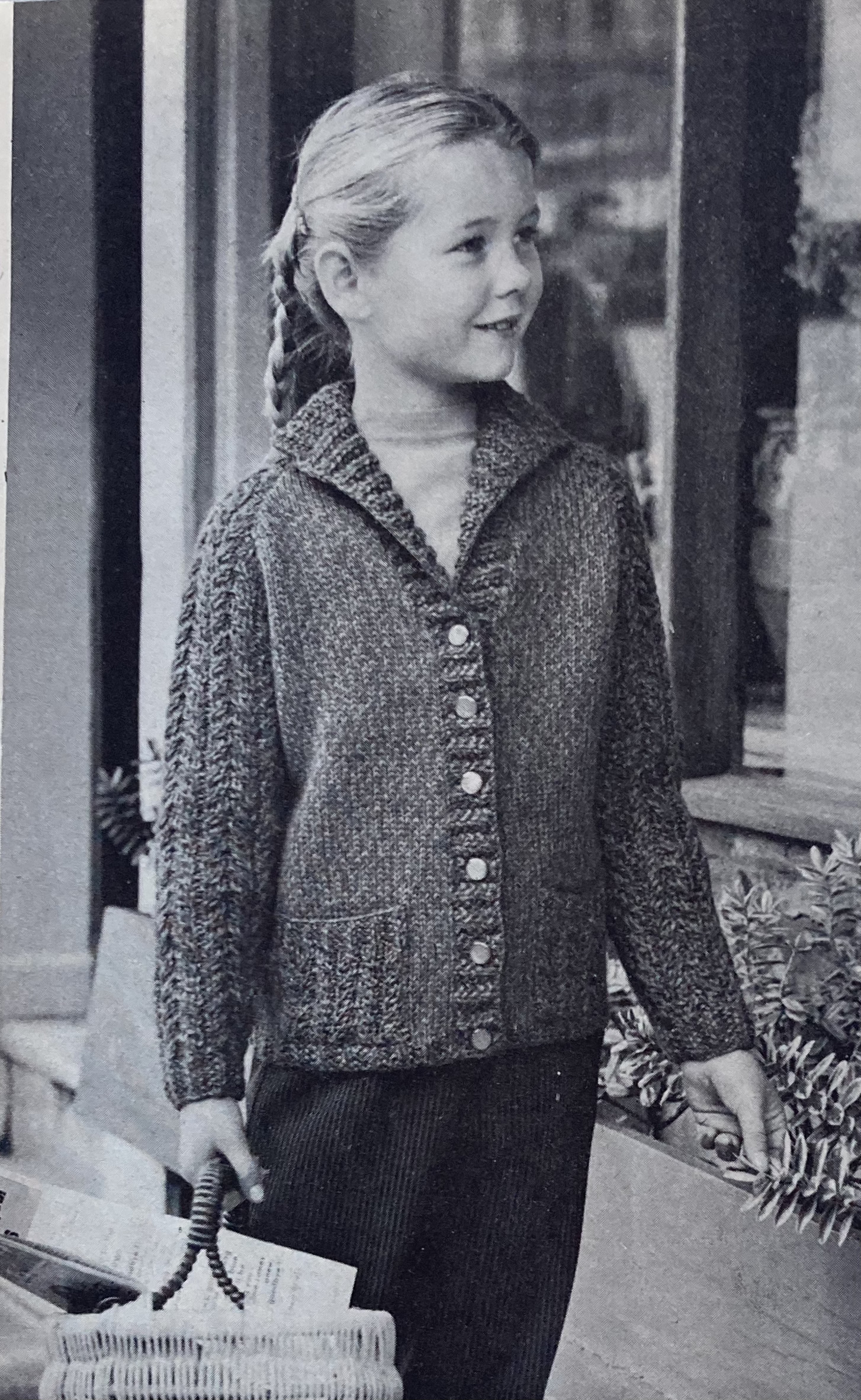
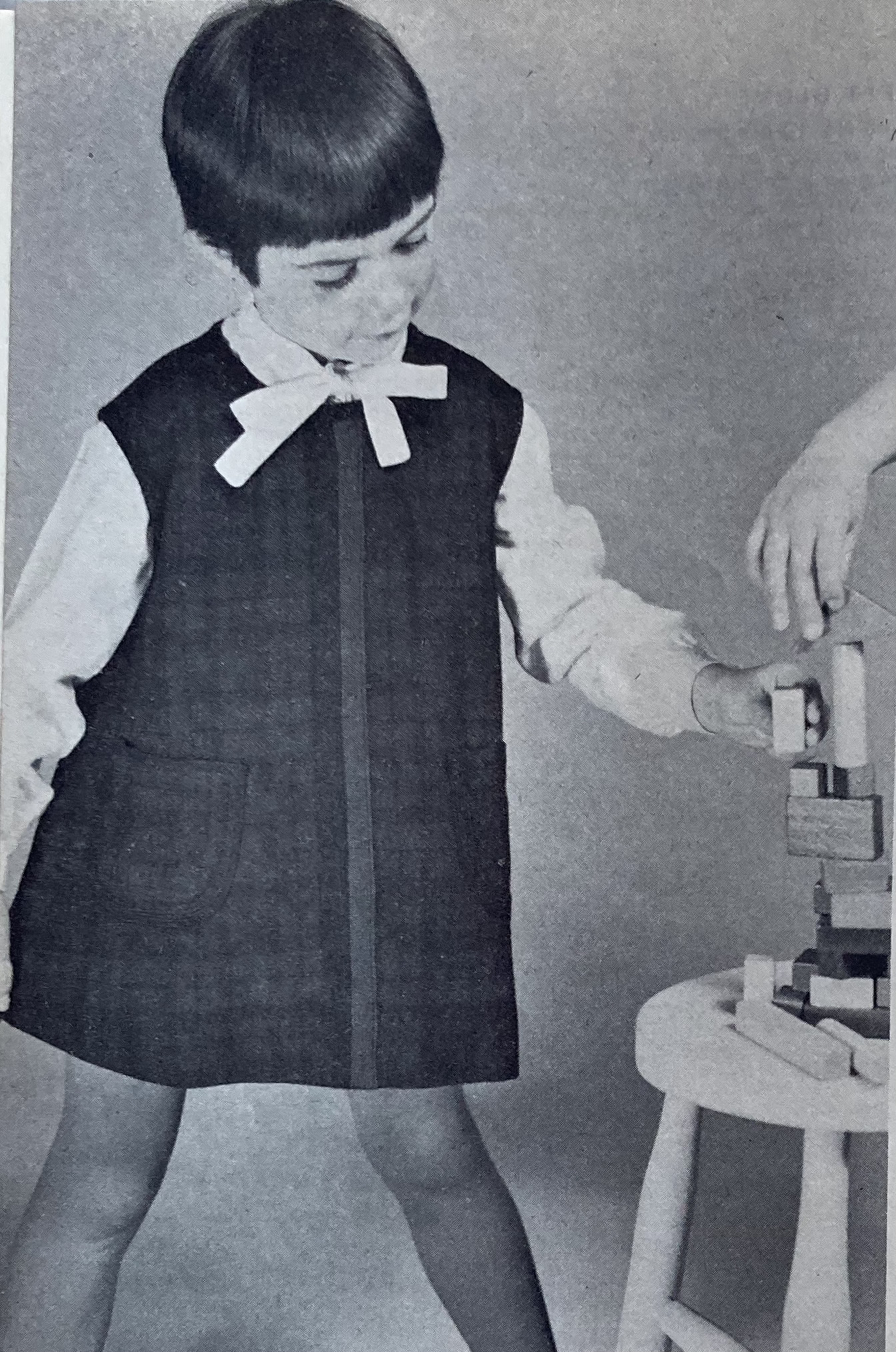
In addition to all that, this issue has some wonderful “Junior Fashion” children’s patterns. There’s a nice thick blazer for an 8-10 year old girl and a knitted shirt with knitted tie to “make a small boy feel very fashion conscious.” If you say so, Patience Horne! There’s a rare sewing pattern, too, for a simple pinafore dress. Best of all is the coat, leggings and hat set for a 3- or 4-year old. The white collar, cuffs and hat are knitted in the same wool as the rest — Shetland-mix “Fiona” — and then brushed with a teasle brush. Teasle or teasel brushes are used to felt and fluff knitted fabric and were often employed in home knitting at the time to give knitted blankets that furry “blanket” texture. Some earlier patterns in Stitchcraft say you should take the finished item in to the haberdashery store or send it away by post to get it professionally brushed; this one assumes that you can do the brushing yourself.

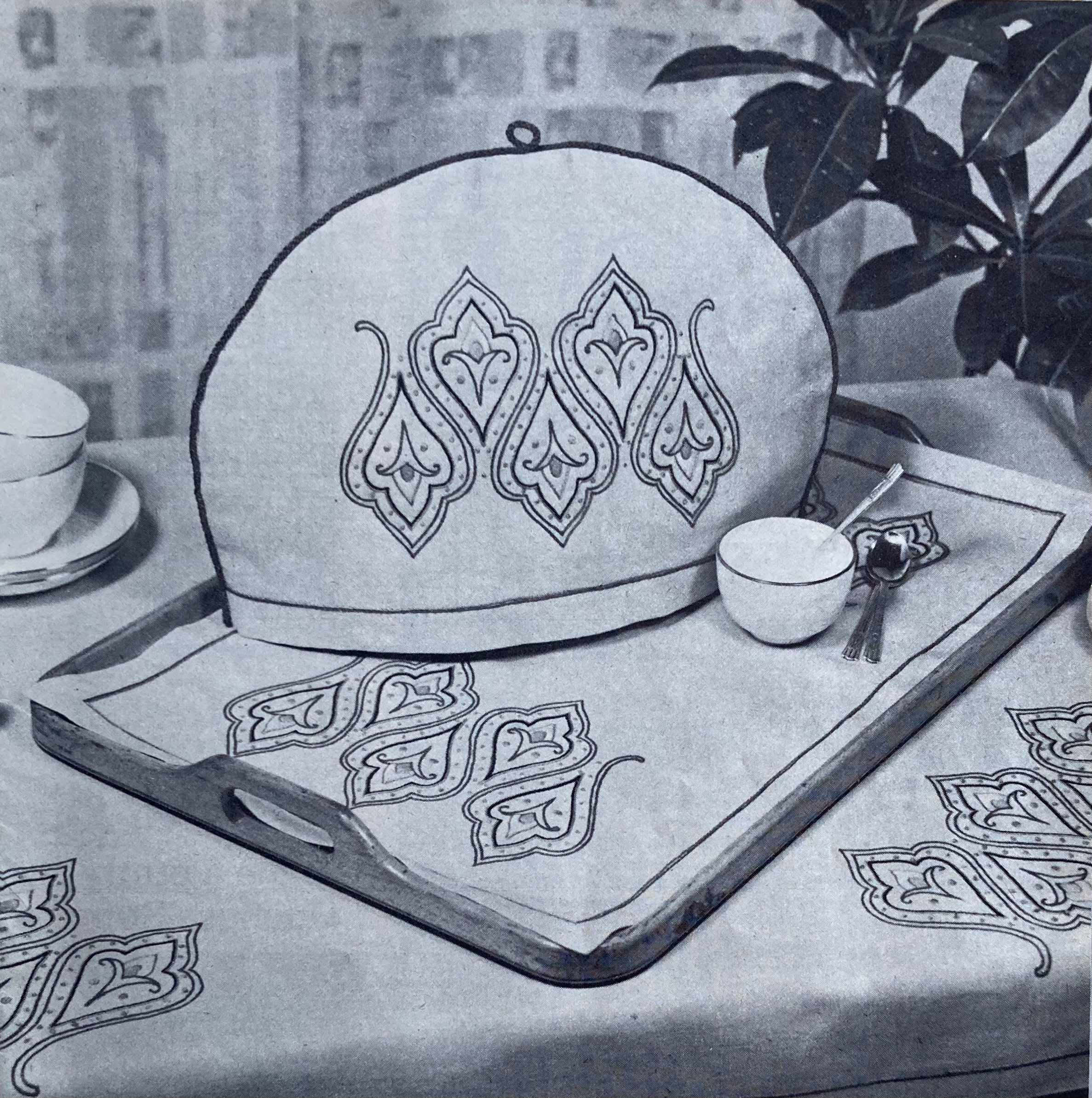
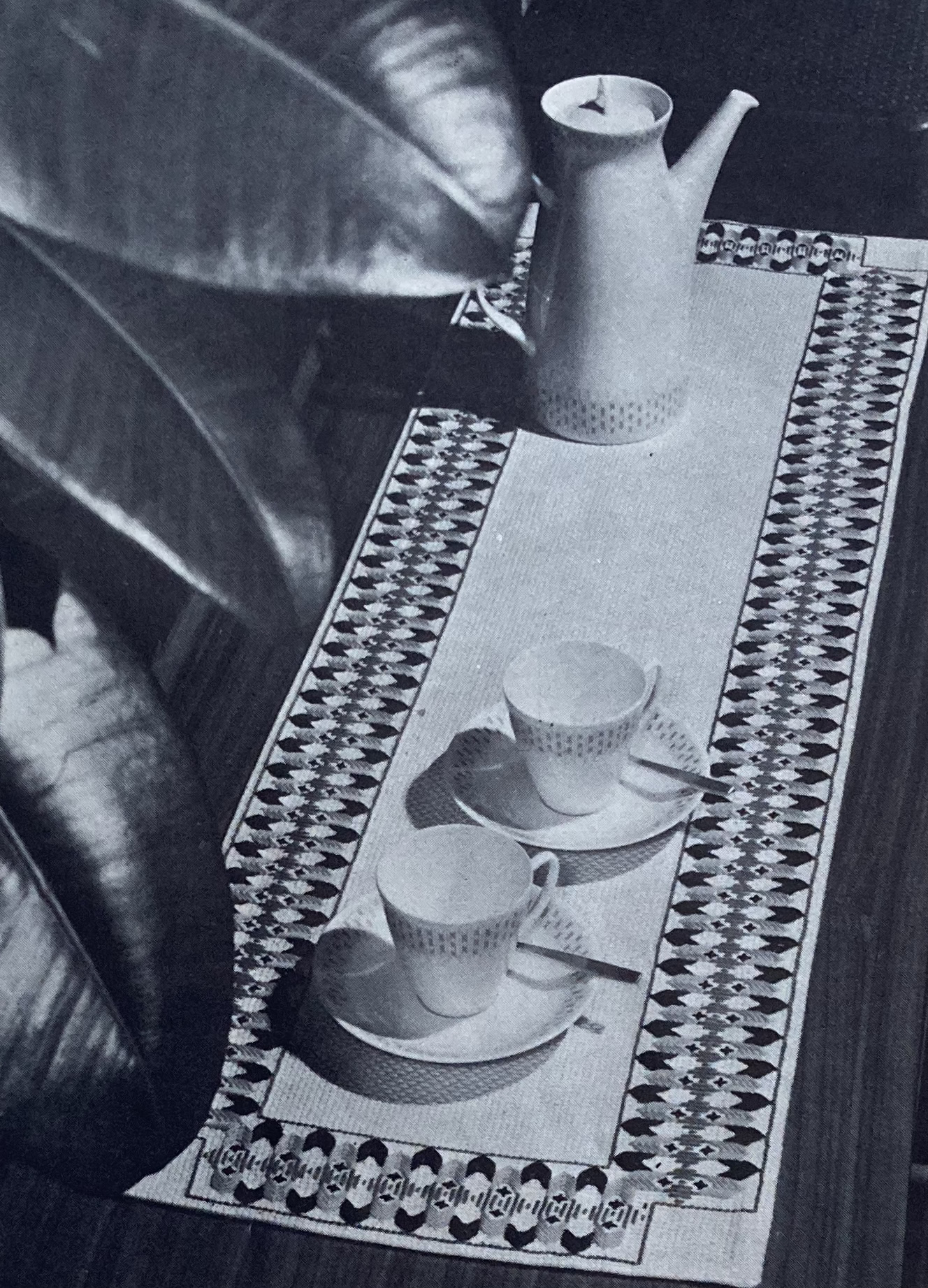
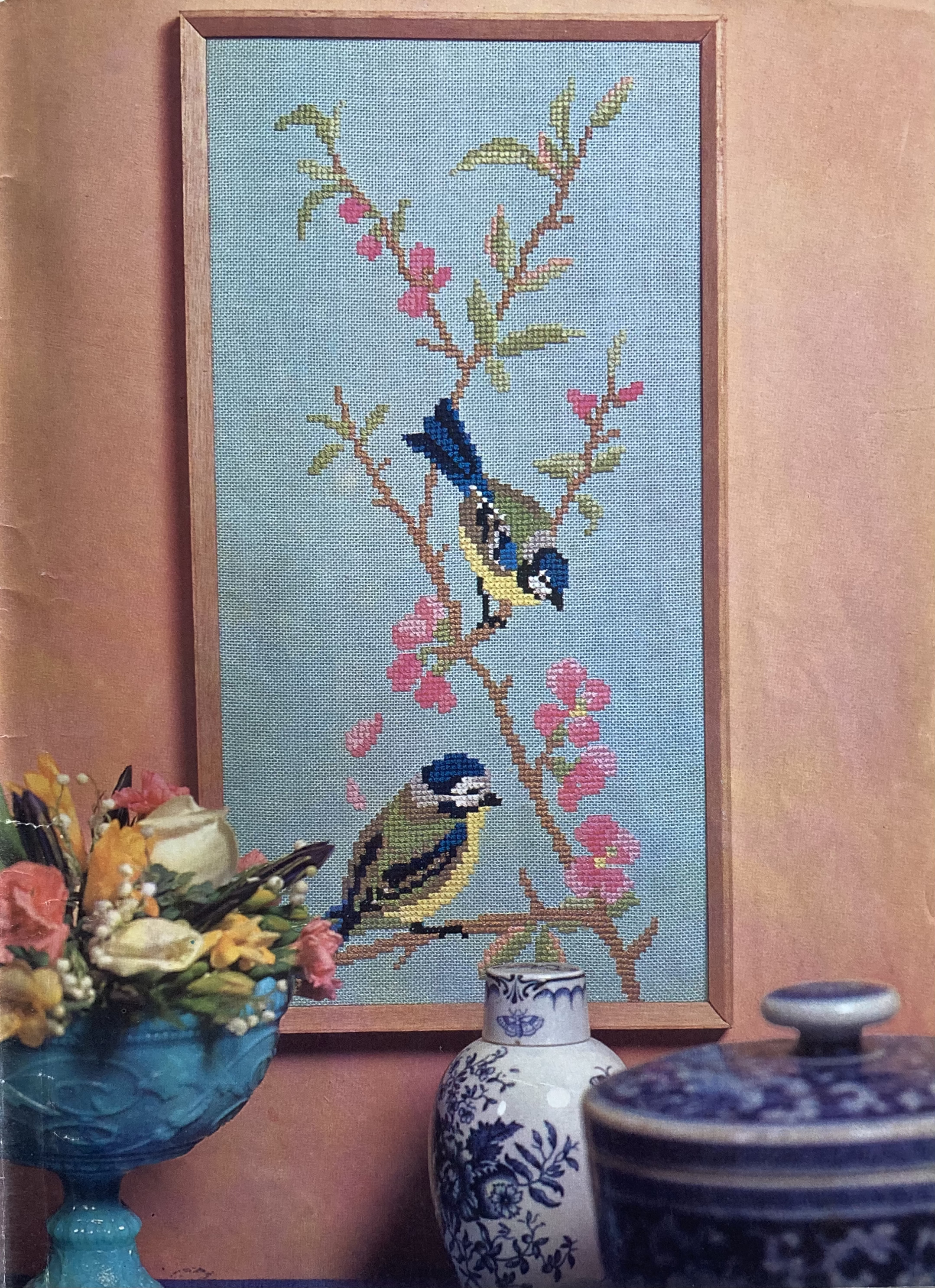
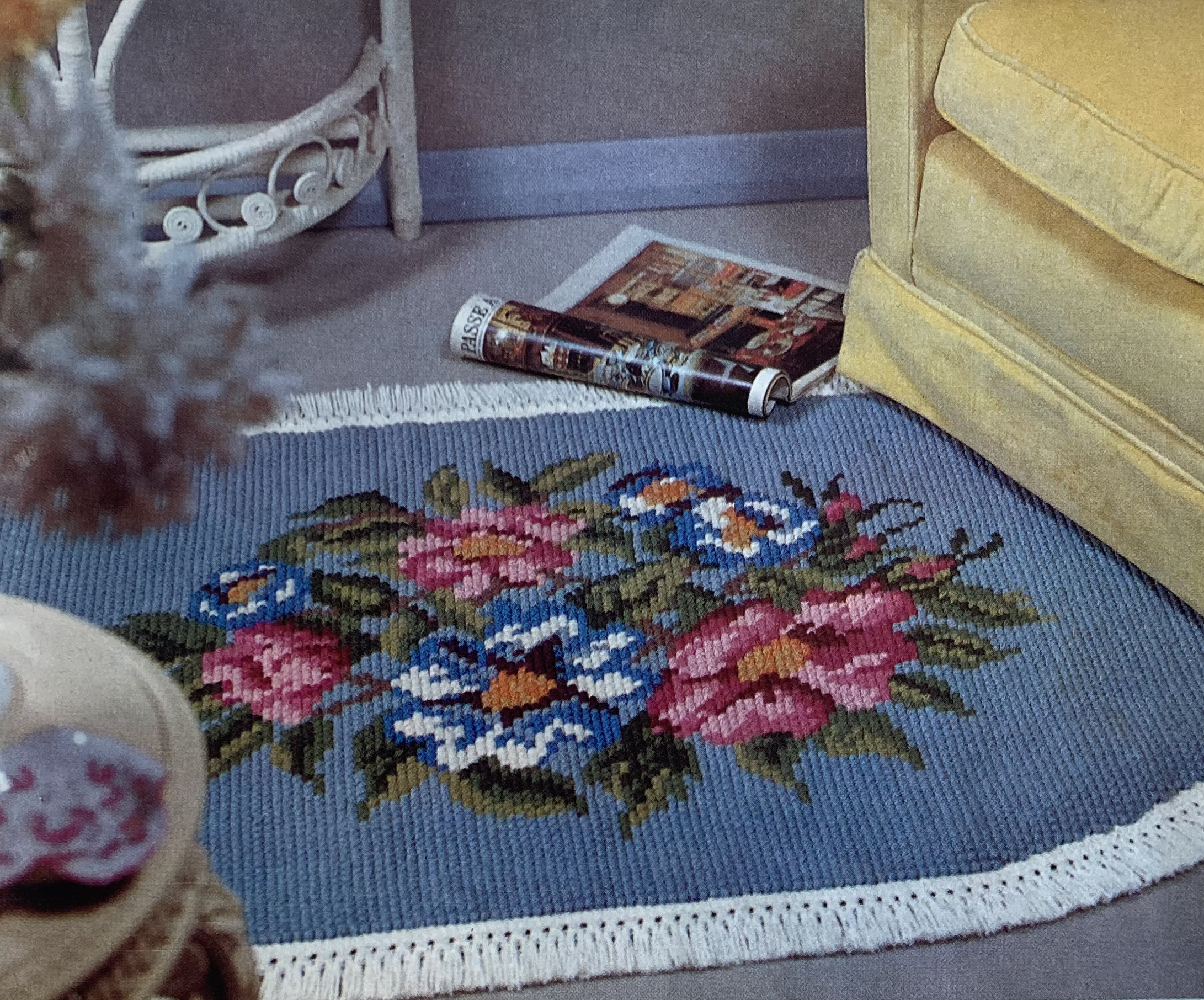
With all these great fashions, it’s no surprise that the homewares in this issue are a bit standard: embroidery for a tablecloth, tea-tray or cosy, embroidered dressing-table mats, or a runner for a Scandinavian-style long coffee table (in very 1960s colours of Tangerine, Coffee and Green), for example. Spring style shows itself best in the stitched rug in traditional floral design, or the birds-and-blossoms wall panel in cross-stitch.

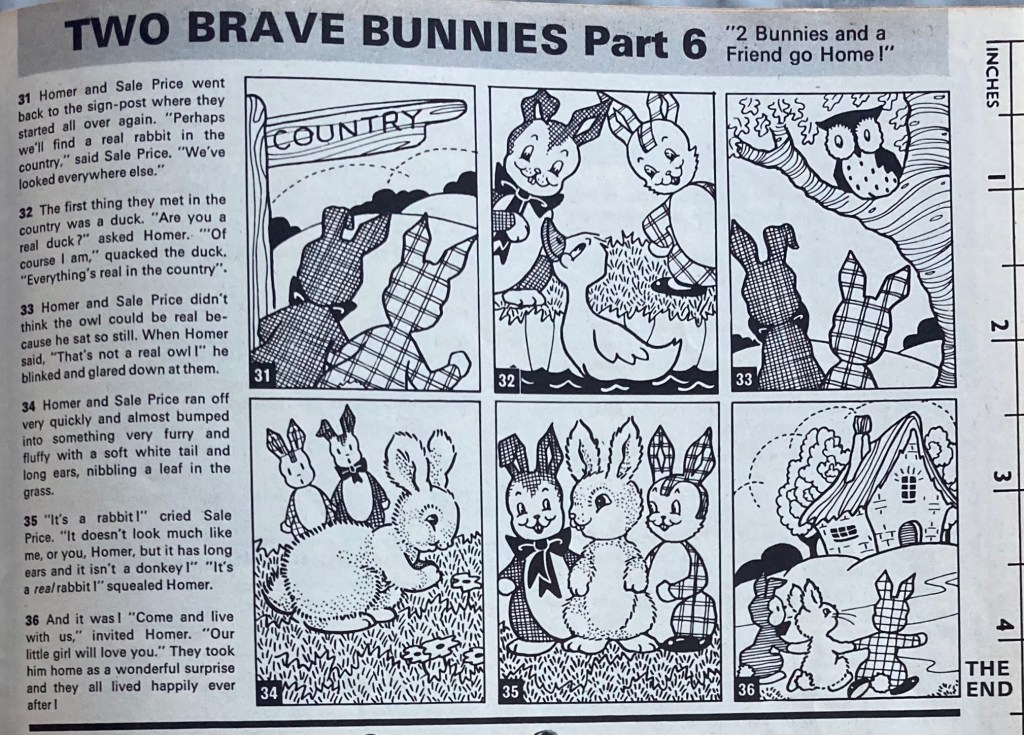
In the Readers’ Pages, we have reached the conclusion of our delightfully silly story of “Two Brave Bunnies” searching the world for a real live rabbit. (For those who haven’t been keeping up: the brave bunnies are sentient sewn toys.) Not having found a real live rabbit anywhere in town, they make the sensible decision to search the countryside instead. Et voilà! They find a real live rabbit and invite him home to come live with them and their human family. A happy ending for everyone involved.

There are so many fabulous patterns in this issue that it’s hard to not spend the next few months making all of them. I love the houndstooth set on the cover and the lace dress with cardigan, the child’s coat, the knee-high socks, the twisted-stitch gloves… Thinking both aesthetically and pragmatically, my choice was the child’s coat and hat set. I have too many clothes for myself right now and don’t want to start a huge new project, and while there are always great fashions for adults in Stitchcraft, there aren’t always nice projects for children. And I happen to know someone with a daughter of the right age and size, who would like it. And since it is not huge, there is a good chance that it might get finished on time. Perfect!