
It’s “late summer” over at Stitchcraft magazine, and this month’s designs are still summery-looking, but warmer, with an eye towards the coming autumn and cooler weather. Also, production costs were apparently increasing, so readers were informed that as of September 1965, the price for individual issues would be raised to 2s. 0d. The increase to the current subscription rate of £1 8 s 0d for one year or 14s for six months, post-free to any part of the world (!) was scheduled to be explained in the September issue, with existing subscriptions running out at the old price.
How much was that in today’s currency? I cannot vouch for the accuracy or lack thereof from either of these sources, but the currency converter website of the National Archives tells me that a year’s subscription at the old price would be the equivalent of £24.67 in 2017 (the latest year the website calculates to), so quite inexpensive for 12 issues. A six-month subscription would cost £12.33, so pretty much exactly half (if you round up a penny, since a six-month subscription certainly wouldn’t have cost less than half of the yearly price.) A single issue at the new price would cost £1.76. According to this inflation calculator (again, take all of this with a grain of salt as such converters are always approximate), in 2023 prices that would come out to £2.21 for a single issue at the new price and £31.01 for a year’s subscription at the old price — again, quite reasonable, if the converters are at all accurate. Stitchcraft was published by Condé Nast as an independent publication, but of course was a co-product of Patons / Patons and Baldwins / at this point the company had been merged with J&P. Coats / yarn company, so served as an advertisement for their wools. As was common for knitting magazines at the time as well as today.
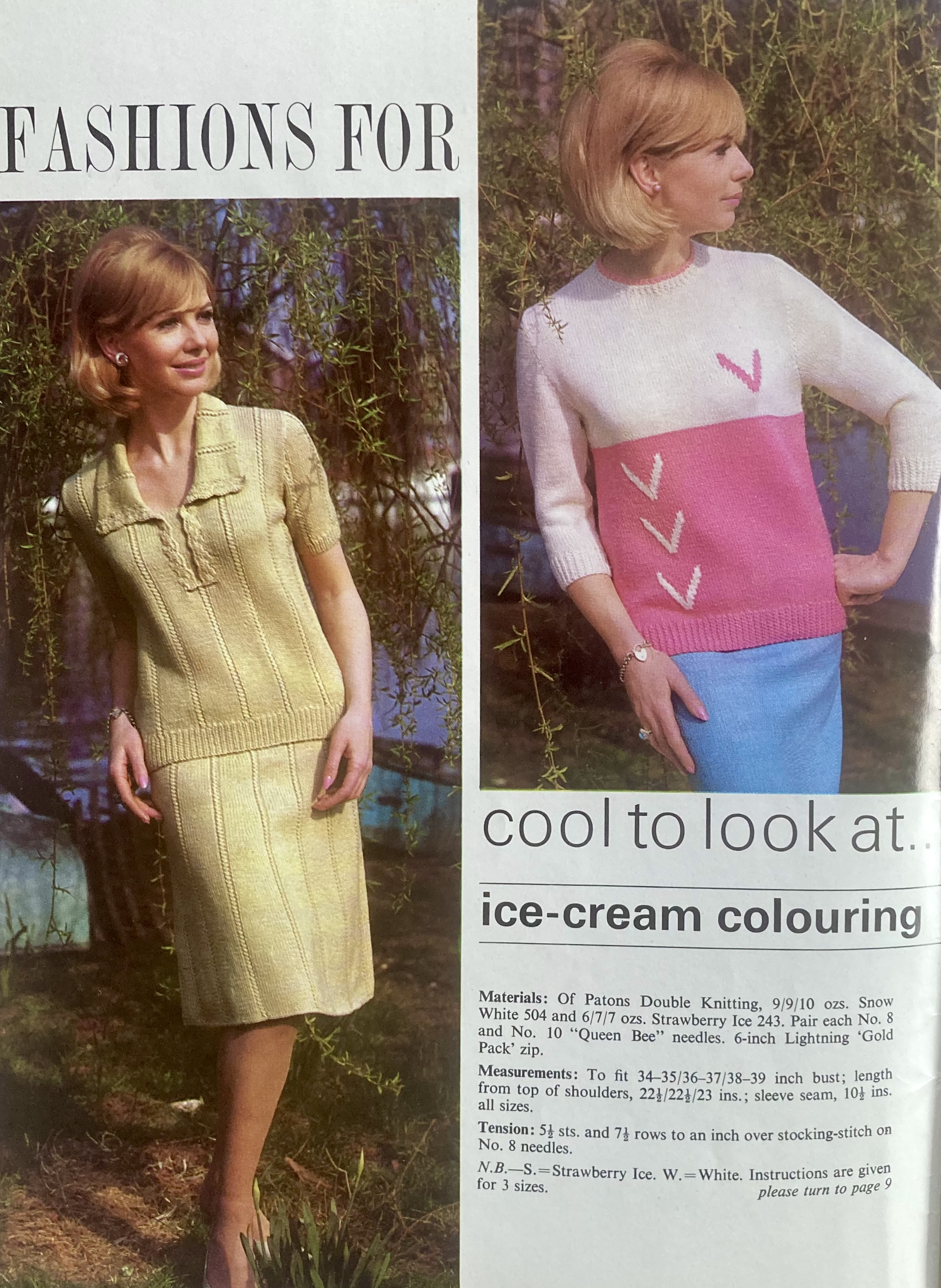
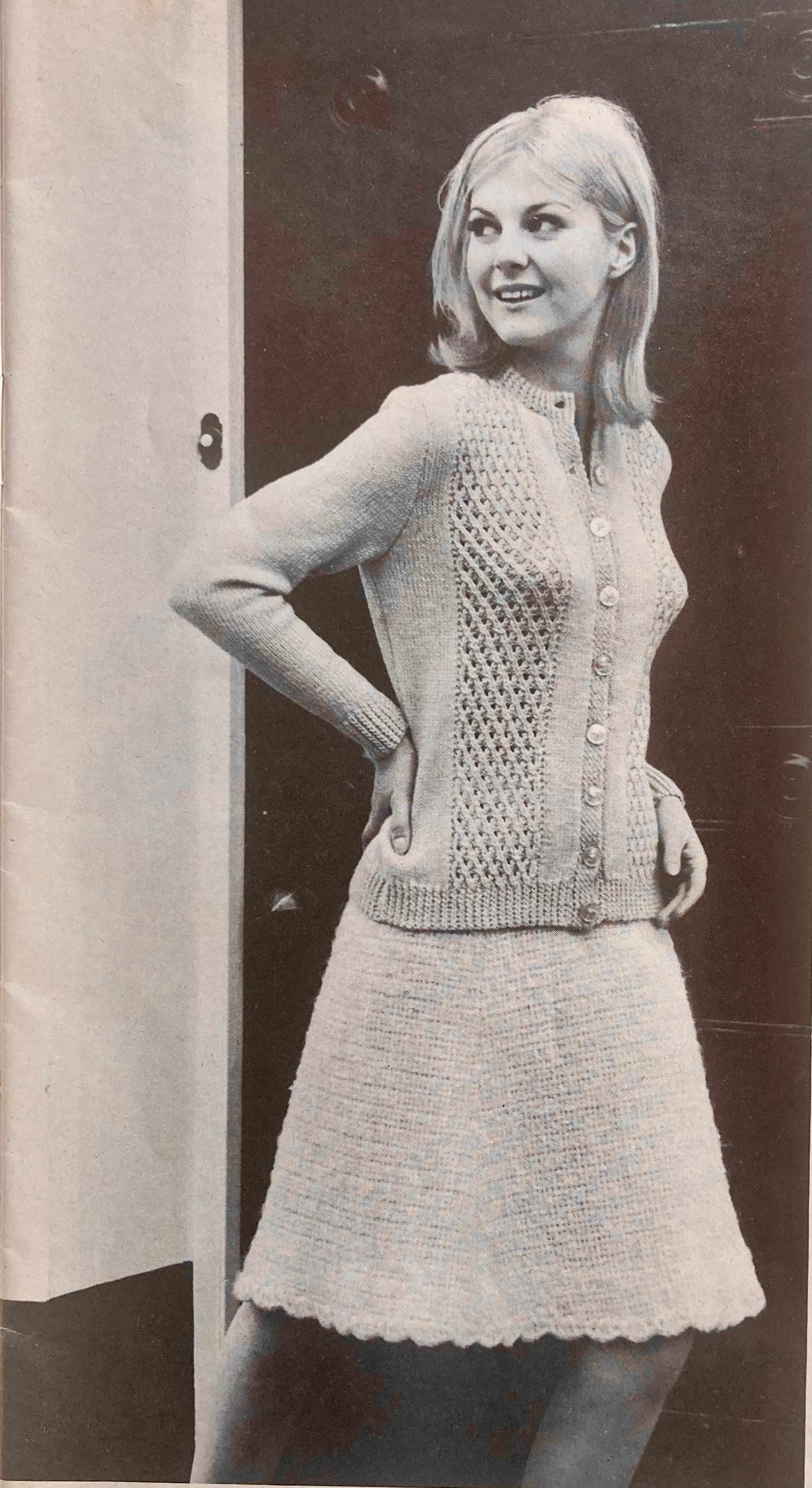
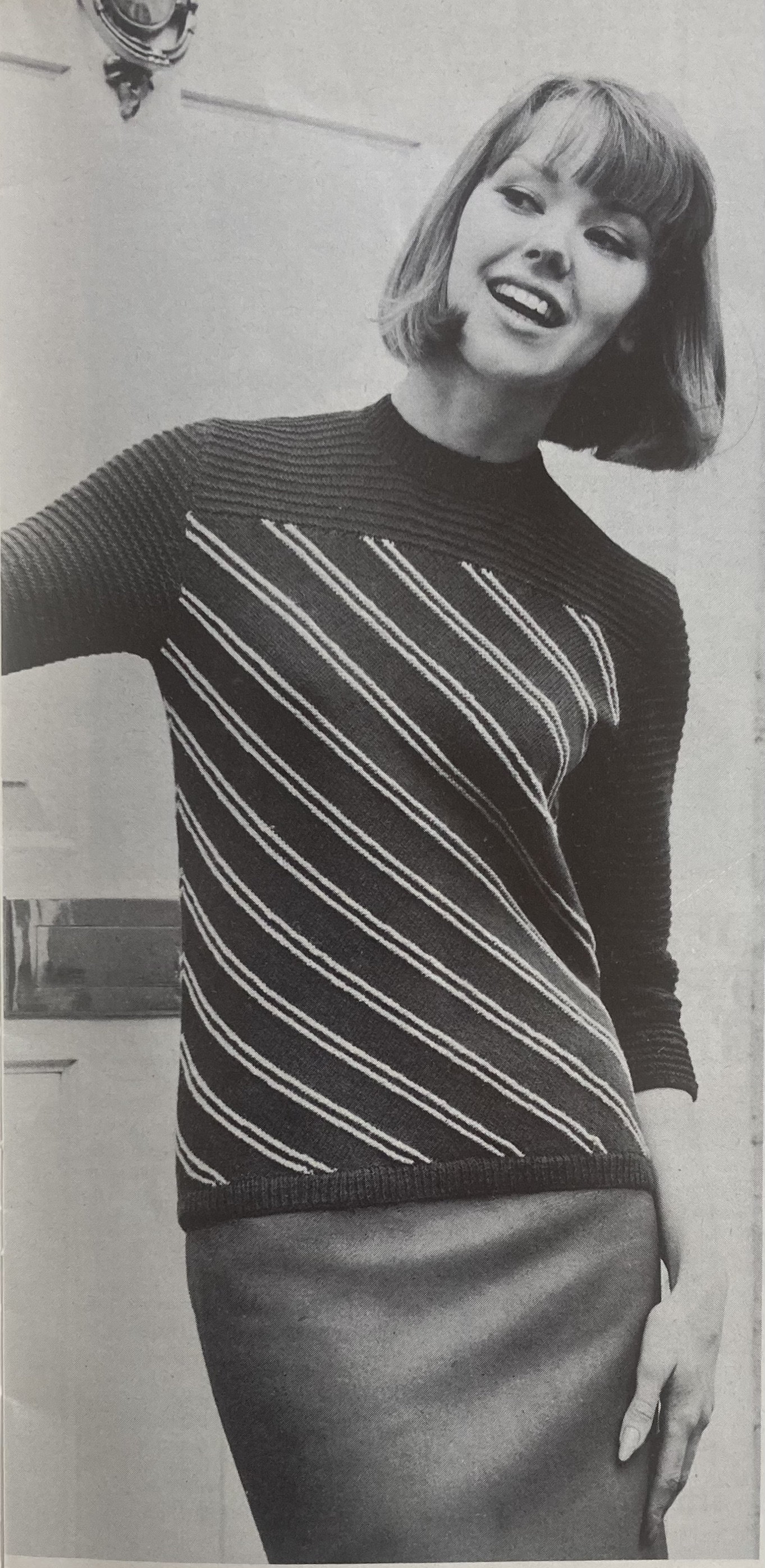
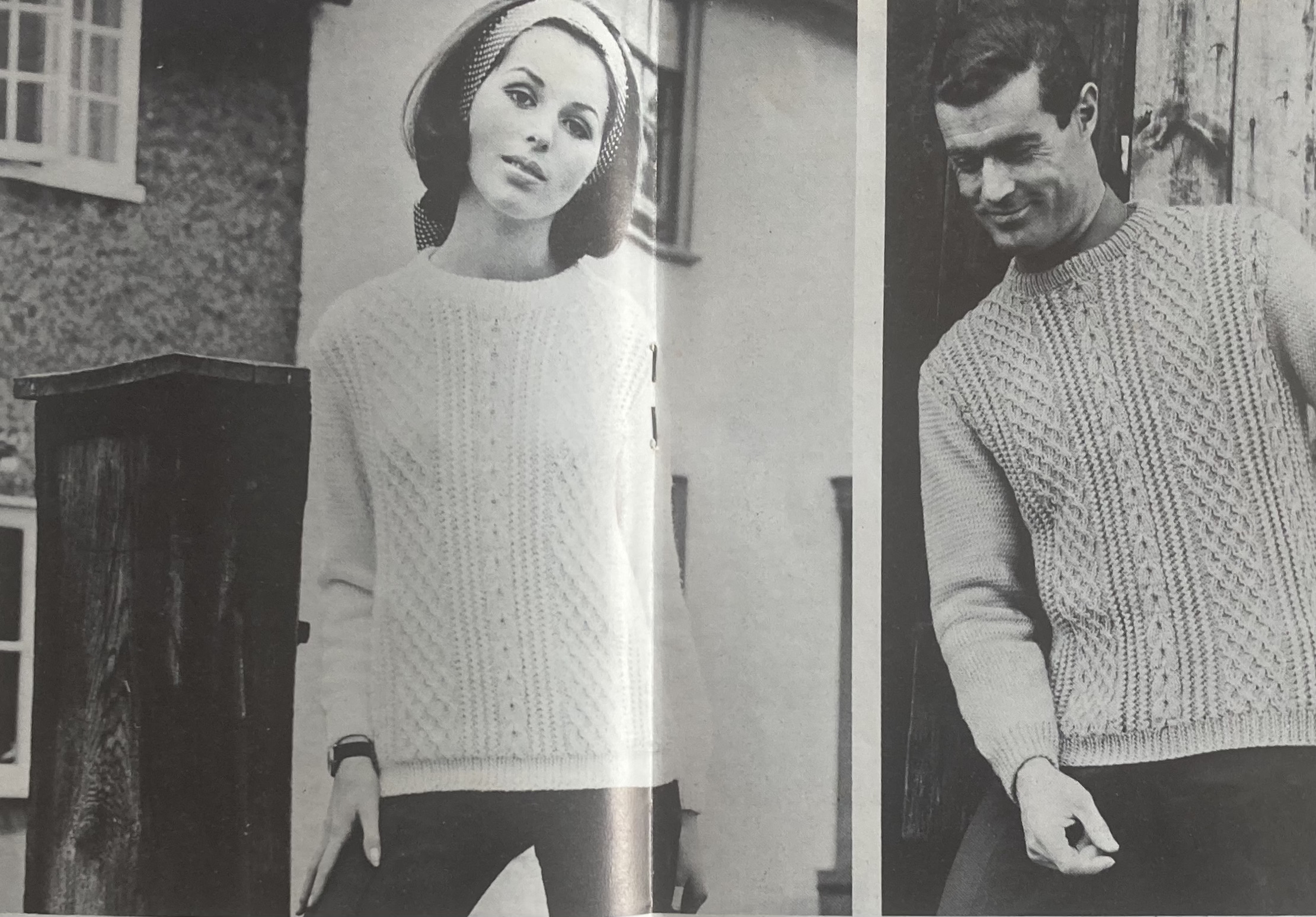
But I digress! The cover photo shows Aran sweaters in the partner-look for him and her, made in slightly-heavier-than-DK “Flair”, a wool-synthetic mix. Other fashions for women strike a balance between “cool to look at… warmer to wear” and include a two-piece DK dress with a short-sleeved top or a DK sweater in “ice-cream” colours of bubblegum pink and white. For the coming autumn days days, there’s a DK cardigan made warmer and heavier by the use of trellis-stitch panels on the front and back, or for a lighter touch, there’s a 4-ply jumper with diagonal stripes, knit diagonally — basically two rectangles for front and back, then picking up stitches for the vertically-knit yoke, and separate sleeves. The colour scheme is definitely still summery, with the striped jumper in navy blue and white and the trellis cardigan in light “Beau Blue”.
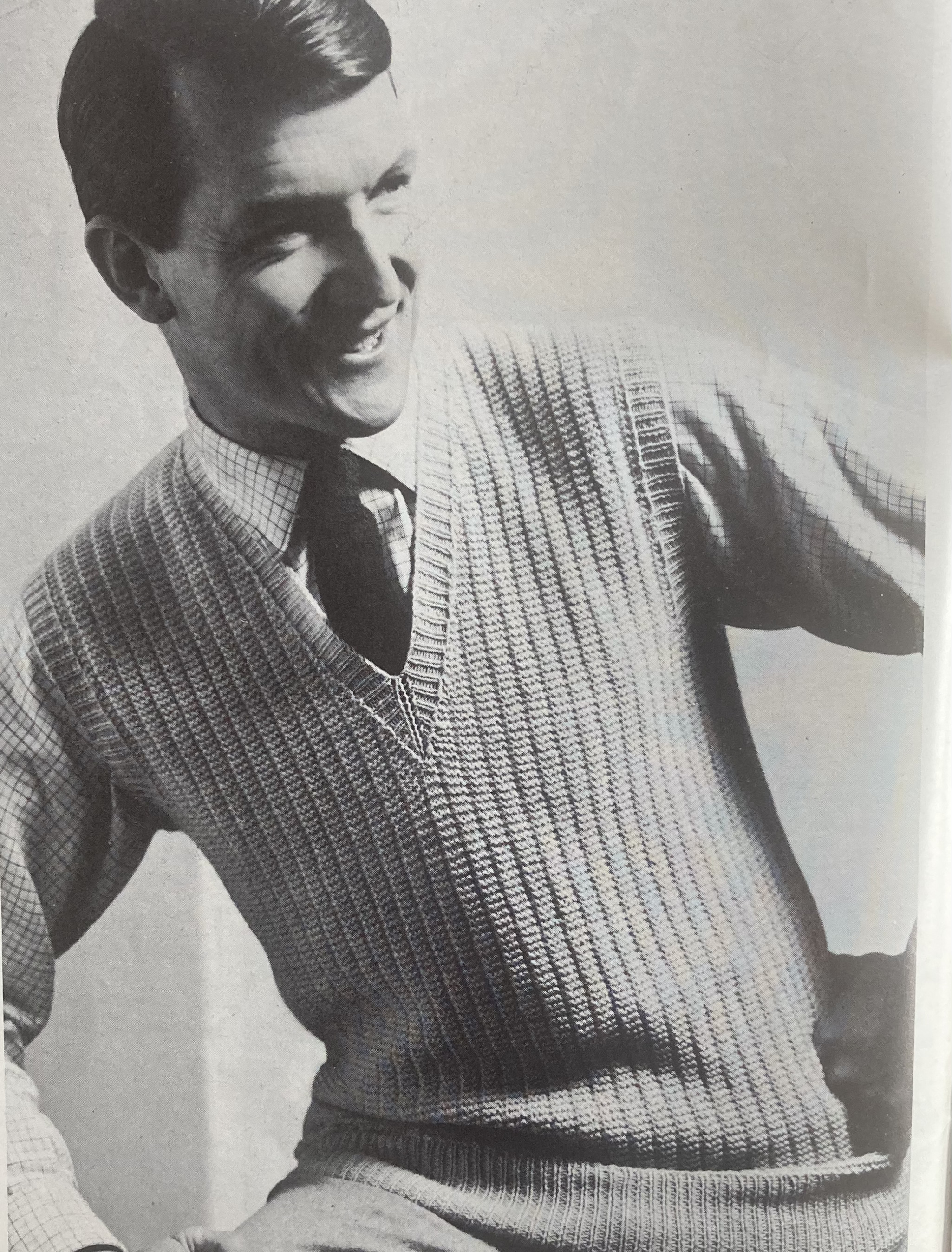
For men, in addition to the Aran-pattern sweater on the front cover, there’s a nice 4-ply slipover, made warmer by the use of a sort of broken garter stitch pattern: every 4th stitch is knit through the back on the RS rows and purled on the WS rows to create a pseudo-ribbing effect.
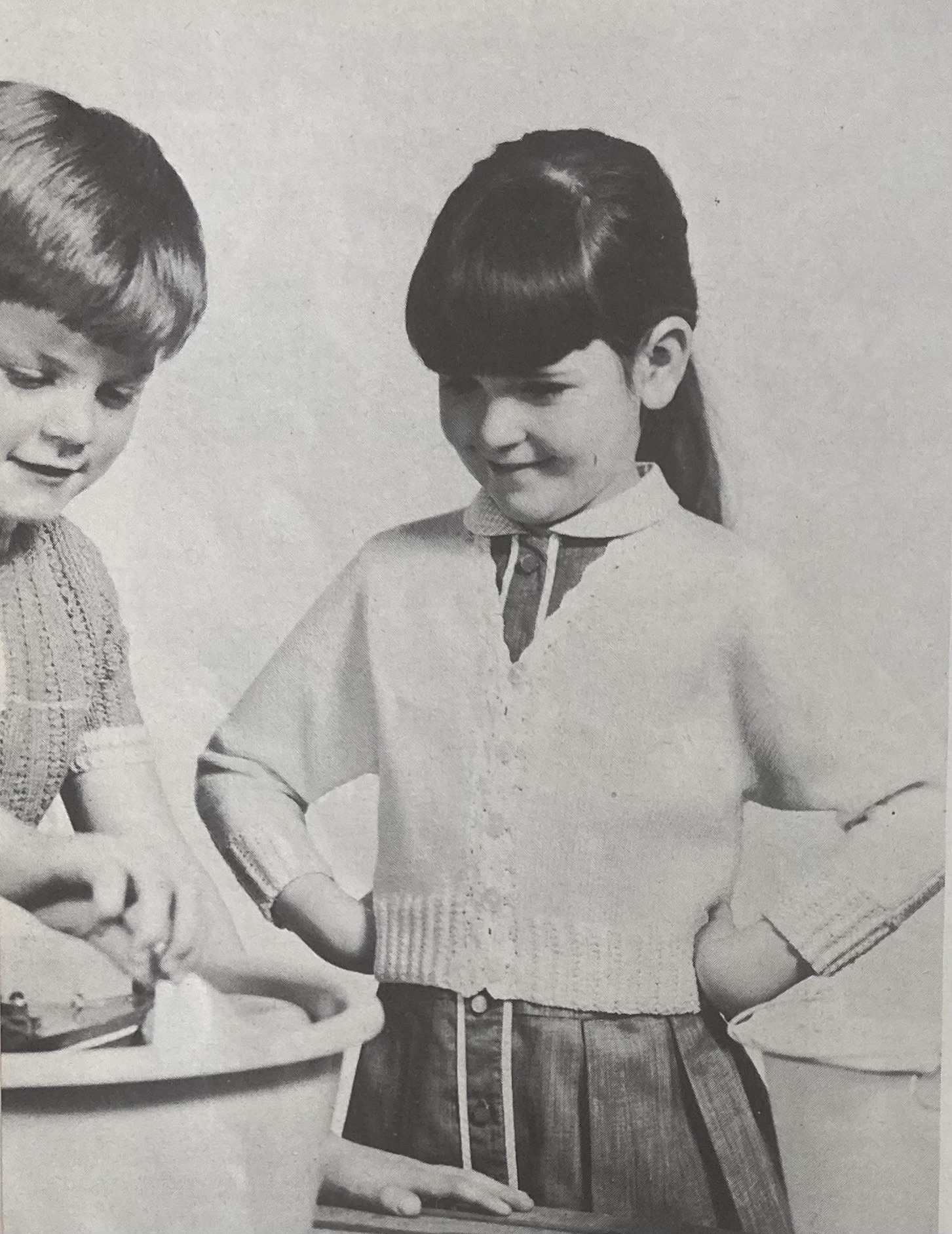
This month, we once again have children’s fashions for all ages. There’s a dolman cardigan for girls up to a 29 inch chest and a cute unisex “play shirt” up to 28 inch chest, all in sunny colours of gold, white, “Gay Turquoise” and “Sunglint”. Baby’s turquoise “extra jacket” is worked in one piece up to the armholes in a stitch pattern that looks a bit like the one for the man’s slipover, but is more complicated:
- 1st row: WS facing, knit.
- 2nd row: *k3, k3 tog and leave on needle, then k. 1st st again, then k tog the other 2 sts and slip off needle, k 3*, rpt to last 3 sts, k3 tog and leave on needle, k 1st st again, then k tog the other 2 sts and slip off needle
- 3rd row: purl
- 4th row: knit
- 5th row: knit
- 6th row: *k3 tog and leave on needle, then k. 1st st again, then k tog the other 2 sts and slip off needle, k 3*, rpt to last 3 sts, k3 tog and leave on needle, k 1st st again, then k tog the other 2 sts and slip off needle
- 7th row: purl
- 8th row: knit

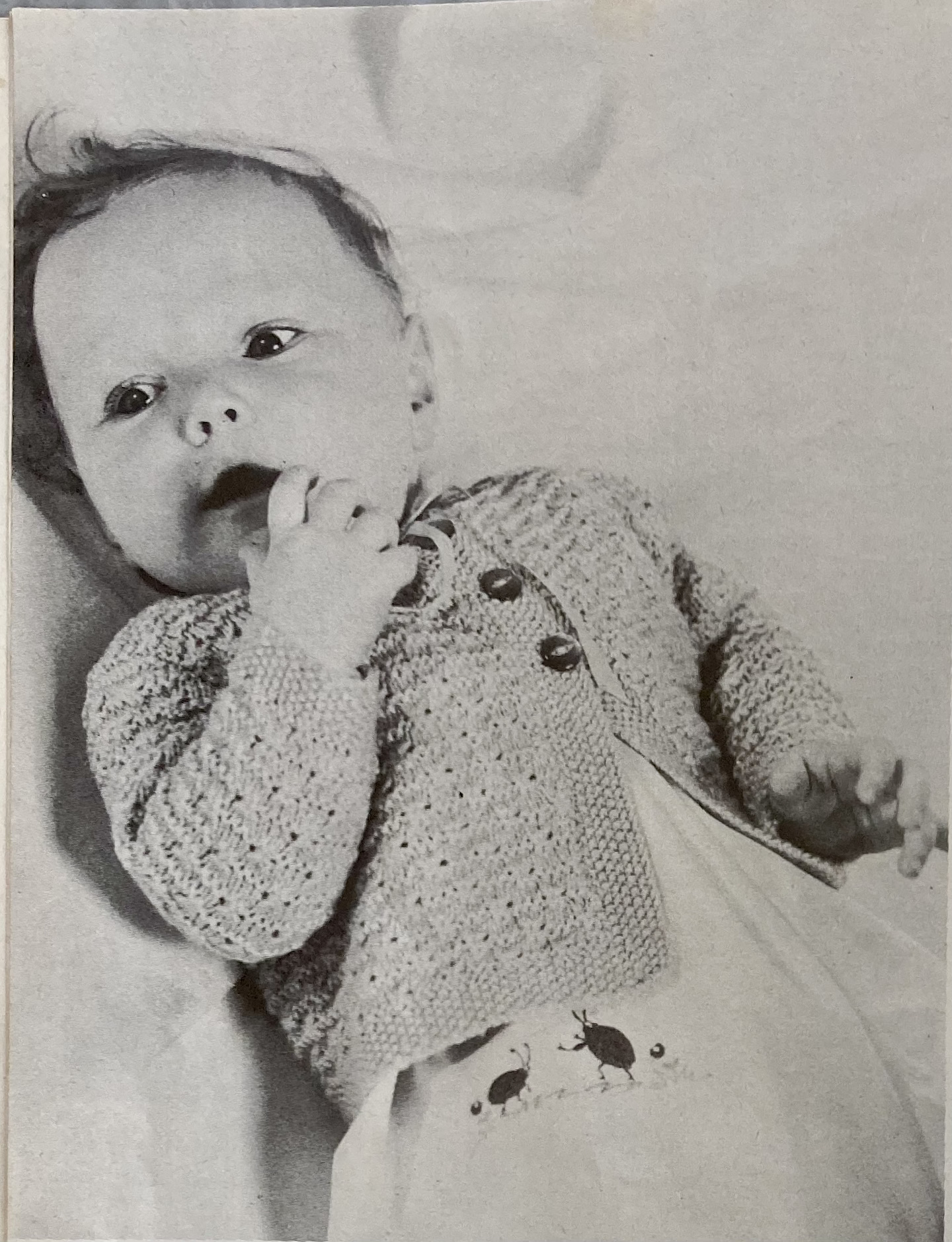

I’ve never seen this stitch before — does anyone know it, or know if it has a name?
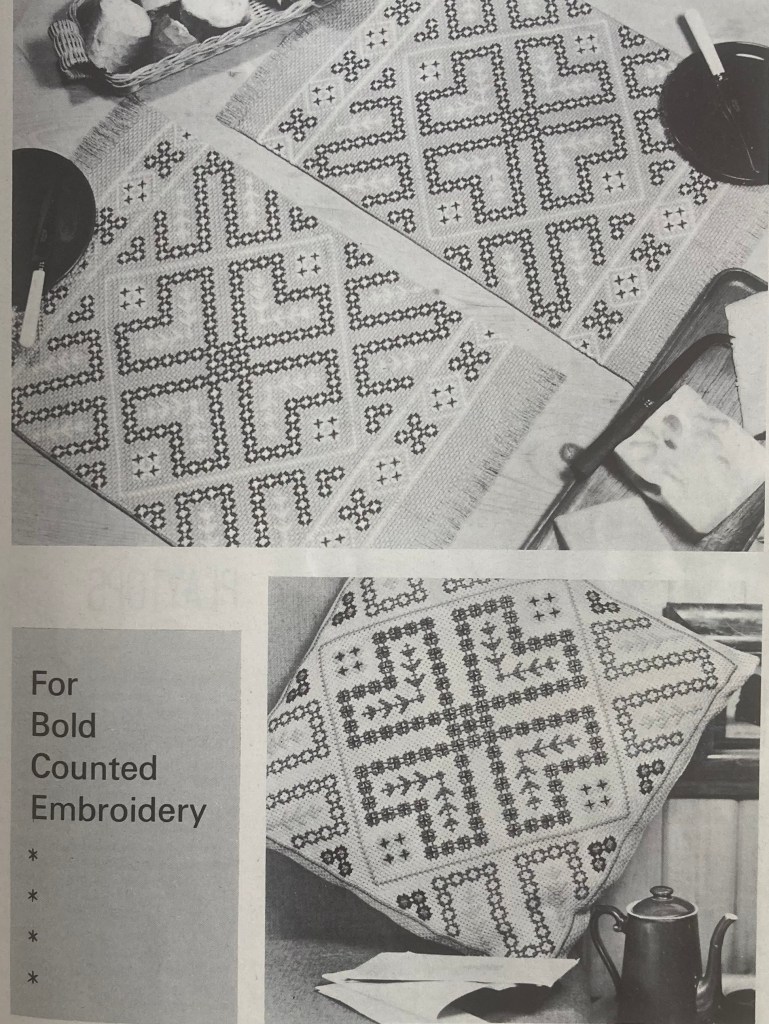
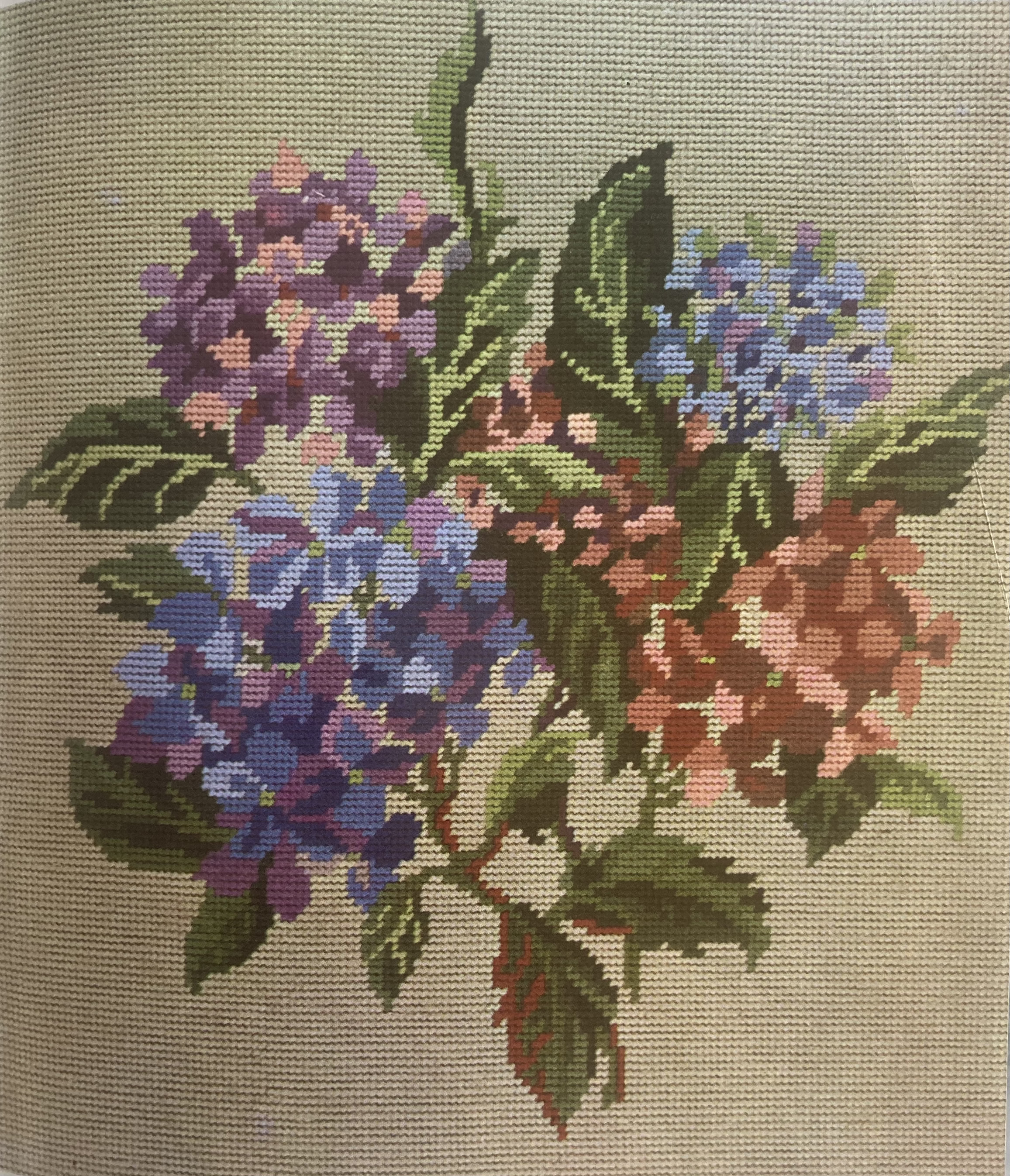
In the homewares department, we have the usual selection of versatile designs for different items and uses. The cross-stitch ivy border, for example, is suggested for “cushions, table mats and chair-backs, or as a border for curtains” , the wavy “design from Greece” is featured on a chair-back, cushion and rug, and the Swedish-inspired design “for bold counted embroidery” works on table mats as well as cushions. Even the tapestry hydrangeas can be used as a wall picture or fire-screen.


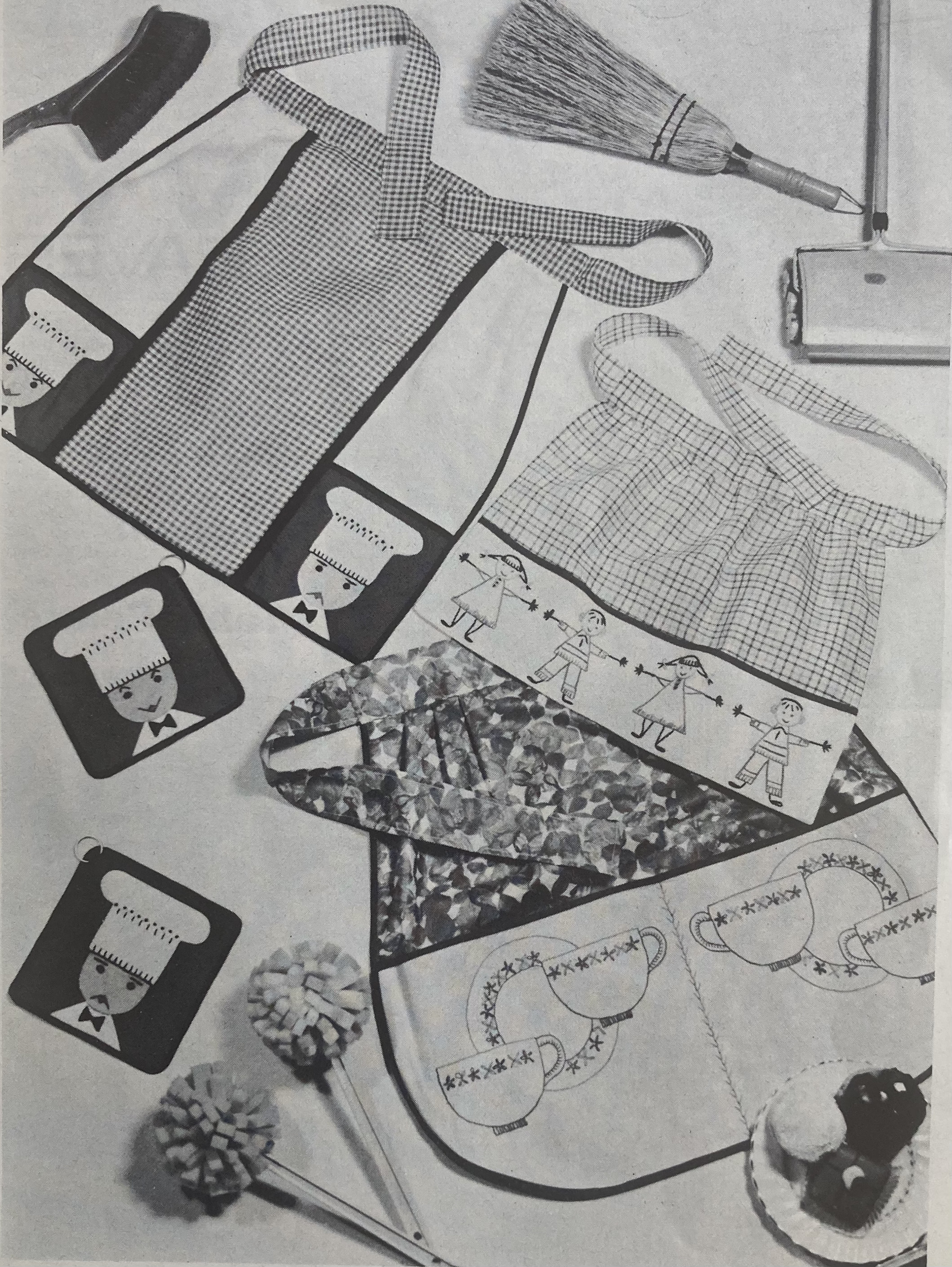
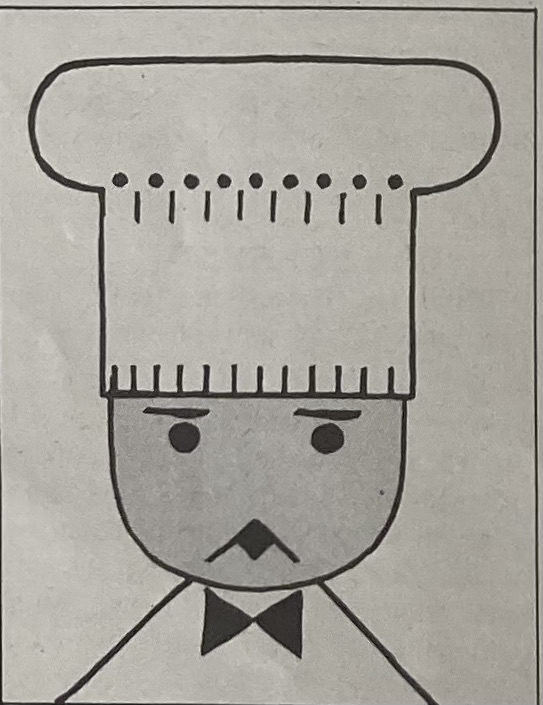
It wouldn’t be a proper issue of Stitchcraft without bizarre-bazaar ideas, though these are not nearly as weird as some of the items that we’ve seen in the past. The theme is clearly “kitchen” this time, with embroidered or appliquéd aprons and pot holders. Sometimes the chef looks happy with the food, and sometimes he definitely has l’air déçu!

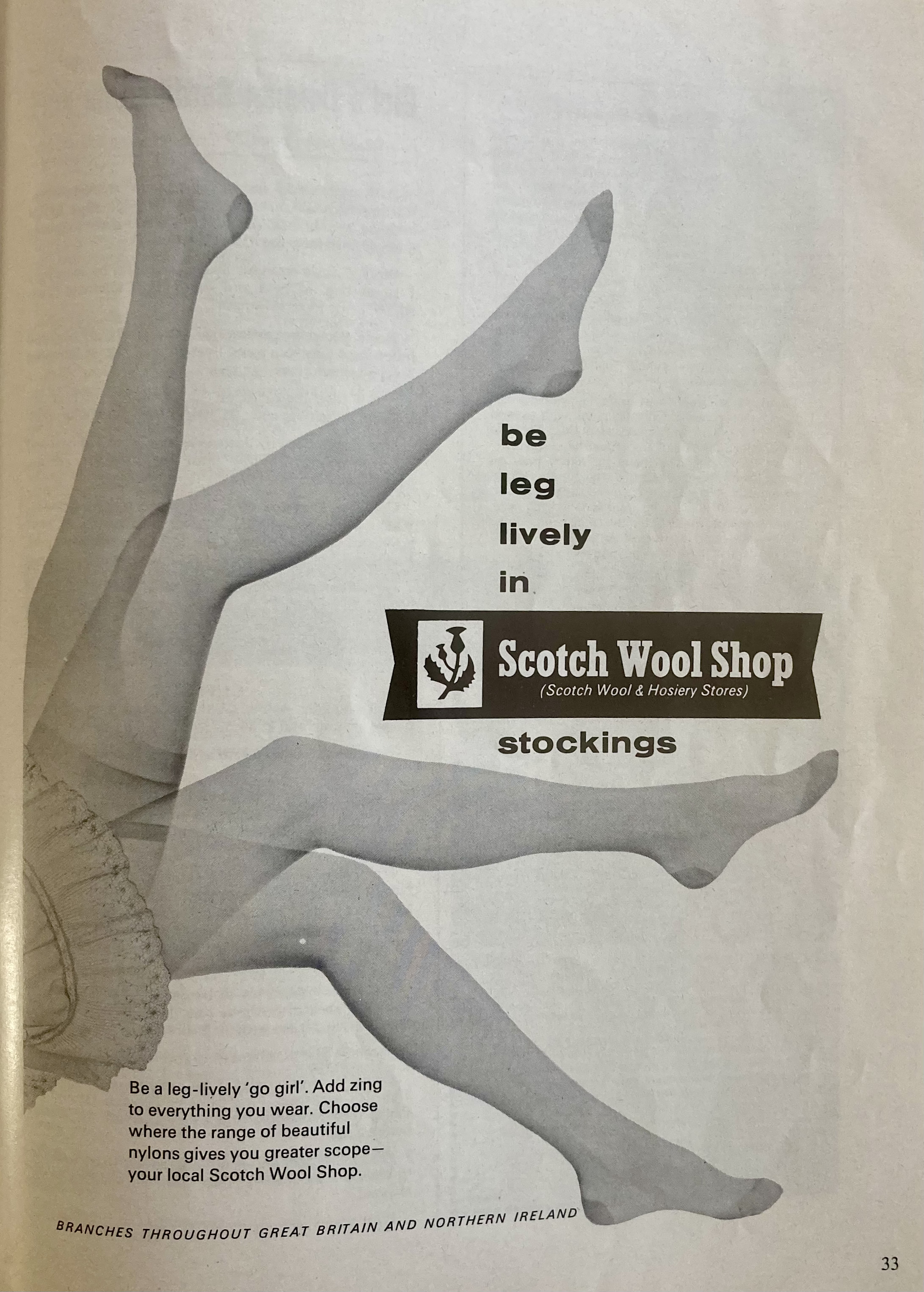
The back pages feature a “special request” tatted doily edging, a great “leg lively” ad for nylon stockings from the Scotch Wool Shop. In the final chapter of the current children’s serial comic, “The Lost Stitch”, Jill and her brother James fall back through the magic portal that appeared in a dropped stitch, to find themselves back at home with the stitch magically mended. May all your dropped stitches heal this way!


There isn’t a specific design that I like enough to make from this issue, so my August project will be another non-Stitchcraft “Blast From the Past.” Happy late summer and if it’s still too hot where you live, enjoy that ad for Lightning zips that promises to keep you cool as a cucumber in your summer cottons.

 The Stitchcraft Sixties