November 1964: Overview

“Winter Fashions and Christmas Plans” is the theme of Stitchcraft‘s November 1964 issue, with practical clothing for the family as well as gift ideas and a couple of glamorous items for parties.
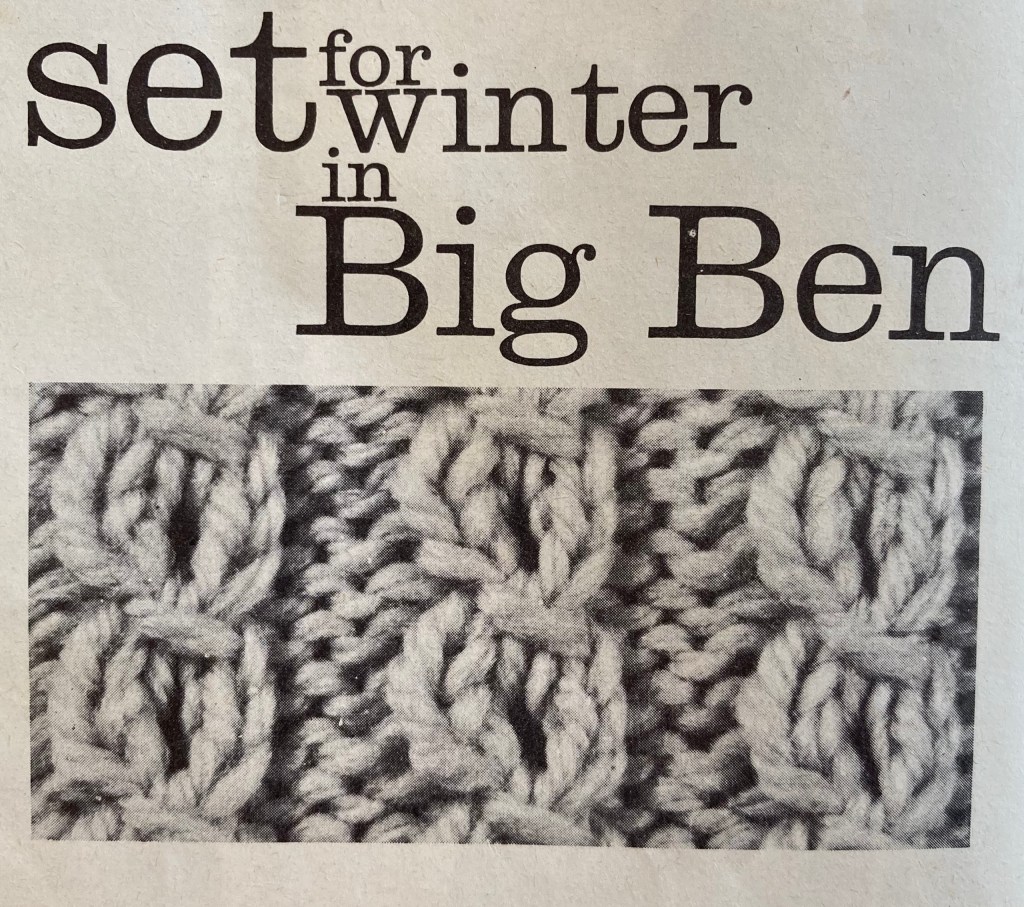
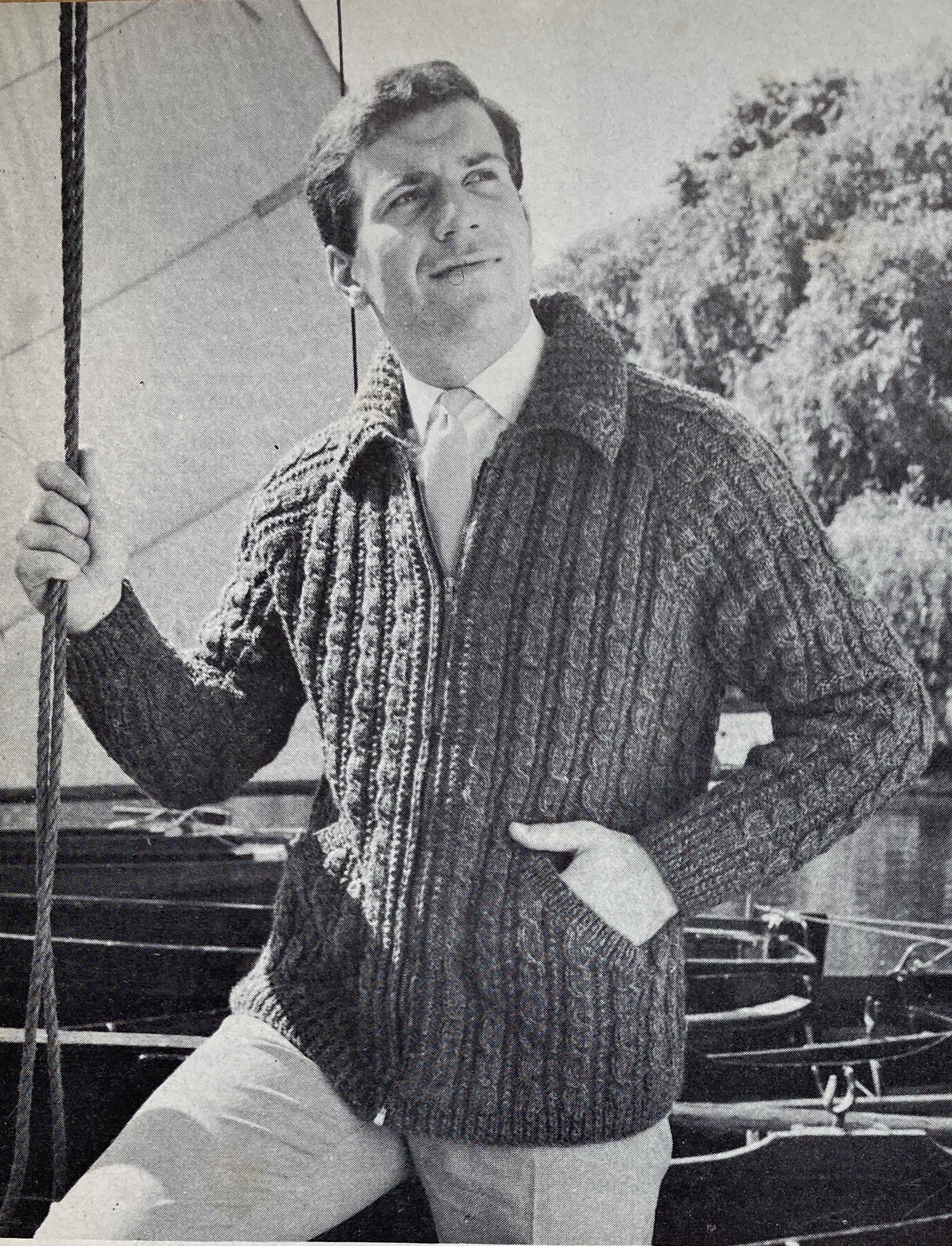
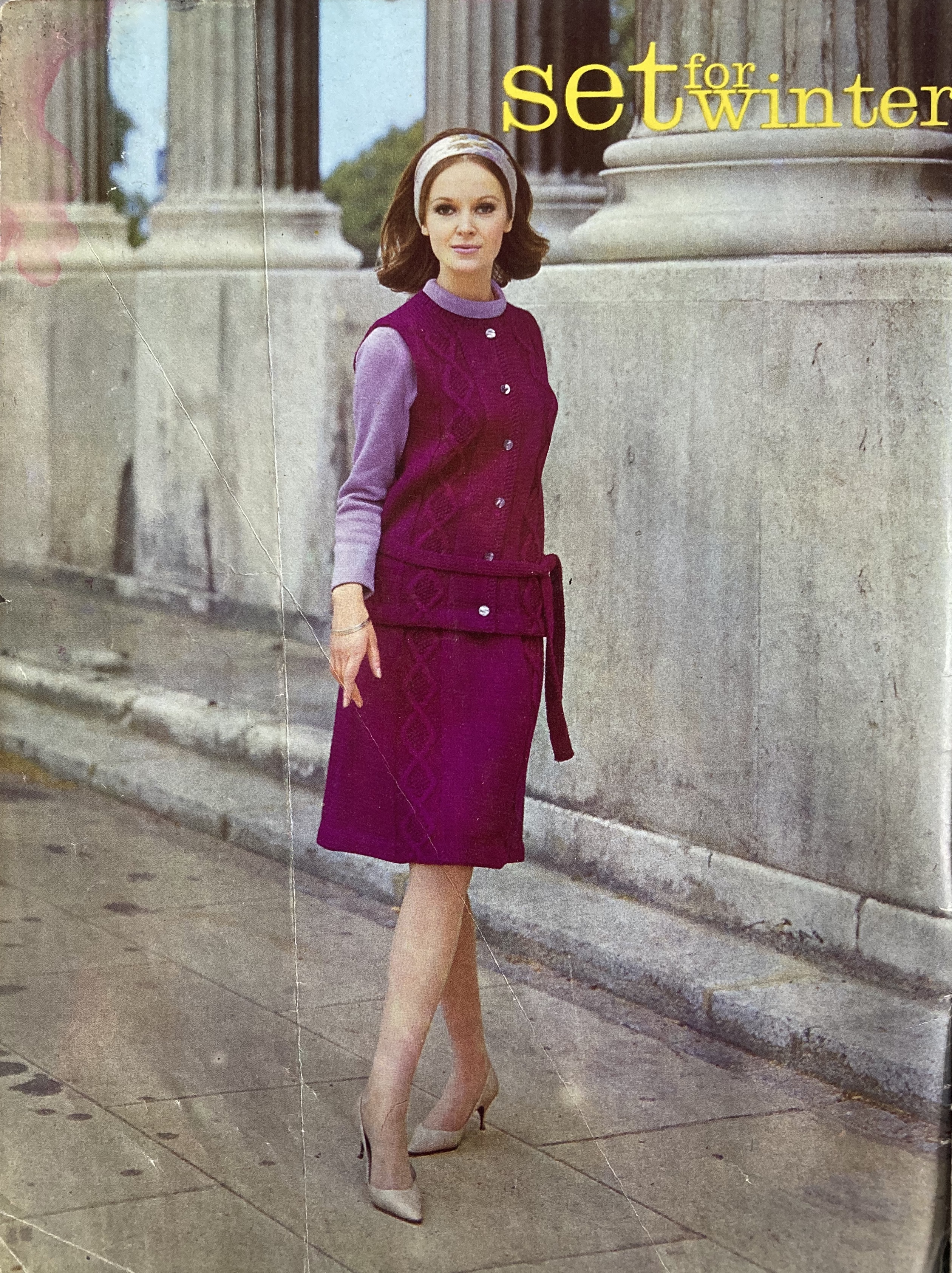
You will be “set for winter” in the cardigan on the cover, knitted in bulky “Big Ben” wool at 3 1/2 stitches to the inch, with all-over mock-cables, a warm collar and practical pockets. The mock-cable pattern involves “losing” a stitch in the 3rd row with a sl1-k2-psso, then getting it back with a yo on row 4, making a “bar” and then a little hole for the mock-cable effect. There’s a handy close-up photo of the stitch pattern, so you can make sure you did it right.

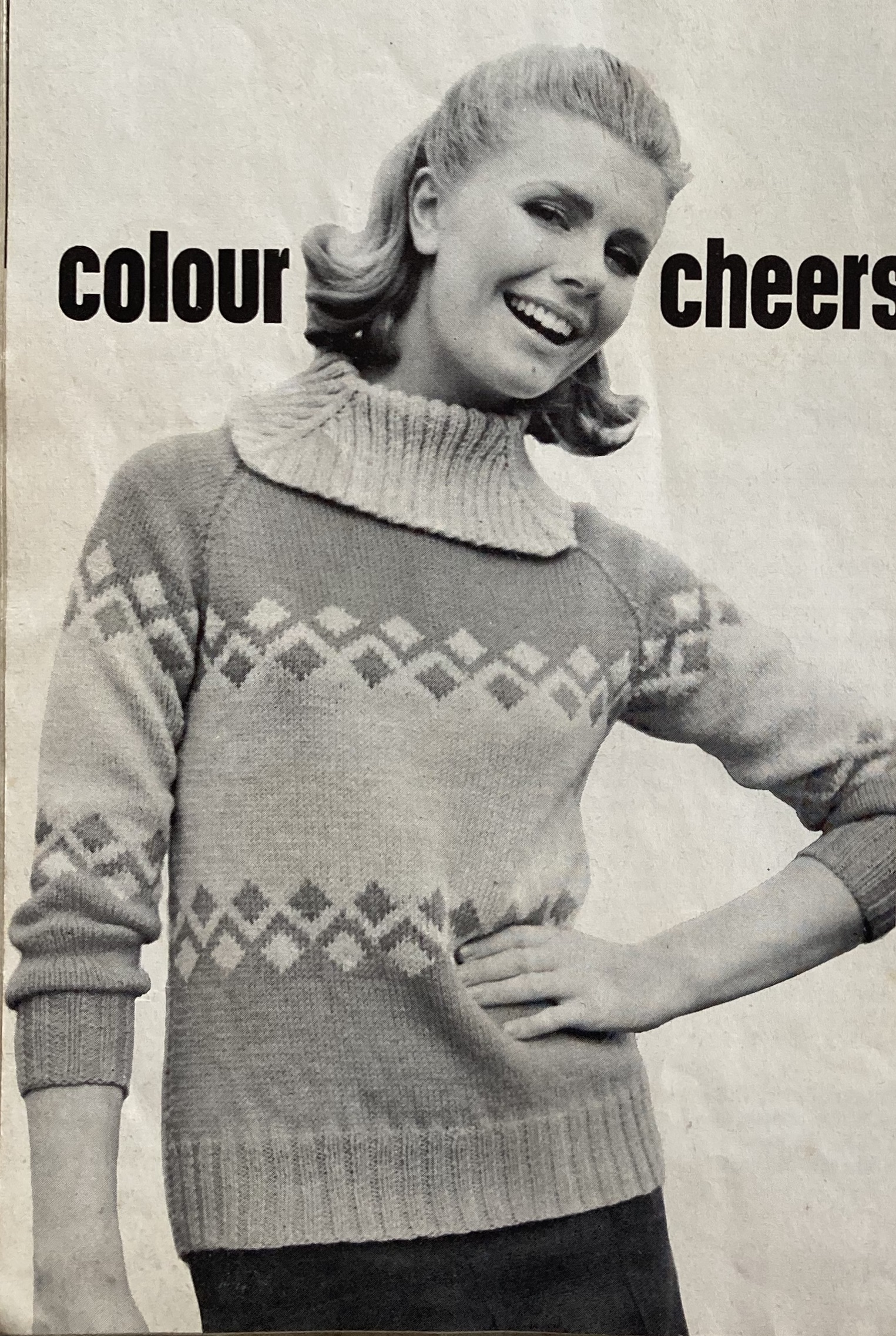
The caption continues the use of a bit of word-play on the word “set”, which we saw in the October 1964 issue. There, the theme was “set to flatter”, whereby some of the items were part of an actual set, and some weren’t. Some of the other garments in the November issue really are a set, in that sense: this waistcoat suit in glowing fuchsia, for example. Rounding out the everyday women’s garments are a plain 4-ply jumper, a bright colour-motif sweater and a comfortable tweed jacket for larger sizes. I love that brooch on the jumper — it looks like Star Trek insignia.
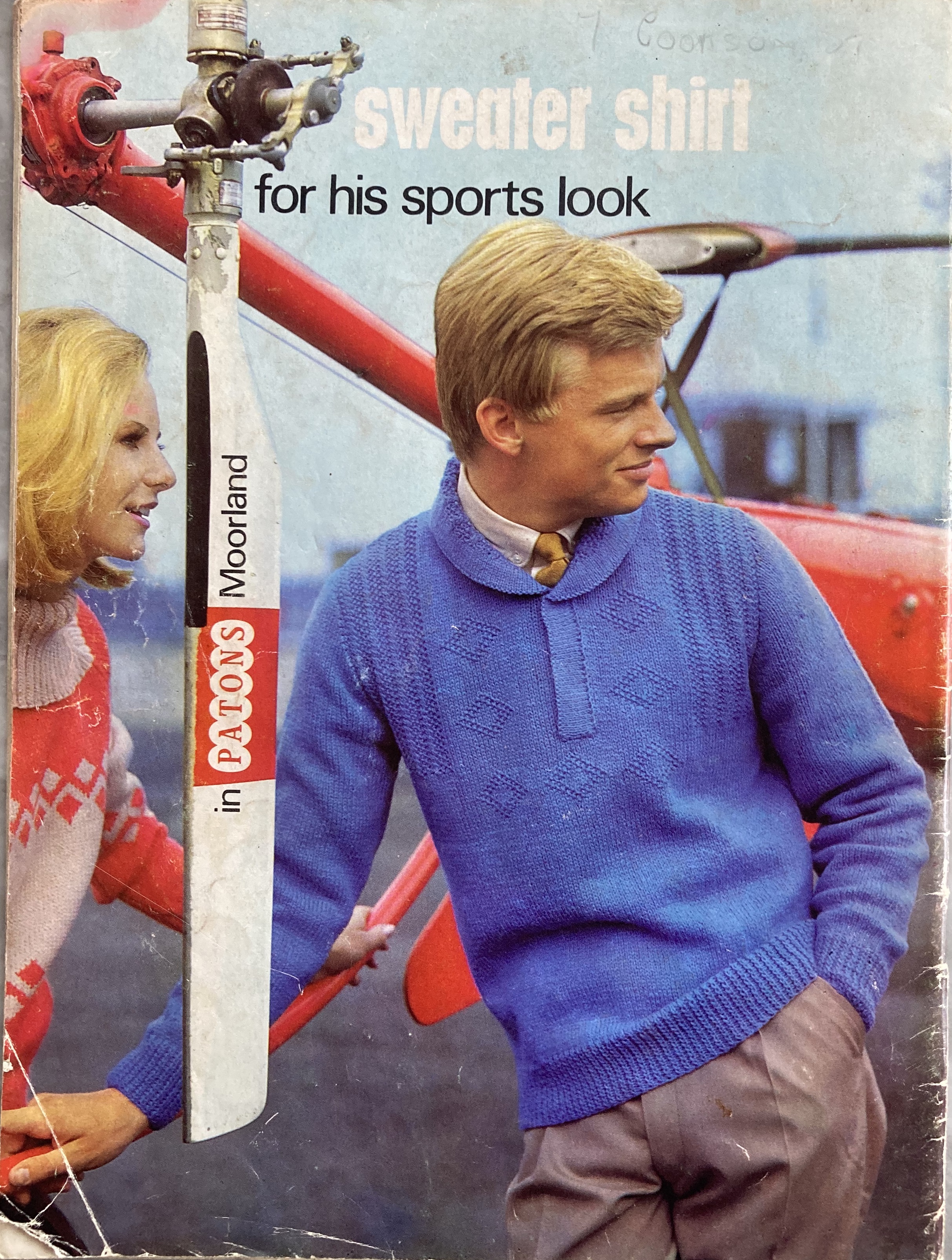
The trend for textured patterns, big collars, zig-zag designs and bold colours continues with the men’s garments: he too will be “set for winter” in a textured pullover for larger sizes or a sport-weight “sweater-shirt” (they didn’t use the word “henley” at the time) that utilises many fashionable features. You get a glimpse of the women’s colour-motif sweater in the back cover photo, as well.

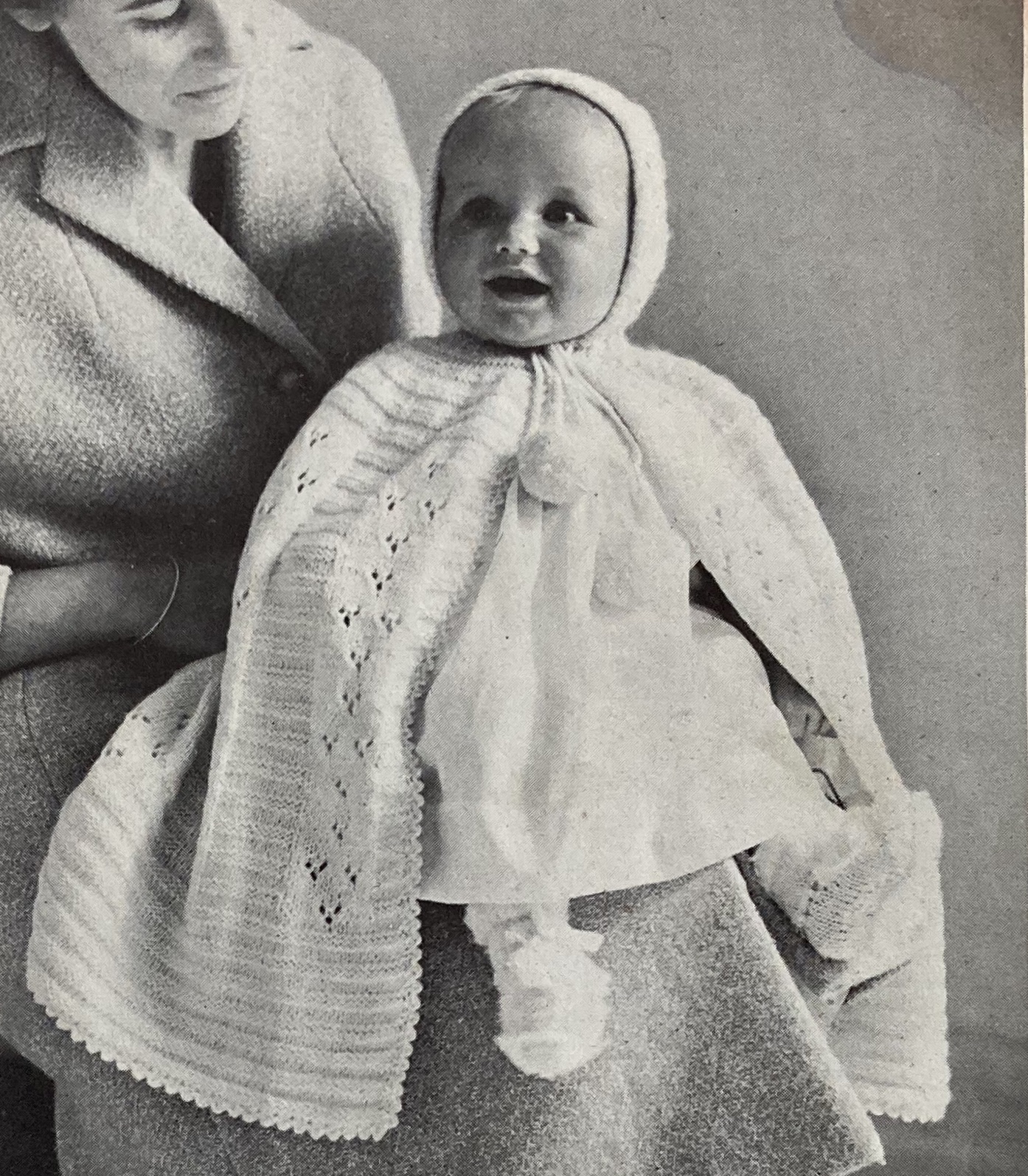
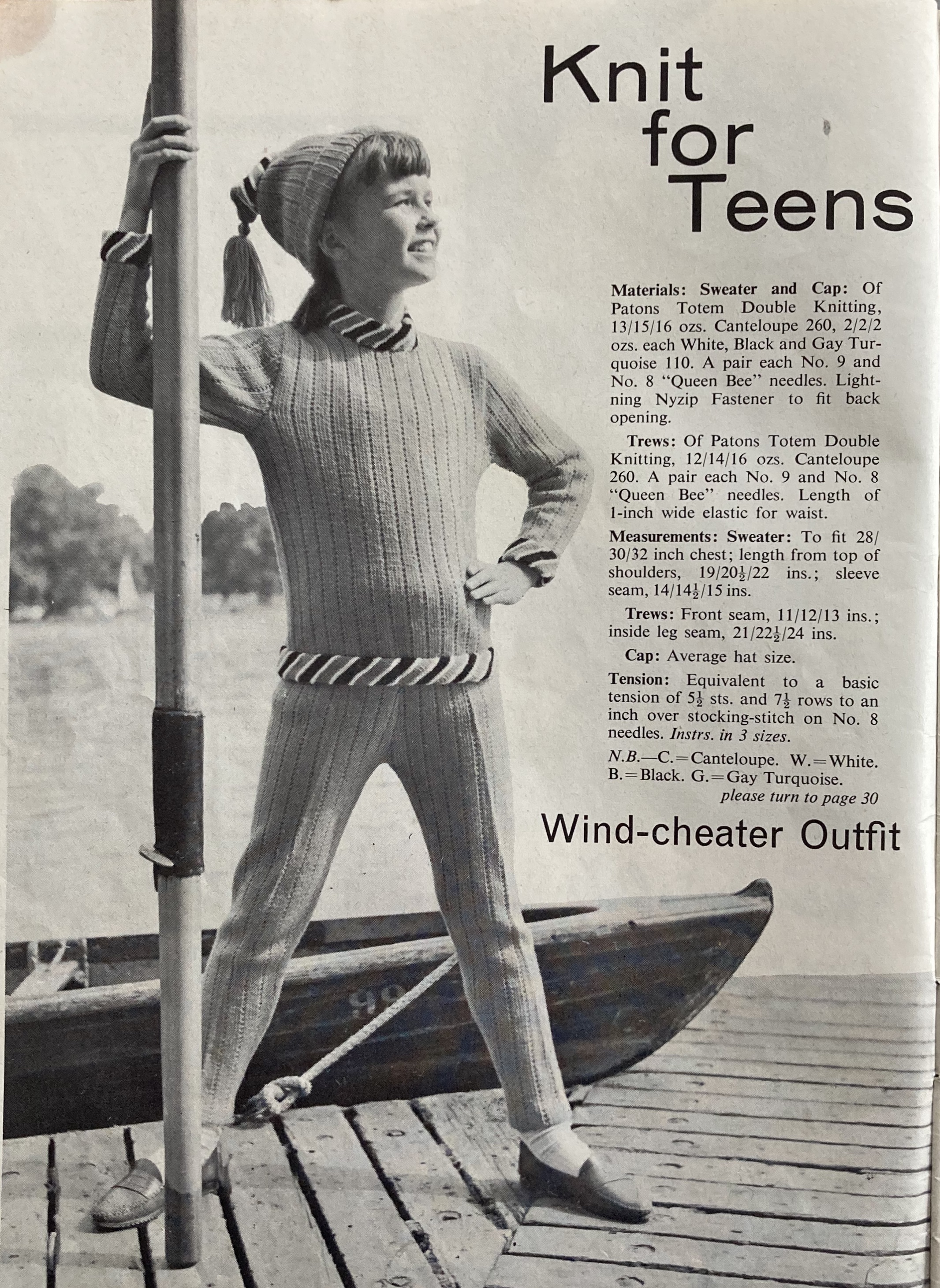
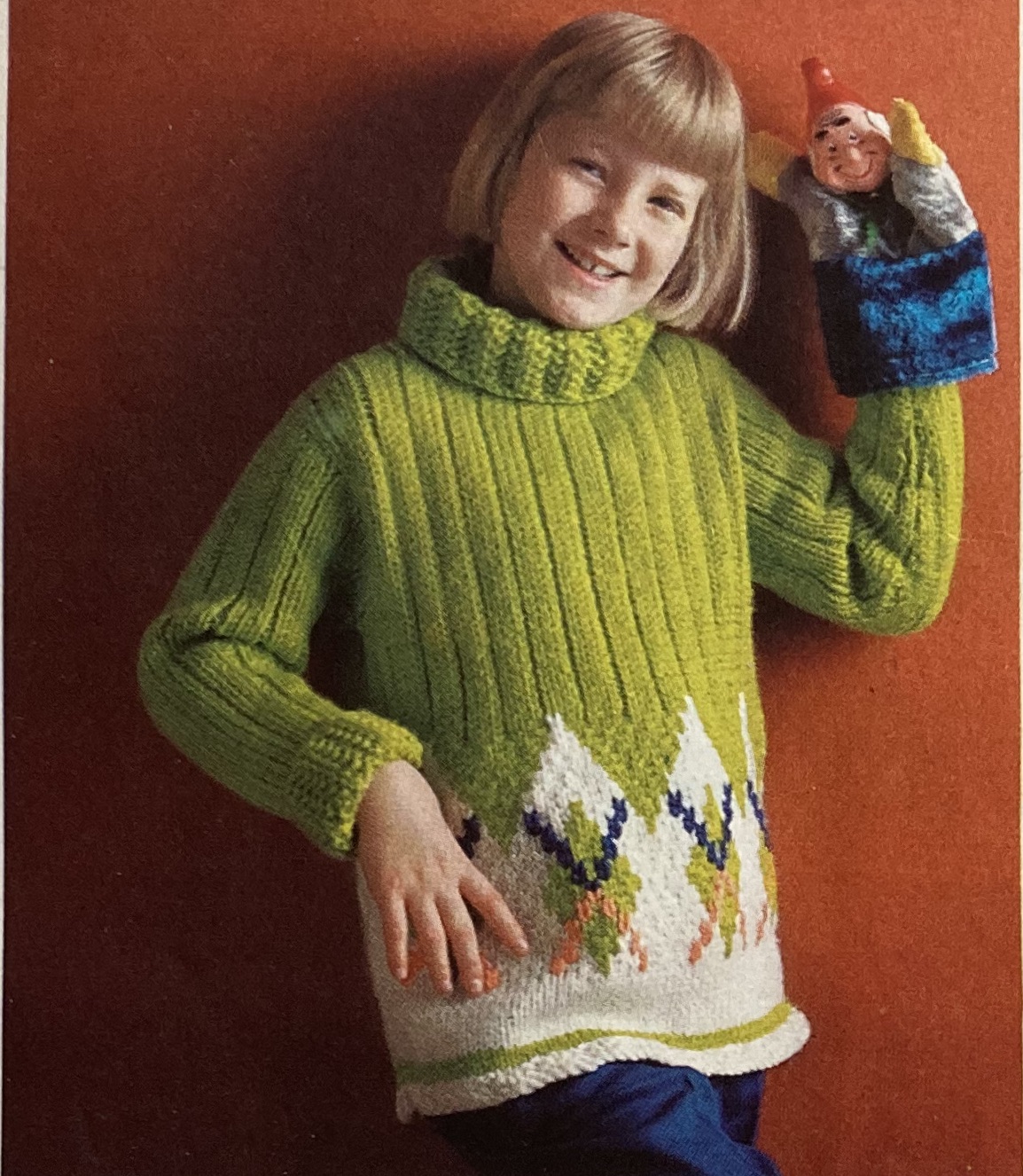
In the “Teens and Babies” department, there’s a wonderful winter “wind-cheater outfit” set (actually a set, this time) of sweater, leggings and hat, as well as a thick, warm jersey for a young girl (our model is quite possibly not a teenager yet, but the pattern is in three sizes up to 32 inch chest to fit older girls as well), and a continuation of the baby set (also an actual set) that was started a few issues ago with matinee coat, dress, etc.: this last instalment is a lacy one-size-fits-all hooded cape to go over all the other garments. I love the photo of the girl standing on the dock next to her boat, looking like a proud sailor! Last month’s issue, if we remember, touted “the Feminine Look”, meaning girls had to look pretty and not really do very much, so it’s nice to see our young sailor looking active and happy in her autumn sport set. The diagonally-striped hem and cuffs are knitted separately and sewn on later.
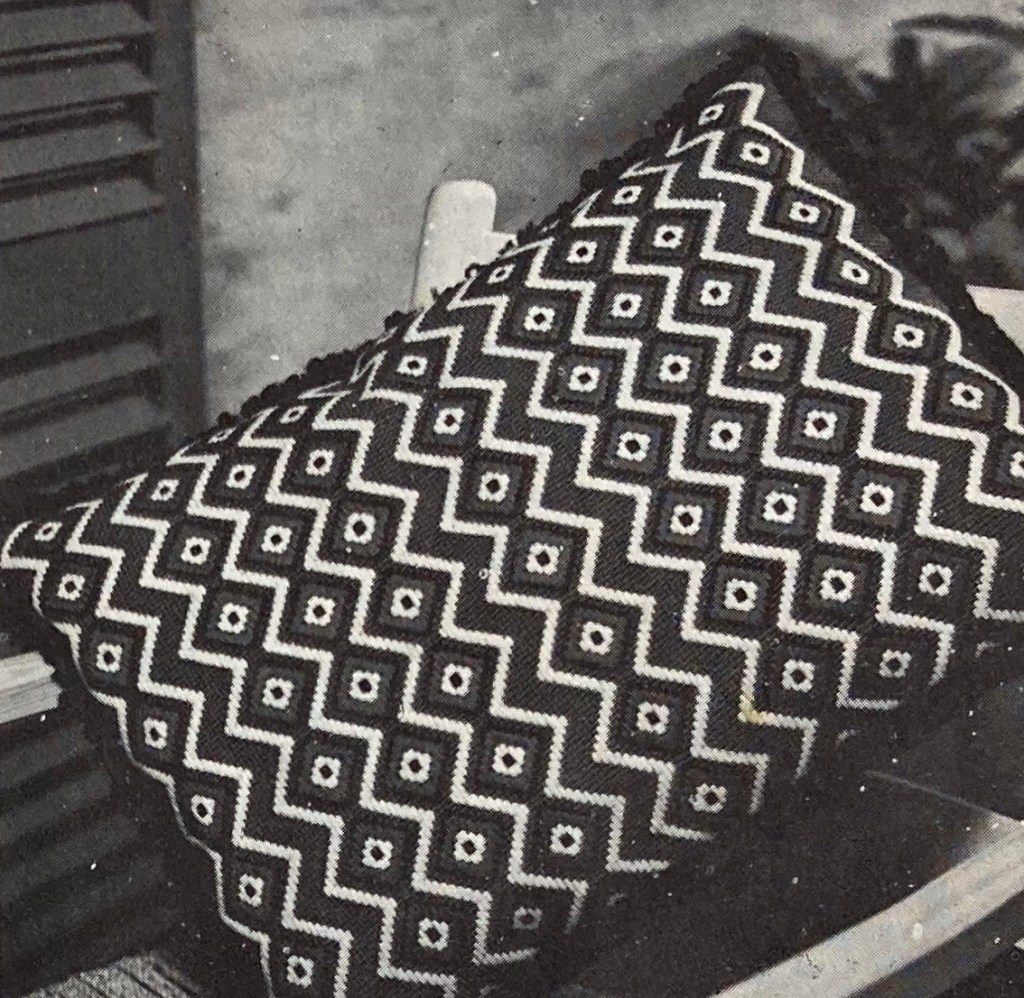
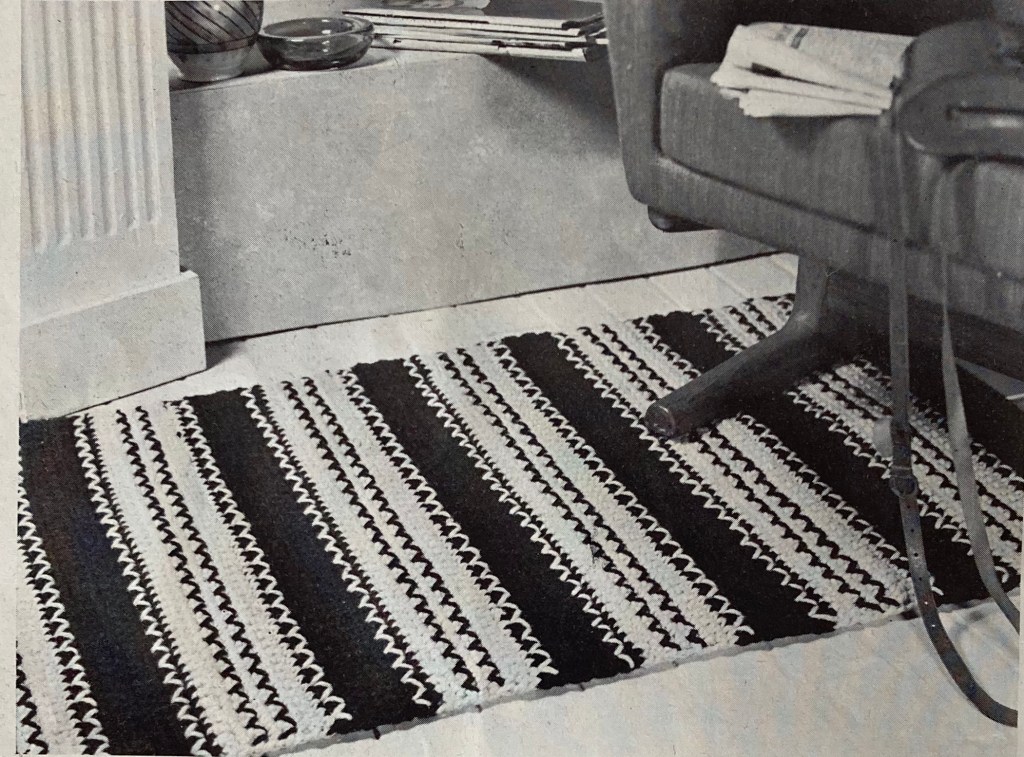
The non-Christmas-themed housewares continue the zig-zag / geometric trend with a crocheted rug, diamond-pattern cushion and wacky zig-zag chairback and cushion set (yay, another set).
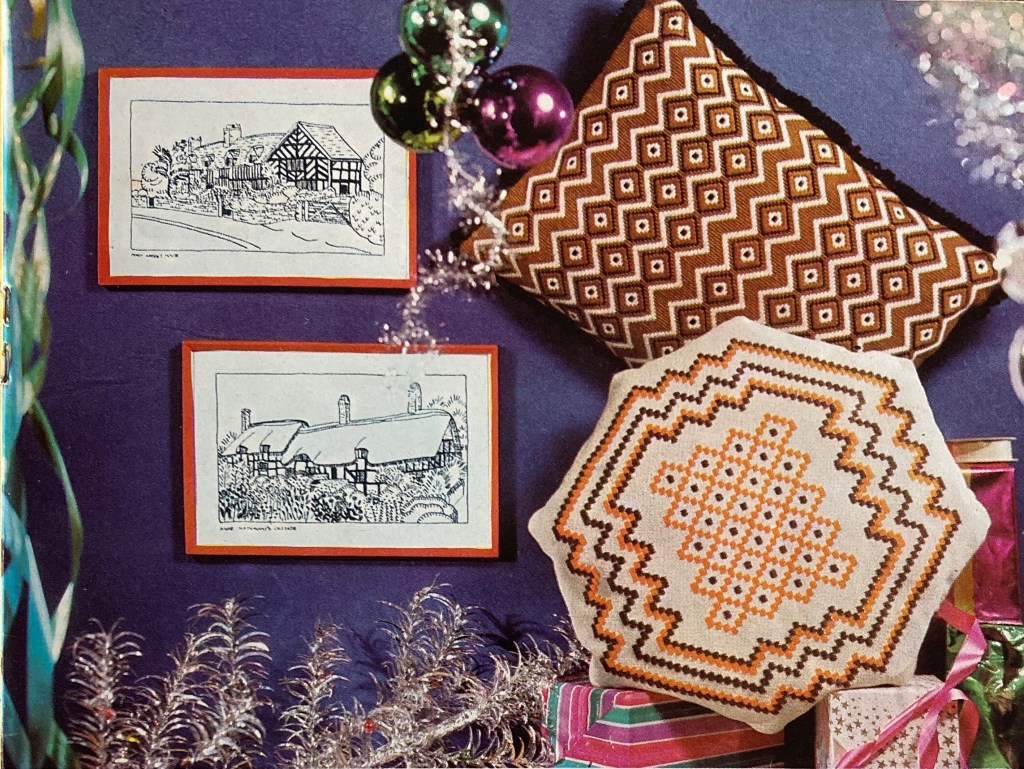
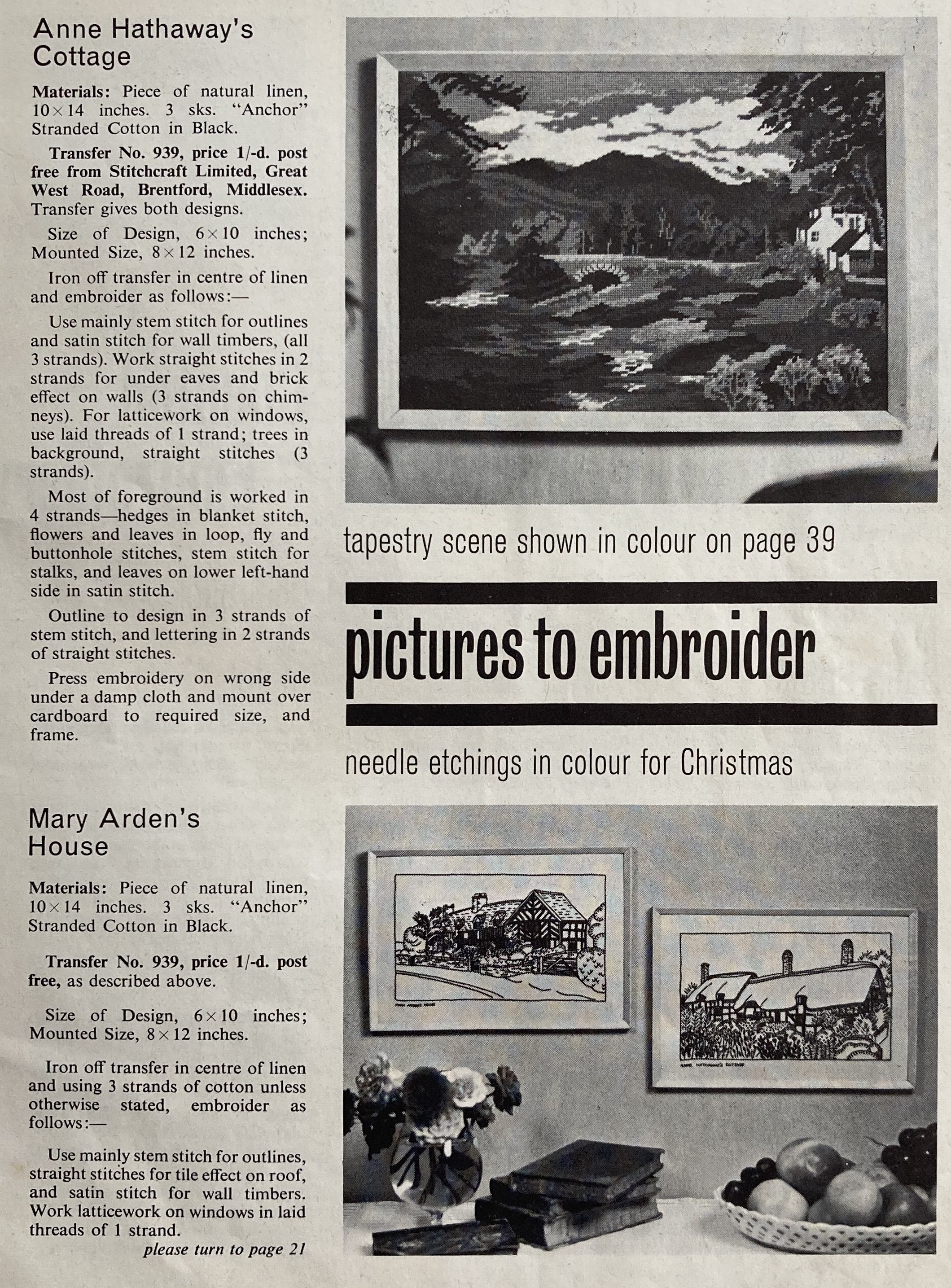
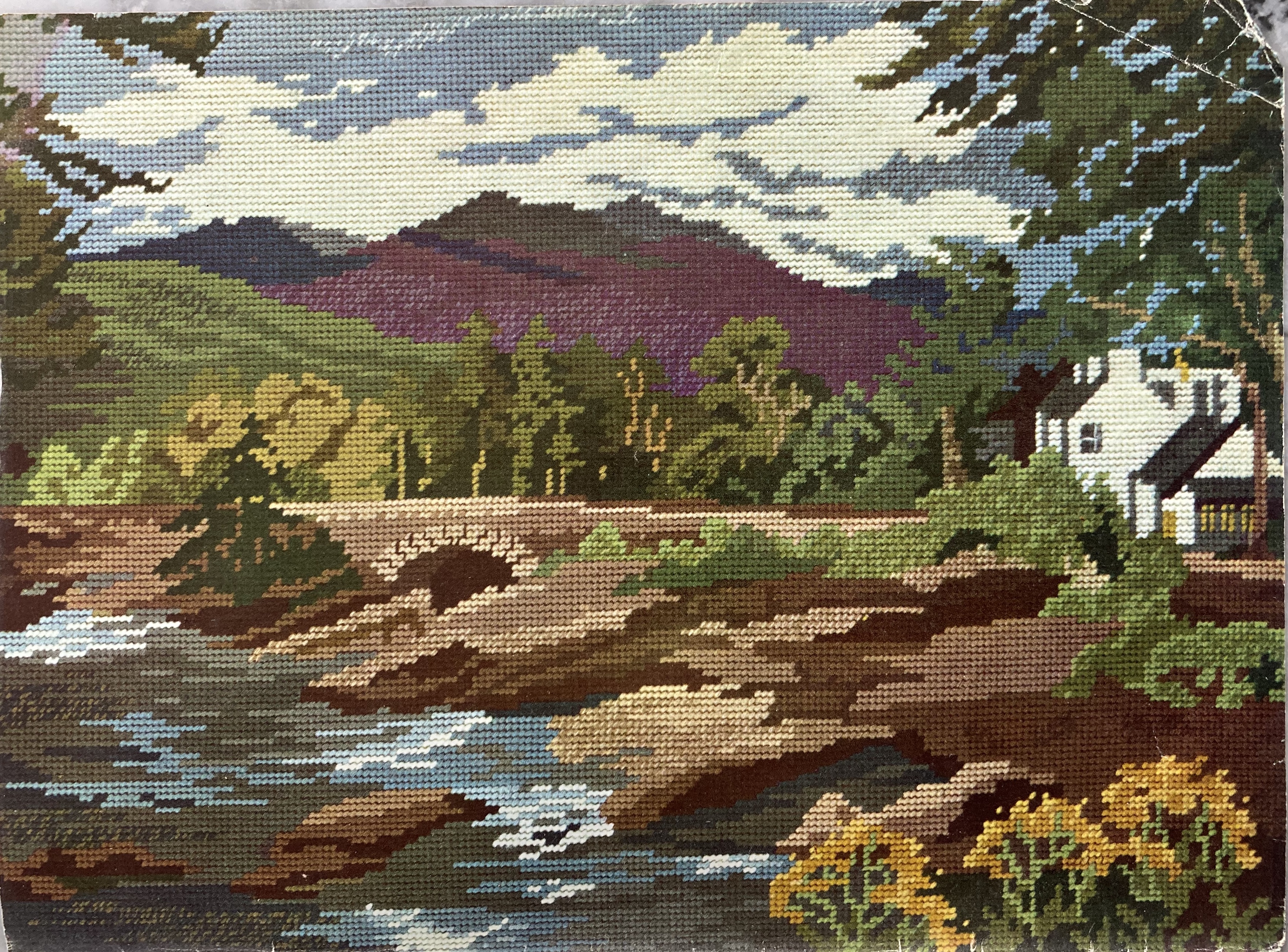
There are tapestry and “needle etching” embroidered pictures that draw inspiration from Shakespeare’s family: “Anne Hathaway’s cottage” (Shakespeare’s wife, not the modern actress…) and “Mary Arden’s House” (Shakespeare’s mother, not Lady Arden of Heswall.)
But finally… it’s time for the pre-Christmas decorations! The wacky “novelties” and bizarre-bazaar items! I know you have been waiting for this and I promise you will not be disappointed. You may, however be scared out of your wits, if you happen to have a clown phobia, in which case I caution you to skip over the next few photos.

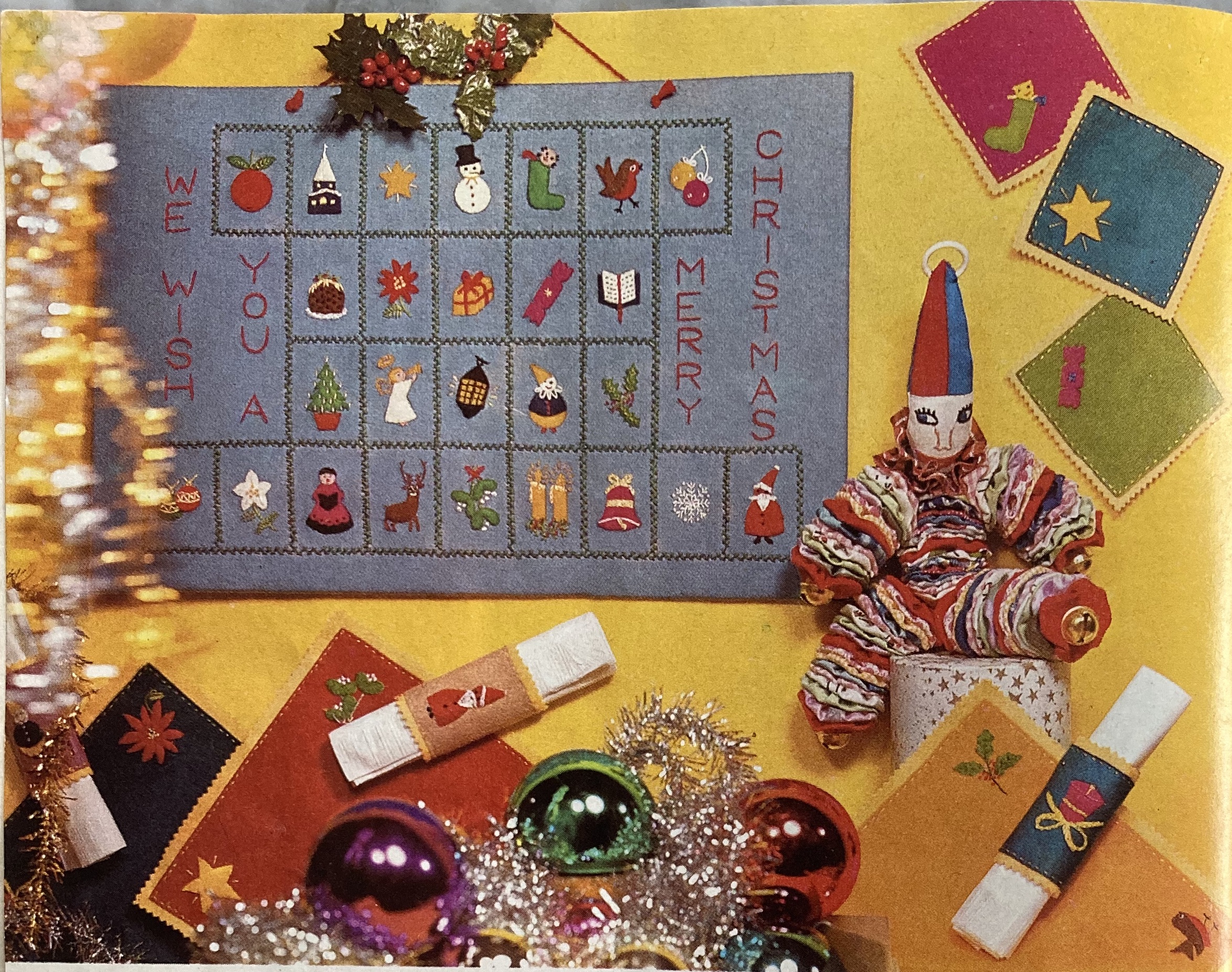
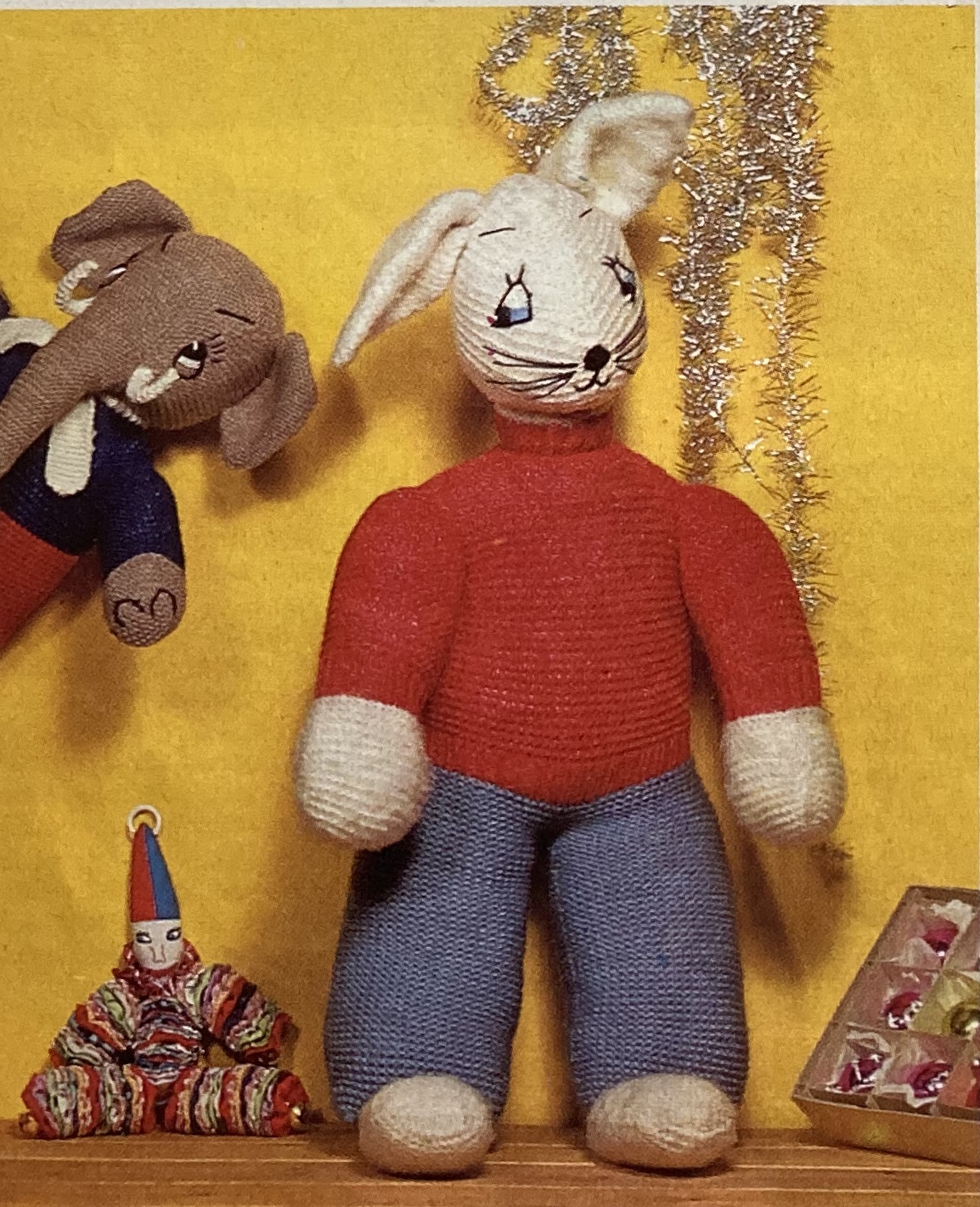
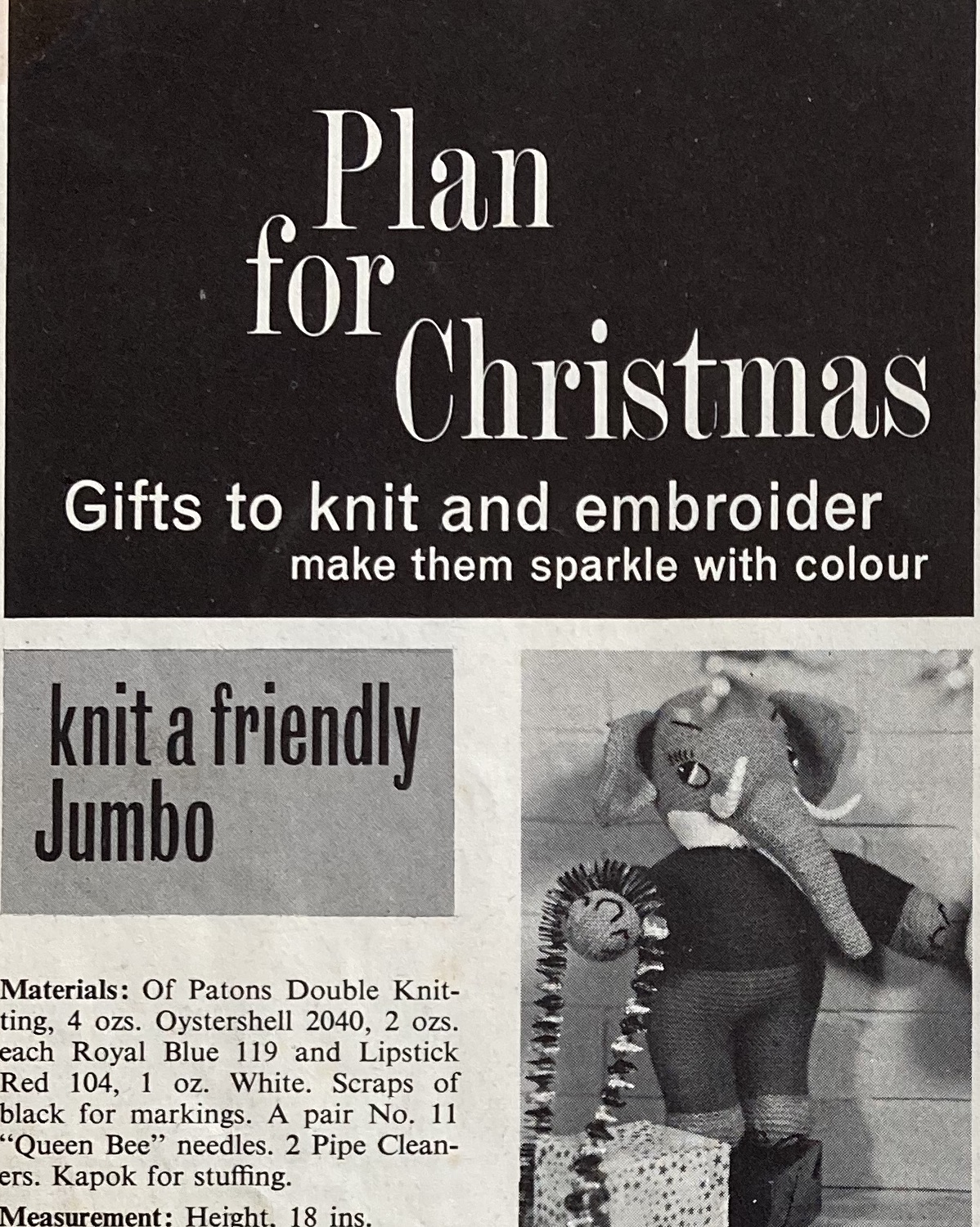
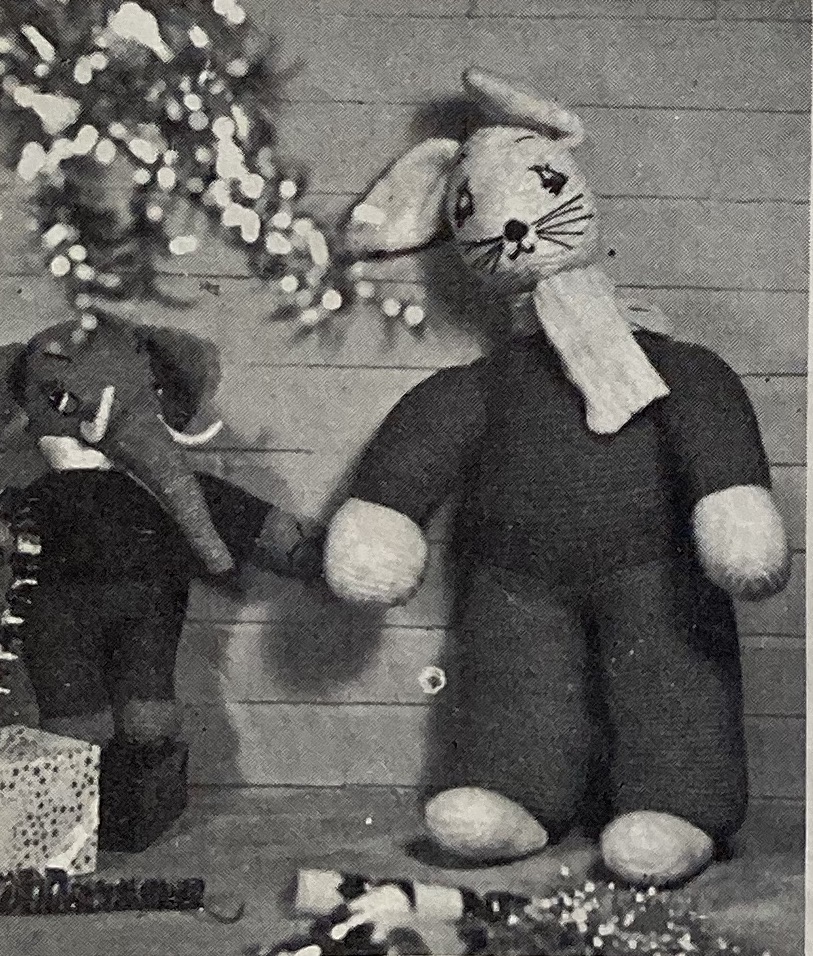
Starting with the melancholic stuffed animals, you can knit a “friendly” Jumbo the elephant, who seems to be rolling his eyes at the happy child who just pulled him out of their Christmas stocking, or a sad “bunny with a twinkle”. The table decorations are quite cute and easy to make: felt place-mats, napkin-holders and an Advent wall panel with wintery and Christmas-y appliqué motifs.
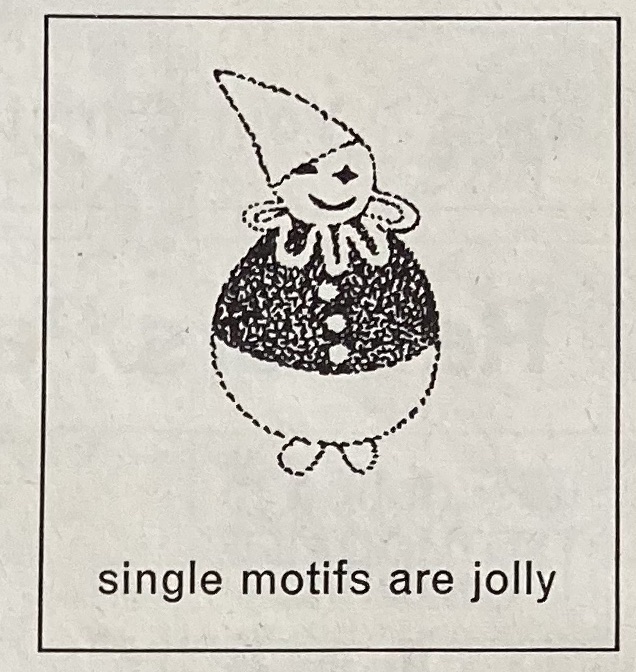
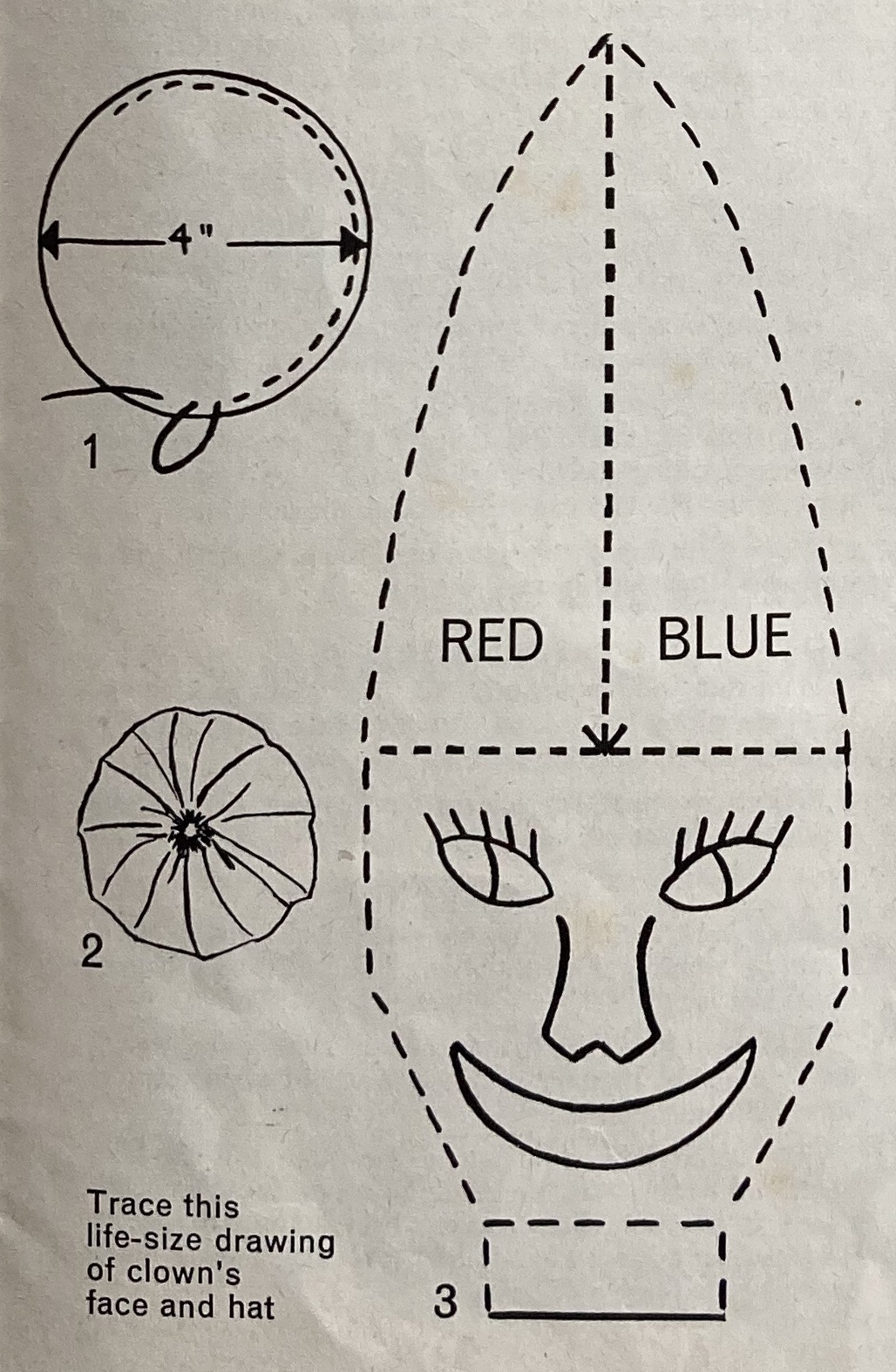
But that clown! The “Musical clown for a tot”! What in the world is going on with that clown? Even the bunny is giving it the side-eye. The construction is actually pretty interesting and a fun way to use up fabric scraps: you cut 4-inch diameter circles of fabric, gather them up with a gathering thread to make little poufs and then sew them on top of each other to make the arms, legs and body. Then all you need to do is sew and stuff a pointy head and cap and embroider a terrifying face onto it. Don’t worry, it has bells instead of hands and feet, so you can hear it coming.

EDIT November 12, 2022: I was browsing around on UK Ebay and someone is selling an FO of this clown! Unbelievable! I am not going to buy it but maybe one of you will

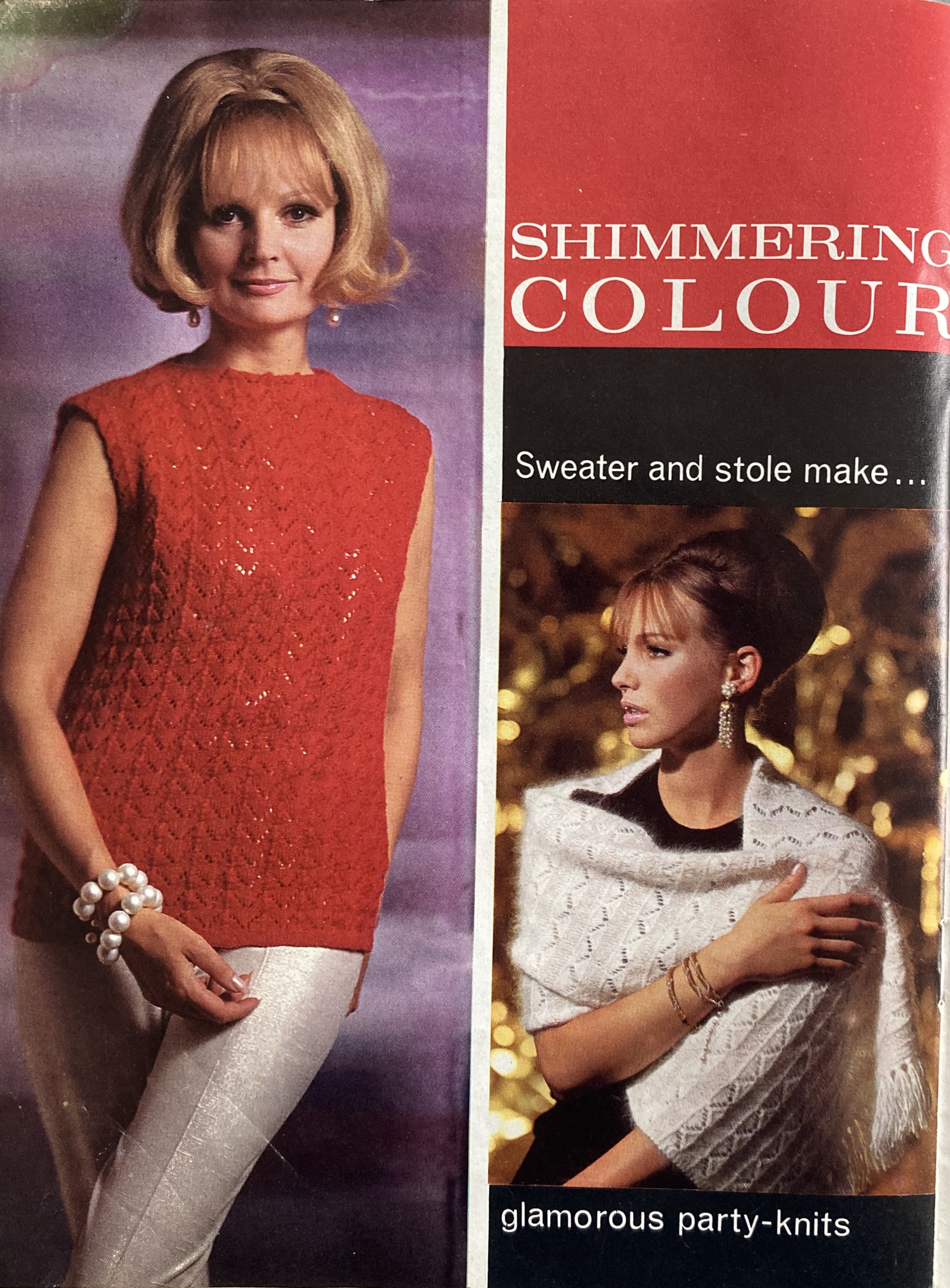
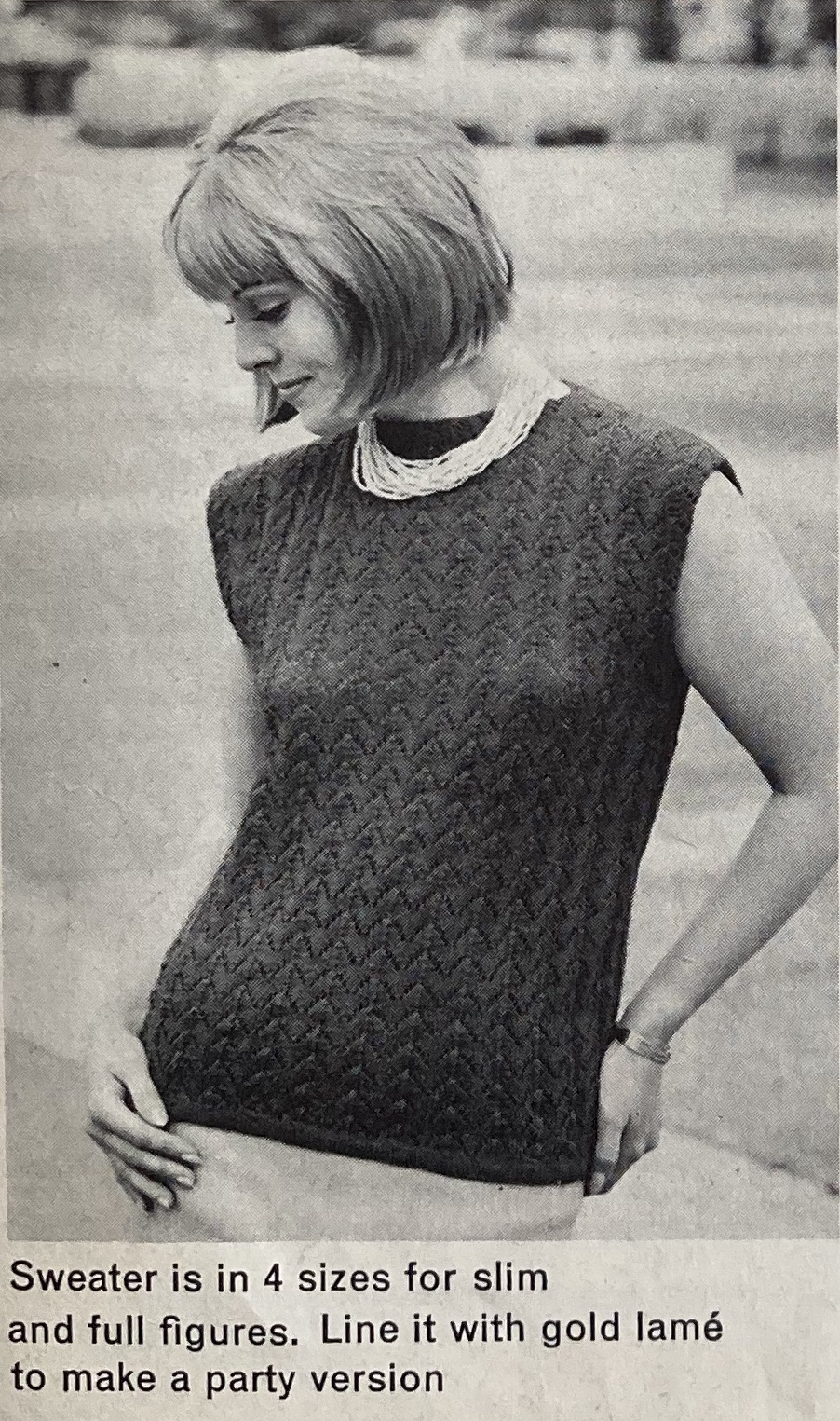
To clear your mind of those images, here is a lovely lacy party top and fluffy “luxury stole” knitted with Lurex for holiday party glamour. The top can be lined with gold lamé for extra sparkle.
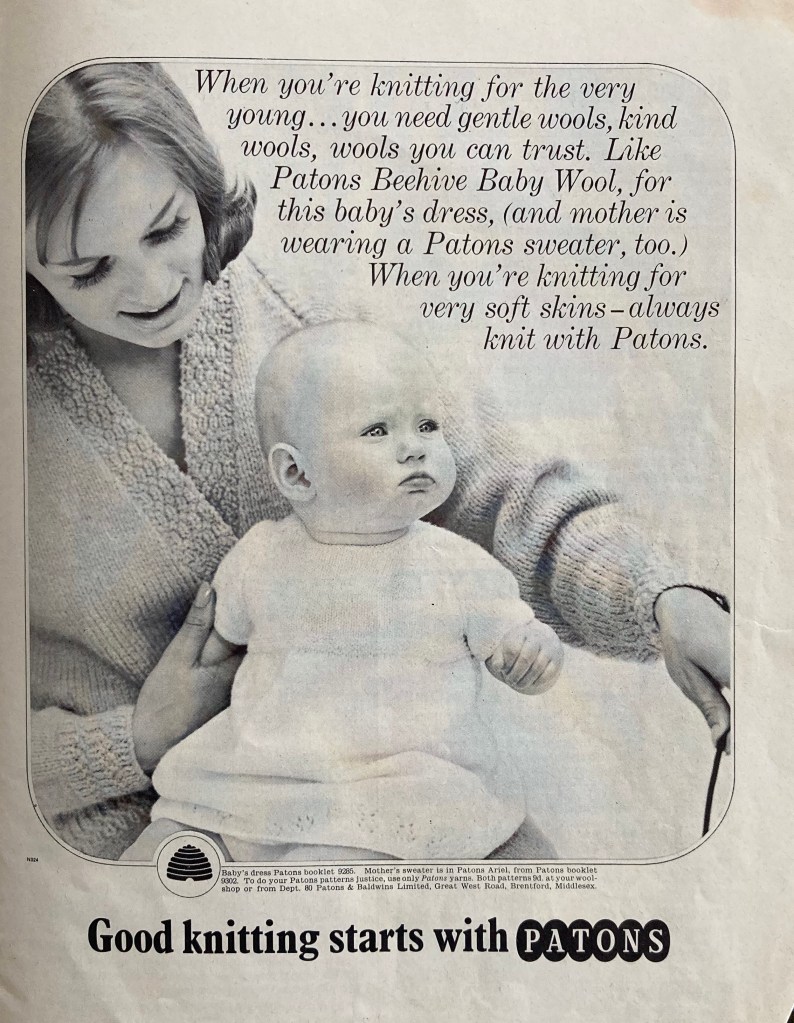
Rounding out this bumper issue are the “Readers Pages”, featuring Stitchcraft and Patons-inspred gift ideas (a yearly subscription, binding cases for past issues, knitting patterns…) and a fun way to use up wool scraps: a coat hanger cover to keep delicate items from creasing or stretching at the shoulders. The ads use babies to sell Lux soap flakes and Patons wool.
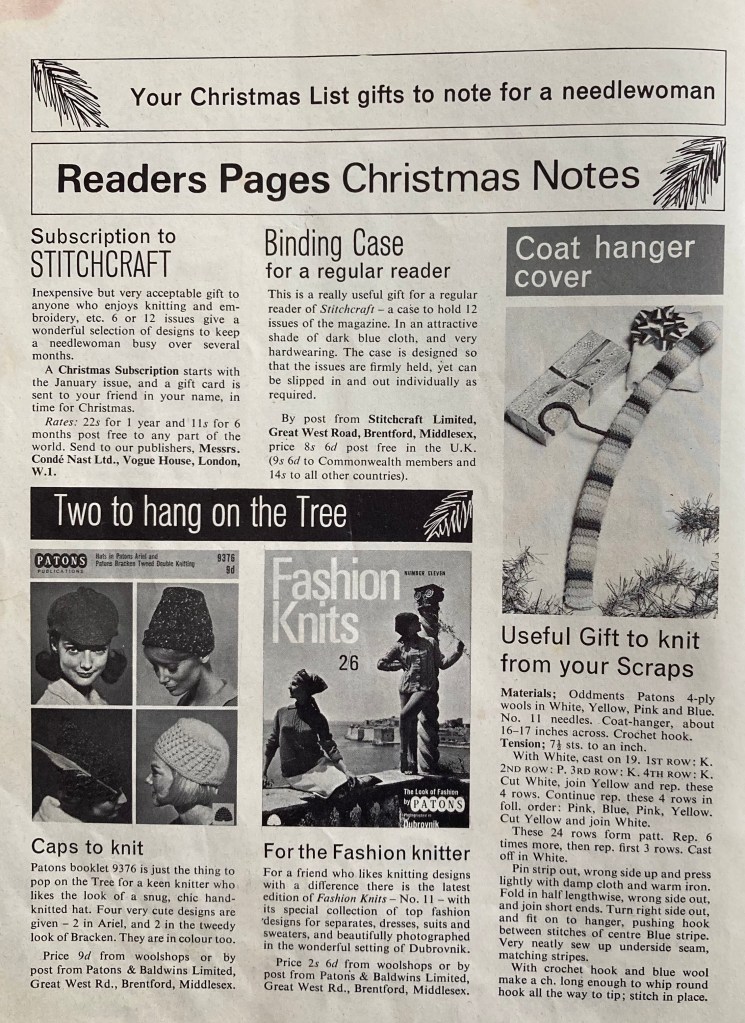
The only project that really called to me from this issue was (laugh if you want) the coat hanger cover, which could make a cute little gift for a friend or be useful in my own closet, as well as being quick and easy and a way to use up some of those mystery scraps in the stash drawer. The October 1964 dress is almost finished, so I’ll update that post soon as well.
October 1964: Totem Dress

EDIT November 20, 2022: Finished!

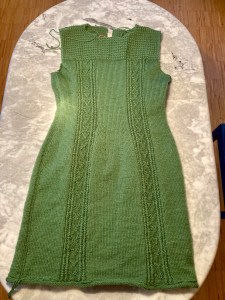
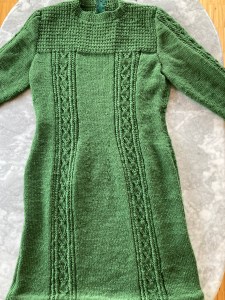
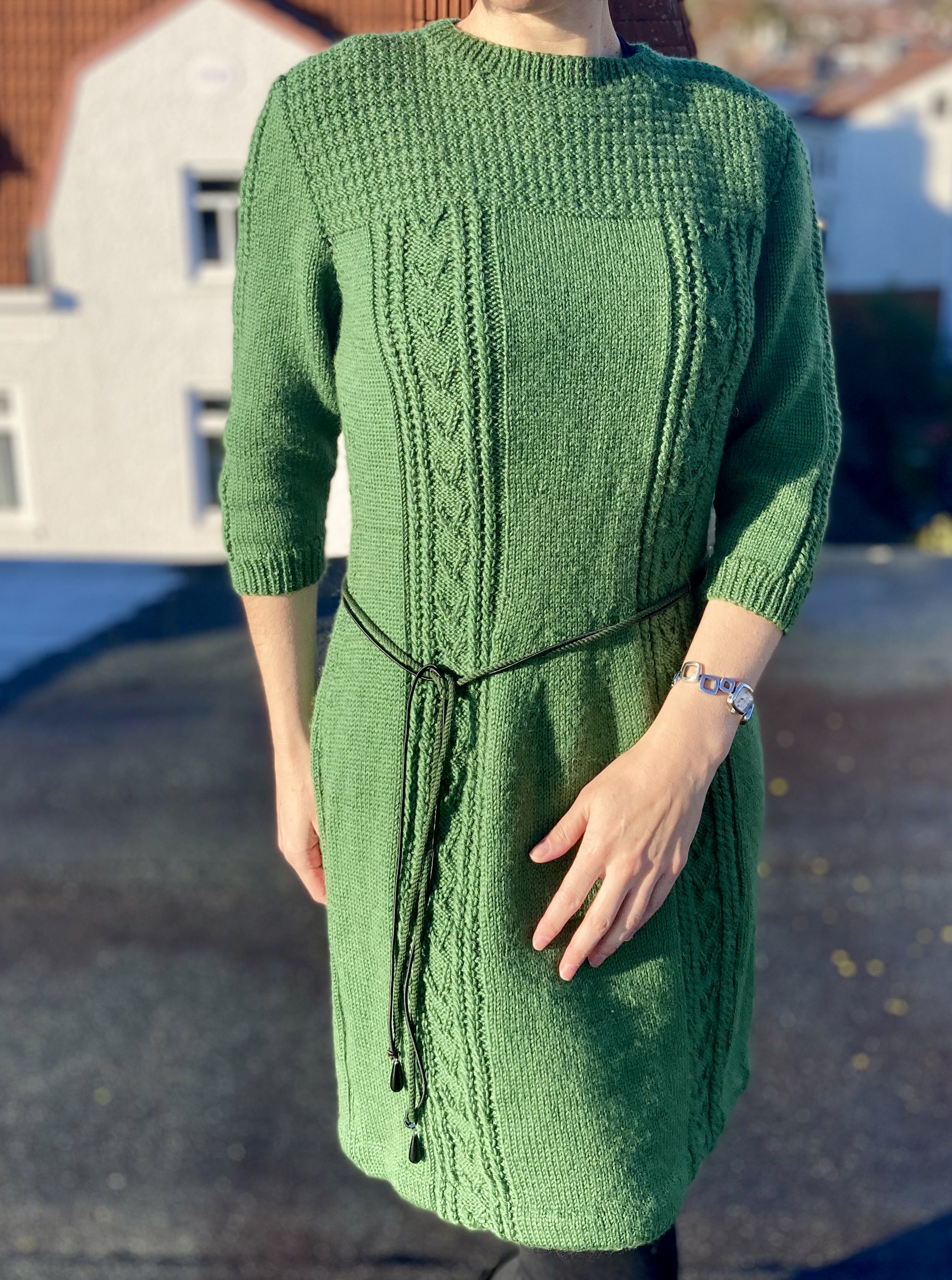
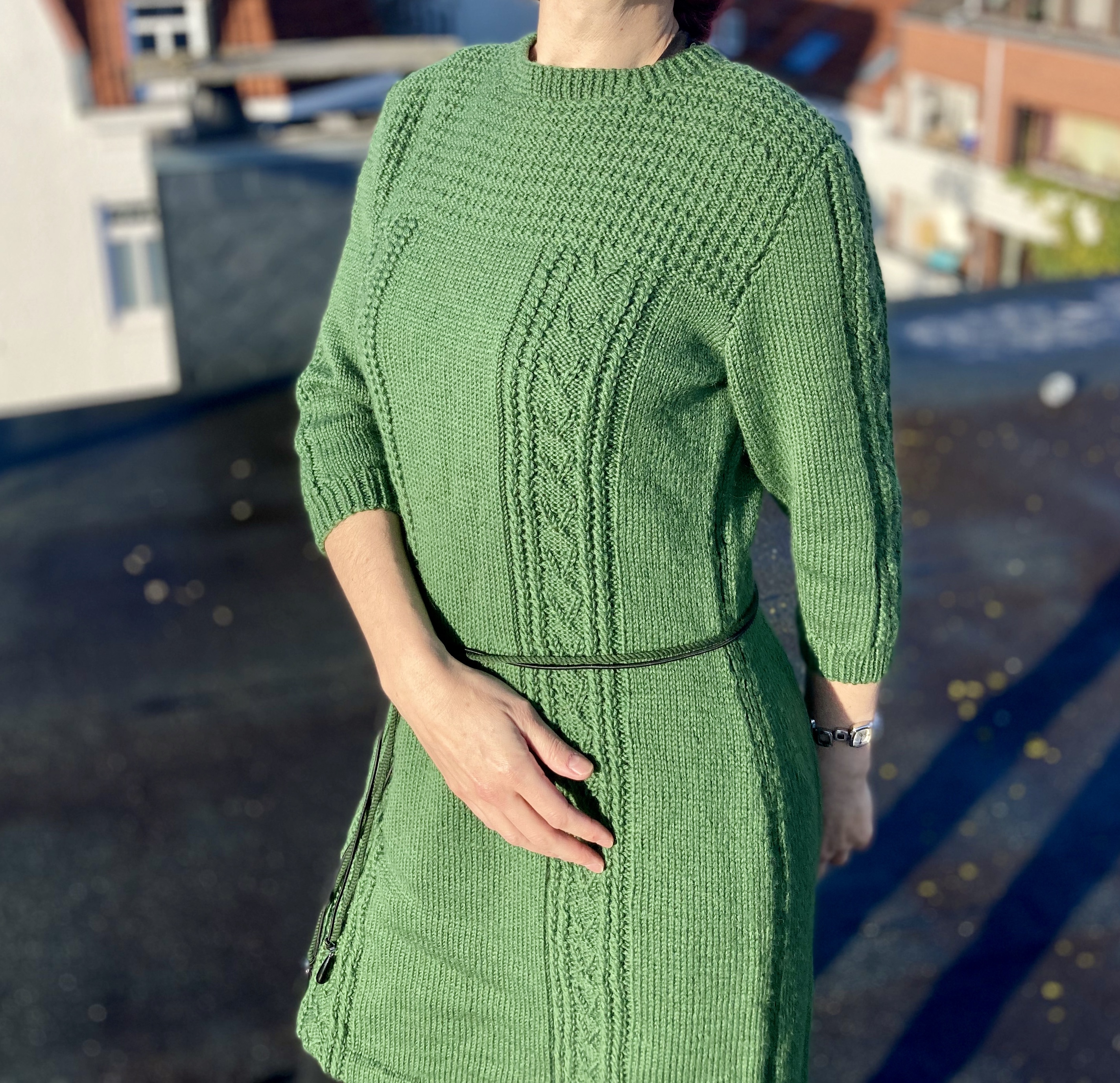
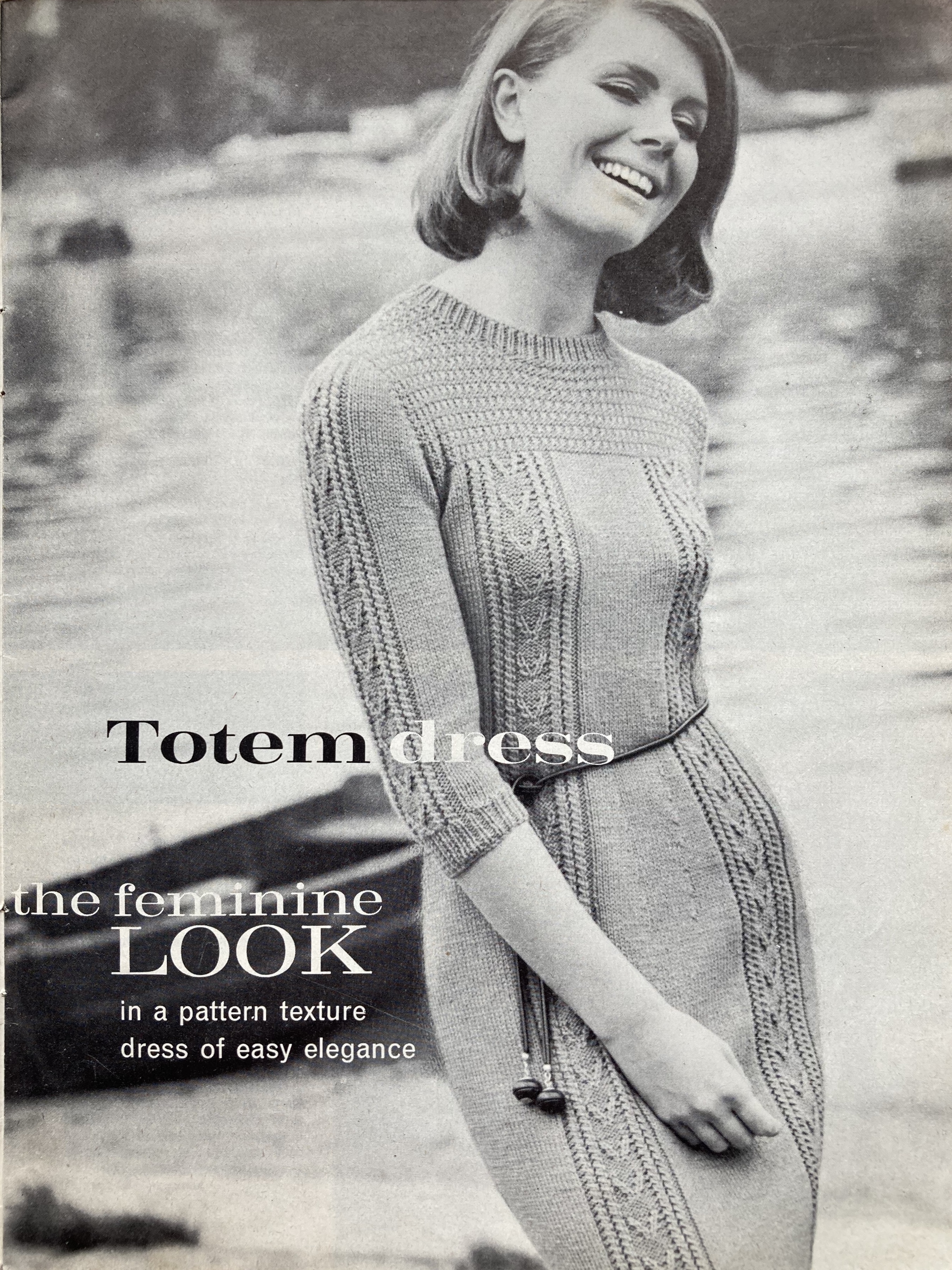
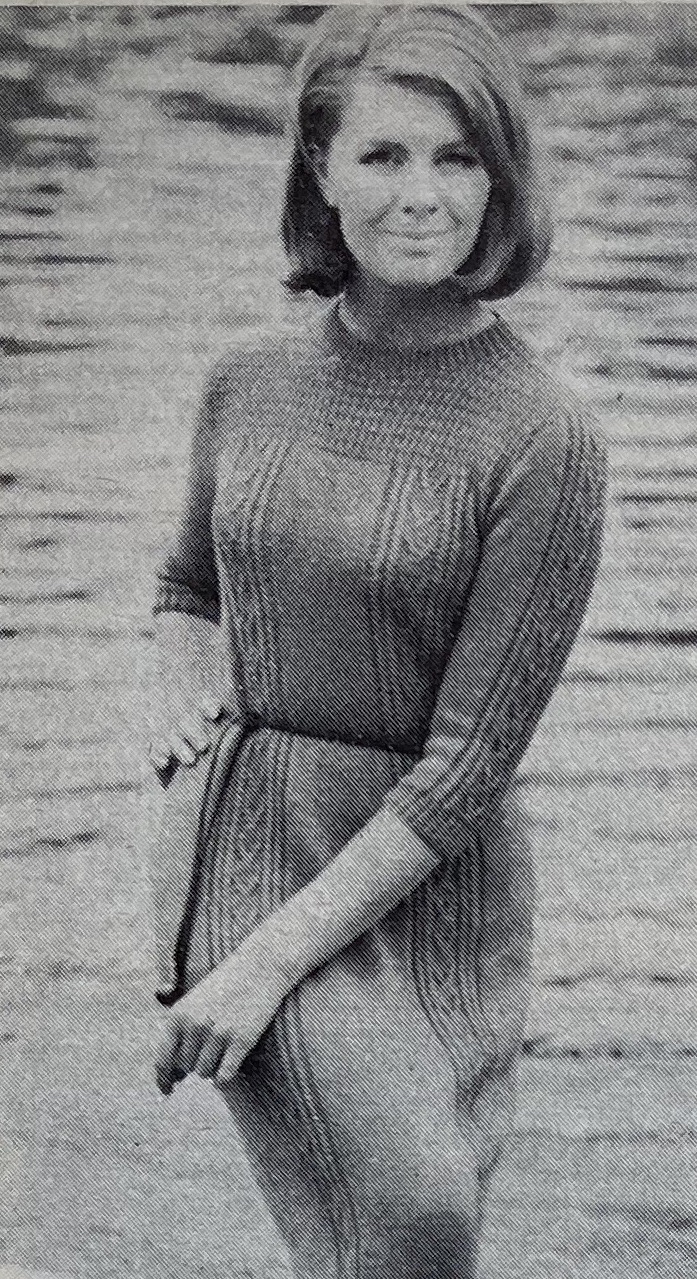
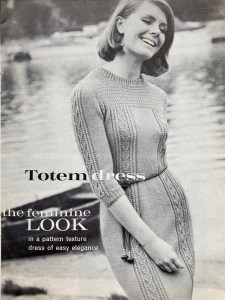
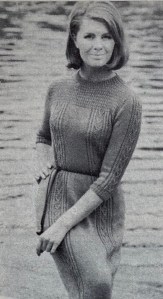
My October project was this fantastic “slim-line dress to flatter your figure”, designed in “a classic style with Aran panels and fancy rib yoke to give the fashionable textured look.” It’s written for Patons “Totem” Double Knitting, a very smooth, tightly plied crepe-twist wool suitable for the mock-cable pattern panels running up and down the dress body and sleeves.

Not having any Patons Totem on hand (of course, it has been discontinued for some time), I chose Drops Karisma, an easy-knit, easy-care DK wool. It’s also superwash — I don’t generally like superwash as it tends to stretch and sag after washing, but the advantage of not having to hand-wash a knee-length, DK-weight knitted dress won out. I chose to make it in brilliant grass green instead of “Spanish Rose” (medium pink, I assume), which is still quite appropriate for this month’s issue — it’s very close to the bright green of the men’s cardigan in the colour centrefold photo.

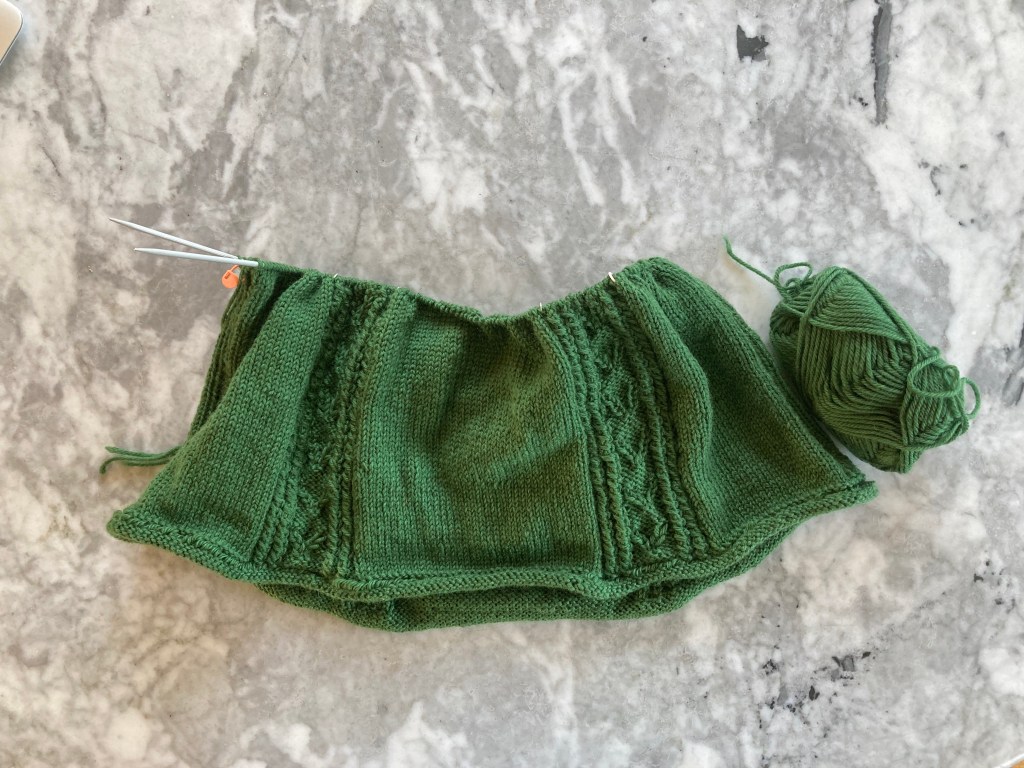
I made it in the second size with a few alterations: four inches shorter, to start. The finished length in the pattern is 40 inches, or just past knee-length, but this is a heavy garment and I am sure it will sag with wearing and washing. Also, I prefer skirts to be a bit shorter, so I aimed for 36 inches total length. To speed up the knitting, I made the dress in the round, with 3 stitches of ribbing at each side to make a stabilising “seam.” There’s a hem at the bottom edge, to which I added a purl-on-the-RS folding row. I wasn’t sure about the elbow-length sleeves and thought about making them long, but decided to stick with the pattern. (Ideally, I would have knitted them from the top down and just made them as long as I wanted, but the twisted-stitch pattern doesn’t really work upside down.)

Other than that, I stuck to the pattern. The pattern panels (2 on each of back and front, one on each sleeve) have traveling stitches in the middle, flanked by twisted stitches (k into the back of the second stitch, then the front of the 1st stitch on needle, then take both stitches off the needle together.) You are supposed to make the traveling stitches by twisting them as well:

Tw.2R = knit into front of 2nd st. on left needle, then purl into front of 1st st. and slip both stitches off needle together.

Tw.2.L = purl into back of 2nd st. on left needle, then knit into front of 1st st. and slip both stitches off needle together.

I could not make that work! I tried and tried. The stitch on the right side was usually twisted the wrong way, and the stitch on the left sat correctly, but was stretched out. I thought it might help to hold the wool in my right hand, “English” style (I generally knit “Continental” style with wool in the left hand and “pick up” the thread), but that was awkward and didn’t help. I tried ye olde “cable without a needle” trick where you basically drop the yarn and just hold it in your fingers, which worked but was no fun. Finally, I just used a cable needle, which was faster and neater. If anyone can tell my what was going wrong with the directions from the pattern, I’d be happy to hear it, though.

The knitting went quite quickly and by October 29 (date of this first post), I had finished the back and front, and one sleeve up to the sleeve-cap shaping. The total length before blocking was 34 inches, which, if my swatch is any indication, will stretch out to the desired 36 inches (and if not, that’s fine too.) The “fancy rib yoke”, by the way, is a simple rib/welt pattern: p1 row, k1 row, then k1, p1 for two rows. It makes a very pleasing, stretchy waffle effect.

I painstakingly calculated out the total amount of wool I would need, based on the yardage of the original Totem wool (from Ravelry, I didn’t have any of the real thing) and the meterage of the Drops Karisma, converting yards to metres and ounces to grams. Were my calculations successful?? We will see! Supposedly I will need about 730 grams, and I only bought 800, because I like to live dangerously. EDIT: The finished dress used exactly 737 grams of wool. Am I good at math or what?

I finished the dress mid-November, but had to travel for work right afterwards, so didn’t get around to blocking and photographing it until a week or two later. Finished measurements after blocking were about 37 inches bust, 32 inches waist, 40 inches hip and 34 inches long — perfect. The hem falls just above the knee and if it stretches a bit, that’s fine too. The wool is superwash, so I could always dry it in the dryer to make it snap back into shape.

I made a little belt out of green cord and pleather cord with baubles on the ends, to match the belt in the photos. We didn’t quite get the same poses as in the magazine, but we had fun.

The dress is warm and soft and fits perfectly. It is fun to wear and it is bright green. What more could I want? It’s glorious.

October 1964: Overview

October is the start of the best season for knitting, and the October 1964 issue of Stitchcraft rose to the occasion with multiple themes and more colour pages than ever before (photographed in the villages of Great Waltham and Stebbing in Essex). There are knit designs for “him and her” as well as for different ages of babies and children, embroidery, tapestry, rugmaking and appliqué projects, “novelties” and even a few extra tidbits in the back “Readers’ Pages.” Shall we… fall in?

Our first Autumn theme is “The Feminine Look”, which cracks me up, for when has Stitchcraft or any handcraft magazine ever promoted the “masculine look” for women? It goes without saying that they would never advertise the feminine look for men… As far as I can see, the designs don’t look any more feminine than the designs from any other issue. Maybe it’s meant in contrast to the “partner-look” designs from previous fashion trends.

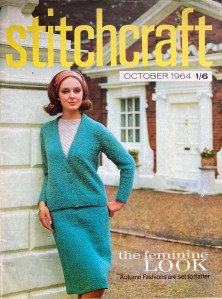
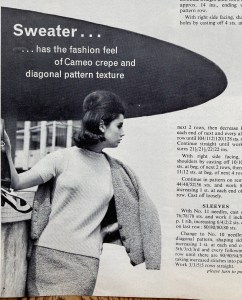
In any case, the cover-photo suit with coordinating jumper for underneath is simple and elegant, and probably quite comfortable to wear. It’s made in still-popular nubbly Rimple wool in DK weight and a slightly tweedy shade of light blue. The jumper is made in fingering weight and has a diagonal pattern.

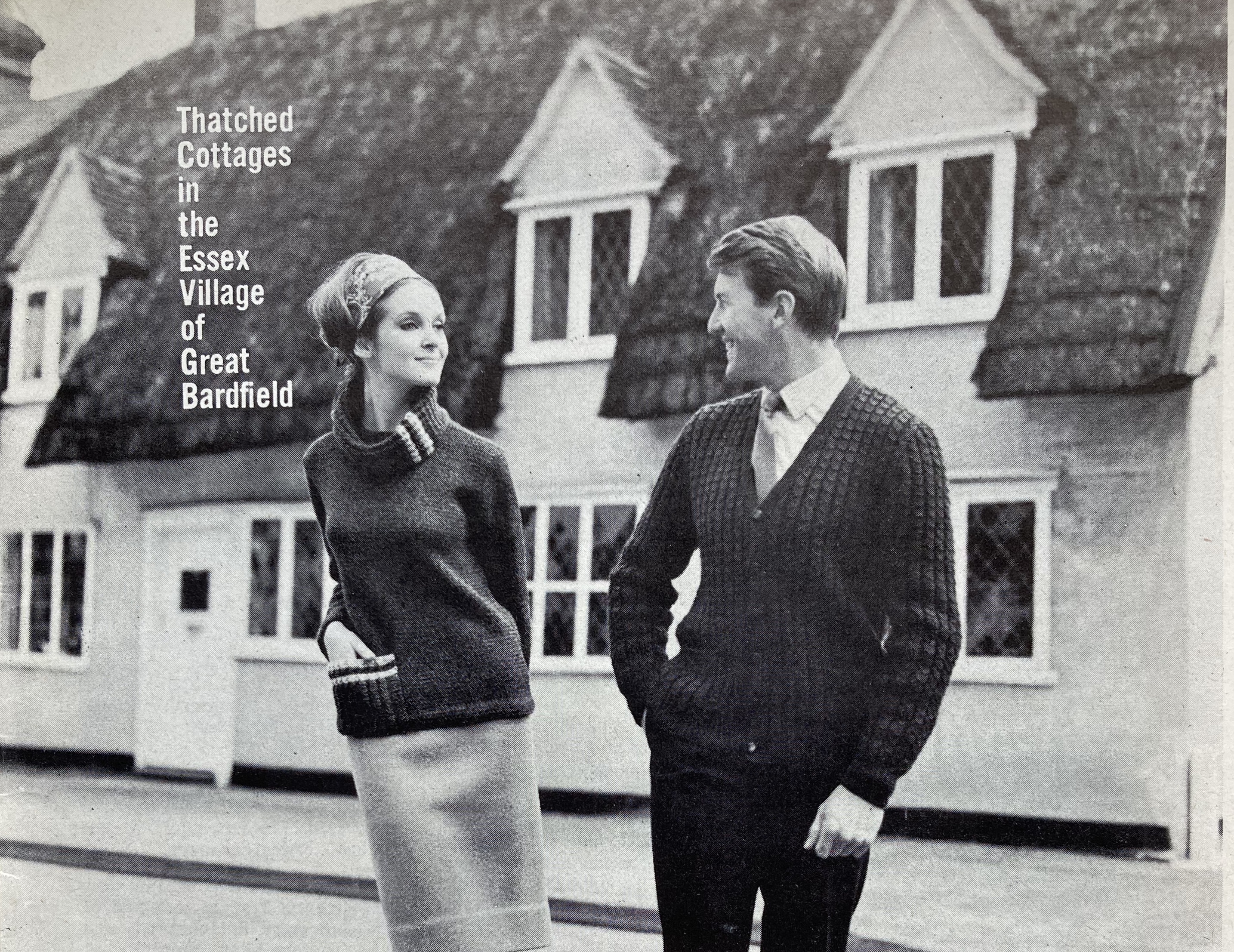
The women’s “feminine” fashions include a great cable-pattern dress as well, in smooth, DK weight Totem wool, and a less “feminine”, but probably very cosy, roll-collar pullover with an aysmmetrically-placed pocket. The mock-cable pattern on the pocket and collar is used as an all-over pattern on a man’s classic V-neck cardigan, and there’s another man’s cardigan as well in a very similar design, with “real” cables, a zip fastening and in bulky Ariel wool.

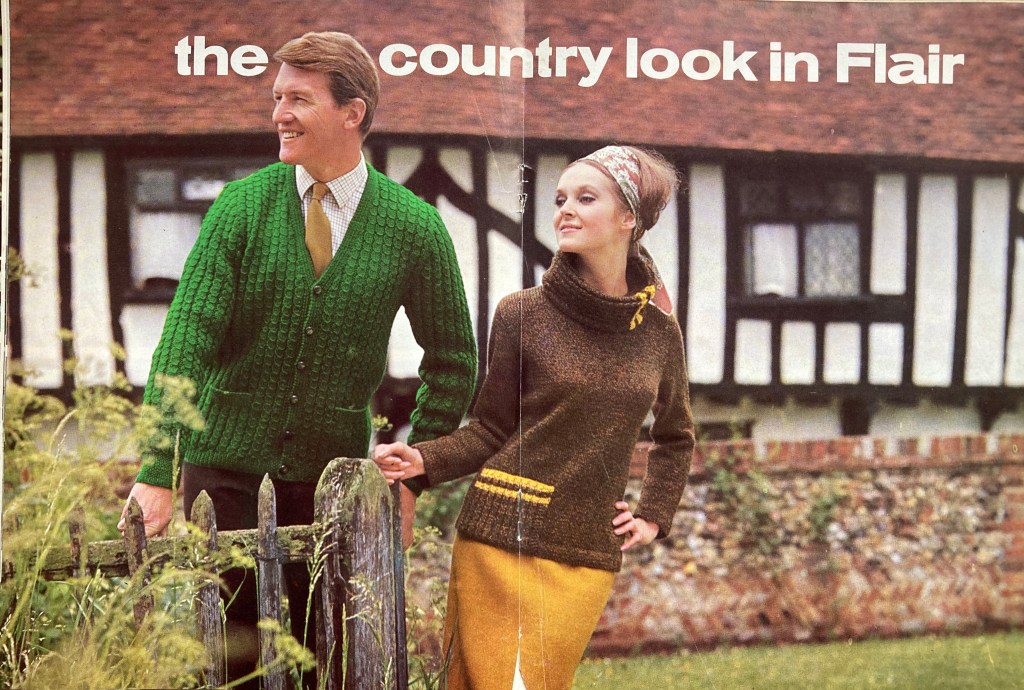
The cable cardigan and women’s pullover are shown off in a gorgeous full-colour centrefold photo where the green, yellow and brown of the knitwear harmonise perfectly with the country setting. As the caption says, both garments are made in “Flair”, a somewhat heavier wool-acrylic blend.

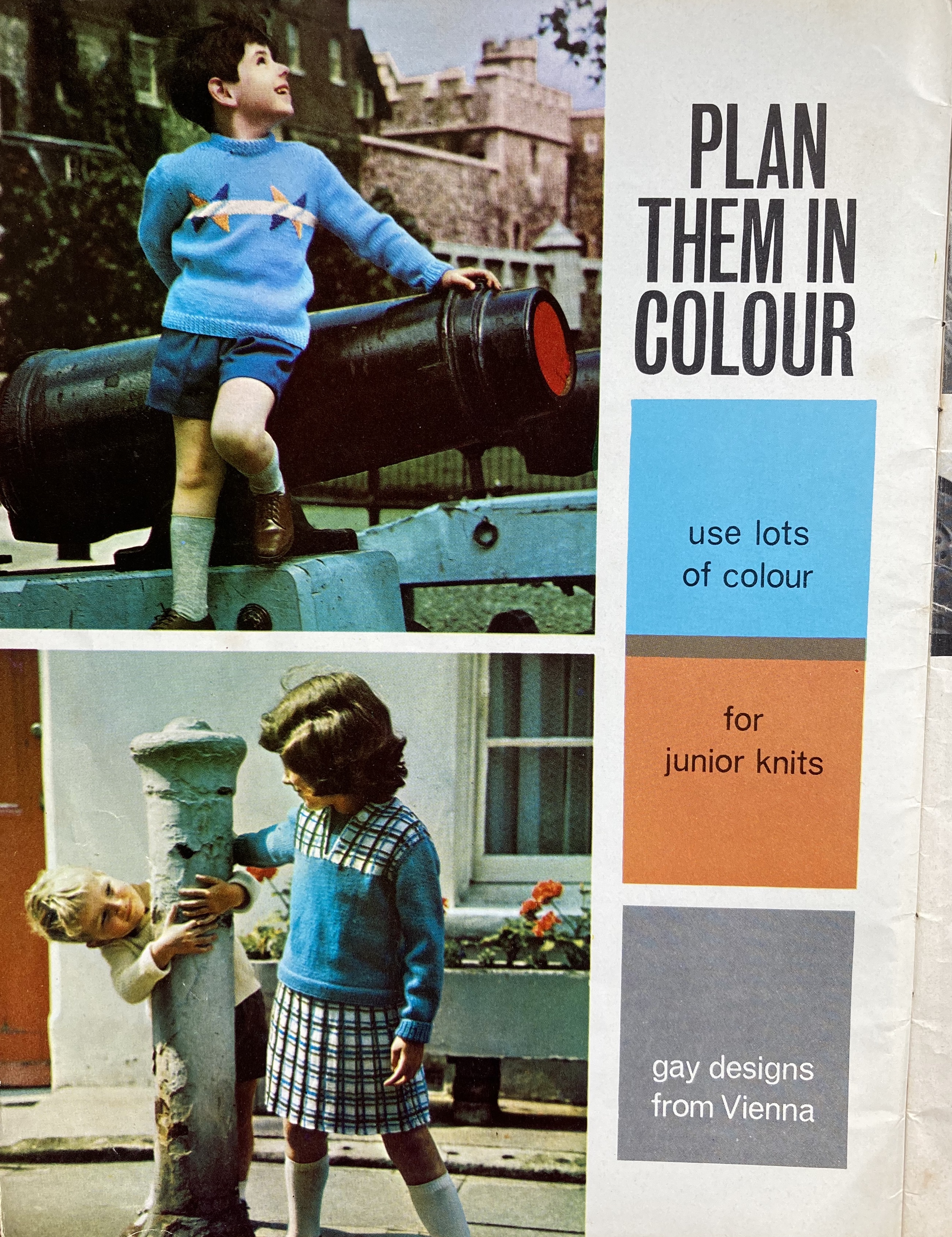
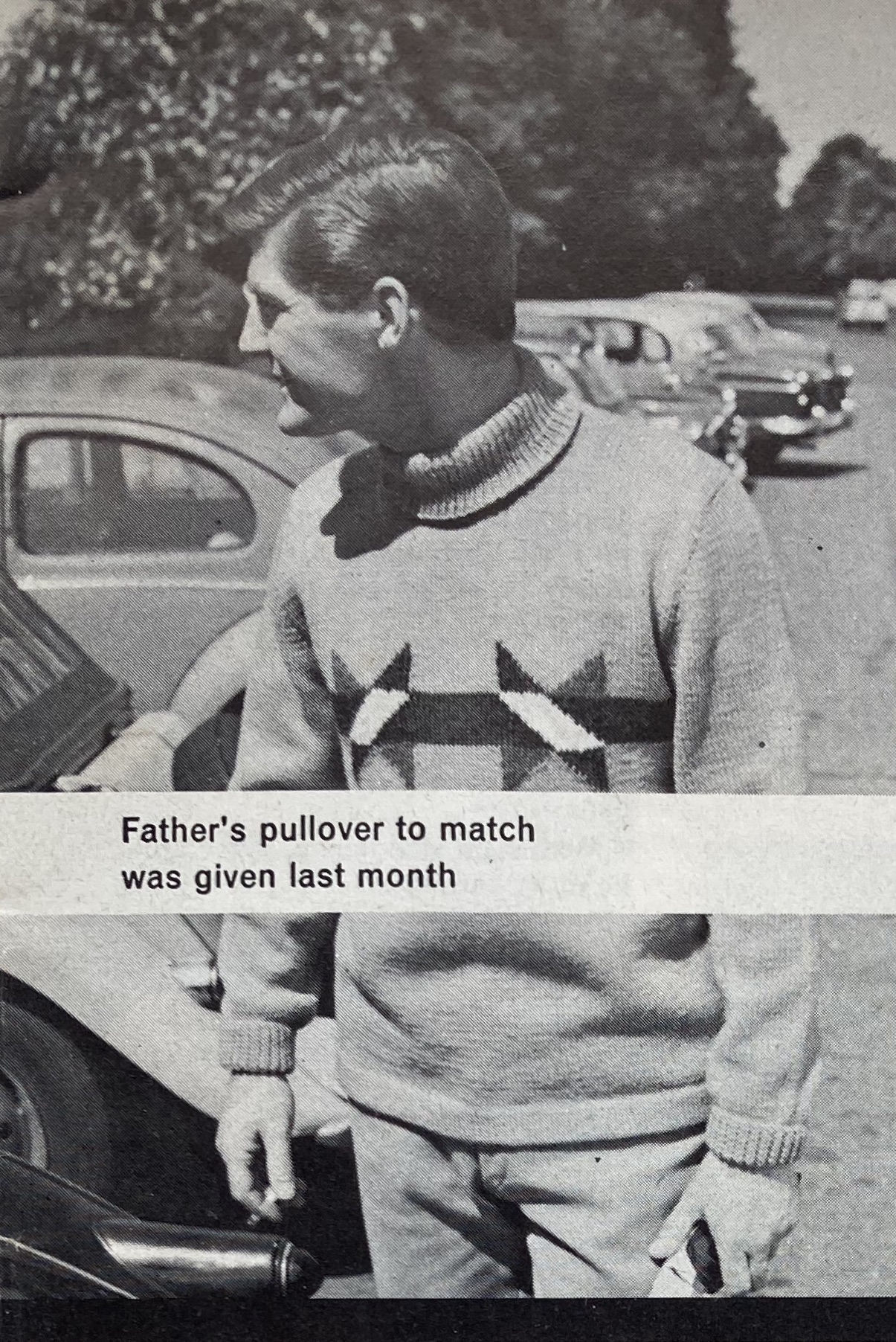
For the children, there’s a boys’ version of a men’s pullover from last month’s issue… the one that would not be a good choice for most women to wear. I personally think the placement of the star motifs is a bit odd even on a flat-chested body (they could have placed the band near the hem, or in a round yoke), but Stitchcraft liked it enough to offer a smaller-sized version in blue. Girls get a jumper suit in a plaid-trimmed “gay design from Vienna”. The colour palette for both the adult and children’s fashion is bright — blues, green, yellow, chocolate brown and “Flamenco” (I’m guessing red?), the patterns are bold and clear and collars and pockets are big and conspicuous.

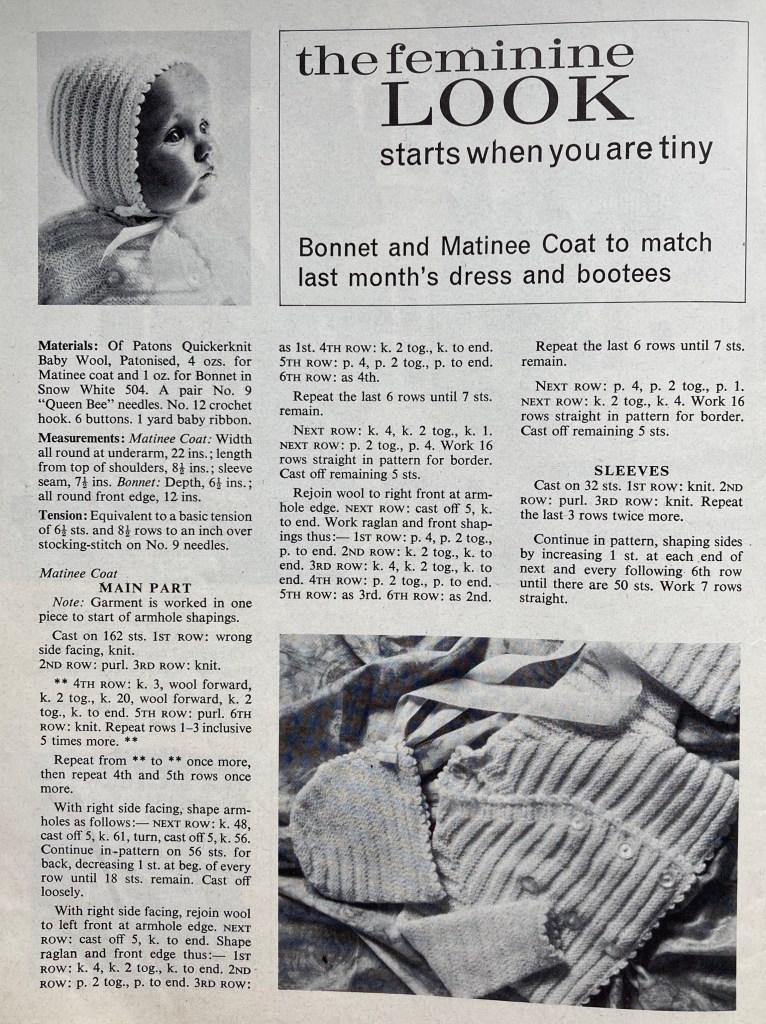
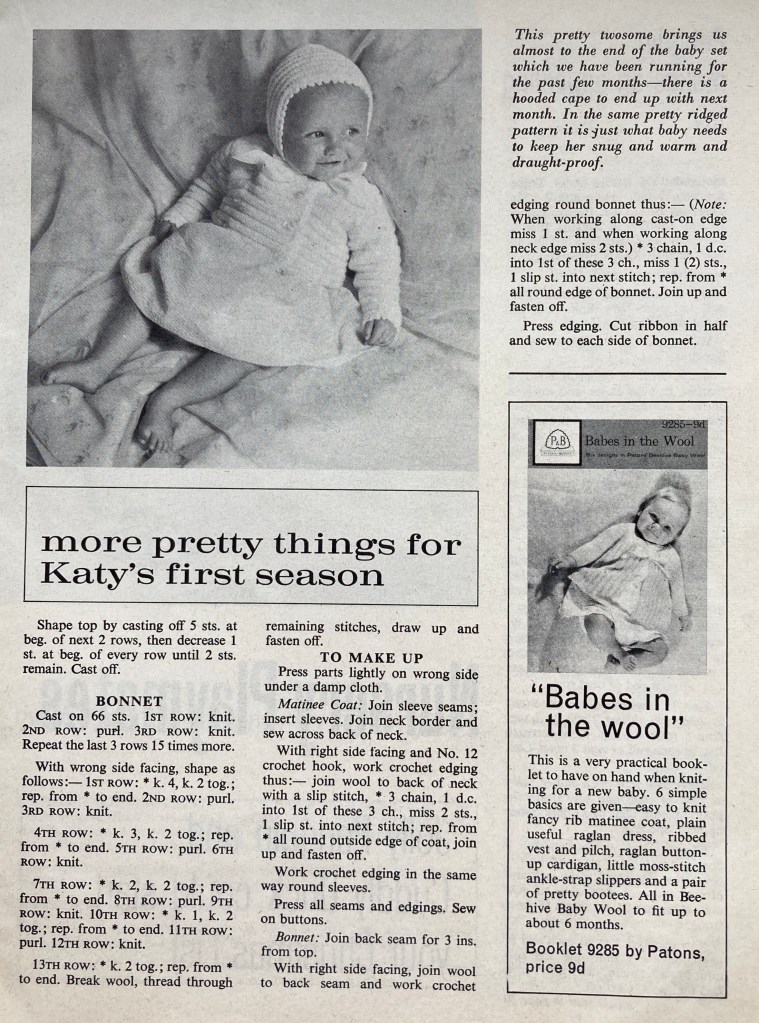
Continuing the baby-outfit series from the previous months’ issues, the (girl) baby of the family gets a bonnet and matinée coat. “The feminine LOOK starts when you are tiny” — i.e. get used to having cold legs now! The set is certainly pretty, and there’s a very practically placed ad for a Patons’ baby-pattern booklet, “Babes in the Wool” on the page as well.
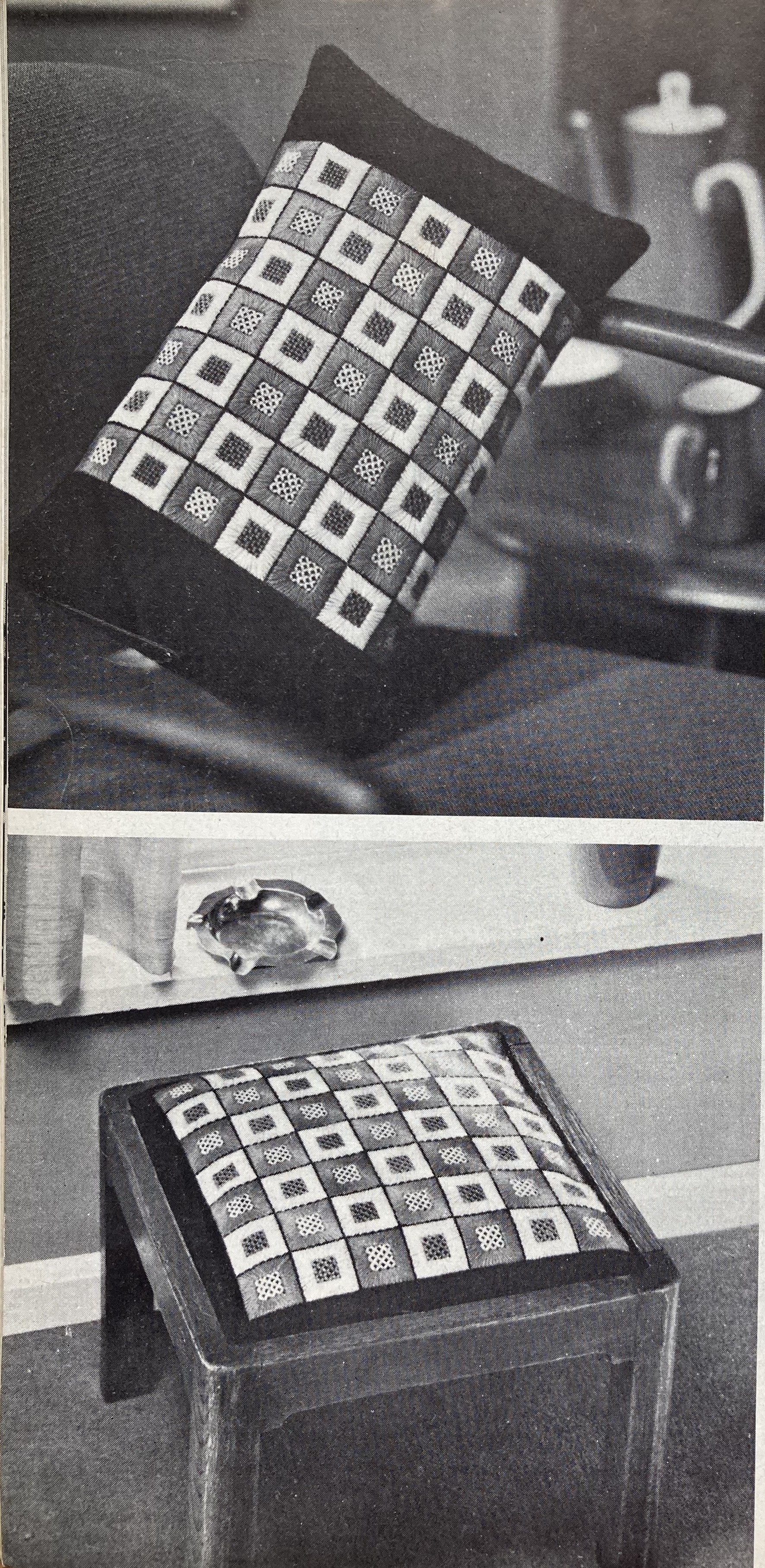
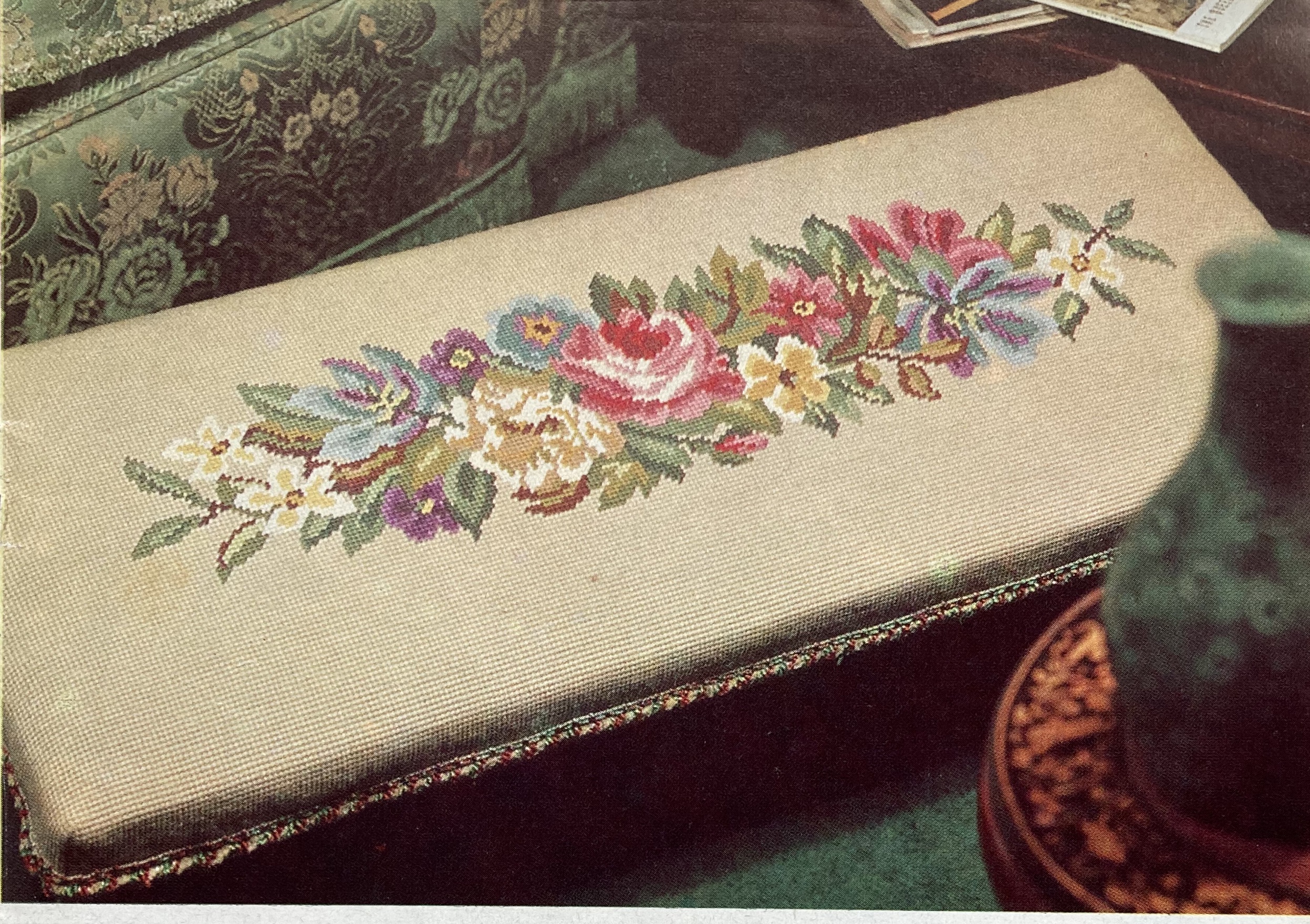
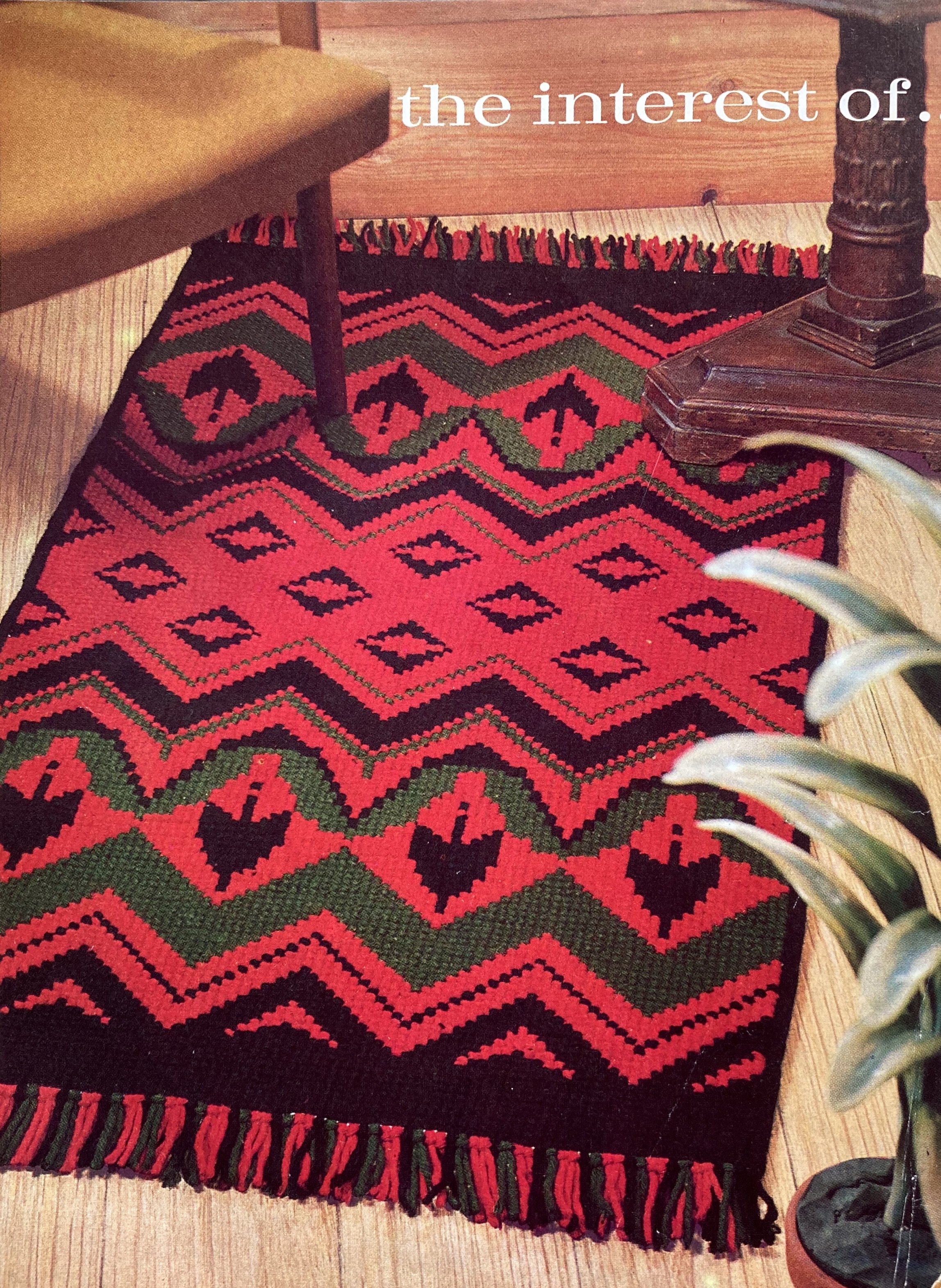
With all these great knitting designs, you’d think the homewares department would be skimpy, but they really went all-out on this issue: in addition to the usual cushions, stool-tops and chairbacks in huckaback work or tapestry, there’s a bold red-and-green “traditional Austrian” rug photographed in colour (notice how a traditional Austrian design is not called “peasant”, interesting…)

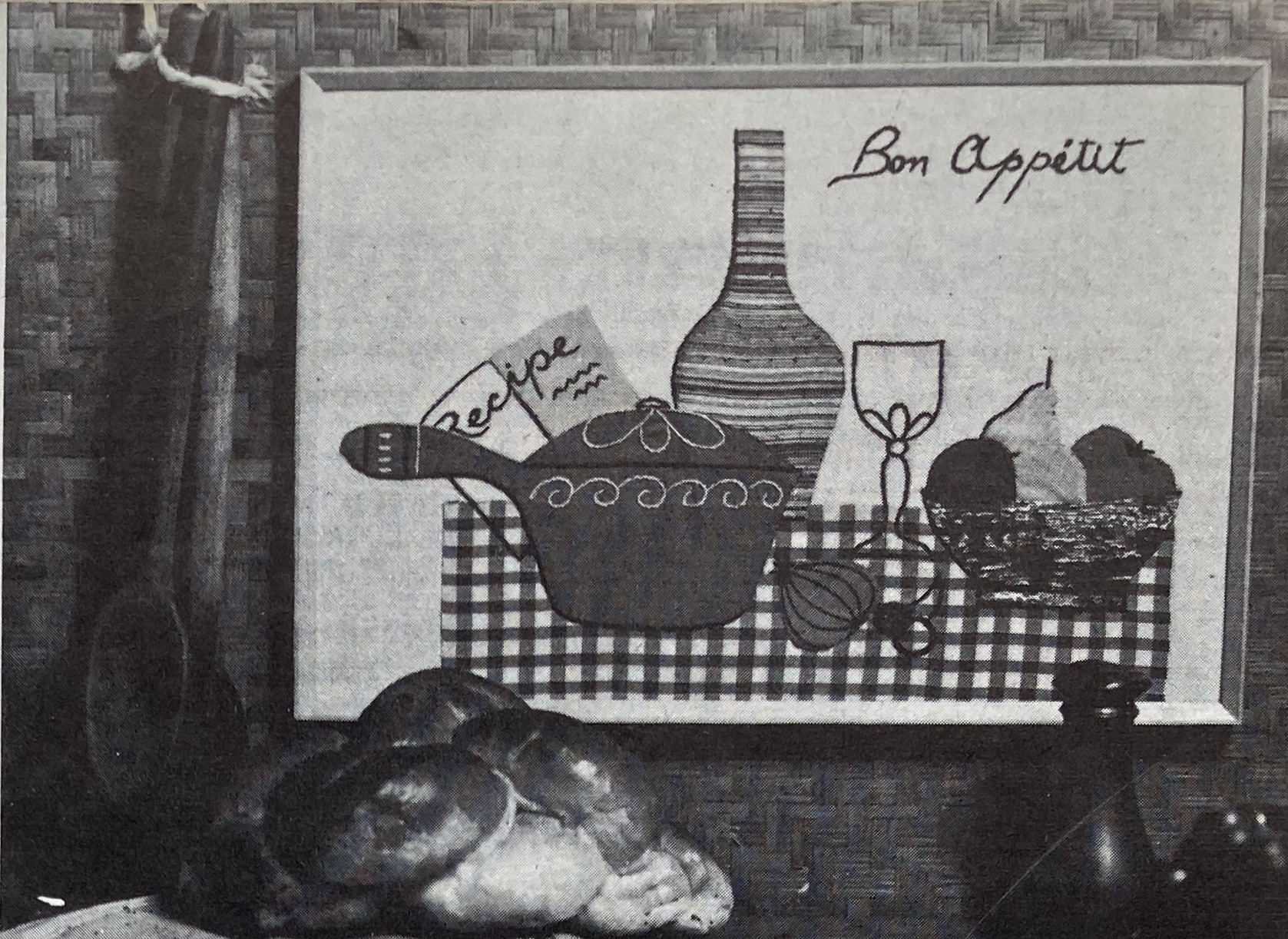
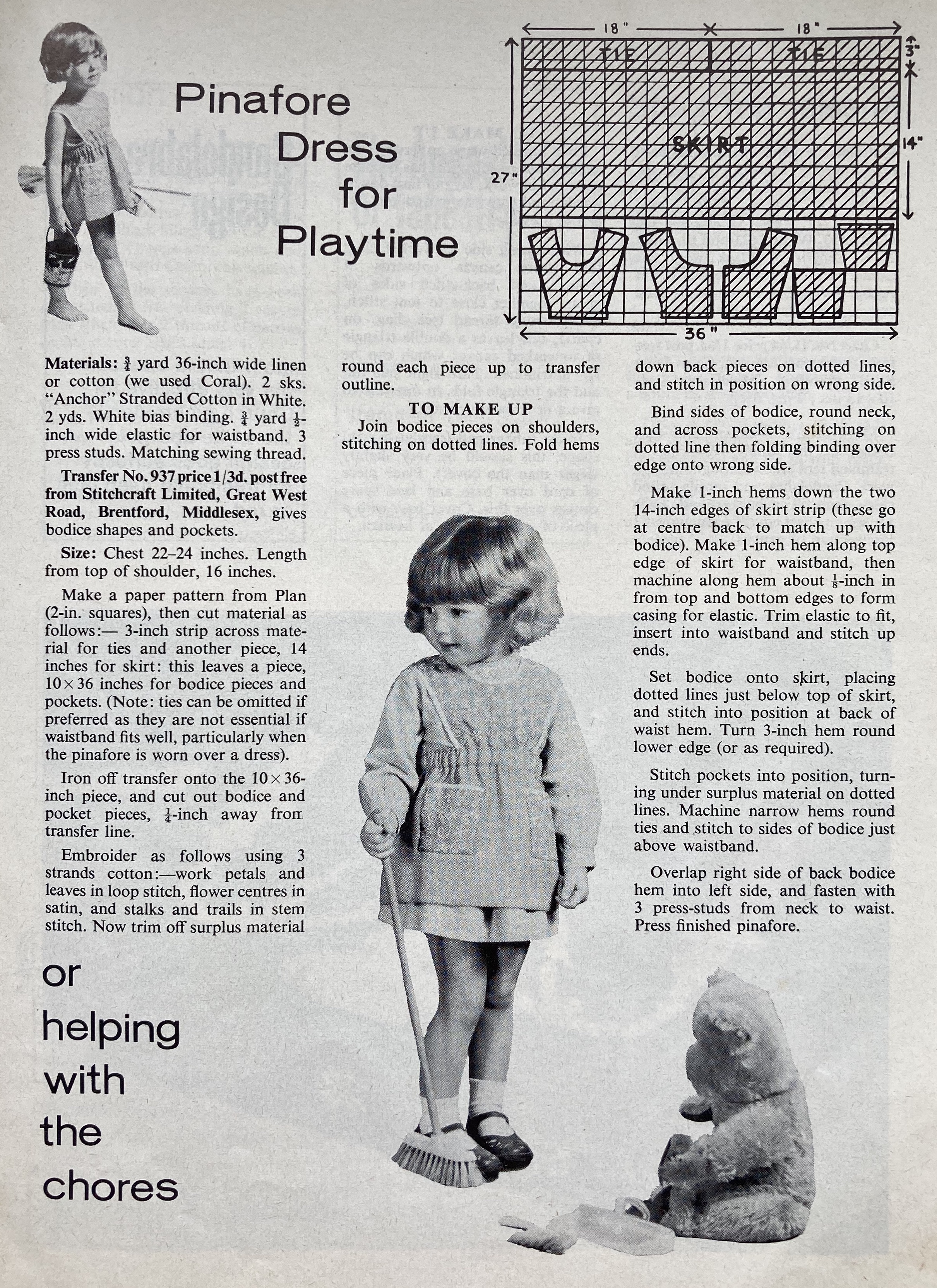
… and an appliquéd wall picture with a “kitchen”-themed design. Do I have terrible taste if I admit that I love this wall hanging? It’s utterly kitschy and very 1960s! There’s a little sewing design as well, for a child’s pinafore smock… “for playtime or helping with the chores.” Beware, little girl, that feminine look comes with its own designated activities.

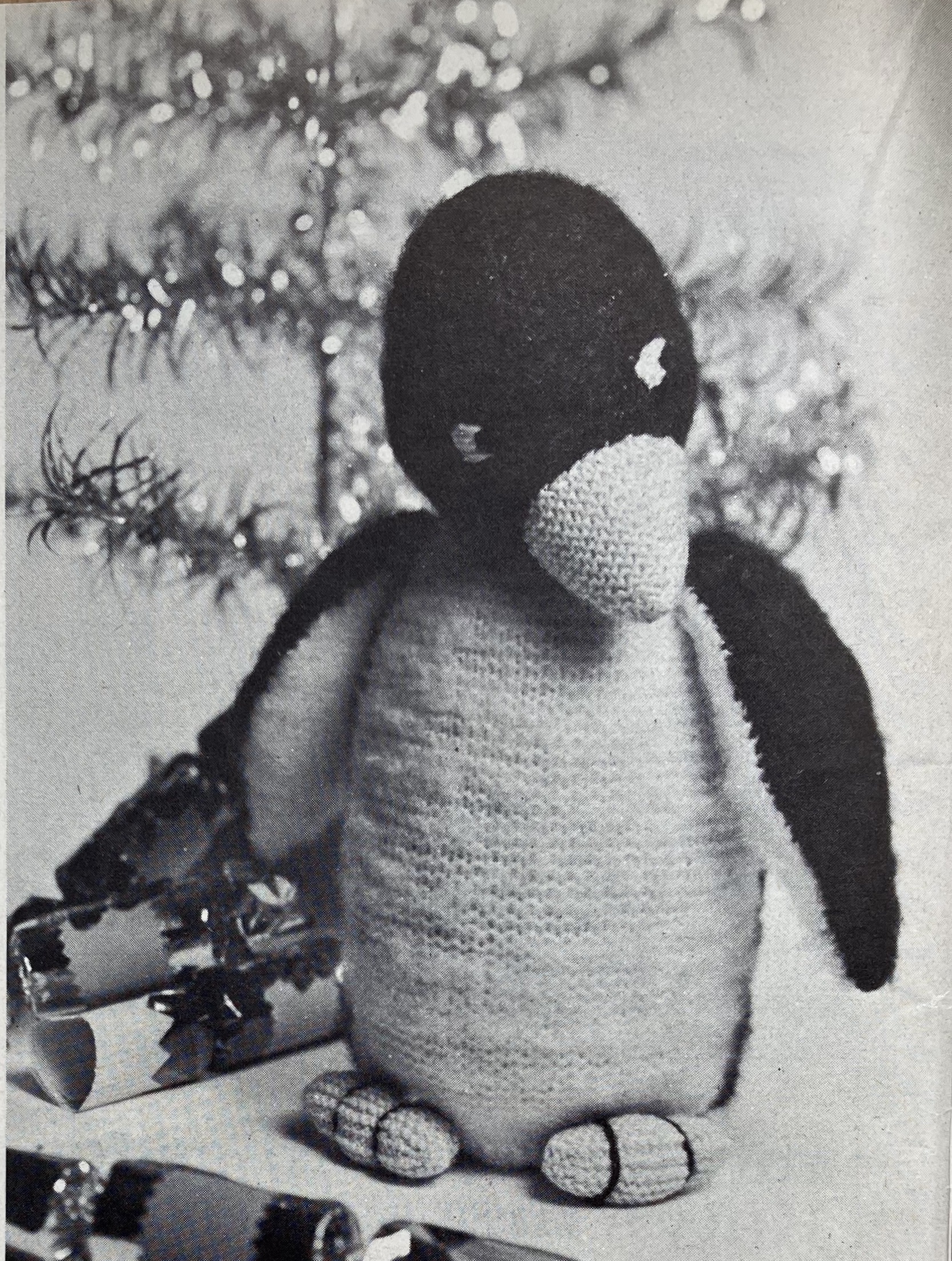
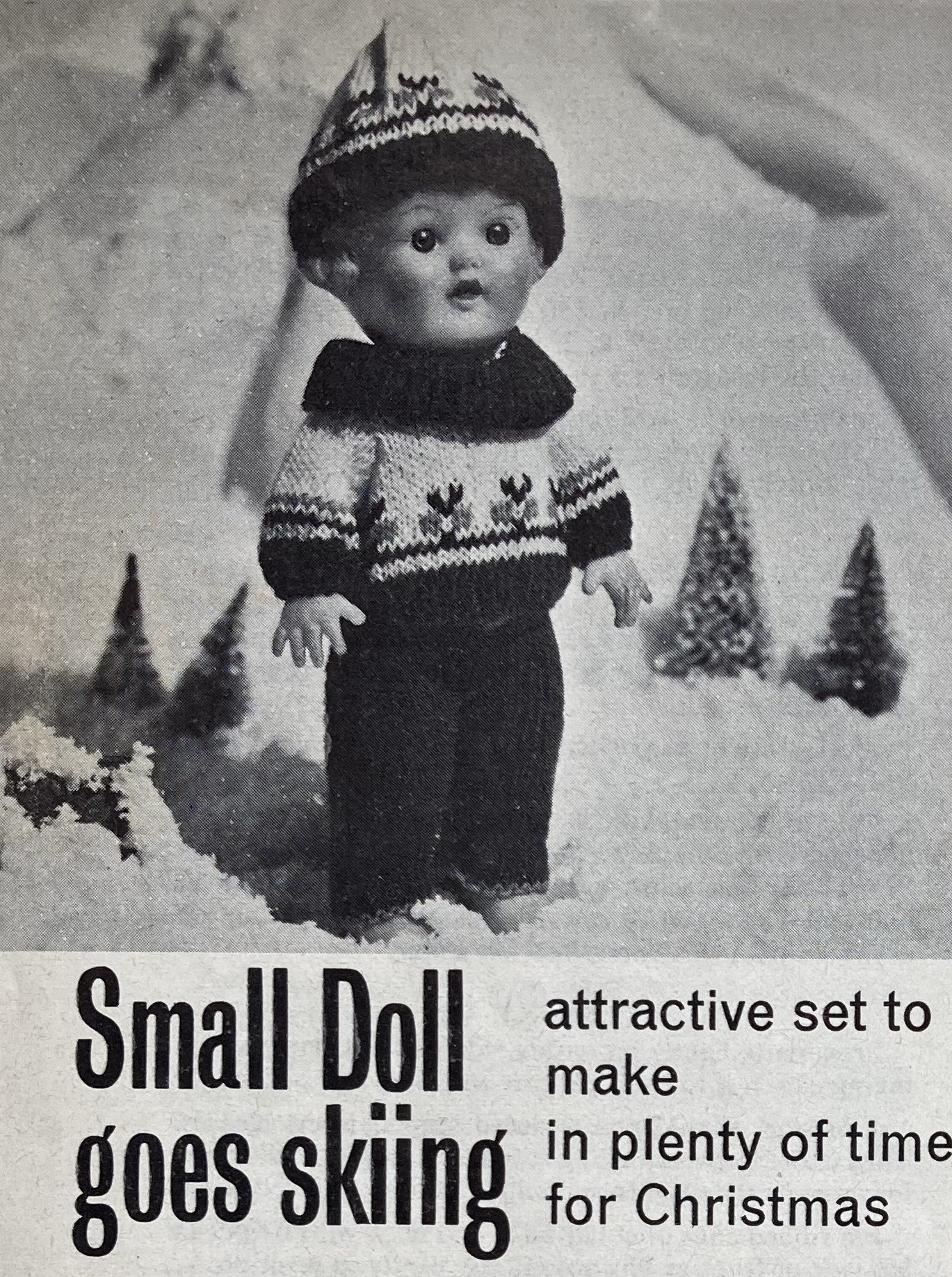
And don’t forget the “novelties”, which are not quite as weird in this month’s issue as we have seen in other issues. There’s a little stuffed penguin toy with very funny feet, and a night-case in the shape of a knitted duck. There’s also a winter ski set for a doll, with ski-pants and a warm stranded pullover and cap. (If the doll looks a little worried and not quite warm and comfortable, it’s probably because it’s standing barefoot in the snow.)

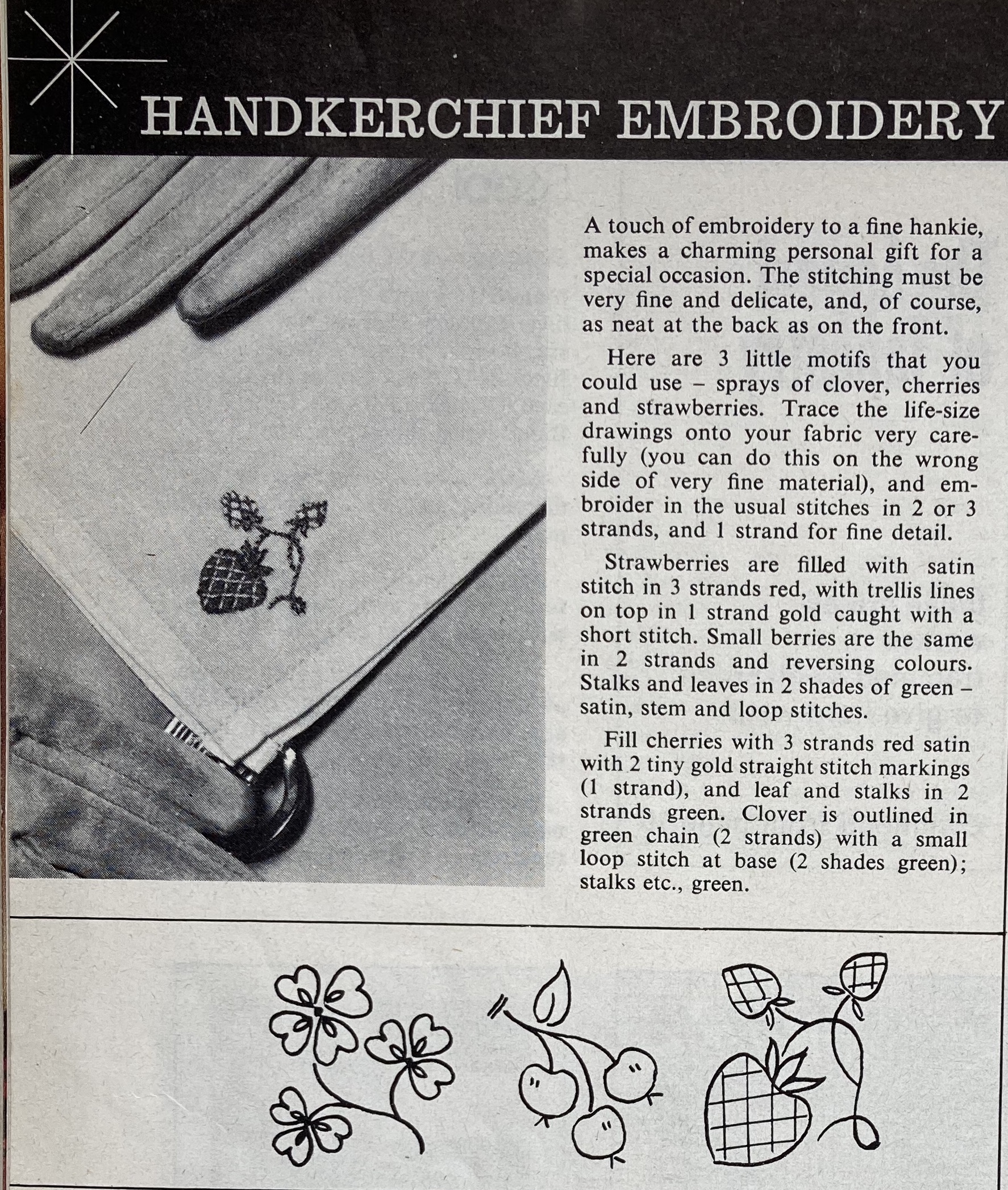
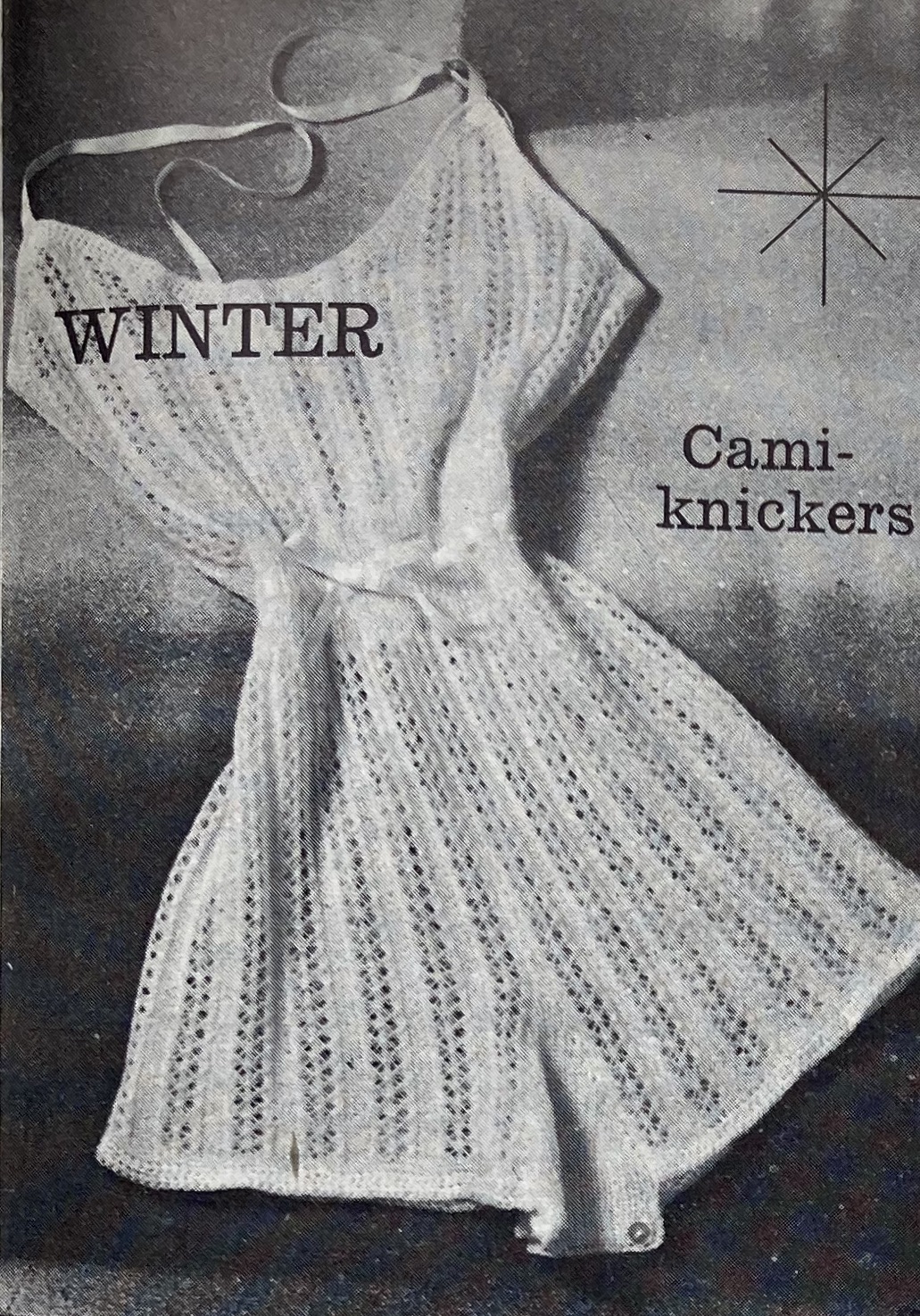
But that’s not all! In addition to the usual comic (Anne learns how to embroider an owl and a swallow using different embroidery stitches), the “Readers’ Pages” in the back of the magazine have a reprint of a 1944 knitting pattern for warm “cami-knickers” underwear, and some dainty stencils to embroider onto handkerchiefs. I love embroidered handkerchiefs, having inherited some beautiful ones from my grandmother and occasionally bought more on ebay. If I ever find any plain new ones to buy (shouldn’t be that difficult), I could try my hand at embroidering them myself.

The handkerchiefs, cami-knickers and even the cheesy appliqué picture all appeal to me, but I love the cabled knit dress most of all, so that will be my October project. I can’t imagine it will be done by the end of October, but I have already bought wool and made a swatch and am just starting casting on, so I’ll post about it soon when there’s something to see and write about.

Till then, happy Autumn!