
February’s project was this wonderful fur-trimmed hat. Fur or fur-brimmed hats were all the rage in the mid-1960s (my grandmother had a hat very much like this one with real fur — but too small for my head). Also, hats were big – wide-brimmed or with wide bands around the front, and often with a crown that was much higher than the wearer’s head, like the “baker boy” style crocheted cap from the same February 1964 issue, so this item is perfectly on trend.
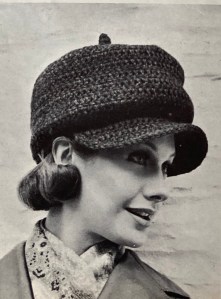
This pattern was written to knit in Patons “Glenora”, a medium-bulky tweed yarn. (It appears to be a wool-synthetic mix, but if anyone has more detailed information, I would love to know.) The hat part is knitted and a fur strip is then sewn onto the front band. I used Lana Grossa “Fashion Tweed” (71% merino wool, 17% alpaca wool, 12% synthetic), which is lovely to work with — soft, fluffy and lightweight even at a tension of 4-4.5 stitches to the inch.
Like almost all 1960s patterns (even for hats and many gloves and mittens), this one is written to knit back-and-forth with a seam. I made it in the round. It took one evening of Netflix to knit and one evening to cut and sew the fur band and do the finishing touches. The fur in my version is fake, and was very interesting to cut: when I bought it, the saleslady wasn’t sure if she should cut into it and rip as customary when buying fabric, or cut it with scissors, since the synthetic fur is quite thick and has a slightly stretchy woven base. Ripping it took some effort, but had the advantage that the edge curled in slightly and didn’t ravel. Experiments on scraps at home showed that cutting this fake fur makes a less neat edge and lots of tiny bits of fur everywhere.
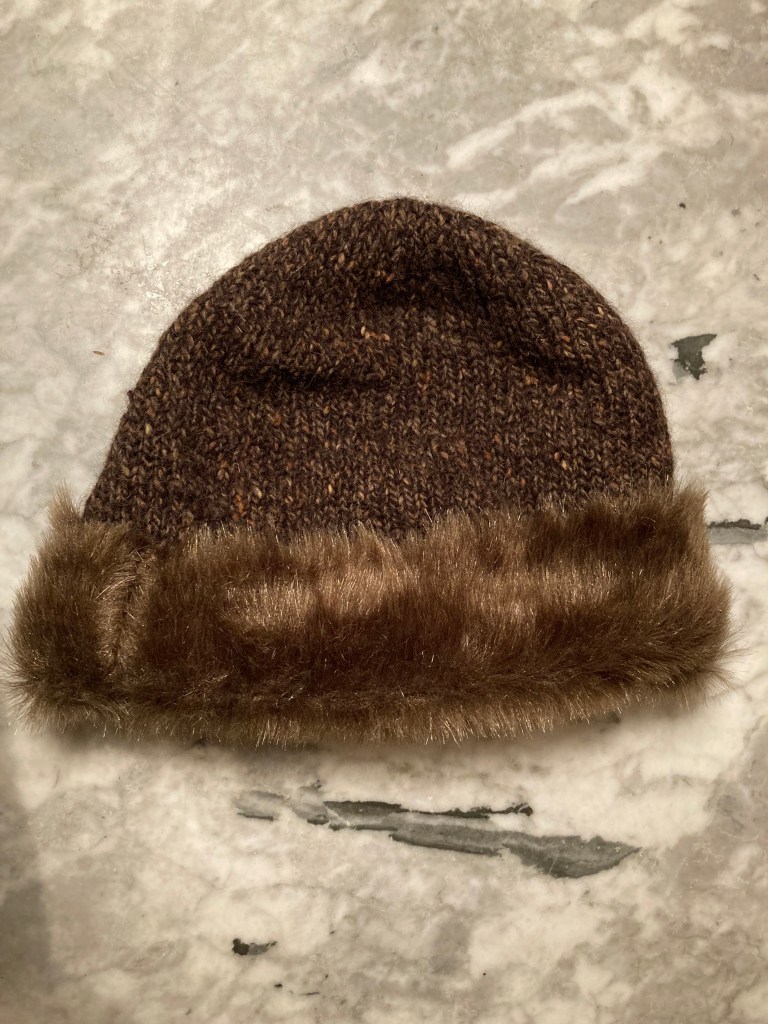
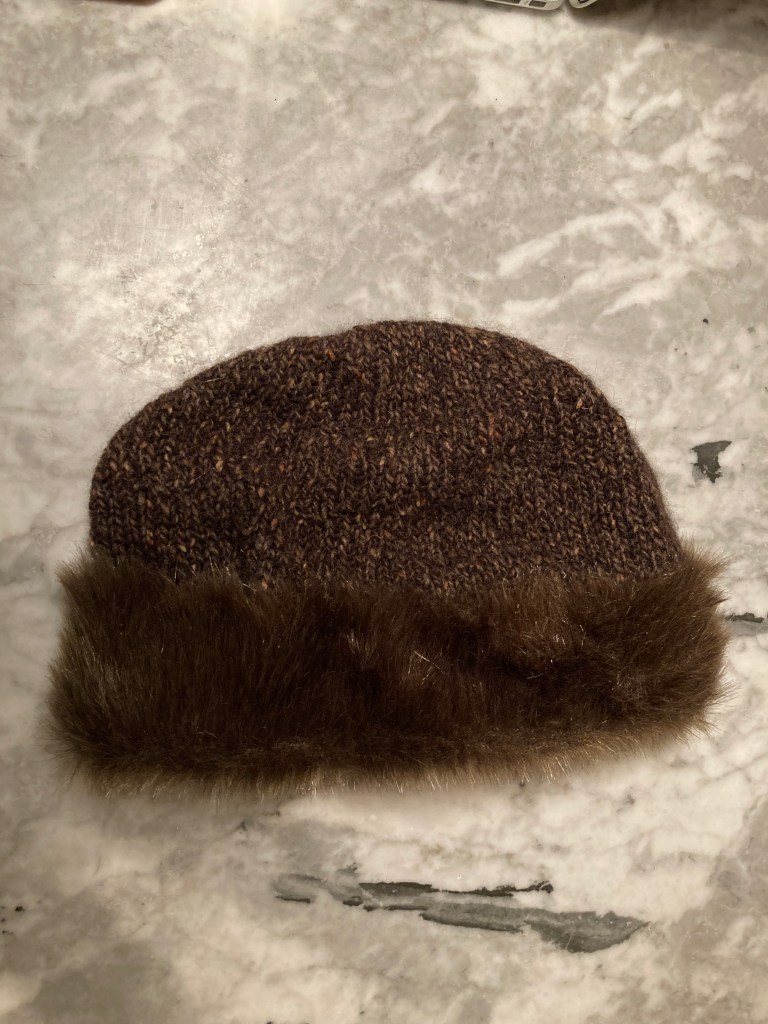
After knitting, blocking and sewing on the fake-fur band, the hat is pleated at the front edge and tucked at the crown to give the shape seen in the magazine photo. There’s a little decorative tie at the front edge too, just above the band, that is hard to see in the photos. The tie is made by knitting a strip in stocking stitch and then letting it naturally roll into a narrow tube. I suppose the modern version would be to knit some i-cord, but this worked just as well. The tuck and pleat, on the other hand, didn’t work quite as well in the wool I chose, since it is less bulky and thus has less intrinsic shape than Glenora. Still, the effect is about the same.

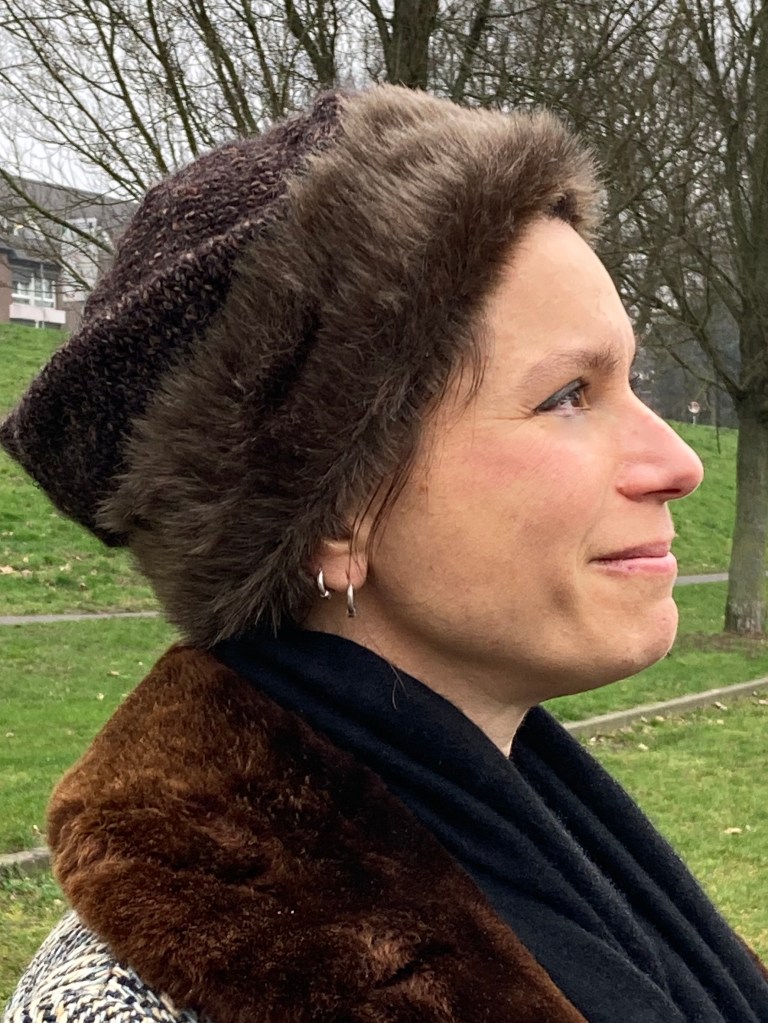
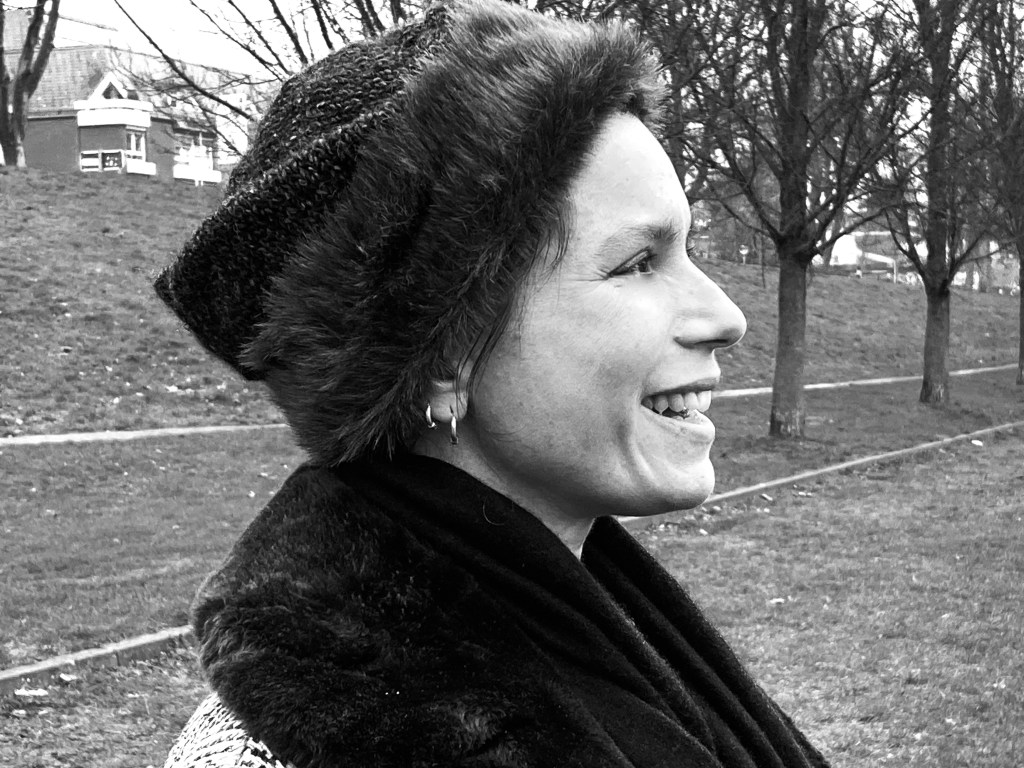
I made this hat for a friend’s daughter, but I would gladly make another for myself. It’s warm and fun and looks very, very 60s. I wore it for the photo with a coat inherited from my grandmother which also features a dramatic plush “fur” trim. (Sadly, the sleeves are way too short for me. They are also plain wool, and every year I search for a plush fake fur that matches the collar, so that I can make matching cuffs. I never, ever find this right colour and degree of plushness, but am considering using the same fake fur from this project, since it’s the closest I’ve ever found).
I am very happy with this hat!

 The Stitchcraft Sixties