January Excursion: Clarel

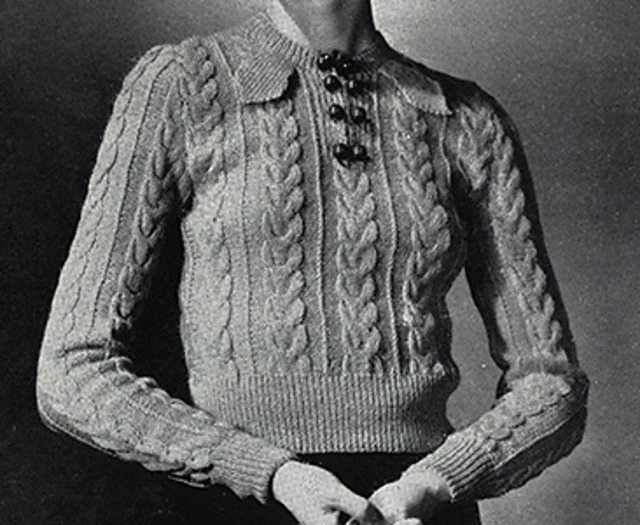
This month’s project (finished just on time!) is somewhat different from usual, as it is neither from Stitchcraft, nor from the 1960s. It’s a sleek little knitted blouse from 1937, from a pattern originally published by the Spool Cotton Company and now available on the wonderful Free Vintage Knitting website.

Unlike Stitchcraft, which I have been collecting in paper form for some time now, this was my first acquaintance with the Spool Cotton Company, and I have to admit that I hadn’t heard of it before. A Wikipedia search turned up the Clark Athletic Association, an American soccer team from New Jersey that was sponsored by the Clark Mile End Spool Cotton Company. I don’t know if this was the same Spool Cotton Company that published the pattern, but I suspect it could be. In any case, the Clark name and company are of course well known in the knitting/crochet world, having existed for centuries in various forms and mergers (Clark Thread Company –> Coats and Clark –> Coats Patons, which in a roundabout way even leads us back to Stitchcraft…).

From what I can see in the Ravelry database, Spool Cotton Company patterns were primarily for accessories and homewares crocheted in cotton (as one might expect with a brand named “cotton”). The leaflet which contained “Clarel” was entitled “New Knitted Fashions”, with coats, dresses and suits as well as knitted blouses, and was inspired by British fashion of the time (though “fun to knit because of their easy-to-follow American instructions”.) Apparently they were written to be used with Red Heart yarn.

If anyone knows more about this company or publication, or if my guesswork in the last two paragraphs was incorrect, please let me know!

“Clarel” is written for fingering-weight wool at 7 stitches to the inch, and I had some lovely (why oh why was it discontinued?) Lana Grossa Slow Wool Lino on hand, which was perfect for it. The 15% linen makes a very smooth yarn that hold cables well, but the overall texture is quite soft and stretchy.

As most patterns of this era, there is only one size given, for 34 inch bust. I calculated out a somewhat larger size using a percentage multiplier (no. of sts x 1.05) and just added the extra stitches onto the reverse stocking-stitch base that extends on the sides. I also added 2 patterns to the length and 2 patterns to the sleeve length.
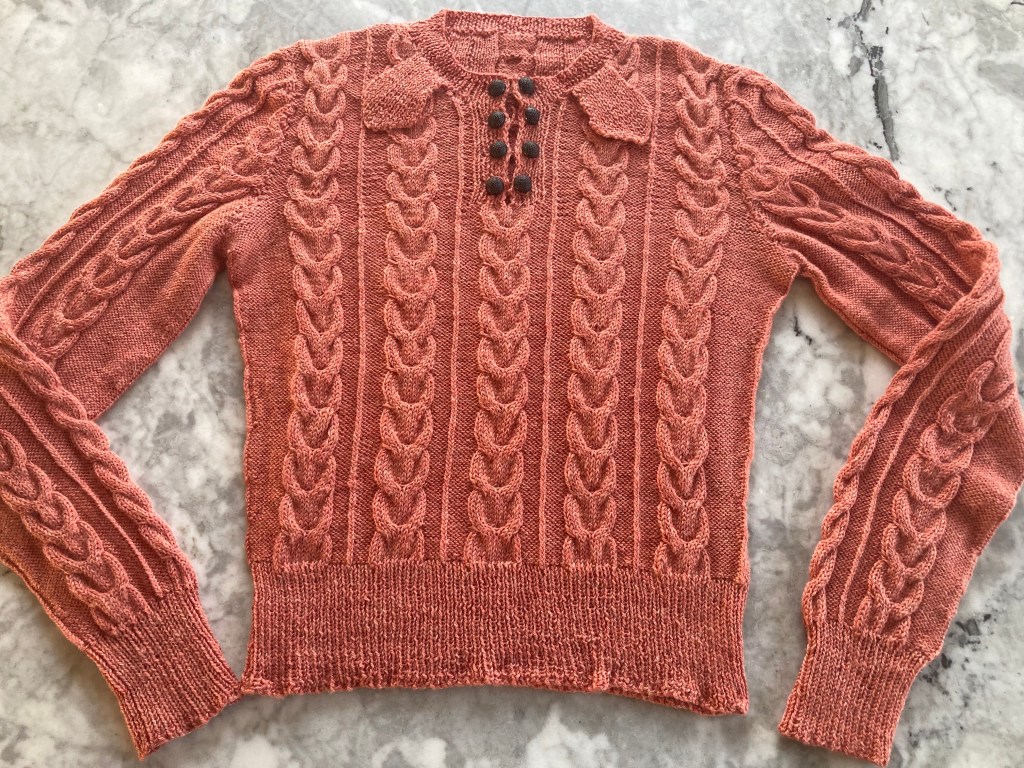
I particularly love the little design details of this pattern: the mini-rib lines (just ktbl on a reverse st st background) dividing the cables, the funny tabs at the neck and the double buttons (attached together with a crochet chain.) I could make the chains a little shorter to make the placket line up straight.
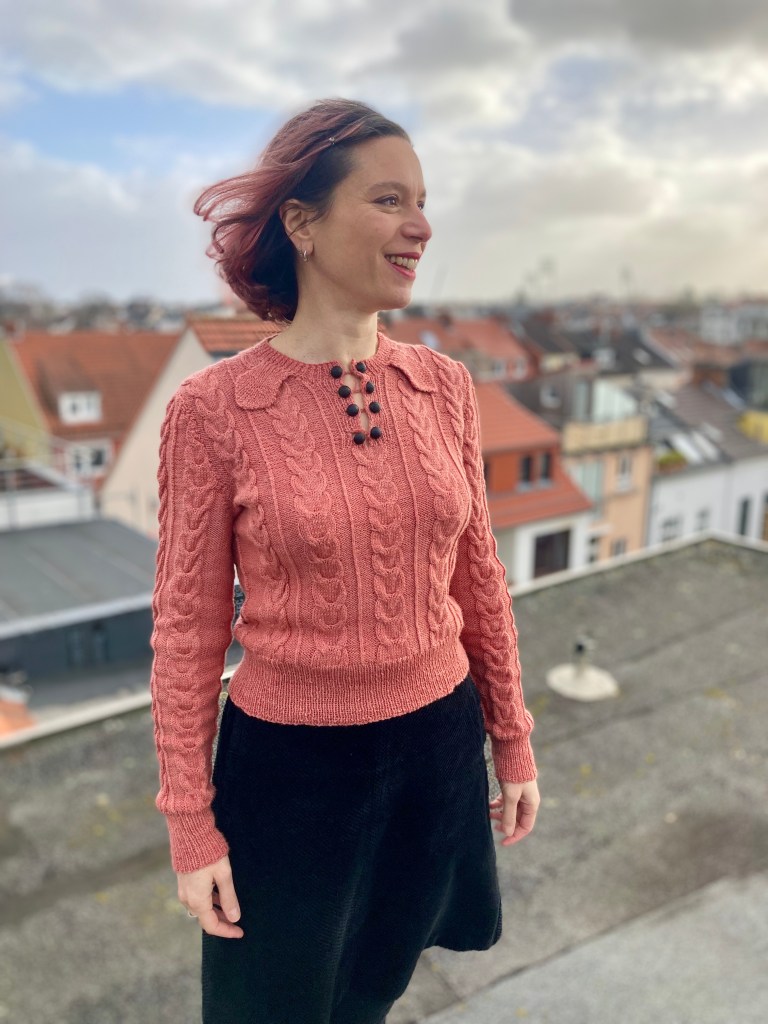
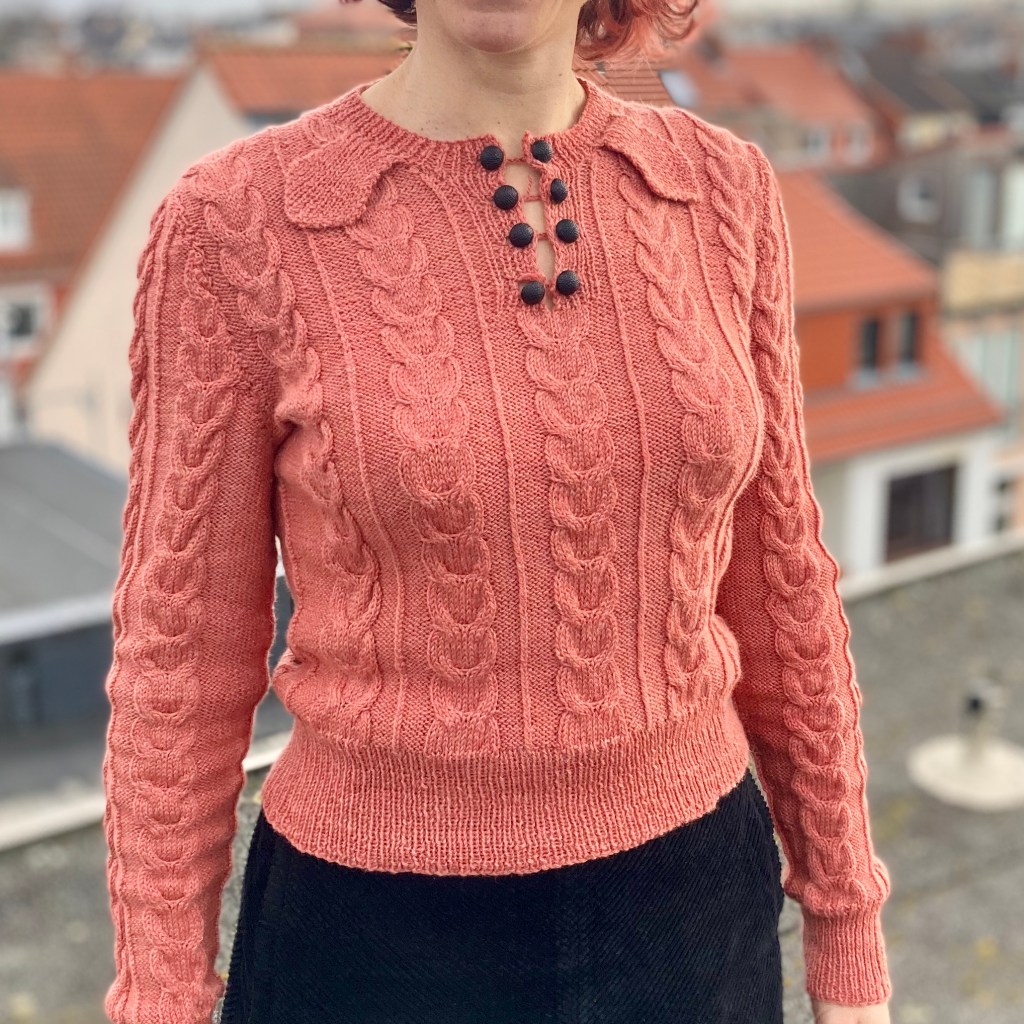
All in all, I am very, very happy with this project. It fits perfectly, is lightweight, warm and soft, and makes me look like I have much more of a figure than I actually have. It even matches a tam I just knitted, as well as my fading dyed-pink hair. What more could a person want?

Next month will be a return to Stitchcraft and the 60s!

January 1964: Overview

Happy New Year! It’s 1964 in the Stitchcraft blog world. “Busy as we all are,” writes “editress” Patience Horne in the issue notes, “it is surprising how many things needlewomen manage to make in a year.” Well, it’s my New Year’s handcraft resolution to finish up WIPs and reduce yarn stash, so let’s see how many new things I will manage to make.

(Apropos finishing up WIPs, I finally finished two very detailed and extravagant cushions: these blackwork butterflies and this amazing neo-Jacobean embroidered felt appliqué extravaganza, so be sure to check out the updated posts.)

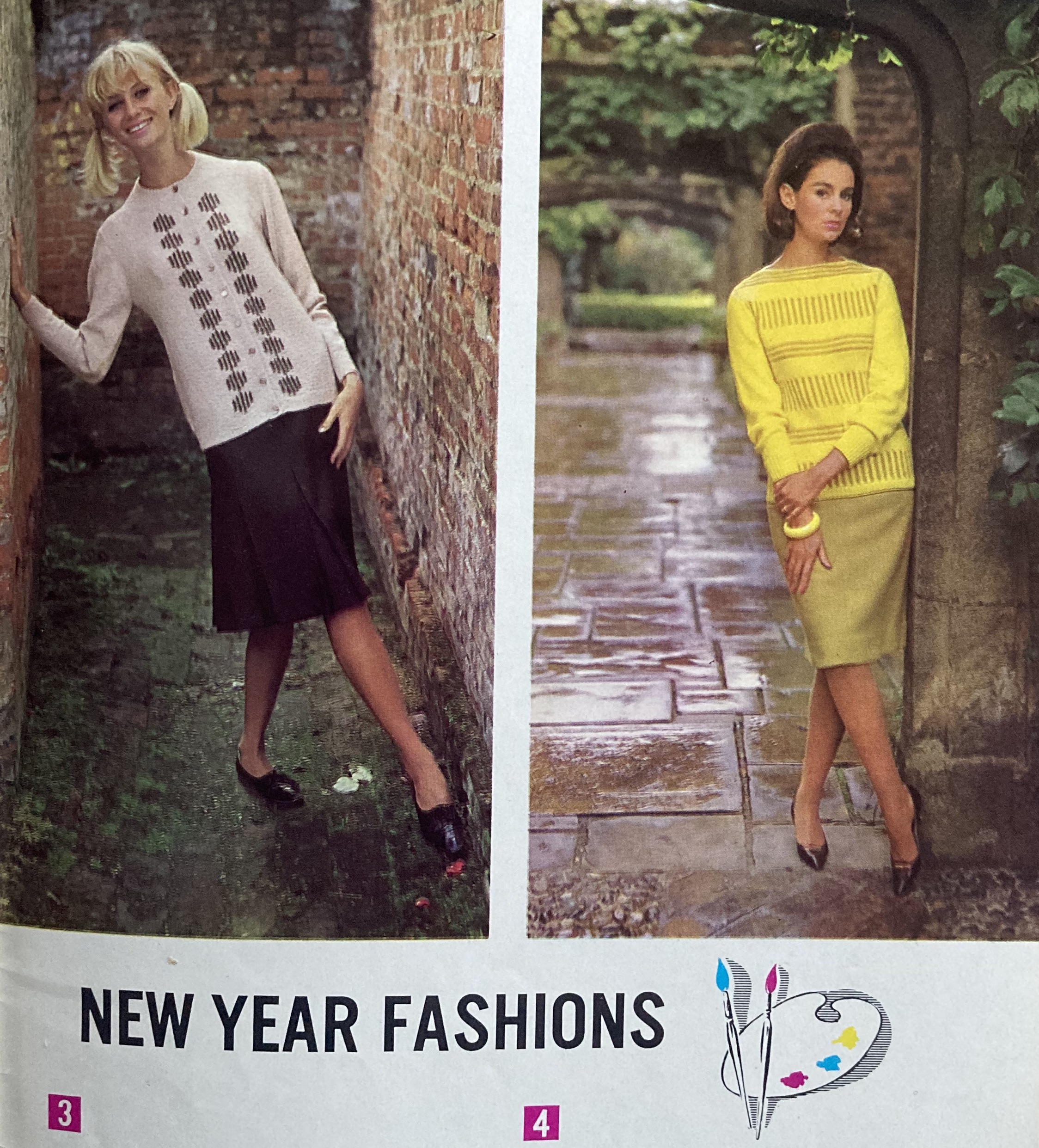
Back to January 1964, what does the New Year have in store for us, fashion-wise? At first glance, it doesn’t look much different from the trends of 1963. Garments are warm, bulky, tweedy and textured, and homewares are traditional and floral. The Swinging Sixties have not swung through the pages of fashion-conservative Stitchcraft yet. Still, the designs are fun and easy-going, the bulky items quick to make.

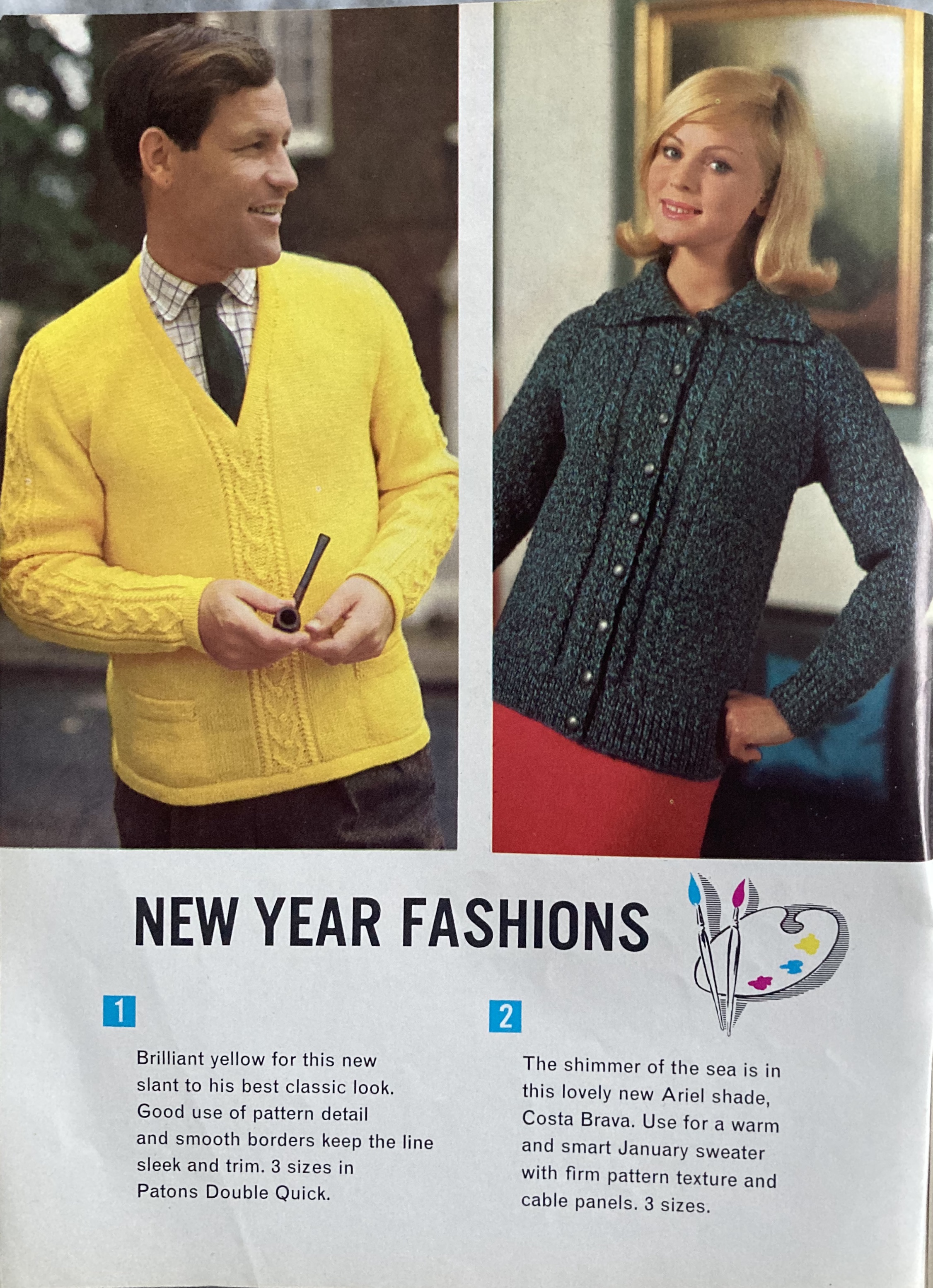
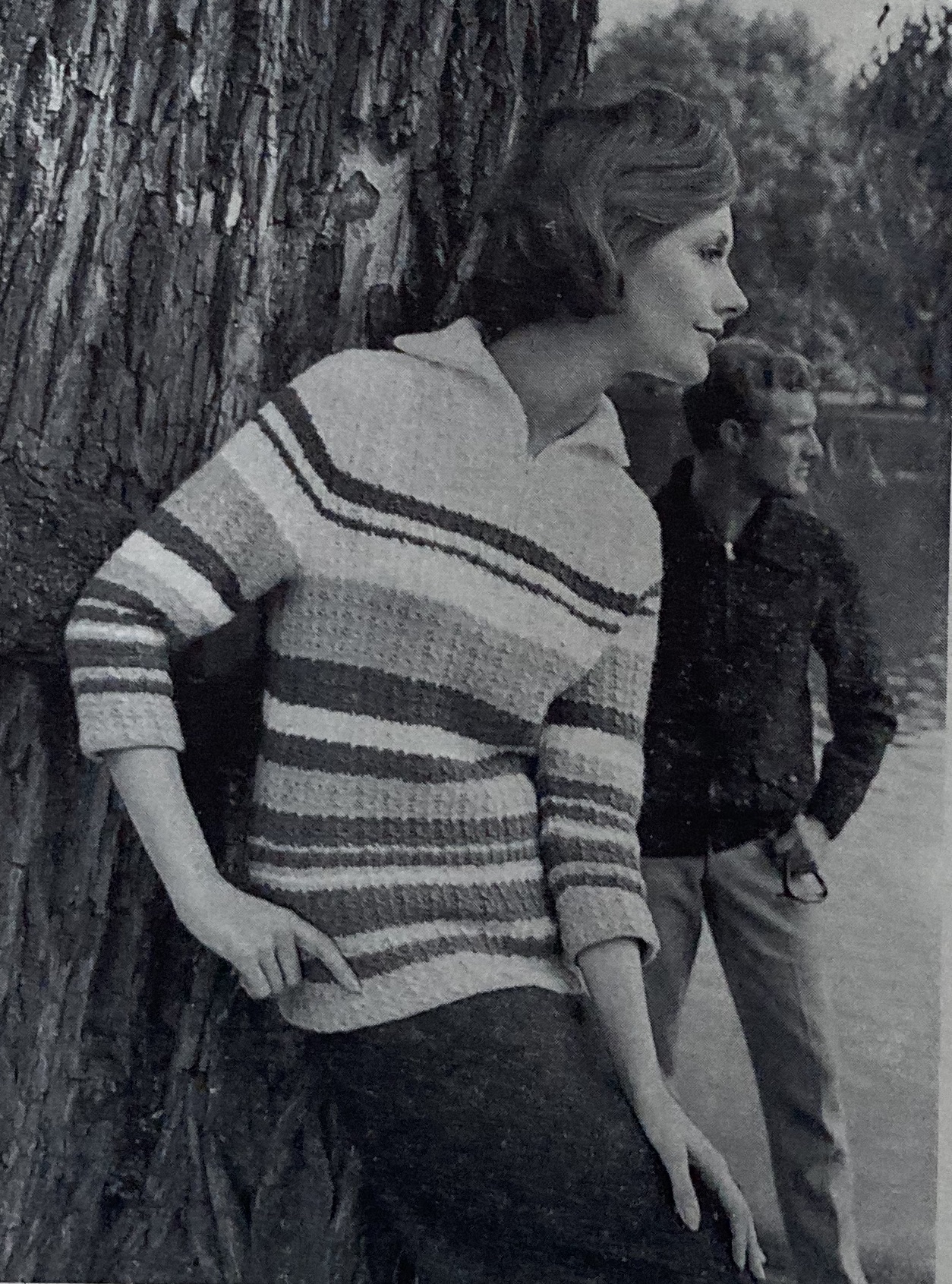
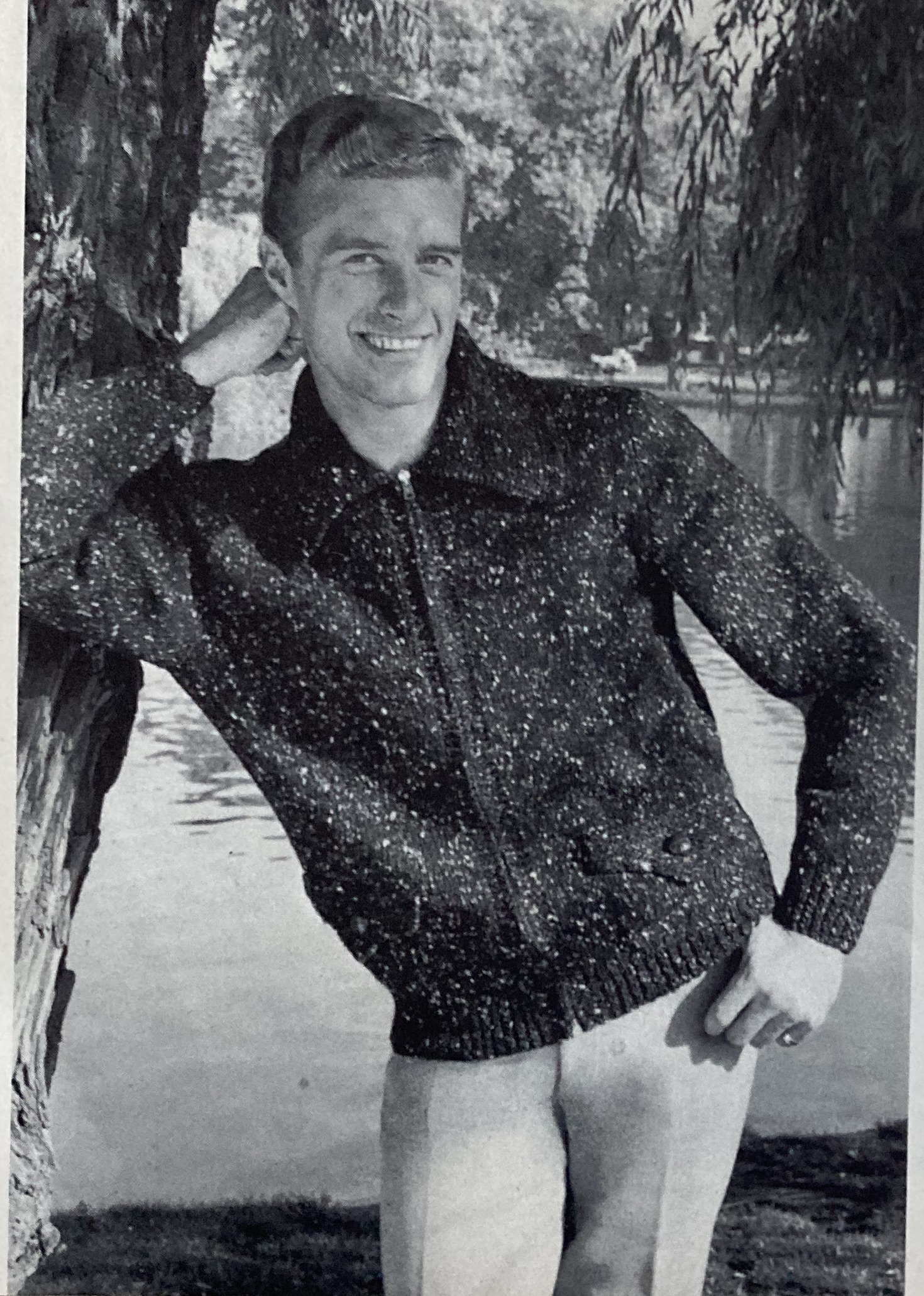
Our cover design is a sweater suit in in plain DK and tweedy Patons “Glenora” wool. There’s an equally tweedy cardigan in bulky Ariel for women as well as garments with fun colour motifs and textured stripes. The colours are warm and vibrant, with deep pinks and yellows prevailing. Men get a very yellow pullover with nice cable details and a zip-up cardigan for the casual “country look” (with a coquettish smile from our handsome model.)

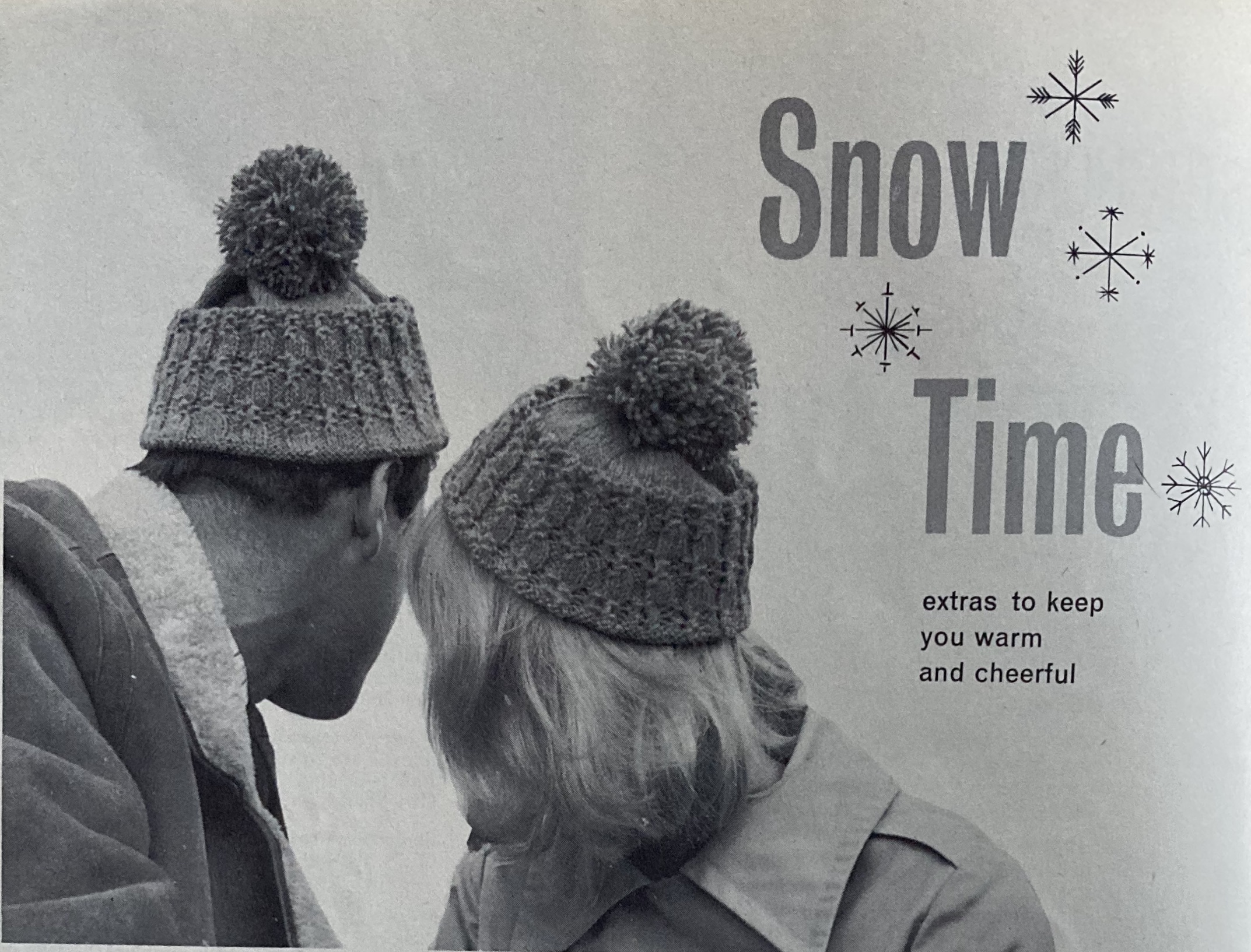
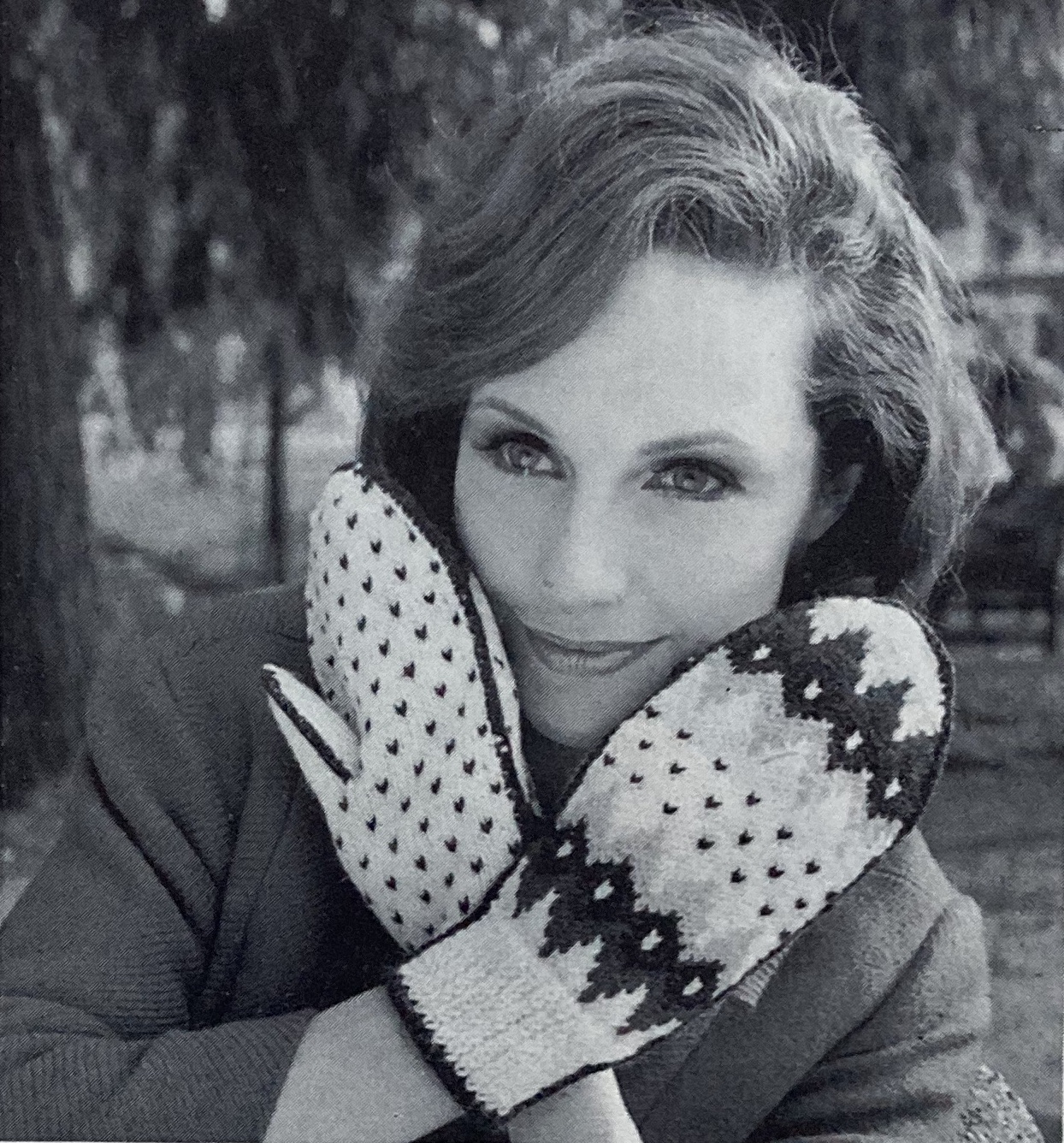
Appropriately enough for January, the accessories are warm and practical: cheerful hats in an interesting tied-loop stitch for “him and her” and warm mittens in stranded colourwork. As usual for this time, the stranded patterns, even for gloves, are worked back and forth, with front and back pieces worked separately and crocheted together.

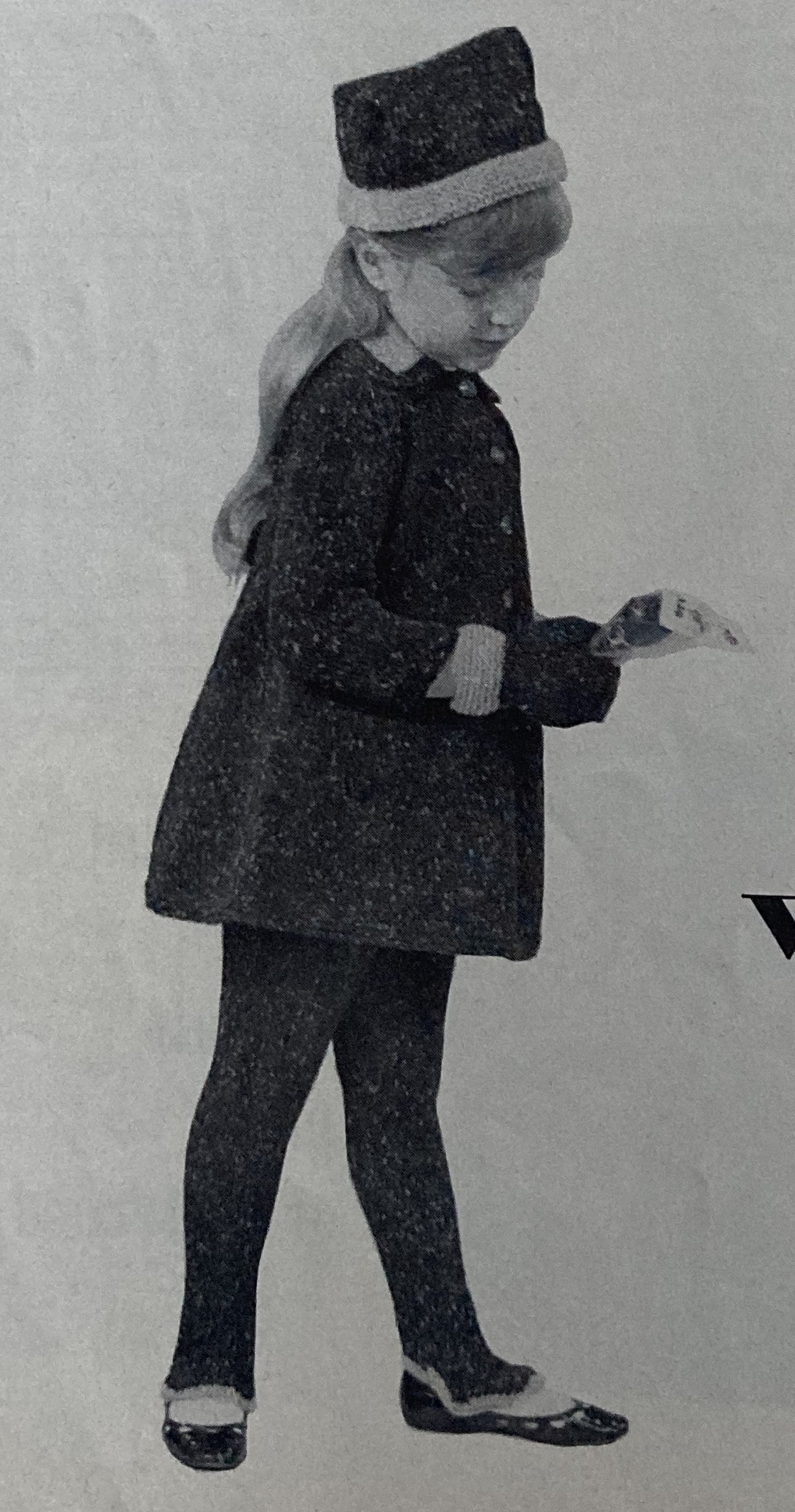
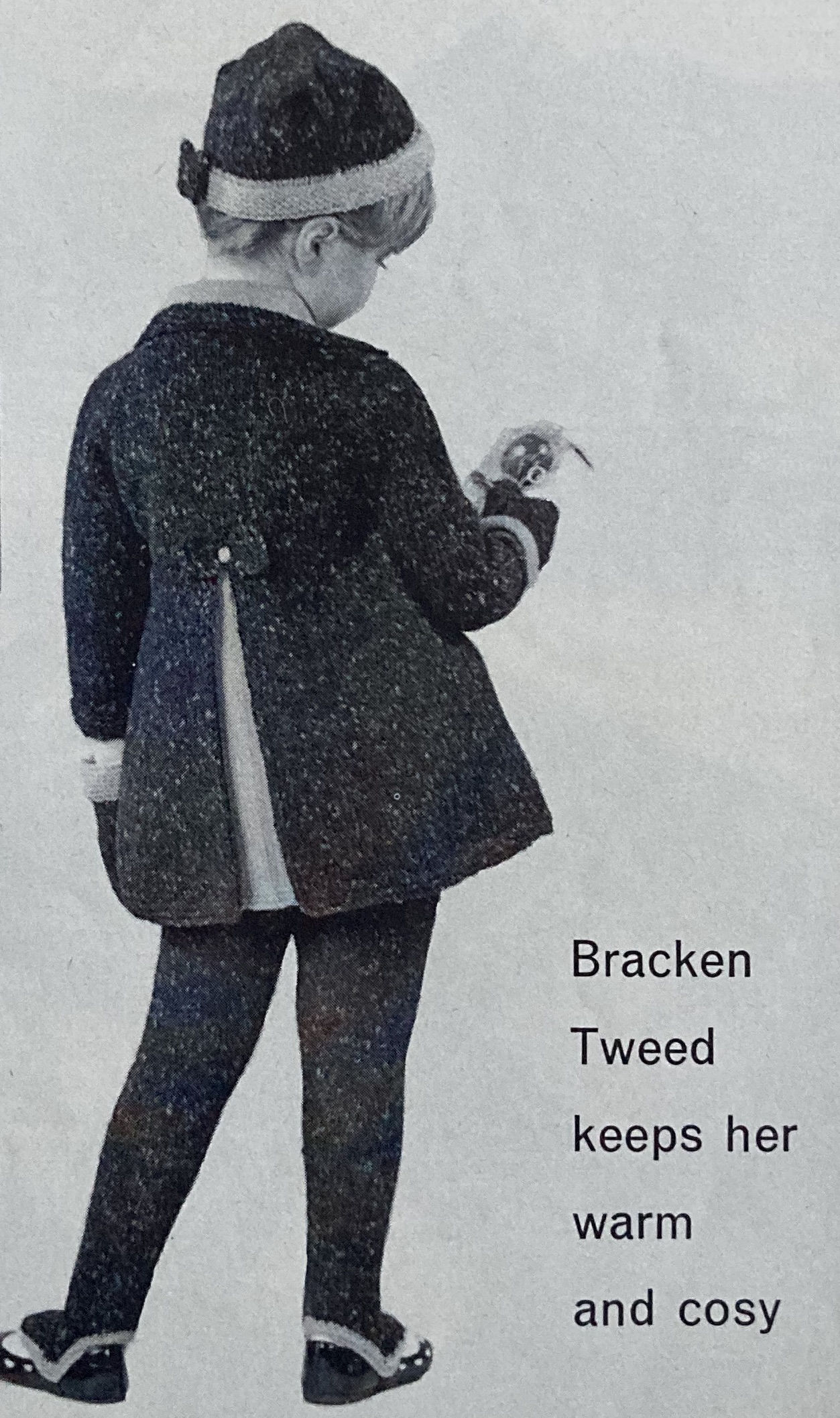
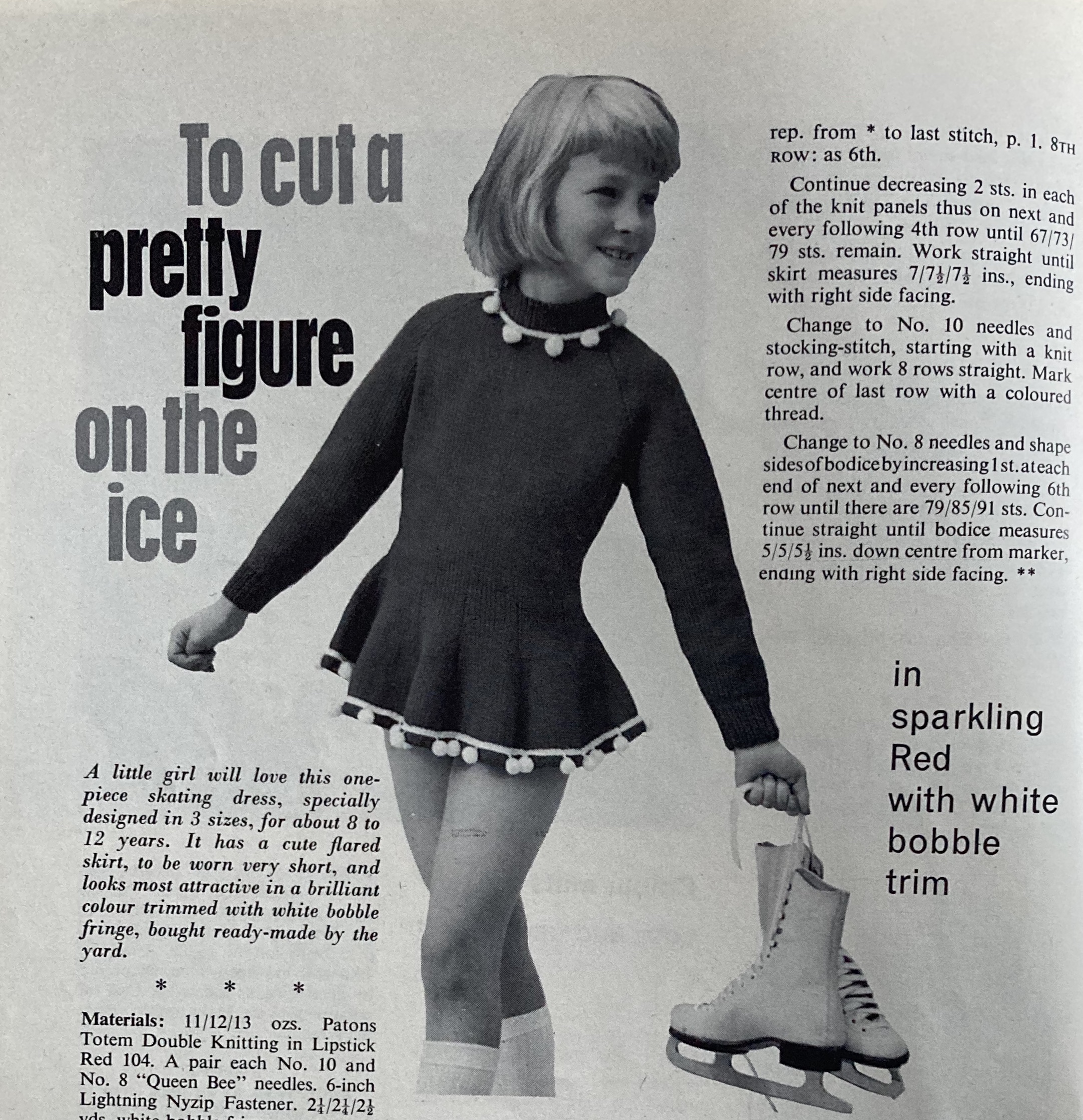
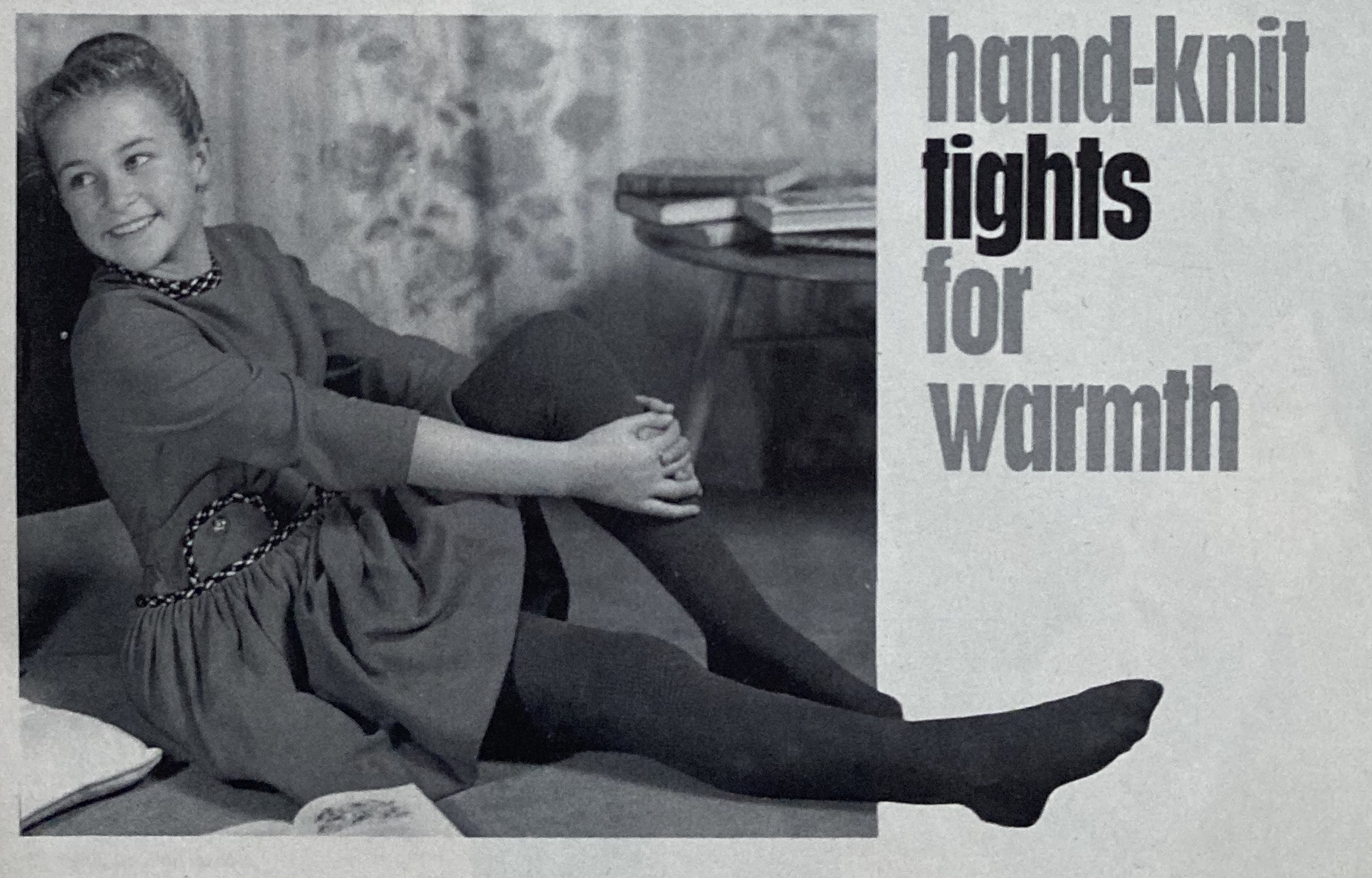
There are three fantastic designs for a young girl in this issue: a wonderful “walking set” for a toddler, a warm wool dress for an ice-skater and — at long last! — hand-knitted tights to keep a girl’s legs warm. (Strangely, our skating model is not wearing the tights, though you think she would need them out on the ice more than the young model pictured in an indoor setting!) I love the toddler’s outfit, with its contrasting colour in the flared back seam of the coat and ribbing on the hat, mittens and leggings. I like the seated girl’s dress too, as well, though it’s neither knitted nor one of the magazine’s designs.

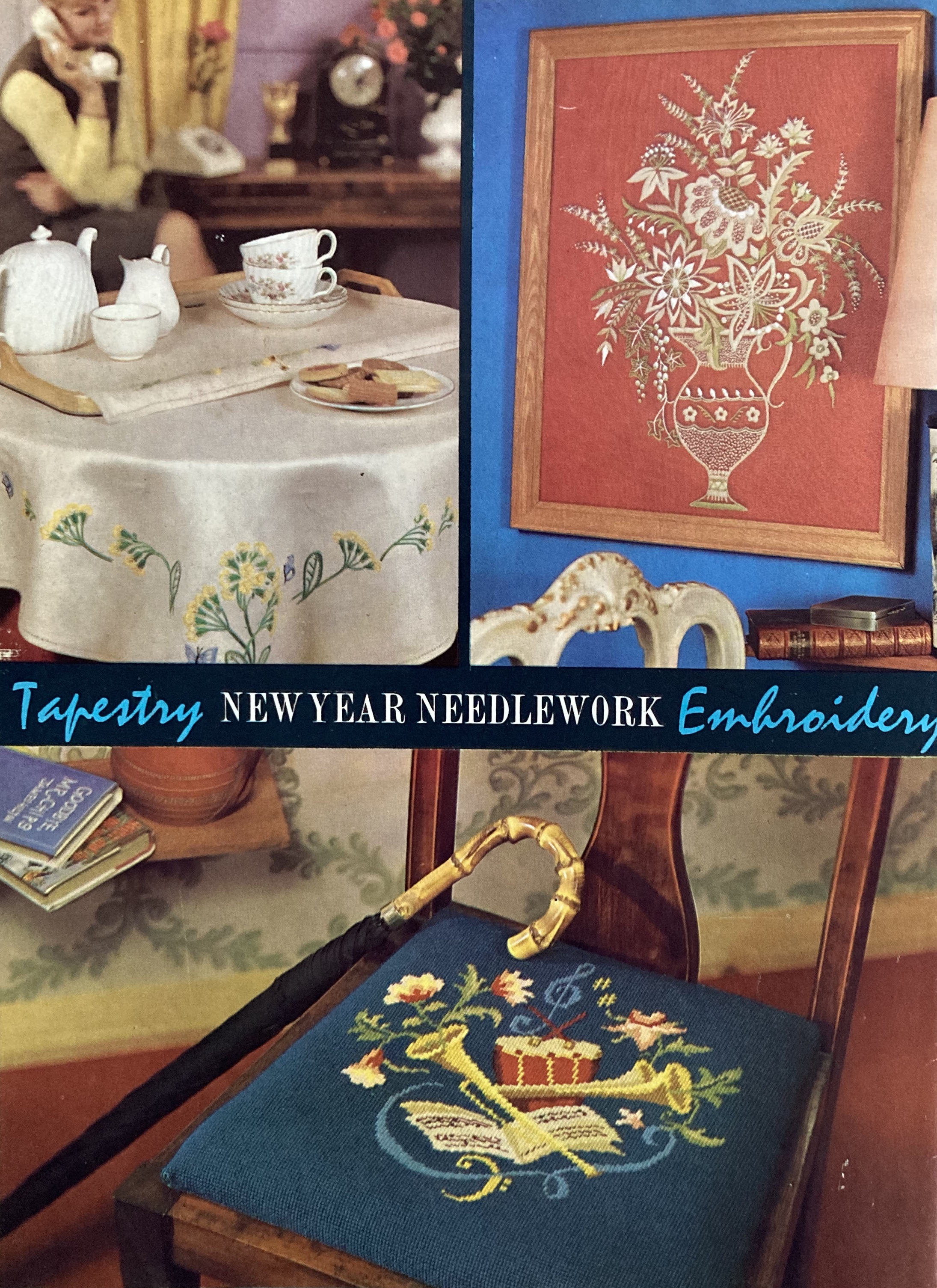
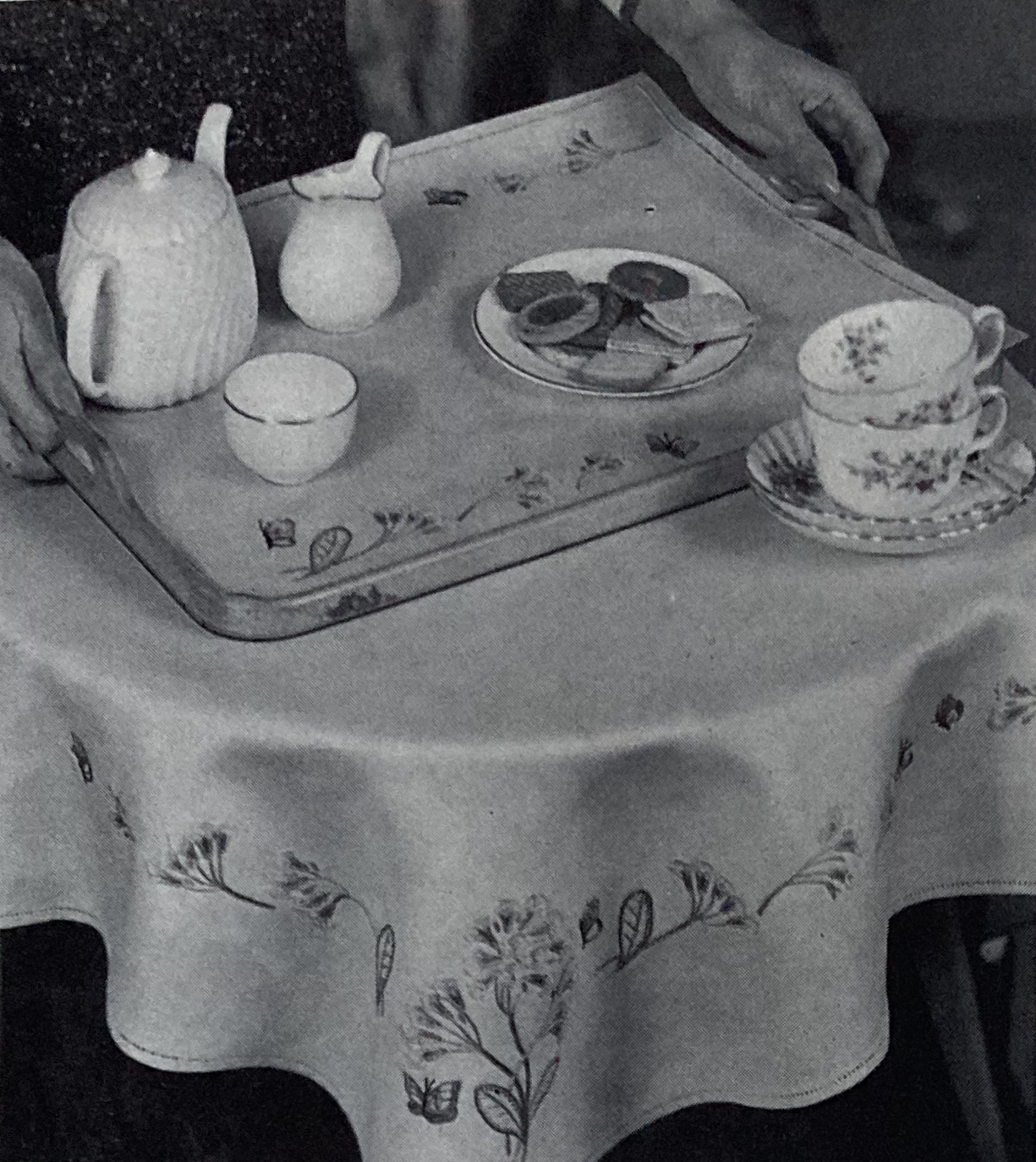
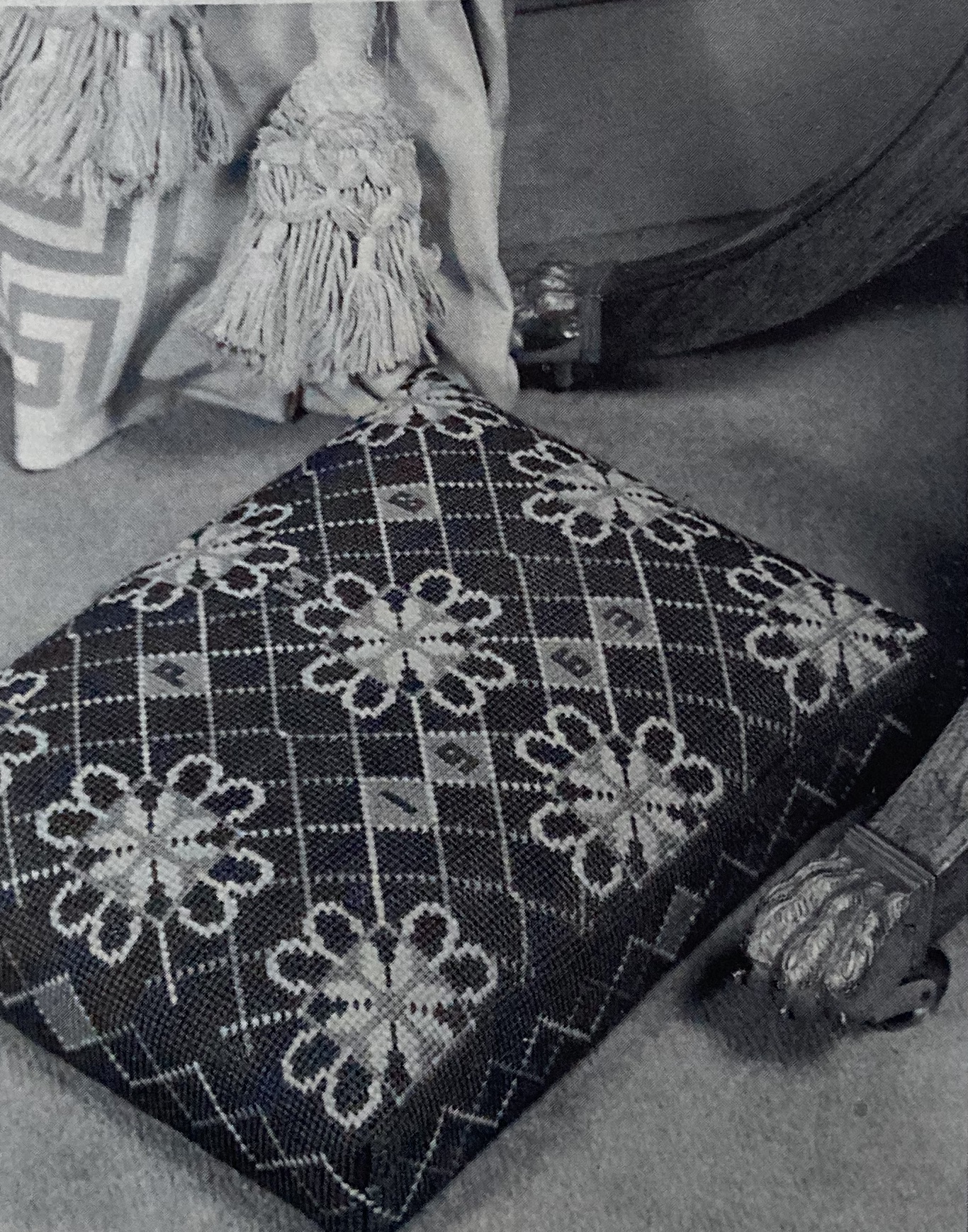
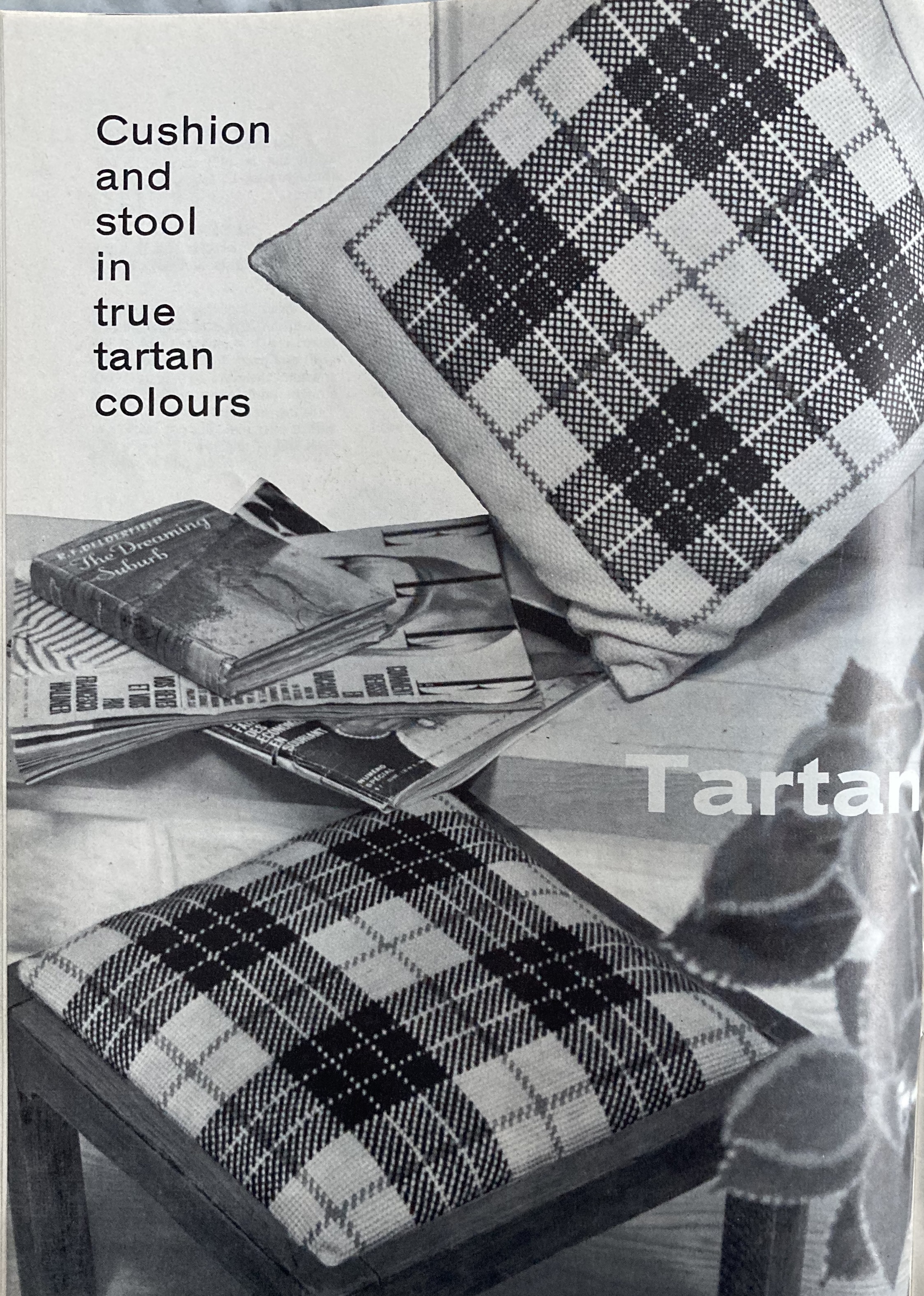
The homeware projects are fairly standard: a floral tablecloth, a tartan tapestry chair seat, a decorative panel with a white vase worked on a red background. The “music” tapestry motif is quite classic, as is the tapestry kneeler for church use.

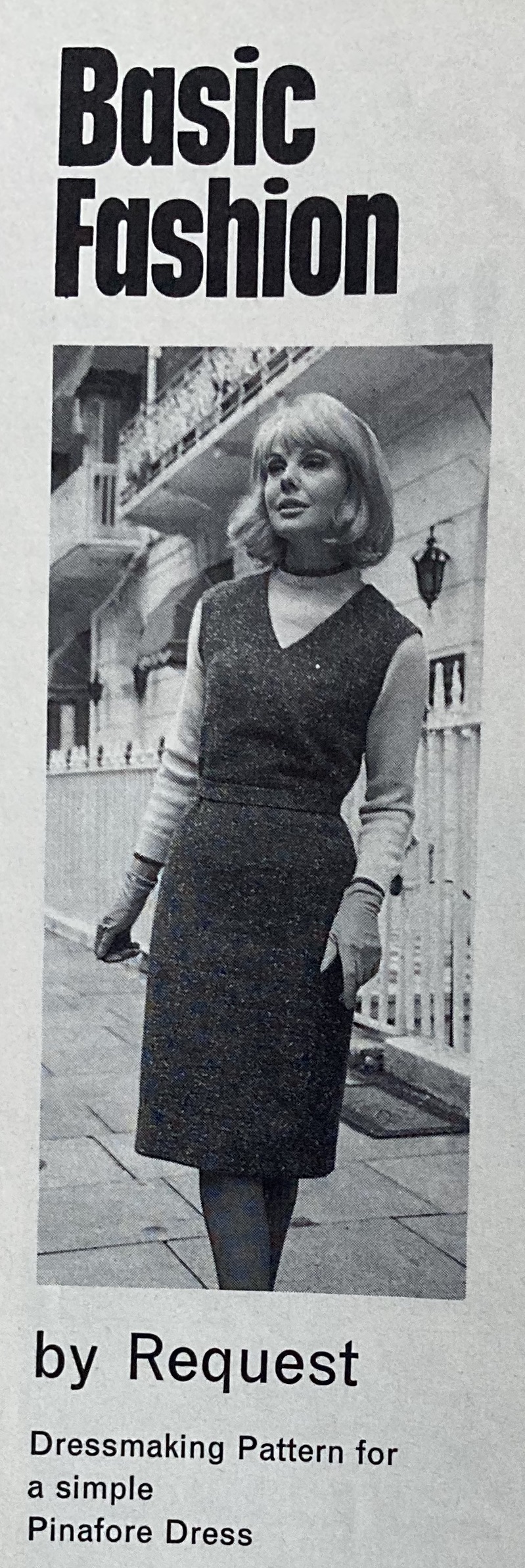
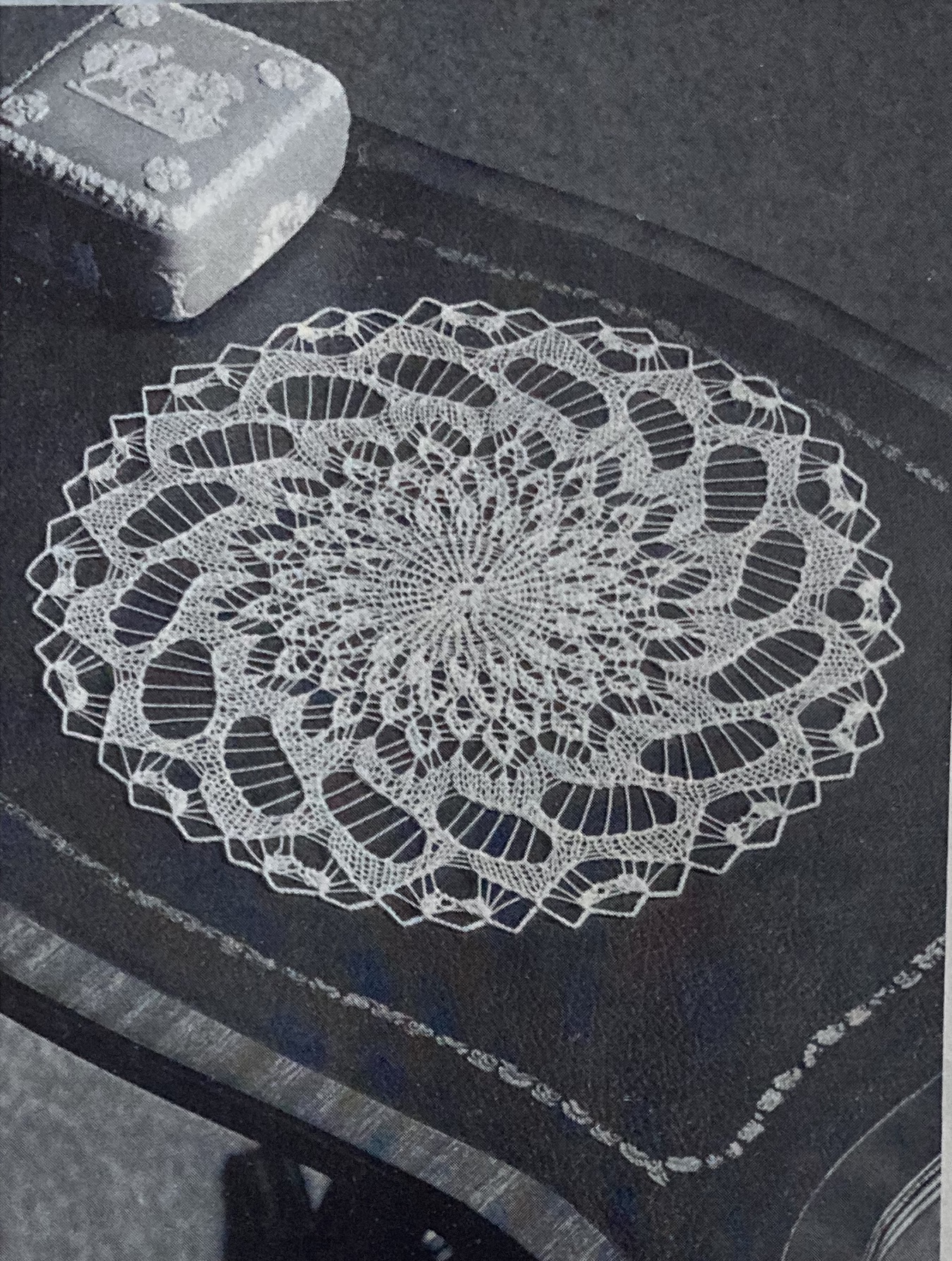
As always, some of the most interesting features are tucked away in the back pages. I would love to be able to send away for this sewing design, offered by Vogue patterns in cooperation with Stitchcraft. It’s a simple, sewn woolen “pinafore dress” that could be worn over a blouse or lightweight jumper, with a blazer for a suit effect, etc. Unfortunately, I can’t sew well enough to reverse-engineer a no-longer-existent sewing pattern from a photo. Also, what a beautiful knitted doily.

As much as I would love to make the toddler’s walking outfit, I don’t currently know a child of the right age, and starting another huge project seems daunting at the moment. I’ll probably skip ahead or back a few years to find a project from another issue that will help me de-stash. Stay tuned for details, and happy New Year!