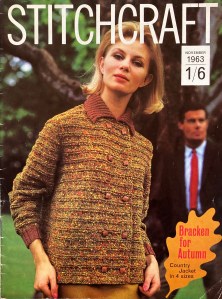
The autumn months are always the best for knitting magazines, with a mixture of heavy garments for colder days, easy-to-make holiday gifts, warm accessories and a few glamorous items for parties. Stitchcraft‘s November 1963 issue puts the focus on “warm family fashions… with the emphasis on colour and attractive textures that are interesting to knit and very becoming to wear”. There’s something for family members of every age and “for the petite to the not-so-slim.” The homewares and little projects are quick and fun to be finished in time for holiday decorating and/or gift-giving.
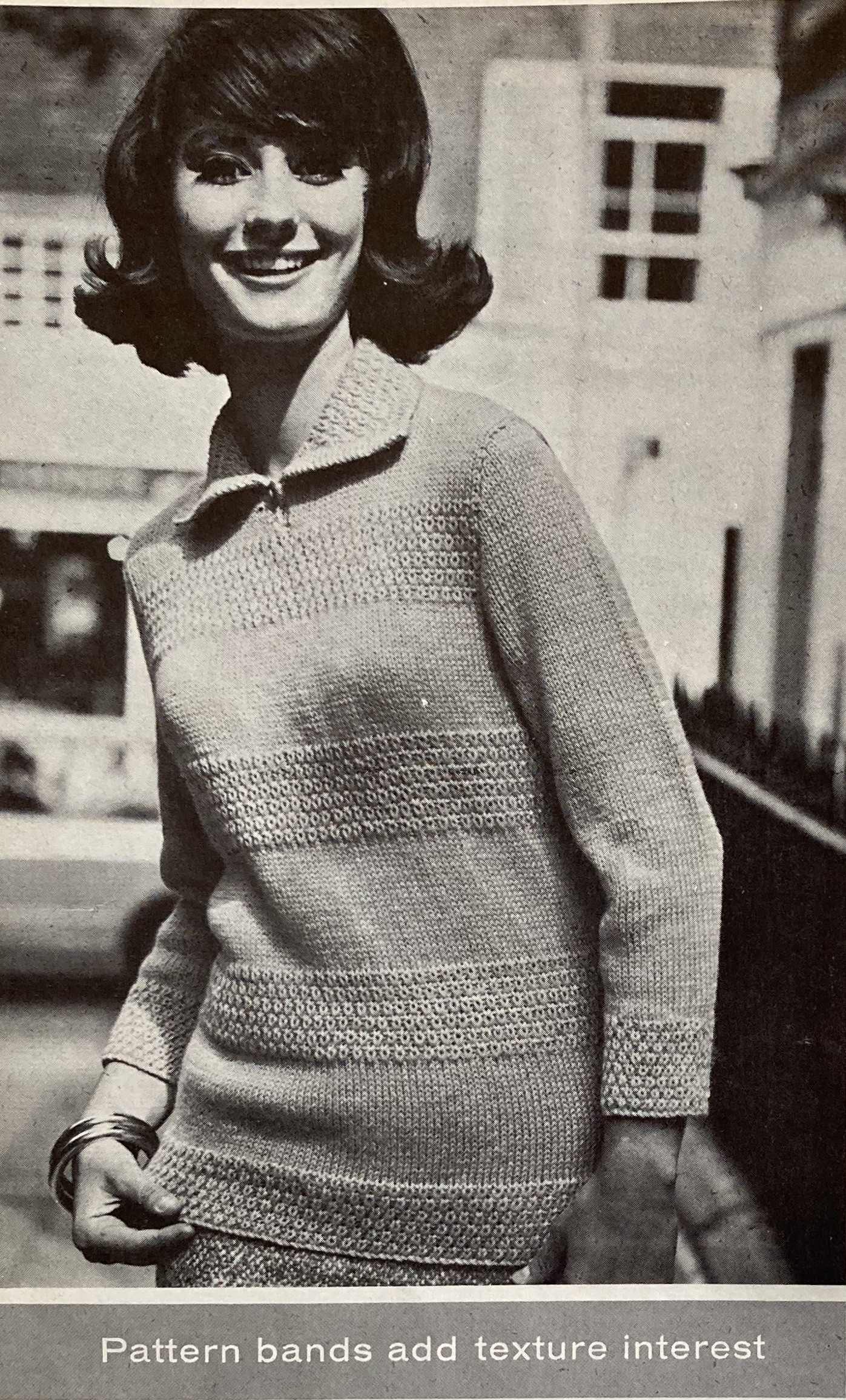
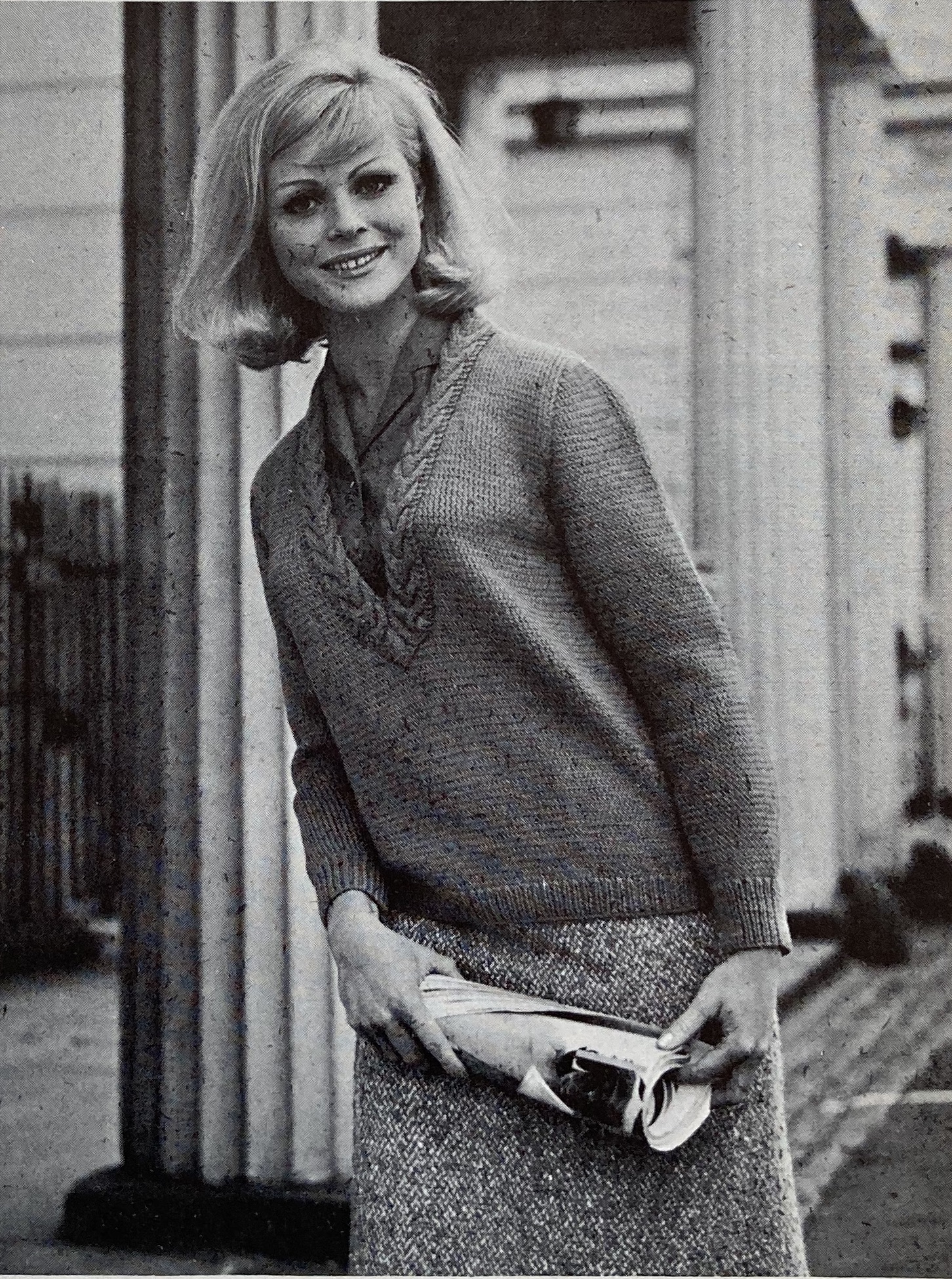
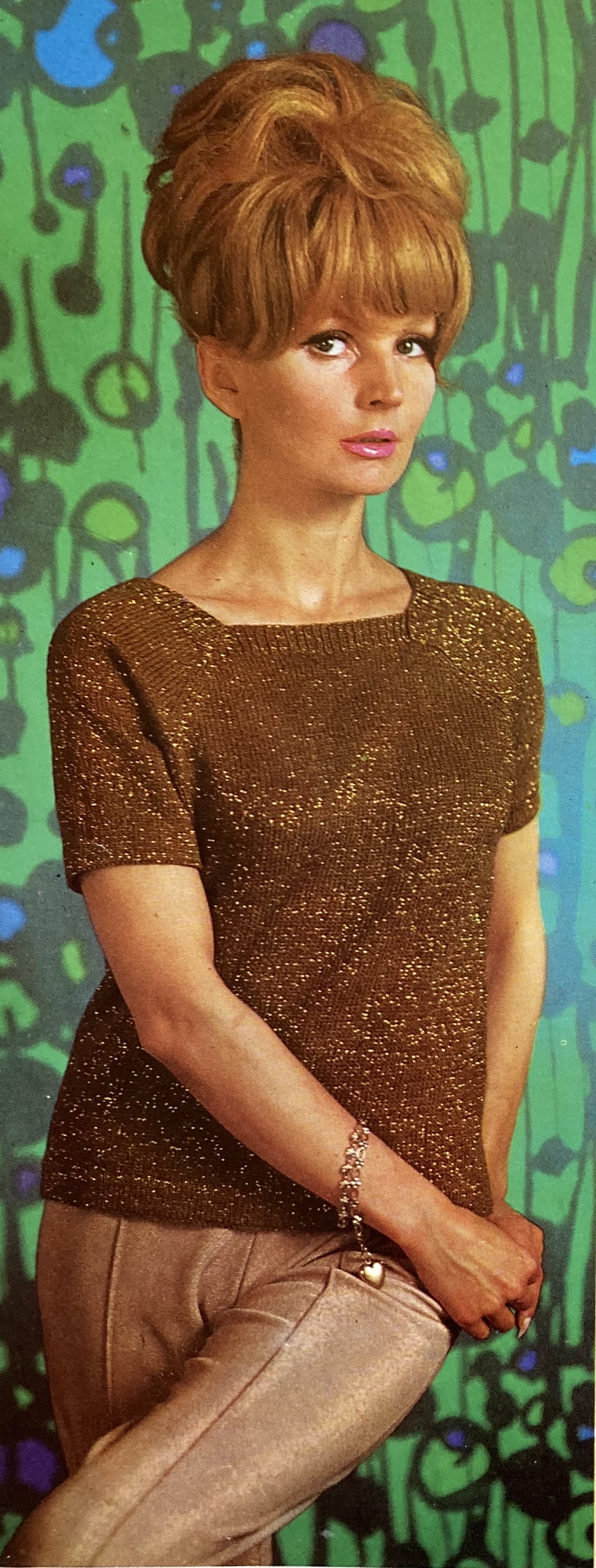
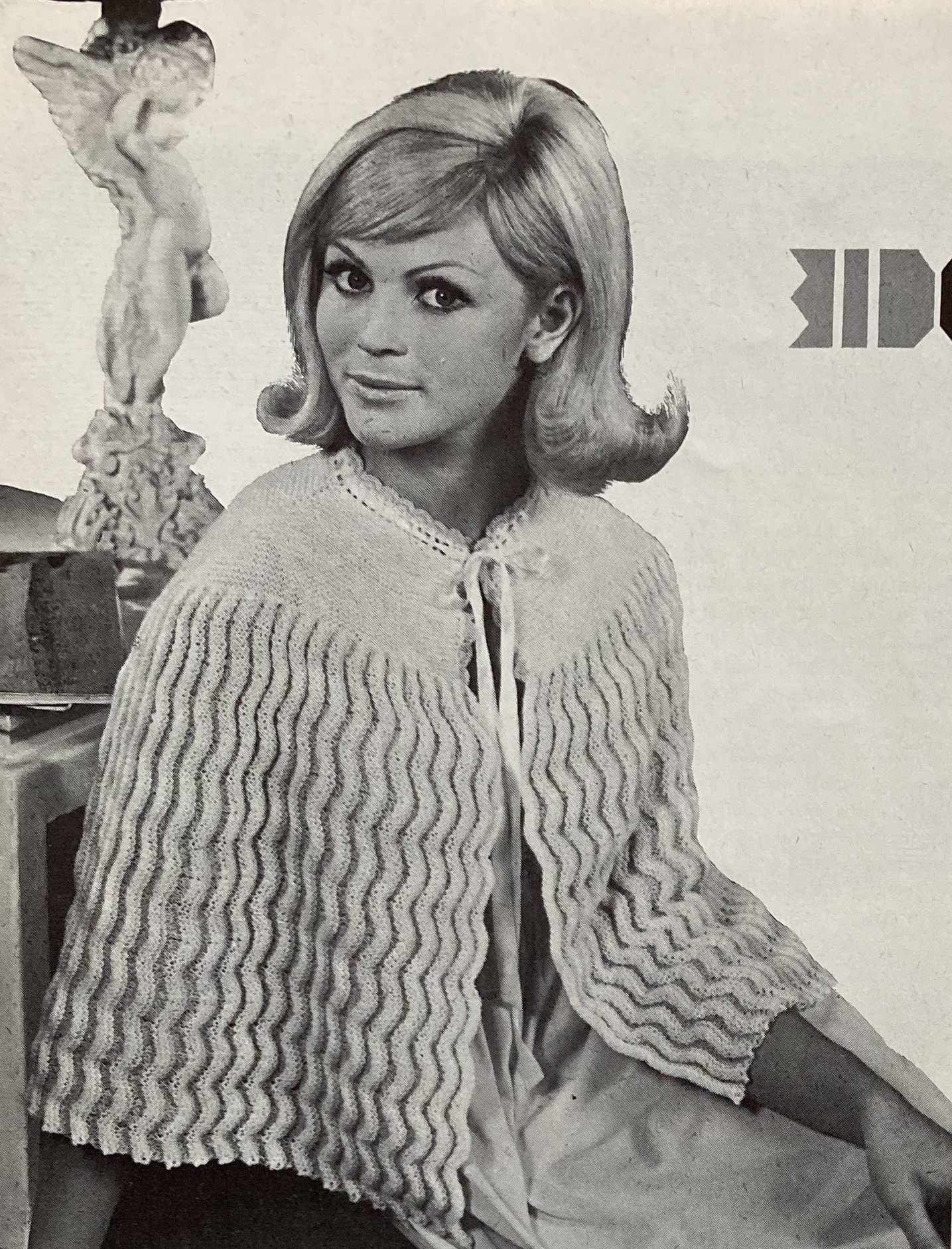
The “country jacket” on the cover continues the tweedy, variegated colour effect in fashion this fall, using Bracken Tweed wool for the main body and Totem DK for the collar and cuffs. I finally know what colour Totem “Oakapple” is! The other women’s outdoor-wear fashions include a zip-neck sweater with textured pattern bands in turquoise, an “overpull” with cabled neckline in flecked “Cantaloupe” colour (sadly, no colour photo, I have no idea how it looked in real life) and a simple brown top made glamorous by knitting the wool (Cameo Crepe 4-ply) together with a strand of sparkly Lurex thread. There’s also a warm, soft cape for winter reading in bed, knitted sideways in an easy zig-zag pattern. Aside from the green and white bedcape, shades of autumn brown as well as bold blues and red are the season’s trendy colours. Stripes, zig-zags and textures complete the Autumn 1963 look.
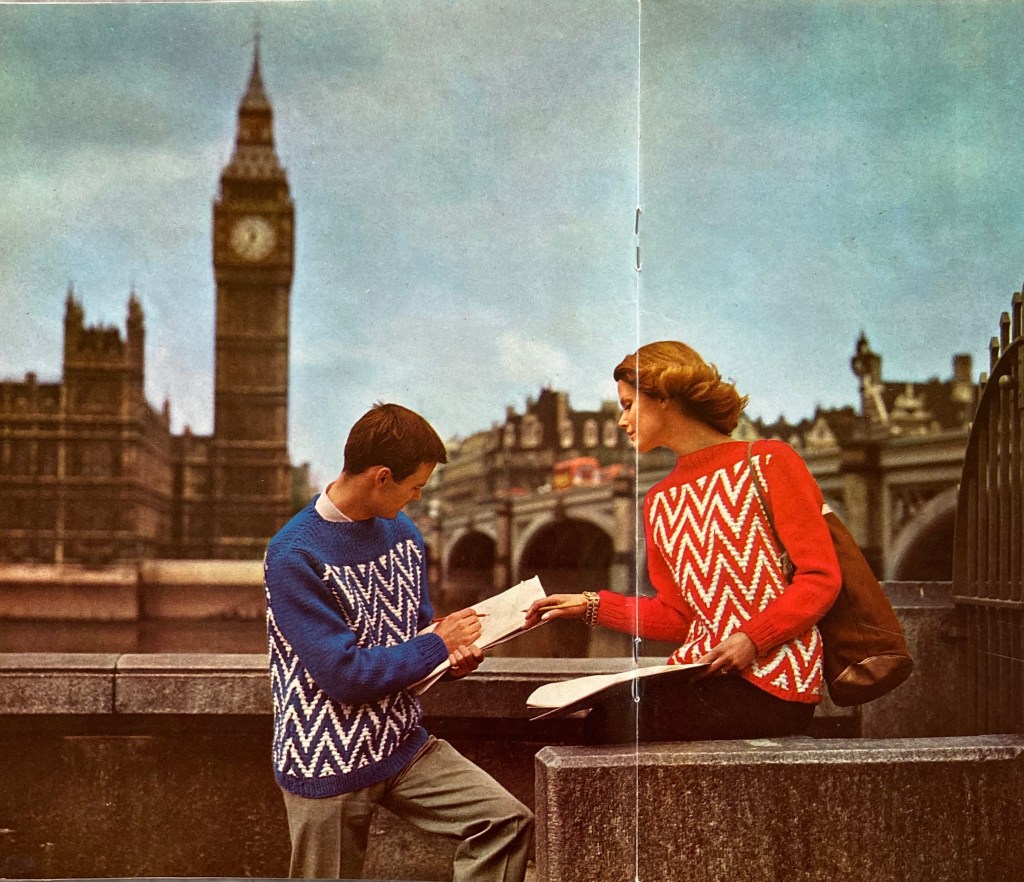
Men’s fashions are just as colourful as the women’s, or even more so (less use of plain brown…) and show more of the zig-zag trend. Here are some bold designs for “him and her” using bulky Big Ben wool (and photographed in front of…). The construction is the same for both, with the smaller design for bust sizes 33-35 inches and the larger for 39-41 inches, with the advice that “Plumper girls could follow his size”. The man’s pullover in “Italian colouring” uses stripes and textures, toned down by the use of more neutral colours. The blue-and-white cabled sweater in the photo next to it is for teenagers.
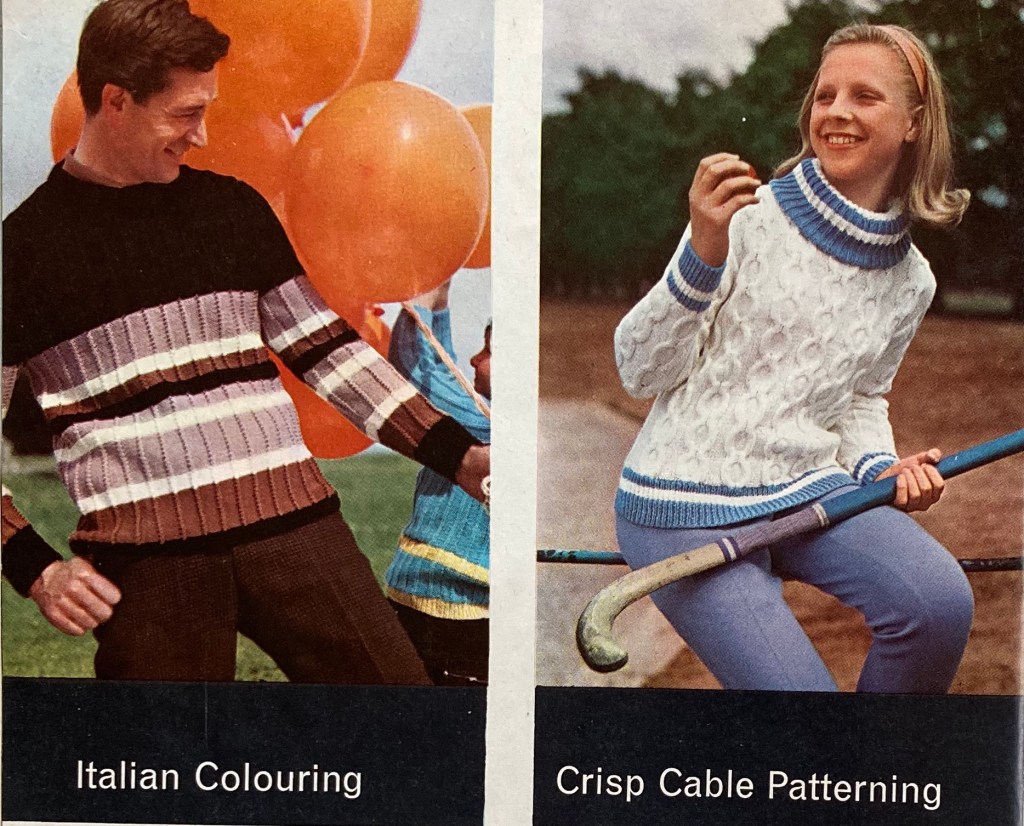
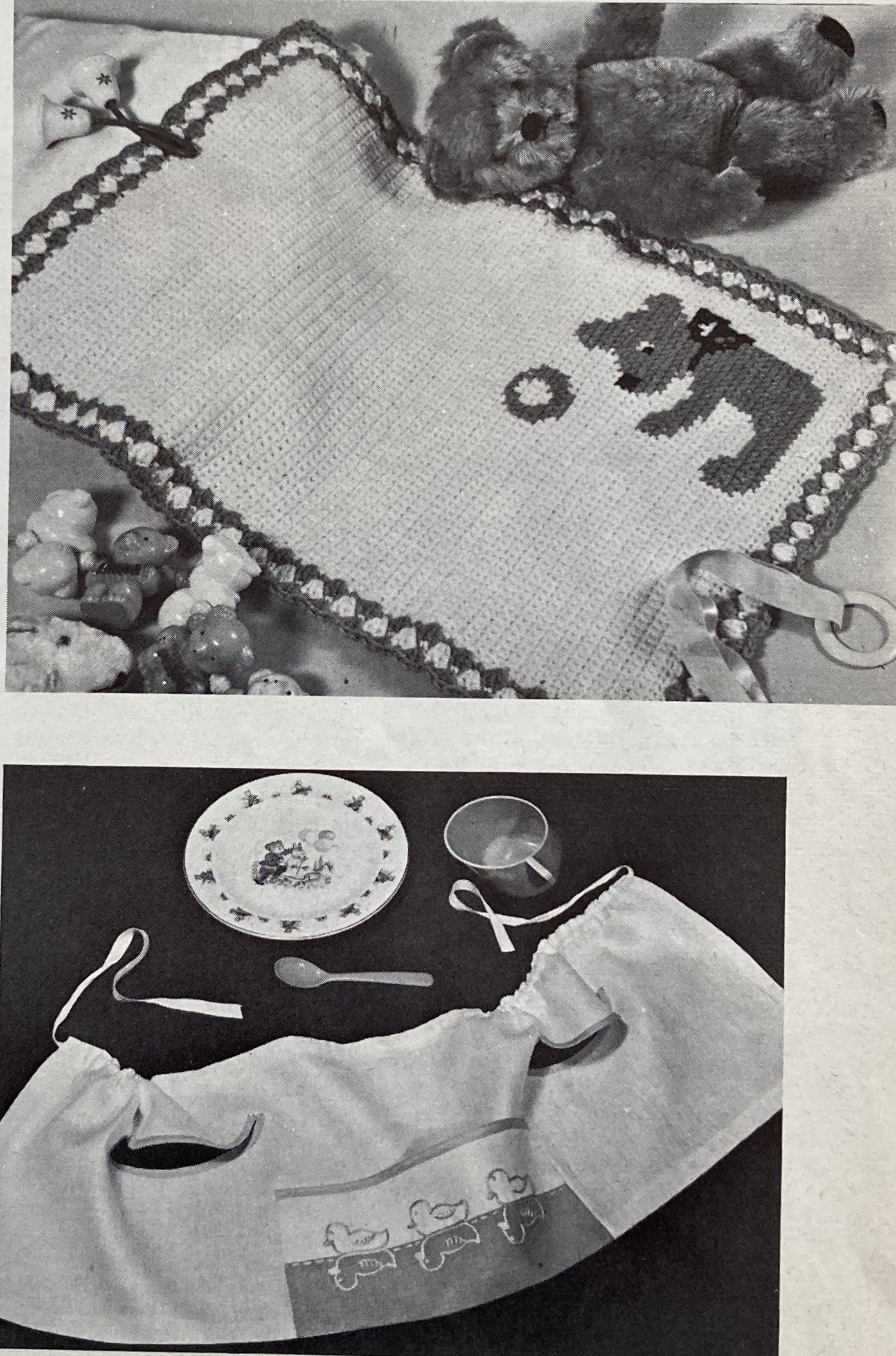
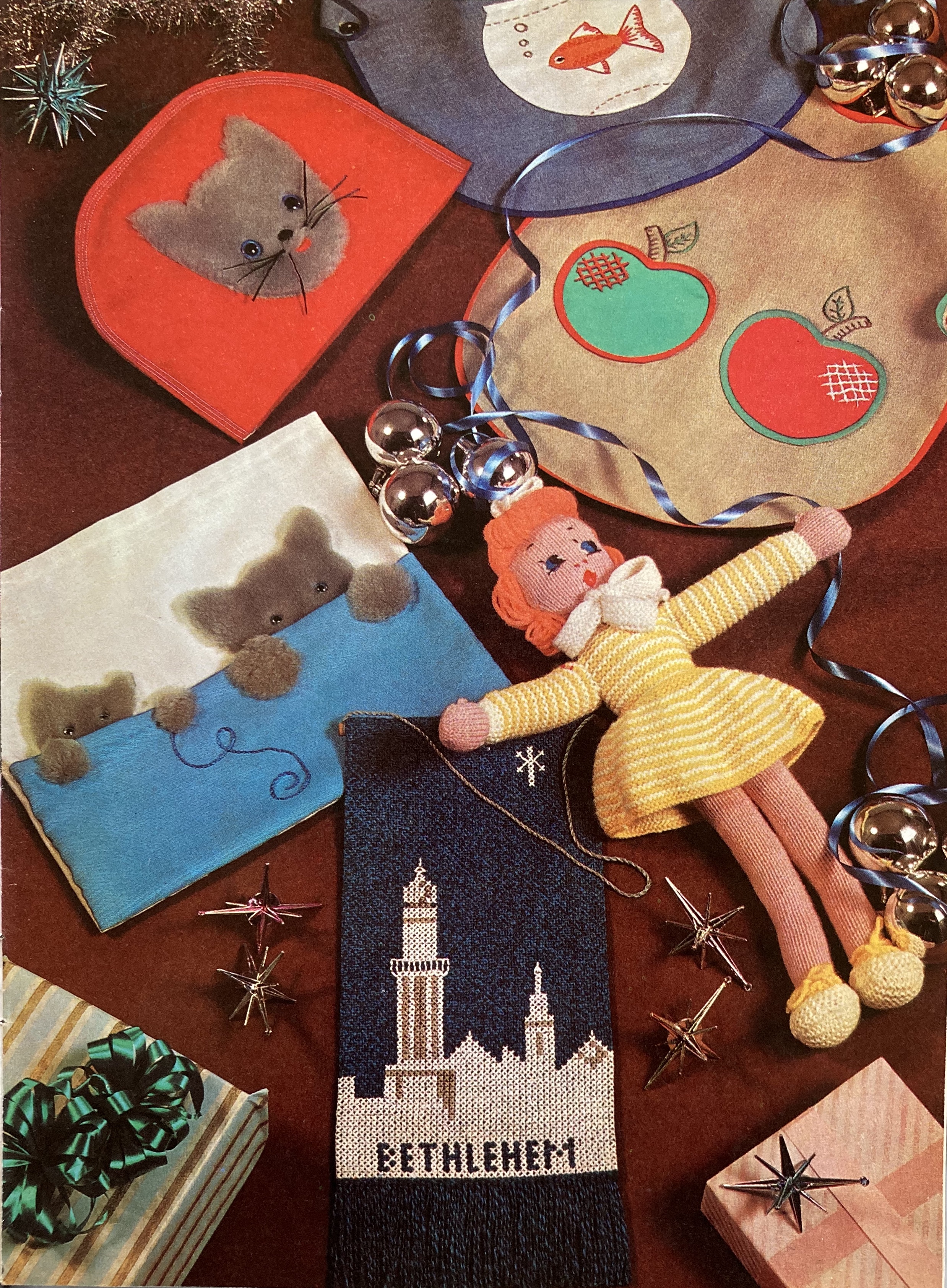
School-age children get their own “tough, tomboy sweaters” in Bracken Tweed wool. The suggested colours are “Black Olive” or “Gorse Heath”, which I assume is a sort of green-yellow tweed (no colour photo). Babies get a lovely shawl to match the layette from the September and October issues. It’s easy to knit, as the centre and borders are made separately. The other baby/nursery-age items are crocheted, sewn or stitched: a pram cover with a teddy-bear motif, a little nightcase with fluffy appliquéd kittens, a knitted doll, an embroidered “feeder”, sewn and appliquéd pinafore smocks…


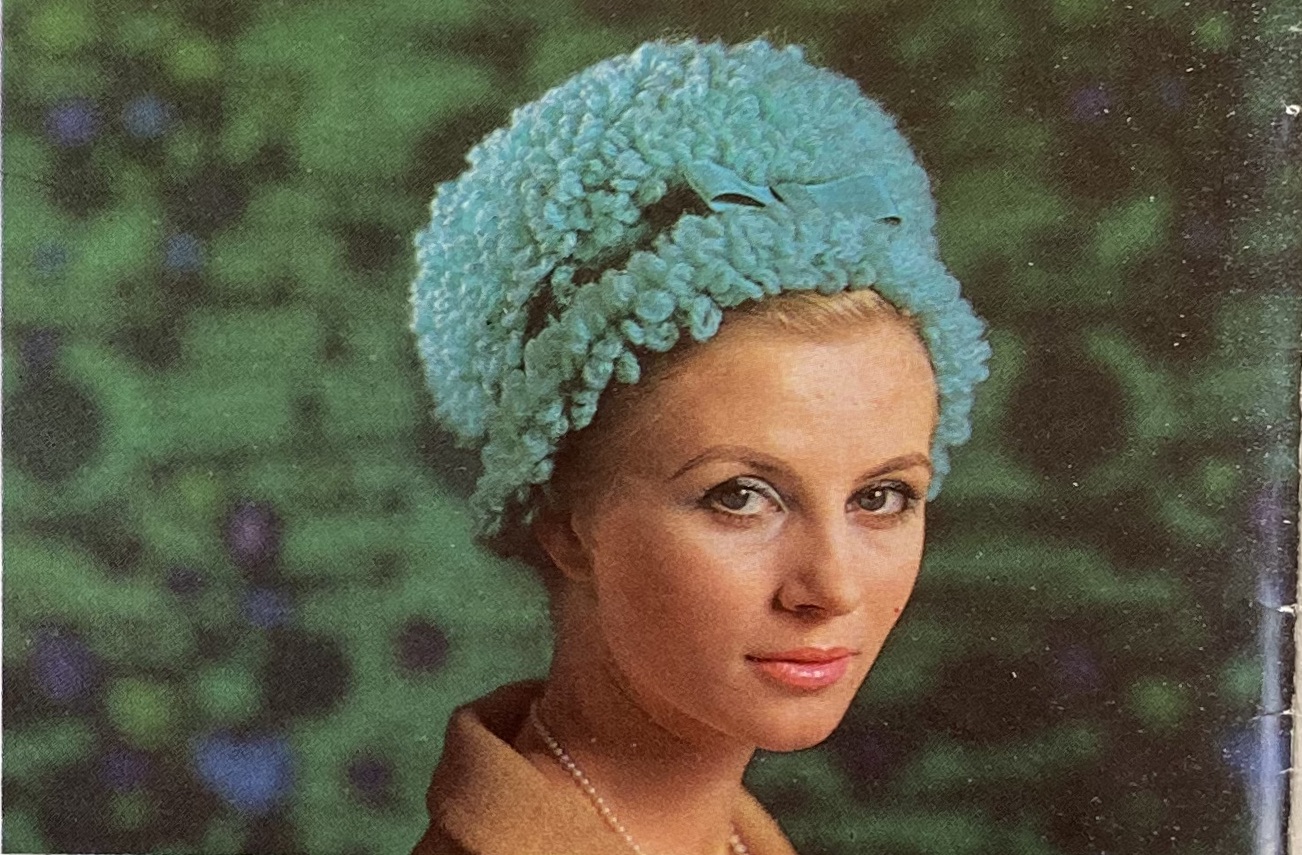
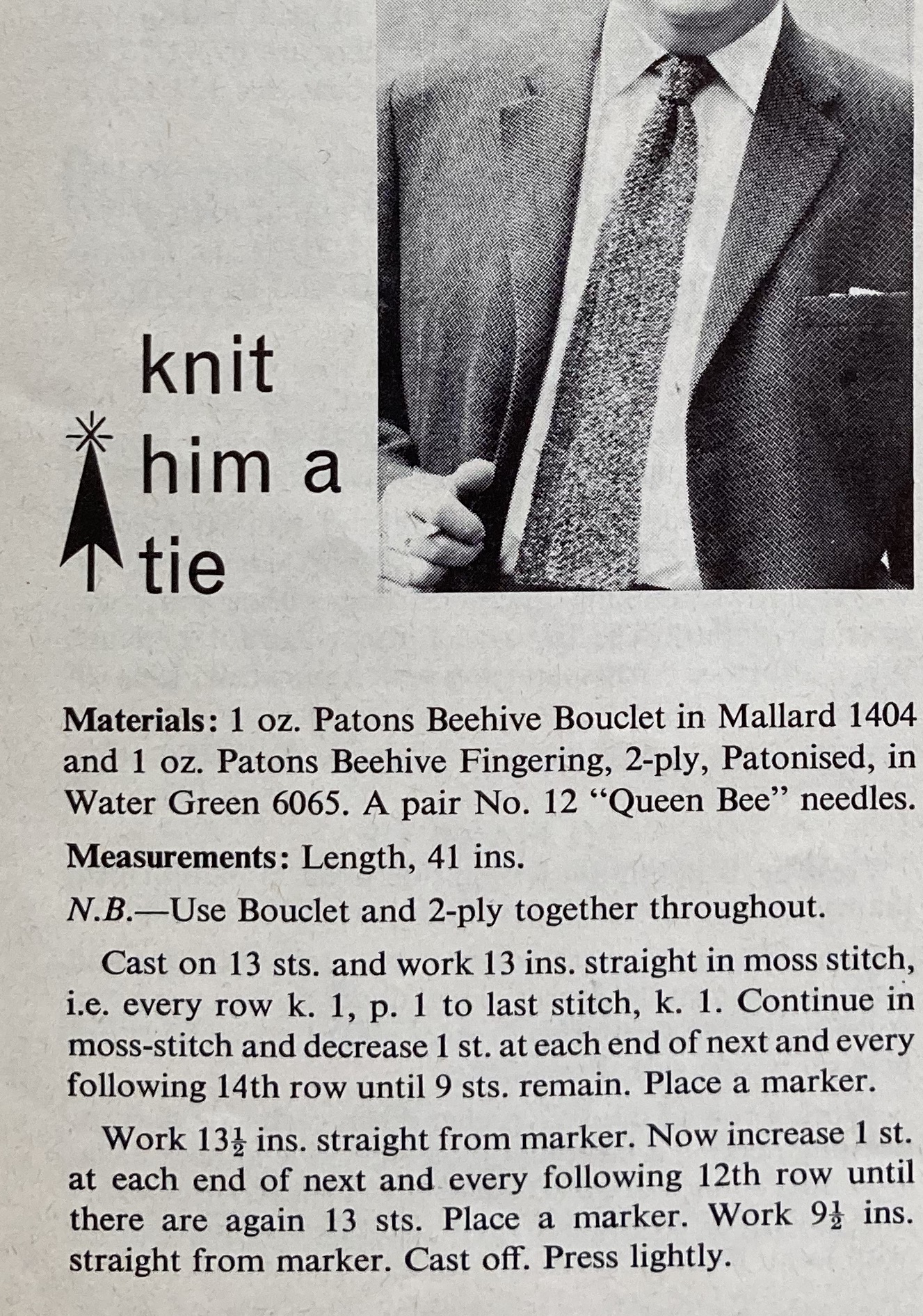
There are fewer designs for accessories, but the utter fabulousness of this loop-stitch crocheted hat makes up for anything else that could be missing. The model in the photo features in many issues from this time period and always looks either quite sad or has that alluring Mona Lisa smile that’s she’s sporting here. (Am I mean, or wrong, to assume that she probably had bad teeth?) I would smile widely if wearing that hat, and I hope everyone who saw me in it would too. Also, knit your man a tie!
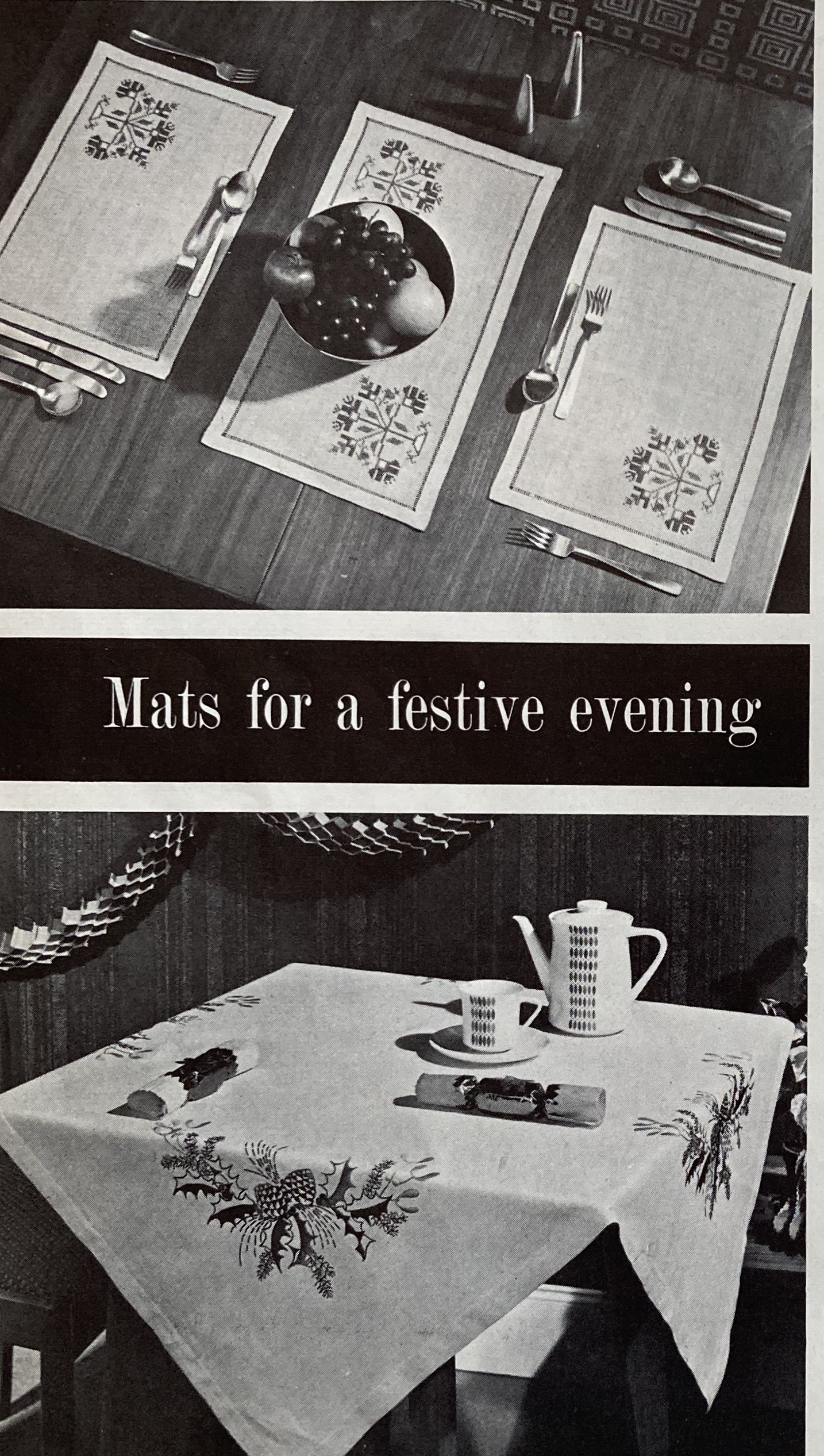
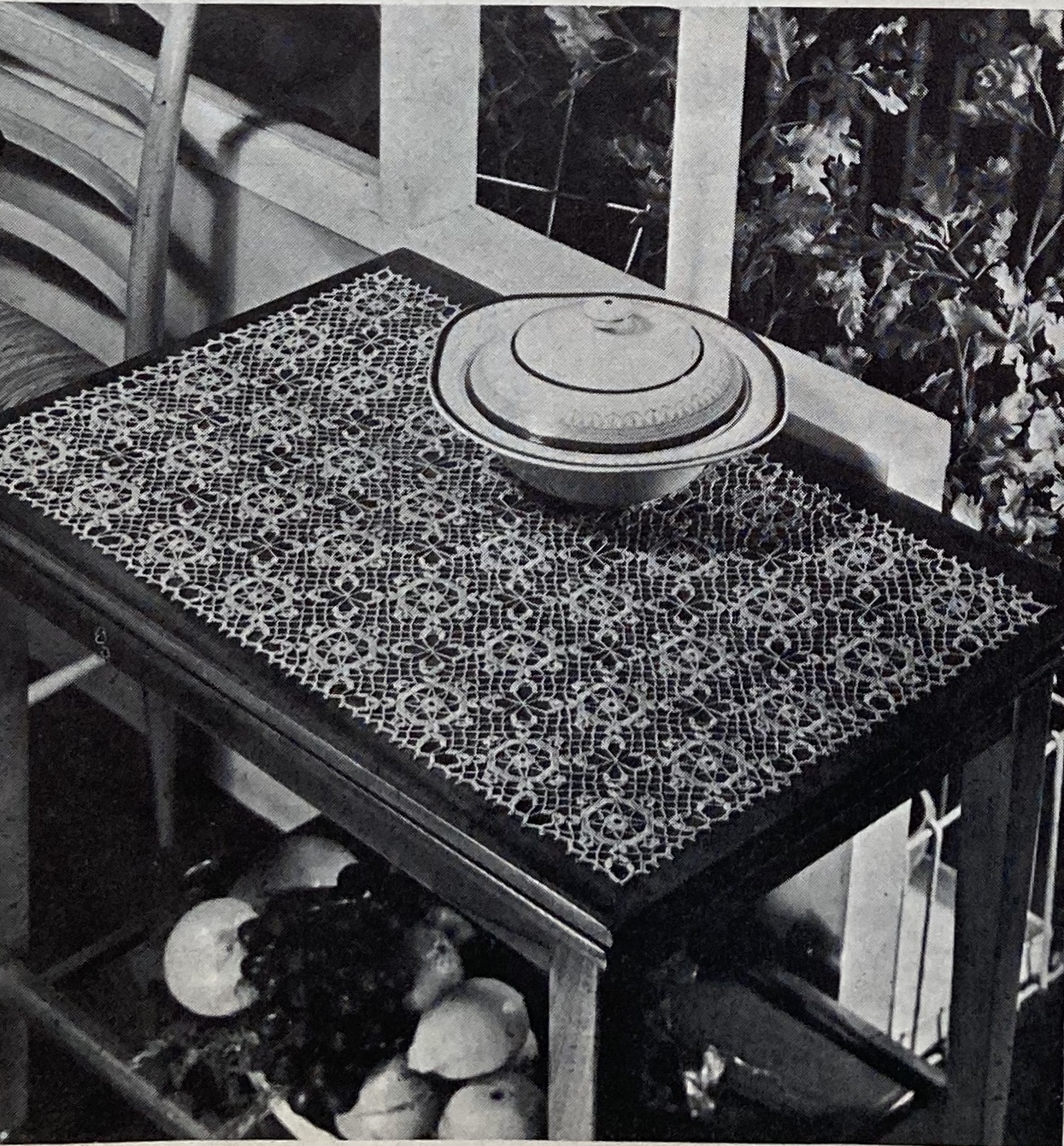
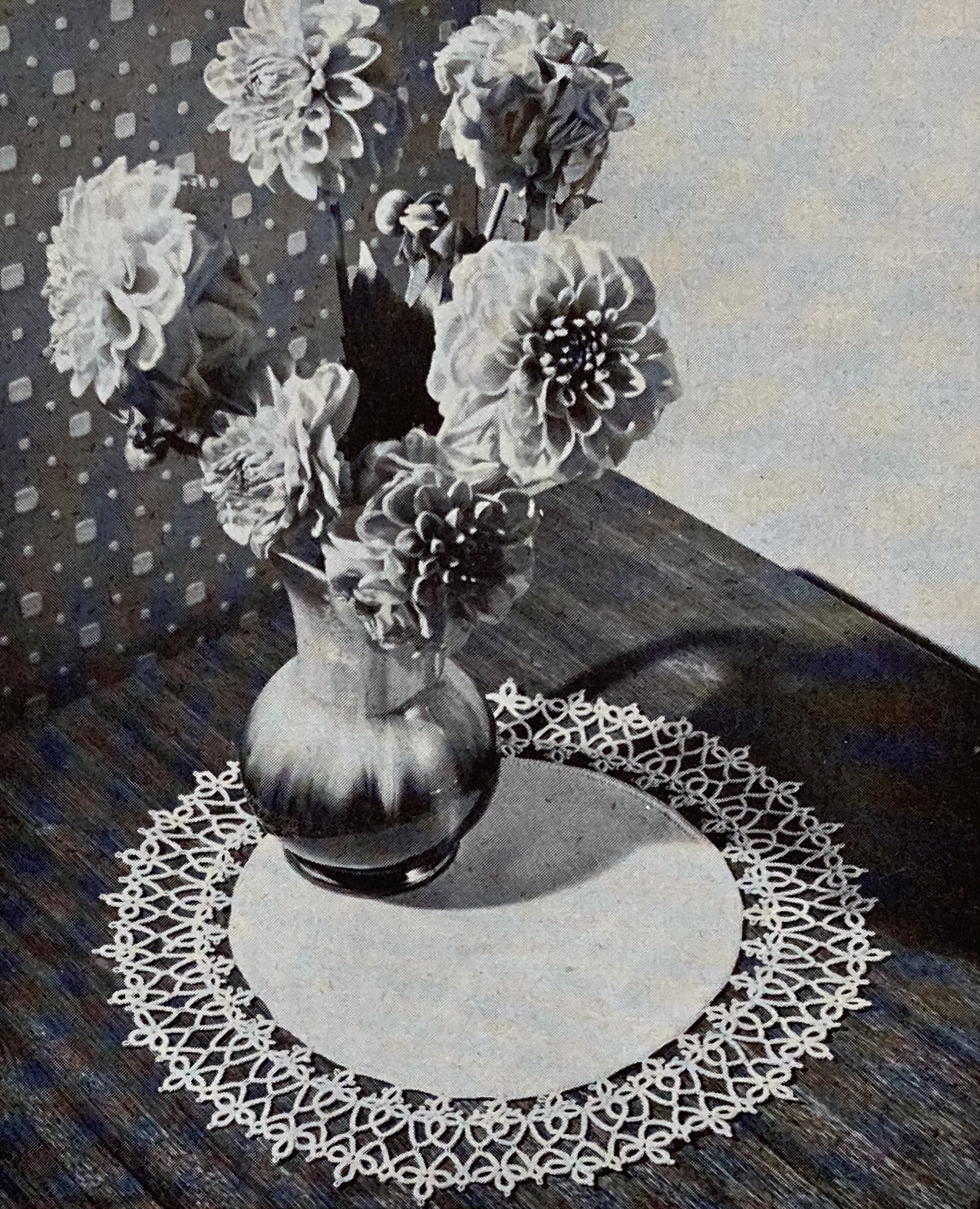
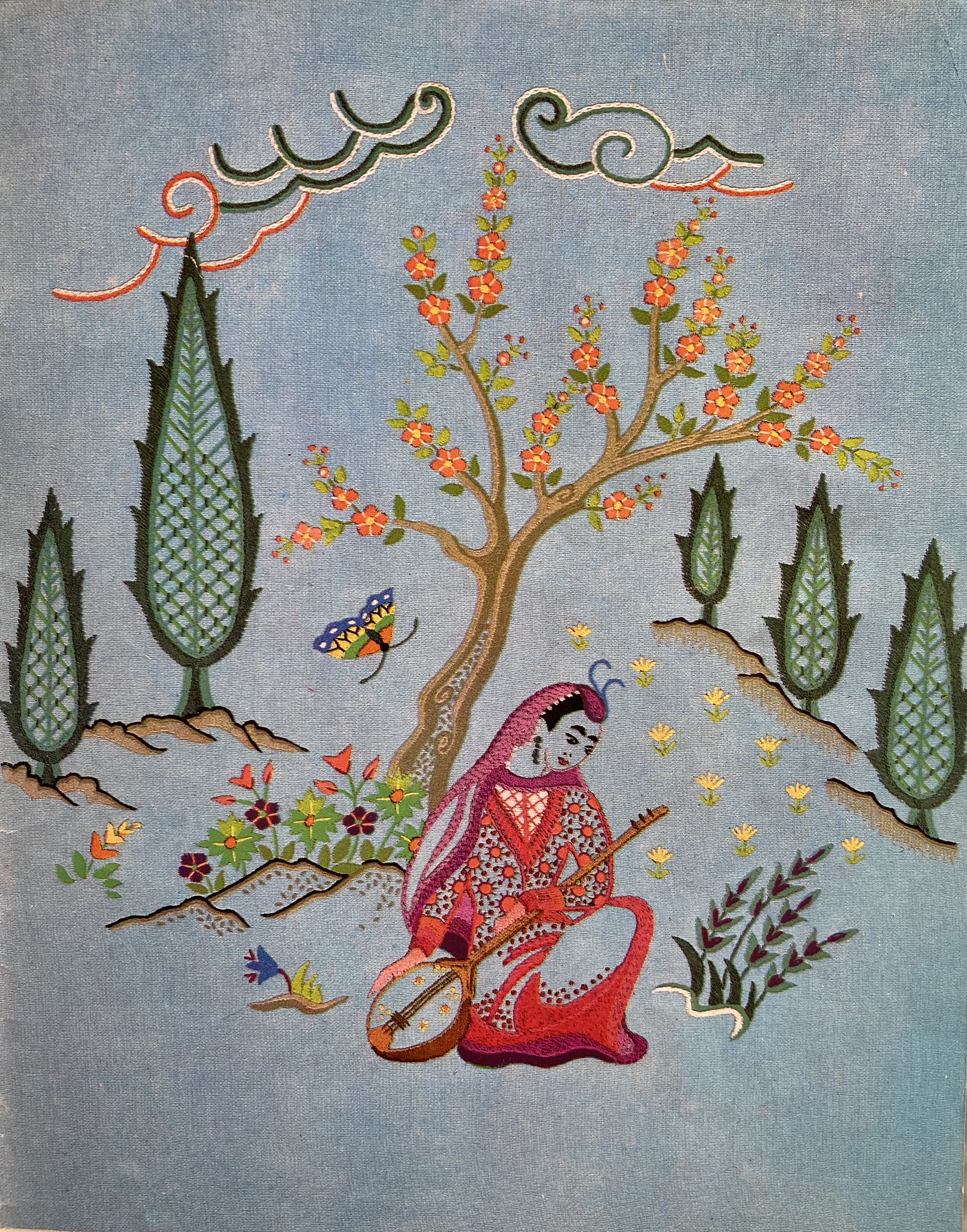
With all this bounty, the homewares are mostly standard: embroidered table mats and a Christmas-design tablecloth, a decorative panel with the Star of Bethlehem for more religiously-minded households, and a very impressive tatted doily and crocheted trolley-mat. The show-stopper is a lovely decorative panel “taken from a book of Oriental designs” embroidered in Filoselle silk on linen. (The design is allegedly of Persian origin, though of course neither Stitchcraft nor its typical readers of the time gave much thought to questions of authenticity, nomenclature, exoticism or any related issues that we would regard and discuss today.) It is a pretty picture in any case, and was probably not too difficult to embroider, consisting mostly of standard seed and straight stitches, French knots, and so on.
That’s all for this issue! I am going to make that wonderfully ridiculous hat.

 The Stitchcraft Sixties